Winners: 2018/19 Cars.co.za Consumer Awards – powered by WesBank


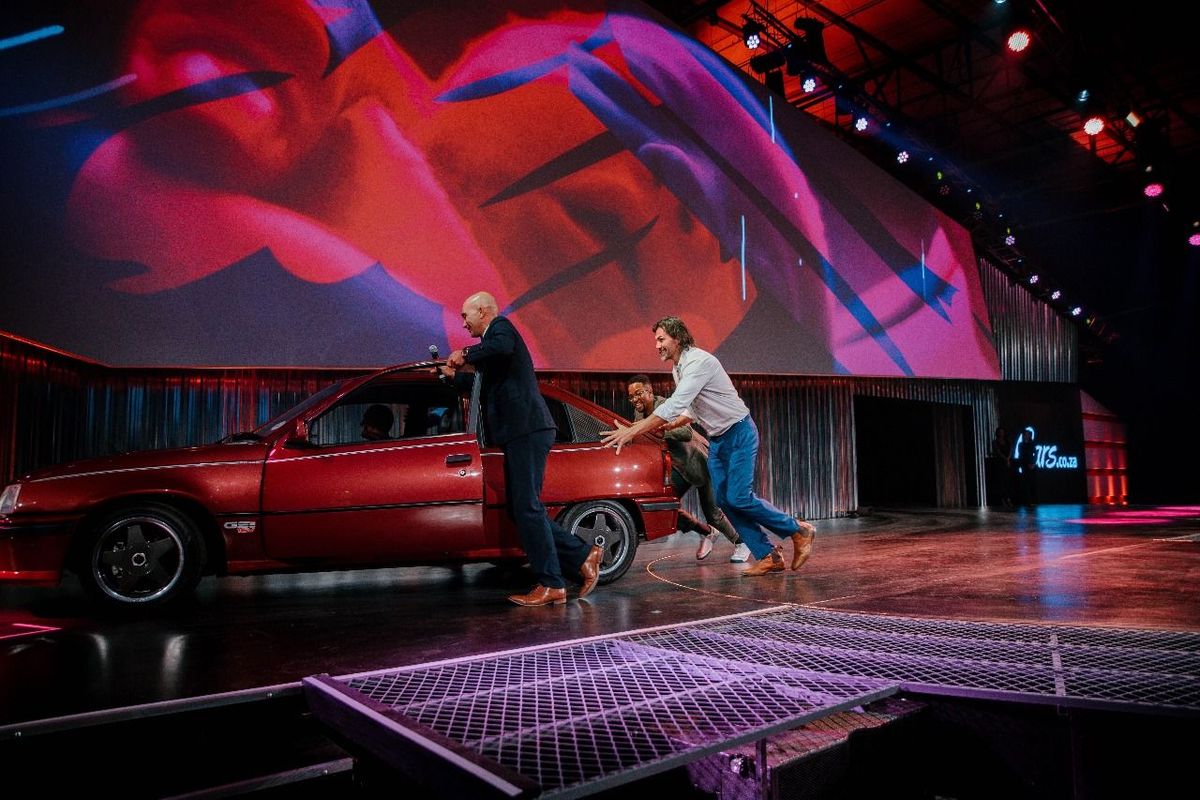
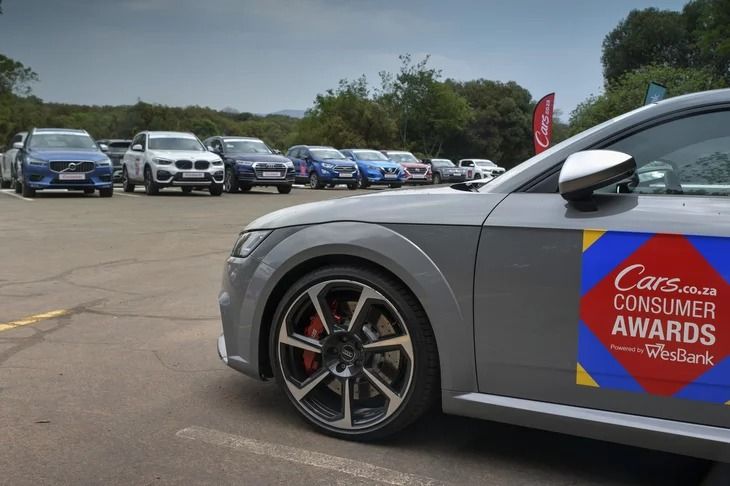
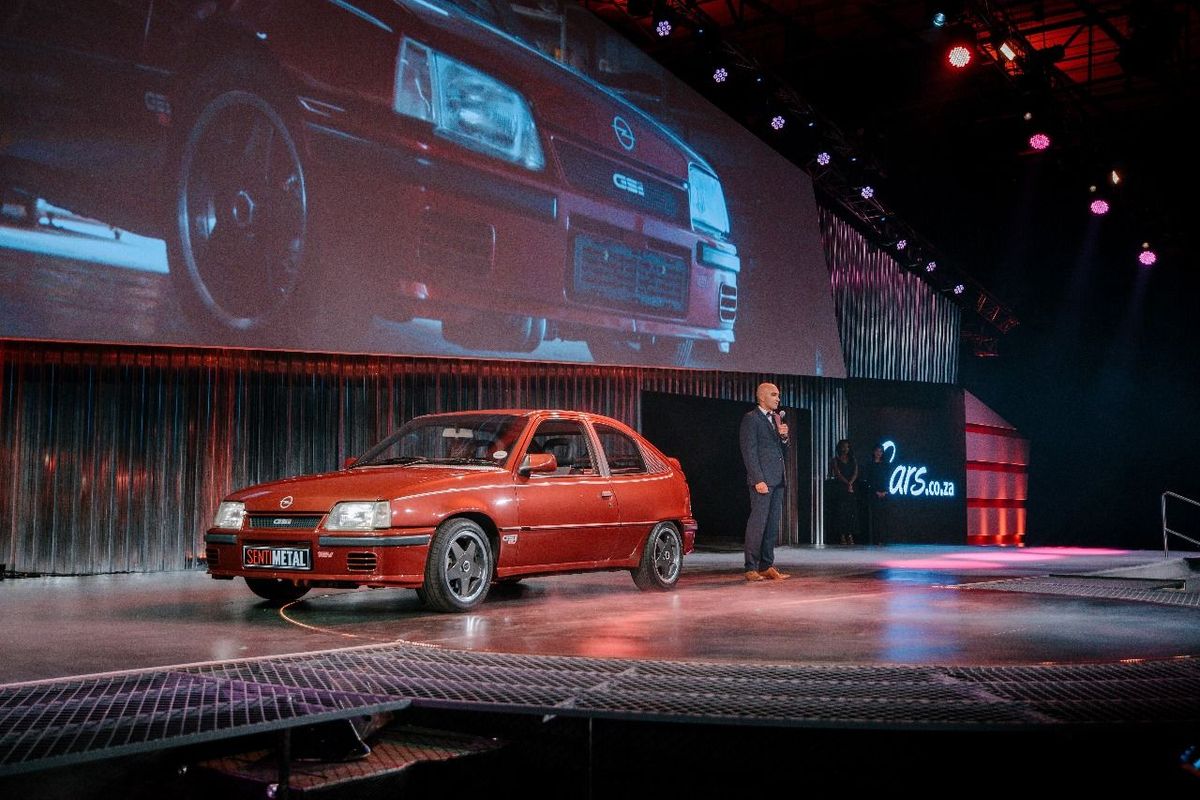
The 2018/19 Cars.co.za Consumer Awards – powered by WesBank, concluded with the announcement of 12 category winners and the awarding of the Brand of the Year title at a red-carpet event hosted at Kyalami in Midrand.

Conceived to be South Africa’s definitive automotive awards programme, #CarsAwards has grown in stature, reach and influence since the inaugural event in 2016. Apart from being exclusively supported by WesBank, South Africa’s largest vehicle finance provider, #CarsAwards is regarded as an energetic, impactful opening number on the automotive industry calendar.

Highlights of this (fourth) iteration of the programme were:

  • Toyota, the first recipient of the Brand of the Year title (in the inaugural 2015/16 iteration of the programme), narrowly defeated double winner Suzuki (2016/17 and 2017/18) to reclaim the most coveted #CarsAwards trophy this year.
  • Volkswagen garnered the most trophies (four), elevating the Wolfsburg-based marque into a comfortable lead in terms of the most category wins (10) in the history of the #CarsAwards, ahead of Mercedes-Benz (six) and Suzuki (five).
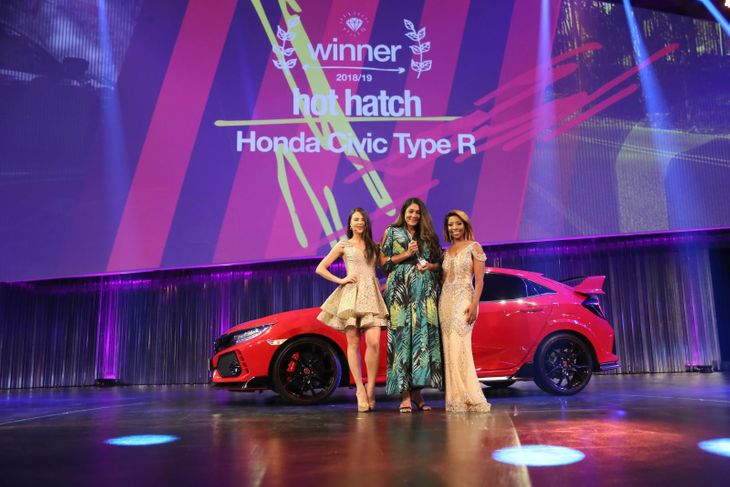
  • Nissan and Honda were first-time #CarsAwards trophy recipients by virtue of their wins in the Compact Family Car and Hot Hatch categories respectively.
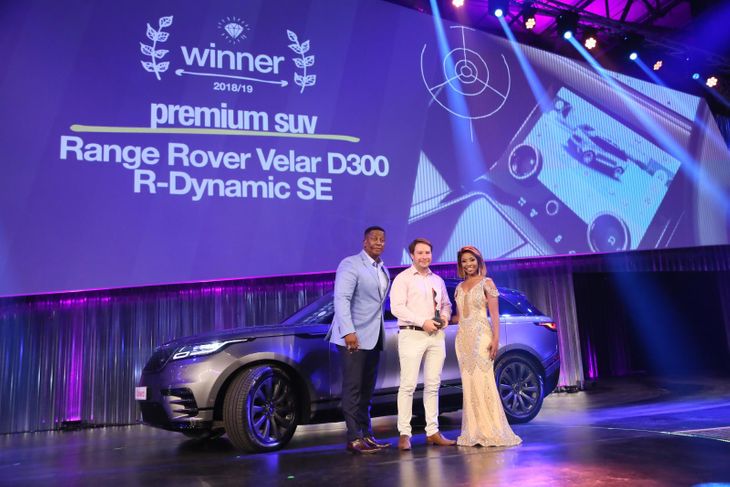
  • The Range Rover Velar finally dethroned the Volvo XC90, which had dominated the Premium SUV category during the first three instalments of the #CarsAwards. Volvo’s consolation was that its reigning World Car of the Year, claimed the Executive SUV trophy to ensure that the Swedish marque remains the only brand, apart from Volkswagen, to have won a category every year since 2015/16.
  • The Volkswagen Amarok and Toyota Fortuner derivatives were the only finalists to defend their category victories from the 2017/18 #CarsAwards, although the Mercedes-Benz E-Class also won again, albeit with a different derivative. Suzuki won the Budget Car category for the third consecutive year, and impressively, with a different model on each occasion.
  • In no fewer than 5 out of the 13 categories the judges’ favourites did not win, due to the impact of the Consumer Satisfaction Survey.

Eighteen brands were represented in the list of finalists, with Volkswagen leading the nominations with 7 derivatives, followed by BMW and Ford (4 apiece), and Audi, Mercedes-Benz and Volvo (3 apiece). Significantly, Porsche and Isuzu made their first appearances in the final stage of the #CarsAwards programme, while Honda and Range Rover returned to the list of 39 after failing to make the last round in 2017/18.

Category winners of the 2018/19 Cars.co.za Consumer Awards – powered by WesBank
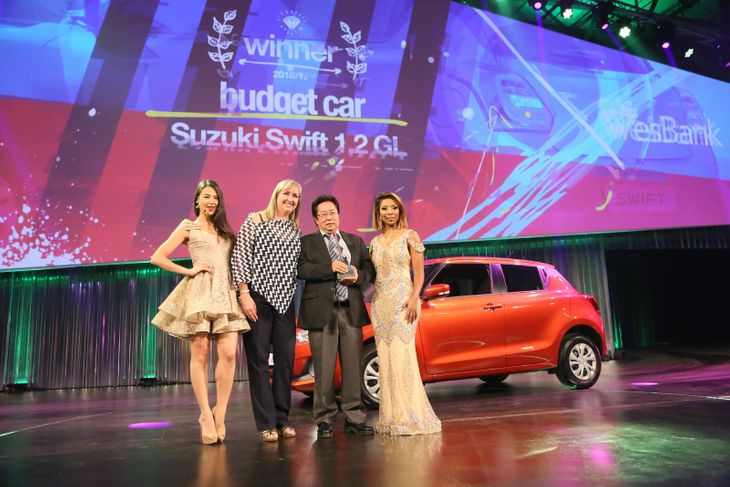
Budget Car: Suzuki Swift 1.2 GL

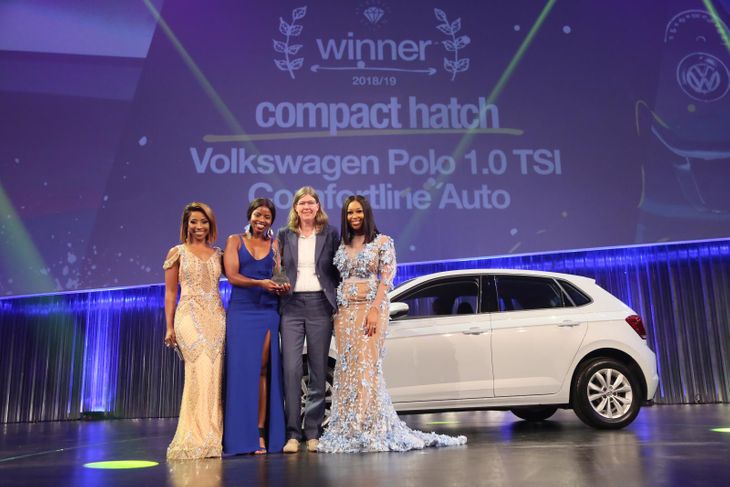
Compact Hatch: Volkswagen Polo 1.0TSI Comfortline Auto


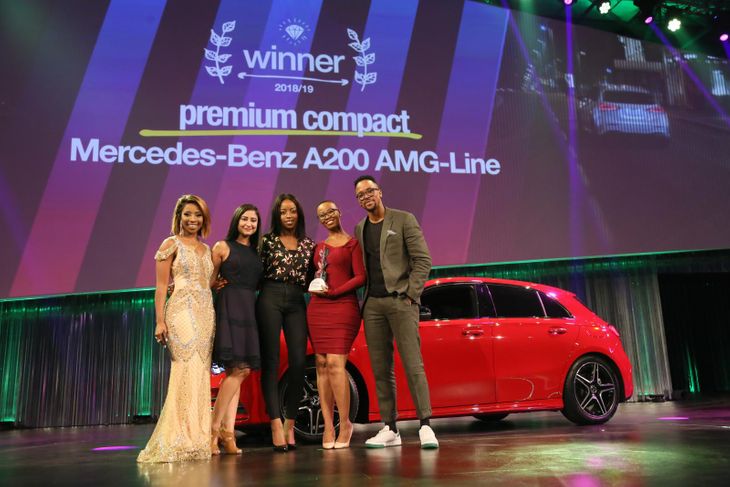
Premium Compact: Mercedes-Benz A200 AMG-Line

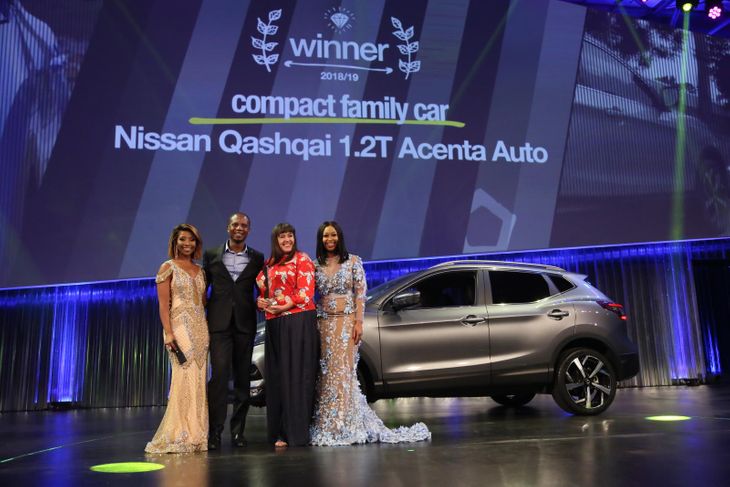
Compact Family Car: Nissan Qashqai 1.2 Acenta Auto


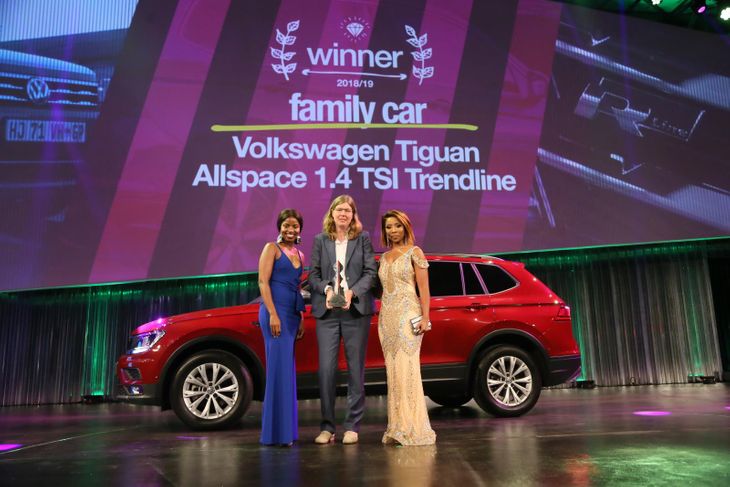
Family Car: Volkswagen Tiguan Allspace 1.4 TSI Trendline

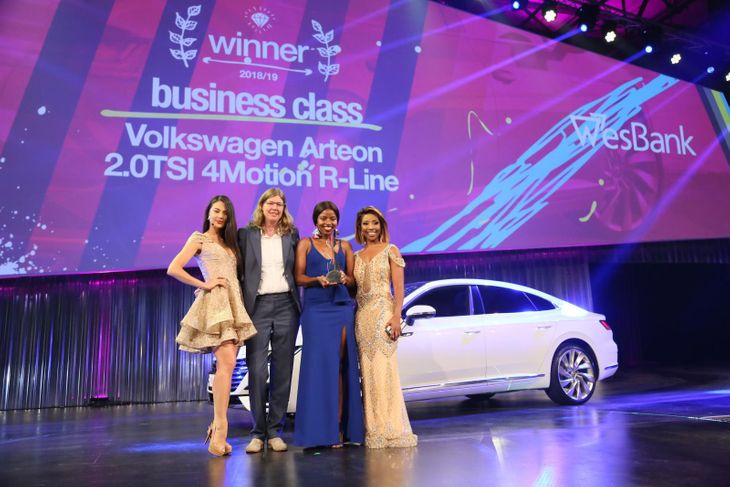
Business Class: Volkswagen Arteon 2.0TSI 4Motion R-Line

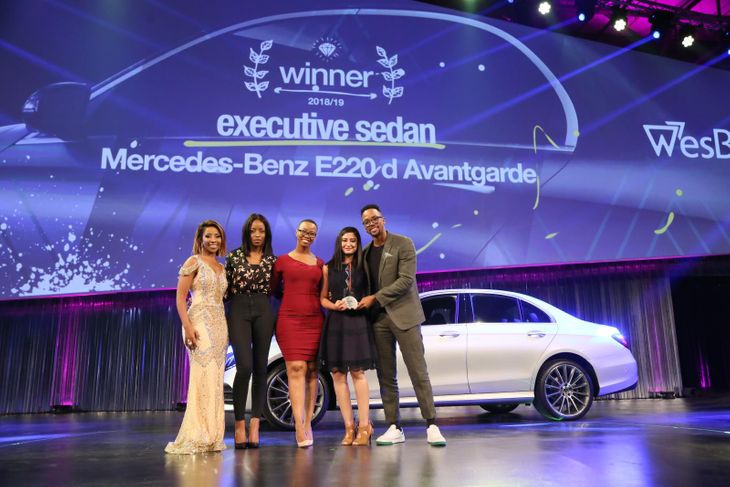
Executive Sedan: Mercedes-Benz E220d Avantgarde

Leisure Double-Cab: Volkswagen Amarok 3.0 V6 TDI 4Motion Highline Plus

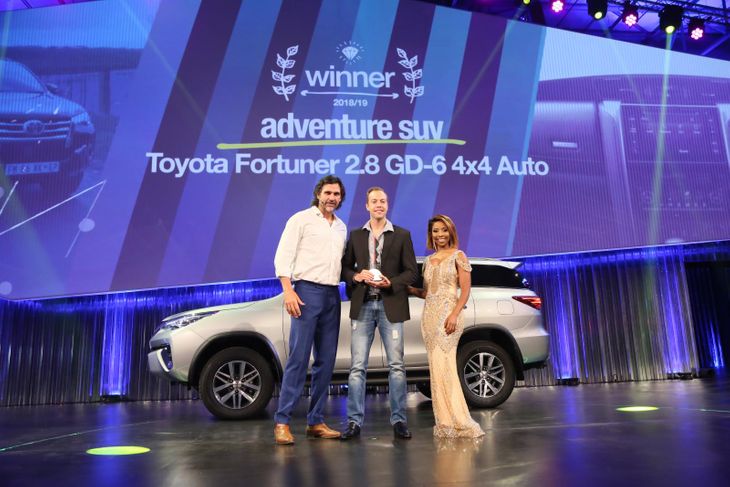
Adventure SUV: Toyota Fortuner 2.8 GD-6 4×4 Auto

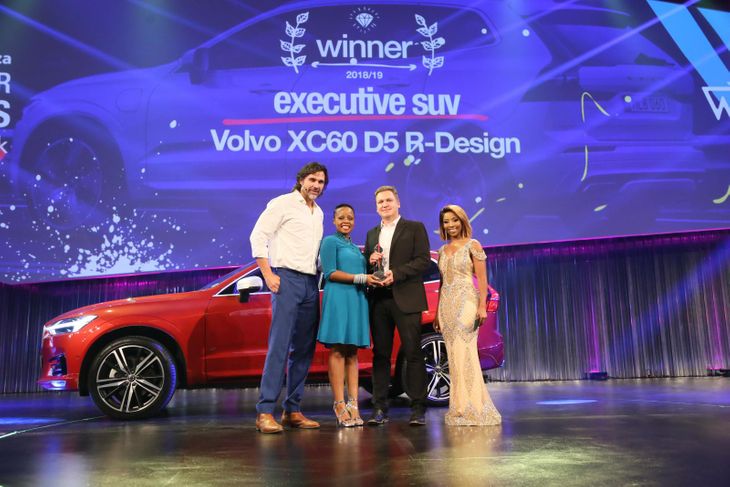
Executive SUV: Volvo XC60 D5 AWD R-Design

Premium SUV: Range Rover Velar D300 R-Dynamic SE

Hot Hatch: Honda Civic Type R

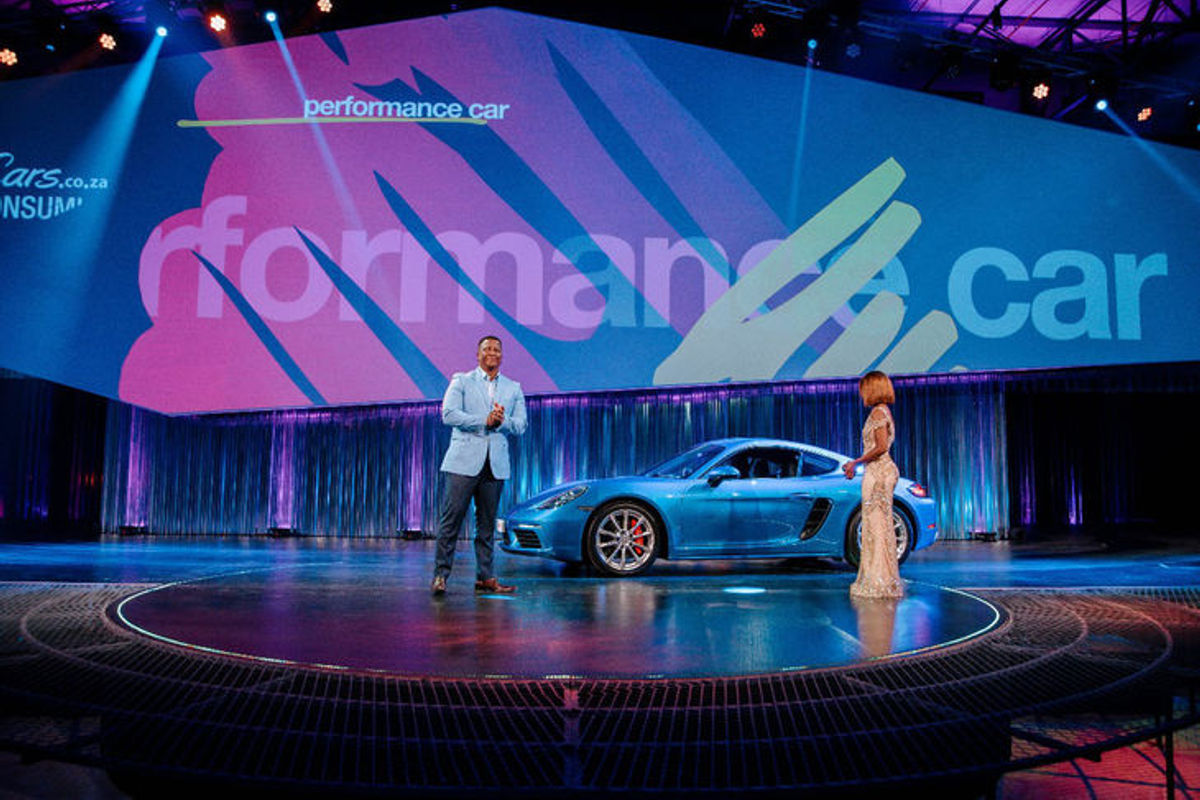
The Performance Car category was cancelled because two of the three finalists became ineligible due to unforeseen circumstances.

The rules of the competition requires at least 2 cars in each category to have full scores (judges scores and survey scores) and in the case of this category, Cars.co.za could not meet the requirement.

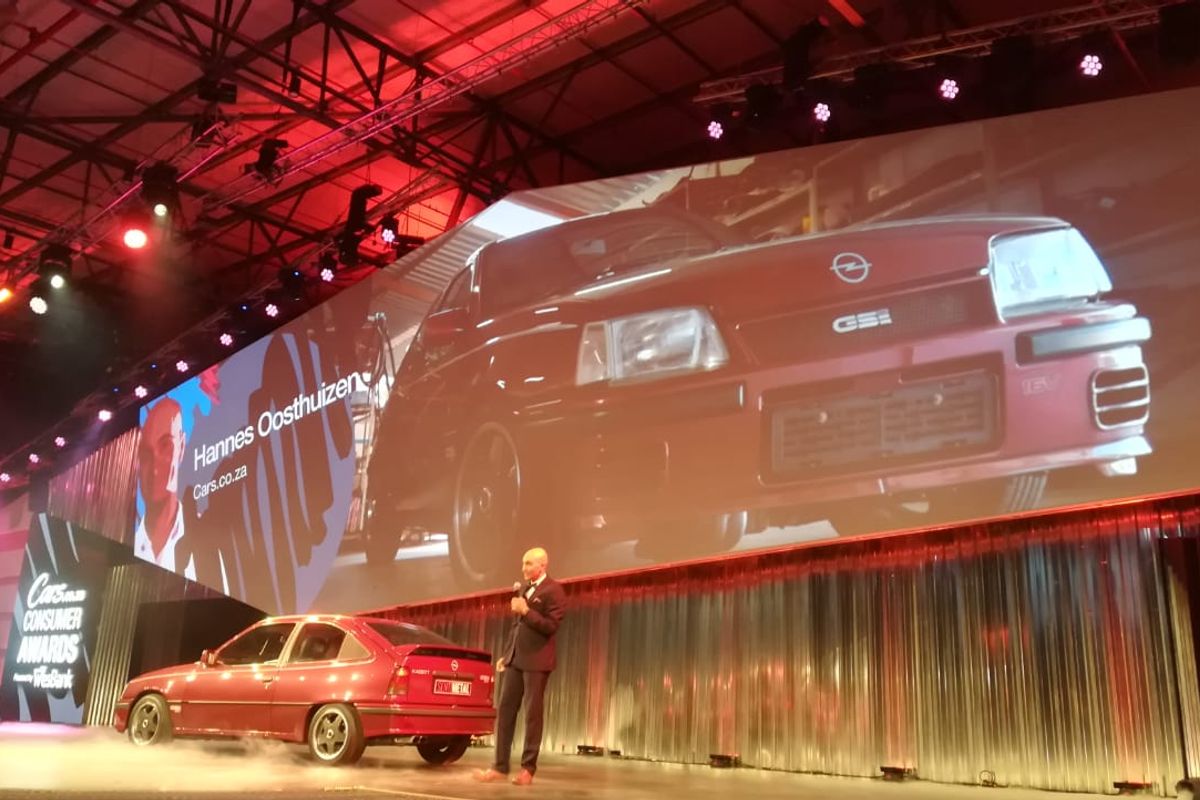
Hannes Oosthuizen, Cars.co.za’s Consumer Experience Manager, explains: “In the case of the BMW M2 Competition, we could not secure the required 6-speed manual derivative for testing. It was always going to be difficult seeing as the market for a manual performance car has declined so much in recent years. We truly appreciate BMW’s efforts to help, but in the end we just couldn’t get the right car for testing.

“With the Porsche Boxster S, we could not secure sufficient owner surveys to calculate a representative owner satisfaction score for the brand’s finalists. These issues were, in no way, the respective brands’ faults.”

Impact of the Cars.co.za Ownership Satisfaction Survey

The importance of after-sales service excellence was highlighted by the impact of the Cars.co.za Ownership Satisfaction Survey on the final scores.

“The public interest and industry support for #CarsAwards shows that there is a need for an Awards programme that takes a more practical and usable approach to deciding the winners,” Oosthuizen says. “From the start in 2015 it was our goal to build and Awards programme that could be used as a buying guide, and which would reach the entire population, not only those that follow motoring publications.”

“With 50% of a vehicle’s final score determined by a brand’s performance in the survey, a car only really stands a very good chance of winning if it is a good product, in the eyes of the judges, and if the brand delivers solid after-sales service,” he adds.

This year, the survey determined the results in 5 categories. The Volkswagen Polo (Compact Hatch), Toyota Fortuner (Adventure SUV), Nissan Qashqai (Compact Family Car), Mercedes-Benz A-Class (Premium Compact) and Mercedes-Benz E-Class (Executive Sedan) did not score the highest marks from the judges, yet emerged victorious because South African consumers rated their brands higher than those of their competitors.

Multifaceted judging process

There are several reasons why the #CarsAwards is of greater significance than most other automotive awards programmes. For one, the winners aren’t chosen exclusively by motoring journalists, who report on (and review) the latest new vehicles in the market…

Although the 7 members of Cars.co.za’s editorial team chose the finalists, the combined judging panel (including 13 respected guest judges from various backgrounds and fields of expertise) only compiled the finalists’ individual scores once they’d evaluated the cars back-to-back during a thorough two-day test at the Gerotek facility at the end of 2018.

Combined judging panel (in alphabetical order): Aluta Maqoko (The Kolloquium), Ashley Oldfield (Cars.co.za), Brenwin Naidu (Sowetan & Sunday Times), Ciro de Siena (Cars.co.za), Claire Mawisa (Carte Blanche), David Taylor (Cars.co.za), Eddie Kalili (Freelance), Ernest Page (SA Car Fan), Gero Lilleike (Cars.co.za), Jacob Moshokoa (947/EWN), Juliet McGuire (Freelance), Khulekani Dumisa (Khulekani on Wheels), Khutso Theledi (YFM), Kojo Baffoe (Afropolitan), Lerato Matebese (Driven), Mike Fourie (Cars.co.za), Nafisa Akabor (Tech Journalist), Thami Masemola (Driven), Wendy Knowler (Consumer Specialist) and Wezile Bonani (Bay FM).

All derivatives listed on the new vehicles price list on September 1 2018 were eligible for selection and the public had just as much say in the outcome of 2018/19 #CarsAwards as the 20 judges did. Fifty per cent of the final standings was based on rankings that the respective vehicle brands achieved in the Cars.co.za Ownership Satisfaction Survey, conducted in partnership with data specialists Lightstone Consumer. The data incorporated feedback from thousands of vehicle owners, based on their experiences of their vehicles (less than five years old and serviced through franchised outlets).

In fact, the most prestigious title awarded by #CarsAwards – Brand of the Year – was based solely on the findings of the Cars.co.za Ownership Satisfaction Survey.

Brand of the Year


Toyota scooped the coveted Brand of the Year award for the second time since the inception of the #CarsAwards. 

Toyota superseded Suzuki as the winner of the #CarsAwards Brand of the Year title, which is determined entirely by market and customer data, the latter from the aforementioned survey (brands’ respective sales and after-sales service ratings are particularly impactful). The Japanese firm had previously won the title in 2015/16, which means #CarsAwards Brand of the Year has been dominated by two firms in four years.

The Cars.co.za Ownership Satisfaction Survey data showed that Toyota defeated Suzuki by a very narrow margin, while Land Rover scored the final podium position.

“We think the Brand of the Year trophy is the ultimate accolade in the South African automotive industry,” says Oosthuizen. “It represents validation from the people that matter most – actual car owners.’

The red-carpet ceremony was hosted by award-winning TV host and Metro FM presenter Pearl Modiadie with guest appearances by Minnie Dlamini, Maps Maponyane, Victor Matfield and DJ Fresh, the latter of which provided live entertainment. The event was preceded by a business presentation by WesBank and attended by 350 guests, including industry leaders, representatives of the finance sector, media agencies and celebrities.

The event was digitally broadcast on Twitter, Instagram, Facebook and, significantly, streamed live on the Cars.co.za YouTube channel, the biggest branded South African channel on the video site. The multi-platform broadcast allowed consumers, who are at the core of Cars.co.za’s awards programme, to actively participate in the event.

Visit http://www.carsawards.co.za for more information about #CarsAwards, including the category criteria, and to view images of the award recipients taken at the event.

You may also be interested in:

2018/19 Cars.co.za Consumer Awards – powered by WesBank; Finalists

2018/19 Cars.co.za Consumer Awards – Powered by WesBank; Semi-Finalists

Cars.co.za Consumer Awards 2018/19 – Categories & Judges announced

Winners of the 2017/18 Cars.co.za Consumer Awards – Powered by WesBank

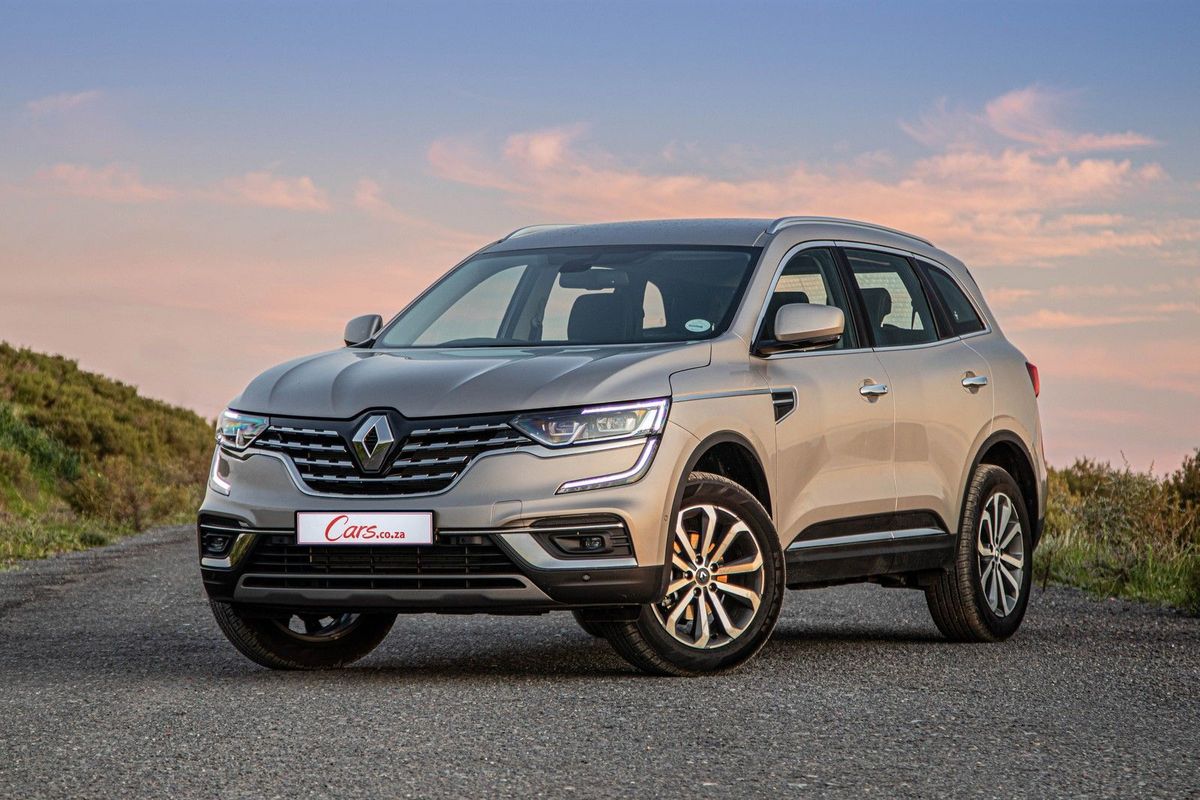
Renault Koleos (2019) Launch Review

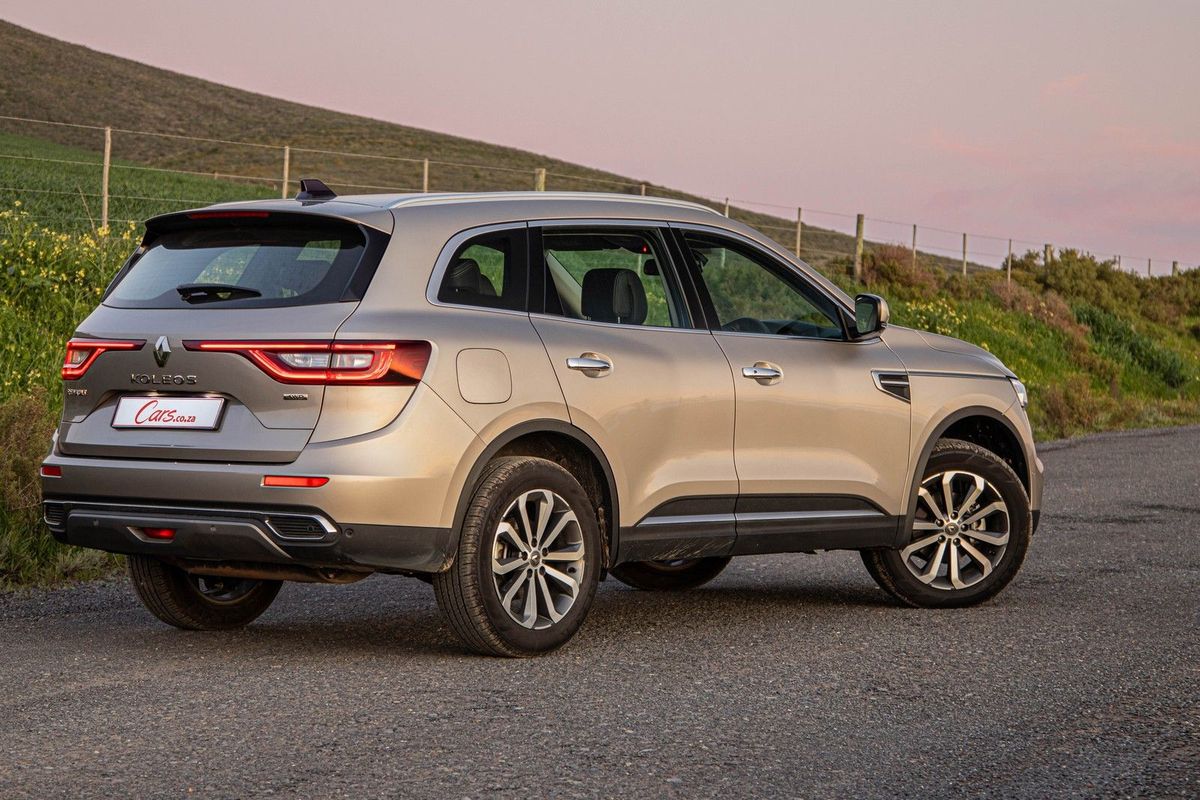
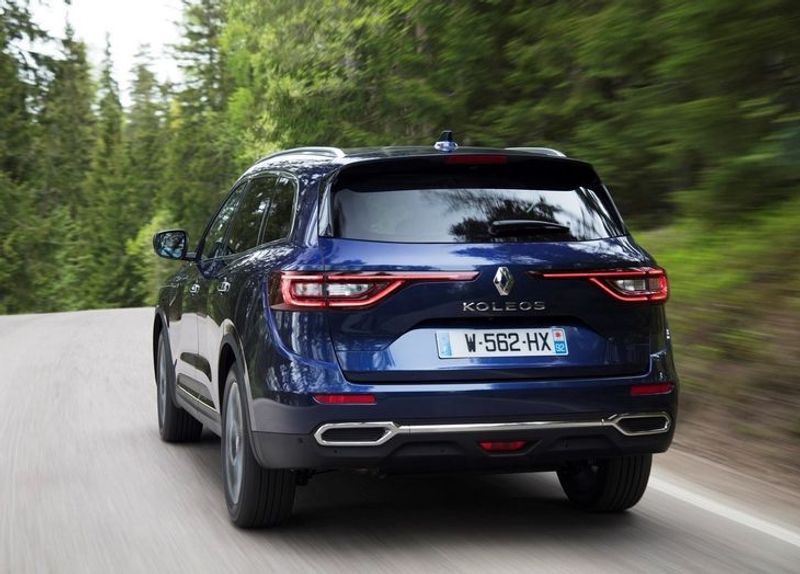
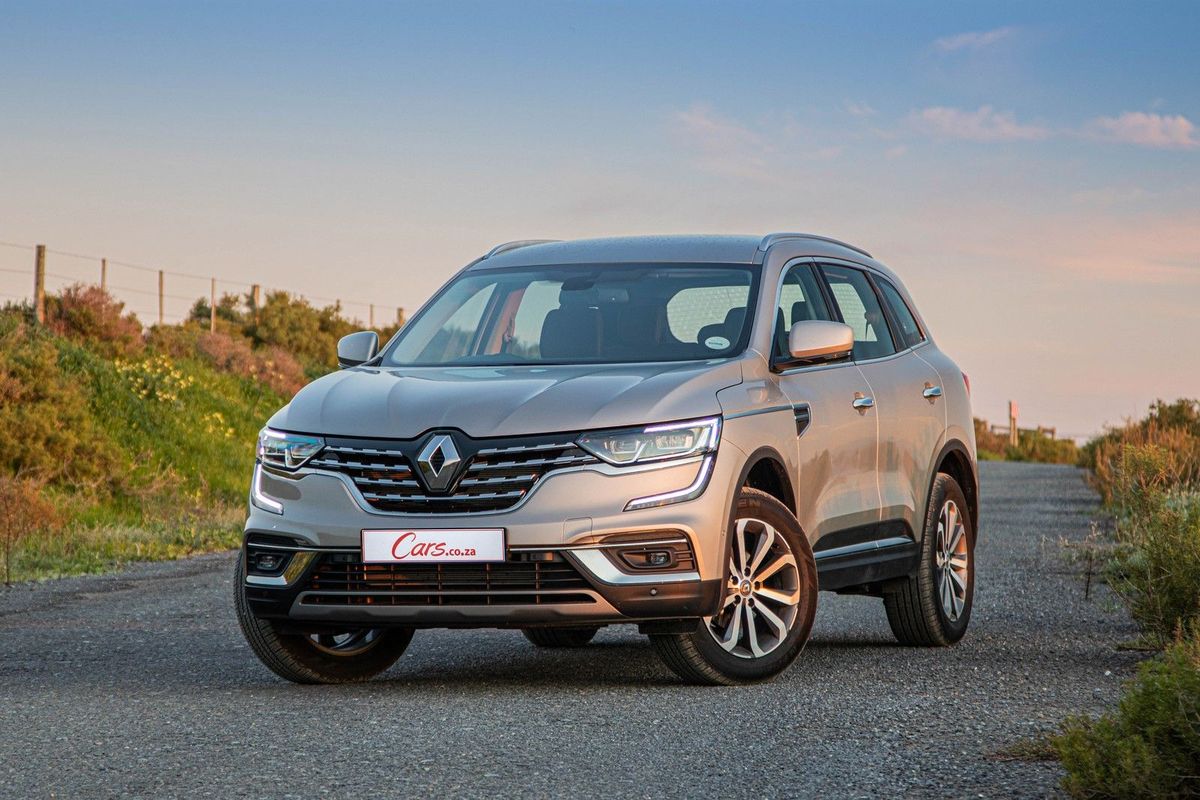
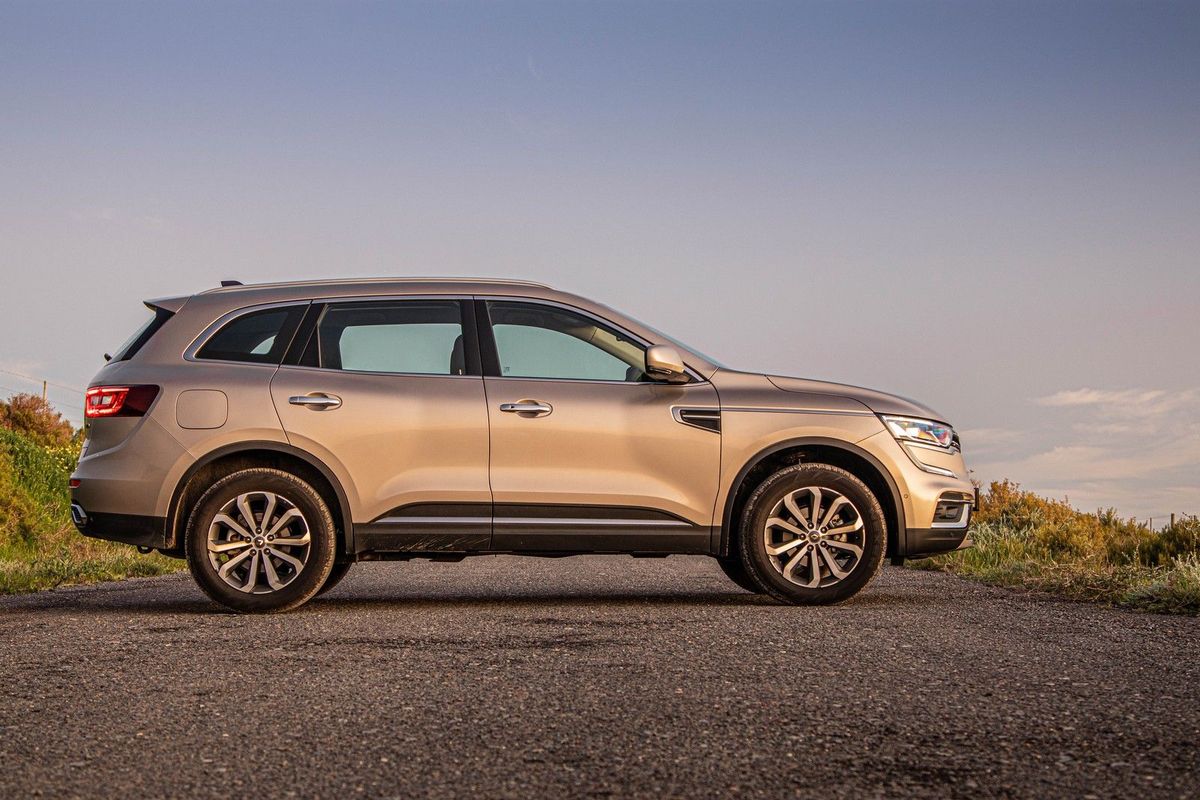
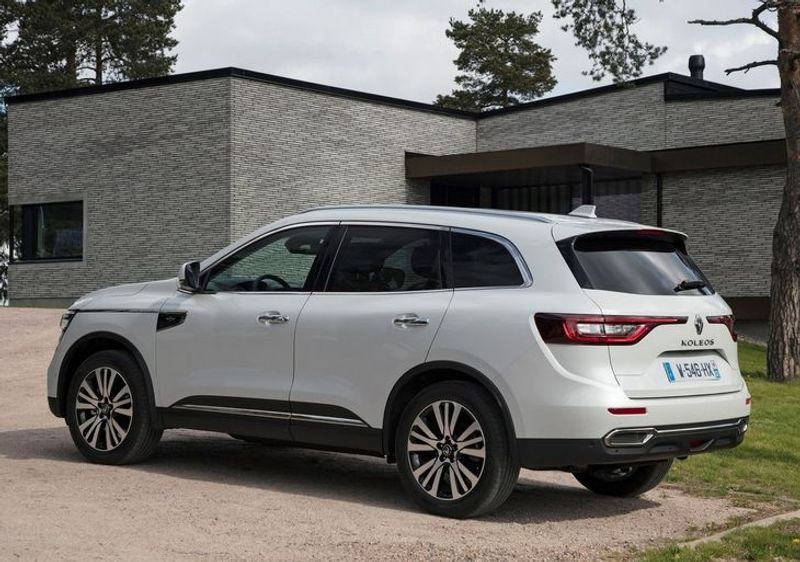
Renault has launched a new version of its Koleos SUV in South Africa, but, if the now-discontinued Kadjar had its work cut out, the French firm might find the congested family car segment even tougher to crack. Still, the Koleos does have a few compelling selling points; we drove the newcomer at its local media launch in Gauteng.

This is not the first Koleos to make landfall in South Africa. The Koleos was first seen on local shores back in 2008 (and received a facelift in 2012). The segment in which the new Koleos competes is packed with quality offerings: the new Toyota RAV4 is imminent and the established Ford Kuga, Honda CR-V, Mazda CX-5, Nissan X-Trail and #CarsAwards-winning Volkswagen Tiguan are all vying for a share of the lucrative market.

That line-up represents exceptionally tough competition and you'd be forgiven for thinking the Renault doesn't stand much of a chance of achieving notable sales success. However, the French manufacturer has a few party tricks up its (trés chic?) sleeve. Keen pricing and generous specification have always been Renault strong points and the Koleos comes to market packed with many features and, yes, at competitive asking prices.

At launch, there are 2 levels of trim: Expression and Dynamique. There's also the option of 4×2 and 4×4 in Dynamique trim. 

Click here for detailed specifications and features of the Koleos.

Own a Renault? Tell us about your experience here

What's it like to drive?


On-road manners are excellent in the Renault Koleos, but the unenthusiastic engine may not suit all tastes.

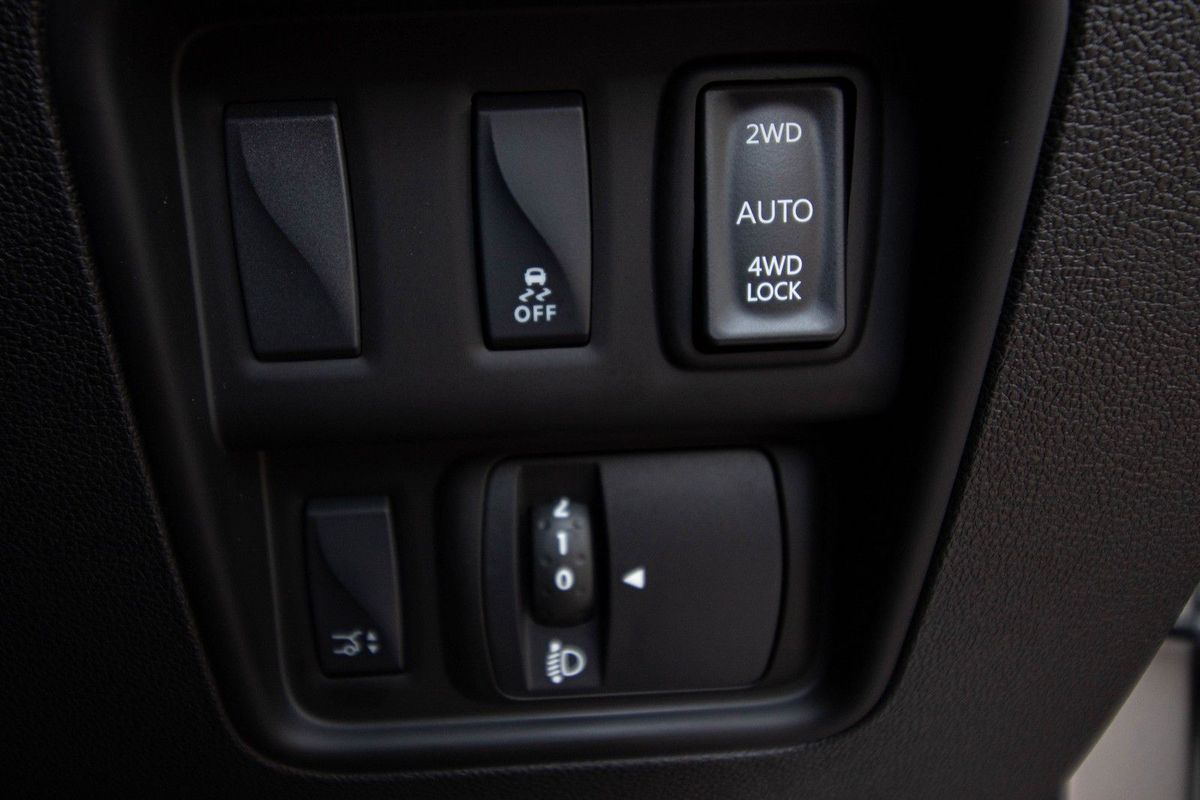
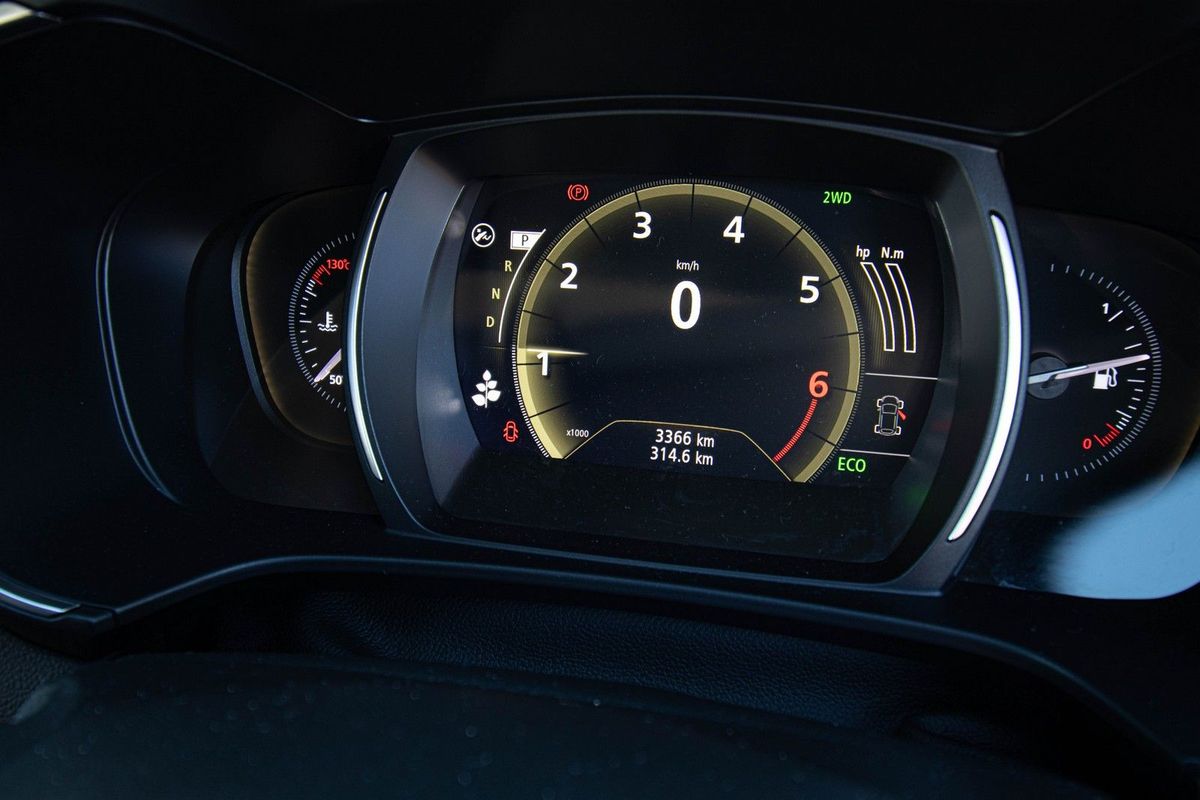
During the launch, we drove the top-spec 4×4 Dynamique derivative in a rain-soaked Johannesburg. Renault was keen to show off its simple-to-use (and clever) 4×4 system: the default mode is 2WD, which only supplies power to the front axle; 4WD auto utilises the front axle for propulsion, but when it detects slippery road conditions, such as gravel or a wet road, it directs torque to the rear wheels to improve stability under acceleration;  4WD Lock is available at up to 40 kph and distributes 50% to each axle on rough terrain. Once you exceed 40 kph, the vehicle reverts to 4WD auto. 

We had the opportunity to test the system on muddy farm roads. We could tell from the comprehensive onboard readouts that the car was sending as much as 30% of its propulsion to the rear axle, and we never felt in danger of getting stuck. Ground clearance is handy too (210 mm, Renault claims) and while the Koleos is not marketed as an offroad family vehicle, it's good to know it's more than capable of dealing with tricky conditions.

Comfortable ride quality

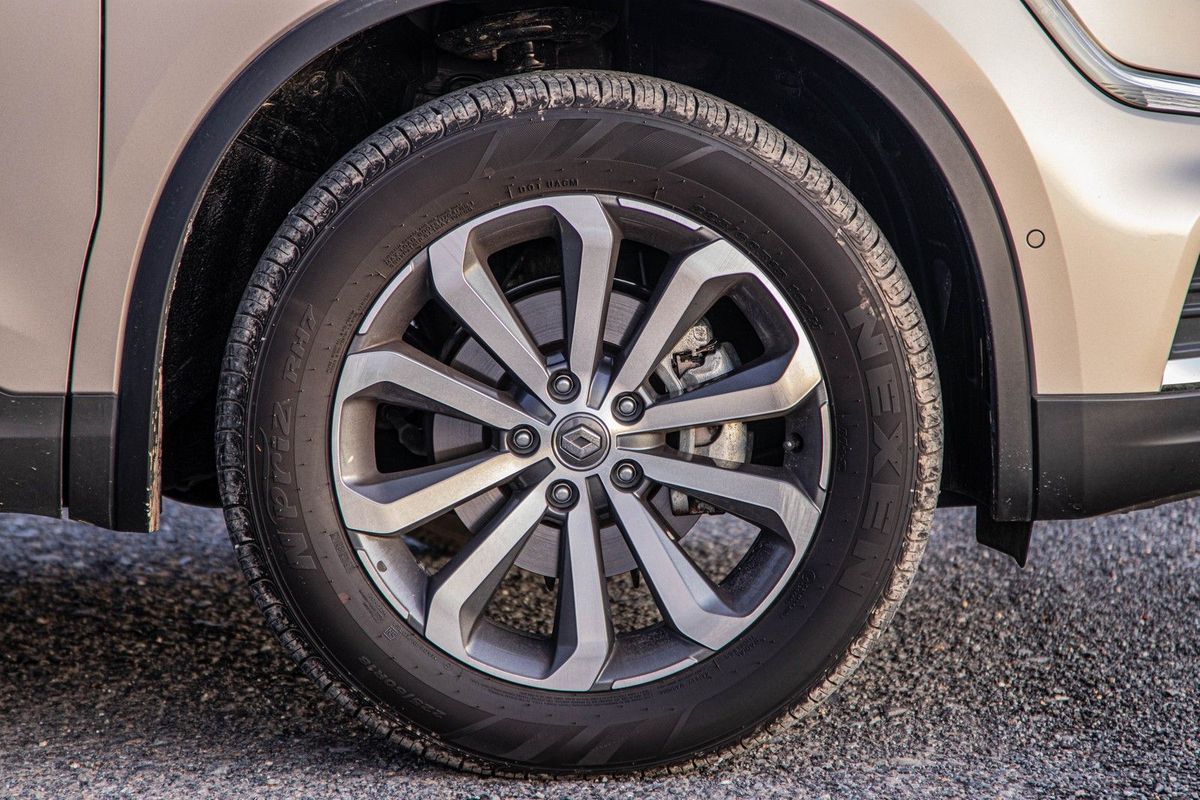
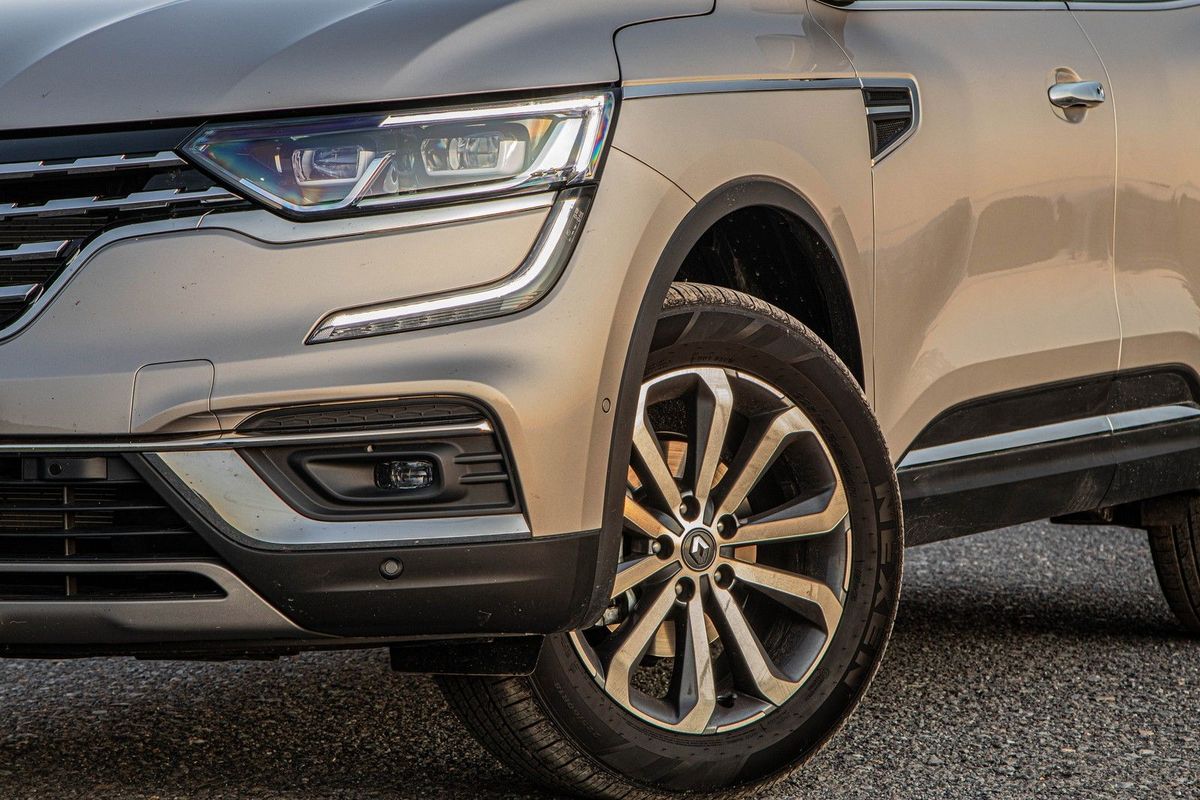
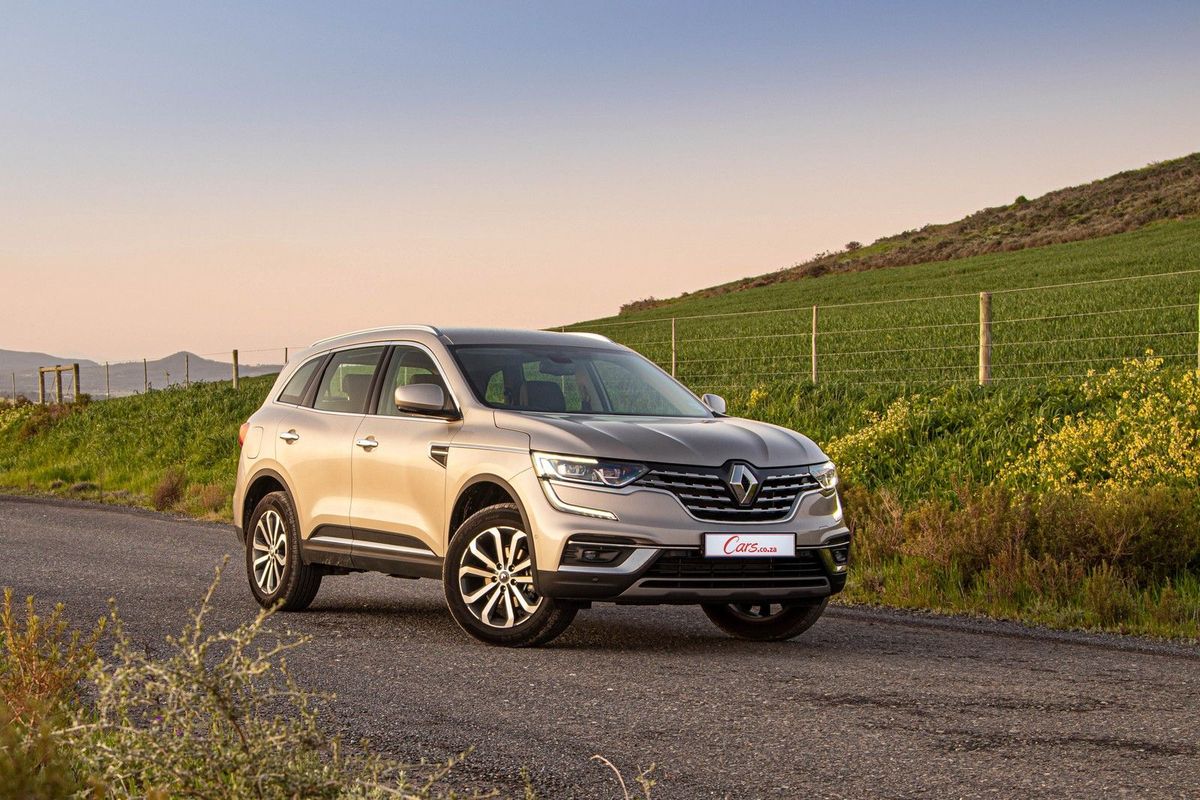
As for on-road manners, the Koleos delivers a pleasingly pliant ride quality. Even the top-spec Dynamic derivative, which is shod with stylish 18-inch alloy wheels, has refined road manners (helped by the fitment of generously-profiled tyres). This new addition to Renault's product line-up feels considerably upmarket, with a luxury feel both inside and out. The steering feel is reassuringly solid; it instils that big-car feel that SUV owners want.

While this does sound like an excellent vehicle, on paper, at least, we did have a gripe with the powertrain. Renault offers only one engine in the Koleos and it's a 2.5-litre naturally-aspirated 4-cylinder mill (with 126 kW and 233 Nm), mated with a continuously variable (automatic) transmission.

While the motor's peak outputs seem fair, the power delivery is lethargic, particularly under hard acceleration. When you flatten the accelerator, there seems to be a lack of torque low down and while the engine noise increases in crescendo, there's no sensation of appreciable acceleration. The vehicle is quiet and refined when you're at your desired cruising speed, but getting there quickly will be a noisy affair. We wondered about the future availability of a Renault-Nissan Alliance turbodiesel engine, but Renault pointed out that most buyers in the segment opt for petrol engines. 

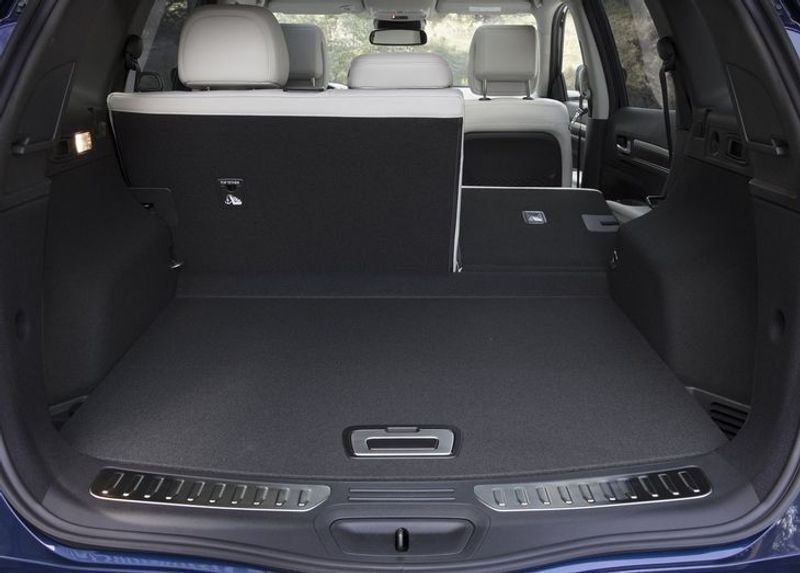
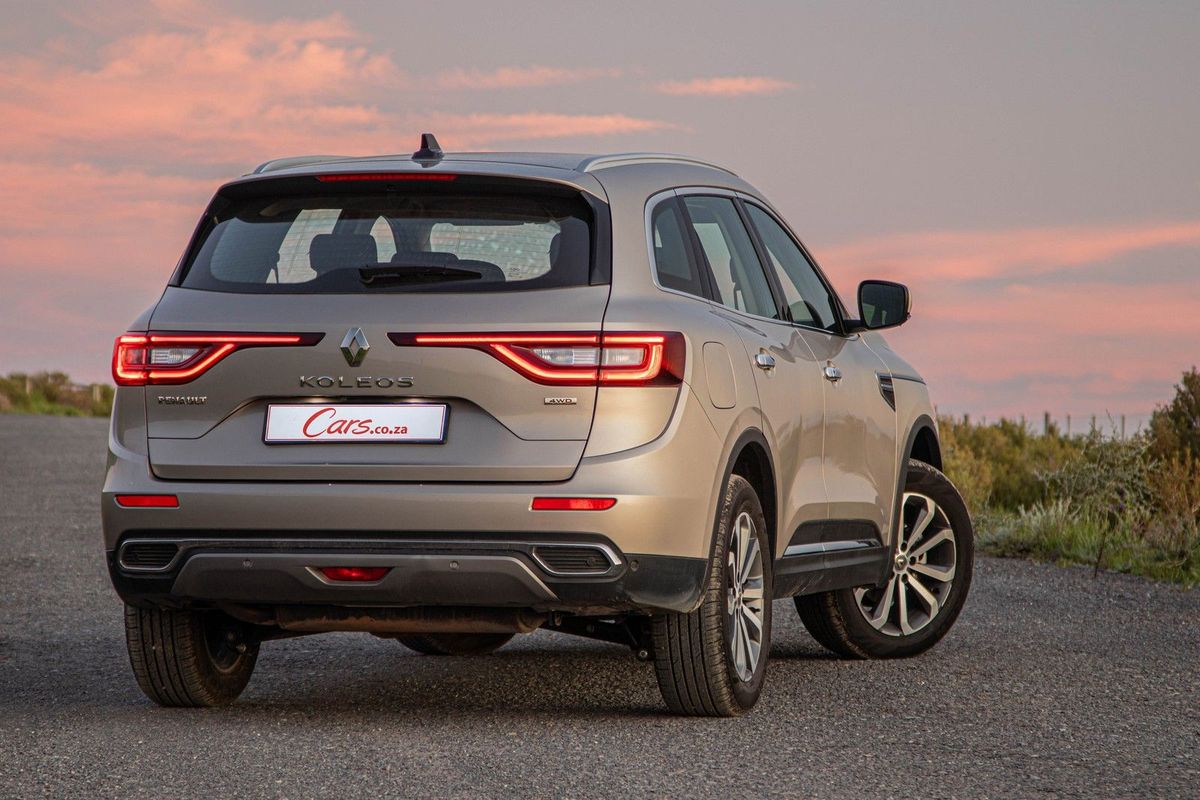
Disappointing powertrain aside, the Koleos does have something else in abundance: interior space. The manufacturer claims its newcomer is the biggest in the segment in terms of length, width and height, and boasts the most kneeroom in its class. A quick glance at rear legroom suggests it's spacious enough to seat 2 adults in the rear and the (unofficial) sit-behind-yourself test proves that even taller folk will not battle with legroom.


The Renault Koleos boasts a massive cabin and a generously-sized load bay.

Verdict

So it's a warm reception for Renault's new flagship SUV. It's light years ahead of the older Koleos in every respect, with excellent specification, aggressive pricing and generous cabin space. The driving experience is as refined and luxurious as you'd expect from a high-end Renault product. If you can live with the lethargic acceleration, the Koleos (backed by a competitive warranty and service plan) is a family SUV that's very easy to like.

Renault Koleos Price in South Africa (February 2019)

The Renault Koleos is sold with a 5-year / 150 000 km mechanical warranty, 6-year anti-corrosion warranty, 5-year / 90 000 km service plan and the service intervals are every 15 000 km.

Koleos Expression 2.5 CVT 4×2 – R399 900

Koleos Dynamique 2.5 CVT 4×2 – R439 900

Koleos Dynamique 2.5 CVT 4×4  – R479 900

OPTIONS:

Metallic Paint – R2 522

Electric Adjustable Leather Seats (Expression Model) – R 12 000

Fuel Price Likely to Increase in March 2019

Hopes that the fuel price will drop at the end of February 2019 have been dashed as international oil prices have been climbing steadily. Here are new predictions.

According to the Automobile Association (AA), "Oil traded within a very tight band for most of January, but we have seen a steady uptick since February began. This trend has accelerated in the last week in particular." Meanwhile, the Rand has been on a weakening trend against the US dollar since the beginning of the month. 

"The Rand has slipped from R13.20 against the dollar on 1 February to R14.12 on 14 February. This is not good news for fuel users at a time when oil is also rising," the AA says. As for the increases, the AA is predicting a price increase of 43 cents a litre is in the offing for petrol, 62 cents for diesel, and 47 cents for illuminating paraffin. "If the trendlines for oil and the Rand don't flatten out, there could be worse to come before month end," the AA says.

Related Content

Fuel Price Breakdown: What do you pay for?

5 Ways to Beat the Fuel Price Hike

Most Fuel Efficient Budget Cars in SA

Most Fuel-Efficient Double-Cab Bakkies in SA

5 Fuel-Saving Car Features & How They Work

Most Fuel Efficient Budget Cars in SA

Most Fuel Efficient Diesel Cars in SA (2018)

Most Fuel Efficient Petrol Cars in SA (2018)

10 Ways To Save Fuel

Land Rover Defender Interior Leaked

Twitter accidentally gives us a look at what the new Defender could be like inside…

With the threat of Brexit and pressure on its traditional diesel-biased engine line-up, Land Rover is a brand currently under enormous strain. A rare highlight in waiting for Land Rover this year, is the looming debut of its all-new, thoroughly modernised, Defender.

Although disguised prototypes of the new Defender have been photographed, indicating a similarly boxy silhouette to Defenders of old, there has been no indication of what its cabin might look like. Until now…

.
The interior of the new Defender has been thoroughly modernised…

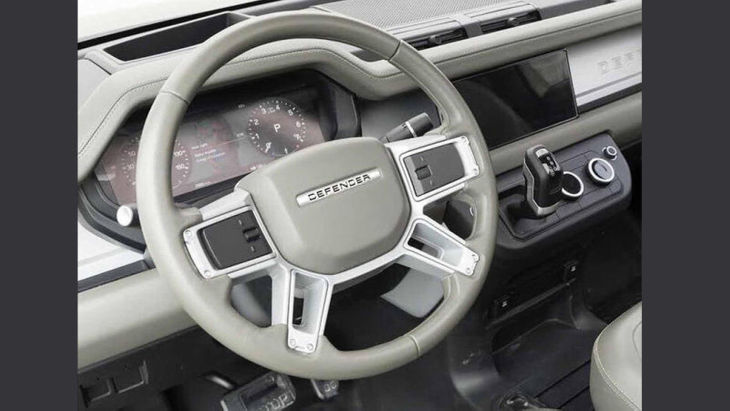
An image of the new Defender’s steering wheel, instrument binnacle and centre-stack were accidentally posted on Twitter by U.K. designer Robert Charles. Curiously, both the image and Twitter account belonging to Charles were deleted soon after posting.

What can be gleaned from the low-contrast Twitter image? The Defender helm has changed from that traditional two-spoke design to a stylised four-spoke steering wheel, with a blend of materials and satellite controls.

The tiny Defender instrumentation dials are superseded by a TFT digital display, with an infotainment screen sitting atop the centre-stack. The floor-mounted manual shifter is gone, replaced by a console-mounted automatic transmission gear selector, flanked by two dials – presumably to control driving modes.

Although the seats, steering wheel and dash all feature what appeared to be stitched leather trim, the floor has retained a hard-wearing and pressure-hose cleanable rubber finish.

Perhaps the most interesting aspect of this left-hand drive configuration Defender cabin image, is the digital tachometer, which reads up to 7 000 rpm. Does this serve as a potential clue to the engine configuration for new Defender? Not many turbodiesels feature an engine speed rating all the way up to 7 000 rpm, which hedges the odds that the new Defender will be petrol powered.

We will keep you updated as soon as further details are revealed.

Buy a new or used Land Rover Defender on Cars.co.za

Related Content

Next Land Rover Defender: Why the long wait?

The Journey Mozambique: The Search for Sunken Land Rovers [Video]

Land Rover Defender Heritage Edition Video Review

Land Rover Defender 110 Heritage Edition (2016) Review


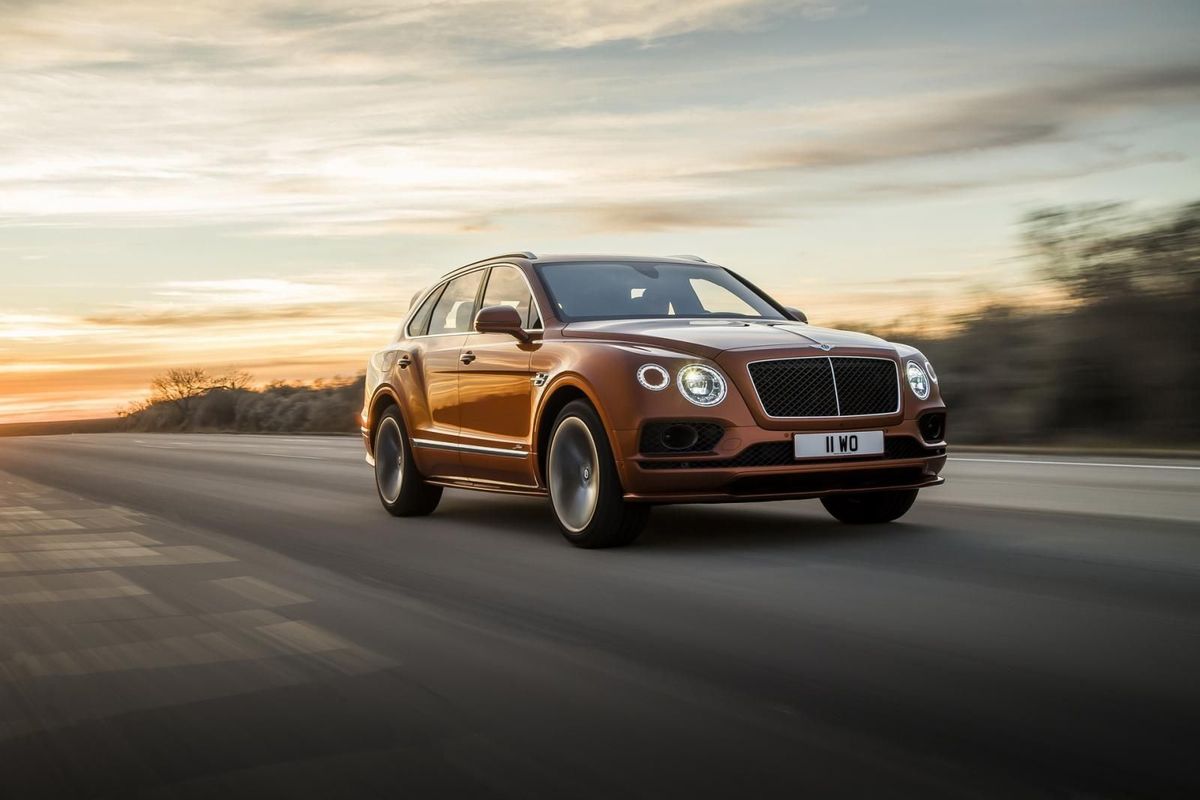
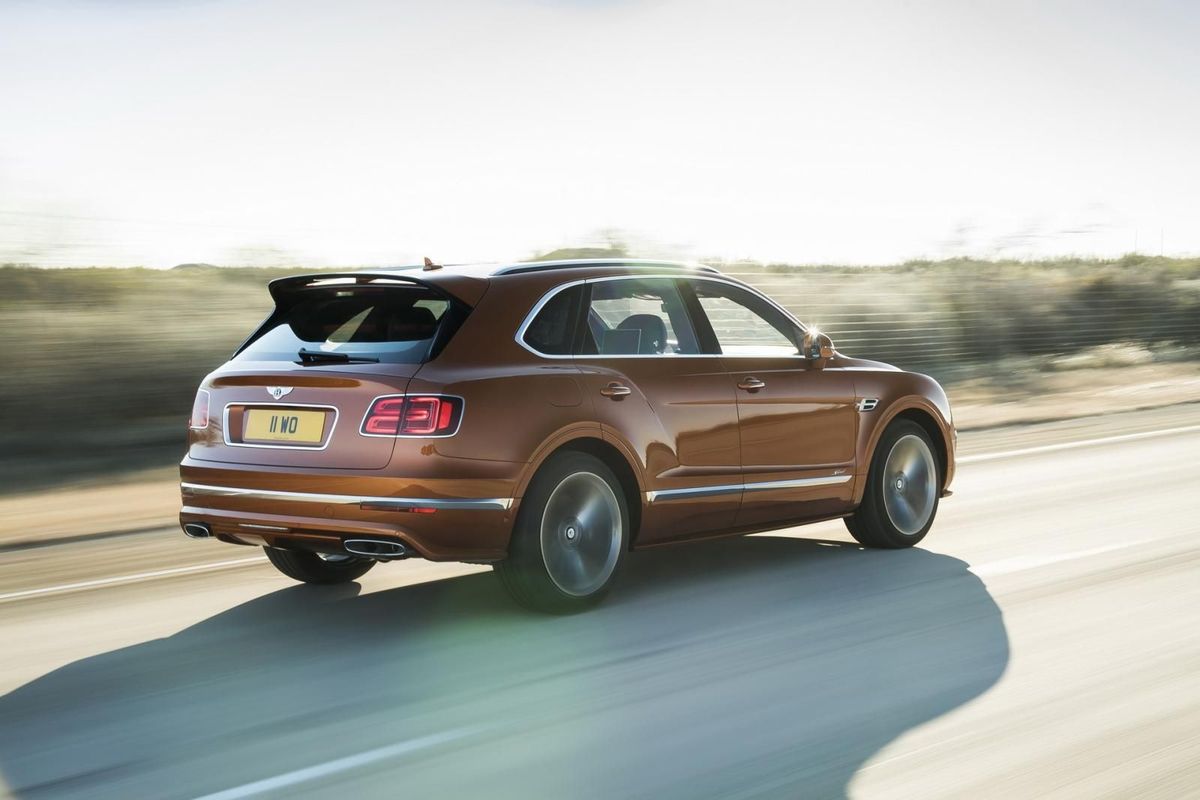
Bentayga Speed is World’s Fastest SUV

Bentley has claimed the title of world’s fastest SUV with an upgraded version of its Bentayga. Details below…

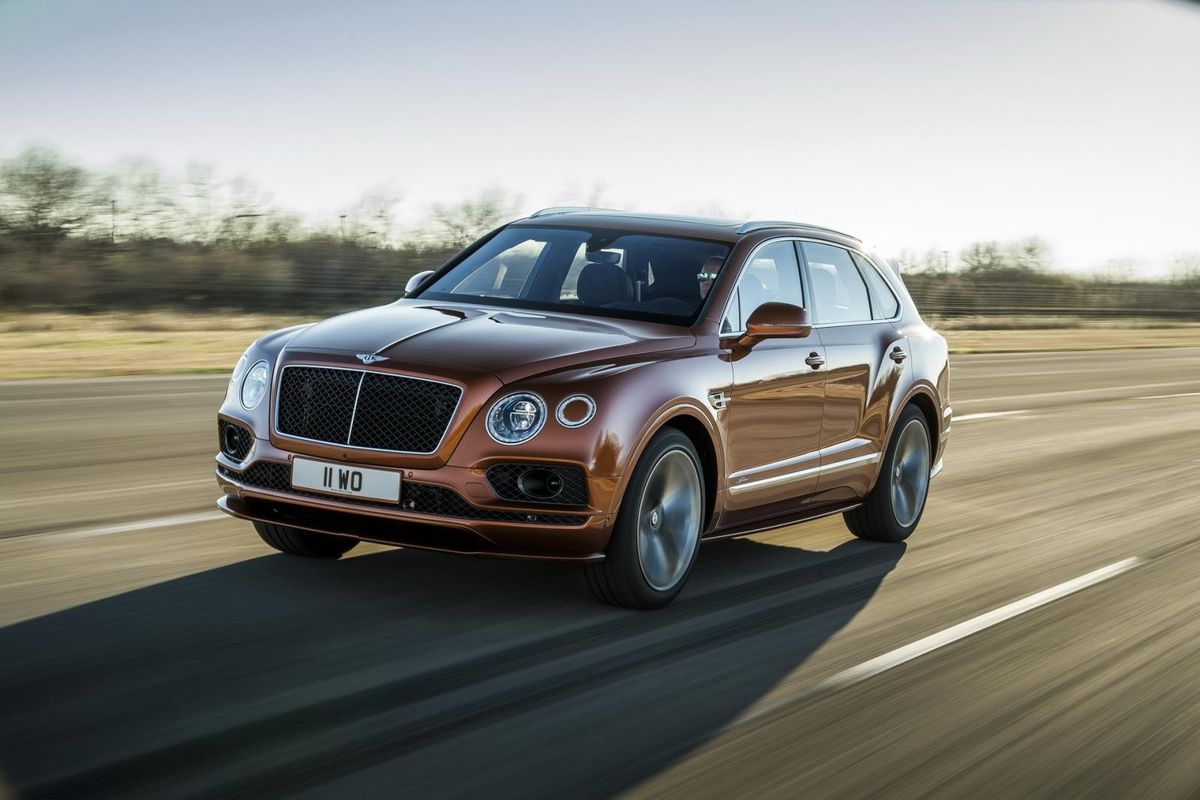
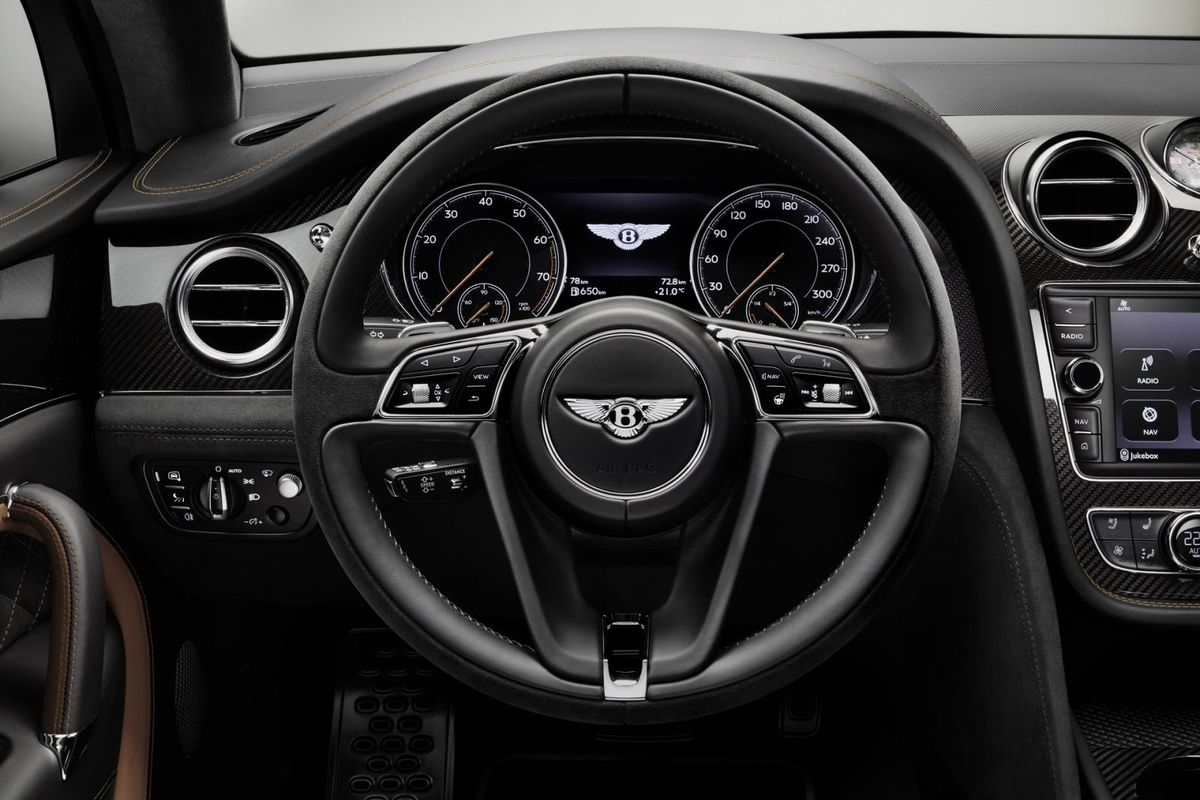
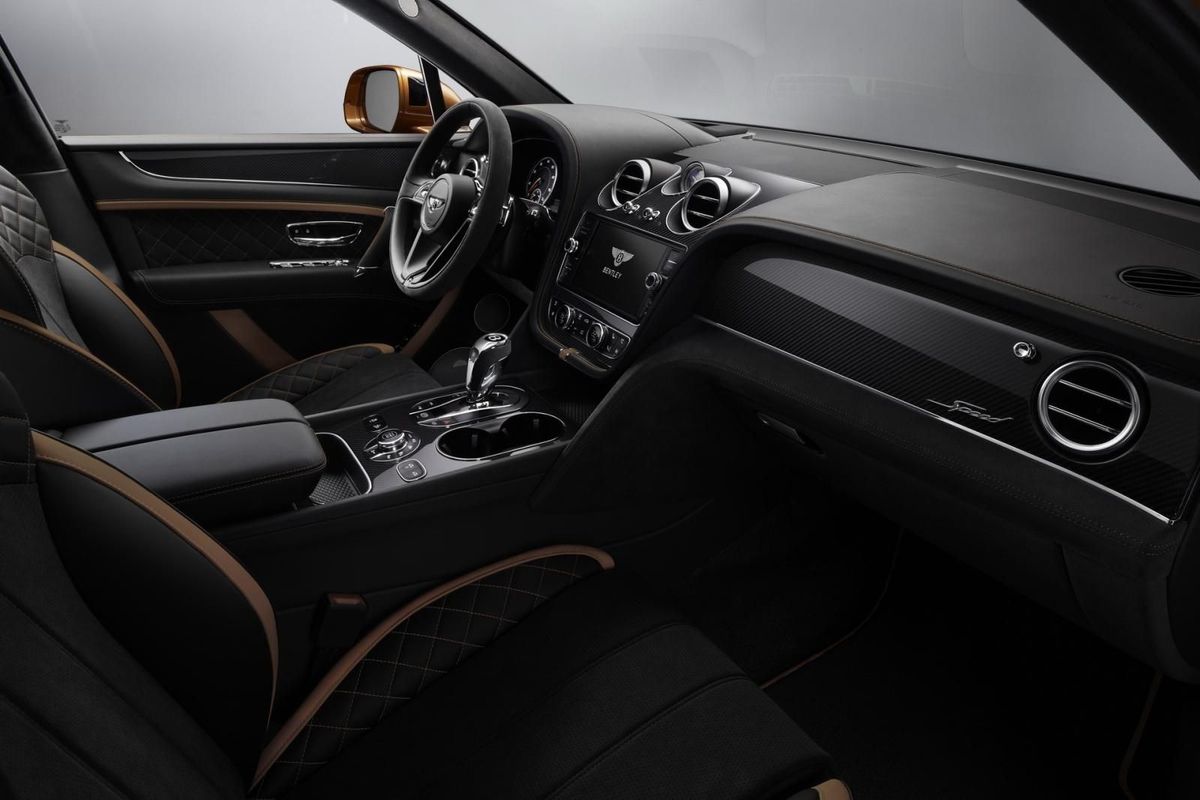
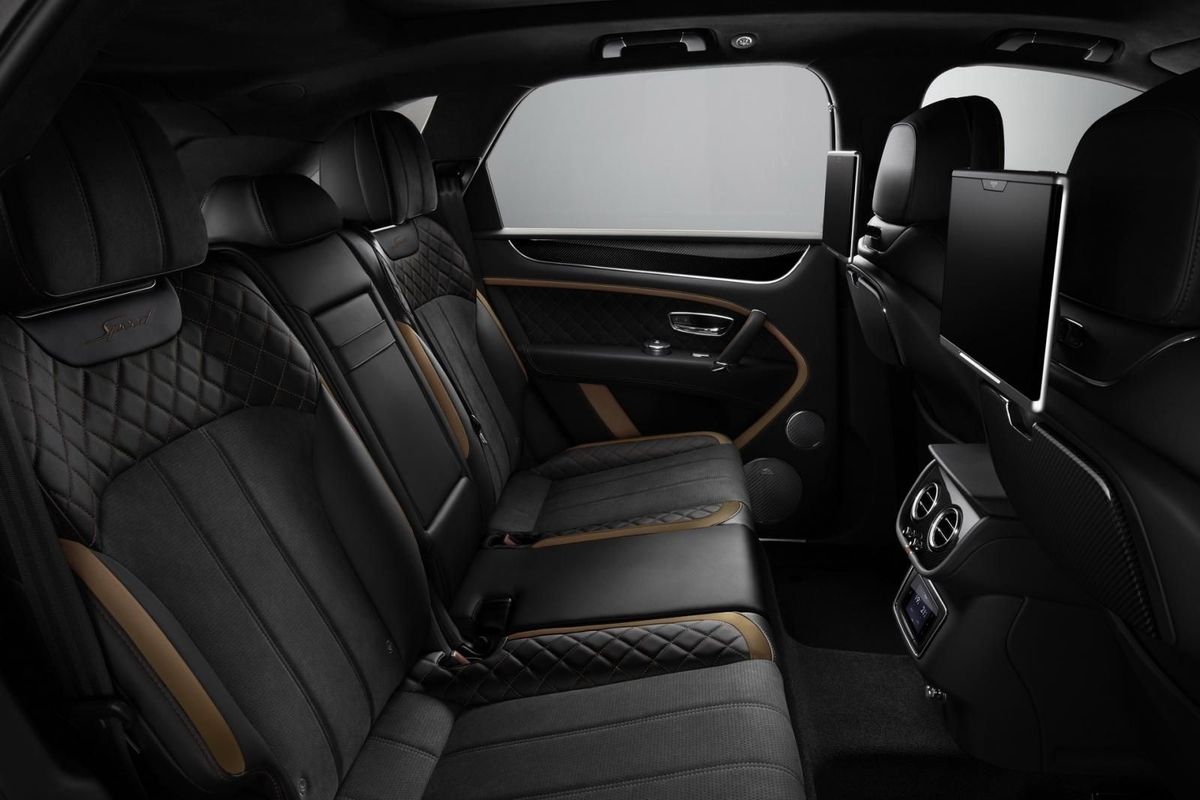
Named to avoid any duplicity about its purpose, the new Bentayga Speed features a slightly more powerful version of Bentley’s iconic W12 engine.

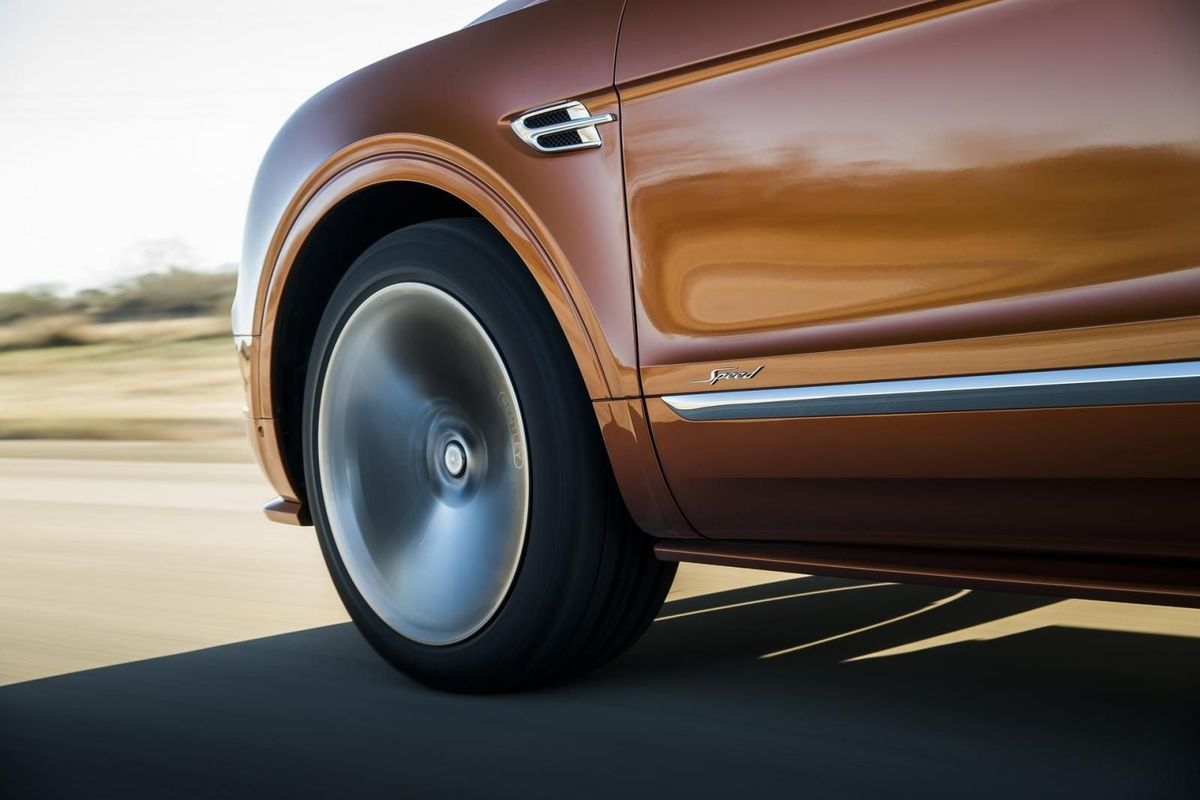
Denoting its special status amongst high-performance SUVs, this new Bentayga features darkened light clusters, obligatory ‘Speed’ badging, model-specific 22-inch alloy wheels and a functional tailgate spoiler.

The number which defines Bentley’s Speed SUV is its 306 kph top speed, which makes it a rather academic 5 kph faster than any other W12 powered Bentayga. By implication, the new Speed also claims the title of world’s fastest SUV. 

It’s not only fast but quick too, capable of running the zero to 100 kph benchmark in 3.9 seconds – which is two-tenths of a second faster than a ‘standard’ W12 Bentayga. A point of contention is that Lamborghini’s Urus, which rides on a similar platform to Bentayga, is faster in terms of pure acceleration, capable of 0-100kph in 3.6 seconds.

How does the Bentayga Speed manage to deliver its performance gains? Although its peak torque value remains the same as other W12 powered Bentley SUVs, at 900Nm, engineers have managed to boost additional power from the 6.0-litre engine, allowing the Bentayga Speed 467kW of peak power. That’s a gain of 20kW.

To harmonise the performance of a heavy, luxury SUV capable of 306 kph, you need exceptional brakes. As such, Bentayga Speed mounts the largest brake discs ever fitted to a production Bentley. Benefitting from ceramic construction, these brakes can absorb 1 000 °C of heat build-up and generate maximum braking torque of 6 000 Nm.

The Bentley Bentayga will make its public debut at the upcoming Geneva Motor Show in March 2019. 

Buy a Bentley on Cars.co.za

Related Content

Bentley Bentayga Diesel (2018) Launch Review

Is VW’s Touareg a Bargain Bentley?

Bentley Bentayga Showcases new Hybrid

Mercedes-AMG G63 Edition 1 (2019) Review

It's the perfect time to review Mercedes-Benz' new G-Class, seeing as the iconic off-roader turns 40 this month. But, in its latest iteration, and particularly G63 Edition 1 guise, does its off-roading credentials even matter?

We like: Spectacular looks and sound. Thumping acceleration. Build quality. Character.

We don't like: Vague steering, ride quality (on some surfaces), fuel consumption

Fast Facts

  • Price: R3 086 653 (February 2019, without options)
  • Engine: 4.0-litre V8 twin-turbo
  • Gearbox: 9-speed automatic
  • Fuel economy: 13.1 L/100 km (claimed)
  • Power/Torque: 430 kW/850 Nm

Own a Mercedes-Benz? Tell us about your experience here

SERIOUS ABOUT BUYING?

Where does it fit in?


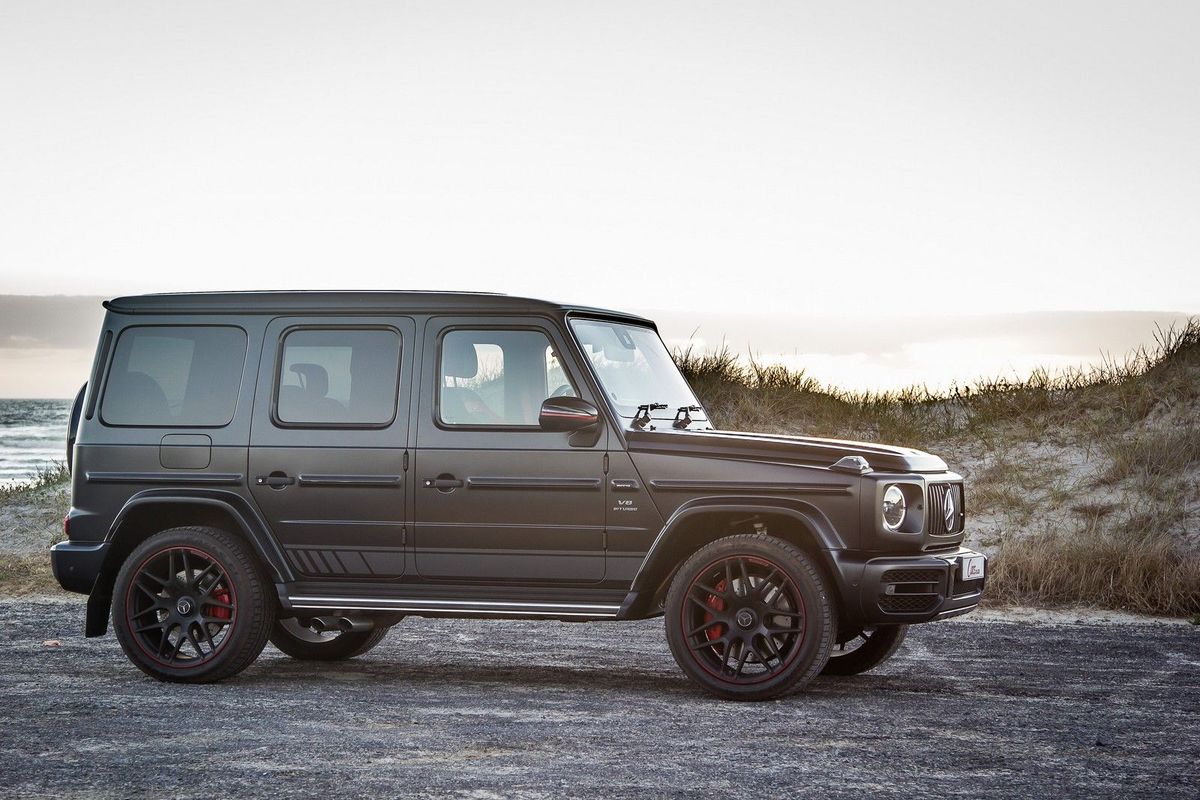
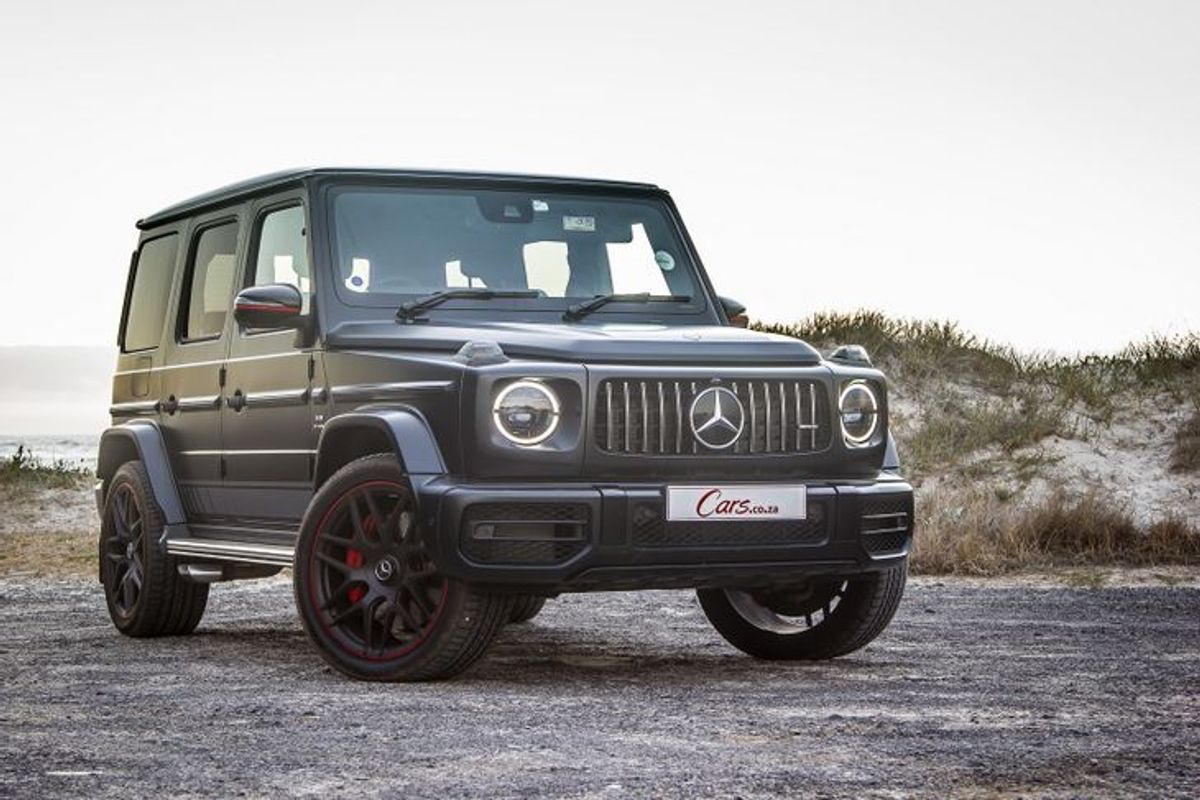
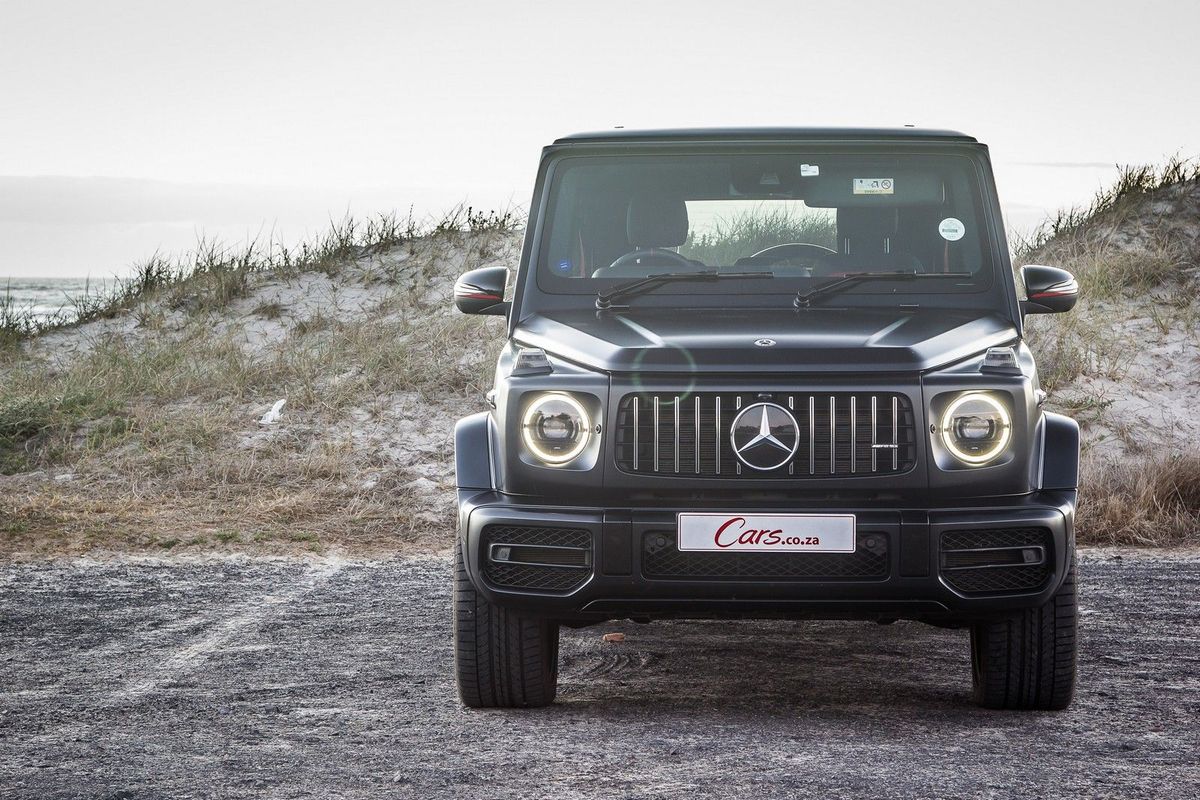
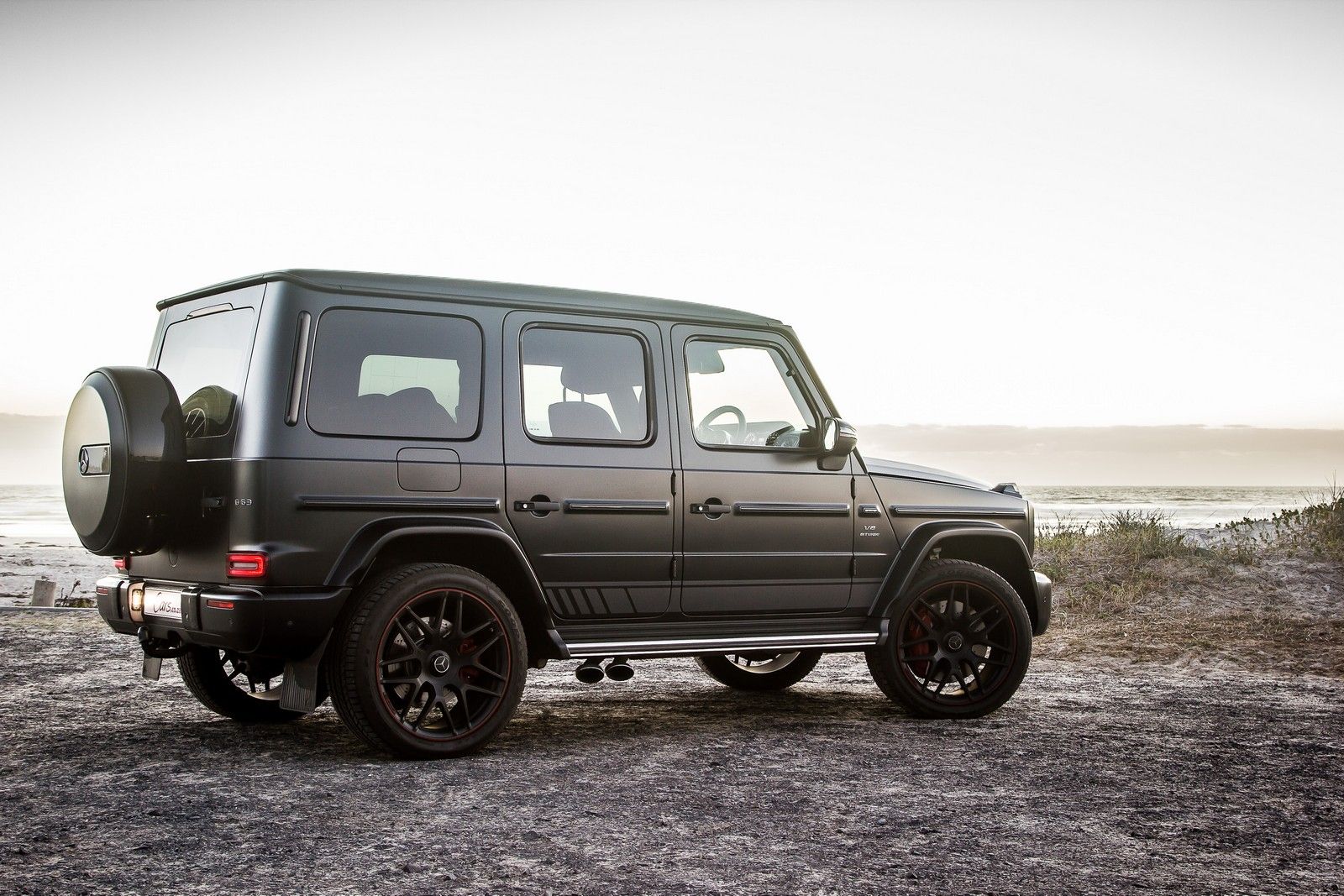
More broad-shouldered than before, and with slightly higher ground clearance, the G63 has oodles of road presence.

Exactly 40 years ago, this month (February 2019), Mercedes-Benz unveiled (what was then called) the Gelandewagen. Built to be extremely tough, capable off-road and fit for a wide range of purposes, the G has evolved into an automotive icon – indestructible… anti-conformist… even gangsta

To its credit, Mercedes-Benz has remained largely true to the spirit of the original in terms of engineering – the G-Class may now be a fancy, blingy SUV, but at its core, it's still capable of driving down mountains. Nevertheless, the full-fat AMG G63 is by far and away the most popular G-Class derivative… It's a vehicle for people that like to be seen (and heard) and who are decidedly unlikely to ever engage its 3 diff locks. So, is the new G63 Edition 1 just an attention-grabber, or does it actually compete with other luxury SUVs on refinement, luxury etc. too? Does it even matter?

What's good about it?

Spectacular looks


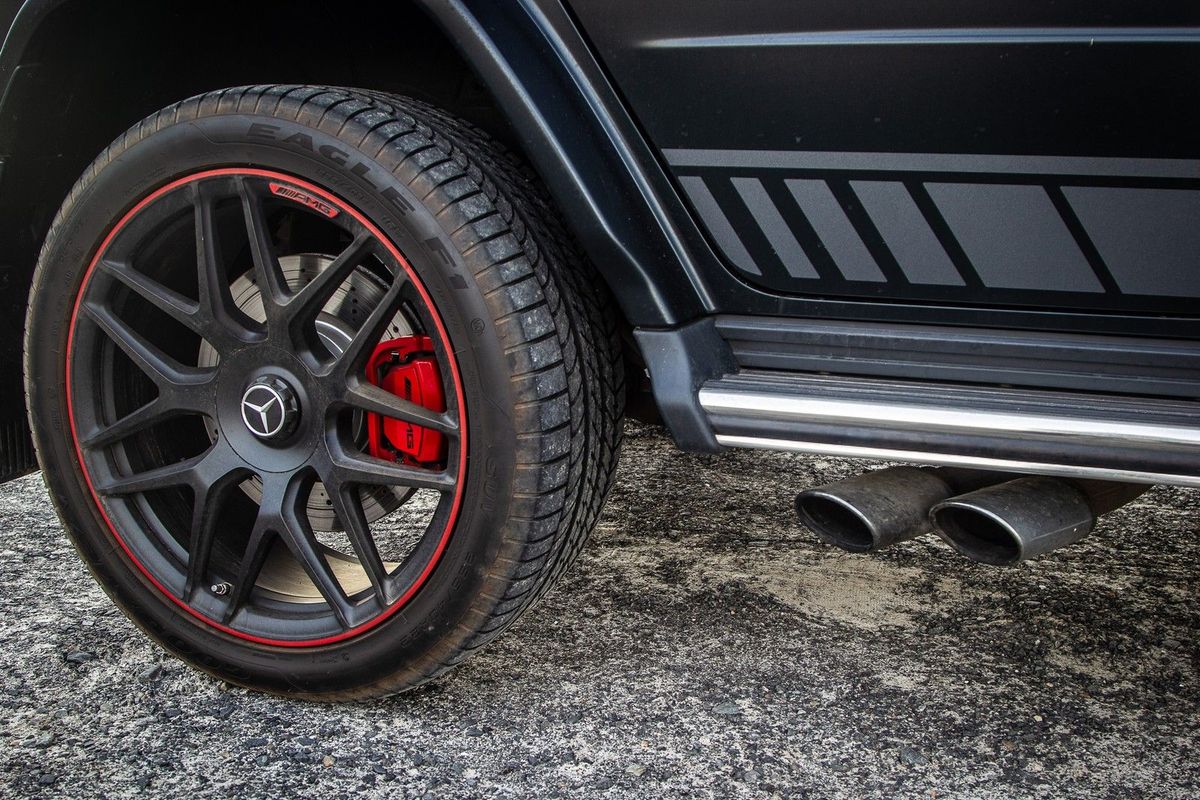
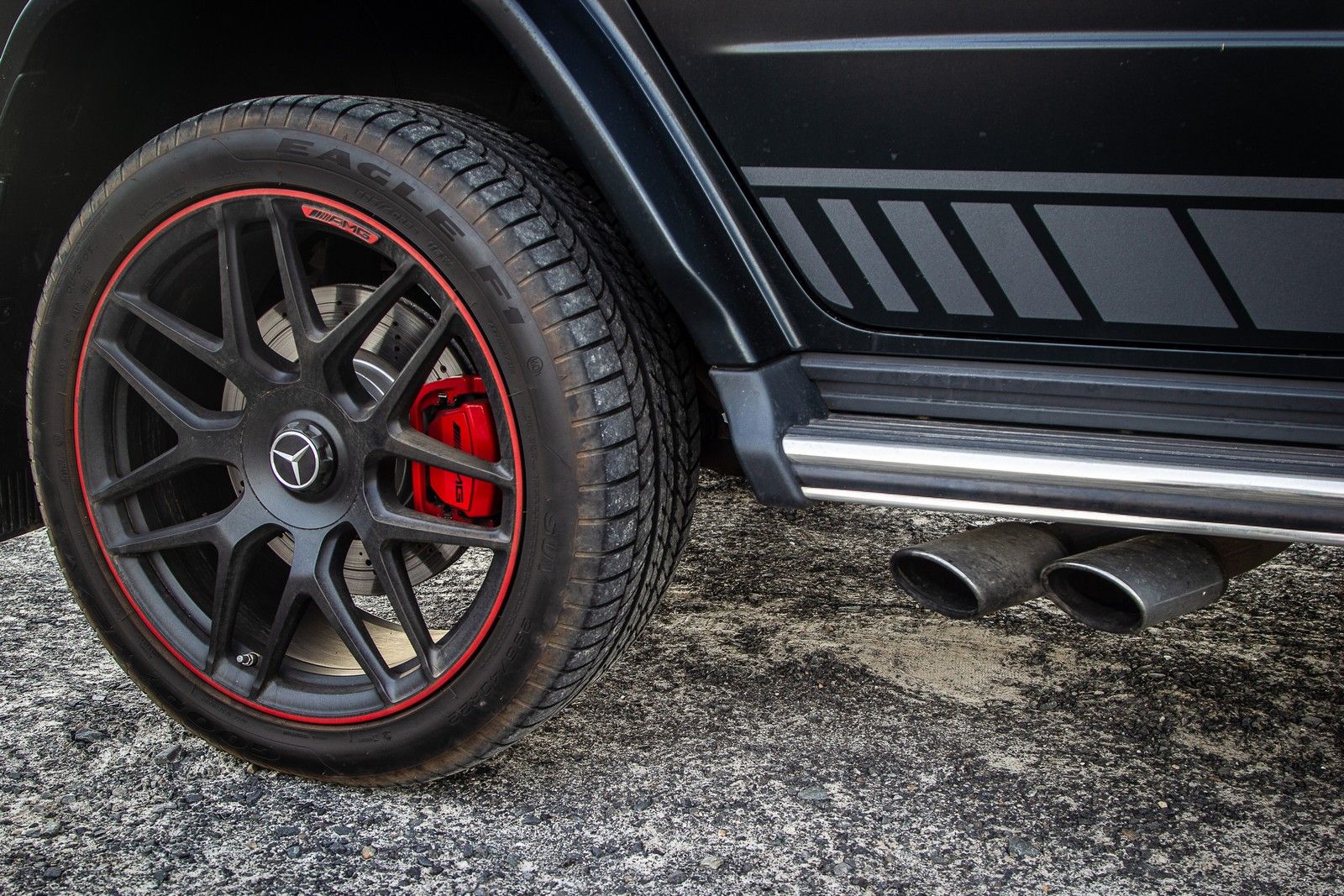
Side-mounted exhausts emit a loverly burble at idle and ferocious roar under acceleration.

Much like that other enduring German icon, the Porsche 911, the Mercedes-Benz G-Class' primary appeal is its appearance and the impression (if not undiluted awe) it instils in onlookers. Mercedes-Benz was definitely aware of that and tasked its designers to keep the G's visual identity, even when logic dictates they shouldn't have… Overall, the new G-Class is wider, longer and higher than before, but it retains its predecessors' signature elements – note the indicators sitting proud on the front fenders, the near vertical (but slightly more tilted) front windscreen, the exposed door hinges and rear barn door. Crikey, they've even ensured the solid doors are as hard to shut at first attempt as its predecessor's – that's attention to detail! 

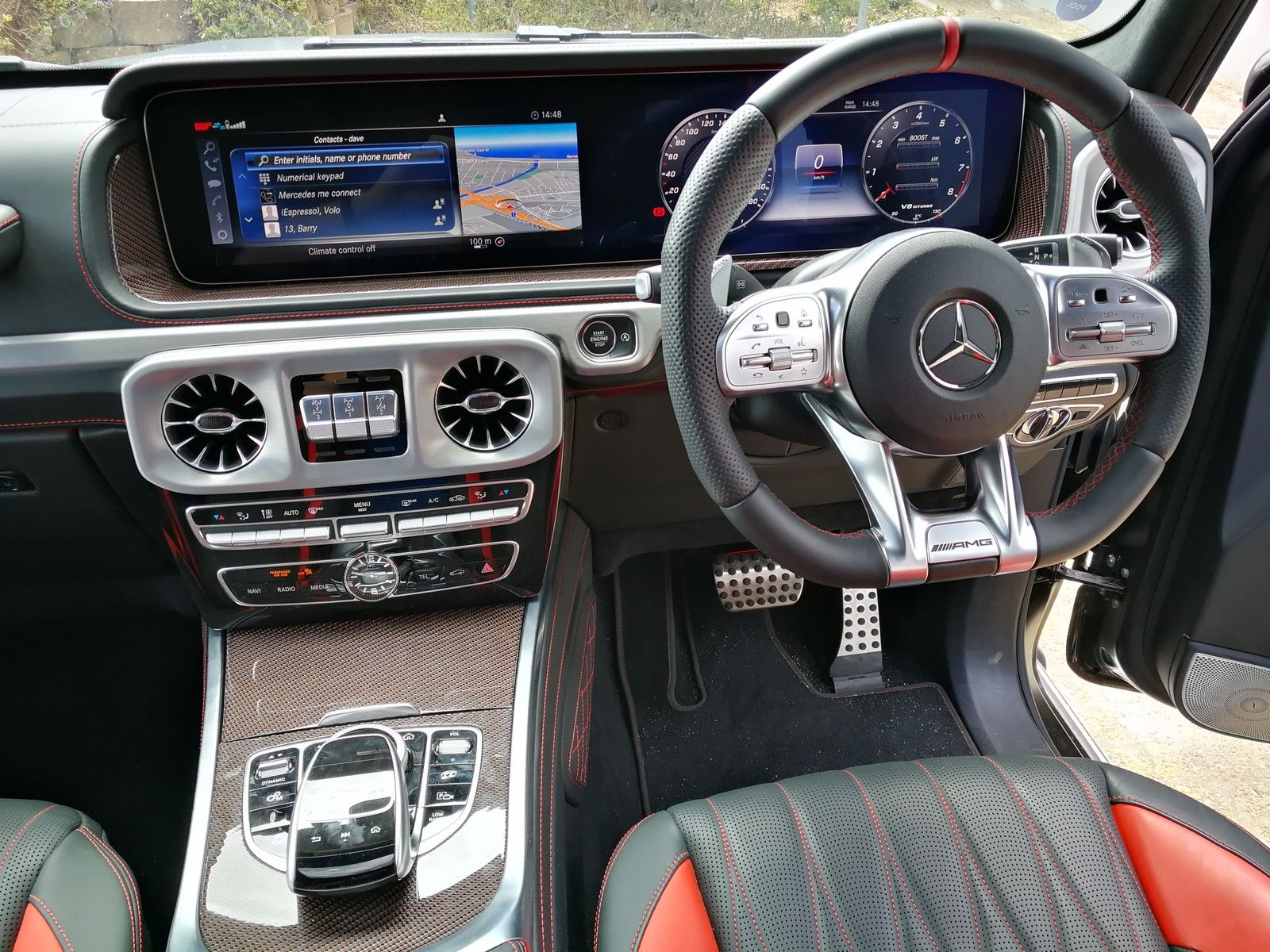
There's a very robust, metallic feel and sound to working the door handles and doors of the G63. They create an impression of incredible solidity, but some passengers may struggle to close the doors properly – they do require a hefty thud. Hoist yourself up into the driver's seat and it's quite clear that while Mercedes-Benz stuck to the retro rulebook outside, the same didn't apply inside. Here everything is high-tech and the finishes and trim also help to create a very modern ambience. The cabin and its various fixtures feel as solid as you'd hope (particularly given the price).


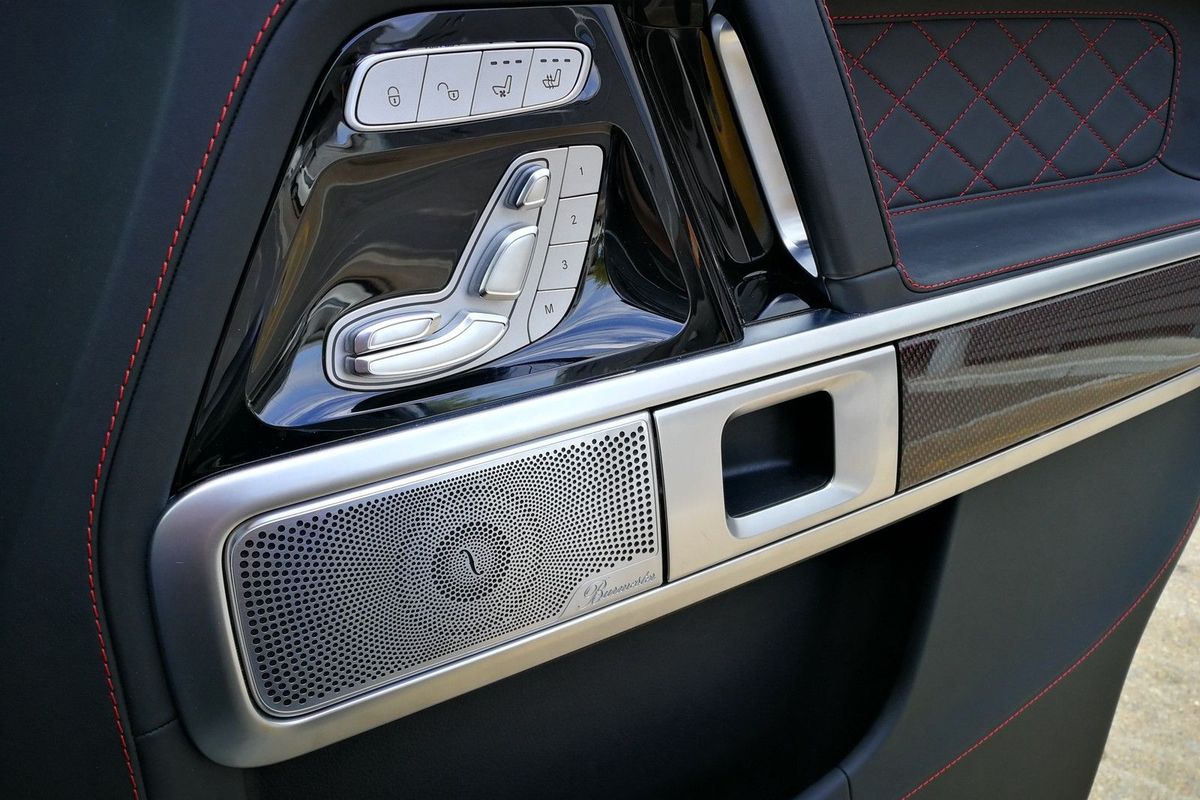
Very modern cabin dominated by vast digital displays and lots of shiny trim. Test unit featured an awesome Burmester sound system.

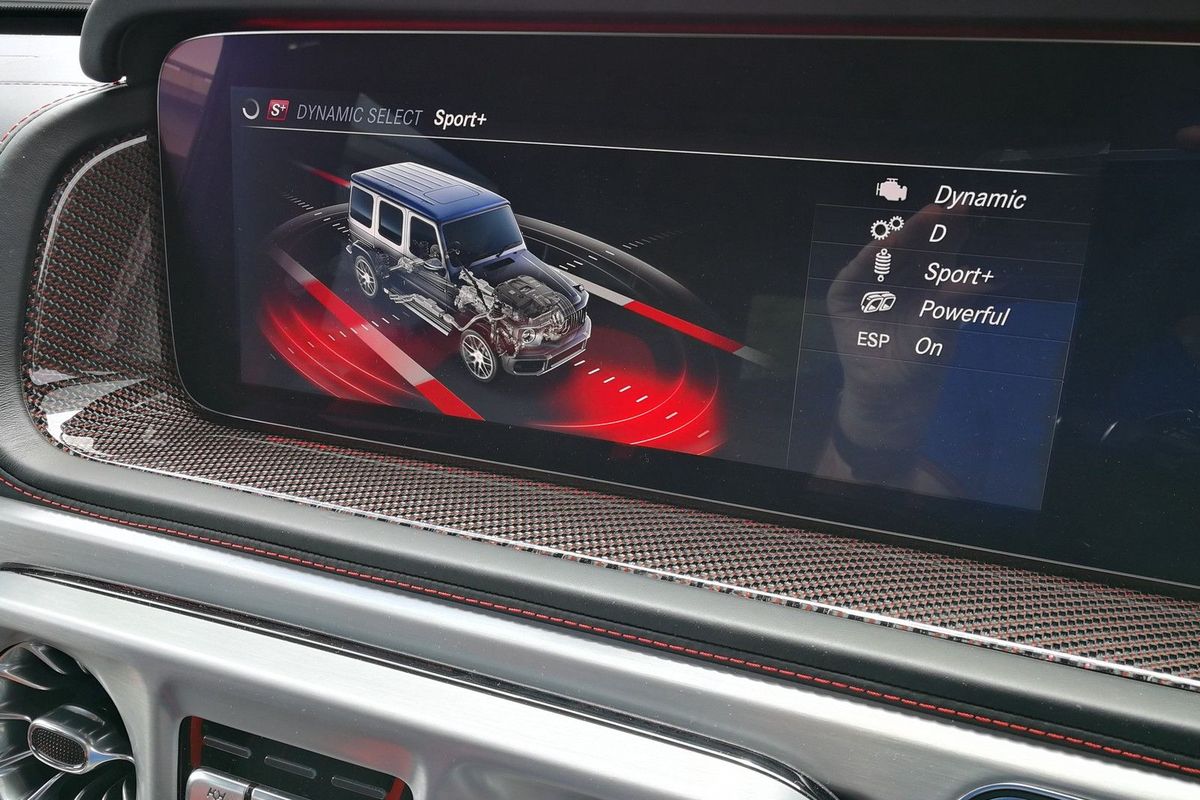
The cabin is dominated by expansive digital displays with crystal clear high-resolution graphics and numerous display options. You can also change the hue of the cabin lighting and toggle between several instrumentation layouts. Fitted on the centre console is Mercedes' Comand control interface we've come to know and love, and these days it's a very intuitive system. The G-Class does, however, lack Mercedes' latest MBUX control interface.

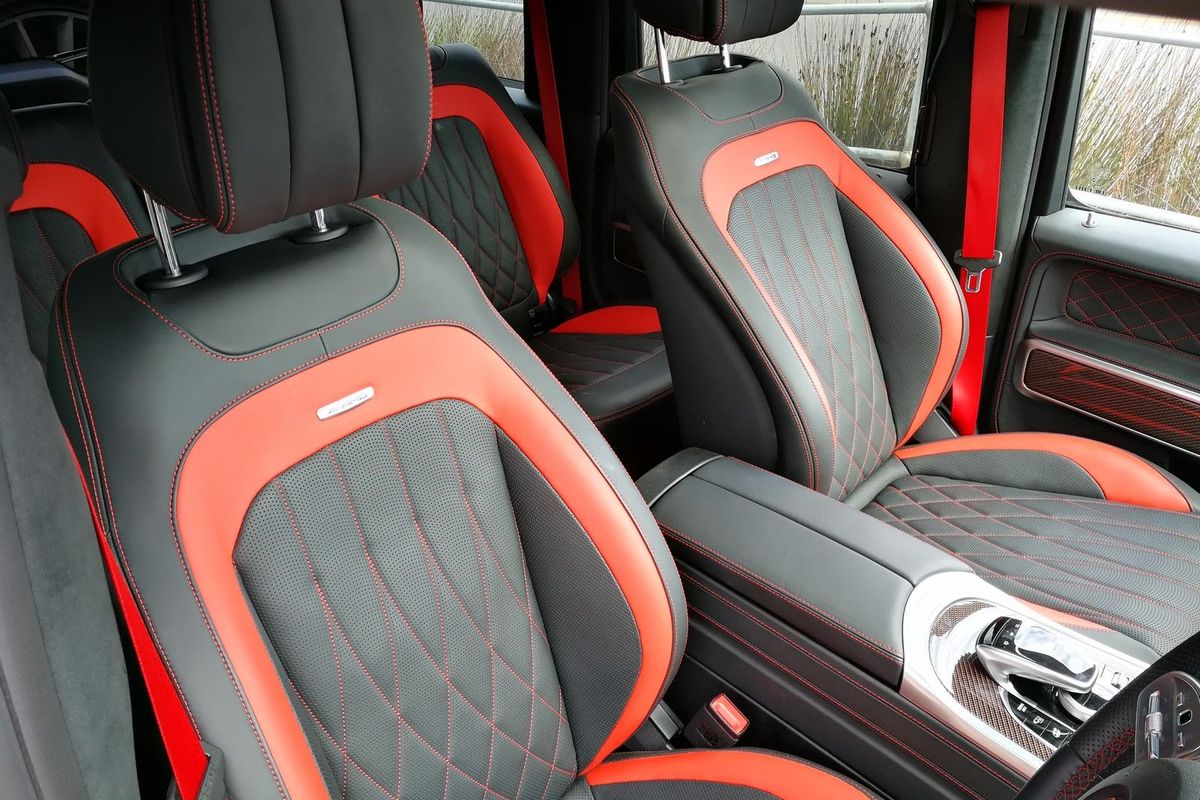
The extra width is immediately noticeable if you've been in the G's predecessor – elbow and shoulder room is now pretty generous – and rear legroom has grown appreciably. The load bay is of a decent size, too. Spec-wise, at this price level, you'd hope the G63 Edition 1 would have virtually all the available features as standard, and it does. We particularly like the active front seats that grip you a little tighter in the bends and can perform a variety of massaging functions. Even the rear seats of our test unit were heated. In terms of safety specification, the G63 is also bang up- to-date, but we felt that the lane-keep assist function was overly intrusive… often jerking the car too violently and giving the driver a skrik

Muscular engine


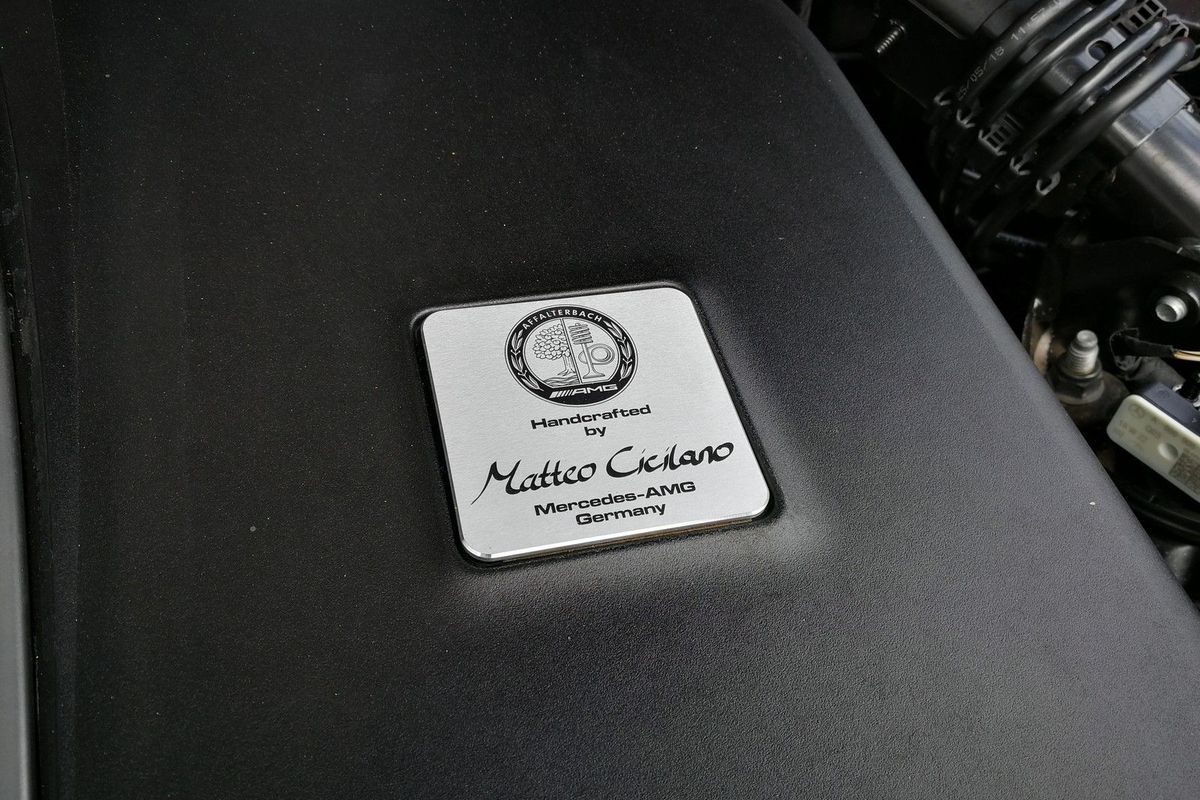
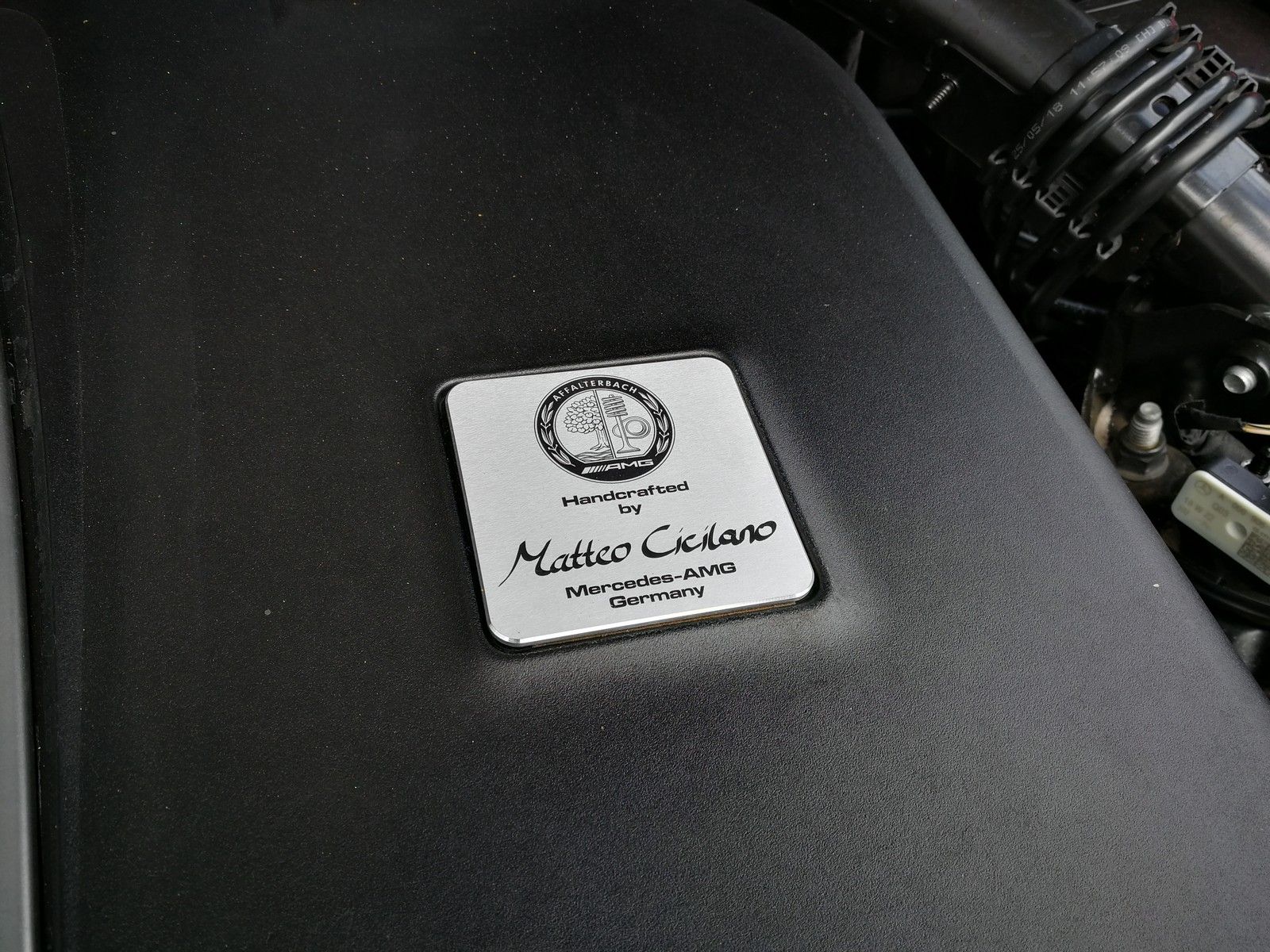
Not much to see here, except for the signature of the (Italian sounding) engine builder. 

The G63 is powered by Mercedes-AMG's well-known 4.0-litre twin-turbo engine which, in this application, delivers a stonking 430 kW (at 6 000 rpm) and 850 Nm of torque from 2 500 to 3 500 rpm. It is mated with the marque's 9-speed automatic transmission that duly impressed with its immediacy and slickness during the G63 Edition 1's tenure in our test fleet. At this point, it's worth noting the G63's kerb weight (around 2.5 tonnes) and the fact that it retains the brick-like aerodynamics (at face-value, anyway) of its predecessor. It's worth pointing these facts out because they provide such great context for the figure that follows – the G63's ability to blast to from standstill to 100 kph in only 4.5 seconds!

It's a unique experience – you're perched in a high-and-mighty seating position and, when you plant the throttle pedal, the G63 squats before catapulting down the road, accompanied by the most delicious roar (remember to make sure that the appropriate exhaust mode has been selected). Childish? Yeah, quite possibly, but if you've got this much to spend on a vehicle, surely you'd want it to "move you"? Top speed is rated at 220 kph.

What's not so good about it?

Ride & Handling still compromised


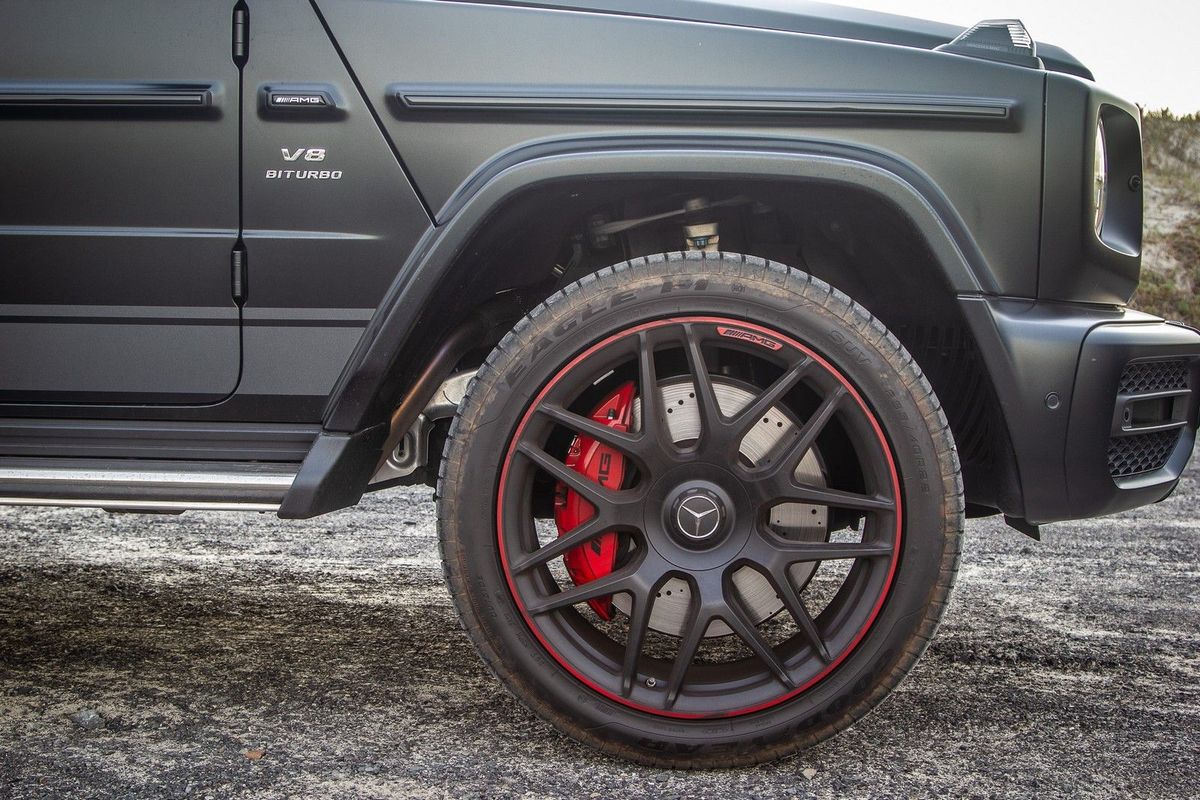
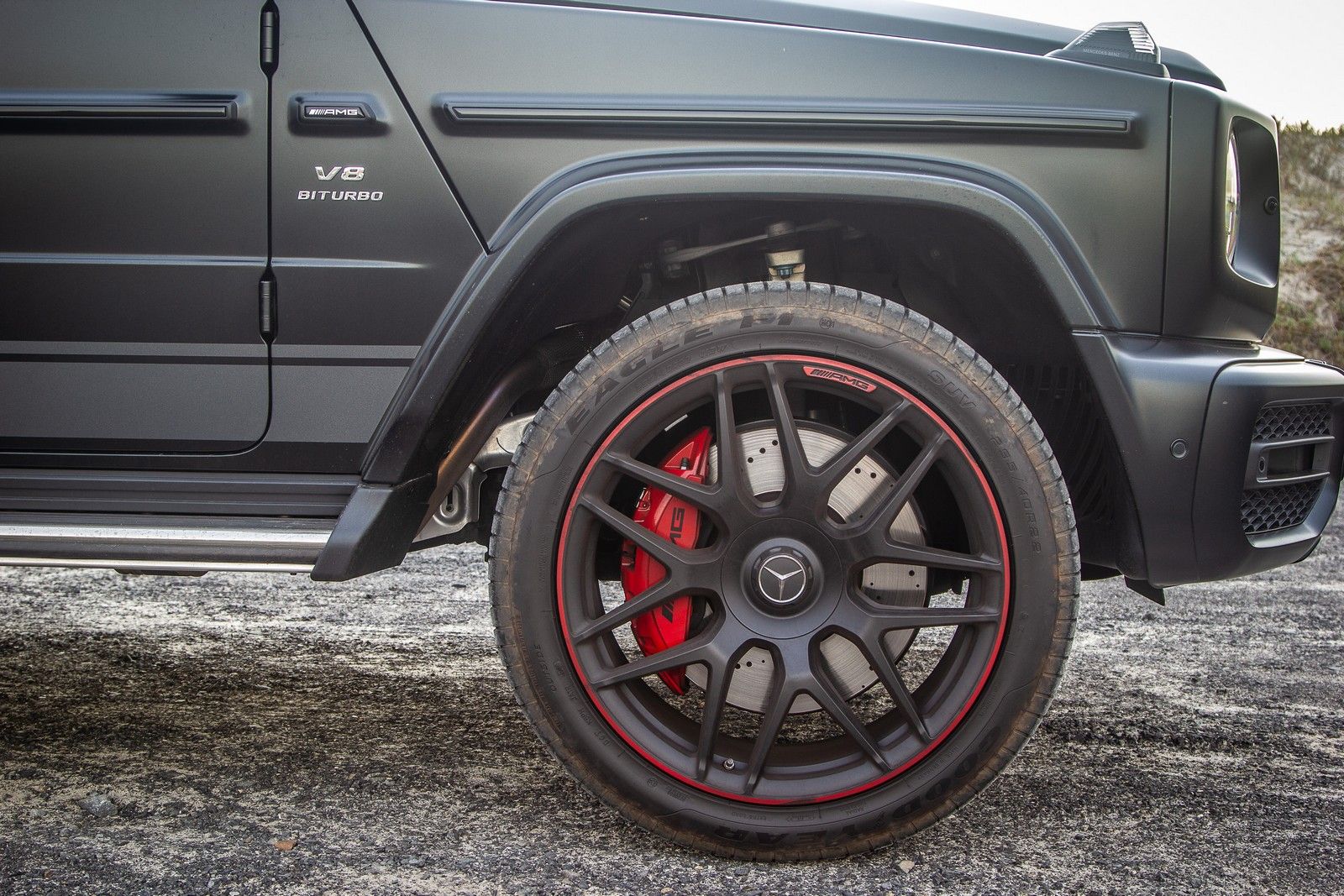
Striking 22-inch wheels are part of the Edition 1 package, but probably have a negative impact on the ride quality of the G63.

To be fair, the fact that the G63 can't handle and steer as well (on the road) as a Range Rover or Bentley Bentayga should come as no surprise. In essence, the G63 is still a vehicle that was developed to blast up and down mountains and that inherent off-road ability comes at a cost of some on-road refinement. It no longer uses a solid axle at the front (now independent) and there's a new electrically assisted rack-and-pinion steering system, too, so there are tangible improvements compared with its predecessor, but nevertheless, and within the context of its same-price rivals, the G63's steering remains rather imprecise.

Furthermore, the ride deteriorates quite markedly on poor surfaces, displaying a mixture of clumsiness and harshness that's perhaps unbecoming of a R3-million vehicle. Fiddling with the settings of the AMG Ride Control system does little to improve matters, but at least there are options and Comfort is, indeed, somewhat better than the sportier settings). Of course, the massive 22-inch wheels (wrapped in low-profile tyres) fitted to this test unit also play a part in the ride quality's lack of pliancy. Still, we don't think any of these issues are dealbreakers. Most owners will just make the most of the explosive straight-line performance, savour the sound, and… back off the throttle/throw out the proverbial anchors for the corners. 

Atrocious fuel consumption


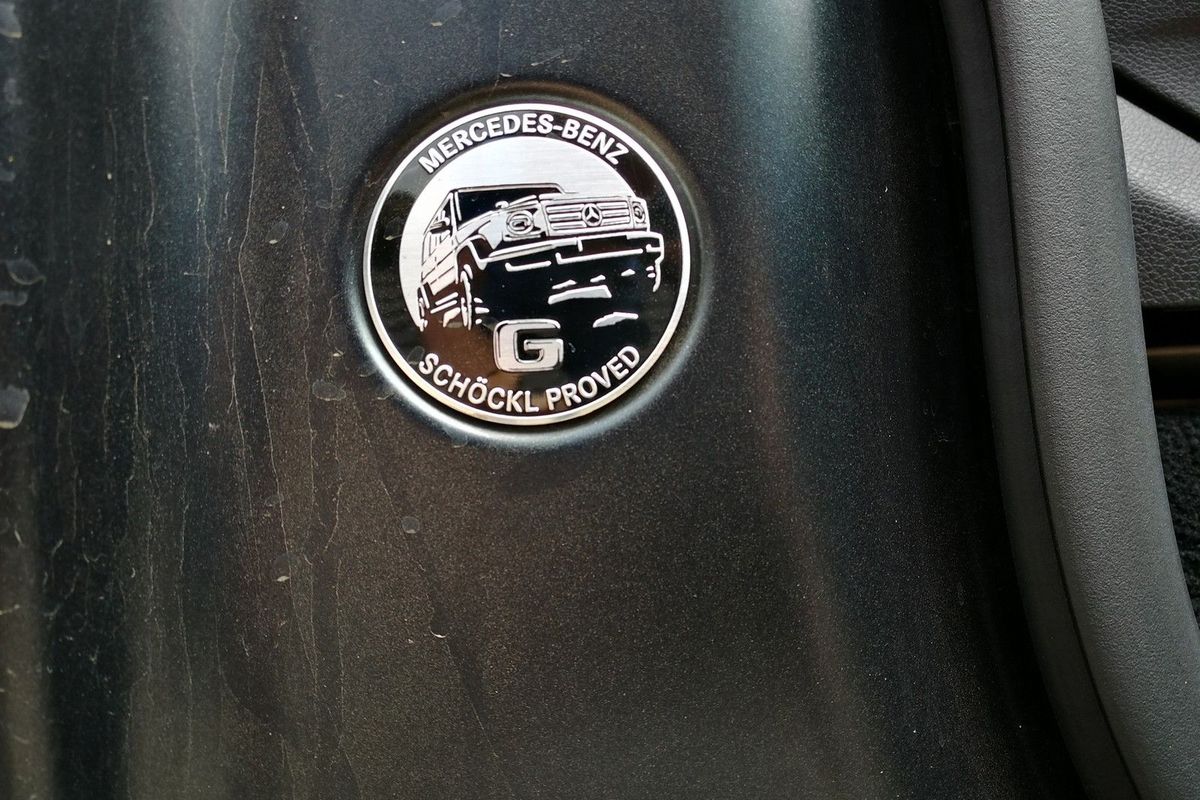
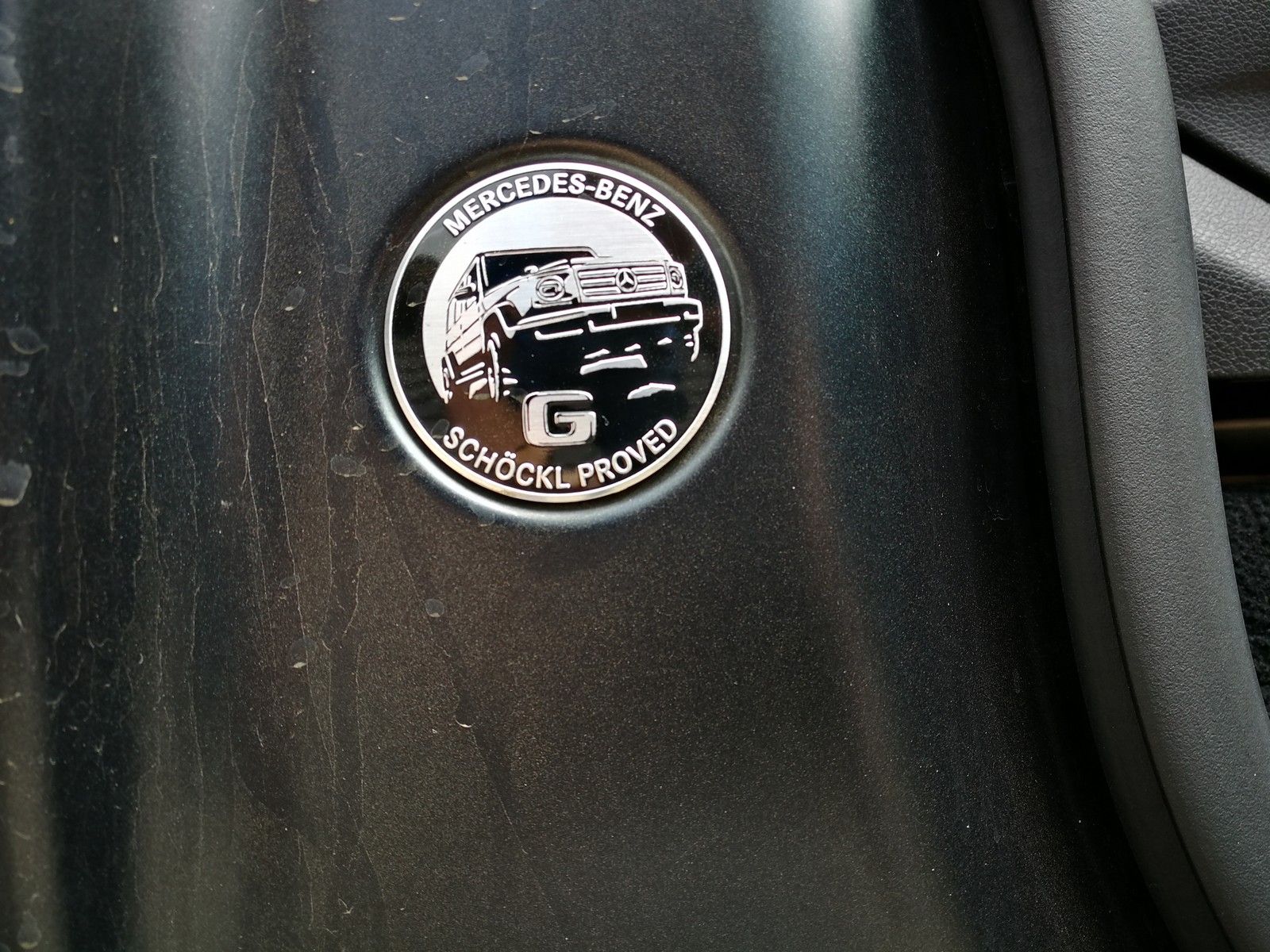
The new G-Class may be lighter and more refined than before but it can still do "Schockl"…

While that brutish twin-turbo 4.0-litre V8 engine certainly endows the G63 with plenty of muscle (not least an addictive soundtrack), the Affalterbach-fettled motor chugs through that 100-litre fuel tank at a dizzy rate, even though Mercedes-Benz has made the new G-Class approximately 200 kg lighter than its predecessor. The German marque claims a combined cycle figure of 13.1L/100 km, but you're unlikely to ever see that figure, especially if you're going to be enjoying the burly Benz's full performance and raucous sound. Expect a best figure of around 17L/100 km… 
Pricing & Warranty

The G63 Edition 1 version (as tested here) costs an eye-watering R3 086 653 (without options, Feb 2019), but if you'd like your G63 to look ever-so-slightly more conservative, you can opt for the standard car for R300 000 less. A 2-year/unlimited km warranty is included, as is a 6-year/100 000 km maintenance plan.
Verdict


The G63 makes little sense and is a pure indulgence purchase. But as far as those go… it drips with desirability.

There is no logical reason to buy a vehicle such as the Mercedes-AMG G63 Edition 1. A flagship Range Rover will be more comfortable… more spacious… and likely every bit as good off-road on its equally unsuitable rubber. The same goes for the Bentley Bentayga.

And yet… a massive slice of the G63's appeal comes from knowing that it was born to "flatten" obscure Austrian mountains and that more utilitarian versions are good enough for military use by some armies… Perhaps this knowledge creates enough of a feel-good factor to erase the pangs of guilt you may feel for depleting the world's fossil fuel reserves faster than necessary while at the wheel of your Teutonic behemoth or moments of regret (if only fleeting ones) that you've pulverised yet another hot hatch in a robot-to-robot drag race. Because, ultimately, this is a big toy, one that cannot be judged as a normal consumer product, but purely by how hard it plucks at your heartstrings. Only you will know the answer to that. 

Interested in buying a Mercedes-Benz G-Class?

Find one today on Cars.co.za by clicking here

Renault Koleos (2019) Specs & Price

Renault is launching a fresh new version of its flagship SUV. Here's how much the all-new Renault Koleos costs!

The Renault Koleos is a big SUV built on the same platform as Nissan's X-Trail. While there are some mechanical overlaps under the skin, the 2 vehicles are quite different in terms of looks and interior layout. While the X-Trail is available with a 7-seat option, the Koleos sticks to a 5-seater formula. The boot size is rated at 464 litres, about average for this segment.

Engine and Economy

The Renault Koleos is powered by a normally-aspirated 2.5-litre 4-cylinder petrol engine. With 126 kW and 233 Nm on tap, you can expect the Koleos to hit 100 kph in just under 10 seconds. Renault claims fuel consumption figures of 8.1 L/100 km, while the 4×4 model is a tad thirstier at 8.3 L/100 km. The Koleos comes with a 60-litre fuel tank. Power goes to the front axle in the case of the 4×2 via an X-tronic CVT with 7 speeds.

SA-Spec Koleos

South Africa will be getting a simple Koleos SUV range. There's 1 engine and 1 gearbox, shared across the range, with the option of 4×2 and 4×4. There will be 2 levels of trim: Expression and Dynamique. 

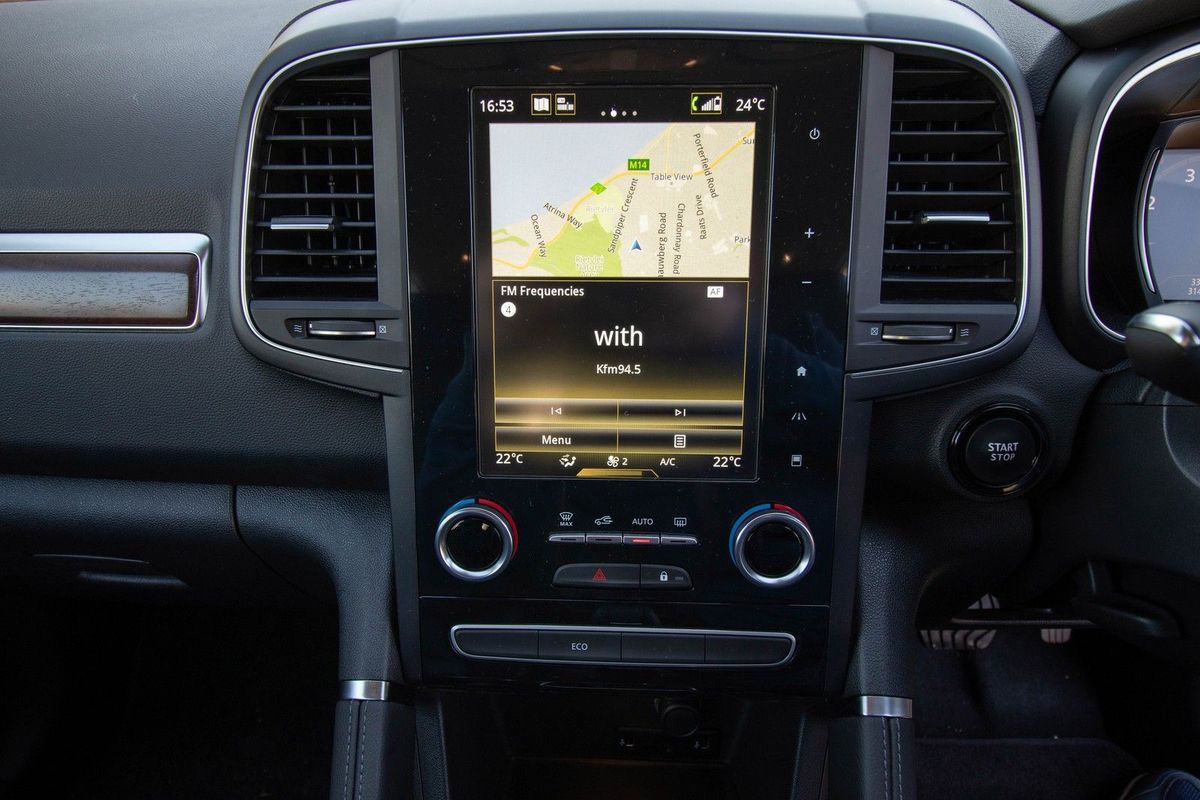
Standard specification is good. On the base model, there's cruise control with speed limiter, rear parking sensors, auto headlights, auto wipers, cornering fog lamps, dual zone climate control, cooled and warmed cup holders and a 7-inch infotainment system with Bluetooth and USB connectivity. Dynamique spec adds in luxuries like electric folding mirrors, bigger 18-inch alloy wheels, electrically adjustable leather seats, tyre pressure sensors, LED headlamps, handsfree card key, electrochromic rearview mirror, uprated Arkamys audio system, bigger touchscreen, atmosphere lighting, blind spot detector, front and rear park sensors and a reverse camera. 

Safety Features

Renault is always generous with its safety spec and the Koleos is no different. Both the Expression and Dynamique come with ABS anti-lock brakes and Electronic Stability Control with Hill Start Assist. There are driver, front passenger and curtain airbags too. The Dynamique goes one step further and adds Blind Sport Warning and a Tyre Pressure monitor.


Given the lacklustre sales of the Renault Kadjar, will the Koleos prove a better proposition?

Renault Koleos Price in South Africa (February 2019)

The Renault Koleos is sold with a 5-year / 150 000 km mechanical warranty, 6-year anti-corrosion warranty, 5-year / 90 000 km service plan and the service intervals are every 15 000 km.

Koleos Expression 2.5 CVT 4×2 – R399 900

Koleos Dynamique 2.5 CVT 4×2 – R439 900

Koleos Dynamique 2.5 CVT 4×4  – R479 900

OPTIONS:

Metallic Paint – R2 522

Electric Adjustable Leather Seats (Expression Model) – R 12 000

Related content

Next-gen Renault Clio Revealed

Nissan X-Trail 1.6dCi 4×4 Tekna (2018) Review

Volkswagen Tiguan Allspace (2018) Video Review

Honda’s Radical New Full-Screen Cabin

The trends towards battery-driven vehicles packaged within urban-friendly dimensions has given Honda the opportunity to channel its compact car legacy.

At this year’s Geneva auto show the Japanese brand will show its Urban EV configuration which will be very close to final production and to tease us, they’ve released a POV view of the cabin.

Blending digitisation with traditional materials and design simplicity, it’s a happy departure from the aged gaming graphic infotainment interfaces Honda’s delivered in its production vehicles until recently. The Urban EV’s cabin is dominated by a full-width digital dash, comprising five individual screens.

Three of these screens relay driving information, infotainment functions and the Urban EV’s battery status amongst them. Flanking these three anchor digital displays, are two screens at the extremities of the Urban EV’s cabin architecture, which provide a live stream side-mirror function, replacing conventional externally mounted side mirrors.

This swathe of digitisation has compelled Honda’s designers to be clever in planning the tangible touchpoints for Urban EV. The steering wheel is a thin twin-spoke helm, to ensure as much of the digital screen dash remains visible, no matter what the steering angle is.

Automotive designers have learned that traditional analogue controls can be superior to a pure digital touchscreen interface for certain functions, such as climate control and infotainment volume adjustment. As such, Honda’s added some dials to the centre stack, to ensure a near perfect blend of infotainment streaming via a digital screen, and intuitive adjustability by reach-and-touch. Digital media pairing options will be USB, Bluetooth and even HDMI.  

And that Japanese teak inlay which underscores the full-width dash? It’s perfect 1970s audiophile design, reinterpreted for an automotive application.


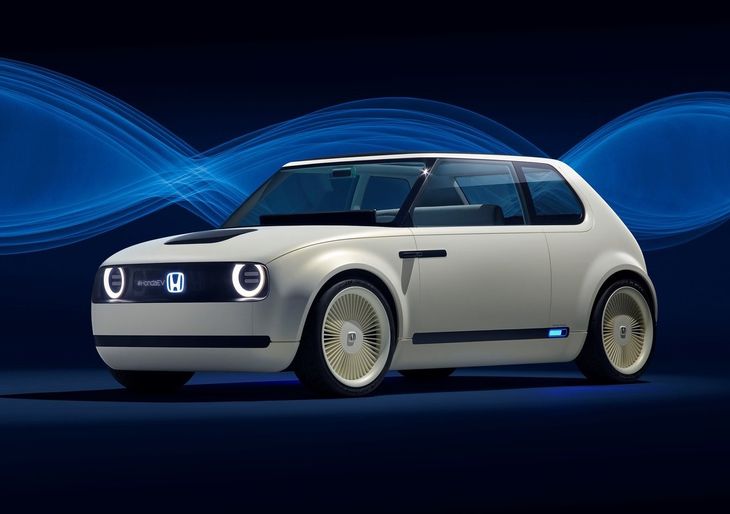
The Honda Urban EV concept revealed back in 2017.

Related content

Honda's Urban EV concept previews electric future

Jaguar Invests in EV Charging Stations for SA

Range Rover Sport HST Introduces New Inline 6

Jaguar Land Rover's ongoing development of hybrid and electric models has not precluded the British manufacturer from rolling out a new super- and turbocharged inline-6 engine… 

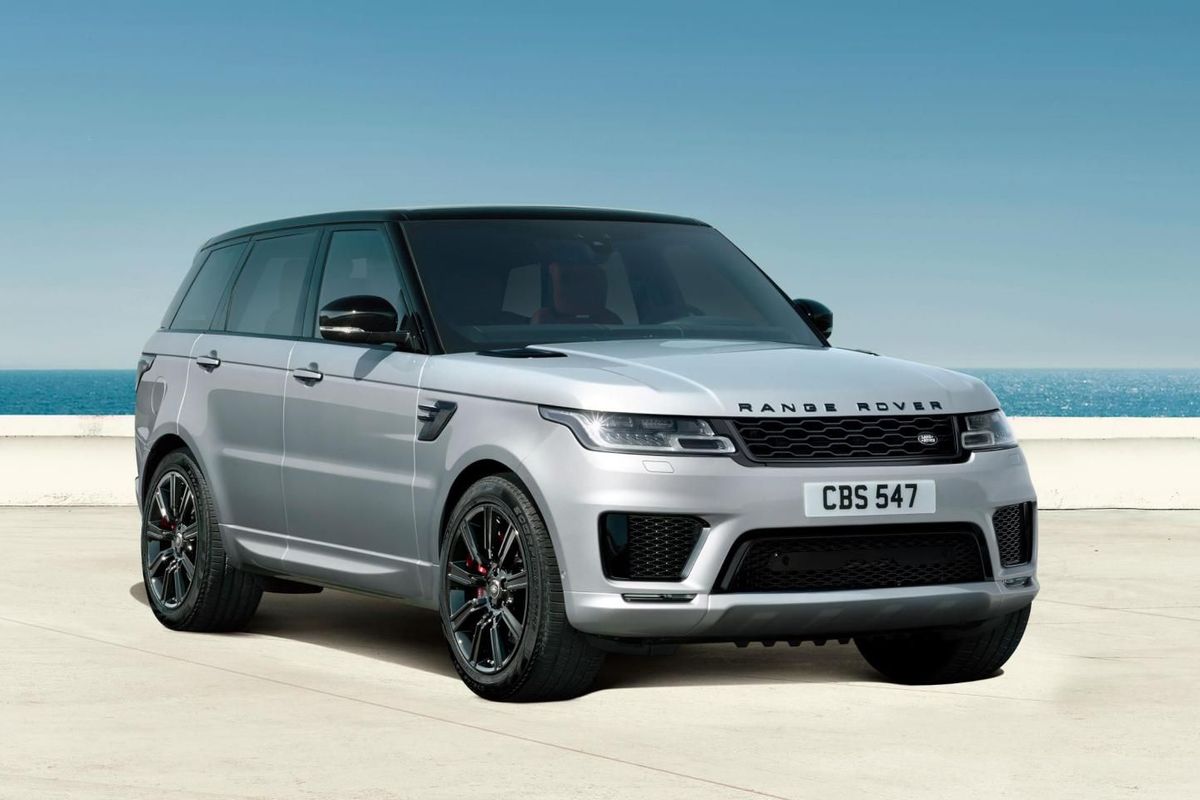
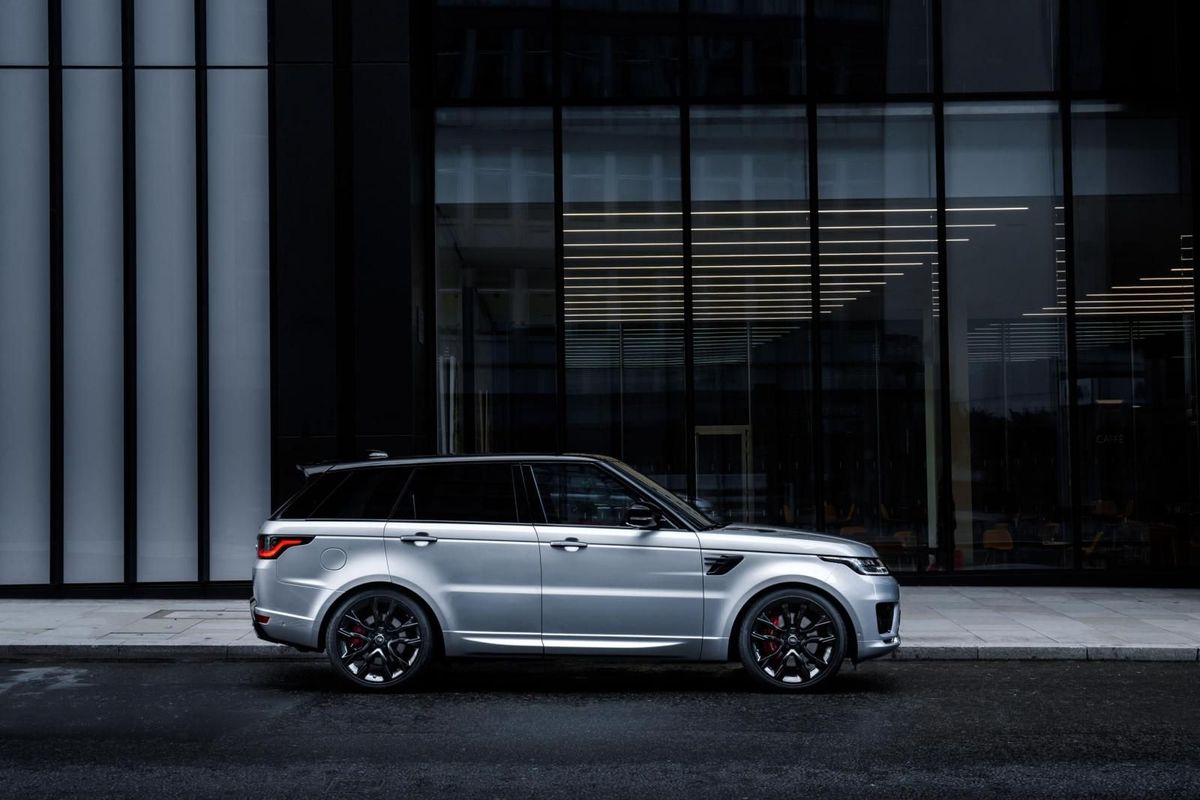
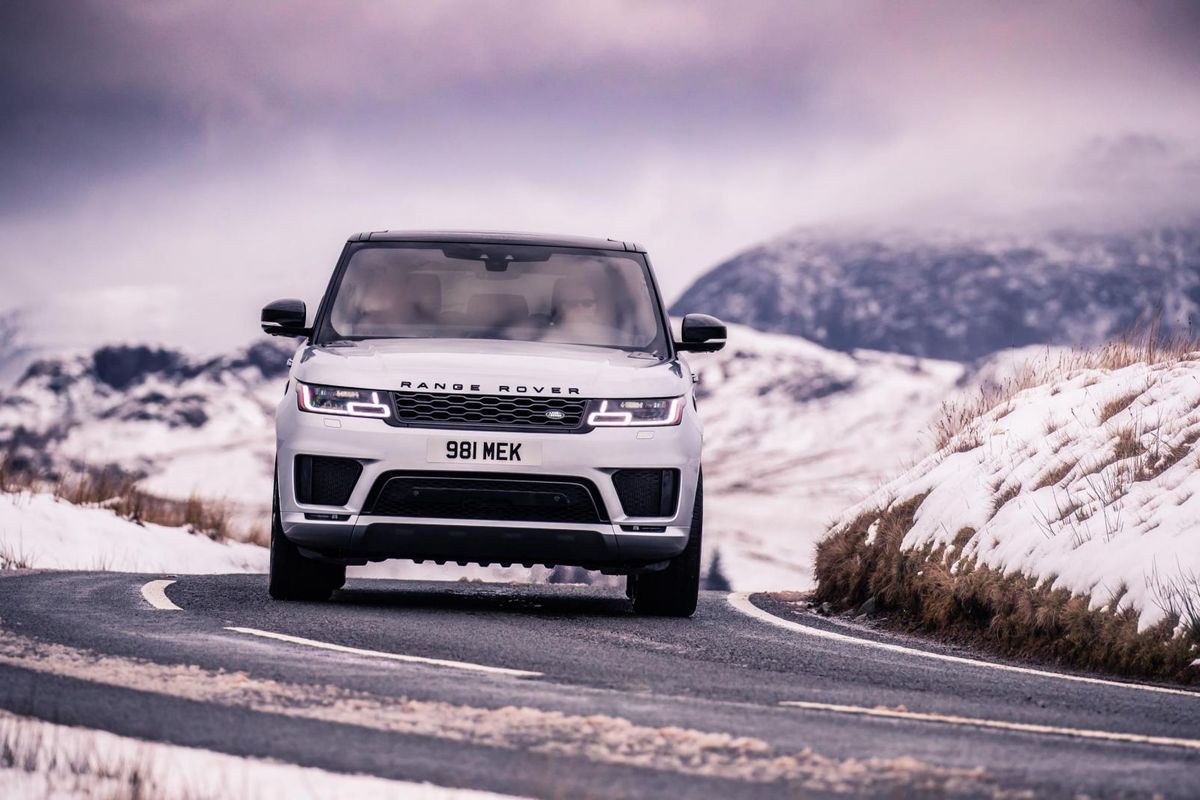
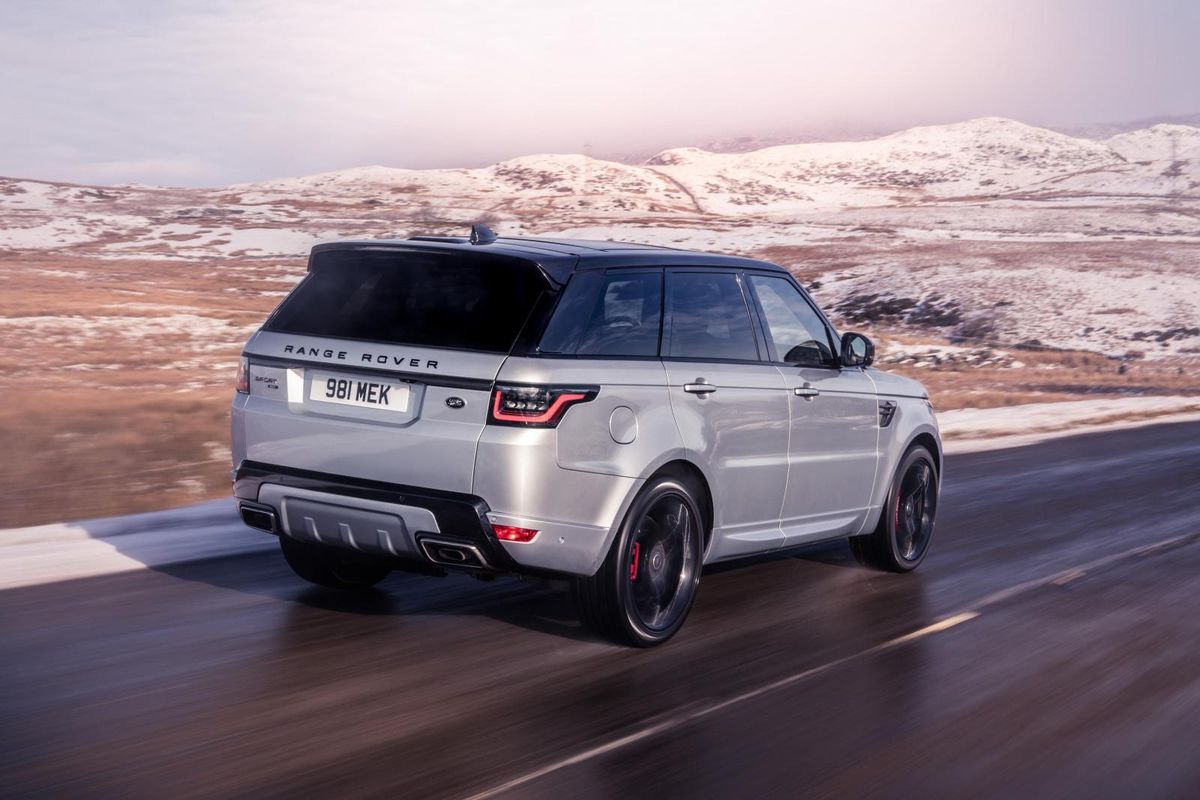
The Range Rover Sport HST is a special-edition model that comes with some glitzy exterior pieces and some lavish interior choices. The HST allows for a choice of 2 alloy wheel designs and 5 exterior colours: Santorini Black, Fuji White, Indus Silver, Firenze Red and Carpathian Grey. What's more, the HST is distinguishable by its red brake calipers, with a grey anodised option also available.

Inside, the HST's 16-way adjustable front seats feature an updated colour pattern with suede cloth detailing on the steering wheel and transmission lever, Satin Chrome gear shift paddles and an HST badged fascia.

The major specification detail for this model, however, is the engine… an all-new in-line 6-cylinder super- and turbocharged engine, which replaces the previous V6 unit. The new unit develops peak outputs of 294 kW and 550 Nm and accelerates the HST from 0 to 100 kph in 6.1 seconds.

The electric supercharger is able to spool up fully in just 0.5 seconds. By reducing low-end lag, the electric supercharger then hands off to the twin-scroll turbocharger. The engine is also equipped with a mild hybrid system that aids acceleration when the Range Rover pulls away from a standstill.

Nick Rogers, Jaguar Land Rover's executive director of product engineering, explains the change: "Inline 6-cylinder engines are inherently better balanced than V6 designs and our all-new Ingenium unit builds on that promise to optimise efficiency in all operating conditions.

Advanced features, including an electric supercharger, ensure distinctive Range Rover Sport performance and responses, while the intelligent MHEV (hybrid) system harvests energy to improve fuel economy and reduce emissions."

Unfortunately the engine, in hybrid application, will not make it to South Africa, although it will likely be brought over in another JLR product in the not too distant future.

Related content

High-Powered Range Rover Velar for SA

BMW X3/4 M-Cars: All the Details

Top SUVs for SA in 2019

Lexus UX (2019) Launch Review

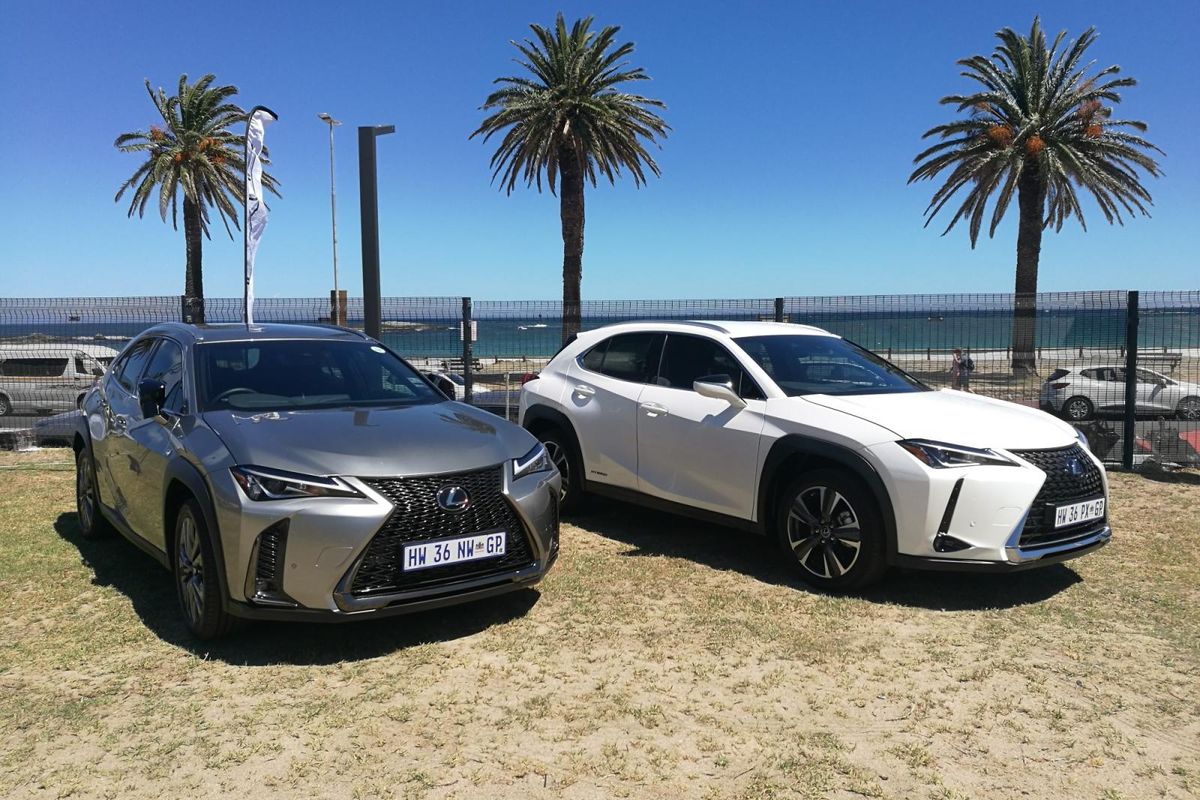
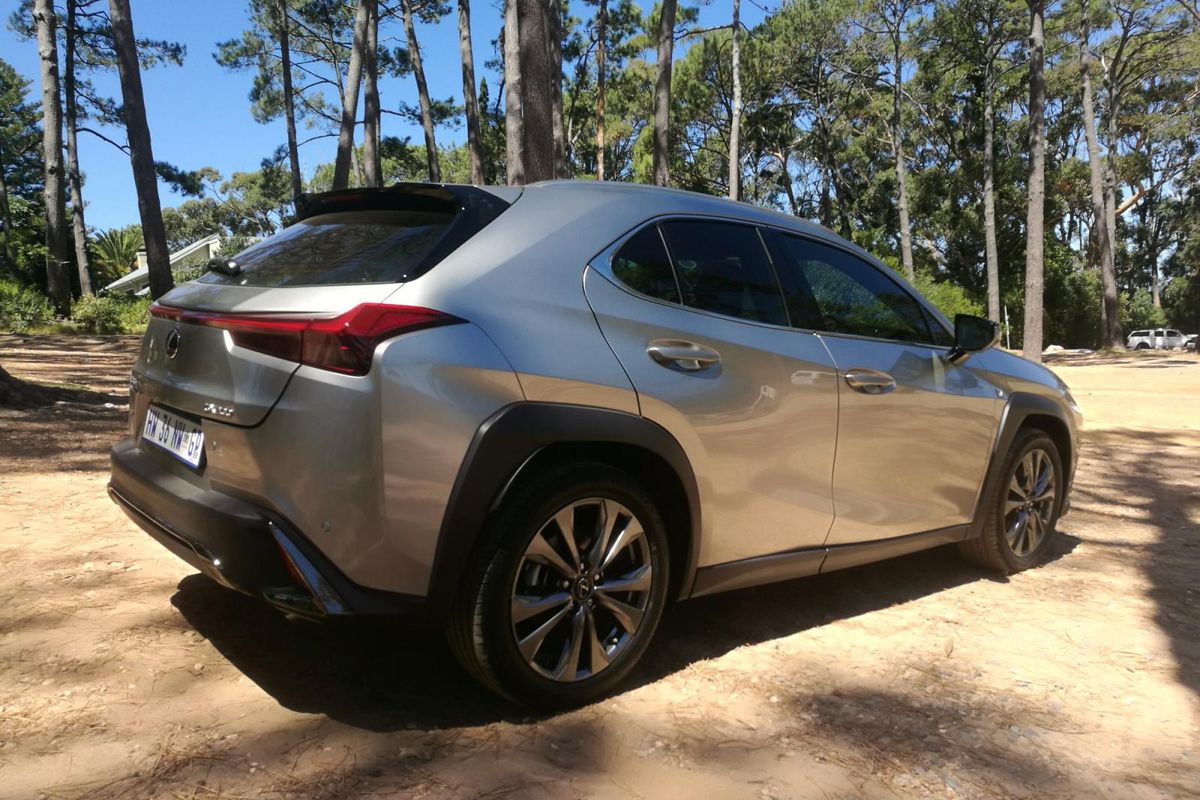
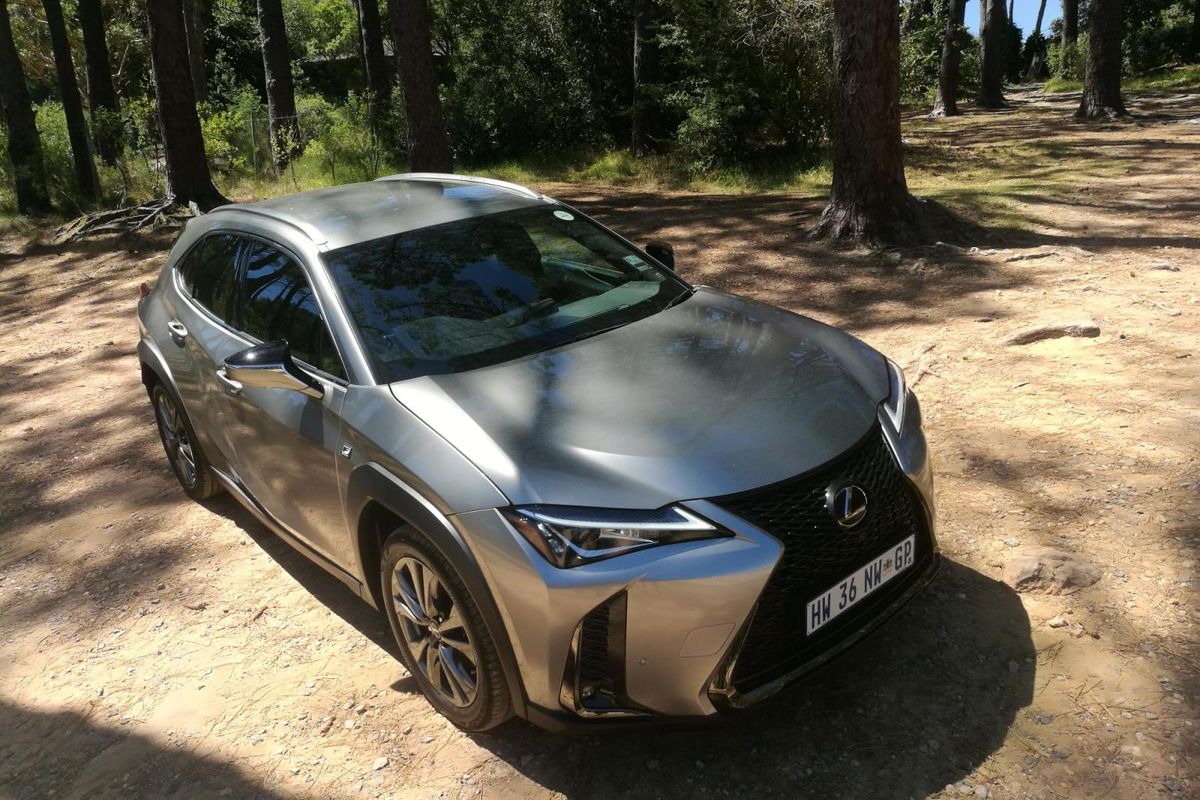
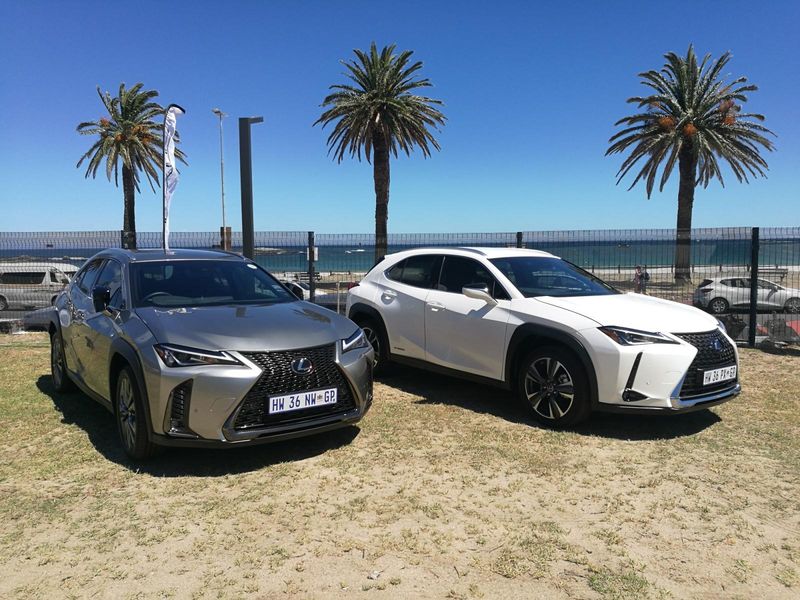
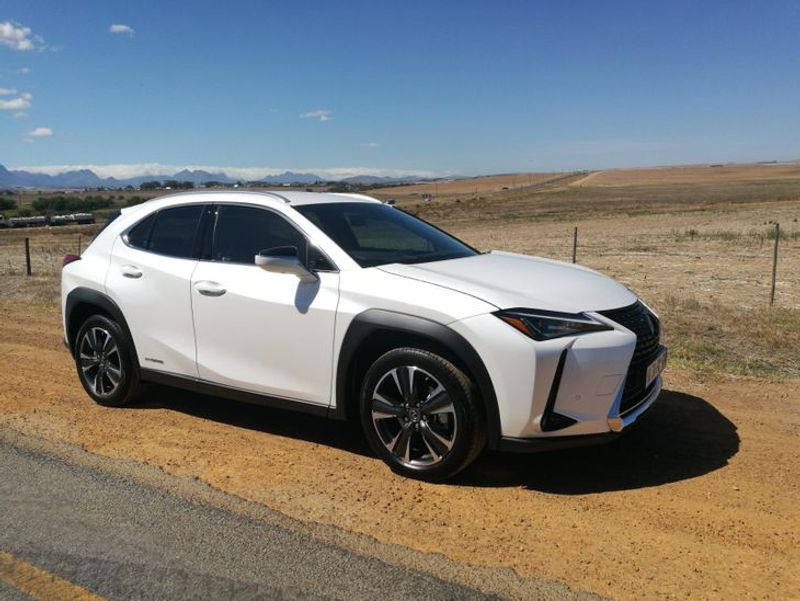
Japanese premium brand Lexus has introduced its new UX compact crossover to South Africa! It may be the smallest crossover/SUV in Lexus’ stable, but the newcomer has a big personality and comes packed with loads of standard features. Gero Lilleike sampled the newcomer at its launch in Cape Town this week; herewith his feedback…

Lexus has been dabbling in the SUV game for some time now with the NX luxury family car, RX premium SUV and the LX 7-seater off-roader. However, with the introduction of the smaller UX compact crossover, Lexus is looking to attract younger, upwardly mobile millennials to the brand with bold styling and a plethora of features that this target market demands. It’s not easy business though, because the UX must meet the challenges of segment heavyweights such as the BMW X1, Mercedes-Benz GLA, Audi Q3 and newer rivals like the Jaguar E-Pace and Volvo XC40.

The UX, an abbreviation for "Urban Crossover", is the first Lexus to be built on the new Global Architecture – Compact platform, which is the same one that underpins the Toyota Prius and C-HR. Combining characteristics of a hatchback and crossover, the UX aims to be a volume seller for Lexus on local soil and will serve as the entry point to the brand. It is, therefore, an important product introduction for Toyota's luxury arm.

Own a Lexus? Tell us about your experience here

Have it all and more…


The new Lexus UX is loaded with standard spec while also offering sharp, striking styling. 

Where the UX makes a compelling case for itself is with its high level of standard specification, even in its base form. Where most of its rivals are offered with an endless list of optional features, the UX is equipped with a staggering number of modern conveniences as standard.

Without boring you to death with a long list, some of the key features include LED headlights, 18-inch alloy wheels, electric/heated seats, dual-zone climate control (auto aircon), a wireless smartphone charger, cruise control (adaptive cruise control on ES and F-Sport), a 7-inch infotainment system (10.25-inch in the F Sport) with integrated navigation and Bluetooth functionality, an 8-speaker sound system (13-speaker Mark Levinson in the UX F Sport), plus front and rear park distance control with a reverse-view camera, to name but a few. The list goes on and on; you get the point.

The UX also impresses in terms of its suite of safety features; it's equipped with no fewer than 8 airbags as standard, while the 250h ES and 200 F-Sport derivates are equipped with the Lexus Safety System, which includes features such as a pre-crash sensing module, blind-spot monitor, lane keep assist with lane departure alert and an LED Adaptive High Beam system.

Click here to view specification details for the new Lexus UX range!

What’s the interior like?


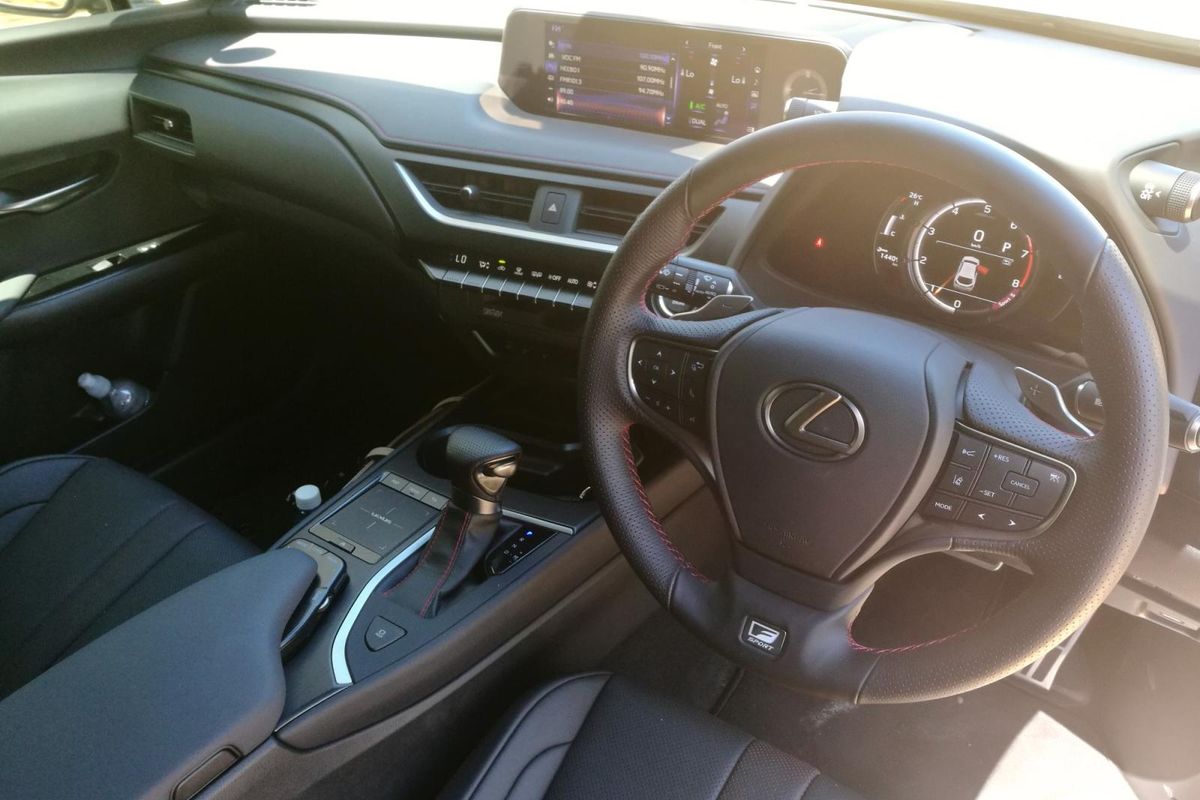
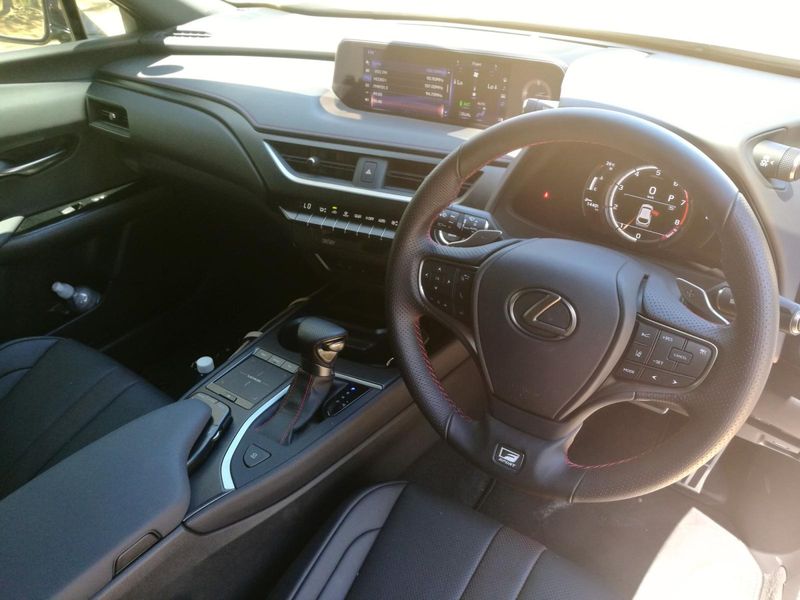
Interior build quality is good. This UX 200 F-Sport features the instrument cluster from the LFA and LC Coupe.

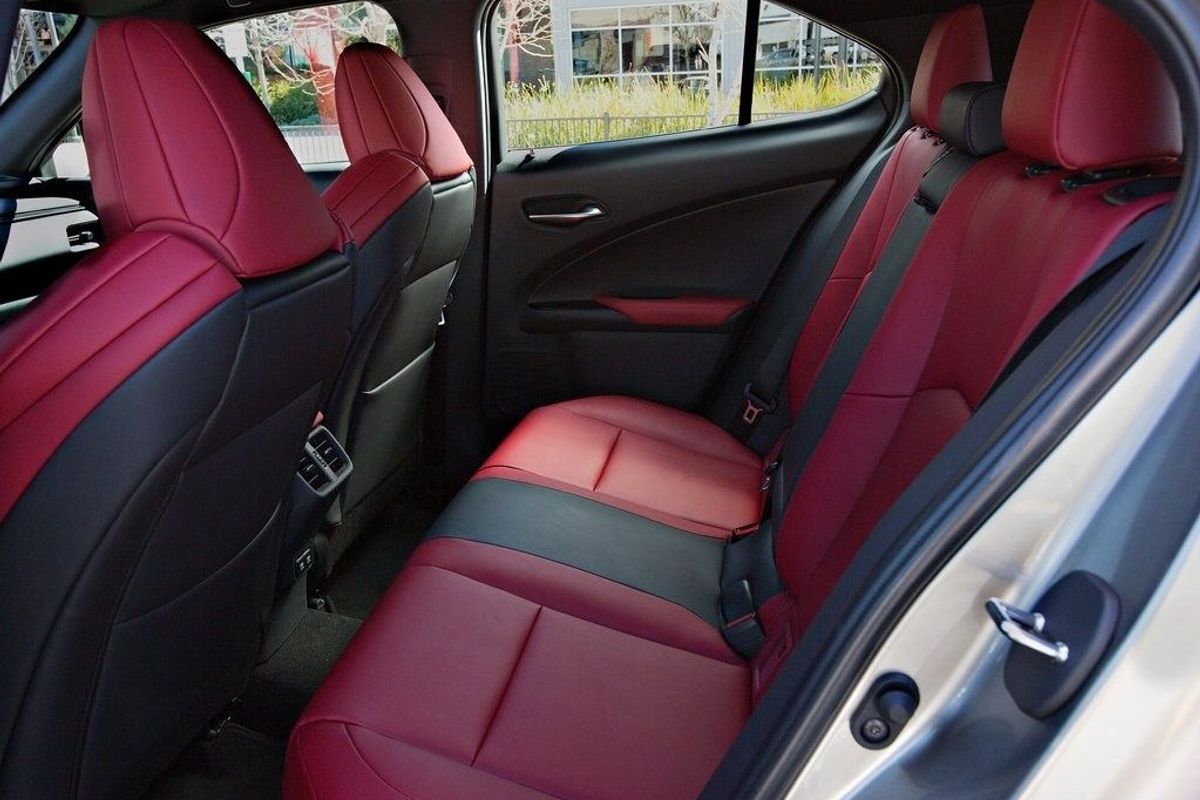
The robust interior build quality and fine leather work were particularly impressive and we found the electrically-adjustable seats supportive, but comfortable. The interior has upmarket appeal (in terms of look and feel) and the controls are ergonomically sound (well within the driver's reach).

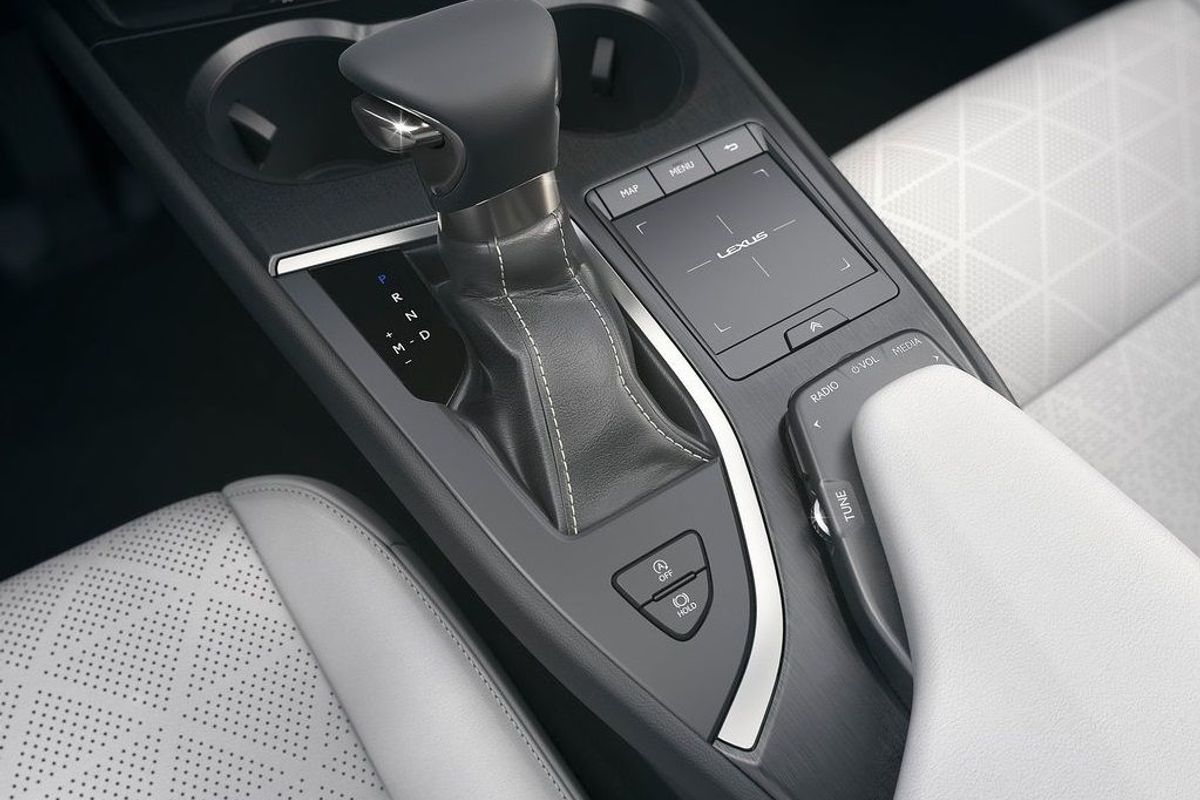
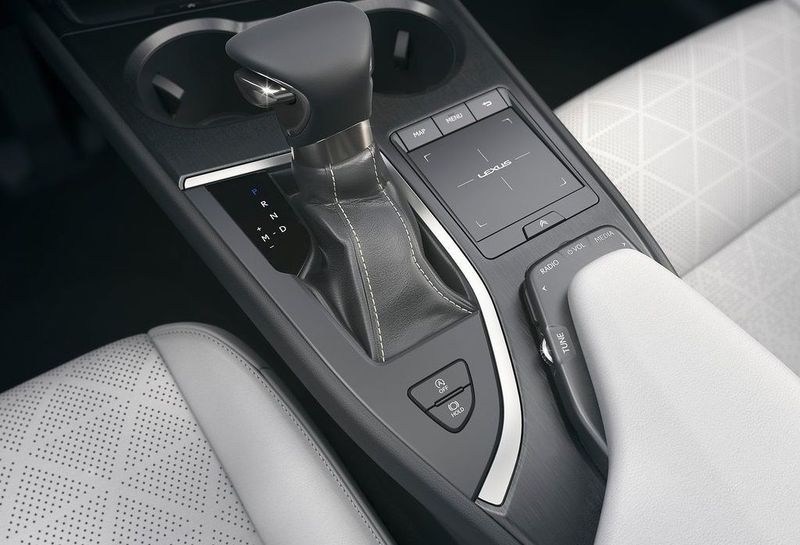
The UX's 7-inch infotainment system (with integral navigation) is controlled using Lexus’ Remote Touch Interface. We fiddled with the touchpad and found it to be hypersensitive and somewhat distracting to use while driving. It can be frustrating to use at first, but with a fair dose of patience and a reasonable period of familiarisation, usability should improve. In our opinion, we don’t feel it’s the most intuitive system on the market, however.


The Remote Touch Interface takes some getting used to, as does the new radio controls built into the armrest.  

A nifty feature we spotted in the F-Sport derivative is the movable main gauge bezel as fitted to the LFA supercar and LC Coupe. By pressing a button on the steering wheel, the ring moves to the right, which then enlarges the multi-information display. Very fancy indeed!

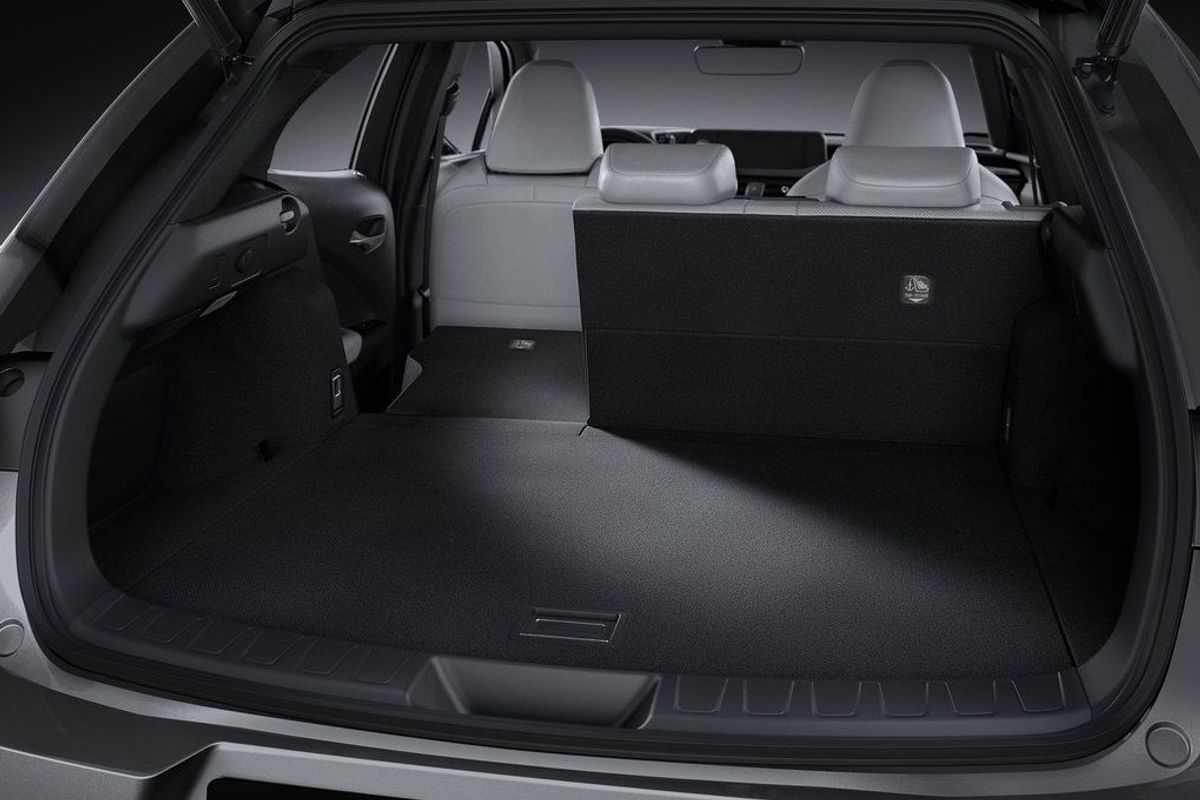
The rear bench is reasonably comfortable but taller passengers might find legroom a little on the tight side. The load bay is not the most spacious (it offers 272 litres) either, but there is some additional storage space under the boot floor if you need to keep valuables hidden from prying eyes. Additional loading space, should you need it, can be accessed by folding the rear seatback flat   

What’s it like to drive?


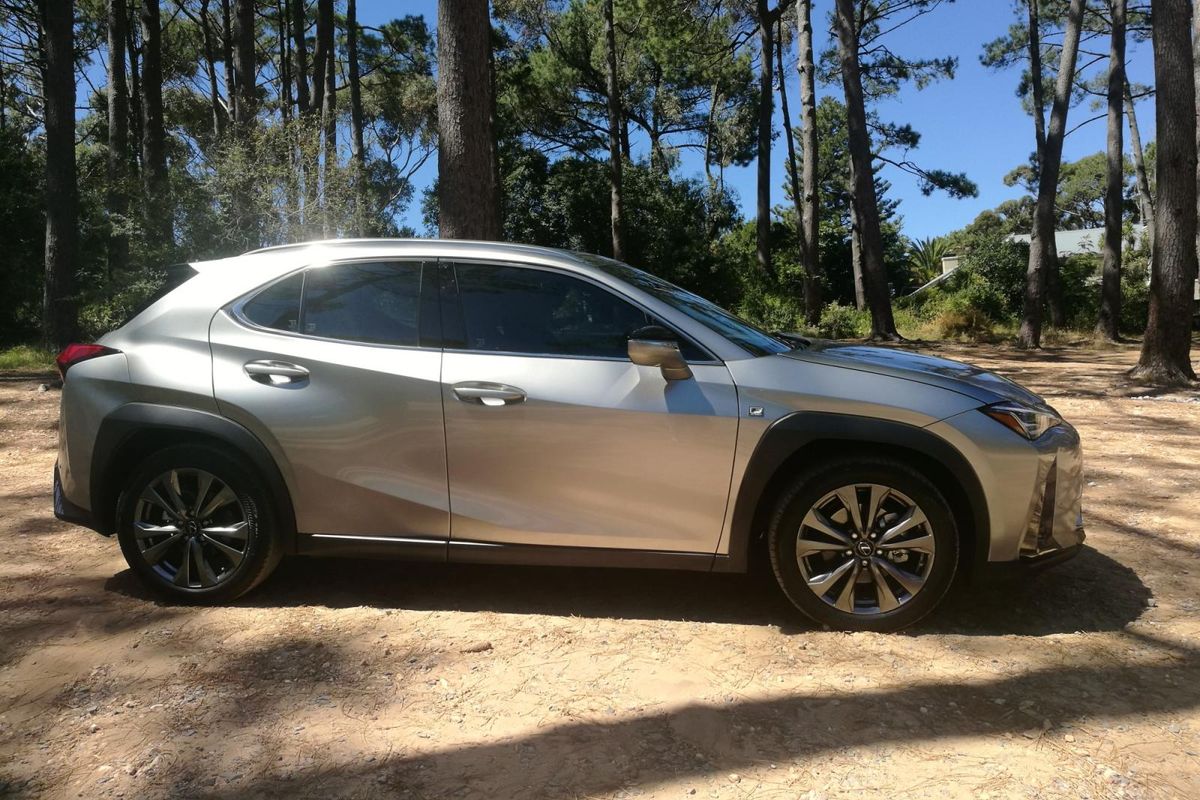
The UX's ride quality is a highlight and this UX 250h ES displayed noteworthy manners on the road. 

There are 3 UX derivatives on offer, including 2 naturally-aspirated derivatives in the form of the entry-level UX 200 EX, the range-topping UX 200 F Sport and, lastly, the hybrid UX 250h ES. All derivatives employ a continuously variable transmission (CVT).

Our drive started in the UX hybrid, which is powered by a 2.0-litre petrol engine that works in conjunction with 2 electric motor-generators to produce total outputs of 135 kW and 180 Nm of torque. The UX's smooth ride quality impressed us from the outset… Lexus' compact crossover just glided along, ostensibly unphased by the generally uneven and pockmarked surface of the N2 highway. The ride is on the firm side of pliant, but sufficiently supple and the handling felt sure-footed and confident in the few corners that we encountered on our way towards Philadelphia on the West Coast.

Very few road and wind noises make their way into the cabin, which is a testament to the UX’s solid build quality, but also enhances the "luxurious driving experience" appreciably. The steering is appreciably responsive to inputs, but also communicative with a pleasantly direct and sporty feel.

Using the drive mode dial placed next to the instrument cluster, the driver can select between Eco, Normal and Sport modes (depending on their preference). We whipped the UX hybrid into Sport mode on an empty stretch of road and found it willing to surge forward with surprising intent, plus we're happy to report that the CVT was well behaved, without that excessive (let alone infuriating) drone that most gearless transmissions emit.

The UX hybrid’s performance was far from underwhelming. In fact, it was refreshing to discover how responsive and keen it was to push on. Lexus claims an average fuel consumption of 4.5 L/100 km, but we'll need to spend more time with it to see how it fares in typical cut-and-thrust city traffic.


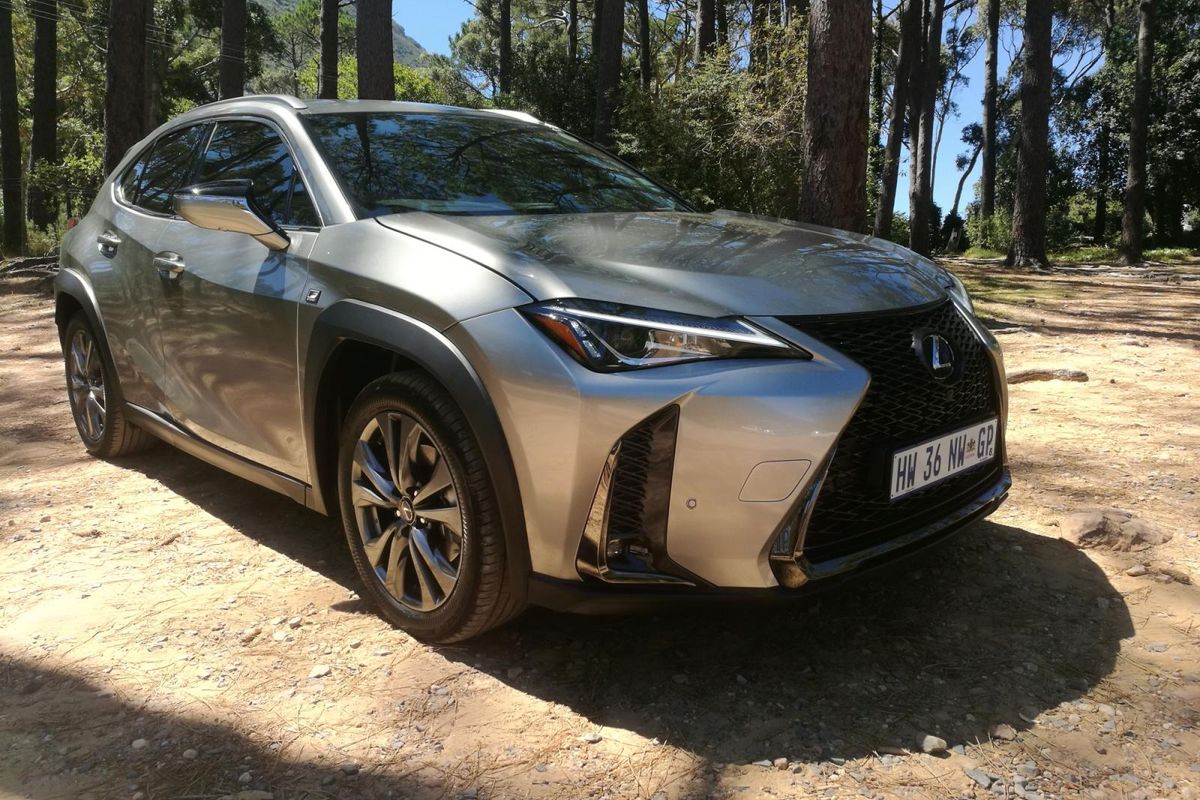
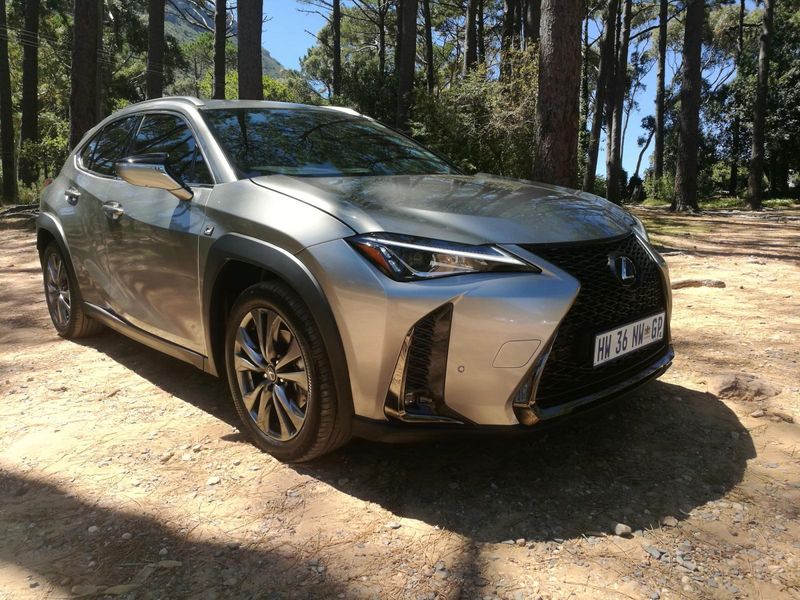
The UX 200 F Sport has numerous F Sport-specific features to differentiate it from the rest of the UX range. 

We also had a quick drive in the sportier 200 F-Sport derivative, which employs a naturally-aspirated 2.0-litre petrol engine that produces 126 kW and 205 Nm of torque. This range topper is distinguished with sporty appointments such as F-Sport 18-inch alloy wheels, -scuff plates, -3-spoke steering wheel, -leather seats and a derivative-specific instrument cluster.  

The 200 F-Sport further features adaptive variable suspension (AVS), which enhances ride refinement by increasing damping force to minimise body roll (side-to-side yawing motion) in the corners (or when changing lanes) and reduces damping when driving in a straight line to maximise ride comfort. The AVS is activated in conjunction with Sport S+ mode, which is only offered in this derivative.

Like the 250h SE, the 200 F-Sport can hustle along at a fair pace, but the latter carries a slightly higher claimed fuel consumption figure of 6.1 L/100 km. The driver can also manipulate the CVT using the mounted steering wheel paddles to squeeze the most out of the engine’s performance characteristics when needed. Overall, we found the Lexus UX’s performance to be more than adequate for its intended target market.  

Summary

While our initial impressions of the UX are mostly positive, like any car, it’s not perfect. The shallow and somewhat diminutive load bay may be an issue for some family-car buyers and the infotainment system proved to be too finicky for our liking.   

Nonetheless, the UX appears to be a worthwhile option to consider if you are in the market for a stylish and alternative compact luxury crossover. The entry-level 200 EX, which is expected to be the top-selling derivative, is particularly enticing at R599 900 if you consider the sheer amount of standard kit on offer when compared with its less-generously-specified German competitors. The 250h ES and UX 200 F Sport are, of course, pricier and for many buyers, those derivatives may very well be a push too far at R699 000 and R726 200 respectively.

However, Lexus’ new 7-year/105 000 km warranty and maintenance plan are genuine deal sweeteners. While brand snobs are likely to stick to the run-of-the-mill German fare, those who venture into the Lexus stable will nevertheless have much to smile about from behind the wheel of the UX.

We will have the new Lexus UX on test soon, so look out for a thorough evaluation coming your way in the near future.      

Buy a new or used Lexus on Cars.co.za

Related Content

Lexus UX (2019) Specs & Pricing

Audi Q3 (2018) International Launch Review

Mercedes-Benz GLA Facelift (2017) First Drive

Spy Shots: Facelifted BMW X1 with M Performance model

Cars Coming to SA in 2019