2019 BMW 320d vs Mercedes-Benz C220d – Which one should you buy?
It's the German business class sedan showdown you've all been waiting for. The new BMW 320d takes on the Mercedes-Benz C220d in an in-depth comparison video. Which should you buy? Watch now!
The all-new, G20-generation BMW 3 Series was recently launched in the South African market and many supporters of the Bavarian brand's products would regard the new model as a disappointment if it didn’t immediately become the new benchmark in the keenly-contested business class sedan segment of the new vehicle market…
However, the larger, more refined and technologically advanced 3 Series needs to overcome considerable opposition in the shape of the recently facelifted W205 Mercedes-Benz C-Class, which is widely regarded as a segment frontrunner. So, which one is the best? In a battle of sportily-clad turbodiesel-powered derivatives, Ciro De Siena compares the BMW 320d M Sport with the Mercedes-Benz C220d AMG Line.
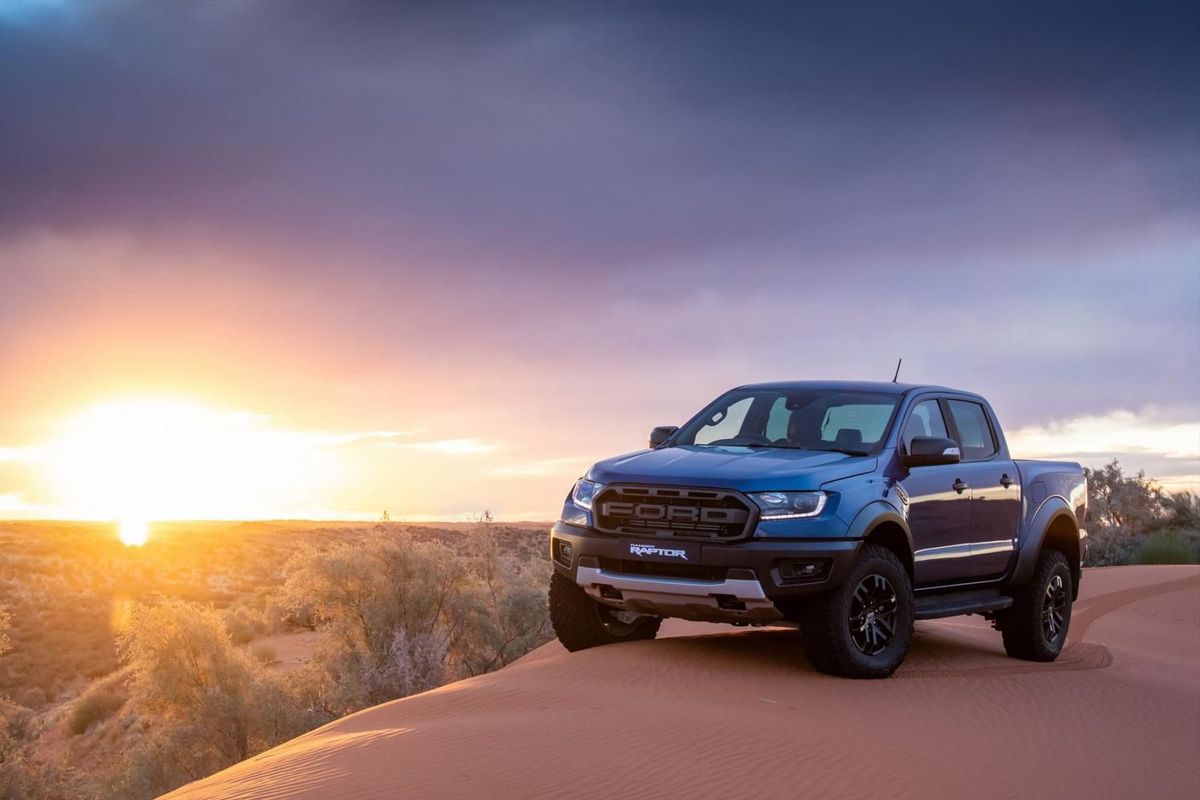
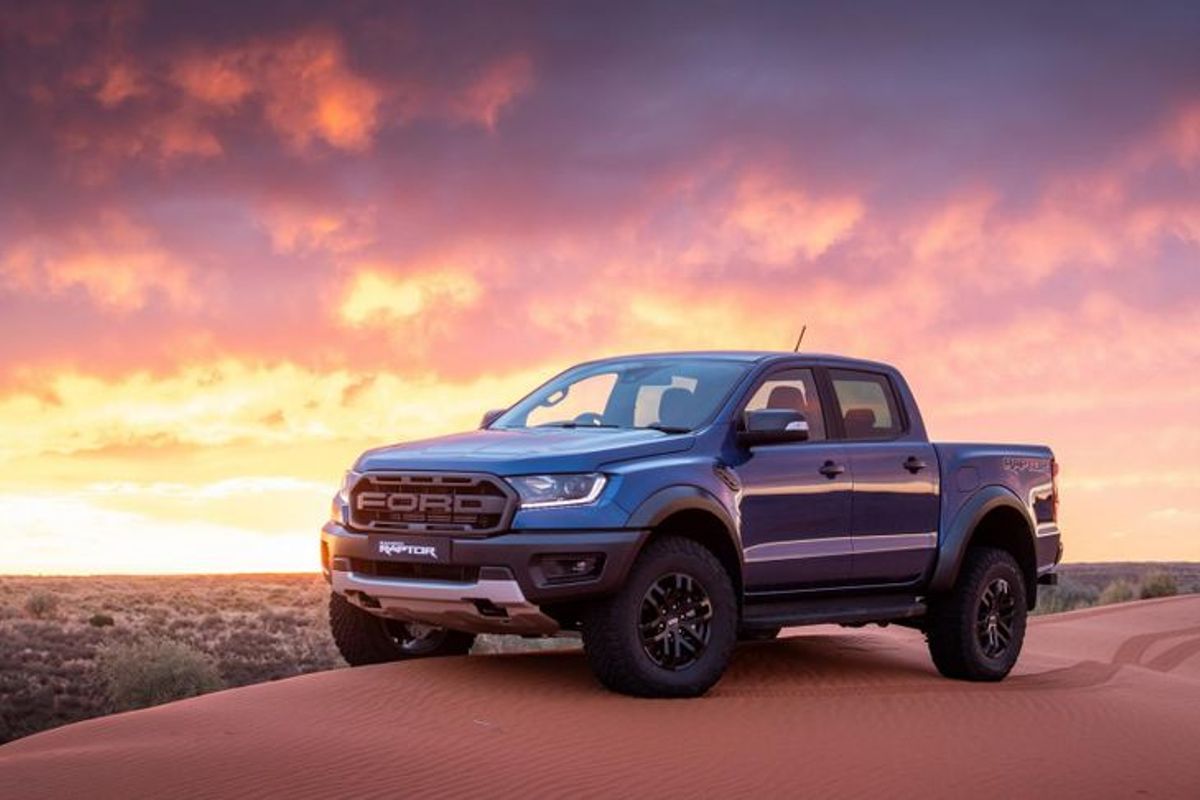
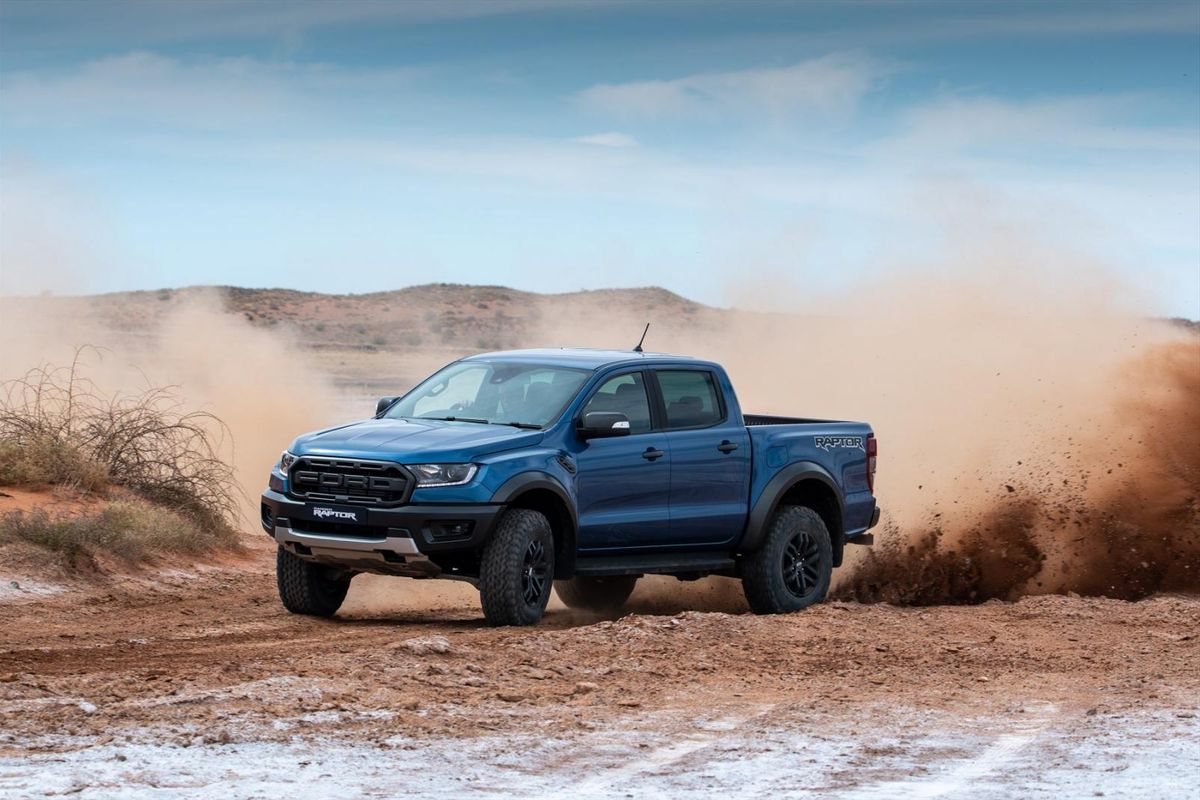
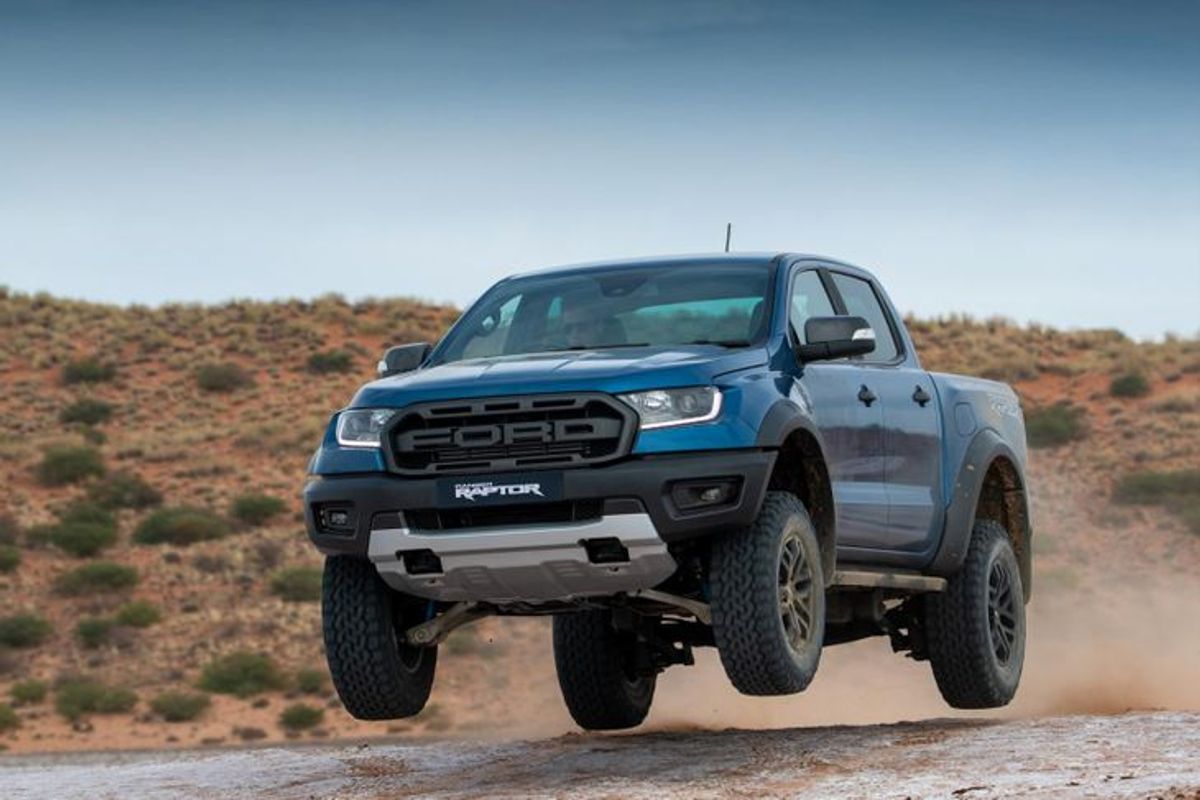
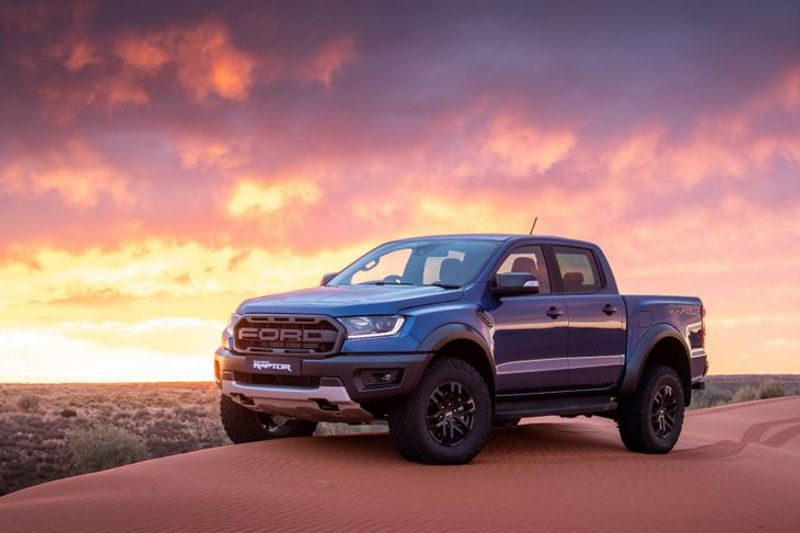
The South African-built Ranger Raptor is finally here and while its styling is undoubtedly attention-grabbing, we were eager to experience this engineering phenomenon in the metal, on local soil, to find out if it’s just another over-hyped bakkie splattered with racy stickers – or if it can really do what Ford claims it can do. We sent Gero Lilleike to a boiling-hot salt pan near Upington, Northern Cape, to put the hammer down and get some answers…
The hype surrounding the new Ranger Raptor, particularly on social media, has been somewhat interesting and I have been trawling through comments, opinions and all kinds of jibber jabber to get a sense of what people think of this new Ranger Raptor. Many people love it, some think it’s well-priced (the Ranger Raptor costs R786 400), but many people also don’t understand what it is. And so, if you are one of those people who thinks or believes the new Raptor is just a dressed-up Ranger with not much else going on, then it’s my duty to tell you that you are wrong, very wrong…
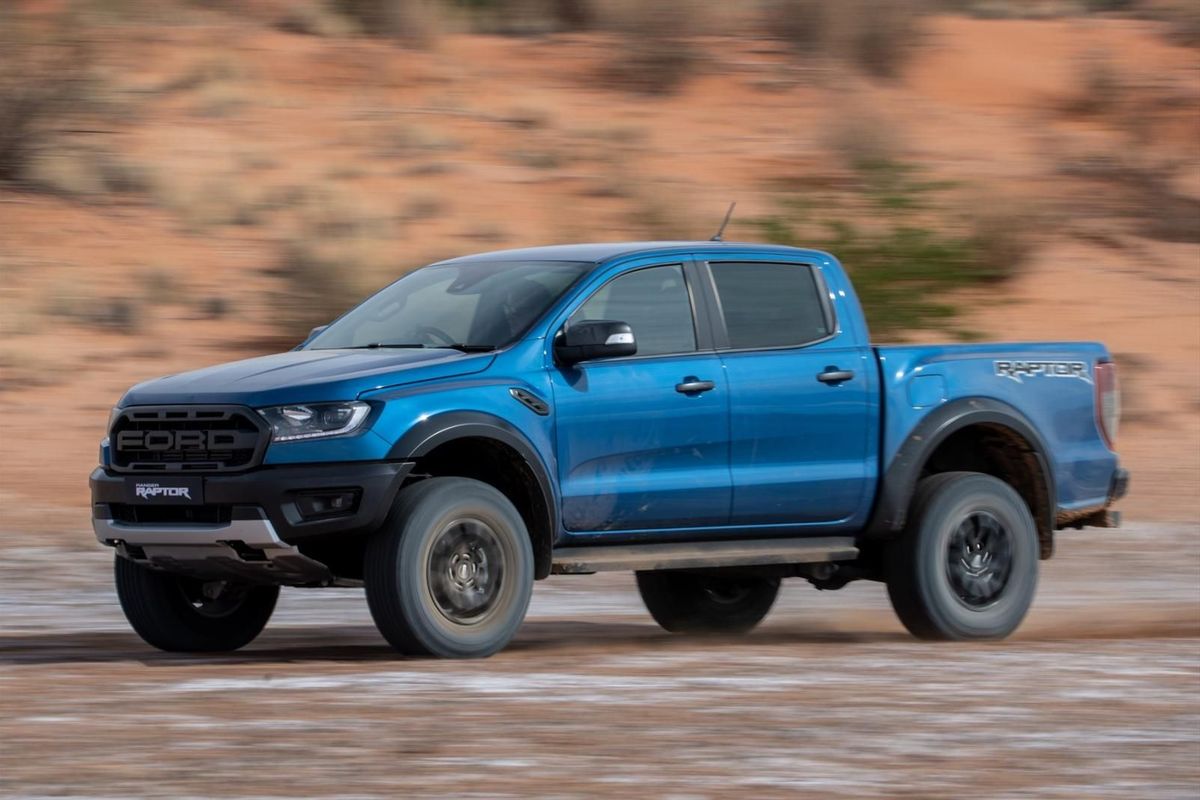
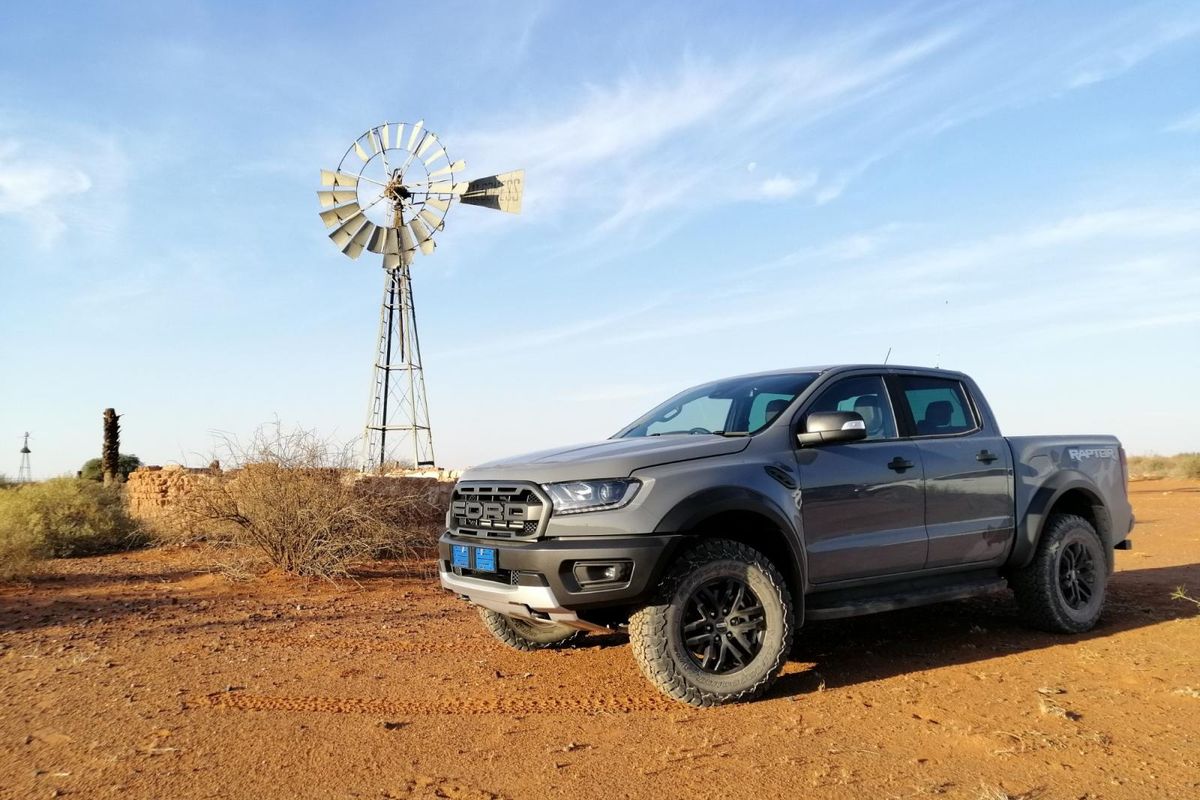
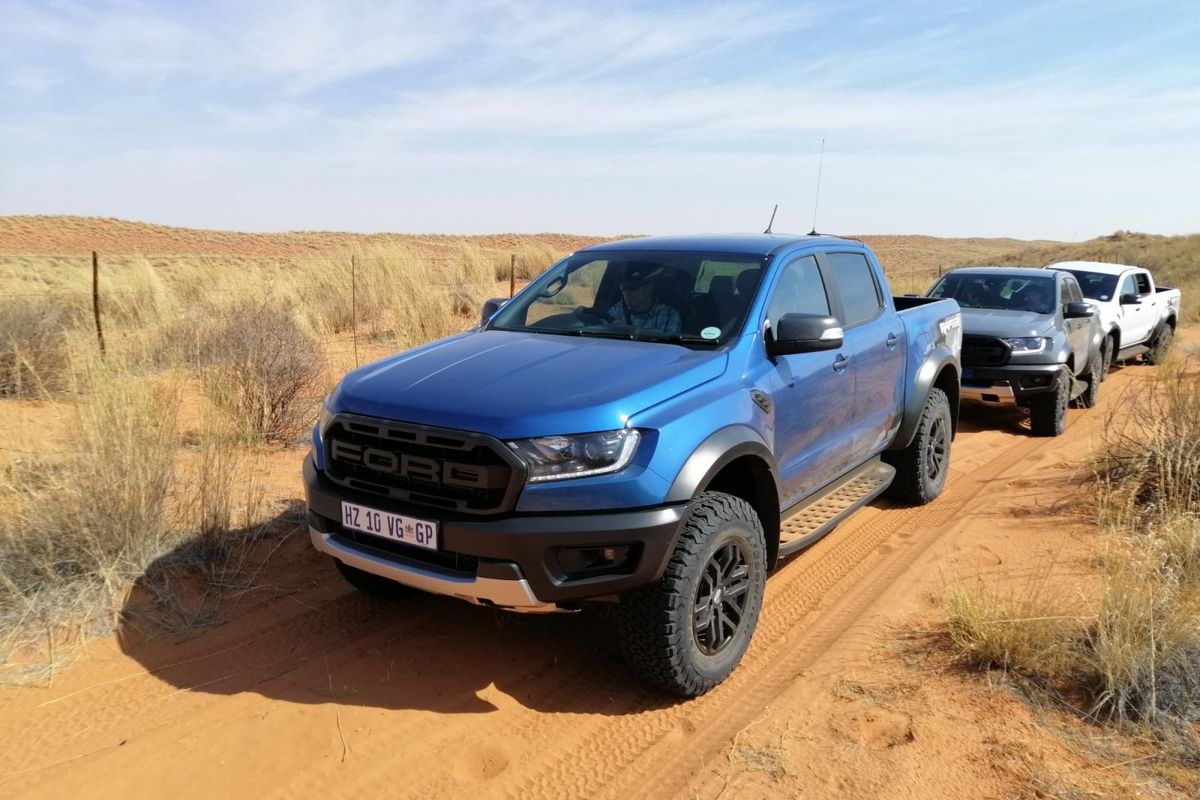
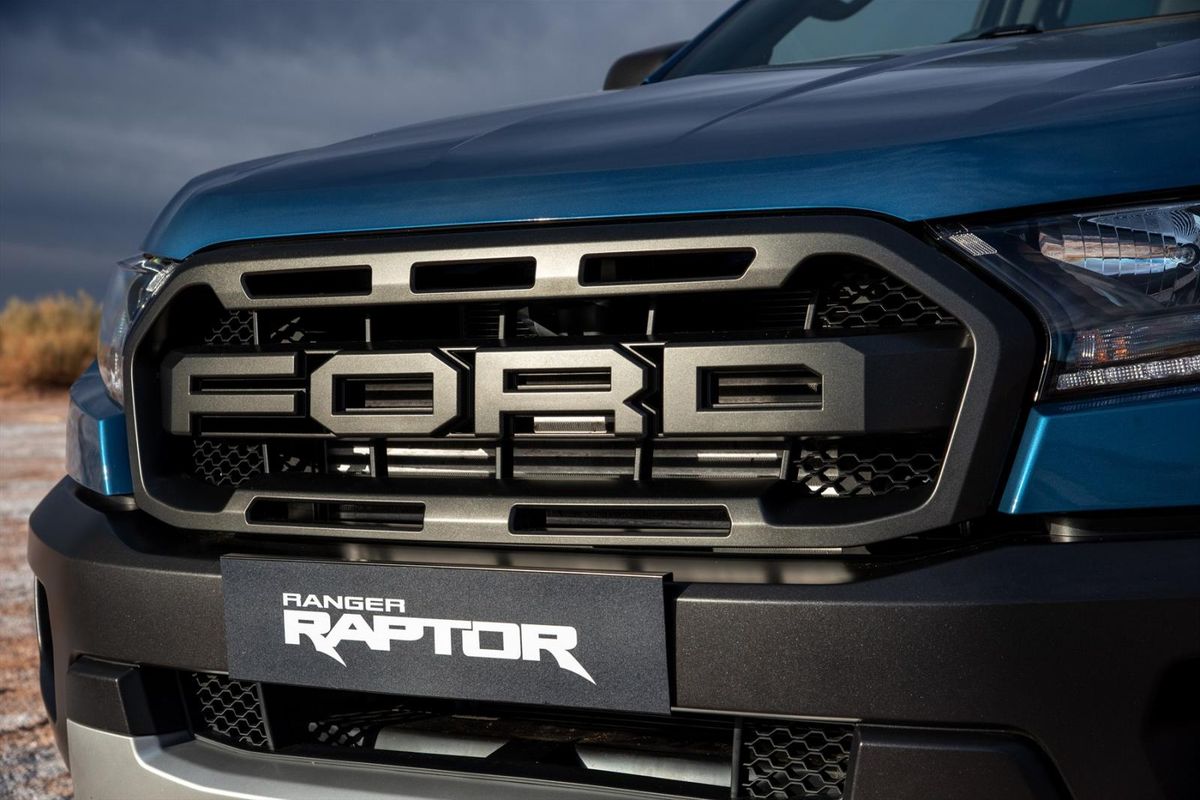
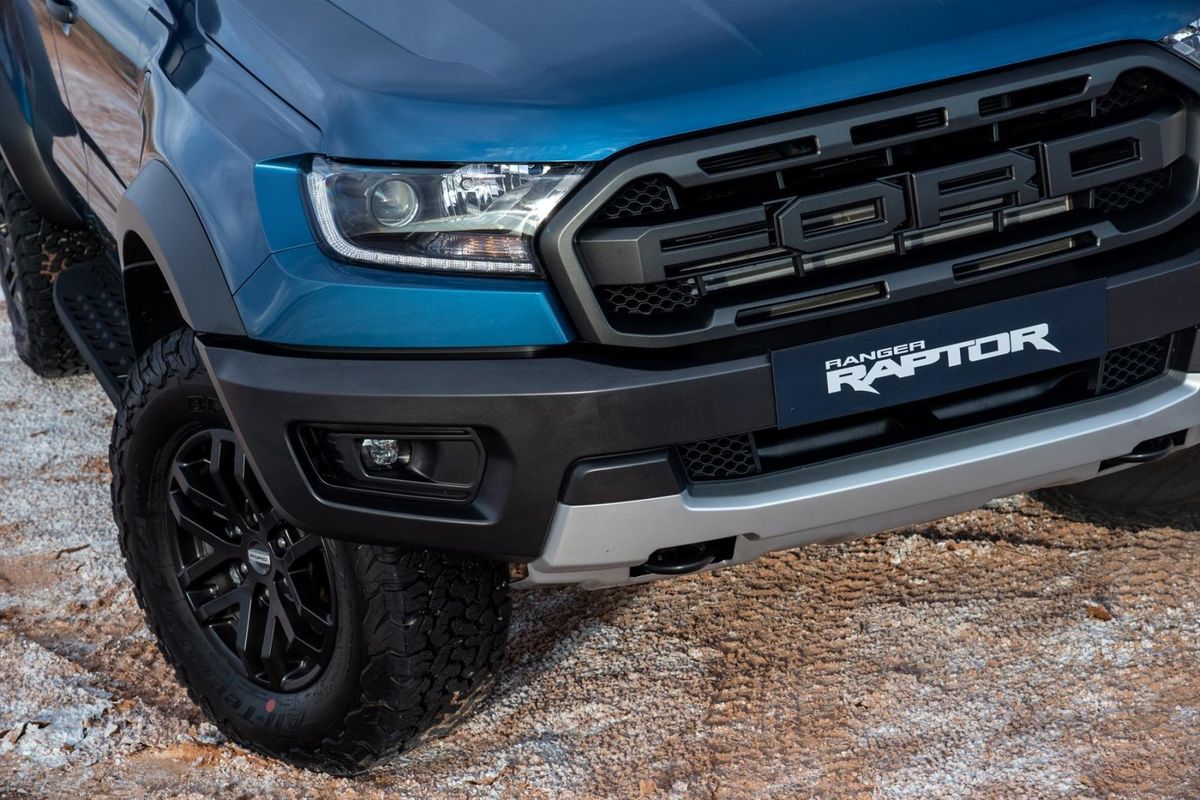
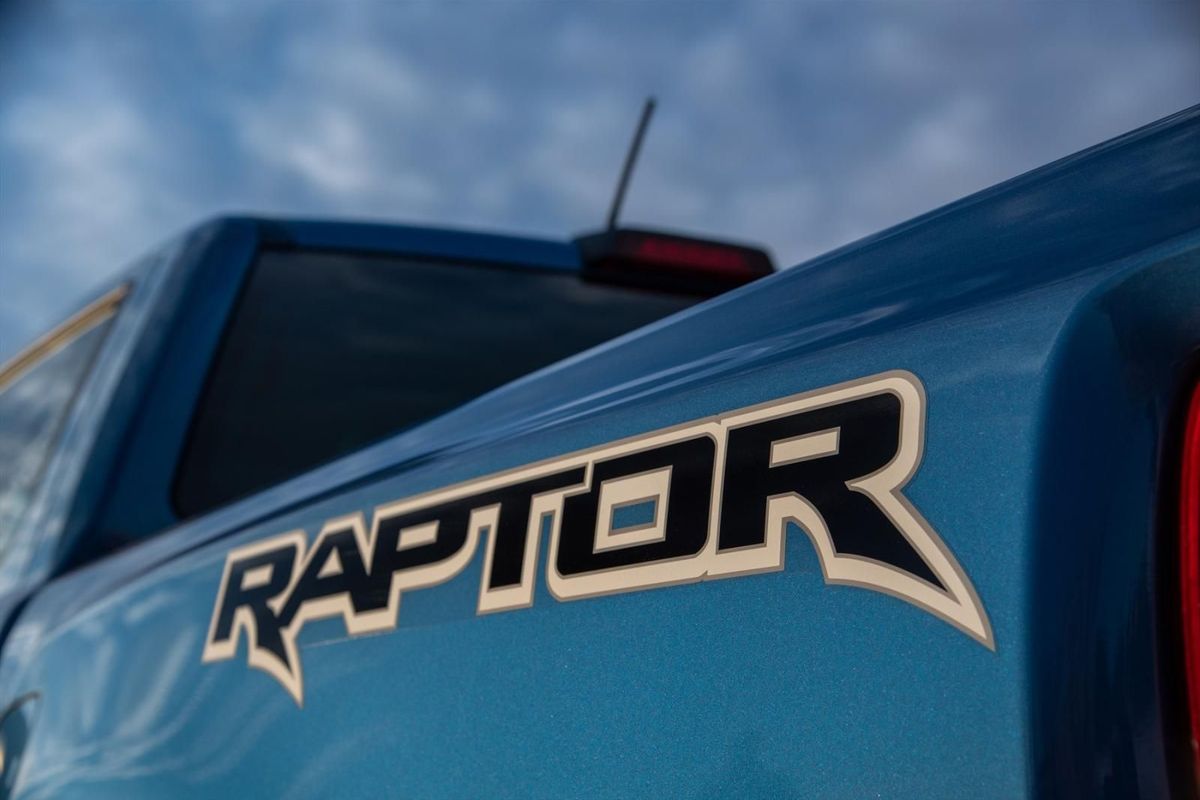
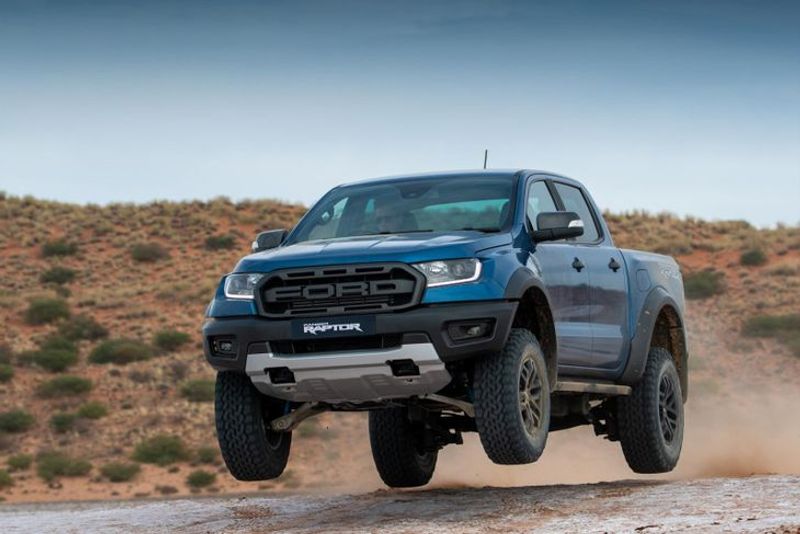
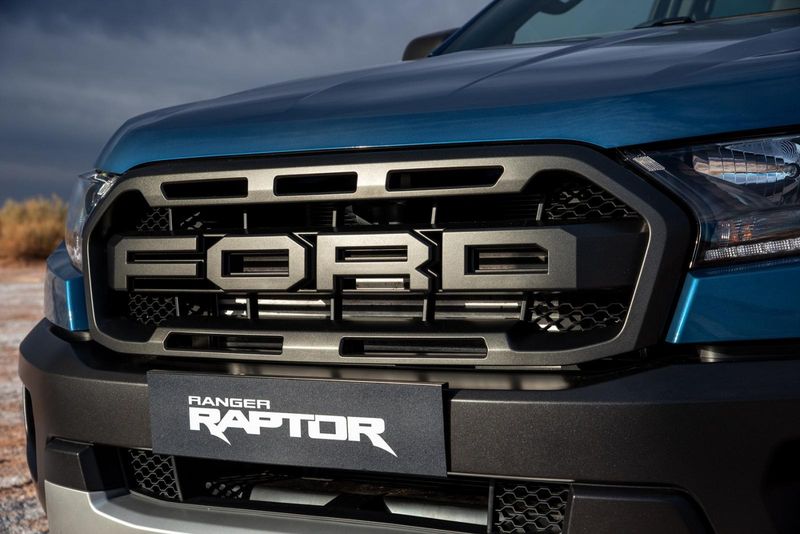
The Ranger Raptor has loads of kerb appeal and is purported to offer class-leading offroad ability.
To put it simply, the Ranger Raptor is a high-performance off-road bakkie. In this case, defining and understanding what is meant by "high-performance" in this particular context may help you understand what the Ranger Raptor is and, indeed, what it’s capable of. Let me elaborate…
It may carry the Ranger name and share stylistic features with Ford's popular pick-up range, but the Raptor is an entirely different animal to the standard bakkie. It rides on a specially-developed chassis that’s designed to withstand the rigours of spirited off-road driving, which is to say that the Raptor is designed to survive the most severe conditions it may possibly encounter when being driven in anger on non-sealed surfaces.
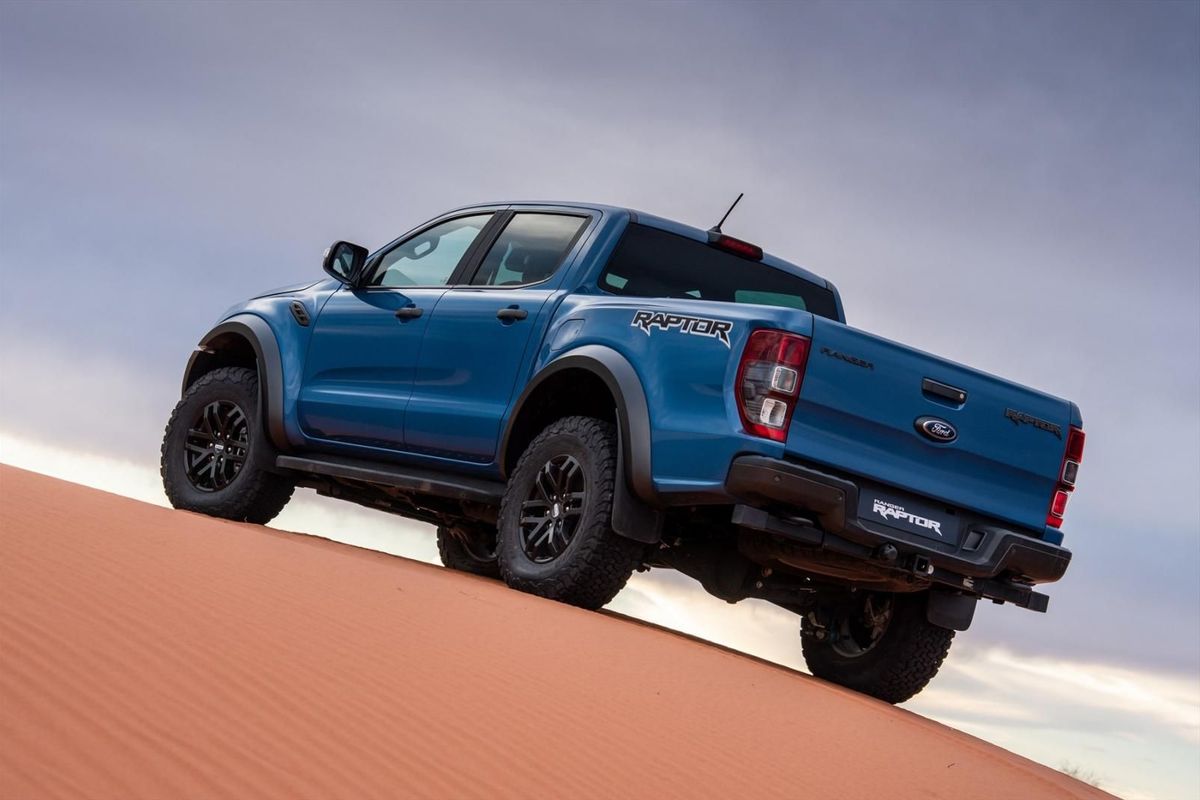
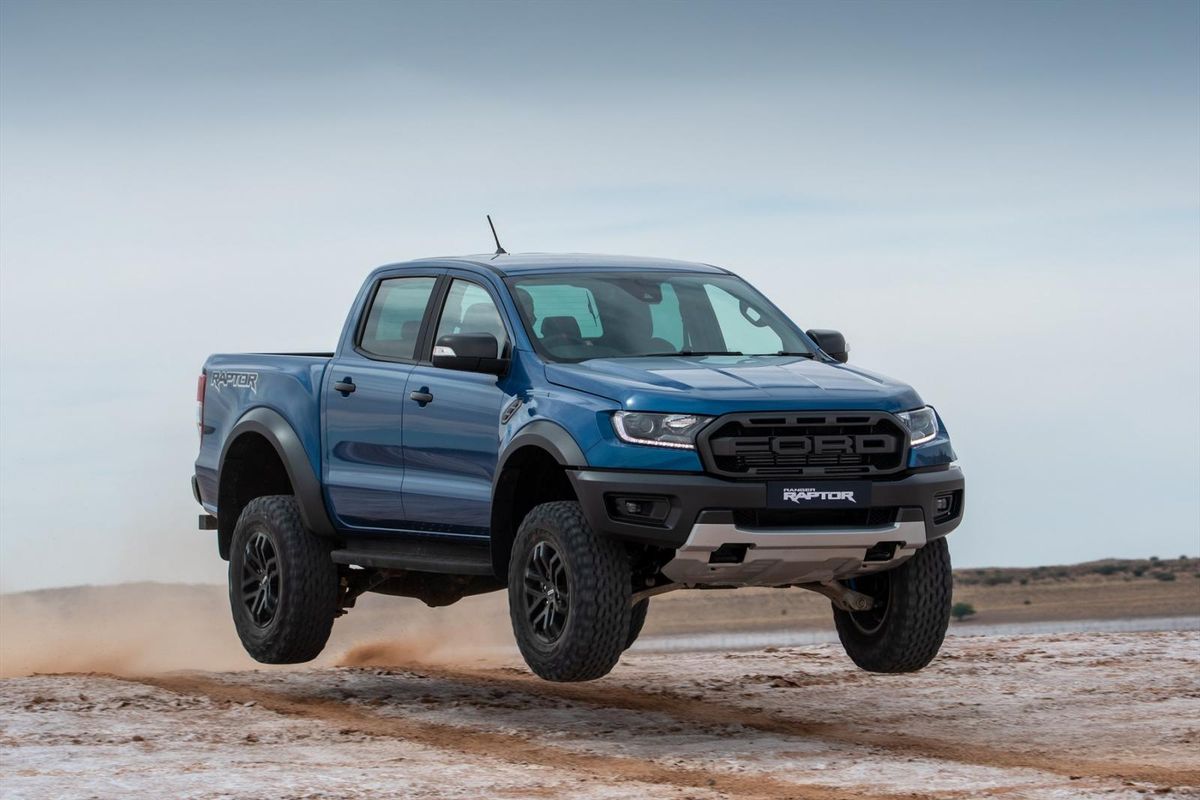
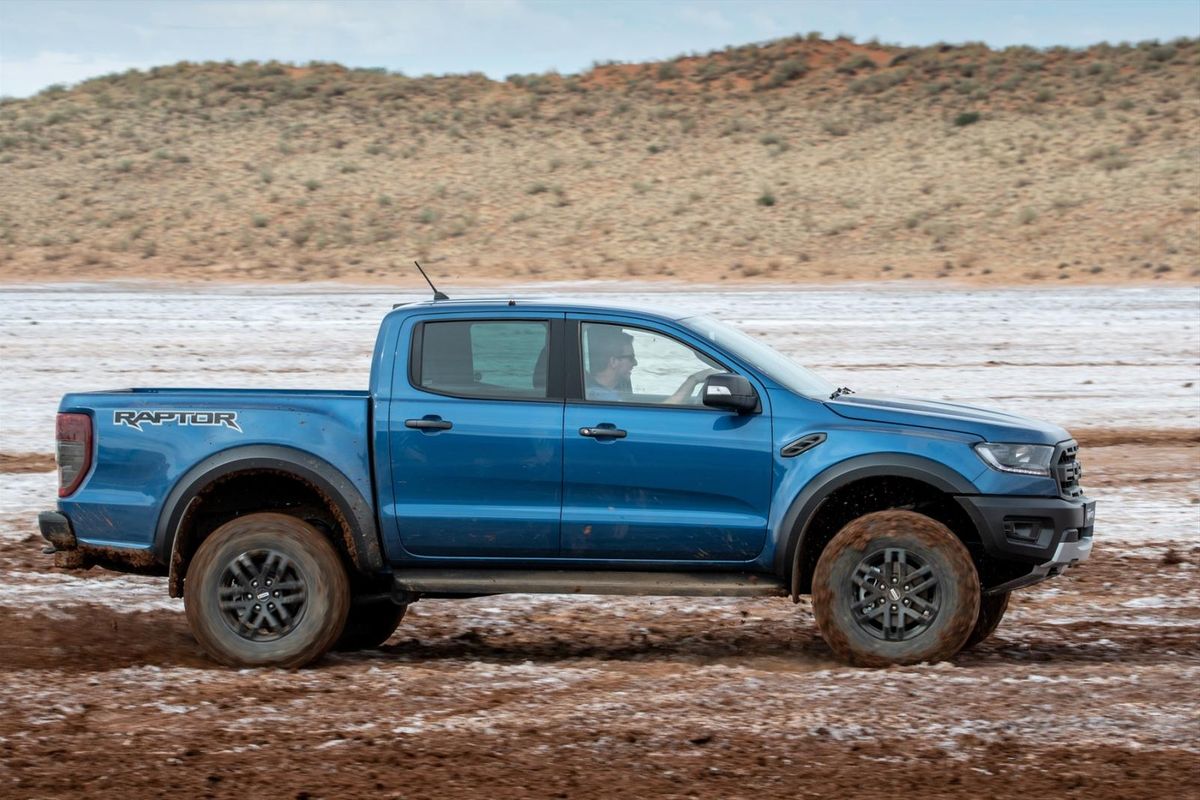
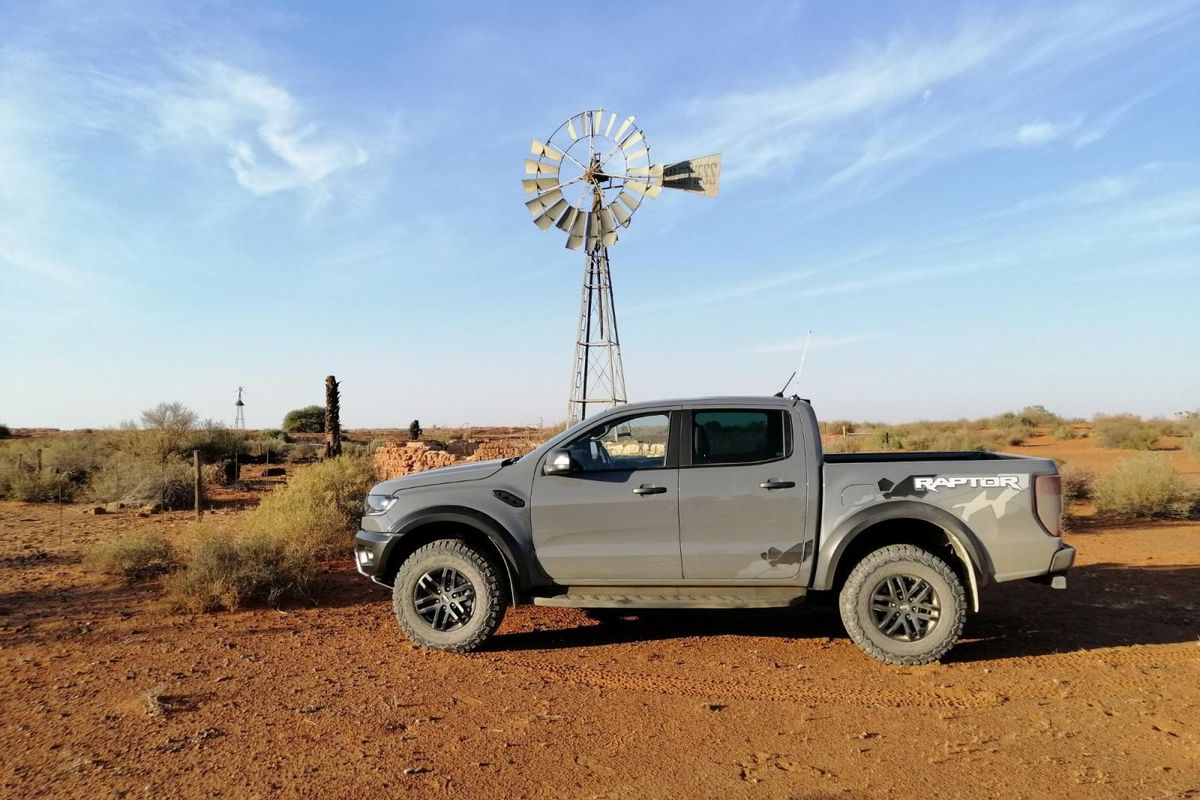
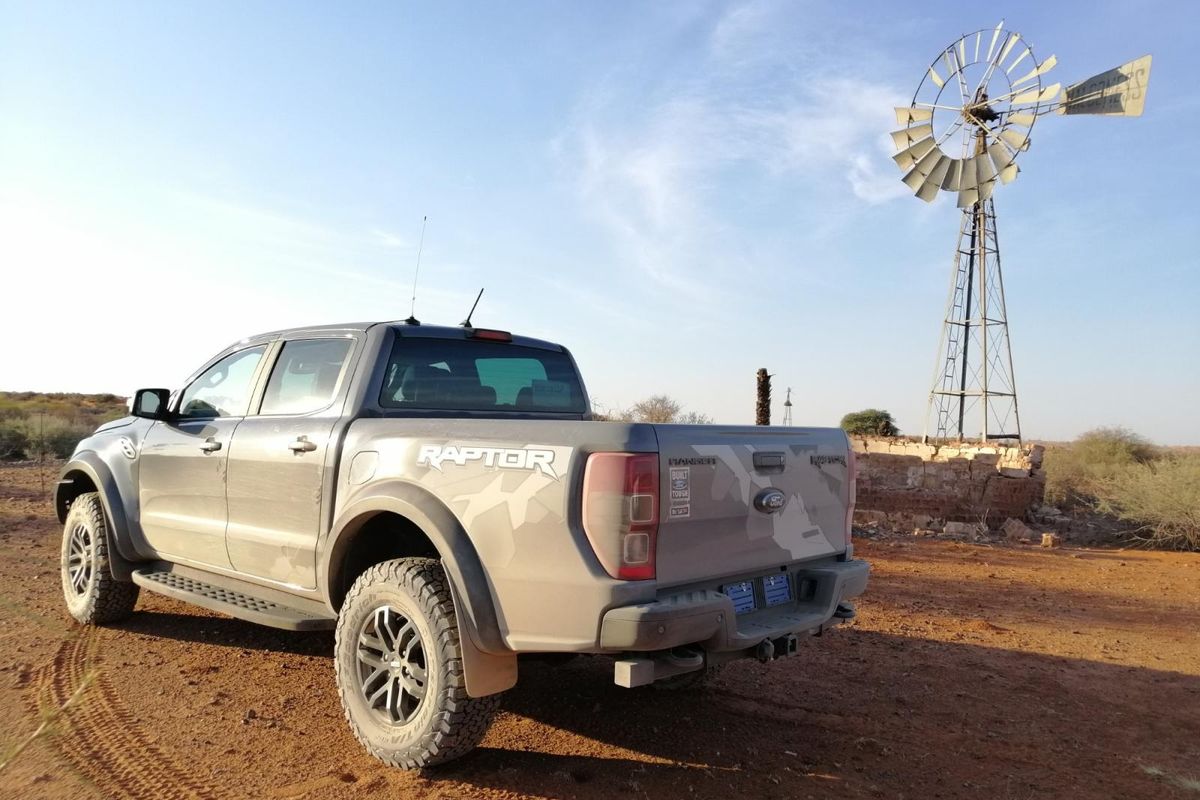
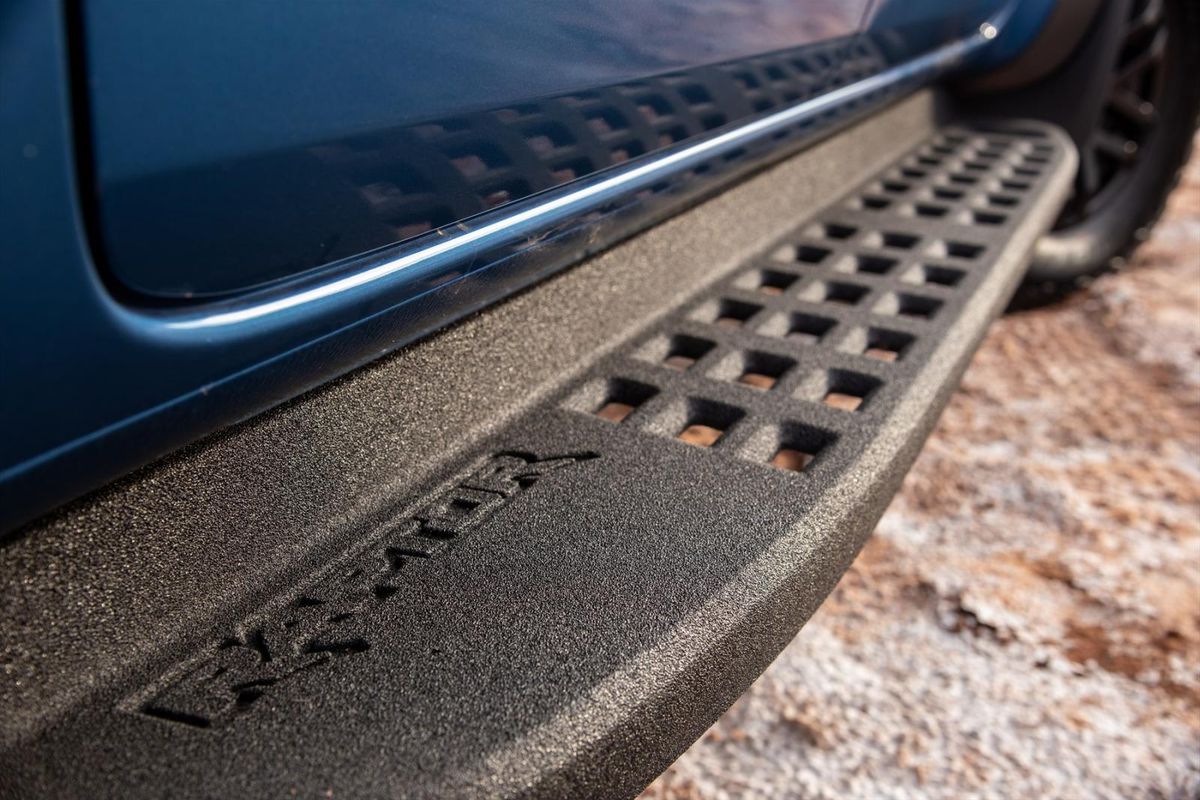
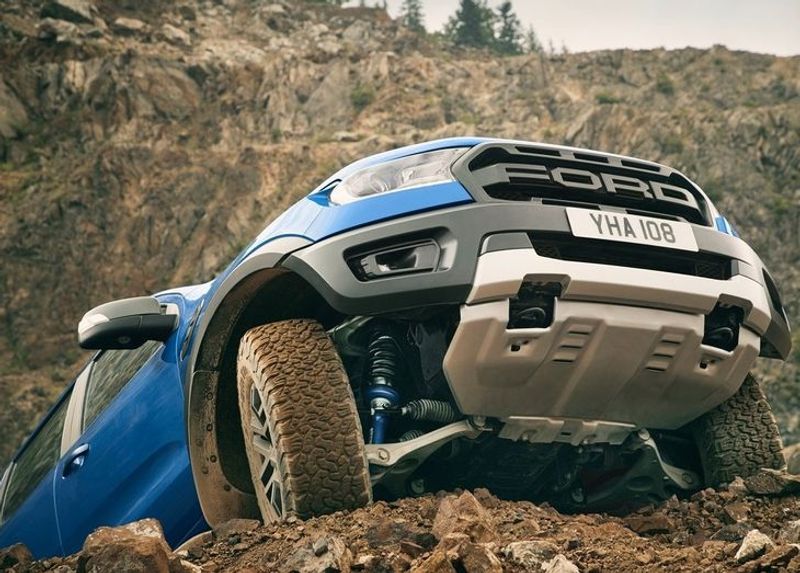
The Raptor is built for purpose and you can see it its stance. It stands some 51 mm taller than a standard Ranger and the front and rear tracks have been widened by 150 mm for extra offroad stability. It also boasts a higher ground clearance (283 mm) and has a wading depth of 850 mm.
Ford partnered with BF Goodrich to develop chunky 285/70 17-inch all-terrain tyres exclusively for the Raptor. The bakkie's bespoke braking system comprises 332 x 32-mm ventilated discs with twin-piston 51-mm calipers (the diametre of which is 20% larger than on a standard Ranger) up front, with 332 x 24-mm discs and 54-mm calipers at the rear. A 2.3-mm front bash plate ensures the Raptor's internals are well-shielded against impacts.
The Ranger Raptor's suspension system is a major highlight and sets it apart from other 4×4 products.
But the most notable feature that sets the Ranger Raptor apart from any other 4×4 bakkie currently on sale is indeed its suspension system.
A new rear coil-over suspension with an integrated Watt’s linkage allows for vertical axle movement while minimising lateral movement and this contributes to high levels of control and comfort when engaging in offroad driving.
While the Ranger Raptor is a thoroughbred off-road beast, it needs to deliver on-road comfort too and to do this, Ford partnered with FOX to develop position-sensitive damping (PSD) shock absorbers. They allow for significantly higher damping forces when off-roading while also providing the necessary comfort on-road with lower damping forces. Compared with the standard Ranger, front wheel travel has increased by 32% and rear wheel travel is up by 22%, which means the breadth of the Raptors suspension capability is widened to accommodate various driving terrain.
Based on the information above, it should be clear to you now that this is no ordinary Ranger. If you still have your doubts, then read on…
What’s the Ranger Raptor like to drive on the road?
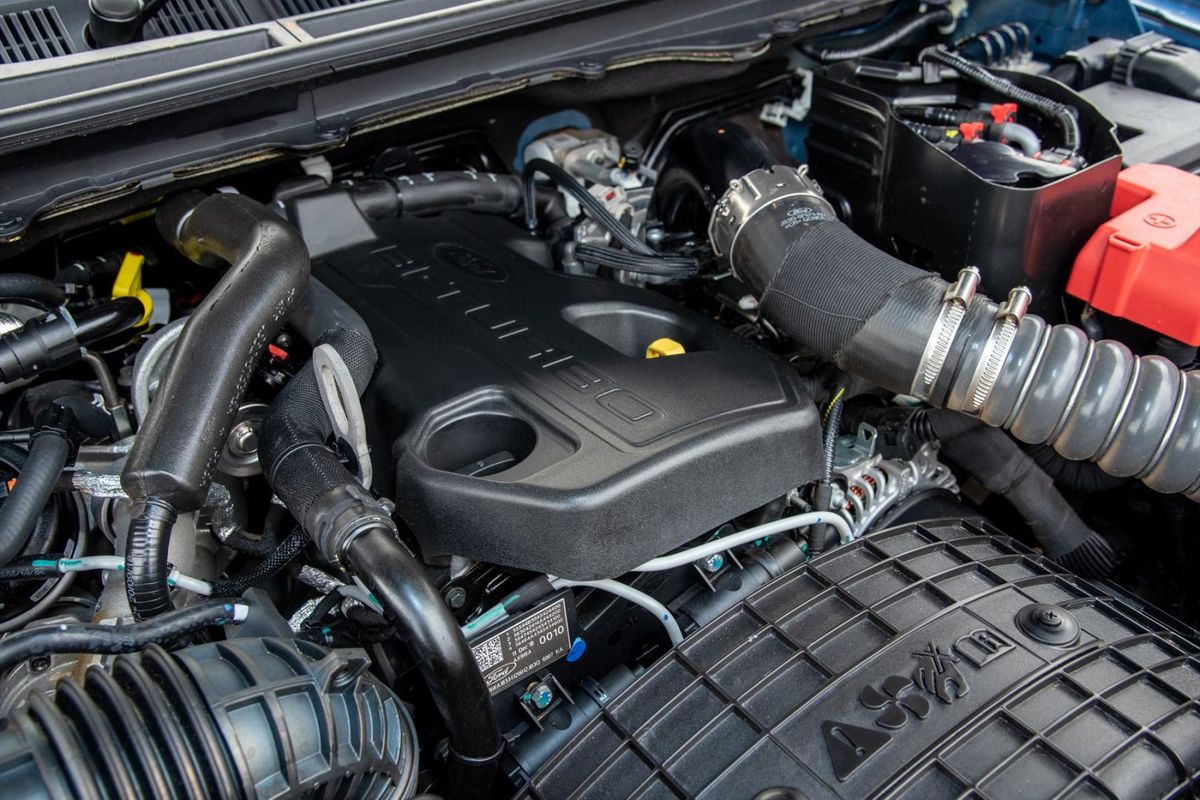
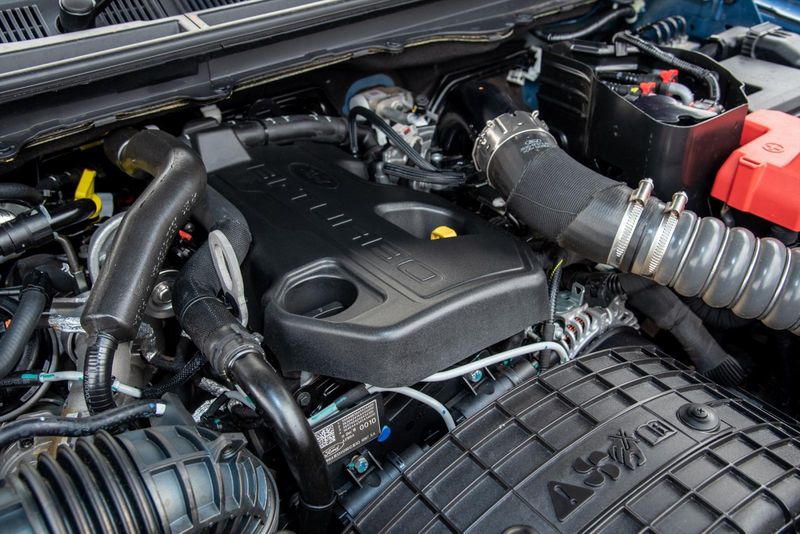
A 2.0-litre bi-turbodiesel engine provides ample performance with 157 kW and 500 Nm of torque.
The Ranger Raptor launch took place in Upington and upon arrival, the media entourage set off on tar for the Goerapan salt pan some 100 km away, which gave us a chance to see what the newcomer's like to drive on the road.
The Ford's 2.0-litre bi-turbocharged diesel engine (with 157 kW and 500 Nm of torque) is mated with a new 10-speed automatic transmission. This is the same engine and transmission that is now offered on the standard Ranger. Many critics bemoan those standard outputs, but the reality is that they're more than sufficient for on- and off-road use and, when you consider how this Ranger Raptor has been set up, you really don’t need more…
On tar, we were surprised by how eager and willing this engine actually is. Due to its higher levels of engine refinement, the Ranger Raptor gains momentum rapidly and if you are not careful you will soon find yourself well over the national highway speed limit, even though it doesn’t feel like it.
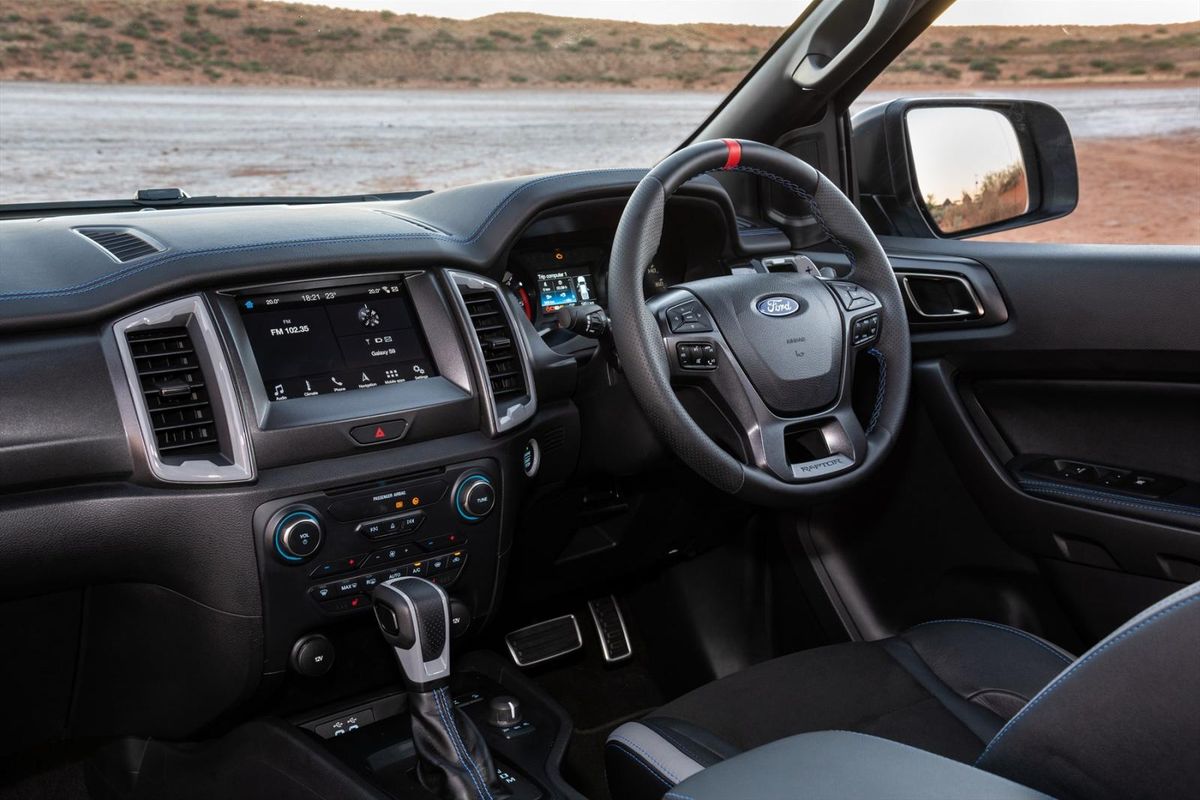
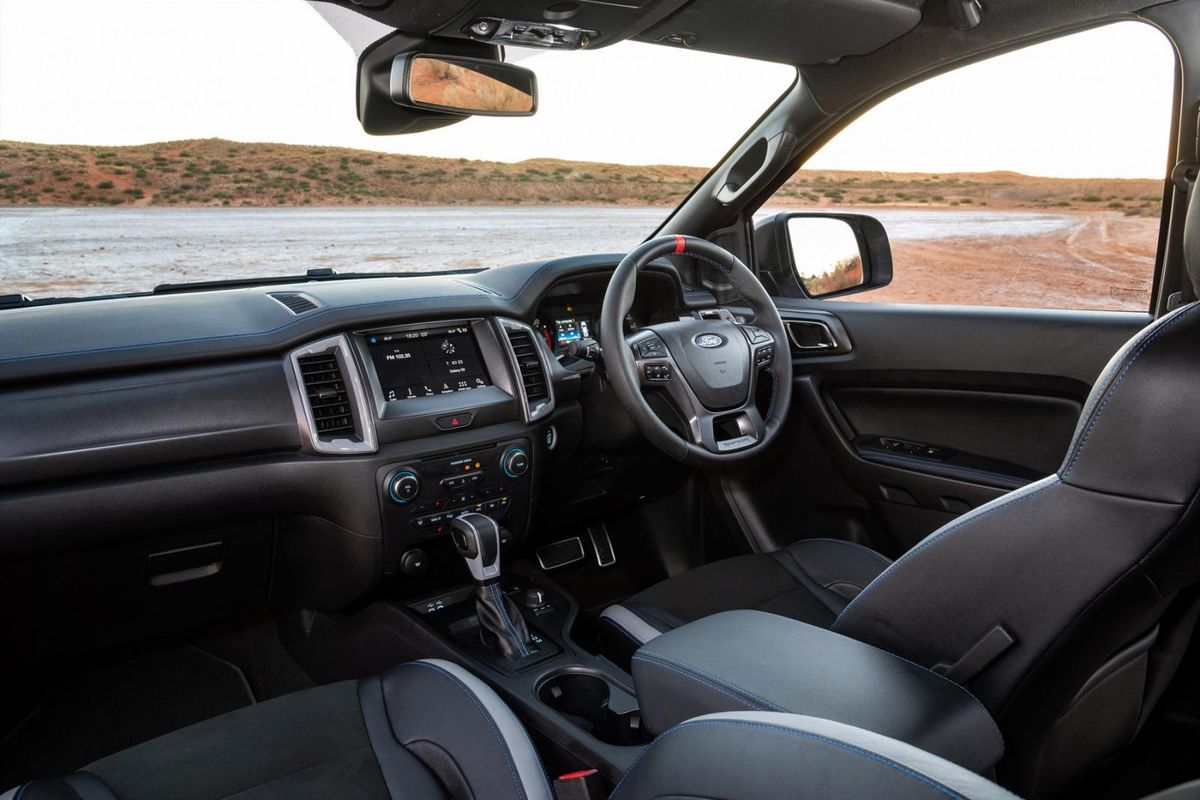
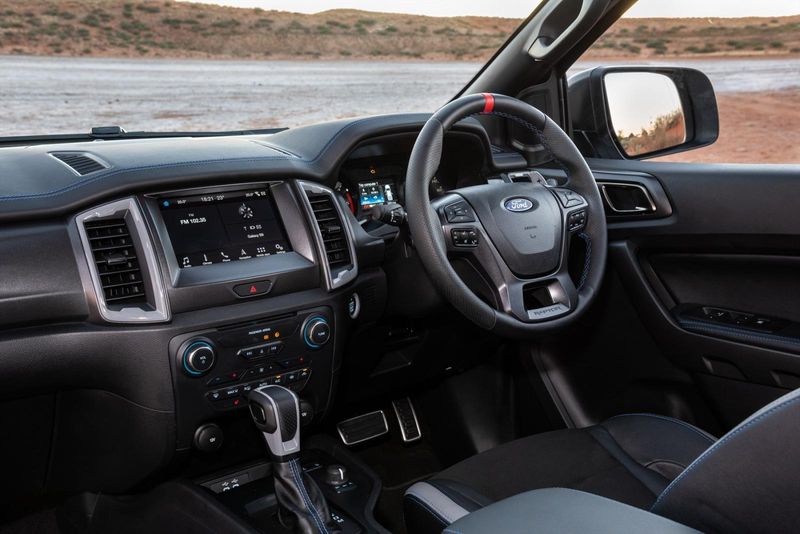
Despite its offroad bias, the Ranger Raptor offers convenient features such as SYNC3 infotainment with Apple CarPlay and Android Auto.
We were impressed by how stable and comfortable the Ranger Raptor was when driving at speed. The ride qualities of other double-cab bakkies tend to get jittery at speed, but the Ranger Raptor was unphased as the dry Kalahari landscape whizzed by. That said, for anyone driving the Ranger Raptor on the road, speed management is a skill that you will have to learn quickly to avoid regular speeding fines in more built-up areas.
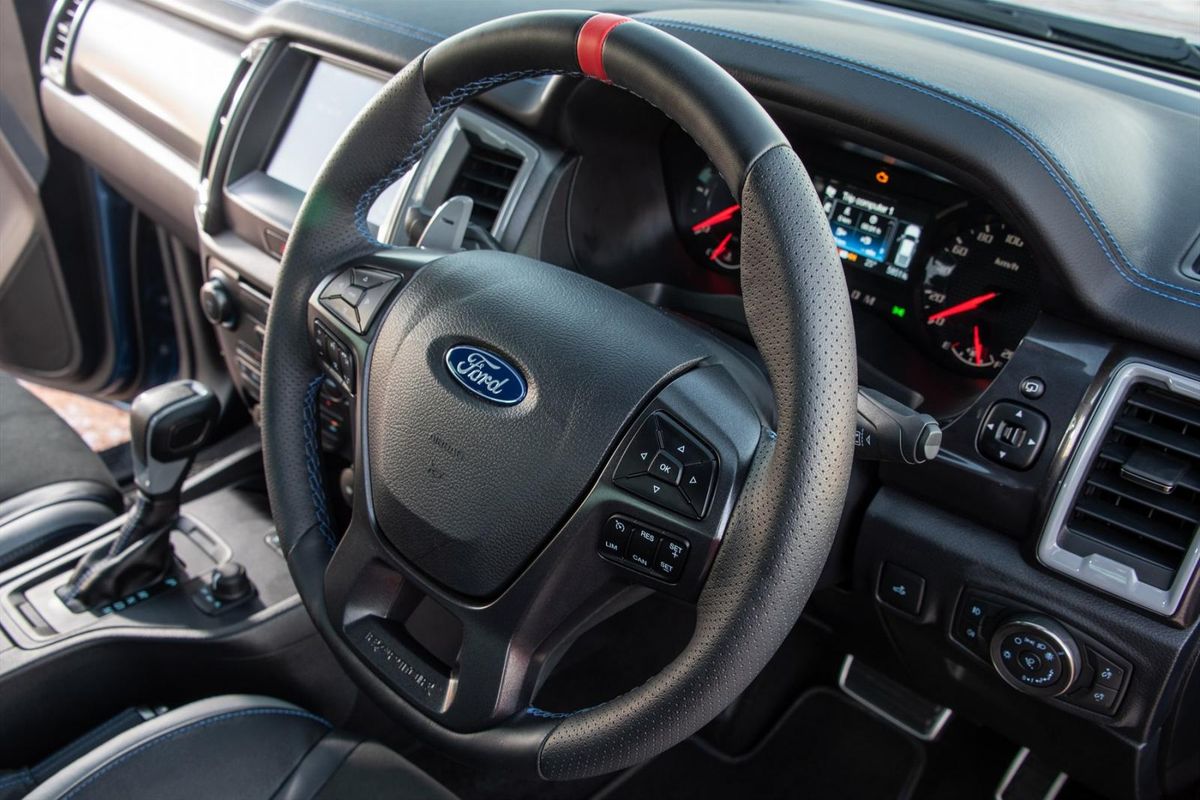
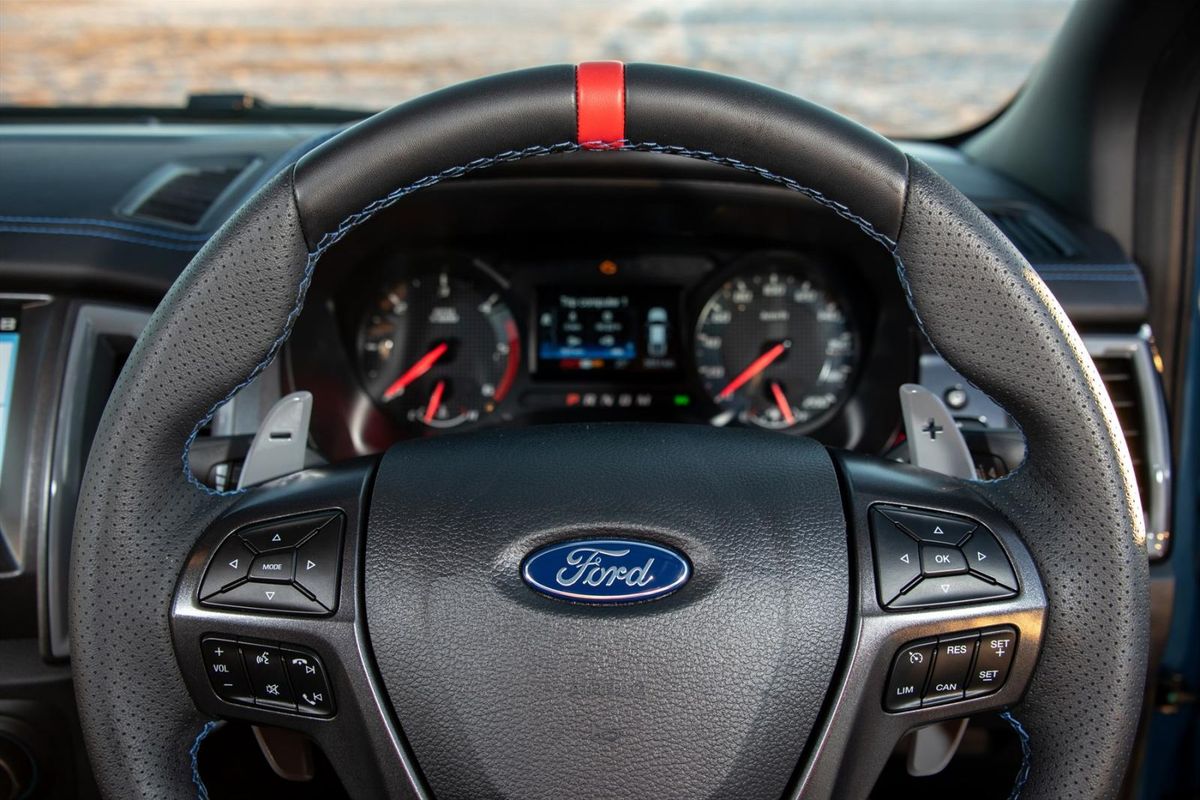
The engine and transmission work well together and both provide good general performance. The transmission is well-calibrated and it does have a manual mode with steering-mounted paddle shifters that allow you to manually shift gears, but for on-road driving, it’s best to let the transmission shift automatically. When we arrived at the Goerapan, the Raptor's real test began, however. An action-packed day of off-road driving beckoned.
How does the Ranger Raptor perform off-road?
The Ranger Raptor's off-road ability is both impressive and astounding…
Ford wanted us to experience the full breadth of the Ranger Raptor's capabilities and to achieve this, 3 different off-road activities were set up at the salt pan including dynamic handling, sand driving and an off-road rally course.
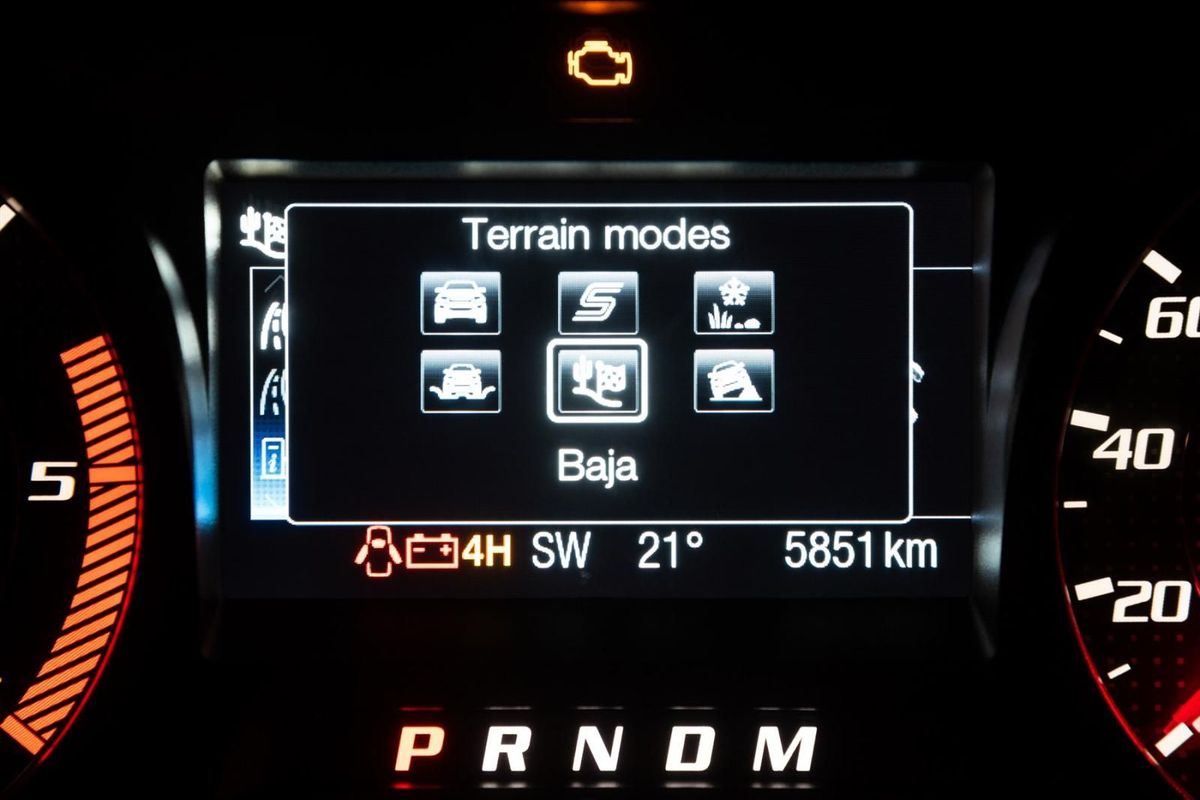
There are 6 modes on offer, including Normal and Sport (for on-road driving) and off-road modes including Grass/Gravel/Snow, Mud/Sand, Rock and Baja. The intention of the dynamic handling course was for us to get a feel for the Raptor's unique Baja mode, named after the Baja Desert Rally in Mexico. To put it more plainly, this activity was all about getting the Ranger Raptor sideways, in the dirt, at heady speeds…
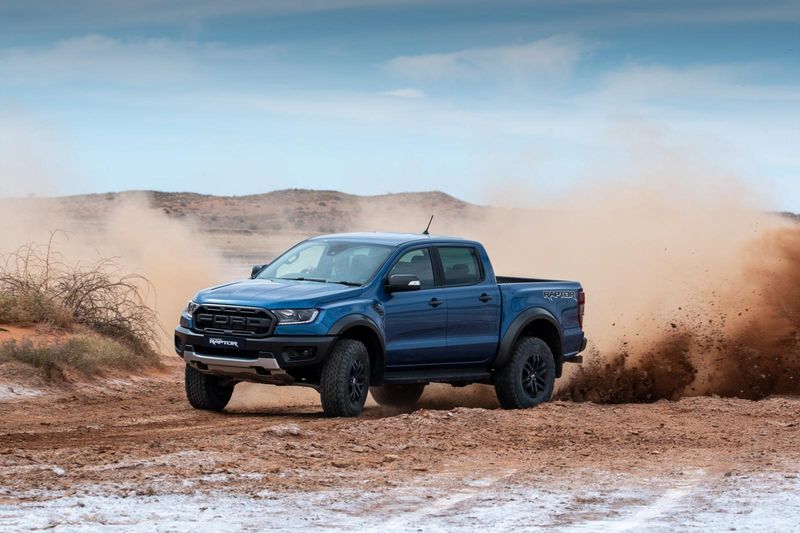
Baja mode is specifically calibrated for high-speed off-road driving by sharpening up the throttle, transmission and steering response. More than this, "Baja" dials back the stability- and traction control, which makes it ideal for enthusiastic off-road driving and performing controlled drifts at speed.
Baja mode is a must if you want to initiate high-speed offroad drifts such as this…
We hit the course with much enthusiasm and were amazed at how easily the Raptor's rear-end steps out, but moreover, how poised and confidence-inspiring the off-road machine is when going sideways. The Ranger Raptor drifted through corners with impressive precision and predictability. It was a delight to achieve a semi-permanent "state of drift" for prolonged stretches; all of a sudden, Baja mode made perfect sense.
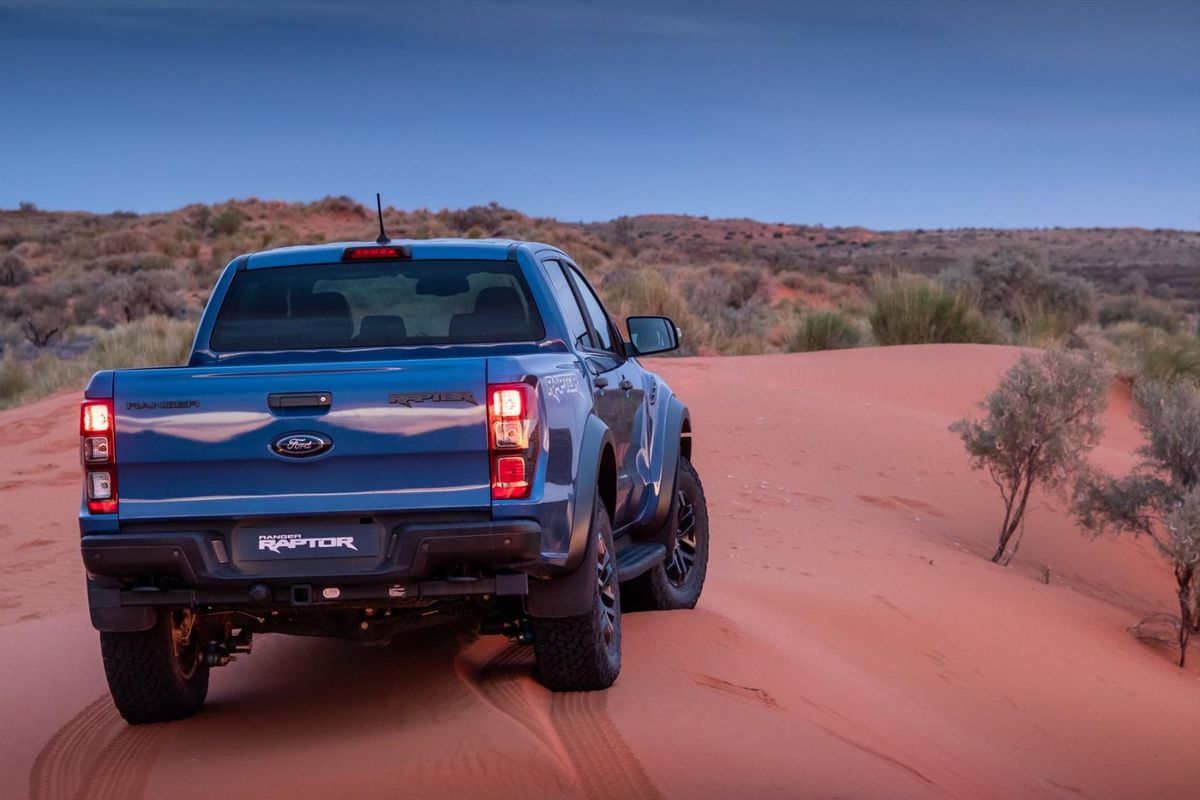
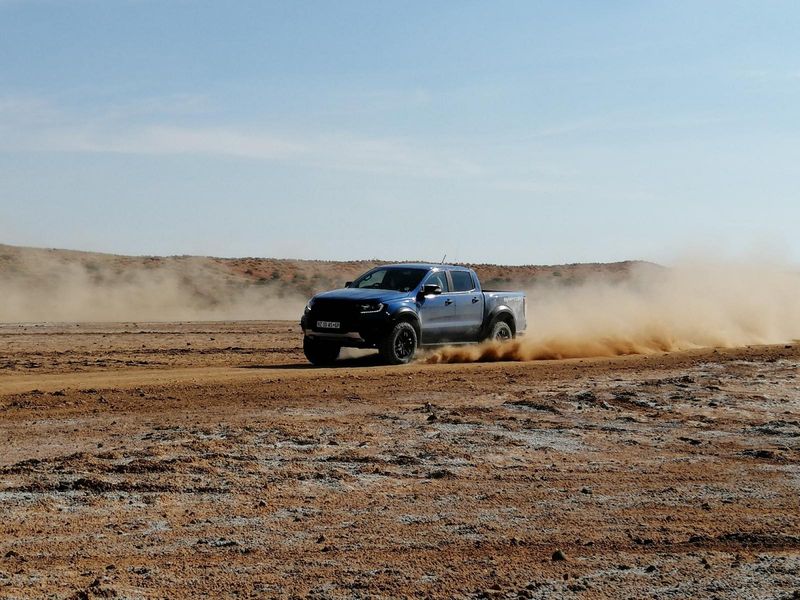
Then we put the Ranger Raptor through its paces in the sand dunes surrounding the salt pan. The tyres were adequately deflated to cope with the fine sand and we traversed various dune obstacles. The Ford was clearly in its element; it was only necessary to engage the differential lock on some badly corrugated sections. Sand driving is all about maintaining momentum and for the most part, the bakkie performed admirably in the sand.
However, a pattern was developing. Traditionally, 4×4 driving is done at slower speeds to protect the mechanical integrity of the vehicle. With the Ranger Raptor, it soon became clear that this bakkie can handle much, much more.
The rally course was the ultimate test for the Ranger Raptor…
The final rally activity would invariably shatter my perceptions of what this Ranger Raptor is really capable of. The rally course combined high-speed driving on the salt pan that transitions into a substantial route in the sand dunes and ends back on the salt pan, where the finish line was.
A Ford instructor took us on a scouting lap and judging by the fast-paced driving in difficult terrain, it became abundantly clear that this was the ultimate test for the Ranger Raptor.
I buckled up and made the decision that I was going to push the Ranger Raptor as hard as my sanity would allow. We clocked 145 kph on the salt pan and then proceeded to bash through the difficult sand dune section at speeds I have never before achieved off-road. It was incredible.
At the end of my run, it dawned on me that there is no standard 4×4 bakkie on sale in South Africa that would be able to cope with that level of repeated abuse that Ford's newcomer endured during this demonstration. Some may take the punch once or a few times, but not repeatedly.
Imagine what would happen if any standard 4-wheel-drive pick-up (be it a Toyota Hilux, Ford Ranger, Mitsubishi Triton, Isuzu D-Max, Mercedes-Benz X-Class or Nissan Navara) was subjected to such a flogging… images of burst shock absorbers and wheels and bumpers flying off the car come to mind.
And if that wasn’t enough to convince me, Ford had professional off-road racing driver Gareth Woolridge on hand to take us on a hot lap, which made my (what I thought was spirited) run in the Raptor look pedestrian and insignificant. And that was just the confirmation that I sought…
The Ranger Raptor is indeed the real deal – its off-road prowess was undeniably etched into the sand at Goerapan salt pan during this media event. More so, the Raptor has seemingly redefined what is possible off-road with a vehicle that you can buy, as standard, off a Ford showroom floor.
To end off a challenging day's driving, we managed to get the Raptor airborne on a deserted farm road. Not your typical 4×4 experience, then…
Summary
The Ranger Raptor is a formidable offroad vehicle but due to its offroad bias, it's not the most sensible purchase in this segment.
The Ranger Raptor proved its offroad capability at the Goerapan salt pan, but offroad ability alone is not the only factor to consider here. The newcomer is a niche vehicle and the only direct rival in our market is the Isuzu D-Max Arctic AT 35 (with 130 kW and 380 Nm developed from by its 3.0-litre turbodiesel engine), which is priced at R785 000. In terms of price, the Ranger Raptor comes in at R786 400, which is cheaper/competitively priced against the Volkswagen Amarok 3.0 V6 derivatives (R791 100–R829 200) and substantially cheaper than the Mercedes-Benz X-Class V6-powered 350d derivatives (R904 188–R973 188), which unlike the Raptor are both considered to be more luxurious leisure double-cab bakkies.
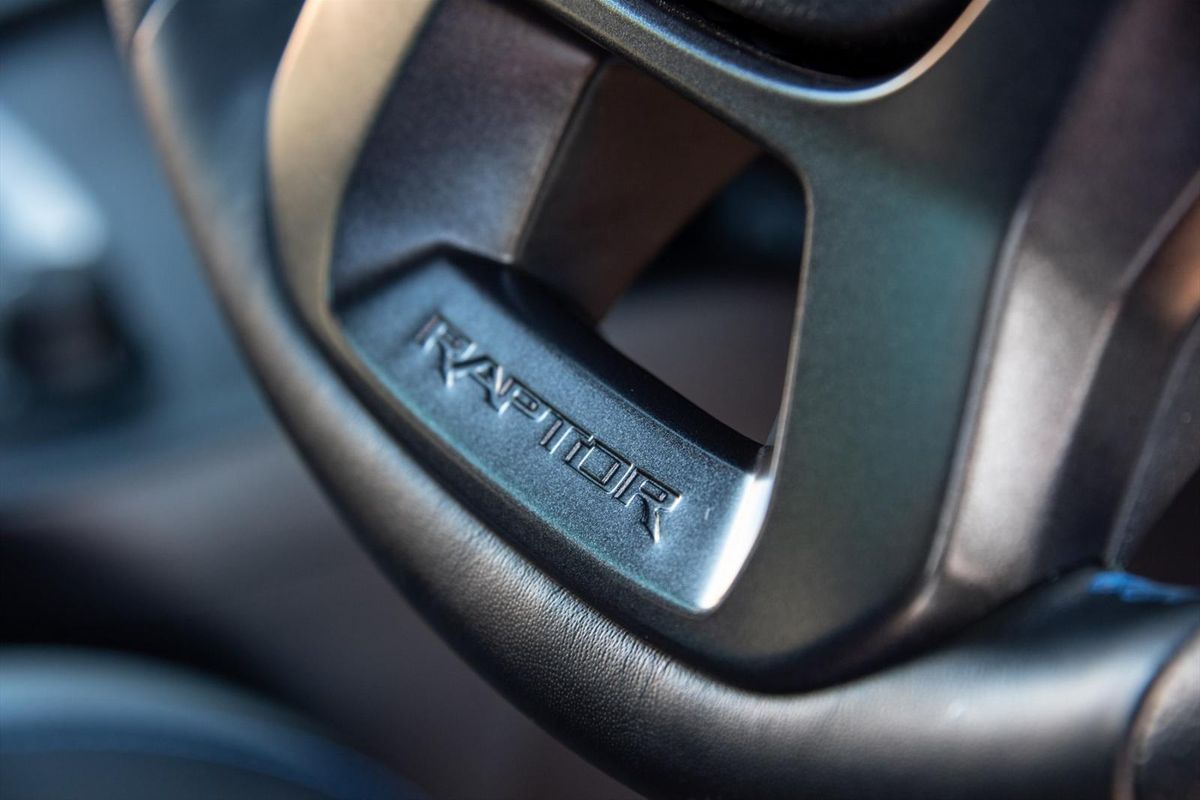
There are a few downsides too… While the Ranger Raptor’s interior is decisively sporty with Raptor sports seats, a sporty steering wheel (with red centre mark) and nice-to-have features such as a SYNC3 infotainment system with Apple CarPlay and Android Auto compatibility, its interior build quality isn’t quite as good as that of the Volkswagen Amarok, for example (some interior parts such as the sunglass holder and centre bin lid feel flimsy). More than this, due to its suspension set up, the Raptor’s maximum towing capacity has been reduced to 2 500 kg, with a maximum payload of 750 kg, which is worth factoring into your purchasing decision.
However, despite its niche appeal, the Ranger Raptor is bound to find broader favour with hardcore offroad enthusiasts and image-conscious buyers who want to show-off and make a bold statement. The Ranger Raptor is now arguably the best-looking and the most capable 4×4 bakkie on sale in South Africa, but it’s certainly not the most practical choice, especially if you don't regularly intend on using it to its full ability.
I still want one in my garage though…
Ford Ranger Raptor price in South Africa
The Ranger Raptor costs R786 400 (May 2019) and comes standard with a 4-year /120 000 km comprehensive warranty, 5-year/unlimited km corrosion warranty, 3 years of roadside assistance, 6-year/90 000 km service plan with intervals every 15 000 km.
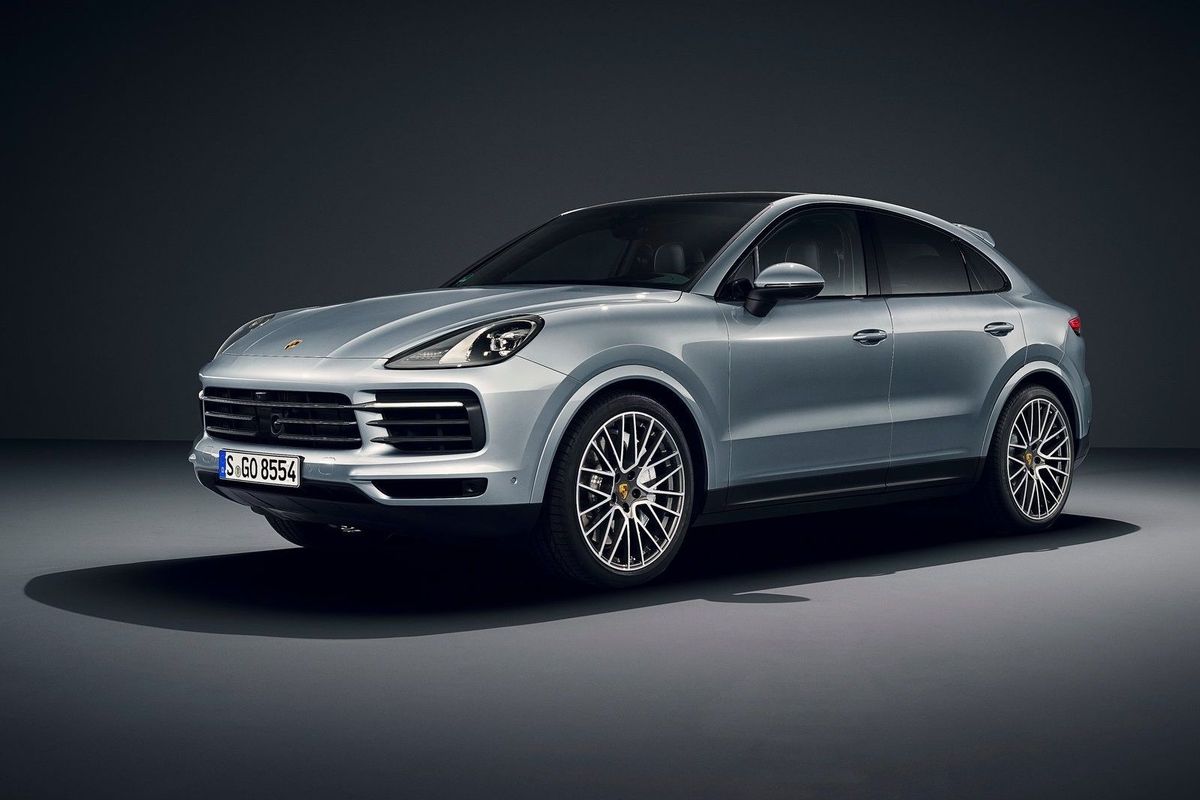
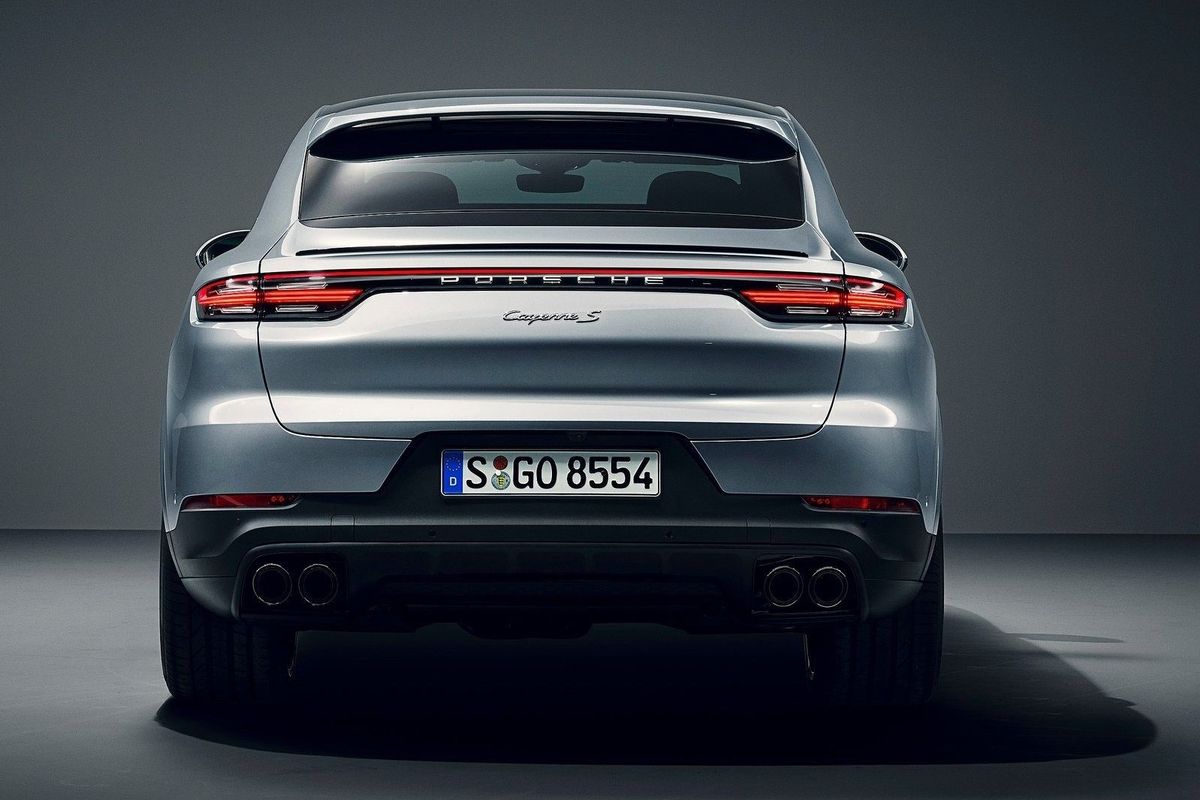
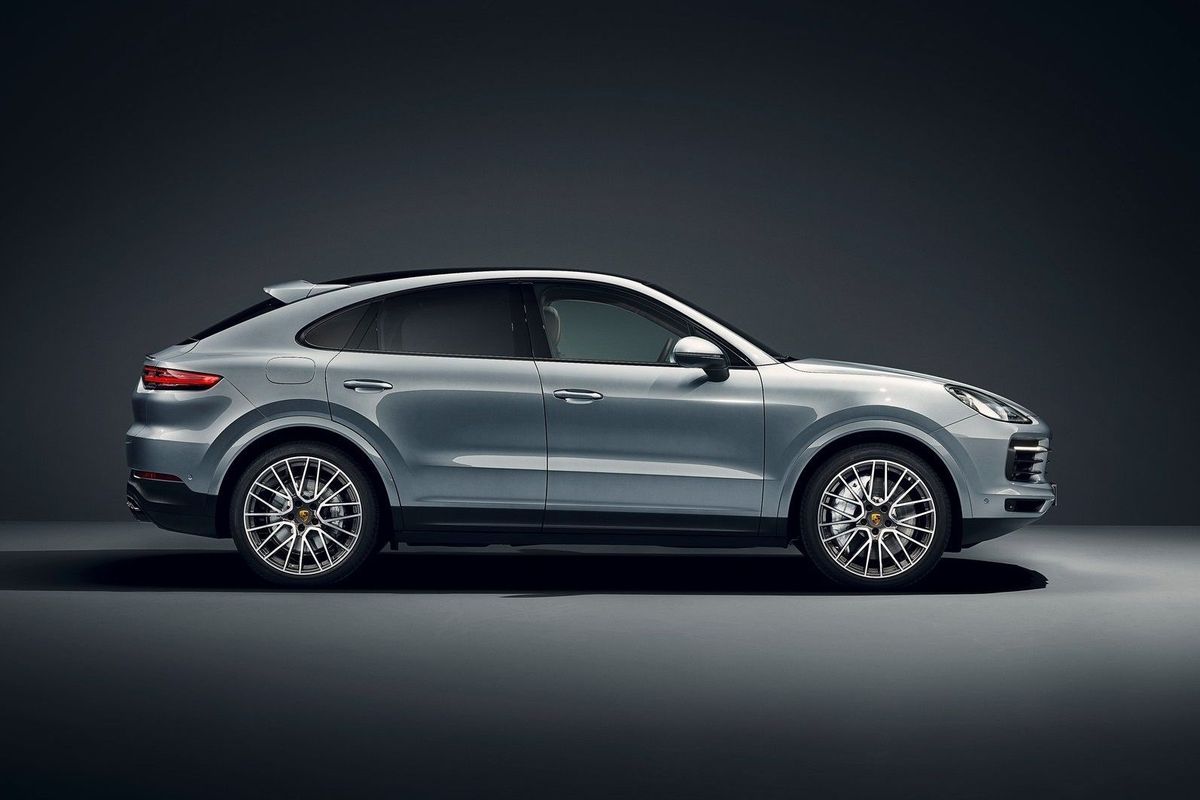
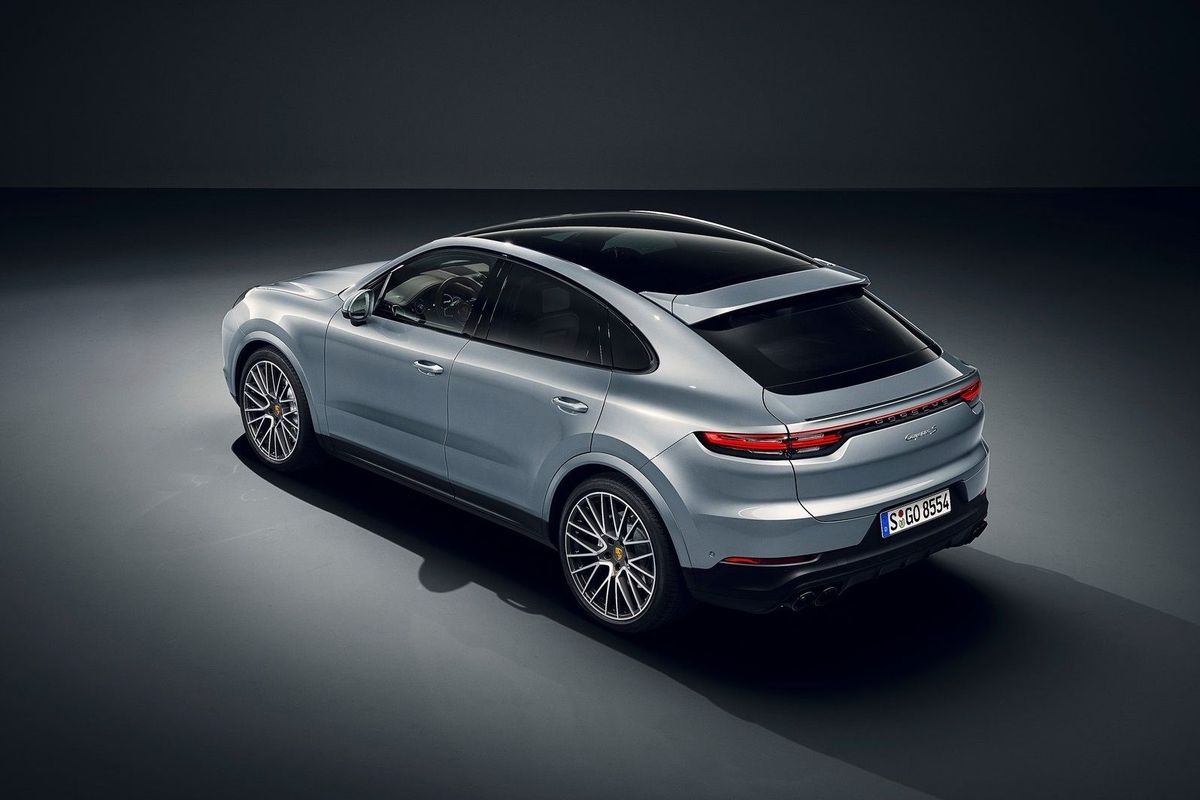
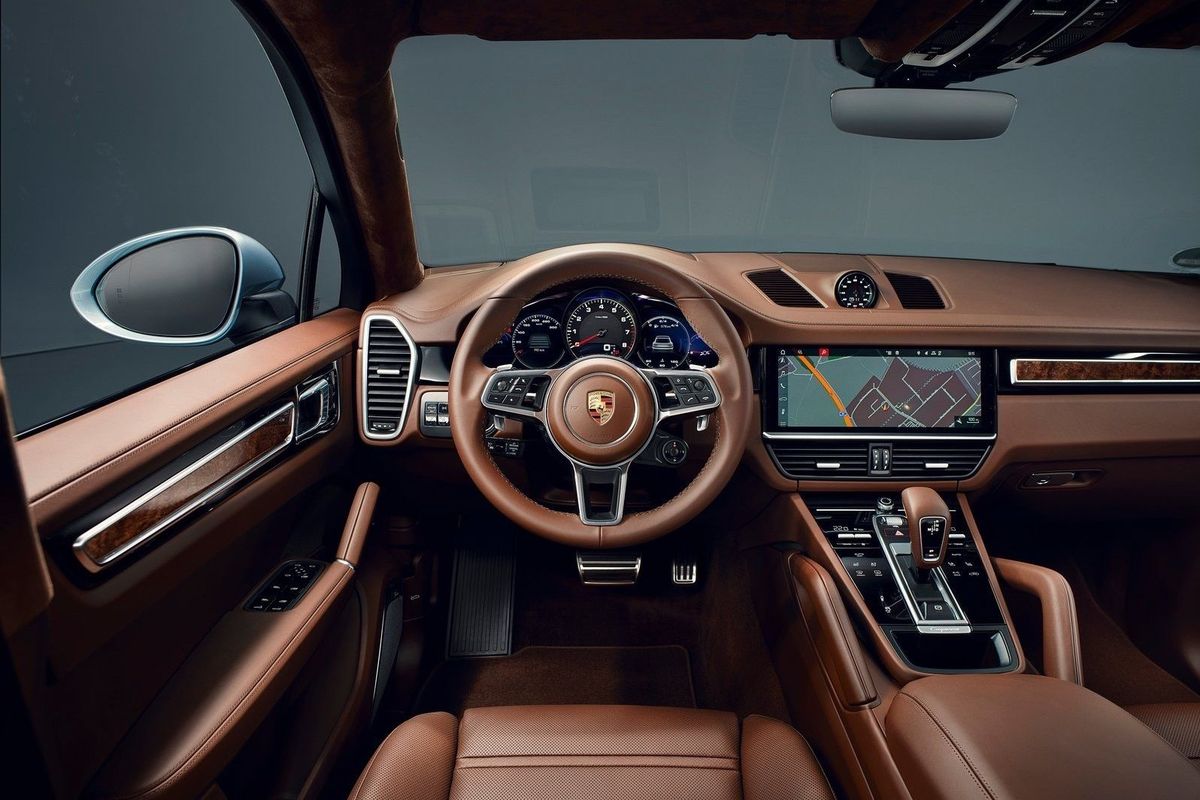
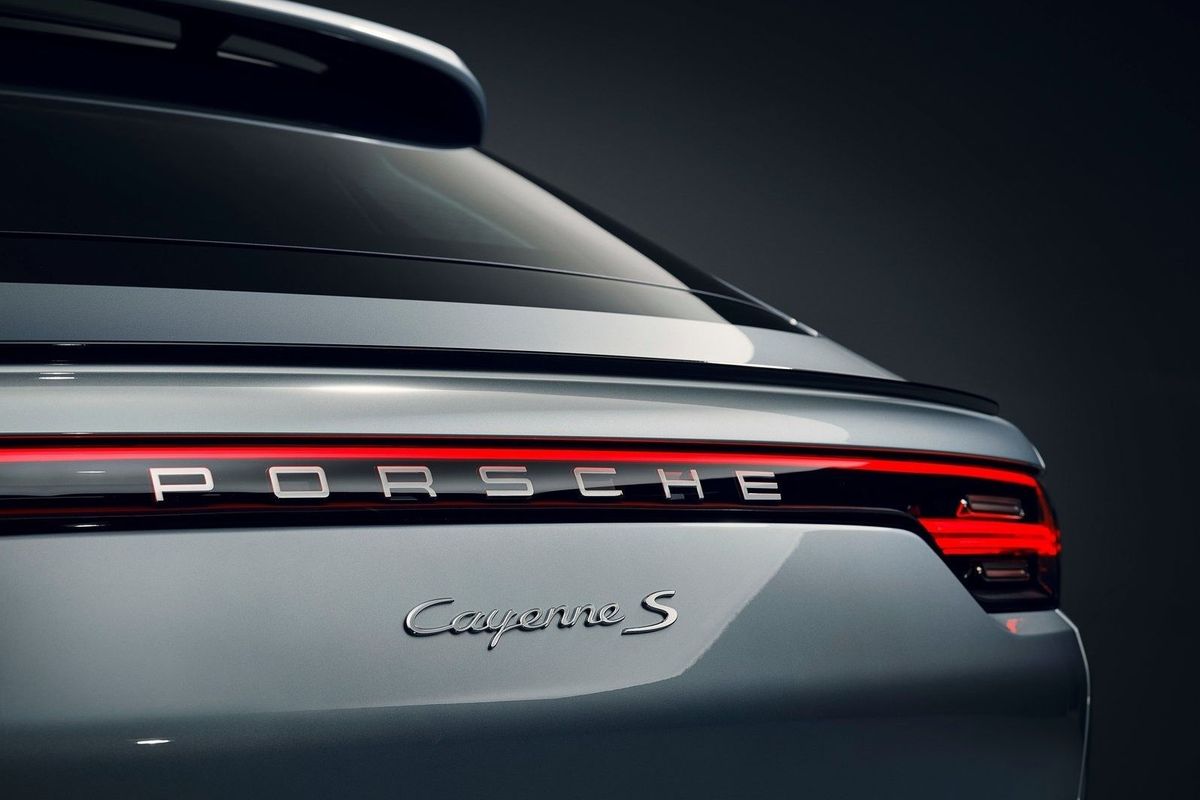
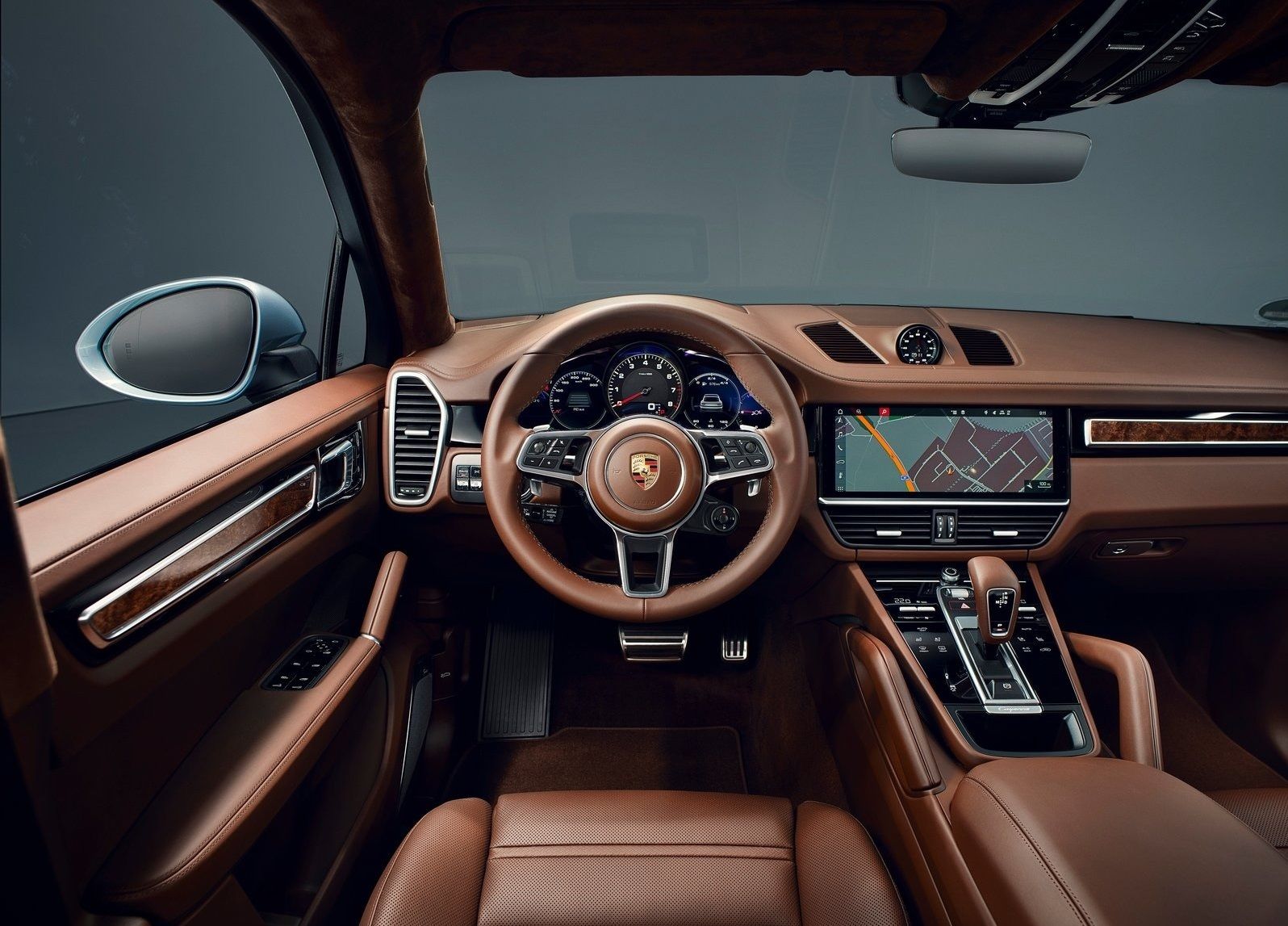
The Porsche Cayenne Coupe range will be receiving a third member. Sitting between the standard Coupe and the Coupe Turbo will be the S Coupe, which Porsche has officially unveiled.
The new Porsche Cayenne Coupe is based on the existing Cayenne, but features a slightly different look. According to Oliver Blume, Chairman of the Executive Board of Porsche AG, the new Cayenne Coupe, "includes all the technical highlights of the current Cayenne, and its more dynamic design and new technical details position it as more progressive, athletic, and emotional."
At the heart of the Cayenne S Coupe is a 2.9-litre twin-turbocharged V6 pushing out a credible 324 kW and 550 Nm. These outputs are sufficient to see the S Coupe reach 100 kph in a claimed 5 seconds, which drops to 4.9 seconds if you go for one of the three optional lightweight sports packages. Top speed is rated at 263 kph.
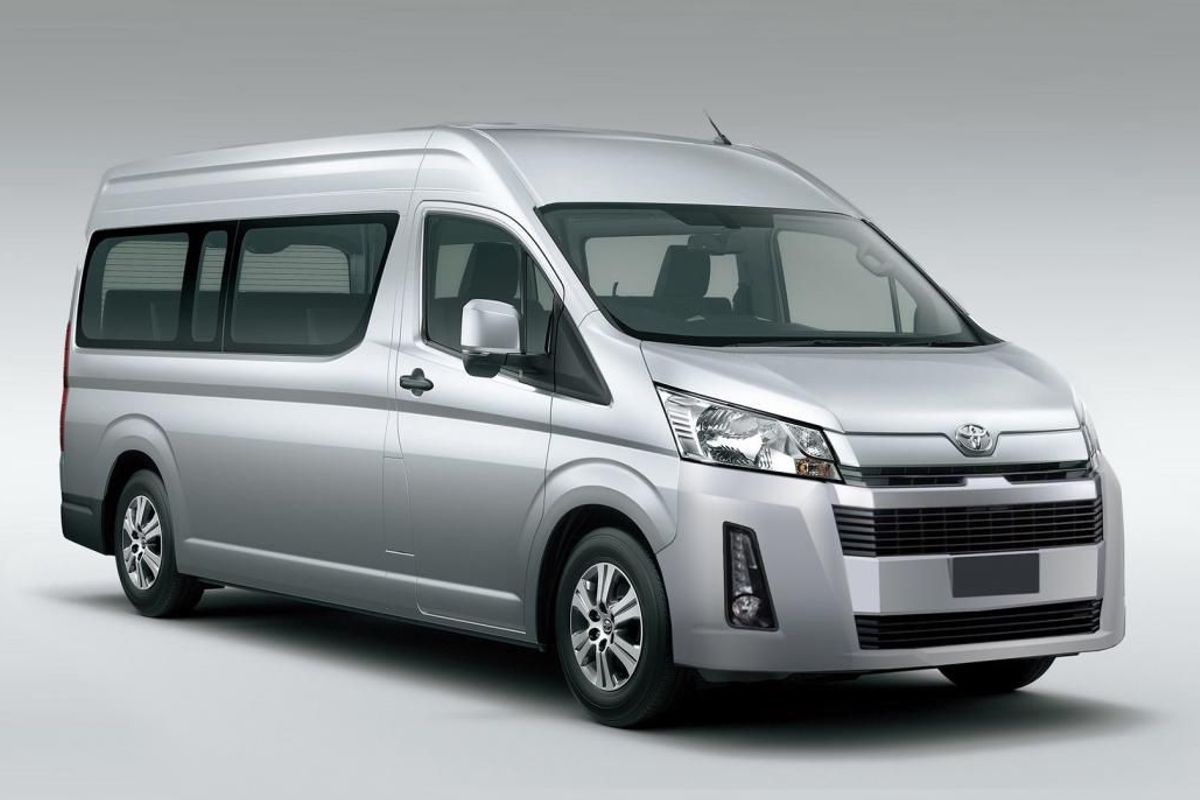
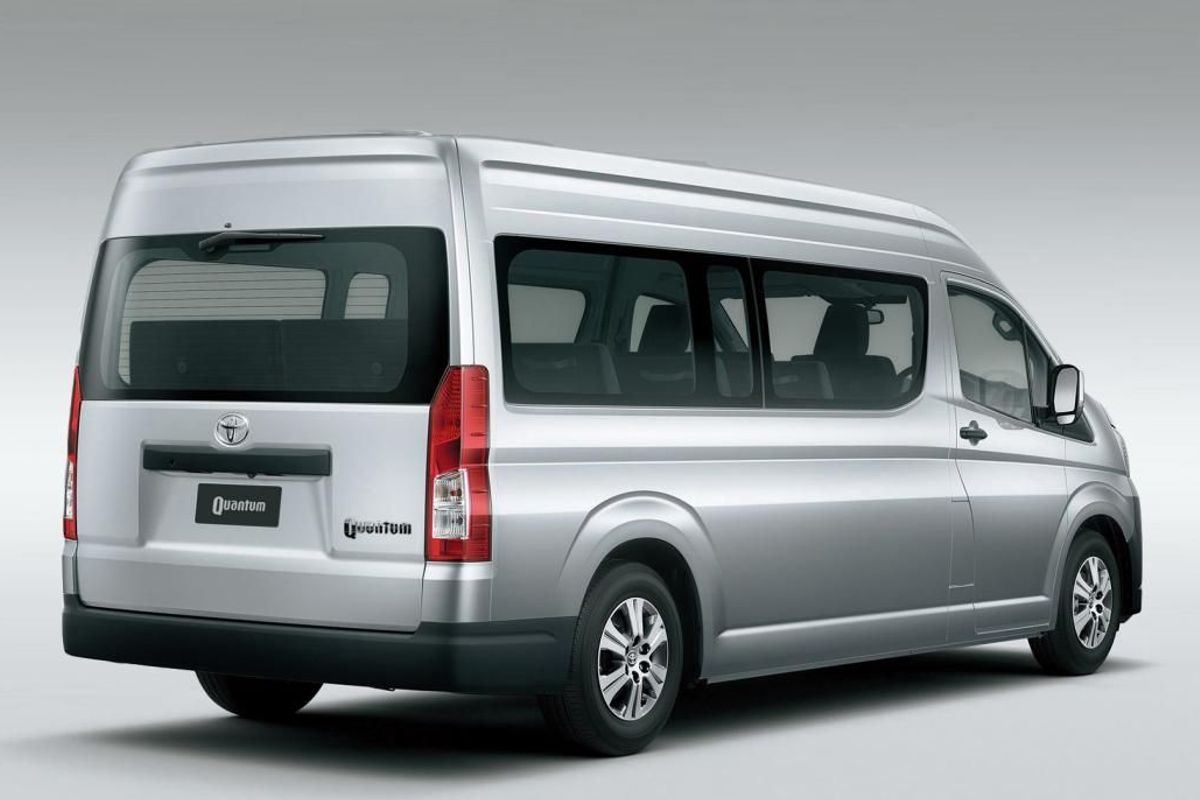
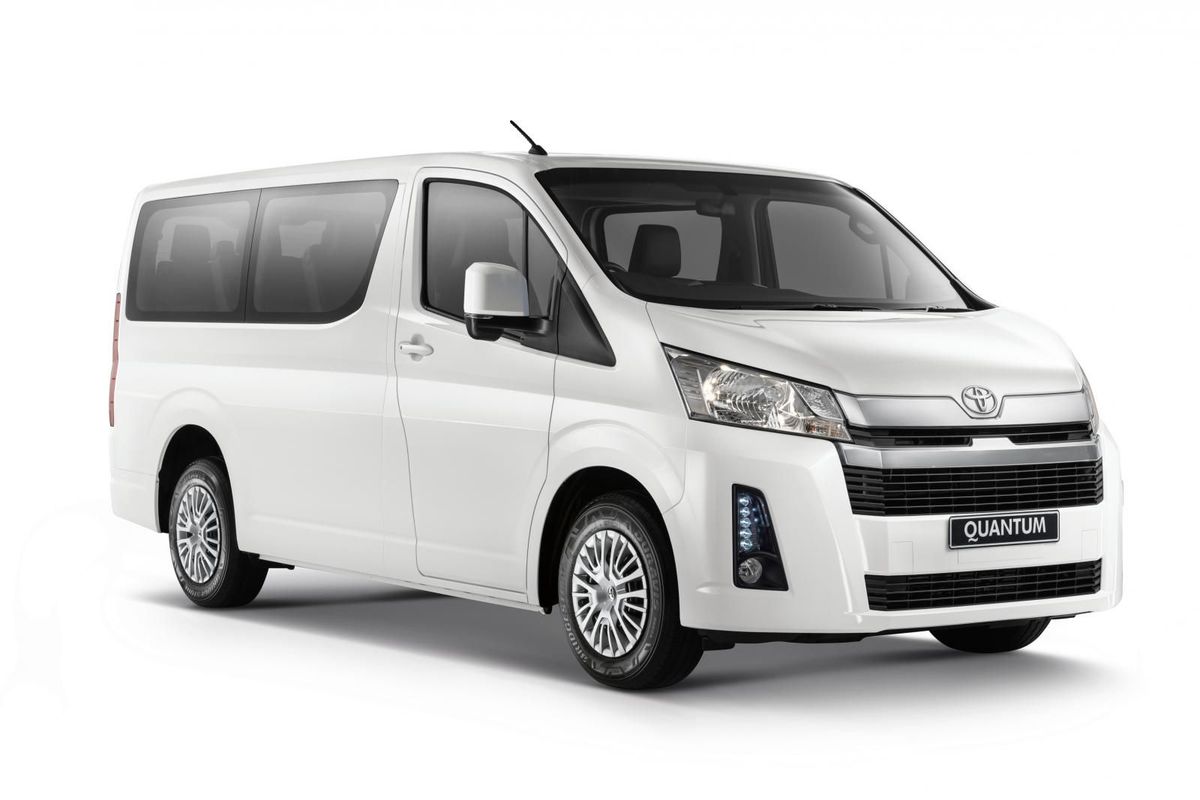
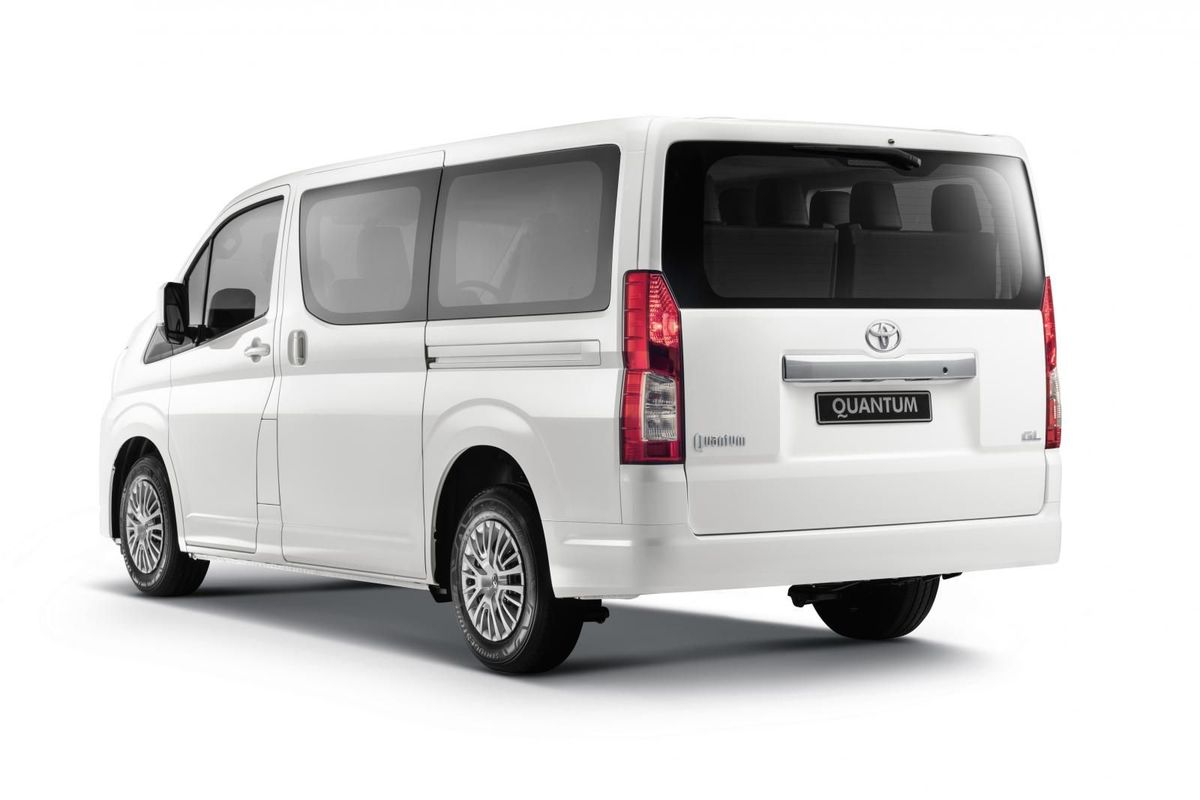
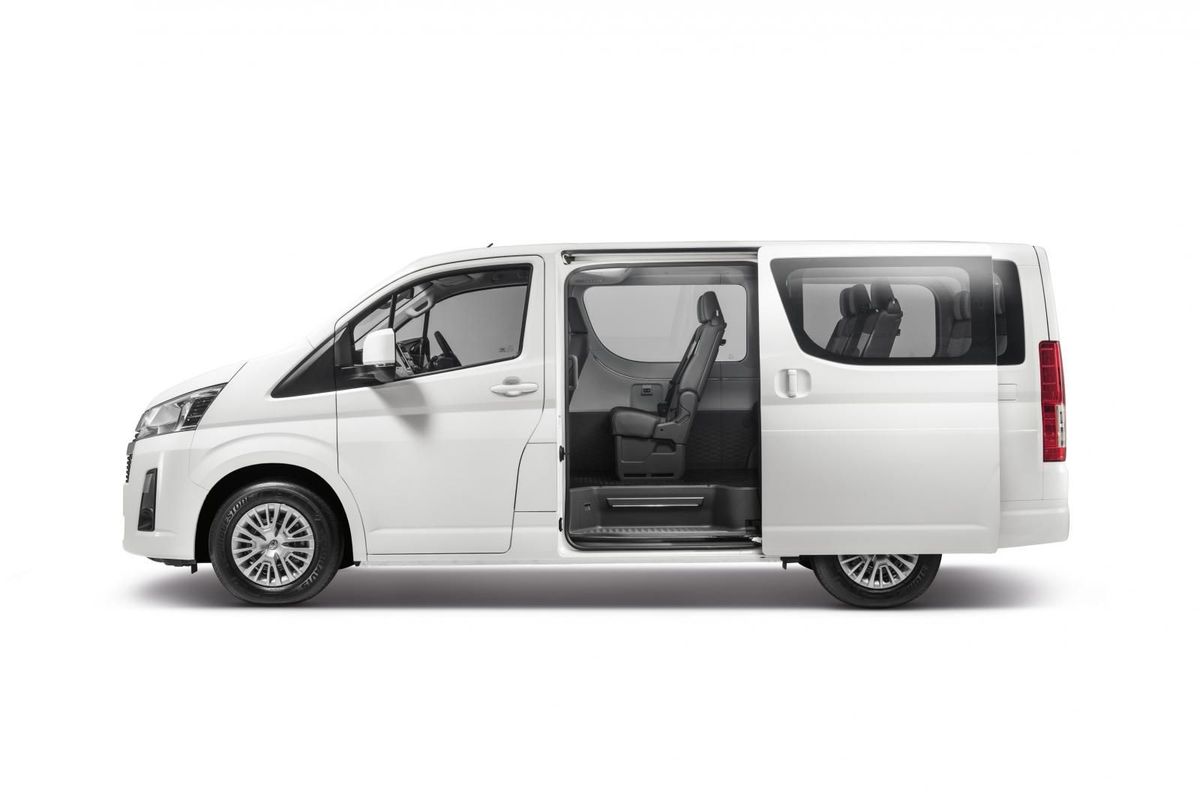
Toyota has announced pricing and specification details for its new Quantum minibus and panel van. Here's how much the new model costs.
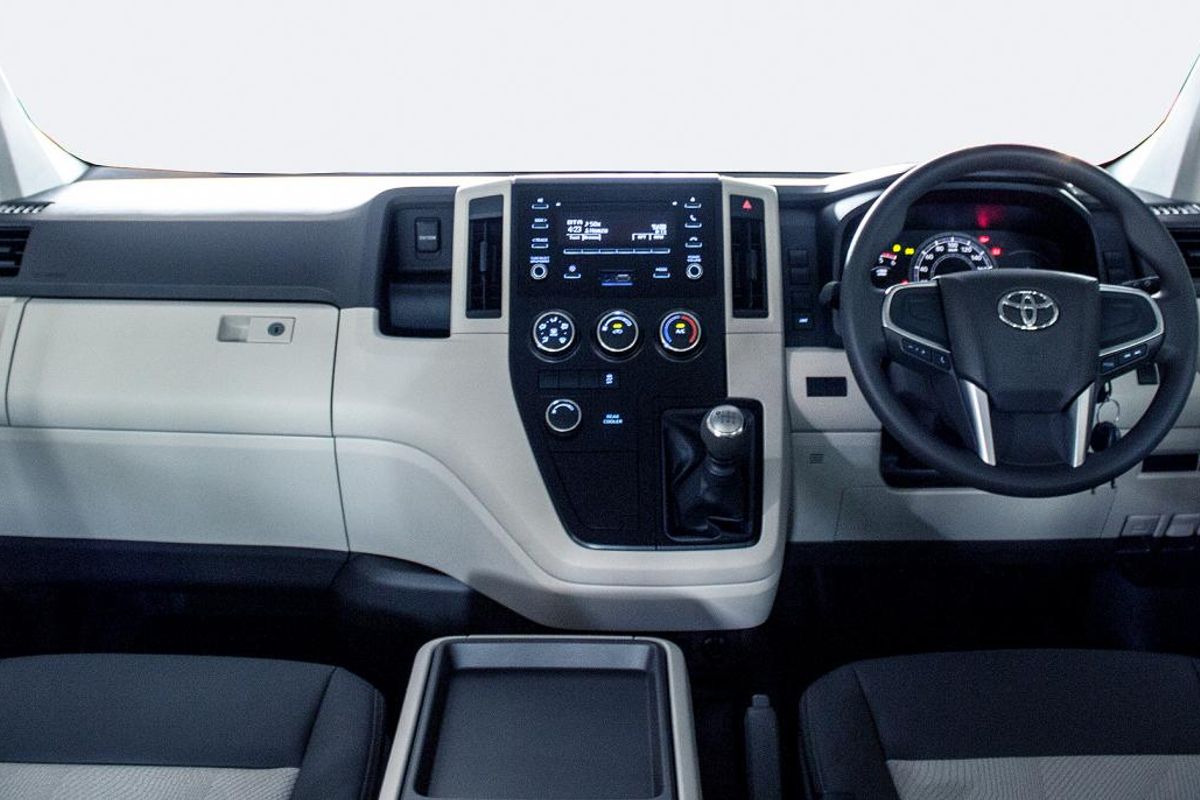
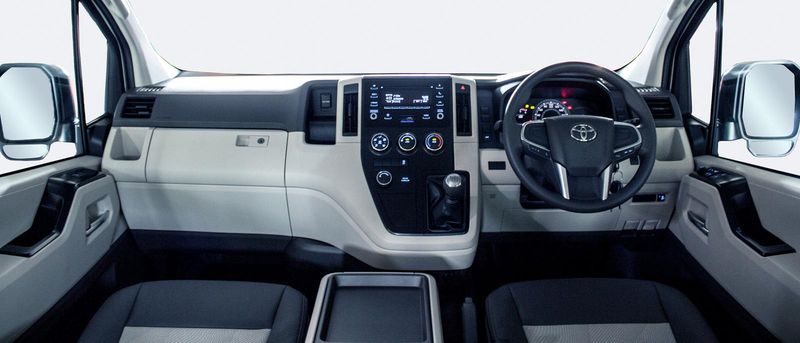
The new looks of the latest Quantum have been quite polarising. Not everyone has taken to it, but given how much reliance is on these vehicles to ferry the working class to their jobs, looks probably feature low on the list of priorities. What's new, you ask? There's a new engine, extra convenience, more cargo carrying capacity and additional safety features.
Physically, the overall length and passenger space has increased and there's a bit more leg room and Toyota claims improved seating comfort. At the front, the GL Bus derivative receives some chrome splashings as well as LED daytime running lights, fog lights and colour-coded bumpers. There are also 16-inch steel wheels, as well as new large mirrors which are power retractable on GL spec. There's a choice of 3 colours (Ivory White, Quicksilver Metallic or Light Blue Metallic) for the bus, with the utility-focused panel van and crew cab variants are offered in Ivory White and Quicksilver Metallic.
The new Toyota Quantum range
Quantum Bus
Quantum 3-seater Panel Van
Quantum 6-seater Panel Van
2.8 LWB GL Bus 11-seater
2.8 SLWB GL Bus 14-seater
2.8 LWB Panel Van 3-seater
2.8 LWB Panel Van 3-seater (AC)
2.8 SLWB Panel Van 3-seater
2.8 SLWB Panel Van 3-s (AC)
2.8 LWB Crew Cab 6-seater
2.8 LWB Crew Cab 6-seater (AC)
2.8 LWB Crew Cab 6-seater (Front & Rear AC)
Powerplant
New for 2019 is the addition of a 2.8-litre turbocharged diesel engine which delivers 130 kW and 420 Nm. This engine is available for the vans and 11-seater bus, while the 14-seater bus engine proves 115 kW and 420 Nm. All derivatives have a 6-speed manual transmission.
Other changes
The sliding door width has been increased by 70 mm, making it easier to get in and out, while the sliding door on the panel van has been widened to accommodate Euro-sized pallets to be loaded. Another nice convenience feature is the high-performance air conditioner which provides cool air to the rear passengers.
In terms of safety the new Toyota Quantum boasts Anti-Lock Braking System (ABS) with Electronic Brake-force Distribution (EBD) as well as Vehicle Stability Control (VSC) and Hill-Assist Control (HAC). For those who do a lot of towing, the new Quantum now features Trailer Sway Control (TSC) which will automatically detect excessive movement of the trailer and uses the brakes and engine power to help reduce it, keeping you in control. There are also driver and passenger airbags.
The current 16-seater Ses'fikile Commuter is to be renamed Hiace and continue to be assembled on the current Quantum platform at the Toyota plant in Durban. The Hiace Ses’fikile will retain the 2.7 litre petrol and 2.5 diesel engine and drivetrain.
Toyota Quantum Price in South Africa (May 2019)
All Quantum models come with a 9-service/90 000 km service plan with service intervals set at 12-months/10 000km. Toyota’s standard 3-year/100 000 km warranty is also provided.
Quantum 2.8 LWB GL Bus 11-seater R 597 700
Quantum 2.8 SLWB GL Bus 14-seater R 613 500
Quantum 2.8 LWB Panel Van 3-seater R 473 900
Quantum 2.8 LWB Panel Van 3-seater (AC) R 481 400
Quantum 2.8 SLWB Panel Van 3-seater R 509 500
Quantum 2.8 SLWB Panel Van 3-seater (AC) R 517 000
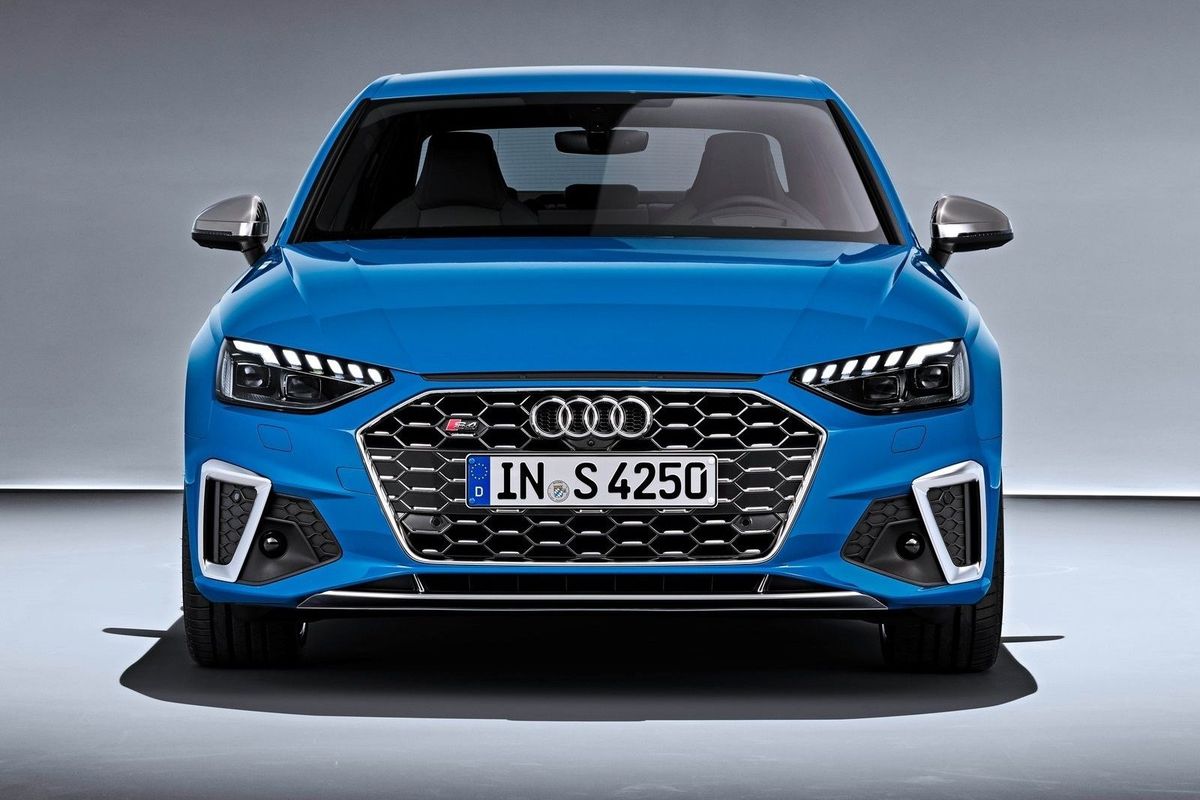
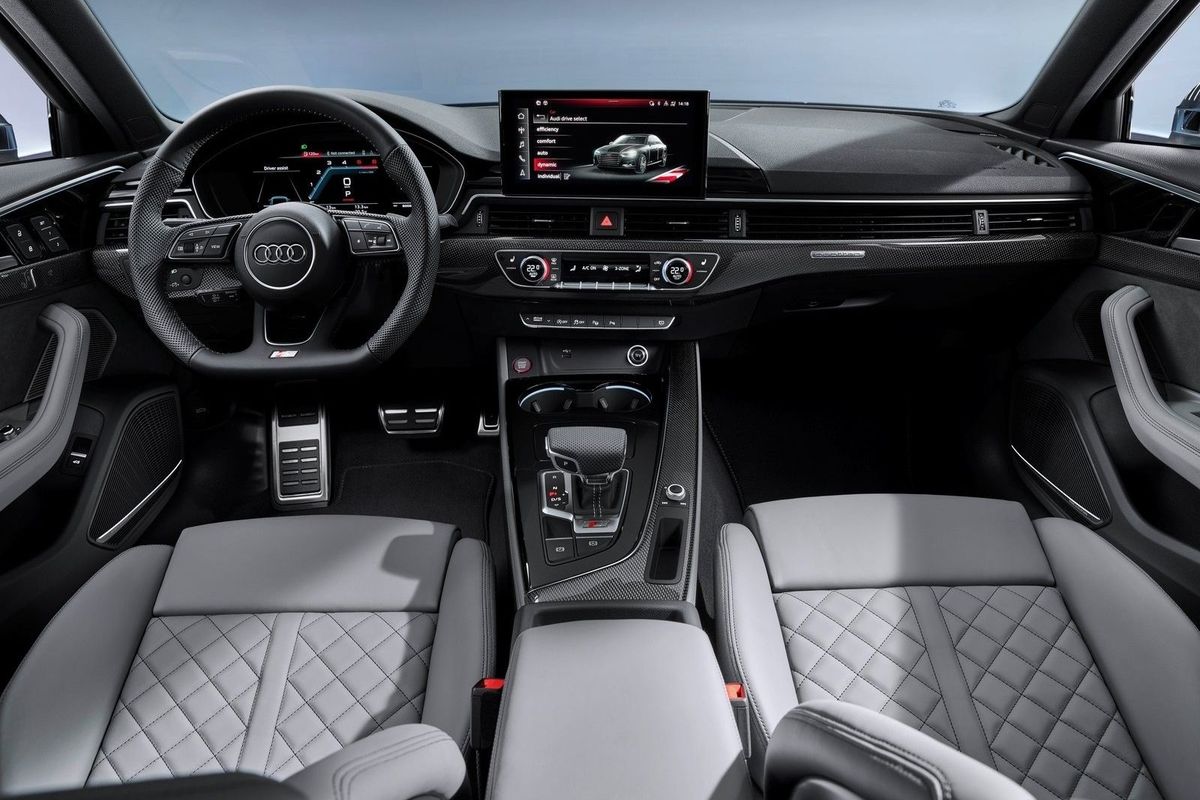
As part of the updates to the Audi A4 sedan range, the brand also introduced a turbodiesel-powered performance S4 into the mix. Here's what you need to know about the 2020 Audi S4 TDI.
The Audi S4 represents the bridge between the hardcore RS4 Avant and the lesser pedestrian A4 range. Seemlessly blending comfort and luxury with performance, the S4 has always been an underrated vehicle. Updated as part of Audi's plan for the A4, the facelifted S4 now boasts turbodiesel power.
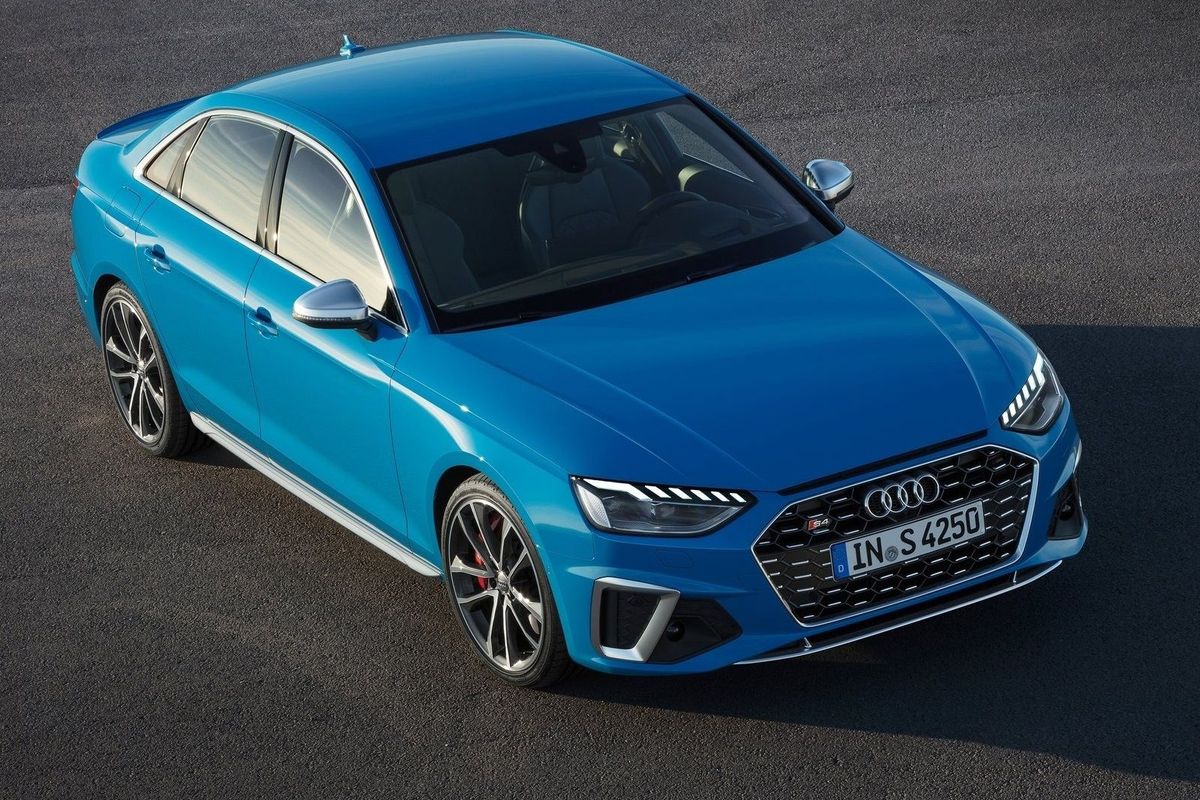
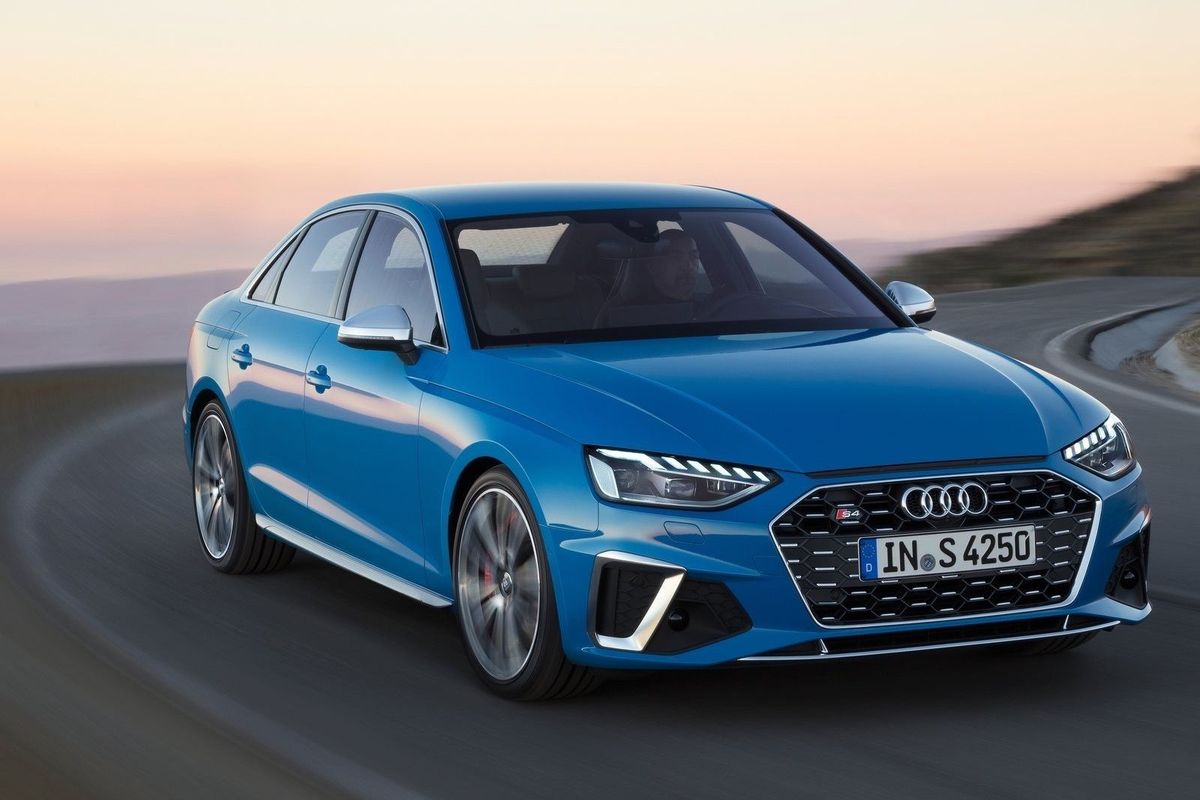
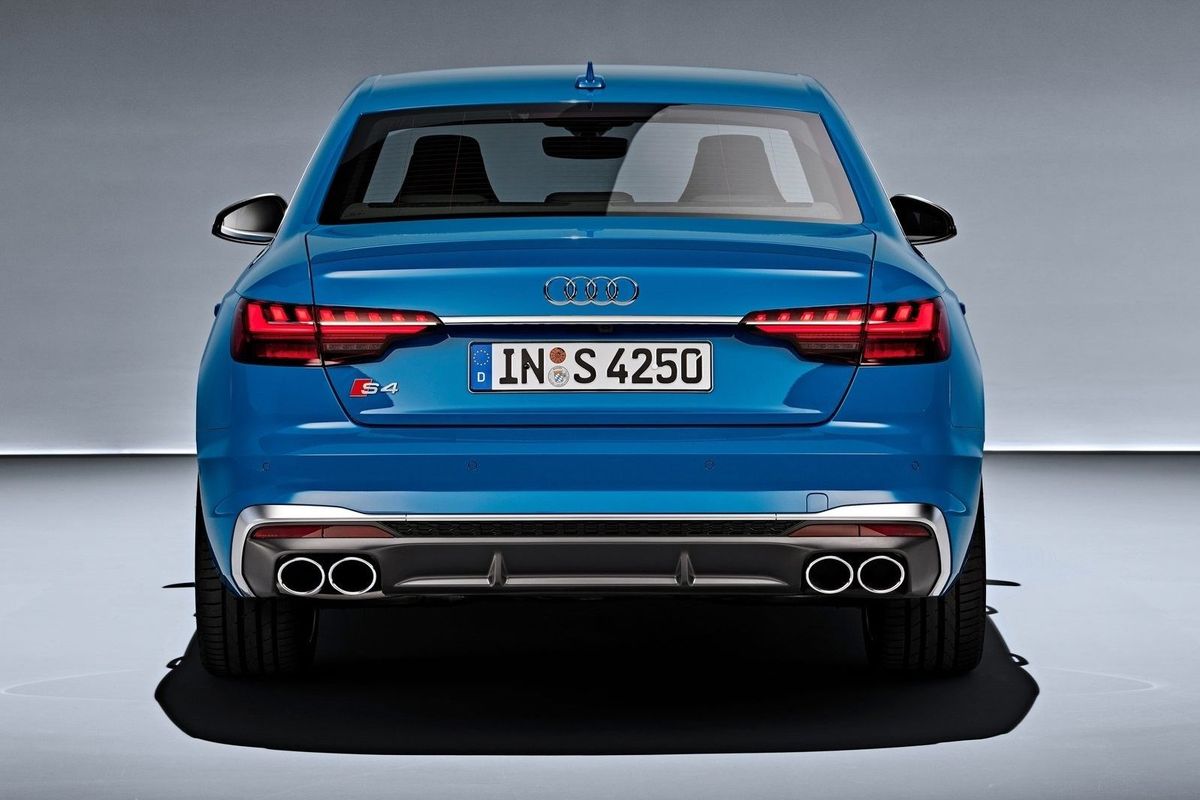
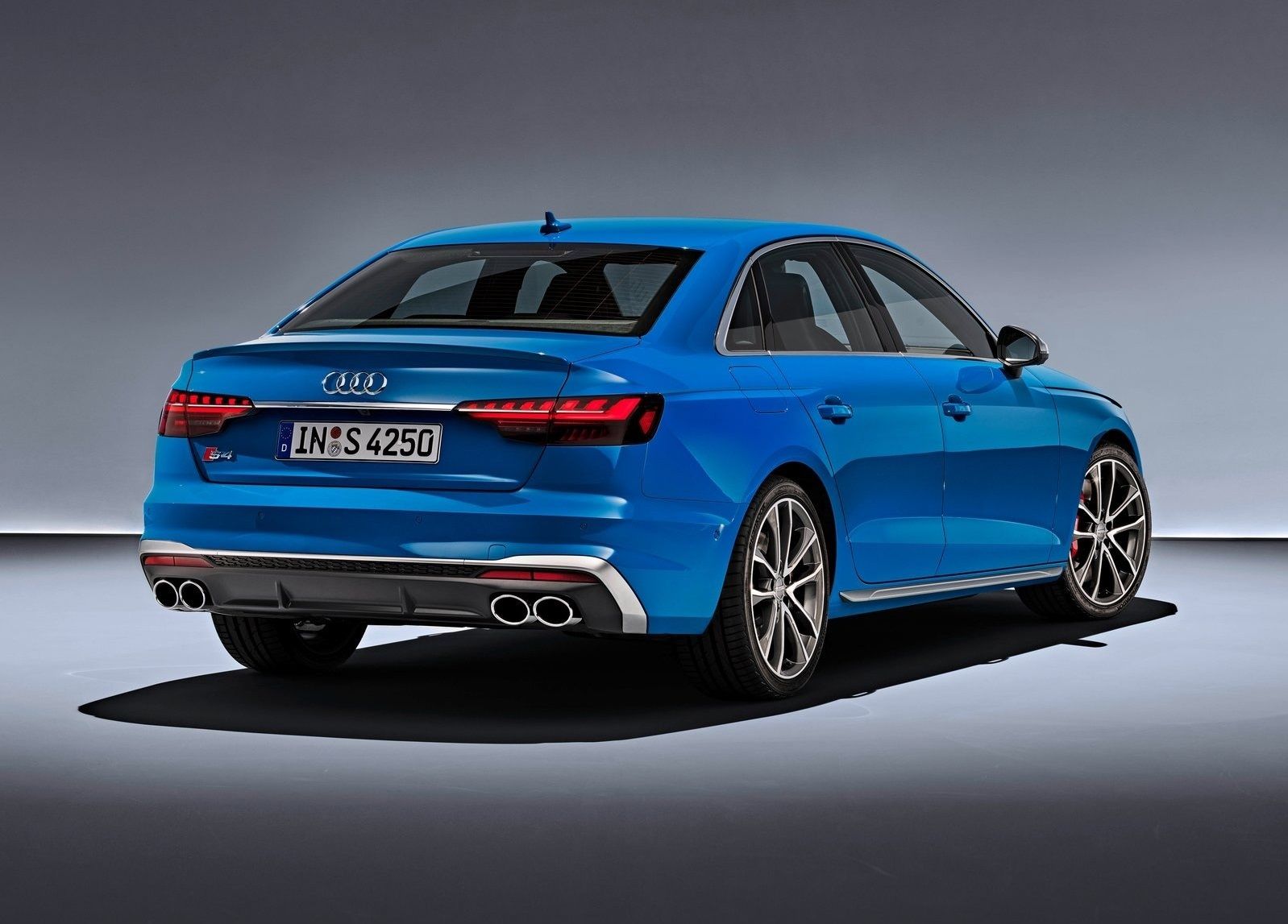
The visual changes give the updated S4 some aggression. Coupled to this electric blue paint finish, the updates include bigger wheels, new look front grille as well as a refreshed rear end complete with quad exhausts and a diffuser. It's the engine which has us interested, however.
For the first time, the Audi S4 is powered by diesel. Mating a turbodiesel V6 to a 48-volt electrical system and an electric powered compressor has resulted in what Audi claims beefy acceleration. Essentially the electric-powered compressor keeps the turbo spinning to dial out the turbolag. The 3.0-litre turbodiesel V6 produces 255 kW and 700 Nm – impressive figures indeed. These outputs can fling the S4 to 100 kph in just 4.8 seconds and it'll run onto a top speed of 250 kph.
Power goes to a quattro all-wheel drive setup via an 8-speed tiptronic transmission and there's an optional sport differential for those seeking some driving enthusiastics. There's an S sport suspension fitted as standard, with sport suspension with damper control as an option. Audi will still be offering the petrol S4 with its 3.0-litre turbocharged V6 and this TDI model does not replace it. The petrol S4 produces 260 kW and 500 Nm and does the 0-100 kph sprint in a claimed 4.7 seconds.
The updated Audi A4 range is confirmed for a South African market introduction early in 2020.
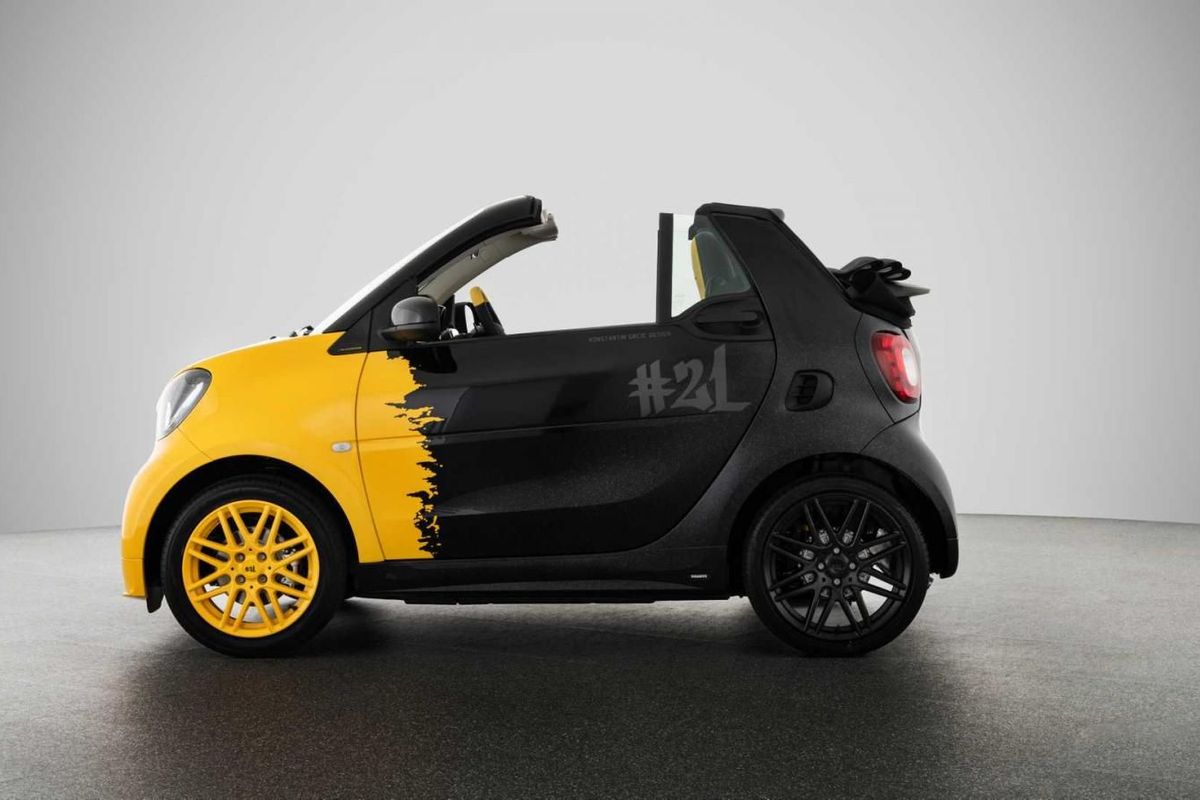
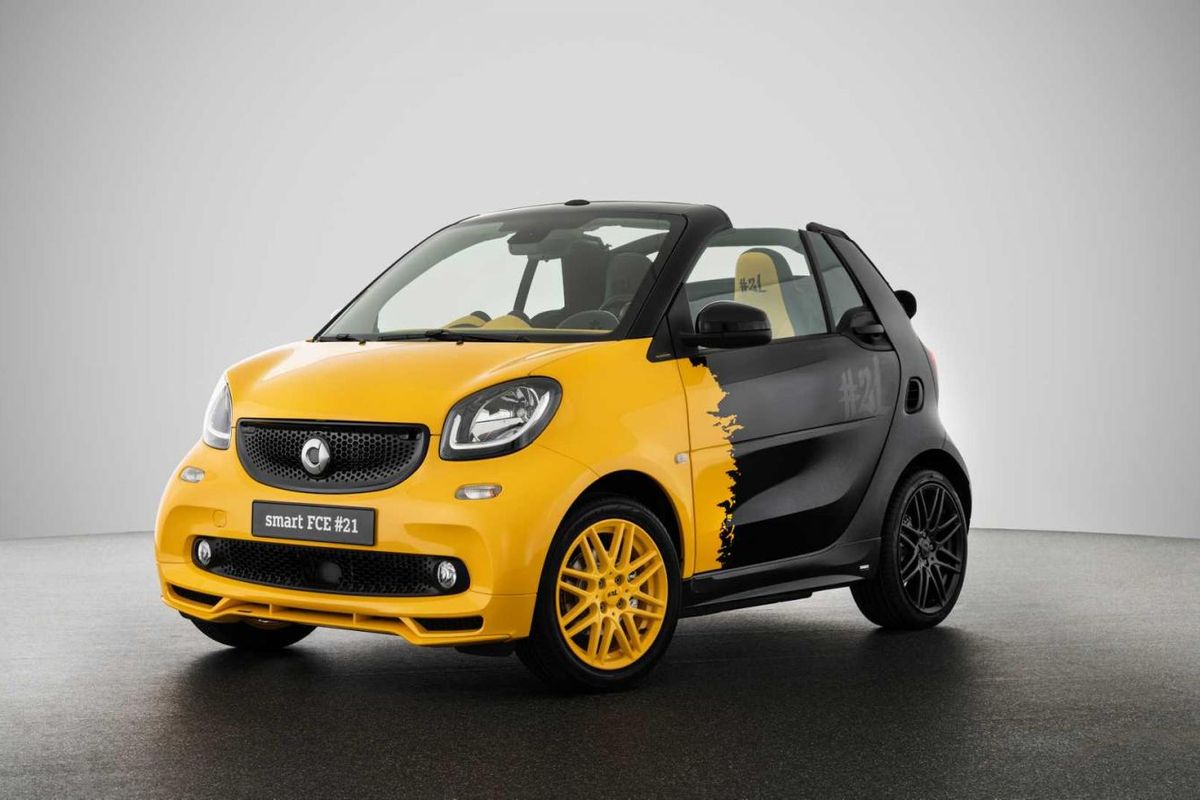
German microcar brand is changing direction at 21.
Smart is celebrating an important milestone and massive changes in its future strategy, all at the age of only 21. Mercedes-Benz’s city car subsidiary has seen sales wane in the last few years and admitted that its future is now contingent on e-mobility. Smart even has a new part owner, Geely, to help it refocus.
The Chinese industrial powerhouse has already confirmed that Smart’s future will be battery powered, instead of internal combustion and with Geely commanding 50% of Smart’s equity, what the Chinese product planners want, will be crucial.
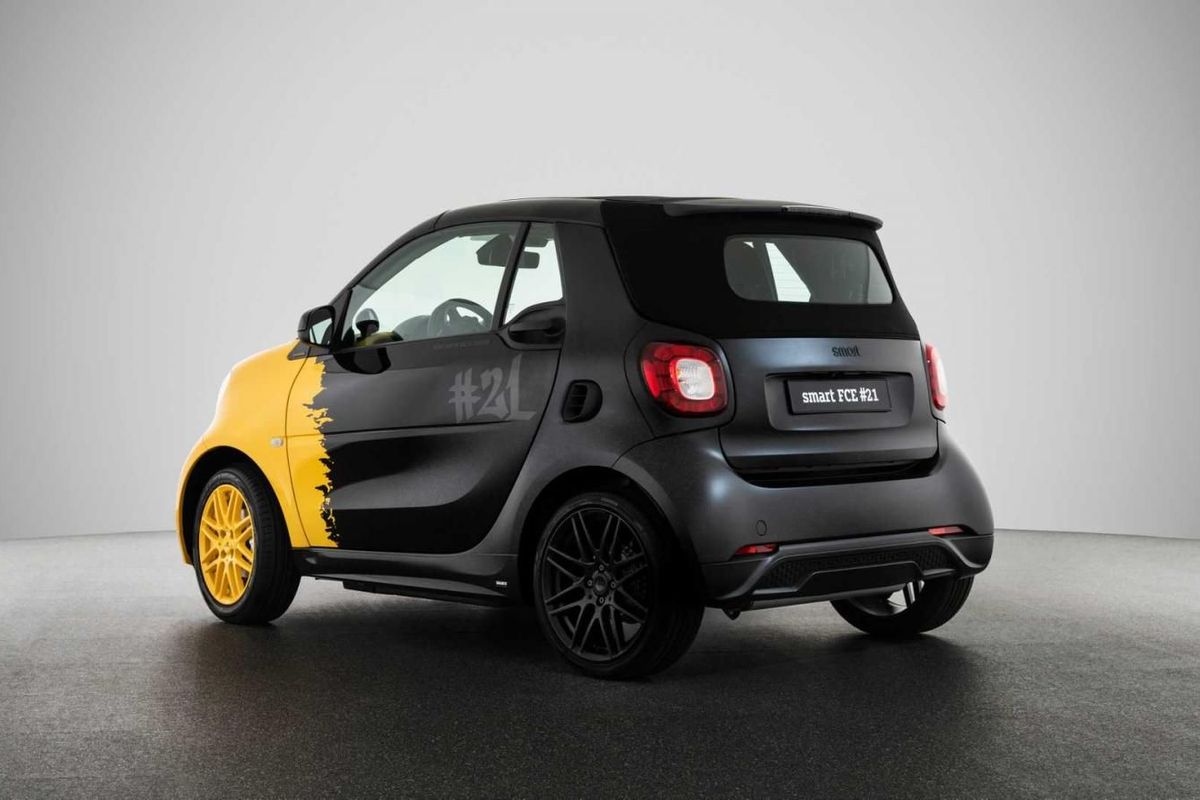
To bid farewell to the brand’s petrol-powered cars, Smart has collaborated with German aftermarket engineering specialist Brabus, to build a series of 21 Final Edition ForTwos. Fittingly, these Final Edition range will be limited to only 21 cars.
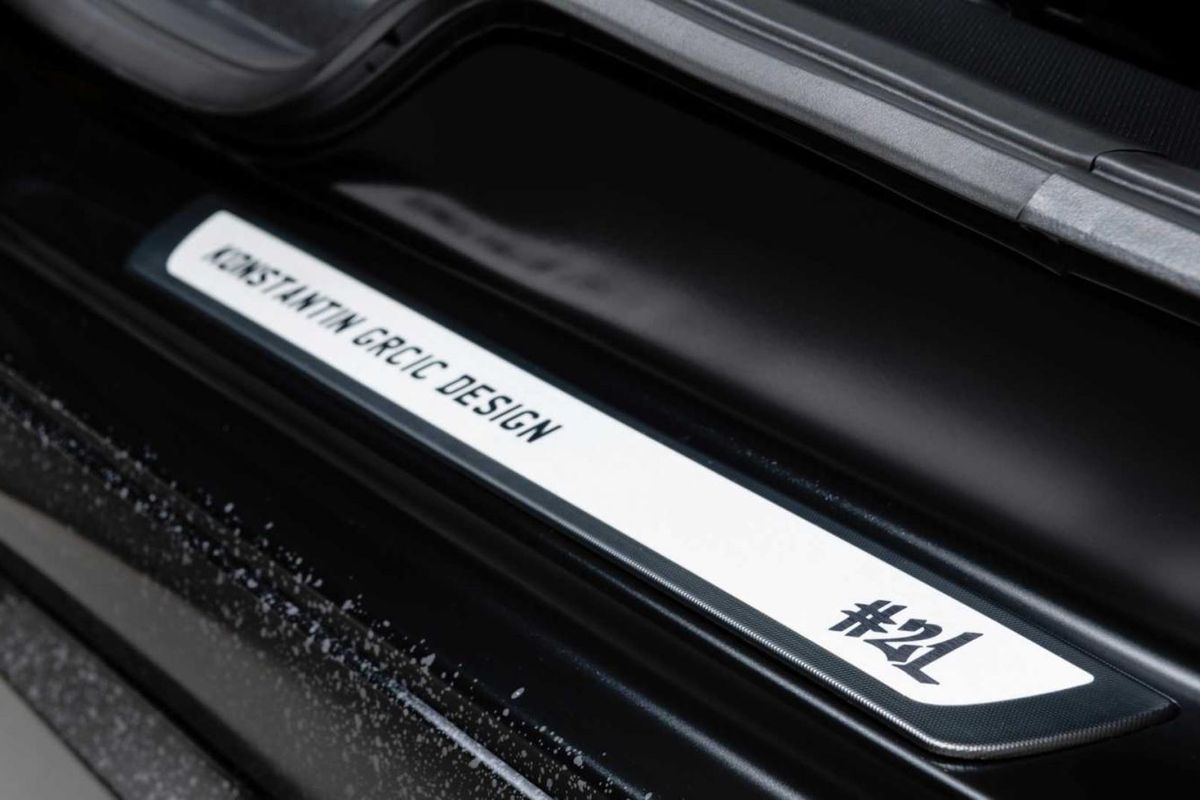
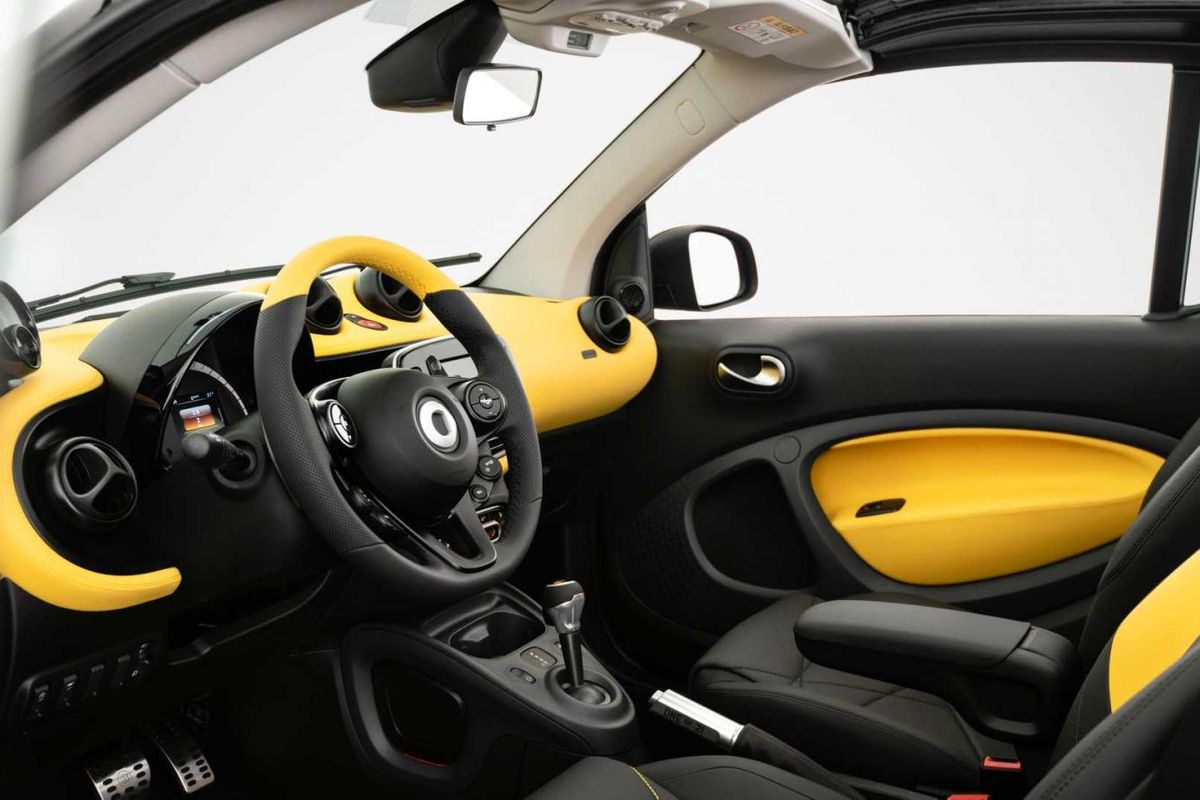
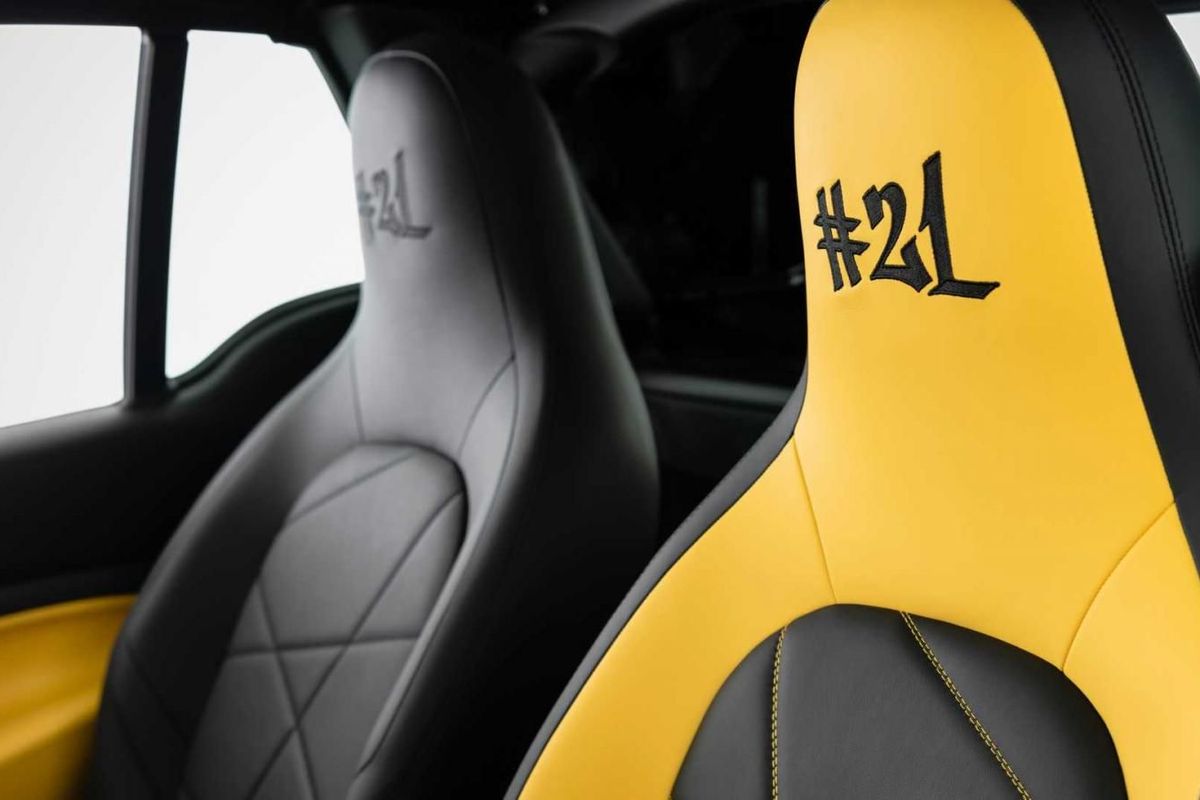
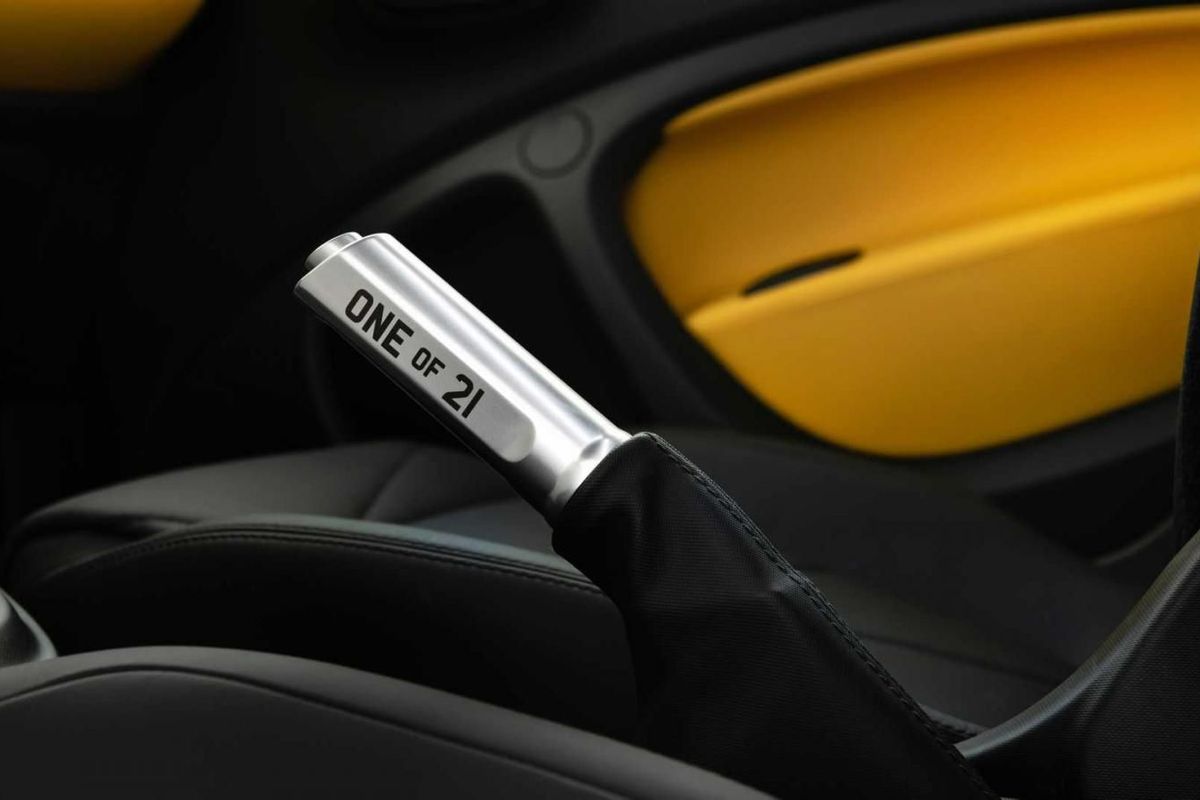
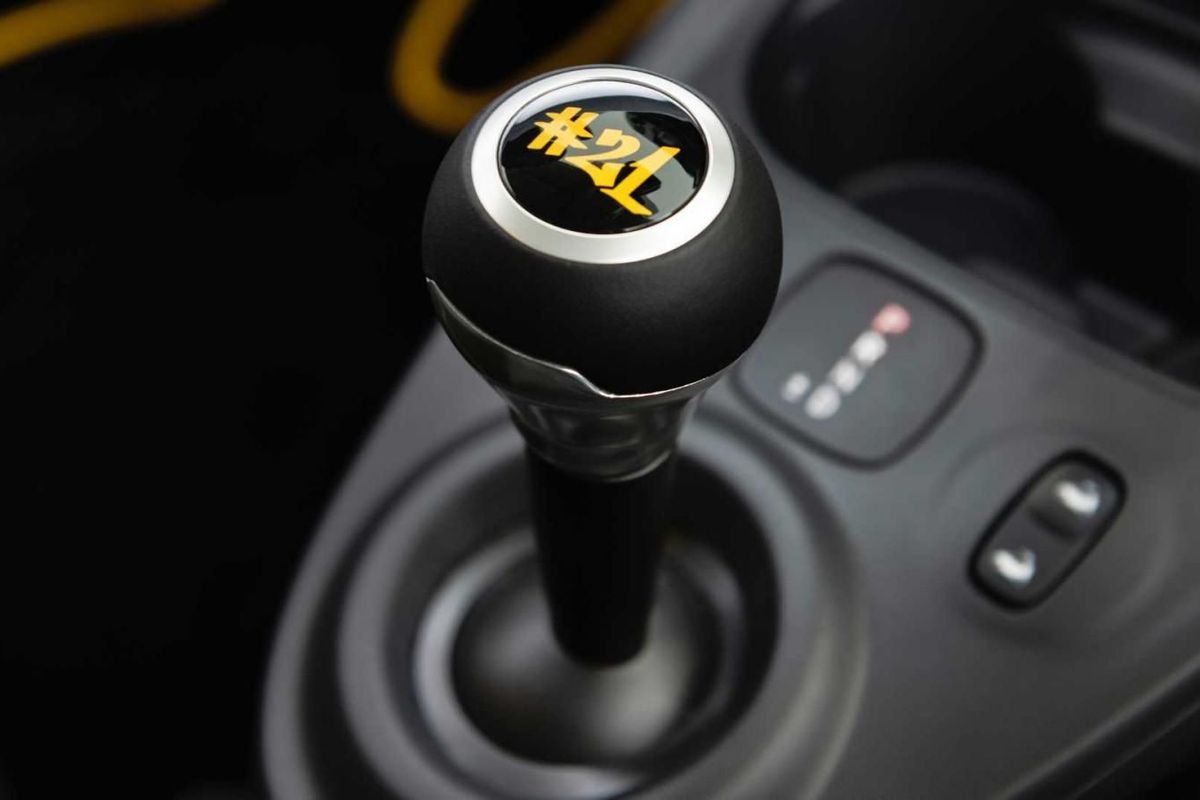
Finished in a very bold black and yellow bumblebee colour scheme, these Smarts were developed with input from German industrial design icon, Konstantin Grcic – and as such, his name adorns the special edition treadplates, when you open the door. The cabin environment sees a repeat of the bright yellow and matte black colour contrast, with ‘21’ graphics on the headrests, transmission shifter top and parking brake gridle.
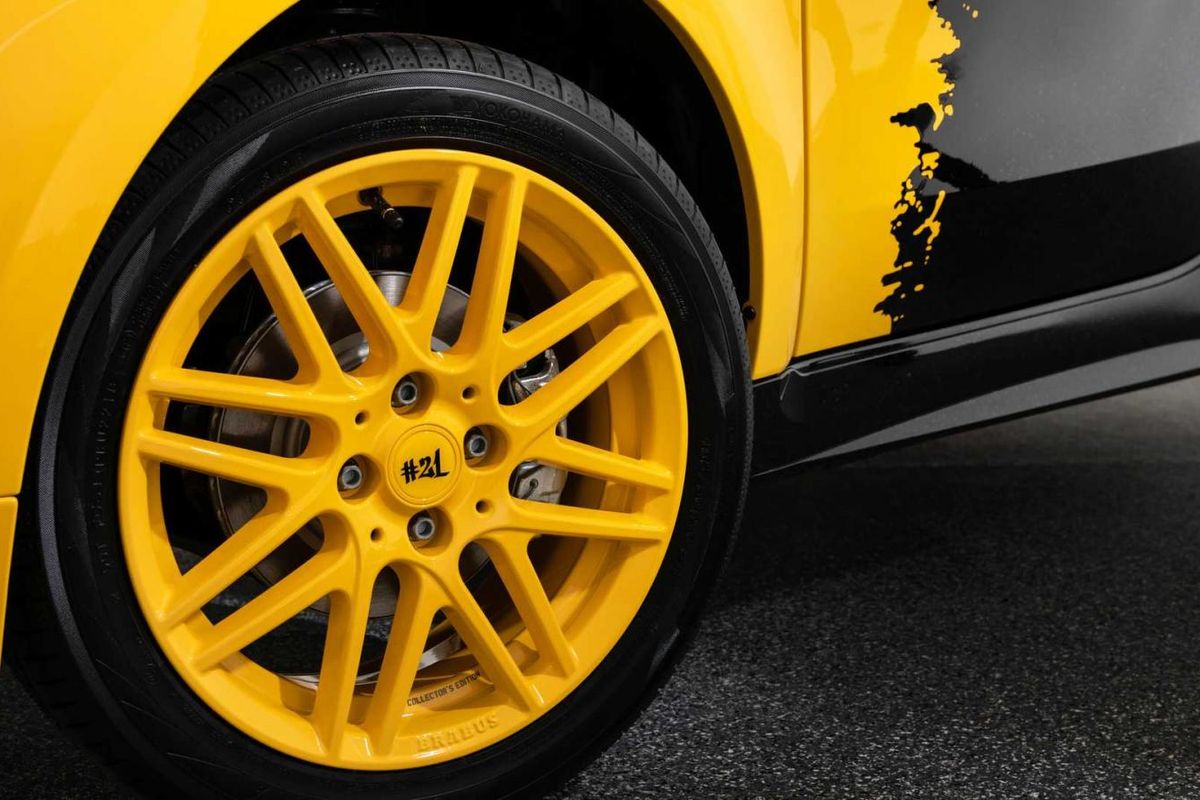
The Smart ForTwo Final Edition will become a unique collector’s item, as one of the very few production cars in history, to have different coloured wheels on the front and rear axle.
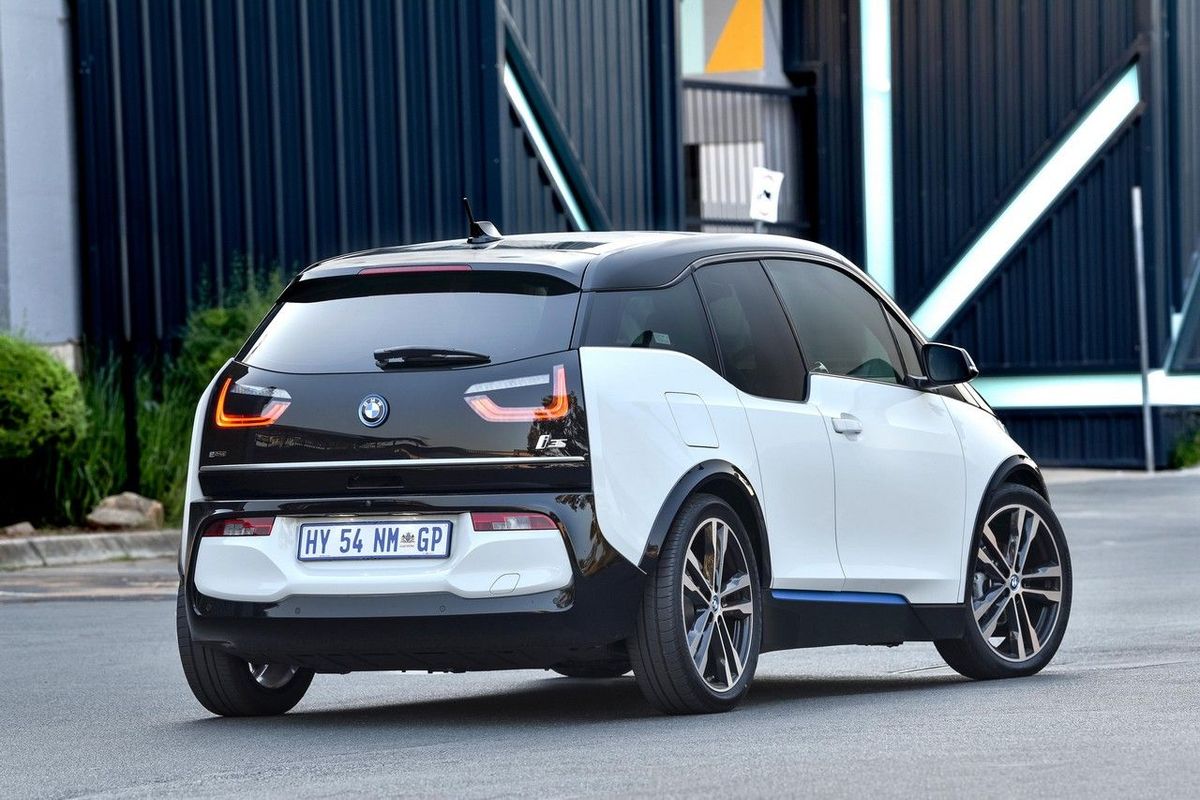
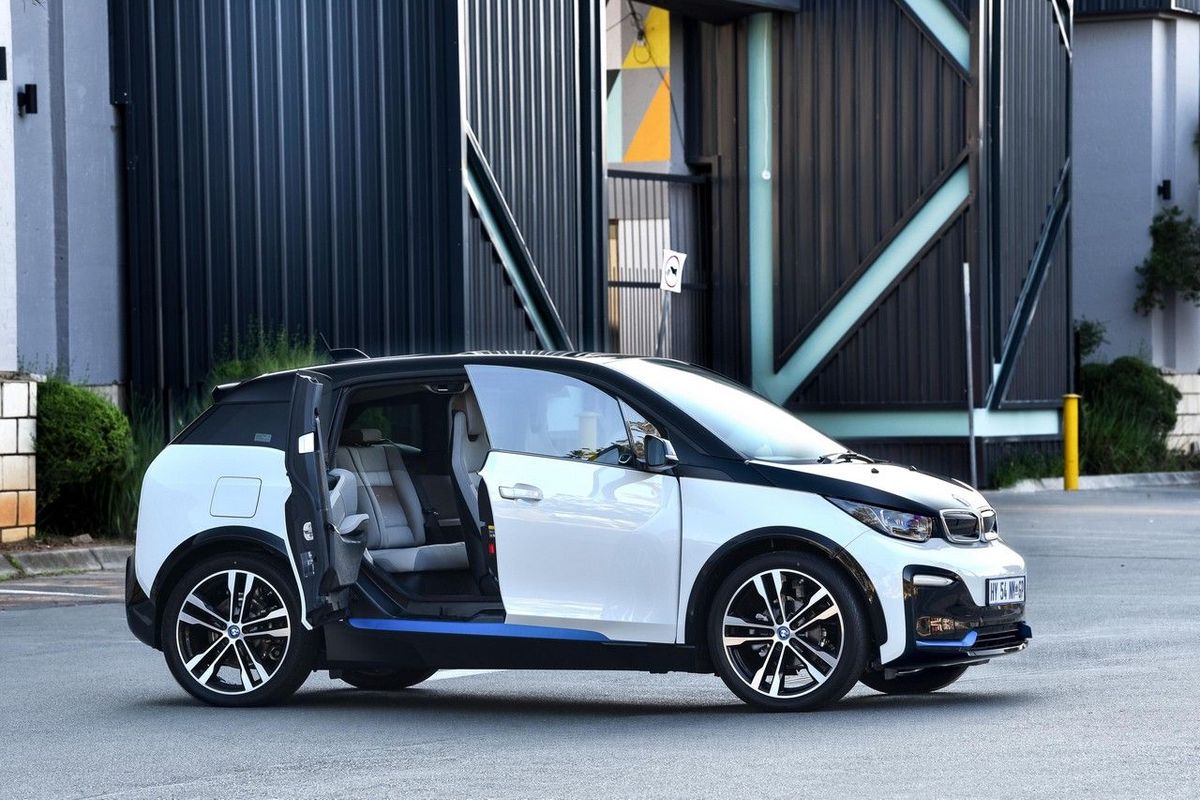
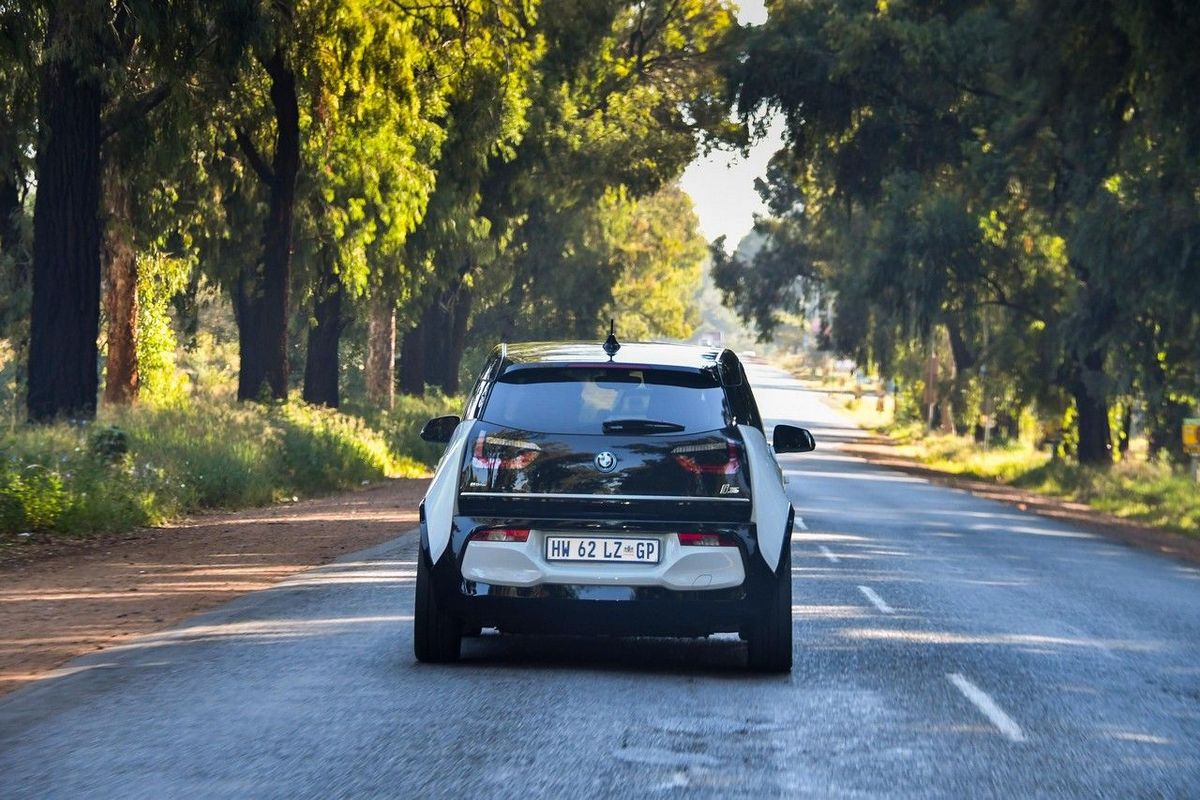
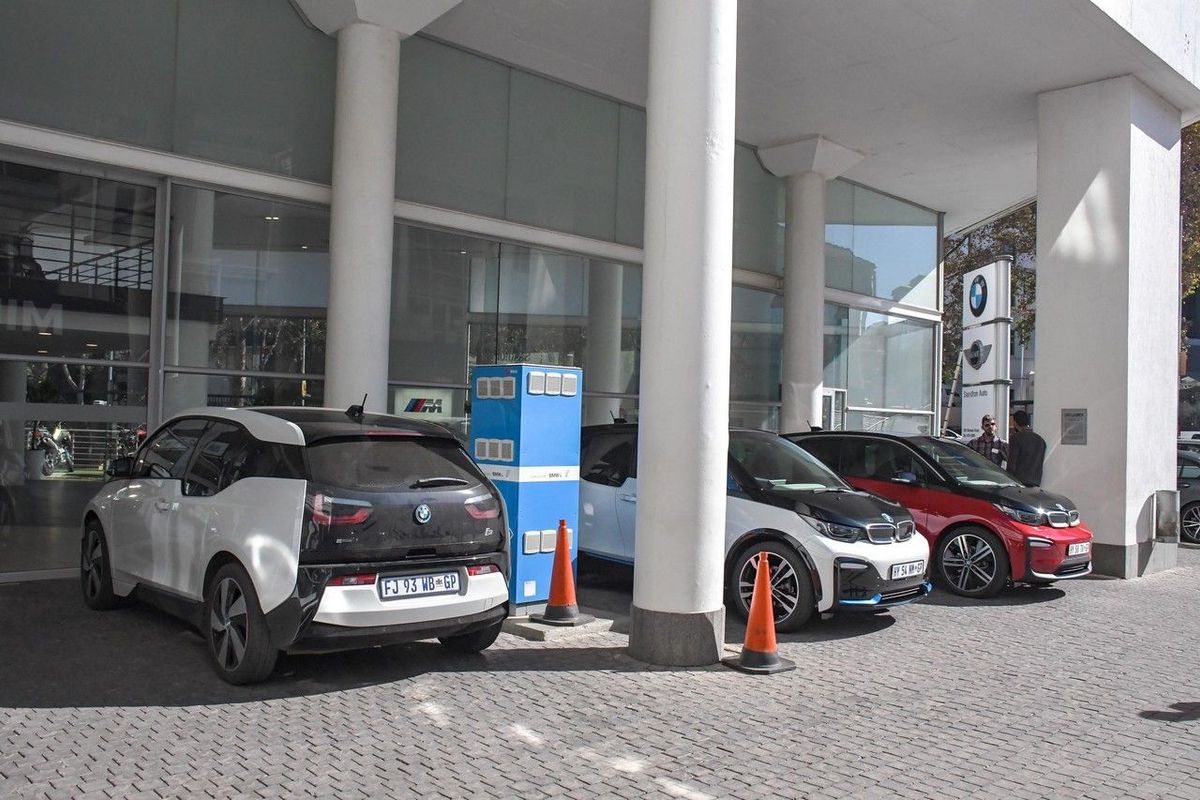
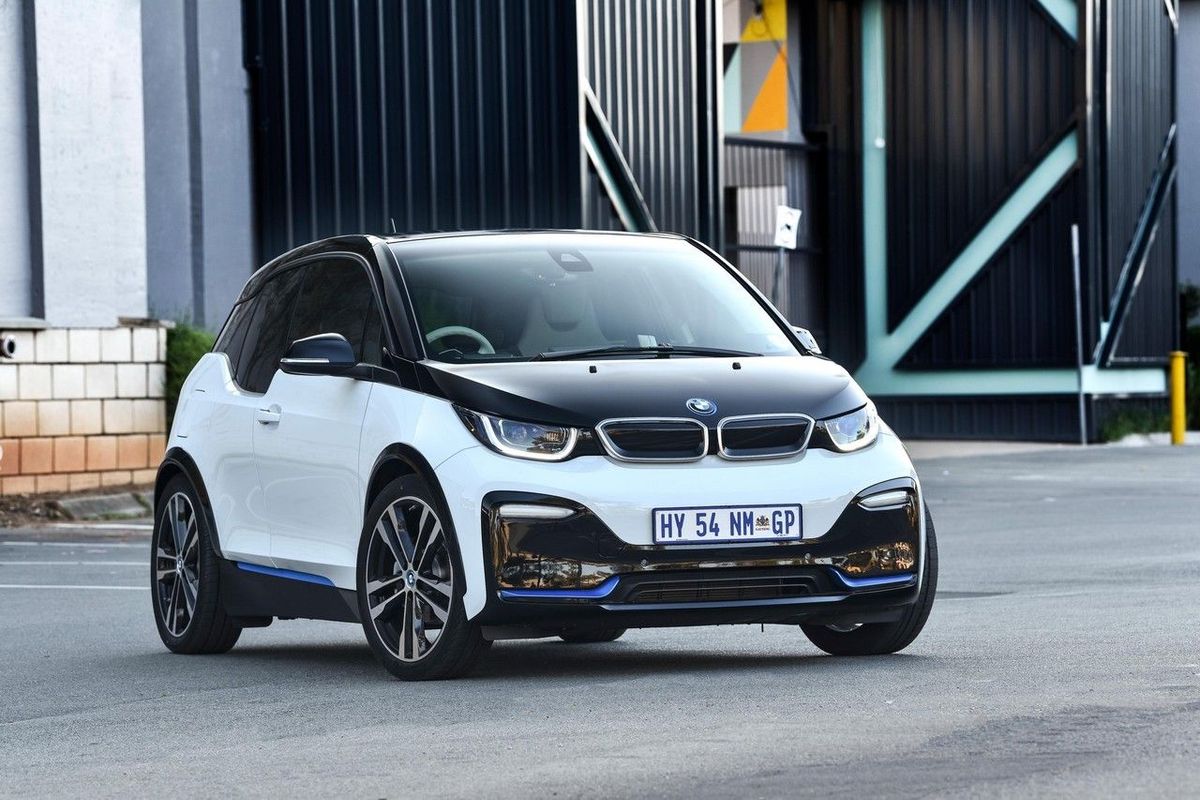
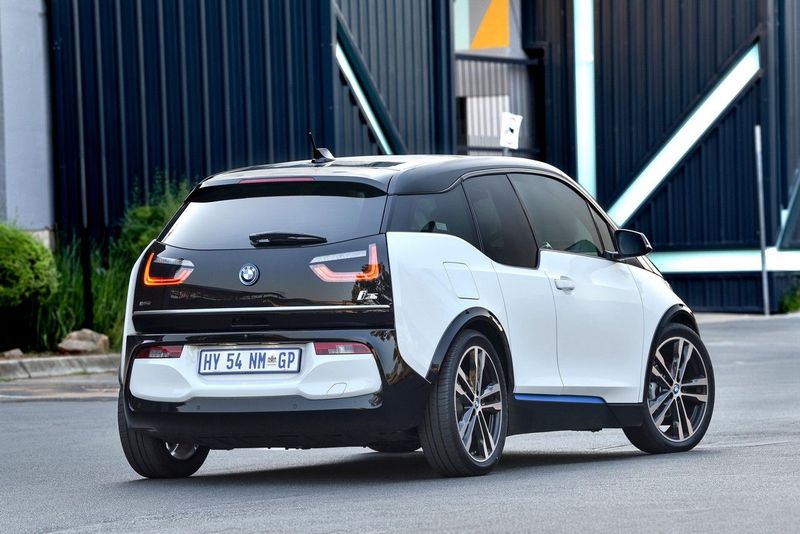
It's hard to believe, but the BMW i3 electric car has been on sale in South Africa since 2015 – and it has received numerous updates. This week, we relished the chance to drive the latest version, equipped with a 120 Ah battery.
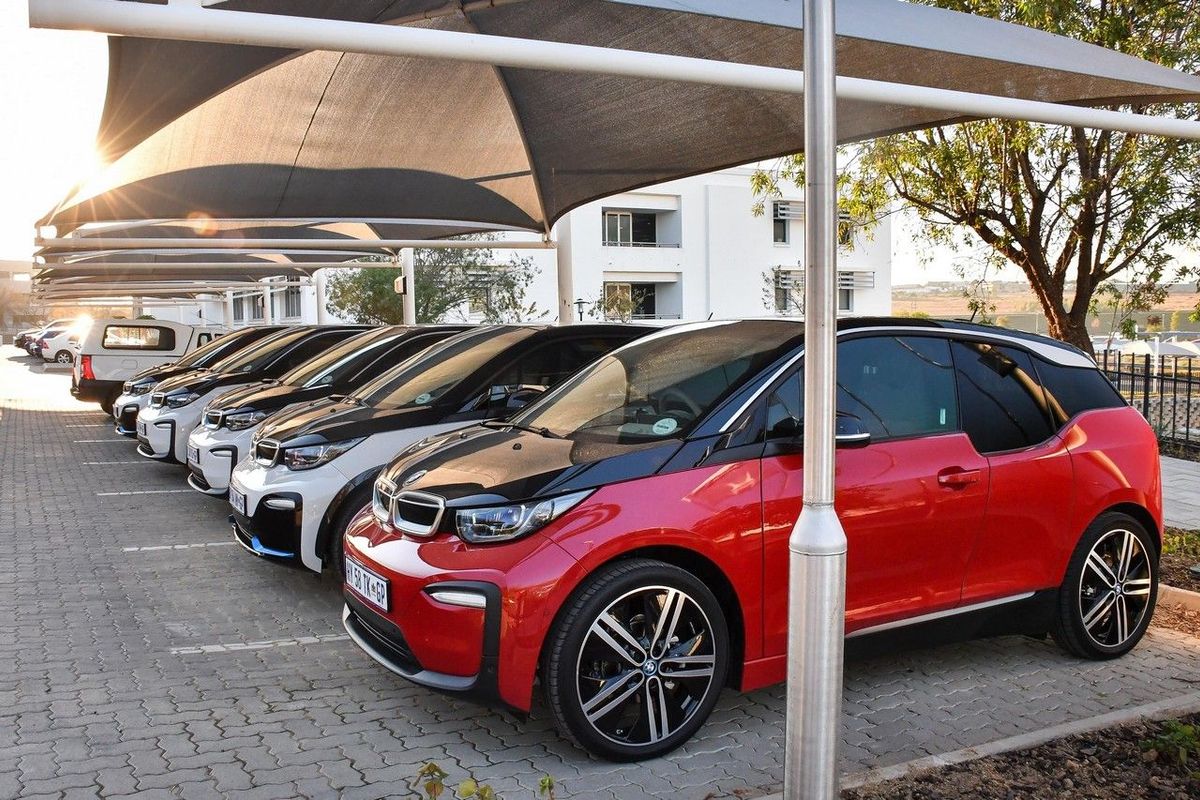
Since its launch, the i3 has become the most popular electric vehicle sold in the country. Granted, it's not like the market is teeming with electric vehicles (EVs) yet, but hundreds of South Africans have "swallowed the red pill" and become early adopters. Since the launch of the electric BMW i sub-brand, more than 600 i3 and i8 models have found homes in Mzansi. Which is impressive, considering there no government incentives or discounts to encourage consumers to buy EVs. Globally, it is a different story; BMW reached its goal of selling more than 140 000 EVs in 2018.
The design has remained the same, but the key updates focus on range which is critical for electric cars
It doesn't sound like much when we say there's a larger-capacity battery, but it's a critical change. When the i3 was launched in SA 4 years ago, it had a 60 Ah battery with an optimal range of approximately 130 km. Following a mild update, the battery spec increased to 94 Ah, which upped the range to 200 km, and now this latest offering boasts a 120 Ah battery, enabling the 2019-spec BMW i3 to travel up to 260 km on a full charge. While this doesn't sound like a big gain, it's impressive when you consider the range increases are from a battery that hasn't physically grown in size.
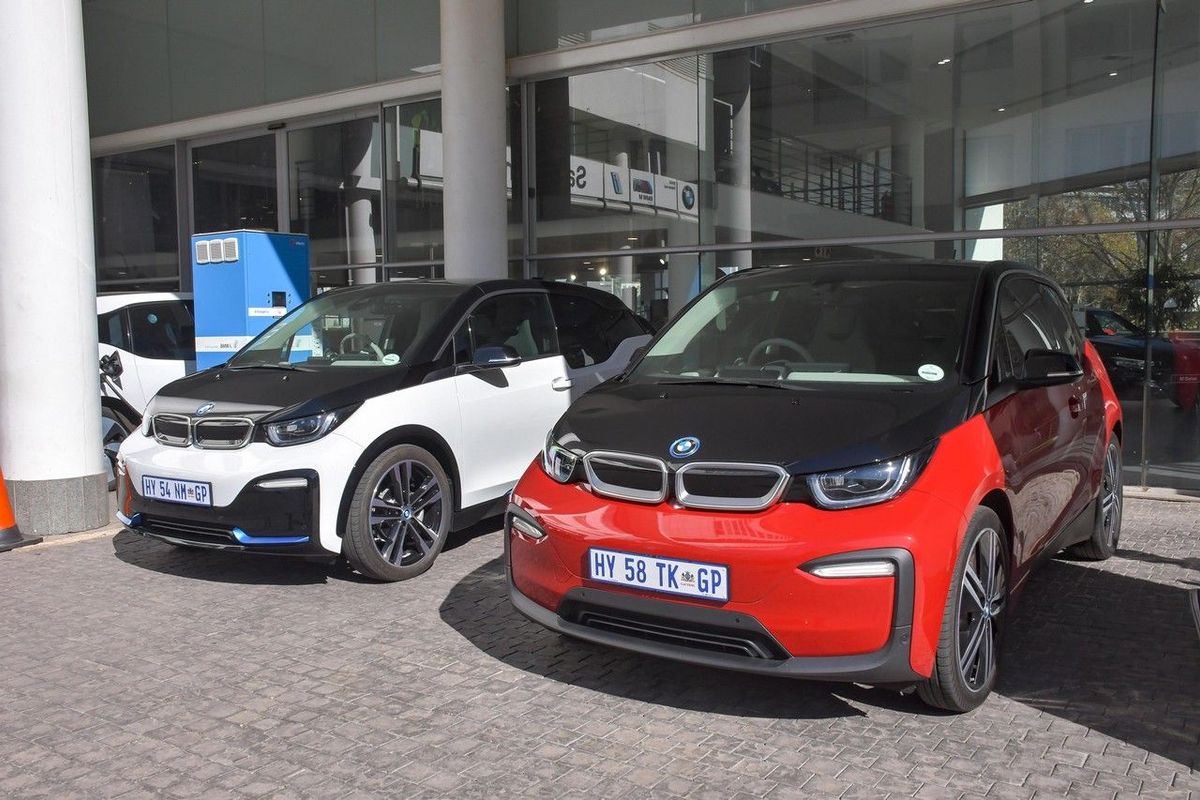
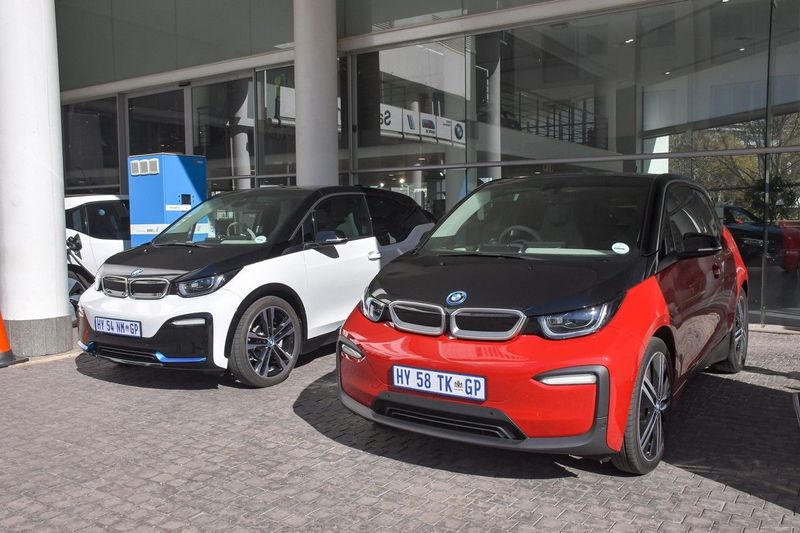
Oh, and before we forget, the 2019 BMW i3 range now includes an i3S derivative. The sportier version of the compact electric car offers a tad more power and torque, as well as more responsive steering and sportier suspension setups. Whereas the standard i3 produces 125 kW and 250 Nm, the i3S conjures up 135 kW and 270 Nm. BMW claims a 0-100 kph time of 7.3 sec for the standard car, with the i3S being a touch quicker (6.9 sec).
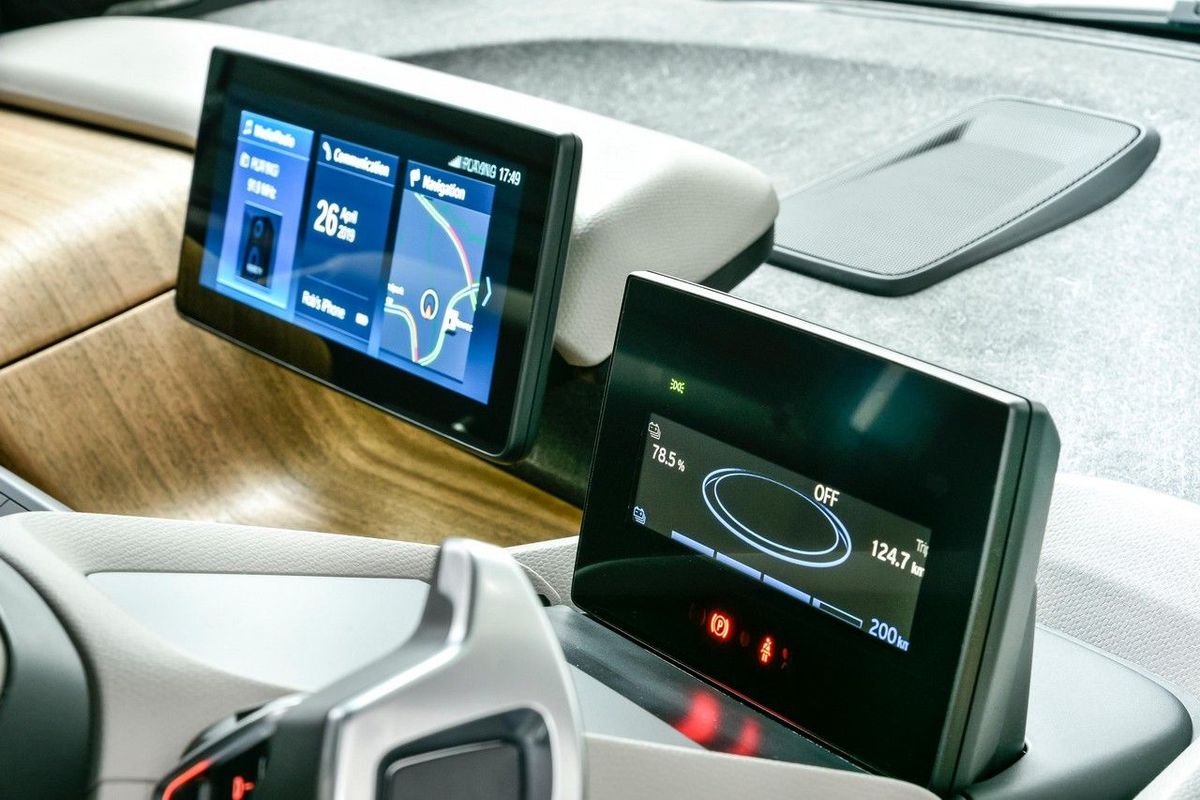
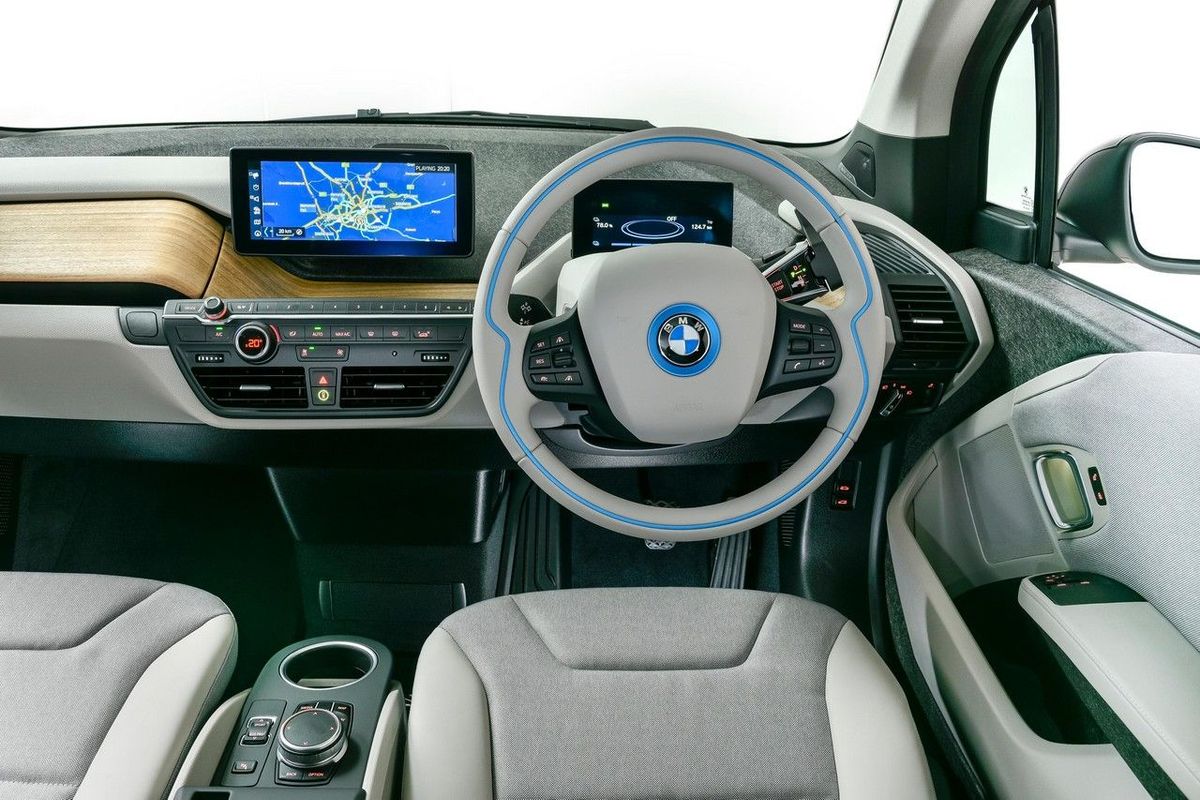
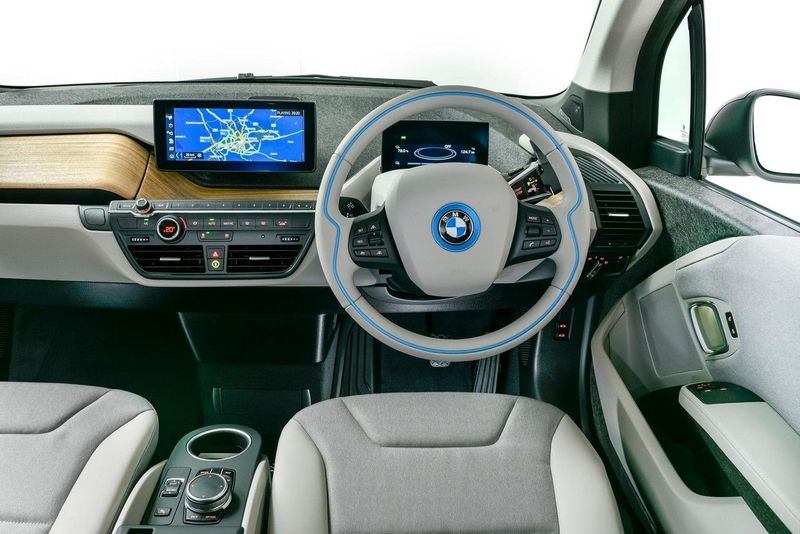
Inside, there aren't that many changes – the cabin still resembles "a cockpit from the future". What's really impressive is the extensive use of recycled materials throughout the i3's interior. The seats, for example, are made from recycled fibres, while the wooden dashboard comes from a sustainable forest. Being a premium offering, the standard specification is great with plenty of luxury and convenience features such as satellite navigation. Options range from an uprated audio system, some autonomous safety features to heated seats, but we wouldn't bother with those.
What's it like to drive?
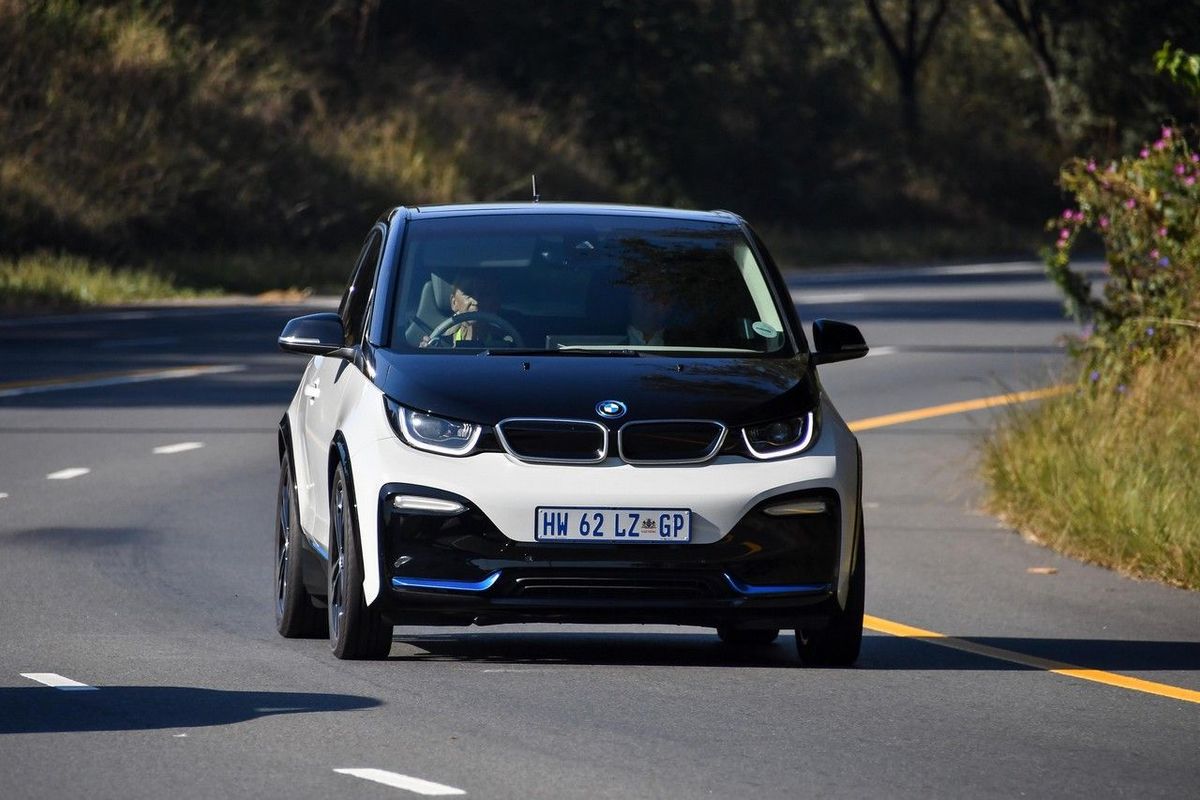
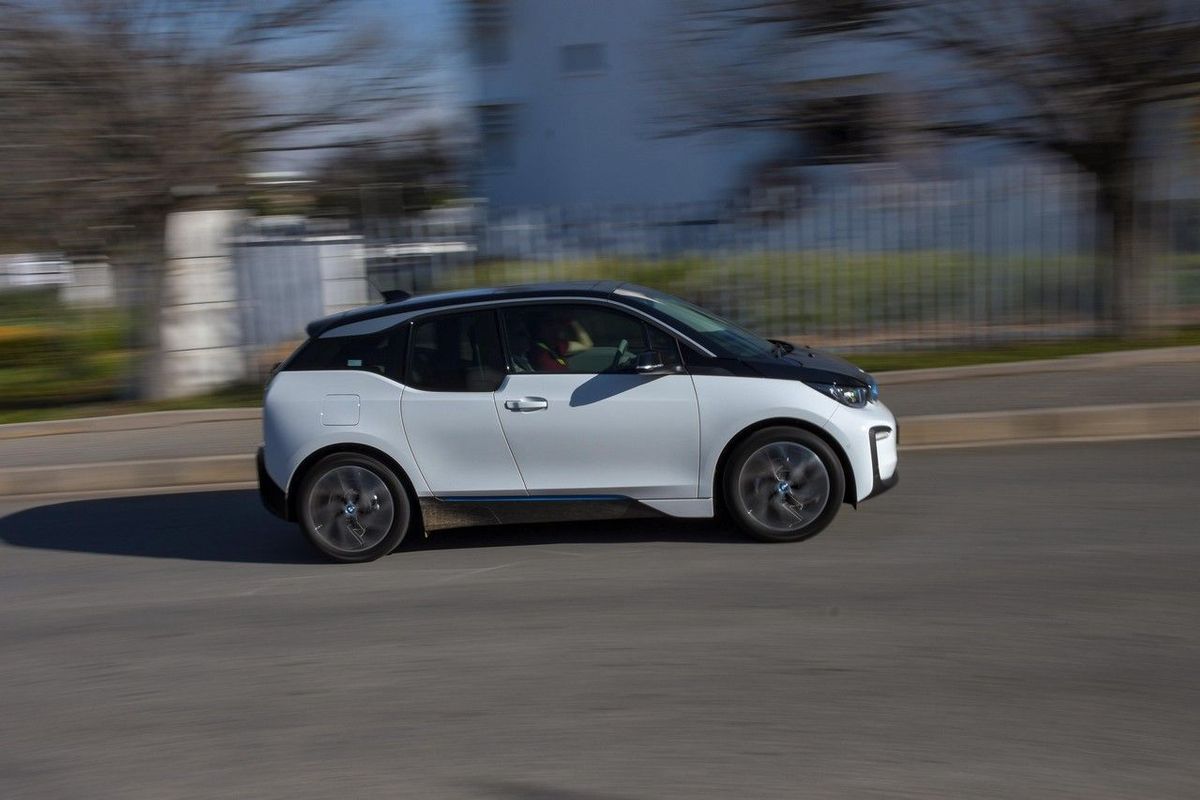
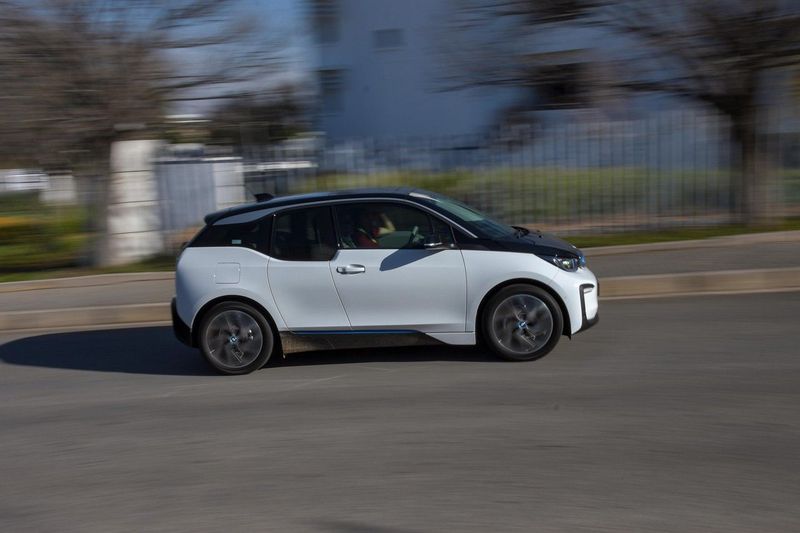
The updated BMW i3 is still an absolute delight to drive with addictive surges of power
The advantage of driving an EV is that it only has one gear and produces its peak torque instantaneously. In layman's terms, the i3 is simply ballistic from a standstill; it'll take something with serious performance credentials (and grip!) to pull away faster than this diminutive BMW. Its responsiveness and accelerative urge are addictive… We frequently found ourselves taking gaps in traffic that wouldn't normally be possible.
The best way to describe the "i3 driving experience" is to say that it feels like you're at the helm of a well-assembled and luxury golf cart. The steering is direct and light – the car is eager to dart about. Be mindful not to tug too enthusiastically at the steering wheel, however: the car gives a sensation that it is quite top-heavy. You see, the i3 rolls on narrow low-rolling-resistance tyres that are designed to make the car coast more freely down hills and in turn, recoup some energy. Fortunately, the car's centre of gravity is quite low because its battery pack is positioned in its floor.
The interior is beautifully finished and assembled out of recycled materials.
The way that the i3 zips away is very entertaining and will put a smile on your face, but be mindful that, just like a heavy foot will ruin fuel efficiency in a conventional car, eager driving can – and will – limit an EV's range. We chose the longer test drive route that saw us leave BMW's head office in Midrand and head to the Zambesi Auto BMW dealership. The car's GPS seeks to avoid situations that will increase energy consumption and, given the distance of 43 km (in mild traffic and using the i3's least frugal driving mode) we were impressed to arrive with 89% of charge still available.
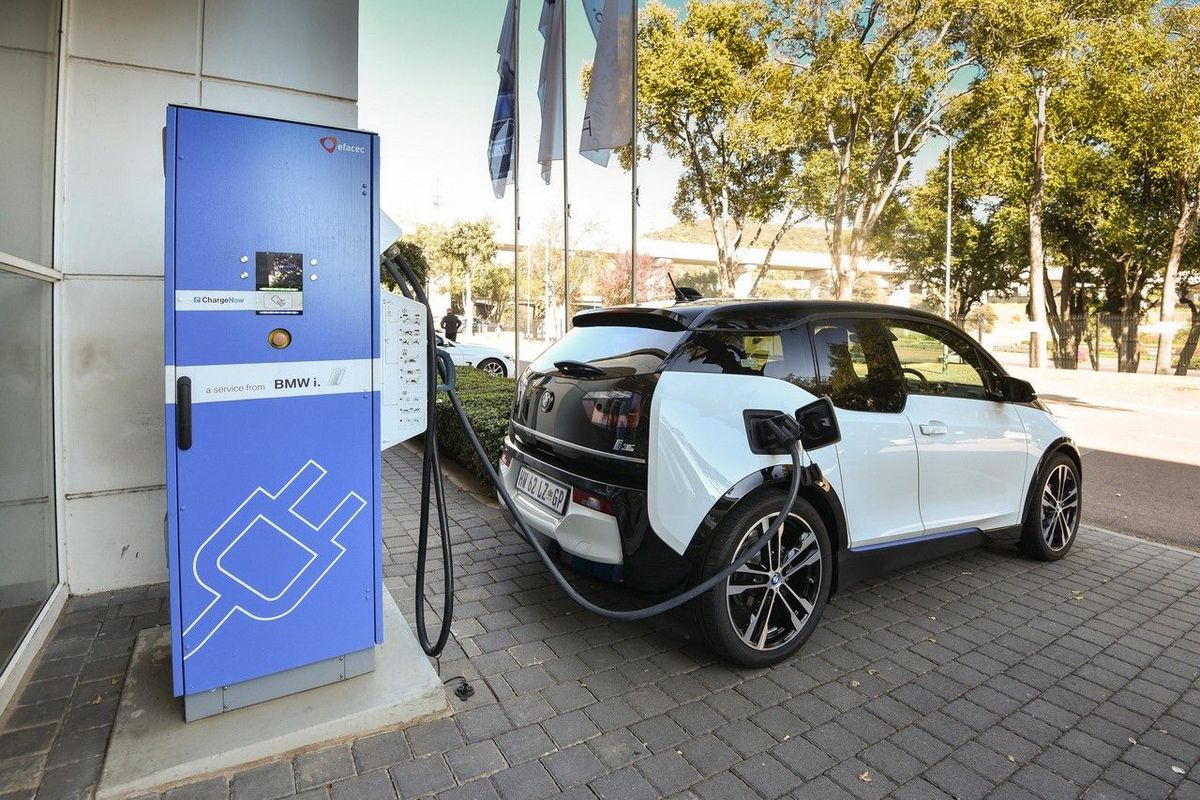
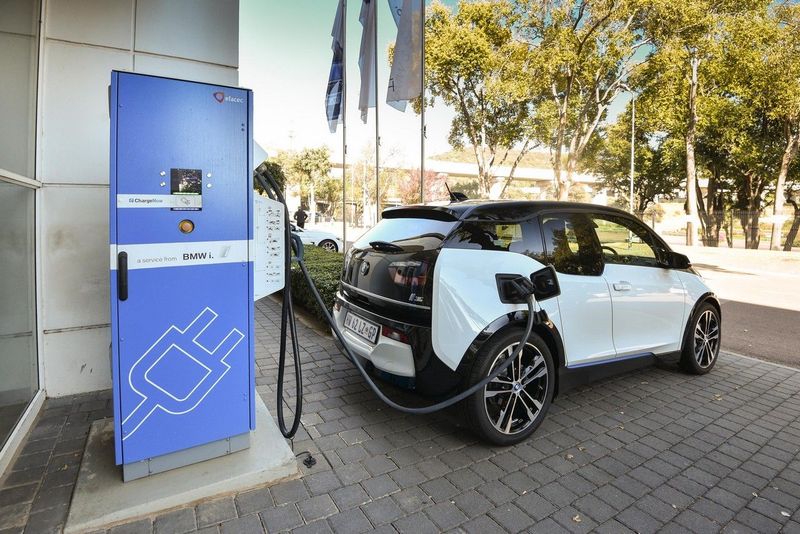
Nevertheless, we plugged the car in for a quick top-up, which is complimentary for BMW owners using the ChargeNow network. Within 10 minutes the car was registering full and seeing that we were pressed for time, we decided to open the taps and drive back to Midrand as quickly as possible. We've already mentioned that the i3 is scorching off the line, but the in-gear acceleration is also worth a mention. Getting from 60 kph to 100 kph in an overtaking manoeuvre is effortless, but you will find that the vehicle starts to lose overtaking urge once you're at the national speed limit.
How viable is an EV in SA, realistically?
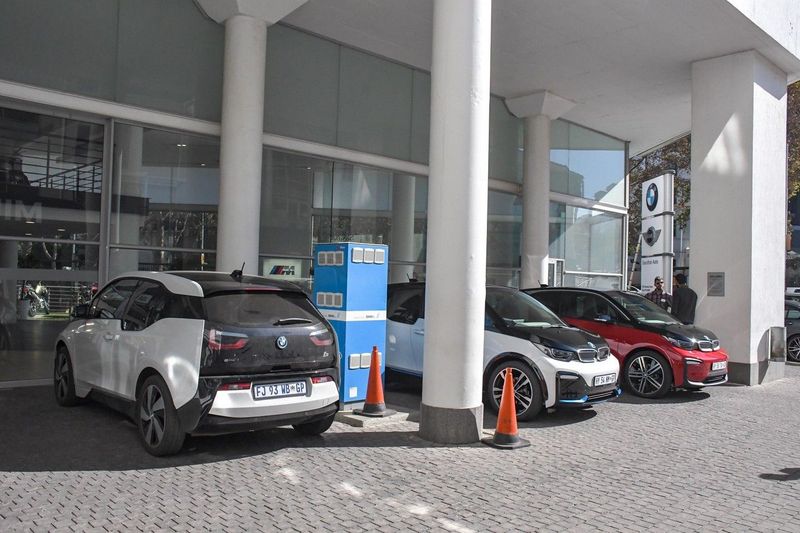
Naysayers will be quick to point out the lack of recharging infrastructure in South Africa, but there have been significant advances in that regard, just in the past year. BMW currently has 58 ChargeNow stations in the country, 6 of which are shared with Nissan. Back in 2015, the Japanese brand signed a memorandum of understanding with BMW and while the first-gen Leaf hasn't quite been a sales success, there's much expected of the 2nd-generation version, which is expected in the local market soon. There are also 5 DC fast chargers located at the following dealerships: Zambezi Auto and Club Motors Fountain (Pretoria), Sandton Auto (Johannesburg), Supertech (Durban) and SMG (Cape Town. The airports are next in line to receive chargers and chances are by the time you're reading this, the majority of SA's airports will have the capacity to charge electric vehicles.
With the free ChargeNow card, BMW i3 owners can pop down to their local dealerships for a quick top-up.
These high-powered chargers can charge an i3 from 0% to 80% in about 45 minutes and, given the advances in the latest BMW i3 battery tech, this equates to an available range of about 200 km on the spot. Jaguar Land Rover has invested significantly in a charging network in our country and the BMW i3 can tap into that. The range claims for the pure electric-only BMW i3 make it worthwhile and if you're doing more than 200 km a day, then you must certainly be in the minority. The Johannesburg-Pretoria-Johannesburg commute comes to 150 km (in total), making it totally feasible and well within range. Of course, you can also charge your i3 at home overnight plugged into the wall of your garage and you'll get a full charge by the time you're ready to hit the road in the morning.
Summary
There's nothing dramatically new about the BMW i3, but the addition of a larger-capacity battery will further allay "range anxiety". We feel the key to owning an electric car and reaping the benefits is by reshaping your life around the car – treat it like a smartphone. Even when your phone's at 50% capacity, many people will plug it in just to ensure they have sufficient battery life in reserve. The same methodology should be applied with electric cars and customers should be taking advantage of chargers at malls and gyms as even a quick 15-minute charge is sufficient for 40 km.
Should you buy one? YES. There are a few Cars.co.za staffers who'd readily take the plunge given their lifestyles. However, the cost is a big barrier to entry and we imagine BMW Group SA is quietly frustrated with the government's reluctance to incentivise EV purchases. To add insult to injury, EVs are subjected to higher import duties than internal-combustion engined vehicles. In contrast with the rest of the world, where customers are offered incentives to go green and buy electric cars with discounts, cash in hand and much more, this seems a very backwards way of thinking…
The BMW i3 continues to be a niche product in SA. Hopefully, our government can address the incentive issue and make electric car ownership appealing.
In this latest episode of The Journey, in partnership with Nissan South Africa, we venture into the heart of the Drakensberg to discover the natural beauty of South Africa's highest mountain range and to conquer the famous Sani Pass to reach the highest pub in Africa. Watch the video!
The Drakensberg, also known as the 'Mountains of Dragons' or uKhalamba, ‘the barrier of spears’ in Zulu, is one of South Africa’s natural wonders spanning over 1 000 km in length with its highest peak, Thabana Ntlenyana, reaching a height of 3 482 metres in Lesotho making it the highest point in Southern Africa.
The Drakensberg is all about adventure and the outdoors and in this episode, the tough and rugged Nissan Navara, with its reputable 4×4 ability, took us on an incredible journey to the highest waterfall in Africa, Tugela Falls, Giants Castle and finally up the famous Sani Pass to the highest pub in Africa in Lesotho.
The Journey team included our very own Journeyman, Gero Lilleike, who was accompanied by special guests Josh Kempen (popular South African singer and songwriter), Lauren Melnick (travel blogger), Richard Haubrich (Instagram_SA) and Andries Groenewald, a proud owner of a 1996 Nissan Sani.
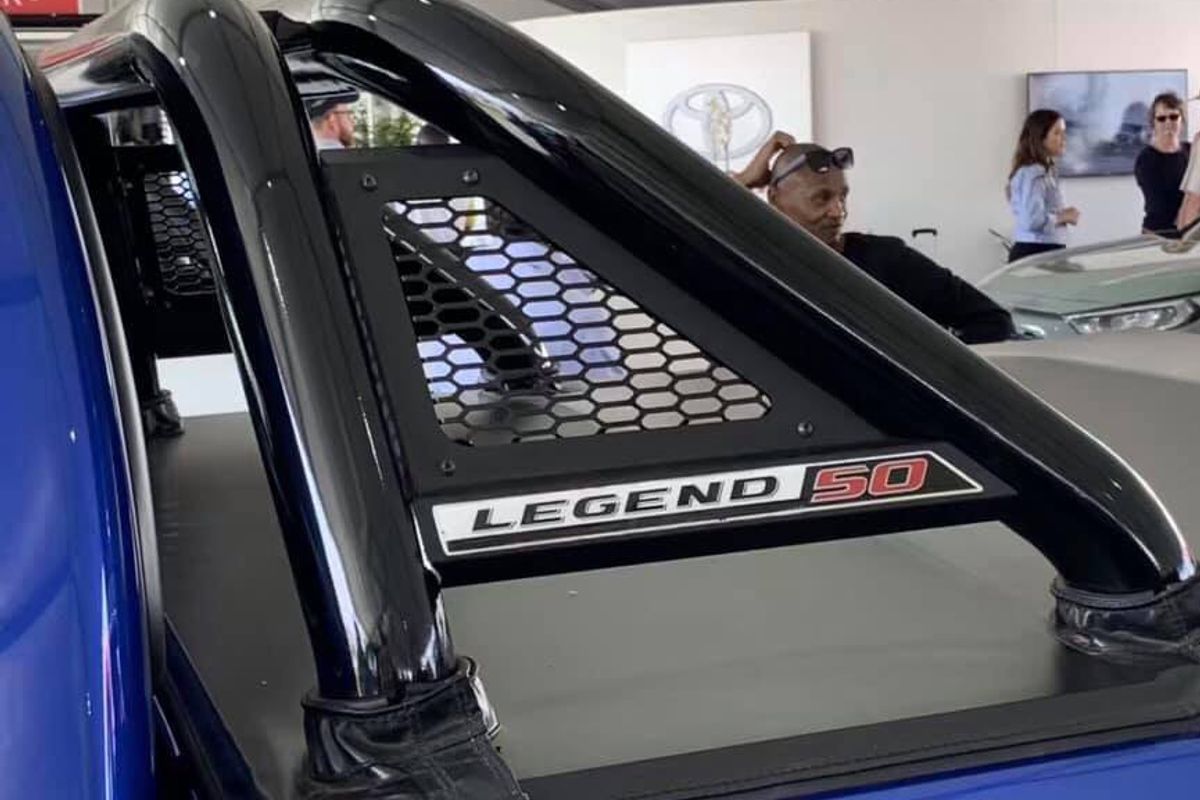
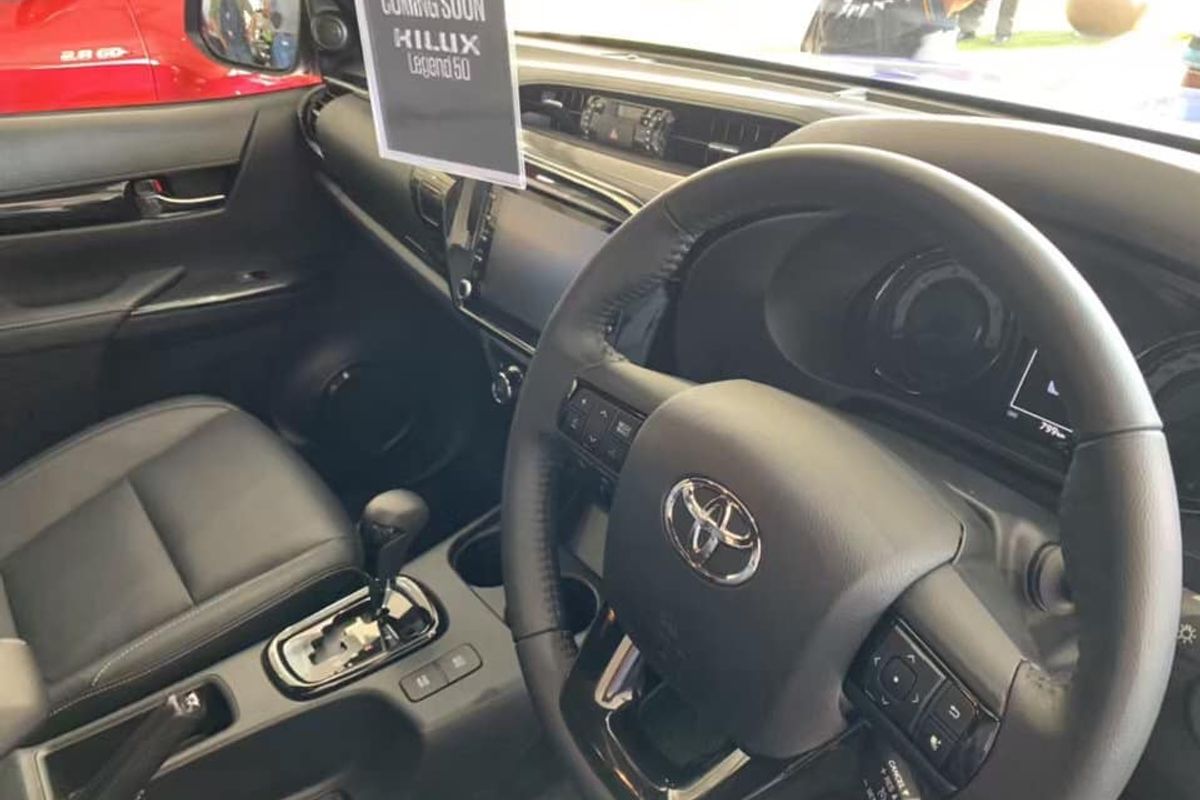
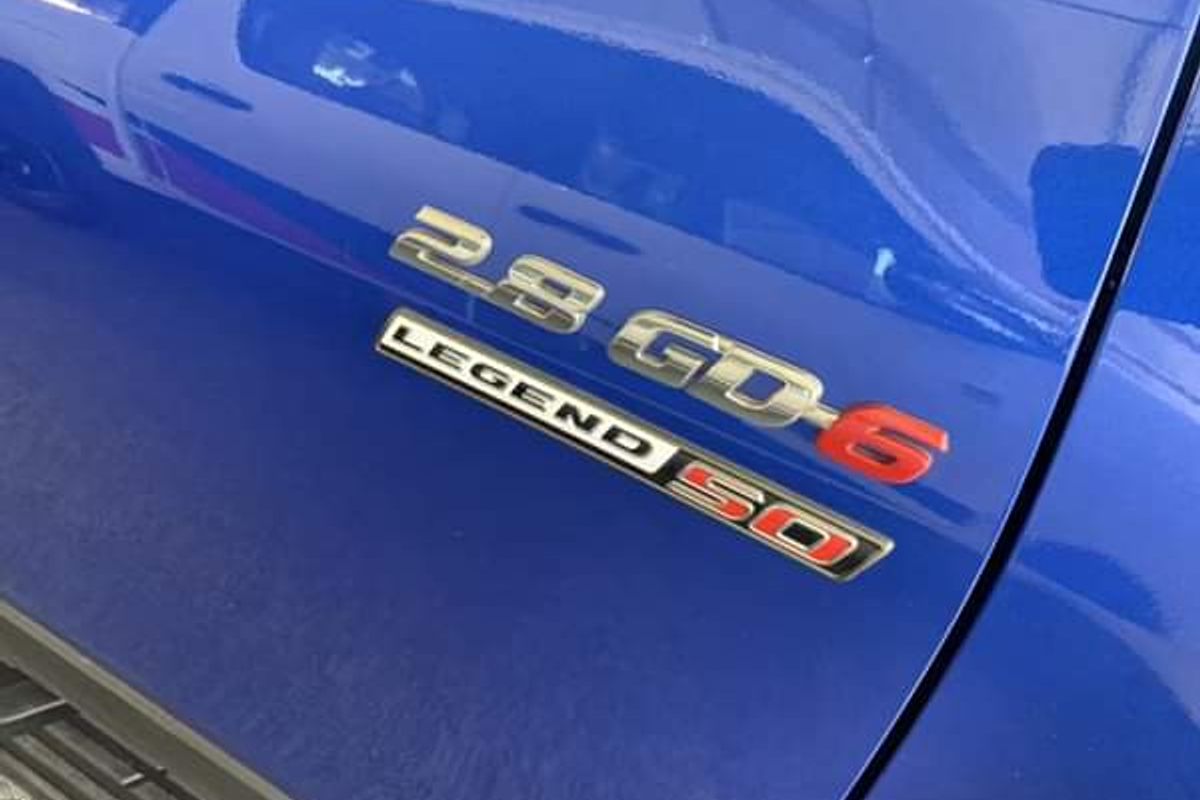
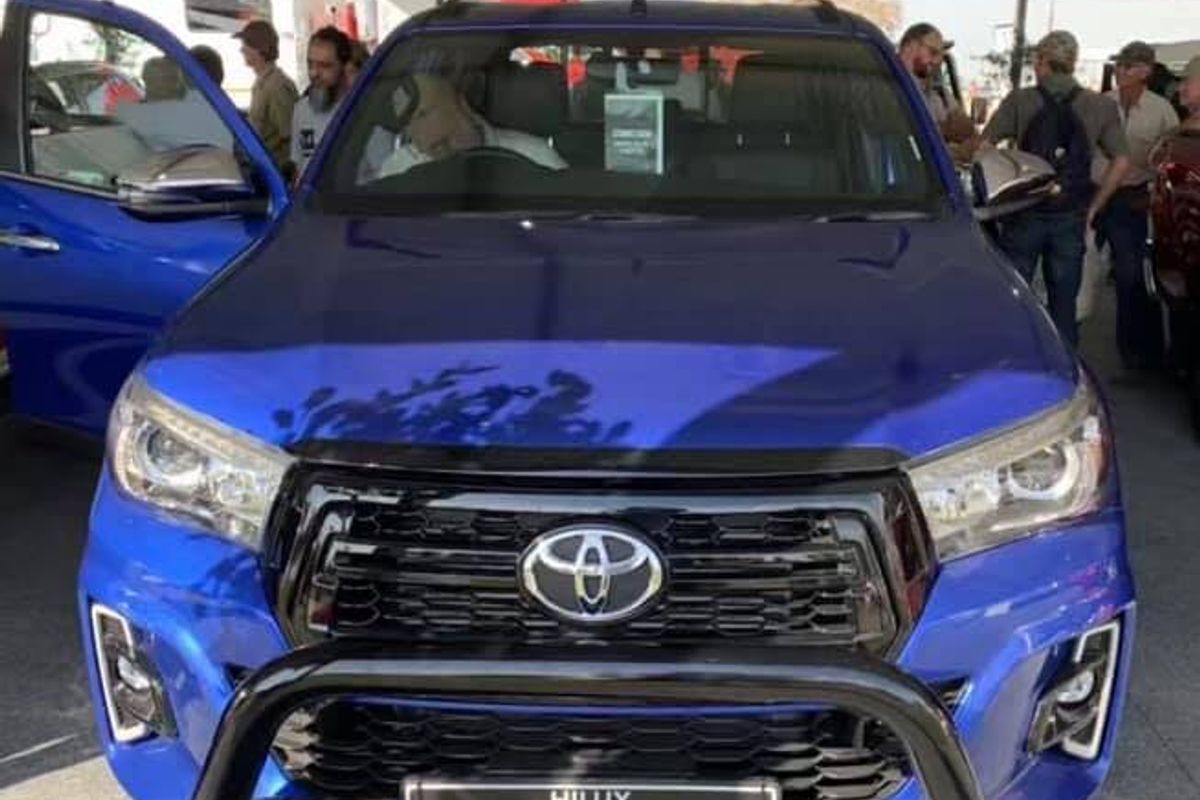
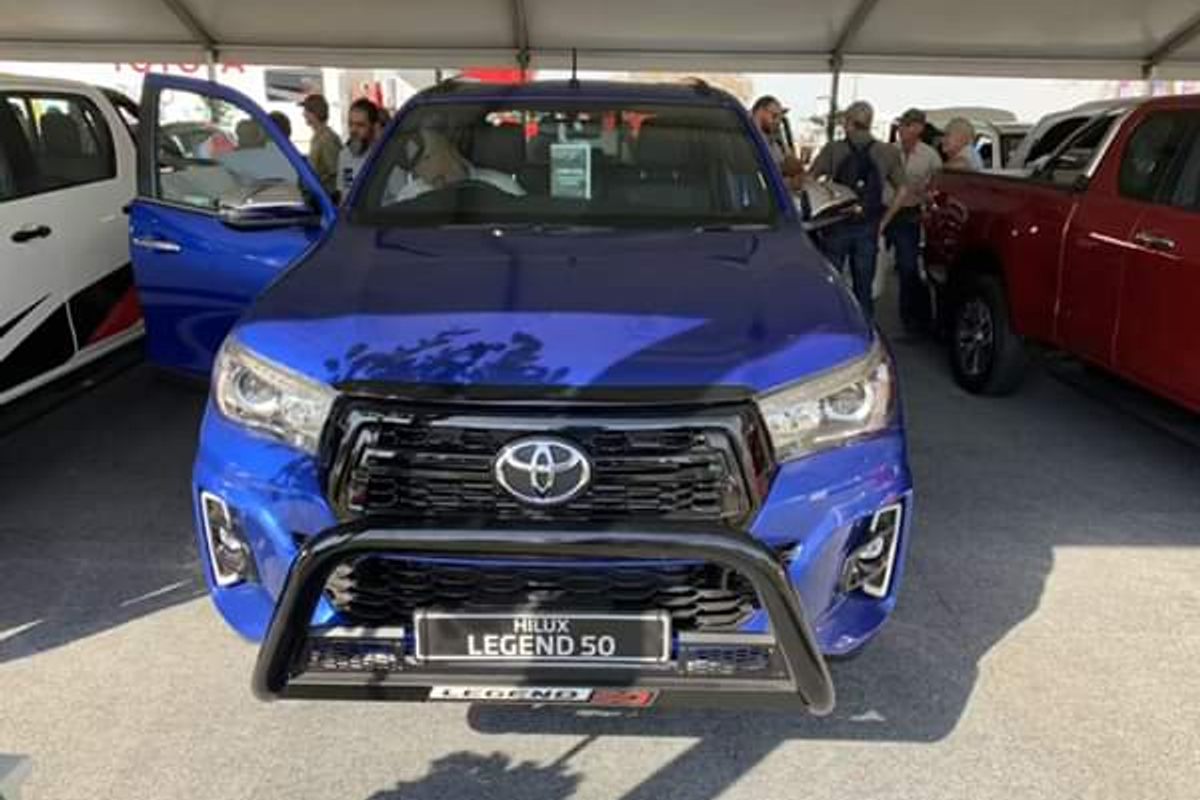
The ever-popular Toyota Hilux celebrates its 50th anniversary in South Africa this year and true to tradition, buyers can look forward to the arrival of the Hilux Legend 50 towards the middle of the year.
*As of 15 May 2019 pictures of the Toyota Hilux Legend 50 began circulating on Facebook. We believe this to be the real thing*
The Hilux is a household name in South Africa and it’s not surprising when you look at the market dominance the Hilux has fostered over the years and the Hilux has been the best-selling vehicle in South Africa for countless consecutive months. Its lineage spans 8 generations since its local introduction in 1969 (production began in 1968), the Hilux is still praised for its reliability, robust offroad ability and excellent value retention in the used car market. Today, the Hilux is built at Toyota's Prospecton plant in Durban for the local market as well as for export.
The Hilux also excelled on the international stage earlier this year with the South African-built Gazoo Racing Hilux, driven by Al Attiyah and Mathieu Baumel, securing Toyota’s first Dakar win in gruelling conditions. Days later, Toyota scooped the coveted Brand of the Year title at the #CarsAwards powered by WesBank.
The 50th anniversary of the Hilux in South Africa is a major milestone and Toyota will celebrate the occasion by introducing a special edition Hilux Legend 50 model. A local Toyota spokesperson has confirmed that the Hilux Legend 50 will come to market in June 2019 and while exact design and specification details are unknown at this stage, buyers can expect a wide range of additional kit as standard as well model-specific design details that will differentiate the Hilux Legend 50 from the rest of the Hilux range. The Hilux Legend 50 is definitely one to look out for if you are a Hilux fan.
We will keep you updated as soon as pricing and specification details become available.
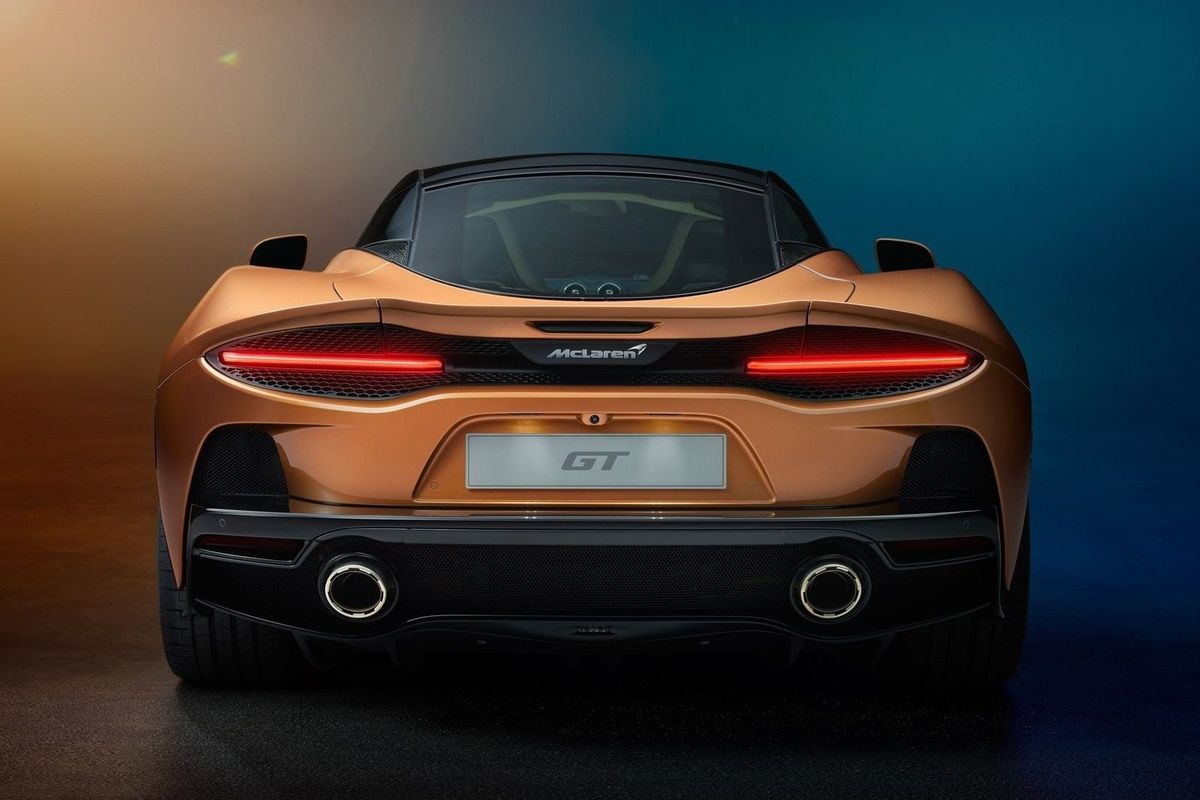
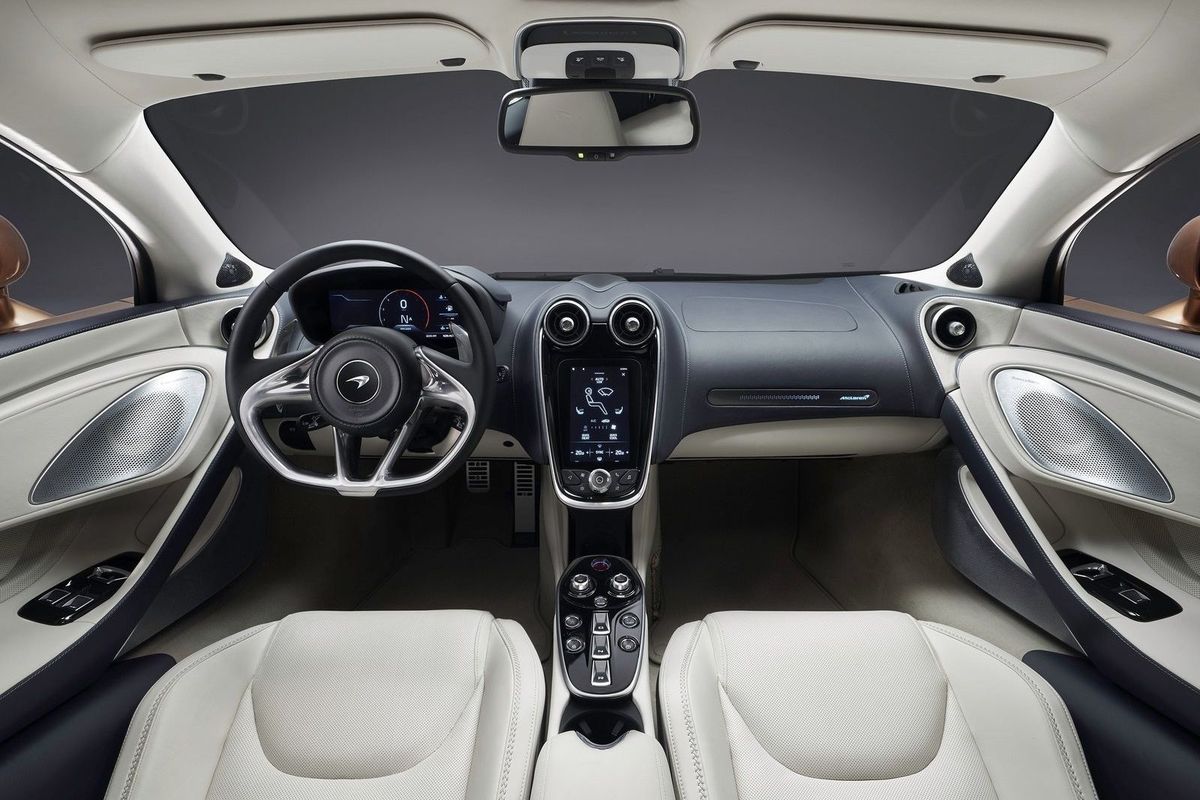
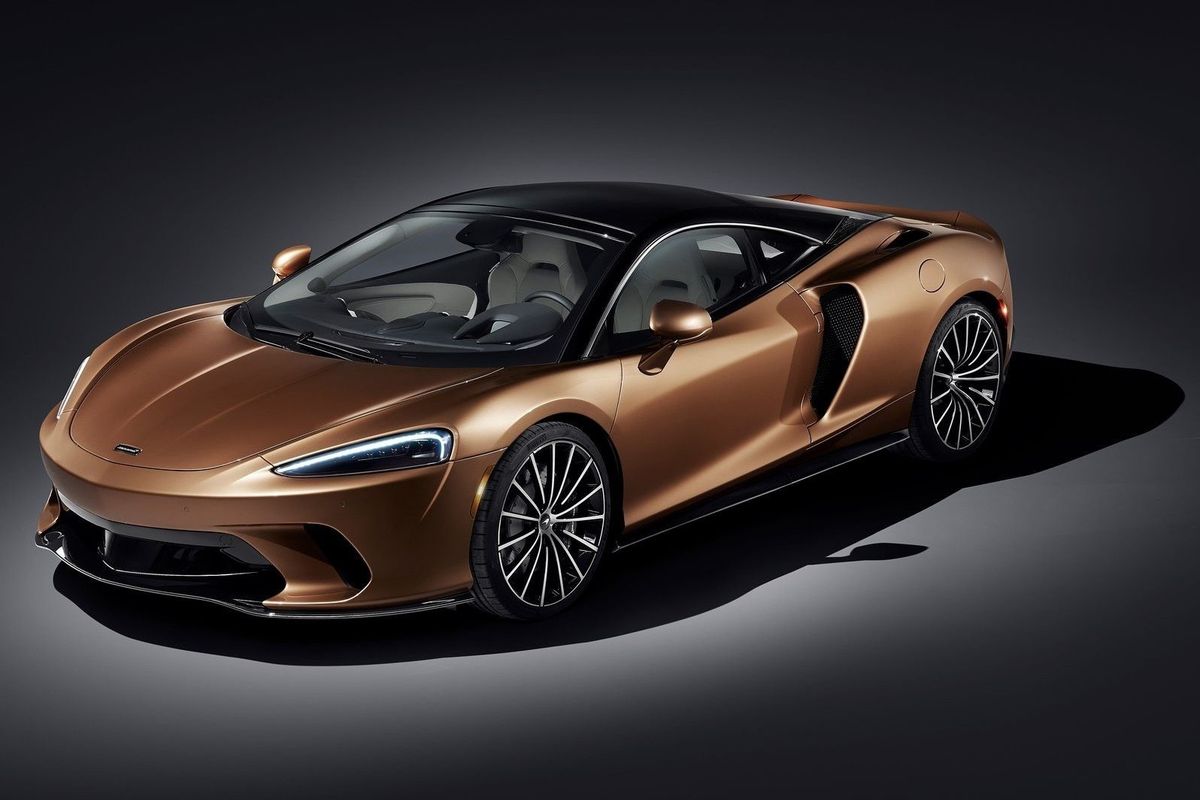
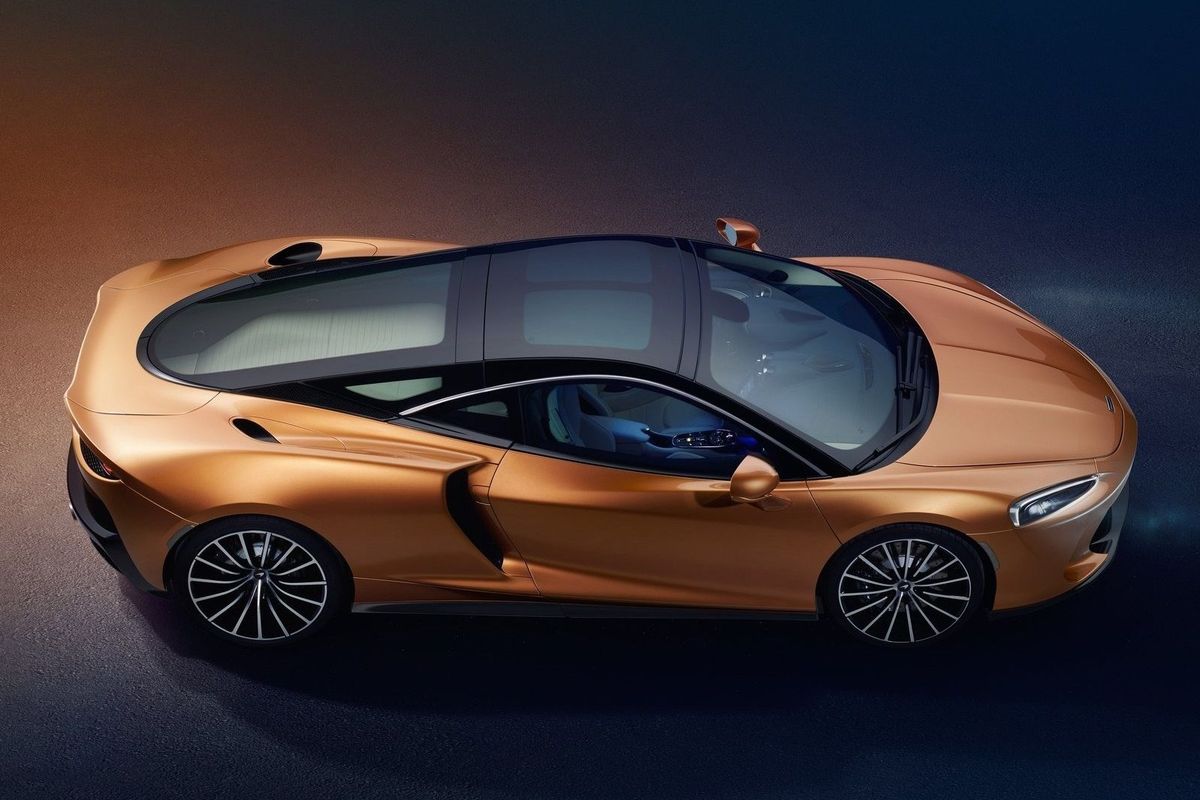
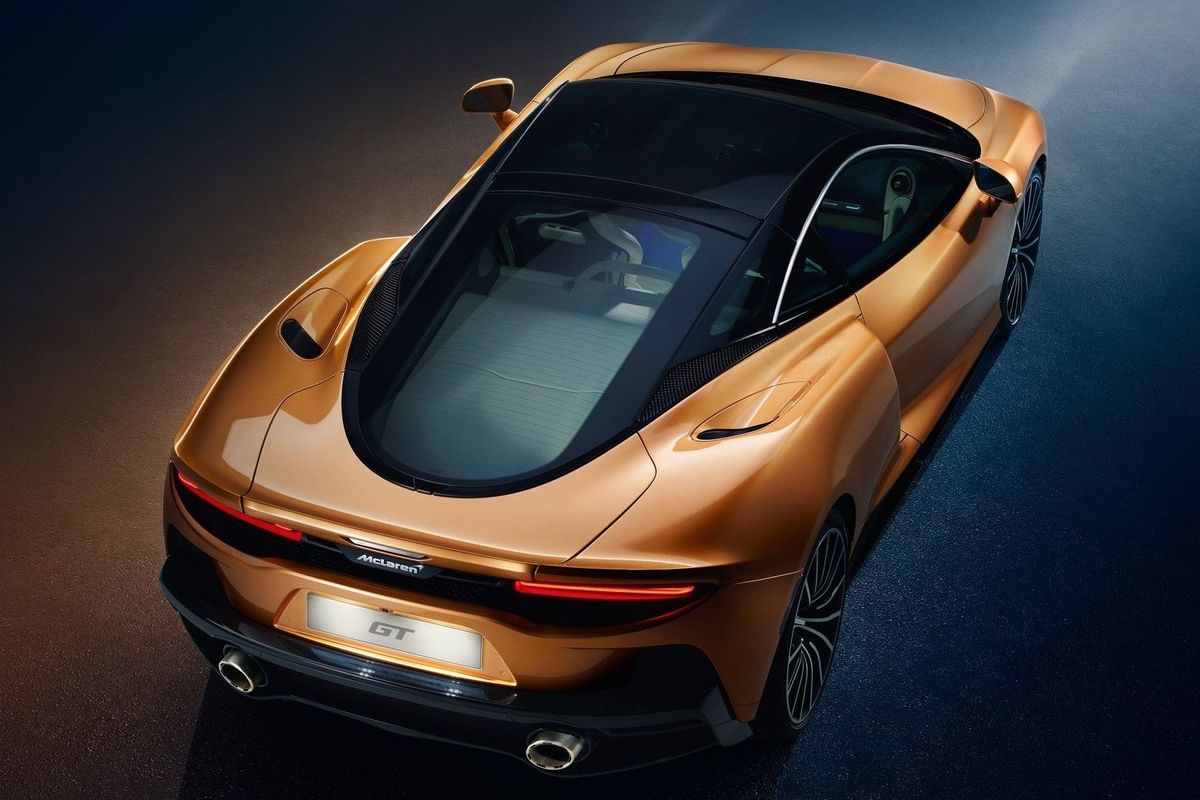
McLaren has revealed a new car. Unlike its utterly outrageous supercar offerings, the newcomer focuses more on comfort and luxury. This is the 2020 McLaren GT.
GT stands for Grand Tourer and unlike McLarens usual offerings, this one is less performance and more comfort and luxury. "The new McLaren GT combines competition levels of performance with continent-crossing capability, wrapped in a beautiful body and true to McLaren's ethos of designing superlight cars with a clear weight advantage over rivals. Designed for distance, it provides the comfort and space expected of a Grand Tourer, but with a level of agility never experienced before in this segment. In short, this is a car that redefines the notion of a Grand Tourer in a way that only a McLaren could." Mike Flewitt, Chief Executive Officer, McLaren Automotive
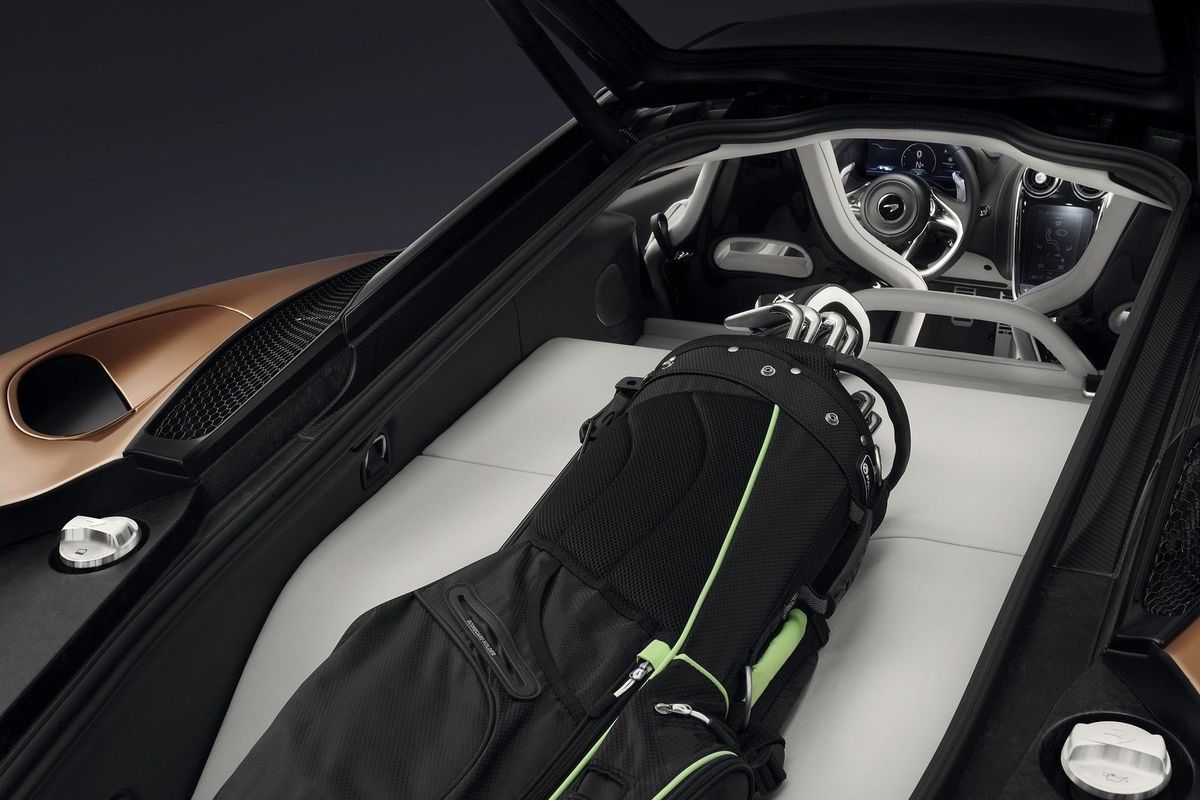
Power comes from a 4.0-litre, twin-turbocharged V8 engine and the outputs are impressive. With 462 kW and 630 Nm mated to a 1 530 body, the McLaren GT is still a sensationally quick machine with a claimed acceleration of 3.2 seconds to 100 kph and a top speed of 326 kph. Being a GT, there have to be elements of practicality and the new McLaren features a repositioned engine and exhaust system, allowing for luggage. A golf bag or two pairs of 185cm skis and boots, as well as luggage, can be carried with ease, while a further 150 litres of storage at the front means the new McLaren GT can accommodate a total of 570 litres.
McLaren says you can order the new GT from its dealerships, but pricing is still to be finalised for South Africa. A McLaren dealer confirmed that the first GT will be touching down in SA before the end of 2019.