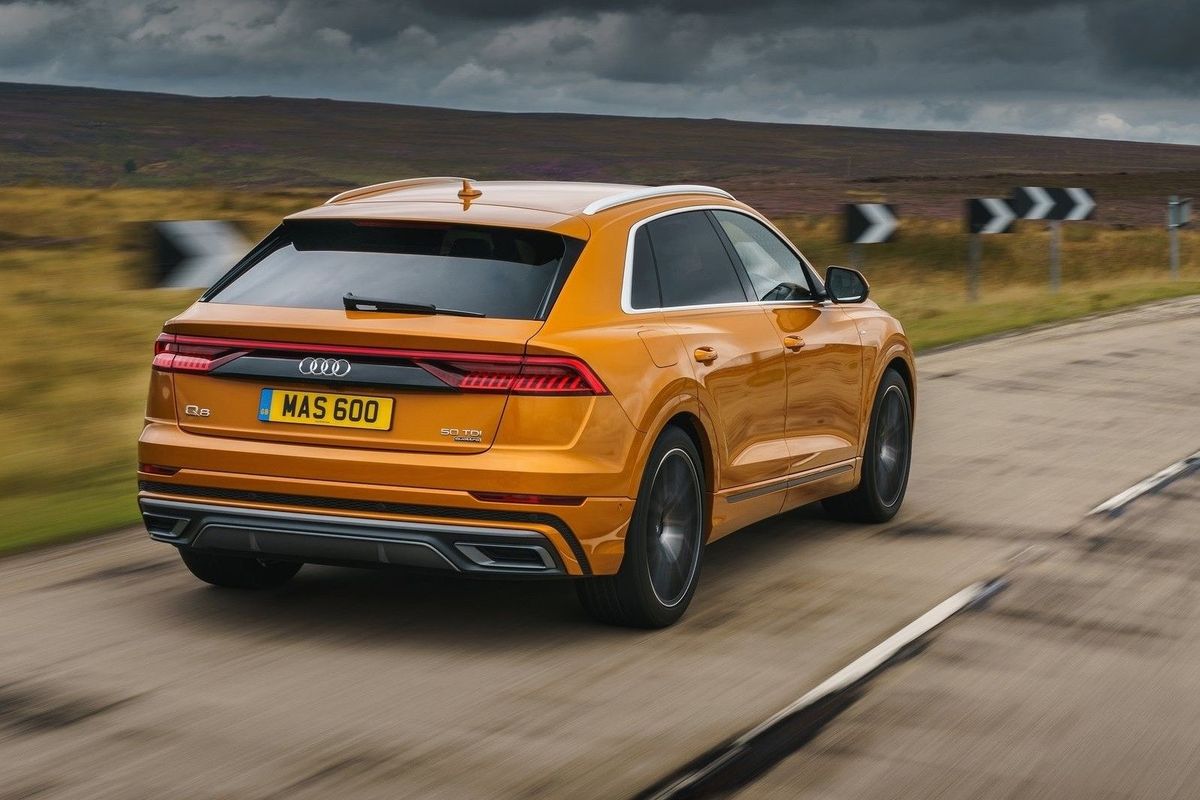
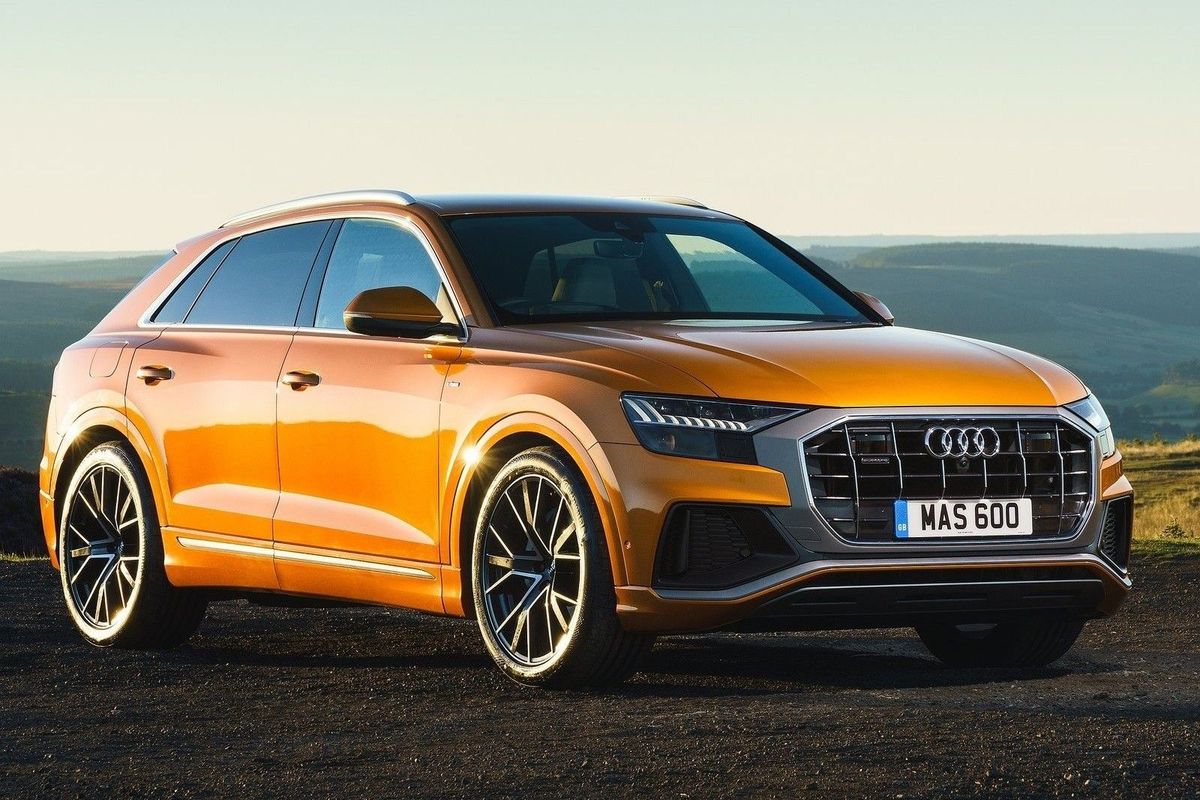
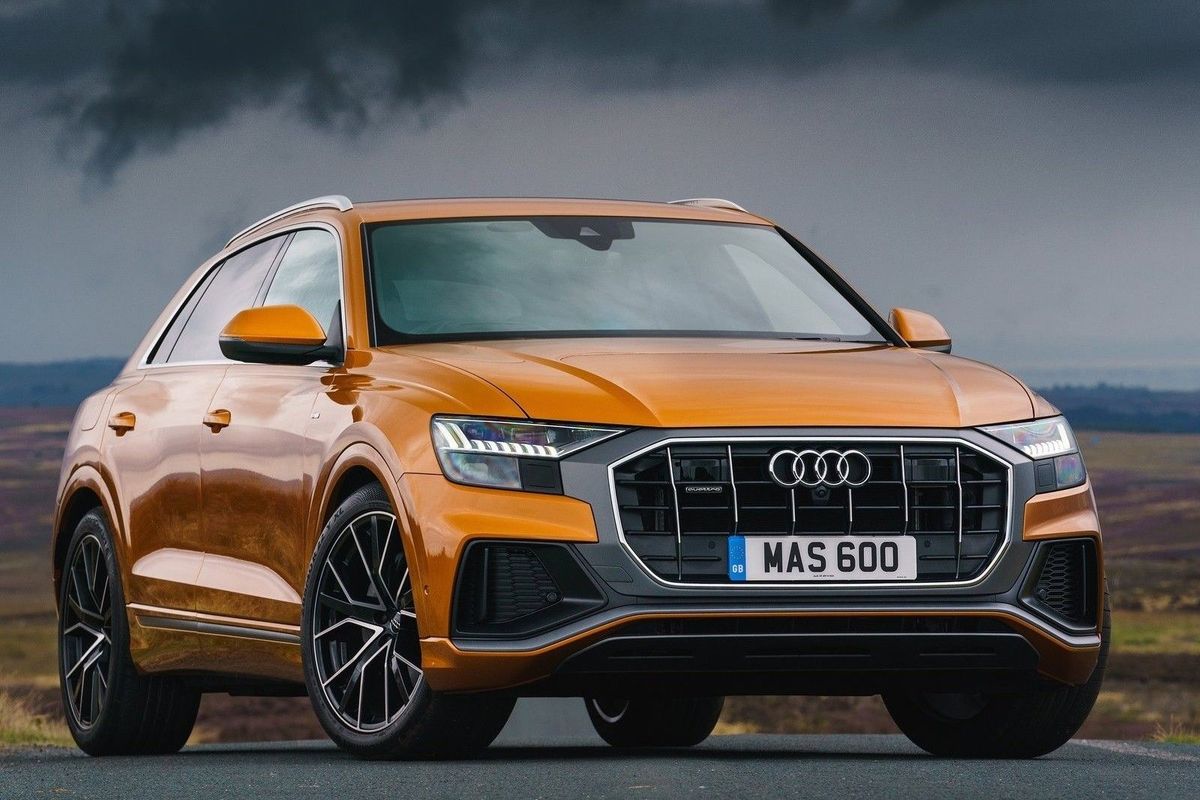
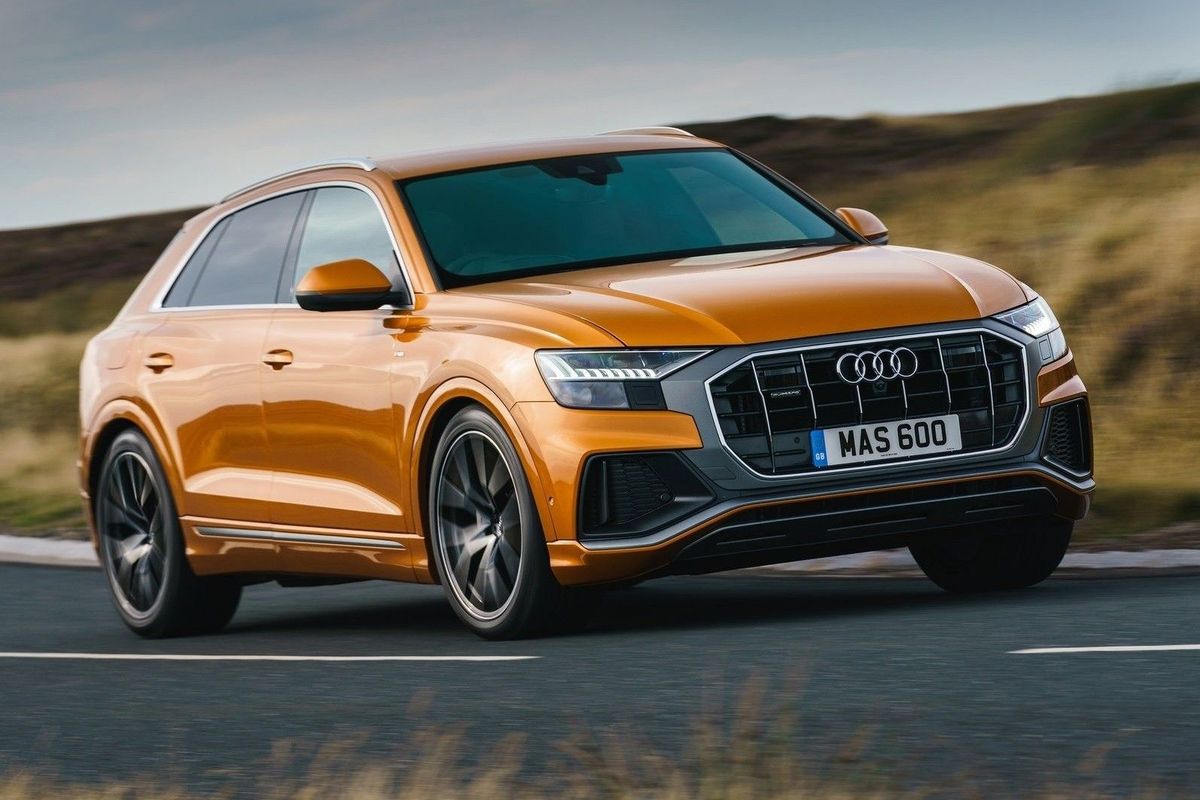
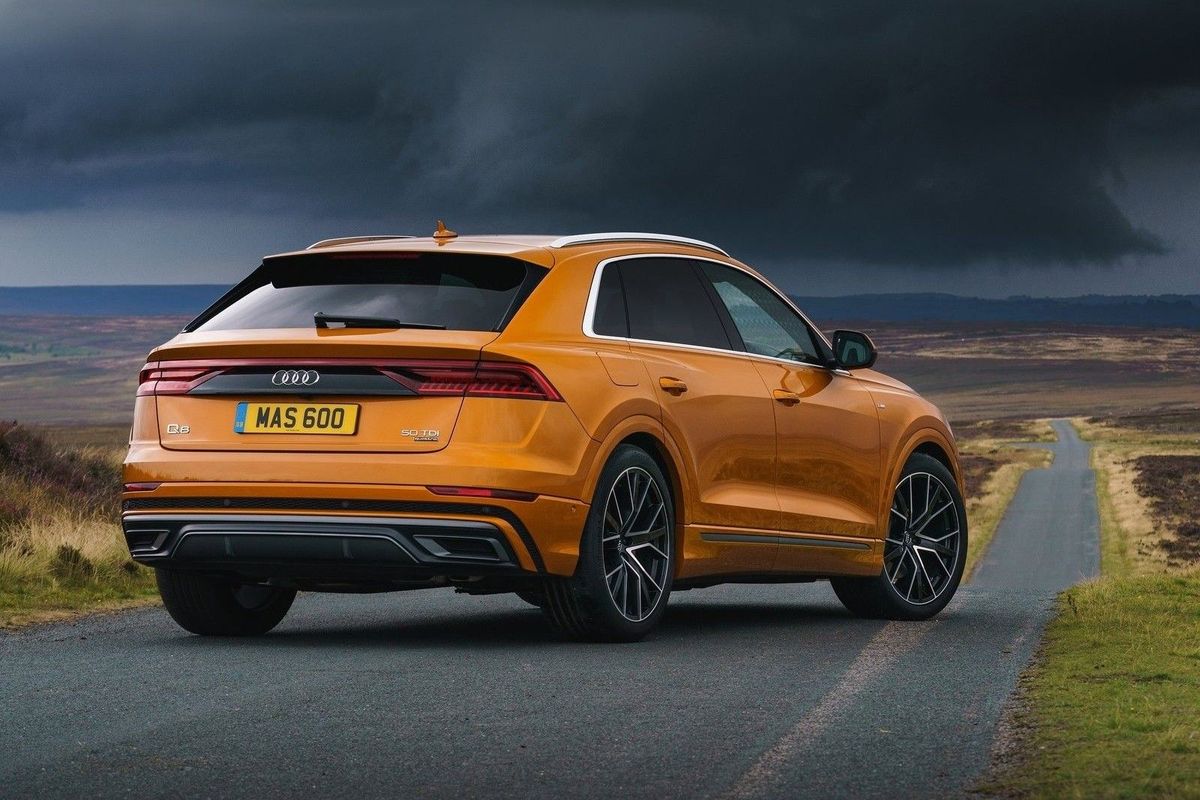
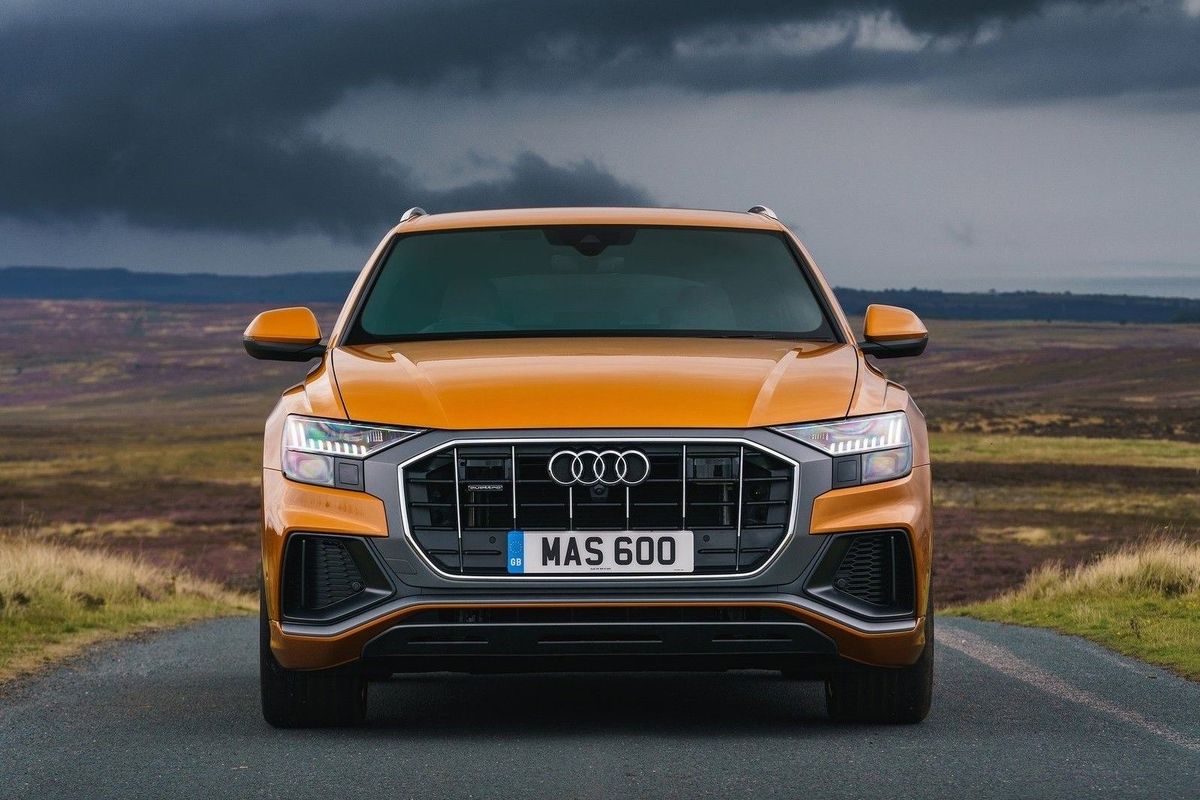
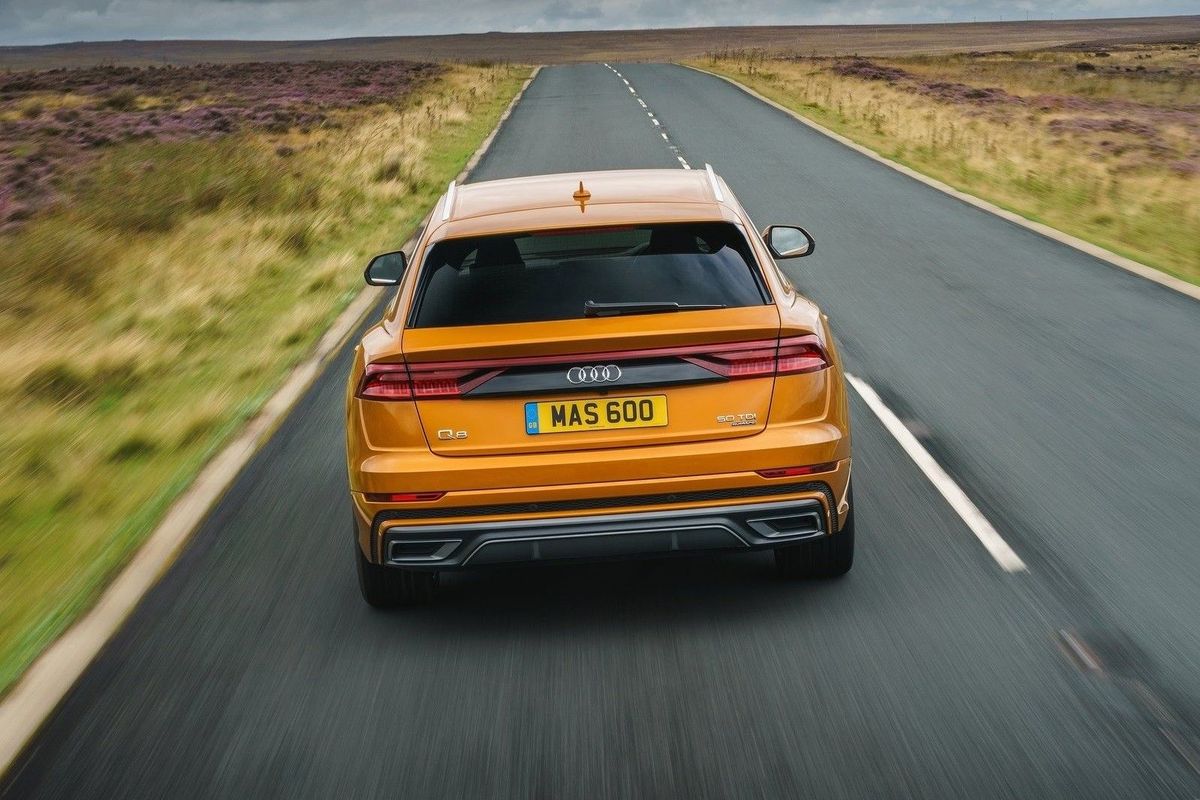
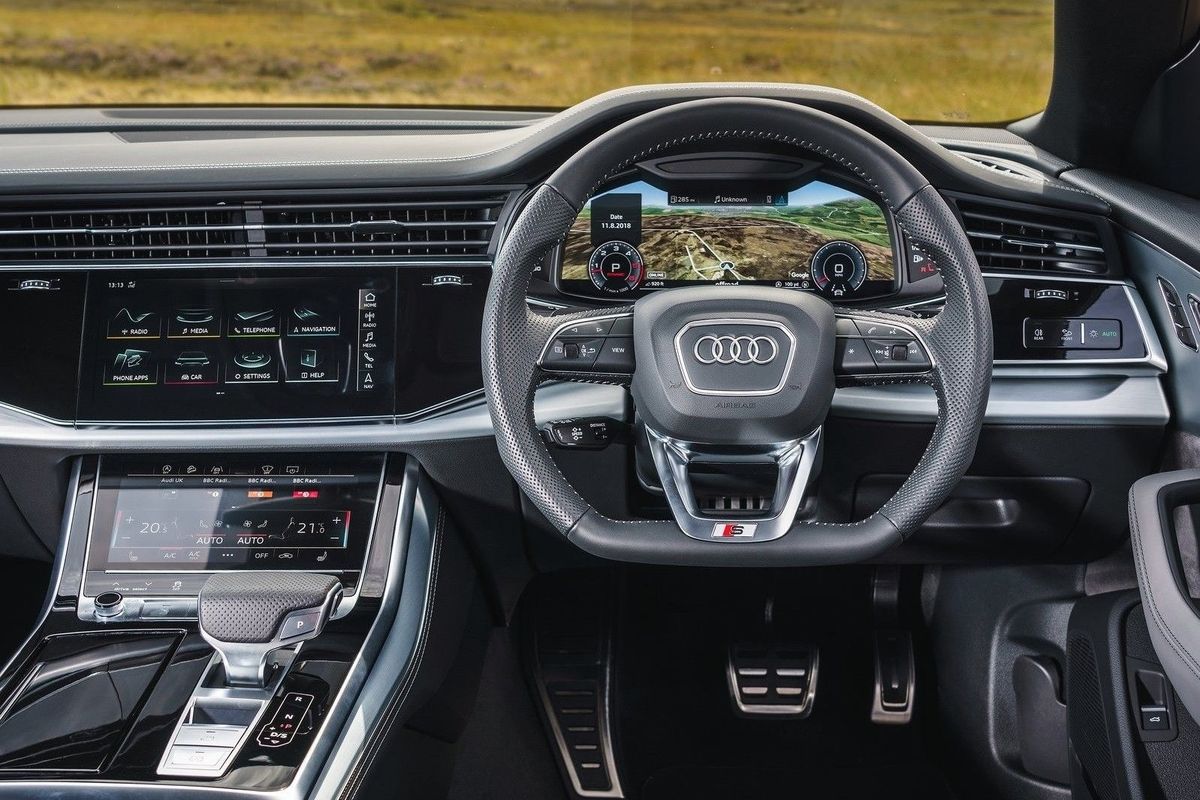
Audi South Africa has finally introduced the Q8 to our shores. Available immediately with a turbopetrol engine, with a turbodiesel to follow, the Audi Q8 is Ingolstadt's flagship SUV offering. Here's how much it costs and its specifications.
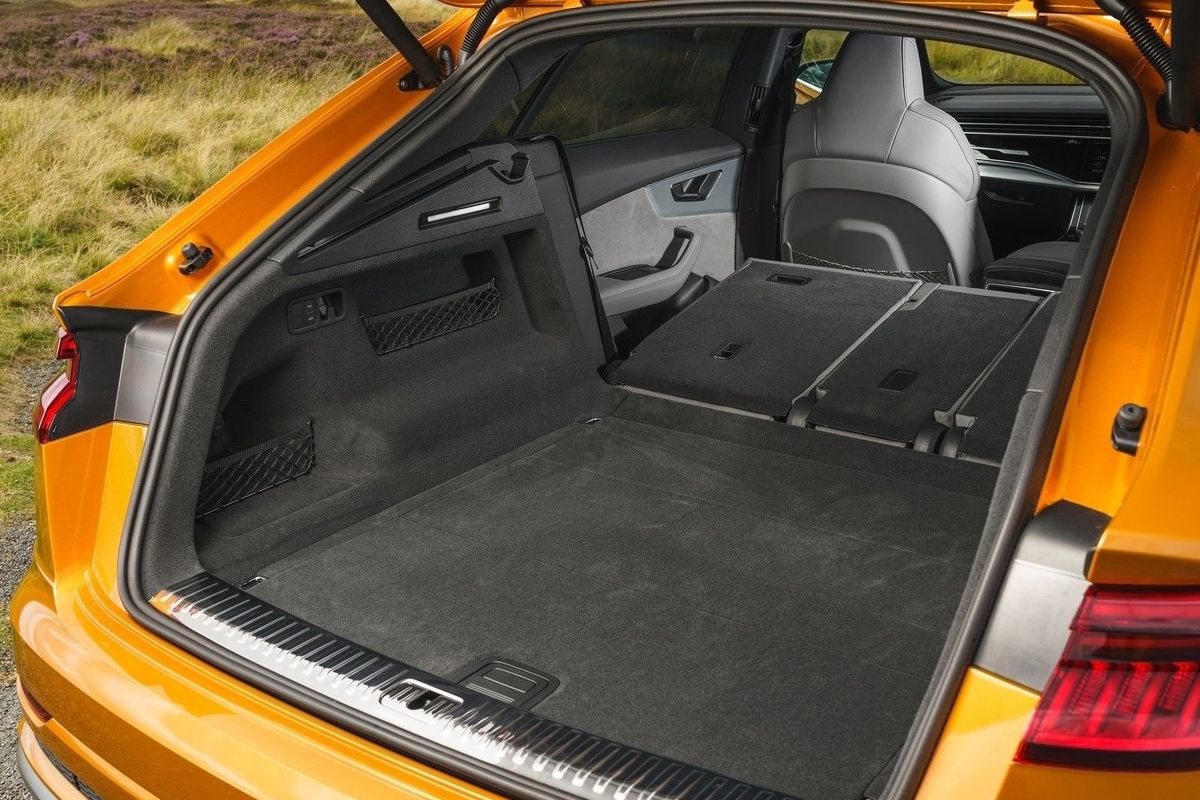
The Audi Q8 is a striking luxury SUV from the German brand. At 4.99 meters long, 2.00 meters wide and 1.71 meters tall, the Q8 SUV coupé is wider, shorter and lower than its Q7 sister model. With a wheelbase of nearly 3 meters, it offers a spacious cabin. With the rear bench folded down, the boot space is massive, with up to 1 755 litres of carrying capacity.
The new Audi Q8 is available with 2 engines. Right from the launch is the Audi Q8 55 TFSI which is a 3.0-litre turbocharged V6 with 250 kW and 500 Nm. Audi claims a 0-100 sprint in just 5.9 seconds, with an electronically limited top speed of 250 kph. The second engine will go on sale from the middle of 2019. It's the Q8 45 TDI with a 3.0-litre turbocharged diesel motor with 183 kW and 600 Nm. The Audi Q8 has an 85-litre fuel tank. In terms of offroad capability, the Audi Q8 boasts 254 mm of ground clearance, short overhangs and quattro permanent all-wheel drive as well as hill descent control.
The Audi Q8 has arrived in South Africa and being the flagship product, equipment levels are high.
Audi Q8 Standard Features
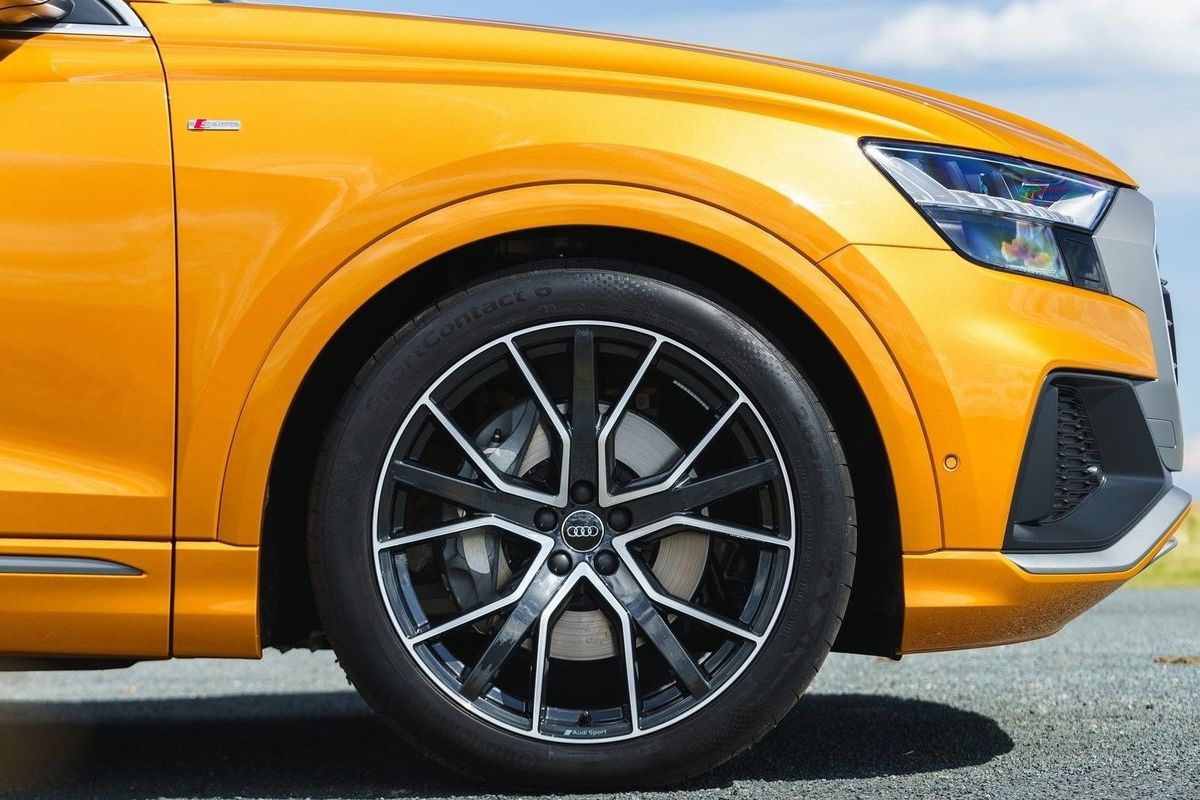
From launch, there are 12 launch colours, including this magnificent Dragon Orange which is exclusive to the Q8. Standard specification is high, which is to be expected at this price point.
4-way lumbar support for the front seats
Additional front underbody guard
Anti-theft wheel bolts and loose wheel warning
Audi connect (Limited features)
Audi drive select
Audi music interface in the rear seat area
Audi pre sense basic
Audi smartphone interface
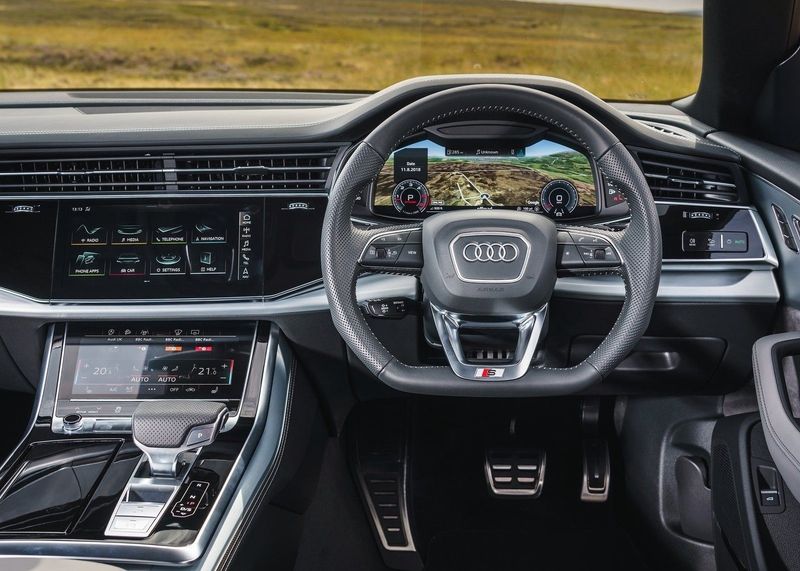
Audi virtual cockpit
Auto-dimming interior rear-view mirror, frameless
Bluetooth interface
Body-coloured bumpers (full paint finish)
20 inch Cast alloy wheels, 5-arm style, 9J x 20
Collapsible spare tyre
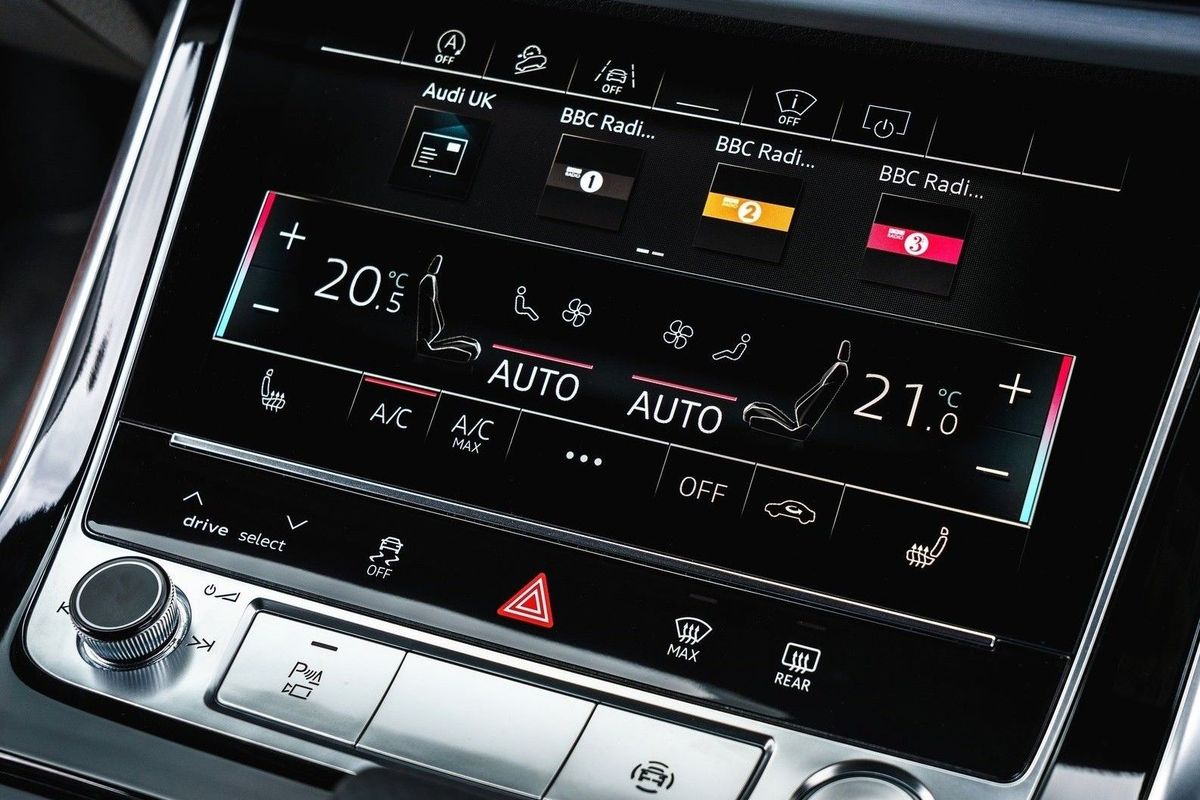
Comfort automatic air conditioning system, four-zone
Comfort key with sensor-controlled luggage compartment release
Contour/ambient lighting package
Cruise control system incl. speed limiter
Electric steering wheel adjustment
Electromechanical power steering
Exterior mirrors, power-adjustable, heated, folding, auto-dimming with memory, front pass. ext. mirror lowering function
HD Matrix LED headlamps with dynamic turn signal
Headlamp washer system
Headlight range control
High-Gloss styling package
Hold assist
ISOFIX child seat anchors and top tether for the rear bench seat
ISOFIX child seat anchors for the front passenger seat
Cricket Leather upholstery
Leather steering wheel, 3-spoke, with multi-function Plus and shift paddles
LED rear combination lamps with dynamic turn signal and animation
Luggage compartment cover
Luggage compartment lid, electrically opening and closing
MMI Navigation plus with MMI touch
MMI Radio plus with MMI touch response
Mild hybrid chassis
Operating buttons in black glass look with haptic feedback including extended aluminium look
Panoramic glass sunroof
Parking aid Plus with 360° display
Power-adjustable front seats including memory feature for the driver seat
Bang & Olufsen sound system with 3D sound
quattro (with self-locking centre differential)
Rear bench seat Plus
Regenerative braking
Roof spoiler including centre high-mounted stop lamp
Scuff plates with aluminium inserts in front and rear, illuminated, with "S" logo in front
Seat heaters in front
Side airbags in front and curtain airbag system
Stainless steel loading edge protection
Standard suspension with damper controls
Surround view cameras
Tyre pressure monitoring system
There are 3 S line packages are available locally to order: the S line Black, S line Platinum and S line Sports packages:
S line Black package (S line exterior; high gloss black package; exterior mirror in black; black roof rails; 22" wheels; Adaptive air suspension; brake callipers in red)
S line Platinum package (S line exterior; single frame mask in platinum grey; 22" wheels; Adaptive air suspension; brake callipers in red)
S line Sports interior package (4-way lumbar support for front seats; adaptive air suspension sport; decorative inserts in matte brushed aluminium; headlining in black; pedals and footrest in stainless steel; S line logos on exterior; scuff plates with aluminium inserts in front and rear and illuminated with S logo; sport seats in front and stainless steel load edge protection)
Audi Q8 Price in South Africa (May 2019)
All Audi Q8 models come with a 5 year / 100 000km Audi Freeway plan.
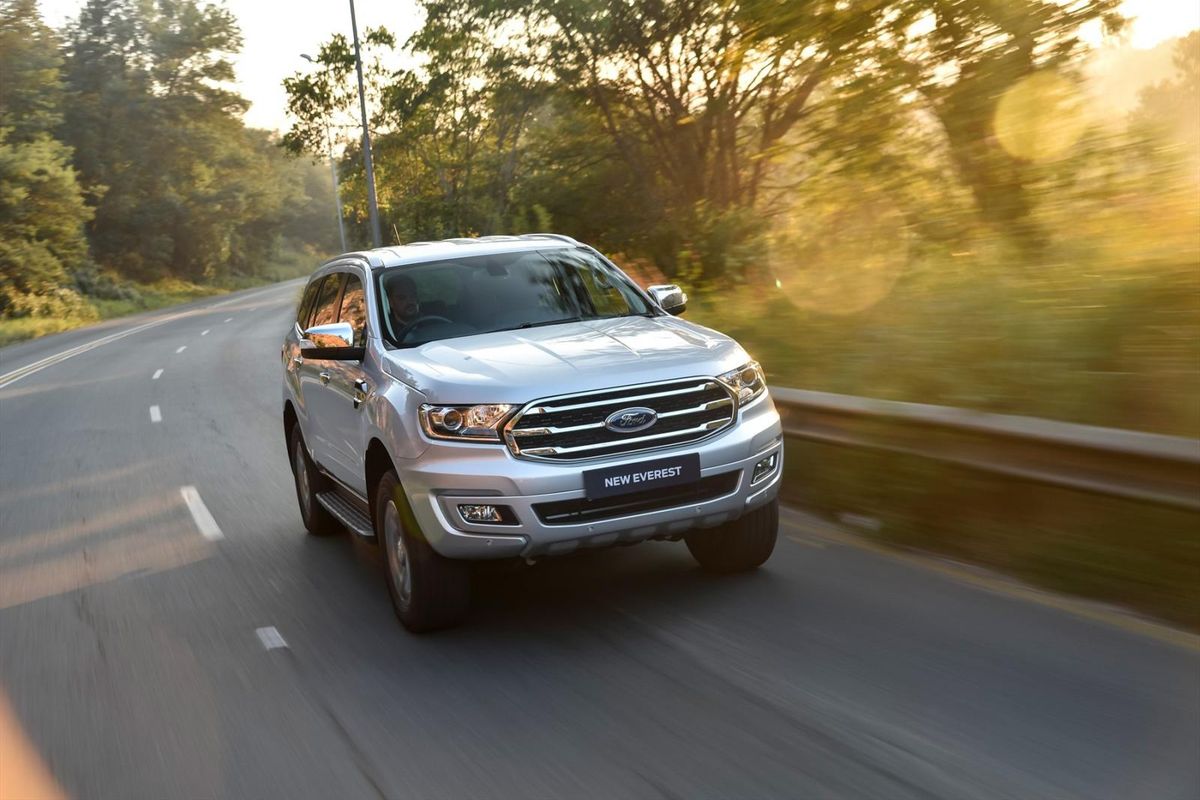
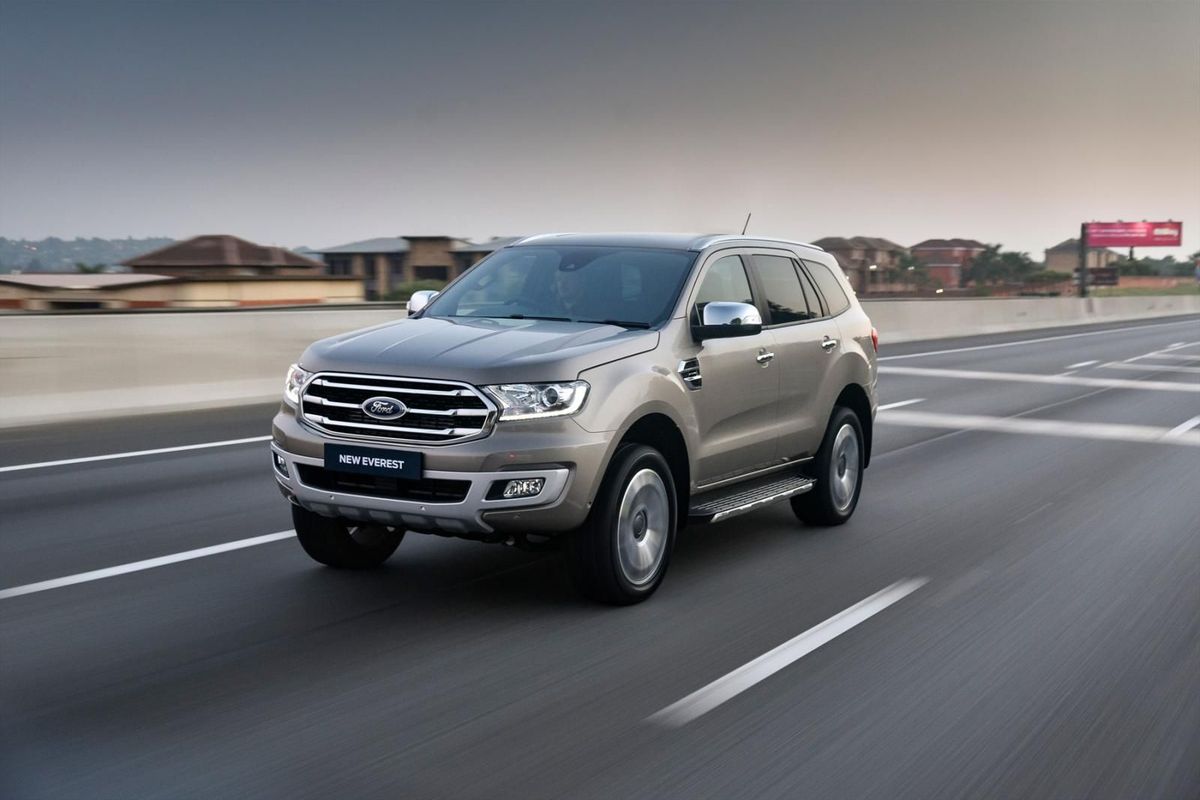
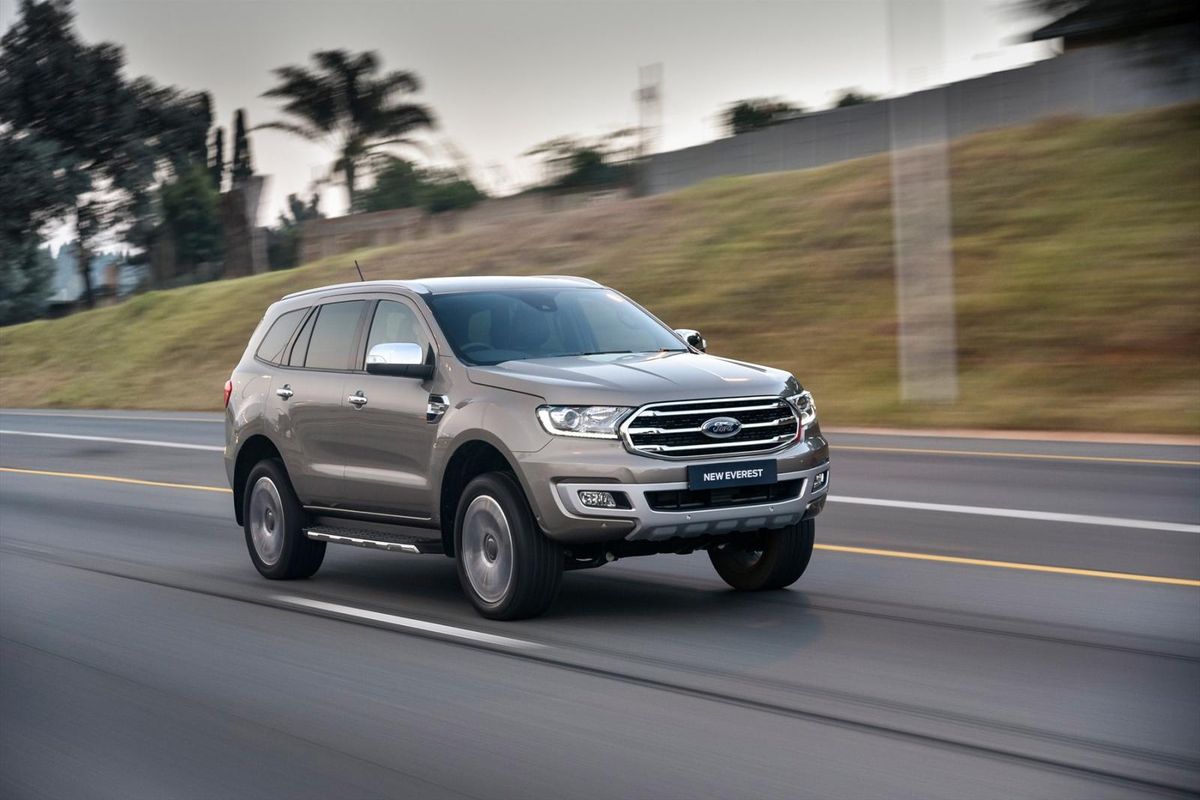
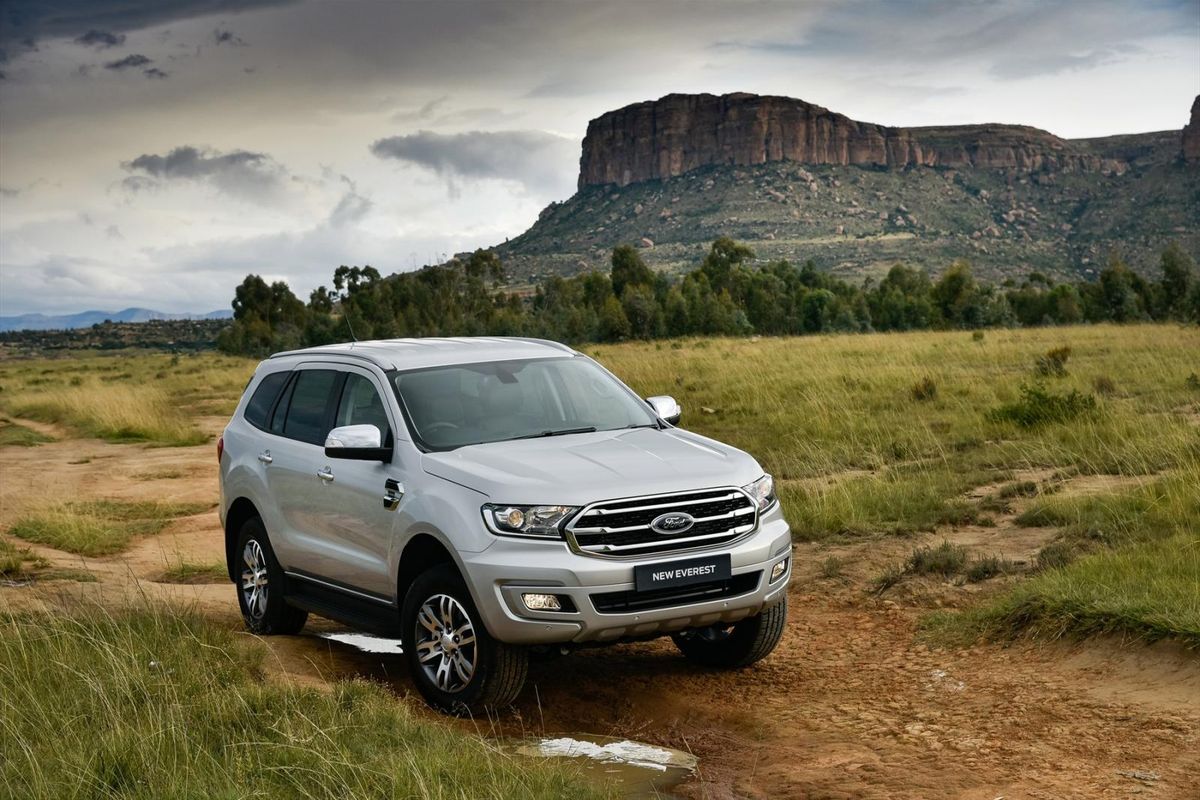
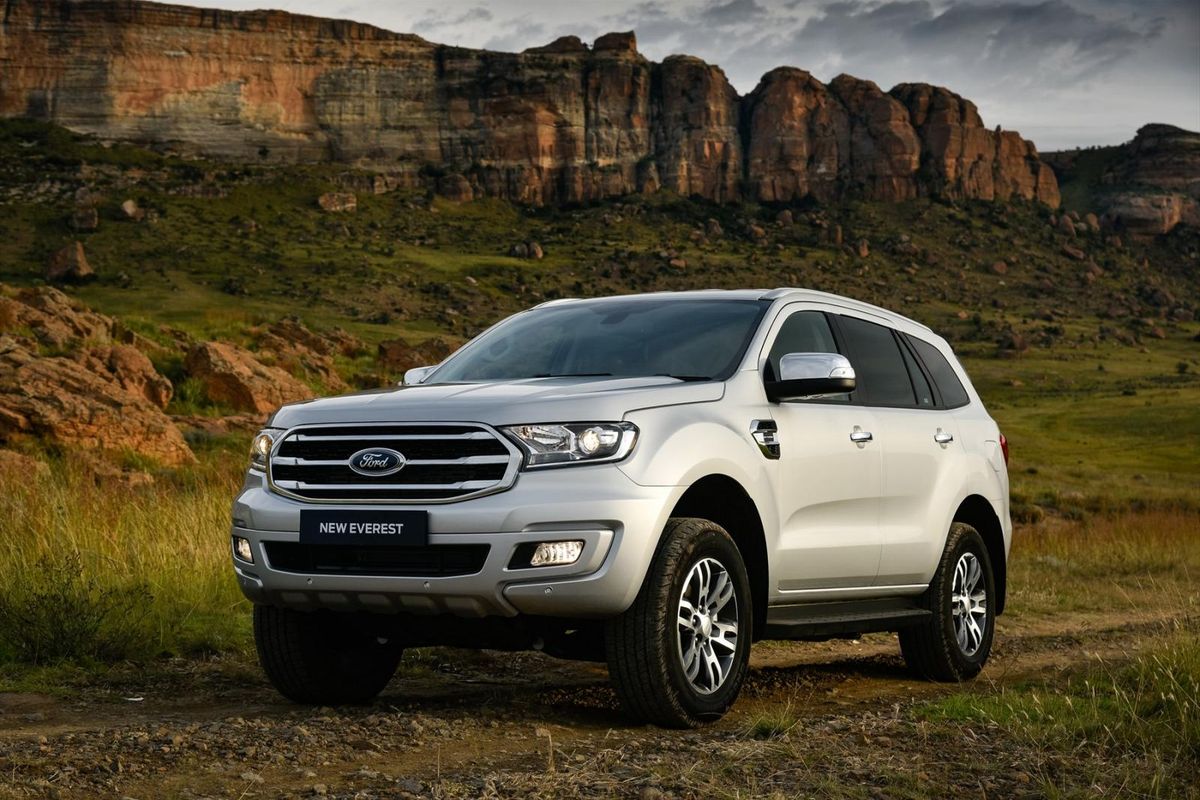
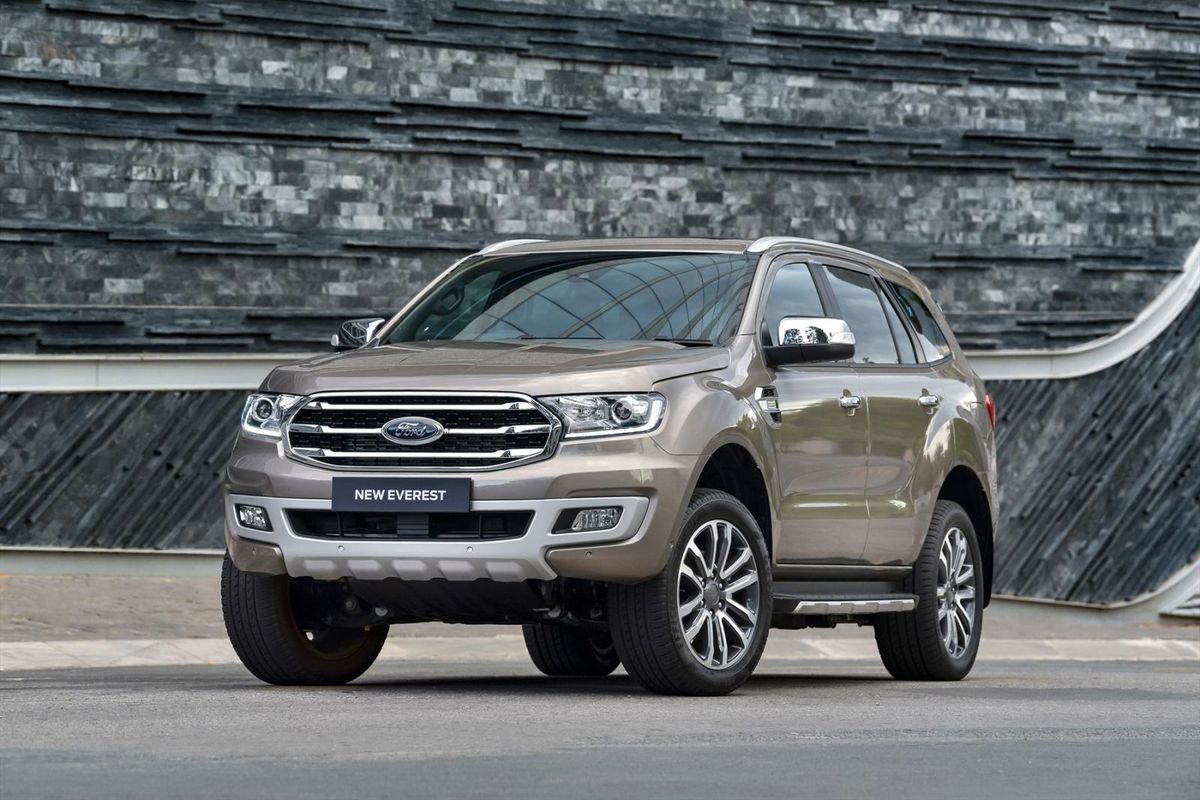
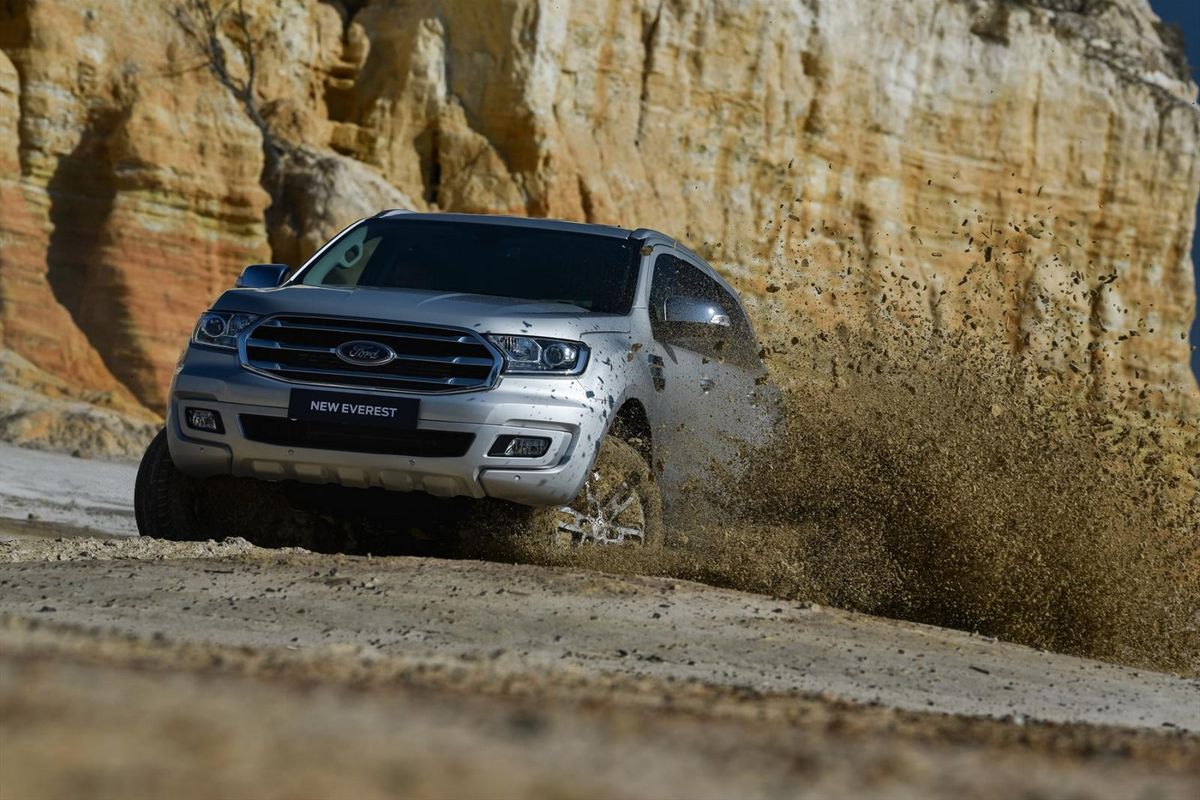
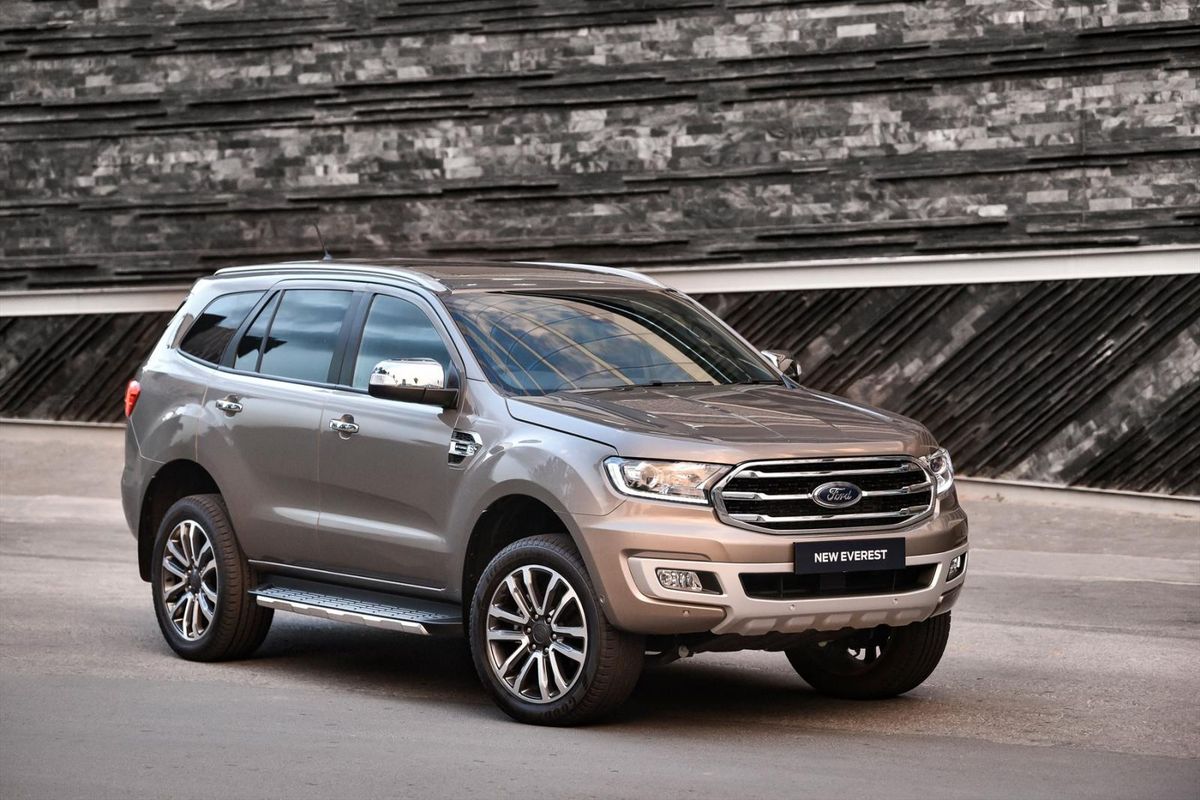
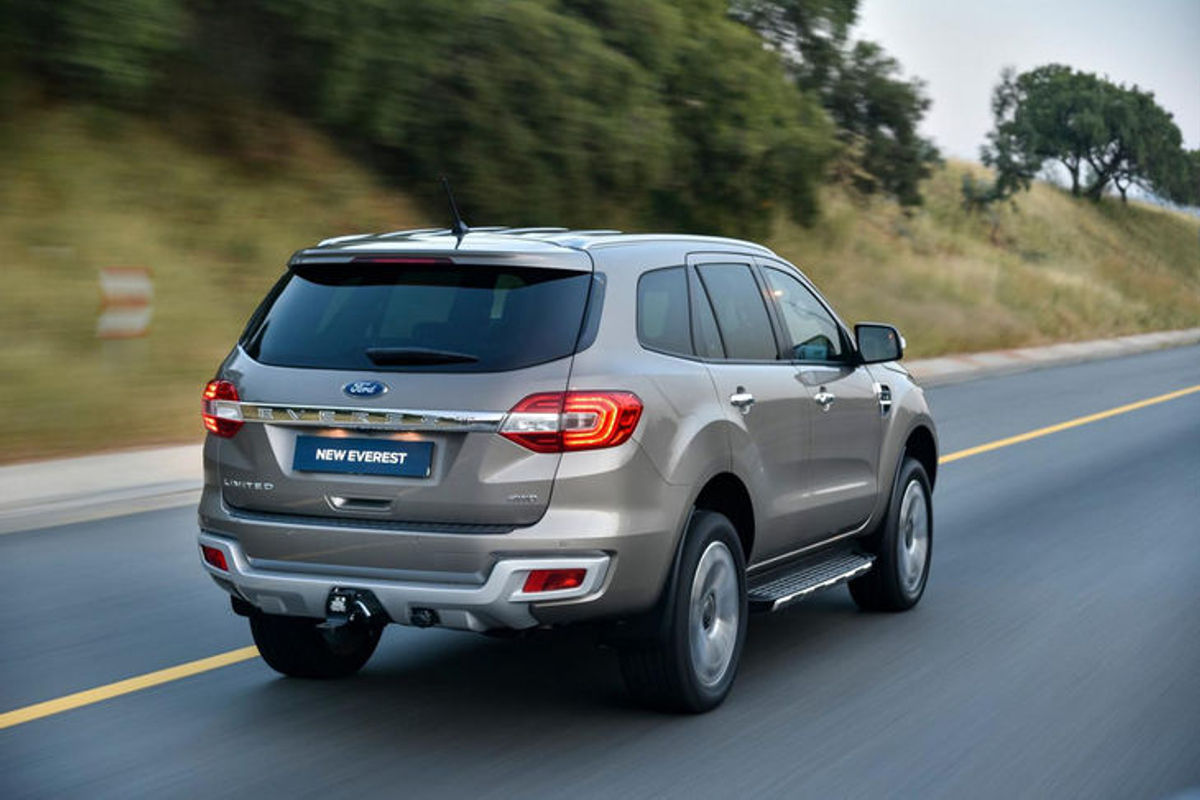
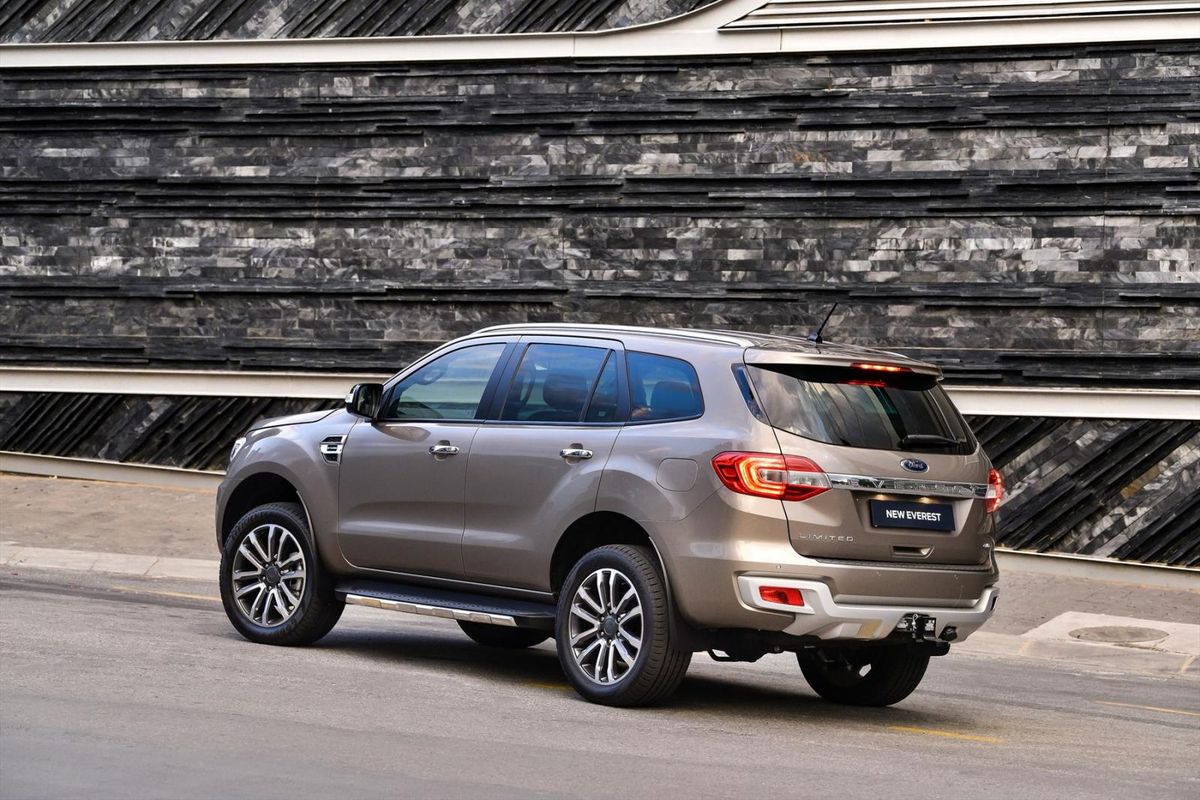
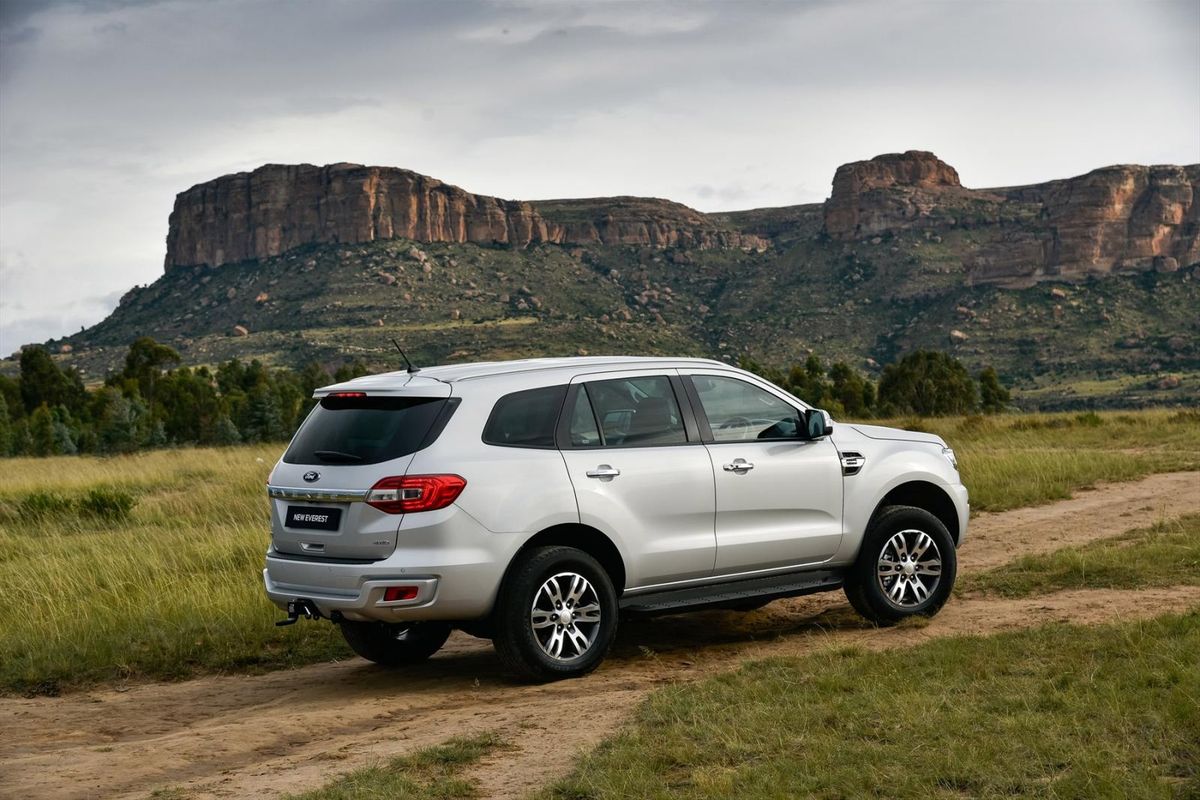
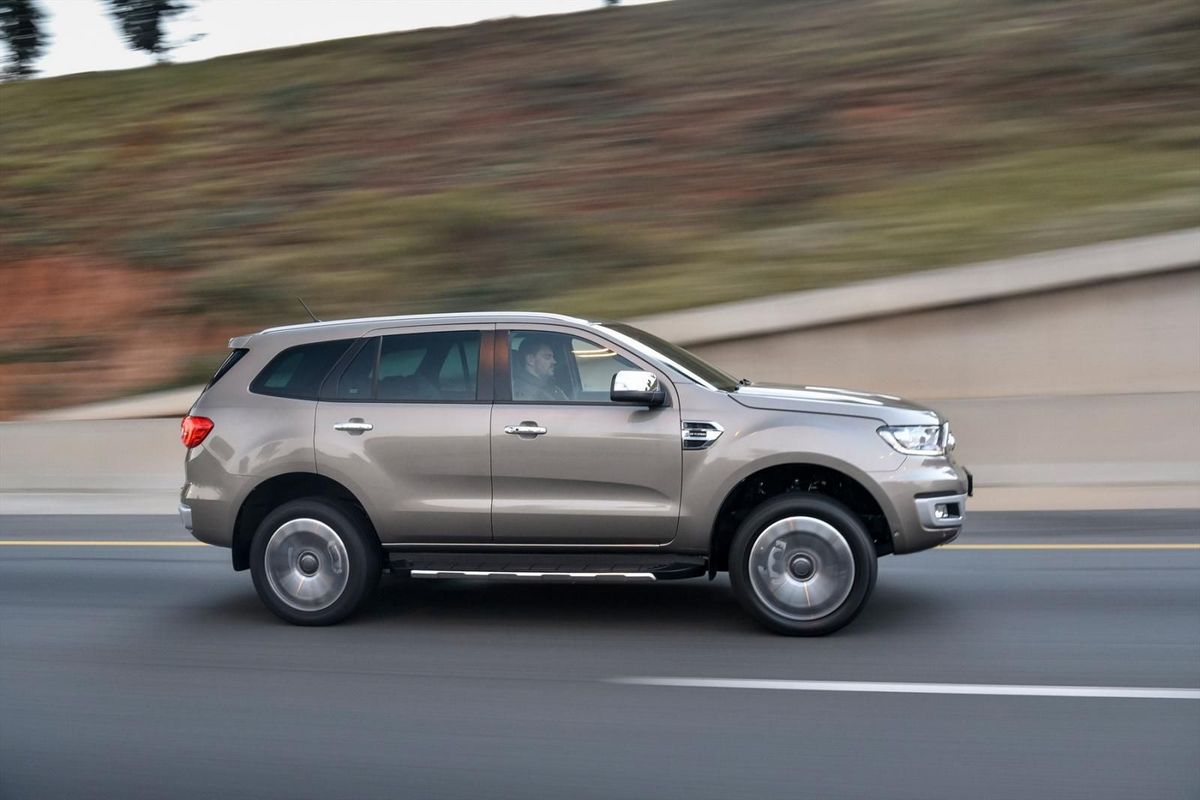
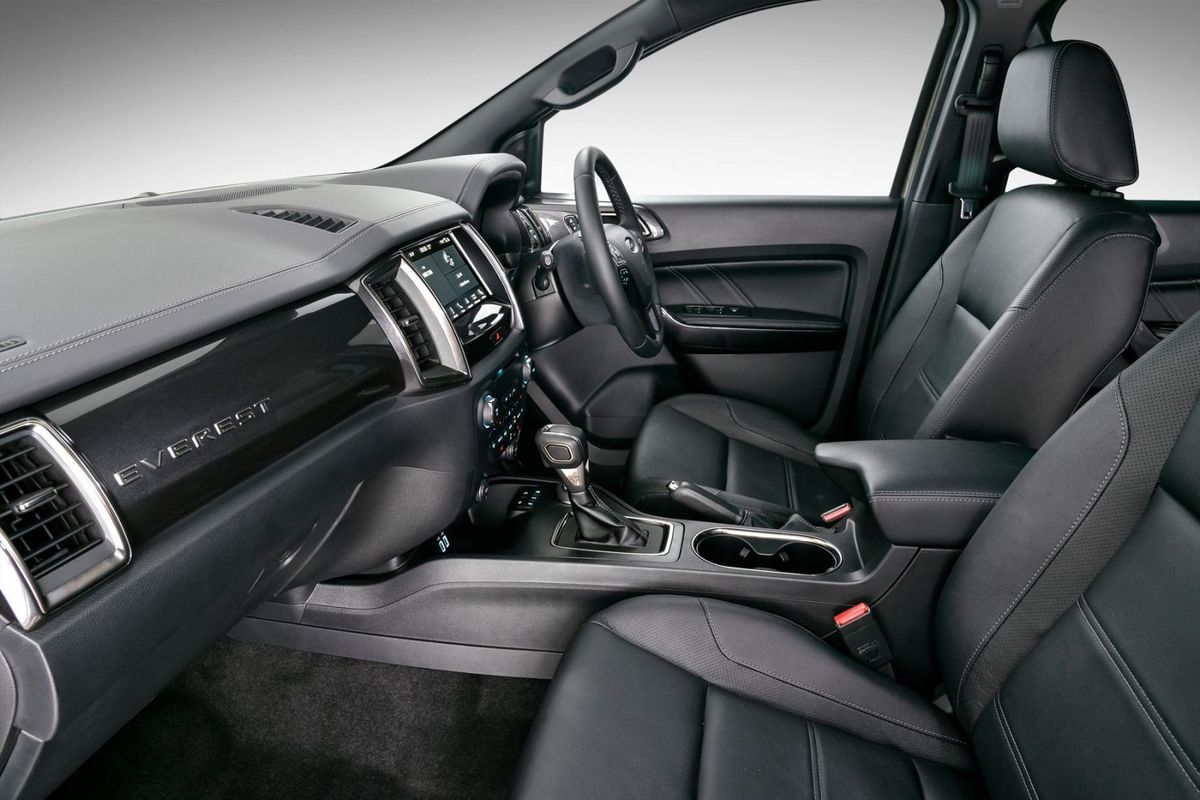
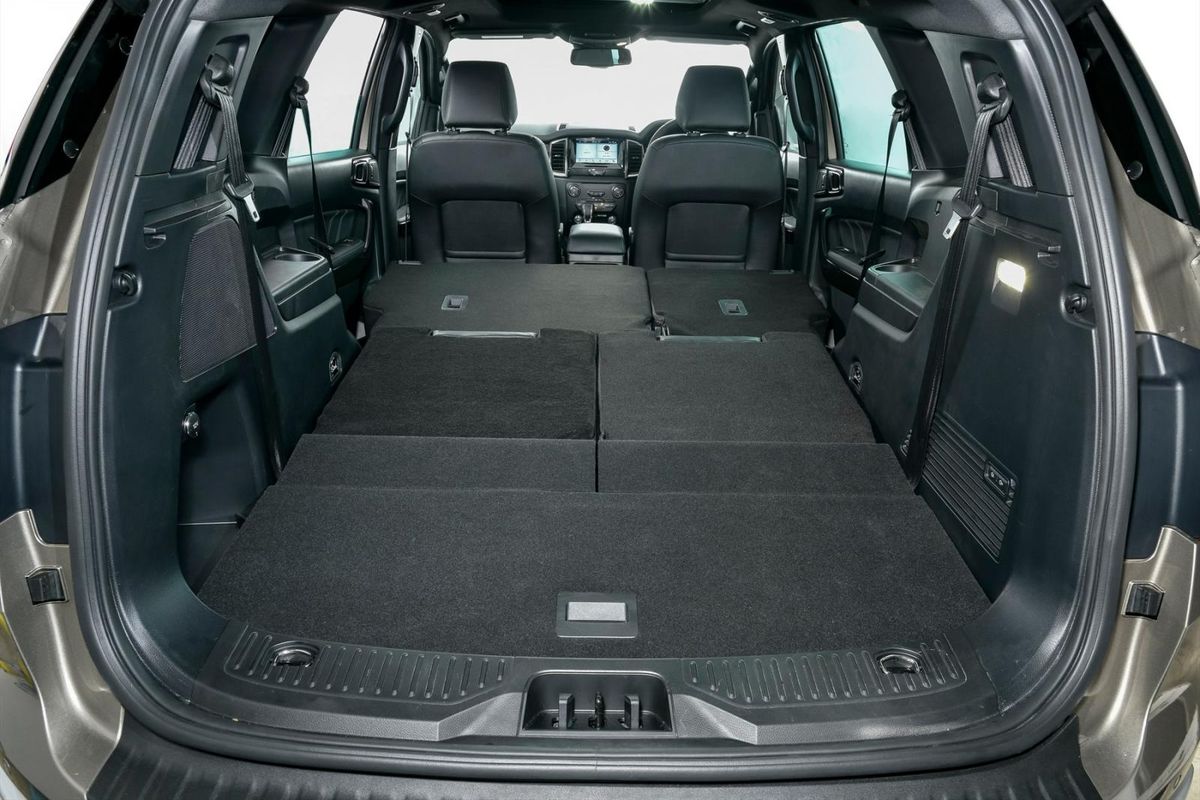
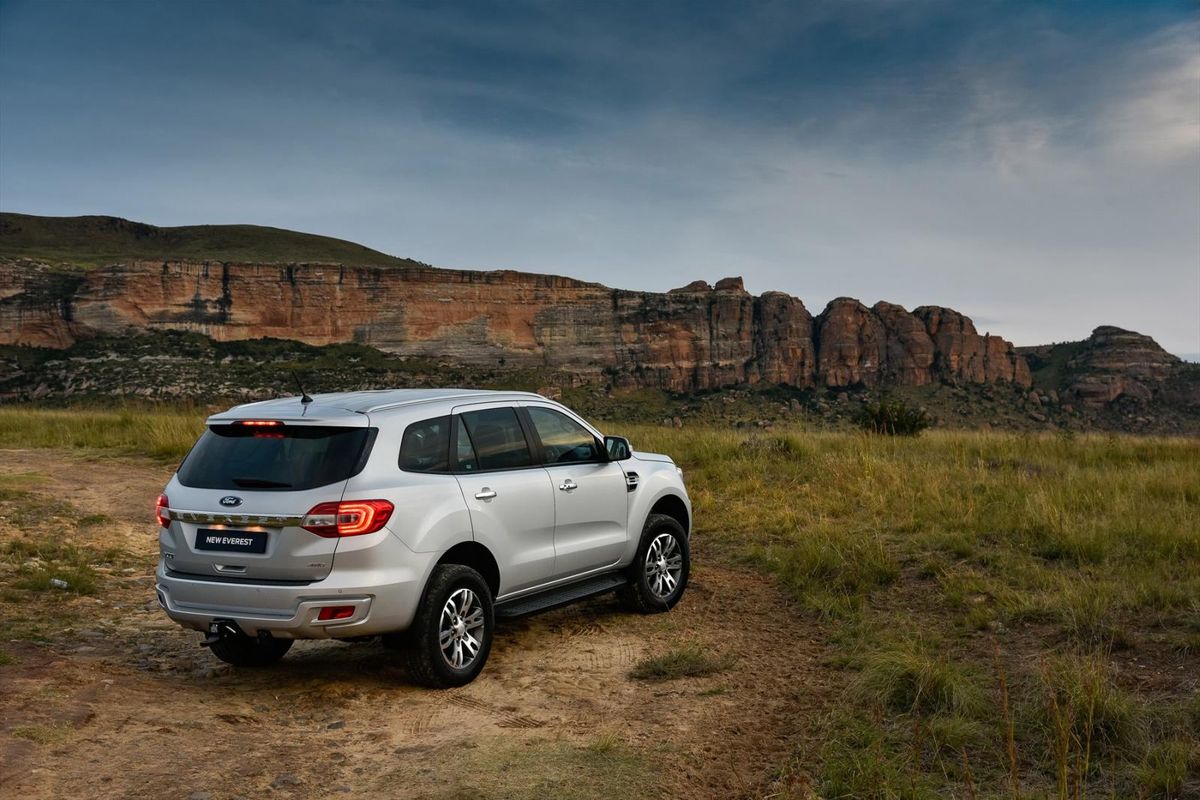
In parallel with the recent upgrade to its Ranger line-up, Ford has introduced a range of styling, suspension, powertrain and feature upgrades to its Everest 7-seater Adventure SUV. See details below…
Upmarket looks
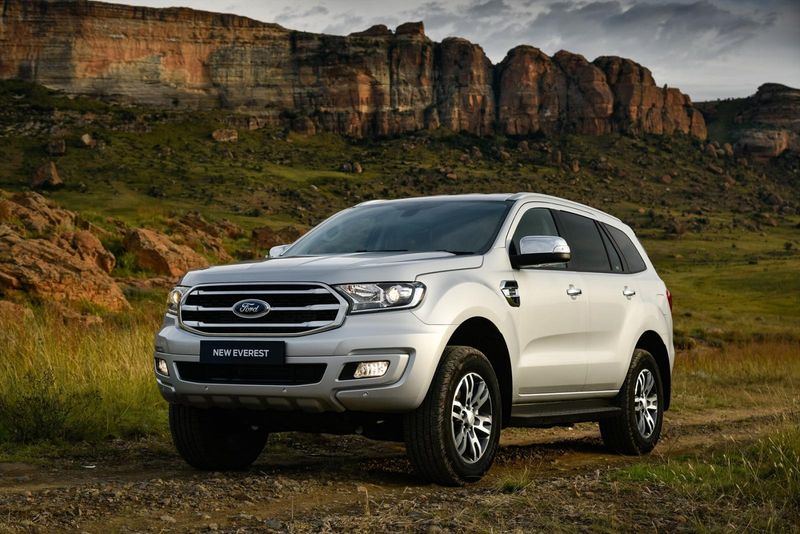
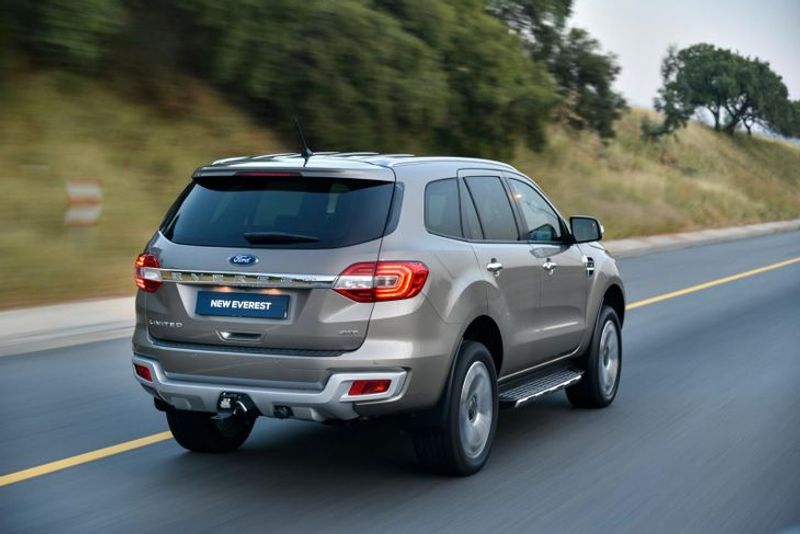
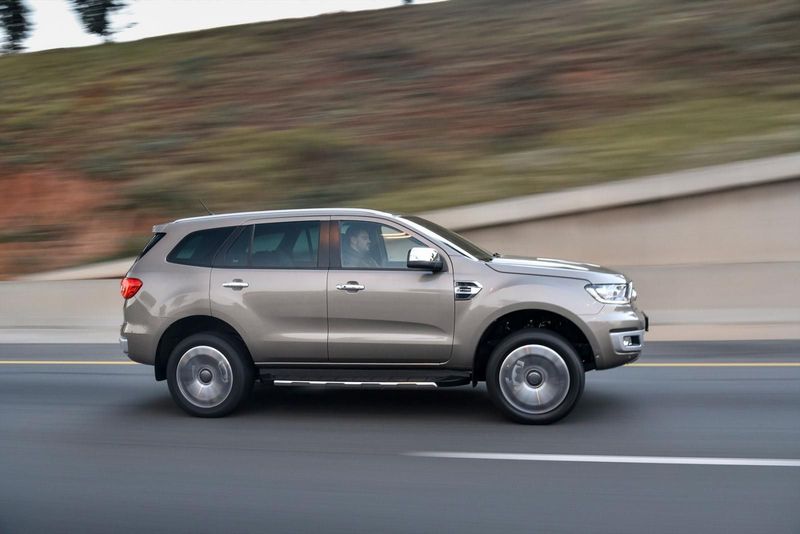
The latest Everest now features a more refined and accomplished look.
The Everest has traditionally been the most glamorous-looking of the Adventure SUV troop and that looks set to continue with a raft of tasteful aesthetic updates. From the front, the Ford features a refreshed chrome-look grille with 3 distinctive grille bars, a revised lower bumper with a horizontal-beam insert, while a new 20-inch wheel features on the Everest Limited.
There are a few subtler detail updates too. The grille includes a secondary mesh texture to contrast with the brightwork and the metallic accents move from a single-layer satin metallic to a two-layer glossy metallic paint, while the wheel accent paints are now of a darker hue.
New interior trim and features
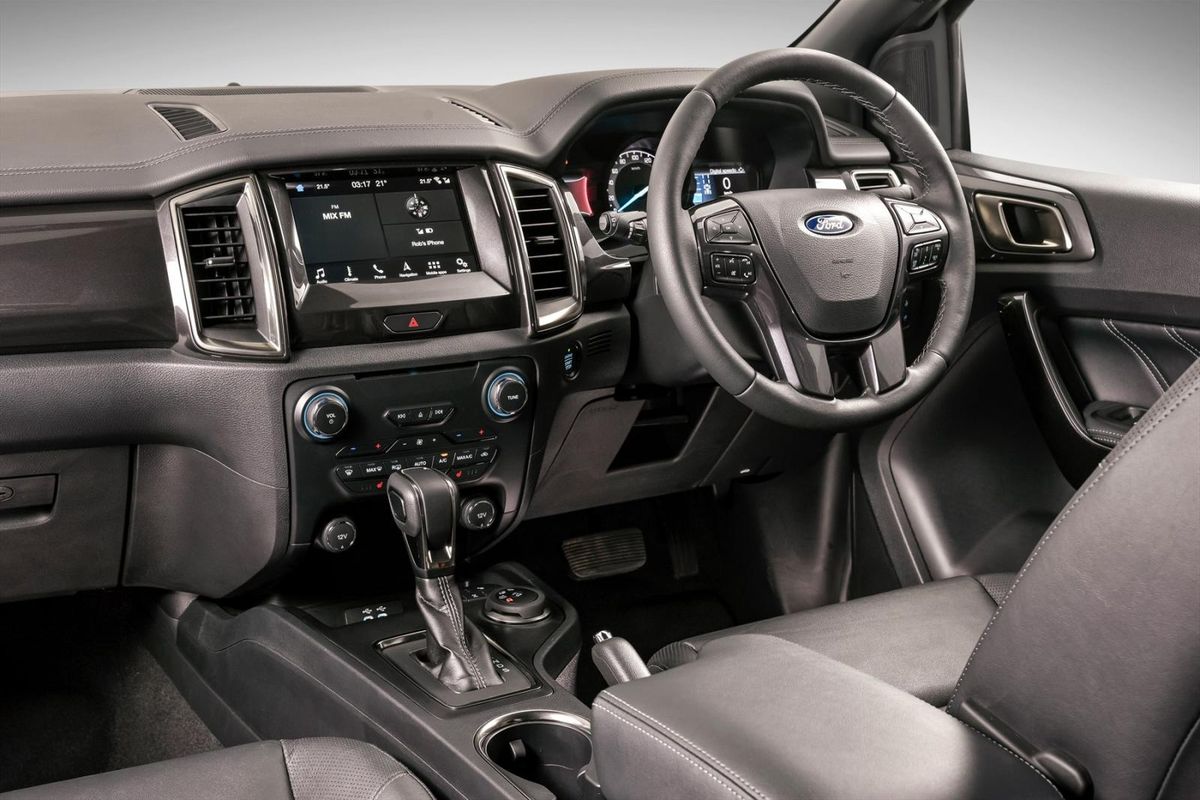
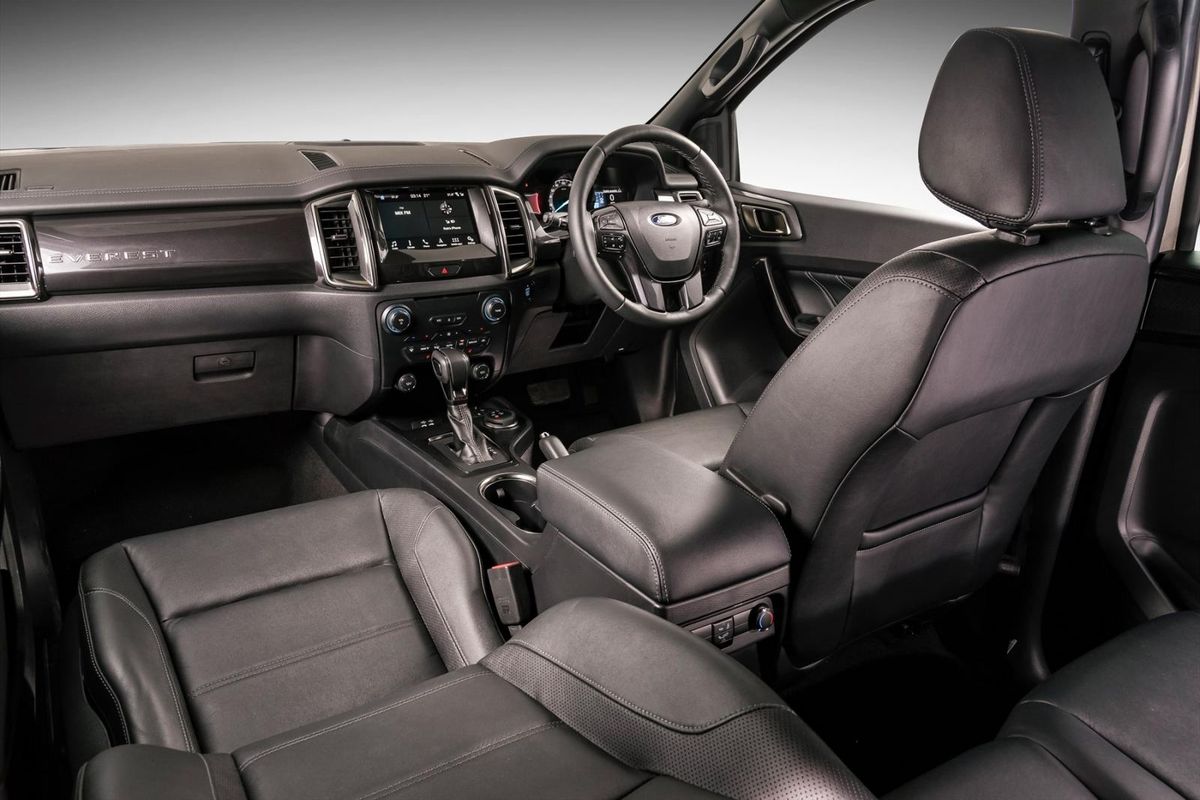
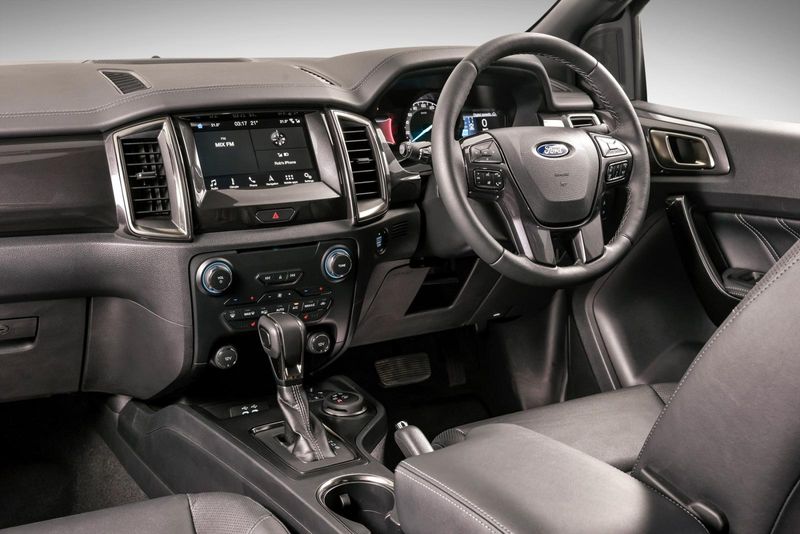
High-grade derivatives are equipped with SYNC3 and revised trim adds premium appeal to the Everest's interior.
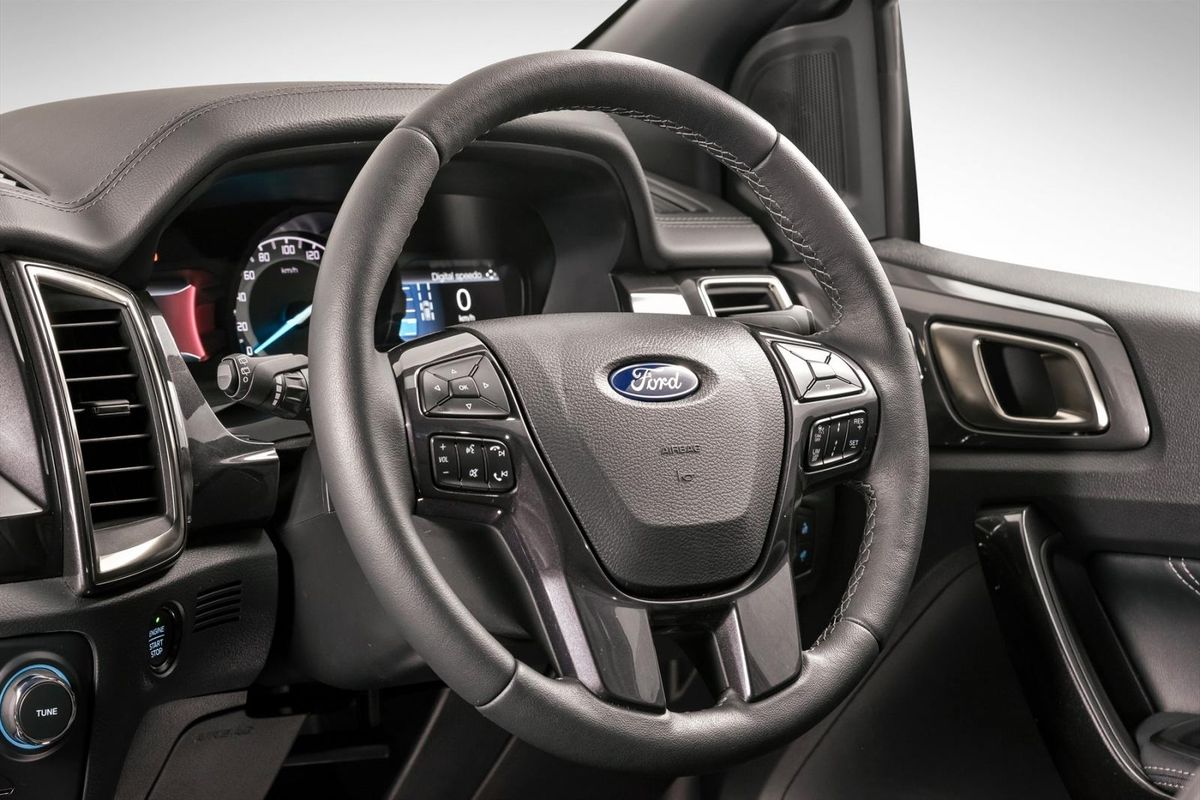
With the implementation of Ebony cabin material, complemented by a wider selection of soft-touch materials, the interior feels more upmarket and allows the details and brightwork to stand out better. The top-of-the-range Everest Limited is distinguished by contrast stitching, “shadow chrome” finishes, perforated leather and a bold new transmission lever.
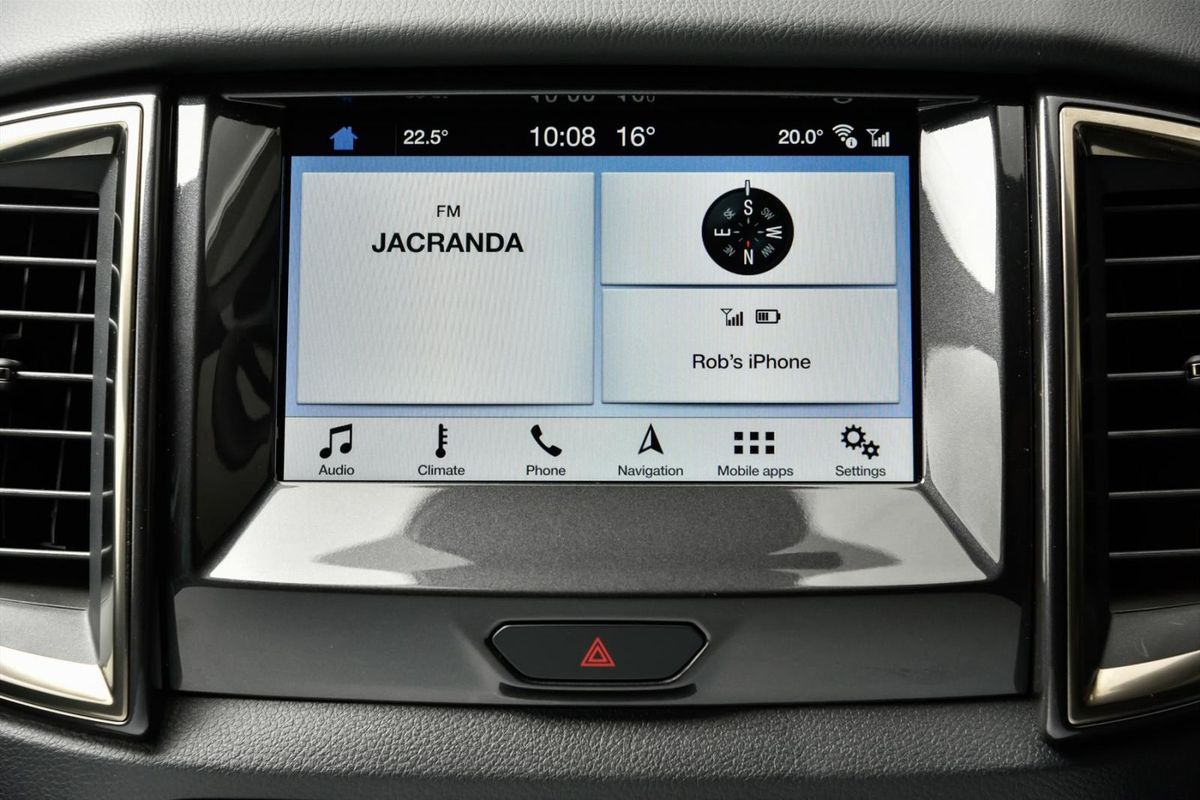
Whereas the entry-level XLS features Ford’s SYNC1 4.2-inch infotainment system (with Bluetooth voice control and audio streaming, as well as USB and auxiliary ports) as standard, the impressive SYNC3 8-inch infotainment system, with 3D navigation (including elevated map view, enhanced graphics and point-of-interest images) and Apple CarPlay/Android Auto compatibility is fitted to XLT and Limited derivatives.
The system, which is complemented by 2 USB ports and Bluetooth connectivity, supports multi-touch gestures (such as swipe, slide, scroll and pinch-to-zoom), plus voice recognition. Tracks4Africa is included in the package, as well as maps for over 20 countries in Africa. Free annual map updates are included for a period of 5 years, and the text and voice guidance functions are available in a multitude of languages, including Afrikaans and isiZulu!
New engine and transmission
New 2.0-litre engines join the range along with a new 10-speed automatic transmission.
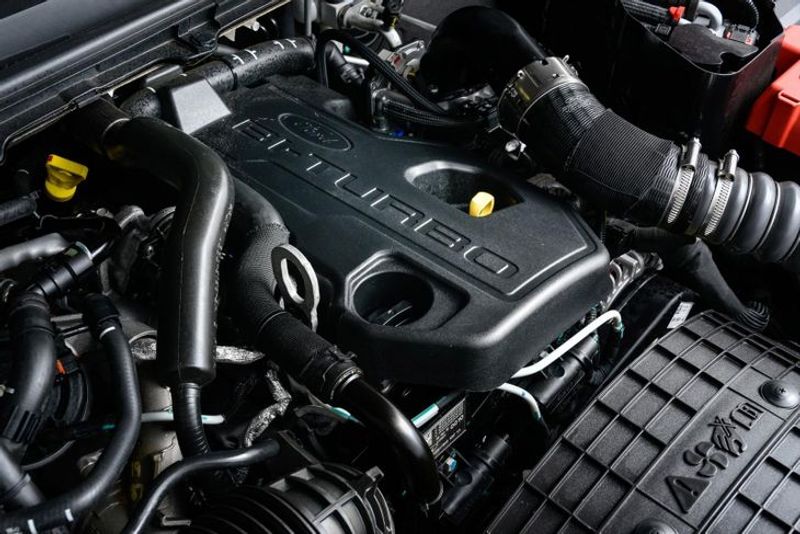
Of course, the updated Ranger’s new 2.0-litre turbodiesel engines – a 157 kW/500 Nm bi-turbo and 132 kW/420 Nm single turbo – have been carried over to the Everest. Not only are they quieter and more refined than the current offerings – they offer lower levels of vibration (which reduces NVH). The bi-turbo, which produces 10 kW and 30 Nm more than the existing 3.2-litre TDCi engine, is available in the XLT 4×2, XLT 4×4 and the Limited.
The single turbo (with up to 340 Nm at 1 250 r/min) is available in XLT 4×2 specification. The previous range’s 2.2-litre Duratorq TDCi engine, with 118 kW and 385 Nm, features in the XLS 4×2, while the 3.2-litre 5-cylinder TDCi engine, with 147 kW and 470 Nm, is still offered in XLT 4×4 guise. Both motors are mated with a 6-speed automatic transmission.
The new engines, in turn, are paired with the new 10-speed automatic transmission. Ford claims its transmission is smart – it offers real-time adaptive shift-scheduling (including skip-shift and direct downshift capabilities, if selected by the driver) to ensure that there's no unnecessary hunting for gears and the correct ratio is always selected. The existing Select Shift Transmission (SST) functionality is retained, enabling the driver to switch to Sport mode or shift manually via the + and – buttons on the lever for optimal control.
Reworked suspension
On-road driving comfort has been enhanced with a revised suspension system.
Ford has further reworked the Everest’s suspension to improve on-road pliancy. The anti-roll bar has been repositioned to behind the axle, which improves roll control, which, in turn, facilitates lower front spring rates. Overall suspension pliance, plus steering precision and control has been improved (with 3 damper tunes being adopted in place of the single set-up used previously). The standard tyre pressure has been reduced from 2.4 to 2.1 bar.
Meanwhile, the Everest has a maximum towing capacity of 3 000 kg on the 2.2 TDCi, 3.2 TDCi and single-turbo derivatives. The bi-turbo is rated at 3 100 kg (with a braked trailer).
Safety and security
The updated Everest range is well positioned to increase its influence in the local 7-seat SUV market.
Being a large family car, Ford’s latest-spec Adventure SUV comes equipped with a diverse array of safety features. ABS (including EBD and brake assist) is complemented by an electronic stability control system with traction control, trailer sway control, hill-start assist, hill descent control (on the 4×4 derivatives), load adaptive control and rollover mitigation.
The top-spec Limited additionally features Semi-Automatic Parallel Park Assist (SAPPA), adaptive cruise control with forward-collision alert (which recognises pedestrians, in addition to its ability to detect other vehicles), lane-keeping aid and lane-departure warning, blind-spot monitoring (with cross-traffic alert), tyre pressure sensors, as well as auto high-beam control.
In terms of security, a Passive Entry and Passive Start (PEPS) system, which is best described as a keyless unlocking-and-start function, is fitted to the XLT and Limited derivatives. A full Category 1 Thatcham-specification alarm is now standard on all Everest versions, however.
Price and after-sales support
All Everest derivatives come standard with a 4-year/120 000km comprehensive warranty, 3-year/unlimited distance roadside assistance and 5-year/unlimited km corrosion warranty. A 6-year/90 000km service plan is included, with services required at 15 000-km intervals.
The thoroughly-revised Renault Duster has been in South Africa since late-2018, but the compact family car range was recently completed through the introduction of a 4WD version. We've now had the chance to put it through its paces and see if it continues to offer credible off-road capability at a good price. Should you buy one? Read on…
We like: Surprisingly nimble on the rough stuff, plenty of features, generous load bay, light on fuel.
Some Renault dealers regularly offer specials: Have look here.
Where does it fit in?
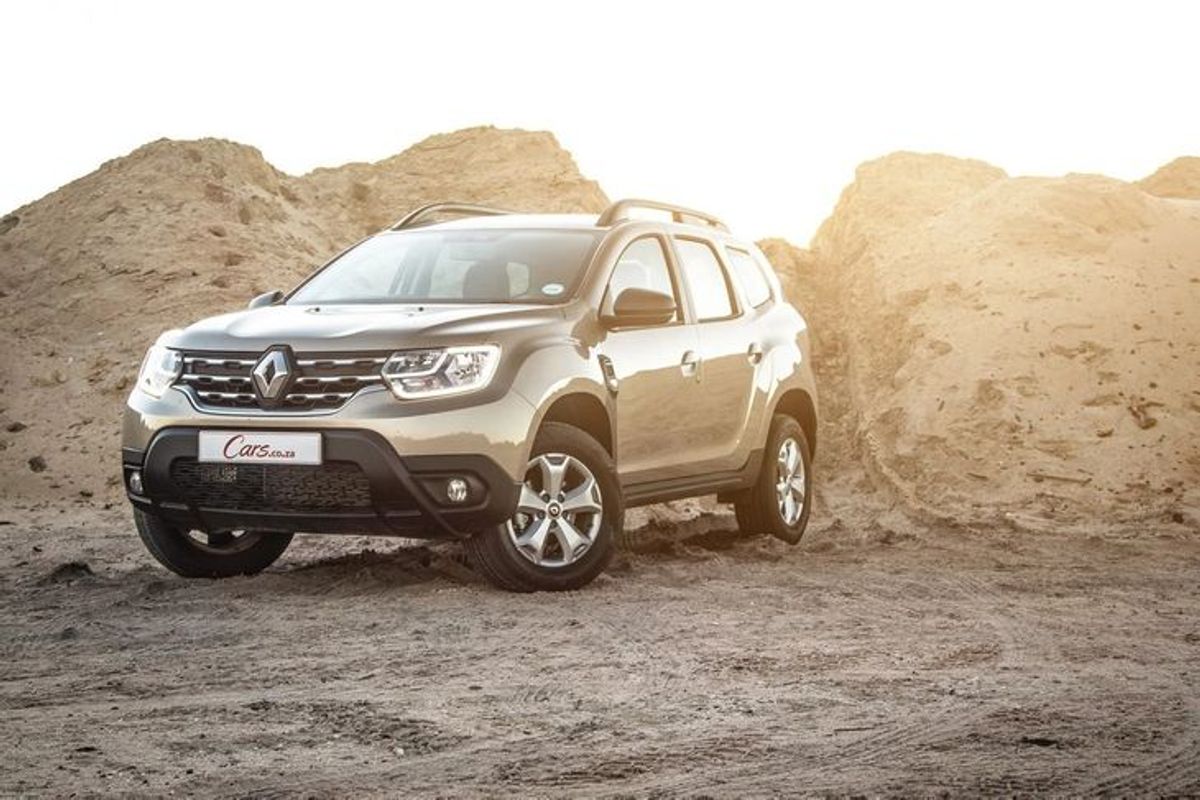
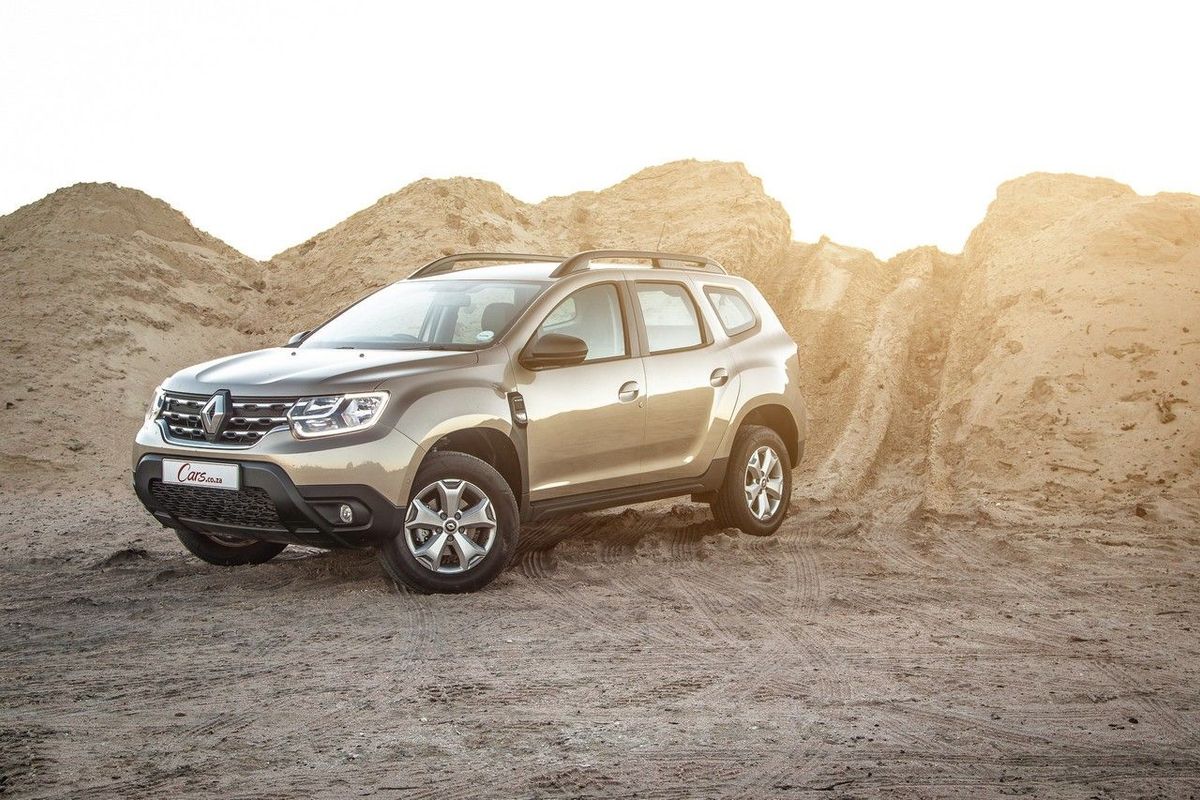
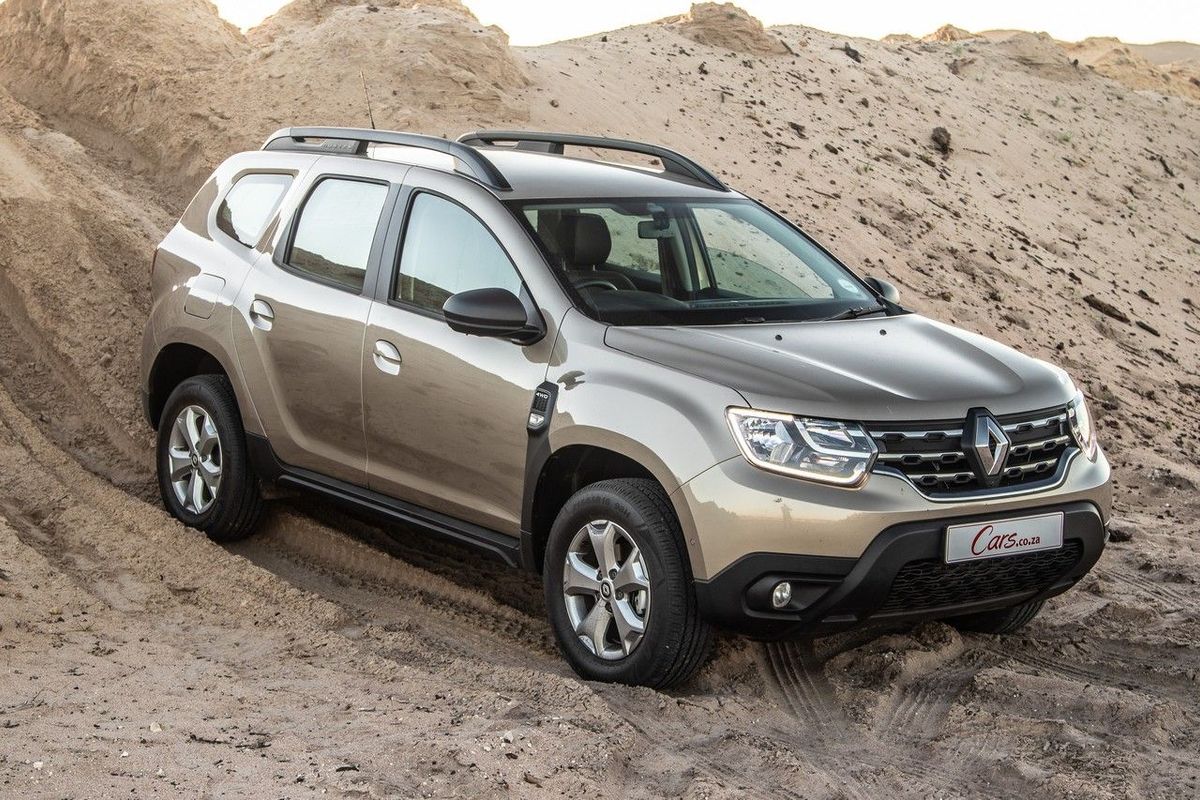
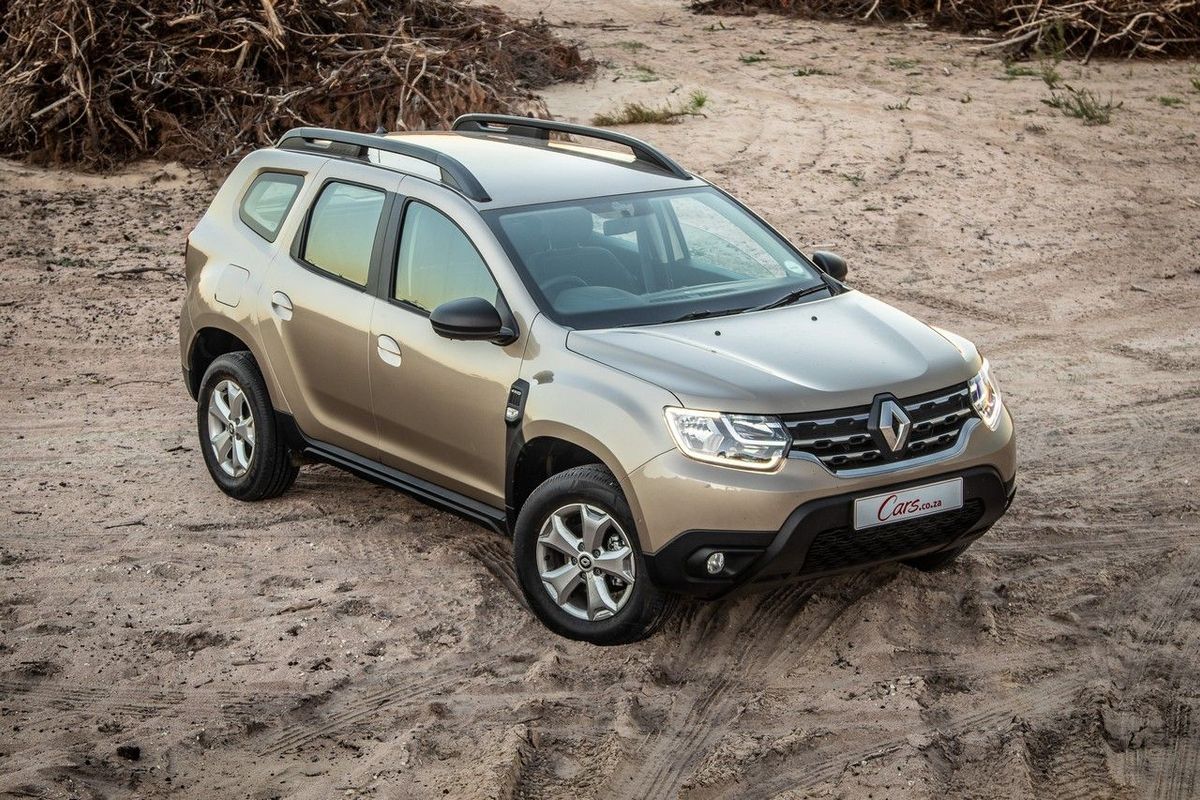
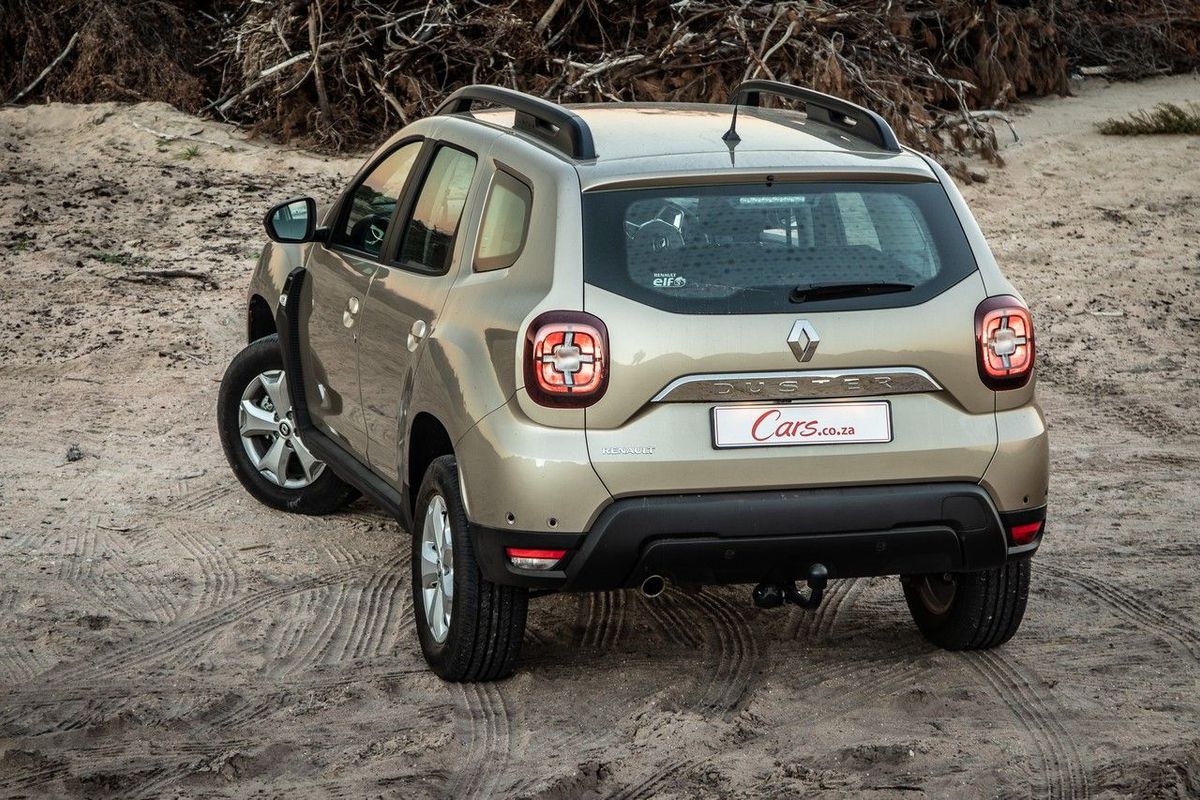
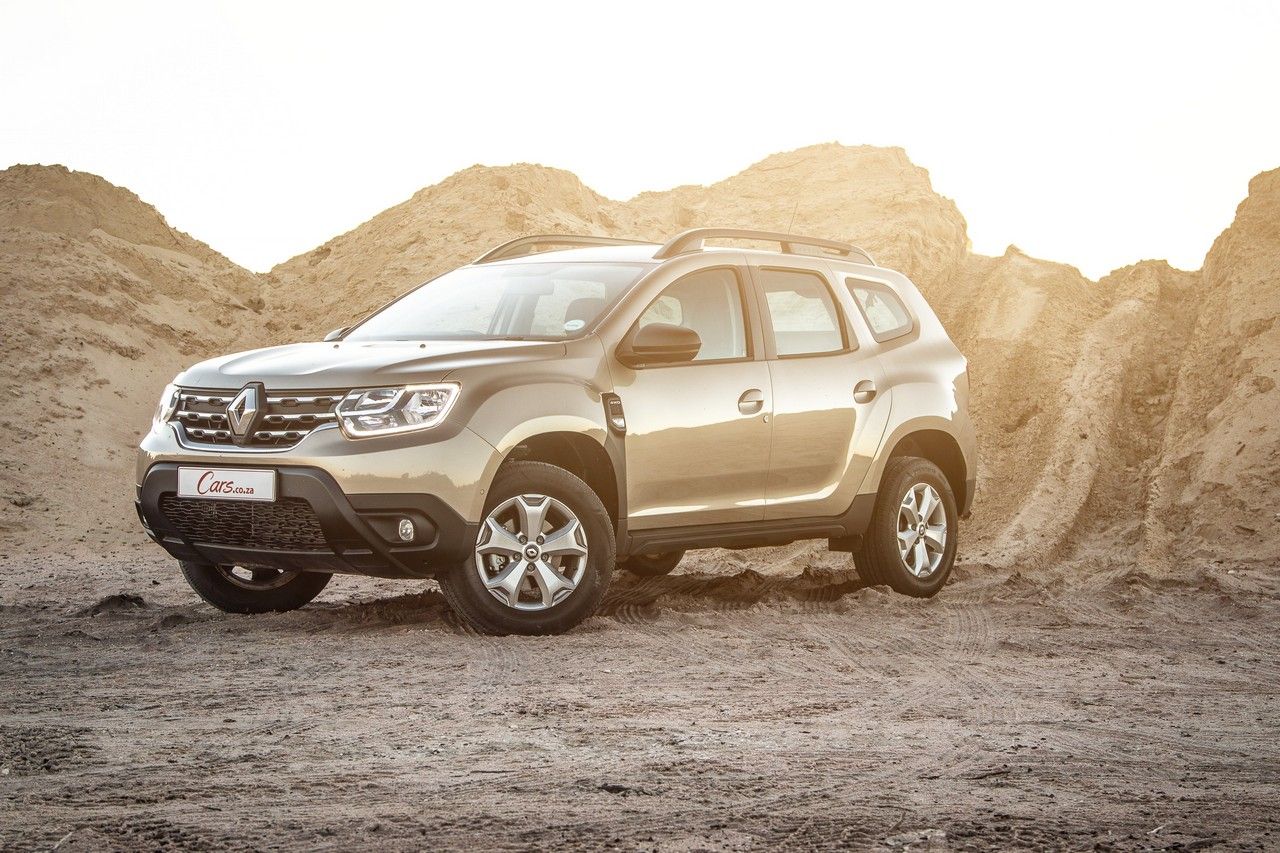
The Renault Duster has remained true to its roots, but the 2nd-generation model looks notably more modern and upmarket.
With the launch of the 1.5dCi Dynamique 4WD derivative, the new Renault Duster portfolio is finally complete. The French firm's project strategy is smart – there's a Duster for virtually every need, and the best part of this derivative's price point is that it sits well below R350k. The range offers a choice of petrol or diesel, 2WD or 4WD and a dual-clutch (auto) transmission or manual gearbox. However, you cannot opt for an automatic 4WD, as the off-roader is manual only. How does the standalone 4WD version fare and critically, should this be the Duster you spend your money on?
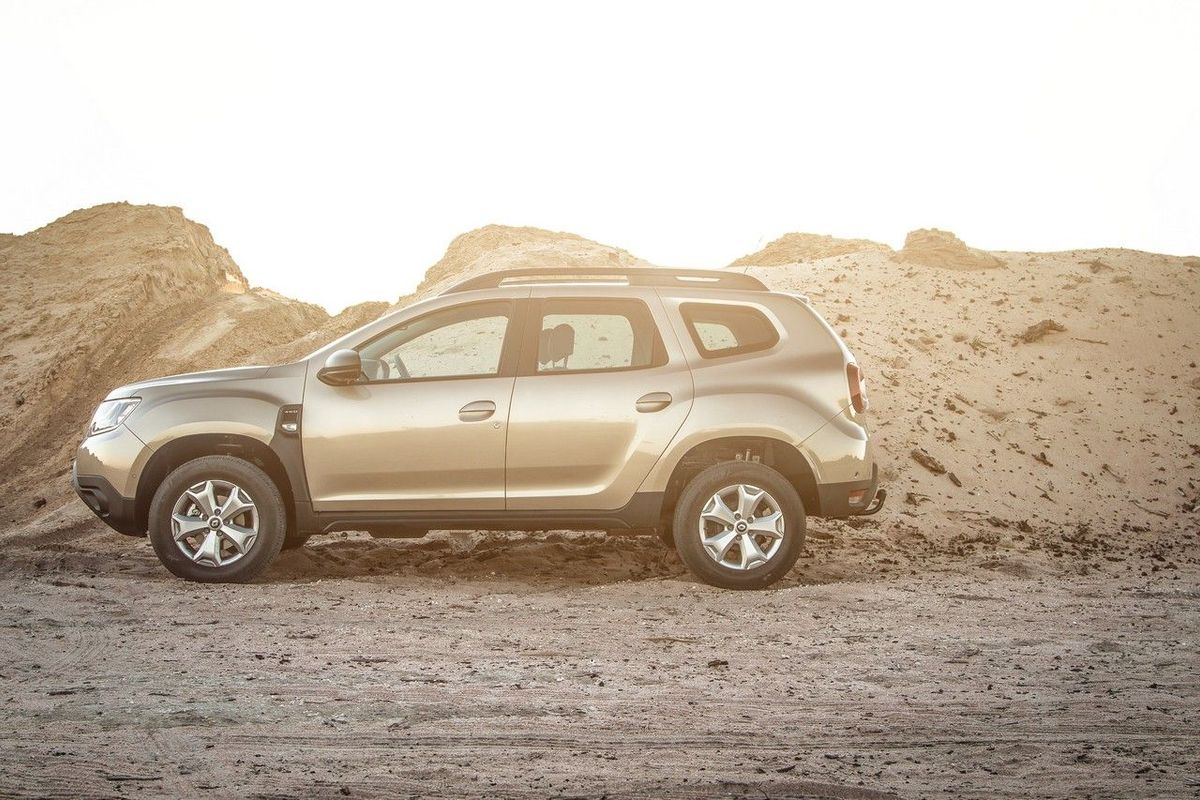
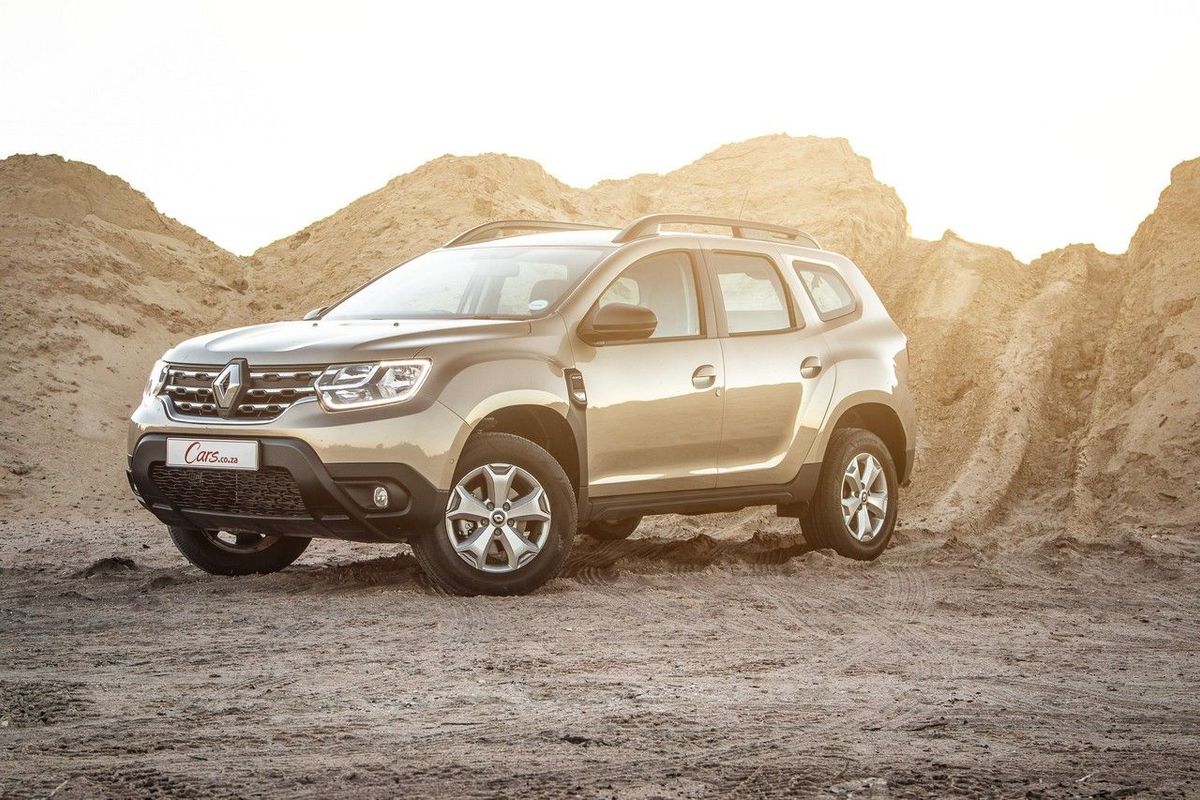
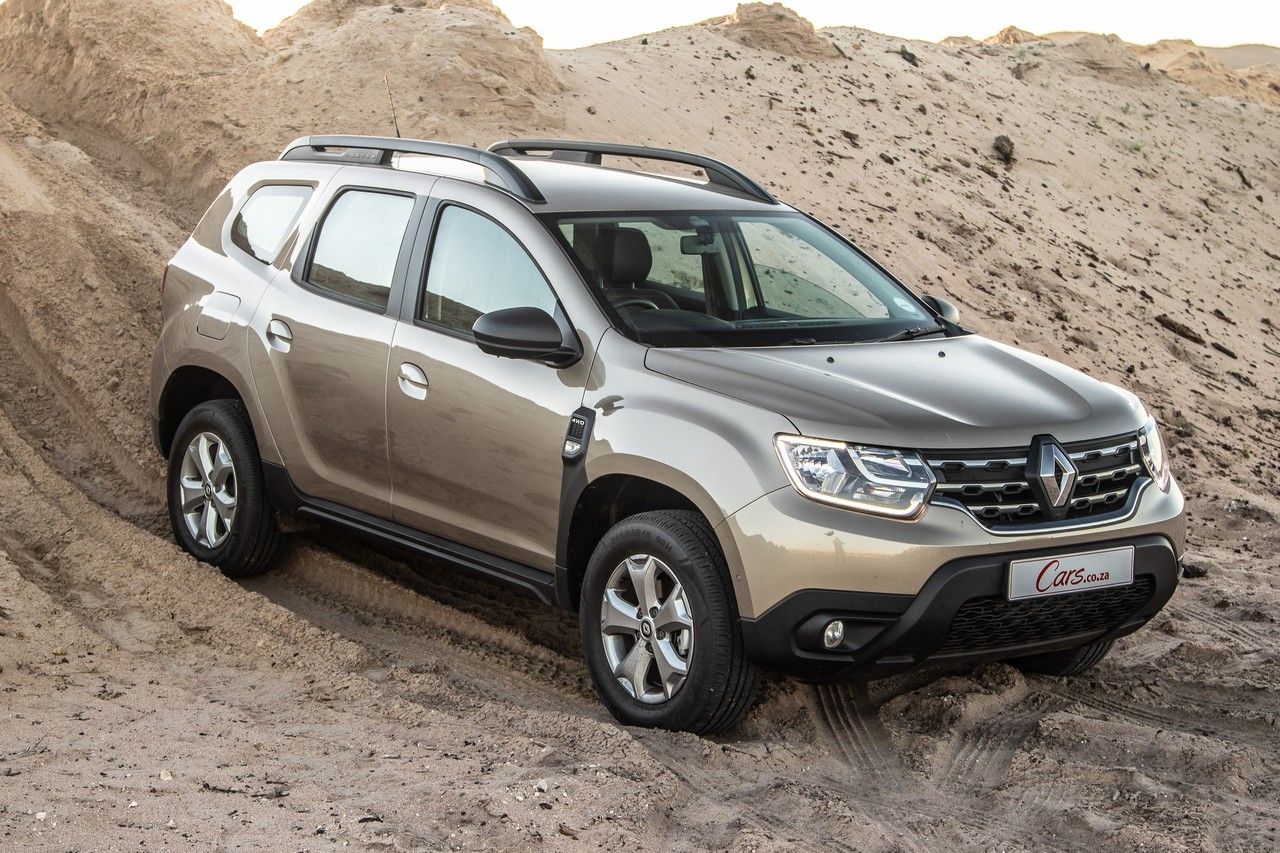
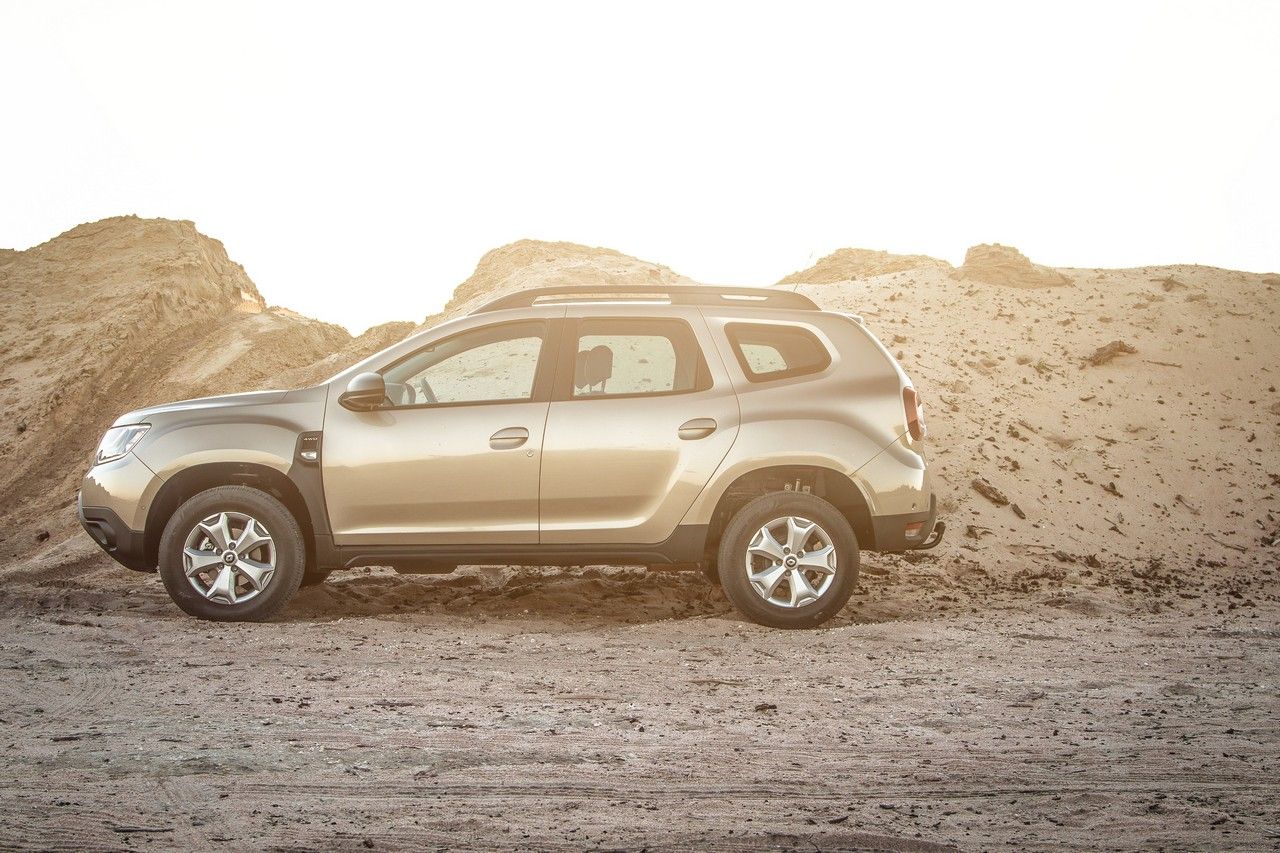
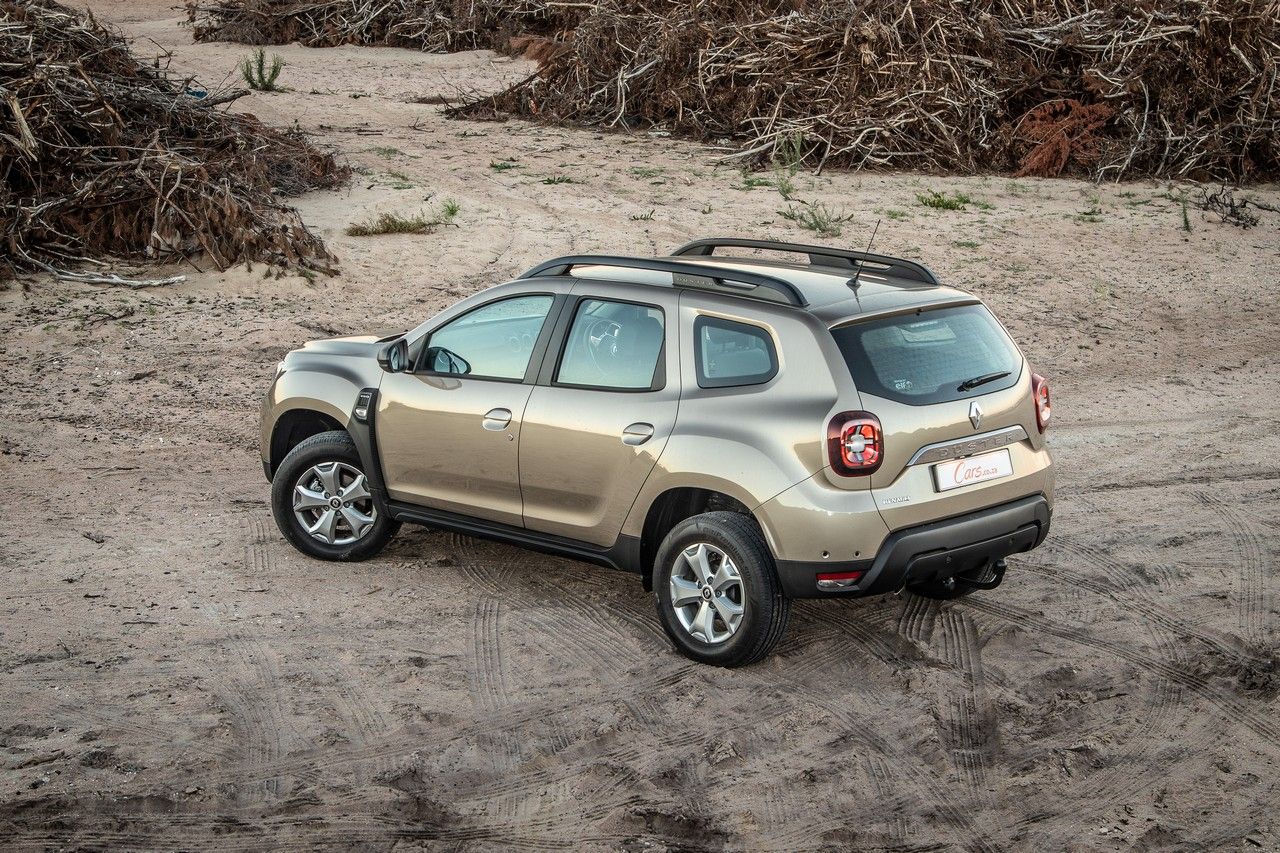
The SUV-aping black side cladding is less overt than before, but the ride height (230 mm) suits the 4WD's purpose to a tee.
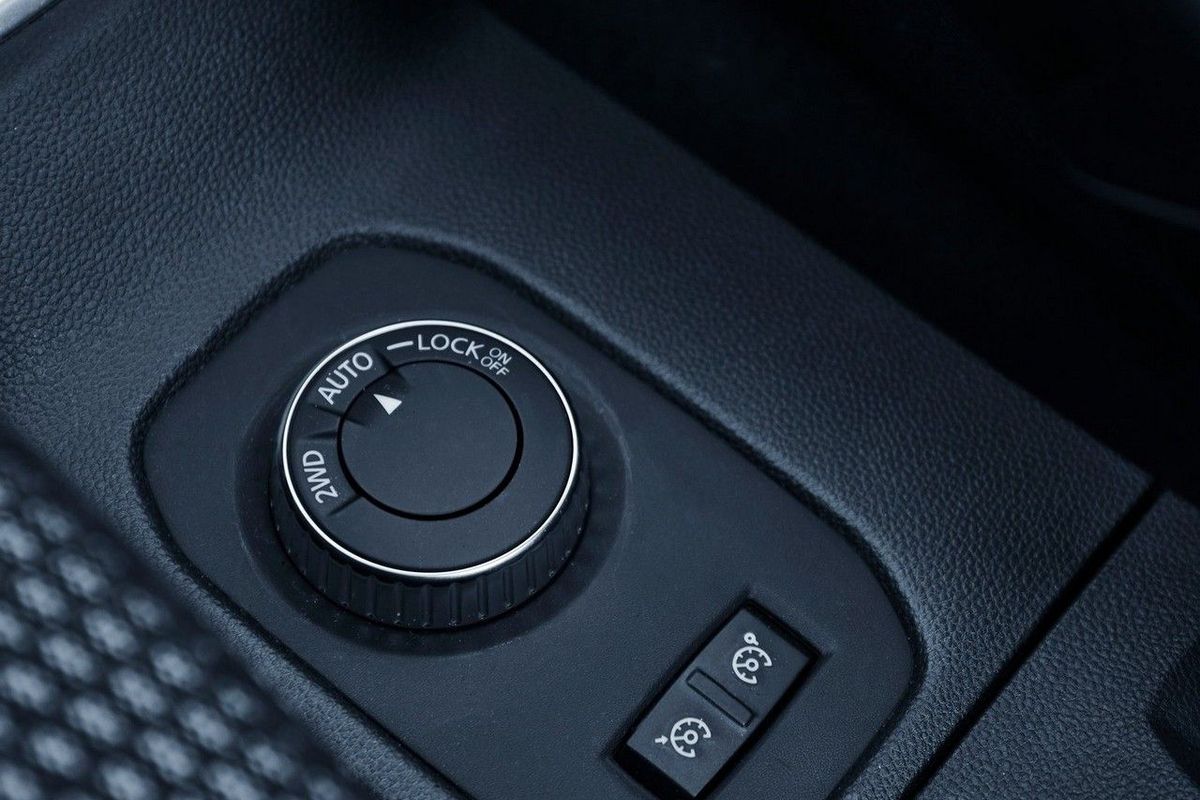
Right, straight into the meat of things. If you're buying a 4×4 version of a vehicle, you'll probably want to drive it on some rough, unsealed surfaces (and come out the other side intact). The Renault Duster 4WD features a transmission mode selector, which switches the vehicle from a front-wheel-biased 2WD mode to a Lock Mode, in which the vehicle's torque is distributed equally between the fore and aft axles. Between 2WD and Lock, there's an Auto mode that will send some power to the rear axle when wheel-slip is detected. To aid the 1.5dCi Dynamique 4WD's off-road ability, the 2nd-from-the-top derivative offers 210 mm of ground clearance, an approach angle of 30 degrees and a departure angle of 34 degrees.
We're fortunate enough to have an array of road surfaces located in close proximity to the Cars.co.za office, so we had ample opportunity to test it on a variety of terrains. First up, some gravel driving at speed. With the Duster set to Auto, we set off and could feel the system working as grip levels were maintained; not once did the 2WD show any signs of instability. Next up, soft sand. This is where things got tricky and we had to take the Renault's standard road tyres into consideration. We also didn't deflate them, which would have helped increase the footprint and, in turn, grip.
In case you were wondering, the test unit traversed the steep soft-sand decline (directly behind it) without too much fuss.
Despite the tricky soft sand, the Duster maintained its composure in 4WD Lock mode, but you have to work that 6-speed manual transmission hard – if you change up to soon and fall out of the torque plateau, the sand will swiftly stymie momentum. You'll also need to disable the traction control, otherwise, progress will falter. We feel that a low-range transmission would be needed for those really challenging beach dune missions, but that would hike up the price considerably and ruin the Renault's value-for-money proposition. However, the 1st gear feels very short; it could double up as a low-range replacement. As these photos attest, we also had a chance to test the hill-descent control, which works just fine. In summary, the 1.5dCi Dynamique 4WD performed admirably on easy- to medium-difficulty terrain, which should be more than enough for the target market.
Day-to-day comfort?
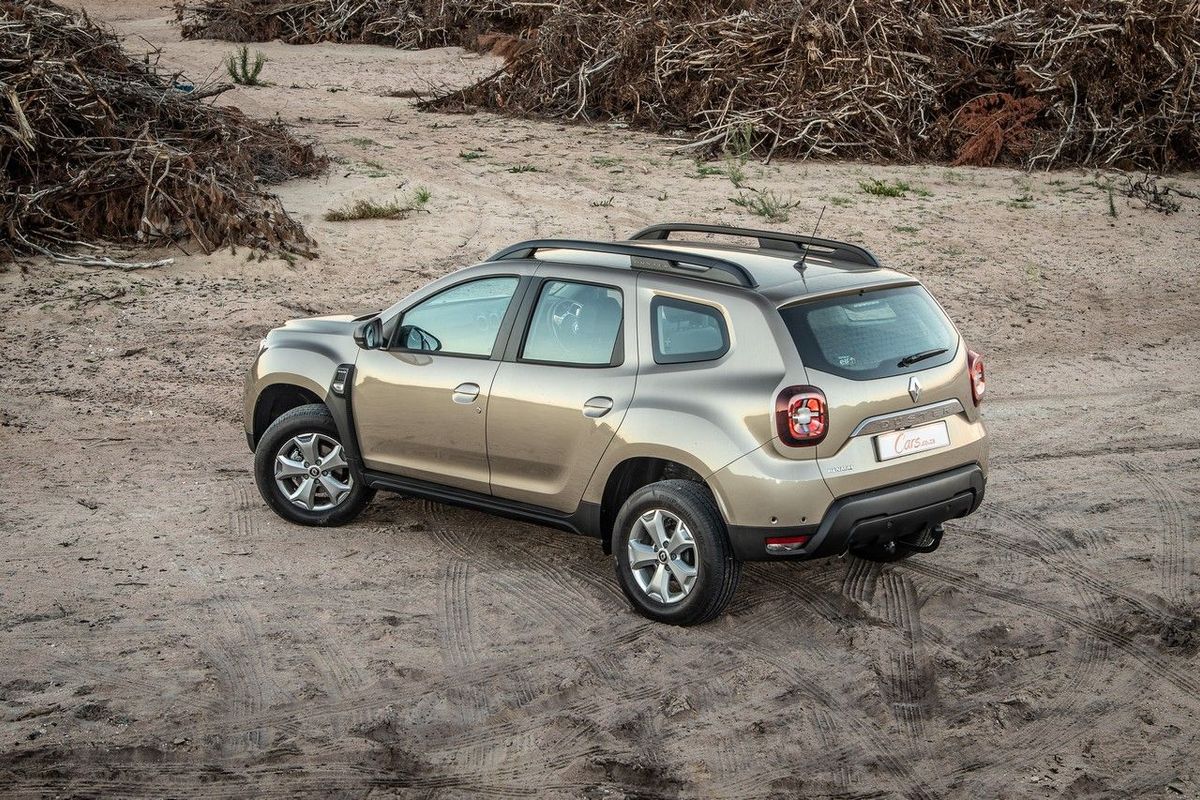
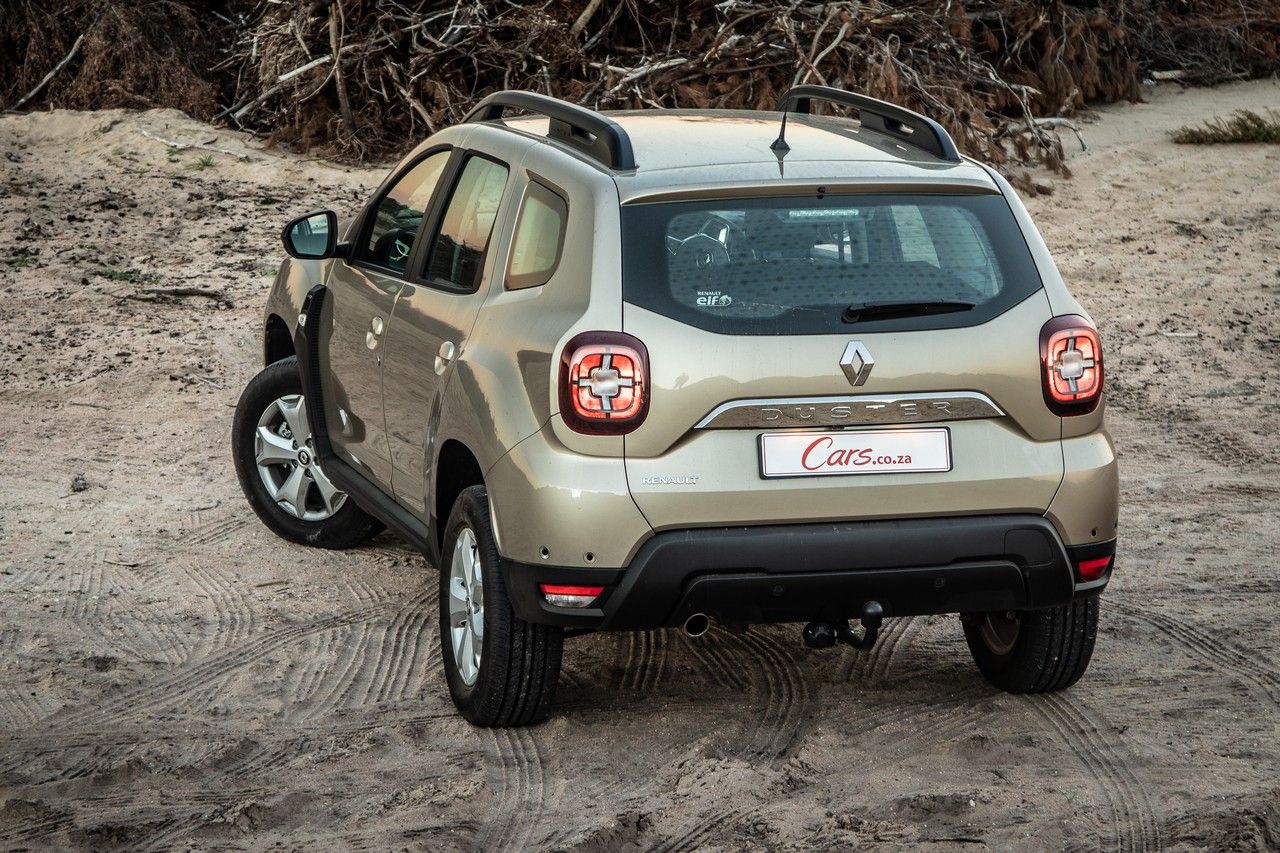
A few onlookers have remarked that the Duster's new taillight clusters are a little reminiscent of those on the Jeep Renegade…
Despite this derivative's impressive 4×4 ability, almost all Renault Dusters will fulfil that "urban lifestyle" dual role: they'll be used to commute to the office from Monday to Friday and make longer journeys at the weekend. We know it's capable of handling dirt, but can it deal with on-road traffic?
Well, yes, of course it can, but you're going to have to get used to changing gears often. The aforementioned torque plateau (where maximum pulling power is available) isn't very long, which means you'll be changing cogs regularly. With 1st gear being so short, you'll find yourself scrambling for 2nd (and 3rd) within a few seconds of pulling away from standstill. In bumper-to-bumper traffic, we found that the 1st gear was perfect to idle along at a snail's pace. The Duster's 1.5-litre turbodiesel is not the most refined powerplant around, but at this price we're not going to complain.
Power delivery is smooth and you're likely to find yourself driving at between 1 000 and 3 000 rpm most of the time. There's really no need to rev the engine beyond this, as it performs best at lower revolutions. Drive gently and don't use all the throttle, and you may come oh-so-close to that claimed fuel economy figure (5.2 L/100 km). After our thorough evaluation, the Duster went home with a respectable average of 5.6 L/100 km.
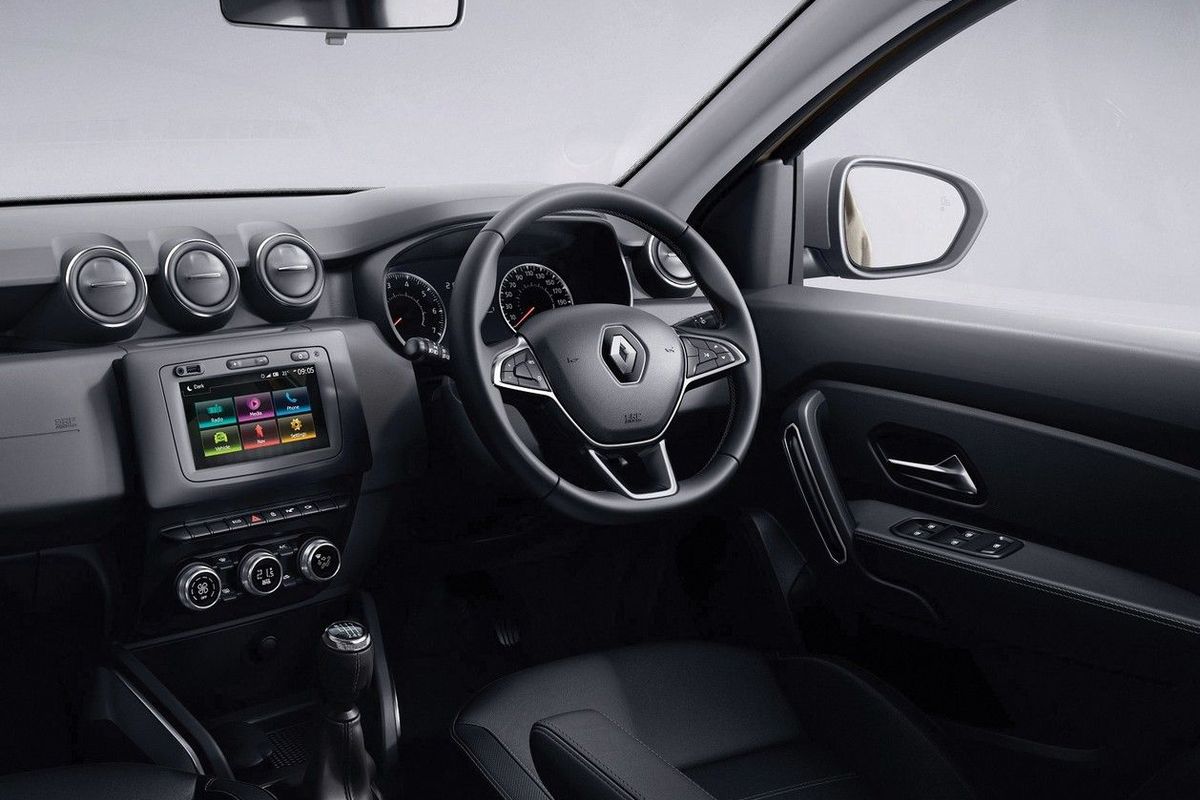
The sporty 3-spoke steering wheel would not look out of place on any of Renault's compact-car offerings.
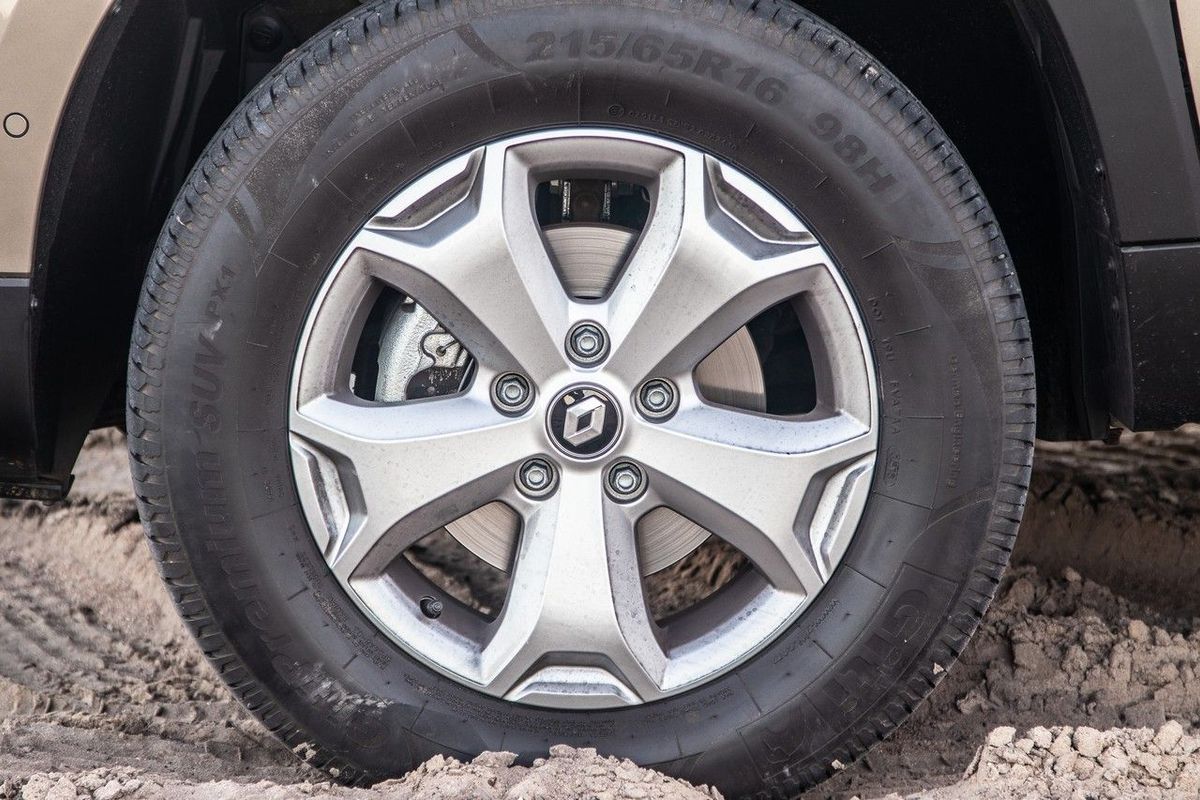
On the open road though, we found the short-geared Duster less involving to drive (as we expected), but there's plenty of overtaking ability available thanks to the responsive turbodiesel engine. The ride quality of the Duster is commendable, courtesy of the 16-inch alloy wheels being wrapped in high-profile 215/65R rubber (it helps to soak up road imperfections). The suspension is very softly-sprung and, therefore, the 1.5dCi Dynamique 4WD is prone to exhibit body roll when cornering, but when you're tackling some rutted roads, you'll appreciate the pliant ride. Finally, the Renault's steering setup is featherlight and a little vague, but because the tiller requires minimum effort to wield, inner-city parking manoeuvres are a cinch.
Standard specification?
Renault's never skimped on standard features, especially on Dynamique-spec derivatives, which is to be lauded considering the 4WD's price tag. The infotainment system boasts satellite navigation, Bluetooth connectivity and smartphone-mirroring compatibility. There's cruise control (with speed limiter), auto aircon, blind-spot warning and automatic-activated headlights. A reverse-view camera and parking sensors are fitted too.
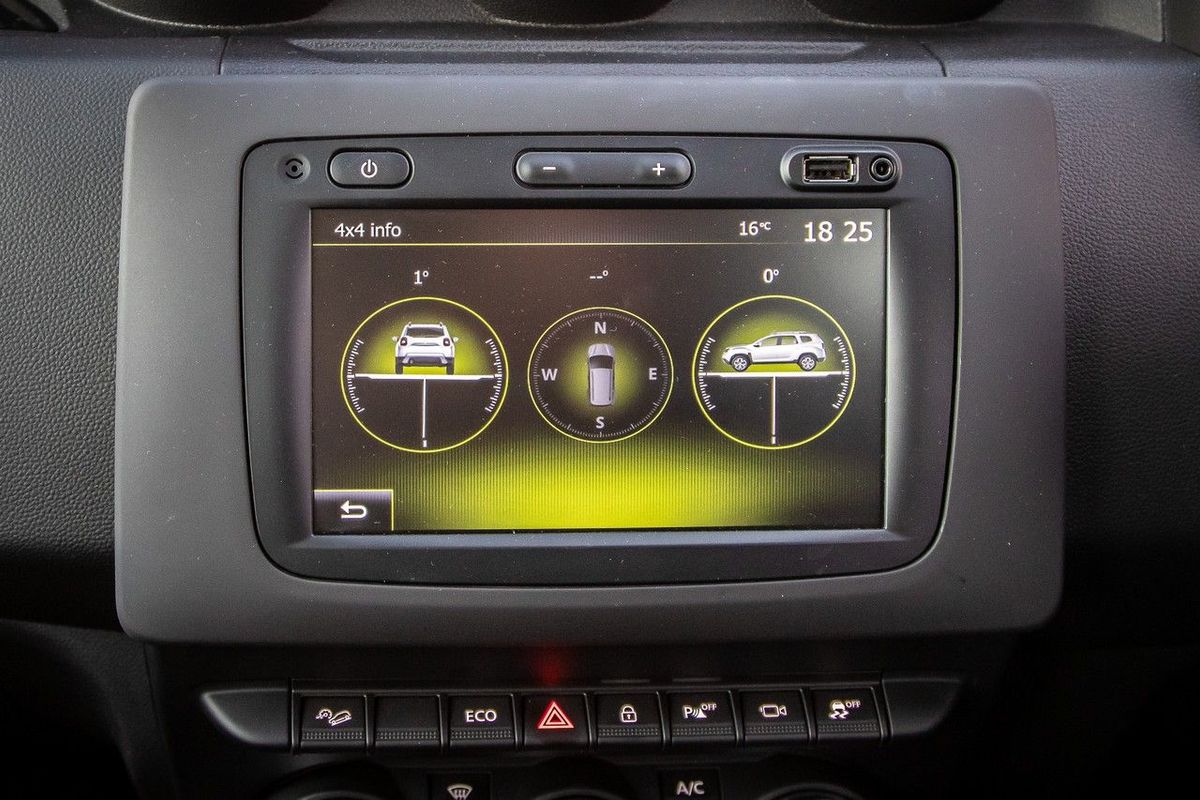
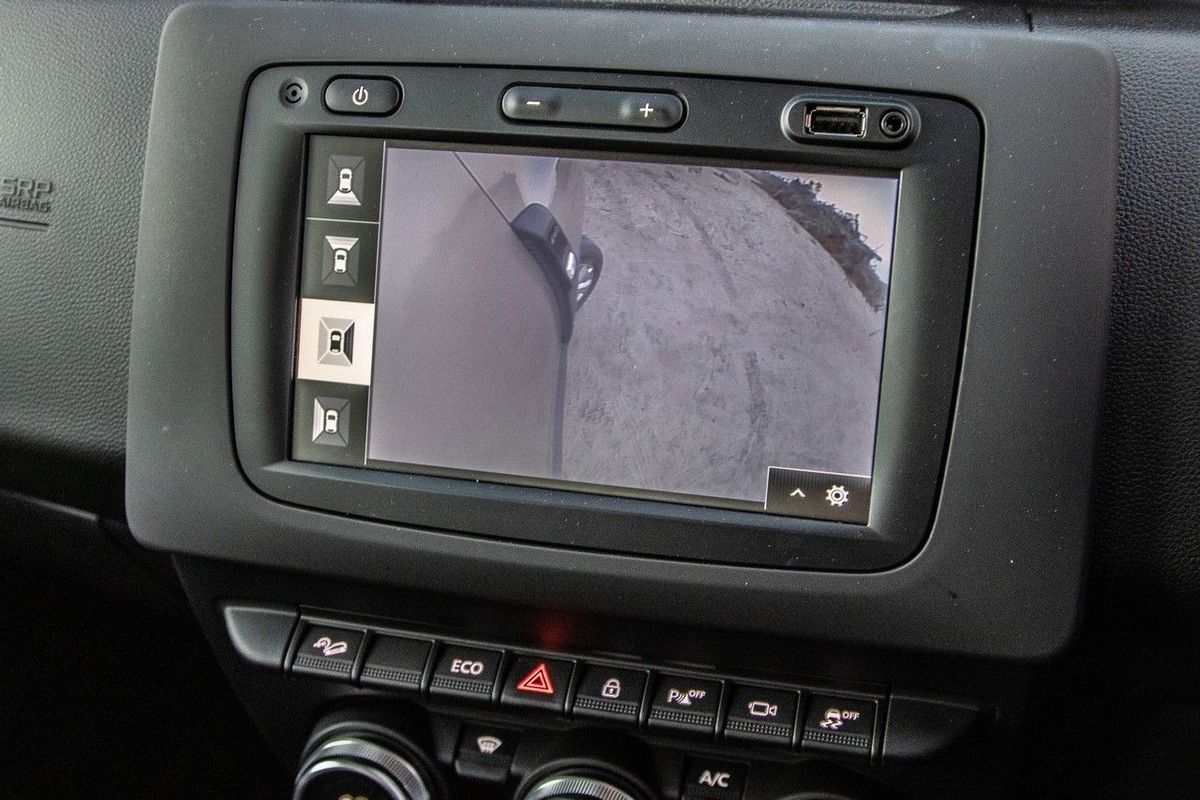
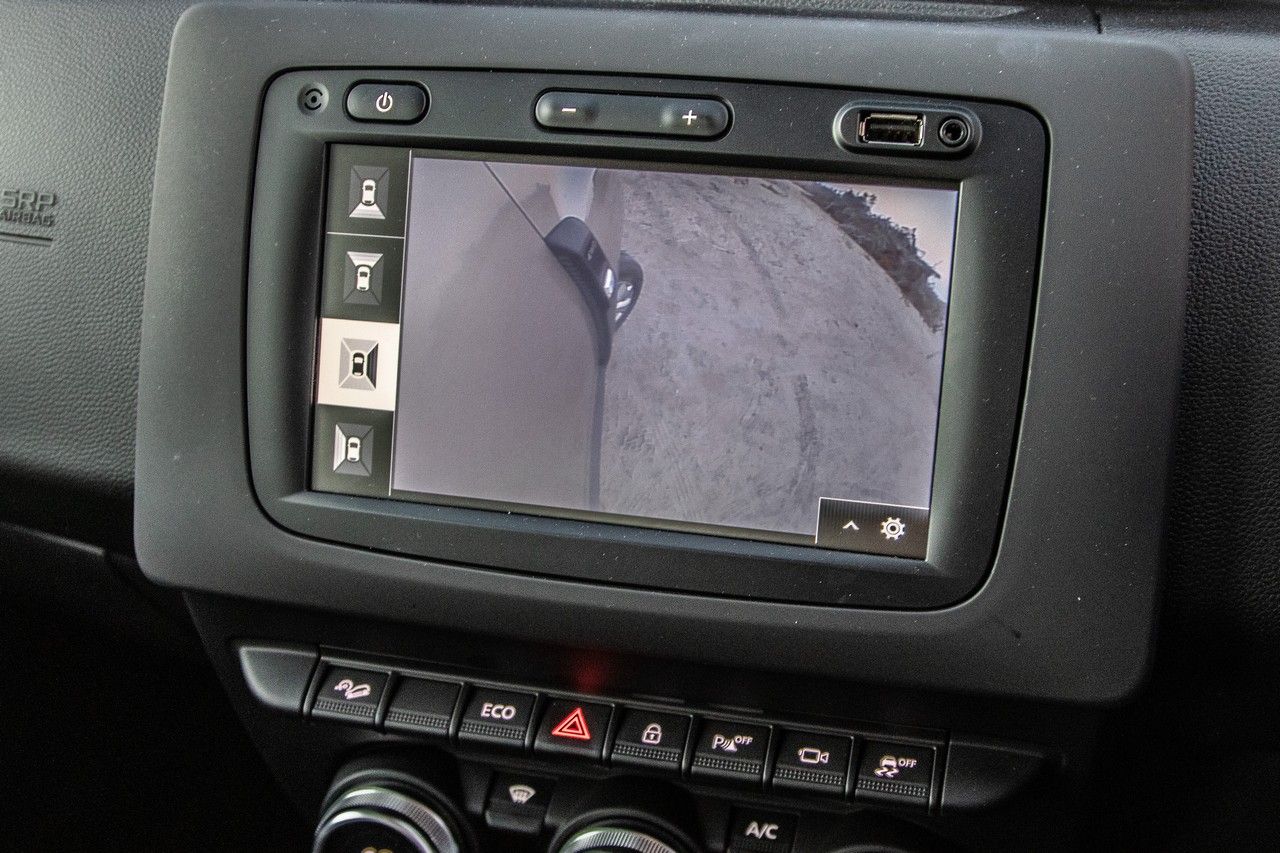
Speaking of cameras, Renault has equipped its Duster with a few of them, giving you a clear view of the front, rear and sides, which are useful when you're parallel parking and want to mind the kerb. There's also a dedicated 4×4 menu, which displays a compass and the Duster's pitch/roll angles in real time. Integral safety equipment is fair at this price point: ABS with EBD and EBA, plus stability control, are standard. There are also 2 airbags.
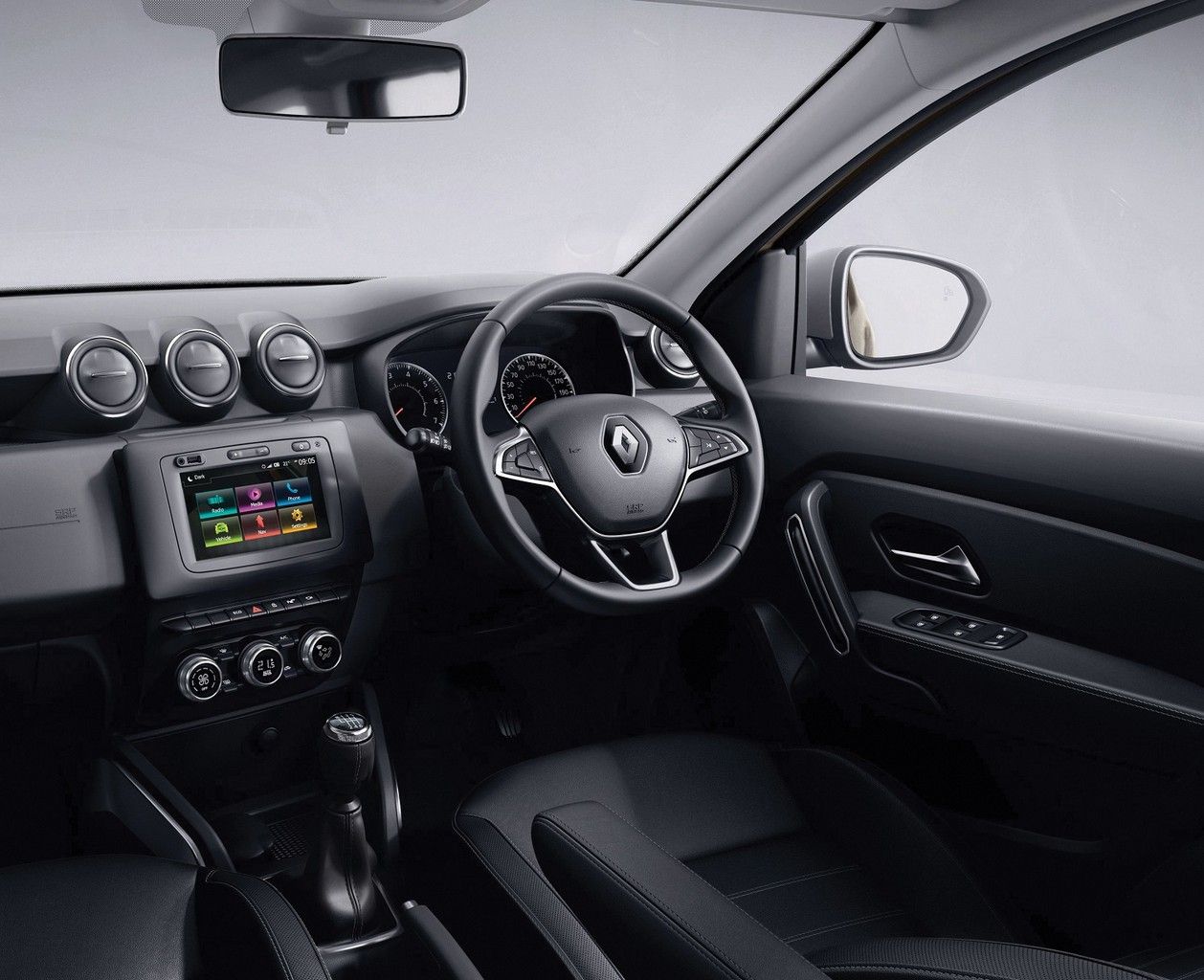
The infotainment system's touchscreen is now better-positioned and the side camera is helpful when parking… and off-roading!
As ever, the cabin of the Duster is spacious. Rear legroom is about on par for the segment, but taller passengers in the rear will appreciate the generous headroom. The load bay is rated at 414 litres; should you wish for more space, the rear bench can be folded down in a 60/40 split.
Price and after-sales support
The Renault Duster model range comes standard with a 5-year/150 000 km mechanical warranty and a 6-year anti-corrosion warranty. Services are required at 15 000-km intervals, and a standard 3-year/45 000 km service plan applies. Prices for the range start at R255 900 and go up to R340 900, with this new 4×4 derivative listed at R327 900. Metallic paint and leather seats are available for an extra R2 522 and R10 088 respectively.
Verdict
The Renault Duster has always been marketed as a budget-oriented (read: cheap and cheerful) offering in the compact family car segment, but this new version represents a big step up in terms of quality and features. The cabin feels a bit more upmarket and looks modern. We're glad to see the infotainment screen has been repositioned – previously it sat quite low down and was awkward to use. There's still a slight "built-to-a-cost" air about the Duster, but at this price point (well under R350k), we're prepared "to cut (the 4WD) some slack" as it more than makes up for it in other areas.
Should you buy the 4×4 version of the 2nd-generation Duster, however? This is the question we find ourselves asking and we have to suggest that unless you're dead-set on regularly heading off on gravel adventures, then it's unlikely that is the ideal Duster for you. If you're reading this and not bothered by the 4×4 capabilities, then we think the 4×2 EDC (auto) is a more refined option for a bit less money. Plus, it still retains that good ground clearance, so you can still venture off the beaten track… to some extent. However, given South Africa's love for the great outdoors and road trips, there will be many customers who will be interested in whether the 4WD can handle the rough stuff and the answer is yes, it most certainly can!
Similarly priced and with a diverse line-up of derivatives to match, the Ford EcoSport also offers a modicum of ruggedness. It is also available in petrol or diesel guises, with a choice of a manual or automatic transmission. There's no 4×4 version to compete directly with the test unit, however.
Suzuki's compact family car offering is the spacious Vitara. It has just the single naturally-aspirated engine for now, with a turbocharged motor due in SA soon. It's a good all-rounder, but can't match the Duster 4WD's off-road prowess.
If you want a Suzuki with excellent off-road capability, then the Jimny is your port of call. It's exceptional on the rough stuff and works really well as a city car. However, there's virtually no luggage space and the fuel tank is frustratingly small.
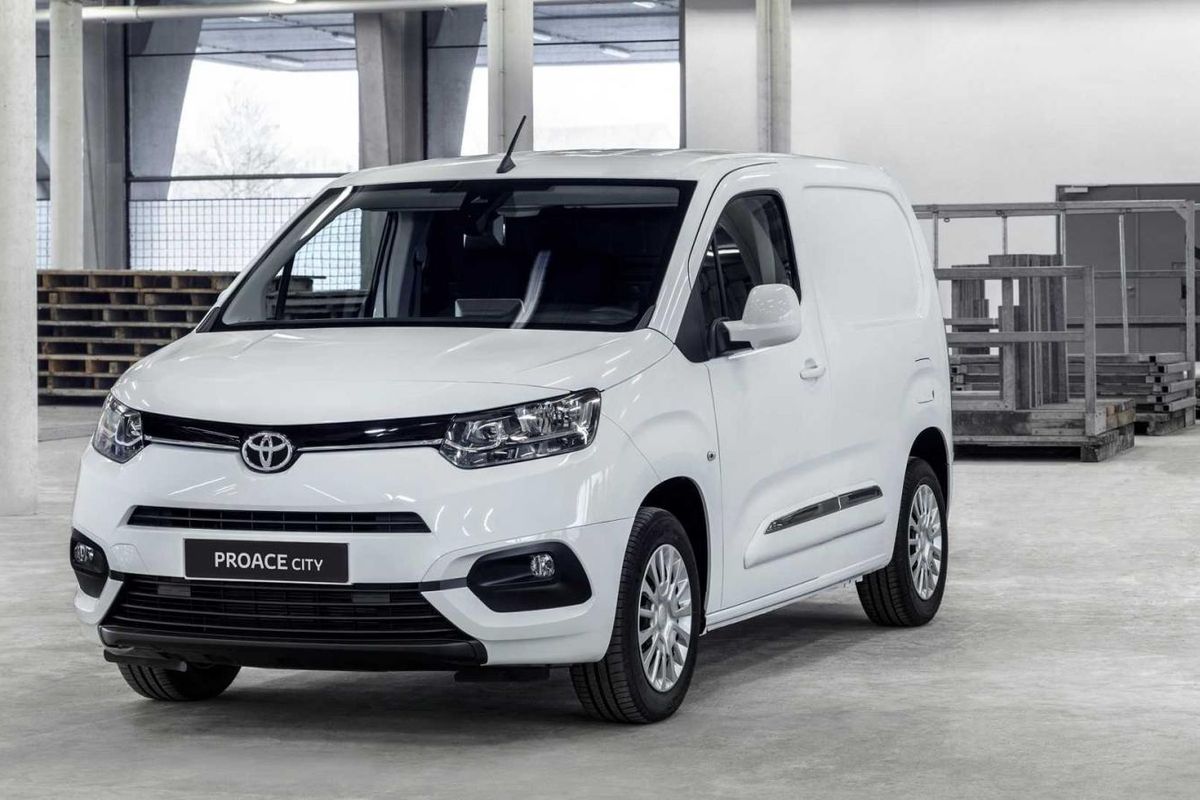
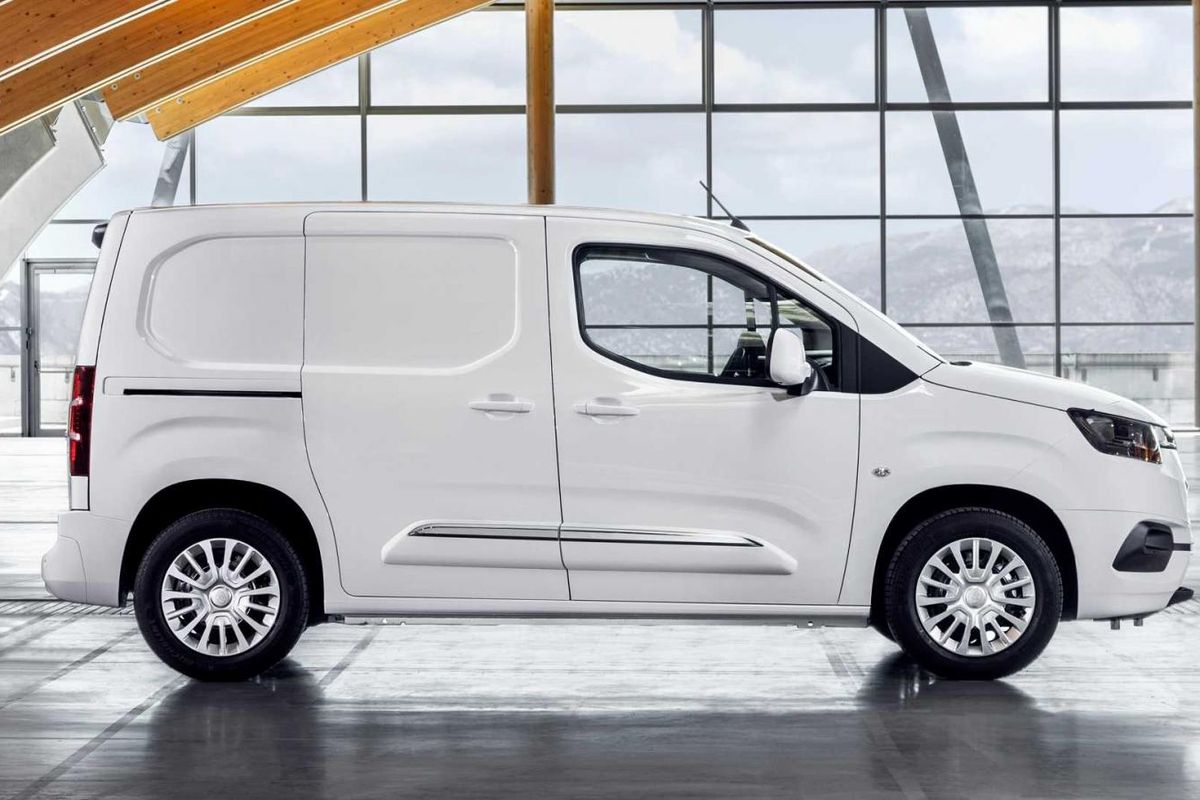
Toyota has released a new compact van called the Proace City. Developed in conjunction with PSA (Peugeot Citroen), the newcomer looks to do battle with the light commercial segment. Should Toyota SA bring it to South Africa?
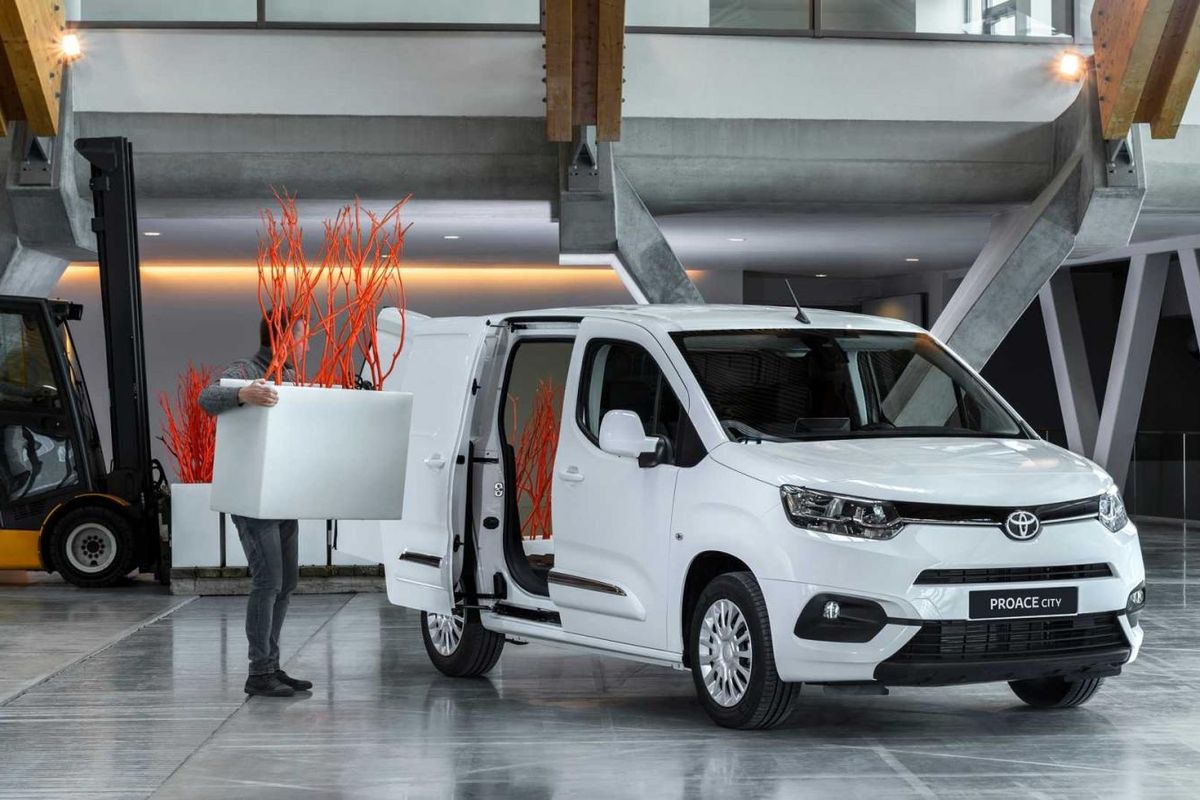
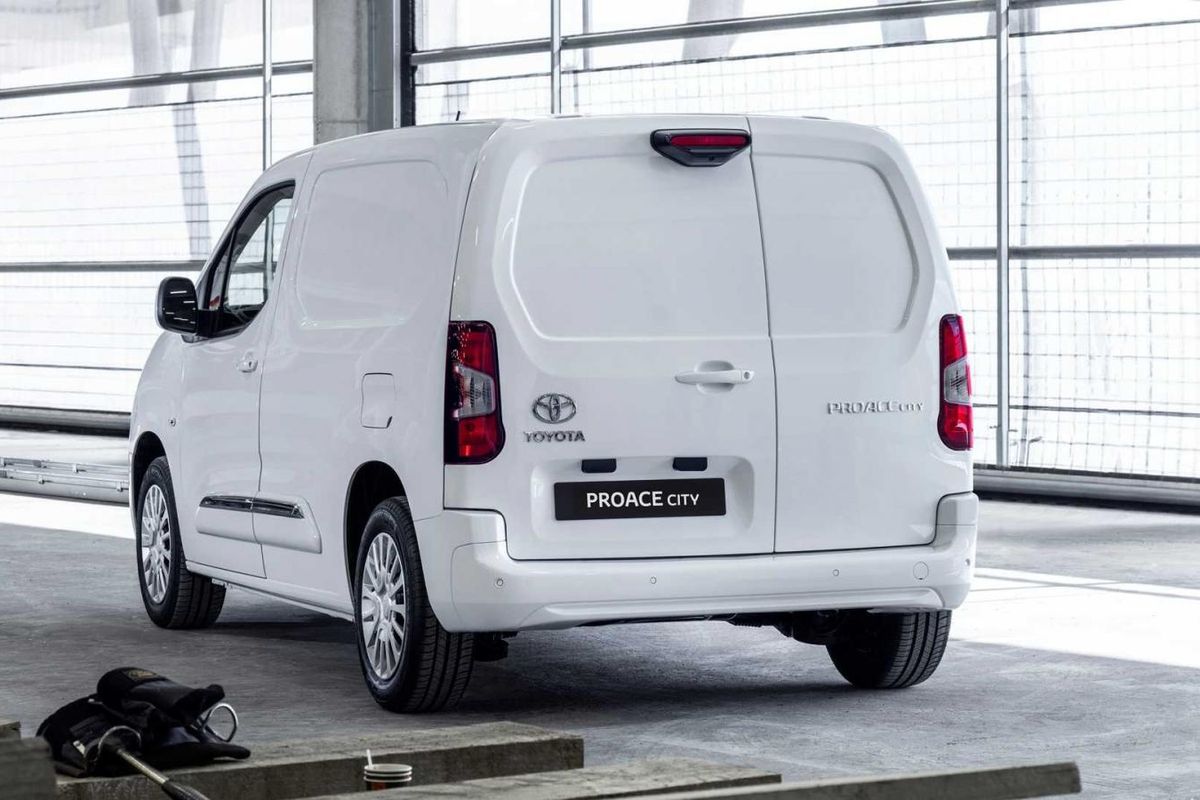
Toyota has developed the Proace City alongside Groupe PSA (Peugeot Citroen). Available in 2 lengths: short at 4.4m and long at 4.7m, the Proace City can be customised to suit the customer's requirements.
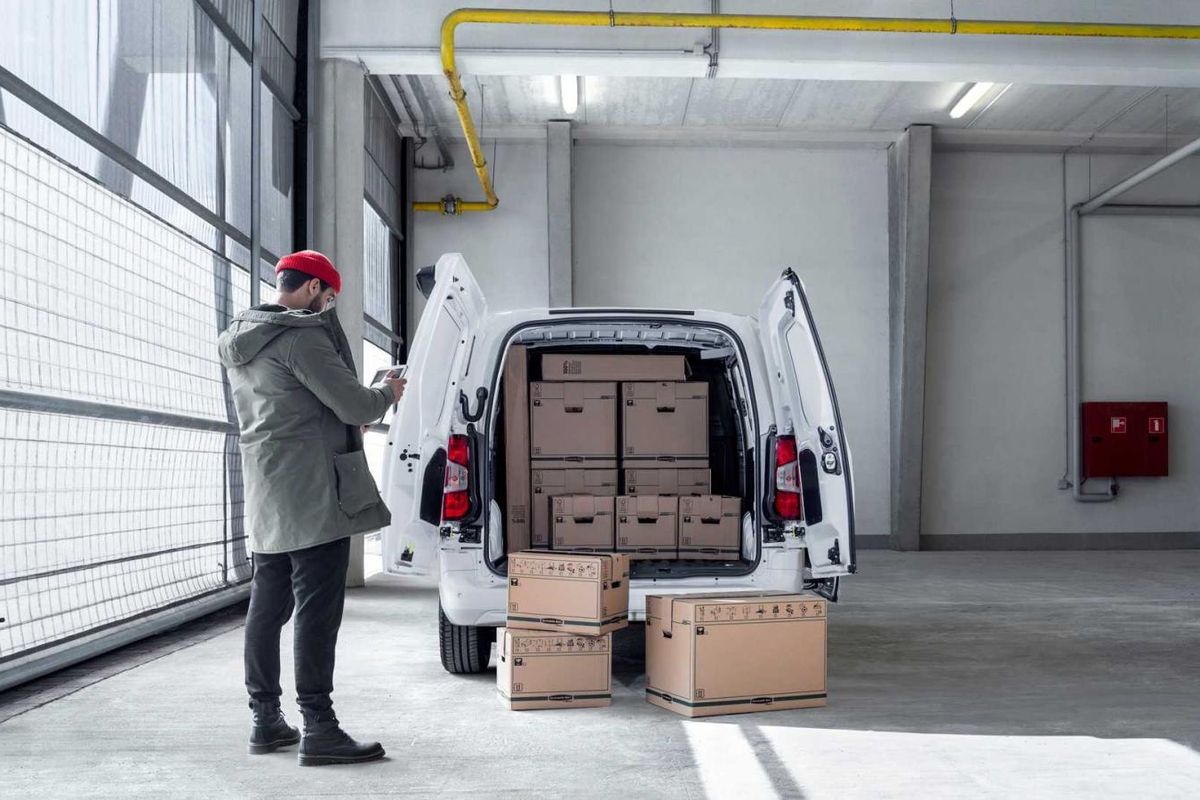
The customisation options are quite comprehensive. There's a maximum volume from 3.3 cubic metres (short model) to 4.3 cubic metres (long version with Smart Cargo option). The Toyota Proace City is one of few vehicles in its class that can accommodate two Euro pallets. Adding the Smart Cargo system option gives best-in-class load length capability of 3.1m for the short version and 3.4m for the long, while the maximum payload is another class-best figure at one tonne (both versions).
For those who need to carry even greater or heavier loads, the van can tow braked trailers up to 1.5 tonnes. Asymmetrical rear doors (glazed or unglazed) or a top-hinged tailgate can be specified.
In terms of engines Proace City will be available with a range of petrol and diesel powertrains offering a power spread from 56 kW to 97 kW, with the choice of 5 or 6-speed manual or 8-speed automatic transmissions.
The Toyota Proace City is being marketed as a safe city panel van and it boasts a number of active safety features such as Pre-Collision System, Road Sign Assist, Lane Keep Assist, Cruise Control and a “coffee cup warning” that recommends the driver takes a break if they have spent a long time at the wheel. The content is increased with Automatic High Beam, Sway Warning and an extended Road Sign Assist system, while the most comprehensive package further adds Adaptive Cruise Control and a Blind Spot Monitor. All models also come with eCall for automatic connection with the emergency services in the event of a serious accident.
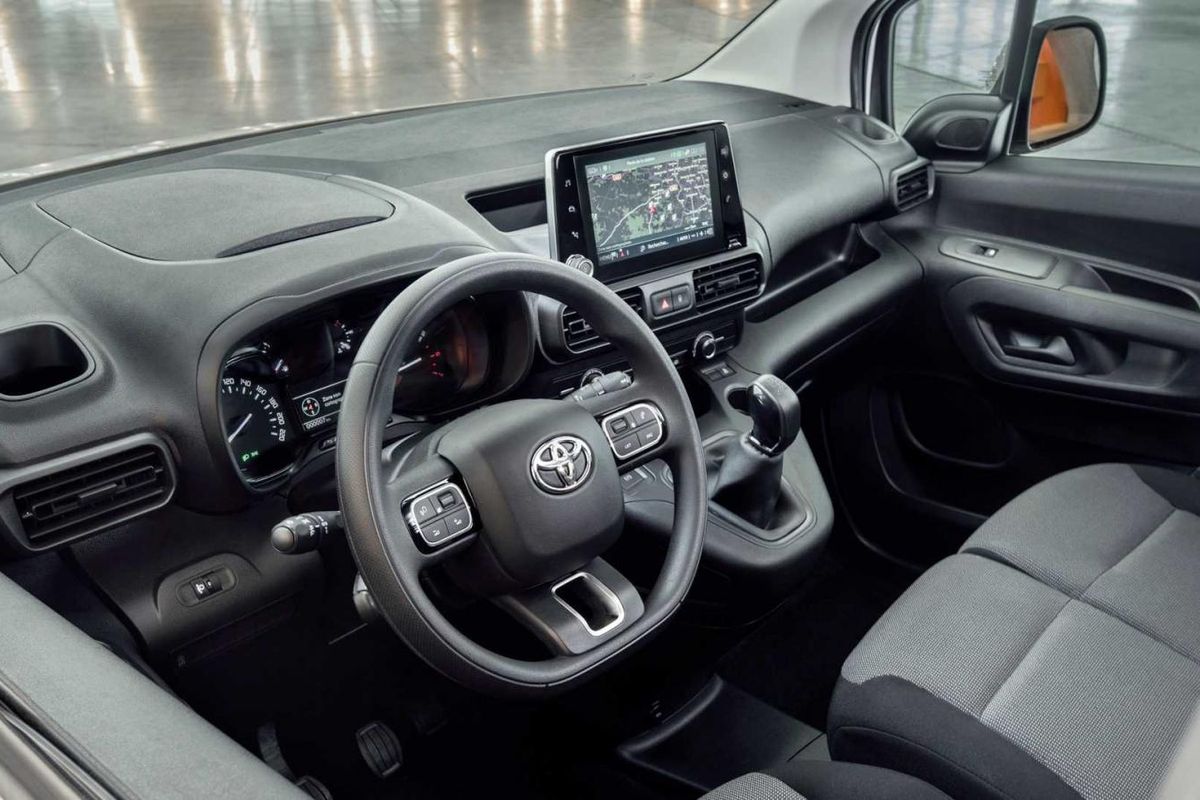
Comfort features include an 8-inch touchscreen to access audio and smartphone functions, with MirrorLink, Apple CarPlay (including Siri assistant) and Android Auto (including Google assistant), plus Bluetooth, and USB/Aux-in connections. It can be used with navigation and online functions, including 3D mapping, voice command recognition and connected traffic information (via Tomtom Traffic).
Panel vans aren't the most popular commercial vehicles in South Africa as single-cab bakkie with accessories do the majority of the work. Do you think there's a business case for the Toyota Proace City?
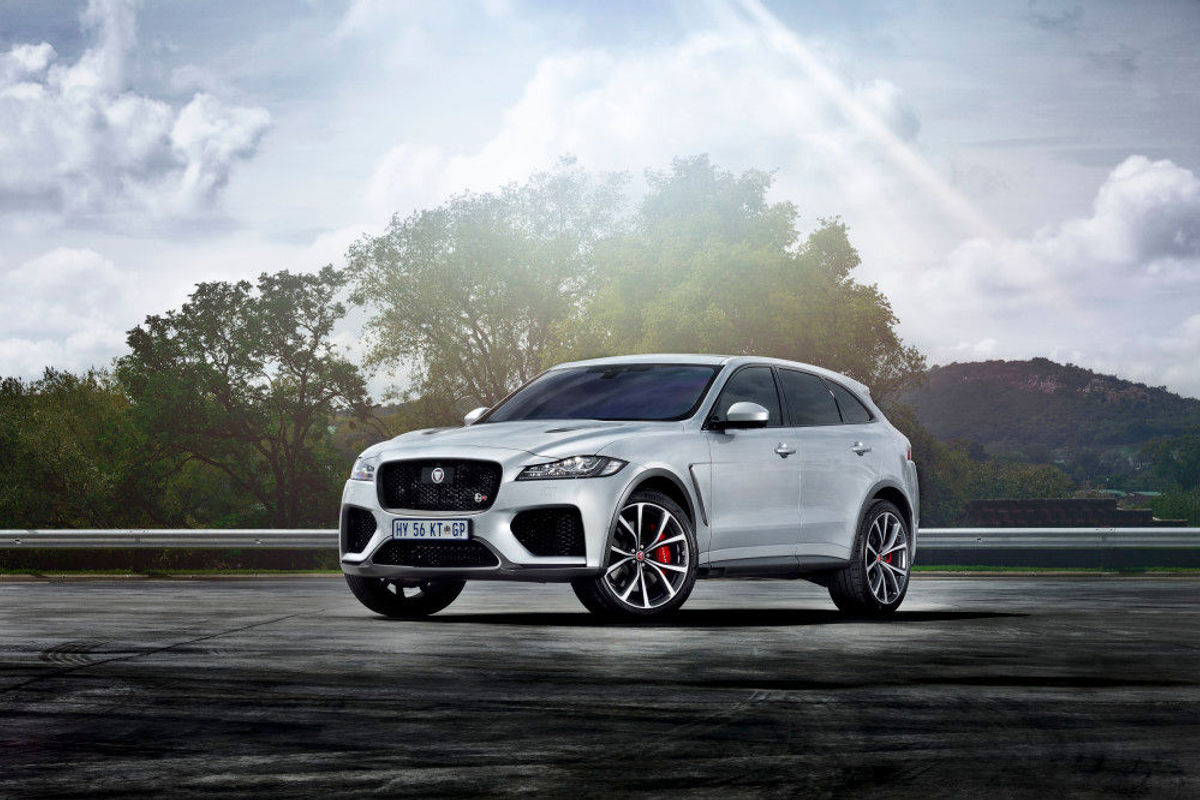
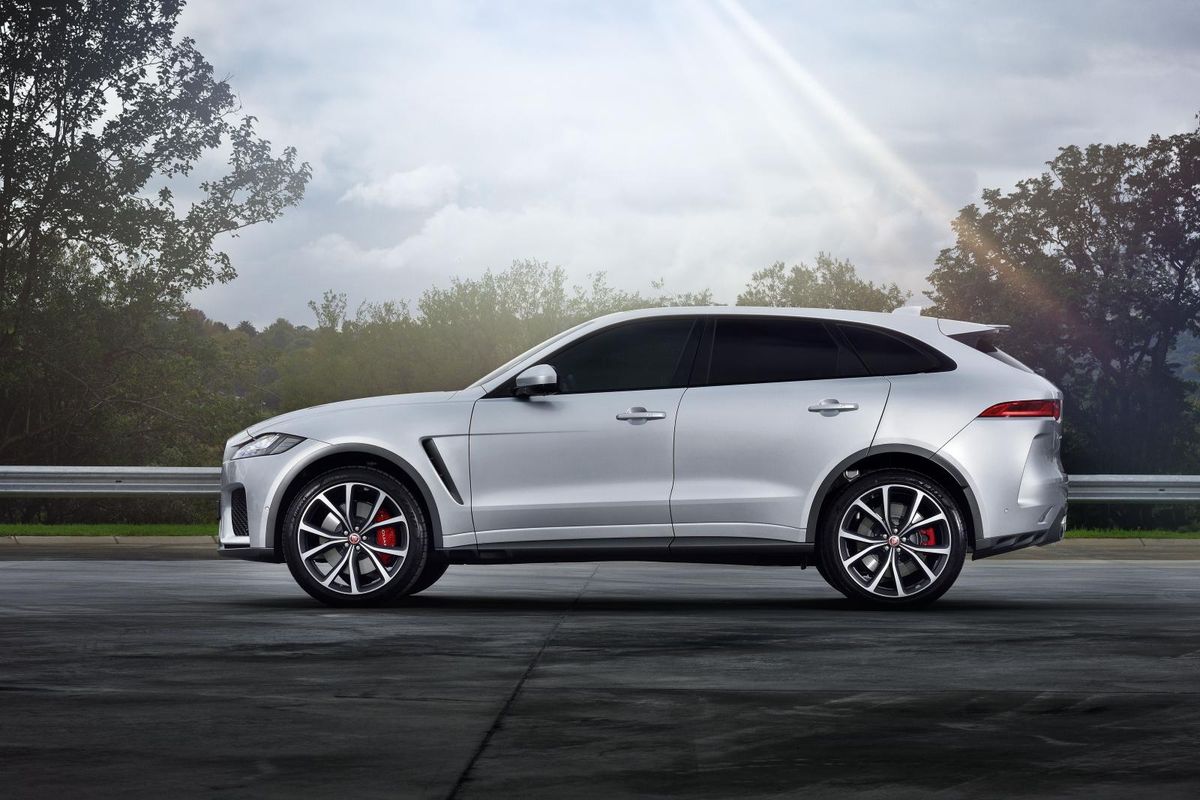
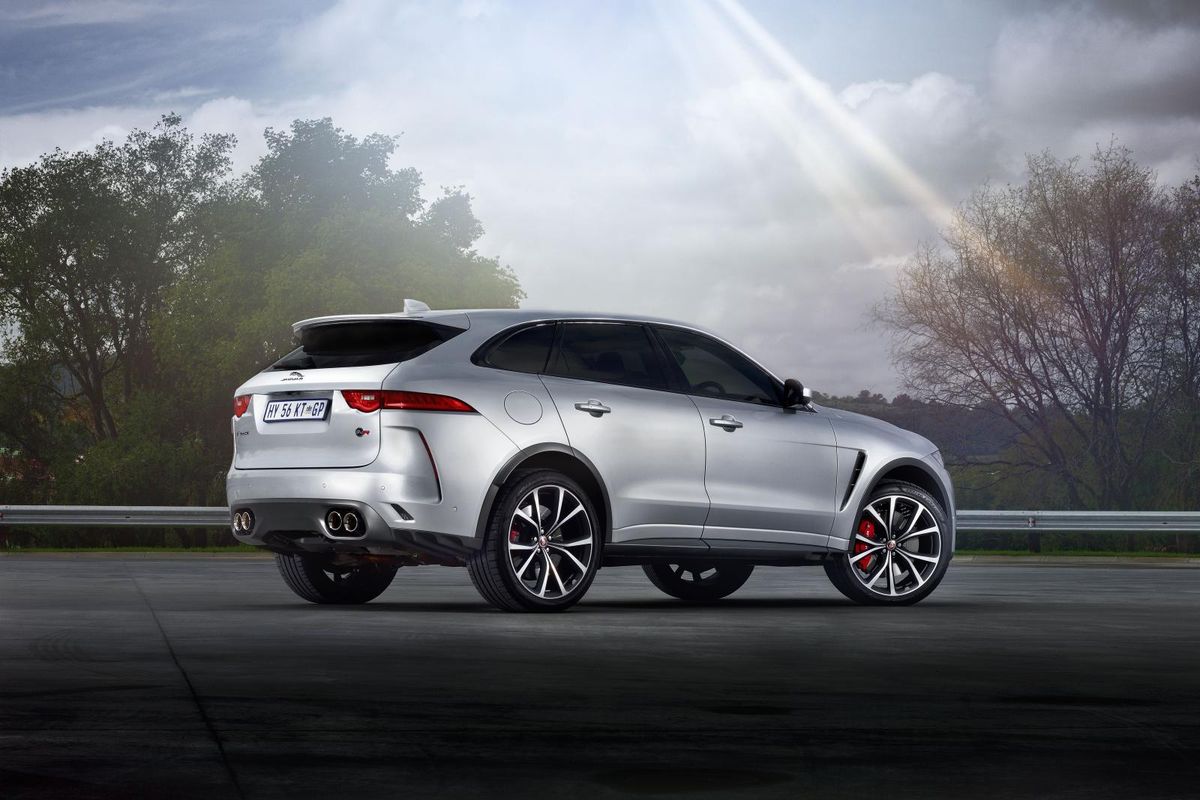
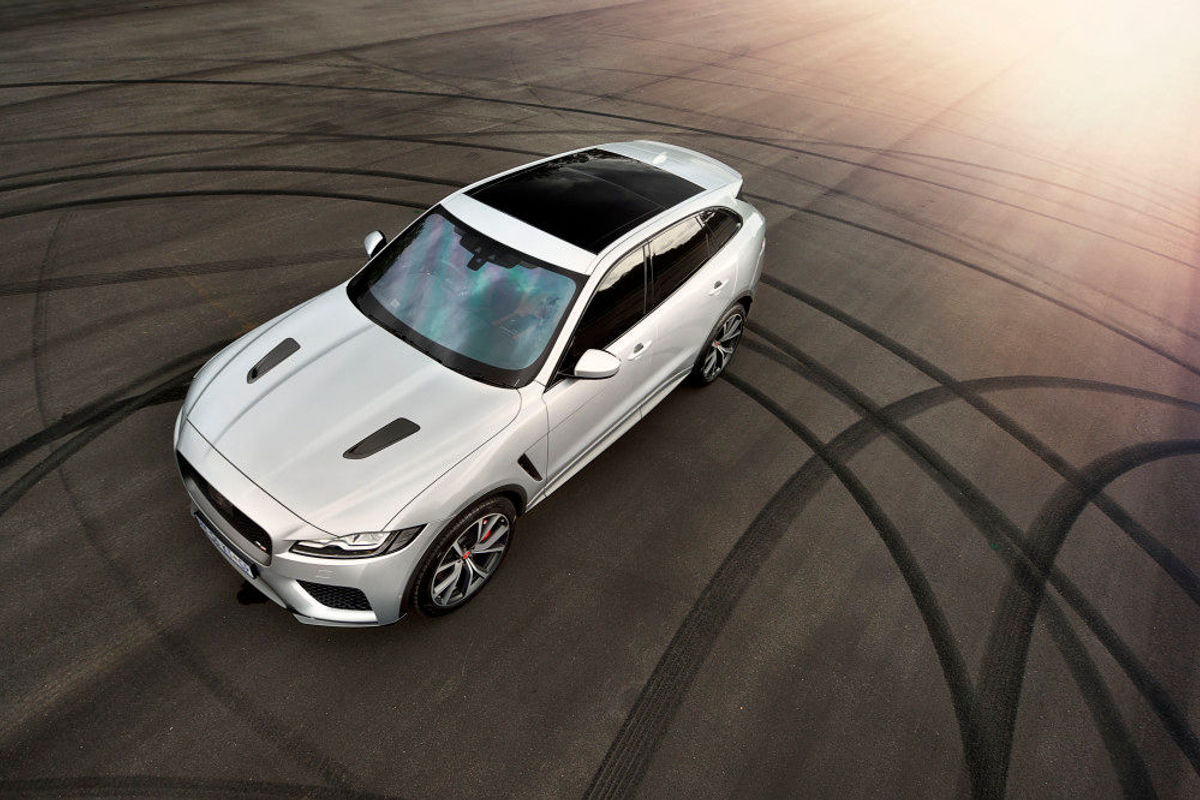
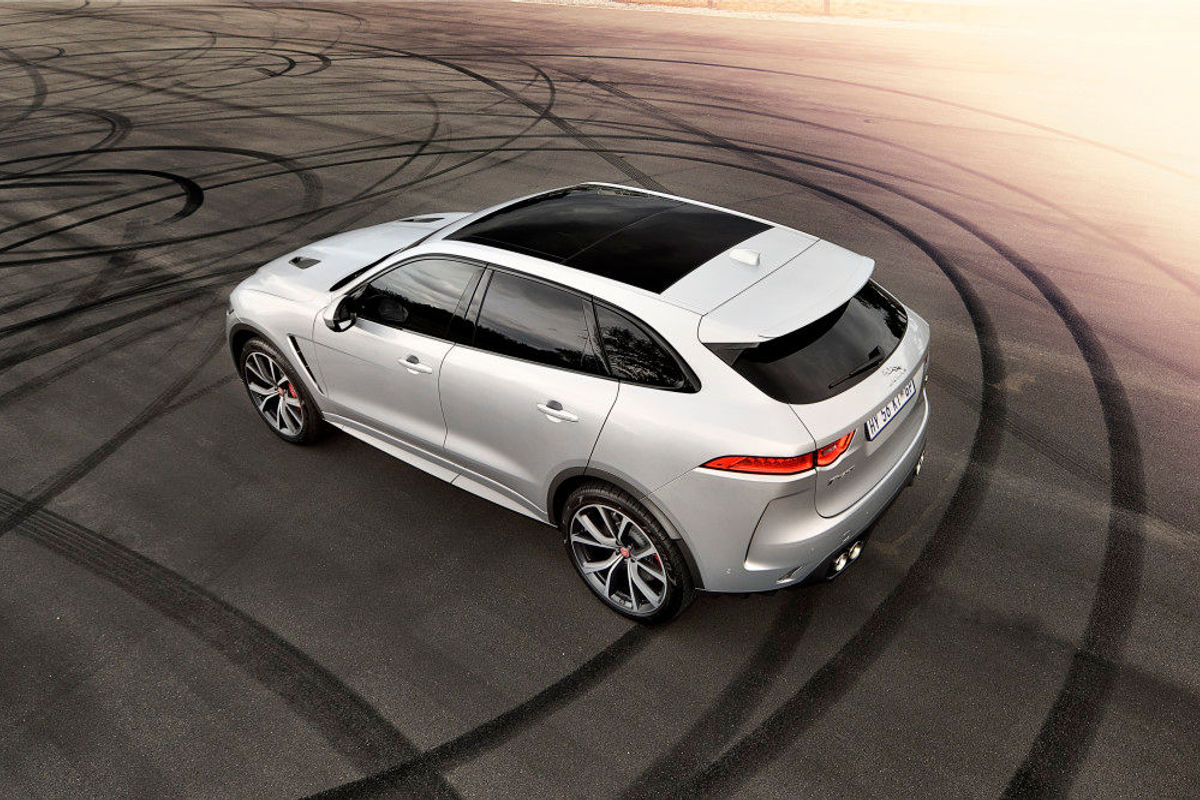
Jaguar has set its most powerful SUV loose in South Africa! It’s called the F-Pace SVR and it will make its local debut this weekend at the Jaguar Simola Hillclimb event with our very own Ashley Oldfield behind the wheel! See details below…
Fitted with a powerful supercharged 5.0-litre V8 engine that offers 405 kW and 680 Nm of torque, the F-Pace SVR is capable of splintering performance and can accelerate from zero to 100 kph in 4.3 seconds and run to a top speed of 283 kph.
The F-Pace SVR will compete in the Jaguar Simola Hillclimb this weekend and our very own race ace, Ashley Oldfield will be pushing the newcomer to its limits.
The F-Pace SVR rides on 21-inch wheels as standard (22-inch optional) and its performance is complemented with a throaty soundtrack thanks to the fitment of Jaguar’s Variable Valve Active Exhaust System and also features a specially-calibrated 8-speed automatic transmission and uprated suspension.
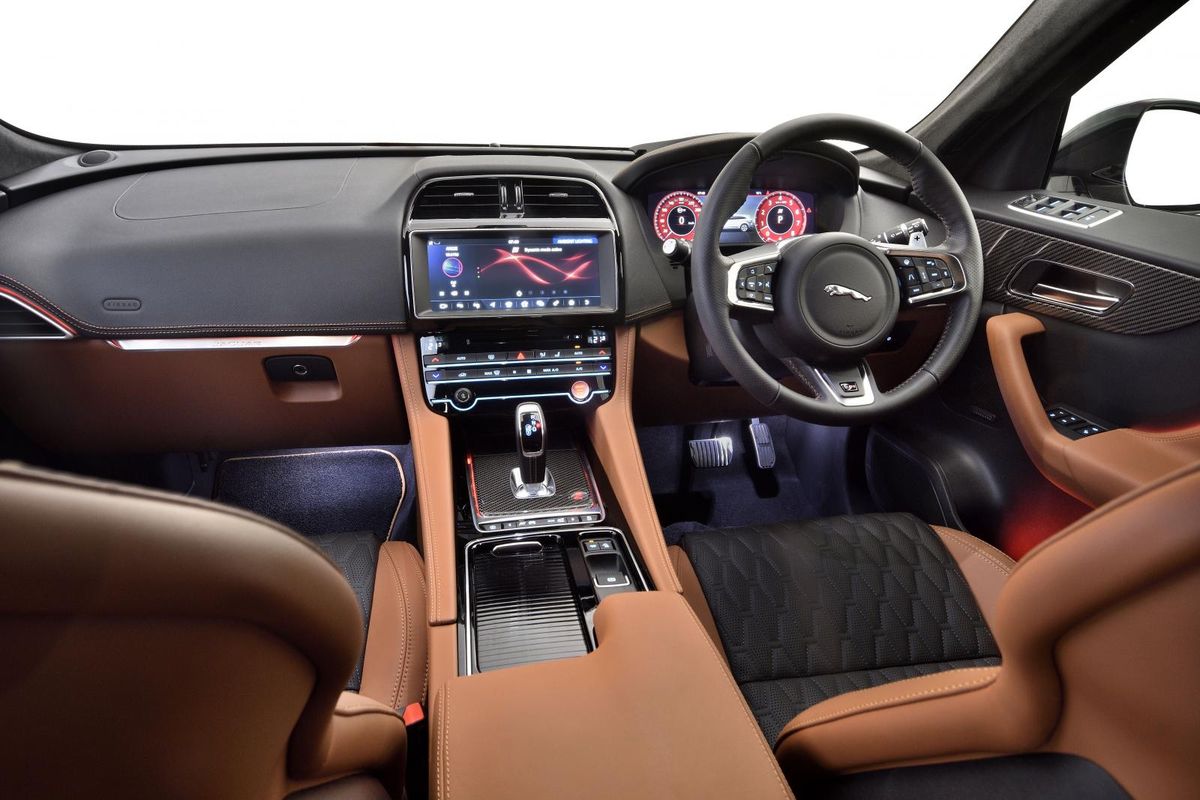
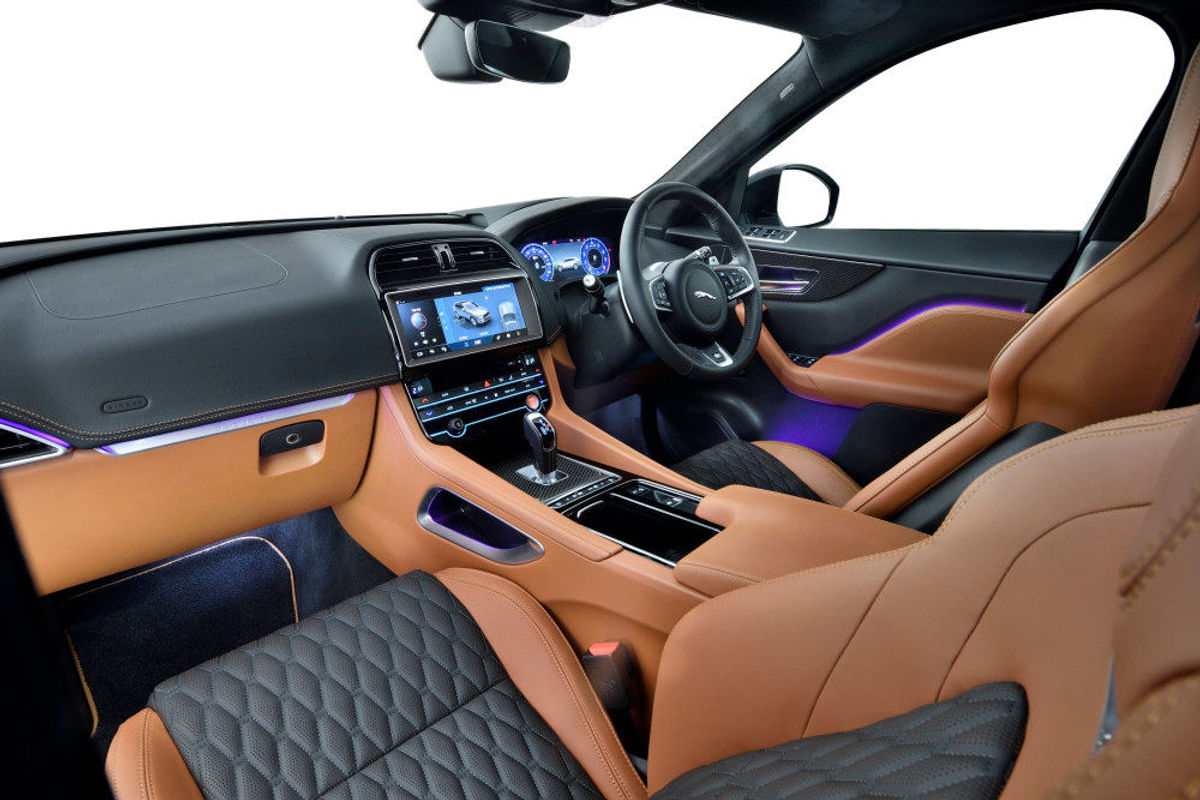
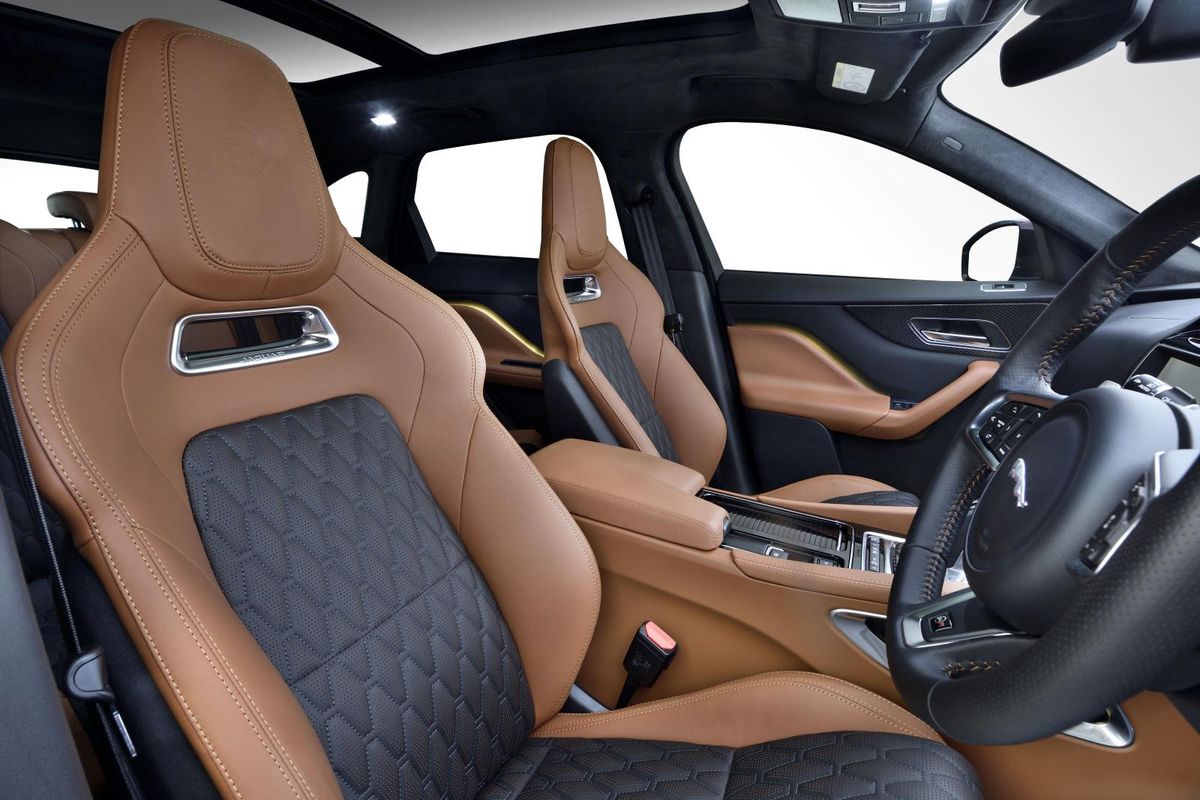
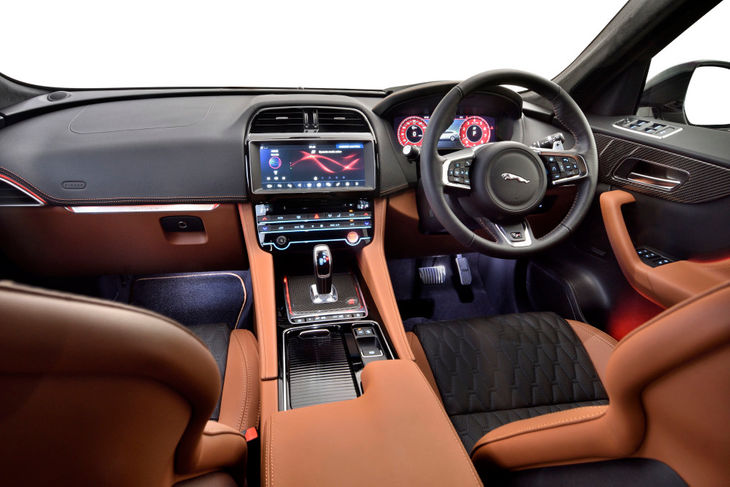
The F-Pace SVR's interior offers luxury and comfort with the Touch Pro Duo infotainment system being a highlight.
More than this, a sports-tuned electronic differential, adaptive dynamics and torque vectoring by braking ensures that cornering capability is maximised. Equipped with a unique dynamic driving mode, gear shifts, throttle and steering response are sharpened to deliver a more engaging driving experience. With all-wheel drive and features such as All Surface Progress Control and Adaptive Surface Response, the F-Pace SVR can negotiate various terrain and weather conditions.
Key interior features include slimline performance seats, SVR steering wheel with aluminium paddle shifters and a Touch Pro Duo infotainment system comprising a 10-inch touchscreen and 12.3-inch high-definition instrument cluster. A 4G WiFi hotspot can also connect up to 8 devices if required.
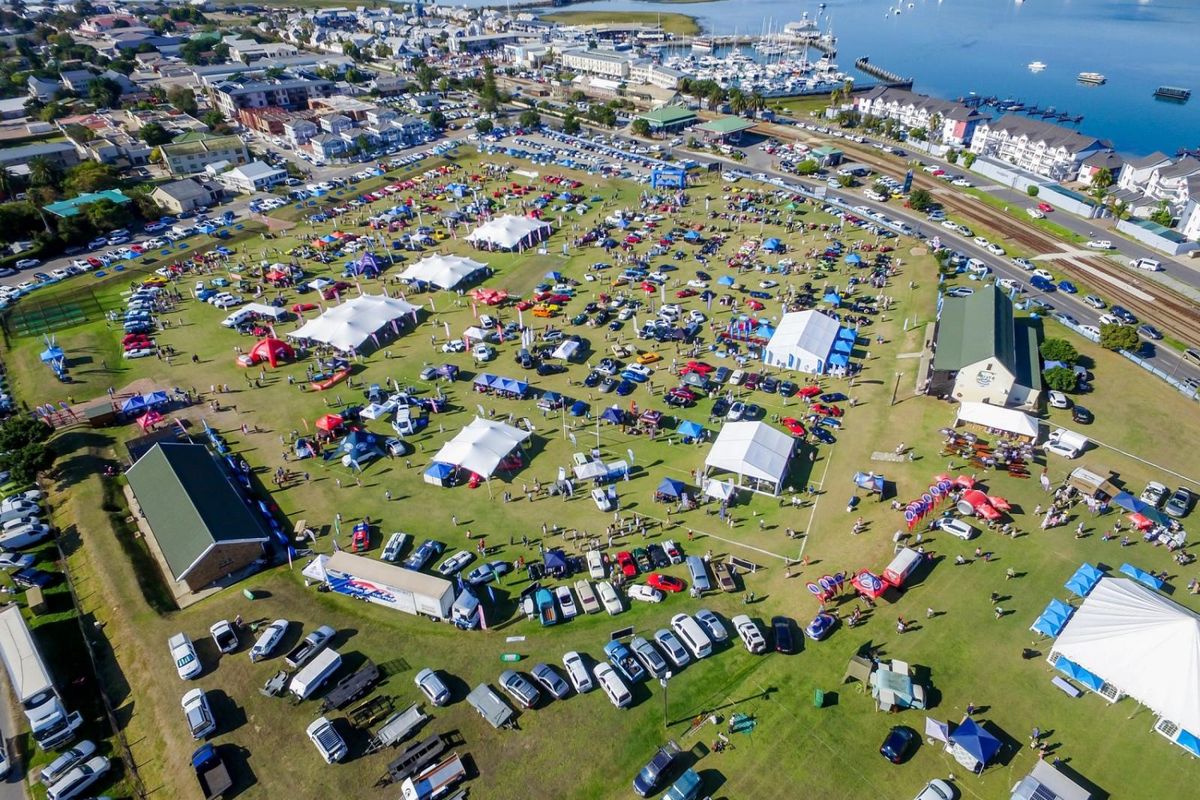
Labelled South Africa's premier motor show, the Knysna Motor Show looks set to draw 400 classic and vintage cars to the Knysna High School Sports Fields this weekend (Sunday, April 28).
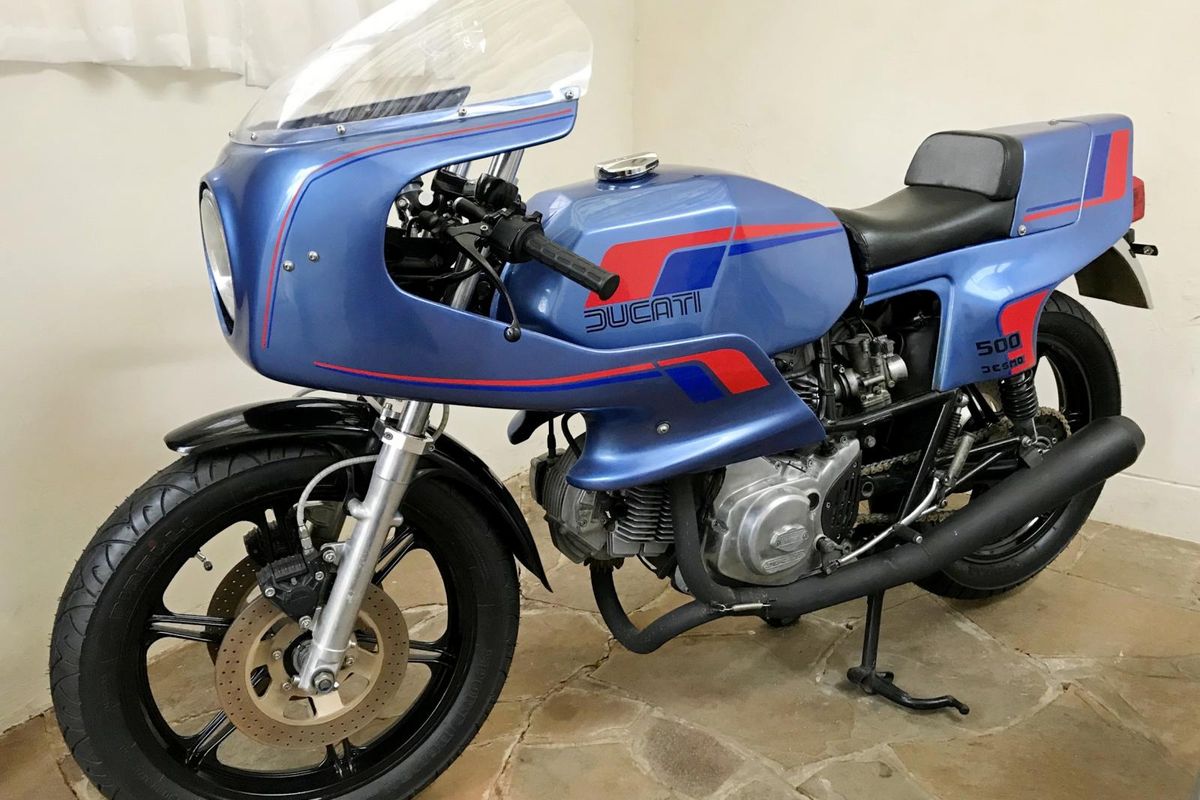
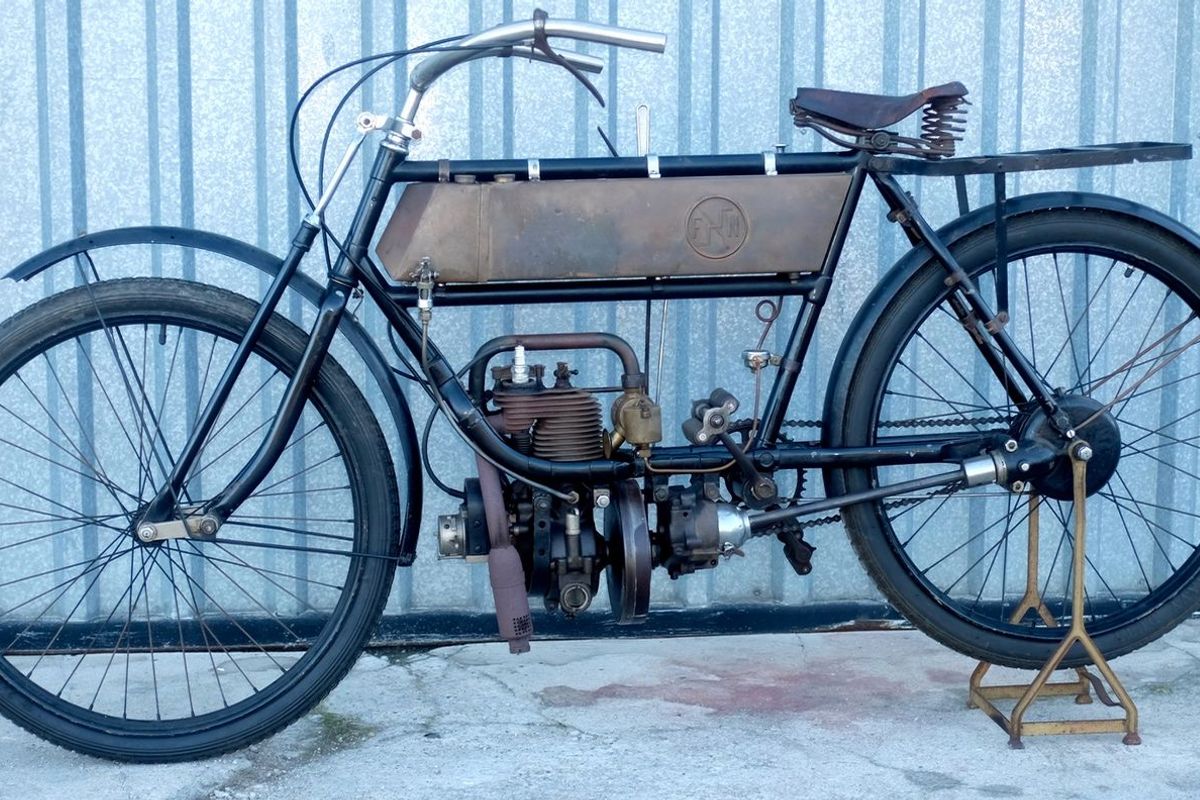
This, the eighth Knysna Motor Show, is organised by the Garden Route Motor Club and sponsored by Sanlam Private Wealth. The glamorous event takes place on Sunday 28 April from 9am to 4pm and prices for tickets are very reasonable at R50 (adults), R10 (teenagers under 18) and kids under 12 are admitted free. The setting is close to the picture-perfect Knysna lagoon and the vehicles on display are there on invitation… so expect to see some of the finest machinery in all the land. Besides the cars, you can also expect to see some rare vintage motorcycles.
“The wonderful thing about this show is that, as far as possible, it caters for everyone’s motorised tastes. The cars range from the mega-expensive to affordable, as do the motorcycles. From the dawn of the motorised age 100 years ago and more, to the techno marvels of more recent times. But they have all been chosen because there is something about them that gives them a unique place in motoring history,” says chief organiser Peter Pretorius,
Show highlights
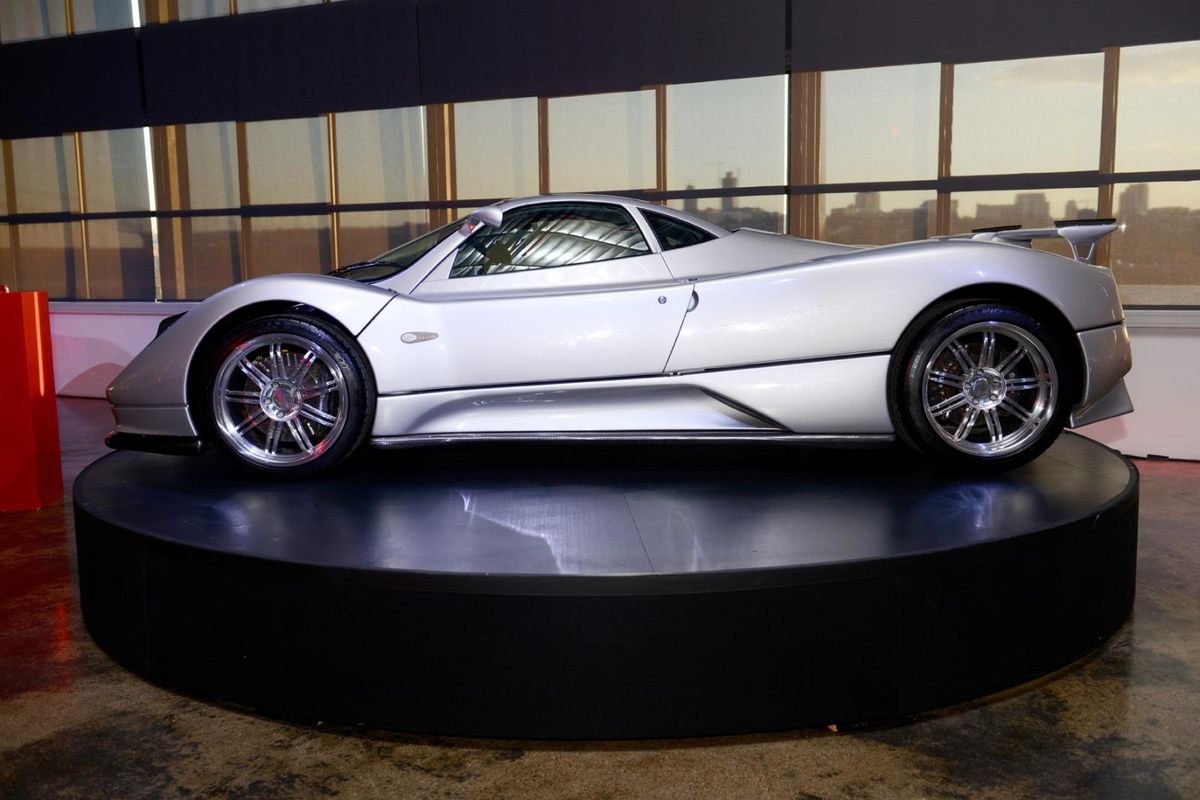
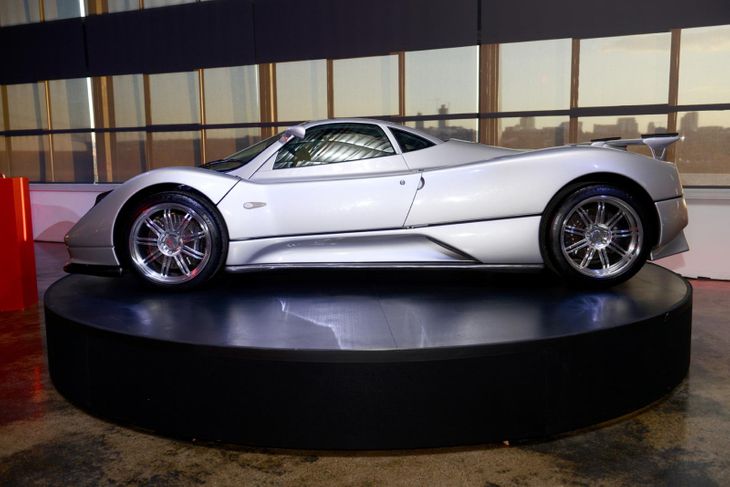
The only Pagani Zonda in South Africa will be on display.
Whether you like modern exotics such as the Pagani Zonda or Lexus LFA, or you fancy the older classics more, there will be something for everyone in Knysna this weekend. Expect to see up to 6 examples of Mercedes-Benz's marvellous '50s 300SLs on display, joined by up to 10 of the marque's fabulous 190SLs!
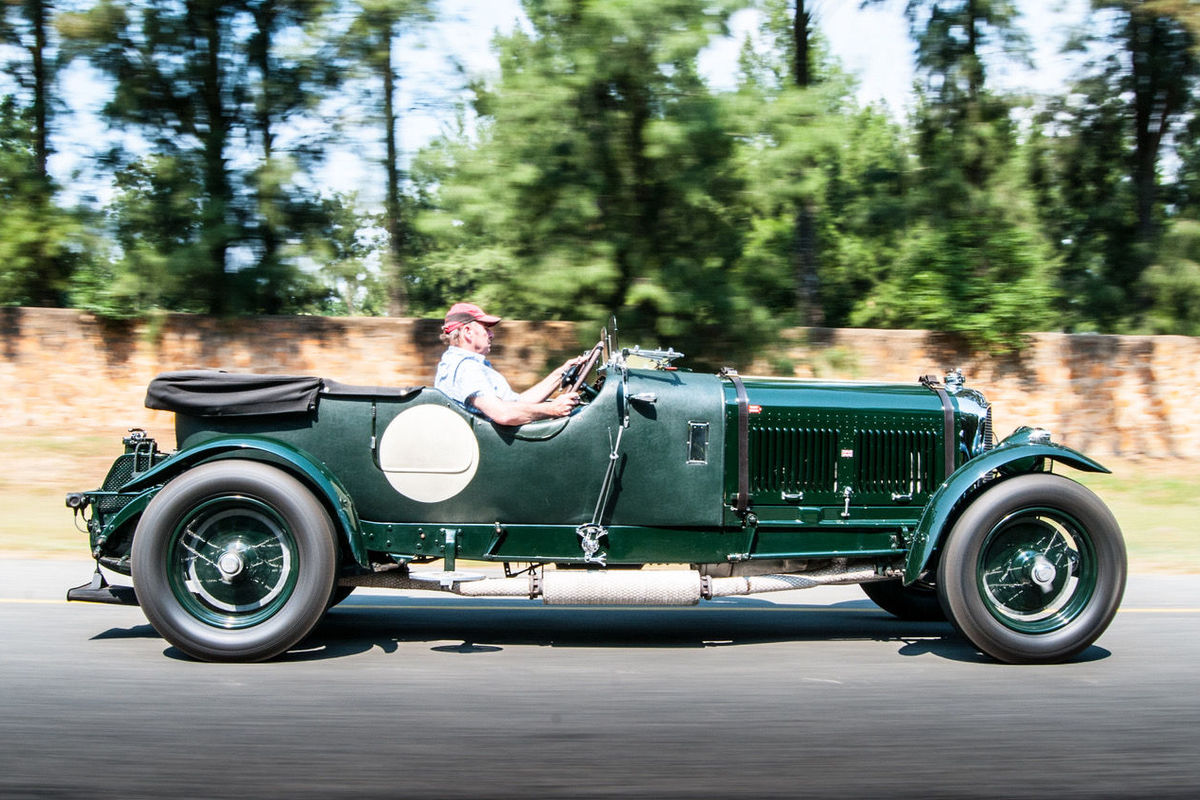
Bentley is celebrating its centenary this year, and suitably there will be more than 20 vintage and classic Bentleys on display, the earliest being the 3.0L examples from 1922. Bentley South Africa will also be showing off some of its new models, such as the Bentayga and Continental GT.
Another major anniversary this year is the 60th birthday of Mini. Again, there will be more than 20 Minis, including the iconic Cooper S model that was so successful in rallying between 1964 and 1967.
But that's not all. Morgan turns 110 this year, so organisers expect around 18 of these iconic cars to be on display.
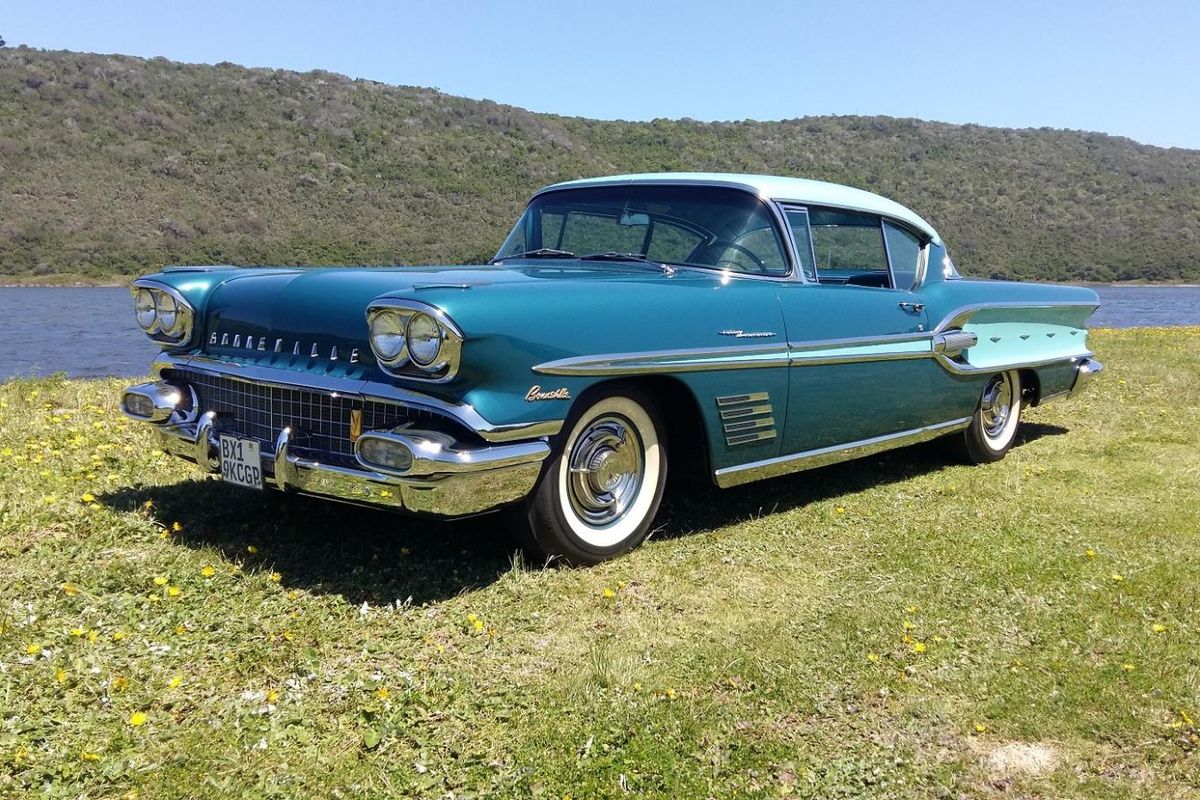
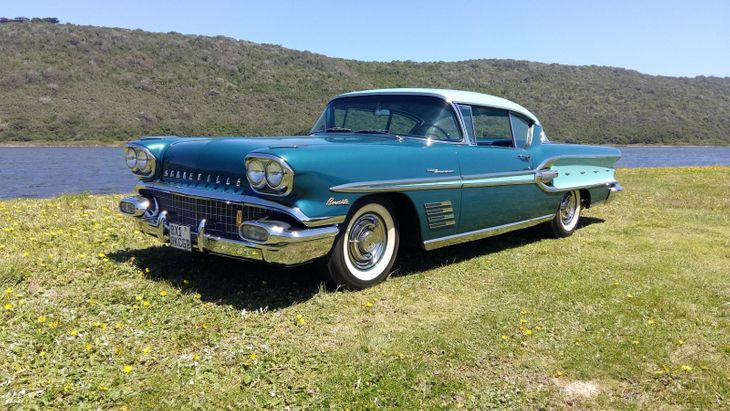
This 1958 Pontiac Bonneville is likely to be one of the main attractions.
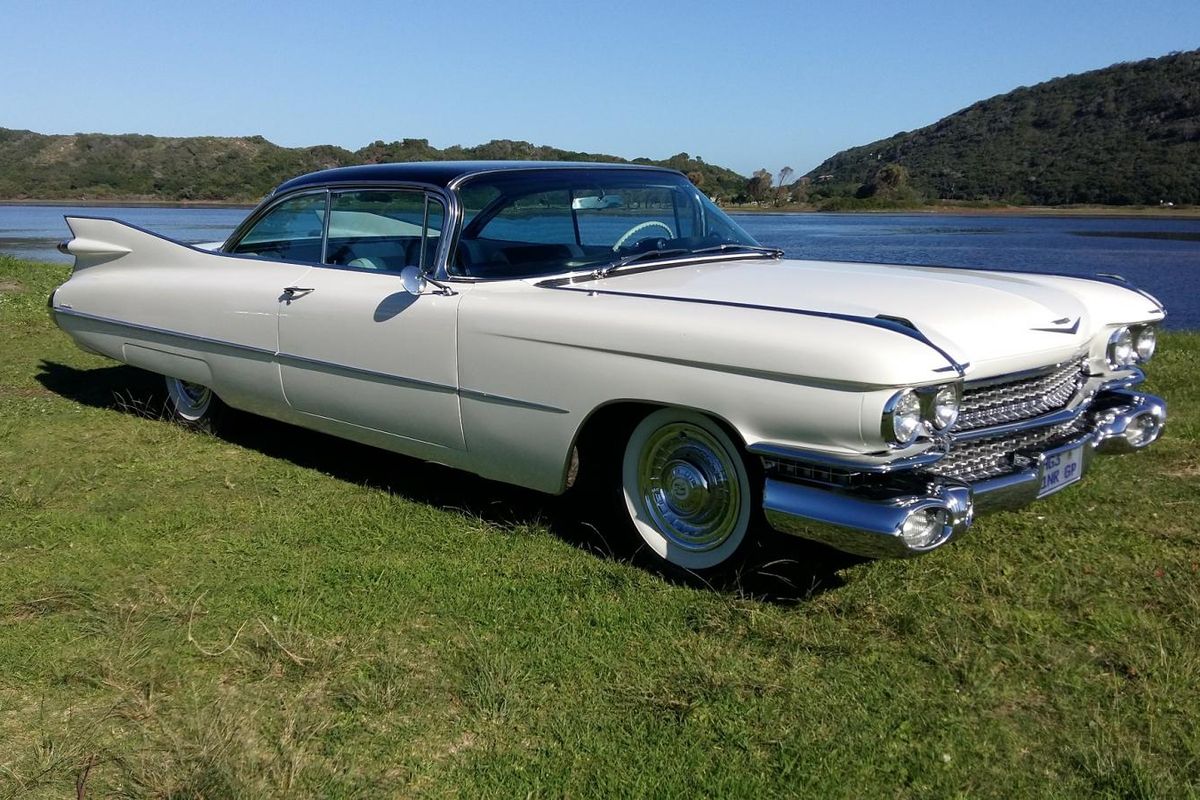
Showgoers always seem to love the American cars from the 1940s and 1950s, particularly those that display lots of fin and chrome. Cars on display will include a beautiful 1958 Pontiac Bonneville, a 1959 Cadillac Coupe de Ville, and movie star classics such as the late 1960s Plymouth Road Runner and a Hudson Hornet from the 1950s.
If you love your cars to be even older, there will also be a colourful display of pre-1945 cars.
For more information contact Peter Pretorius (email on [email protected], or cell phone on 082 321 4724).
I want an SUV with good off-road ability for R300k. What Should I Buy?
Mark from Rondebosch wrote to us asking for some advice:
Hello Cars.co.za team. I currently own a 2010 turbodiesel Land Rover Freelander, which is approaching 150 000 km. I bought it with under 100 000 km on the odo' and have been happy with it as I often venture off the beaten track on weekends away. I’d like to trade in for another one, and I’d be keen to hear what else I should consider before making a purchase. I’m looking to keep my spend under R300 000. Thanks so much.
Ciro De Siena’s answer
Ciro opts for something slightly softer and with less status, but more space and much less mileage.
Hello good Sir. First off, I think you’re playing the used car market very well, and at that mileage, it is probably a good time to get out of your current car. You’re also a rare species in that you actually use your SUV to do what it was built for. Weirdly though, this actually makes it harder to advise you; if you were just interested in climbing pavements outside the cricket, my job would be a lot easier.
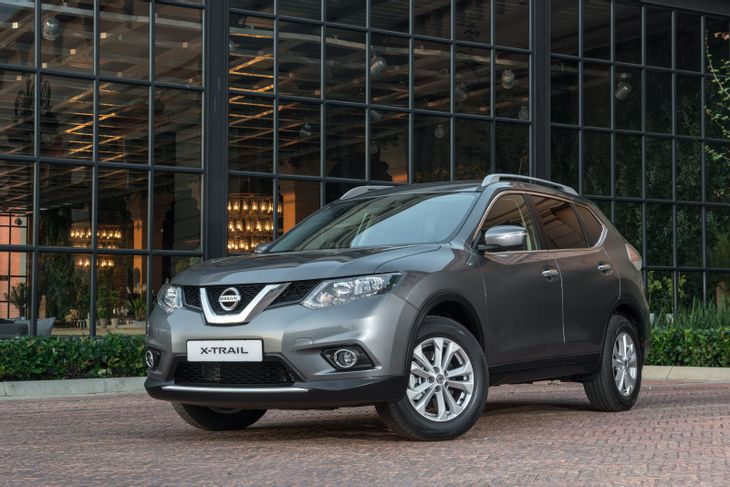
The exact car I’m going to suggest could be sold by the time you have a look at it, but it gives a good idea of what’s out there. My suggestion is this 2016 Nissan X-Trail 1.6dCi SE 4×4. I found one on our site with super low mileage, just 34 000km on the clock for R312 500, but I’m sure you could knock the dealer down a bit:
I’ve spent some time with this exact variant and I was very impressed. The diesel engine is punchy and virtually runs on the idea of diesel, I achieved under 6.0 L/100km when I drove it on mostly open roads, which is phenomenal for a car of this size. Admittedly I didn’t take it offroad but Nissan’s intelligent offroad system is actually quite smart and it should be able to keep up with your current car on the rough stuff, keep in mind there’s no low range though, but it does have impressive ground clearance. It’s also a fair bit larger than your current car so you can pack more camping gear in. Nissan also offers a strong 6-year/150 000 km warranty so you should have around 3 years of cover left. The only issue for you might be that this model was only offered with a 6-speed manual transmission, but it's a good manual box and the clutch is a doddle to operate.
Good luck!
Ashley Oldfield’s options
Who could turn down the one car to rule them all?
I too have ownership experience with a Freelander and it often amazed people by just how good an off-roader it was. The obvious choice then, would be to stay within the brand and see if you could trade in for its successor, the Land Rover Discovery Sport. Thing is, you won’t get into one for less than your budget, they start at around R350k currently.
So I have another proposal for you: how would you feel about stepping into the one car to rule them all? The car that does everything extremely well. The Land Rover Discovery 4. Your mileage won’t decrease from your Freelander if I’m honest and the fuel consumption will likely be a bit worse, but you could venture further off-road in more comfort and esteem.
Okay, how about something Japanese and virtually unbreakable? The Subaru Forester 2.5 XS Premium CVT. It’s capable off-road, comes in under budget and you’re likely to get one with under 75k on the clock, and for a Subaru, that’s still showroom condition. Fuel consumption will be a gripe as it’s a bit on the thirsty side (anything under 10L/100 km should be celebrated).
There are the rather obvious bakkie-based SUVs out there too, but having driven a comfortable Freelander, these will seem like veritable tractors on the long road compared to the Freelander.
Mike Fourie’s (non) alternative
Mike thinks things would be better with a good mechanic by your side and staying put.
Hello, Mark, is your Freelander still reliable and in good condition? If so, you should also consider hanging on to it. Although I appreciate that it will probably be easier to trade in now than in a couple of years’ time, you must factor in what you could expect to get on trade-in when determining your budget for the replacement vehicle. There are a number of sites that can offer you an estimate of what you can expect a dealer to offer you for your current vehicle, plus there are various car-buying businesses that may offer you slightly more than a dealer. Your search engine is your friend!
But, when replacing an older vehicle with another older vehicle, it’s often a case of swapping a known quantity (you know your Freelander’s quirks, strengths and weaknesses) for an unknown quantity that does not have the back-up of a warranty or service plan in case things go horribly wrong. Fortunately some dealers offer guarantees (if short ones), but whatever you decide to do, consider shopping around for an aftermarket bolt-on warranty – your Freelander is getting on a bit, but there are policies that will cover cars for breakdowns (up to a certain value) to the age of 15 years and odometer readings of 300 000 km. Should you decide to replace it, you could also set money aside (some policies require monthly premiums, others a lump sum payment) to invest in (let’s just call it) insurance for your new vehicle against potential mechanical maladies. MORE
Not sure what car to buy?
Got a query for our 'experts' to argue about? Fill in this form and you could feature in the next instalment of 'What Should I Buy?'
Namibian Road Trip with a BMW X3 xDrive30d
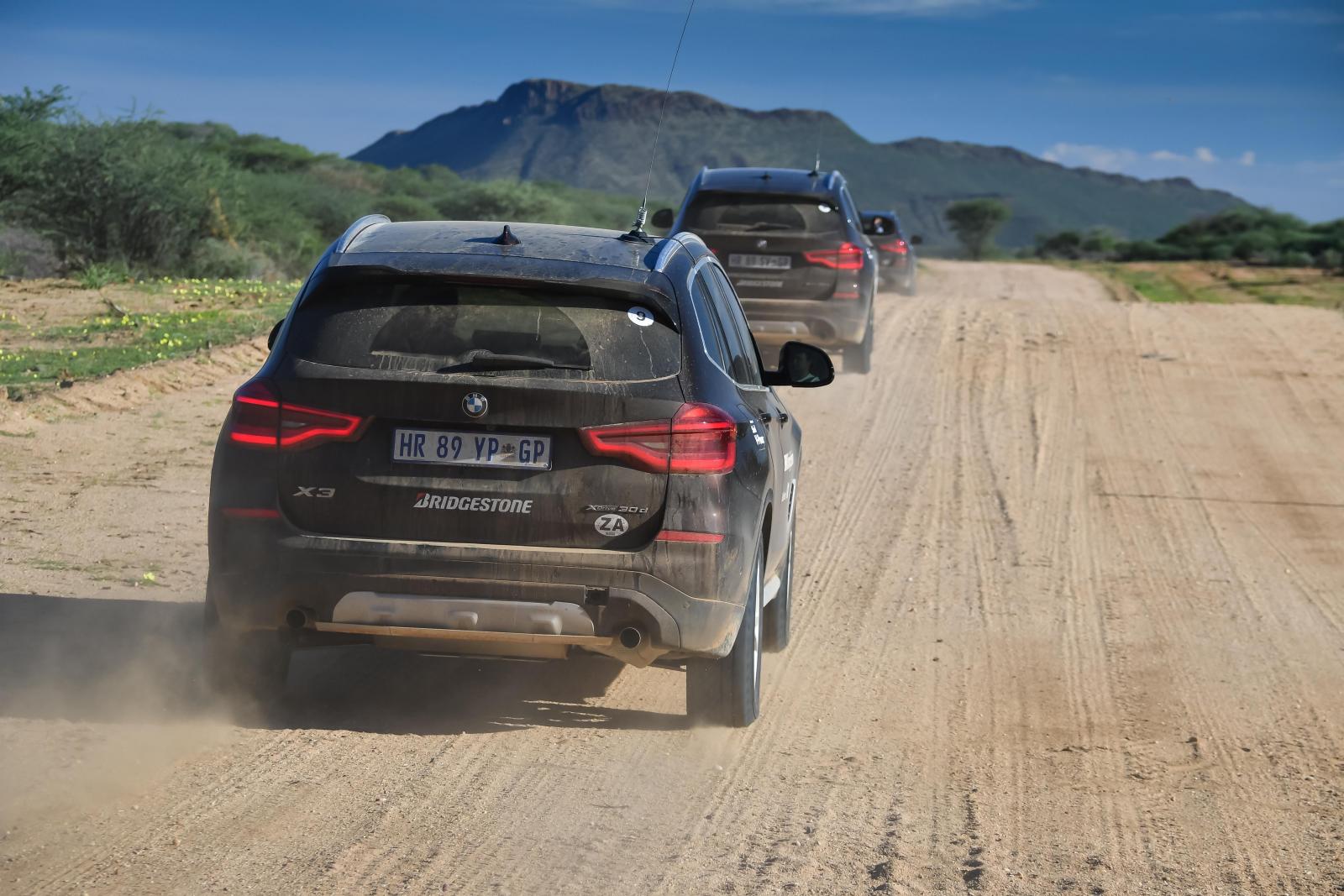
BMW Driving Experience South Africa now offers multi-day tours that explore some of the most scenic landscapes in Southern Africa… Regular Cars.co.za contributor and #CarsAwards judge Ernest Page recently travelled to Namibia to traverse our picturesque neighbouring country in an off-road-optimised X3 xDrive30d.
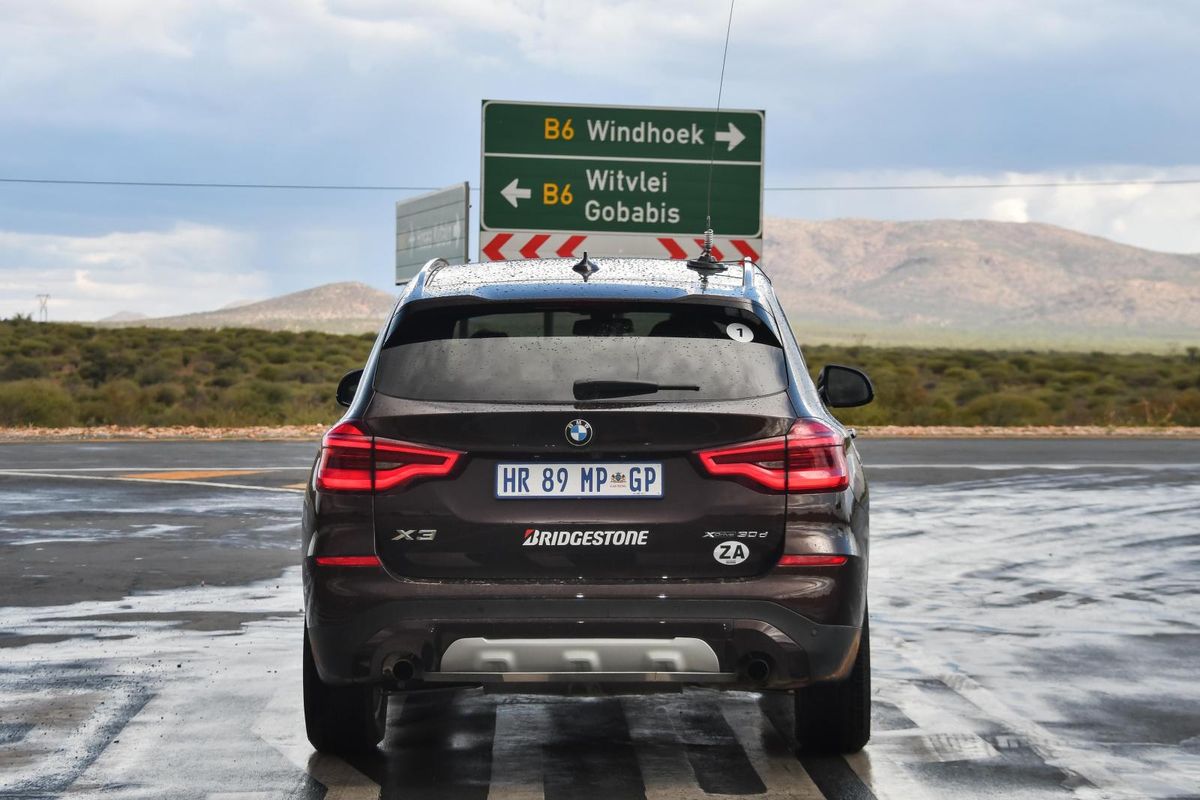
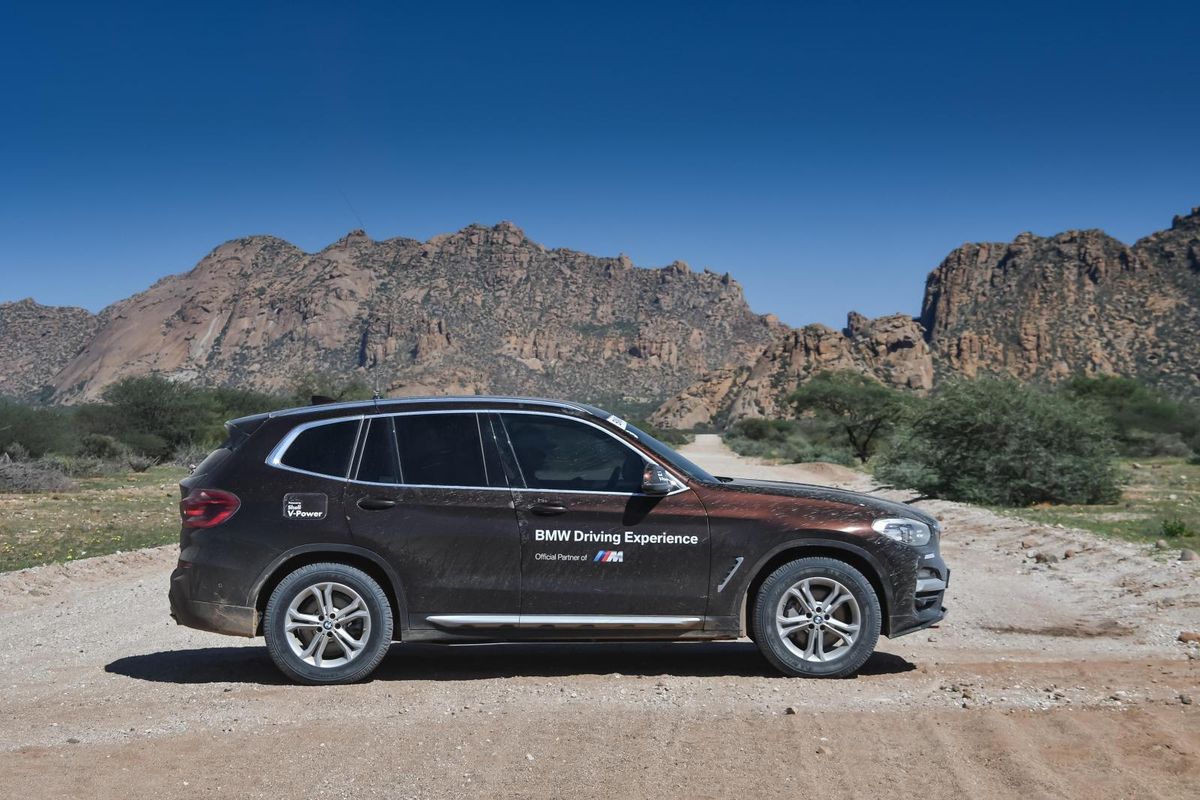
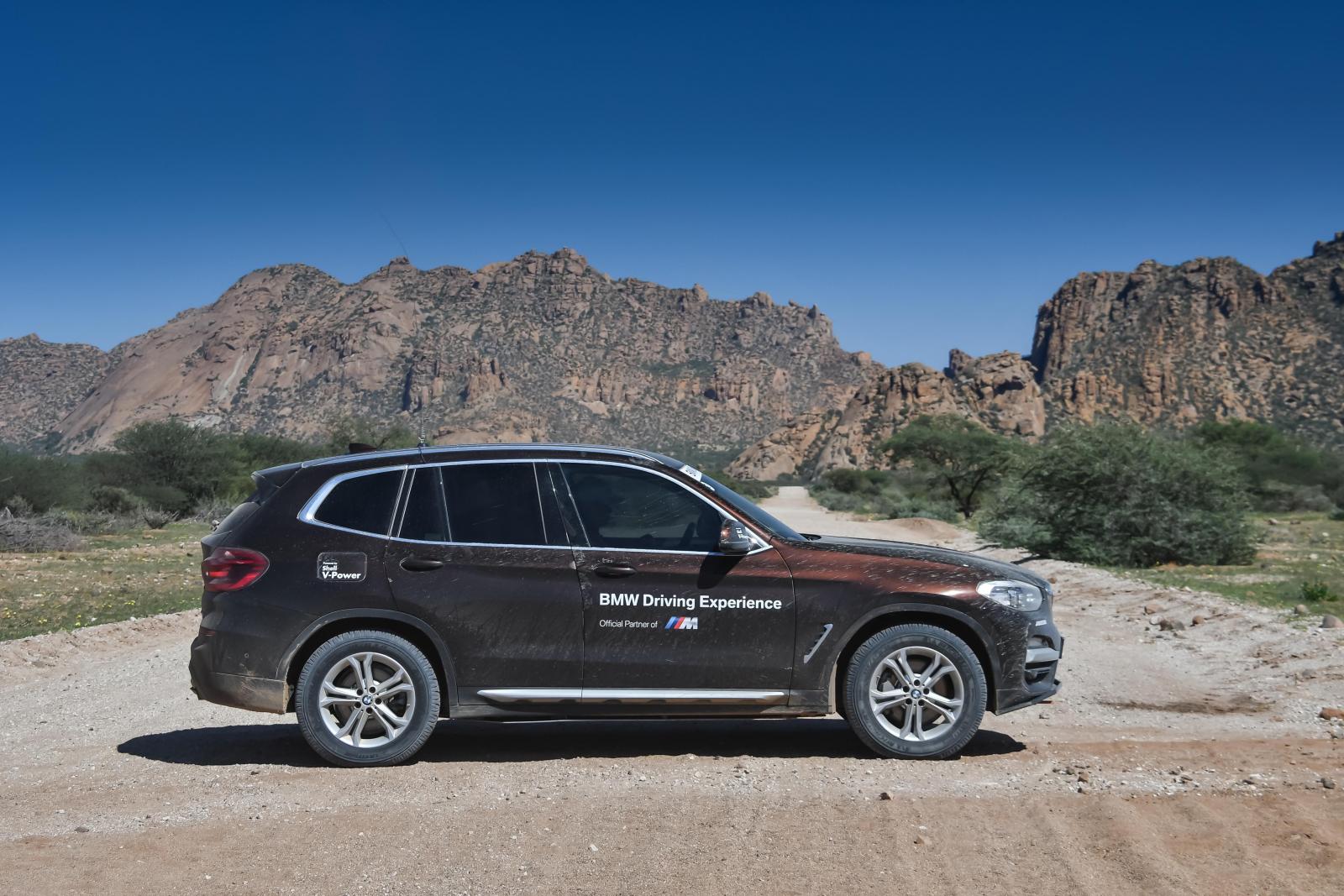
Launched in South Africa in 2018, the 3rd-generation X3 has been well received; the Executive SUV was a finalist in the 2018/19 Cars.co.za Consumer Awards – powered by WesBank. However, the (G01) X3 is very much a road-biased luxury off-roader – to withstand the rigours of the Namibian landscape, the South African-built X3s utilised for the trip were kitted with special off-road features developed by BMW Driving Experience.
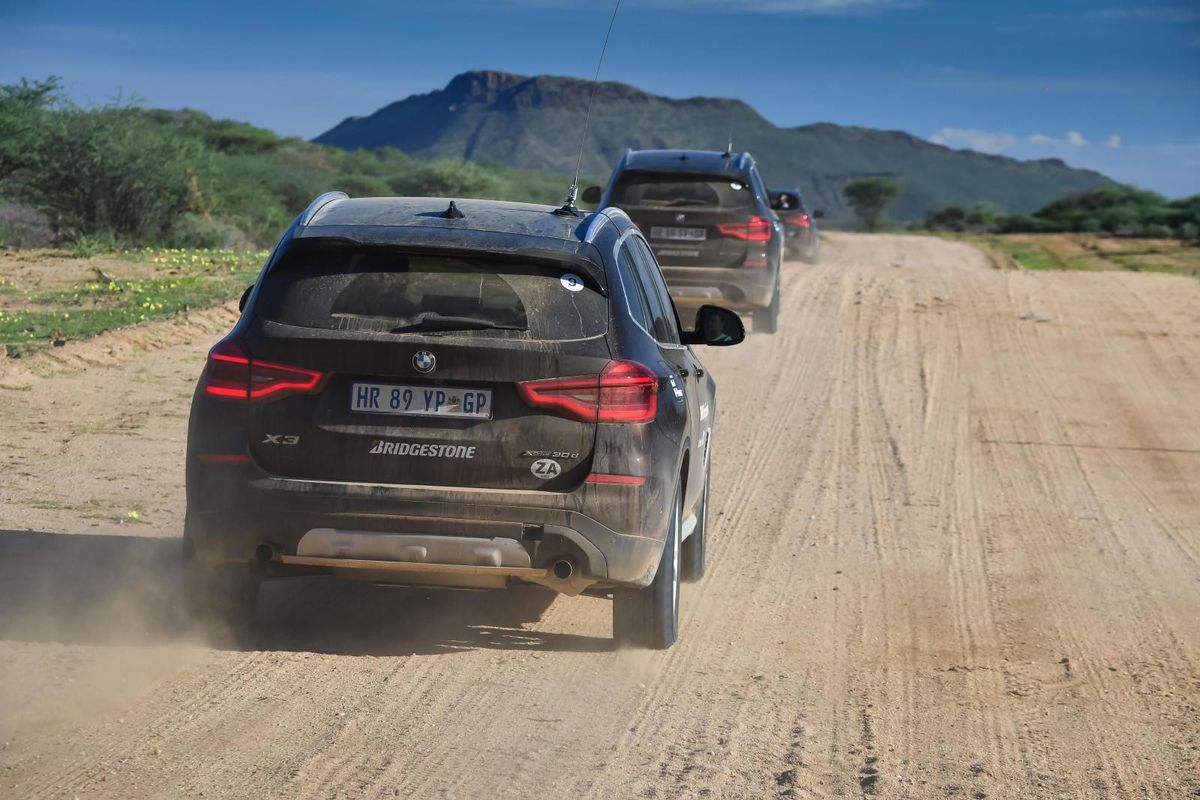
The upgrades to the X3 include a raised overall ride height (by about 50 mm, the manufacturer says), full aluminium underbody protection with an increased departure angle, higher-profile all-terrain tyres (available for customers to order at any BMW Dealer), a pre-air filter (with protective mesh grille) to prevent desert sand from entering the engine inlet, plus a full-sized spare wheel firmly fixed in the vehicle's load bay.
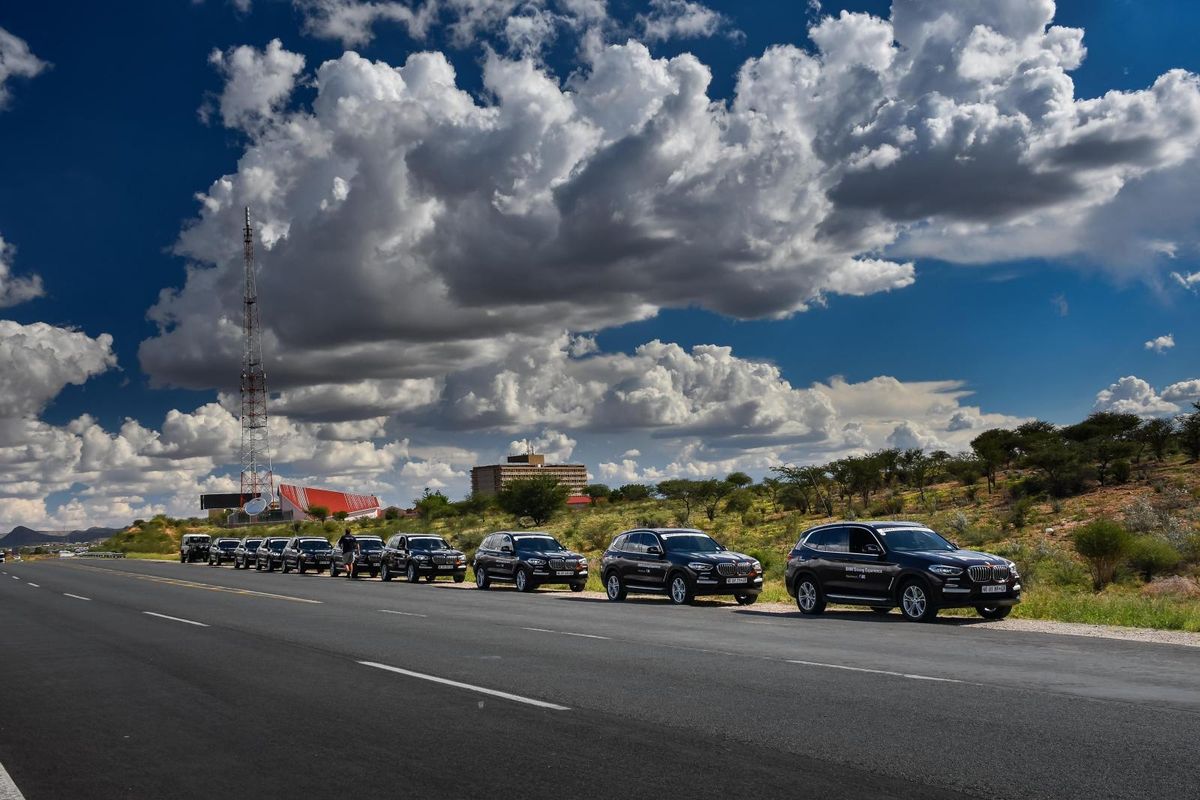
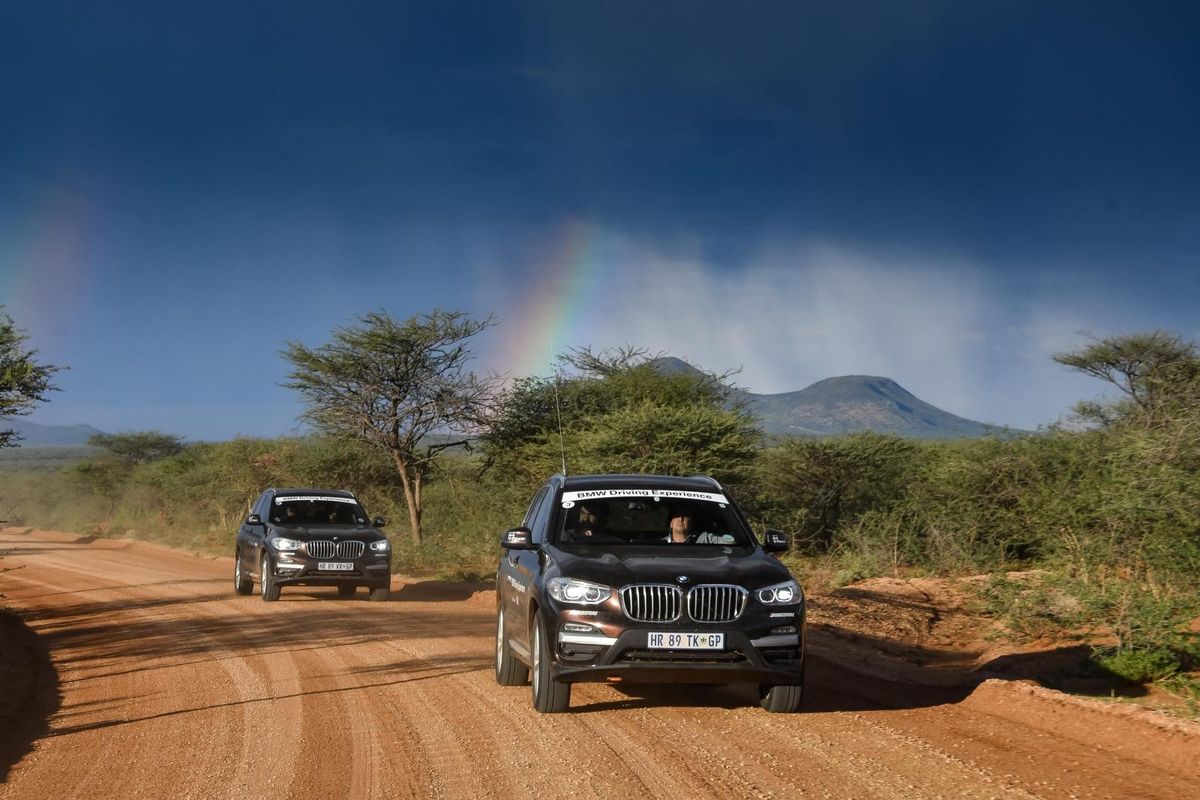
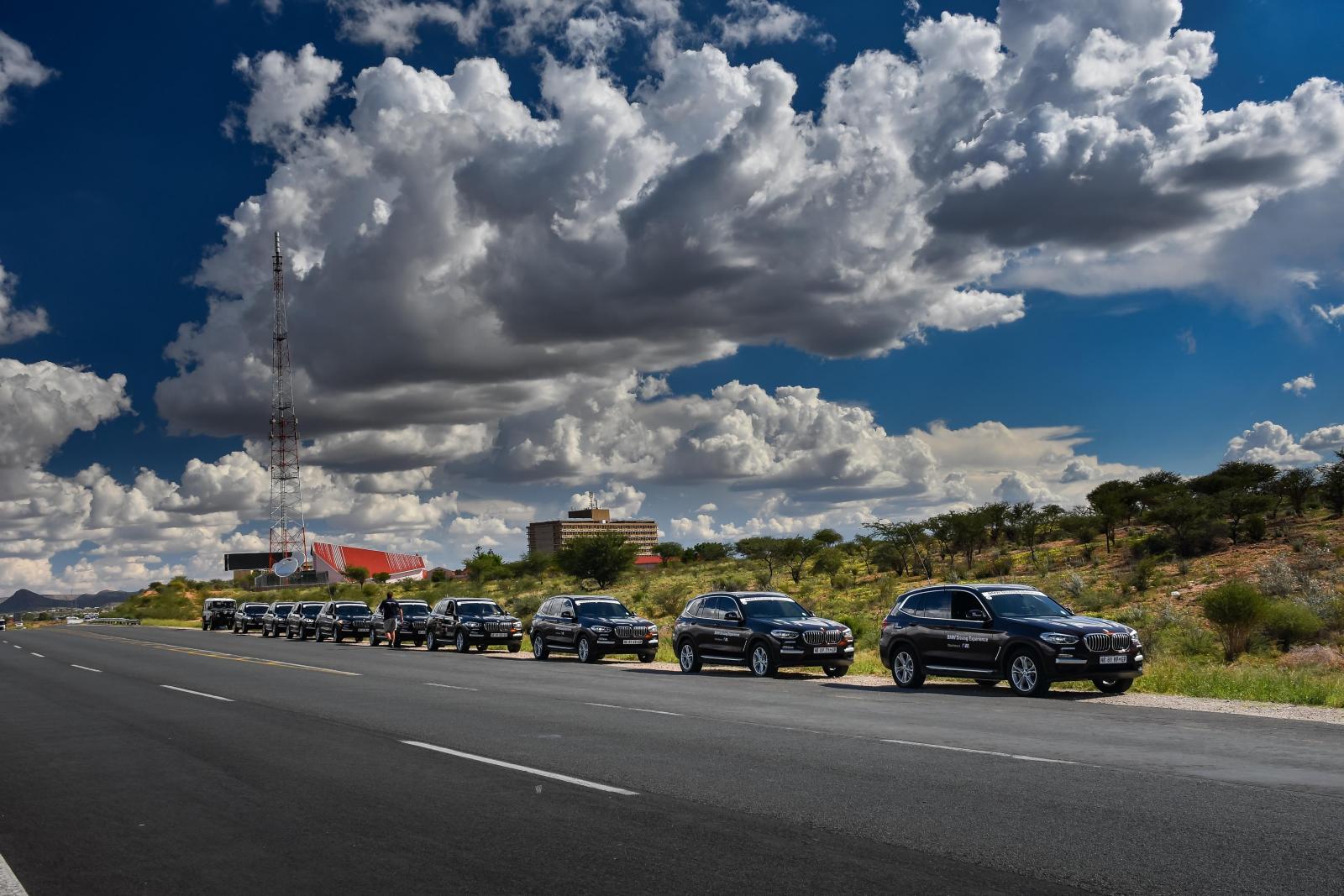
The convoy of BMW Driving Experience South Africa X3s stops to confer during the Namibian journey.
"It was an epic, awesome, adventure. Look, 'epic' and 'awesome' are often used hyperbolically and I'll be the first to admit that I have, in the past, used exaggerated words to help paint a picture of what was an otherwise memorable, even if relatively ordinary, situation," Ernest told Cars.co.za. "But now, as I reflect on those 4 days in Namibia, I can say without question, they were [expletive] awesome – and, in a word, epic!"
Herewith Ernest's travelogue:
Day 1: Arrival
I prepared for my flight to Windhoek for days… I packed a fresh new suitcase with a selection of clean laundry to choose from. You see, it was going to be my first “international” launch and I wasn’t about to blot my copybook by virtue of having a lack of wardrobe options. I knew this media event would be long, intense and involve lots of driving. My naivety left me wondering: “What is there to see in Namibia? Is it really all that special?"
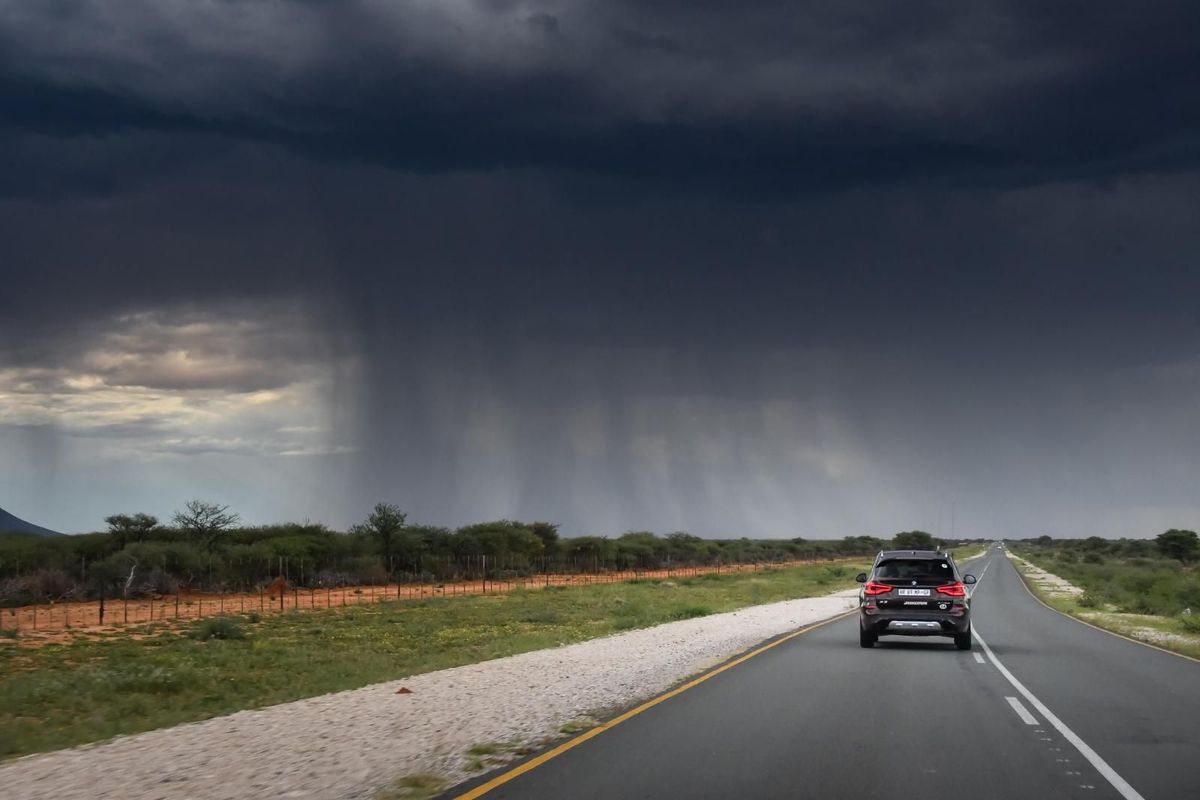
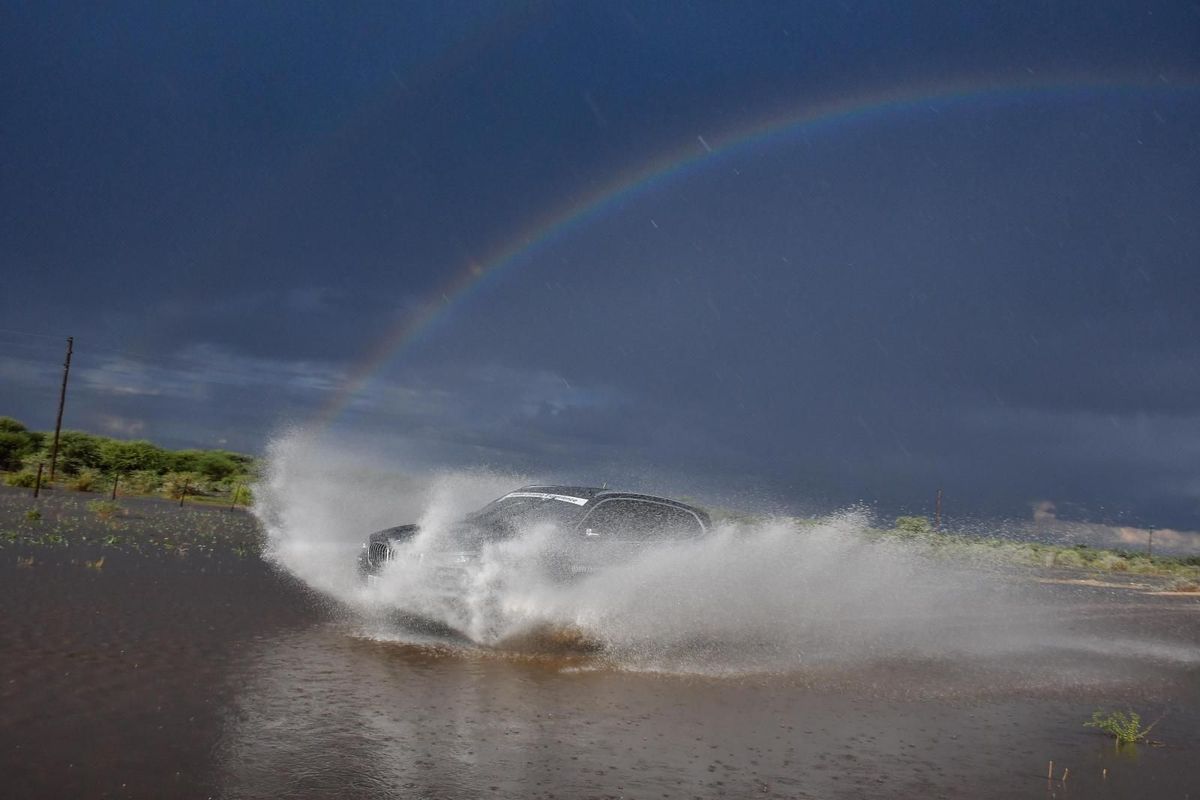
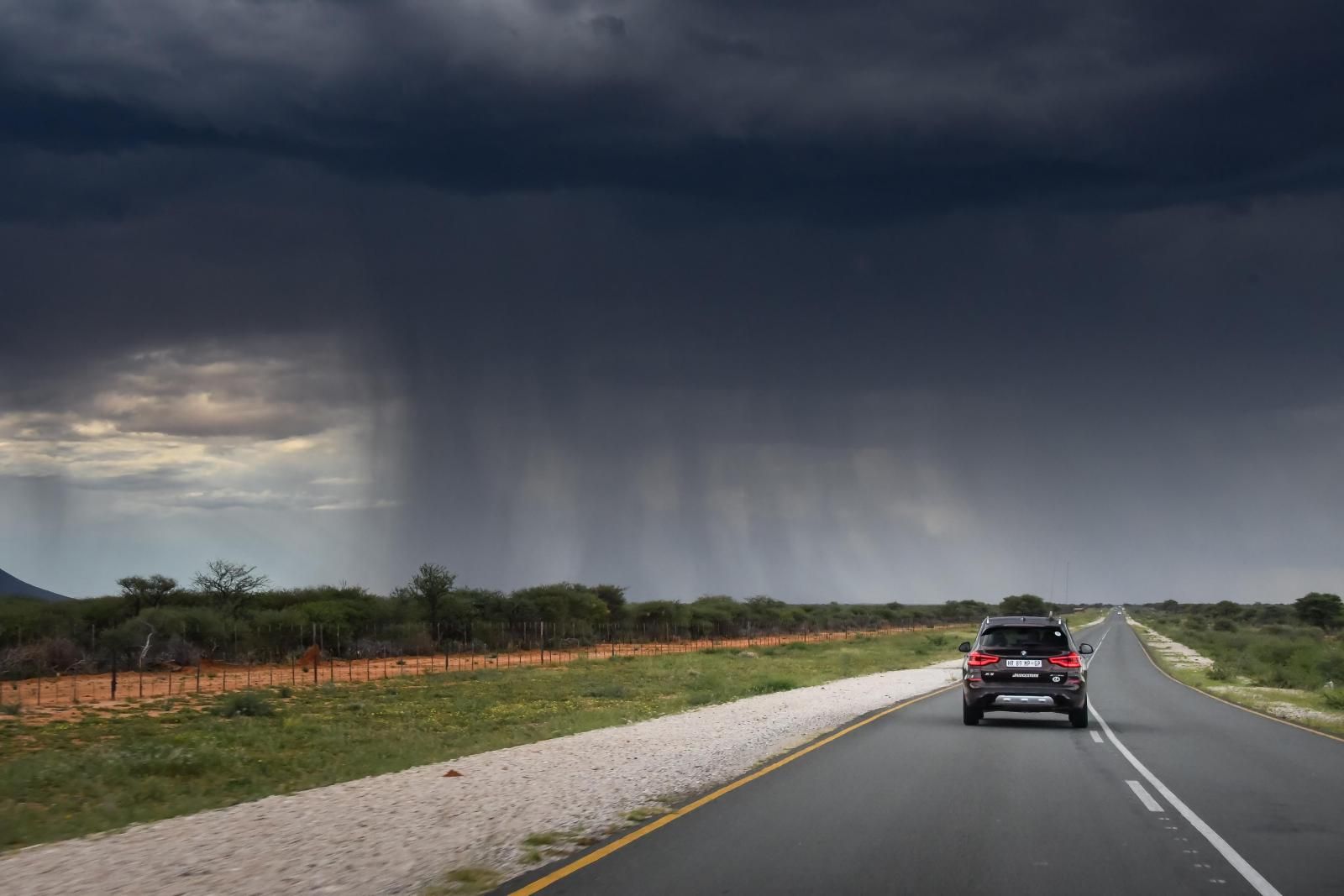
In a country known for its protracted droughts and lack of water, a thunderstorm is a spectacular sight.
Well, upon my arrival in the Namibian capital, I was interrogated by its immigration officials for as long as 45 minutes! Once they finally let me step into the general area of the arrivals hall, however, I realised that this was going to quite an adventure. I hugged the BMW PR and we shared a nervous laugh before I jumped aboard a specially-modified X3 xDrive30d. Our first leg was a 100-km trek towards the rocky outcrops of Ai Aiba lodge. Most of the roads were gravel and even though this was supposed to be a simple 1st leg, storm clouds gathered ominously in the distance.
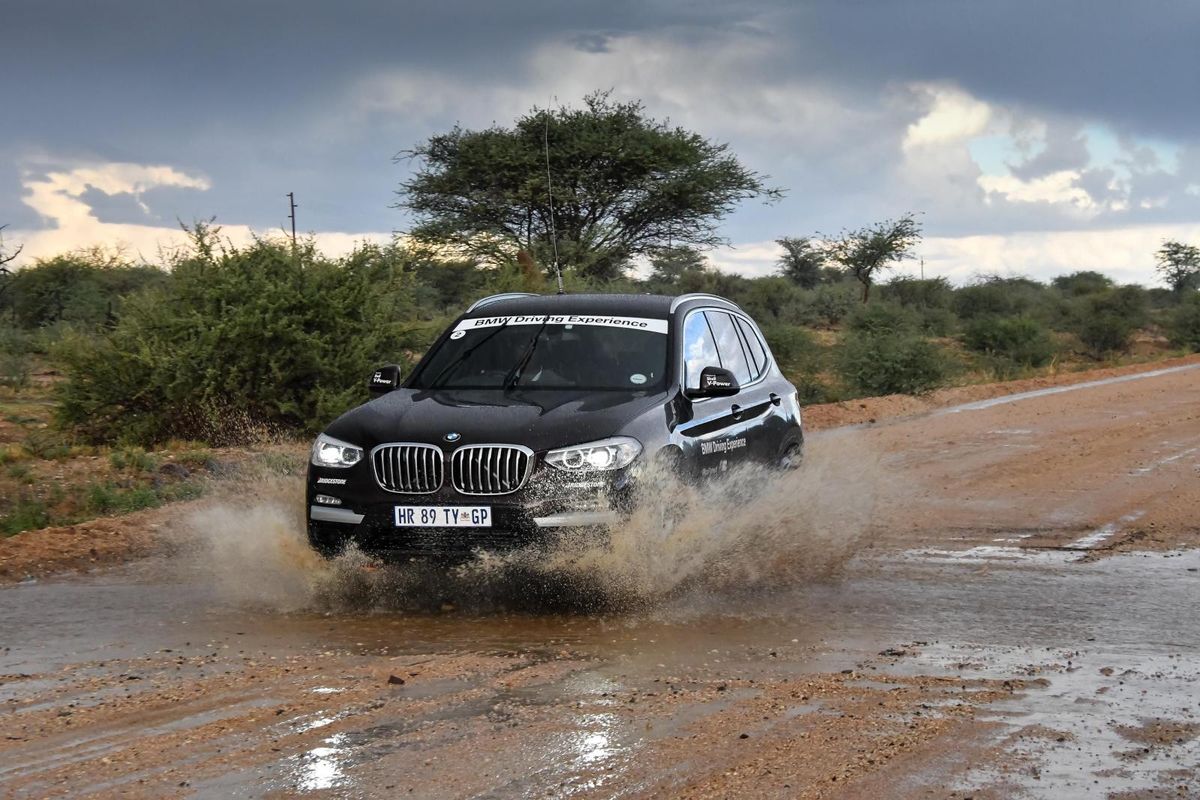
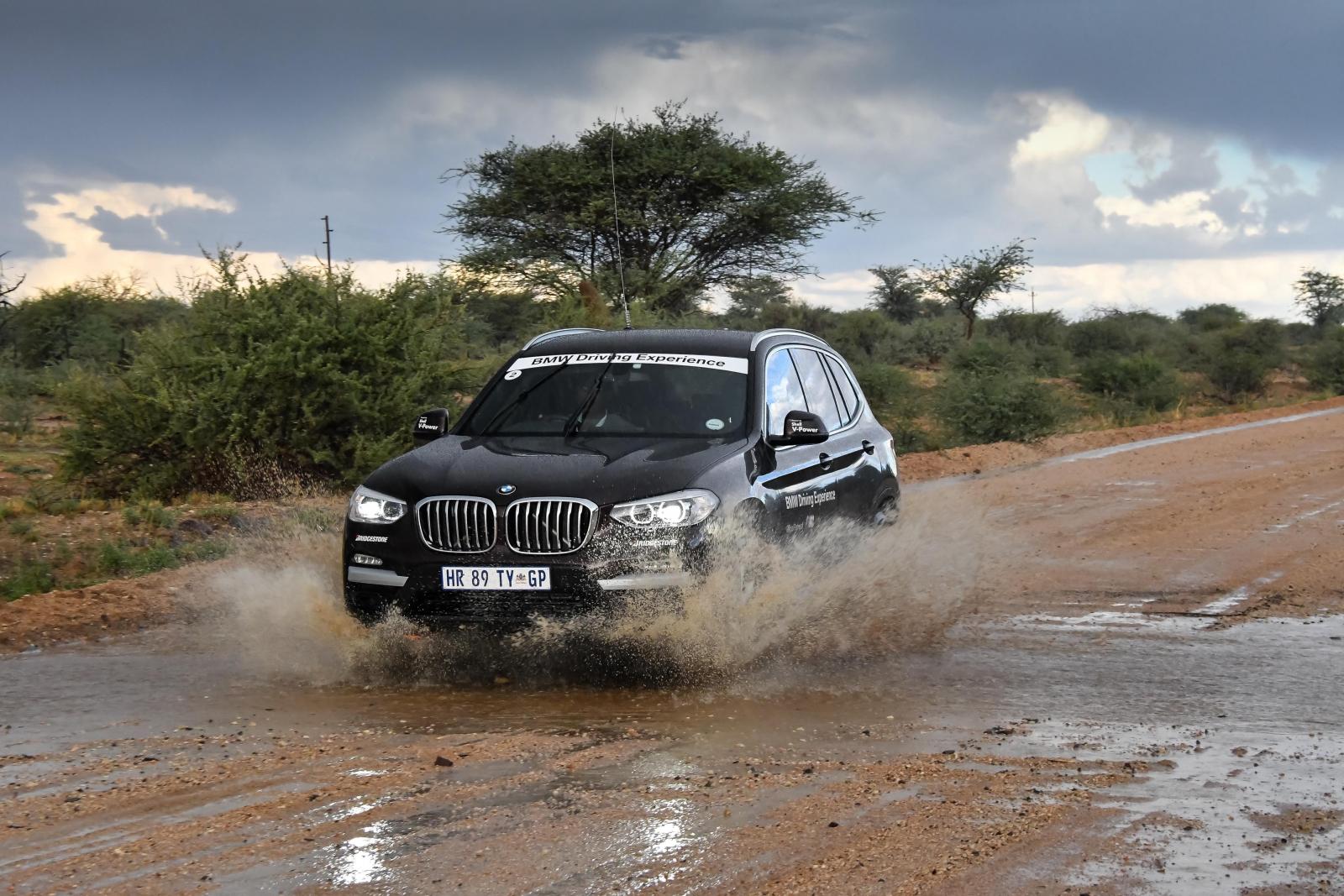
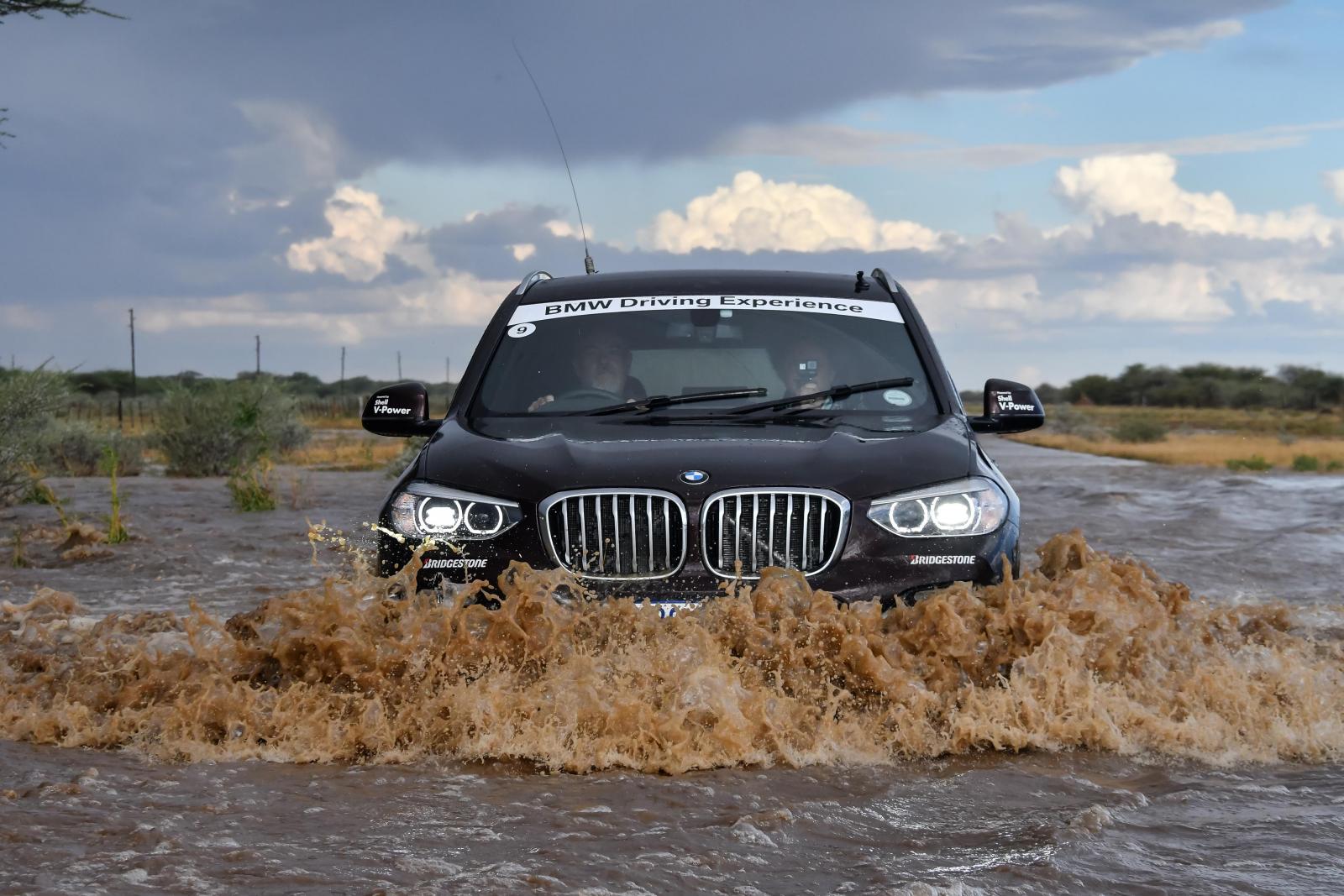
Suddenly the heavens opened and it felt as though our convoy drove into the full might of the deluge. The roads became perilously slippery as deep puddles formed on the sodden clay road surface. Soon puddles became river crossings that even purpose-built off-roaders might find intimidating.
It was good forethought of BMW to modify its fleet of X3s for harder off-road conditions. The rainwater pooled rather quickly…
Our fearless leader – instructor Bernie Williams – went first, and nervously told us over the "radio" we can go, but progress needed to be slow, so as to prevent water from flooding the cars' engine bays. Most drivers were total novices… so mild panic set in and that meant more speed – not less.
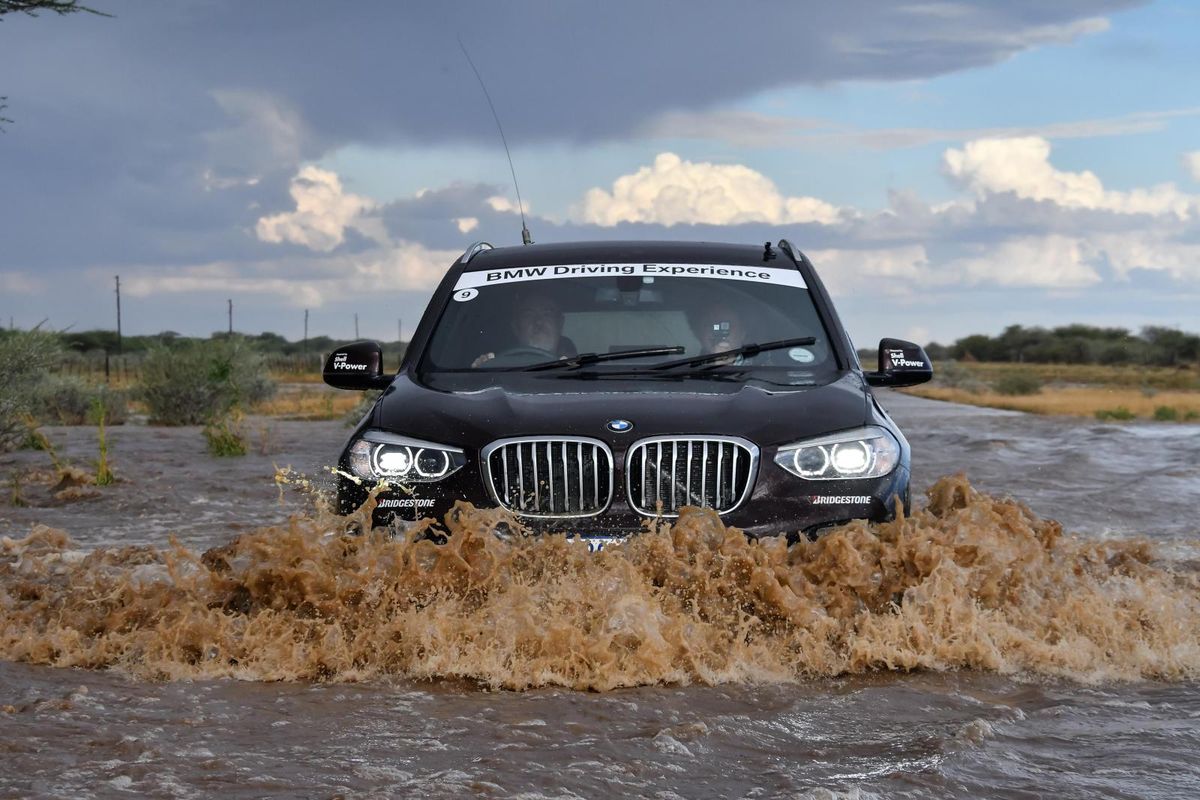
But “when in doubt, go flat out” doesn’t apply to off-roading. The fronts of our X3s looked submerged from the outside and I could feel the BMW's body being pushed sideways by the pulsing currents. This wasn't a rehearsed water crossing. This was real life. This was an actual adventure.
Fording was probably not an activity BMW had in mind when it developed the X3, but the executive SUV coped well with the water.
Hours later at dinner, we sat around our table and frantically posted social media updates with what little Wifi was available at the venue. We were duly proud of what had achieved in our “softroaders” that day. The route was only going to get tougher, however.
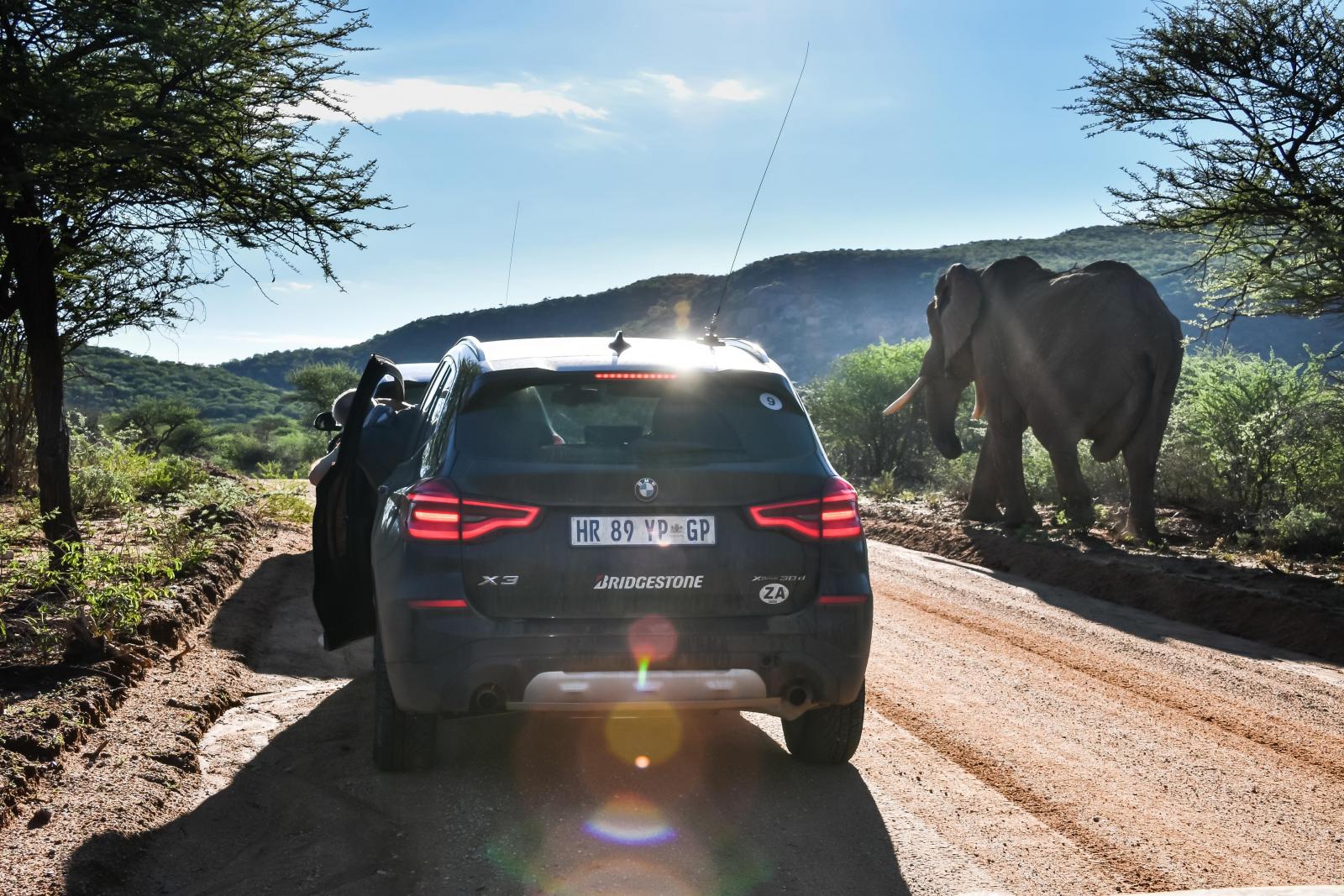
We ended the night with a game drive and I saw animals I had never seen in the wild. Suffice to say Namibia is much wilder than the Western Cape!
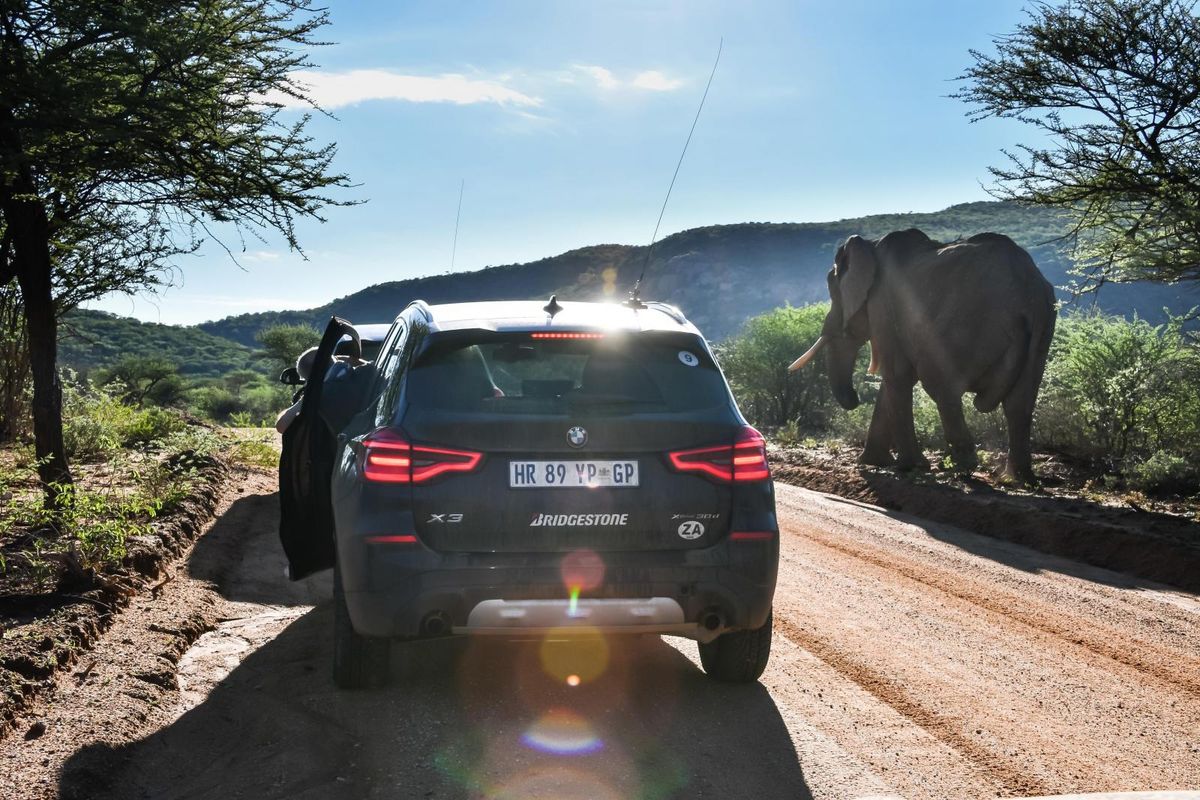
The X3 seems a sizeable SUV, until it passes in close proximity of an elephant…
Day 2. Journey To Swakopmund
Our road to Swakopmund took us on some winding and twisty gravel roads which, unlike South African routes, are not interrupted by civilization every couple of dozen kilometres. Along the way, we stopped at our lunch venue, where those who opted to do the full 8-day trip would stay over, but for us, it was merely a quick pause to refresh, before we hit the road again. There wasn’t much to see along those roads, but what little there was showcased Namibia's landscape: rich colours, textures and ancient rocks that were placed there many, many thousands of years before.
Namibia's beauty is quite difficult to describe – it's not obviously pretty or easy to explain. Yet, it's something that needs to be experienced first-hand to be believed. Just before arriving in Swakopmund, we drove through a river bed that had been dry for ages; we stopped to see an old, abandoned copper mine; the history of the place was palpable. The suffering too. Again, Namibia managed to paint a vivid picture without saying much at all.
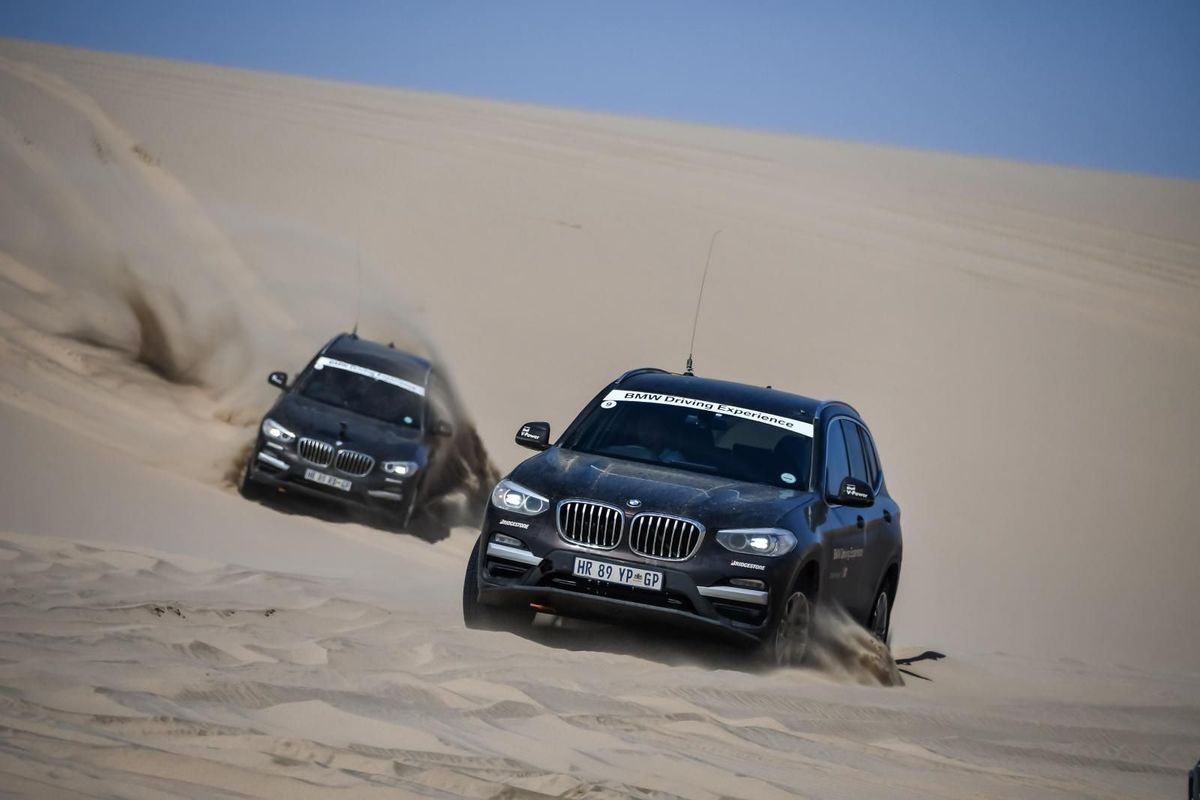
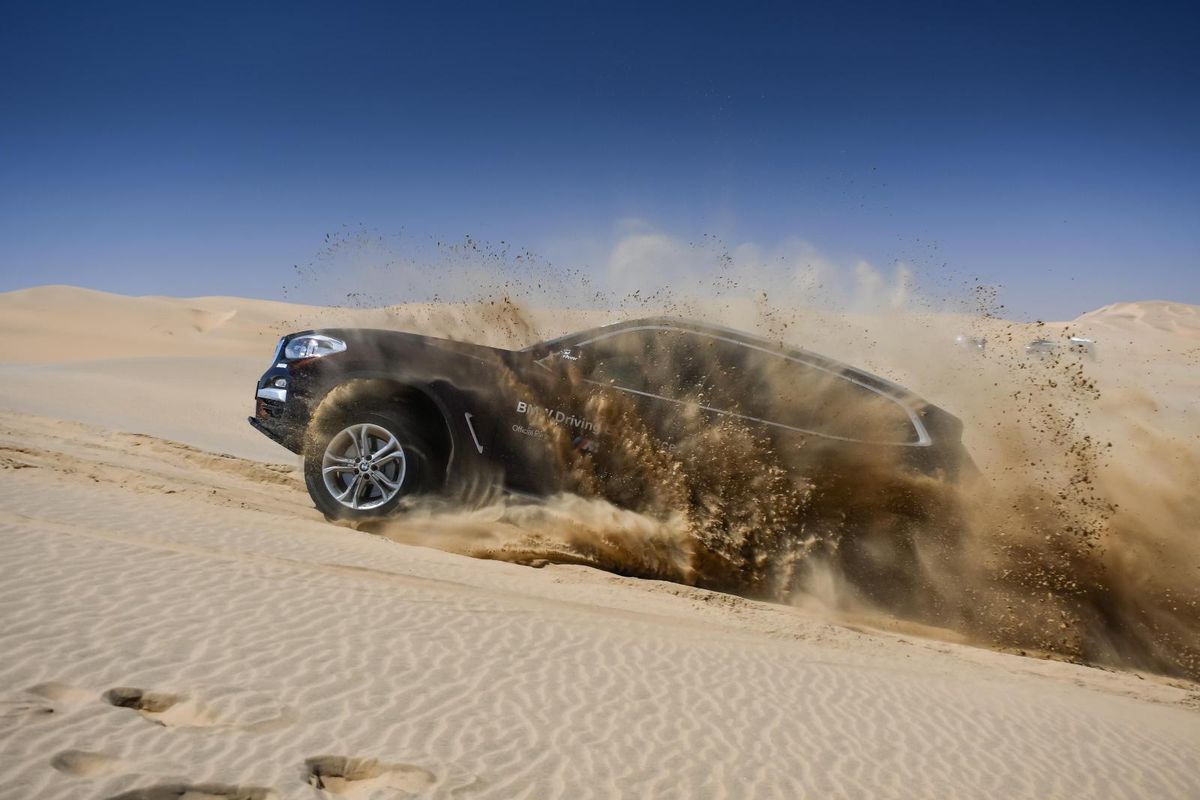
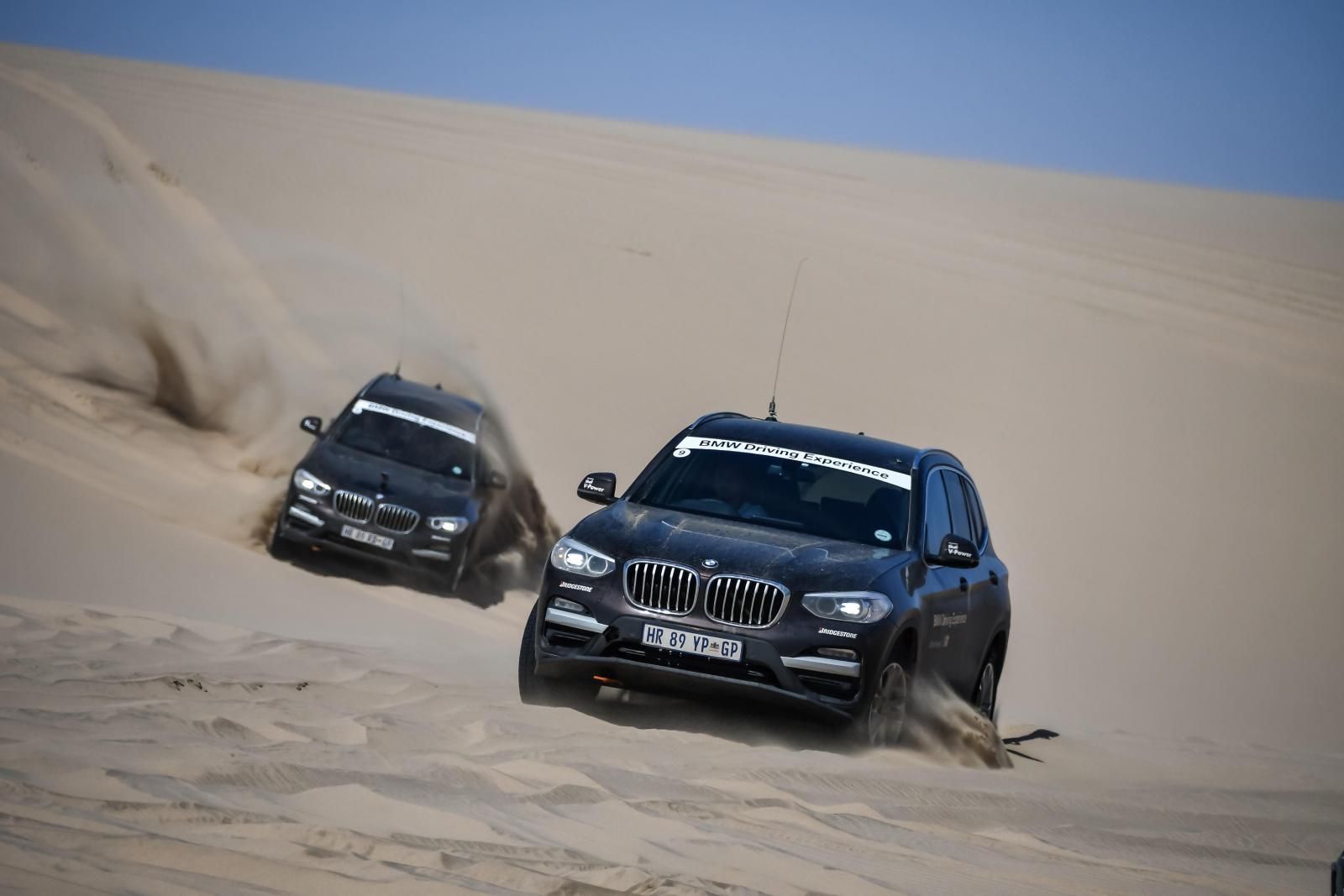
Much lower tyre pressures, intense concentration and all-wheel xDrive make sand dune sojourns possible in an X3!
Day 3: Driving on dunes
Talk about a crash course in serious off-roading! On the penultimate day of our trip, we headed straight into the legendary Namibian desert.
Perhaps it was my own insecurity about being inexperienced in driving on anything other than hard blacktop, but I could have sworn that the seasoned locals were sneering at us city slickers in our fancy-pants X3s. A quick tyre pressure drop and some oysters on the beach (yes, really) and we were off. But we had a problem… I was already stuck in the sand and we hadn't crested a dune yet. After some clever (read: frantic) back and forth, we managed to get out without needing to call for help. However, if this was any indication of what to expect I was in deep, deep trouble.
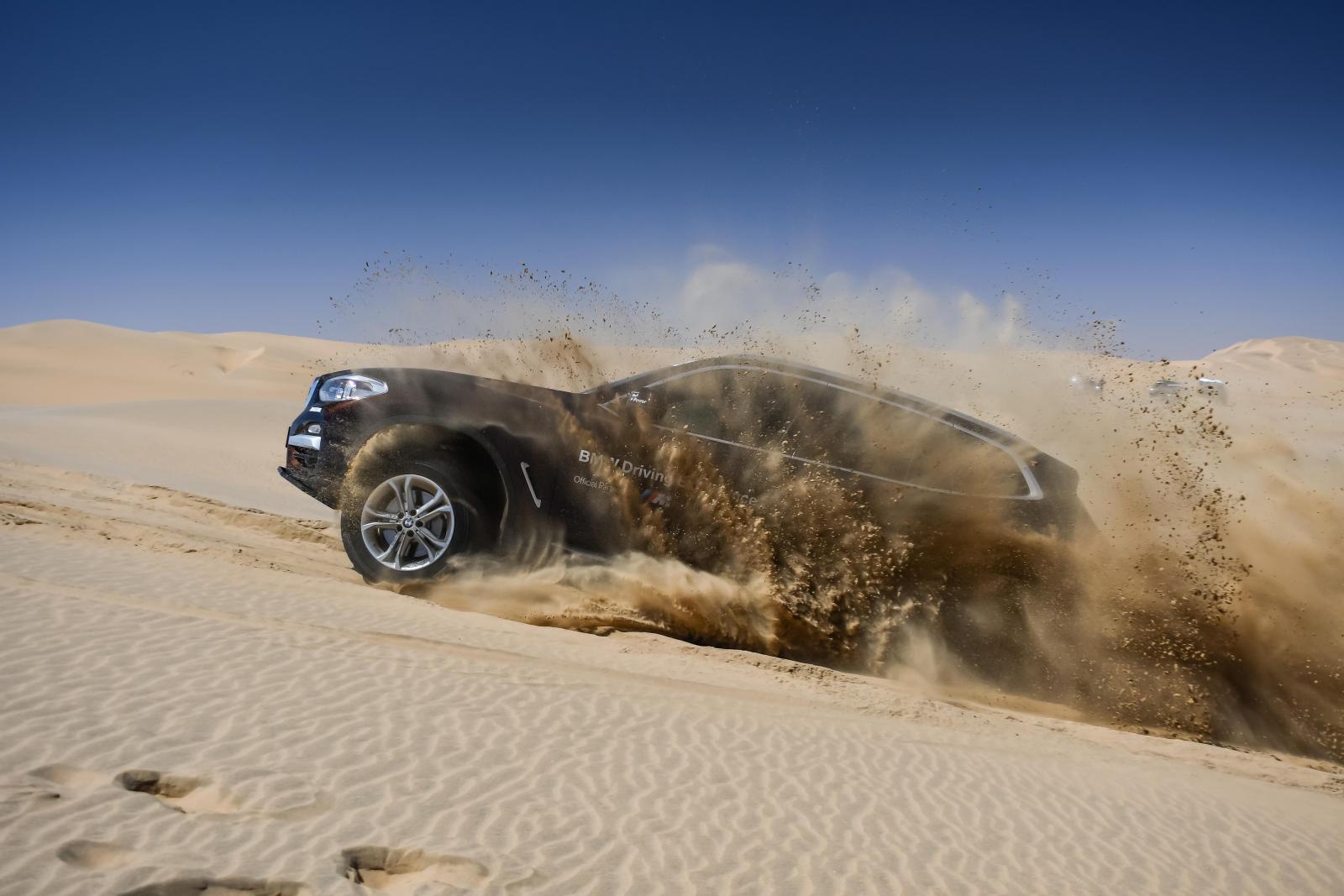
Maintaining momentum is paramount when you traverse loose sand, which, of course, leads to spectacular sand sprays.
Make no mistake: off-road-course dunes and genuine desert dunes are totally different things. There is nothing as far as the eye can see and I guess if one got lost in there (with no cellular signal and little sense of direction to help you), it would be a real problem! But our convoy stayed tight and with guidance over the "radio", I started getting increasingly comfortable behind the 'wheel. By the end of the "duning", we were really playing!
To kick up giant sand clouds is especially thrilling, but the most important task of all is: do not get stuck. Fortunately, we remained under the "watchful eye" of a pair of tow vehicles, but they were seldom called into action. On the way back, we drove along the Namibian coastline. Our convoy leader regaled tales of how the area had been overfished of late; the irony of "bombing" up and down the coastline wasn’t lost on me.
The rear bumper of the "Namibian adventure" X3 shows the modifications to the standard car (… and a few battle scars).
Day 4: The drive home
The BMW Driving Experience SA'sNamibia tour is offered to a maximum of 12 participants per group. According to BMW, the 8-day package includes a 1 300-km route incorporating "breathtaking countryside, spectacular wildlife (from Windhoek to the Atlantic Ocean), driving exploration of the magnificent dunes of the Namib desert, a visit to an indigenous village and historic cave paintings, as well as a variety of culinary delights."
Most guests will be Europeans looking for a proper Southern African adventure. At a cost of between R75k to R100k (including flights to Windhoek and back – the trip is tailorable to customers' needs), the programme might be a bit steep for most ZAR-earners, but bear in mind a 4-day trip is also optionally available. The schedule is well thought out and planned, but with so many variables in play, each one of these sojourns will be different.
"For someone who has been on a great many new vehicle launches in a short (3-year) career, this has to rank right up there with the best ones," Ernest concludes. For more info on the BMW X3 adventure, visit: http://www.bmwdrivingexperience.co.za/index.html#/tours
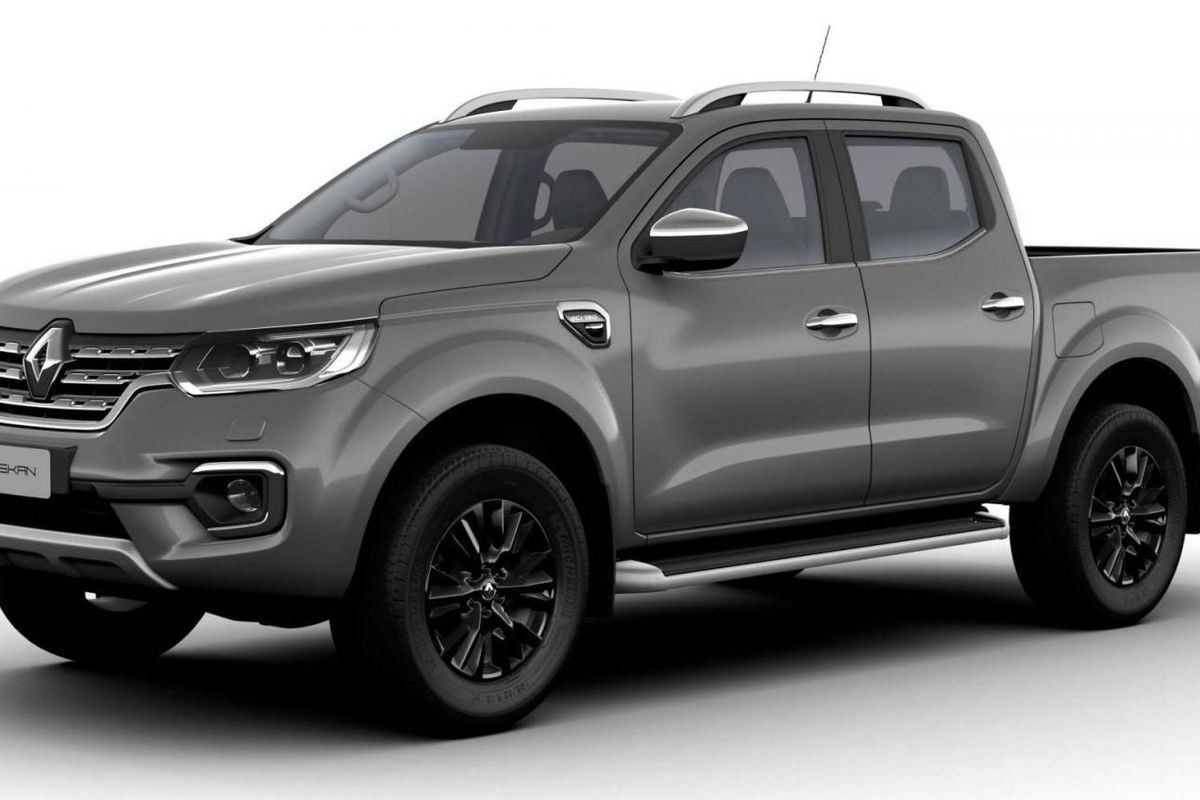
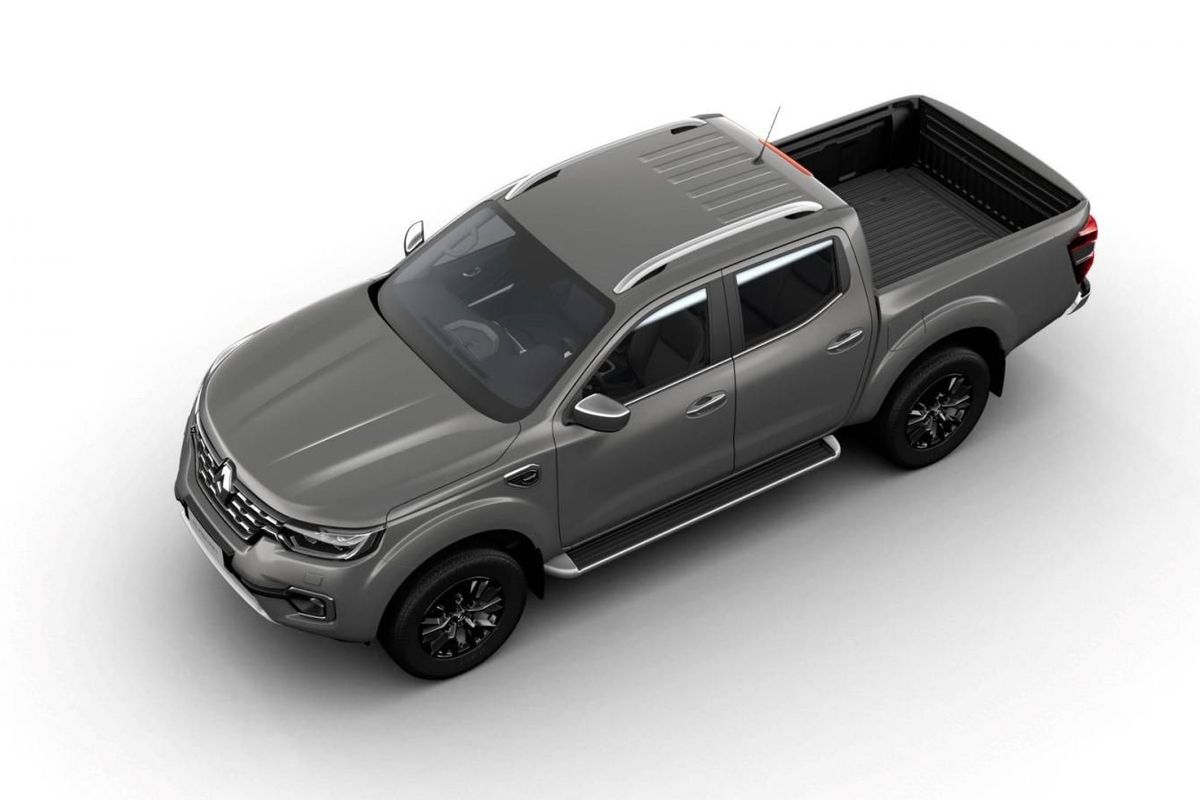
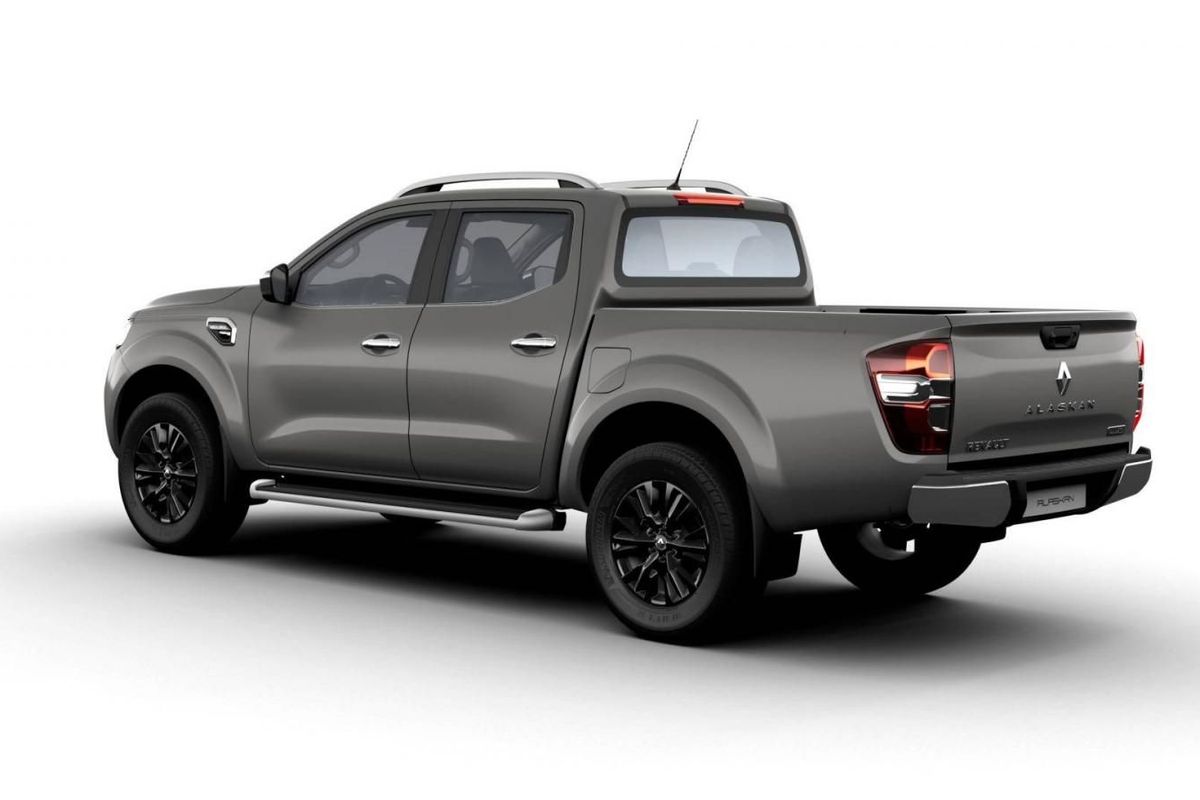
Renault has facelifted its Alaskan double-cab bakkie. Based on the Nissan Navara, it's likely that this model will be coming to South Africa.
The double-cab market is quite congested at the moment and manufacturers are doing the most to keep their respective bakkies up to date. Renault has facelifted and updated its Alaskan double-cab bakkie and here are some of the changes.
The payload and carrying capacity has increased to 1.1 tons, while the towing capacity of 3.5 tons has remained the same. The reason behind the payload increase is due to the introduction of an all-new 5-link rear suspension, as well as rear disk brakes and an automatic emergency braking system.
Renault has also improved the Nissan-Renault alliance engine. There's a new selective catalytic reduction system and the latest pollution-control technology fitted to the 2.3-litre twin-turbo diesel. Overseas it is available in 2 states of tune: 120 kW and 140 kW, with torque rated at 425 Nm, which is 22 Nm than before. In terms of transmission, a 6-speed manual and a 7-speed automatic are available.
Inside, the 2020 Renault Alaskan receives the latest infotainment system from the French brand, which offers up Android Auto and Apple Carplay, as well as a 360-degree camera, as well as a new Trailer Sway Assist feature. Additionally, the Hill Descent Control and Hill Start Assist have been improved and offer a new dynamic control system.
Will it come to South Africa? Not so long ago, Renault SA confirmed that it would begin selling both the Duster Oroch and Renault Alaskan in 2021 locally. Read about that announcement below.
Is it the end of the road for the Mitsubishi Pajero? Mitsubishi has confirmed that the model will be discontinued in August 2019 and has announced a Final Edition version for the Japanese market.
To celebrate 37 years of Mitsubishi Pajero, the Pajero Final Edition is limited to just 700 units. It boasts additional equipment such as a sunroof, roof rails, electric front seats and leather upholstery. Customers can also add in a rear spoiler, spare tyre cover and Pajero-branded mudflaps.
The engine in the Pajero Final Edition is a 3.2-litre 4-cylinder diesel engine with 140 kW and 441 Nm on tap. It's mated to a 5-speed automatic transmission and there's a 4-wheel drive system with a locking rear differential. Customers will receive a Mitsubishi-branded watch from Citizen when they purchase a Pajero Final Edition.
Locally, the Mitsubishi Pajero and Pajero Sport are still on sale.