Jaguar’s Plan to Own SA’s Electric Car Market

The Jaguar I-Pace, which is scheduled for local introduction in 2019, won’t be the first electric vehicle to be offered in the South African new vehicle market… but it might be the most significant one.

In a country characterised by vast distances between its major urban centres, crippling (exchange rate-related) fuel price surges and an abundance of solar radiation – the absence of battery-powered vehicles is one of those profoundly South African ironies.

BMW and Nissan have tried to entice South Africans into battery cars (with the i3, i8 and Leaf products respectively), with extremely limited success. However, now Jaguar has done what no other manufacturer/importer has been willing to: invest R30 million into a charging infrastructure "powerway" that should, theoretically, get you from the inland cities (where money is made) to those coastal destinations (where the money is spent) on weekends and holidays.
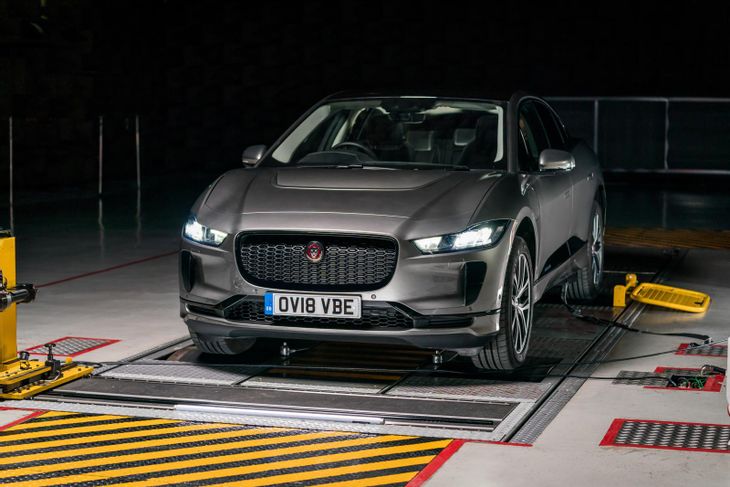

Jaguar's I-Pace will get a march on the competition upon its launch in Q1 of 2019.

Before we analyse why and how Jaguar’s South African electric vehicle project is going to work, it’s worth pondering exactly who and what we are dealing with. This is Jaguar, a brand born of motorsport, refined into athletic limousines and grand touring V12s. Three years ago Jaguar didn’t even bother with manufacturing an SUV. By early next year, the Coventry-based brand wants to sell you an electrically powered SUV with which you can shuttle between Jozi and Ballito on long weekends.

From the tweed-jacket brigade to purveyors of battery-powered SUVs: Jaguar's transformation has been remarkable. In the SA context, it’s also about Jaguar's survival.

Spending money to make money

That's because, in South Africa, it’s virtually impossible to compete with the established German luxury vehicle hierarchy. Toyota does the most credible job of selling R500k-plus vehicles (mostly SUVs) that aren’t produced by Teutonic marques, but all other European rivals hardly make an impact on the local sales charts.

For Jaguar, this represents a peculiar issue regarding its South African business. As local buyers' demand for vehicles has shifted from traditional luxury sedans and sportscars, the German brands have launched a slew of gravel-travel-capable premium vehicles. The result is that Jaguar’s traditional core business has suffered in South Africa, a market where its German rivals have strong price hedging, due to their local manufacturing operations and the vehicle export credits that they earn.
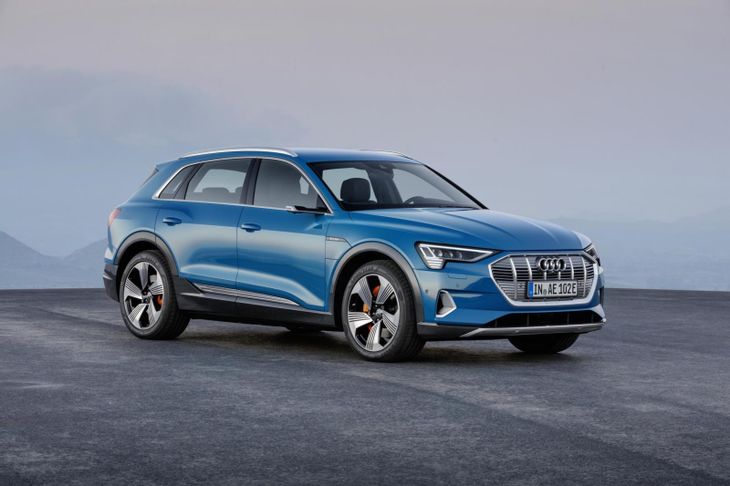

The Audi E-Tron will land in SA during Q3 of 2019. It can piggy-back on Jaguar's countrywide charging network.

Offensive, as it might have been for people who know their XJ6s from their XJ220s, the F- and E-Pace SUVs represented no less than 82% of Jaguar’s local business last month (September 2018). These SUVs are what effectively keeps the Coventrian Cat tradeable in South Africa. Most of Jaguar’s local customers are now individuals buying into the contemporary specific design, which has nothing to do with Jaguar’s storied history. These are new customers and they have little issue with owning a Jaguar which, in configuration, is completely at odds with its legacy. That also makes them ideal candidates to embrace the transition from fuel to electric propulsion.

2019 isn’t just about Siya and Rassie

For most South Africans, 2019 is all about the Springboks avenging their defeat to Japan in 2015 by potentially making the Rugby World Cup final in Yokohama. If you are more into cars than rugby, you might be aware that 2019 is finally the year when electric vehicles are supposed to become a viable alternative in South Africa.

The Germans lead local luxury motoring trends and Audi, BMW and Mercedes-Benz all have electrically powered SUVs which should arrive next year or early in 2020. These vehicles (E-Tron, iX3, EQC) will all have similar range abilities to the I-Pace, the converging numbers being 400 km. Jaguar, though, has a few advantages.
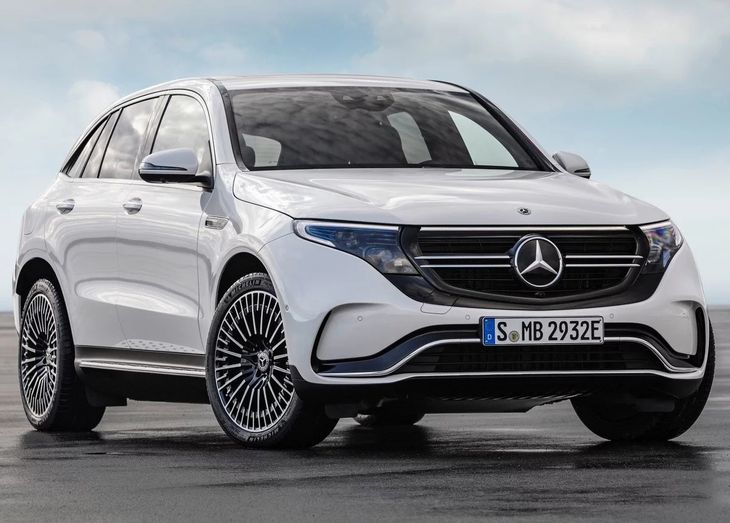

No official statement from Mercedes-Benz SA on whether the EQC will land locally, but global trends suggest it will come here.

Most obvious of these is that possession is 9-tenths of the law and the I-Pace will own the luxury electric vehicle market, for a good few months, before any of its rivals become available. In a market where fuel price anxiety is bothering even high-income individuals, the I-Pace will be the first full-electric SUV on sale in 2019.

Being first will allow I-Pace to leverage the same early-adopter fever Tesla has enjoyed in America. Don’t underestimate the "jealousy incentive" either. Although the I-Pace won’t sell in volumes large enough to bother local marketing specialists at any of the German automotive brands, it will generate massive interest among early adopters and the technology-obsessed – ironically, the same customers who would never have bought into Jaguar’s traditional "tweed and driver’s glove" values.

Jaguar’s transition risk has passed

At the start of this piece, we mentioned how radically Jaguar has transitioned in the last few years. It has successfully evolved from a brand steeped in a history of producing luxury sedans and sportscars to one that now has an equal weighting (with SUVs) in its portfolio.

The idea of selling an electrically-powered SUV poses no risk to any of Jaguar’s other products because the market has already determined that SUVs will be the future. And therein lies the genius, and reduced risk, for Jaguar. The I-Pace allows the British company a clean break with its history and traditional offerings, which has simply become irreconcilable with progressive product demands in South Africa.
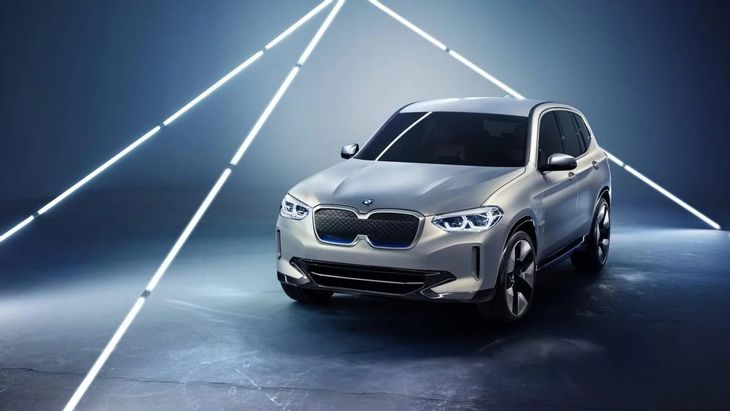

The BMW i-X3 concept is furthest from production but BMW already has the i3 as a fully electric offering in SA.

For the German brands, it is quite the opposite. Their product portfolios are almost entirely liquid fuelled. A transition to electrification would be very disruptive, despite the R&D investments that have already been made. The local business case is still completely with petrol or diesel versions of their many models.

For a German brand in South Africa, electrification delivers with it a lot of implied risk, and much of that is due to scaling. If customers rapidly convert or demand electric vehicles from the German brands, there is a supply problem. Production will be limited and the German manufacturers have a huge and loyal local customer base. Jaguar has a much smaller number of potential I-Pace customers to service, while still making I-Pace a larger proportion of its business.

Even worse, for the Germans, is if their customers expect a service and convenience of recharging ability similar to what Jaguar has achieved with its 82 powerway stations. Those numbers become very challenging to service and maintain as a company, without any government assistance.

How many charging points are enough?

The true test case will be Easter 2019, when the first South African I-Pace customers should have ownership of their battery SUVs and will attempt to replicate the Joburg to KZN coastal journey Jaguar recently did as a test run. If you have ever driven that route on a weekend, you know that Harrismith as a refuelling point can rival any African border crossing for traffic build-up.

Jaguar has one charging point installed in Harrismith, and it is rated at 60 kW, which should recharge an I-Pace to 80% of capacity in little over an hour. That’s a very long time to wait, many multiples more than refuelling an SUV with unleaded or diesel fuel. Despite its 400 km ideal scenario range, any I-Pace will require a substantial recharge after the 270 km from Joburg. Especially if it’s loaded with passengers and luggage, burdened by climate control and driven enthusiastically.  

Imagine if you arrive in Harrismith within minutes of another I-Pace, that could compound to a waiting time of two hours. In Harrismith? Exactly. The charging stations also command prime parking slots in front of the shops meaning you're quite likely to find your charging bay filled by a pesky German sedan/SUV. That being said, Jaguar has planned a further 2 charging stations along that N3 route so that shorter stops will be possible. But, therein lies the great "electric car ownership risk", and it's one that manufacturers are going to have to carry individually, without any government assistance.
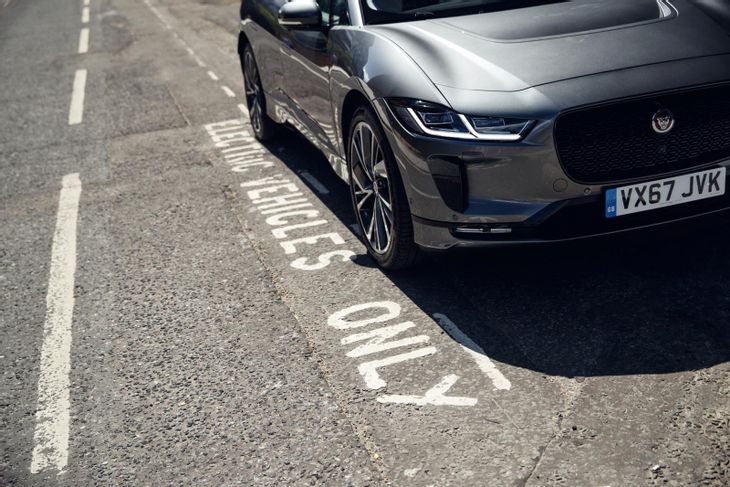

Electric charging stations get prime parking spots outside shopping centres and fuel stations.

In Australia they have a recharging supernetwork that works so well, a retired farmer recently drove her Tesla Model S around the country without issue. But the Australian government has partnered with Tesla to assist with infrastructure setup and many of the Australian chargers are double the power capacity of those Jaguar has built locally.  

When Bertha Benz started the automotive industry, by taking her husband’s prototype for a drive in 1886, the biggest issue was finding fuel for her journey. In the 130 years that followed, automotive brands have focused exclusively and exhaustively on building vehicles and allowed oil companies and governments to worry about the fuelling network. In the battery car future, which is happening now, the energy which makes their products function is part of the product planning problem. And without government assistance or alternative electricity supplier incentives in South Africa, the bigger you are, the greater that problem scales. That's especially so when you have the electric cars that are ready and a potentially massive customer profile to convert, as is the case with Audi, BMW and Mercedes.
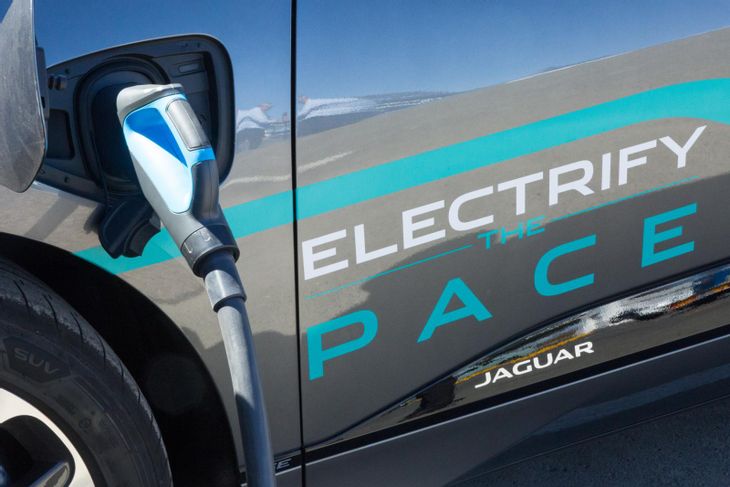

60 kW charging stations provide 100 km of range in 20-30 minutes of charging. 

Jaguar doesn’t sell many more than 100 vehicles a month. Even if I-Pace becomes 25% of local volumes, the actual numbers will still be low enough not to overwhelm the recharging network Jaguar has put in place. BMW and Mercedes-Benz have a different scenario. They sell between 1 500 and 2 000 vehicles a month and if demand for their EVs escalates to a quarter of the local business, those numbers are sufficiently large to create infrastructure issues.  

The battery car revolution won’t happen from the bottom-up, but top-down. And premium customers are very demanding, which means the proliferation of 120 kW charging stations needs to happen – quickly, swiftly and seamlessly. Expensively too, it must be said – without any government help. Troublingly for South Africa, electric cars pose a huge revenue risk for the government, which routinely appears to balance fiscal shortfalls by harvesting additional taxation from liquid fuels. Therefore, don’t expect the revolution to happen easily…
Related content

Jaguar I-Pace For SA in 2019

Mercedes-Benz reveals EQC

I-Pace coming to SA: How Jaguar hopes to make it work

5 New Electric Cars Destined for SA

BMW X7 Price Announced for South Africa

Hot on the heels of the international reveal of the BMW X7, pricing has appeared on the BMW South Africa website. Here's how much the biggest X costs.

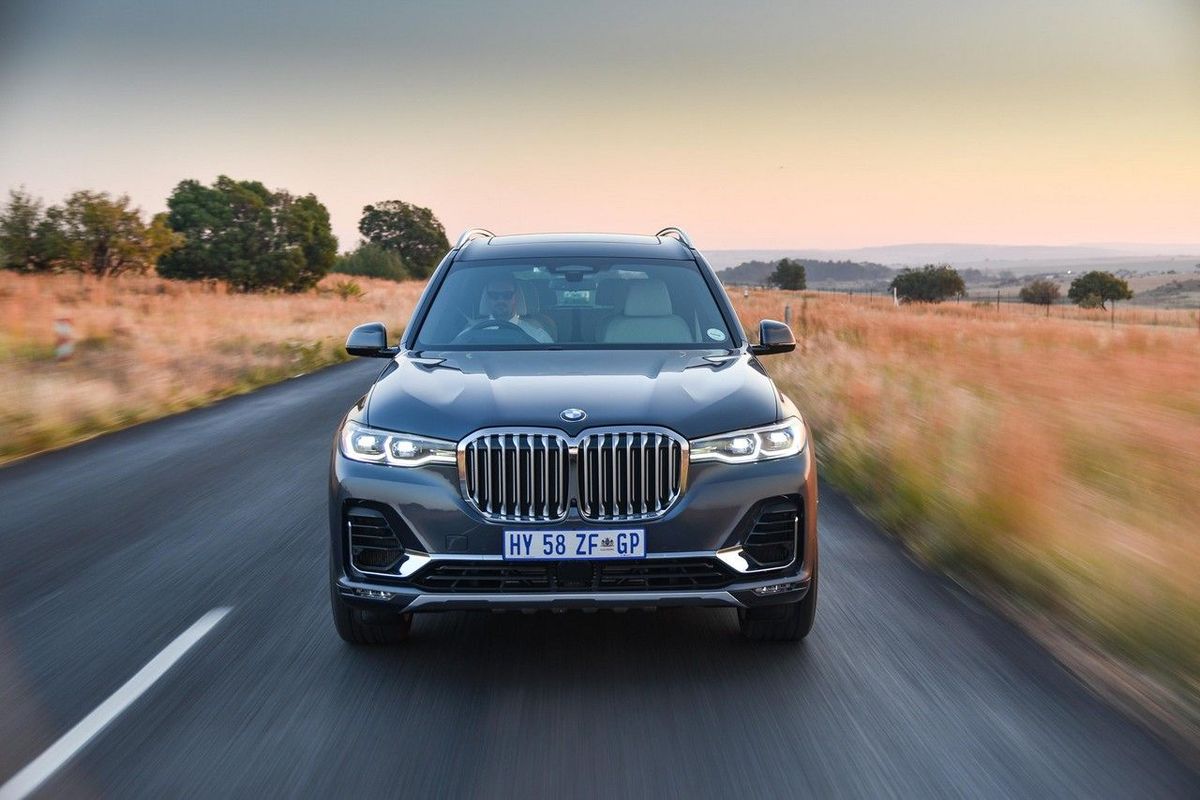
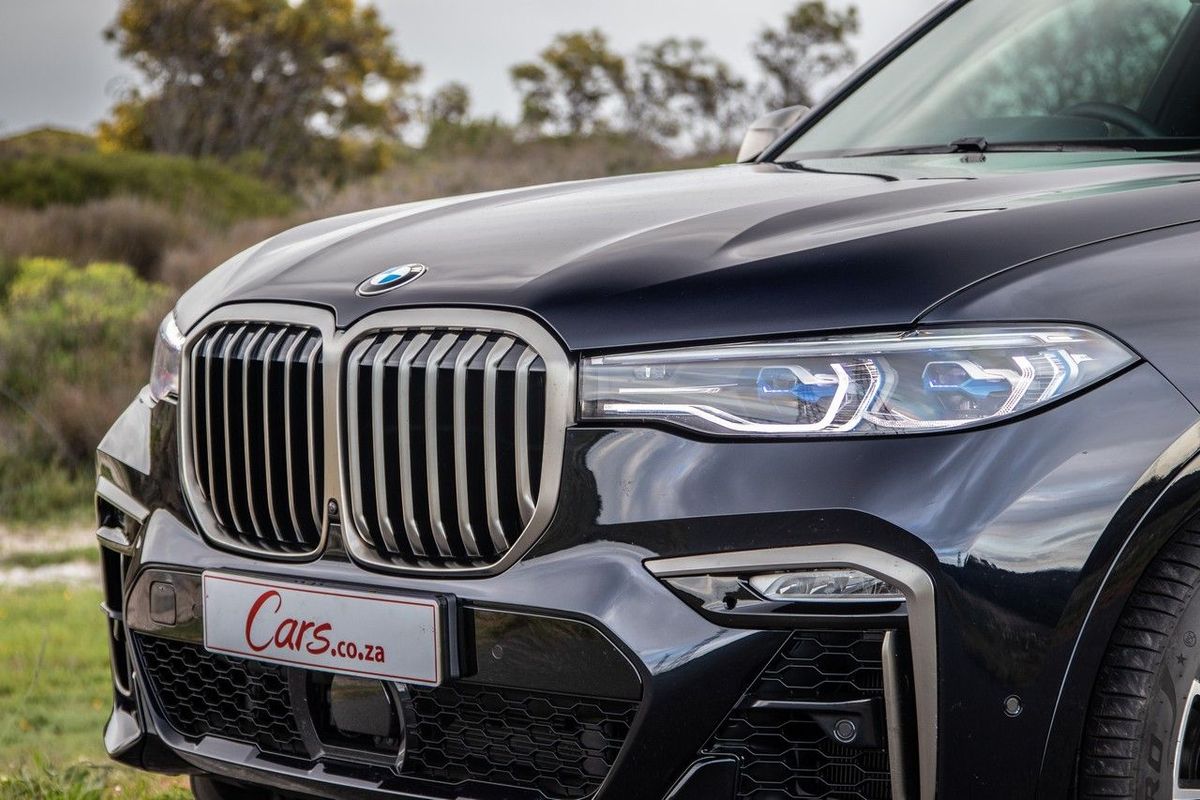
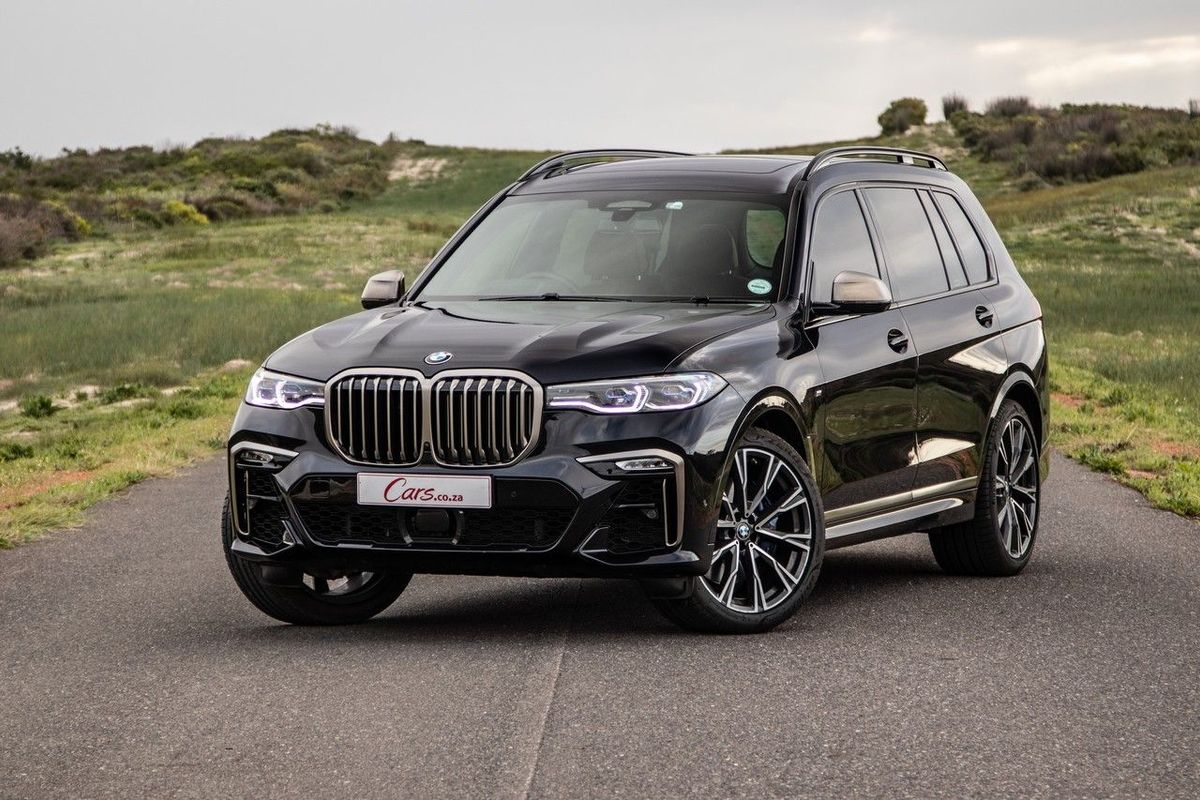
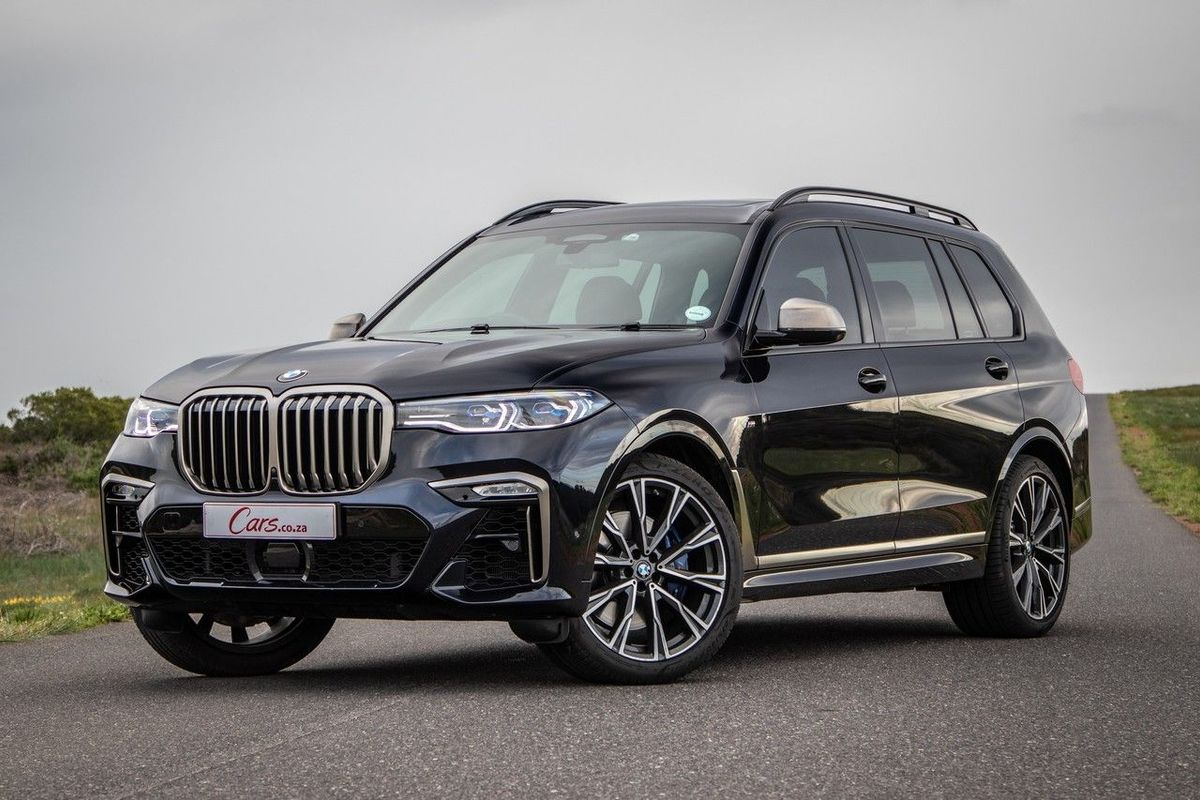
After seeing the BMW X7 iPerformance concept, it was only a matter of time before a production X7 was revealed. Built alongside the X3, X4, X5 and X6 at BMW's plan in Spartanburg, South Carolina, the BMW X7 is a lot bigger than you'd think. It boasts 7 seats and is 5 151 mm in length, 2 000 mm wide and 1 805 mm tall, and has a wheelbase of 3 105 mm. BMW claims that these are the largest kidney grilles ever.

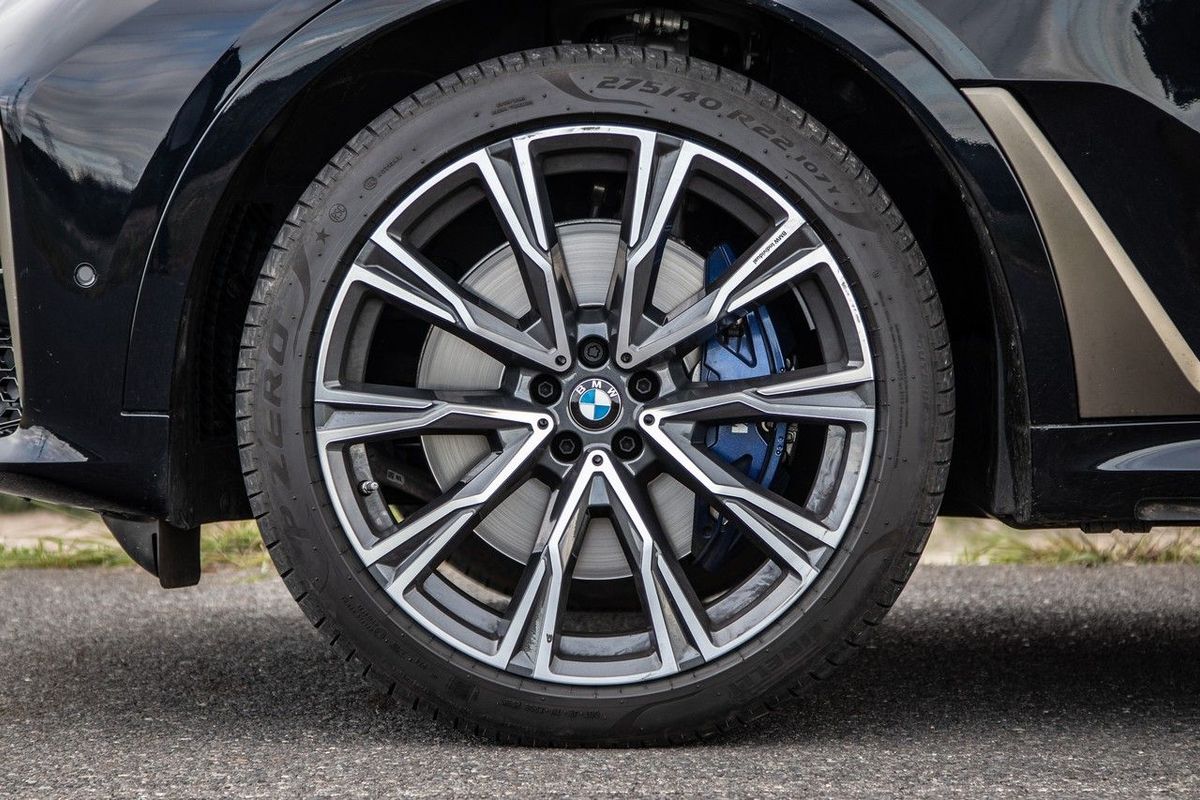
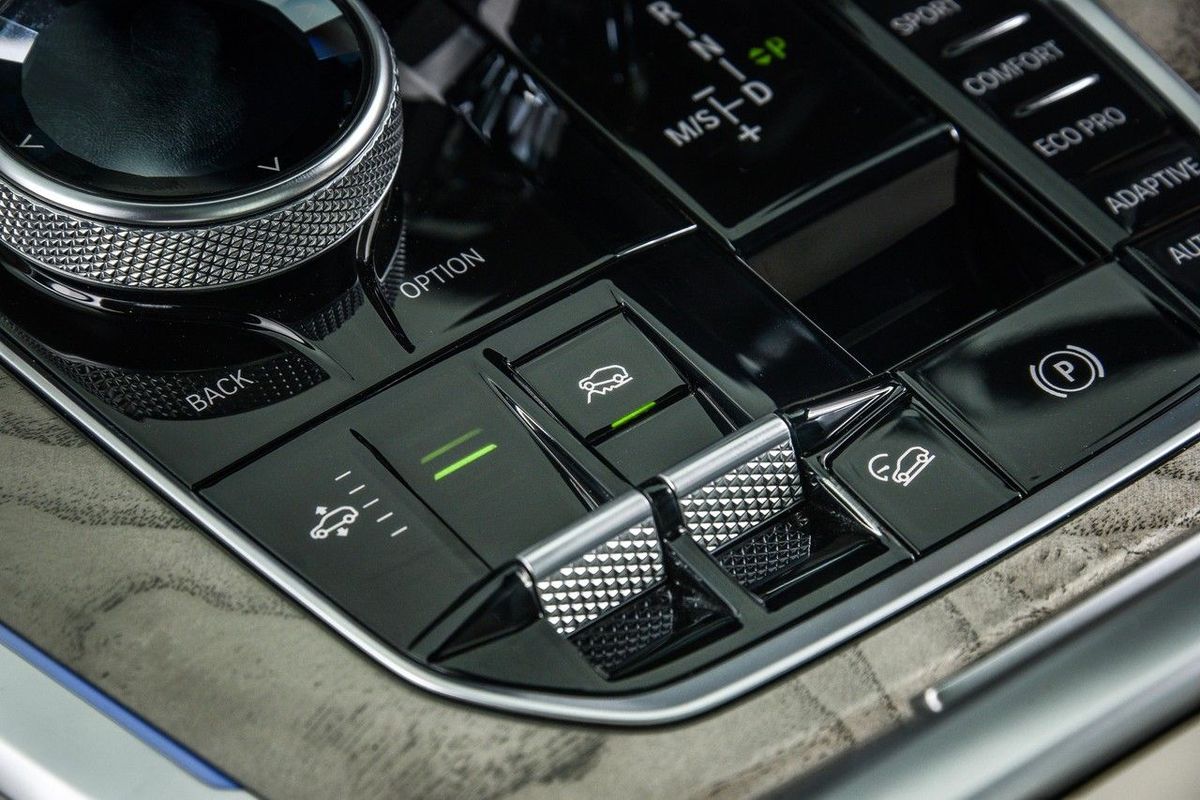
The X7 also features large wheels. The standard units are of the 20-inch variety, while you can option 21- and 22-inch wheels. BMW has fitted the new X7 with a smart xDrive system which can send 100% power to the rear axle.

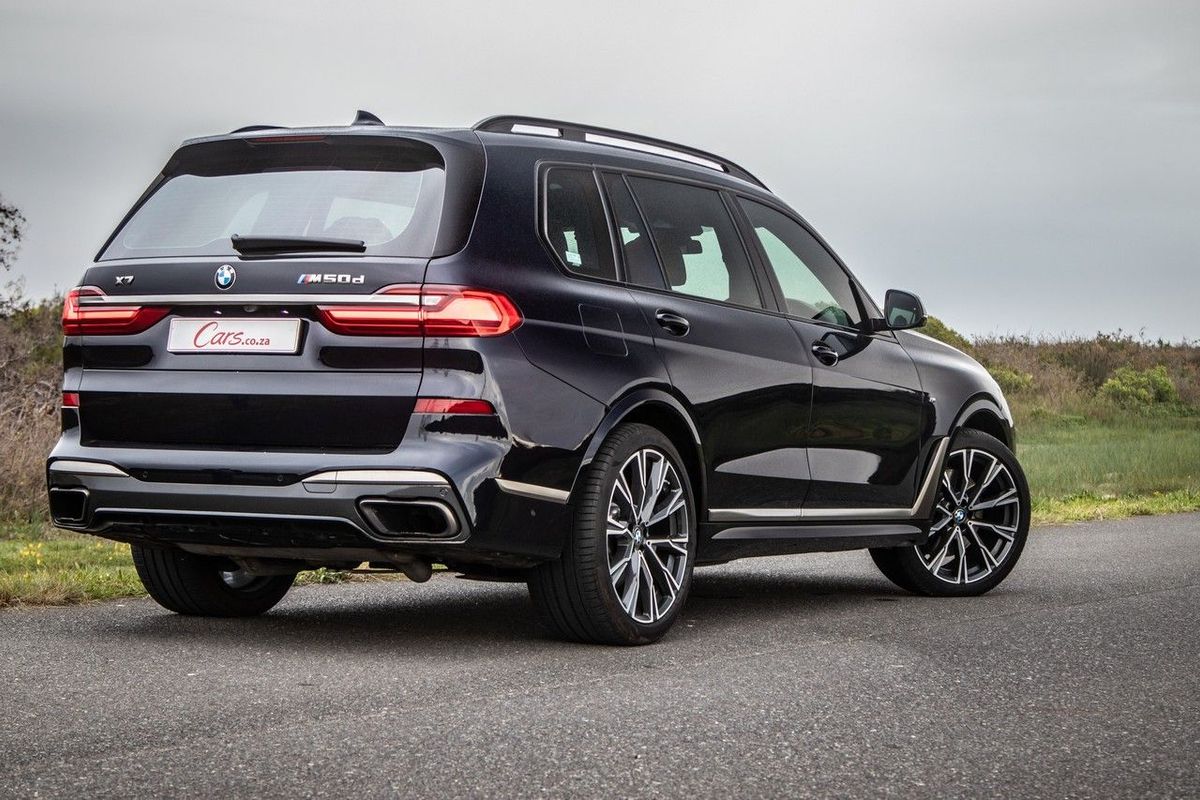
The price for the South African-spec BMW X7 was discovered on the BMW SA website and we can confirm that we're getting the two diesel models. The xDrive 30d has 195 kW and 620 Nm from a 3.0-litre inline 6 cylinder motor, while the M50d Performance pushes out 294 kW and 760 Nm from a quad-turbo 3.0-litre inline 6-cylinder. Both vehicles feature all-wheel drive and an 8-speed automatic transmission. The 30d is said to consume 7.0 L/100 km and emit 192 g/km, while the M50d is said to use 7.3 L / 100 km, with CO2 emissions rated at 192 g/km.

Further Reading

Meet the new BMW X7

BMW X7 iPerformance Concept Revealed

BMW X7 Price in South Africa

BMW X7 xDrive30d SAV              R1 562 849

BMW X7 M50d SAV                     R1 862 308

BMW X7 Revealed: The Biggest X yet

BMW has revealed its new X7, the biggest and most luxurious X model yet. Here's what you need to know about the newcomer.

After seeing the BMW X7 iPerformance concept, it was only a matter of time before a production X7 was revealed. Built alongside the X3, X4, X5 and X6 at BMW's plant in Spartanburg, South Carolina, the BMW X7 is a lot bigger than you'd think. It boasts 7 seats as standard and is 5 151 mm long, 2 000 mm wide and 1 805 mm tall, and has a wheelbase of 3 105 mm.

BMW says the X7 features the largest kidney grille ever fitted to the Munich-based firm's production car and its wheels are suitably gigantic too. The standard units are of the 20-inch variety, while you can option 21- and 22-inch wheels. BMW has fitted the new X7 with a smart xDrive system which can send 100% power to the rear axle.

The main discussion point around the X7 is its 3rd row of seats, which is optional on the X5, but standard on its big brother. Furthermore, BMW has said that you can fit two individual contoured seats in the 2nd row for a more luxurious feel. The 2nd-row seats can slide forward and back to increase legroom. With all 7 seats being used, the X7 offers 326 litres of luggage capacity, which increases to a maximum of 2 120 litres when the 2nd and 3rd row of seats are folded down.

Air suspension is fitted as standard, and the car can be lowered to make loading into the bay easier. Much like the BMW X5, the X7 features a 2-section split tailgate which is electronically controlled. Other notable features are the heated seats for the 1st and 2nd row, 3-part panoramic roof, digital dashboard and 10-speaker audio.


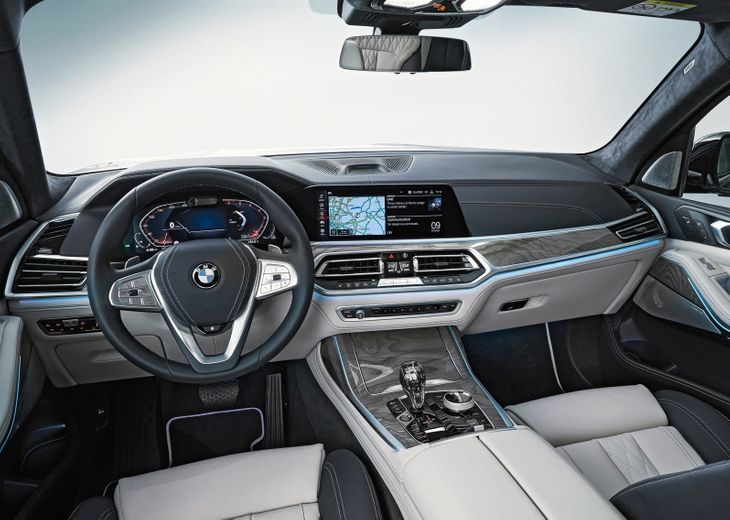
The cabin of the new BMW X7. Note the digital dashboard.

In terms of engines, BMW has equipped the new X7 with an array of powerplants and all derivatives come equipped with an 8-speed automatic transmission and the firm's xDrive all-wheel-drive system. There is the xDrive50i, xDrive40i and for those who want a turbodiesel model, the xDrive30d and an M50d M Performance model.

The twin-turbo 4.4-liter V8 50i delivers 331 kW and 650 Nm and the single-turbo 3.0-litre inline-6 40i pushes out 265 kW and 500 Nm. On the turbodiesel side, the 30d's 3.0-litre inline 6 has peak outputs of 195 kW and 620 Nm, while the M50d's a quad-turbo 3.0-litre inline-6 churns up 294 kW and 760 Nm!

The BMW X7 also boasts an array of advanced technical features such as autonomous safety and a BMW Intelligent Personal Assistant, which the brand claims will "learn routines and habits, and is subsequently able to apply them in the appropriate context. It helps the driver, learns their preferences and is familiar with the settings they like to have for the seat heating, for example, or the places they drive to frequently." If you're driving alone, the assistant will also provide casual conversation…
BMW says its new X7 will go on sale globally next year, and the South African market will be getting the xDrive30d and M50d derivatives around March 2019.

BMW X7 Price in South Africa

BMW X7 xDrive30d               R1 562 849

BMW X7 M50d                      R1 862 308

View the BMW X7's launch video below:


Further Reading:

Mercedes-Benz GLS 500 (2016) Review

Toyota Land Cruiser 200 (2018) Specs & Prices

Facelifted Range Rover (2018) Specs & Price [w/Video]

Bentley Bentayga Diesel (2018) Launch Review

Porsche Cayenne (2018) Launch Review

BMW X7 iPerformance Concept Revealed?


Demand for New Suzuki Jimny Soars

Demand for the new Suzuki Jimny is off the charts, not only in South Africa but in other markets too. If you want to buy the new Jimny, you might have to wait a bit…

Suzuki’s popularity has grown substantially in recent times and it’s one of the fastest growing car brands in South Africa. It has scooped the coveted Brand of the Year award twice in the Cars.co.za Consumer Awards – powered by WesBank and will look to bag a hat-trick in the 2018/19 iteration of the #CarsAwards.

The new Jimny is produced at Suzuki's Kosai Plant in Japan and Suzuki can't seem to build the new Jimny quick enough as demand appears to be outstripping supply. In its home market of Japan, which is also a right-hand-drive market, demand for the Jimny is booming and there is currently a waiting list of 32 months. The Brits are also clamouring for the new Jimny with reports indicating that 4 500 potential customers are ‘interested’ in the new Jimny which is roughly 150% of the outgoing Jimny’s best annual sales volume in the UK market, and it has not even launched there yet!

In South Africa, the launch of the all-new Suzuki Jimny is imminent and interest in the boxy offroader has been phenomenal. A local Suzuki spokesperson has confirmed that the first 2 consignments of the new Jimny have already sold out which indicates that demand will outstrip supply in the short to medium term as more stock arrives from Japan. 


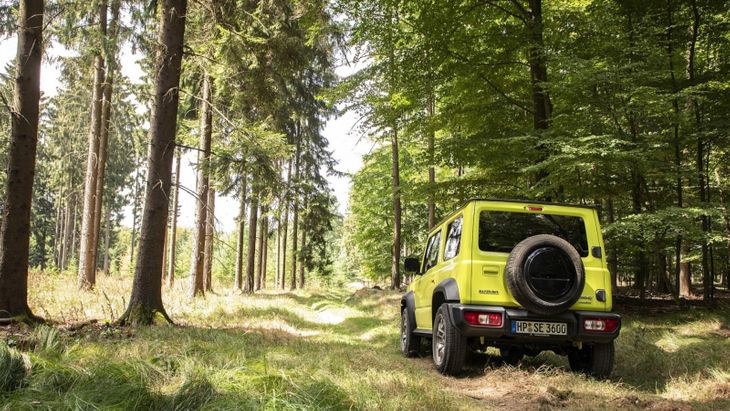
With its AllGrip Pro 4×4 system, the Jimny is a capable (and affordable) offroader. 

The new Jimny will officially launch in South Africa in early November 2018 and will be powered by an all-new 1.5-litre petrol engine offering 75 kW and 130 Nm of torque and mated to either a 5-speed manual or 4-speed automatic transmission. Equipped with an AllGrip Pro 4×4 system which will allow the driver to easily switch between 4×2, 4×4 high and 4×4 low range with a secondary gear lever, the Jimny will be able to tackle tough off-road terrain with a ground clearance of 210 mm.

Read more about the new Suzuki Jimny here!

Suzuki Jimny – Estimated Price for SA

Suzuki Jimny 1.5 4×4 GA Manual: R265  000 (estimated)

Suzuki Jimny 1.5 4×4 GLX Manual: R300  000 (estimated)

Suzuki Jimny 1.5 4×4 GLX Auto: R320  000 (estimated)

Buy a new or used Suzuki on Cars.co.za

Related Content

5 Moments that Defined the Suzuki Jimny

New Cars Headed for SA in 2018

5 Budget-Friendly Low Range Off-Roaders

5 South African Summer-Driving SUVs

Suzuki Swift 1.2 GL (2018) Review

7 New Cars Under R3 000 p/m

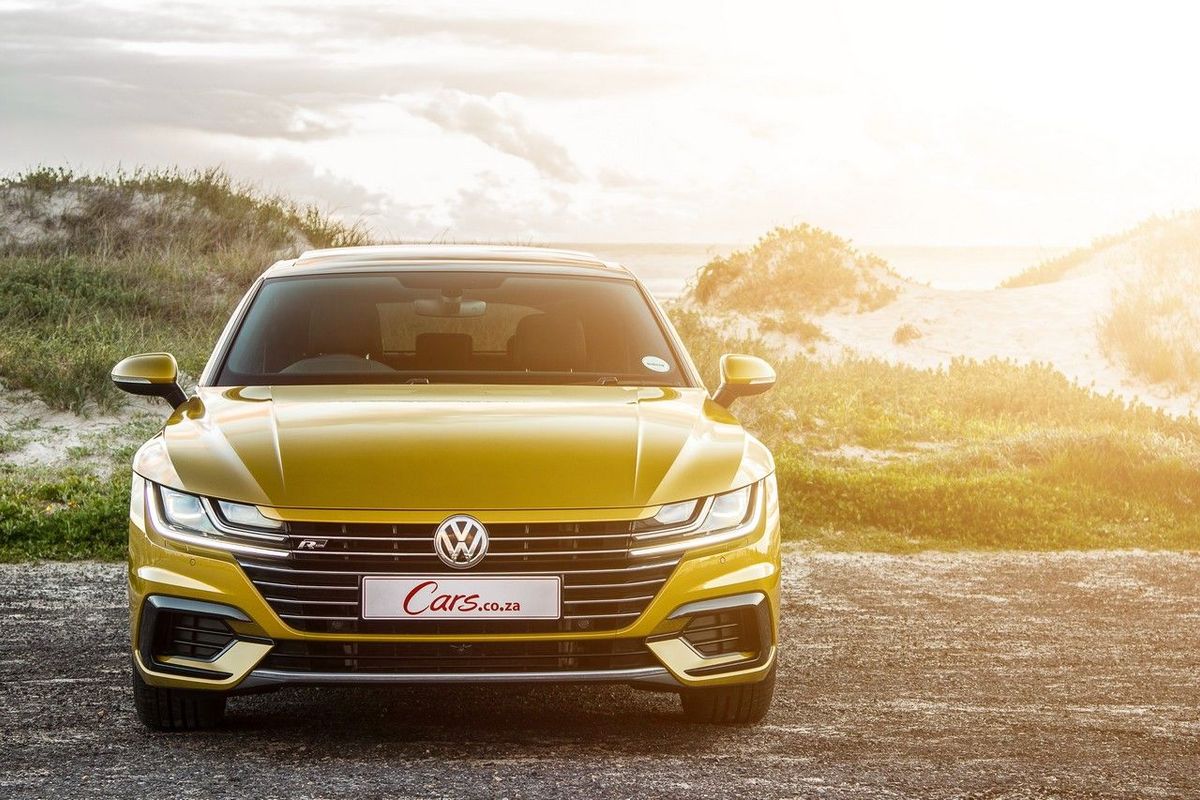
Volkswagen Arteon 2.0 TDI R-Line (2018) Quick Review

The Volkswagen Arteon has made a strong first impression. After all, the 2.0TSI 4Motion R-Line derivative is a finalist in its category of the 2018/19 #CarsAwards. Does its more affordable turbodiesel sibling offer a better value proposition, however? Let’s find out.  

We like:  Style, practicality, occupant comfort, frugal engine

We don’t like:  Rough engine note when cold, cabin needs more glamour.

Fast Facts

  • Price: R649 900 (October 2018)
  • Engine: 2.0-litre 4-cylinder turbodiesel
  • Gearbox: 6-speed dual-clutch transmission
  • Fuel economy: 5.6 L/100 km (claimed)
  • Power/Torque: 130 kW/350 Nm

SERIOUS ABOUT BUYING?

Where does it fit in?


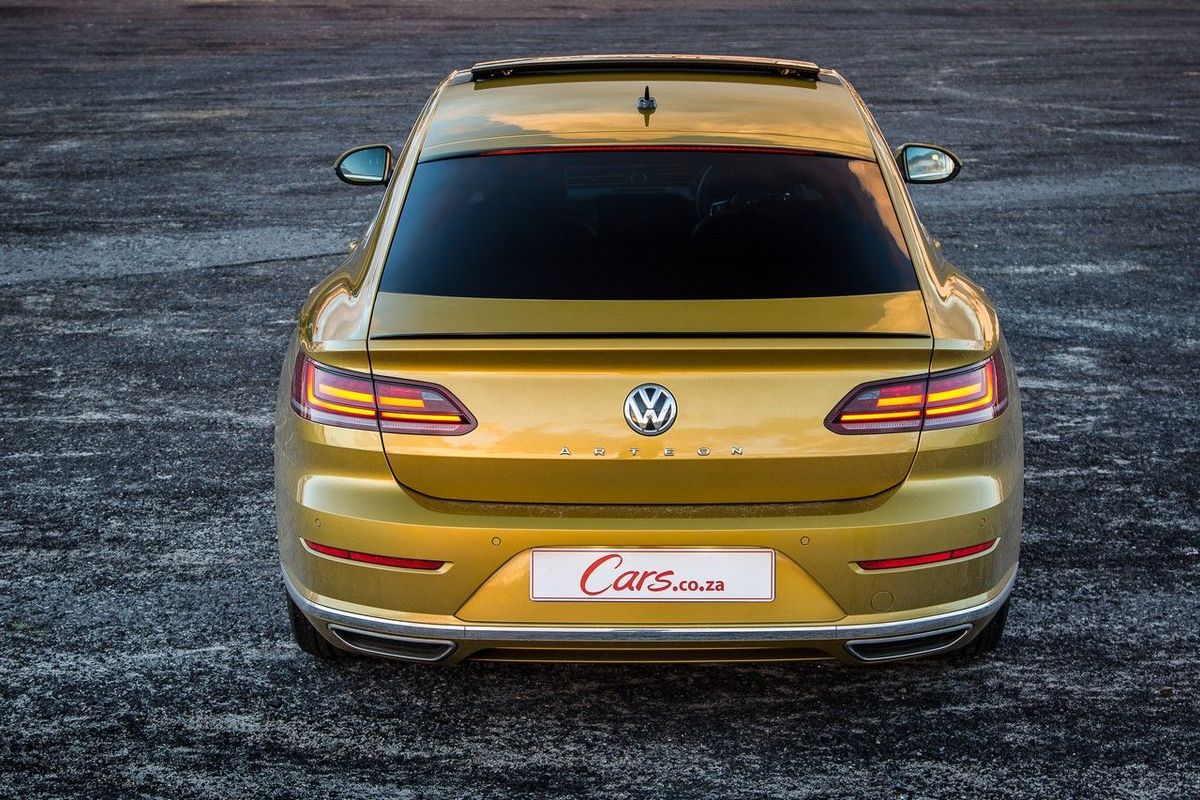
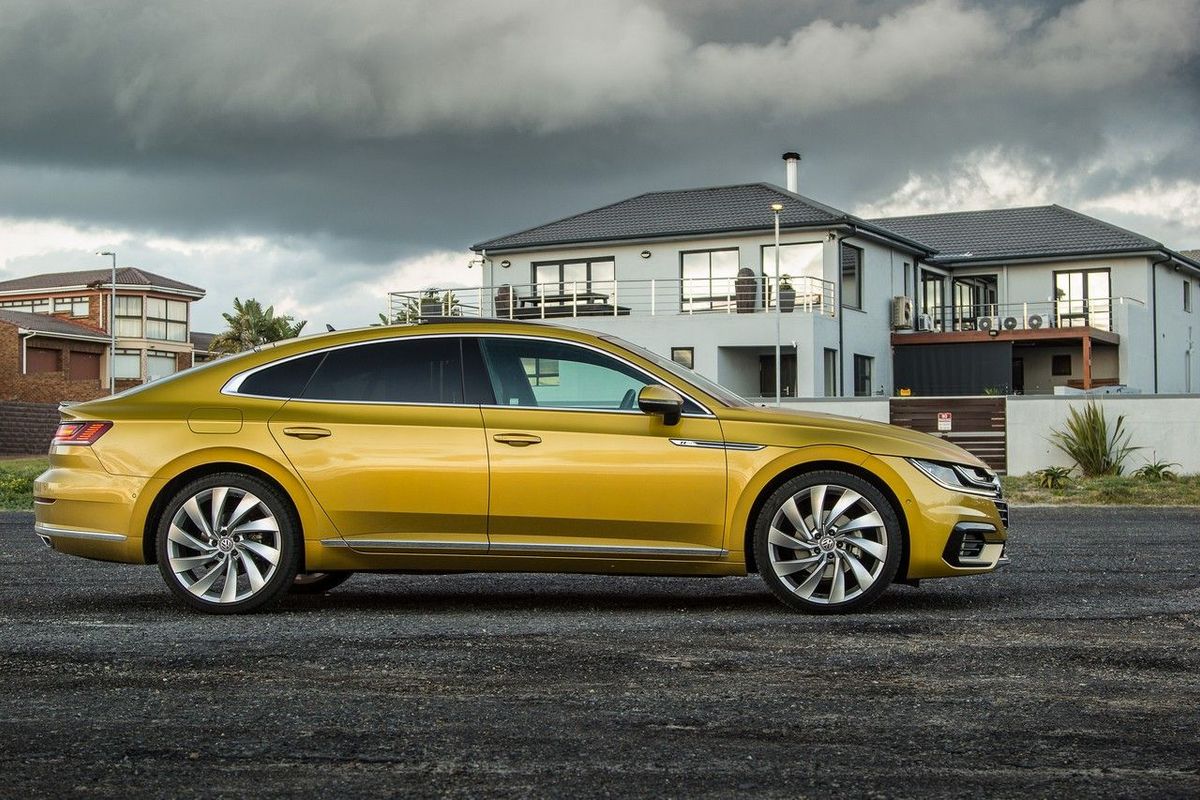
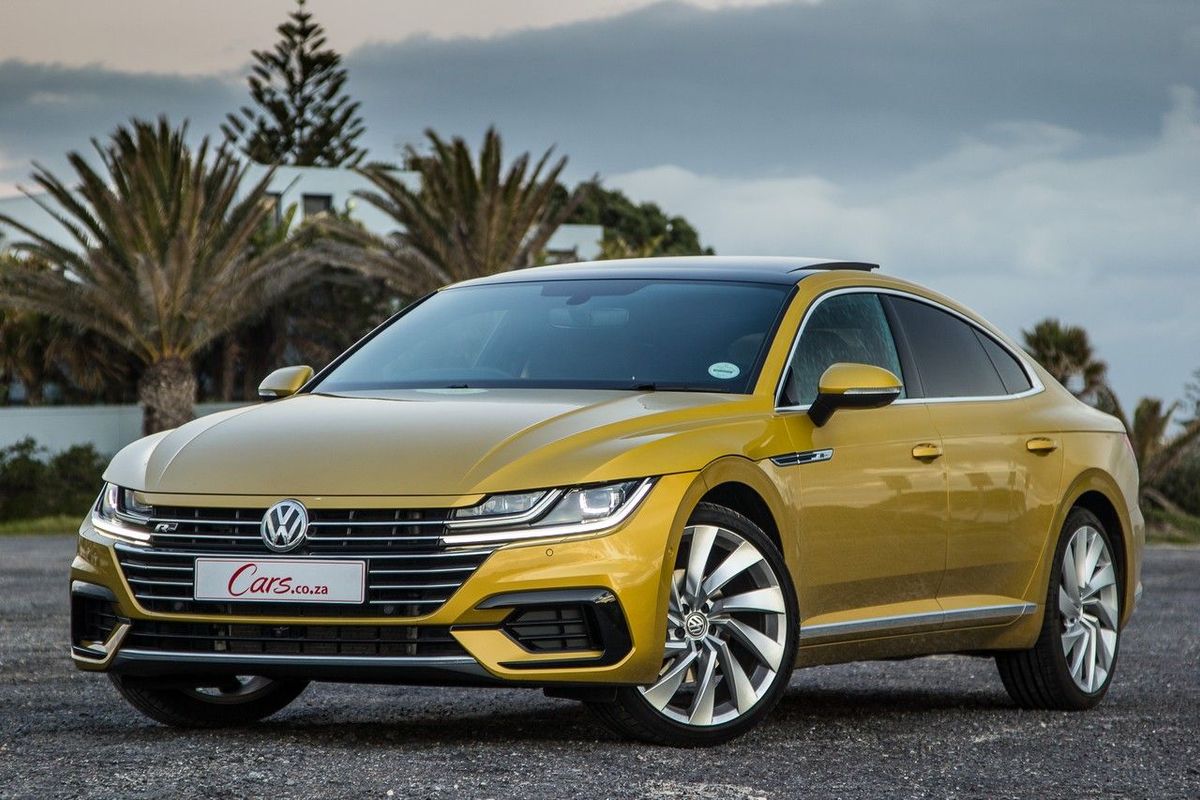
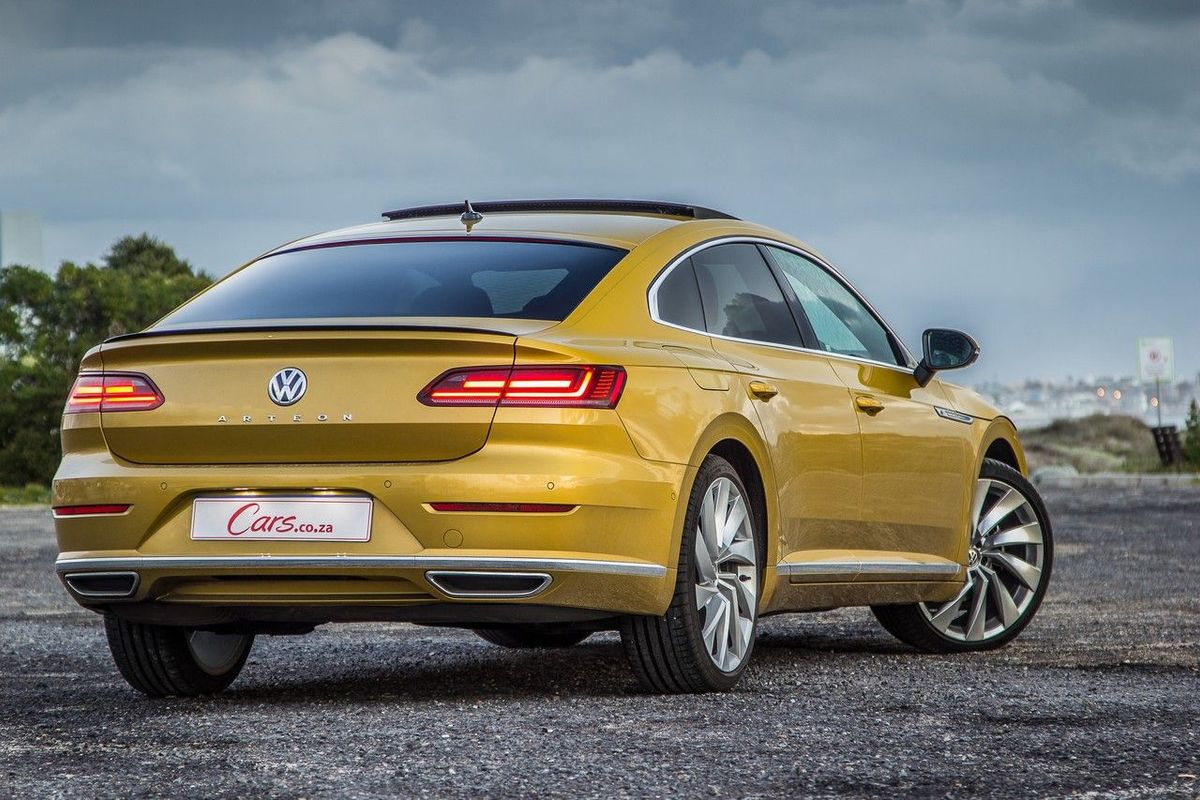
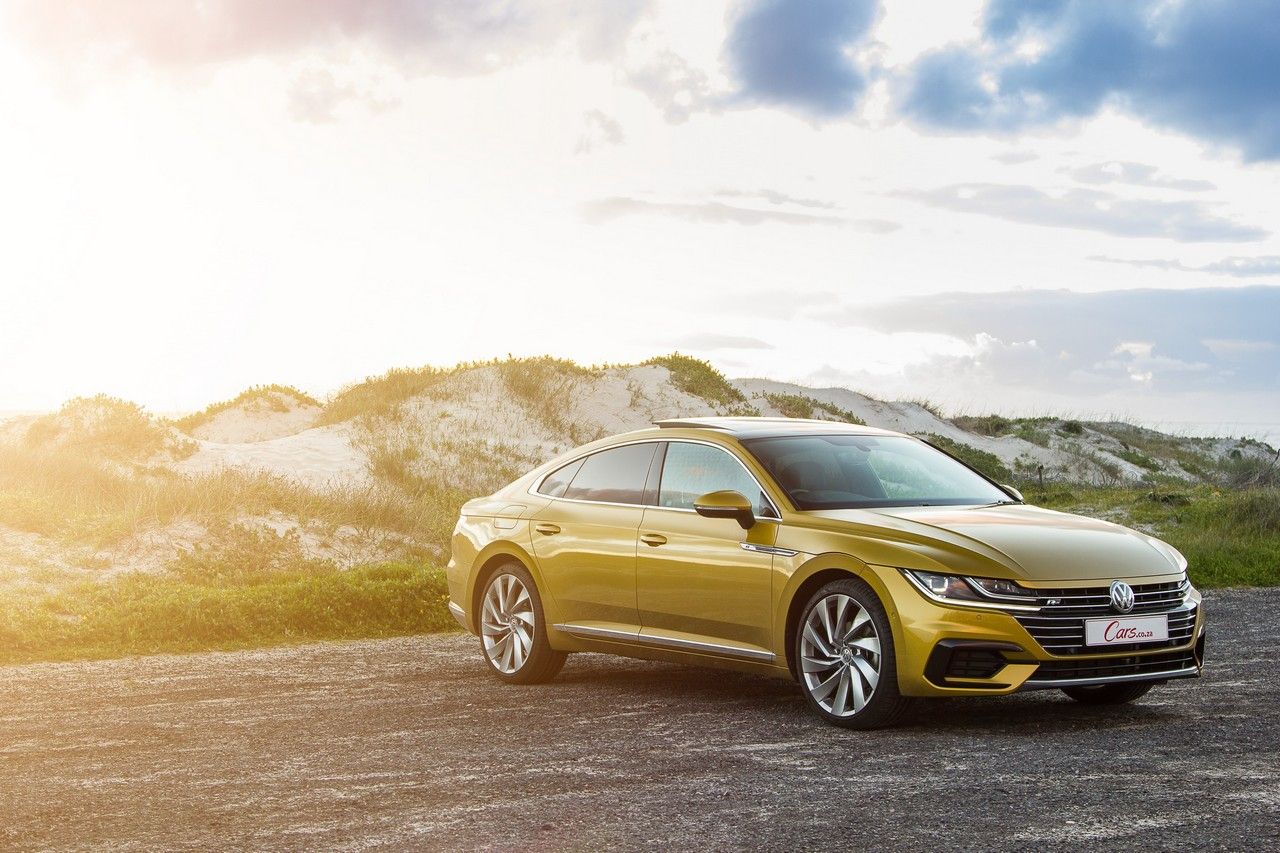
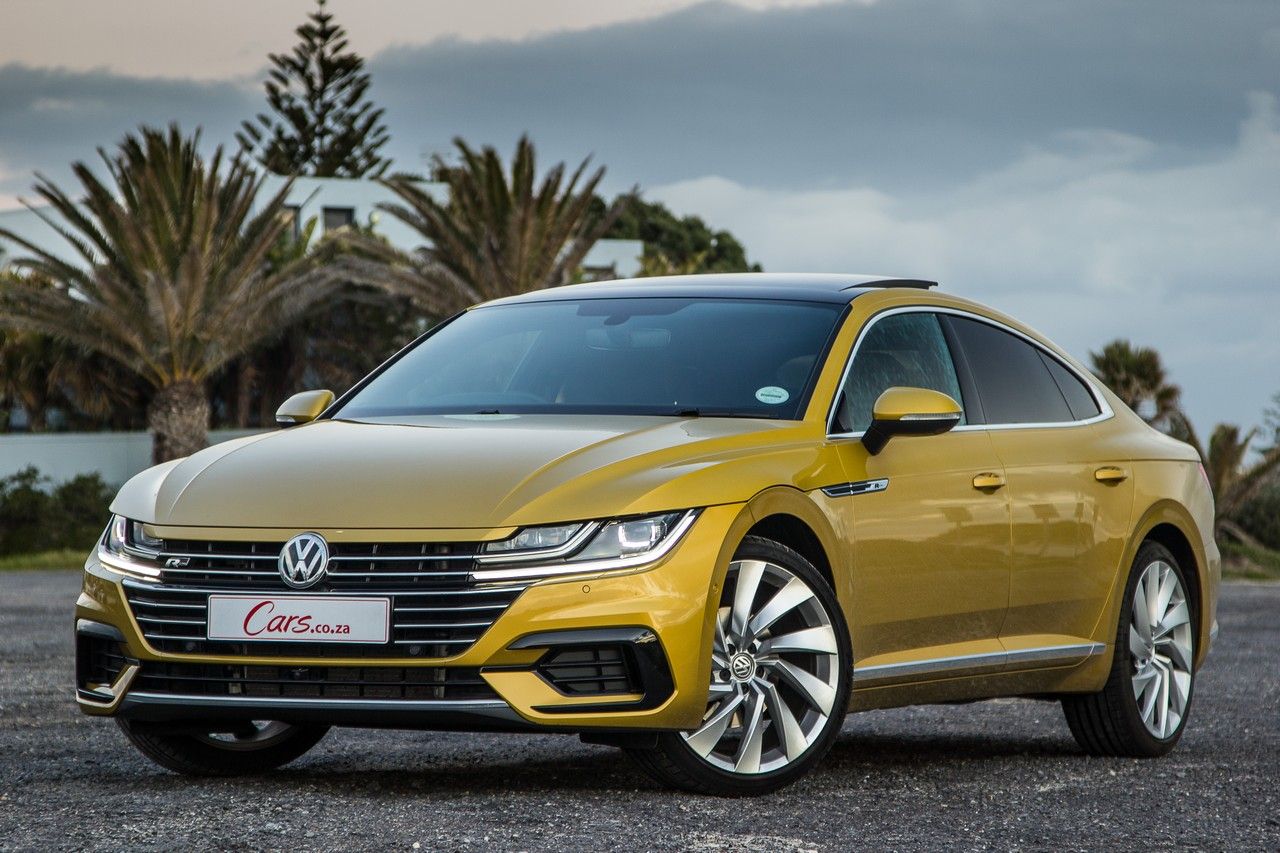
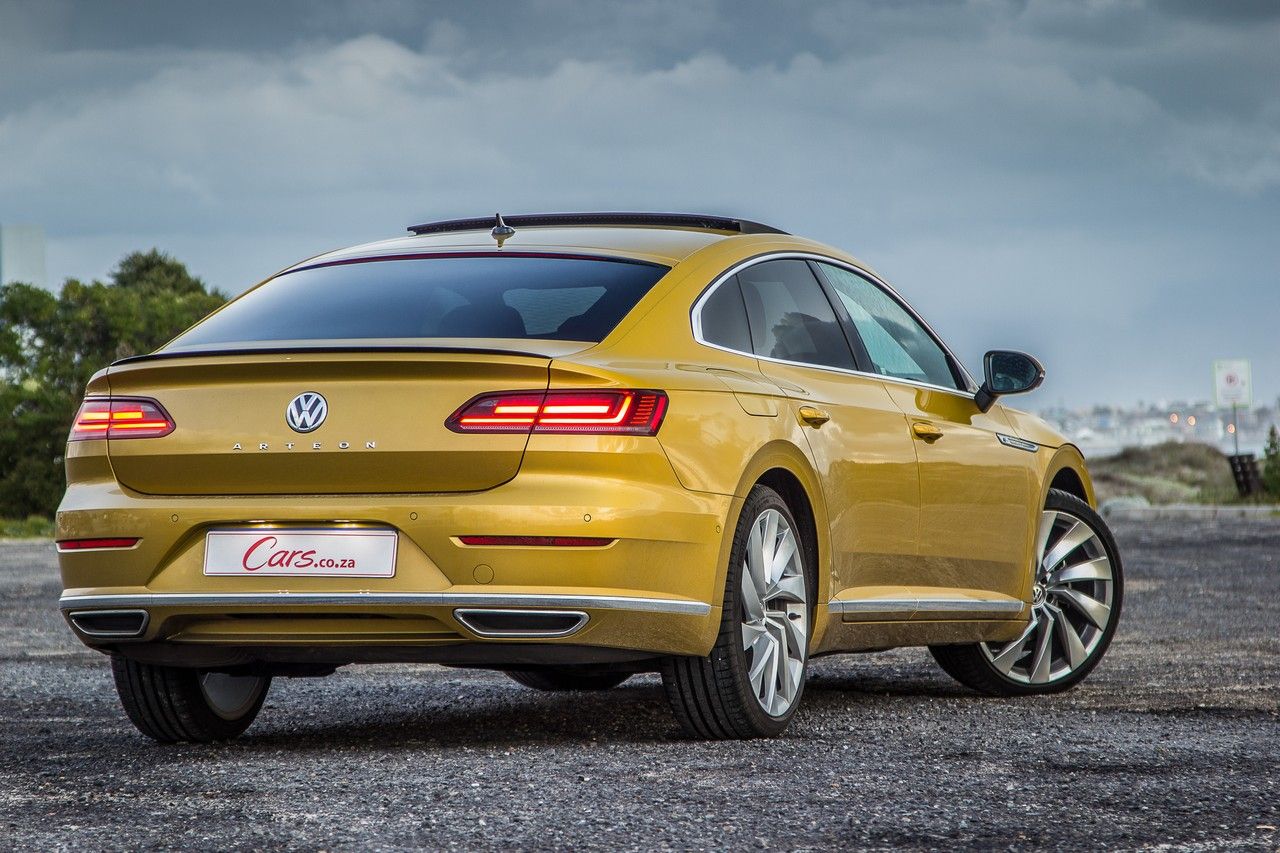
Few sedans are as visually striking as the new Volkswagen Arteon.

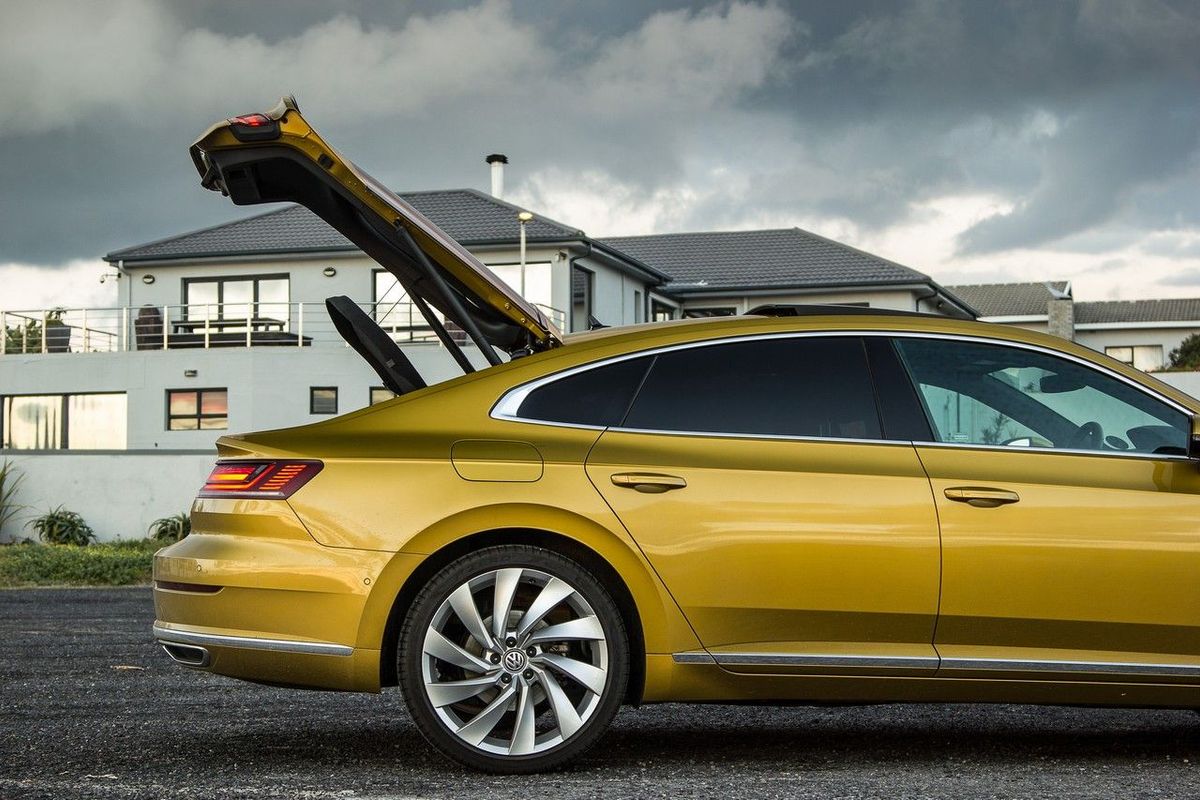
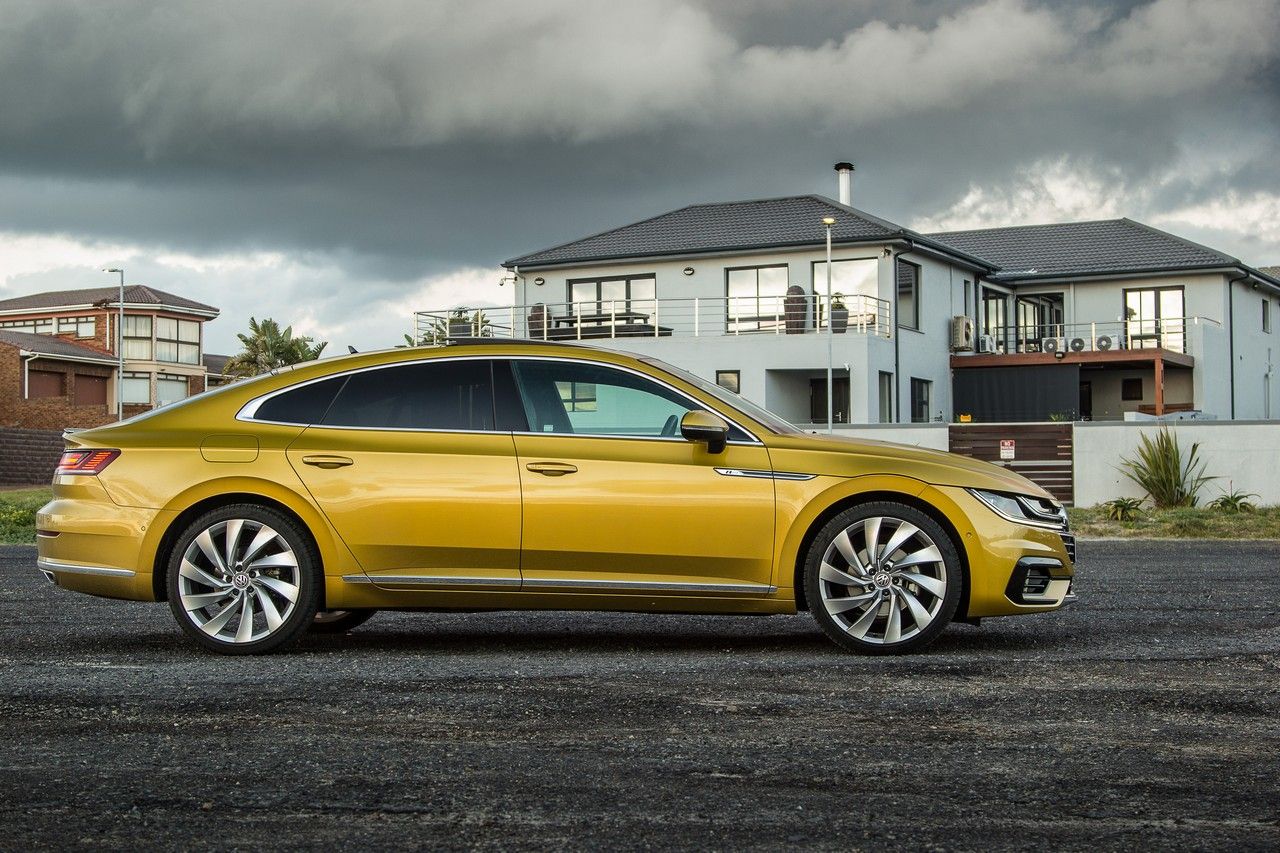
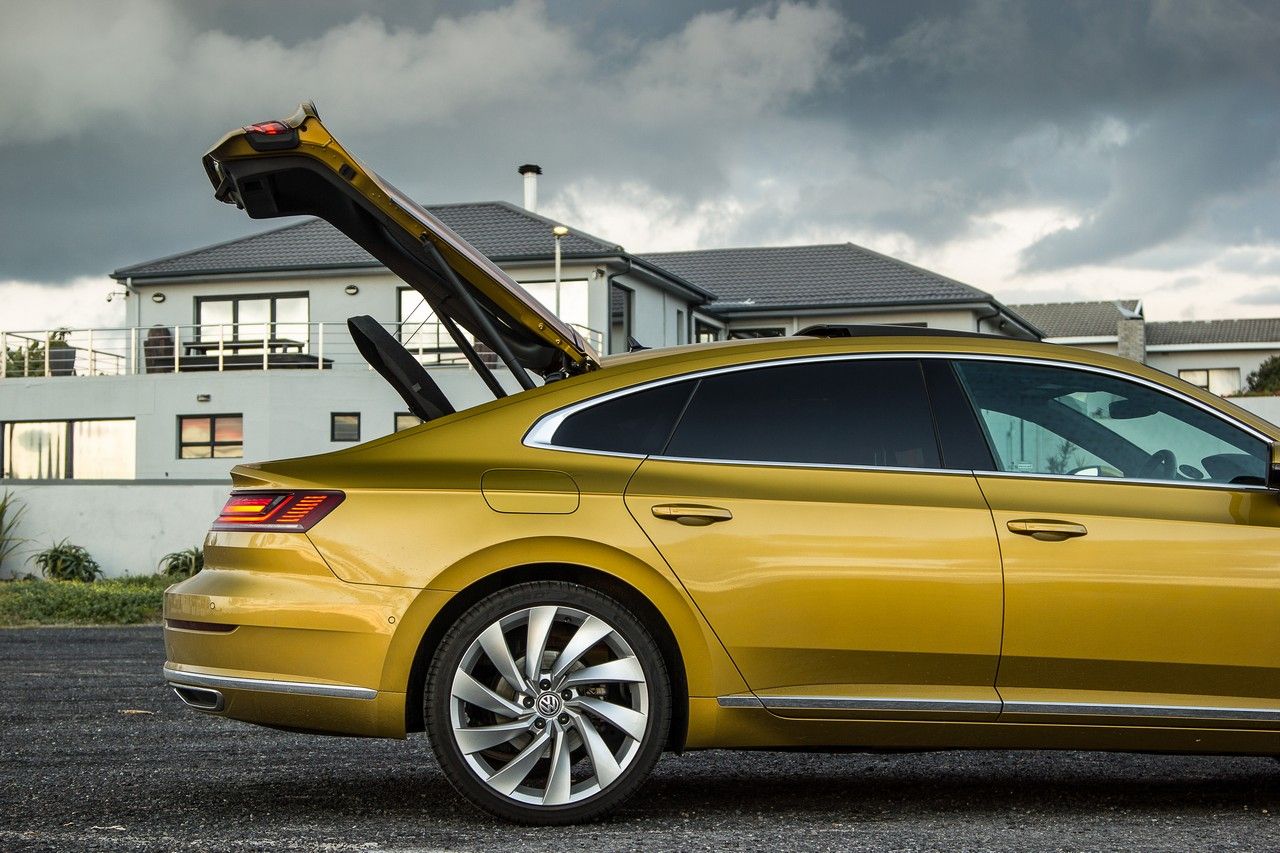
SUVs and crossovers have become ubiquitous and, as a result, the sedan market has shrunk. Buyers may have plumped for business class and executive sedans in the past, but it’s going to take something extraordinary to woo them back. With the Arteon, Volkswagen has departed from the formula of conservative 4-door models (think of the Jetta and Passat, the latter of which is closely related to the newcomer), and utilised its sophisticated MQB platform, to produce a stylish fastback sedan in an effort to attract new customers. The fastback design is fascinating – not only does it look outstanding, but the hatchback tailgate affords surprisingly good practicality.

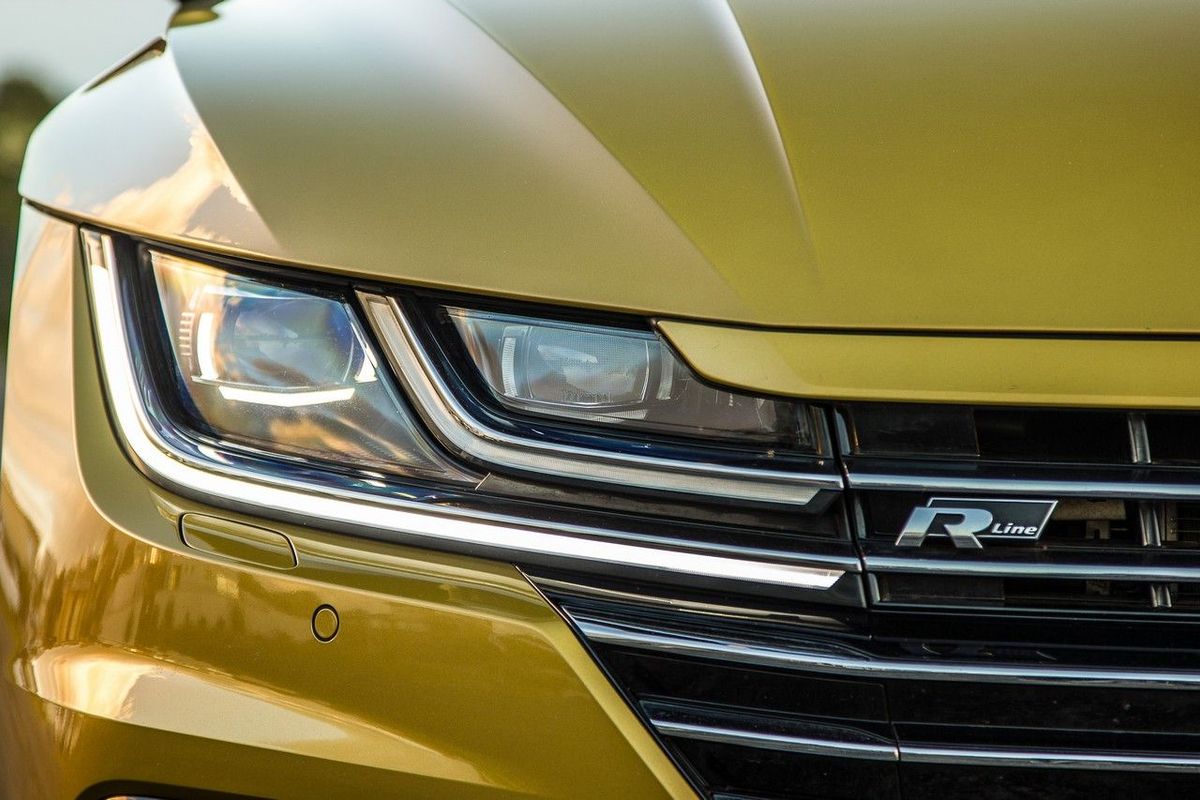
Volkswagen SA was very strategic with the Arteon’s market positioning. For it to garner notable sales numbers, the sedan would need considerable specification and a trimmed engine lineup. Volkswagen also ensured that the R-Line body kit was fitted as standard to the majority of derivatives. There were only 2 engines at launch: a 2.0-litre turbocharged petrol unit, in combination with 4Motion all-wheel drive (click here to read the review) and a 2.0-litre turbodiesel, which is front-wheel driven.

Also Read: Volkswagen Arteon (2018) Launch Review

What’s good about it?

Performance/Efficiency balance


Powering the Volkswagen Arteon is a 2.0-litre turbodiesel motor with 130 kW and 350 Nm

The tried-and-tested 2.0-litre 4-cylinder turbodiesel’s peak outputs (130 kW and 350 Nm of torque) are more than adequate and petrolheads will note that this engine is the same as the one found in the Volkswagen Golf GTD hot hatch. Volkswagen claims this derivative will accelerate from 0 to 100 kph in 8.7 seconds and run on to a top speed of 220 kph. In reality, the car doesn’t feel that punchy off the line, but its real strength lies in its ability to produce generous in-gear shove. The quick-shifting dual-clutch transmission does a sterling job of optimising the motor’s torque delivery and the Arteon responds beautifully when accelerating from, say, 80 kph to 120 kph.

If you want more driver involvement, you can use the steering wheel-mounted paddles – they work well. Past experience has led us to believe that the combination of a dual-clutch ‘box and a diesel powertrain isn’t particularly sporty, yet the Arteon TDI disproves that notion. It’s pleasantly athletic to drive and the typical clatter of a diesel engine is only apparent high up in the rev range. There’s no point to revving out the motor, however, as there’s just so much low-down shove, you can shift gears early.

Plus, the best thing about this powertrain is its good fuel economy. When driven in its Eco or Comfort settings, the Arteon is a relaxed cruiser with a loping gait, which gets even more satisfying when you glance down at the consumption readout on the trip computer. Officially, Volkswagen SA claims a 5.6 L /100 km, but after a week’s mixed driving on both open road and gridlocked traffic, we’re happy to report a readout of 7.4 L/100 km, which is commendable given the size and heft of the vehicle.


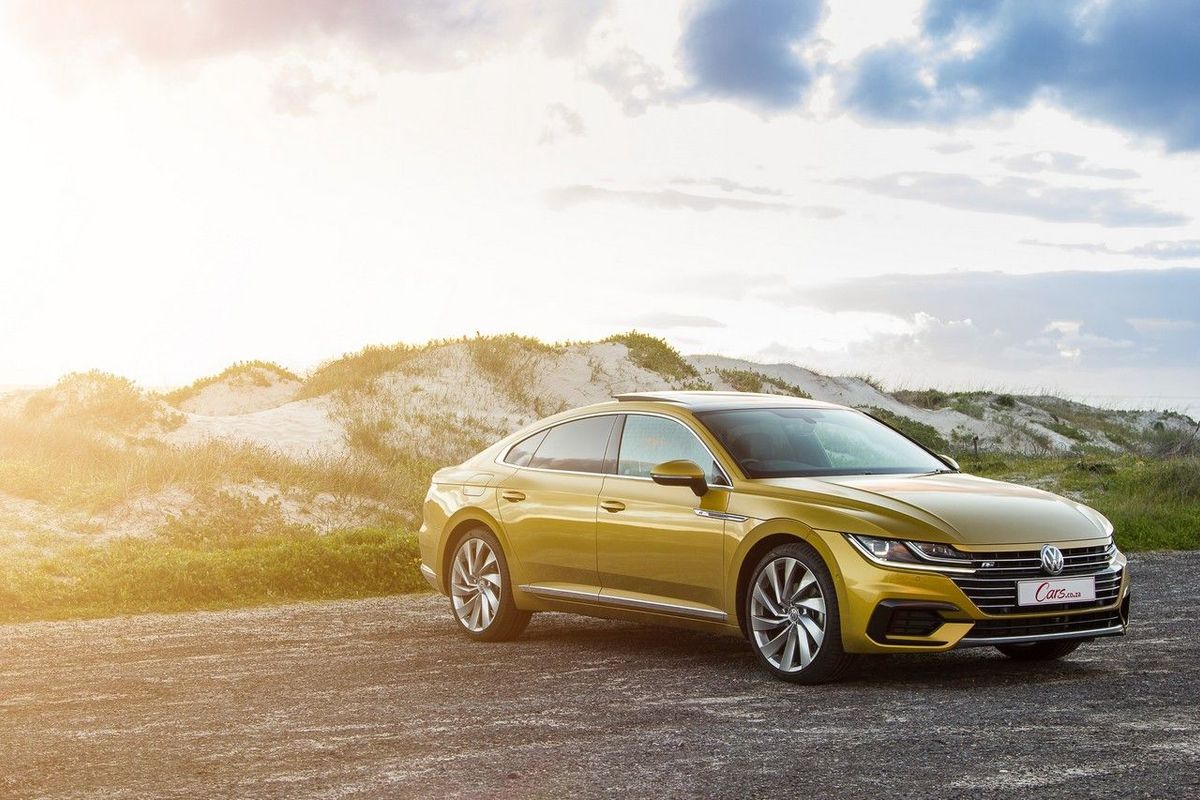
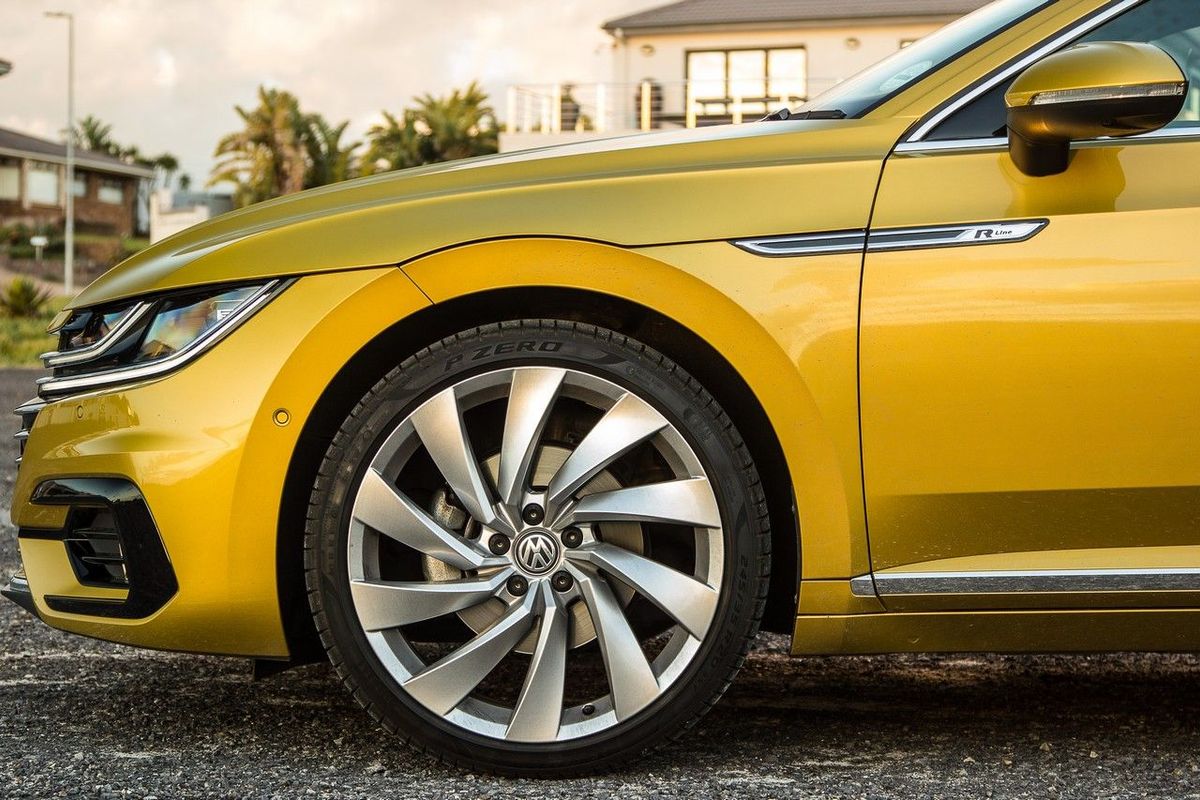
The fastback looks are complemented by handsome 20-inch turbine alloy wheels.

Generous standard spec

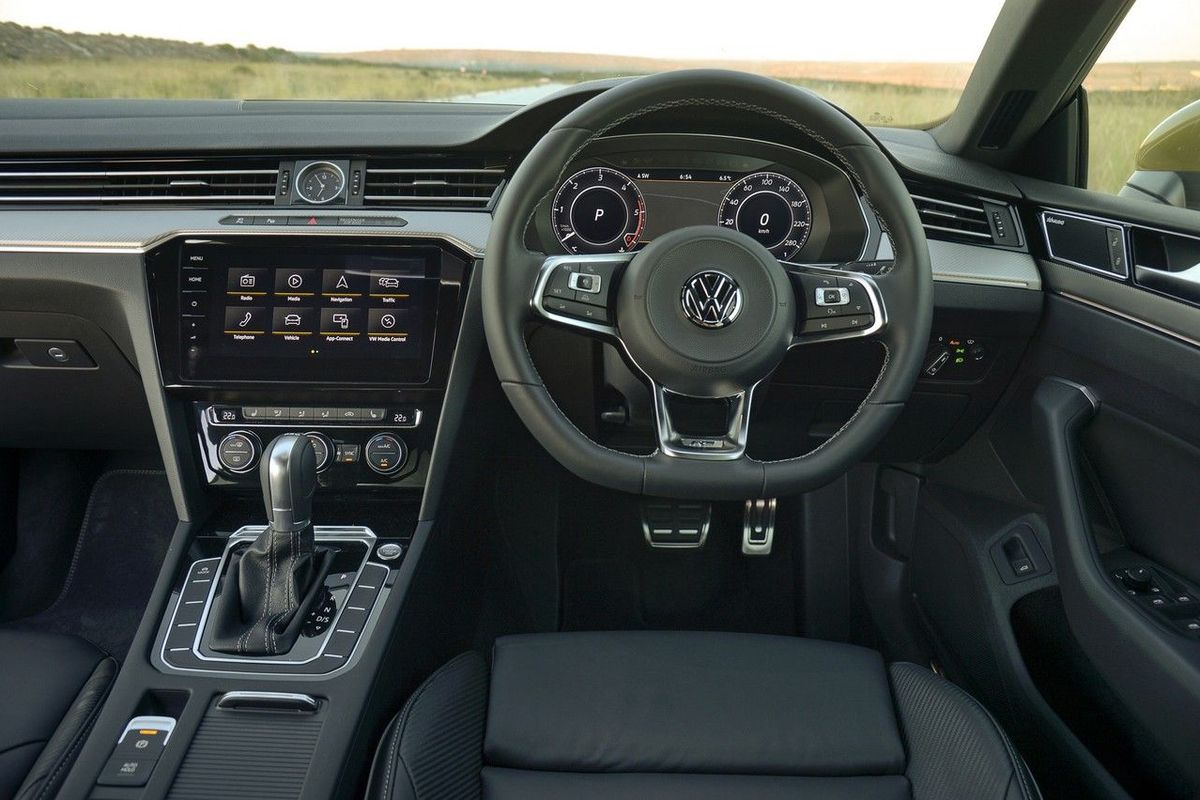
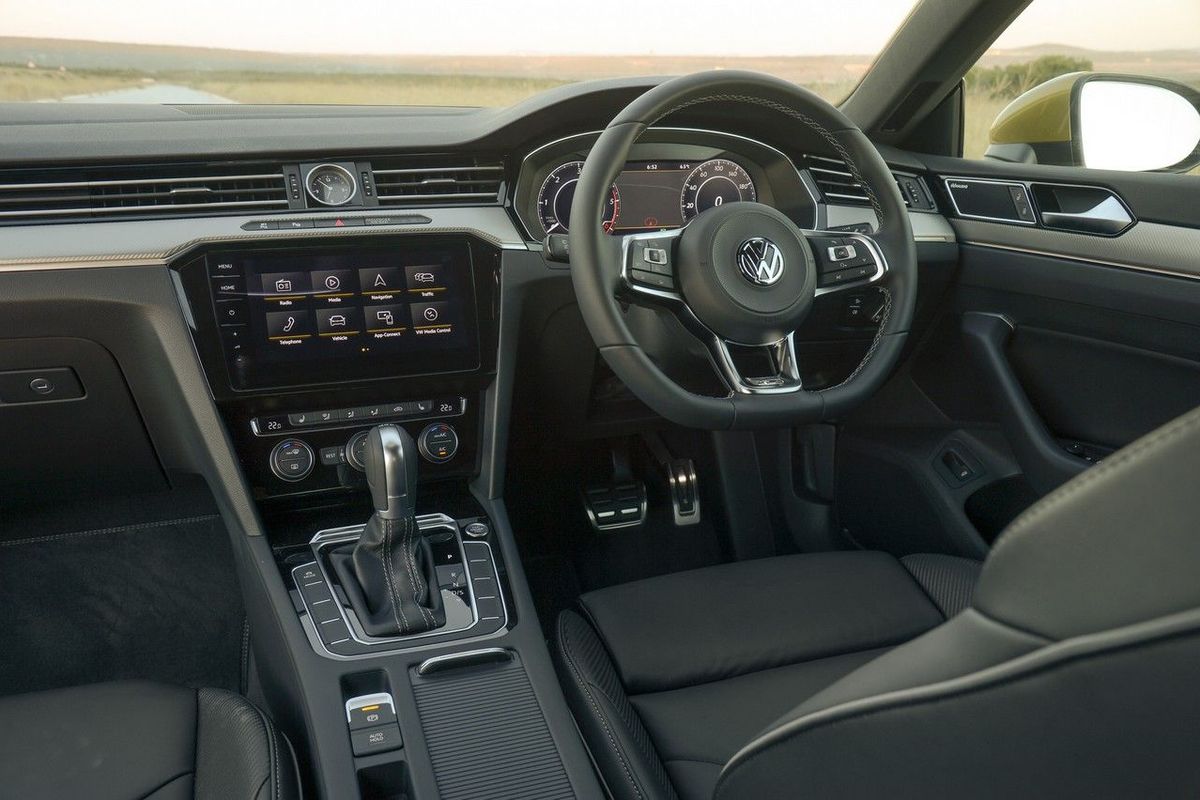
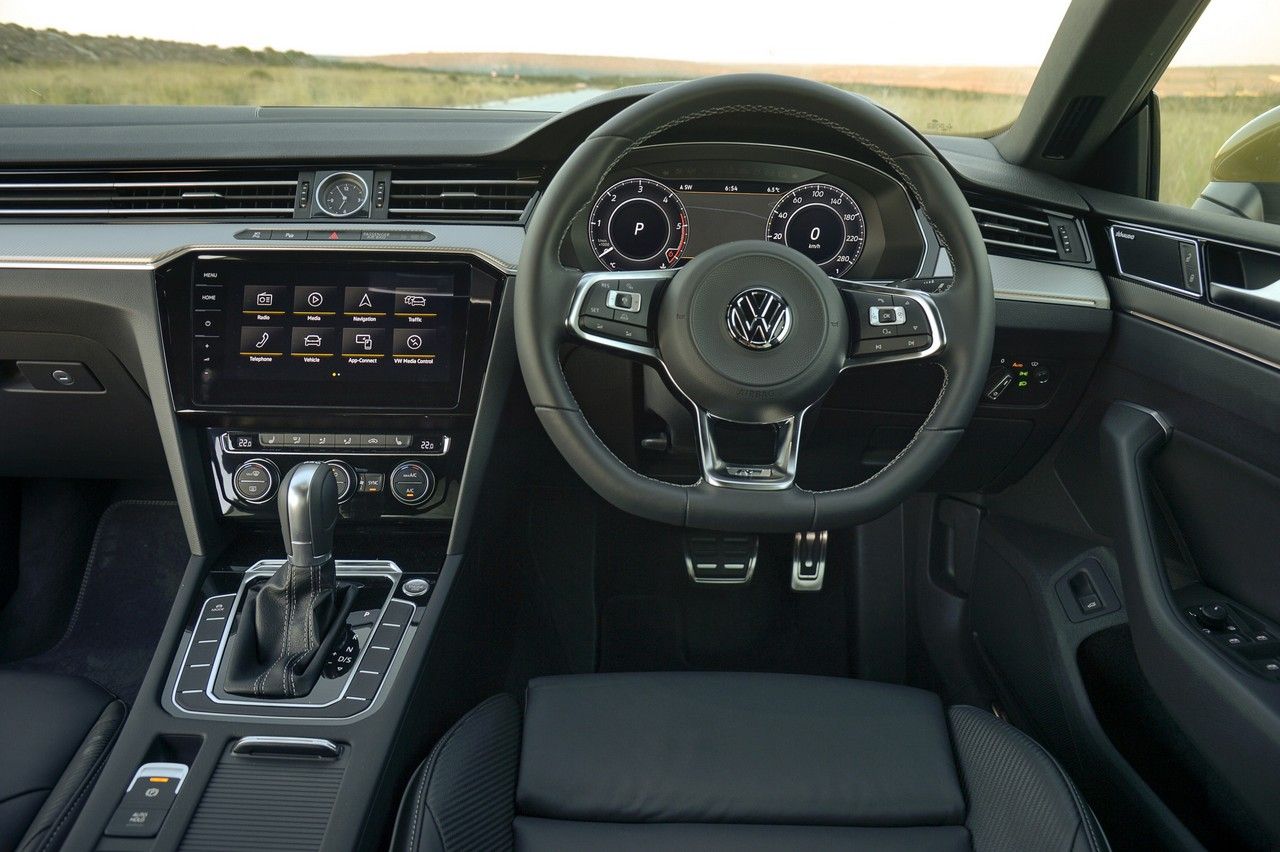
The Volkswagen Arteon truly shines in the standard features and technology departments. There are 2 trim levels available, but we anticipate that most buyers will want to spec the R-Line kit for maximum effect. The grippy R-Line steering wheel features audio and cruise control functionality, as well as controlling the views of the standard digital instrument panel, known as Active Info Display. While it doesn’t have the fanciest of graphics, unlike say, the Peugeot 3008, it’s a slick and intuitive interface.

Climate control is standard too, but in the Arteon, this is extended to the rear passengers. The standout feature is the 9.2-inch Navigation Pro infotainment system that boasts both Android Auto and Apple Carplay compatibility, as well as gesture control. The graphics, colour and resolution are of high quality and visually, it’s a beaut of a system. Best of all, it’s stock standard!

Semi-autonomous safety technology has also made its way into the Arteon; our test unit featured city emergency braking and front assist, which forms part of the adaptive cruise control package. This is an extra-cost option, however, but well worth considering. Also fitted is a 360-degree camera view that offers excellent all-round vision (when you need to park your car), the uprated DynAudio 10-speaker audio system, metallic paint, 20-inch alloy wheels, and an electronically deployable towbar.


The cabin is beautifully assembled, but we feel that it could do with a touch more glam to really elevate it

Extra practicality

The Arteon might look radical compared to its Volkswagen brethren, but under the skin, there’s a lot of shared technology, such as the lauded MQB platform that underpins it. This modular architecture forms the basis of the Golf, Tiguan and some Audi products, and is renowned for its practicality and compliant ride quality. Admittedly in Arteon application, the MQB platform has been stretched out and has a wheelbase length of 2 841 mm, but the benefit is generous cabin space.

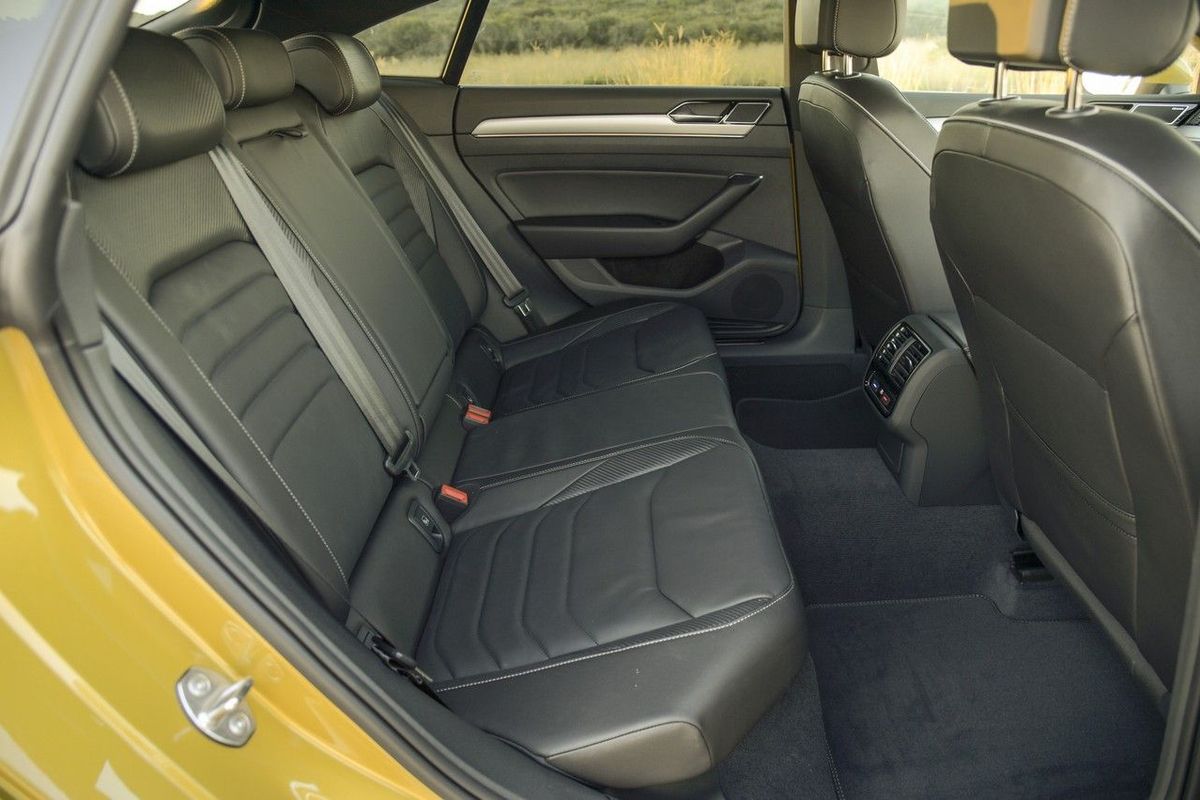
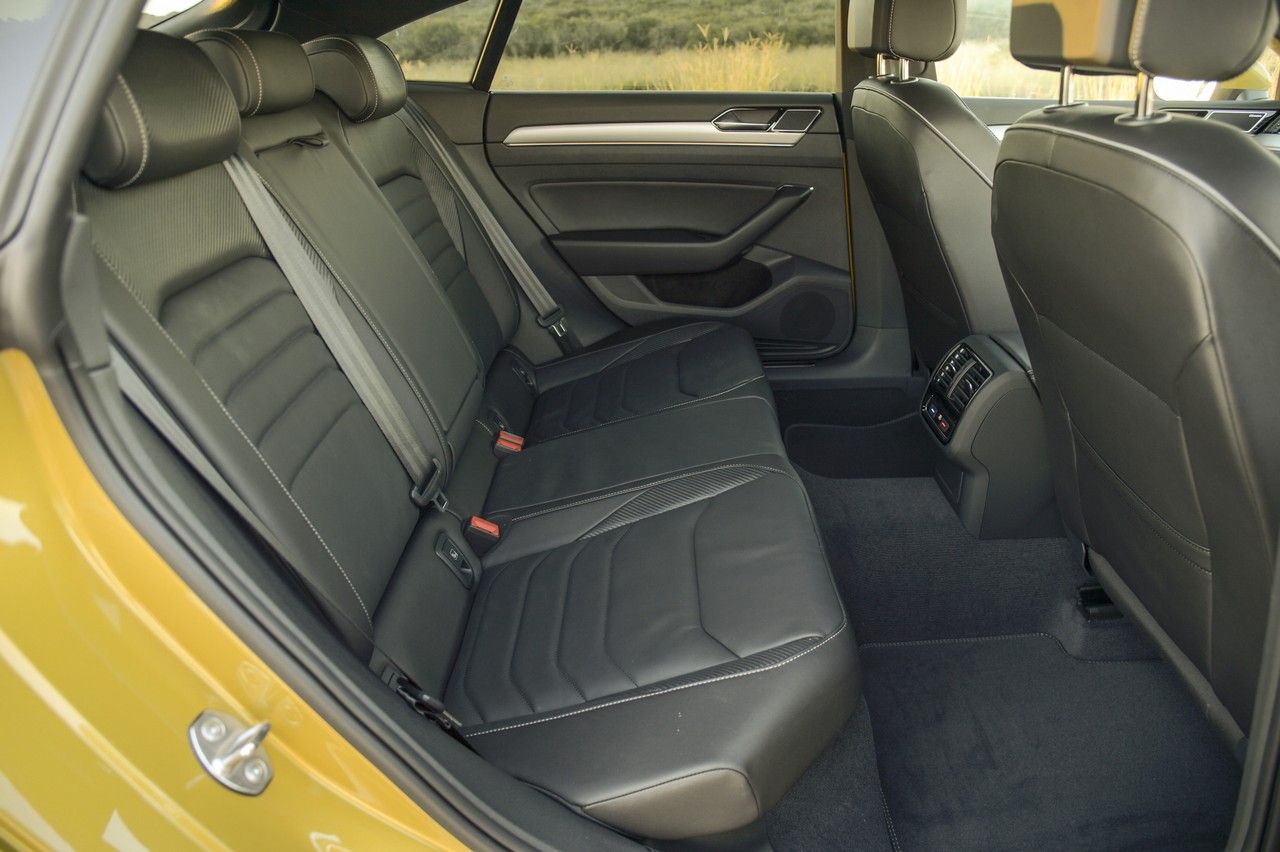
Rear passengers are availed excellent legroom and, thanks to the fastback design, the luggage bay is practically shaped and exceptionally cavernous, all of which makes the Arteon an accomplished family sedan. Volkswagen quotes 563 litres of luggage space and, to put that in perspective, the Tiguan family car offers 442 litres.


The cavernous boot is easily accessible by a giant rear hatch, typical of the fastback design

Where does it fall short?

Plain cabin design

While there’s nothing fundamentally wrong with the Arteon’s classy, buttoned-up cabin (everything works well and is well assembled), we feel that it lacks the glamour to match the car’s fantastic exterior style. The ambience is akin to a Passat or even a well-specced Golf. To reiterate, the cabin boasts a slick user experience, but we feel it just needed some pizzazz to really set it apart. Surely Volkswagen could have pinched some interior kit from sister brand Audi’s to liven up the Arteon’s cabin?

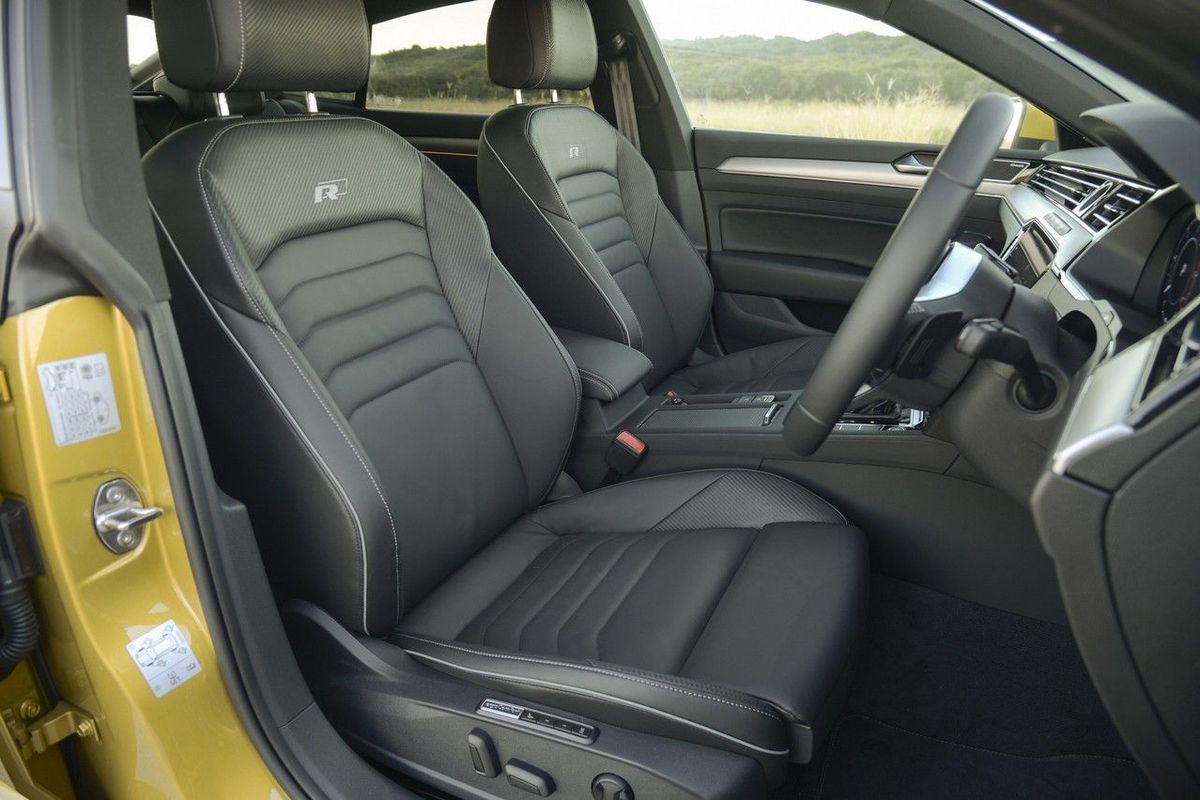
There are no complaints about the quality of the interior materials, even if we think the cabin looks a touch too ordinary. The R-Line package includes sporty leather seats that include a heating function, are electrically adjustable and, of course, wrapped in sumptuous leather.


Rear legroom is excellent in the Volkswagen Arteon although taller adults may find headroom an issue

Pricing & Back-Up

Pricing for the Volkswagen Arteon range starts at R599 900, with this 2.0 TDI R-Line derivative priced at R649 900. The Arteon comes standard with a 5-year/90 000 km maintenance plan, 3-year/120 000 km warranty, 12-year anti-corrosion warranty and a space saver spare wheel.  

Verdict


It’s striking, drives well and boasts surprising amounts of practicality, but will the masses leave their SUVs for the Arteon?

Given the performance and efficiency of the turbodiesel-powered Arteon, we’d narrowly recommend it over its petrol-engined and 4Motion-equipped sibling. You have more than enough power, plus the benefits of saving money at the pumps. With the Arteon, Volkswagen has proved that amid a deluge of new SUV introductions, it can build a competent and interesting-looking sedan that offers tremendous luggage space and refinement on par with premium-badged products. There’s substance to this Arteon: it’s an accomplished tourer that is spacious enough to seat 4 adults in luxurious comfort, with more than enough capacity to accommodate their luggage as well.

Those who take the plunge and buy an Arteon will be impressed by its levels of comfort and technology and, if they opt for the turbodiesel derivative, frugal consumption and better-than-expected performance. However, we’ll have to watch the sales charts to see if buyers are willing to tear themselves away from their coveted German (premium) brands and opt for something refreshingly different. Critical here is the price, which significantly undercuts those of its more established and widely-adored rivals. The specification of the Arteon (with very few optional extras) is a knock-out punch too, so it’s easy to recommend the Arteon if you’re looking for a solid buy.

Alternatives (click on the names for detailed spec info)

BMW 420d Gran Coupe Sports-Auto

The long-serving BMW is more established in the business class segment than the Arteon. Its also features a fastback body style (and, therefore, respectable luggage space). With rear-wheel drive dynamics, we’d expect it to be more involving to drive than the VW, but then it should be, considering its almost R100k more expensive.

Audi A5 Sportback 2.0 TDI quattro Sport

The Arteon’s closest competition comes from within its own ranks. The Audi A5 Sportback is beautiful, both inside and out. It has similar performance and handles well thanks to quattro all-wheel drive, but it doesn’t offer as much standard spec as its cousin.

Looking for a new / used Volkswagen Arteon to buy?

Find one on Cars.co.za today by clicking here

Porsche Panamera & Sport Turismo go GTS

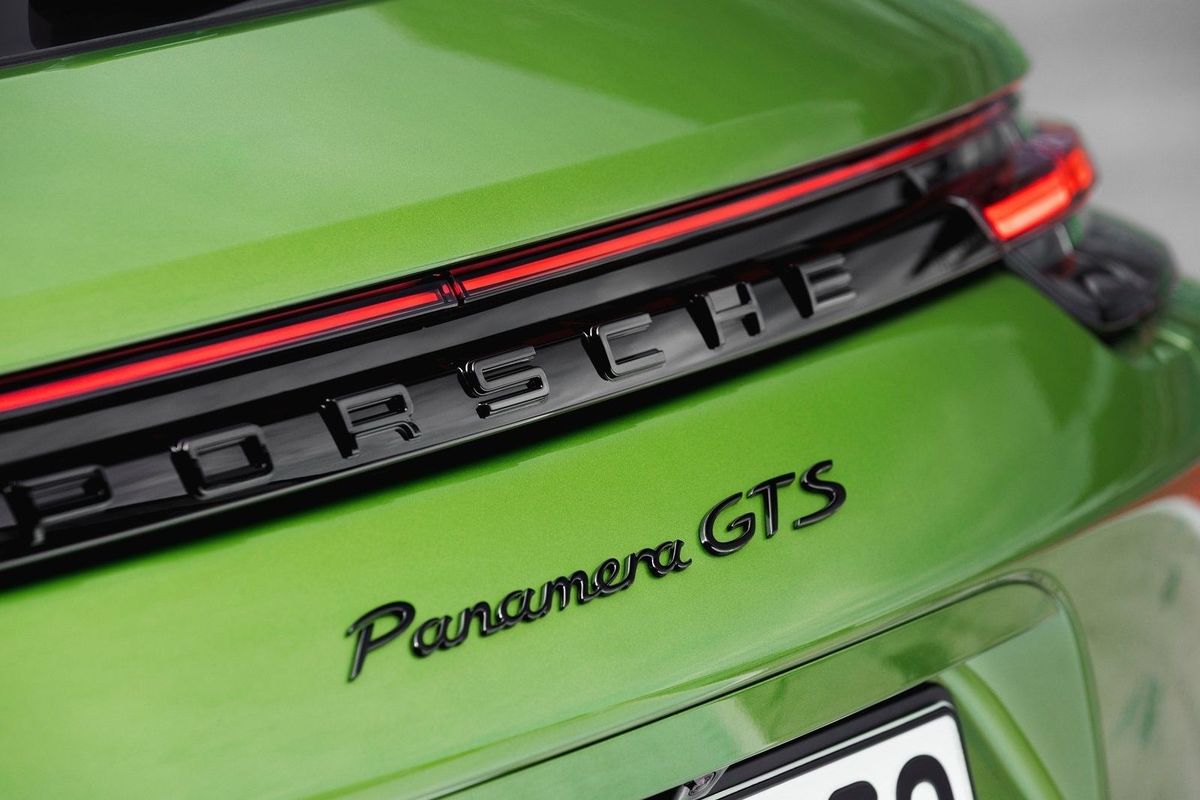
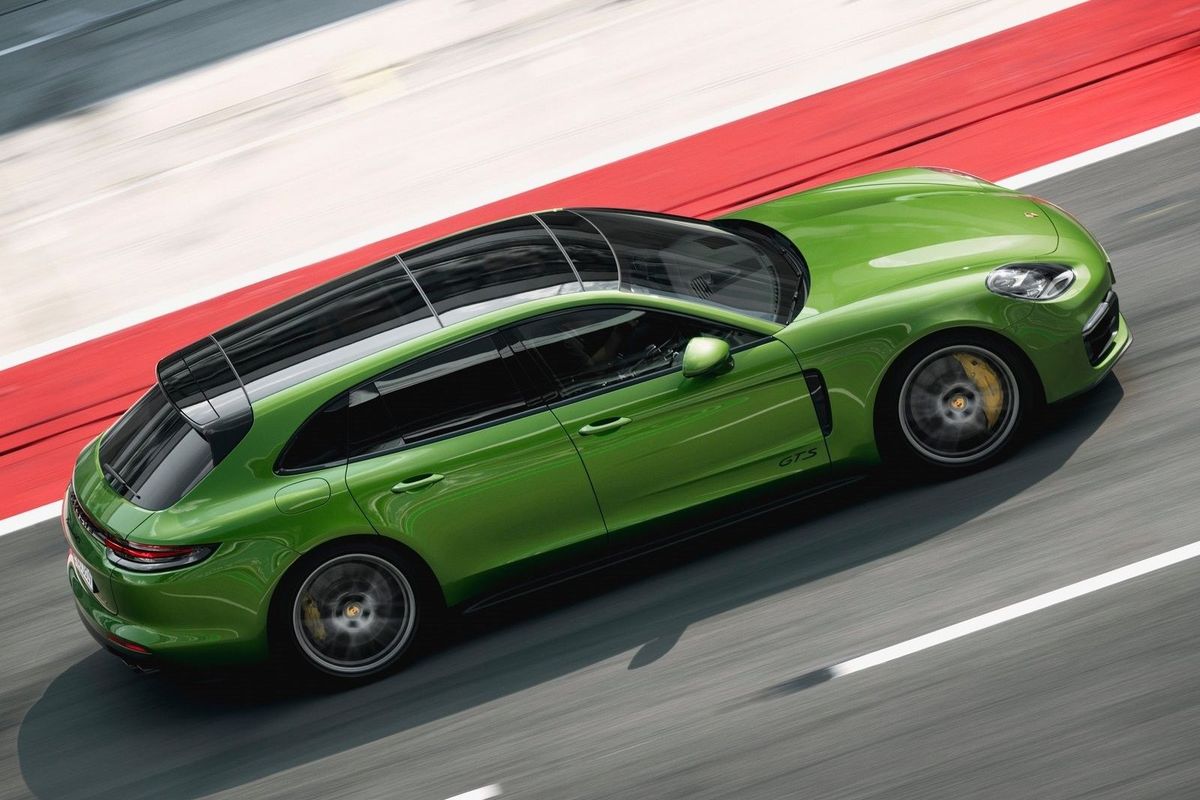
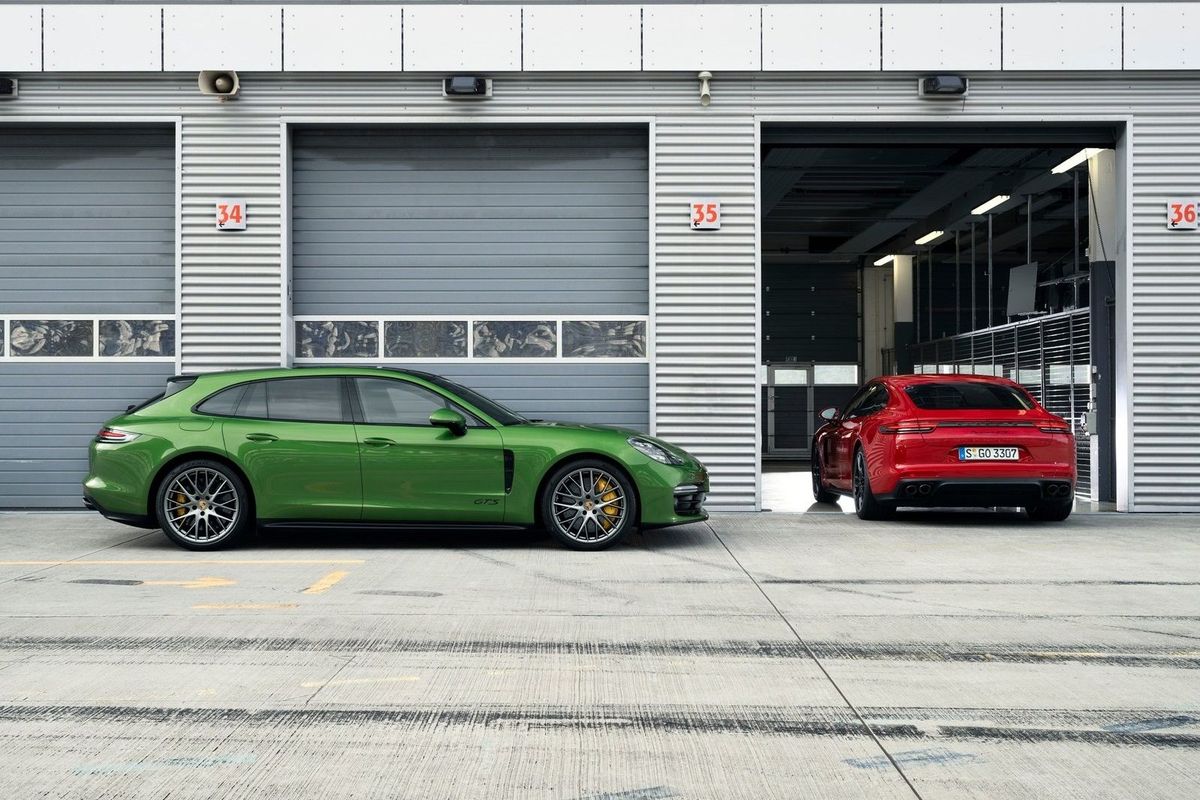
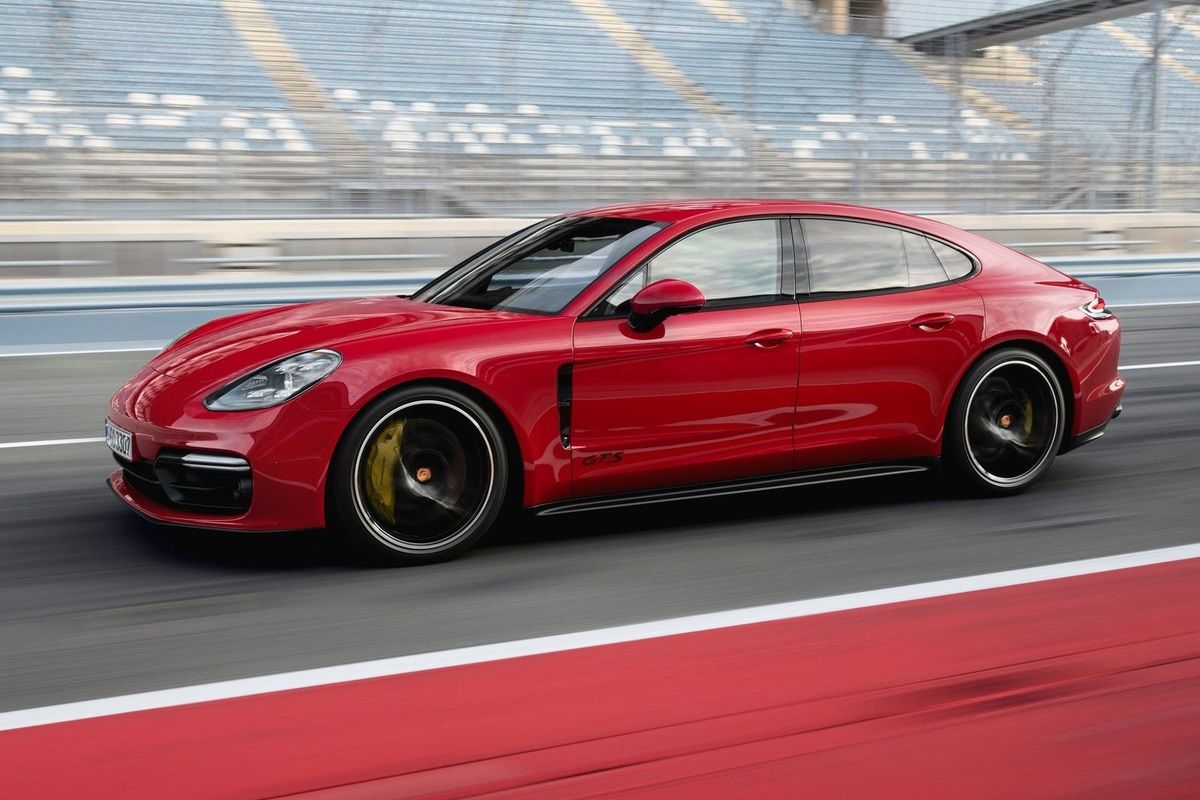
German sportscar manufacturer Porsche has given its Panamera and Panamera Sport Turismo the GTS treatment. Herewith some details.

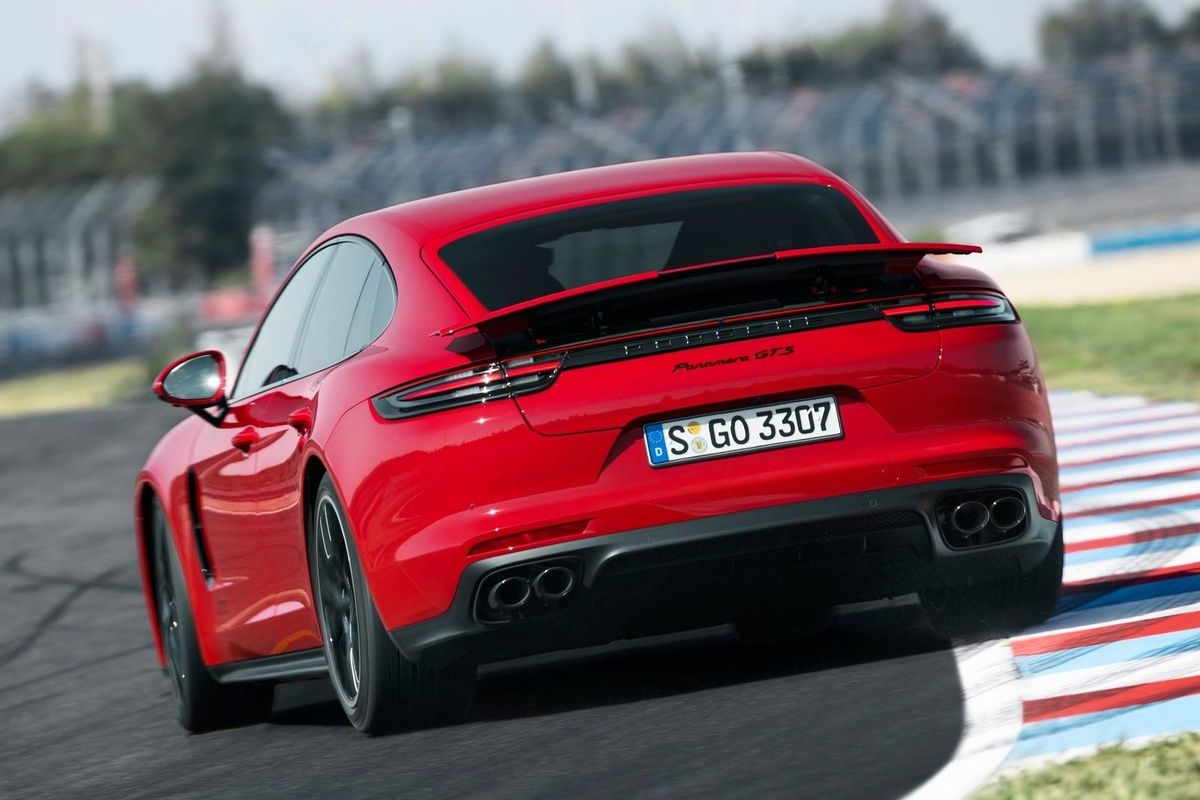
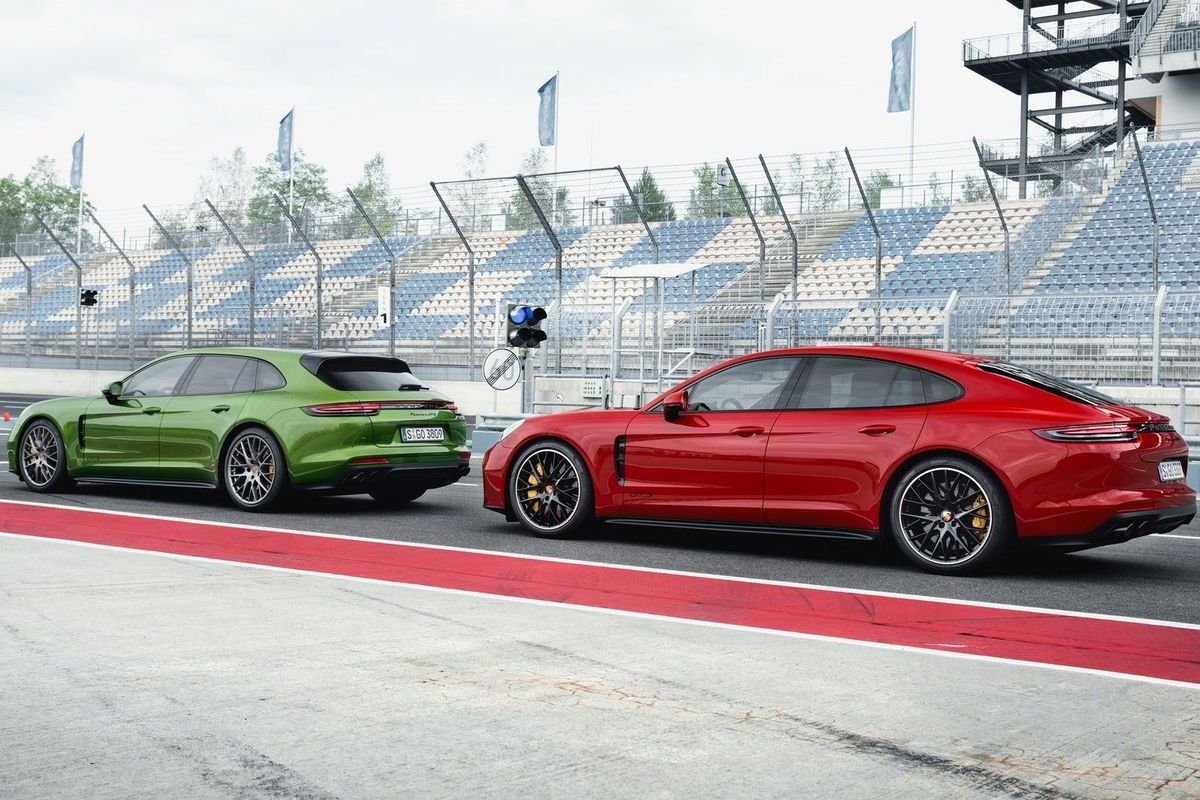
The Porsche Panamera and Sport Turismo have been given the GTS treatment, meaning they're more sporty to drive, have a bit more power and have the looks to match. Power comes from the 4.0-litre turbocharged V8 motor, tuned to deliver 338 kW and 620 Nm, which is 15 kW more than lesser models. Both Porsche GTS models are exceptionally potent and reach 100 kph in just 4.1 seconds. The Panamera Sport Turismo will hit a top speed of 289 kph, while the Panamera maxes out at 292 kph. In both cars, power goes to all four wheels via an 8-speed PDK dual clutch transmission.

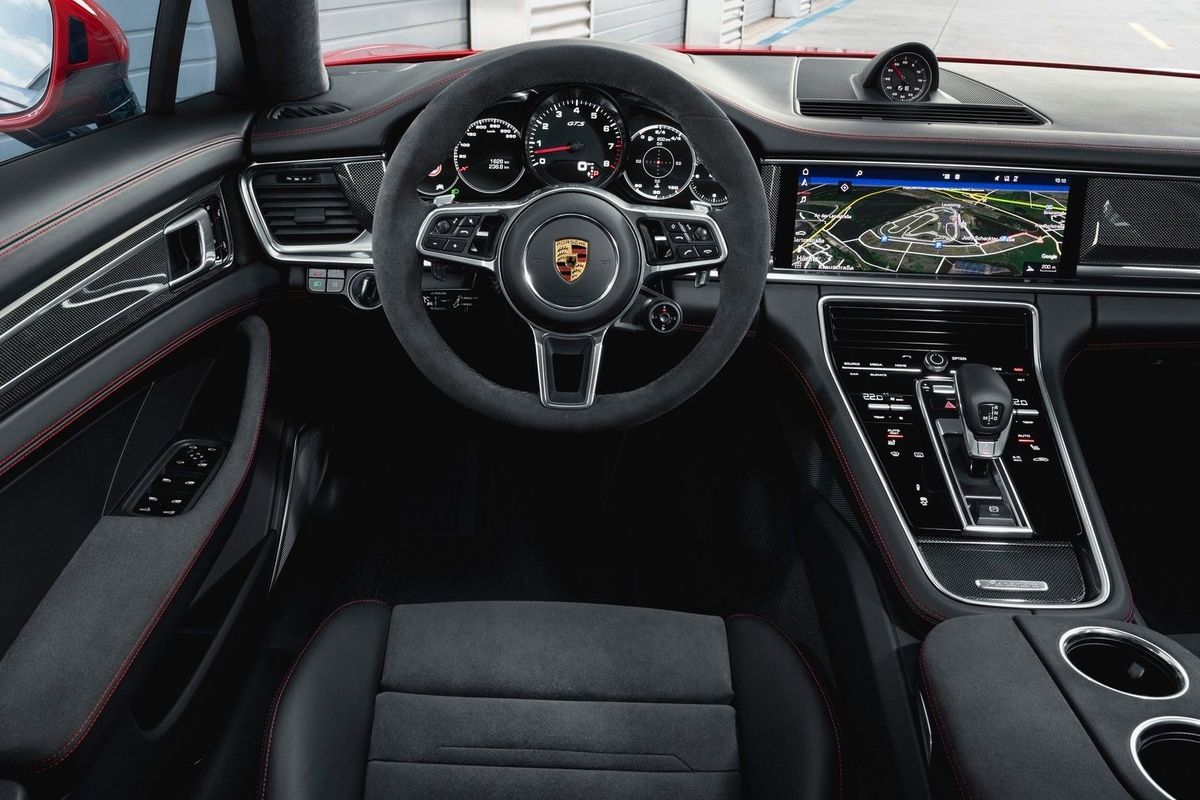
Standard features and changes for the GTS models is comprehensive. There's a sports exhaust system to make the most of the V8 motor, Sports Chrono package is fitted as standard, revisions to the chassis systems are included, and there are some striking Alcantara trim updates to the cabin.  Both the Panamera GTS and Panamera Sport Turismo GTS have been lowered by 10 mm, given bigger brakes (390 millimetres in diameter at the front, 365 millimetres at the rear) and the Porsche Active Suspension Management (PASM) function has been adapted for an even sportier calibration.


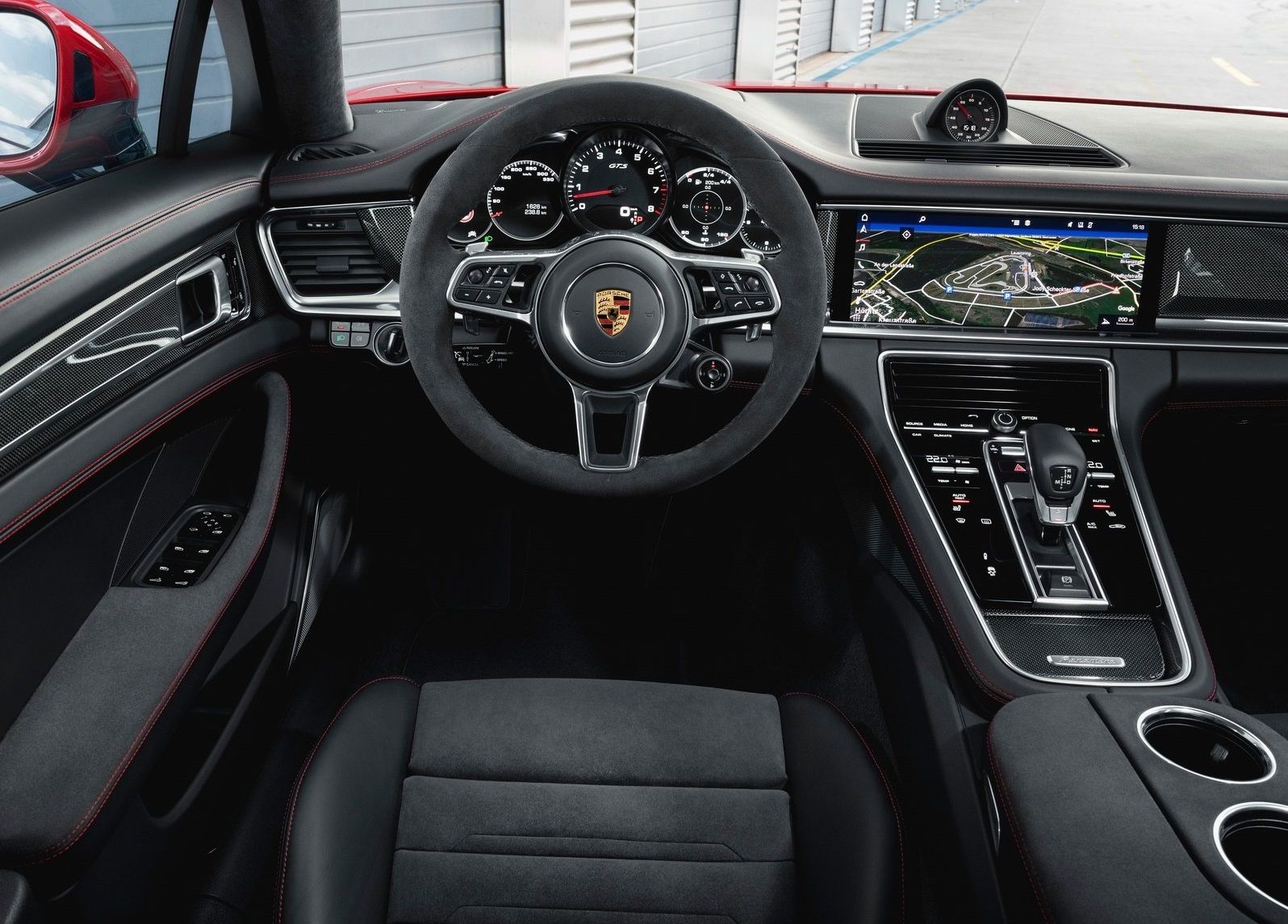
The GTS cabin treatment includes liberal use of Alcantara leather and the addition of the Sports Chrono Package as standard

Further Reading

Porsche Panamera Sport Turismo (2017) International Launch Review

Porsche Panamera 4S (2017) Video Review

Porsche Panamera (2016) First Drive

Porsche Showcases Most Powerful Model

Porsche Panamera 4S (2017) Video Review

Porsche Produces 1-millionth 911 [Video]

SentiMETAL: – Porsche 930 Turbo [Video]

Want to buy a Porsche?

Browse through stock here

Hyundai Santa Fe (2018) Specs & Price

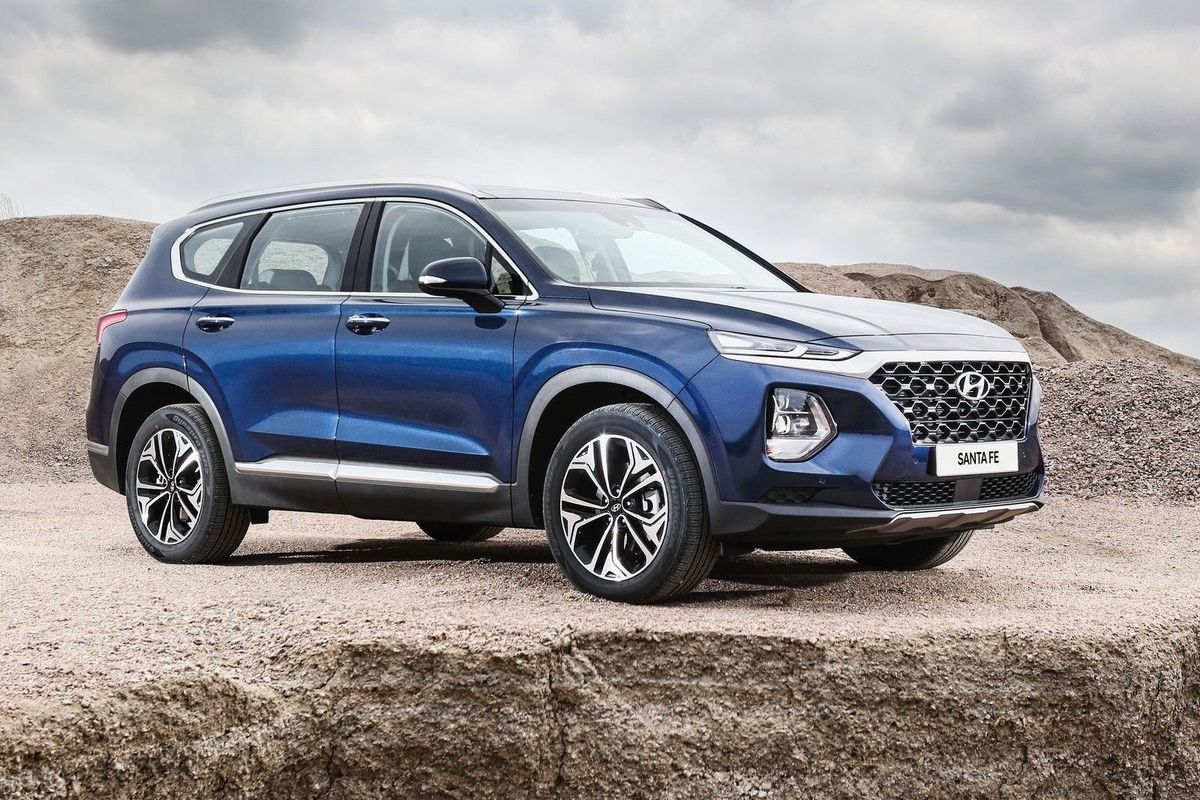
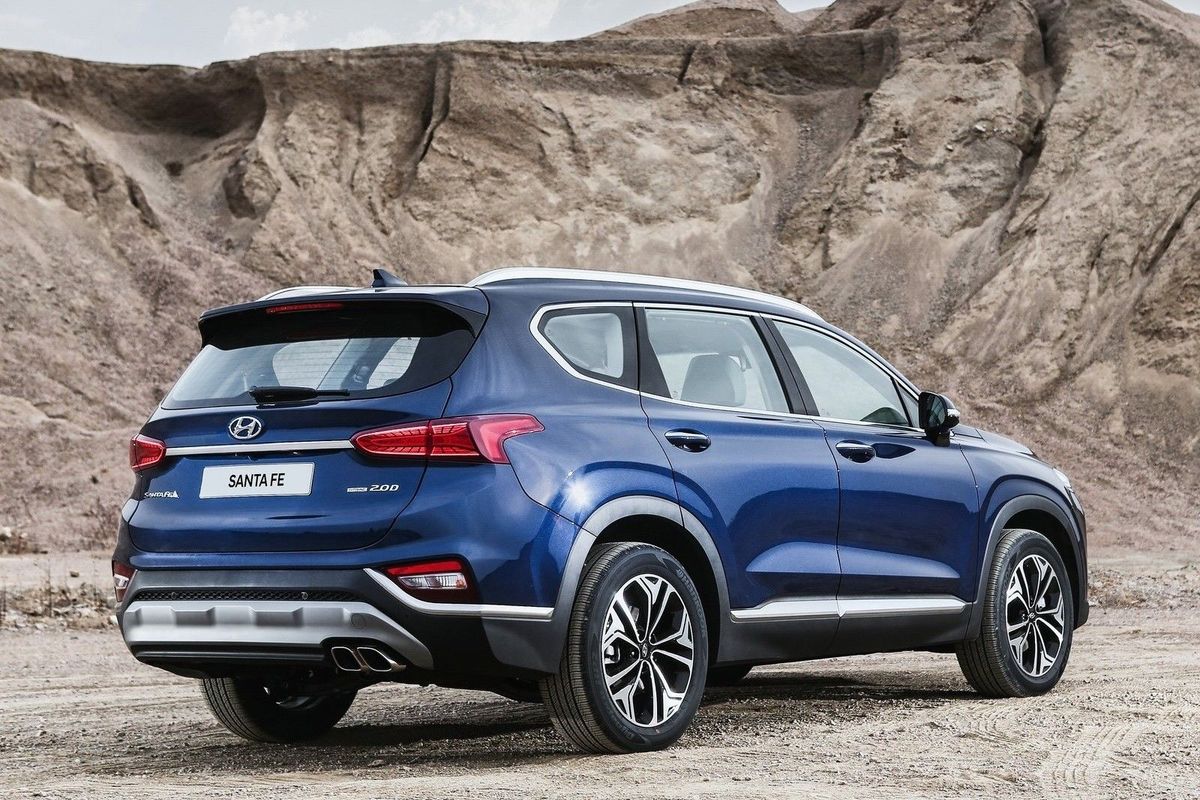
Specification and pricing for the forthcoming Hyundai Santa Fe has surfaced and we can share how much this new big Korean SUV will cost.

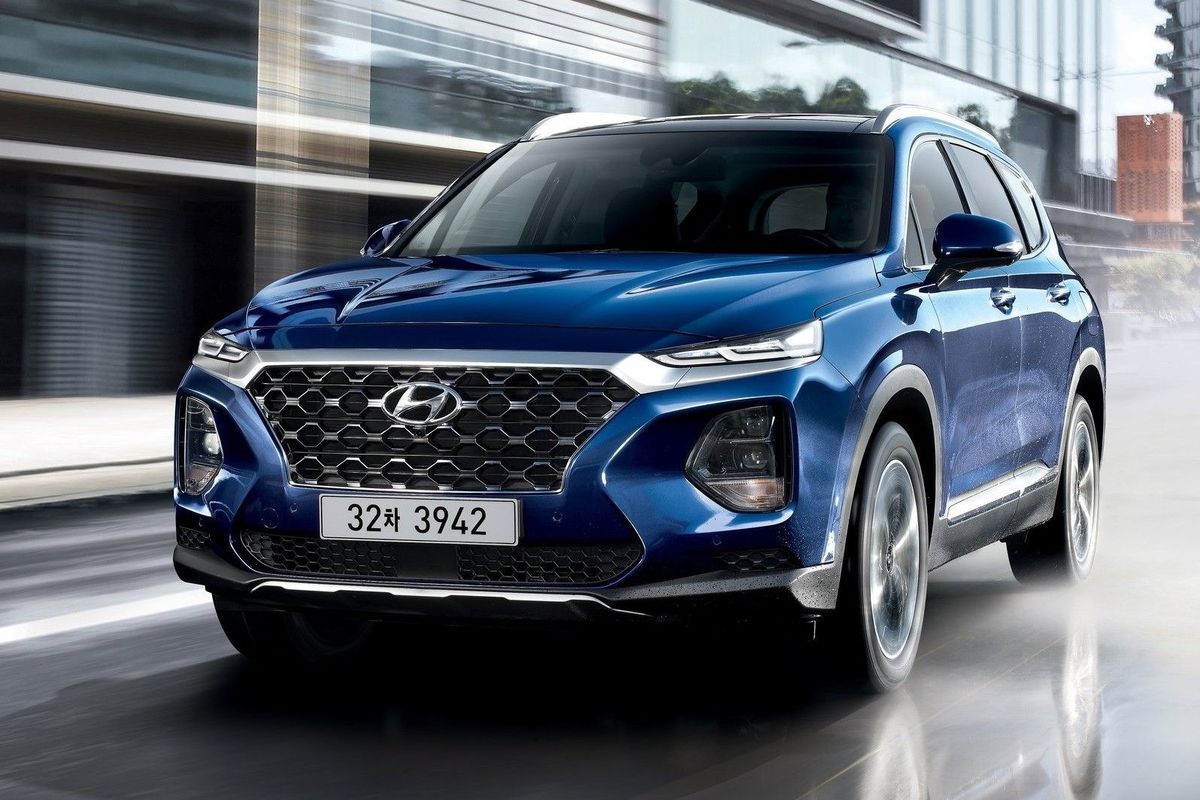
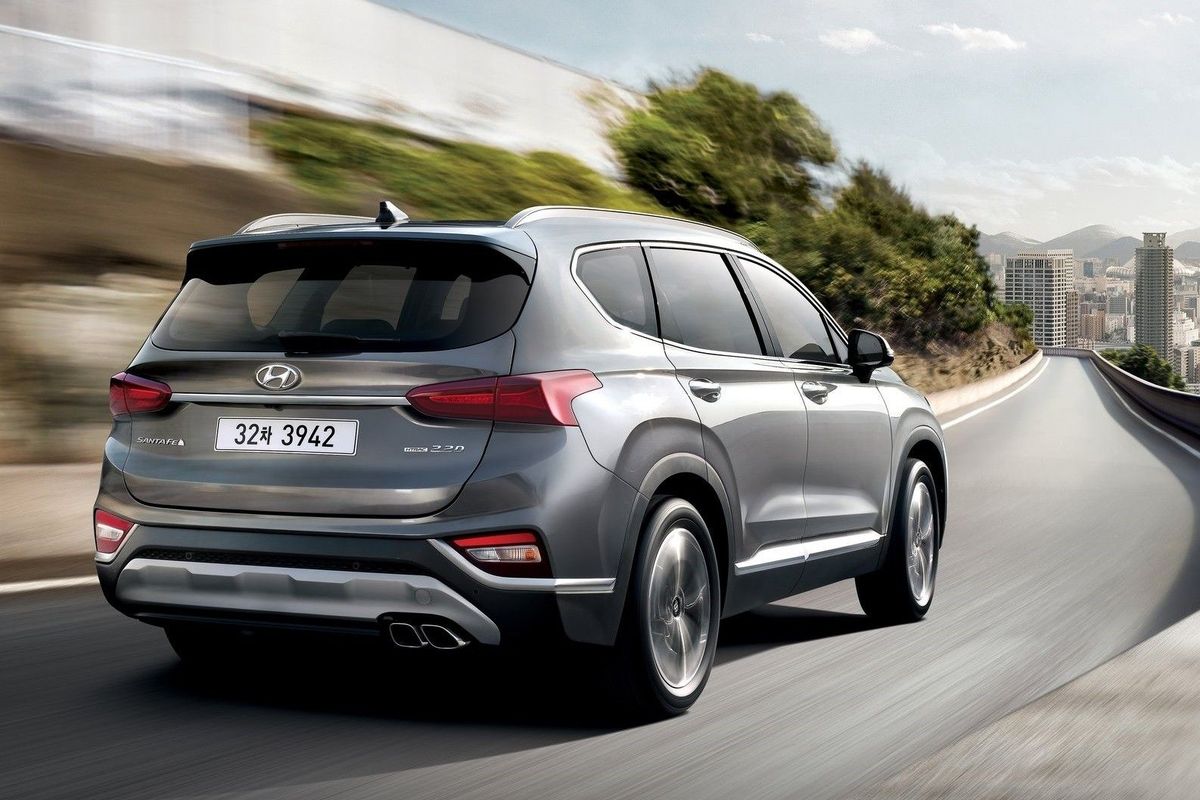
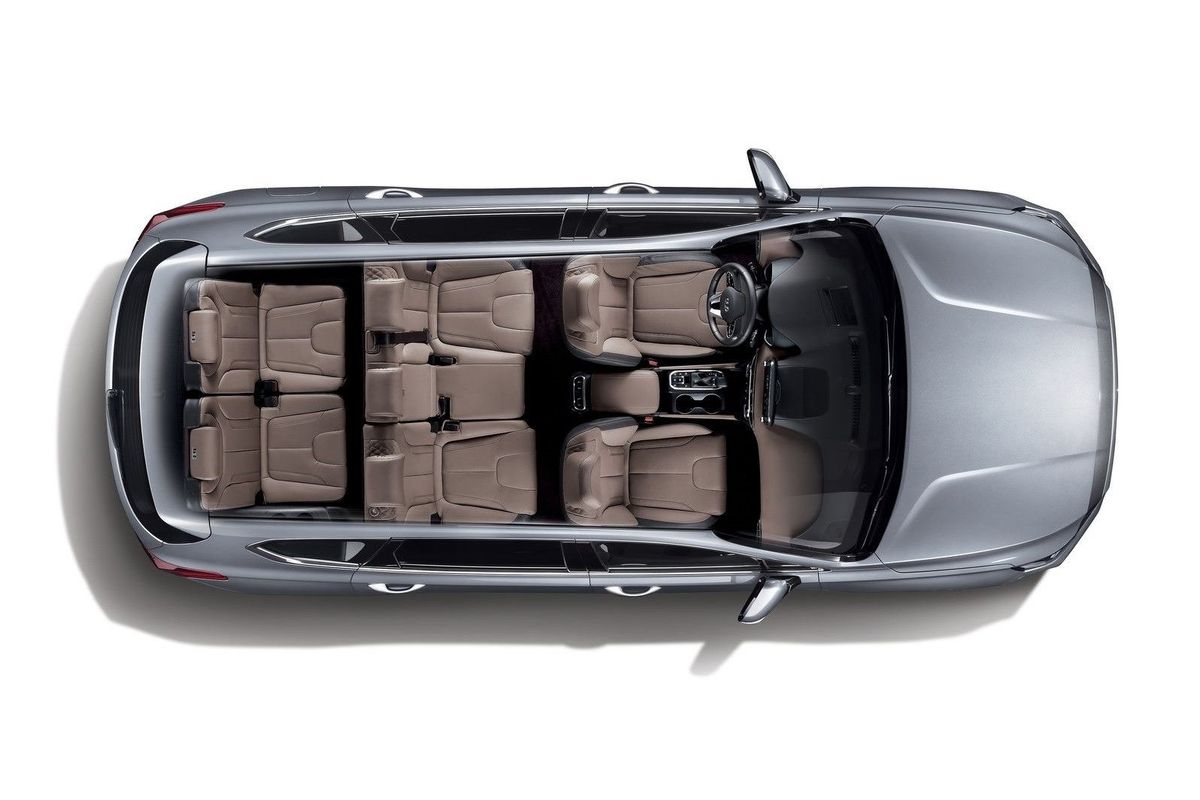
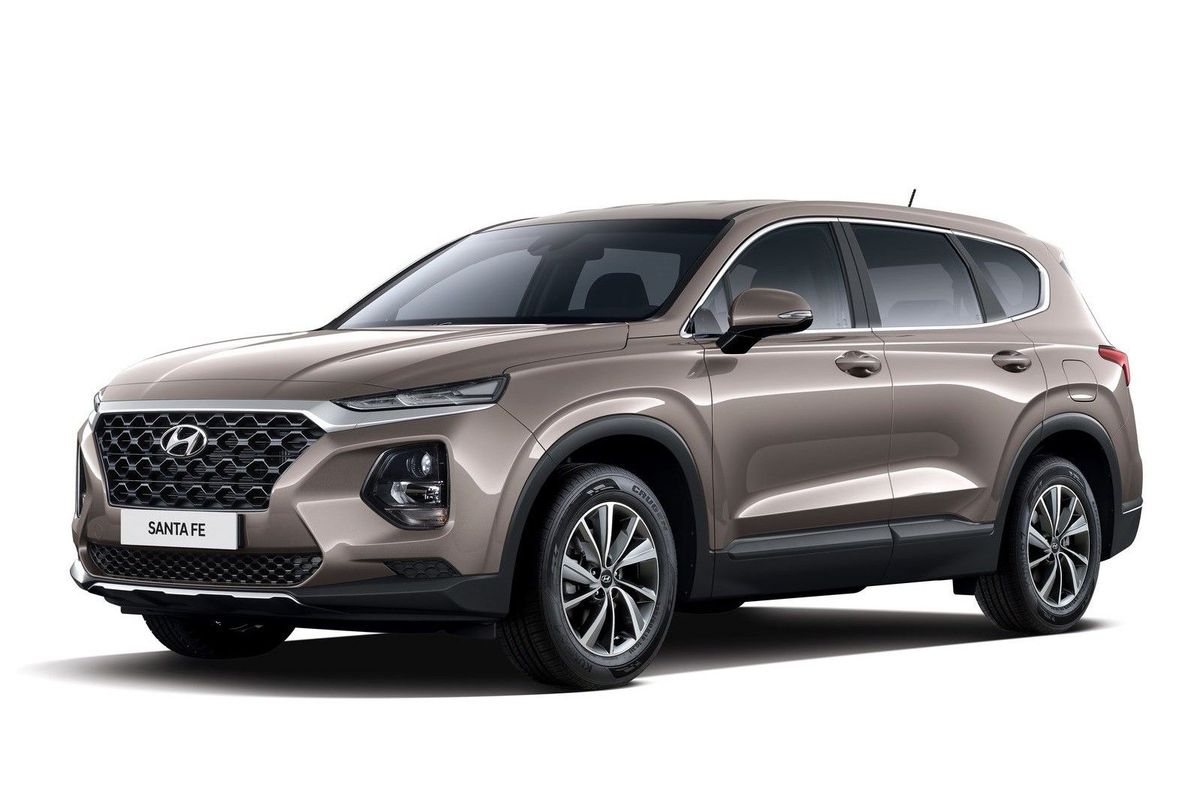
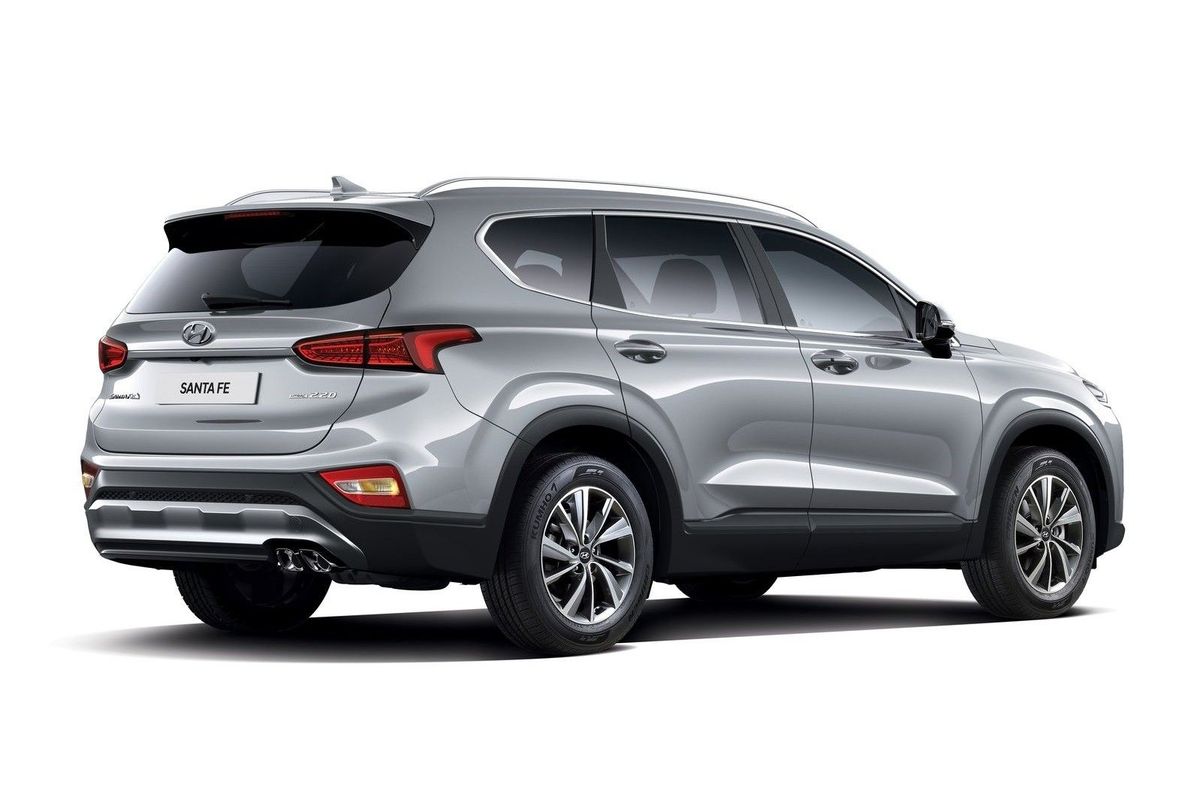
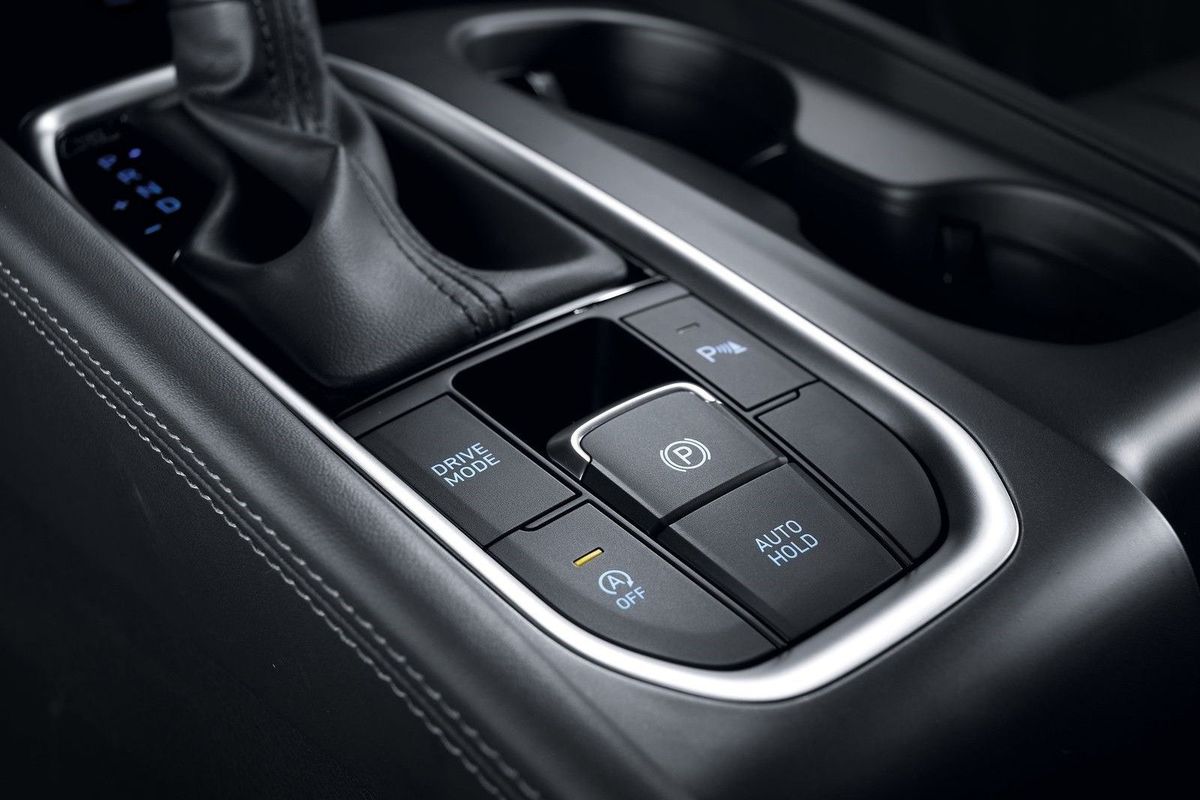
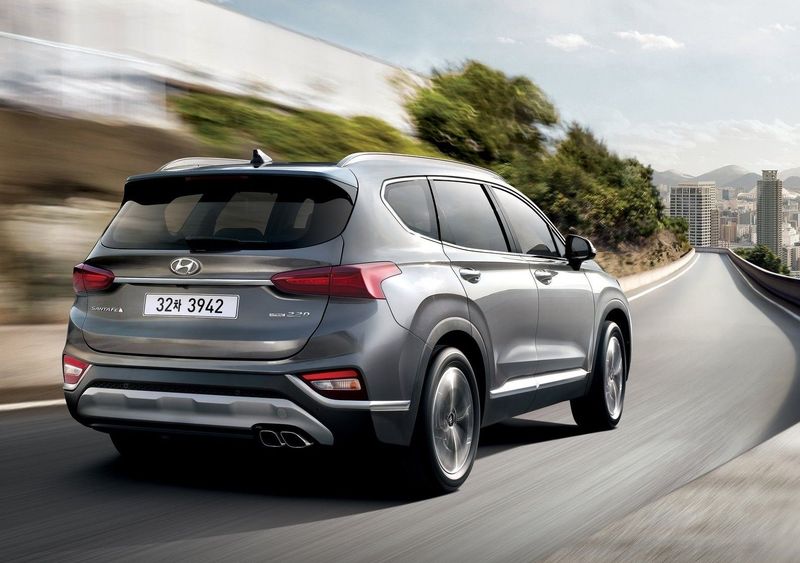
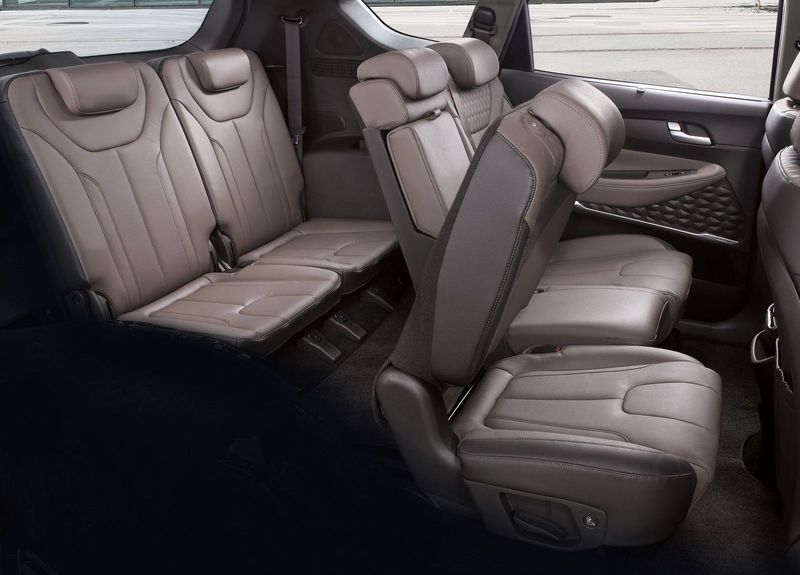
The all-new Hyundai Santa Fe will be launched to the South African market in November 2018 and thanks to a product bulletin which was sent to us, we're able to confirm specs & pricing for the 7-seater. The Hyundai Santa Fe will be launched in three levels of trim, with one engine across the range. The engine of choice is a 2.2-litre turbodiesel 4-cylinder, which pushes out 144 kW and 436 Nm. All Hyundai Santa Fes boast automatic transmissions, and of the three models, just the flagship Elite will offer all-wheel drive.


Power comes in the form of a 2.2-litre turbocharged 4-cylinder diesel engine delivering 144 kW and 436 Nm

The three levels of trim are Premium, Executive and Elite and here are the features of each:

Premium

Automatic air conditioner

Glovebox cooling

Bluetooth

Cruise control

ABS+ESC+HAC+DCB

Daytime running lights

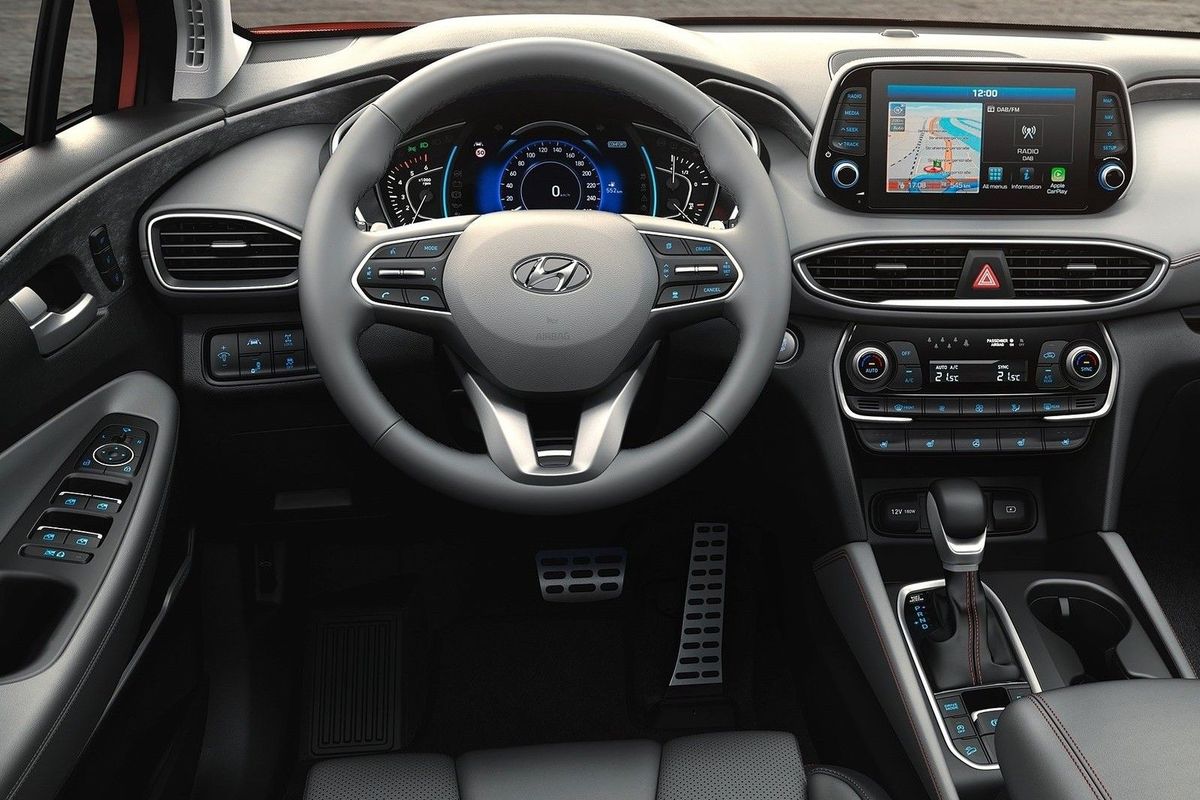
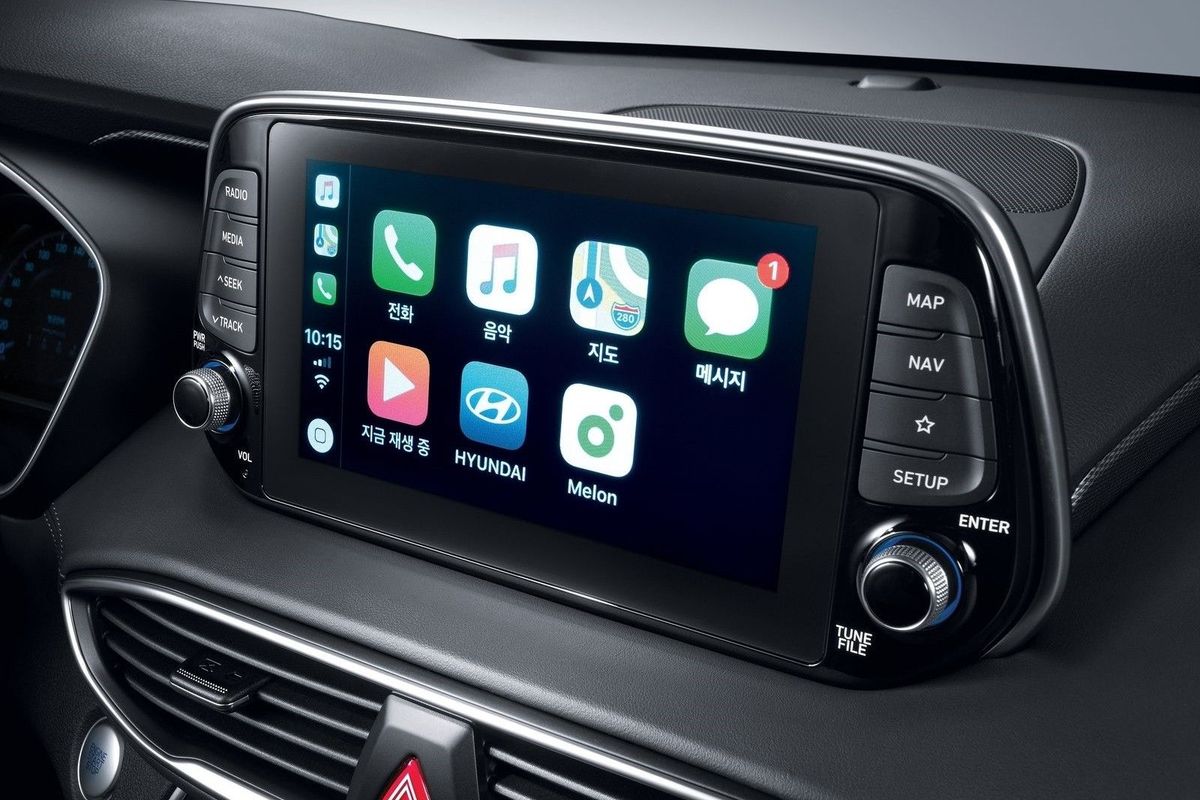
7-inch infotainment system with Apple CarPlay and Android Auto

Rear park assistance + camera

Auto wipers

Leather seats

Executive

The above features plus:

Front LED fog lamps

Rear fog lamps

LED headlights

Foldaway mirrors

Blind spot detection

Rear cross traffic alert

Electrically adjustable seats for the driver

Keyless entry & push button start

19-inch alloys

Power child lock

Power tailgate

Rear window curtains

Elite

The above features plus:

Panoramic roof

Static bending headlamps

LED Rear combination lamps

Driver and passenger electrically adjustable seats

Heated and ventilated seats

Heated steering wheel


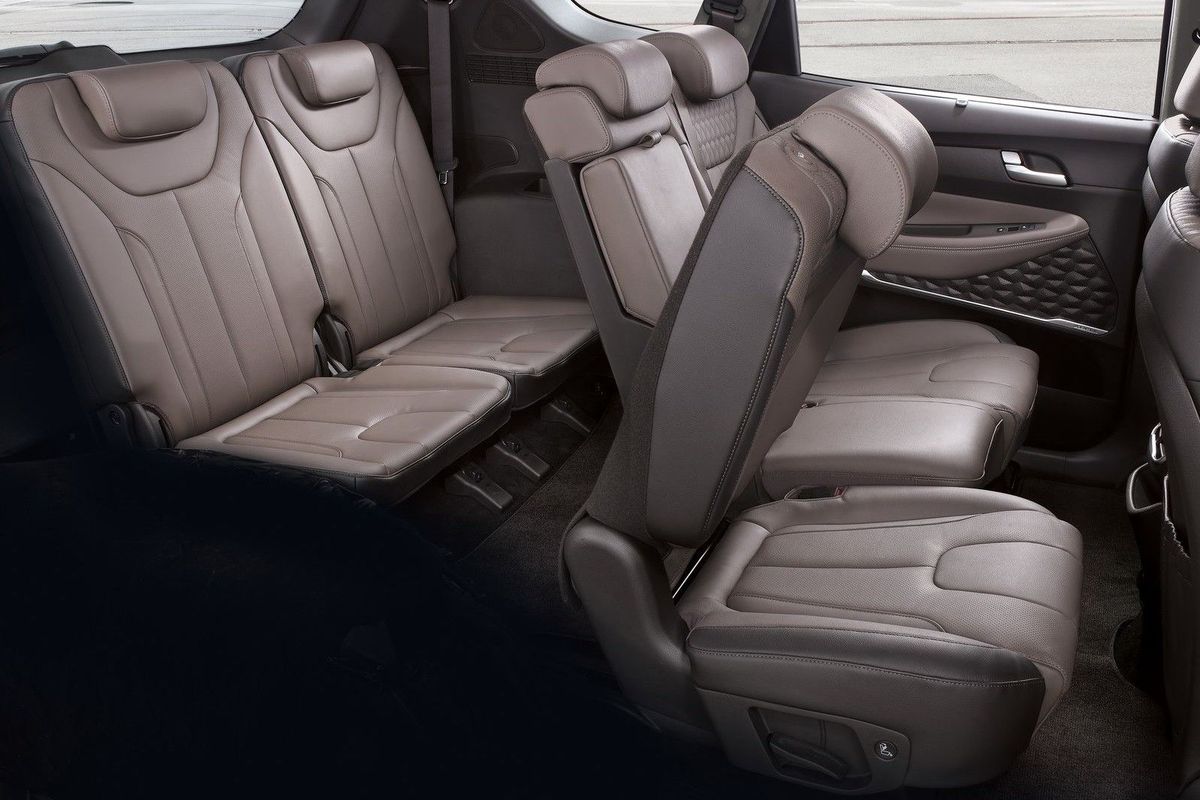
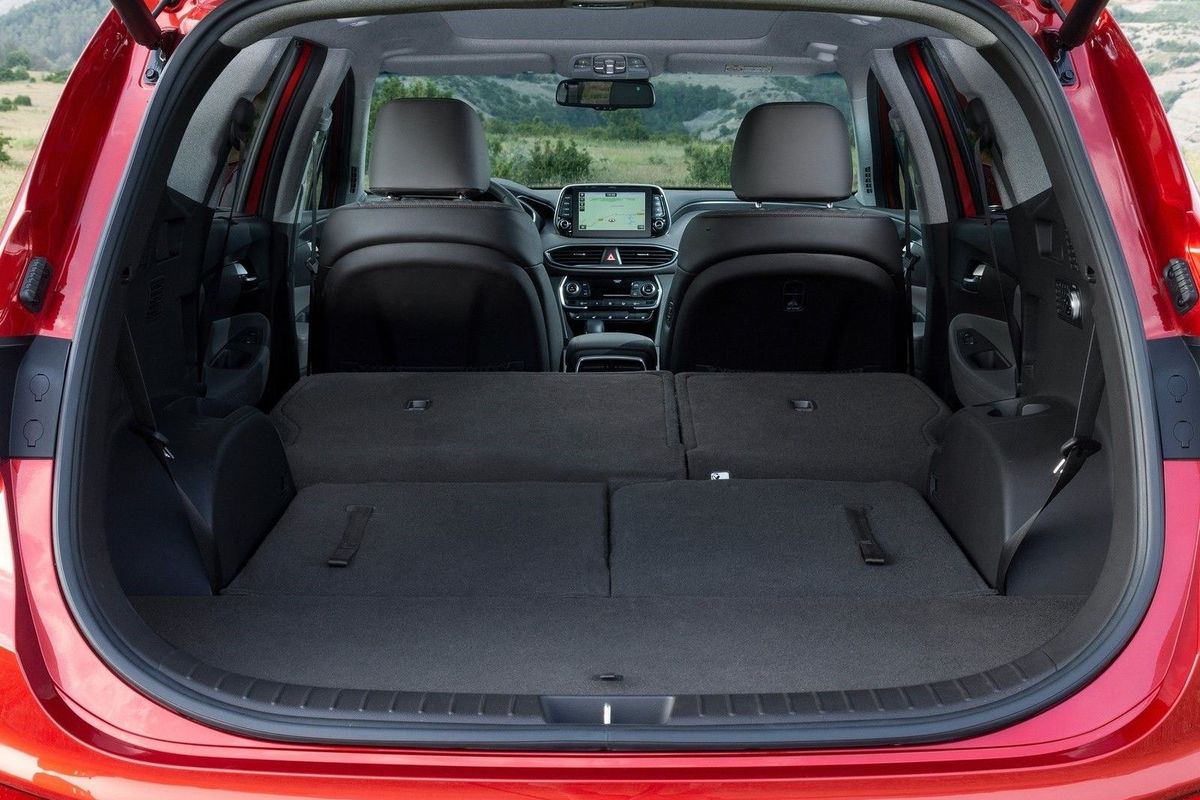
The Hyundai Santa Fe offers 7 seats

Hyundai Sante Fe Price in South Africa 

Santa Fe R2.2 7 Seater Premium AT         R599 900

Santa Fe R2.2 7 Seater Executive AT       R659 900

Santa Fe R2.2 7 Seater Elite AT AWD       R749 900  

Buy a Hyundai Santa Fe on Cars.co.za

Related content

Hyundai SA to launch 2 more SUVs in 2018

Hyundai Santa Fe (2018) International Launch Review

Beefed-up Hyundai Santa Fe crosses Antarctica [with Video]

Hyundai Santa Fe 2.2 CRDi Elite (2015) Review

Cars Coming to SA in 2018

5 Must-Have Features for Your Next Car

SA Fuel Price Going Up, Again

The fuel price crisis is deepening as yet another fuel price increase is looming for November 2018 according to unaudited mid-month fuel price data released by the Central Energy Fund.

Crippling fuel price increases over the past few months is putting consumers and the economy under considerable pressure and further increases are likely to materialise in November 2018. Last month saw a massive petrol price increase of 99 c/l while the price of diesel increased by R1.24 p/l.  

The Automobile Association of South Africa (AA) has warned that while international oil prices remain high, current tension involving Saudi Arabia (one of the world’s largest oil producers) could have a negative impact on fuel prices. The Rand, however, has marginally strengthened against the US Dollar, which has helped to dilute the sting of rising oil prices.

As it stands, the petrol price could see an increase of 40 c/l come November 2018 while the price of diesel could increase by as much as 70 c/l.

Some relief, however, could be in sight if the Department of Energy’s proposal to set a maximum price for the sale of 93 octane ULP and LRP fuel materialises. “Should this happen, it will allow fuel retailers to set their own prices below the maximum amount indicated by the government, and may, depending on the margins, ease the burden on users of the two identified fuels. It must be stressed, however, that we did not participate in the drafting of the proposal, so details on its possible implementation remain unclear to us” says the AA.

Fuel price increases will have a far-reaching impact on consumers and the economy. The AA has called on the government to prioritise economic policies which inspire investor confidence and highlighted the fact that a stronger and more stable Rand is the country's only defence against the vagaries of the international oil price.

Related Content

Fuel Price Breakdown: What do you pay for?

5 Ways to Beat the Fuel Price Hike

Most Fuel Efficient Budget Cars in SA

Most Fuel-Efficient Double-Cab Bakkies in SA

5 Fuel-Saving Car Features & How They Work

Most Fuel Efficient Budget Cars in SA

Most Fuel Efficient Diesel Cars in SA (2018)

Most Fuel Efficient Petrol Cars in SA (2018)

10 Ways To Save Fuel

Mercedes-Benz A200 AMG Line (2018) Review

The transformation of the A-Class from frumpy MPV to sporty premium hatchback has not been easy – the previous-generation model had its fans, but also its critics. Has Mercedes-Benz finally nailed the brief with the 4th-generation A-Class? Let's find out.

We like:  New MBUX infotainment system, powertrain, sharp looks, refinement

We don't like: AMG Line ride quality is too firm, cost of options, rear legroom still not great

Fast Facts

  • Price:  R527 512
  • Engine: 1.3-litre turbocharged 4-cylinder petrol
  • Gearbox: 7-speed dual-clutch transmission
  • Fuel economy: 5.6 L/100 km
  • Power/Torque: 120 kW/250 Nm

SERIOUS ABOUT BUYING?

Where does it fit in?

The 4th iteration of the Mercedes-Benz A-Class made people sit up and take notice when it debuted at the 2018 Geneva Show. Not only does the German hatchback's exterior look sharp and modern – its cabin is a breath of fresh air… In fact, it can be argued that the giant instrumentation-infotainment screen (if specified) offers a glimpse of what car interiors of the future may look like and how they will operate (or, be operated). It's the most sophisticated interface ever installed in a compact car. 

Codenamed W177, this all-new A-Class is based on a new platform, which means its dimensions have changed. Compared with its predecessor, it's taller, wider and longer, courtesy of a 30-mm-longer wheelbase. What that means is that cabin space has grown a bit, as has luggage capacity. The Mercedes-Benz A-Class goes up against the BMW 1 Series, Audi A3 and Volkswagen Golf. However, given the raft of updates applied to this latest generation, it feels considerably more upmarket.


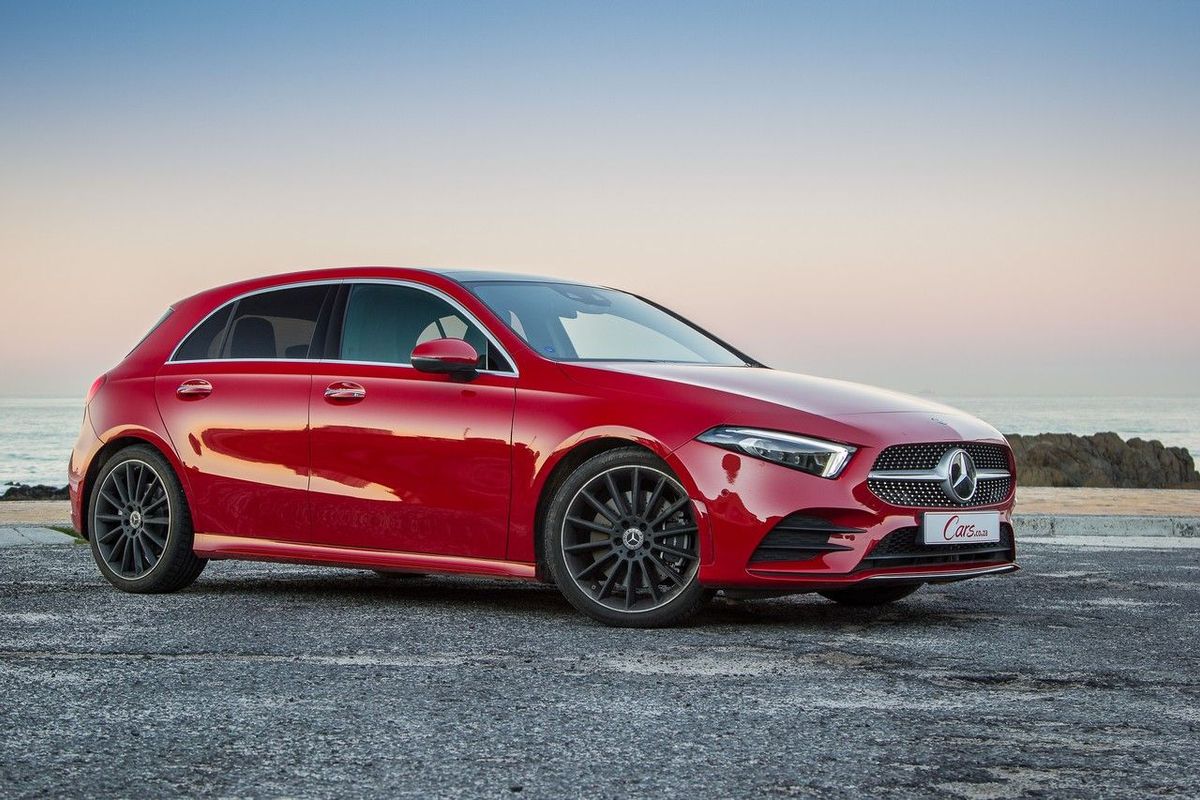
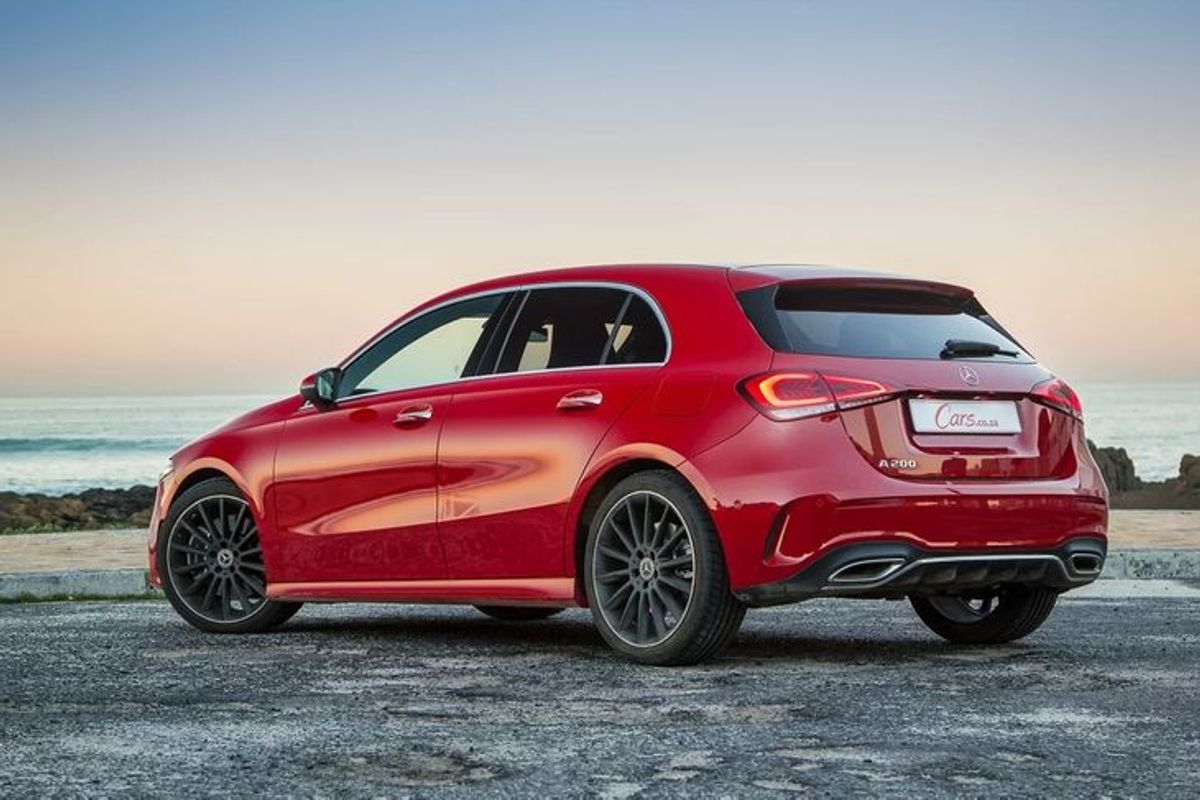
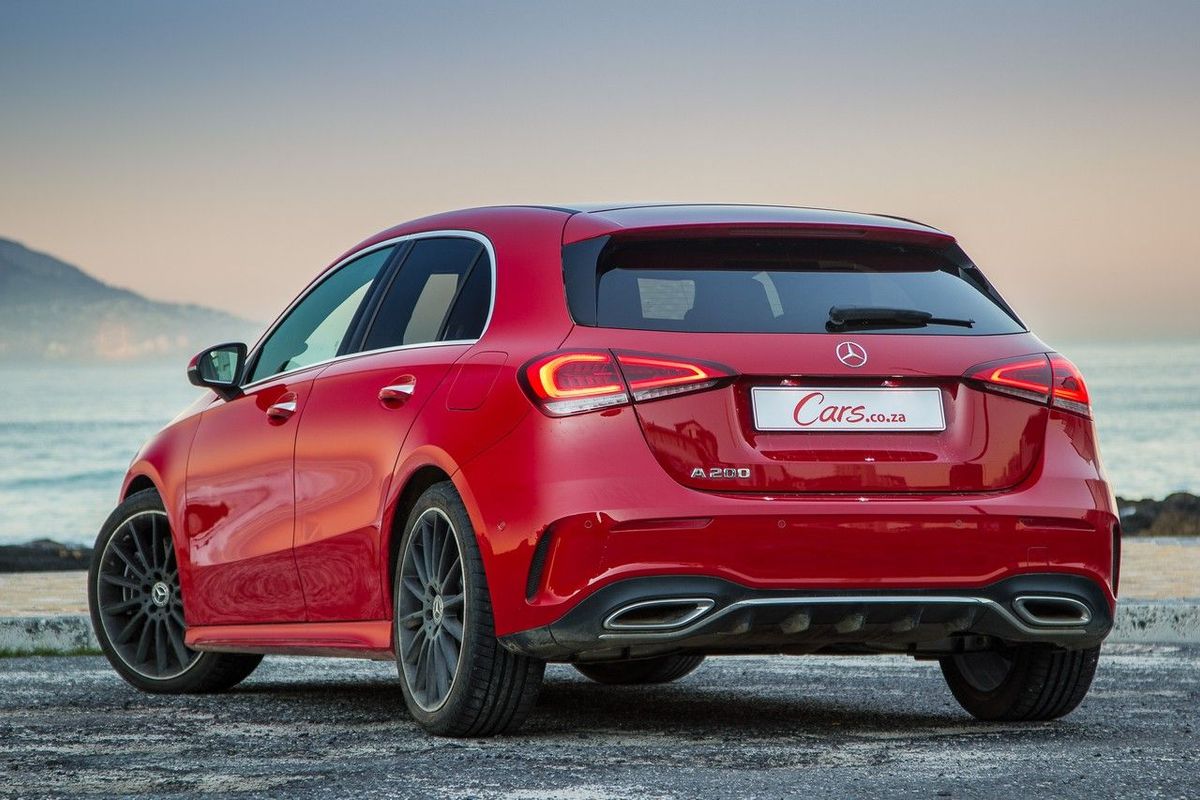
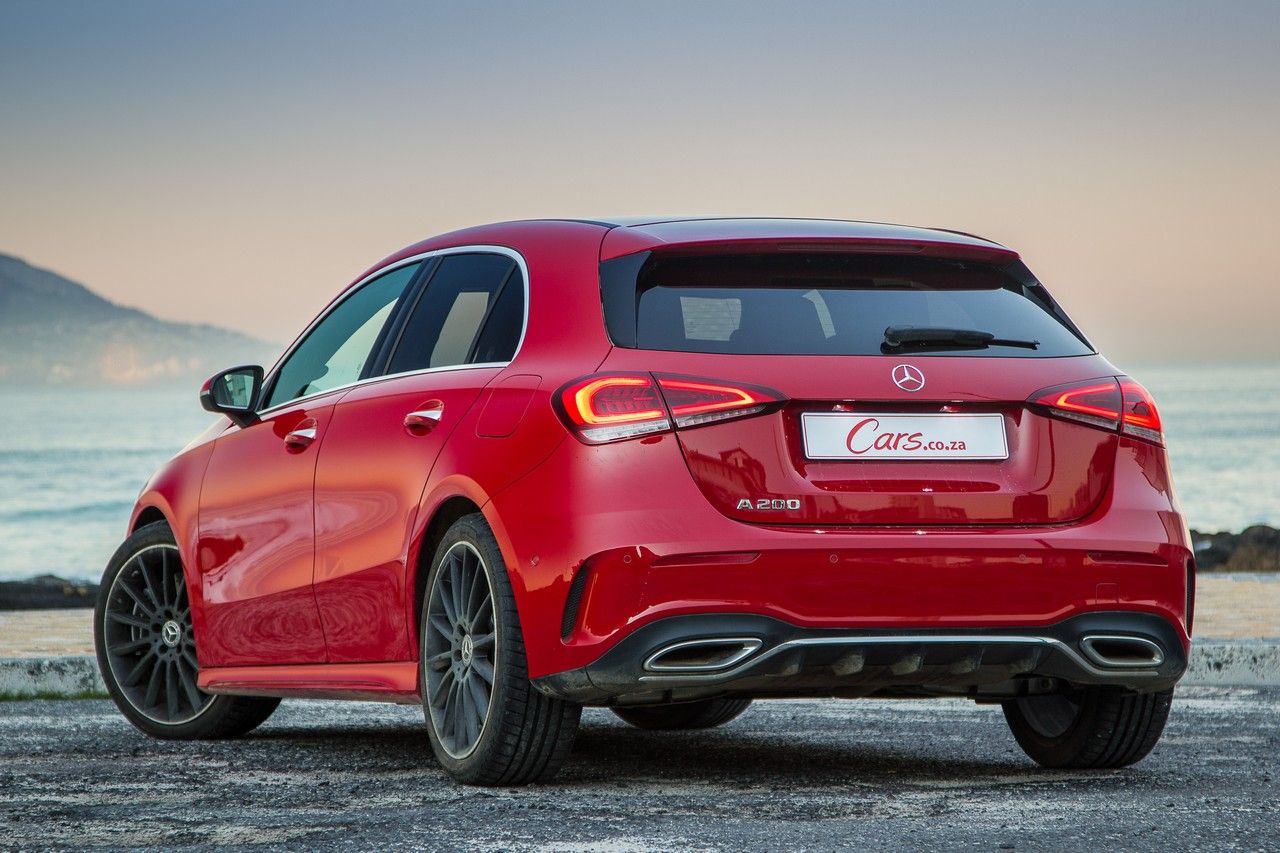
A subtle tailgate spoiler, integrated exhaust tips and vaned diffuser give the A200 AMG Line a purposeful rear aspect. 

What's good about it?

Punchy engine

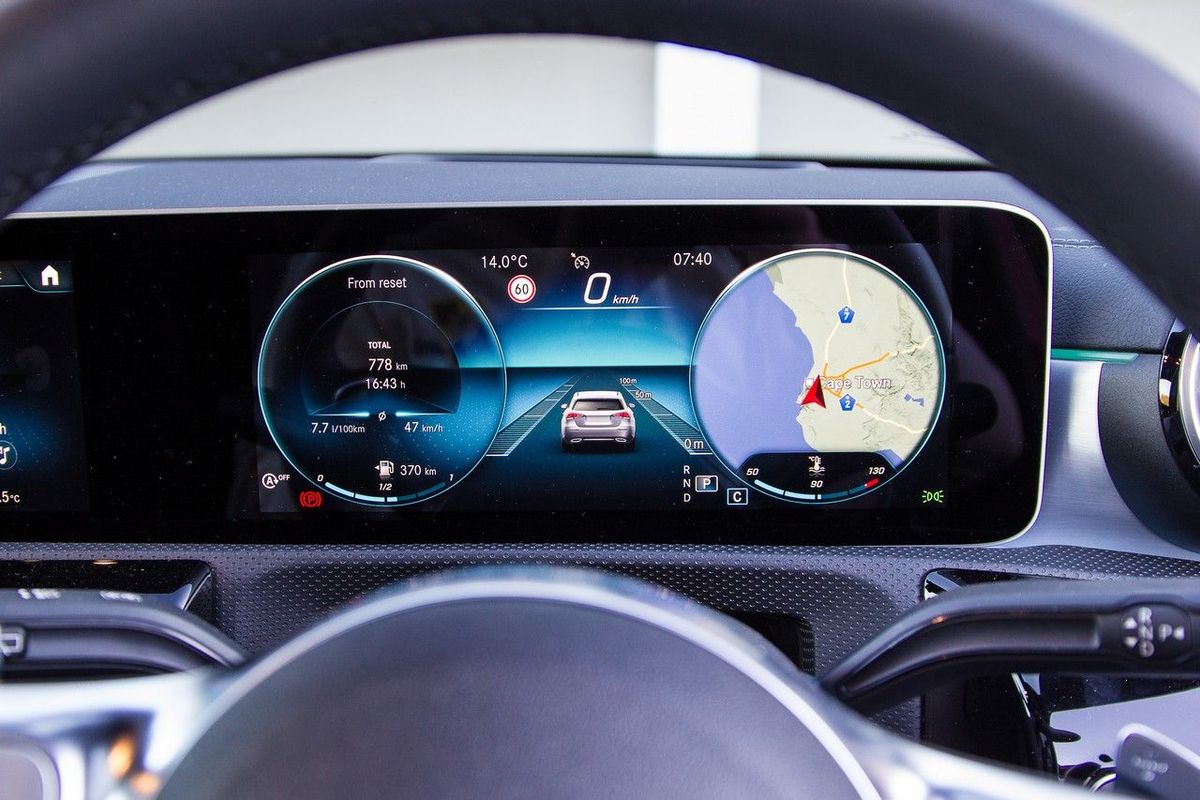
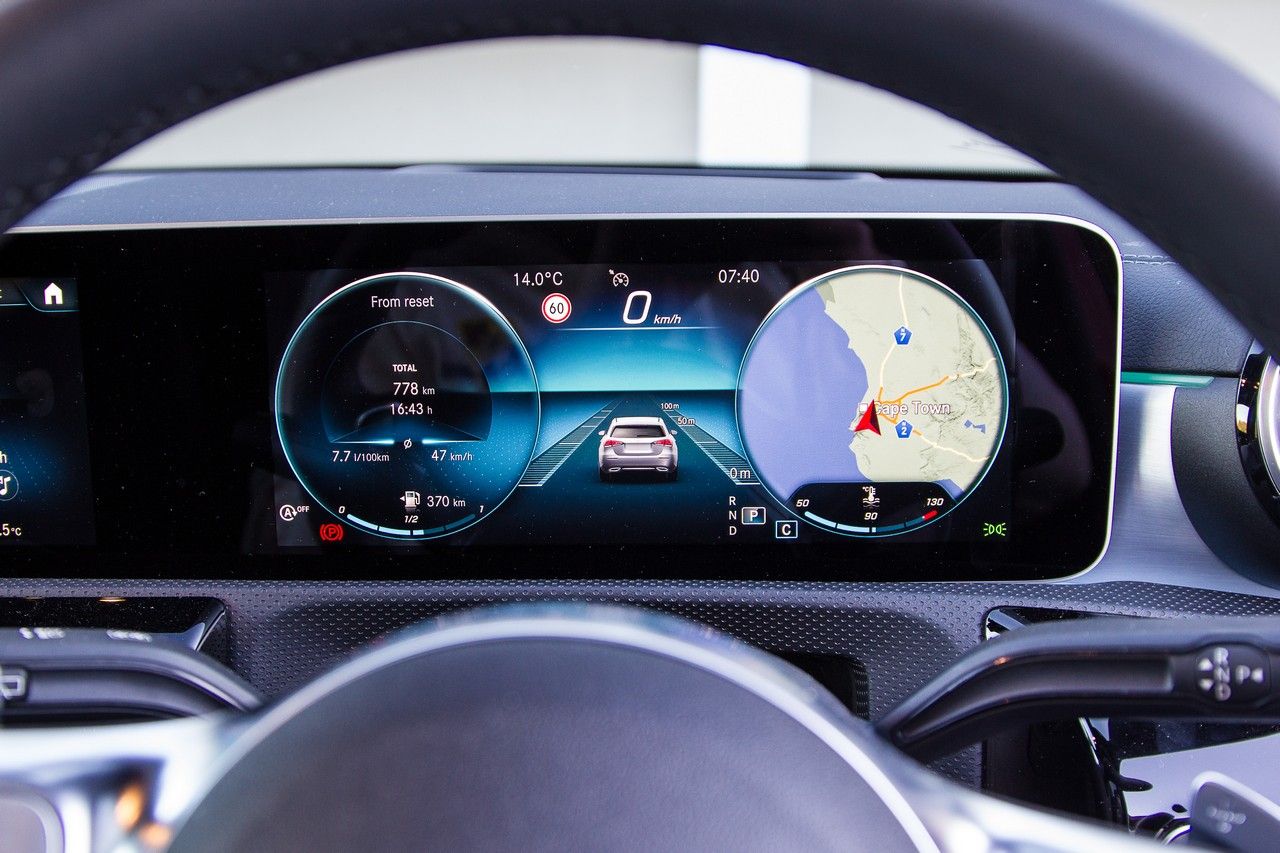
Let's start with the new powerplant. It's a 1.33-litre 4-cylinder turbopetrol mill, which was co-designed with Renault (and it'll power some of the French firm and alliance partner Nissan's products), but it's produced by Daimler. Peak outputs of 120 kW and 250 Nm of torque are on par for the segment, and power is directed to the front wheels via a 7-speed dual-clutch transmission. Thanks to the compact installation of the motor and responsive, quick-shifting automatic 'box, the A200 is claimed to be quite frugal, with a claimed figure of 5.6 L/100 km. After testing the Benz in a variety of conditions, we noted a reasonable return of 7.7 L/100 km on the trip computer.


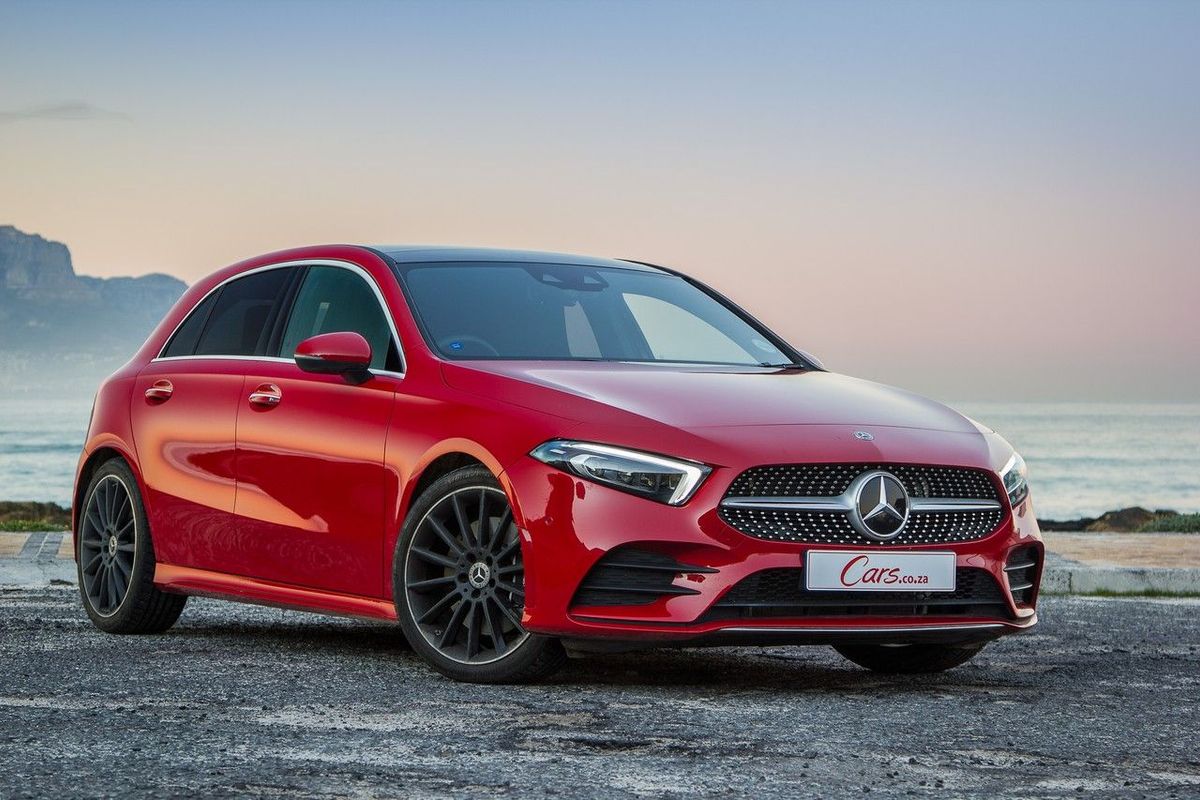
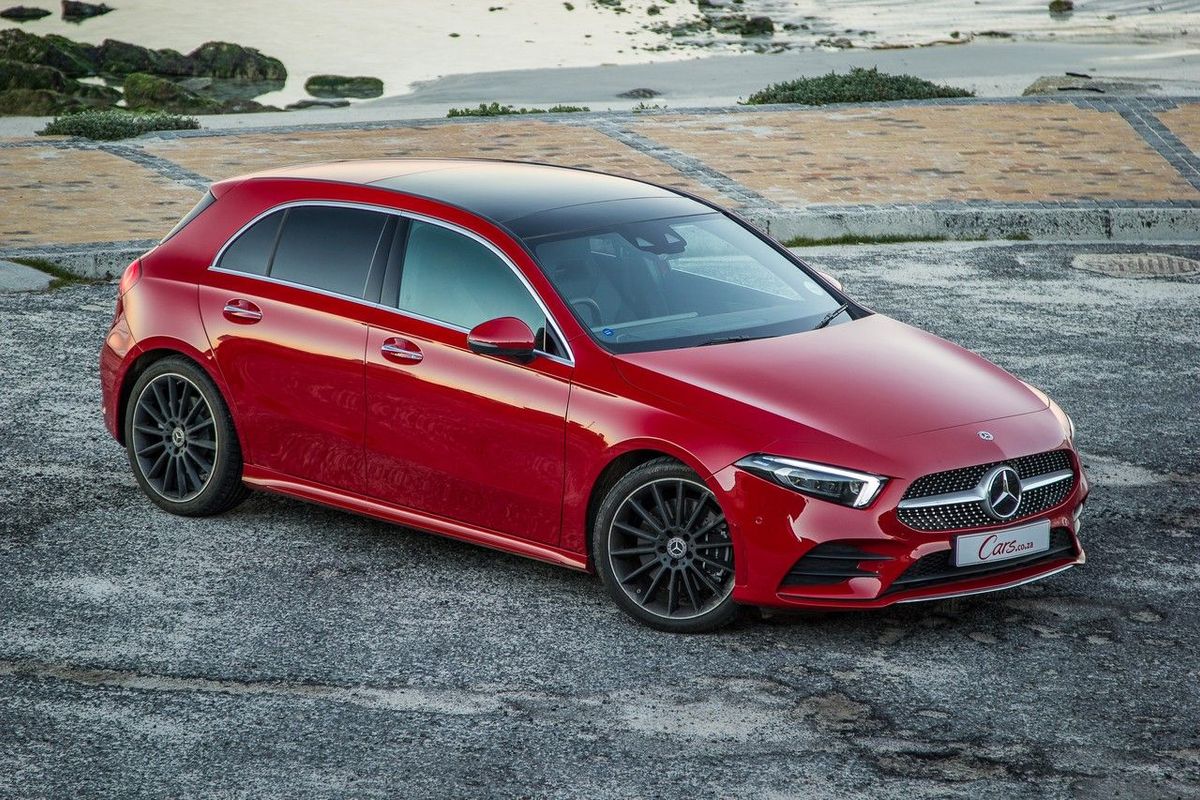
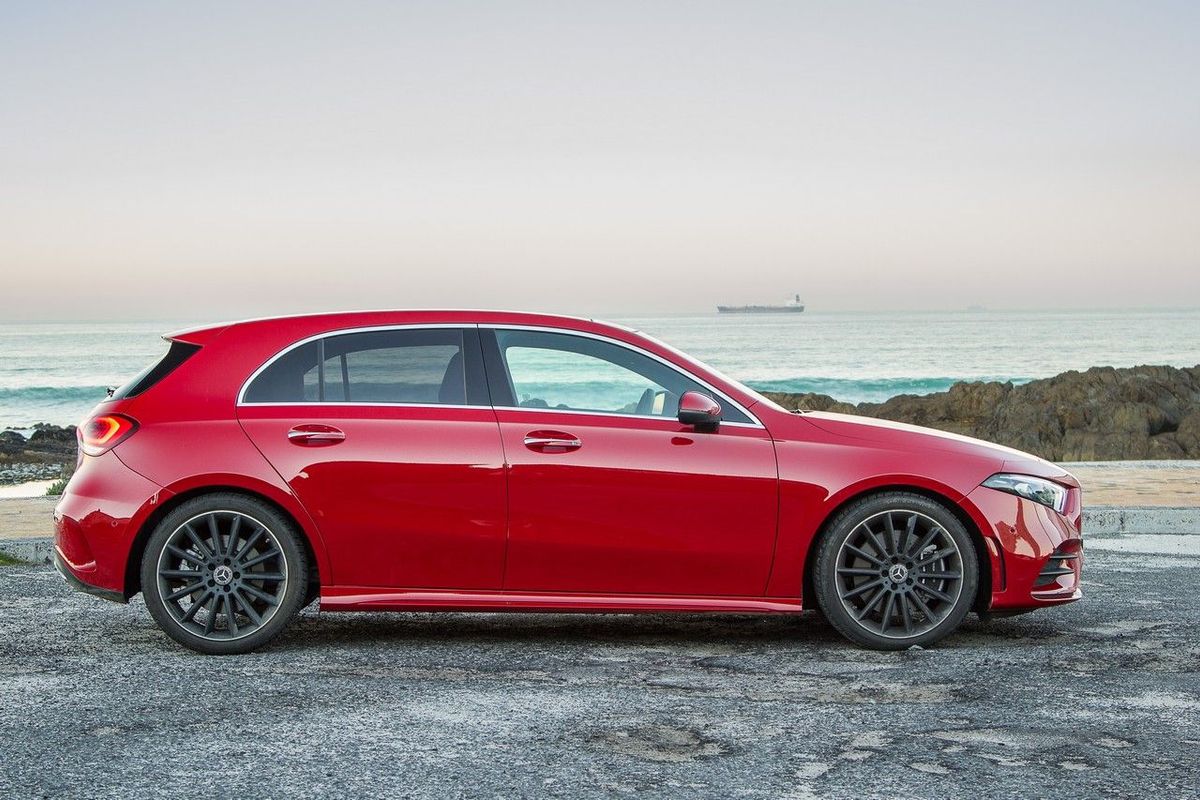
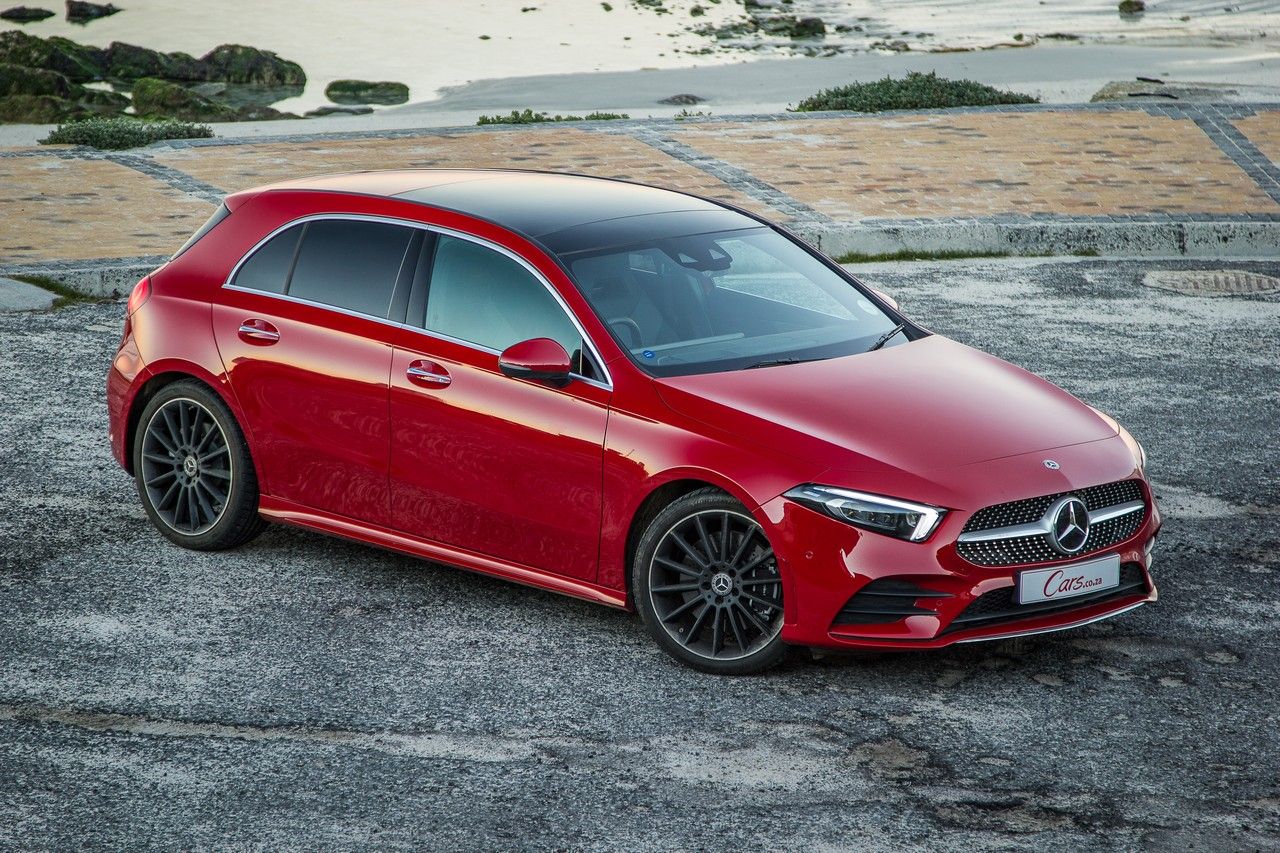
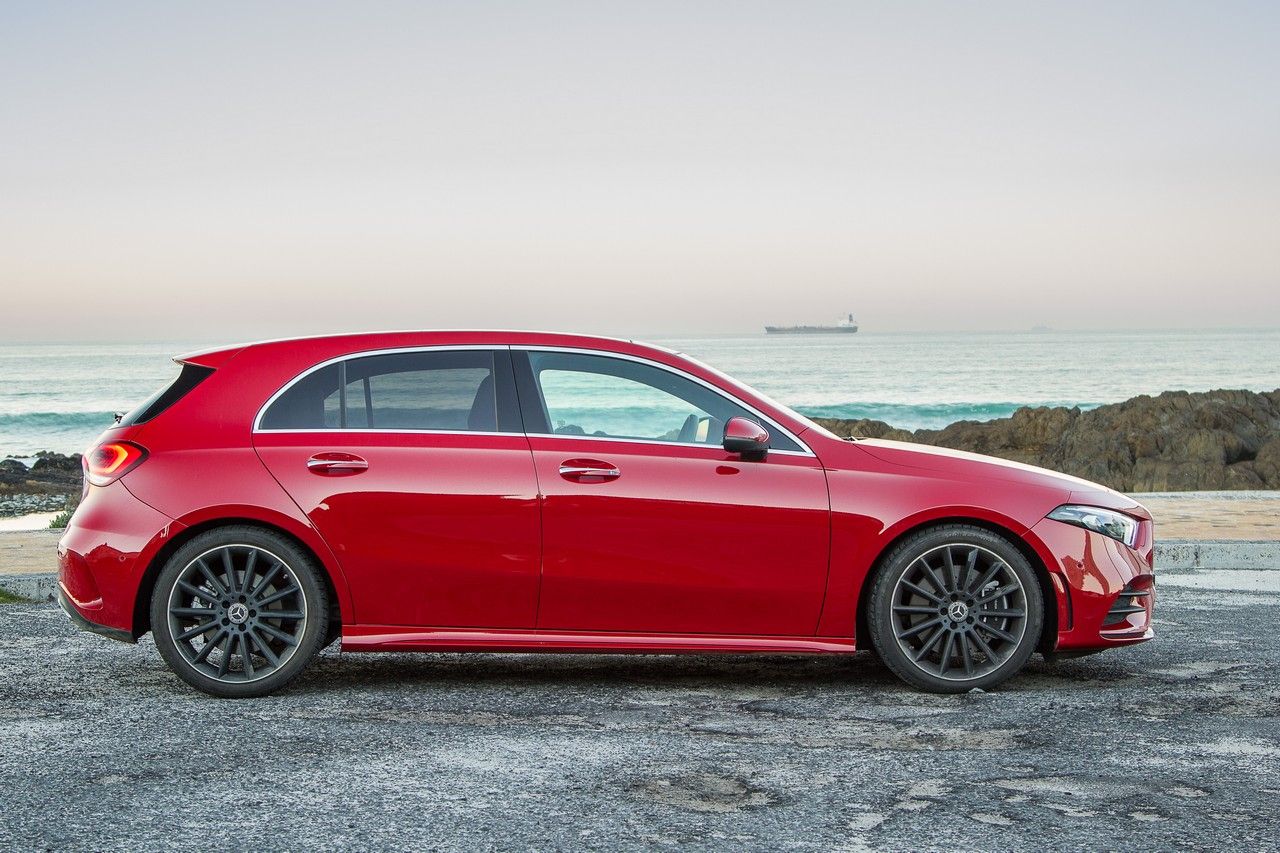
How good-looking is this? Perhaps it's the combination of AMG Line and red paint, but this new A-Class is a looker.

Does the new motor do the platform justice, however? Yes, it sure does. The A-Class is supposed to have a sporty bent, but this derivative was not designed to be thrashed to the redline; the engine note becomes quite rough at high revs, but before 4 500 rpm, there's a pleasant and purposeful growl. There's a little hesitation from standstill, which is typical of most dual-clutch-equipped cars, but once the A200 AMG Line gains momentum, the power delivery is smooth.

Thanks to a useful dollop of torque (250 Nm) and the transmission's well-calibrated shift programme, there's usually plenty of punch on tap to executive overtaking manoeuvres. The steering-wheel-mounted shift paddles have a positive action and are quite effective too, but what we appreciated most about this engine is how quiet it was at moderate cruising speeds. Mercedes-Benz claims a 0-100 kph time of around 8 seconds and the car certainly feels brisk enough to get close to it.

Badge and design appeal


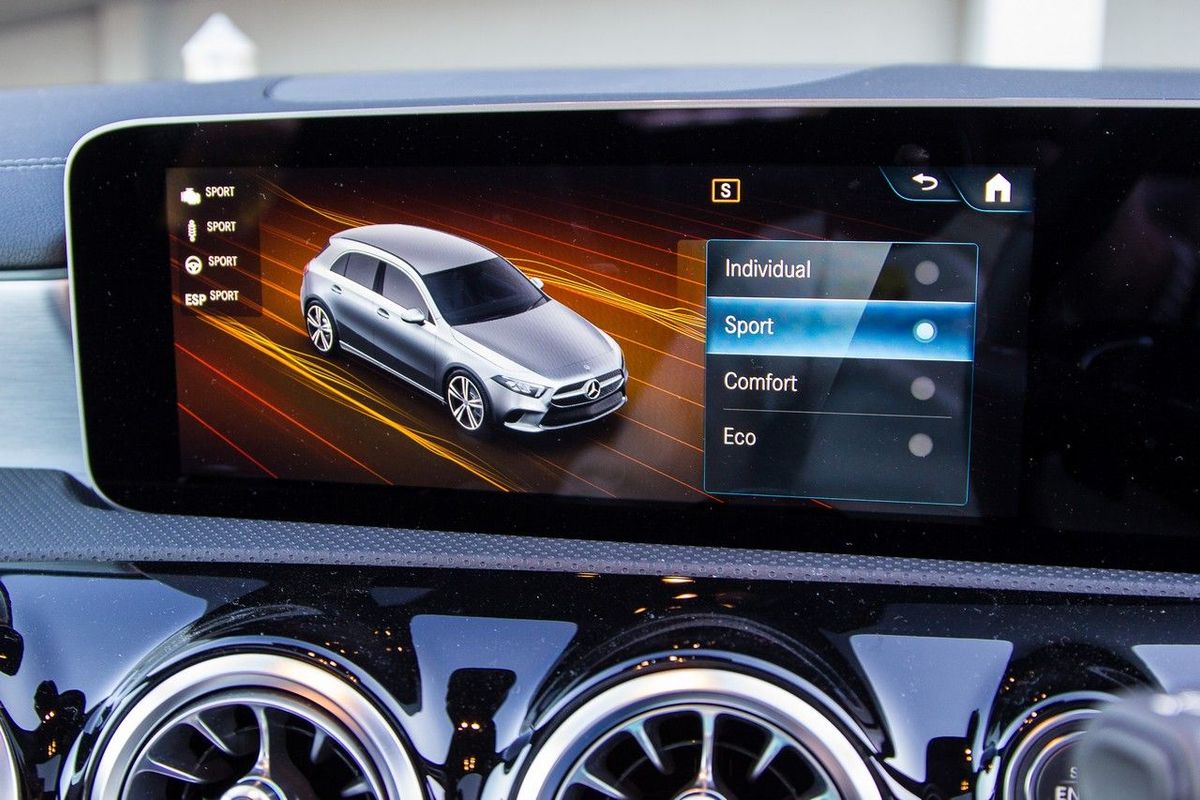
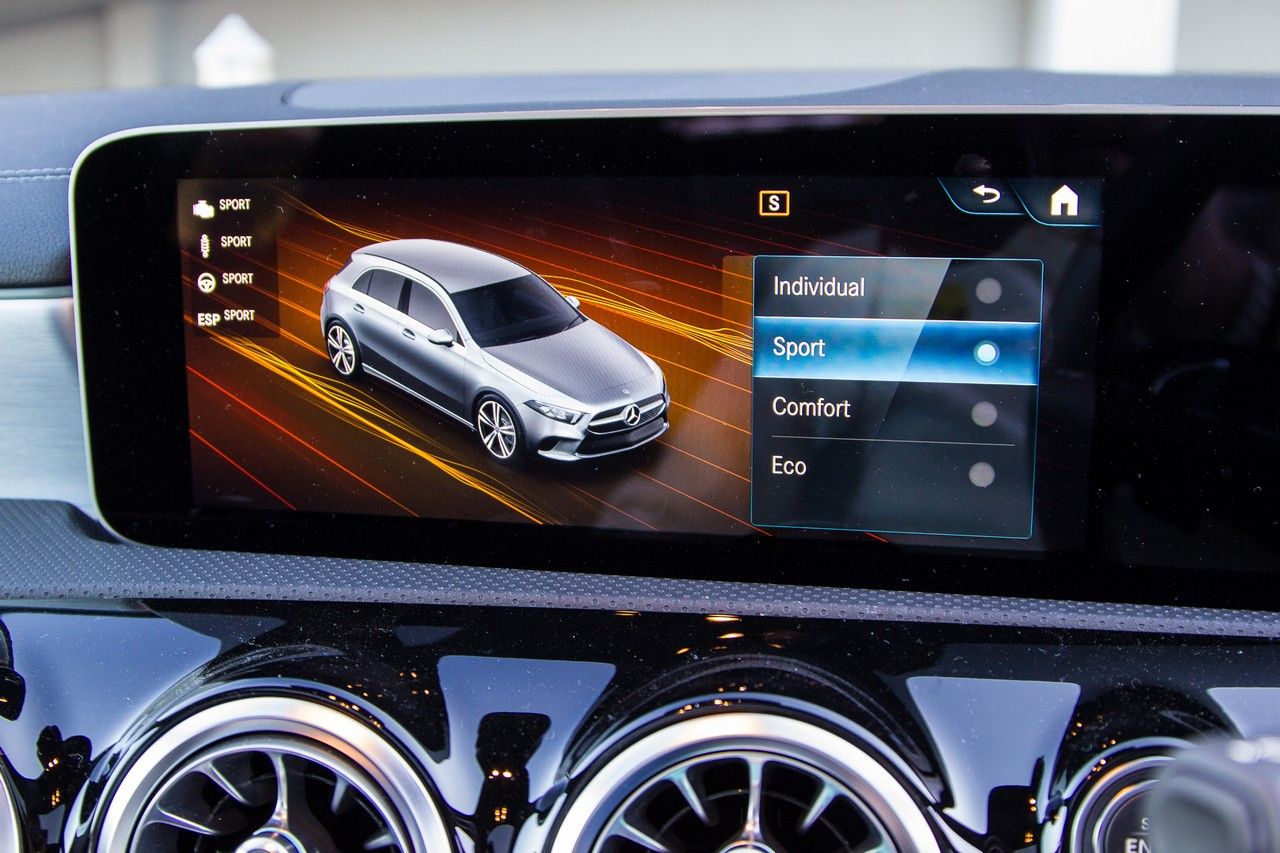
There are different modes on the A200. Sport sharpens the throttle response and if tick the adaptive damping option, firms up the ride.

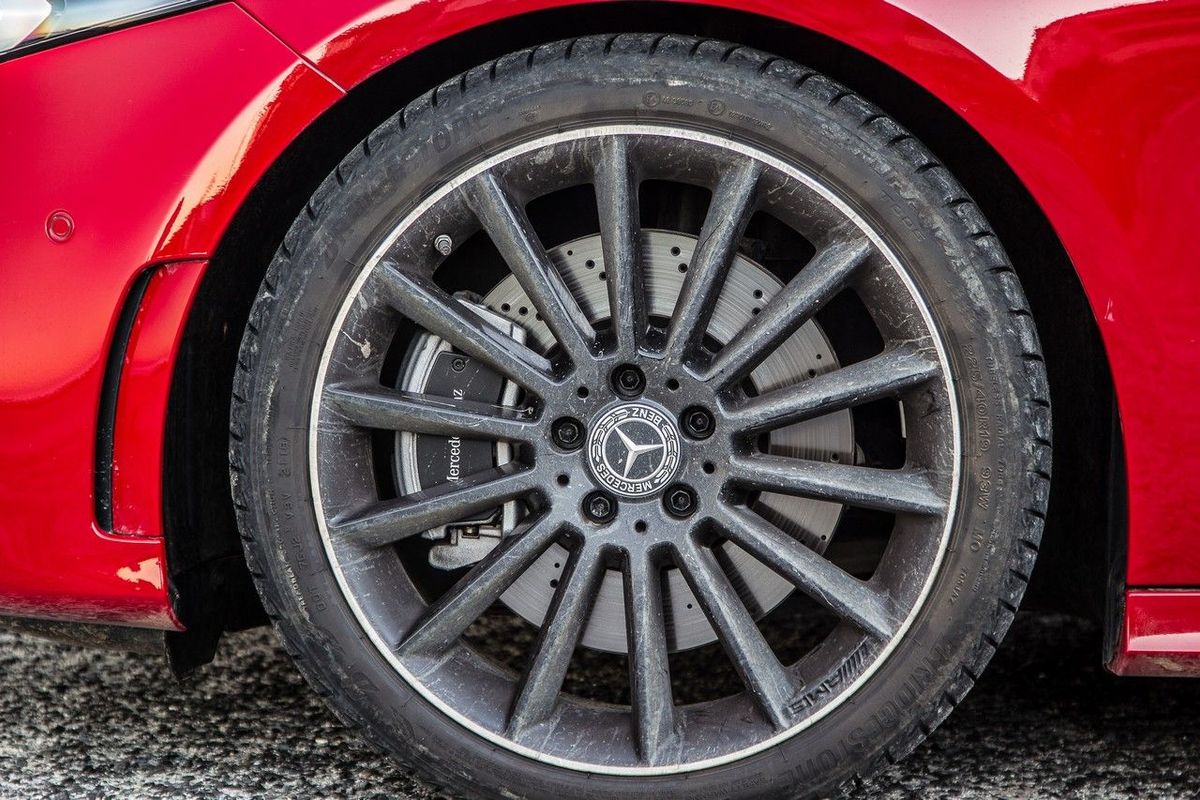
Mercedes-Benz remains a highly aspirational brand and the new A-Class appeals to image-conscious young professionals – the connected generation. Naysayers will be quick to point out that very few early millennials have half a million rand to spend on a car, but you'd be surprised at how big the premium customer base is. Benz has more than 50 dealers across South Africa! As for the new A200, its design is undeniably striking and attractive. A combination of Jupiter Red, dark AMG wheels, AMG Line trim and distinctive headlights has really made the new A-Class stand out. Initial photos weren't convincing, but seeing it in the metal will quickly change your mind.

Refinement and drive


Physically, the new Mercedes-Benz A-Class has grown, but not enough for the rear seats to offer adult-sized legroom

One of the major criticisms of the previous A-Class was its firm ride quality (the prevalence of W176 derivatives with sporty AMG suspensions and low-profile run-flat tyres, in combination with a rear torsion-beam suspension, probably exacerbated the problem). As for the new-generation A-Class, however, the torsion beam has been retained on the A200, which saves on production costs/helps to trim the car's asking price (the pricier A250 derivative has a multi-link configuration at the back). Interestingly, Mercedes says the torsion beam saves space and in the future, batteries will be accommodated in those sections of electrified A-Class derivatives. 

Our test unit came equipped with AMG Line alloy wheels and truth be told, we were expecting a firm ride quality. Is the A200 quite firmly sprung? Yes, on a pockmarked surface, the ride can be less forgiving than you'd expect, but fortunately, our test unit was equipped with Mercedes-Benz's Dynamic Body Control adaptive damping system (a R22k option), which allows you to select and set the level of comfort or sportiness that the suspension delivers. Another small issue we noticed was how much road noise permeated the cabin, particularly on less-than-smooth tarmac. However, we reckon that if you didn't go for the AMG wheels, this would be drastically reduced.

In terms of the steering, there's a decent feedback and the car will demonstrate its sporty pretensions when the road becomes twisty. Sure, it's was never going to be as wieldy as the forthcoming A35 or A45, but the base-spec A200 offers enough hints that its performance-oriented siblings will be scintillating to pilot. We were happy with the around-town performance, plus on the open road, it'll cruise comfortably and reasonably quietly, a testament to the refinement of the platform and good build quality. 

Infotainment quality


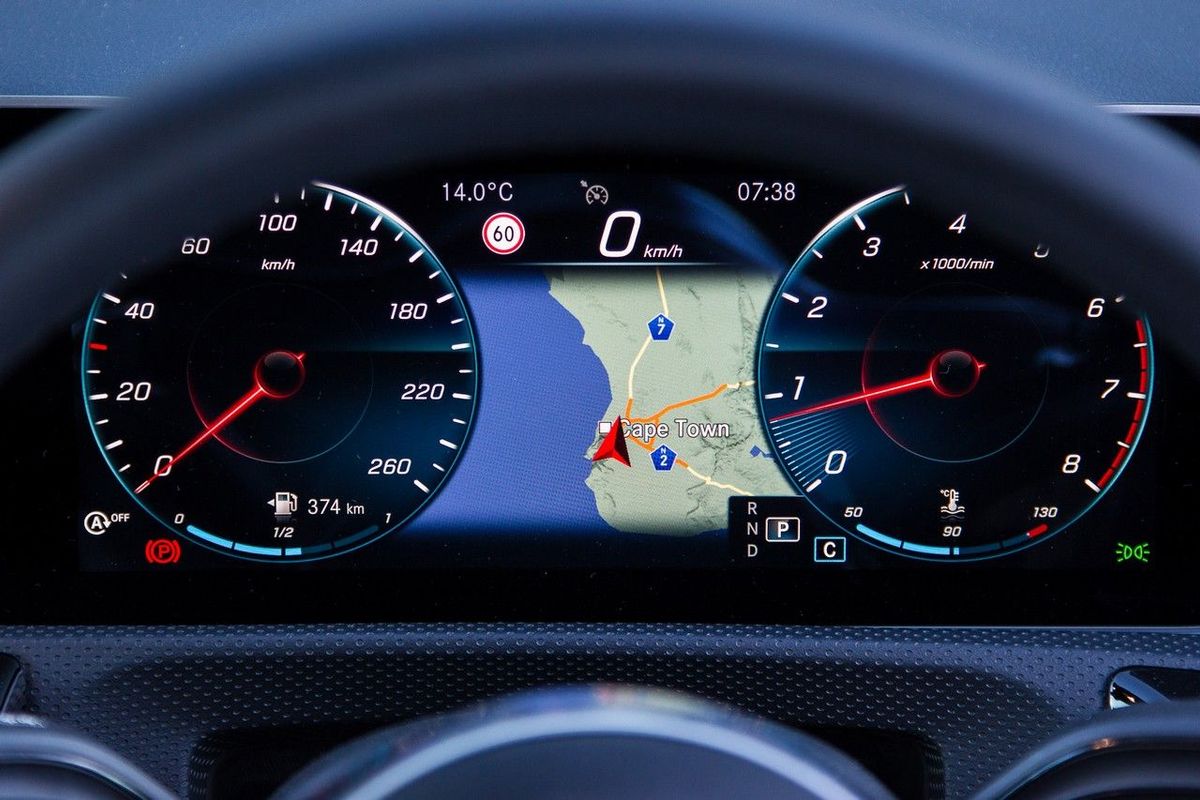
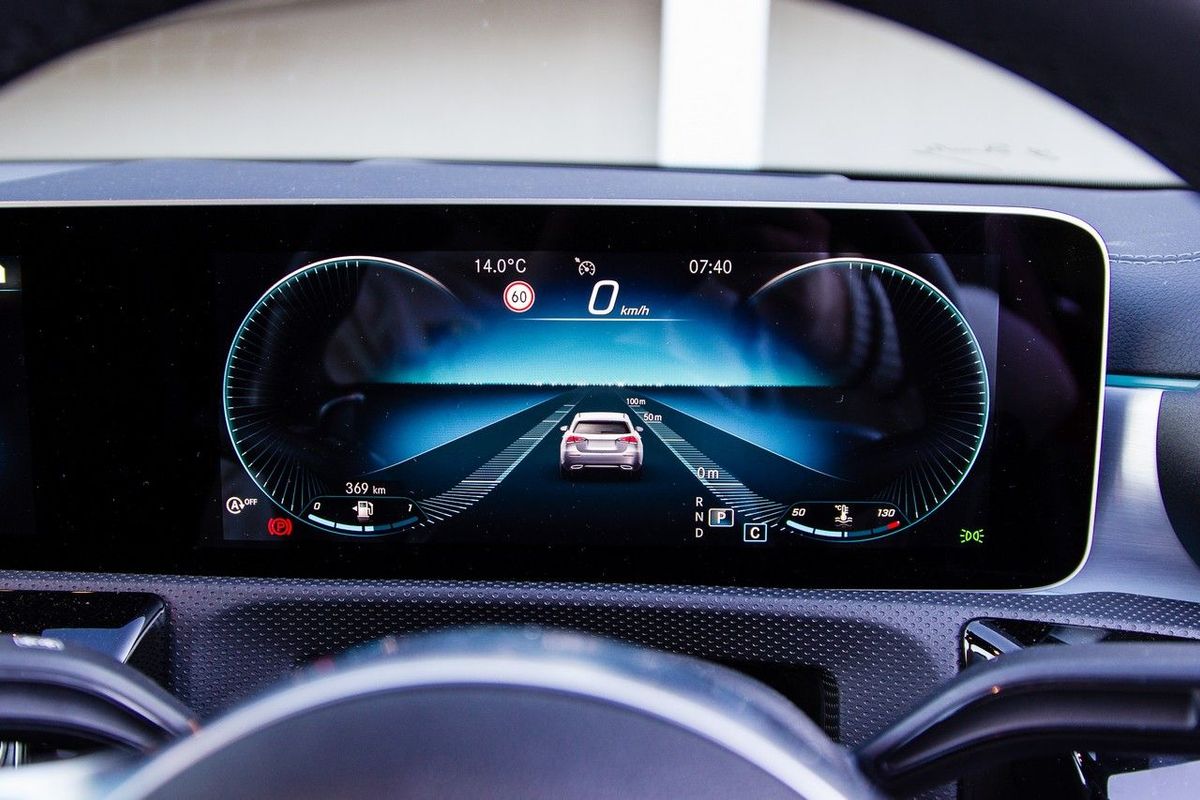
With so many themes and different display modes, you can go to town and customise your own display experience. This is ours, combining economy, navigation in a clear futuristic layout

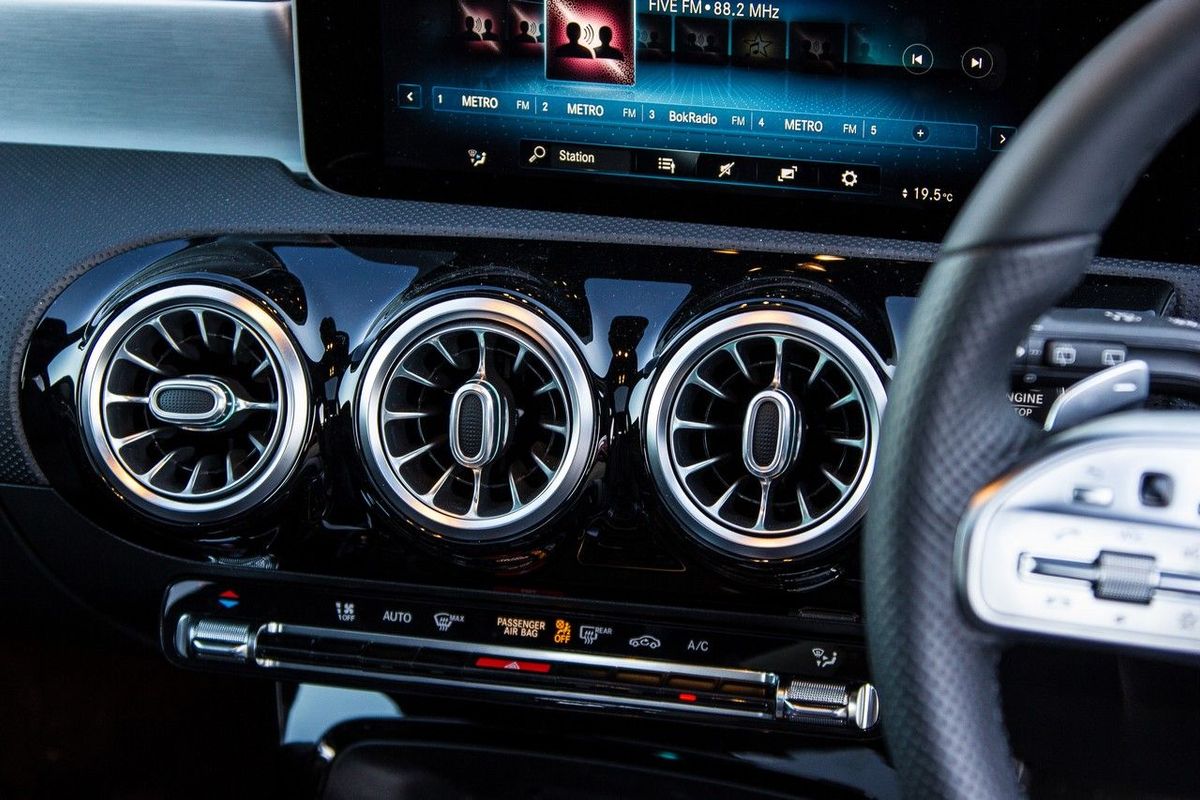
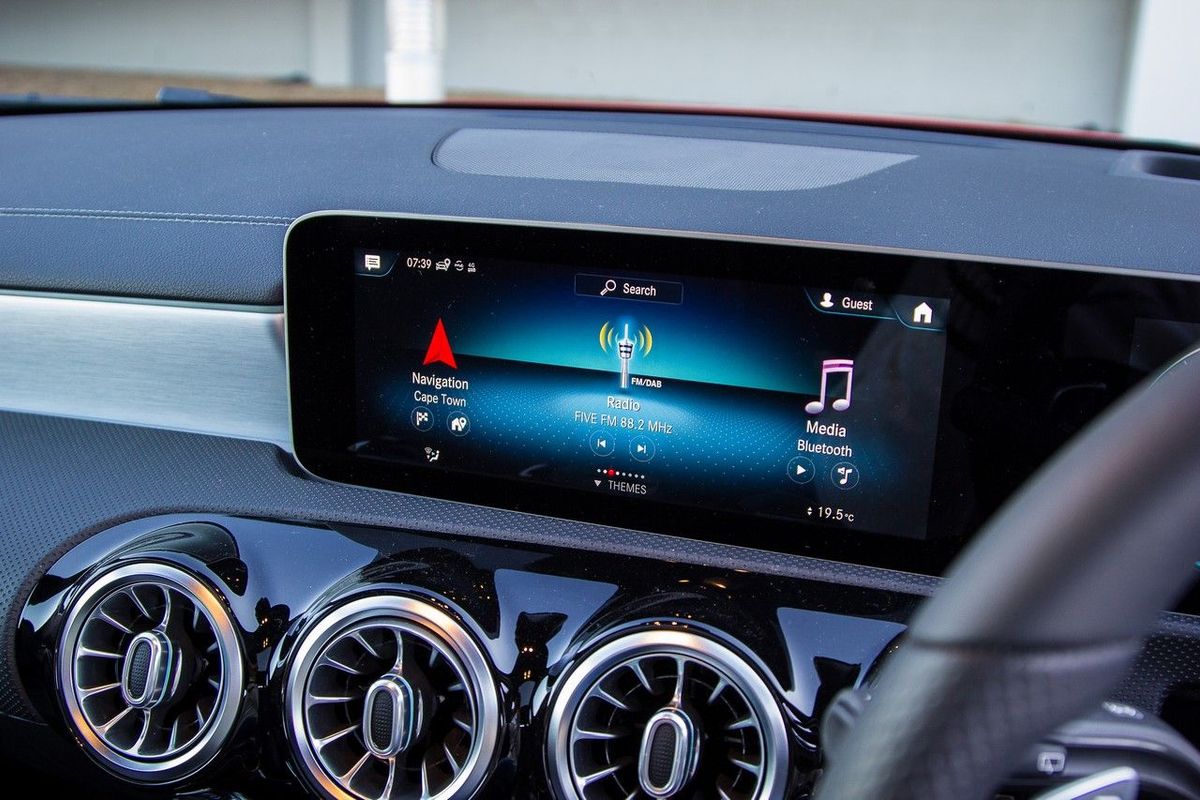
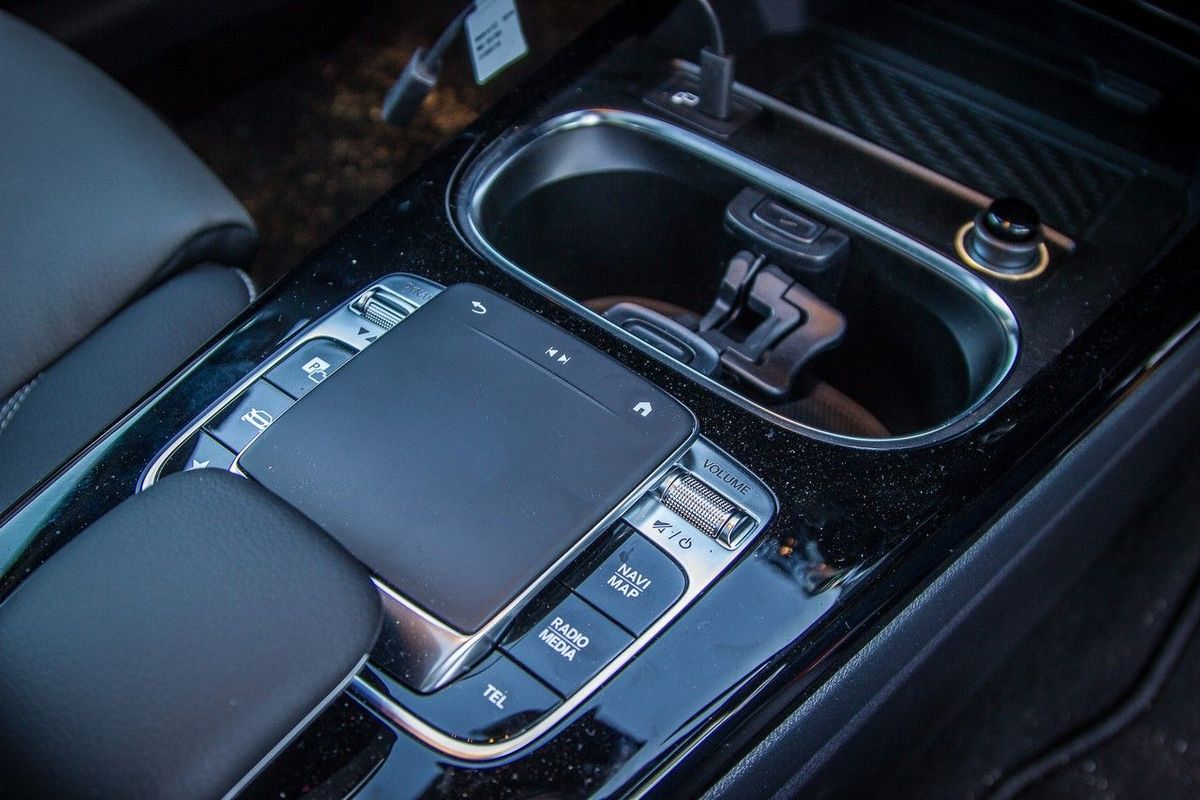
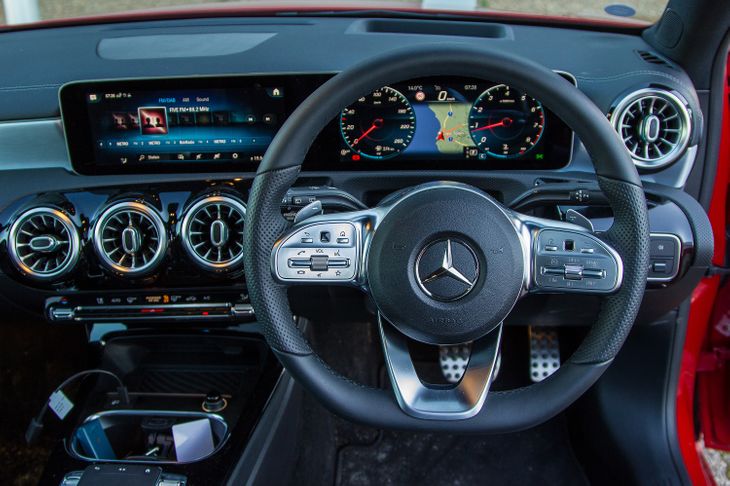
We could bore you with reams of copy about the brilliance of the all-new Mercedes-Benz User eXperience (MBUX) infotainment system. Suffice to say it's impressive, but also a bit daunting when you first use it. However, as you explore the menus and settings using the all-new laptop-style touchpad, you'll grow more confident within minutes. It's the overall quality of the display that really won us over. Rated at 1920×720 with 200dpi, the screen looks more suited to a top-of-the-range iPad than a car's infotainment system. You get the impression that this graphics masterpiece is underpinned by serious hardware; there's virtually no lag as you flick between menus. 

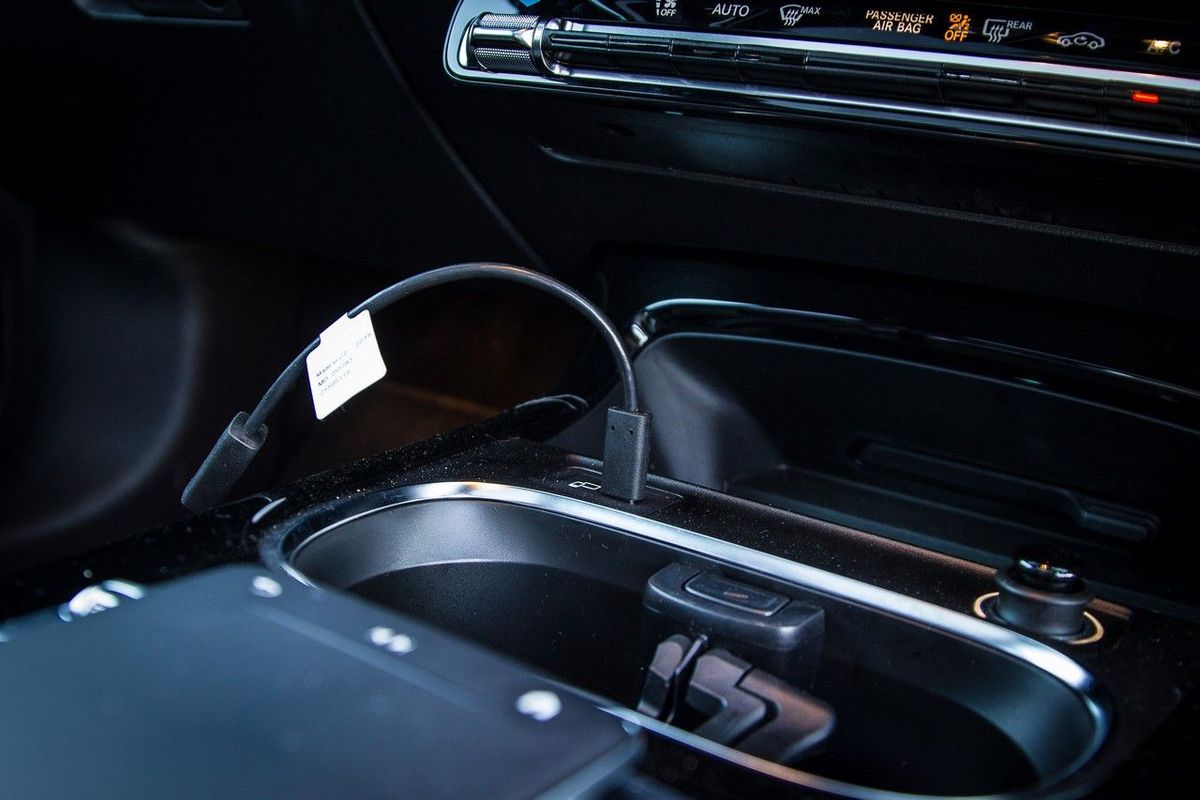
There are numerous themes, colours and layouts to personalise the MBUX to your preference. Finally, if this is all too silly, you can just ask, "Hey Mercedes" and issue some commands. If you're cold, say so and the car will respond by upping the cabin temperature. You can ask it to change the radio, open the sunroof, switch on the heated seats and even activate navigation. On a side note, there are inputs, but they're USB-C spec, so you may need to purchase some adaptors. Android Auto/Apple CarPlay compatibility is standard too and its interface with the MBUX is seamless… Our test unit also came with a head-up display, which was clear and easy to read.


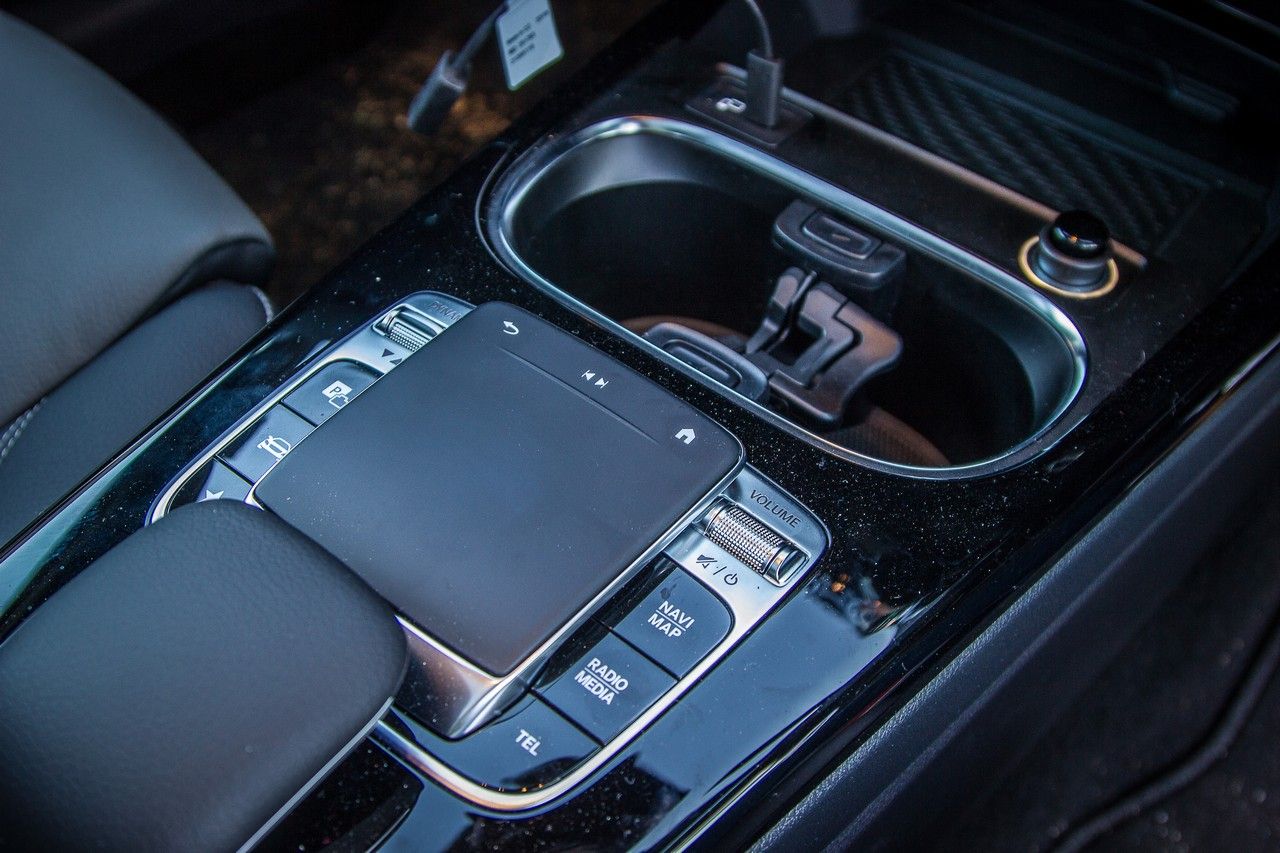
The traditional Mercedes-Benz rotary dial has been replaced by this touchpad which has swipe functionality. Note the USB-C adaptor sticking out of the port.

Where does it fall short?

Price / standard specification imbalance

Upon the local introduction of the new A-Class, we were excited to see that Mercedes-Benz's newcomer was priced competitively. At a starting price of R527 512, the A200 AMG Line looks to be priced smack bang in between its rivals. You get a decent engine, some nifty features and ownership of a Mercedes-Benz. Or do you? When we "built" the test unit using the Mercedes-Benz South Africa configurator, we were a little shocked to see our test unit coming in at R682k! Granted, there are some options fitted that we wouldn't have gone for, such as the AMG wheels which impact negatively on ride quality, but when you're going down the road to A-Class ownership, you need to spec your cars very carefully to avoid any nasty shocks.

Rear legroom

Another one of our gripes was the lack of rear legroom for taller adults. Granted, the A-Class is not meant to be a family car, but the ability to transport 4 adults in reasonable comfort should be a prerequisite. Taller drivers will not be able to sit behind themselves, as both leg- and headroom are limited for aft occupants.


MBUX is a brilliant system. It may look intimidating, but it's intuitive and beautiful to use

Pricing & Back-Up

The new Mercedes-Benz A-Class range starts from R500 012 for the standard A200 Style, with the A200 AMG Line coming in at R527 512. The current flagship is the R596 969 A250 AMG Line. The new Mercedes-Benz A-Class comes with a 2-year/unlimited km warranty and a 6-year/100 000 km maintenance plan.

Verdict


Stylish, composed and competent: The new Mercedes-Benz A-Class deserves to be in the finals of the #CarsAwards – Powered by WesBank

As a premium hatchback, Mercedes-Benz has effectively blown the competition out the water with its latest incarnation of A-Class. It's by far the most advanced car in its segment and its rivals look horribly dated by comparison. Criticisms of the previous generation A-Class were numerous and Mercedes-Benz has not only managed to address them, but move the segment's goalposts along considerably. The engine is smooth, punchy and frugal, and the driving experience is comfortable and refined. The cabin is class-leading and sets a new benchmark for connectivity and technology. The downside is you pay dearly for owning what's arguably the best car in the segment. The costly options quickly add up; what was a R550k vehicle can easily approach R700k. Given how accomplished this newcomer is, the forthcoming A35 and A45 derivatives should be deeply impressive. It should be no surprise, then, that the A200 AMG Line is a finalist in the 2018 #CarsAwards – powered by WesBank.

Alternatives (click on the car names for detailed spec info)

BMW 120i 5-door M Sport sports-auto

Now very much in the twilight of its product cycle, the BMW 1 Series is the only model in the segment which offers rear-wheel-drive dynamics. It's not a bad car, but when compared to the new A-Class (especially in terms of its packaging), it looks (and feels) long in the tooth.

Audi A3 Sportback 2.0TFSI S line auto

The former #CarsAwards-winning Audi A3 Sportback received a nip-and-a-tuck recently and remains one of the more refined cars (in terms of build quality and driving experience) in the segment. It suffers a similar problem to that of the A-Class, however. Speccing it to heart's content is expensive.

Volvo V40 T5 R-Design

The oldest car in the segment and the longest-serving model in Volvo's current line-up, the V40 offers something different to the consumer. There are some good engines and pretty decent specification as standard.

Volkswagen Golf GTI

Even though Golf 8 is due in 2019, it remains a fascinating example of how a fairly affordable car can play in such a premium space. The Golf GTI is a perennial bestseller and outguns the A-Class A200 in performance, but despite revisions in the form of 7.5, the infotainment quality lags behind that of MBUX.

Interested in buying a new/used Mercedes-Benz A-Class

Find one today on Cars.co.za by clicking here

Nissan S14 200 SX Rocket Bunny “Boss” Drift Build – Launch Control Ep2

In Episode 2 of our Launch Control series, Matthew Benas from Smoke’m garage, based in Cape Town, shows us his very special Nissan S14 drift car.

Filming this episode turned into a proper adventure as we picked up the story just as Matthew had flown Danny Cross, a professional drifter from the UK, out to South Africa to enter the S14 into the Drift City competition, held on Heritage Day at the Grand Parade right in the centre of Cape Town.

This video turned into a story about more than just drifting car culture, this became a narrative about the highs and lows of building and racing a drift car.

A bit about the car:

The Nissan S14 was sold in limited numbers in South Africa, as well as the S13 which we know as the Nissan 200sx. Drifters in Japan started modifying their S13’s and thus starting a S chassis car culture which has spread to the rest of the world. A popular mod on these cars is the Rocket Bunny “Boss” kits which transform the looks of these cars with its wide arches and muscle car front end. The “S” is derived from Nissan’s small rear-wheel-drive models in Japan known as the Sylvia. Nissan’s S chassis has become famous in the drifting scene as it is affordable, rear-wheel-drive, lightweight and its SR20 2L turbo motor is highly tunable with bolt on mods.

Here’s a mod list supplied by Matthew:

Greddy air intake

Webbfab Roll cage

Amercian Racing VN507 custom wheels

Nankang NS2 semi slick 225/17 front tyres

Nankang NS2 semi slick 255/17 rear tyres

Fully adjustable BC coilover suspension

Straight pipe exhaust

Rocket Bunny “Boss” body kit

Water/methanol injection system

G&A bucket seats

G&A harnesses

Special Smoke’m Garage design e-brake lever

Credits

Everything you see in this video was created by Cars.co.za’s Duwyne Aspeling. Literally, he shot it, edited, colour graded it and even created the Launch Control graphic intro. He is basically a wizard.