New Mercedes-Benz Sprinter in SA (2019) Specs & Price
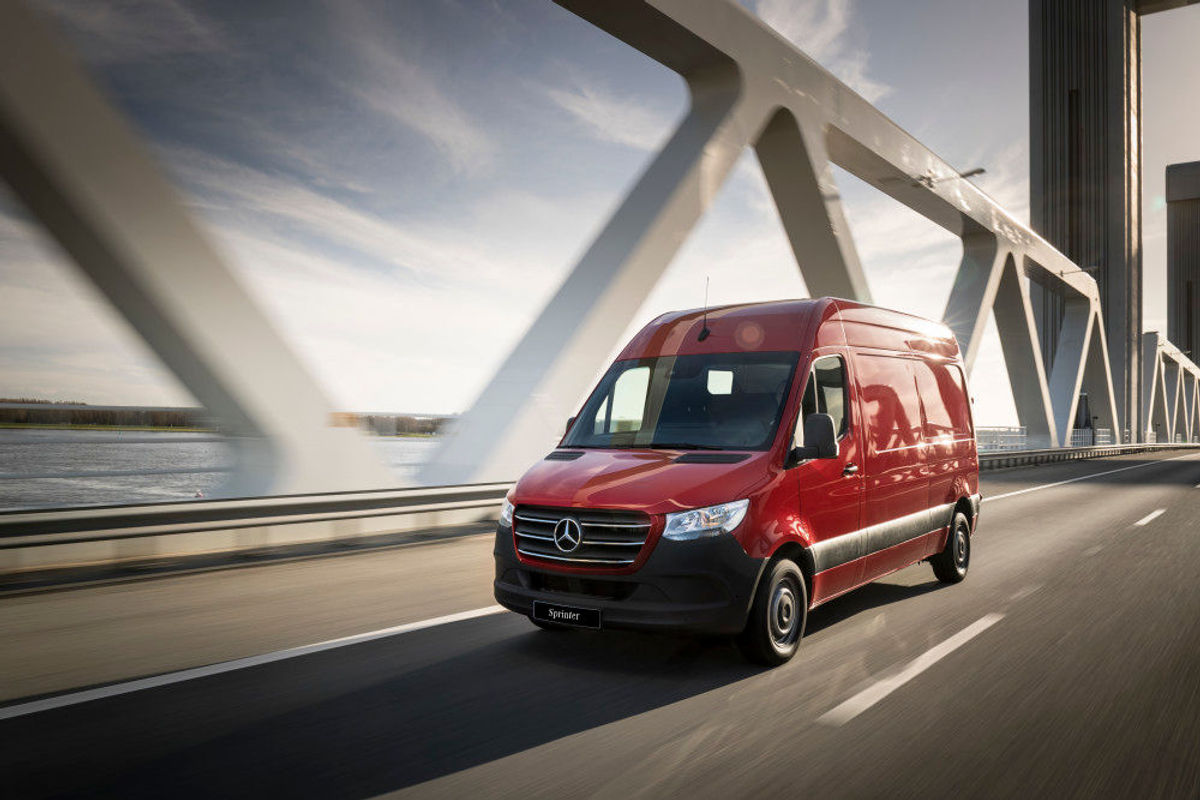
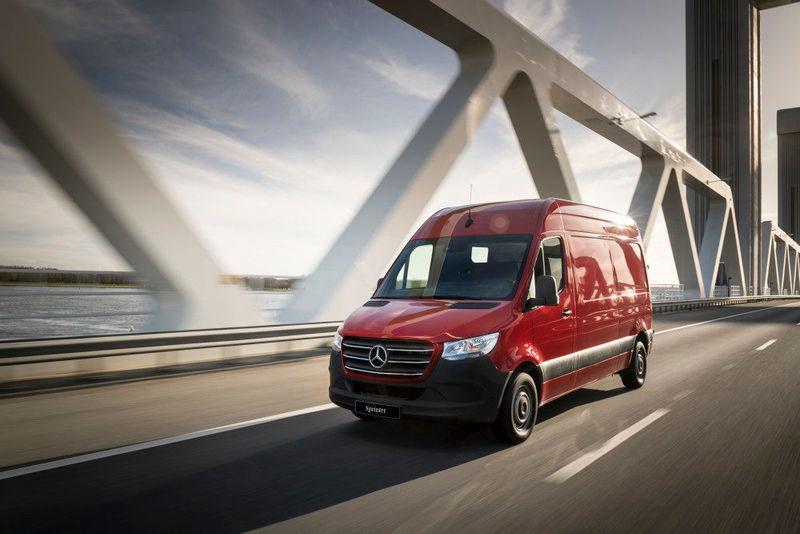
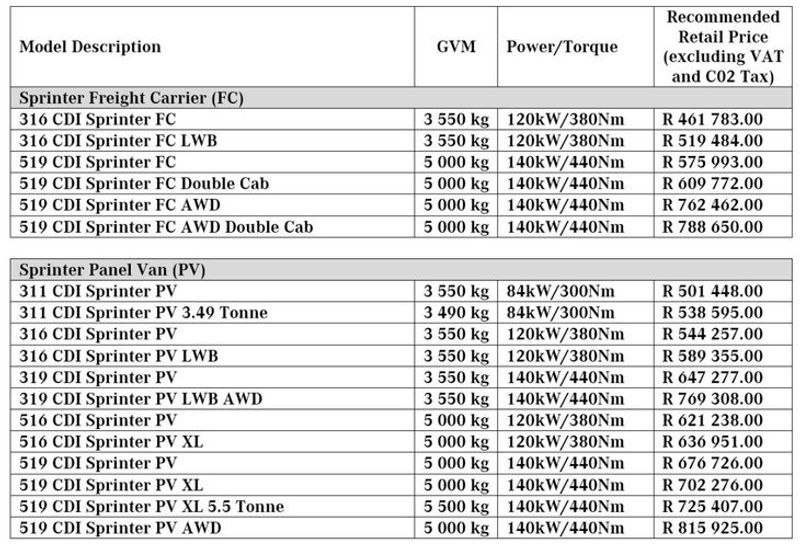
Mercedes-Benz Vans South Africa has introduced the new third-generation Sprinter to market. See specification and pricing details below…
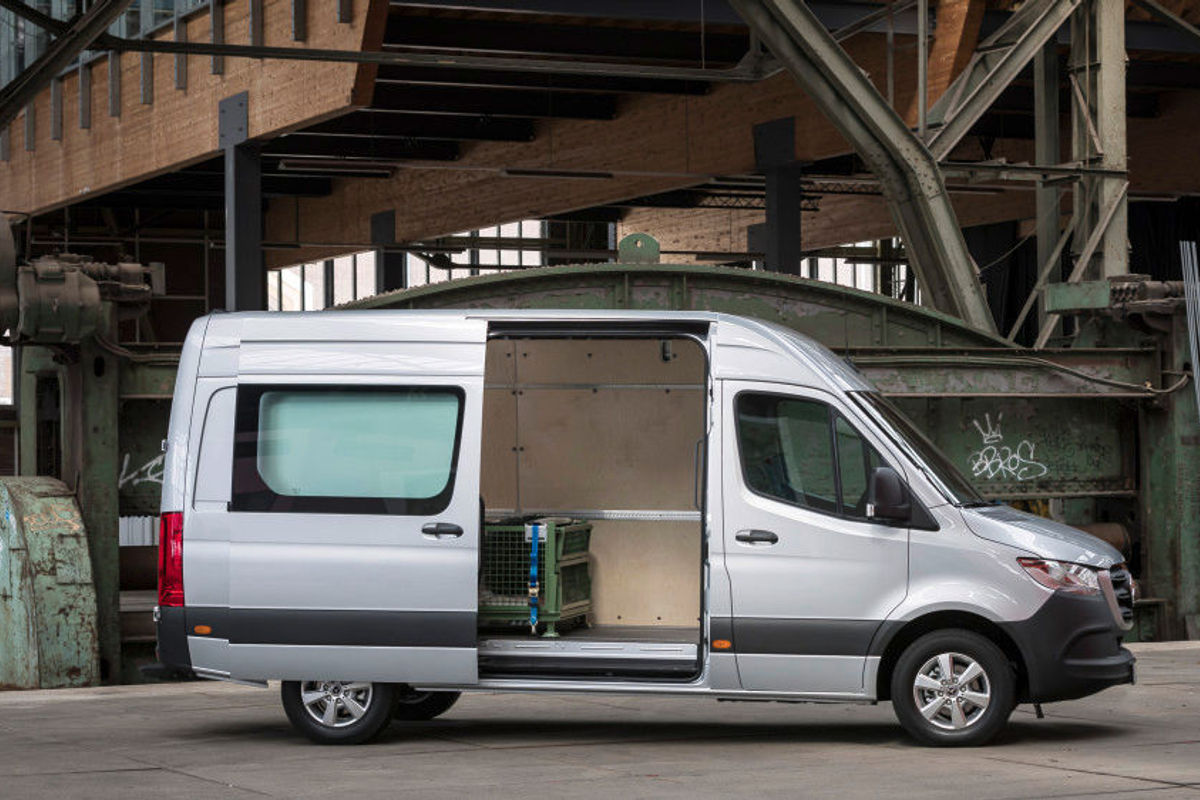
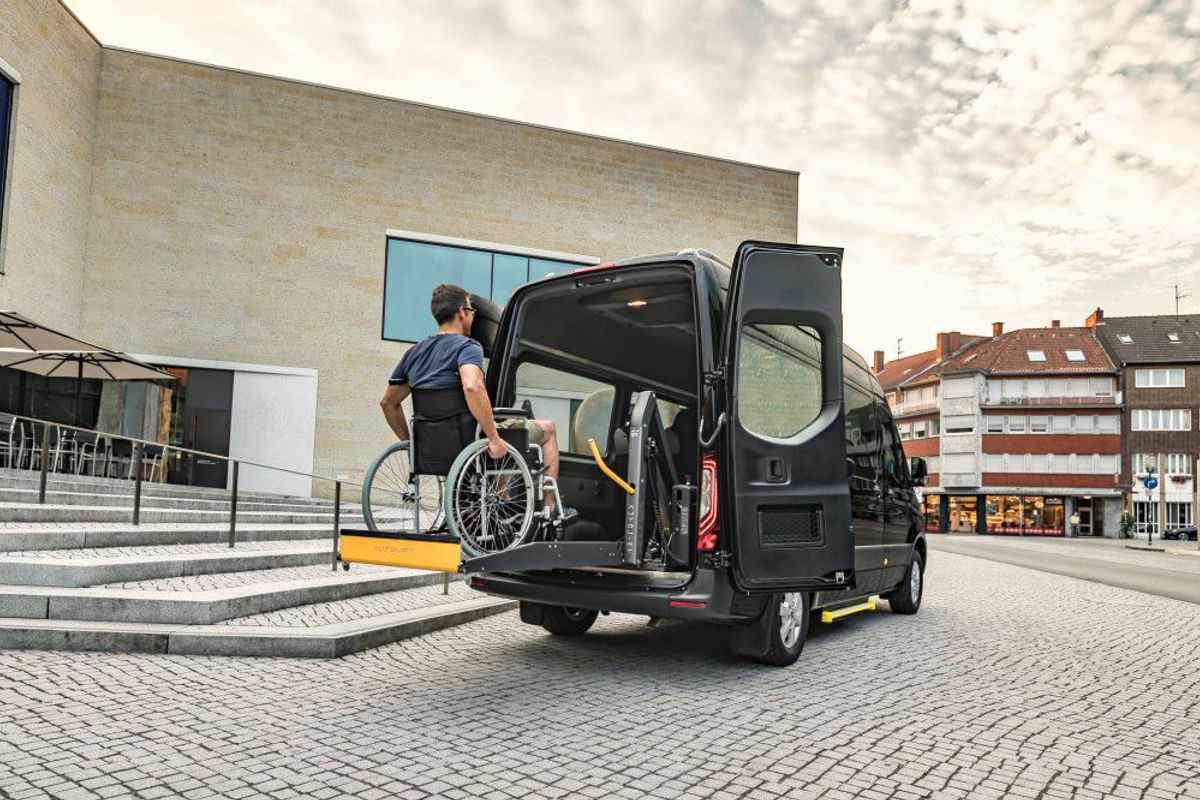
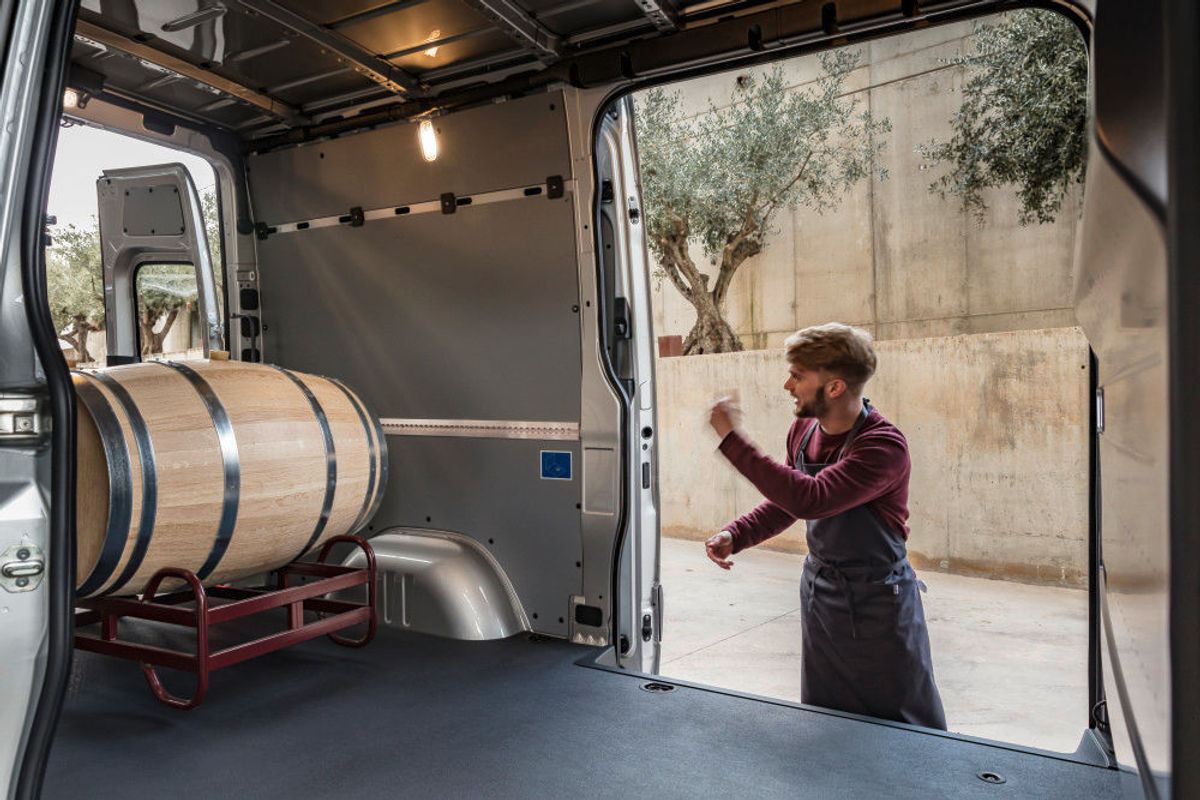
A new Sprinter has been launched in South Africa boasting a wide range of solutions in the form of a panel van, people mover or freight carrier. The Sprinter is ideal for a wide variety of industries including taxi, trade, service and logistics, mobile home or even speciality conversions and is available in various configurations to suit your needs. A new 3.49 tonne GVM sprinter now also joins the range.
“The South African operating environment is one of the toughest, and despite this, the Sprinter has been a leader in various applications and a class-leader in the industry. The new Sprinter will continue where its predecessor left off by embodying attributes that have made it so successful: flexibility, robustness and being economical,” said Nadia Trimmel, Vice-President of Mercedes-Benz Vans South Africa.
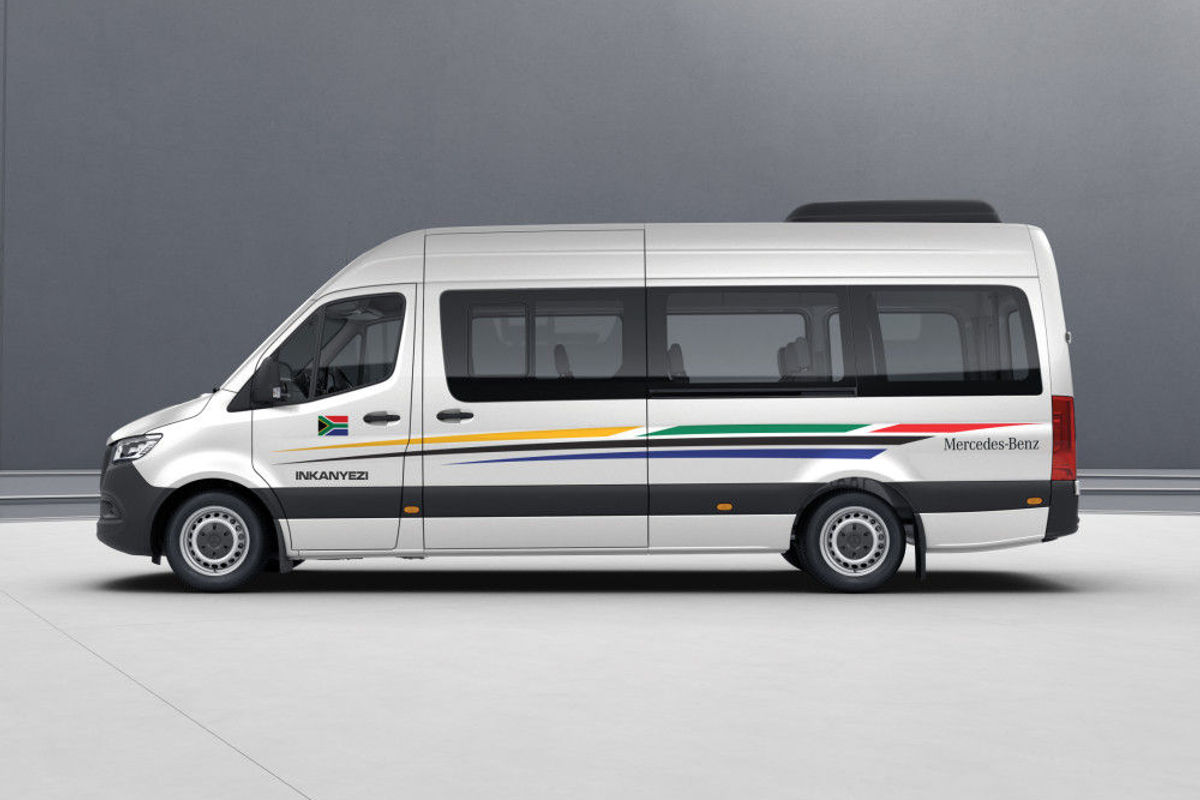
Long distance taxi operators will be interested in the Sprinter Inkanyezi which is offered in 3 different grades with a variety of optional features on offer including 3-point safety belts, rear USB ports, free flow air conditioning and rear speakers to name a few.
Engine Choice
Buyers have lots of choice in the new Sprinter range to suit a wide variety of needs and requirements.
The Sprinter is powered by a 2.2-litre turbodiesel engine with either 84 kW and 300 Nm or 120 kW and 380 Nm of torque.
For more demanding applications, a 6-cylinder, 3.0-litre turbodiesel engine with 140 kW and 440 Nm of torque. Manual and automatic transmissions are offered.
Key features
The new Sprinter is fitted with features typically found on luxury vehicles with MBUX being a major highlight.
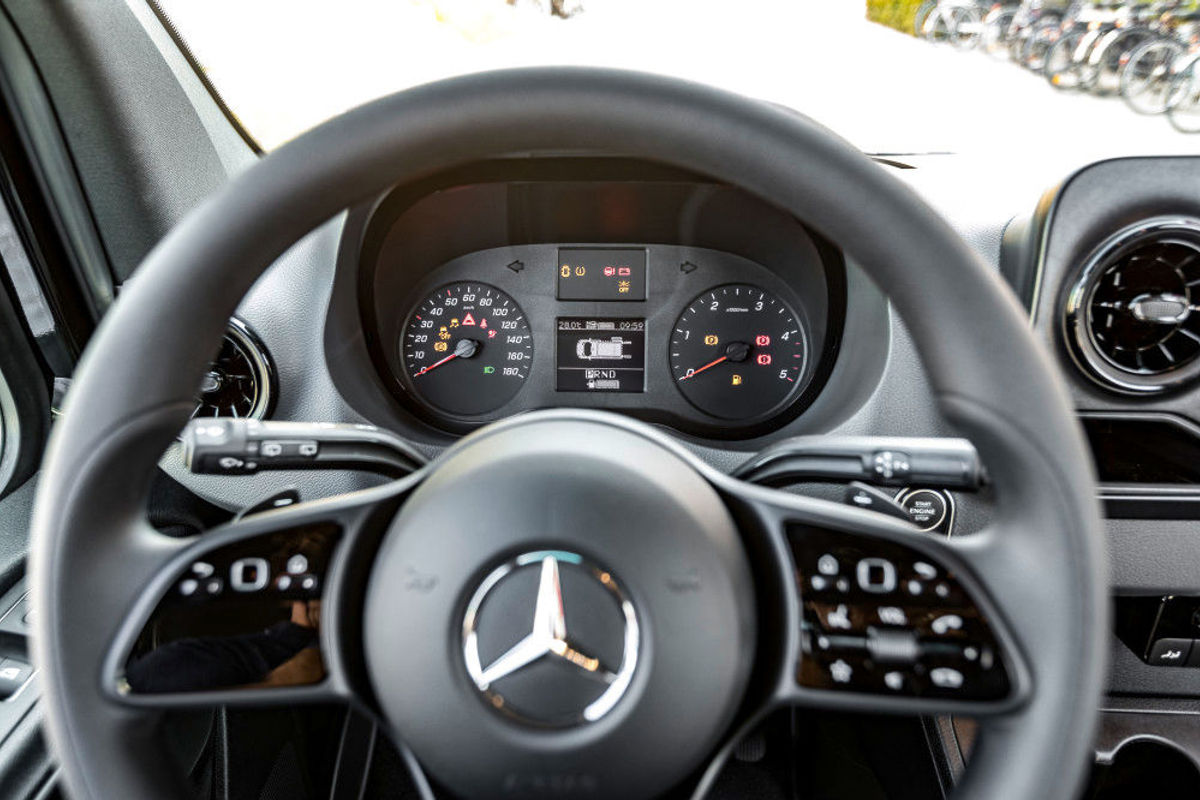
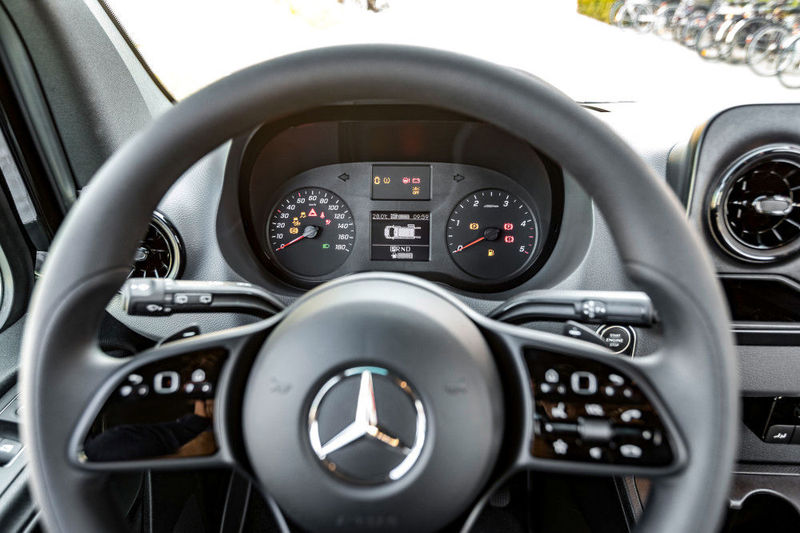
The new Sprinter features the new Mercedes-Benz MBUX multimedia system comprising 2 options including a 7-inch or 10.25-inch display which is controlled using either the steering mounted controls or via voice control. The interior has been overhauled and now includes ergonomically shaped seats, keyless start and an improved air conditioning system. Other nice features include wireless charging and USB ports for charging devices.
In terms of safety, the new Sprinter is well-equipped with features such as Cross Wind Assist and Hill Start Assist. Optional features include Distronic, Lane Keeping Assist and a reverse camera projecting an image onto the rear-view mirror as well as a Parking Package which includes a 360-degree camera for easy parking. Active Distance Distronic is also optionally available. Rain-sensing wipers and Active Brake Assist is also offered.
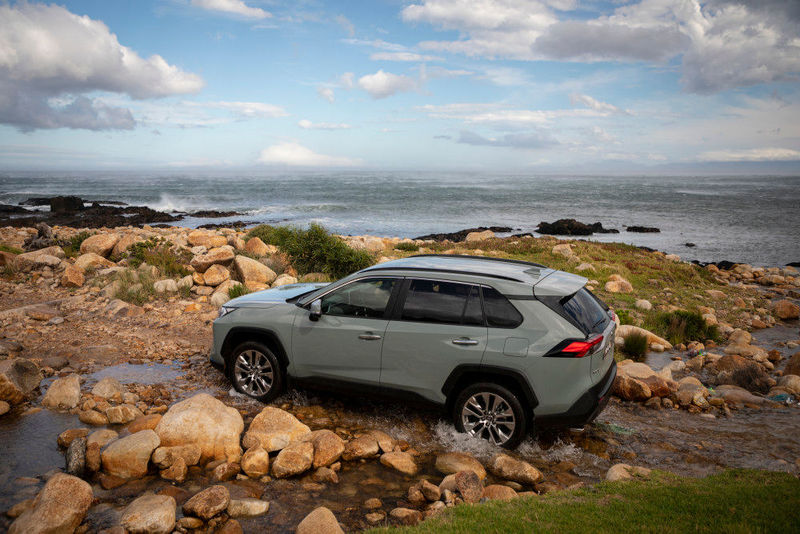
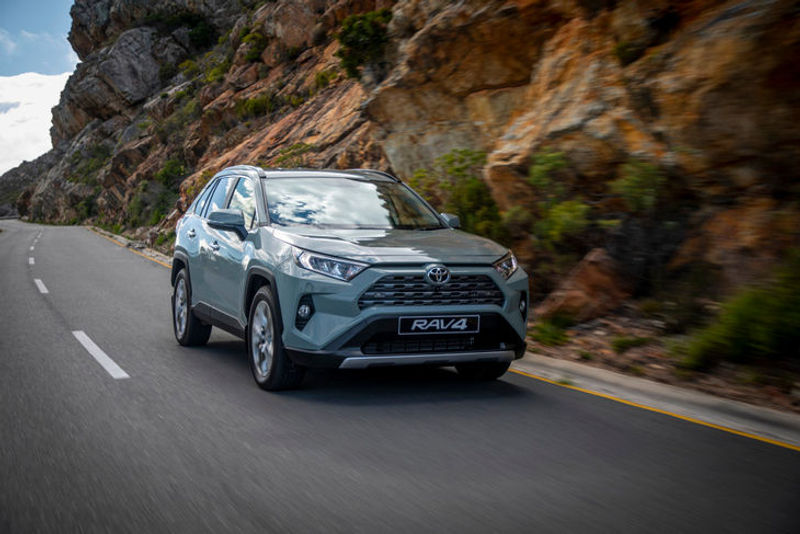
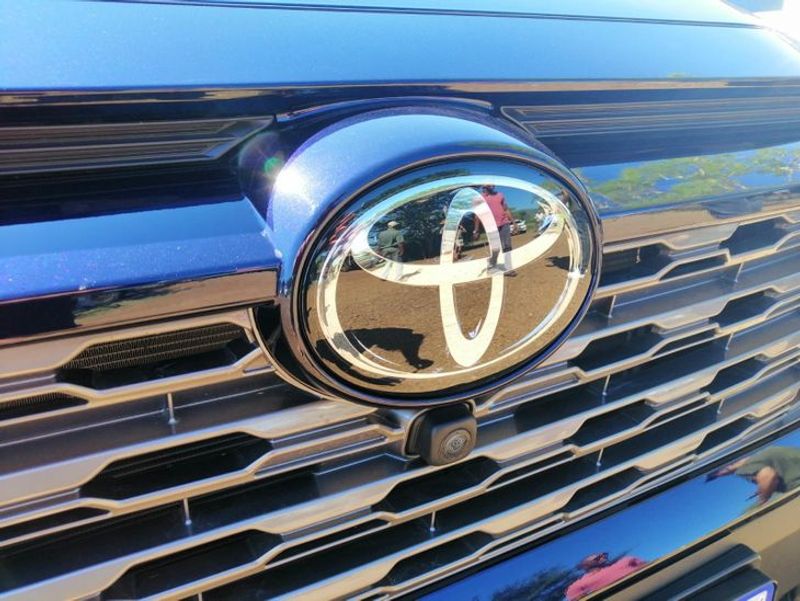
Competition in the family car segment just got a whole lot hotter with the arrival of the new 5th-generation Toyota RAV4 in South Africa. The local launch took place in Richards Bay earlier this week and Gero Lilleike was in attendance to ‘Rev the RAV’, herewith his feedback…
This new RAV4 is not new to me. I experienced the newcomer for the first time on Spanish soil earlier this year and came away impressed, but a European driving experience is not quite the same as a South African one and I was keen to see how the RAV4 would fare on our roads.
We have covered specification and pricing for the new RAV4 extensively, so be sure to take a look at the details. For this particular launch review, however, I will answer some questions that you, the consumer, might have regarding this new RAV4. Let’s get cracking…
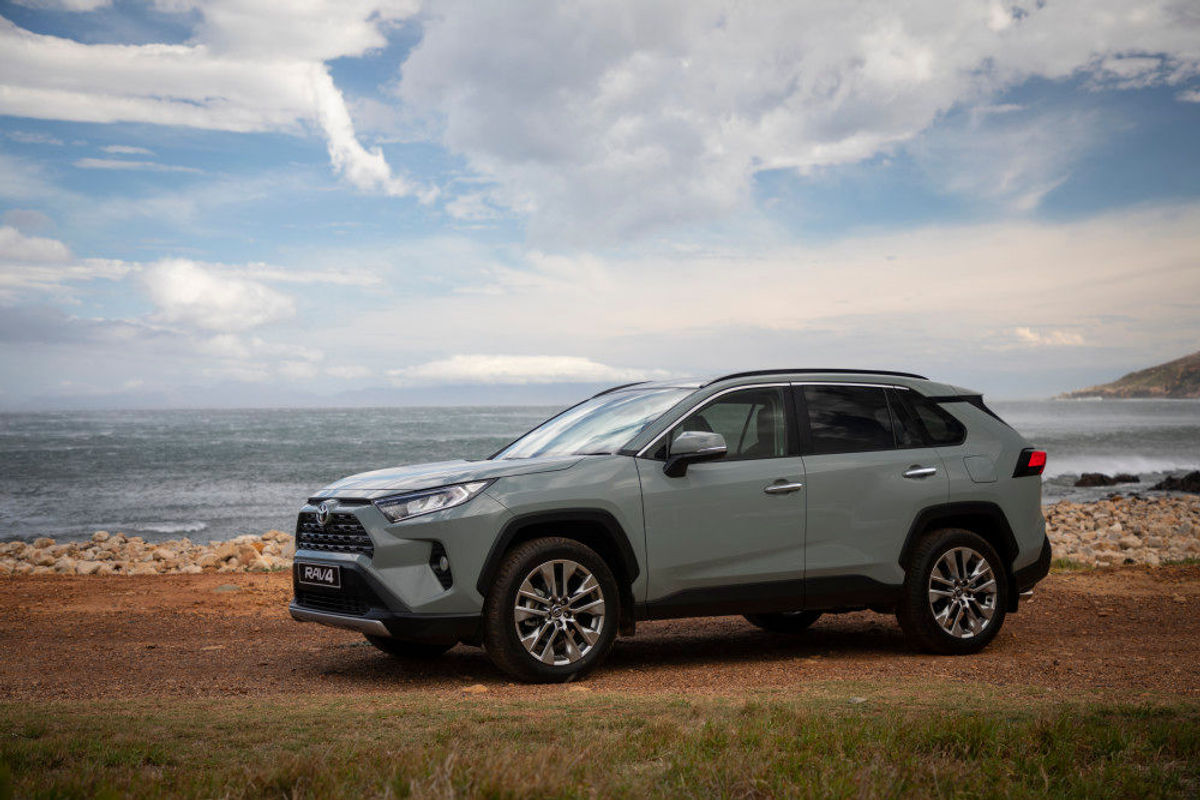
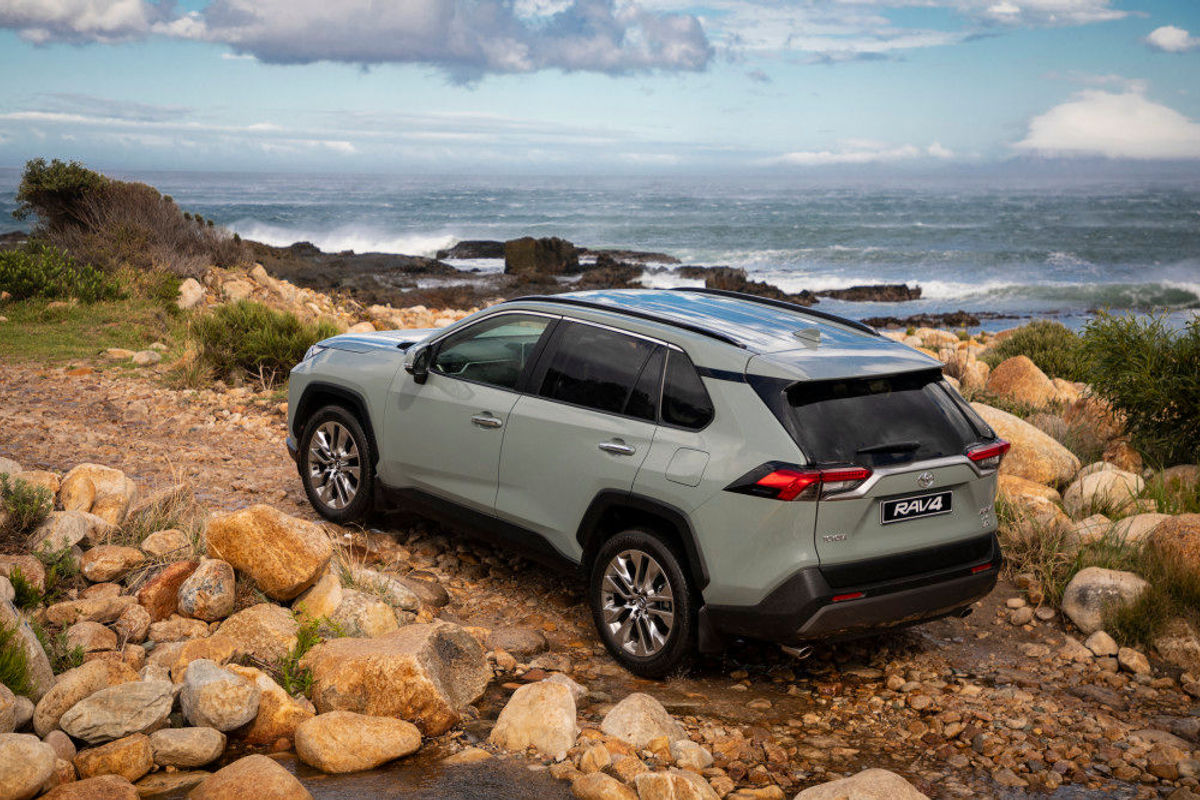
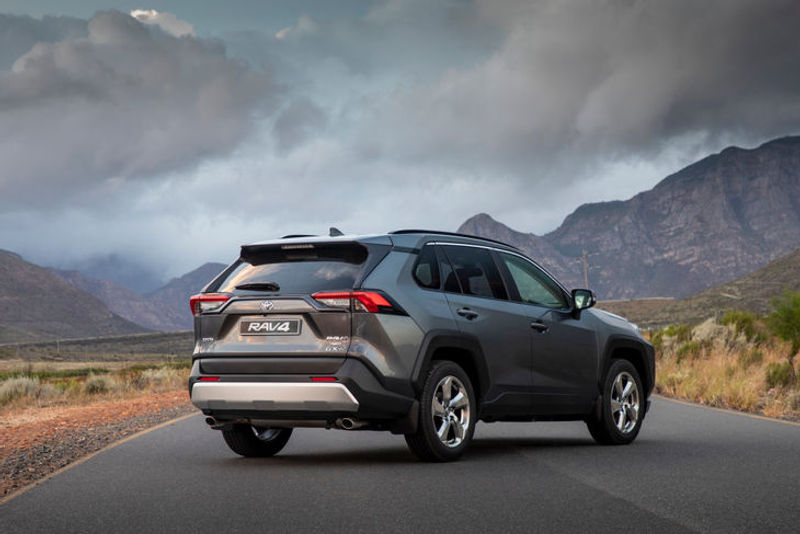
The new RAV4 features a bolder, sharper look with the GX-R being particularly striking in the metal.
There are 5 RAV4 derivatives on offer, catering for different needs and budget, so if you are considering buying the new RAV4 you will have to consider what your needs are and how much you are willing to pay.
The range starts with the entry-level RAV4 GX in front-wheel drive guise and offered with either a manual transmission or CVT. A naturally-aspirated 2.0-litre petrol engine with 127 kW and 203 Nm of torque does service under bonnet and fuel consumption is claimed at 6.8 L/100km for the manual and 6.5 L/100km for the CVT derivative. There’s also a high-spec VX derivative on offer which is only offered with a CVT.
The RAV4 2.0 GX-R caters for customers looking for a beefier, mucho look with all-wheel driveability. Fuel consumption is claimed at 6.7 L/100km.
Topping the range is the RAV4 VX with all-wheel-drive which employs a 2.5-litre petrol engine with 152 kW and 243 Nm of torque. It comes mated to an 8-speed automatic transmission and carries a claimed fuel consumption figure of 7.3 L/100km. No diesel engines are offered for the new RAV4.
Can it off-road?
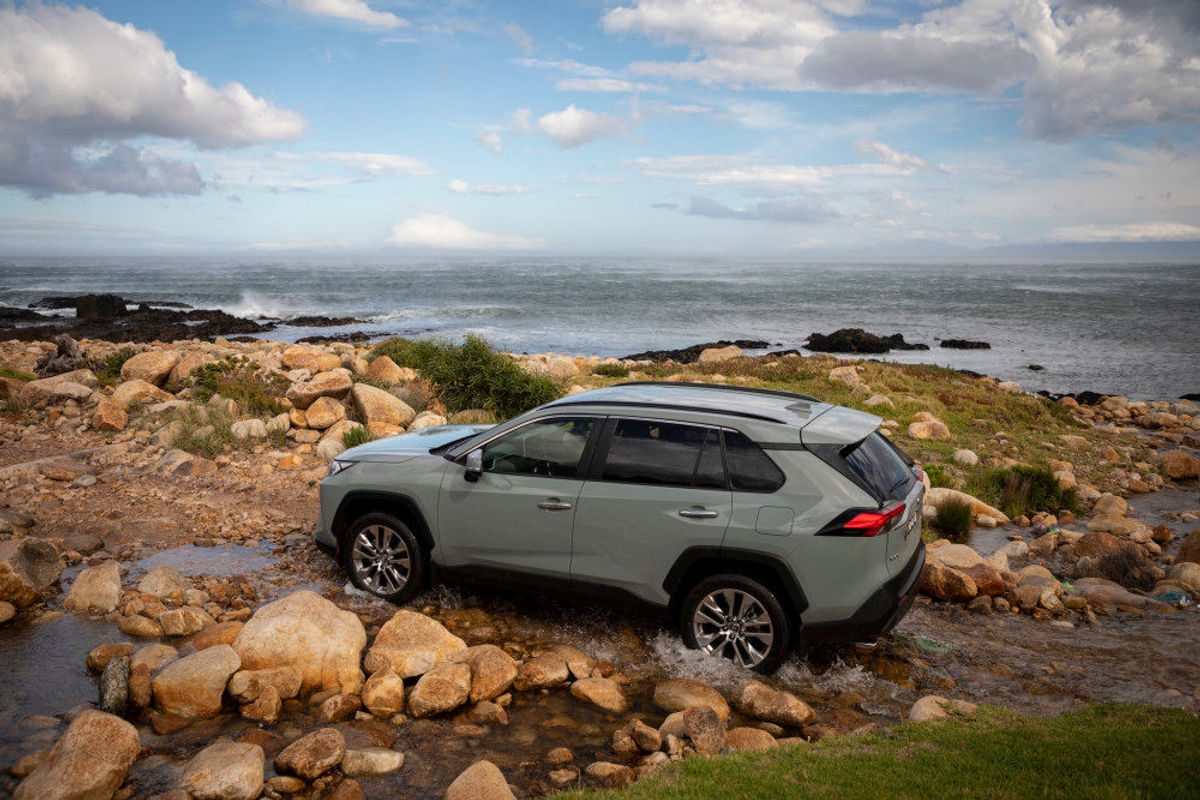
The RAV4 copes well in moderate terrain and rides exceptionally well on gravel roads.
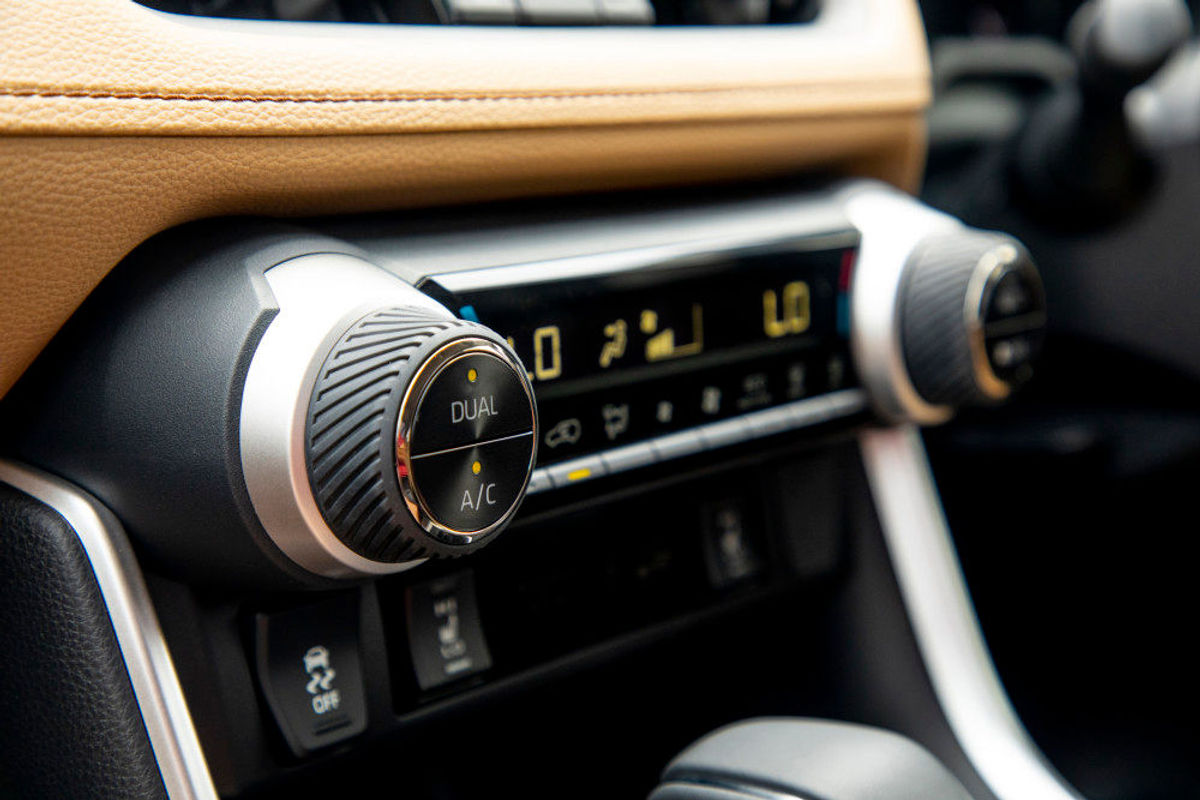
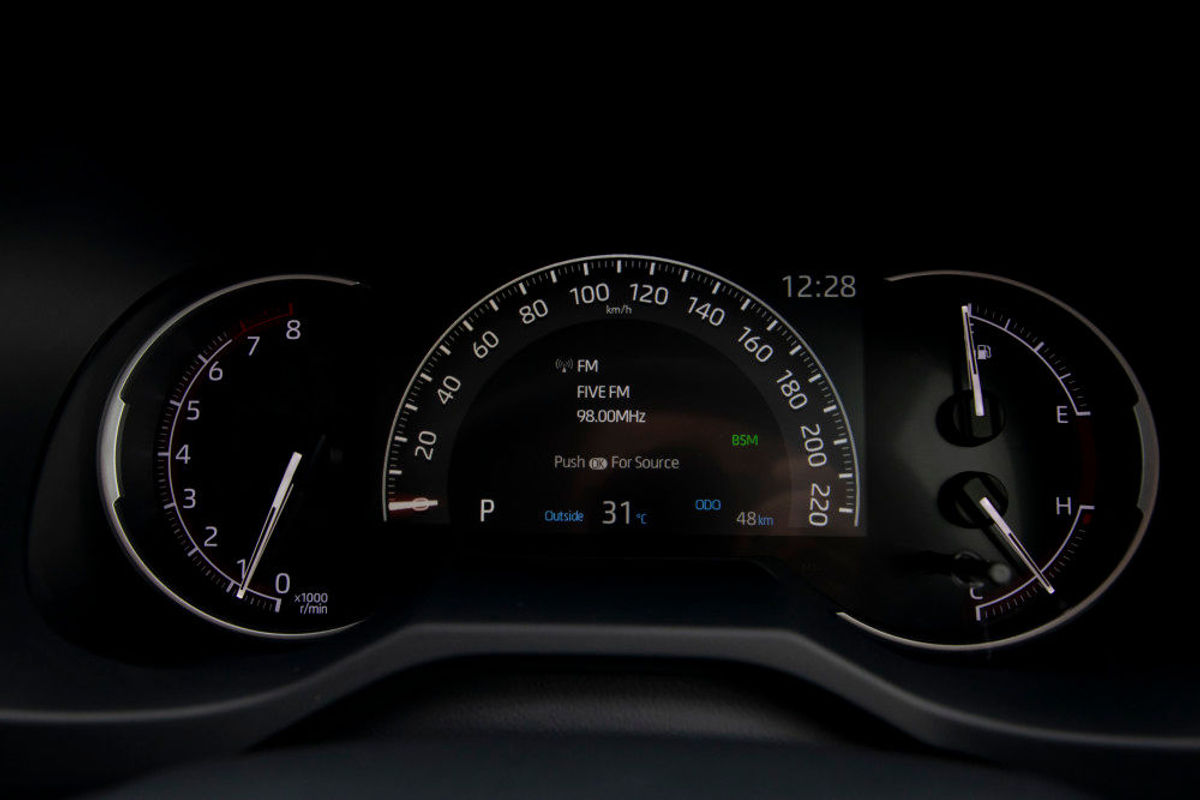
While the RAV4 is not considered to be a 4×4 (it's more of a softroader), it does cope well on your average dirt road. With a new mechanical all-wheel-drive system, which now features a dynamic torque vectoring system with Rear Driveline Disconnect for the first time, the RAV4 can tackle moderate terrain with relative ease. The twin couplings on the rear axle allow for torque distribution between the left and right rear wheels, which enhances traction performance in a variety of conditions. A graphic display in the instrument cluster also shows you exactly where and how much torque is being apportioned to each of the wheels, which is useful when you are tackling more challenging terrain.
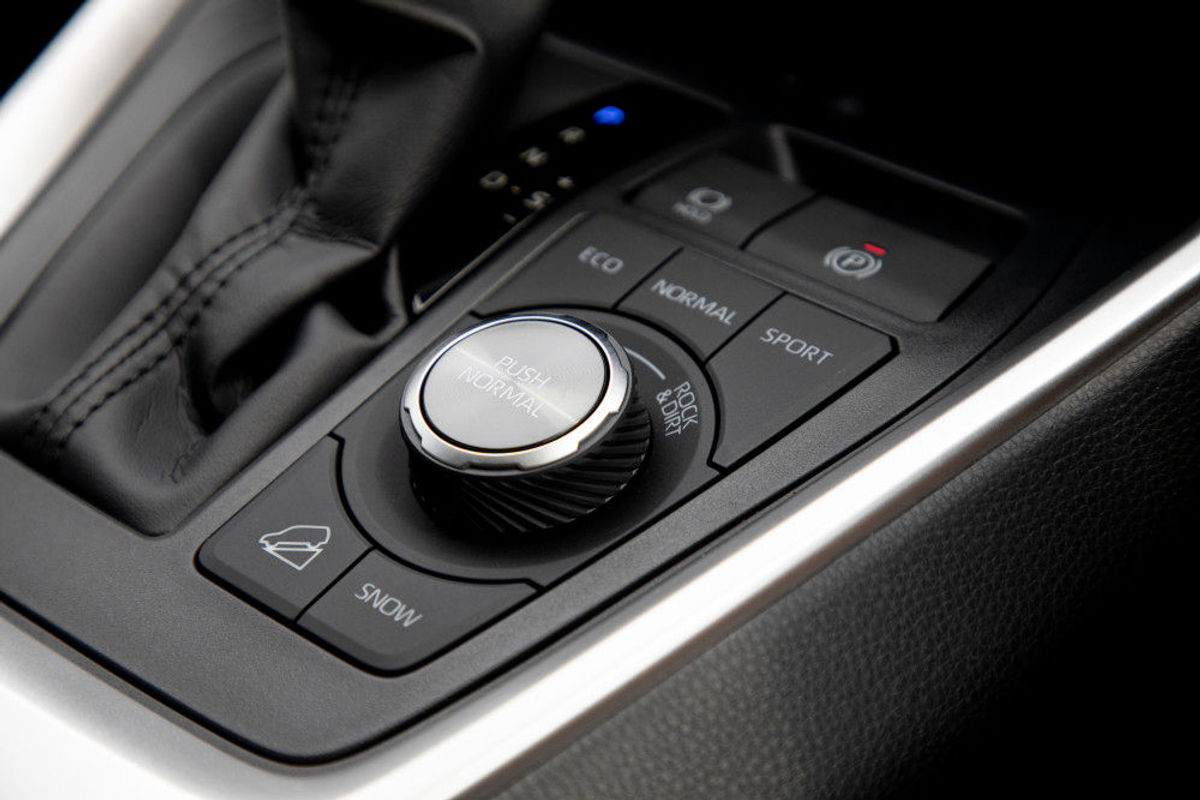
All-wheel drive derivatives are equipped with a mode dial which allows the driver to easily select modes such as Rock & Dirt and Mud & Sand, depending on the terrain.
What’s the interior like?
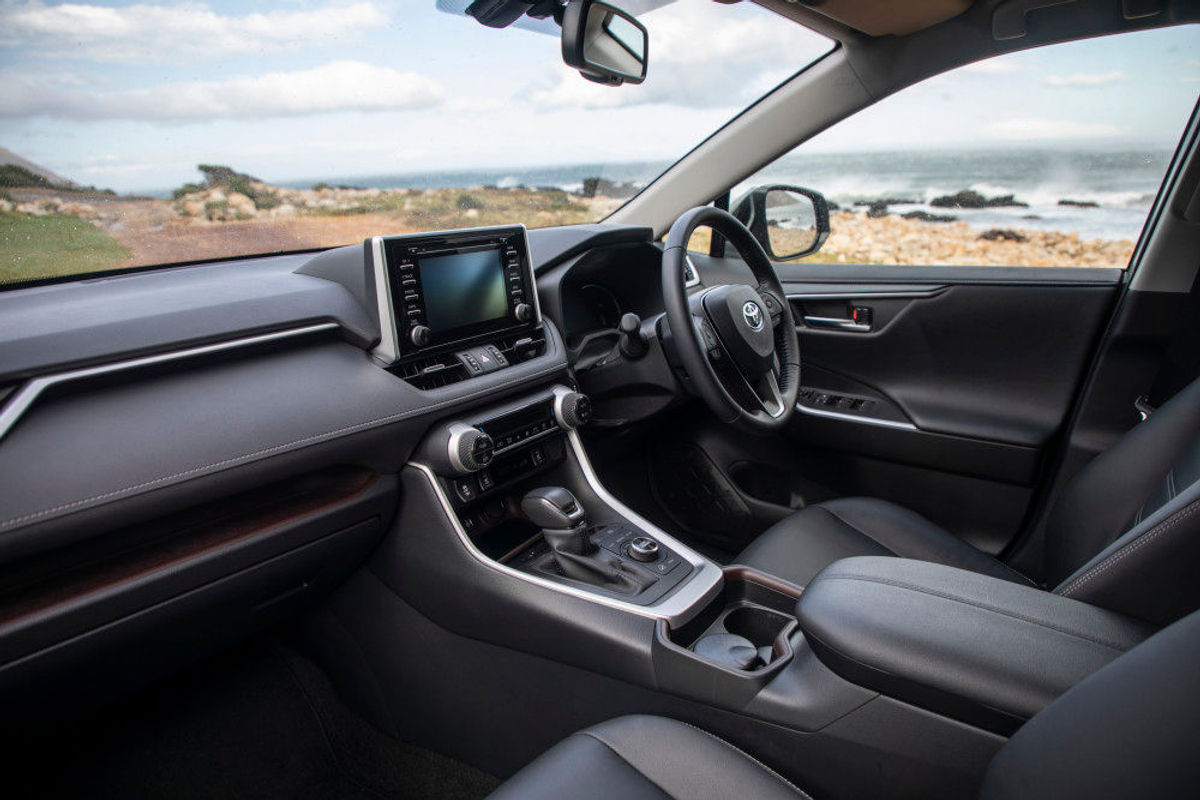
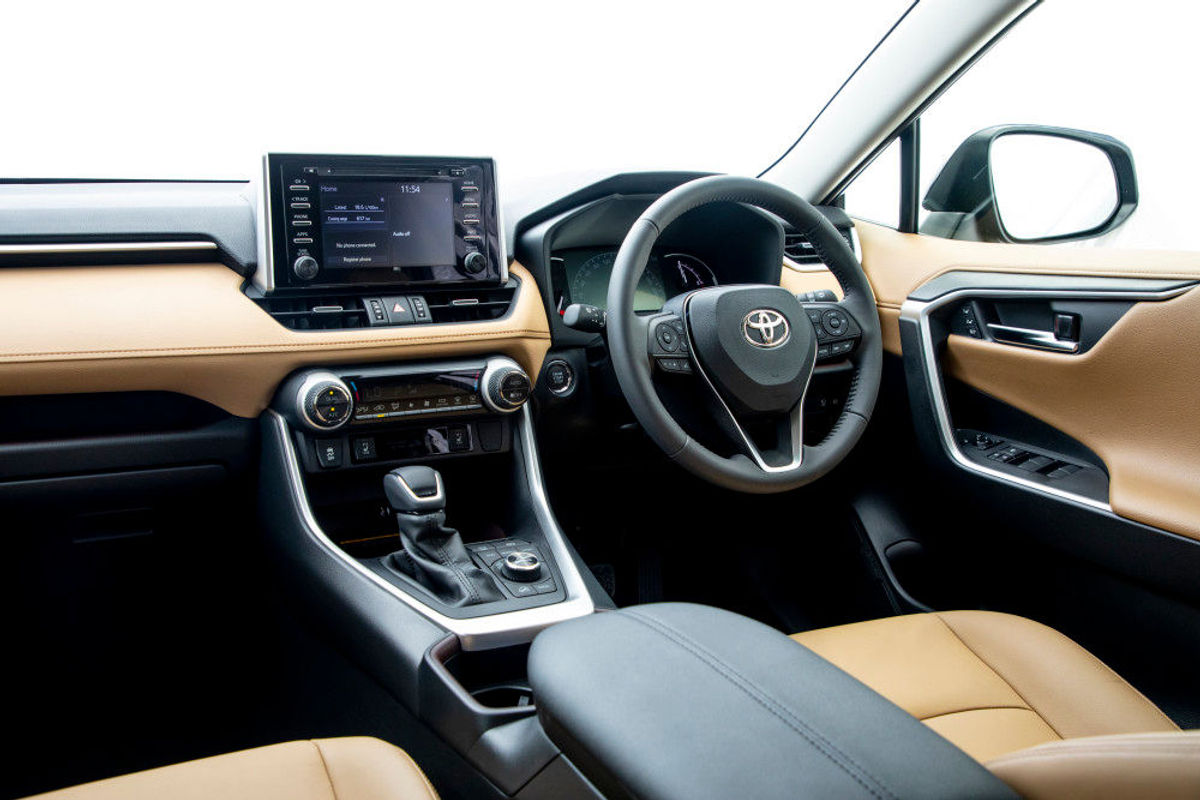
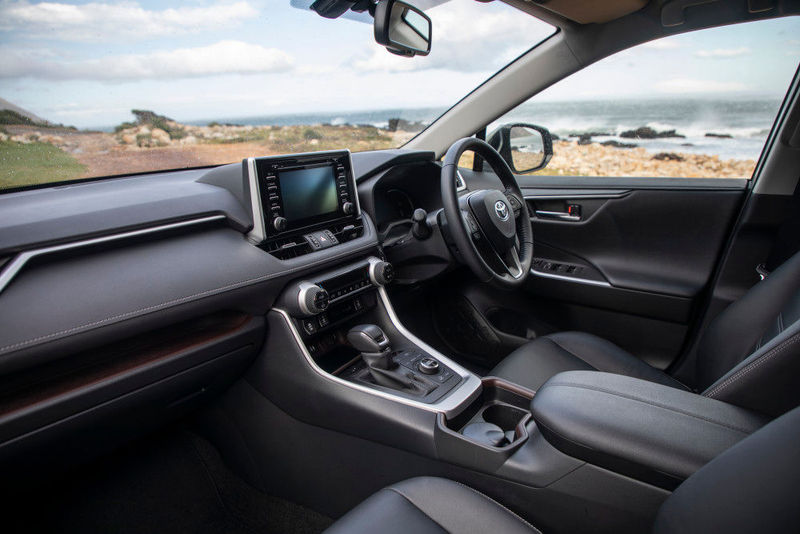
The RAV4's interior is solidly built and features an aesthetically pleasing design with good standard specification.
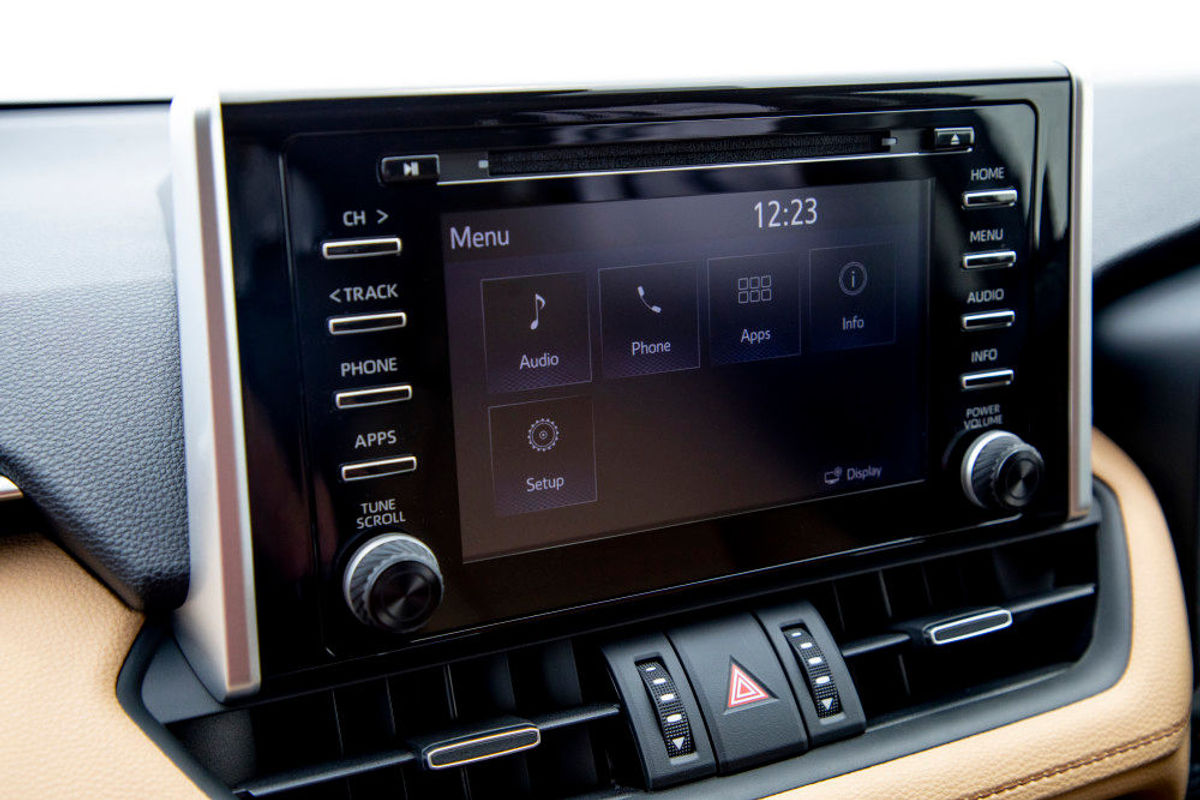
The interior of the new RAV4 is spacious and comfortable for both front and rear passengers. Perceived interior build quality is good and the interior has a solid, well-built feel to it. A central 7-inch infotainment system takes pride of place and while it’s easy to use it does lack Android Auto and Apple CarPlay which may disappoint some potential buyers. Toyota, however, is currently working on updating the system and buyers can expect an update at some stage in the future.
There are some nice features such as electric seats with heating function (top-spec VX) and a rear camera is standard on all derivatives. The top-spec RAV4 2.5 VX benefits from a surround view camera as well.
In terms of safety, the RAV4 GX is equipped with no fewer than 7 airbags, ABS with EBD, Brake Assist, Vehicle Stability Control, Hill Ascent Control and Trailer Sway Control.
Toyota Safety Sense is now offered for the first time on the top-spec VX derivative and it includes features such as Adaptive Cruise Control (ACC), Lane Departure Alert (LDA) with Steering Control, Blind-Spot Monitor (BSM) and Pre-Crash System (PCS).
Is the RAV4 practical?
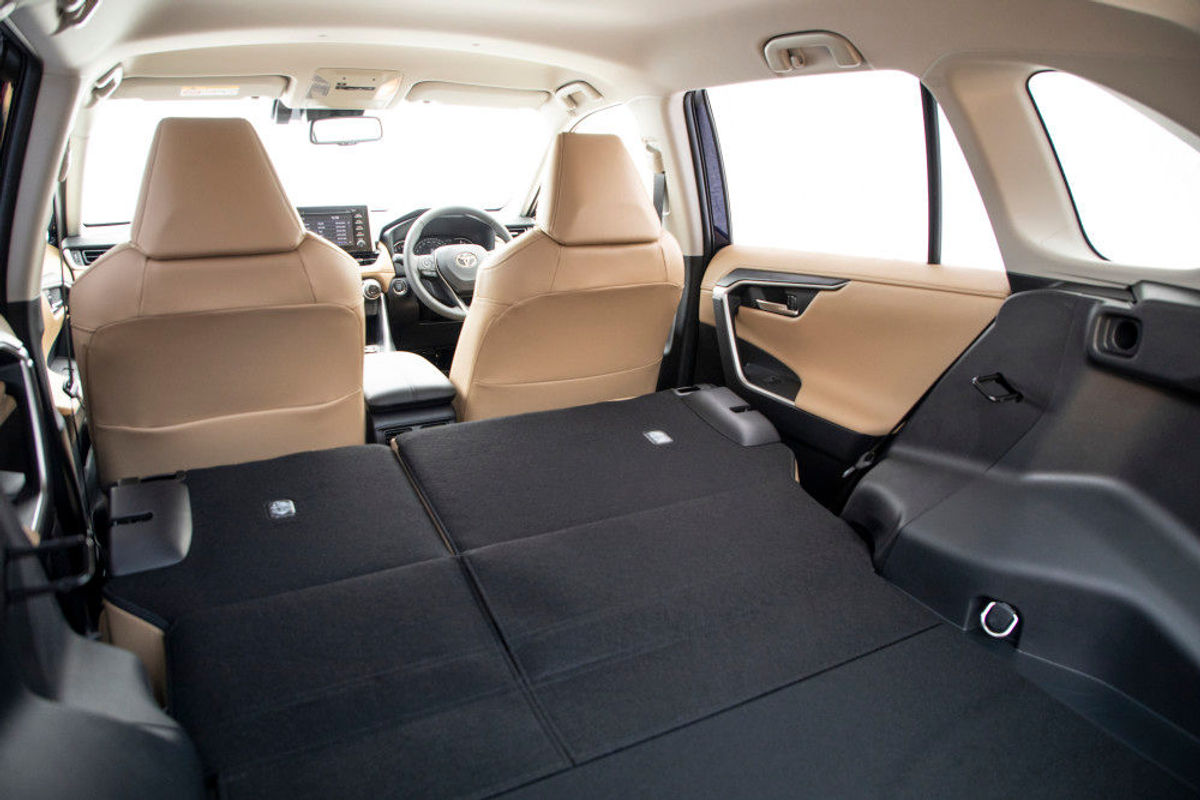
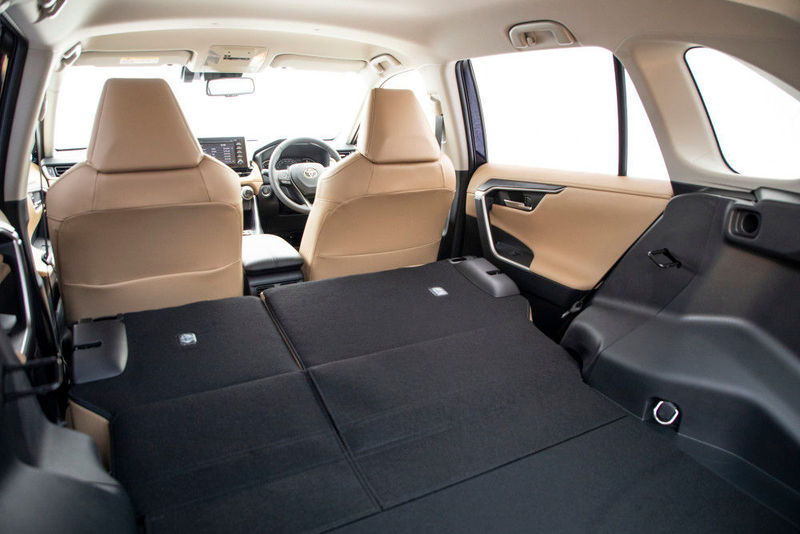
The 60:40 split rear seats allow for maximum storage space and rear passengers are well catered for.
Yes. There’s lots of space for passengers and luggage. The load bay offers 492 litres of space while the VX derivatives offer 572 litres. The rear seats can be folded flat to access more space for larger items if required. Rear space for passengers is good with ample legroom, headroom and should room. It’s rather comfortable back there, so long journeys should be a breeze. There’s also enough storage spaces dotted around the cabin.
How does it drive?
The RAV4's ride quality is a major highlight and it performs well overall.
We sampled the RAV4 2.0 GX-R AWD and top spec RAV4 2.5 VX AWD at launch, covering roughly 280 km on both road and gravel. The ride quality of this new RAV4 is mightily impressive and it delivers high levels of driving comfort. We were particularly impressed by its solid and direct feel, especially on gravel.
At sea level, both engines performed well with good acceleration and transmission response. The CVT is good too but we were smitten with the 8-speed automatic which delivers smooth and near-imperceptible shifts. With a wider footprint, the new RAV4 feels planted on the road, giving the driver more confidence behind the wheel. Overall, we think the new RAV4 delivers an excellent drive.
We achieved reasonable consumption figures on our drive too, with the RAV4 GX-R returning 7.6 L/100km and the RAV4 VX AWD returning 8.4 L/100km.
Should you consider the new RAV4?
The RAV4 makes a very compelling case for itself in the family car segment and is well-worth considering.
If you are in the market for a practical and comfortable family car, then we think the RAV4 should definitely feature on your hit list. The price range for the new RAV4 is broad, starting at R416 400 for the RAV4 2.0 GX manual and going up to R577 900 for the top-spec RAV4 2.5 VX AT AWD, so there is a RAV4 to suit not only your budget but your needs too.
The front-wheel-drive derivatives are perfect for use in the city while the all-wheel-drive derivatives will appeal to those looking for improved ability to tackle gravel and more challenging terrains.
With its bolder styling, the RAV4 is expected to sell very well in South Africa and will certainly tempt many buyers away from the major players in this segment such as the Hyundai Tucson, Volkswagen Tiguan and Mazda CX-5. This new RAV4 has a lot going for it and we look forward to testing it thoroughly in the near future.
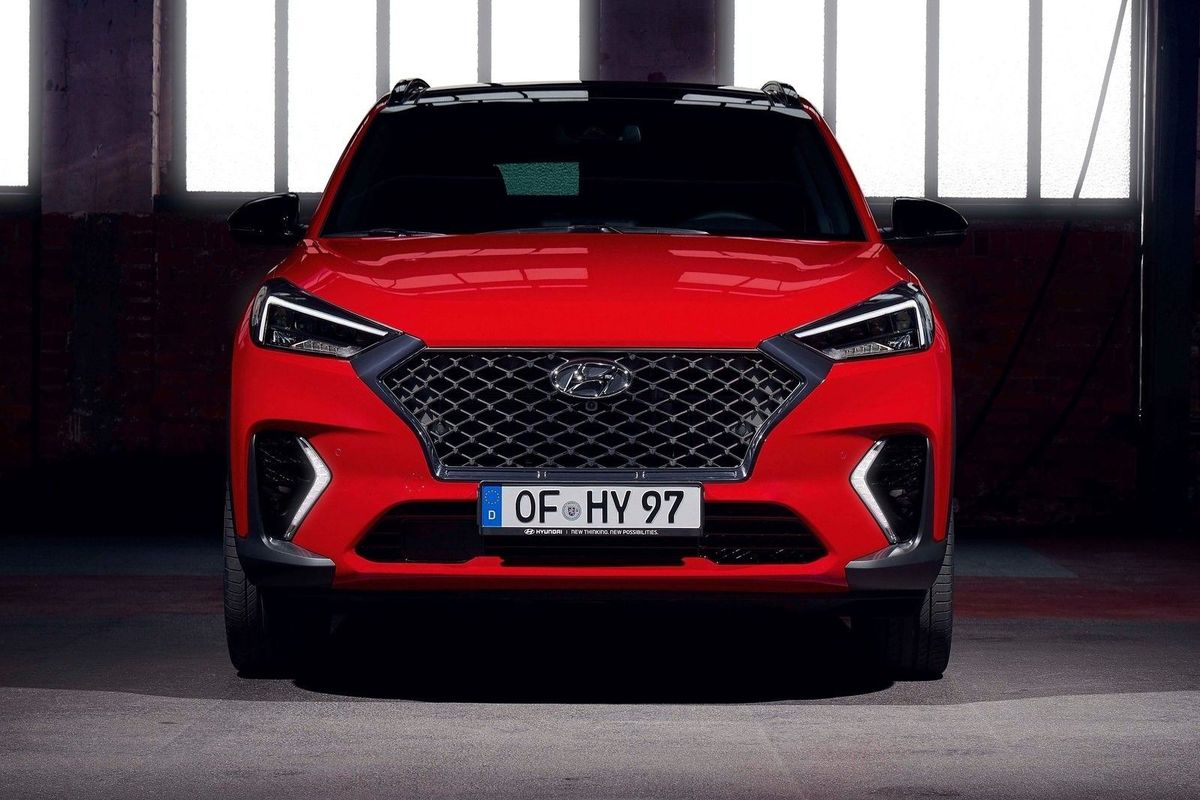
Hyundai is expanding its offering of N-Line performance vehicles.
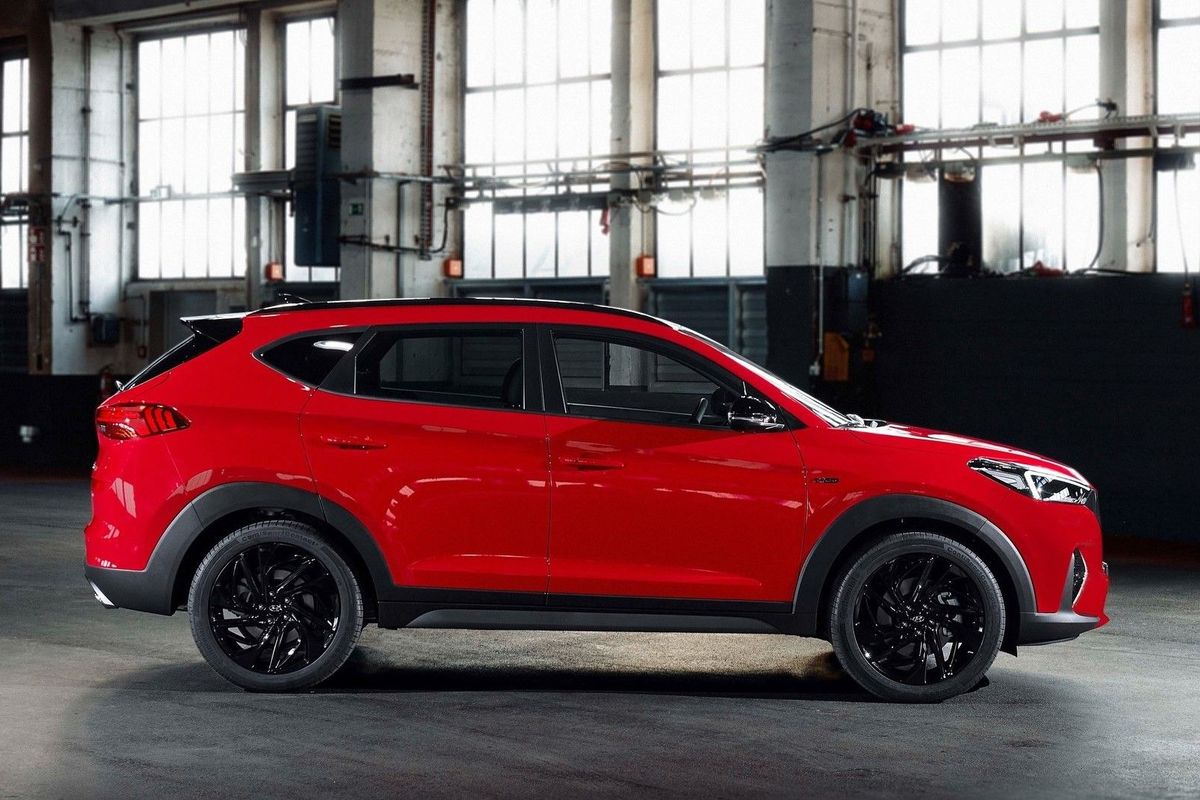
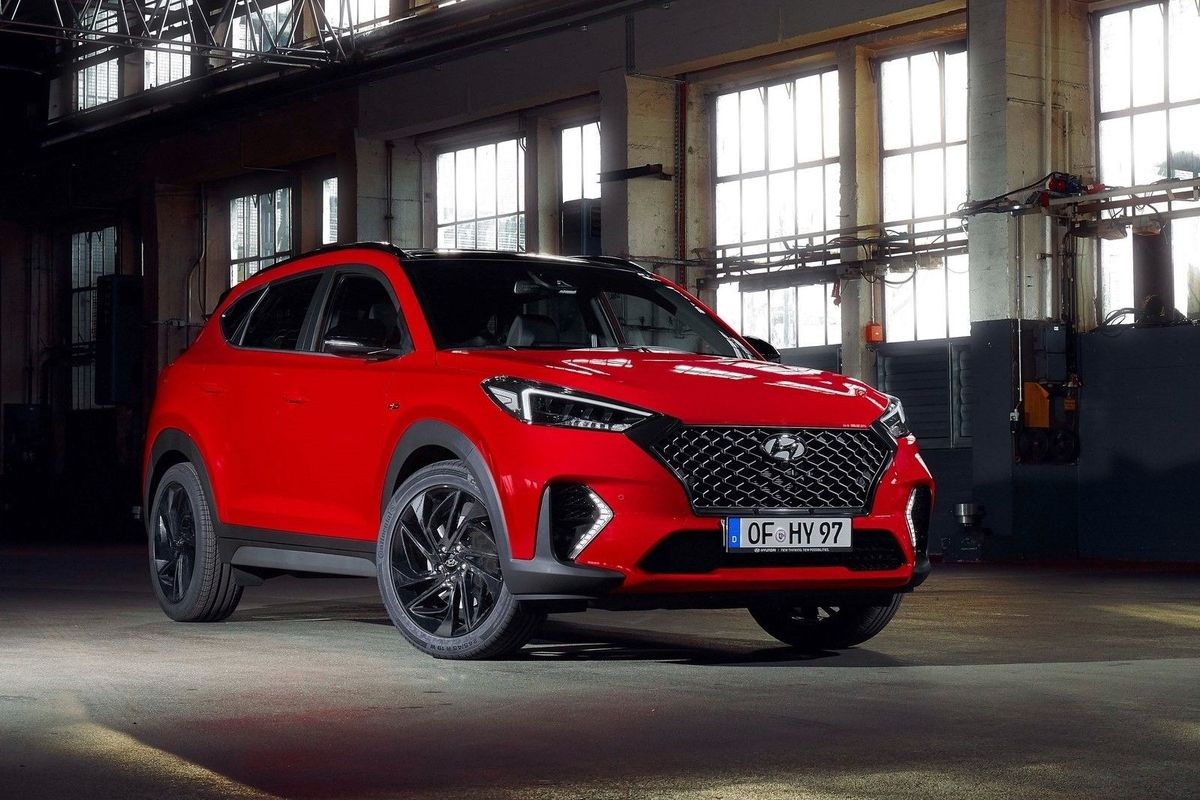
After successfully evolving its i30 hatchback to a true Golf R rival in the form of i30N, Hyundai’s second N-Line vehicle has been revealed to be an SUV.
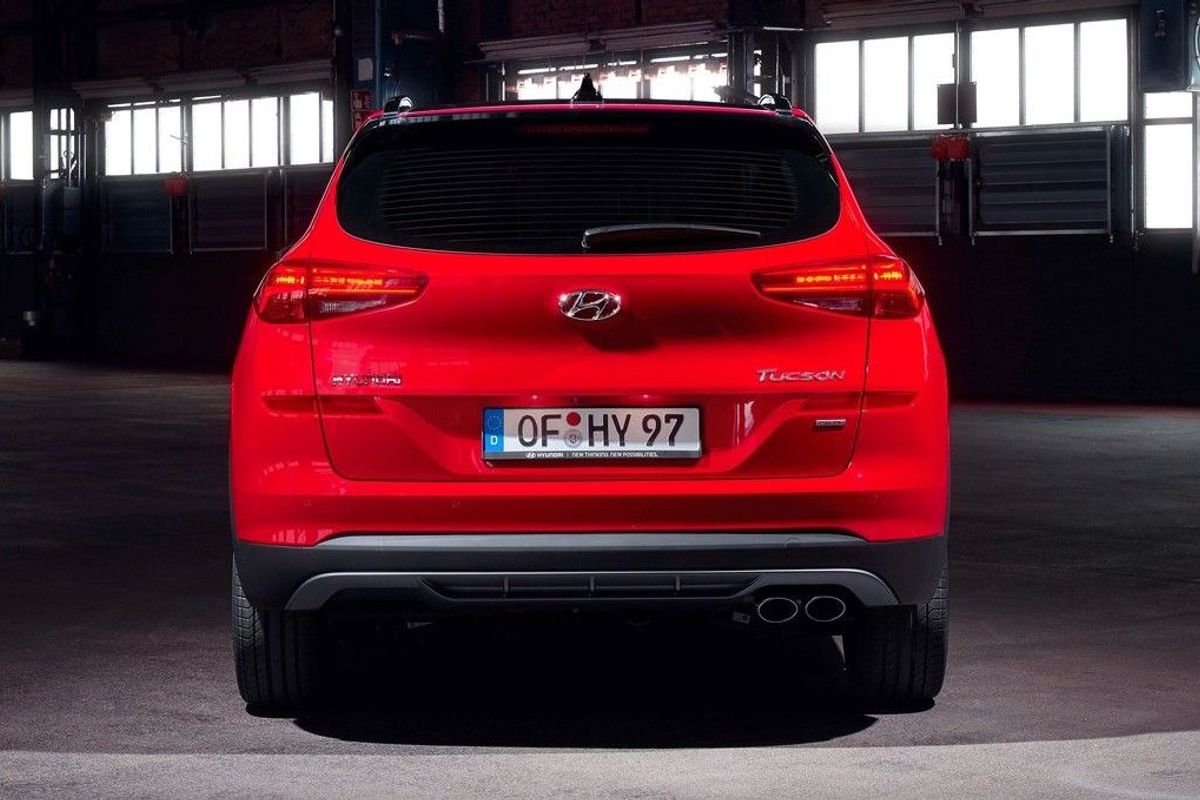
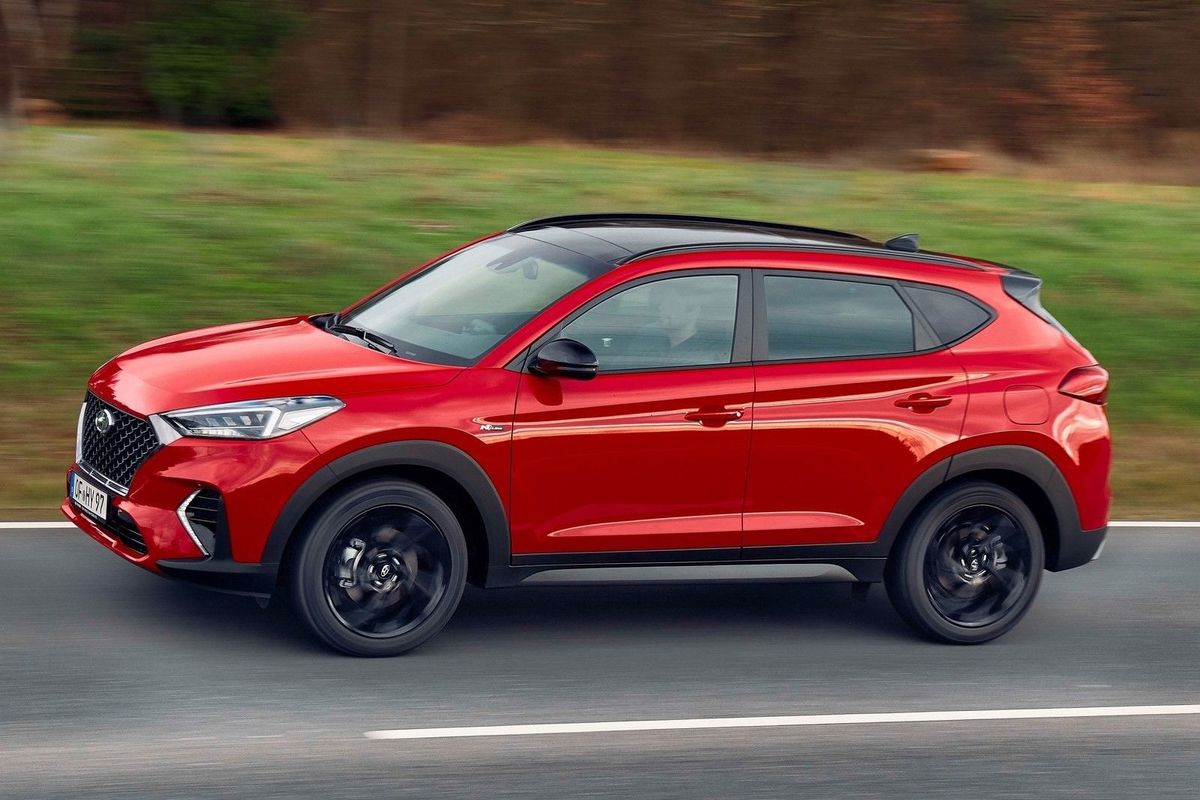
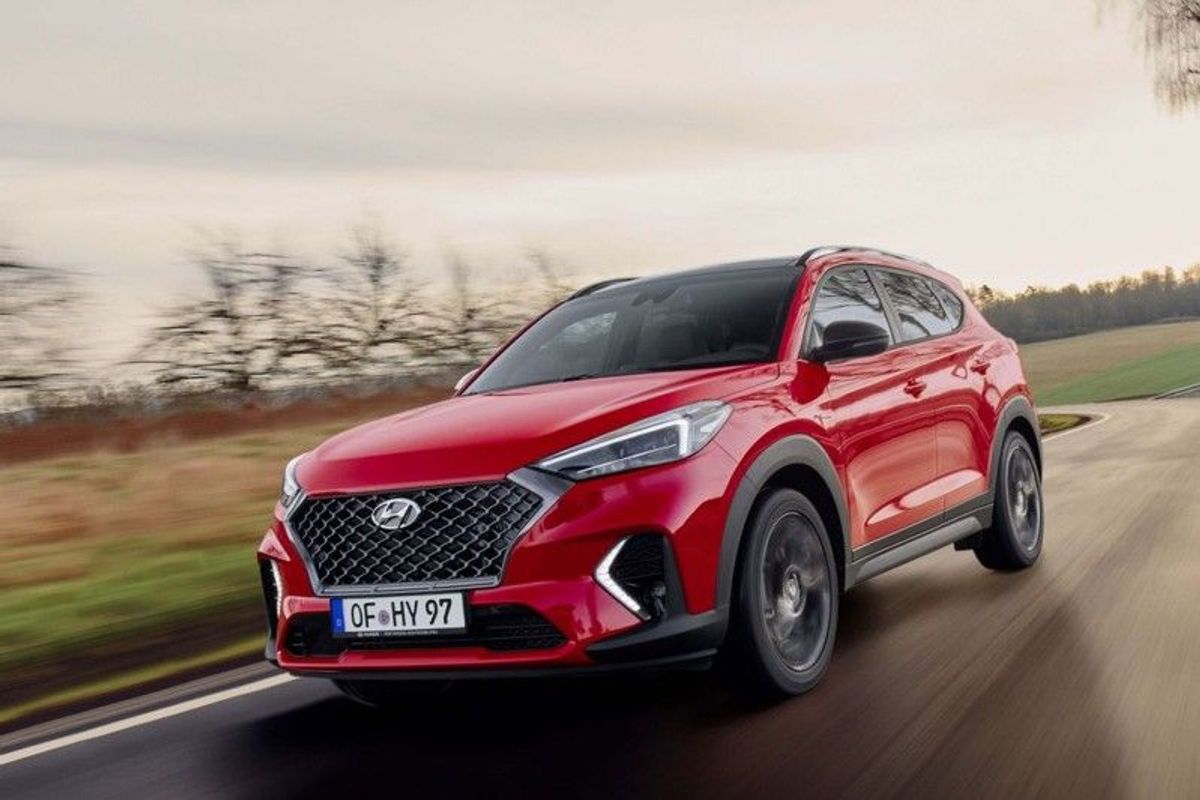
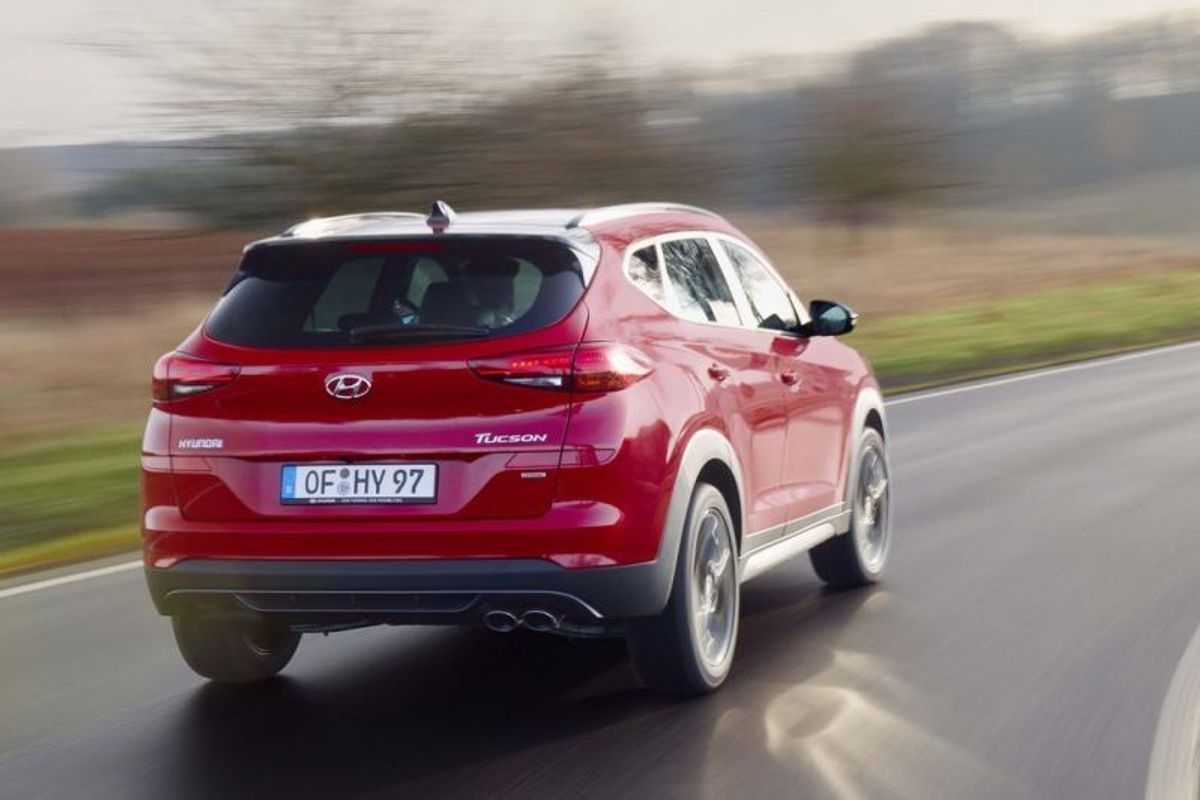
The hotter Tucson features re-sculptured bumpers front and rear, a dark mesh front grille contrasted by chrome surrounds, gloss finish wing mirrors and rear spoiler, darkened side window frame surrounds and an N-Line specific LED illumination pattern for its head- and taillights. Further differentiating the N-Line version from other Tucsons are 19-inch wheels.
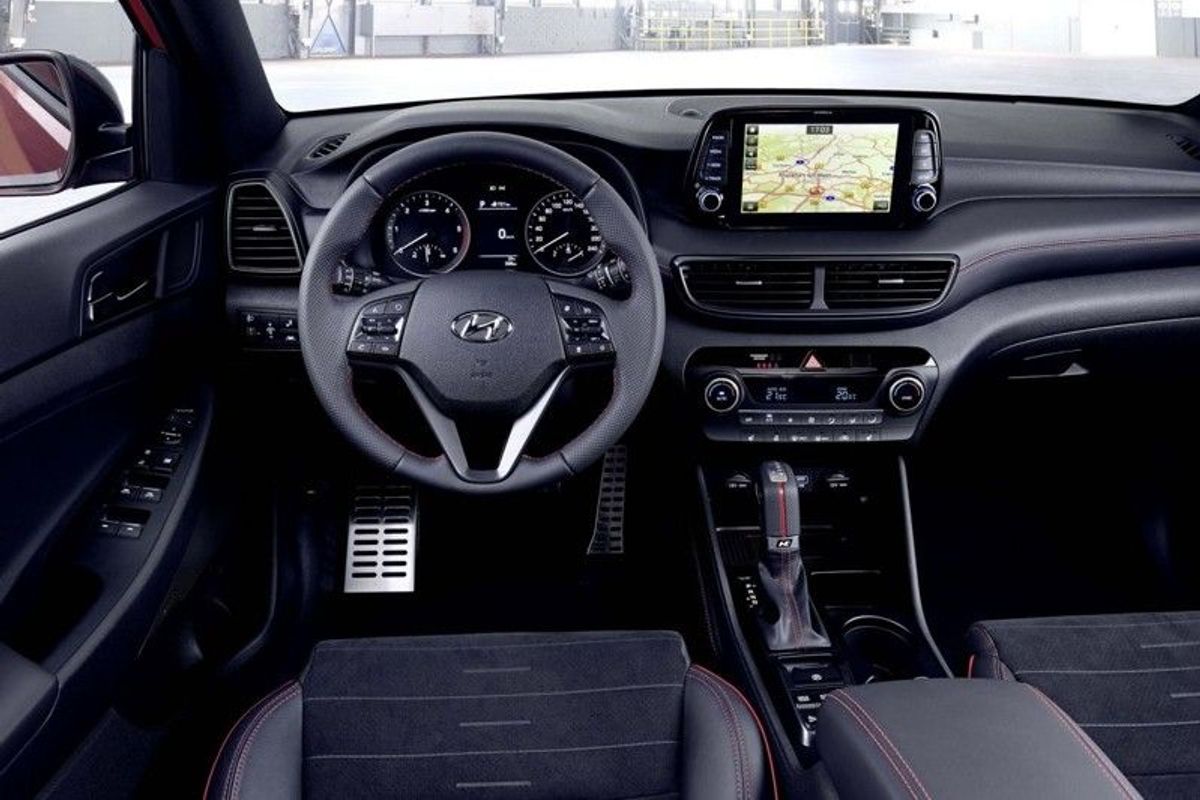
Inside the Tucson N-Line there is red contrast stitching holding the combination suede/leather seats together. The scarlet stitch work is also present on its steering wheel and shifter handle, whilst in the footwell you’ll find aluminium pedals.
Mechanically the N-Line Tucson isn’t quite as wild as Hyundai’s i30N. Three engine options have been confirmed, one petrol and two diesels – all turbocharged. The sole petrol engine is a 1.6-litre GDi boasting 136 kW.
Hyundai’s Tucson N-line diesels are a touch more interesting, all featuring mild hybridisation technology, which is quickly becoming a standard feature on new generation vehicles featuring 48-volt onboard electric architecture. A relatively small 0.44 kWh battery feeds off an integrated starter motor/generator unit, with the aim being improved consumption instead of additional performance.
The 2 mild hybrid assistance engines are Tucson’s 136 kW 2.0-litre diesel, and its smaller compression ignition sibling, the 100 kW 1.6-litre. Hyundai claims that the mild hybrid technology assisting these diesels will reduce fuel consumption by 11%.
If you are seeking the technical justification for these N-Line Tucsons, those details are to be found in the suspension and steering specification. Hyundai has reprogrammed the electrically assisted power steering to provide a more linear feel, instead of the over-assisted feedback which afflicts many Korean vehicles.
Beyond the more tactile steering, N-Line engineers have also increased the lateral anti-roll properties of these ostensibly sportier Tucsons. This is achieved by fitting 5% more rebound loaded springs to the front axle, and 8% stiffer springs to the rear wheel corners.
Europe will be the launch market for Tucson N-Line, with all engines to be available in a variety of configurations: front and rear-wheel drive, with a six-speed manual or seven-speed dual-clutch transmission options.
In a time of dreadful turmoil for the British automotive industry, a glimmer of good news has been confirmed.
The wealthiest man in Britain, Jim Ratcliffe, founder of the Ineos chemical group, has announced that his ambitious project to continue producing a vehicle similar in silhouette and ability to the Land Rover Defender, now has a confirmed engine supplier.
Ratcliffe has convinced BMW to supply his Projekt Grenadier vehicles with its TwinPower turbocharged engines. Having a German engine supplier will be of huge benefit to the Ineos automotive venture, guaranteeing a consistent supply of the best possible technology and consistent production standards.
Ineos has projected that it needs to build 25 000 of its revived Defenders a year to make the Projekt Grenadier venture work and profiting from the misfortunate of others, it might now be in the position to acquire a functioning assembly facility on the cheap.
Honda’s Swindon production facility, which the Japanese are abandoning as part of its Brexit containment strategy, would be excellently suited to building the Projekt Grenadier Defenders.
For fans of the Land Rover Defender, Projekt Grenadier is a hopeful revival and the fact that it will be BMW powered is also of special significance. Especially to South African Land Rover followers. During the brief period when BMW took ownership of Land Rover, in the mid-1990s, the South African subsidiaries of both companies worked together to produce BMW-powered Defenders.
Those Defender 2.8i Land Rovers remain hugely collectable and showed that a sophisticated petrol engine could find application in an extreme off-roader. For BMW, there is no business or product conflict supplying Ineos automotive with its engines.
The Munich brand does not produce a rock-crawling, utilitarian 4×4 – which is what Projeckt Grenadier will evolve into when it becomes a production vehicle, in 2020.
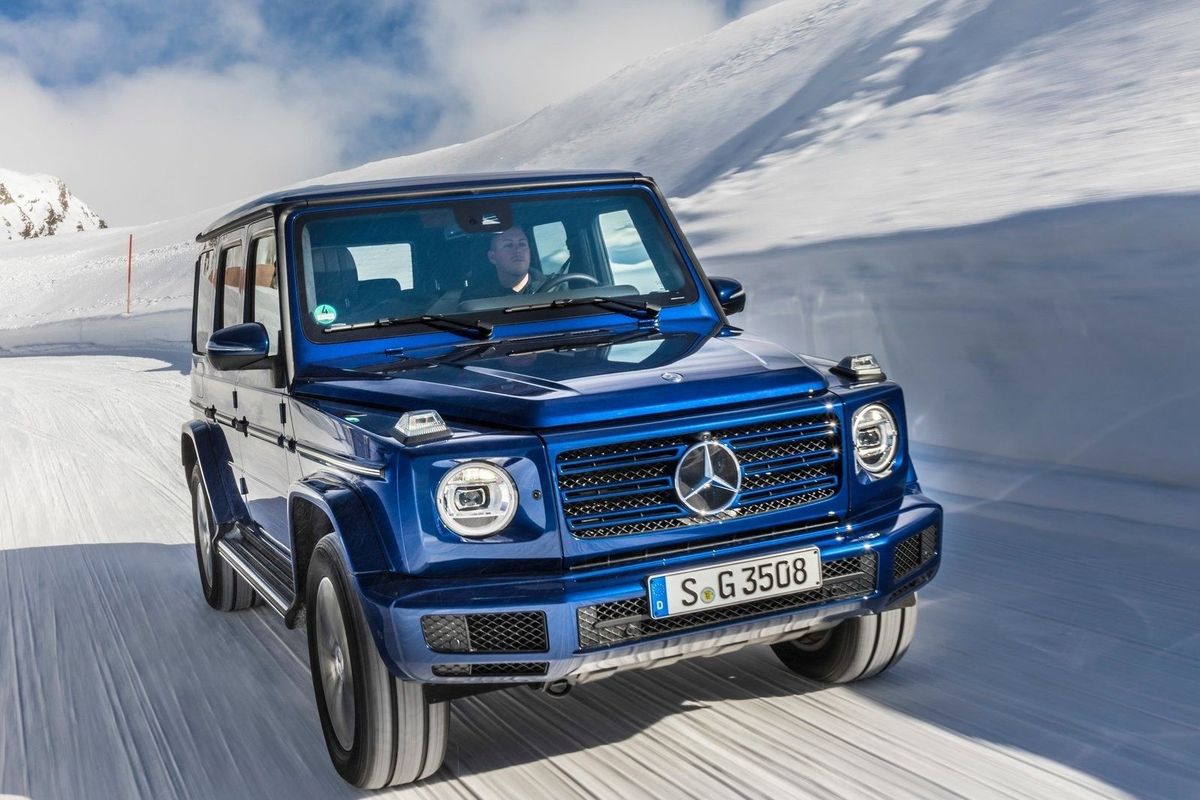
According to a leak on a German insurance website, Mercedes-Benz is planning a powerful diesel model in its G-Class lineup. Here's what we know about the new G400d.
When we think of the Mercedes-Benz G-Class, the first thing that comes to mind is the monstrous G63, with its fiery 4.0-litre biturbo V8 petrol engine sourced from AMG. Few people know that there's also a sensible and capable G350d powered by a diesel engine. However, in comparison to its AMG sibling, the G350d lags behind in the performance stakes.
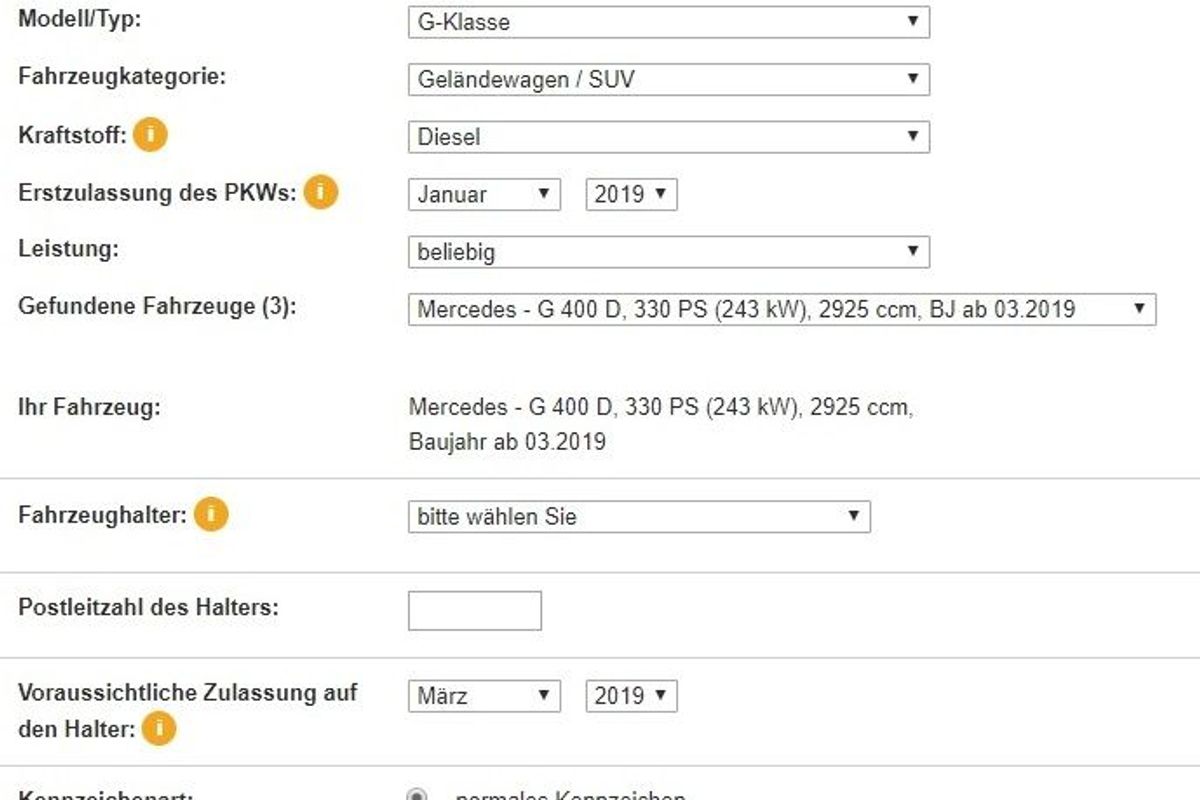
Information from a German insurance website has claimed that Mercedes-Benz is planning a potent diesel engine for its G-Class. Dubbed the G400, the insurance screenshot below also mentions how much power it makes.
With a capacity of 2.9-litres and output of 243 kW, we can make an educated guess and claim this is the OM 656 inline 6-cylinder diesel. First seen in an S-Class in 2017, this engine is capable of 210-250 kW, with monstrous torque of between 600-700 Nm. Final torque figures for this G400d aren't known, but we can bet it'd be closer to 700 Nm, given the high-profile premium and luxury positioning of the G-Class.
We'll wait for the official reveal of the vehicle and then we should get some clarity on South African availability.
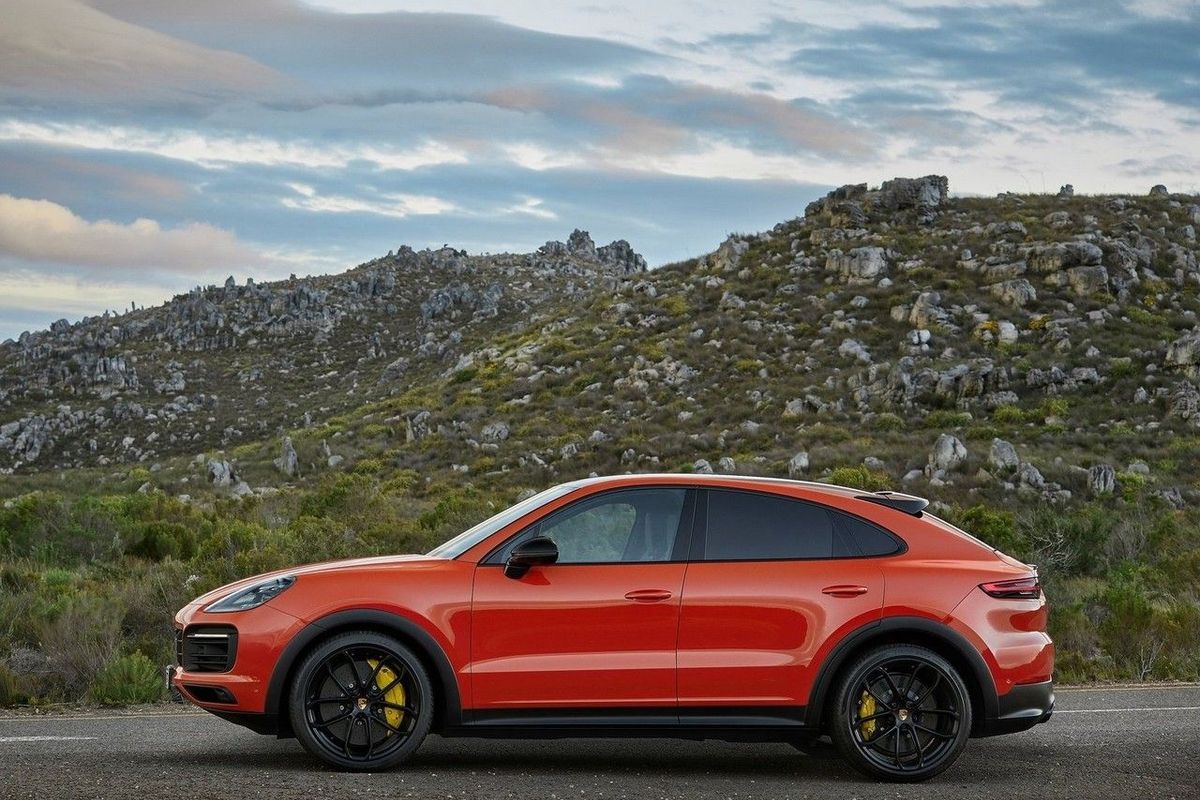
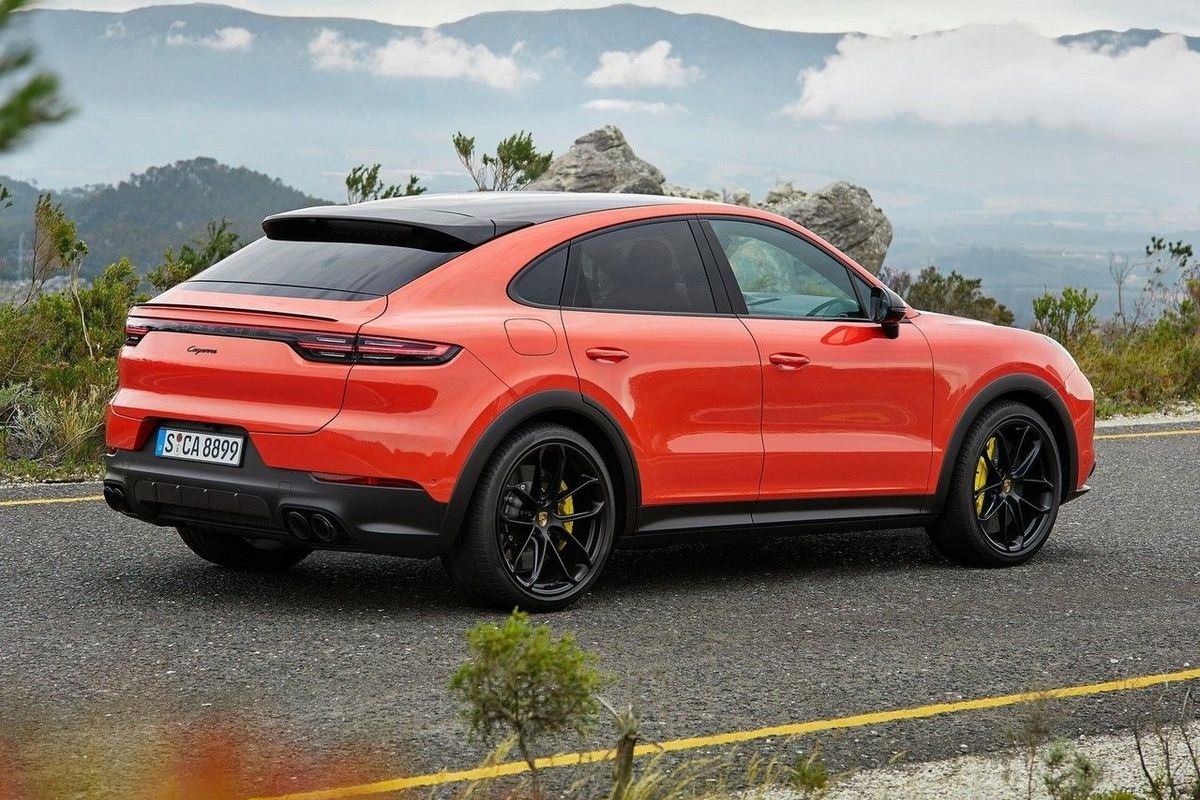
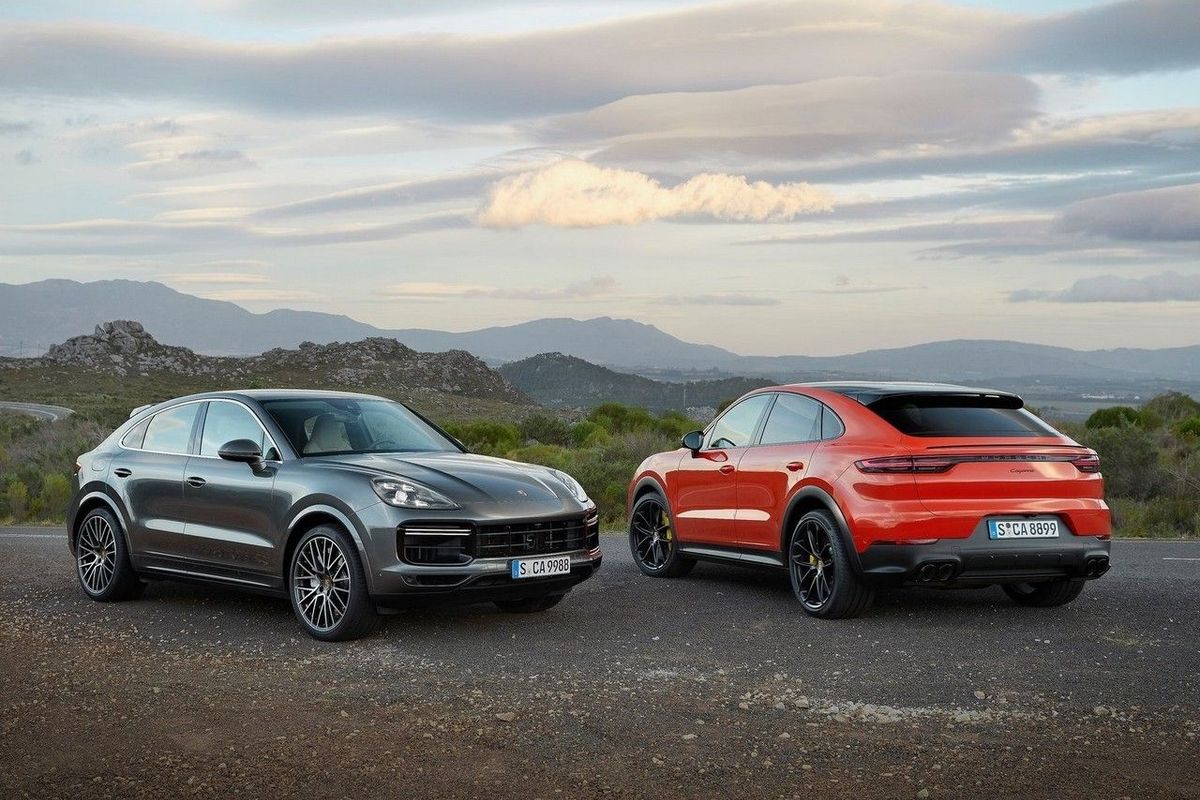
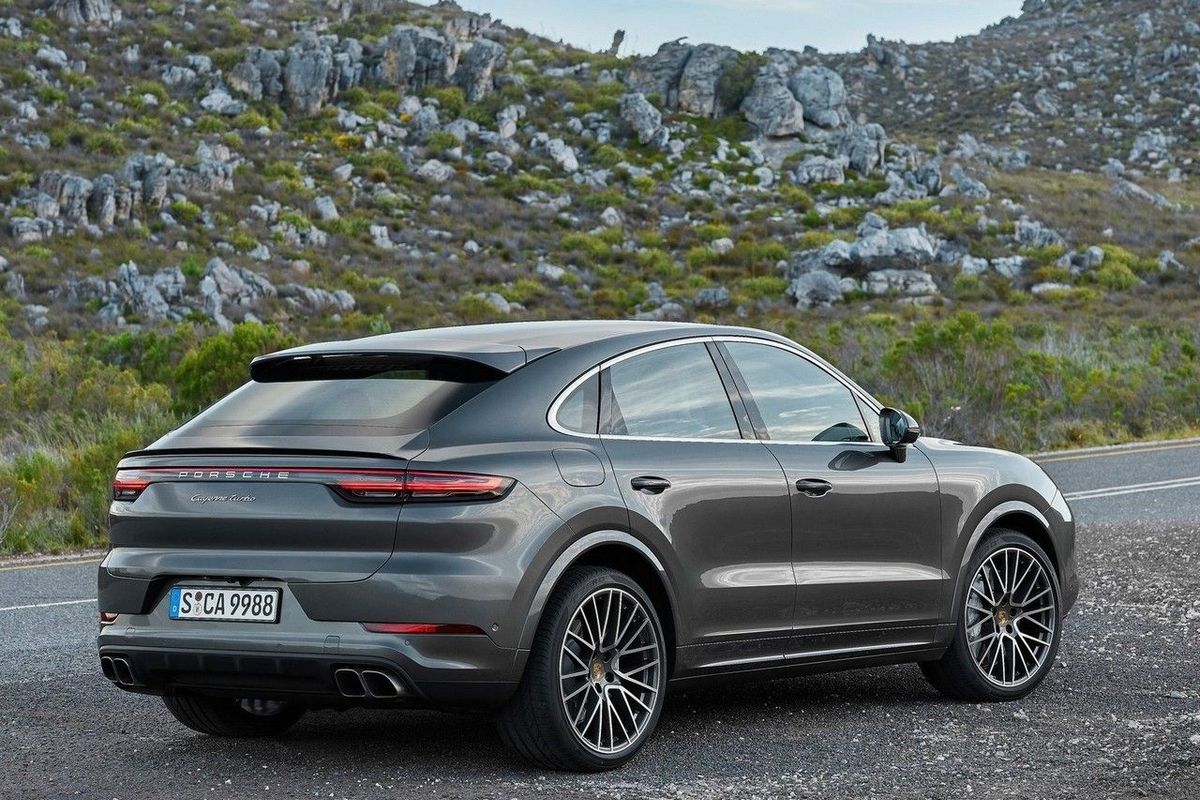
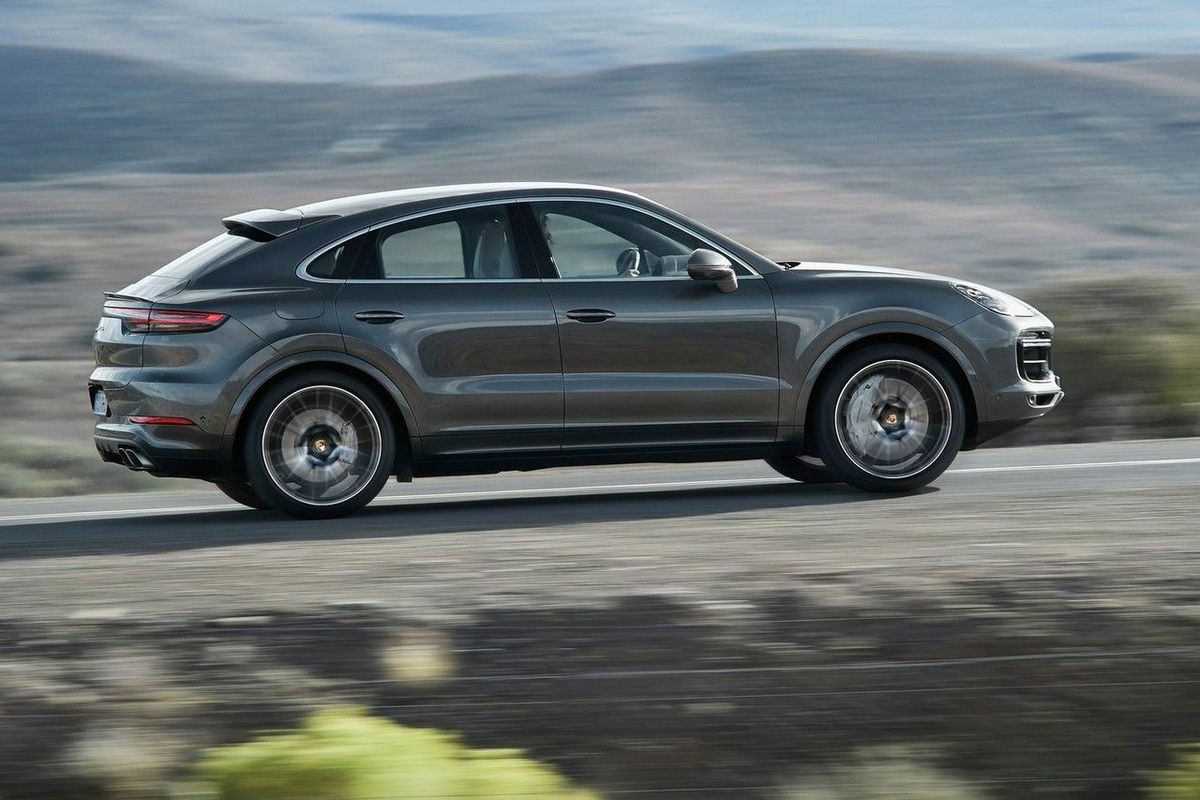
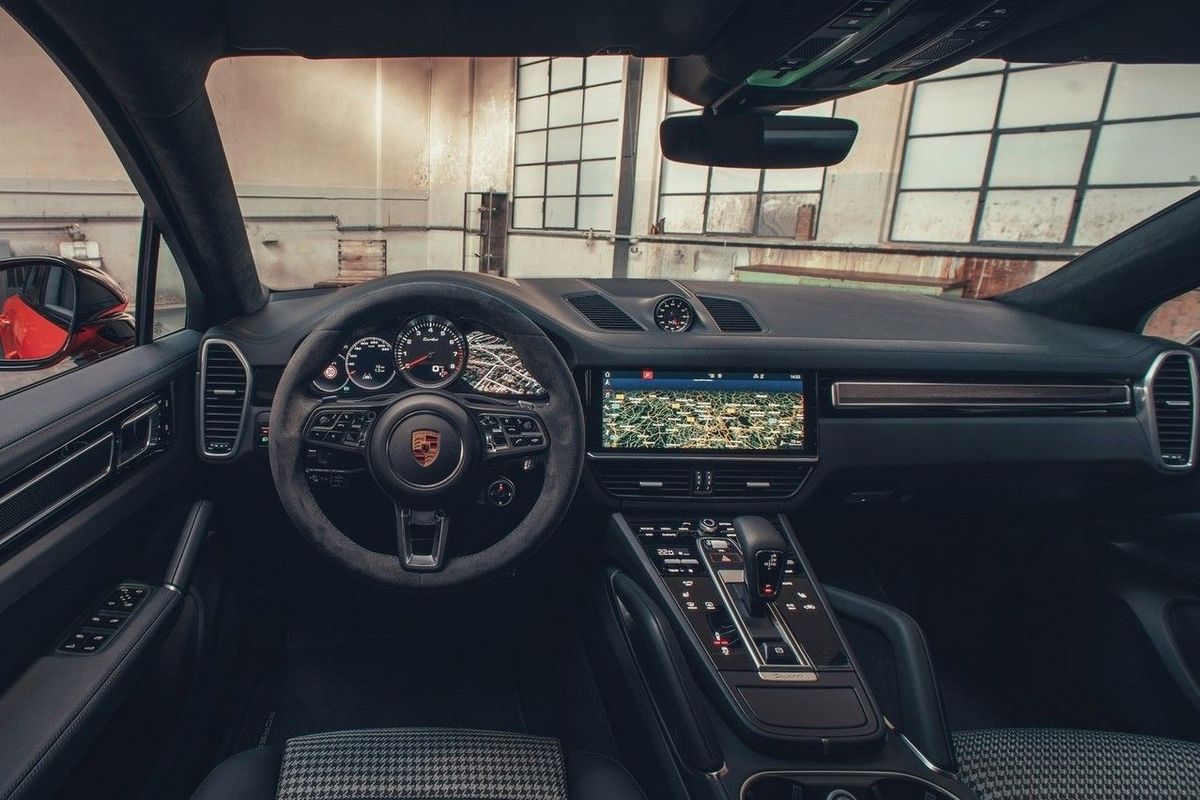
After a few months of teasers and spy shots, the Porsche Cayenne Coupe has finally gone official. What's it all about? Find out here.
The new Porsche Cayenne Coupe is based on the existing Cayenne, but features a slightly different look. According to Oliver Blume, Chairman of the Executive Board of Porsche AG, the new Cayenne Coupe, "includes all the technical highlights of the current Cayenne, and its more dynamic design and new technical details position it as more progressive, athletic, and emotional,"
Some key focus points are the unique rear body style, a speed-sensitive rear spoiler and a rear bench which focuses on 2 individual seats. It's that rear which has us interested, however. "The distinctive roof flyline that falls away to the rear makes the Porsche Cayenne Coupé appear more dynamic, and positions it as the most sporting-looking model in the market segment," says Michael Mauer, Vice President Style Porsche. The differences between the standard Cayenne and Coupe are substantial. Not only are the A-pillar and front windshield shallower thanks to the roof height being reduced by 20 mm, but there are also new-look rear doors and wheel arches, which are 18 mm wider, giving it a sportier stance. Boot capacity is rated at 625 litres with the seats up, and 1 540 litres with them down. The Turbo version boasts 600-1 510 litres.
There'll be just 2 engines offered. Kicking off the range is the 3.0-litre V6 turbo with 250 kW and 450 Nm, enabling it to hit 100 kph in 6 seconds. The second engine can be found in the Cayenne Turbo Coupe and is a 4.0-litre turbocharged V8 boasting outputs of 404 kW and 770 Nm. It's capable of a brisk 3.9 second claimed run to 100 kph.
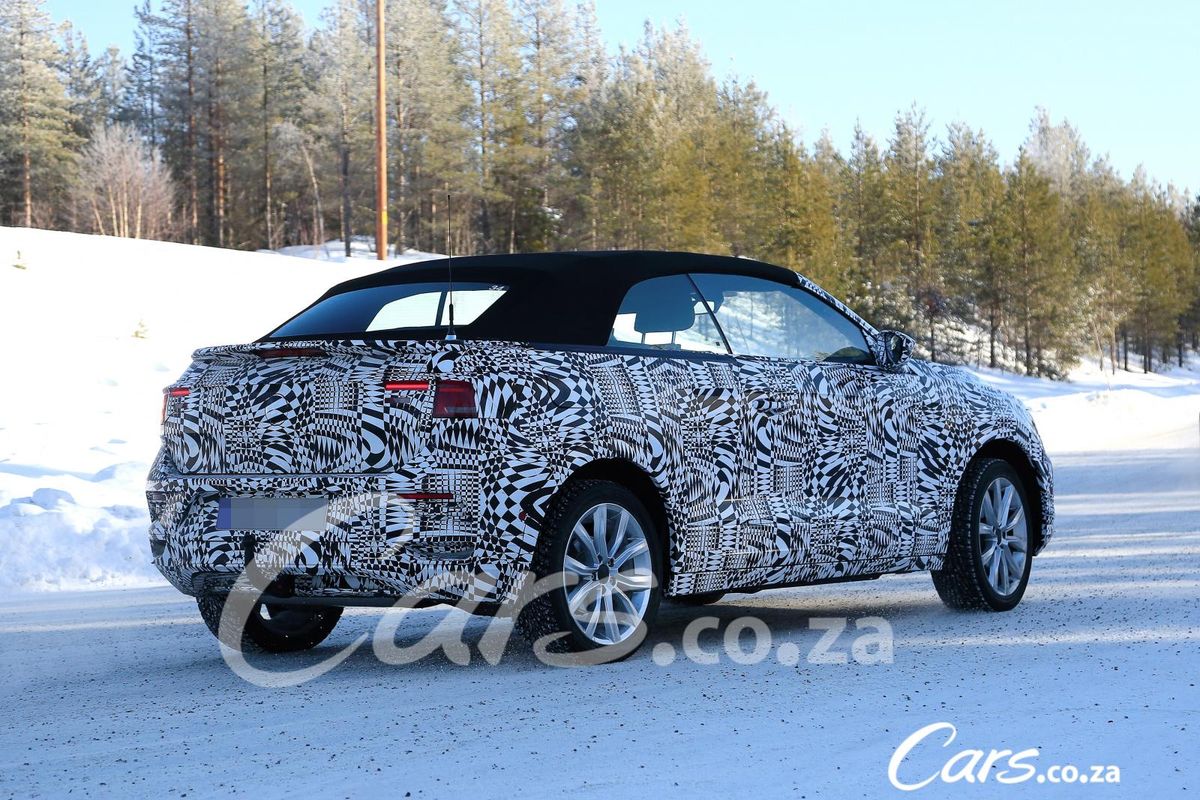
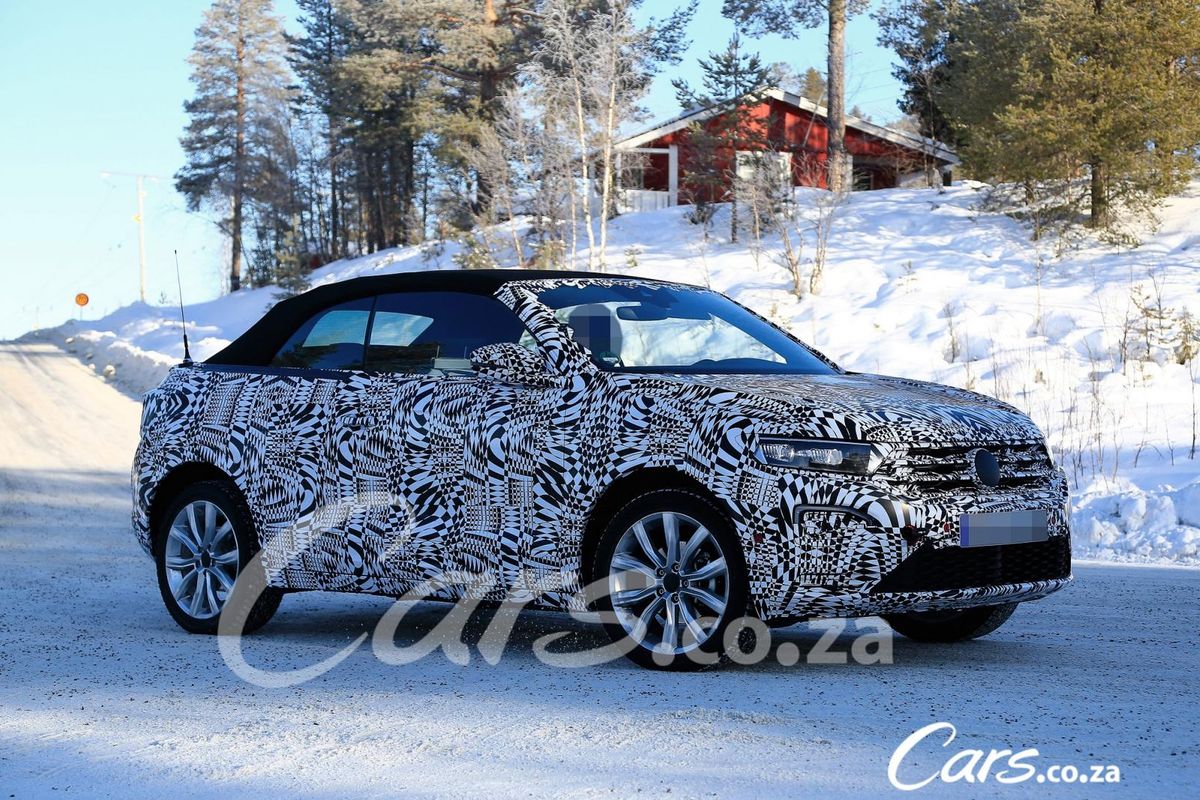
Our spy photographers have been hard at work capturing forthcoming products. This time its the Volkswagen T-Roc Cabrio.
Image credit: S. Baldauf/SB-Medien
Volkswagen is backing an SUV-intensive future. With CEO Herbert Diess predicting that 40% of Volkswagen's global sales will come from SUVs by 2020, the German brand is making an SUV for everyone.
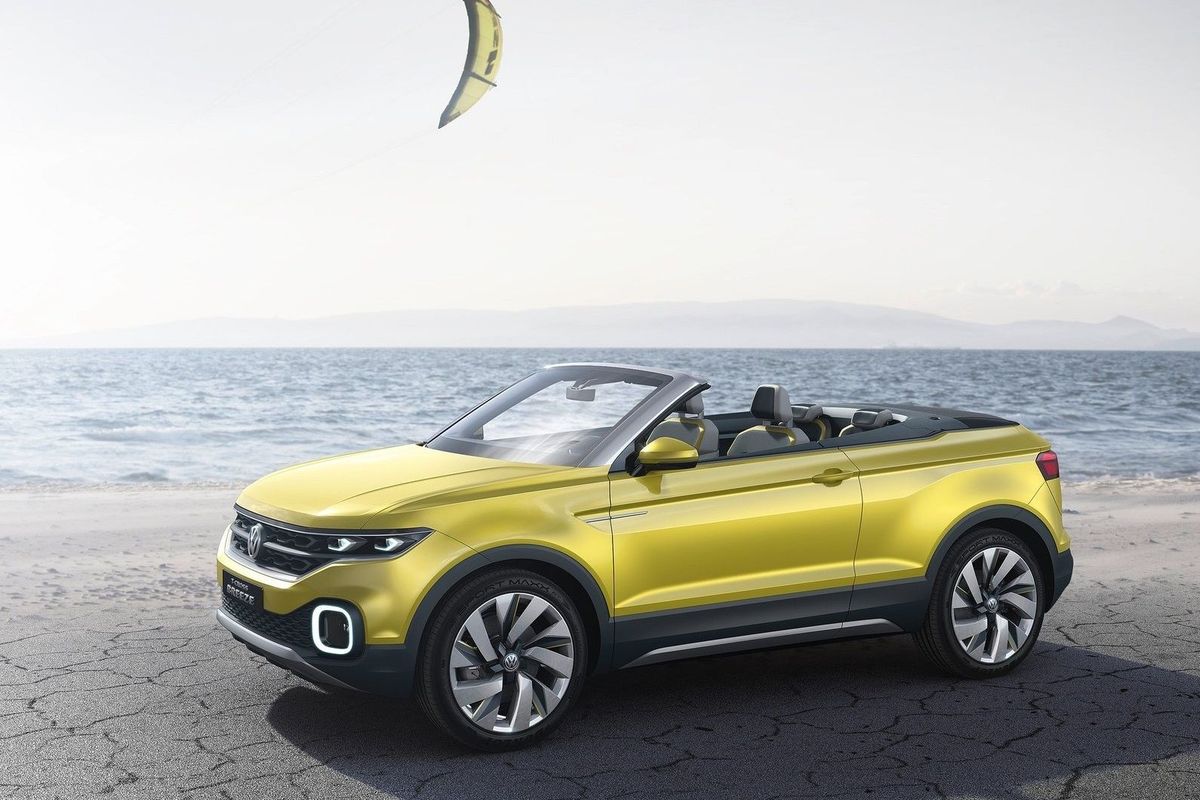
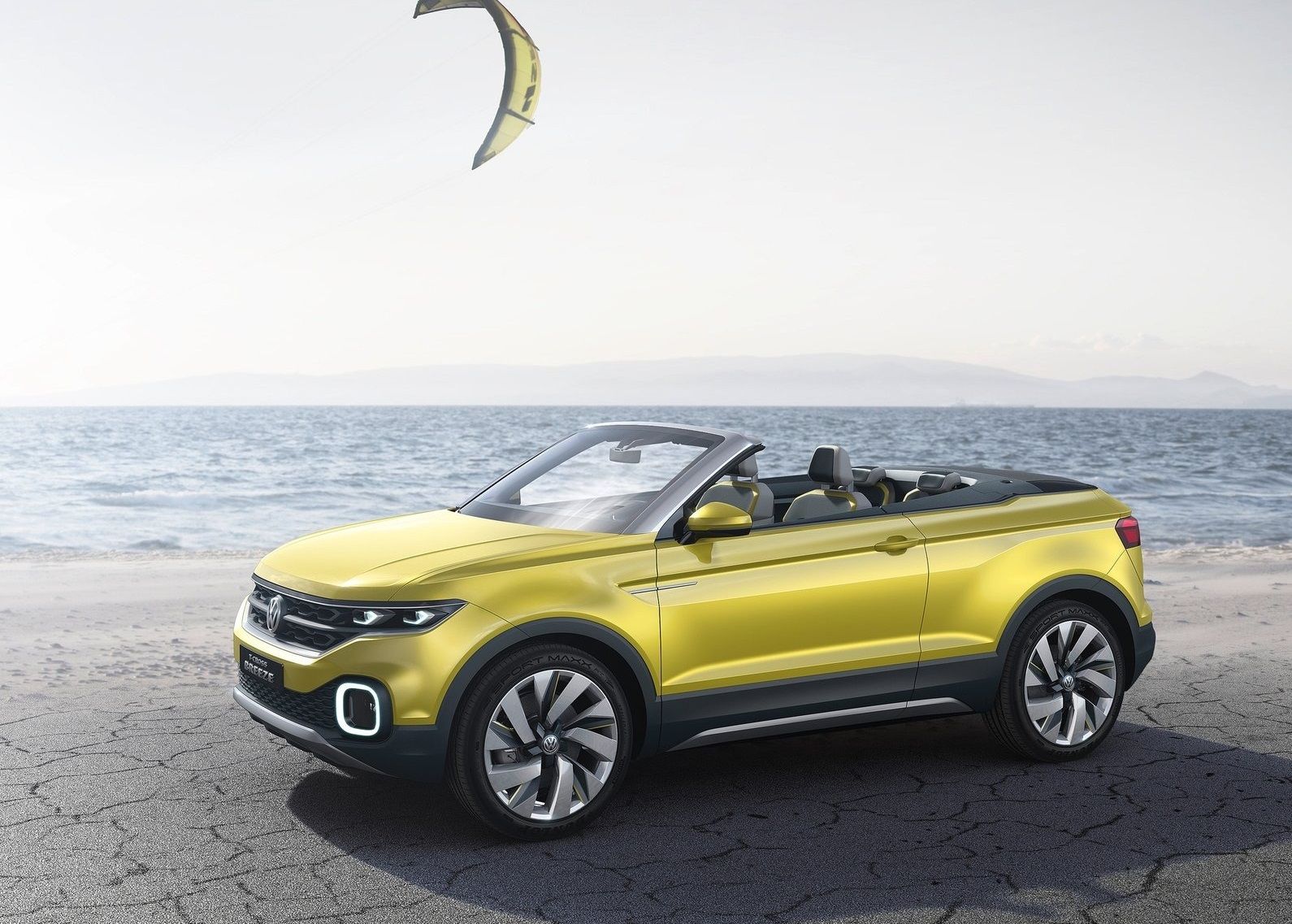
This is a convertible version of the Volkswagen T-Roc. We know the Volkswagen T-Roc is confirmed for South Africa and will be arriving on our shores early next year, but not much is known about this convertible version. Inspired by the Volkswagen Breeze Concept (pictured below), the Volkswagen topless T-roc was spotted undergoing winter testing in Northern Europe.
Convertible SUVs are not a new thing, with Nissan experimenting with a Murano convertible and more recently, there was a Range Rover Evoque Cabriolet.
BMW is set to introduce an all-new 2 Series Gran Coupe. Here's what we currently know about it.
BMW CEO Harold Kruger announced plans are afoot to release a BMW 2 Series Gran Coupe to the market in early 2020. The car will officially make its debut at the Los Angeles Motor show in November 2019. Fans of the 2 Series architecture may be a little upset to find that this model will be based on the 1 Series platform, which in tandem with Mini, only produces front-driven and all-wheel-drive cars. The 1 Series itself has not yet been shown but should make an official appearance any day now.
Obviously, the engine lineup is yet to be confirmed but in line with BMW's current models, it's likely to have a 1.5-litre 3-pot turbo and a 2.0-litre turbopetrol model. The M-Performance models will no doubt join the fray too with the 225 kW and 450 Nm turbocharged 2.0-litre unit.
The teaser image shown doesn't give much away other than the sloping C-pillar and lengthy taillight design that similar to the new 3 Series.
Ford Kuga 2.0T AWD ST Line (2019) Review [w/Video]
Amid its efforts to rebuild the reputation of the Kuga nameplate in South Africa, Ford launched a thoroughly updated version of its family car late in 2018. We test a range-topping ST Line derivative, but given the Kuga fire saga that was front page news for weeks in South Africa, it's nigh on impossible to evaluate the product in isolation.
We like: Purposeful looks, on-road refinement, willing performance, good spec
We don't like:Ageing cabin, marginal cabin plastics, middling fuel consumption
The Kuga ST Line does not have many rivals in a segment where diesel is the fuel of choice.
While ST versions of the Focus and Fiesta have made Ford's performance badge a household name and inspired legions of fans in the petrolhead community, this is NOT an ST version of the Kuga. Instead, the ST Line badge denotes aesthetic upgrades only, even if the 2.0T AWD's suspension has received a light ST treatment. The ST-Line spec is designed to appeal to those looking for something that looks like a high-performance vehicle.
It's a rather bold move to apply it to a rather large SUV – some may even regard it as counter-intuitive – but it's a tactic the German brands have been using successfully for decades. Audi offers the S-Line trim, Mercedes-Benz the AMG Line, and a number of BMW derivatives bear M badges.
How does it fare in terms of…
Kerb appeal?
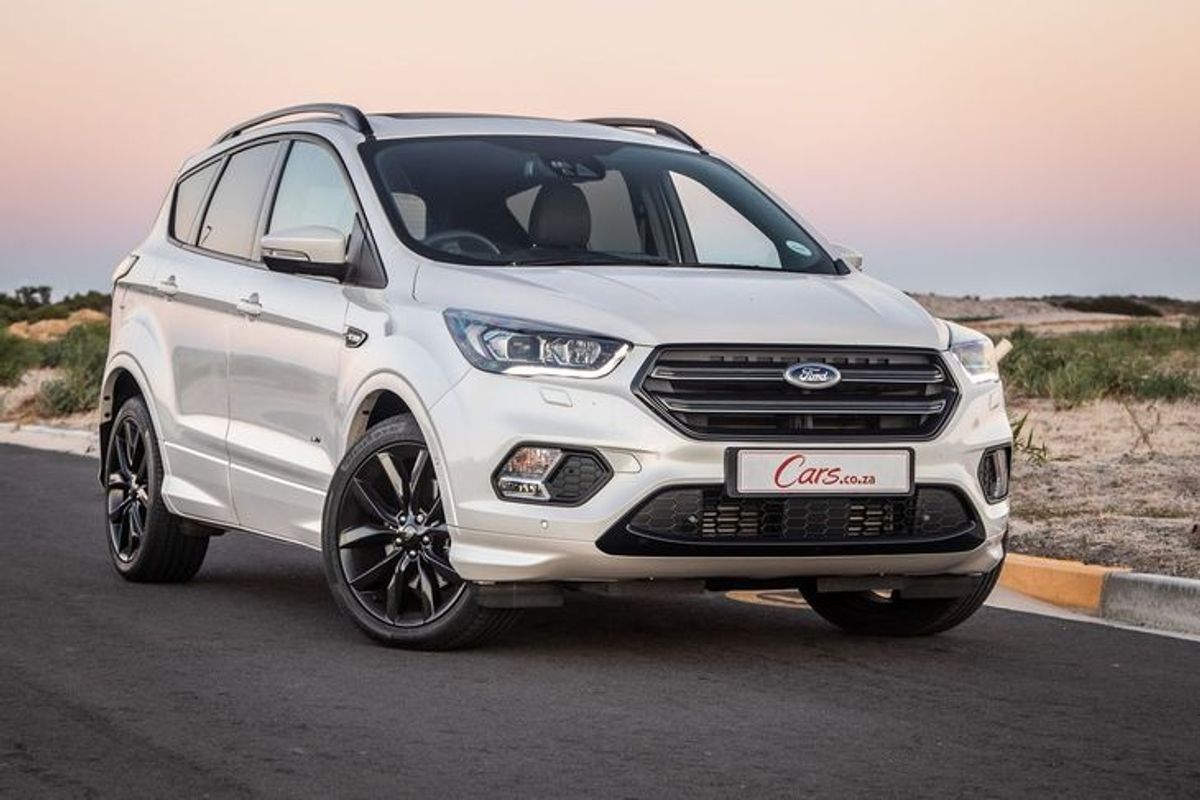
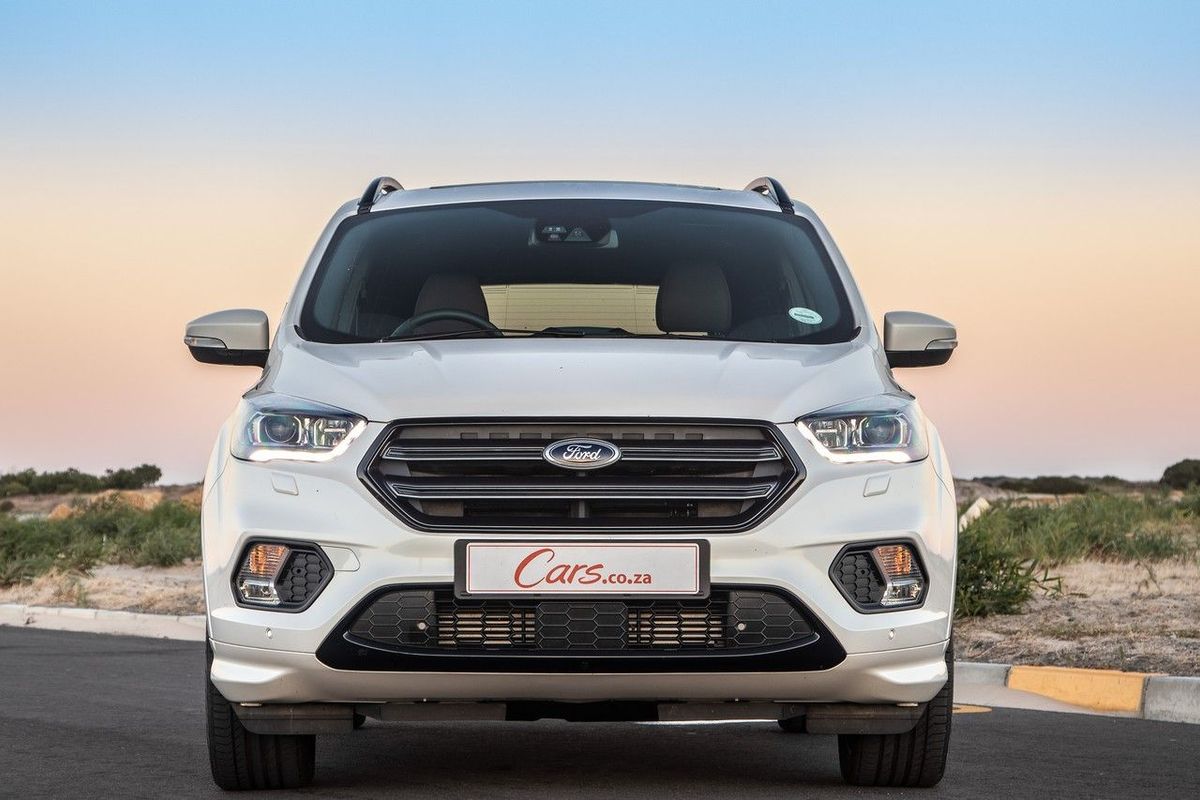
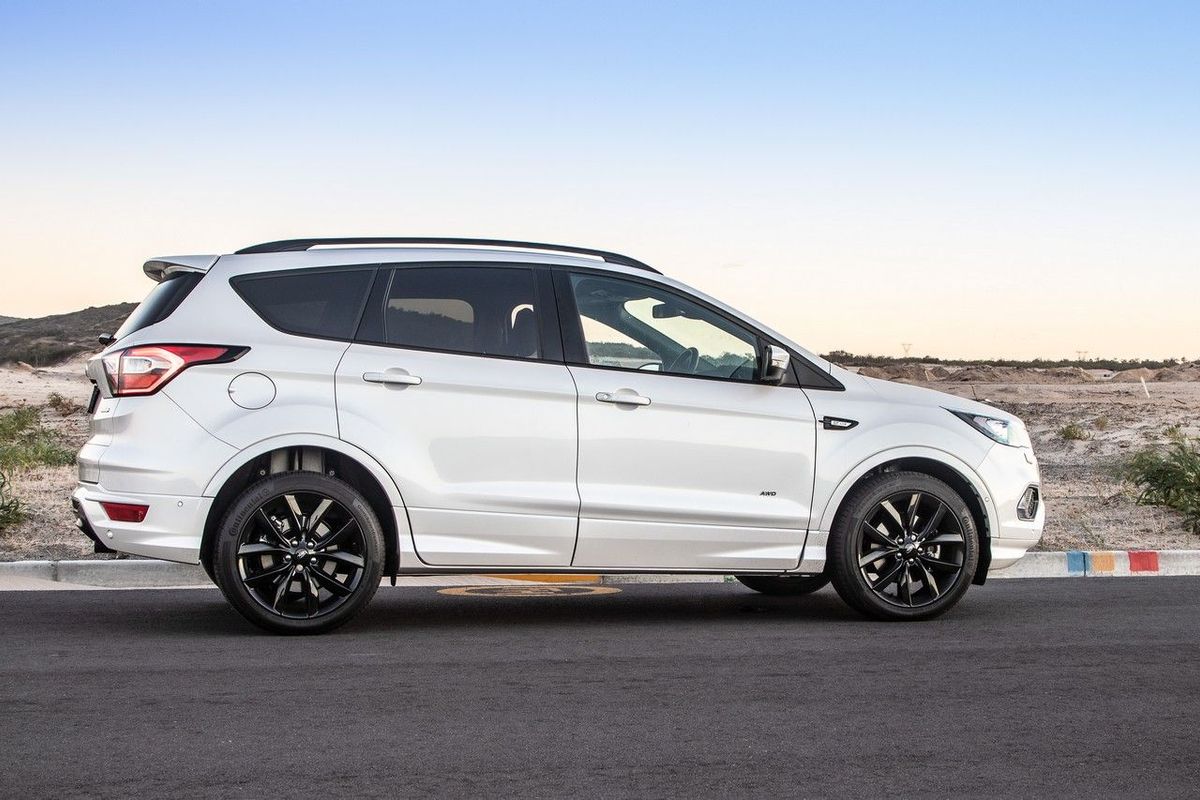
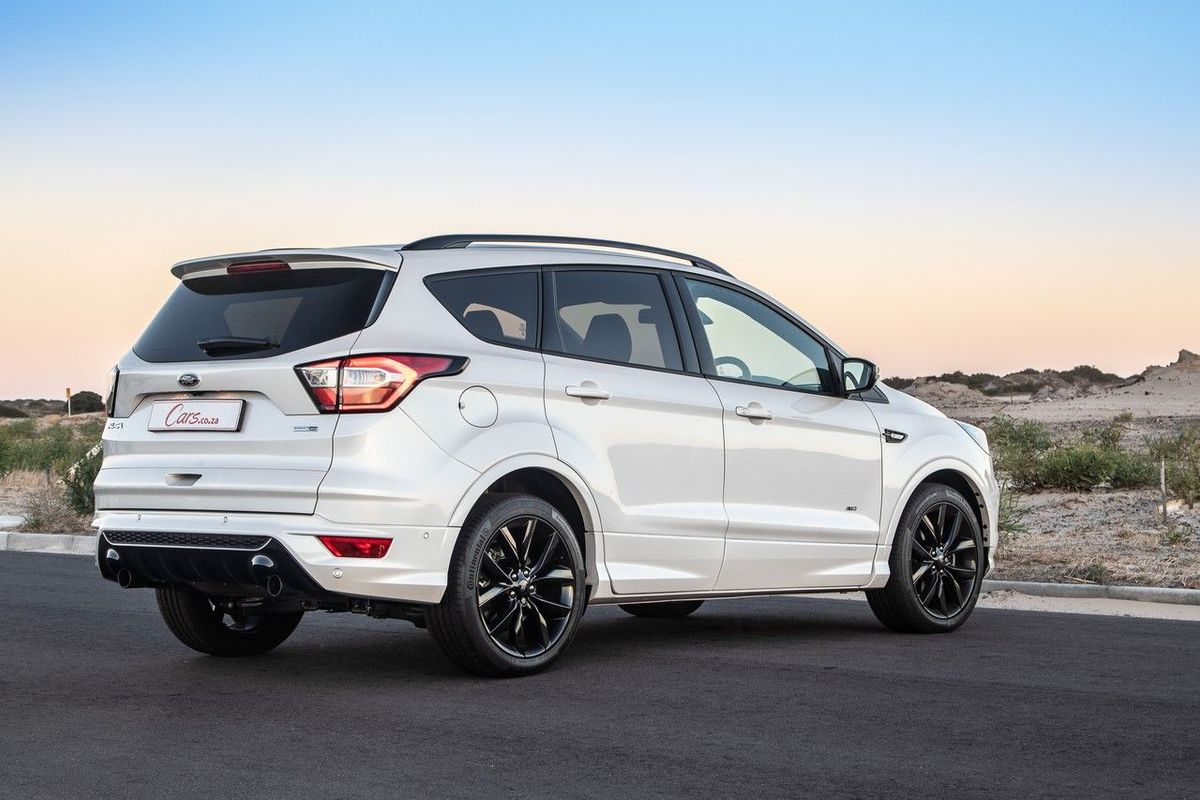
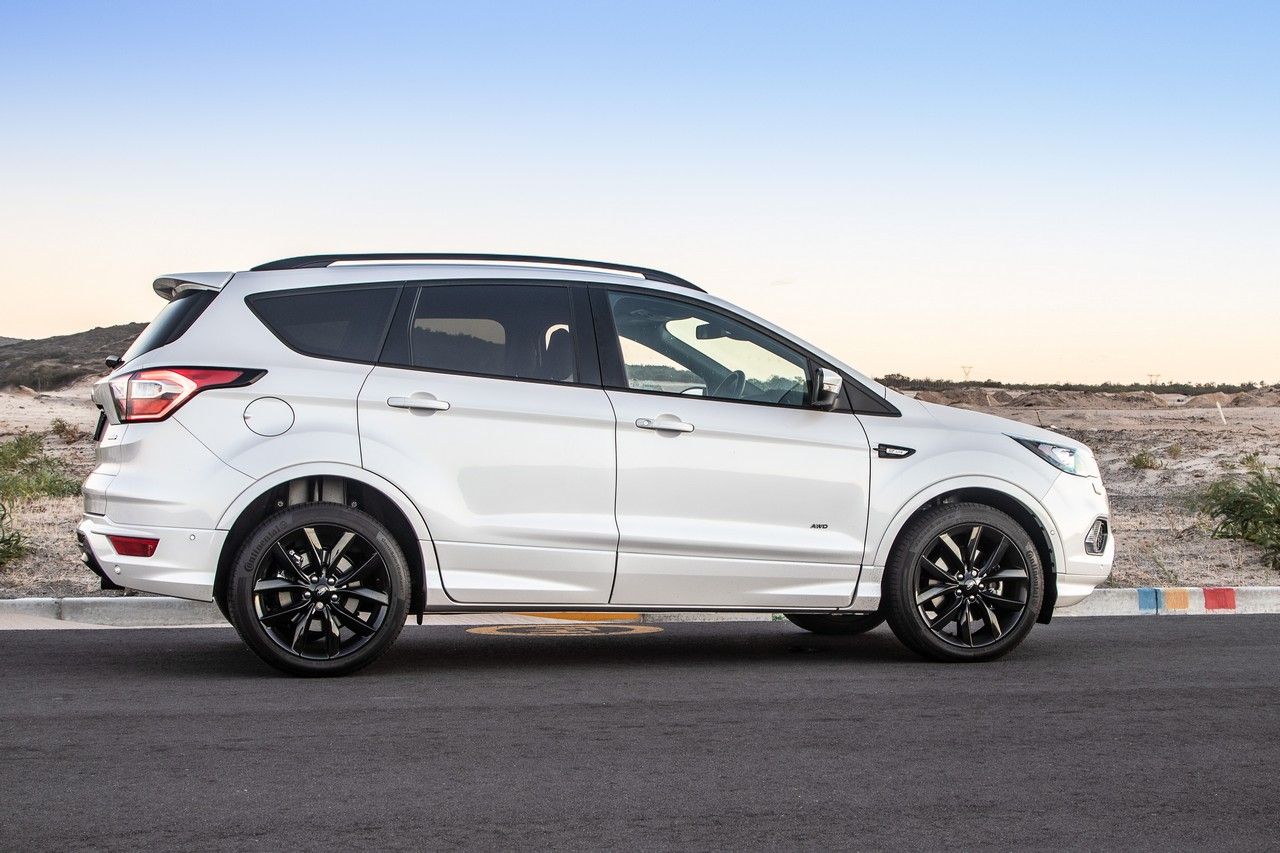
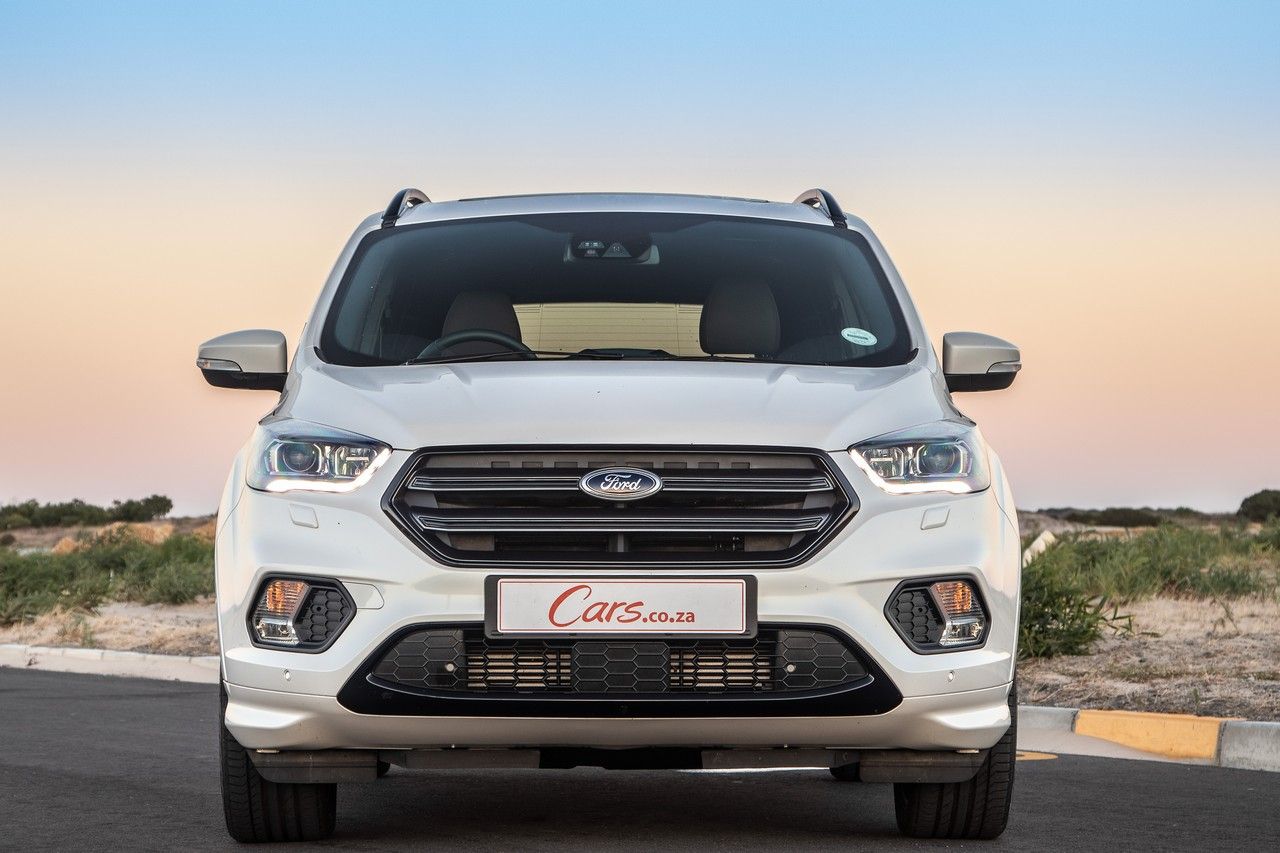
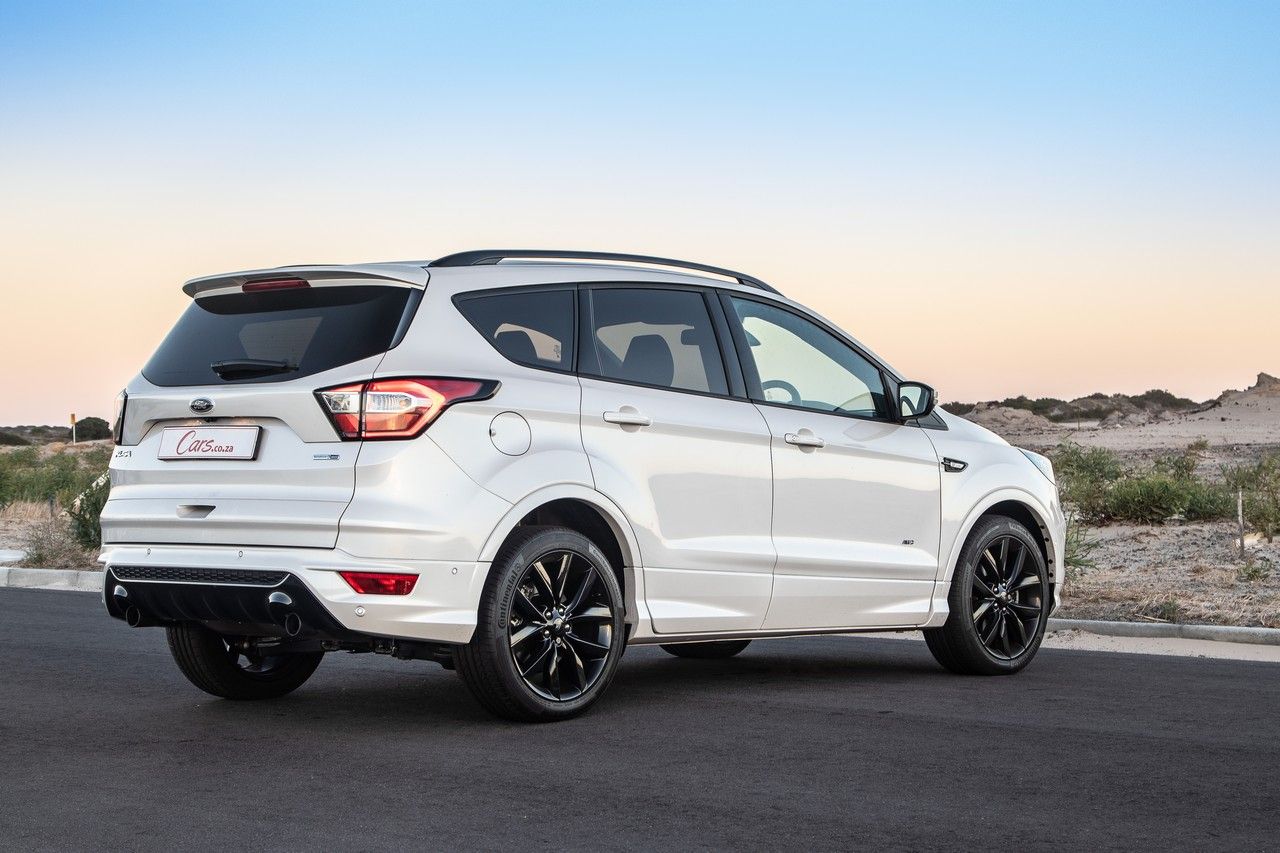
Its white exterior finish might lack a bit of imagination, but the 2.0T AWD ST Line looks purposeful. With a well-proportioned design and a poised stance, Ford's (relative) newcomer conveys its intentions well. The aesthetic upgrades strike a good balance between subtle and “look at me”.
A bit of suspension work and a body kit gives the ST Line an imposing front end.
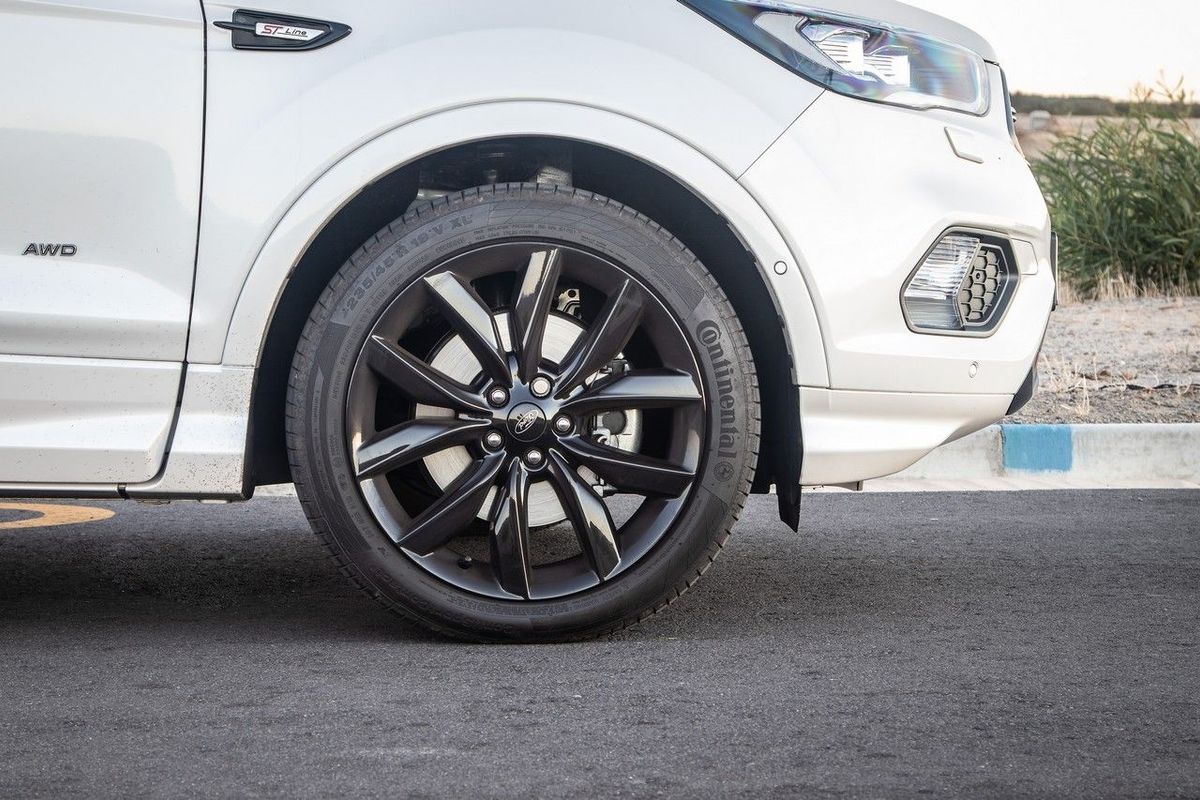
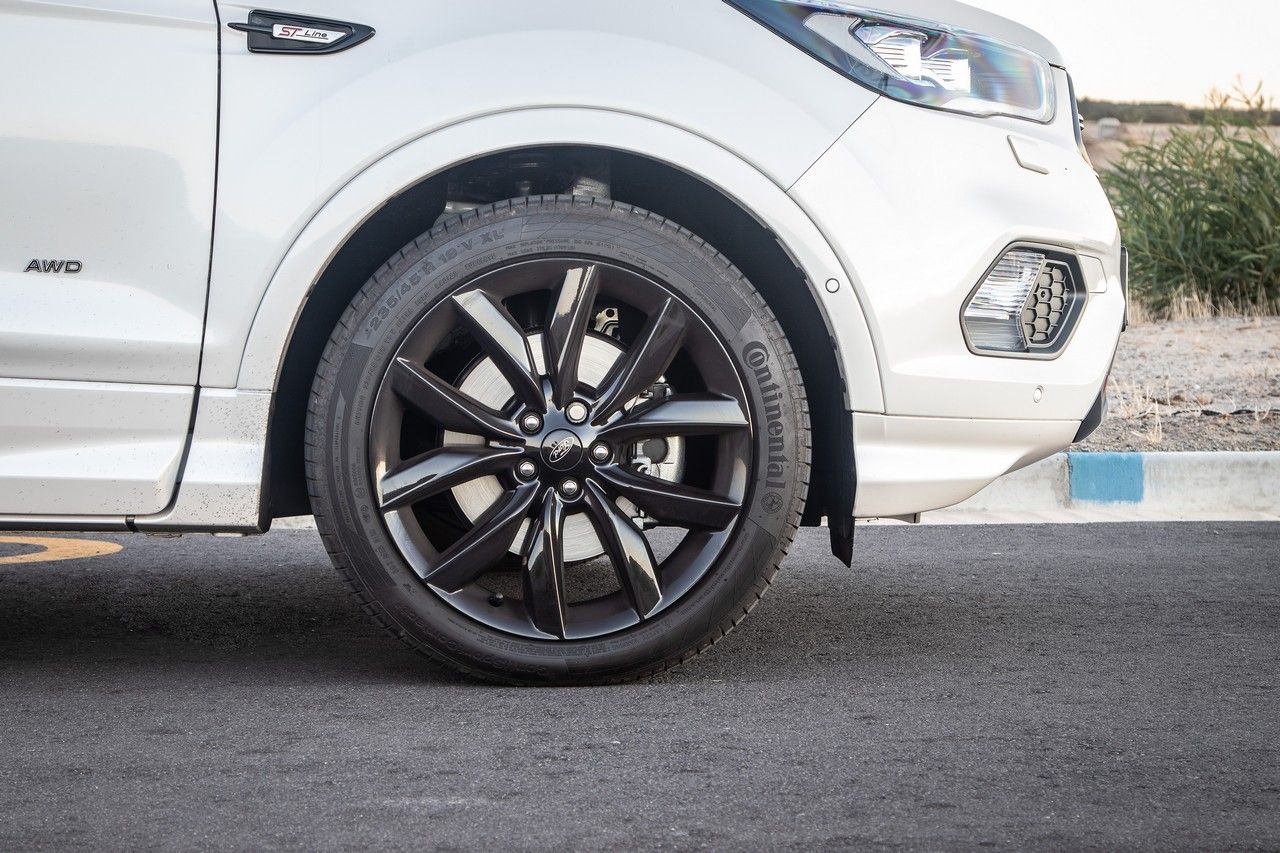
The list of ST-Line accessories is extensive. Most striking is the all-black grille with revised front bumper, and the all-black 19-inch alloy wheels. "Eighteens" are standard, but the optional 19s fill the wheel arches well and, as we’ll discuss later, seem to make no difference to the ride quality. The suspension is lowered and tweaked for better handling, and the car rides 10-mm lower than a standard car.
Other exterior accoutrements include black roof rails, a black rear diffuser (between the revised exhaust ends), darkened headlights and taillights and ST-Line scuff plates in the front doors. To summarise, then, it’s not a shouty car; it just looks well-sorted.
Interior tech and features?
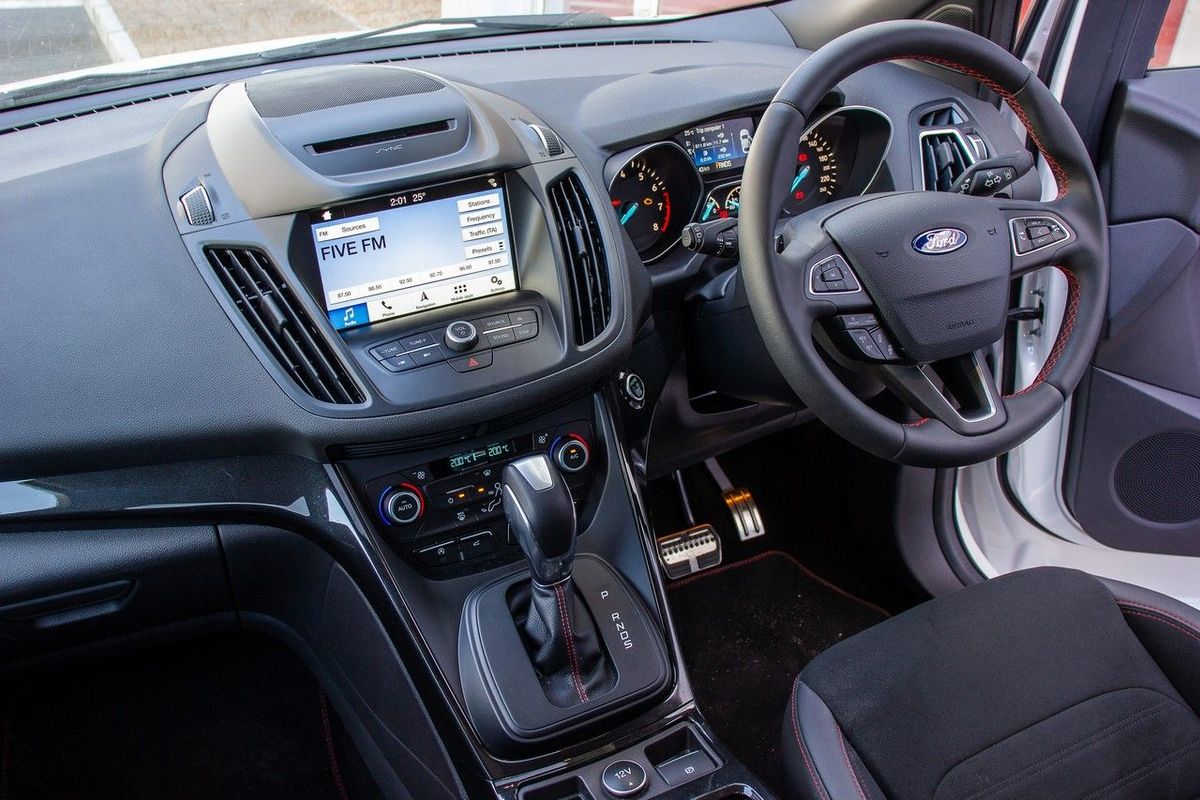
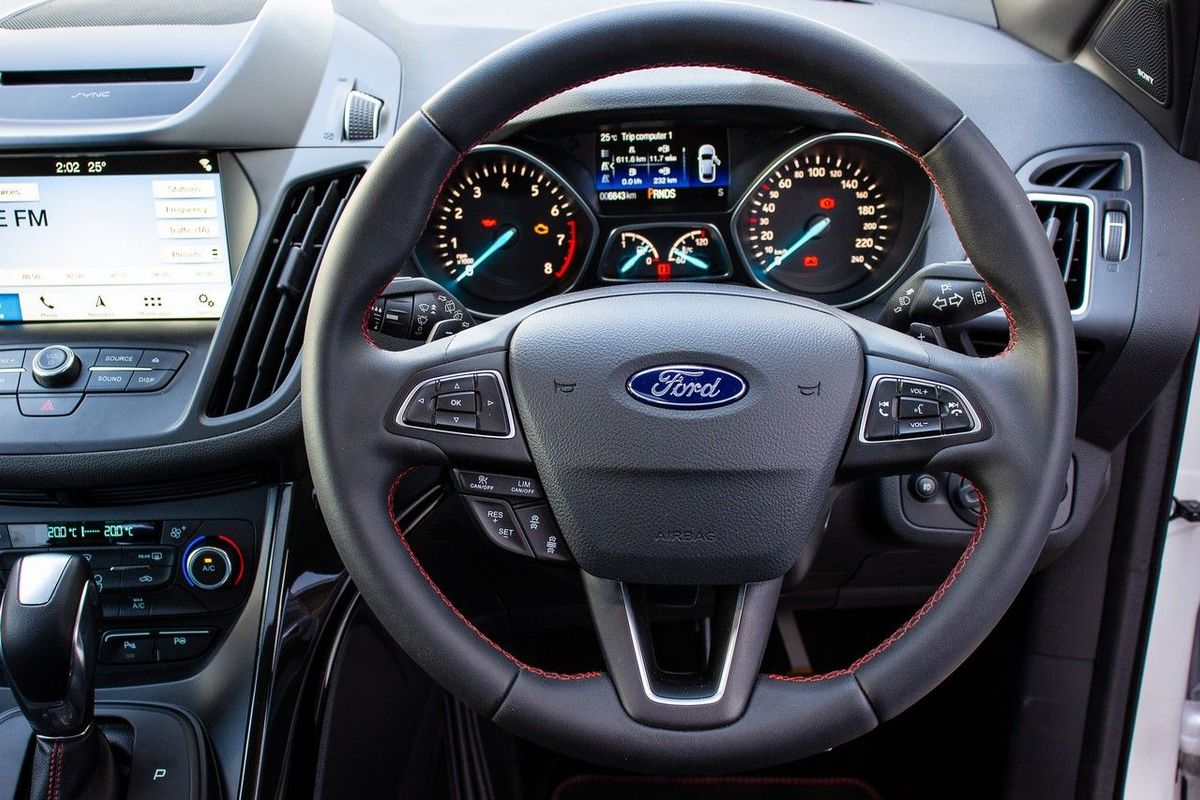
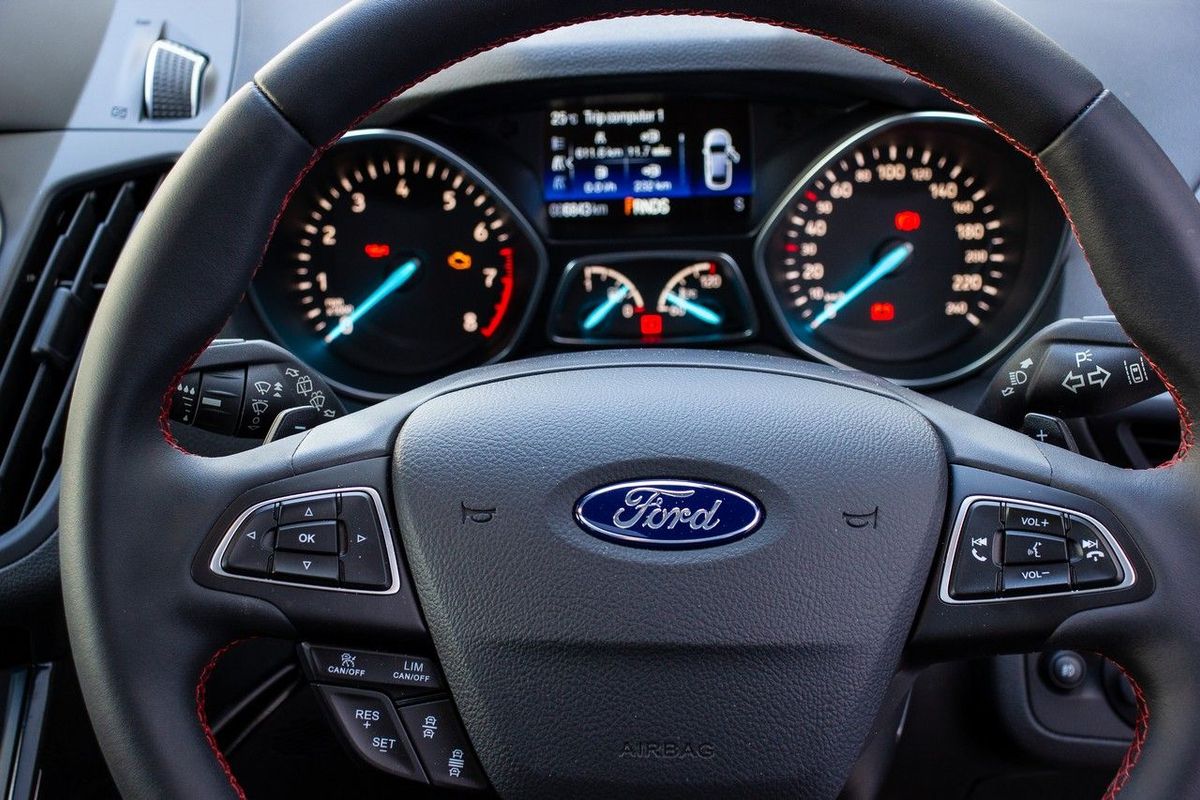
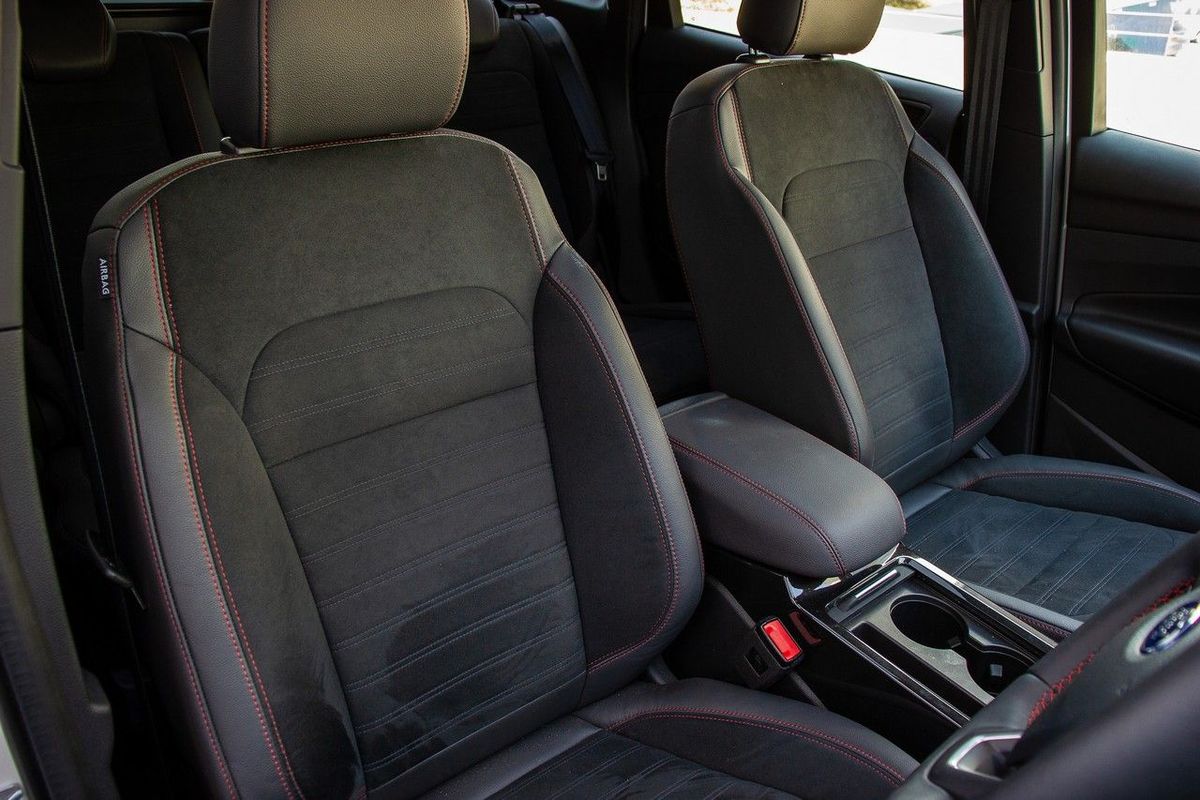
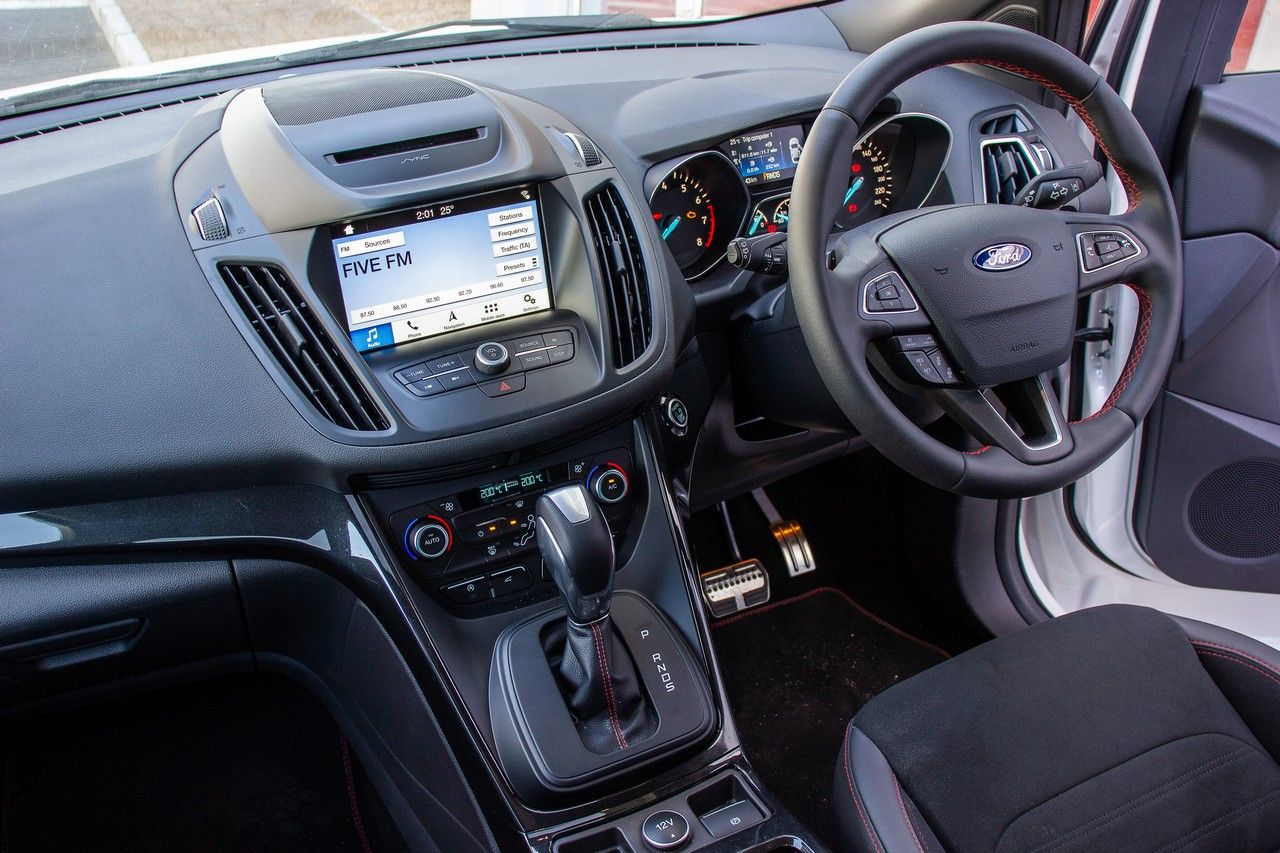
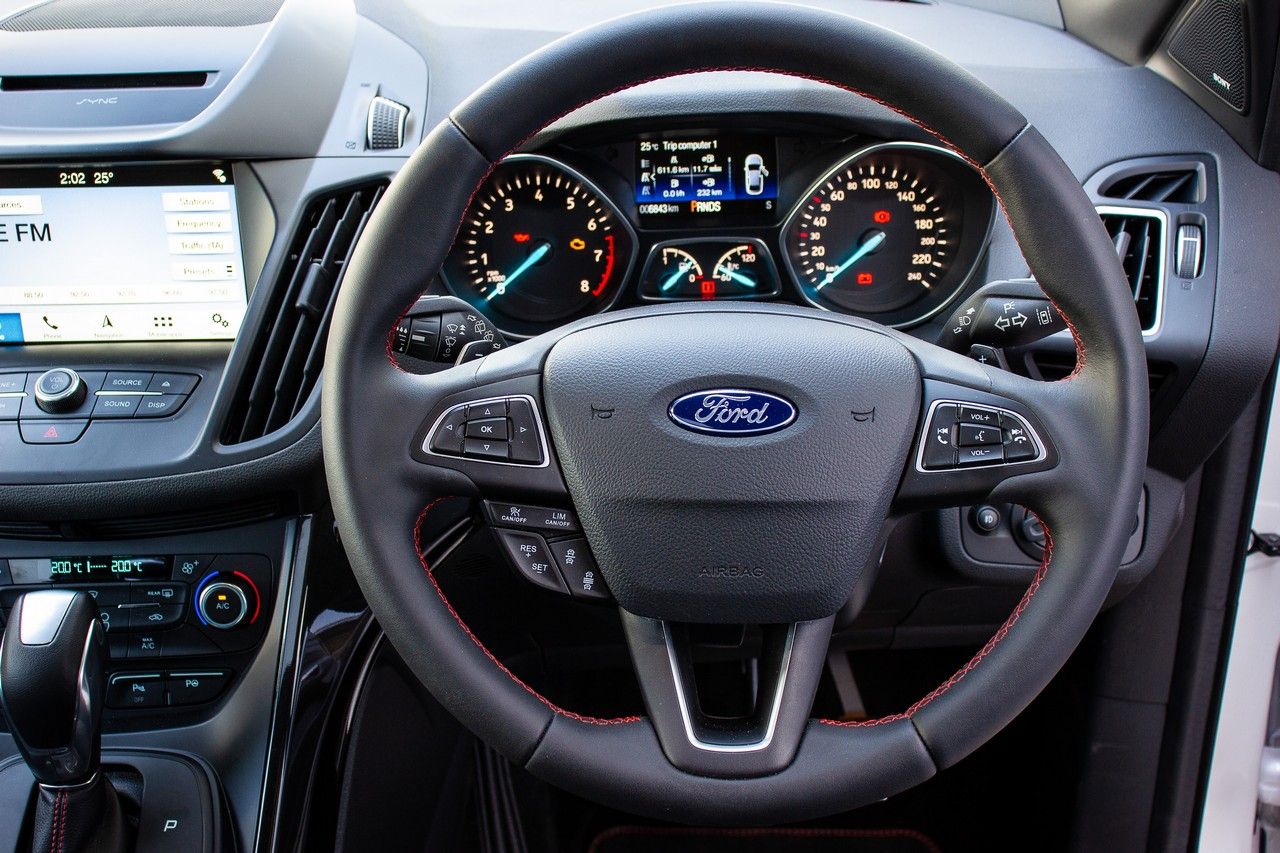
As for as the interior, ST-Line detailing adorns the steering wheel, gear boot and the seats in the form of tasteful contrast red stitching. The driver and front passenger are treated to superbly comfortable sport seats, which are trimmed in leather and Alcantara. We covered long distances in the Kuga and the front seats offered great support during journeys thanks to their bucket-like design. They are not difficult to climb into, or out of, at all.
Red stitching adds some vibe to the interior, but it feels a little old school in here.
One of the highlights of the recent facelift is that Ford has (thankfully) ditched the plethora of buttons that used to plague the Kuga's fascia. What's more, the impressive Sync3 infotainment system sits pride of place in the centre stack, and now features pinch and zoom functionality.
Some testers did, however, find the screen a little too far away to be reached comfortably. They found the comprehensive steering wheel controls, combined with the digital display in the instrument binnacle, to be much more convenient for operating most of the system’s functionality.
Our biggest gripe with the interior is the fascia's cheap-looking plastics. It feels a bit low rent and lets down what is an otherwise-impressive interior.
Practicality and convenience?
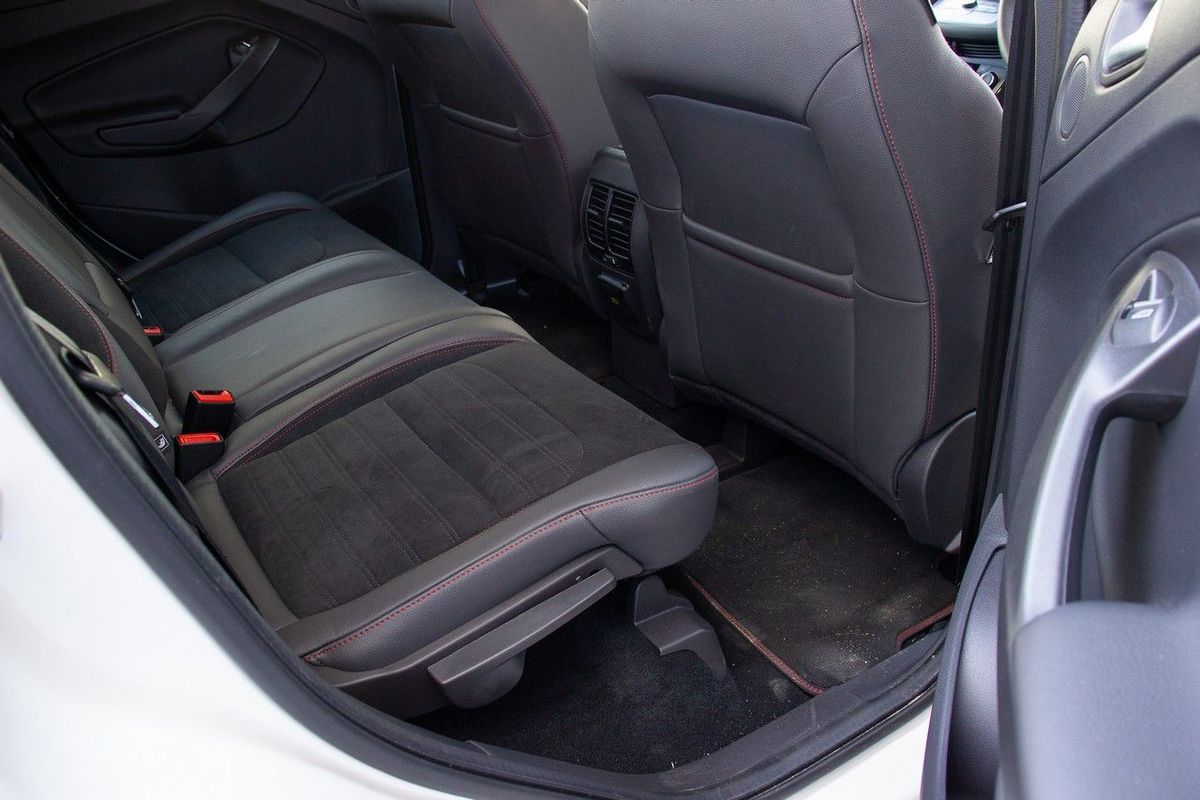
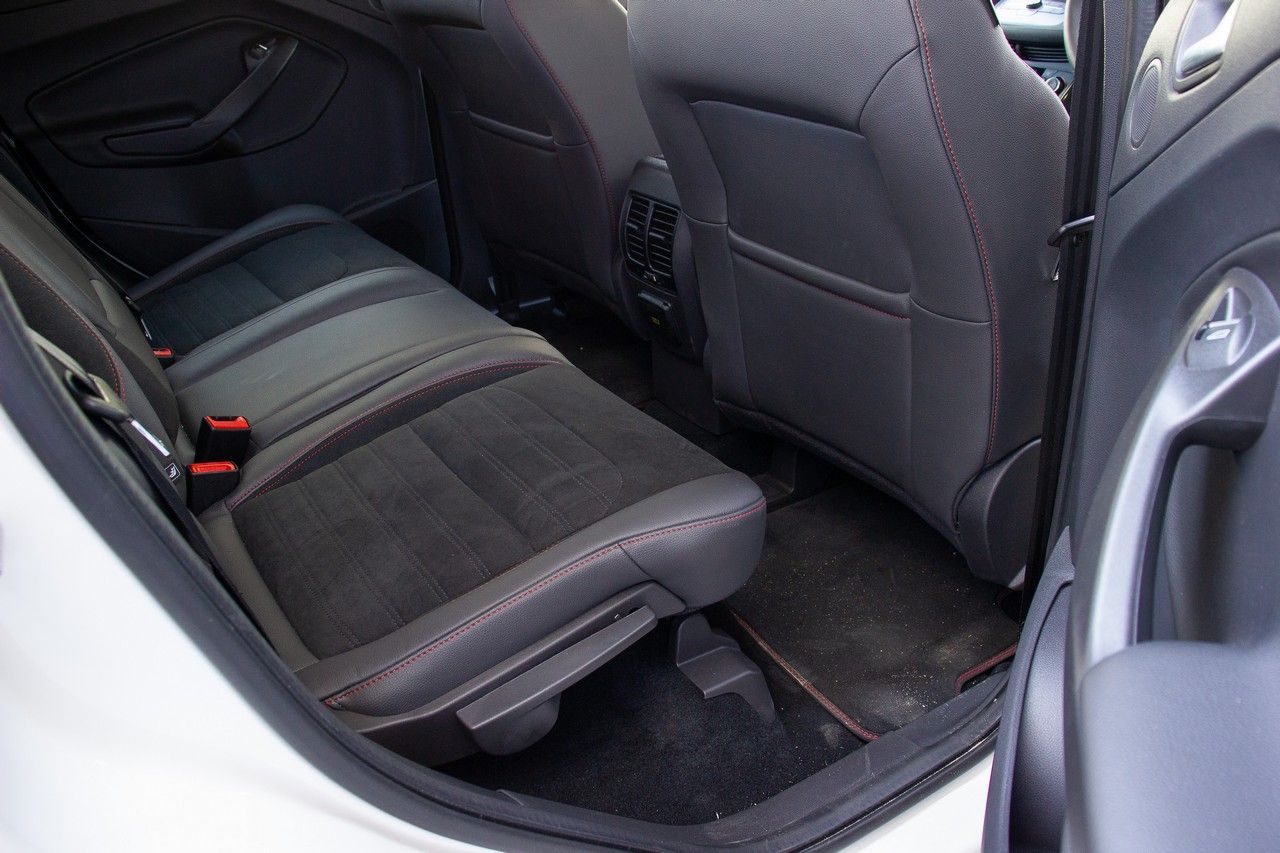
Size-wise, the Kuga sits roughly in the middle of the family car market, which, given the relative age of Ford's platform (7 years), is quite to be expected. However, it is still large enough to provide generous cabin space for passengers (it can comfortably seat 4 adults, while 3 kids will happily fit side-by-side on the rear bench), plus significant load space for luggage, bicycles and groceries, without feeling cumbersome to manoeuvre.
Part leather and part Alcantara seats are very premium. Rear passenger have enough legroom too.
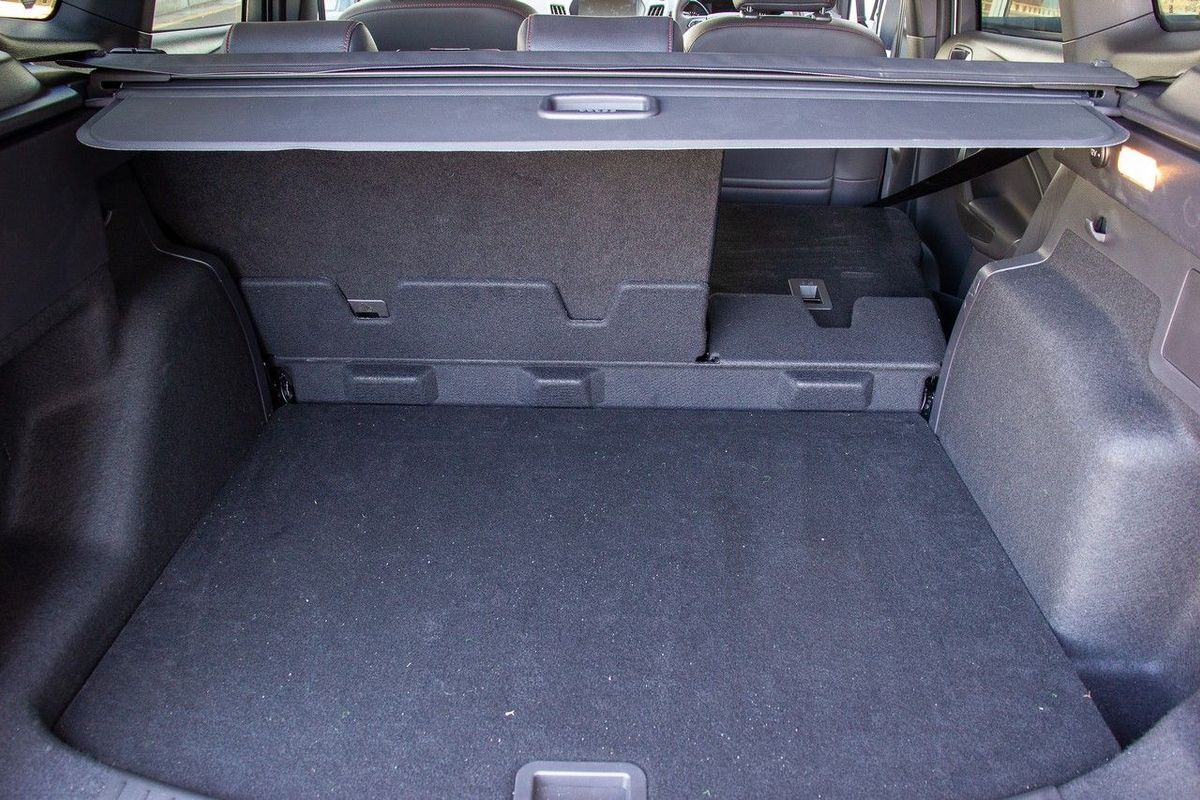
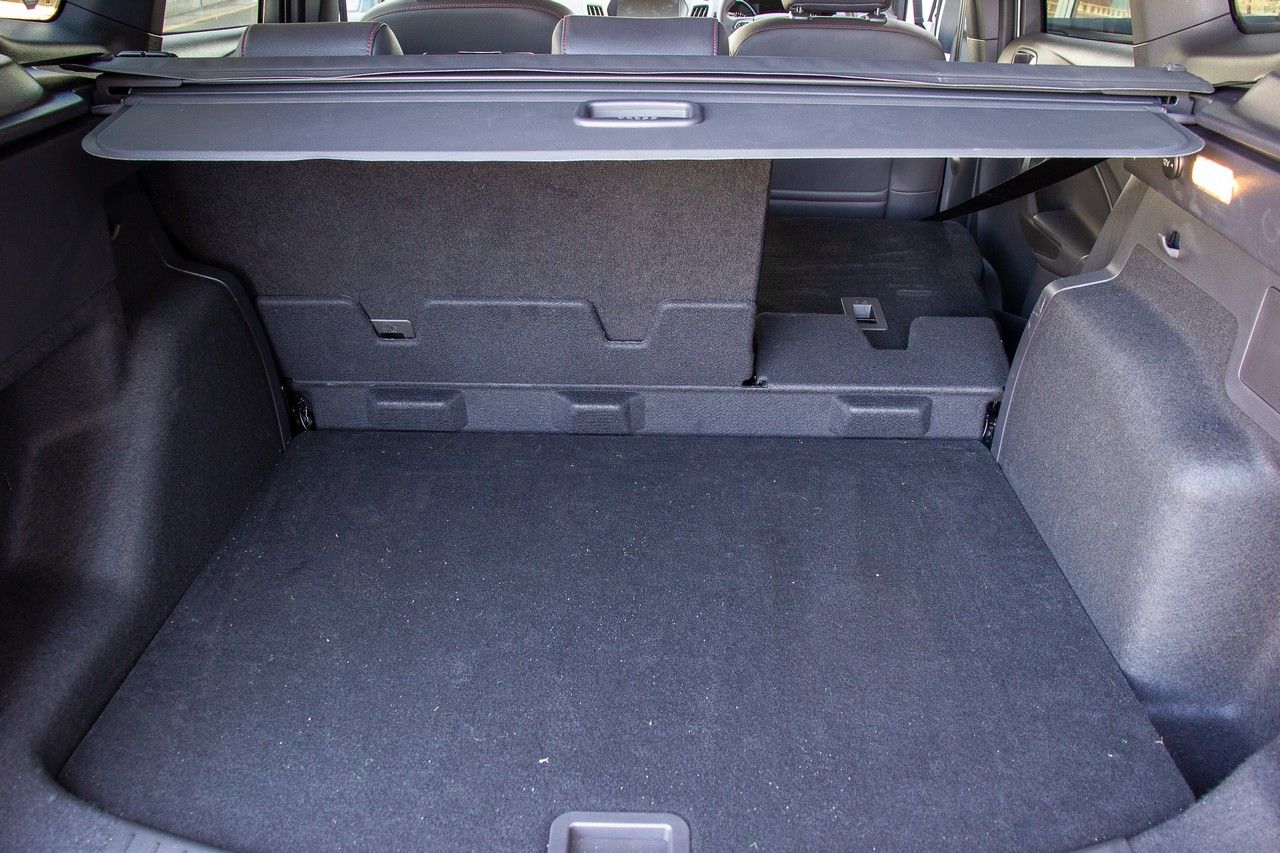
For our video reviews, we like to conduct a "cooler-box test" to measure luggage space, using a standard 25-litre cooler box, and the Kuga passed it with flying colours. There is ample height below the parcel shelf and the load bay floor would allow for about 8 cooler boxes packed in 2 rows of 4.
An electric tailgate is now standard on all Kuga derivatives and includes a leg-swing opening function, a feature that allows for hands-free operation of the tailgate (even if the car is locked), as long as the key is in your pocket. The function is activated by swinging your foot under the rear of the car to open the tailgate. Some testers found this to be super handy, but it can be a somewhat temperamental feature and didn’t seem to work 100% of the time. Perhaps with some practice, one could develop the perfect leg-swinging technique to "communicate with the car".
Meanwhile, a 240-Volt plug port is provided for rear passengers, which our film crew thought was just about the best thing ever invented. A USB port or two in the rear might have been handy too, however.
Ride and handling balance?
Even though our test unit rode on 19-inch wheels, shod with low-profile performance tyres, the quality of the Kuga's ride was exceptional. Thorough sound insulation certainly helps, and very little road noise makes it through to the cabin. The suspension easily soaks up imperfections in the road and rough surfaces and, on smooth tarmac, the Kuga offers a premium, luxury experience that befits its price point.
Boot space on the Kuga is good, but not quite class-leading.
The overall composure of the car is impressive. While the suspension has been tweaked to be firmer for better handling, the engineers have achieved an admirable balance between comfort and sharper handling. On the famous Clarence Drive, the coastal road between Gordon’s Bay and Pringle Bay (outside Somerset West) the Kuga proved very fun to drive, while the all-wheel drive and sticky tyres provided near-unflappable traction.
In the handling department, the car delivers on the promise of the ST-Line badge.
Performance and economy?
Two engines are available for the ST-Line derivatives. We tested the 2.0-litre, 4-cylinder turbopetrol, while a 2.0-litre, 4-cylinder turbodiesel is also available. With power and torque figures of 177 kW and 340 Nm, the Kuga feels well motivated and eager. It’s not a particularly fast car, but in-gear acceleration is strong and there’s more than enough oomph to ensure the experience is never boring. The peak torque figure is available nice and low down in the rev range (from 2 000 rpm to 4 500 rpm), making it a particularly easy to get the best out of the motor.
Even with 19-inch rubber, the Kuga impresses in the ride quality department.
The car cruises comfortably on the motorway and the 6-speed transmission ensures the engine speed remains low at highway speeds.
However, the average fuel consumption is potentially the Achilles heel of the package. Ford claims an average figure of 8.6 L/100km, but we saw a worst indicated figure of about 12 L/100km. After a 200 km drive on open roads, the readout dropped to 8.7 L/100 km, but neither of those figures is particularly impressive, as the car was never driven with more than 2 adults and light luggage, or 4 adults with no luggage.
Perhaps the diesel might be the better option to reduce running costs. With 132 kW and 400 Nm, it won’t be boring to drive, and that extra torque will prove handy when towing or fully loaded. And importantly, on paper at least, fuel consumption is claimed to be 40% better than the petrol motor.
How does it stack up against the Tiguan?
While Hyundai mulls over the prospect of offering the facelifted Tucson in Sport guise again (as it did with the pre-facelift model), the only direct rival to the Kuga ST-Line is the Volkswagen Tiguan Highline AWD R Line. With base prices starting at exactly R50 000 more than the Kuga, it is the more expensive option, but that will likely be offset by better resale values.
The Kuga has ample spec and safety features onboard, making it relatively good value for money.
The Tiguan also runs a 2.0-litre, 4-cylinder turbo petrol motor, with similar outputs. But for whatever reason, it practically leaps off the line compared to the Kuga, with a 0-100 kph time of 6.5 sec versus 7.8 sec for the Ford. On paper, the Tiguan’s average fuel consumption is also 10% better…
In terms of practicality, the Tiguan offers about 10% more luggage space, but roughly the same cabin space with the rear bench folded flat, so space for occupants should be about the same. In terms of sensible considerations such as warranties and service plans, the Ford carries a longer warranty, at 4 years/120 000 km versus 3 years/120 000 km for the VW. Service plans are similar at 6 years/90 000 km versus 5 years/120 000 km.
The cars are very evenly matched indeed and it’s definitely worth comparing them spec-for-spec if you are interested in this niche.
The Kuga saga
Has the well-publicised Kuga saga left a scar so deep in the South African motoring conscience that it will take a generation for consumers to forget that some (now discontinued) older Kuga derivatives caught fire? Sales of the Kuga are now roughly a 10th of the figures compared with before the fire controversy, and the reality is that even if the Kuga was the best family car on the market, its sales numbers might still not nudge upwards.
In our estimation, the updated Kuga is one of the best value-for-money products in its segment. It seems that Ford pulled out all the stops to build a quality, well-updated product, which was the best thing it could have done for the nameplate. Many suspected that Ford SA would ditch the Kuga nameplate and start anew with another product. In the US, the car is badged as the Escape, but in this case, that’s not a good name either…
The author presents a segment about motoring on talk radio and the Kuga saga was all the station wanted to talk about for weeks. It was front-page news… and still grabs headlines. But the opportunity to rebuild the Kuga brand is there, and the car itself is a solid foundation on which to build.
Pricing and after-sales support
The Ford Kuga 2.0T AWD ST Line retails for R548 500, which includes a 4-year/120 000 km warranty and a 6-year/90 000 km service plan.
Verdict
The Kuga has a serious image problem, but in isolation, this model is a good product.
The Kuga 2.0T AWD ST Line impressed in almost every aspect you’d care about in a family car. It shows its age in some facets, such as the still somewhat fiddly ergonomics and, to a degree, cabin plastics, but there is no doubt that, as a package, it looks and feels purposeful and its on-road refinement is better than we expected it would be. The performance was plentiful, even if fuel consumption was middling. Although we doubt whether the top-end of the family car market, where this particular derivative competes, is that popular with buyers, this car represents the facelifted Kuga dressed in its finest… um, finery. One of our testers' partners said she found the ST Line test unit particularly impressive, declaring that she’d happily own one and drive it every day. Other consumers, however, will hear the name Kuga and lose interest immediately. Until the Kuga's reputation is restored (if it could ever return to where it once was), the model will continue to divide opinions… despite this product's best efforts.
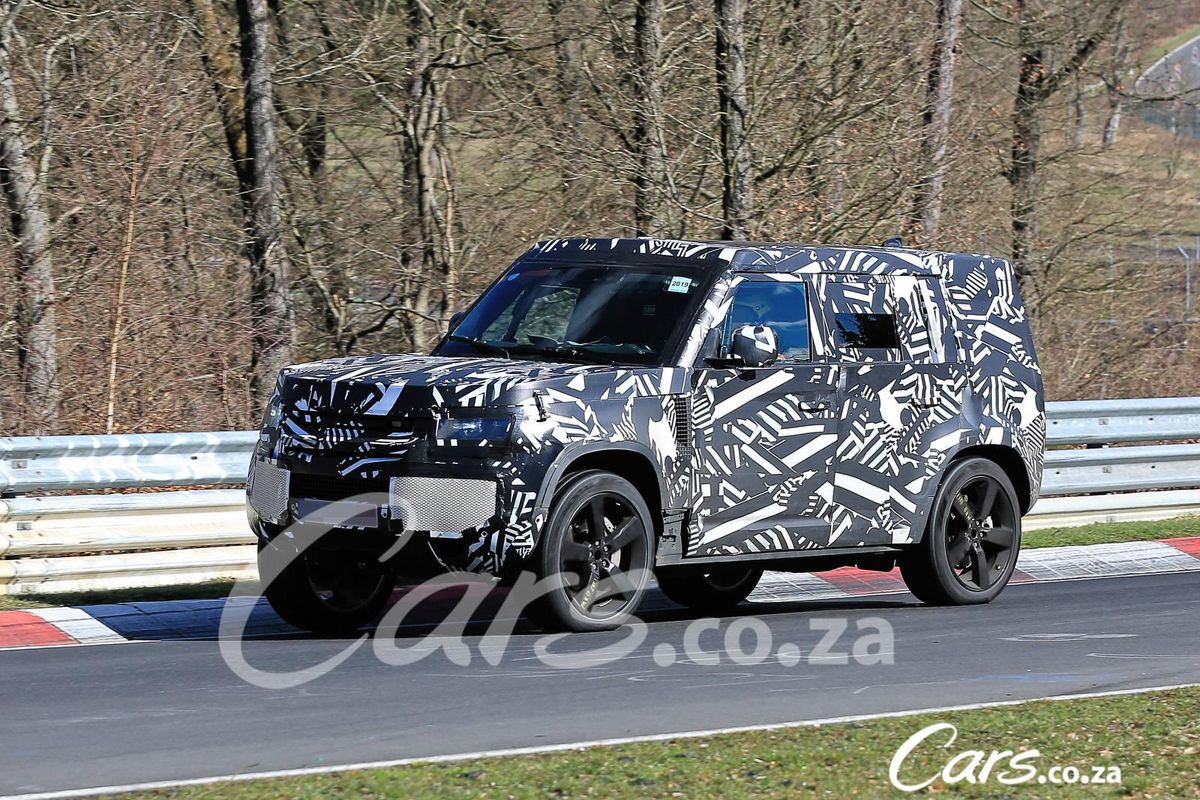
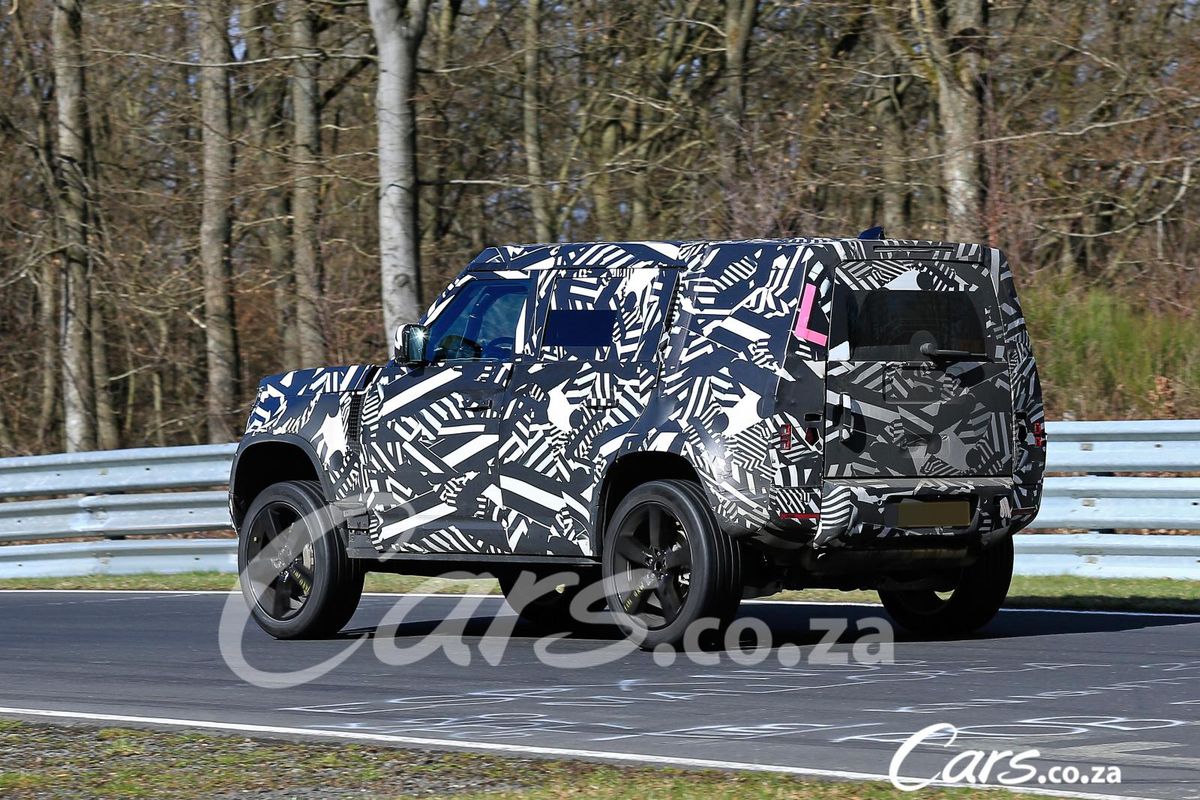
As we inch closer to Land Rover Defender production, more and more images are emerging of the vehicle undergoing testing. Here the Land Rover Defender has been spotted on the Nurburgring.
Image credit: S. Baldauf/SB-Medien
While the Nurburgring doesn't seem to be the most appropriate place for a Land Rover Defender, suspension, chassis and brakes still need to be evaluated and assessed in harsh conditions. The previous Defender didn't have a stellar reputation for on-road manners, which makes this appearance at the Nurburgring interesting. If the new-gen Defender is to be a success, it will have to drive like a premium JLR offering and be comfortable on the tarmac, without impacting its iconic go-anywhere capability.
From what we know, the body-on-frame structure has been replaced by a monocoque made out of aluminium and there'll be an independent rear suspension. This new Modular Longitudinal Architecture (MLA) is smart in that it allows for different configurations such as petrol, diesel, hybrid and all-electric.
We're still some way away from seeing a production-ready Land Rover Defender, so fans of this iconic vehicle will have to wait.