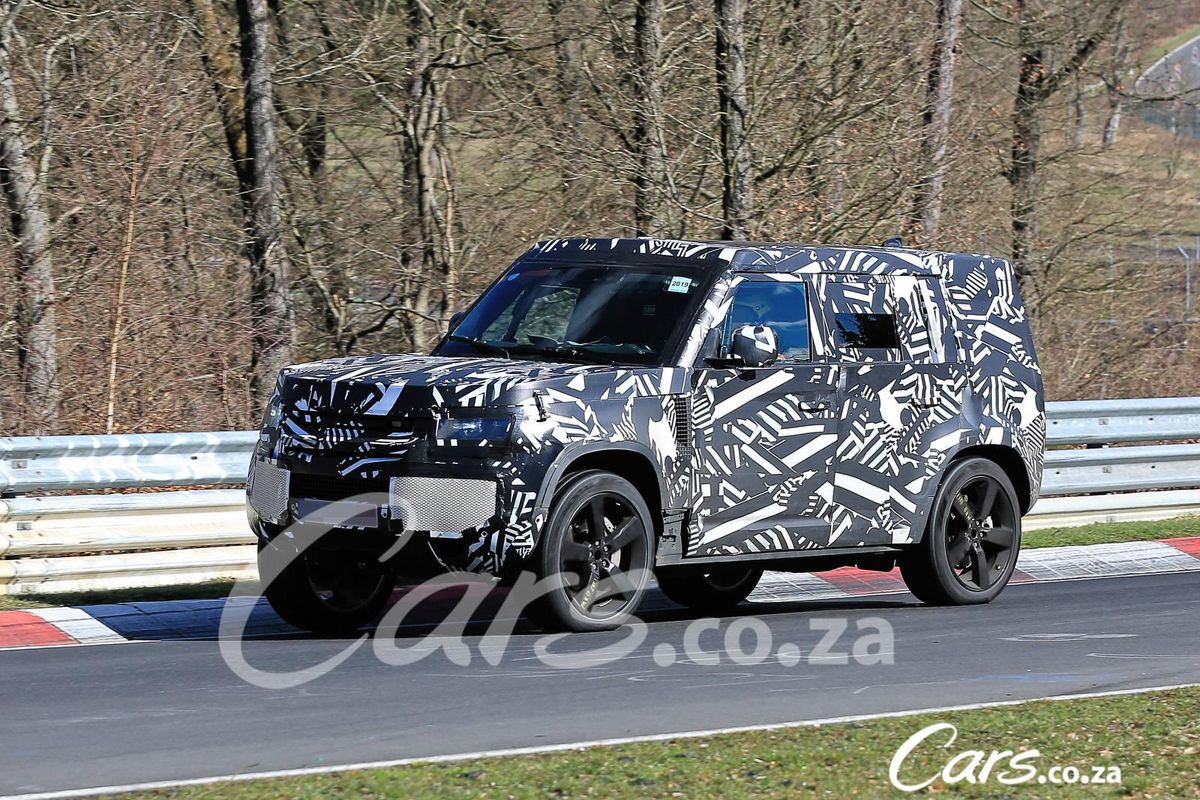
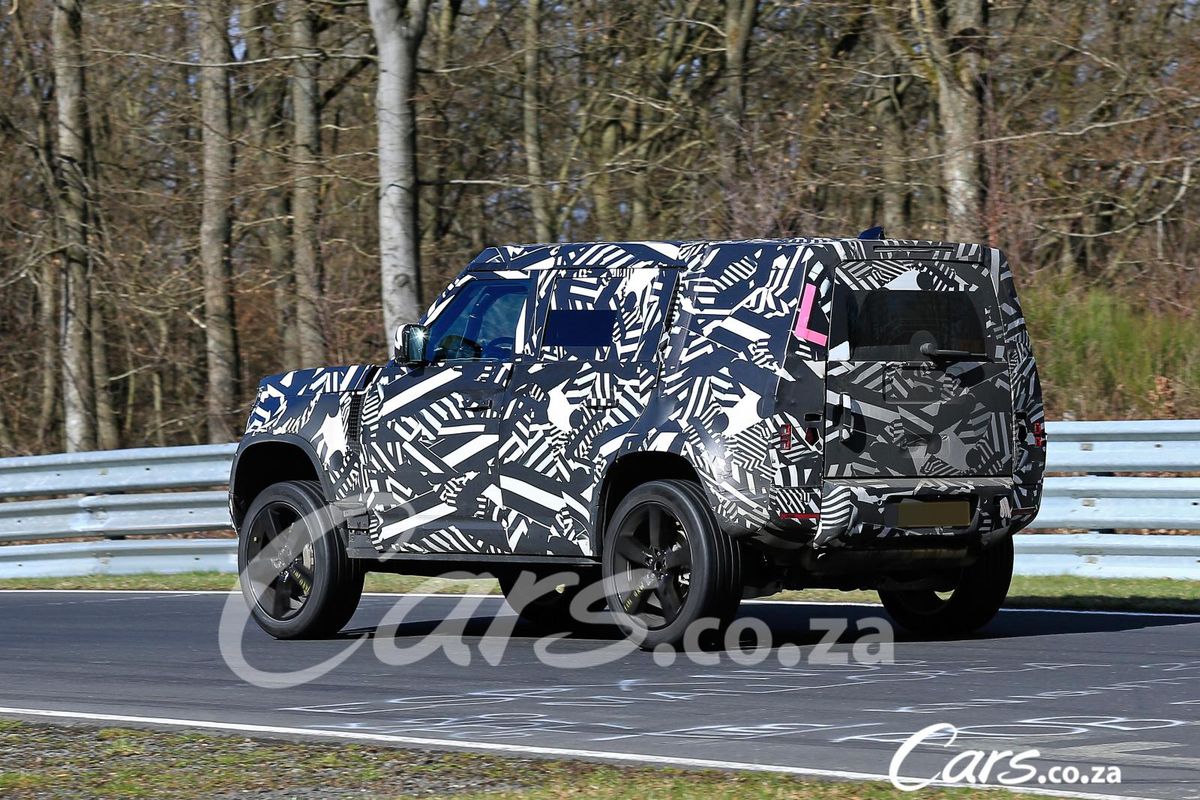
As we inch closer to Land Rover Defender production, more and more images are emerging of the vehicle undergoing testing. Here the Land Rover Defender has been spotted on the Nurburgring.
Image credit: S. Baldauf/SB-Medien
While the Nurburgring doesn't seem to be the most appropriate place for a Land Rover Defender, suspension, chassis and brakes still need to be evaluated and assessed in harsh conditions. The previous Defender didn't have a stellar reputation for on-road manners, which makes this appearance at the Nurburgring interesting. If the new-gen Defender is to be a success, it will have to drive like a premium JLR offering and be comfortable on the tarmac, without impacting its iconic go-anywhere capability.
From what we know, the body-on-frame structure has been replaced by a monocoque made out of aluminium and there'll be an independent rear suspension. This new Modular Longitudinal Architecture (MLA) is smart in that it allows for different configurations such as petrol, diesel, hybrid and all-electric.
We're still some way away from seeing a production-ready Land Rover Defender, so fans of this iconic vehicle will have to wait.
Need a C-Class with ground clearance and a sloping roofline?
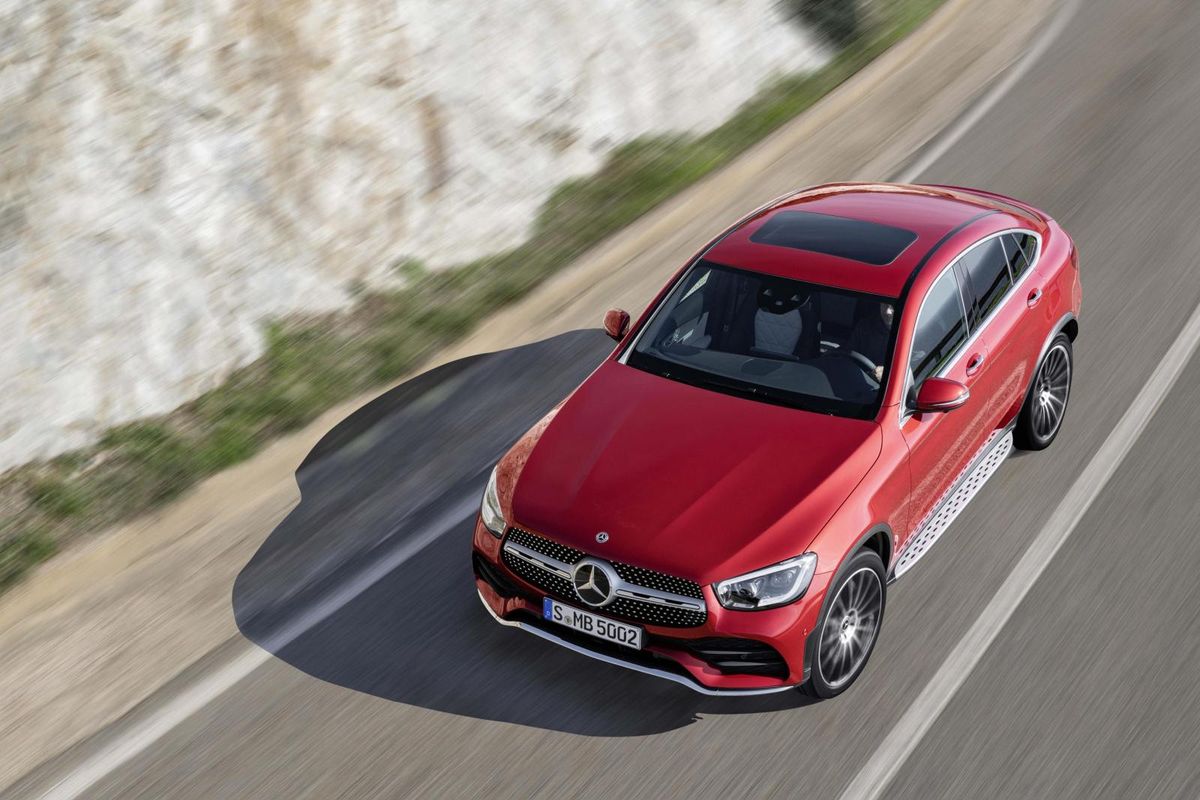
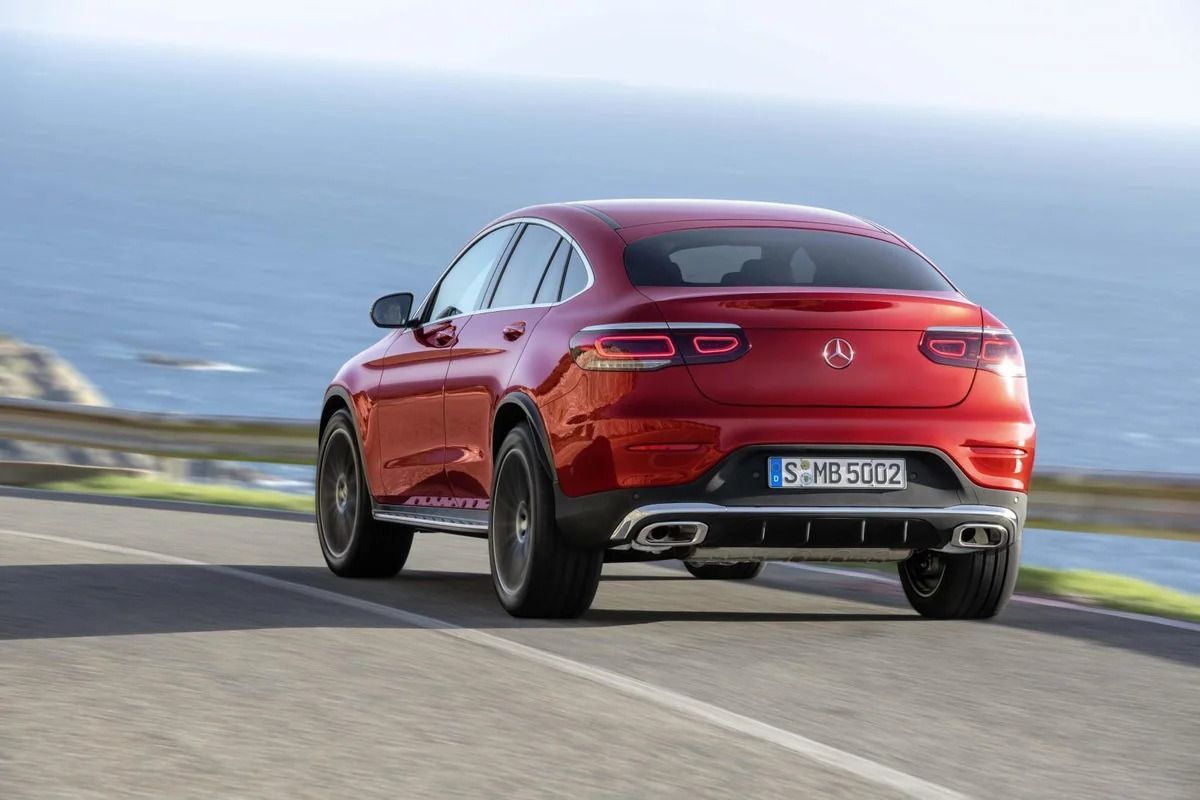
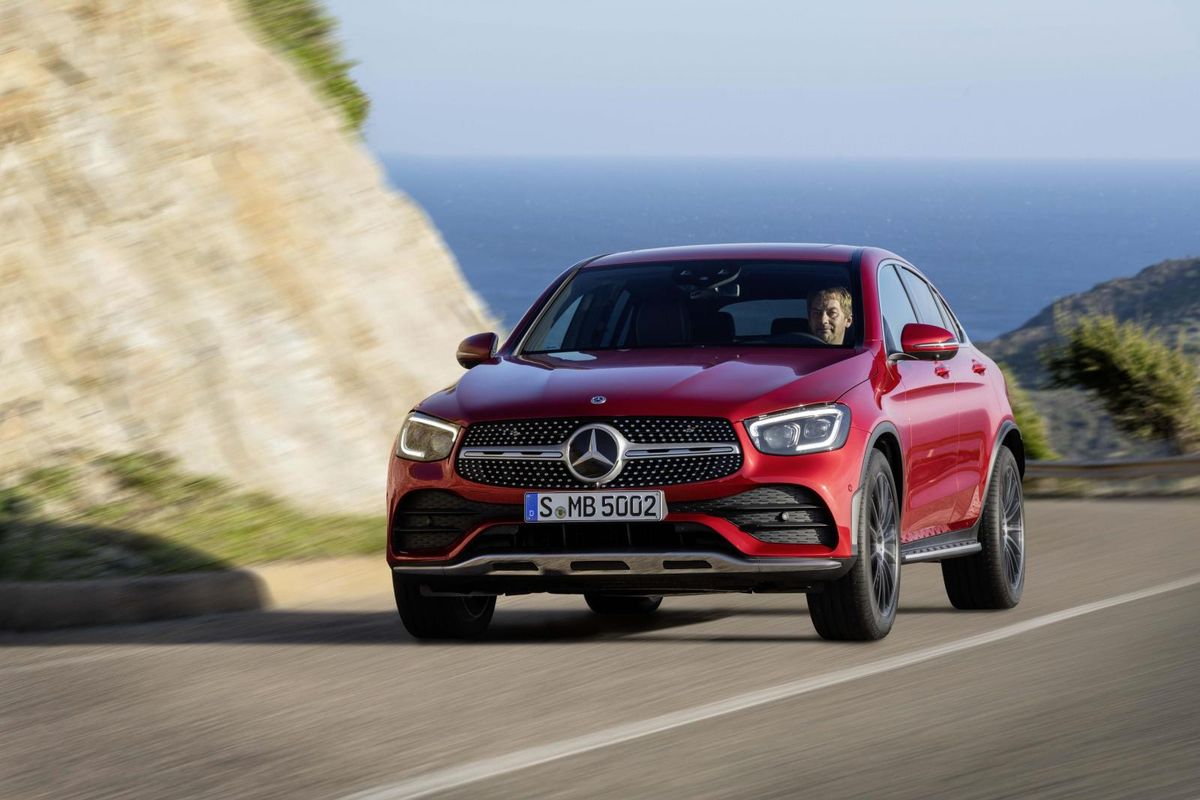
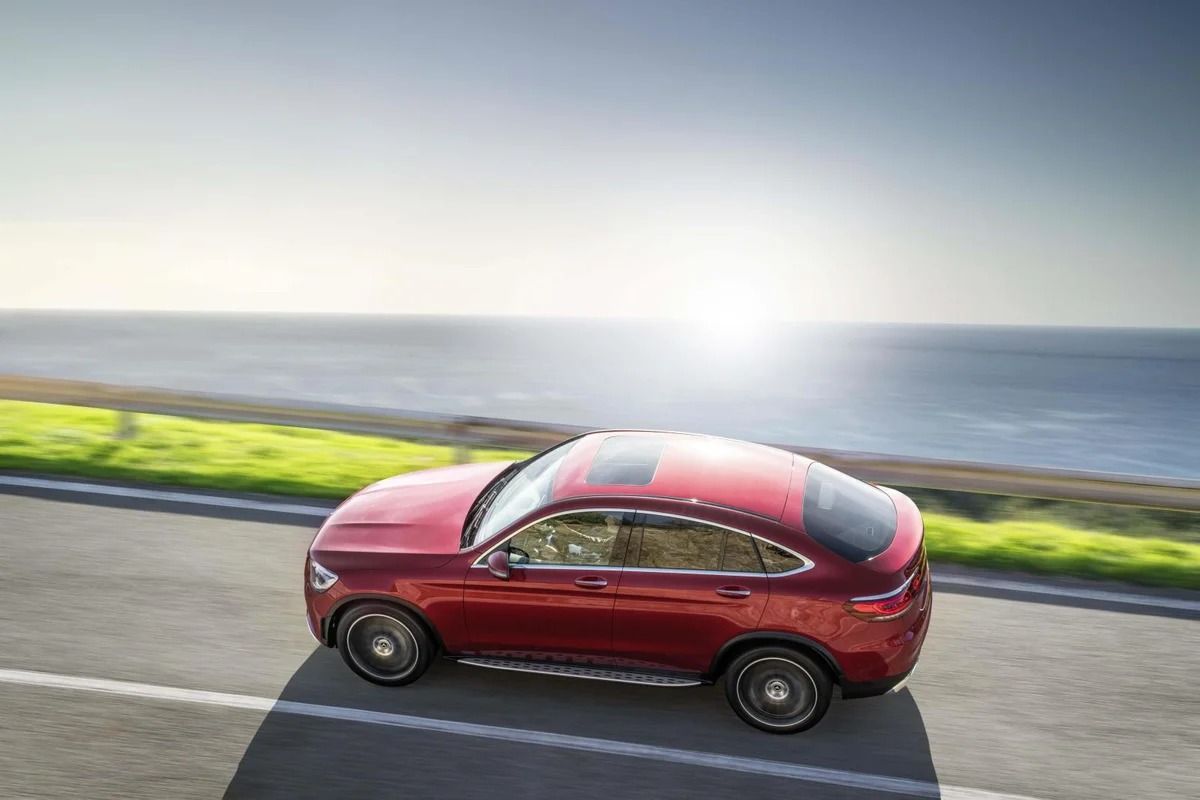
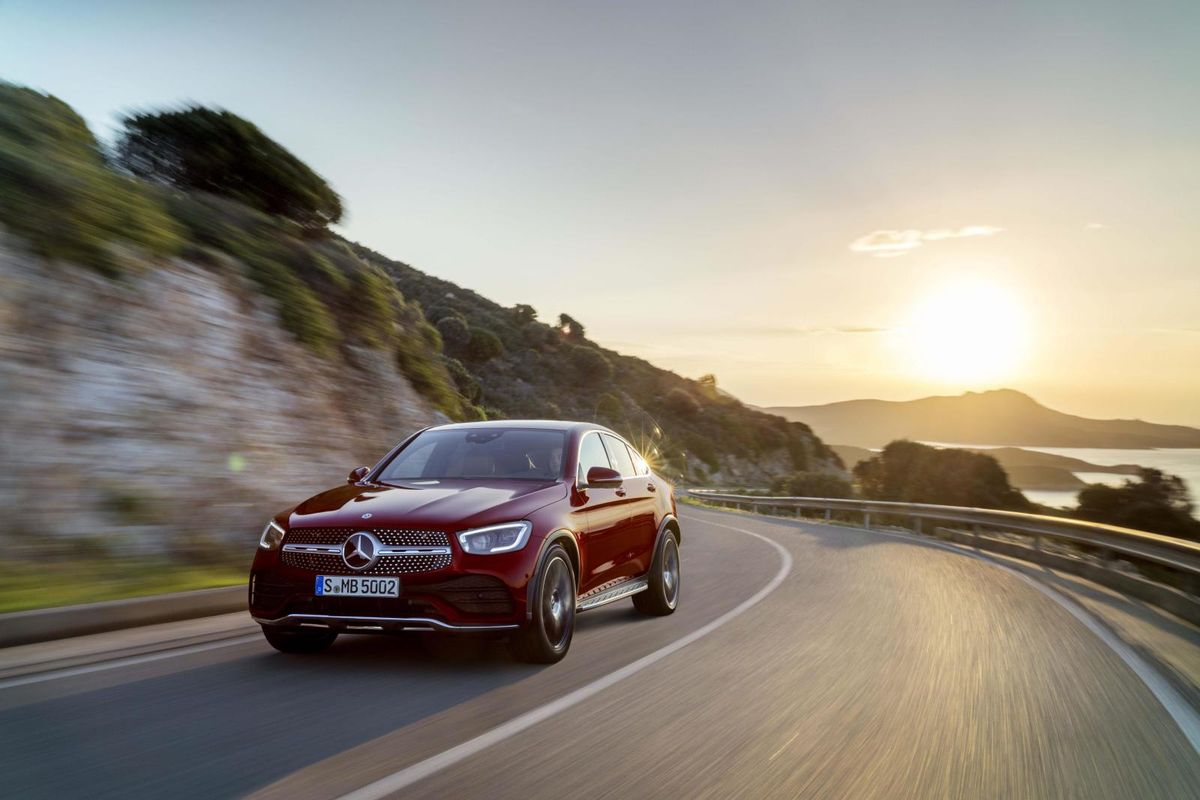
Mercedes-Benz has revealed the latest version of its GLC coupe, featuring enhanced cabin digitisation and slight styling detail changes.
Following on from its five-door GLC SUV sibling, the coupe version now lights-up with repatterned LEDs, which flank a diamond-pattern grille. There are remoulded bumpers front and rear too. Add an optional AMG styling package and the front grille opening grows larger.
Inside, the revised GLC coupe has the very latest MBUX infotainment technology from Mercedes, including more intuitive and intelligent voice-prompt command responses. The entire digital infotainment and vehicle function display architecture is new, with a 10.3-inch centre screen and optional 12.3-inch digital vehicle instrumentation display for the driver.
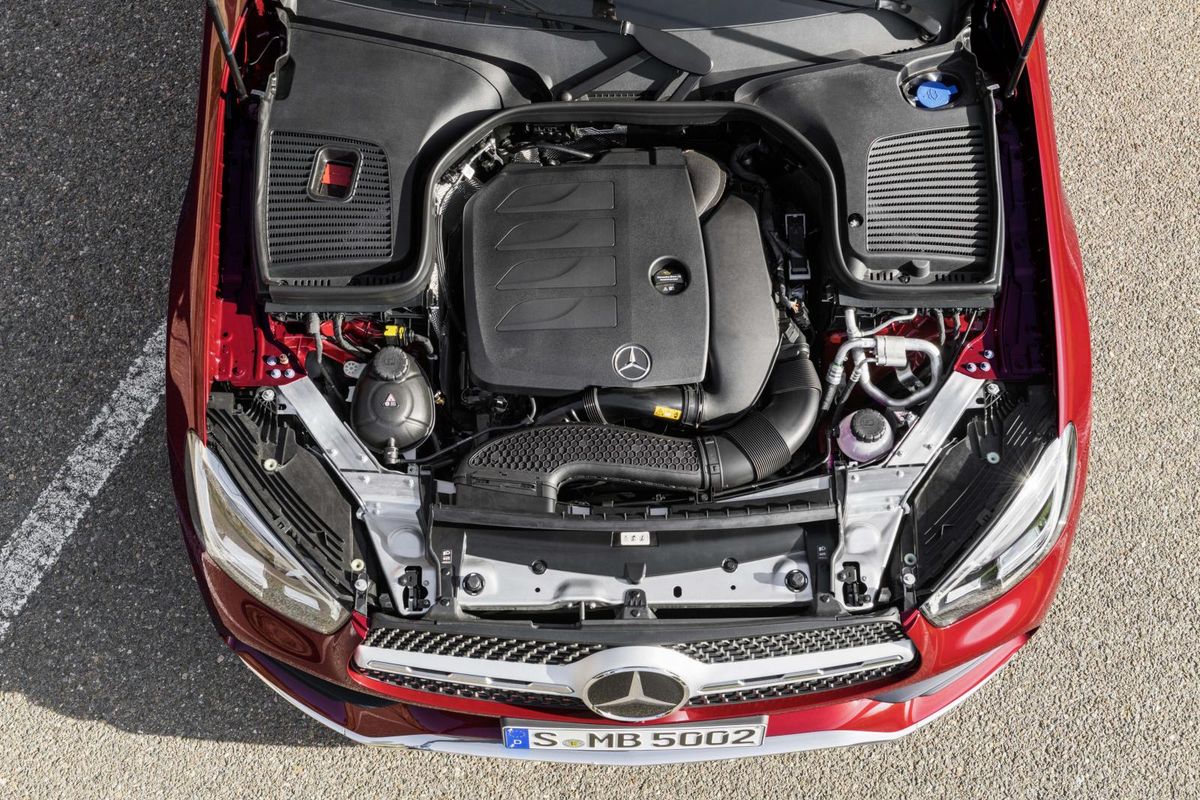
Powering the GLC coupe will be a range of five engines, two petrols and three diesels, all of which are turbocharged. The petrol engines are of most interest, as they both feature Mercedes-Benz’s integrated starter motor/generator technology, offering mild hybridisation due to the new GLC’s 48v onboard electric architecture and clever energy recovery systems.
The turbopetrol range starts at GLC200, which is good for 145 kW and 320 Nm. GLC300 boosts those outputs to 190 kW and 370 Nm, and both these engine options are augmented by an electric motor which surges 10 kW and 150 Nm into the powertrain delivery for brief periods when required.
For those who prefer their sloping roofline Mercedes-Benz SUVs with diesel power, the options start at GLC200d (120 kW/360 Nm), then GLC220d (143 kW/400 Nm) and peak with GC300d (180 kW/500 Nm). None of the diesel versions are equipped with sophisticated means of energy recovery or electric drive.
These new GLCs drive through a nine-speed automatic transmission, powering all four wheels and previously unavailable driver assist technologies have now been added: such as adaptive cruise control with steering and lane assist. For those prospective GLC coupe owners who like to tow things, trailer manoeuvring assist has now also found its way into the mid-size sloping roofline Mercedes SUV. The revised GLC coupe should go on sale by the end of 2019.
The next-generation Mercedes-Benz C-Class has been spotted undergoing winter testing in northern Europe. Here's what we know.
While the video doesn't give a clear and good look at the new Mercedes-Benz C-Class, there are more than enough clues. With the advances in the segment now truly huge thanks to the all-new BMW 3 Series and refreshed Audi A4, it's time Mercedes-Benz reacts with a new generation of C-Class.
What you're seeing here is the 2020 Mercedes-Benz C-Class in prototype form. It may be heavily camouflaged and features extra work to hide its shape, but this big sedan is unmistakable. The big question is will we see the Mercedes-Benz sedan family adopting similar style? The current E-Class and C-Class are remarkably close in looks.
Inside, there'll be the usual trickle down of technology and we're expecting the new Mercedes-Benz C-Class to feature MBUX and the dual-screen infotainment setup which we've experienced in the new A-Class. There should also be a fair degree of semi-autonomous driving capability. In terms of engines, we're expecting a full array of petrol, diesel, hybrid and high-performance AMG models. If you're wanting a fully electric Mercedes-Benz sedan, you'll have to look under the EQ sub-brand.
Based on the Mercedes-Benz lifecycle strategy, it's easy to predict the new C-Class to be fully revealed in 2020.
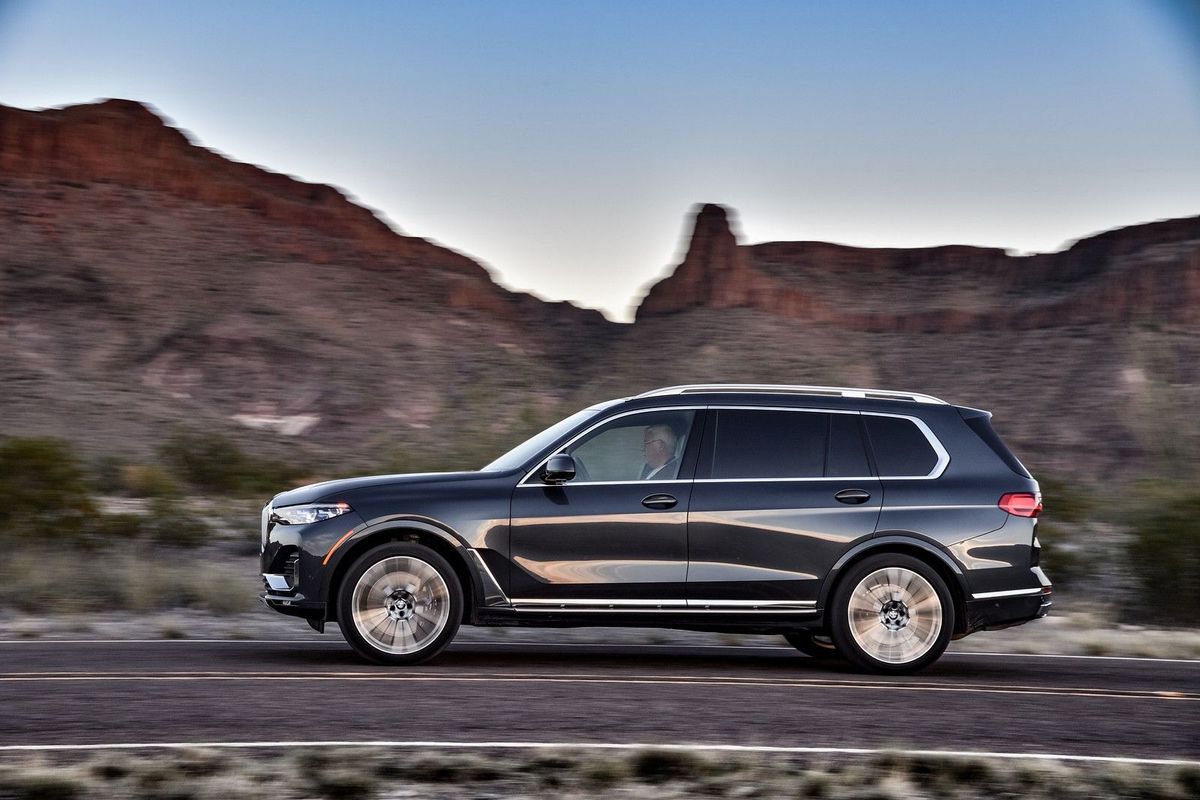
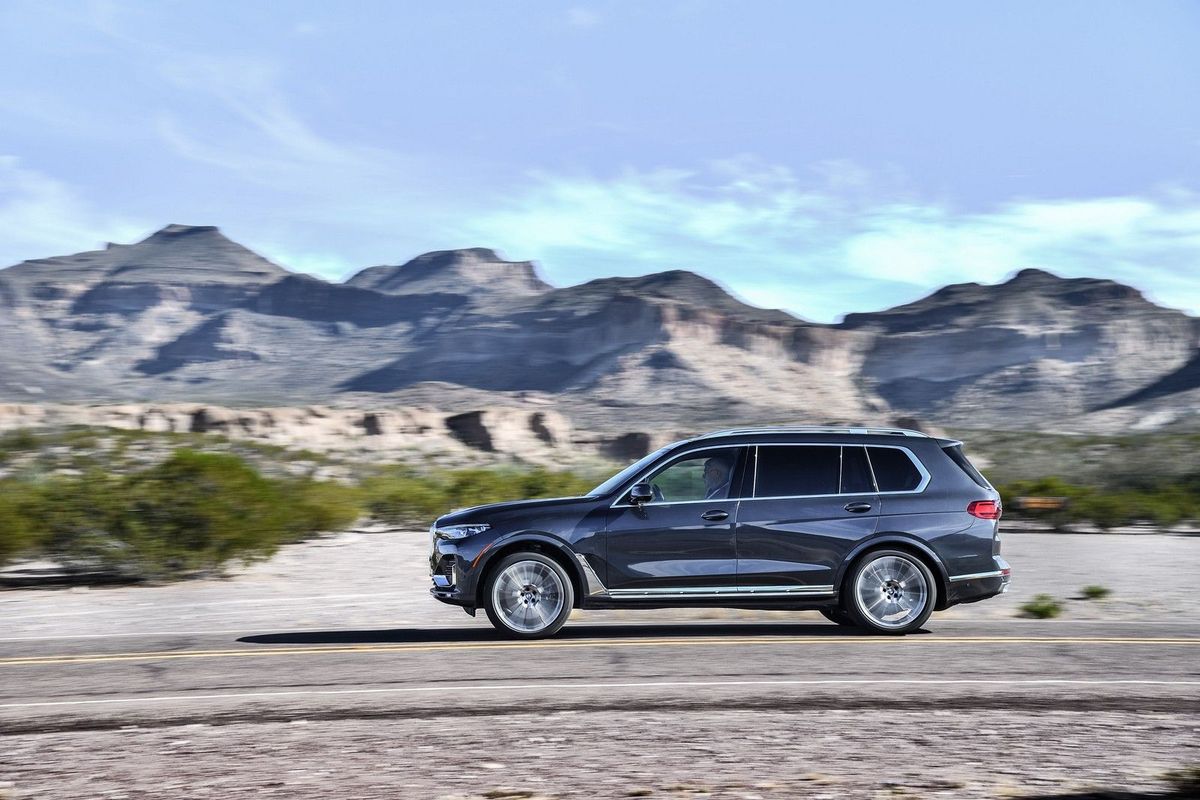
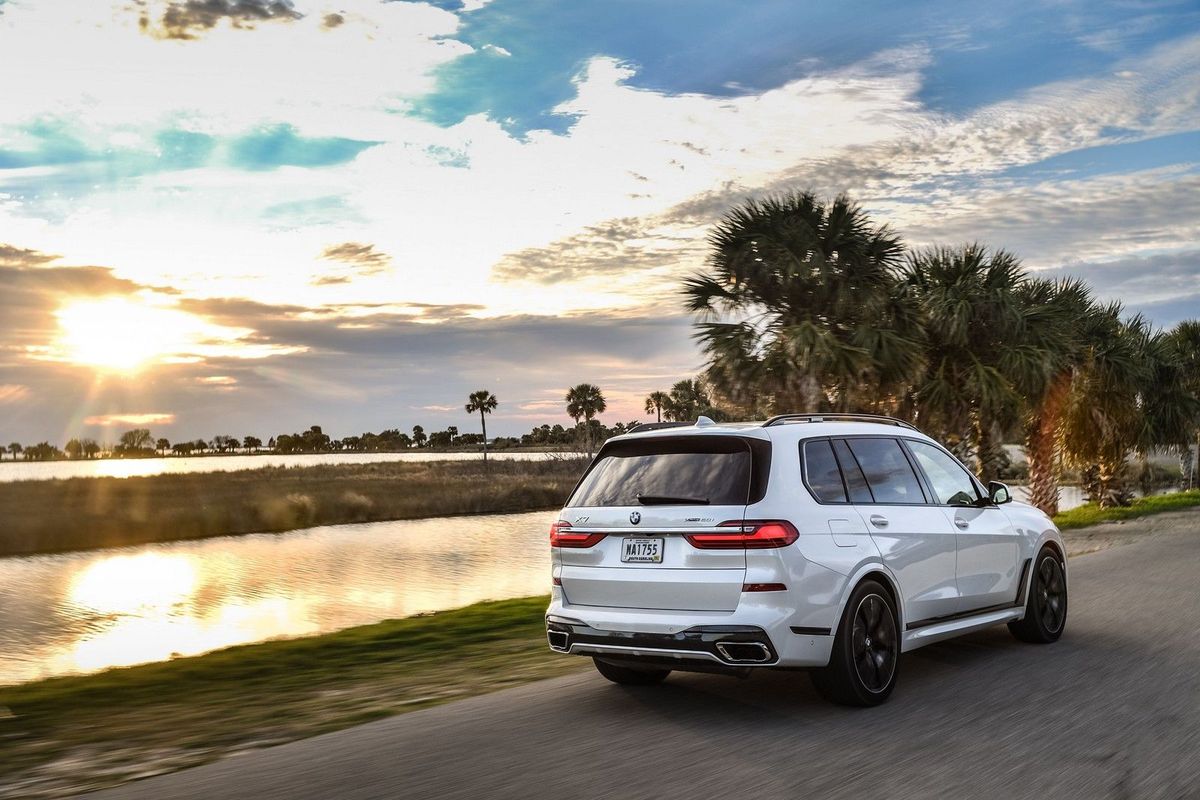
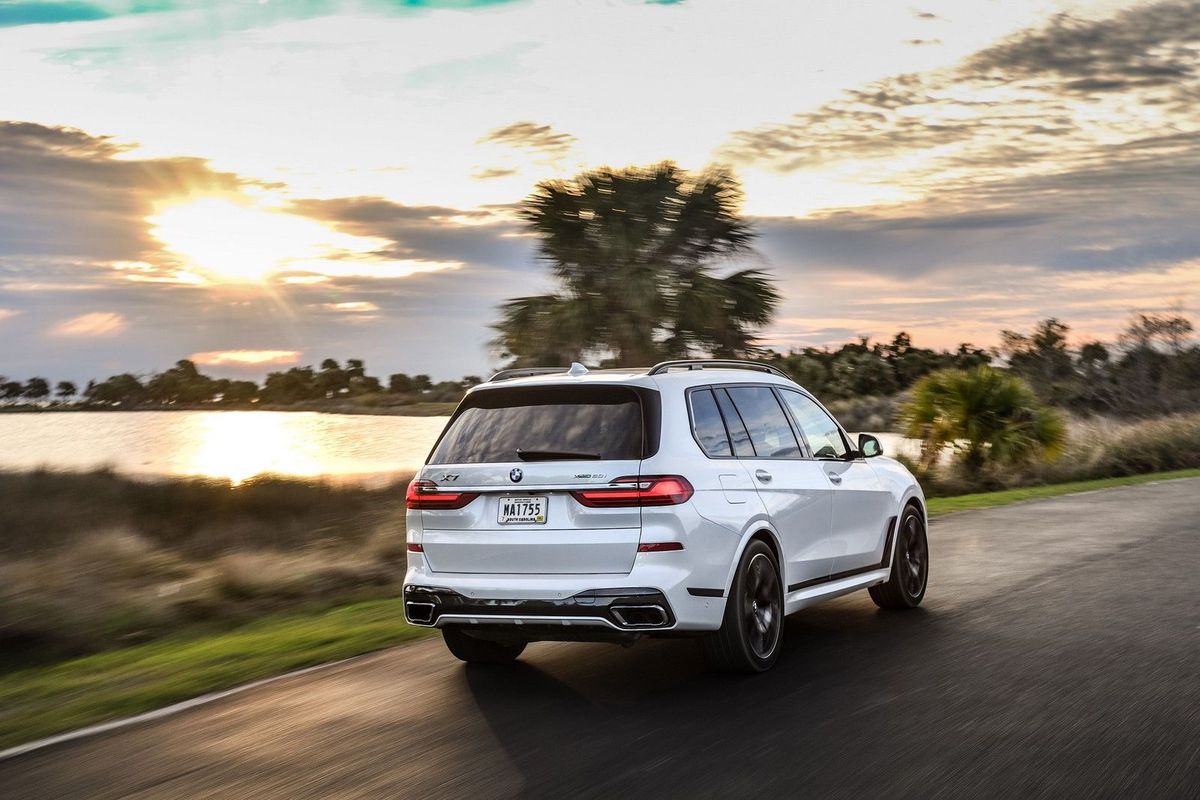
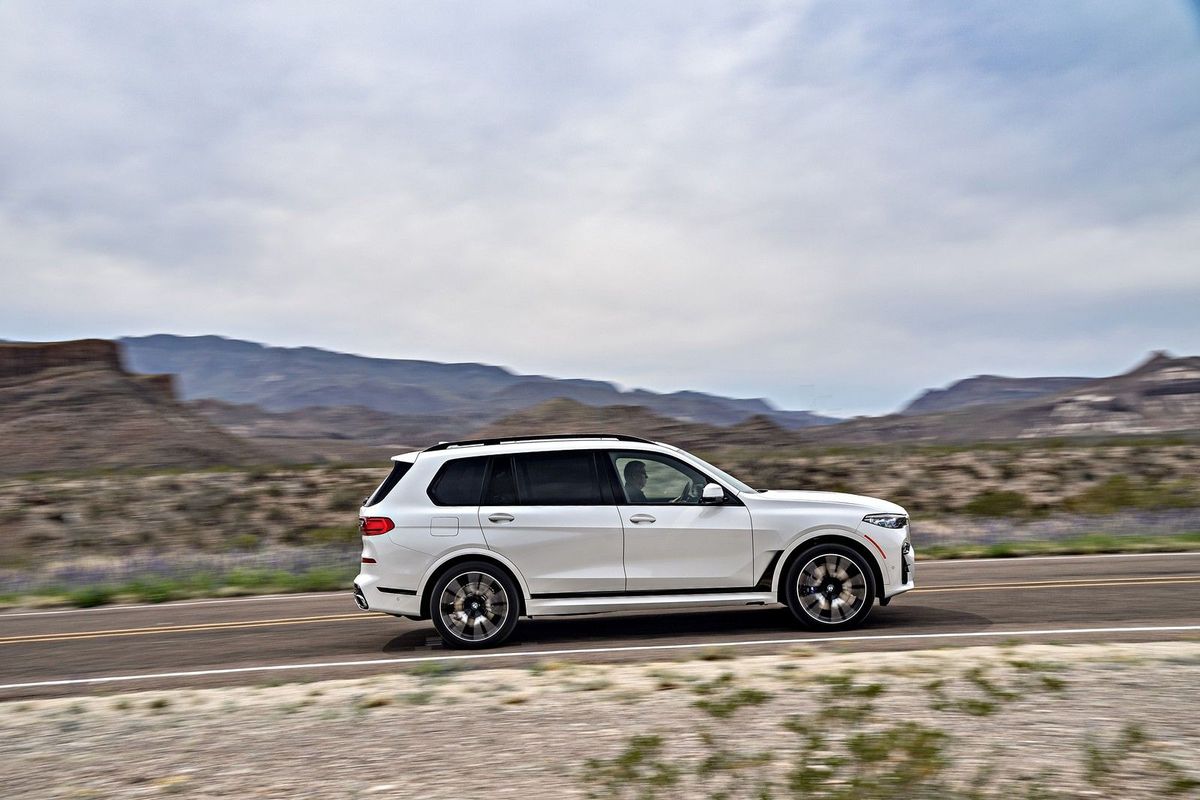
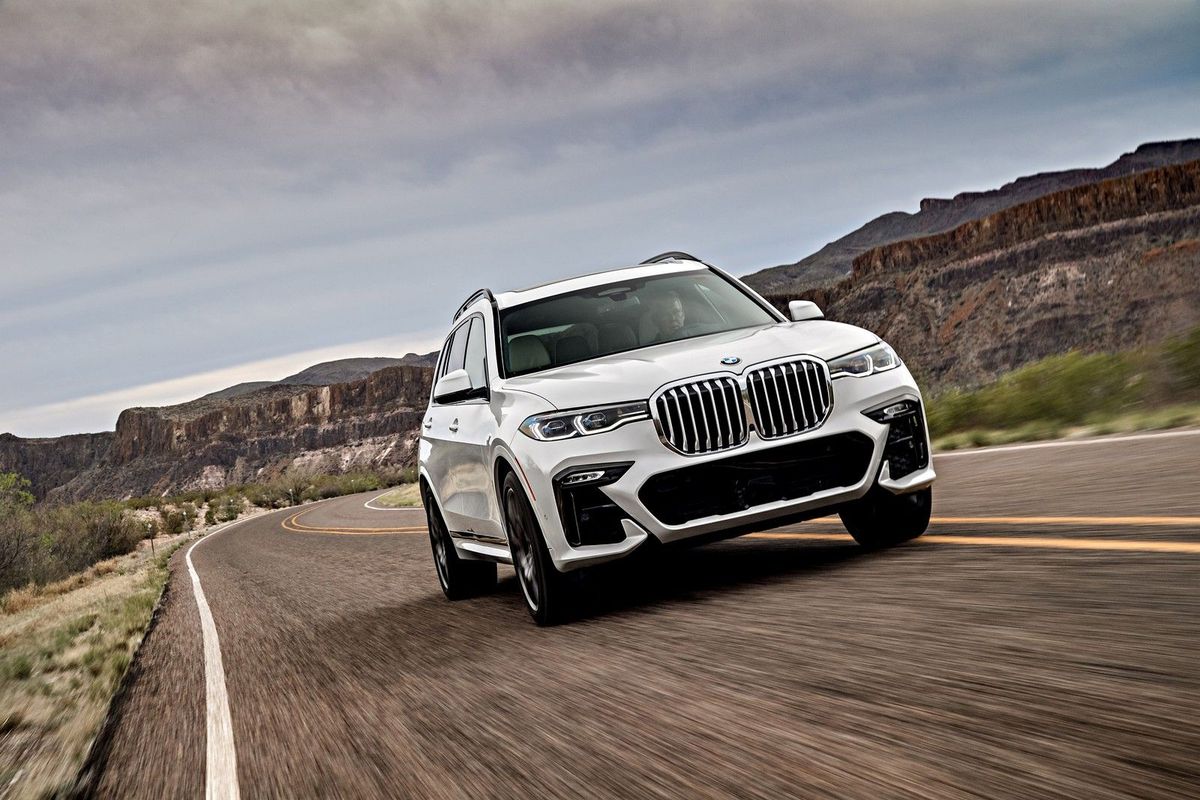
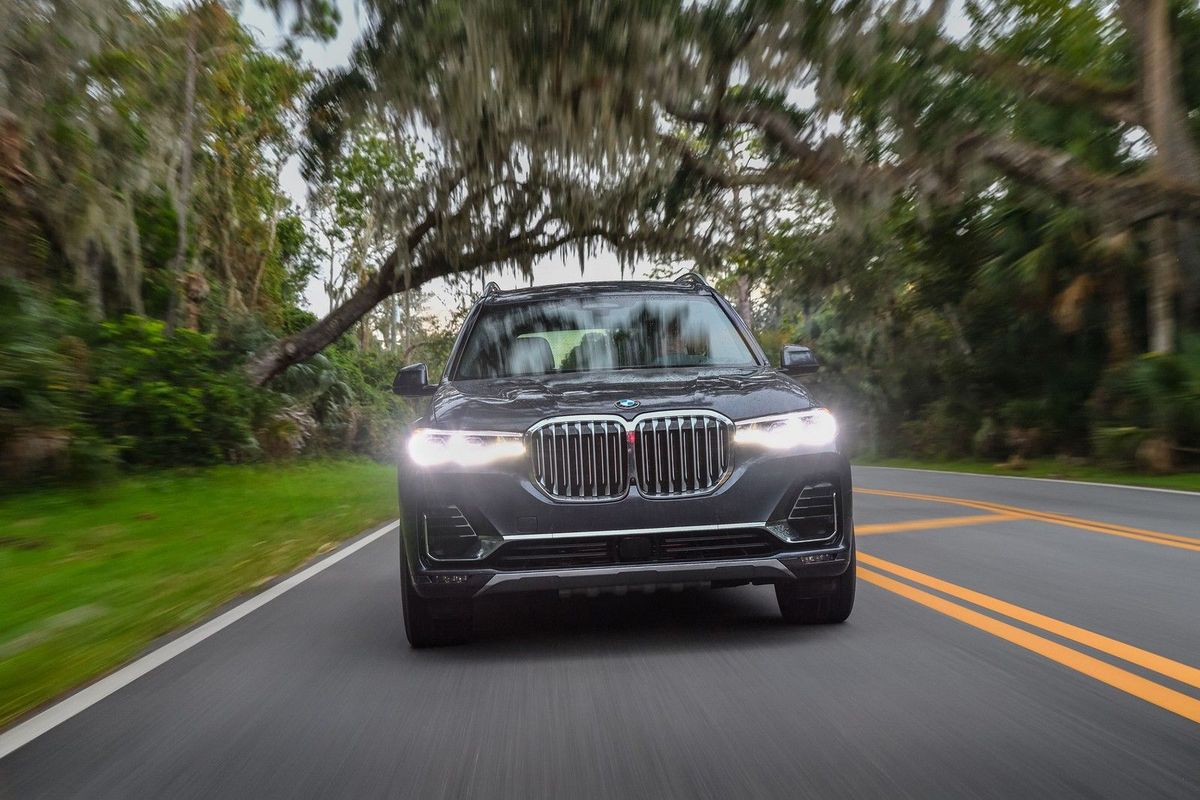
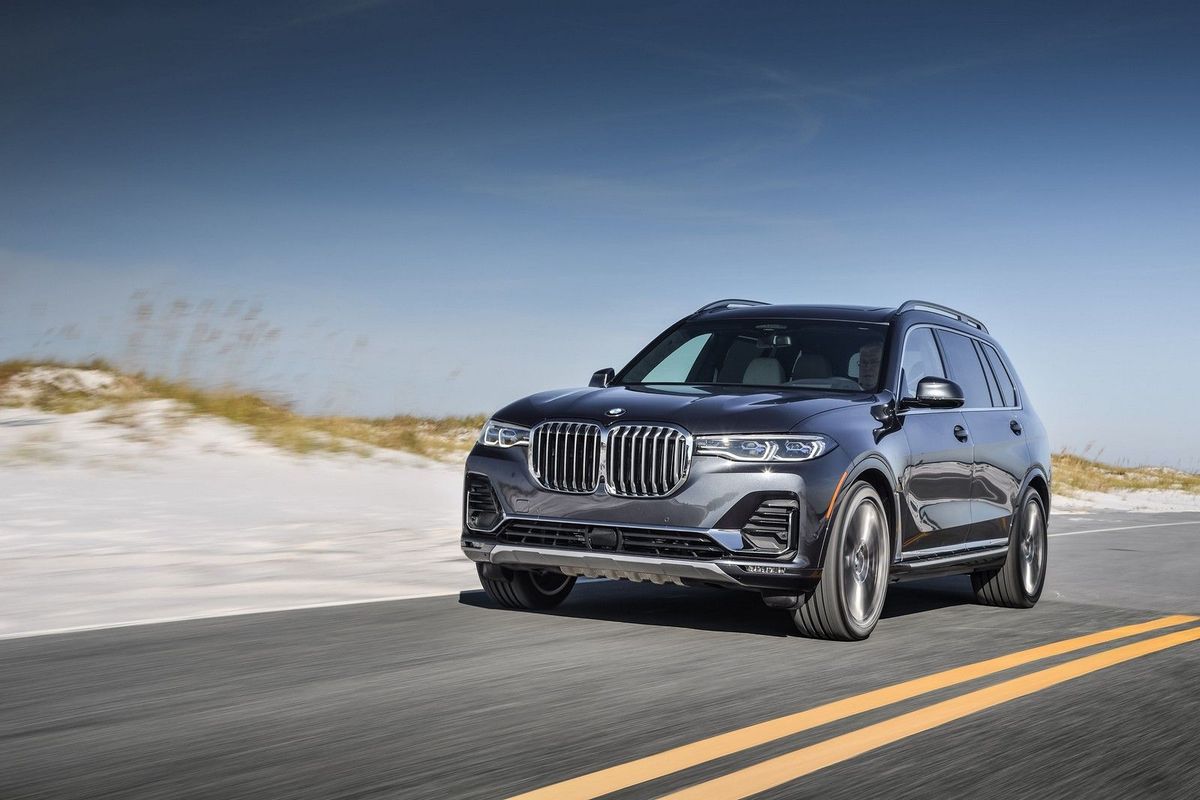
For those who considered the BMW X5 too small for their needs (or image!), there’s an X7 first-class SUV. And, where better to test it than the open roads of Texas and Arizona in the land of SUVs itself – the USA? Our UK Correspondent Shane O' Donoghue got behind the wheel of the "7 Series of SUVs" and herewith his findings…
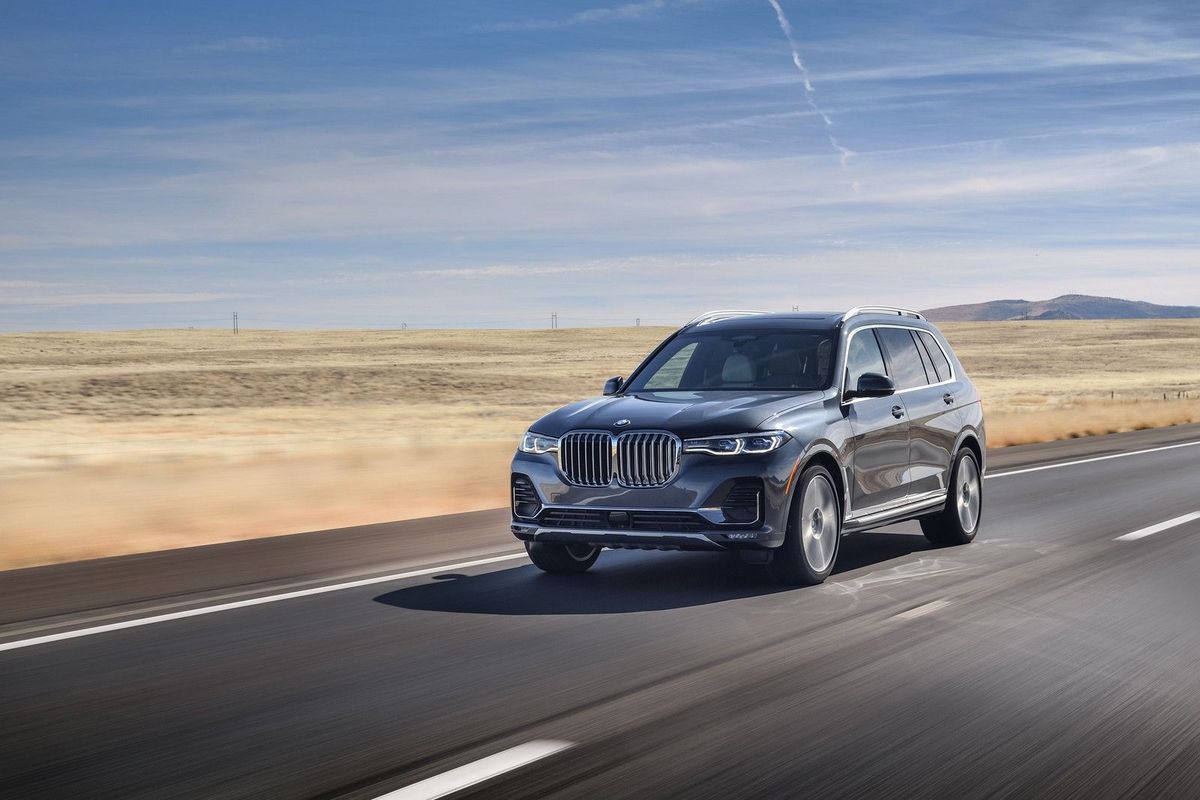
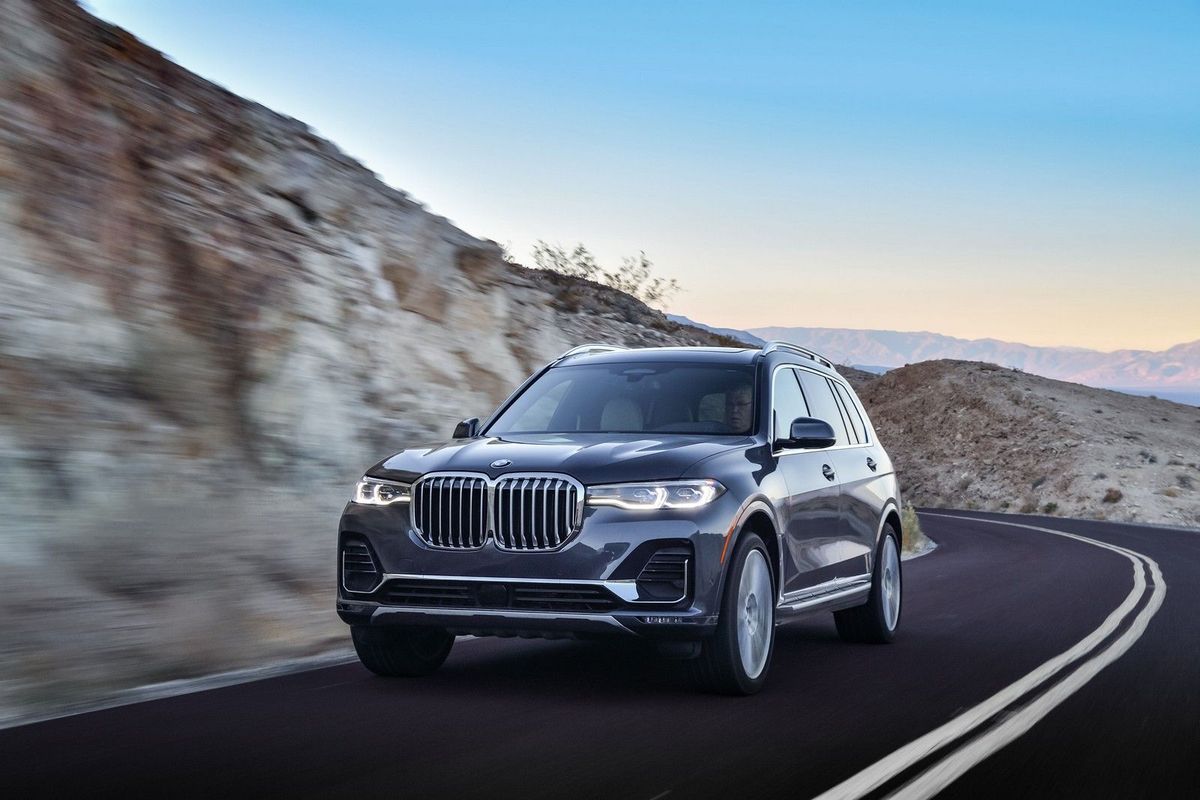
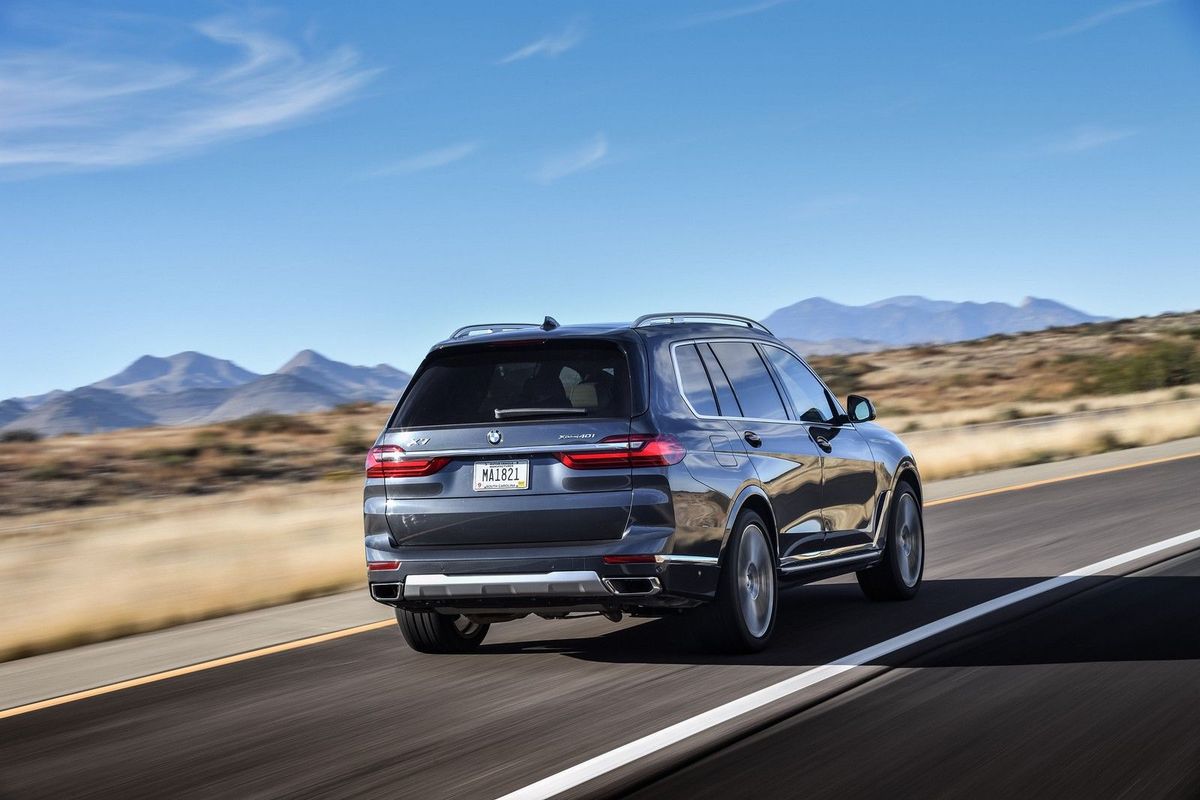
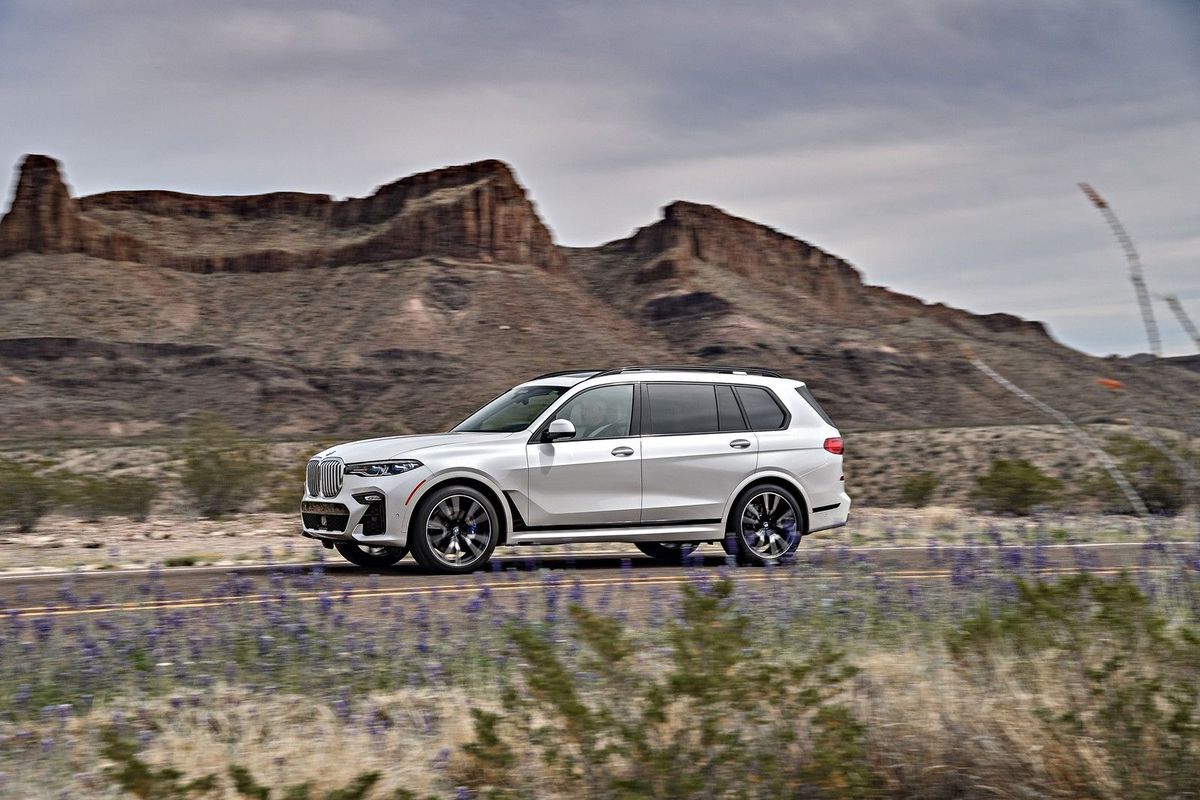
At times, the endless skies and straight roads of Texas and Arizona make the two US states feel as vast and as endless as the Northern Cape. And size most certainly matters around these parts. The roads are big, the burgers are big, the personalities are big, the "barbecue" grills are big and, of course, so are the cars. Other than SA, this is probably the only place in the world where the new BMW X7 doesn’t immediately strike you as simply ginormous.
BMW's biggest car yet was launched in the wide open spaces of South West USA.
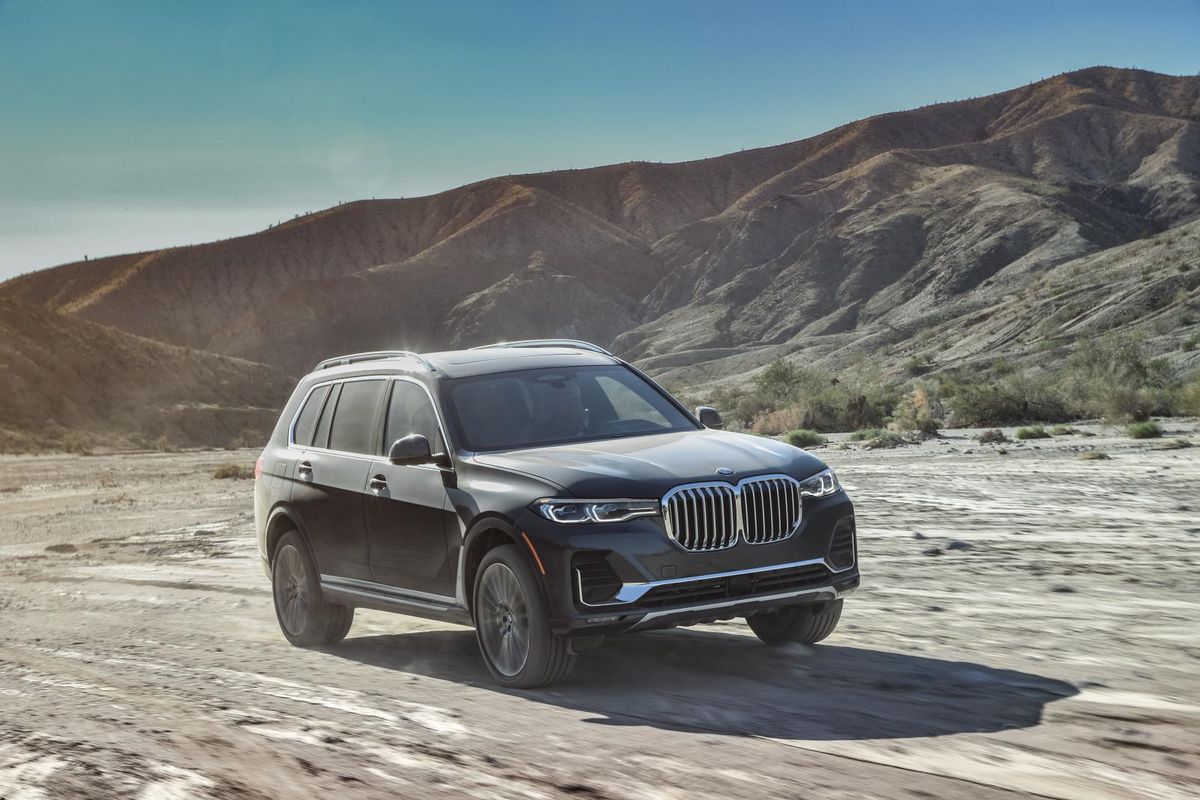
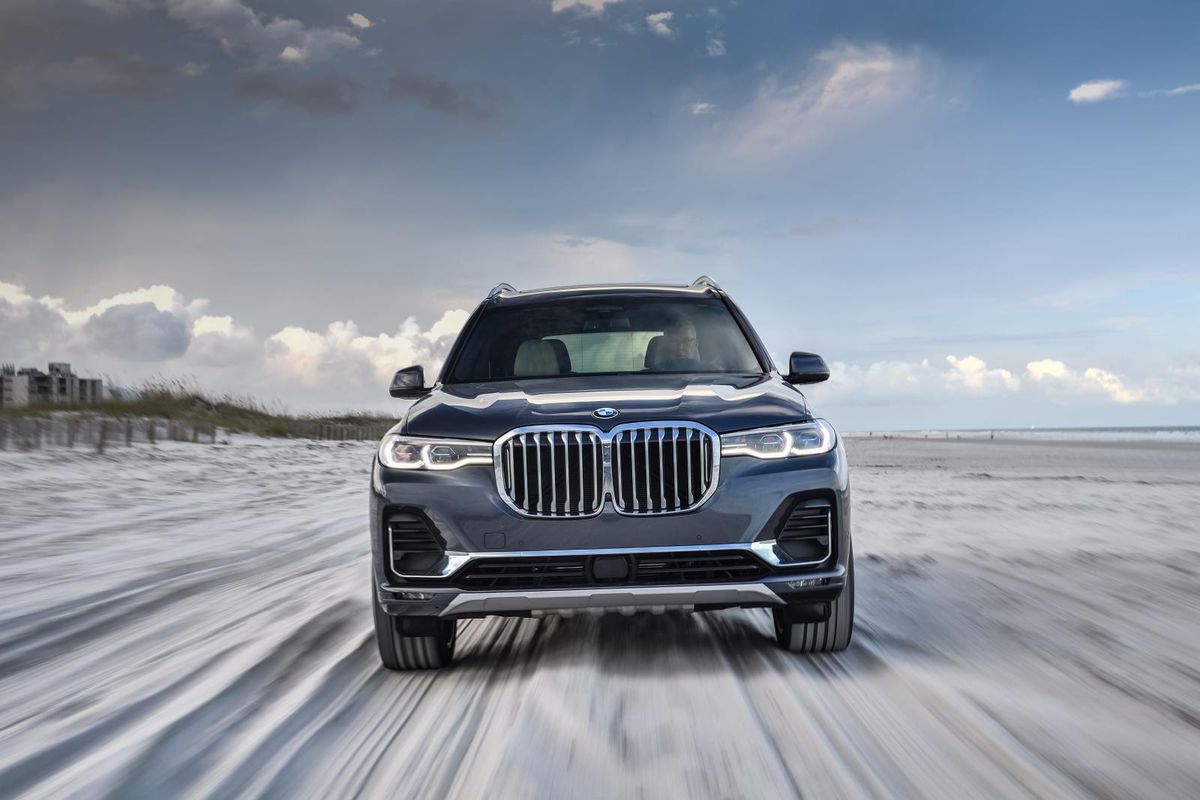
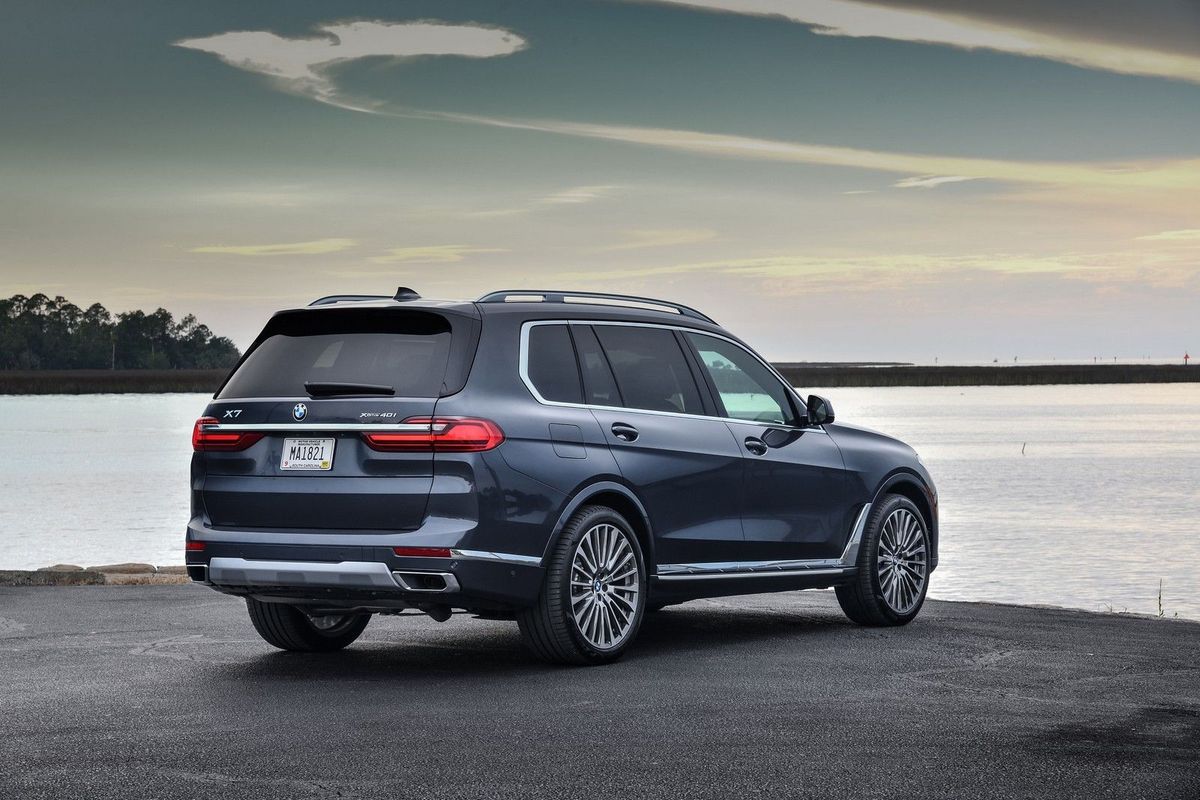
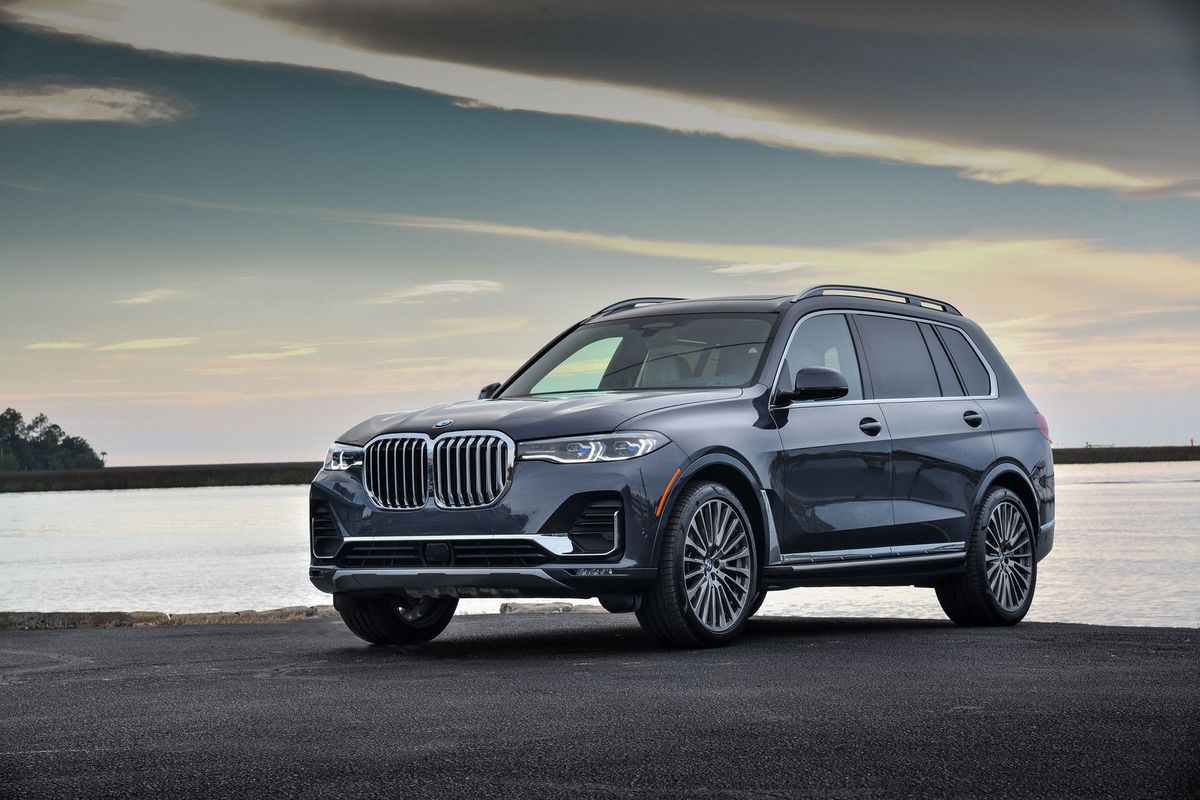
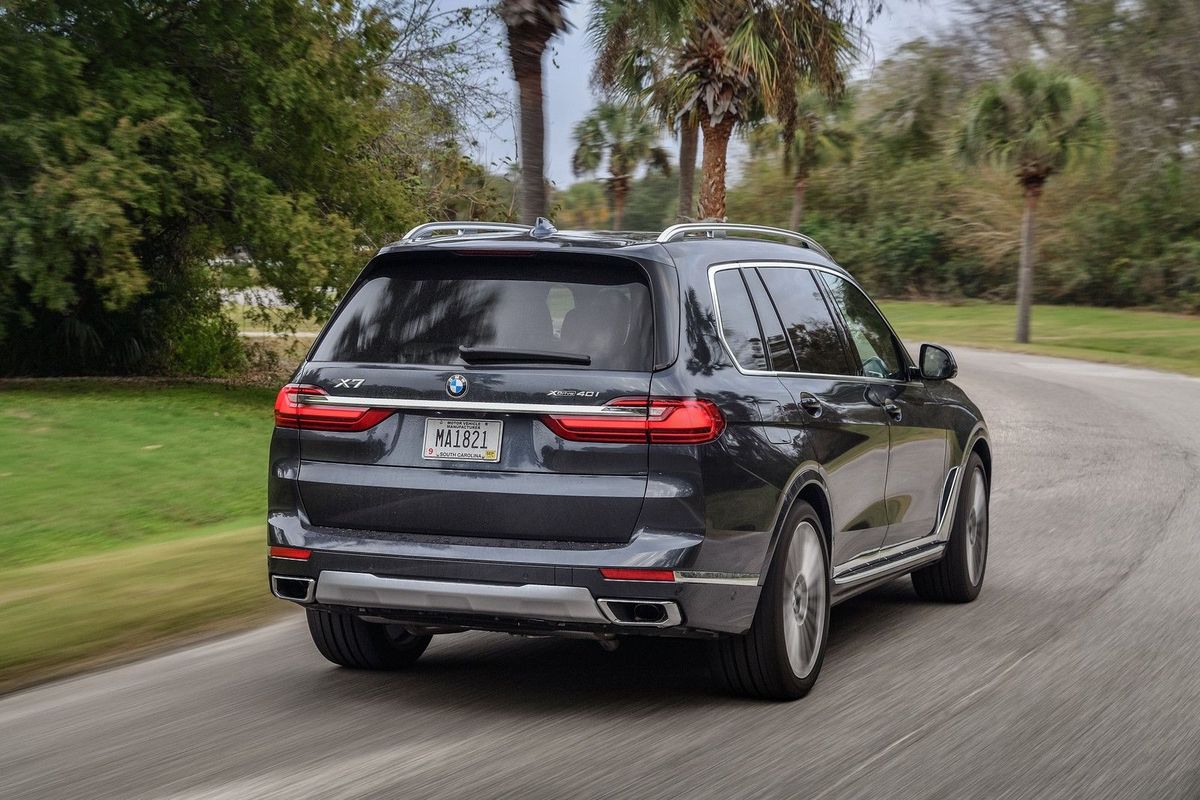
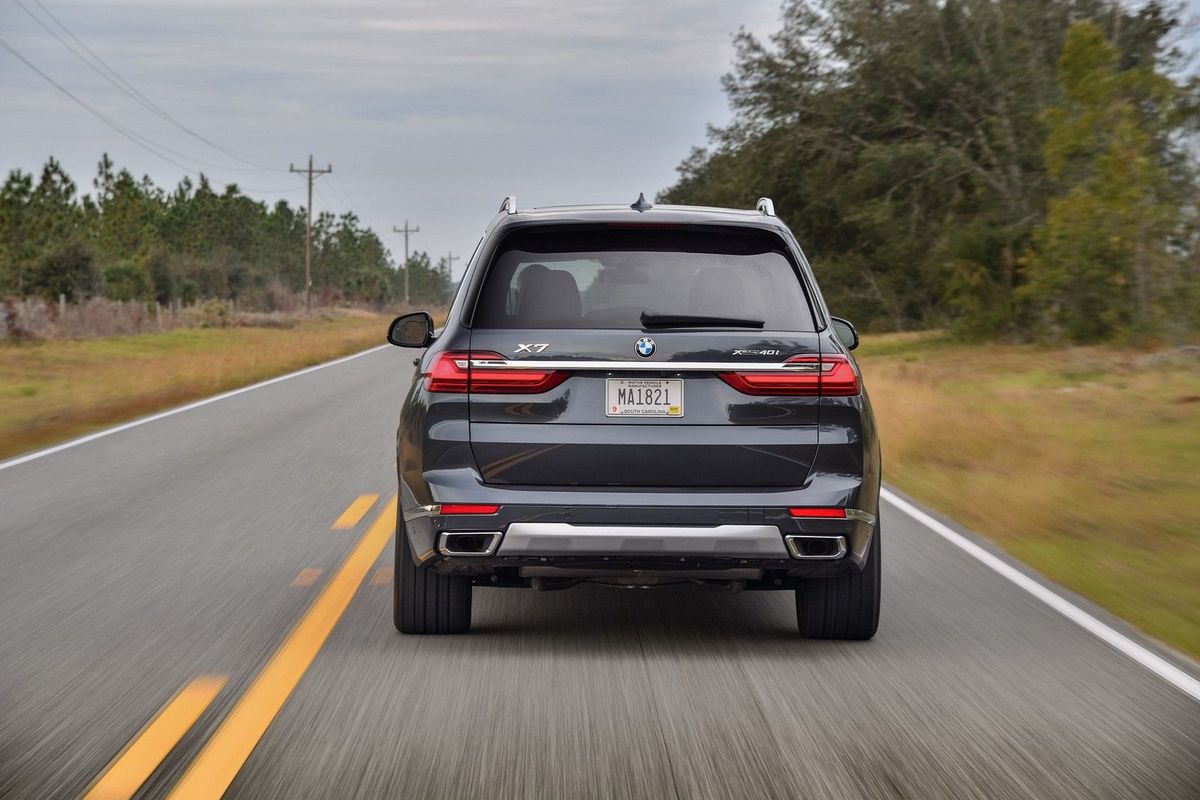
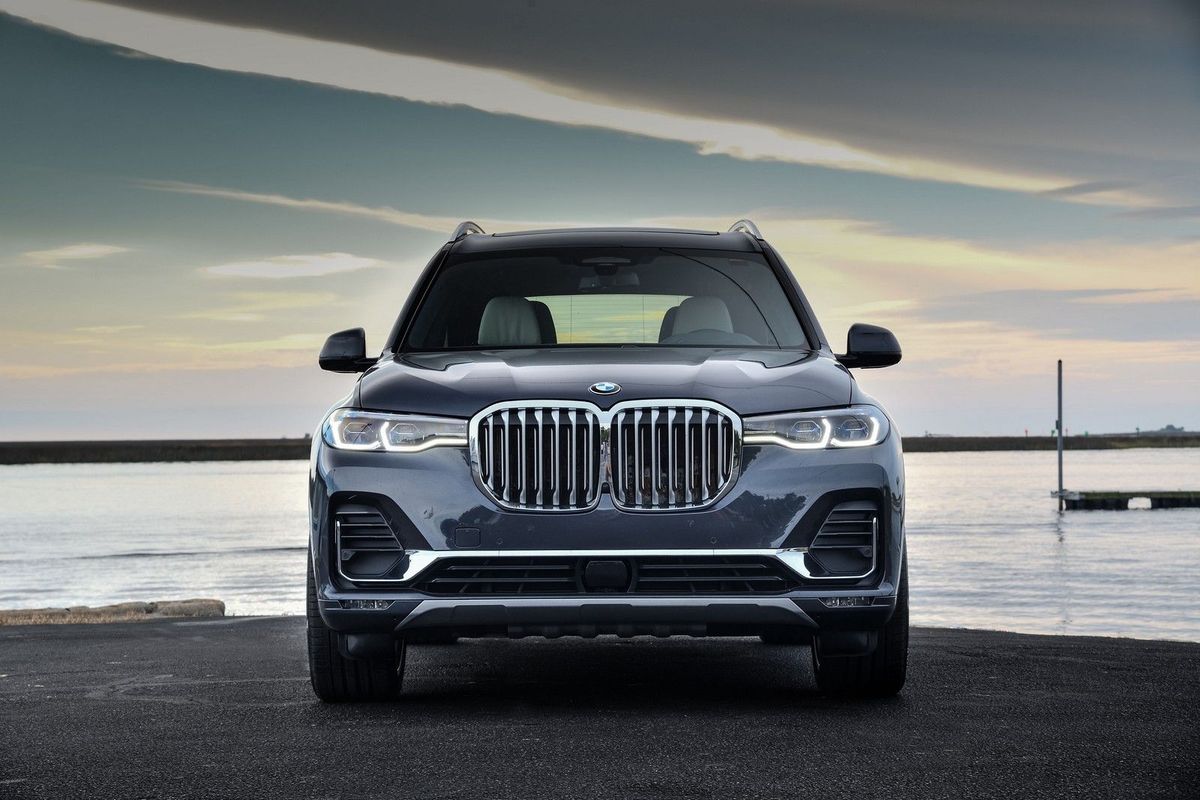
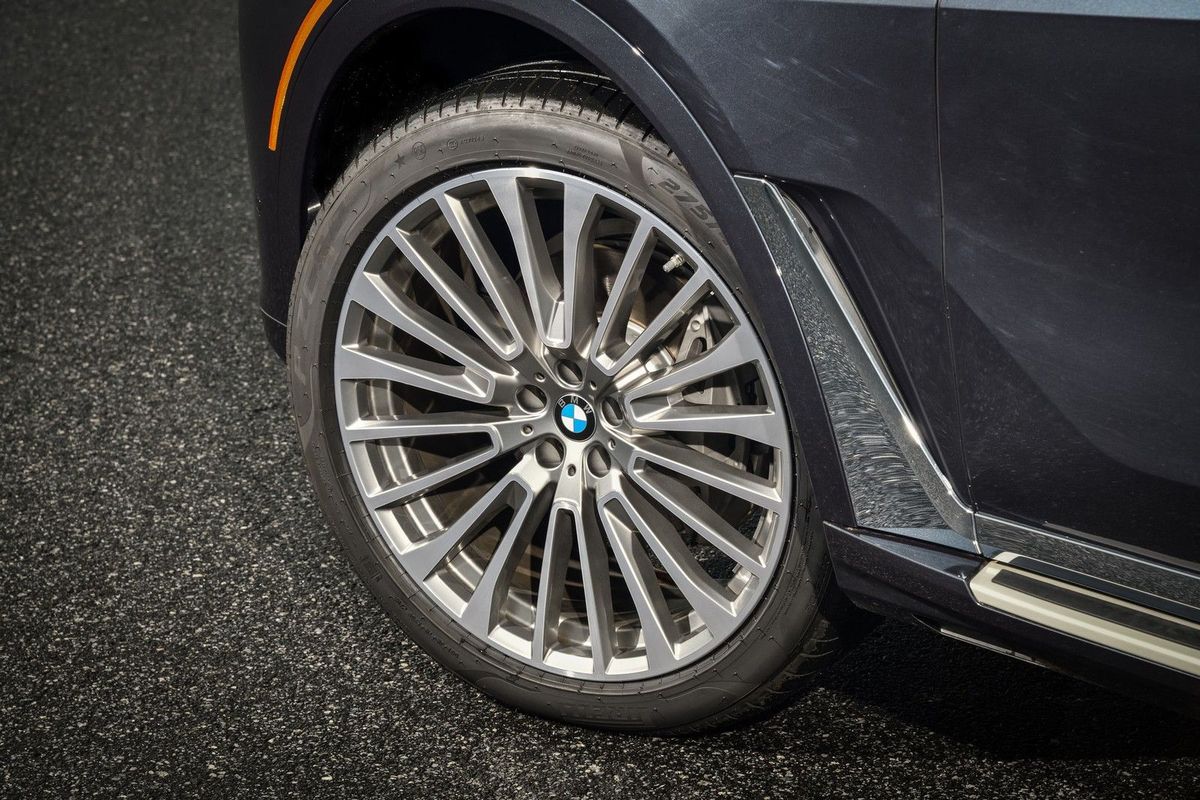
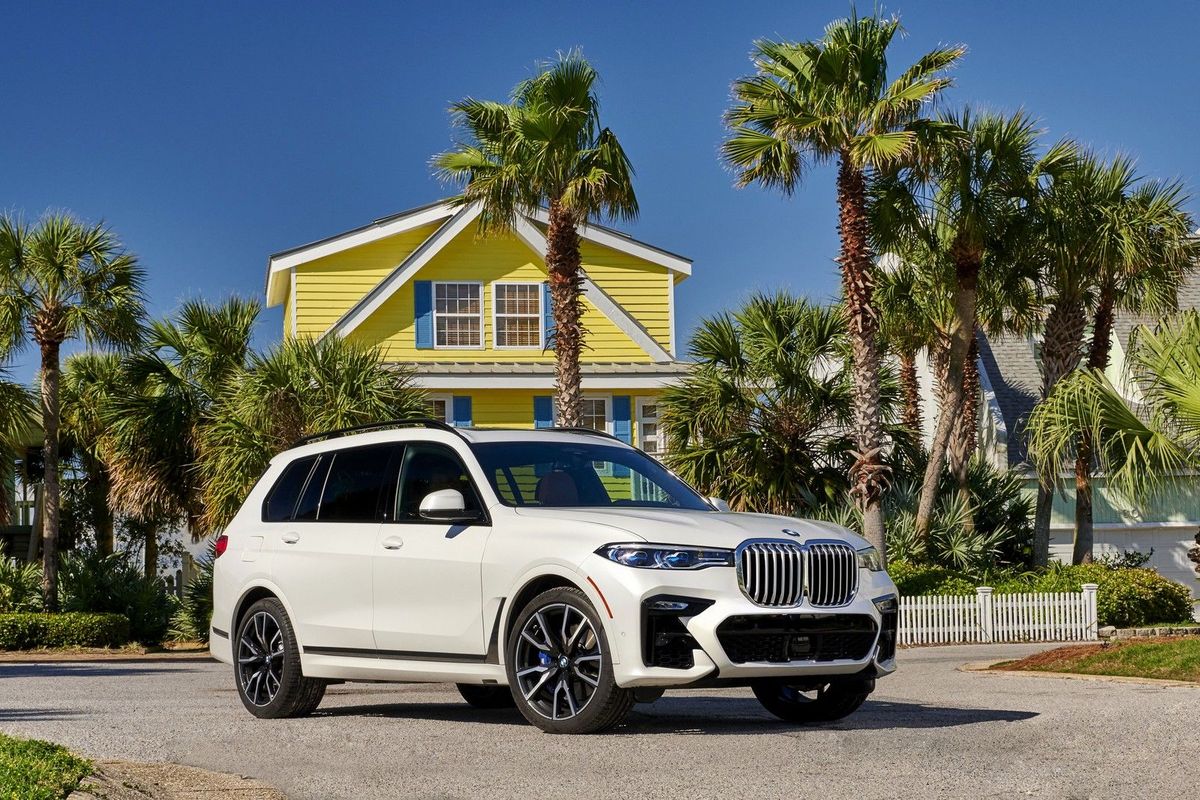
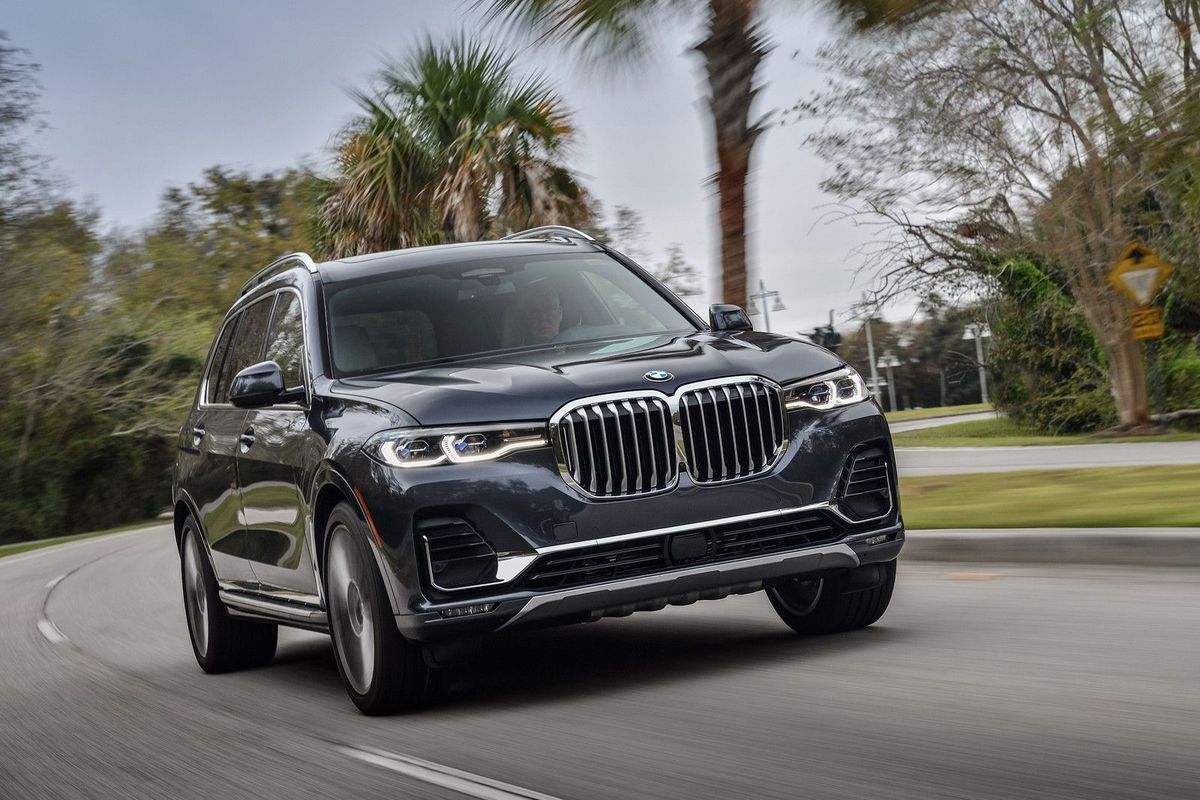
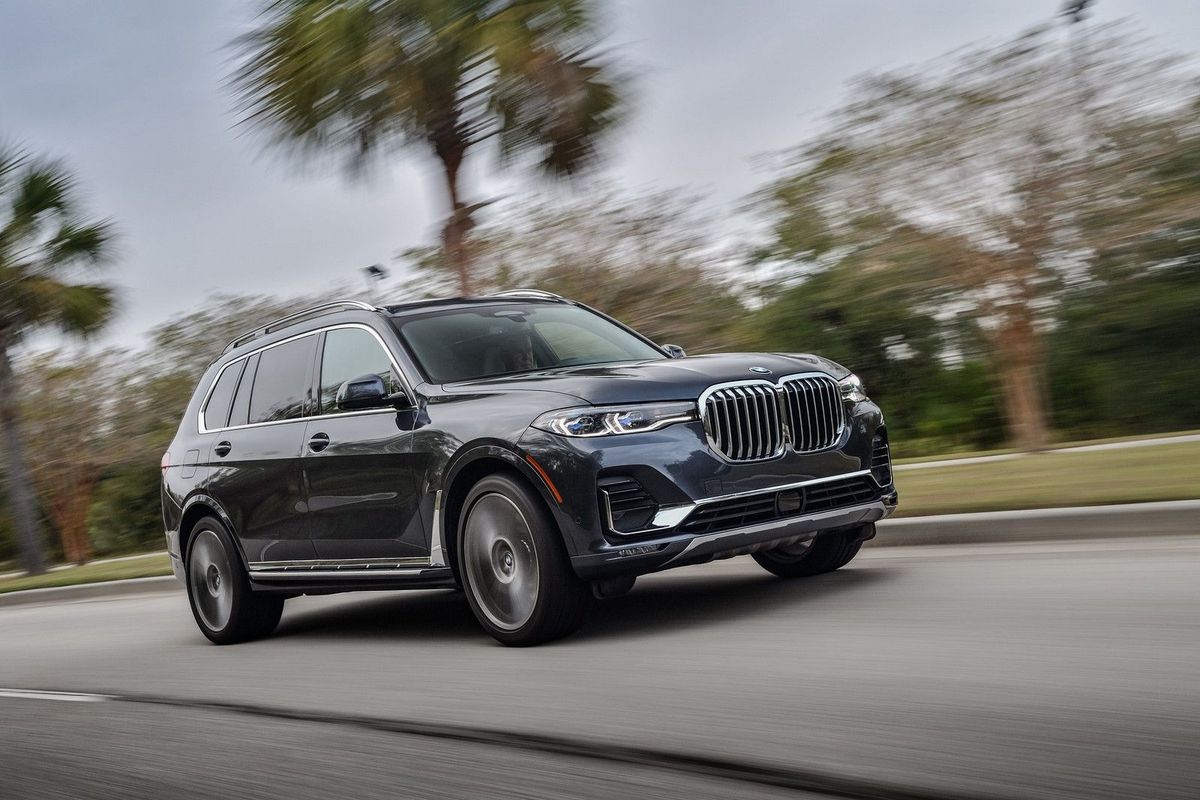
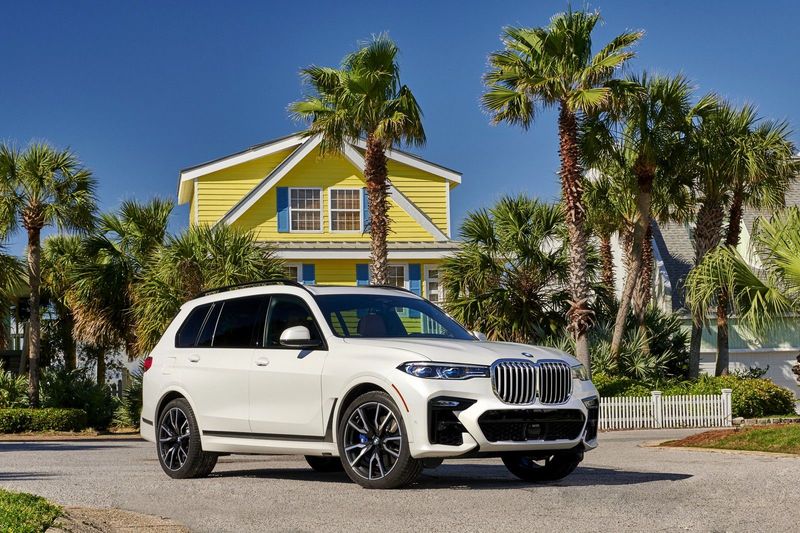
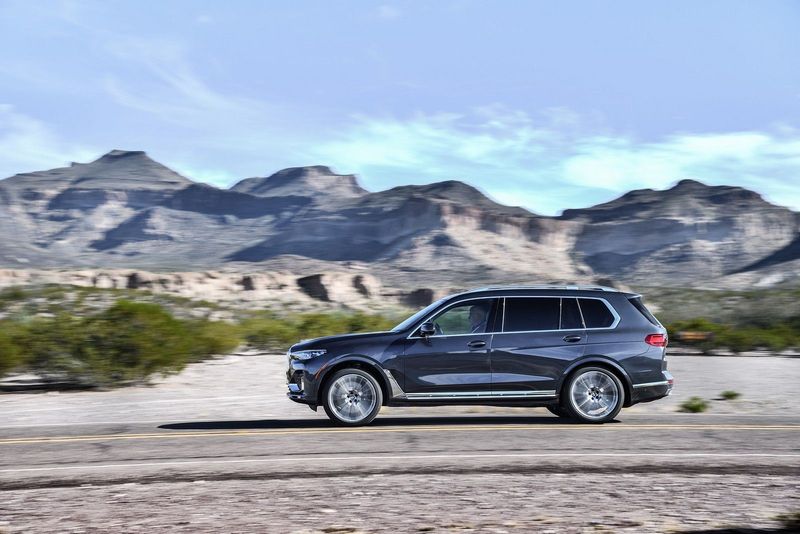
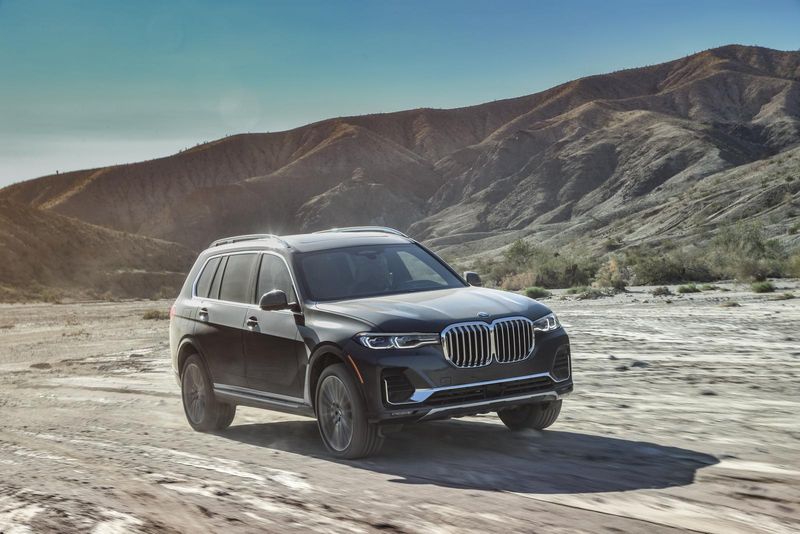
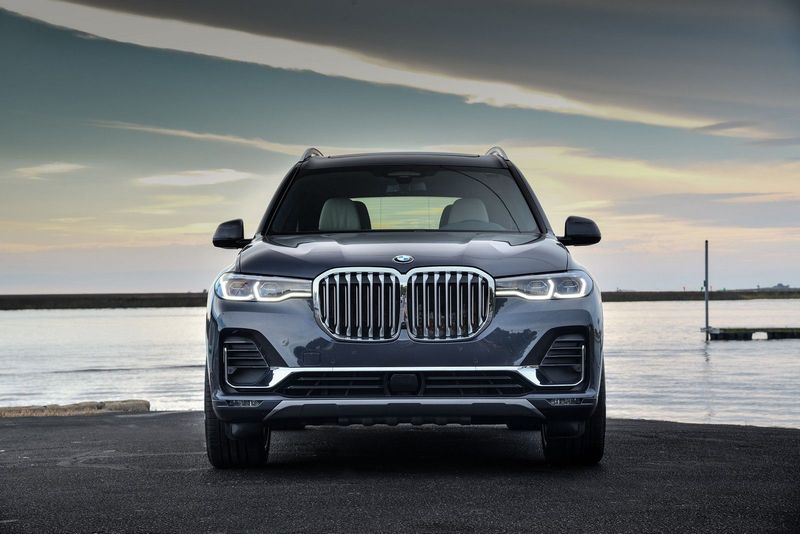
Photographs may suggest that the X7, BMW’s newest SUV, is little more than a restyled and slightly stretched X5, but it’s considerably bigger and shares zero body panels. The Munich-based firm's maiden first-class SUV measures in at 5 151 mm long, 2 000 mm wide and 1 805 mm tall, on a wheelbase of 3 105 mm, making it a significant 265 mm longer, 62 mm wider, 43 mm taller and 172 mm longer in the wheelbase than its "kid" brother. Sure, it gets bigger badges and sneaky trim detailing to help disguise the bulk, along with the option for wheels of up to 22 inches in diameter, but when you make your way around to the front, you’re tasked with taking in the largest (most controversial) kidney grille BMW has ever made. We’ve yet to find anyone that loves this, though it certainly gives the X7 "get out of my way" presence. Besides, BMW wanted to align the X7 closer to the 7 Series first-class sedan than the X5.
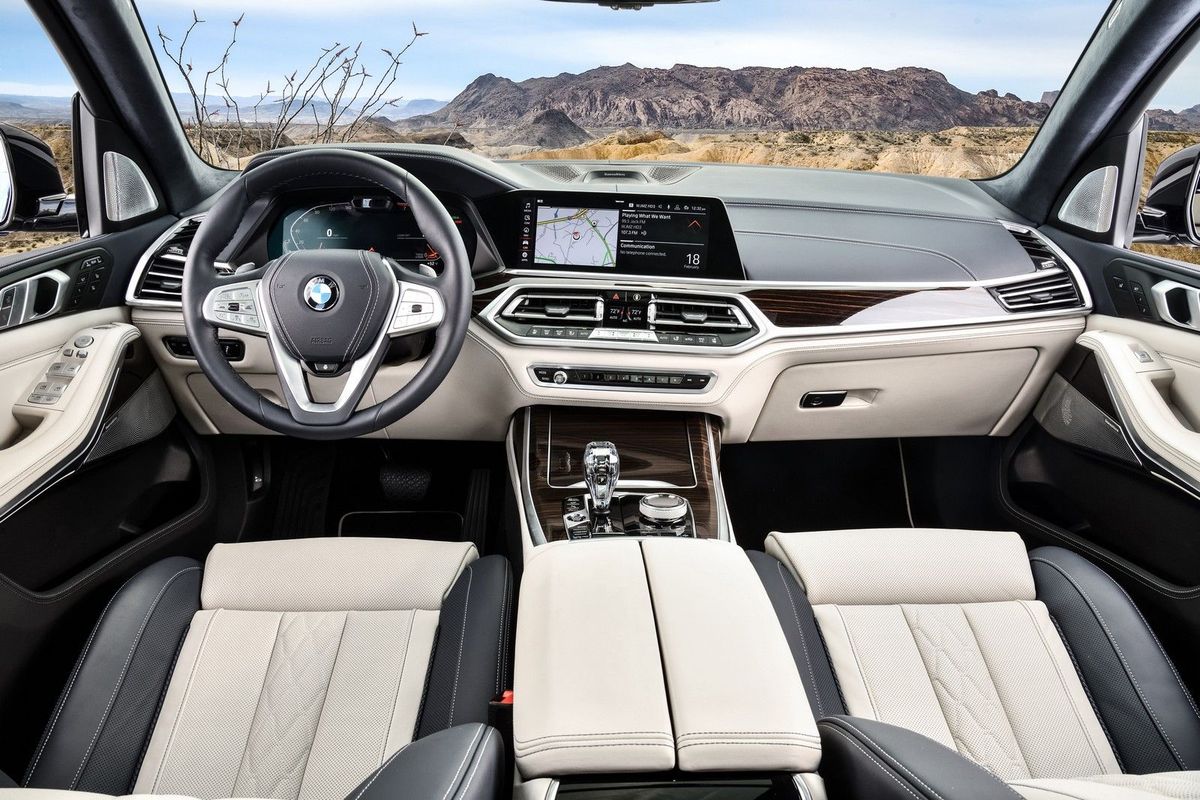
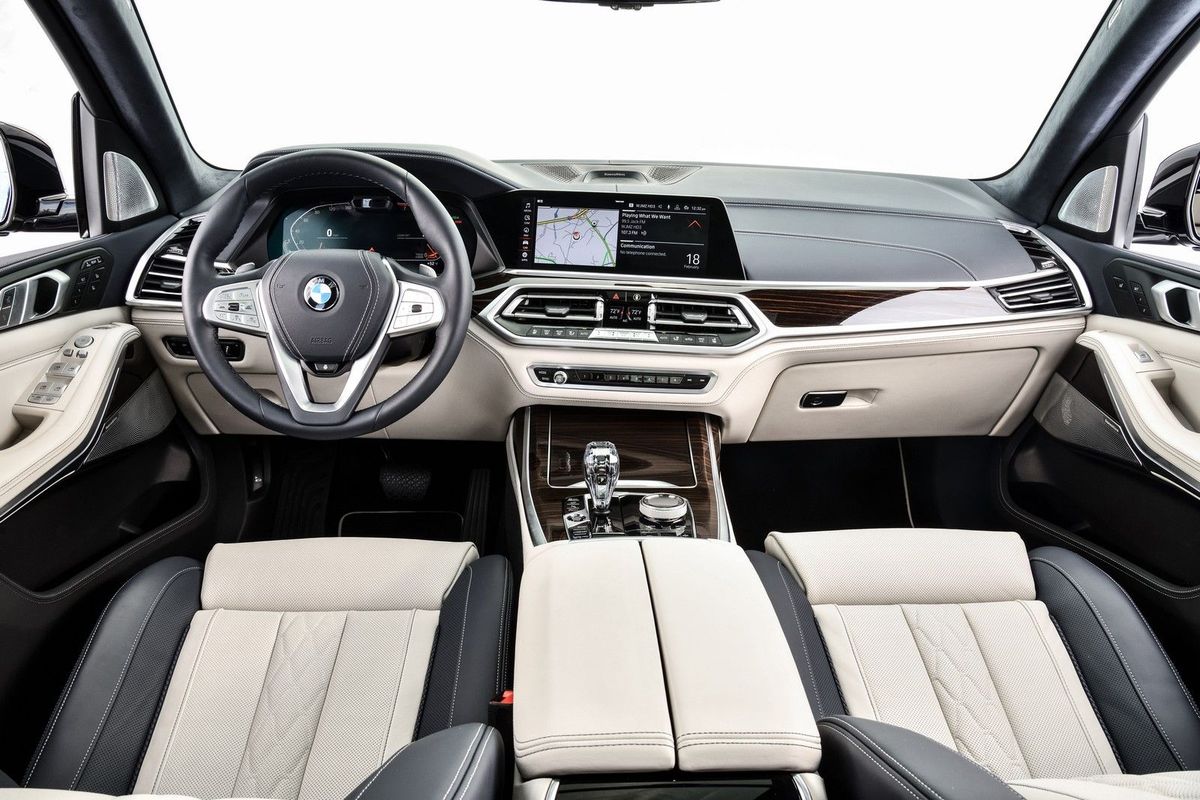
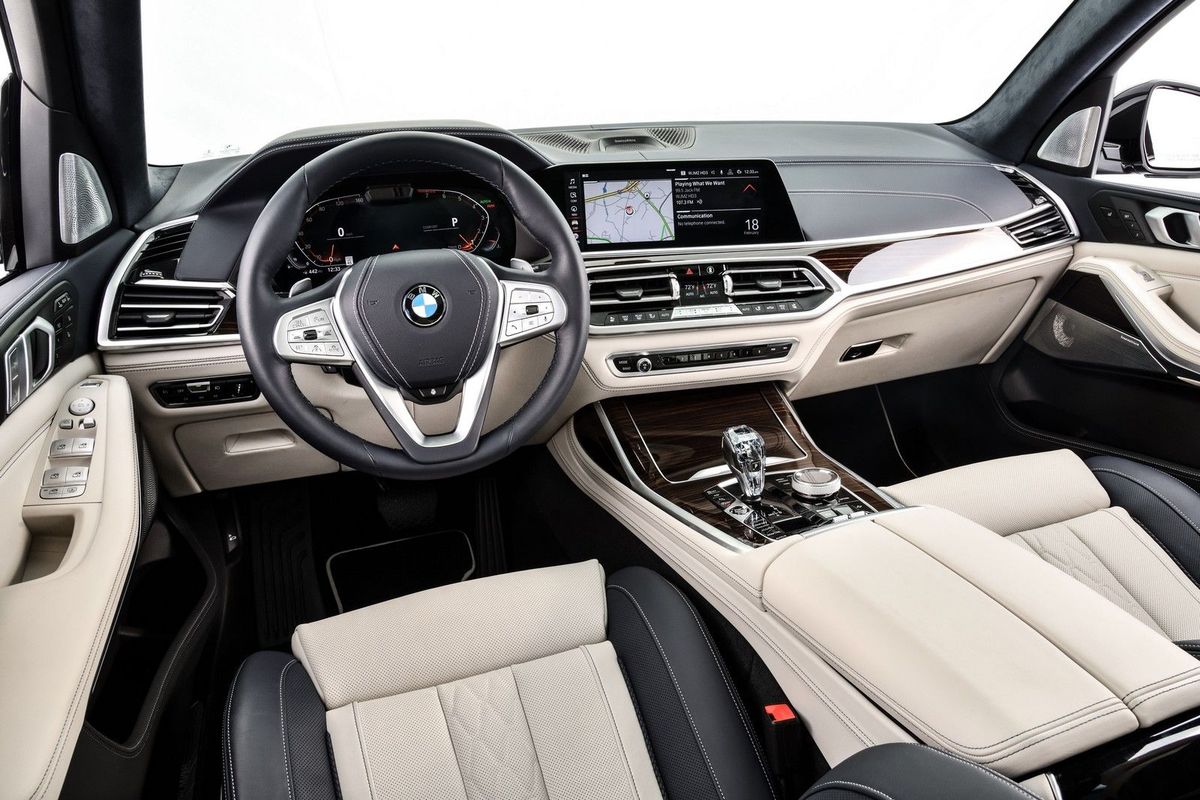
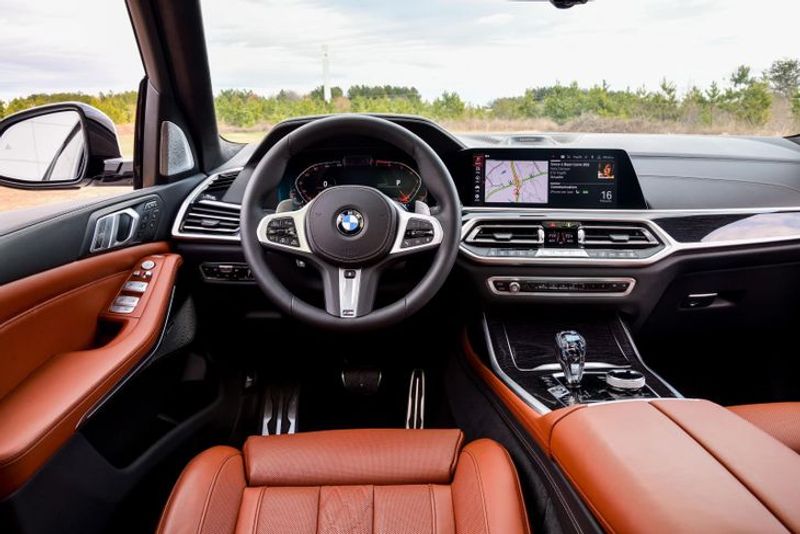
When you hasten away from the controversial nose and return to the side of the X7, the 7 Series influence becomes apparent in the shape of the newcomer's door openings – the rear one is longer, which hints that the X7 is intended to accommodate the front and rear passengers in comparable levels of comfort. Pull any of the doors open and you’re greeted by a sumptuous interior that uses all the latest in BMW’s technology arsenal, including dual 12.3-inch screens and sharp graphics. The central touchscreen is fast to respond and offers gesture control to toggle a few of the iDrive functions, although we found ourselves falling back on using the rotary controller when on the move – it’s simply more precise.
With a wheelbase of 3 105 mm (just shy of a long wheelbase Range Rover), you'd expect to fit 7 people in absolute comfort.
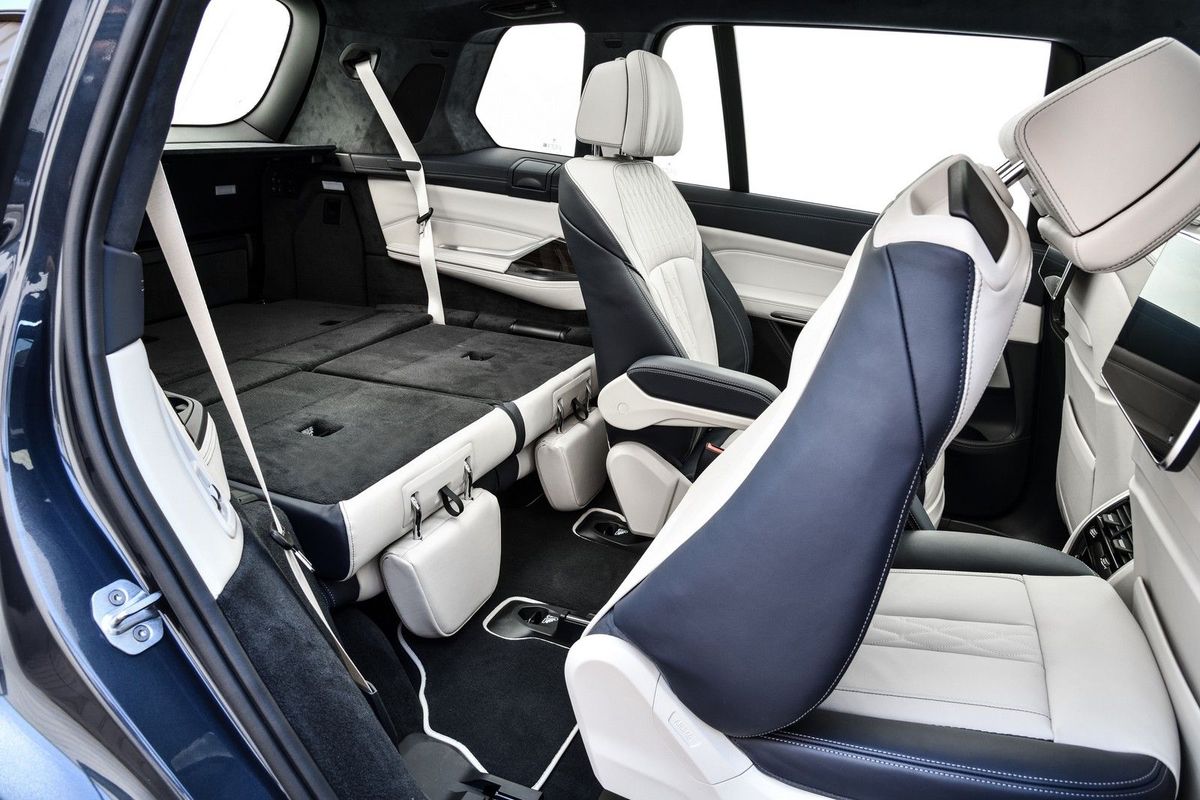
Up front, the new X7 doesn’t feel very different from the X5, but the rear seating is all-new. All X7s will feature 3 rows of seating, but the 2nd-row bench design can be optionally replaced by 2 individual chairs, making the X7 a 6-seater. This really is the X7 at its best, setting it apart from the X5 as a luxury vehicle. These individual chairs have electric adjustment and are just as comfortable as those up front, while the space between them is sheer indulgence. There’s enough room there to get into the rearmost seats, and they’re genuinely big enough to accommodate a pair of average-sized adults in comfort for long journeys. A neat touch is the fitment of a glass panoramic roof as standard that has an extra panel above the back row, ensuring that occupants don’t feel like 2nd-class citizens. Buyers can specify 5-zone climate control for the same reason, and there are several rear-seat infotainment options.
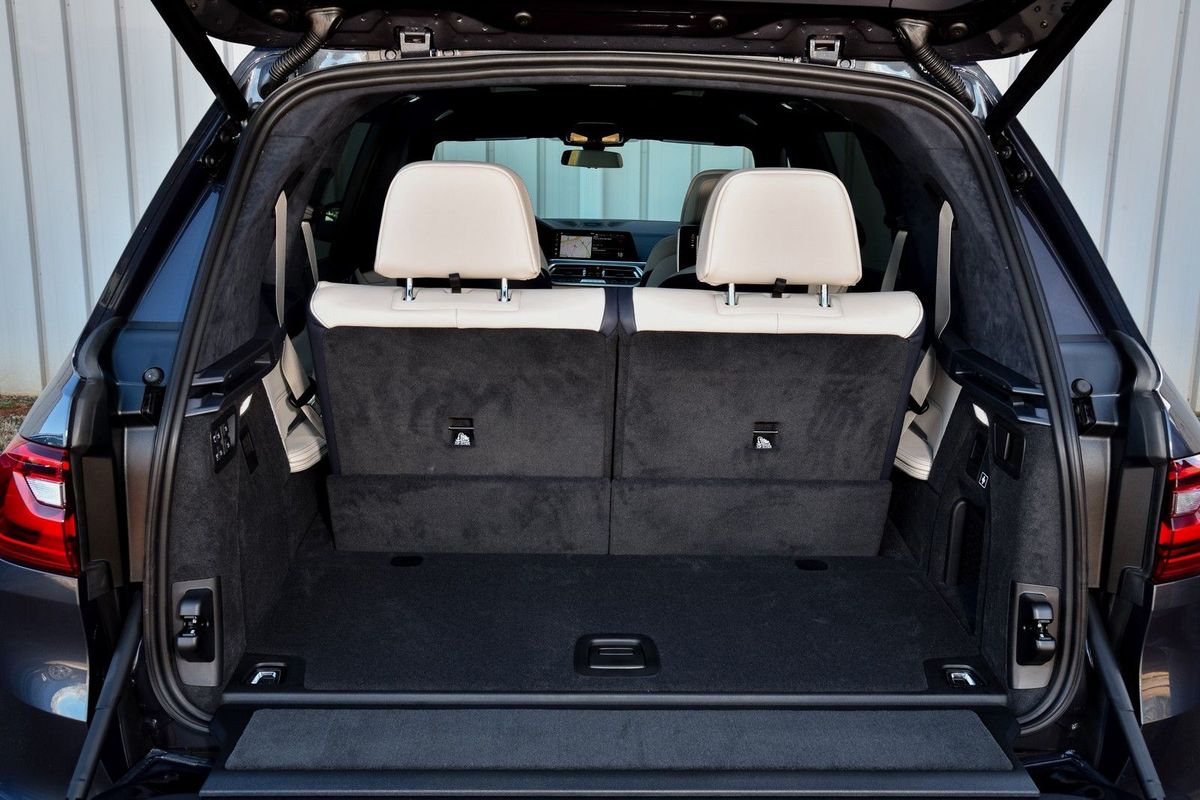
Usefully, there’s still some luggage space when all seats are in use. Access is via an electrically operated (and split) tailgate and inside you’ll find a cluster of tactile buttons to automatically alter the seating layout, including shortcuts for maximum passenger seating or -luggage space. This is all very easy to use, though it seems to take the electrically moving seats an age to change their positions…
Up front the X7 isn't much different from an X5. It's in the back where differences occur.
Kicking off the X7 range in SA is the turbodiesel xDrive30d and M50d derivatives, priced at R1 562 849 and R1 862 308 respectively. The M50d gets its own specification and equipment, while the rest of the line-up can be had in standard, Design Pure Excellence and M-Sport guises. The X7’s main rivals are the Mercedes-Benz GLS and Range Rover.
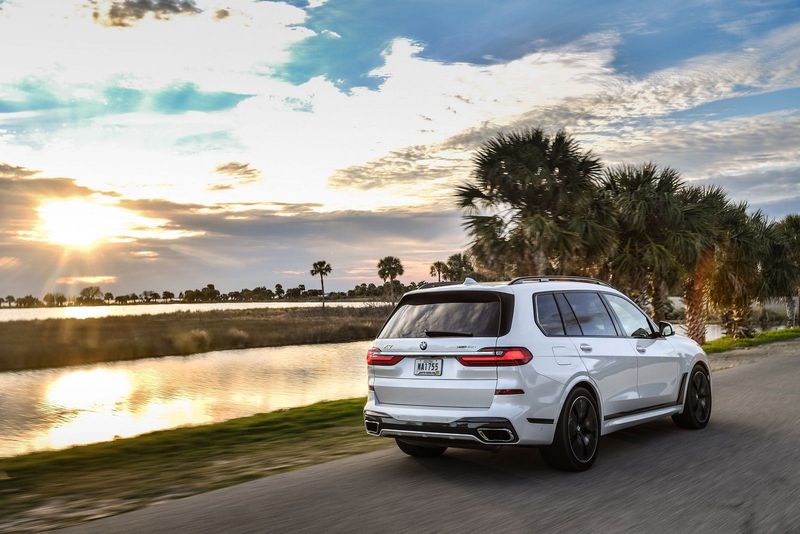
Given the location of the international launch of the BMW X7, it should perhaps be of no surprise to discover that we only had access to petrol versions, which won’t reach South Africa until late 2019, while the range-topping xDrive50i, with its twin-turbocharged 4.4-litre V8, may never hit Mzansi's shores at all. So let’s focus on the petrol model that will: the xDrive40i. It’s powered by BMW’s turbocharged 3.0-litre straight-6, which produces 250 kW and 450 Nm of torque. Even though the X7 looks and feels like a large car, this engine doesn’t feel overwhelmed for the most part. Only when the roads turn mountainous do you detect more frequent down-changes in the silky smooth 8-speed automatic transmission (when you’ve got cruise control set and the car is aiming to keep at a consistent speed, regardless of inclines). And even if you extend this 6-pot to the redline it maintains a cultured and distant note.
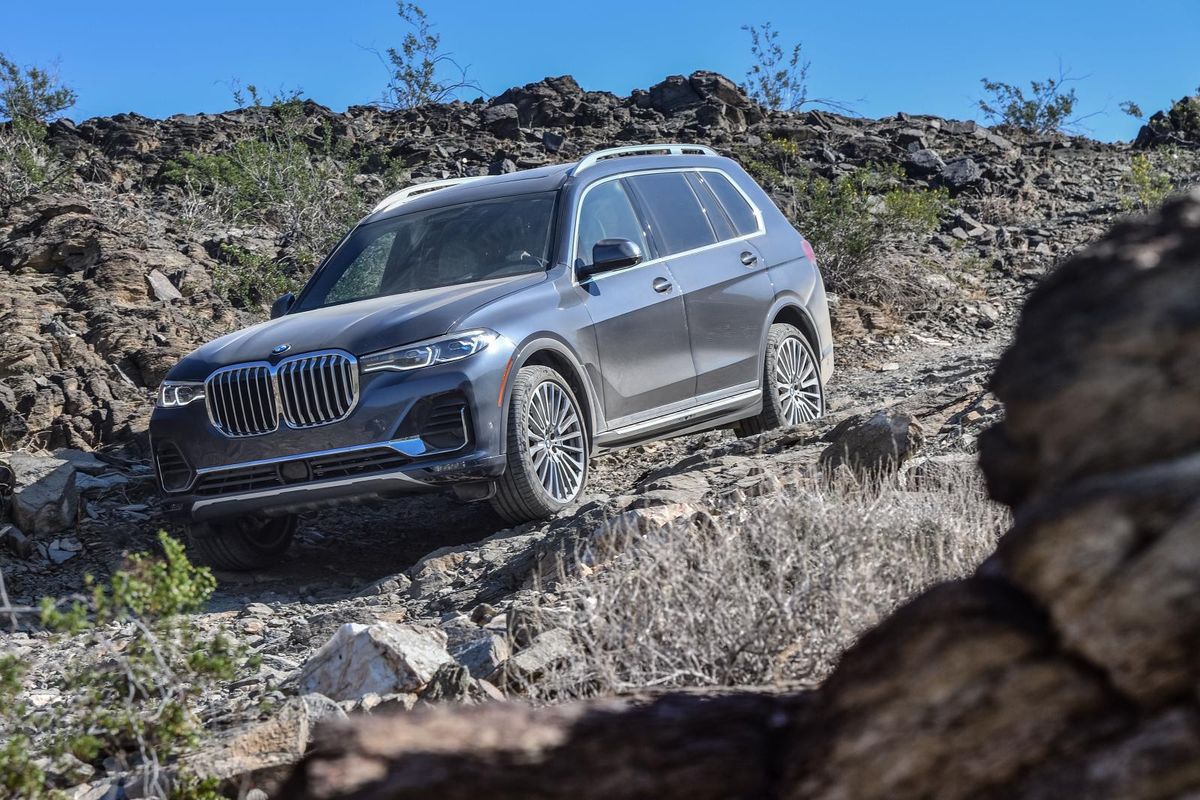
Don't expect to see many X7s off-road. BMW has fitted the X7 with all the off-roading kit it will ever need, however.
That’s when you realise just how quiet the X7 is in general. Wind noise, road noise and engine noise are all absent for the most part, reinforcing the upper-end luxury-car message.
Despite that, the X7 is more biddable than you might expect from something this large. At legal road speeds, it feels like it isn’t even trying, which is all most will want from it, though keener drivers will find it lives up to the badge on the bonnet in the way it can take more "enthusiastically driven" corners with little body lean and even some feedback from the steering.
That depends, of course, on how you specify your X7. As standard, it gets air suspension front and rear with adaptive damping, but buyers can add Integral Active Steering (rear-wheel steering) to help it feel more agile. That’s worth going for even if you don’t foresee twisty corners on your horizon, as it makes the X7 far wieldier around town.
Air suspension is standard on the new X7, rear wheel steering is optional but recommended.
And off the beaten track, the X7 should be able to more than hold its own thanks to BMW’s fully-active xDrive four-wheel-drive system. Those not afraid to risk the X7's big rims and chrome trim can even specify an Off-Road Package to enhance the first-class SUV's ability.
The X7 does everything you’d expect a jacked-up BMW 7 Series to do, and a little more. Suffice to say, no other full-size SUV in its segment feels quite as good to drive as the Bimmer.
The huge grille on the X7 should appeal to the South African's love of braaing.
Nobody will buy the BMW X7 to go seriously off-road, or to drive it hard on a race circuit, but the Bavarian firm's own standards demanded that its largest SUV had to cope with extremes and maintain the driving dynamics that has made its badge one that signifies "this is a car people will want to drive". Thankfully, it doesn’t appear to have compromised on a high-quality and spacious cabin in that pursuit. The X7 deserves its billing as top SUV dog in the BMW line-up, that’s for sure.
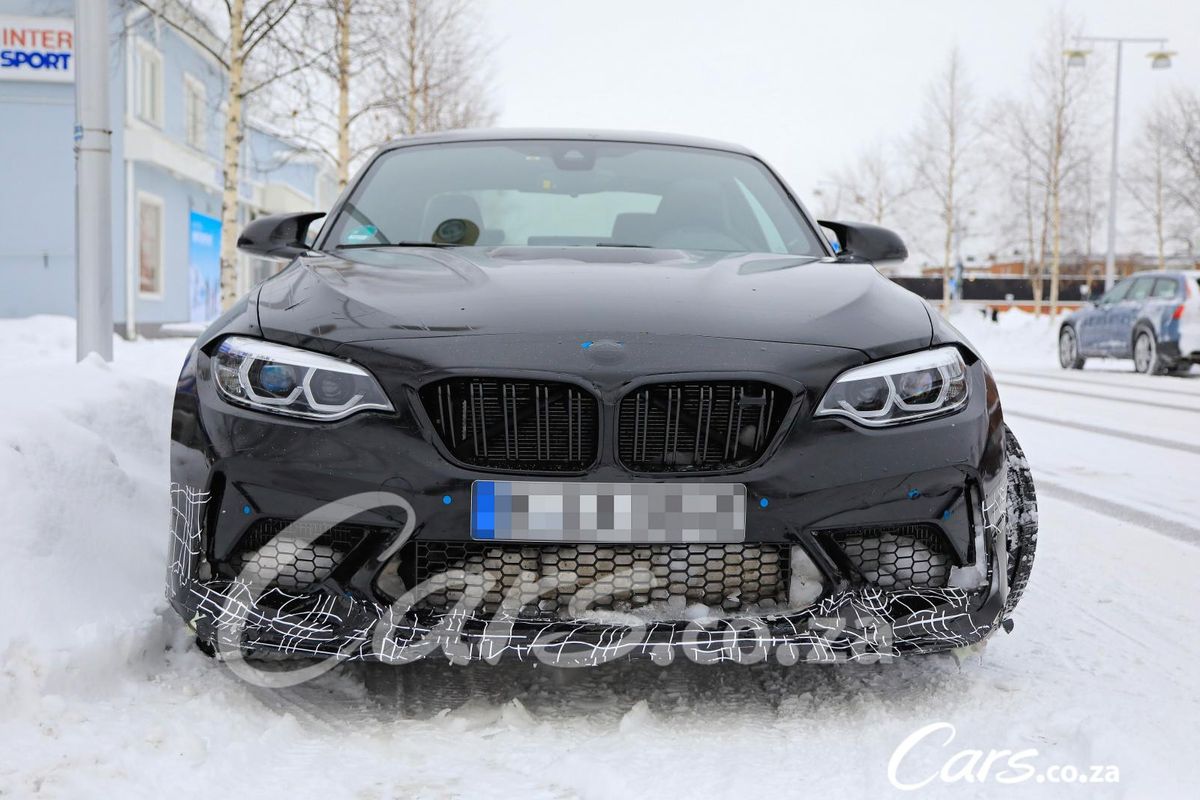
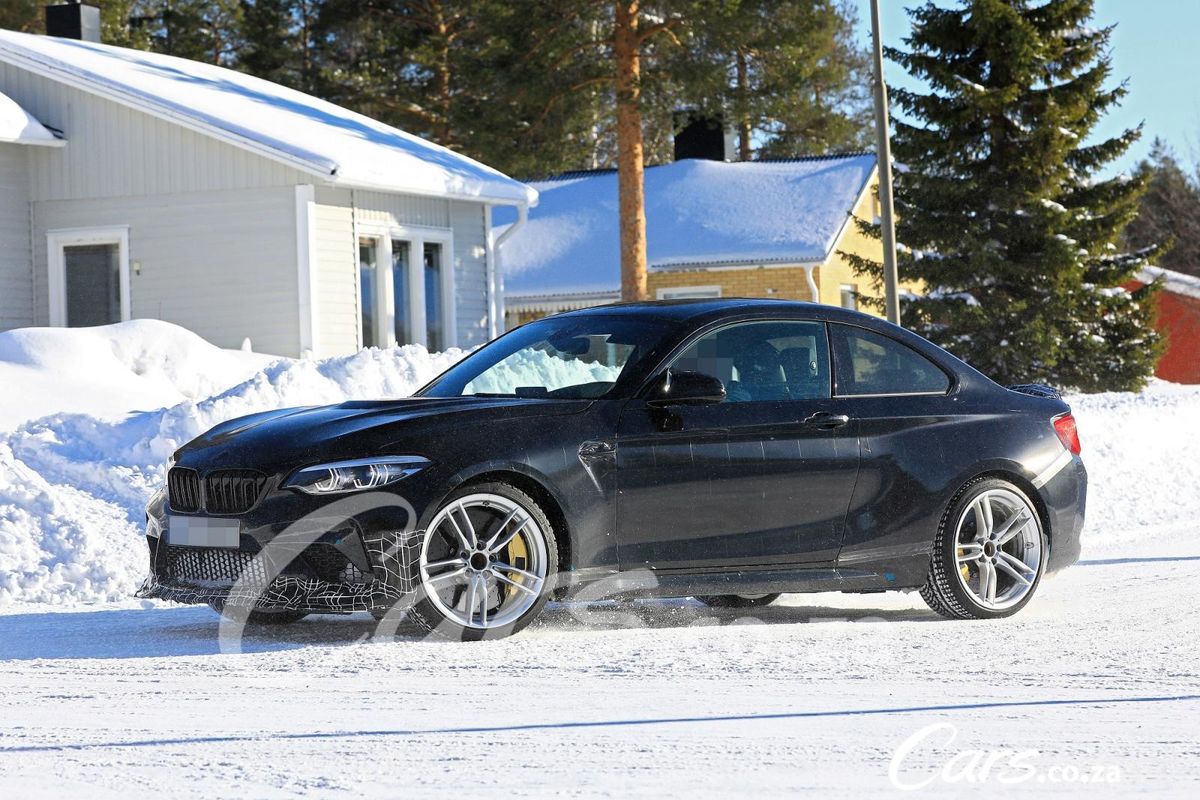
The BMW M2 range will be bolstered by a flagship high-performance offering in 2020. While we don't know what it'll officially be called, rumours are rife that what you see is the new BMW M2 CS.
Spy shot credit: S. Baldauf/SB-Medien
If the BMW M3 CS was anything to go by, we're in for a treat. Not only did the BMW M2 win some Cars Awards – powered by WesBank from us, but its Competition sibling was a finalist too. It's safe to, therefore, assume that we're fans of this lithe and agile compact performance model, with some members of the team dubbing it 'the only M I'd buy."
So, what do we know of the BMW M2 CS? Officially BMW denies it's existence but BMW fan sites and spy photographers have been spotting hotted up M2 mules for quite some time, so we know that either BMW is already preparing its next-generation M2, or making a halo version, or a combination of both.
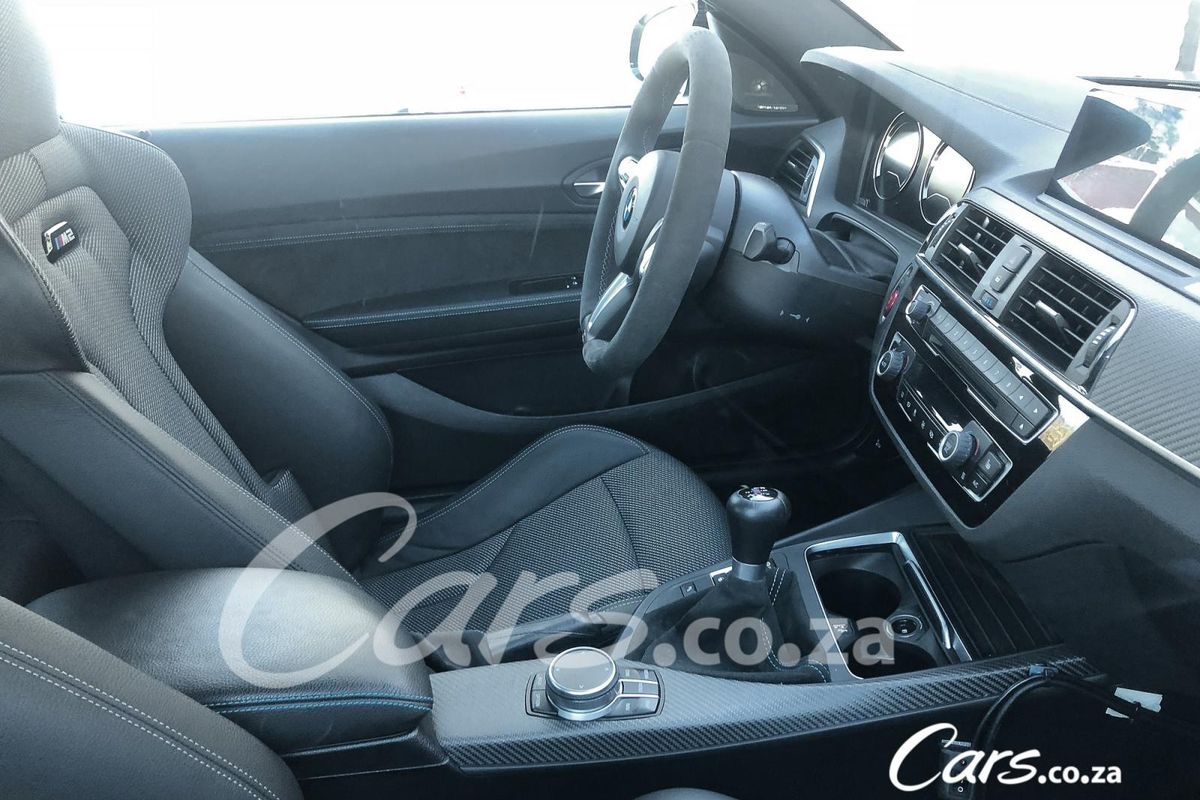
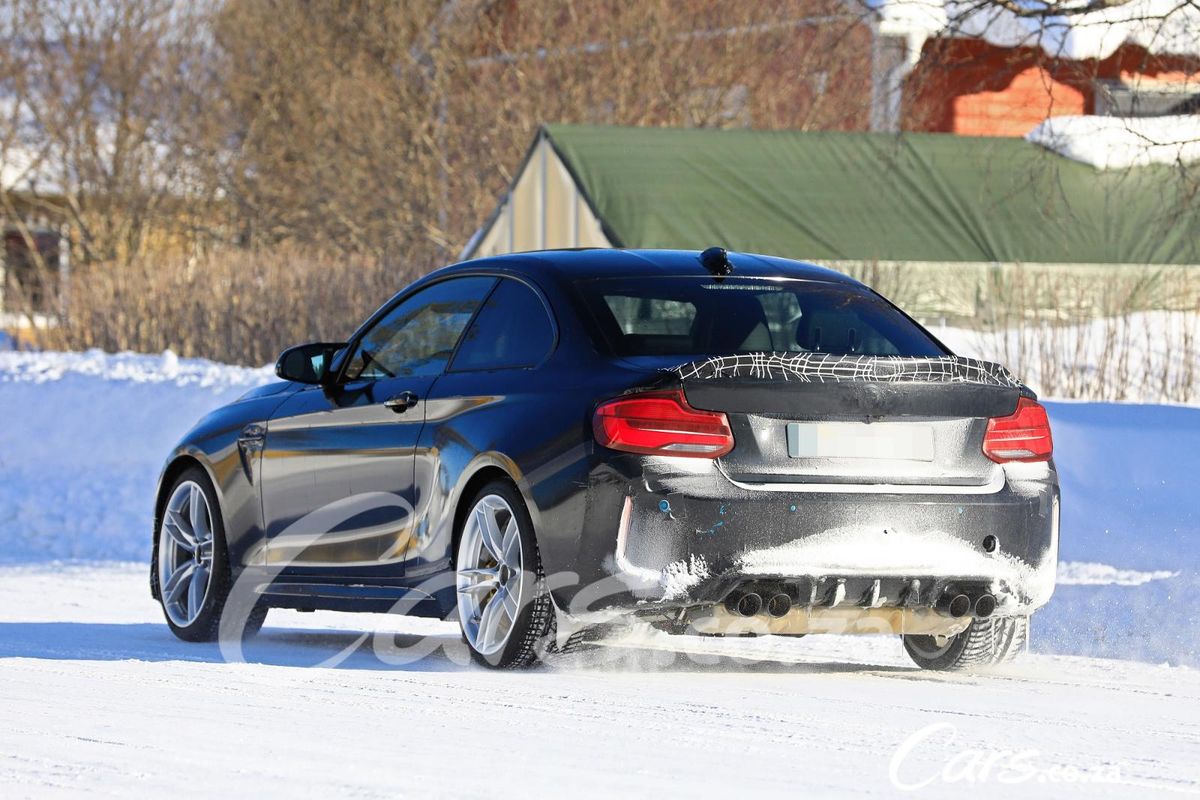
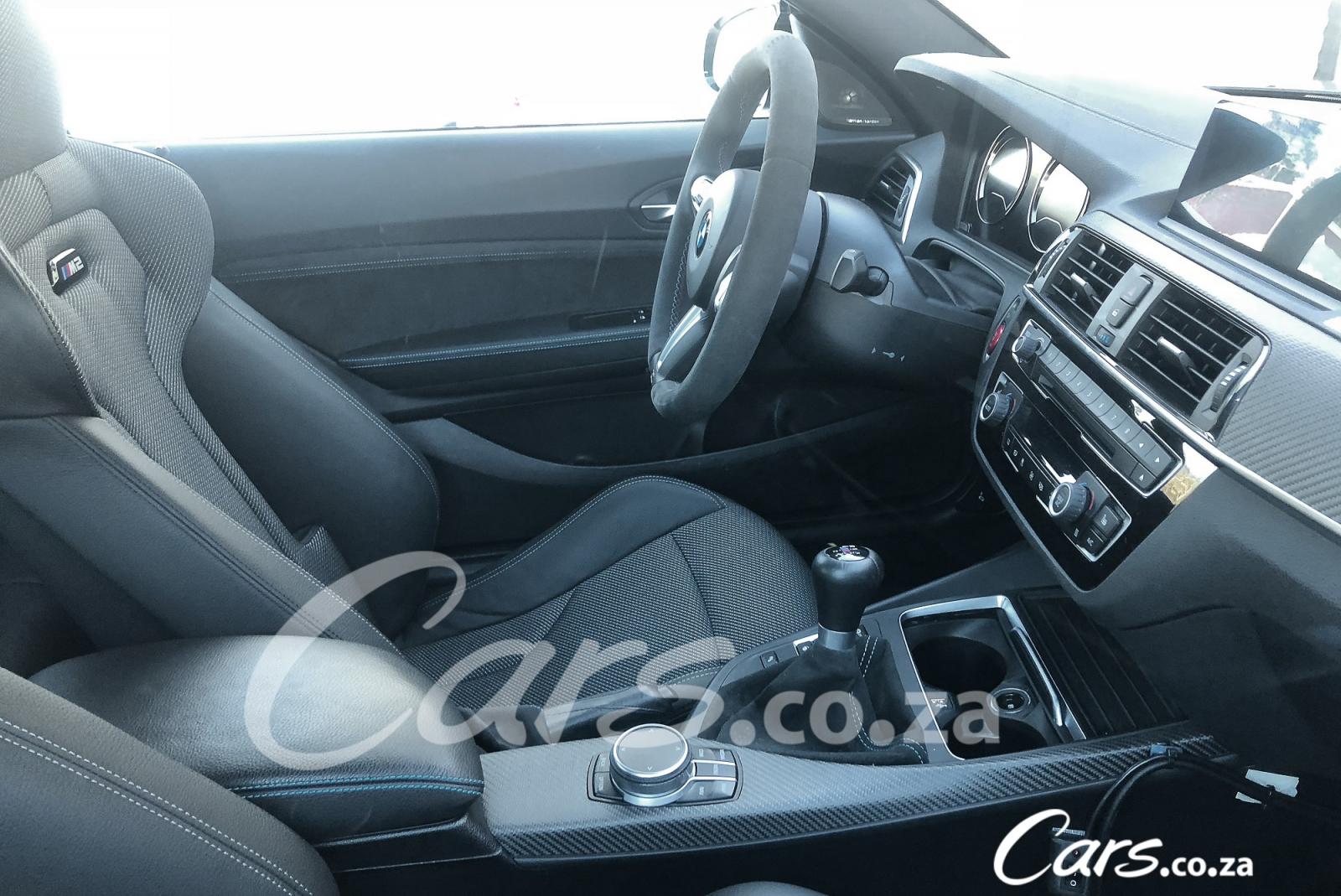
What you can see here is definitely an M2, but with added go-faster bits. We can see a more aggressive front end and how awesome does that rear boot lip look? Also, if you look closely, you can see high-performance brakes. Our spy photographers also gave us a peek at the cabin where we spotted a 6-speed manual transmission.
What's under the bonnet, you may be asking? We expect the existing M2 Competition engine to be used, although power and torque will be increased. The M2 Competition currently produces 302 kW and 550 Nm, so it's not unreasonable to predict that around 320 kW is possible. We're not going to see much more than that, as that would be too close to the halo M3/M4. The real changes will be to the suspension and brakes. The vehicle will also undergo a diet and lose a few kilograms, to make it even more exciting to drive.
Potentially, we may be seeing this model revealed in 2019, and we'll keep you posted if new information arises.
The BMW M2 CS should get a 6-speed manual gearbox, which will keep the purists happy.
Bentley Expands Continental Offering With V8 Engines
Smaller engined Continental could actually be the better drive.
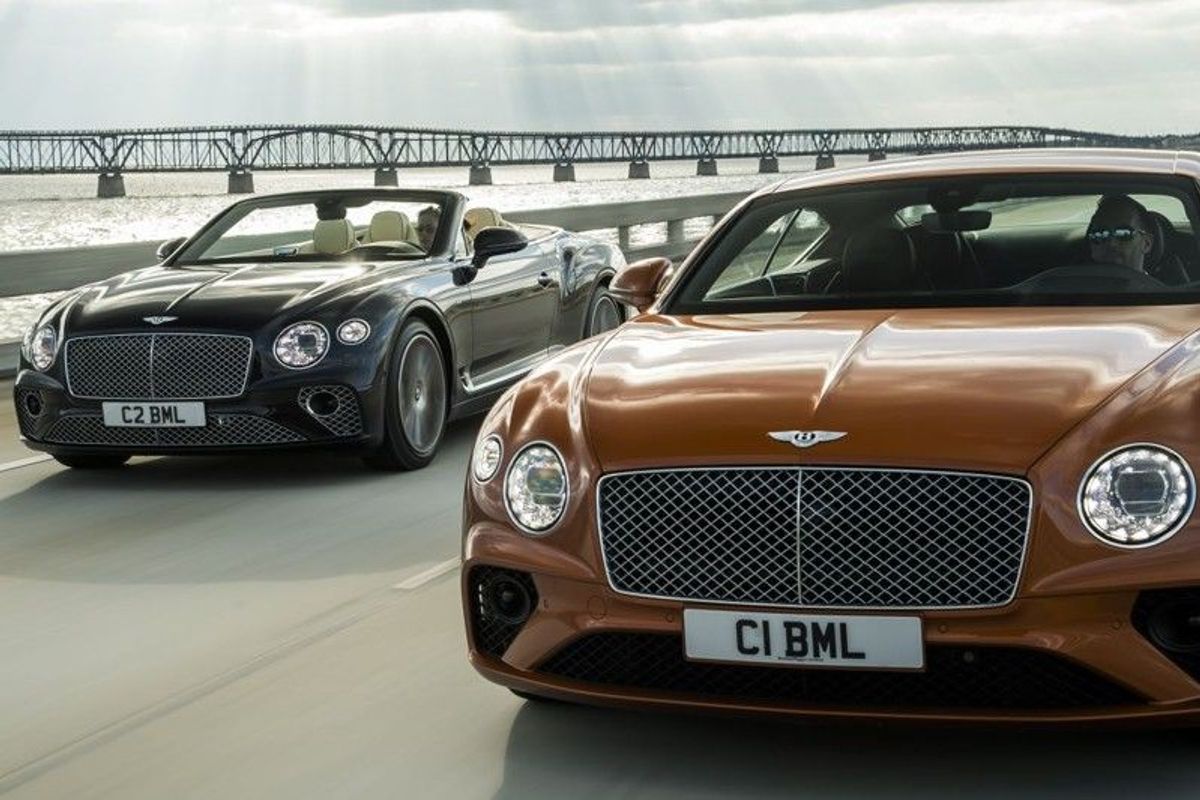
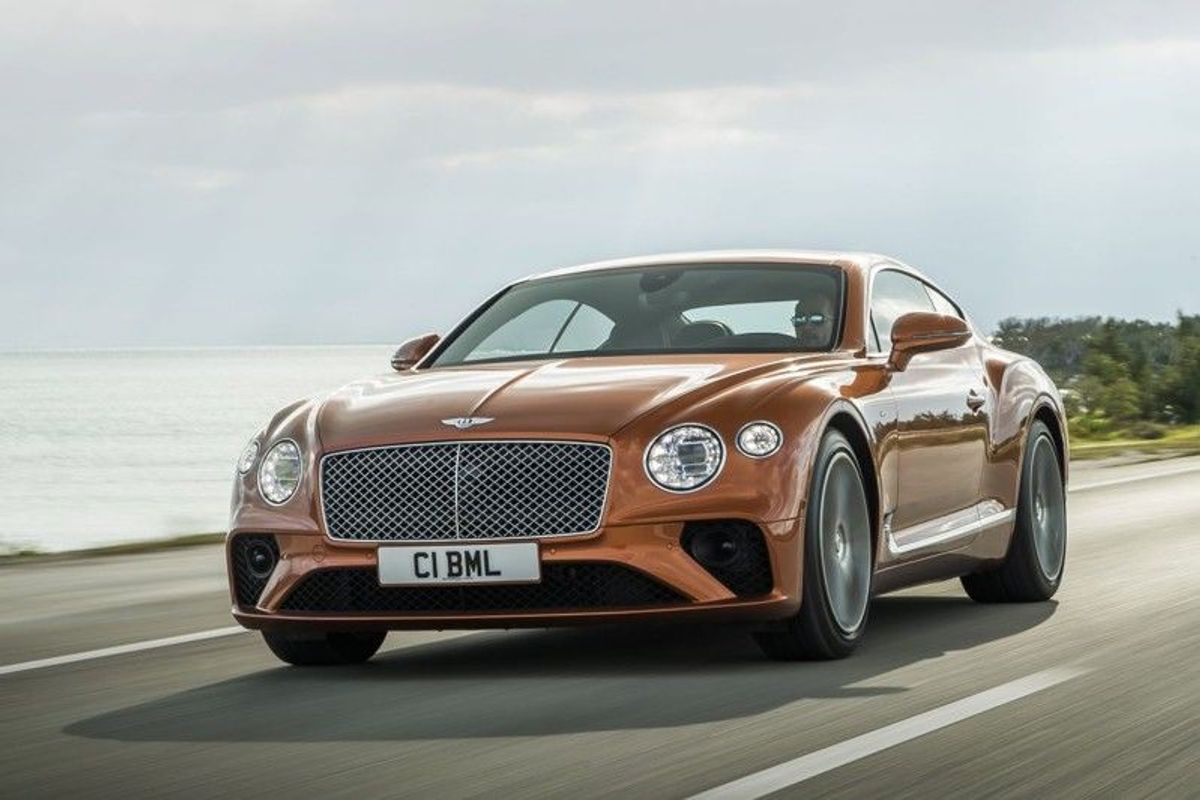
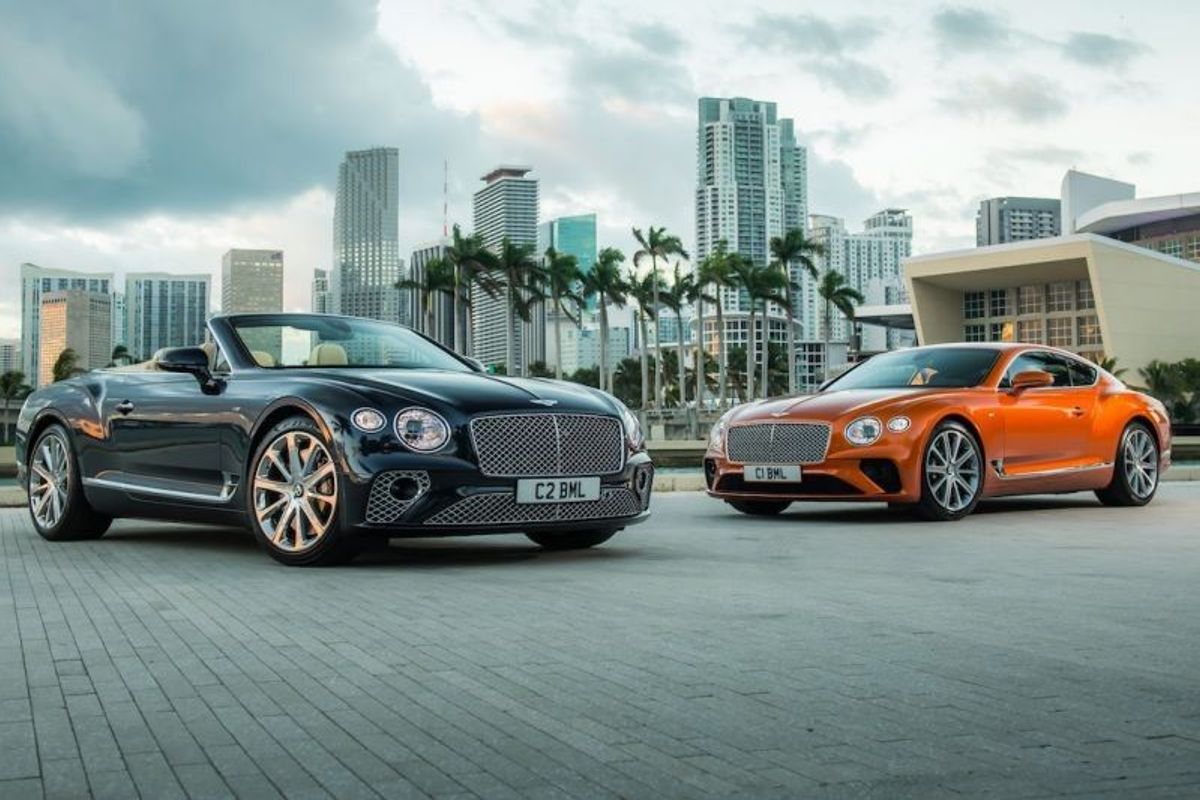
Bentley is expanding its portfolio of V8-engined models with the announcement of new additions to its Continental range.
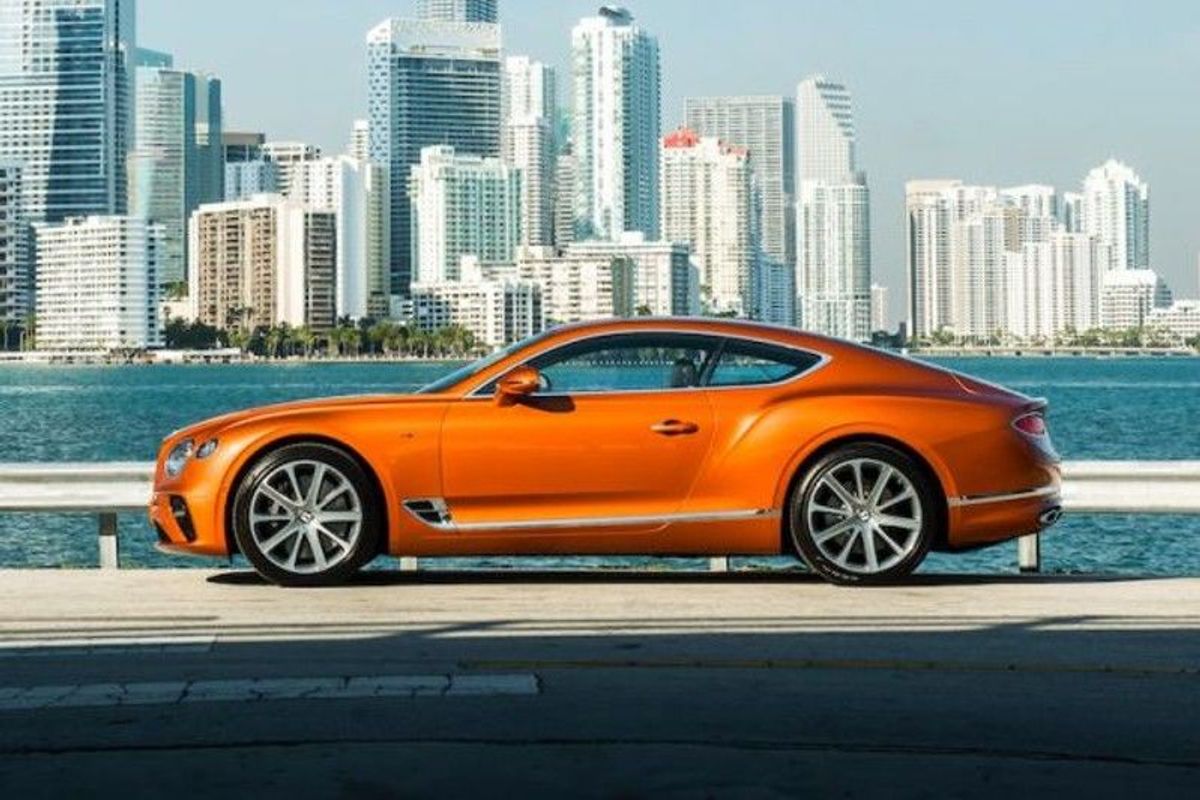
The third-generation of Bentley’s large four-seater Continental GT coupe and convertible will become available with twin-turbocharged V8 power by the end of the year.
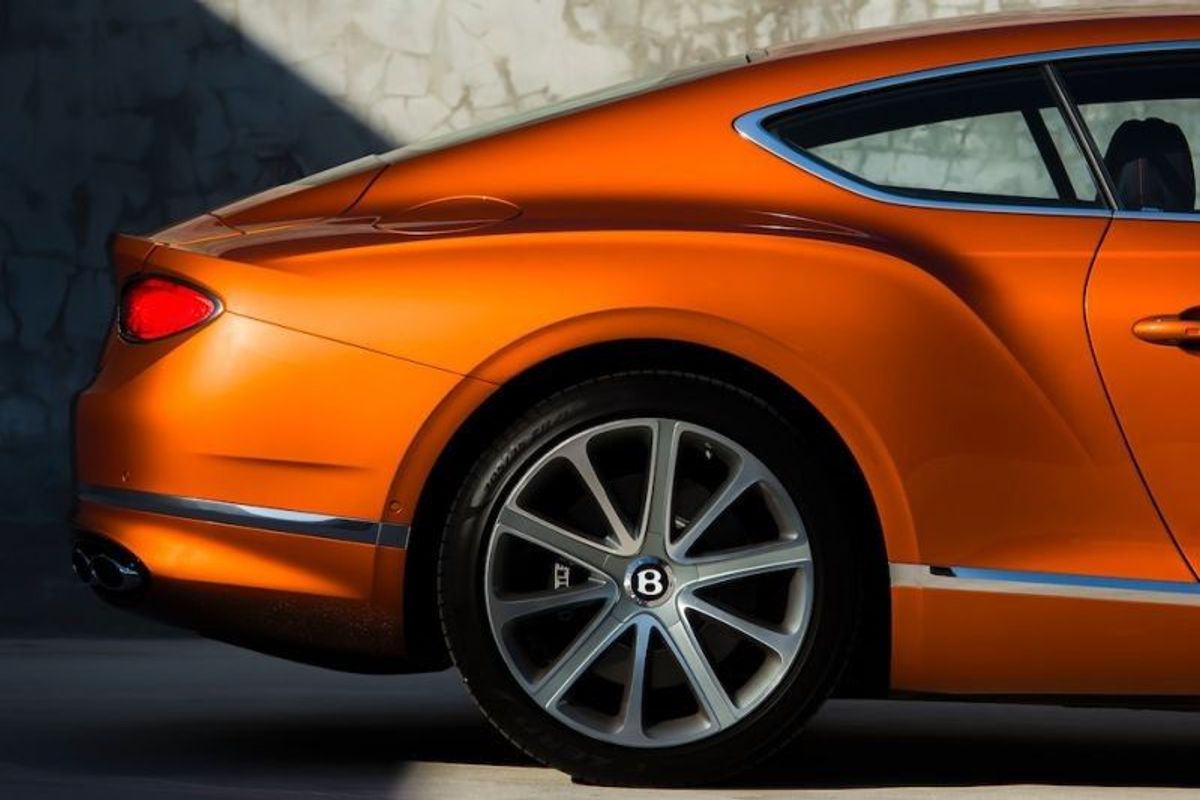
Differentiating these new V8 derivatives from their W12-powered sibling will be factory fitted 20-inch wheels, although customers will have the option of inching-up to ‘22s if they wish. Standard exterior features include quad-exhaust ends and LED matrix headlights.
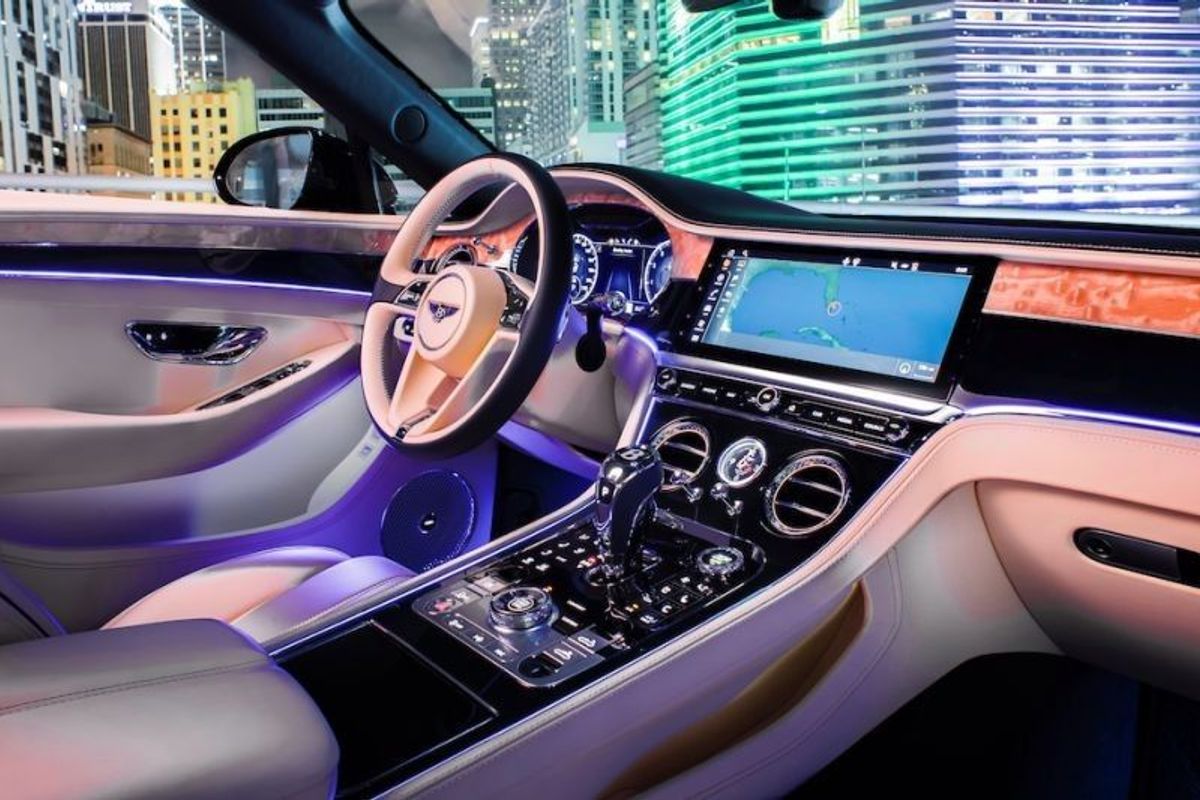
Inside the Bentley Continental V8s will roll off the assembly line in Crewe with a 10-speaker sound system and a cabin built with handstitched leather trim and a choice of the best wood veneers. Bentley’s smartly integrated centre-console 12.3-inch infotainment touchscreen adds the necessary digital convenience.
Mechanically the Continental’s 4-litre V8 is rated at 405 kW and 770 Nm. That’s good enough for 0-100 kph in 4 seconds, with a top speed of 318 kph. For the purpose of comparison, Bentley’s 6-litre W12-powered Continental clocks 0-100 kph in 3.7 seconds and runs a true top speed of 333 kph. The ultimate performance discrepancy between the new V8 and Bentley’s more traditionally configured W12 Continental is rather small.
What possibly favours the decision to downsize to the V8 even more, is that is will place less weight over the front axle, which should make the smaller-engined Continental more agile and less prone to understeer.
Bentley’s engineers have reconfigured all the new third-generation Continentals, which are all-wheel drive, to add torque to the front wheels only in exceptional circumstances. That means that these large British grand touring cars are by default rear-wheel drive biased – and to best exploit that trait, the lighter and more agile V8-powered Continental might be a more rewarding drive.
South African deliveries of the new V8 Continentals are expected by early 2020, with the American market being the first to receive the V8s, in the third quarter of this year.
BMW has officially confirmed what many industry experts have been predicting since late last year. The Germany company will not develop a Gran Turismo version of its latest G20 3 Series.
An official statement from BMW details that market trends and industry turmoil have undone the business case for a second-generation of 3 Series Gran Turismo. BMW contends that enough demand for the 3 Series Gran Turismo remains, but it has more pressing engineering priorities now than building a pseudo-hatchback version of its new G20 3 Series.
The 3 Series Gran Turismo was a curious product planning misjudgement by BMW: not as attractive as the 3 Series touring estate car, not as capacious as an X3 SUV. Although the notchback configuration meant a very accommodating aperture for getting bulky luggage and things into the back of a 3 Series Gran Turismo, the benefit in terms of absolute load capacity was never big enough.
A standard previous-generation 3 Series sedan had 495-litre of boot space. The same platform in 3 Series Gran Turismo trim, only yielded 25-litre more luggage capacity, for a loading total of 520-litres.
The Gran Turismo never delivered a true cross-over type advantage within BMW’s 3 Series model portfolio. Traditional compact sedan customers who desired something with greater practicality or gravel travel ability, simply skipped over it, migrating to the logically more appropriate X3. The decision to not allow for Gran Turismo’s development on the new G20 3 Series platform, is therefore not much of a surprise.
Volkswagen continued its rich vein of form in the Cars.co.za Consumer Awards – powered by WesBank, of which the winners of the 2019 awards programme were announced during a gala event at Kyalami recently.
Nominated in a record 7 categories, Volkswagen South Africa walked away with no fewer than 4 awards on the night. The feat elevated the Wolfsburg-based marque into a comfortable lead in terms of the most category wins (10) in the history of the #CarsAwards (since 2015/16), ahead of Mercedes-Benz (6) and Suzuki (5).
In the Compact Hatch category, the new Polo Comfortline clinched the title, while the new Tiguan Allspace regained the trophy for the best Family Car. In the hotly contested Business Class and Leisure Double Cab categories, the Arteon sedan and Amarok bakkie beat out stiff competition to win both awards (the former was arguably the biggest upset on the night).
While Volkswagen is renowned for its popular vehicles, the brand also scores very well in the Cars.co.za Ownership Satisfaction Survey, which counts for 50% of the scores in each category. VW owners across South Africa tell us they are very pleased with the reliability of their vehicle and importantly the after-sales service from their Volkswagen dealer.
Volkswagen South Africa will undoubtedly be very keen to repeat its success at the 2020 Cars.co.za Consumer Awards, and you can be part of it. Visit carsawards.co.za to fill in our survey and find out all the details about the winning cars from Volkswagen.
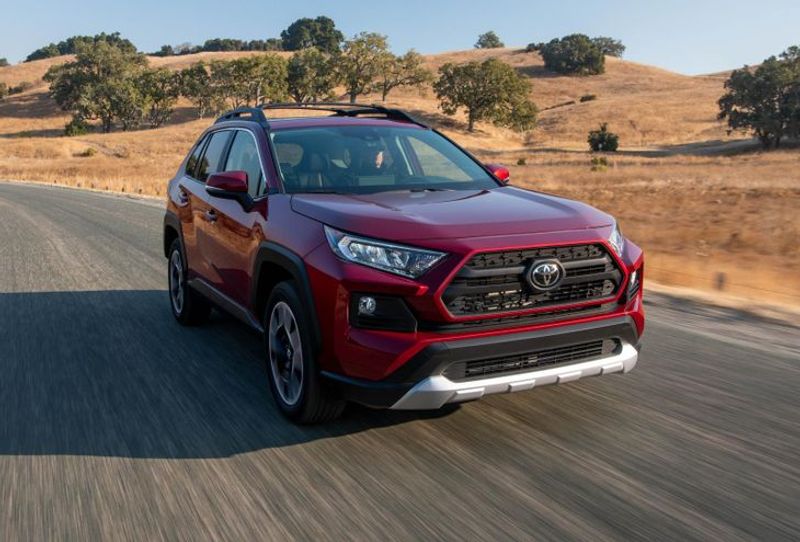
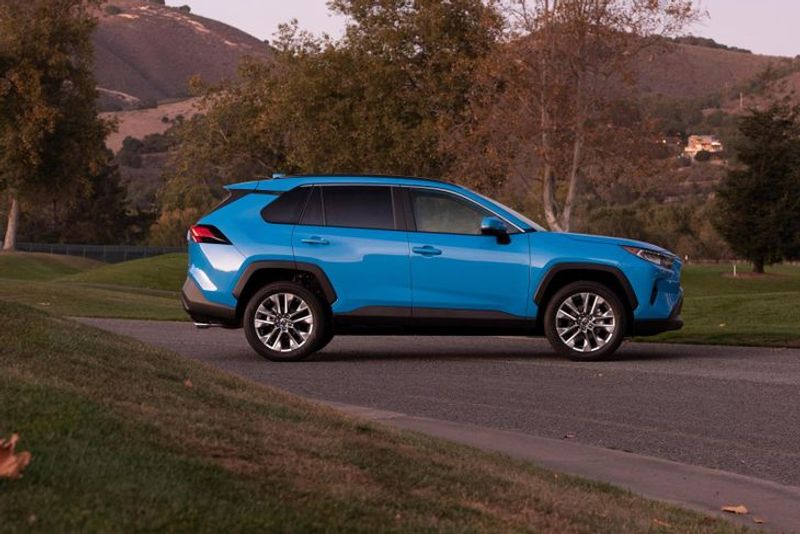
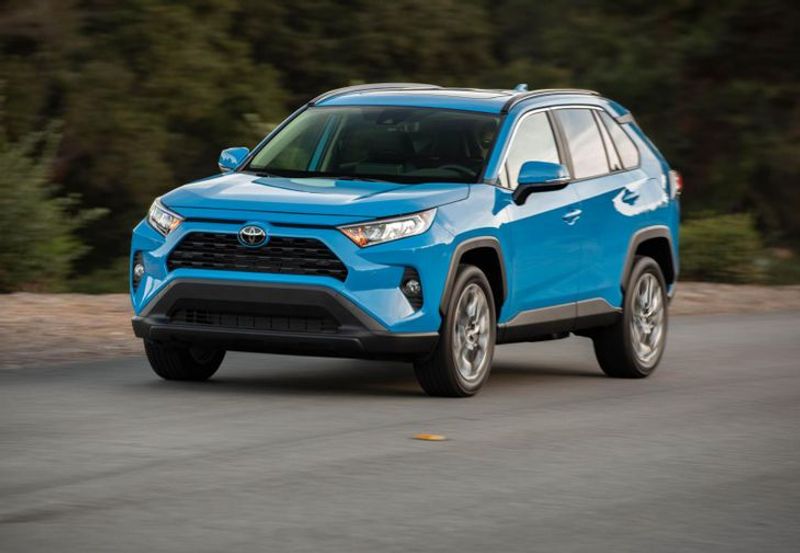
We drove the new Toyota RAV4 in Spain and it will arrive in South Africa in March 2019. Take a closer look at what you can expect in terms of specification and pricing.
We have returned from the international launch of the new Toyota RAV4 and our first impressions are mostly positive and family car buyers have much to look forward to in this latest iteration of the RAV4.
The new RAV4’s length has been shortened by 10mm and stands some 5mm lower than the outgoing generation. The width, however, has grown by 10mm while the wheelbase has been stretched by 30 mm, making it more spacious than before. Ground clearance has also increased by 15 mm. Load volume has increased to 492 litres (+12 L) while the RAV4 VX will offer 572 litres of load space, an improvement of 25 litres over the previous generation.
Let’s take a closer look at what the new RAV4 will offer in terms of specification when it arrives in South Africa.
Trim and Engines
A total of 2 naturally-aspirated engines and 3 transmission choices will be offered in SA.
The RAV4 will be offered with 2 higher output petrol engines and 3 trim grades including GX, GX-R Adventure and the range-topping VX trim.
The RAV4 GX is the entry-level trim while the GX-R Adventure adds all-wheel drive capability, rugged styling features and gets more features as standard (see below for specification). The VX trim grade is more luxury-focussed and adds a host of additional standard features. A total of 5 RAV4 derivatives will be offered in South Africa.
The range starts with the front-wheel drive RAV4 2.0 GX with a 6-speed manual transmission which is powered by a naturally aspirated 2.0-litre petrol engine with 127 kW and 207 Nm of torque. A RAV4 2.0 GX CVT derivative will also be offered.
The all-wheel drive RAV4 GX-R Adventure CVT employs the same engine as does the more luxurious RAV4 2.0 VX CVT.
The range-topping, all-wheel drive RAV4 2.5 VX will be powered by a naturally-aspirated 2.5-litre petrol engine with 152 kW and 250 Nm, but is exclusively equipped with an improved 8-speed automatic transmission.
Note that the RAV4 will no longer offer diesel engines and the new RAV4 Hybrid will not be offered in South Africa at this stage.
Standard features
Toyota RAV4 GX
The new RAV4's styling is edgier. Note the new squared-off wheel arches.
This derivative will ride on 17-inch alloy wheels with a full-size spare wheel. Parabola LED headlights with automatic levelling is fitted along with LED daytime running lights and LED tail lights.
Standard interior features in the GX include fabric upholstery, a urethane steering wheel with mounted controls and a soft vinyl gear lever. The steering is rake and reach adjustable and both front seats are manually adjustable with the driver’s seat being height adjustable. Other features include manual air conditioning, a rear-view camera, rear park distance control and a 7-inch infotainment system with Bluetooth capability. This derivative only has 1 USB port.
In terms of safety, the RAV4 GX is equipped with no fewer than 7 airbags, ABS with EBD, Brake Assist, Vehicle Stability Control, Hill Ascent Control and Trailer Sway Control.
Toyota RAV4 GX-R Adventure
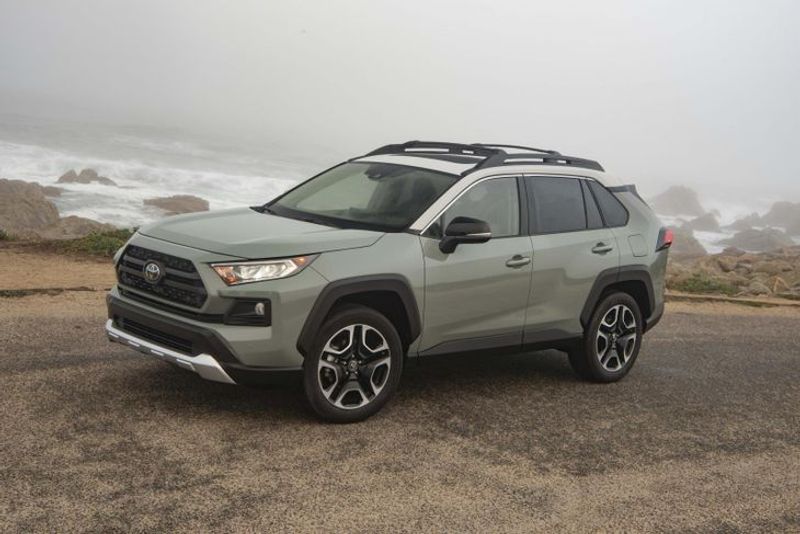
The GX-R Adventure derivative has a more rugged look to suit its penchant for the outdoors.
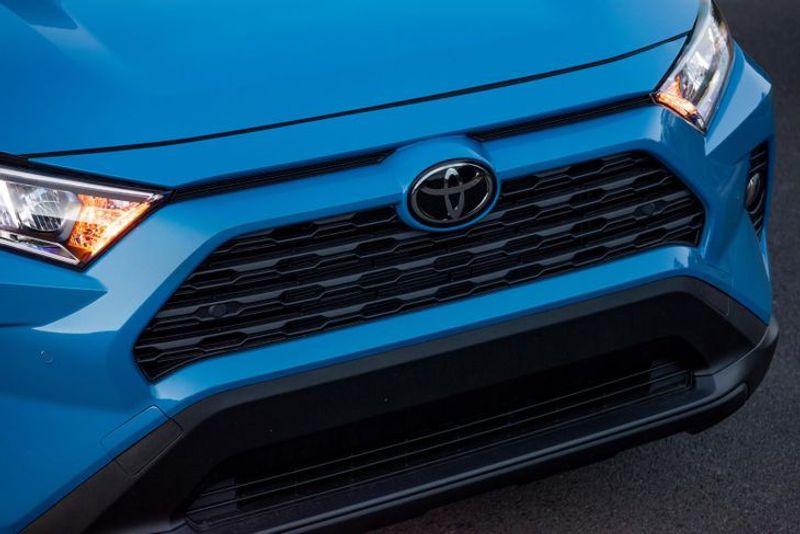
This derivative builds on the specification of the GX and is recognised by its larger, protruding grille and larger skid plates and wheel arch cladding to suit its outdoor character. It rides on 18-inch alloy wheels.
The interior benefits from a leather steering wheel with mounted controls as well as a leather finish on the transmission lever. Leather seat upholstery is standard (in Black or Orchid Brown) while the driver’s seat is electronically adjustable with lumbar support. The seats have a heating function too. Smart entry and a push start is standard as is automatic air conditioning. A rearview camera and rear park distance control is also offered as standard along with the same 7-inch infotainment system found on the RAV4 GX.
Nice-to-have features include a wireless smartphone charger and 3 USB ports.
In addition to the safety features found on the RAV4 GX, the GX-R Adventure adds Downhill Assist Control.
Toyota RAV4 VX
The RAV4 VX derivatives will feature a host of additional safety features.
The range-topping RAV4 VX grade further adds chrome door handles and LED headlights with automatic high beam while riding on larger 19-inch alloy wheels.
Additional standard interior features include leather upholstery (in Black or Beige), an electric driver’s seat with memory function, lumbar support and heating function. A panoramic rearview camera as well as front and rear park distance control is fitted as well as a 7-inch infotainment system with 3 front USB ports and a wireless charger.
Extra safety features include a pre-crash system with Pedestrian Detection, Adaptive Cruise Control, Lane Departure Alert, Cross Traffic Alert and a Blind Spot Monitor.
Exterior colours on offer for the new RAV4 include Graphite Grey Metallic, Cinnabar Red, Urban Khaki, Caribbean Blue and Attitude Black (customer order only).
Toyota RAV4 Price in South Africa (March 2019)
The RAV4 will see marginal pricing increases over the previous generation.
RAV4 2.0 GX 2WD R416 400
RAV4 2.0 GX CVT 2WD R427 600
RAV4 2.0 VX CVT 2WD R505 400
RAV4 2.0 GX-R-CVT AWD R508 100
RAV4 2.5 VX AT AWD R577 900
The RAV4 will be sold with a 3-year/100 000 km warranty and a 6-year/90 000 km service plan.
2018 was not a memorable year for German brand Audi. Not only were sales down, but the WLTP efficiency test delayed new products and the brand is still feeling the side effects of Dieselgate. A massive turnaround plan is on the cards for 2019 and this includes some big models.
2019 will be a transition year for the Audi brand and while the big focus will be electrification and the rollout of the new E-Tron SUV, fans of the internal combustion engine need not be disappointed. Audi's chairman of the board of management, Bram Schot, said the brand will be launching 20 new or updated models in 2019. Interestingly, the press statement gave a nice breakdown too.
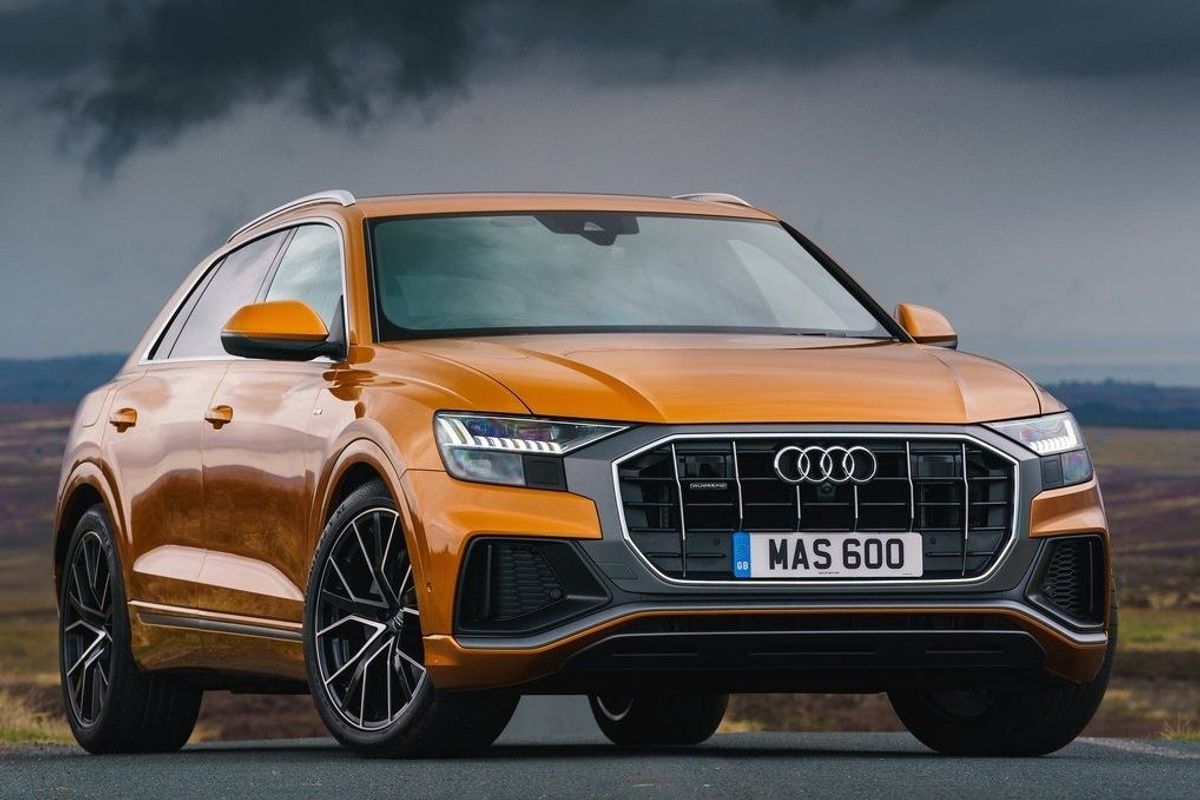
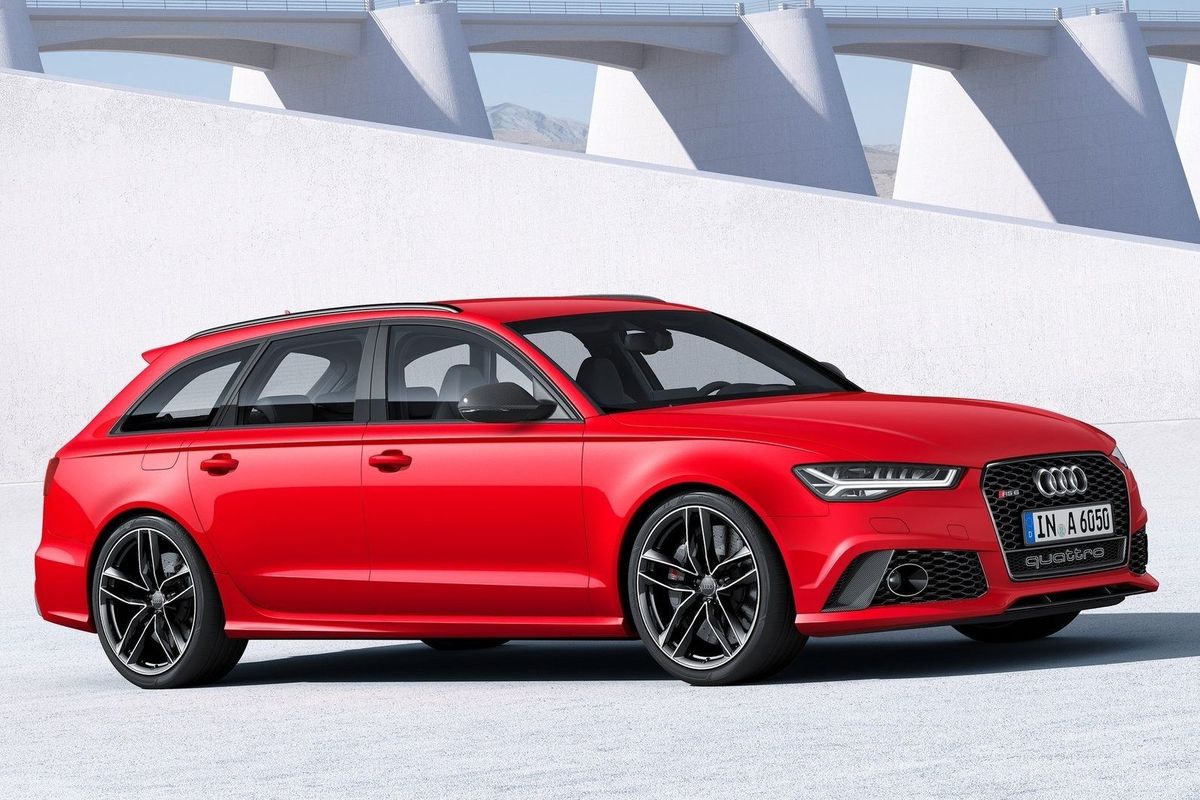
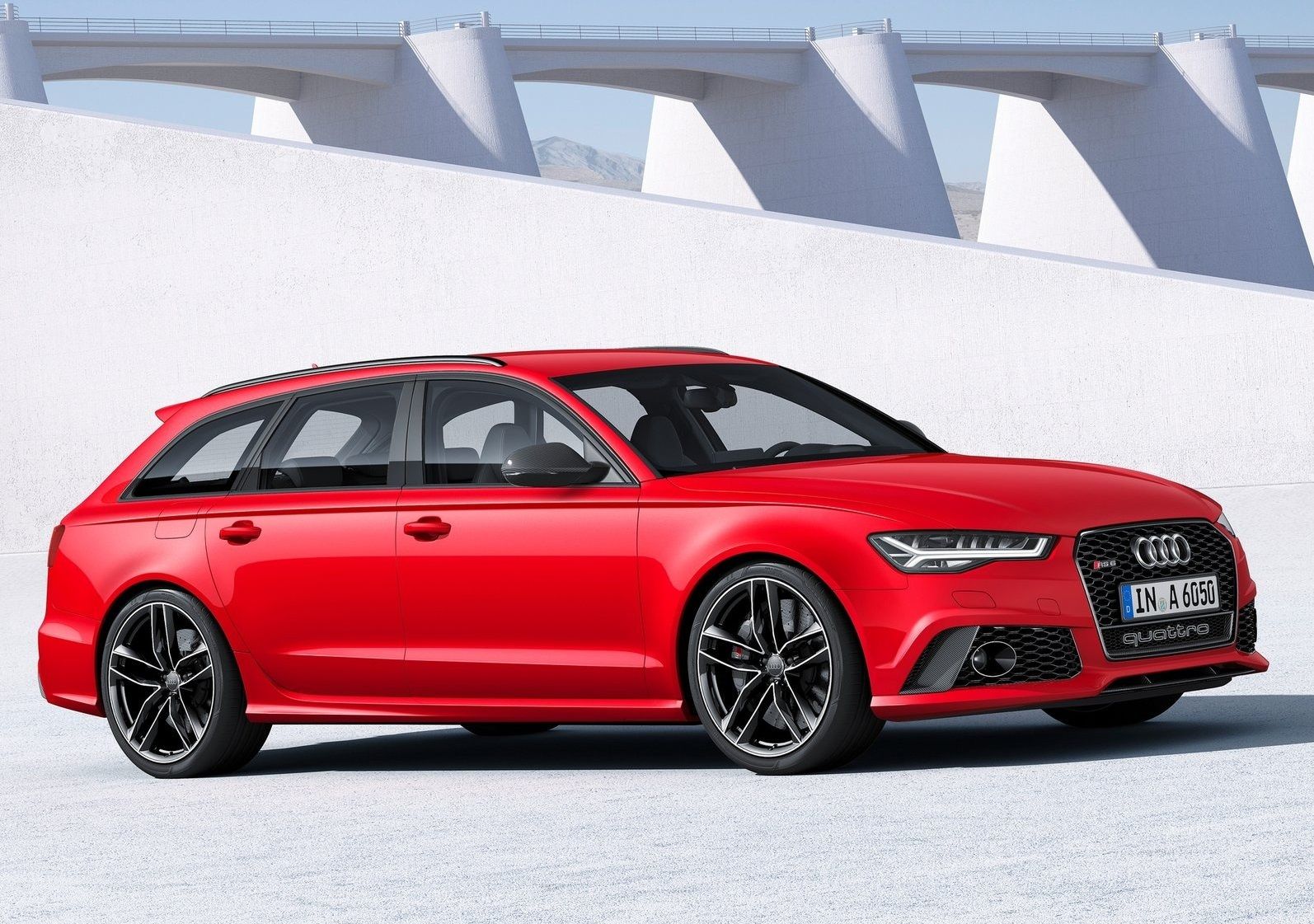
The Audi A4 sedan and Q7 will be refreshed with what Audi calls an innovation injection and according to Audi, "both vehicles are being updated with numerous innovations and an extended equipment list." Performance fans have a lot to look forward to as Audi Sport confirmed a new RS6, RS7 and a new RS Q3 will be revealed this year. Of course, we can speculate what the others are and we'd guess we'll see an RS Q8 using a similar powertrain to that of the Lamborghini Urus.
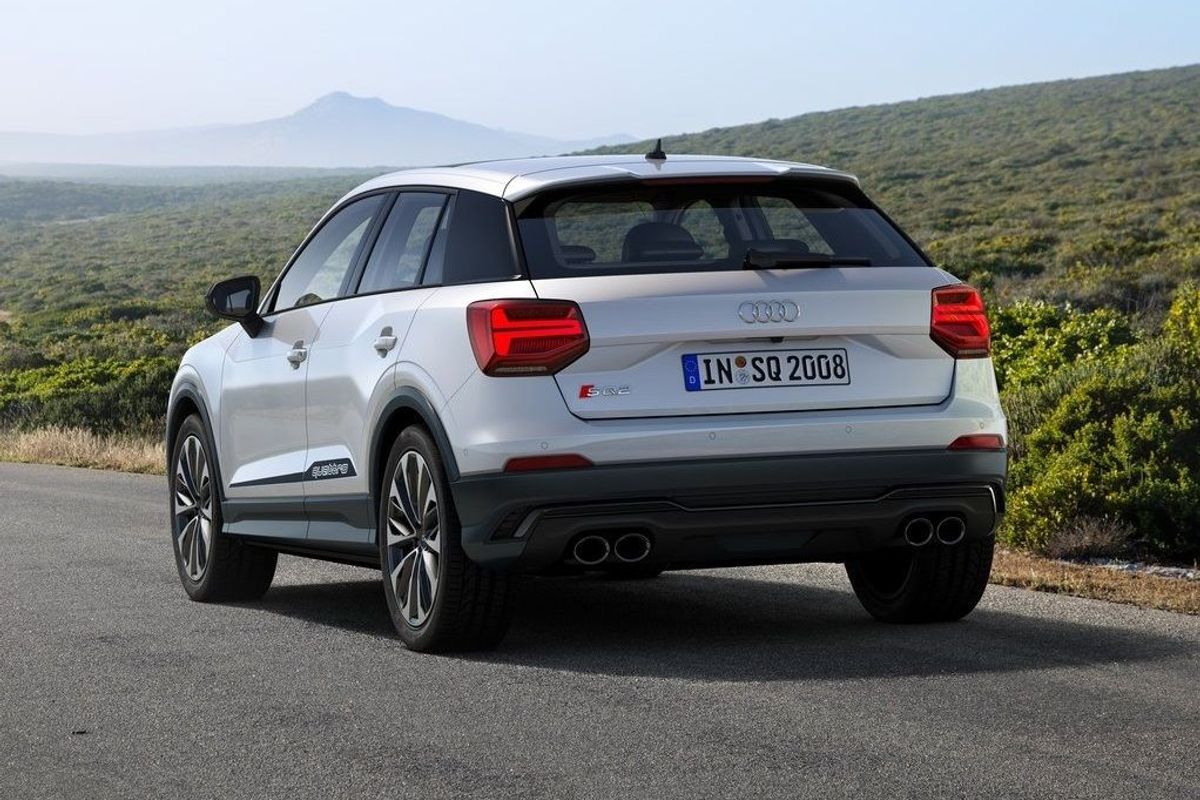
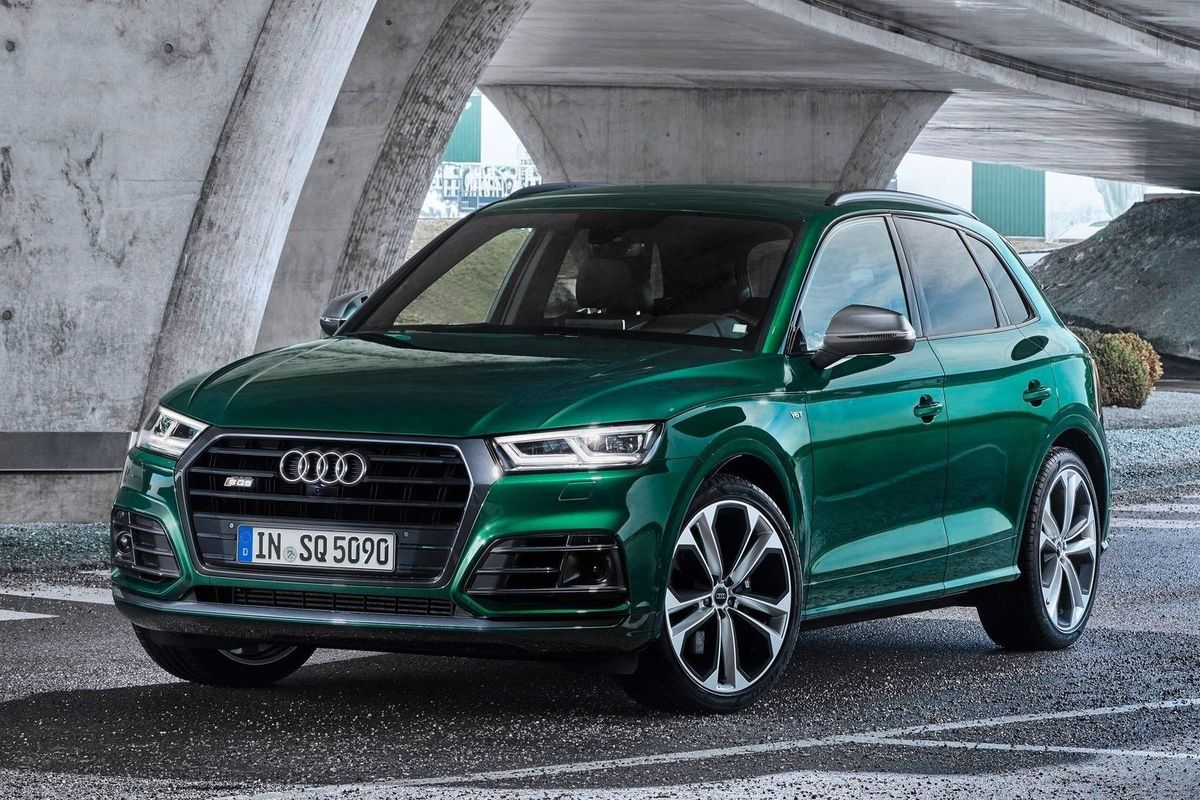
There will also be 9 new S models in 2019. Other models we know are being officially launched on the global stage this year include the SQ2, SQ5 TDI, new A3 and the Q4. There's also a big focus on green plug-in hybrid models too.
The Audi RS6 is one model which will be revealed in 2019. Previous iterations like this one have proven popular