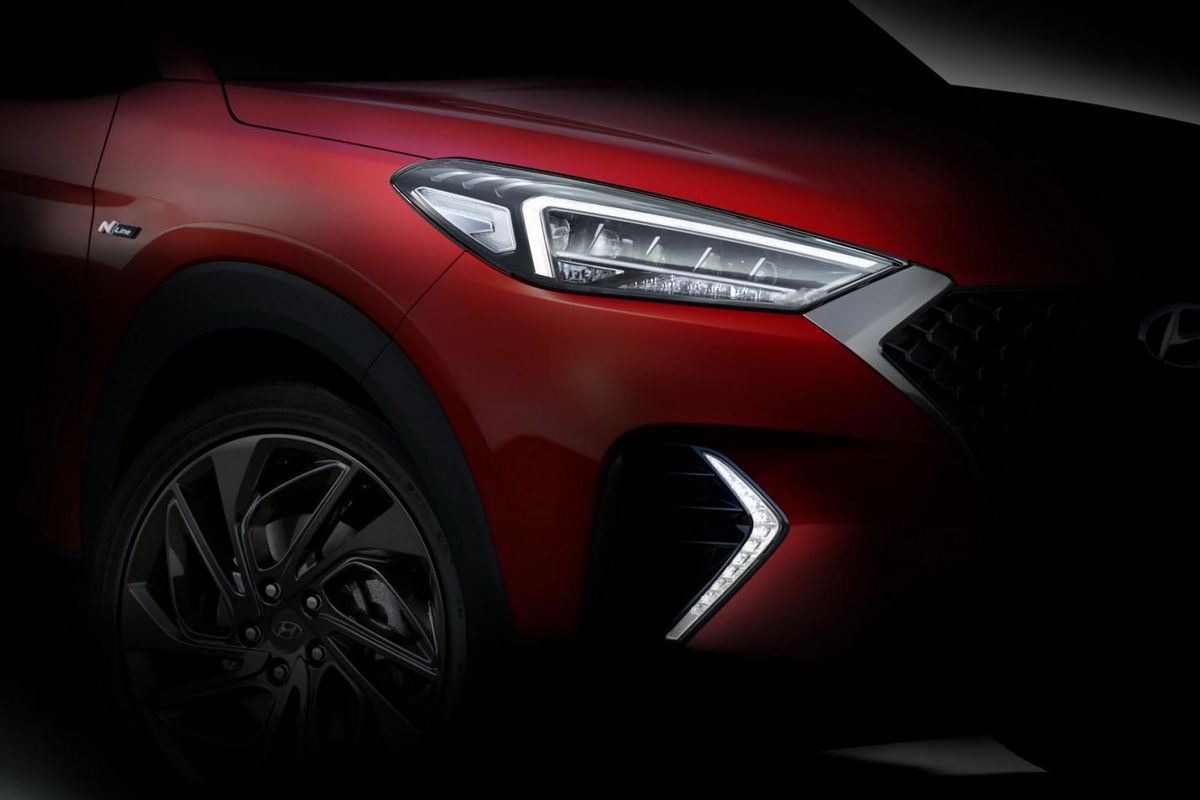
Hyundai has put out teaser images of its forthcoming Tucson N Line. Here's what we know so far.
N Line is not to be confused with N Hyundai offerings. The Koreans have said there will be a hardcore N variant of its Tucson SUV arriving in 2020, but this N Line bridges the gap between N and standard models.
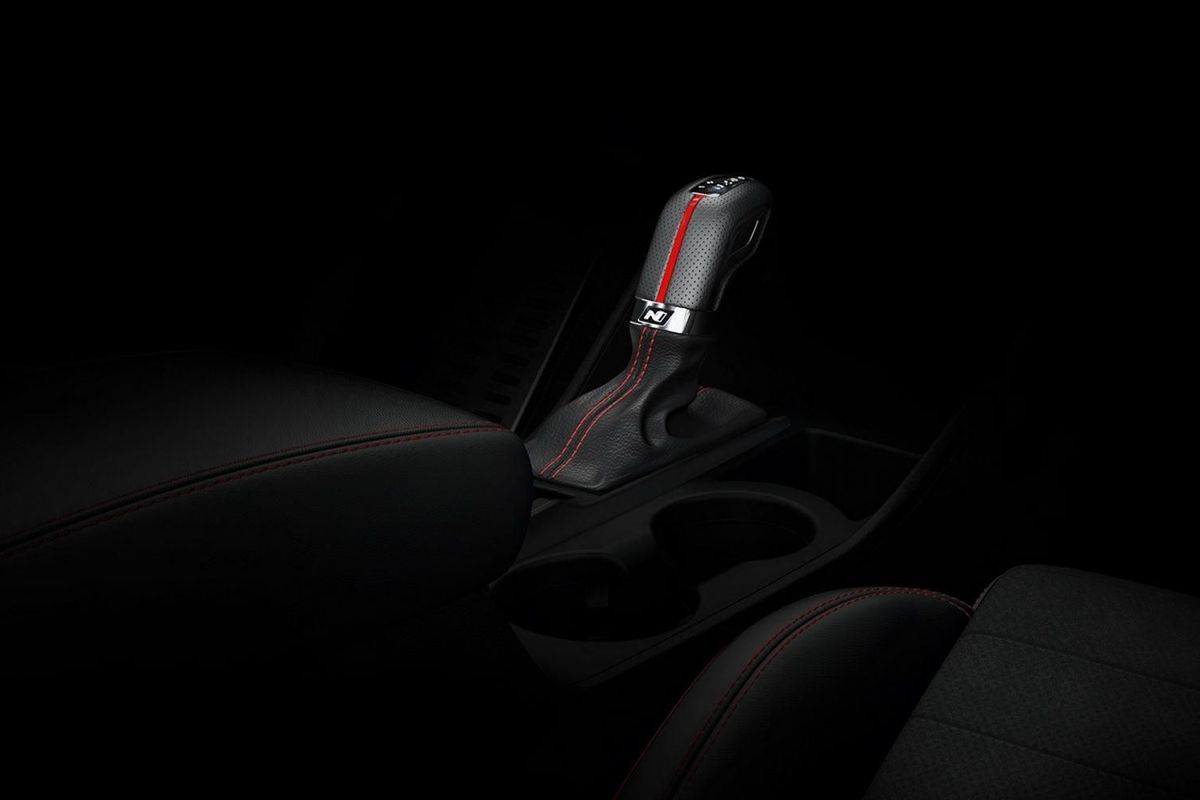
The teaser images show the Hyundai Tucson N Line will receive an aggressive body look coupled with model-specific daytime running lights, sportier grille and bigger alloy wheels. The cabin will also benefit from the upgrades and the teaser photos suggest leather upholstery, contrast stitching and subtle N Line branding throughout.
While a massive engine change isn't expected, the Hyundai Tucson N Line will use the currently available engines as well as the all-new 48-volt mild hybrid diesel motor. There's talk of the suspension and brakes being tweaked to deliver a sportier drive.
We expect the Hyundai Tucson N Line to be revealed in 2019 and will advise should Hyundai SA announce its arrival.
There are new fuel levies and a carbon tax imposed on South African motorists after the 2019 Budget Speech. Here's what you need to know.
The Automobile Association (AA) has reacted to yesterday's Budget Speech. “Even though the increases to the General Fuel and Road Accident Fund levies are lower than expected, we remain concerned that these levies are seen as the ‘go-to’ taxes for easy increases by government. Now, with the addition of the Carbon Tax on fuel, this ‘easy’ tax collection method is being further exploited, thus adding another line of tax to the fuel price,” says the AA.
As it stands, motorists currently pay R5.34 towards indirect taxes on every litre of petrol bought, and R5.19 on every litre of diesel. This is comprised of R3.37 (petrol) and R3.22 (diesel) for the General Fuel Levy, R1.93 for the Road Accident Fund levy (for petrol and diesel) and four cents for customs and excise taxes (petrol and diesel).
After the Budget Speech, these levies will now increase by a combined 29 cents for petrol and 30 cents for diesel which include a nine and ten cent addition for the Carbon Tax on petrol and diesel respectively, and from April, these levies will come to a total of R5.63 for petrol and R5.49 for diesel.
“These increases will comprise anything between 40 and 42 percent of every litre of fuel bought depending on the type of fuel used and where it is purchased (either inland or coastal). This represents a substantial portion of the fuel price and, in our opinion, adds to the burden especially poorer consumers carry directly through paying these taxes, and indirectly through the costs passed on to them by manufacturers and retailers who also have to pay these taxes,” says the AA.
The new carbon tax is a big worry. Motorists are being unfairly punished for using what the AA deems "inferior quality fuel" and the issue is that motorists can't avoid this tax as there aren't any higher quality fuels. As for the fuel price, the AA is particularly worried about the future. “Fuel is a volatilely-priced commodity; geopolitical developments affecting international oil production and supply, and the value of the Rand against the US dollar both play a major role in its monthly determination. While 2019 has begun relatively smoothly in terms of the fuel price – especially compared with the extreme variations seen in 2018 (which included record highs of over R17/l for some fuels) – there is no guarantee prices will remain as flat as they are currently. In fact, forecasts for March already show a more than 50 cents increase, perhaps even higher,” states the AA.
As always, we'll keep you posted on the petrol price fluctuations as they happen.
Alfa needs more crossover cash to survive and is committing to add a second model line.
The Turin auto show is no longer the anchor event it once was, which means that the closest international auto show of reputable standing to Alfa-Romeo’s headquarters, is in Geneva. And at this year’s Geneva auto show the ‘other’ Italian road car brand with current F1 marketing traction will reveal something significant.
Alfa-Romeo has tabled an ambitious growth strategy, planning to grow its market share by more than half between now and 2022. Powering that vision will be a raft of new product – the first of which is due to be revealed at the Geneva auto show, in early March.
Despite only alluding to ‘an exciting new chapter’ due on its Geneva auto show stand, industry consensus is that Alfa will make public a sub-Stelvio sized crossover. The issue is which platform this new crossover will ride on.
Being a comparatively small manufacturer, Alfa doesn’t readily have a platform of its own at the ready to build a new compact crossover. A partnership or shared platform for the sub-Stelvio is most likely and if candidates for convergence are identified within the greater automotive structure that Alfa-Romeo finds itself within, the solution appears to be either Jeep or from Fiat.
Alfa-Romeo operates within the great automotive corporation which is Fiat Chrysler Automobiles and either Jeep’s Compass or Fiat’s 500 would be the correct size and configuration for a sub-Stelvio platform. The problem is that neither vehicle architecture is expertly designed for part electrification – something Alfa has admitted is part of its future strategy.
Keep an eye out over the next 2 weeks for an update on this story.
Ignoring the SUV mania, Peugeot reveals a four-door performance car.
Always expect the unexpected from French automotive brands in the weeks before a Geneva auto show and for 2019, one of the big surprises has been revealed.
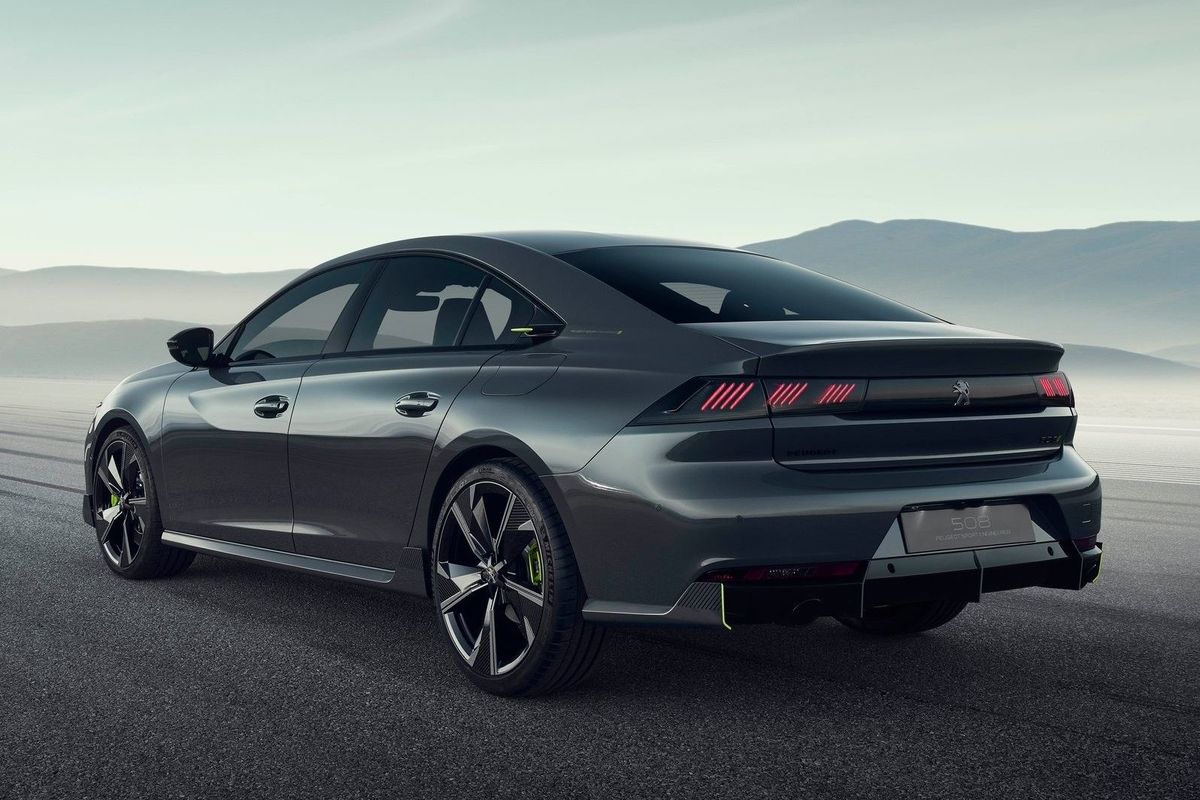
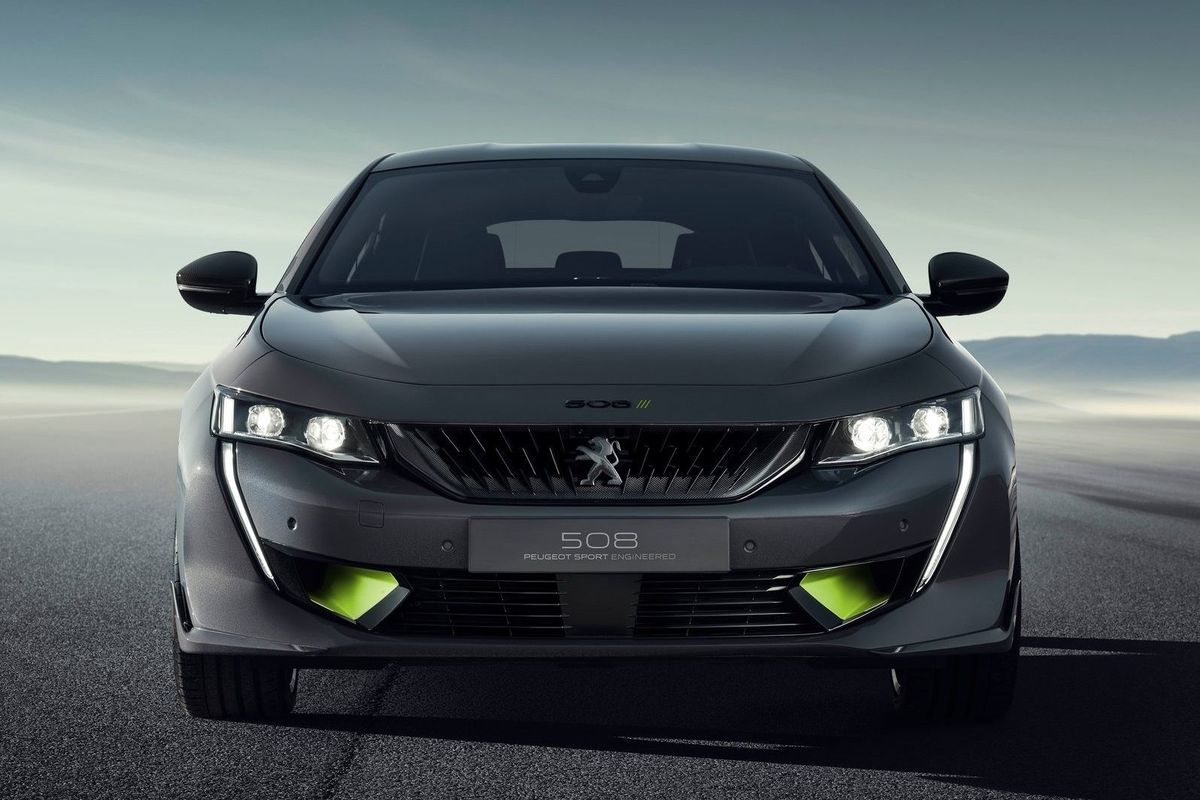
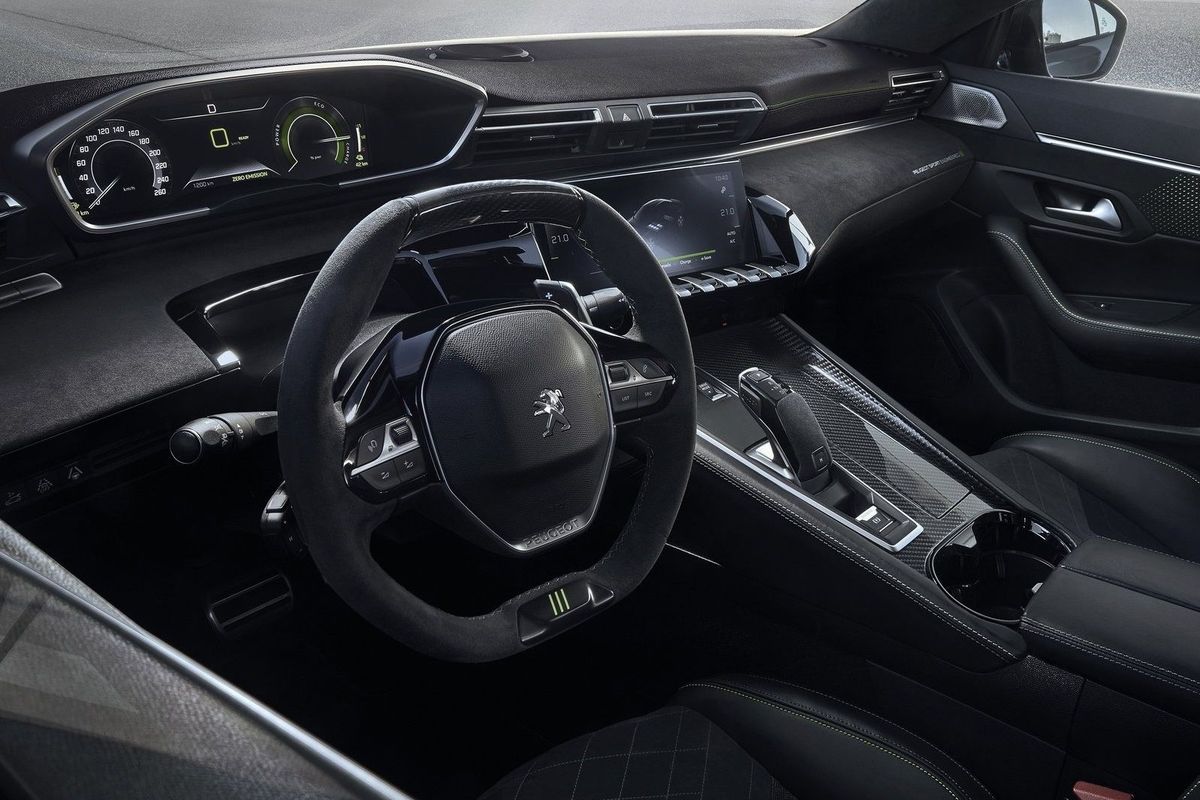
Instead of a strange city car or outlandish hypercar concept, Peugeot’s latest offering is a very quick and driver-focussed 508 sedan. Yes, a sedan.
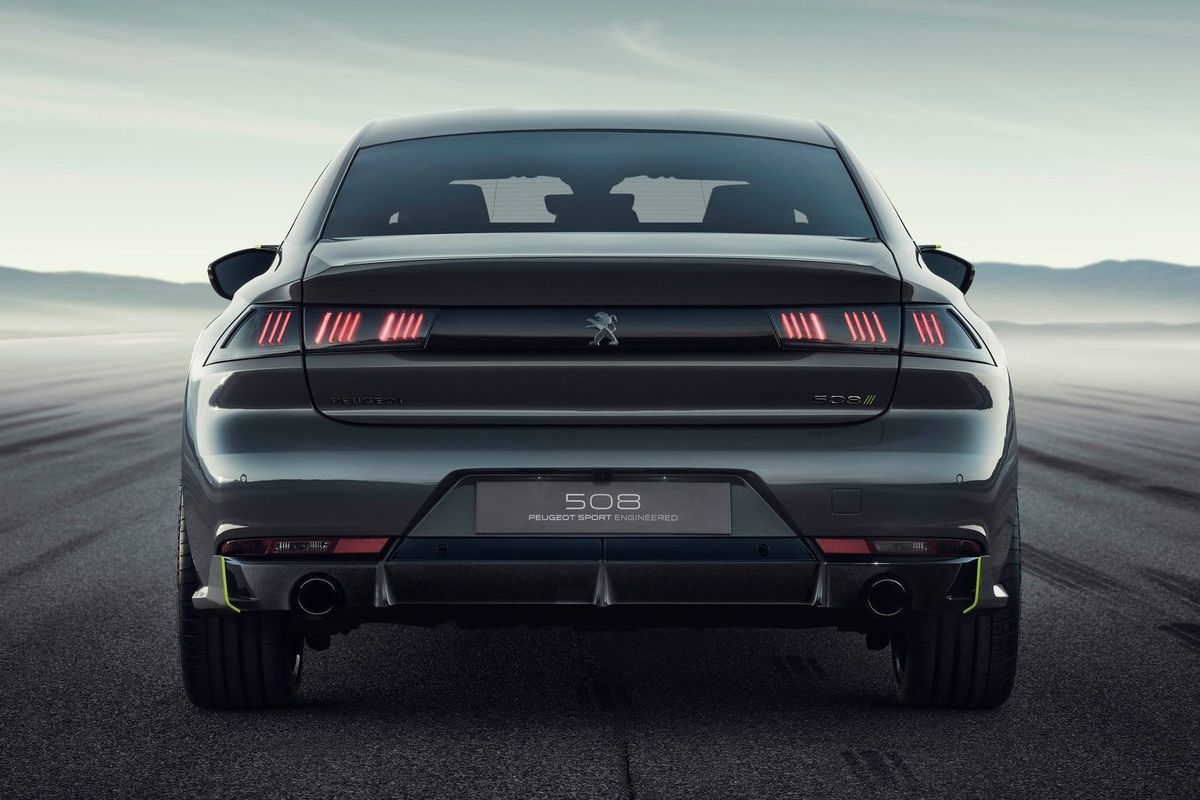
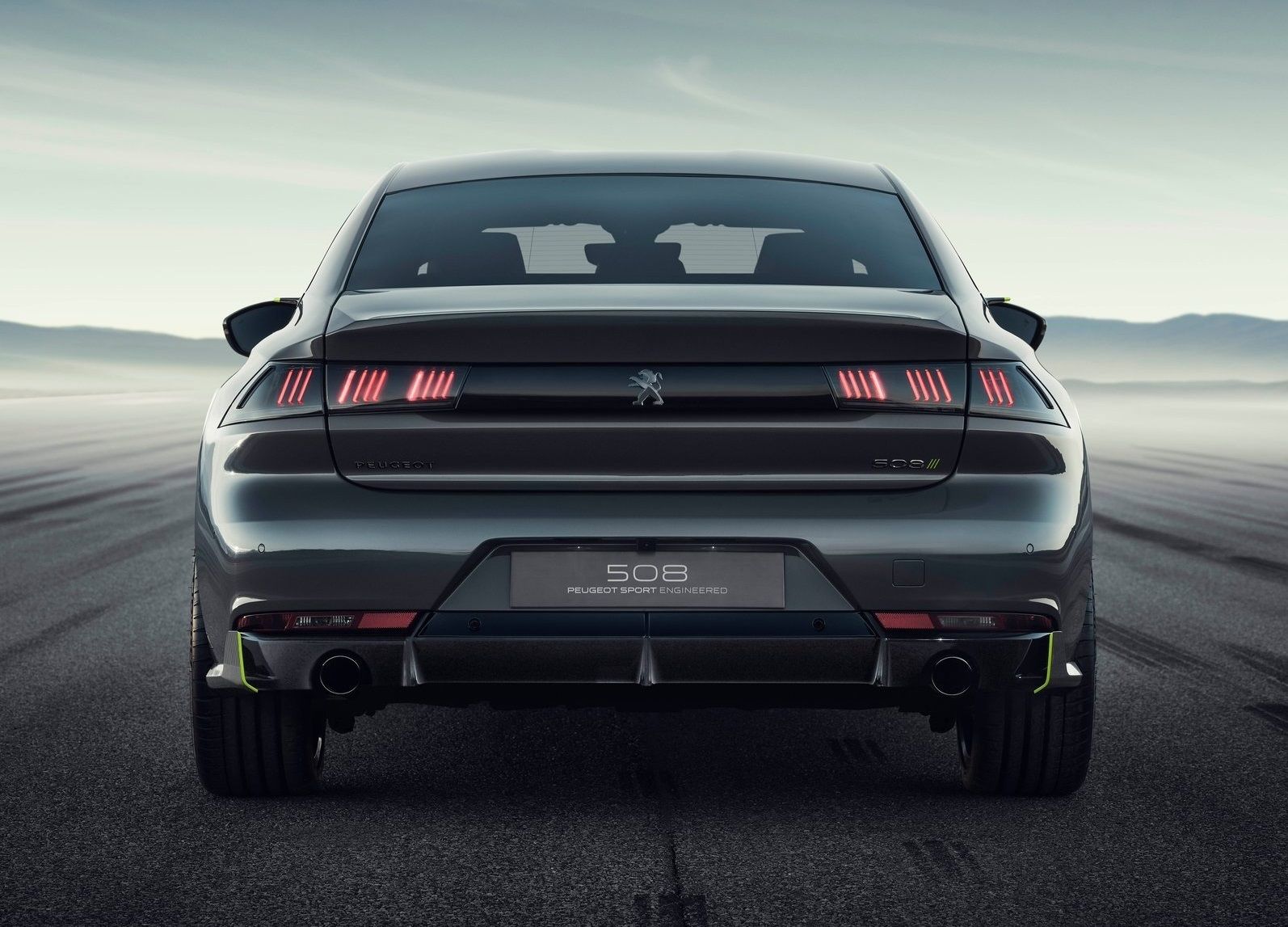
Despite SUVs and crossovers continuing to lead automotive demand trends, Peugeot’s allowed its best technical people to develop the Sport Engineered 508. The styling upgrades are mostly sourced from an in-house developed 3D-printing programme and you’ll notice new bumpers with generous aero scoops, to aid cooling and aerodynamic efficiency.
Rolling 20-inch alloy wheels, this Sport Engineered 508 is a decidedly French interpretation of what the four-door compact performance car should be – hence the absence of a gratuitous rear spoiler, which Peugeot’s stylists consider ruinous to any road car’s purity of shape. That doesn’t mean that the aft section of his 508 Sport Engineered doesn’t feature clever aero: it has a fully functional diffuser framing the rear bumper.
With a purposeful stance, thanks to the 24 mm wider front track, it would be a shame if Peugeot didn’t bless its Sport Engineered 508 with a competitive powertrain. Don’t worry – it isn’t a diesel. The 508 sources its power from a 1.6-litre turbopetrol engine, in combination with an electric drive system, sourcing power from an 11.8 kWh battery.
The 145 kW internal combustion component drives 508’s front wheels, with two electric motors assisting to provide all-wheel drive: 78 kW on the front axle and 148 kW to the rear wheels. Total system toque delivery is 500Nm and with the benefit of all-wheel drive, acceleration is healthily competitive.
All powertrain system components can’t deliver their peak inputs simultaneously and as such the system’s power rating is 300 kW, which is less than its cumulative total measurements in individual power source peaks. Peugeot claims this 508 Sport Engineered will run a benchmark 0-100 kph sprint in 4.3 seconds, before powering onto a top speed of 250 kph. It’s also good for 50 km of pure electric driving range.
A striking concept car with real-world applicability, Peugeot is testing market reaction with the possibility of producing a slightly detuned version of the 508 Sport Engineered for customers, by the end of 2020.
The Peugeot 508 is a striking vehicle which hopes to buck the SUV trend
A walk-around video of the all-new Toyota Quantum has emerged, giving us a great look at the interior and exterior of the newcomer. Watch now!
Toyota South Africa confirmed that the new Quantum van will be arriving in Q2 of 2019. The range will comprise three-seat vans in long (LWB) and super-long wheelbase (SLWB) configurations and six-seat LWB crew cabs. The bus range will comprise of 11 (LWB) and 14-seater (SLWB) versions. There'll be just one engine: the 2.8-litre 4-cylinder turbocharged diesel, which currently does service in the Hilux.
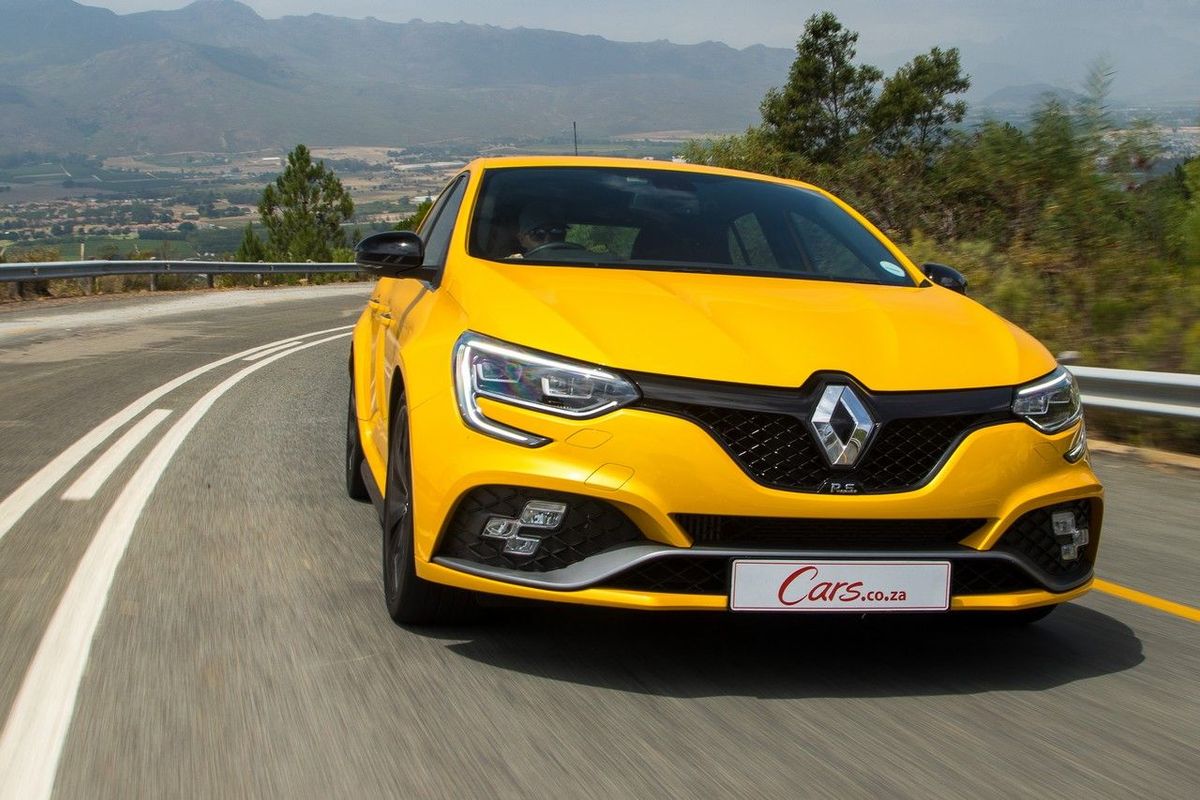
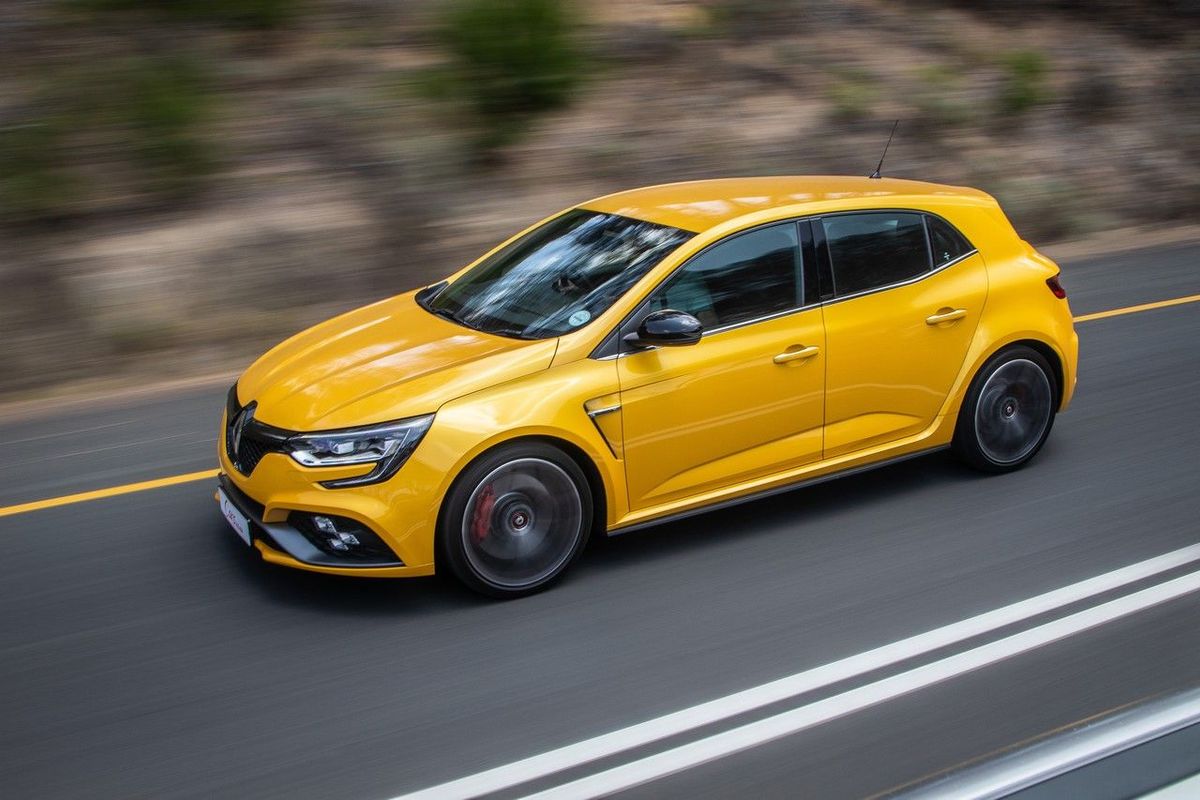
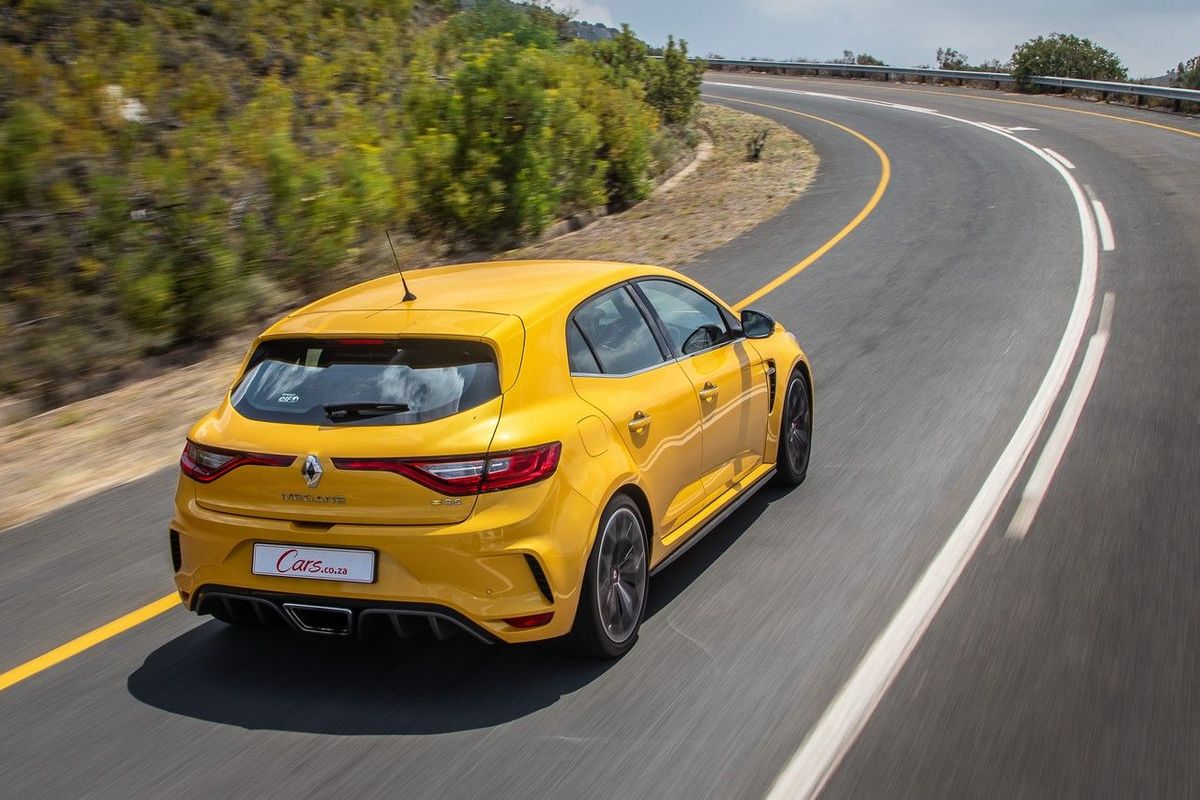
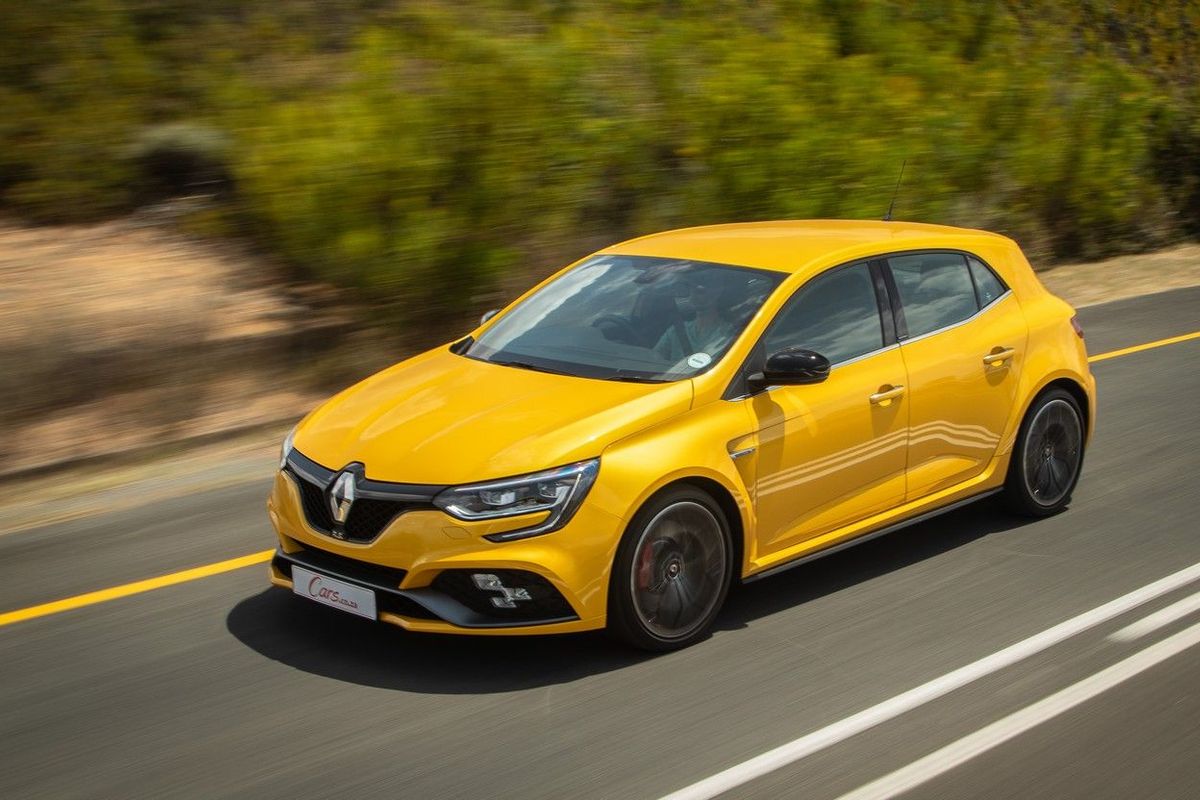
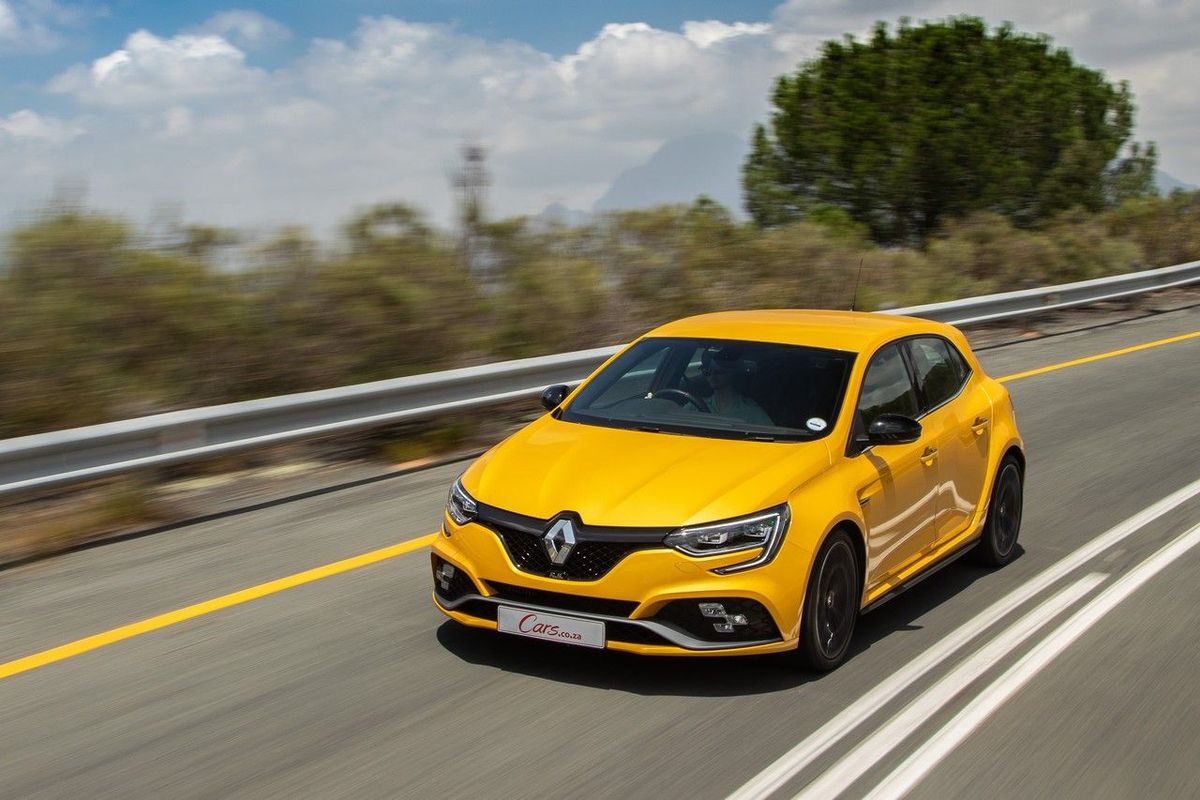
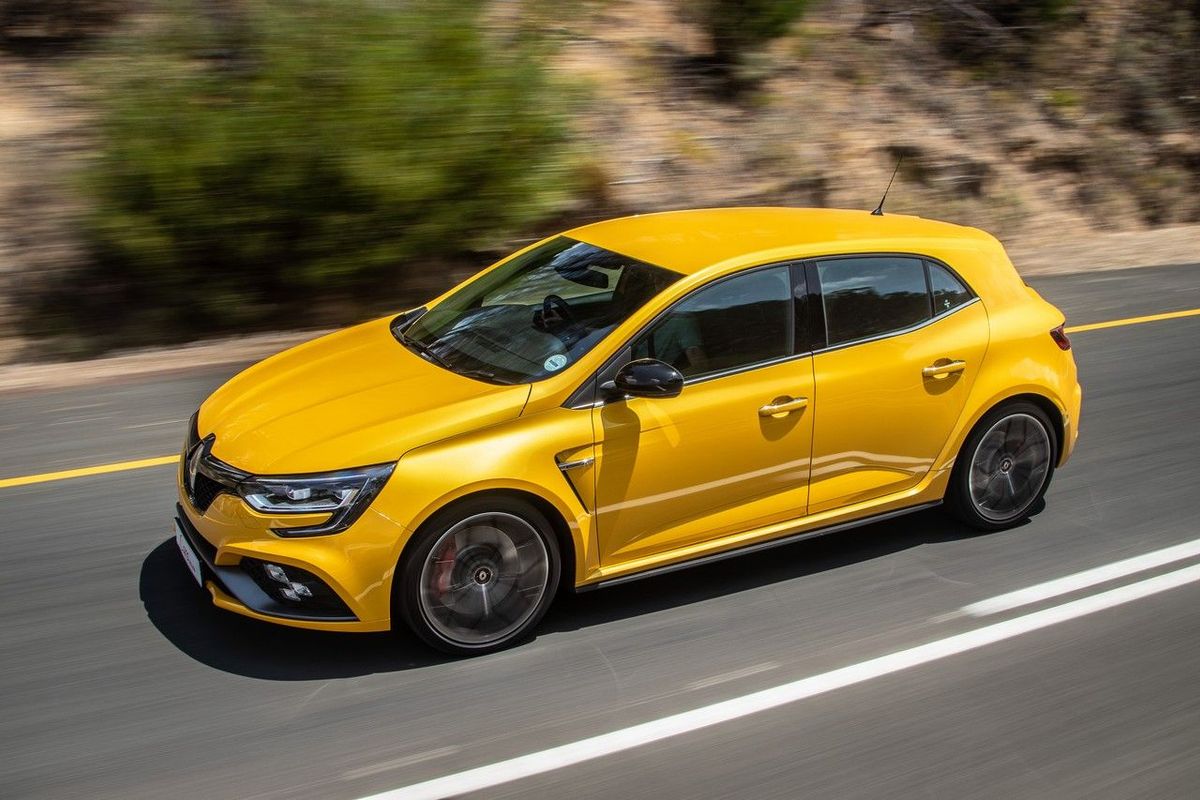
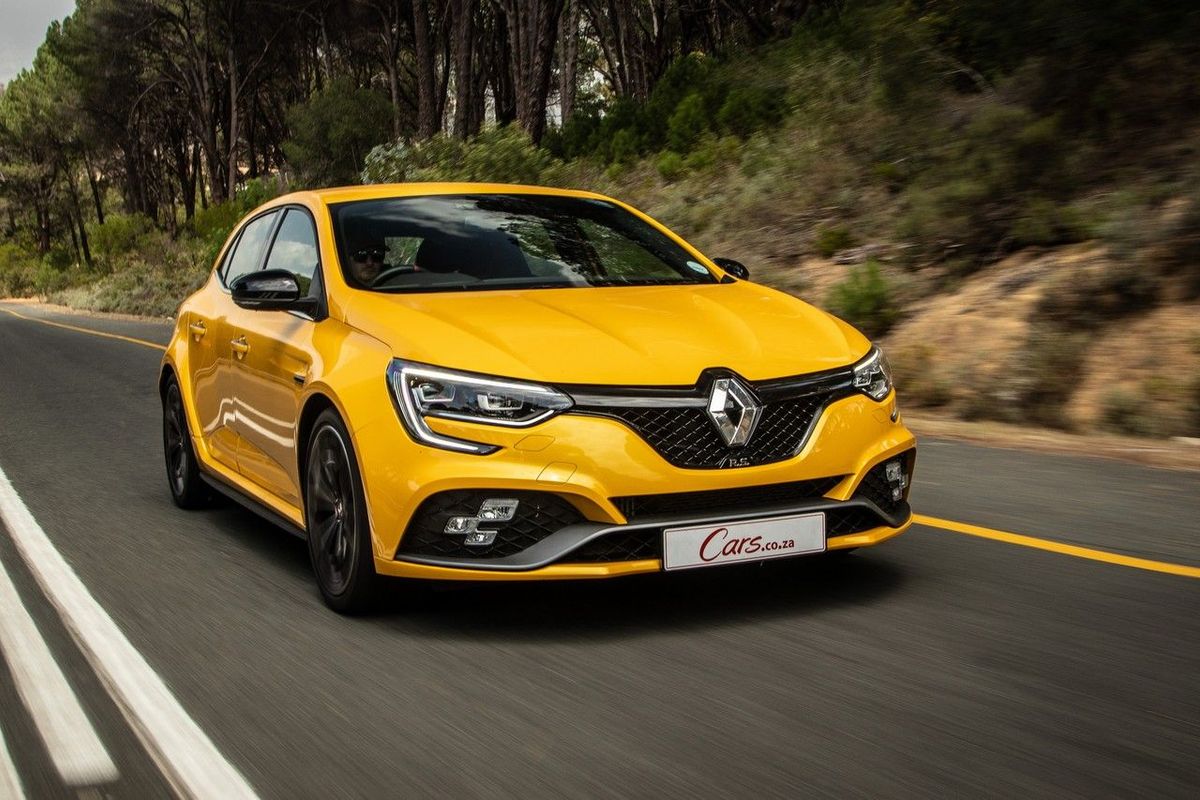
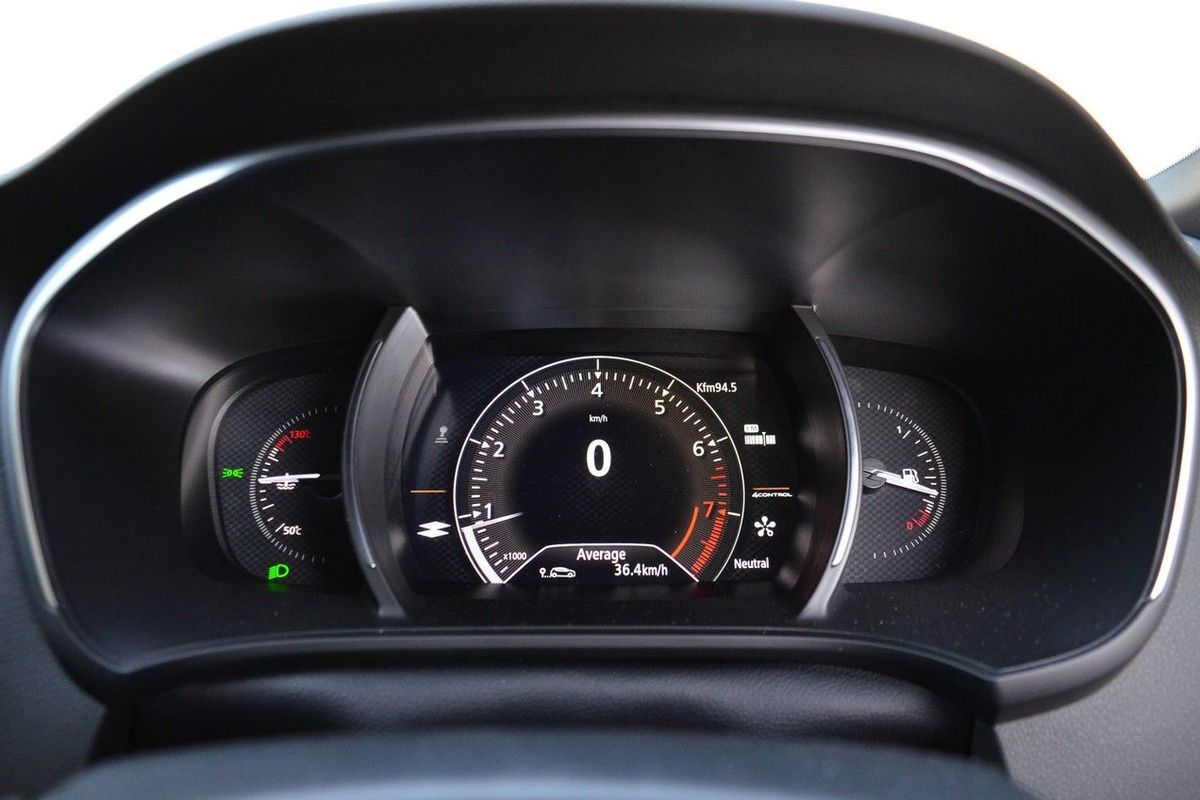
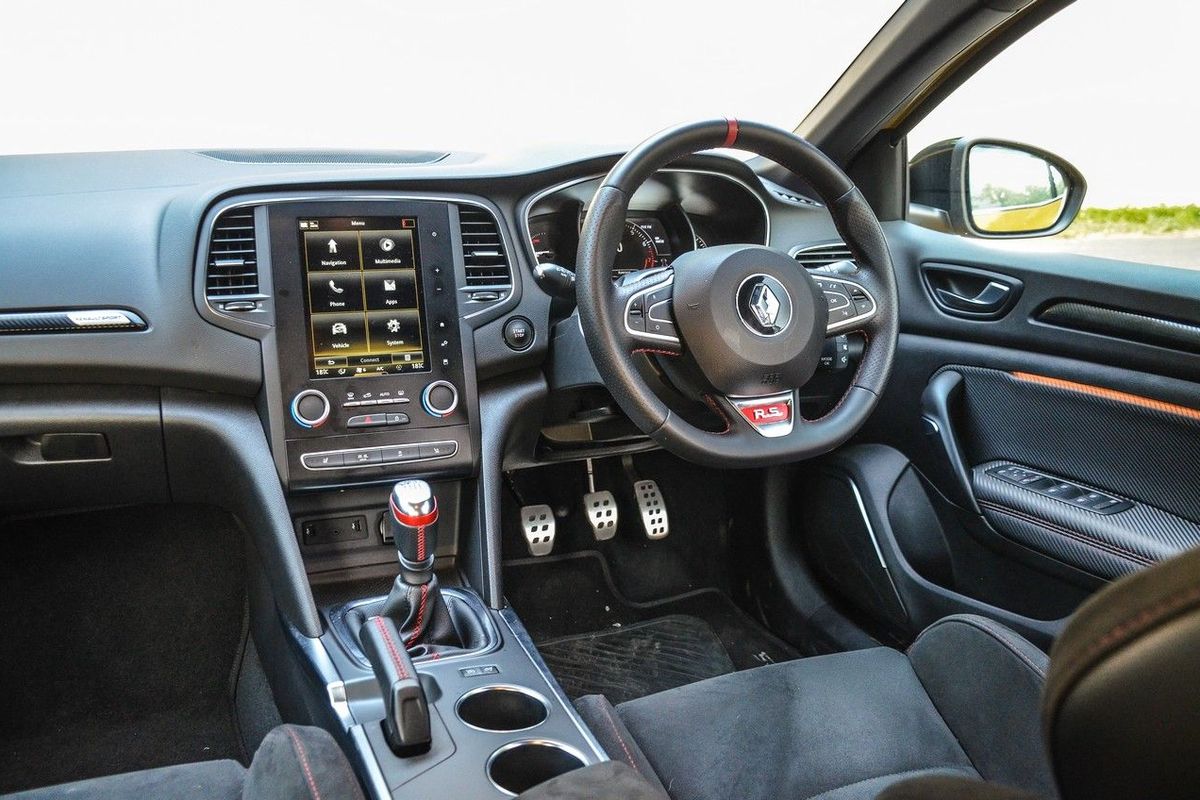
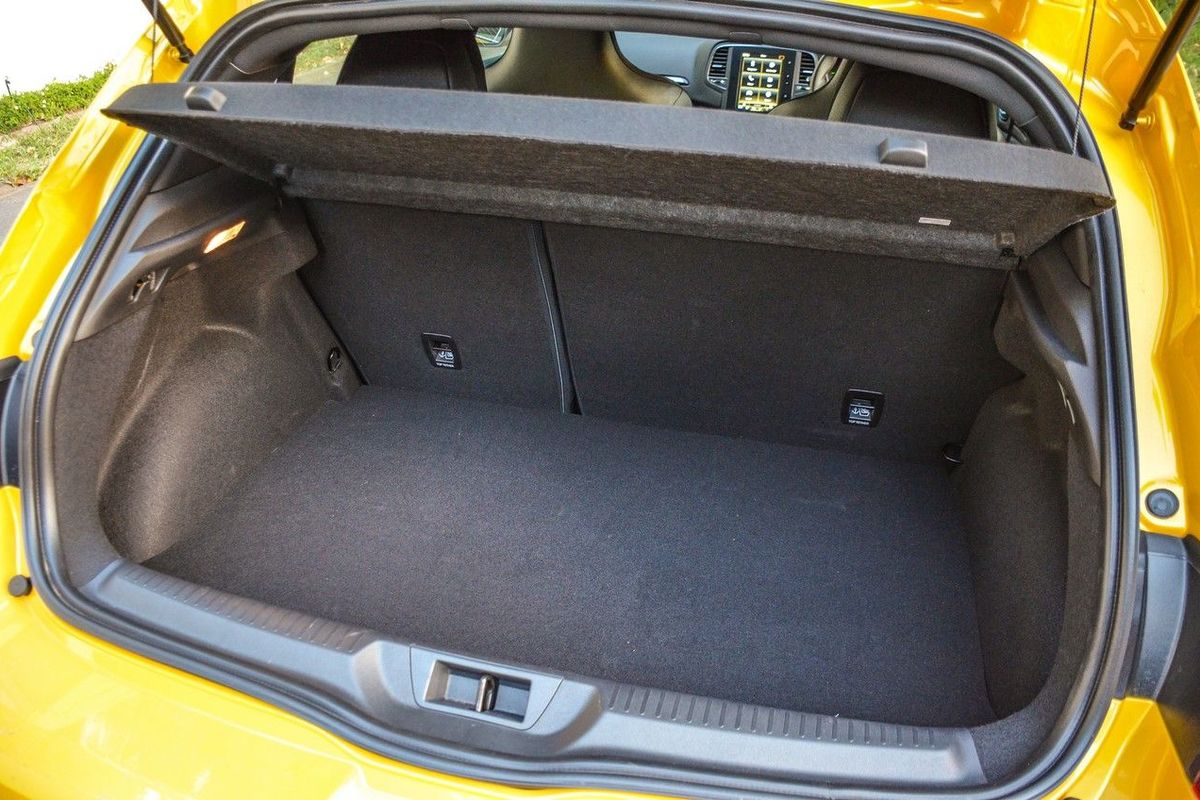
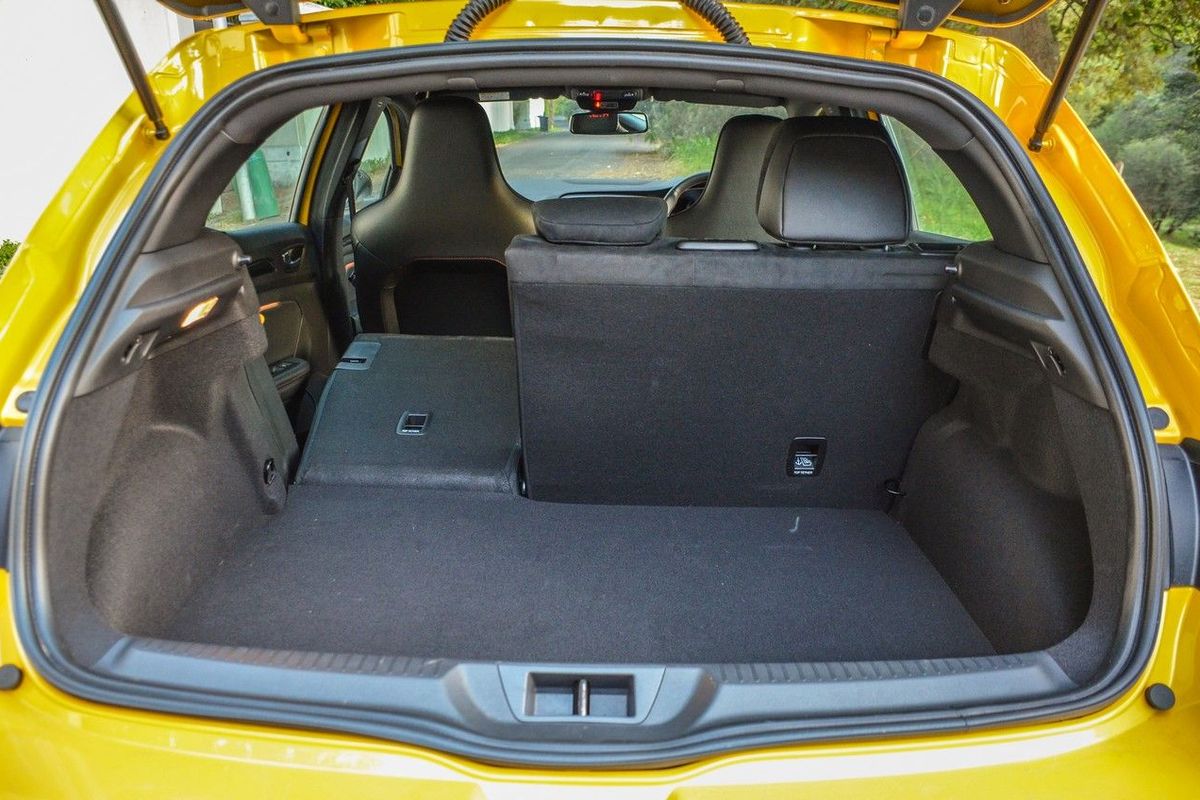
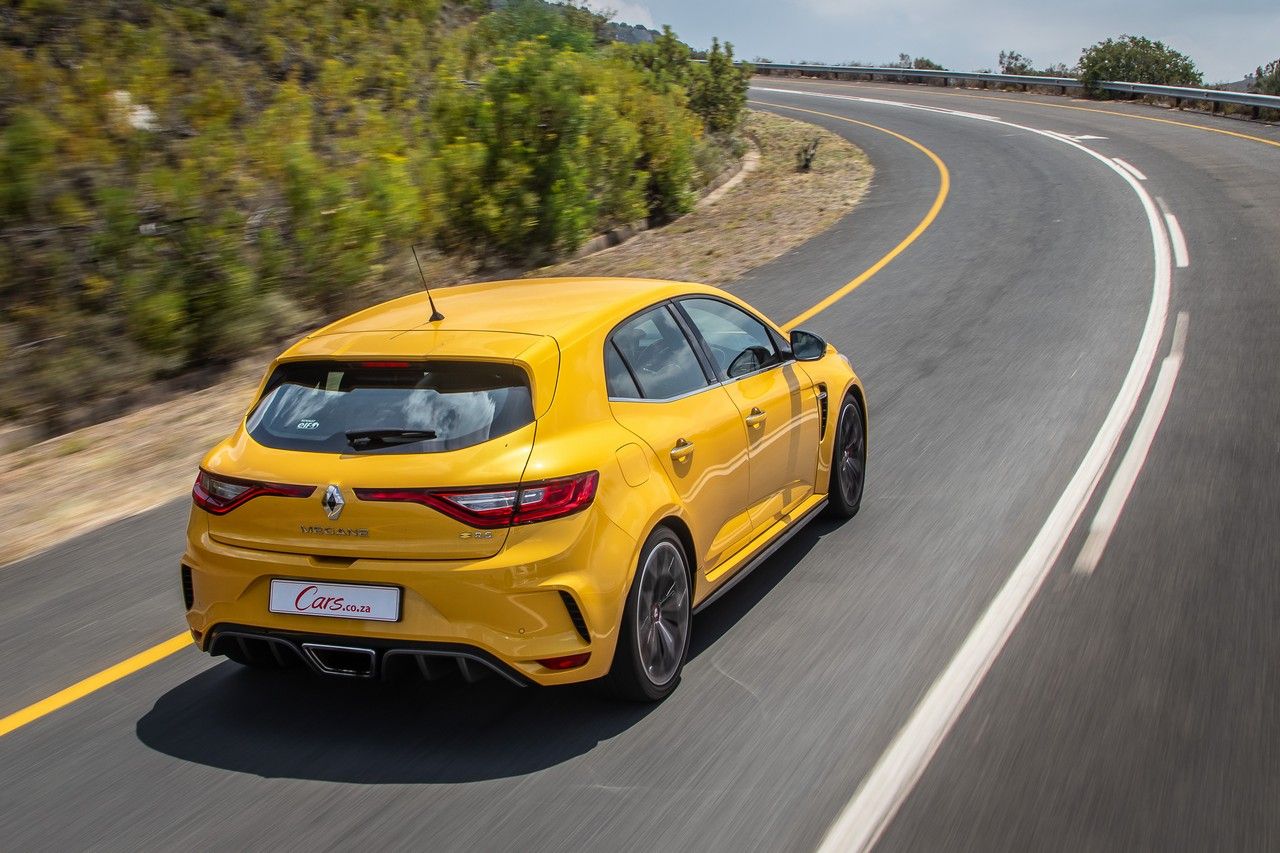
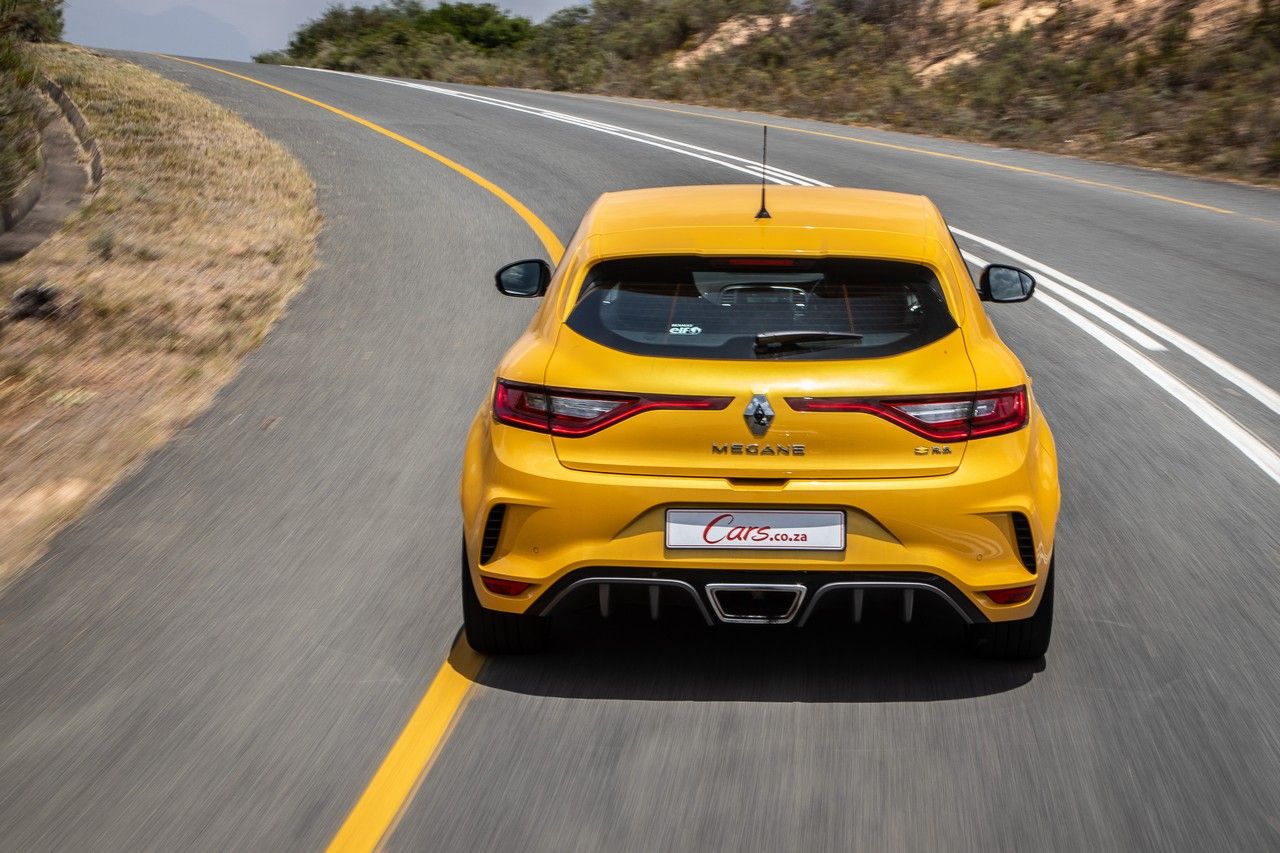
RenaultSport's famed Cup chassis is now available in the Megane RS. Unlike its 280 Lux sibling, which has an EDC automatic transmission, the 280 Cup comes with a manual 'box and favours handling prowess and an involving driving experience over cosseting road manners and everyday comfort. Does it live up to expectations?
We like: Blindingly quick everywhere, great manual ‘box, 4-wheel-steer gives it a unique character.
We don’t like: Lost a bit of the hard-edged feel of the previous Cup. Exhaust note/engine rasp not that entertaining.
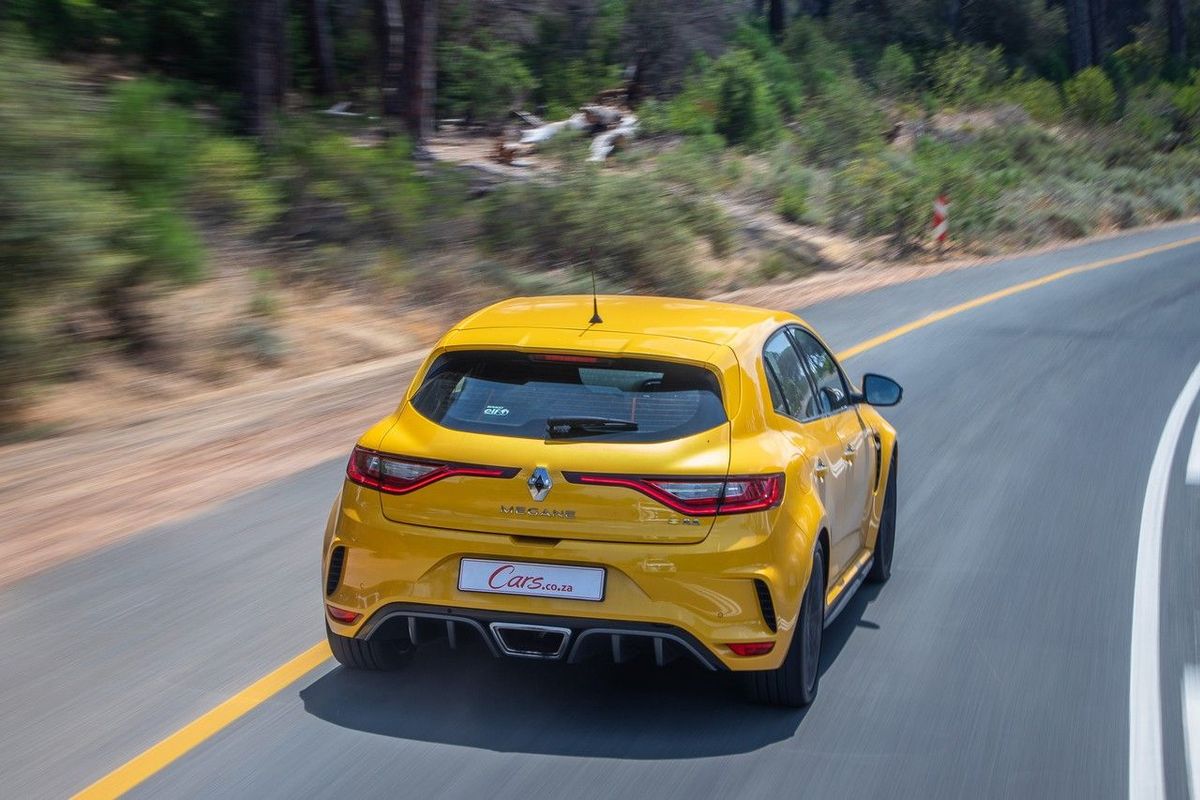
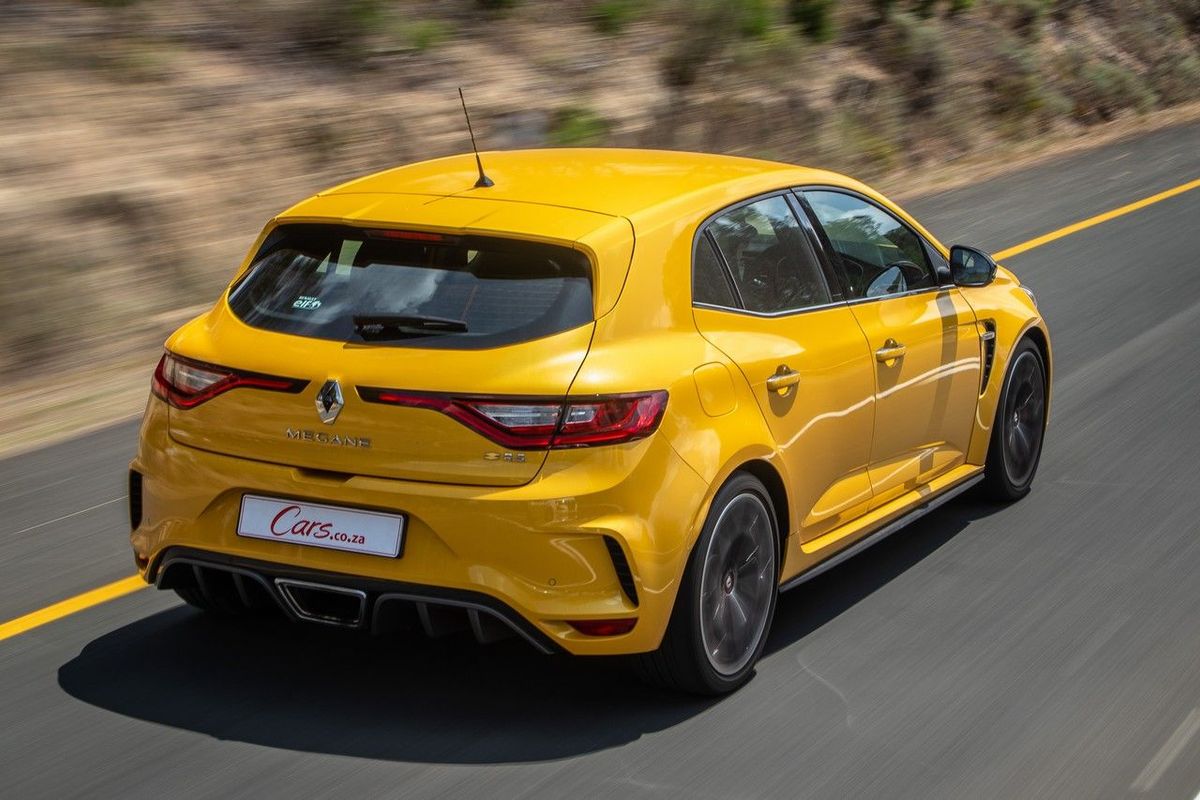
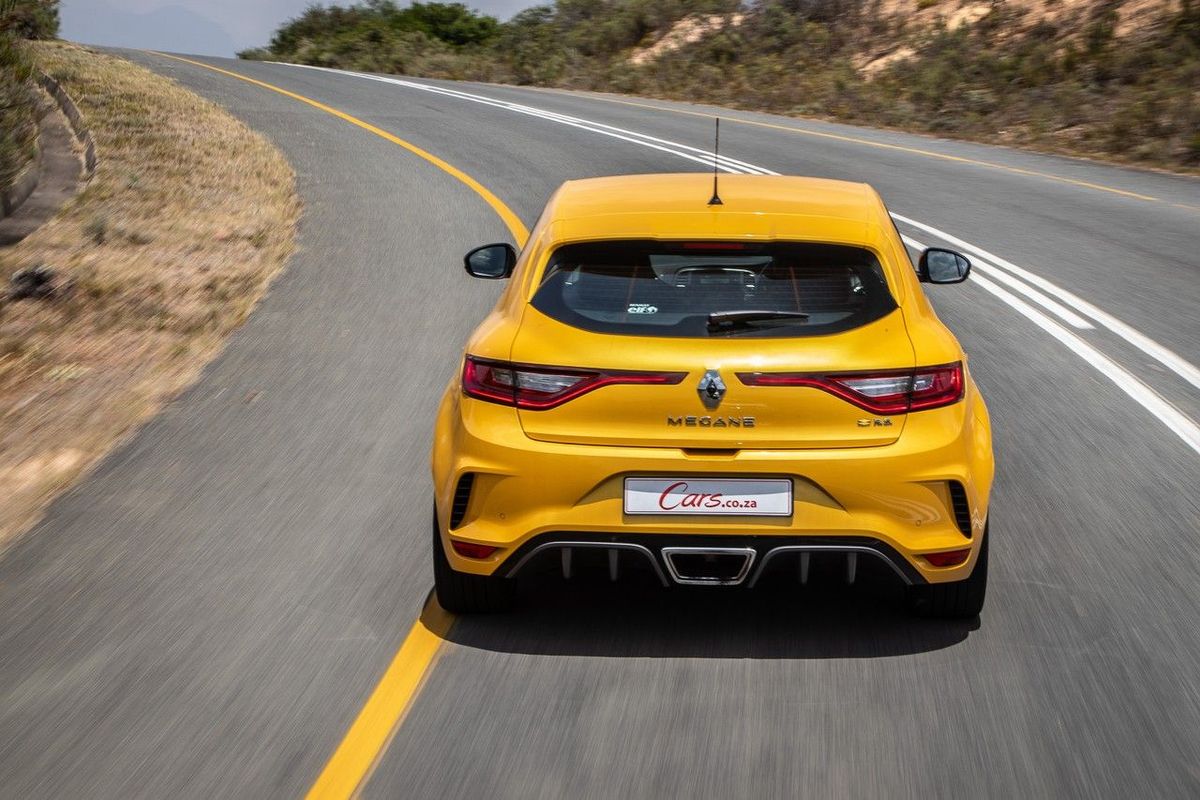
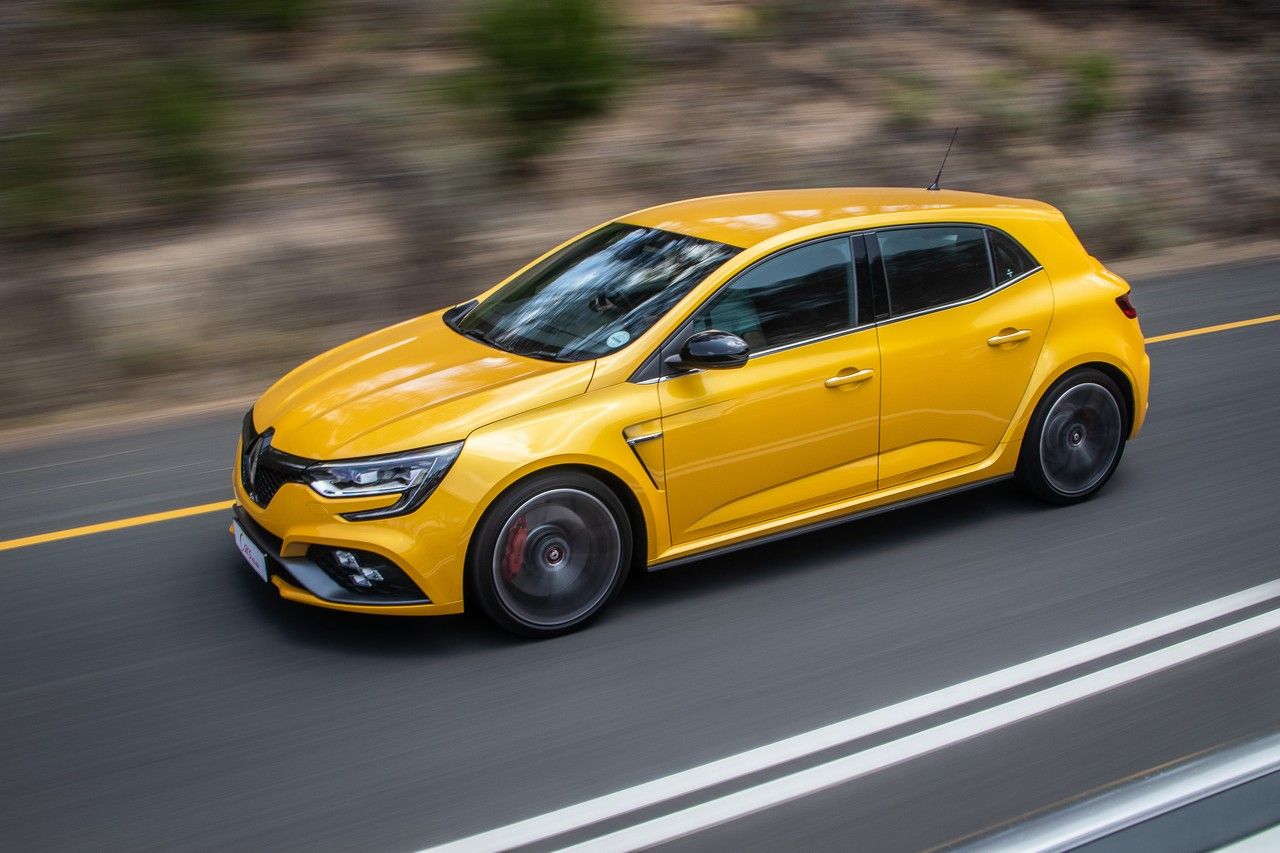
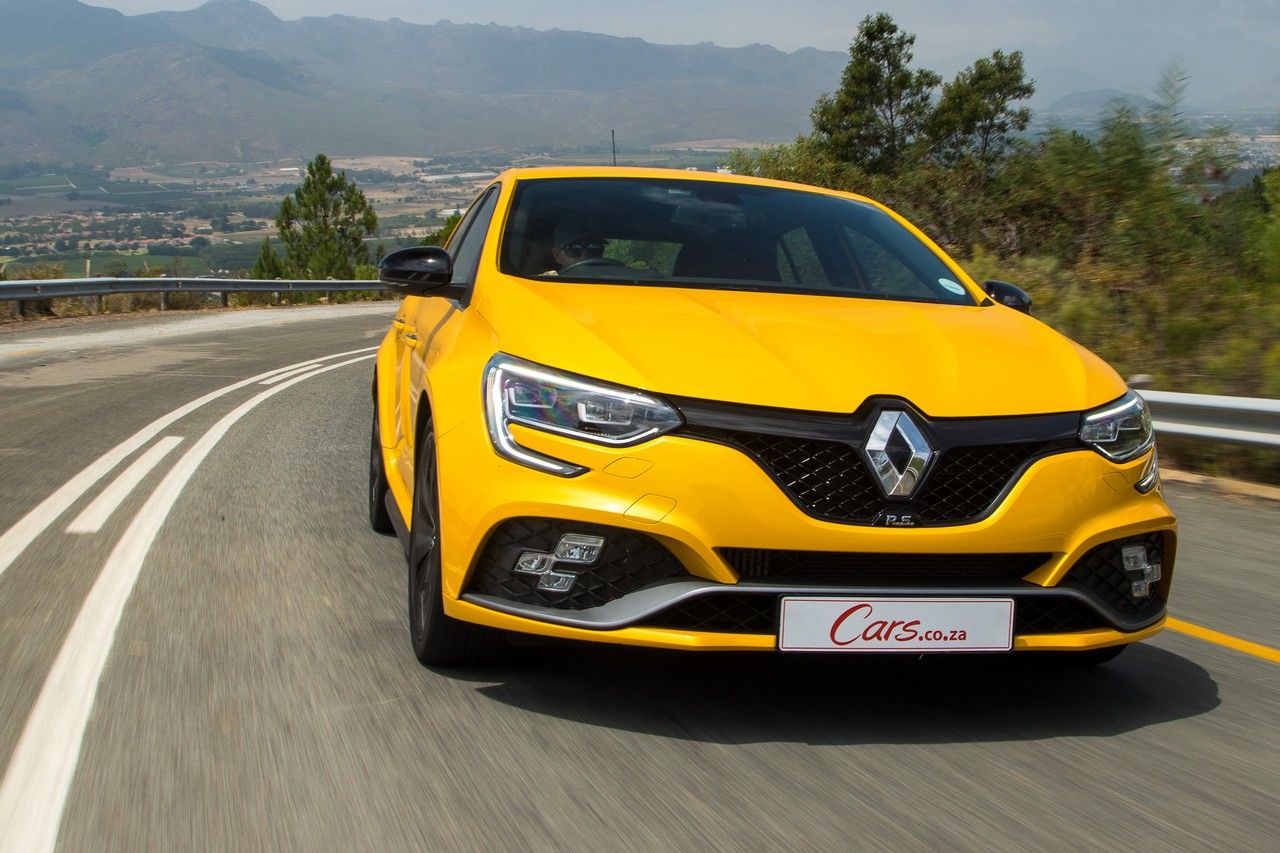
The new Megane RS Cup is a good looking hatch with a few tricks up its performance sleeves.
Where does it fit in?
The last few generations of Megane RS have really challenged the perceptions of what compact-sized hot hatchbacks, let alone front-wheel-drive cars, can achieve dynamically. The RS 280 is available in the Lux, which offers rapid performance, but has a more comfortable suspension setup (and dual-clutch auto) and the Cup is simply a more driver-focused machine made for hot hatch aficionados; it's offered exclusively in manual guise. Moreover, the latter comes with a mechanical limited-slip differential, red-painted Brembo brake callipers and a 10%-stiffer damper setup.
The good
Front-driven and then some
The 4-wheels-steer system gives the RS a character no other car has.
As a driver's car, which is exactly what the RS is supposed to be, the Cup has a unique feel that makes it far more interesting to pilot than most of its hot-hatch rivals. It all comes down to the 4-wheel-steering, which turns the car more at low speed and then keeps it stable during high-speed cornering.
The system requires some familiarisation, especially when you drive the Cup enthusiastically on a public road (not a race track). Front-driven cars usually offer lots of grip, but inevitably push their noses when their front tyres reach the limits of their adhesion. In this iteration of the RS, such understeer is mitigated by more turn-in as the rear wheels rotate the car further, effectively giving you another level of grip and agility. While we were still getting the hang of the test unit's 4-wheel-steering – in extremis – we found ourselves turning into corners too sharply, which prompted us to turn out the 'wheel midway through bends; such was the Cup's propensity to hug apexes with vigour, despite our best… even overeager… efforts.
After a few days' practice, however, you should get the hang of it and realise just how much the 4-wheel-steering system, in combination with the car's low centre of gravity, augments the Cup's handling. Whether you're cornering off-throttle or powering out of a bend, there's no need to back out of the steering and wait for grip; it's always there. As ever, the front-end inspires much confidence, but the (subtly pivoting) rear wheels do their bit.
Engaging to drive
Yes, manual gearboxes are still a thing. An increasingly rare thing, mind you.
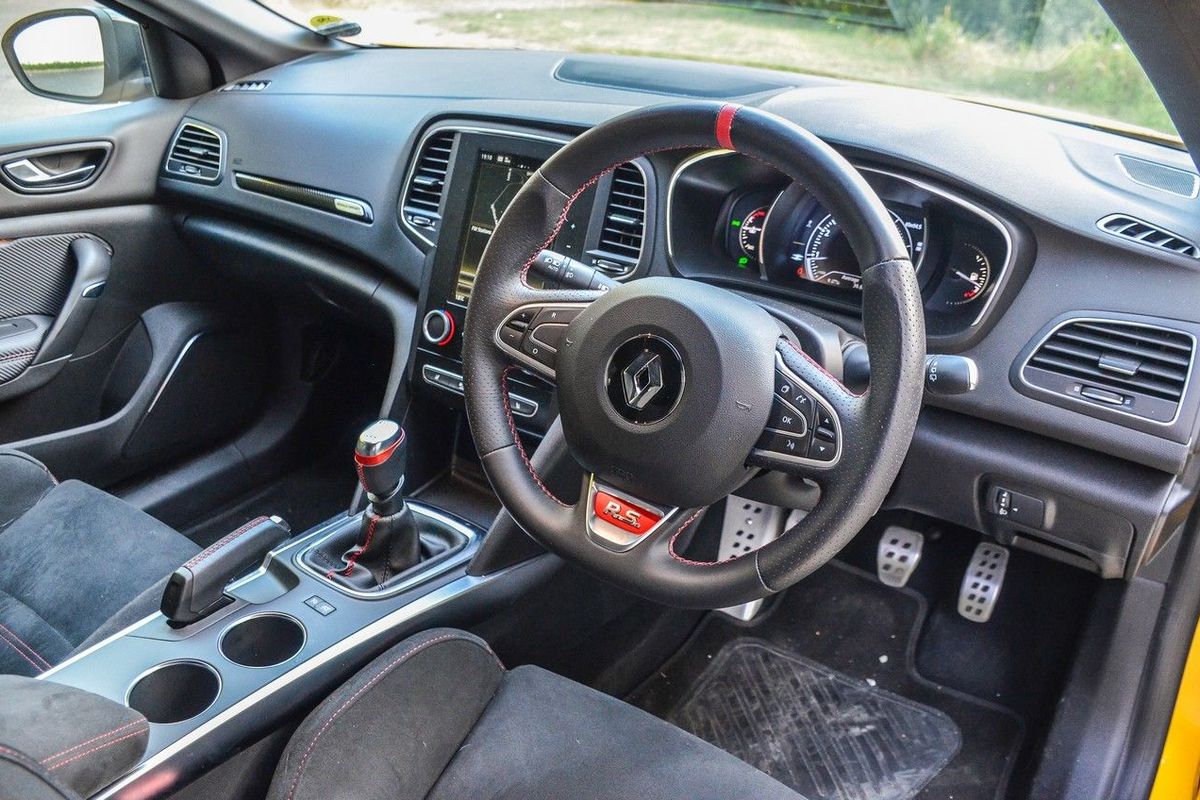
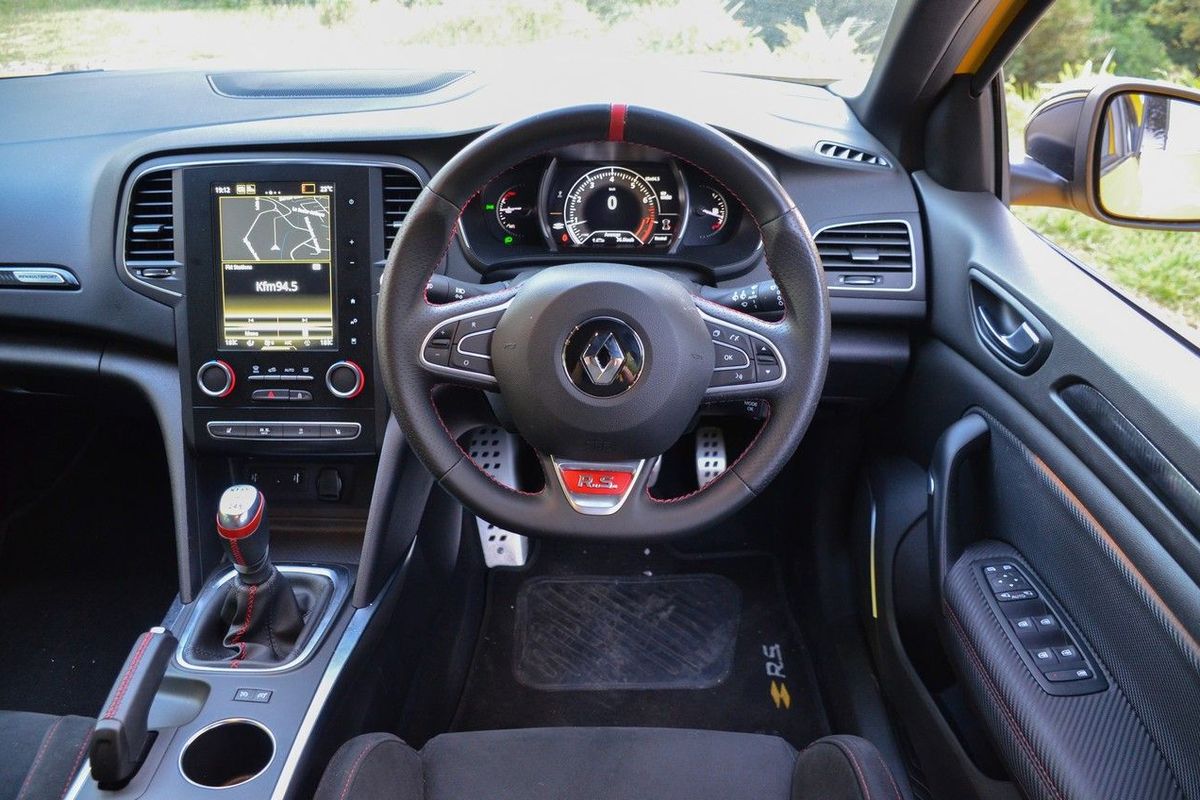
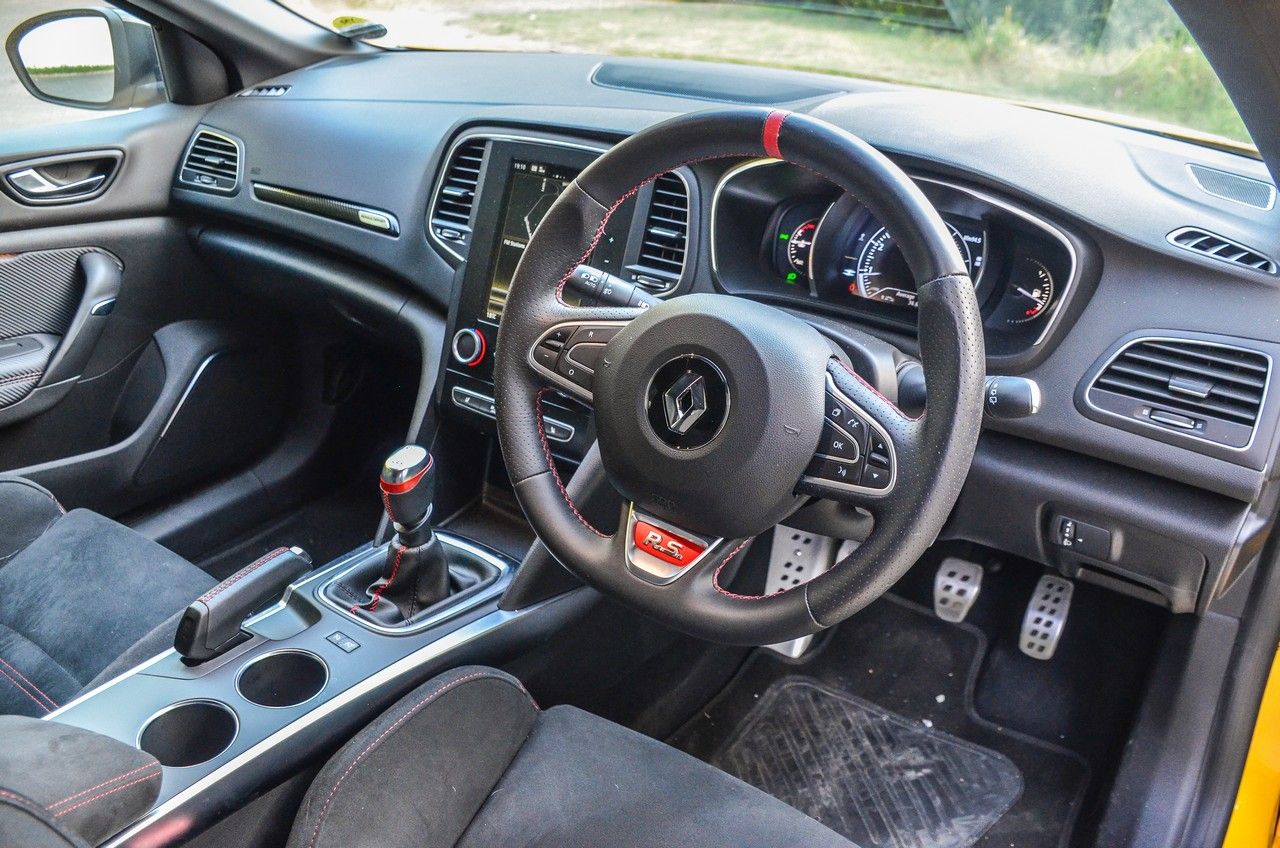
The current trend in hot hatches is to have electronic control for virtually everything: the car's central processor will adjust how much weight the steering 'wheel needs, how firm or pliant the dampers should be and alter the shift pattern of the dual-clutch transmission to suit whichever mode the driver has selected. And yet, it feels so good to have a manual 'box and a heavy clutch combined with a mechanical slip diff. You can really be the driving force and engage with the experience when you’re slipping your hand off the wheel to grab another gear or reel off a heel-and-toe downshift.
Compared with its predecessor, the Cup's engine has been downsized to 1.8 litres (from 2.0 litres), but it’s more responsive and cranks out a few more kW (205 kW up from 195 kW). This motor exhibits less turbo lag too, which means you can use a higher gear when pulling out of corners.
The steering in the Megane RS range has always been a highlight delivering a quick and very mechanical feel to the tiller that’s responsive and returns razor-sharp feedback. The new model remains sharp and delivers a lightspeed connection to the front wheels but some of that pure feedback has gone missing. It may be something to do with the electronics that slightly numb the feedback, but for an electric steering system, it’s very well-weighted and instils great confidence in the front end.
Always get good seats
The best seats in the hot hatch segment.
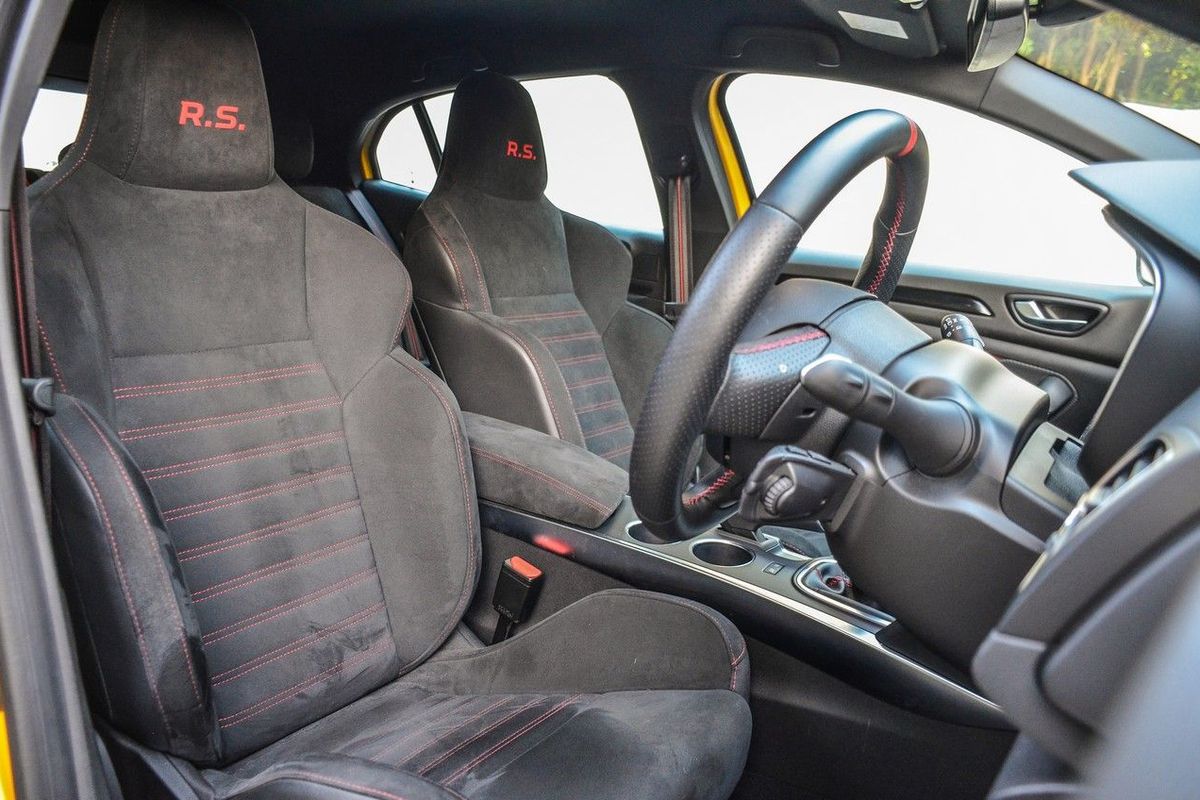
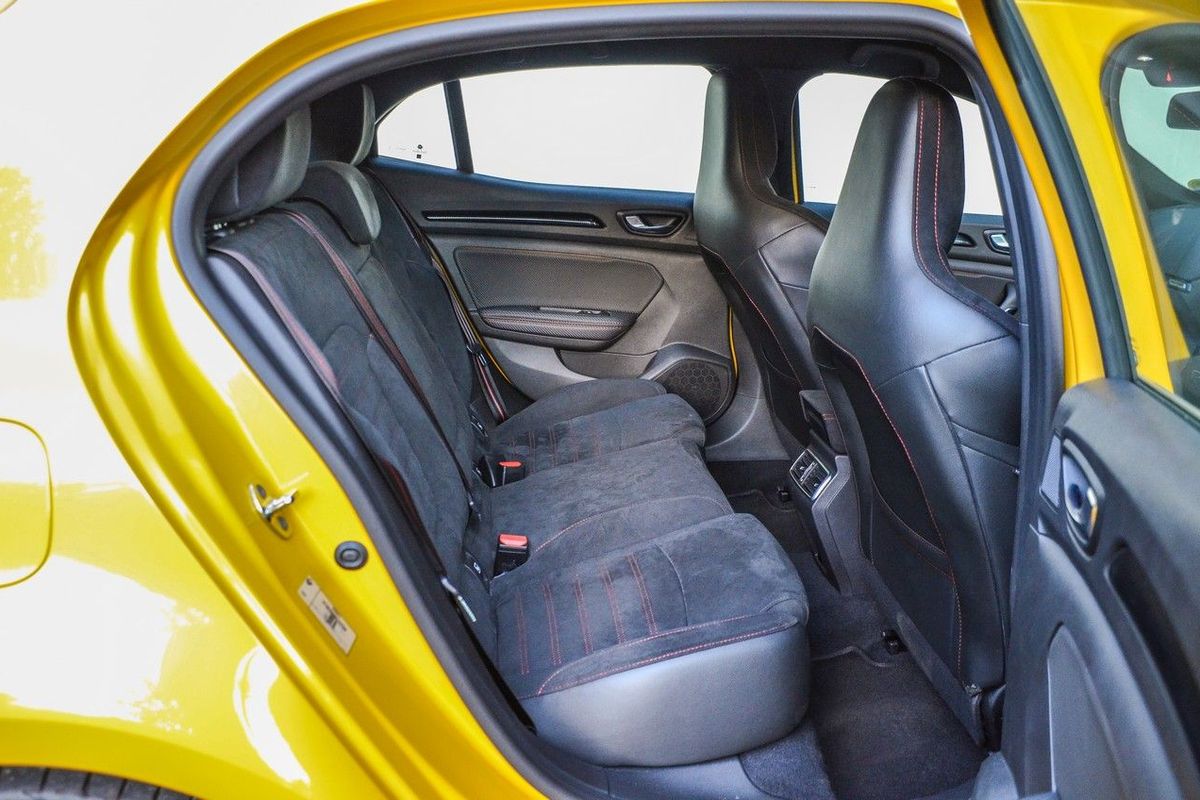
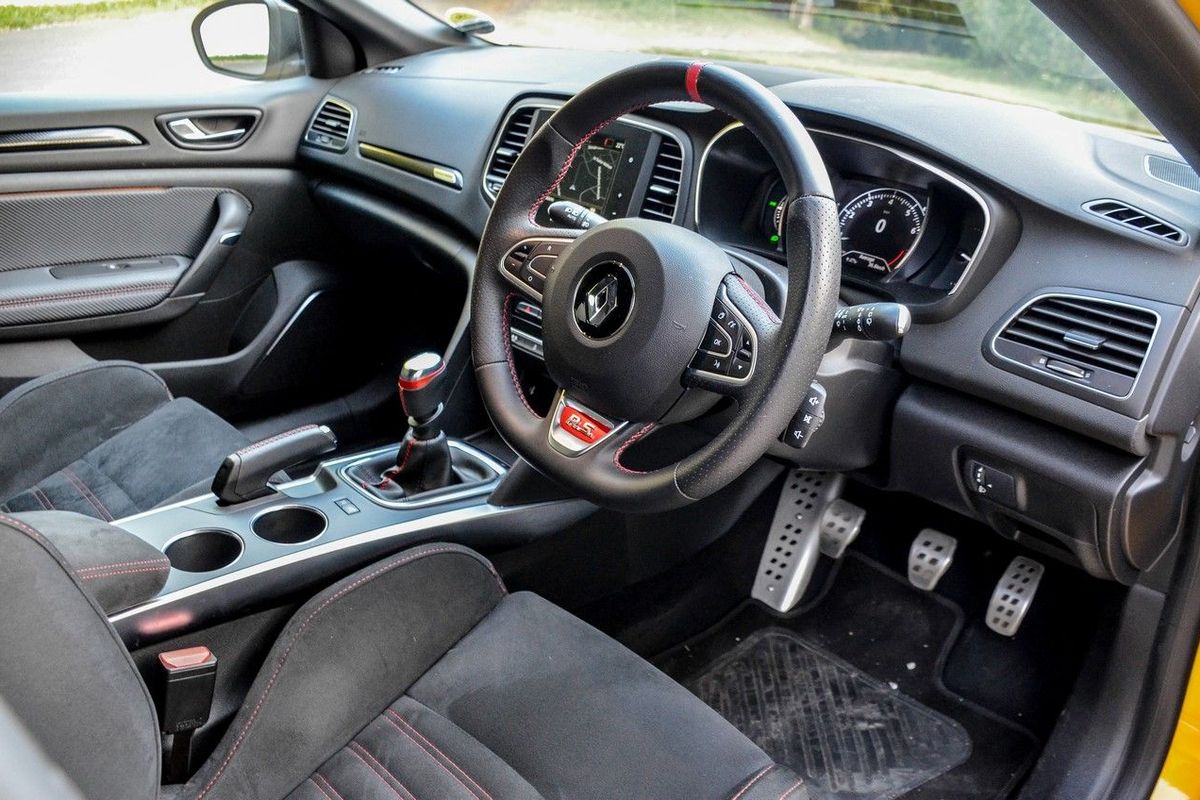
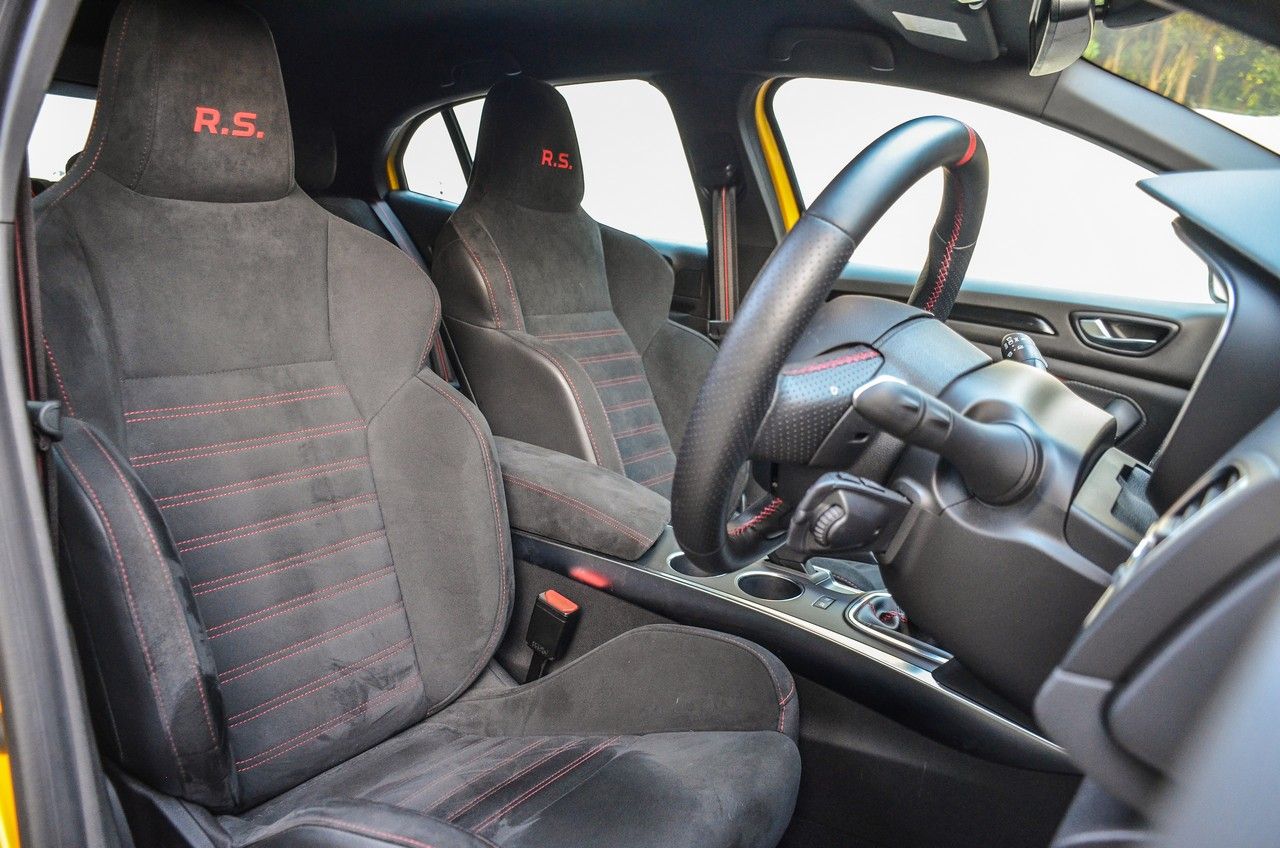
The Alcantara seats in the RS are supportive everywhere and the adjustability is substantial. You can get the seat really nice and low – for those who covet this sort of position and the minor centre of gravity improvements that come with it. A tightly supportive seat is a must for track day enthusiast and on that note, the Renault offers a vast array of track tools in the form of downloadable telemetry. The on-board system captures data from steering, throttle, brakes, speed, and g-forces and then allows the driver to analyse them afterwards – every track day driver needs this tool – after all, data analysis the fastest way to go quicker.
The not so good
A little softer than old Cups
True track day enthusiasts may find this new Cup chassis softer than the previous model.
There were no doubt more than a few prospective buyer and owners that complained about the previous RS Cup chassis being far too hard for every day and being a little tiresome. For this gen, the Lux model has really filled that hole well as a proper Golf GTI rival that’s capable in all conditions. The Cup then should remain a hard-edged racer’s tool, right? Well, it’s harder, yes, you can feel the added stiffness and performance gains when sending it into corners and really giving it a good rip on track. It does, however, feel softer than you’d expect from a track tool. There’s a hint more body roll than expected and though the front end is quicker than any rival within sight of a Civic Type R, there’s still room for a bit more improvement.
Where’s the sound gone?
The raspy induction noise has gone and is replaced with a bit more of a mellow and less violent hum. A quick flick through the drive setting modes and an off-throttle popping and banging accompanies you down the road. It’s artificial, but a decent noise nonetheless.
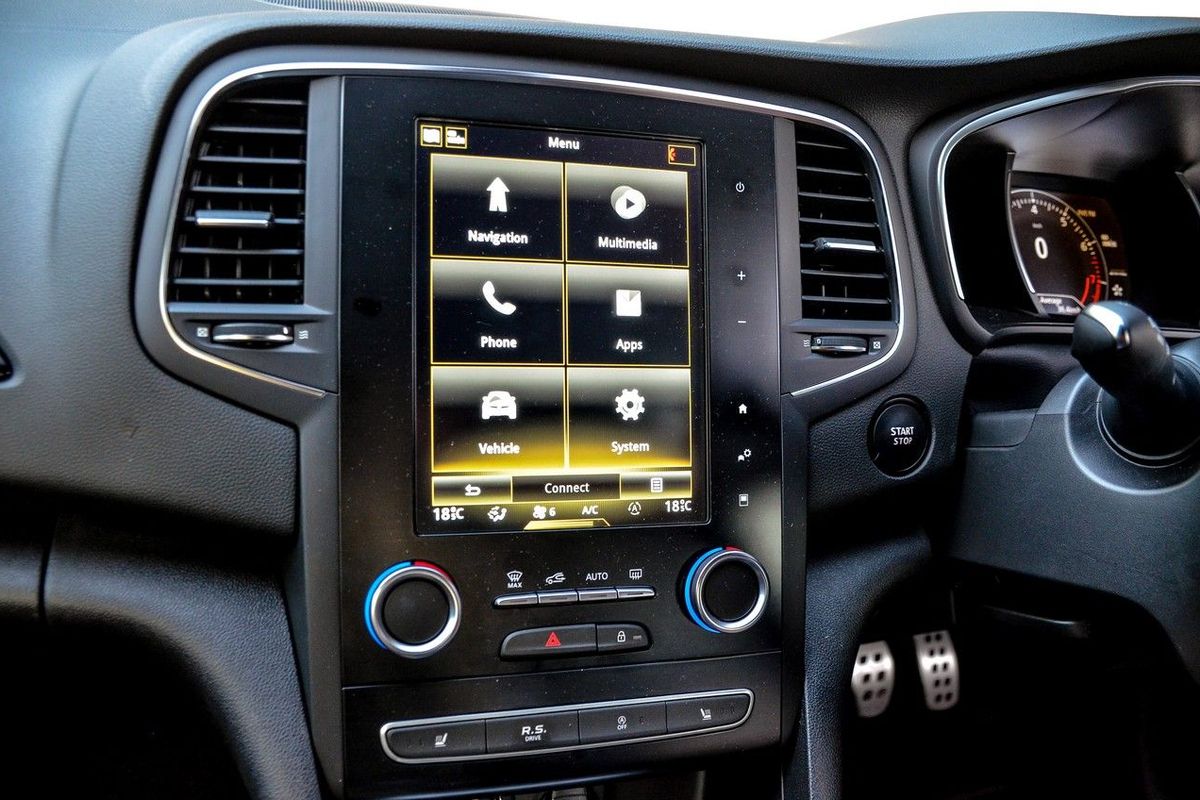
A difficult infotainment screen
While the infotainment screen isn’t unique to the RS, it does make it quite difficult to manoeuvre through screens and the touchscreen needs a solid prod to accept a command. Considering some of the clean, hi-res screens in the competitors this is a weak point in the Megane range.
Pricing and warranty
In spite of the more racy equipment on the Cup, it costs exactly the same as the Lux at R569 900. Considering the closest thing to it in terms of all-round performance is the Honda Civic Type R at R648 300 it represents a decent offering, for the price. It’s also just about the same price as a VW Golf GTI. The Megane RS is sold with a 5-year/150 000 km warranty and a 5-year/90 000 km service plan.
It's nice that a hot hatchback maker still values some good old diver input in its cars.
Verdict
The new Megane RS is a looker and, in Cup form, it offers sharper handling and greater driver involvement than its Lux sibling. The stiffer chassis, mechanical limited-slip diff and Brembo brakes make it feel tractable, eminently wieldy and, when the opportunity presents itself, at home on a track.
The engine delivers great acceleration and the torque curve allows you to hold higher gears longer and power out of corners at full throttle. The introduction of 4-wheel-steering has made the biggest change to the Megane RS, however. Compared with its predecessor, the Cup offers better mid-corner turn-in and effectively quells that eventual understeer that tends to ruin the driving experience in many front-wheel-drive hatchbacks.
It does lack some of the real hard-edge of the previous Cup, which made that car almost unbeatable on a race track. And although this model is undoubtedly faster than the car it replaces, its driving experience is not quite visceral, seat-of-the-pants… or emotive… enough to fully satisfy hot hatch aficionados. For now, if you want a Megane RS, get the Lux and, if you seek a real track toy, wait for the RS Trophy; it's coming later in 2019.
Alternatives (click on the names for specification details)
The 2018/19 Carsawards winner for best Hot Hatch is a multi-purpose piece of kit that feels at home on a race track like no other car in its class. It’s also eerily good on the daily grind too. It is a little expensive however.
The segment leader for many years now, the Golf GTI covers all the bases but offers a tame track experience compared to the Renault. There is a much hotter TCR version on the way.
The Mini JCW offers up sparkling performance in a pint-sized box. It’s more a fun toy than a track tool but won’t disappoint if you spend more time on mountain passes than race tracks.
The Sun Finally Sets for SLC
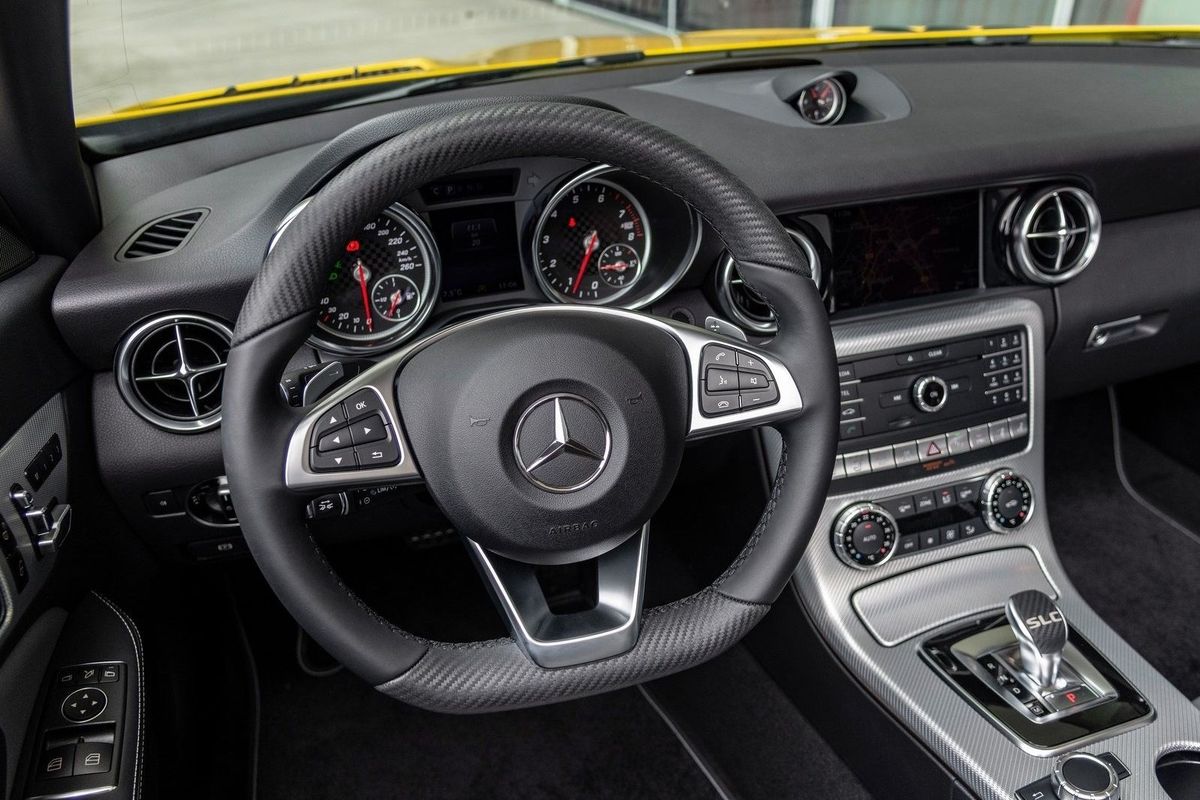
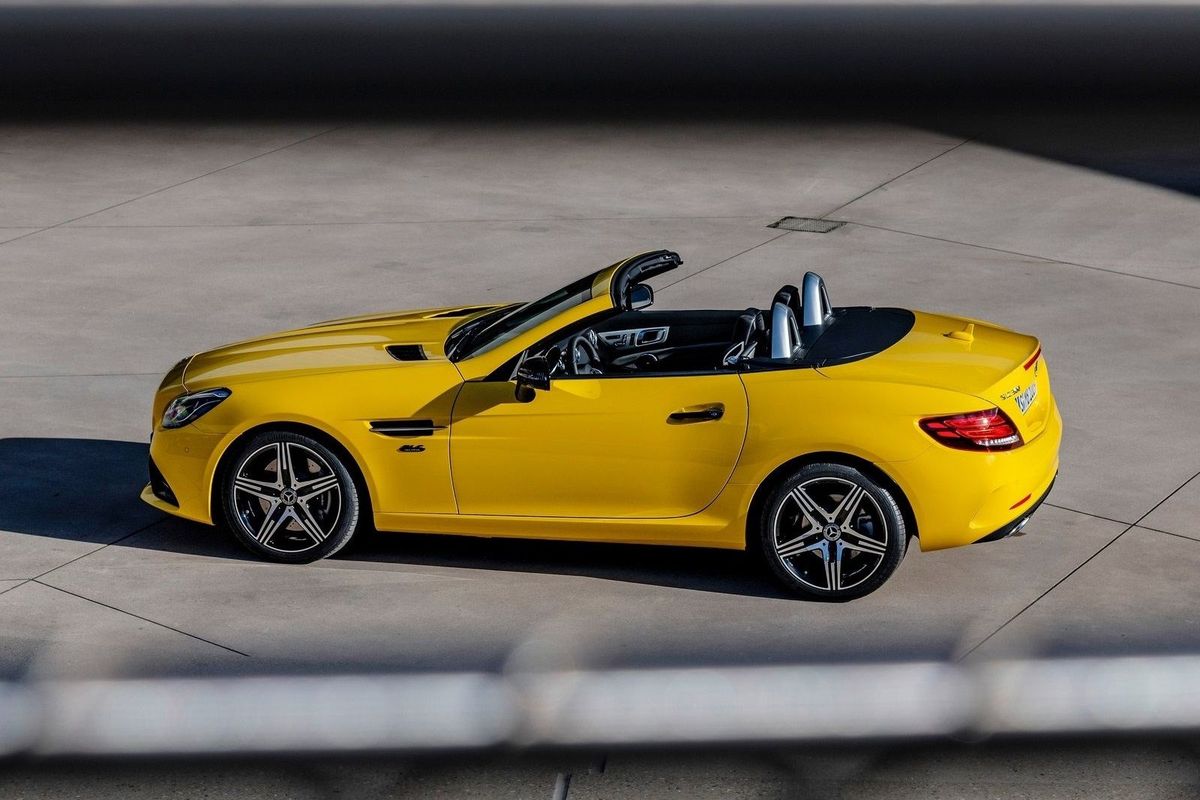
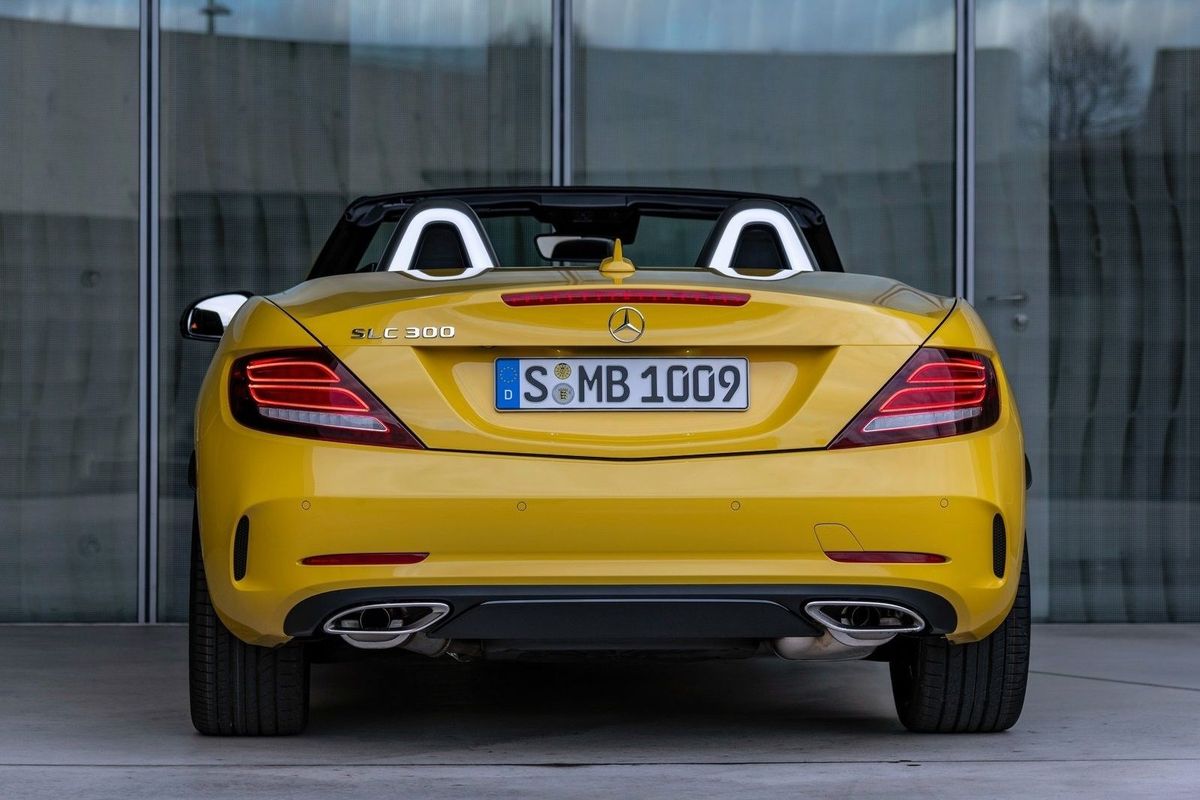
Mercedes-Benz has revealed the retirement configuration of its compact roadster. Meet the Mercedes-Benz SLC Final Edition.
After 23 years, the decision has been made to pension tooling and assembly scheduling for Mercedes-Benz’s SLC. Demand for the compact roadster has collapsed in the last few years, with customers showing a preference for high-riding SUVs and crossovers, instead of a folding-hardtop two-seater sportscar.
It’s a poignant moment for Mercedes-Benz’s styling department, as the original SLK was a vehicle which revolutionised public perception around the German brand in the mid-1990s. With its daring design and clever packaging, defined by that folding hardtop roof, SLK created a counterpoint for those who had long criticised Mercedes-Benz as a hopelessly conservative automotive brand.
Paying homage to the memory of those original SLKs, the SLC Final Edition features a vivid yellow paint option – which was also the signature colour when SLK debuted back in 1996. It’s called sun yellow and looks particularly fetching on third-generation SLC, contrasting with a black grille, air-intake and door handles.
These Final Edition SLCs are effectively AMG-line cars, which means you get Affalterbach moulded bumpers, a 10mm lower ride height (courtesy of sports suspension) and larger brakes. The Final Edition kit can be applied to SLC 180, 200, 300 or even the AMG 43 version of Mercedes-Benz’s smallest two-seater sun-seeker.
Why is it all ending, though? It’s worth remembering that when the first SLK went on sale, Mercedes-Benz marketed a single SUV that very few people knew of – much less bought: the Geländenwagen. In 2019, nearly half the brand’s product portfolio are gravel travellers.
This change in customer demand has decimated demand for a compact roadster such as SLC. In truth, this is a car which has seen waning fortunes since its third-generation redesign in 2011 – with sales tapering off rapidly after the renaming from SLK to SLC in 2016. A scenario which could also be accredited to the current C-Class cabriolet, with its fabric roof and roomier cabin.
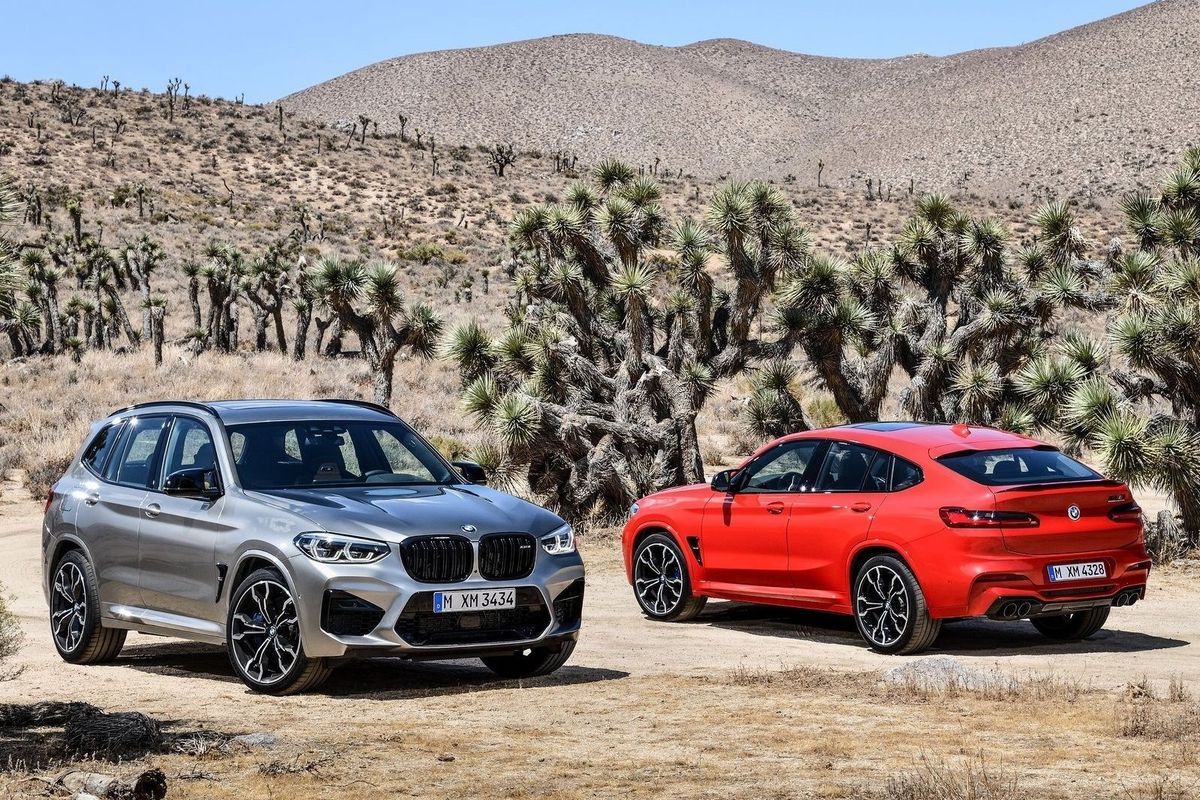
BMW has added another pair of full-blown M models to its SUV portfolio. Following in the wide tracks of the monstrous X5 M and X6 M, come the X3 M and X4 M. While the concept of a performance SUV is not a new one, there has been a proliferation of executive class-sized tar-shredders; the segment now boasts entries from several manufacturers.
The new BMW X3 M and X4 M are available in two flavours: standard and Competition. Both are powered by the BMW's familiar twin-turbocharged 3.0-litre inline 6, but whereas the standard versions produce 353 kW and 600 Nm of torque, the Competition option's peak power output is 375 kW.
Power is predictably sent to all four wheels, via an 8-speed automatic transmission – with no dual-clutch drivetrain option. Those power numbers and all-wheel traction combine to deliver very keen acceleration numbers: 0-100 kph in 4.2 seconds (4.1 sec for the Competition derivatives) and a top speed of 280 kph for X3/X4 Ms with the optional Drivers’ Package. Setting aside the X4 M, which is a niche product that competes with other coupe-inspired executive-sized SUVs, for the moment, how does the upcoming X3 M compare with its rivals?
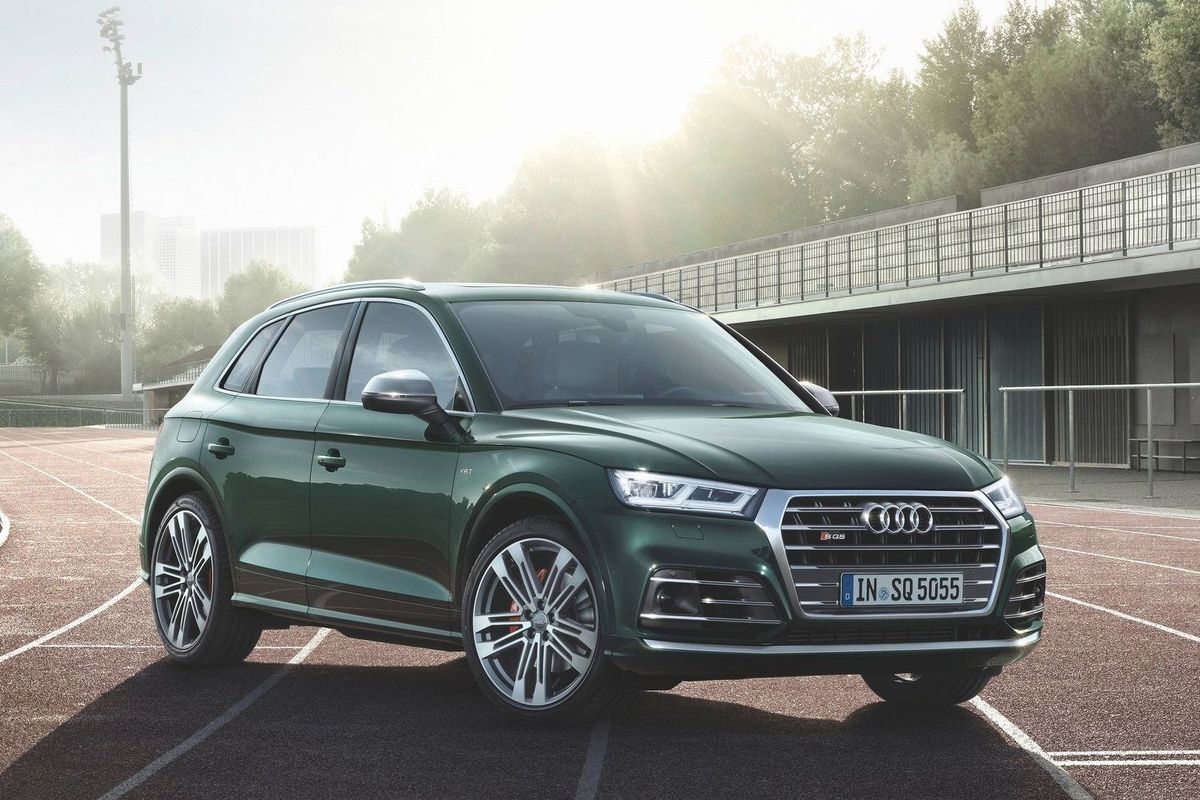
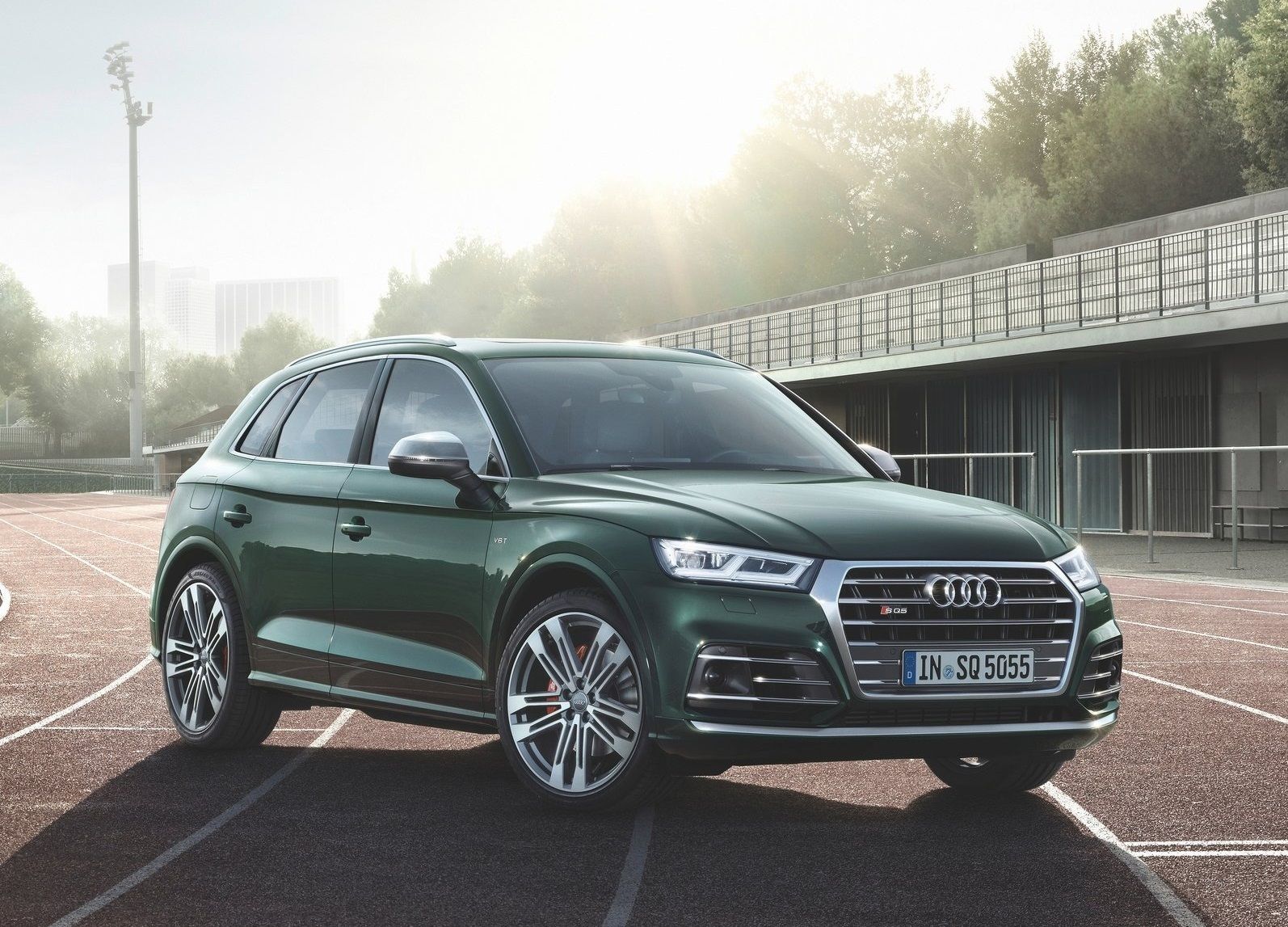
Audi SQ5
Seeing as there's no RSQ5, the SQ5 will have to do. Power comes from a 3.0-litre 6-cylinder turbocharged petrol engine, pushing out 260 kW and 500 Nm. Power goes to a quattro setup and it'll hit 100 kph from 0 in a claimed 5.4 seconds.
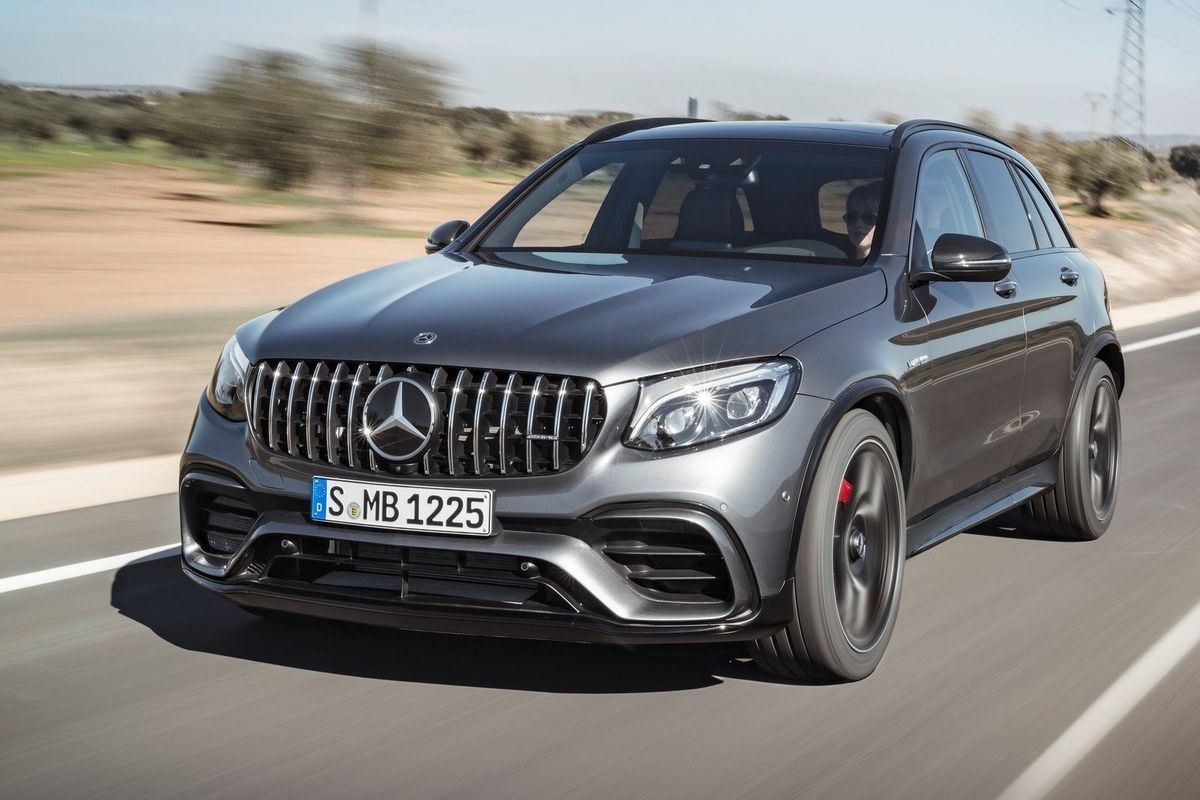
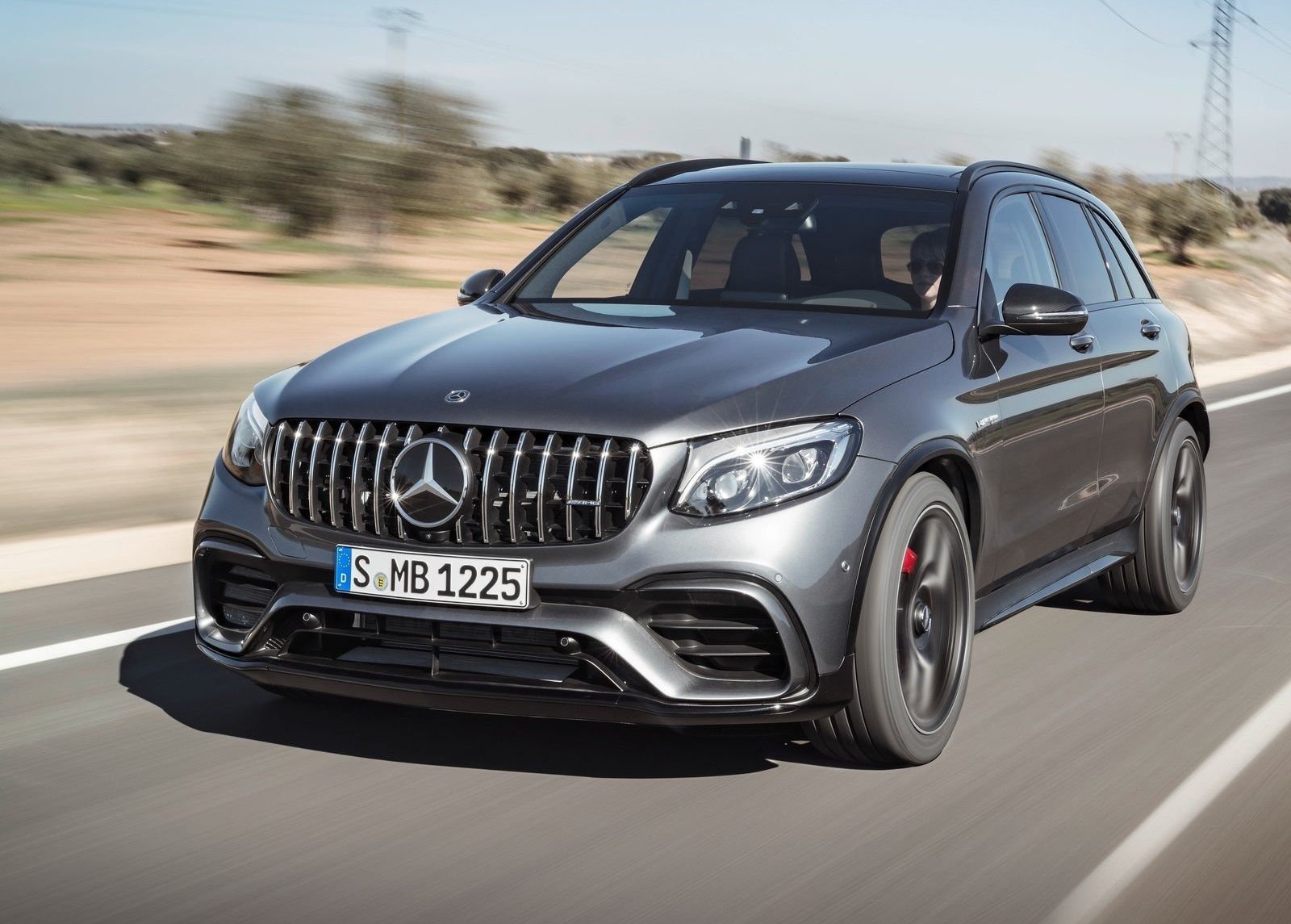
The baby brute from Affalterbach boasts a 4.0-litre biturbo V8 motor with 375 kW and 700 Nm, giving it performance credentials of 0 to 100 kph in a blistering 3.8 seconds!
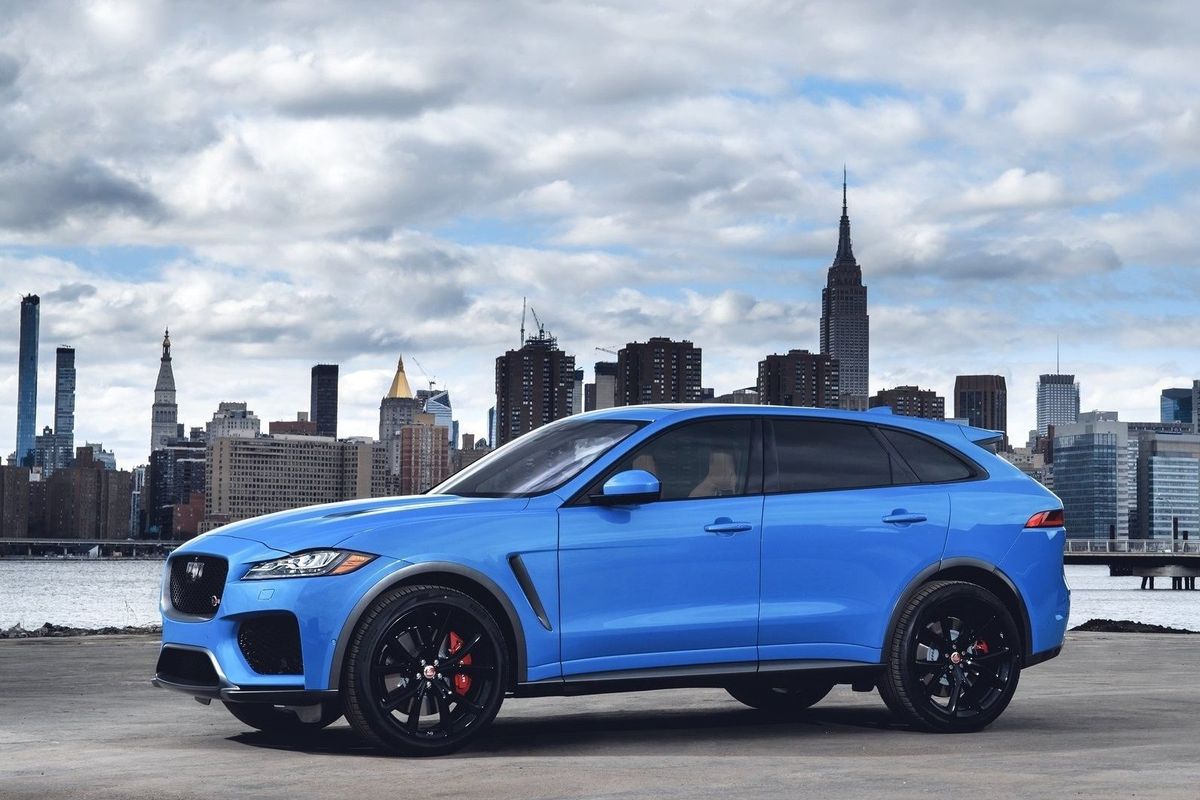
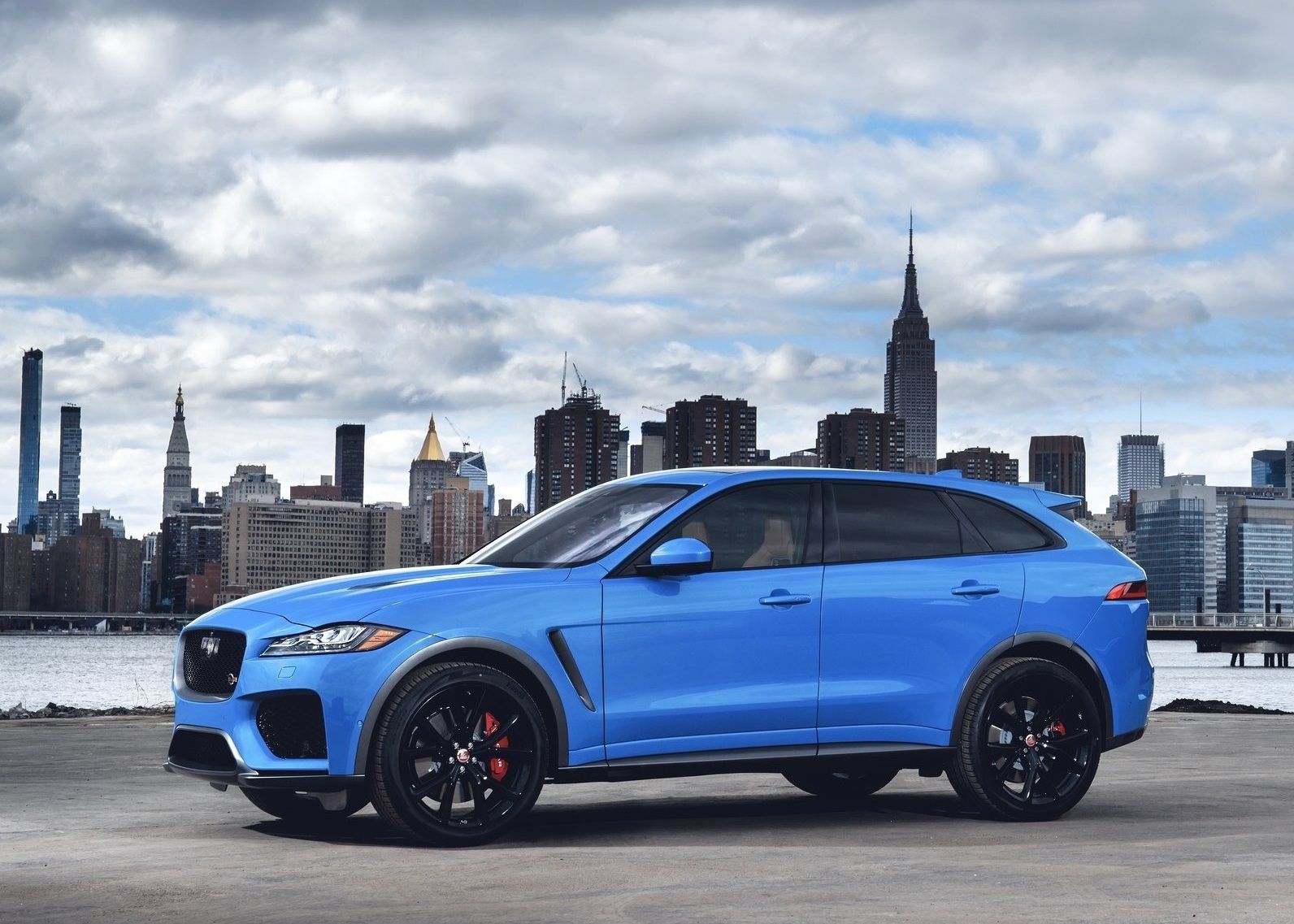
The about-to-be-launched F-Paced SVR has one of the biggest engines in the segment. It's a 5.0-litre supercharged V8 with 405 kW and 680 Nm, and this is enough to slingshot the F-Pace SVR to 100 kph from 0 in just 4.3 seconds.
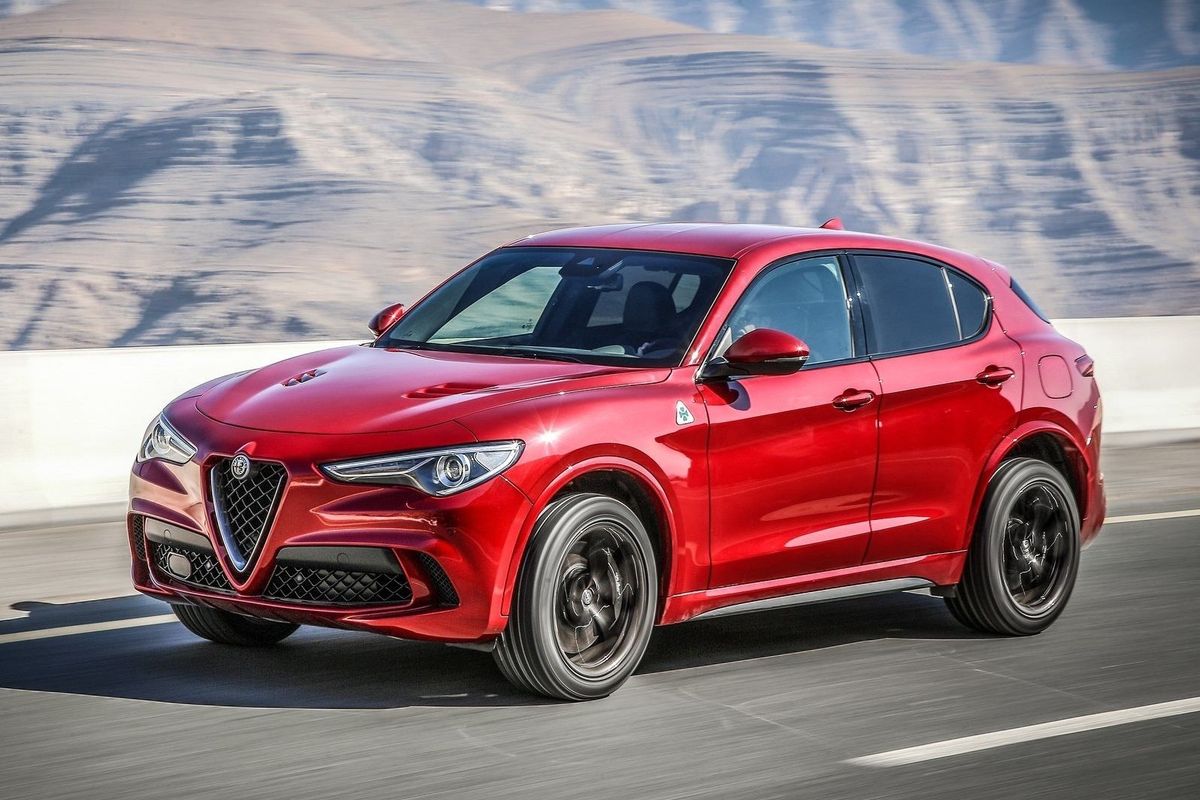
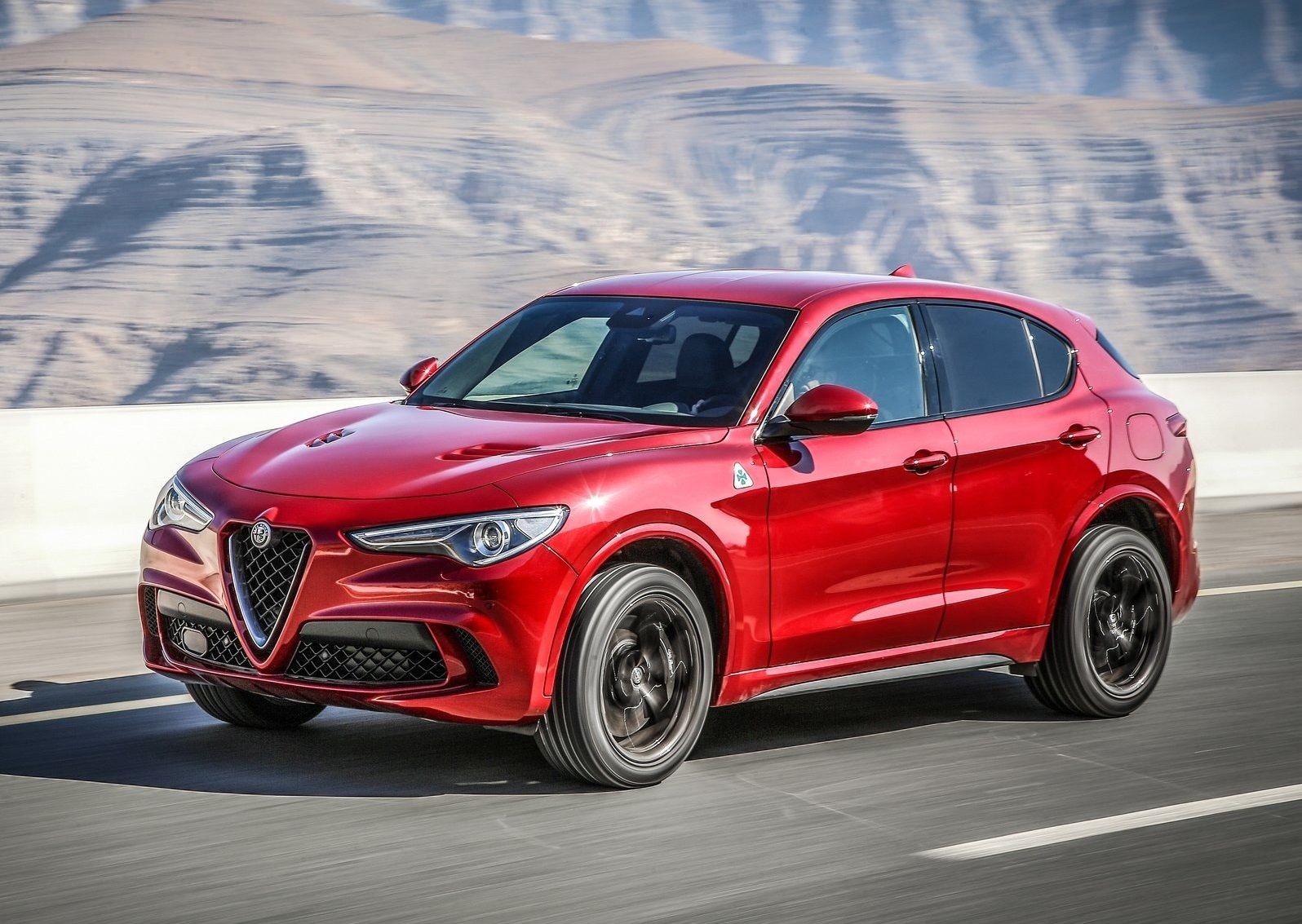
The stylish Alfa Romeo Stelvio Quadrifoglio is now available in SA and has the same 2.9-litre biturbo V6 (375 kW and 600 Nm) as the Giulia QV. Power goes to all 4 wheels via an 8-speed automatic transmission and it'll hit 100 kph from a standstill in a claimed 3.8 seconds.
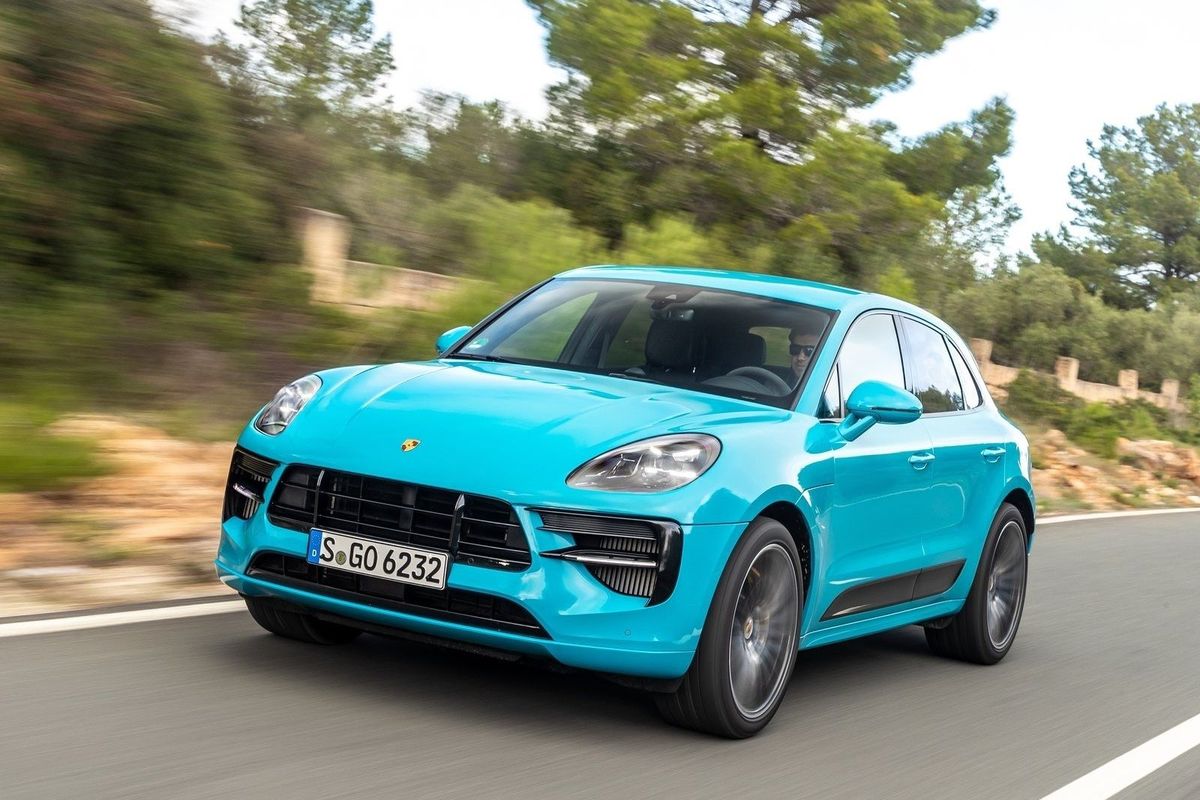
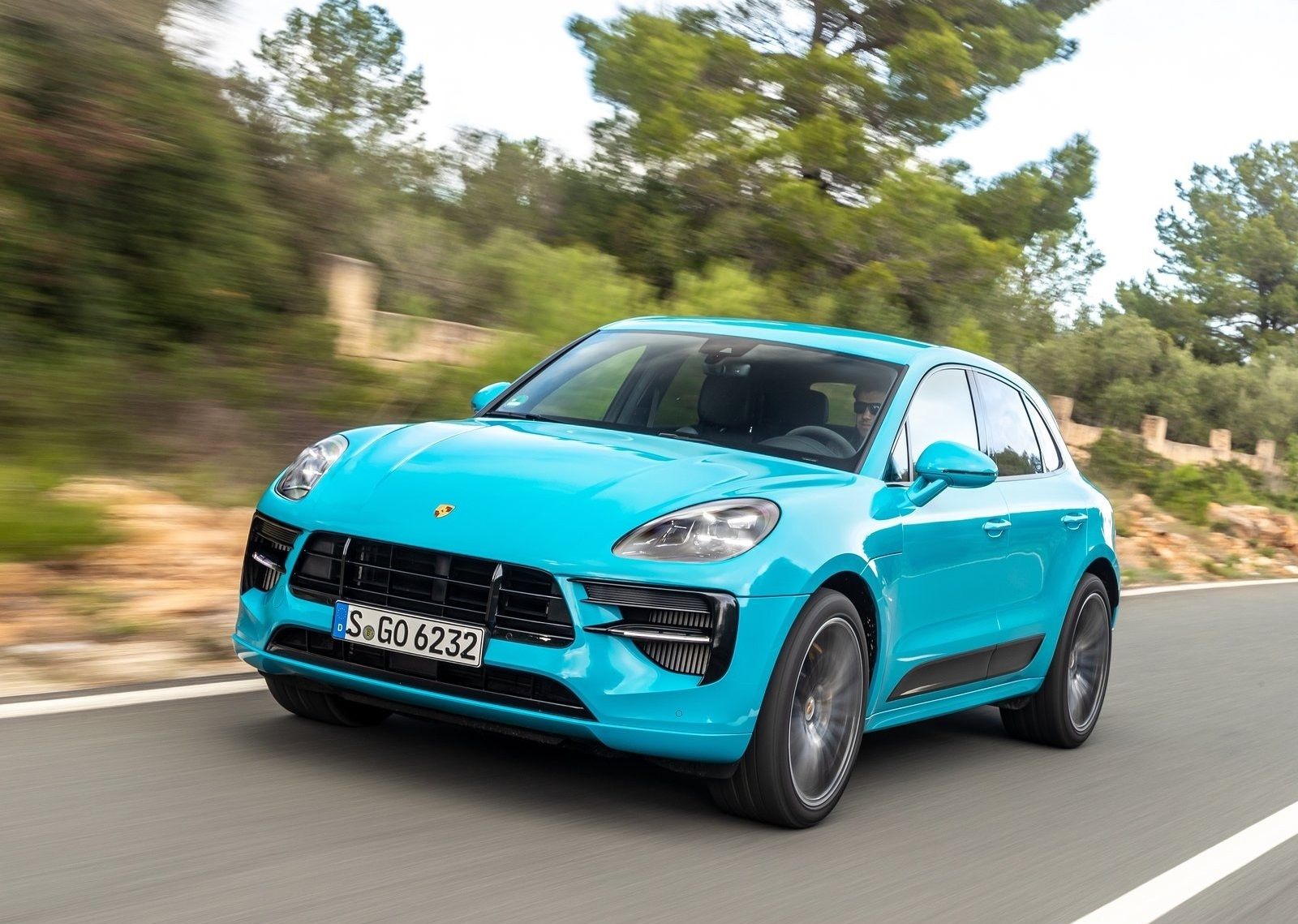
While the new Porsche Macan range is yet to feature a fiery Turbo version, we'll have to make do with the Macan S with its 3.0-litre V6 producing 260 kW and 480 Nm. With the Sport Chrono pack fitted, it'll hit 100 kph from standstill in a claimed 5.1 seconds.
A vote in Brussels this week could limit the speed you drive in future. Forever.
Interest groups are campaigning for mandatory speed limit technology in all passenger vehicles. This Thursday the European Parliament will vote in Brussels on legislation which will shape the future of mandatory in-vehicle safety technologies.
Amongst the technologies mooted for inclusion is intelligent speed assistance (ISA), which uses cameras to scan for and interpret speed limit signs. In addition to reading the road, ISA also integrates GPS data to configure its speed governing function. To enable its guardian ability, ISA uses engine power reduction to keep a vehicle at the required speed limit, instead of employing autonomous braking.
The ISA feature can be overridden by a driver, but the user interface configuration is designed to be sufficiently annoying to use, thereby forcing drivers to keep the system continuously functional.
Manufacturers of powerful premium vehicles, especially those already limited at 250 kph, are offering a compromise. The alternative is speed limit information (SLI), which has no intervention component but merely relays recommended legal speed information on a display – to act as a visual deterrent.
Campaigners for ISA have criticised SLI as being nothing more than a glorified speedometer feature, whilst automotive engineers have replied that ISA is an inaccurate camera technology prone to false positives. Although perhaps not a technical issue in Europe, there could be a huge issue in markets where older and newer technology vehicles share the same road network. If only a few feature ISA technology, it could potentially cause huge discrepancies in highway cruising speeds between lanes.
Speed limiting activists claim that if the European Parliament can be convinced to vote in a specific direction on the issue this week, with a mandatory fitment clause requiring all new cars sold in the EU by 2022 to include ISA technology, road deaths could decrease by 20%.
If you are in the market for a new compact crossover/SUV in 2019 then these 4 products are worth taking note of.
Toyota RAV4
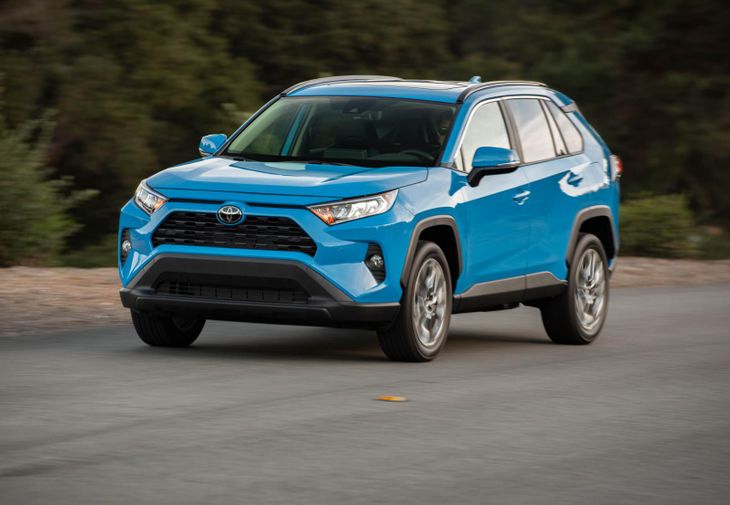
We recently experienced the new Toyota RAV4 in Spain and based on our first impressions, it’s a goody! The new RAV4 is expected to launch in March 2019 and South African buyers will have the choice between a 2.0- and 2.5-litre naturally aspirated petrol engine with either 127 kW/207 Nm or 152 kW/250 Nm respectively. A total of 3 transmissions and 3 trim grades including the entry-level GX, the more rugged GX-R Adventure derivative and the range-topping VX grade will bring the derivative count to 5. Both front-wheel drive and all-wheel drive formats will be offered. No diesel engine/s will be included.
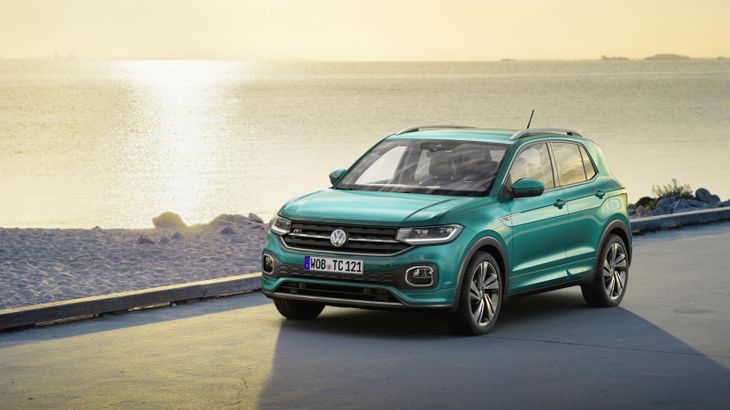
The new Polo-based T-Cross is expected to reach South Africa in Q3 of 2019 and will rival the likes of the Ford EcoSport, Hyundai Creta, Honda HR-V, Nissan Qashqai and Suzuki Vitara. A total of 4 turbocharged engines will power the T-Cross. There are two 1.0-litre turbopetrol, 3-cylinder engines on offer with either 70 kW or 85 kW. A range-topping 1.5-litre turbopetrol engine with 110 kW will also be offered. On the diesel front, a 1.6-litre turbodiesel engine with 70 kW rounds off the T-Cross range. All T-Cross variants will be front-wheel-drive and both manual and dual clutch transmissions will be offered.
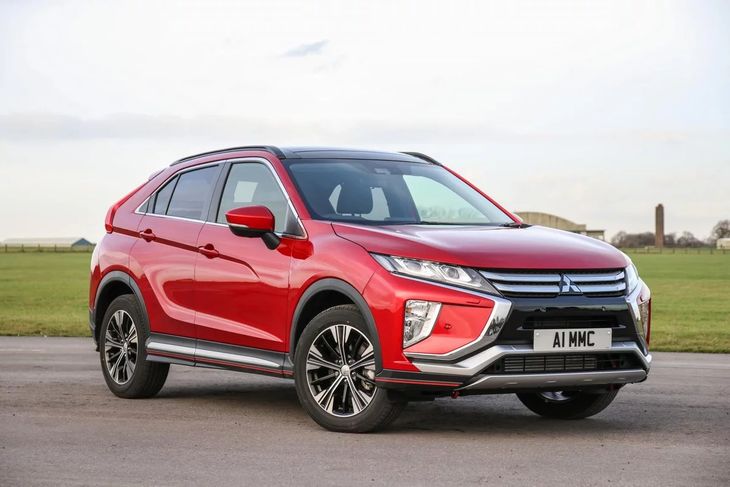
The new Eclipse crossover is due in SA very soon (February 2019) and slots in between the Outlander SUV and smaller ASX crossover in Mitsubishi’s local lineup. Trim and specification have yet to be confirmed but you can expect to see a turbocharged 1.5-litre petrol engine with 124 kW and 250 Nm as well as a 2.2-litre diesel engine, either from launch or later in the year. CVT and manual transmission options will be on offer while the diesel engine is expected to paired with an automatic transmission. Front and all-wheel drive configurations are also expected.
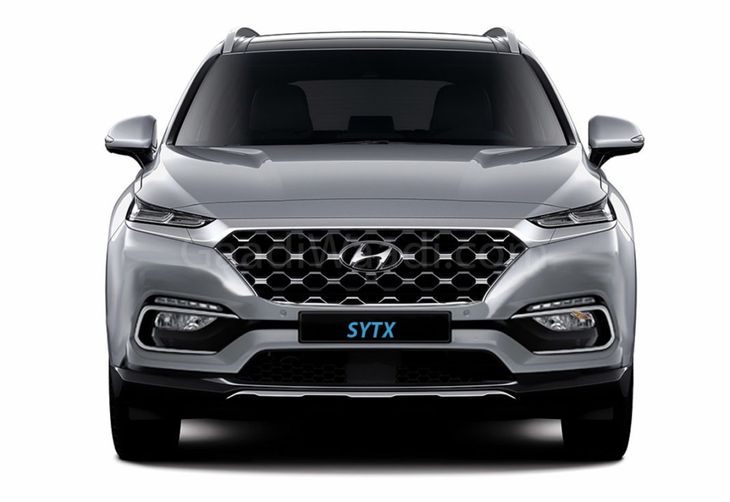
Hyundai’s new Styx compact crossover will make its debut at the New York Auto Show and is expected to reach South Africa towards the end of the third quarter 2019 and will slot in beneath the popular Creta. However, we are told that the Styx might carry a different name for the SA market. Hyundai has yet to confirm engines and transmission for the Styx but buyers can expect a 1.2 petrol engine, 1.0-litre turbopetrol and a 1.5-litre diesel option mated to either a manual or AMT transmission.