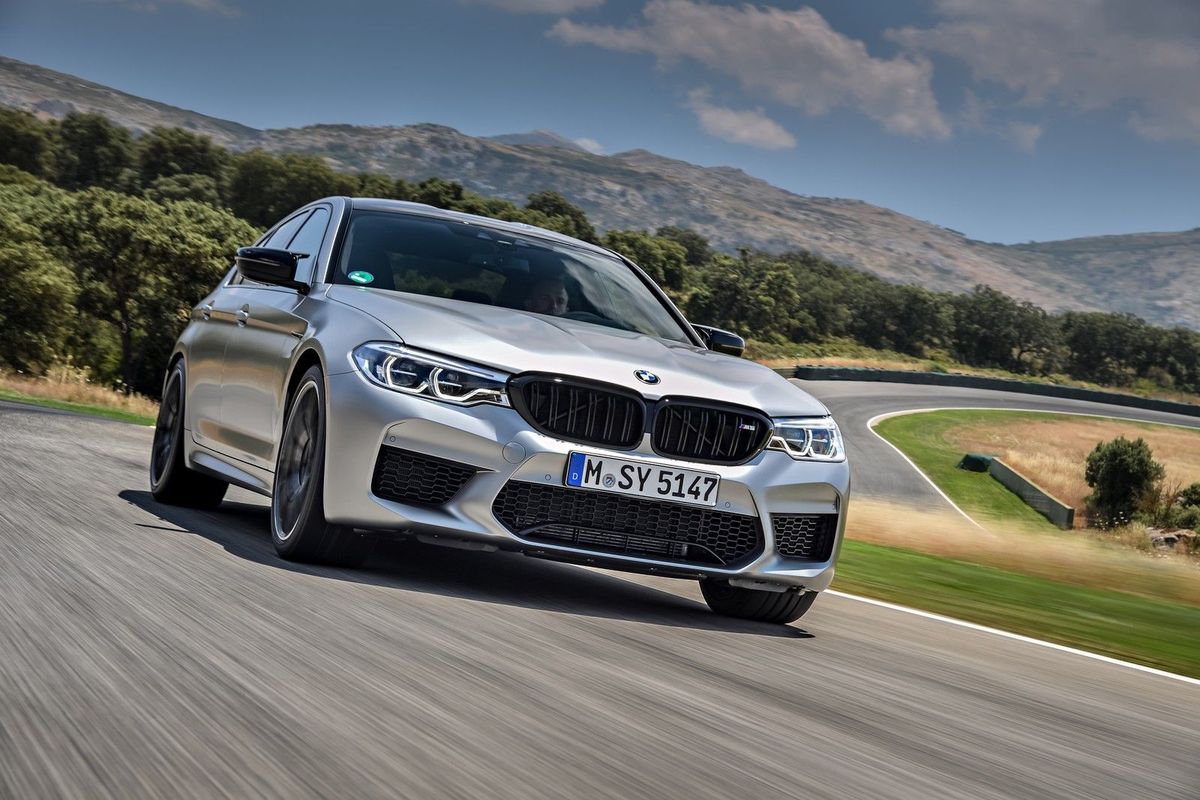
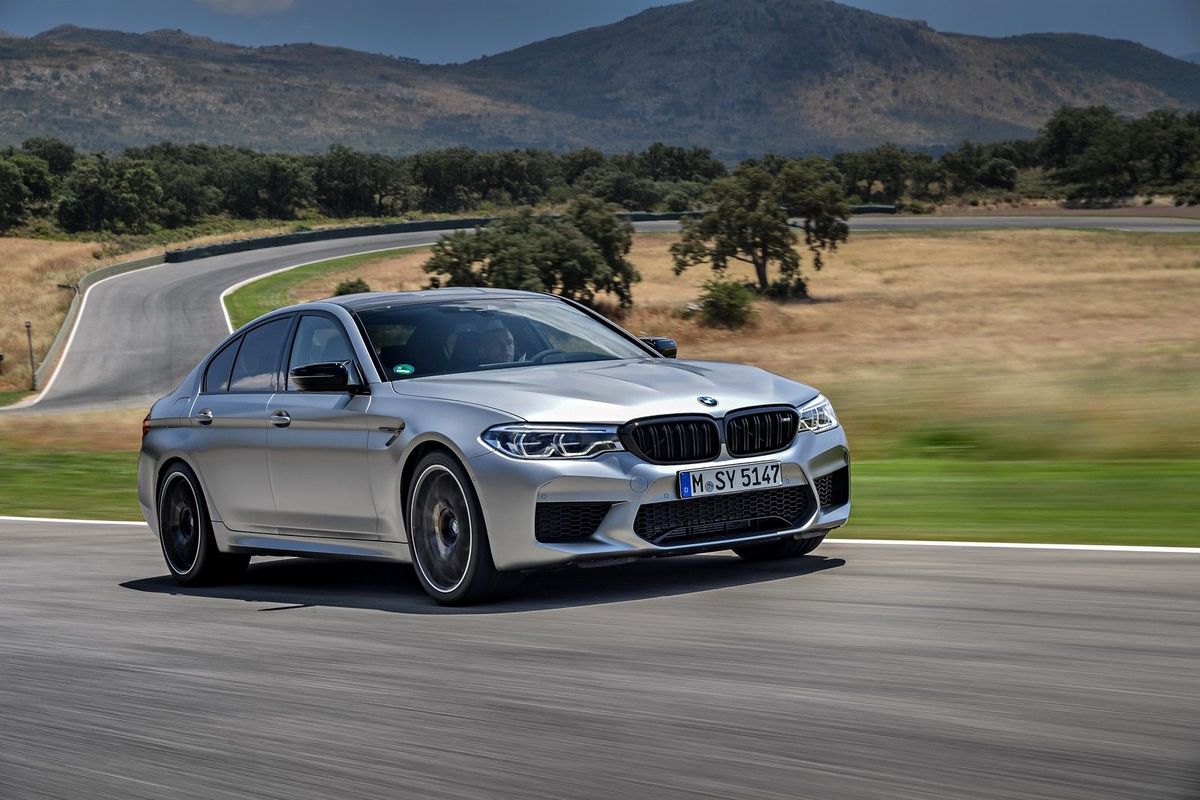
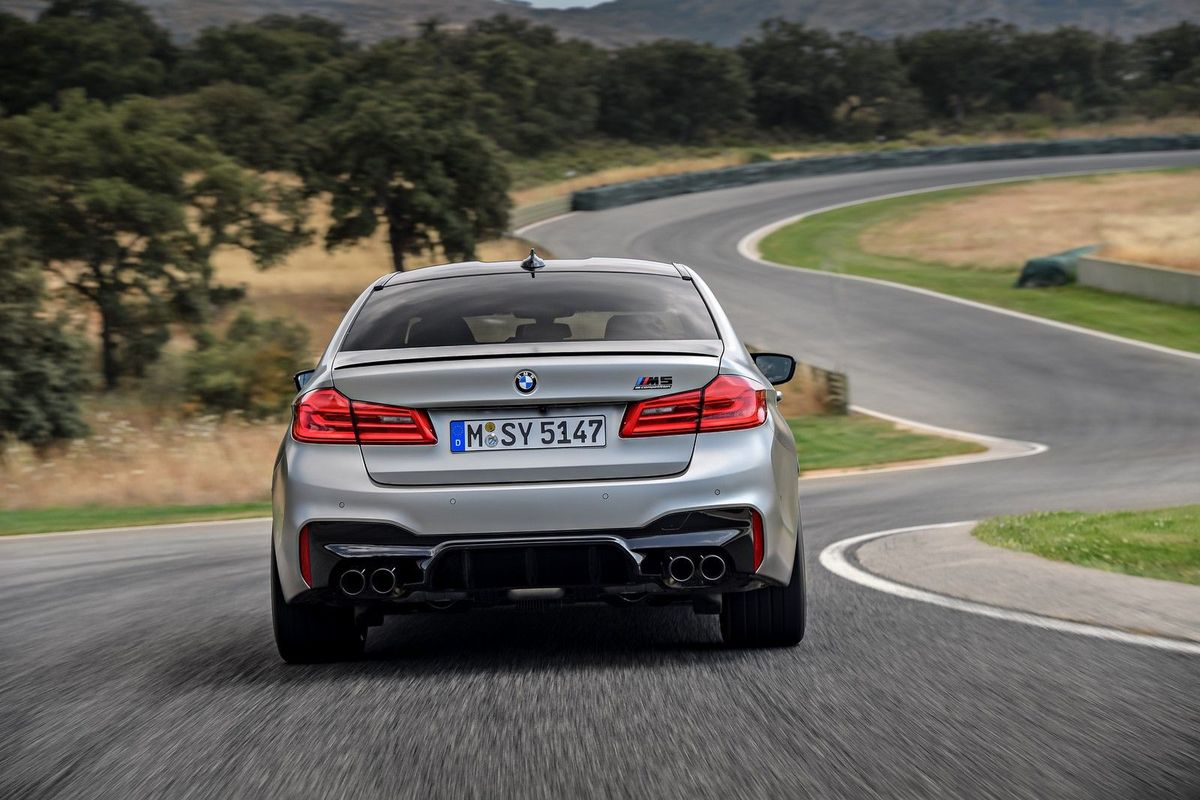
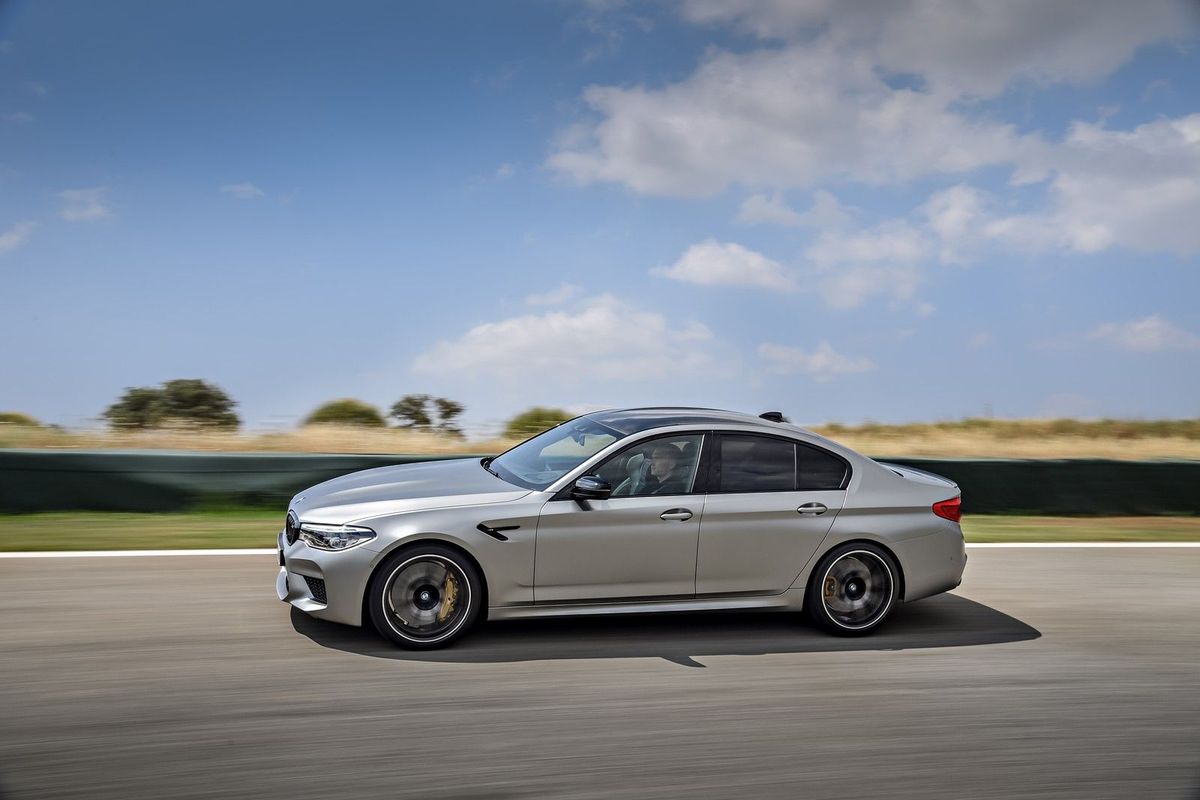
The new BMW M2 Competition, which is due to arrive in SA next month, has broken a new record by cutting a total of 117 bamboo mats in 60 seconds while drifting. Watch the video…
The latest stunt video releases by BMW, which was shot in Cape Town, shows the new BMW M2 Competition drifting around a set with the intention of destroying as many bamboo mats in 60 seconds with the help of a sharp blade attached to the car.
The mats were arranged in semi-circles so that the M2 Competition could slice them while drifting around the course. The video highlights the M2 Competition’s agility and handling capabilities.
“This is a very tricky bit of driving, it is virtually impossible. The demands on the M2 Competition are immense. Every drift has to be performed with absolute precision; there is no room for error. A strong presence and agility naturally help a lot” said stunt coordinator Marc Higgins.
The new BMW M2 Competition is fitted with a straight-6, 3.0-litre twin-turbocharged petrol engine from the M3/M4 with 302 kW and 550 Nm of torque. When equipped with a 7-speed dual-clutch (M-DCT) automatic transmission, the M2 Competition is claimed to sprint from 0 to 100 kph in 4.0 sec, while the 6-speed manual version will reach the benchmark in 4.2 sec. Top speed is limited to 250 kph, but an optional M Driver's Package will take the top speed to a heady 280 kph.
We recently drove the M2 Competition in Spain at its international launch and when it arrives in SA next month you can expect to pay R972 029 for the M2 Competition manual while the M2 Competition M-DCT will be priced from R1 026 505.
Watch our video review of the new BMW M2 Competition below!
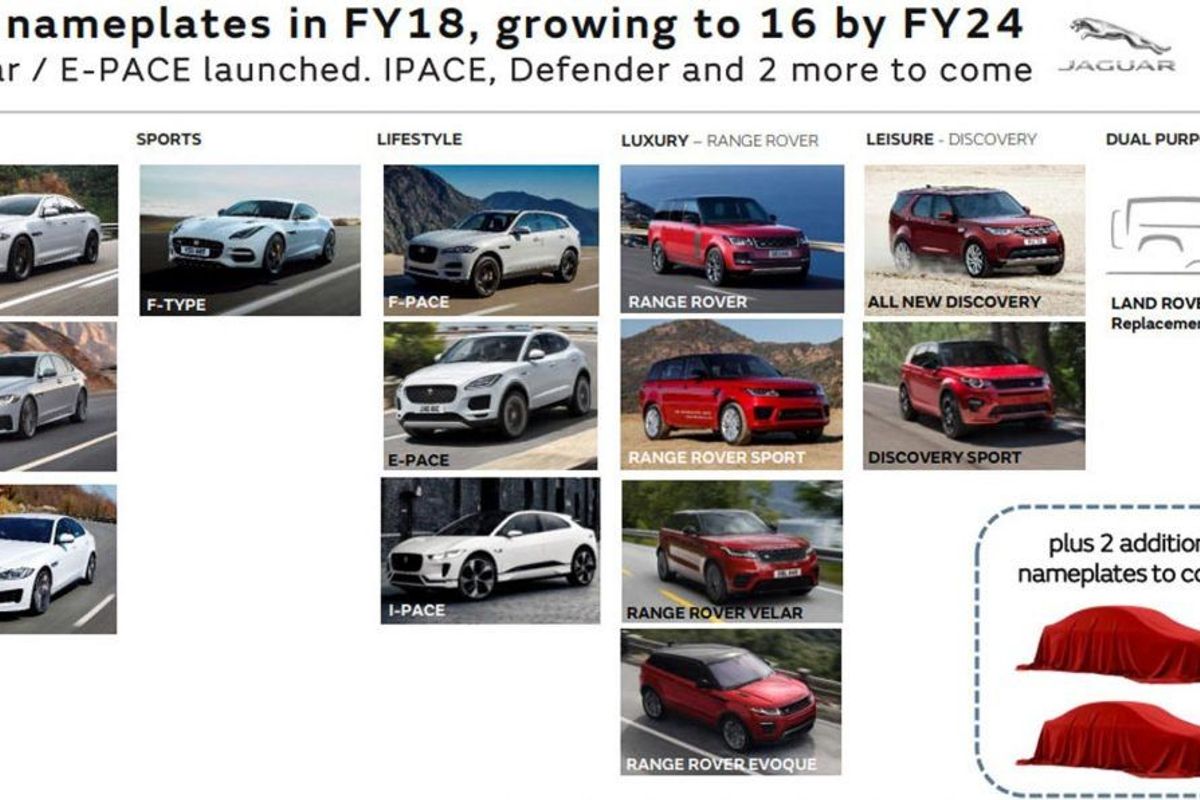
Jaguar Land Rover is preparing to go on the product offensive and has revealed a new platform which will underpin its new models. Here's what you need to know.
It's a busy time for Jaguar Land Rover. Not only is it preparing replacements and facelifts for its existing portfolio, but it also plans to launch three all-new vehicles in the next few years. One of these will, of course, be the new Land Rover Defender, the iconic go-anywhere lifestyle vehicle. This is where it gets murky as the other two models are unknown. One is rumoured to be the Jaguar J-Pace, a rival to the forthcoming BMW X7 and Mercedes-Benz GLS.
Underpinning these new models as well as the replacements will be all-new platforms. Jaguar Land Rover calls them the Modular Longitudinal Architecture (MLA) and the Premium Transverse Architecture (PTA), and we'll see the latter make its debut in the facelifted Range Rover Evoque. We'll expect it to underpin the all-new E-Pace too. The MLA platform is predicted to form the basis of the all-new Defender in 2020.
What's important about these new platforms is that they allow for mild hybrid, plug-in hybrid technology as well as fully electric setups. There's space for a battery pack and there's a claim that ride quality will be improved. Cleaner and more efficient engines form a massive part of Jaguar Land Rover's strategy as the group predict that 20% of their global sales will be electrically-assisted vehicles.
So, what can we look forward to? First up will be the all-new Range Rover Evoque which we could see officially revealed before the end of 2018, a new Range Rover in 2021, a new Range Rover Sport in 2022 and a new Range Rover Velar in 2023. On the Jaguar side of things, we expect substantial revisions of the XE, XF and XJ sedans, while the F-Pace and E-Pace SUVs will be joined by a flagship SUV offering, rumoured to be called the J-Pace.
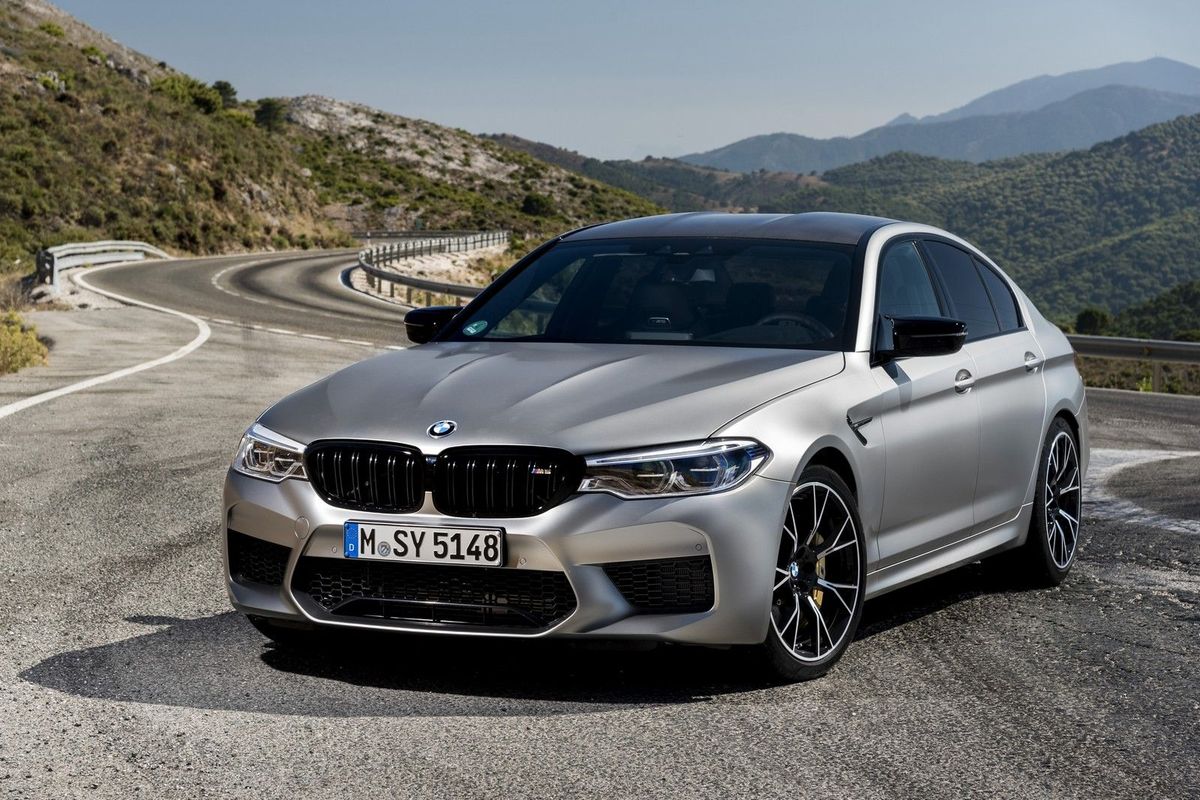
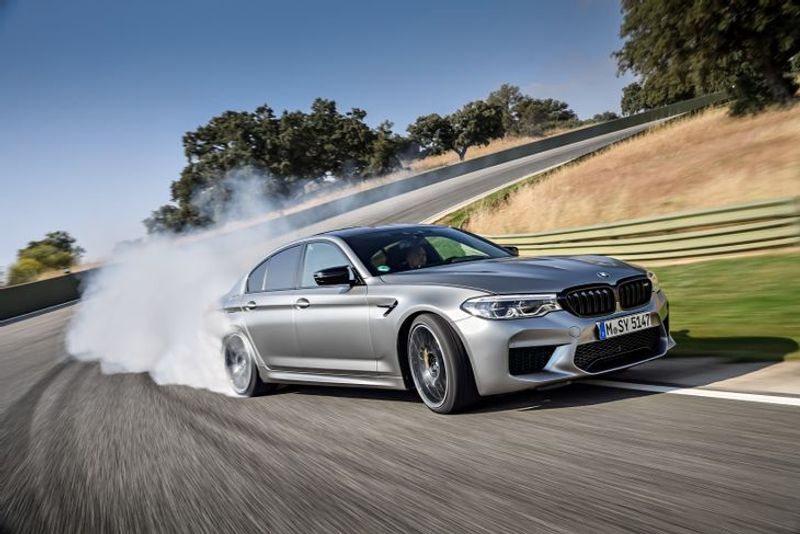
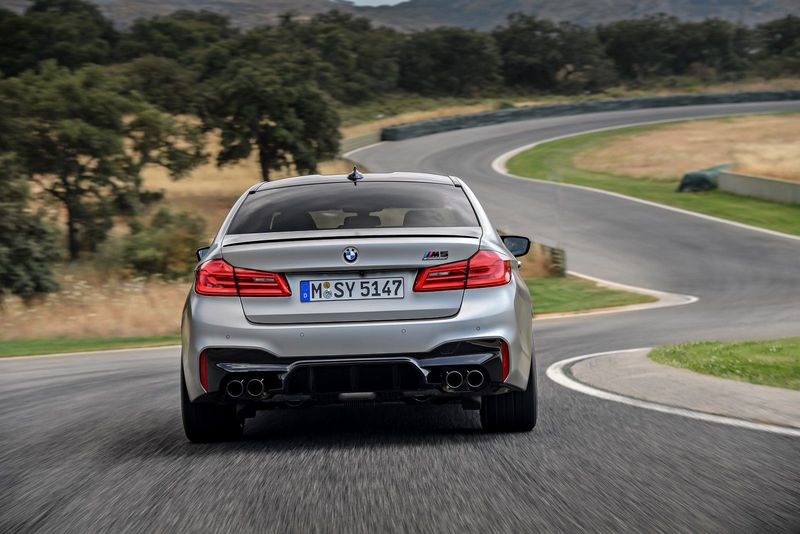
BMW M5 Competition (2018) International Launch Review [w/Video]
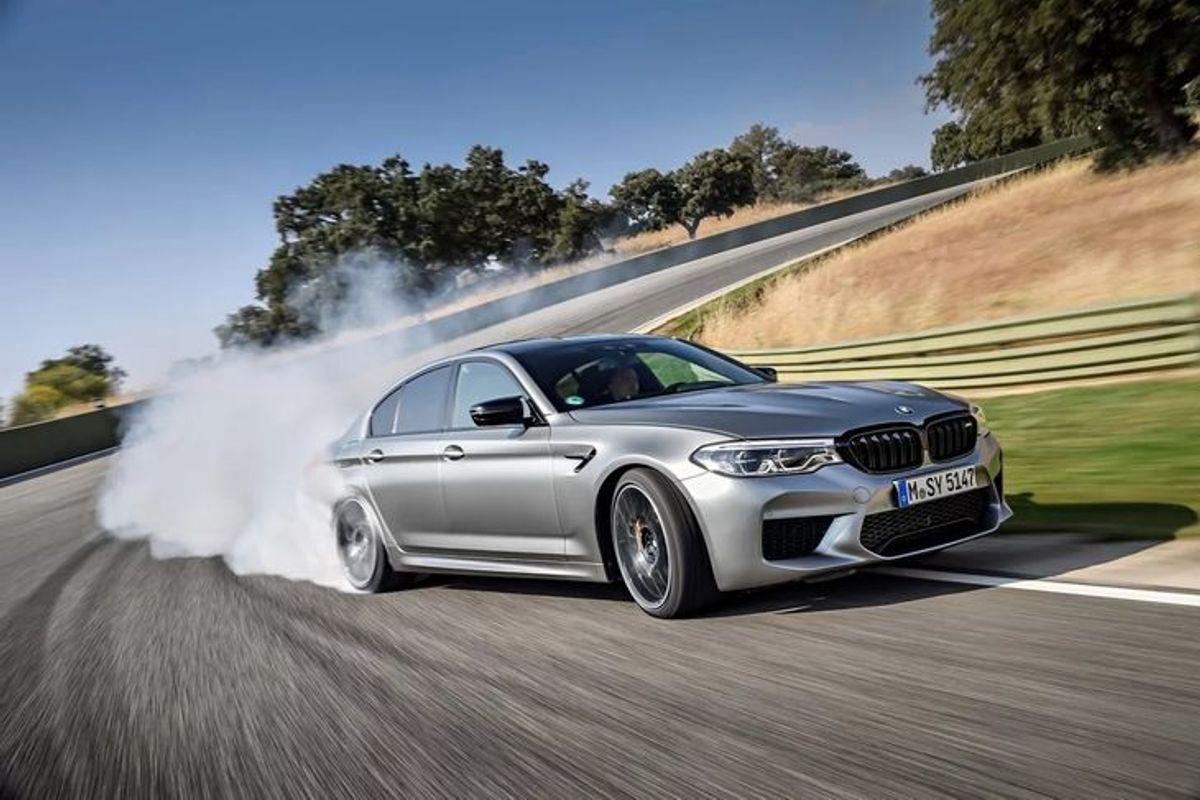
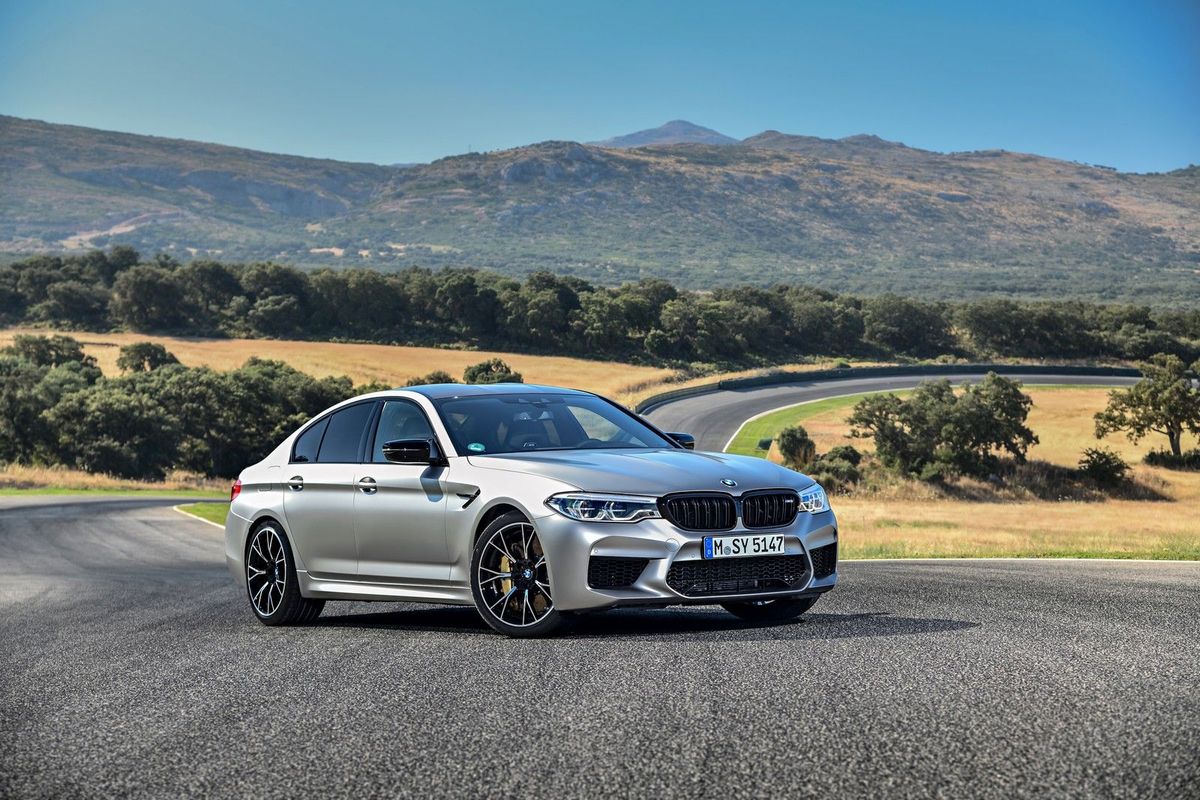
BMW is clearly no longer content with launching fettled versions of its M models towards the end of their respective product cycles. Hot on the heels of the 6th-generation M5 super saloon, which we reviewed recently, comes a beefed-up Competition derivative. Has BMW managed to turn its 2-tonne 'bahnstormer into a genuine sportscar?
What is it?
The BMW performance hierarchy looks something like this… At the bottom rung you have M Performance models (M240i, M550i etc.), then above that, you get the M cars (M3, M4, M5 etc.), followed by the Competition models, which are further honed variants of the "regular" M cars. Then, right atop the food chain sits the CS or ClubSport range, currently represented by the M3/M4 CS derivatives. That's the simple explanation, anyway.
Is the M5 Competition one step too far?
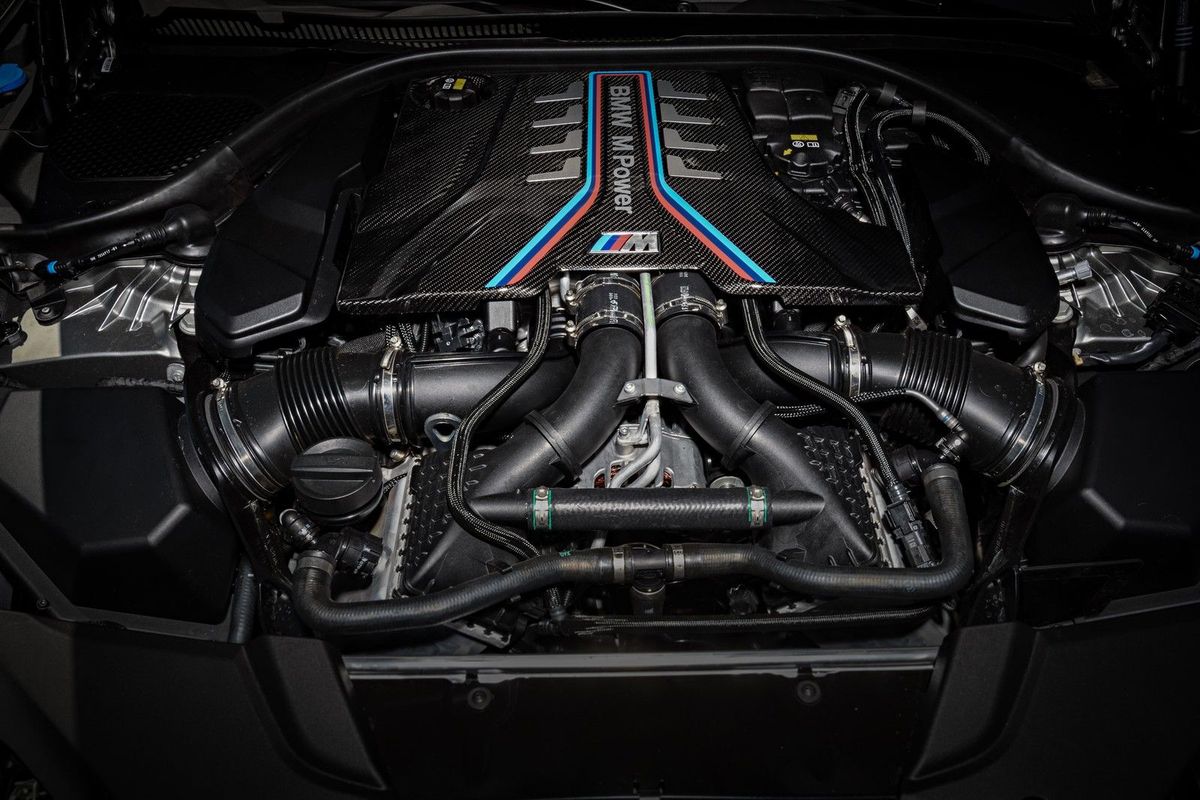
Compared with the M5, the M5 Competition develops 19 kW more power and although the torque remains the same, it's available in a wider band: 1 800 to 5 800 rpm. Dynamically it also benefits from a 7-mm ride height drop, 10% stiffer suspension and more negative camber on the front wheels.
The result is a claimed 0-100 kph sprint time of 3.3 seconds and, with the M Drivers Package fitted, a heady 305-kph top speed. Furthermore, the M Division reckons the projected 0-200 kph time (10.8 seconds) could easily be improved on a good surface.
Do I need a track day-limousine?
Probably not, but considering that South Africa is one of the top 5 BMW M markets (by global market share) in the world, there’s a good chance it will find a fair few buyers down here. It does have a sports exhaust as standard with a quiet mode for keeping the neighbours happy after hours.
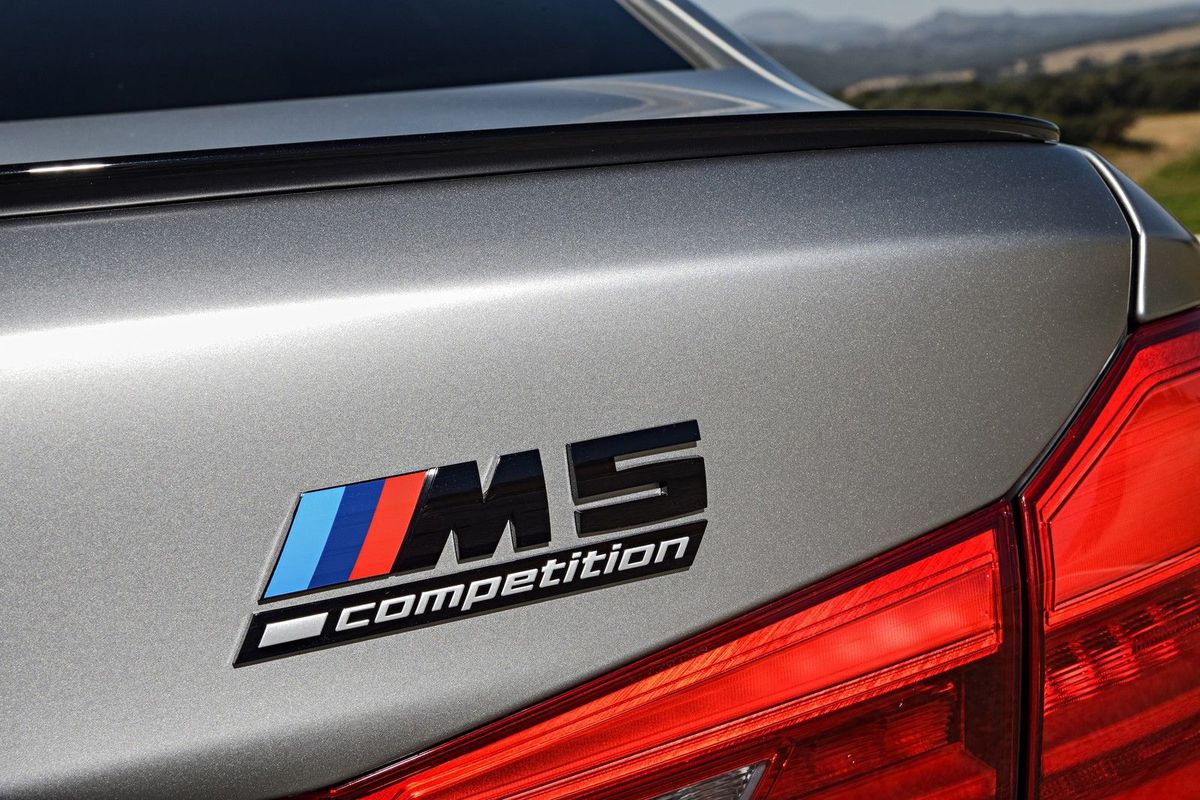
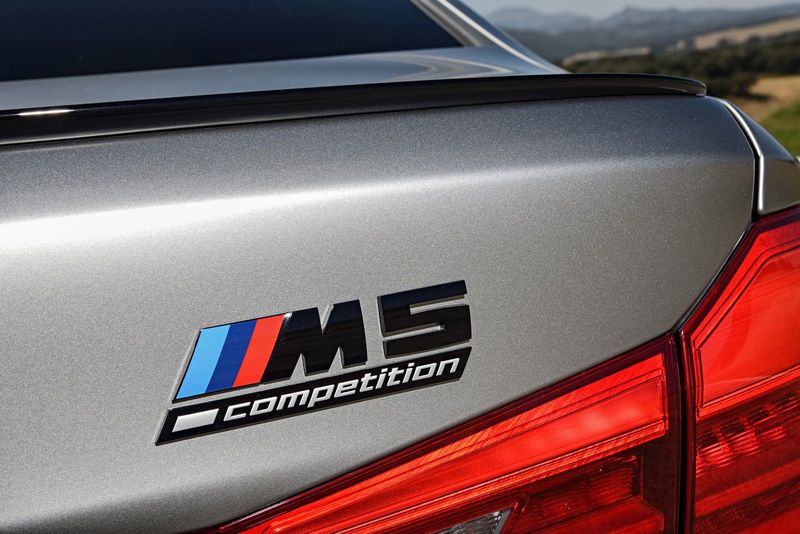
Blacked out name tags mark the Competition M5.
You do have to wonder why BMW would further imbue the already-potent M5 with more sporty behaviour and stiffer springs if you consider that it's a car that will most often tear up freeways when it's driven in anger. The answer, however, came quickly after the 'Competition I was driving exited the pitlane at the Ascari race track and nudged up behind the pace car driven by BMW Junior ace Marco Wentzel.
The sum of the changes is more…
The 19 kW of extra power is almost unnoticeable compared to the other changes made to the M5's chassis. The lowered ride height has most notably improved the handling balance of the 'Competition. It no longer dives as heavily under braking or lurches when you hammer the throttle out of a corner. It corners with a much flatter attitude, almost as if it has a front-to-rear anti-roll bar system keeping the sedan's body level. That’s also probably why it doesn’t feel that much more powerful, the sensation of being thrown back into your seat is lessened with the lower, stiffer ride.
Small changes have really had an effect on the M5 Competition.
The camber change has had a notable effect, probably more than any single modification on the Competition-spec M5. It absolutely dives into corners. With a flick of the 'wheel the front end whips all 1.9 tonnes into the apex as easily as a supermodel would dismiss an amorous advance.
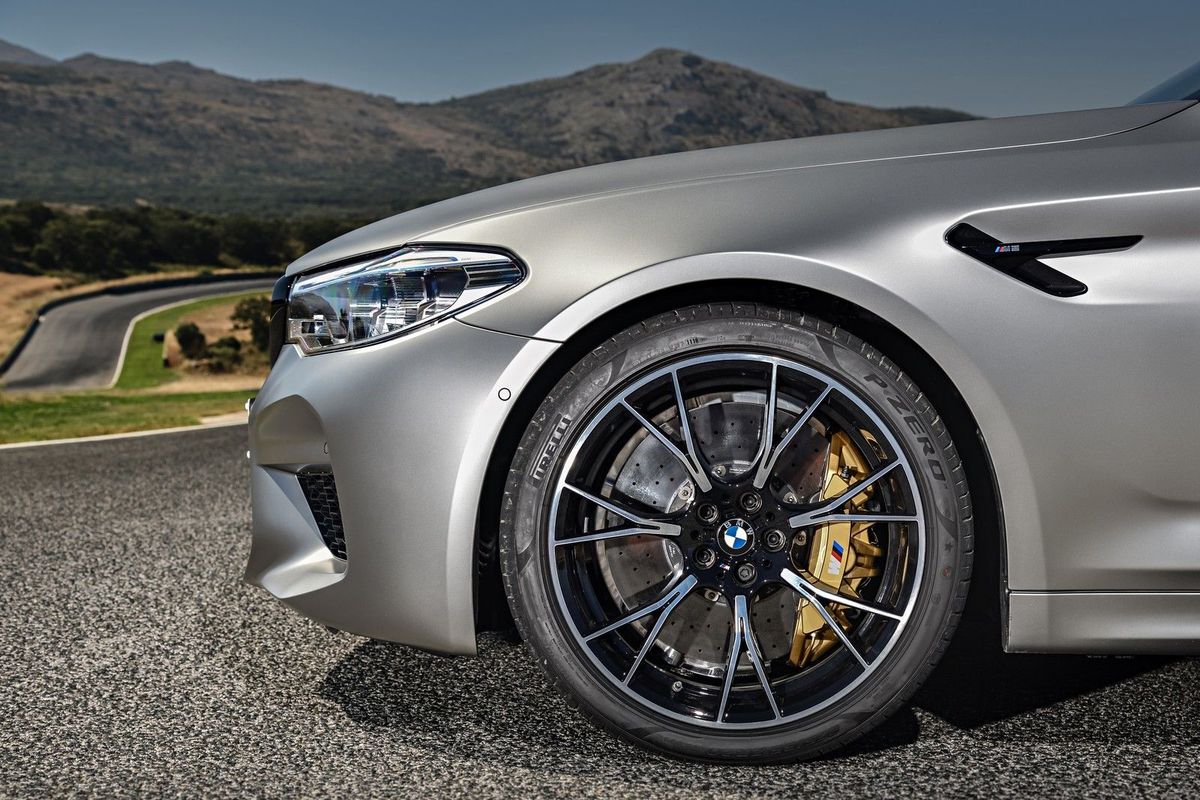
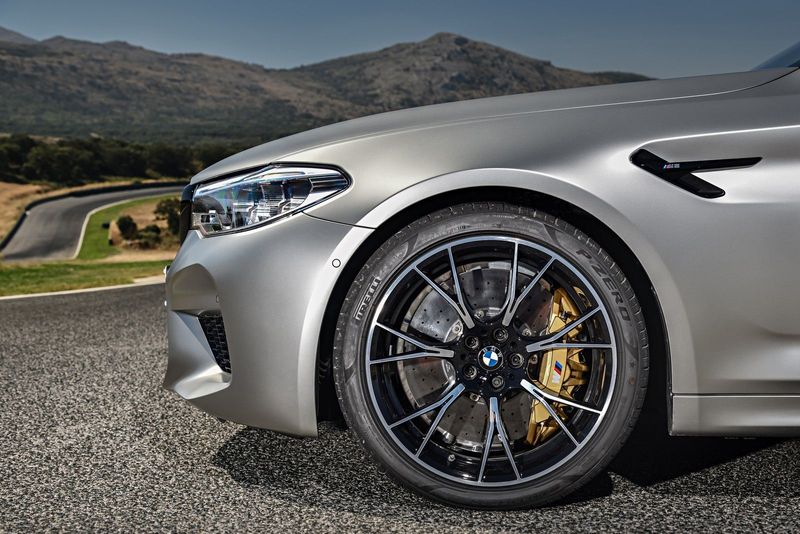
It’s remarkable that something that weighs so much can shift direction so quickly. The only reminder of the weight is the chunking of Pirelli PZero tyres as slabs of rubber are flung asunder. After about 7 flat out laps on the 20-inch lightweight wheels, the tyres were toast, thankfully BMW had ordered a Pirelli tyre-changing factory to accompany us to Ascari. They were certainly kept busy with the rate of wear at the 22-corner circuit.
And out on the road?
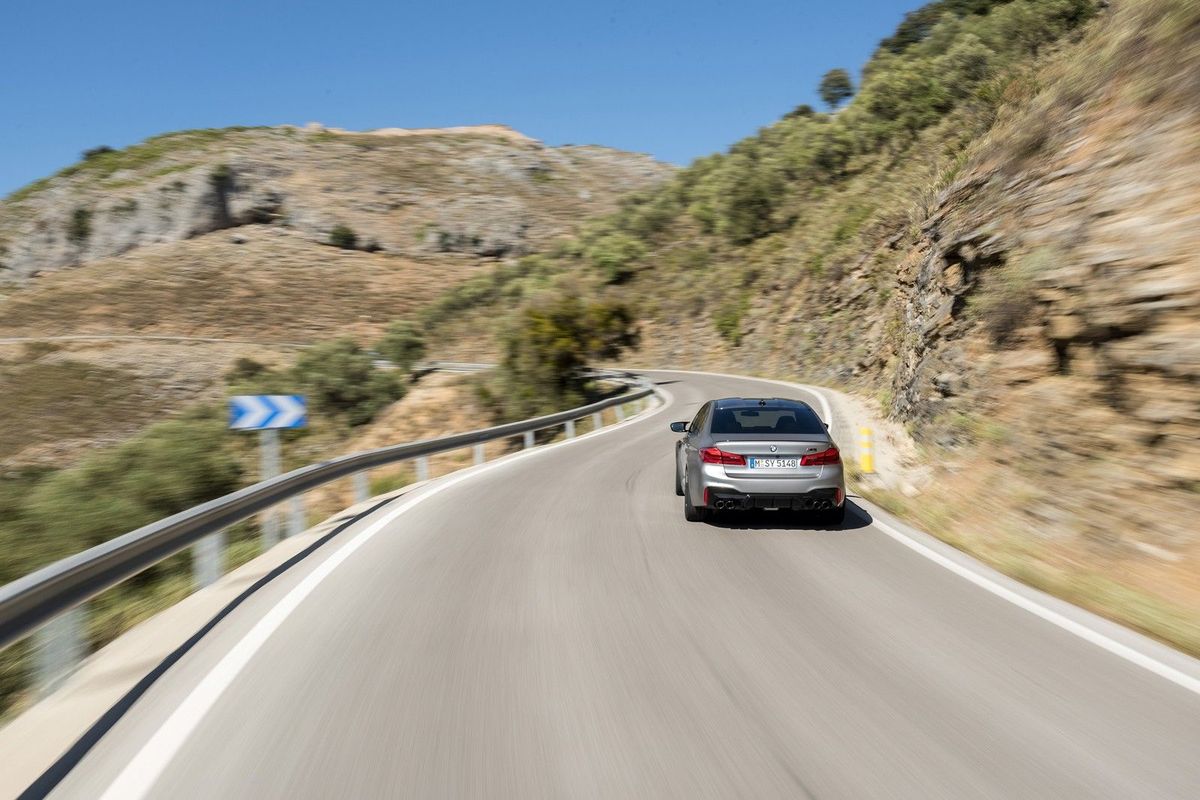
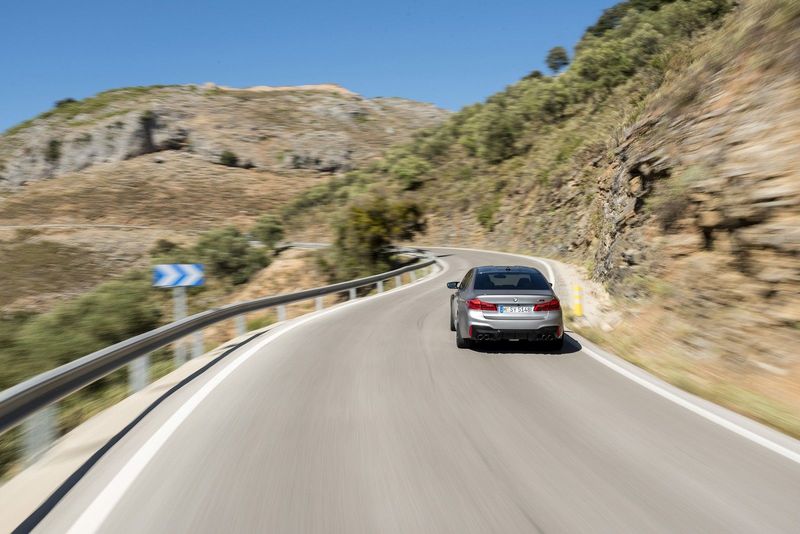
Back out on the Southern Spanish roads surrounding Ascari, which are precariously narrow as they squirm their way around the hills near Malaga, I was a little wary of the M5 Competition’s size. At nearly 5 metres long and 2 metres wide, its size is undeniable.
Did I mention the roads were narrow?
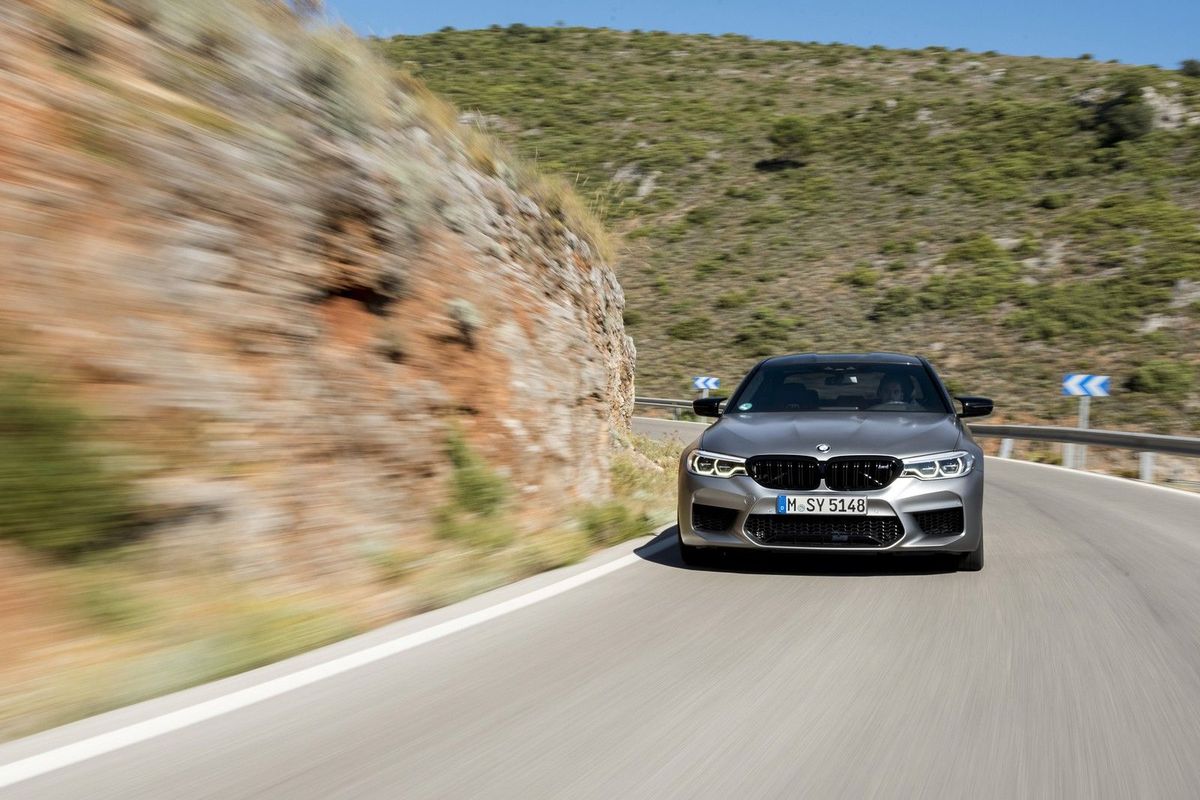
Still, with the 4WD Sport selected and DSC set to "catch me 1 tenth before death", I set off. As it had impressed on the track, the M5 Competition demonstrated its breadth of talents on the road. If anything, it’s better on-road than on the circuit, because you’re not travelling at speeds where you're likely to shred the (exceedingly expensive) tyres, but you can still get the most out of the sharpened front end. It doesn’t feel any harsher or skittish on the tarmac than the standard M5 derivative either. I was astounded, as I wound my way around the tightest of mountain passes, by how quick and eager the 2-tonne heavyweight was to turn into an apex or swap from one direction to the other.
It baffles the brain how the M5 Competition quite does it. And the 4WD system only adds to that confidence as you exit corners hard on the throttle without a peep from the rear tyres. In this circumstance, you want a car with a secure and dependable rear-end, especially when full throttle delivers 750 Nm. A lively rear-end doesn’t enhance the experience here, it puts the fear of God into you. As for 2WD mode, well, that's meant for a circuit.
Verdict
Lightweight wheels and Pirelli PZero tyres, they last about 10 laps at pace.
The M5 Competition may just be what the M5 should have been all along. The standard version, as rapid and dynamic as it is, tries too hard to be a brutal Autobahn cruiser and a dynamic-handling executive sedan simultaneously… Despite its valiant efforts to perform both roles equally well, it arguably fails to master either of them. By contrast, the M5 Competition is a "super-sportscar-saloon", but no less accomplished as an everyday car.
Whereas the Mercedes-AMG E63 S amazed us by what it could do despite its considerable heft, this M5 Competition takes it a step further. We’re totally in awe of how the small changes that BMW has introduced to its super saloon have altered the car’s character so distinctly. What's more, we're nothing short of amazed by how the Bimmer belies its gargantuan proportions to carve up mountain passes with the greatest of ease.
Compared with its standard sibling, the M5 Competition is much better to drive on a track, but we hasten to add that we doubt any set of road-legal tyres would be able to withstand the physical strain of delivering repeated (and consistent) hot laps when fitted to this 2-tonne sedan.
We wait to see how the newcomer will perform in our unique conditions here in SA, but the wait won’t be long: it's due here in September 2018.
Pricing
Upon its arrival, the BMW M5 Competition will retail for R2 062 306.50, which included emissions tax and a 5-year/100 000 km maintenance plan.
There's a slightly revised flagship version of Renault's popular Sandero Stepway on the market now. Should it be on your shortlist?
We like: Standard specification, spaciousness, ride, warranty & service plan
We don't like: Drivetrain refinement, perceived quality
Are there any specials currently on this model? Find out here.
Why should you care?
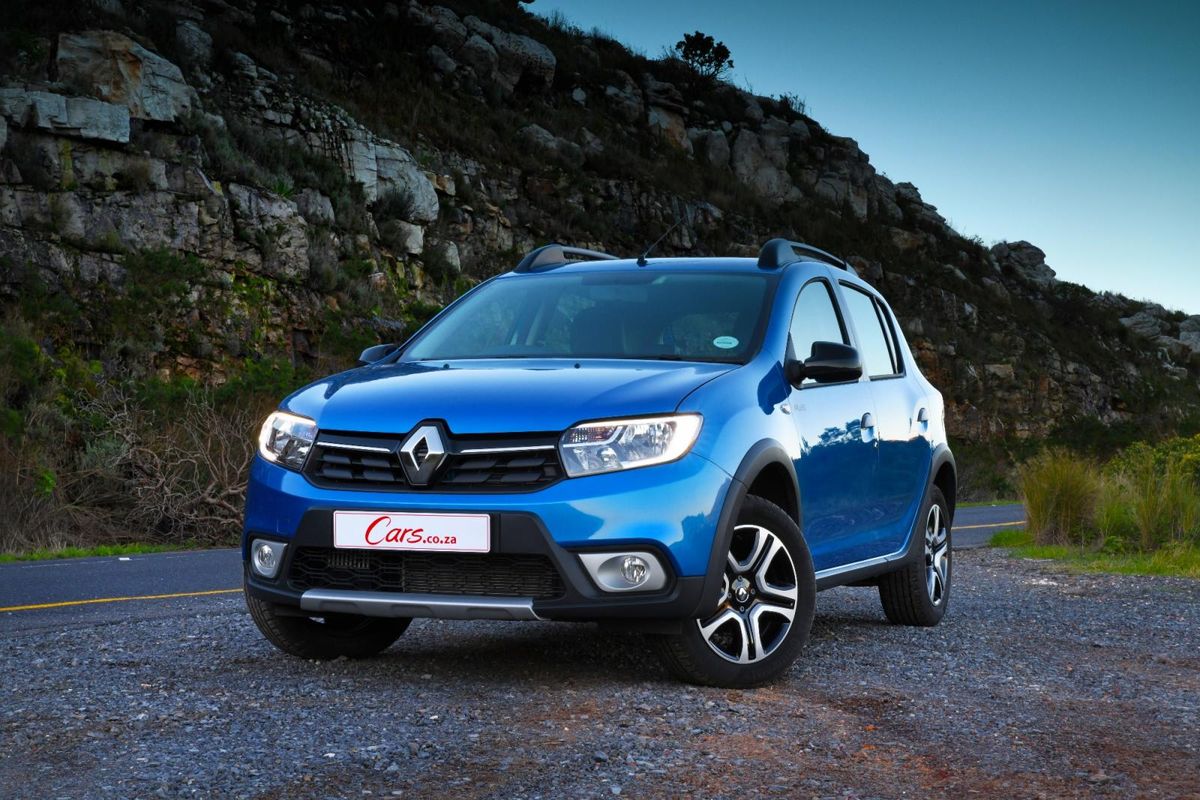
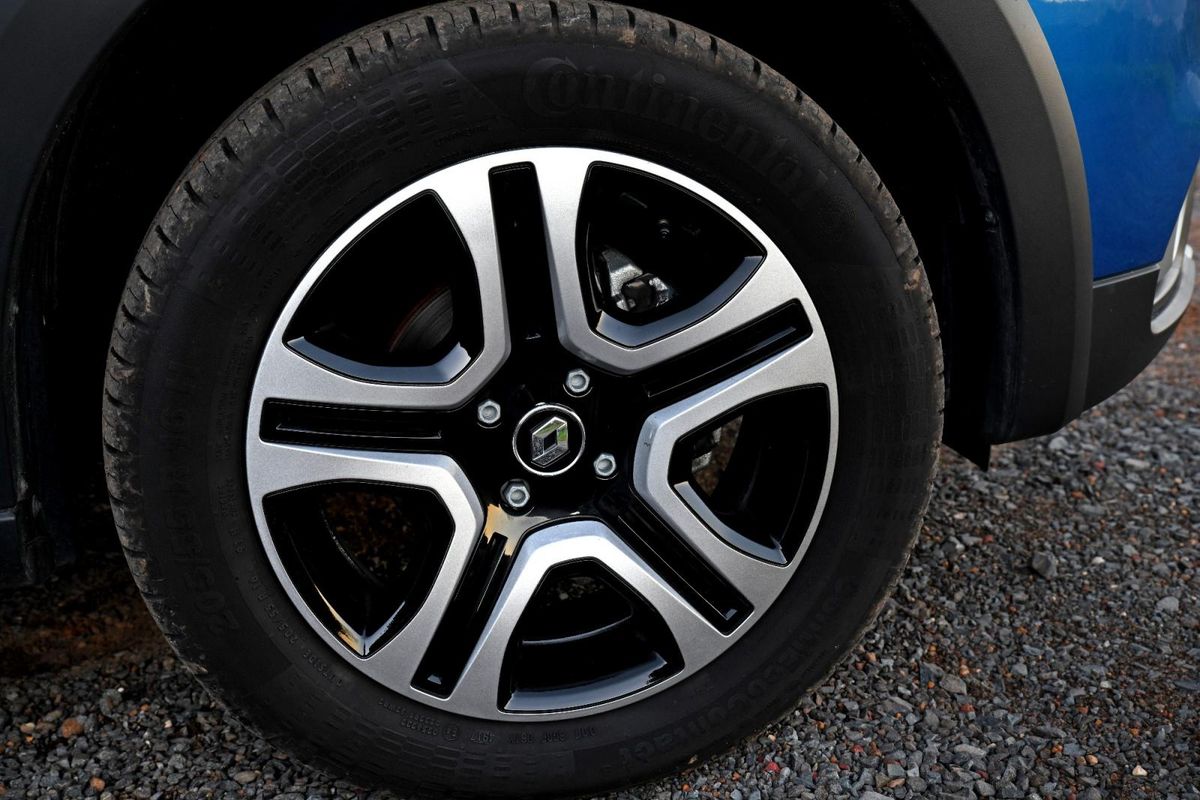
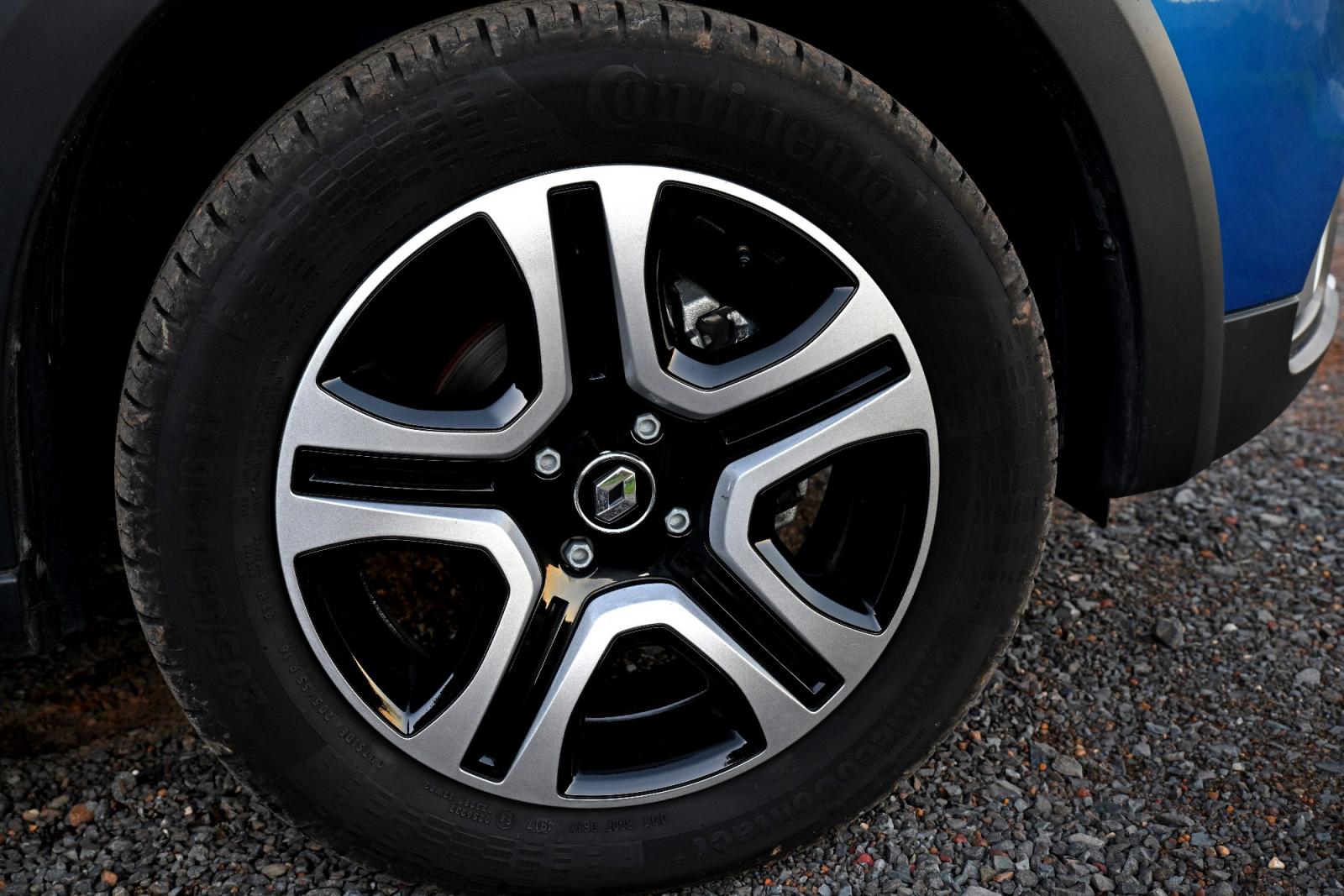
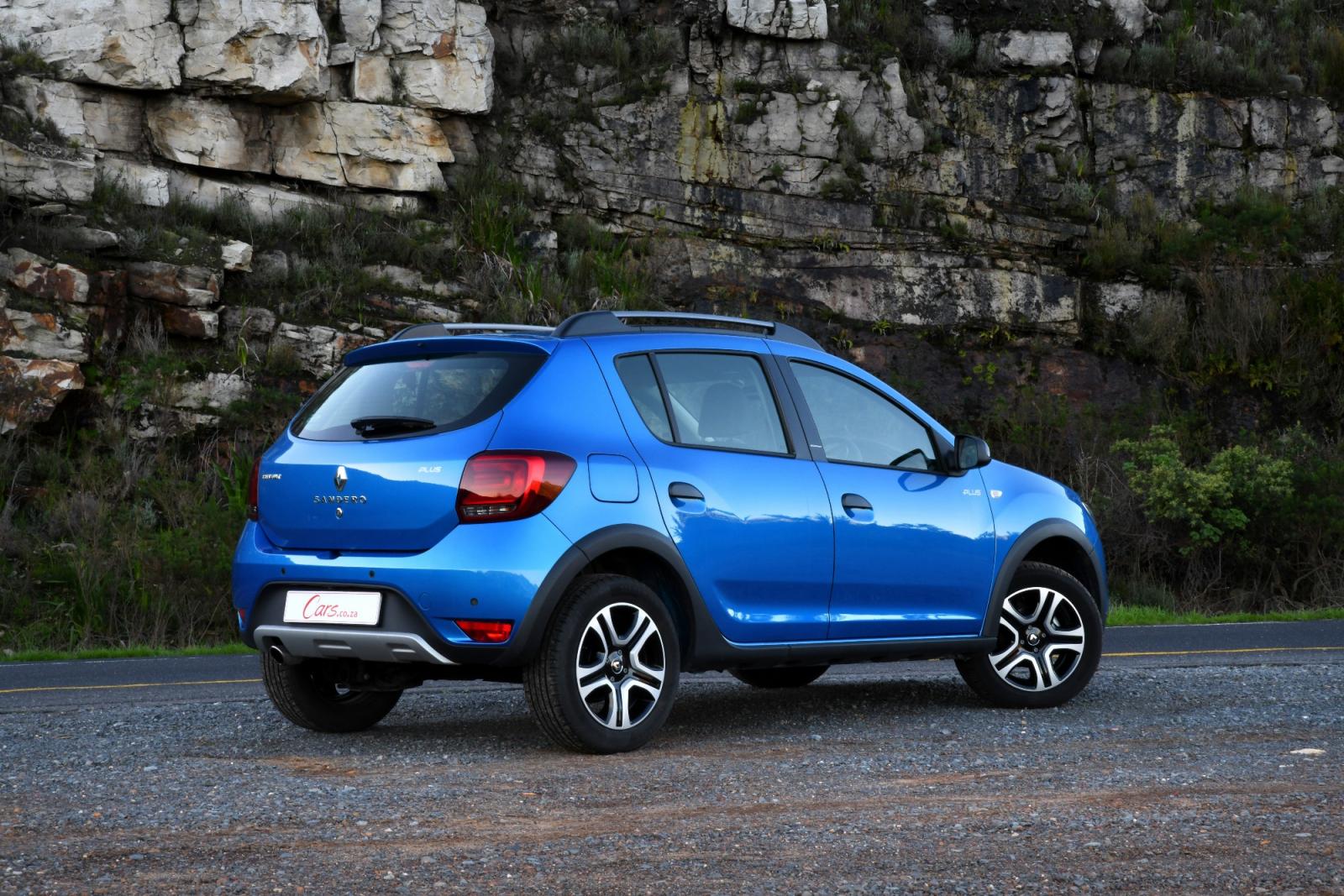
New 2-tone wheels are a unique feature of this new Stepway Plus derivative.
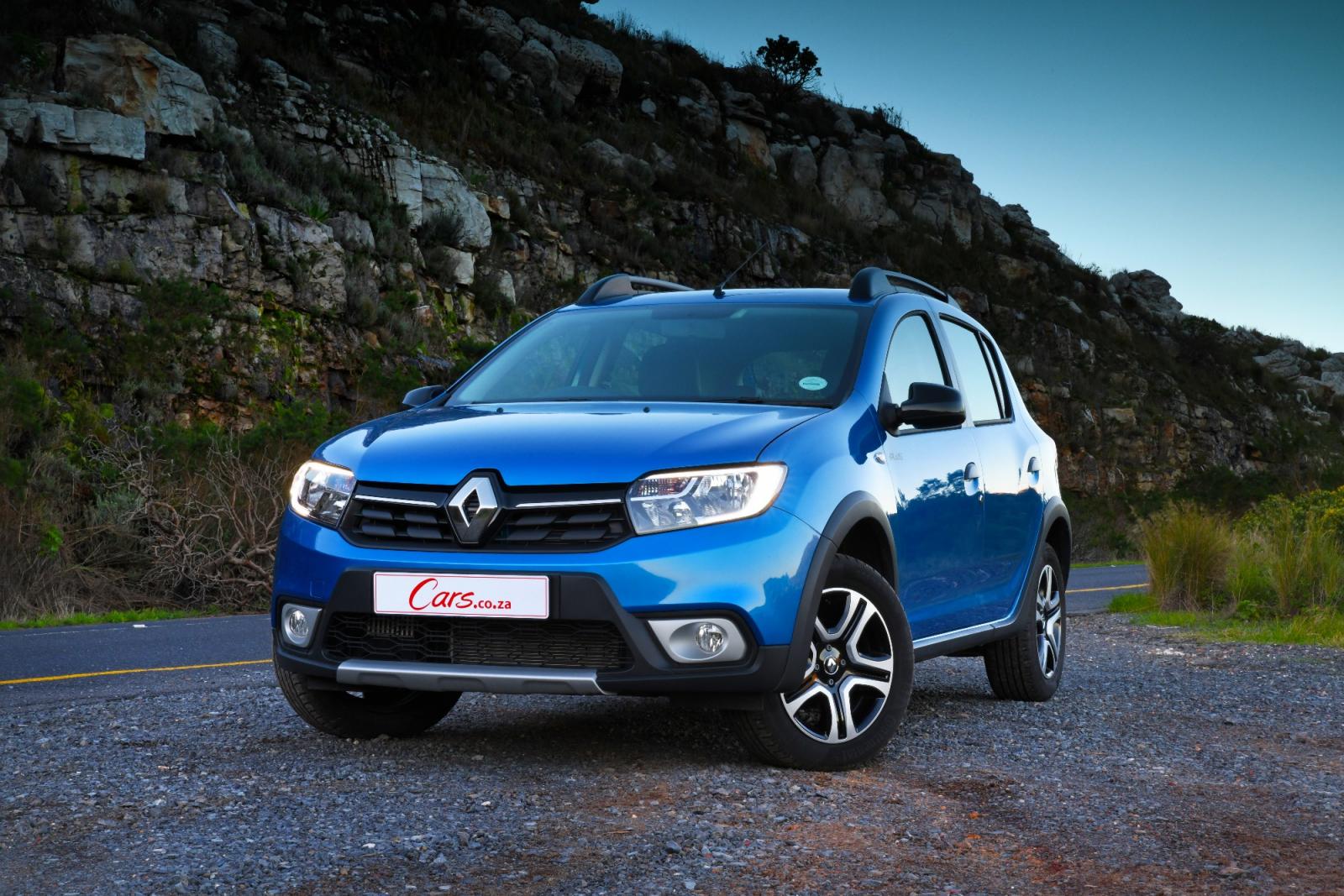
Renault has replaced its previous flagship Sandero, the popular Stepway Dynamique, with this new Plus-badged model. In recent years the Sandero Stepway has established itself as one of the best-selling compact crossovers in the market, undoubtedly as a result of its combination of smart looks, great features and a decent warranty/service plan package. But the market is considerably more competitive these days, with the likes of Suzuki and Volkswagen having pushed attractive rivals into contention with the Ignis and Polo Vivo Maxx, respectively. Can the new flagship Sandero Stepway still compete effectively?
Renault believes that style is quite an important factor in the Stepway's ongoing success and consequently this new Plus version focuses on bringing more individualisation to the party – it gets different 2-tone wheels and is offered in 2 exclusive colours, namely Dune Beige and Cosmos Blue. You can also specify it with leather (R10k option) and metallic paint (R2 500).
What's good about it?
Standard Features
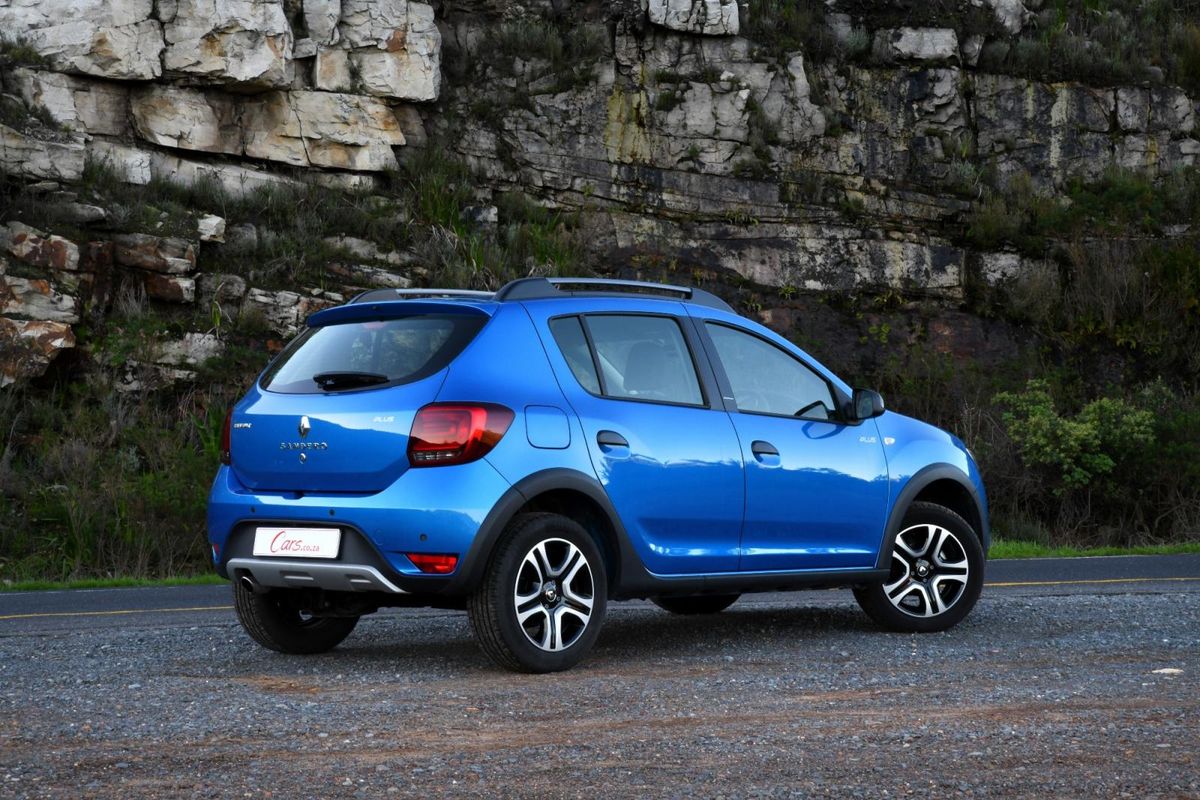
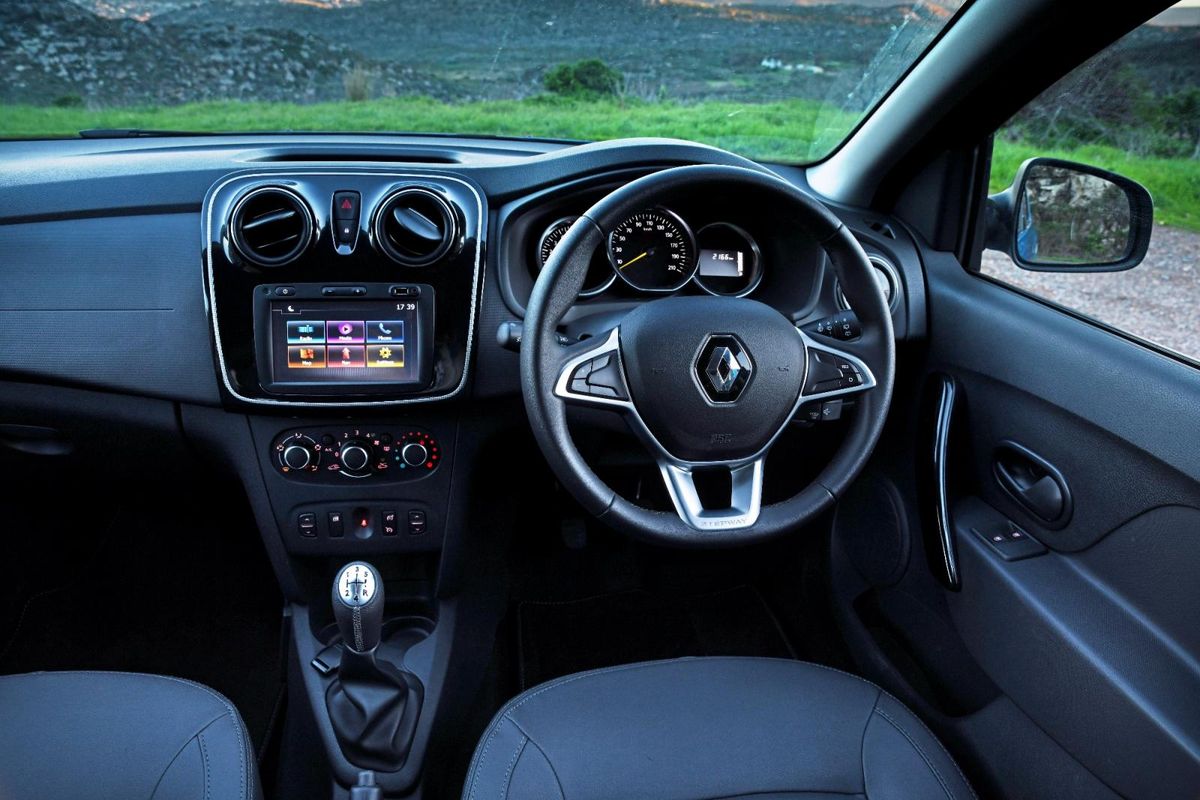
Looks good, doesn't it? Neatly detailed cabin and generous standard features package give the Stepway lots of showroom appeal.
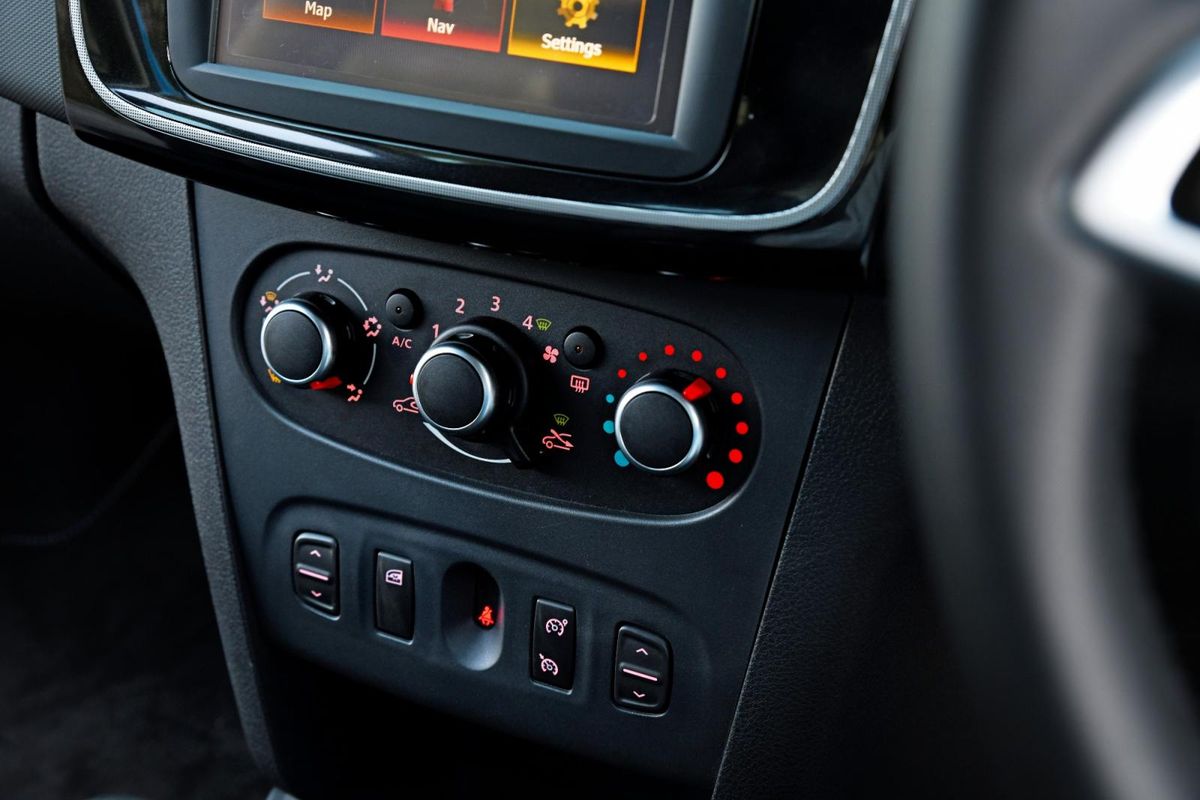
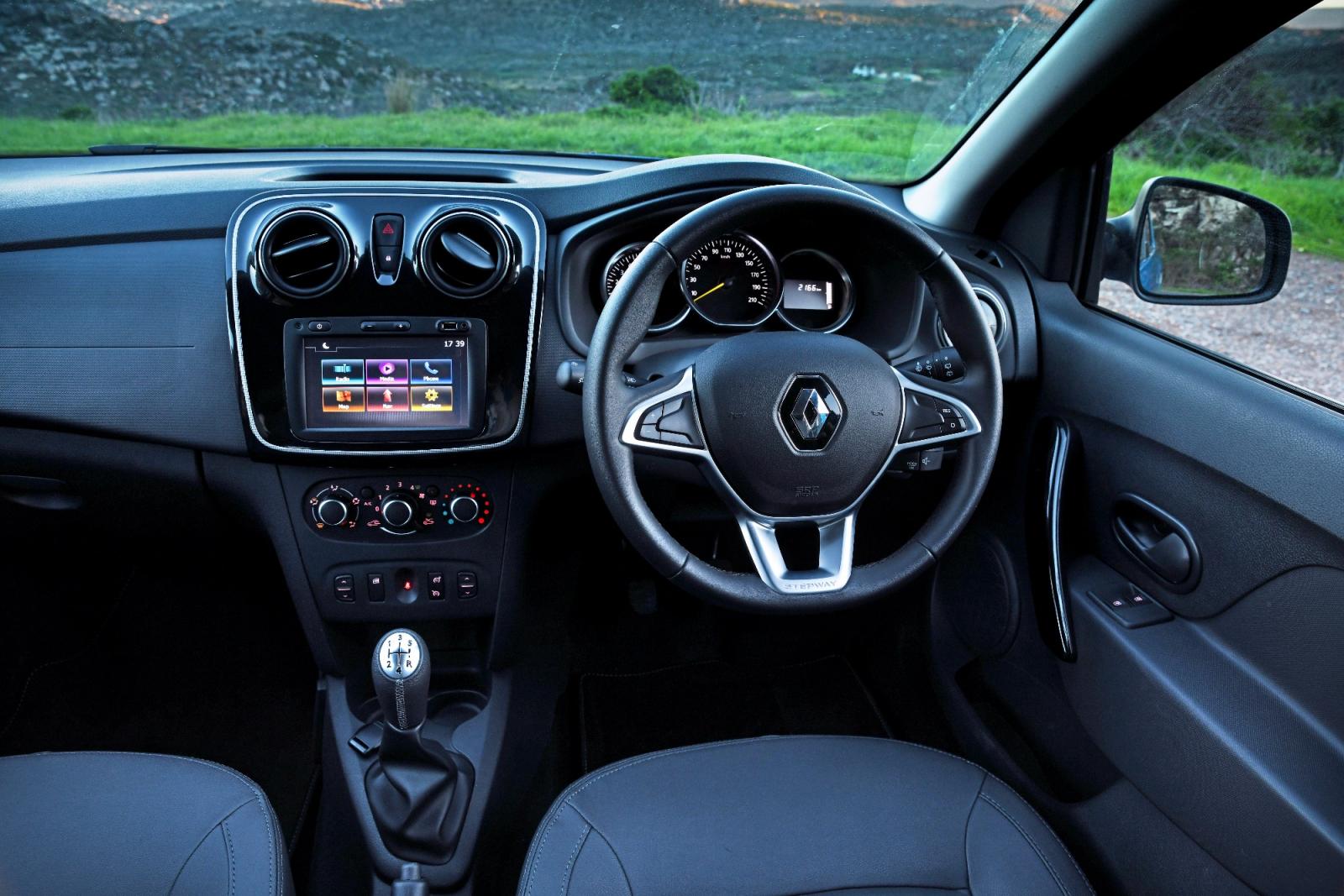
As before, the Sandero Stepway really does offer an extensive suite of features. Consequently, its appeal on the showroom floor is exceptional. You get electric windows all-round, front and side airbags (the latter not a given in this segment), air-conditioning, remote audio controls and such rarities as rear park assist, cruise control and a very comprehensive infotainment system with a 7-inch touchscreen that also incorporates navigation and a rear-view camera display.
Renault deserves applause for fitting such a "budget" offering with an exceptional array of safety features, including ESP, hill start assist and rear Isofix child seat mounts.
Appealing Design
The Stepway's neat design make it look considerably more expensive than it really is.
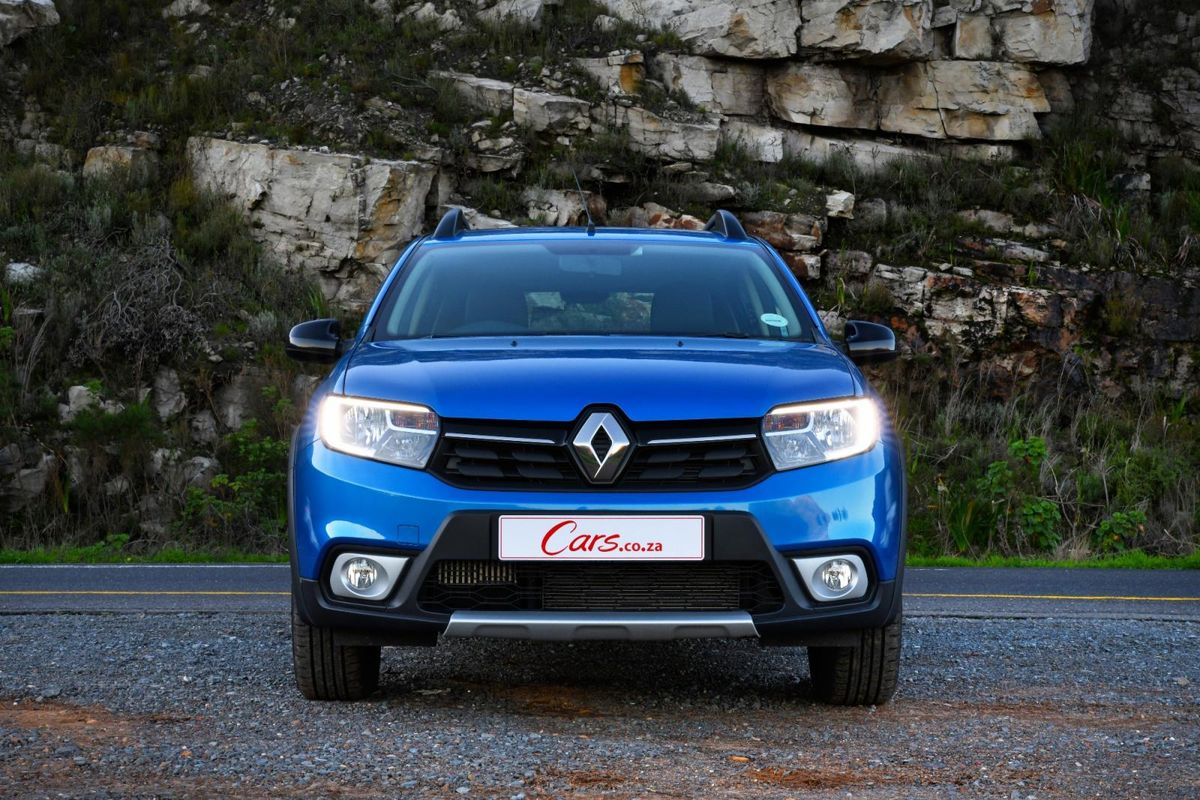
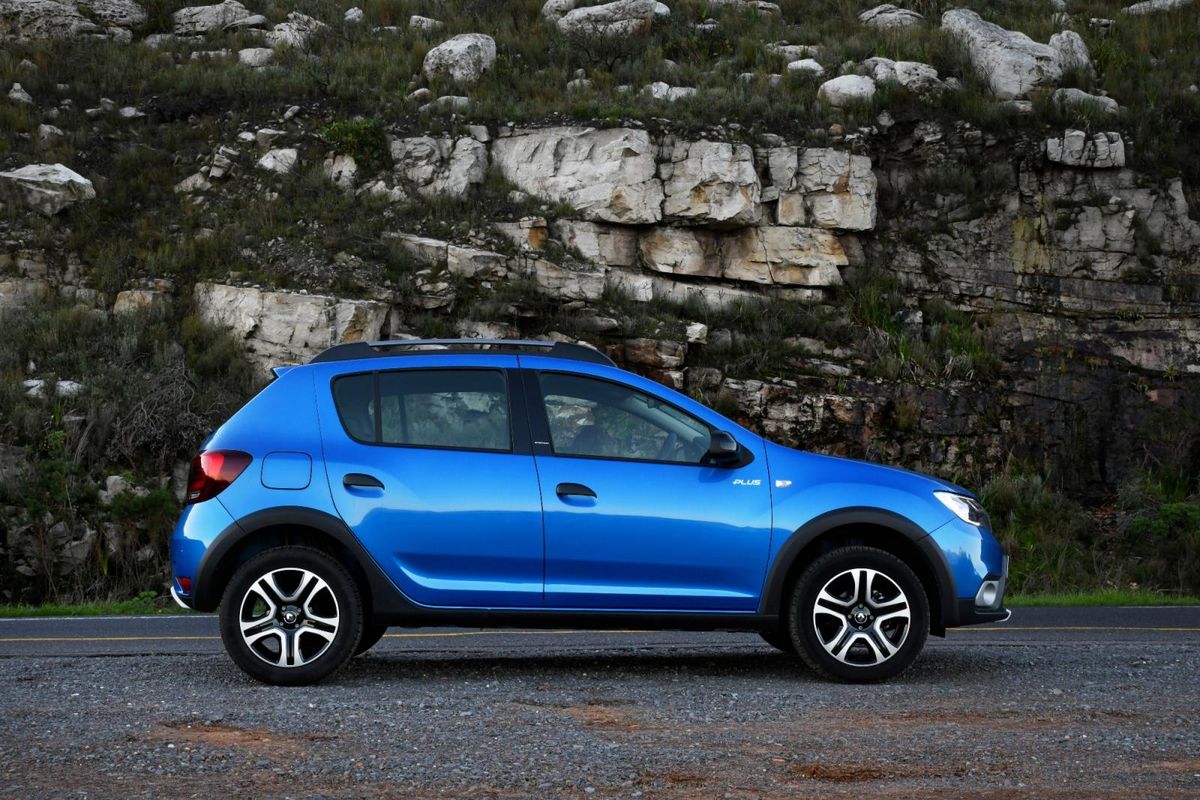
The Sandero Stepway remains a good-looking car, and its appeal has been enhanced by the addition of the striking 2-tone 16-inch wheels. With its neat roof rails, all-round black plastic cladding, slightly raised ground clearance and attractive head/tail lamp detailing, it's certainly one of the prettier offerings in this segment. In fact, we think it looks more expensive than its pricing suggests.
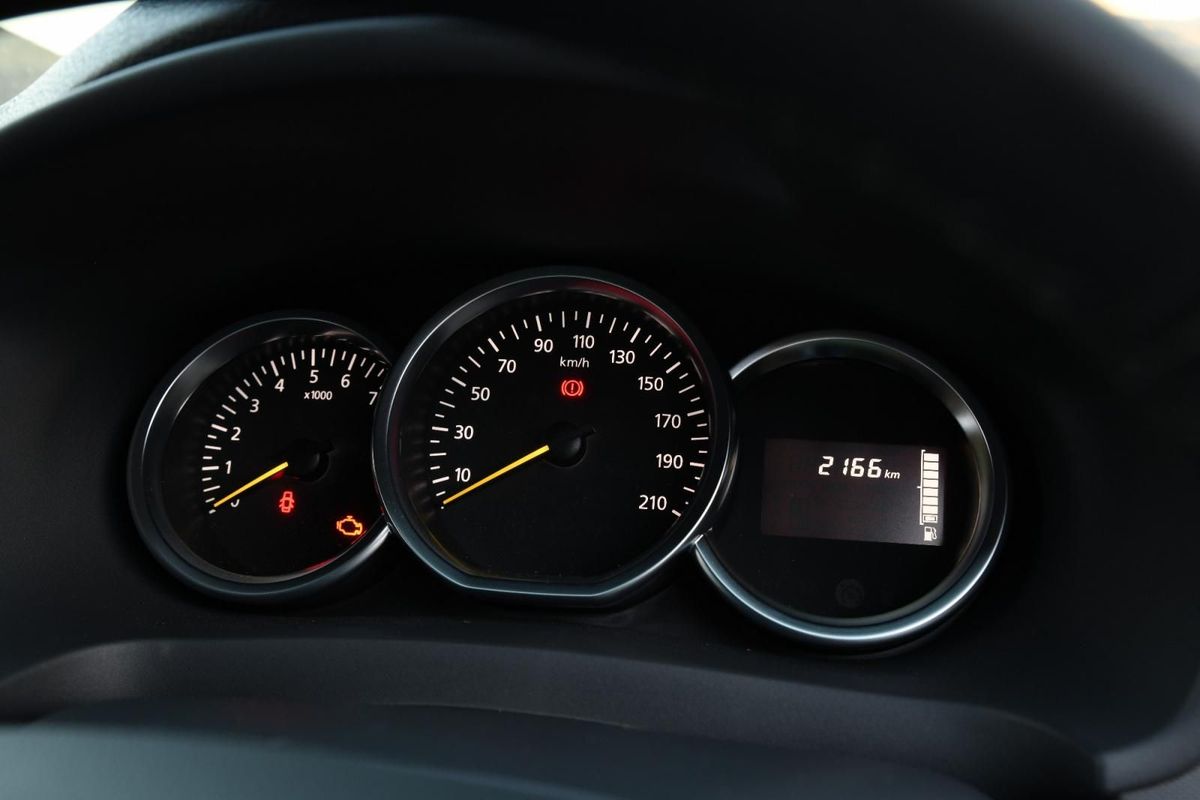
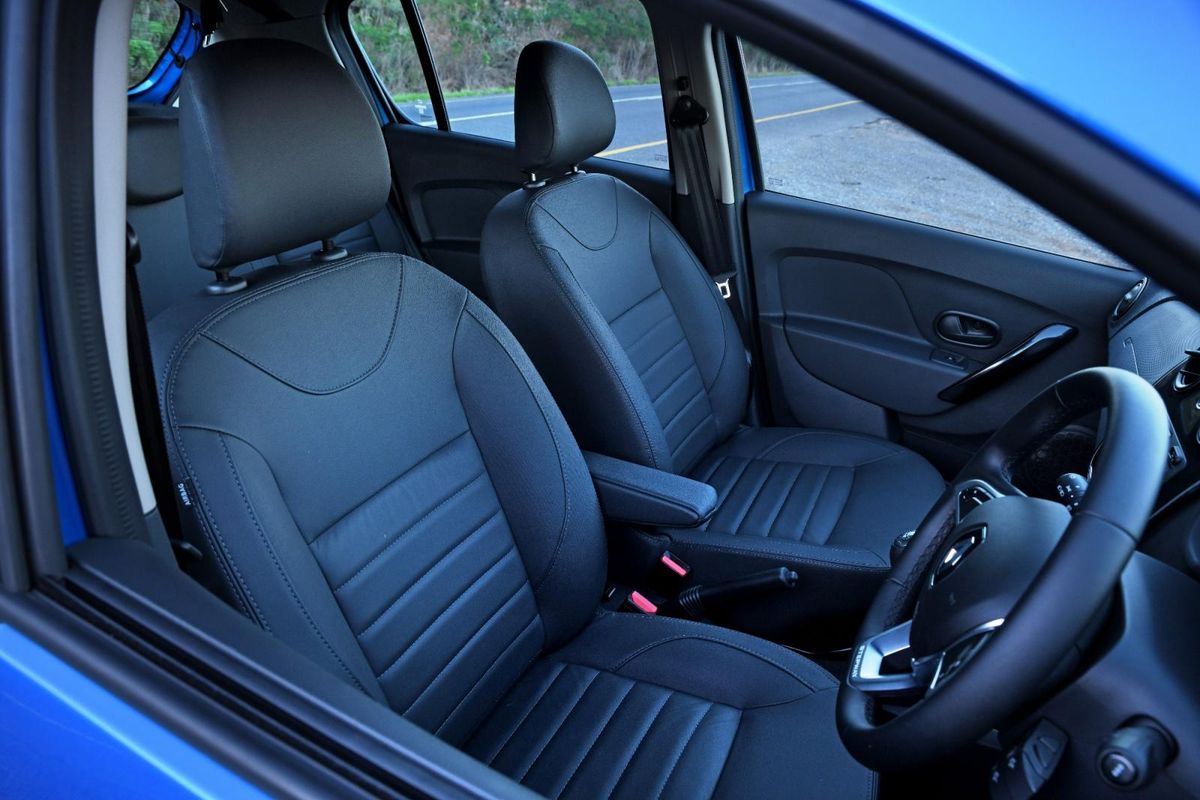
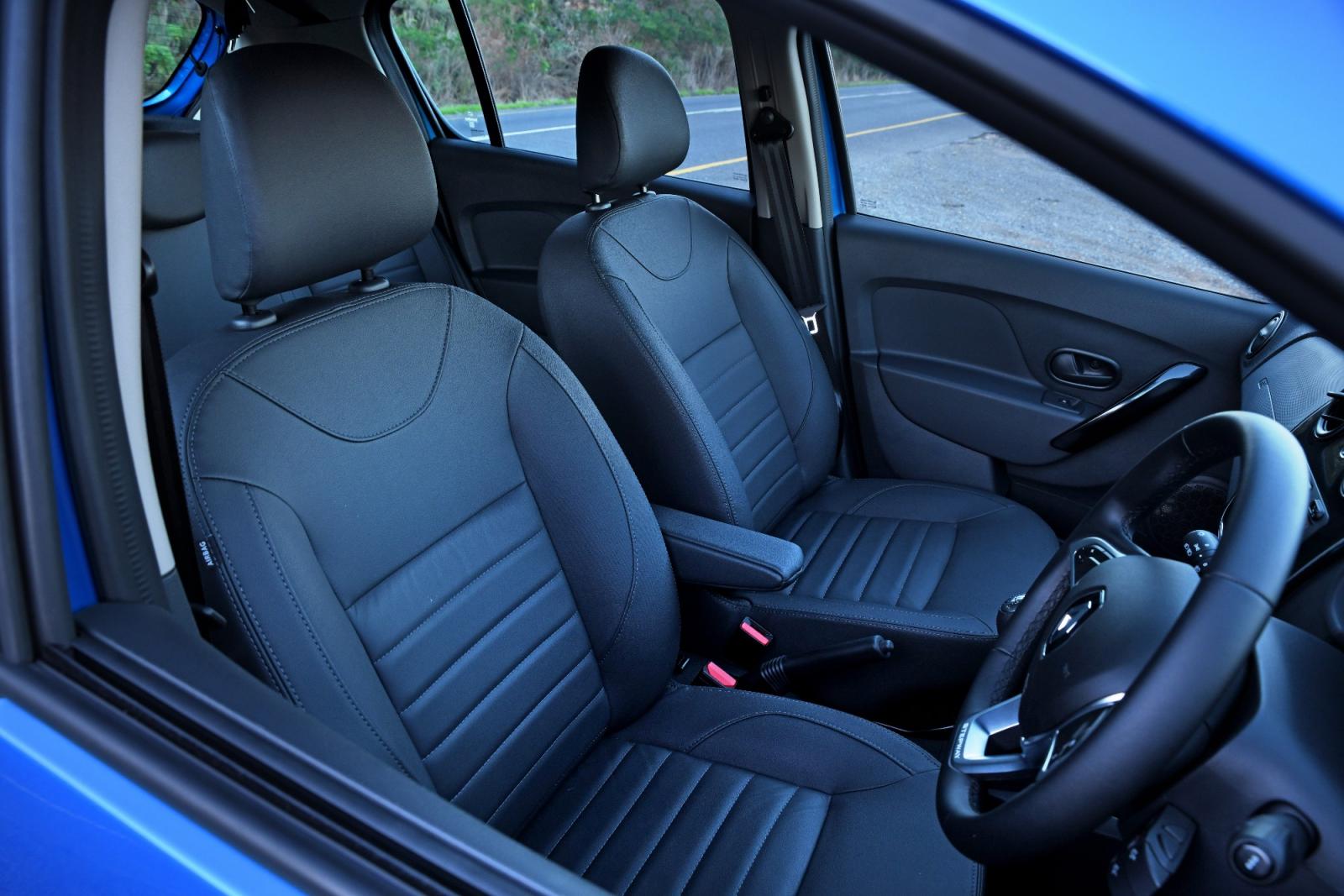
Step inside and you're also likely to enjoy the leather-wrapped steering wheel and upmarket detailing (satin-silver rimmed instrumentation and gloss black plastic finishes). Our test unit also had the smart optional leather upholstery and the recent addition of a centre front armrest will be appreciated by many.
Comfort & Practicality
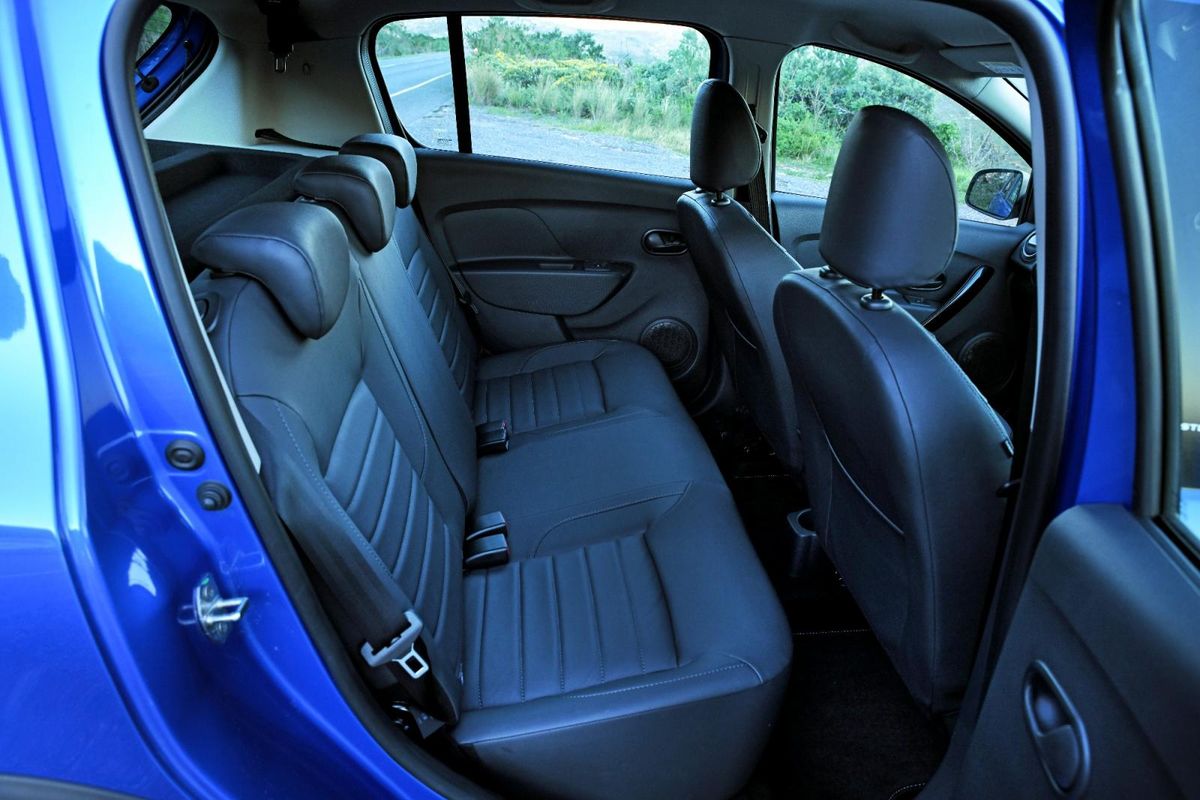
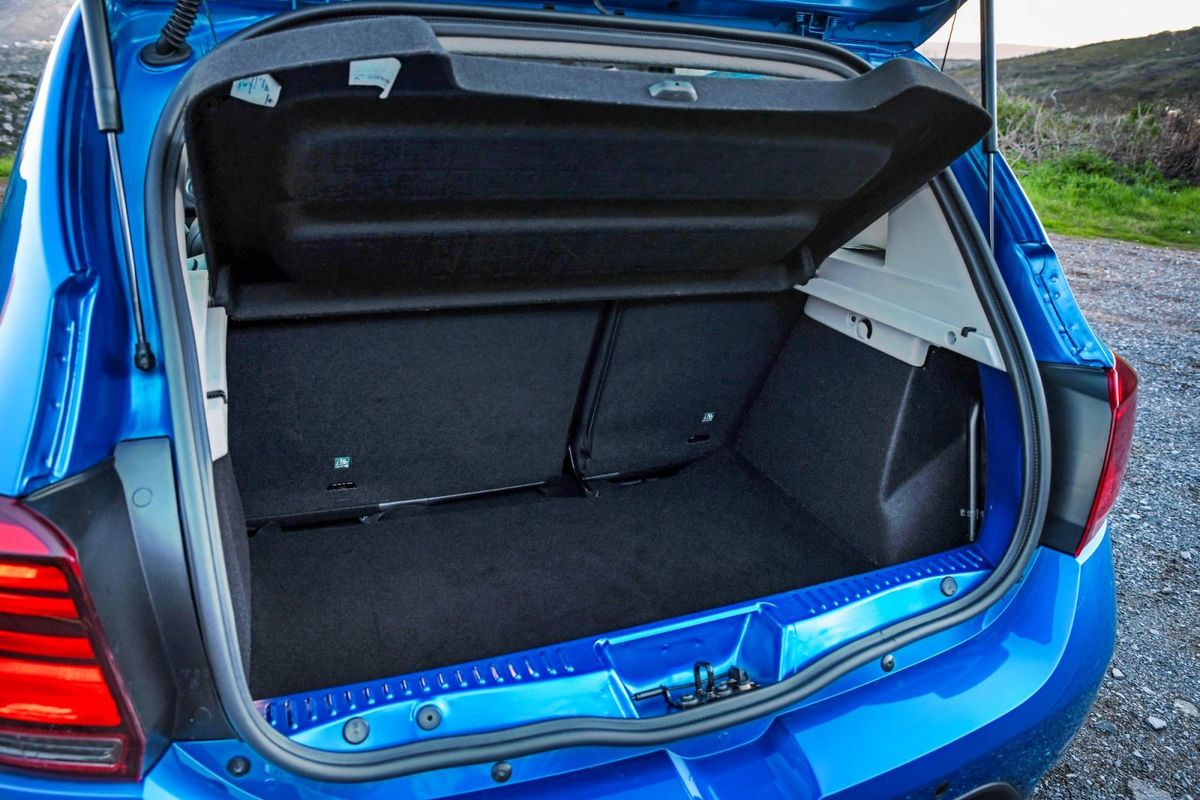
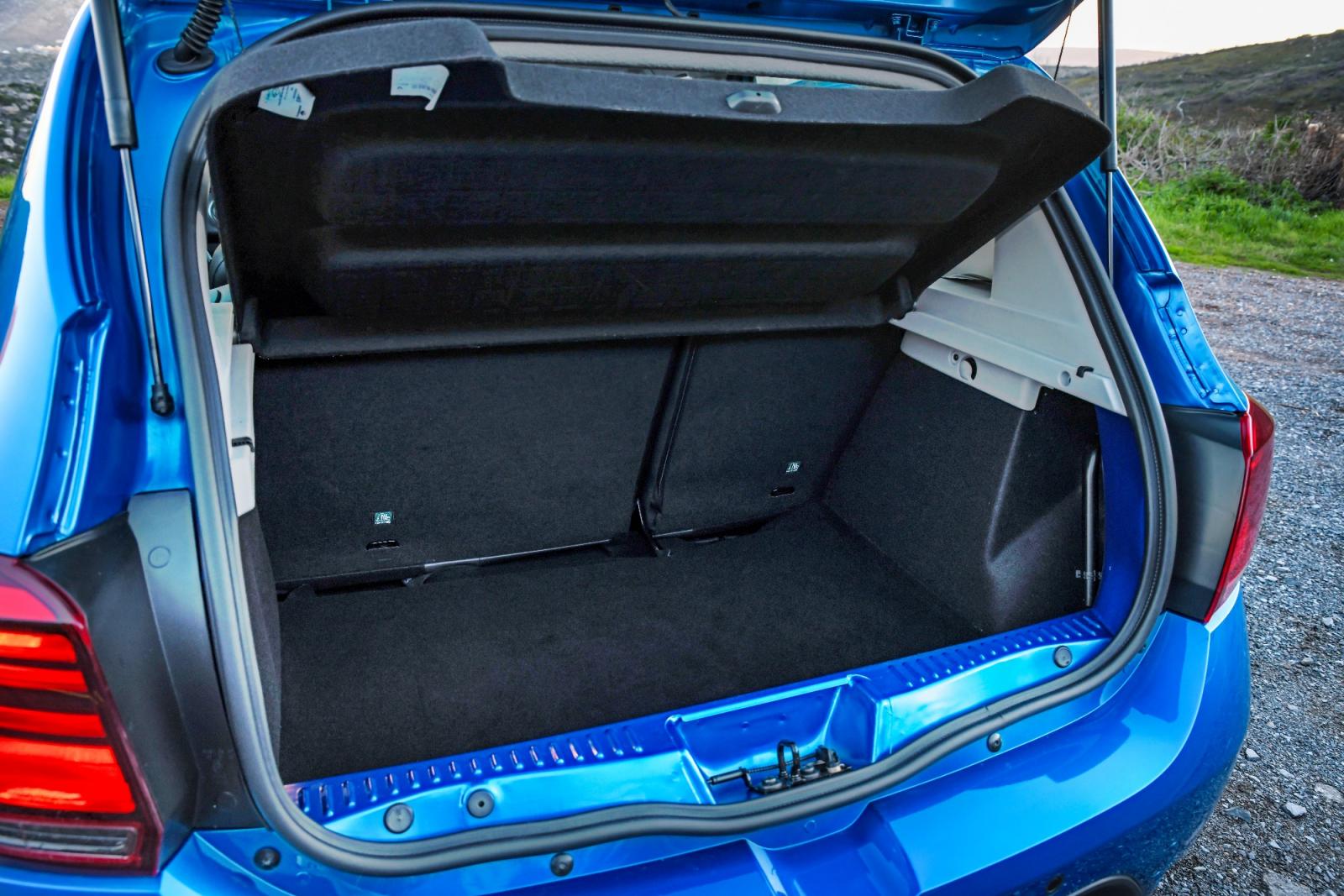
Class-leading boot space and split/fold rear seats add to the Stepway's class-leading levels of practicality.
Buying a budget vehicle often means that you're getting a very small car, but the Sandero Stepway isn't. Space for occupants is good front and rear and the boot is the largest in this segment at 292L. The rear seatbacks are split 60:40 and can fold forward, should you like to transport bulkier loads.
The ride set-up of the Sandero Stepway is such that it handles the inconsistent quality of South Africa's road infrastructure rather well. The extra clearance (190 mm+) and generously "sidewalled" tyres further boost the confidence levels when the going gets a bit rough.
Warranty & Service Plan
Renault is not generally highly rated for after-sales service (including in our very own Cars.co.za Ownership Satisfaction Survey), and so the inclusion of a 5-years/150 000km warranty and 2-years/30 000km service plan will provide some peace of mind.
Optional leather upholstery looks the part, but some of the plastics feel cheap.
Compared with some of its newer rivals (particularly the Ignis and Vivo Maxx), the Sandero Stepway can feel a bit "thin" in places. The cabin makes a great first impression and the touch points are generally good, but prolonged exposure highlights a few places where the plastics don't feel quite as solid as we'd like them to be. We also experienced a few more creaks and groans from the cabin fittings than we have with the rivals.
Drivetrain refinement
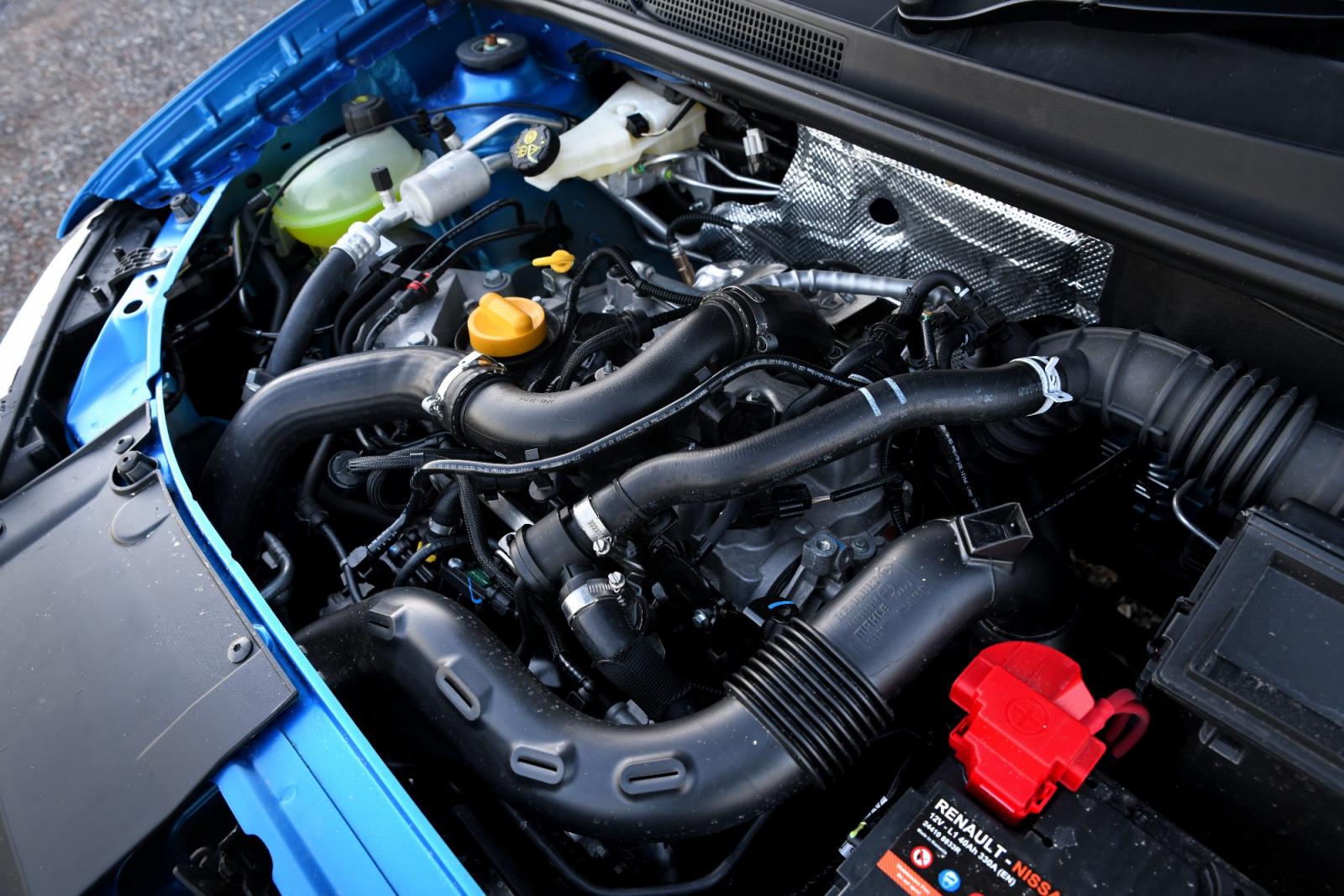
The small 66kW engine delivers good performance, provided you stir the 'box.
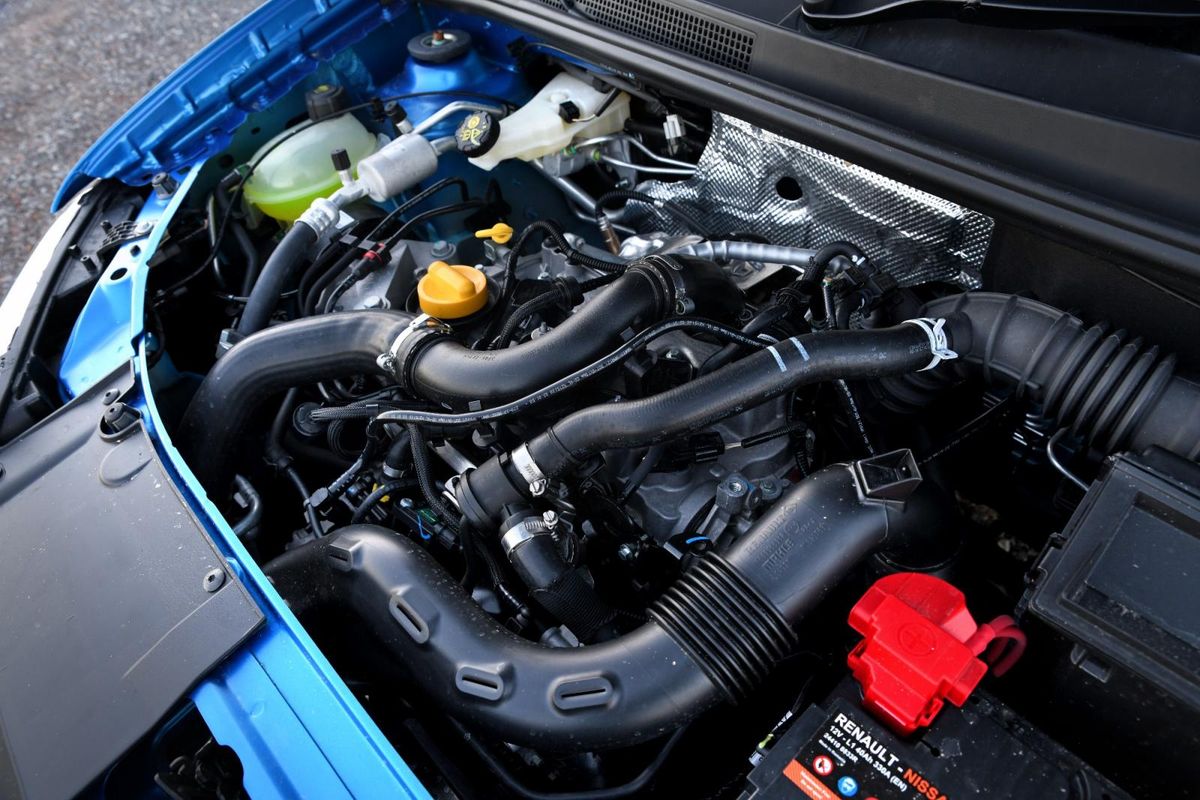
The little turbocharged 0.9-litre engine underneath the bonnet delivers an appealing blend of power and efficiency on paper, which mostly translates to the reality experienced on the road. With 66kW of power and 135Nm of torque (the latter figure from 2 500rpm), the Stepway doesn't generally feel lethargic around town, provided you stir the 5-speed 'box, and with a claimed consumption figure of 5.4L/100km, it also promises good efficiency. In reality, we achieved closer to 6.5L/100km, which is still impressive.
If you do happen to stray out of its optimal powerband, there is still some turbolag to contend with, but for the most part prolonged experience will soon see drivers adapt their driving styles. What's less impressive is the refinement of the drivetrain. We struggled with clutch modulation and smooth power delivery during out test, which made the Stepway a more frustrating drive than its rivals.
Rivals to Consider
Click on the names of the rivals for detailed specification
Slightly cheaper than the Renault, but lacking many of its features, the Toyota is the one to choose if you're looking for a crossover-flavoured hatchback, but prioritise peace-of-mind in terms of after-sales service and back-up. As a product, the Toyota can't match the Renault, but as an ownership proposition it is arguably the safer choice.
About R15 000 more expensive than the Renault, the Vivo Maxx offers a more powerful and refined 1.6L engine as well as a more "premium"-feeling cabin and ride experience. It lacks several of the Renault's features, of course, and is also not as economical.
Slightly cheaper than the Renault, the little Ignis looks almost comical next to the Renault, but is more spacious inside than you'd think, has a good mix of standard features (though not as comprehensive as the Stepway) and is very economical in the real world. Of course, Suzuki has been voted Brand of the Year in our Cars.co.za Consumer Awards – Powered by WesBank, by actual owners for 2 years running, so ownership should be a no-fuss, stress-free experience.
Verdict
The competition may be heating up, but the Sandero Stepway continues to offer great value for money.
The Sandero Stepway Plus is cleverly positioned in the market and comes with very impressive showroom appeal. There is no rival product that appears to offer as much for the same price. Attractive to look at, spacious and comfortable to be in, and loaded with features, the Stepway's value for money factor is very hard to beat. There are concerns, however – the drivetrain could do with extra refinement and, perhaps most importantly, Renault needs to improve on its service levels at dealership level. Nevertheless, a 5-years/150 000 warranty will undoubtedly be enough of a sweetener for many consumers.
Looking to buy a new / used Renault Sandero Stepway?
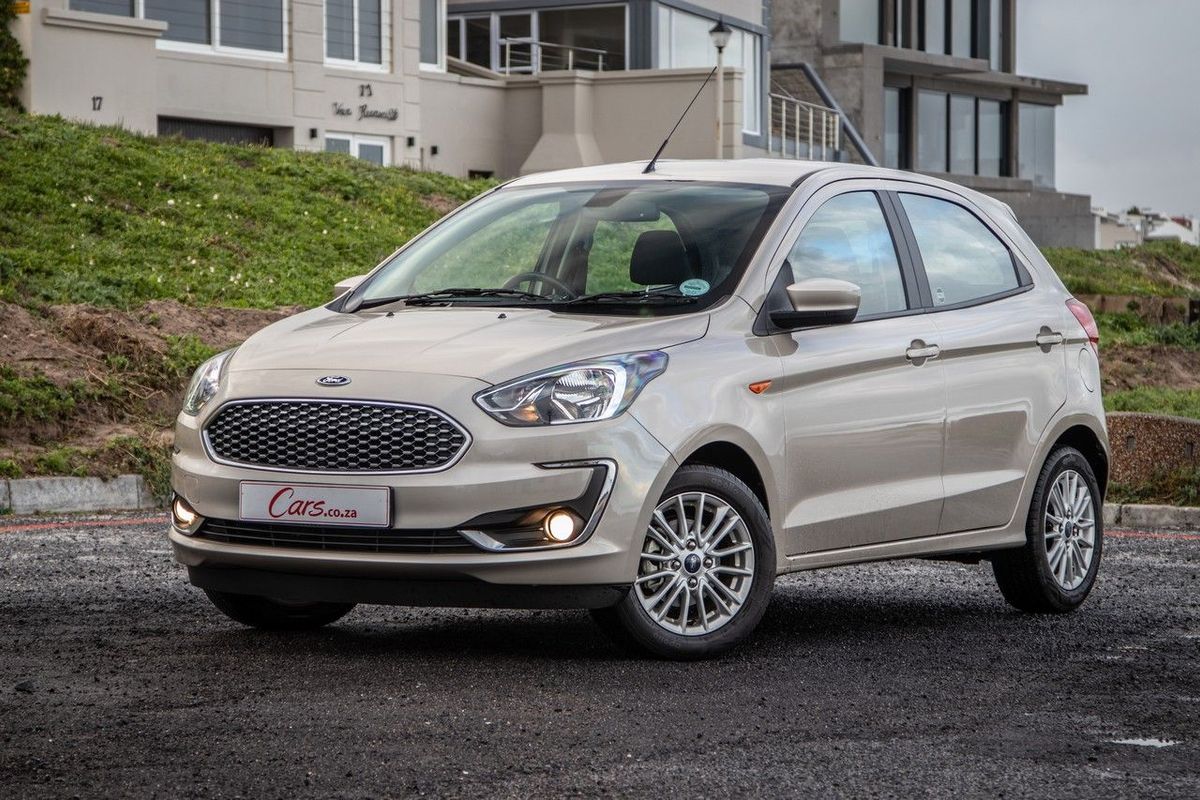
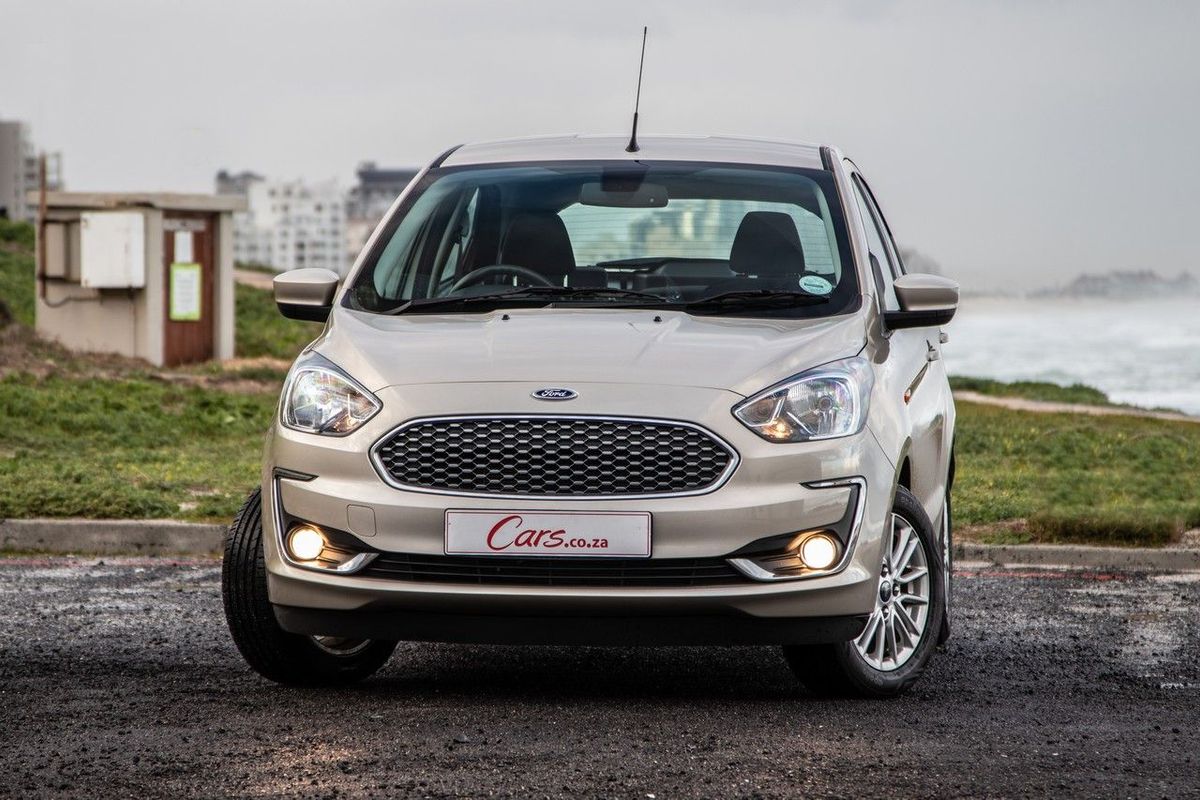
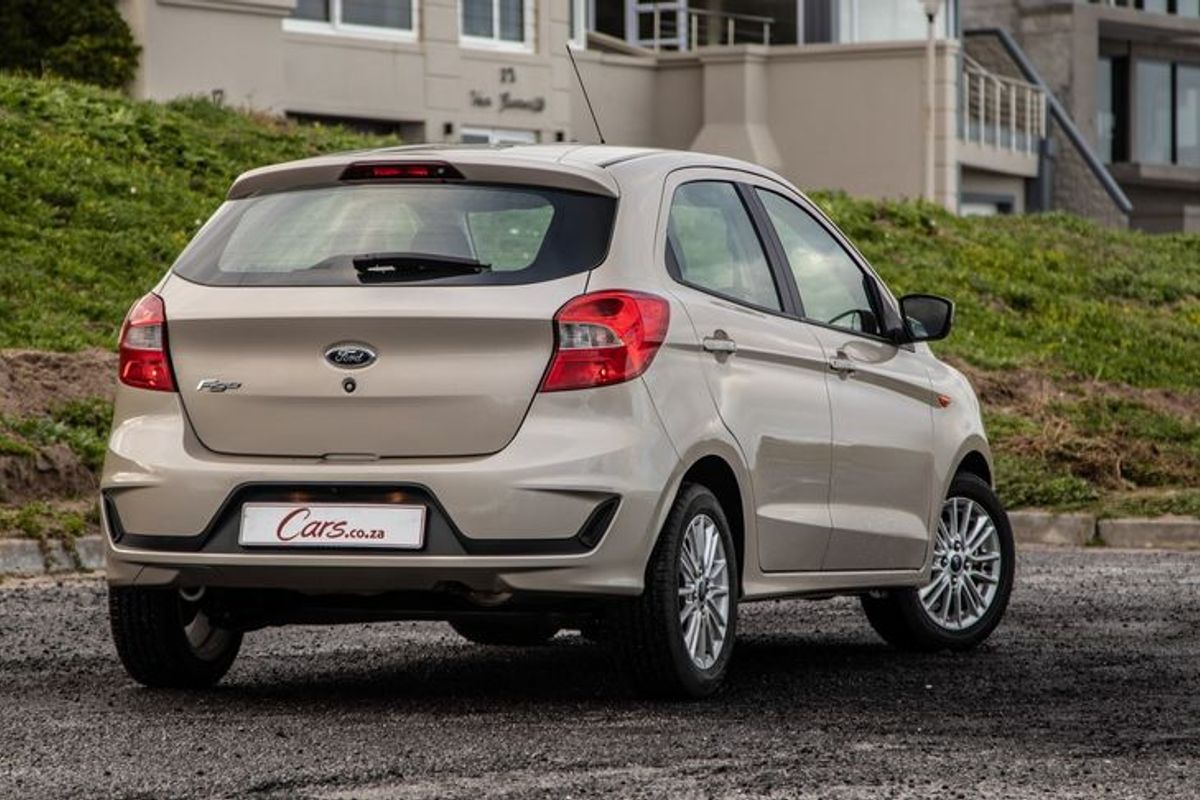
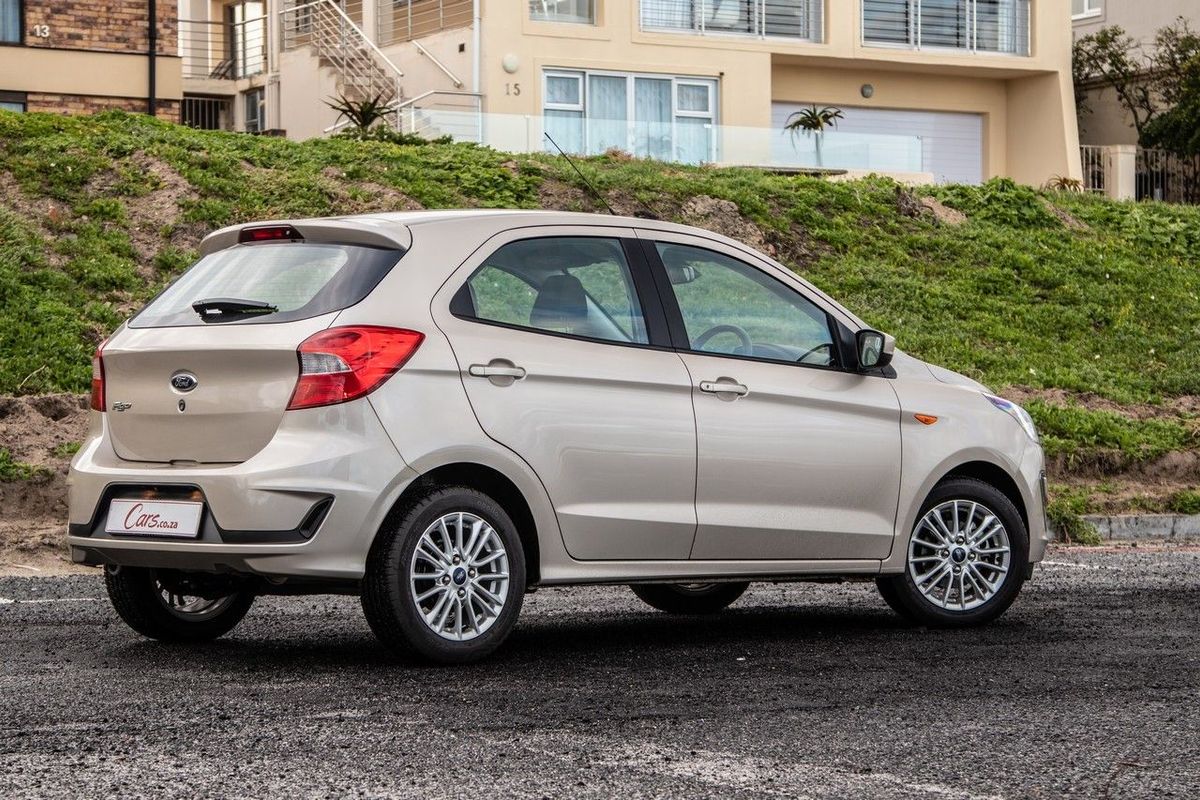
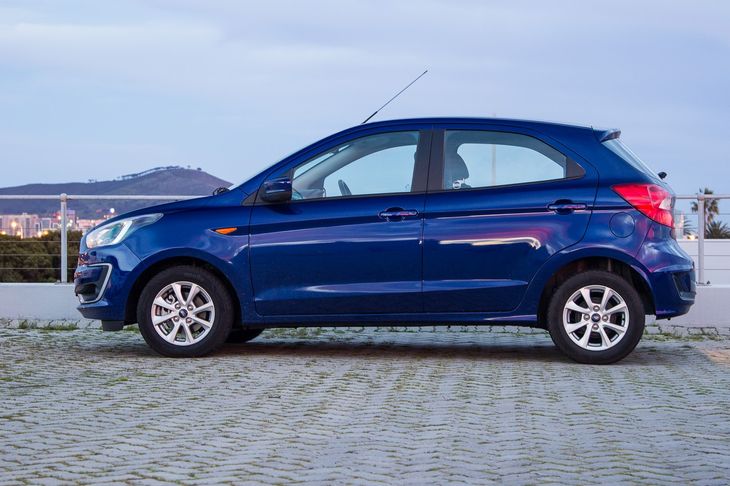
The Ford Figo has been a popular budget car for the Blue Oval, but the segment has moved along significantly. Can the updated version continue to offer value-for-money motoring, or should you look elsewhere? We test the 1.5-litre Trend automatic derivative.
We Like: New punchy engine, smooth auto' transmission, comfortable and quiet ride, spacious cabin
We Don't Like: Some poor interior finishes, steering-wheel controls would be nice, small luggage bay
Alternatives
The popular choice: The Volkswagen Polo Vivo is the perennial favourite, but if you have to compare like for like, the equivalent automatic 1.6 Comfortline auto retails for R222 900 and doesn't have a service plan as standard.
The newcomer: There's an all-new Suzuki Swift in town and we're quite impressed with what it has to offer. However, we haven't tested the automatic version yet, but it is significantly cheaper than the Figo at R189 900.
If you want a manual: Also playing in this space is the venerable Toyota Etios, which offers that peace of mind associated with Toyota ownership, a respectable 1.5-litre engine and decent space. However, there's no automatic option and for a spec-for-spec match, you're looking at R178 800.
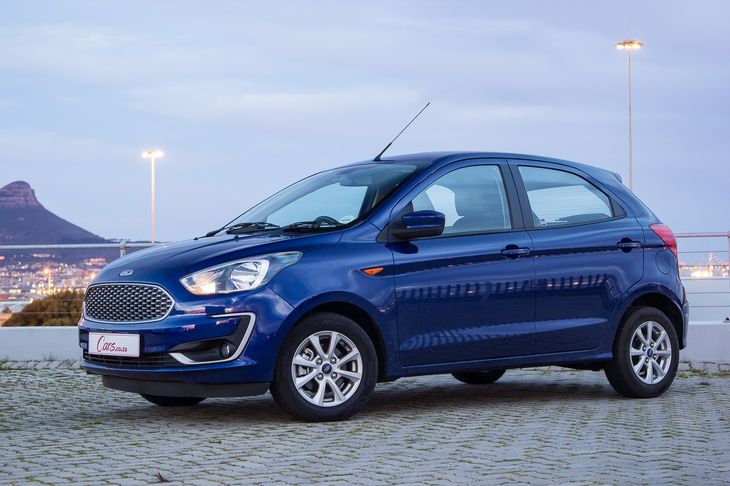
Tested here in 1.5-litre Trend automatic spec, the Ford Figo is lined up to combat the Volkswagen Polo Vivo.
Ford has refreshed its budget-oriented Figo for 2018. The pre-facelift version of this iteration of the (Indian-built) Figo was not a bad car, but because newer competitors have moved the goalposts since the hatchback/sedan range's introduction, an update was in order. The changes are comprehensive: a new engine and gearbox, some new-look exterior addenda, plus the cabin's received a bit of a makeover. At first glance, it's a good upgrade and the 2018 model looks fresher and sharper than ever before. However, visual appeal can only carry a product so far, so we spent some quality time with the newcomer to see if it's worth its R200 000-plus price tag.
The Good
Engine/transmission combo
The Figo is powered by a new 1.5-litre naturally-aspirated 3-cylinder petrol engine – and it's a peach. Sure, its outputs of 88 kW and 150 Nm may not be awe-inspiring, but in terms of its ability to hustle the 1 047 kg Figo around, the motor provides more than adequate performance. There's a new 6-speed automatic transmission too and it's refreshingly smooth-shifting, both under hard acceleration and when driven at a leisurely pace (in daily traffic, for example). We suspect the software mapping of this traditional torque-converter unit has been tuned to imitate the crisp gear changes of a dual-clutch gearbox… It really seems well-calibrated and unflappable.
What's impressive is that the Ford proved particularly frugal even though it was driven quite enthusiastically (in bursts). Ford claims an average fuel consumption of 6.5 L/100 km and during our evaluation, we saw figures in the low-7s on the trip computer, which are acceptable. The Figo has a 42-litre petrol tank, which is a fair size.
Pleasant 'ride and drive'
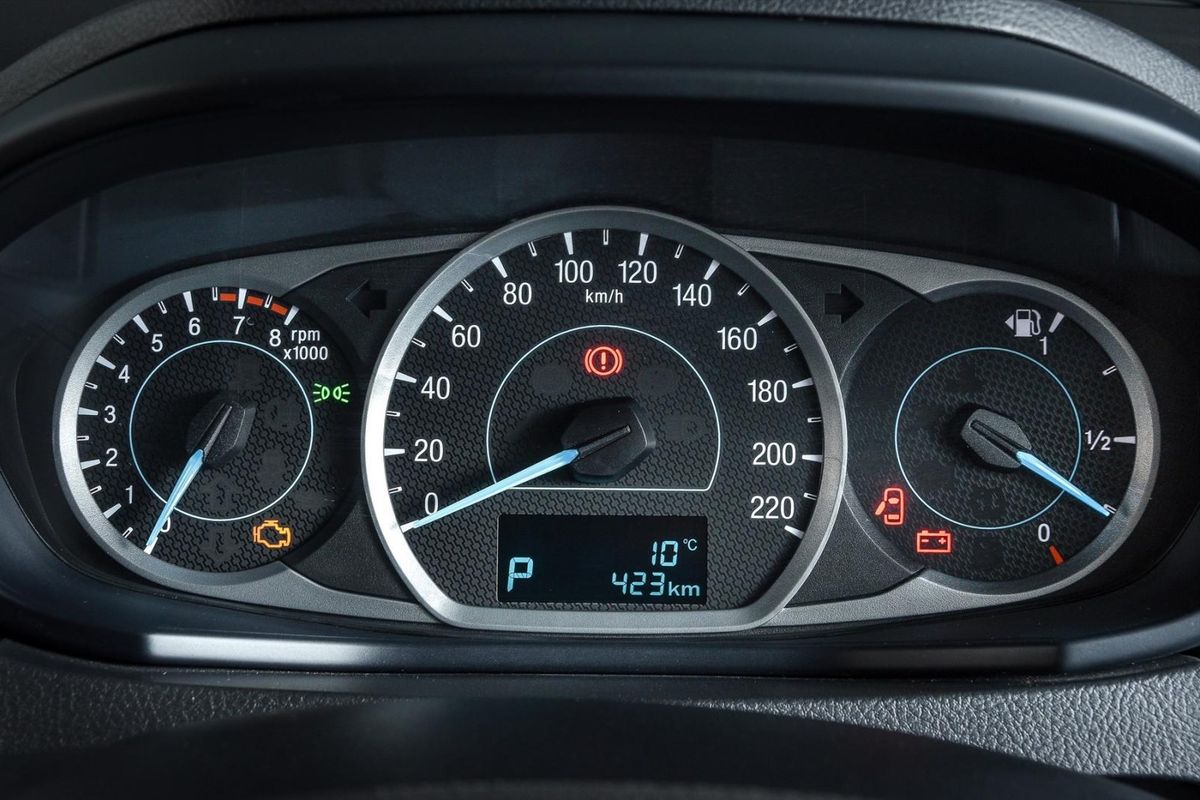
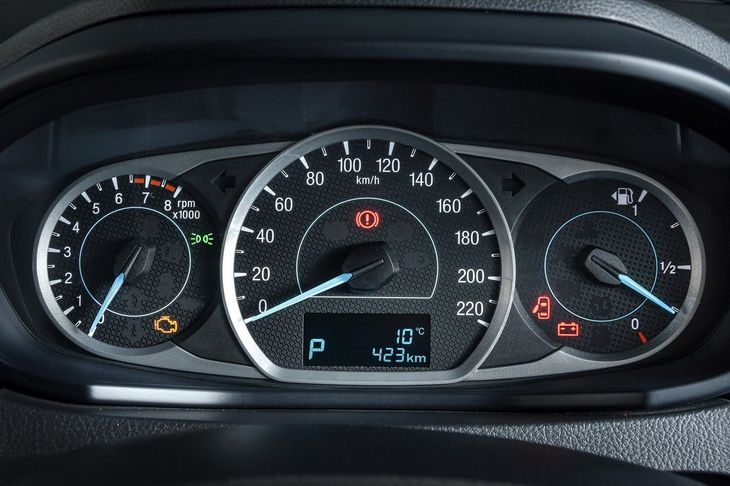
We like the simplicity of the instrument cluster; it demonstrates that you only need to see information that is pertinent to driving.
As a vehicle for the daily commute, the Figo has a fuss-free nature. The driving position is comfortable, although the steering column lacks reach adjustment, and convenient satellite radio controls are noticeably absent. In terms of steering, the feel is acceptable, but it's light enough to make tight parking maneuvres simple. The ride quality is fair (for a vehicle in this segment) and the Figo rides on 14-inch alloys wrapped in reasonably thick 175/65 tyres, which soak up most of the road bumps.
The gearbox/engine combo works a treat and there's sufficient in-gear shove for highway overtaking. The engine is particularly smooth for a 3-cylinder mill (they typically sound quite rough) and emits a pleasant thrum when you press on. During the Figo's media launch in Johannesburg, the engine felt adequately eager at altitude, despite suffering from a 17% power deficit due to the thinner air. At sea level, the 1.5-litre mill punches well above its weight; we rank it among the best engines in its class.
The after-sales plan
Ford has introduced a beefed-up service plan, which it claims will "create a stir in the local market", for the updated Figo. It extends the 2-year/40 000 km plan of the outgoing model to a comprehensive 4-year/60 000 km plan, which covers the vehicle for up to 4 services, which is highly competitive in the budget car segment.
The Not-so-good
No steering wheel controls
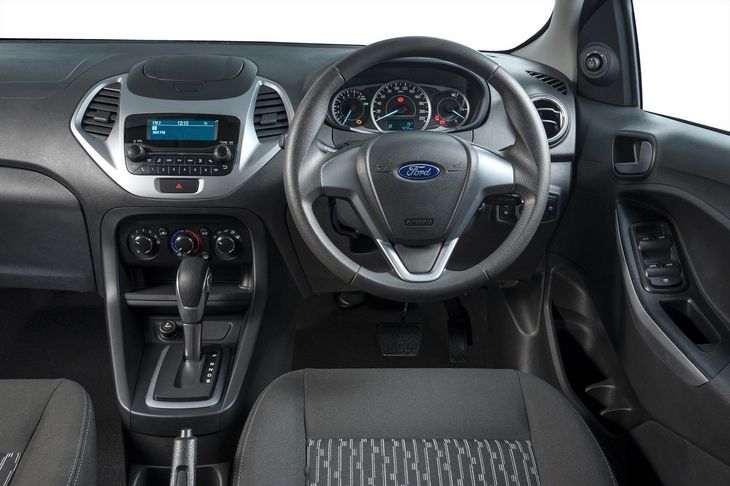
The cabin is simple and uncluttered. We wish the steering wheel featured mounted audio controls at this price point.
A multifunction steering wheel (as in equipped with remote audio controls) can be regarded as a safety feature because it allows you to operate the audio system (such as adjusting the playback volume) without the need to take your hands off the steering wheel. Although the fascia-mounted volume control knob is big and easy to use, the Figo's steering wheel feels a bit bare… We also found that the cellphone dock (situated at the top of the dashboard) was only suitable for smaller devices.
Some questionable quality materials
In budget cars, we don't judge the quality of cabin materials harshly; they're meant to keep production costs low. However, we found some of the Figo's cabin plastics very flimsy. We're worried that, over time, these pieces might warp, especially if they're likely to be disturbed by movement, such as around the transmission tunnel.
Pricing and warranty (as of August 2018)
This particular Ford Figo is the flagship derivative in the range and it retails for R205 700. The range kicks off from R181 300, and the Figo is available in both a sedan and hatchback guises. All derivatives come standard with Ford Protect, comprising a 4-year/120 000 km comprehensive warranty, 3-year/unlimited distance roadside assistance and 5-year/unlimited km corrosion warranty. The service interval is 15 000 km.
Ford Figo 1.5 Trend auto R205 700
Verdict
The new grille and new engine/gearbox are just two changes in the 2018 Ford Figo
With sales of the latest Volkswagen Polo Vivo going briskly, and other rivals (such as the Suzuki Swift) entering the budget car space, the Figo needed to up its game. The highlight of the Ford's revitalisation has to be its excellent engine and gearbox combination. It delivers a comfortable and commendably fuss-free driving experience.
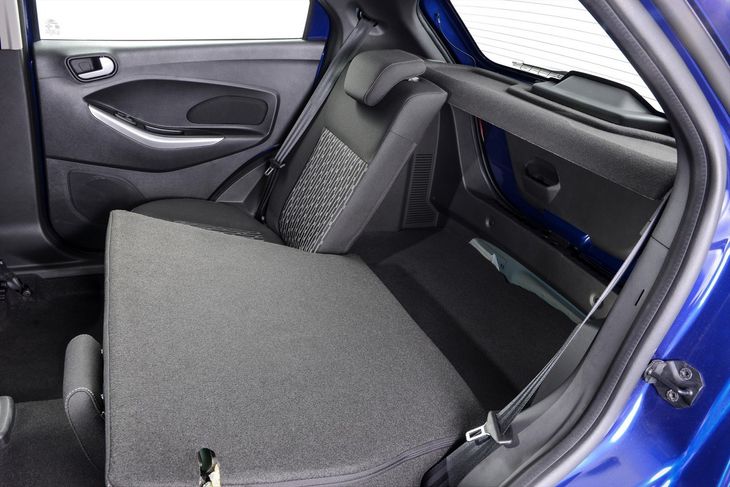
The front of the Figo's cabin is spacious, but the Blue Oval's budget hatchback offers rather mediocre rear legroom (adults will find the rear bench cramped, especially on longer journeys). Furthermore, the Figo's luggage bay is smaller than those of its rivals, but you can, of course, fold the rear seats down in a 60:40 split to increase carrying capacity. In the interest of keeping costs down, Ford has removed 2 airbags, but there's still a driver and a passenger airbag as well as plus ABS with EBD.
When it comes to the Ford's overall value proposition, things get tricky. In a market where brands are desperate to keep cars under that critical R200k barrier, this Figo derivative creeps over that psychological threshold, making it one of the most expensive vehicles in the segment. The competition is fierce and while there's no catching the Volkswagen Polo Vivo in terms of sales, the fight for 2nd place is close! Can the Ford Figo justify its price tag? Yes, but only just. Perhaps consider whether you really need an automatic transmission (as convenient as it is for city driving), because there's more value to be found if you opt for the manual – it costs R15 000 less.
The luggage bay is not the biggest in the Ford Figo, but you can fold the rear seats down in a 60:40 split to increase loading capacity.
Peugeot has expanded the range of its award-winning 3008 family car by adding a lavishly-equipped GT Line+ flagship derivative. Here are some reasons why you should consider buying it… And some why you shouldn't.
We Like: Edgy styling, practicality, interior design and comfort, quality.
We Don’t Like: Touchscreen system is clumsy, small dealer footprint.
Alternatives
If you need more power and AWD: The Volkswagen Tiguan 2.0TSI 4Motion Highline provides more shove from its bigger engine, but doesn’t feel quite as upmarket as the Peugeot inside. It's priced from R571 900.
If space isn’t the biggest factor: The new Volvo XC40 T3 R-Designis a little smaller than the 3008, but features a very attractive exterior and equally premium interior. The new T3 R-Design is actually a good buy from R528 336.
Don't forget about Opel: The Opel Grandland X rides on the same chassis and uses the same engine as the 3008. If you prefer the less quirky design elements on the Opel, it’s a solid buy at R565 000 for the Grandland X 1.6 Turbo Cosmo.
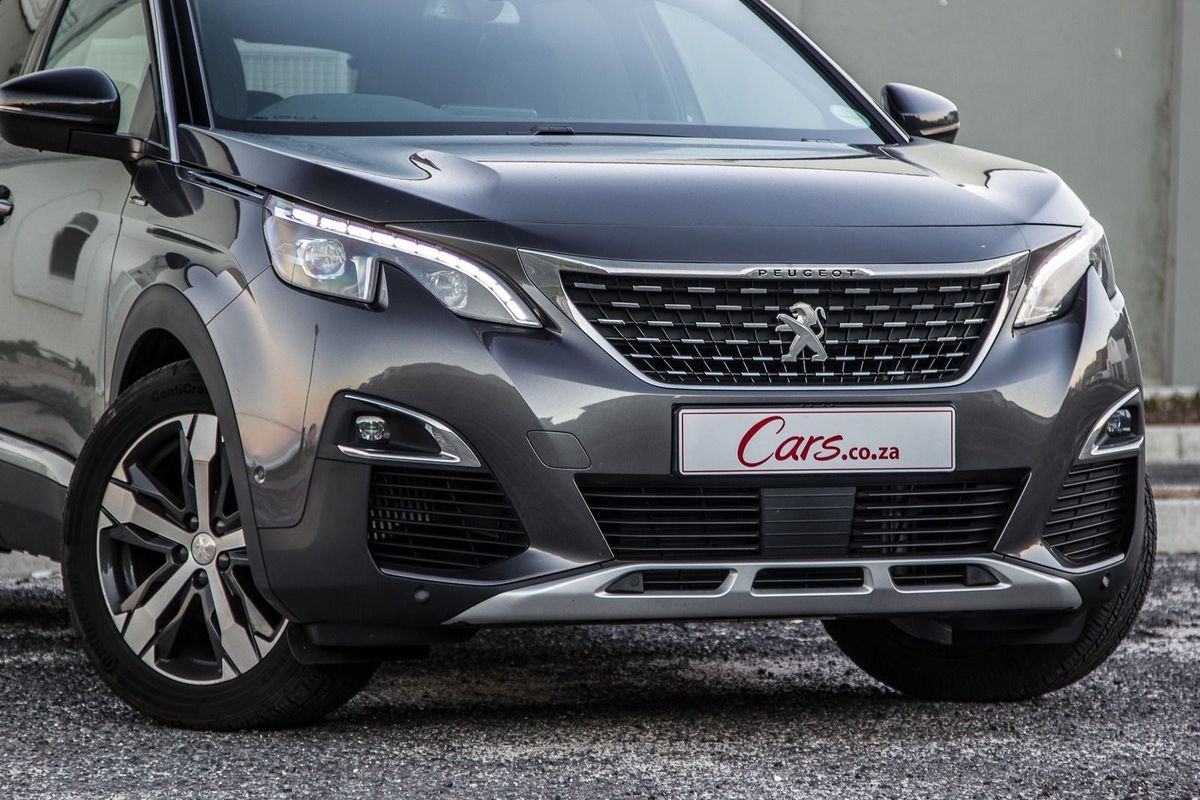
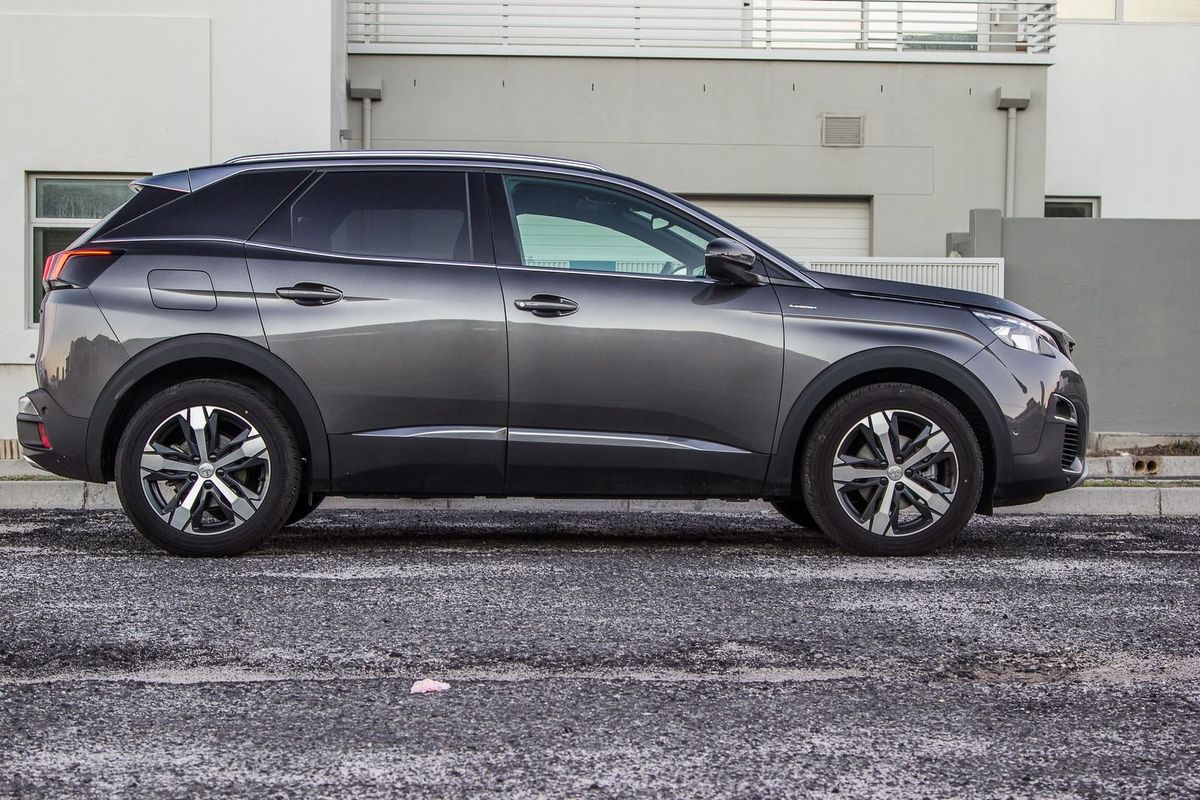
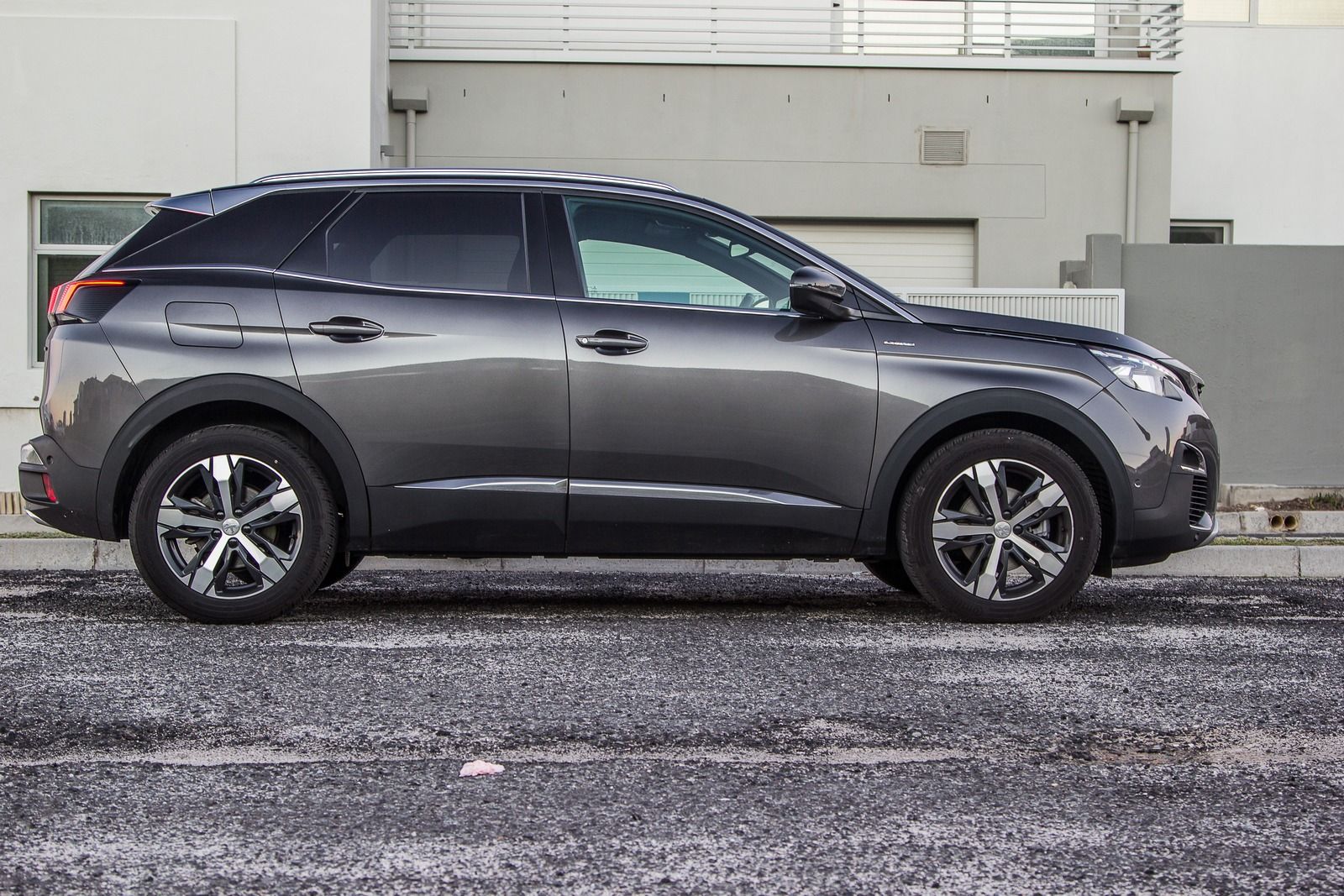
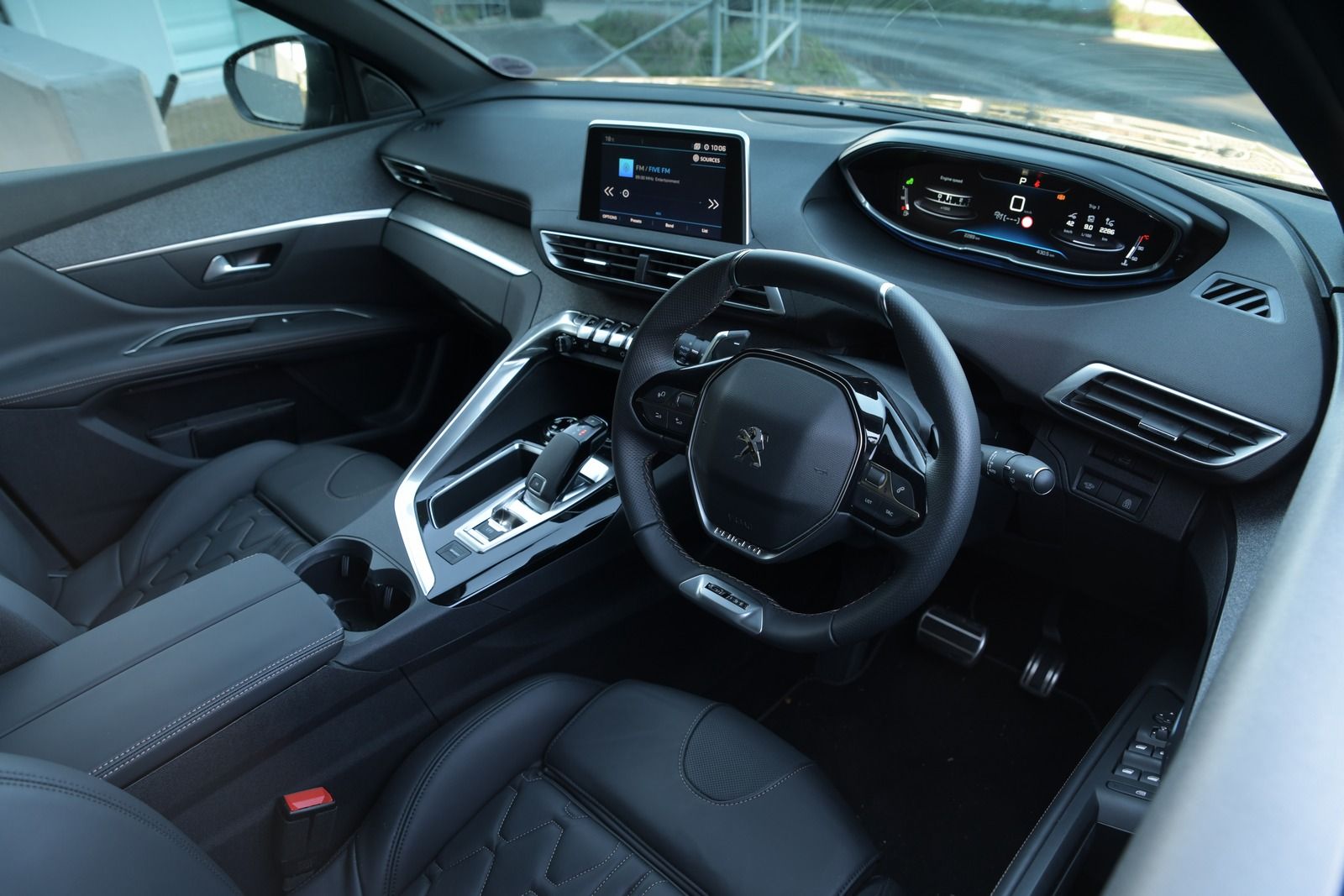
The 3008 GT Line+ is elegantly stylish and generously equipped with features.
What is a GT Line+?
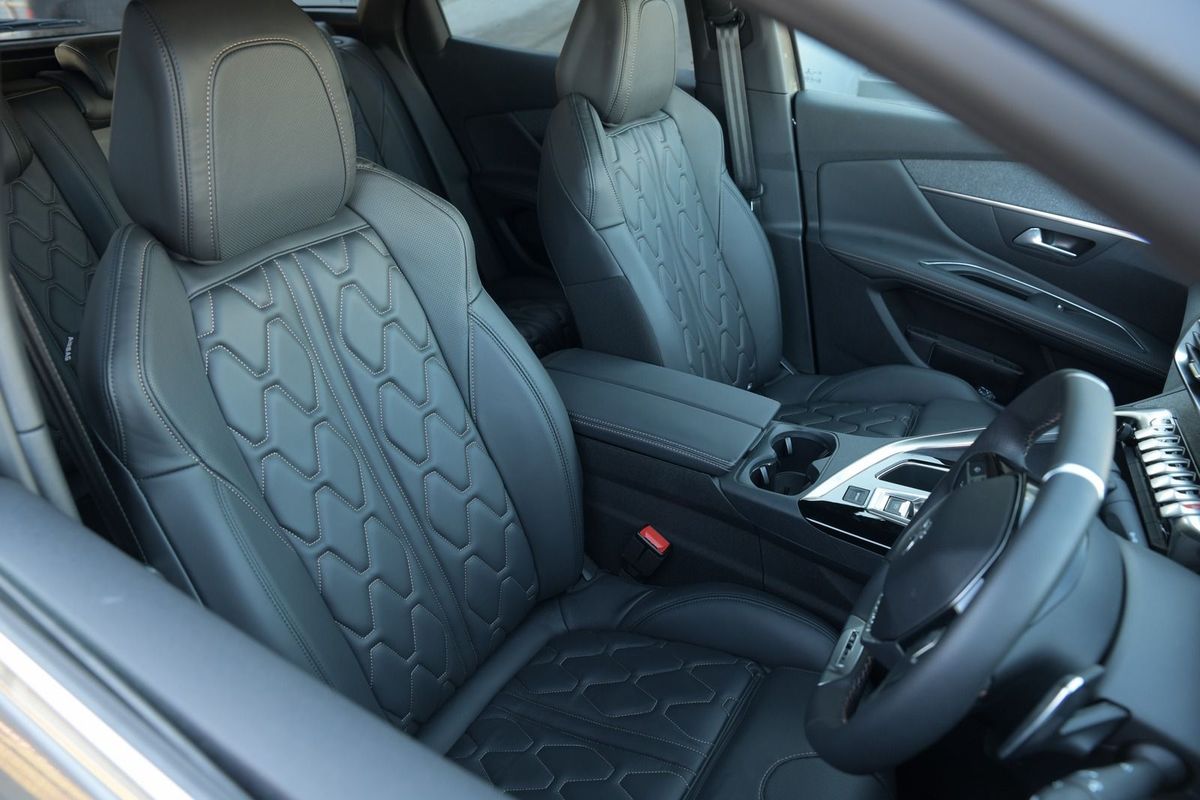
The GT Line+ derivative sits at the summit of the 3008 range and features as many gizmos and luxury features as Peugeot's family car can offer. Safety is improved with the inclusion of front collision warning, emergency brake assist and blind spot monitoring systems.
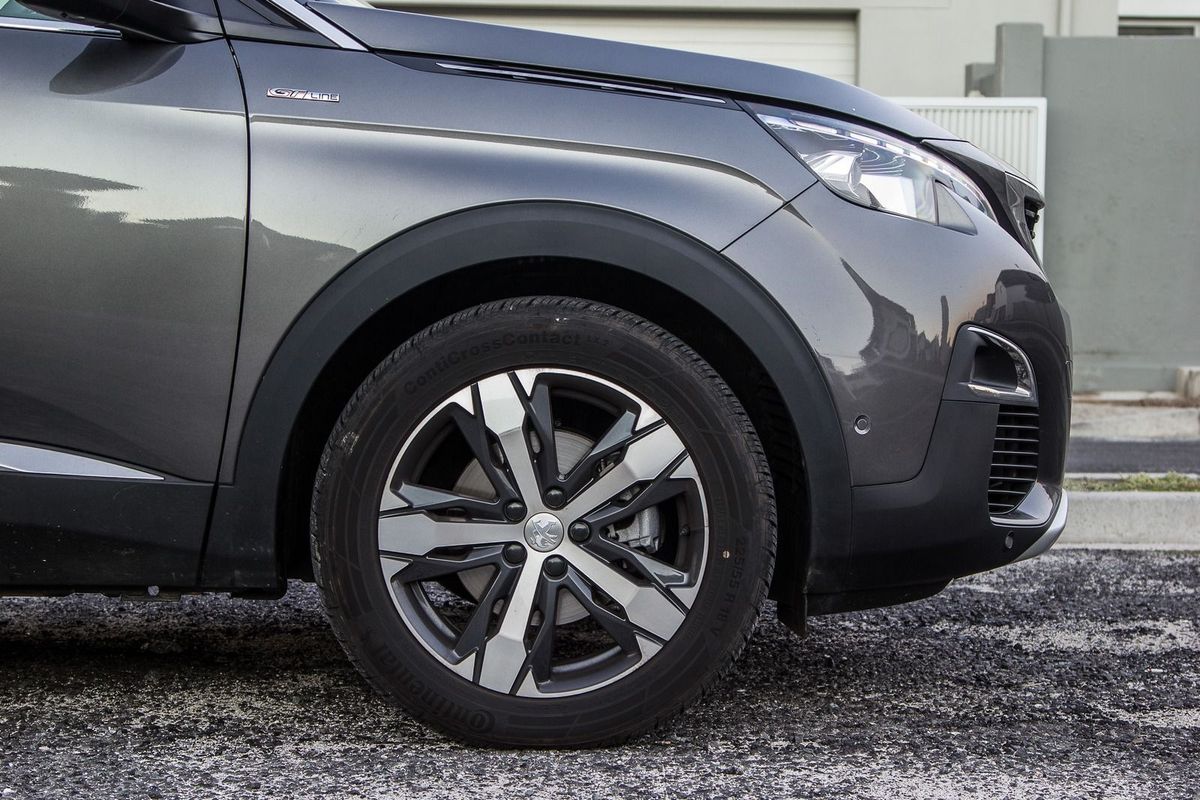
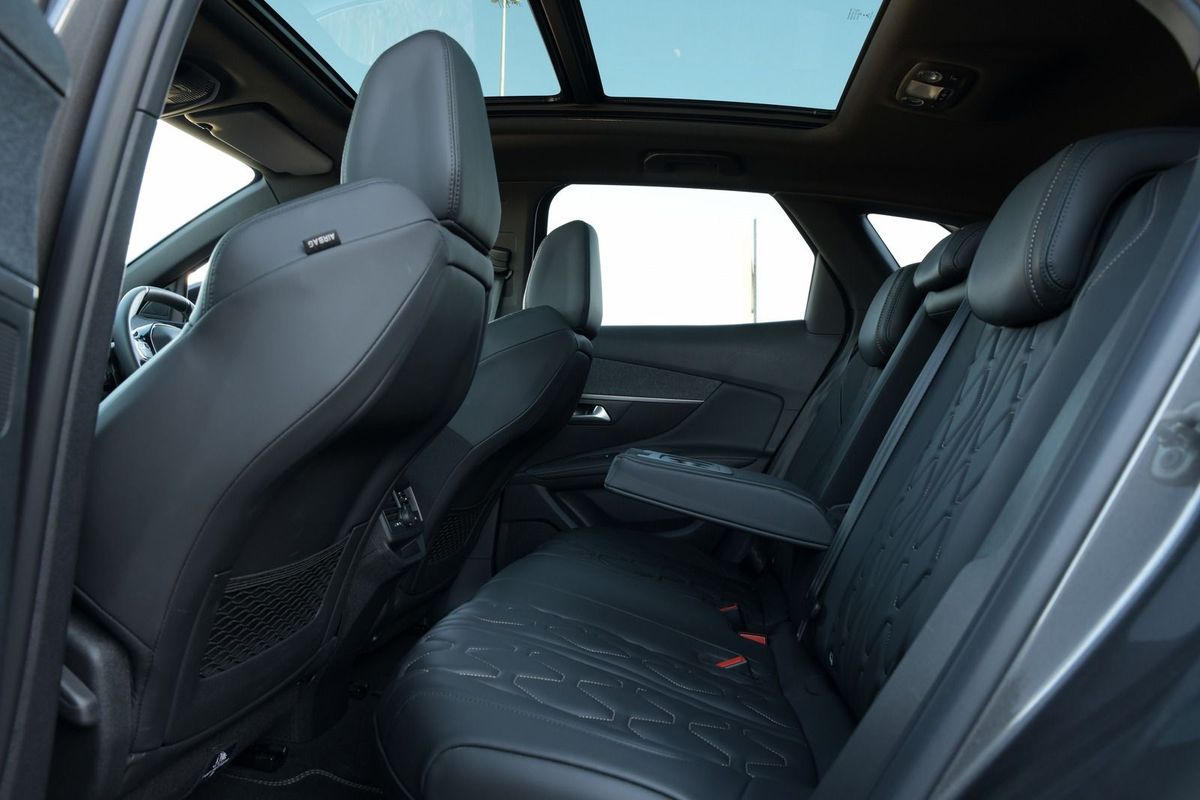
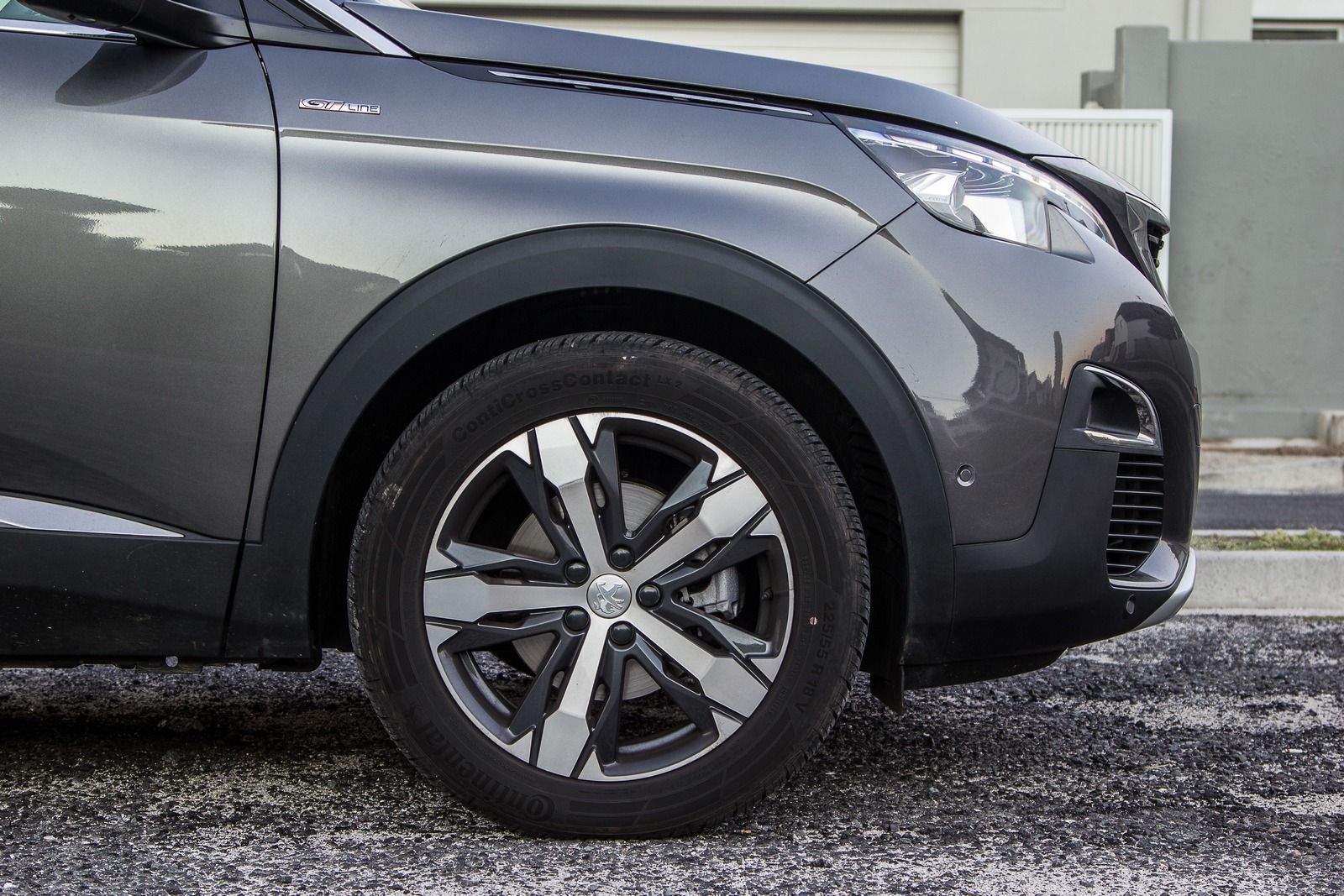
In the practicality department, there is the inclusion of an electrically operated tailgate, while the interior gets special Nappa leather trim and a full-length panoramic roof. Interestingly the wheels drop a size from 19-inch to 18-inches, which is not the norm for a halo derivative, but the plucky Peugeot still looks well-proportioned on smaller wheels.
These specifications are over and above that of the GT Line and come at a premium of R65 000 over the aforementioned derivative.
The Good
Smart interior quality
Perceived interior quality of the 3008 is excellent and incorporates a smart combination of materials.
We have reviewed a fair number of 3008s since its launch in July 2017 (click here to see them) and have been impressed by Peugeot’s progression in terms of build quality and use of interior materials. The cabin feels solid and well built and the trim materials range from a soft-touch rubber to rich textured cloth weave that runs along the door panels and clad the dashboard on the front passenger's side.
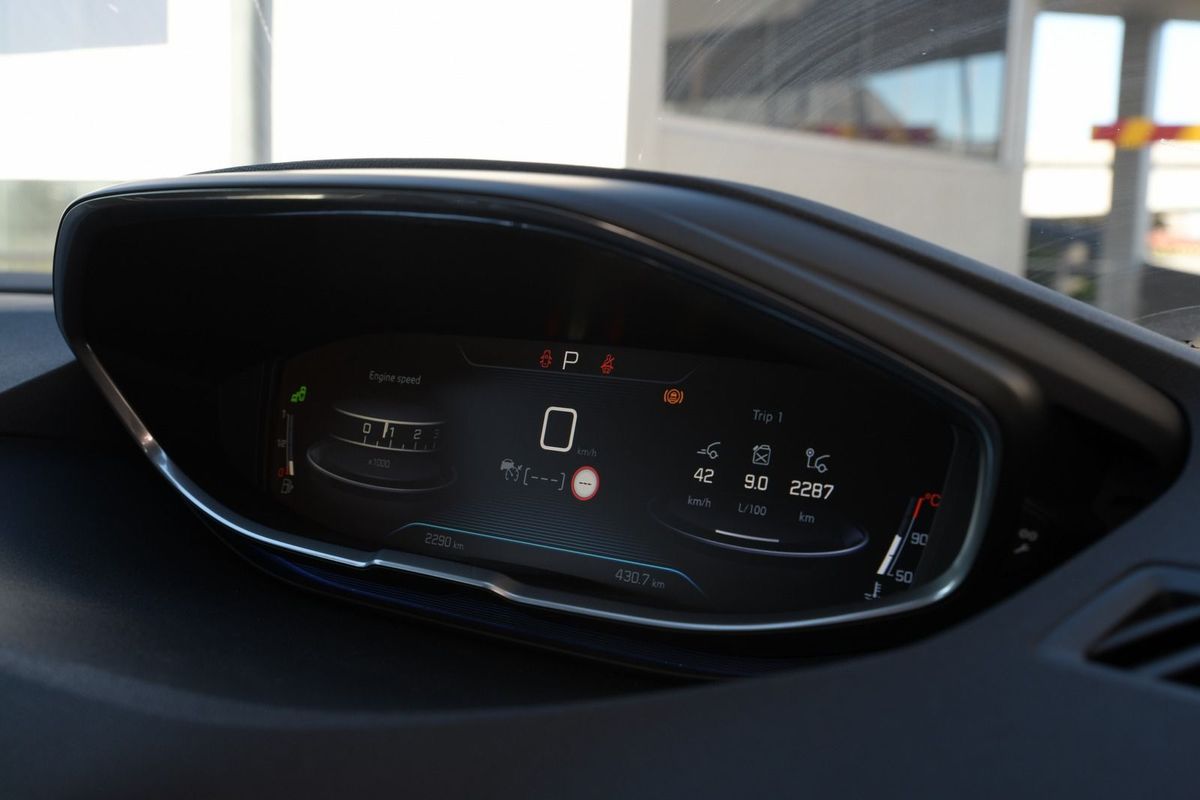
The instrument cluster can be customised to display whatever in-car information you'd like to be displayed in front of you. The resolution of the dials is excellent and the crisp blue light isn’t distracting at night. There is also the option of a bronze-coloured theme, but that doesn’t look quite as slick and modern as the blue.
Practicality
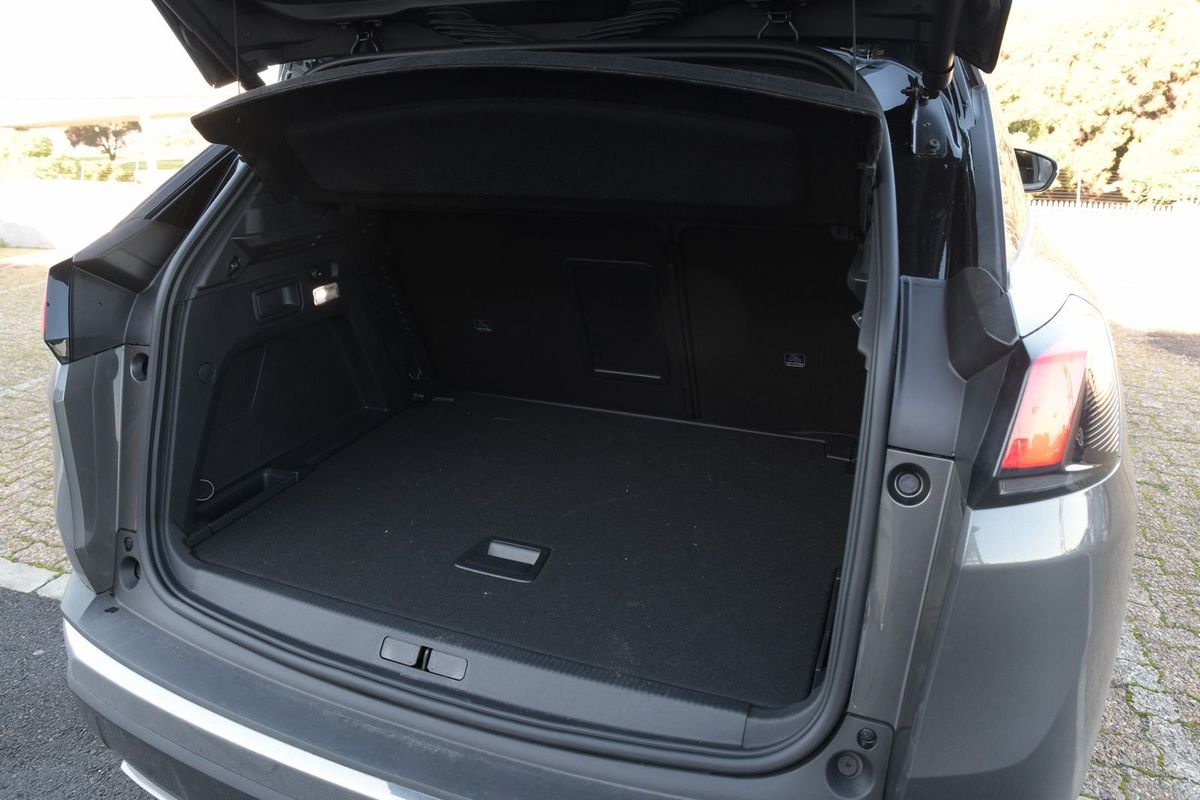
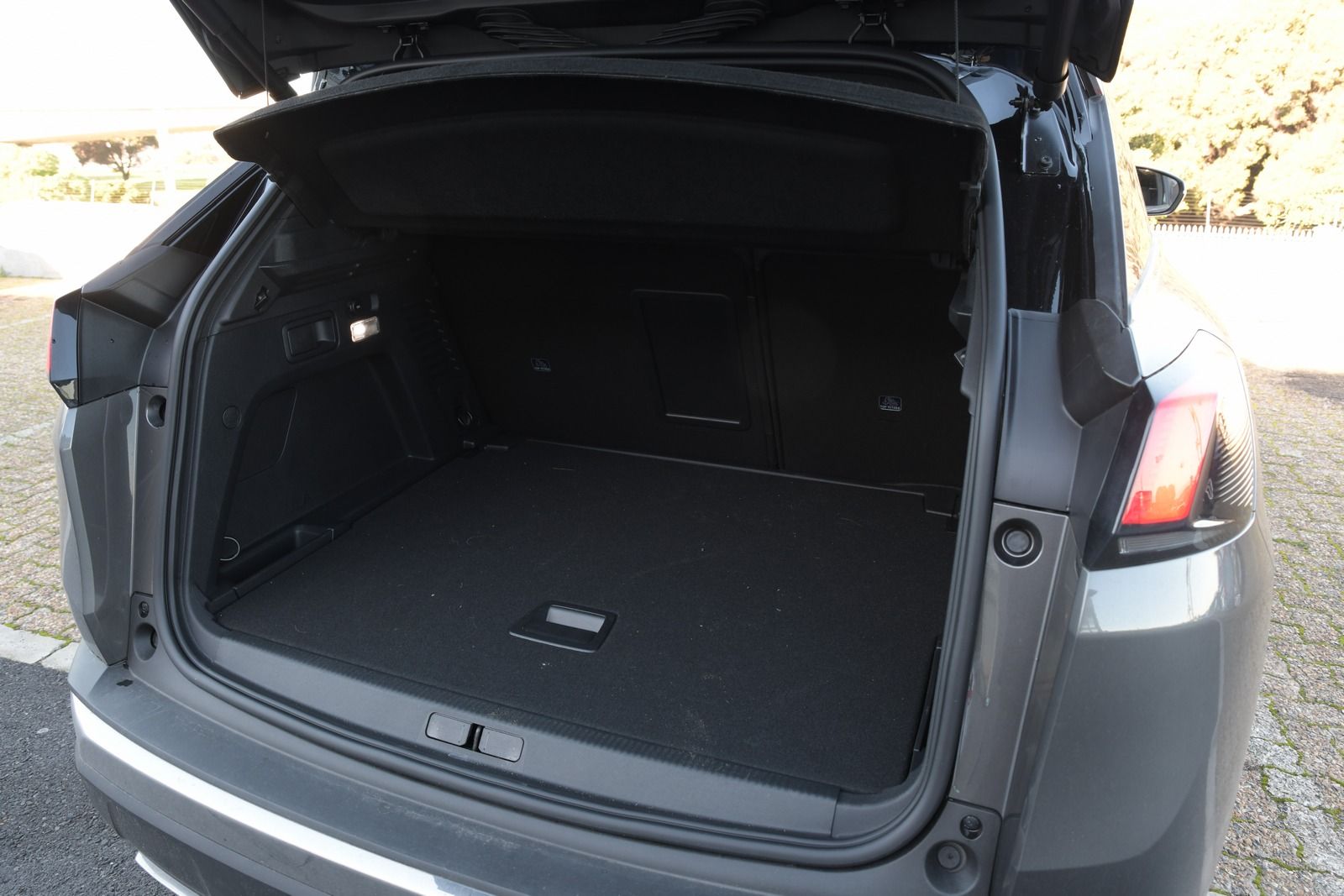
The hands-free tailgate is a useful feature and the load bay is sizable for storing a wide variety of goods.
It’s not all about design with the Peugeot 3008 as it features a plethora of practical features too. The GT Line+ derivative comes equipped with a hands-free tailgate function (so that if you find your hands occupied with groceries when approaching the vehicle, you can swing your foot under the rear bumper and the tailgate will open automatically – provided the key is in your pocket). What's more, the tailgate can be closed the same way – or you can use the key to open and close it.
There are levers in the luggage bay that allow you to easily drop the rear seatback (and a ski hatch) if you need to load longer items into the hold. Neat little bucket-style receptacles are useful for storing small things that you don’t want rolling around in the load bay.
From the pictures above, the rear legroom looks a little tight, but it’s actually the length of the chair that’s deceptive. There is certainly sufficient room for adults and the Nappa leather adds a very upmarket ambience to the cabin.
Comfortable ride quality
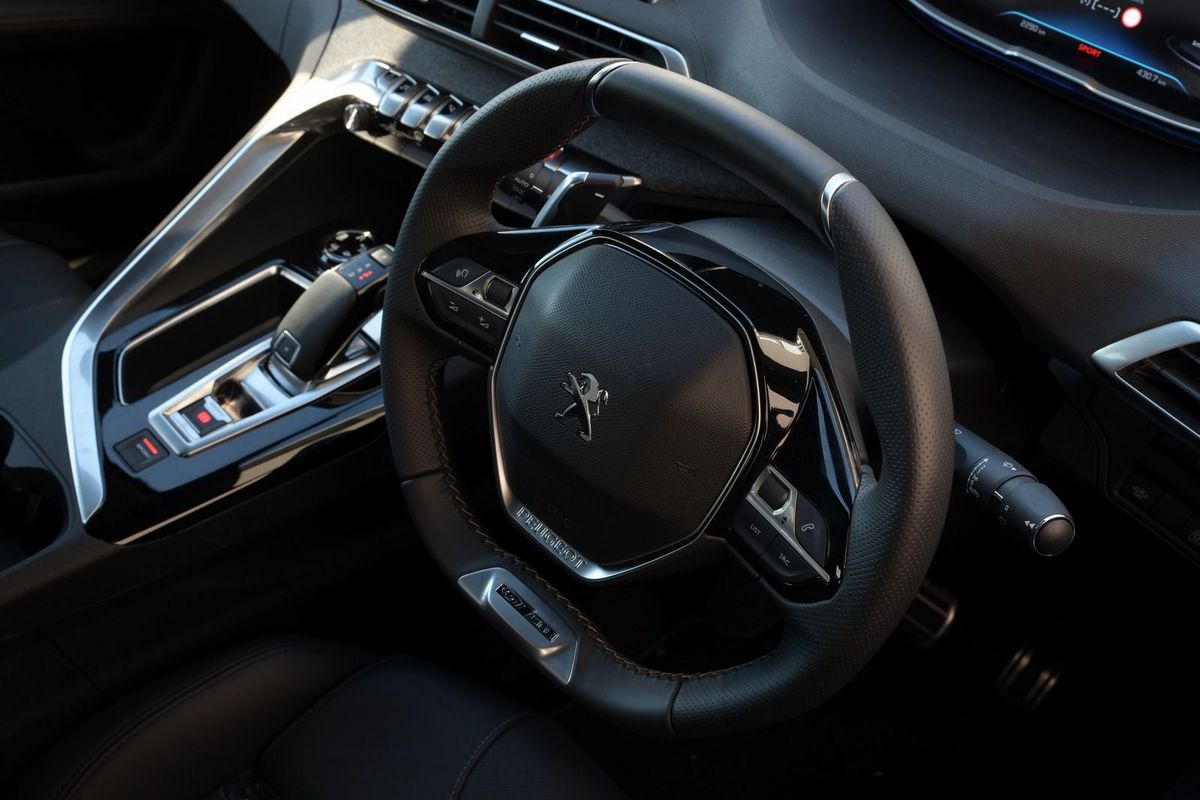
We have praised the 3008 for its excellent ride quality and admirably low Noise, Vibration and Harshness (NVH) levels. Even with a full-length panoramic roof, road and wind noise are kept well at bay. The small steering wheel, as fitted to virtually all modern Peugeot passenger vehicles (at least those in South Africa) has had the desired effect of making them feel sportier and more responsive to drive. It’s not entirely necessary in a practical family car, but the flagship 3008 is compliant when tasked with a bit of enthusiastic driving. Body roll is expected in a "high-rider" like this, but it corners flatter than most cars in the segment and with the smaller wheels, actually rides better over the bumps too. Buyers will find the 3008 to be comfortable and forgiving out on the road.
The not-so-good
It's "unlisted"
It’s a bit odd that Peugeot delivered a test car to us that has not appeared on new vehicle price lists since March 2018. You can, however still get a GT Line+ on special order, it just may take some time to get here. The standard GT Line is still available and, as mentioned above, only misses out on a few specification items.
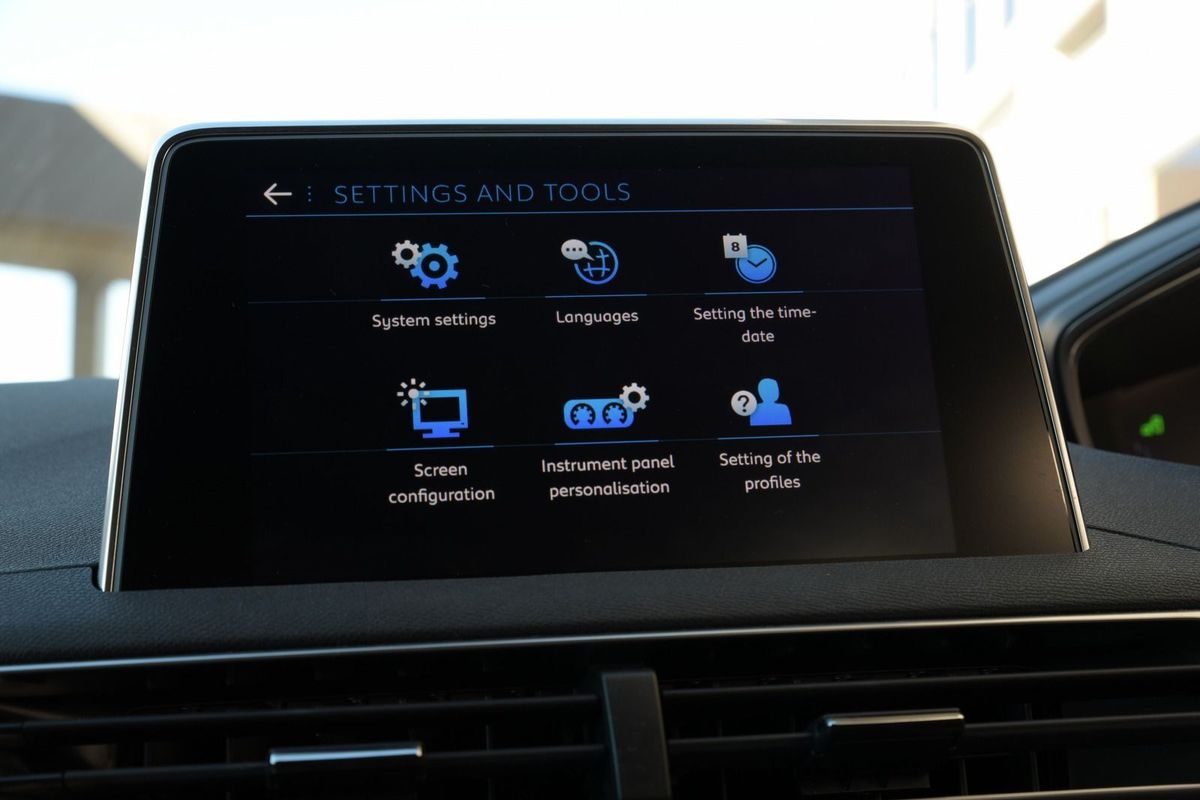
Infotainment system can be clumsy
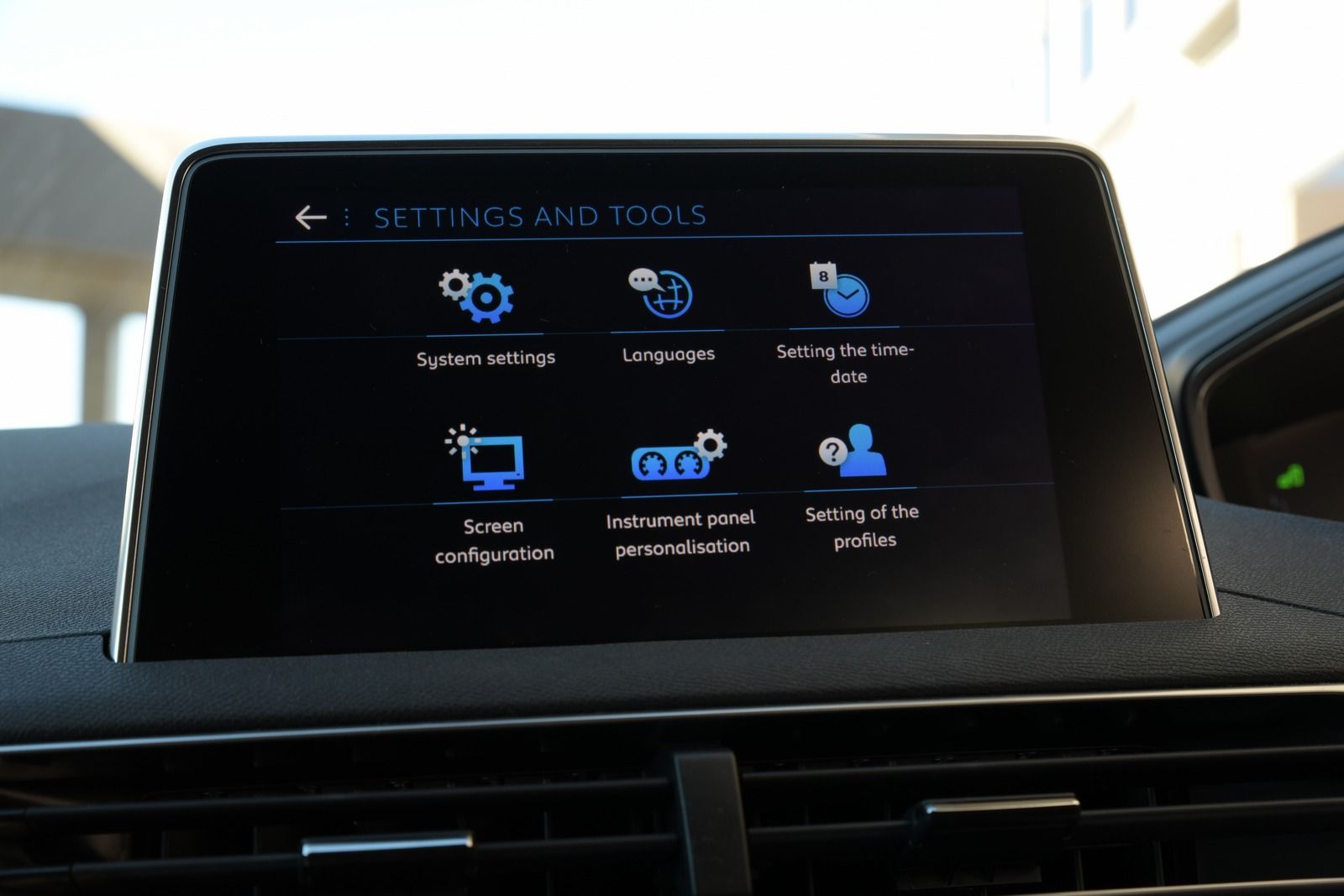
The layout of the infotainment system in the 3008 is not as intuitive as it should be, but usability improves with familiarity.
Because the fascia's largely devoid of buttons, most adjustments need to be made through the infotainment system. You stab at a toggle switch below the air vents and then adjust settings by making touchscreen inputs. The system is a little lazy to respond to quick inputs, like when you try to rapidly change the interior temperature.
The many sub-menus within the system can get a bit confusing too, but with greater familiarity, you're likely to improve the speed with which you can find settings.
Engine doesn’t quite compete at this price
Although good, the engine in the 3008 may not be as flexible as other offerings when fully loaded with luggage and passengers.
With an asking price of close to R600k, the GT Line+ competes with a handful of strong competitors, all of which boast powerful and torquey engines. The 3008 range currently only consists of turbopetrol units. The unit powering this GT Line+ is a 1.6-litre turbopetrol that produces peak outputs of 121 kW and 240 Nm.
While the powerplant performs adequately on a day-to-day basis when taxed with a light load, come holiday time, when you’ve brimmed the loading bay and loaded the entire family aboard, the engine's lack of torque is likely to become an issue. The competition’s turbopetrol motors all pack more torque, and power.
Verdict
An excellent product overall, but GT Line and Allure derivatives arguably offer greater value for money.
The Peugeot 3008 GT Line+ is probably not the pick of the 3008 range – the GT Line or Allure derivatives, which are powered by the same turbopetrol engine, offer much better value for money. There are some nice-to-have features, such as the panoramic roof and electric tailgate, and the safety systems certainly sweeten the deal, but they all inflate the flagship 3008's list price.
Peugeot's small dealer footprint in South Africa and the negative perception of its service quality still haunt the brand. It will take some time for the 3008 to win over local buyers, but if the French marque can successfully allay consumer fears, then the 3008 will realise its true potential. Afterall, it's an excellent, premium product that stands out in a crowded segment.
With facelifted versions of the Mercedes-Benz C-Class and Audi A4 available in, and en route to, South Africa, much is expected of their upcoming rival, the all-new BMW 3 Series. We don't know what the G20 will ultimately look like, but we can tell you what BMW's latest business class sedan is like to drive. Our Irish correspondent Neil Briscoe drove a 330i prototype at the Nurburgring.
If a car can be driven fast with ease on a demanding race track, then it’s probably, within a certain margin for error, a good car. If a car can be driven at high speeds on a freeway, in comfort and comparative silence, then it is almost certainly a good car. If a car, one car, can do both of those things on the same day and feel equally good then it’s probably the new BMW 3 Series.
There can be few tracks that demand more of a passenger car, in terms of outright handling ability and balance, than the Nurburgring.
This is the G20-generation 3 Series. It is the 7th iteration of BMW’s business class sedan since the original was launched way back in 1975. So, the 3 Series has a lot of history to live up to, but its problem is the present. Right now, demand for sedans is generally falling, certainly in the 3 Series’ biggest markets of Europe and North America. Customers are favouring crossovers and SUVs. Indeed BMW is feeding that addiction itself, by creating a huge family of SUV models — from X1 to X6, with a super-luxury X7 well in the works.
Some definite detail differences
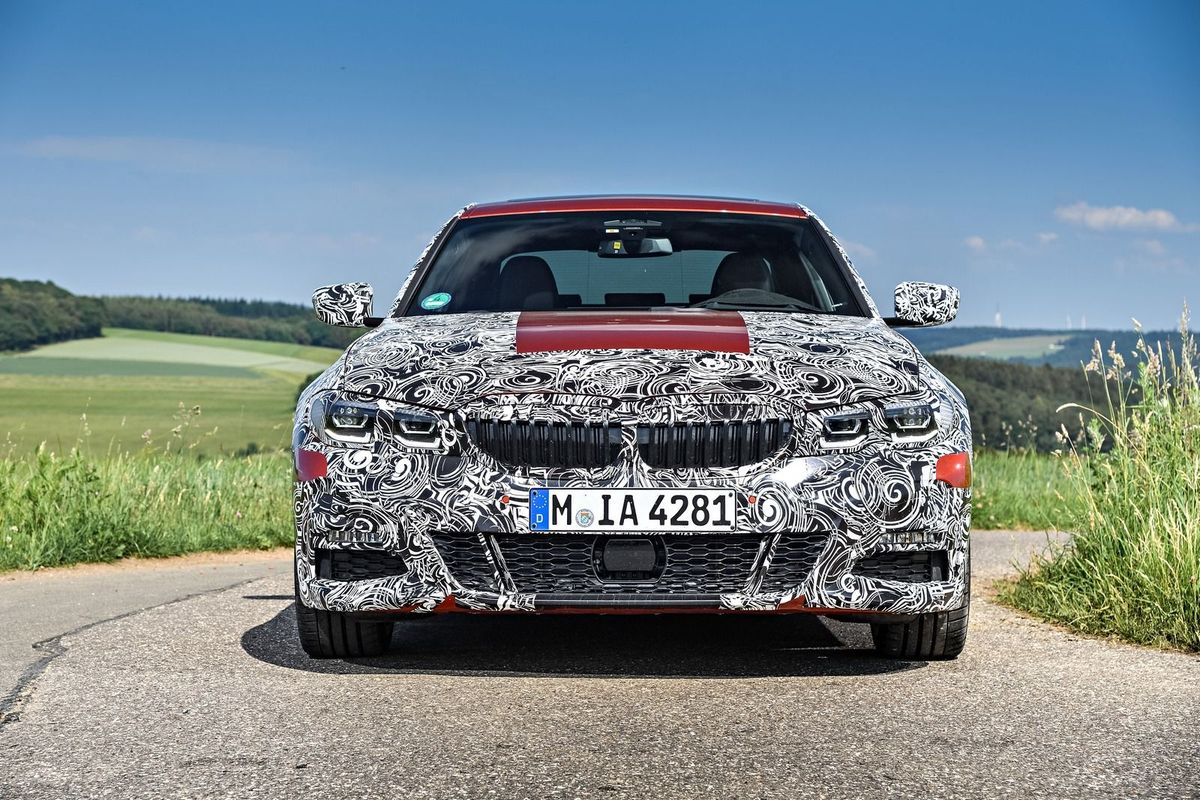
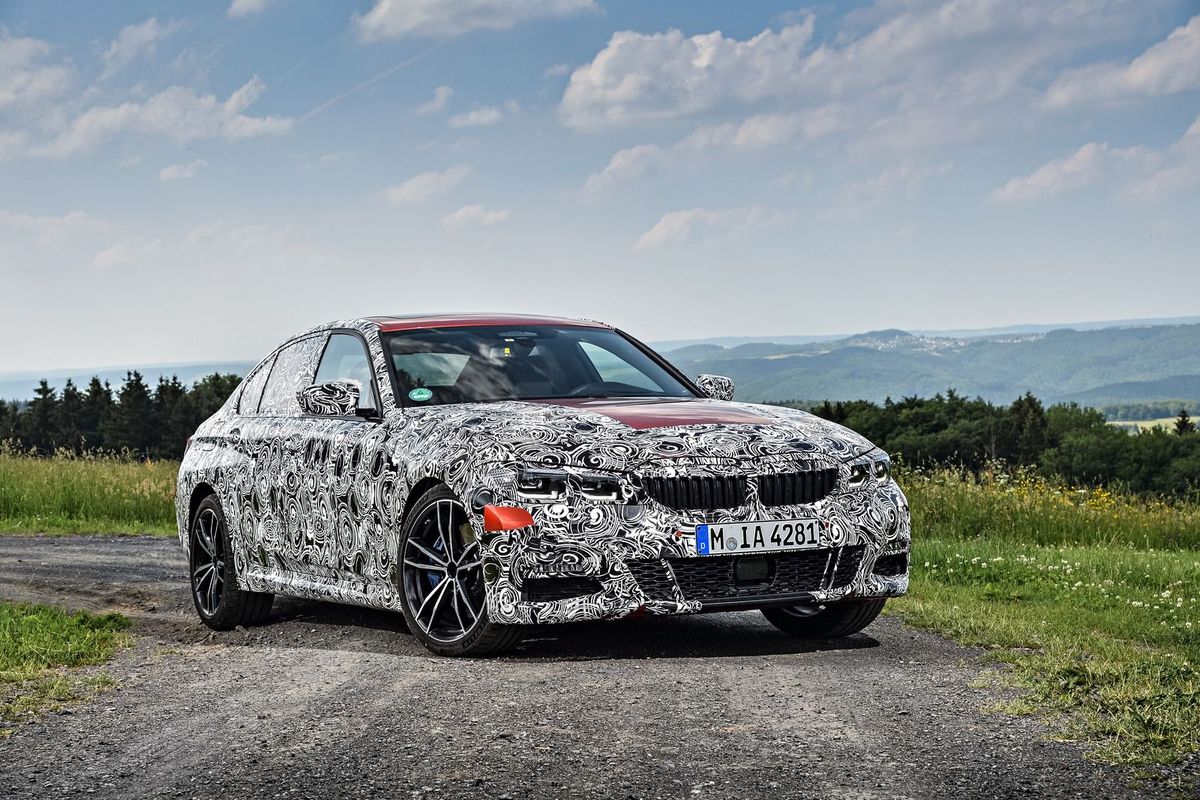
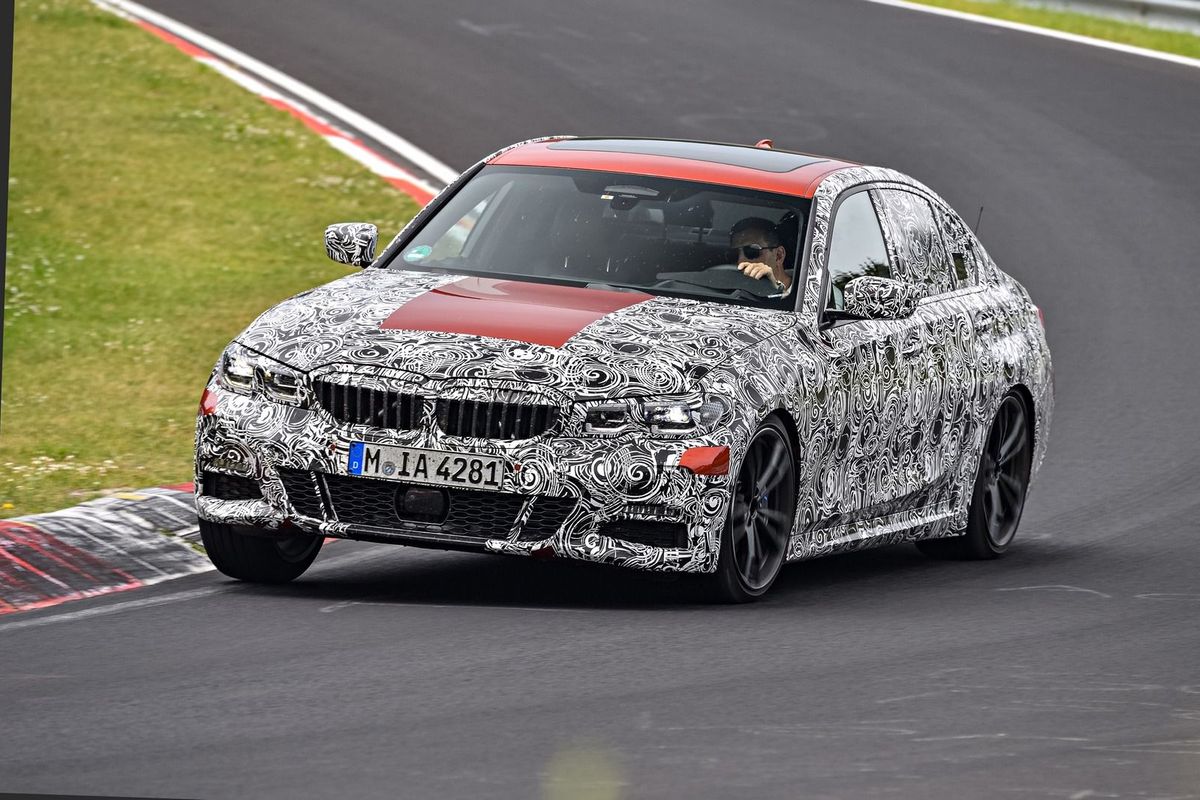
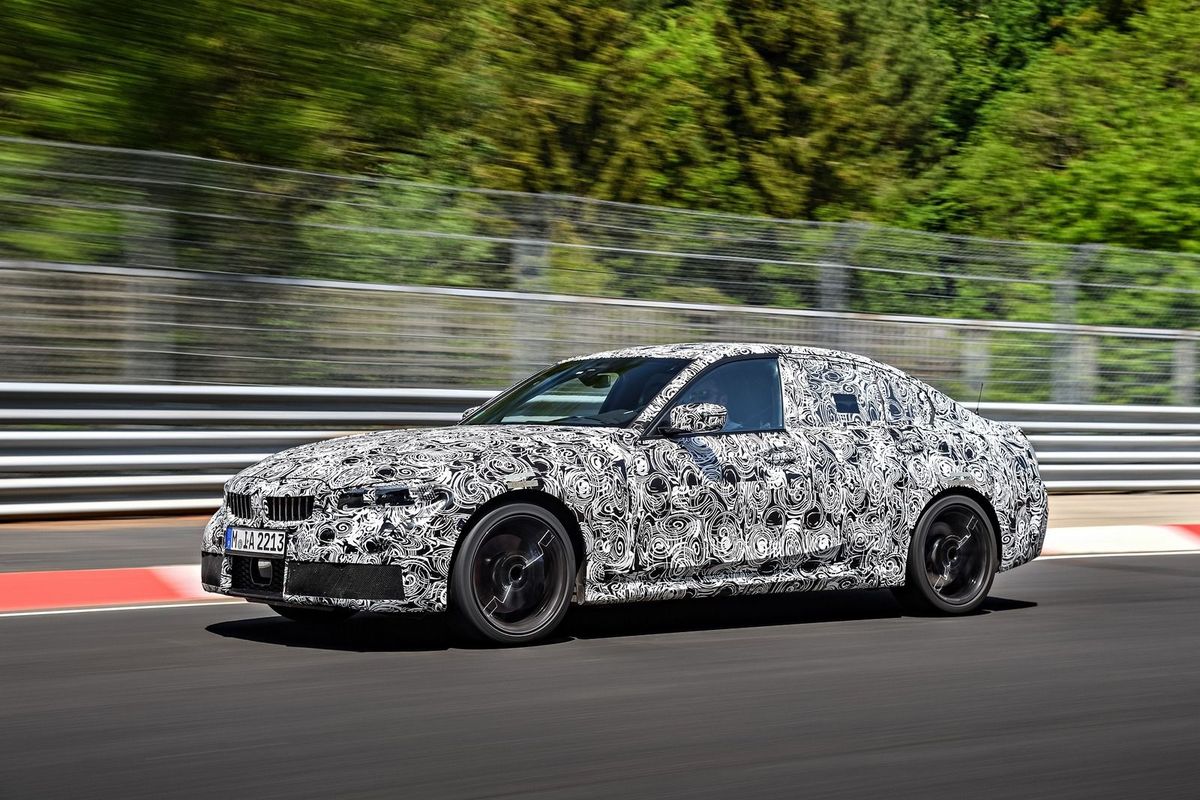
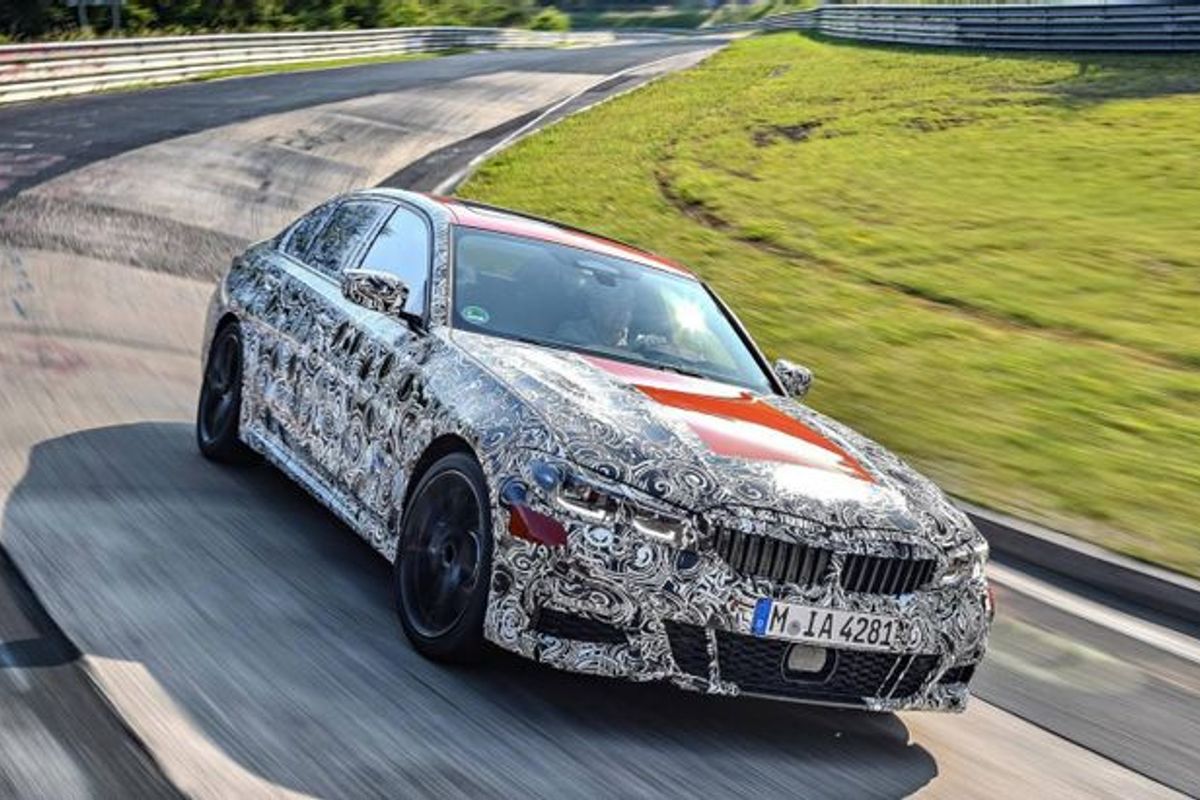
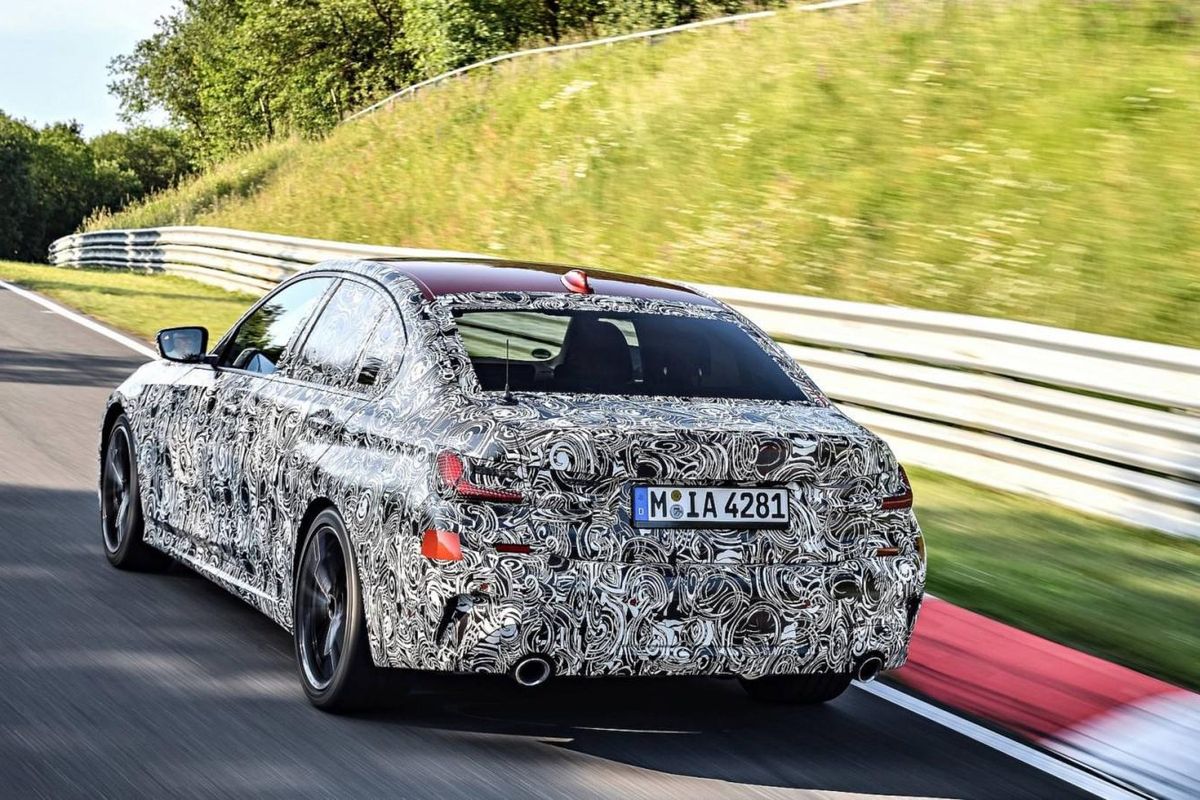
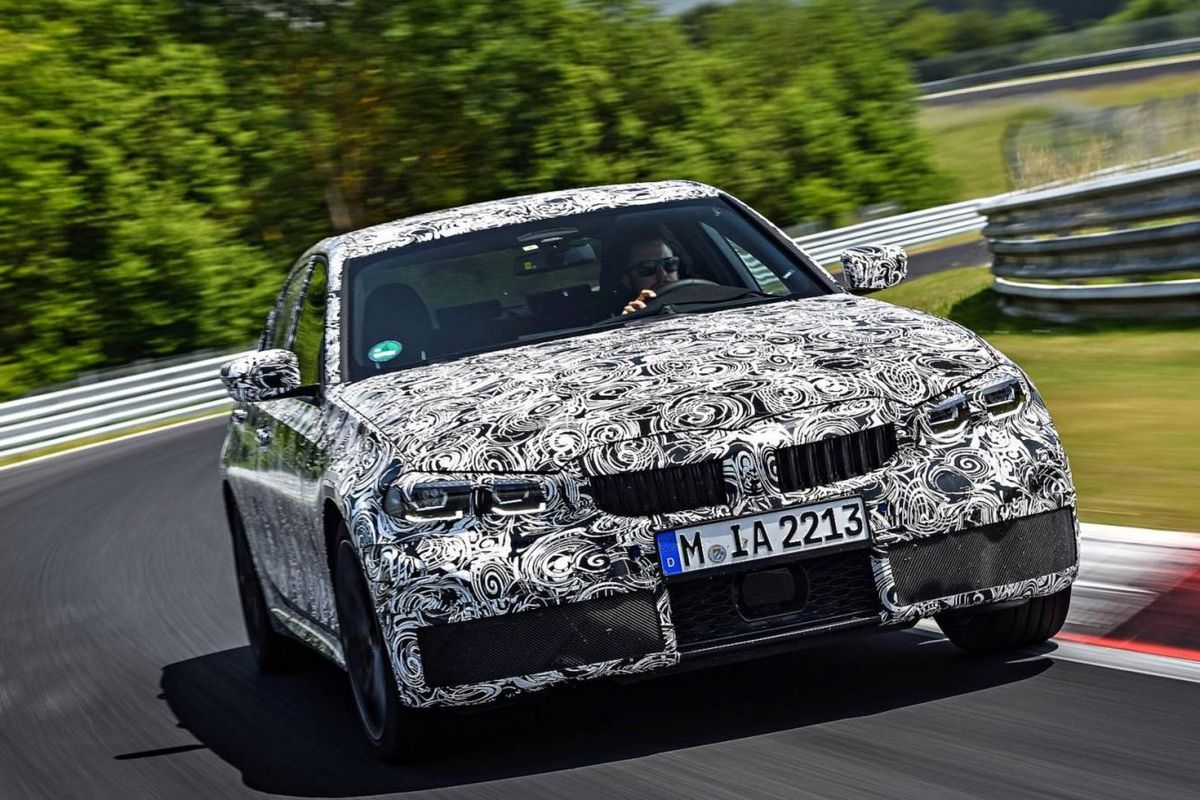
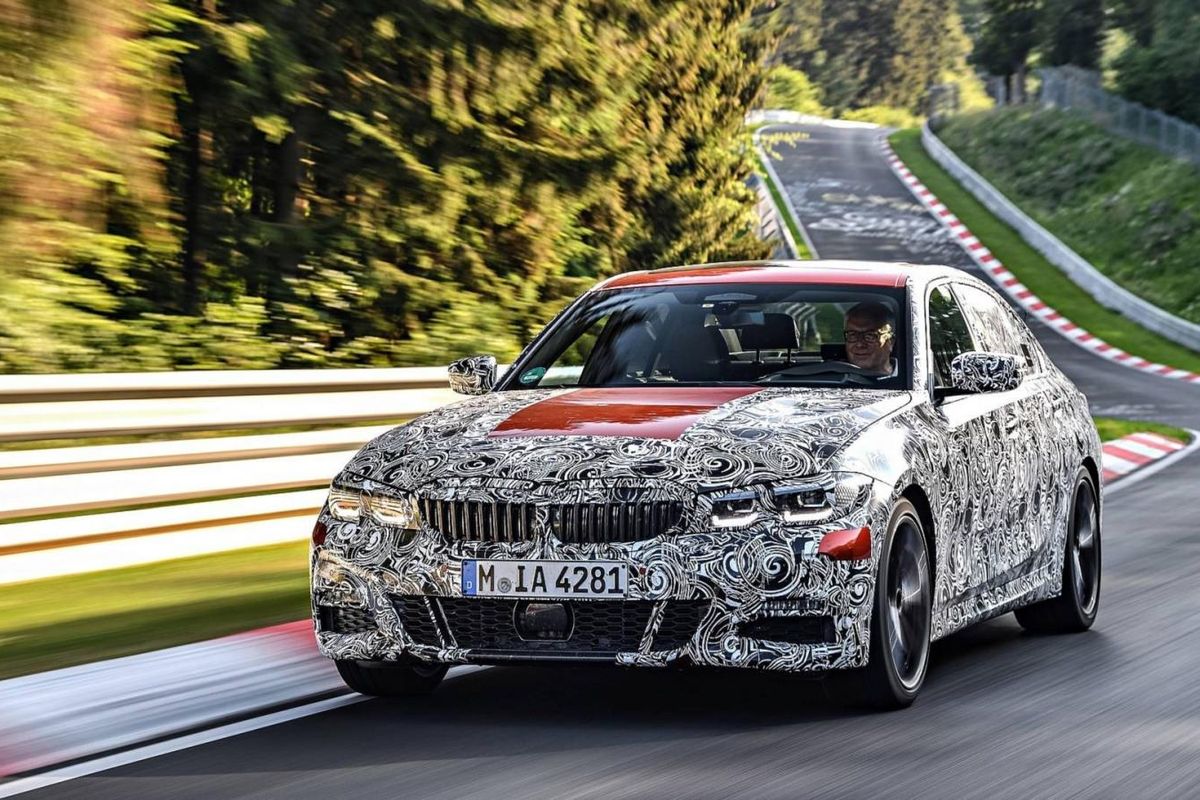
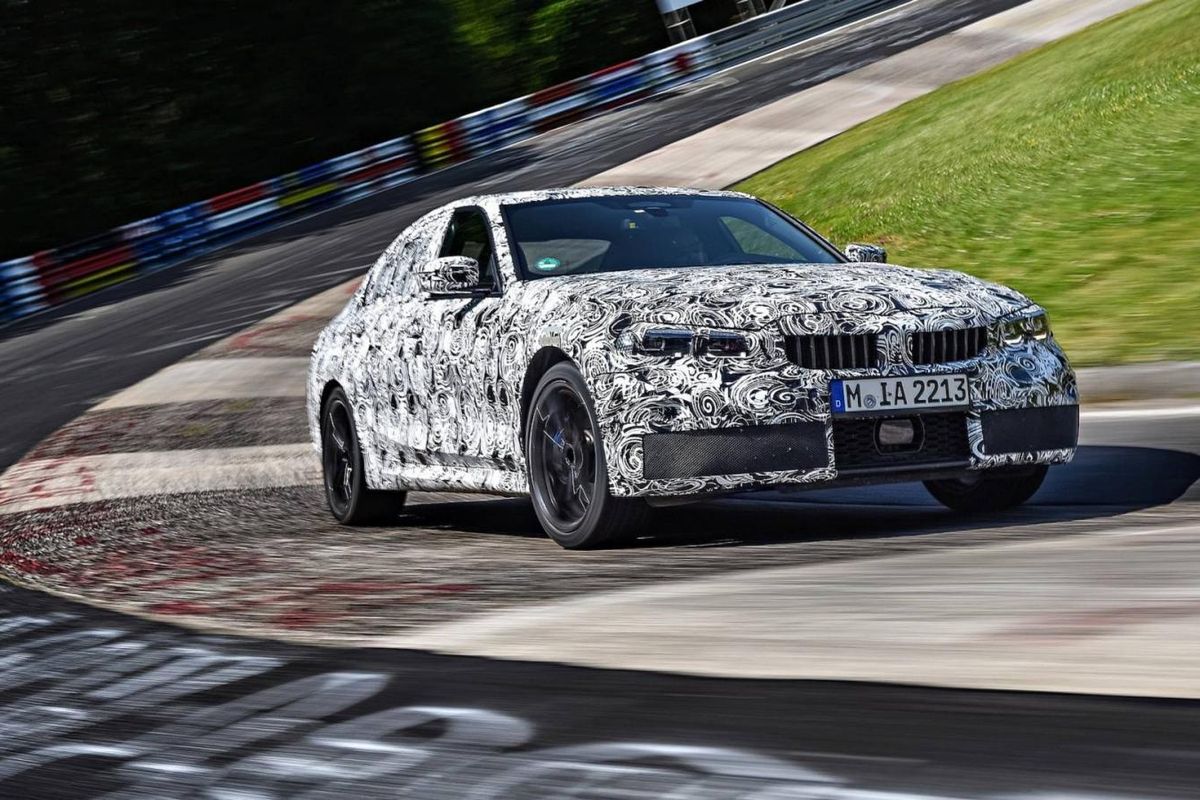
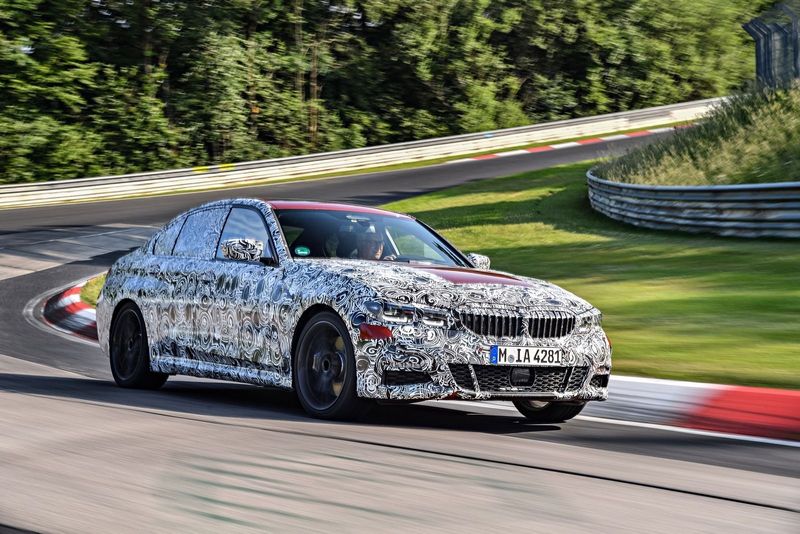
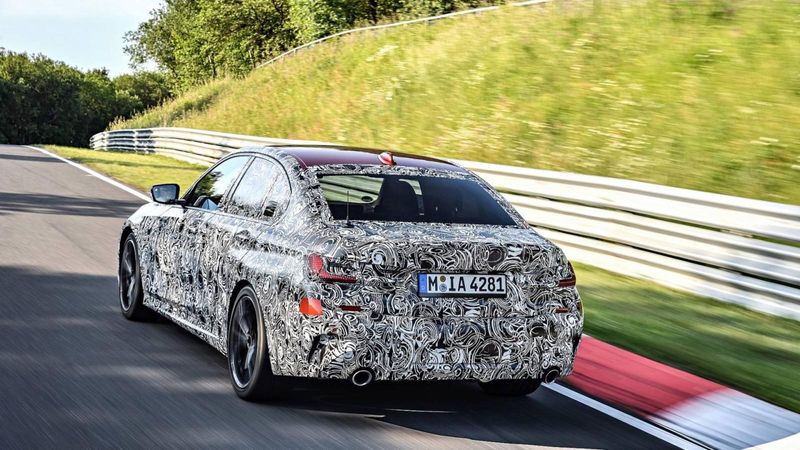
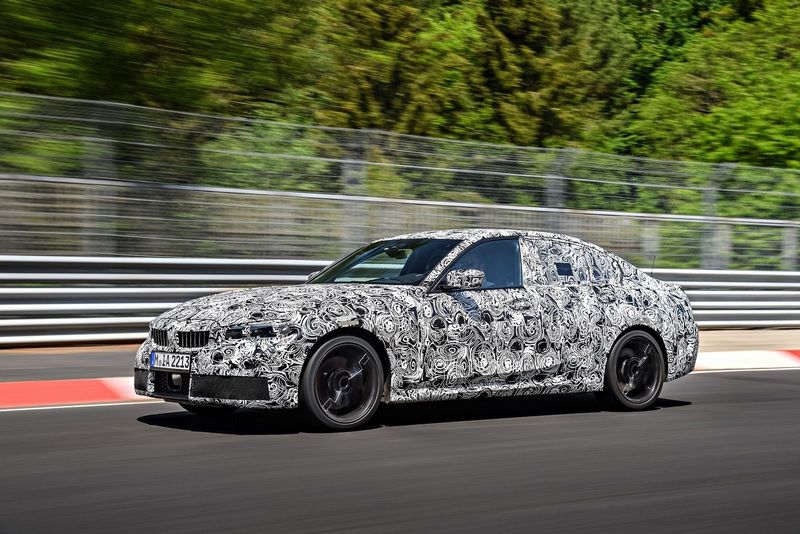
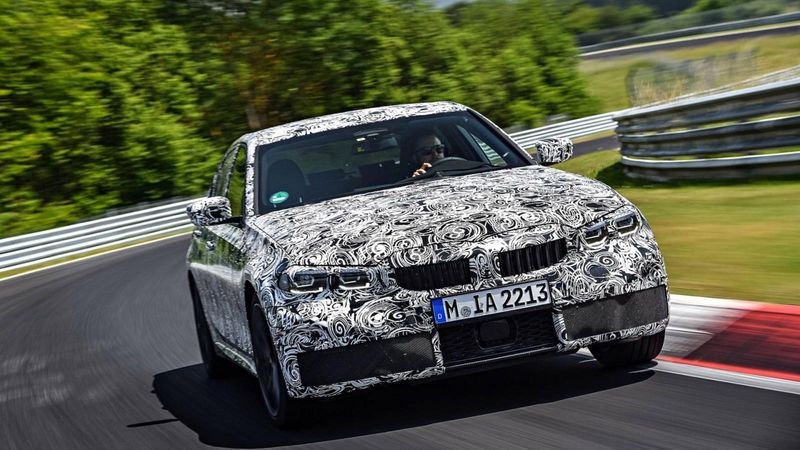
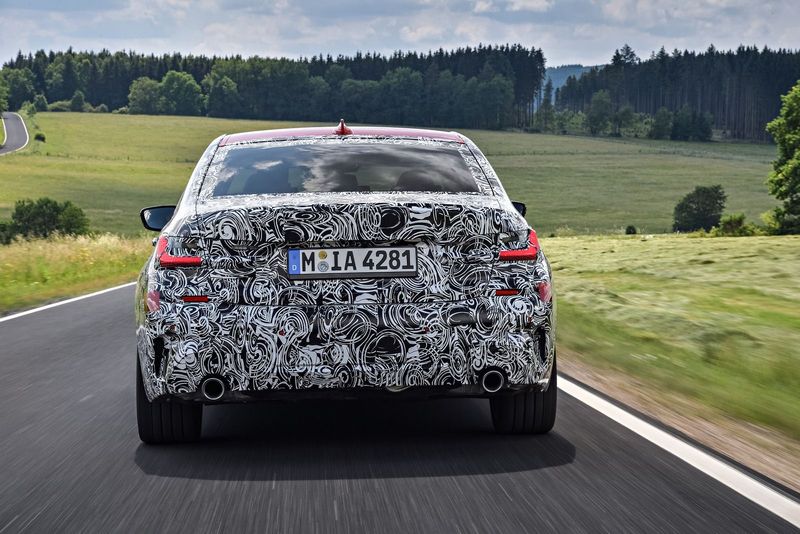
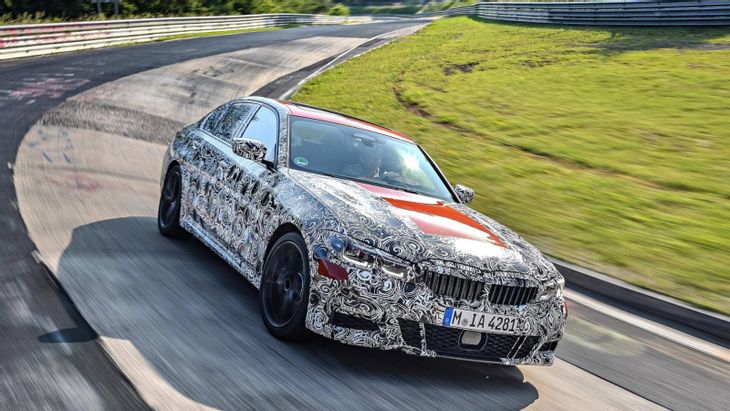
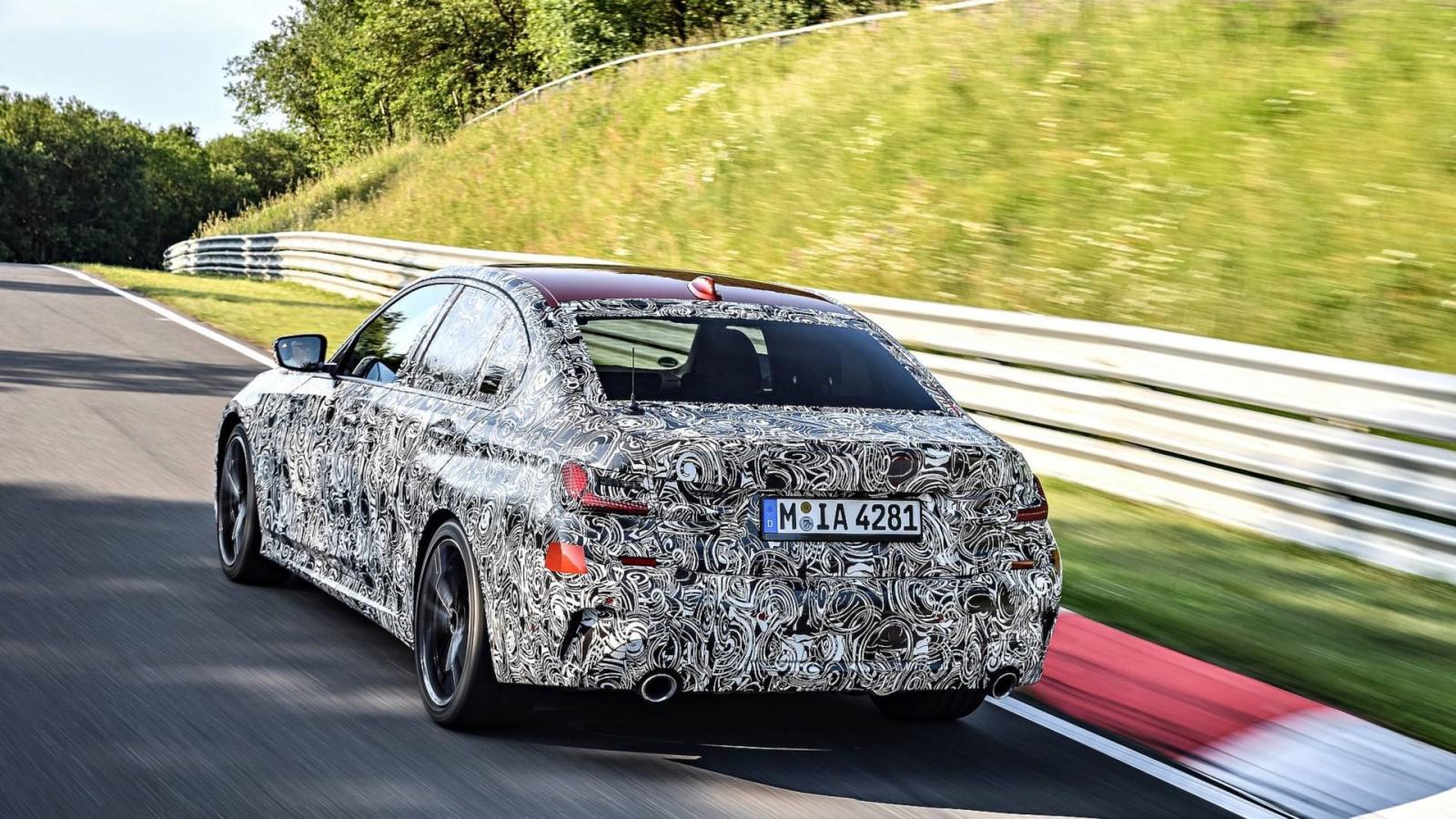
Into that modern world comes the new 3 Series, with its classical sedan styling and proportions. Not that we can tell you a lot about the styling, for now. All of the early prototypes we drove were covered in camouflage tape that, even at close range, made it hard to pick out exactly what the car looks like.
The G20-generation 3 Series has typical, yet undoubtedly well-proportioned, sedan design features.
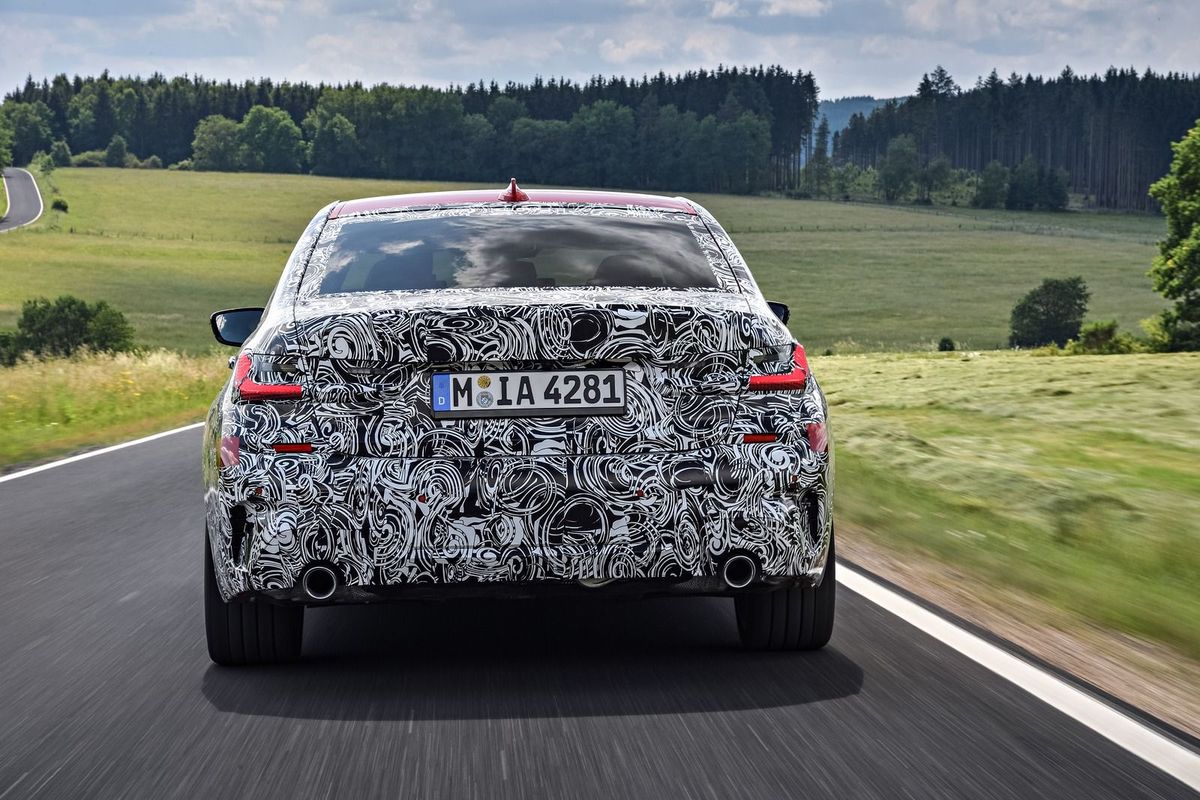
When you step back, it looks very much like a 3 Series should — long bonnet, 4 doors, short boot — but there are some definite detail differences. The rear of the car looks a little more sculpted than before, and the new headlights are far slimmer, narrower and more high-tech than those of the old 3 Series.
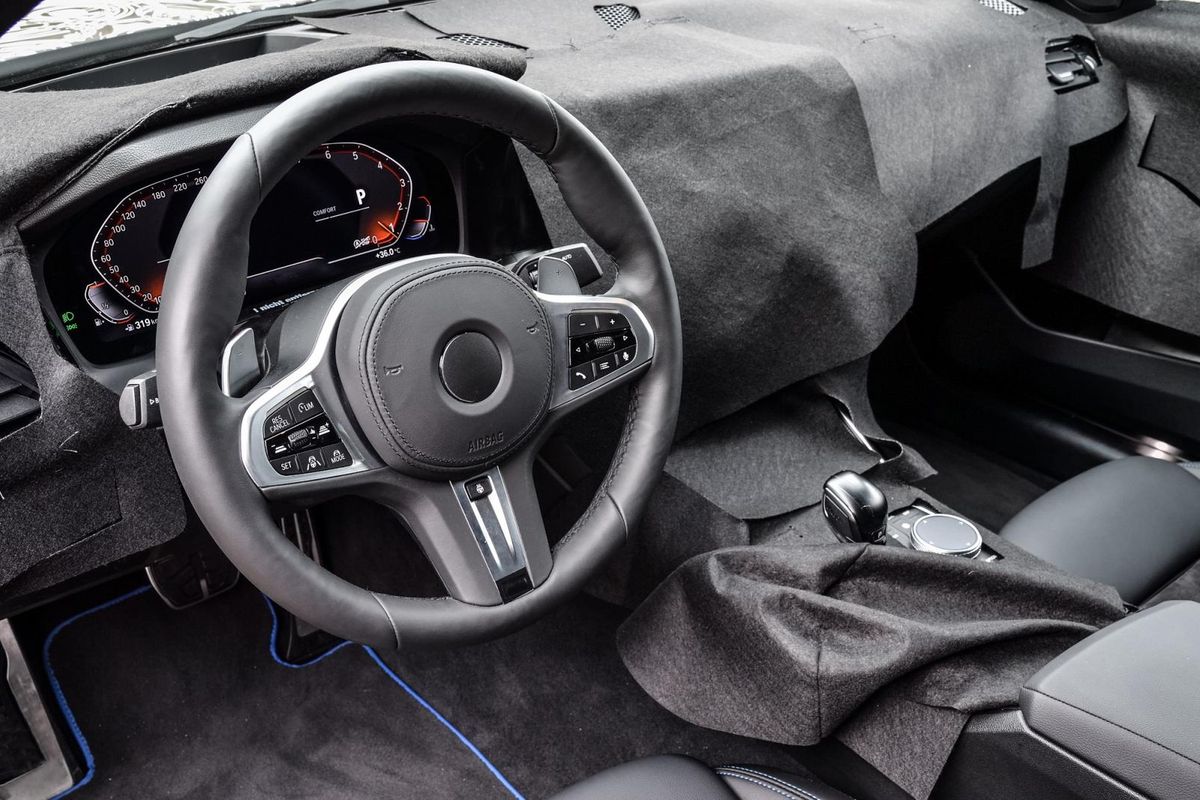
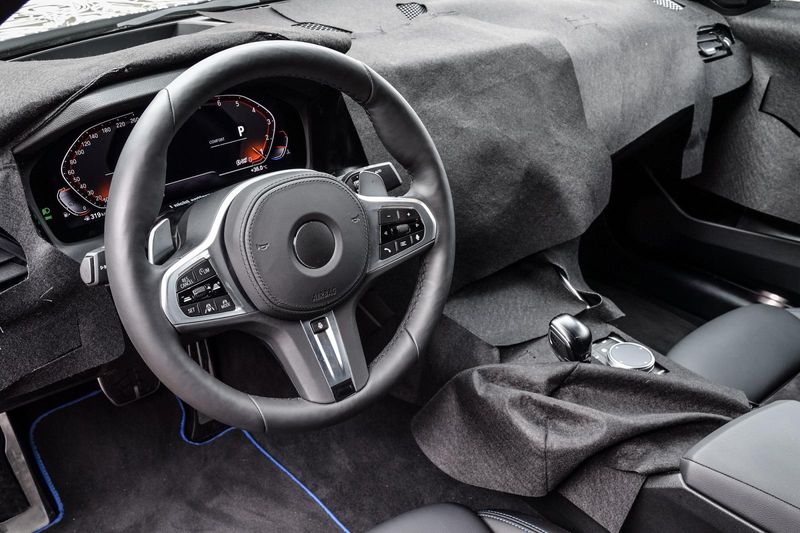
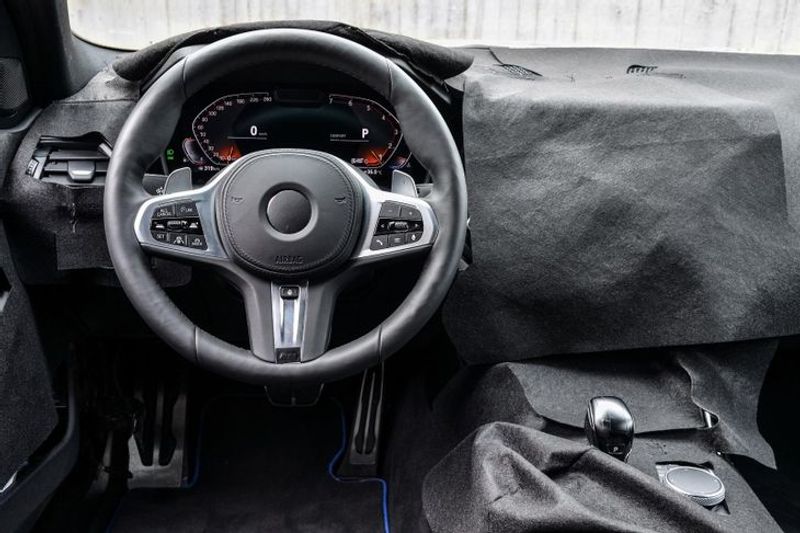
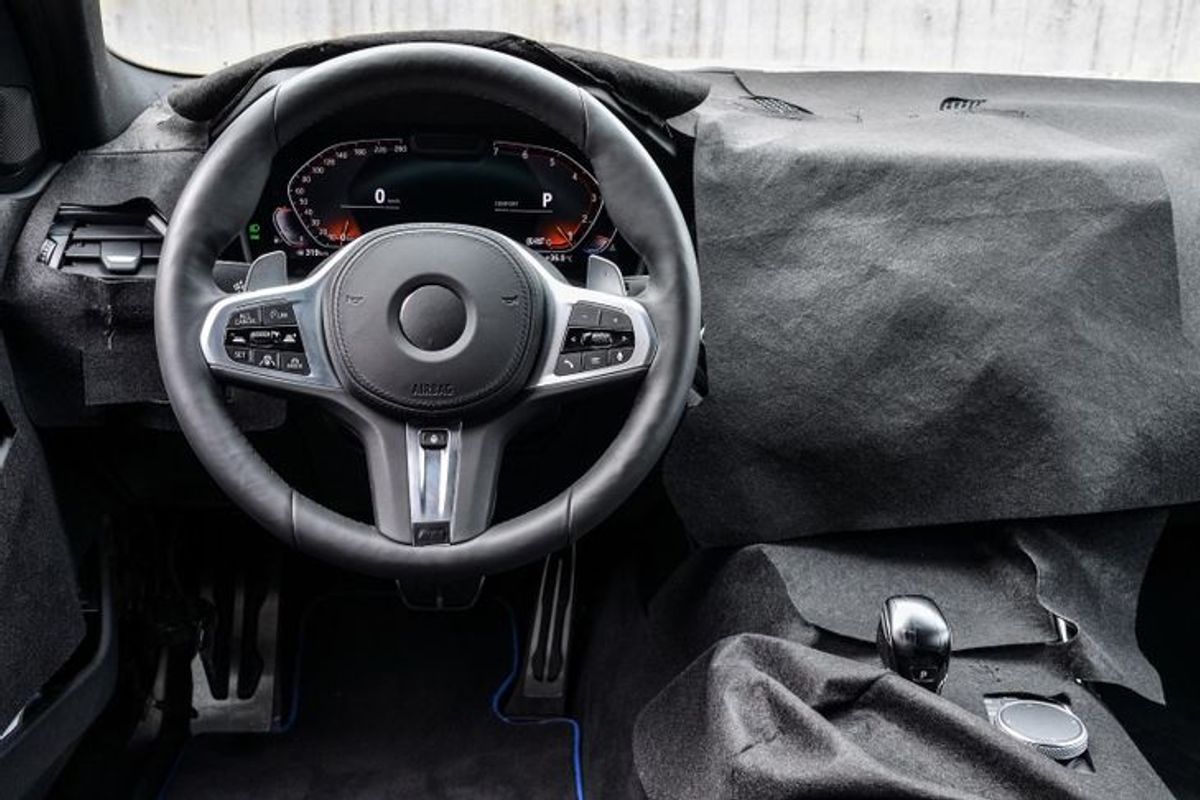
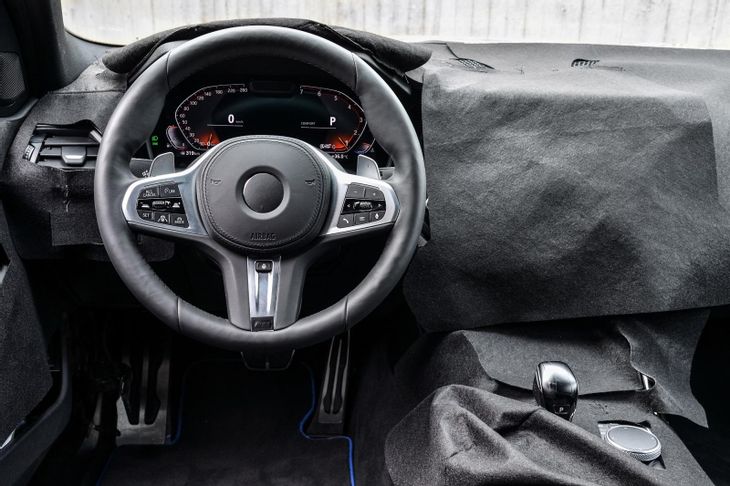
The cabin has seen some surprisingly big changes, however. Again, we’re only seeing small details here, as most of the interior of the test car was covered with thick felt fabric to keep unauthorised eyes away, but there are definitely new all-digital instruments. These now push the main dials for speed and engine rpm out to the edges of the display, leaving the centre of the screen free for navigation and trip computer details, and they have a design that seems retro… a little bit ‘80s, actually.
Our correspondent notes 80s Bimmer cues to the cabin design, which we think hints at a fascia that is angled towards the driver.
In the centre stack, there’s the familiar iDrive infotainment screen and the usual rotary controller, but the visual details are a little different, with new switches and buttons, and even on these early prototypes, very high levels of quality. Occupant space, as ever, is fine — it’s not a particularly roomy sedan, but it’s good by the standards of its class — and comfort levels are very high.
Hydraulic suspension stops
Those comfort levels will be helped by a major change to the chassis: BMW has equipped its business class sedan with hydraulic suspension stops. These replace traditional solid rubber bump stops that can cause a jarring sudden stop to suspension movements on poorly surfaced roads. Instead, when the 3 Series’ suspension reaches the limits of its travel, it pushes a piston into a cylinder filled with hydraulic fluid, which absorbs the worst impact, and allows the suspension a more gradual, comfortable recovery to its normal position.
The dynamic-acting hydraulic suspension stops provide the new 3 Series with better bump absorption.
Does it work? Mostly, yes, although all of the cars we were driving were fitted with sportier, firmer M Sport suspension, which is 10-mm lower than that of a standard derivative, which meant that, on very bumpy stretches, we were still feeling some sharp, sudden suspension movements. However, it’s likely that a standard 3 Series would perform better in such conditions.
If you’re buying an M Sport version, you can also specify an active rear differential, which is similar to the one used by the high-performance BMW M3, but in a lower state of tune. It certainly helps the 3 Series to find extra grip and traction, even in the very wet conditions we were testing these cars.
Performance aficionados will relish the opportunity to savour the active rear differential on a non-M BMW model…
So far, all we’ve driven is the 330i model, which uses BMW’s 2.0-litre 4-cylinder turbopetrol engine. It’s being updated for the G20 model, and will get an extra 5 kW of power and an extra 50 Nm of torque, which, given the current version's figures, suggests the new derivative has peak outputs of 190 kW and 400 Nm of torque. The whole car is around 55 kg lighter than before, which augers well for improved fuel consumption and emissions (BMW has not yet released specific figures, however).
Much-improved steering feel
Does it still drive as a “proper” BMW should? It sure does… The biggest advance has been made in the steering, which is light and accurate but, for the first time since BMW switched to electric power-assisted steering, it has proper road feel and feedback. In fact, the steering feels very like an old-fashioned hydraulic power steering setup, transmitting so much information of what’s happening under the front tyres back to your hands. It makes the G20 3 Series feel exceptionally confidence-inspiring on difficult roads, simply because you always know how much grip the car has at the front.
While the new 3 Series' steering wheel is very reminiscent of those fitted to the X3, note that the speedometer and rev counters are on the outer edges of the display.
On highways, refinement is impressive, especially the suppression of wind and tyre noise, so for all its driver engagement, the 3 Series is still a comfortable tourer.
On the feared Nordschleife
However, there is no sterner test for any car than a lap of the famed Nürburgring. Flowing across the Eifel Mountains of north-west Germany, the ‘Ring has for decades been both famous and infamous — a true challenge of both car and driver. And on our drive, it was pouring with rain — almost monsoon conditions.
Although it is difficult to distinguish finer features through the camouflage, it is safe to expect that the tail light clusters will be a lot more distinctive than on the current car.
The 330i didn’t miss a beat. Comfortable premium saloon it may be, but switch the 3 Series into Sport+ mode and it makes the Nürburgring, even a wet Nürburgring, its playground, happily sliding its rear out when you want to; happily finding grip and piling on speed when you want to do that. It’s a hugely impressive performance, and one of those rare cars that can do comfort or race track, and feel equally good at both. We can’t wait to try the finished product after the Paris Motor Show.
What do you do if your newly-bought car presents a serious or recurring problem? What are your options… and where can you turn if the dealership, which you bought the vehicle from, doesn't sort out the issue? Juliet McGuire sheds some light on the issue.
Buying a new car is an exciting journey preserved for a fortunate few. There is so much subtext to a purchase of this nature… it says you’ve made it, that you’re successful, you’re independent. It’s understandable that if things go wrong with your shiny new acquisition, frustration levels will rise, sometimes to emotionally-volatile levels. What makes things even more irksome is that there seems to be mixed messages out there about what your rights are if "you've bought a problem car".
Fellow #CarsAwards judge, Wendy Knowler, is a consumer journalist with a lot of experience in this field. Chatting on her Consumer Talk show on Cape Talk, Wendy says people tend to assume problems only occur with used cars and so frustration is immense when it happens to someone who buys one “out of the box.”
The role of a warranty
All new cars come with warranties. In simple terms, a warranty is a "promise" by the manufacturer that if its product develops a fault within a certain period or mileage limit (there are other limitations too, such as failures caused by abuse or wear and tear), it will cover the cost of replacement parts and/or repairs if they're carried out by franchised workshops. In other words, a warranty is a manufacturer-backed insurance policy that provides cover against a range of failures or malfunctions that may occur after you've taken ownership of your vehicle. Remember, if you abuse your car, or allow unauthorised parties to work on (or modify) it, you will void the warranty.
So what should you do if the dealership you bought the car from fails to fix a problem (or problems)? Before taking drastic steps, such as seeking legal advice, make sure you have voiced your complaint(s) to someone in a senior management position at the dealership. If the problem is subsequently not resolved and you've exhausted all your channels at the dealership (which should escalate problems to the firm whose products it sells and maintains anyway), then contact the car's manufacturer/importer.
From Dealer to Manufacturer
Most car manufacturers' contact info (such as contact centre telephone and fax numbers, e-mail addresses etc) are listed on their respective local websites. A few, such as Volkswagen, offer online chat functions. Look out for the customer care contact details and make note of reference numbers. This is where the buck should end; if problems are addressed effectively, your car will either be repaired or, in rare cases, replaced (explained below). If you are still not satisfied with the outcome of queries to the manufacturer/importer of your vehicle, only then should you contact the Motor Industry Ombudsman, even though a potential resolution might take some time.
But what about the CPA?
Confusingly, the South African Consumer Protection Act (CPA) doesn’t deal with car complaints (even though it was set up to protect the interests of all consumers). The website describes a consumer as any person to whom goods and services are marketed, who is a user of the supplier’s goods, enters into a transaction with the supplier or service provider of any services and products. One would think: "Surely this would include a car buyer too?" Well no, not exactly. The rights of a consumer buying or servicing a car are outlined on the website, but you cannot lodge a complaint here.
You, in fact, have to lodge your complaint with the Motor Industry Ombudsman of South Africa, which is the "independent dispute resolution forum for the South African Motor Industry and its Customers". The operative words here are "the motor industry". This forum is not just for consumers but rather to protect manufacturers and dealerships too. The reason is that a car is such a high-value item and so both sides of the sale need protection, “The MIOSA is not a consumer council that automatically sides with the consumer. In essence, it represents both industry and the consumer. It acts as a referee between the industry and the consumer and among industry participants. It utilises good engineering practice, customer care practice, legal practice, and fairness as a basis in its deliberations,” its website says.
Refunds and Replacements a last resort
The rights of the consumer remain the same as those of the CPA, which stipulate that a consumer reserves the right to choose a refund, a repair or a replacement within 6 months of a purchase. The difference with cars, however, is that it is very seldom that you will be given a refund or a replacement vehicle. There are many reasons for this. The most obvious one is that due to the high value of cars, manufacturers would end up going out of business if they had to replace "every second car that showed a defect". Instead, the option to repair makes much more sense. Remember, even if you drive the car off the showroom floor only to find that your electric windows don’t work or your radio turns on and off by itself, a "new-car warranty" mandates the manufacturer to repair particular issues with the vehicle via its franchised dealer network.
Only when it comes to safety does your case for a refund or a replacement vehicle become stronger. Johan van Vreden, the Motor Industry Ombudsman, says: “the more serious the failure, and the more safety-critical the component (such as brakes or steering), the stronger your case will be.” If the car does end up being replaced, you might not be presented with the exact same derivative (or specification of a derivative) that you bought. Depending on how long you’ve had the car, the manufacturer might offer you a car with similar mileage or a more expensive derivative or entire model, in which case you would have to pay in the difference.
As mentioned, according to Section 56 (2) of the Act, consumers can return a car to a seller within a 6 month period, but only under certain conditions. Defects due to "wear and tear" will not count. It is very difficult to prove that the seller/dealership knew about a defect when the car was sold to you, and the onus is on you to provide such evidence of a fault. Three words to remember if you find yourself in this situation is that the action will need to be legitimate, reasonable and provable. And, as you can imagine, most people might not have the evidence to prove their case. But it is worth a try if you truly believe you have been sold a "dud", "lemon" or "Friday car".
It all sounds a bit doom and gloom for consumers, but there are many examples of where customers have won their cases and cars have been replaced. Knowler speaks of several cases she has encountered where the car “goes wrong in a safety-critical way and continues to fail”, and, as a result, was replaced by its manufacturer or importer. Van Vreden also adds that he has supported many a case where a car has needed to be replaced.
To safeguard yourself, check the credentials of the dealer you intend to buy a vehicle from and read the fine print of the contract to purchase. All dealerships have to be registered with the Motor Industry Ombudsman and adhere to the regulations set out by its committee. Before you buy a car from any dealer, make certain it's registered.
When you feel you've reached an impasse, visit the Motor Ombudsman website and fill out a complaints form. The expected time frame for a resolution is 3 months.
Another avenue worth investigating?
Did you know that at least 7 500 businesses and 13 trade associations in the South African automotive sector are members of the Retail Motor Industry Organisation (RMI), a body that has existed for more than a century? Members of the RMI have to adhere to a code of conduct and the RMI is "committed towards the amicable resolution of all consumer complaints and disputes and as such, attempts to reach amicable mediated solutions to disputes in a manner that is cost effective for both parties concerned". The RMI's resolution process is non-legal (no legal representation is allowed). Should you feel dissatisfied with a product or service supplied by an accredited RMI member (or non-member, the organisation's website says), you can download a Consumer Dispute Resolution Form, pay a once-off non-refundable administration fee of R402.50 (price as quoted in July 2018) and fax the form to one of the RMI's regional offices. Here's how.
BMW is preparing the 7th-generation 3 Series for its big reveal at the upcoming Paris Motor Show and the Munich-based firm has now revealed some details of its new business class sedan.
Codenamed G20, the 3 Series is an important product for BMW and the new forthcoming model needs to up its game if it’s to effectively compete against cars such as Audi’s A4 and the Mercedes-Benz C-Class. The new 3 Series is in the final testing stages and BMW has been honing its suspension, steering and braking at the famous Nurburgring ahead of the newcomer's official reveal, which is scheduled for the upcoming Paris Motor Show in October 2018.
Although exact engine outputs, as well as claimed performance and consumption figures have yet to be confirmed, BMW does say that the new 3 Series will feature a thoroughly revised 4-cylinder petrol engine (the most powerful 4-cylinder engine ever to be fitted in a BMW series production model). Fuel consumption is said to improve by 5% thanks, in part, to an enhanced 8-speed Steptronic transmission. The provision of a particulate filter helps to make this engine meet the Euro 6d-TEMP standard.
The cabin of the new BMW 3 Series, note the new digital dashboard
Suspension Overhaul
For the new 3 Series, BMW has lowered the centre of gravity by 10 mm and axle load distribution is optimised at 50:50 while weighing some 55 kg less than the outgoing model. BMW has also stiffened the body structure and overhauled the suspension for a sportier and more forgiving ride.
One of the distinguishing features of the G20 is a hydraulic damping system, with lift-related dampers that function continuously and progressively in relation to the respective spring travel. The vibrations that occur when compensating for bumps and during dynamic cornering can be neutralised gently and precisely, says BMW.
The new BMW 3 Series will benefit from an advanced suspension
Peter Langen, Head of Driving Dynamics, explains "We're using the lift-related dampers as an active set-up element so as to create supreme driving properties in all conditions. With short spring travel, a sensitive damping response ensures comfortable vibration compensation. When the car passes over large bumps, the body movements are controlled by increased damping forces."
With M sports suspension fitted, the car is lowered by 10 mm and fitted with 18-inch light alloy wheels and mixed tyres. With this configuration, damping forces are some 20% higher than the standard set up. "This means the difference from the standard suspension is much more perceptible than before," adds Langen. "We've also made the M sports suspension much sportier, with more rigid bearings and stabilisers, harder springs and additional body struts."
The M sports suspension is offered in combination with Variable Sports Steering, which has been specially configured for the 3 Series to enhance responsiveness and feedback. Furthermore, an electronically controlled locking function in the rear axle differential of the new BMW 3 Series is linked to Dynamic Stability Control in an effort to enhance cornering dynamics.
"Unlike conventional mechanical locks, the regulated M sports differential can optimise so much more than just traction," says Peter Langen. "In addition to cornering dynamics, there is a particularly tangible increase in drive stability in the event of load changes, for example. This allows the new BMW 3 Series to be driven remarkably confidently and effortlessly even when travelling in dynamic style."
Engine and Powertrain
As before, the new 3 Series’ engine range will kick off with the same 1.5-litre 3-cylinder turbopetrol as used in the 1 Series and Mini models. The aforementioned 4-cylinder turbopetrol engine (which will power the 330i derivative) is a 2.0-litre unit producing 4-cylinder turbopetrol engine and, thanks to an extra 5 kW of power and an extra 50 Nm of torque, will have peak outputs of 190 kW and 400 Nm. The only 6-cylinder versions will be the 340i and the forthcoming M3, although of course a 3.0-litre six-cylinder 330d turbodiesel will be offered in some markets, hopefully, South Africa included.
With an eye to the future, BMW will offer two plug-in hybrid variants of the G20 3 Series — one will be based on the same 2.0-litre turbocharged engine as used in the current 330e plugin, and will be able to travel a claimed 80 km on a single charge of its batteries. A more affordable version, based around the 1.5-litre gasoline three-cylinder engine, as used in the 225xe, will have a 50 km battery-only range. Eventually, BMW will offer a fully-electric version.
The new BMW 3 Series is expected to reach South Africa in 2019. We will keep you updated as more details emerge.
Nissan has introduced an upmarket Micra to SA. The newcomer looks vastly different from the old budget model and features a modern interior. Juliet McGuire reports back.
The new Nissan Micra aims to compete in the fiercely contested B-segment. The competition couldn't be tougher as its up against the top-selling Volkswagen Polo and longtime favourites like the Ford Fiesta, Renault Clio, Hyundai i20, Kia Rio and Toyota Yaris. There are other competitors too, but the list would go on and on.
It shares its underpinnings a tiny turbo motor with the Renault Clio. Pricing appears to be quite keen but let's see what Juliet McGuire thinks of the new Nissan Micra in this video.