Affordable Chinese double cab 4×4 alternatives to Hilux
The Chinese double-cab bakkie market continues to grow, with many new models. But how do they offer better value than the ageing Toyota Hilux?
Hilux defines the local new-vehicle market. It has relevance way beyond just bakkies. But Chinese double cab rivals are closing in, with the current Hilux ageing and set to be replaced within a year.
A sales champion, quarter after quarter, year after year. South African economic fortunes might change, but 1 thing remains constant – Hilux defines South Africa’s most important vehicle segment: bakkies.
But when you are the market leader, you aren’t just a standard. You become a target, too. Chinese vehicles have made a massive impact on the South African new-vehicle market since 2010.
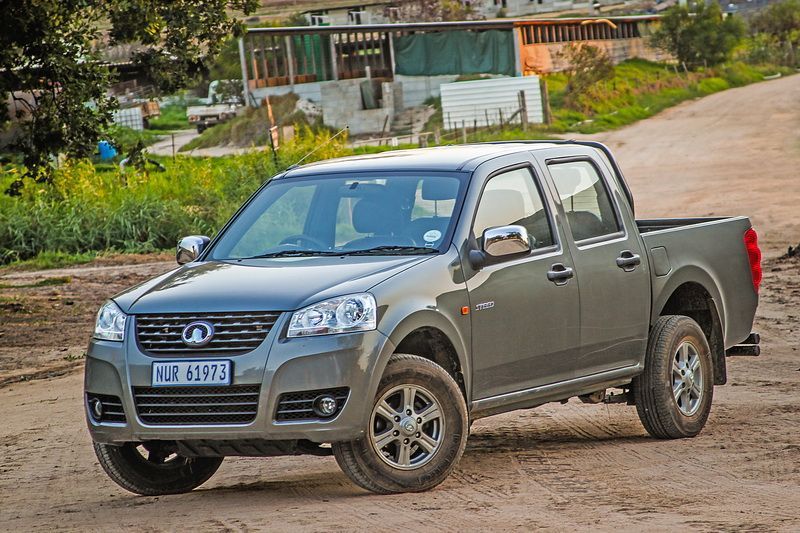
A range of dramatically better designs, often featuring pioneering infotainment technology and affordability, has given rise to top-10 sellers produced on the Mainland – something unimaginable a decade ago, when Chinese vehicles in the South African market were still considered average, at best.
Chinese brands and models might be surging in popularity in the crossover and SUV segments, but bakkies remain a market where legacy brands are entrenched. But that is changing, too. With more Chinese brands bringing new bakkie platforms to market, with generously equipped interiors.
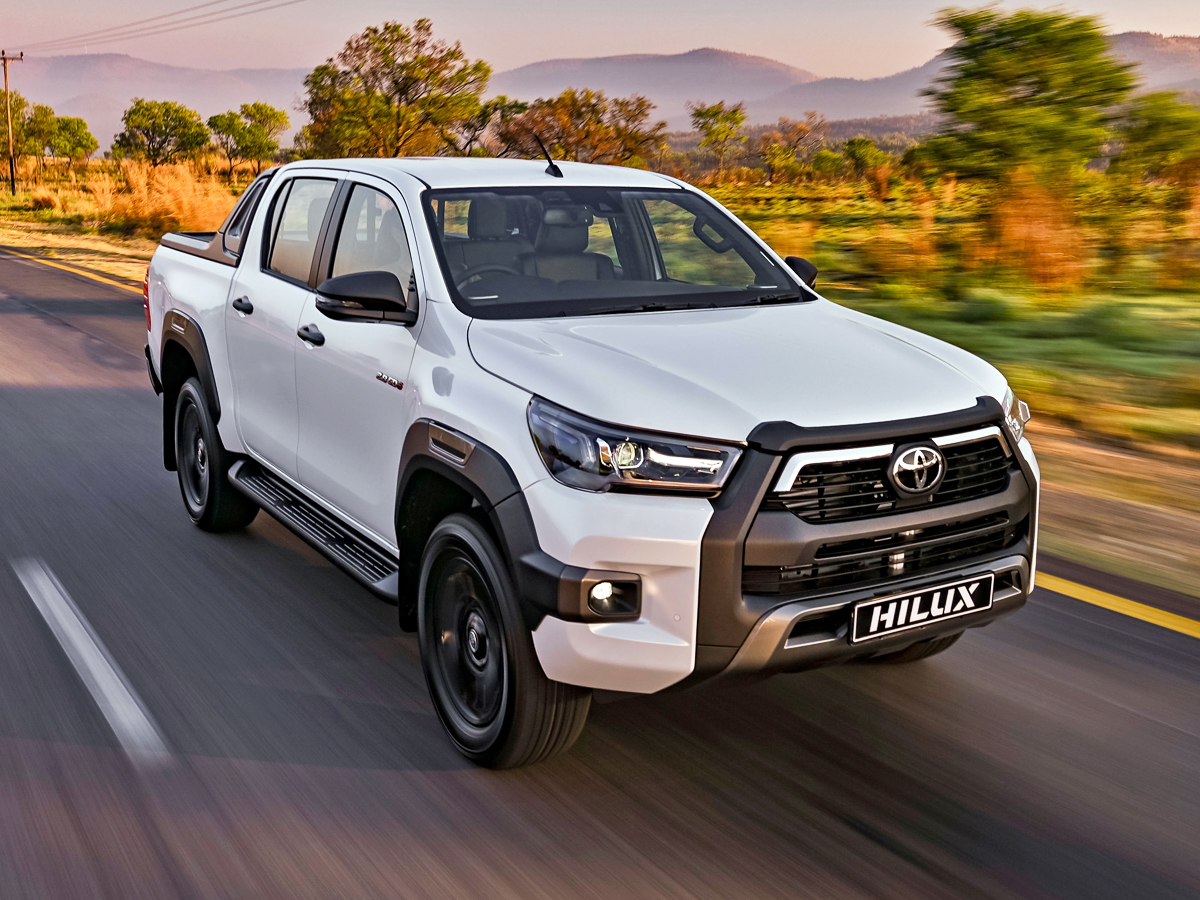
Is the runout Toyota Hilux vulnerable?
Could these emerging Chinese double cabs finally challenge Hilux’s absolute dominance? Toyota’s most regarded vehicle is old. It’s been on the market for a decade, and several technical aspects are ageing. Especially the cabin architecture and infotainment stack, 2 features where Chinese interior designers and technology integration offer a very compelling alternative.
The new generation of Chinese double-cab bakkies might have impressive cabins, but the one issue that remains is the powertrain. South African bakkie buyers want turbodiesel power, across all brands. It’s why virtually all Hilux double cabs ordered are built with turbodiesel engines.

Can the current offering of new-generation Chinese turbodiesel double cabs rival the ageing class standard, that is, the Hilux? There are several Chinese double-cab bakkies, with diesel power and low-range transfer cases, priced in the R600 000-to-R700 000 segment.
That undercuts the entry-level Hilux 2.4 GD-6 4×4 Raider auto, which is priced at R716 300 (October 2025). But what do these Chinese bakkies really offer South African double-cab buyers?
New Toyota Hilux Specs & Prices in South Africa
Find a new/used Hilux listed for sale on Cars.co.za
GWM P300 2.4T double cab LTD 4×4

GWM is the most successful Chinese brand in South Africa. Its product planning team knows the local market well and what South African bakkie buyers want – and need.
The GWM P300 2.4T double cab LTD 4×4, listed for R699 900 (October 2025), is configured for harsh South African conditions. To be used by bakkie owners who spend a lot of time outside urban areas. It features all-terrain tyres, a high-intake snorkel, and all the 4×4 drivetrain hardware you need.
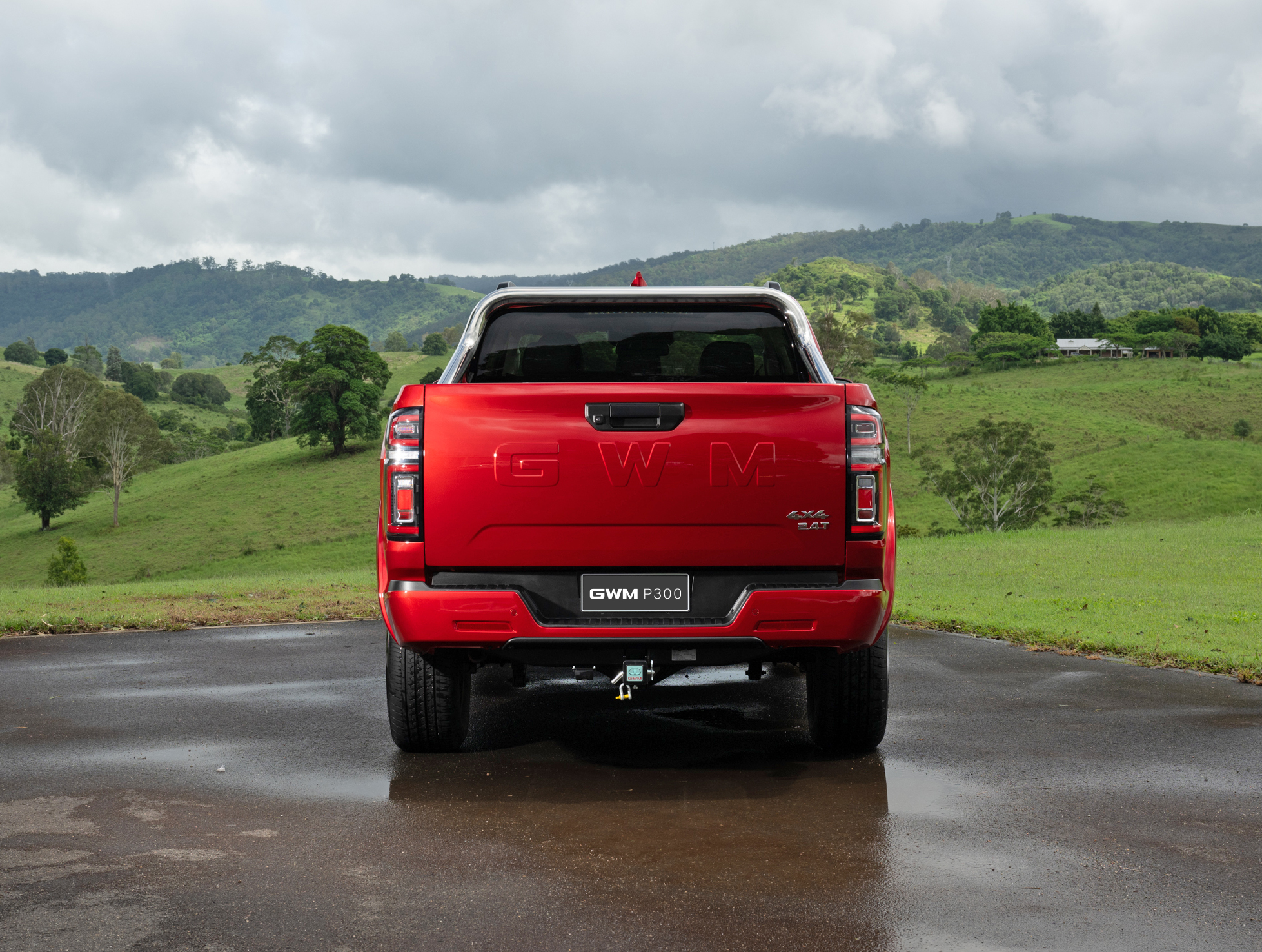
Like the Hilux, the P300 2.4T double cab LTD 4×4 is a steel ladder-frame chassis with a live rear axle. To ensure secure traction in demanding off-road terrain, the P300 2.4T double cab LTD 4×4 features a lockable rear differential and a ‘virtual’ front locker that uses traction control. Importantly, it has disc brakes at the rear, too, which is a superior technical specification to Hilux, which still uses drums.
GWM’s upgraded 2.4-litre 4-cylinder engine is possibly the best Chinese turbodiesel yet. Producing peak outputs of 135 kW and 480 Nm of torque, it gives the P300 2.4T double cab LTD 4×4 far better performance than the Hilux 2.4 GD-6 4×4 Raider auto, which, to reiterate, costs R716 300.

Since its launch in 2020, the GWM P300 range has used ZF’s brilliant 8-speed automatic transmission. But a drivetrain change this year saw the switch to a GWM-developed 9-speed auto ‘box.
This offers an extra gear, but not quite the smoothness or intuitive shifting patterns of the ZF. Still, it’s a world better than the Hilux’s aged 6-speed auto.
Watch David Taylor’s video review of the 2025 GWM P300:
There are several standard features on the P300 2.4T double cab LTD 4×4 that Hilux Raider owners can only wish for: a 360-degree surround view camera, lane departure assist, and adaptive cruise control.
The P300 2.4T double cab LTD 4×4 has power adjustment for both front seats, too, which you don’t get on a Raider-grade Hilux. And the 12.3-inch infotainment system has much better processing power and graphics than Toyota’s ageing system, with better digital ergonomics.
New GWM P300 Specs & Prices in South Africa
Find a new/used GWM P300 listed for sale on Cars.co.za
JAC T9 2.0CTI double cab 4WD Hunter
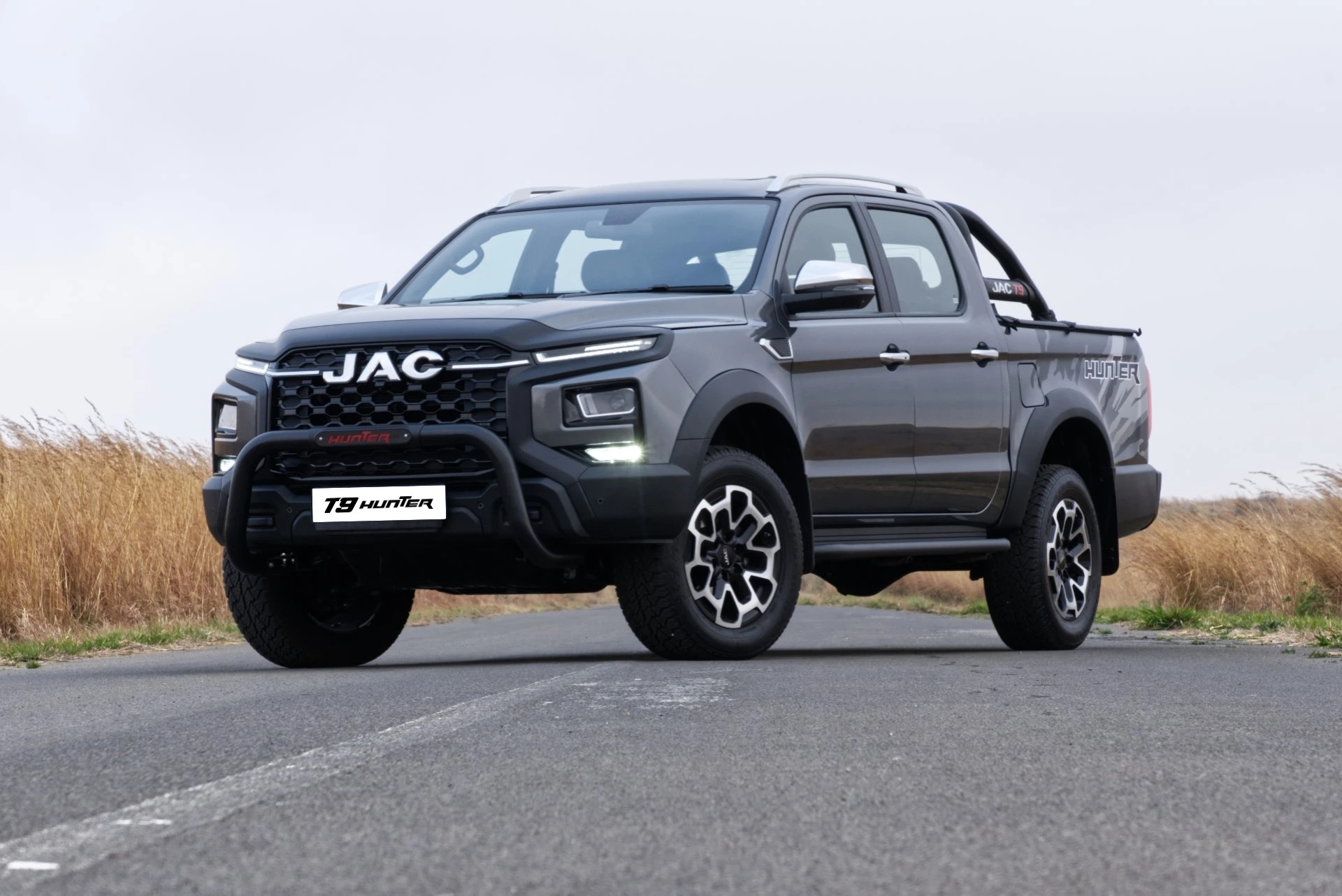
Unlike some of the other JAC T9s, the 2.0CTI double cab 4WD Hunter (R689 900 in October 2025) doesn’t look absolutely crazy, with its normalised grille, nudge bar and less OTT appearance.
The most important features are its engine and drivetrain. It now features a more powerful version of JAC’s 2.0-litre 4-cylinder turbodiesel, which has been updated as part of an ongoing technical upgrade announced in October. With outputs of 144 kW and 487 Nm, it’s easily more powerful than a Hilux 2.4. Those engine outputs are also channelled to the wheels via ZF’s excellent 8-speed auto transmission.
Watch Jacob Moshokoa’s video review of the JAC T9:
Real-world diesel consumption at just below highway cruising speeds has been tested at 6.2 L/100 km at 115 kph. Useful if you drive slowly, everywhere.
Hunter’s semi-independent rear suspension makes the JAC T9 slightly less robust on challenging off-road trails than the Hilux, however.
New JAC T9 Specs & Prices in South Africa
Find a new/used JAC T9 listed for sale on Cars.co.za
LDV Terron 9 2.5TD double cab Elite 4×4
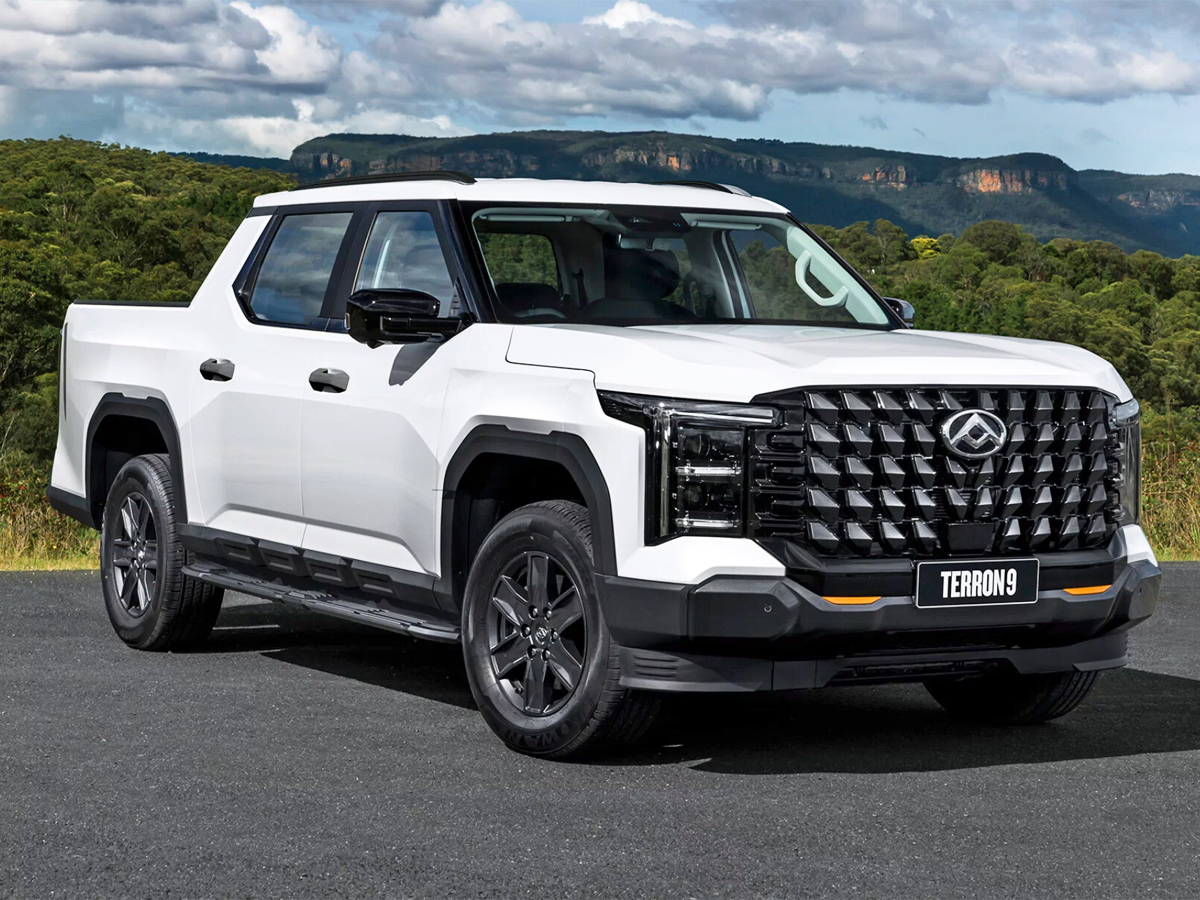
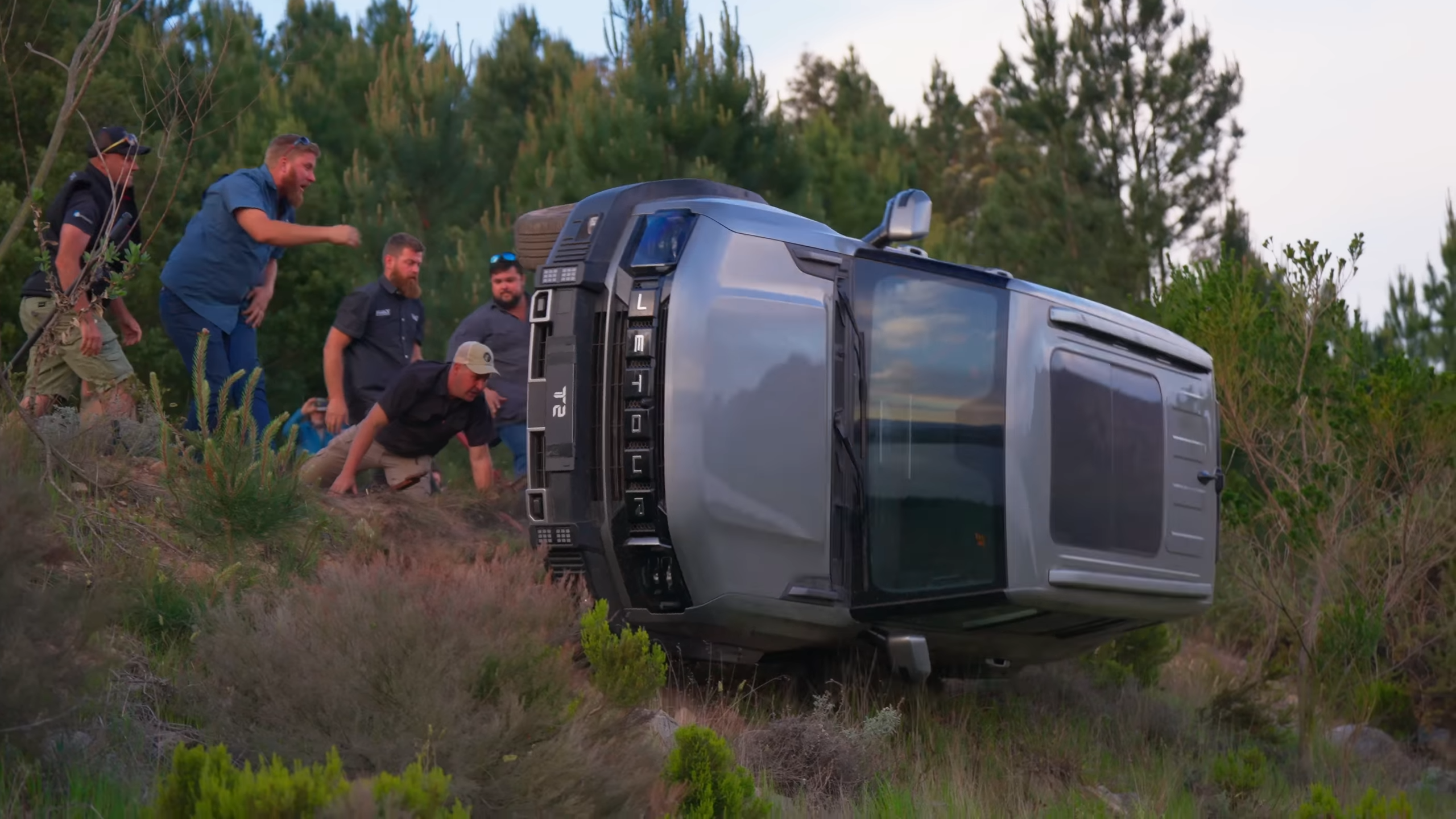
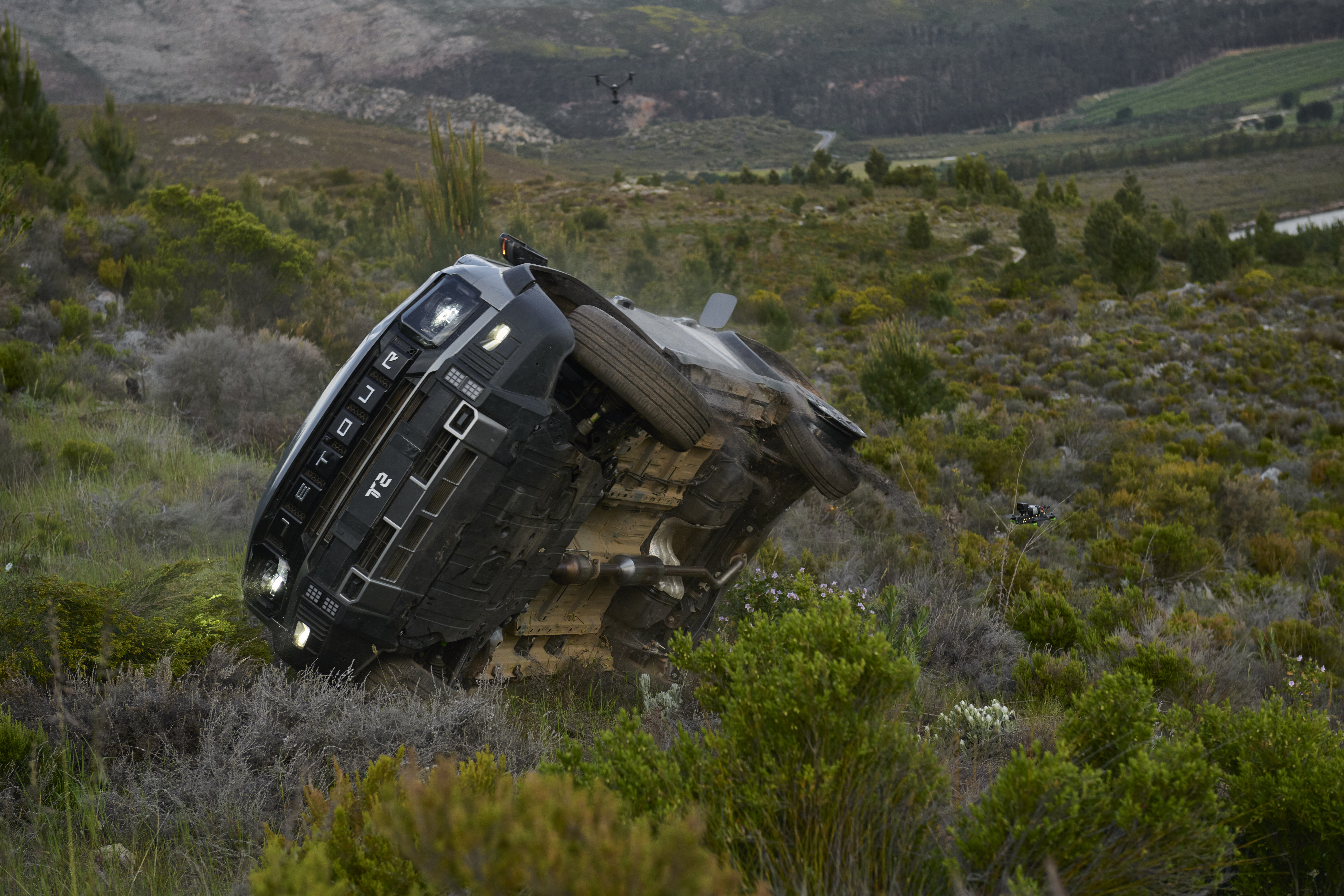
Is the JAC T9 grille not crazy enough for you? Well, you can go with the LDV Terron 9, which has possibly the most ornate bakkie grille you can buy in South Africa. The 3-derivative range kicks off with the 2.5TD double cab Elite 4×4 that retails for R699 900 (October 2025).
The LDV Terron 9 is bigger than Hilux, by quite some margin, being 175 mm longer. That means it is a chore to park and navigate through hectic urban traffic.
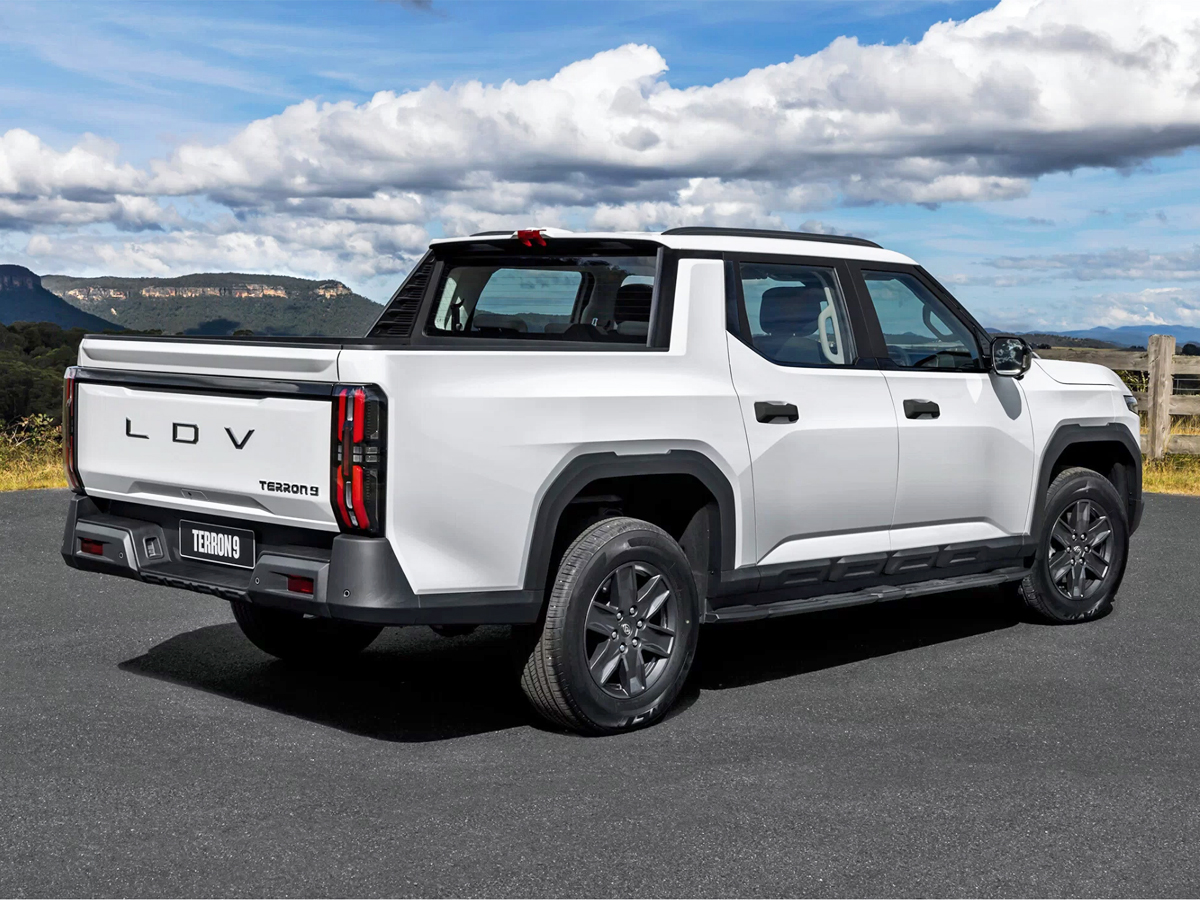
What the LDV Terron 9 offers a lot for the price is its 2.5-litre 4-cylinder turbodiesel engine. You can’t really buy more power and a better transmission combination for the price.
The LDV Terron 9’s 2.5-litre turbodiesel boosts 163 kW and 540 Nm of torque. Those are much better numbers than a Hilux 2.4 and also notably more power than the GWM P300. Best of all, the supersized double cab’s 2.5-litre turbodiesel is paired with ZF’s proven 8-speed automatic transmission.
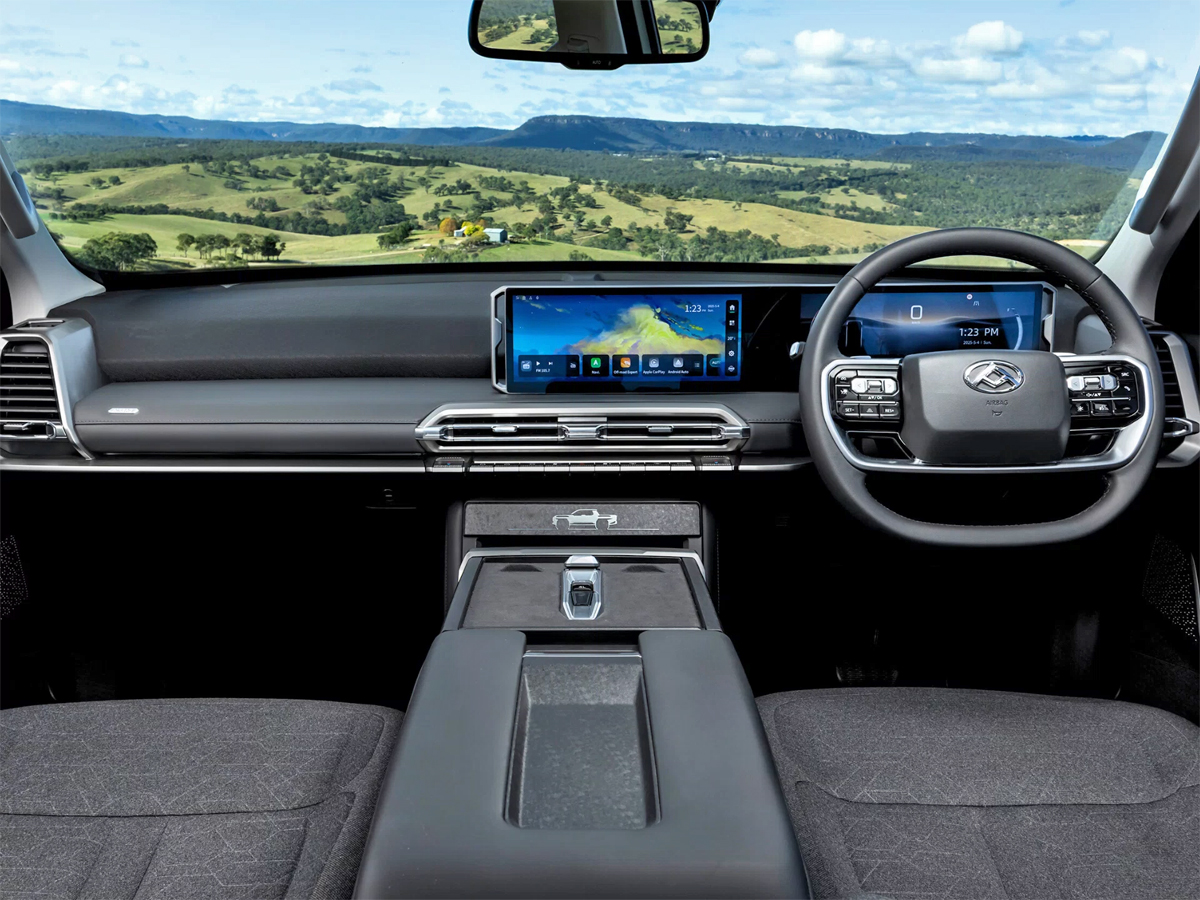
Even the Elite version is generously equipped. Like most Chinese double cabs, and unlike Hilux, the LDV Terron 9 does feature rear disc brakes. The Elite version also does without the more expensive Terron 9 variants’ turnover tailgate, which has a panel that opens. Which is something that is possibly going to become a wear issue if you travel a lot on poorly surfaced, corrugated, dirt roads.
New LDV Terron-9 Specs & Prices in South Africa
Find a new/used LDV listed for sale on Cars.co.za