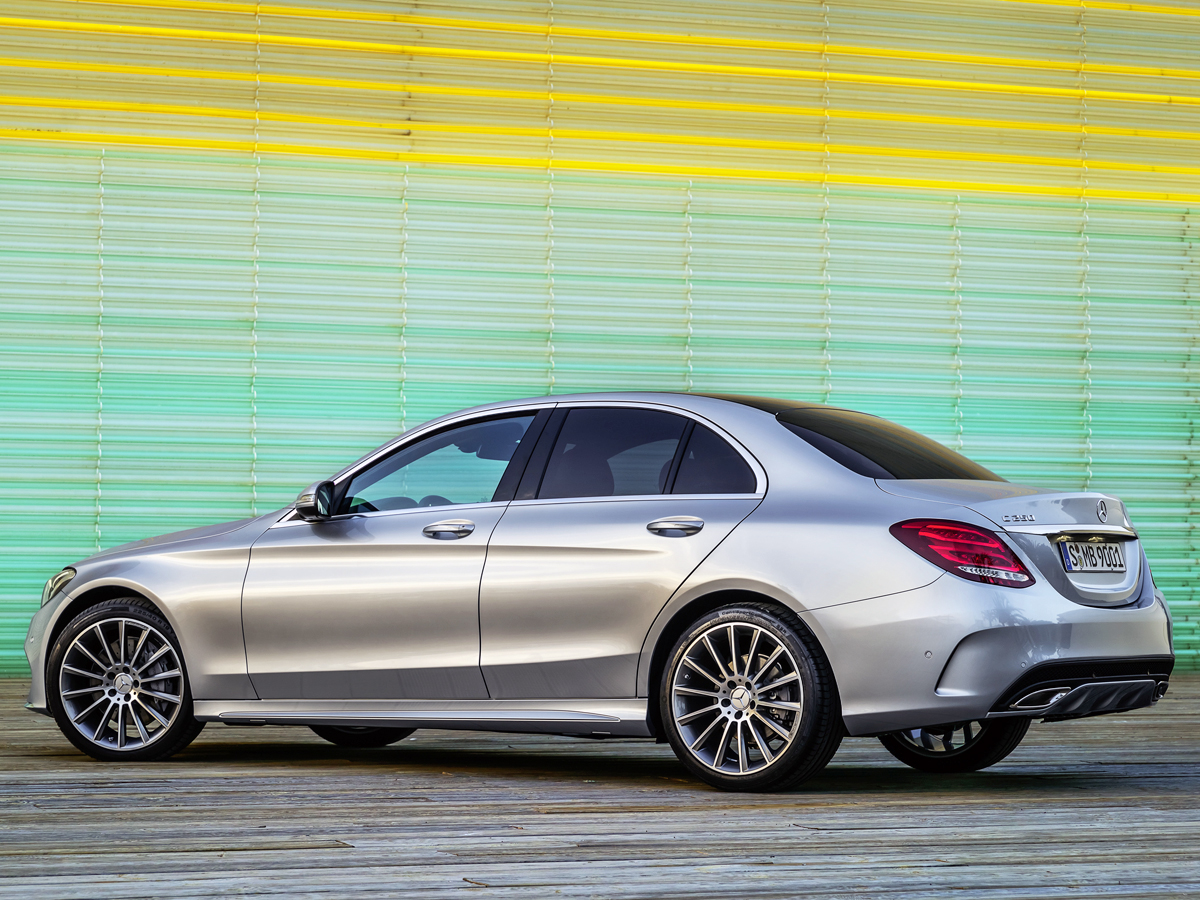
Affordability goes beyond purchase price. We’ve checked the numbers and chosen some of the cheapest used cars to own and maintain for South Africans. When all expenses are factored into the ownership equation.
Buying a used car that is genuinely cheap to own in South Africa means looking beyond the purchase price. You need to think total cost of ownership. That includes fuel, routine maintenance, spare parts availability, repair costs, insurance and depreciation. This is why knowing which are the cheapest used cars to own and maintain, is so important.
Based on the most recent market and insurer data, the models that keep running costs low are small, simple city cars and a few proven compact hatchbacks. We outline the best value options, why they are cheap to run here, and a short buying checklist. These are some of the cheapest used cars to own and maintain.
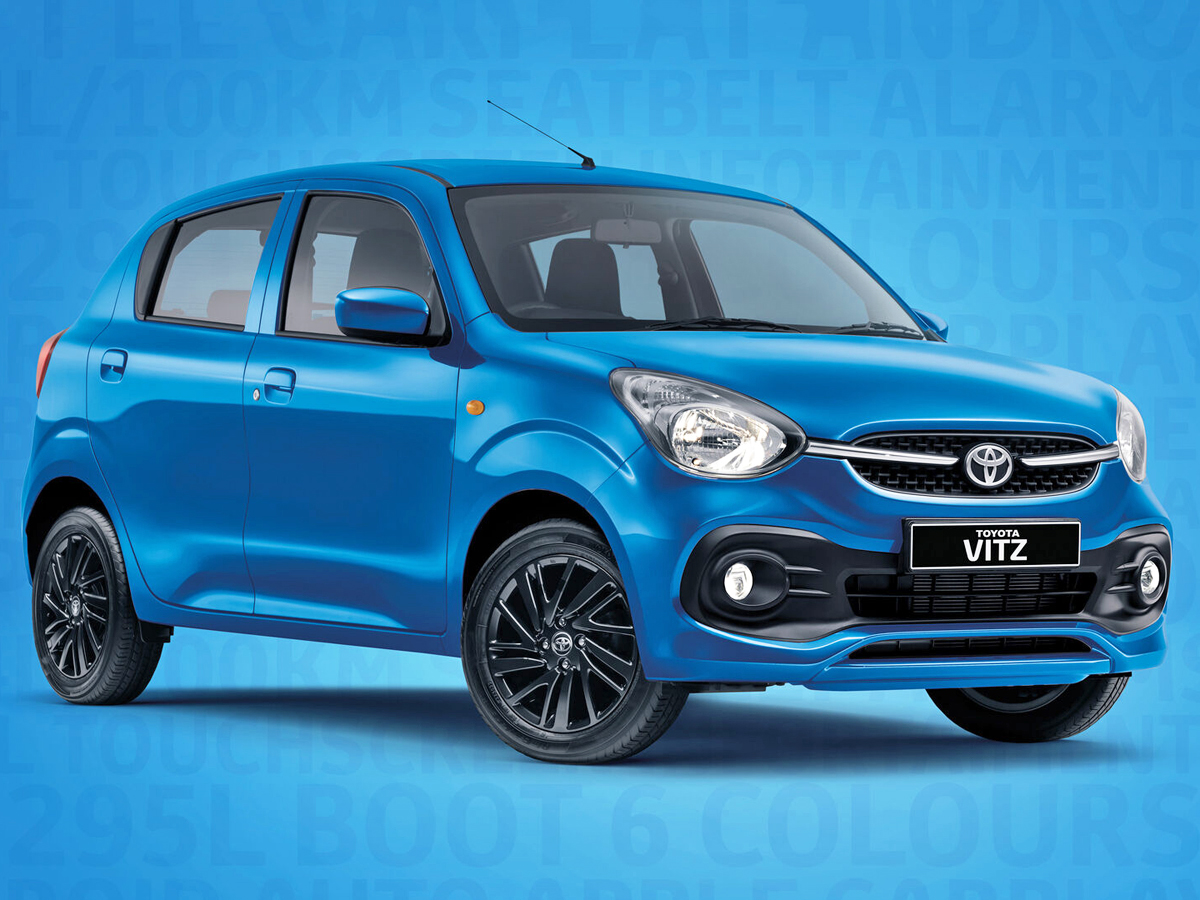
Toyota Vitz / Yaris (older models):
Toyota remains synonymous with reliability and a strong local parts and servicing network.
Vitz and older Yaris models are ubiquitous on the used market, which keeps parts inexpensive and mechanics familiar with common faults. They also return modest insurance premiums compared to larger or higher-performance cars. These factors combine to make Toyota’s small hatchbacks one of the most affordable cars to own in the long term in South Africa.
The Vitz is, of course, a rebadged Suzuki Celerio, while only the high-performance Yaris is still available as a new model. However, in the used market, the previous generations of Yaris are sought-after cars.
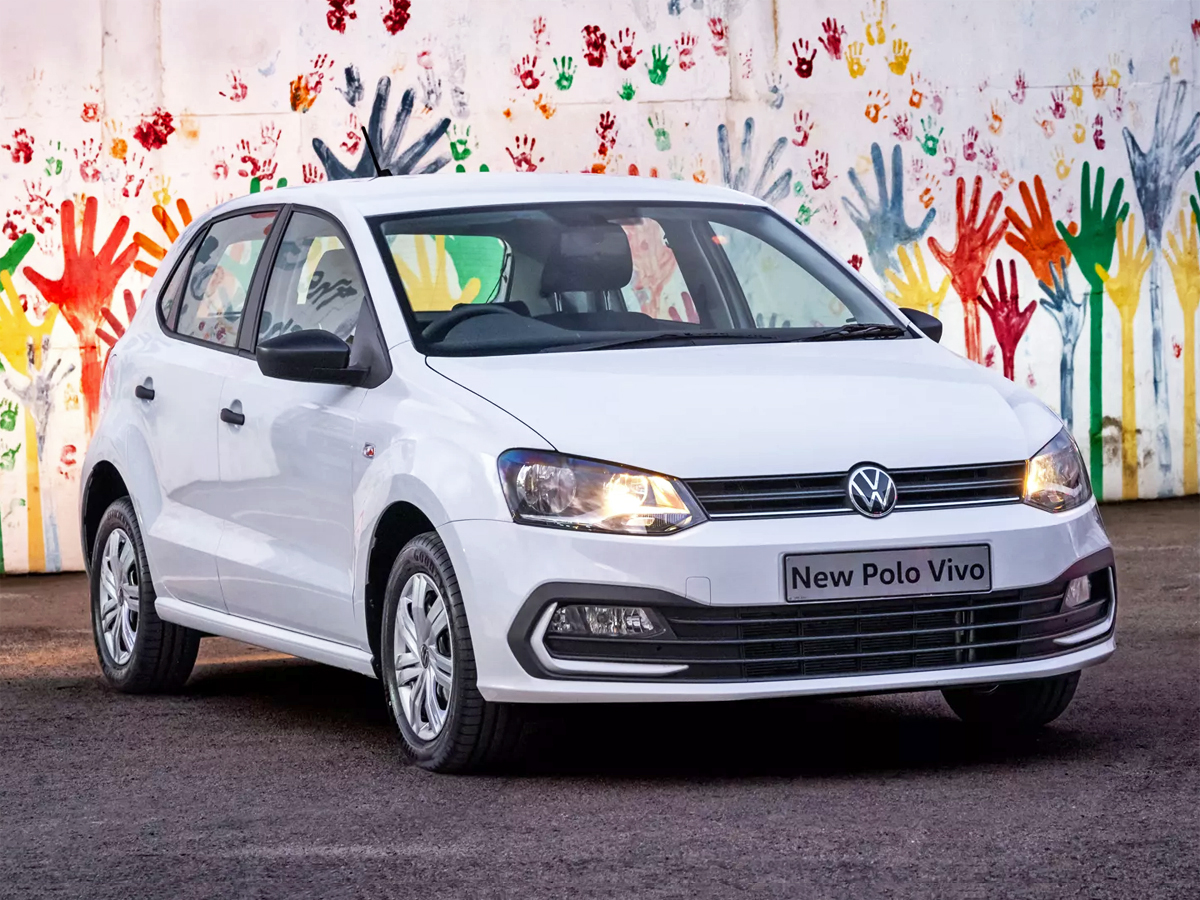
Volkswagen Polo Vivo
The Polo Vivo is a market staple in South Africa. Because it is so ubiquitous, parts supply is good and independent workshops are comfortable servicing them, which helps keep labour and parts bills down.
Insurers commonly list the Polo Vivo among the lower premium models. However, the Vivo is also a known theft risk, so insurance premiums can vary significantly depending on your location. And how your car is parked overnight. Residual values are steady, so you will not suffer extreme depreciation if you sell later.
Suzuki Celerio and Suzuki S-Presso
Suzuki’s tiny city cars have very low fuel consumption and straightforward mechanical layouts. Insurers often list the Suzuki Celerio and S-Presso as among the cheapest cars to run and insure. Low running costs and very affordable parts make them good candidates for budget buyers.
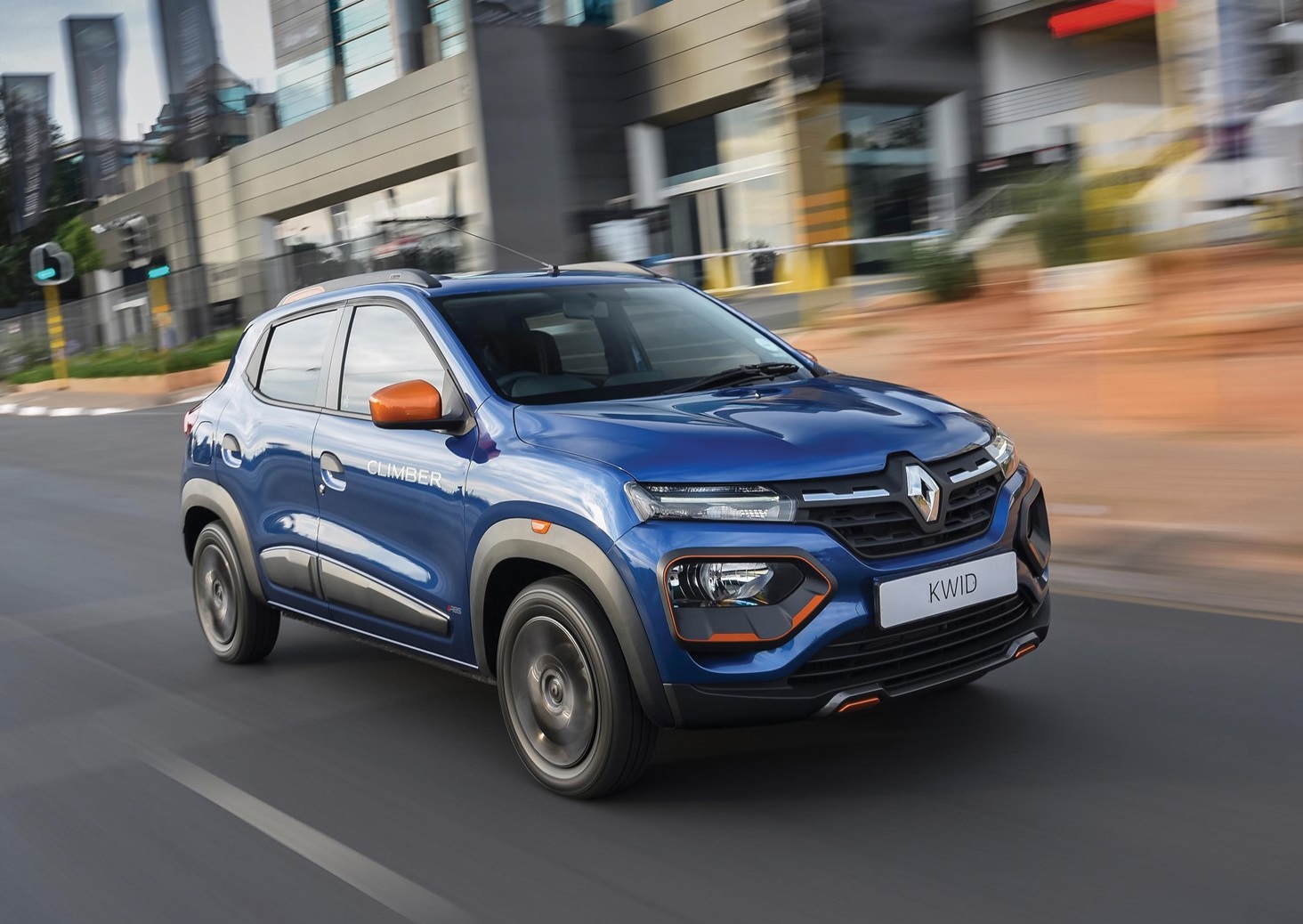
Renault Kwid
The Kwid is a low-cost city car with a simple engine and very cheap parts in the South African market. Kwid is one of the models with the lowest running costs for second-hand buyers. Bear in mind that while parts are inexpensive, Renault dealer coverage is less extensive than that of Toyota or Volkswagen in some regions.
Hyundai i10 / Grand i10 and Kia Picanto
Hyundai and Kia city cars offer competitive new pricing, competent factory warranties for later model cars, and an improving parts network. For used buyers, the Grand i10 and Picanto are economical to run and inexpensive to insure in most cases. They represent good balance between features and low ownership costs.
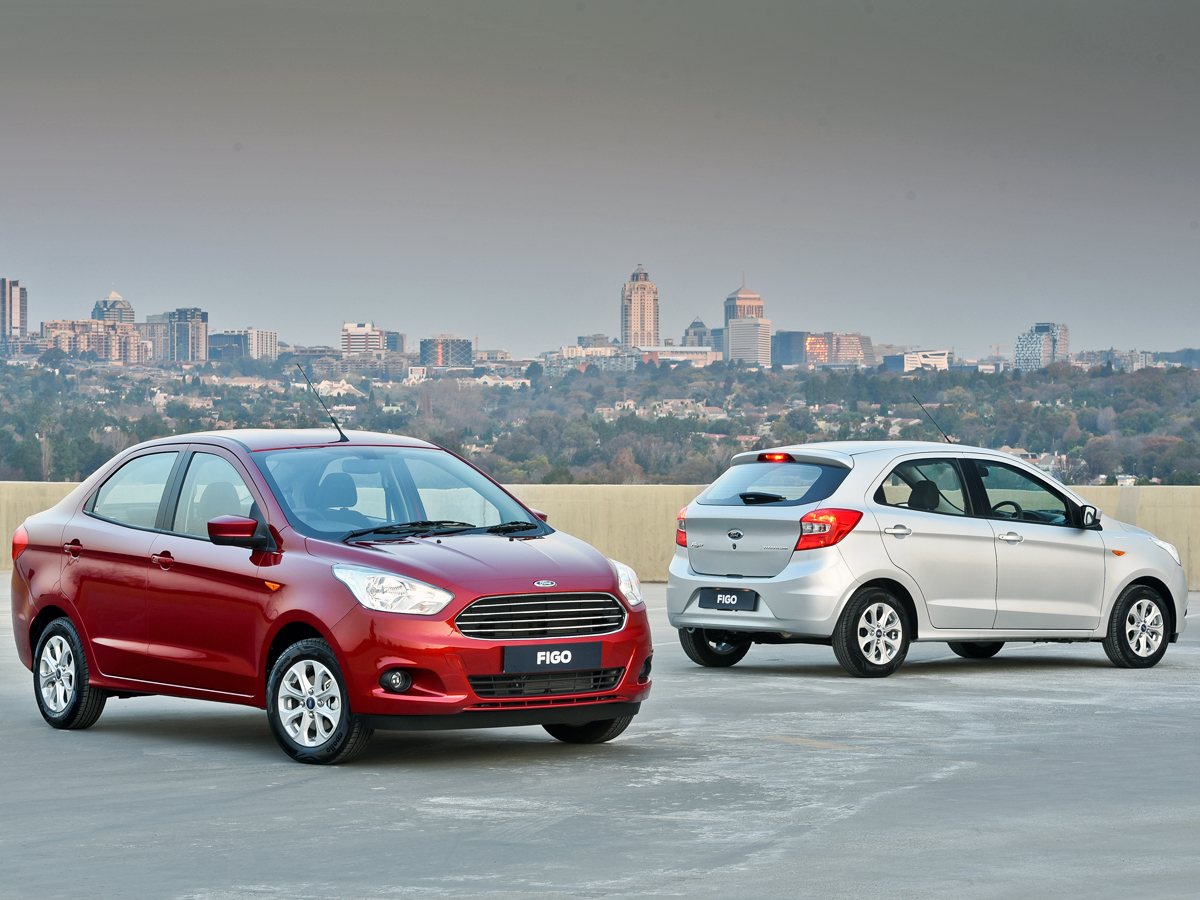
Ford Figo
The Figo is often cited for low running costs and reasonable resale values in the small car segment. Simple engines and widespread workshop familiarity keep servicing costs moderate. It is a pragmatic option if you prefer something locally common from a mainstream brand. Figo has been discontinued locally, though, so they are cheap to run – for now. But as the fleet ages and parts supply narrows, things could change in the future.
Why do these cars cost less to own?
Availability of parts and familiarity among independent mechanics are the two most significant drivers of low maintenance costs. The more common a model, the lower the labour and parts premiums you will pay when routine servicing or repairs are needed.
Small engines also generally use less fuel and attract lower insurance premiums than larger or more powerful high-performance engines. Finally, models that retain predictable resale values help limit long-term ownership costs because depreciation is a known quantity rather than a surprise. The AA’s vehicle cost tools and market data providers show how these factors translate into lower Rand-per-kilometre ownership figures.
Insurance and running-cost perspective
Insurance premiums vary based on the make, model, trim, and the driver’s profile. Additionally, where you live and how your car is parked overnight have a significant influence on insurance pricing.
South African insurance blogs and price calculators consistently show that micro and small hatchbacks, such as the Suzuki S-Presso, Renault Kwid, Polo Vivo, and Toyota Yaris, sit among the cheapest models to insure.
It does depend on where you live, though. And whether your car is garaged or not. For all its benefits, the Vivo is a high theft risk vehicle, and in certain areas, insurance for it can be significantly above the class average.
Using a reputable insurer or a usage-based offering can lower premiums further, while shopping around matters much more for inexpensive models than for premium cars.
Final notes
Market conditions, fuel prices, and insurance premiums change, so check current insurer quotes and recent local classifieds before committing.
The latest South African market roundups and insurance lists consistently highlight small Toyota, Volkswagen, Suzuki, Hyundai, and Renault city cars and small hatchbacks as the most affordable options for used-car buyers seeking low ongoing costs.
The cheapest used cars to own and maintain is a valuable list and category for buyers. Because car ownership in South Africa is about so much more, than just an online listed retail price.
No-deposit car finance: What you need to know
Buying a car without a deposit is tricky, right? It used to be. But no-deposit car finance in South Africa is an increasingly available option.
Whether you’re eager to get on the road without liquidating savings or you’re working with tight finances, no-deposit car finance can be an attractive route. Car finance without a deposit has become more accessible in South Africa. Yet it comes with unique implications that require careful consideration; therefore, this guide explores what you should know before signing on the dotted line.
What is no-deposit car finance?
No-deposit car finance means you borrow the full cost of the vehicle rather than contributing a lump sum upfront. This allows for immediate access to the vehicle, but it leads to higher monthly repayments and increased interest over the loan term.
Who offers it and what are the requirements?
Several South African finance providers offer no-deposit or optional-deposit arrangements, each with varying eligibility thresholds:
EasyCarFinance acts as a broker, arranging finance without a deposit if you earn at least R6 500 per month, are not blacklisted, and hold a valid South African ID.
MFC (Motor Finance Company) advertises no-deposit vehicle finance at a default rate of prime + 3% over a 60-month term. But note this is without a balloon or upfront deposit.
No Finance Cars, operating a rent-to-own model, sets minimum criteria of R15 000 monthly salary (or R60 000 average monthly turnover if self-employed) and a deposit starting from R12 500, depending on the vehicle, though some models may allow zero deposit depending on the arrangement.
Toyota Financial Services indicates that a deposit is not always required, as allowed under the National Credit Act (NCA), although the provider may still require one based on internal risk evaluations.
Absa offers no-deposit options, which can be structured with a balloon payment, this lowers monthly instalments but necessitates a lump-sum final payment.
Pros of no-deposit finance
• Immediate access: You can drive away in a vehicle without waiting to save a deposit. • Savings retained: Your cash remains available for emergencies, investing or other expenses • Simplified application: If you meet eligibility criteria, approval can be straightforward—even without a deposit.
Drawbacks to watch
• Higher monthly repayments and interest: With no deposit, your loan amount and the total interest payable both increase. • Greater overall cost: Extending financing across the full vehicle price significantly raises the long-term cost. • Financial risk: Elevated repayments may stretch your budget and expose you to default risk • Balloon payments: With options like Absa’s, you might face a large lump sum at the end of the term that requires careful planning.
Your rights under the Law
Under the National Credit Act (NCA), there is no legal requirement to pay a minimum deposit, banks may still choose to insist on one based on affordability and risk criteria.
The NCA also entitles you to
• Detailed written quotations: Any credit agreement must include clear disclosure of cash price, deposit, loan amount, interest, fees, monthly payments and total payable. • Rights to early settlement: You may settle your loan early without excessive penalties; doing so can reduce interest costs. • Consumer Protections: The NCA safeguards consumers from unfair lending practices and provides avenues for lodging complaints (through the National Credit Regulator) if necessary.
Smart strategies to consider
Compare quotes thoroughly, as pricing varies significantly. Request finance illustrations for both with and without a deposit, as well as with and without a balloon payment, to determine true affordability.
Use advance payments strategically. Any additional payments you make are deposited into an “advance payment” account, earning interest, which can be used to reduce the capital or settle the loan early.
Consider Rent-to-Own models as an alternative. Options like No-Finance Cars may serve your needs if access to traditional financing is limited. However, these may include different terms, such as non-bank financing, and usually no interest is charged, but a deposit may still be required.
One of the biggest surprises for many inexperienced car buyers, is the balloon payment to settle. Nobody thinks about that on a month-to-month payment. However, you need to be aware that it is looming in the future. Plan for balloon requirements or end-term obligations. Understand the final payment and any terms that may impact cost or flexibility in the future.
Conclusion
No-deposit car finance in South Africa can offer appealing flexibility and immediate ownership, especially if you’re short on cash or need a vehicle quickly. Yet this convenience comes at the price of higher repayments, elevated interest costs, and greater financial risk.
Your best approach is to explore multiple providers and compare deposit vs. no-deposit structures. Always demand a full breakdown in accordance with the National Credit Act and prioritise your long-term affordability and financial well-being.
By understanding the legal framework, knowing your rights, and comparing all available options, you can make an informed decision that suits both your mobility needs and your budget.
Cheaper alternatives to BMW
BMW offers a wide range of cars in South Africa, from compact hatchbacks to full-size luxury SUVs and high-performance M models. And they are all priced like luxury vehicles. But what are the cheaper alternatives to BMW in South Africa?
The brand’s own price list shows compact models, such as the 1 Series and 2 Series, starting on the wrong side of the R700,000 and rising from there for top-end SUVs like the XM and the 7 Series, fit for a president.
Even a well-specced 3 Series and 4 Series are effectively R1m vehicles. BMW’s larger SUVs and flagship sedans are reaching well into the millions. The M and top electric lines command the highest prices.
Japanese, Korean, and Chinese brands do offer heaper alternatives to BMW. For each BMW class, we provide typical BMW price-band guidance and three or four alternatives that deliver a comparable role or feel, along with approximate price bands based on the South African dealer or brand websites.
1 Series small premium hatch
BMW compact models start at R700 000, depending on the derivative and options. A buyer looking for a compact, premium feel without the BMW badge can consider mainstream hatchbacks and compact sedans that offer a sophisticated finish and are more affordable to purchase and operate.
Alternatives are a fully loaded Volkswagen Polo. Or in reality, the new Golf. VW’s legendary full-size hatch has all the refinement and sophistication of a premium German compact luxury car.
2 Series small coupe and Gran Coupé
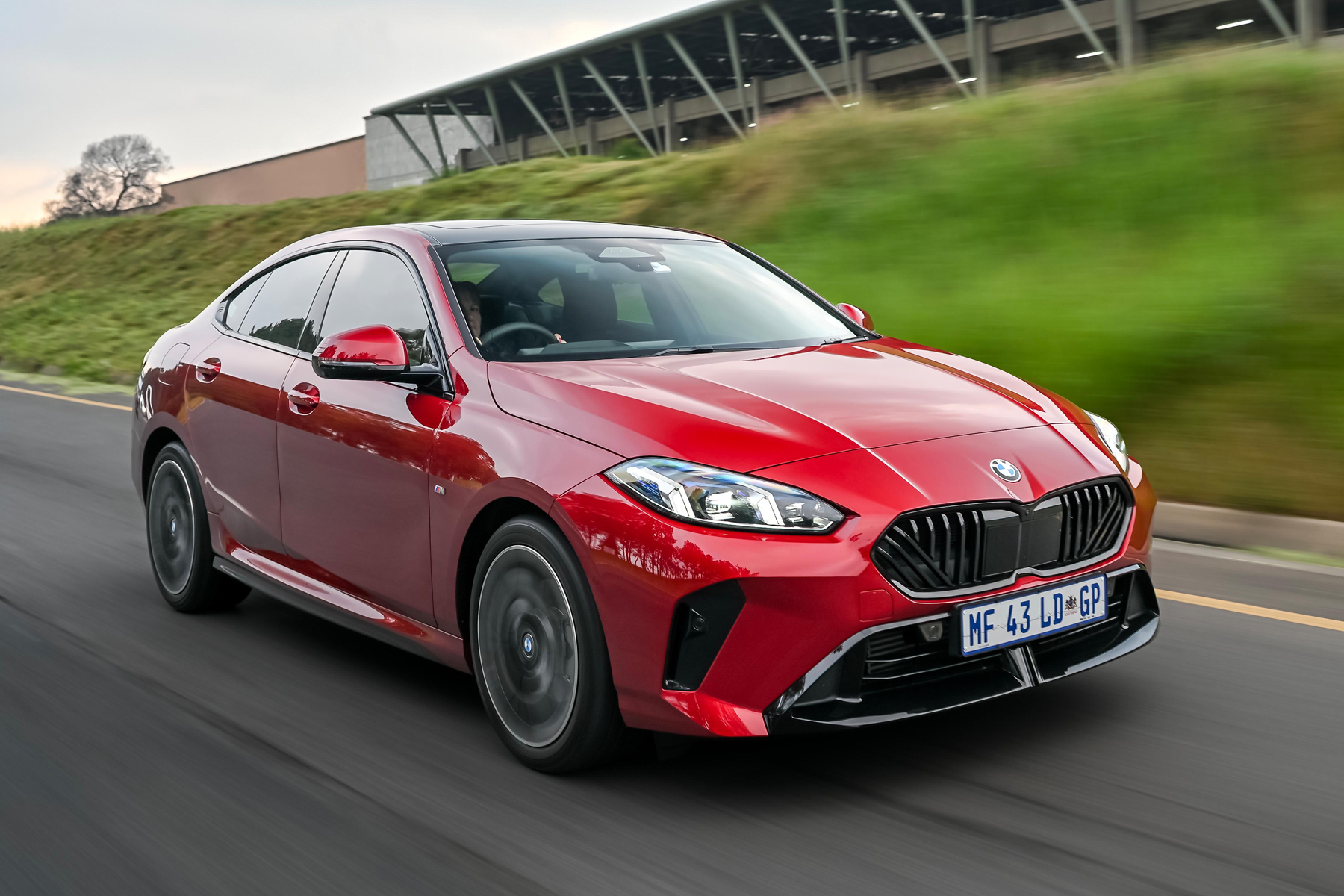
BMW’s small coupe/gran coupé models typically occupy the higher end of the compact segment, often ranging from R700,000 upwards. If the two-door or four-door coupe look appeals to you, several marques offer stylish, more affordable options.
Mazda2 and Mazda3 are great cheaper alternatives to BMW. Some of the best Japanese exterior design in compact packages. These Mazdas also offer attractive cabin design and a sporty feel. Expect pricing from the mid-R300,000s to the mid-R500,000s for these models. With build quality that easily rivals that of a German premium car.
X1 small premium SUV
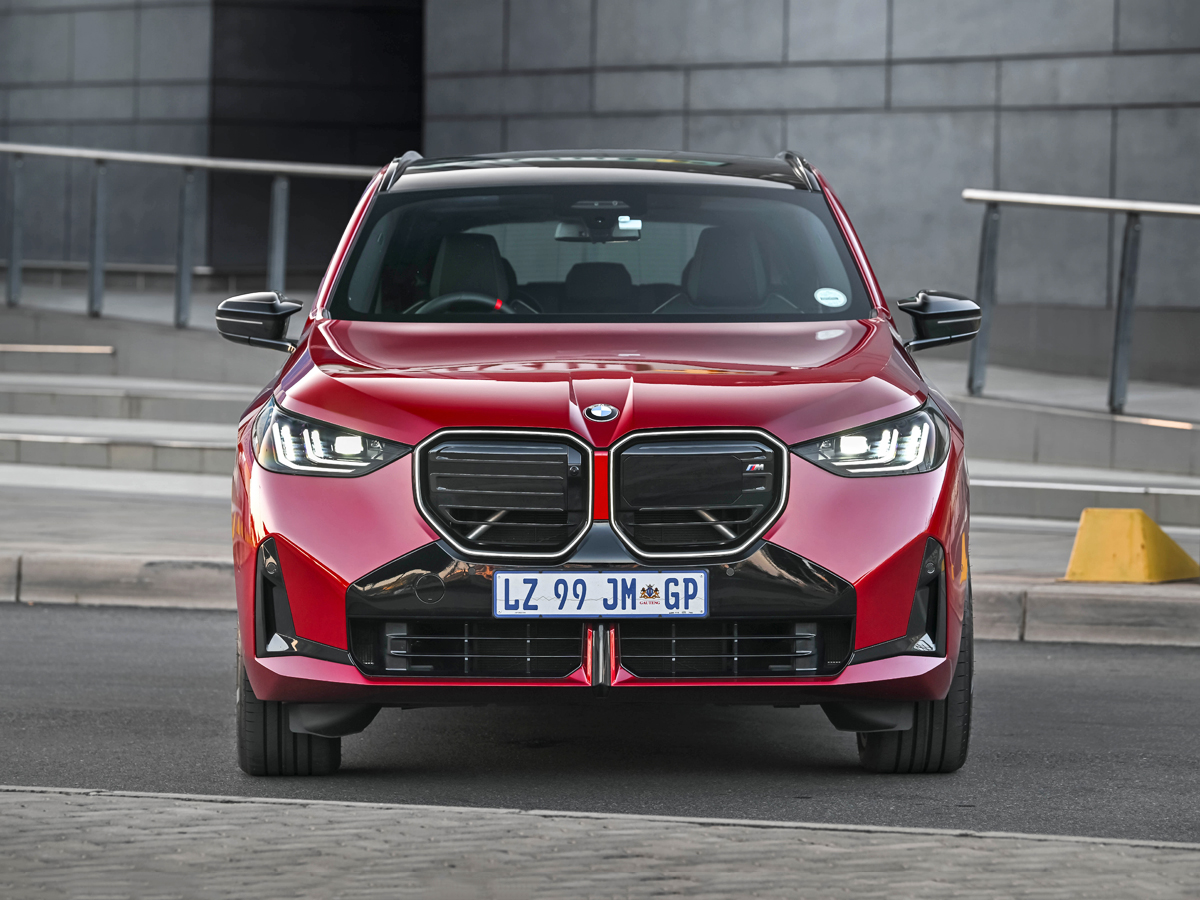
BMW’s X1 and X2 sit in the small premium SUV band and are priced from the upper hundreds of thousands. If you prefer an SUV shape but want to save money, there are options. Like Hyundai Creta, Kia Seltos or Hyundai Tucson.
The Creta and Seltos are priced from roughly R480,000 upwards, with the Tucson moving into the mid-R500,000s, offering modern cabins, good equipment, and a stylish alternative in terms of looks.
Chinese offerings that rival the X1 are very compelling. Like GWM’s Haval. Priced competitively in South Africa, Haval has a high equipment level for the money. Additionally, the H6 GT and its hybrids make it worth a look, as it beats the X1 in space.
X3 mid-sized premium SUV
BMW X3 and similar mid-sized premium SUVs typically fall within the R900 000 to well over R1 500 000 price range. Cheaper but practical alternatives include the Toyota RAV4, which offers hybrid powertrains, an excellent dealer network experience and terrific build quality.
Other worthy X3 alternatives include VW’s Tiguan, the Mazda CX-5, and the Hyundai Tucson, all of which offer refined cabins and strong value for money.
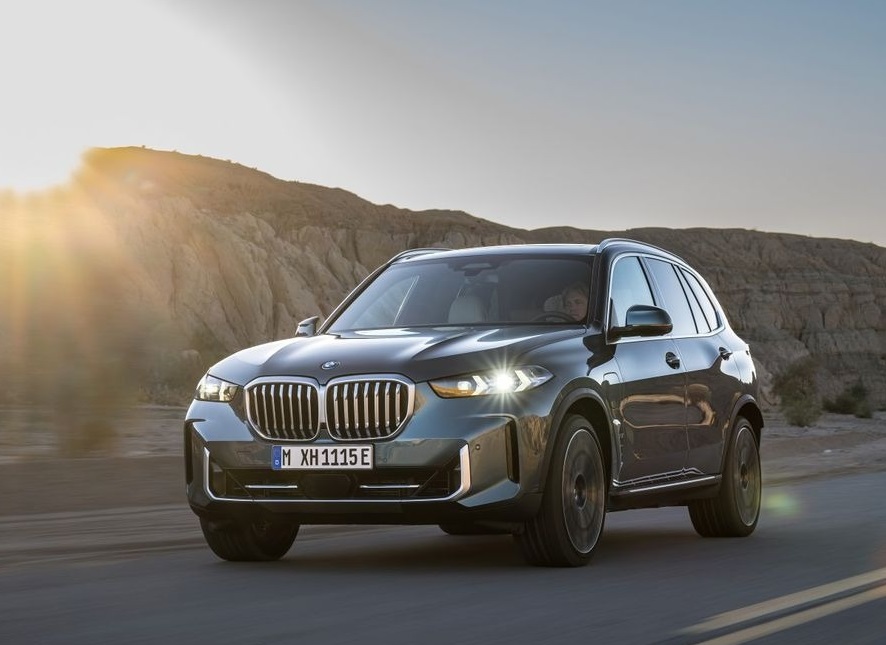
Cheaper alternatives to BMW 5 Series and X5
For buyers tempted by BMW’s larger sedans and SUVs, the savings are greater when switching to mainstream brands that offer generous equipment at lower price points.
Hyundai Palisade and Kia Sorento offer three-row comfort and equipment, typically at a lower price than BMW’s large SUVs. For the 5 Series sedan, there is little competition, except from its fellow German automakers.
GWM Tank 500 for buyers seeking imposing styling and high specification for a lower outlay.
If the BMW brand and driving dynamics appeal but the price does not, South Africa’s market offers many credible alternatives. Volkswagen, Toyota, Hyundai, Kia, Mazda and emerging Chinese brands such as GWM and Haval supply cars that match the role and appearance of BMWs for substantially less money.
There are abundantly more BMW’s across the spectrum. In fact, BMW likely offers one of the most extensive model ranges in the country, including sedans, hatchbacks, SUVs, hybrids, and electric vehicles, all of which come in various shapes and sizes. But for the BMW name, and not without reason, you have to fork out cash because, no matter what model, it is one of the best all-round vehicles available.
Cheaper alternatives to BMW in South Africa do exist. With BMWs today starting at well over R700 000, there is a different planet full of alternatives below that price cut-off. Some good, rather excellent choices, but still not BMWs…
SA’s best- and worst-selling bakkies in September 2025
In September 2025, the Toyota Hilux hit its highest sales tally in well over 2 years, breaching the 3 500-unit mark. Here are South Africa’s best-selling bakkies…
Hilux’s best performance since June 2023
P-Series retains top-5 position in September
GWM Steed makes a return to the top 10
In September 2025, South Africa’s total new-vehicle market soared to a 10-year high, growing 24.3% year on year to 54 700 units, with the light-commercial vehicle (LCV) segment enjoying its 6th straight month of year-on-year growth, improving 19.7% to 13 078 units. But what happened on the list of SA’s best- and worst-selling bakkies in September?
Yet again, the Toyota Hilux was Mzansi’s most popular bakkie (and indeed the nation’s best-selling vehicle overall), with sales increasing 9.4% month on month to a whopping 3 639 units. According to our records, that’s the Prospecton-built stalwart’s best effort since June 2023 and the first time it has broken the 3 500-unit barrier this year. Some 6.8% or 248 units were sold via the rental channel.
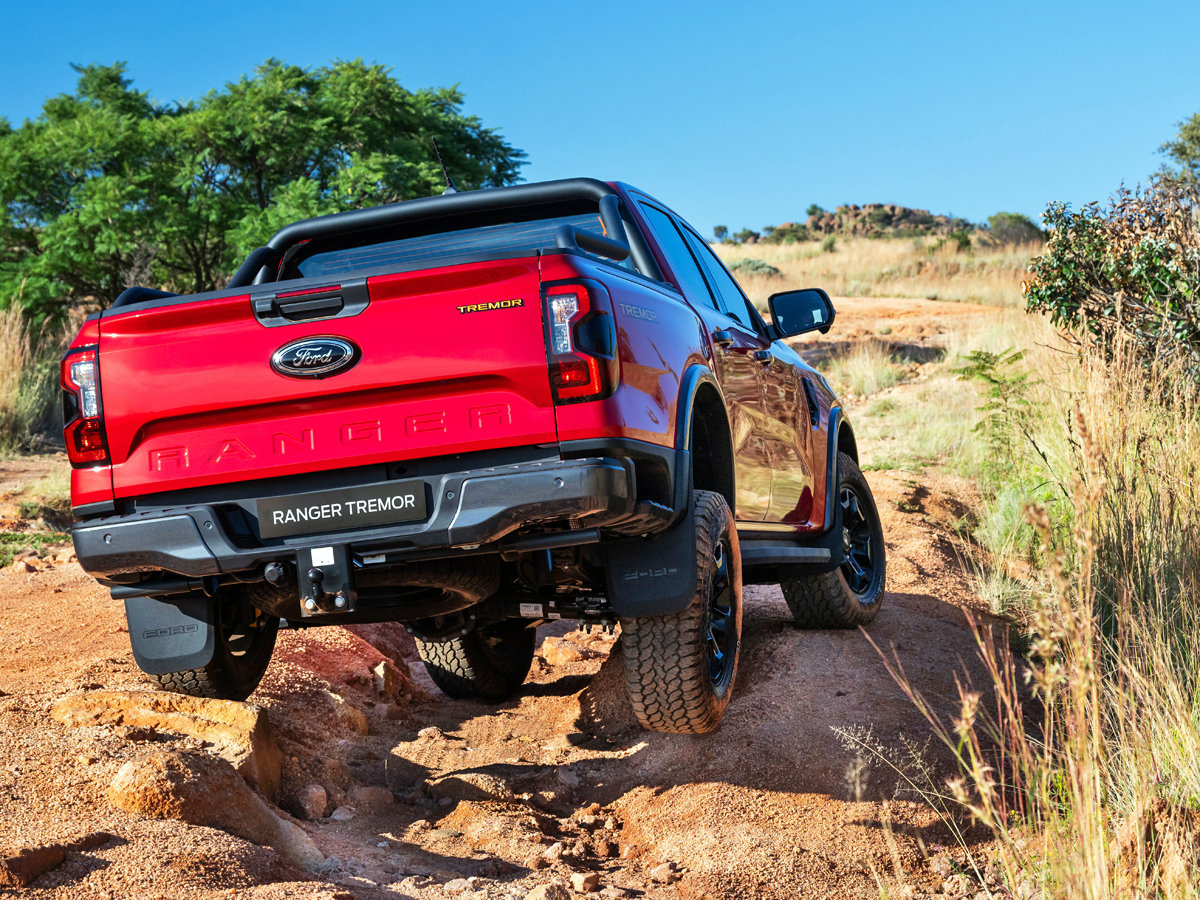
Ford Ranger sales grew nearly 10% compared to the prior month.
As has been the case for all but a single month this year, Ford Ranger thus placed 2nd, with local registrations of the Silverton-manufactured bakkie growing 9.9% month on month to 2 270 units. The Struandale-made Isuzu D-Max (2 054 units; up 15.5%, month on month) again completed the podium, finishing 216 units behind the Ranger. Interestingly, Isuzu sold 469 units (or 22.8% of its total) to government.
Positional changes within the rest of the top 10 were likewise few and far between in September, with the KwaZulu-Natal-assembled Mahindra Pik Up (750 units; +11.1% month on month) retaining 4th and the GWM P-Series (458 units; -17.7% month on month) again rounding out the top 5 as the highest-ranked fully imported contender.
Similarly, though local registrations of the Toyota Land Cruiser 79 dipped to 392 units (down 12.1% compared to August 2025), this seemingly evergreen bakkie held steady in 6th. The Ford-built Volkswagen Amarok (382 units; +6.0% month on month) again ranked 7th ahead of the Rosslyn-made Nissan Navara (337 units; +1.2% month on month) in 8th.
Local registrations of the Foton Tunland G7 improved 6.4% month on month to 232 units, seeing this Chinese model retain 9th. Finally, the GWM Steed – which is these days offered exclusively in single-cab workhorse guise – returned to the table to grab the final position, gaining a considerable 43.3% month on month to finish on 195 units.
Bakkies outside top 10 in September 2025
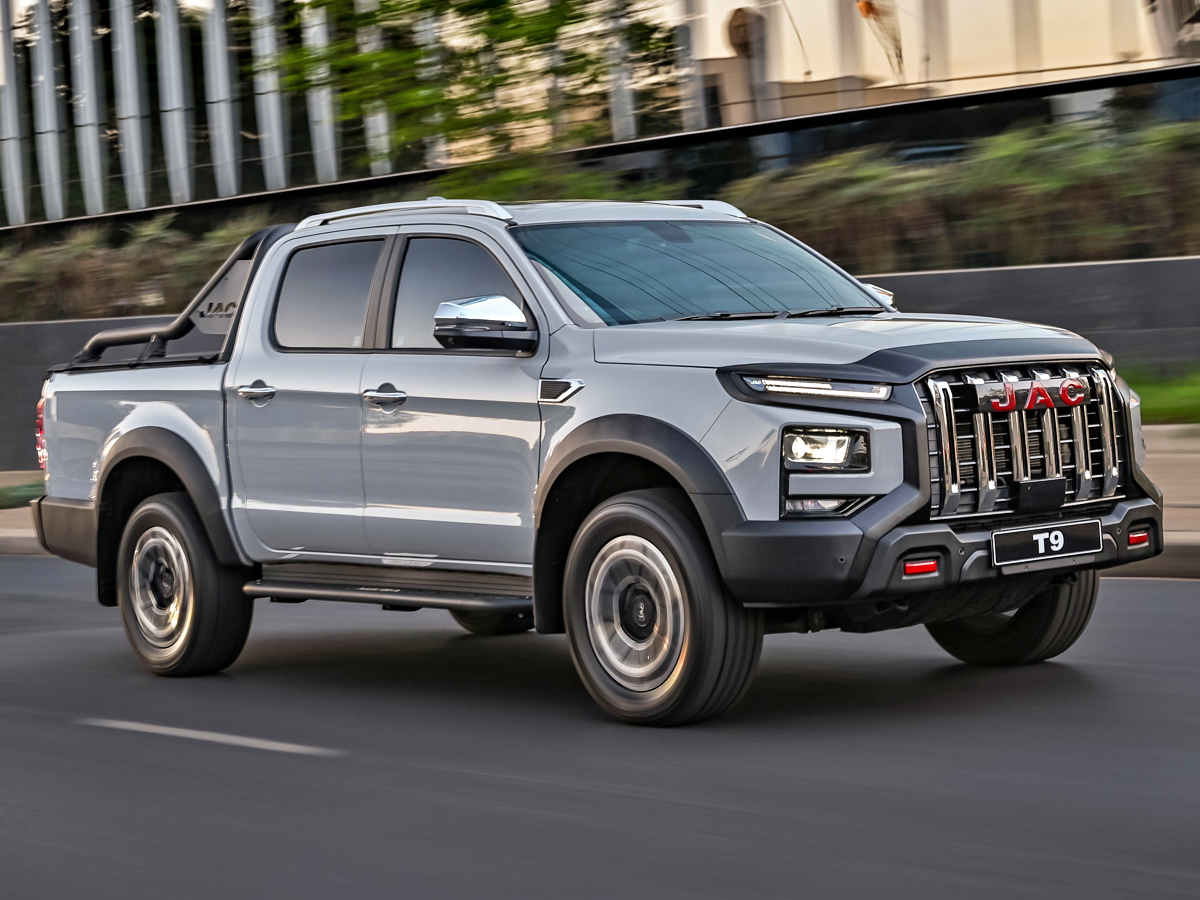
JAC’s T-Series fell from the top 10 in September.
That meant the JAC T-Series slipped out of the top 10, ending September on 180 units, down 5.3% compared with August. While JAC reports only a combined T-Series figure to Naamsa, we have an unofficial breakdown of the range’s sales for September: according to our source, the Chinese brand sold 102 units of the T9, along with 71 units of the T8 and 7 examples of the T6.
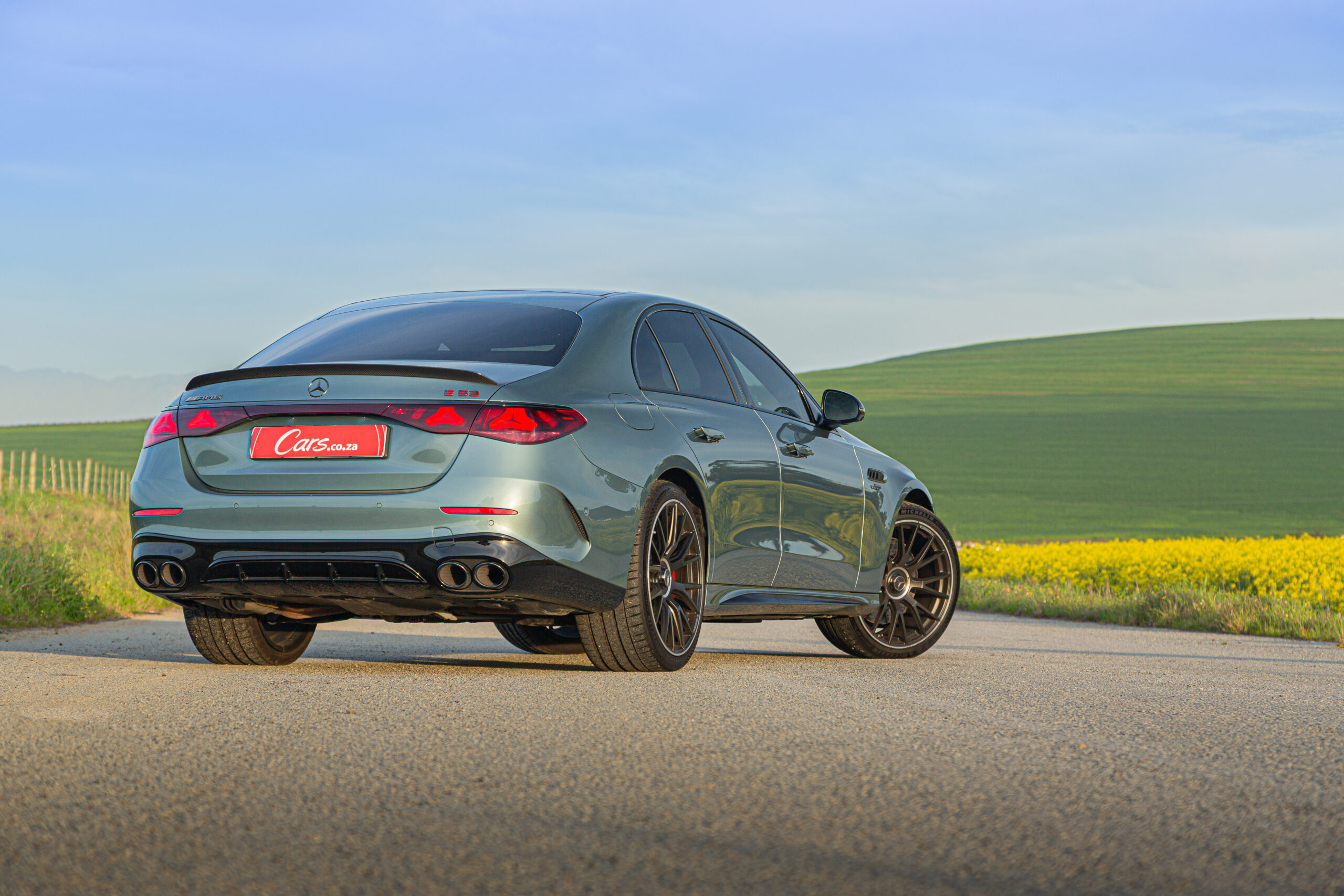
The Mercedes-AMG E53, the E-Class flagship, foregoes a growling V8 for an electrified inline-6. Does it still offer a compelling blend of performance and luxury?
We Like: Straight-line performance, day-to-day refinement, plushness, technology and efficiency.
We don’t like: Cost of options, synthesised engine noise, missing the brute force of the older E63 S.
Flagship E-Class eschews V8 in favour of a plug-in hybrid 6-cylinder motor.
E-Class remains an accomplished executive sedan.
Spec carefully; options can rapidly inflate the asking price.
Where does Mercedes-AMG position the E53?
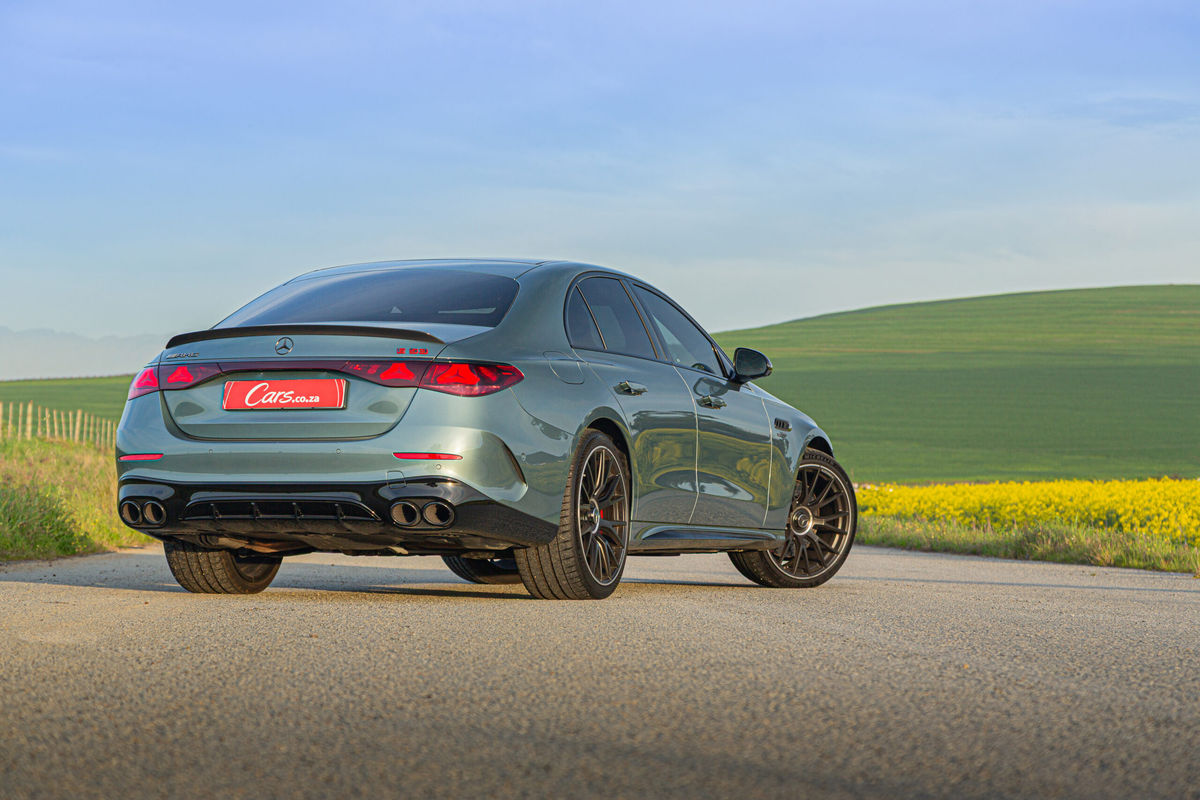
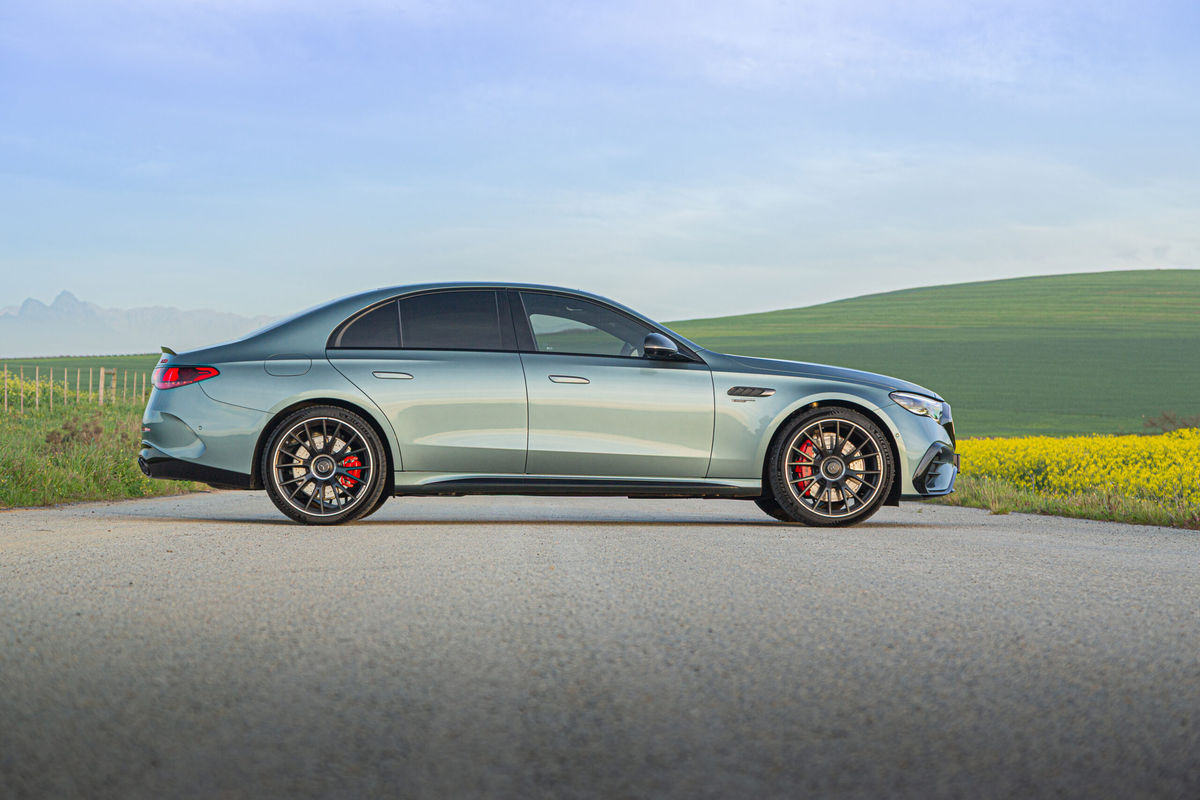
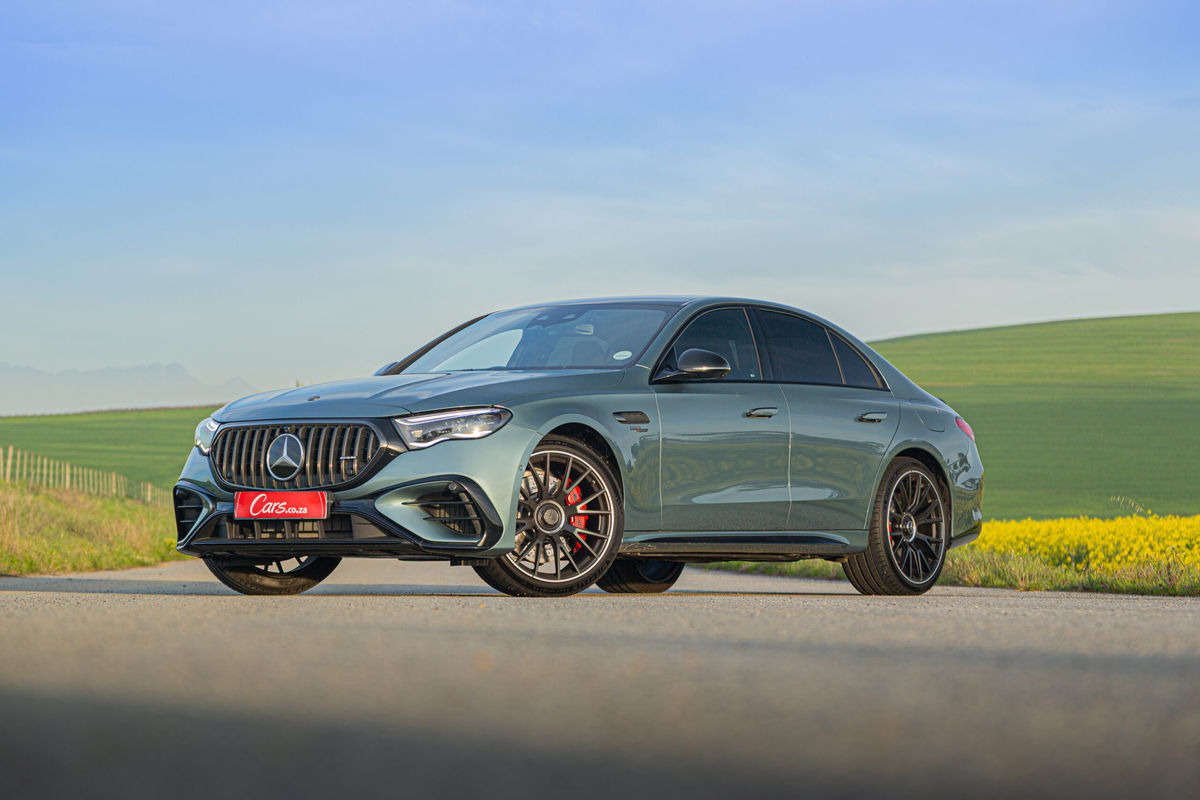
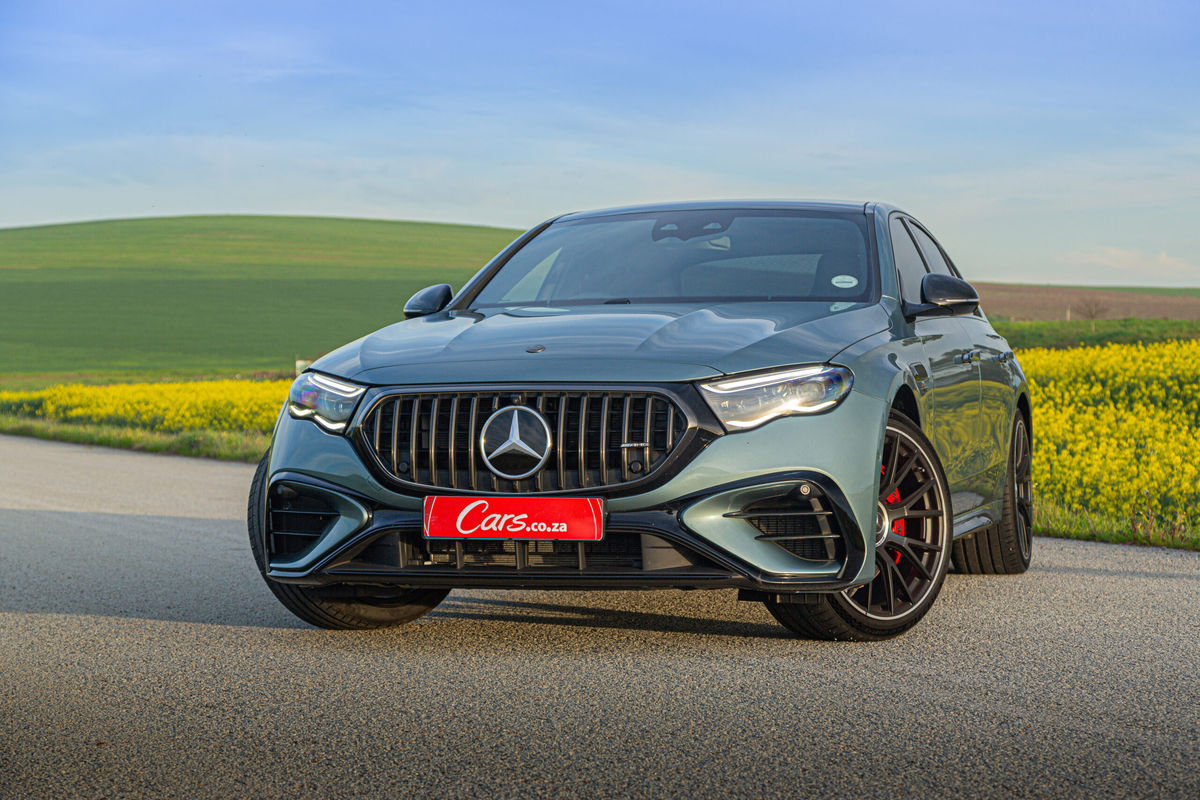
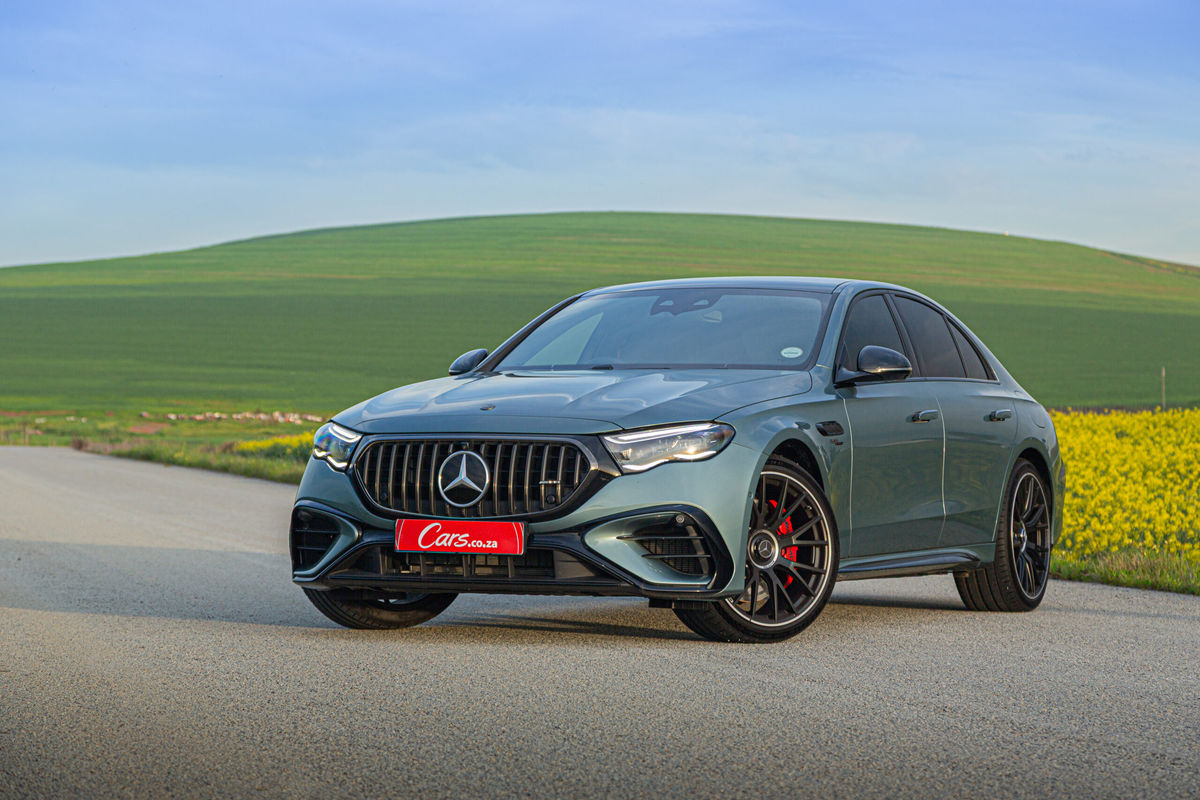
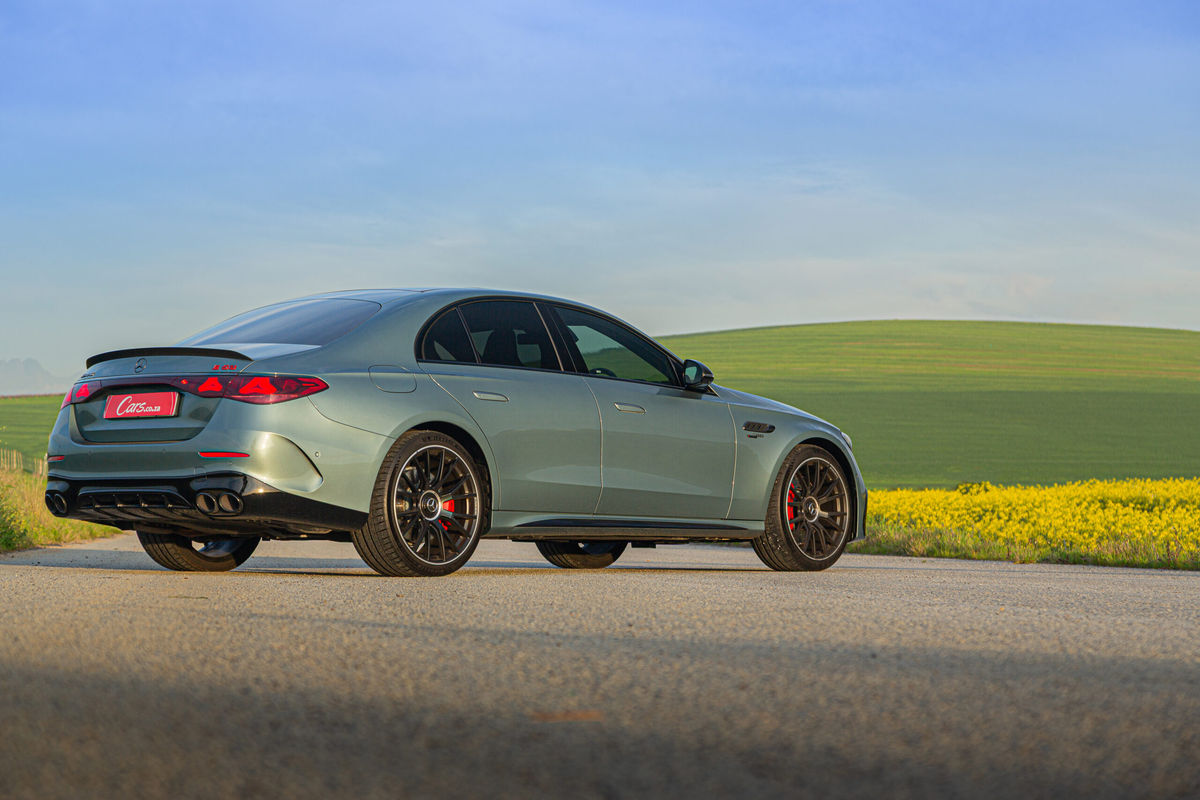
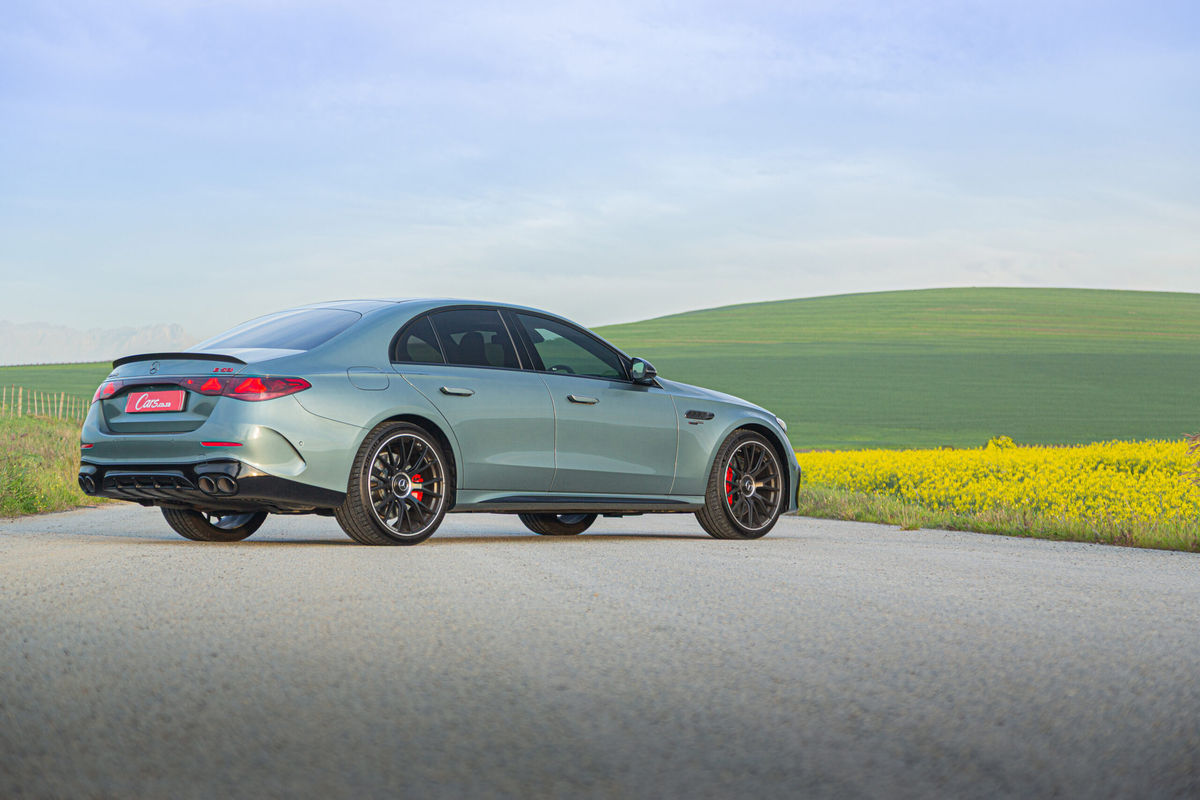
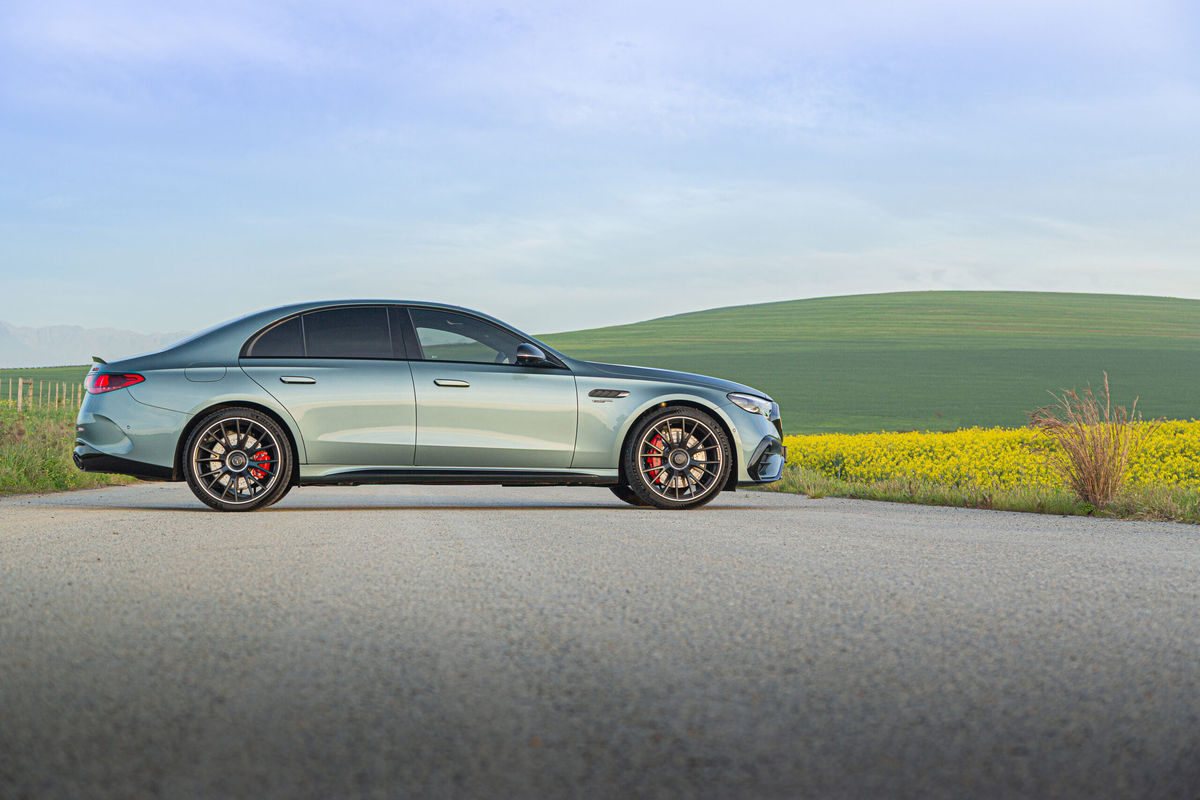
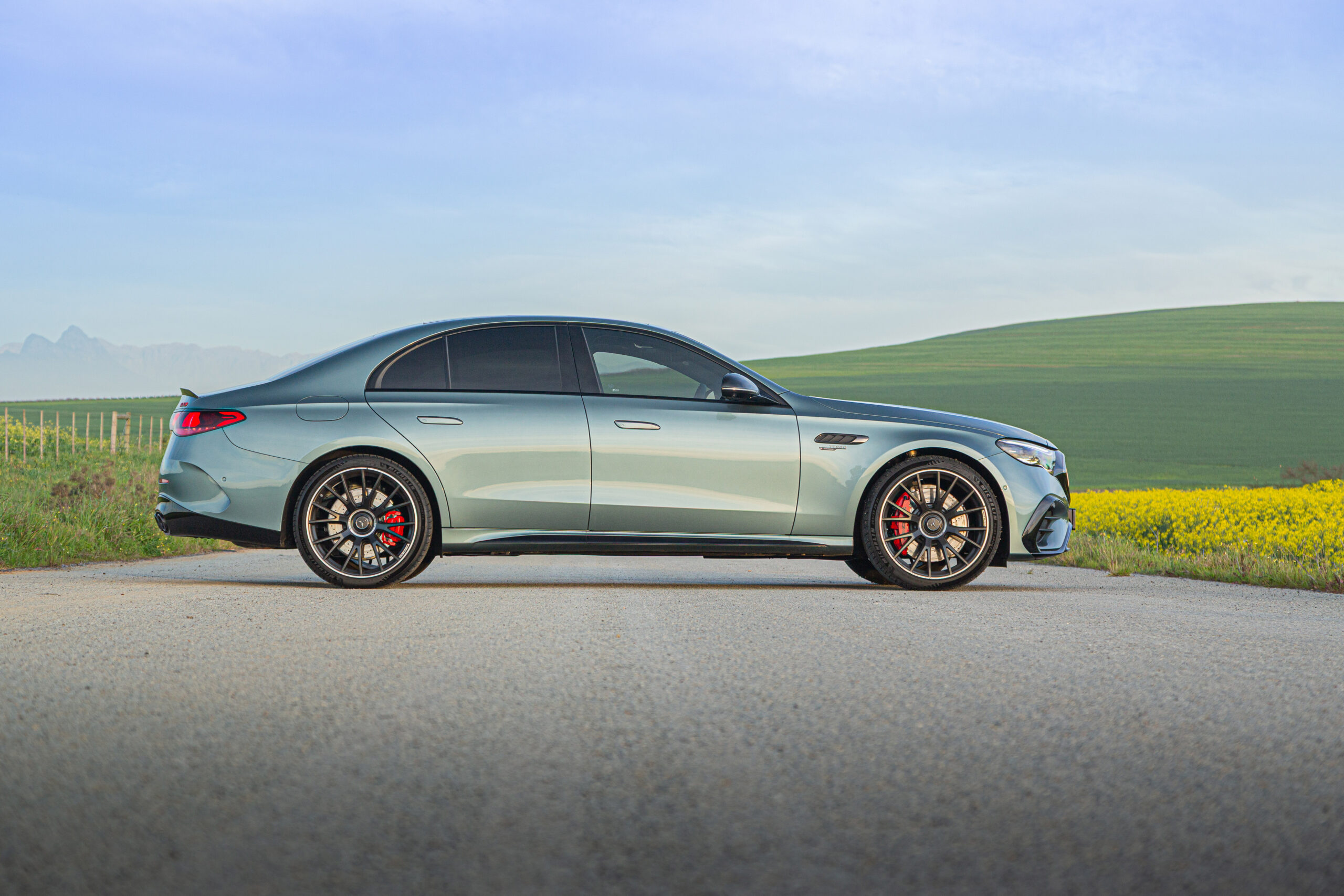
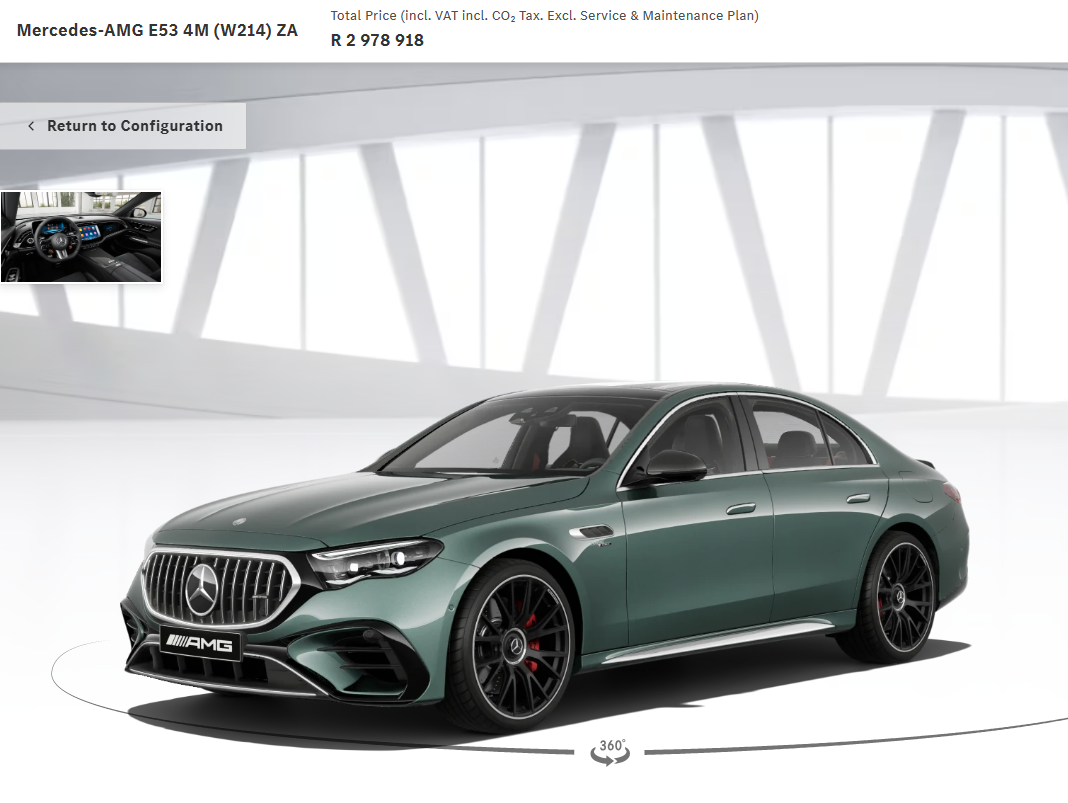
Verde silver is one of the prettiest metallic finishes we’ve seen on a ‘Benz.
Despite lagging sales, the executive sedan has not been put out to pasture – Mercedes-Benz (E-Class), BMW (5 Series) and Audi (A6 and A7) still produce 4-door models that sit between their business-class and 1st-class sedans. At the performance end of the segment, there are now fewer offerings: there is no more 4.0-litre twin-turbopetrol V8-powered E63 S, Audi’s S6, RS6, S7 and RS7 siblings are near the end of their product life, while BMW has hedged its bets with the G60-gen M5 and all-electric i5 M60 xDrive.
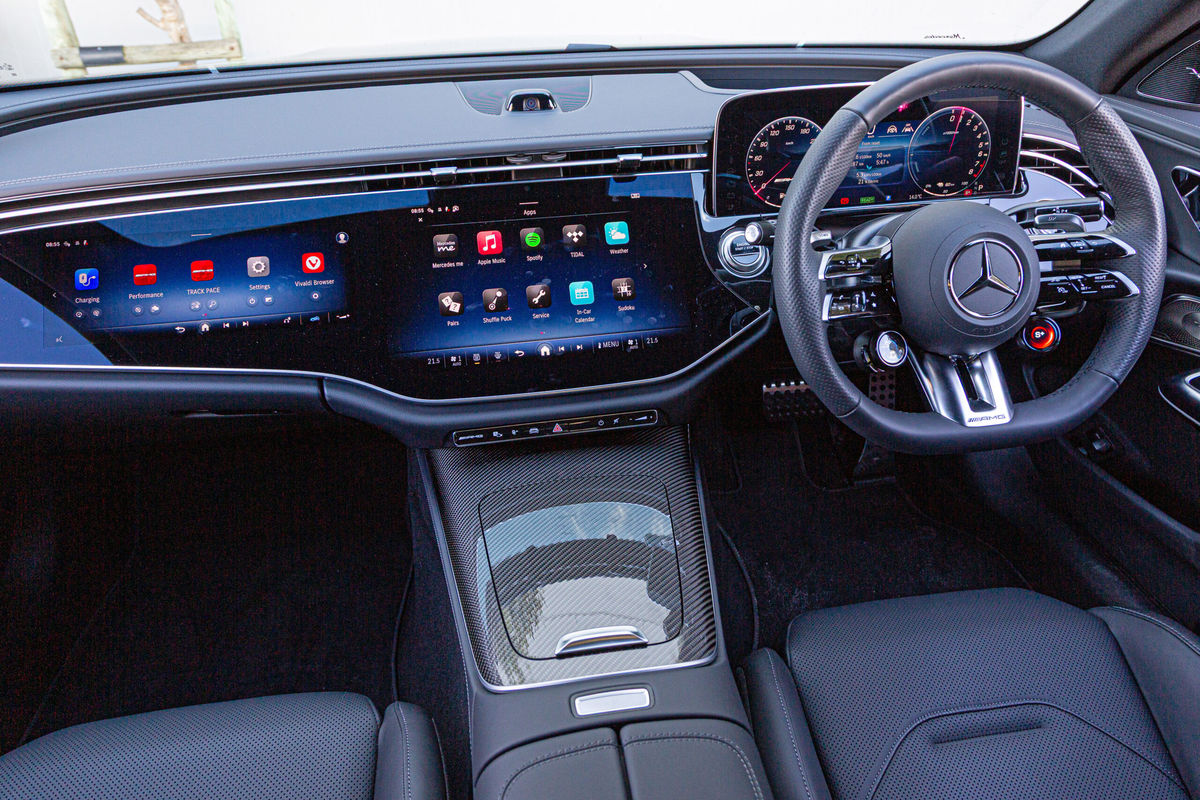
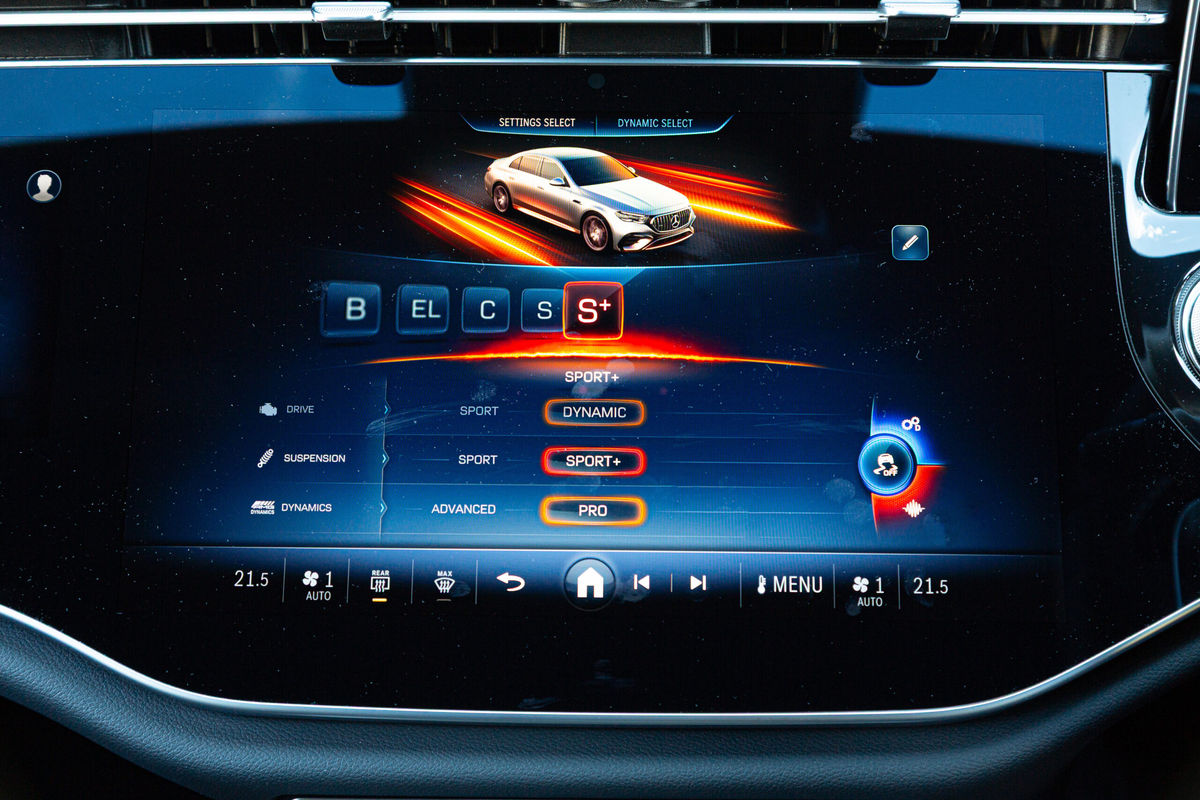
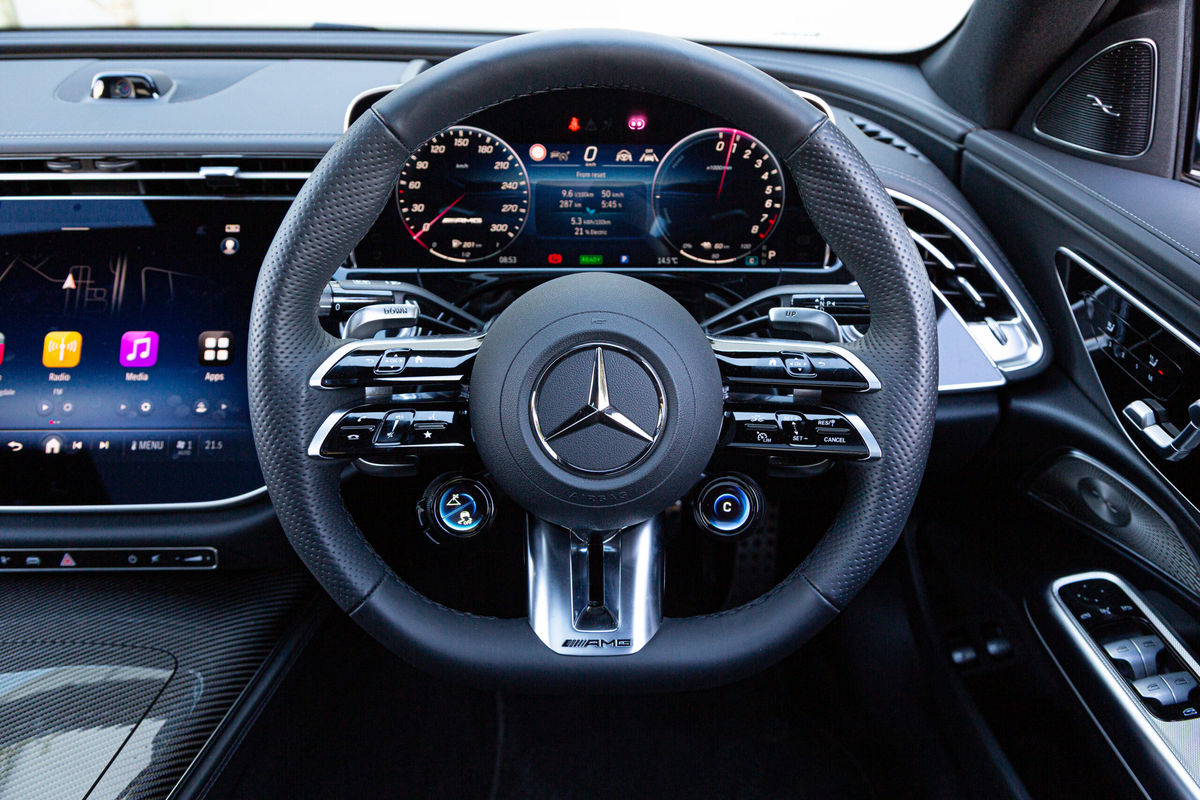
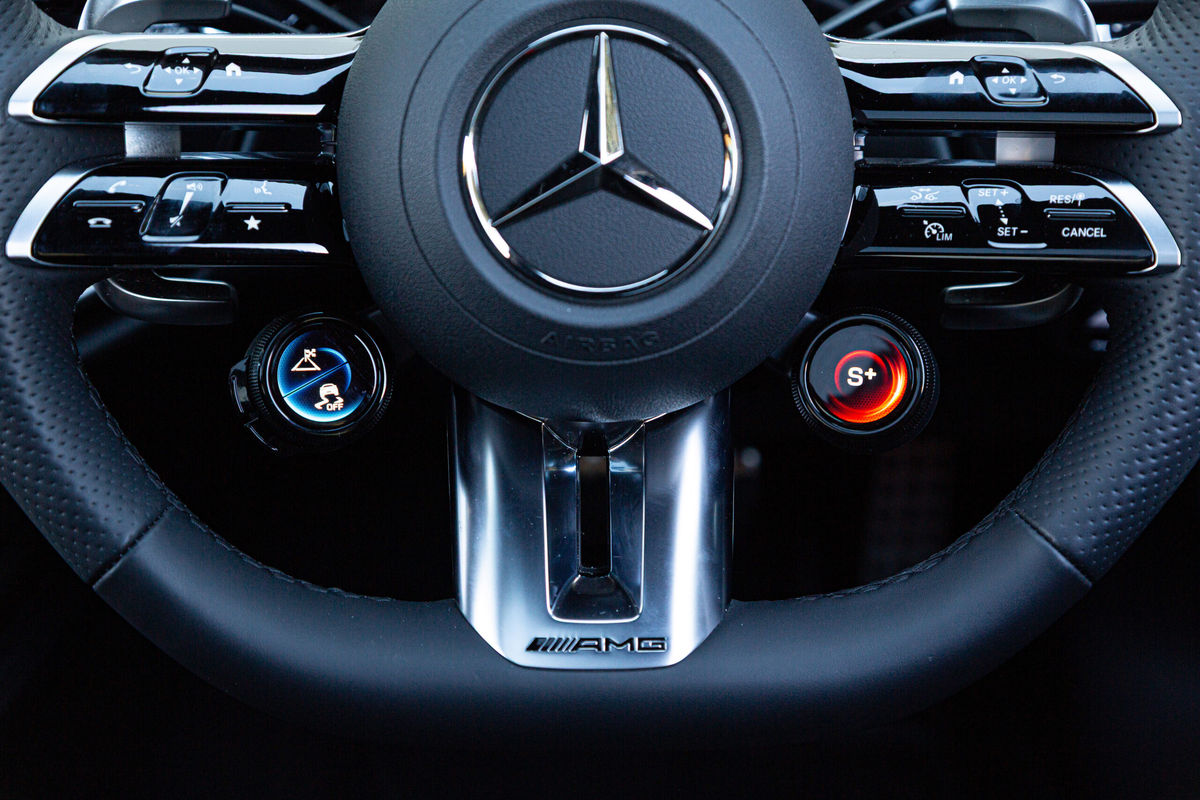
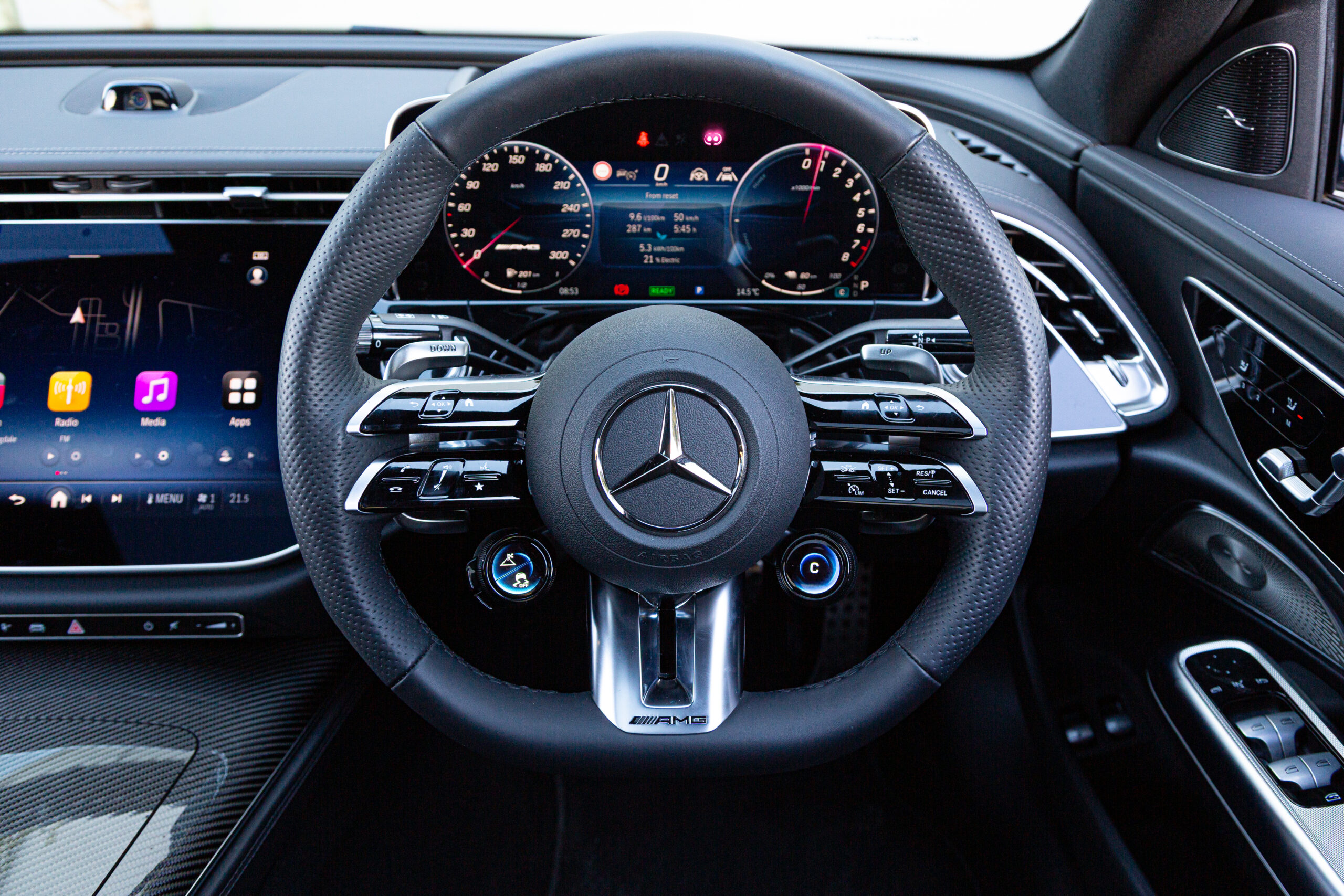
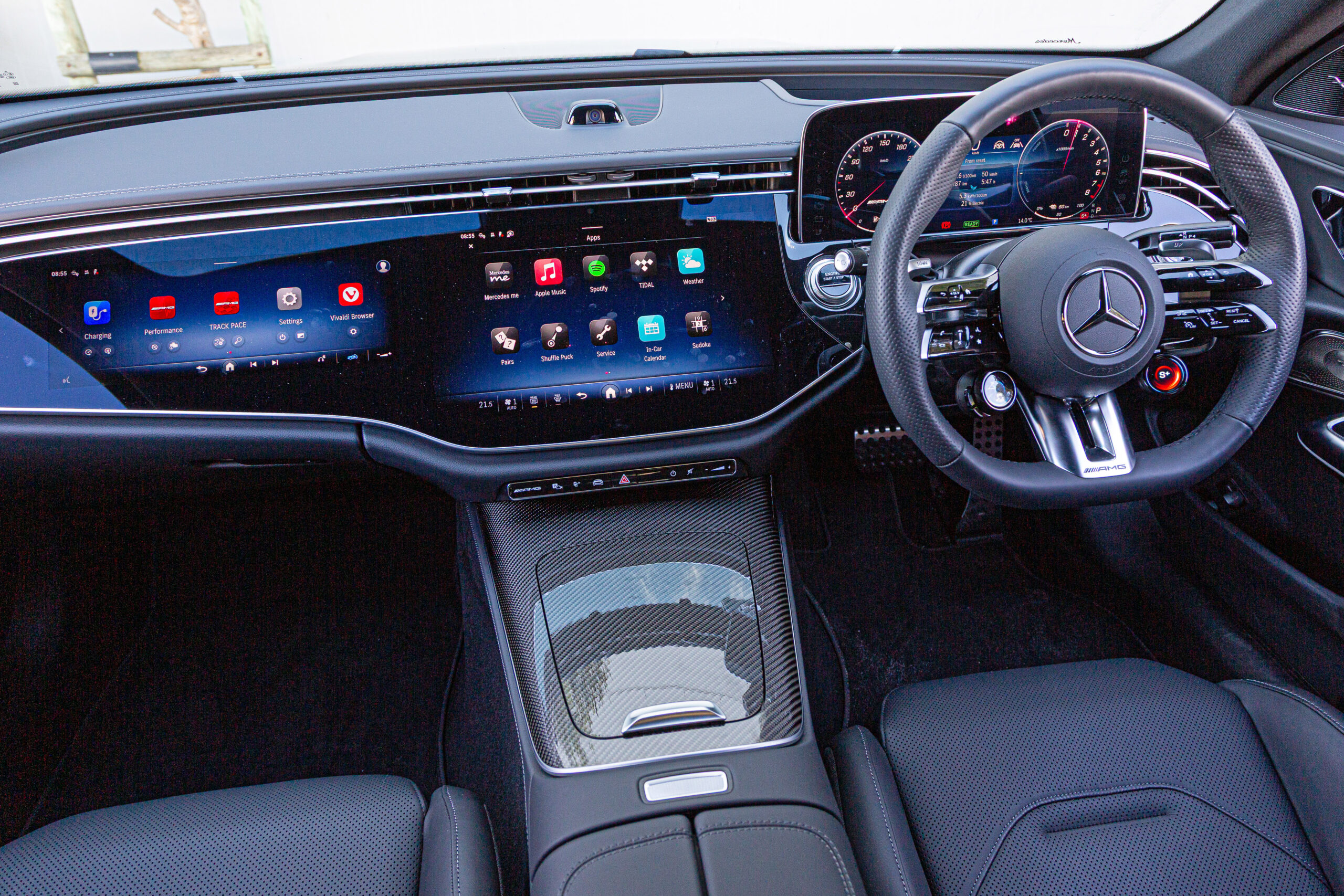
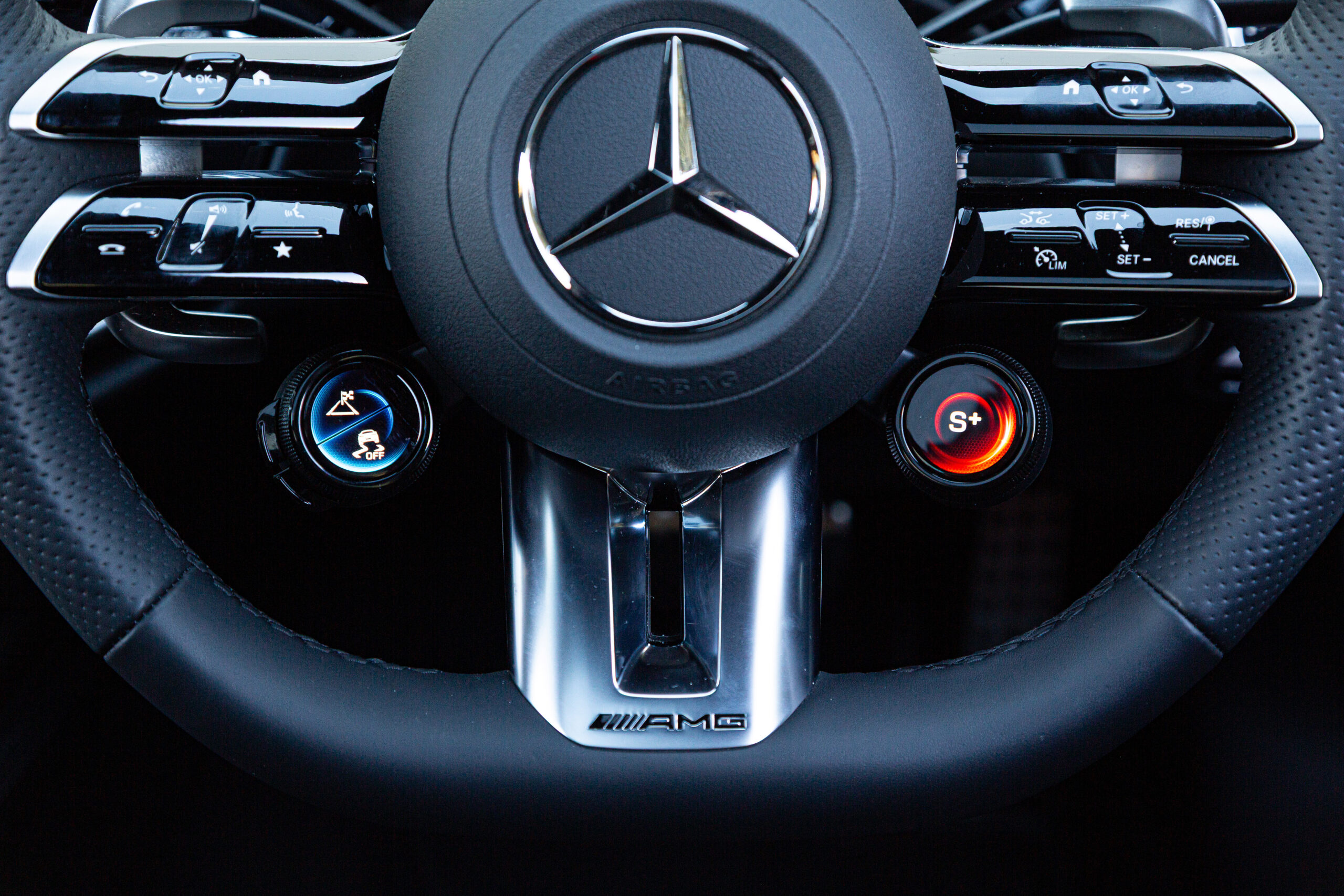
The AMG steering wheel has jog wheels for quick access to drive modes and performance settings.
Before we even get into the performance aspect of this review, it is important to remember that at its foundation, the E53 is still a Mercedes-Benz E-Class, a model with a great reputation for comfort, luxury and a sophisticated driving experience. So, when the E53 is in its default setting and cruising in hybrid mode, rest assured you’ll be in one of the more relaxing and easier-to-drive big sedans on the market.
After a few minutes spent on the local Mercedes-Benz configurator, it’s scarily easy to go overboard with optional extras. We estimate that this metallic green test unit was specced with about R600 000 worth of additional content. Is it worth it? Well, certain features definitely are, but we’ll discuss that a little later.
How well does the E53 blend Performance and Efficiency?
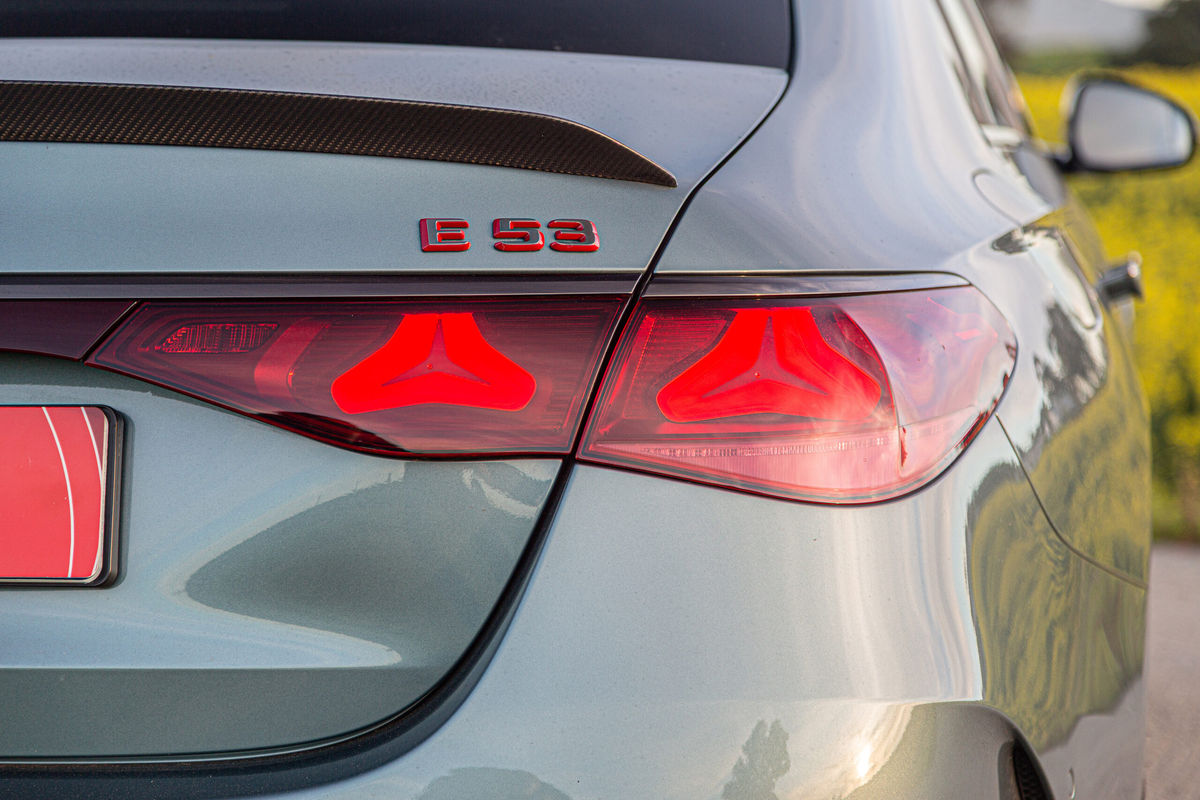
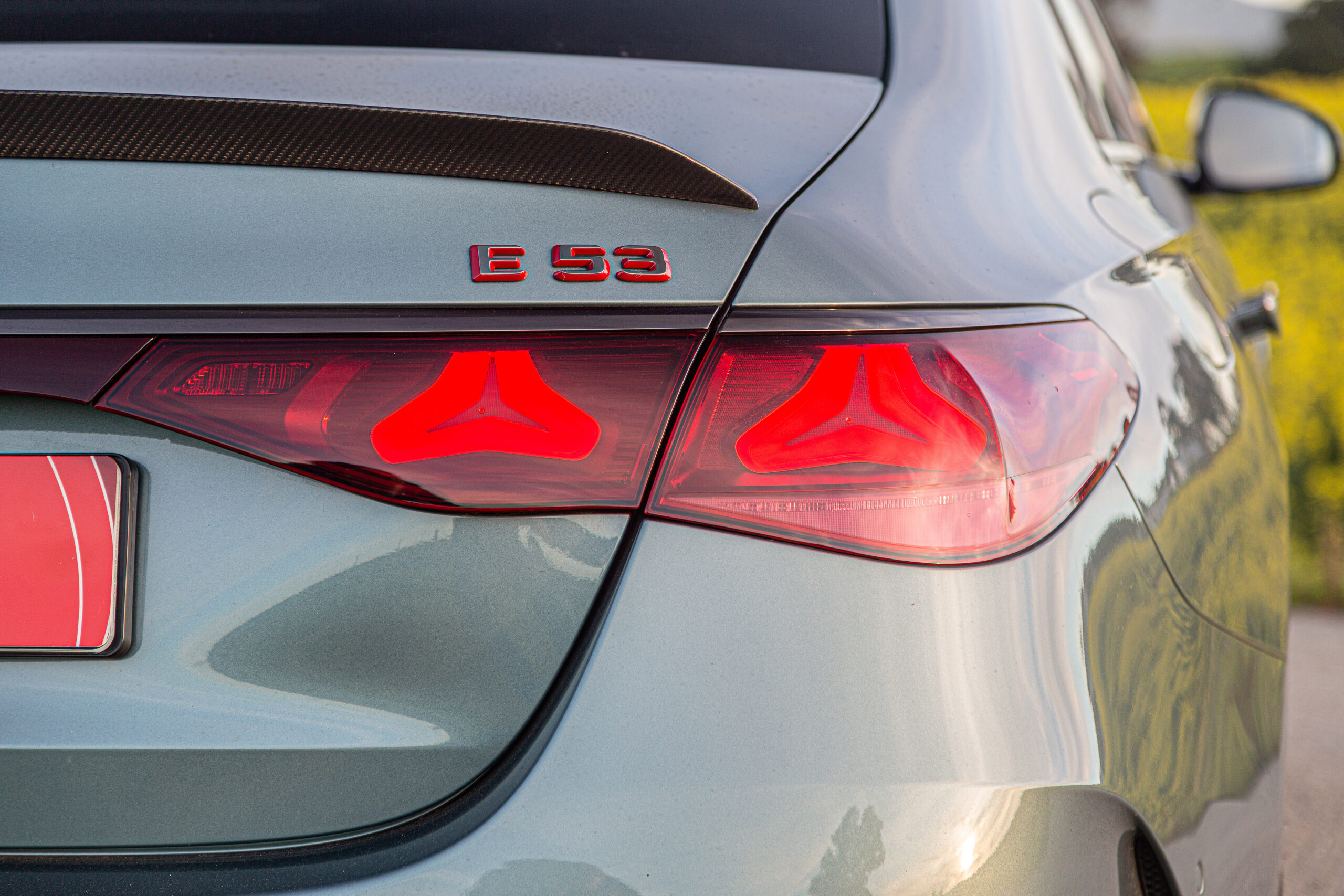
The Three-pointed Star is integrated into the taillights’ lighting signature.
Right, straight to the most likely reasons you’re reading this – to find out how well the E53 performs – and to decide whether the lack of a sledgehammer twin-turbopetrol V8 is damning. The previous-gen E63 S had a formidable reputation for being loud and incredibly quick, but for this generation, the apex E-Class variant has lost 1 litre of capacity and a pair of cylinders, but gained a plug-in hybrid system.
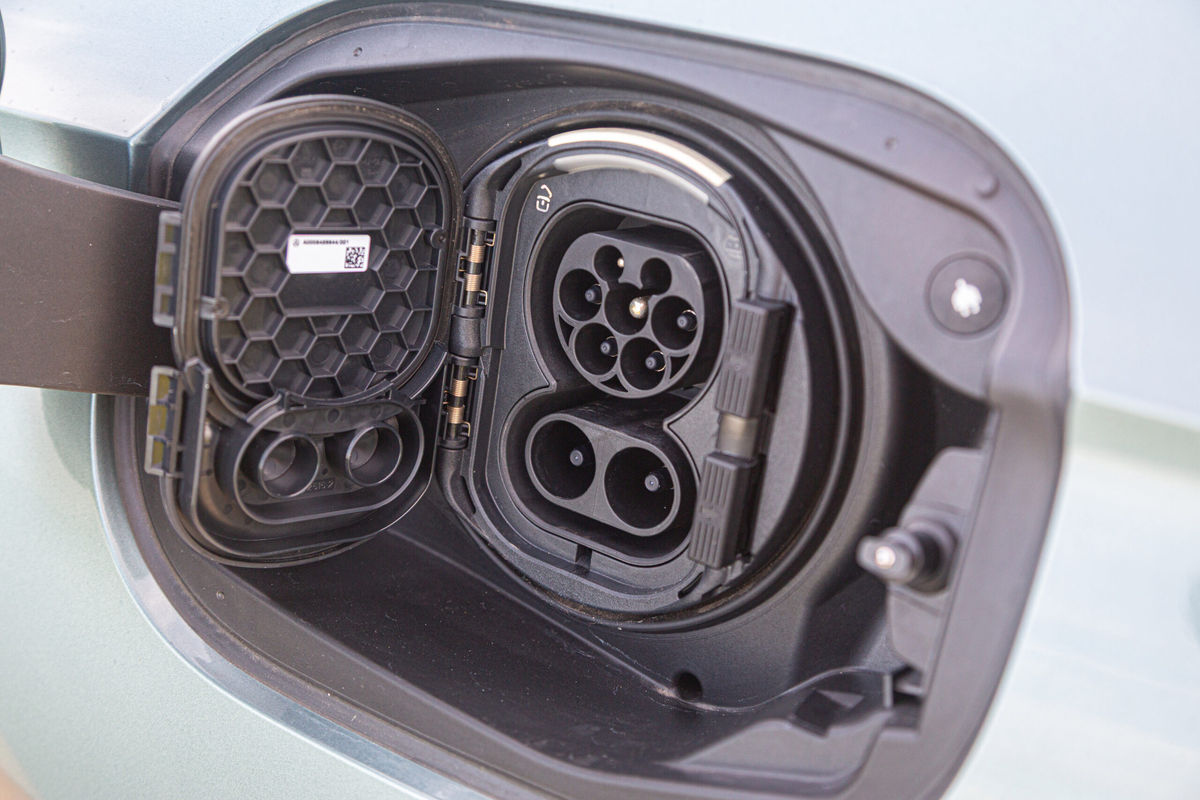
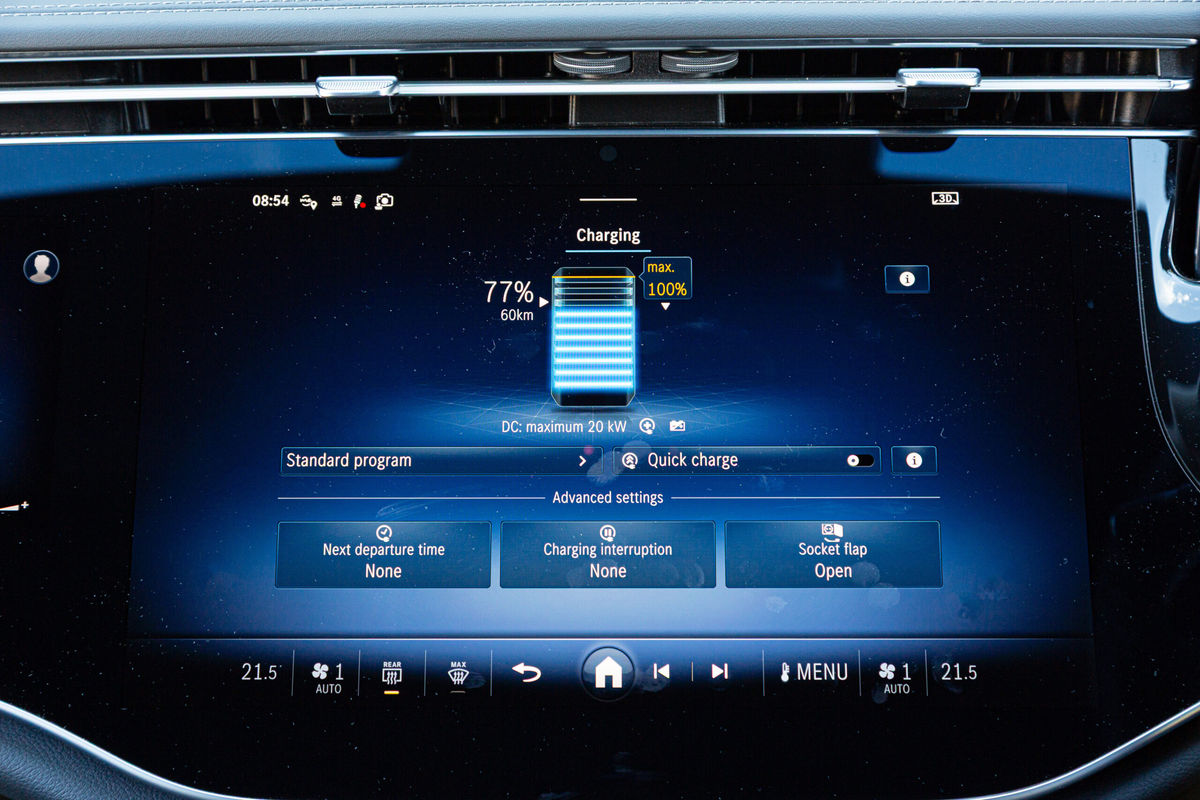
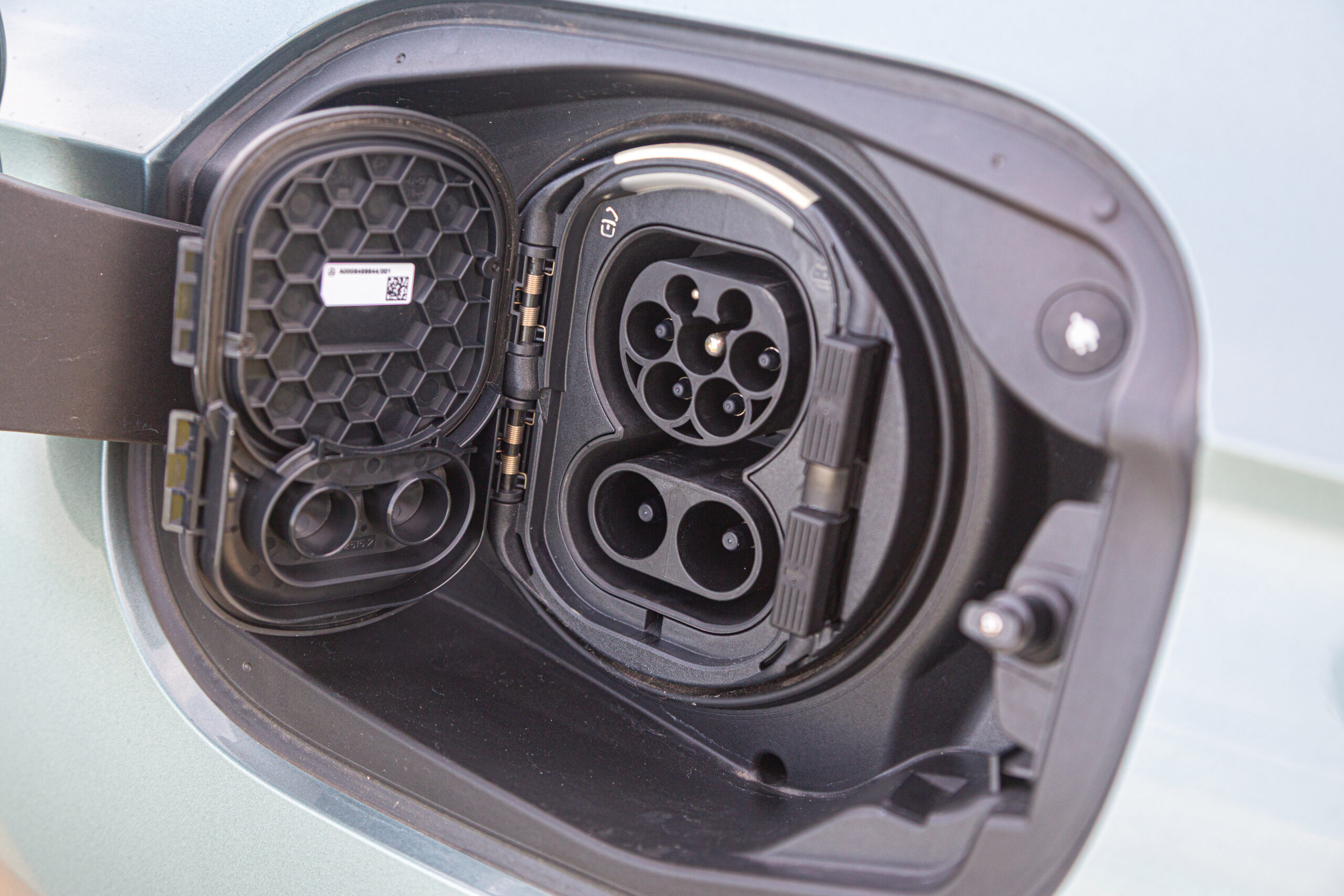
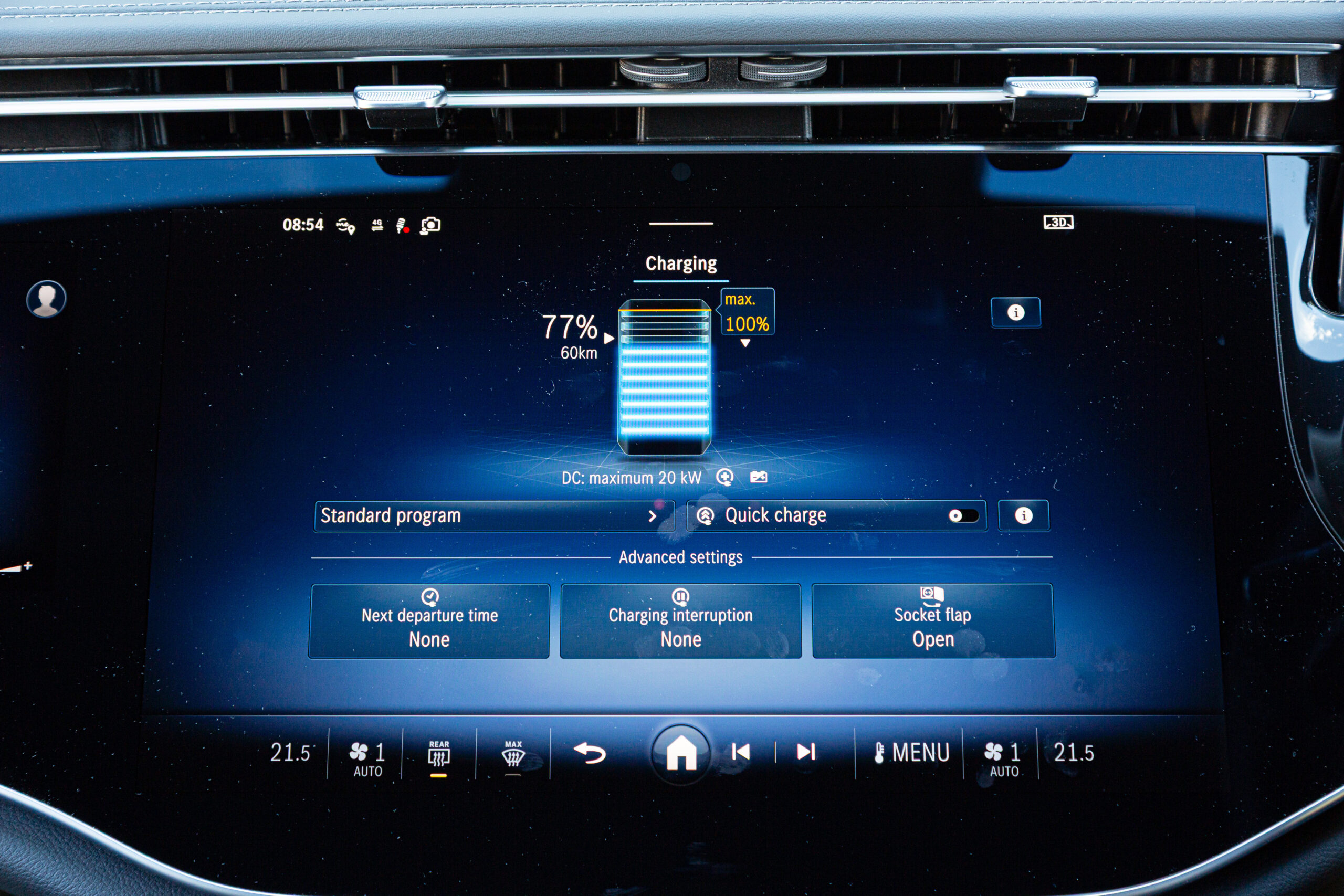
The E53 supports AC and DC recharging.
The E53’s a 3.0-litre inline-6 plug-in hybrid powertrain produces 430 kW/750 Nm and drives all 4 wheels (4Matic+) via a 9-speed dual-clutch transmission. Mercedes-AMG claims the ‘Benz will dispatch the 0-100 kph sprint in 3.8 seconds (the engine will temporarily develop 450 kW when Race Start is activated), and sure enough, we recorded a time of 3.79 seconds; the lunge towards the horizon was pretty special.
We do think it’s a bit cheeky for launch control to be optional in a performance sedan – Mercedes-AMG will charge you R69 000 for the AMG Dynamics Plus package, which includes a limited-slip diff, dynamic engine mounts, red brake callipers and a fancy Nappa steering wheel. Sod it, tick that box anyway.
It produces an evocative soundtrack too; the bark of the inline-6 turbopetrol engine is pleasant, but bear in mind that this aural pleasure isn’t a result of the engine’s machinations only – it’s augmented by the cabin’s speakers. From the outside, the E53 sounds purposeful, but some may wish for more drama.
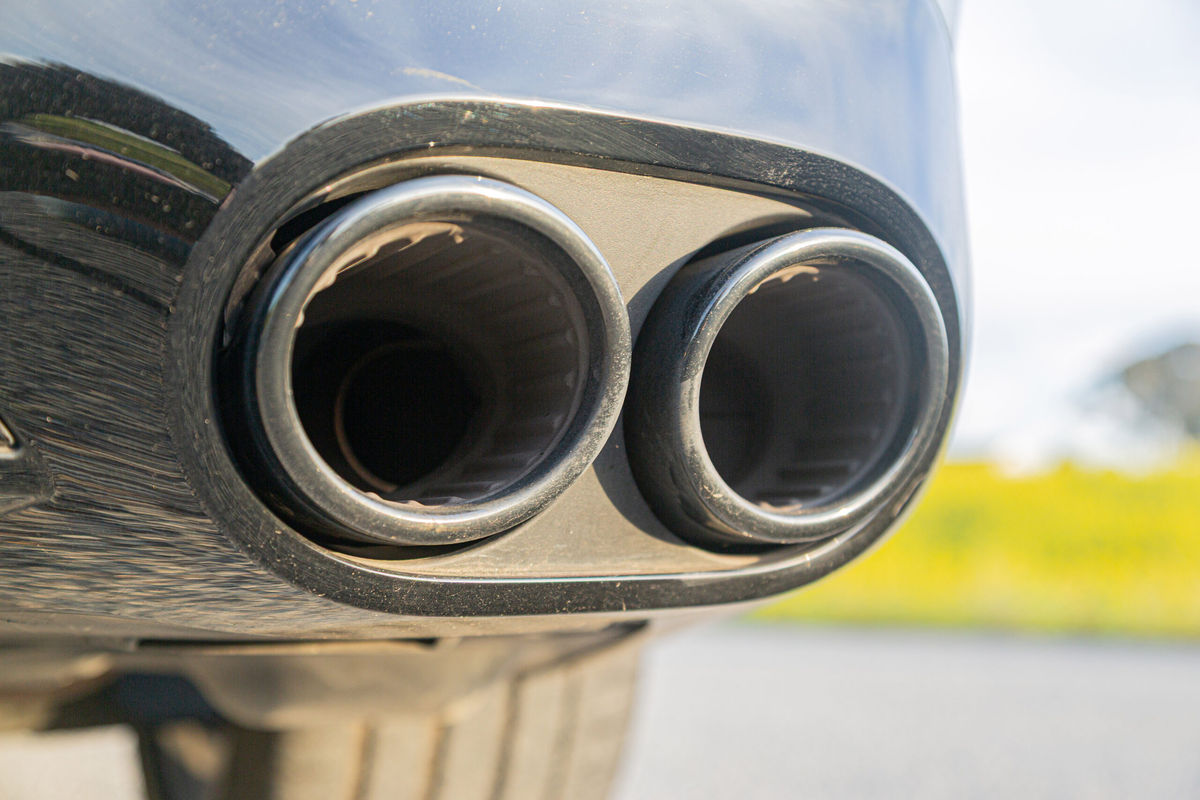
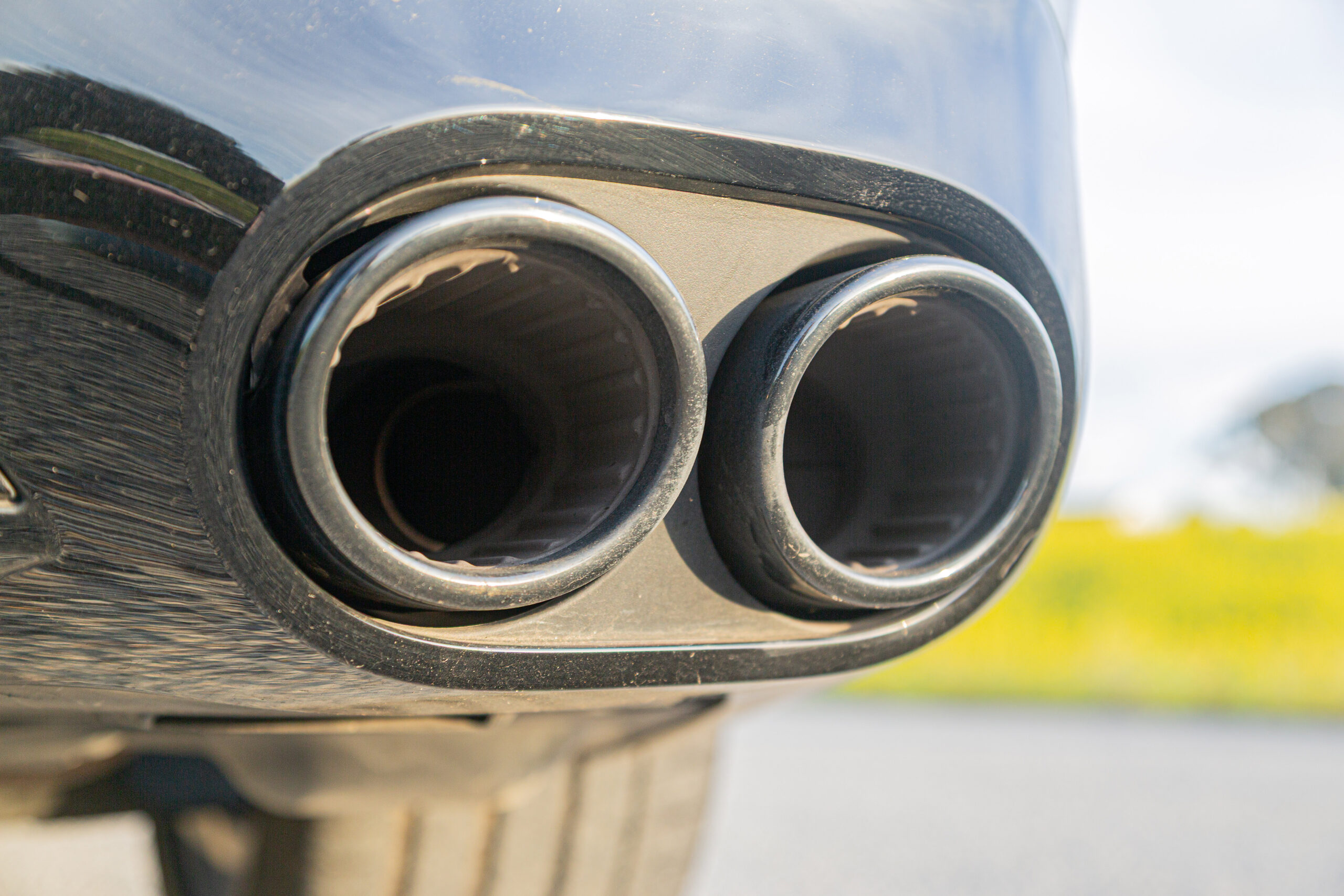
The actual exhaust outlet lurks behind this pair of decorative tips.
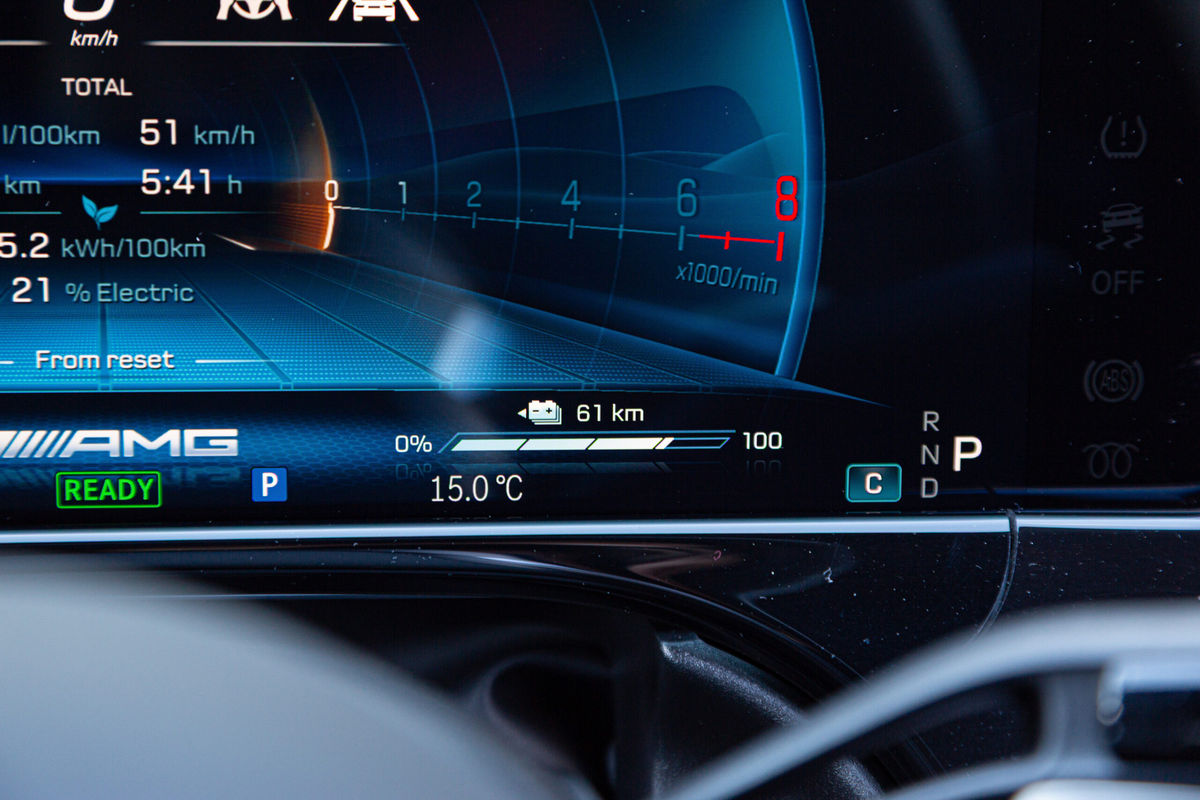
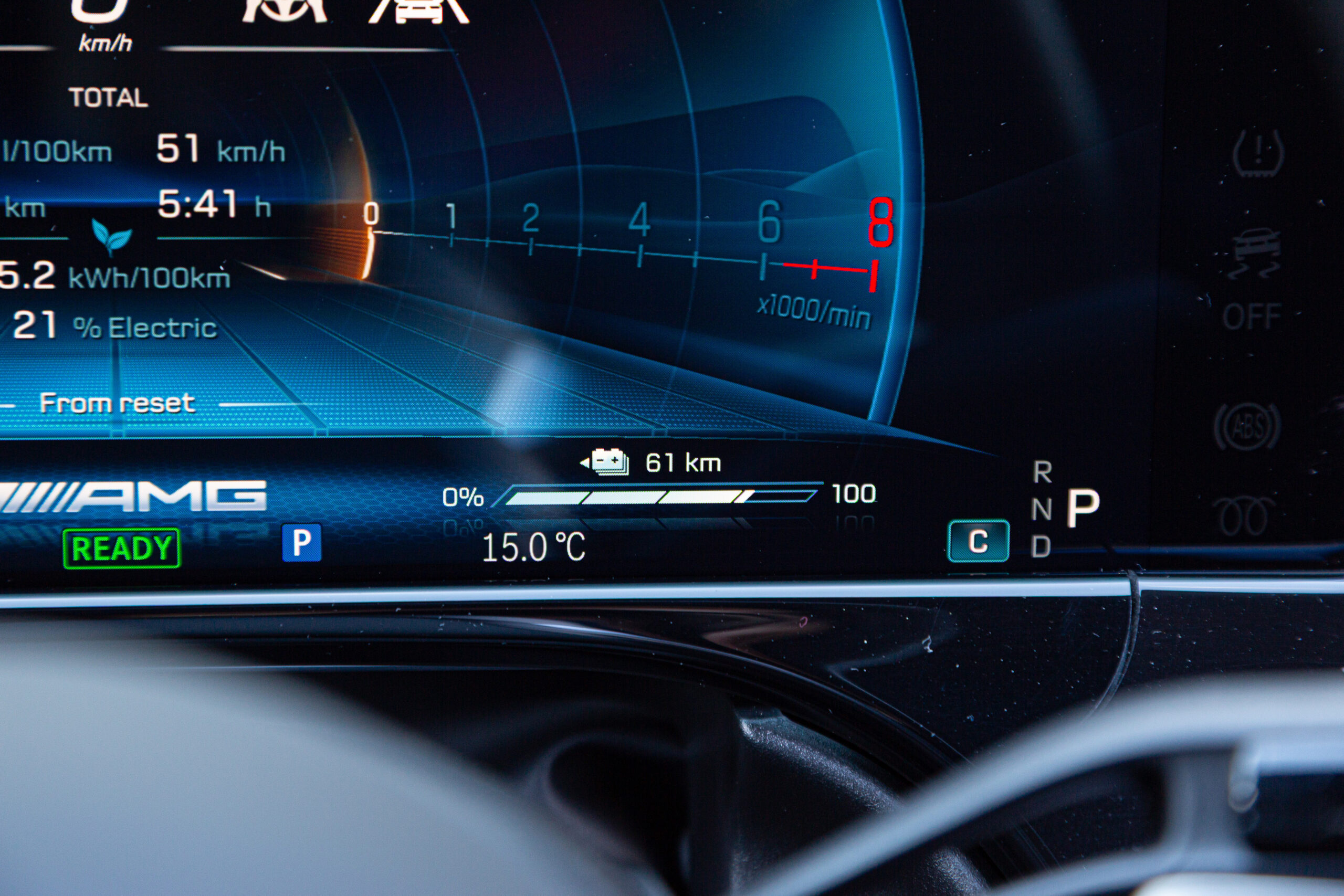
A PHEV (plug-in electric vehicle) relies on its electric system to sustain momentum in traffic and engages the petrol engine if you demand medium-to-hard acceleration (or when the hybrid battery is depleted). Moreover, when its battery is fully charged, the E53 can operate in pure-electric mode for around 90 km, depending on your driving style and road conditions. The electric motor on its own makes 120 kW!
The battery size is a 28.6 kWh (21.22 kWh usable) unit, and based on an average price of R3 per kWh, it’ll cost approximately R85 to charge the E53 fully. You can charge at home (using a wall plug) or tap into the ever-growing charging infrastructure. We get the impression the E53’s PHEV system is set up more for efficiency than outright performance, which is the polar opposite of the C63 S‘ 4-cylinder hybrid.
The E-Class flagship offers a more-than-useful pure EV range.
In terms of outright performance, the electric motor provides an instant surge of power while the beefy 3.0-litre inline-6 turbopetrol spools up. It’s quite entertaining to feel the jolt of electric responsiveness, which is then replaced by a mighty roar – and ensuing thrust – from the internal combustion engine.
There’s a 9-speed automatic transmission on duty, and despite the paddles on the steering wheel being pleasant to touch, we found the car’s default shift mapping adequate for most driving scenarios.
How many AMG variants can deliver sub-4-second 0-100 kph runs and offer such impressive fuel efficiency?
We think it’s a well-balanced powertrain. The E53 could never match the raw hooliganism of its E63 S forebear, but its comparatively lower running costs and better day-to-day usability are commendable.
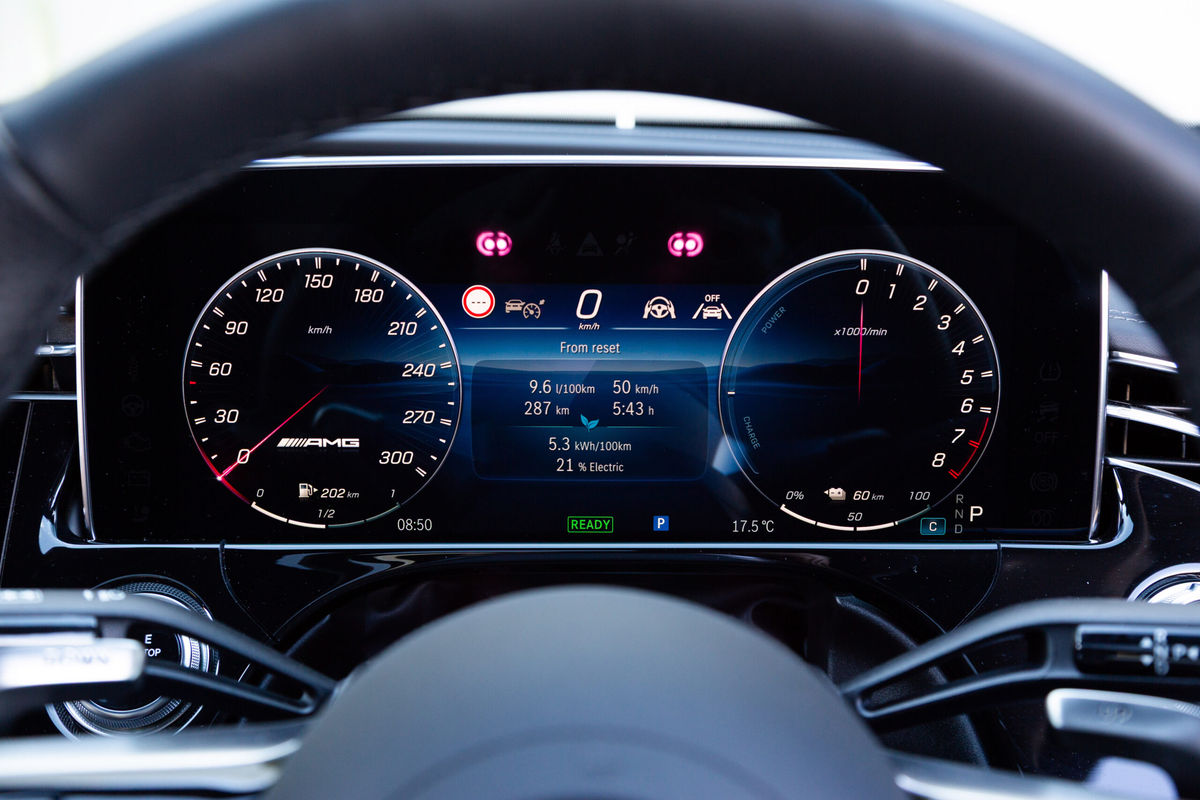
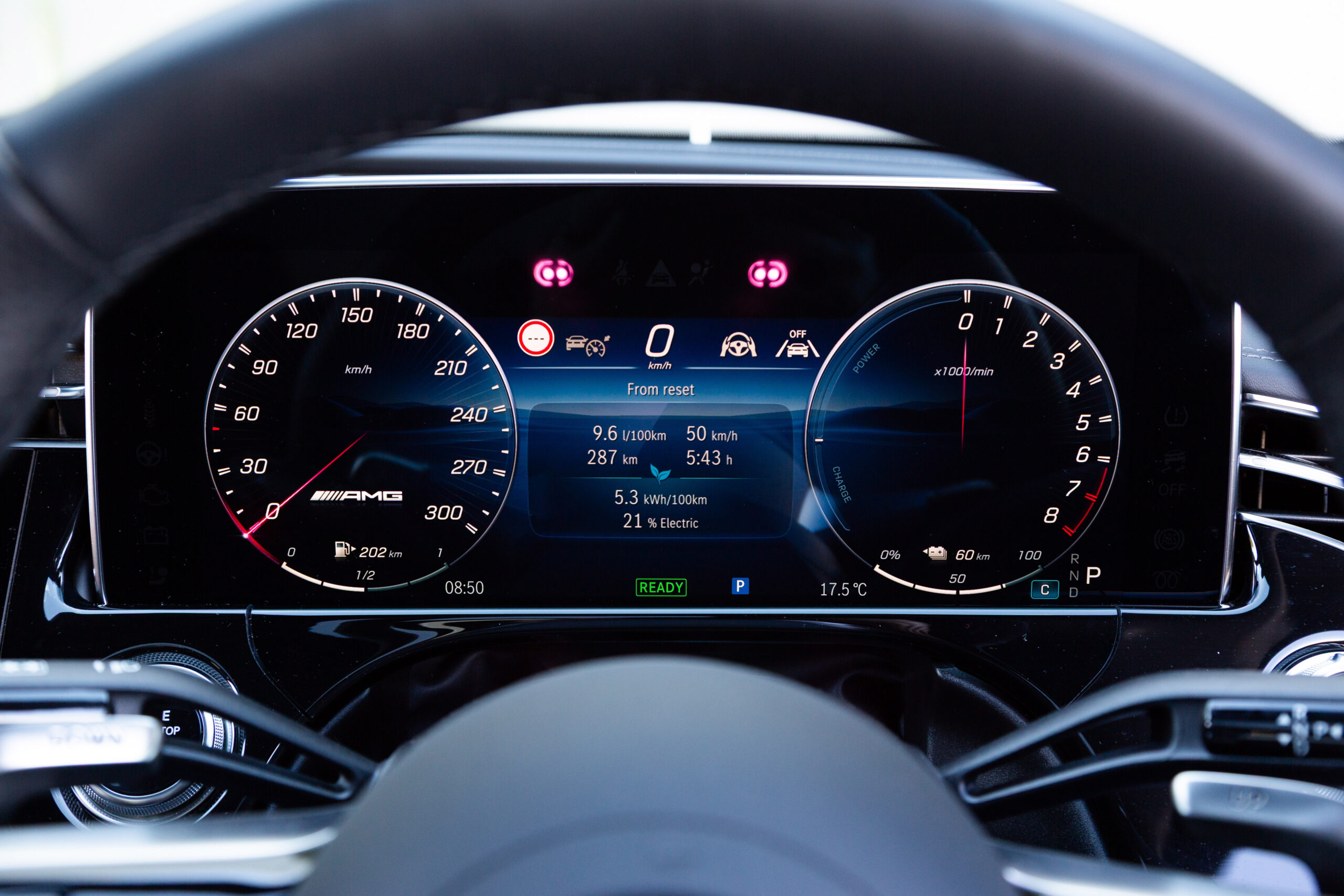
We all miss the V8’s sonorous thrust, but no one misses its thirst. That’s where the PHEV comes into its own. We adopted a diligent charging routine with the E53, and even though we used Race mode often, the test unit returned a consumption figure of 9.6 L/100 km – that’s not bad for a performance sedan!
You don’t have to plug the car in, but you will save money by making full use of its pure electric mode.
While the E53’s 0-100-kph time is slower than the E63 S‘ (if only by a few tenths), when it comes to in-gear acceleration, we suspect the former will run the latter close thanks to its instant electric assistance.
There’s a “but” (isn’t there always?). The E53, as the current E-Class flagship, left us wanting a bit more. There’s no guarantee that Mercedes-AMG will produce a thundering V8-powered E-Class again, but as long as BMW offers an M5, well, there’s hope. After all, AMG is developing an all-new 8-cylinder motor.
Features and Practicality of the Mercedes-AMG E53
The Hyperscreen and carbon-fibre trim are just some of the many options ticked on the test unit.
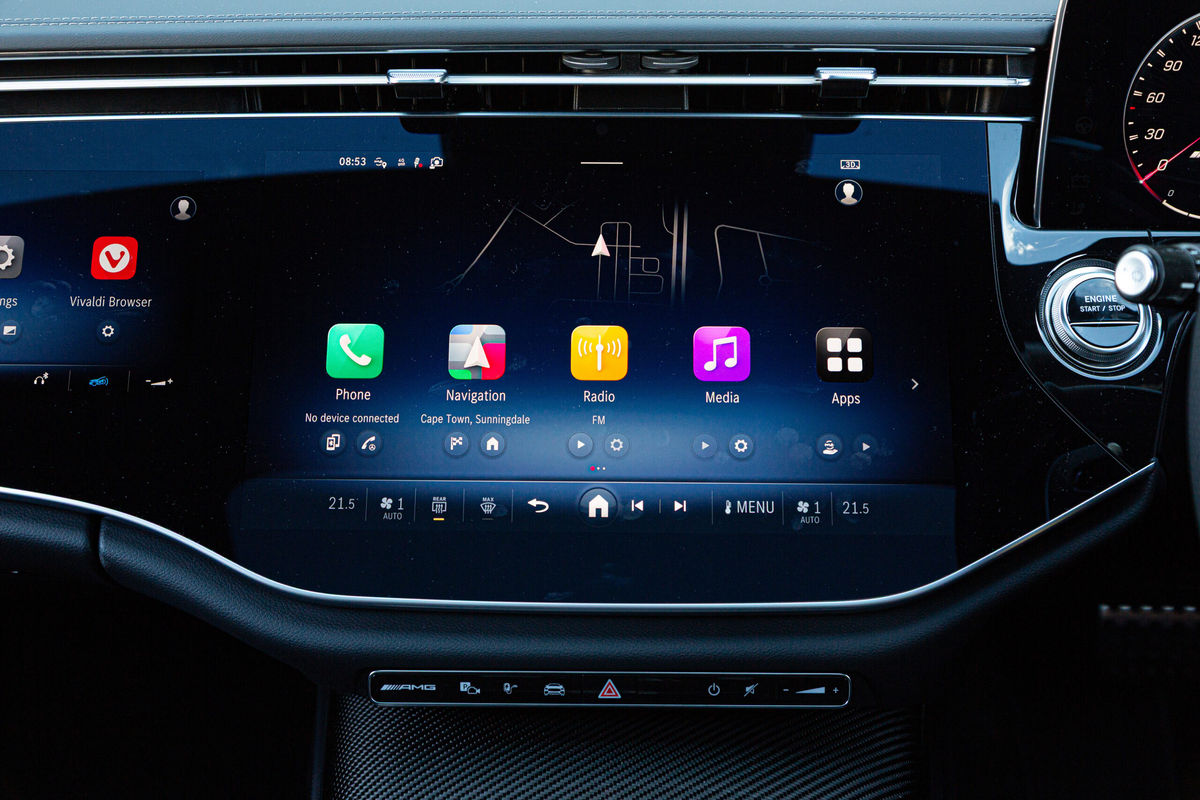
As mentioned, our test unit came equipped with an assortment of options. The biggest talking point is the passenger infotainment system, dubbed “Hyperscreen”. This option package also includes a dashboard-mounted video camera for in-car video calls/meetings. Some may appreciate the feature, but we’d prefer to be left in peace while driving and unplug from the digital madness of the outside world.
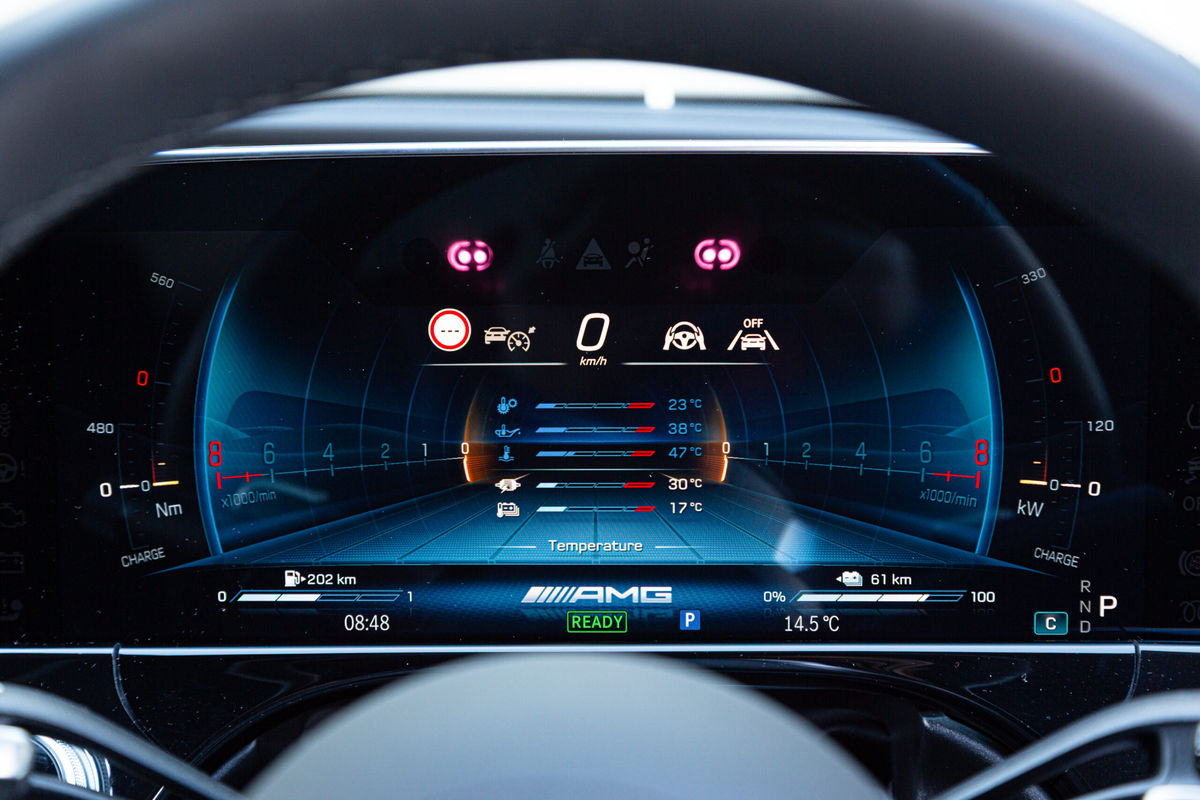
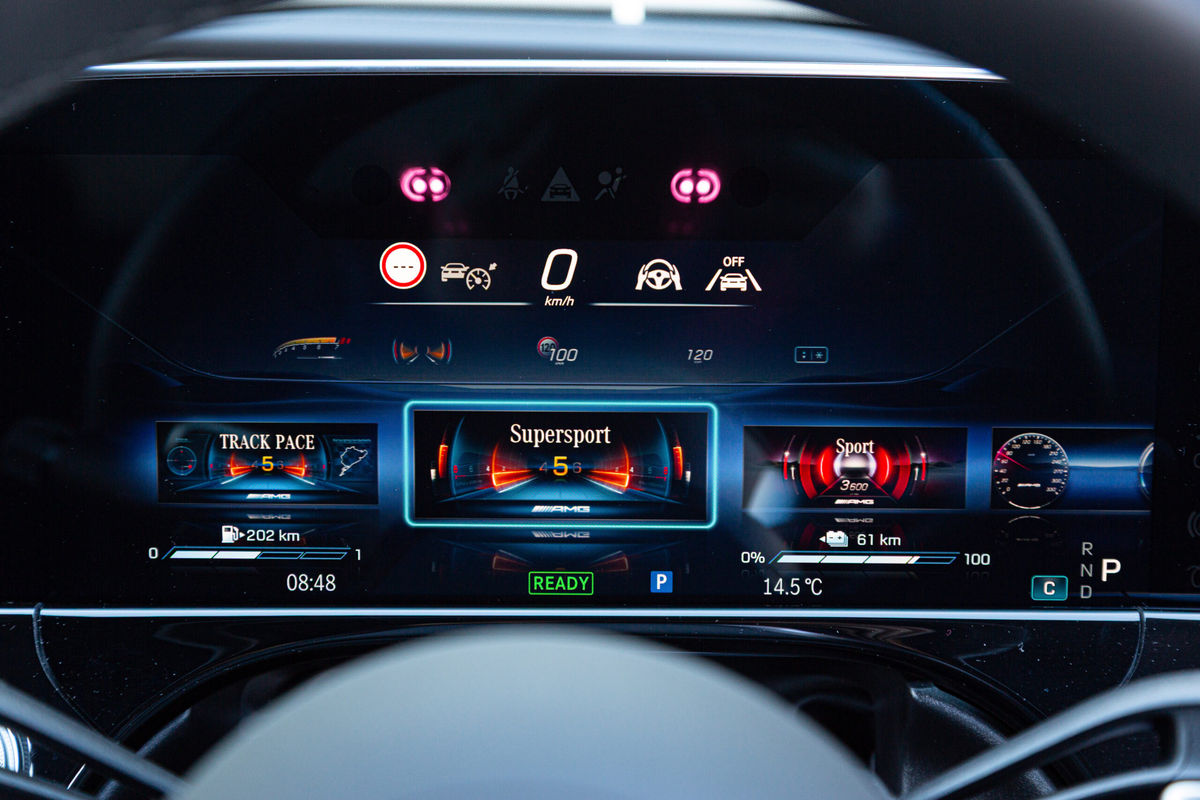
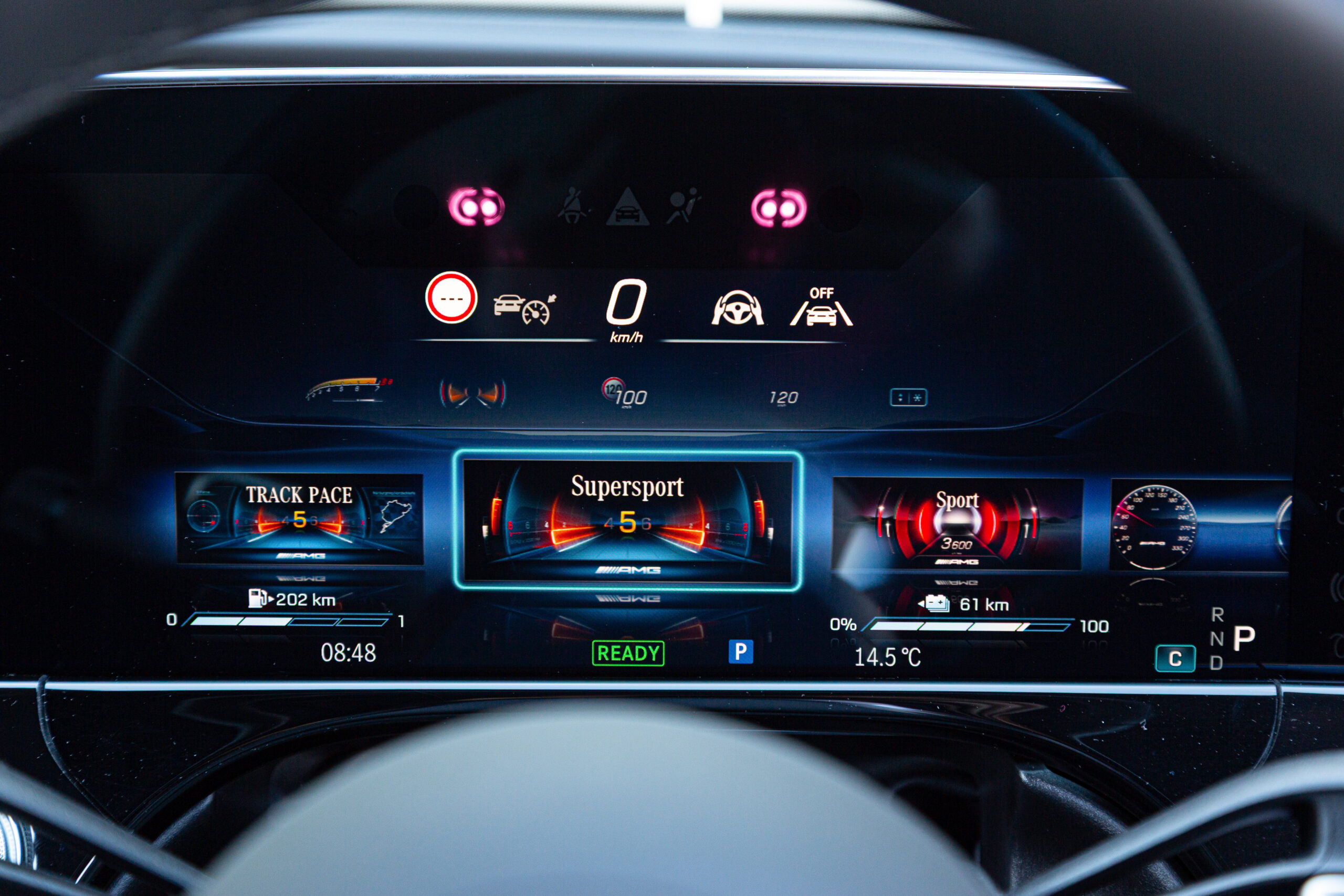
Cycling through the various instrument cluster themes for the E53.
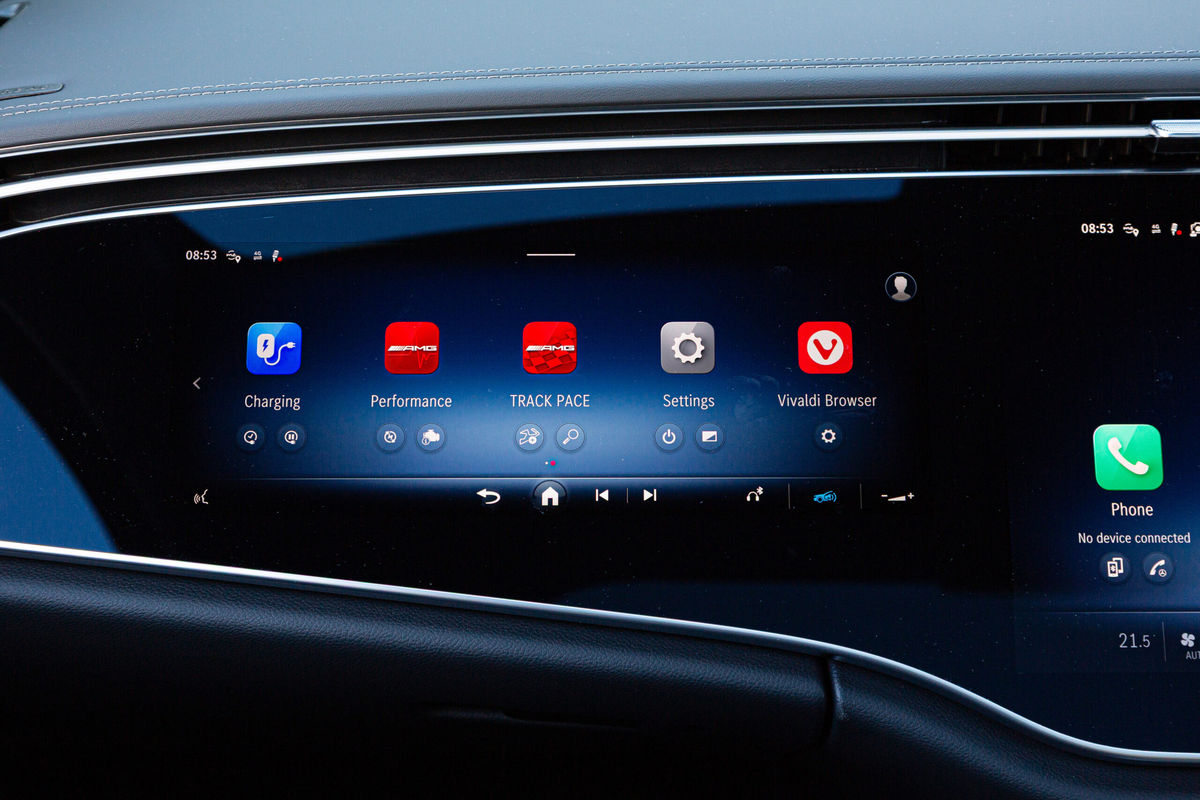
The headline act of the cabin is the MBUX infotainment system. Not only does it dazzle and impress when it comes to graphics and details, but the user functionality is reasonably straightforward, and while we’d assume the majority of customers won’t fully explore its capabilities, we’d implore you to dive in – there are loads of cool features and customisation options, including for the digital instrument cluster.
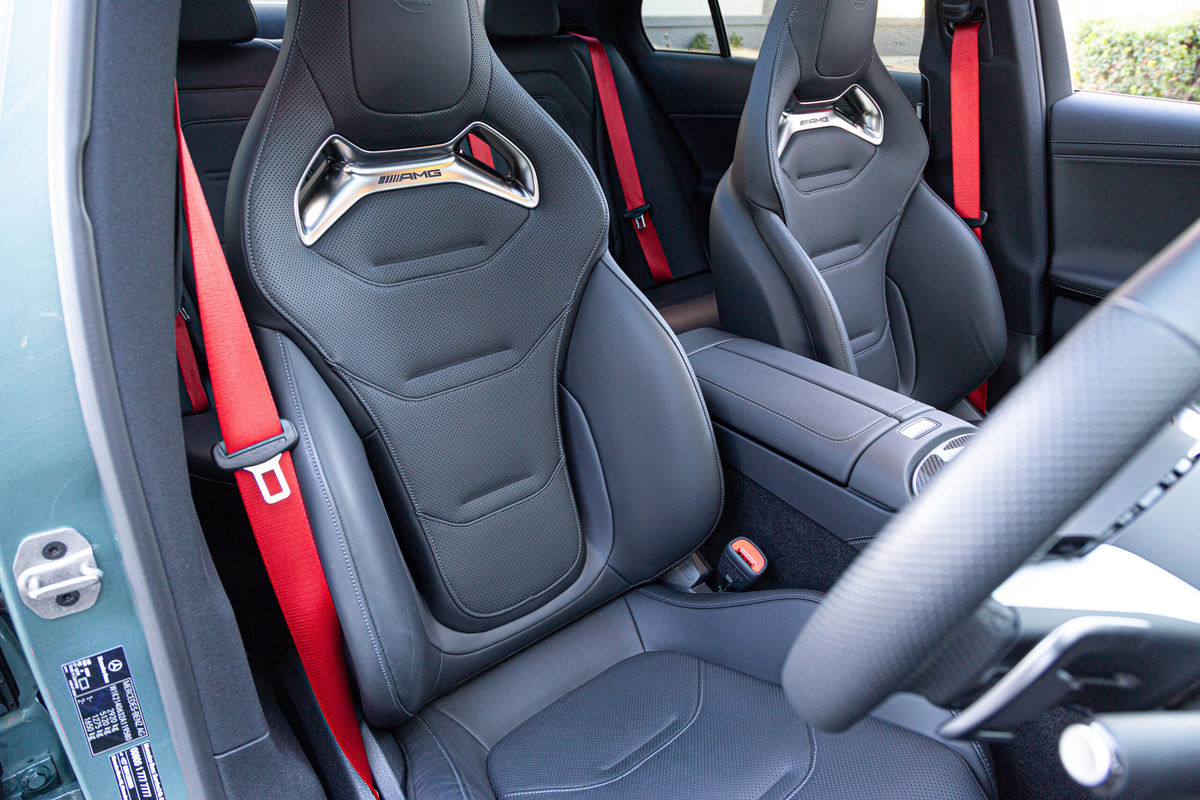
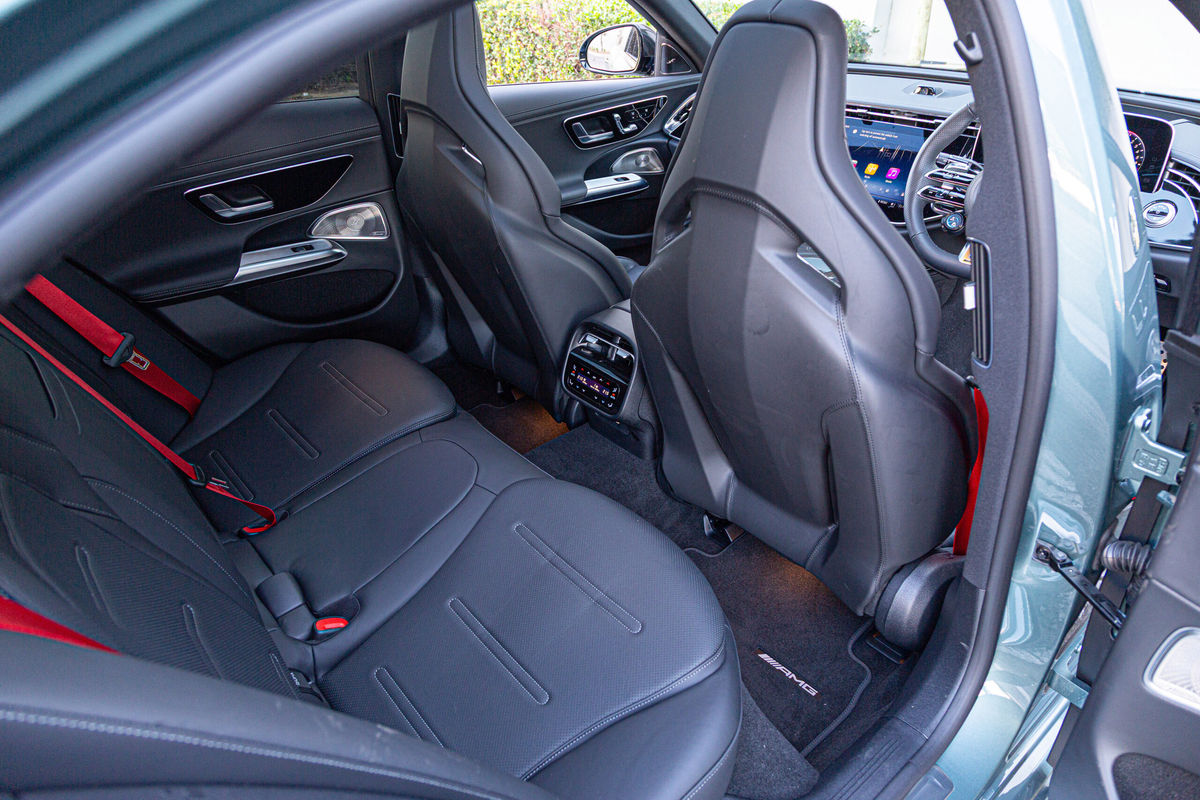
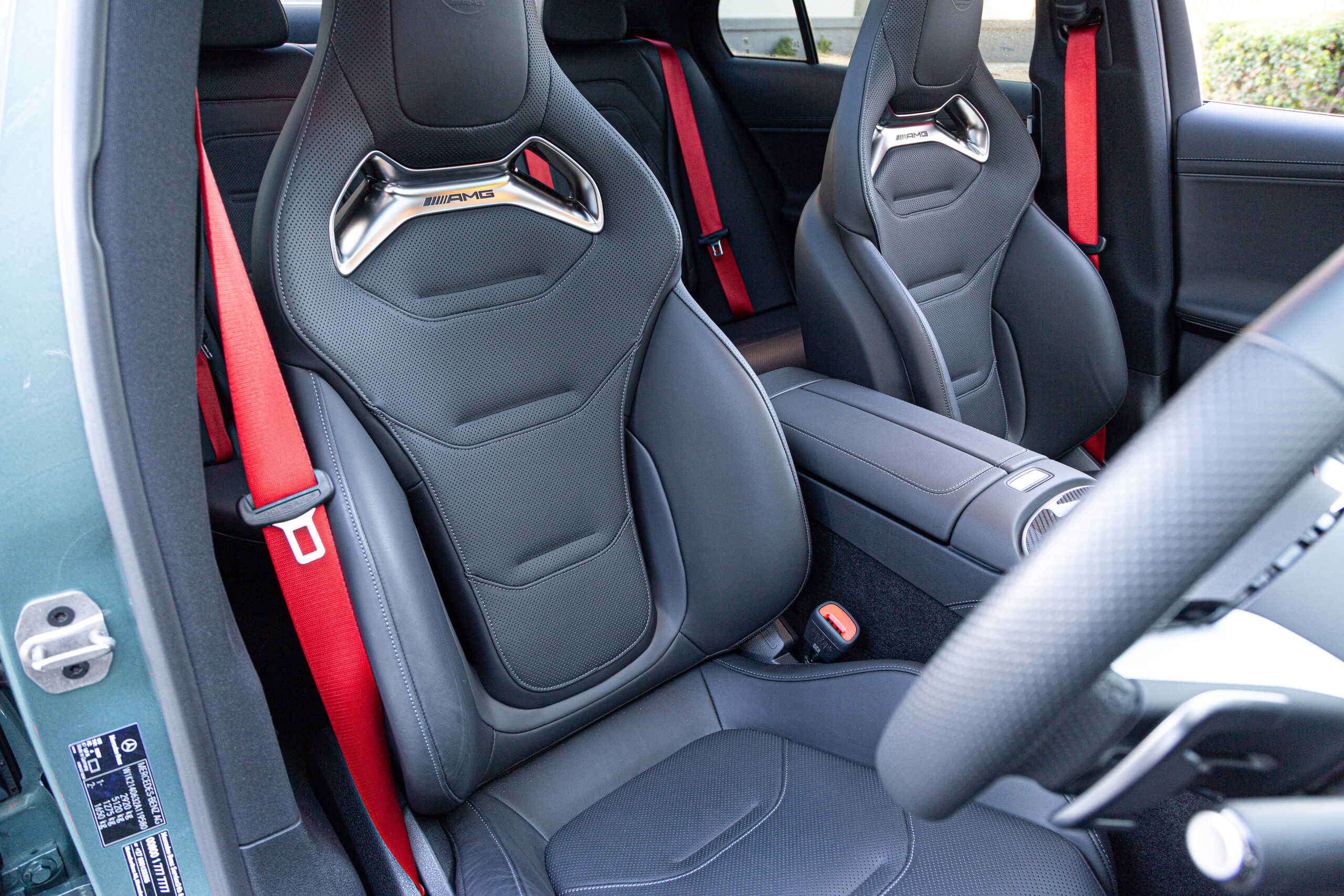
The contoured AMG sports seats are lovely, but they’re optional.
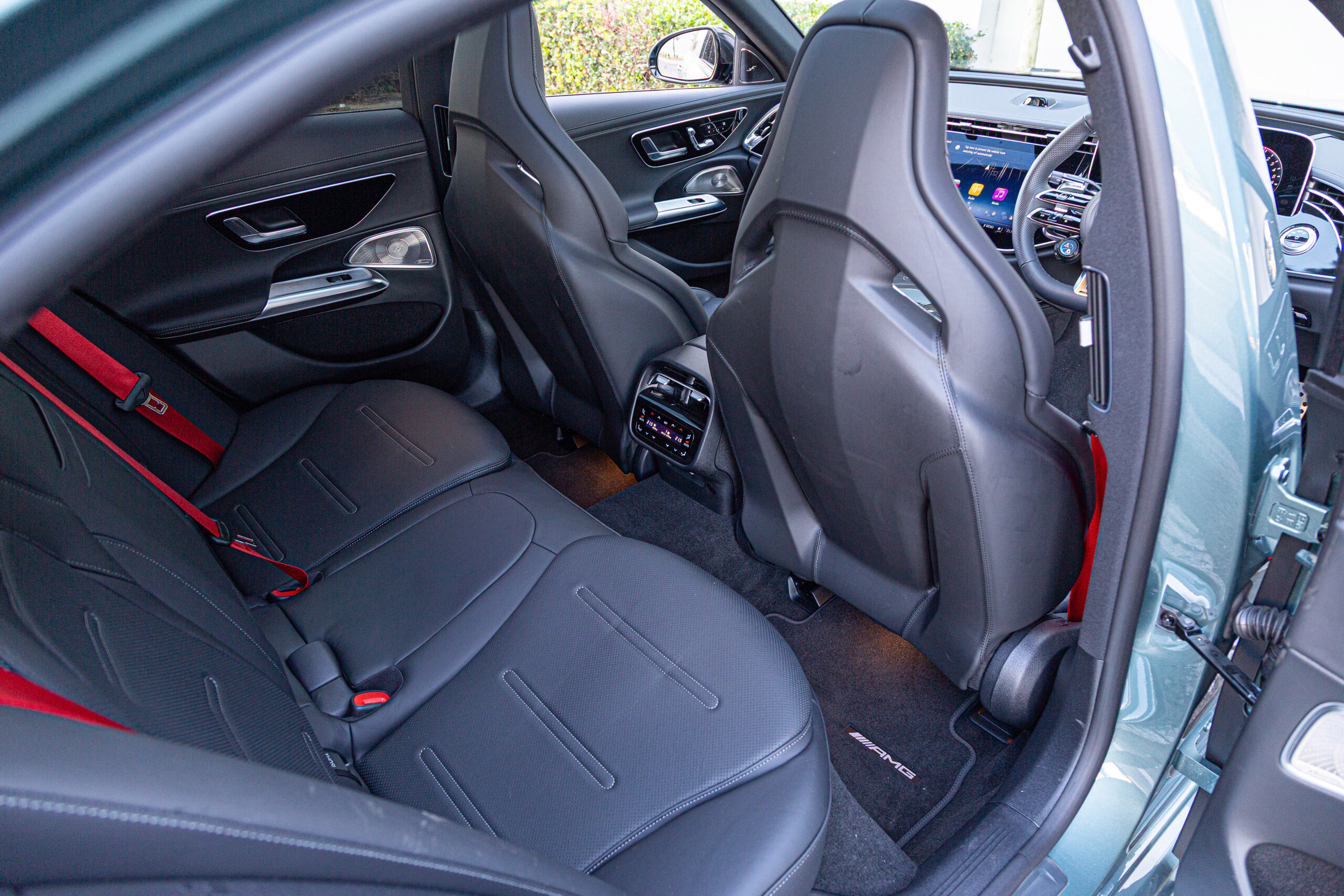
The cabin is adorned with a plethora of go-faster accessories, such as the red seatbelts, but while we think they’re a sporty touch, we do wonder whether traditional E-Class customers would consider them a bit too “boy racer”. Again, you can customise the car to a crazy level; there are 3 kinds of seats to choose from, for example. The test unit’s seats offered a great blend of visual appeal and sporty supportiveness.
Red seatbelts and sporty front seats add racy appeal.
We did have some frustrations. Sure, the infotainment system is comprehensive, but there are menus upon menus, and unless you’re genuinely a “tech head”, you’ll probably find it all a bit daunting.
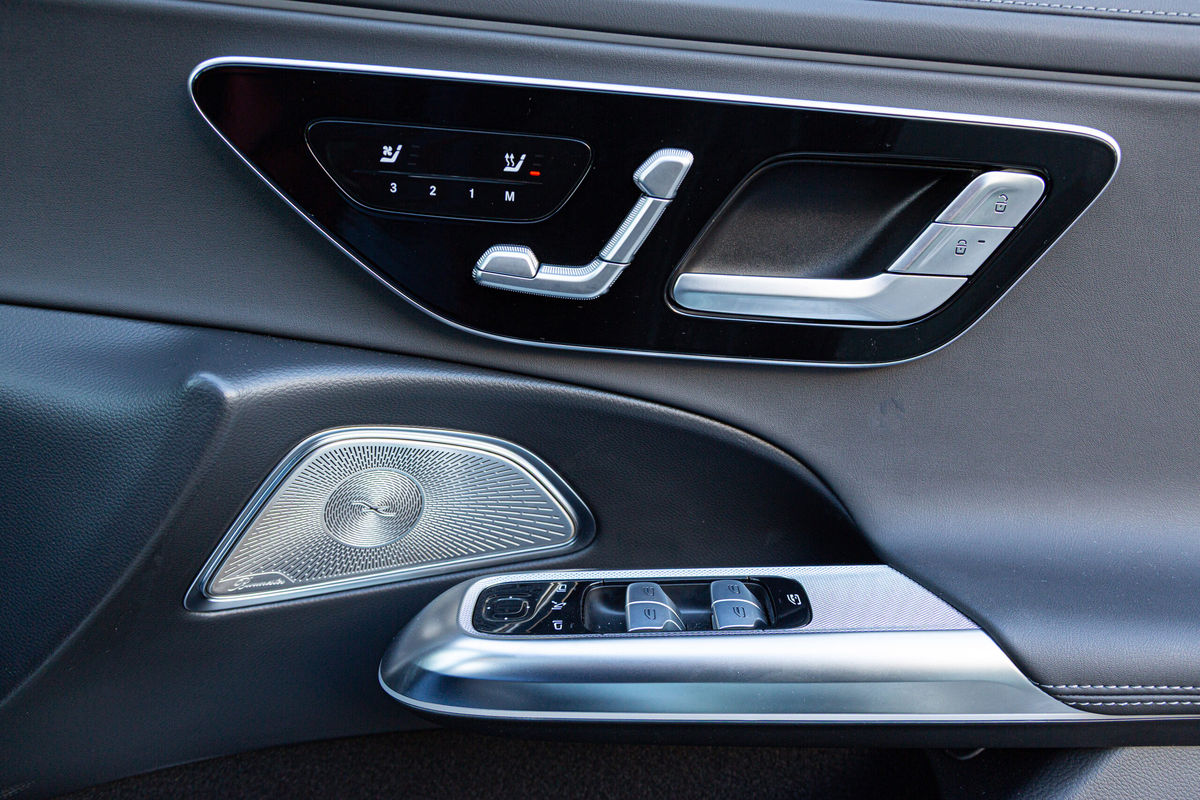
Secondly, those flush-fitting door handles are a little frustrating to operate. Sometimes they didn’t pop out when we expected them to (when remotely unlocking the ‘Benz), which resulted in mild heart failure during our photoshoot as we thought we’d locked the keys in the car! And then there’s the price…
The E53’s asking price can shoot up rapidly if you pile on the options.
Based on our experience using the Mercedes-Benz SA configurator, we estimate that this test unit’s all-in price tag came to a fraction under R3 million (that’s from a before-options price of R2 514 203).
Options fitted included racy alloy wheels (R65k), AMG Dynamic Plus Package (R69k), Hyperscreen (R64k), AMG seats (R47k) and the Premium Plus Package (R166k), all of which add up. To reiterate, it’s cheeky to charge extra for launch control, let alone for R14 300 for digitally synthesised engine noise!
Ride and Handling
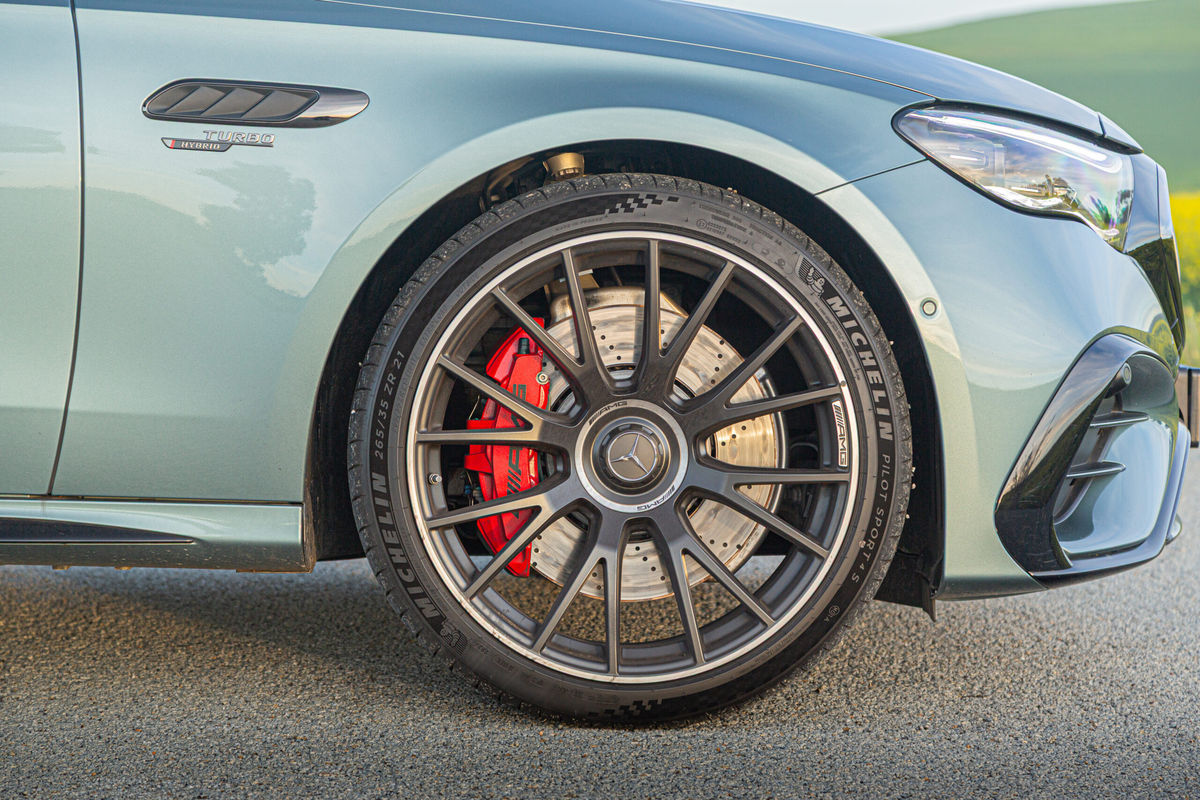
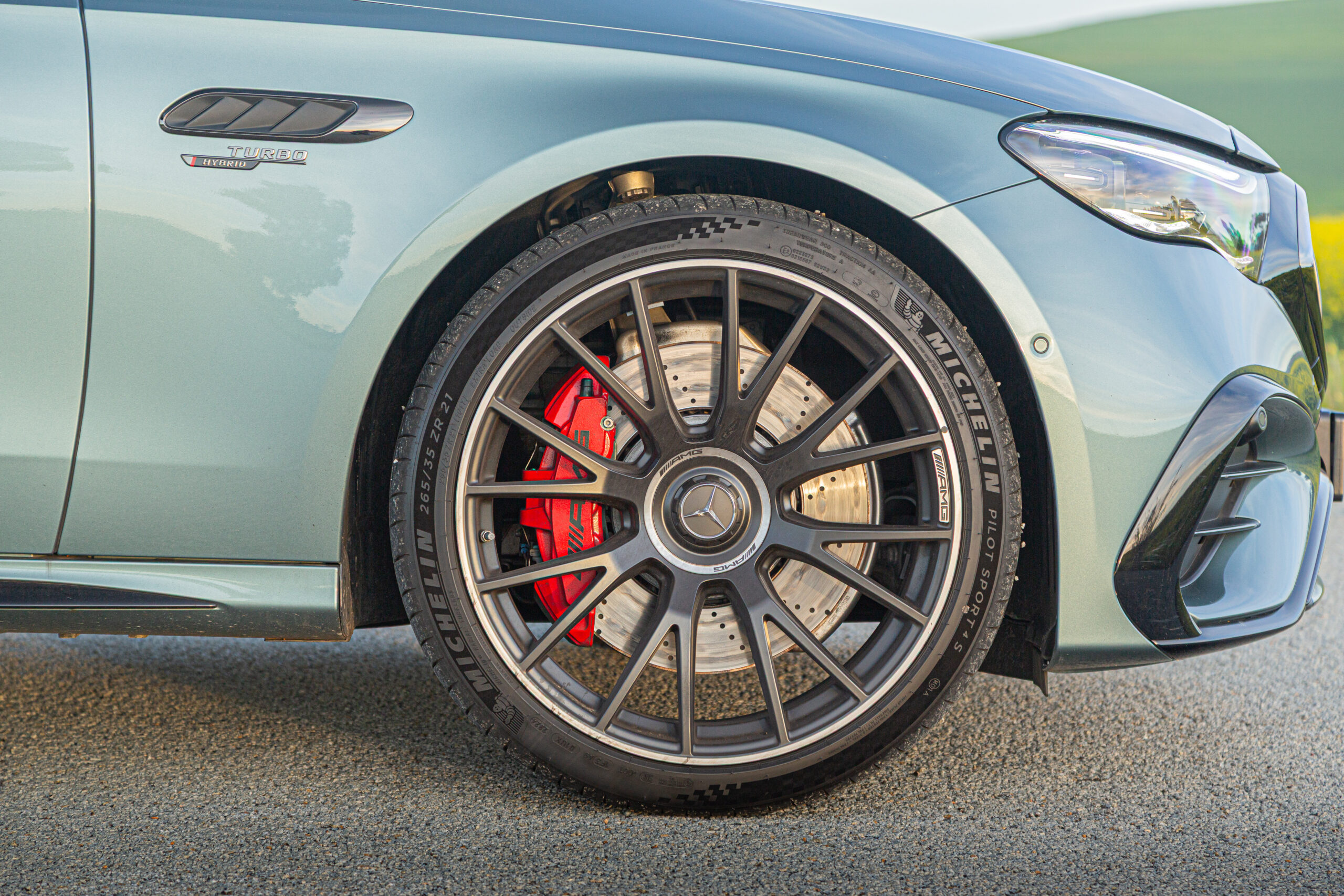
High-performance tyres and braking system on full display.
The E53 is not simply a standard E-Class powered by a potent plug-in hybrid powertrain; it incorporates many enhancements, such as a stiffer body, performance-oriented suspension and rear-wheel steering.
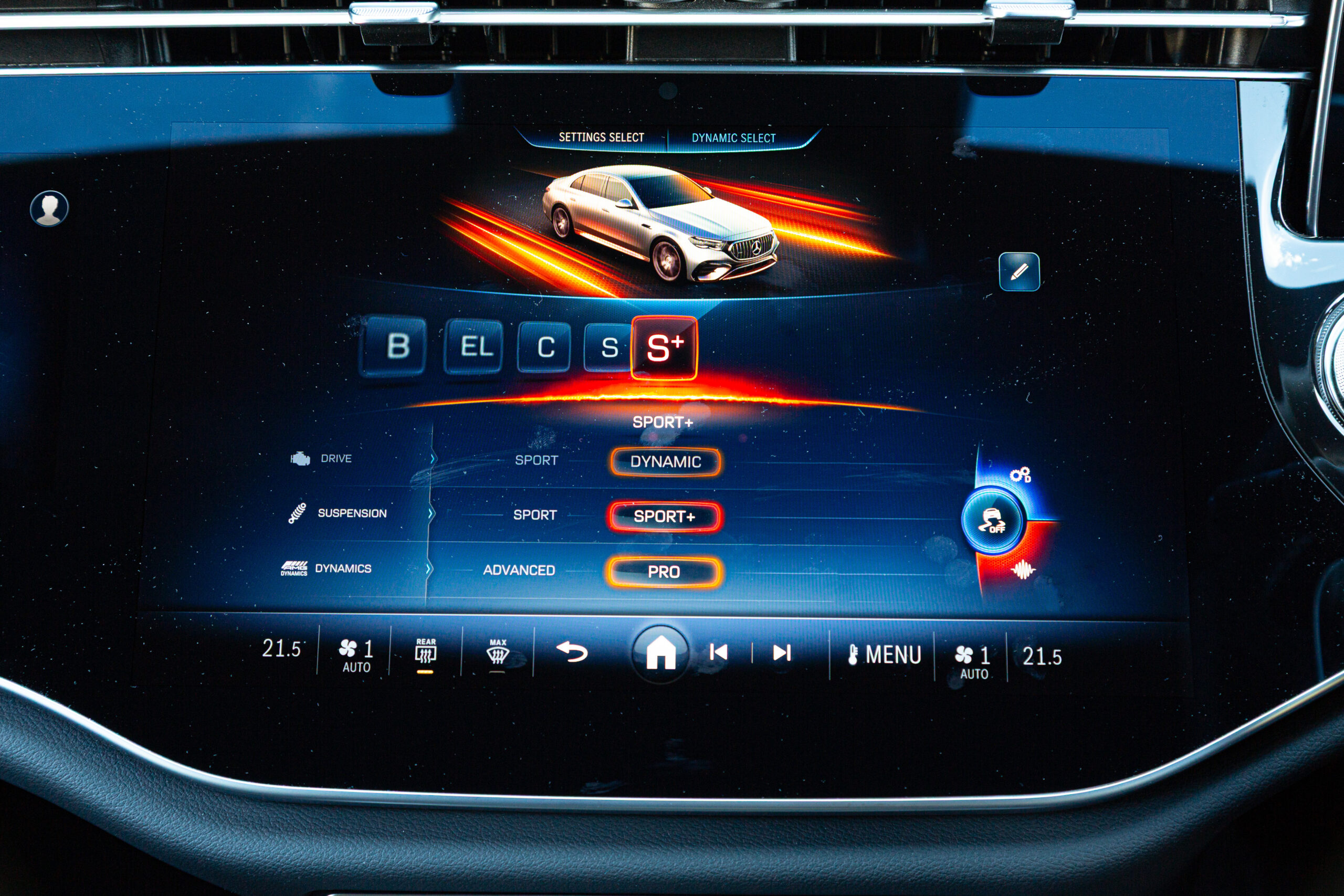
We assume most customers are unlikely to explore the E53’s handling limits often – they’d rather focus on the car’s refinement, straight-line performance and tech. But, for the sake of science, we headed for twisty roads, engaged Sport+ (on all settings that offer it) and probed the Benz’s dynamic ability.
The drive modes offer a wide range of adjustability.
There’s a refreshing predictability to the way the E53 reacts to intense driver inputs. Gone are the days when AMGs would punish the careless with wayward handling – everything feels controlled and reined in. The rear wheel steer benefits agility, and the vehicle manages to hide its 2.3-tonne bulk reasonably well.
The steering setup is generally lovely and direct, but it may take a while to adapt to the swivelling rear wheels – it’s a slightly unnerving sensation. Mercedes-AMG claims the 4Matic all-wheel drive has a rear-wheel bias in its sportiest settings, but we couldn’t get the back to step out, despite our “worst” efforts.
Suffice it to say, the E53 offers an abundance of sure-footed grip. The brakes also deserve some kudos for being able to effortlessly provide reassuring stopping power while masking the energy regeneration.
Ready to deliver compelling straight-line performance.
But forget spirited driving for a second; this sedan delivers adequate engagement to satisfy the average driver, but its real strength lies in its refined cruising capability. However, we would have liked less road noise (we think the trick Michelin performance rubber is to blame for the roar). Remember, you can individualise your car’s settings to combine great powertrain noise with softer (adaptive) damping.
How much does the Mercedes-AMG E53 cost in South Africa?
The Mercedes-AMG E53 4Matic+ retails for R2 514 203 (October 2025, before options), which includes a 5-year/100 000 km maintenance plan and 2-year/unlimited km warranty. The hybrid battery has an 8-year/160 000 km warranty.
An impressive package, but the Mercedes-AMG E53 left us wanting more!
The Mercedes-AMG E53 plug-in hybrid introduces a thoroughly modern powertrain to the flagship E-Class variant. While its peak outputs and performance figures don’t pale in comparison with those of its predecessor, the ‘Benz feels more like a talented range-topping E-Class than a visceral AMG offering.
The reality is that a sophisticated appearance, tech-laced cabin, and eminently refined driving manners may not be enough to satisfy those who seek a thumping AMG sedan. Yes, the E53 blends impressive performance with surprisingly good economy, but like its C43 sibling, it doesn’t tug at the heartstrings.
In light of the reverence for previous E-Class AMGs, this reaction was perhaps inevitable. At least the E53’s nomenclature leaves the door ajar to a V8-powered version with the iconic 63 badge on its bootlid.
Frequently Asked Questions
What is the price of the new Mercedes-AMG E53 in South Africa?
The Mercedes-AMG E53 Hybrid 4Matic+ sedan starts from approximately R2 514 176 in South Africa, including a 5-year/100,000 km maintenance plan.
What type of powertrain does the new Mercedes-AMG E53 use?
The new E53 is a Plug-in Hybrid Electric Vehicle (PHEV). It combines an AMG-enhanced 3.0-litre turbocharged inline-six engine with a 120 kW electric motor for a total system output of up to 450 kW and 750 Nm of torque.
How fast is the Mercedes-AMG E53?
The Mercedes-AMG E53 can accelerate from 0 to 100 km/h in just 3.8 seconds when utilizing the optional AMG DYNAMIC PLUS Package’s RACE START function.
What is the electric-only driving range of the E53?
The E53 Hybrid features a 21.2 kWh (usable capacity) high-voltage battery that provides a claimed all-electric driving range of over 100 km (WLTP).
Does the E53 support DC fast charging?
Yes, the Mercedes-AMG E53 comes standard with an 11 kW AC charger and supports up to 60 kW DC fast charging, allowing the battery to recharge from 10% to 80% in approximately 20 minutes.
SA’s new-vehicle sales soar to 10-year high in September 2025
In September 2025, SA’s new-vehicle market put in its best showing in 10 years, marking 12 straight months of year-on-year growth. Here’s your industry overview, including the top-selling brands…
SA’s new-vehicle sales highest in a decade
3 consecutive months of 50 000+ unit sales
Passenger-car market climbs to 11-year high
In September 2025, South Africa’s new-vehicle market grew 24.3% year on year to 54 700 units (up 5.4% compared to August 2025), representing the highest single month of sales in 10 years. Marking 12 consecutive months of year-on-year growth, September was also the industry’s 3rd straight instance of sales breaching the 50 000-unit barrier.
According to industry representative body Naamsa, this growth came “against a backdrop of easing inflation, firm but restrictive monetary policy, modest economic growth momentum and an ongoing expansion of imported models and brands”. In addition, SA’s new-vehicle export volumes increased 32.9% year on year to 38 772 units, despite global supply chain disruptions and the impact of US automotive tariffs.
Naamsa said 80.1% of September 2025’s total reported domestic figure of 54 700 units represented dealer sales, while a higher-than-typical estimated 15.2% were sales to the new-vehicle rental industry, 2.7% to industry corporate fleets and 2.0% to government.
Drilling down further, the industry representative body revealed September 2025’s new passenger-vehicle market grew 28.0% year on year to 38 603 units (a considerable 20.1% of which came via the rental channel), representing its highest level since October 2014. In addition, local registrations of light-commercial vehicles (LCVs) improved 19.7% year on year to 13 078 units.
Brandon Cohen, Chairperson of the National Automobile Dealers’ Association (NADA), suggested that “confidence and sentiment” were “both looking good for South Africa’s vehicle market – both new and used”.
“We certainly noticed good dealer activity in September. Some brands absolutely shot the lights out, while others struggled a little, reflecting the overall performance of the new-vehicle market,” he said.
Meanwhile, Lebo Gaoaketse, Head of Marketing and Communication at WesBank, said relative fuel-price stability, the improved performance of the rand and the South African Reserve Bank’s (SARB) decision to maintain interest rates all contributed to “consumer and business confidence”.
“Levels of demand are unprecedented, with September having the highest volumes of applications for finance”, Gaoaketse revealed. However, he cautioned that market dynamics had changed and acknowledged that wider-spread applications to provide greater choice for consumers was more prevalent than in the past.
New-vehicle sales summary for September 2025
Aggregate new-vehicle sales of 54 700 units increased by 24.3% (10 700 units) compared to September 2024.
New passenger-vehicle sales of 38 603 units increased by 28.0% (8 436 units) compared to September 2024.
New light-commercial vehicle sales of 13 078 units increased by 19.7% (2 154 units) compared to September 2024.
Export sales of 38 772 units increased by 32.9% (9 592 units) compared to September 2024.
SA’s 10 best-selling automakers in September 2025
Ford climbed a ranking to 4th in September.
In September 2025, Toyota SA Motors (including Lexus and Hino) again topped the charts, registering its highest tally since March 2022. The Japanese firm hit a figure of 14 146 units (or 25.9% of the total market), up 6.6% compared to August and representing the first time the automaker has crossed the 14 000-unit mark in well over three years.
Despite sales slipping 7.1% compared to its all-time record achieved in August, Suzuki Auto SA comfortably retained 2nd place, with 6 072 units sold. Volkswagen Group Africa (including the Audi brand) thus again ended 3rd though closed the gap slightly, increasing its tally 4.4% month on month to 5 763 units.
Meanwhile, Ford Motor Company of SA climbed a ranking to 4th, ending September on 3 093 units (up 4.2% month on month), the 2nd time the Blue Oval brand has breached the 3 000-unit mark this year. Hyundai Automotive SA therefore dropped a spot to round out the top 5, with the South Korean brand’s figure of 3 005 units largely in line with that of the prior month.
GWM SA (2 620 units; +4.0%, month on month) held steady in 6th position thanks to its highest figure of the year thus far, while Isuzu Motors SA (2 478 units) moved up a spot to 7th on the back of 12.9% month-on-month growth. Chery SA thus slipped a position to 8th, despite the Chinese brand posting its highest single-month figure yet (2 264 units; +1.6% compared to August).
Kia SA enjoyed a 10.6% month-on-month increase in sales to end on 1 706 units and retain 9th place. Finally, Mahindra SA returned to the top 10 with a figure of 1 524 units, some 15.4% higher than its August 2025 effort.
Therefore, Renault SA (1 376 units) dropped out of the top 10 in September to end in 11th, while Nissan SA (1 362 units; +38.1%, month on month) moved up 2 rankings to 12th. BMW Group SA – which includes the BMW and Mini brands – fell to 13th (with 1 220 units) and Omoda & Jaecoo (1 201 units) to 14th, while Stellantis (848 units) returned to the top 15 at the expense of Jetour (815 units).
1. Toyota – 14 146 units
2. Suzuki – 6 072 units
3. Volkswagen Group – 5 763 units
4. Ford – 3 093 units
5. Hyundai – 3 005 units
6. GWM – 2 620 units
7. Isuzu – 2 478 units
8. Chery – 2 264 units
9. Kia – 1 706 units
10. Mahindra – 1 524 units
SA’s sales outlook for the final quarter of 2025
What’s next as we enter the final quarter of the year? Well, Naamsa says that while new-vehicle purchases have benefitted from the SARB’s collective rate cuts thus far, “further easing would be particularly beneficial for households considering higher-value or discretionary vehicle purchases”.
In addition, the industry representative body warns that “rising imports of petroleum products and shifting trade conditions, including US tariff barriers, continue to pose risks for the broader economic environment in which the automotive sector operates”.
NADA’s Cohen adds that the relative weakness of the US dollar “is helping the rand, which will contribute to new-vehicle pricing stability for some time to come”.
“While demand clearly exists, affordability continues to constrain the new-vehicle market, forcing many motorists into pre-owned showrooms in search of better value,” Cohen points out.
Meanwhile, WesBank’s Gaoaketse says: “It is interesting to note the shifts in the market from 10 years ago within a similar volume. In a slightly lower interest-rate environment, much more disposable income provided consumers the opportunity to replace their vehicles much more often”.
“South Africa’s new vehicle market is selling similar volumes in an environment where consumers are holding onto their cars for longer. That must be a positive sign for future growth,” he concludes.
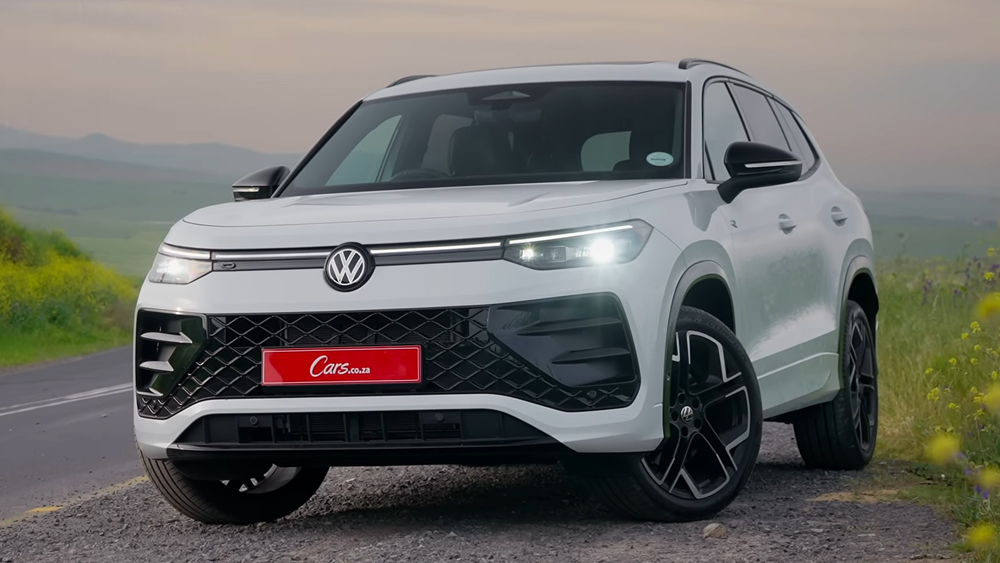
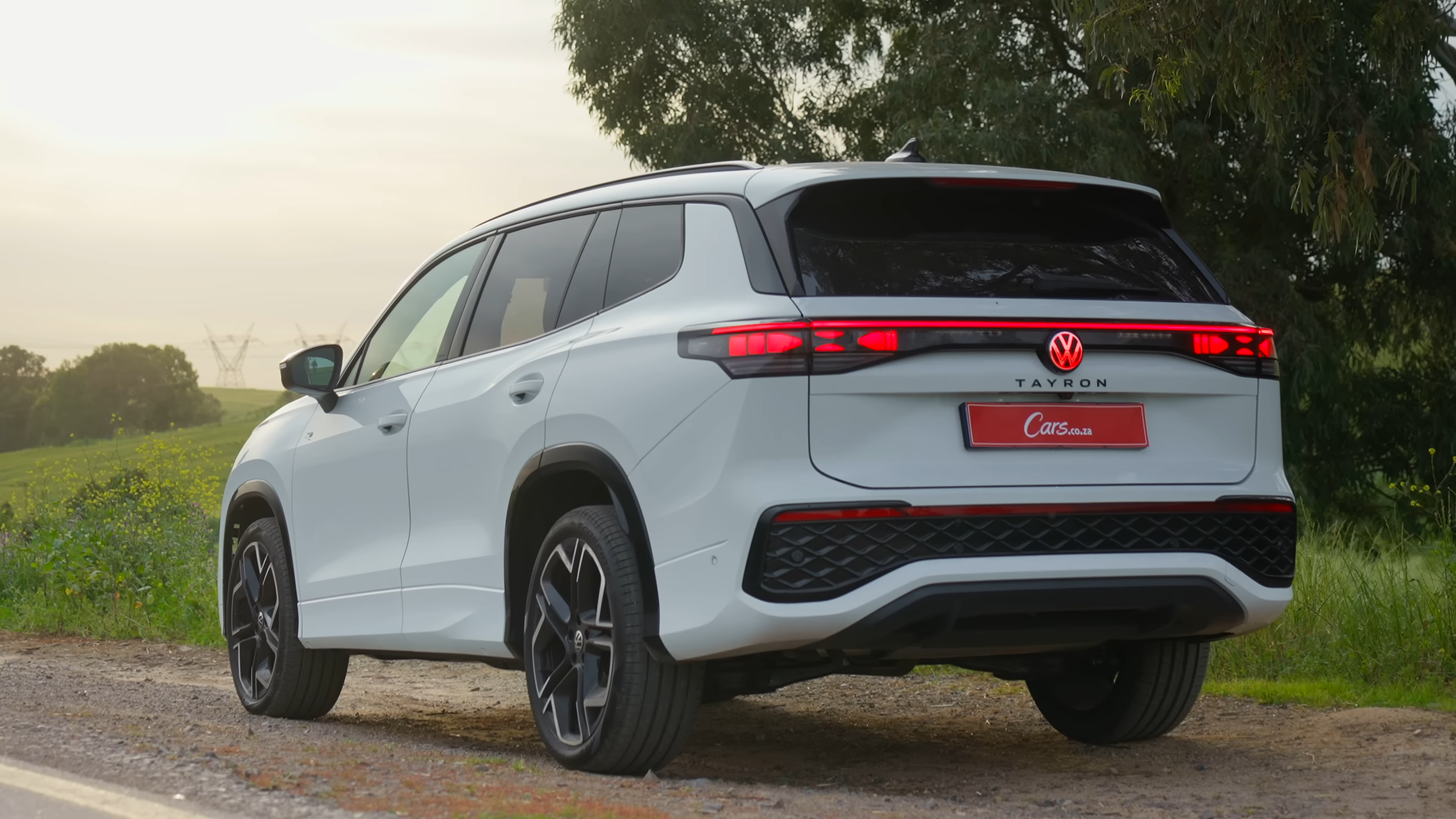
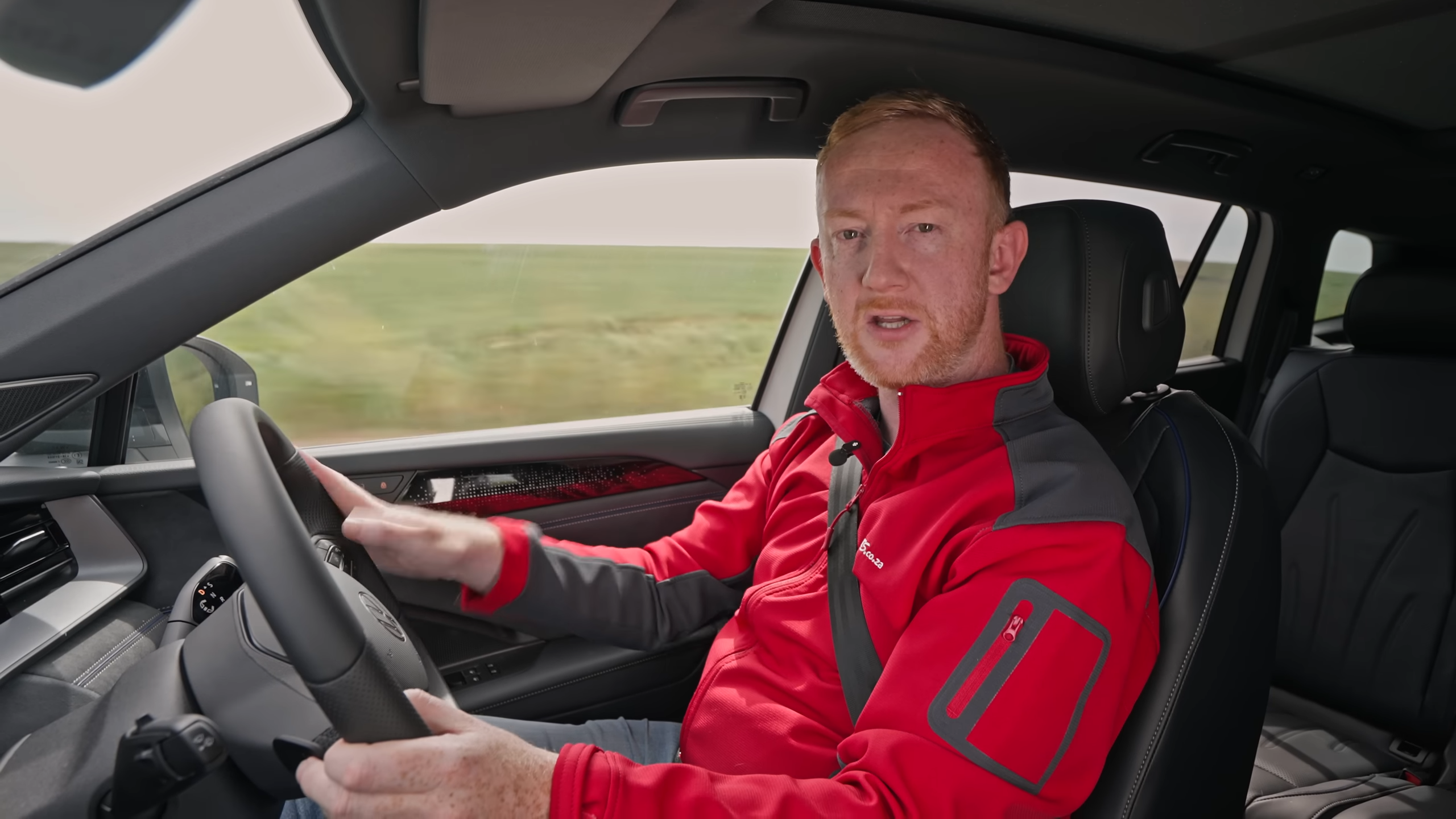
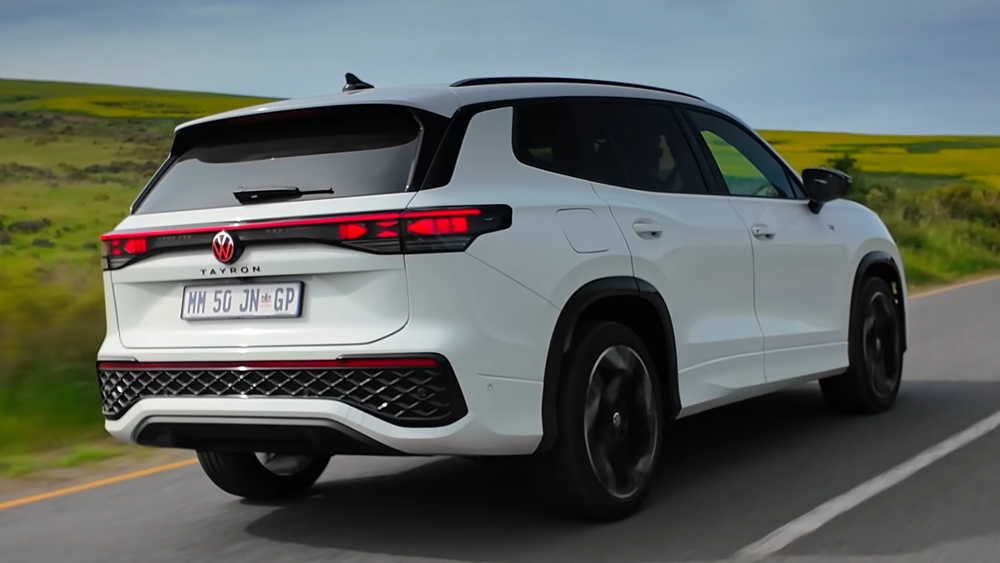
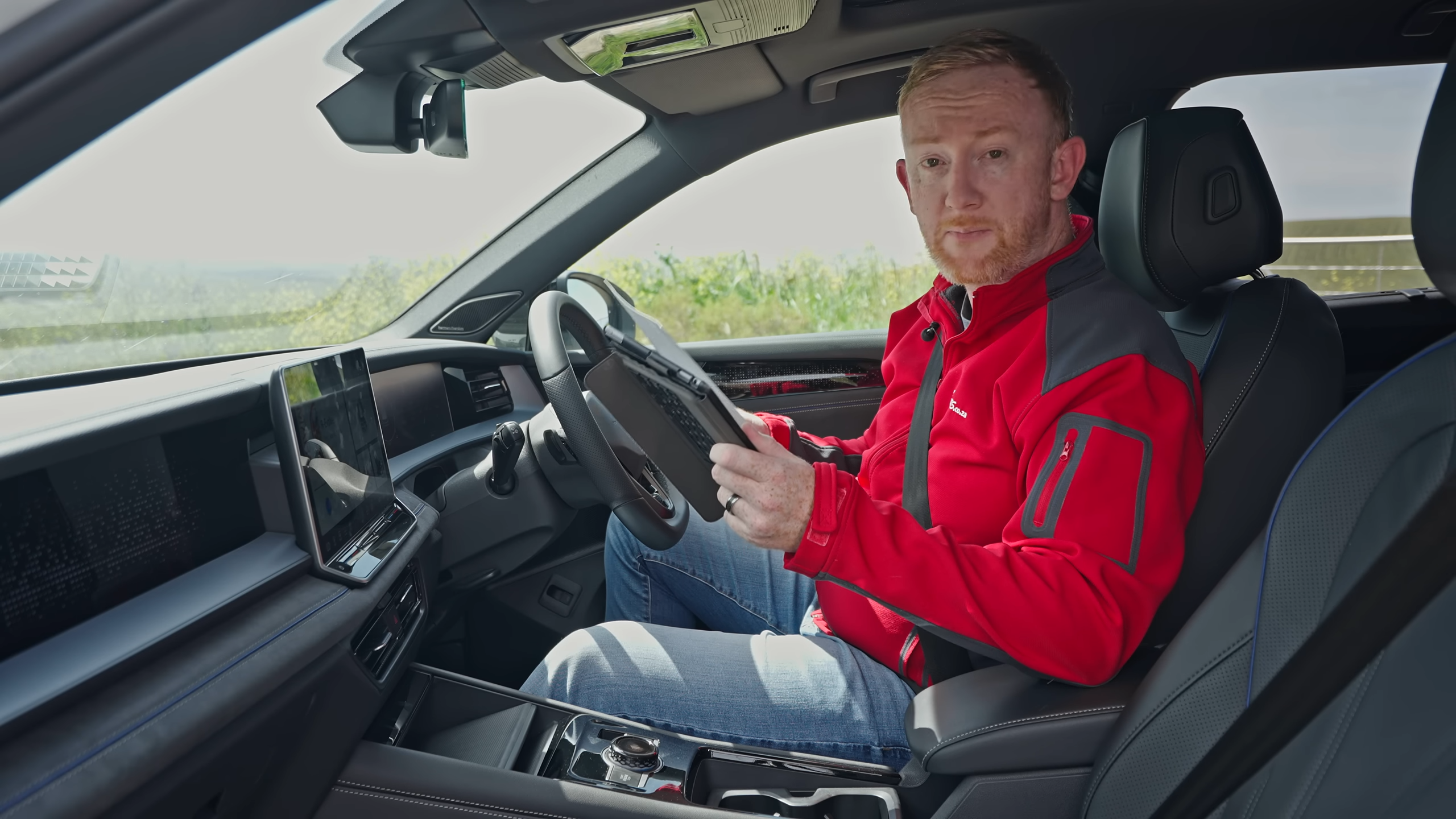
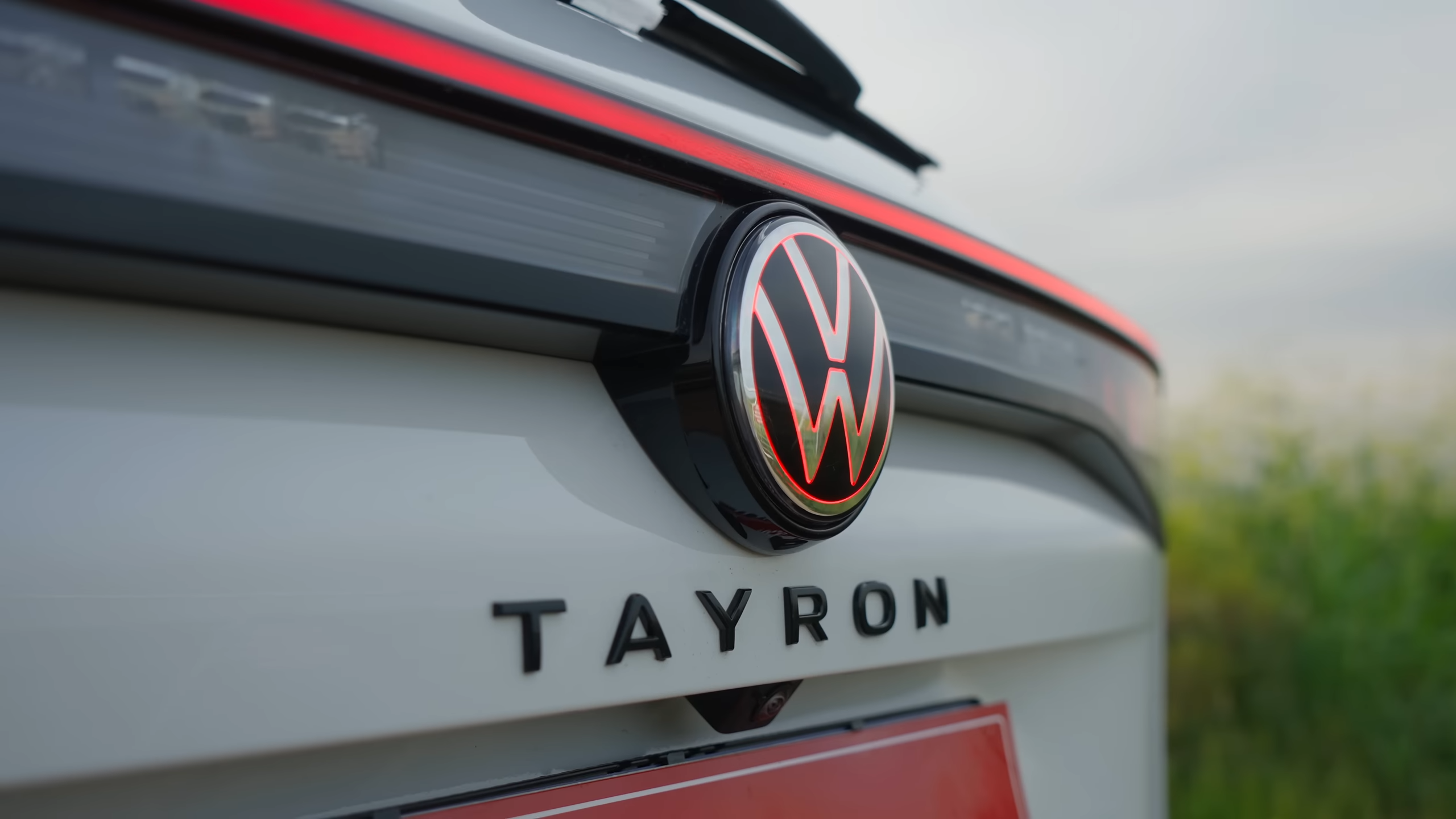
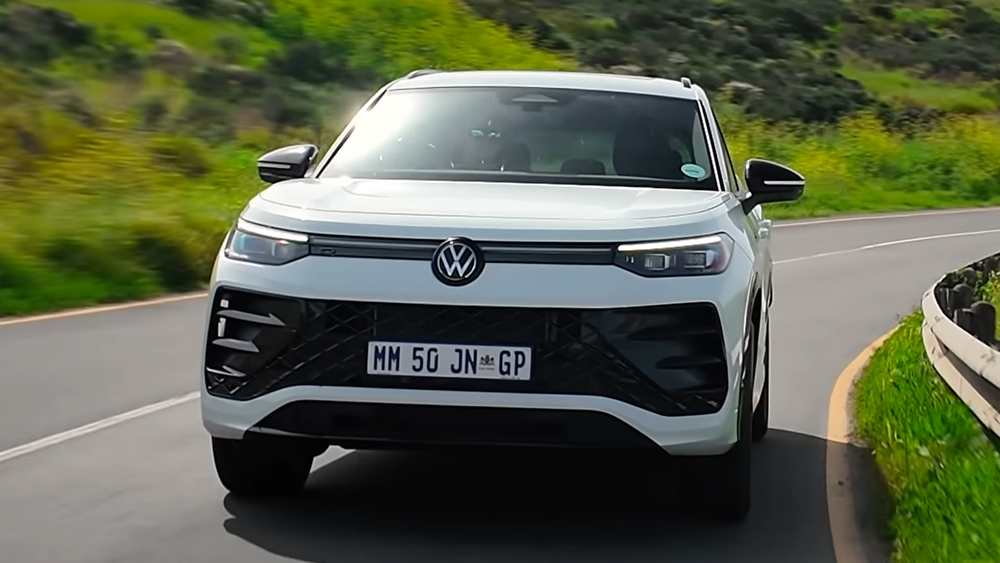
In this comprehensive video review, David Taylor takes a detailed look at the new Volkswagen Tayron, the long-awaited successor to the popular Tiguan Allspace.
The Tayron steps in as the dedicated 7-seat family SUV in the Volkswagen range; this review explores whether it offers enough space, refinement, and performance to lead its highly contested segment.
The Tayron is built on the newest version of the VW Group’s modular architecture, known as the MQB Evo. It’s an enhanced version of the Wolfsburg-based brand’s revered compact-car platform, designed to facilitate better electronic integration and accommodate electrified powertrains, such as hybrids.
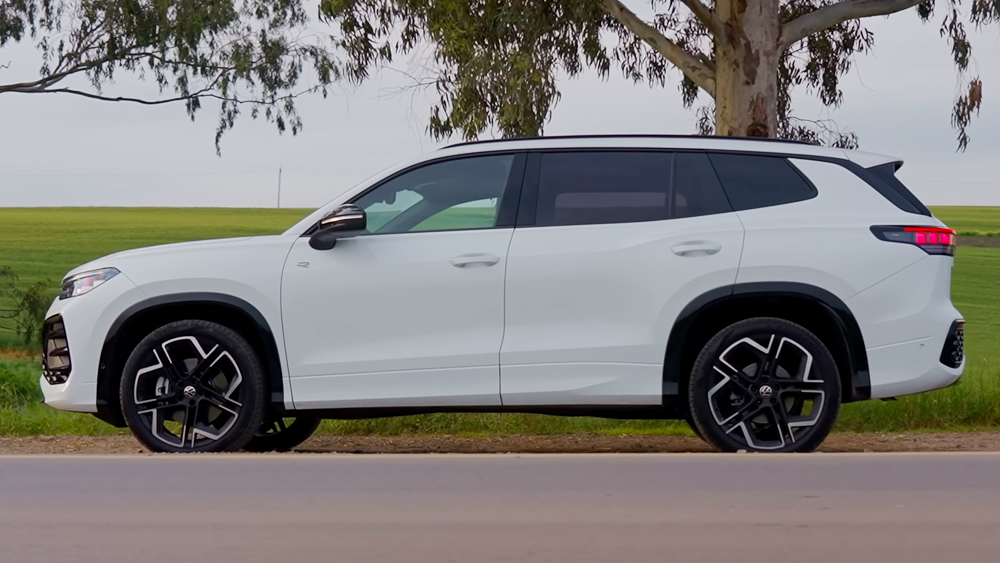
Crucially for a 7-seater medium SUV, the Volkswagen Tayron has grown in size compared to the Tiguan Allspace, being longer and slightly wider – essential for maximising occupant comfort across all 3 rows.
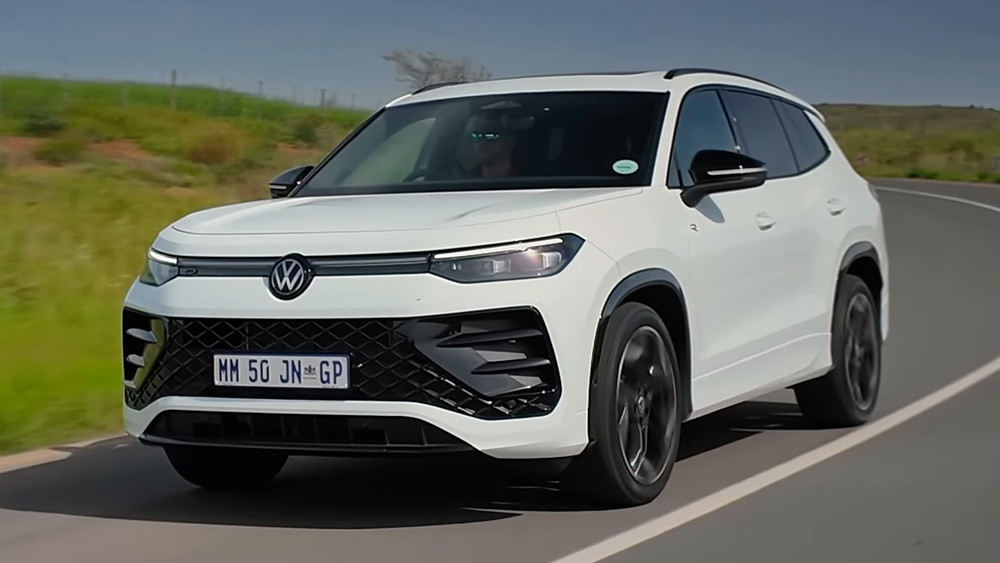
At launch, the Tayron range comprises a trio of variants: an entry-level 5-seater, a 7-seater specified in Life trim grade, as well as the range-topping R-Line (also a 7-seater), which is featured in this review.
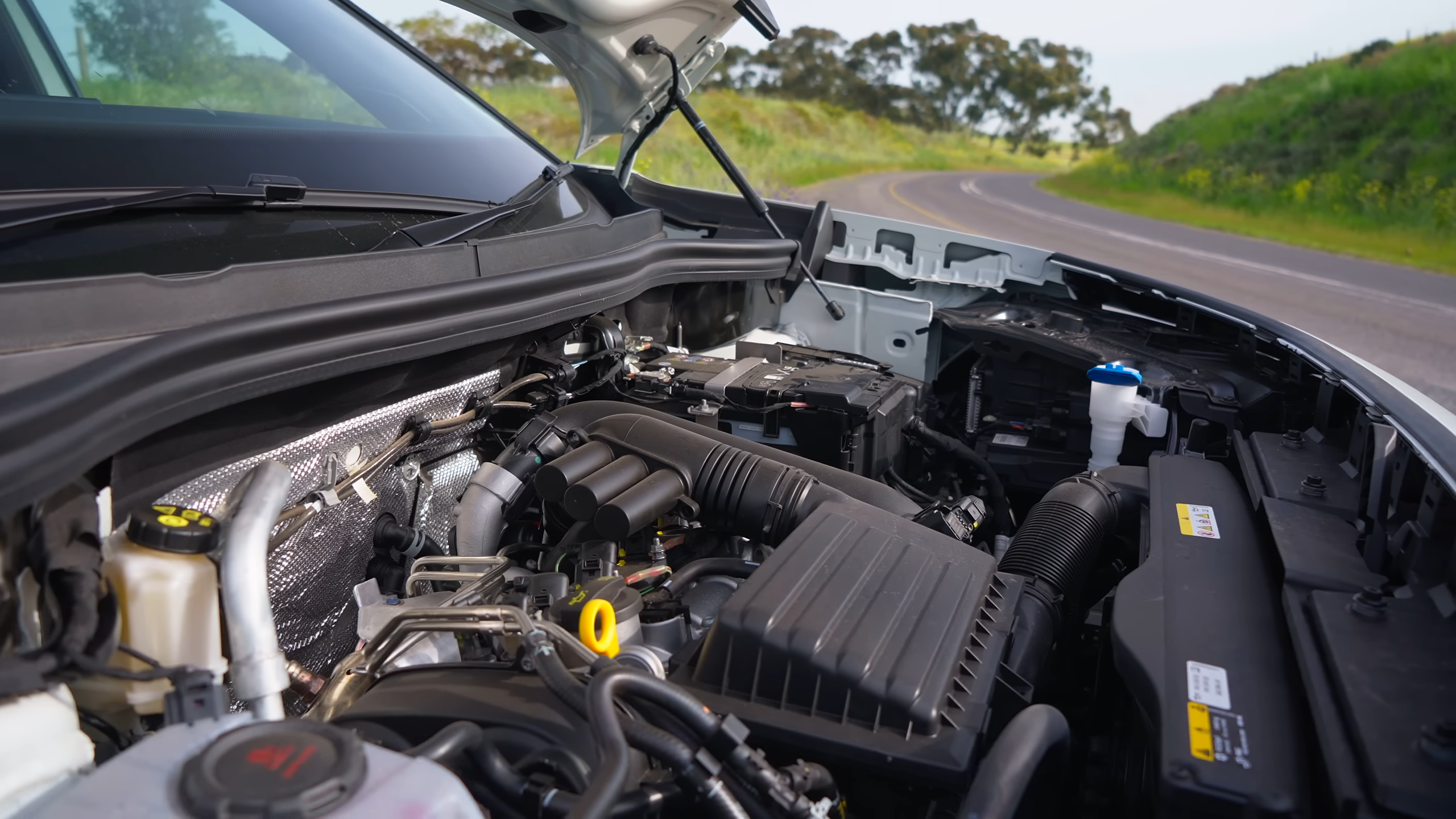
Powering the derivatives in the launch line-up of the Volkswagen Tayron is the familiar 1.4-litre 4-cylinder turbopetrol engine, paired with a 7-speed DSG dual-clutch auto transmission driving the front wheels.
This setup delivers 110 kW and 250 Nm of torque. Volkswagen claims a 0–100 kph sprint time of 9.6 seconds and a combined fuel consumption figure of 7.6 L/100 km, but during the test, the Tayron’s onboard computer showed a long-term average fuel consumption of 8.7 L/100 km. David goes on to estimate that with gentle driving, the VW’s average consumption could settle just under 8.0 L/100 km.
David raises an important question regarding the 1.4-litre engine: is it truly adequate for moving such a sizeable, 3-row SUV? While the solo driving experience is noted as “adequate,” our reviewer expresses reservations that the engine may struggle when the vehicle is fully loaded with 7 occupants or when towing, suggesting that the small engine would be “working harder than, say, a conventional diesel.”
Volkswagen has confirmed that more powerful engine options are coming, including a 2.0-litre 4Motion all-wheel drive model and a 2.0-litre mild-hybrid variant, both expected in early 2026.
On the road, the Volkswagen Tayron, thanks to its enhanced MQB Evo underpinnings, maintains the Wolfsburg-based brand’s reputation for offering SUVs with mature, refined driving experiences. The model’s balance of comfort and dynamic handling is commendable; it feels composed, but engaging.
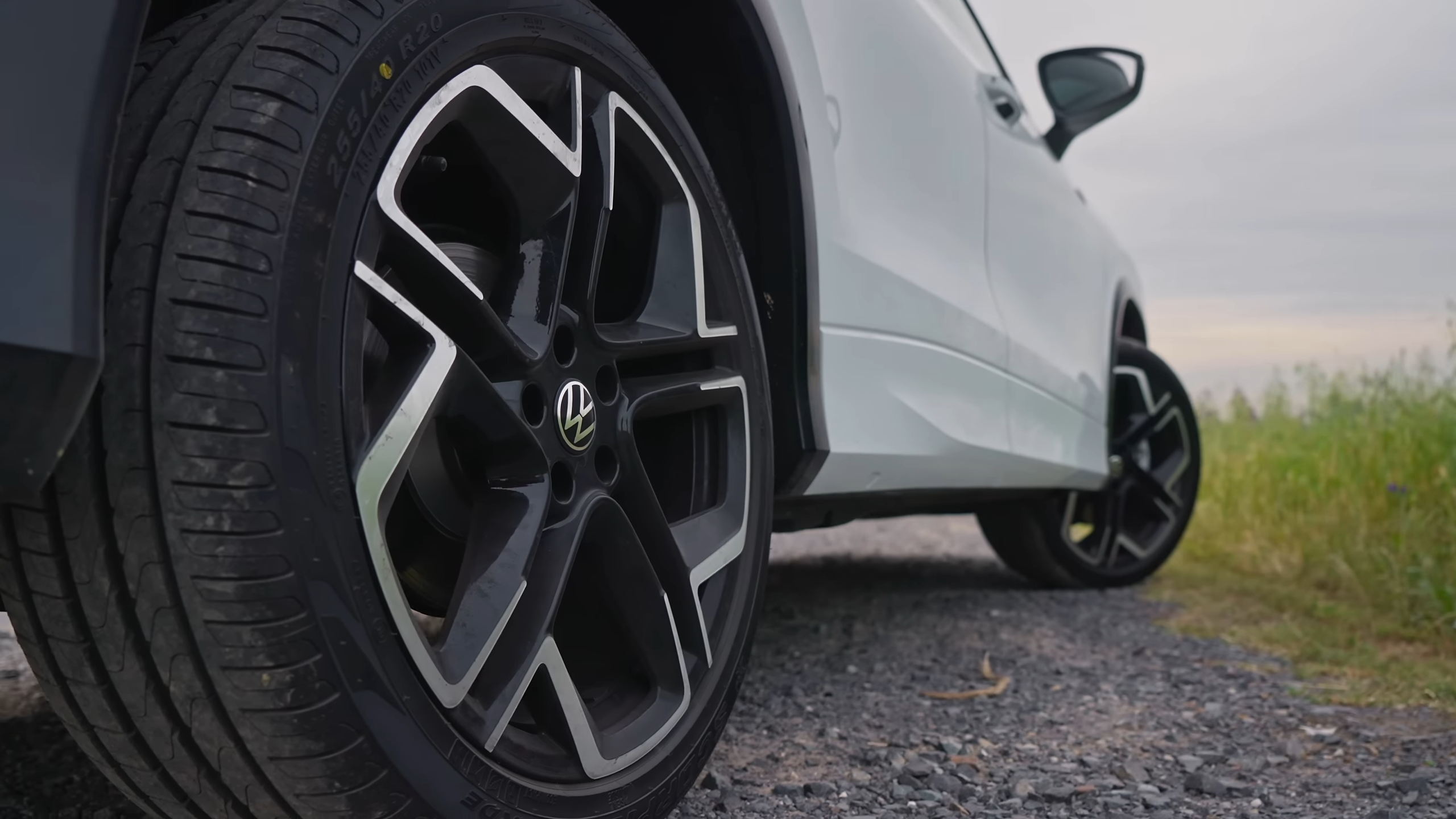
However, our test team notes a key caveat with the R-Line derivative’s optional Black Style Pack, which includes larger 20-inch “York” alloy wheels.
These larger wheels and lower-profile tyres can negatively affect the ride quality, feeling firm and jarring over rougher surfaces compared to rival models fitted with the mid-spec wheel options.
Volkswagen Tayron: Interior Tech & Comfort Features
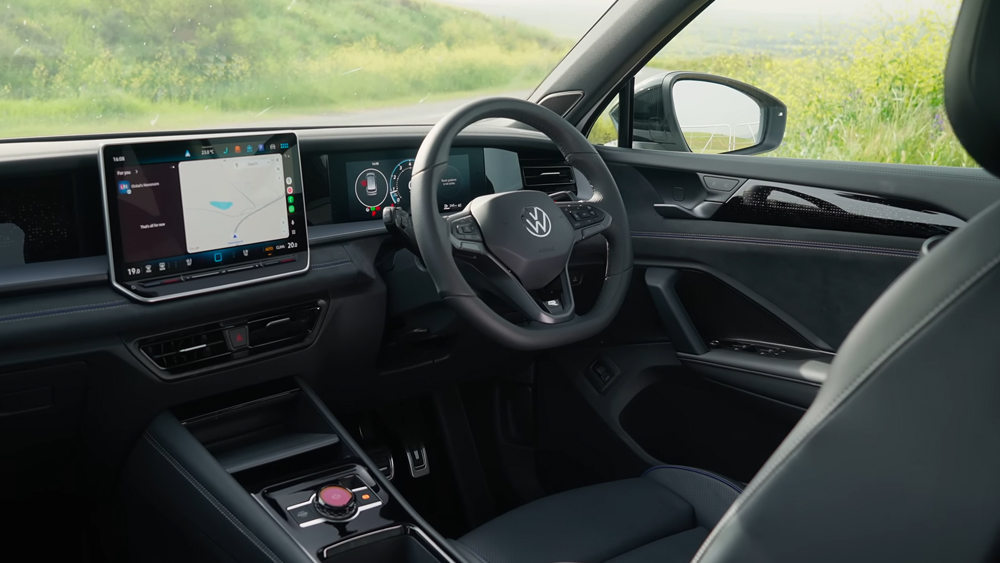
VW has made significant improvements inside the Tayron. The cabin build quality is a clear step forward, with a more substantial feel, plush touches, and premium finishes like Alcantara and detailed stitching.
The infotainment system has been upgraded, featuring a large, responsive screen that is noted for its intuitive operation and high-quality graphics. It supports wireless Android Auto and Apple CarPlay.
Importantly, Volkswagen has listened to feedback regarding its previous-gen models by reintroducing physical buttons for critical controls, such as the lights and drive modes, as well as on the multifunction steering wheel, which no longer features the capacitive swipe pads that our testers so loved to hate.
As the flagship R-Line, the test unit features a host of luxury options, including a heated steering wheel and massage seats, the latter of which are highly praised for their effectiveness and range of settings.
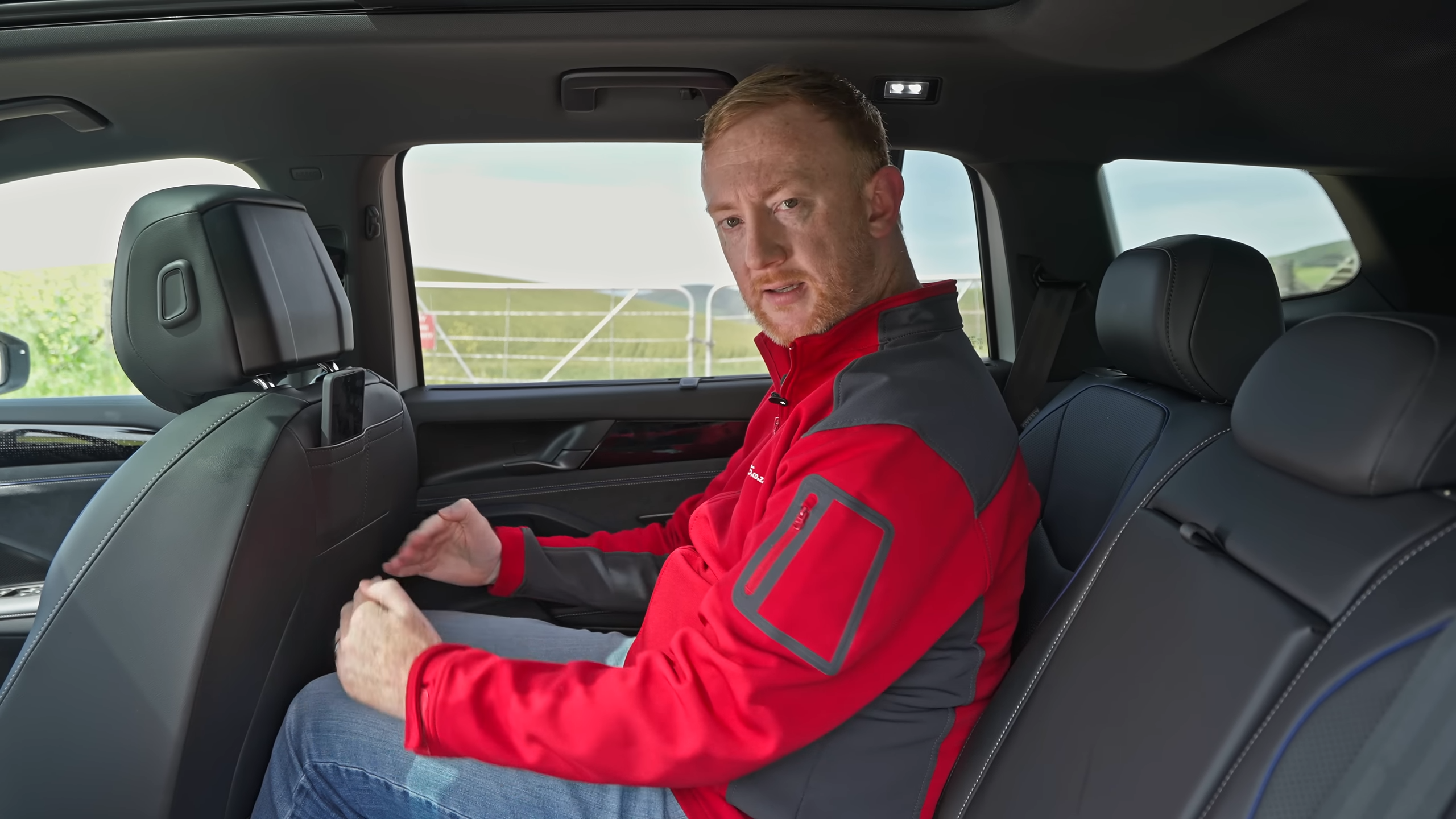
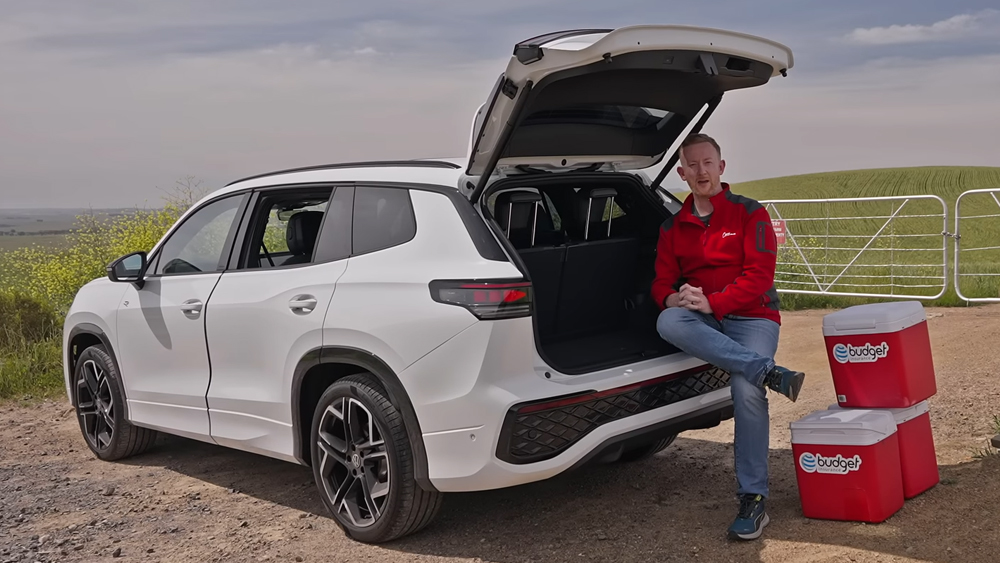
A primary focus of the review is the Volkswagen Tayron’s practicality. The 2nd row of seats provides a decent, though tight, fit for David (who’s 1.91 metres tall), and includes useful features like privacy blinds.
However, standard 2nd-row storage and connectivity options are noted as sparse, though additional USB ports can be configured via an optional navigation system.
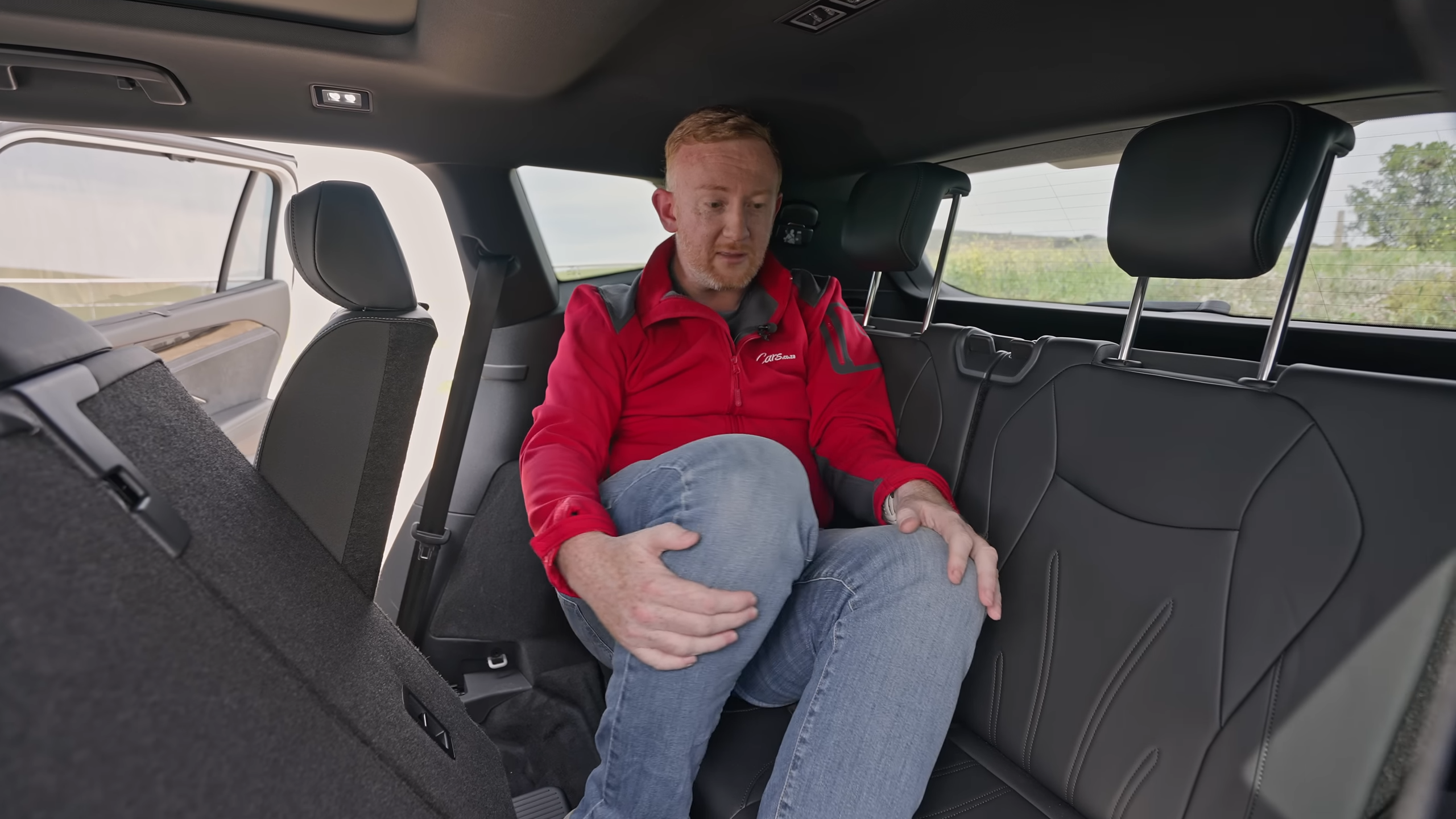
Although lanky, David thoroughly tests the 3rd row to determine its real-world usability. The space, once deployed, is determined to be best suited for younger passengers, likely children under the age of 7…
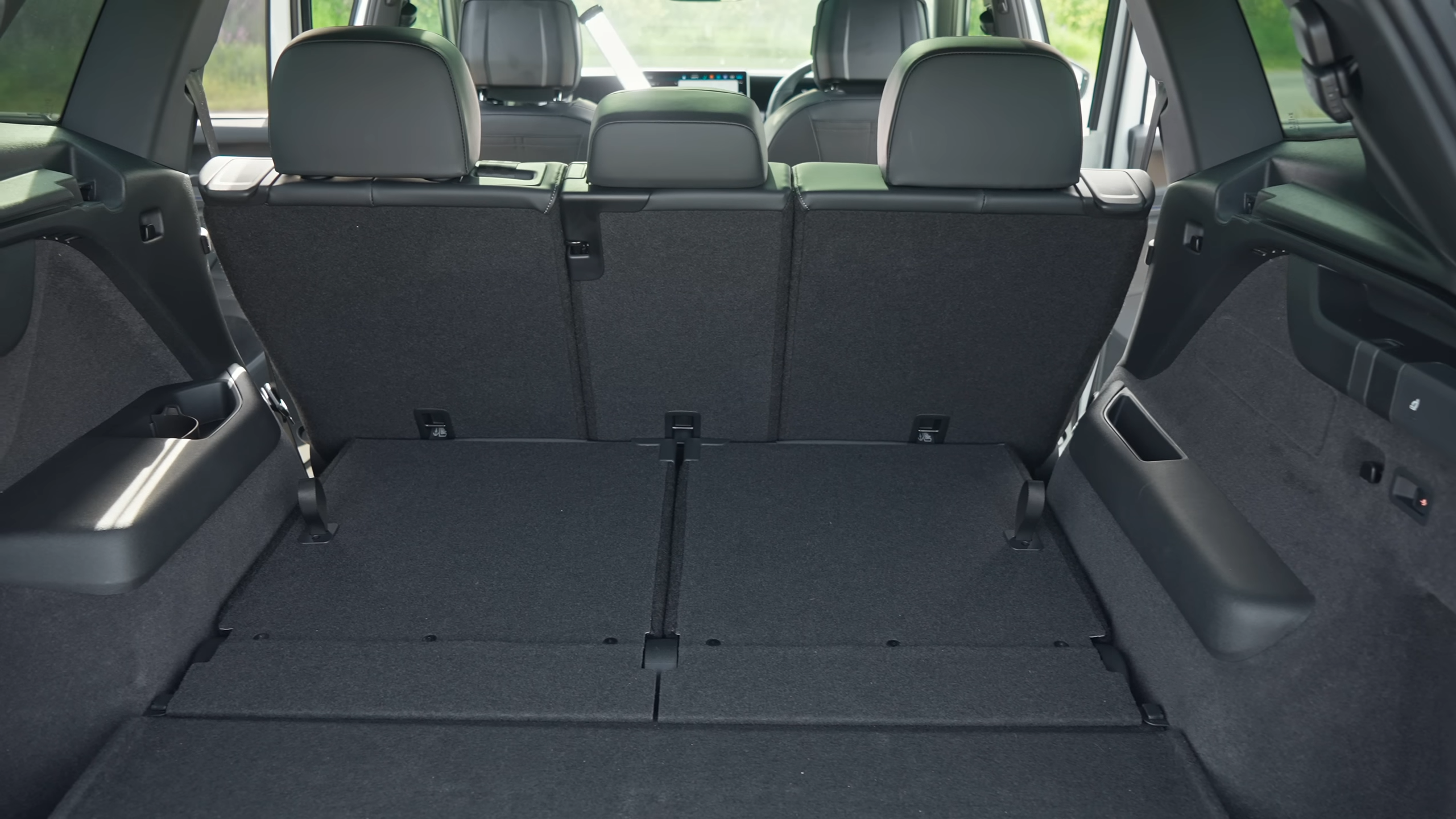
Despite the tight 3rd row, the load bay’s luggage capacity remains impressive. The review demonstrates the generous luggage capacity available when the 3rd row of seats is stowed, which is aided by a two-pin inverter in the load bay and the inclusion of a space-saver spare wheel under the boot board.
A particularly compelling rival mentioned is the Chery Tiggo 8 Pro Max, which offers all-wheel drive and a more powerful 2.0-litre 4-cylinder turbopetrol engine at a more accessible price point. The review also posits that for buyers with similar budgets, compelling diesel alternatives like the Kia Sorento 2.2-litre must be considered, highlighting the enduring importance of diesel power in the South African market.
The Volkswagen Tayron represents a significant step forward in terms of build quality, interior technology, and a generally refined driving experience based on the newcomer’s advanced MQB Evo platform.
While the 1.4TSI R-Line test car featured impressive optional extras like massaging seats, the no-more-than-willing performance of the Tayron’s 1.4-litre 4-cylinder turbopetrol engine raises questions about its adequacy for a 7-seater family car that is fully occupied, towing a trailer, or both. Buyers should consider their specific needs and also keep in mind that large optional wheels will ultimately diminish ride comfort.
Frequently Asked Questions (FAQ)
Q: What model is the new Volkswagen Tayron replacing?
A: The Volkswagen Tayron is the long-awaited successor to the popular Tiguan Allspace, stepping in as the dedicated 7-seat SUV in the brand’s range.
Q: Did Volkswagen address feedback on the touch-sensitive interior controls in the Tayron?
A: Yes, Volkswagen listened to feedback by reintroducing physical buttons for critical controls (like the lights and drive modes) and eliminated the previous generation’s widely disliked capacitive swipe pads.
Q: Is the 1.4-litre engine powerful enough for the 7-seater Tayron?
A: The reviewer notes the 1.4TSI is adequate for solo driving, but expresses concern that it may struggle or be overworked when fully loaded with seven occupants or when towing.
Audi S3 (2025) Price & Specs
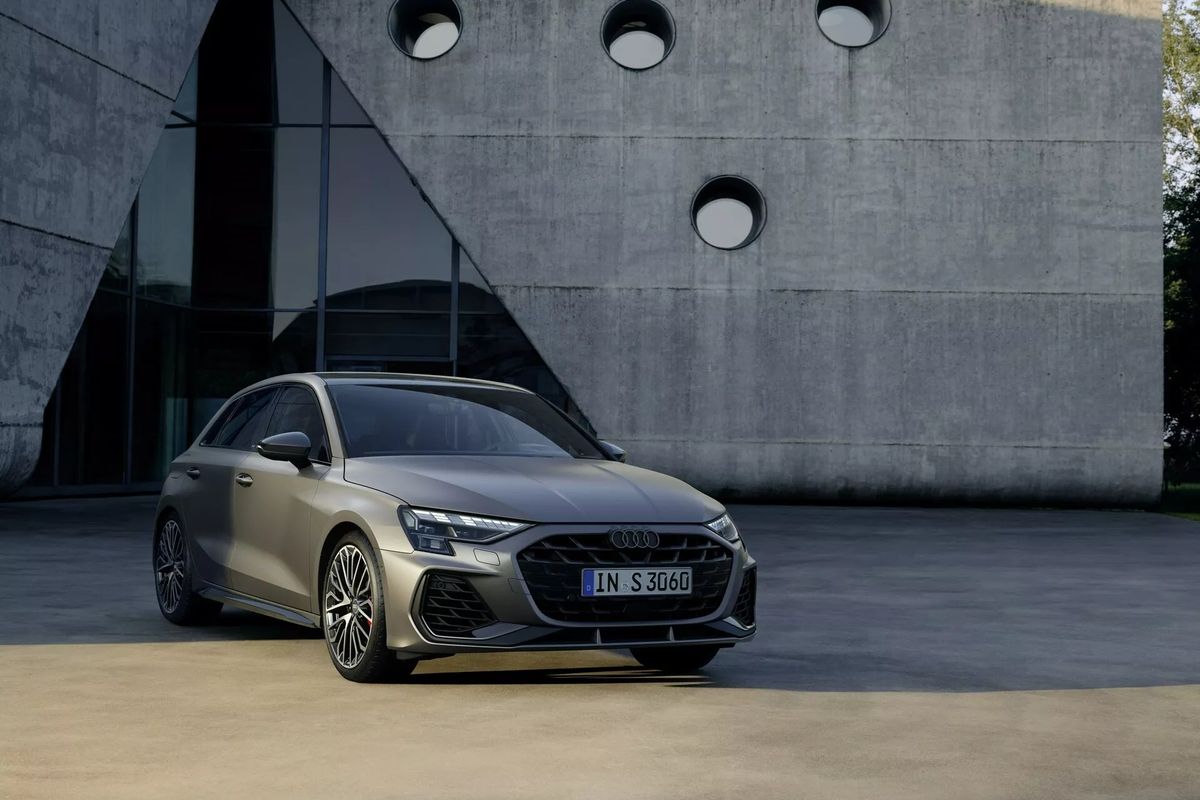
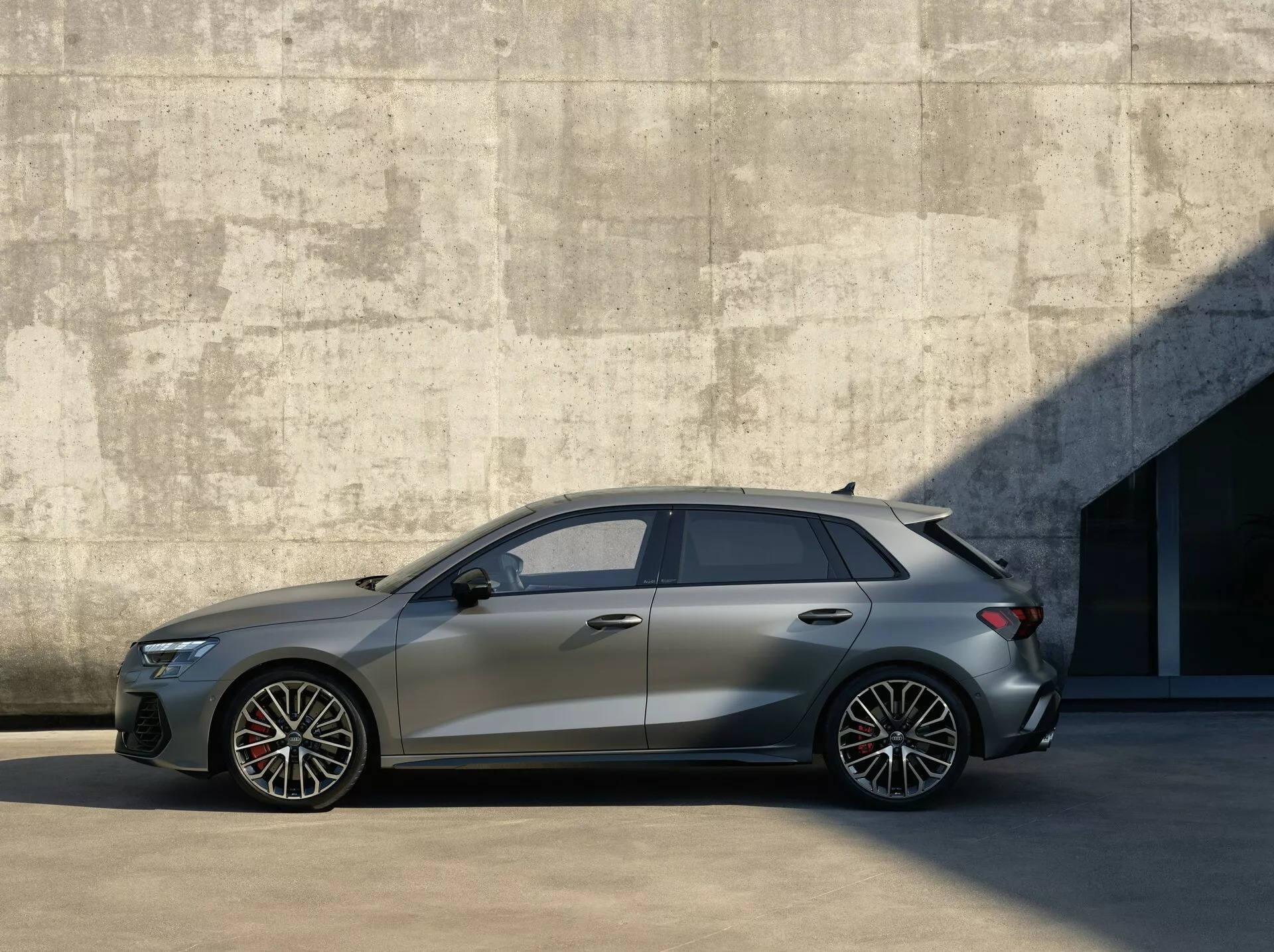
The 2025 Audi S3, which, apart from an updated look, features more power, the trick diff from the RS3, and many other technical upgrades, is now available in South Africa.
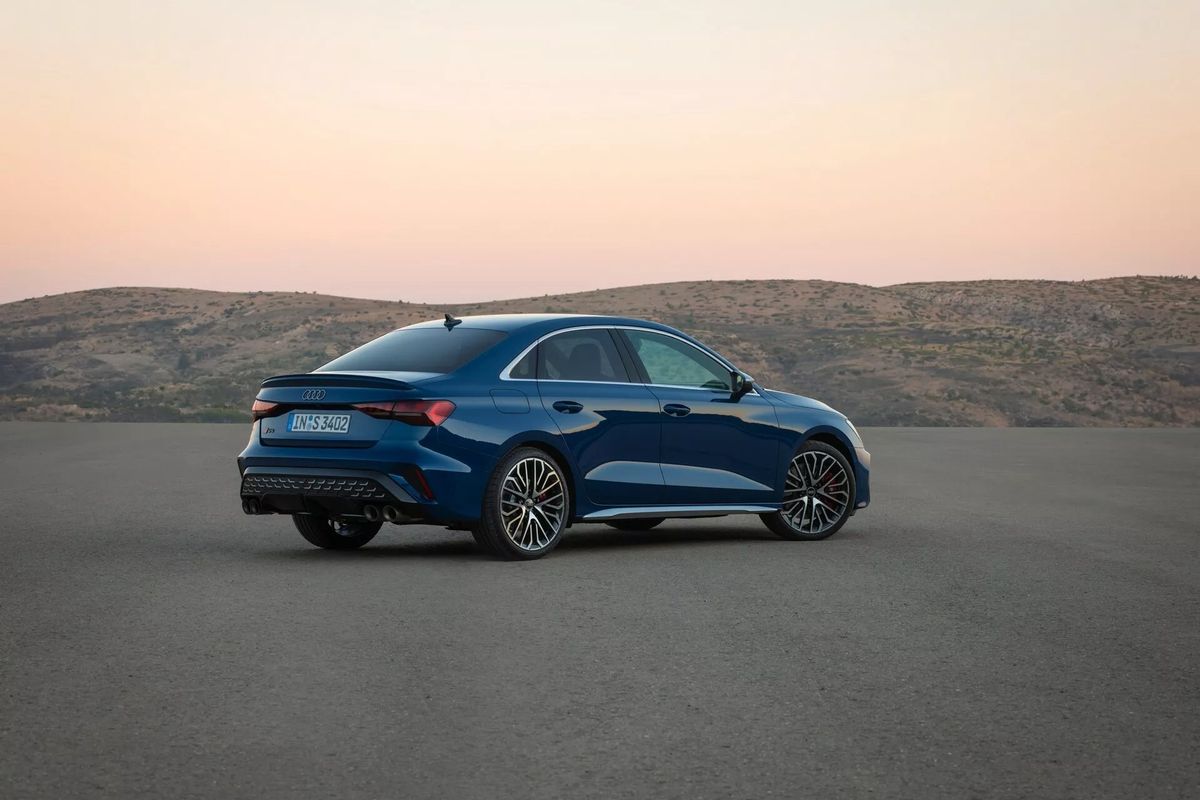
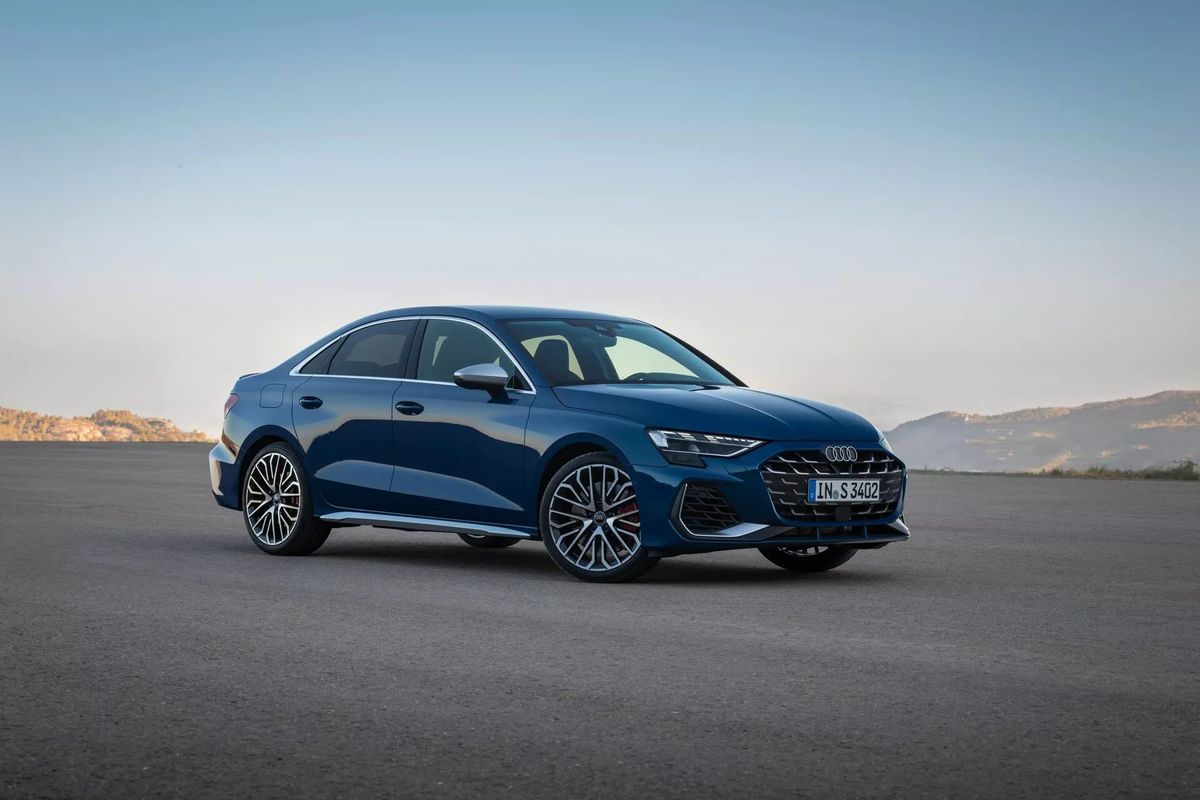
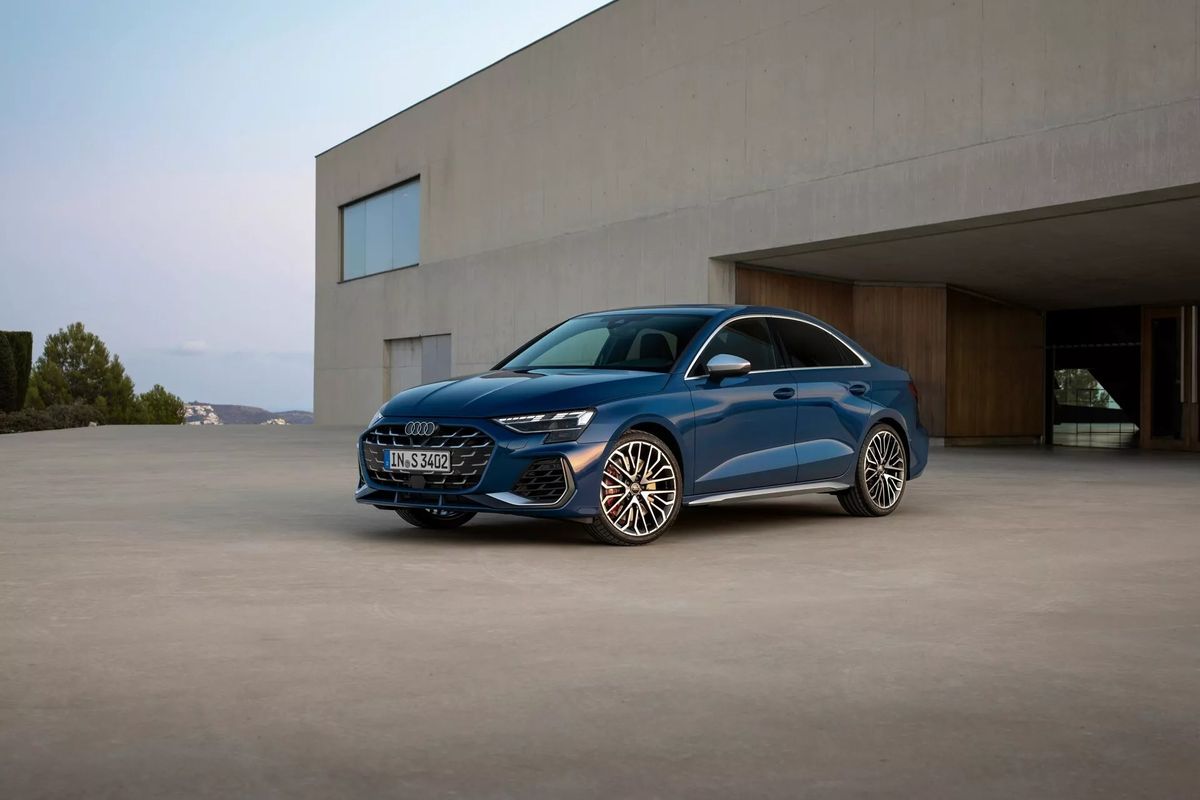
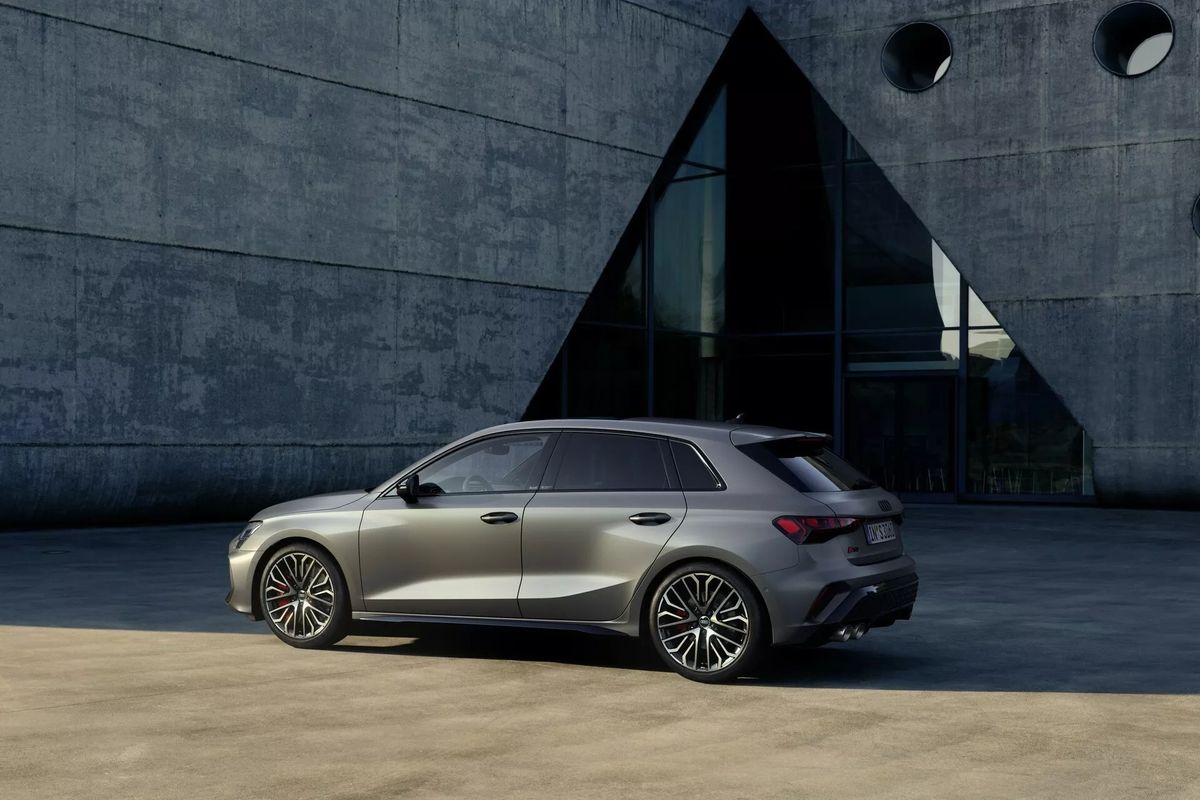
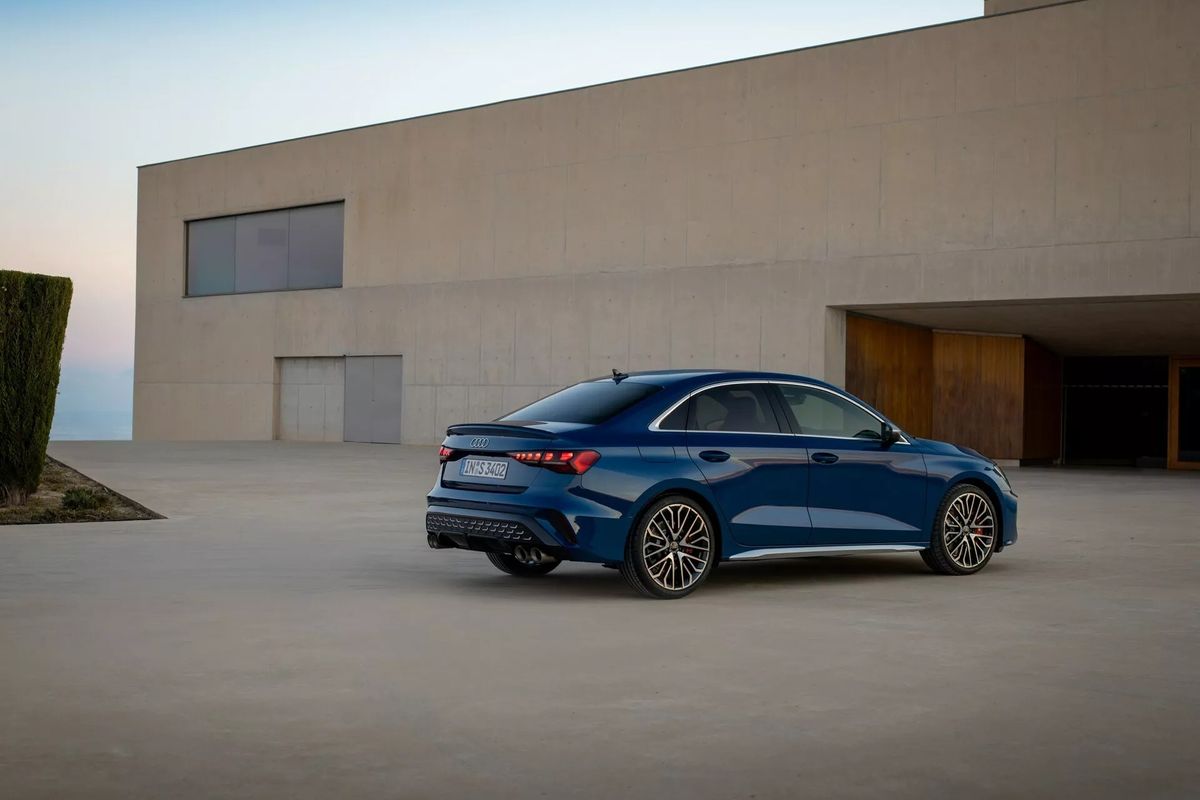
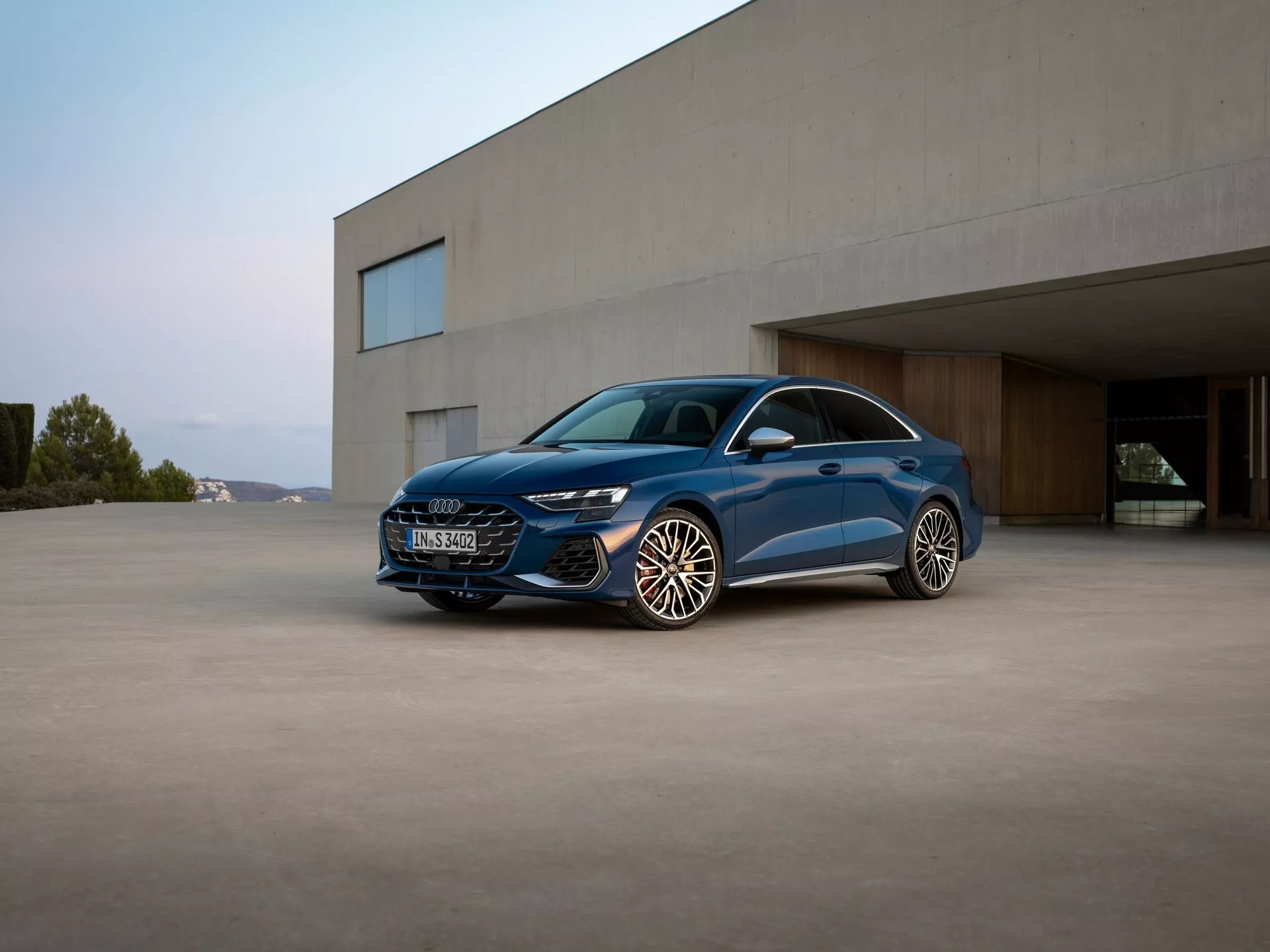
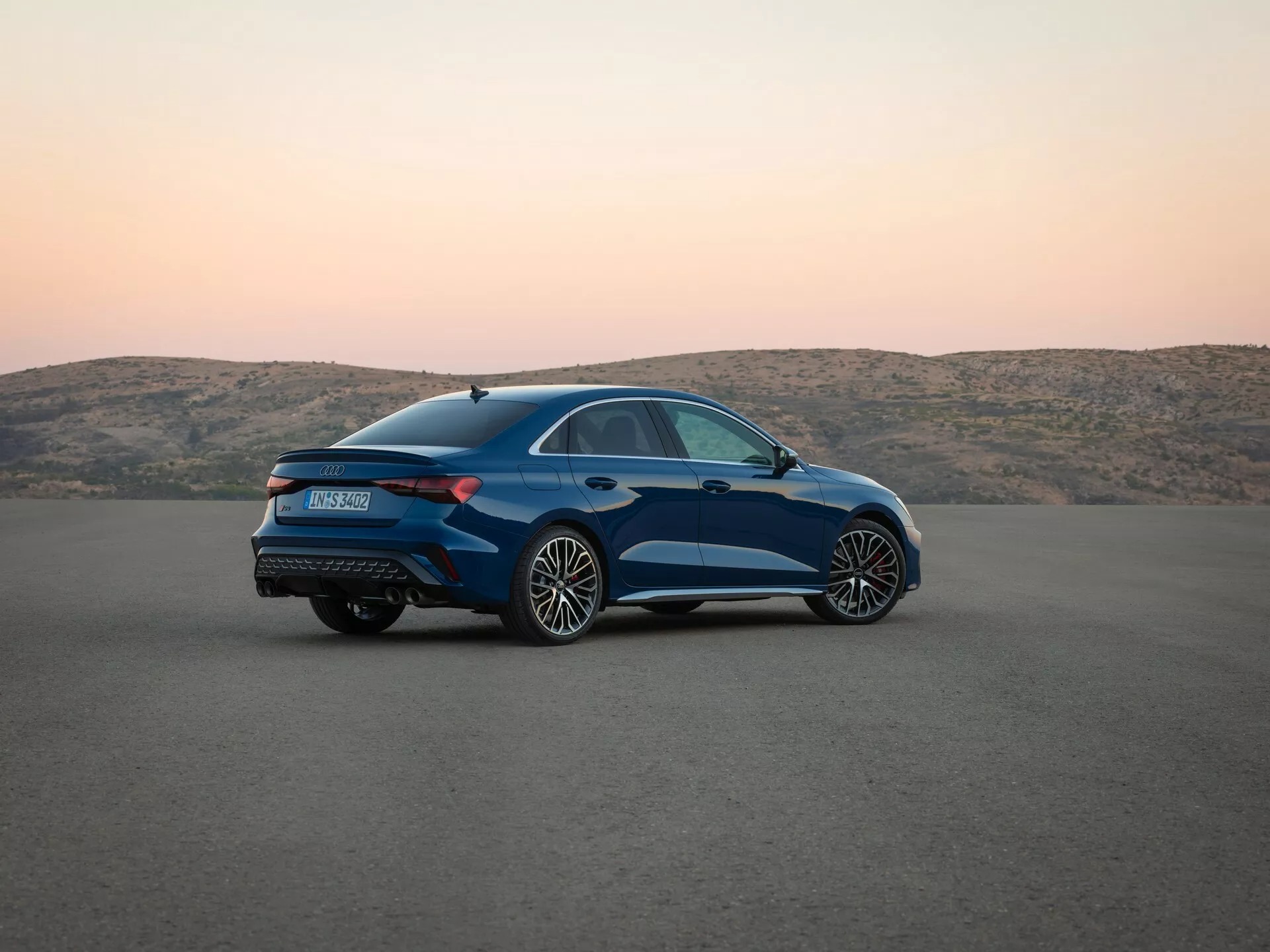
Audi South Africa has introduced the 2025 Audi S3 Sportback and S3 Sedan in Mzansi. Said to offer “increased performance, a torque splitter, advanced driving dynamics, and a sharpened design”, this pair rivals the Mercedes-AMG A35 hatchback and sedan, BMW M135 and M235 and Volkswagen Golf 8.5 R.
The headline news is that the 2025 Audi S3 siblings’ 2.0-litre 4-cylinder turbopetrol engine now produces peak outputs of 245 kW and 420 Nm – increases of 32 kW and 20 Nm over the pre-facelift S3’s 213 kW/400 Nm – with maximum torque said to be available from 2 100 to 5 500 rpm.
Aided by enhanced turbocharger pre-loading, optimised throttle response and tweaks to the 7-speed dual-clutch transmission, the 2025 Audi S3 is claimed to bolt from zero to 100 kph in 4.7 seconds.
Torque splitter & Dynamic Plus debuts
It’s not just the straight-line performance that has been enhanced. Audi has also incorporated the clever torque splitter from the RS3. This differential technology uses an electronically controlled multiple disk clutch on each drive shaft to optimally distribute the torque between the rear wheel on the inside and the outside of the curve, depending on the driving situation and the chosen Audi drive select mode.
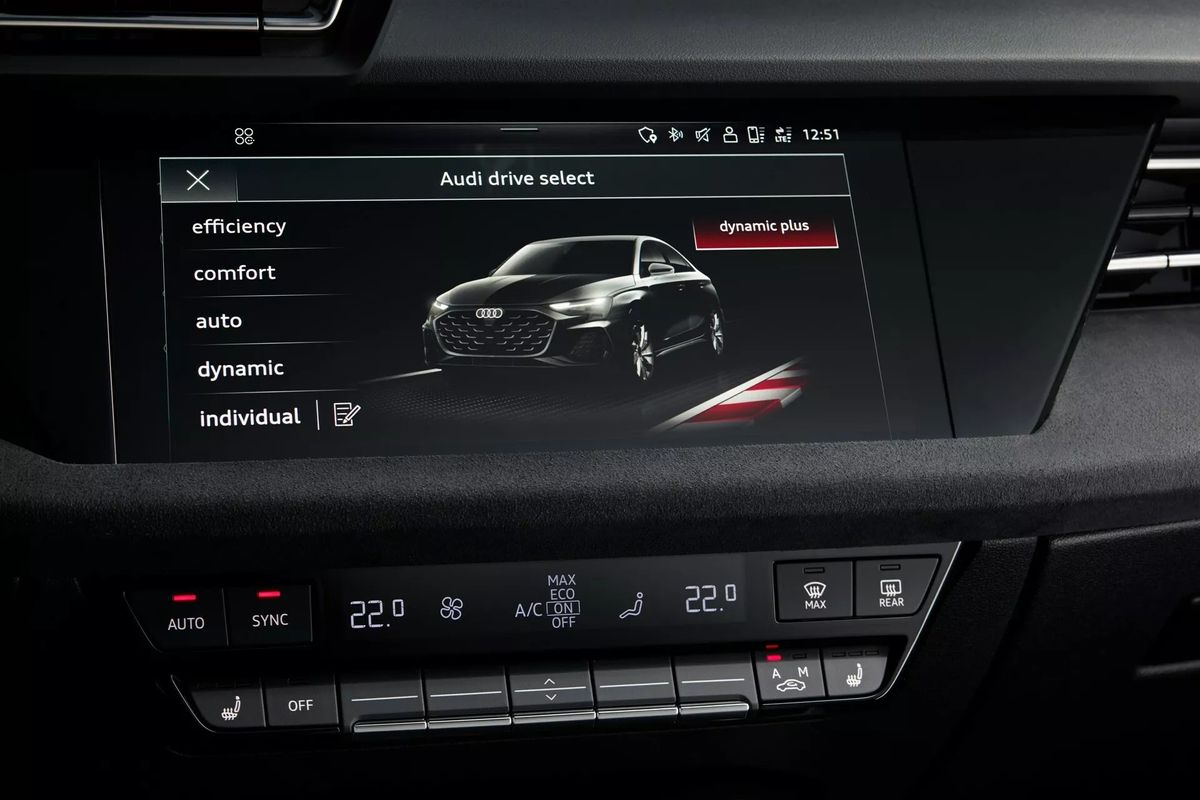
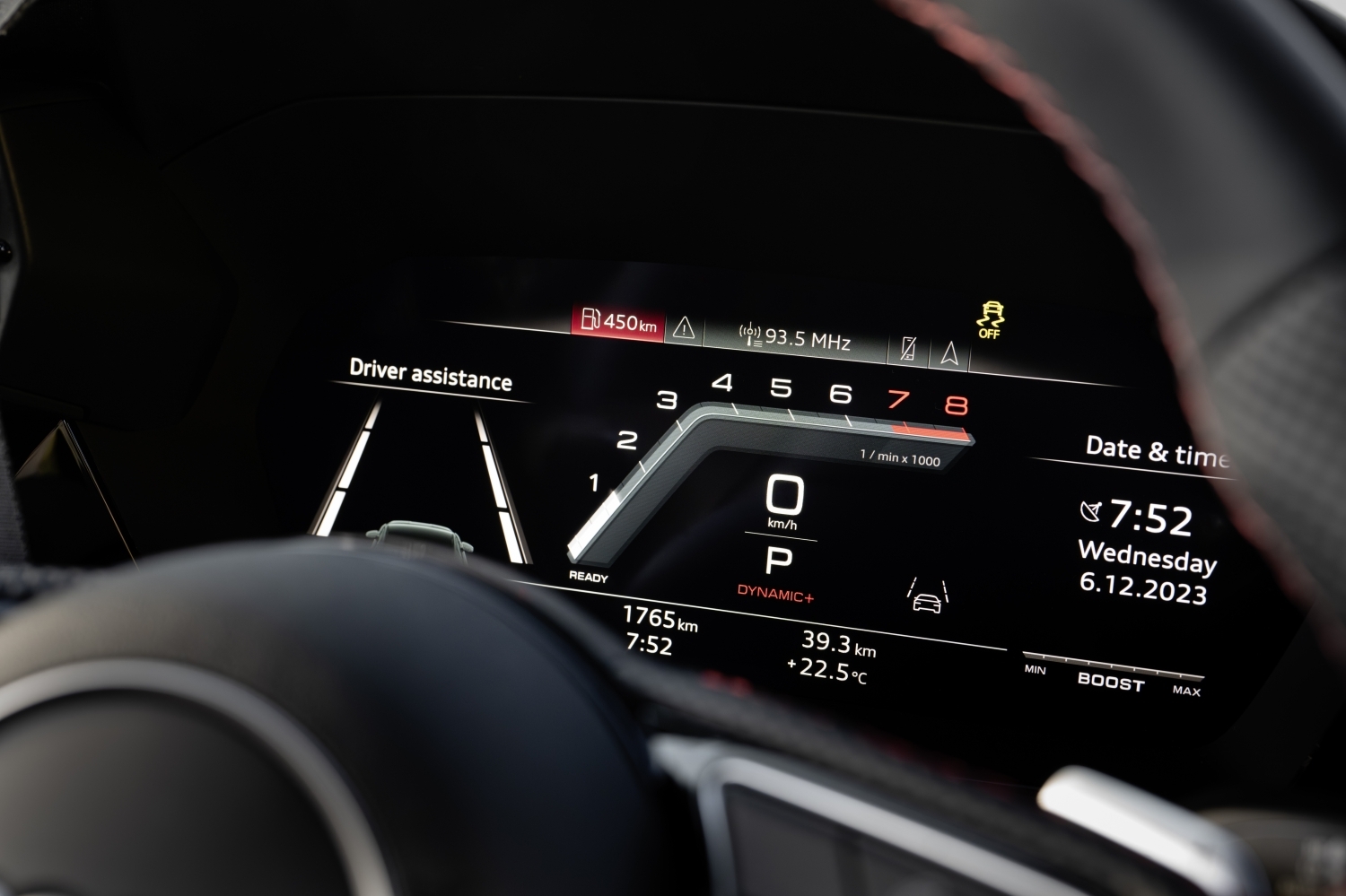
Which neatly brings us to Dynamic Plus mode, which is available in Audi drive-select in addition to the familiar profiles (Auto, Comfort, Dynamic, Individual, and Efficiency). When Dynamic Plus is active, the S3 channels torque primarily to its outer rear wheel, generating a controlled oversteer effect. This “Drift Mode” is complemented by further enhancements to the powertrain mapping and a higher idle speed.
Other technical upgrades to the 2025 Audi S3
Suspension refinements include stiffer bearings and new pivot bearings that allow for increased negative wheel camber, improving steering response and facilitating greater lateral grip when cornering.
The power steering setup has also been recalibrated to deliver more precision, particularly around the centre position. A new generation of electronic stabilisation control has also been introduced, with wheel-selective torque control further developed to brake the inside wheels during cornering subtly.
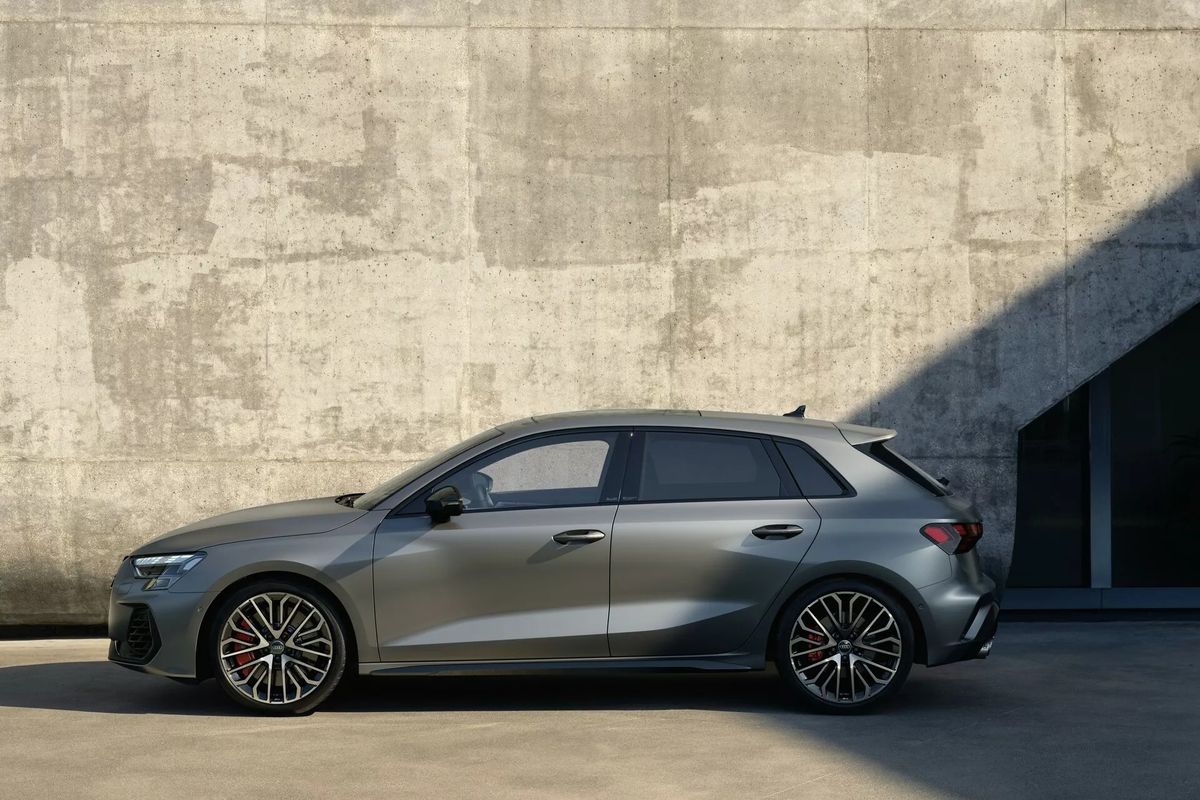
The S sport suspension, which lowers the body by 15 mm compared with a standard Audi A3, is standard, while the S sport suspension with adaptive dampers, which has been specially tuned to work in harmony with the torque splitter and the individual Audi drive select modes, is optional.
Audi says that these improvements result in “refined traction and deceleration behaviour, resulting in dynamic turn-in, more balanced handling, and improved stability at the limit” for the 2025 Audi S3.
Nineteen-inch alloys, with 3 wheel designs to choose from, are standard. Behind the front alloys are larger (18-inch) ventilated brake disks (357 mm in diameter and 4 mm thicker than before) pinched by 2-piston calipers, which suitably endow the more powerful 2025 model with beefed-up stopping power.
Updated exterior design
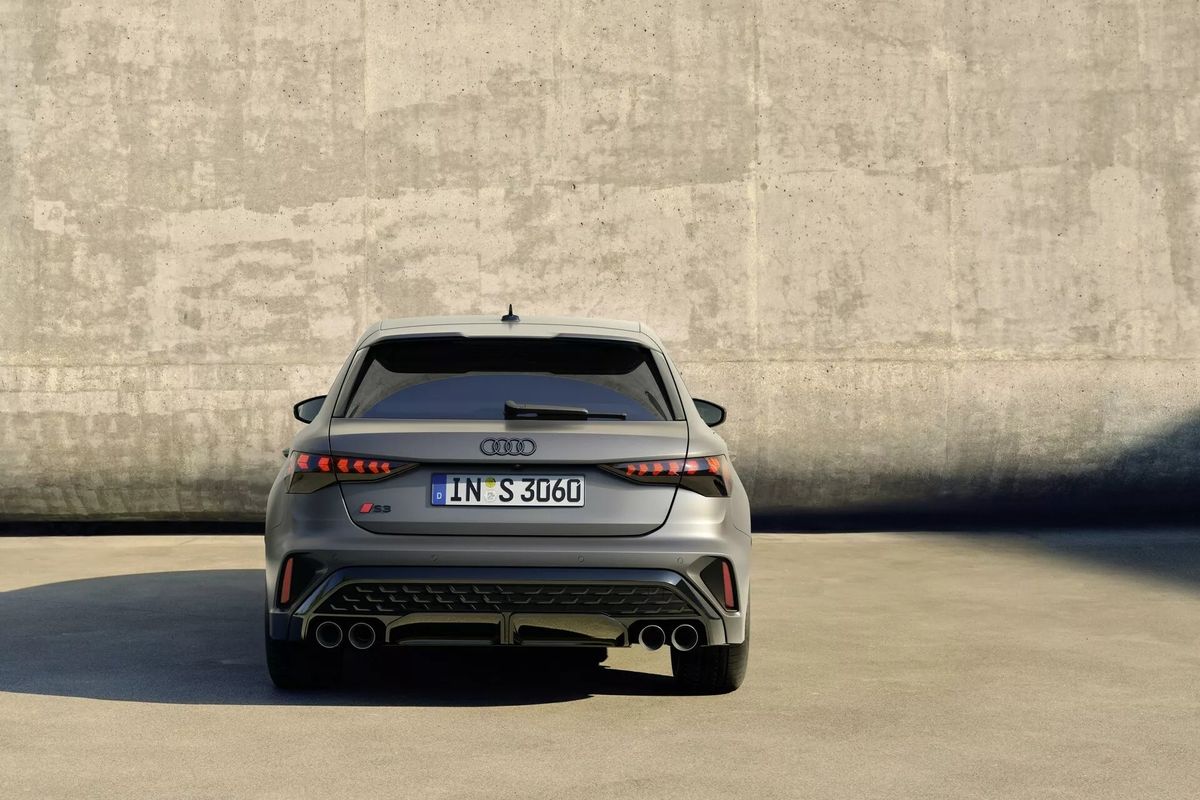
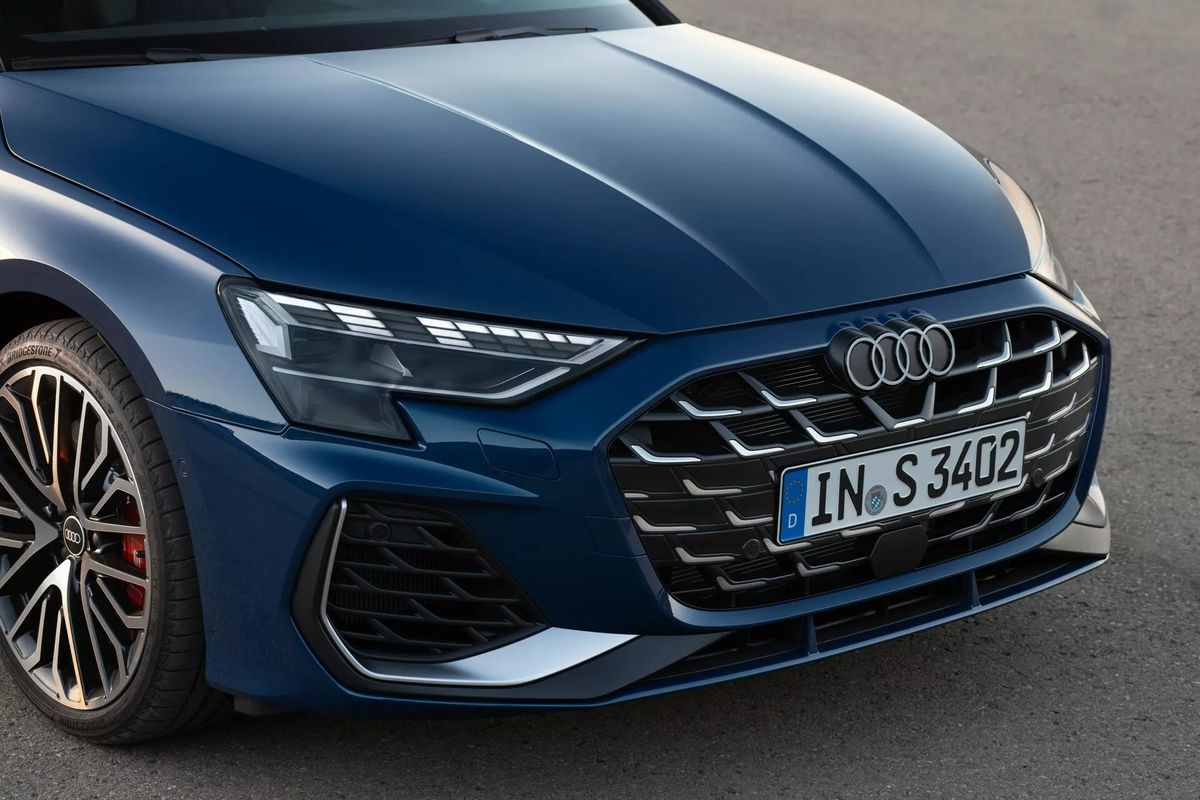
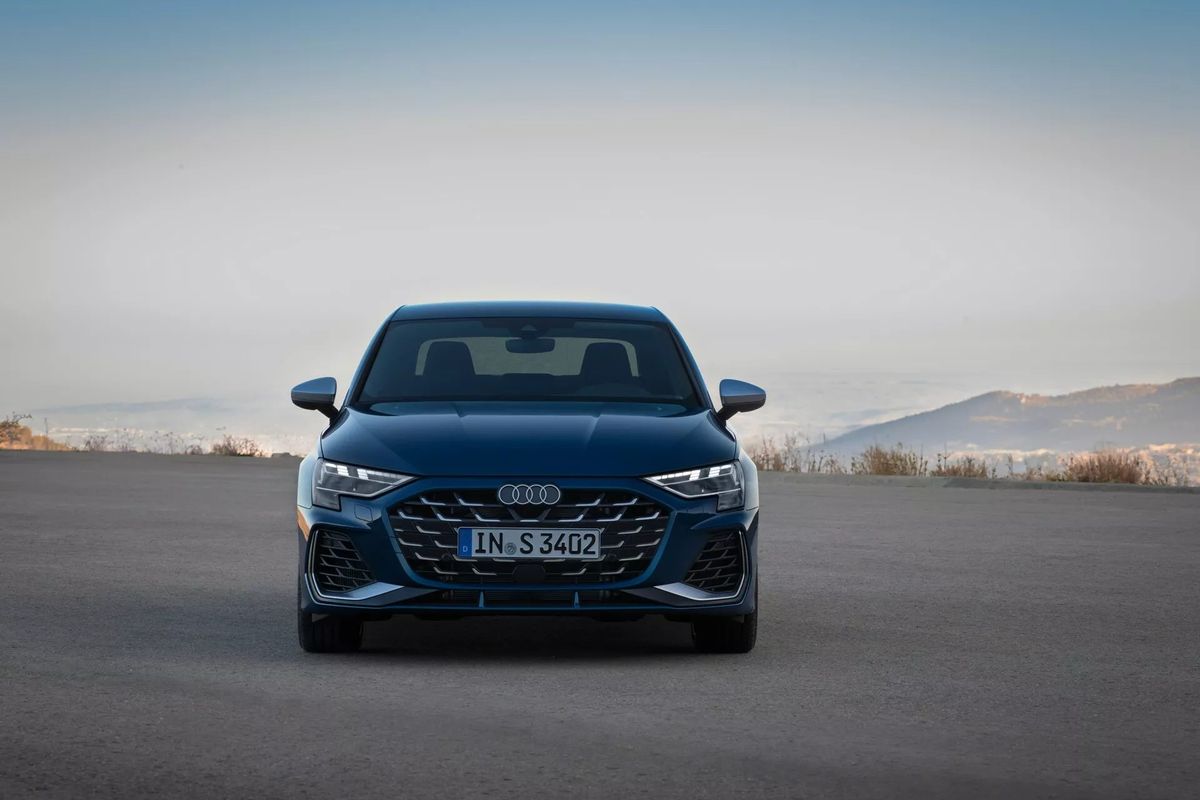
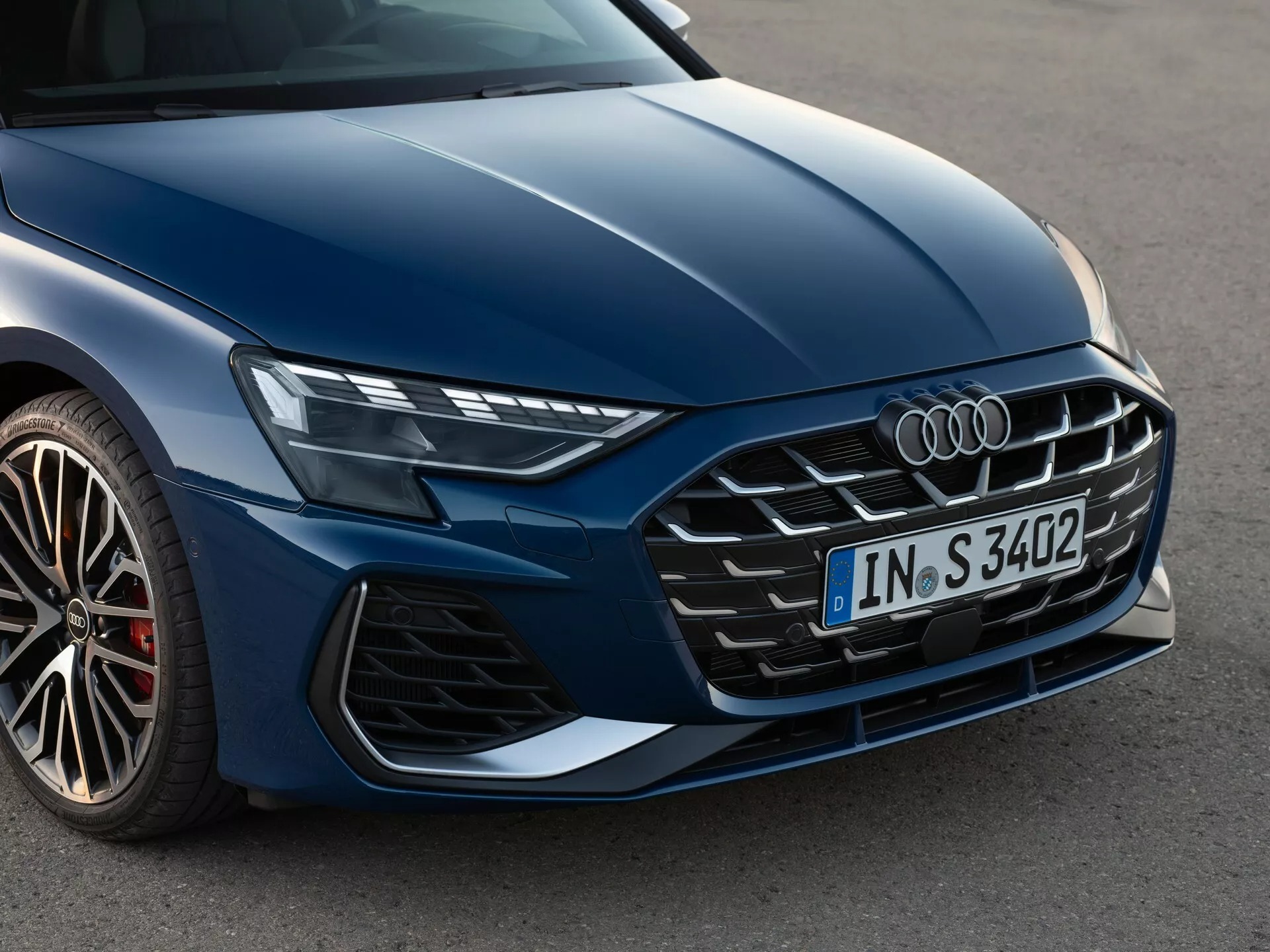
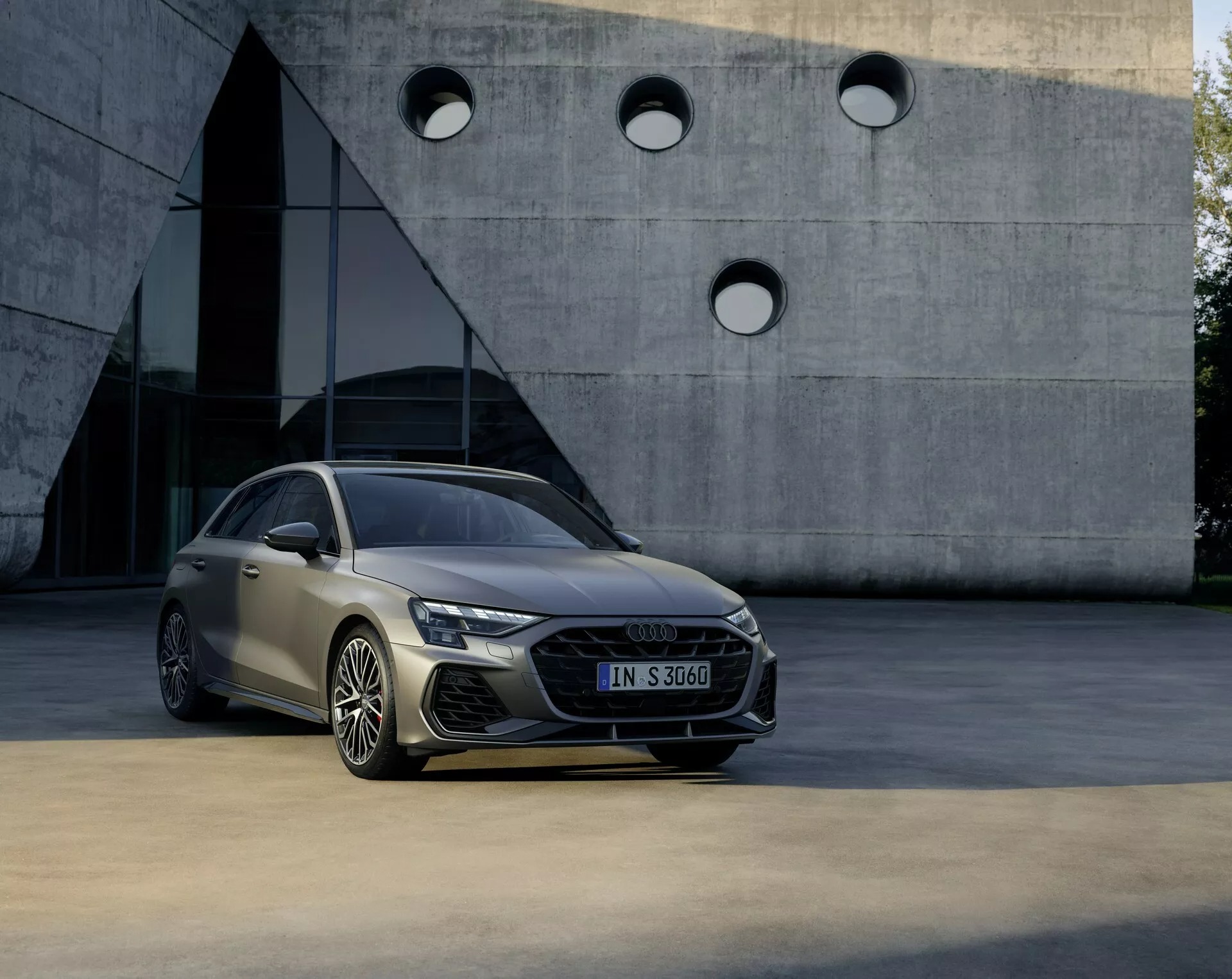
The front-end appearance of the 2025 Audi S3 is distinguished by the redesigned hexagonal frameless Singleframe grille, highlighted by L-shaped design elements and flanked by large angular side air intakes. The bumper ends in a striking front spoiler (with 2 vertical struts) that visually lowers the car’s stance.
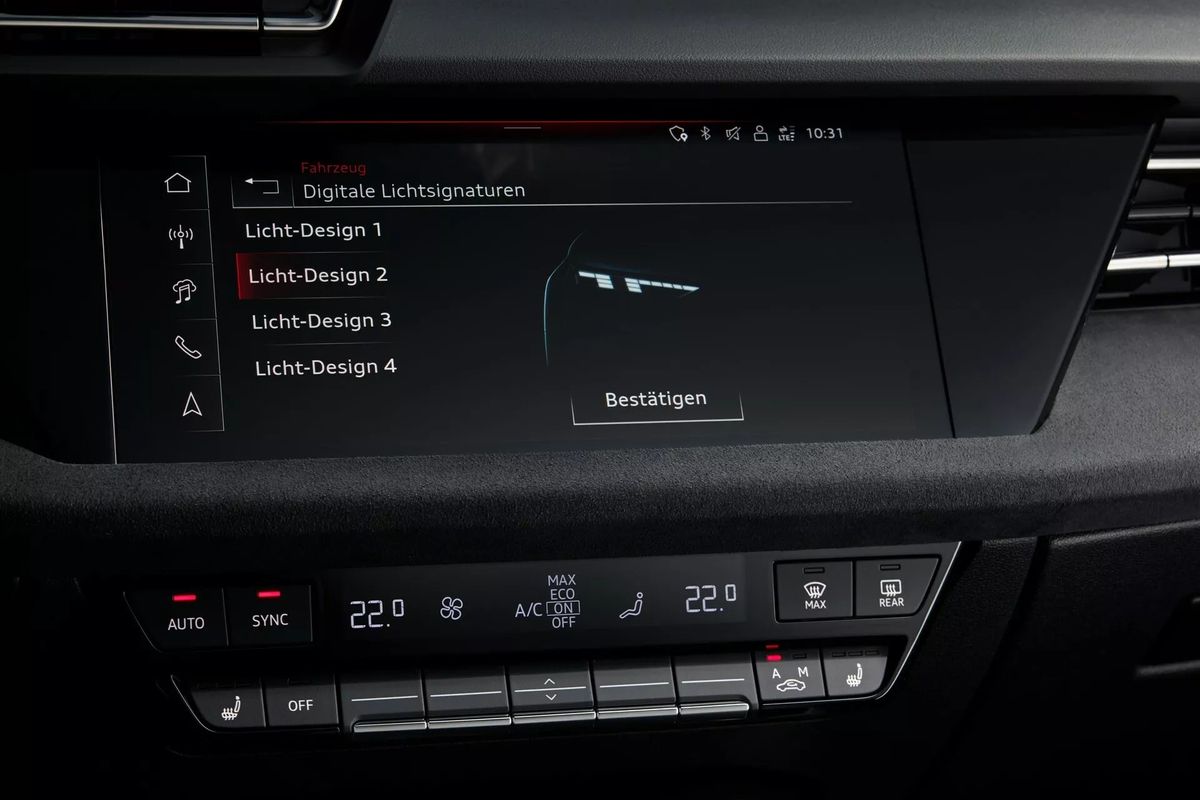
Like the redesigned Singleframe, the headlamp design is significantly flatter. The 24-pixel elements that make up the digital daytime running lights in the Matrix LED headlights are now arranged in 3 rows on the upper edge of the housing. Drivers can select up to 4 digital DRL signatures via the MMI system.
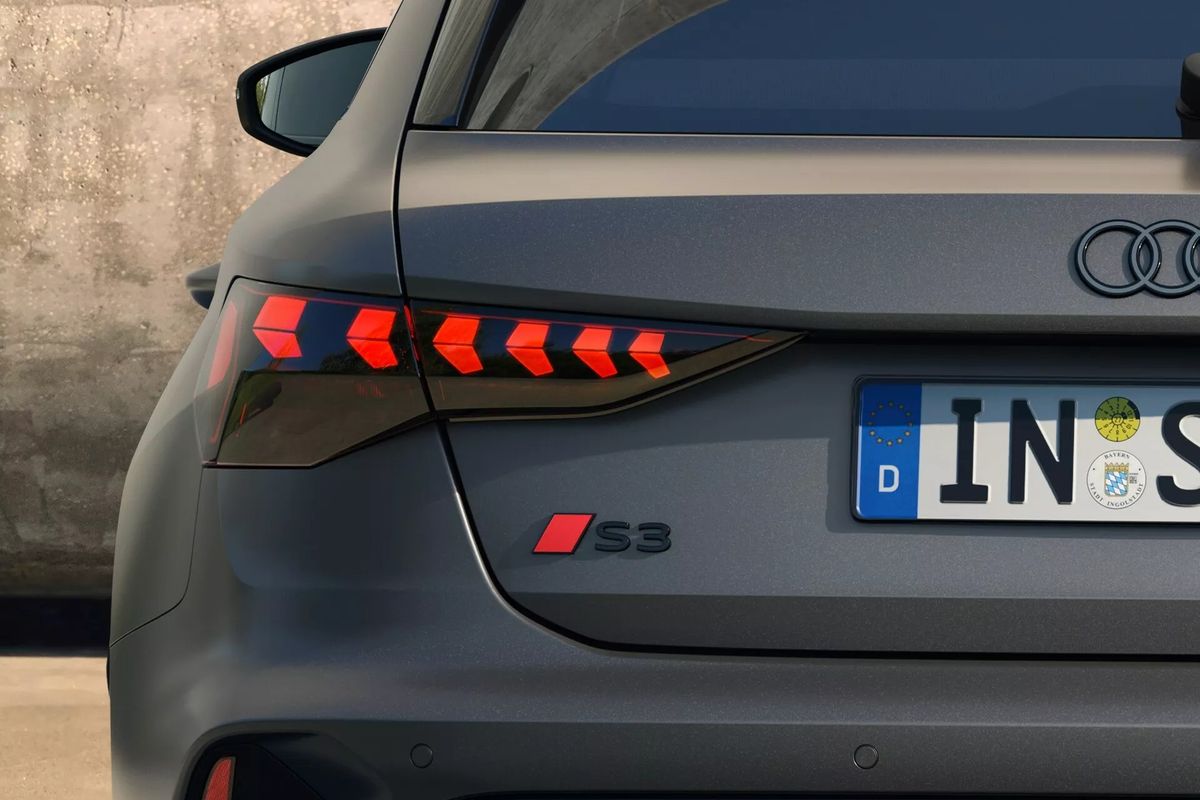
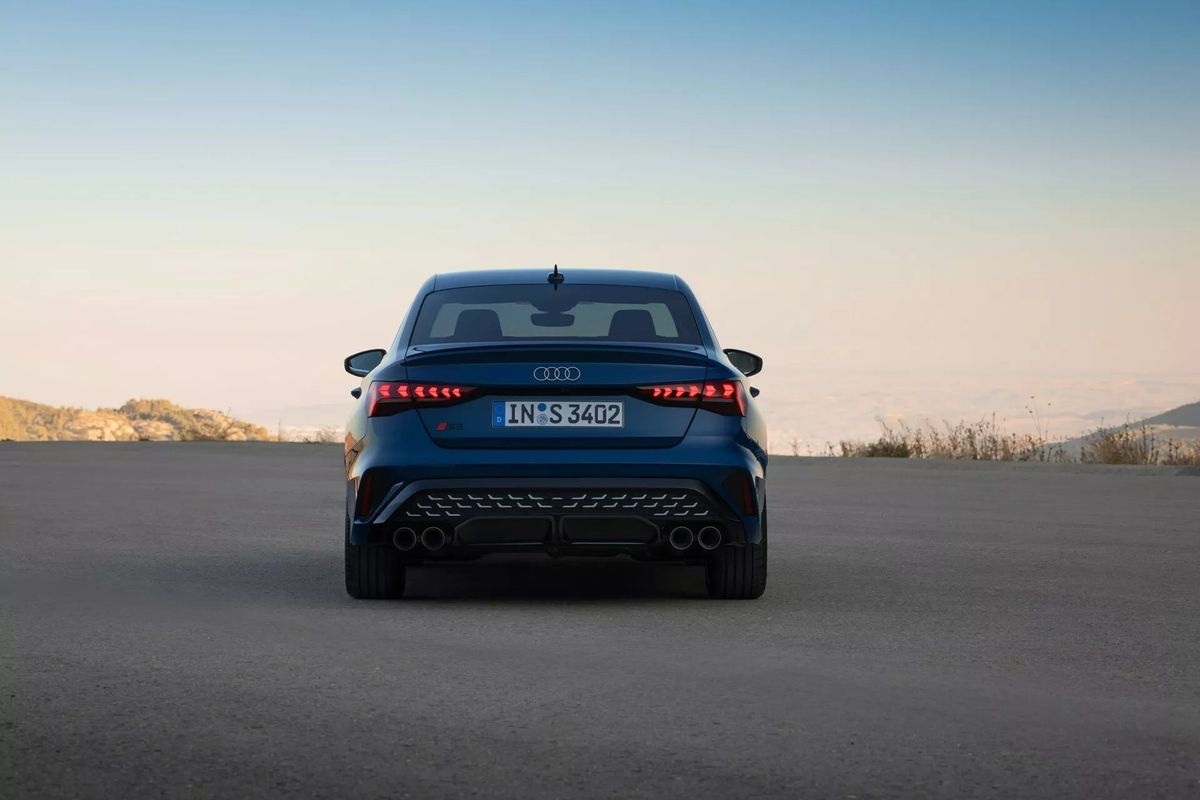
The new-look rear bumper, with a glossy black rear apron positioned above the diffuser, culminates in a quartet of tailpipes – a hallmark of Audi’s S models. For customers seeking an even greater aural experience, a performance exhaust system with a titanium silencer is optional on the 2025 Audi S3.
What interior features does the 2025 Audi S3 offer?
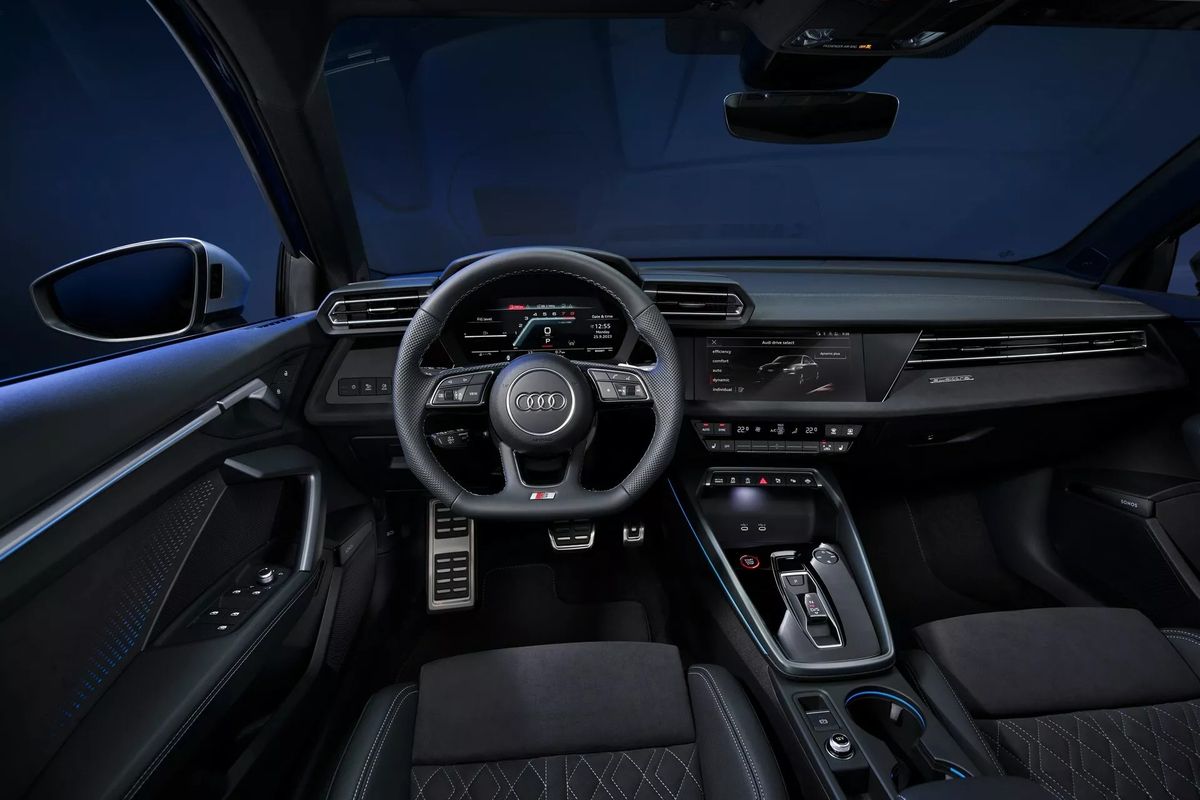
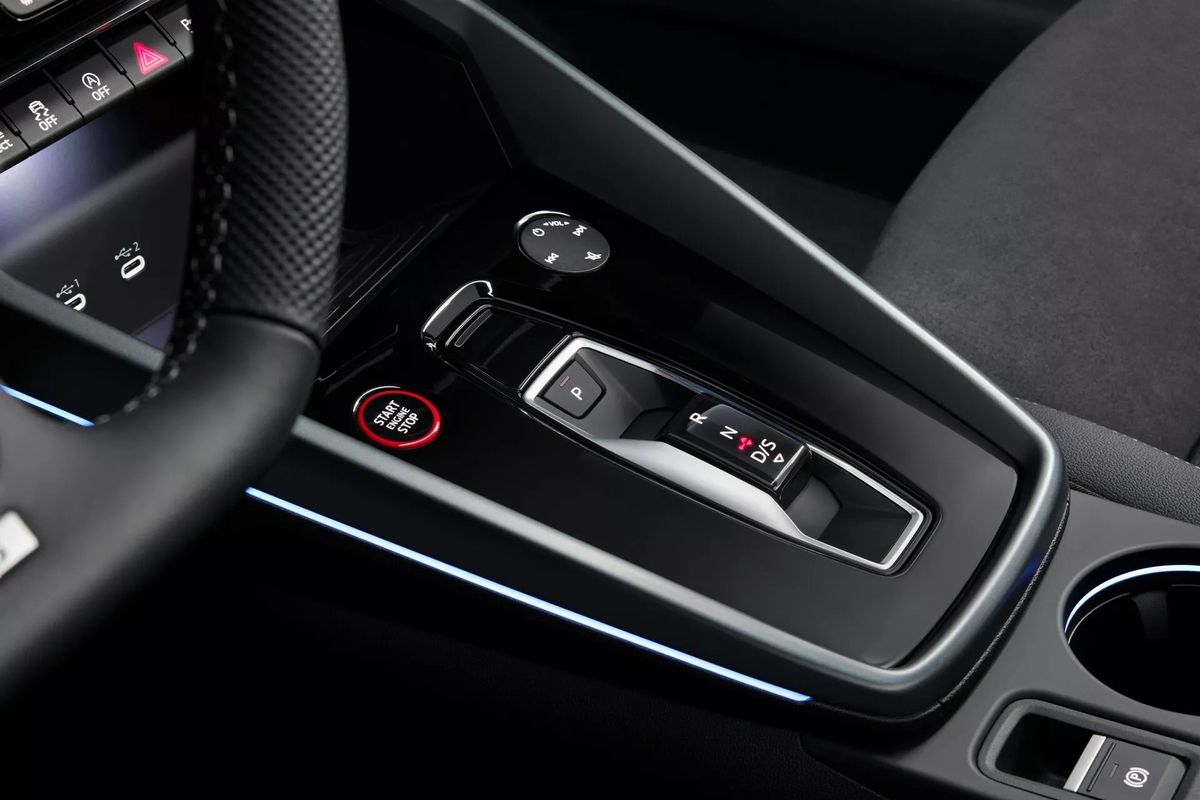
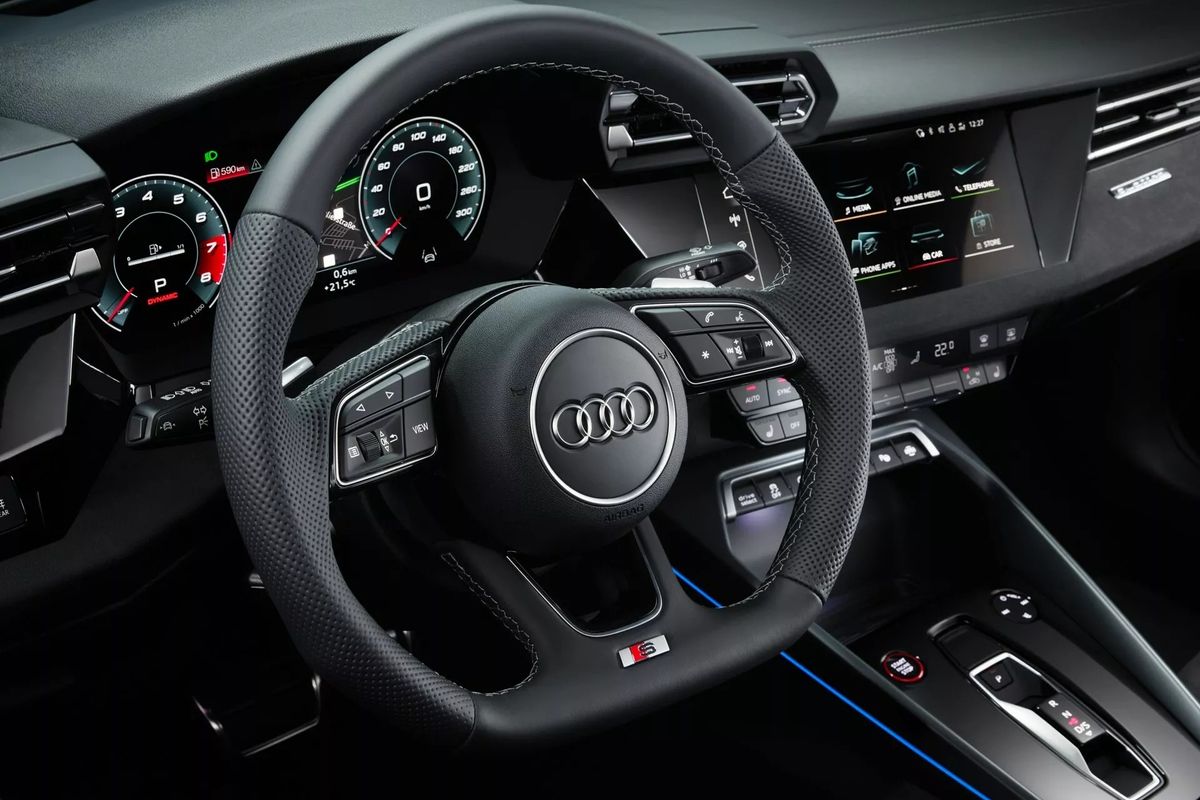
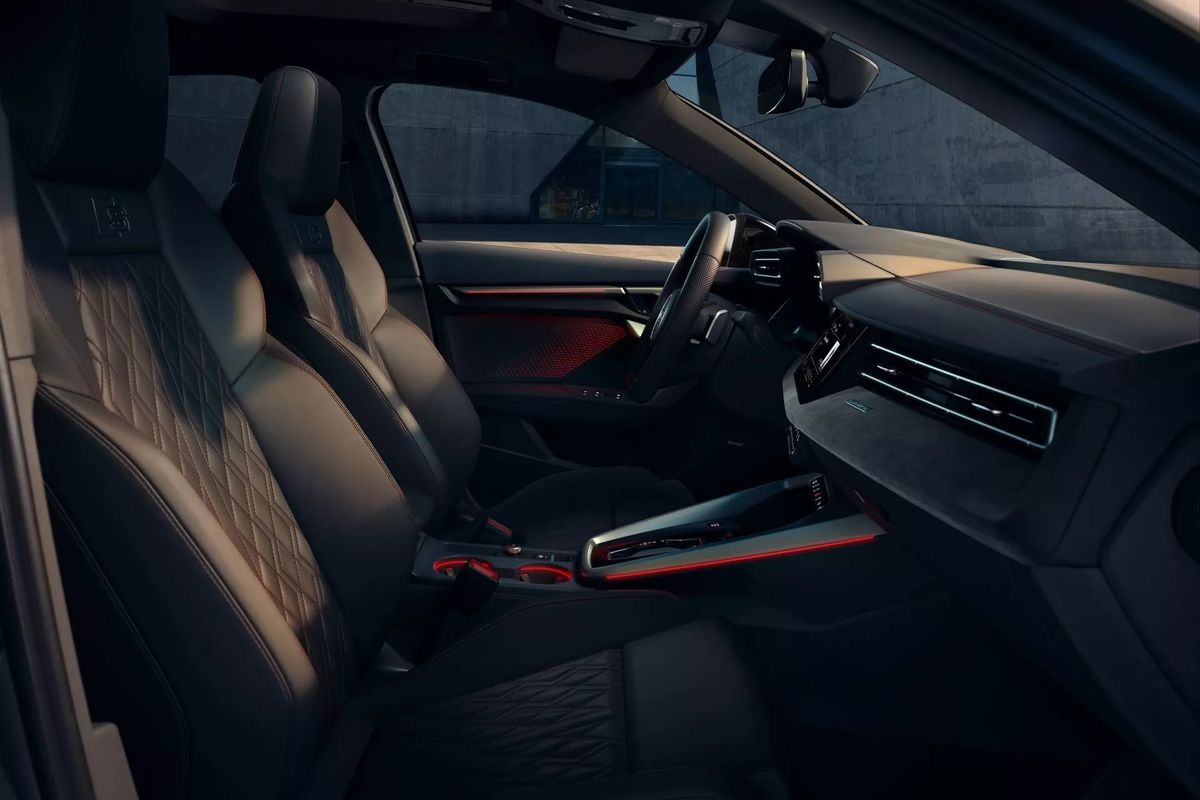
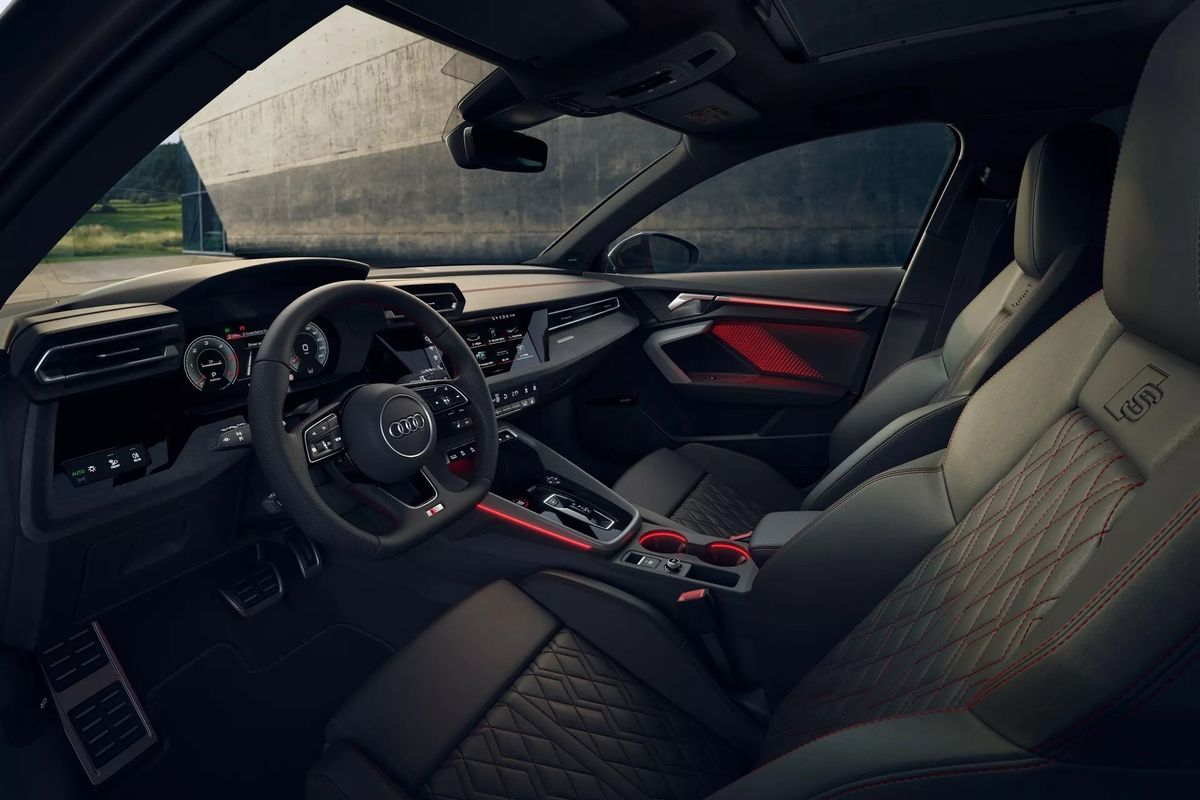
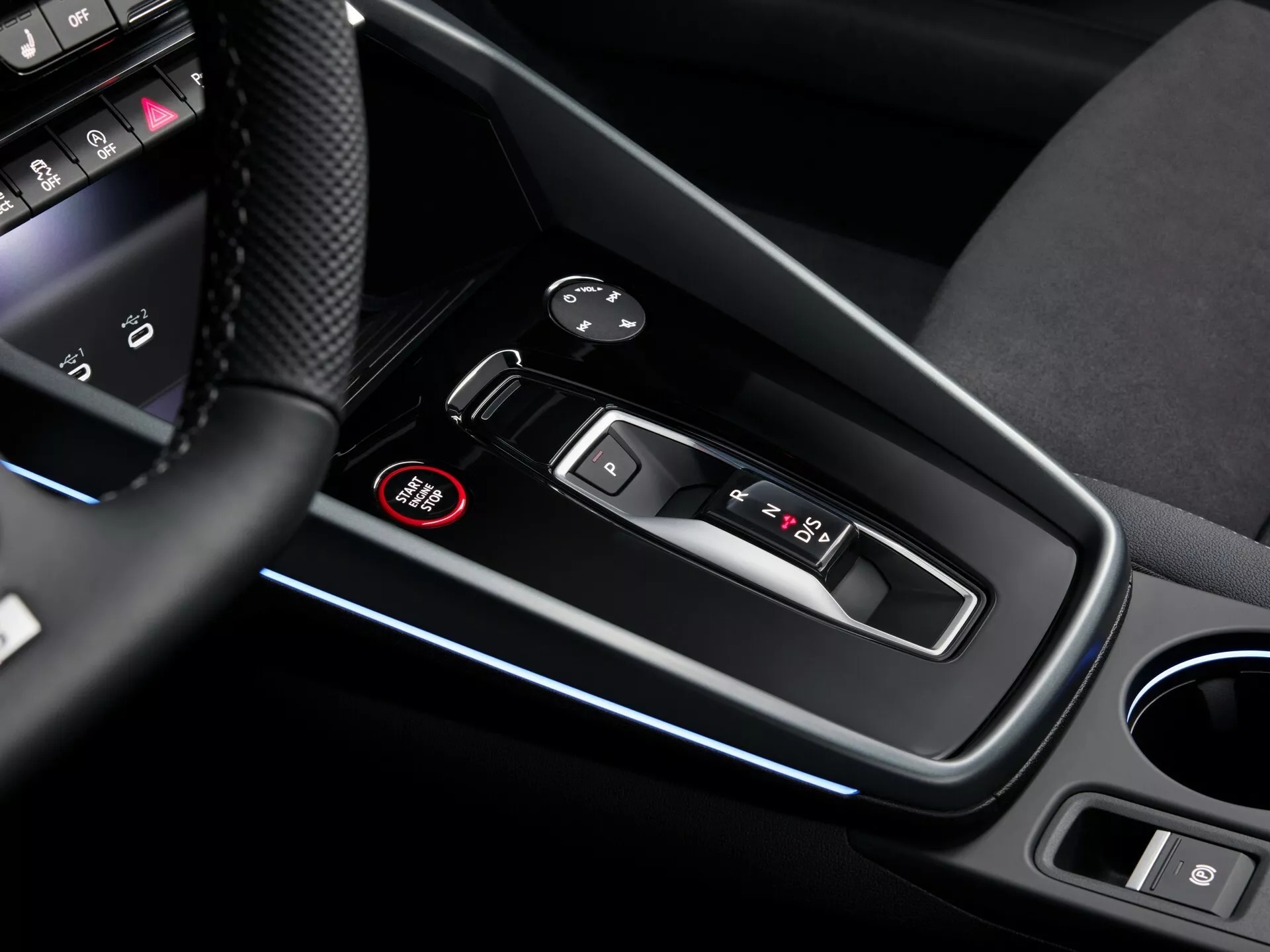
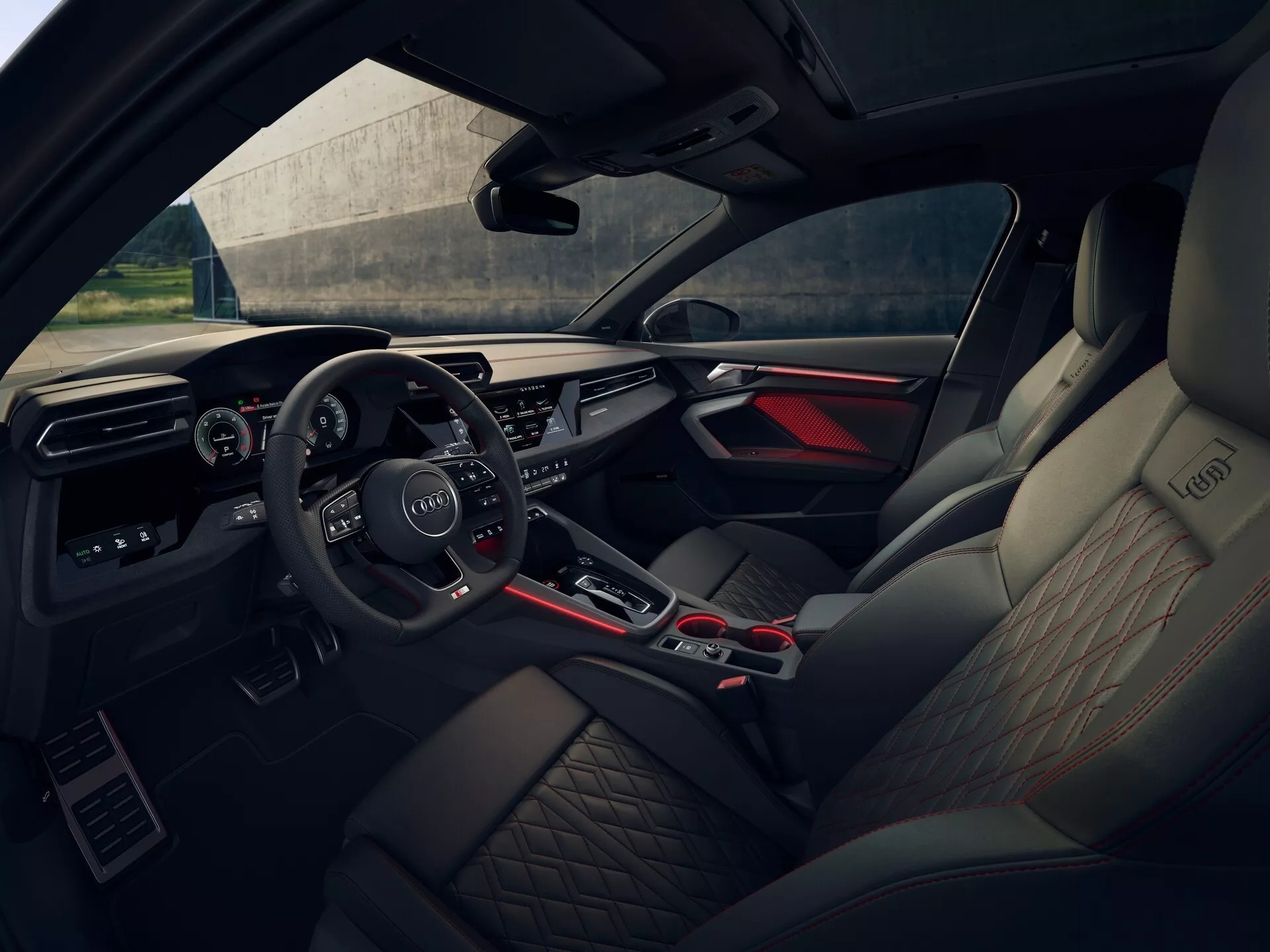
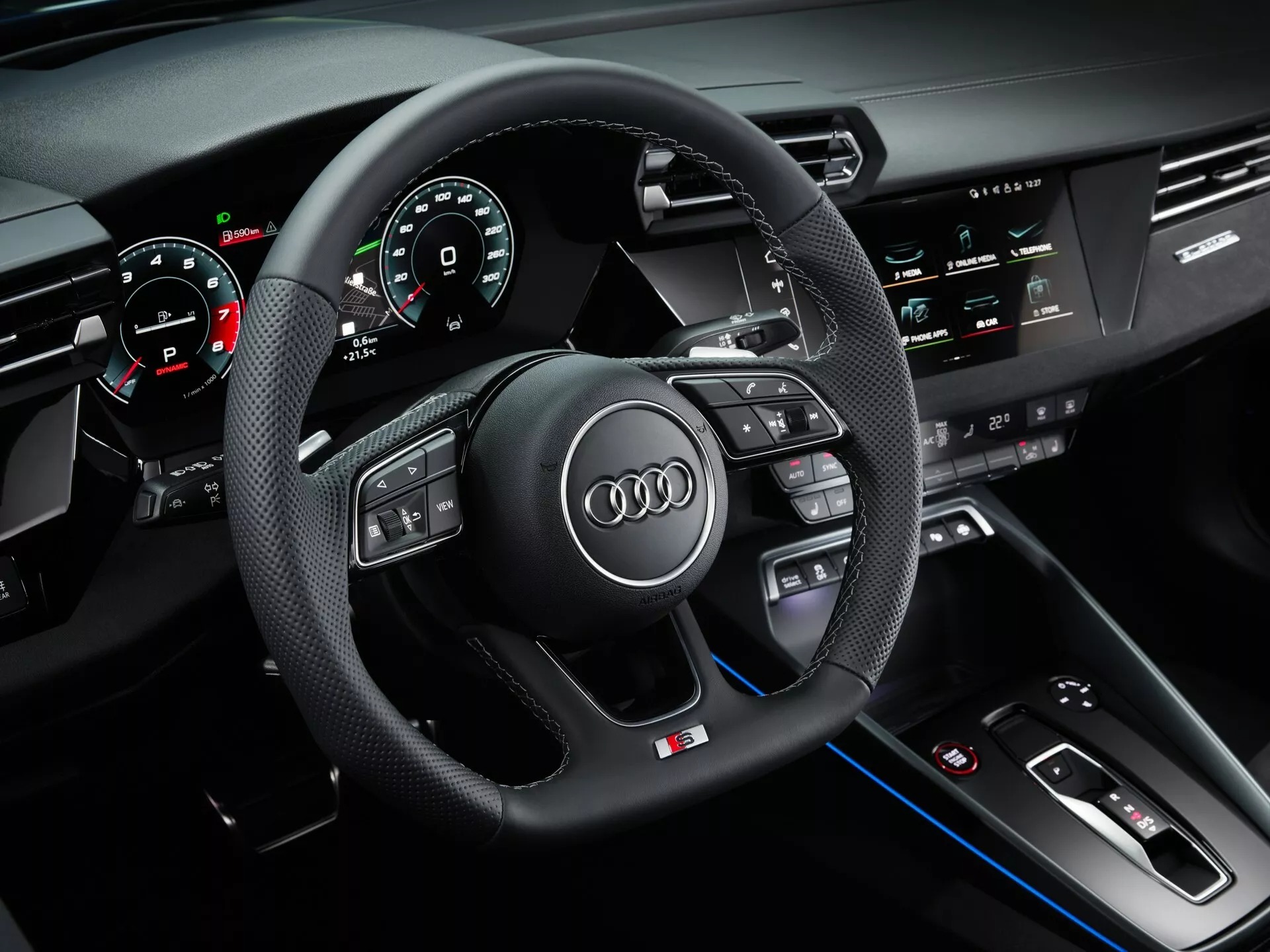
Compared with its pre-facelift predecessor, the 2025 Audi S3‘s cabin has updated ambient lighting, a redesigned transmission lever, laser-cut illuminated fabric panels in the doors and new textured inlays available in either aluminium or carbon fibre. A black headlining, stainless steel pedals, illuminated door sills, and a contoured flat-bottomed leather steering wheel underline the sporty atmosphere.
Standard equipment highlights include: Matrix LED headlights, a panoramic sunroof, Park Assist, Side Assist, a SONOS premium 3D audio system, and sport seats with leather and faux leather upholstery.
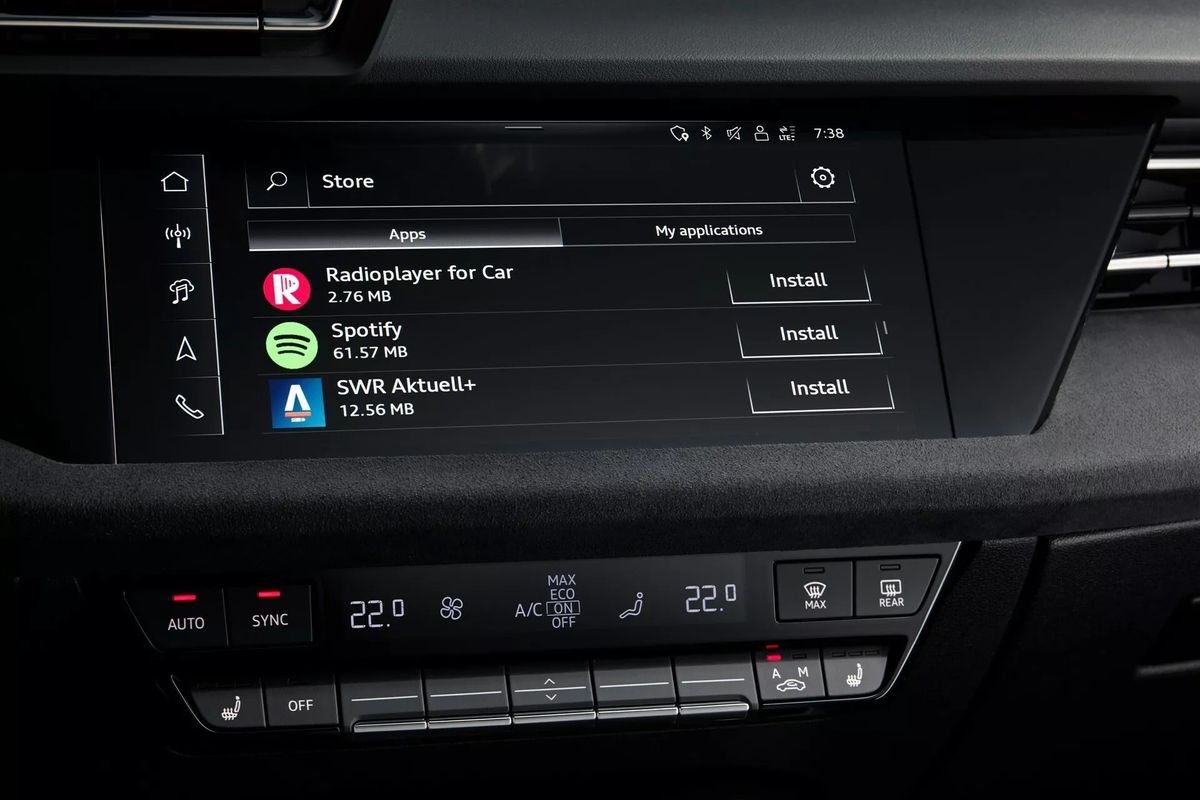
Technology highlights include a 10.1-inch touch display, Audi virtual cockpit, and an inductive smartphone charger, all of which come as standard. There are 2 USB-C charging ports in the centre console and 2 ports at the rear. MMI navigation plus and a head-up display are available at extra cost.
Packages for added comfort
Comfort Package Pro: electrically adjustable heated mirrors with memory feature, and electric front seats with memory feature.
Climate Control Package: three-zone automatic air conditioning with heated front seats.
Infotainment Package Pro: Audi virtual cockpit plus, head-up display, MMI navigation, and Audi connect functionality.
How much does the 2025 Audi S3 cost in South Africa?
Prices (correct in October 2025) include a 5-year/100 000 km Audi Freeway (maintenance) Plan. Finance options are available through Audi Financial Services, including Audi Assured.
Q: How much does the 2025 Audi S3 cost in South Africa?
A: The 2025 Audi S3 Sportback TFSI starts at **R1,091,100**, and the S3 Sedan TFSI starts at **R1,106,100**. Both models include a 5-year/100,000 km Audi Freeway Plan.
Q: What are the performance specifications of the 2025 Audi S3 engine?
A: The S3 is powered by a 2.0-litre 4-cylinder turbopetrol engine that produces peak outputs of **245 kW and 420 Nm of torque**, an increase of 32 kW and 20 Nm over the pre-facelift model.
Q: How fast is the 2025 Audi S3 from 0 to 100 kph?
A: Audi claims the 2025 S3 Sportback and Sedan can sprint from 0 to 100 kph in **4.7 seconds**.
Q: What is the most significant new performance feature on the 2025 Audi S3?
A: The most significant addition is the **torque splitter**, which has been incorporated from the RS3. This technology enables the new **Dynamic Plus mode** and allows for controlled torque distribution between the rear wheels.
Are Electric Cars Worth It in South Africa?
South Africa is lagging significantly behind other global markets in terms of electric vehicle buying patterns. But are electric cars worth it in South Africa? Especially with load shedding being a thing of the past?
The global automotive industry is experiencing a profound transformation as manufacturers pivot towards electric vehicles. But for the local buyers, the question remains: are electric cars worth it? Especially in the complex South African energy and driving context.
South Africa has a very low rate of electric vehicle adoption. For many South Africans contemplating their next vehicle purchase, the central question remains: are electric cars worth it in our unique local context?
Electric vehicles operate using electric motors powered by rechargeable battery packs. The South African market now offers several options, from fully electric models like the BMW iX, Volvo EX30, and the GWM Ora 03, to hybrid alternatives. Chinese manufacturers, such as BYD, are also making inroads, offering more affordable options.
The Case for Electric Cars
The most compelling argument for electric vehicles is their lower operating costs. Under ideal charging conditions, electricity remains significantly cheaper than petrol per kilometre travelled. A typical electric car might cost between R1.50 to R3.00 per kilometre to run, compared to R4.00 to R6.00 for petrol vehicles.
Maintenance costs present another advantage. Electric motors contain fewer moving parts than traditional engines, eliminating oil changes and many routine services. This translates to lower long-term maintenance expenses.
Environmental benefits cannot be ignored. Electric vehicles produce zero tailpipe emissions, contributing to cleaner air in congested urban areas. However, the overall environmental impact depends on how South Africa generates its electricity. And with most of the grid being coal-powered, the source power for charging electric vehicles in South Africa, is problematic – if you frame it as a ‘green’ solution.
The driving experience itself often converts sceptics. Electric vehicles offer instant torque delivery, resulting in smooth and quiet acceleration that many find superior to that of traditional engines.
The Challenges Facing Electric Car Adoption
Despite these advantages, significant barriers remain. The most obvious hurdle is the purchase price. Import duties and limited local production drive costs well above equivalent petrol vehicles. A decent electric car typically costs R200,000 to R400,000 more than a comparable petrol model.
Infrastructure limitations present perhaps the greatest practical challenge. Outside major metropolitan areas, charging stations remain sparse and unreliable. Range anxiety becomes a genuine concern for those travelling beyond city limits.
Battery replacement costs loom as a long-term concern. After eight to ten years, batteries may require replacement at costs ranging from R150,000 to R300,000. This uncertainty particularly affects the second-hand market.
The limited selection of available models also constrains choice, with buyers often facing lengthy wait times for new imports.
Who Should Consider Electric Cars?
Electric vehicles currently suit specific demographics best. Urban professionals with predictable, short commutes can maximise the cost benefits whilst minimising range anxiety. Households with solar power installations or backup generators can help mitigate concerns about a return of load shedding.
Environmentally conscious buyers with sufficient disposable income represent another key demographic. For these consumers, the question of whether electric cars are worth it extends beyond pure economics to include environmental considerations.
Business owners covering high monthly kilometres may find the operating cost savings compelling, particularly if they can install workplace charging facilities.
Are electric cars worth it in South Africa?
The automotive industry’s global shift towards electric vehicles means that whether electric cars are worth it will become less relevant as petrol alternatives gradually disappear. Current government incentives remain limited, though the absence of a fuel levy on electricity provides some cost relief – for now…
So, are electric cars worth it in South Africa today? For urban professionals with home charging capability and sufficient income to absorb higher purchase costs, electric vehicles offer genuine long-term savings and environmental benefits. However, for most South Africans, particularly those in rural areas or with limited budgets, the question of whether electric cars are worth it remains firmly answered in the negative.
The infrastructure gaps, concerns about load shedding, and high upfront costs currently limit the adoption of electric vehicles to a niche market. However, as technology improves and infrastructure expands, the calculation will inevitably shift. The question isn’t: are electric cars worth it in South Africa… The real question is: when will that tipping point arrive for the average South African motorist?
Safest Cars You Can Buy in South Africa in 2025
With South African road accident rates among the highest in the world, the safest cars you can buy matter. Choosing a vehicle that offers robust crash protection and modern driver-assist technology is not only sensible, but also essential. We analyse the safest cars you can buy locally.
For South African drivers who are considering the safest cars they can buy locally, regulations are helping to create more options.a growing number of vehicles available locally carry international safety credentials, thanks to crash testing by Global NCAP and Euro NCAP.
If you are looking for peace of mind, here are five of the safest cars you can buy in South Africa in 2025. Which offer real-world collision avoidance and mitigation features, that keep you safer at any speed, in town or cruising on the highway.
Mahindra XUV300
The Mahindra XUV300 is a standout in the compact SUV segment, largely because it holds the highest Global NCAP safety rating achieved in Africa to date. Awarded five stars for adult occupant protection, the XUV300 impressed by delivering strong structural integrity in crash tests.
Key features include seven airbags, Electronic Stability Programme, brake assist, and ISOFIX child-seat mounts. This combination of passive and active safety features makes it one of the safest family-friendly options on South African roads. Importantly, it is also one of the most affordable vehicles on this list, proving that maximum protection does not always come at a premium.
Volvo XC60
Volvo has long been synonymous with safety, and the XC60 continues that tradition. Rated as one of the safest cars for families in South Africa in 2025, it offers a wealth of advanced driver-assistance systems. These include pedestrian detection, cross-traffic alert, lane-keeping aid, and adaptive cruise control.
The XC60 also benefits from a strong Euro NCAP record, with a five-star crash rating. Spacious and well-equipped, it is an excellent choice for families who want both premium comfort and the reassurance of industry-leading safety engineering.
Toyota Corolla Cross
The Corolla Cross has quickly established itself as a popular SUV in South Africa, and its safety credentials are equally appealing. Tested by Euro NCAP, it achieved a five-star rating with 85% protection for adults and 83% for children.
Toyota has equipped the Corolla Cross with modern driver-assistance features, including lane-departure warning, lane-keeping assist, and autonomous emergency braking. Beyond technology, Toyota’s reputation for reliability ensures that this vehicle delivers consistent safety performance over time. It is also a good investment, with strong resale value complementing its credentials as one of the safest cars in its class.
Volkswagen T-Cross
For buyers seeking a compact crossover with high safety scores, the Volkswagen T-Cross is a compelling option. It achieved a five-star Euro NCAP rating, with exceptional marks: 97% for adult occupant protection and 86% for child protection.
Standard equipment includes automatic emergency braking, pedestrian and cyclist detection, and Volkswagen’s Front Assist system. Higher trims offer adaptive cruise control and blind-spot monitoring, further elevating the safety bar. Small in size but big on protective features, the T-Cross is among the safest cars available to South African city drivers who want security without sacrificing agility.
Mercedes-Benz C-Class
The C-Class has earned its place as one of the safest premium saloons on the market. Euro NCAP results reflect a strong balance: 93% for adult occupants, 89% for child safety, and over 80% for vulnerable road users and safety assist technologies.
Mercedes equips the C-Class with its renowned PRE-SAFE® system, Active Brake Assist, lane-keeping systems, and a host of other features designed to reduce accident risk. For drivers who prioritise executive comfort but refuse to compromise on protection, this model ranks among the safest cars money can buy in South Africa.
Safest cars you can buy – final thoughts
Safety is no longer a luxury—it is a necessity. Whether you are considering an affordable crossover like the Mahindra XUV300, a family-friendly SUV such as the Toyota Corolla Cross, or a premium model like the Mercedes-Benz C-Class, each of these vehicles provides world-class levels of protection.
In 2025, the safest cars are not just about surviving an accident, but also about preventing one in the first place. With advanced driver assistance systems, robust crash structures, and features that protect both passengers and pedestrians, these five models stand out as wise choices for South African motorists who prioritise safety.