Owning a car in South Africa is a dream for many, offering freedom, convenience, and flexibility. However, there are many more layered costs beyond just the online purchase price.
The reality is that a vehicle comes with far more financial responsibilities than just the purchase price. Understanding the cost of ownership is crucial before investing in a vehicle, especially when considering popular car brands such as Toyota, Volkswagen, Ford, and Suzuki. While a car may appear affordable at first glance, the ongoing expenses, from fuel to maintenance, can accumulate quickly and impact your monthly budget.
Beyond the Car Loan
When calculating the cost of ownership, it is essential to consider all recurring expenses. For a mid-range vehicle priced around R250,000, the typical monthly outlay can reach approximately R9,000. The breakdown of these expenses includes a car loan instalment of roughly R5,000, fuel costs averaging R2,259, insurance premiums of around R950, license fees of R60, maintenance costs of nearly R750, toll fees of R200, and cleaning costs of R150.
It is worth noting that in many cases, these ongoing expenses can exceed the actual car loan repayment. Fuel alone represents a significant portion of the monthly cost of ownership, particularly for vehicles used daily for commuting or long-distance travel. Insurance premiums also vary depending on the car model, driver profile, and coverage type, making it essential to shop around and understand your options. By considering all these factors, prospective buyers can avoid underestimating the actual financial impact of owning a vehicle.
Maintenance Costs Vary by Car Brand
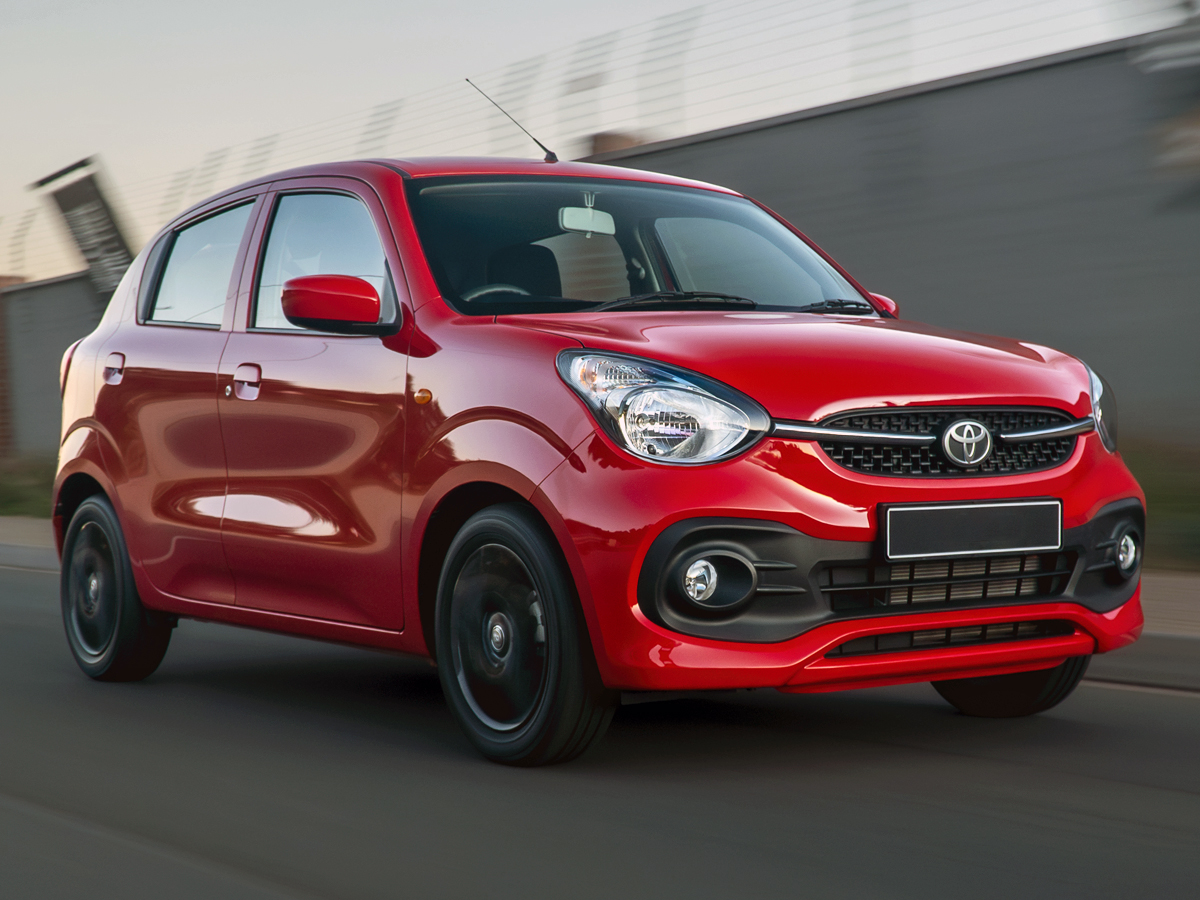
One of the most significant components of a car’s cost of ownership is maintenance, which can vary widely between different car brands. For instance, a Toyota Vitz or Yaris typically requires minor services costing around R1,010, while major services can average R2,200. Suzuki Celerio owners face annual servicing costs ranging from R2,000 to R2,500.
When evaluating different car brands, it is essential to consider not just the purchase price but also long-term maintenance costs. Opting for a brand with lower service requirements can save thousands of rands over the vehicle’s lifetime. Regular maintenance also prolongs a vehicle’s lifespan, reduces the risk of costly repairs, and helps maintain its resale value – another key aspect of the overall cost of ownership.
The Hidden Expense
Depreciation is often overlooked when calculating the cost of ownership, yet it represents a substantial financial factor. New vehicles can lose up to 20% of their value within the first year, with annual depreciation rates averaging between 15% and 20% thereafter. This loss in value affects resale prices and should influence your choice when comparing car brands. Vehicles with slower depreciation rates often offer better long-term value, even if their initial purchase price is slightly higher.
Understanding depreciation alongside maintenance, fuel, insurance, and other recurring expenses ensures that prospective car owners have a realistic view of the total cost of ownership. By comparing these factors across different car brands, buyers can make informed choices that balance affordability with long-term value.
Managing and Reducing Costs
While the cost of ownership can seem daunting, there are several strategies to manage expenses effectively. Choosing fuel-efficient vehicles helps reduce monthly fuel bills, while adhering strictly to scheduled maintenance prevents expensive breakdowns.
Comparing insurance policies from multiple providers ensures you get the best coverage at a competitive price. Collision and theft risk are very real in South Africa. And to reduce the true cost of car ownership in South Africa, it’s worth getting many different insurance quotes, to discover a competitive offer. Presenting you with the best value.
Another option is to consider well-maintained used vehicles, which often provide significant savings on both the purchase price and depreciation, without compromising reliability. When selecting a car brand, it’s essential to research typical service costs, the availability of spare parts, and overall reliability to minimise unexpected expenses. By proactively managing these factors, car ownership can remain enjoyable and financially sustainable.
The True Cost of Car Ownership in South Africa
Vehicle ownership costs in South Africa goes far beyond the sticker price. Between fuel, maintenance, insurance, license fees, depreciation, and other recurring expenses, owning a car is a long-term financial commitment. By carefully considering all these factors, comparing different car brands, and planning for both short-term and long-term costs, prospective car owners can make informed decisions and avoid unpleasant financial surprises.
Ultimately, understanding the full cost of ownership ensures that you choose the right vehicle for your lifestyle and budget. By factoring in maintenance, fuel efficiency, insurance, and depreciation across various car brands, car ownership in South Africa can remain a rewarding and manageable experience. With careful planning and informed decisions, the dream of owning a car becomes both practical and financially sustainable.
8-seat MPV options for South African families
There are many three-row vehicles in the local market. However, most of those only offer 7 seats. What if you need an extra one? We help you choose an 8-seat MPV.
South Africa’s true 8-seater choices are relatively few, but there are now three credible options that tick the right boxes for family duty, airport shuttles or business use.
In many cases, 8-seaters also have variants with either 7, 9, or 10 seats. Going for more seats will bring you a choice of a few other brands as well. Seven-seaters are plentiful but not necessary, as they are comfortable for adults in smaller vehicles with a 5+2 layout.
We’ve chosen three 8-seaters that will keep adults comfortable and stylish over even long-distance travels.
Kia Carnival
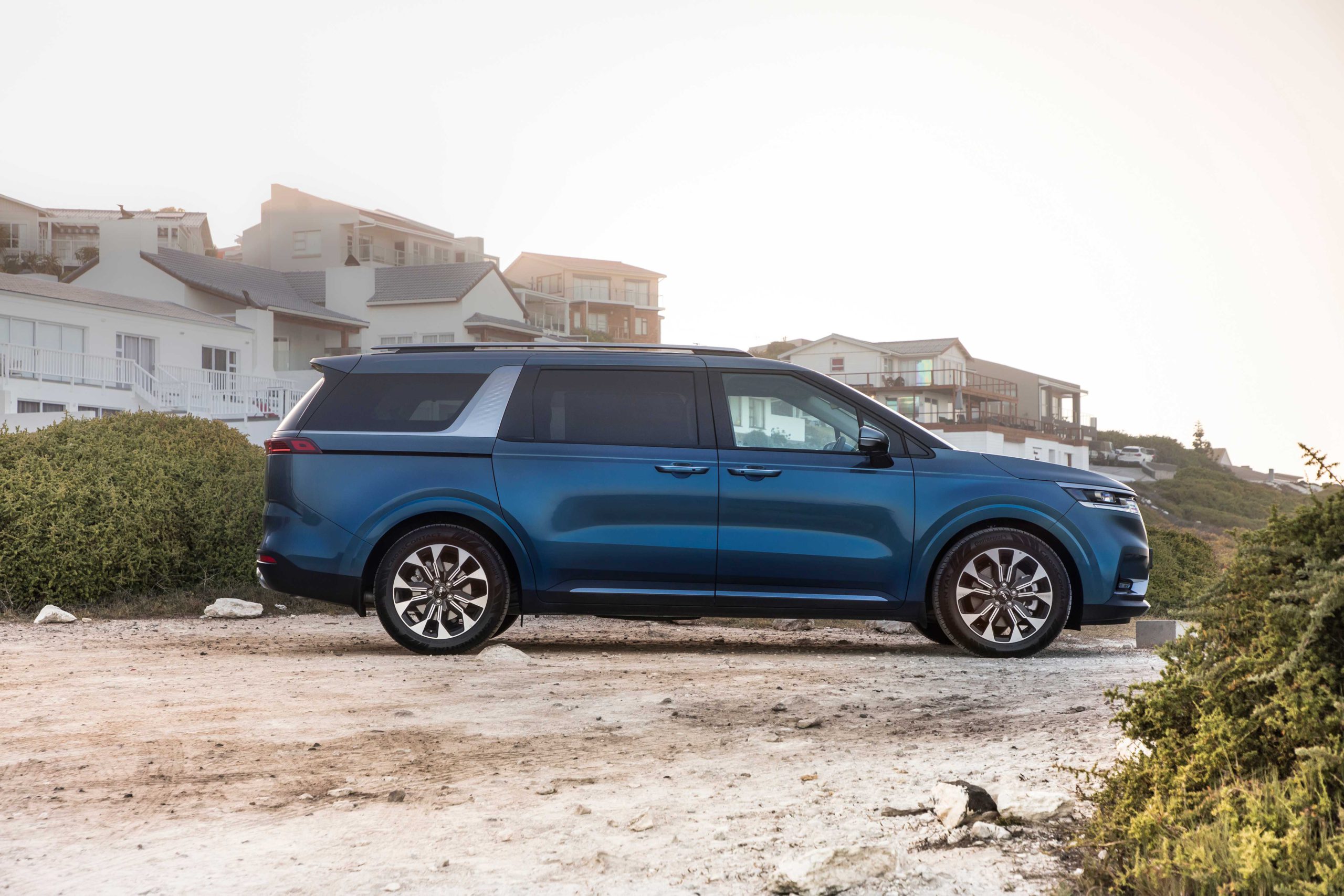
The Kia Carnival in EX 8-seater form is the most car-like of the group, blending MPV space with SUV style. Kia’s own price list clearly shows the Carnival 2.2 CRDi EX AT eight-seater at just over R1 million, with the step-up SXL specified as a seven-seater. Therefore, the EX is the one to choose if you need eight seats.
Power comes from a 2.2-litre turbodiesel paired to an automatic transmission. The EX is an 8-seat configuration in the range with a 2/3/3 layout. This provides generous legroom in the second and third rows, and the sliding doors add welcome ease of access in tight parking spaces.
For families and premium shuttle operators, the combination of a refined drivetrain, a proper adult-friendly third row. A full suite of infotainment and safety conveniences is a strong drawcard, with typically intuitive and excellent device syncing and cabin UX, as you’d expect from a Korean auto company product.
Ford Tourneo Custom
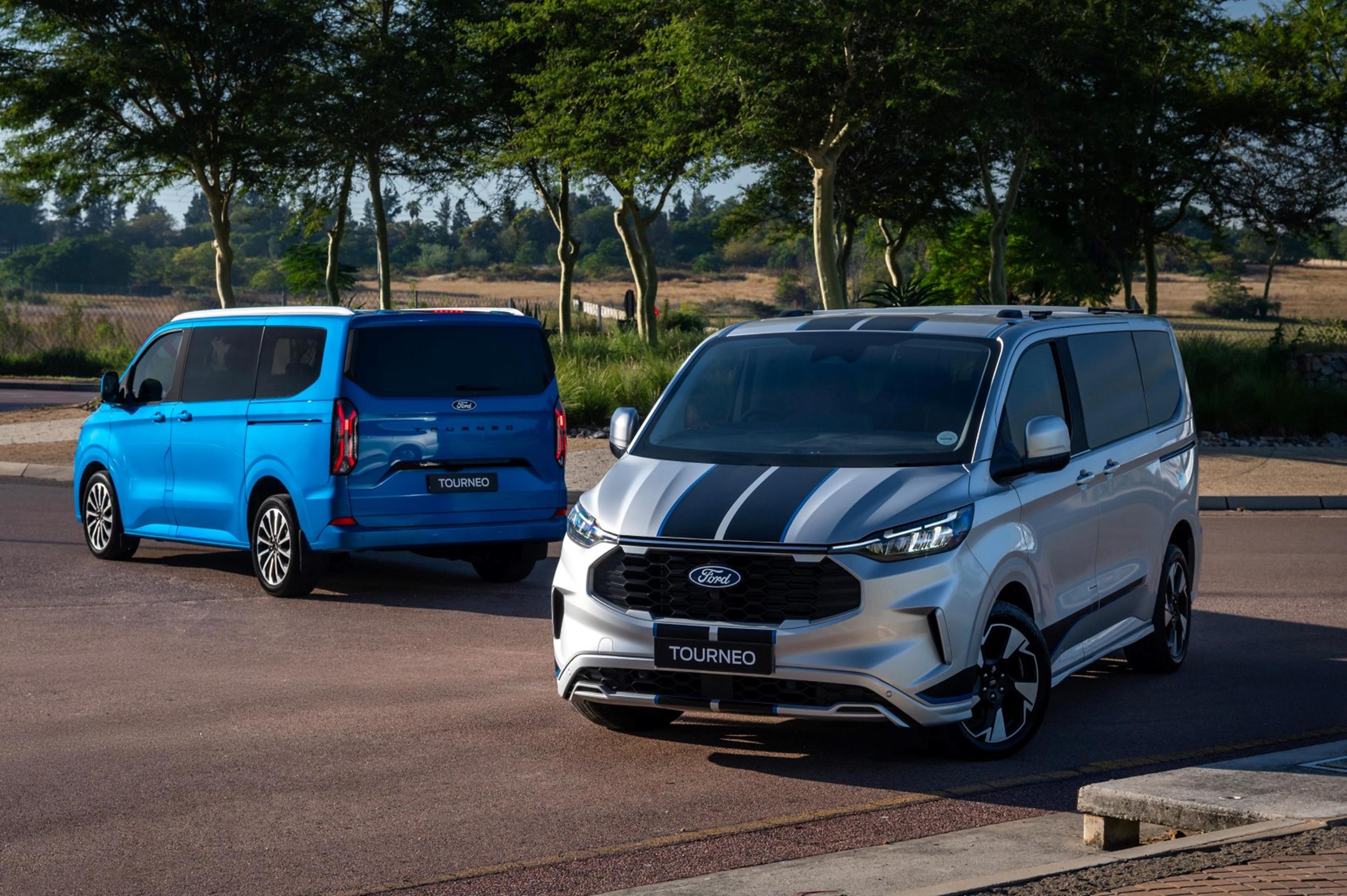
If you prefer a minibus-based people mover with the flexibility of track-mounted seats, the new Ford Tourneo Custom is a compelling 8-seat MPV. The Tourneo lineup in South Africa uses Ford’s 2.0-litre EcoBlue diesel engine with an 8-speed automatic transmission.
The Tourneo Custom 2.0L LWB Bus Active 8AT is priced just over R1m, and the 2.0L LWB Bus Trend 8AT is slightly more expensive. Moving up to the SWB Bus Sport and Titanium X derivatives retains the 8-seat layout.
The Tourneo’s sliding side doors, configurable second row that can face forward or conference-style, and a flat load floor when the rows are adjusted make it a standout for mixed family and business use.
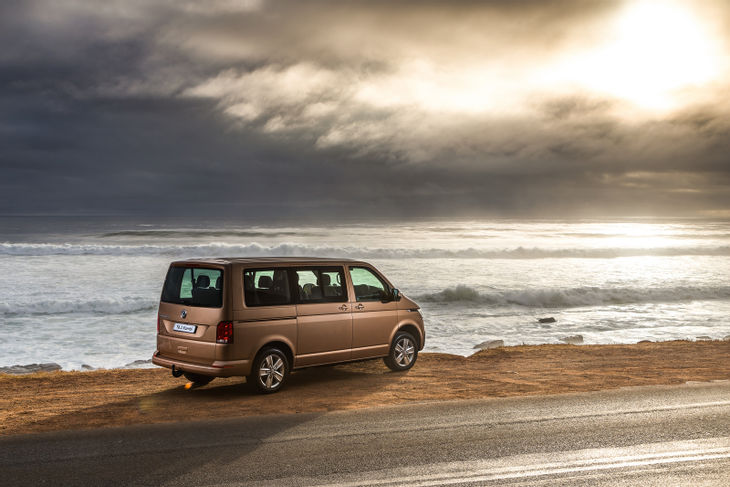
Volkswagen Kombi
Volkswagen’s long-running Kombi nameplate is another authentic 8-seater and remains a favourite with large families and professional shuttle services.
The Kombi 2.0 TDI 125 kW 4×2 Life Auto SWB 8-seater is just over R1m, the Edition Auto SWB 8-seater is even more expensive and the 4Motion Style Auto SWB 8-seater prices around R1 301 400.
Volkswagen’s Kombi pairs robust diesel drivetrains with practical trim levels and the expected VW safety and infotainment stack, with the Life and Edition specs targeting families and businesses that want a balance of durability and comfort.
8-Seat MPV conclusions
Choosing among these three comes down to the kind of 8-seat MPV you need. The Kia Carnival EX is ideal for those seeking a quiet, car-like driving experience, complete with sliding doors and a premium cabin feel, all at a keen price for the spec.
The Ford Tourneo Custom appeals if you need the outright flexibility of track-based seating and the polish of a modern minibus platform with a published South African price ladder that covers several trims and both short and long wheelbase bodies. The Volkswagen Kombi remains the icon of this segment, with the benefit of 4Motion traction for those rainy days and dirt road journeys.
Beware of the hidden costs when buying a vehicle
An advertised price of ‘Only R399 900’ might sound like the bargain of a lifetime, but plan carefully to avoid the R399 900 bargain becoming a burden for a lifetime.
The sticker price of any vehicle, new or used, only tells in part how your bank account is going to suffer for years to come. There are many hidden costs at every chapter of the car ownership journey.
Do not solely focus on the advertised price or monthly instalments. Numerous hidden costs can significantly impact your budget, and you need to take this into account when deciding to buy a new vehicle to avoid unpleasant financial surprises later down the line.
Vehicle Insurance
Insurance is frequently disregarded when planning a new car budget, but if you’re financing your purchase, it’s crucial and often required. Your age, driving history, the make and model of the car, and your location all affect the price. Your insurance rate may also vary depending on whether you plan to use the car for business or pleasure.
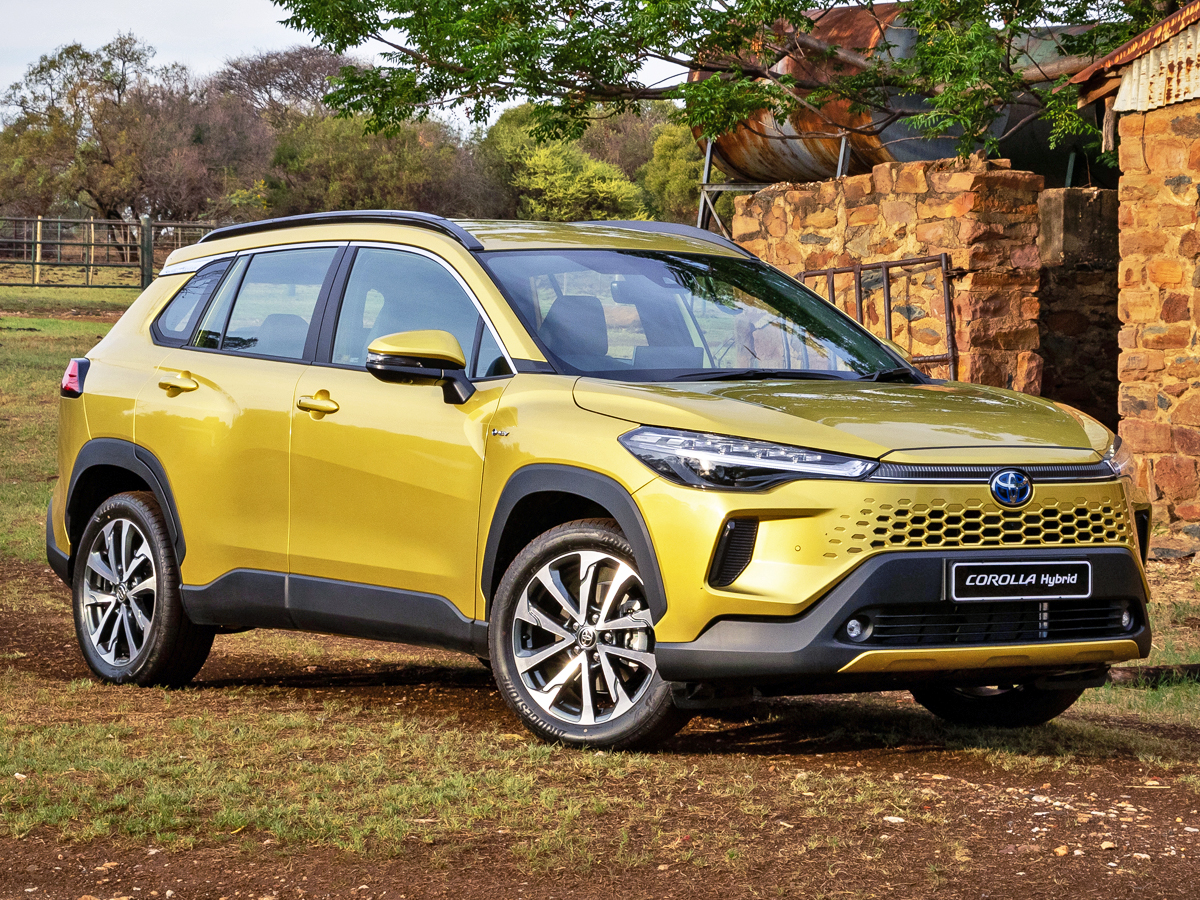
Example: A 28-year-old buyer in Johannesburg purchasing a new Toyota Corolla Cross could pay anywhere from R900 to R1 500 per month for comprehensive insurance. Sportier or luxury models like the VW Golf GTI or BMW 3 Series can exceed R2 000 monthly.
On The Road Fees (OTR)
Dealerships charge a one-off on-the-road fee, which is not included in the advertised vehicle price. This covers administrative tasks such as registration, license plates, number plates, and vehicle delivery inspection.
Example: You might see a car advertised for R300 000, but the OTR fee could add an extra R4 000 to R7 000, pushing up the actual cost.
Licensing and registration
The weight and type of your vehicle determine annual vehicle license fees. Registration is typically covered in the OTR fee, but annual renewals are your responsibility thereafter.
Example: A mid-size SUV like the Hyundai Tucson could cost around R1 200 to R1 800 annually for a vehicle license disc, depending on the province.
Interest rates and finance charges
Unless you’re paying cash, buying a car on finance includes interest over the repayment period. The interest rate you get will depend on your credit score and whether you choose fixed or linked rates.
Example: Financing a vehicle worth R250 000 over 72 months at 12% interest could mean paying over R90 000 in interest alone, making the total repayment closer to R340 000.
Fuel costs
Fuel prices in South Africa are volatile and continue to fluctuate monthly. The type of vehicle you buy will significantly influence your ongoing fuel spend, especially with larger engines or less fuel-efficient models.
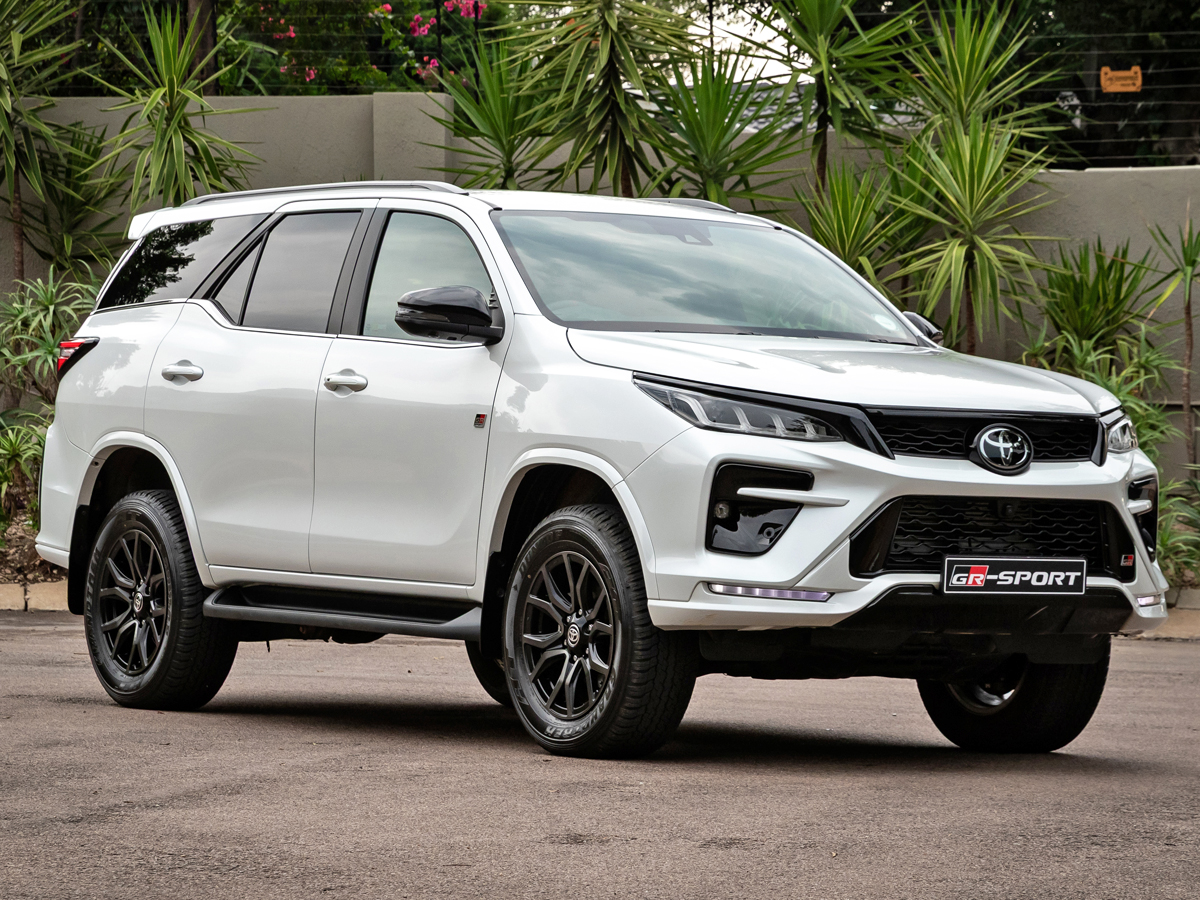
Example: A compact hatch like the Suzuki Swift 1.2L (average 4.9l/100km) will cost considerably less to run compared to a Toyota Fortuner 2.8 GD-6 (average 7.9l/100km). Over a year of average driving (15 000km), the difference could be R5 000 or more in fuel costs.
Maintenance and service plans
New cars typically come with a service or maintenance plan, but once this expires, you’re responsible for upkeep. Even under warranty, items like brake pads, wipers, and tires are often excluded. Maintenance plans are more expensive in general.
Example: Replacing four tires on a BMW X3 could cost R12 000, while a basic oil service for a VW Polo might still be R1 500 to R2 000 out of plan.
Depreciation
Cars lose value the moment you drive them off the lot. Some vehicles hold their value better than others, but depreciation is a real cost when it comes time to sell or trade in your car. Some vehicles experience a greater decline in value over time than others. Brand, model, colour, and specification all influence depreciation curves.
Example: A new car that costs R400 000 today could be worth R260 000 or less after three years – a 35% loss in value.
Traffic fines and tolls
Ongoing running costs also include potential fines and e-tolls, especially in provinces like Gauteng. If you’re a regular commuter, these costs can add up quickly.
Example: If you travel daily on highways with toll gates, it could quickly add up to a lot of money.
Extended warranties and added extras
Some dealers will try to upsell you extended warranties, paint protection, tire and rim insurance, or tracking systems. While these can add value, they also increase your overall cost.
Example: A tracking device subscription may cost R150 to R250 per month, and an extended motor warranty could add R8 000 to R15 000 to your total deal.
Final thoughts
Understanding the hidden costs of buying a car in South Africa helps avoid nasty surprises and ensures a realistic budget. Always ask the dealer for a full breakdown of additional fees and evaluate the long-term cost of ownership, not just the purchase price.
A well-informed buyer is less likely to fall into financial traps and better equipped to choose a vehicle that fits their lifestyle and, most importantly, their pocket.
BMW M135 xDrive review: Cheaper than a Golf R, but is it better?
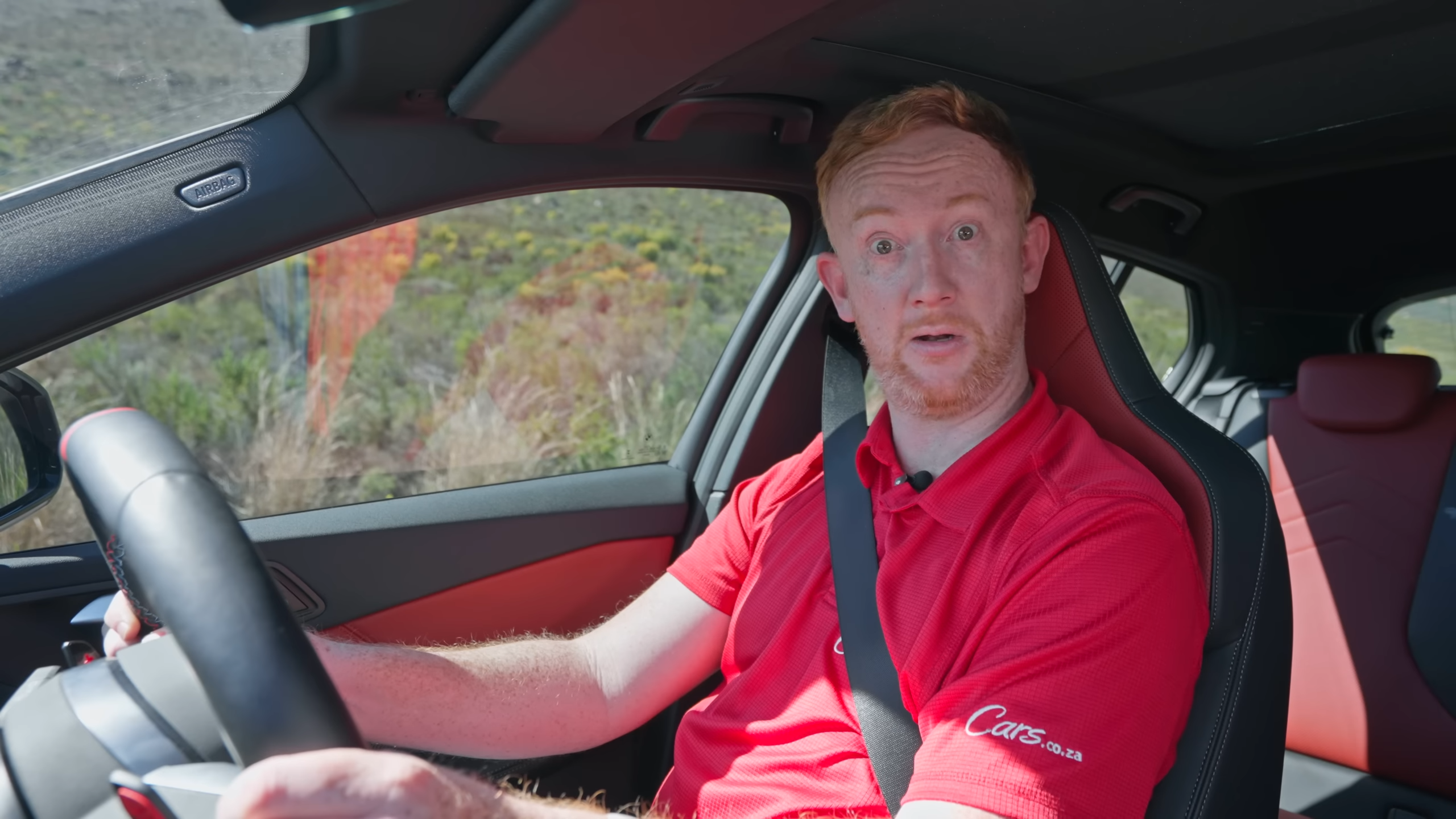
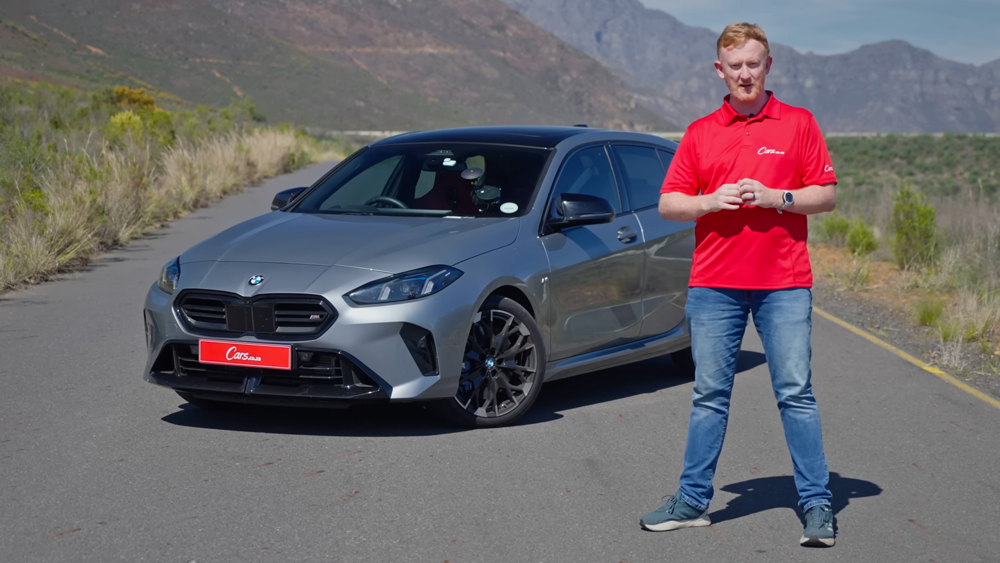
BMW resists the urge to build a rival to the Mercedes-AMG A45 S and Audi RS3, so its 1 Series flagship – the M135 xDrive – rivals those models’ A35 and S3 siblings instead. David Taylor gets behind the Bimmer’s wheel to see how it stacks up against its rivals.
As is customary, David is joined by videographer Shaun Korsten for this review, of which the focus is firmly on the performance metrics of the BMW M135 xDrive and how the F70-series flagship measures up against established contenders like the Volkswagen Golf R, Audi S3, and Mercedes-AMG A35.
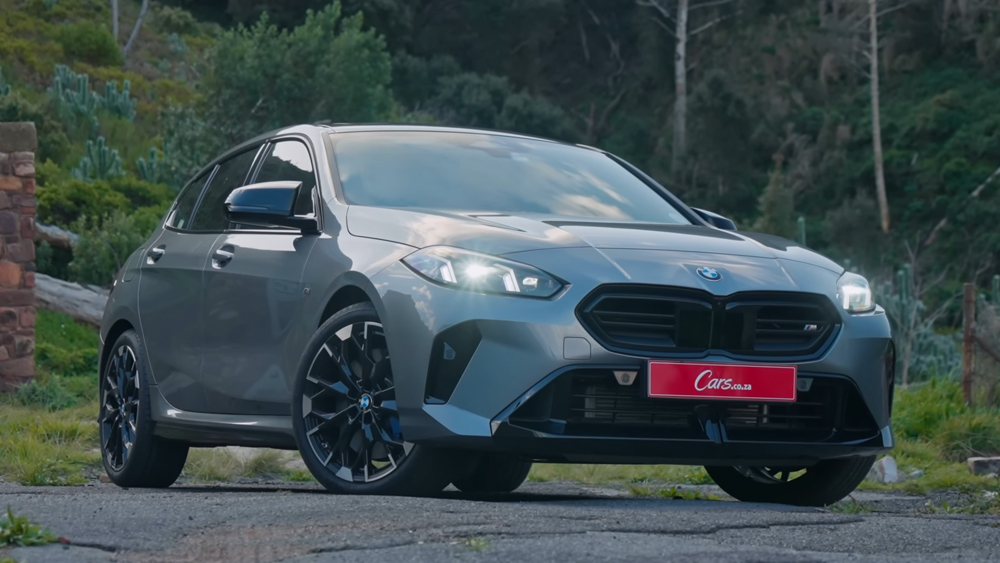
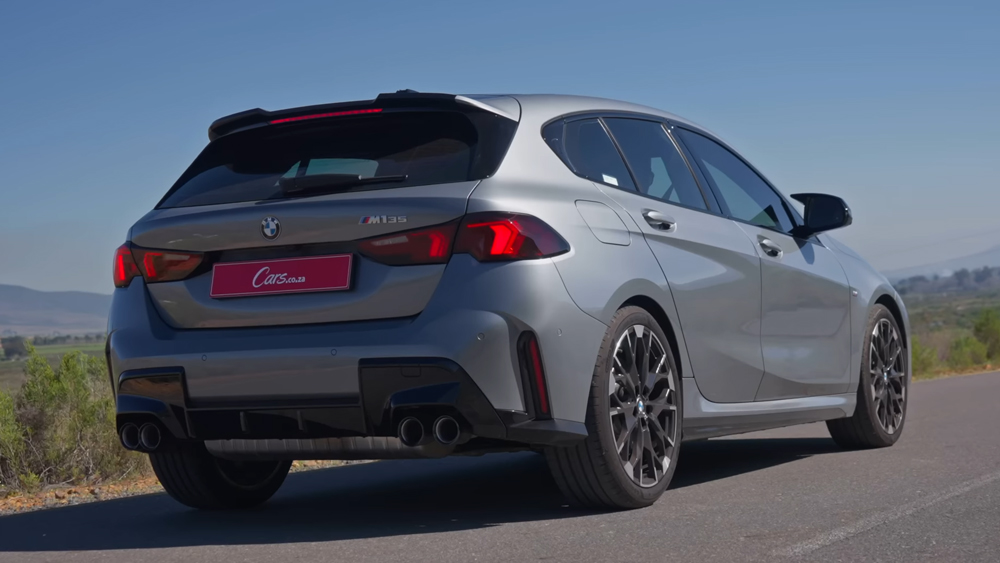
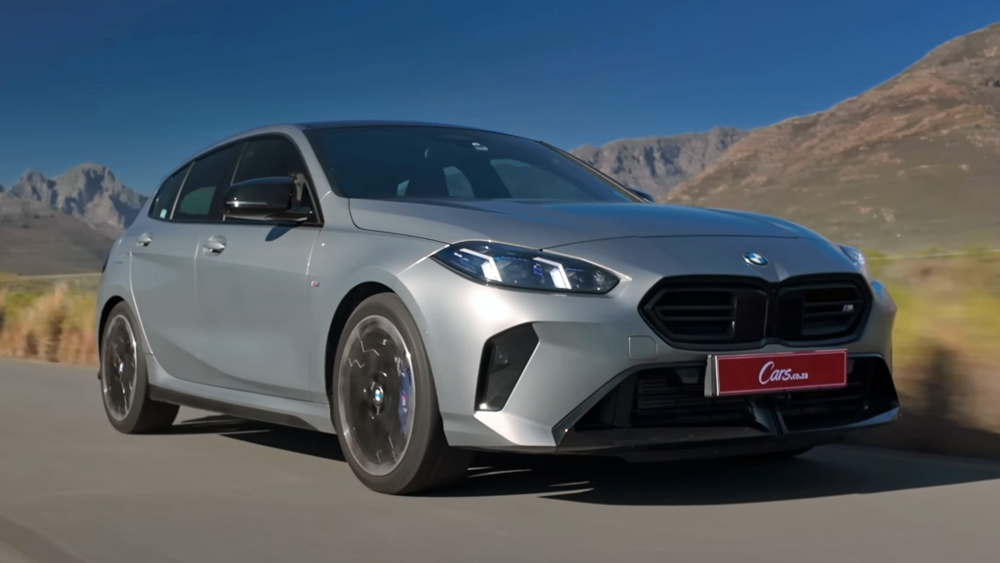
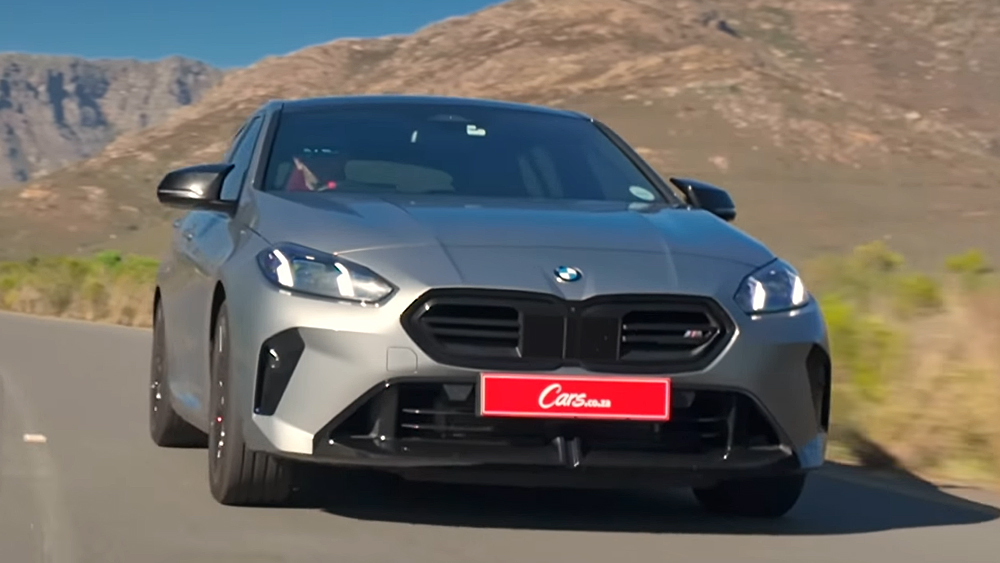
Although BMW is calling its F70-generation 1 Series an all-new model, David notes that the design of the premium hatchback (especially the front end) looks more like an evolution of the preceding F40 model.
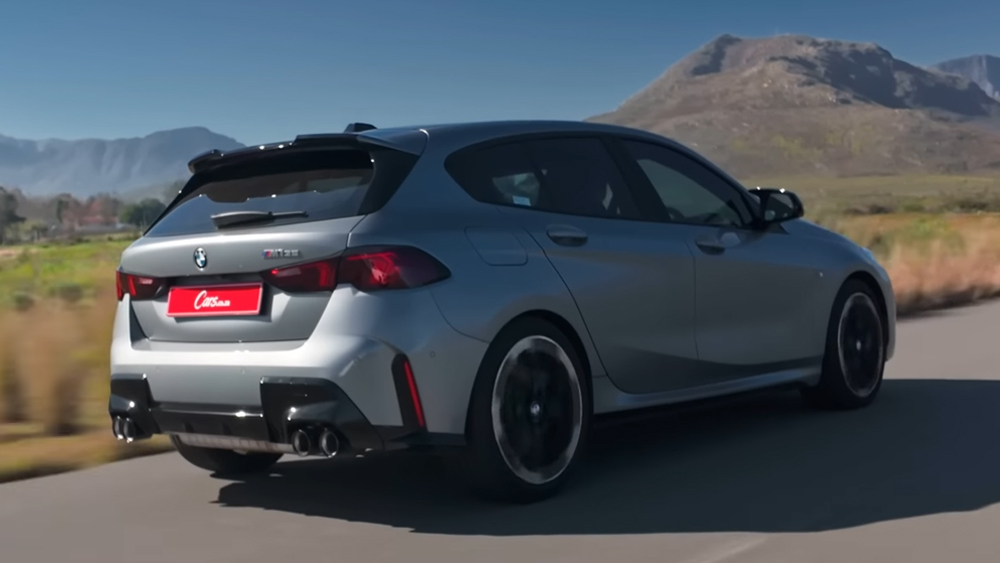
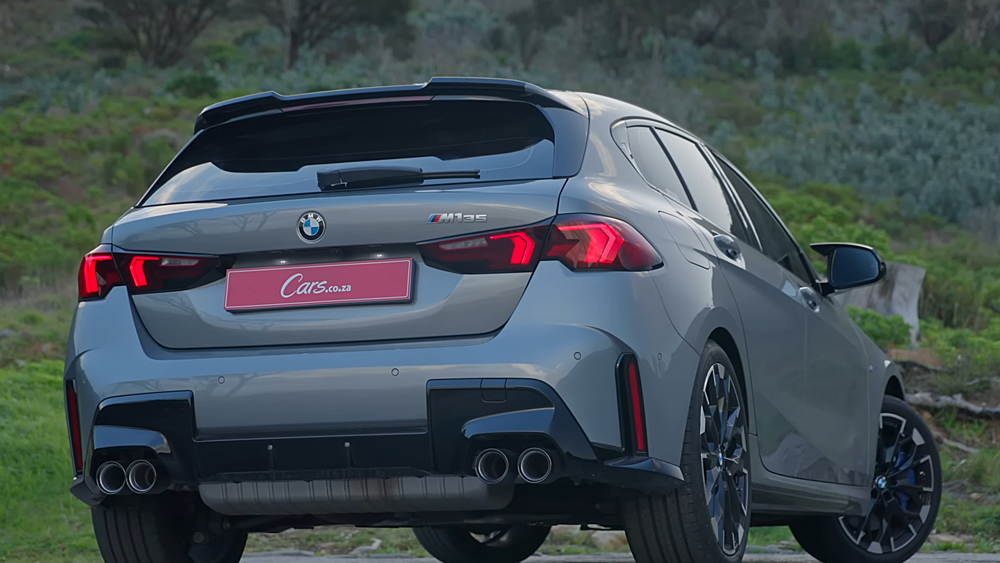
Nevertheless, the BMW M135 xDrive makes a strong visual statement with its narrow daytime running lights, subtle M badge on the grille, and sporty wheels housing blue brake callipers.
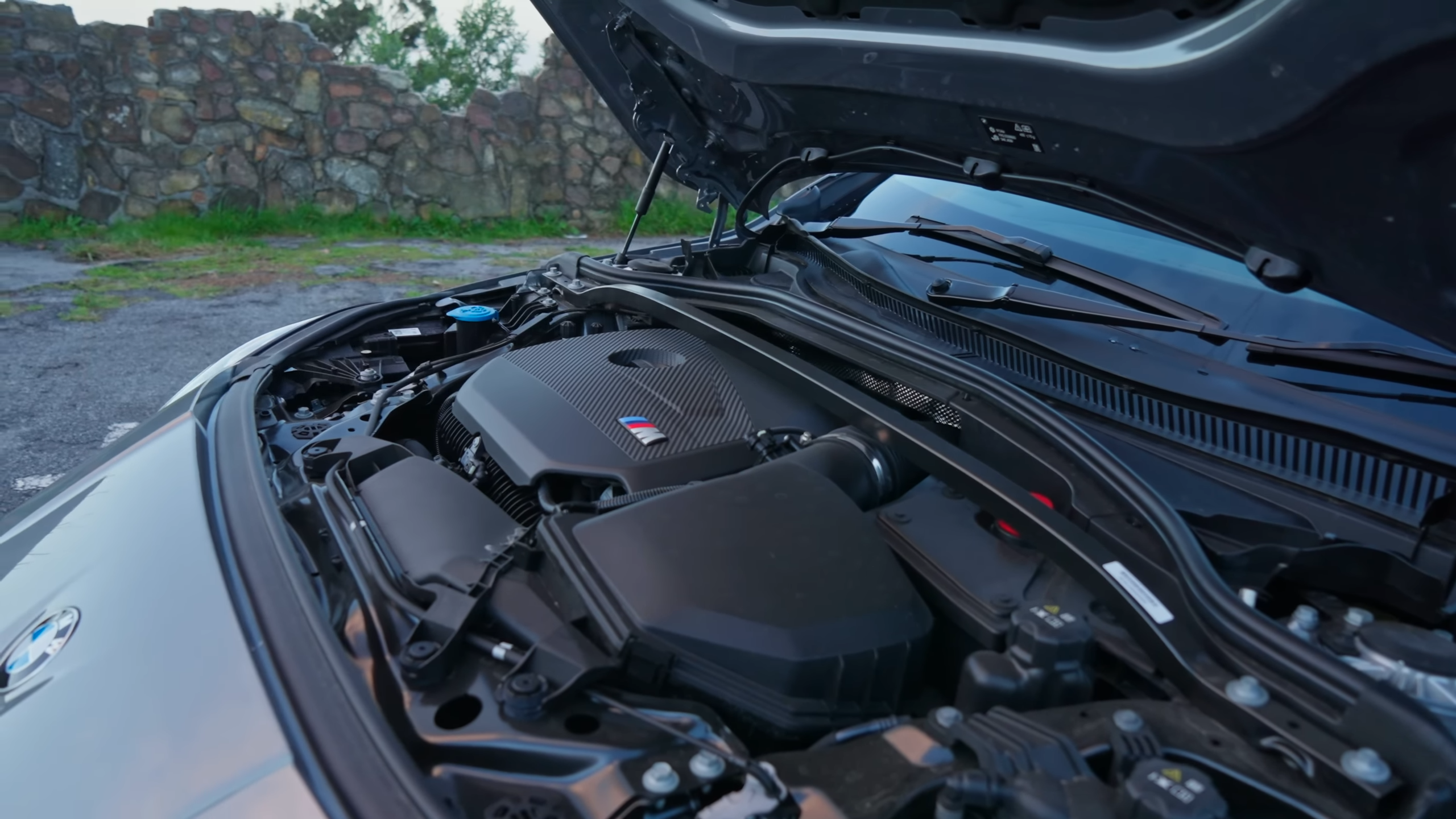
Under the bonnet, the range-topper retains a 2.0-litre 4-cylinder turbopetrol engine, although its outputs reveal interesting changes. While power is up to 233 kW, torque has dropped by 50 Nm to 400 Nm.
David explores potential reasons for this torque reduction, speculating that it could be due to tighter emissions regulations or an effort to ensure the durability of the new transmission; BMW has replaced the previous M135i’s 8-speed torque-converter auto box with a 7-speed dual-clutch transmission.
Dual-clutch units are renowned for their faster shift speeds, and David confirms the M135 xDrive’s ‘box is quick, delivering the crisp, “rifle-bolt shifts” that traditional automatics struggle to replicate.
To test BMW SA’s claim that the BMW M135 xDrive will accelerate from zero to 100 kph in 4.9 seconds, David takes the BMW M135 xDrive onto an empty stretch of road to perform a launch-control sequence.
After dialling the car into Sport mode and activating launch control, the results are remarkably consistent.
Our test gear shows the M135 xDrive repeatedly completes the sprint in 4.91 seconds, which validates BMW’s claim and showcases the all-wheel-drive system’s ability to put the power down consistently.
Aural experience & Driver Engagement
BMW has equipped the M135 xDrive with “BMW Iconic Sounds” (developed in conjunction with Hans Zimmer), synthesised engine noises played through the car’s speakers to enhance the driving theatre.
While David enjoys the “theatrics” of the pops and bangs, he acknowledges the ethical debate about manufactured sound in performance cars. He points out that switching this feature off results in a “deathly quiet” cabin, highlighting its importance for the fun factor.
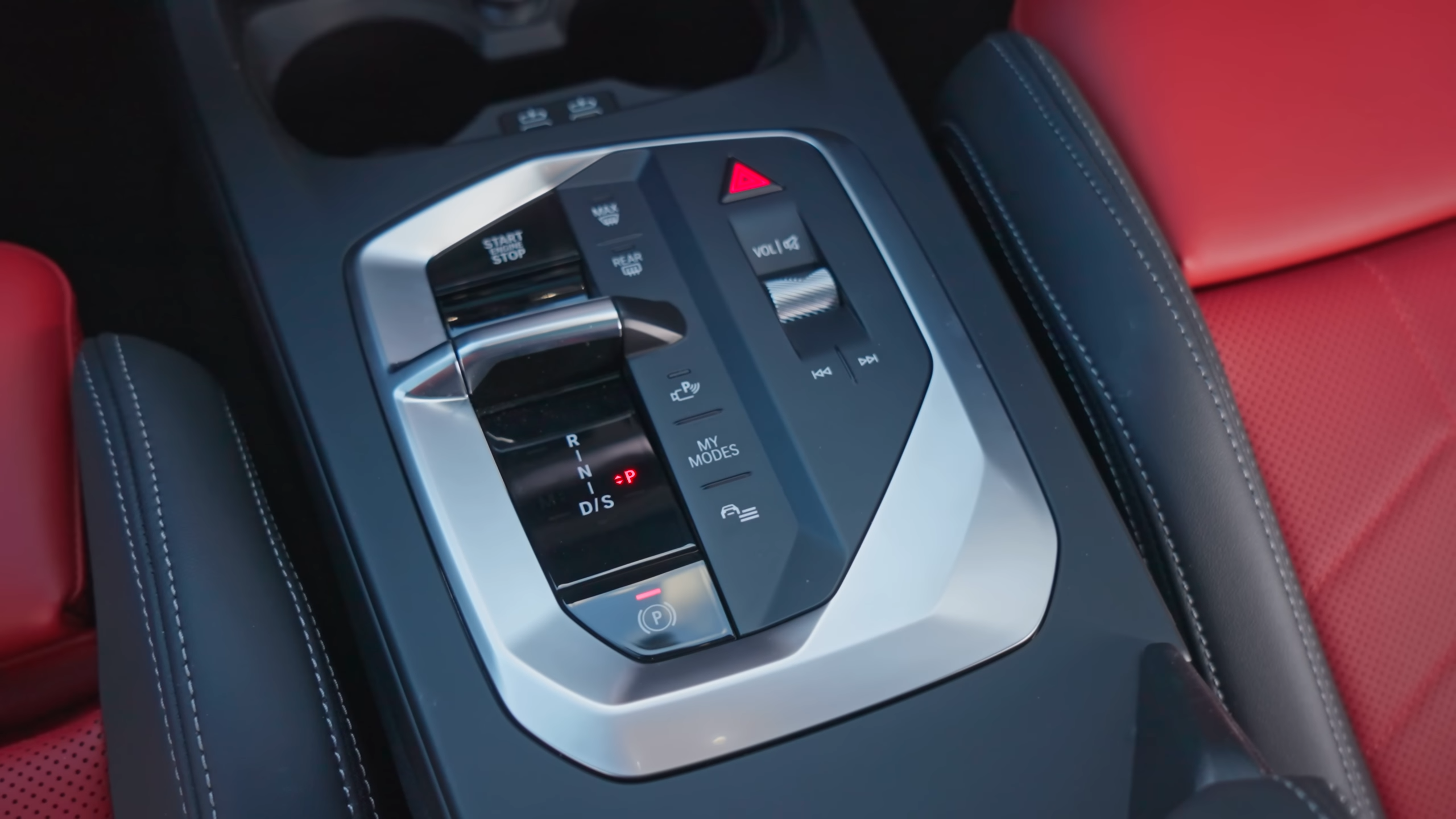
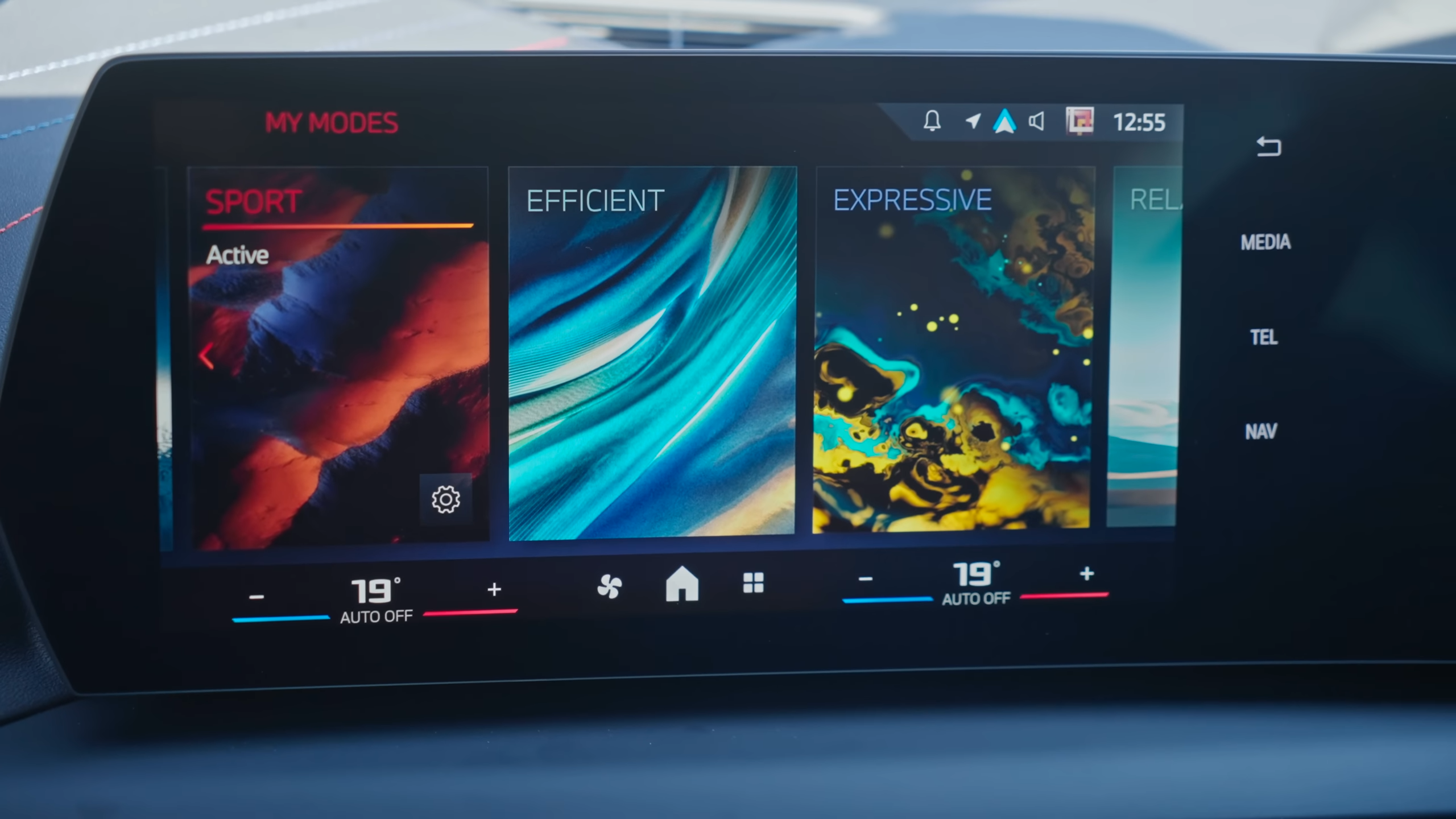
The BMW M135 xDrive also features an array of drive modes beyond the standard Personal, Sport, and Efficient settings. Modes like “Expressive” and the rather unusual “Digital Art” are also included, which David finds slightly confusing for a focused performance machine.
Meanwhile, the BMW M135 xDrive utilises an all-wheel-drive platform with a slight front-wheel-drive bias, which provides incredible grip through corners. BMW has reportedly enhanced the handling by tweaking the dampers for a sportier ride, increasing chassis rigidity, and improving steering feedback.
David finds the BMW’s steering direct, though perhaps not as precise as those of its segment rivals.
He praises the grip and predictability of the chassis, noting that the all-wheel-drive system would be particularly effective in wet conditions.
The car includes a nifty Boost feature on the wheel-mounted shift paddle. Holding this paddle provides a 10-second countdown of full power, which David calls a “really cool party trick for overtaking.”
The cabin also features useful sport graphics that provide real-time data on power output, torque, and turbo pressure.
Does BMW M135 xDrive deliver a premium cabin ambience?
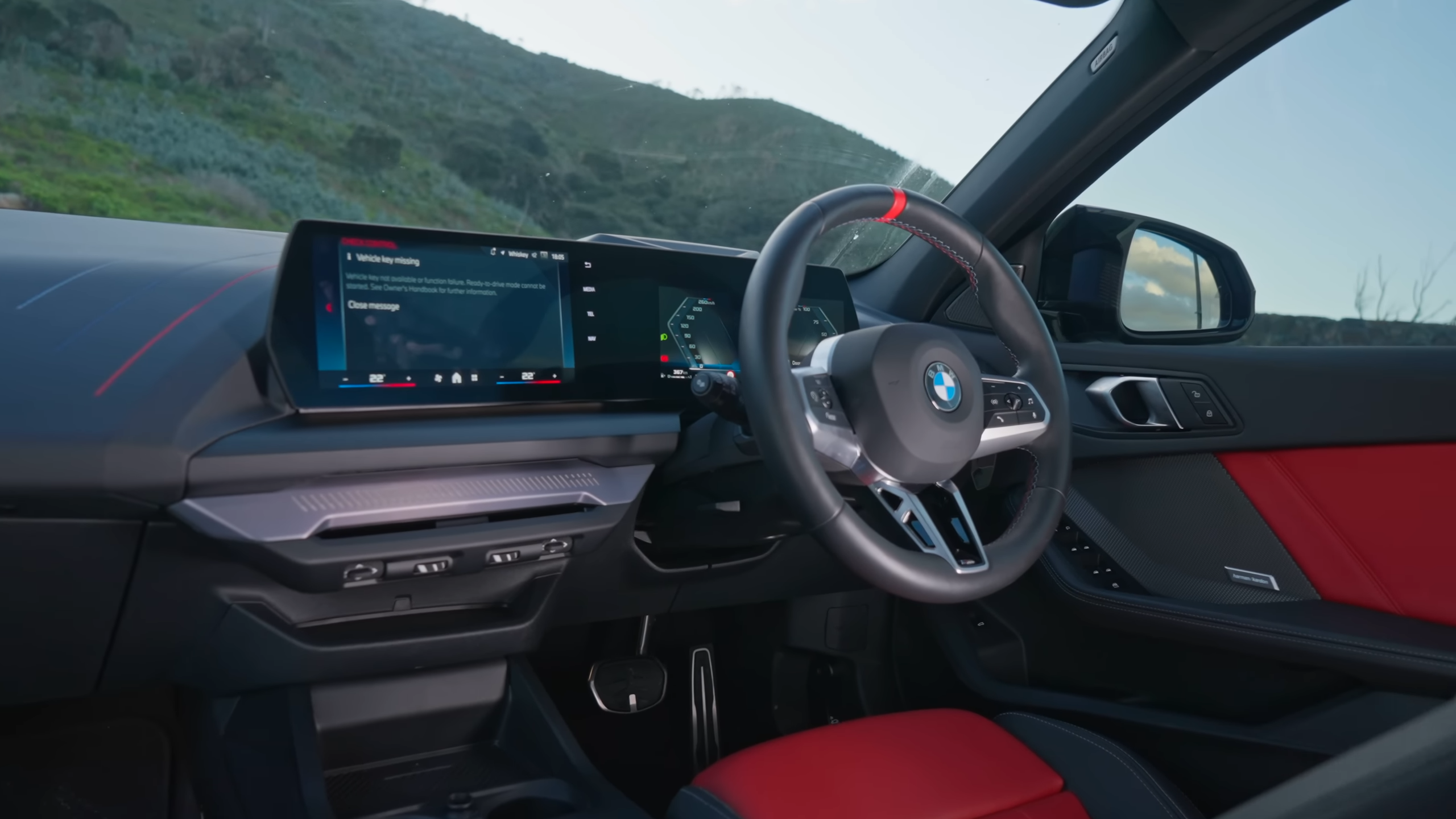
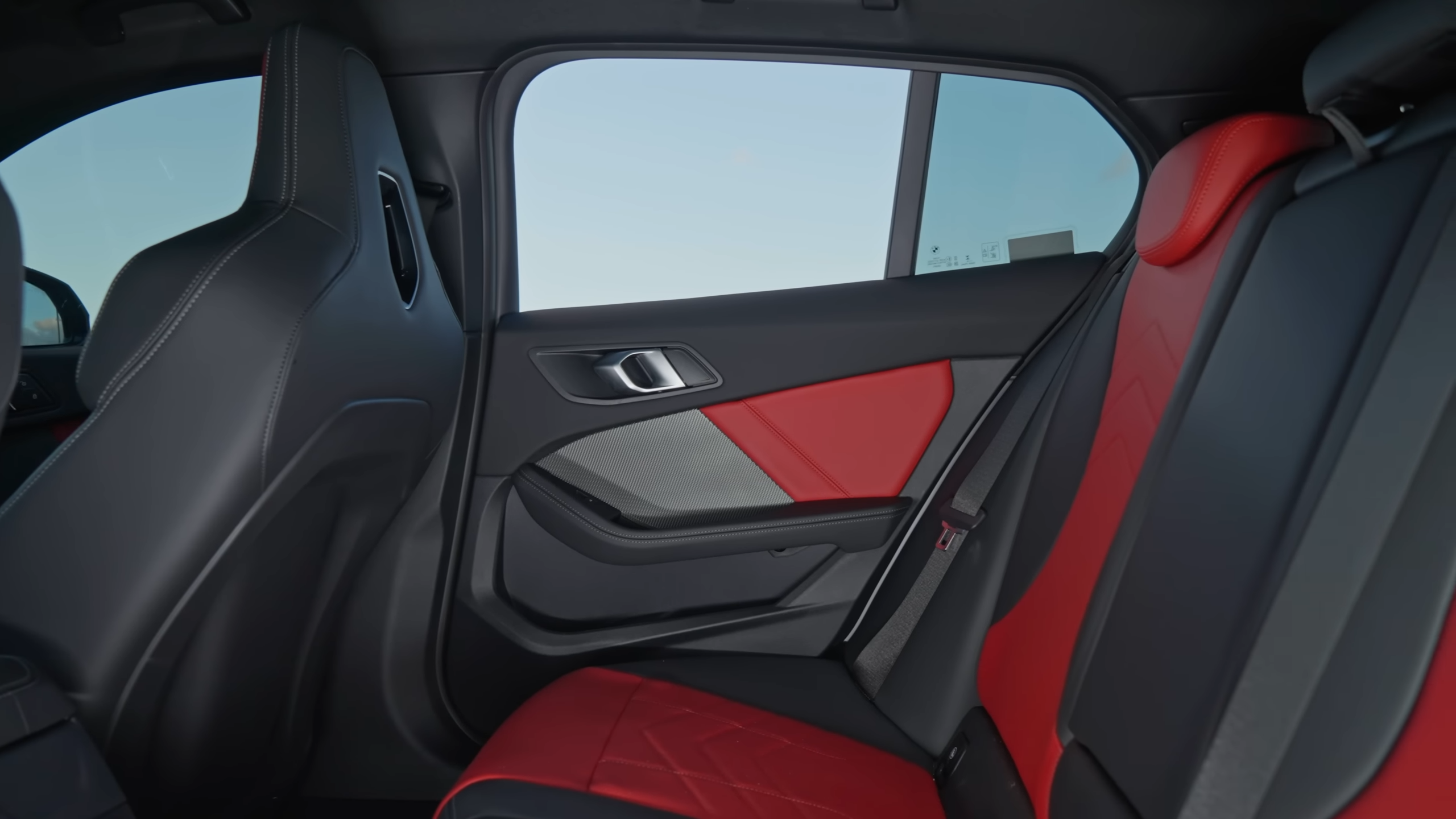
Once the high-speed thrills are over, the BMW M135 xDrive must also function as a premium daily driver. David confirms that the car manages to deliver a premium, well-appointed, and pleasant experience. It features a Harman Kardon audio system and sporty seats.
However, the cabin is a fully digital experience, meaning the climate controls have been integrated into the infotainment screen.
David misses the physical control of the iconic BMW iDrive rotary controller and points out that some of the materials used in the cabin may not be up to the standard expected of a vehicle at this price point.
David’s time with the BMW M135 xDrive confirms 2 things: it’s incredibly quick and the switch to the 7-speed DCT has undeniably sharpened its performance feel. However, the reduction in torque and the reliance on synthesised sound raise questions about how much visceral engagement it truly offers.
Is this all-wheel-drive machine, with its impressive grip and technology, a more satisfying driver’s car than its fierce rivals – the Volkswagen Golf R, Audi S3, and Mercedes-AMG A35? Although that is up for debate, David also notes a compelling argument for the M135’s pricing relative to the competition.
Frequently Asked Questions (FAQ)
Q: What are the primary rivals of the BMW M135 xDrive in the hot-hatch segment?
A: The BMW M135 xDrive is positioned to compete directly against its 2.0-litre rivals, primarily the **Volkswagen Golf R**, **Audi S3**, and **Mercedes-AMG A35**. BMW chose not to challenge the higher-output A45 S or RS3.
Q: What are the key performance changes to the M135 xDrive engine and transmission?
A: The 2.0-litre 4-cylinder engine now produces **233 kW**, but torque has been reduced to **400 Nm**. Critically, the previous 8-speed automatic has been replaced by a faster **7-speed dual-clutch transmission (DCT)**.
Q: Did the M135 xDrive validate BMW’s claimed 0-100 kph acceleration time?
A: Yes, the car’s **4.9-second** claim was validated during real-world testing. The test equipment repeatedly recorded the M135 xDrive completing the sprint in a highly consistent **4.91 seconds**.
Q: Does the BMW M135 xDrive rely on synthesized engine sound?
A: Yes, the vehicle uses “**BMW Iconic Sounds**” (developed with Hans Zimmer), which plays synthesized engine noises through the car’s speakers to create a dramatic driving experience.
Toyota Starlet (2025) Price & Specs
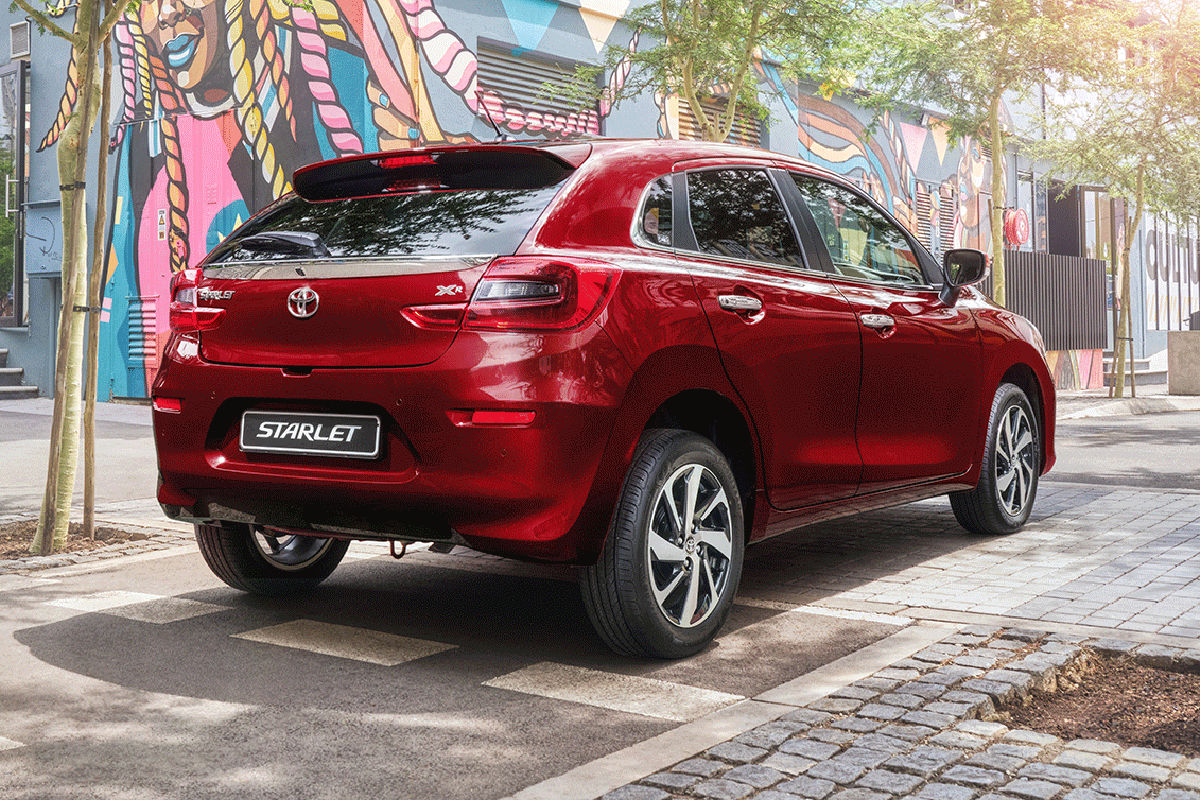
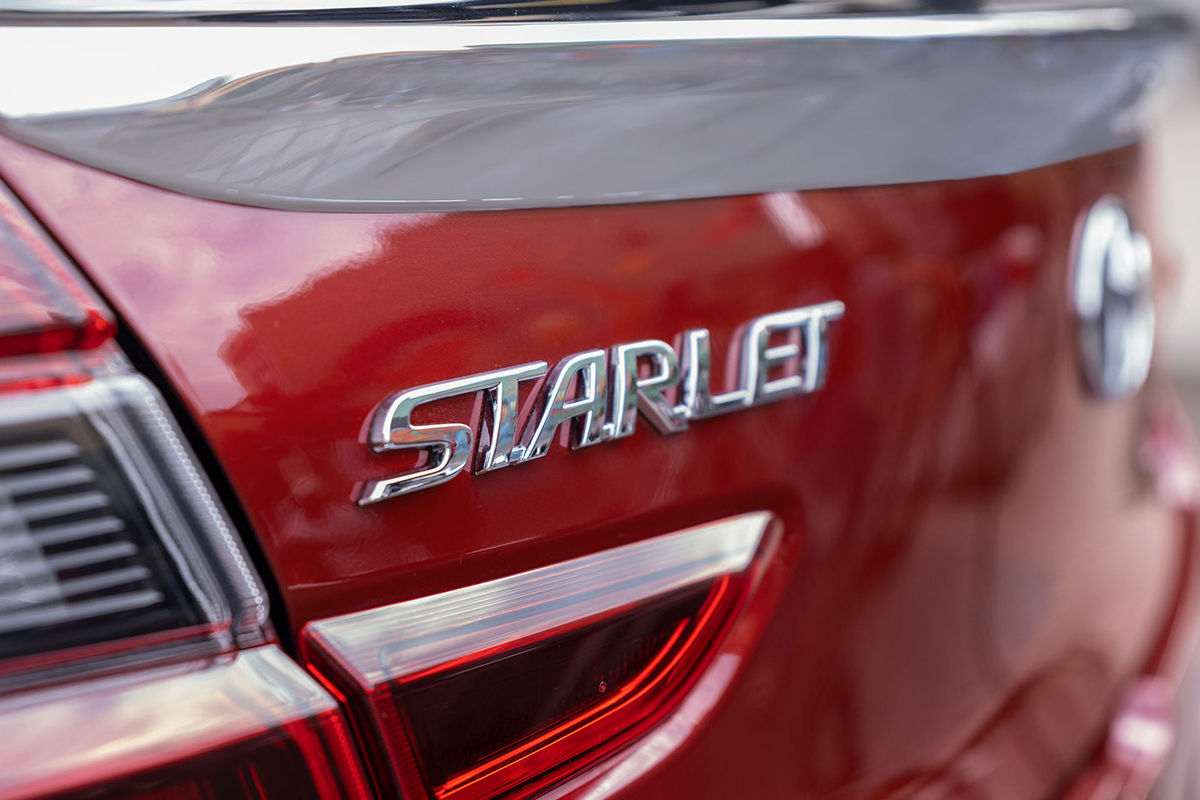
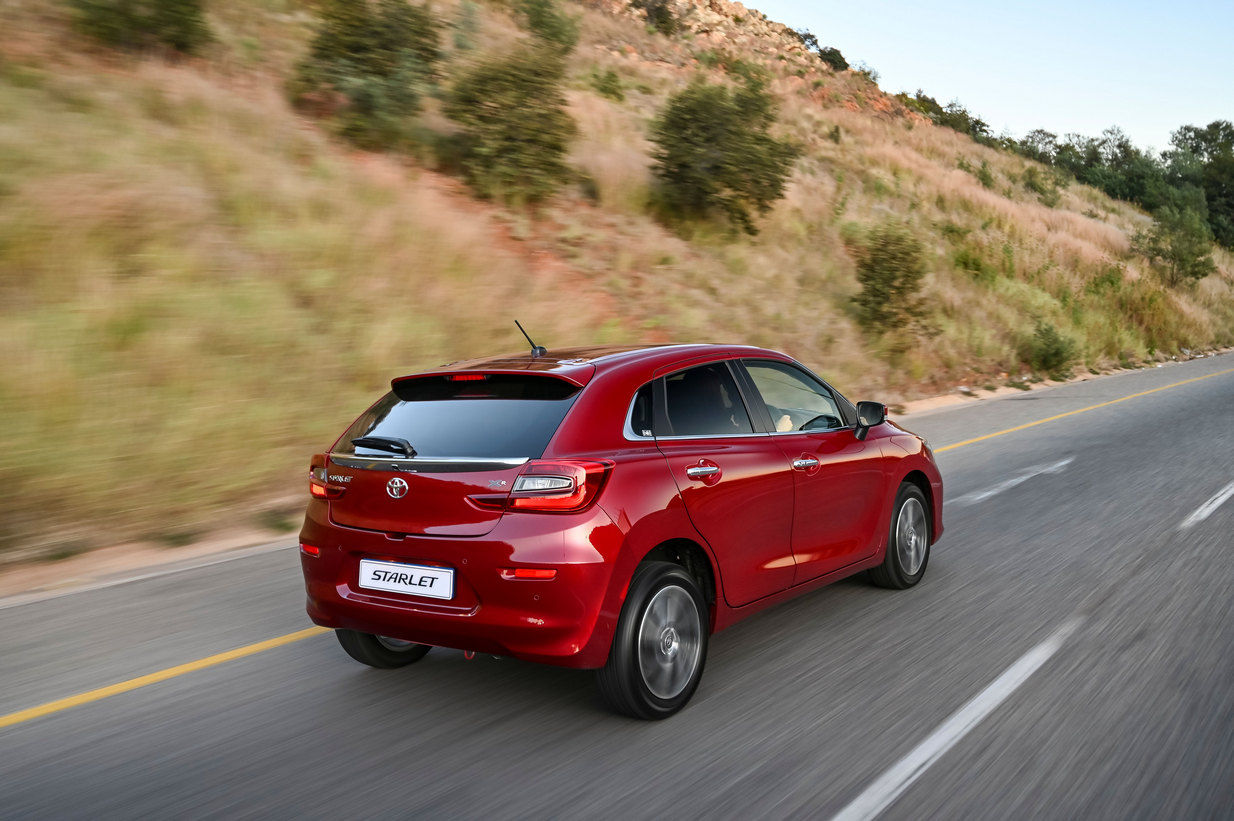
Toyota South Africa Motors has upgraded its popular Starlet compact hatchback with improved safety features on 3 variants, as well as a beefed-up service plan.
Since arriving in South Africa in mid-September 2020, as something of a replacement for the Etios, the Toyota Starlet has been selling up a storm. In the first 8 months of 2025 alone, Toyota South Africa Motors (TSAM) sold 8 691 units of the Indian-built compact hatchback (averaging 1 100 per month).
Having won the 2020/21 Cars.co.za Consumer Awards Budget Car category with the 1.4 XR, TSAM then launched a facelifted version of the Starlet in 2022. Still effectively a rebadged Baleno built by Maruti Suzuki in India, the facelifted Toyota Starlet switched from the older K14B engine (which generated 68 kW and 130 Nm) to a likewise naturally aspirated but slightly larger-capacity 1.5-litre petrol unit.
The result, as you might expect, is a little more power and torque, with the newer lump’s peak outputs pegged at 77 kW and 138 Nm. As before, transmission choices include a 5-speed manual gearbox and a 4-speed automatic cog-swapper.
Interestingly, however, the claimed 0-100 kph time appears to slow three-tenths to 11.2 seconds in the case of the manual version, while the claimed fuel consumption grows from 5.1 to 5.4 litres per 100 km.
Watch Ciro De Siena’s comparative video review of the Starlet and Baleno
What sets it apart from its predecessor?
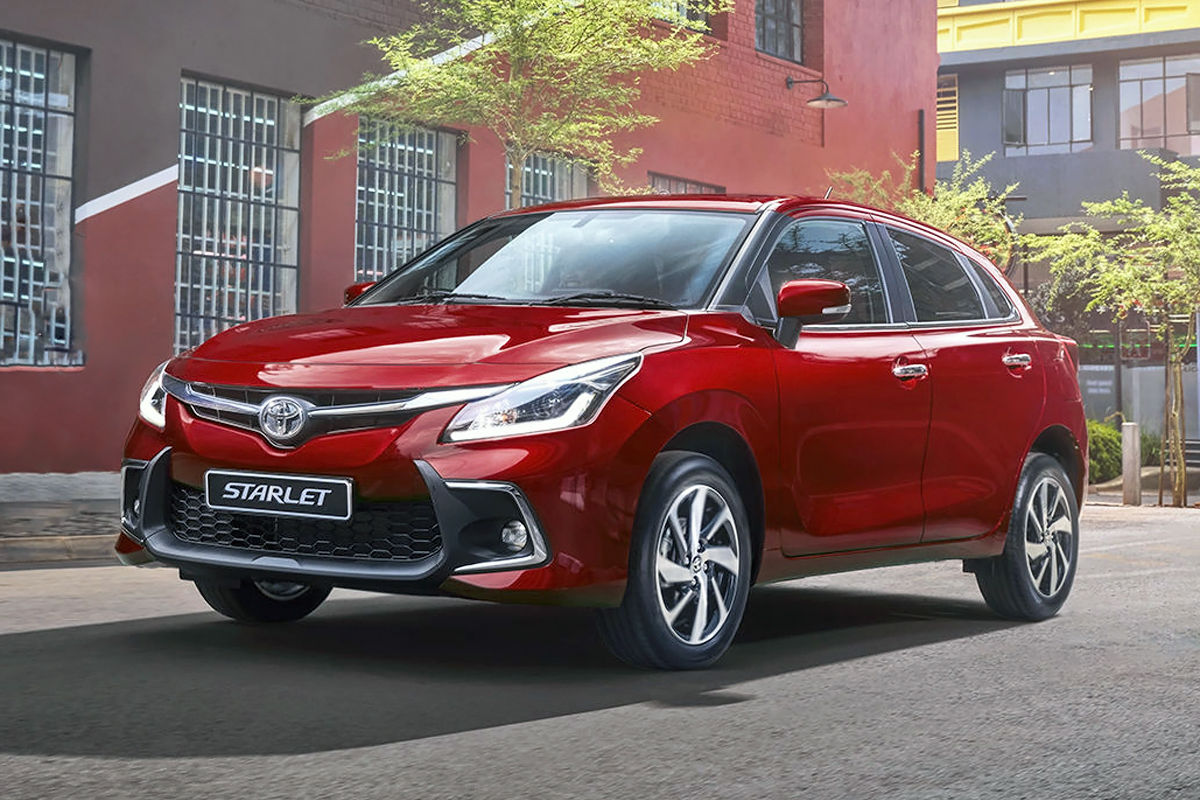
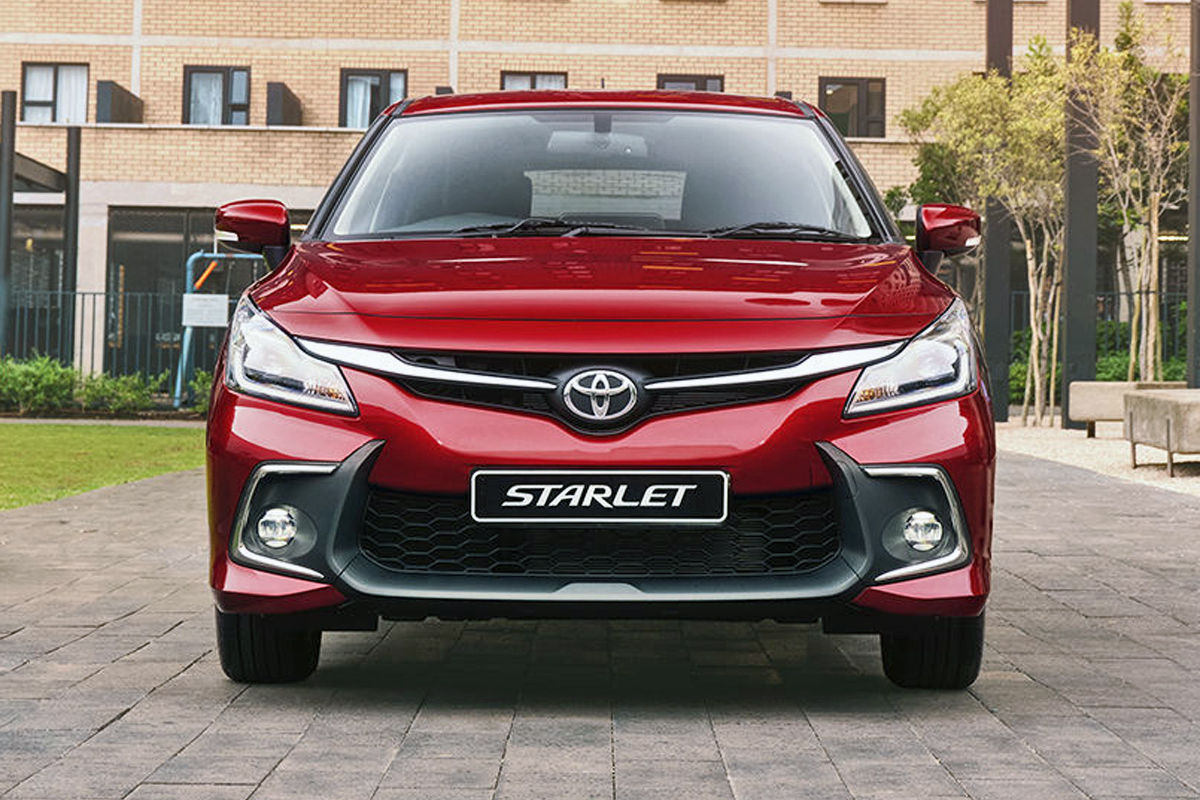
When it received its update in 2022, the Starlet gained a new-look grille, as well as redesigned headlamps, a fresh front bumper, new LED taillights and updated 16-inch alloy wheels.
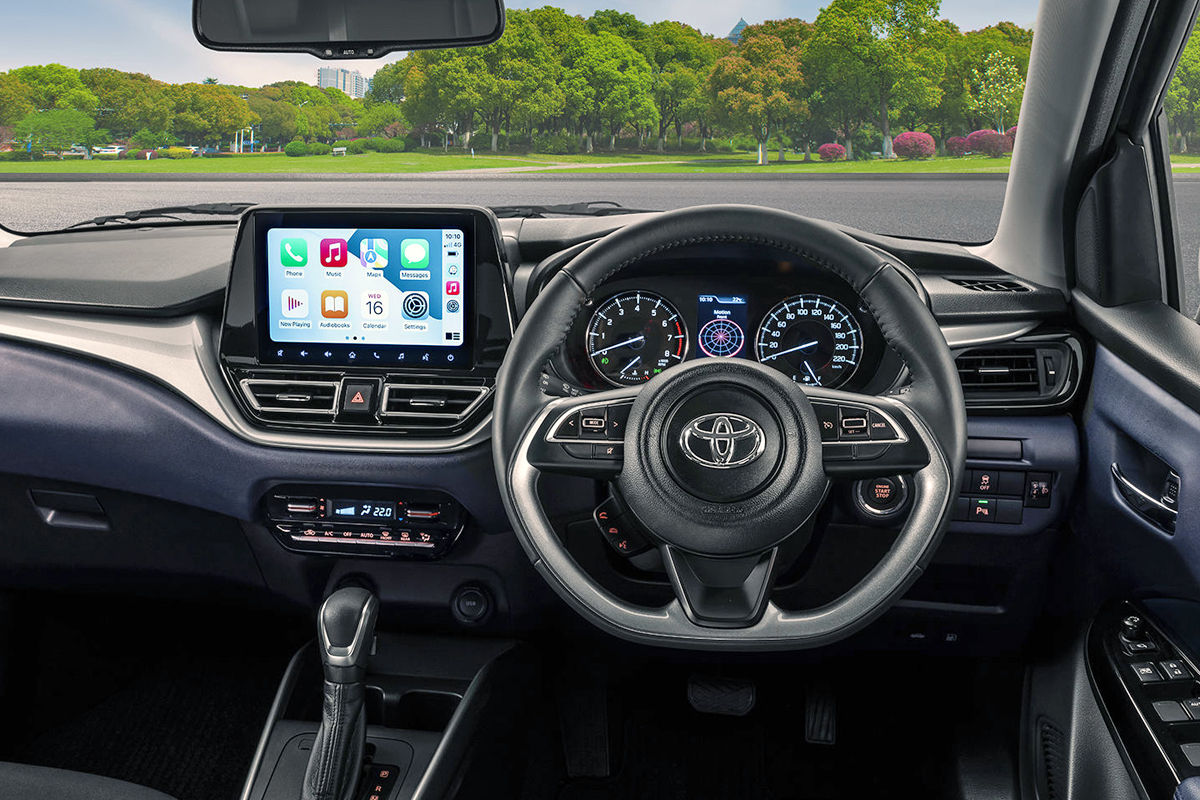
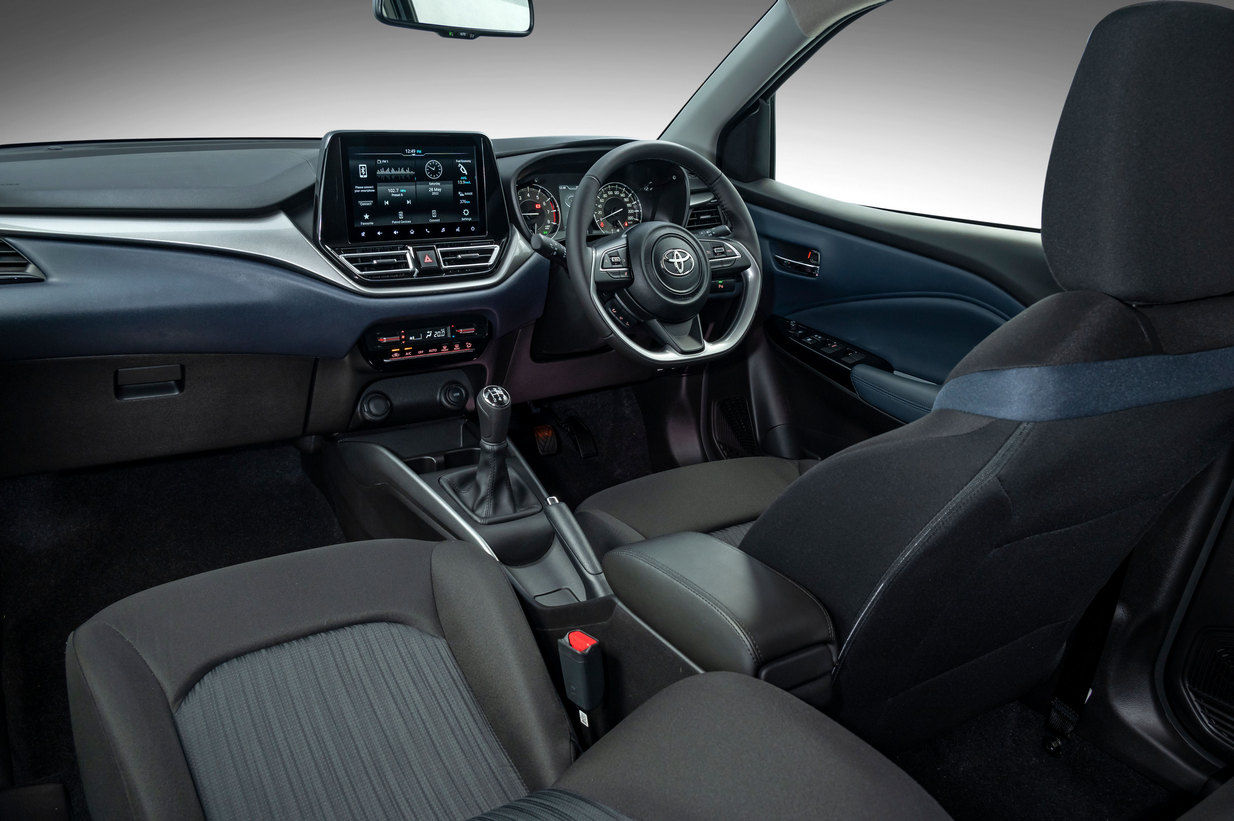
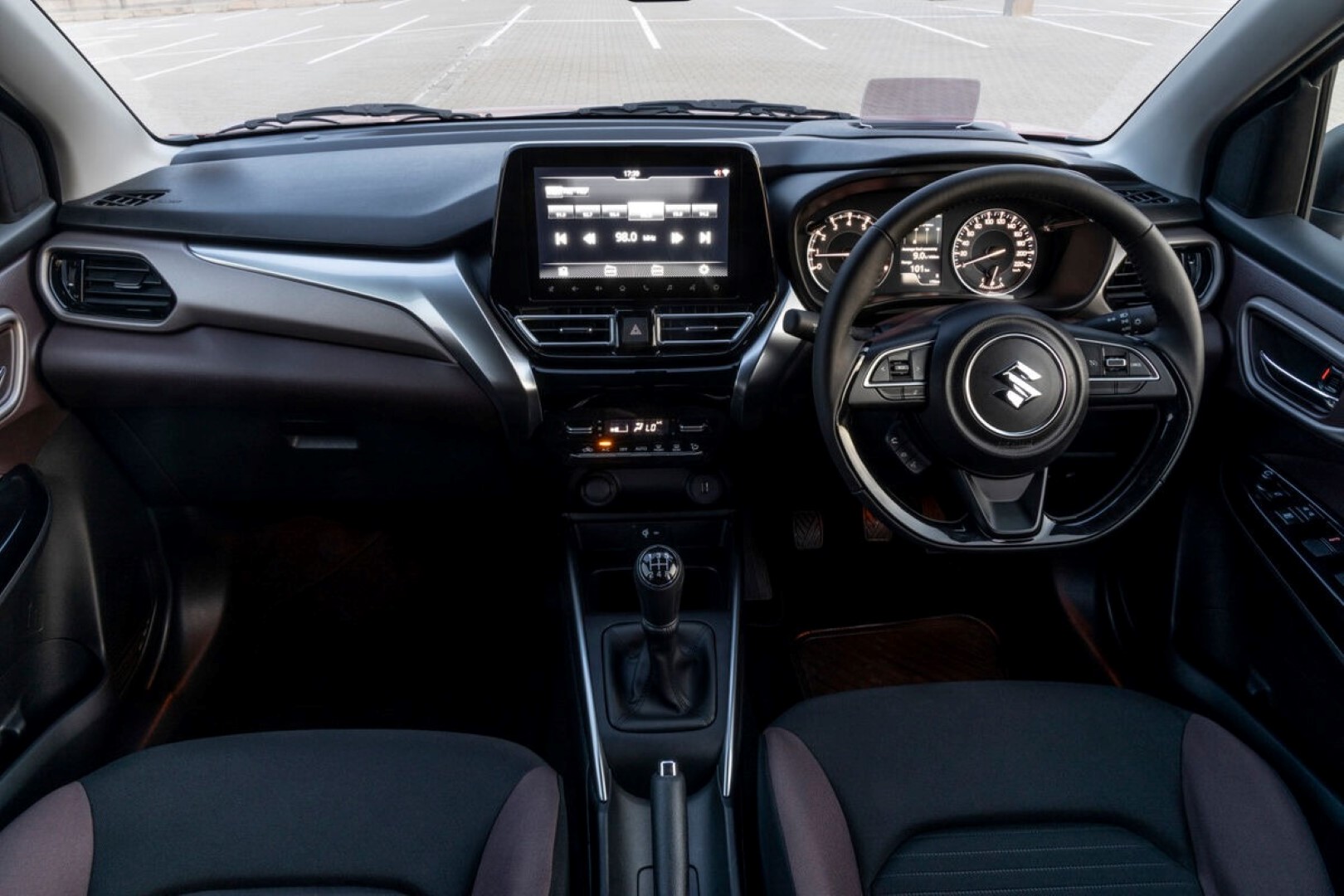
Inside, post-facelift Starlet variants feature blue detailing, a touchscreen infotainment system (measuring either 7 or 9 inches, depending on the trim level) complete with Apple CarPlay and Android functionality, as well as automatic climate control, power-retractable side mirrors, USB charging socket at the rear, rear parking sensors, hill assist control, vehicle stability control and ABS with EBD.
The Starlet also ships standard with Toyota Connect, a connectivity package that includes in-car Wi-Fi.
At the time, the Starlet was claimed to offer “even more front and rear legroom than before”, though we noticed the claimed luggage capacity fell from the original 345 litres to 314 litres.
For 2025, however, TSAM has made front-, side- and curtain airbags standard throughout the range (previously, Xi and XS variants featured dual front airbags only, with XR versions sporting 6 airbags), and upgraded the 3-service/45 000 km service plan to 4-services/60 000 km (with intervals of 15 000 km).
Toyota Starlet grade walk
The Starlet – which wears the Glanza badge in India – comprises 5 derivatives in South Africa. The range kicks off with the base Xi trim level, which at R268 300 includes standard items such as 15-inch steel wheels, the manual gearbox and halogen headlamps.
Next up is the mid-tier XS, which will cost you R275 900 in manual guise and R297 900 in self-shifting form. This specification level adds items such as 16-inch alloy wheels and LED front foglamps.
Finally, the flagship XR trim starts at R307 600 with a manual gearbox and R327 600 with an automatic transmission.
Highlights of the XR trim grade include chrome-effect exterior door handles, automatic LED projector headlights, LED daytime running lights, auto-retractable side mirrors, push-button start, leather trim for the steering wheel, two extra speakers (for a total of six), an upgraded driver’s display, cruise control, a reversing camera, and an electrochromatic rearview mirror.
How much does the facelifted Toyota Starlet cost in SA?
Q: What are the key safety and service upgrades for the 2025 Toyota Starlet?
A: For 2025, Toyota South Africa Motors (TSAM) has made front, side, and curtain airbags standard throughout the entire range and upgraded the service plan from 3-service/45,000 km to 4-services/60,000 km.
Q: What engine powers the facelifted Toyota Starlet?
A: The facelifted Toyota Starlet switched from the older 1.4-litre engine to a naturally aspirated 1.5-litre petrol unit. This engine produces peak outputs of 77 kW and 138 Nm.
Q: What is the starting price for the 2025 Toyota Starlet in South Africa?
A: The entry-level model, the Toyota Starlet 1.5 Xi, starts at R268 300.
Toyota Starlet Cross (2025) Price & Specs
Toyota South Africa Motors has slightly upgraded its Starlet Cross small crossover; all variants now come equipped with front-, side and curtain airbags.
It’s been 14 months since the Toyota Starlet Cross, the cousin of the Suzuki Fronx small crossover, made its local debut, and it has gone on to become a firm fixture in the South African new-vehicle market.
In the first 8 months of 2025 alone, Toyota South Africa Motors sold 15 238 units of the Indian-built Starlet Cross and its Starlet sibling (the compact hatch on which the model is based), with the former contributing 6 547 units (around 820 per month) and the latter 8 691 units (averaging 1 100 per month).
While the Fronx line-up comprises 4 derivatives (in mid-tier GL and flagship GLX trim grades) and has pricing bookends of R298 900 and R362 900; the Suzuki’s non-identical Starlet Cross twin also has 4 variants – in XS and XR trim grades – and prices at R304 900 and ends at R375 900 (September 2025).
All Starlet Cross derivatives are powered by Suzuki’s ubiquitous 1.5-litre, 4-cylinder petrol engine. As it does in various other Suzuki and Toyota applications, the K15B mill sends 77 kW and 138 Nm to the front axle via either a 5-speed manual gearbox or a 4-speed automatic transmission. TSAM claims average fuel consumption figures of 5.6 L/100 km, for the manual, and 5.8 L/100 km, for the automatic.
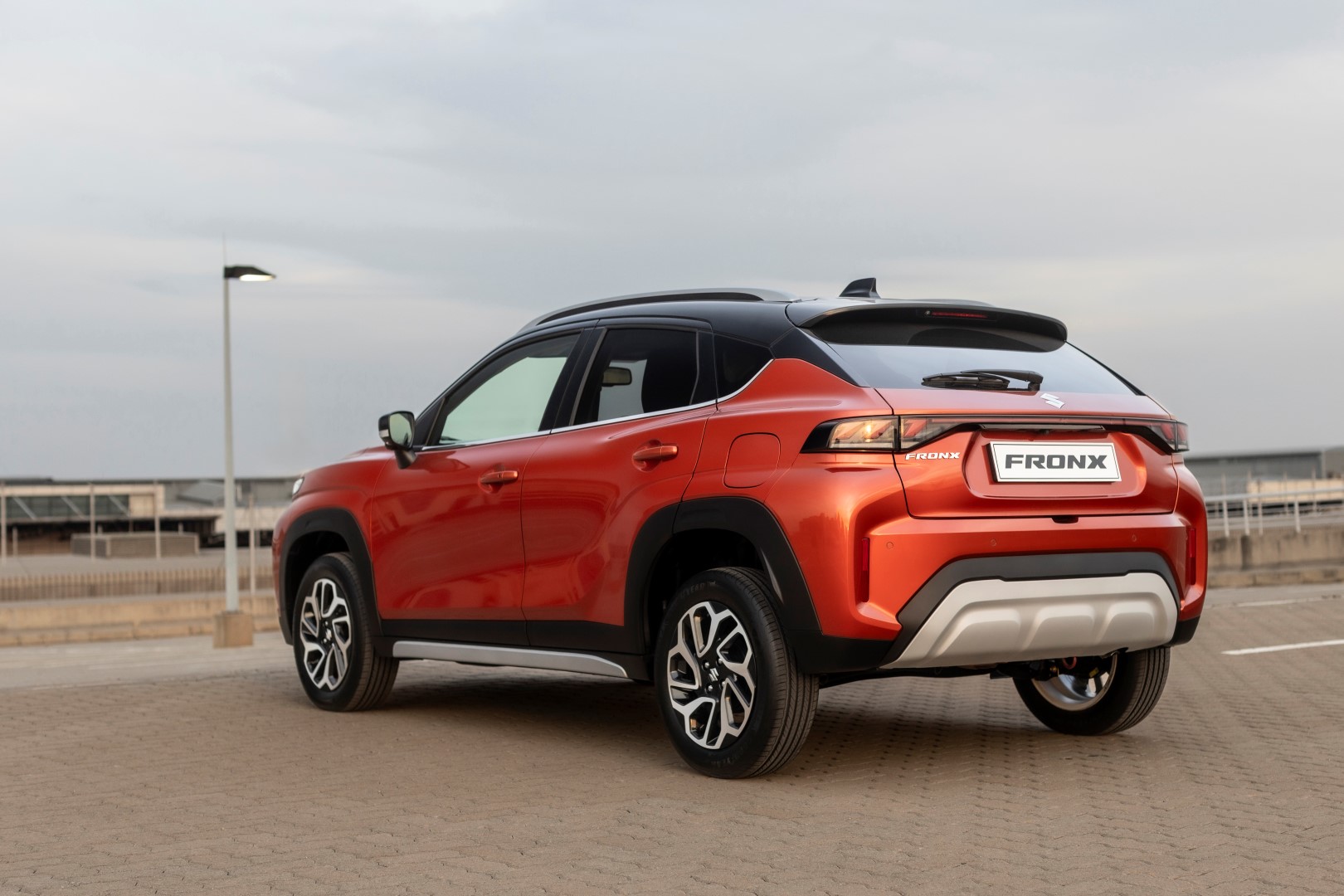
The Starlet Cross is 3 995 mm long (with a 2 520-mm wheelbase), 1 550 mm tall (+50 mm compared with the Starlet), 1 765 mm wide (+20 mm) and has a ground clearance of 170 mm (+30 mm). Exterior adornments include chrome garnishes on the grille, LED head- and taillamps (the former in conjunction with LED DRLs), front- and rear skid plates, a roof-end spoiler, as well as 16-inch alloy wheels.
The cabin features a 3-tone dashboard with premium finishes in charcoal, silver, and bordeaux, TSAM says, as well as cloth upholstery, chrome interior accents, a leather-trimmed multifunction steering wheel, cruise control, auto aircon, 3 USB chargers, rear parking sensors and a reverse-view camera.
XS variants feature a tilt-adjustable steering column and a 7-inch touchscreen infotainment system (with wireless Apple CarPlay and Android Auto connectivity), in conjunction with a 4-speaker audio setup.
XR derivatives are additionally equipped with chrome-finished inside door handles, a door courtesy lamp, silver (as opposed to black) side-sill garnish, height adjustment for the driver’s seat, tilt-and-telescopic adjustment for the steering column, a colour instrument display, a head-up display, an electro-chromatic rear-view mirror, a 9-inch infotainment touchscreen (and 2 extra speakers for the audio system), wireless charging pad, an illuminated glovebox, a 360-degree camera system, as well as keyless entry and start.
In terms of safety features, all Toyota Starlet Cross derivatives have ABS with EBD, vehicle stability control, hill-assist control and ISOfix child-seat anchors. And from September 2025, XS variants, which previously came with 2 airbags, will be fitted with front-, side and curtain airbags, as on XR derivatives.
TSAM also says the model is available in a variety of monochrome and bi-tone colours. Standard colours include Mystic Pearl White, Sonic Black Pearl, Premium Liquid Silver, Galaxy Blue, Shadow Grey, and Fine Orange (as pictured below). The bi-tone options include Luxe Red, Fine Orange, and Liquid Sliver in combination with a Sonic Black Pearl roof finish, which also adorns the roof spoiler and side mirrors.
How much does the new Toyota Starlet Cross cost in SA?
Prices include a 3-year/100 000 km warranty and a 4-services/60 000 km service plan.
All Toyota owners can sign up for a MyToyota profile. MyToyota provides a platform for owners to quickly and conveniently access all information and services related to the Starlet Cross. Once they opt in, they’ll have access to in-car WiFi capability (with a complimentary 25Gb) and supplementary Connect services.
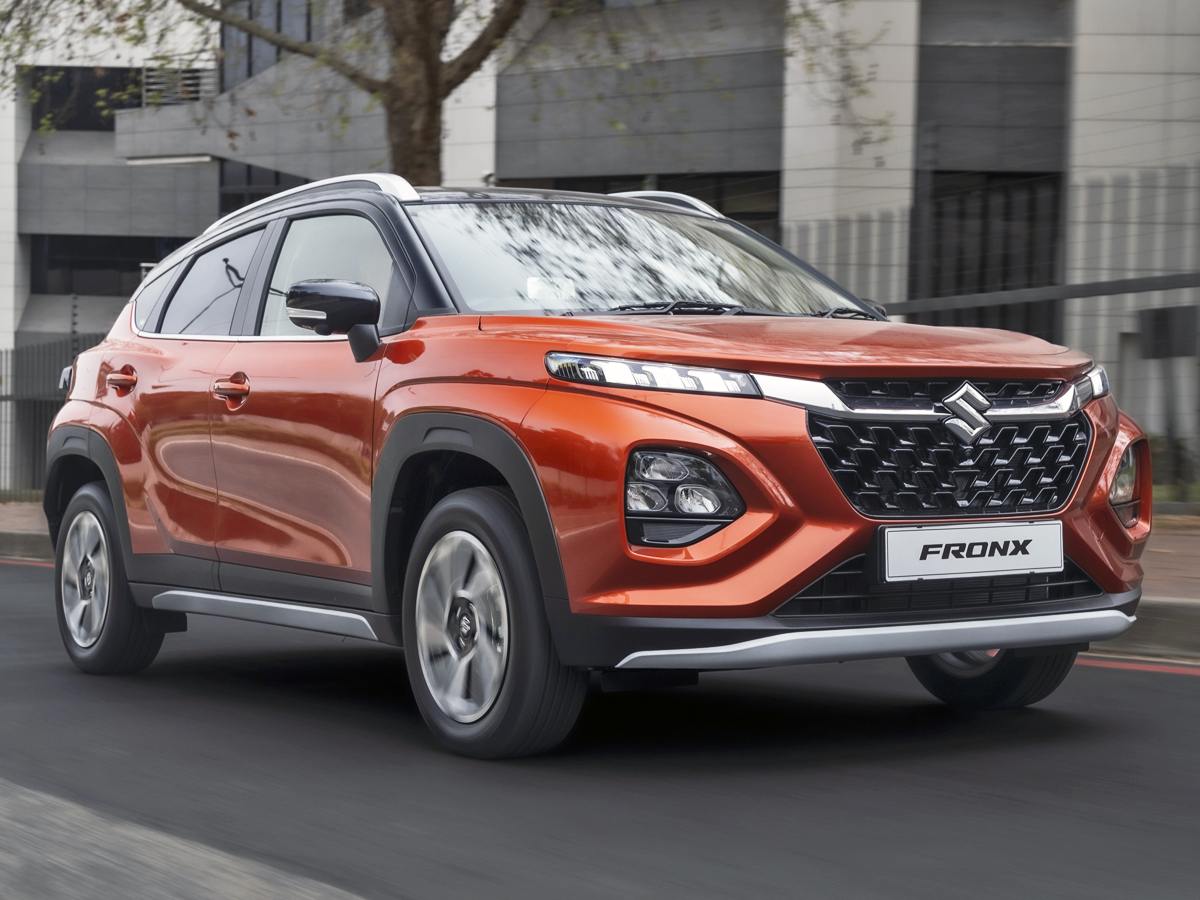
The Suzuki Fronx, South Africa’s go-to small crossover for budget-conscious drivers, is rising above the competition. And just like brandy, beer, braaiing and ball games, it’s quickly becoming a staple that unites South Africa’s value-seeking car shoppers.
Do you want the good news or the bad news? The bad news is that cars aren’t getting any cheaper. The good news is that family needs haven’t changed much and generally speaking, car buyers crave a combination of comfort features and style set against competitive pricing. If your budget can stretch to the ultra-competitive R300 000-R400 000 segment, then the Suzuki Fronx should be on your shortlist.
Naturally, the Fronx, essentially a Baleno wearing a pair of hiking boots, shares its naturally aspirated 1.5-litre, 77 kW/138 N.m petrol engine with its Toyota counterpart; as well as the choice of a 5-speed manual or a conventional 4-speed torque-converter automatic transmission.
Both cars are equipped as standard with a handful of features not usually expected in this tier, such as electrically folding mirrors, a leather-clad steering wheel, cruise control, LED headlamps and 16-inch alloy wheels, a self-dimming rear-view mirror, rear seat ventilation, climate and even stability control.
(Among others, over the above the flagship Fronx GLX adds a 360⁰ panoramic camera, wireless charging, heads-up display, as well as another pair of airbags bringing the total airbag count to 6.
You may think that ultimately the choice between the Fronx and the Starlet Cross comes down to mere badge snobbery, yet it’s worth bearing in mind that the Suzuki has a much longer-lasting warranty at 5 years/200 000 km versus the Toyota Startlet Cross’ 3-years/100 000 km warranty.
As the clincher, the Fronx is cheaper too…
2. The Suzuki Fronx provides fantastic value
Each one of the quadruplets of Fronxes on offer – GL, GL automatic, GLX and GLX automatic – undercuts its Toyota Starlet Cross equivalent by some margin and in today’s ecomony, any saving is valuable.
Better still, with many South Africans’ brand-blindness giving Toyota’s resale values a healthy boost, same-specced and corresponding Suzuki derivatives are likely to sell for less on the used market.
All of which means, used or new, notably in GLX trim, the Fronx provides a compelling and elaborate mix of advanced comfort and safety features at an ultra-competitive price, outshining other class favourites such as the Volkswagen T-Cross for value. And yes, at around R350k, if you’re feeling fancy, you could probably start looking at the Fronx’s Grand Vitara big brother but with a boot that offers less than 10 litres more in capacity, what’s the point?
3. Everything will keep going right in the Suzuki Fronx
In such a saturated segment, comparisons with rivals are inevitable. Objectively, the Fronx’s sole weakness is its engine and slushy automatic gearbox pairing, which is comparatively torque-poor, especially when measured against turbocharged (and in some cases twin-clutch) class contenders such as the Nissan Magnite, Renault Kiger, Kia Sonet and Chery Tiggo 4 Pro. In the thinner air of the power-sapping Reef, that deficit will be clearly and frustratingly felt, especially when travelling fully laden.
With that said, real-world tests reveal compact turbocharged units to often be less fuel-efficient whereas the Fronx will master an average of between 5.0L and 6.0L/100 km all day, every day. Also, turbocharging comes with extra complexity and so there’s more that can go wrong and the Fronx’s simpler engine will ultimately be more reliable over time.
How much does the Suzuki Fronx cost in South Africa?
*Pricing is accurate as of September 2025.
Entry
Fronx GL (manual)
R298 900
Front GL (automatic)
R319 900
Top
Fronx GLX (manual)
R342 900
Fronx GLX (automatic)
R362 900
Warranty
5-year/200 000 km
Service Plan
4 years/60 000 km
Frequently Asked Questions
What engine does the Suzuki Fronx use in South Africa?
The Suzuki Fronx is equipped with a 1.5-litre, naturally aspirated K15B petrol engine. It produces 77 kW of power and 138 Nm of torque. It is available with either a 5-speed manual or a 4-speed automatic transmission.
What is the fuel consumption of the Suzuki Fronx?
Suzuki claims a combined fuel consumption of 5.5 L/100 km for the manual version and 5.7 L/100 km for the automatic. Real-world consumption may vary depending on driving conditions.
What safety features does the Suzuki Fronx have?
Standard safety features across the range include ABS with EBD, electronic stability control (ESP), and hill-hold control. The entry-level GL model comes with dual front airbags, while the top-of-the-range GLX model is equipped with six airbags (front, side, and curtain).
What are the different Suzuki Fronx models available in South Africa?
In South Africa, the Suzuki Fronx is available in two main trim levels: GL and GLX. Both are offered with a choice of a 5-speed manual or 4-speed automatic transmission, making a total of four derivatives.
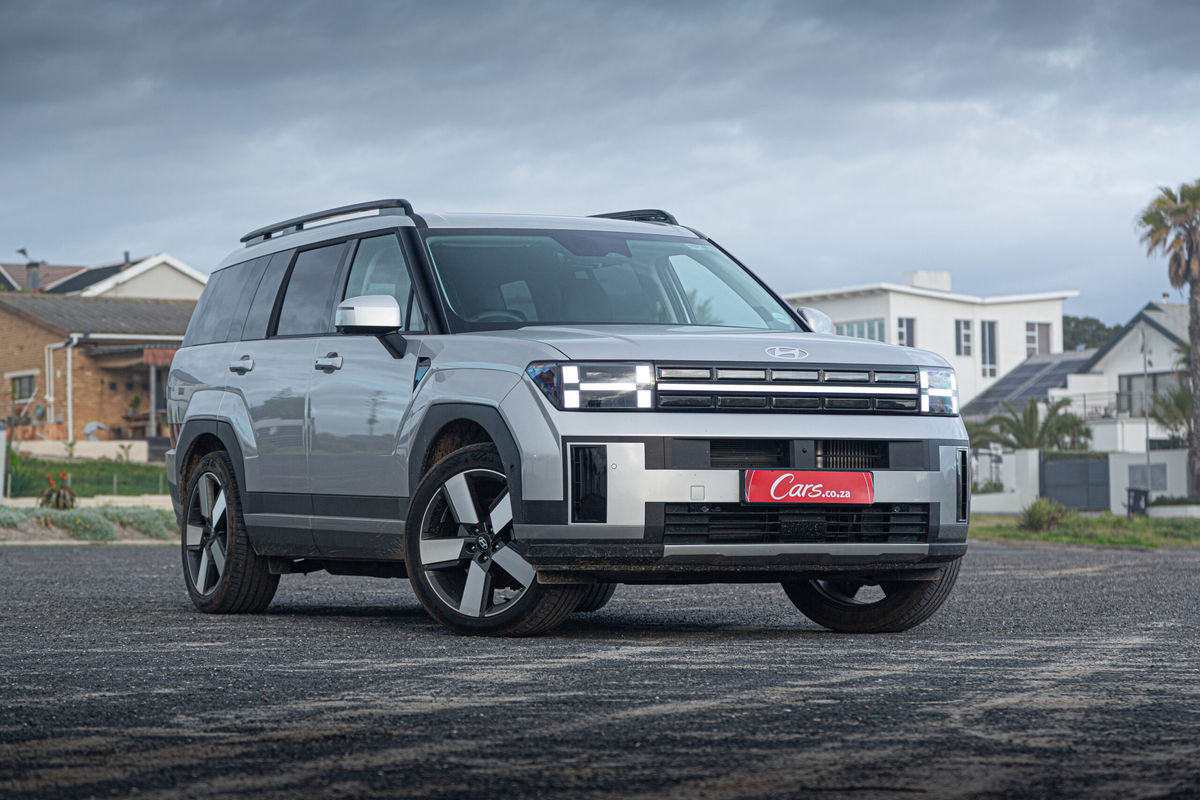
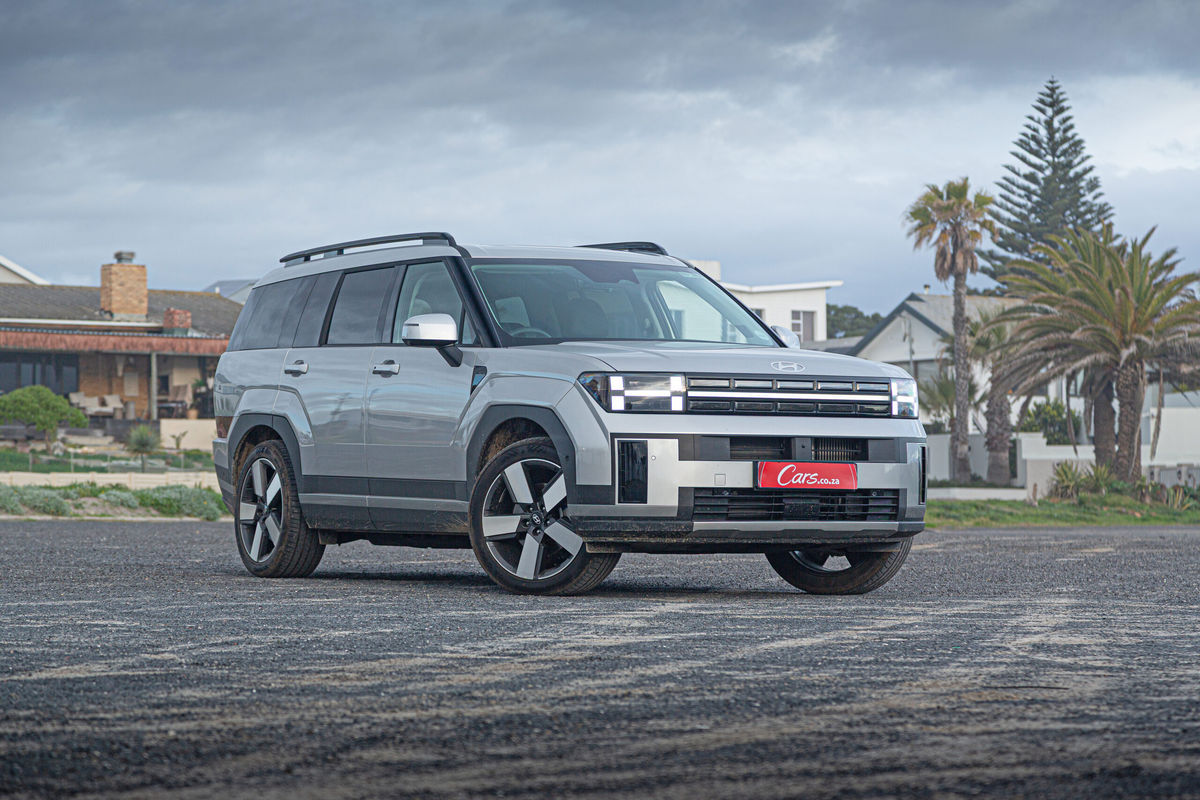
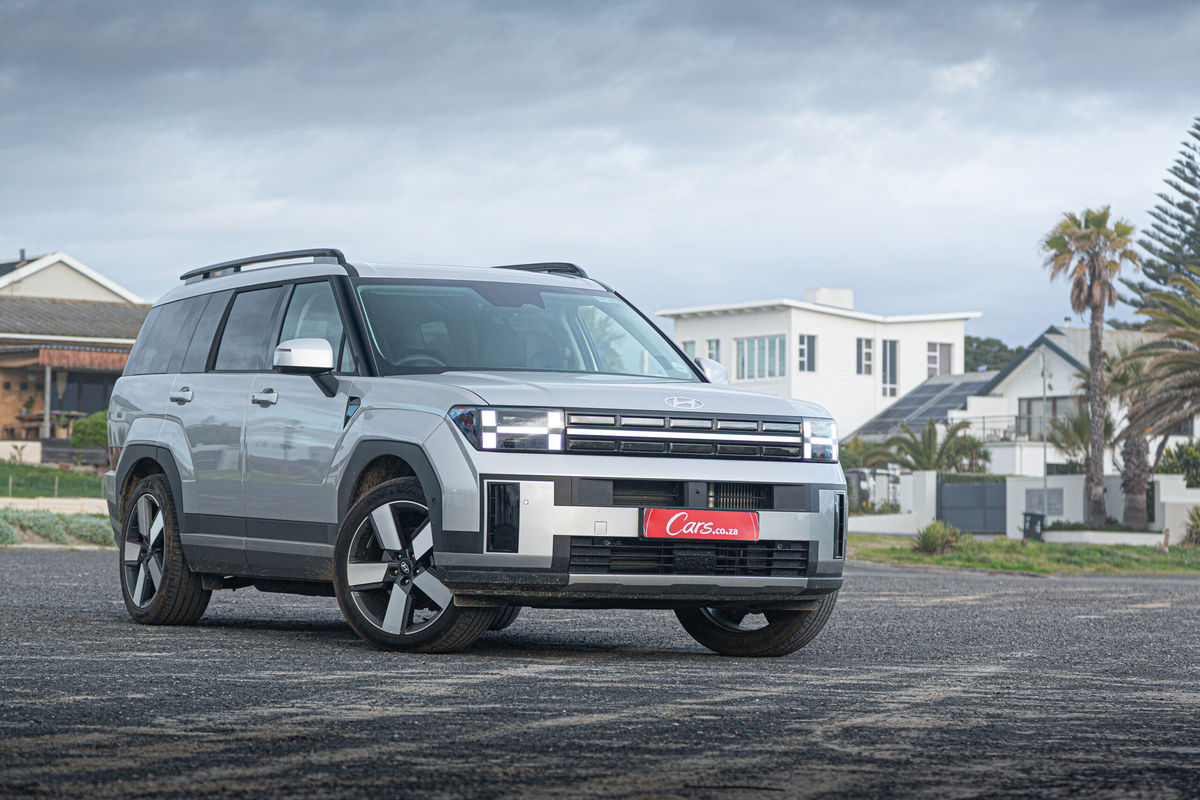
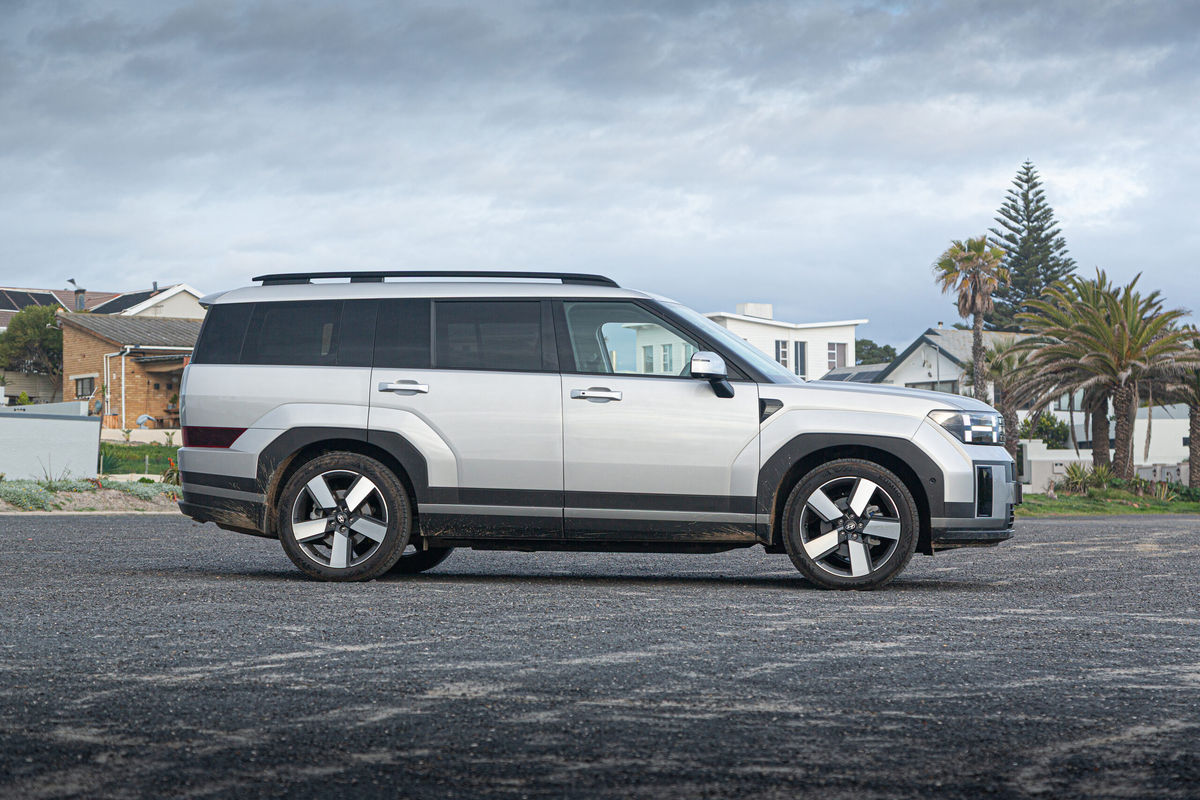
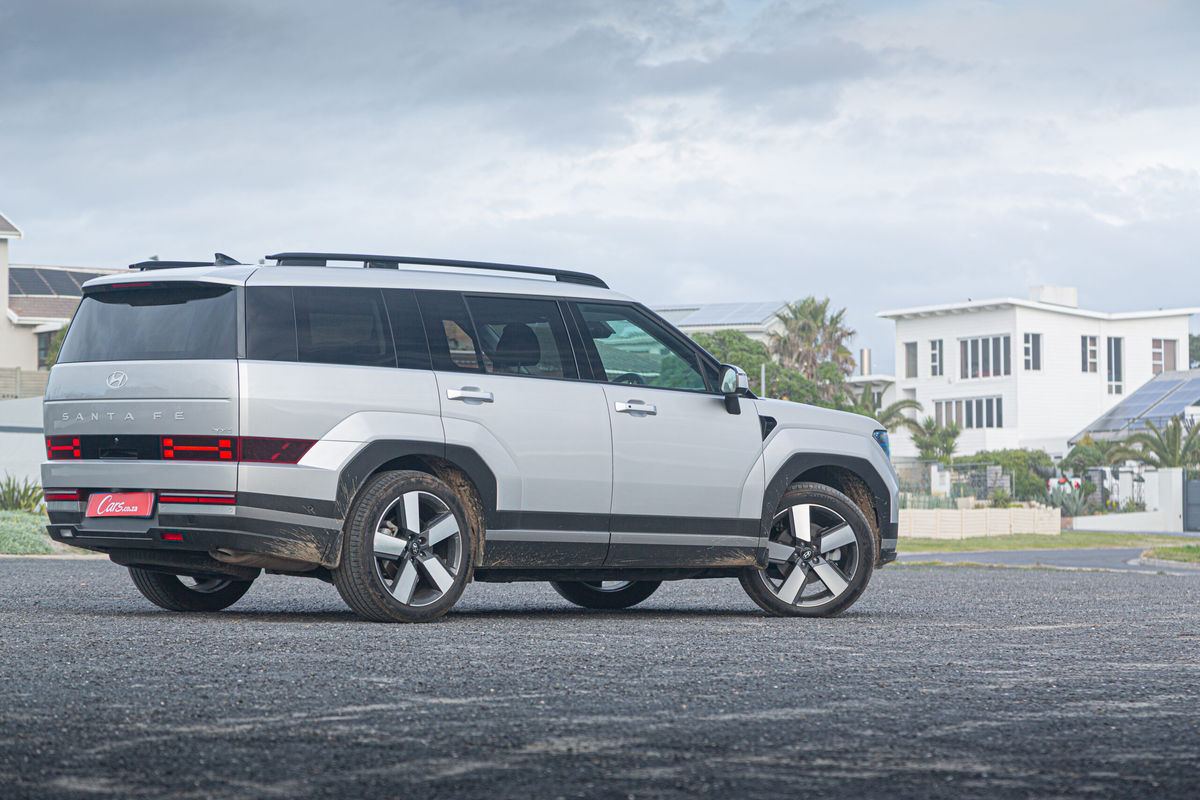
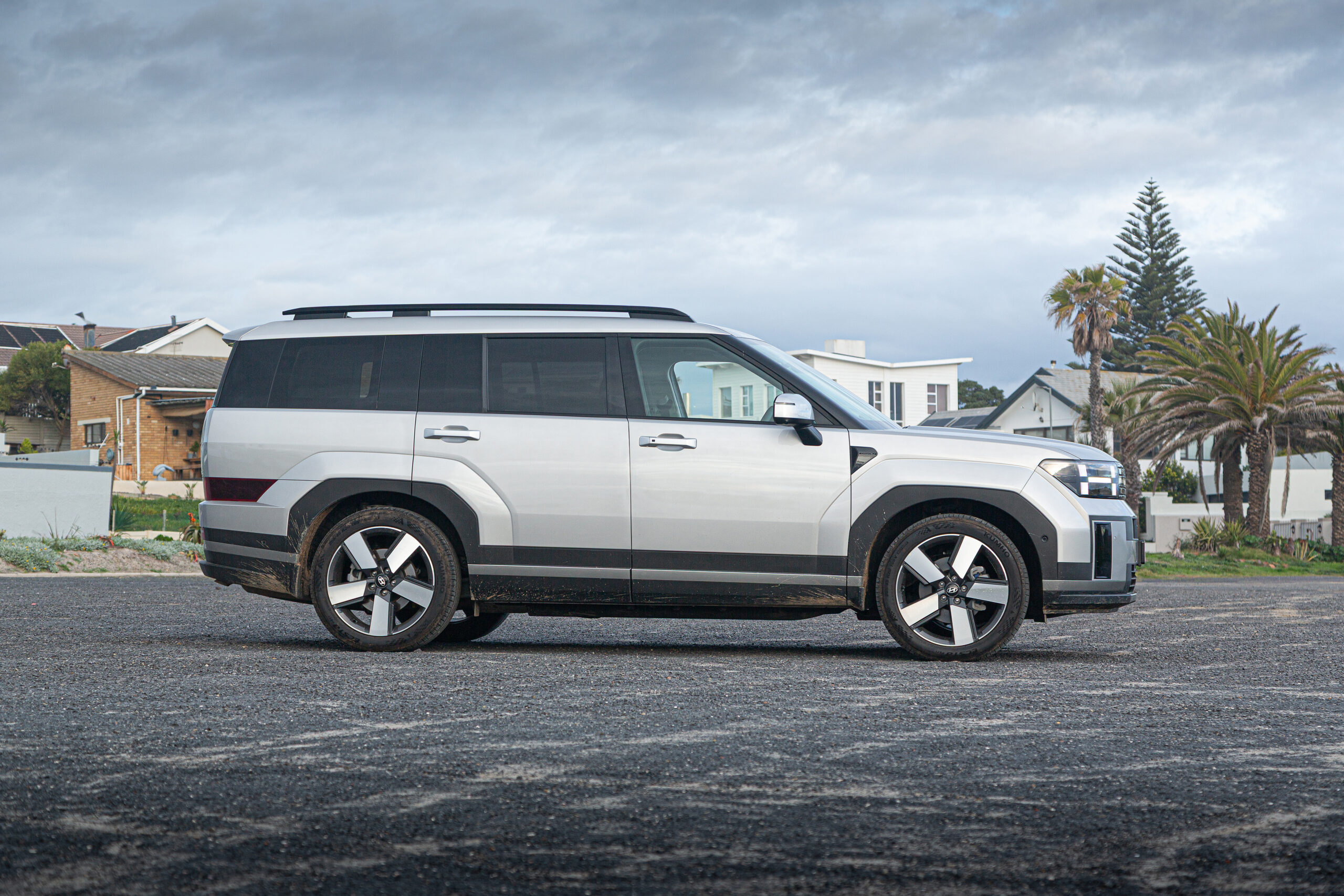
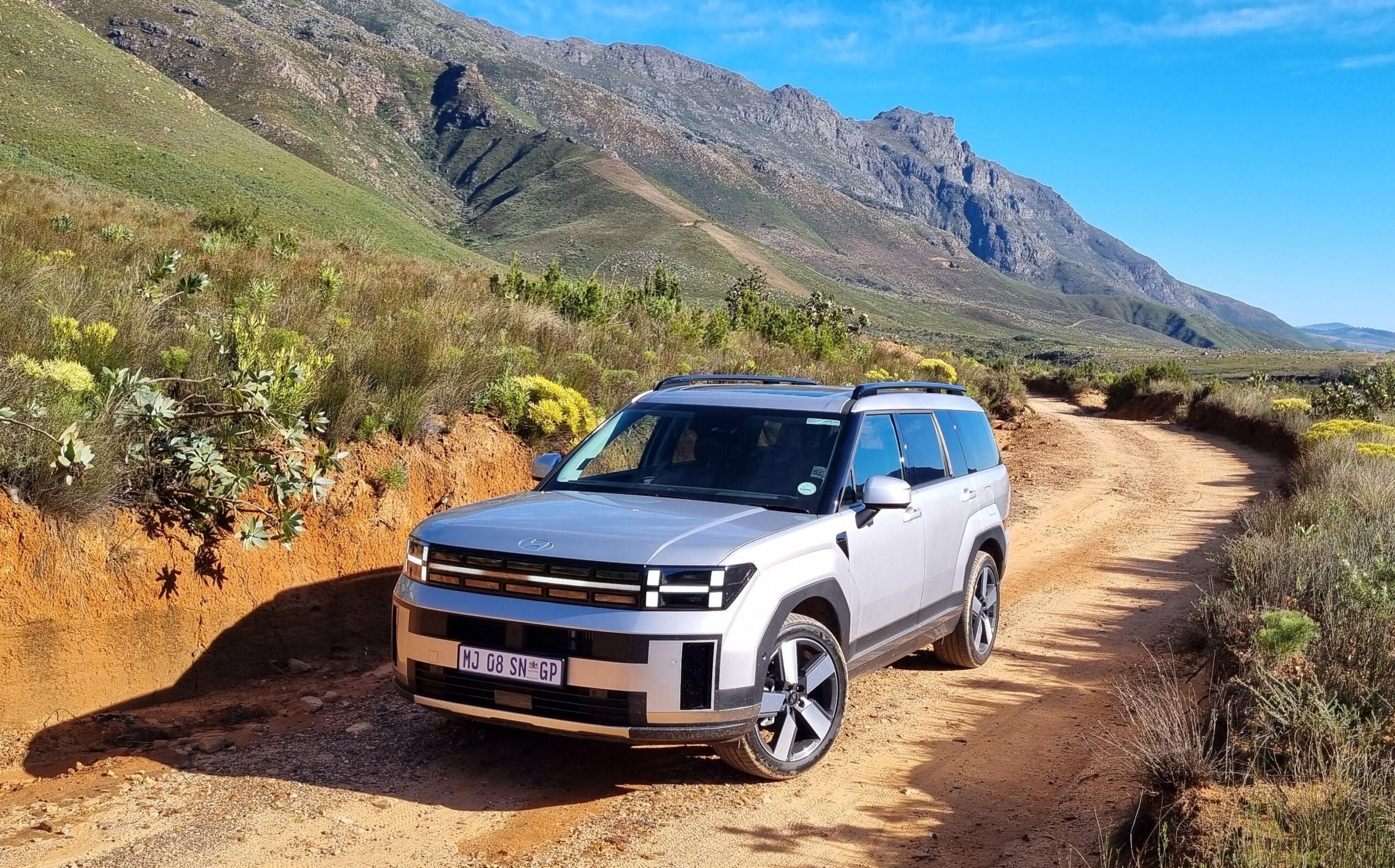
With eye-catching boxy styling, a premium and tech-laden cabin, plus impressive real-world efficiency from its hybrid powertrain, the Santa Fe Hybrid Elite AWD 7-seat SUV is gunning straight for rivals like the Ford Everest V6 Platinum and Kia Sorento SXL.
We like: The bold, head-turning design; superb cabin quality; excellent hybrid efficiency; spaciousness in all 3 rows; very premium feel and attention to detail.
We don’t like: Slightly firm ride over rough and uneven surfaces.
A smaller-capacity turbopetrol hybrid has replaced the turbodiesel engine
Three-row seat practicality and build quality are impressive
The ride is road-biased, so be mindful when taking it on gravel tracks
Where does the Hyundai Santa Fe Hybrid fit in?
One of the more interestingly styled vehicles we’ve assessed of late.
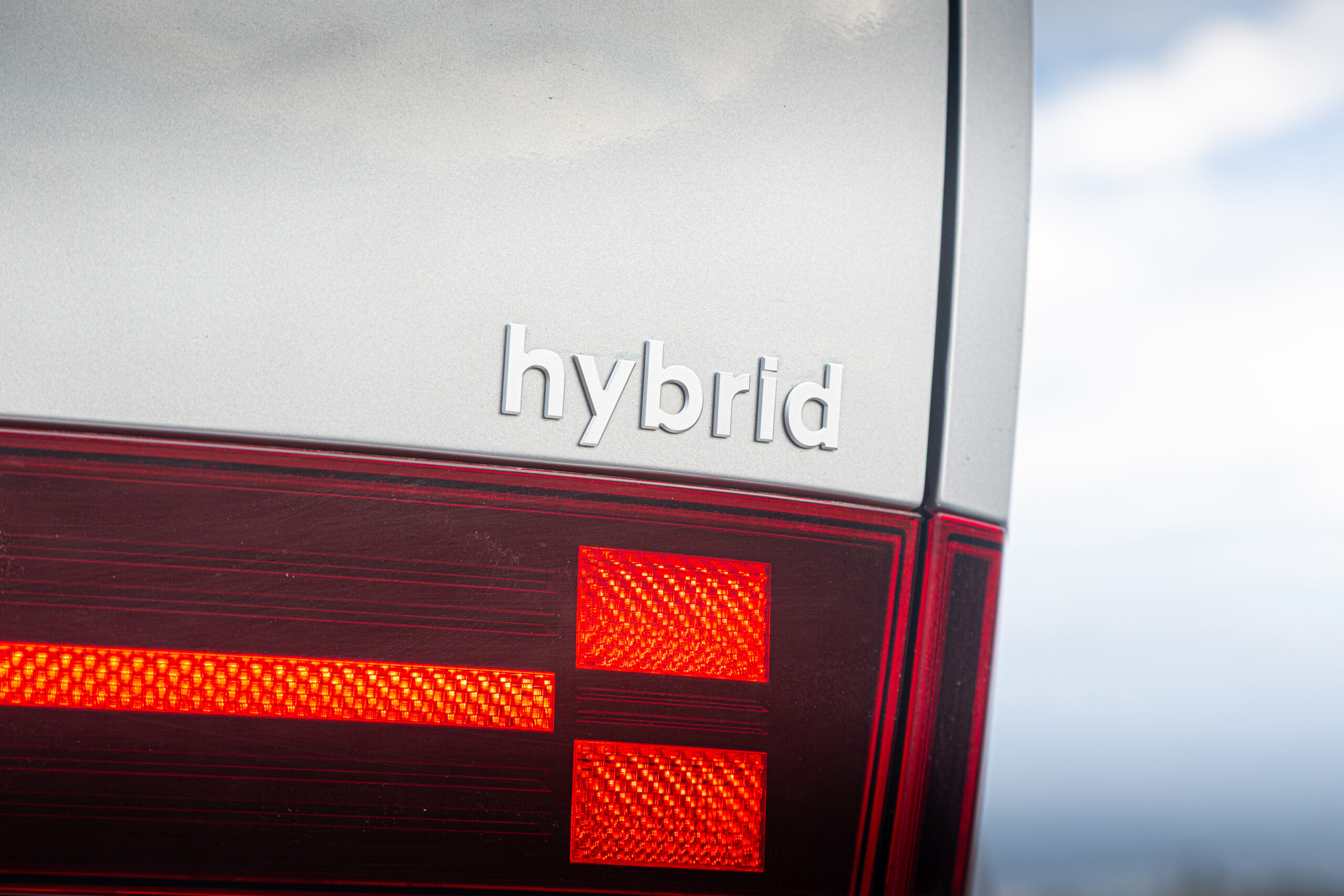
Hyundai’s latest Santa Fe represents a shift in strategy. With the 5th-gen model, which made a belated arrival in South Africa, the brand has ditched turbodiesel in favour of a self-charging petrol hybrid setup.
As the 1st Santa Fe in South Africa to be available exclusively in hybrid guise, 1.6T Elite AWD is aimed squarely at those who want premium, family-friendly 7-seater comfort with impressive fuel economy, but not, perhaps, the less sophisticated on-road feel of popular ladder-frame-based SUVs (Ford Everest, Toyota Fortuner, etc).
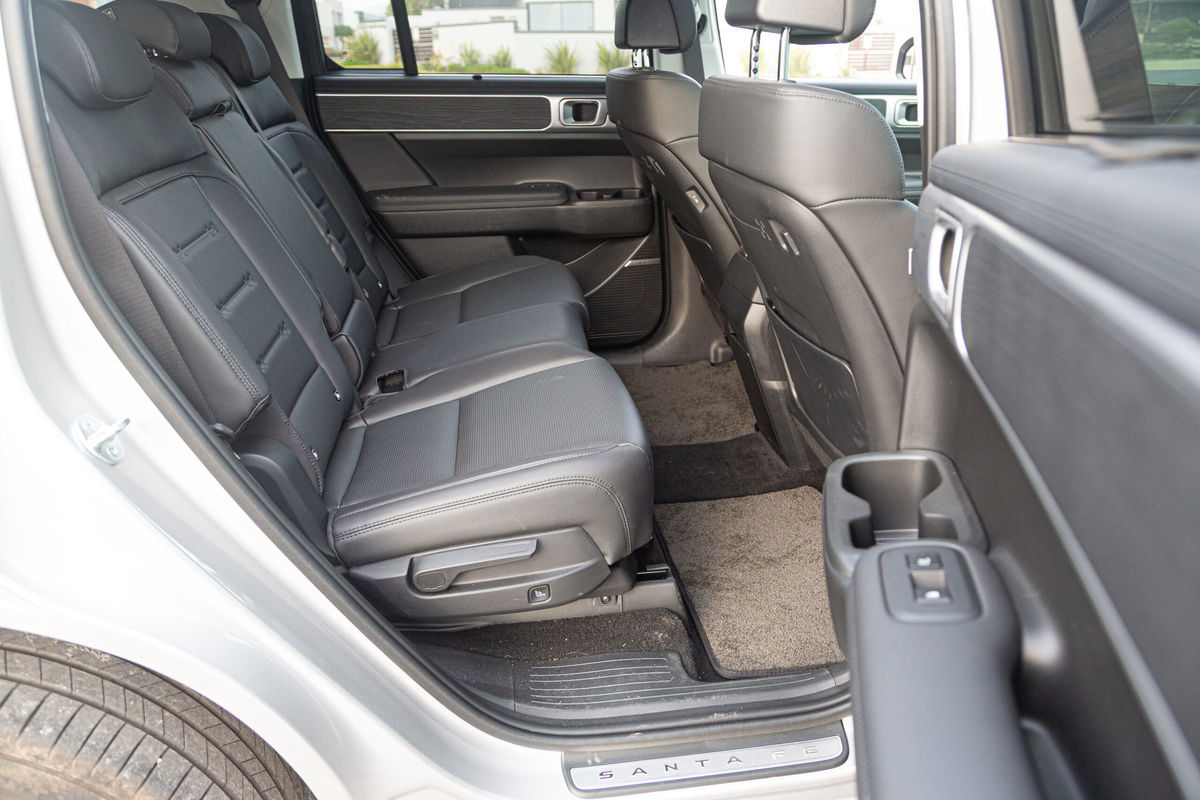
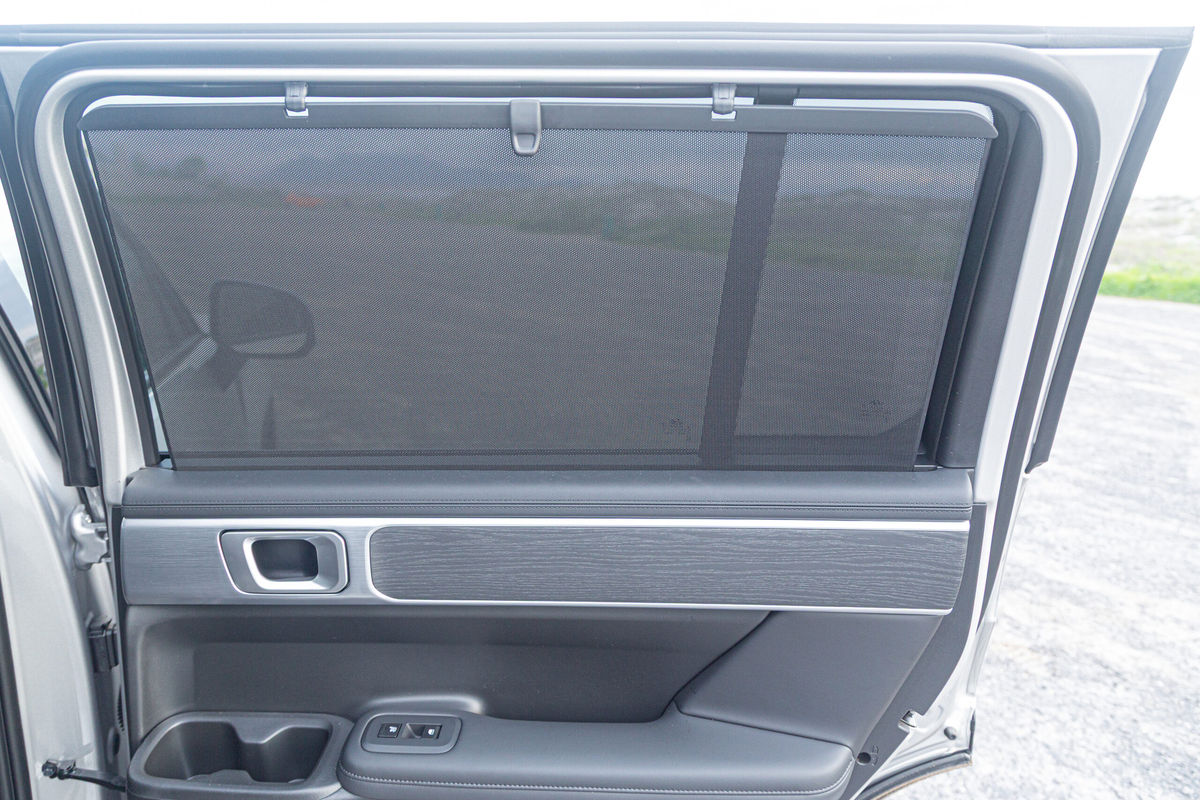
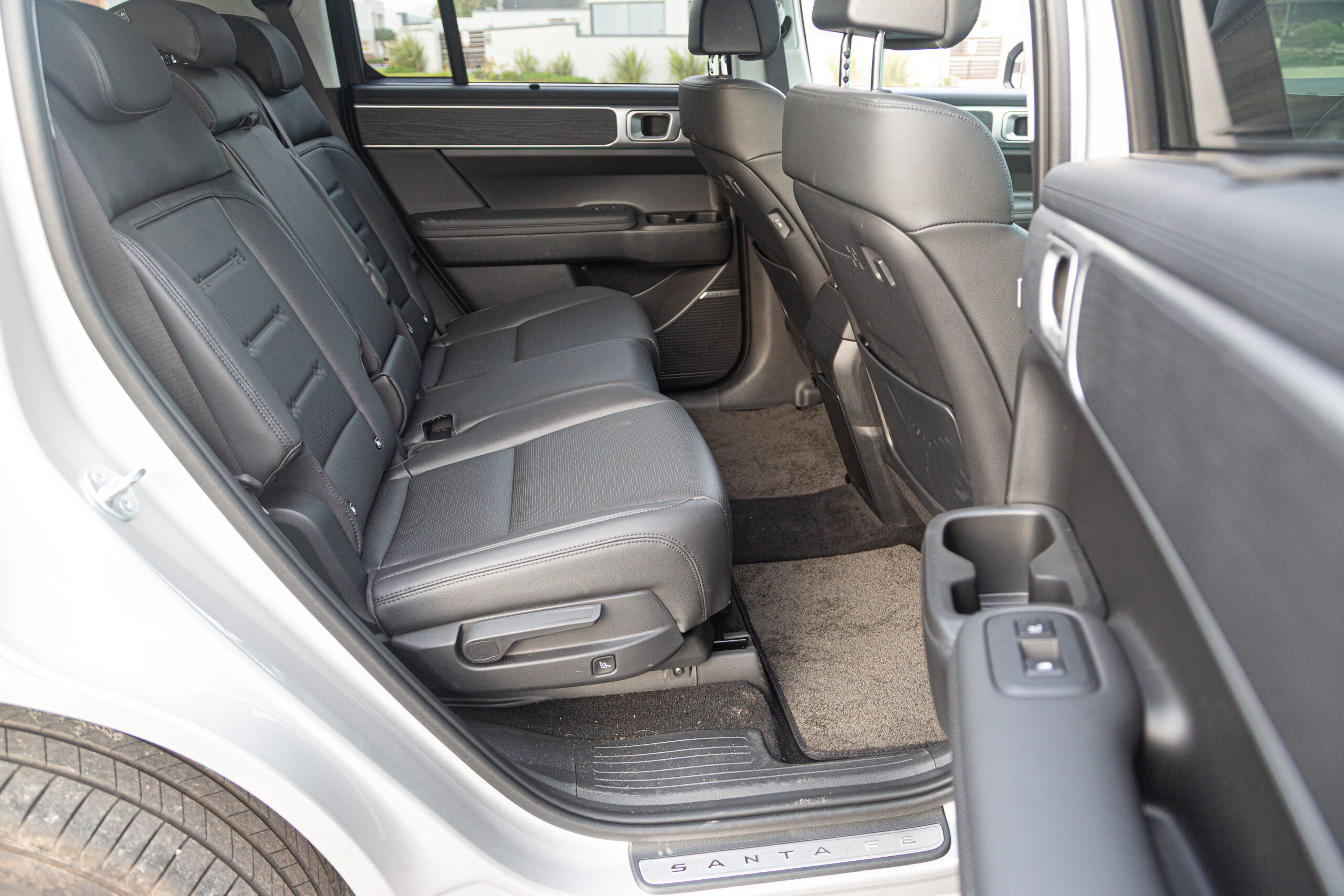
Both the 2nd and 3rd rows of seats offer space and convenience features in abundance.
Based on its dimensions, luxuriousness, and features list, the Santa Fe rivals the Everest 3.0TD V6 4WD Platinum, which offers more off-road capability and a turbodiesel powertrain, as well as its cousin, the Sorento 2.2CRDi SXL 4X – the Kia offers similar luxury and space, in conjunction with diesel power.
The Santa Fe 1.6T hybrid Elite AWD is positioned near the top-end of the segment, offering a refined, high-spec package. But does the hybrid drivetrain deliver the desired blend of punch and frugality?
How good is the Hyundai Santa Fe’s Design & Packaging?
5th-generation Hyundai Santa Fe adopts a bold new look!
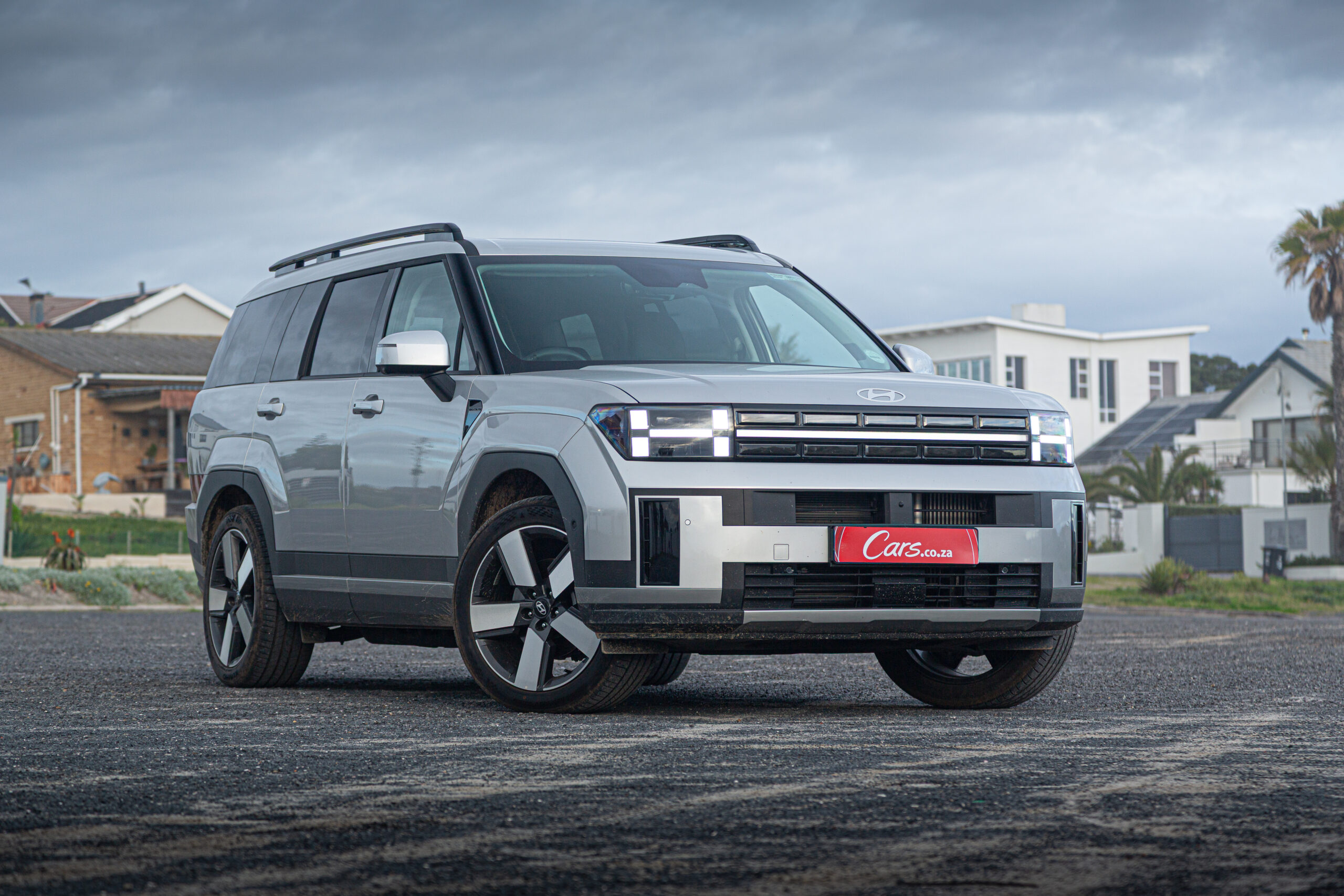
The Santa Fe makes a very striking 1st impression – its design is unlike anything else in the Adventure and Executive SUV segments.
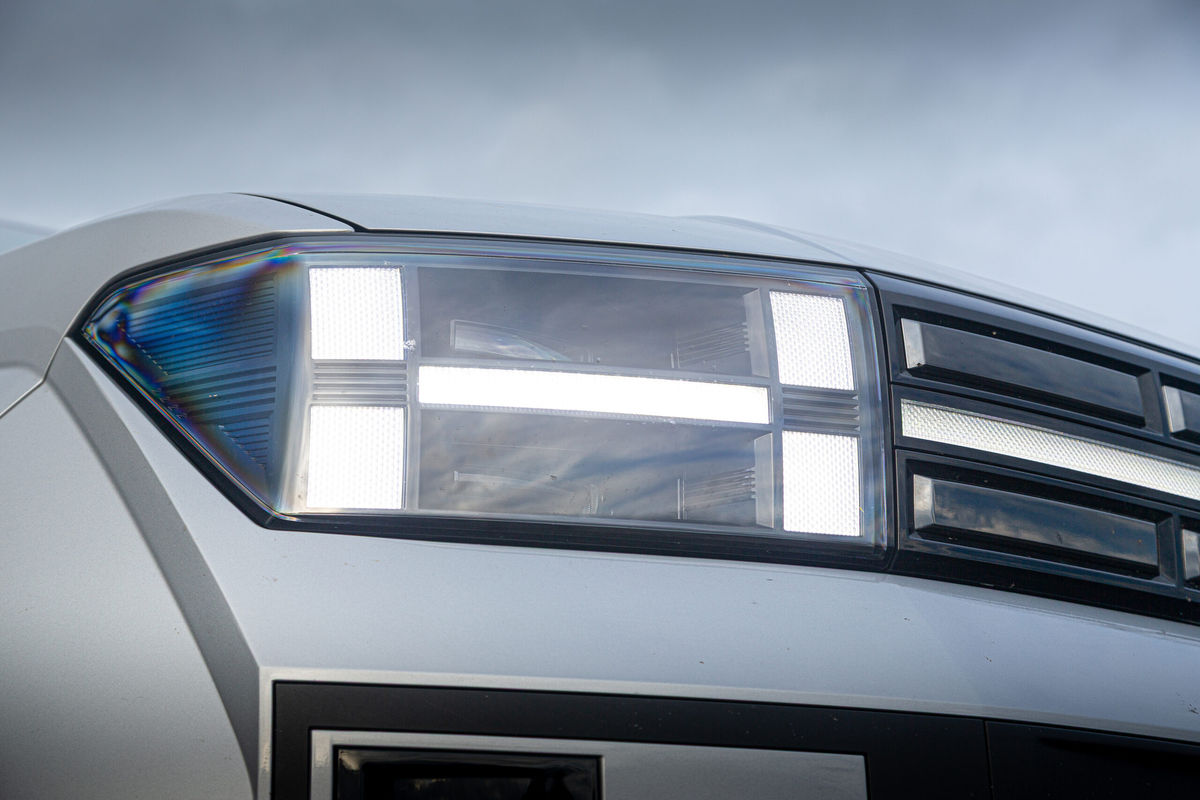
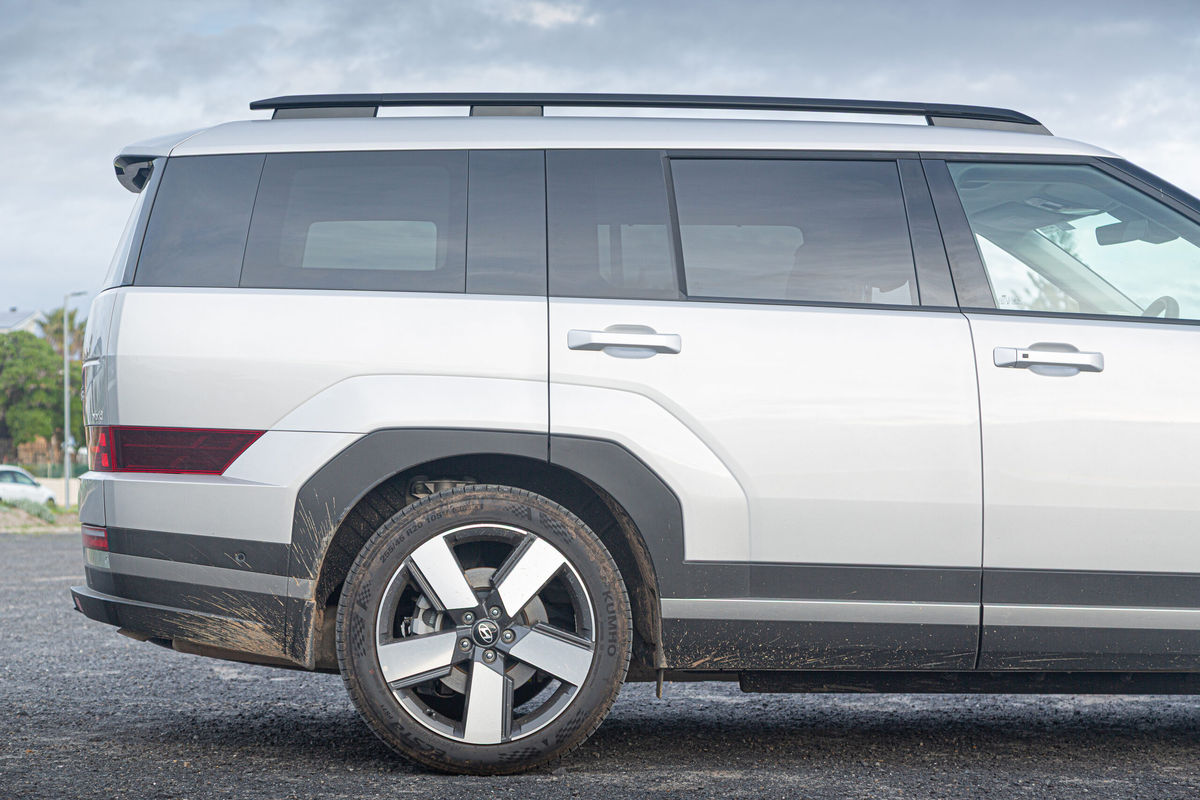
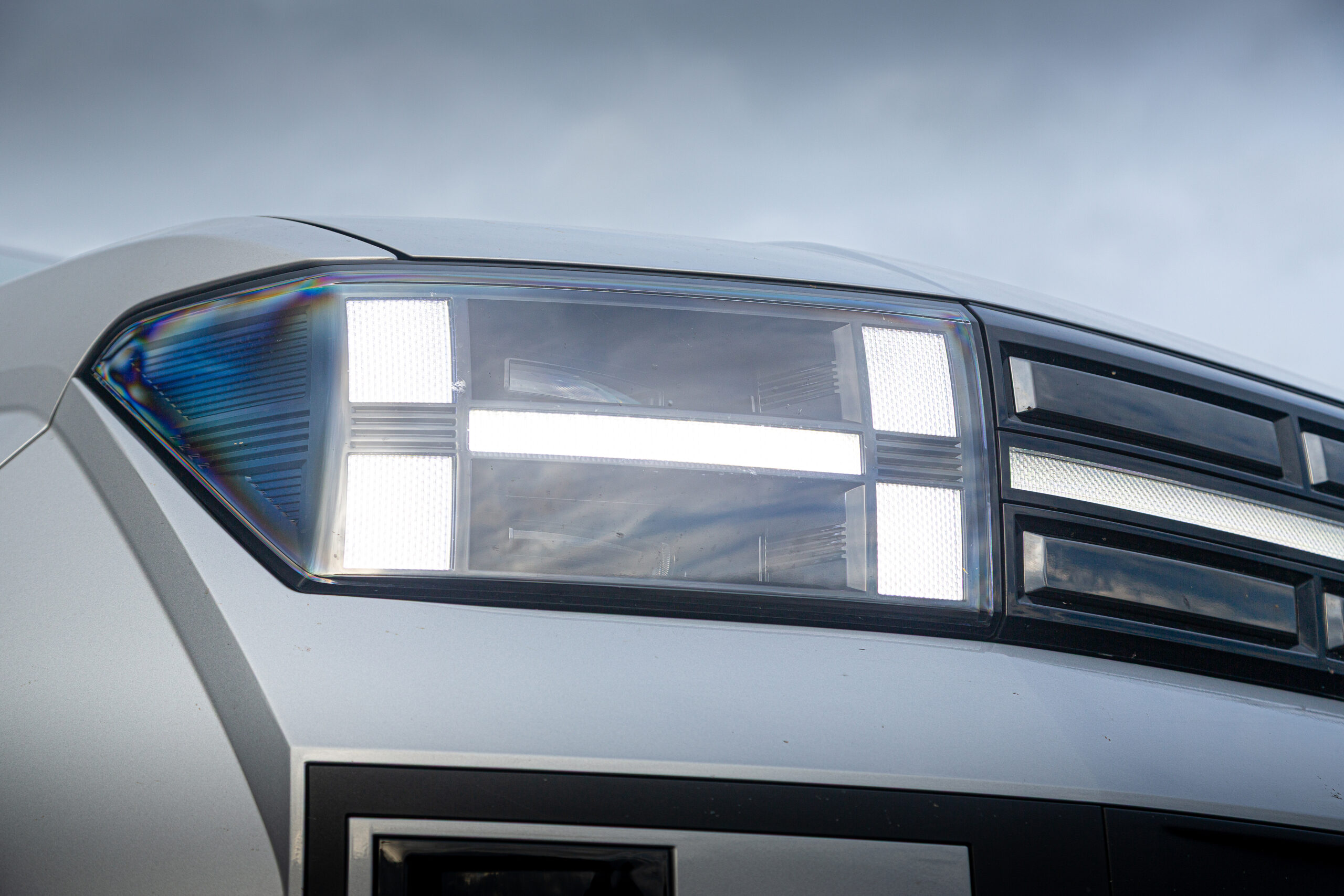
The bold, boxy styling, with its prominent H-shaped LED lighting and sharp fenders, does more than look good; it creates an imposing presence on the road that often draws favourable attention. During its tenure in our fleet, the Santa Fe received many compliments from onlookers.
The new H-style daytime running lights make quite a statement.
Inside, the build quality is excellent and the design bold and confident: the Santa Fe‘s doors close with satisfying thuds, surfaces and trims feel premium, and the cabin seems tightly put together; it emitted zero rattles or squeaks during the test – even when the SUV was traversing rough gravel or uneven tar.
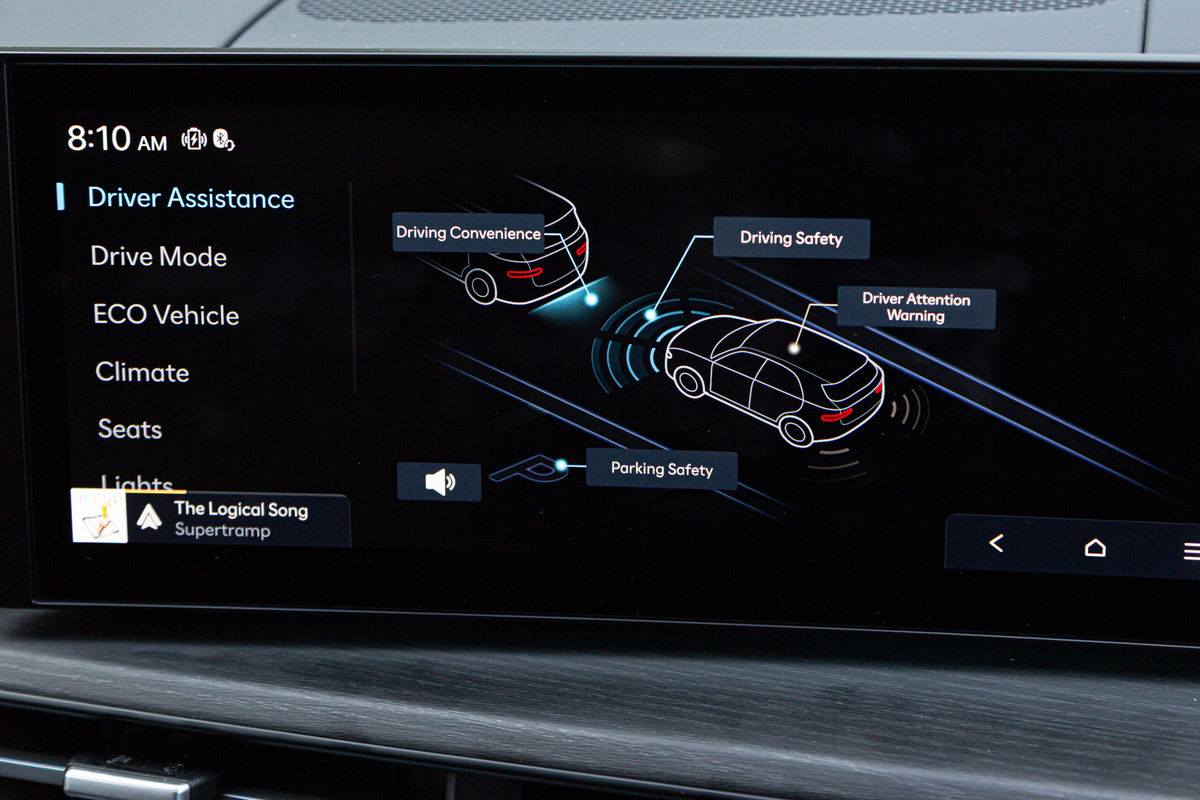
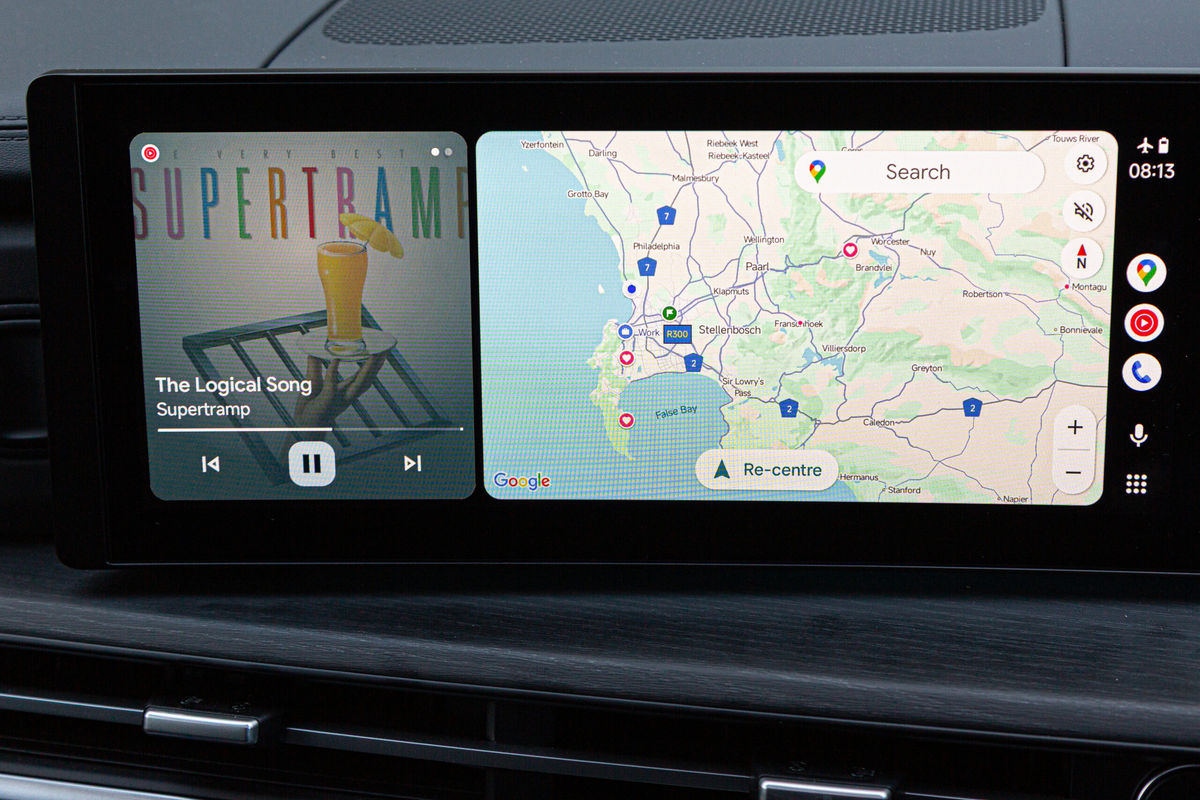
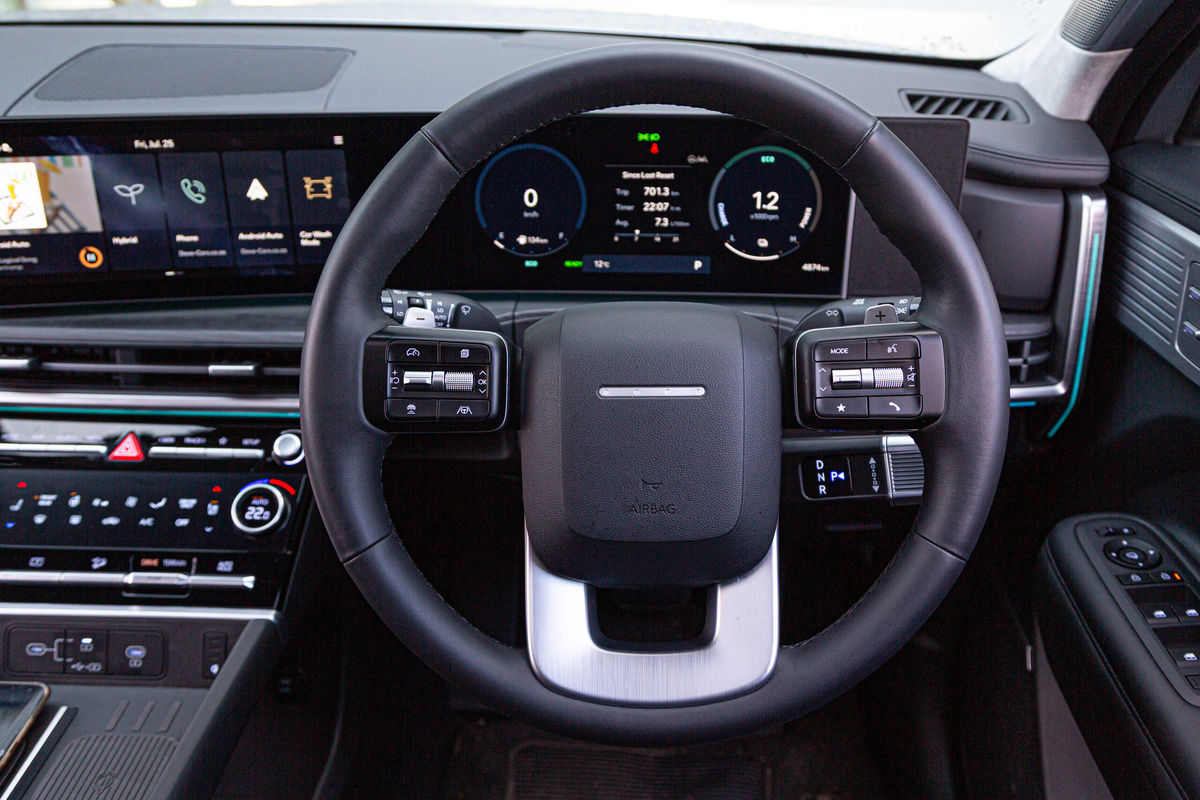
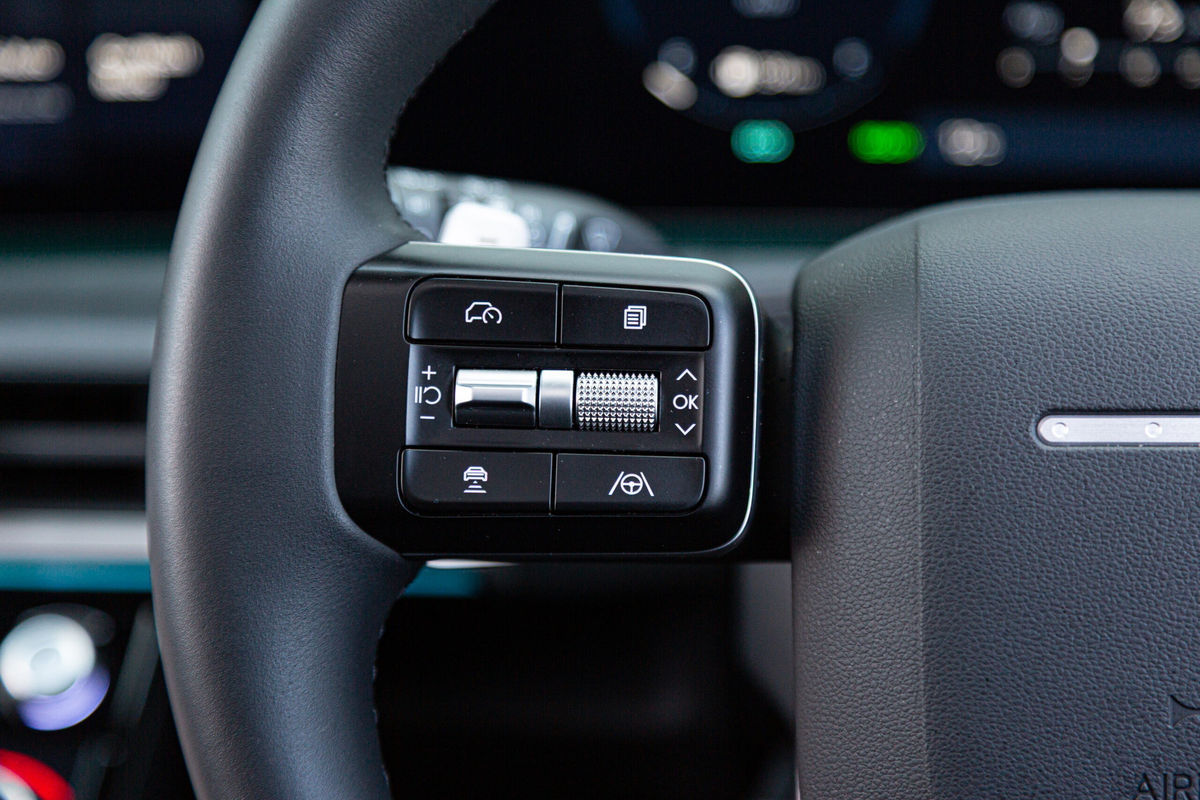
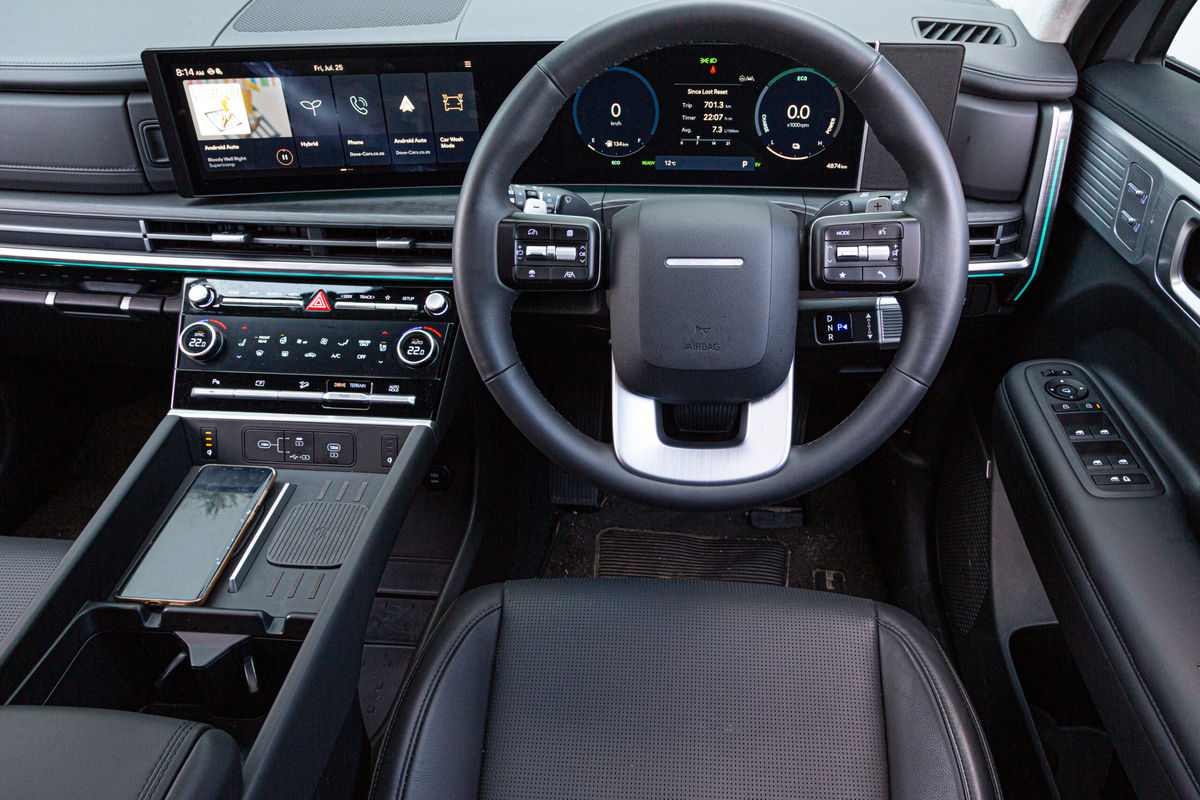
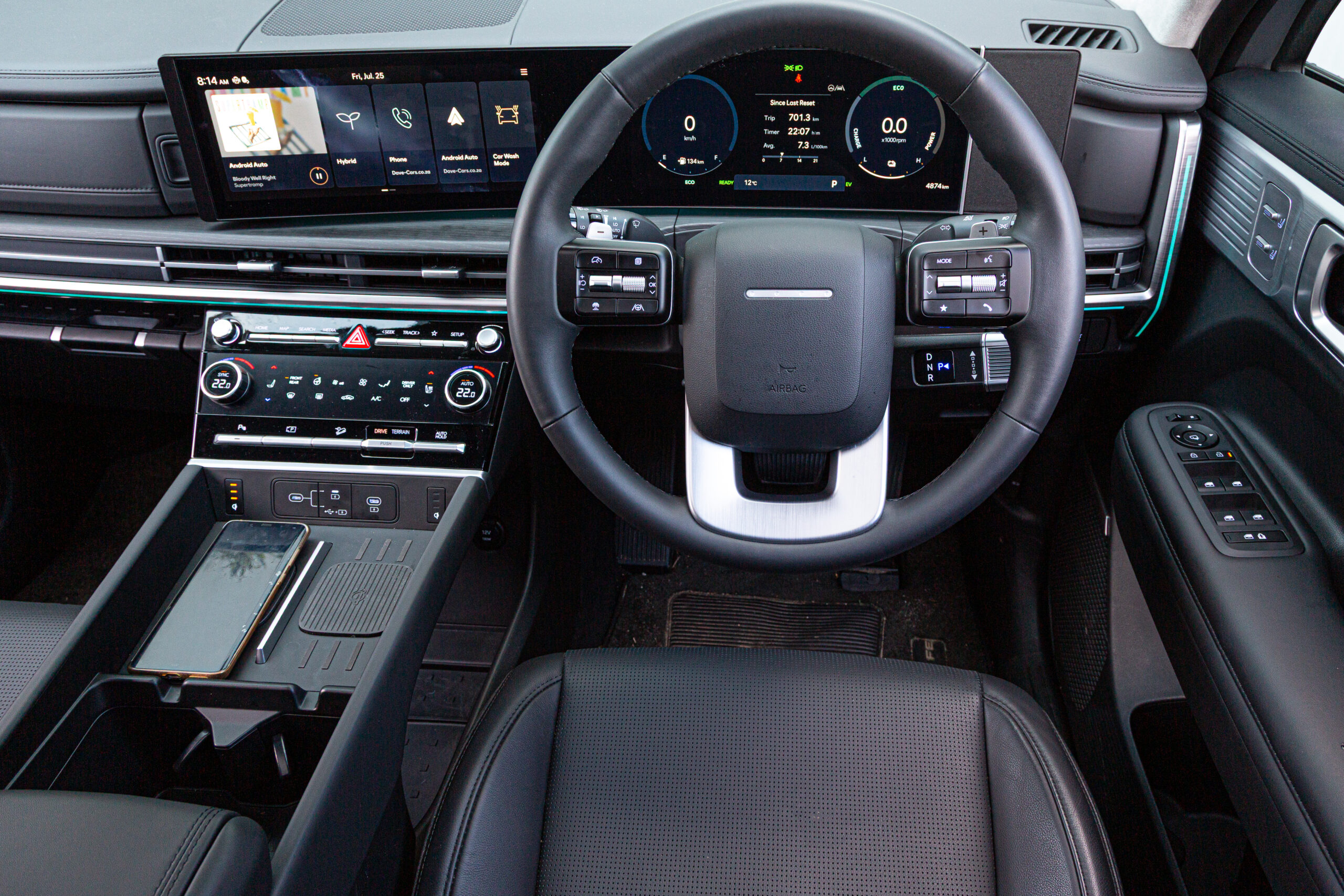
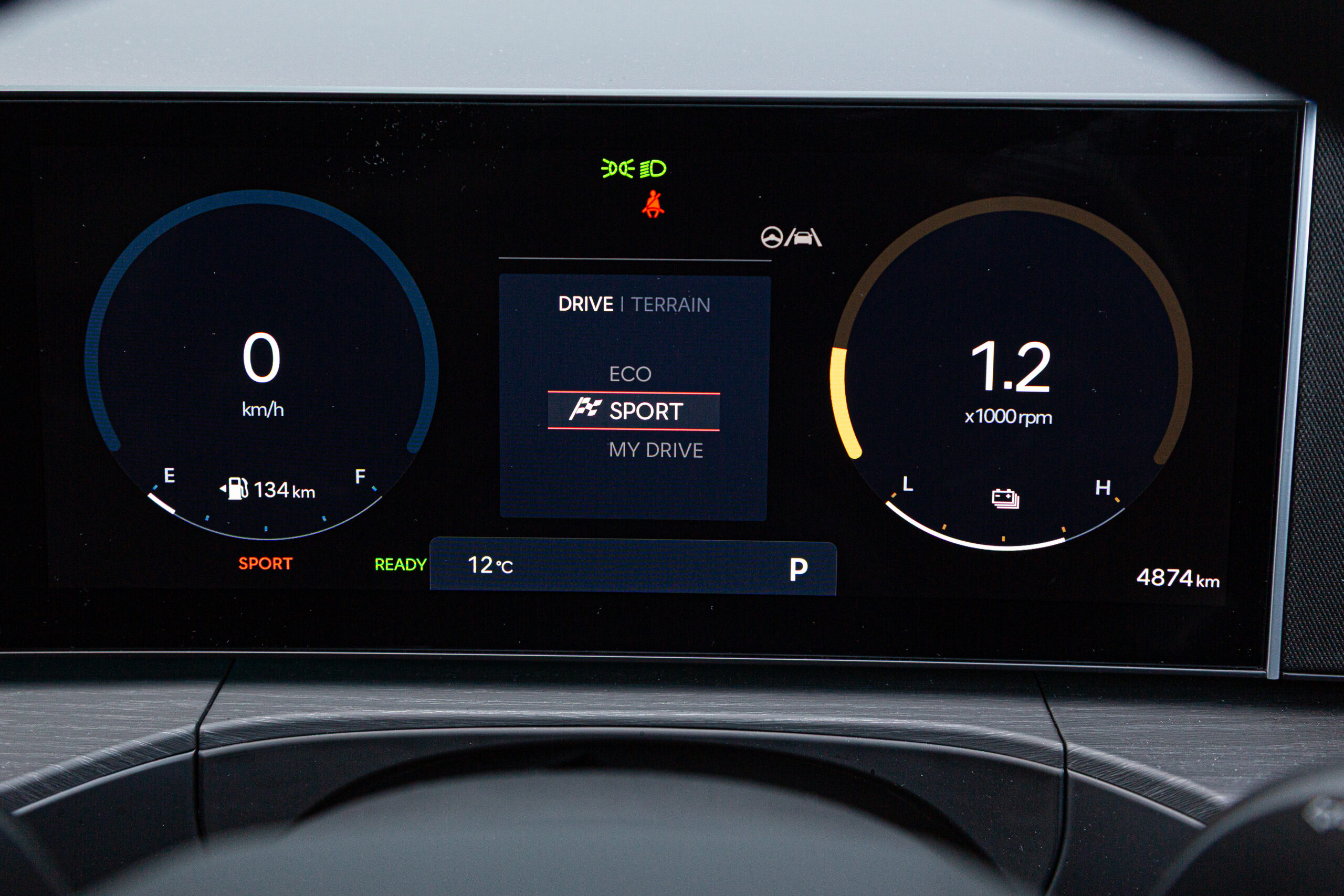
Visibility is good, thanks to a commanding driving position; the Dual Panoramic Curved Display, which combines the infotainment system’s 12.3-inch touchscreen, flanked by a 12.3-inch digital instrument cluster, is stylish, and the touch points – steering wheel, buttons, controls – feel solid and well laid out.
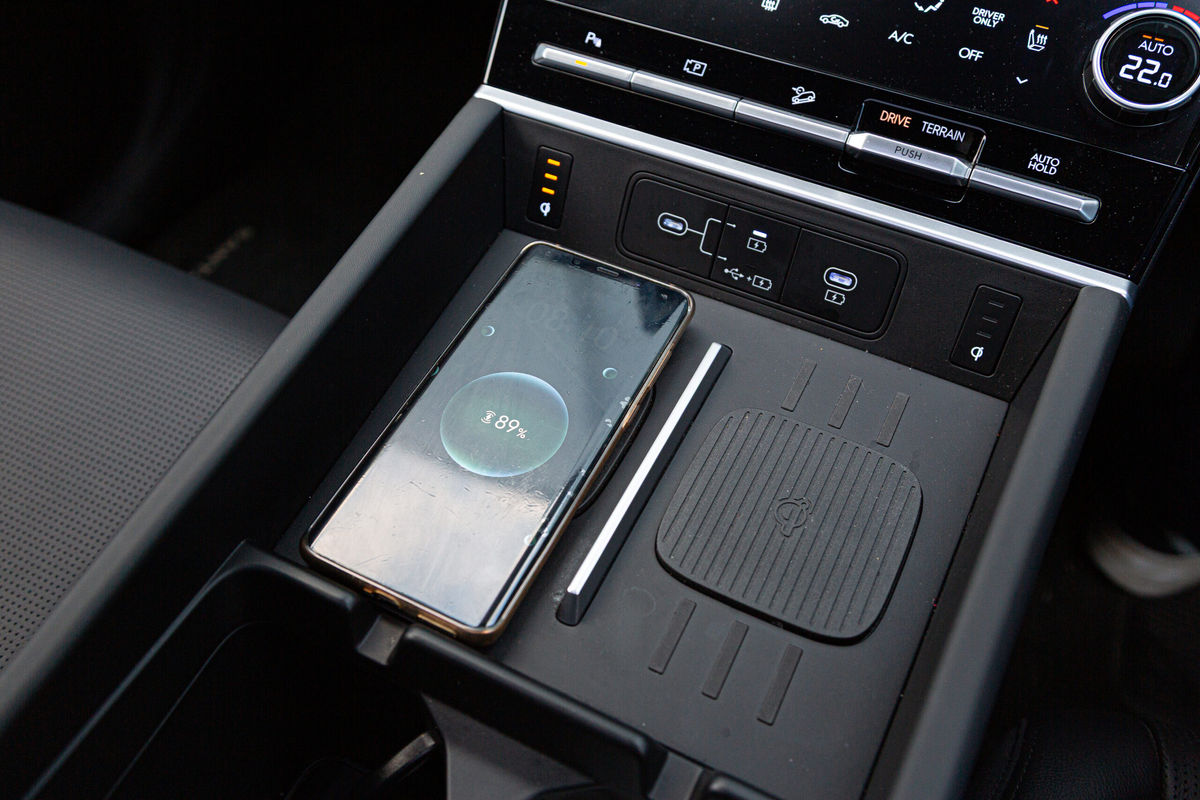
The new-look interior is eminently stylish. Notice no badging on the steering wheel and TWO charging pads.
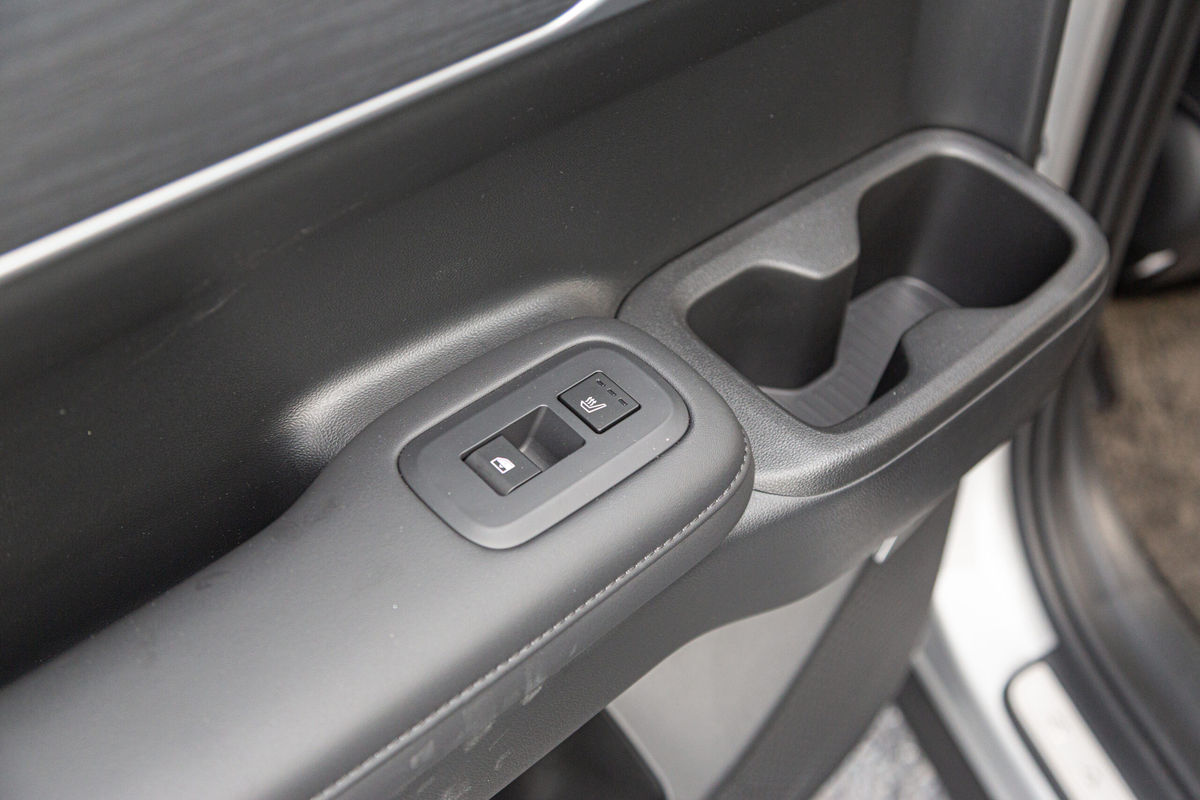
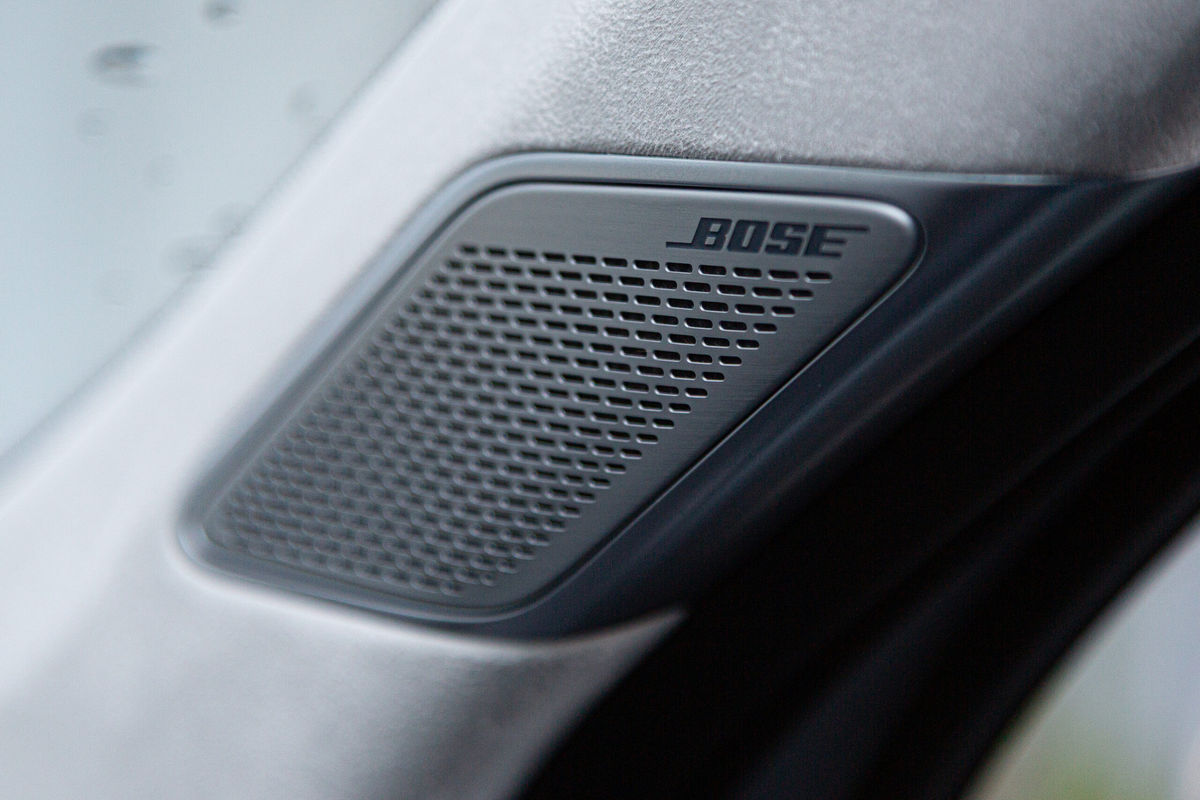
Hyundai has created a genuinely premium experience inside, starting with heated and ventilated front seats, plus a heating function for the ‘wheel and rear seats. The interior is further fitted with beautifully integrated dual wireless charging pads on the centre console and a high-quality Bose audio system.
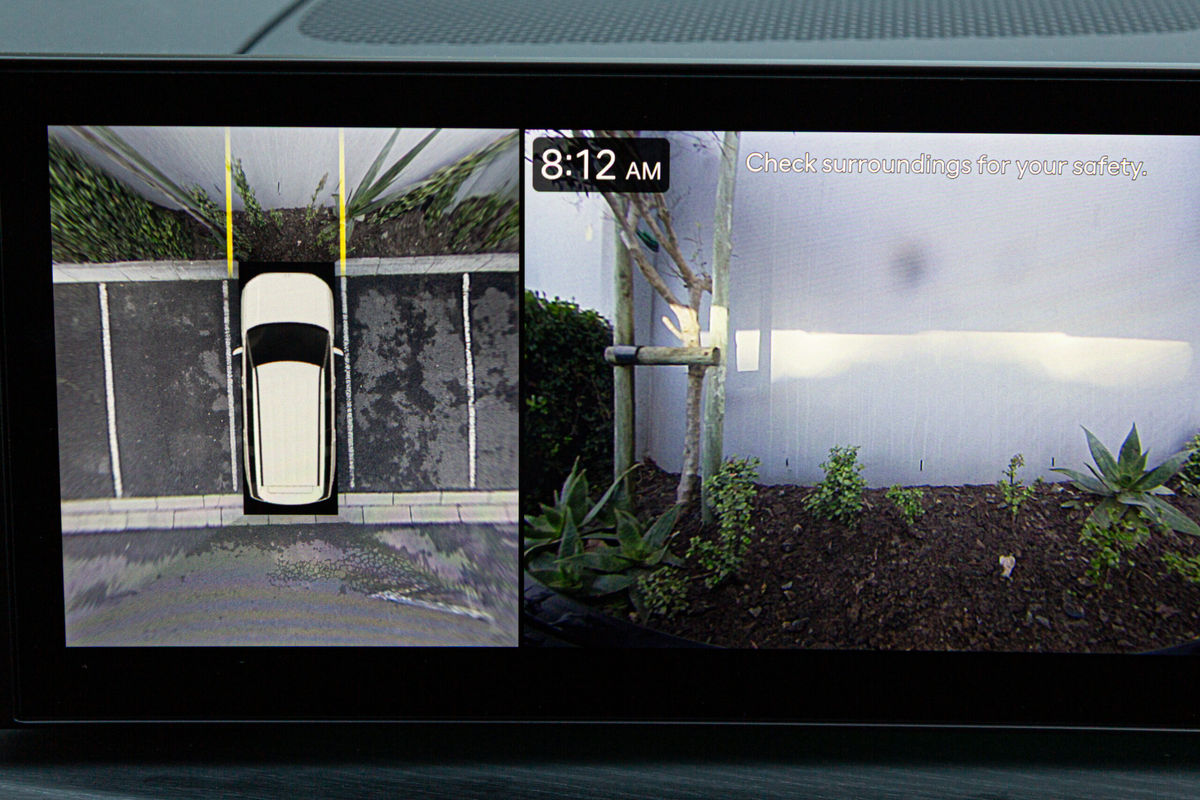
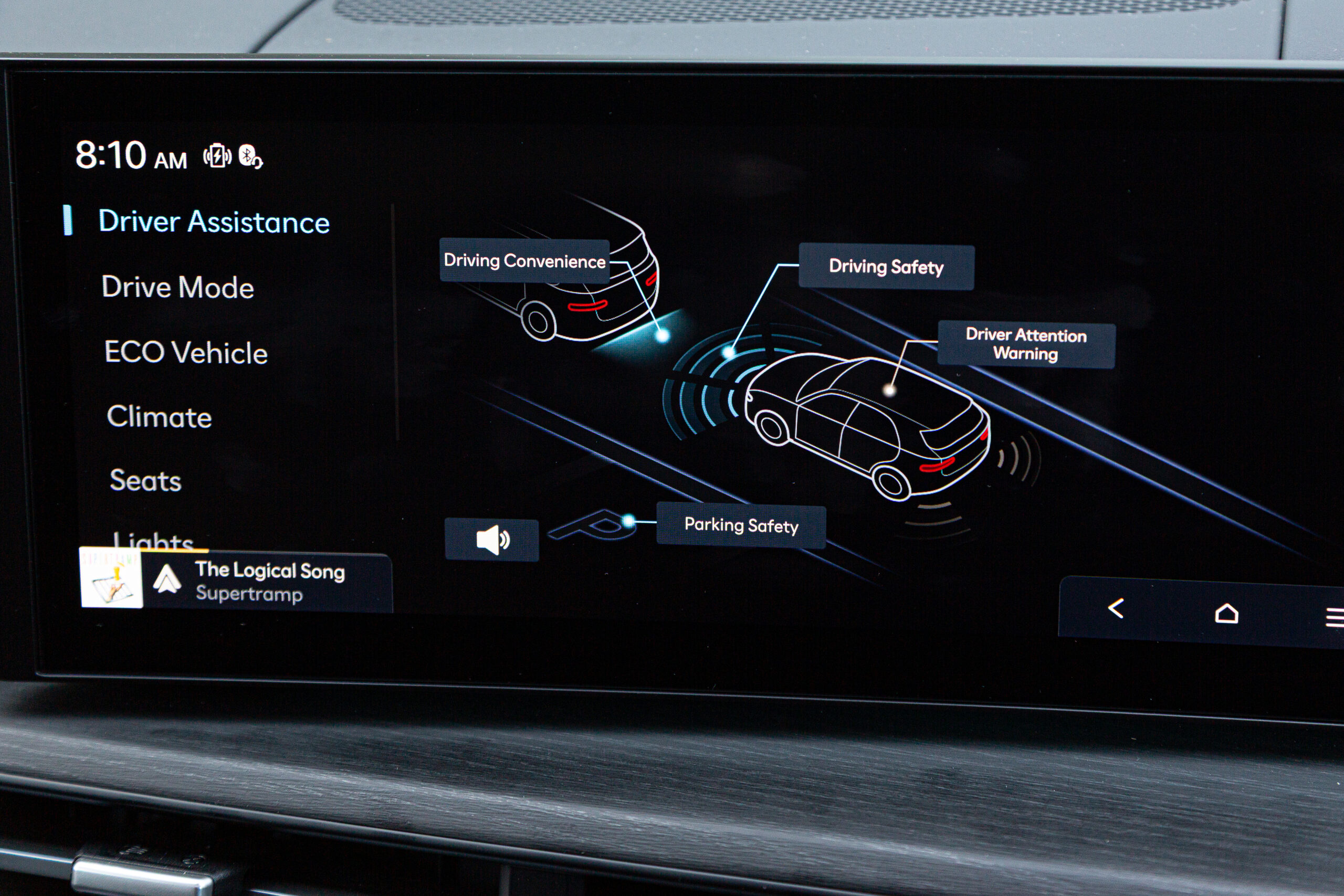
The 1.6T hybrid Elite AWD’s safety package includes 10 airbags and is positively laced with driver-assistance technology. Key features include a 360-degree camera system, blind-spot monitoring, lane-following assist, forward-collision avoidance (including junctions), as well as rear-occupant alert.
A comprehensive ADAS package is standard.
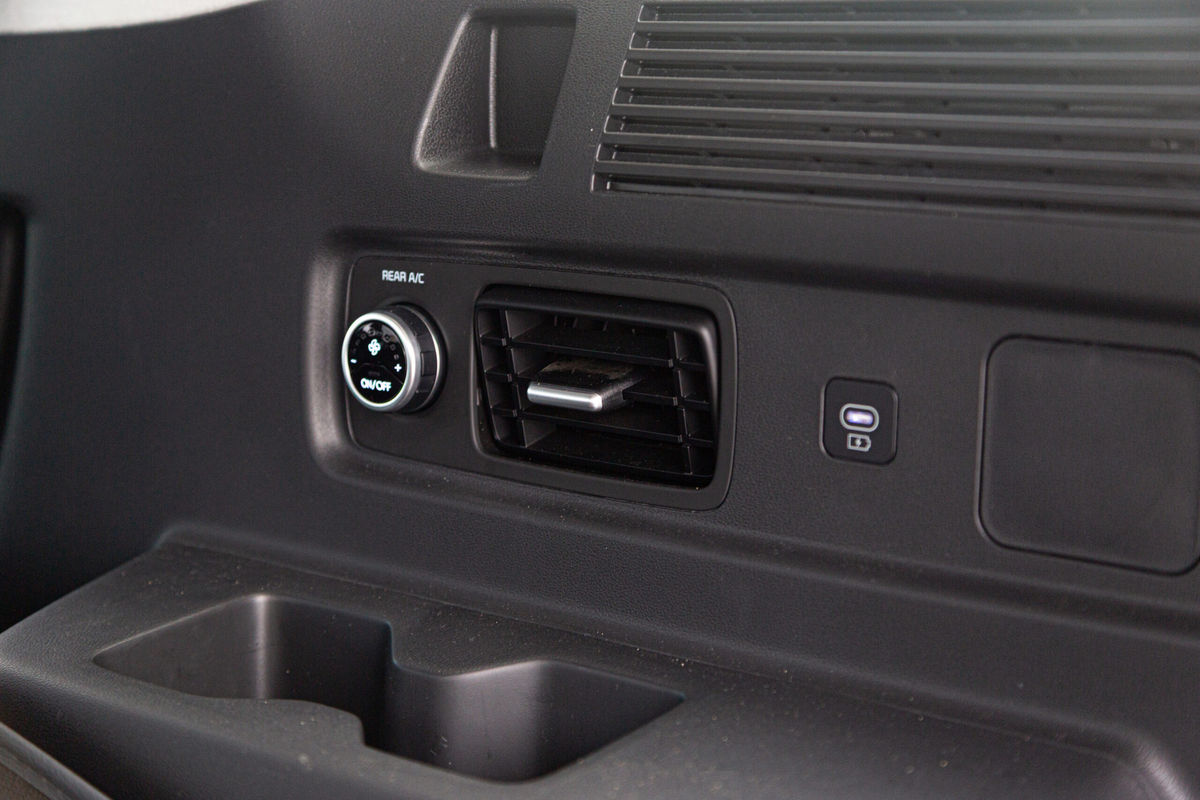
Considering its large family car billing, the Santa Fe has impressive practical details. We like the sliding drawer fitted to the back of the centre storage box between the front seats, as well as the fact that the top lid for that box is also hinged in a way that makes it accessible for those seated in the 2nd row.
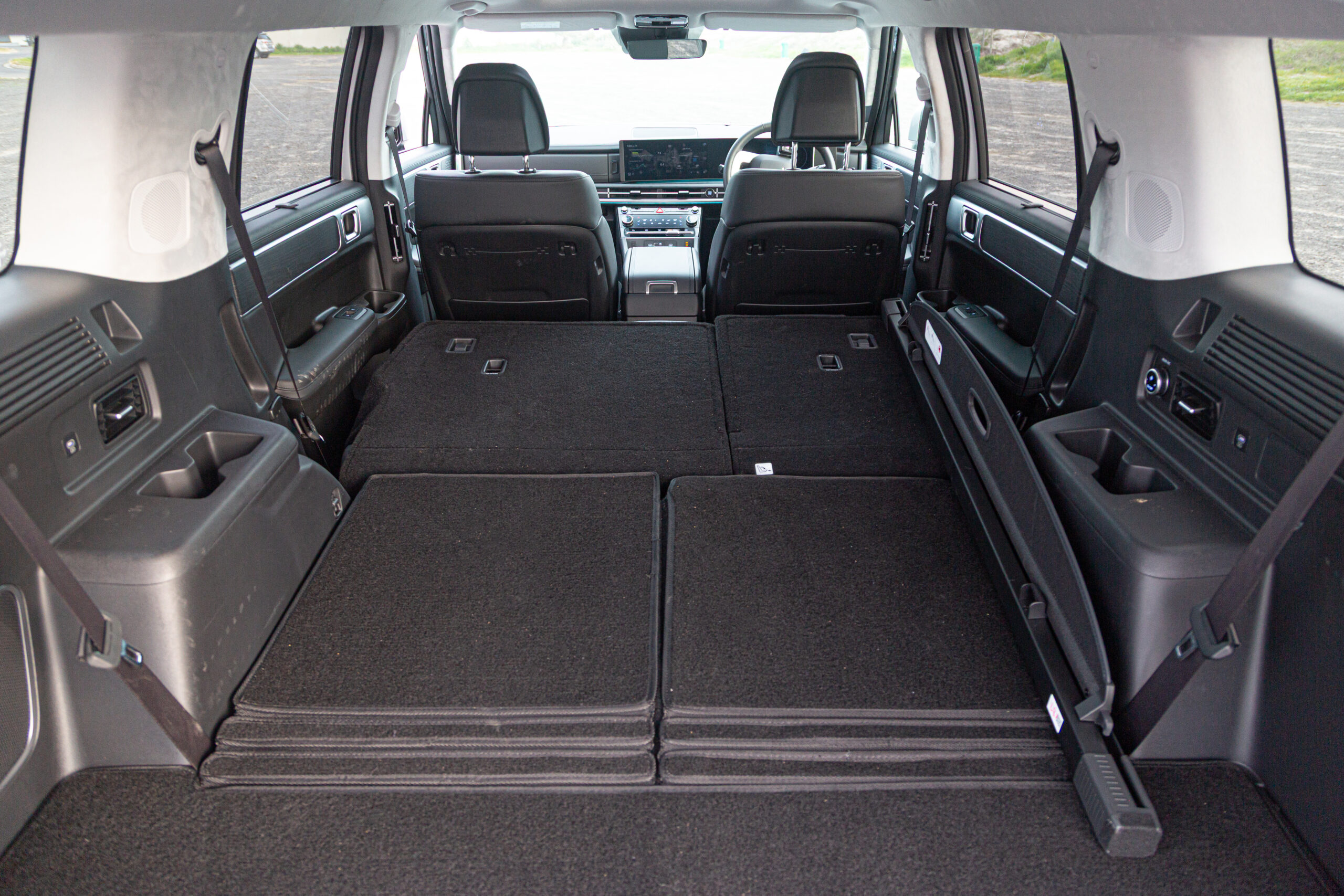
The Santa Fe is one of the more practical 3-row family SUVs.
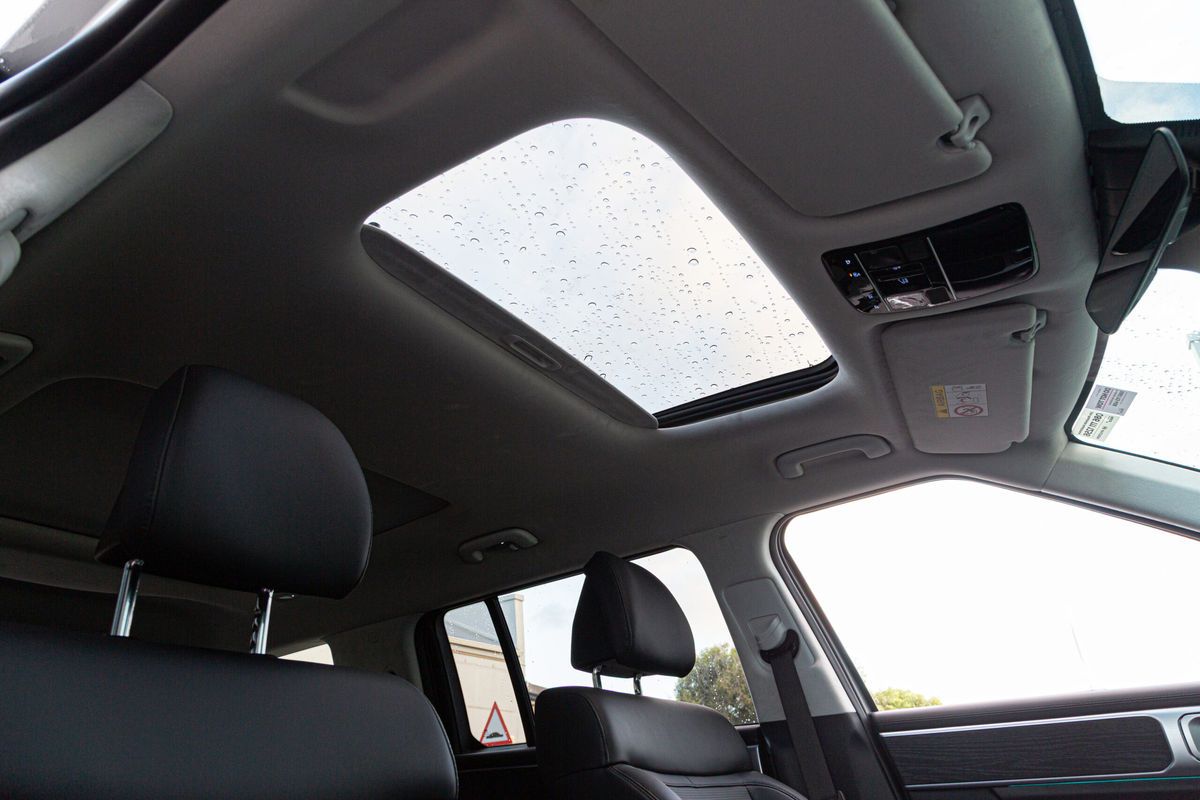
As for spaciousness, the Hyundai’s enlarged footprint (length, width and wheelbase) translates into more room for 2nd and 3rd row occupants compared with the outgoing model. Headroom is notably better, and legroom is less compromised, especially for adults in the 2nd row and children in the 3rd.
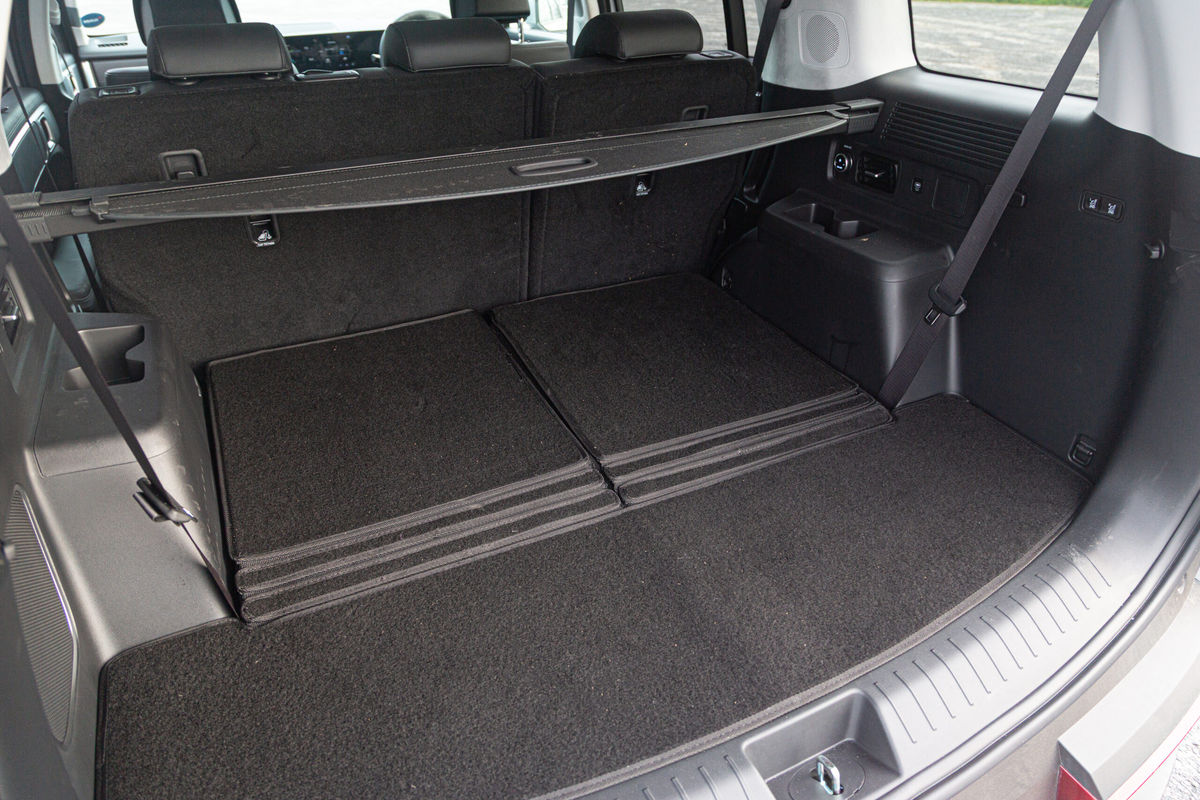
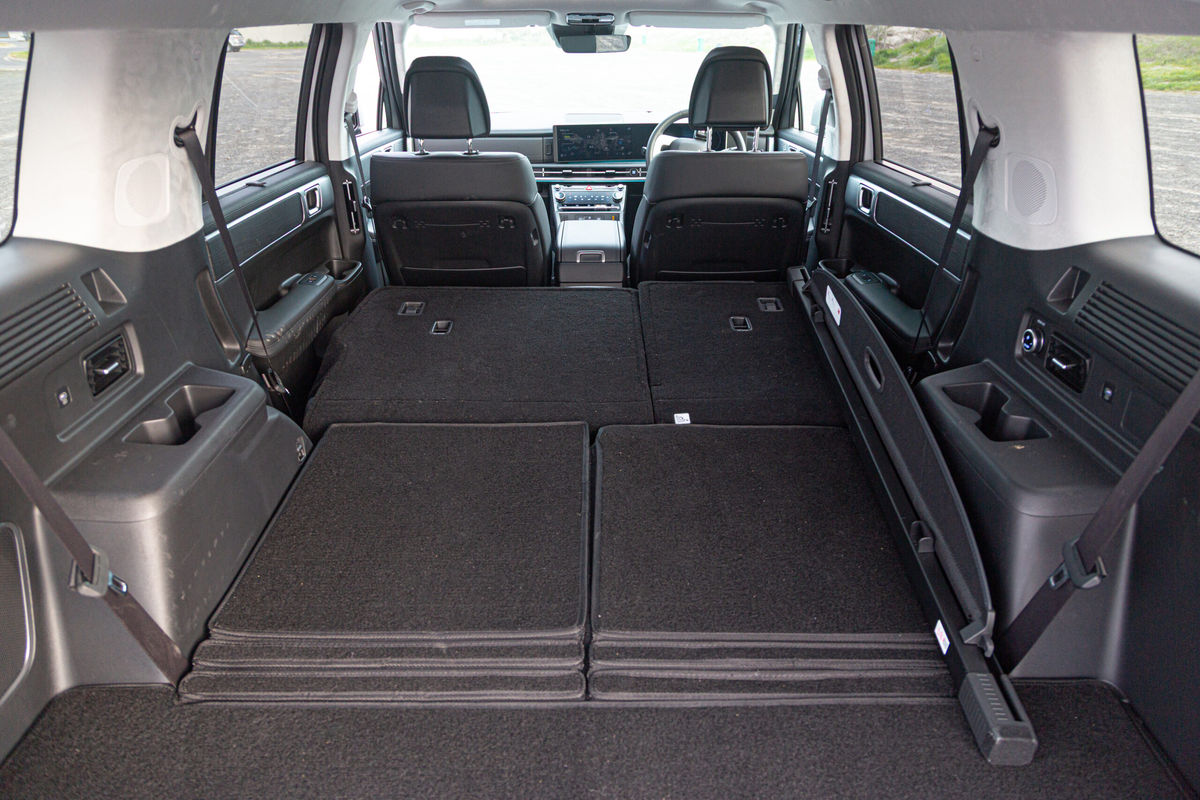
Even when all rows are fully occupied, the Santa Fe offers satisfactory load capacity. If you fold the 2nd and 3rd rows down, it frees up several acres of utility space, aided by a flat floor and practical load area.
Handling Ability & Ride Comfort
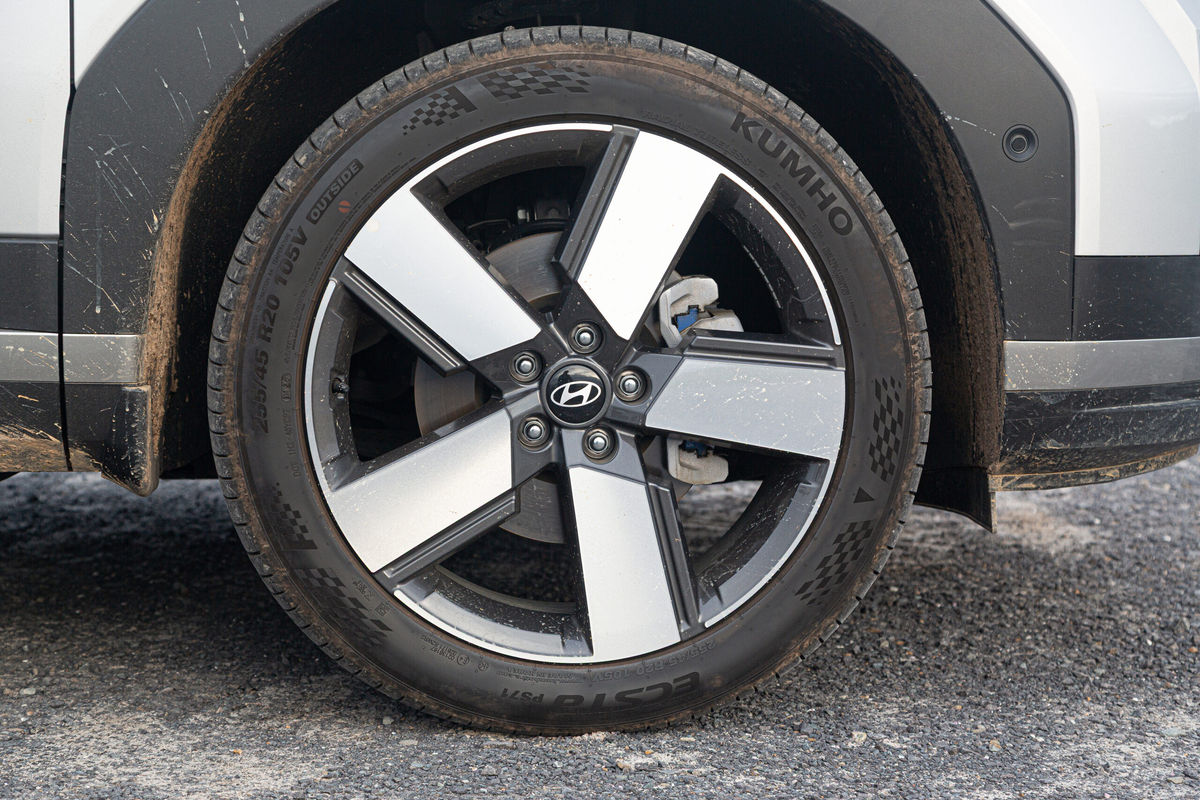
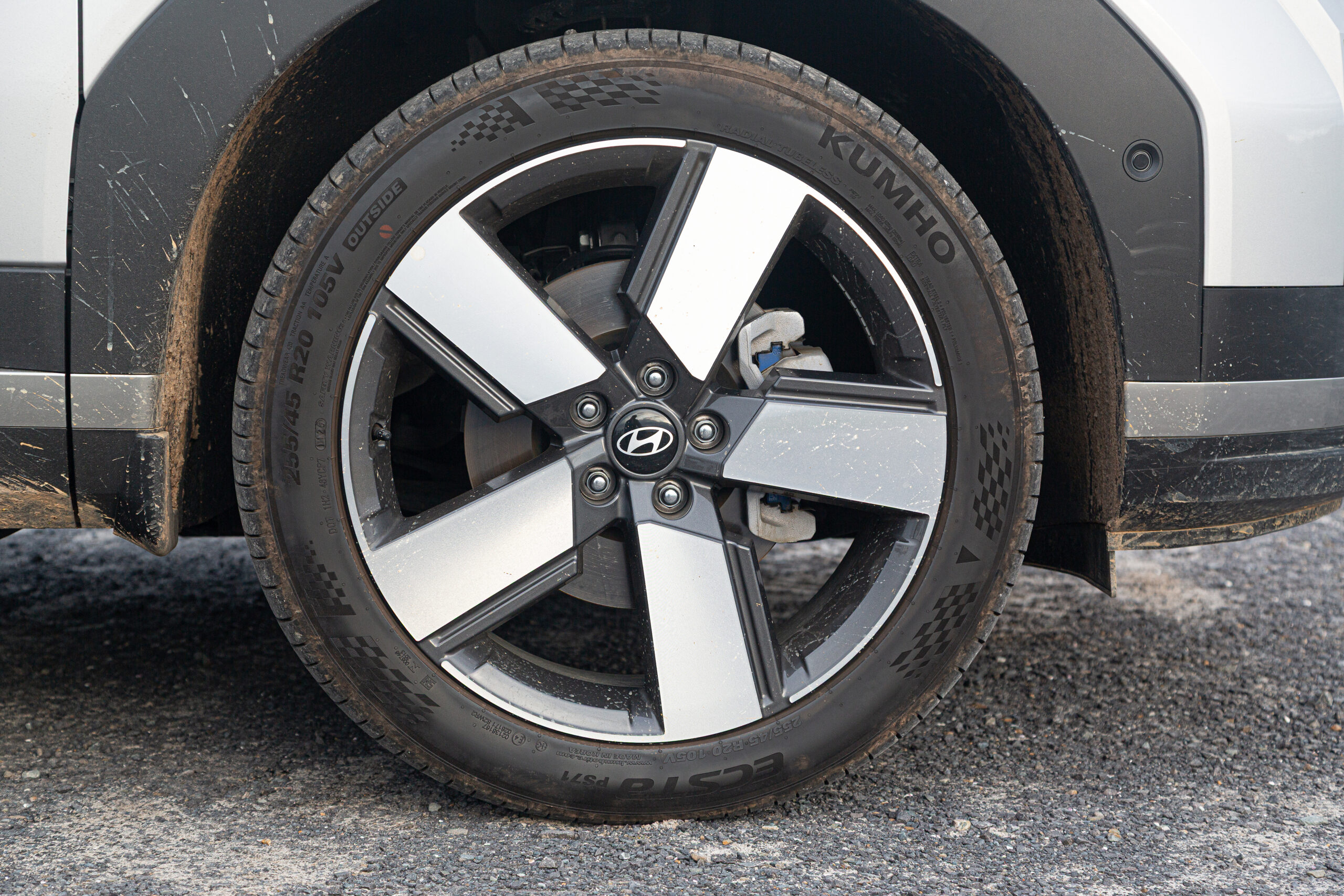
Handsome 20-inch alloy wheels clad in road-biased rubber.
The 5th-gen Santa Fe’s suspension has been refined by the addition of hydro bushings to the front and rear sub-frames, as well as increased length to the front bump stoppers (said to improve handling and improve pitch behaviour over speed bumps). Around town and on the open road, the Sante Fe delivers excellent ride quality, considering that it rides on large (20-inch) alloys fitted with 255/45 tyres.
But that doesn’t mean that the sizable Hyundai’s handling is sloppy at all. As a matter of fact, in terms of handling dynamics, it feels more like a normal car to drive than a top-heavy 7-seat SUV. In fact, its overall on-road sophistication is more akin to that of a Teutonic premium marque’s Executive SUV.
The Santa Fe much prefers traversing tarred roads…
However, when the Santa Fe traverses a gravel road, its ride quality deteriorates. Over rough, uneven surfaces, the suspension starts to feel a bit firm, and some harsh bumps transmit through the body.
It appears as if absolute cushioning over broken surfaces has been sacrificed at the altar of sharp body control on the road, which is a strength of the Santa Fe. It has to be said that the criticism is minor; most comparably sized crossovers fitted with 20-inch wheels and low-profile tyres will suffer the same fate.
It’s a front-wheel-driven vehicle, but it does offer a few off-road drive modes.
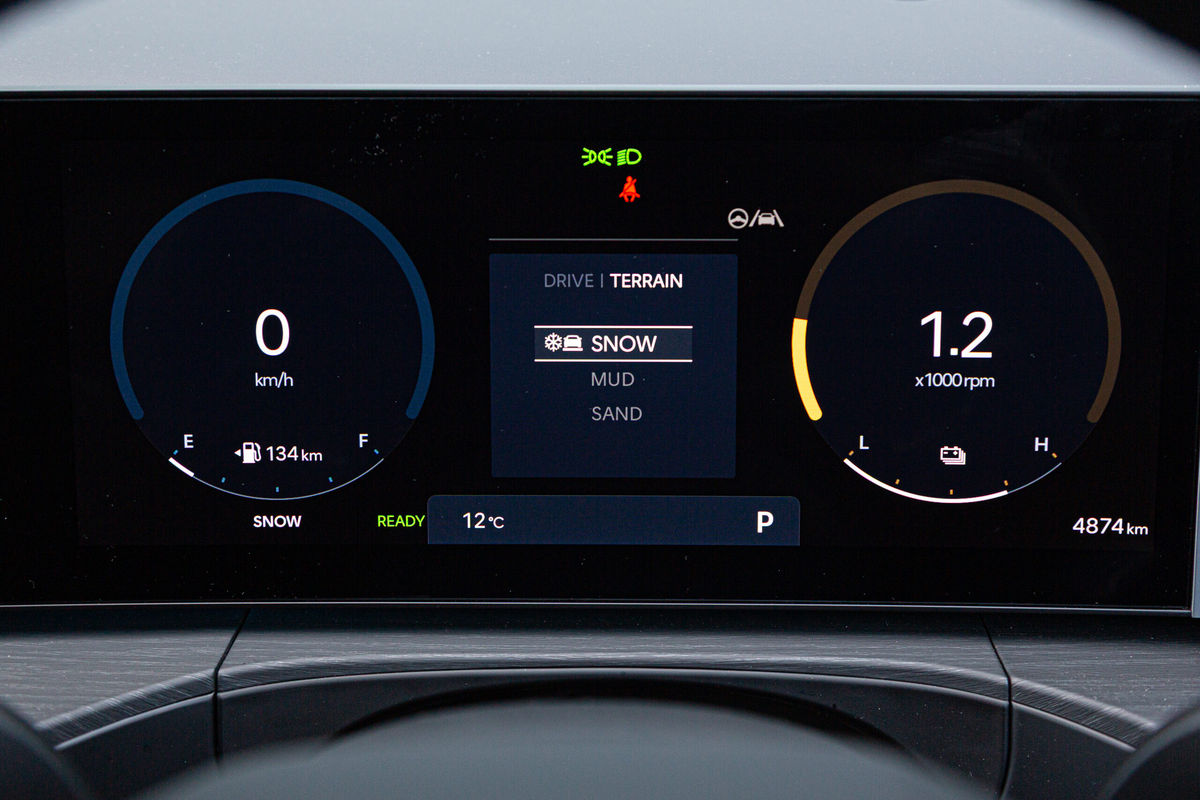
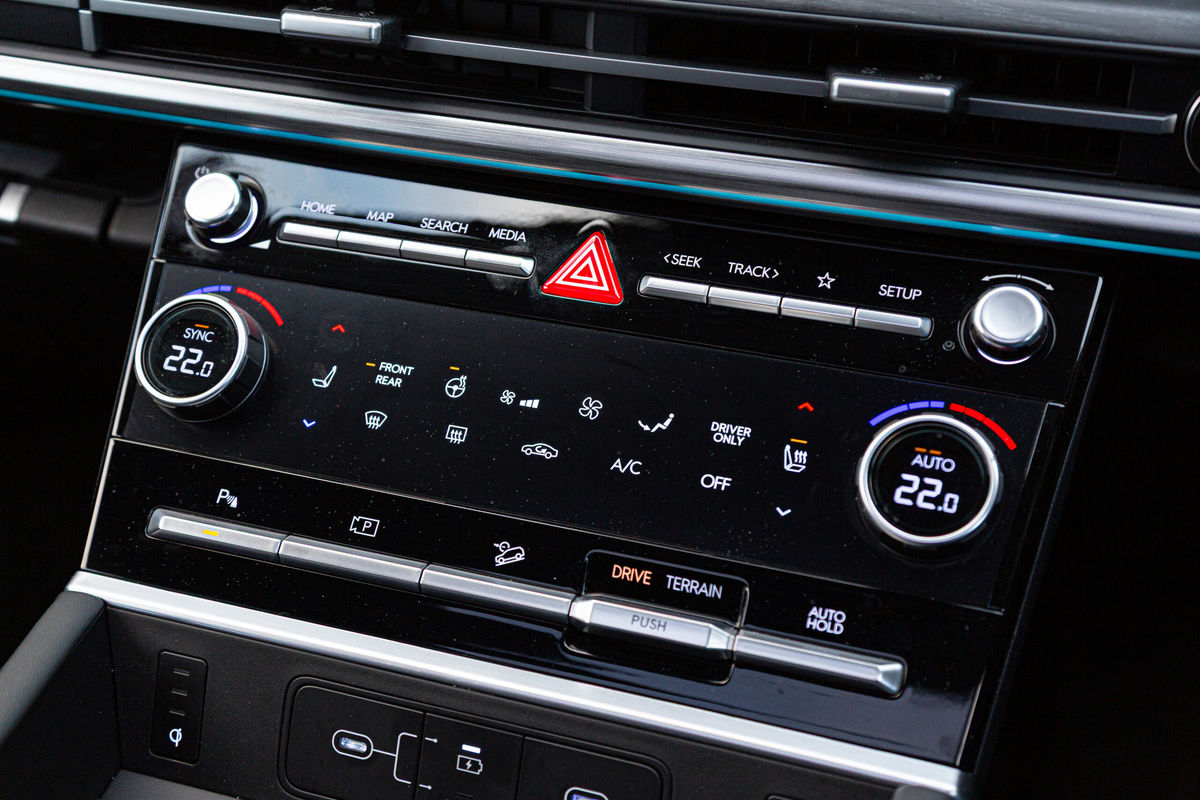
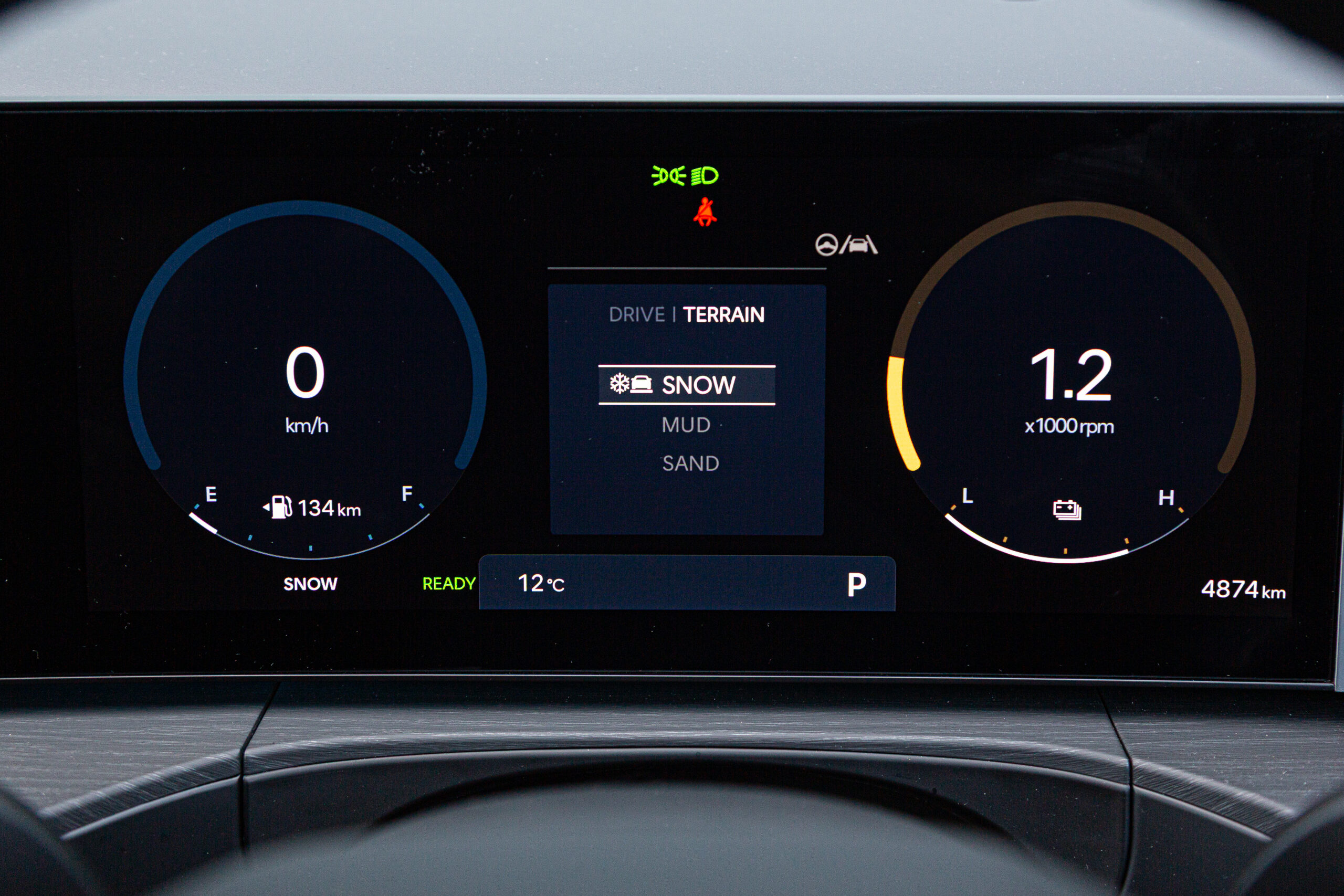
However, if you intend to travel on gravel or loose surfaces often, you’ll appreciate the torque boost the hybrid powertrain offers at low speeds. Apart from conventional drive modes, Sand, Mud and Snow settings are also available. Note that the ground clearance is fairly limited at 177 mm, though.
Hyundai Santa Fe’s Performance & Efficiency
The first Hyundai hybrid in South Africa.
Hyundai’s hybrid powertrain combines a 1.6-litre 4-cylinder turbopetrol with a 44 kW electric motor to deliver outputs of 175 kW and 367 Nm, sent to all 4 wheels via a 6-speed auto transmission. This gives the Santa Fe capable performance, especially in city driving and when executing overtaking manoeuvres.
In fact, based on their claimed 0-100 kph times, the Hyundai is faster over the benchmark sprint than its turbodiesel cousin from Kia. Our test data confirmed the Santa Fe sprinted to 100 kph in 8.73 seconds.
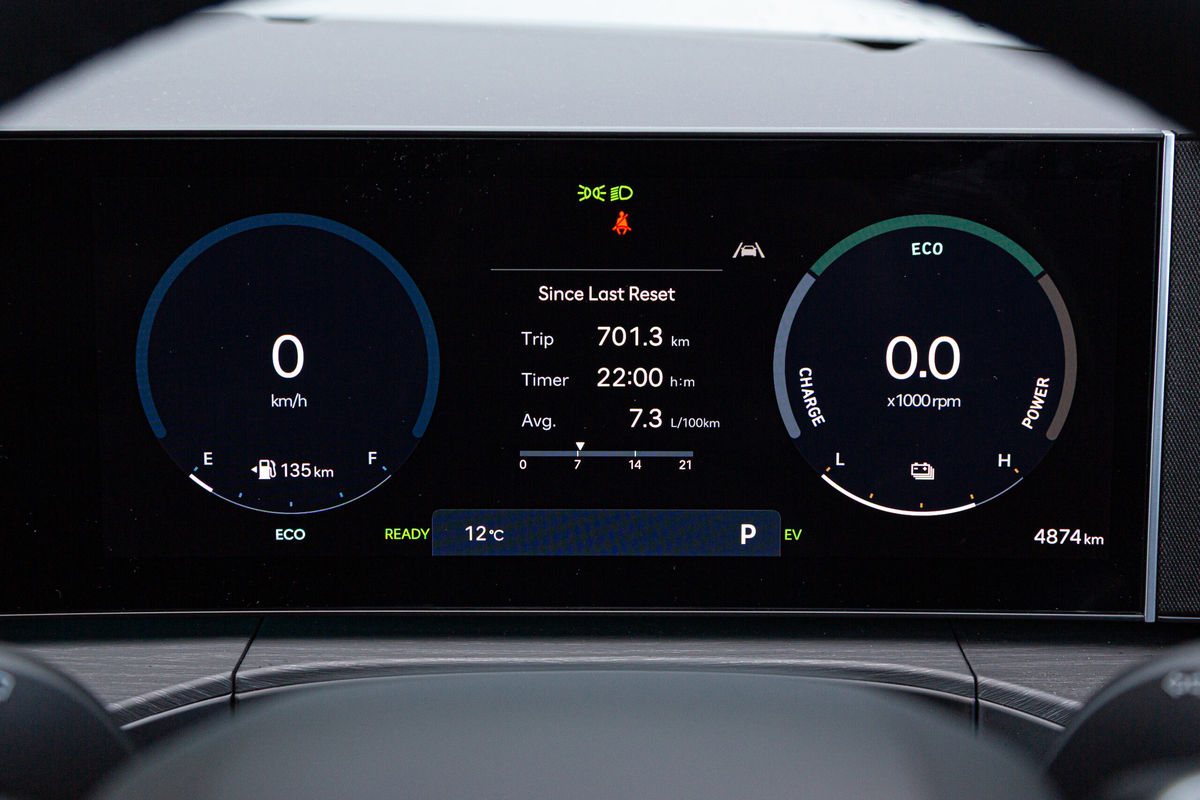
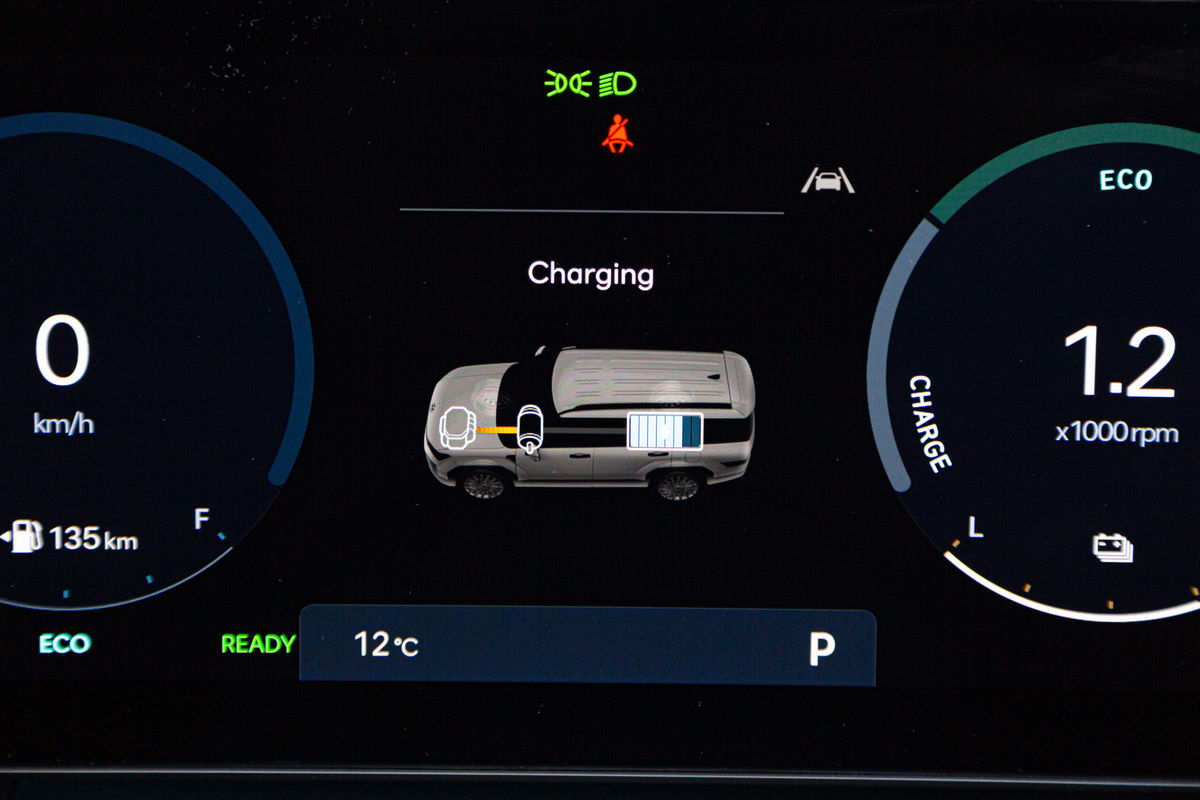
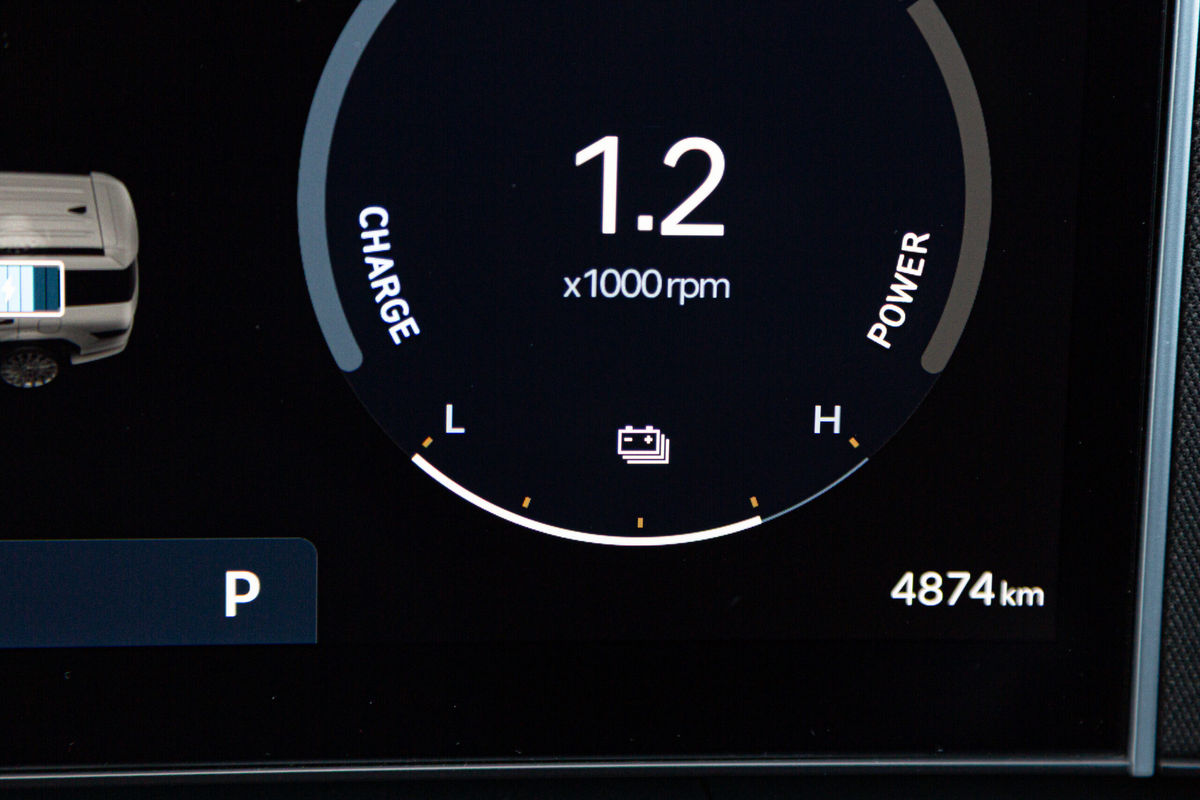
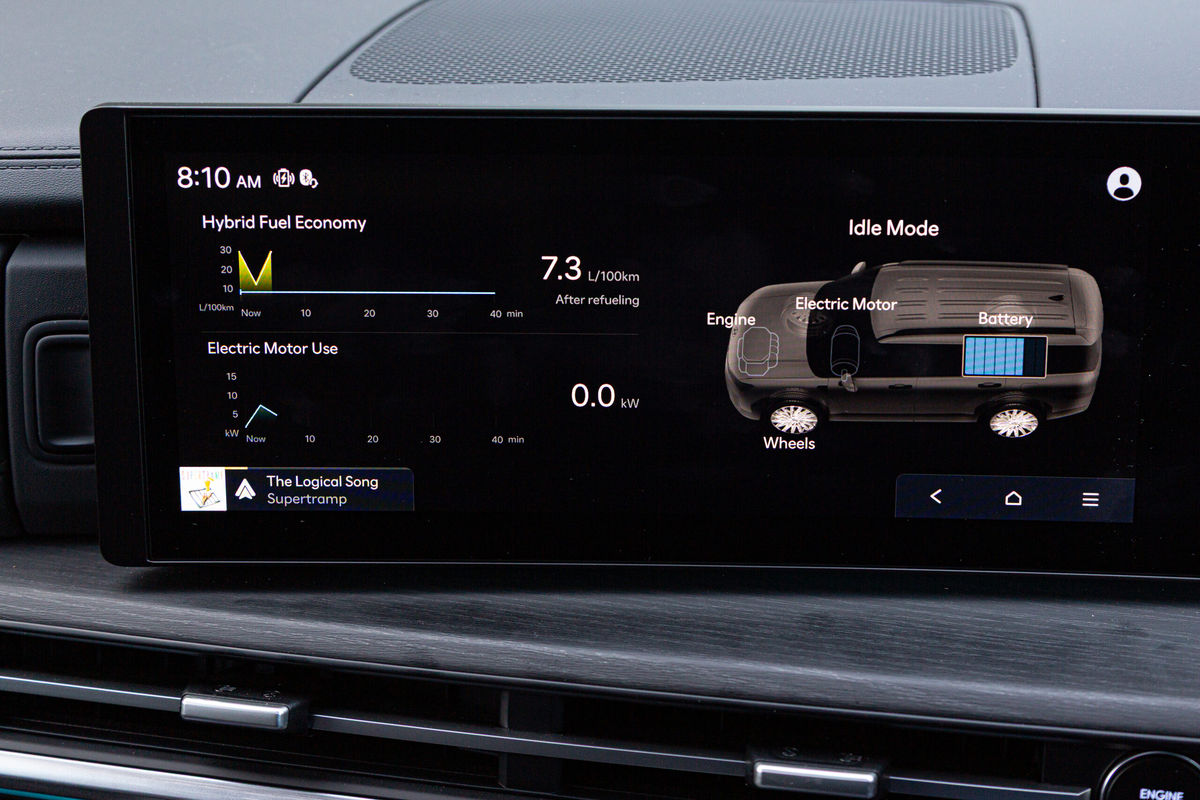
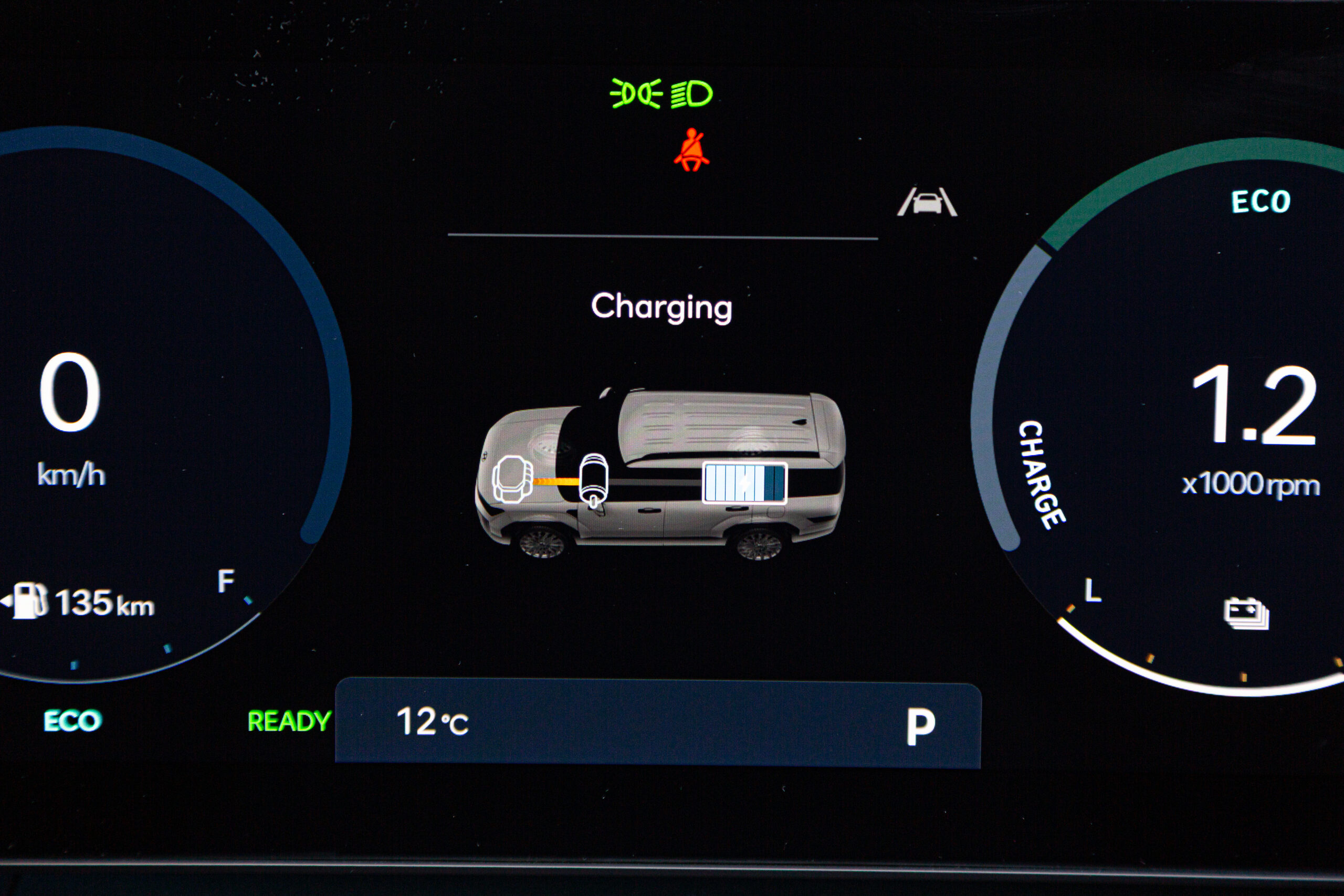
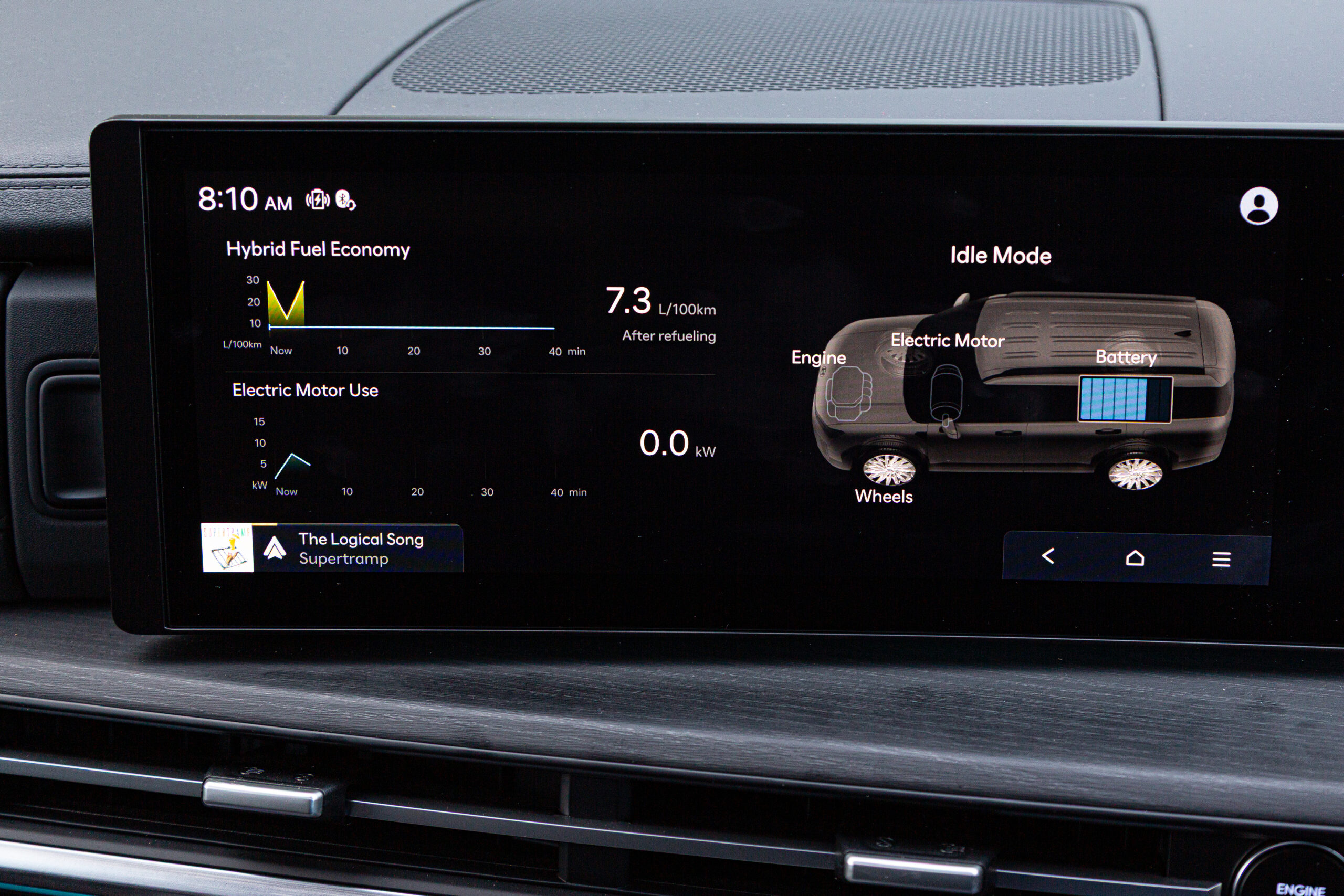
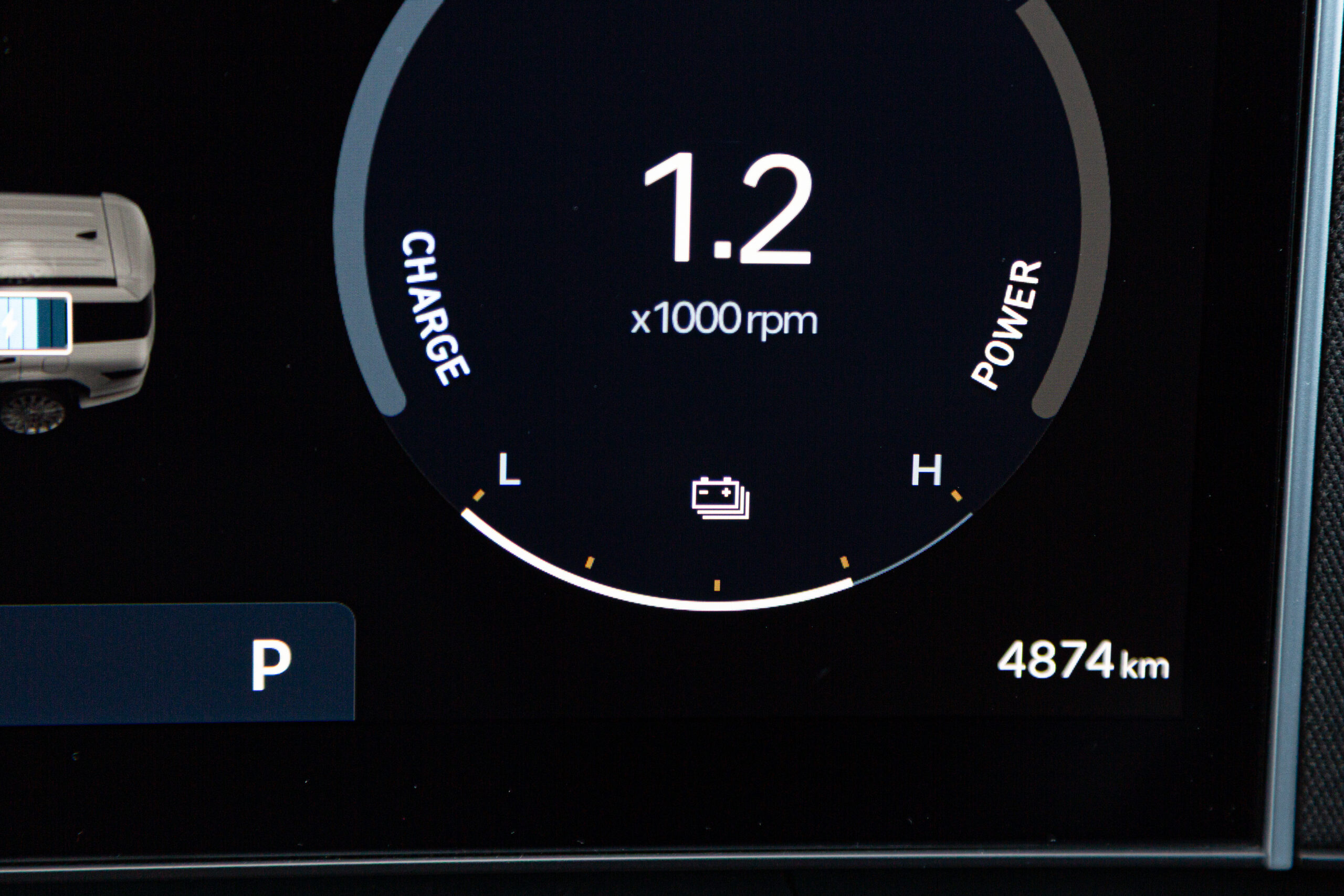
Neat graphics display the battery’s level of charge and the powertrain’s operating mode.
And while it won’t embarrass a turbodiesel V6 (such as in the Ford Everest), in daily use the Santa Fe’s performance feels wholly adequate – and often more pleasant because of the silky electric assist that soothes out transitions. It is worth noting that it is possible to drive on electric power alone at speeds of up to 40 kph, and if you’re careful with your accelerator pedal inputs, for meaningful distances too…
Impressive fuel economy and performance for a vehicle of this size.
A talking point for many potential buyers will be fuel economy, particularly given the fact that the previous model’s turbodiesel was admired for its efficiency and the Kia Sorento soldiers on with that very same powerplant. The Hyundai’s claim of 7.5 L/100 km is realistic and excellent for a vehicle of this size and weight. It’s not often a test vehicle matches the fuel economy claimed by its manufacturer.
The hybrid battery is self-charging – no need for the driver to plug it in.
By comparison, Kia claims a consumption figure of 6 L/100km for the Sorento, which, on the face of it, seems to indicate vastly better economy, but in reality, that vehicle consumes closer to 7 L/100km, so the gap is not that wide in the real world. Where the Sorento does stretch its efficiency-related lead is on the topic of cruising range – the Kia offers a significantly bigger tank (80 litres), so could do well over 1 000 km between refuels, while the Santa Fe’s 67-litre tank is likely to give it a range of around 890 km.
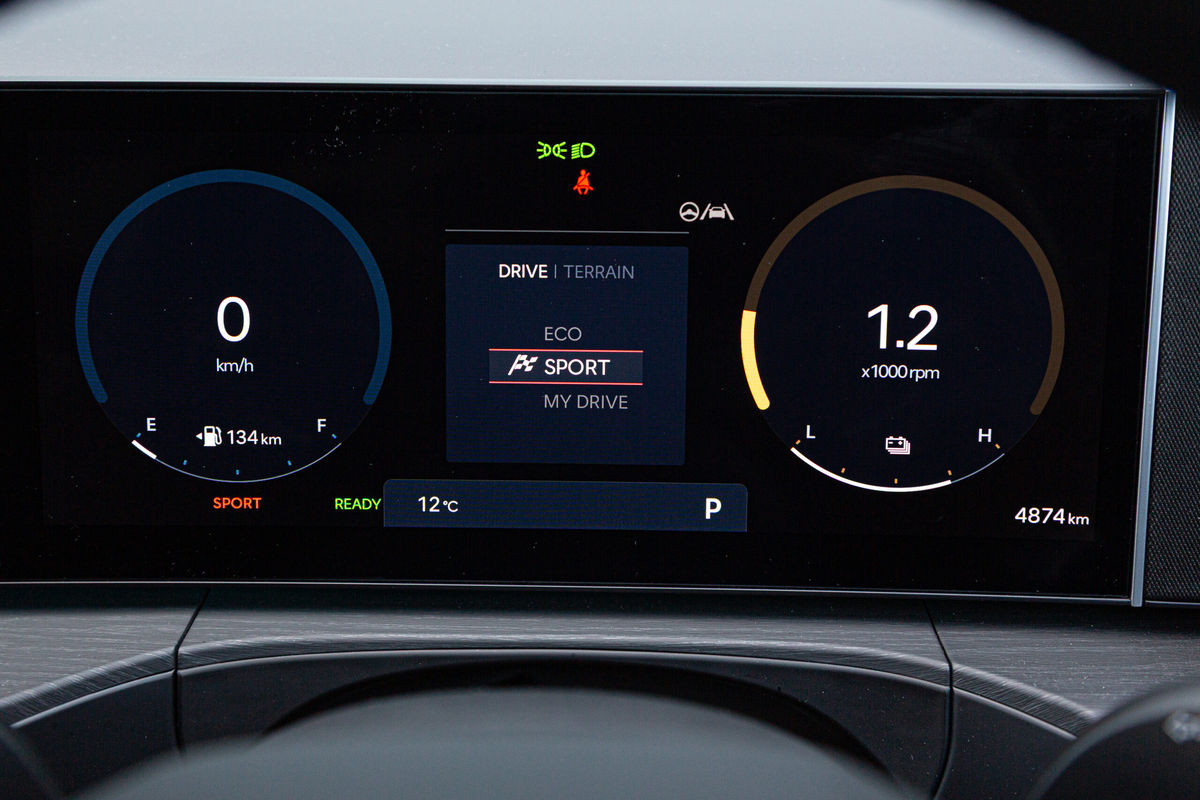
The drive modes are simple to understand and select.
We think a potentially more problematic issue (for some buyers) will be towing capacity. The Sorento has a claimed (braked) towing capability of 2 000 kg, while the Santa Fe’s rating is 1 650 kg. That said, if you’re a serious haulier, you may want to look at the Everest instead (3 500 kg braked tow rating).
Hyundai Santa Fe price and after-sales support
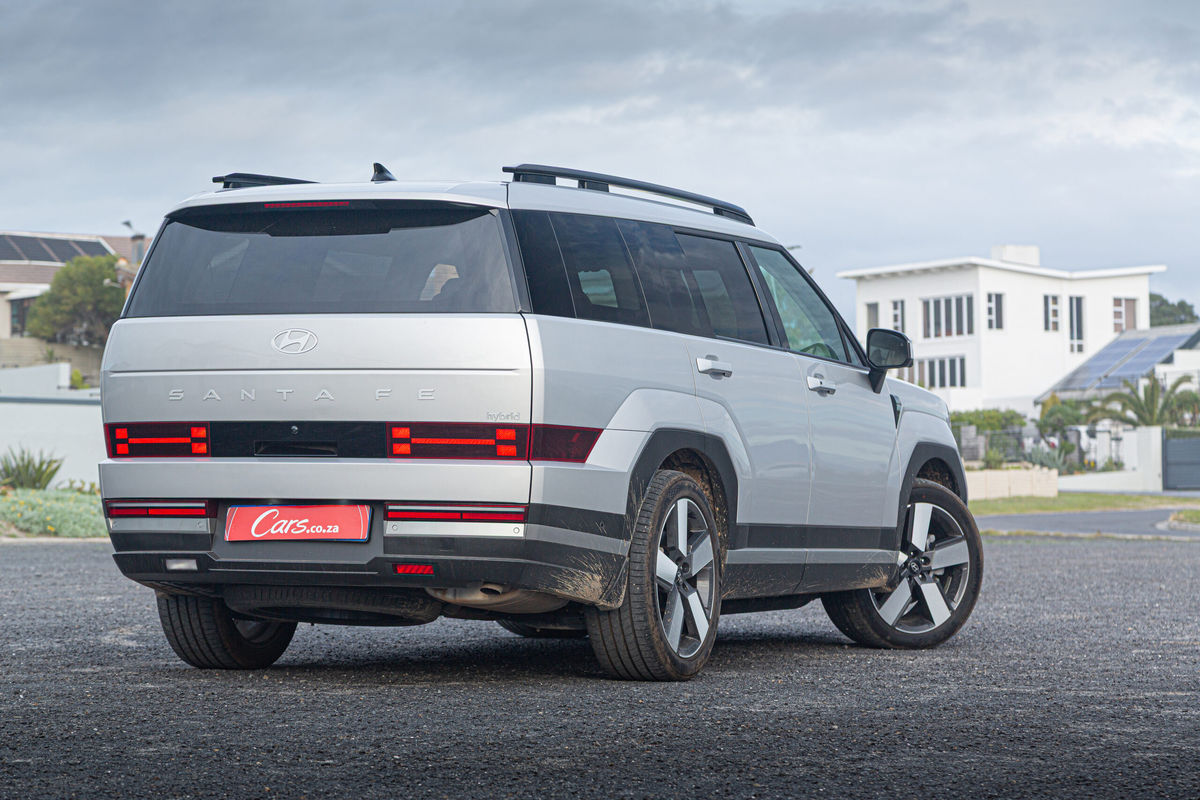
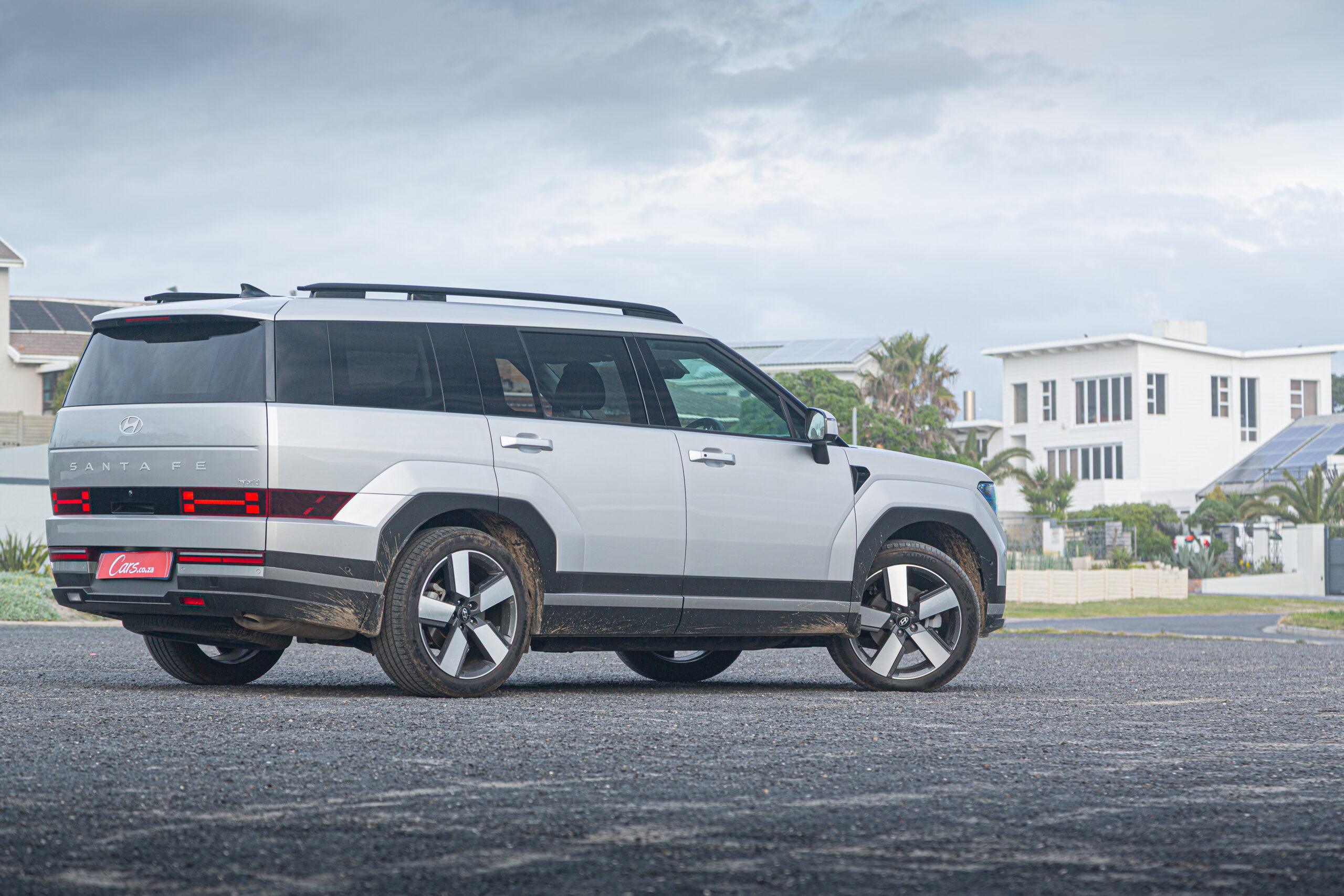
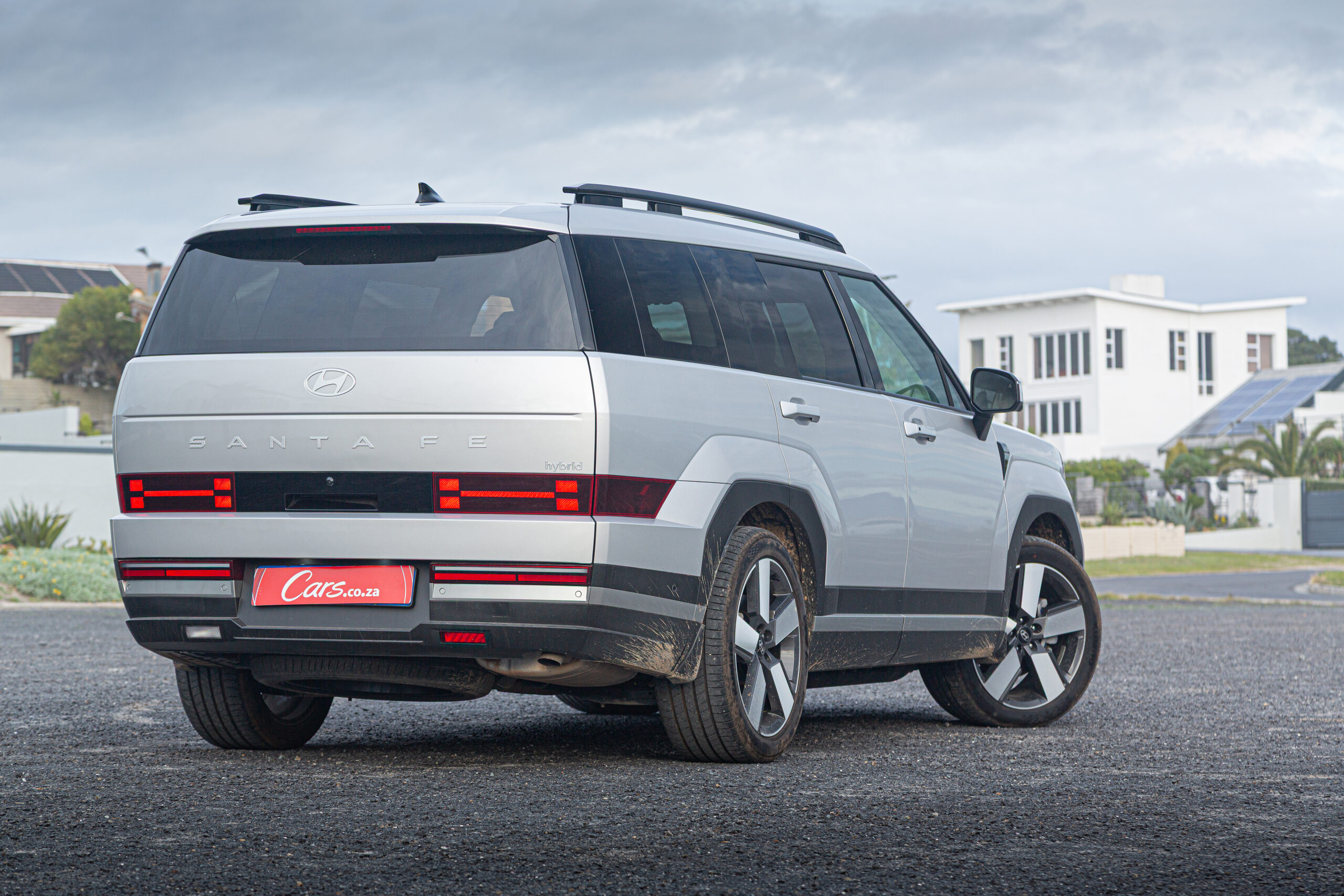
The rear 3-quarter view isn’t the Santa Fe’s most flattering aspect.
At R1 249 900 (correct in September 2025), the Hyundai Santa Fe 1.6T hybrid Elite AWD is definitely not cheap. It’s pitched at the premium end of the large SUV market.
But you do get a lot for that money: the hybrid system, full AWD, a generous equipment list, excellent safety and driver aids, and the warranty/after-sales coverage is strong (comprising a 5-year/150 000 km vehicle warranty and an additional 2-year/50 000 km powertrain warranty) and a 6-year/90 000 km service plan. In addition, the hybrid battery pack is covered by a separate 8-year/160 000 km warranty.
Verdict
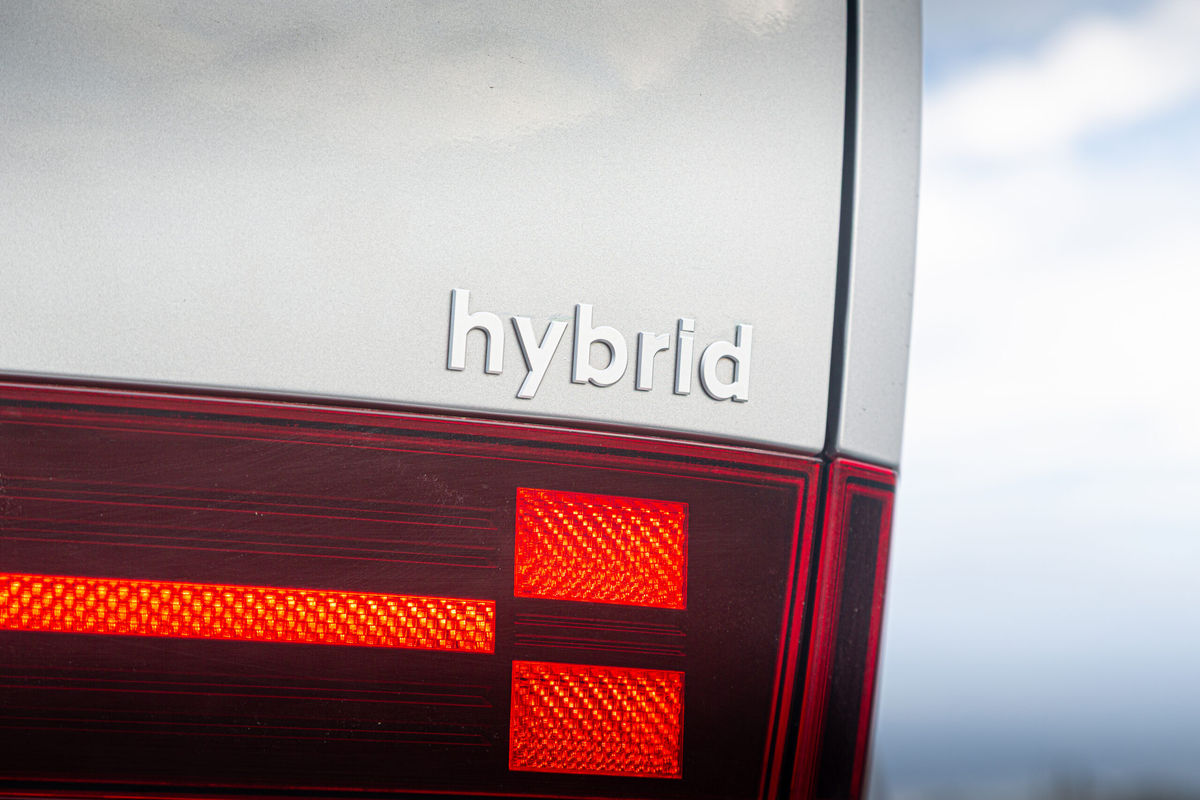
The H-pattern light signature of the rear lights mirrors the front.
The Hyundai Santa Fe 1.6T hybrid Elite AWD is a compelling package. In a market awash with large SUVs that “play it safe”, the Santa Fe is brave – its boxy styling divides opinion, but in an age of cookie-cutter designs, it’s a stand-out design. It turns heads, draws comments, and the cabin’s premium materials, excellent build, clever features, and real spaciousness don’t pale in comparison with the bold exterior.
It’s neither the punchiest SUV in the pack (the Everest V6 will have that edge), nor is its ride the softest (over severely broken roads), but the trade-offs are minor in the context of what it gets right. For those who want luxury, tech, space, and efficiency in a large 7-seater, the Santa Fe deserves consideration.
Frequently Asked Questions
What is the price of the new Hyundai Santa Fe in South Africa?
The new, fifth-generation Hyundai Santa Fe is available in a single variant: the 1.6T Hybrid Elite AWD, which is priced at R1 249 900.
What engine powers the new Hyundai Santa Fe in South Africa?
The South African model is powered by a hybrid system consisting of a 1.6-litre turbocharged four-cylinder petrol engine and an electric motor. The combined system output is 175 kW and 367 Nm, delivered to all four wheels.
What is the claimed fuel consumption for the Santa Fe Hybrid?
Hyundai claims a combined fuel consumption figure of 7.5 L/100 km for the Santa Fe 1.6T Hybrid Elite AWD.
What type of transmission is used in the Santa Fe Hybrid?
The Santa Fe 1.6T Hybrid Elite AWD uses a 6-speed automatic transmission.
What warranty is offered with the new Santa Fe?
The vehicle comes with Hyundai’s 7-year/200,000 km warranty and a separate 8-year/160,000 km warranty covering the hybrid battery pack. It also includes a 6-year/90,000 km service plan.
Toyota Warranty: What’s NOT Covered in SA
Wondering what isn’t covered by your standard Toyota warranty in South Africa? Let’s take a closer look at the Japanese brand’s warranty “exclusions”…
In South Africa, all models in Toyota’s new-vehicle range ship standard with a 3-year/100 000 km warranty. Of course, it’s important to note not only what is covered by the Toyota warranty, but also what isn’t.
Toyota SA Motors says it warrants that each new vehicle manufactured or assembled by Toyota or its associated companies, and delivered by an authorised Toyota dealer, will be “free under normal use and service from defects in material and workmanship”.
Toyota Covers Approved Accessories
This, though, is “depending on the warranty terms and conditions listed on the first page of the book of life”. In addition, the Japanese automaker’s local division says this includes “all Toyota approved accessories, chassis and parts”, except “tyres, batteries and excluded items as listed”.
Toyota says its “obligation” under such a vehicle warranty is “limited at the election of Toyota to repairing or replacing such parts as may be acknowledged by it to be defective in design, material or workmanship”. An authorised Toyota dealer will repair or replace any defective parts “without charge for parts or labour”.
Toyota General Warranty Exclusions
So, what does Toyota specifically exclude from its general warranty? Well, the Aichi-based manufacturer says the warranty “does not cover expenses incurred as a result of normal wear and tear” or indeed “inspections”.
Furthermore, it adds it doesn’t cover “any losses, of whatever nature, as a result of the vehicle being repaired or laid up”. Finally, Toyota points out that it won’t extend the warranty period as a result of repairs taking place during the warranty period.
More explicitly, the conditions of Toyota’s general warranty in South Africa do not apply to:
A vehicle which has been subjected to negligence, misuse, ignorance, accident, alteration or modification.
One serviced or repaired other than by an authorised Toyota distributor or dealer.
A vehicle which has been subjected to any form of competition.
Normal service and maintenance costs as per service schedule and the replacement costs of service items.
Problems which may arise from use of parts and accessories other than Toyota Genuine Parts and approved Accessories.
Reconditioning and adjustments are not covered by the Toyota Service Plan.
Vehicles not maintained and serviced as per the prescribed maintenance schedule by an authorised Toyota distributor or dealer.
Any of the components listed under the “Owner’s Obligations” section (in the vehicle’s book of life) regarding service, maintenance and repair.
Any consequential cost or damage resulting from a component failure.
Damage as a result of operating the vehicle using the incorrect type or grade of fuel (e.g. petrol instead of diesel).
A vehicle that has been involved in an accident.
Any consequential damage related to the fitment of a towbar and/or towing.
Valid in South Africa and 3 Other Countries
Toyota says its “responsibility and liability” for these warranty terms are valid and applicable only to “vehicles sold, registered and operating in South Africa, Namibia, Lesotho, Swaziland and Botswana”.
The company also points out the warranty is “transferable should the vehicle be sold, provided that all prescribed services have been carried out in compliance” with the terms and conditions.
*All information in this article is accurate as written in September 2025. Check the first page of your Toyota’s “book of life” or visit Toyota’s local website for the most up-to-date information.
Frequently Asked Questions
Q: What is the standard warranty period for a new Toyota in South Africa?
A: All new Toyota vehicles in South Africa come with a standard 3-year/100 000 km warranty. This covers defects in material and workmanship under normal use and service, including all Toyota approved accessories, chassis and parts, but excludes items such as tyres and batteries.
Q: What are some of the general exclusions from the Toyota warranty?
A: The Toyota warranty in South Africa does not cover normal wear and tear, vehicle inspections or losses incurred from a vehicle being repaired or laid up. It also excludes problems resulting from negligence, misuse, accidents, alterations or modifications. The warranty is void if the vehicle is serviced by an unauthorised dealer or if non-genuine parts are used. Normal service and maintenance costs are also not covered.
Q: Is the Toyota warranty transferable and where is it valid?
A: Yes, the Toyota warranty is transferable to a new owner, provided that all prescribed services have been carried out in compliance with the warranty terms and conditions. The warranty is valid for vehicles sold, registered, and operating in South Africa, Namibia, Lesotho and Botswana.
South Africa’s hijacking reality, in numbers and solutions, is something no car owner can avoid. Vehicle hijacking remains a very real risk for South African drivers and vehicle owners. According to the South African Police Service statistics, there were 4,533 carjackings between January and March 2025. That is roughly 50 incidents a day.
Gauteng accounted for just over half of the cases in that quarter, with 2,488 incidents. KwaZulu-Natal and the Western Cape were the second- and third most hijacking-affected provinces. Although the quarterly total was down approximately 15% year-over-year, the scale remains severe and justifies layered prevention.
If you want to avoid becoming part of those statistics, think in layers. No single anti-theft or hijacking device or product is perfect. Pair visibility that deters with technology that delays, alerts and helps recover the vehicle if the worst happens.
Insurers often single out legacy bakkie brands and locally built passenger vehicles as the highest risk. Why? Because these locally built vehicles are sold in significant numbers, there is a lucrative demand for service parts. That’s why so many locally built bakkies and compact passenger cars are targeted by hijackers.
Many insurers require either an early-warning or dual-tracking system to offer coverage, or apply surcharges if none is fitted.
Tracking and recovery services
These are the specialist post-incident recovery specialists who insurers often require for high-risk vehicles. The monthly fees for trackers add to your vehicle’s running costs. Many insurers either require a tracker or offer preferential cover if one is fitted.
Cartrack, Tracker, Netstar, Matrix, and Ctrack are renowned specialists in stolen vehicle recovery. All have different consumer packages, some starting at around R100 and going up depending on the requirements of the vehicle owner and insurer, such as early-warning or anti-jamming functionality.
Tracking companies are effective because of the control room telematics that can guide police to the vehicle. Some tracking companies also have aviation assets, such as helicopters, to assist with active chase-and-recovery operations.
Immobilisers and anti-hijack alarms
Modern immobiliser and alarm systems often include an anti-hijack mode that safely disables the vehicle after you have been forced out, plus remote jamming detection. Reputable brands include Autowatch and Sanji, which offer VESA-aligned products and fitment through approved centres. Pricing depends on the vehicle and features; budgets range from roughly R1 500 to R7 500 installed for mainstream alarm and immobiliser kits with anti-hijack features.
A newer option is the so-called ghost immobiliser
This adds a hidden PIN sequence using existing buttons in the car. It is discreet, does not require extra fobs and has no monthly fee. Typical installed prices advertised locally range from approximately R5,700 for the Ghost X to approximately R9,500 for higher-spec systems, such as the Ghost Plus.
Smash and grab safety film
This does not stop a hijacking on its own, but it delays entry and helps you drive away from an opportunistic attack. Complete vehicle fitment typically ranges from approximately R900 on promotion to R3,500 and above, depending on the film grade and vehicle size. Remember that the legal limit on darkness in South Africa is generally 35% visible light transmission. Reputable brands and fitters include PG Glass and LLumar fitment partners.
Mechanical locks
These are visible deterrents that increase the time and effort required to move the vehicle.
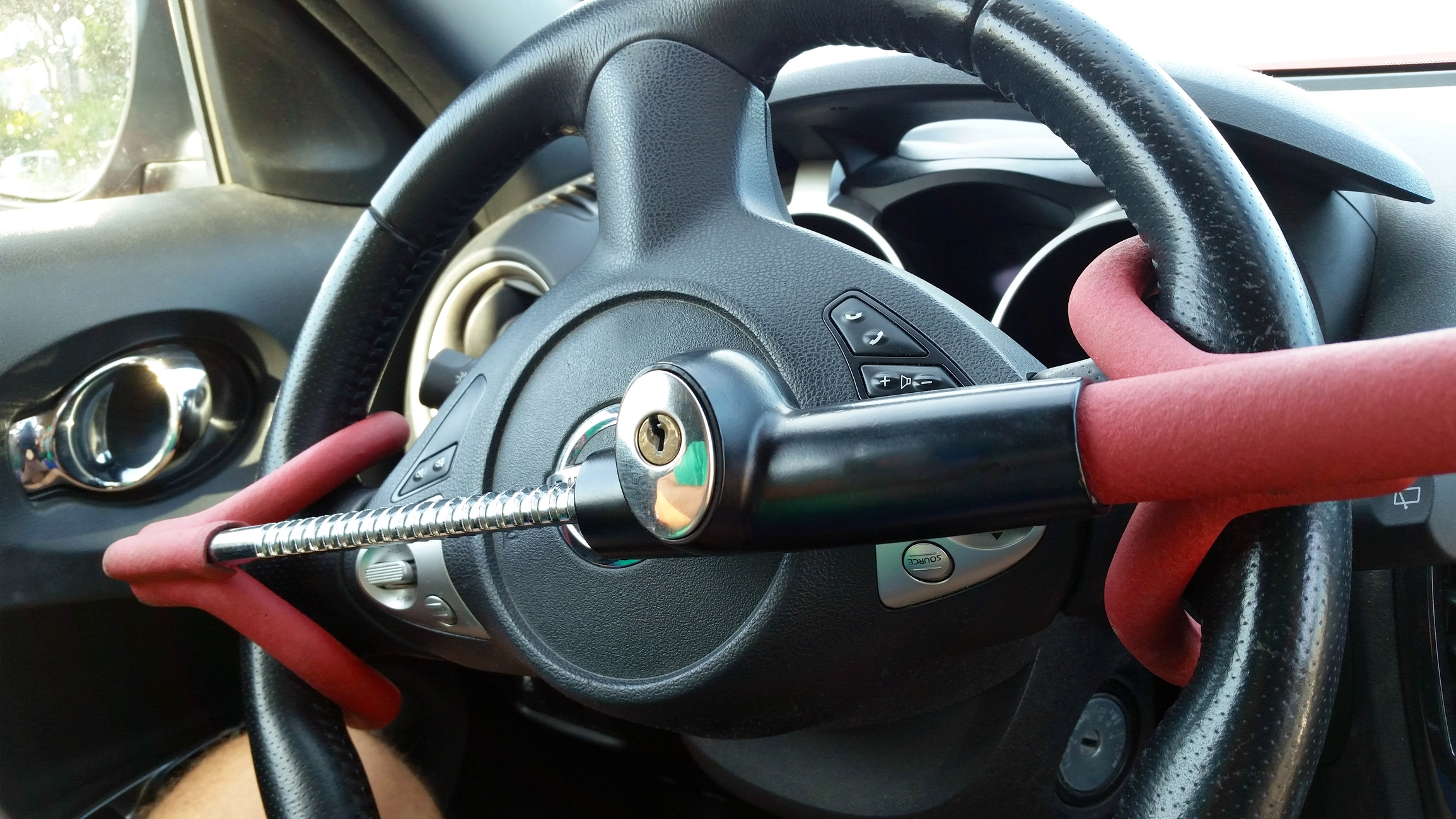
Steering wheel locks are inexpensive and quick to deploy. Typical retail prices range from approximately R200 to R450.
Gear locks add a fixed mechanical barrier. Universal kits can start at under R500, but professional, VESA-approved, vehicle-specific installations are recommended and can run higher, depending on the model and installer.
Dashcams with parking mode and live alerts
Dashcams can provide evidence and real-time notifications if paired with hard-wire kits and LTE features. You can spend from about R350 for basic units to several thousand rand for multi-channel 4K systems with parking surveillance.
What works best and why?
Visibility matters. A bright steering lock and clearly displayed smash-and-grab film tell offenders that your car will take more time and make more noise to access. Offenders prefer easy targets. These measures are inexpensive and immediate.
Disable and delay, to deflect. An immobiliser with anti-hijack mode and jamming detection counters employs modern methods that counter key cloning and remote jamming in car parks. Quality systems from established brands fitted by VESA-approved centres reduce false alarms and are compatible with insurer expectations. A ghost-type immobiliser adds discreet, driver-specific authorisation.
The threat of pursuit and recovery. A monitored tracker remains the single biggest contributor to recovering the vehicle and can expedite a police response. Insurers frequently require a tracker on higher-risk models, and some recommend dual devices for very high-risk vehicles, which spreads risk if one unit is found and removed.
Practical buying tips
Prioritise reputable brands, written warranties and VESA-approved fitment. This improves reliability and facilitates the processing of insurance claims.
Confirm with your insurer which categories of devices are required for your specific car. Discovery Insure and OUTsurance, for example, set device conditions on certain vehicles and emphasise trackers as part of risk management.
Think like a hijacker or theft syndicate. Visible devices, combined with hidden immobilisation and live tracking, make your car harder to steal and easier to locate. That combination is what moves you out of the easy-target category.