Audi Q5 2.0 TDI quattro (2017) Quick Review
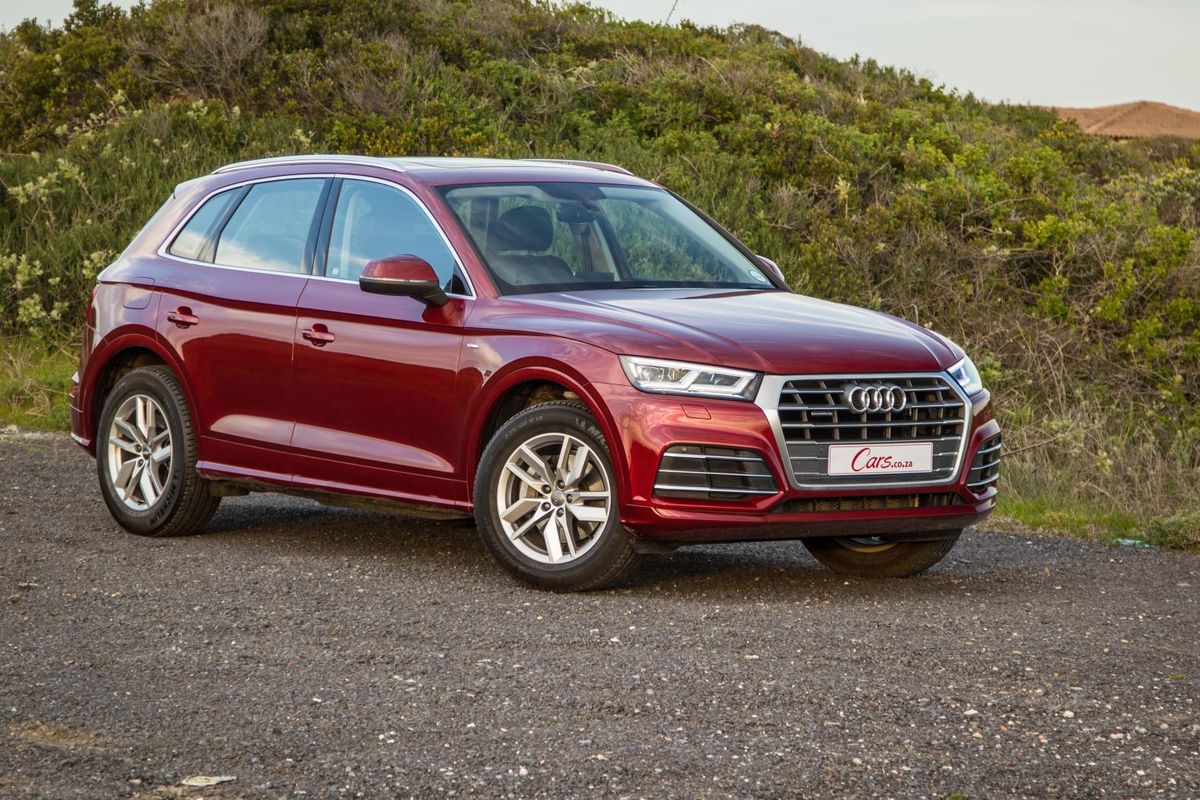
The default choice in Audi's new Q5 executive SUV range is the turbodiesel auto. We tested the new model's mettle with a trip into the Overberg. Is it the perfect all-rounder?

We like: Smooth ride on all surfaces, splendid interior, fuel consumption.

We don’t like: Not as good looking as rivals, how much?

Alternatives

  • Something more dynamic: Jaguar F-Pace has proved particularly good to drive but interior finish and build quality is no match for the Audi.
  • Bring on the glamour: The Mercedes-Benz GLC stands out in a crowd, especially when the AMG Line kit is added but falls just short of the Q5 in terms of ride and refinement.
  • If you’re willing to wait: The BMW X3 will be on sale in 2018 and as is the way with the Germans, newer models tend to raise the bar.

Compare the Audi to the Jaguar and Mercedes here

What is it?
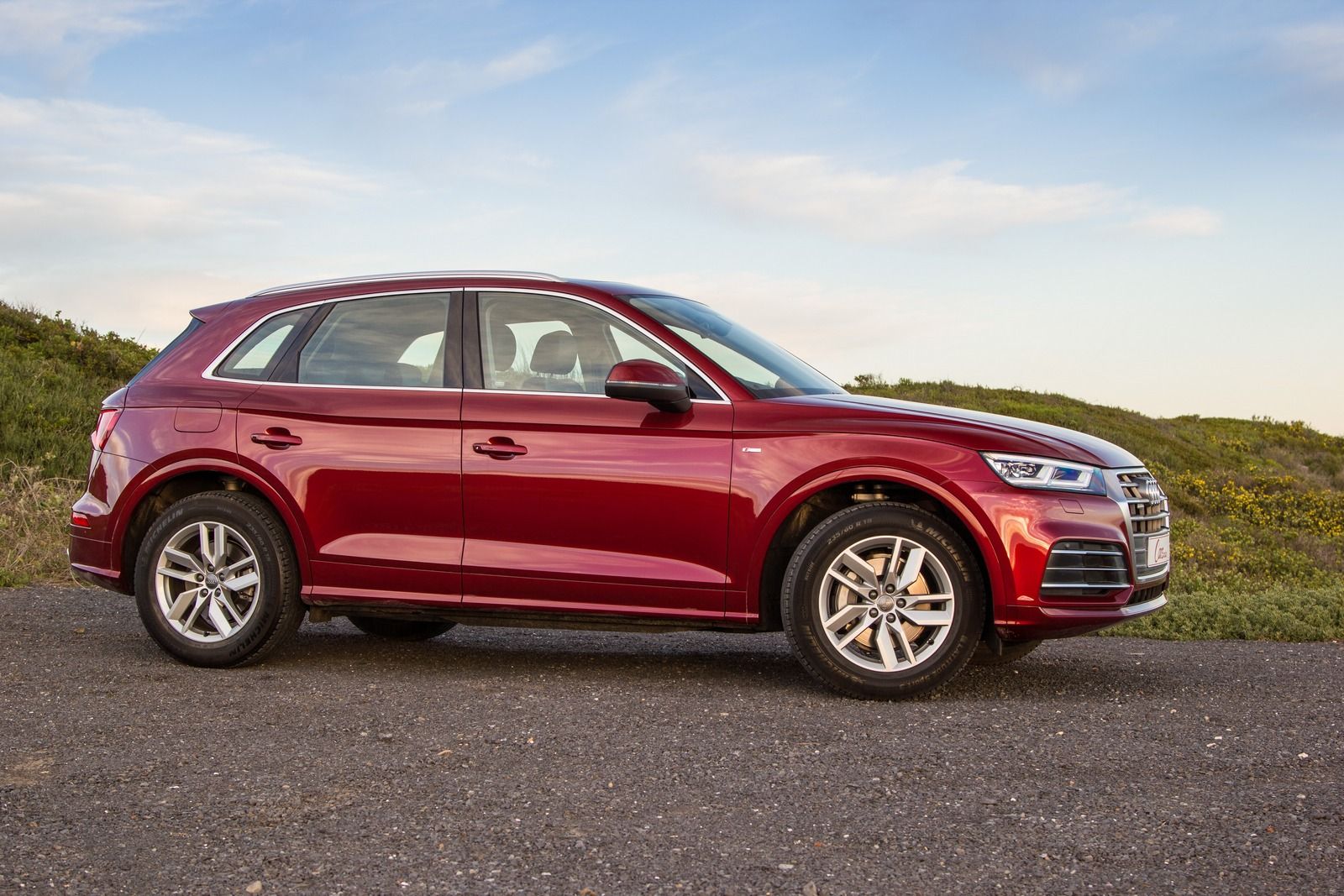

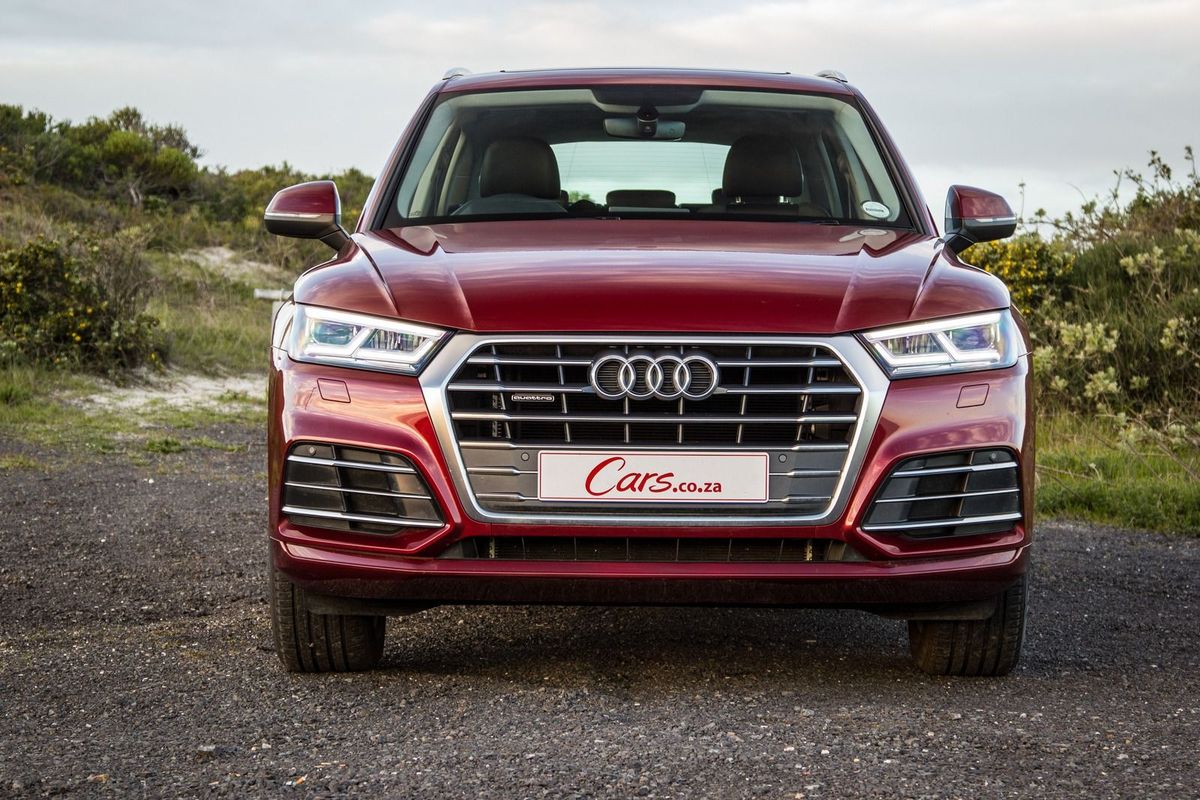
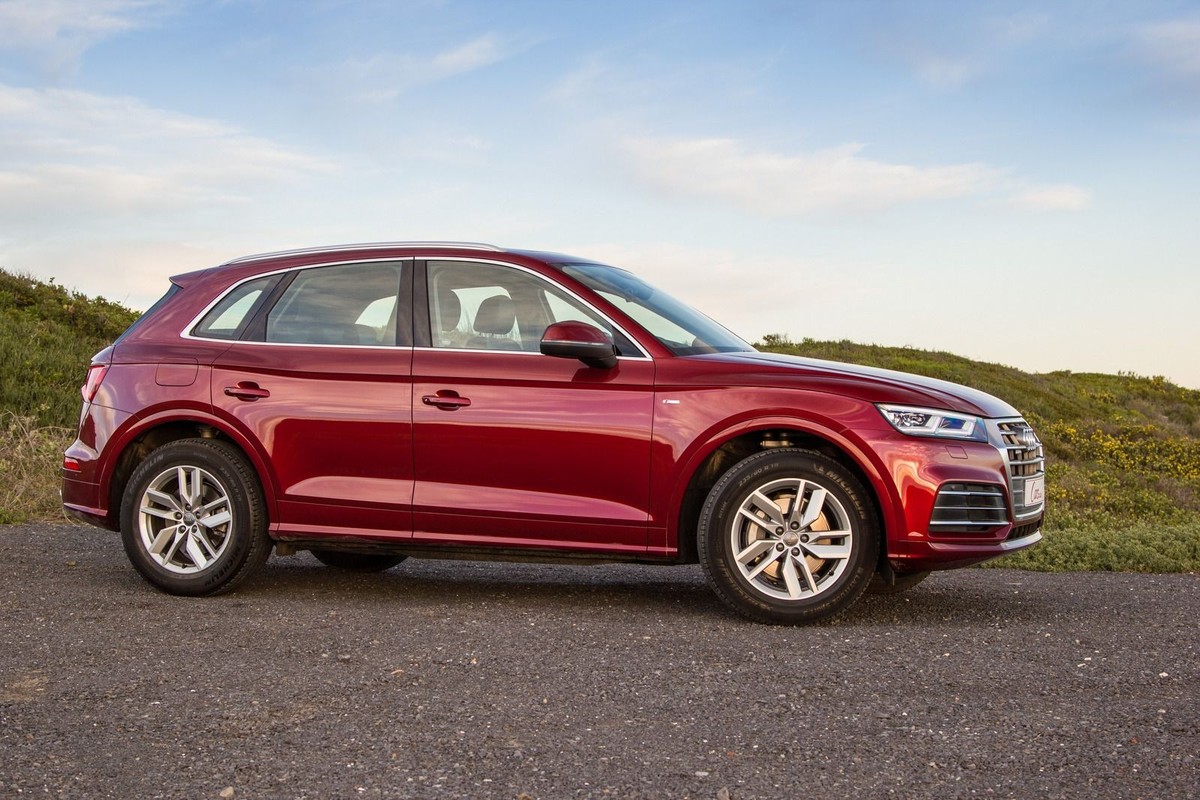
The new Q5 doesn't shout much from an external point of view, but its internals are exceptional.

The Audi Q5 is an all-new version of what was one of Audi’s best products of the last decade. It sold well globally and seemed to perform admirably as both stylish SUV and practical family car. The new model is based on the current A4 platform, something that in our experience has particularly good footing and composure on the road.

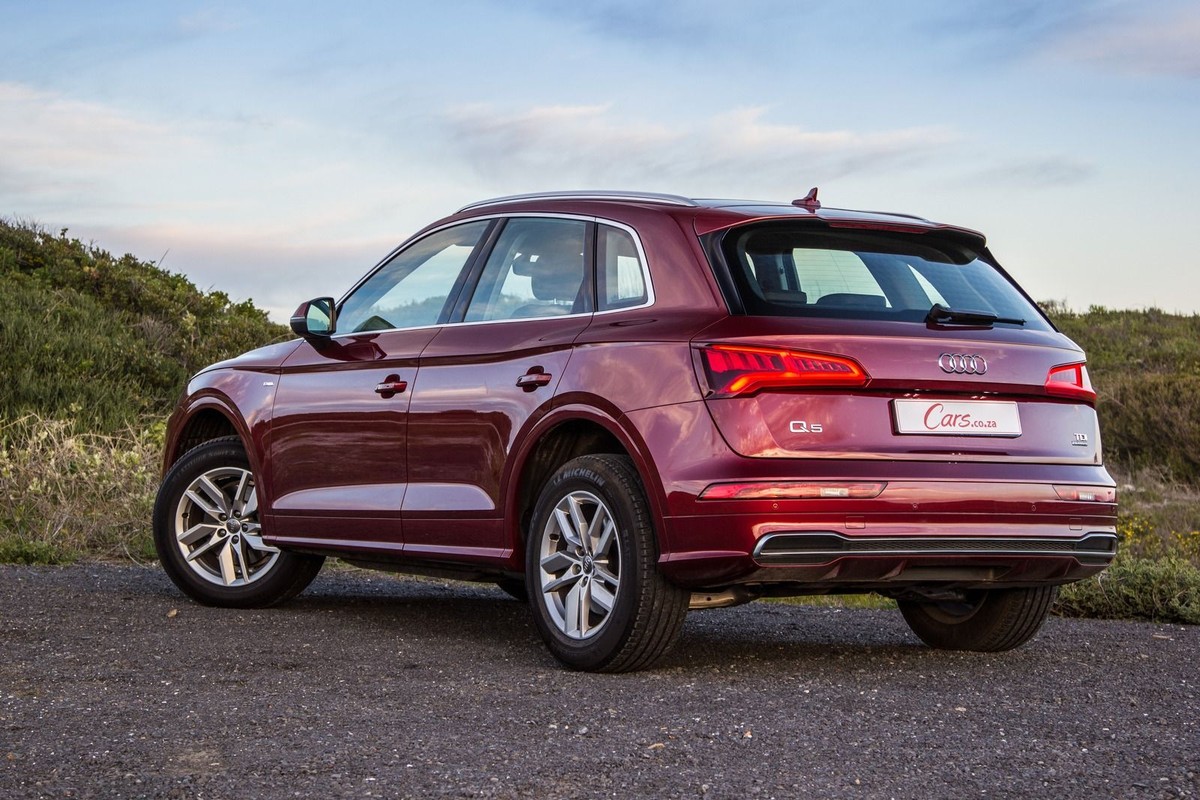
As for the design of the new Q5, Audi appears to have opted for a "what worked before will work again" approach. The front grille follows the style template set by the Q7 with a very prominent hexagonal design. The lights, both front and rear, have distinctive LED signatures but, other than that, there aren’t too many easily distinguishable features on this new model.

The Good

Quality drivetrain

Powered by another masterful 2.0-litre turbodiesel engine from Audi, the Q5 feels more than adequately propelled and extremely efficient. Peak outputs of 140 kW and 400 Nm provide sufficient power and torque to overtake from just about any legal speed while the 7-speed dual-clutch transmission engages cogs with silky precision. Power delivery feels particularly linear for a diesel with only the upper end of the rev range showing a distinct tapering down of shove. Fuel consumption is claimed at 4.9L/100 km but we recorded around 6.6L/100 km. That’s pretty good considering most of the turbodiesel SUVs we test of this capacity – such as the Mazda CX-5, Kia Sportage and Mercedes-Benz GLC  – average in the high 7s.
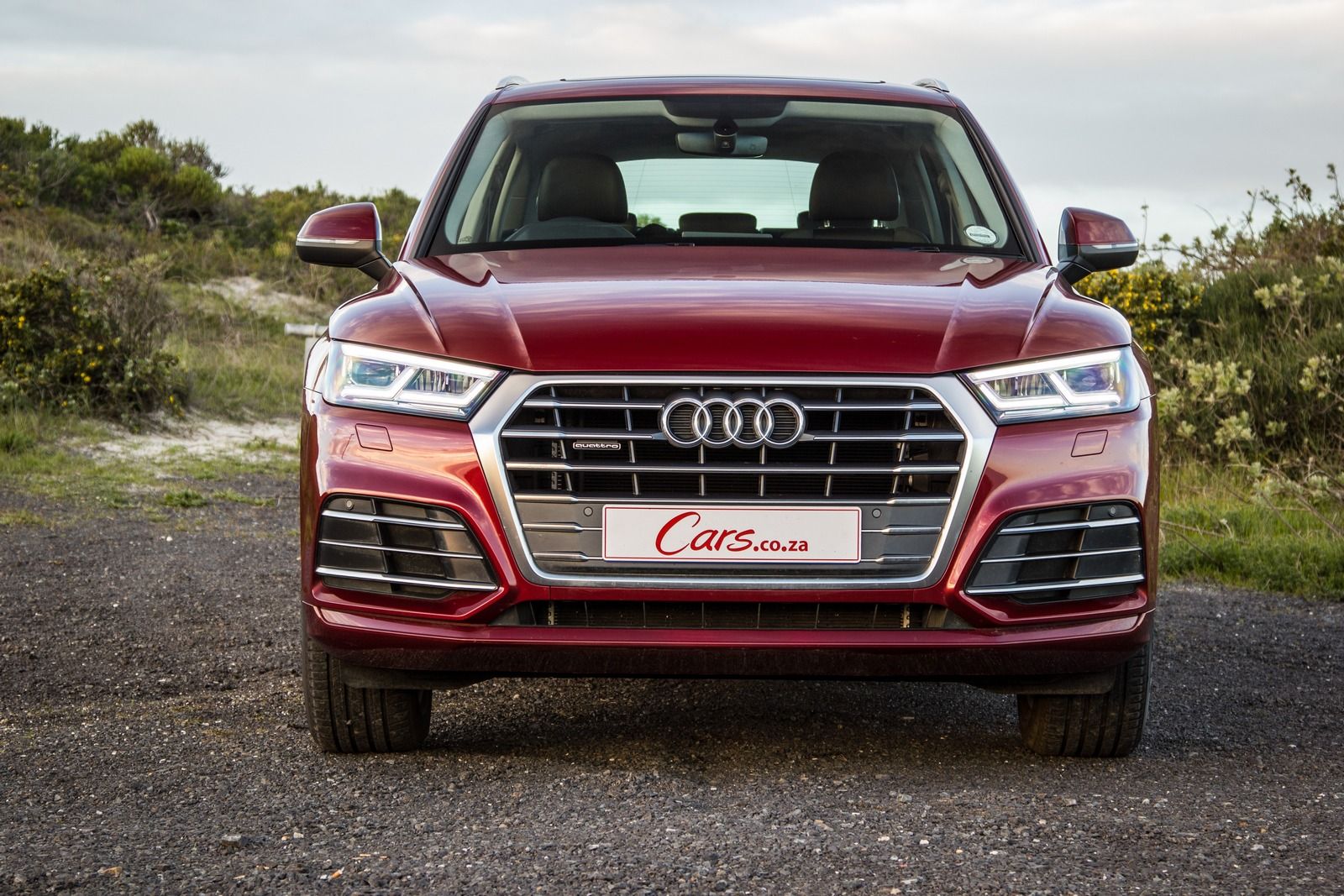

The turbodiesel engine under the bonnet is refined, quiet and has plenty of power in reserve for overtaking.

Ride refinement

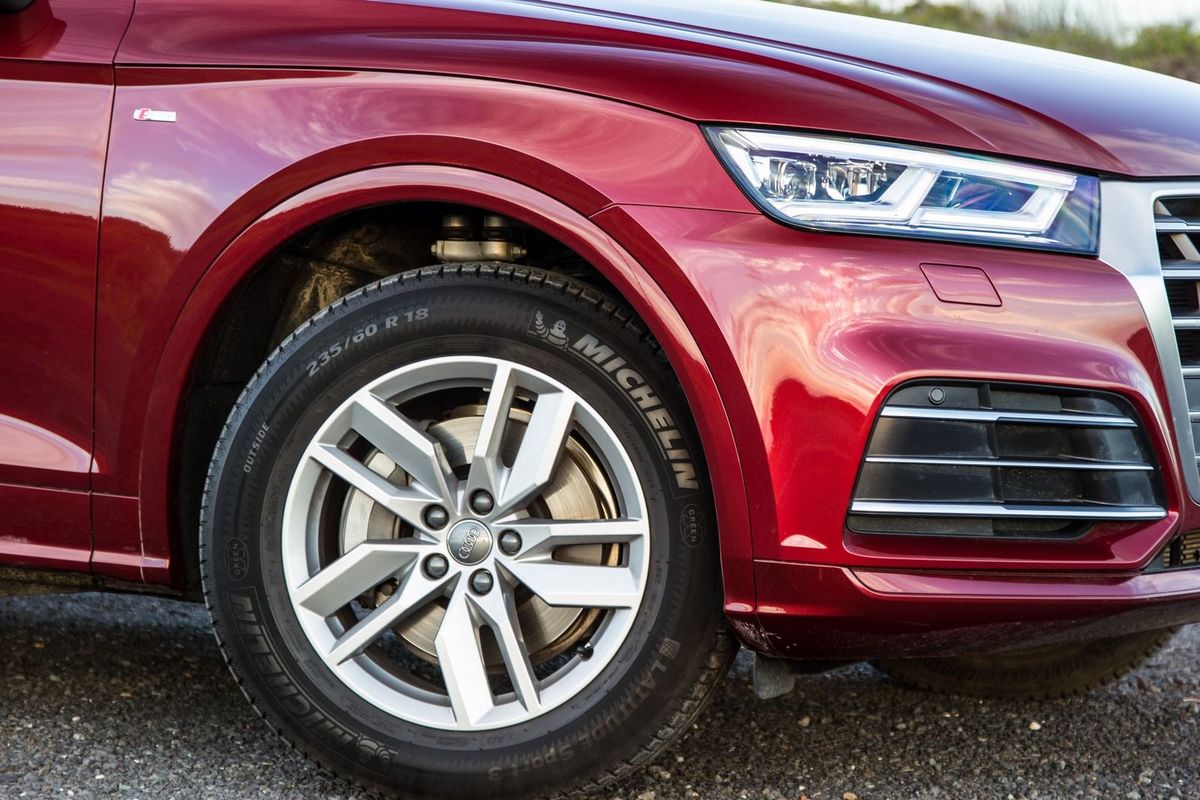
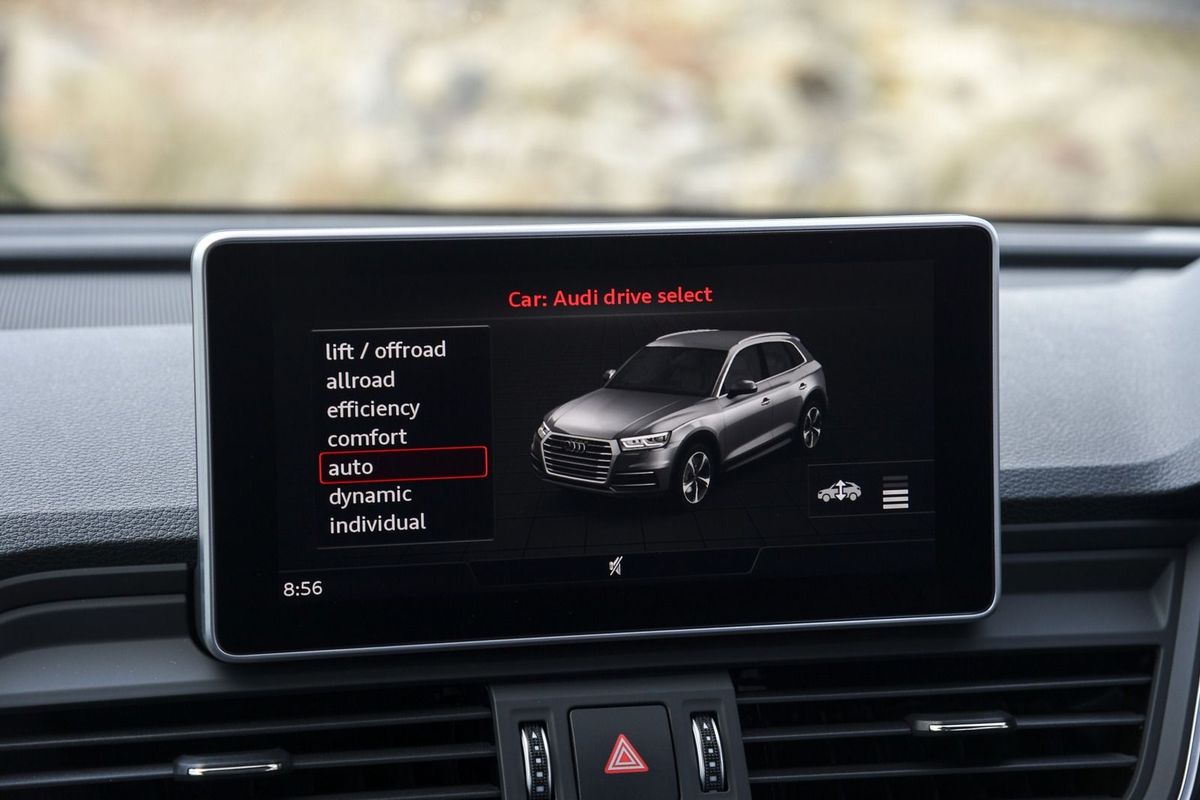
The Q5 is unlikely to spend much time trudging through muddy tracks or loose-surface dirt roads, but it’s nice to know that with quattro all-wheel-drive and an off-road specific driving mode that raises the suspension some 45 mm, the Q5 has a leg to stand on if things get slightly tricky. A 20 km dirt road stint near Robertson revealed that our Q5 TDI smoothes out gravel supremely and that's down to the car's standard 235/60 18-inch wheels being combined with optional adaptive air suspension (R27 150).The extra sidewall rubber endows the Q5 with a slightly more forgiving ride, while the air suspension negates much of the roll and reduces the hard knocks that you might feel with a steel setup. It has to be the best riding of the mid-size SUV bunch thanks to this combination, even the GLC, with its air suspension never feels as well planted or as comfortable as the Q5.

Seductive interior

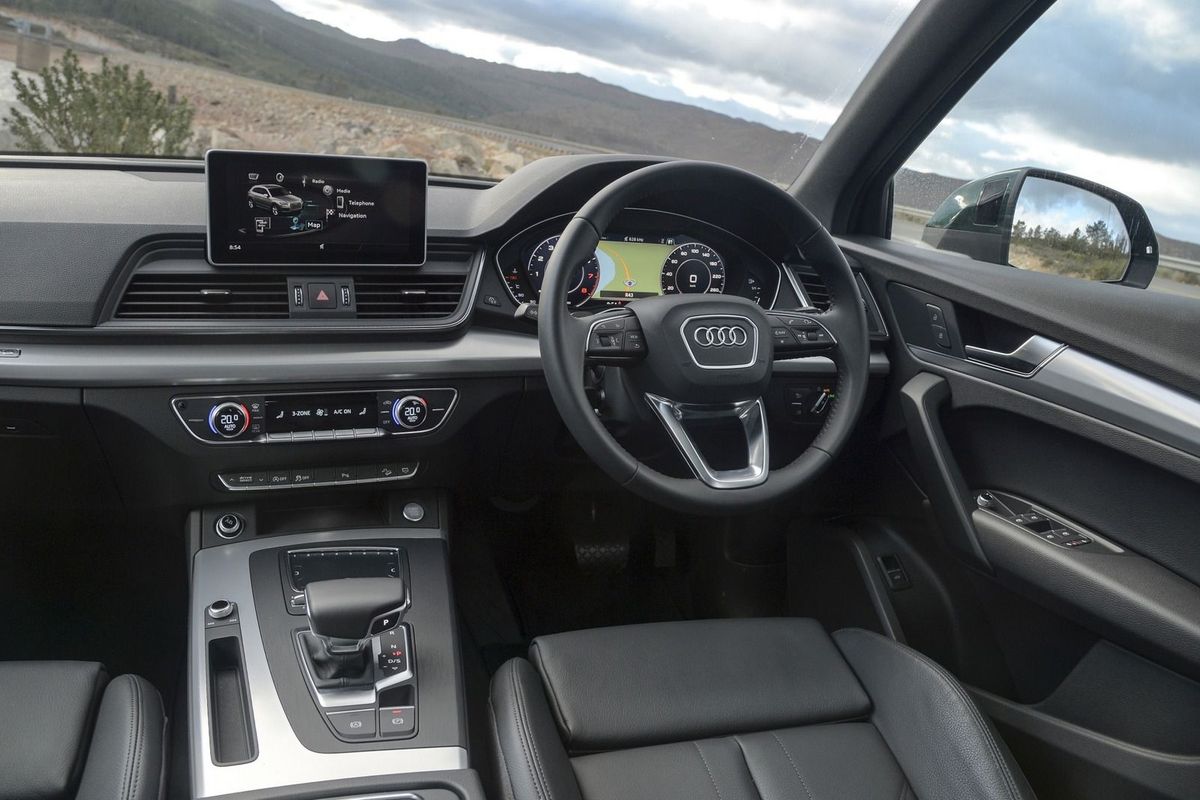
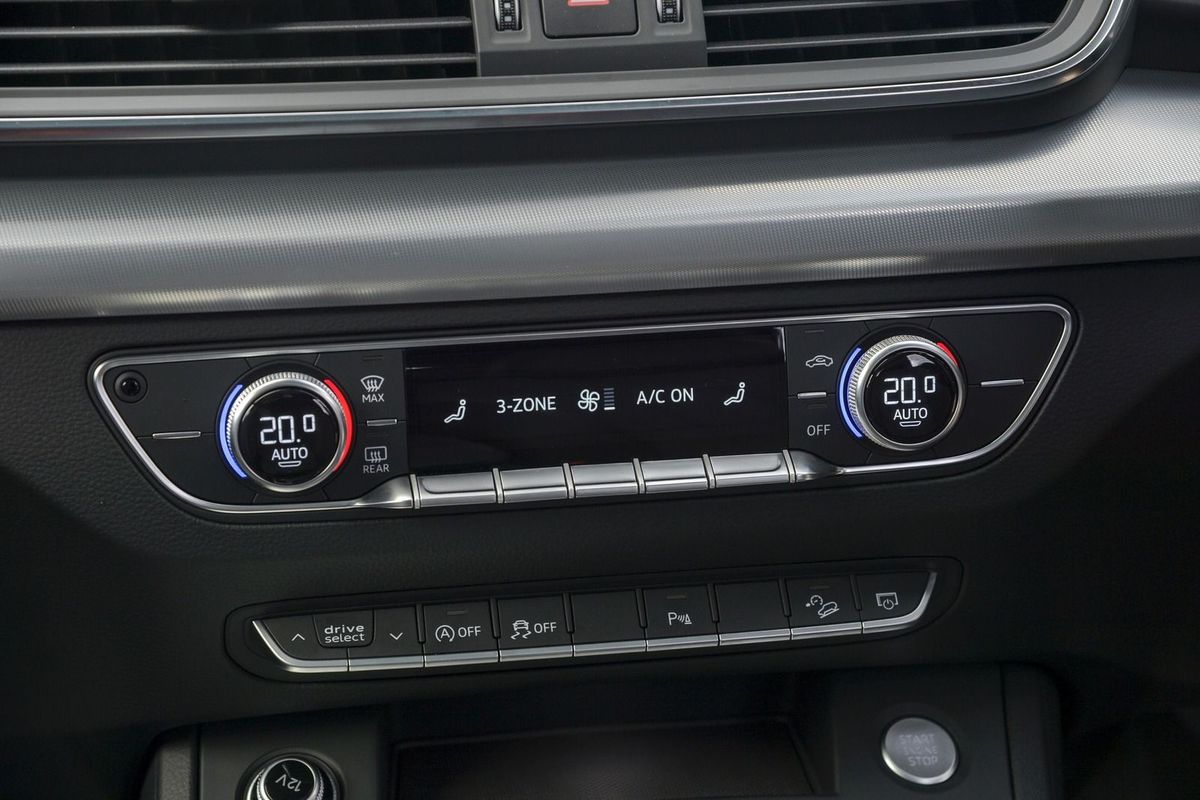
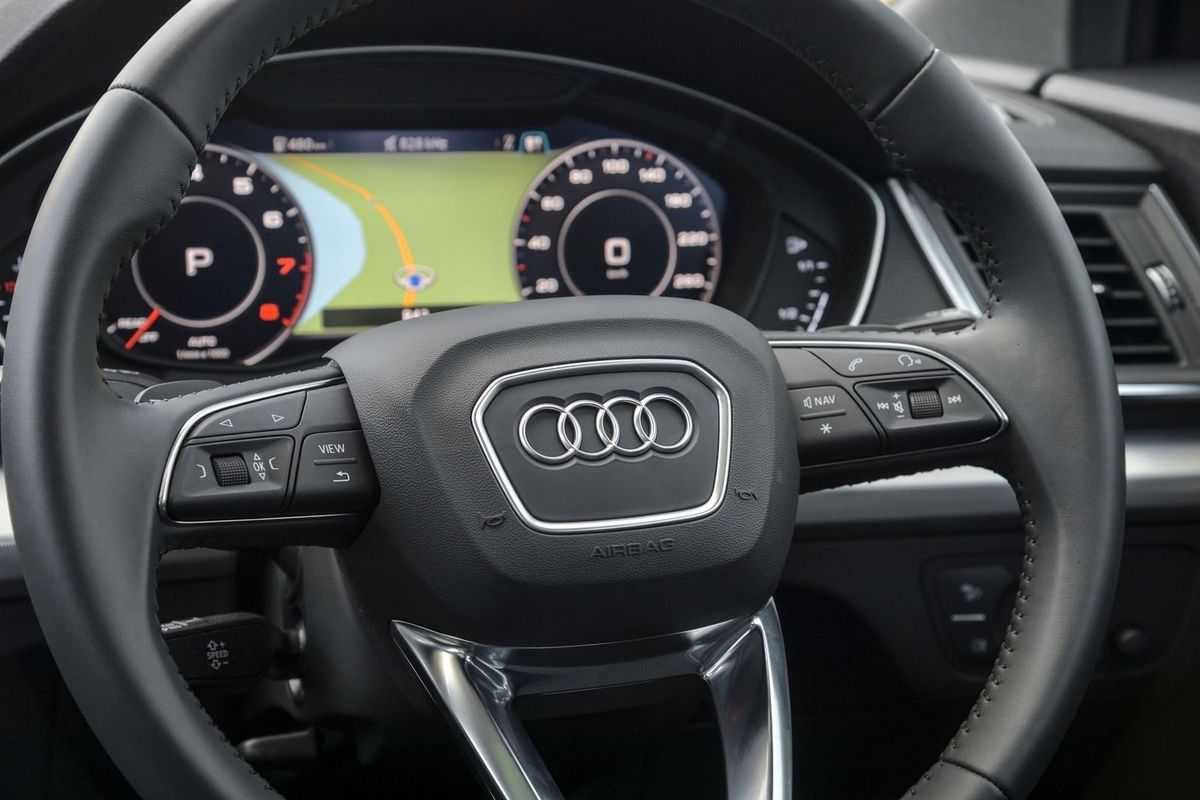
Audi minimalism at its best. From the infotainment system to the climate control buttons and the Virtual Cockpit instrument display, everything in the Q5 is simple to operate. Virtual Cockpit is R7 000 extra, but in terms of options, it’s one of the cheaper ones and transforms the instrument cluster into something very special to look at and also very functional.
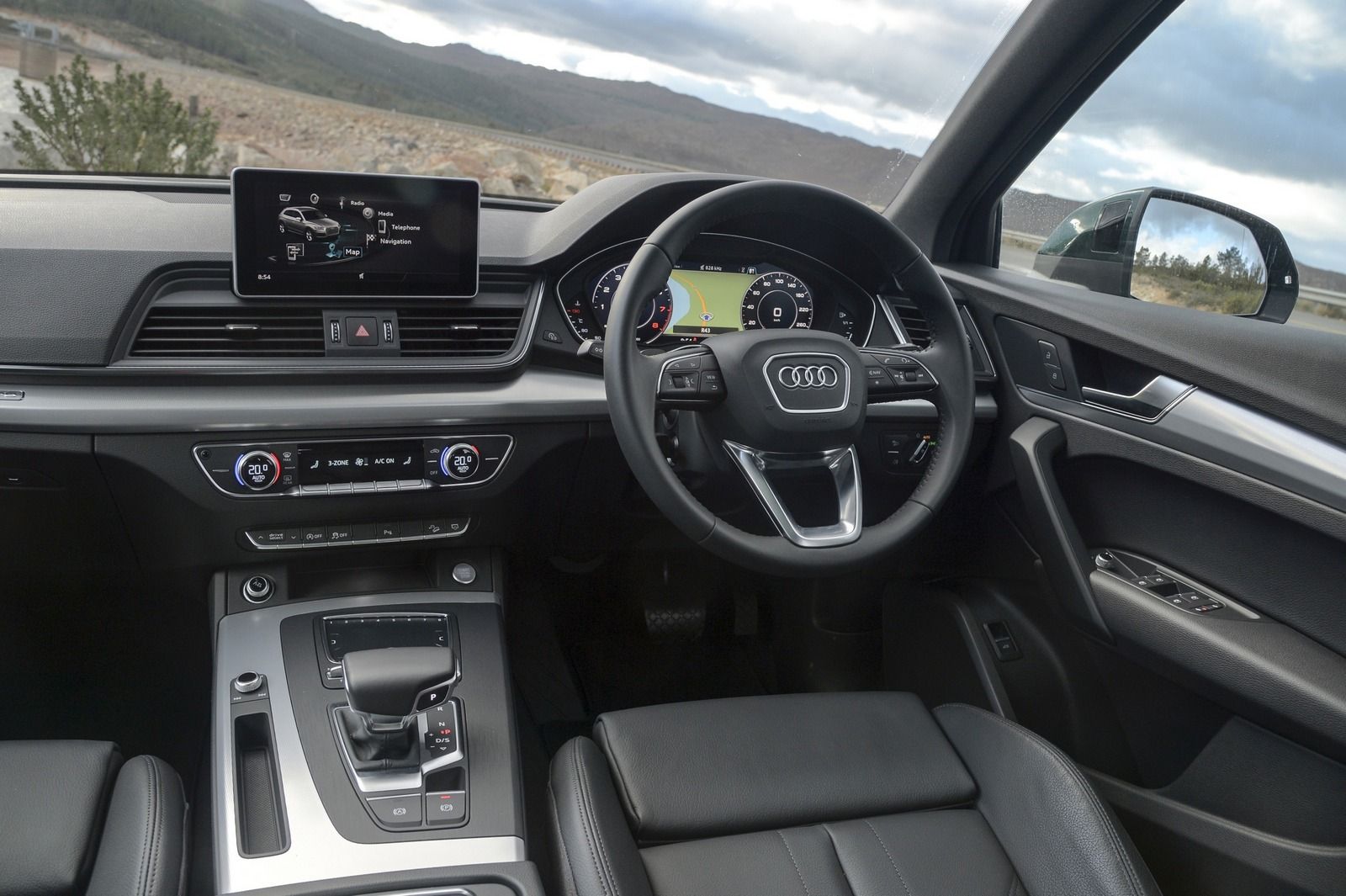

Simple design and lack of a daunting button count make the Q5 a pleasure to use and explore. Apple Carplay and Android Auto are available.

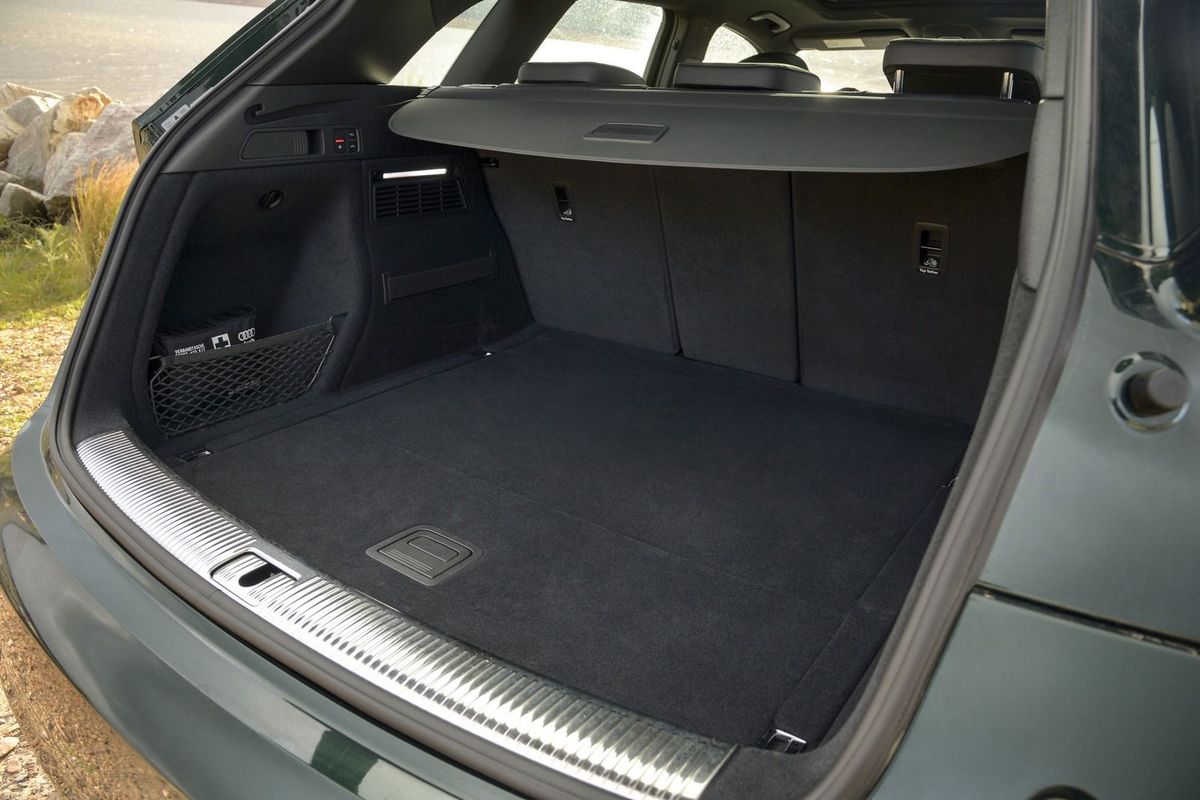
The surfaces are all of a high quality and the fit and finish is as tight as ever. Rear passengers benefit from plenty of legroom and a separate set of air vents. The boot is large too, at 550-litres, and the seats fold down in a 40/20/40 split to offer up a large, and wide loading space. There are neat storage nets in the corners of the boot to secure loose items and shopping hooks for added practicality.

The Not-So-Good

Understated

Audi hasn’t really let its designers get particularly creative with the new Q5. Park it alongside a GLC, F-Pace or even a new Mazda CX-5 and it will fade into the background, even in sporty S-Line guise. However, fashion can be fickle, and as always, styling is subjective. Besides, Audi knows how to make a winning SUV.
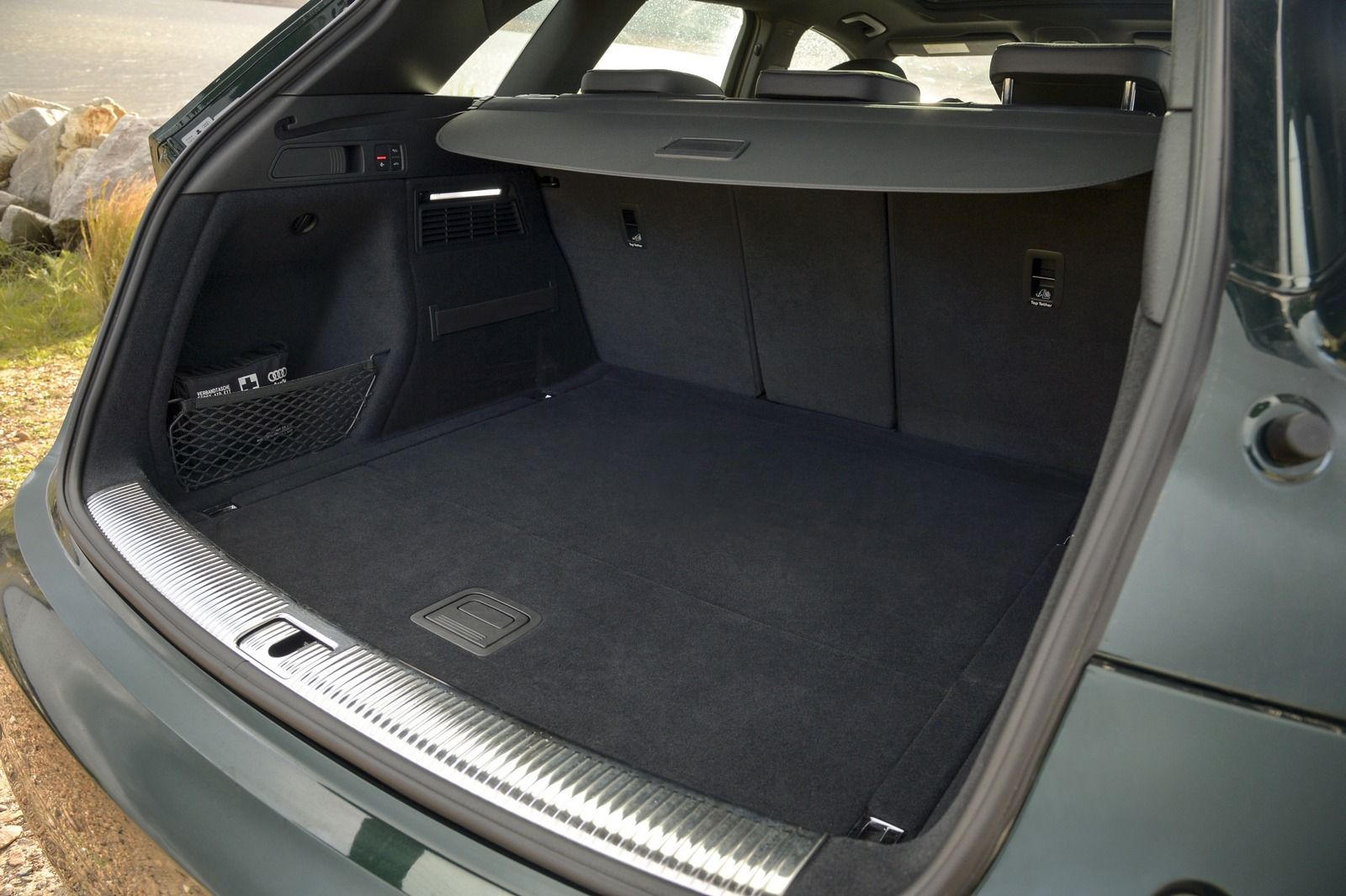

Large boot with lots of hooks and straps aid practicality. Electric towbar buttons are an optional extra.

Price tag

The base price for this 2.0TDI quattro S tronic Sport is R748 000, and that’s a lot. Tick a few boxes on the options list, as with this press unit, and you’re at R887 930. That’s knocking on the door of Volvo XC90 and Audi Q7 money – much larger and even more practical cars.

Verdict

The new Q5 continues to be a top-class performer in its segment. The ride and comfort levels for passengers and driver alike are brilliant – you’ll struggle to find a more refined car across all surfaces. The engine and gearbox are perfectly matched and turbodiesel technology has moved beyond clunky startups and bottom-end lag.

Other than an unimaginative exterior design, it’s hard to fault the Q5 as a product. But factor in the before-options price of R750k and it’s tantalisingly close to the Q7. As such it feels expensive and you might be easily swayed by the idea of saving a little longer for a Q7.

Related content:

BMW X3 (2018) Specs & Price

Audi SQ5 quattro (2017) Review

World Car of Year (2017) Jaguar F-PACE [Review]

Mercedes-Benz GLC 300 (2015) Review
Searching for a used Audi Q5?

Start your search here

3 Reasons Why Toyota Yaris is #CarsAwards Finalist

What makes the Toyota Yaris 1.5 Pulse a worthy contender in the Compact Hatchback category of the 2017/18 Cars.co.za Consumer Awards – powered by WesBank? We investigate…

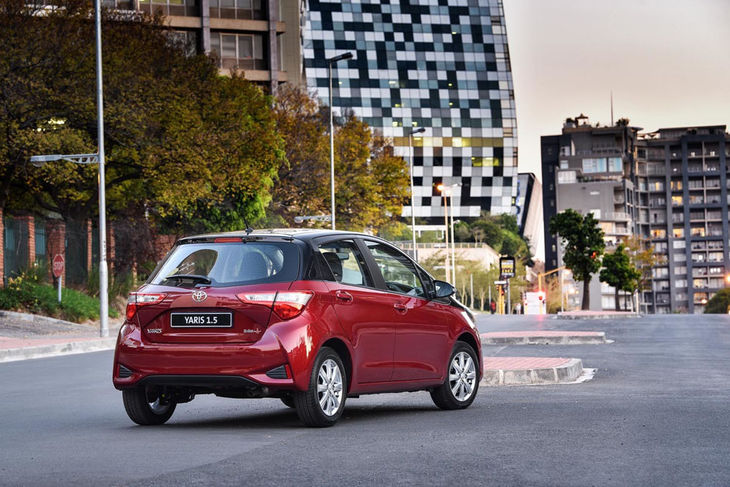
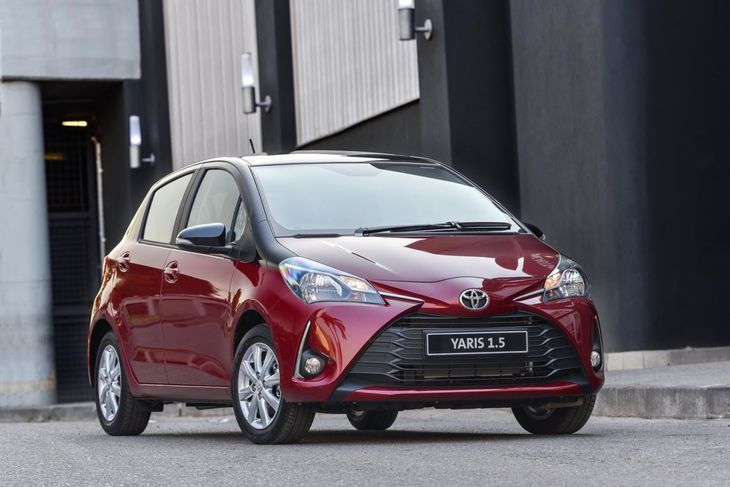
The facelifted Yaris Pulse was introduced earlier in 2017 with a new 1.5-litre engine and updated interior and exterior styling. The Yaris Pulse is positioned as a high-value offering in the compact hatchback segment and its standard feature specification makes it a strong contender in this category. More than this, the Yaris 1.5 Pulse offers satisfactory levels of comfort, refinement and pleasing ride quality.

3 Reasons Why Toyota Yaris 1.5 Pulse is a Compact Hatchback #CarsAwards Finalist

1. Efficient daily runner

The Yaris Pulse is fitted with a new naturally-aspirated 1.5-litre petrol engine with 82 kW and 136 Nm of torque and according to Toyota, this engine not only offers more power but is also up to 12% more fuel efficient than the engine it replaces. Toyota claims an average fuel consumption figure of 5.0 L/100km for the Yaris Pulse in manual guise which means you will be saving every time you fill up.

2. High-value proposition

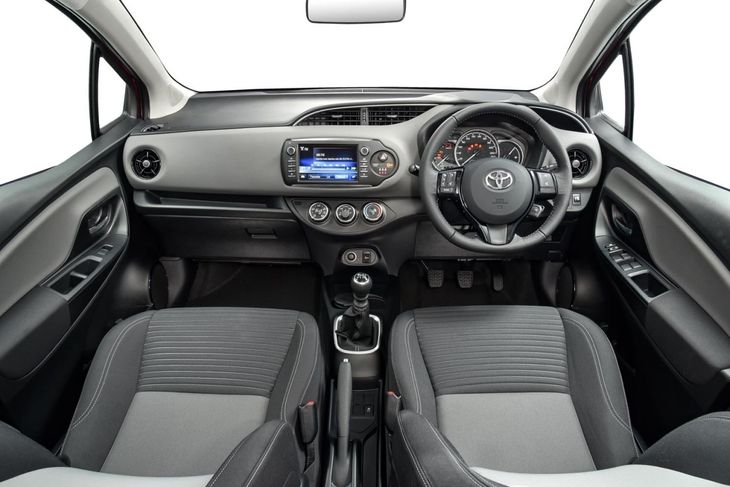
The Yaris 1.5 Pulse makes a case for itself by offering a comprehensive list of standard features including a Bluetooth-capable 7-inch touchscreen infotainment system with USB/Aux support, multifunction leather-wrapped steering wheel and gear lever, electric windows, air conditioner, front fog lights and 15-inch alloy wheels.?Furthermore, standard safety equipment has been improved and now includes 4 airbags, ABS with EBD, brake assist, hill assist control and stability control.

3. Brand strength

Toyota is renowned for its reliability, after-sales service and resale value and buyers are backed by a well-established network of dealers across the country. The Yaris 1.5 Pulse is sold with a 3-year/100 000km warranty and a 3-year/45 000km service plan.

Have Your Say: Complete our survey and WIN!

Do you own a Yaris Pulse? We would love to hear from you! Tell us about your experience by completing our Ownership Satisfaction Survey. Your input counts for 50% of the final result!

Which cars are Yaris Pulse's rivals in #CarsAwards?

The 2017/18 #CarsAwards finalists: Compact Hatchback Category

Compare the Yaris Pulse's specs with the Mazda2 1.5 Individual and Renault Clio 66kW Turbo Dynamique

Related Content

Toyota Yaris 1.5 Pulse (2017) Quick Review

Toyota Yaris Pulse (2017) Launch Review

2017/18 Cars.co.za Consumer Awards – powered by WesBank; Finalists

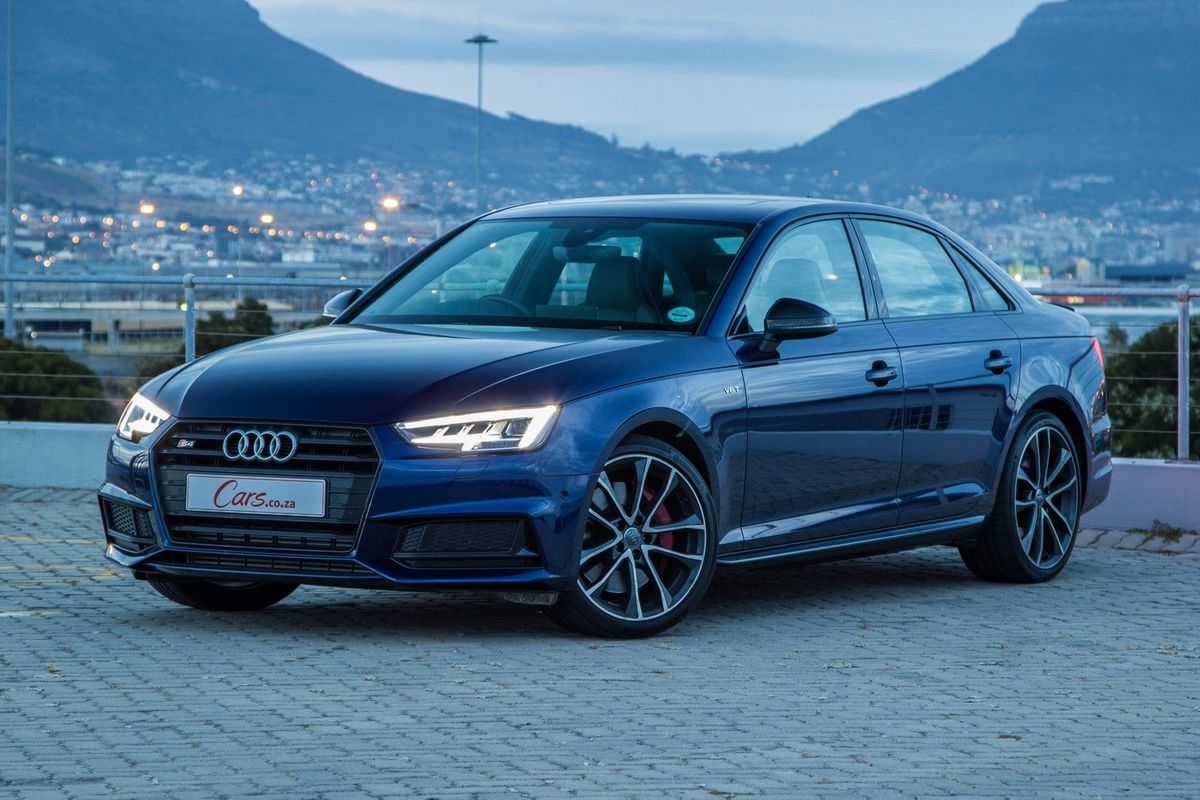
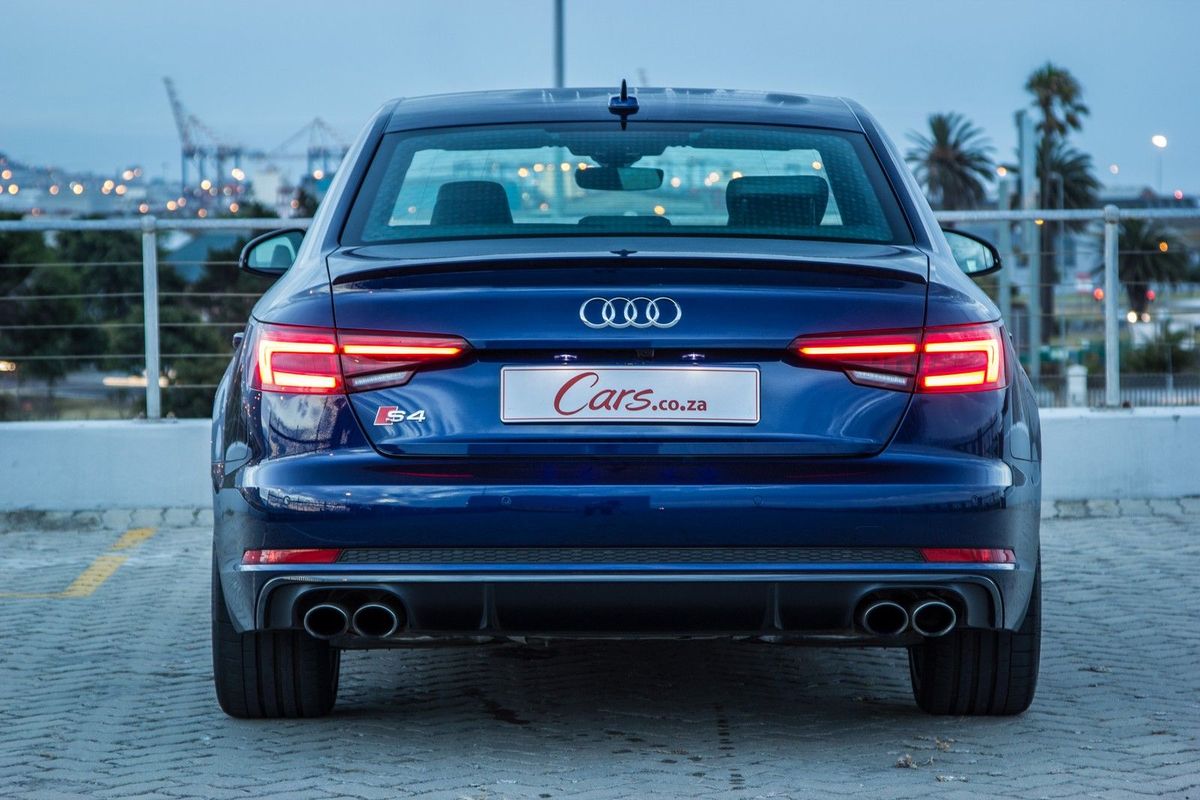
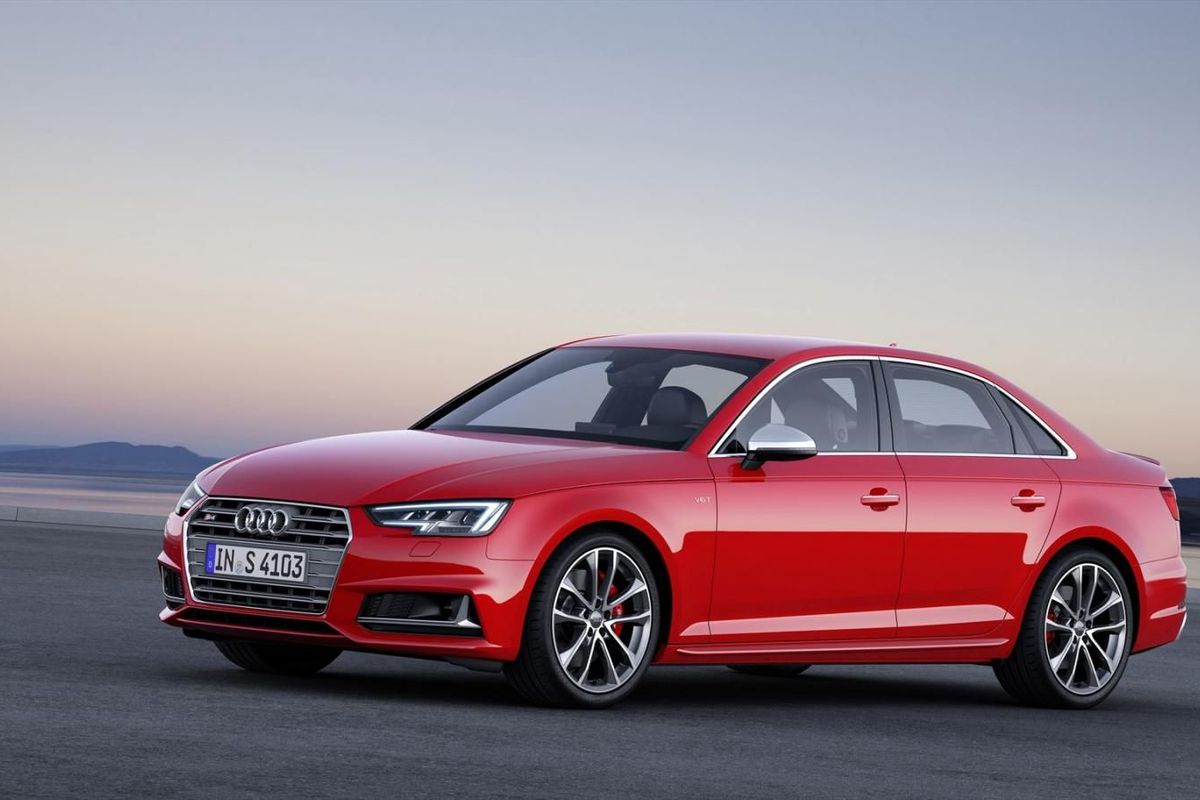
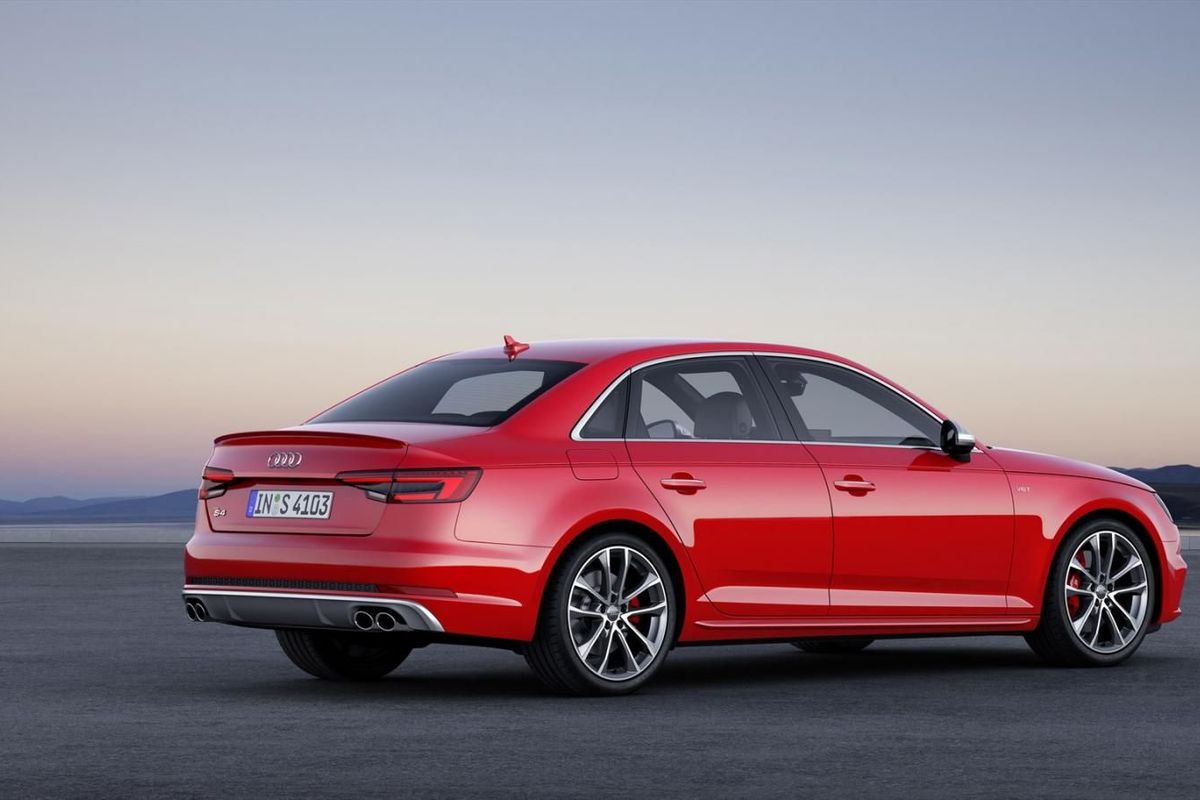
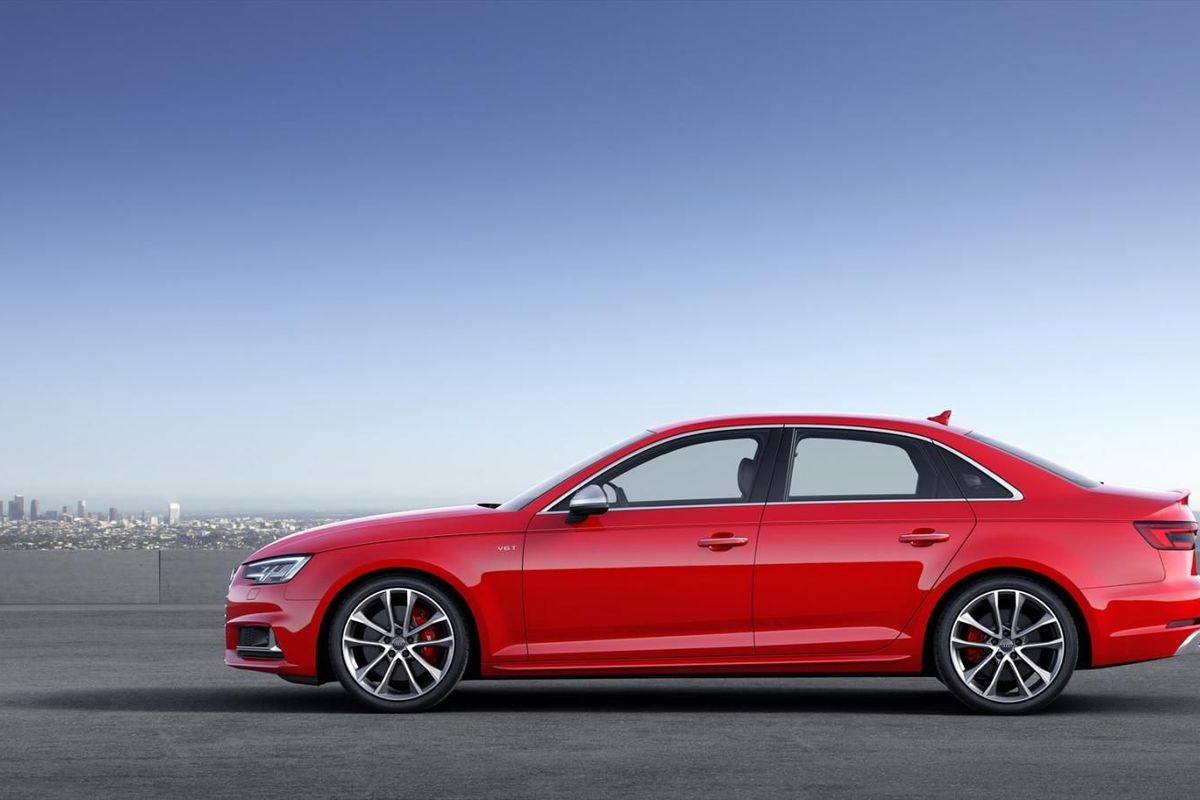
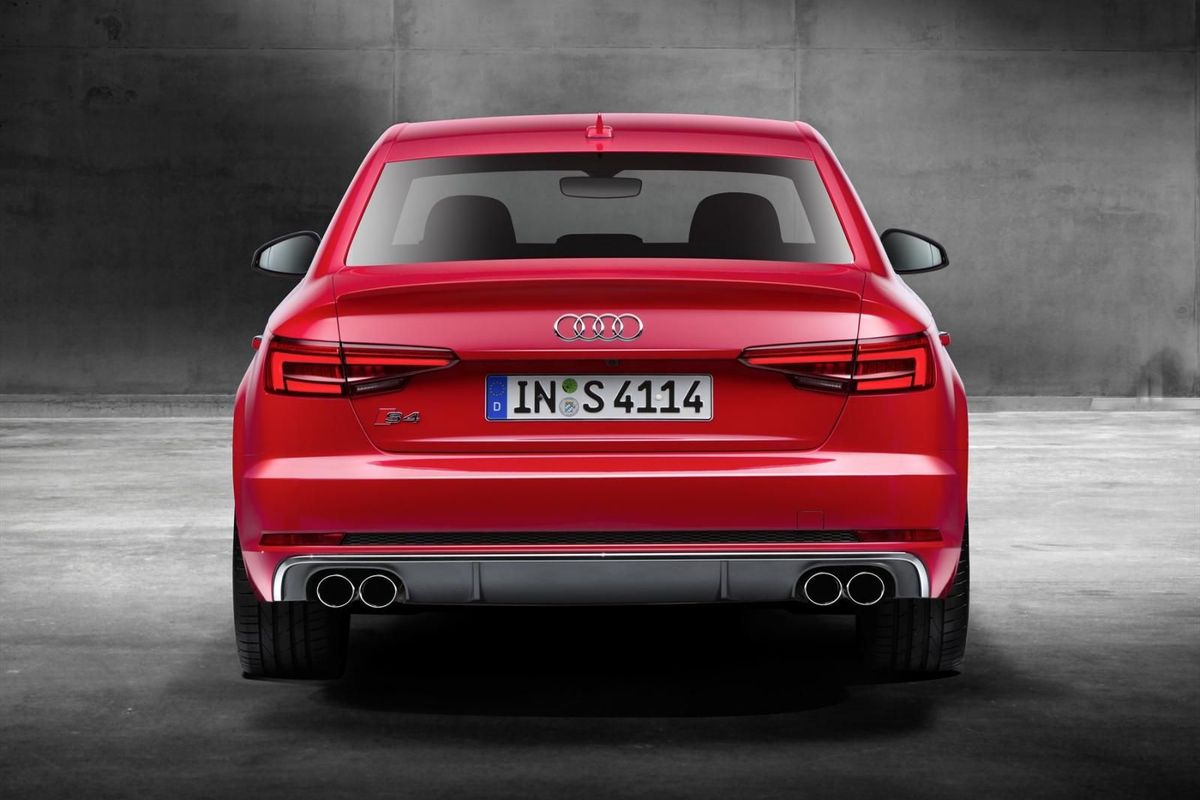
New Audi S4 in SA (2017) Specs & Price

The sportier version of the Audi A4 has arrived in South Africa! Take a look at specification and pricing for the new Audi S4.

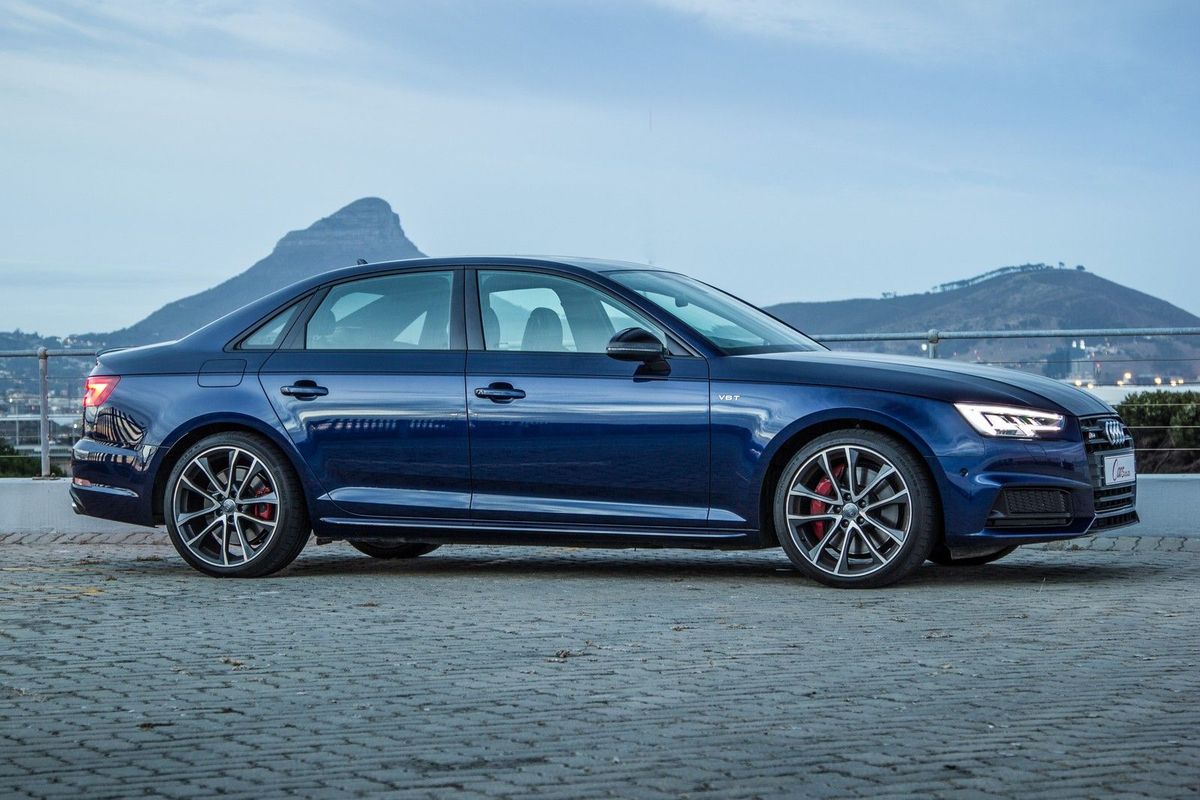
Perched at the top of the A4 range is the new S4. Featuring permanent quattro all-wheel drive, the S4 is powered by a redeveloped 3.0-litre V6 turbopetrol engine with 260 kW and 500 Nm of torque that allows for a zero 100 kph sprint time of 4.7 seconds. Fuel consumption is claimed at 7.3 L/100km.

Power is laid down using an 8-speed tiptronic transmission with short-ratio gears low down for sportier driving and longer ratios higher up to help achieve better fuel efficiency. A freewheeling mode kicks in when the driver releases the accelerator between speeds of 55 kph and 160 kph, which further aids efficiency.

The S4 offers torque vectoring to improve handling and stability while an active sport differential is available as an option as is dynamic steering which will vary the steering gear ration depending on speed. Stopping power is taken care of with 350 mm diameter front brakes with black 6-piston calipers or red calipers as an option.

Interior features


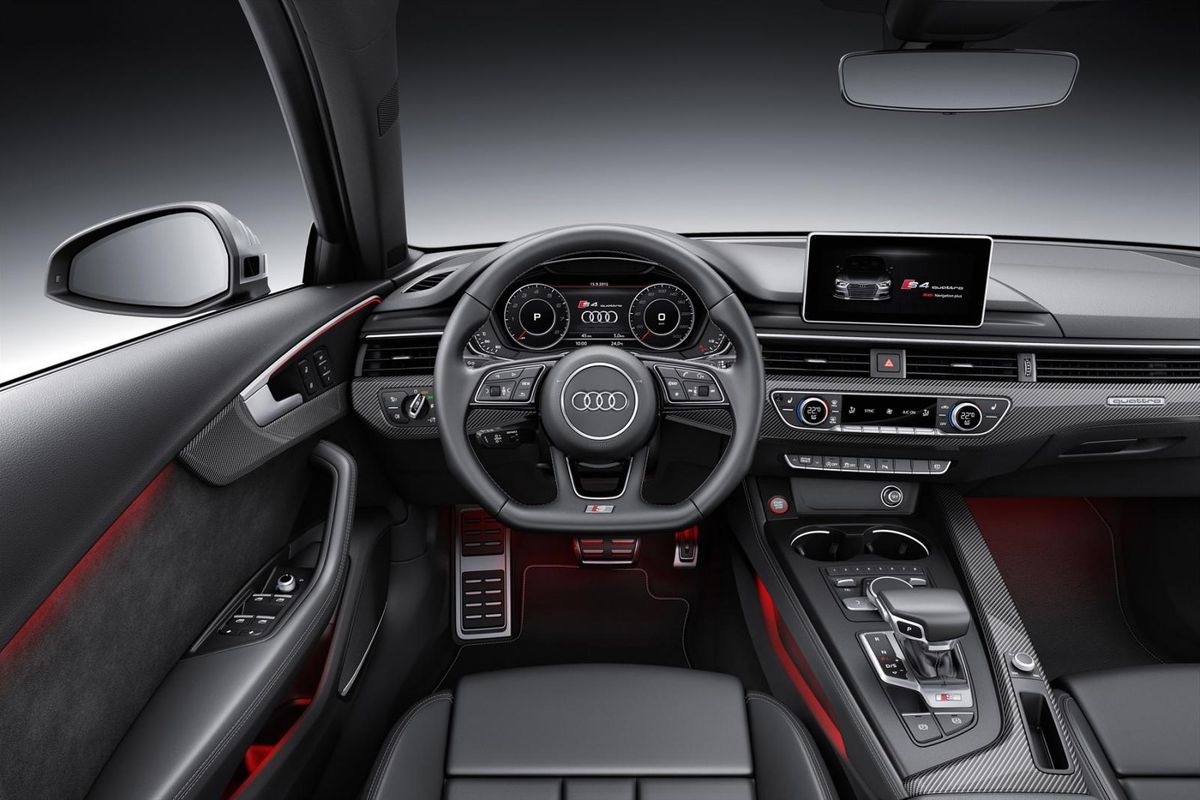
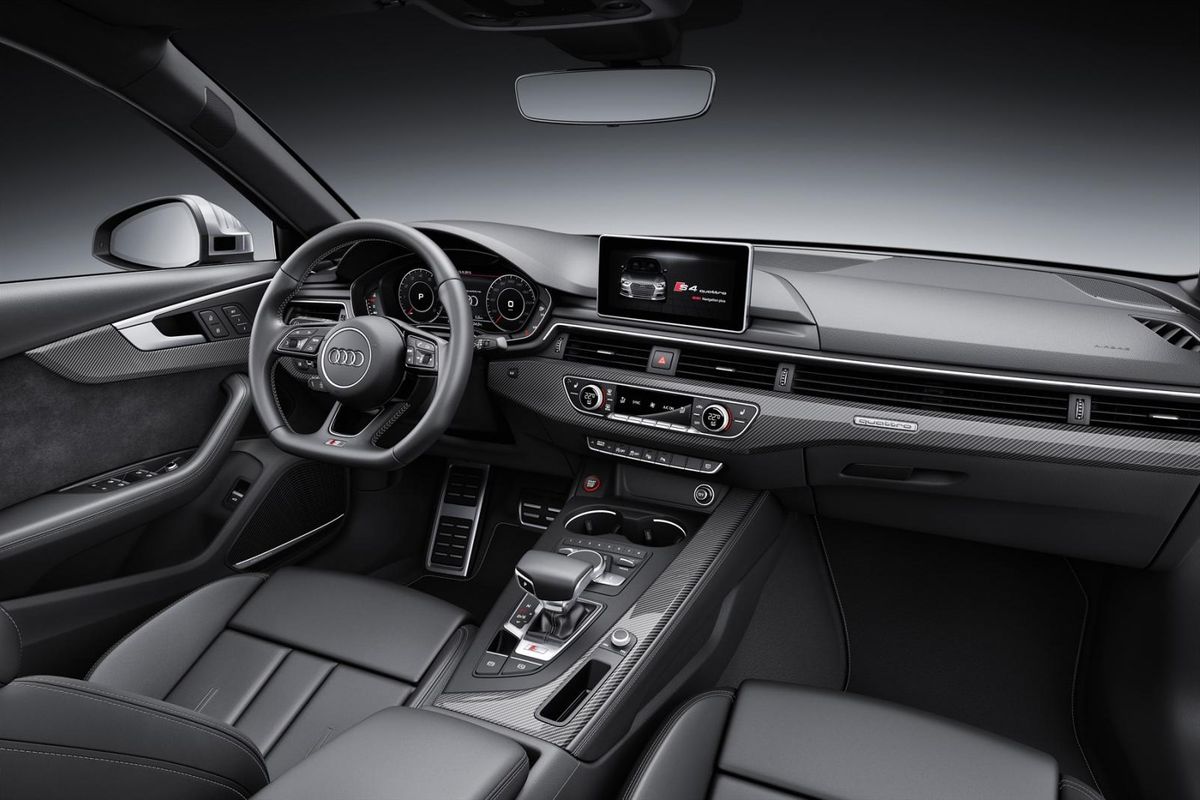
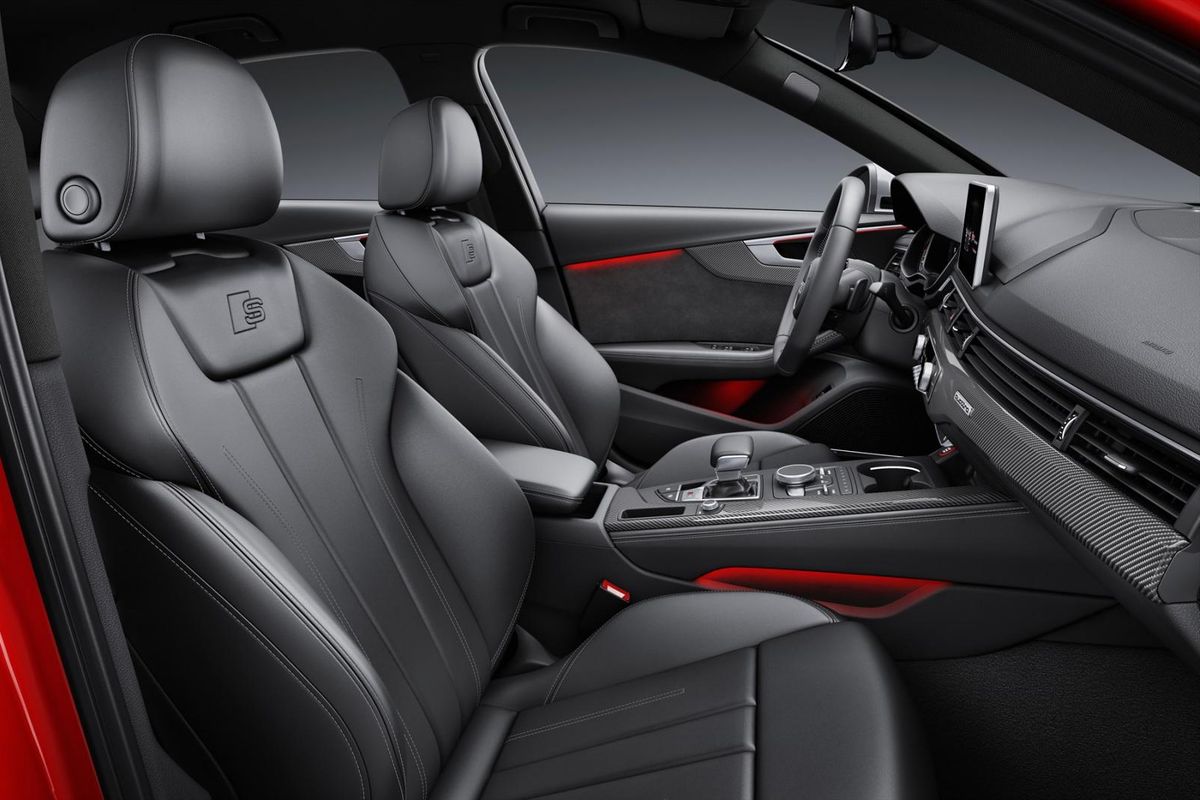
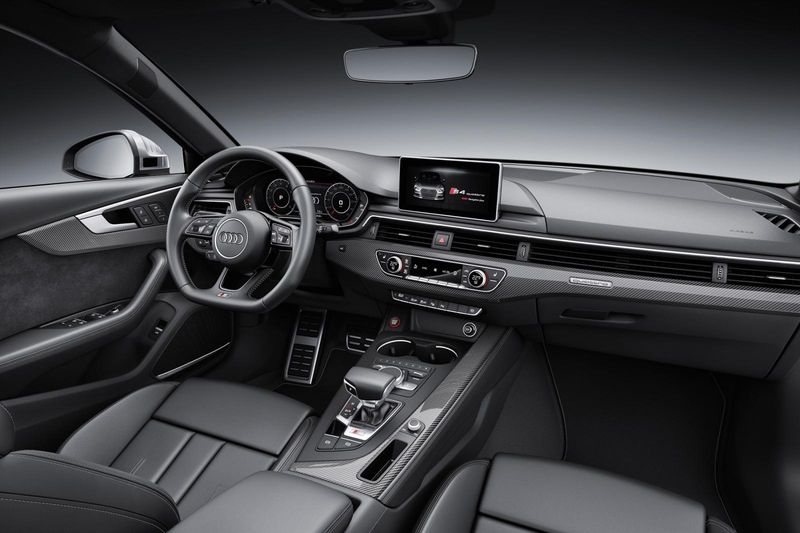
A wide range of optional features are on offer, including Audi's Virtual Cockpit.

On the inside, a black-dominant interior is highlighted with contrasting matt brushed aluminium inlays. Audi’s 12.3-inch Virtual Cockpit is offered as an option and the S4 is fitted with a new MMI control panel and when equipped with MMI navigation plus with MMI Touch, the rotary dial includes a touchpad used for zooming and inserting characters. Notable optional features include a head-up display, S sport seats and Nappa leather in either black, rotor grey or magma red with diamond patterning.

Other nifty features include an Audi phone box that inductively charges Qi-enabled smartphones as well as a Bang & Olufsen sound system including 19 speakers and a 755W amplifier.

Standard equipment includes:

  • 4-way lumbar support for the front seats

  • Ambient lighting package

  • Audi drive select with efficiency®

  • Audi pre sense basic

  • Audi sound system

  • Automatic air conditioning

  • Audi Sport cast aluminium wheels, 5-spoke V design contrasting grey, partly polished, size 8.5J x 19

  • Comfort key

  • Cruise control

  • Driver information system with colour display

  • Bluetooth interface including AUX-IN and USB jack

  • Electrically adjustable exterior mirrors

  • Electromechanical power steering

  • Exterior mirror housings in aluminium look

  • Frequency Alcantara/leather with embossed S logo in the front seat backs

  • Front sport seats, electrically adjustable

  • High-gloss package

  • Inlays, Matt brushed aluminium

  • ISOFIX child seat mounting and Top Tether anchorage point for outer rear seats

  • LED headlights and rear lights with dynamic indicator and headlight range control

  • Light / rain sensor

  • Luggage compartment lid, automatically opening

  • MMI radio plus

  • Pedals and footrest in stainless steel

  • quattro with self-locking centre differential

  • Rear parking aid

  • S sports suspension

  • Side airbags at front and head airbag system

  • Space-saving spare wheel

  • Sport contour leather steering wheel, 3-spoke design, flattened at the with multifunction plus

  • Start/stop system

  • Tyre pressure monitoring display

Safety Features

The S4 is equipped with driver assistance systems including adaptive cruise control with Stop&Go function and traffic jam assist. Rear cross traffic assist, exit warning, turn assist, obstacle avoidance assist and Audi pre sense systems further enhance safety. The predictive efficiency assistant also helps by offering drivers tips on how to save fuel.

The Audi S4 is now available at all Audi dealerships nationwide. 

Audi S4 – Price in SA

Audi S4 – R809 000

The Audi S4 is sold with a 5-year/100 000km Audi Freeway Plan.  

Buy an Audi A4 on Cars.co.za

Related Content

Audi A4 2.0TFSI S tronic Design (2016) Review

BMW M2 vs Audi RS3 (2017) Comparative Review Video

BMW i8 vs Audi R8 Spyder – The Strangest Sportscar Rivalry?

Audi A8 (2018) Revealed [with Video]

Rendering: Audi Q3 (2018)

Audi A4 2.0T vs BMW 320i (2016) Comparative Review

2017/18 Cars.co.za Consumer Awards – powered by WesBank; Finalists


#CarsAwards Finalists Testing: Gerotek turns up the heat

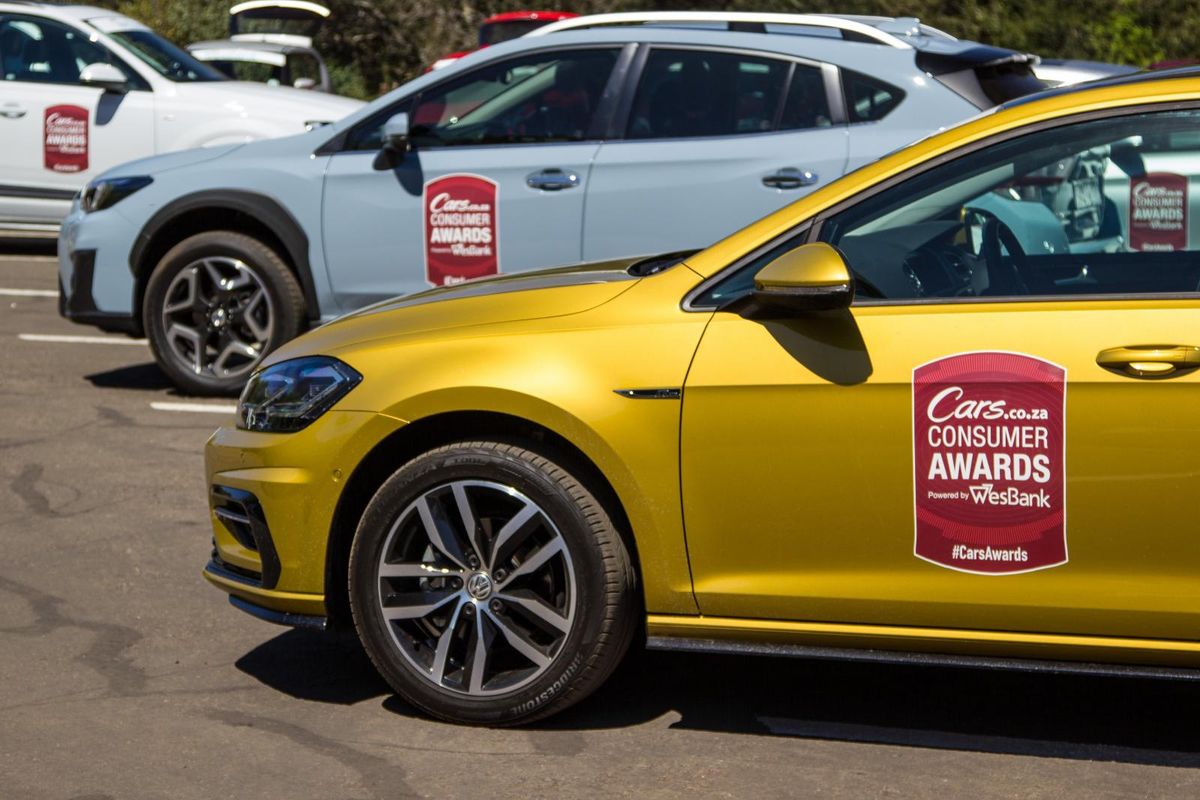
The testing phase for the third annual Cars.co.za Consumer Awards – powered by WesBank (or #CarsAwards for short), took place last week at South Africa’s world-famous Gerotek proving grounds in Gauteng. With 39 cars competing in 13 product categories, and 18 judges on hand to evaluate them on what are arguably the most comprehensive and exhausting test routines used for any local motoring awards programme, consumers can rest assured… only the cream will rise to the top.

To view the categories and finalists go to www.carsawards.co.za

How it works


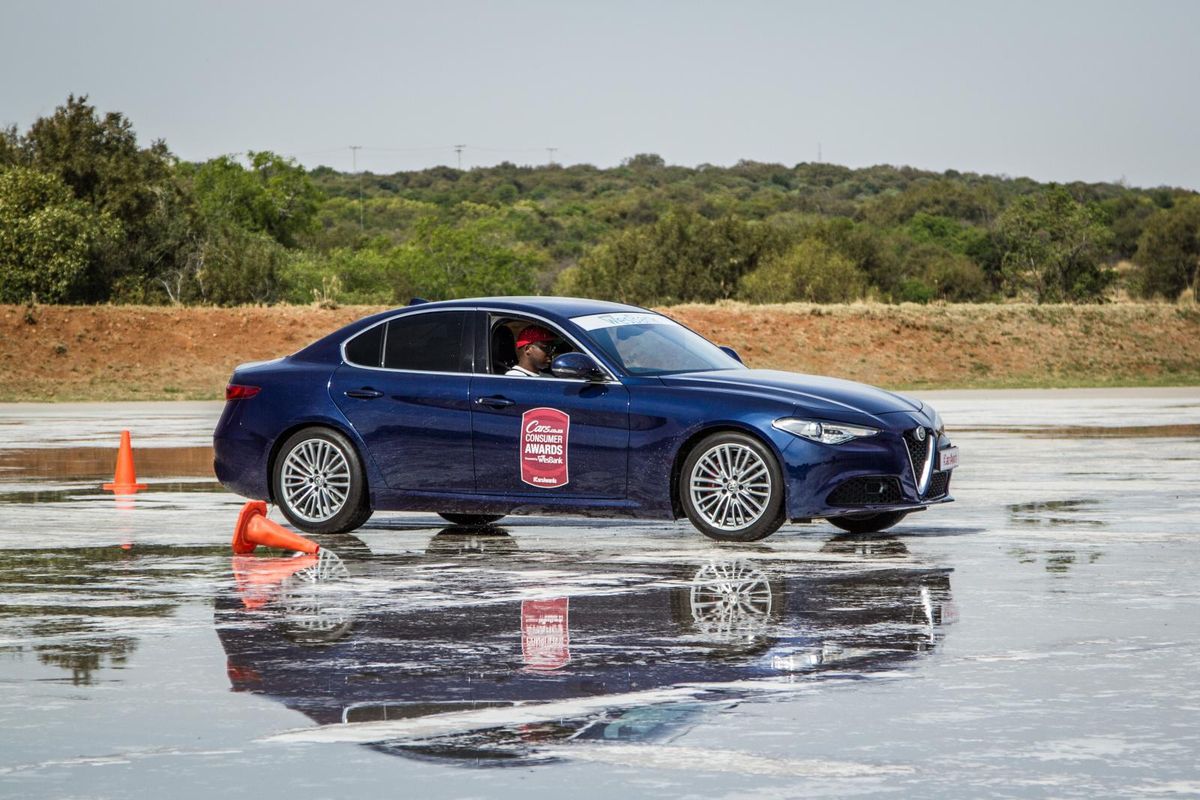
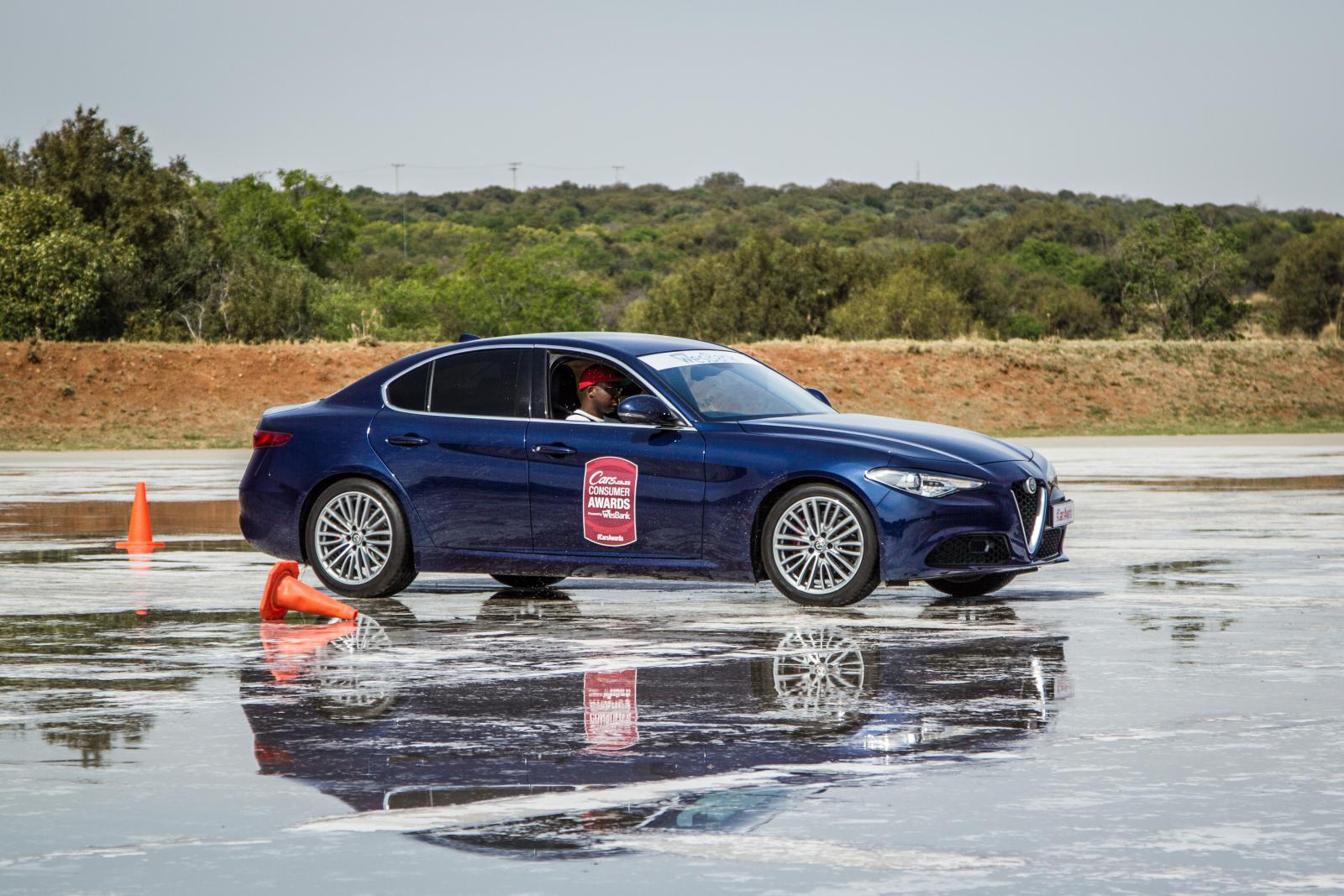
Judge Francisco Nwamba on the skid pan with the Alfa Romeo Giulia, a finalist in the Business Class.

The first two phases of the 2017/18 programme entailed nominations and scoring by the Cars.co.za extended editorial team, which in September identified the top 5 semi-finalist cars against established filters of eligibility and other important criteria, and then shortened that list to 3 finalists per category in October. However, the contenders were subjected to direct comparisons when all 39 vehicles arrived for back-to-back evaluations at Gerotek.

“There are many things that set the Cars.co.za Consumer Awards – powered by Wesbank, apart from other awards programmes,” says Hannes Oosthuizen, Cars.co.za Consumer Experience Manager, “but core to the programme’s success is the ability to compare vehicles that compete in the same segment back-to-back. Nothing magnifies a vehicle’s advantages (and flaws) quite as well as the rival product standing next to it.”


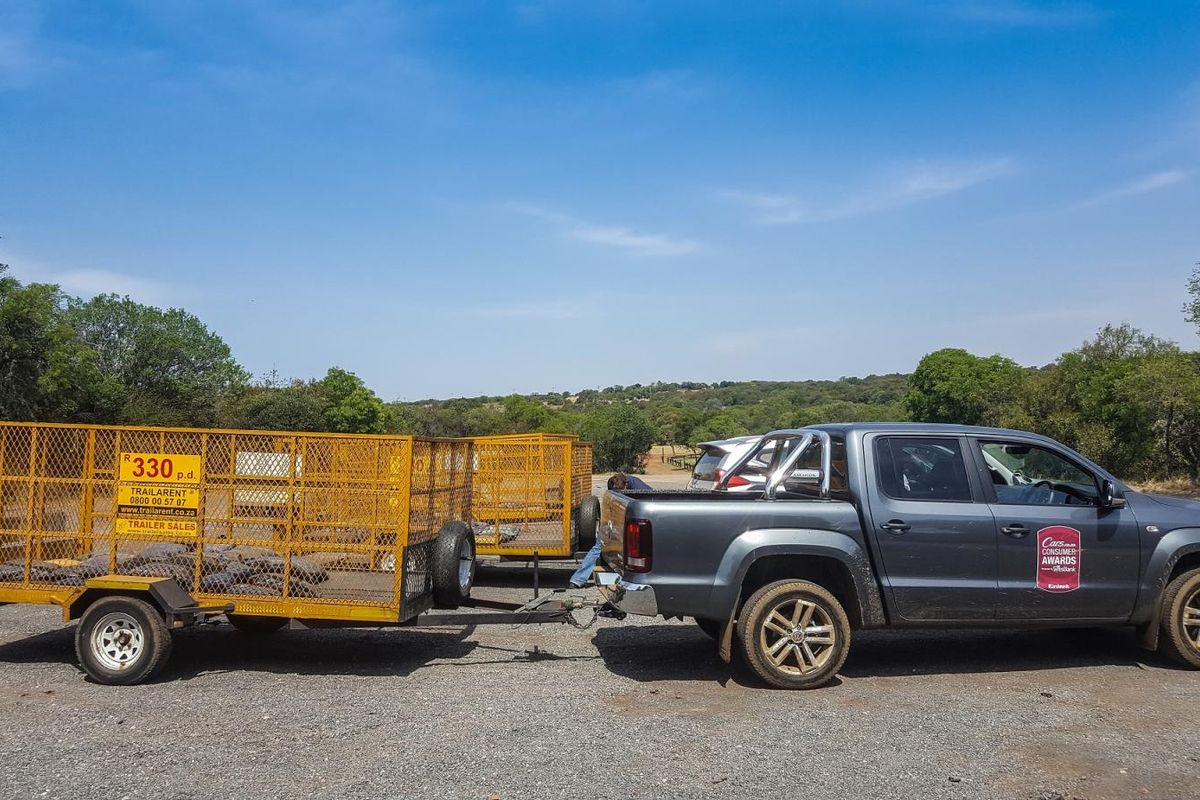
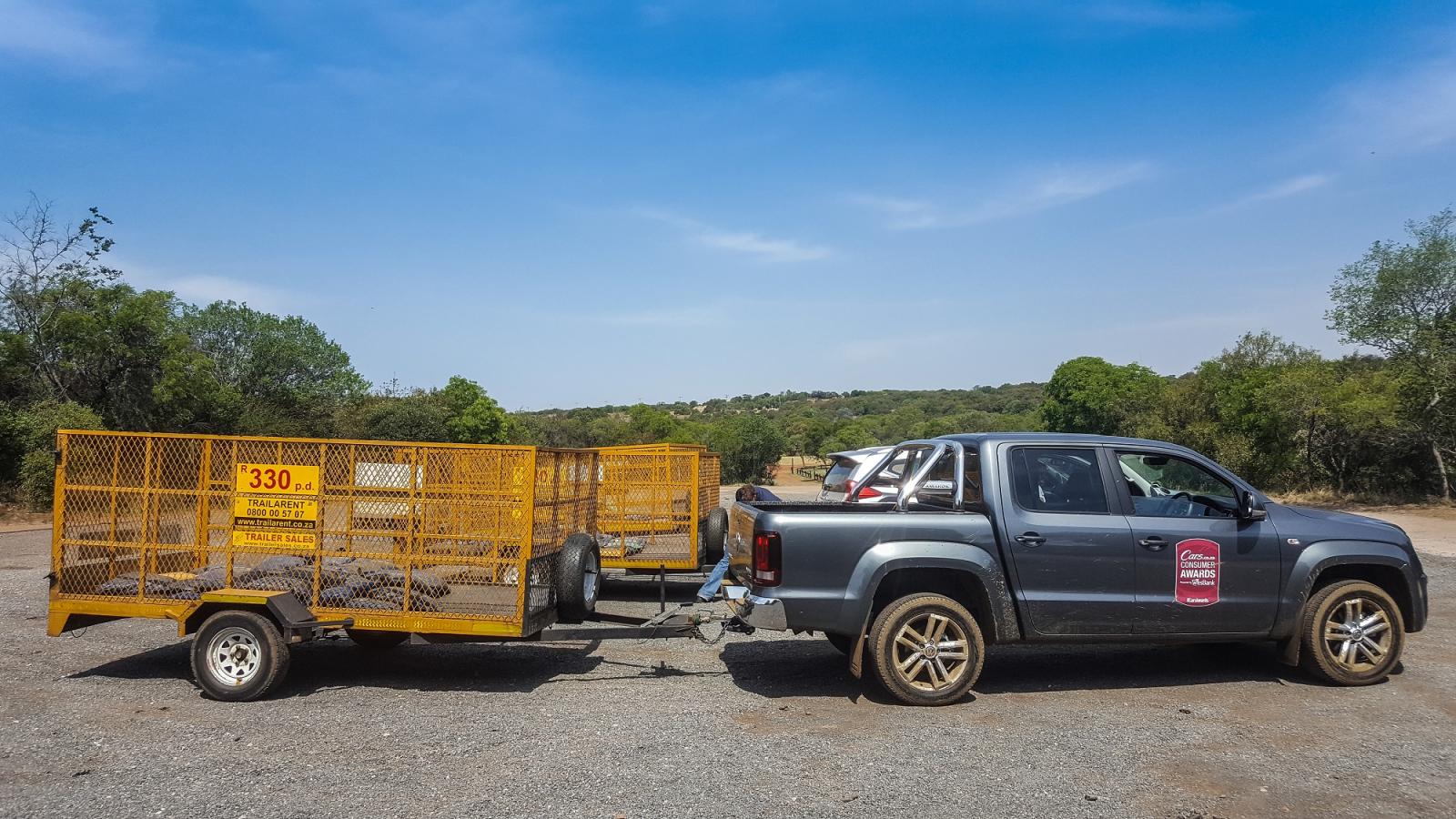
The Adventure SUV and Leisure Double Cab contestants were also subjected to a tow test on a challenging mountain road.

For testing at Gerotek, which is frequently used by international motor companies for evaluating their upcoming products, 2 comprehensive test routines were developed for #CarsAwards, the first focusing on passenger vehicles, and the second for vehicles that will frequently venture off-road. Judges had to drive the 3 vehicles in their respective categories in succession, then perform a comprehensive static evaluation, before scoring the vehicles.

Primarily road-going passenger vehicles


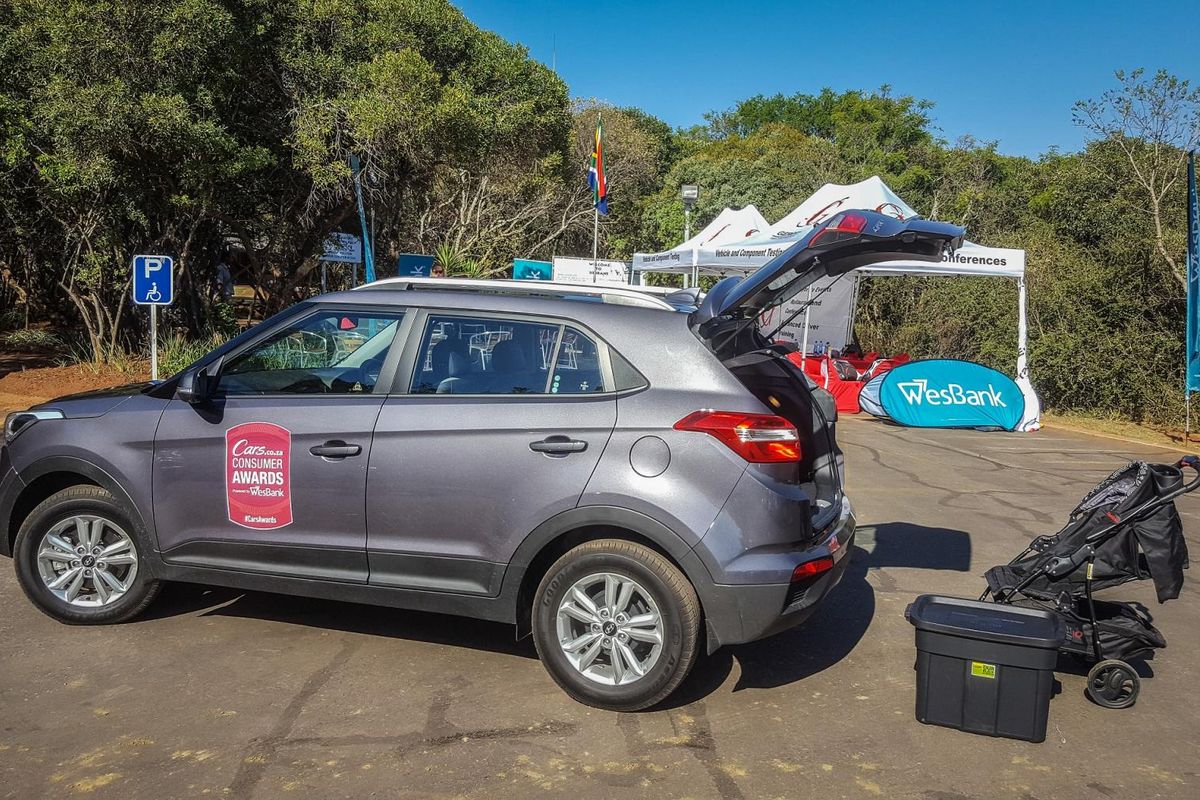
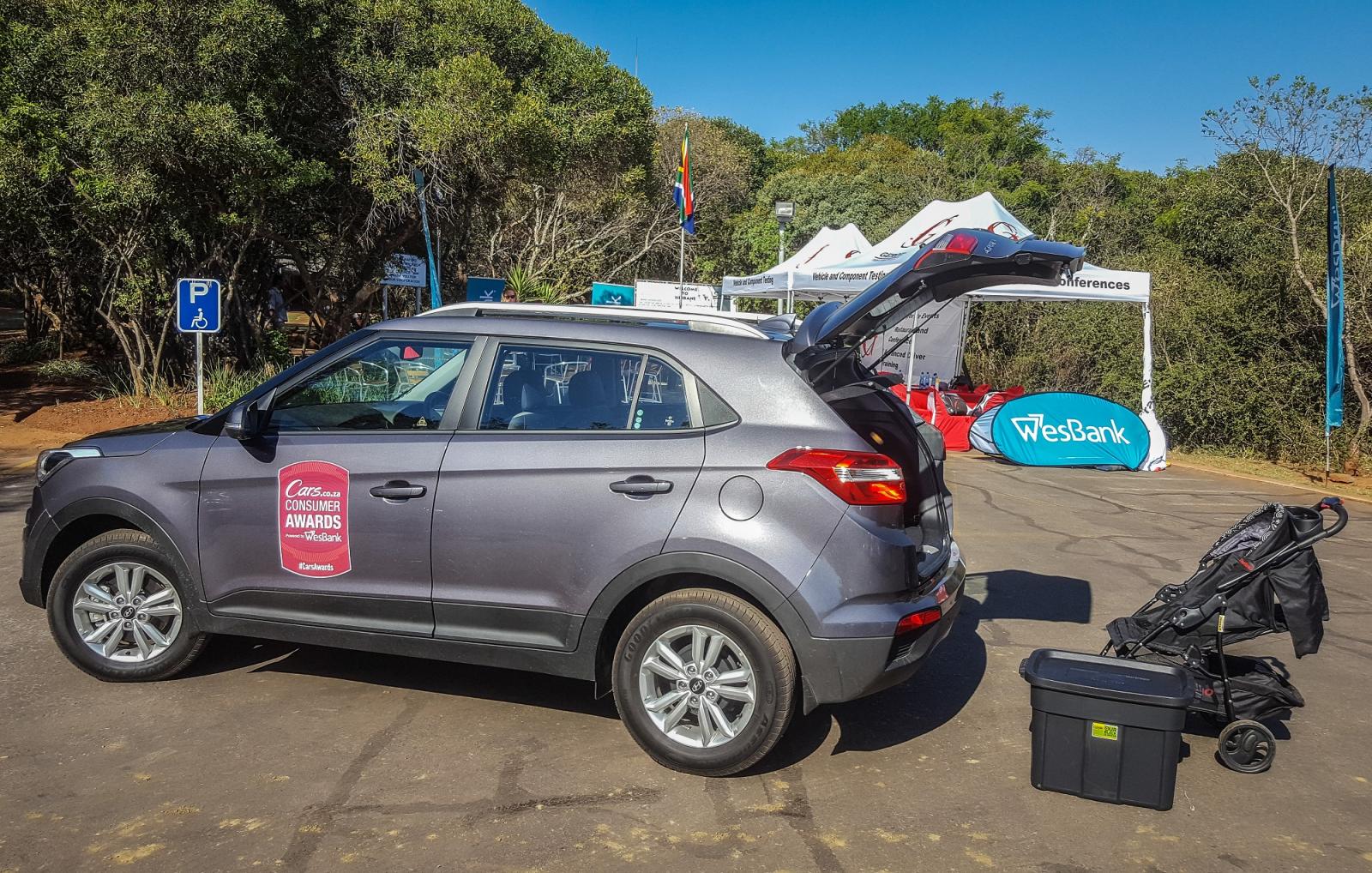
The Hyundai Creta, a Compact Family Car finalist, ready for a luggage bay flexibility test.

The test routine for the majority of the categories included the following;

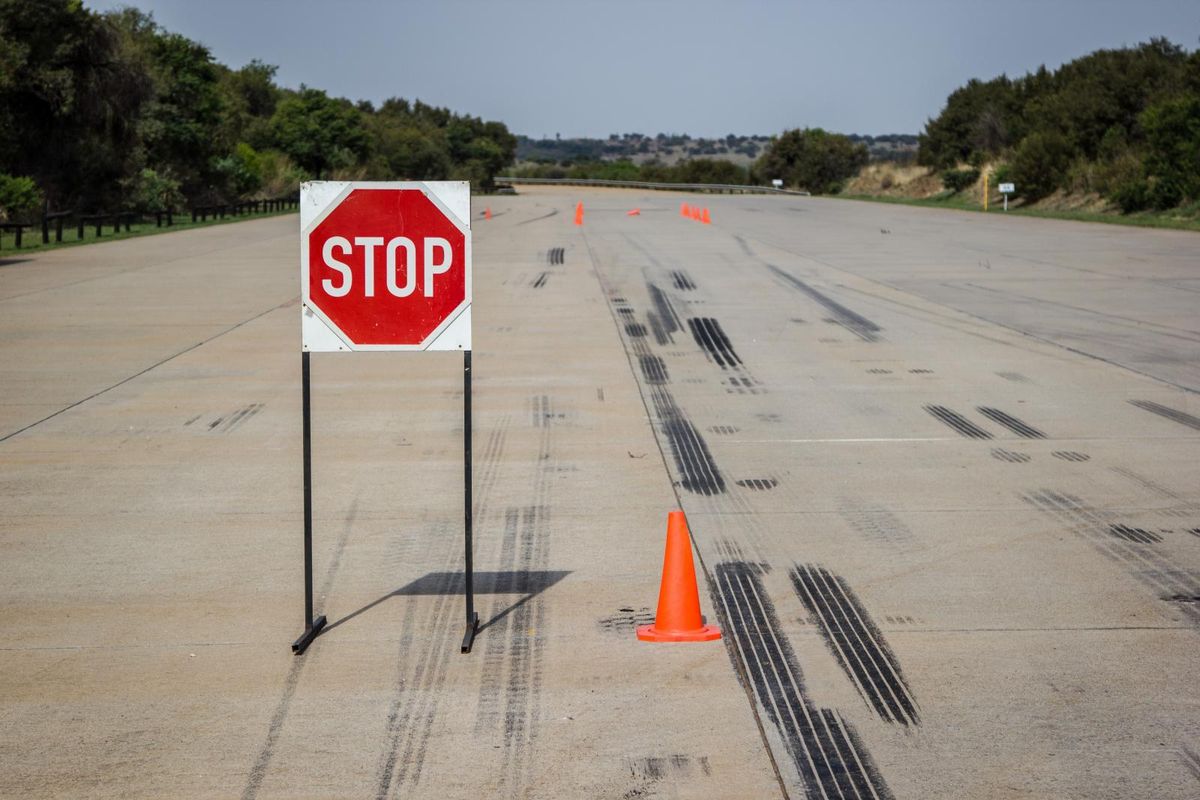
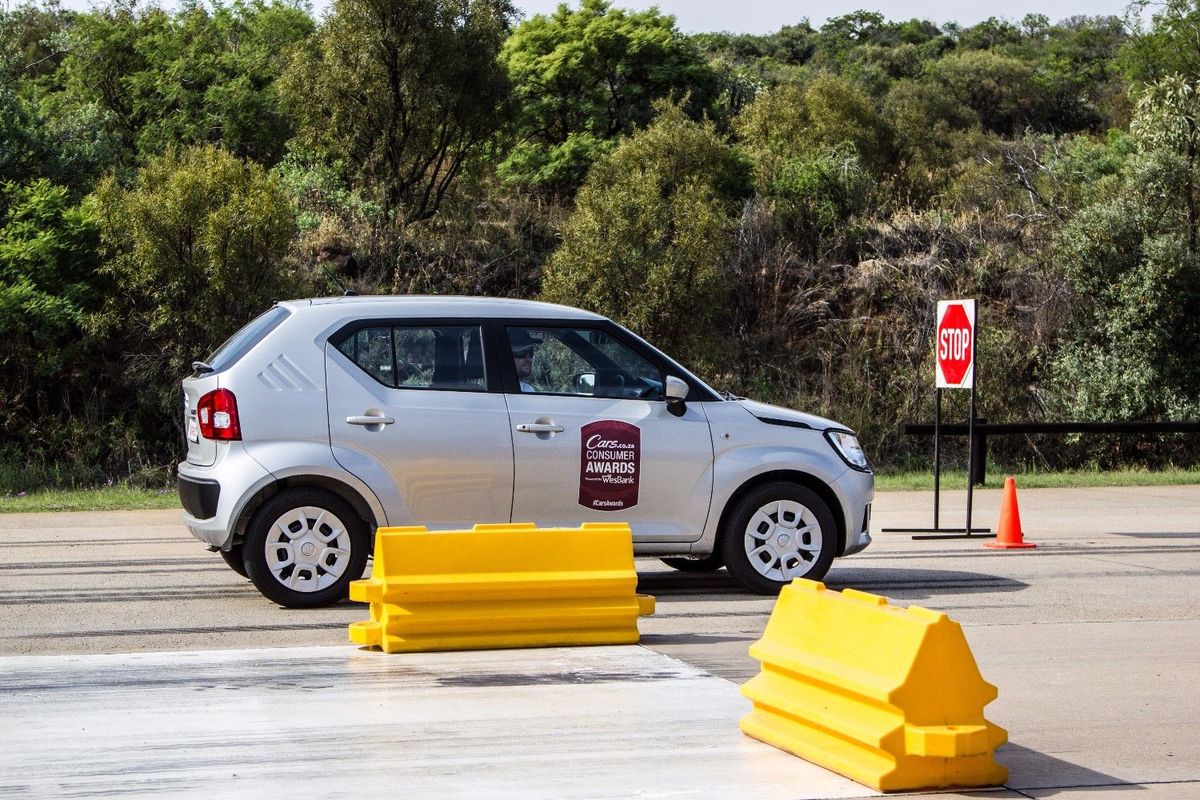
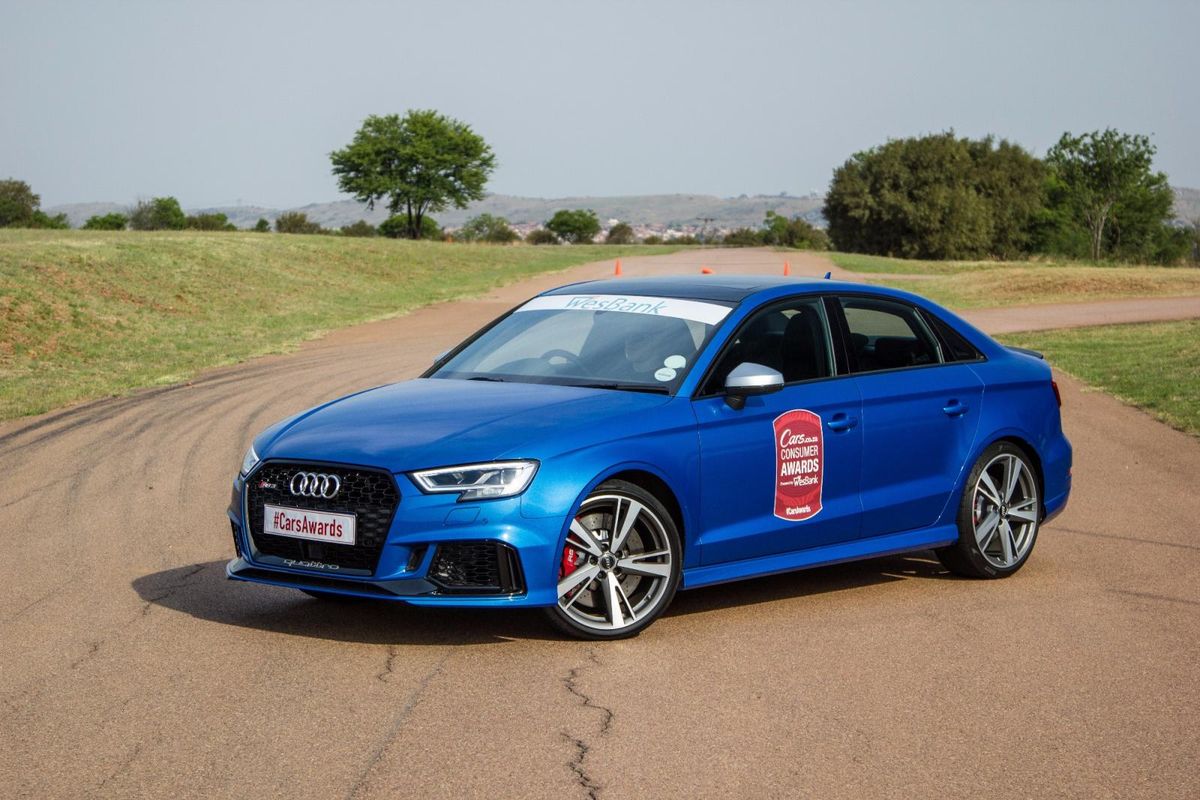
  • A skidpan – testing vehicle stability and ease of control

  • A long straight – for performance testing

  • Emergency braking stop

  • Emergency lane-change manoeuvre

  • Varying road surface suspension test (including Belgian cobblestones, parallel and transverse corrugations, potholes)

  • Dynamic handling track – resistance to body roll, steering accuracy/feel, responsiveness etc.

  • Mountain road – extensive course testing various dynamic/drivetrain characteristics, including the ability to start against steep inclines etc.

Upon a test vehicle’s return to the holding area a static evaluation was then performed which included;

  • Standard features comparison

  • Build quality

  • Interior ergonomics

  • Seat comfort front & rear

  • Luggage space – items such as baby strollers, cooler boxes etc. were made available to judges to assess a vehicle’s practicality in real terms.

Off-road and Adventure vehicles


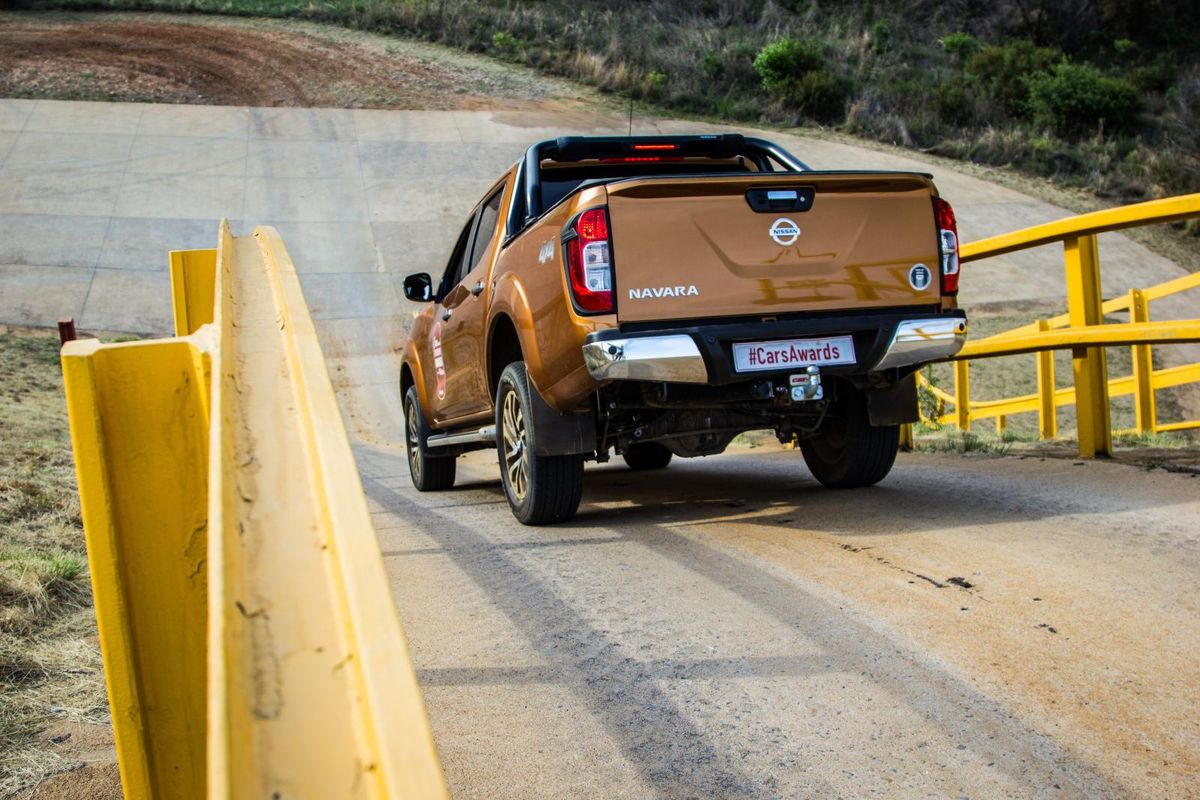
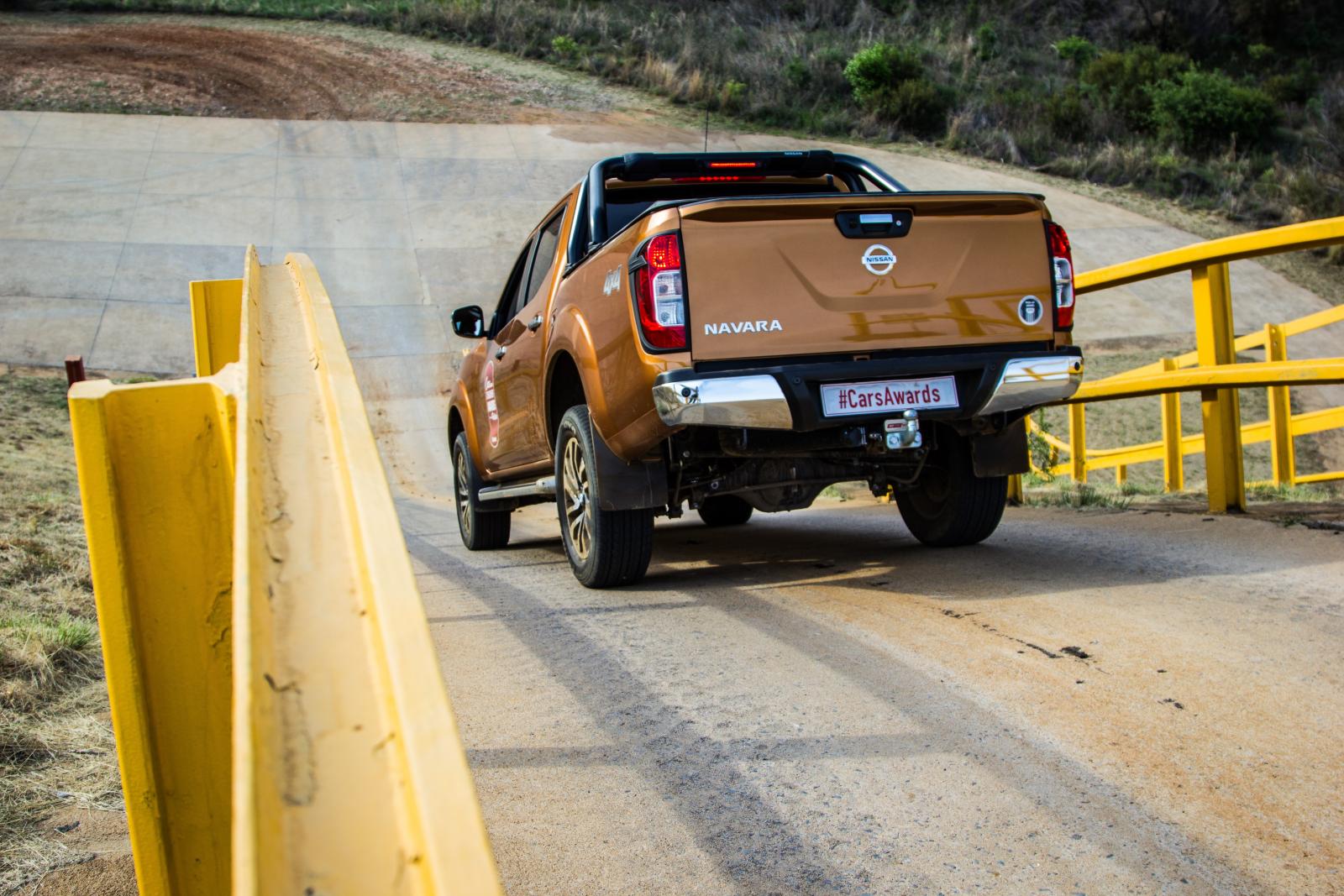
The new Nissan Navara, a Leisure Double Cab finalist, tackling the gradients at Gerotek. 

In 2 of the categories (Leisure Double Cab and Adventure SUV) the test routine was dramatically different and included;

  • Gradients – vehicle’s ability to descend and ascend steep gradients safely.

  • Sand trough

  • Mud trough

  • Extensive 4×4 course

  • Mountain road towing 1.3-tonnes – these are vehicles that will often be used to tow caravans etc.

Extended judging panel


Francisco Nwamba and Wendy Knowler busy scoring finalist vehicles.

The judging panel for this year’s #CarsAwards is more diverse than ever. “We want the #CarsAwards message to reach all South Africans, and that means we have to engage with and include media representatives beyond just those in motoring,” explains Oosthuizen.

“This year we took another big step towards our goal of having 50/50 equal male/female representation, for example,” he adds. “In short, we want an Awards programme that reaches all South Africans as this is ultimately not about handing out trophies to winning brands, but to inform South African car buyers about which cars they should be buying.


Well-known TV and radio personality Anele Mdoda joined the #CarsAwards jury this year. 

This is what some of the judges had to say about the testing procedures and #CarsAwards in general:

  • Phuti Mpyane (The Petrosexual) – "Using Gerotek was an ace move on the part of Cars.co.za. The layout of the test route does no particular car or brand a favour. If there are flaws in any car Gerotek will unearth them.”

  • Wendy Knowler (Consumer Journalist) – “The test routine was as rigorous as that Gauteng test day was hot – VERY!  I can’t think of a better way to compare 3 competing finalists than to drive them through the same challenges one after the other – skid pan, potholes, dynamic track; and in the case of the 4x4s, down steep inclines, through mud and sand, hauling a trailer up a mountain side and then around a punishing 4×4 track. And then to park them side by side and compare everything from console design to how well they accommodate a surfboard, pram and cooler box. The South African motoring public is really lucky to have Cars.co.za stage this awards programme on their behalf.”

  • Kojo Baffoe (Afropolitan Editor, writer/editor/media strategist) – "The beauty of the test routine is that it effectively covers all the relevant aspects of a vehicle, ensuring that, as a judge, you are able to make informed decisions around scoring."

  • Nafisa Akabor (Tech Journalist) – “The CarsAwards judging process is extremely thorough with back-to-back testing per category by regular consumers too, allowing for the most accurate grading of an award of this nature.”

  • Juliet McGuire (Women on Wheels editor) – “It is certainly the most unique motoring awards programme in SA as it’s the only one where you get to compare rival products, back-to-back, in the metal. We very rarely get to do that. In my view this is the only Awards programme that consumers should actually look at before buying.”

  • Wezile Bonani (Bay FM) – “The testing was immensely comprehensive, with all aspects of reviewing and comparisons covered. I learnt a lot about the finalists and enjoyed every second of it in that blistering heat of Gerotek.”

  • Francisco Nwamba (The Motorist) – "The Cars.co.za Consumer Awards – Powered by WesBank, test days allowed for us to put ourselves in the shoes of the buyer, looking for the things they worry most about. Ranging from safety, to comfort and dynamic handling, we were able to get the most out of each car. For the 4x4s we mimicked tests that even avid off-roaders would find challenging, from very steep inclines, to towing on a demanding course as well as different gradient changes. Really then, we left no stone unturned in this years testing."

  • Ashley Oldfield (Cars.co.za) – “Gerotek makes perfect sense as a vehicle testing station for the #CarsAwards. There is no other place that allows you to test a vehicle's dynamics, comfort, road holding, stability and to an extent, build quality. All of this can be done at Gerotek in a safe environment.”

South African car owners have 50% of the say


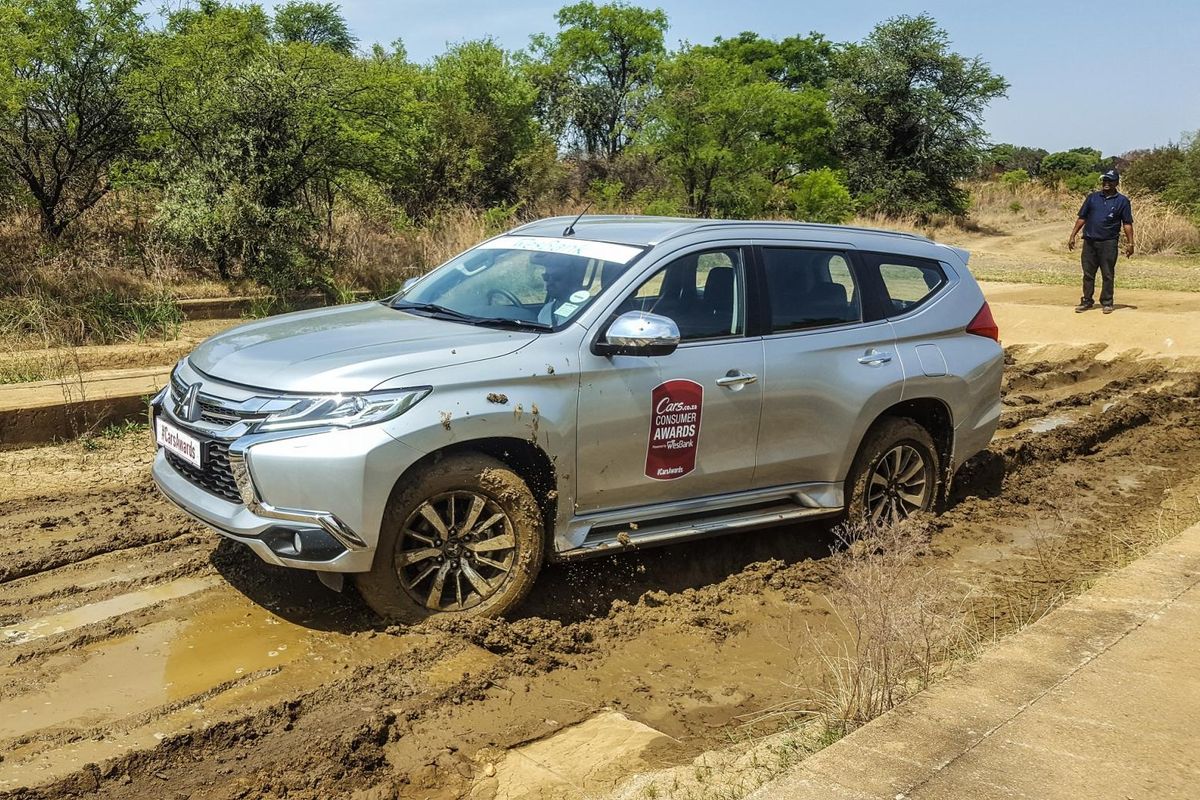
The Mitsubishi Pajero Sport ploughs through the mud trough. It is a finalist in the Adventure SUV category.

Ultimately, however, the test days and the judges’ scoring account for only half of the final vehicle scores. “Our judges are able to really get to grips with the cars at Gerotek and perform very accurate scoring in those conditions,” says Oosthuizen, “but one thing they can’t do is to predict what it will be like to live with those vehicles.”

Two years ago, Cars.co.za teamed up with data specialists Lightstone Consumer to develop a very comprehensive Ownership Satisfaction Survey. The information collected through the survey, combined with other data on resale trends (based on actual financial transactions) and market share growth in the preceding 12 months, are combined to calculate a Brand Score for each of the finalist vehicles.


Several film crews attended the test days. Here Hannes Oosthuizen (Cars.co.za) and Claire Mawisa (Carte Blanche) are being interviewed by eNCA and News24 respectively.

This Brand Score accounts for the remaining 50% of the finalist’s result and if you own a car (younger than 5 years), you can complete the survey to have your say: www.carsawards.co.za . Great prizes are up for grabs!

“With rigorous back-to-back testing combined with valuable ownership data, we believe #CarsAwards to be the fairest and most comprehensive motoring awards programme in South Africa,” Oosthuizen concludes.

The winners will be announced in late January 2018.


A post shared by Cars.co.za (@carssouthafrica) on


You may also be interested in;

View the Cars.co.za Consumer Awards – Powered by WesBank finalists

Complete the Cars.co.za Ownership Satisfaction Survey on your own vehicle

View last year's CarsAwards winners

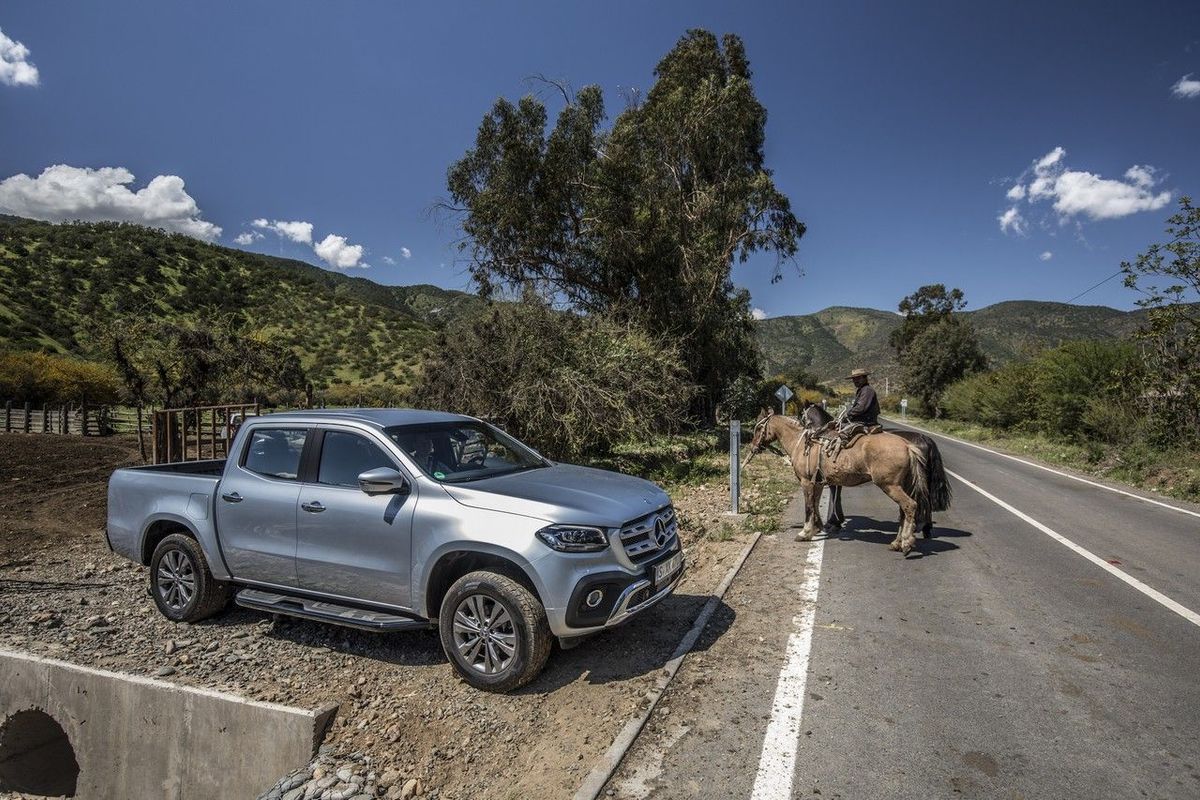
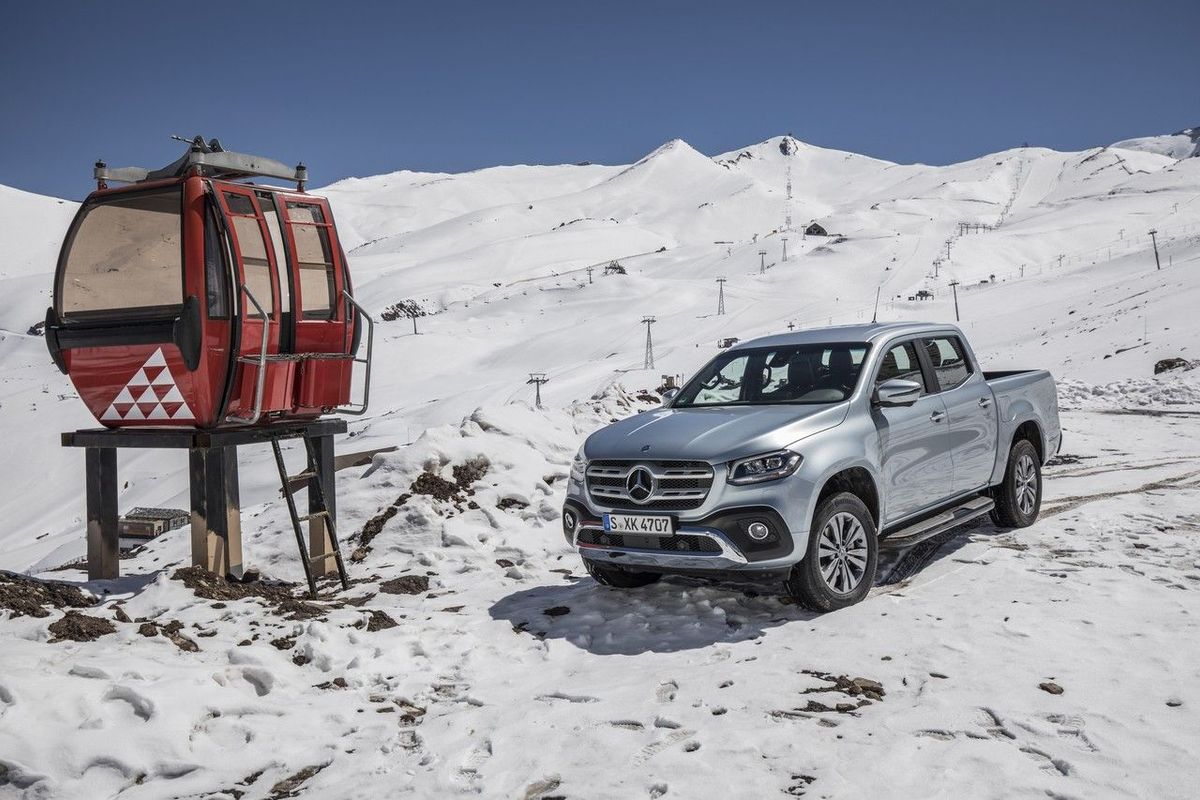
Mercedes-Benz X-Class (2018) International Launch Review

Mercedes-Benz's double-cab bakkie will be launched in SA during the first half of 2018. We've seen the concepts, we rode shotgun in the pre-production units at the international reveal in Cape Town and now, finally, we head across the Atlantic Ocean to drive the X-Class on a 400-km route through Chile. Does it live up to the hype? 

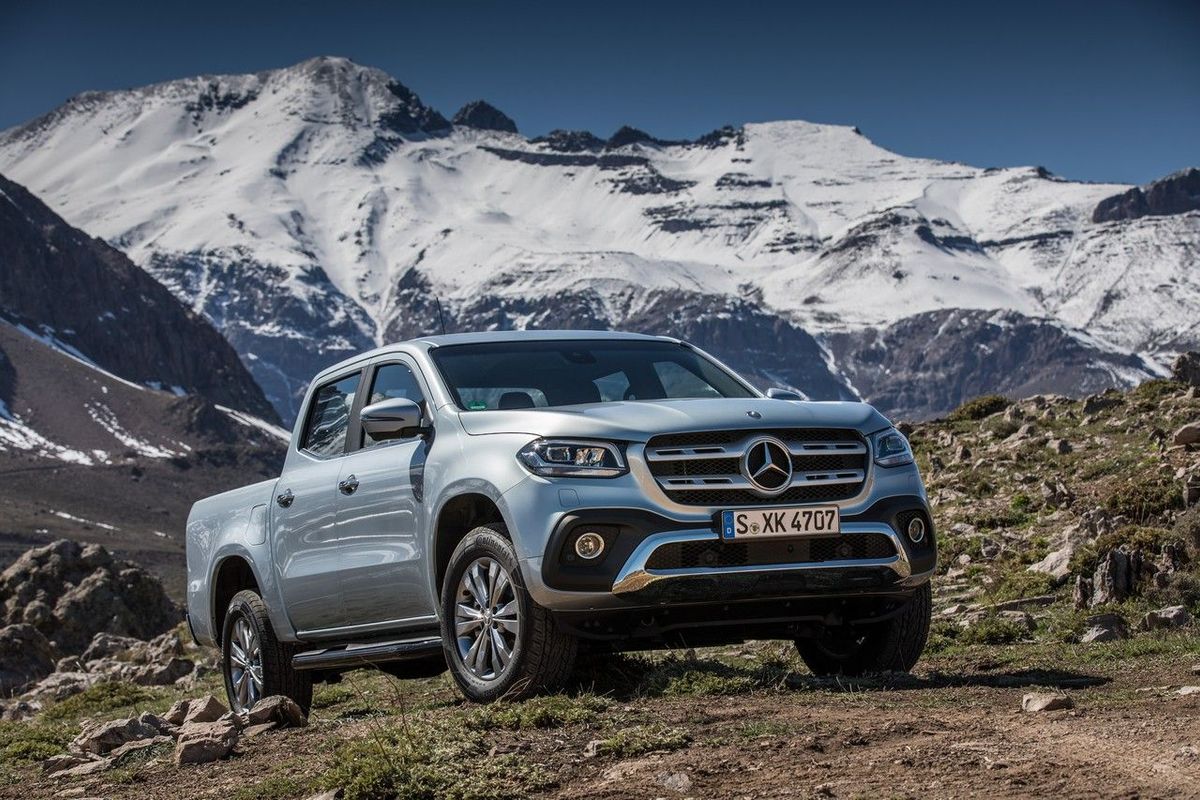
The X-Class is a radical departure for the Stuttgart-based firm. Because this is new territory for Mercedes-Benz, it's not difficult to understand why the German firm would partner with Nissan, an established player in the bakkie market, for this project. It would've cost Benz plenty, both in time and money, if it had to develop its own bakkie from the ground up. It'd probably still be a concept, if that was the case…

The Navara presents a logical choice for a shared platform. While sales of the recently launched Nissan were initially sluggish, the numbers have started ticking over, although they're nowhere near those of the Ford Ranger and Toyota Hilux. The Navara is comparatively popular in continental Europe, but that region's bakkie sales are minuscule when you see how many are sold in South Africa. This is not the first collaboration between the brands either: Mercedes and the Renault-Nissan alliance has been sharing powertrains and there are shared components across a number of products.  


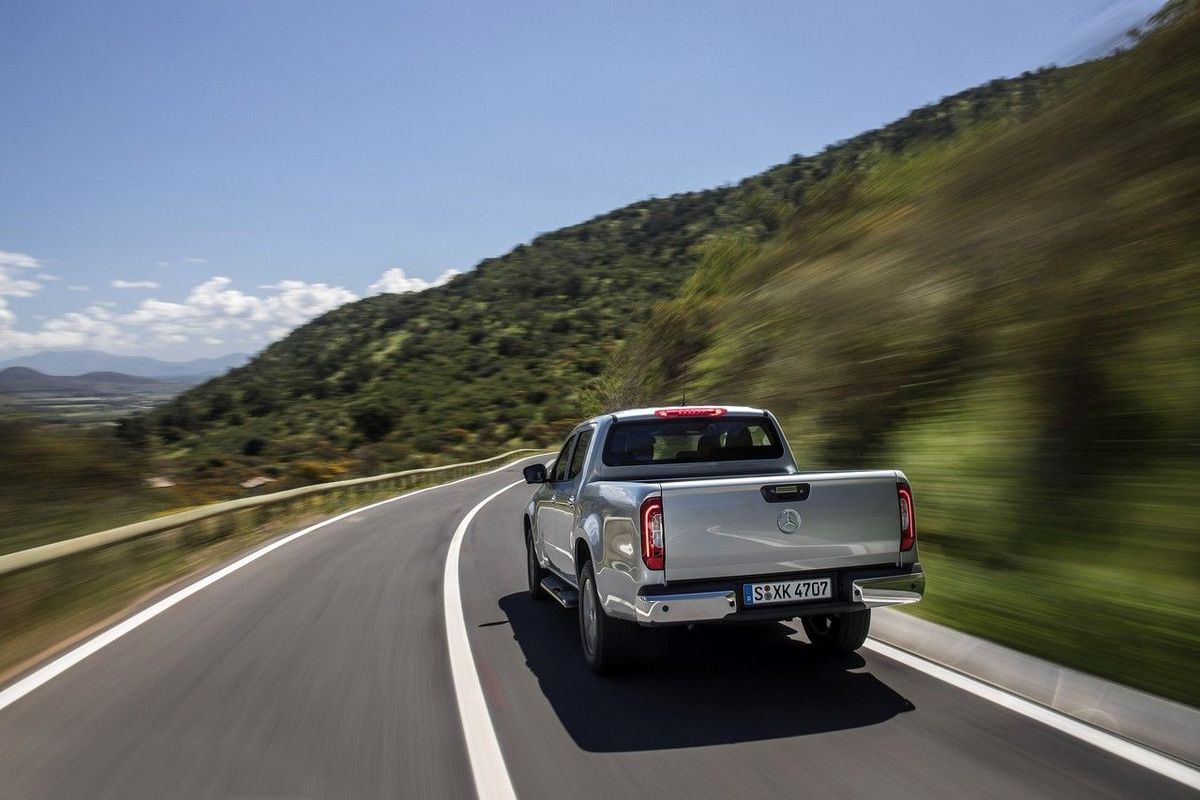
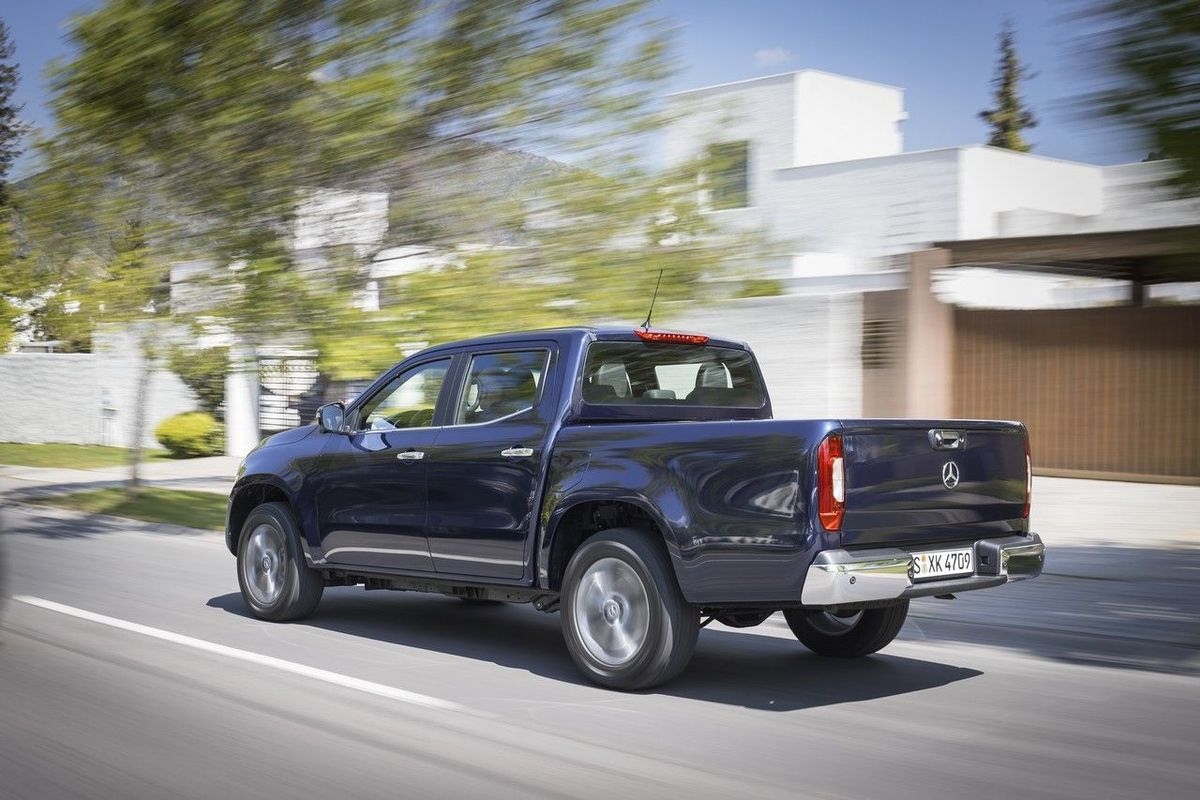
From an on-road point of view, the X-Class features a specific suspension tuning for greater ride and cabin refinement. 

How much has Mercedes-Benz adjusted the Navara to suit its own needs? According to the engineers and experts we spoke to, there are considerable changes and revisions to existing componentry. To name a few examples, the suspension has been reworked, a more direct steering setup has been adopted and there are reinforcements to the ladder frame. Critically, we were very interested to hear that Mercedes-Benz had replaced Nissan's drum rear brakes with more potent ventilated discs. The axles have also been replaced by wider units, front and rear. Would we be able to tell the difference? Perhaps, if only if we had the opportunity to have an X-Class and a Navara together for an extended test…

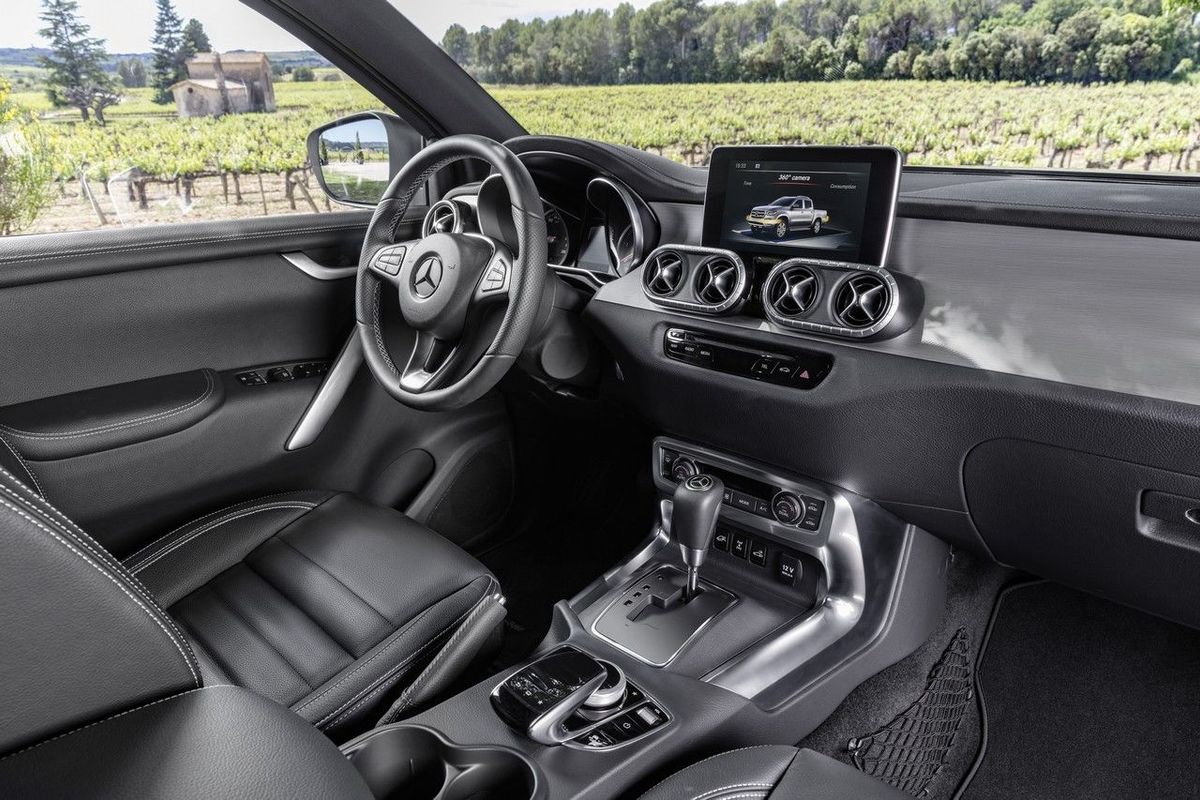
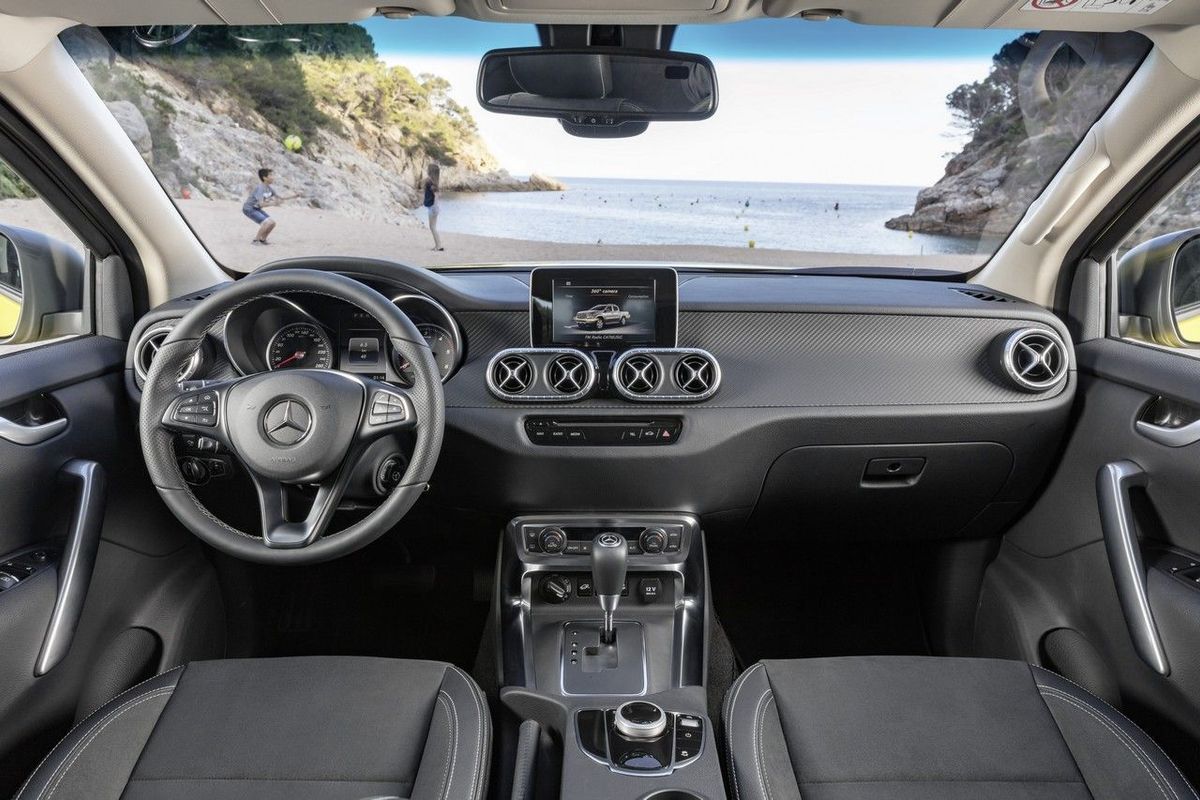
For the man on the street, the biggest changes will be apparent in the cabin design and execution. The Benz's interior feels substantially more upmarket than that of a Nissan Navara and it's not a simple case of switching the badges on the steering wheel. The infotainment system has been overhauled and replaced with a Mercedes-Benz sourced unit, and there are some repositioning of buttons and switches. For example, the heated seats in the Navara are located just aft of the gear selector, whereas in the X-class they've been moved to the outer edges of the seats.


Premium finishes abound in the X-Class' interior, but in some ways they look smarter than they feel. 

When is it coming and what spec? 

The million Rand questions have to be answered promptly! The first Mercedes-Benz X-Class units will be arriving in South Africa in Q2 of 2018, with a flagship V6 model estimated to arrive at the end of next year. As it stands, we'll be getting the following derivatives: Pure, which is essentially a workhorse; Progressive which combines lifestyle and work, and Power which is the high-end flagship trim level. 

Mercedes-Benz is also putting together a comprehensive accessories catalogue, comprising styling bar, tonneau covers, canopies and the like. As for pricing, Mercedes-Benz is still exceptionally cagey about how much its X-Class will cost when it comes to South Africa, so we'll just have to wait for the new year. Dare we speculate? Why not! We predict that the flagship Mercedes-Benz X-Class will breach the R1 million barrier, or at least come very close. While some will wince at that price tag, we'd just like to point out that Mercedes-Benz SA already has a queue of customers who have already put down deposits.


Judging by the levels of pre-launch interest, demand for a R1-million bakkie might be greater than some people expect.  

What's it like to drive? 

Our launch route took us through some spectacular Chilean countryside. On offer for us to sample was the X250d, but we did have the opportunity to ride as passengers in the flagship V6. These V6 units are essentially still pre-production models and aren't quite the finished product. 

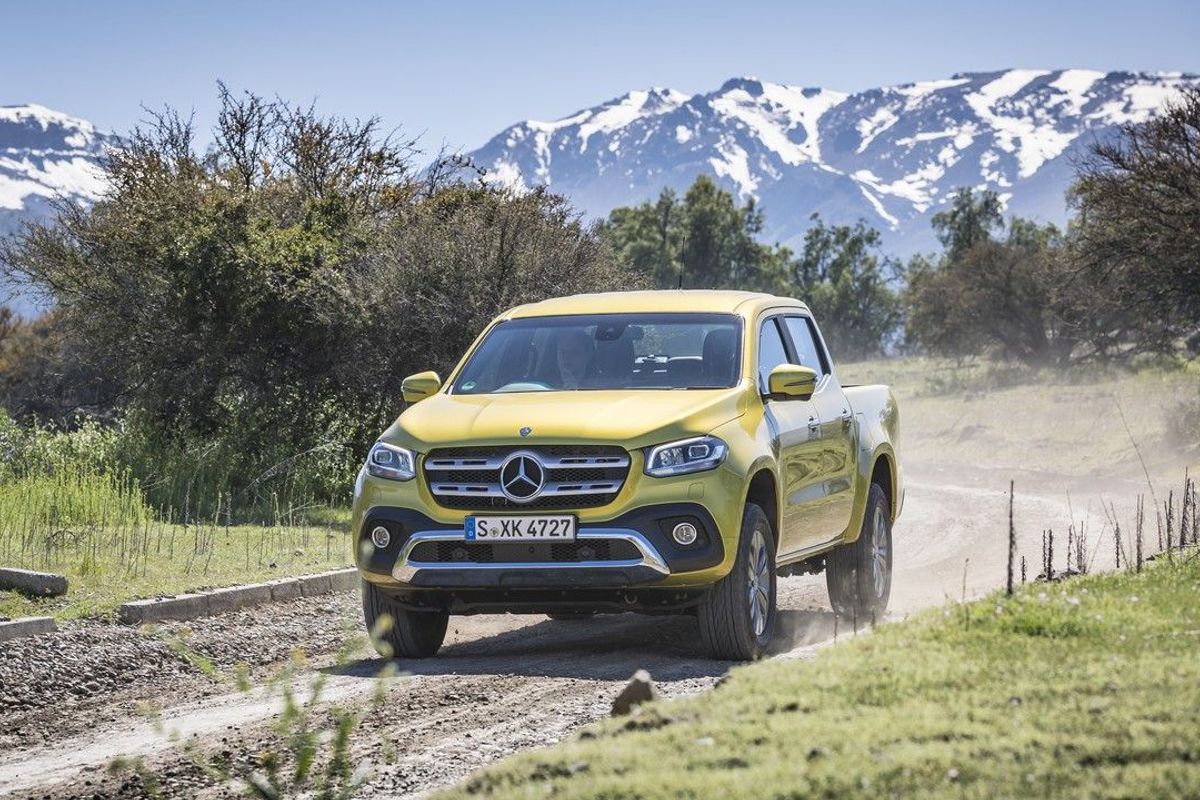
The roads leading out of Santiago are of varying quality and we put the X-Class through highway, winding country roads, gravel tracks and pothole-infested mountain paths. The first key takeaway here is that Mercedes-Benz has worked hard to minimise road-, mechanical- and trim noises. The cabin is a tranquil space, irrespective of whether you're pounding down a highway at the national limit or traversing gravel. 


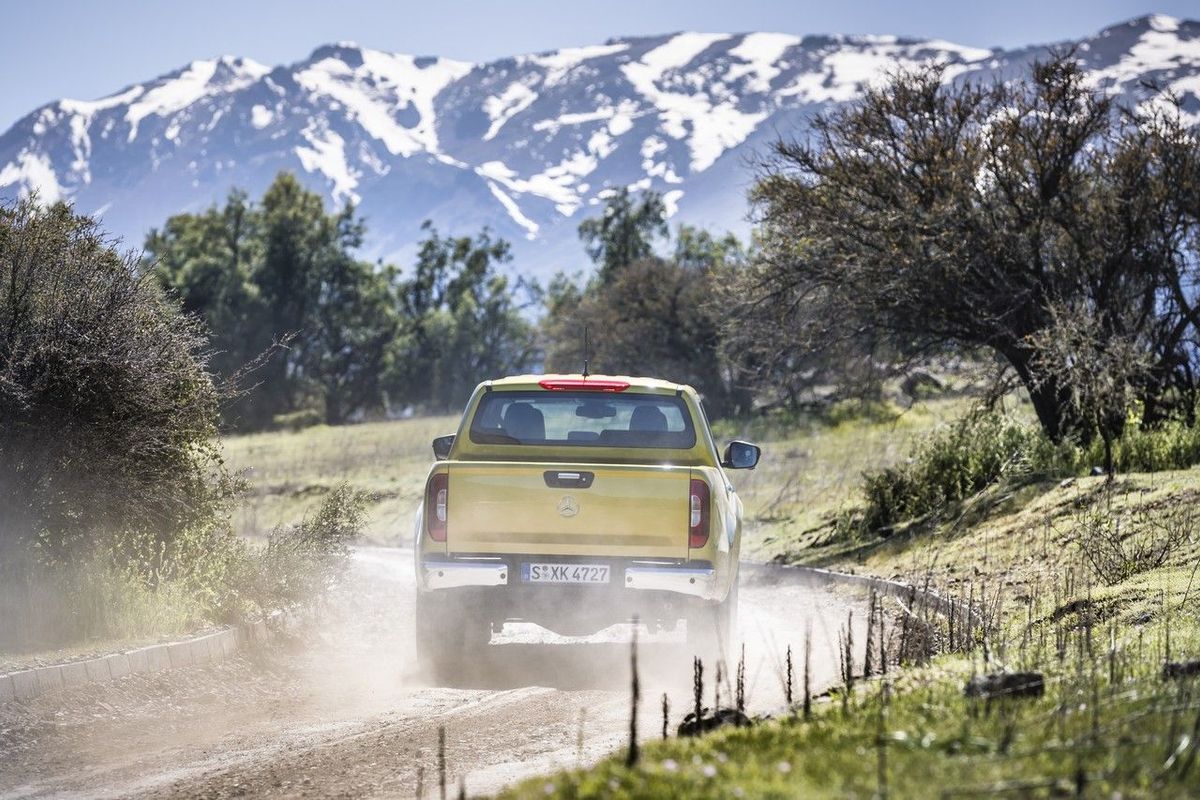
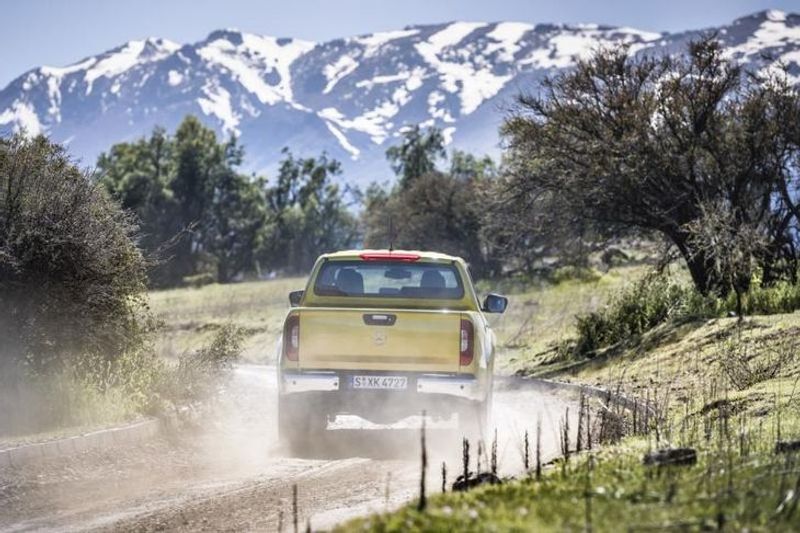
Gravel roads present a minor challenge to the X-Class, which impresses with good NVH suppression on- and off-road. 

Our test vehicle was the X250d 4Matic in Power trim, powered by a 2.3-litre 4-cylinder turbodiesel engine. Peak outputs are 140 kW and 450 Nm, with shove going to the rear wheels via a 7-speed automatic transmission. Interestingly, we find this engine more than adequate in the Navara, but in the X-Class application, the additional weight of the Mercedes-Benz means that it loses some of its responsiveness and urge. It's not crucial, but we were expecting a bit more responsiveness. On a positive note though, is the fact that the engine note hardly intrudes into the cabin unless you're really wringing its neck.

We have our criticisms, however. There's a lack of reach adjustment for the steering wheel, meaning you're never going to get that perfect driving position. Unless you're specifying a top-spec trim model, the X-Class cabin contains some plastics that are of a quality not appropriate for what's being marketed as a luxury bakkie. At first glance, the cabin looks smart and upmarket, but upon closer inspection, you'll spot some cheap finishes here and there. You could argue that these cheaper plastics are tough and long-lasting in their defence, but surely at this end of the price spectrum, it's unsightly?

Finally, our biggest gripe is the lack of rear cabin space. The sit-behind-yourself test is barely a pass as the author (who admittedly is taller than average) found his knees up against the back of the driver's seat. It'll be okay for children, but for four adults? That's not going to be pleasant on longer journeys.


A post shared by Cars.co.za (@carssouthafrica) on

But can it go off-road? 

We've experienced the Nissan Navara's off-road prowess a few times and a member of our team has sampled the sibling Renault Alaskan too (with favourable feedback). Neither the Japanese nor the French bakkies disappointed when the tarmac has turned to sand and gravel, and we expected the Mercedes-Benz X-Class to perform in much the same manner. Predictably, that's exactly what it did.

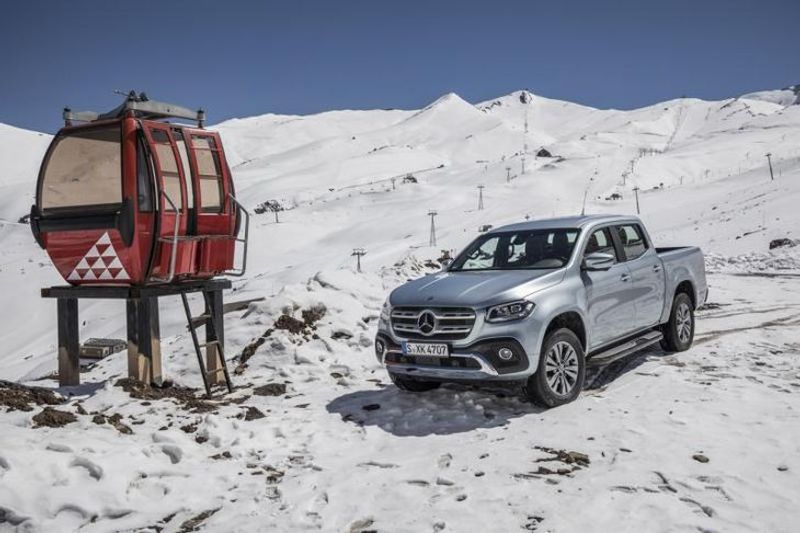
Fundamentally and mechanically it's so close to the Nissan Navara, but somehow Mercedes-Benz has imbued its X-Class with something intangible that you can only feel from behind the wheel. Perhaps its the spirit of the Gelandewagen, but we felt indestructible and commanding from behind the wheel of the Benz bakkie on the rougher stuff. If you're wondering why Mercedes-Benz didn't go down the G-Class route, it would have simply been too expensive to make a G-Class double-cab.


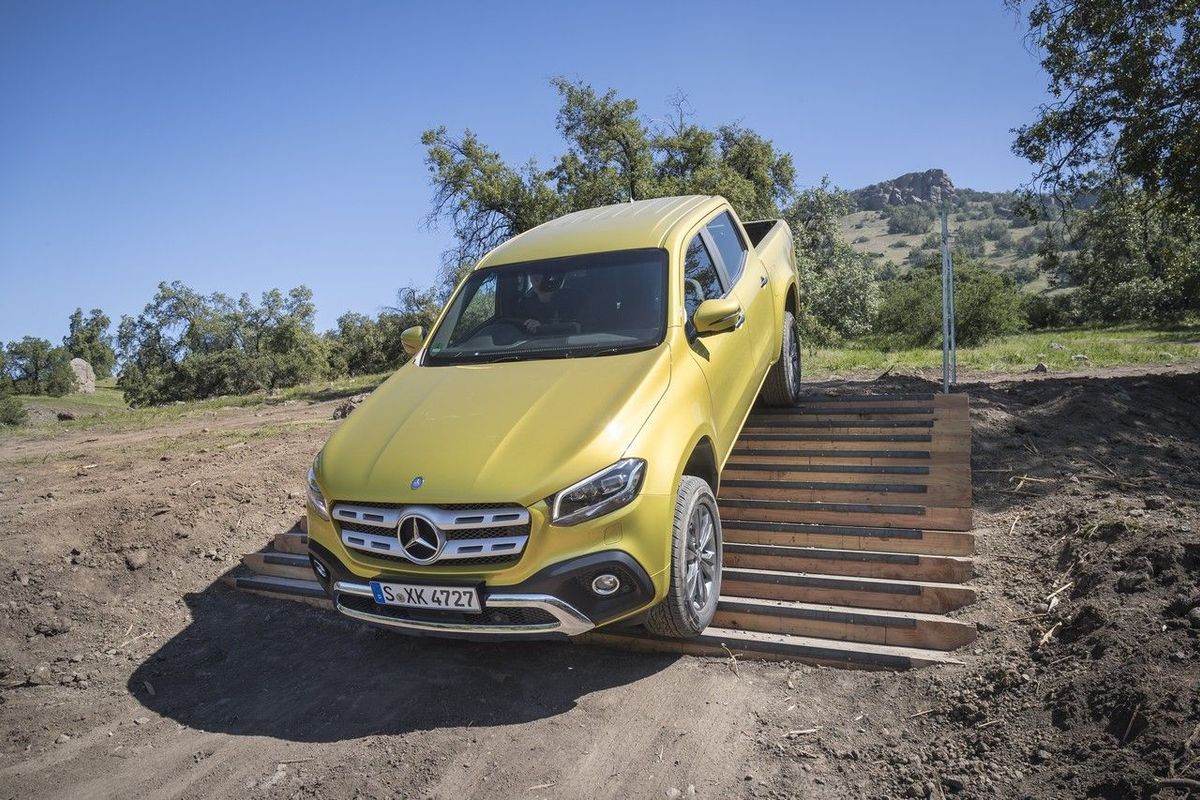
The X-Class offers all the off-roader characteristics that enthusiasts crave and expect, yet never loses its premium feel.

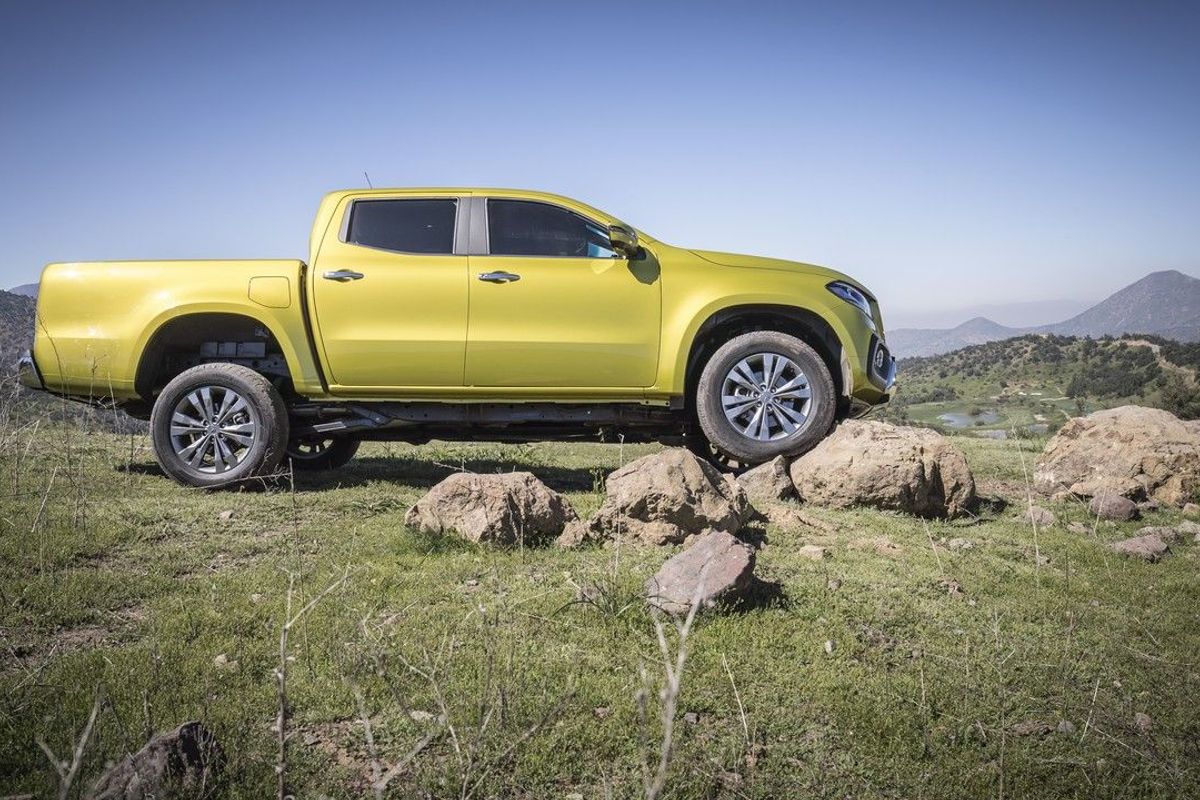
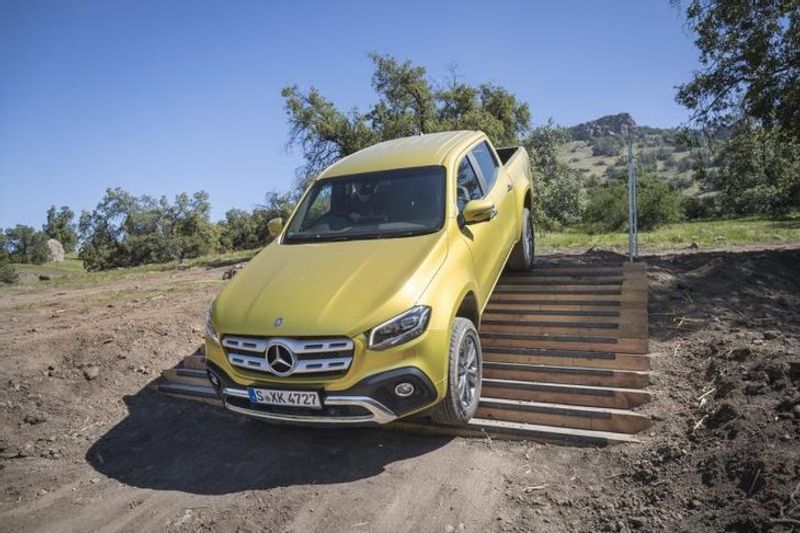
The vital offroad numbers should keep the 4×4 fanatics happy and we're keen to really give it a test when it arrives on our shores. The new Mercedes-Benz has a ramp breakover angle of 22 degrees, a maximum tilt of 49 degrees, 100 percent maximum gradeability, 600 mm of wading capability, 222 mm of ground clearance and angle of approach front/rear of 30 and 25 degrees respectively.

All X-Class derivatives, bar the flagship, come with switchable 4Matic all-wheel drive and you can select between 2- and 4-wheel drive (high and low range). There's also a differential lock on the rear axle and downhill assist. The flagship X350d 4Matic comes with permanent all-wheel drive. On the quick 4×4 course we felt confident and the Mercedes-Benz X-Class coped admirably with what we put it through.

We experienced the flagship 190 kW and 550 Nm V6 X350d from the passenger seat. The V6 engine delivers good power despite some initial lag and it's going to make for a phenomenal comparison against the Volkswagen Amarok towards the end of next year. This will be marketed as the ultimate incarnation of the X-Class and it'll come with luxuries such as shift paddles and dynamic driving modes.

Summary


The various specifications available for the X-Class should see it vault to the top of the bakkie price lists immediately.

In the context of South Africa, which Mercedes-Benz global has identified as a key market for X-Class, has the newcomer done enough to ensure some success? We believe it has. While it fundamentally remains a Nissan underneath, Mercedes-Benz has polished it's rougher commercial edges and an injected it with a borderline unhealthy amount of premiumness. Sure, these bakkies are meant to be workhorses and there's no doubting that the Mercedes-Benz is certainly capable enough, the question remains if someone will actually fork out the money to do what a cheaper Navara/Hilux/Ranger/Amarok can do? 

The answer is yes, buyers will definitely be queueing up for the Mercedes-Benz X-Class. It adds desirable levels of luxury and refinement into the bakkie segment and while that projected top-of-the-range price will take some justifying, for many, being able to get behind the wheel of a luxury bakkie with a Three-pointed Star on its front grille is enough. For a first time effort, Mercedes-Benz has made the most of its relationship with Nissan and moved the entire bakkie segment forward. The safety features and connectivity options really bring the bakkie market into the modern era. Is the X-Class' interior as well screwed together and presented as the best the Amarok can offer? That's debatable, suffice to say the X-Class is a valiant effort and we're eager to see the production models make their way to South Africa.  

Related content:

Renault Alaskan Officially Revealed

Nissan Navara 2.3D 4×4 LE (2017) Review

Why Navara shakes up the double-cab market

6 Most Fuel-Efficient Double-Cab Bakkies in SA

Mercedes-Benz X-Class: Finally Revealed

Mercedes-Benz X-Class: Off-road demo & video wrap

X-Class & rival double cabs it needs to beat [with Video]

The Fairest 4×4 Truck by far?

2016 Toyota Hilux vs Ford Ranger – Offroad & Review

In-Depth Comparison: New Hilux vs Ranger vs KB vs Amarok (video)

Want to buy a Mercedes-Benz? 

Find a new or used on Cars.co.za

Mitsubishi Issues Airbag Recall in SA

Mitsubishi Motors Japan has issued another airbag recall campaign in South Africa for specific Pajero derivatives sold between 2007 and 2013. Here’s what you need to know…

An airbag recall campaign is underway by Mitsubishi Motors South Africa (MMSA) to rectify potentially faulty airbag inflators, now including the passenger-side airbag, for Pajero models sold between 2007 and 2013.

The imported Pajeros are fitted with airbags made by Takata which affect over 30 million vehicles from 34 manufacturers worldwide.

Mitsubishi SA says the airbag recall affects certain identified LWB and SWB Pajero models and that the defect is possibly due to the airbag inflator being subjected to constant changing of temperatures and high humidity conditions for lengthy periods.

Mitsubishi SA has already started making contact with the owners of affected vehicles to schedule appointments for airbag replacements. The procedure is free of charge and takes approximately 2 hours to resolve.

Pajero owners are urged to utilise the online VIN-checker with FAQ section on Mitsubishi’s website (www.mitsubishi-motors.co.za/recall) to determine if their vehicles are potentially affected.

Buy a Mitsubishi Pajero on Cars.co.za

Related Content

Mitsubishi Pajero Recall For Airbag Issue

Mitsubishi Pajero Sport (2017) Video Review

Mitsubishi Pajero Sport Arrives in SA

Mitsubishi Pajero 5-Door 3.2 DI-D GLS Legend II (2016) Review

Mitsubishi Pajero LWB (2014) Review

Mitsubishi Pajero Sport 2.5 Shogun Auto (2015) Review
Mitsubishi Pajero 3-Door 3.2 DI-D GLS Legend II (2016) Review
2017/18 Cars.co.za Consumer Awards – powered by WesBank; Finalists

Buyer's Guide: Rugged 7-Seat SUVs

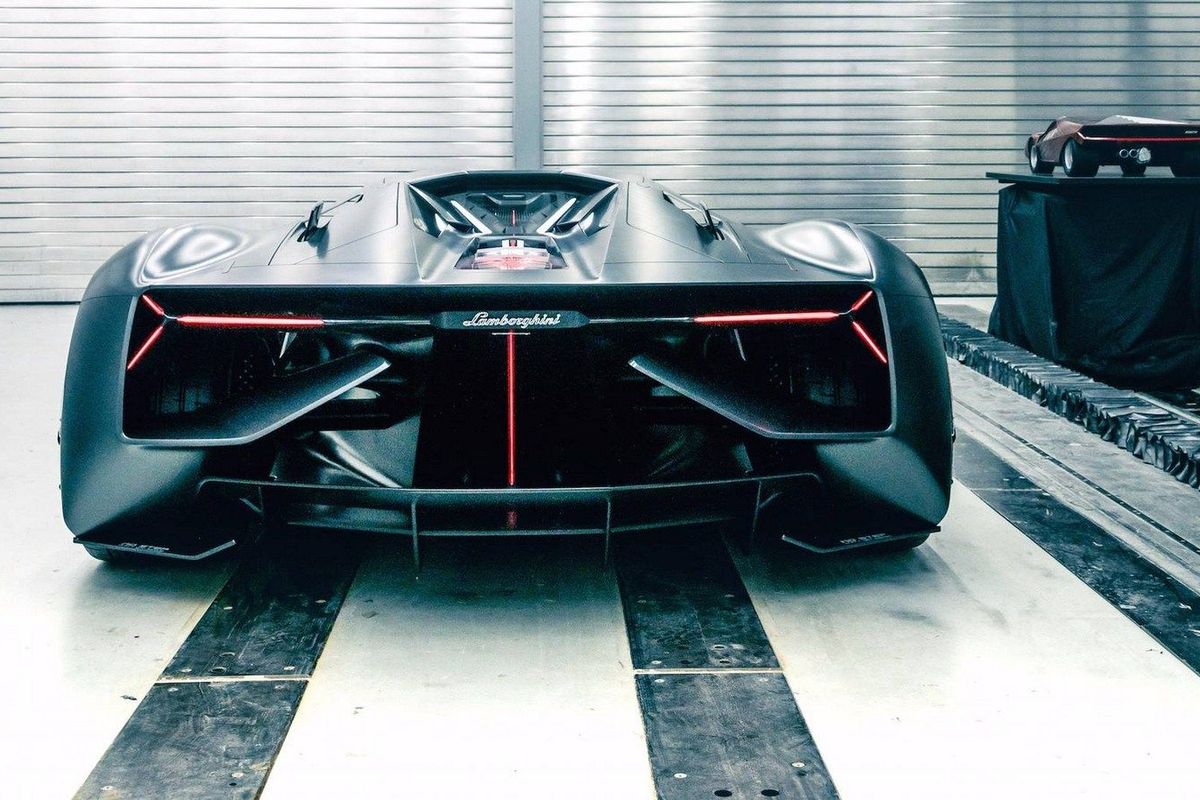
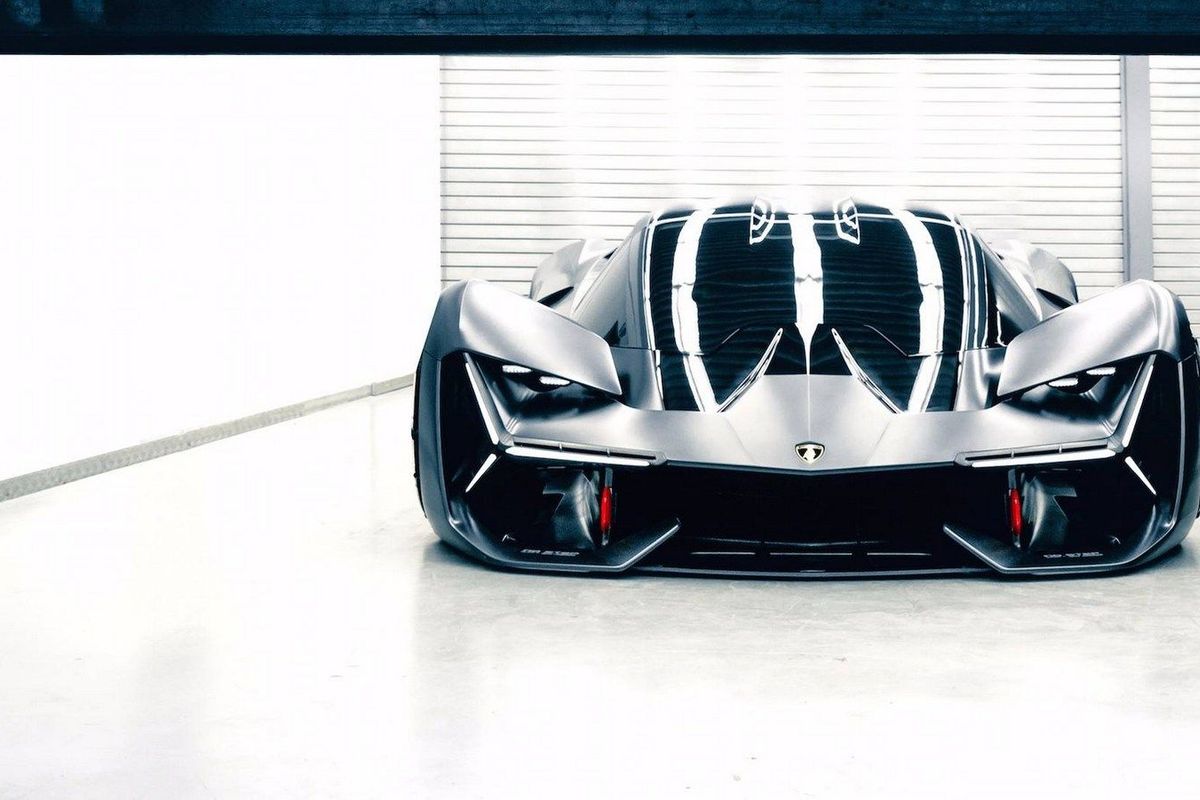
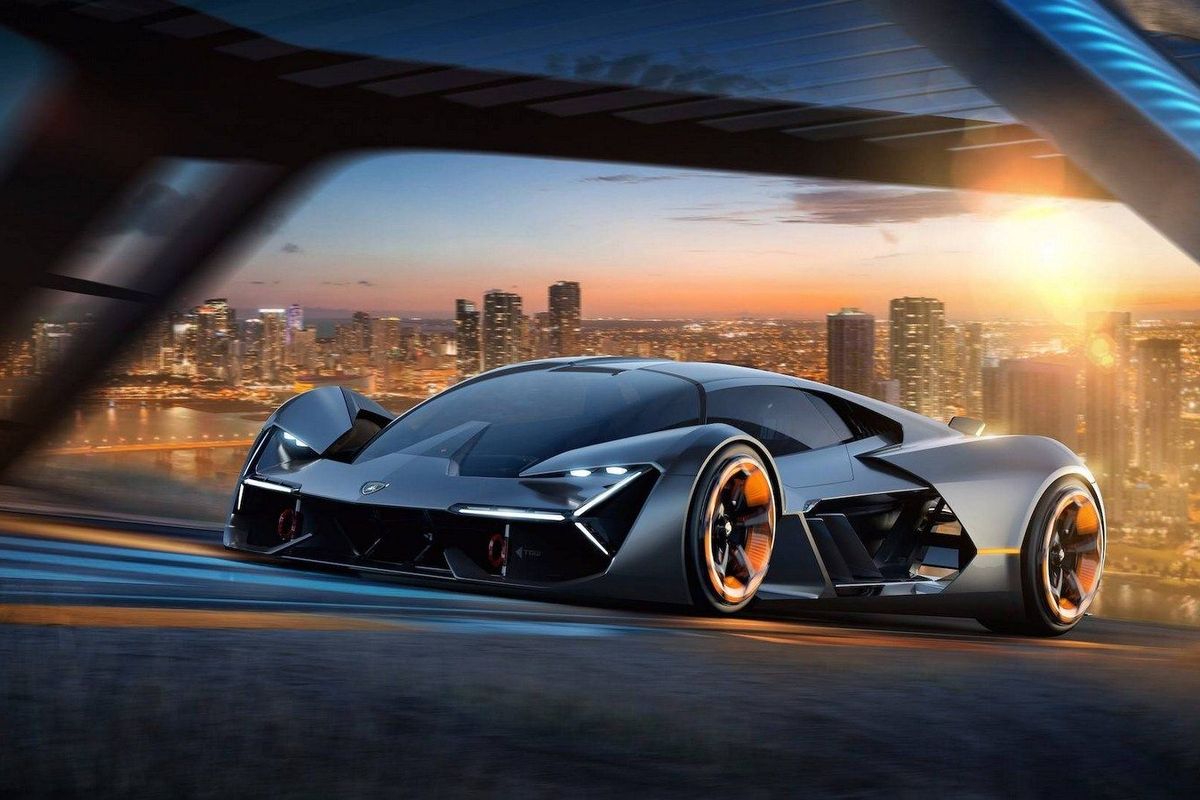
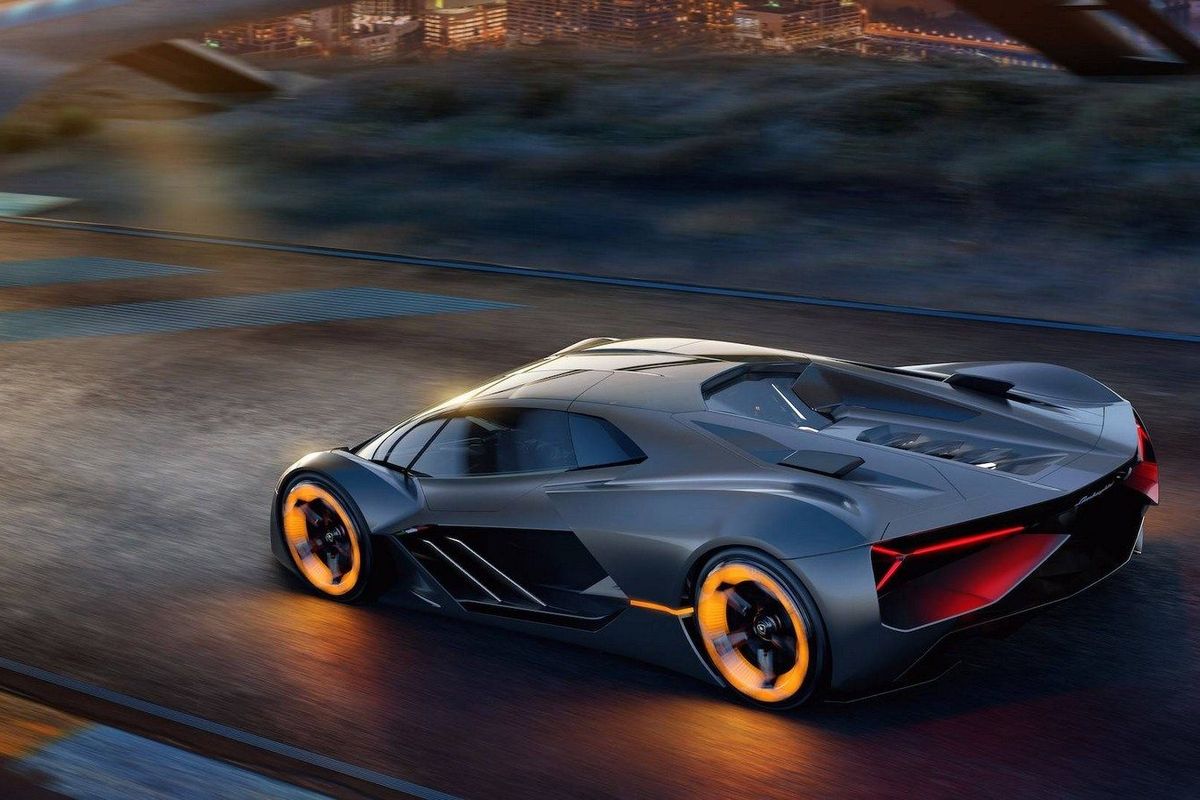
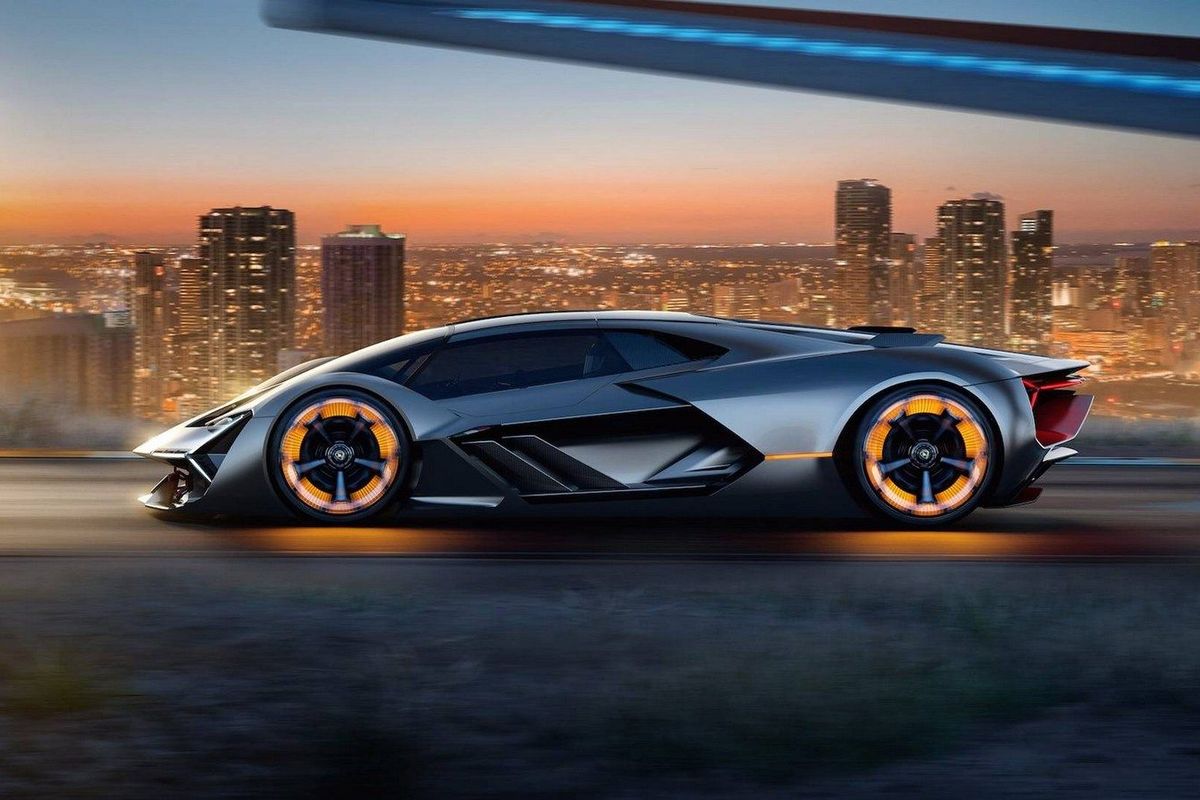
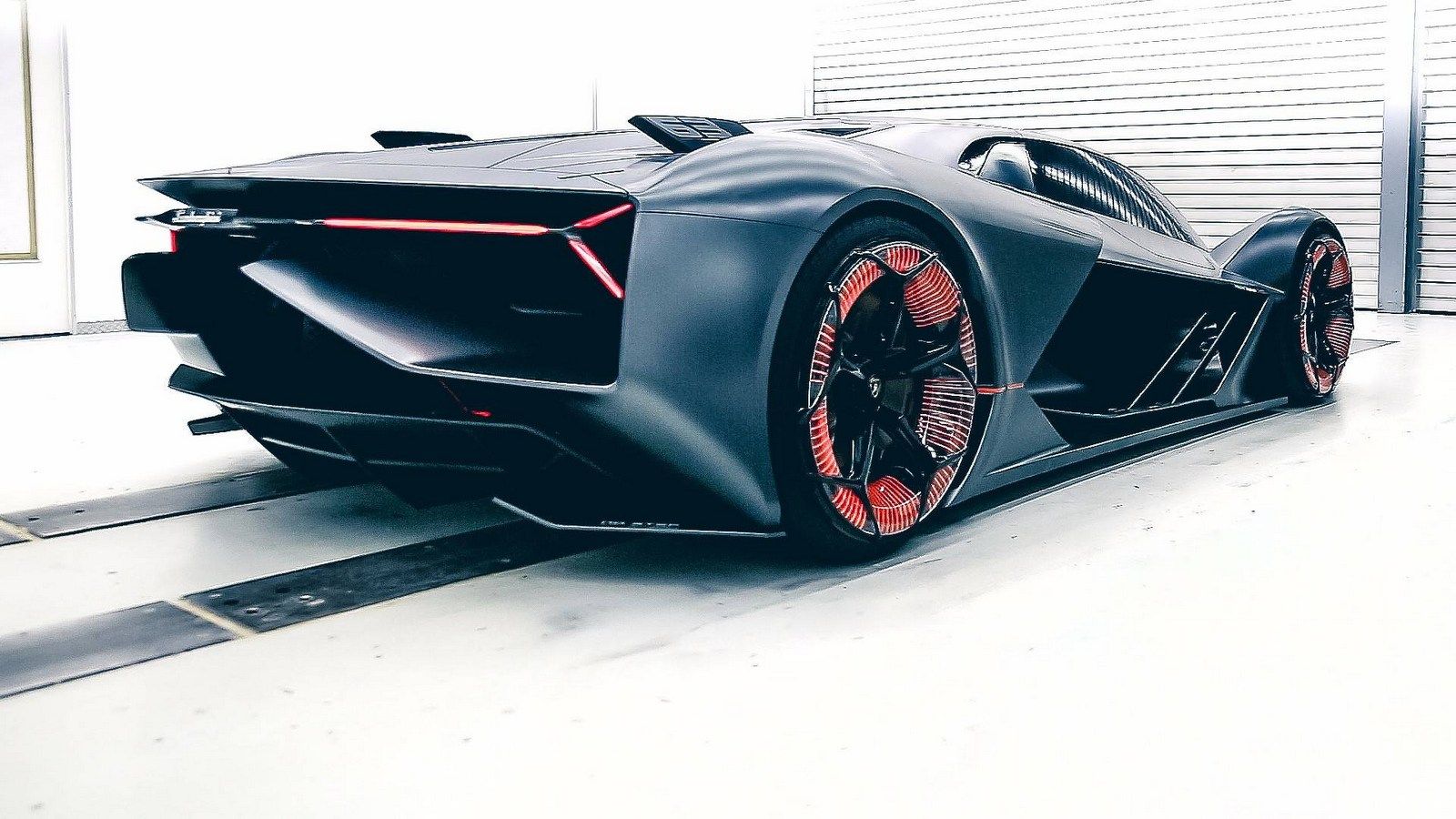
Lamborghini Reveals Self-Healing Terzo Millennio Concept

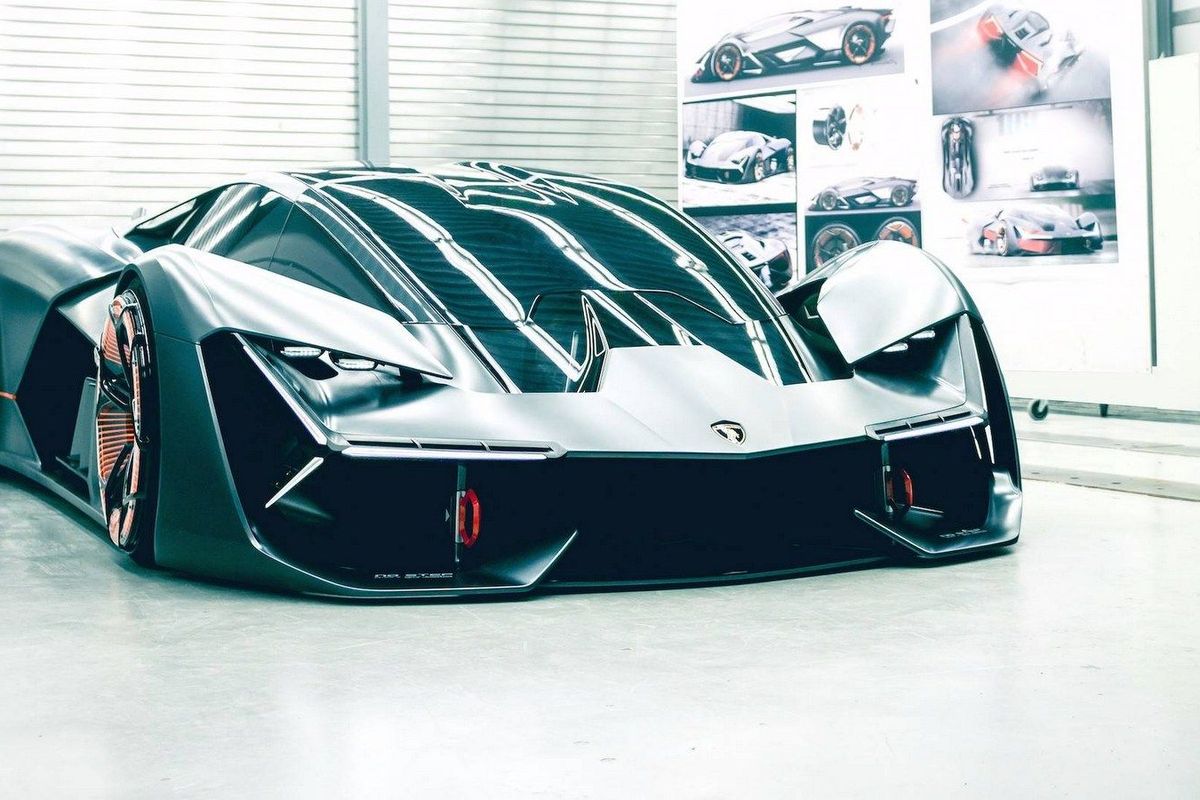
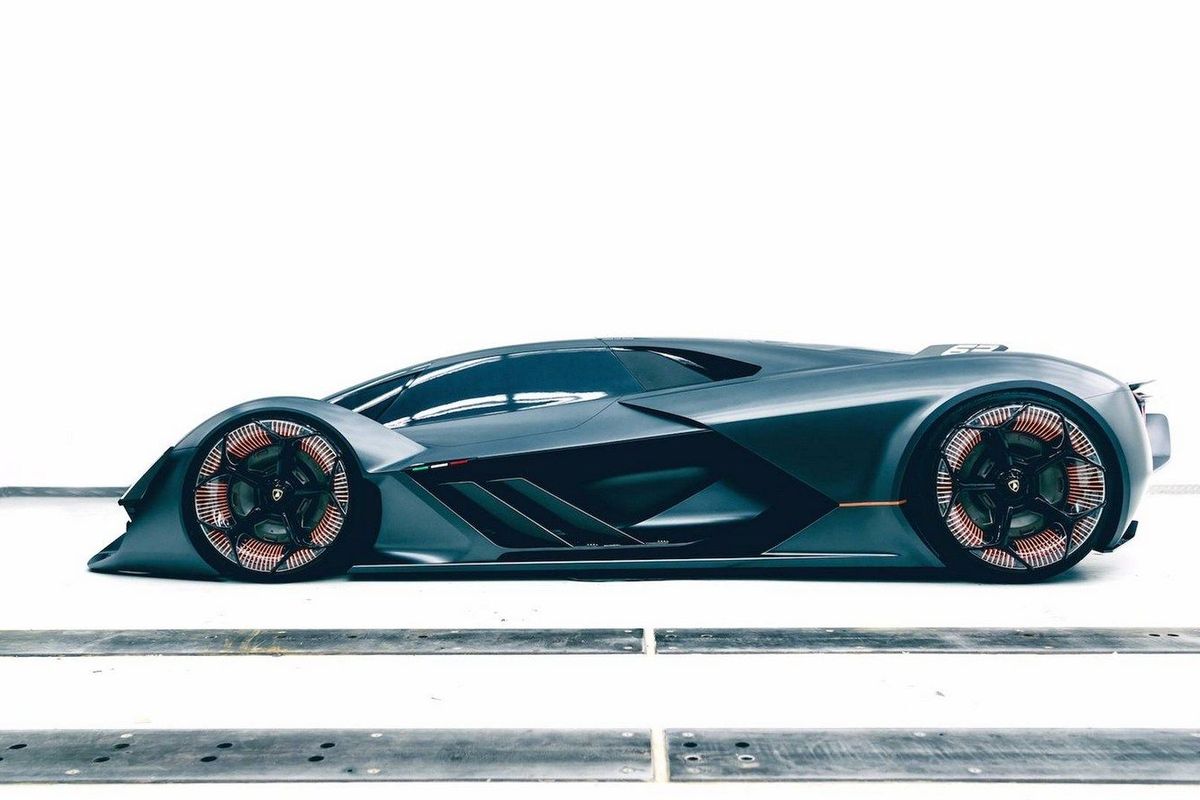
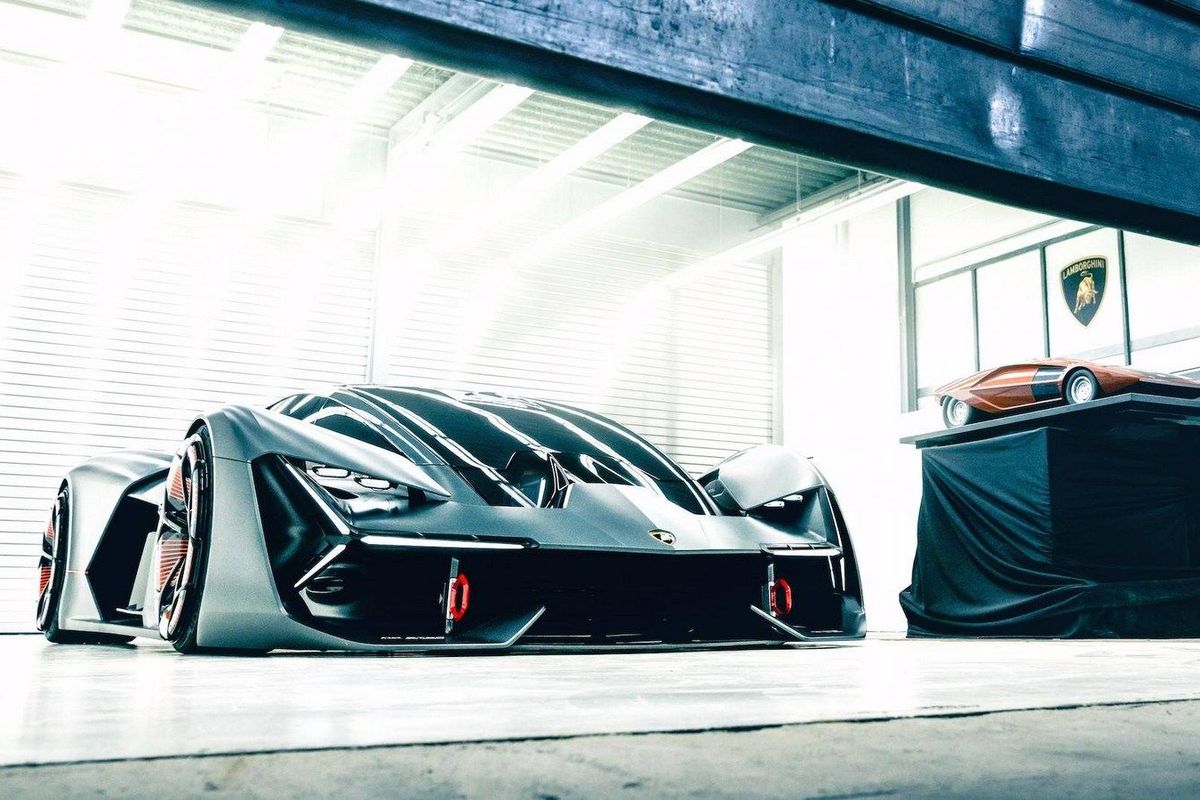
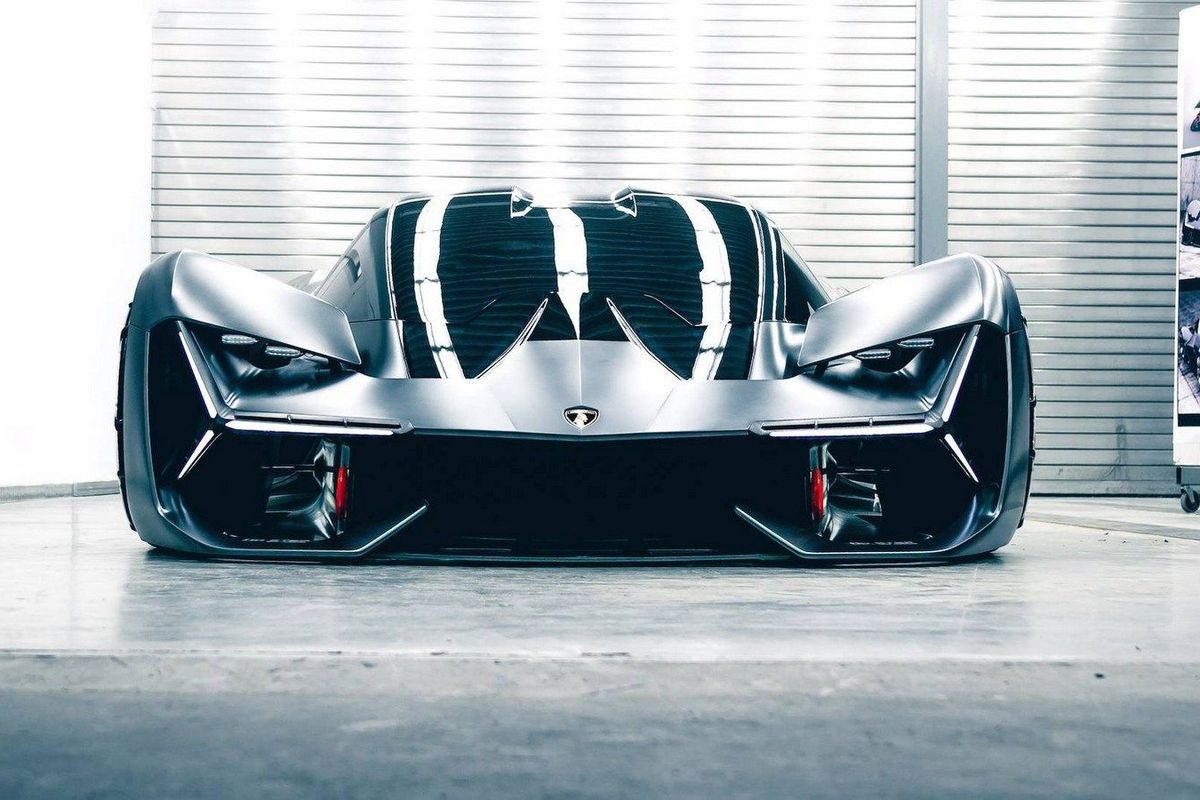
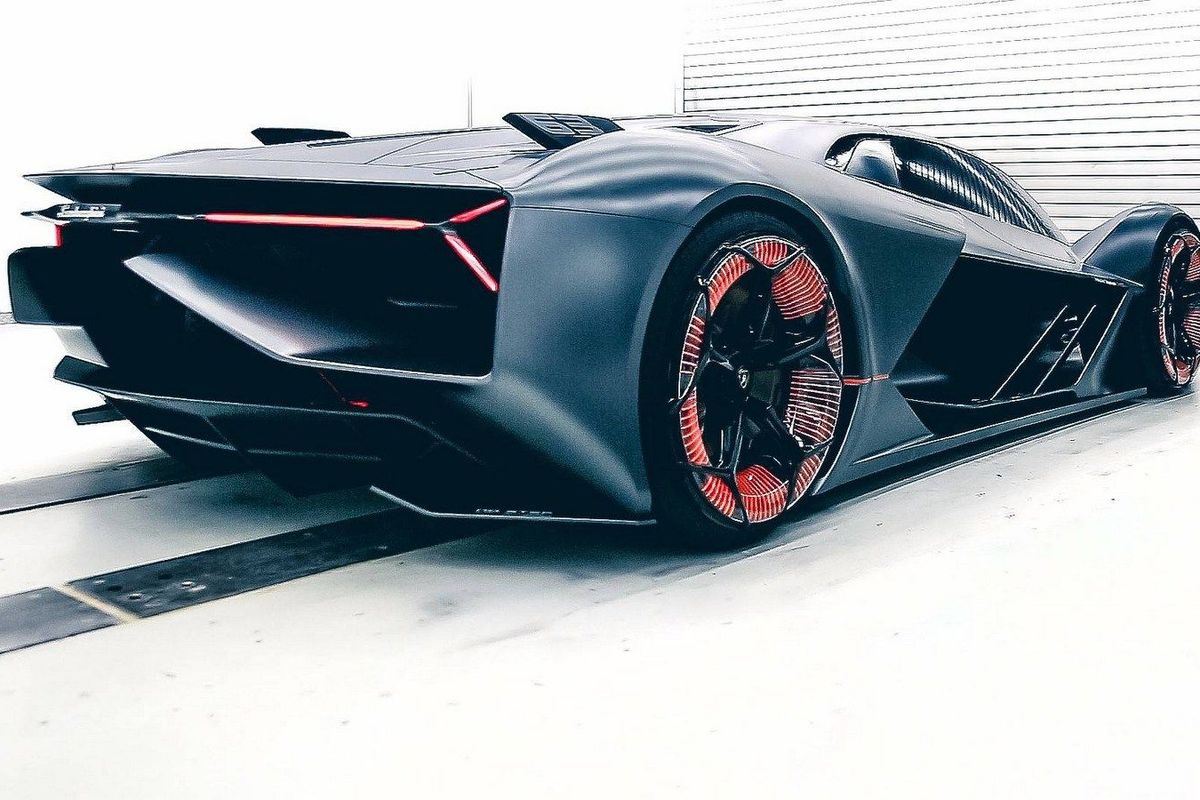
Lamborghini has revealed its latest, high-tech concept, the Terzo Millennio, meaning ‘Third Millenium’. 

Supercar manufacturer, Lamborghini, has partnered with the boffins at the Massachusetts Institute of Technology (MIT) to develop the innovative Terzo Millennio concept which showcases technology that could become commonplace in the distant future.

At its core, the Terzo Millennio is a lightweight, aerodynamically-efficient electric supercar powered by 4 electric motors, one at each wheel. The motors are powered by advanced supercapacitors with the bodyshell itself serving as energy storage.


The Terzo Millennio points to the future of the supercar and showcases technology that may very well be found on electric cars of the future.  

Unlike conventional electric cars, where the battery unit/s are stored beneath the floor, in the Terzo Millennio, the body panels are essentially the battery. Carbon-fibre nanotubes and thin, malleable batteries are found between the outer and inner layers of the bodyshell resulting in an efficient and lightweight energy storage solution.

What’s more, the Terzo Millennio is able to self-monitor and detect cracks or fractures in its carbon fibre structure and if damage is detected, "micro-channels filled with healing chemistries" will proactively repair the structure, in effect, healing itself. All this technology helps to develop high peak power and to facilitate fast charging, energy recuperation and slow battery degradation.

In many ways, the Terzo Millennio represents the future of the electric supercar and this kind of innovative technology is what you can expect to see in the future. As this technology is still very much in development, it may be many years before it’s rolled out on a mass scale. It is, however, fascinating to imagine what is possible and what the future holds for the motor car.

Buy a Lamborghini on Cars.co.za

Related Content

Lamborghini Huracan Performante: Who’s the attention-seeker?

Lamborghini drops top on Aventador S

Lamborghini Aventador S Revealed

Lamborghini Huracan Tackles Perfect Road (Video)

Ultimate Lamborghini Huracan Performante Unleashed

Lamborghini Huracan LP610-4 Spyder (2016) Review
Our Lamborghini Huracan Blast Through Cape Town

Lamborghini Huracan LP610-4 (2014) Review

3 Reasons Why Mini JCW is #CarsAwards Finalist

What makes the Mini John Cooper Works a strong contender in the Fun Car category of the 2017/18 Cars.co.za Consumer Awards – powered by WesBank? We investigate…

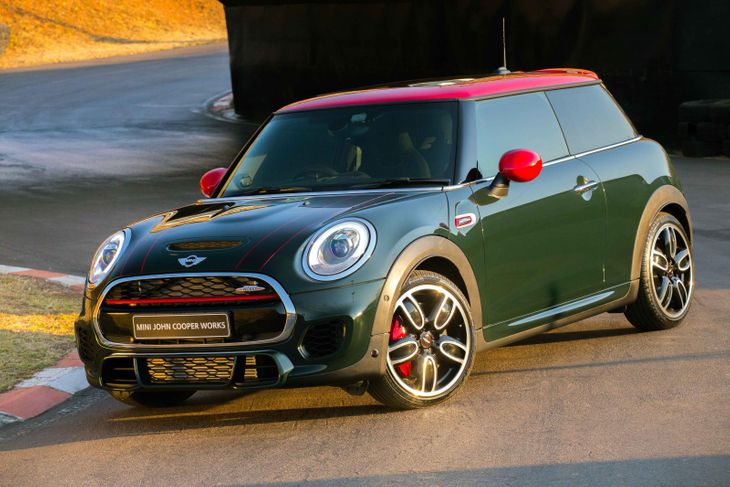
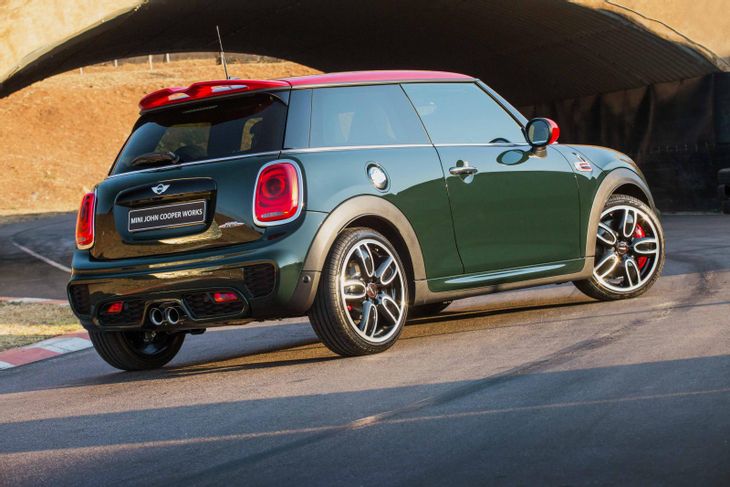
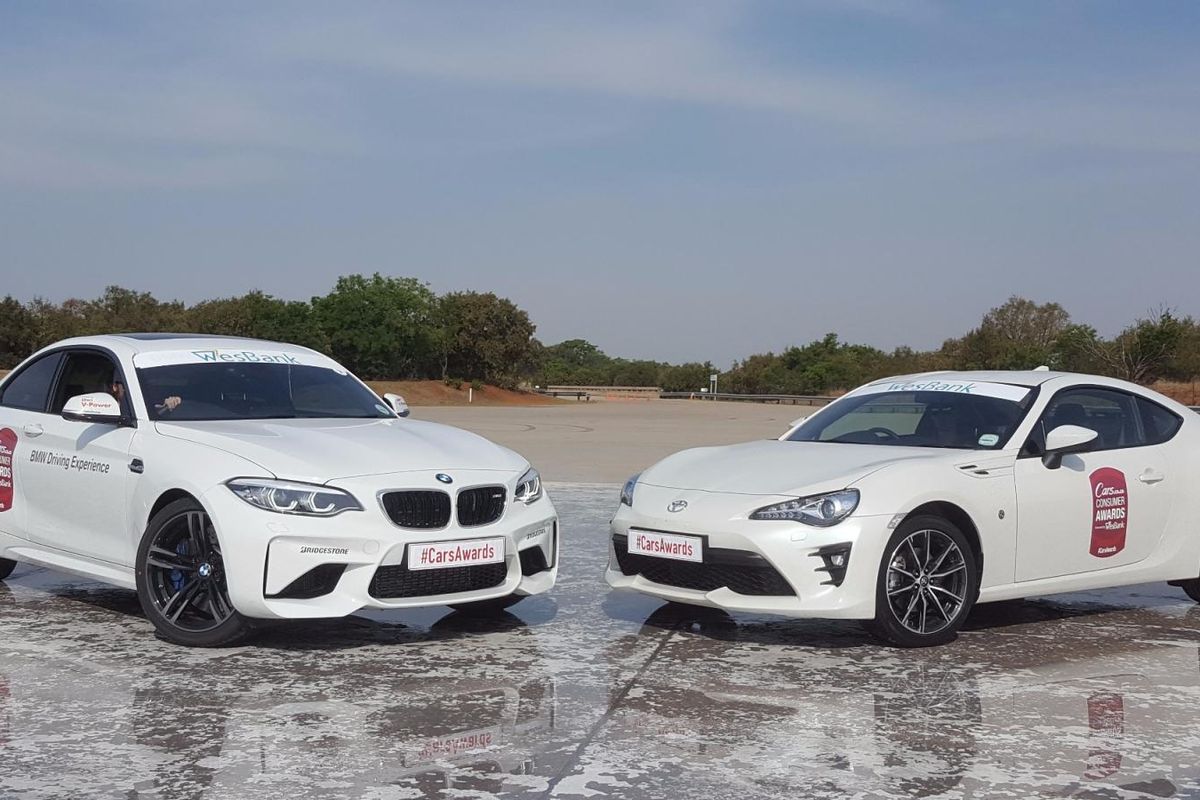
With a John Cooper Works (JCW), Mini takes a standard Mini Cooper S (which is anything but pedestrian) and tweaks virtually every aspect of the car in the pursuit of extra performance. The result is a more sporting exterior, replete with boy-racer bits and a racy interior that, again, has more exciting touches to it. The handling dynamics and engine outputs get slight seeings to and the final product is a very fast, very special Mini.

3 Reasons Why Mini JCW is a Fun Car #CarsAwards Finalist

1. Engaging power delivery

The Mini JCW generates its kicks from a 2.0-litre turbocharged petrol engine that delivers 170 kW and 320 Nm of torque. The major positive about the performance upgrade is that it doesn’t turn the JCW into a wild, tyre spinning, crazy car. It remains composed and deals with the extra power… almost as if it was always meant to have 20% more clout. Traction control does not intervene in an obtrusive manner (even when the front wheels are beyond their limits); it merely reigns the power in gently until full traction is regained.

For this model, Mini claims a 0-100 kph sprint time of 6.1 seconds and a top speed of over 240 kph… so it’s most definitely quick!

2. Fun handler

The upgraded brakes play into the Mini JCW’s handling ability and there’s great feel and confidence in the pedal that tends to promote late braking manoeuvres just before your favourite set of bends. All you need to do is point the JCW towards a collection of chicanes and you get the best out of it. It has a fast front end that vacuums up apexes while the rear is mostly settled and very rarely do you feel any lift-off oversteer. The centre of gravity is particularly low, so lateral grip is exceptional for a front-wheel-drive car. Whipping it into an apex and then powering out while unwinding the steering really shows how well the JCW’s chassis can hang on.

3. Good looker

The Mini Cooper JCW features a more aggressive face with its large air intakes and honeycomb grille. Stylish side skirts and a new rear bumper enhance the overall look along with a spoiler mounted on the tailgate and a center-mounted dual exhaust system. And, then there’s the noise of the thing! The tuned exhaust system helps improve power, but when Sport mode is selected it has a far more noticeable effect. On the overrun, there’s a cameo appearance from the Rice Krispie triplets (and in full voice!). It’s hilariously entertaining and definitely over the top for what a 2.0-litre turbo motor would normally express.

Watch our video review of the Mini Cooper JCW below! 

Have Your Say: Complete our survey and WIN!

Do you own a Mini Cooper JCW? We would love to hear from you! Tell us about your experience by completing our Ownership Satisfaction Survey. Your input counts for 50% of the final result!

Which cars are the Mini JCW's rivals in #CarsAwards?

The 2017/18 #CarsAwards finalists: Fun Car Category

Compare the Mini JCW's specs with the Toyota 86 High and Renault Clio RS 220 Trophy

Related Content

Mini John Cooper Works Hatch (2016) Review

Mini John Cooper Works (2015) First Drive

10 Cheapest New Cars With 150 kW Or More

Fastest Accelerating Cars under R500k in SA (2017)

2017/18 Cars.co.za Consumer Awards – powered by WesBank; Finalists

Top 5 Cars from SEMA 2017

The 2017 SEMA Show has come and gone. Here are 5 cars that piqued our interest at this year's show…

The SEMA (Specialty Equipment Market Association) Show is the biggest aftermarket and tuning event in the world, taking place in early November each year. There’s nothing shy or quiet about this show, with over 140 000 people flocking to Las Vegas to peruse some of the most pimped-out bits of motoring machinery money can buy.

Here’s what caught our attention…

Hennessey Venom F5

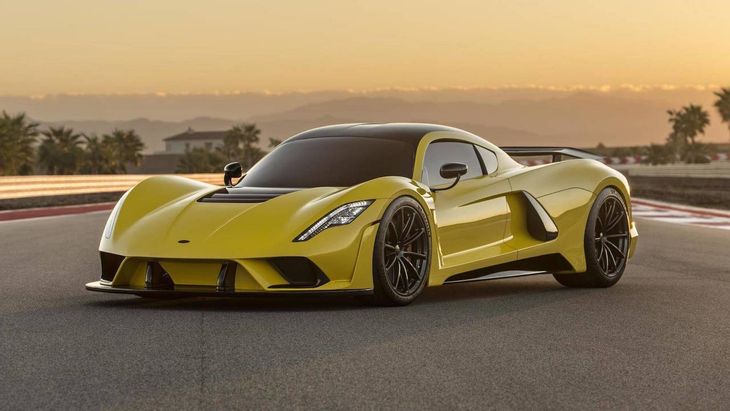
Hennessey showed off a prototype of its fearsome Venom F5, which, if all goes according to plan, will be the fastest car on earth, maxing out at an eye-popping 482 kph. There’ll only be 24 of them built and they’ll come with a cool R22-million price tag. The Venom F5 is the successor to the Venom GT and gets a new design, chassis and carbon fibre body, improved aerodynamics and an all-new twin-turbo 7.2-litre V8 delivering close on 1 200 kW. It’ll scoff in the face of physics, surging from 0-300 kph in under 10 seconds, and from 0-400 kph and back to rest in under 30 seconds!

Hennessy Velociraptor

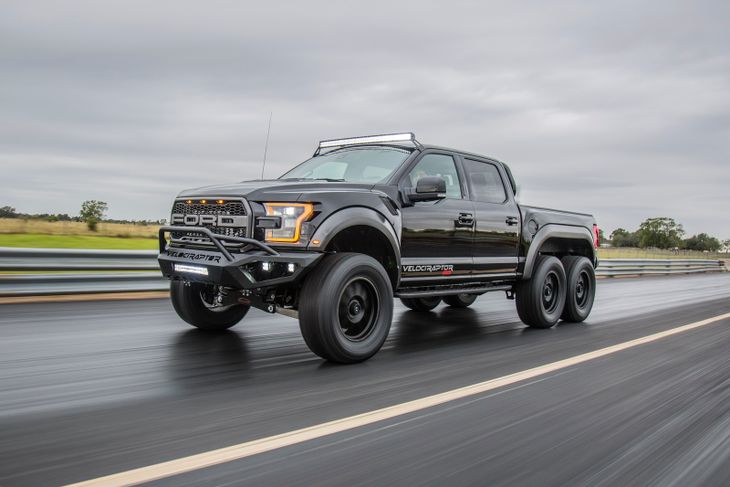
Just in case a 482 kph hypercar wasn’t enough to get people’s attention, Hennessy also brought along a brutish 6×6 bakkie to add a bit of cowboy flavour into the mix. The VelociRaptor 6×6 is based on the Ford F150 Raptor and boasts an enhanced engine, suspension and design. Ford’s 3.5-litre twin-turbo V6 EcoBoost does duty, but in this guise it’s been boosted to 447 kW – a fair whack more than the 336 kW the regular Raptor (confirmed for South Africa) puts out. The Velociraptor 6×6 should be a suitably menacing match for the Mercedes-AMG G63 6×6, and only 50 will be built. The price? Upwards of R4.5 million…

A McLaren-beating Toyota?

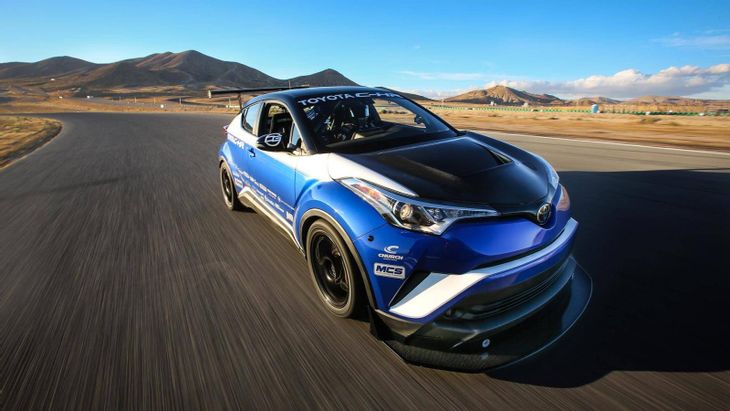
A cross-over that’s quicker than a McLaren? Toyota claims that their C-HR R-Tuned, introduced at the SEMA Show, is quicker around a racetrack (Big Willow in California) than a McLaren 650S Spider. It has the same powertrain layout as the stock C-HR, with four cylinders and front-wheel-drive, but that’s where the similarities end. There’s a 2.4-litre engine doing duty with a very angry 23-psi turbo. And no – you won’t find the stock version’s CVT gearbox here – this baby is good ol’ manual all the way. The plethora of mods result in around 450 kW and a 2.9-second sprint time from zero to 100 kph, making it, according to Toyota, the "world's fastest crossover".

New Jeep Wrangler – finally!

Jeep took the opportunity to offer a sneak preview of the new 4th-generation Wrangler, which will officially debut at the Los Angeles Auto Show on 29 November. The current generation Wrangler has been around for about 10 years, so there’s plenty of anticipation for the all-new iteration of the highly capable off-roader. Further testament to the Wrangler’s prowess is the fact that at this year’s Sema Show it was voted "Hottest 4×4 SUV" for the eighth year in a row. More than 200 new Jeep Performance Parts and Accessories will be available for the new Wrangler, including lift kits, rock rails, off-road bumpers, beadlock-capable wheels, LED off-road lights, various cargo systems, custom graphics and more.

Carbo-loaded BMW M5

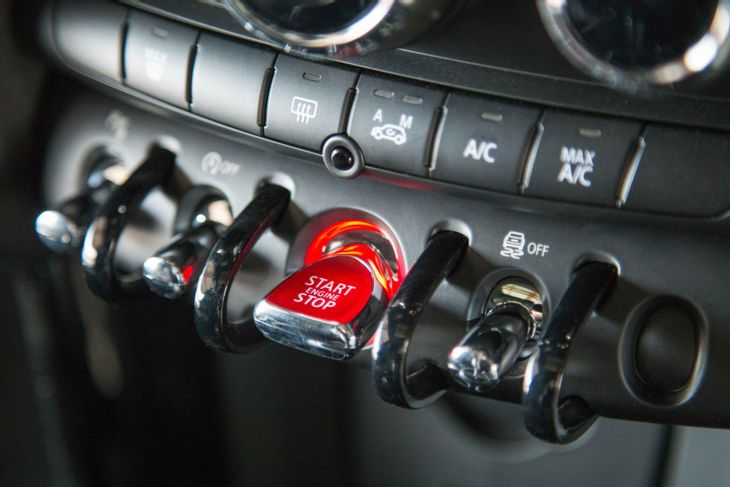
BMW recently launched their new 441 kW M5 (a star attraction at the BMW M Festival at Kyalami recently), and at SEMA 2017 they showed off a seriously spruced up version with various bits and pieces from the new M Performance Parts catalogue. Essentially, we’re talking carbon, carbon and more carbon, plus some non-cosmetic enhancements, all of which will give esteemed owners something extra special to brag about to owners of vanilla M5s, of course. And yes, it’s actually got indicators… Details here.

Related Content

Highlights: SA's first BMW M Festival [with Videos]

BMW M5 Prototype (2018) First Drive [with Video]

BMW M5: Now with M Performance Parts

New 441 kW BMW M5 Revealed [with Video]

5 Things to Know About The New BMW M5

BMW M2 vs Audi RS3 (2017) Comparative Review Video

And the fastest car in the world is… ?

After Bugatti set a world record with its Veyron Super Sports, a group of Koenigsegg owners in the US, supported by the Swedish hypercar producer, reckoned they had a shot at beating a number of records. 

Koenigsegg is one of the few hypercar brands and South Africa has been lucky enough to see just a handful of units make their way to our shores. The Swedish company is an enigma, it does not jostle for the limelight with media spin, but rather lets its products do the talking. 

The location for the record-beating run was a 20km stretch of Nevada highway that was purposely closed for the occasion. The weapon of choice was a standard Koenigsegg Agera RS riding on standard Michelin Pilot Cup 2 rubber and it was piloted by Koenigsegg professional driver Niklas Lilja. Christian von Koenigsegg was present, as were a few of the company engineers to make sure the car was running efficiently. 

The three records that were broken were:

  • The production-car top speed record. Previously it stood at 267.8 mph (428.48 kph) and it's now set at 284.6 mph (455.36 kph)
  • The 0-400-0 record set by a Bugatti Chiron at 41.96 seconds and was beaten not so long ago by a Koenigsegg, which went 5 seconds faster. However, Koenigsegg wanted to beat its own record and it did easily, with a 33.87 run.
  • The top speed on a public road record. Previously set in 1938 by the Mercedes-Benz W125 Rekordwagen when it went 432.7 kph. 

Watch the Koenigsegg Agera RS hit 284 mph (455 kph)