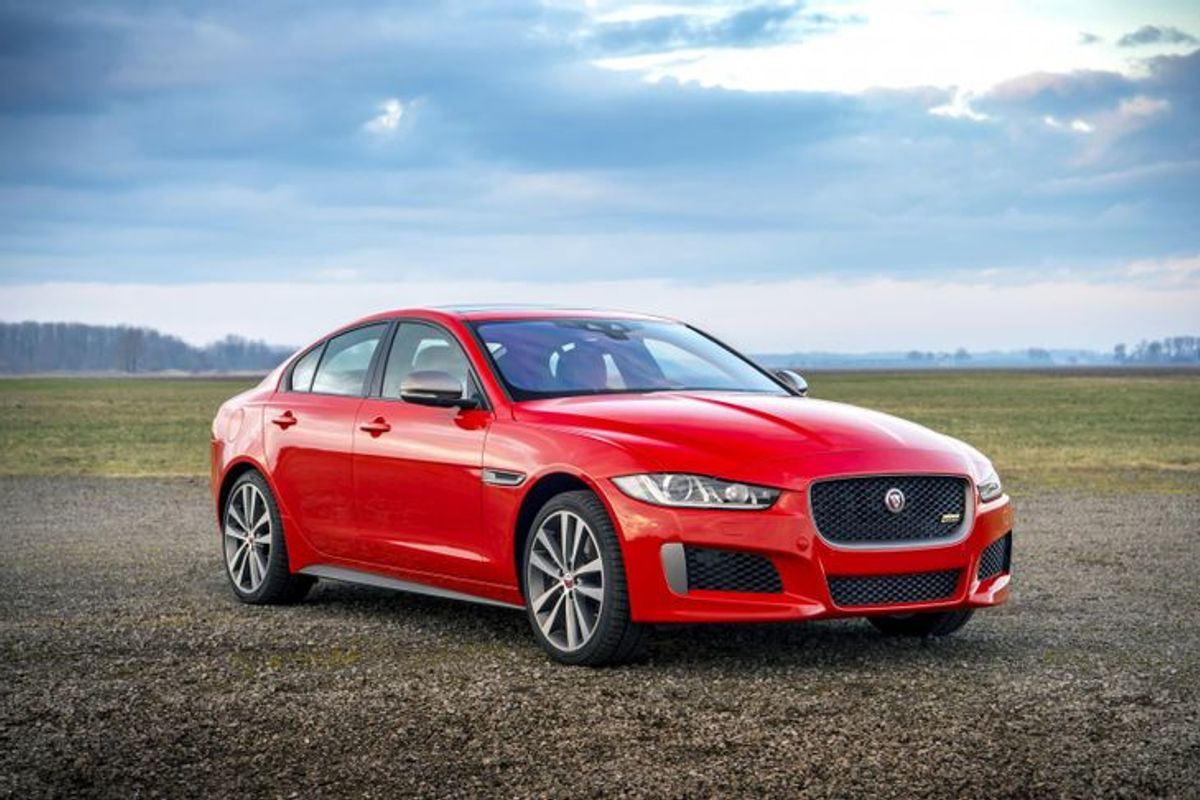
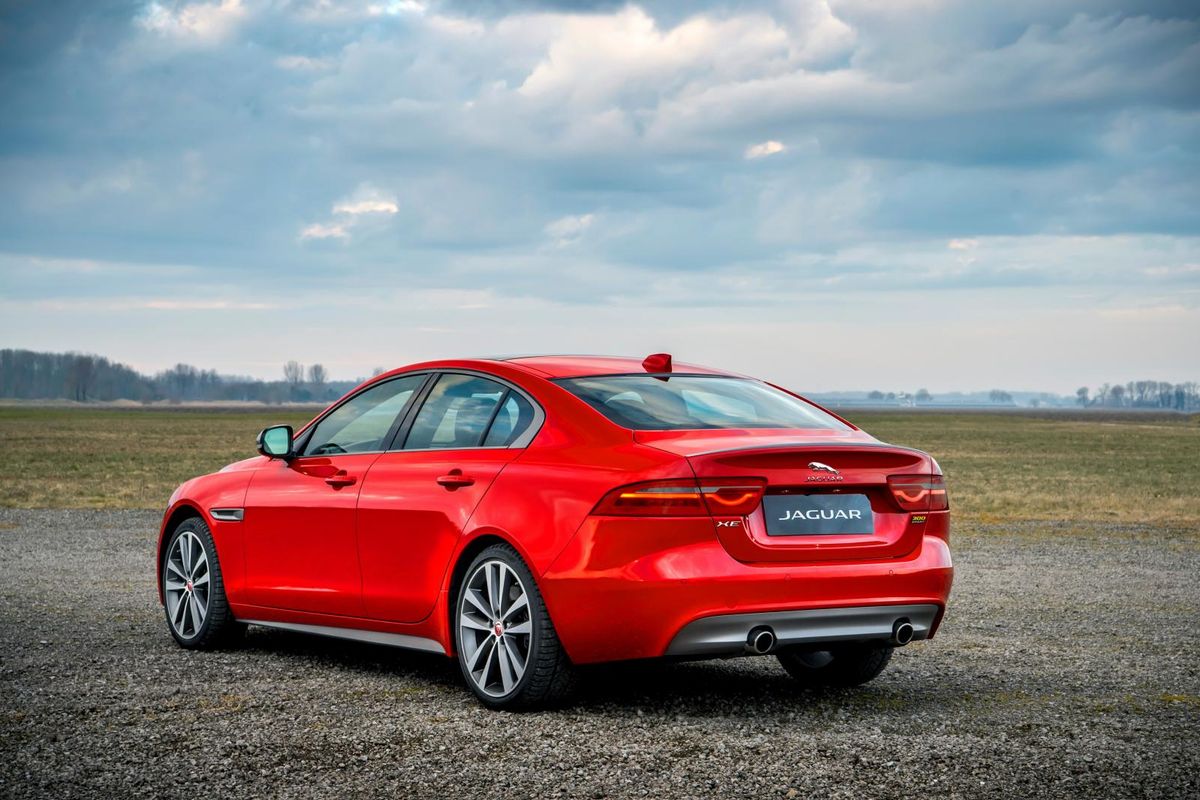
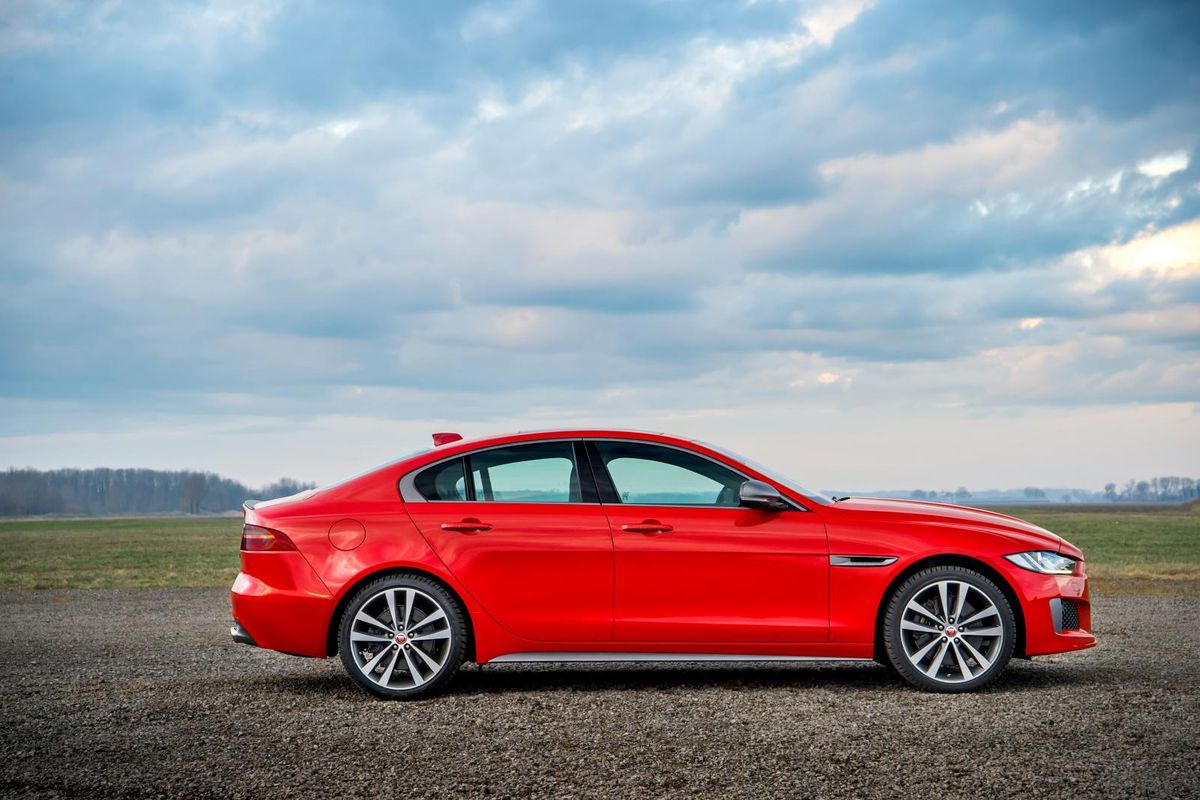
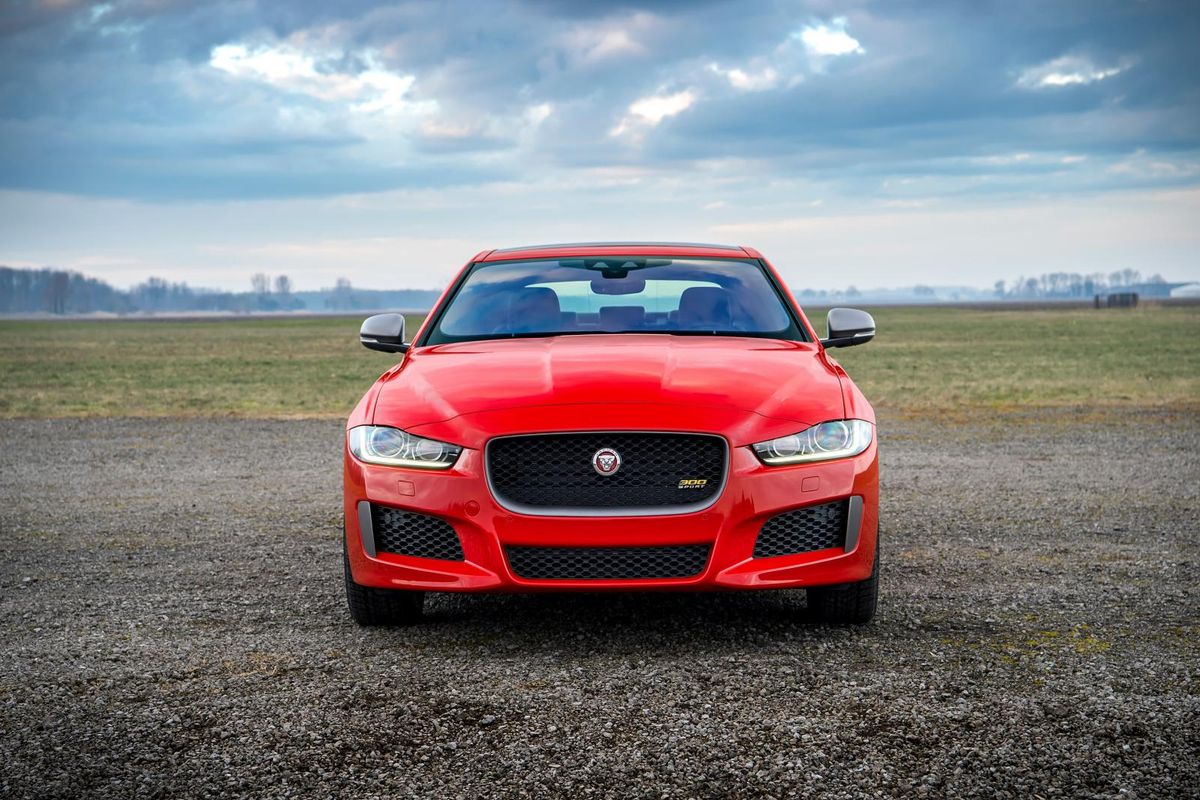
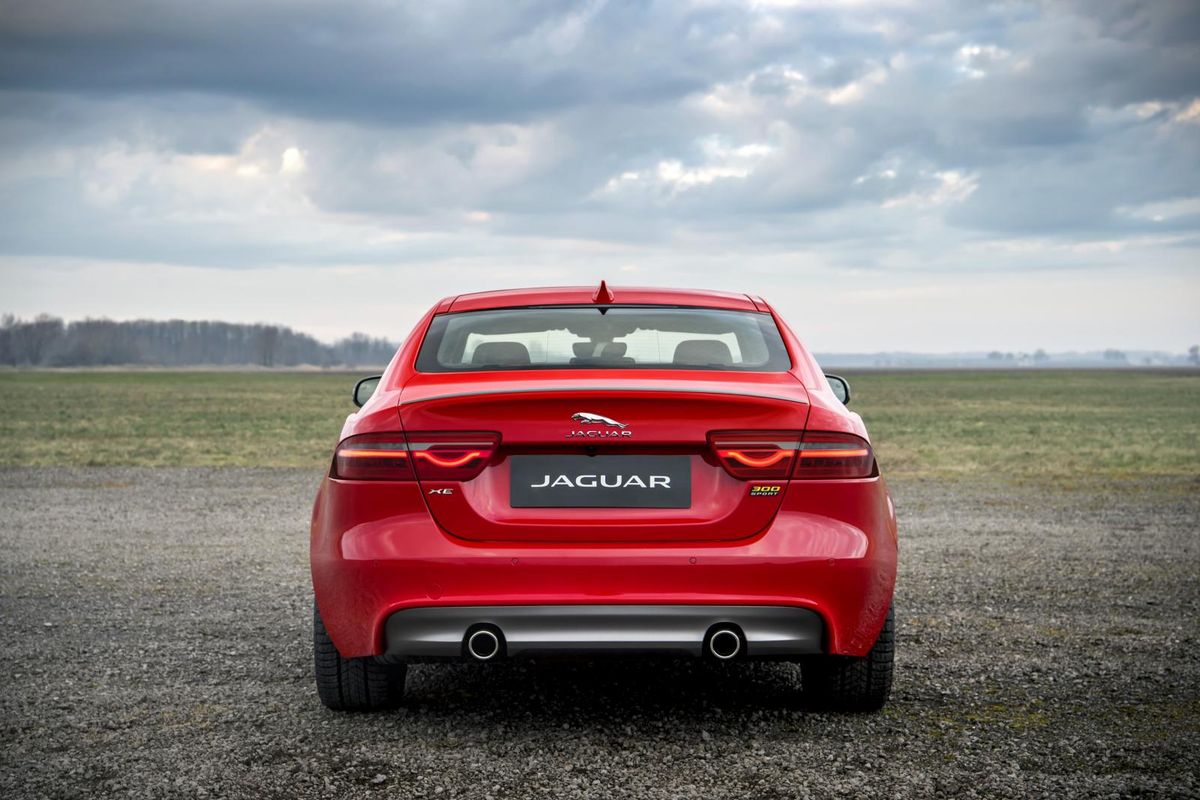
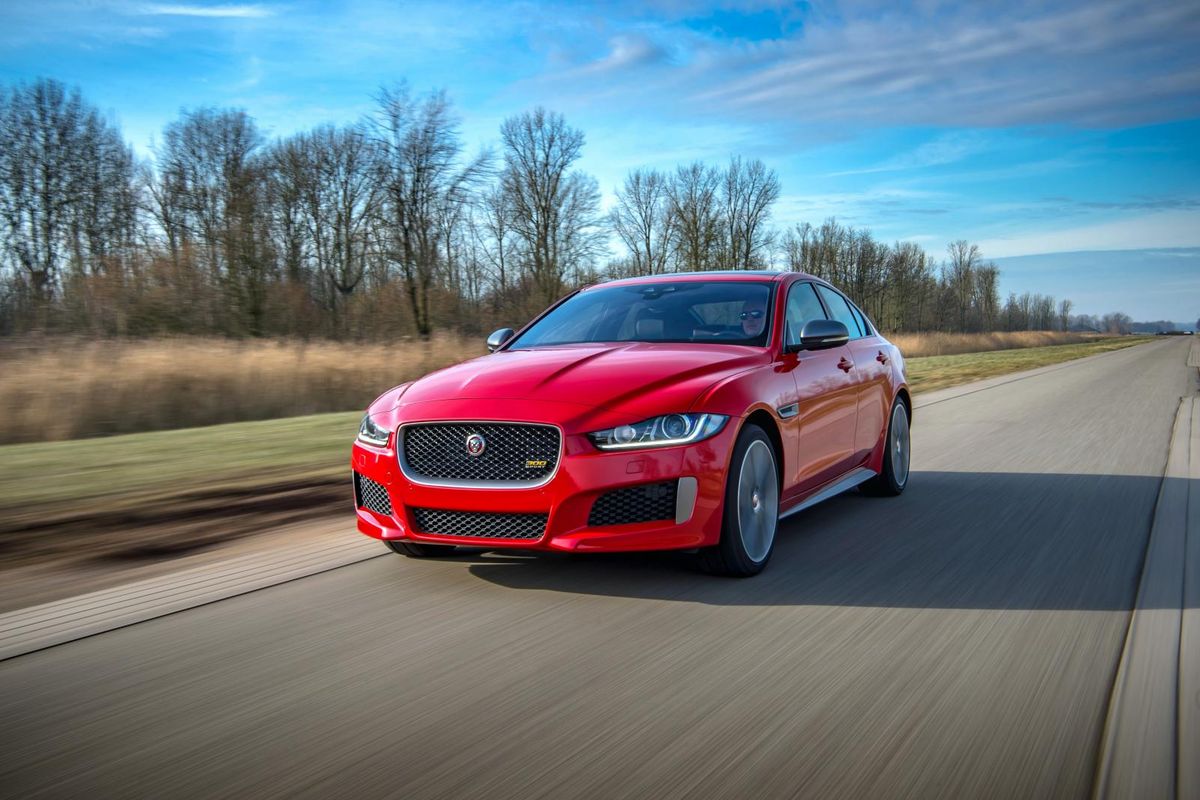
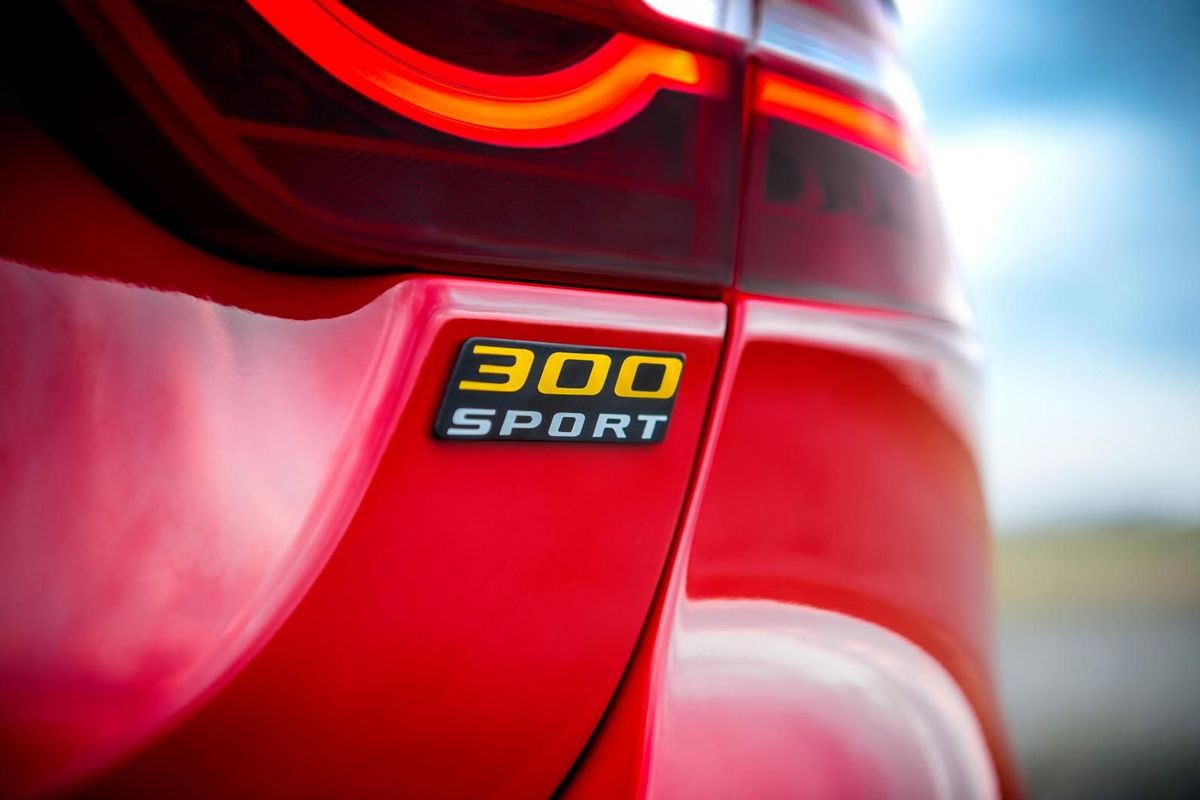
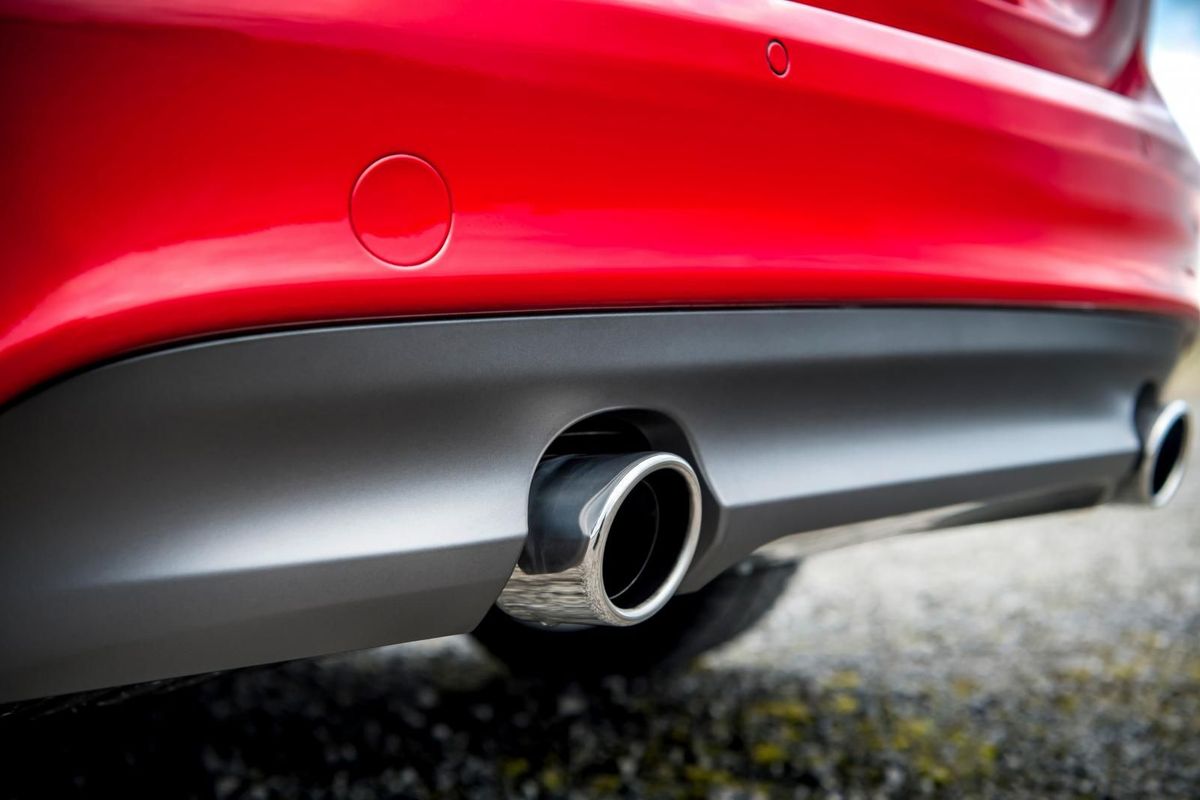
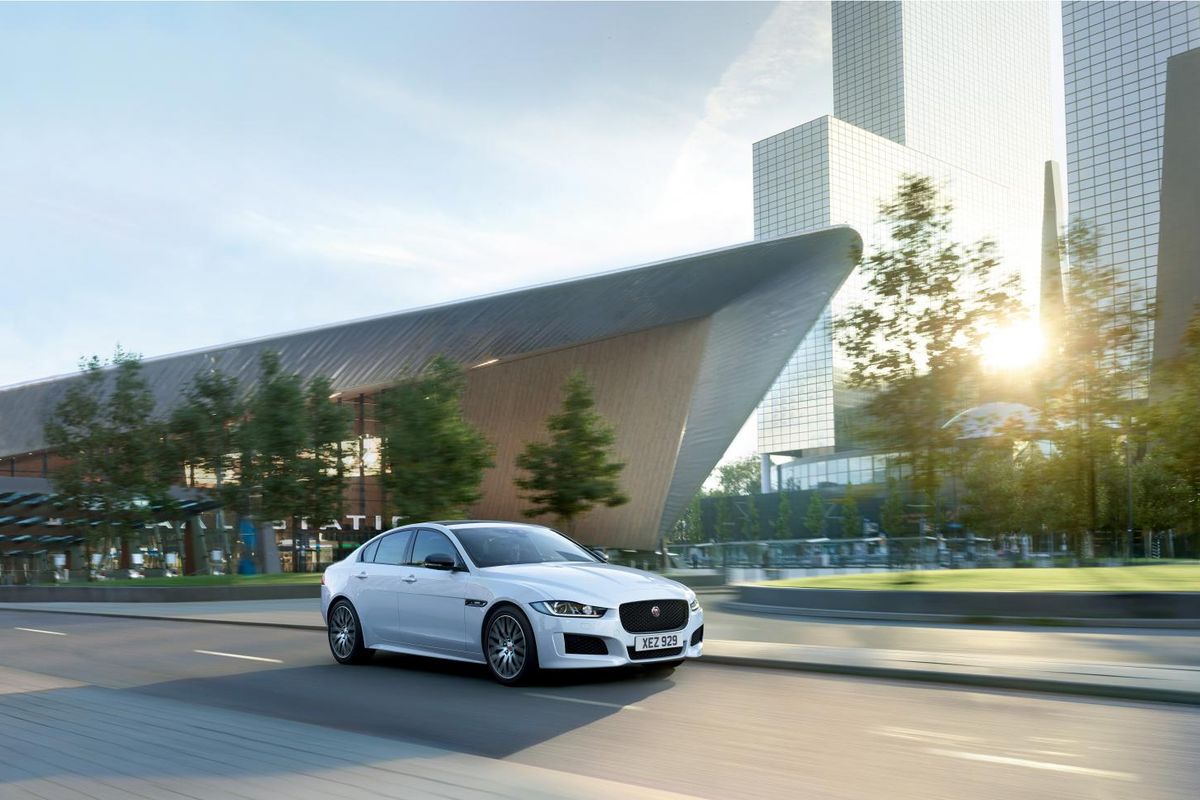
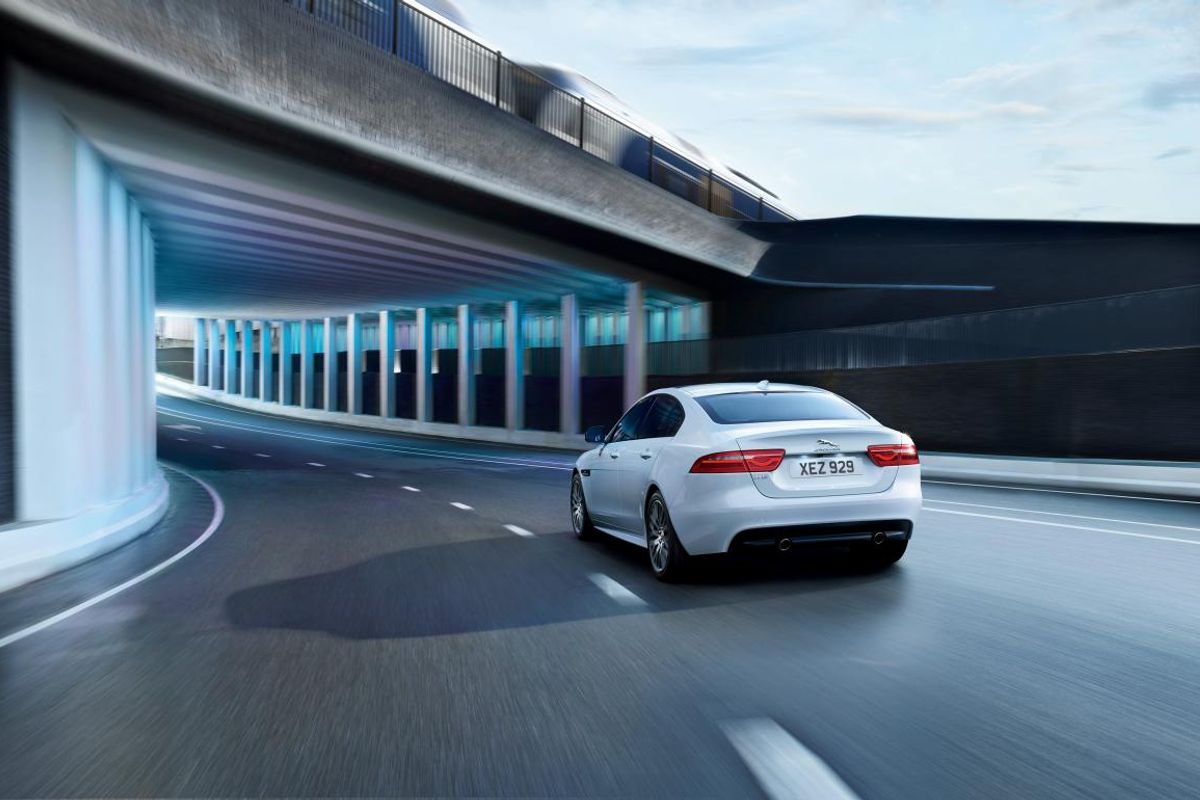
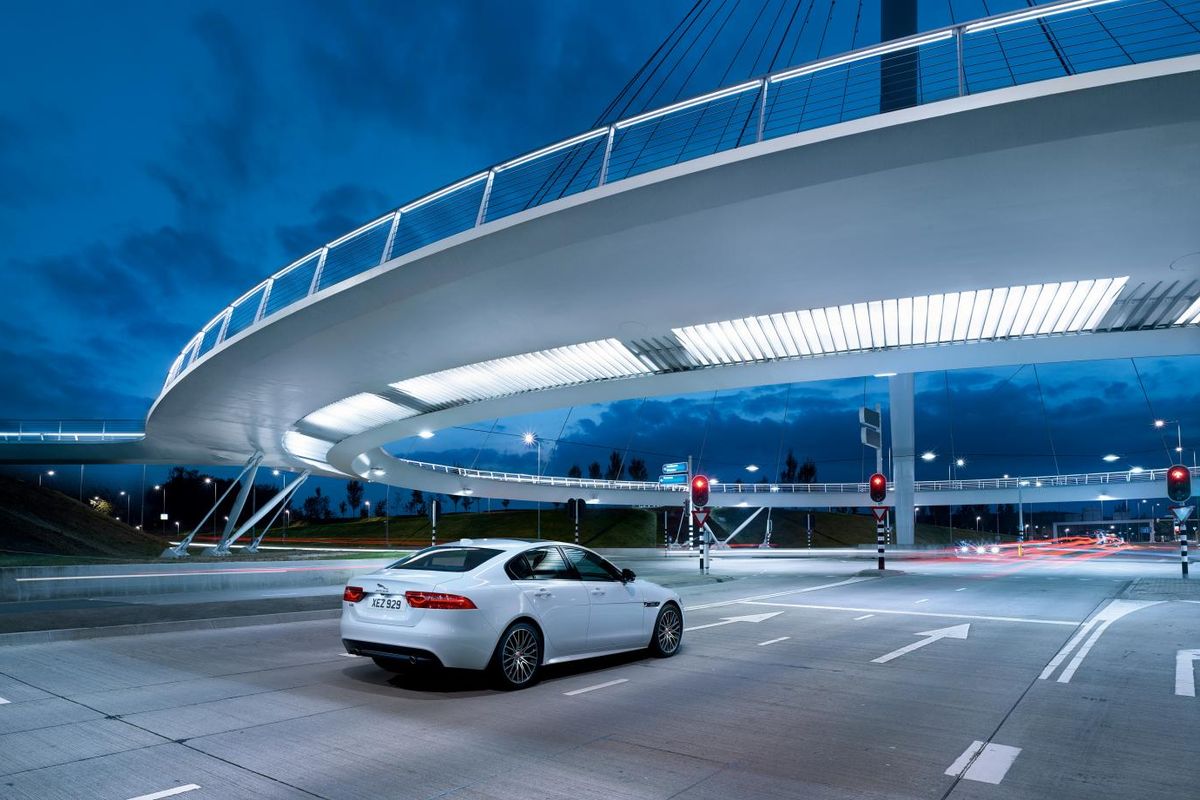
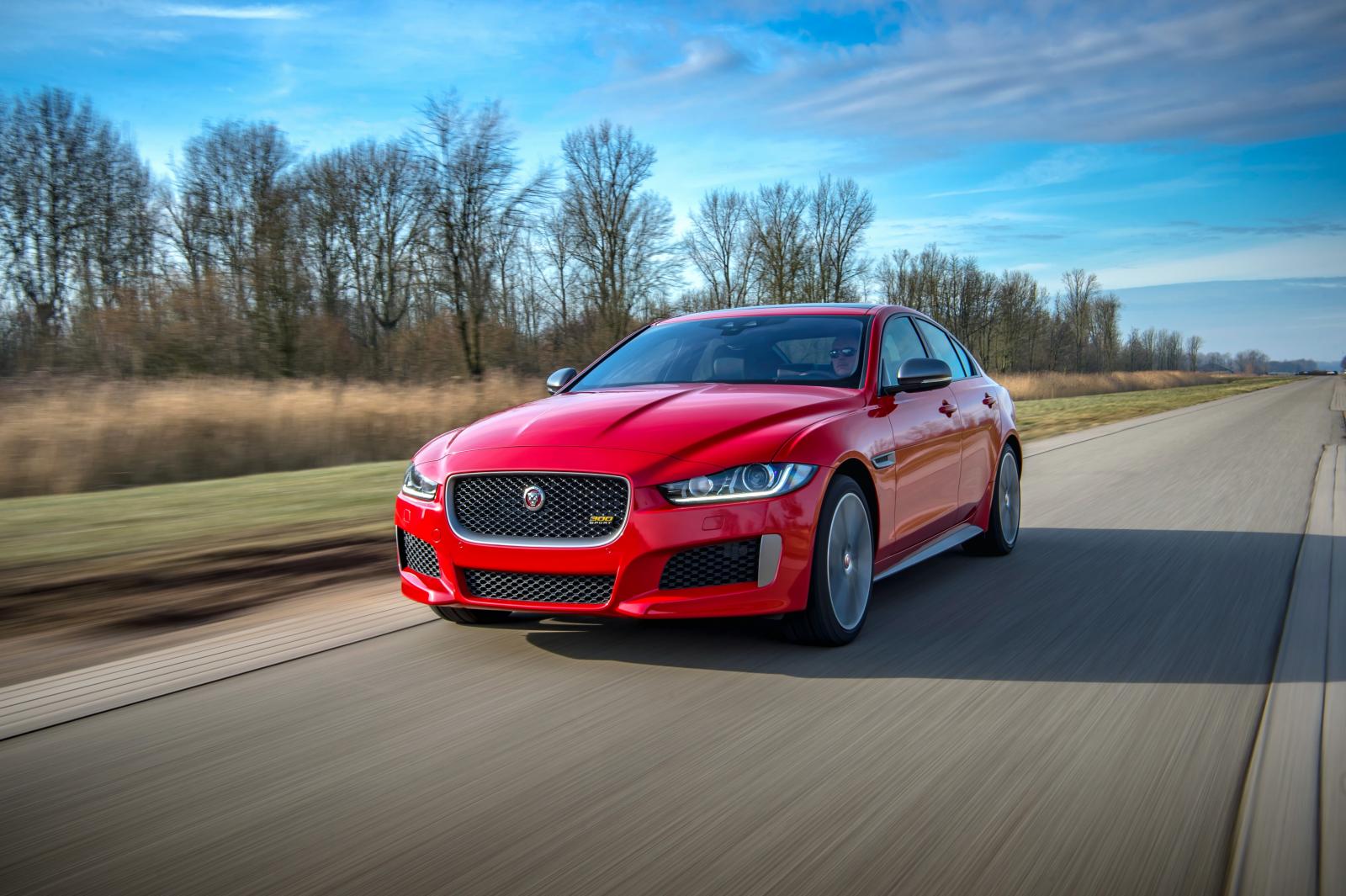
Jaguar South Africa will expand the line-up of its XE business class sedan range through the introduction of the 300 Sport Special Edition derivative and Landmark Edition trim line in July 2018.
The handsomely styled, engaging-to-drive XE is not one of the top-selling models in its segment, yet the 20d R-Sport version of the Coventry-based marque's sedan was a semi-finalist in both the 2016/17 and 2017/18 instalments of the Cars.co.za Consumer Awards – powered by WesBank.
The first new addition to the range is the 300 Sport Special Edition, which is powered by Jaguar Land Rover’s (JLR) 221 kW 2.0-litre 4-cylinder Ingenium turbopetrol engine that delivers 400 Nm of torque and is said to propel the derivative from 0 to 100 kph in 5.7 seconds.
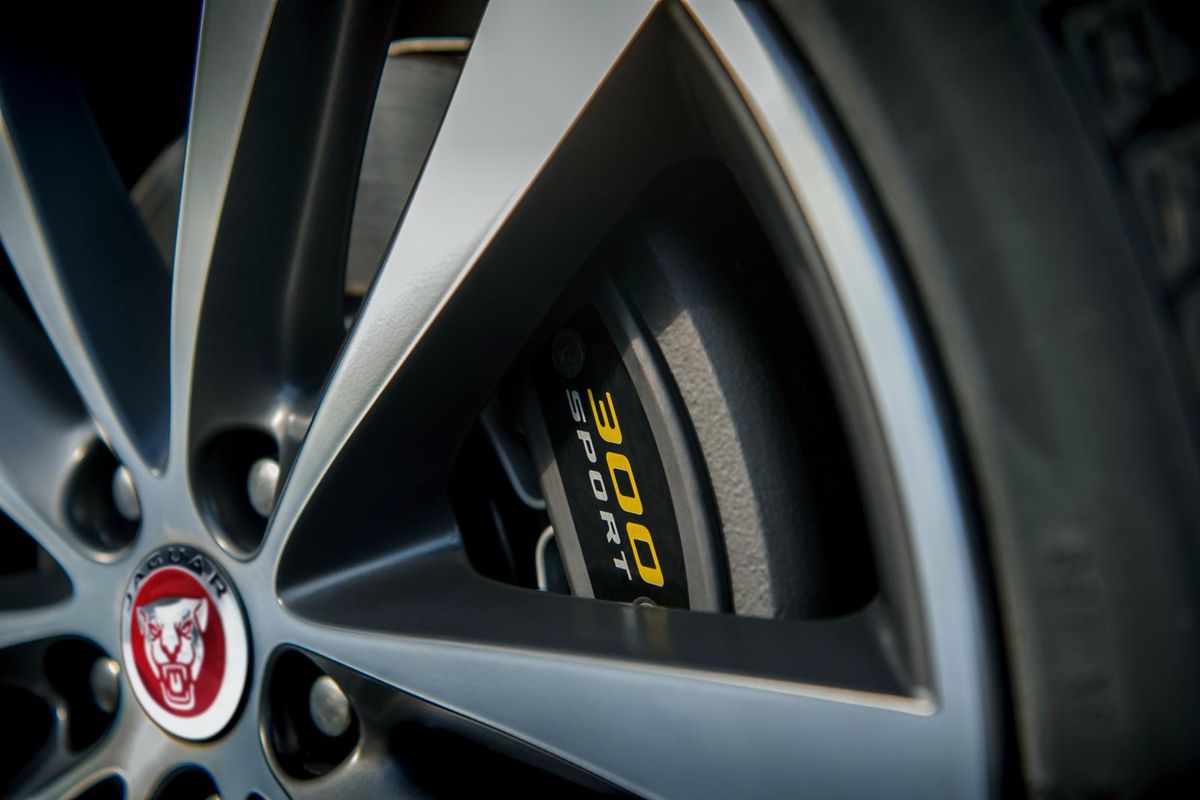
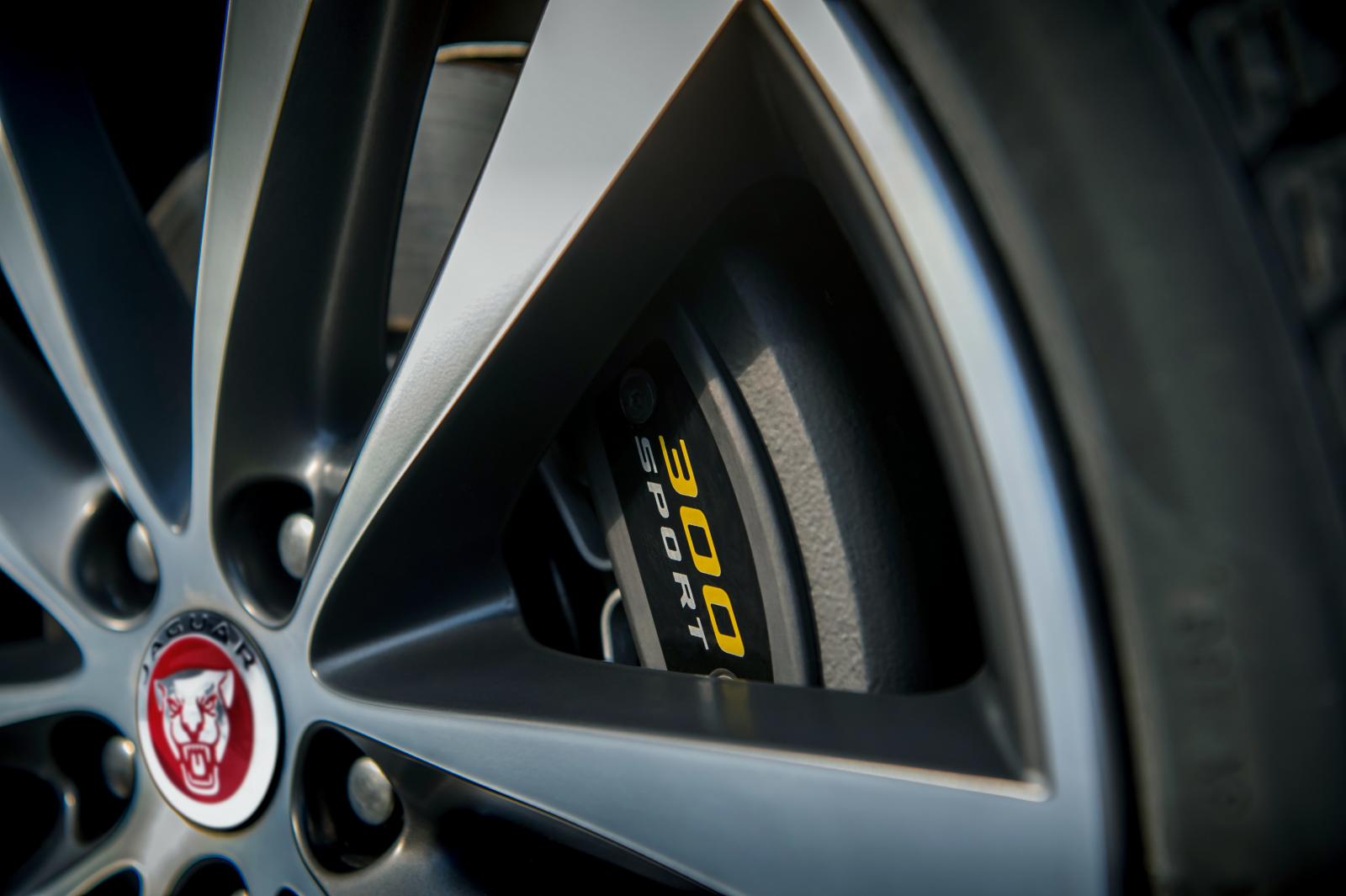
The 300 Sport Special Edition features distinctive branded black brake calipers.
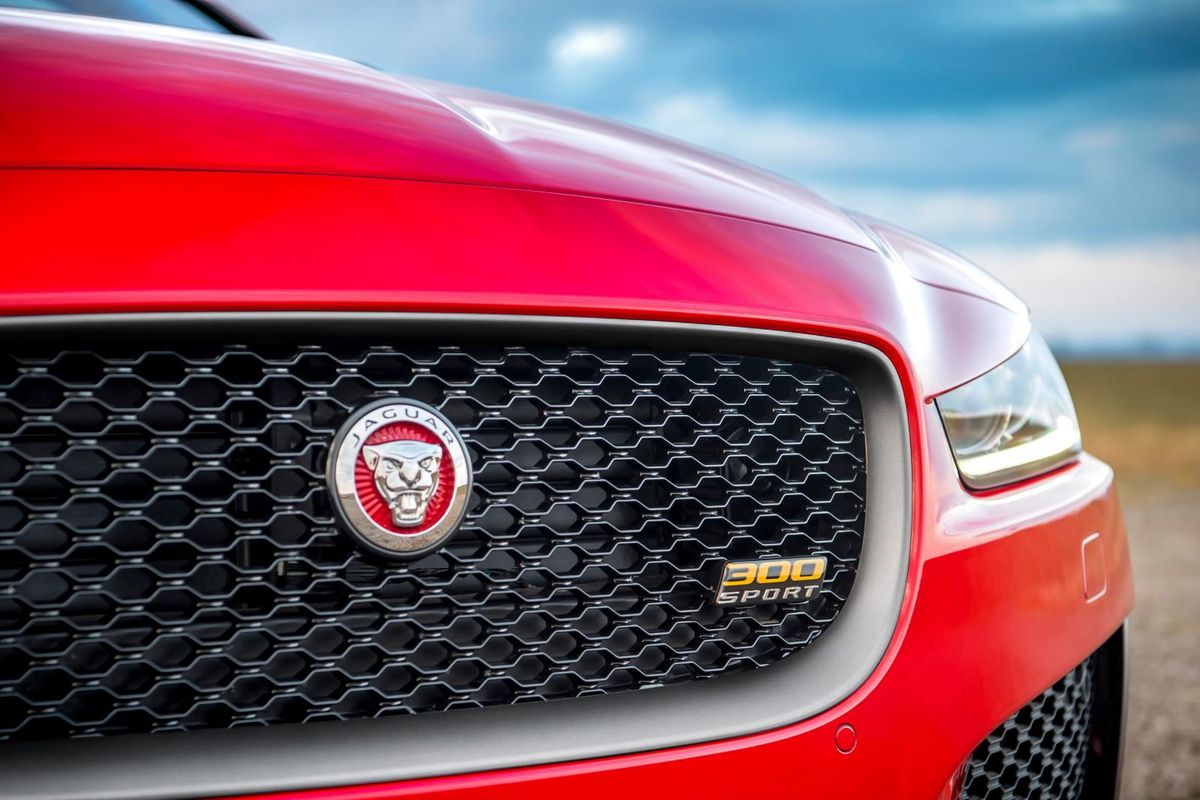
Available in a choice of Yulong White, Indus Silver, Santorini Black and Caldera Red exterior finishes, the 300 Sport derivative is distinguishable (apart from its bootlid badge) by its branded brake calipers and grille, while the grille surround, side vents, side sills, mirror caps, boot spoiler and rear valance are finished in Dark Satin Grey. The alloys (either 19- or 20-inch in size) have a Satin Technical Grey finish.
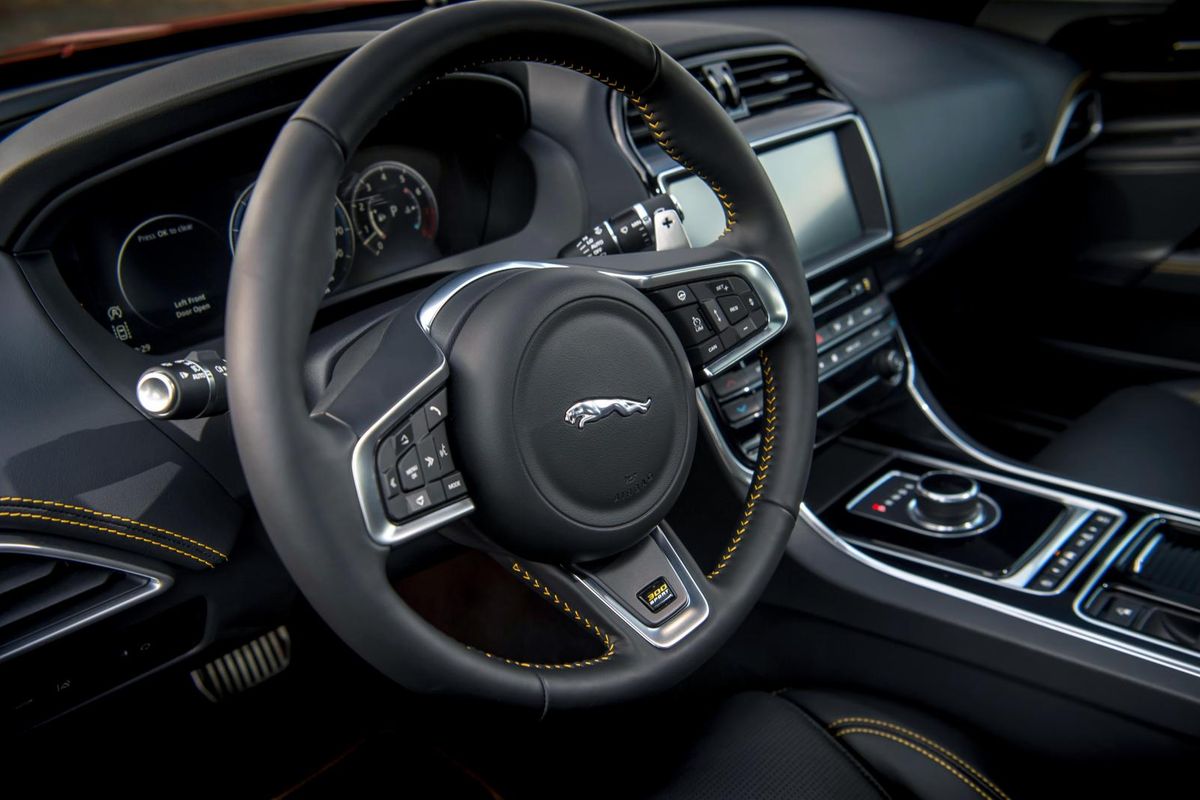
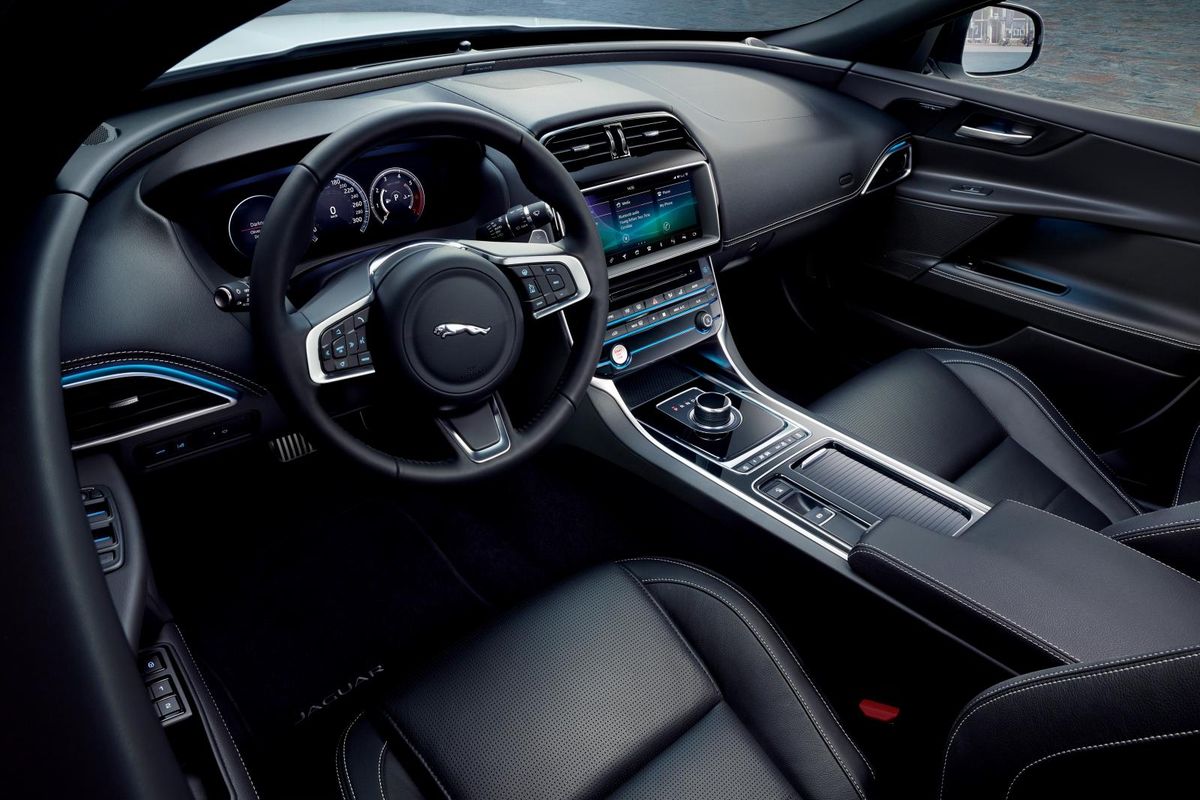
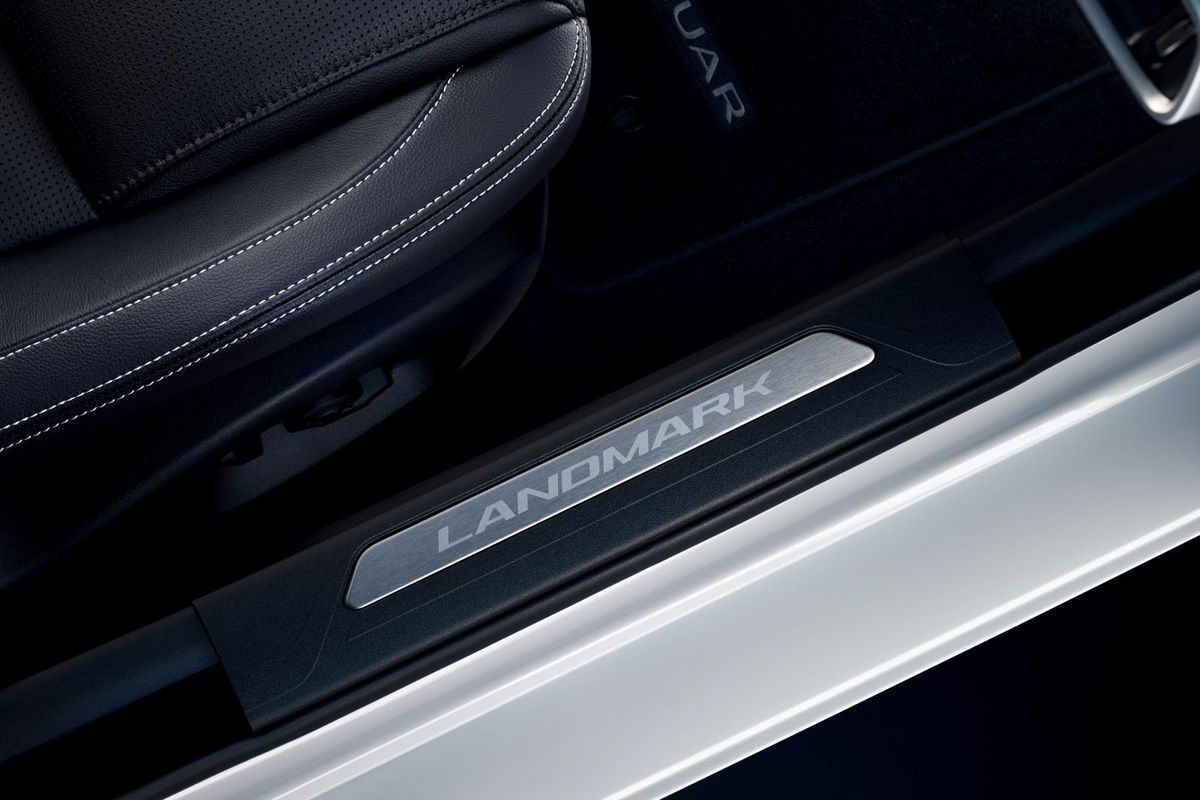
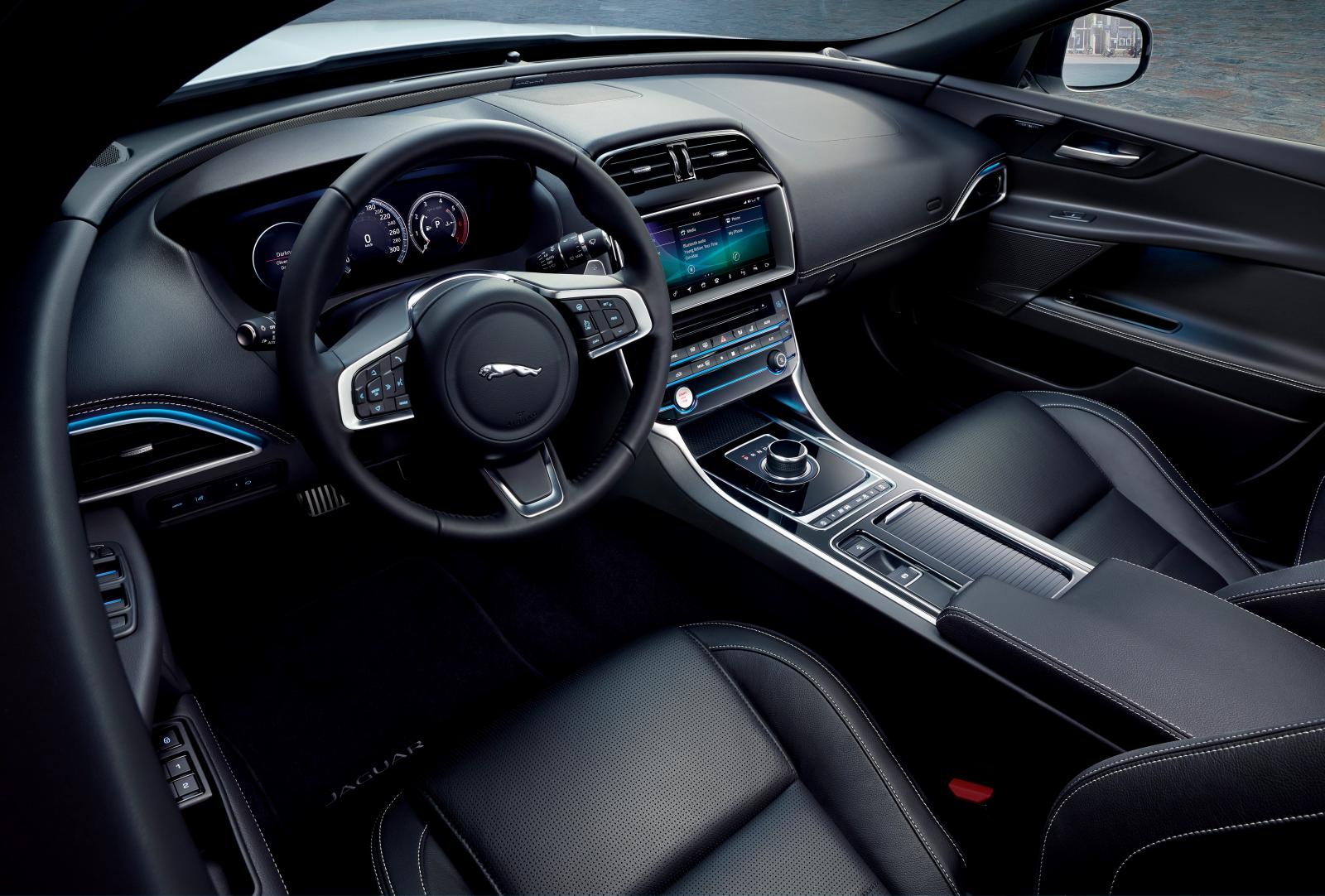
The 300 Sport's interior features badging on the front headrests, steering wheel, mats and treadplates, as well as yellow contrast stitching on the instrument panel, door trims, seats, armrest, mats and seats, of which the fronts are electrically adjustable and the rear backrest can split and fold.
The Landmark Edition trim line's interior treatment is more classically elegant than that of the 300 Sport Special Edition.
The Landmark Edition, meanwhile, is based on the existing R-Sport trim line, but with the addition of distinctive 18-inch alloy wheels, a choice of Yulong White, Firenze Red and Santorini Black exterior finishes and it will be available on 2.0-litre turbopetrol and 2.0-turbodiesel XE derivatives.
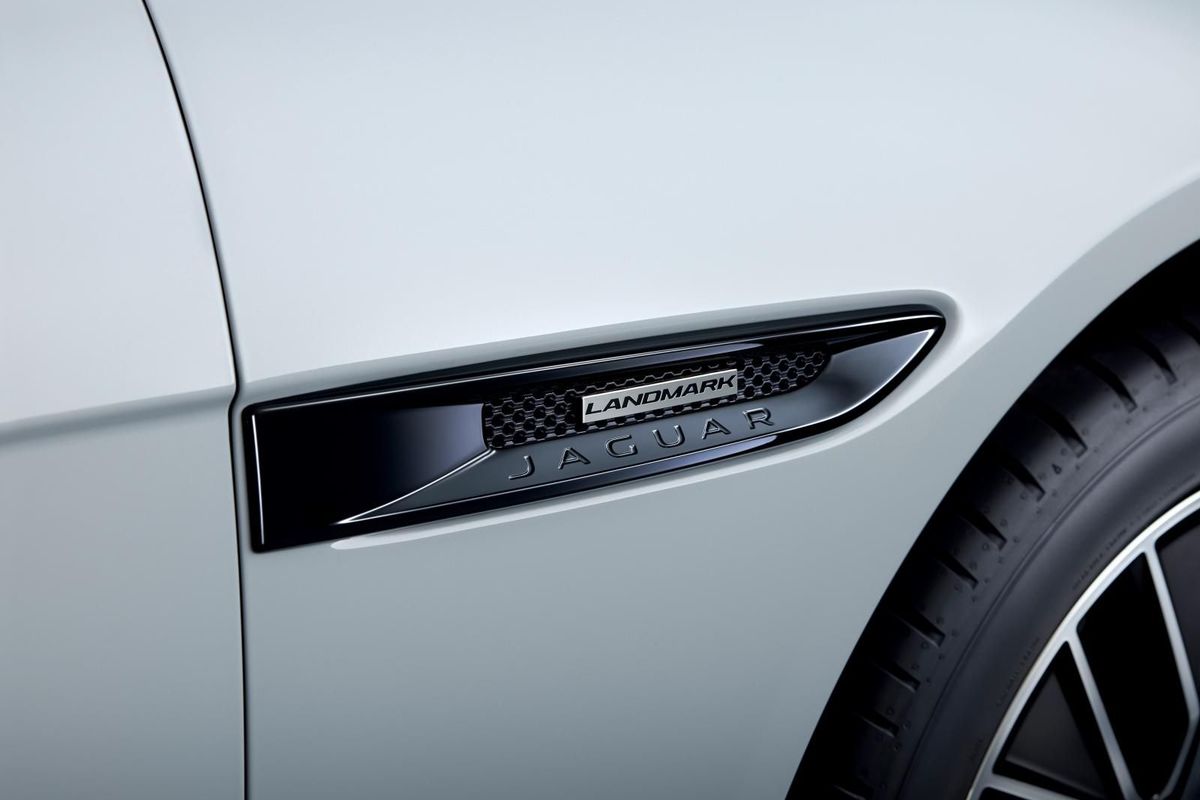
The exterior treatment incorporates a sporty front bumper, side sills and boot spoiler, while the window surrounds, mirrors, grille surround and side vents (with Landmark badging) are finished in gloss black. The Landmark Edition's interior is similar to the R-Sport's, save for branded tread plates.
The 300 Sport is powered by the 2.0-litre turbopetrol powerplant, but the Landmark Edition will be available in turbodiesel too.
Standard features on both versions include the 10-inch Touch Pro touchscreen infotainment system with satellite navigation, xenon headlights and parking sensors fore and aft. Over and above a comprehensive line-up of airbags, ABS and integral stability control systems, the XE derivatives are equipped with a forward-facing stereo camera system that underpins the lane departure warning and lane-keeping driver assistance functions.
All XE derivatives come with a 3-year/100 000 km warranty and 5-year/100 000 km maintenance plan. The prices of the new additions to the range will be confirmed at the time of the launch (July 2018).
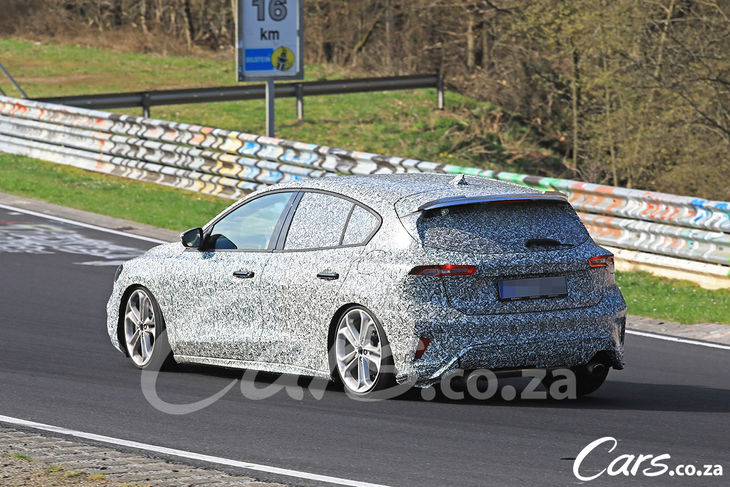
Last week we saw spy shots of a prototype of the next-generation Focus ST undergoing testing… now a new report suggests that Ford won't power its next Golf GTI rival with an uprated Fiesta ST engine, but a detuned version of the Mustang/current Focus RS 2.3-litre Ecoboost powerplant.
An all-new Ford Focus was revealed recently and the Blue Oval is currently developing the Focus ST hot hatch that will rival the likes of the Volkswagen Golf GTI, Hyundai i30N and Renault Megane RS. However, it was unclear whether the upcoming front-wheel-drive hot hatch would feature a 3- or 4-cylinder turbopetrol engine.
This Focus ST prototype was recently spied in heavy camouflage doing high-speed testing at the world-famous Nurburgring. It was clear that the "ST" wore elaborate bumpers while pronounced side sills and a more prominent roof spoiler contributed to a more aggressive stance. A dual exhaust system could be seen at the rear.
The Focus ST will feature larger brakes and handling ability will be enhanced thanks to a stiffer chassis and reworked suspension.
According to Autocar, Ford has decided to adapt the 2.3-litre Ecoboost powerplant for the Focus' FWD platform instead of installing a beefed-up version of the Fiesta's 1.5-litre 3-cylinder turbopetrol "because the smaller engine would have to be run close to its reliable limit" to produce an output that would be comparable to that of the current Focus ST.
The next-generation Focus ST should benefit from the weight-saving and suspension technologies introduced in Ford's all-new premium compact hatchback and will, somewhat surprisingly, be offered exclusively with a 6-speed manual transmission, which suggests the 250 bhp (186 kW) machine will be aimed more at driving enthusiasts than luxury-car buyers.
As for the more potent next-generation Focus RS, that is slated for introduction in 2020 and could offer as much as 298 kW and 576 Nm of torque with its 2.3-litre turbopetrol engine mated to a mild hybrid system.
The official reveal of the new Focus ST has been pushed out to the 2019 Geneva Show, the report said. We should see it on our showroom floors mid to late next year.
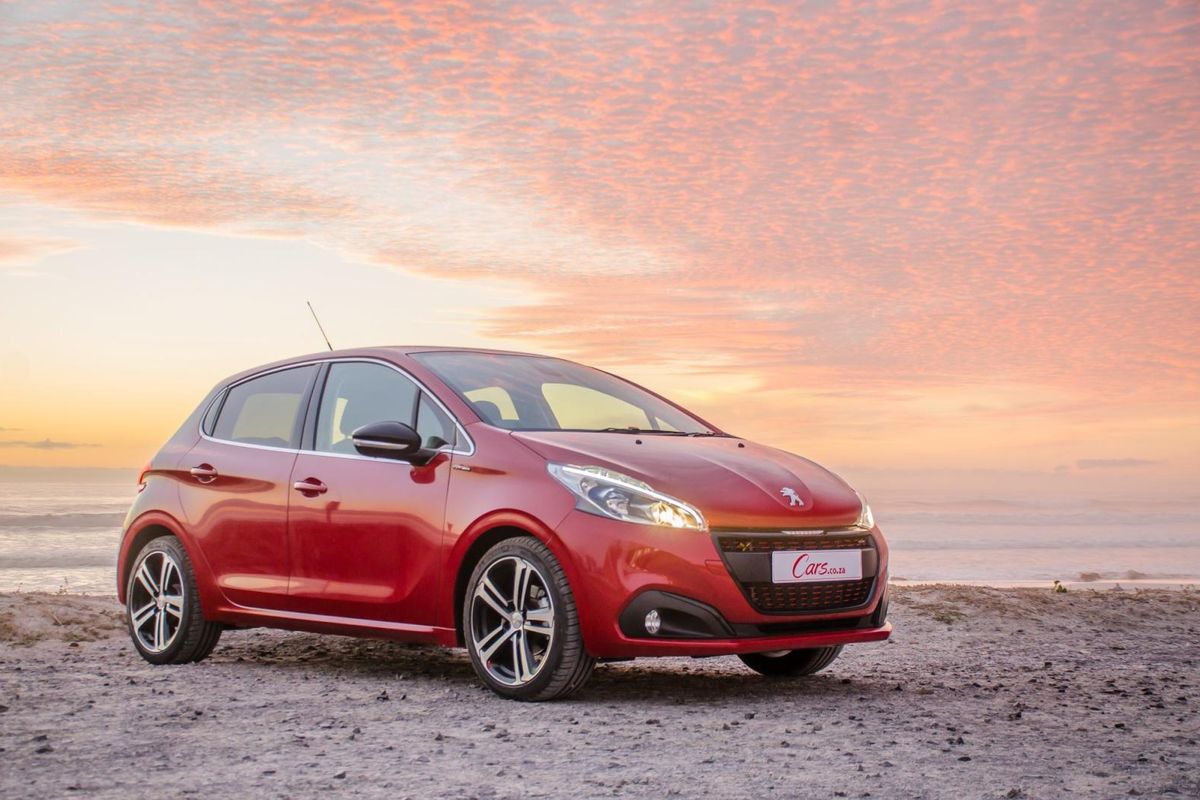
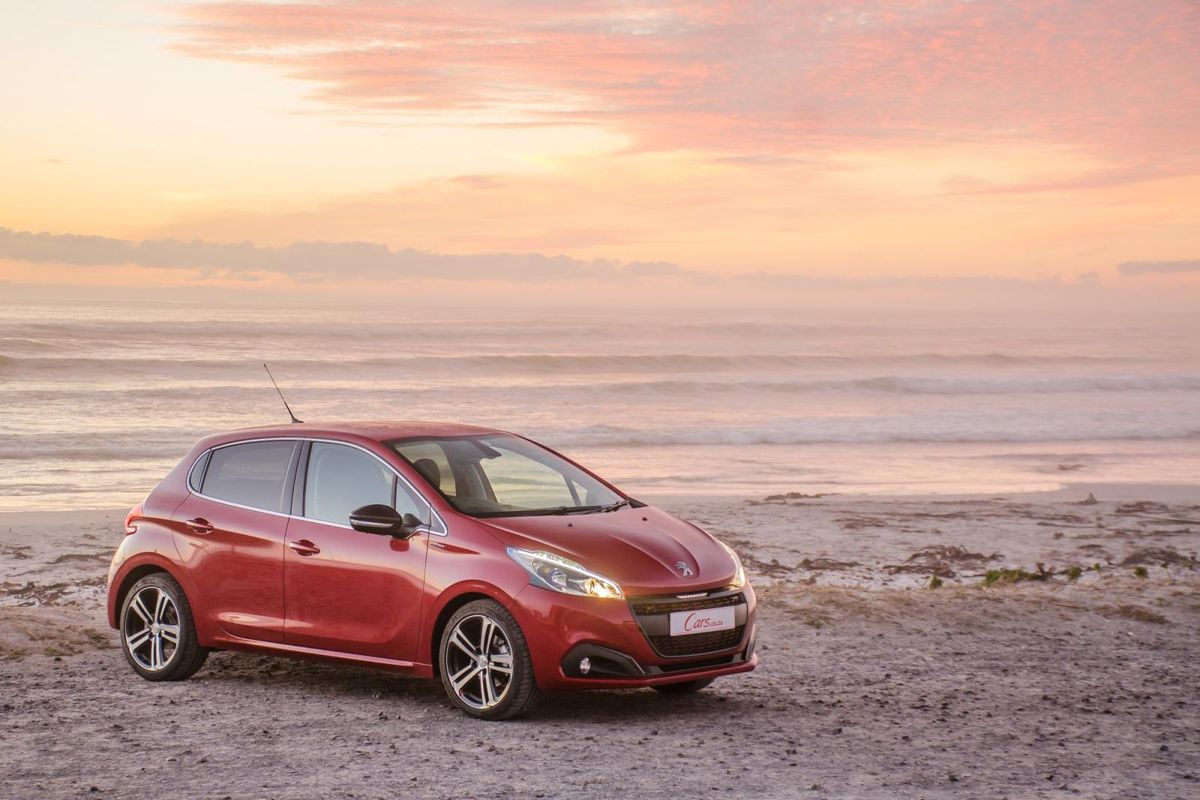
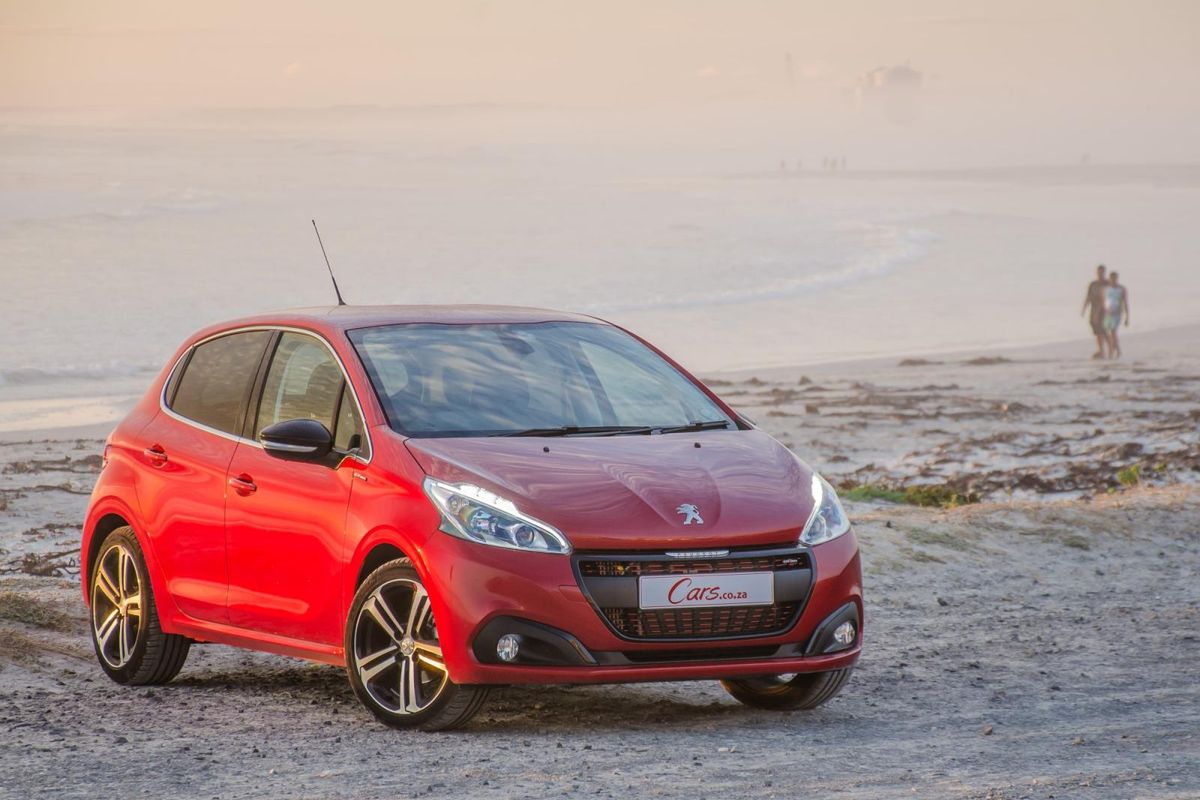
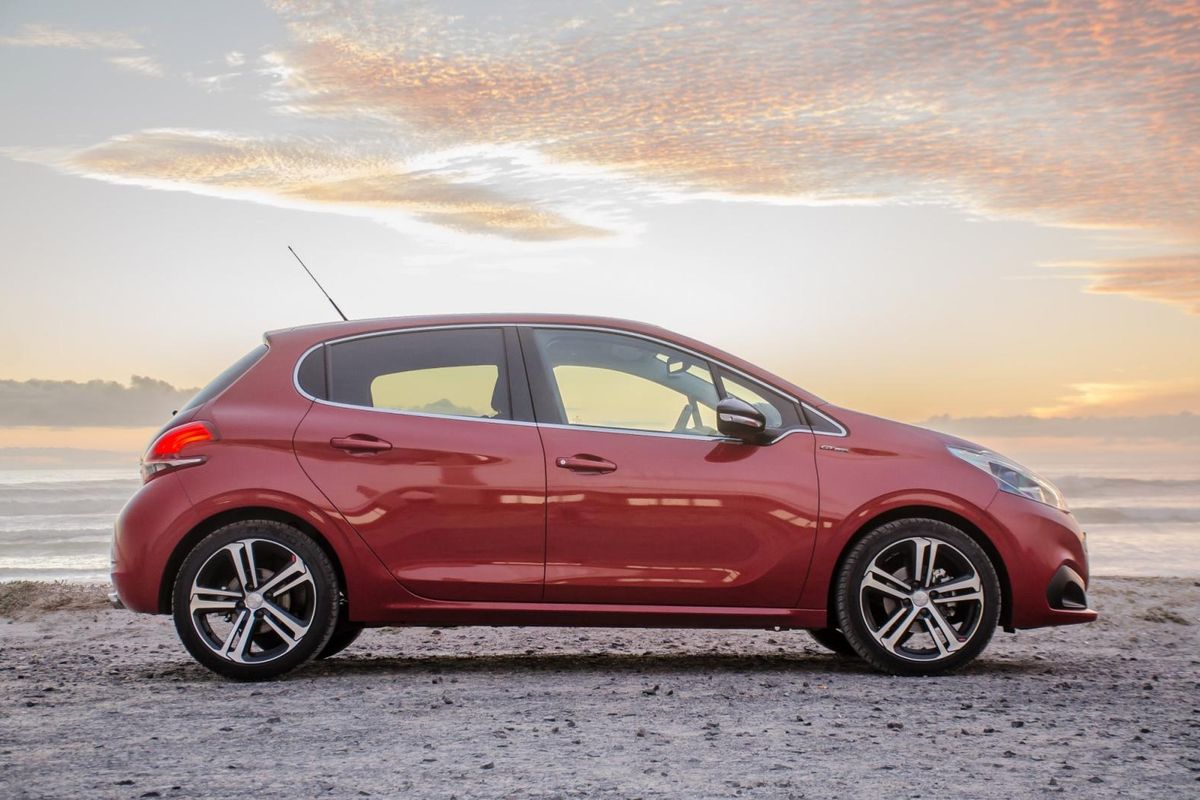
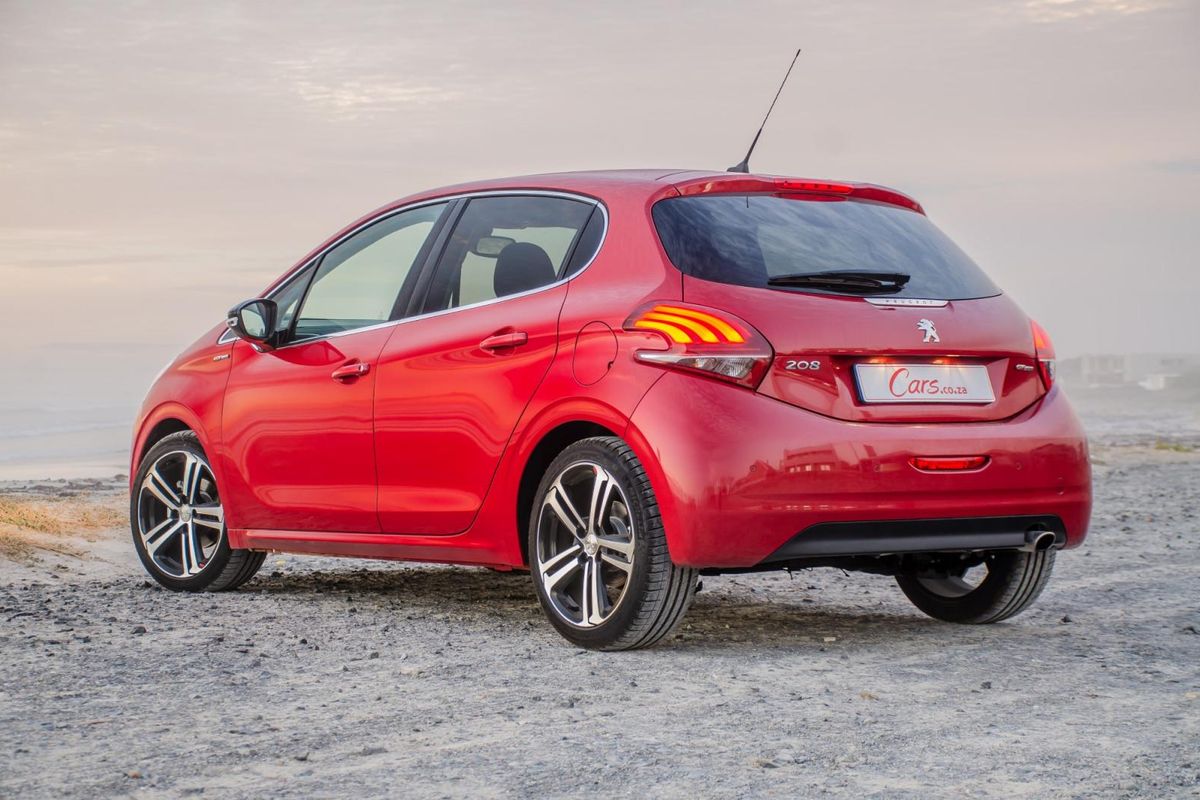
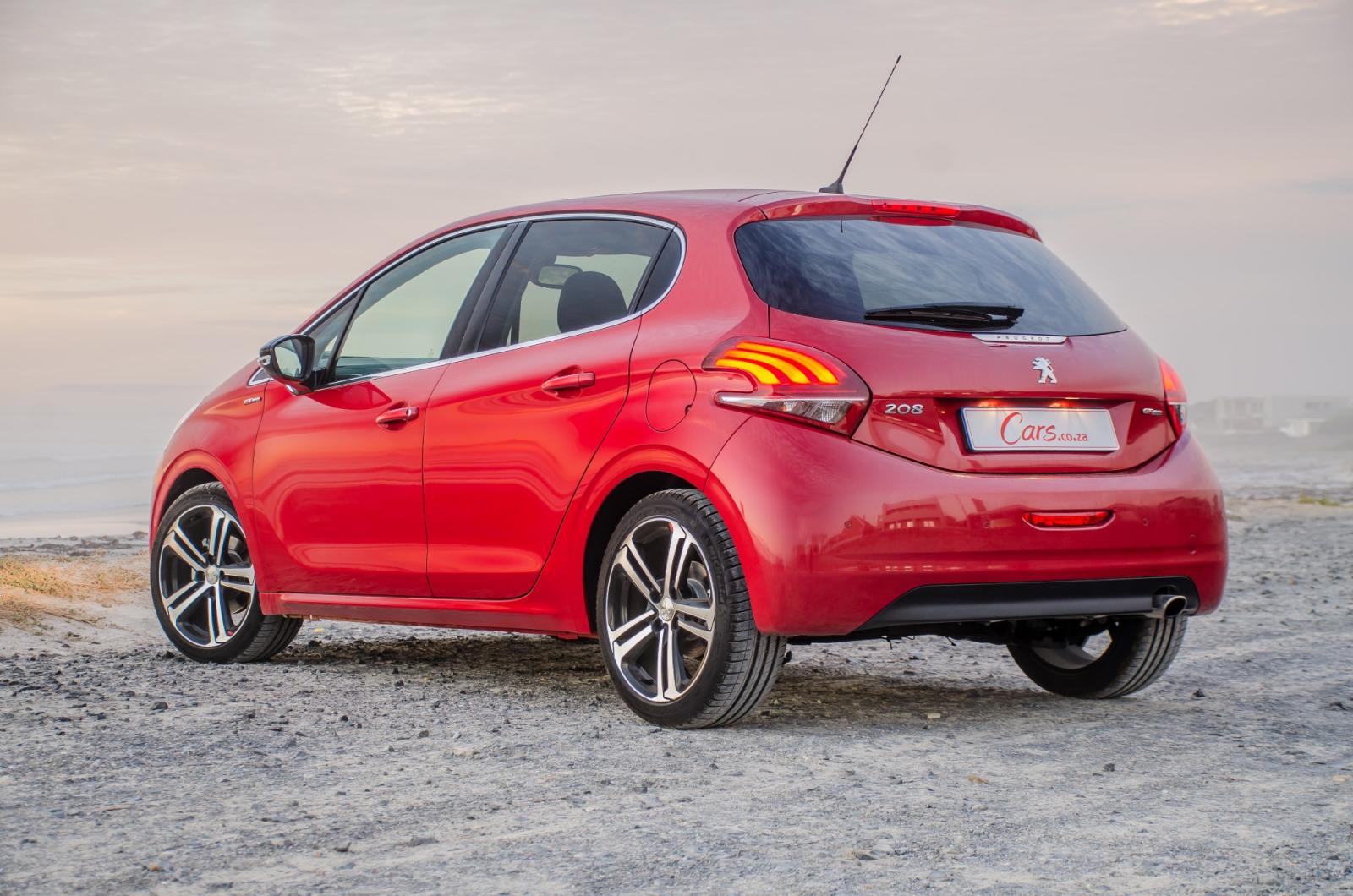
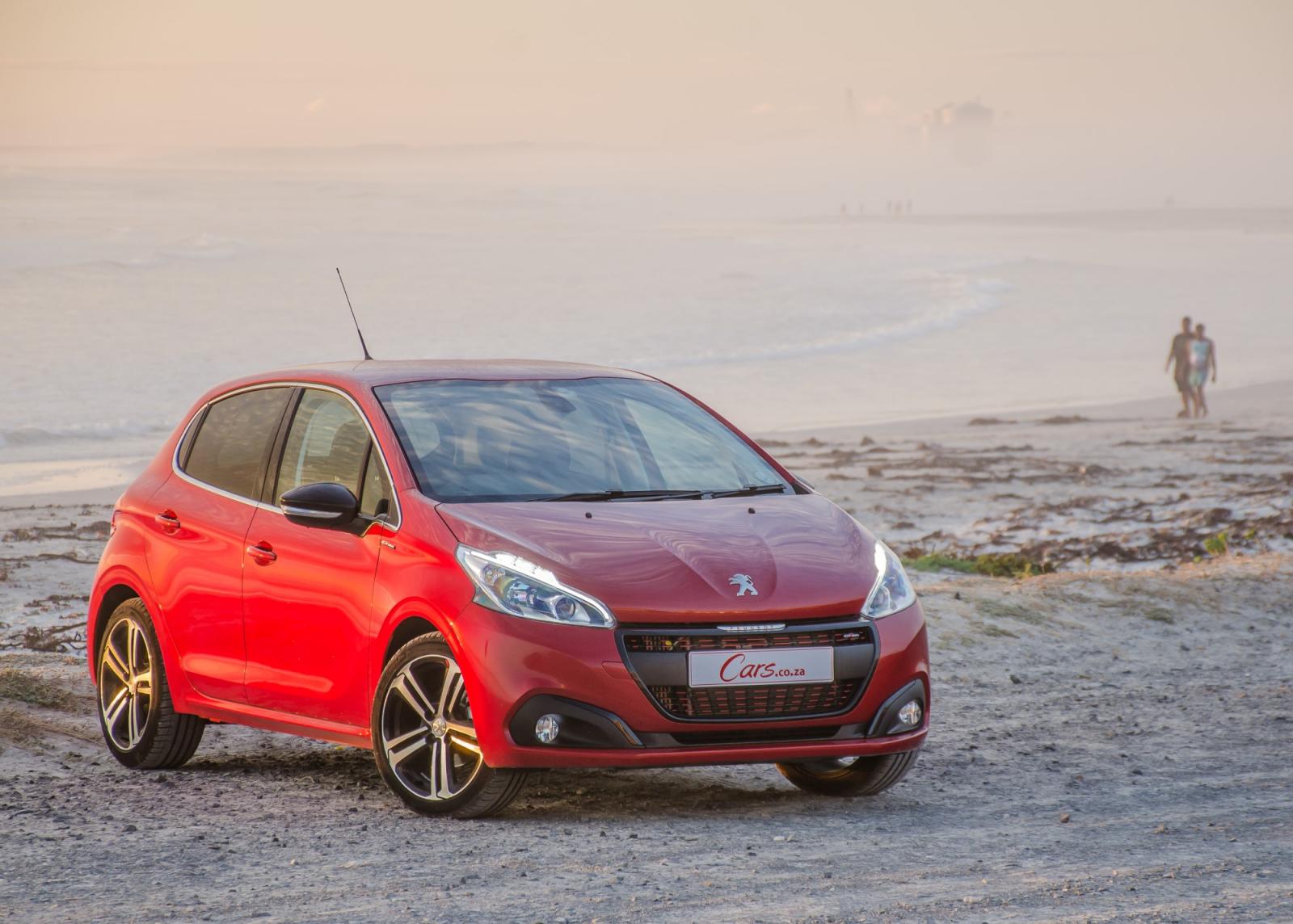
The 208 isn't a strong seller in the compact hatchback segment, but Peugeot recently introduced a stylishly revised, range-topping GT-Line derivative to bolster the range. We tested the newcomer to see if it is worthy of your attention.
We Like: Comfort, perky performance, sporty styling, practicality
We Don’t Like: Pricey, dated infotainment system
Alternatives
The current star: Consider the new Volkswagen Polo 1.0 TSI Highline manual priced at R286 000. Yes, it is R16 300 more expensive than the Peugeot 208 GT-Line, but the Polo is more refined and its build quality is excellent. The Polo offers competitive outputs of 85 kW and 200 Nm from its turbocharged 1.0-litre engine. The Polo is also likely to hold its value for longer than the 208, which means you should take less of a financial knock when the time comes to trade it in or sell it on.
For high value: Consider the Renault Clio 88 kW Turbo GT-Line priced at R269 900. It makes a sporty style statement and offers similar outputs of 88 kW and 205 Nm from its 1.2-litre turbopetrol engine. The Clio is also well-specced with features, making it a high-value offering in this segment.
The Peugeot 208, which received a facelift back in 2015, has struggled to gain traction in the compact hatchback segment of the South African new vehicle market and with products such as the new Volkswagen Polo hogging the limelight and the new Ford Fiesta due for release soon, the 208 has some convincing to do to find favour with buyers. This 208 rides on the ageing PF1 platform, but when the all-new 208 rolls around in 2019, it will be based on the new Common Modular Platform (CMP) and it’s expected to be larger, lighter and more capable than this model.
The Good
Stylish looks
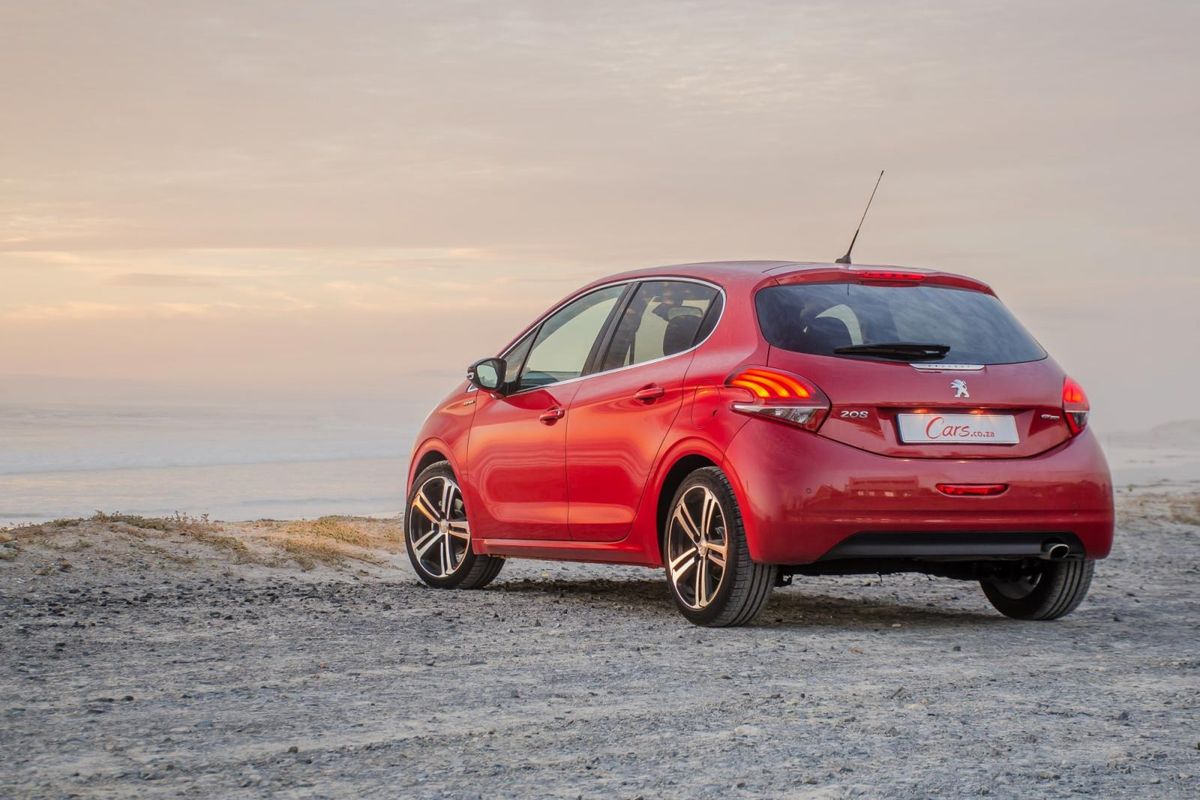
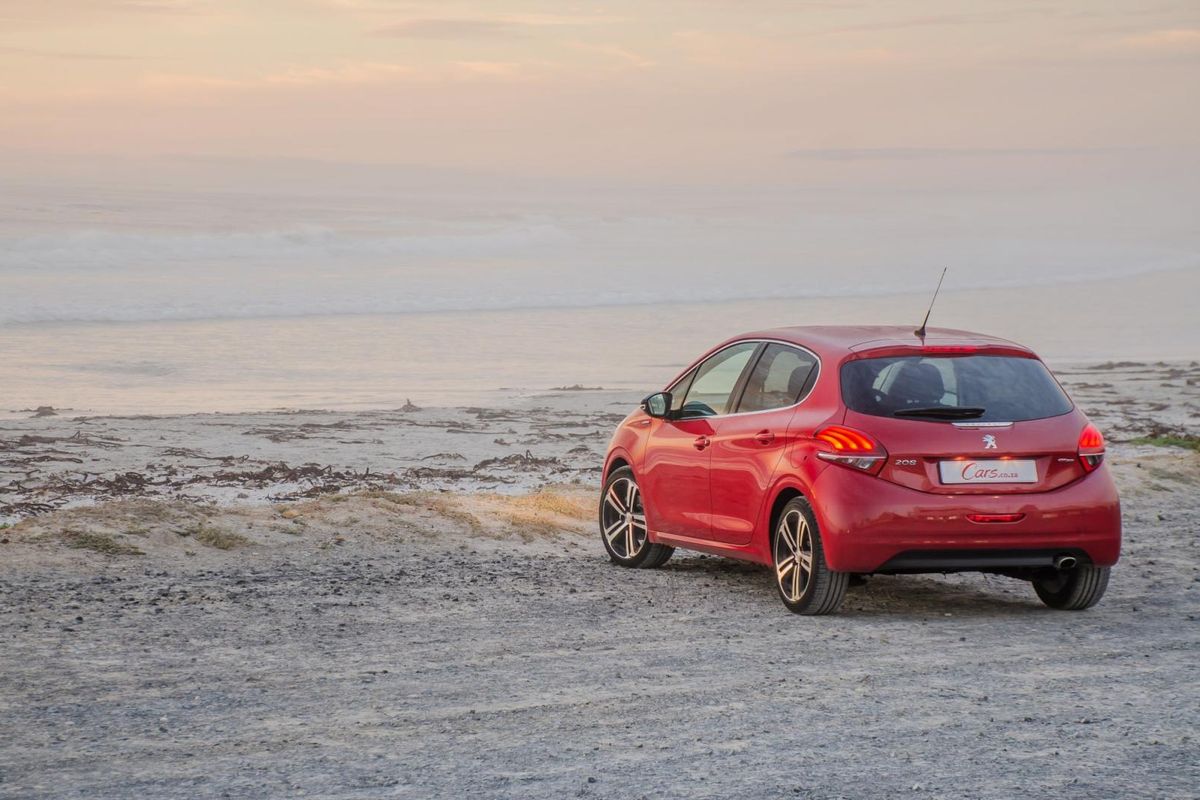
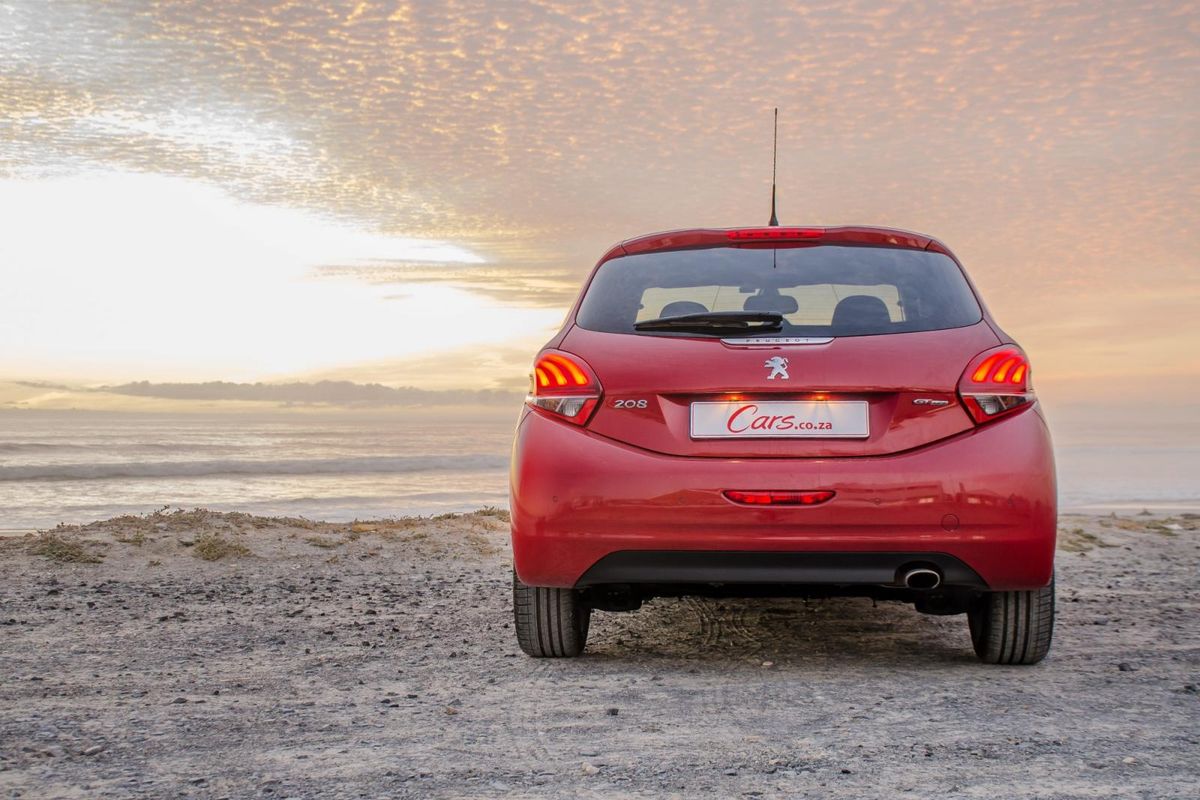
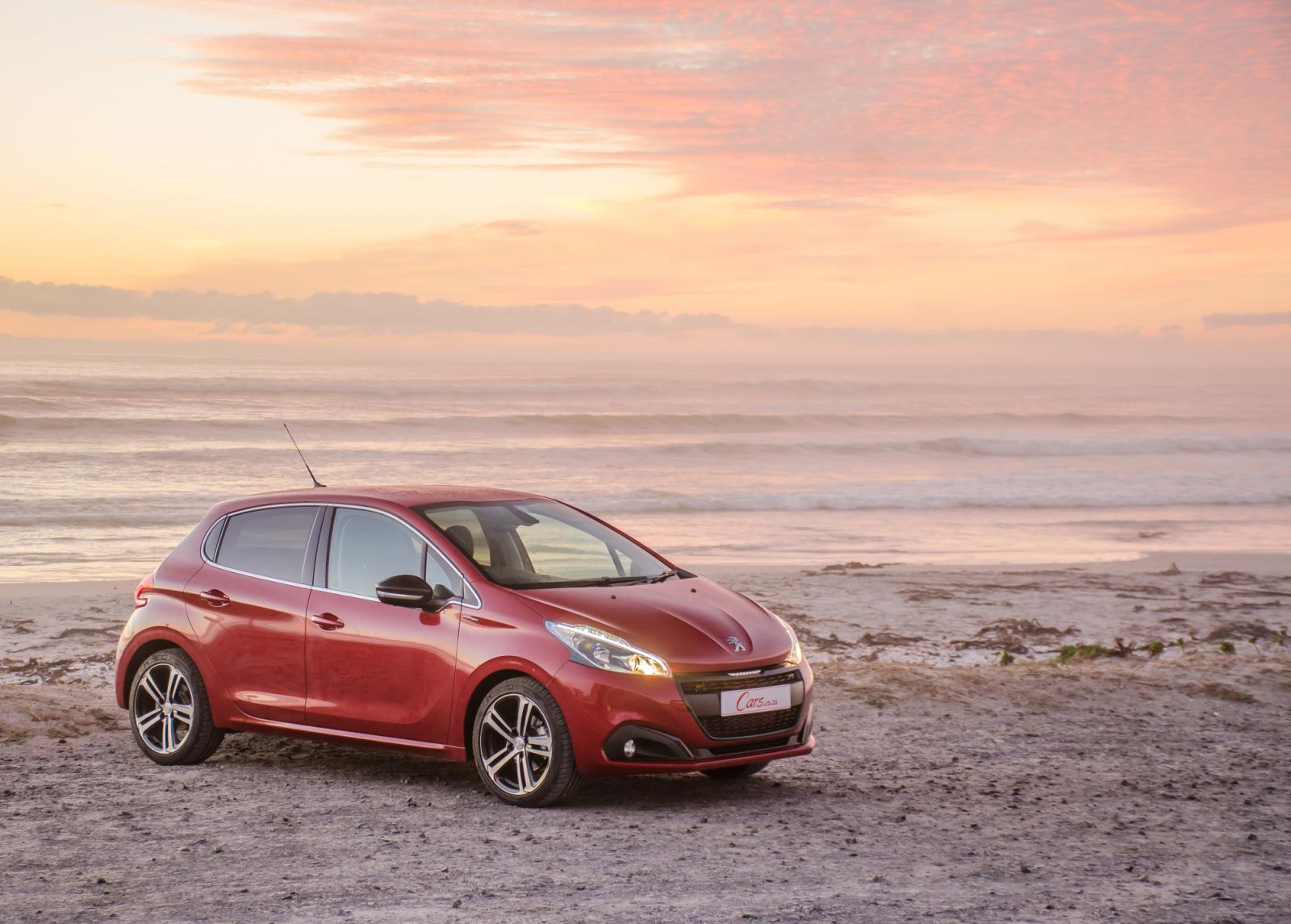
LED Claw taillights give the 208 GT-Line a distinct look from the rear. 17-inch alloy wheels are standard.
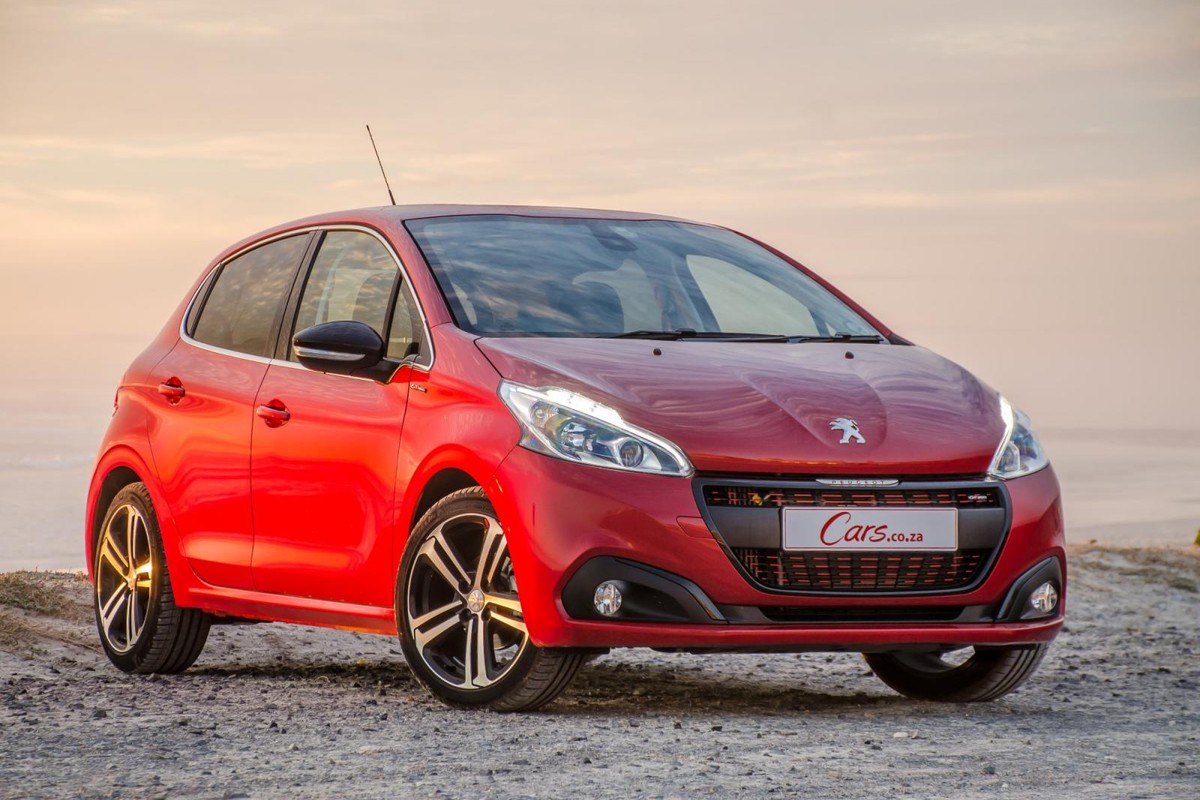
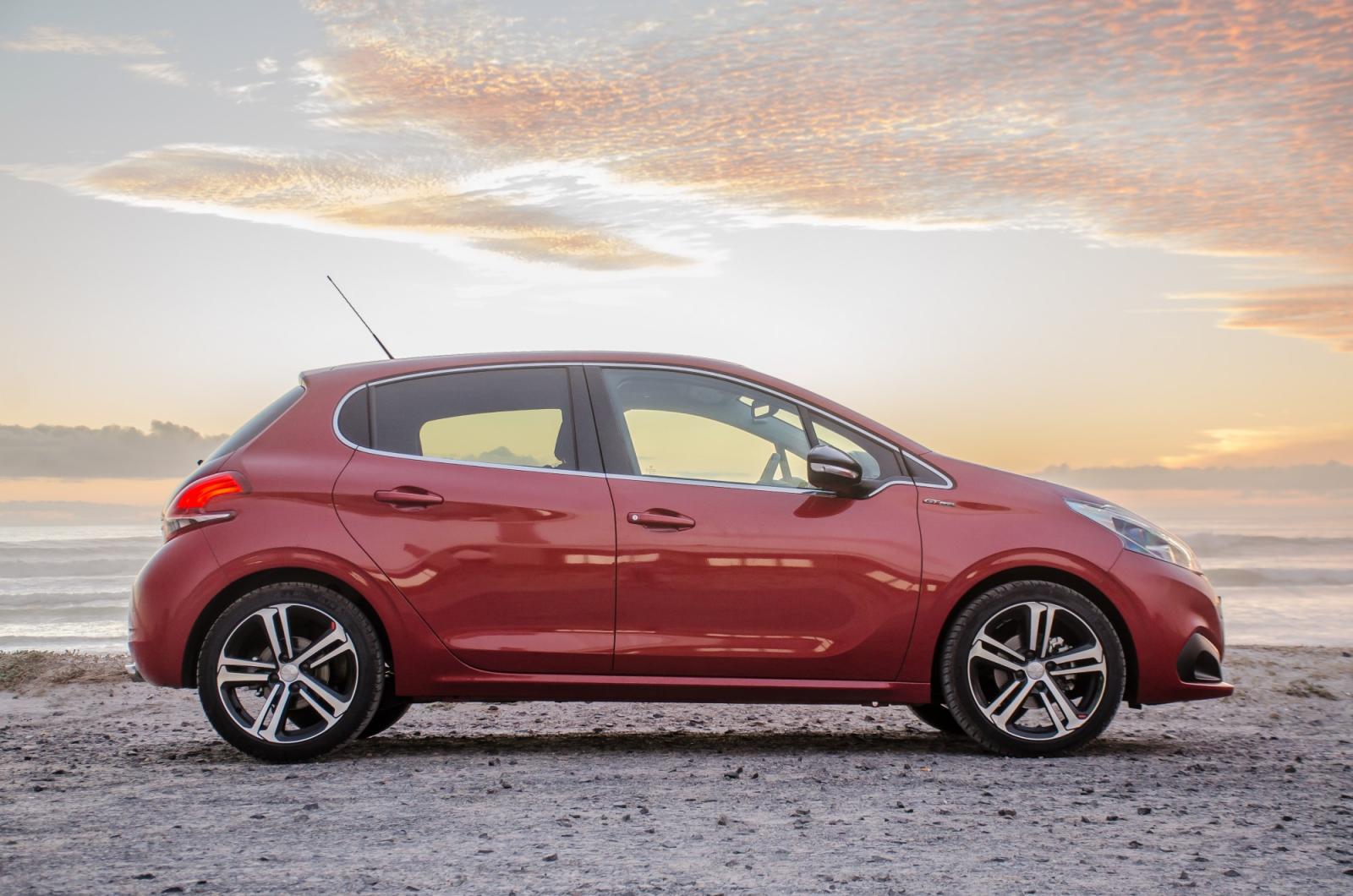
It’s surprising how a smattering of chrome and a new front bumper can revitalise the look of a car. The GT-Line derivative has a bit more visual flair than other 208 derivatives thanks to its wider grille, flanked with new headlights. The grille itself is unique to the GT-Line and features eye-catching touches such as red details and a gloss black finish. The side mirrors are also painted black for added contrast and the rear is unmistakable with those eye-catching LED "claw" tail lights. The look of this 208 GT-Line is topped off with 17-inch Caesium alloy wheels.
Admittedly, the 208 GT-Line’s styling won’t appeal to everyone, but we think that its distinctive looks will appeal to young urbanites who are looking to buy daily runabouts with surfeit visual appeal. In the looks department then, the 208 GT-Line is a suitably stylish offering…
Performance and ride quality
Perky performance and sure-footed handling make the 208 GT-Line fun to drive on the daily commute.
The 208 GT-Line offers above-average performance: its 81 kW 1.2-litre turbopetrol engine is reasonably refined and its relatively generous torque figure of 205 Nm not only provides ample shove in cut-and-thrust driving conditions, it makes the 208 feel more lively than we expected.
The Peugeot is equally eager on freeways, where quick, punchy overtakes are easily achievable. You can, however, expect a fair degree of initial turbo lag when you mash the pedal to the floor. We found the 5-speed manual transmission to have a positive action through the gears.
In terms of fuel consumption, Peugeot claims 5.7 L/100km; we averaged an indicated 7.3 L/100 km during our test, which is quite fair.
Meanwhile, the 208's ride quality is quite forgiving, yet it’s still firm enough to make the hatchback feel engaging. It corners confidently and the small steering wheel oddly instils the impression of greater control, which boosts a driver's confidence. The 208 GT-Line has a fun side – we like that.
Interior comfort
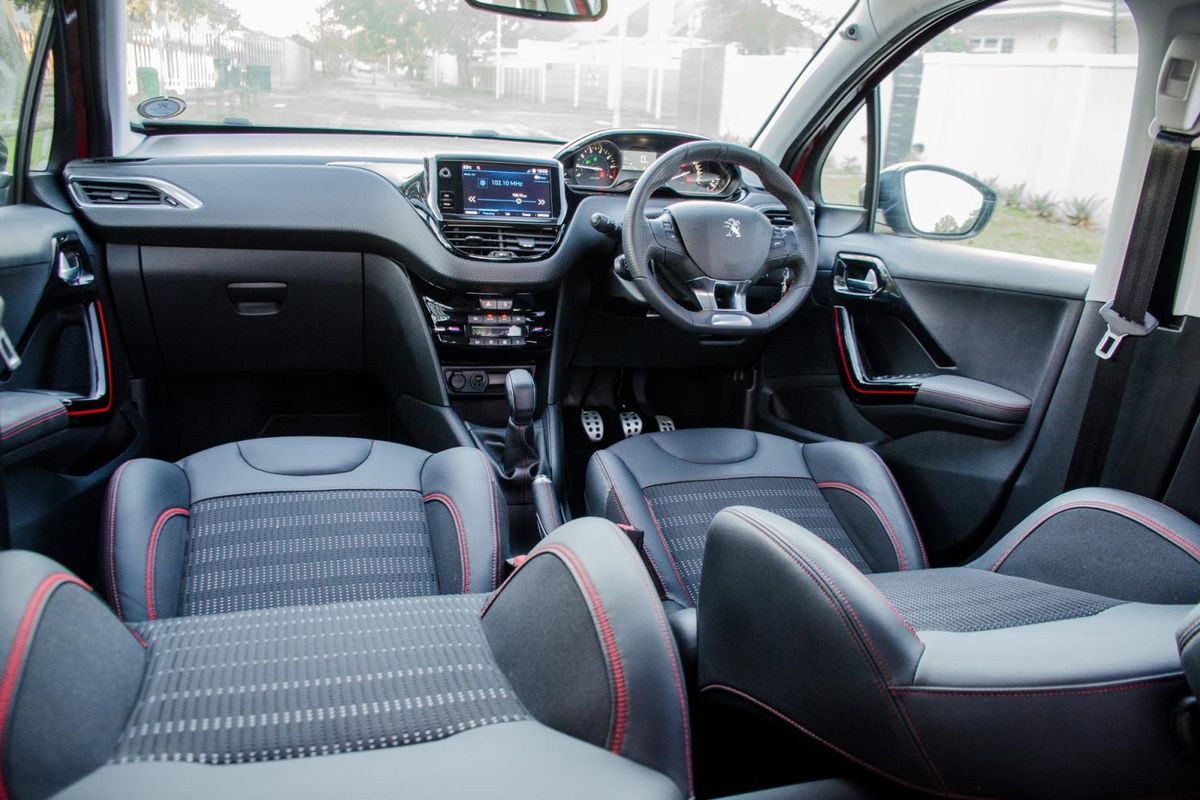
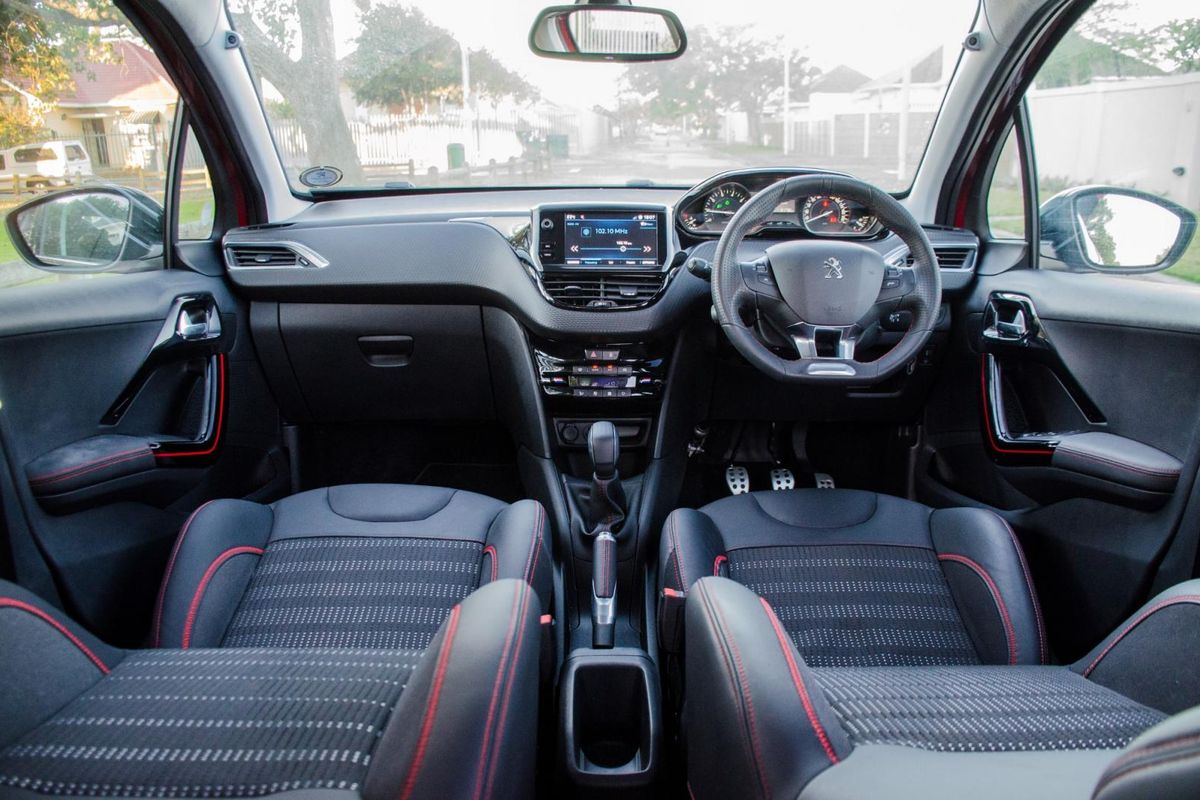
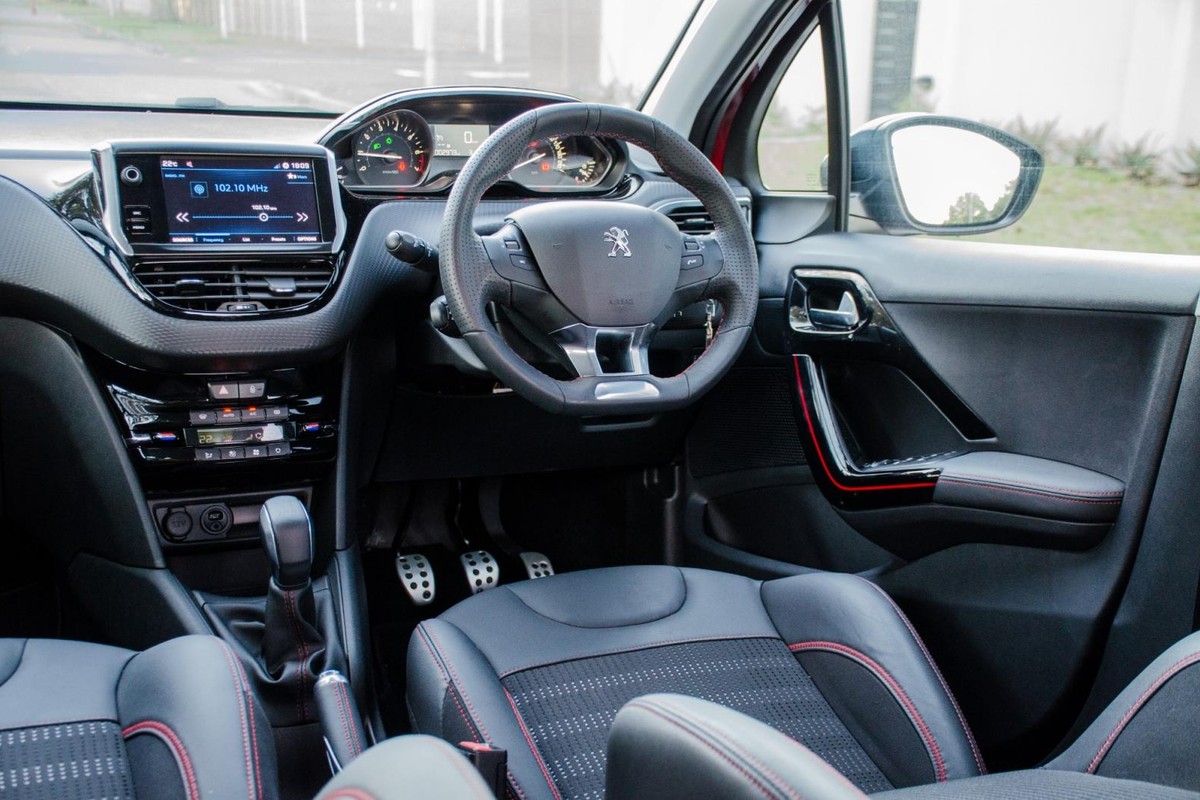
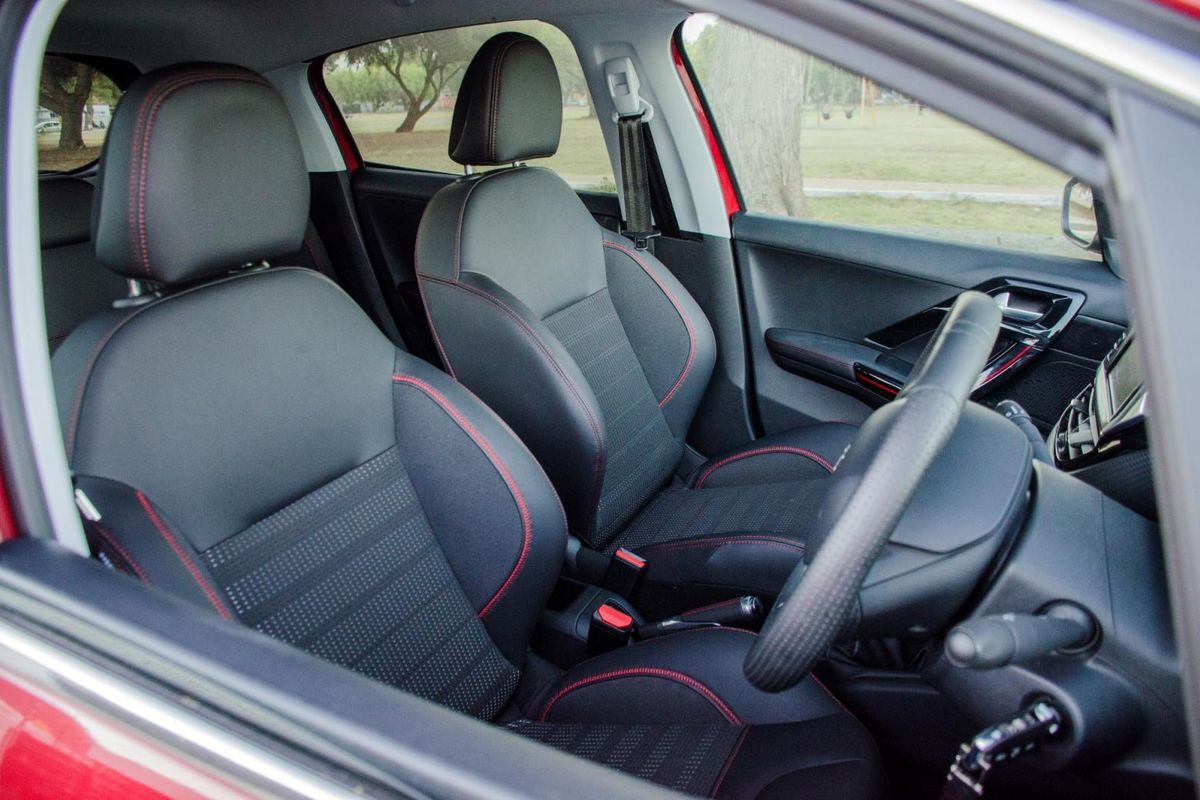
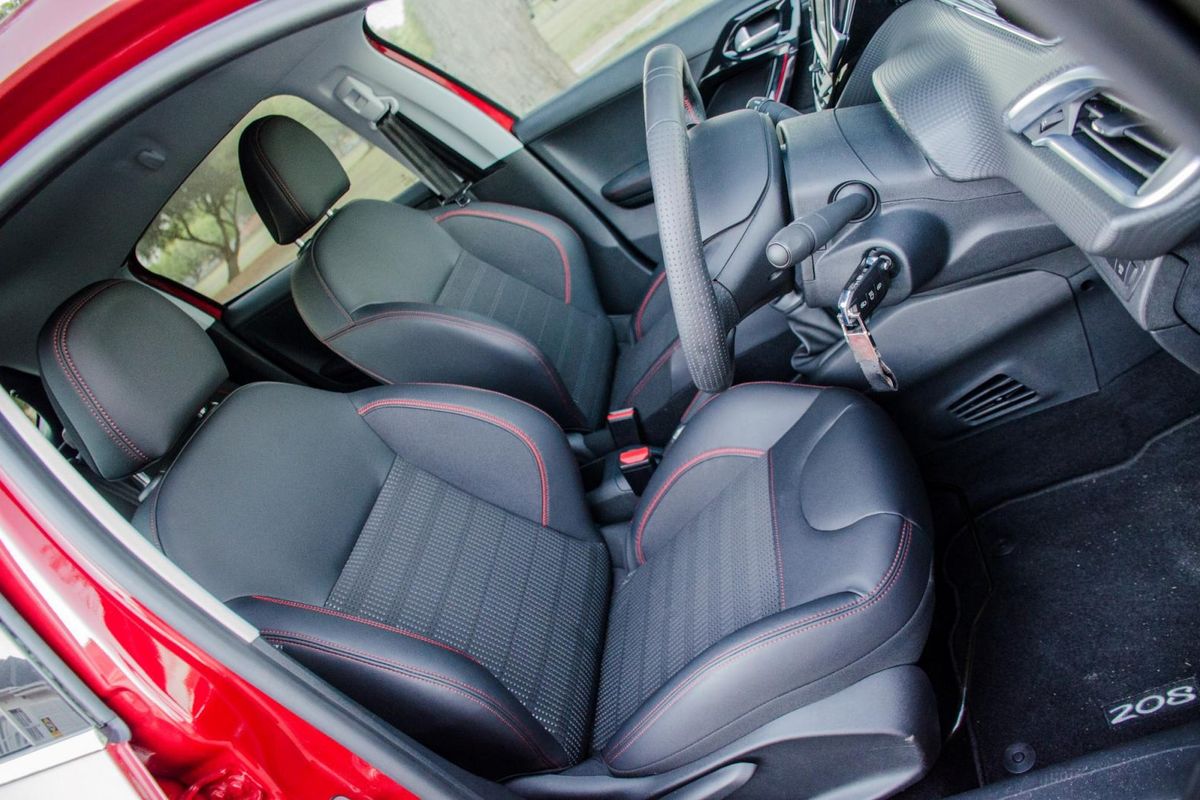
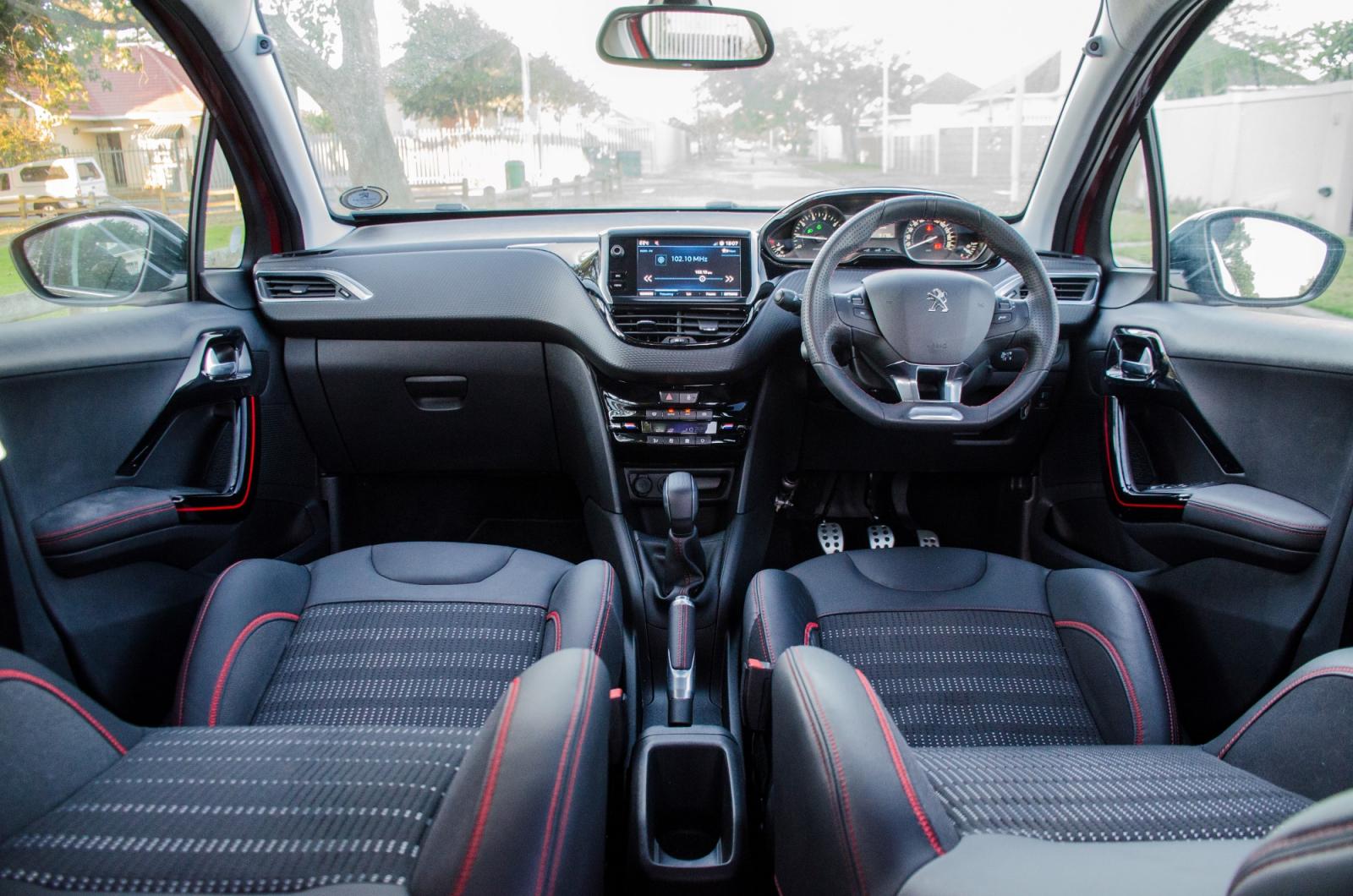
The cabin design is sporty and modern and the sports seats provide high levels of comfort.
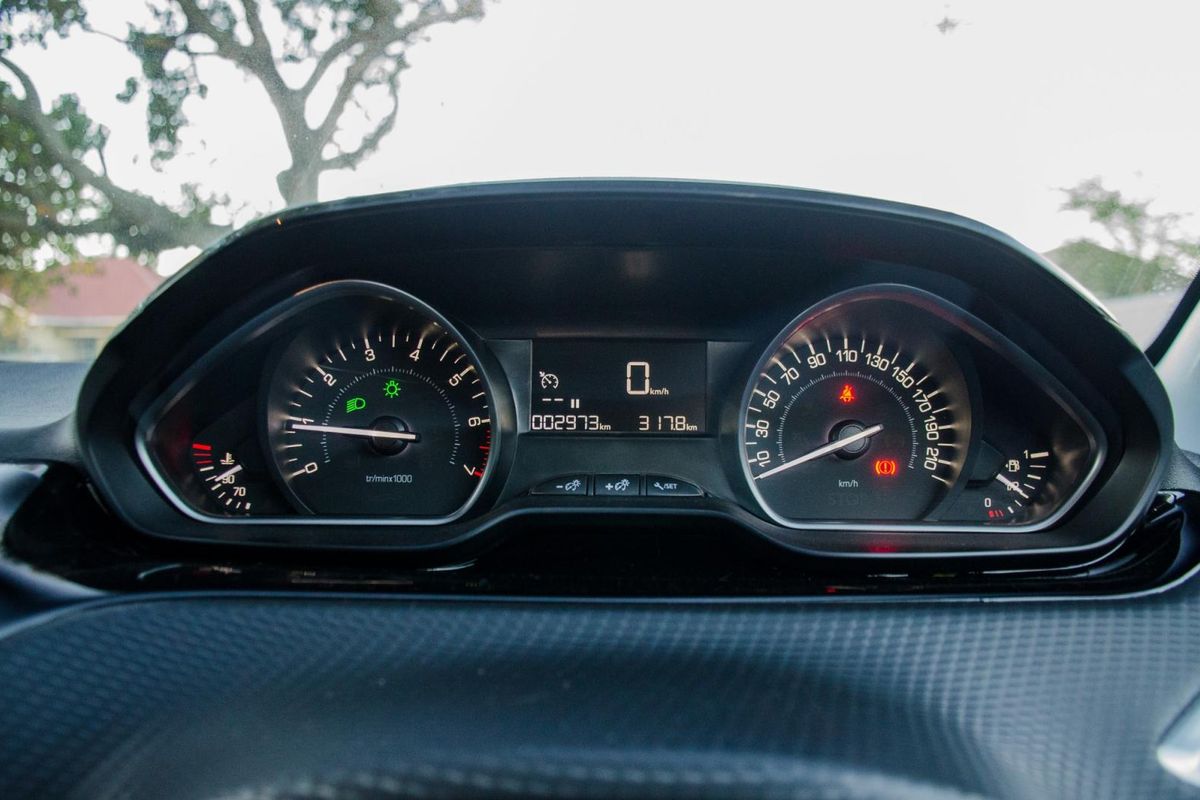
The sporty theme continues on the inside, where we found the partial leather and cloth GT Line sports seats comfortable with generous bolstering for added lateral support. Both the driver and passenger seats are height-adjustable. The 'wheel has mounted audio and Bluetooth controls and can be adjusted for rake and reach. However, depending on your height and seating position, the rim can block your view of the instrument cluster.
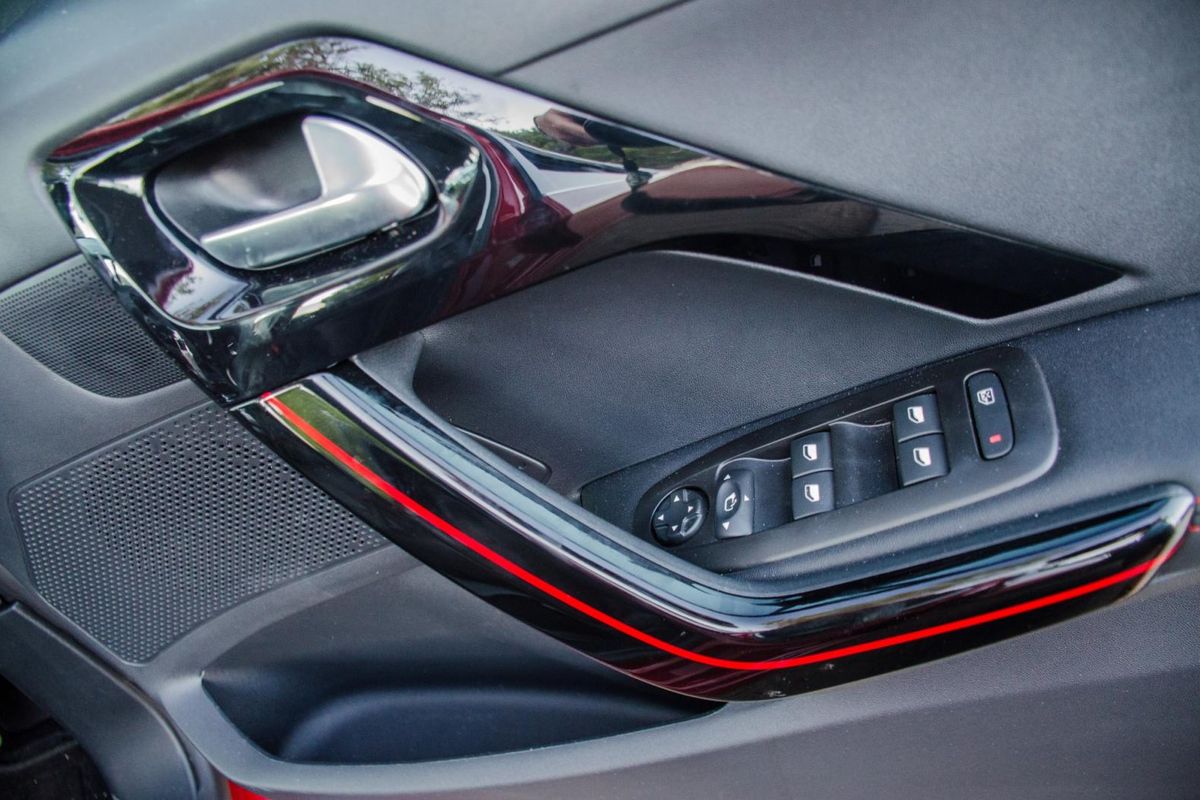
Some useful standard features include automatic dual-zone aircon, cruise control, electric windows and mirrors and rain-sensing wipers. The perceived build quality of the interior is average to good, but some less-premium plastic trim elements (gloss black door handles for example) detract from the overall premium look and feel of the cabin.
Practicality and safety
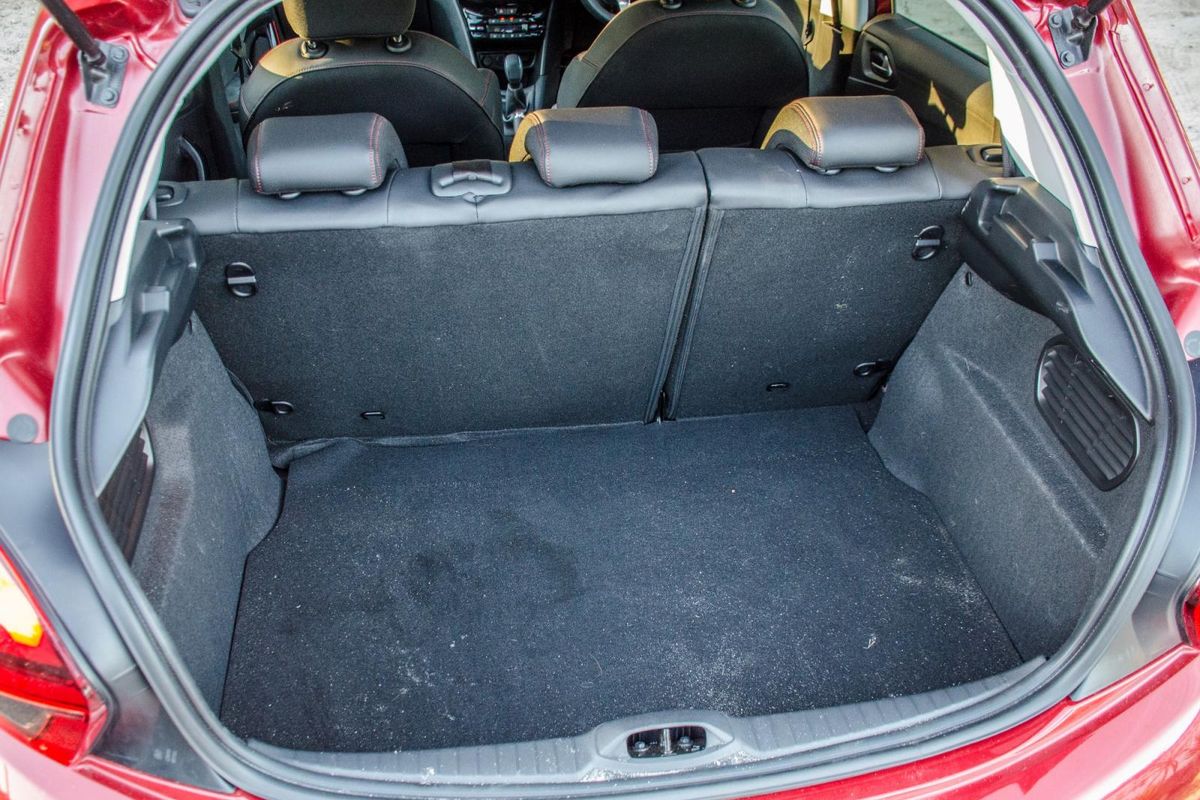
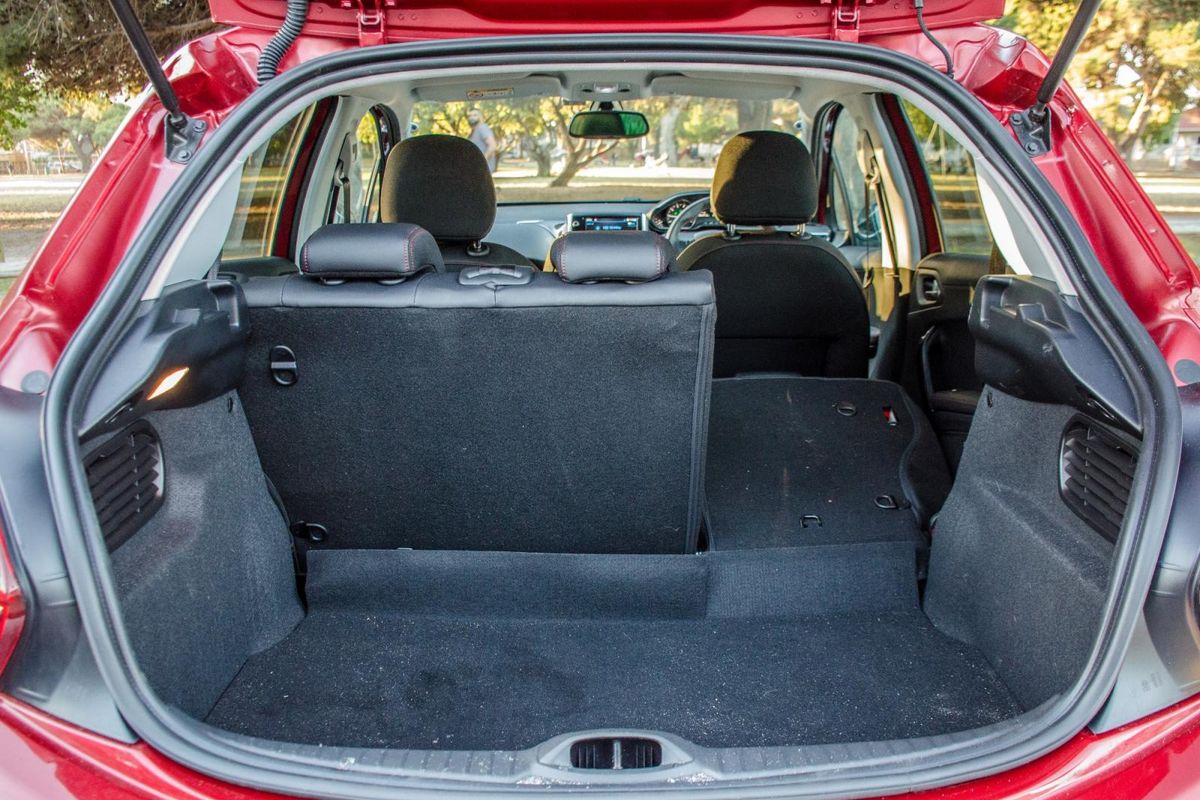
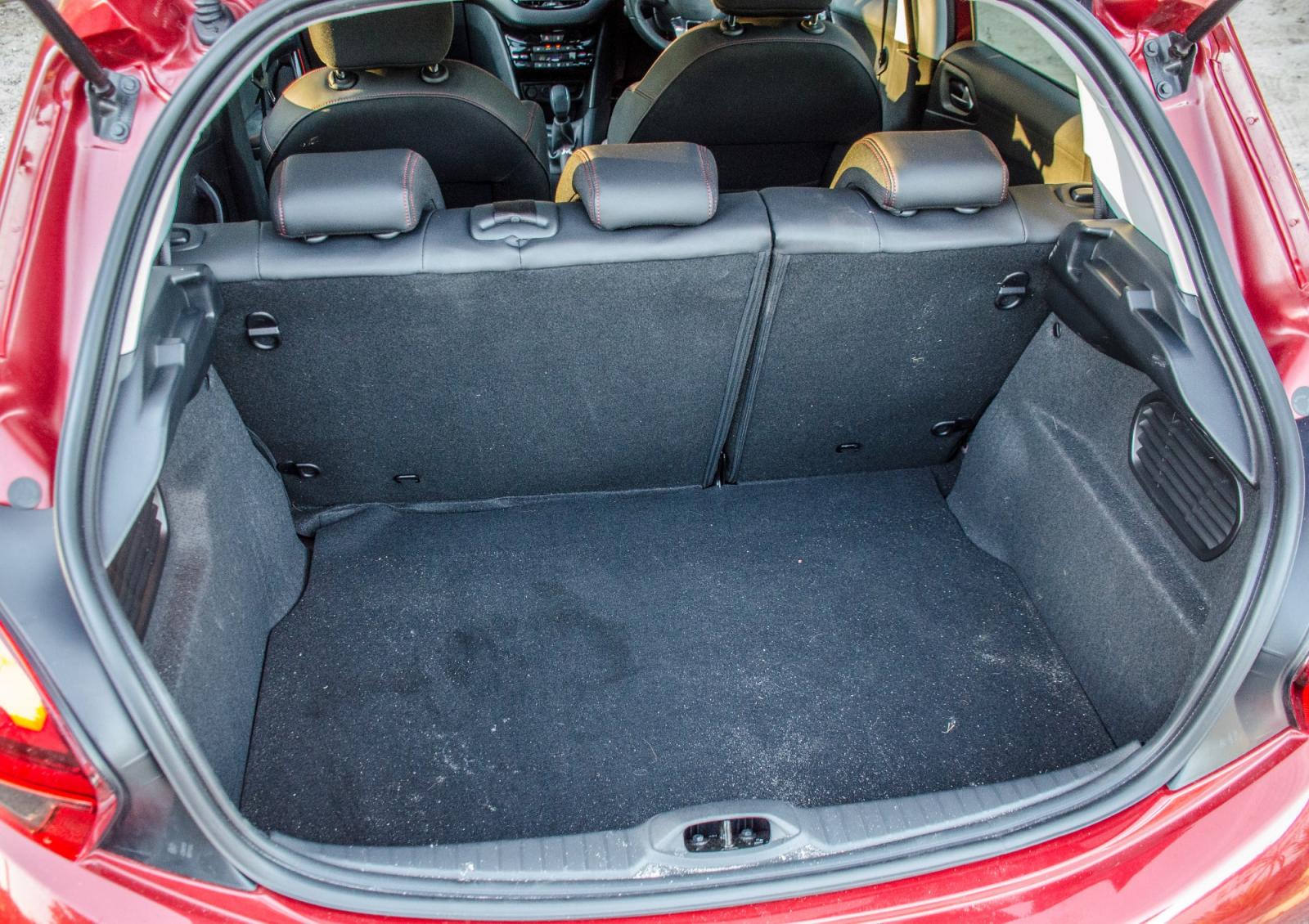
The luggage bay is sizable, but not class leading (parcel shelf removed). It offers 311 litres and the rear seatback splits 60/40.
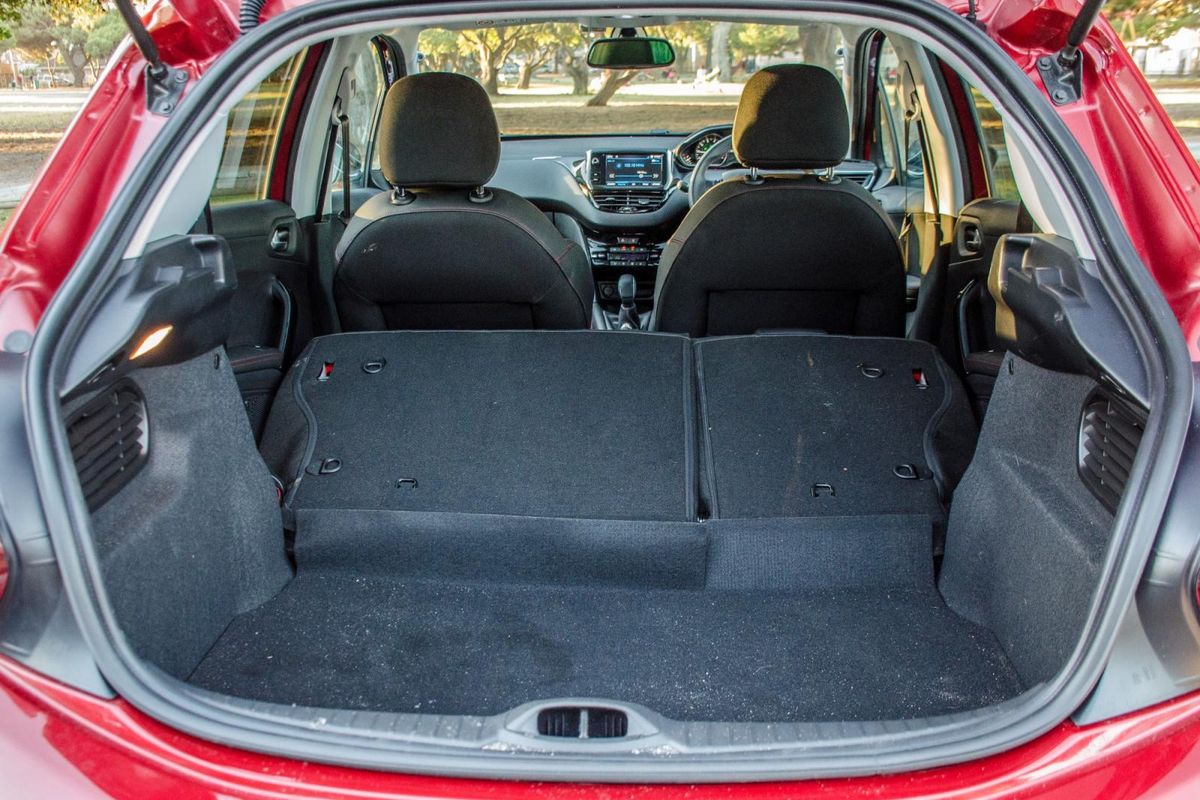
The 208 GT-Line fares reasonably well in terms of practicality and offers a sizable luggage bay (311 litres), but it can’t quite match the new VW Polo's 350 litres. The rear seatback splits 60/40 and, when its folded down, a claimed 1 152 litres of utility space becomes available. Note, however, that the rear seats don’t fold completely flat. We also found that the carpeting in the load bay was poorly finished, which was a disappointment…
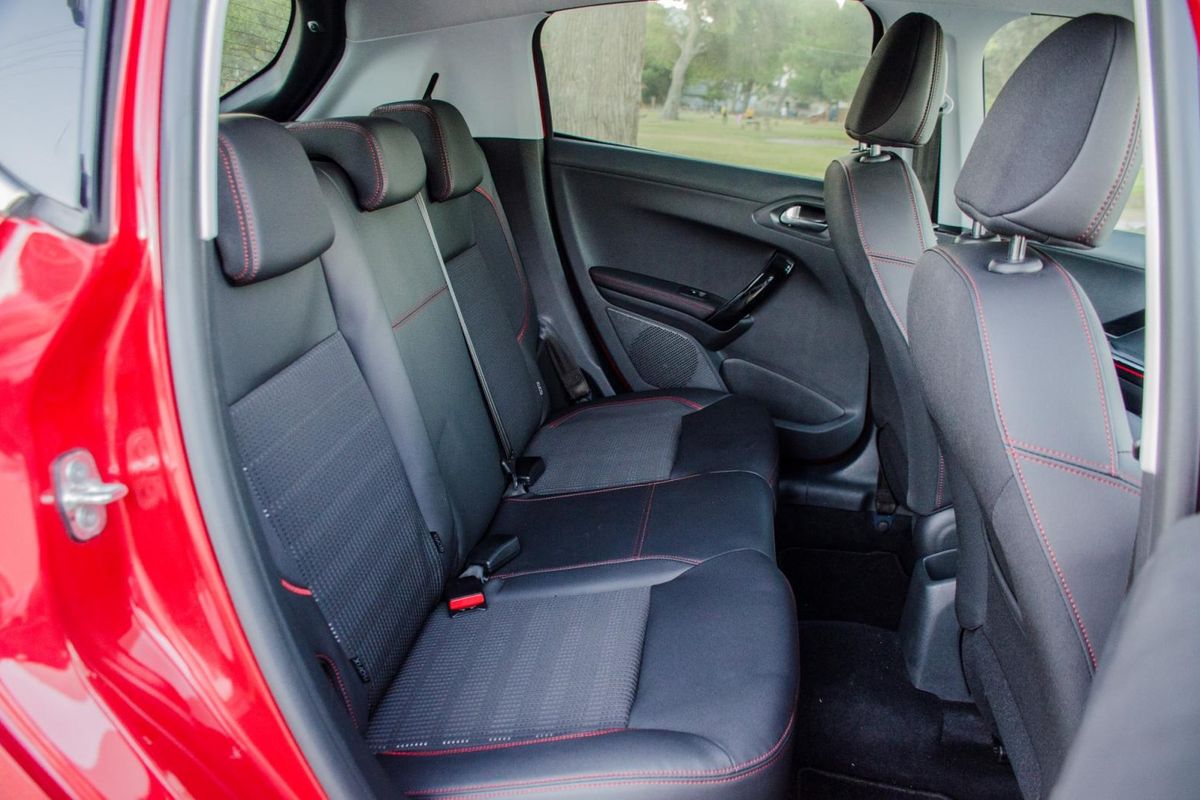
Space for rear passengers is adequate and 2 average-sized adults should be reasonably comfortable in the back, provided that front occupants are willing to sacrifice a little legroom. There are bottle holders in all the door mouldings and the driver and front passenger have access to cupholders.
The safety specification offered on the 208 GT-Line is reasonable and includes 6 airbags, ABS with EBD, brake assist and stability control with traction control. Isofix child seat anchors are also standard.
The Bad
Slow, clunky infotainment system
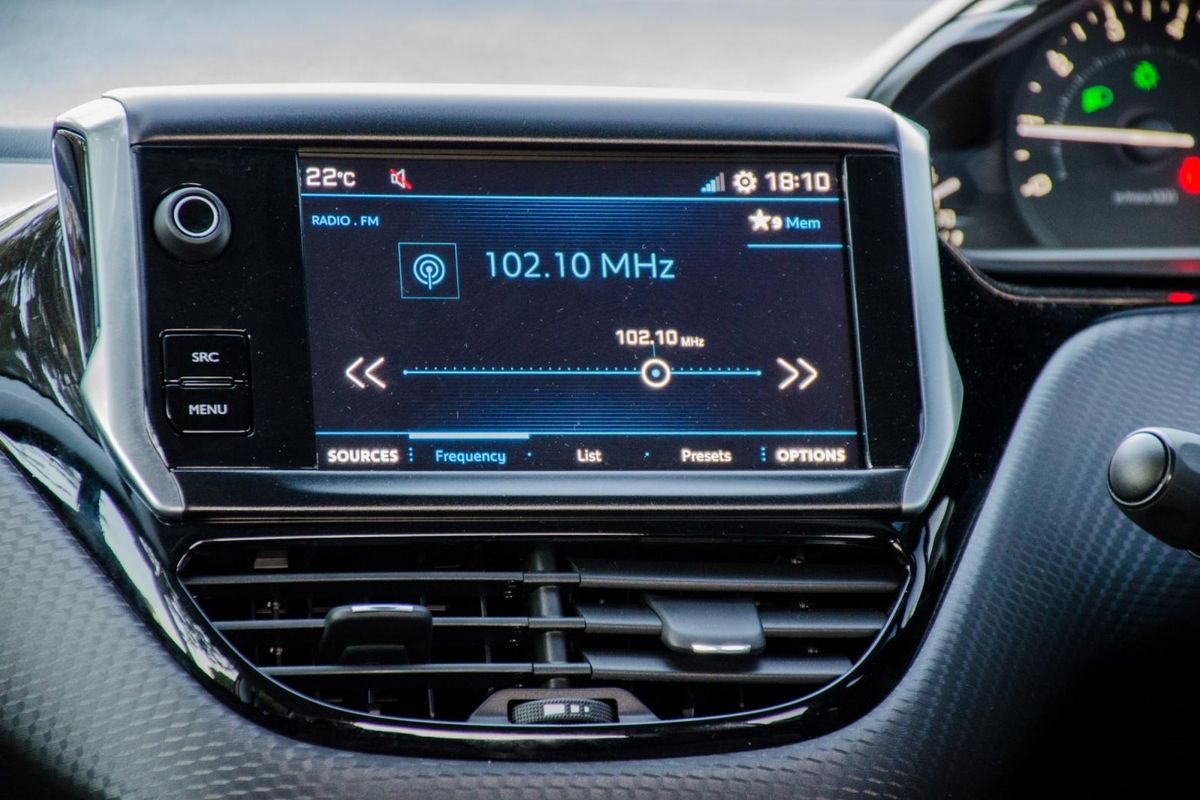
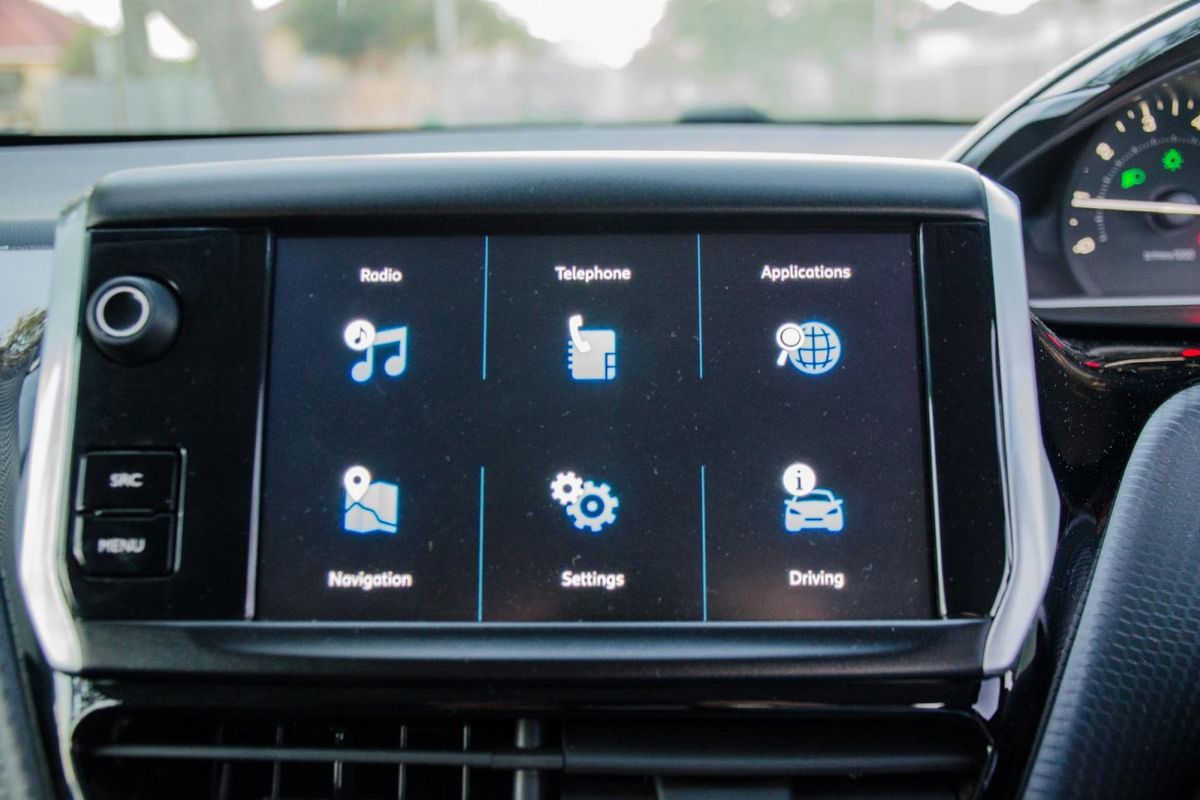
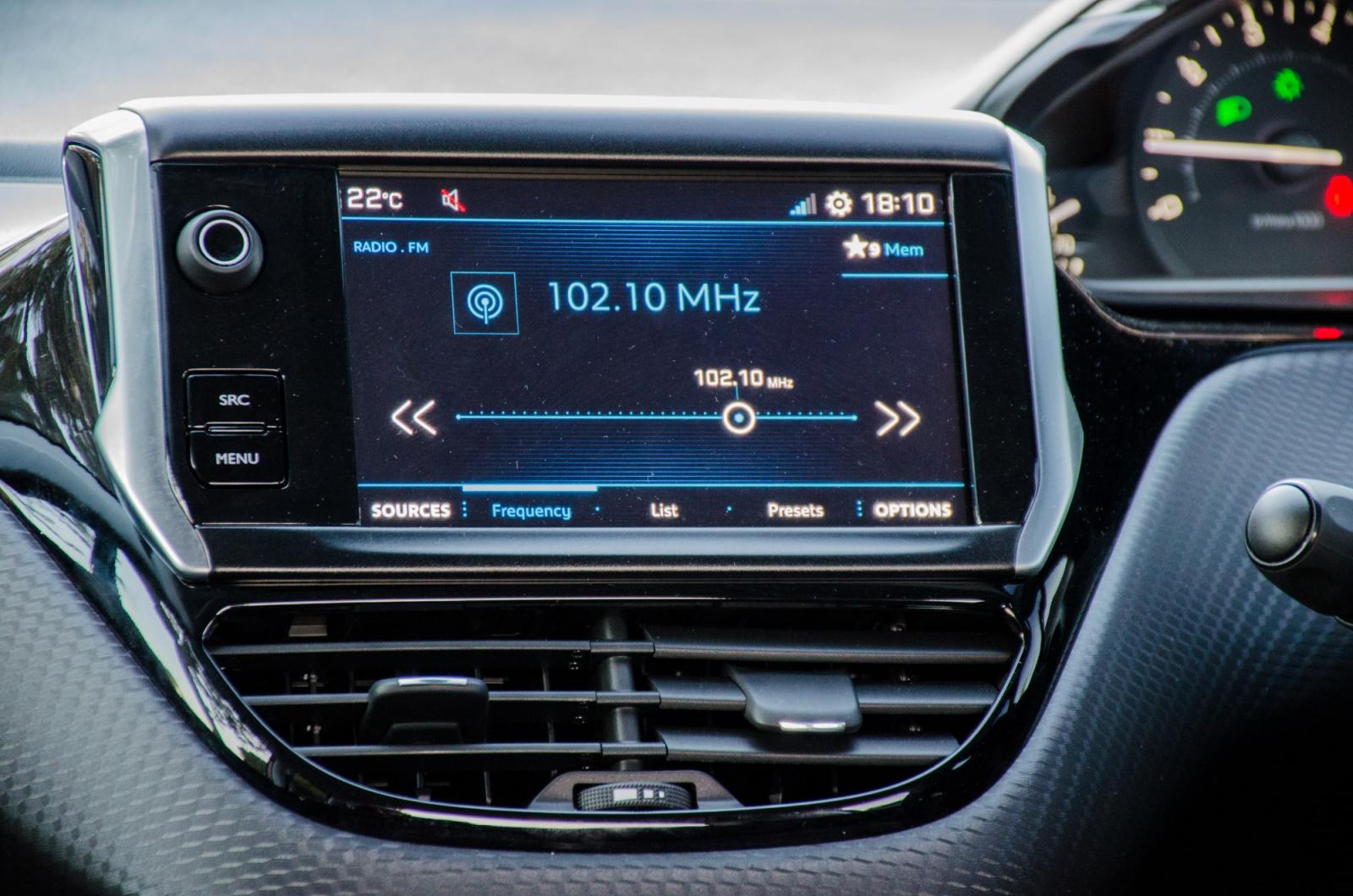
The 7-inch infotainment touchscreen feels in need of an upgrade, even though it offers basic features and MirrorLink/CarPlay.
The 7-inch touchscreen infotainment system appears a bit dated now (compared with rival cars' slicker-looking and faster-responding units) and, in general, we found it clunky to operate – it could be more user-friendly. It was, however, easy to sync a smartphone via Bluetooth and the system offers MirrorLink for Android and Apple CarPlay. Devices can also be connected via USB. It works, as a basic system, but is showing its age.
Price and warranty
The Peugeot 208 GT-Line carries a price tag of R269 900. If you want the convenience of an automatic, the self-shifting derivative costs R279 900. A 3-year/100 000 km warranty and 3-year/45 000 km service plan are included in the purchase price.
The ageing 208 is being overshadowed by newer products, with more contemporary technology. A new model is due in 2019.
Despite its age, the 208 GT-Line is still a stylish and fun-to-drive vehicle that offers good levels of practicality. It is more of an alternative-choice "boutique" compact hatchback – if that’s what you are looking for, but although it’s a competent performer, it can’t match the ultimate refinement and perceived quality of the new Volkswagen Polo, which, at this price point, is also well worth considering. Buyers can also get more value-for-money by considering the Renault Clio GT-Line, which not only offers a dash more power, but is also comprehensively specified.
Ultimately, the 208 is reaching the end of its shelf life and no amount of chrome and beautification can hide that. As newer models come to market, it will be increasingly difficult for buyers to lay down the cash for an ageing product. The game is moving on and we can only hope that the arrival of the new 208 in 2019 will revive and improve upon a package that has yielded success for Peugeot in other markets. Style only takes you so far…
Subaru Outback 3.6 R-S ES Premium (2018) Quick Review [w/Video]
Subaru is sticking to its station-wagon guns by launching a refreshed Outback into the SUV-obsessed South African market. Does it matter? Should you care? We think you should…
We like: Excellent build quality, spaciousness, comfort and refinement, ride quality, performance, open-road economy, safety
We don’t like: Confused navigation system, city fuel thirst, likely depreciation
Alternatives:
Ageing Swede: There really aren't many station wagons left on the South African market, and this Volvo is in fact the only direct competitor. It struggles to match the larger, more modern and more refined Subaru in most respects, but is arguably the "prettier" car, if that matters. What's an V60 Cross Country like to live with? Find out here.
By special order: If you really still want a traditional station wagon, Mercedes-Benz will import one for you. The C200 Estate, equipped with sporty Avantgarde kit, comes closest on price. Undeniably the more "prestigious" offering, it lags the Subaru in most respects including, notably, interior spaciousness, standard specification and power.
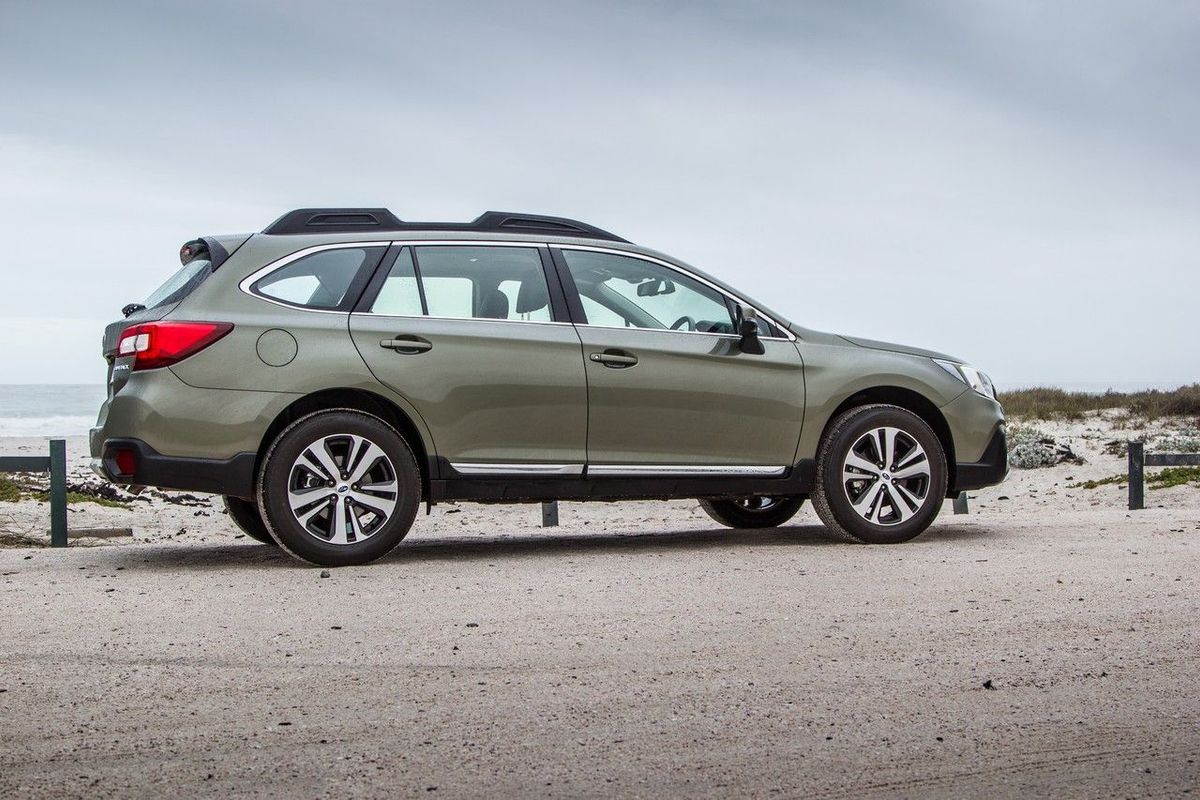
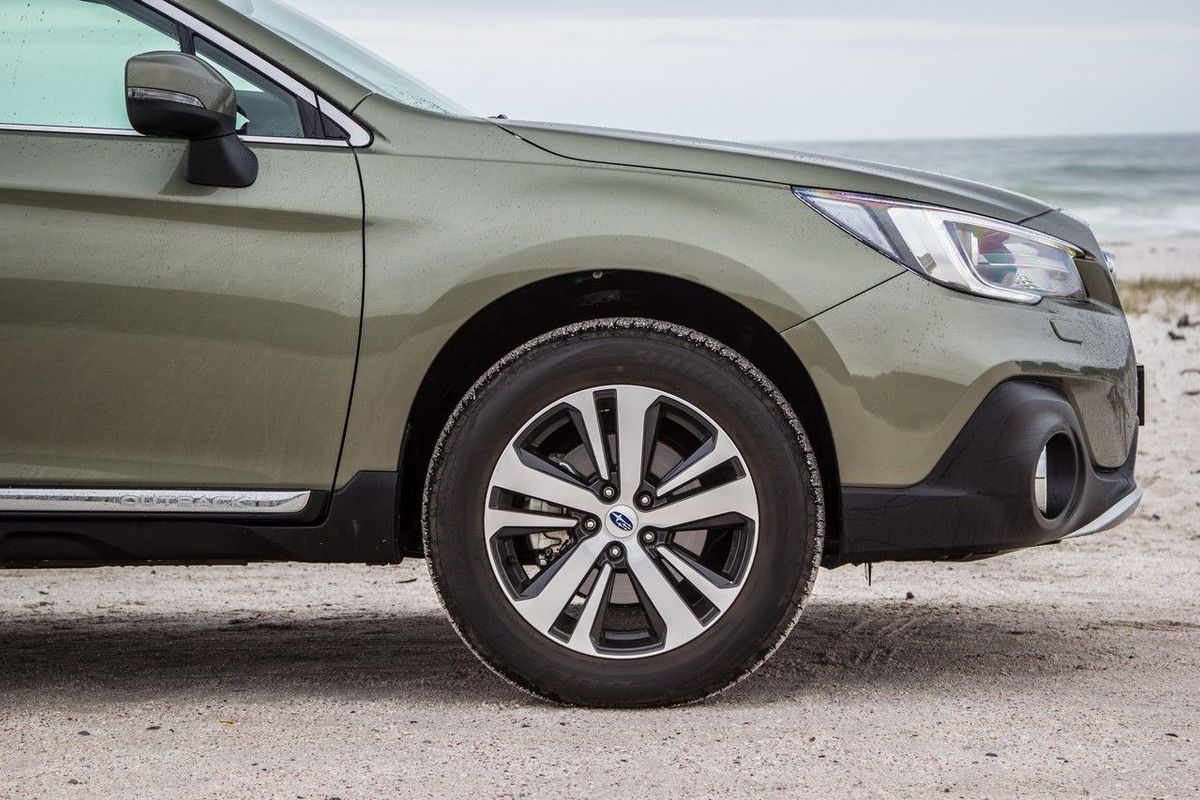
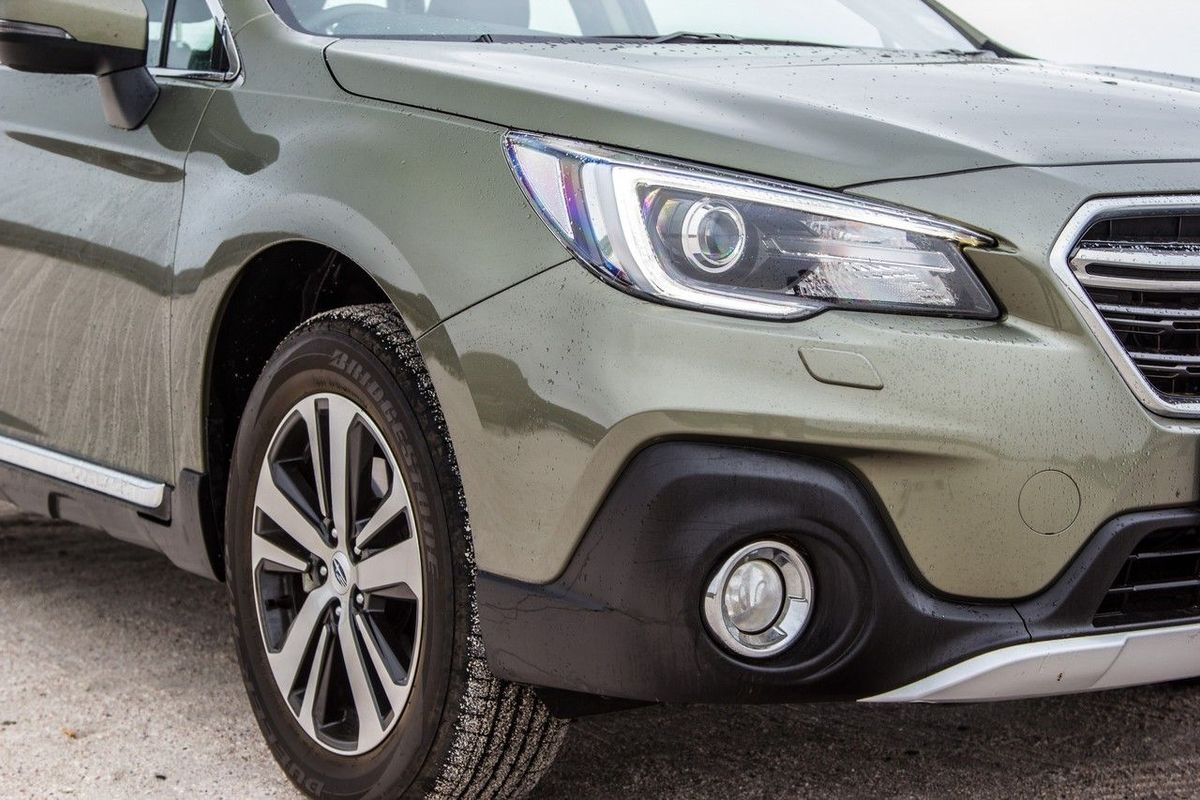
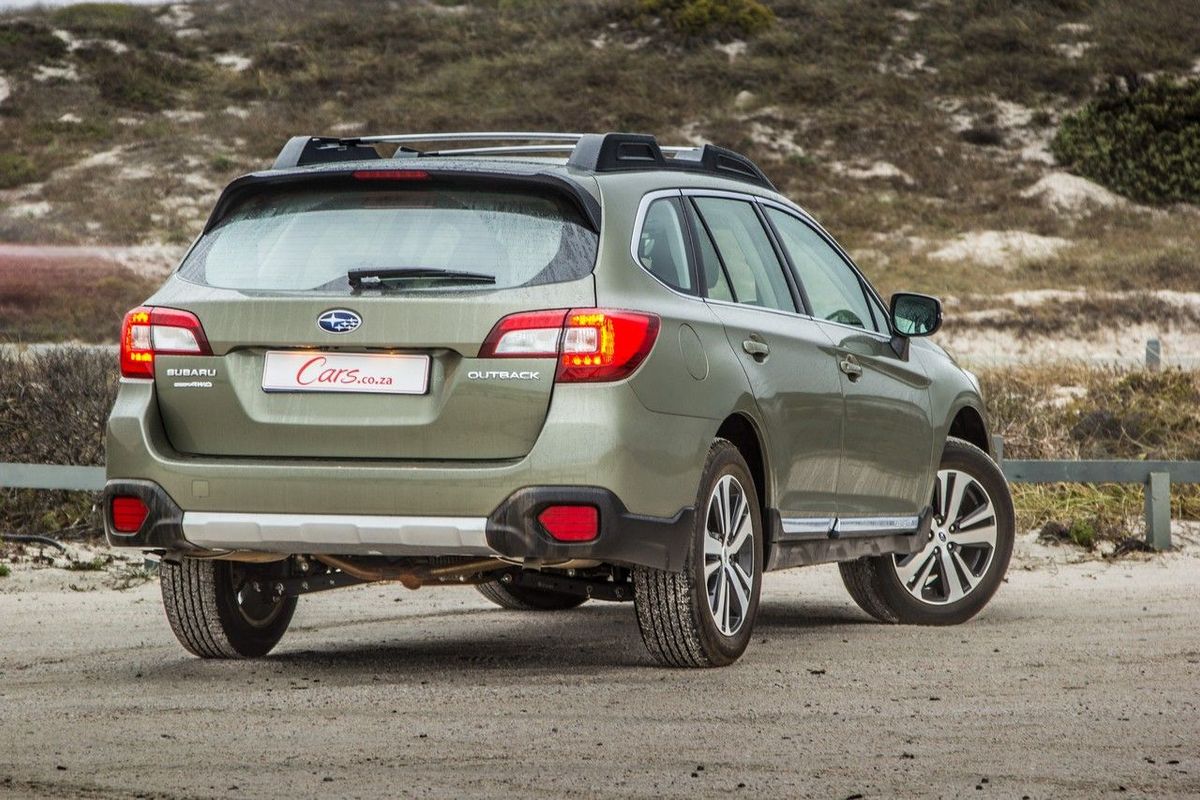
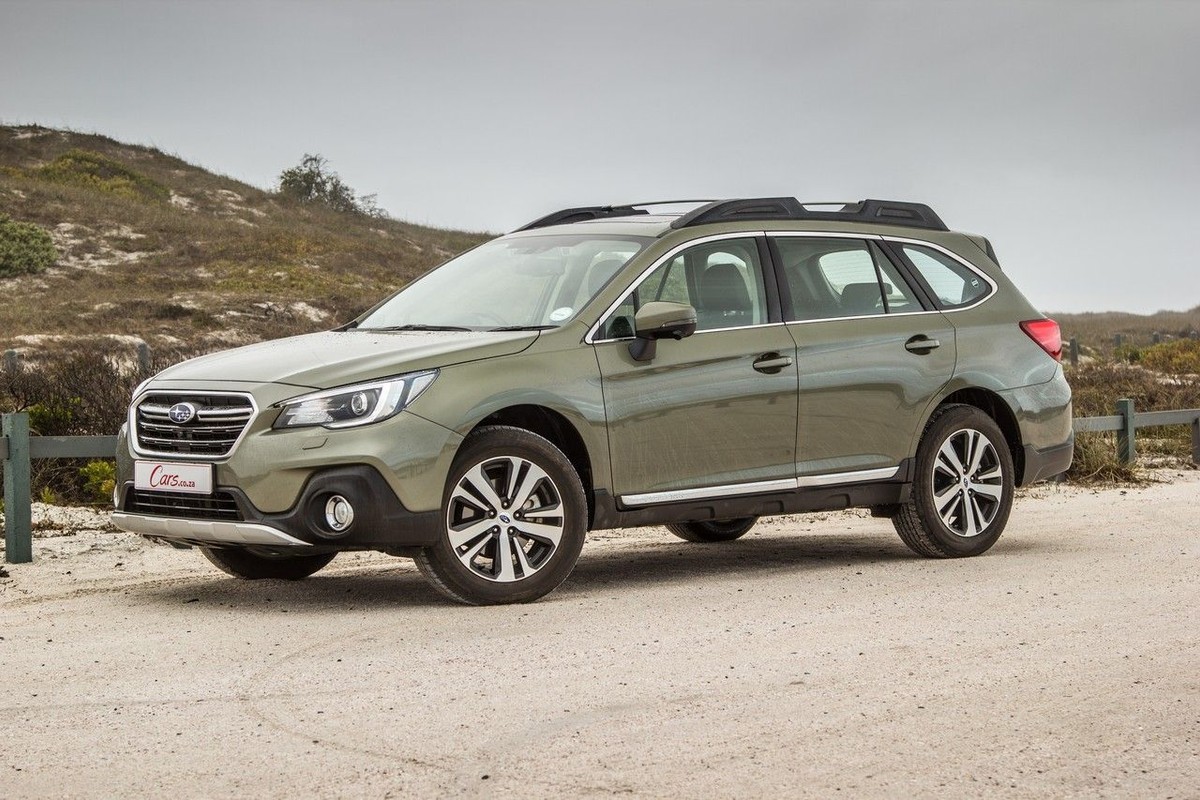
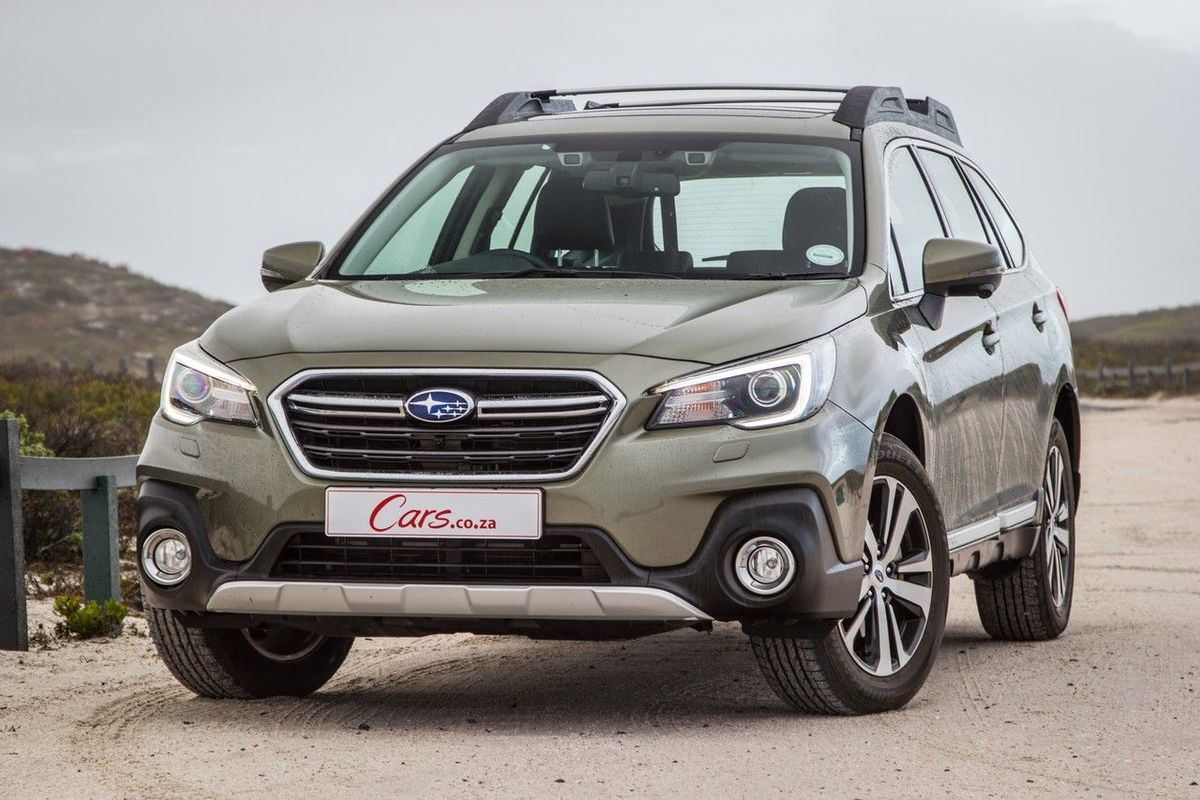
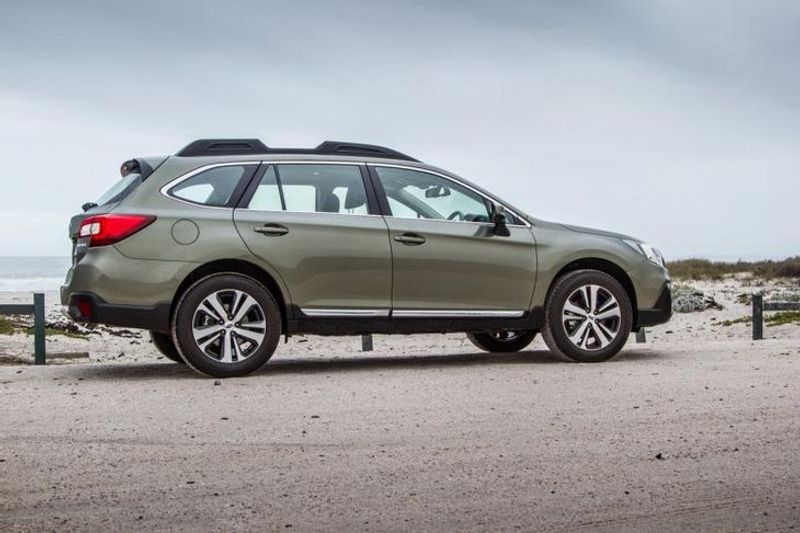
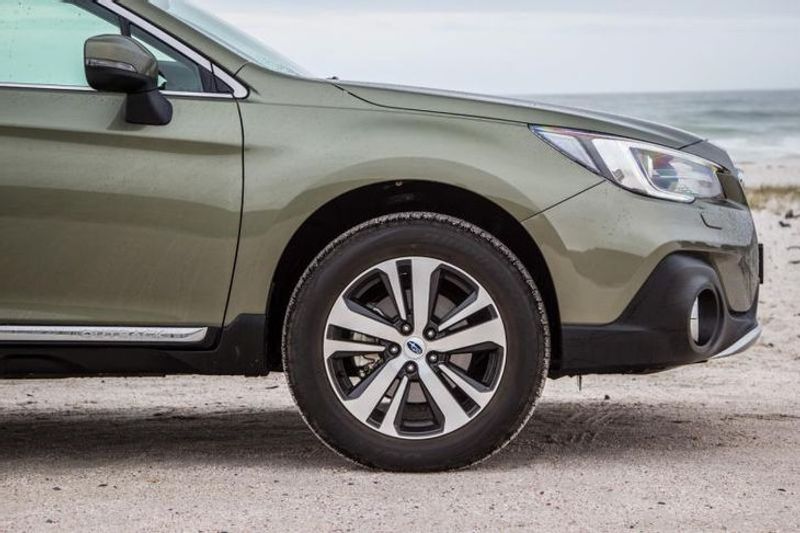
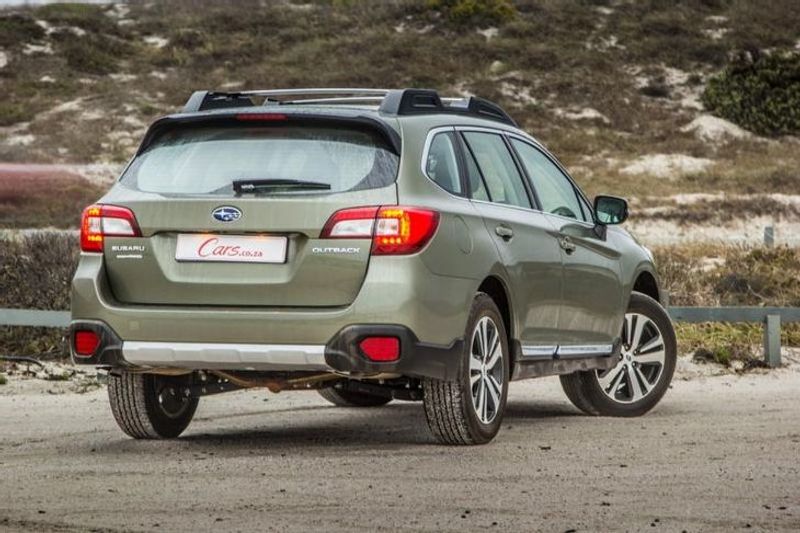
Exterior revisions are subtle and this is a new colour. Note 213mm ground clearance.
Before we get to the new bits, some background… Subaru had an impressive 2017, it registered solid sales growth, and launched a number of new products in the SA market. It also continues to do well in the Cars.co.za Ownership Satisfaction survey (complete it here), where it is highly rated for sales, service and general product excellence. You may also be surprised to hear that in 2017, the top-selling station wagon in South Africa was… the Subaru Outback. But don't get too excited – its only rivals were the ageing Volvo V60 Cross Country, the expensive and limited volume V90 Cross Cross Country and the "order upon request" Mercedes-Benz C-Class Estate. Oh… and shifting a mere 95 Outbacks in 2017 was enough to claim that title…
Nevertheless, in a country rife with anti-stationwagonism, Subaru has now introduced a facelifted version of the Outback. Besides a few exterior and interior design tweaks, the major focus has been on incorporating Subaru's advanced EyeSight safety system and upgrading the infotainment tech. They have also tweaked the suspension and added noise-suppression measures. So… small improvements all round, but as we found during our review of this derivative, they all add up!
The Good
Cabin ambience and quality
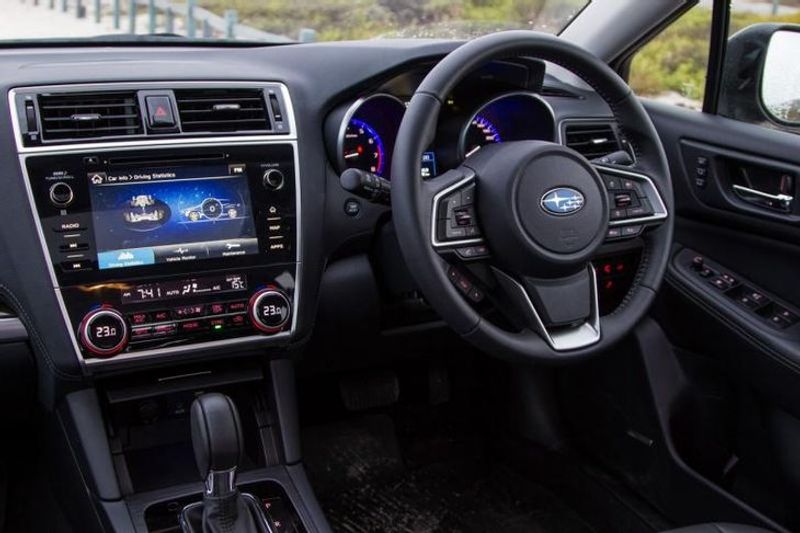
The design may be a little bland, but there's nothing wrong with the quality and ergonomics. Steering wheel is new.
The latest Outback leaves a lasting impression of exceptional comfort. It was always a soft-riding, refined and solid-feeling car, but the tweaks Subaru has made to this new model has certainly had an impact. The new sound-insulating glass, thicker insulation of the rear wheel-wells and refinements to the suspension damper settings contribute to a cabin that feels luxurious and isolated from the rough and tumble of the world (or the road surface).
When this generation of Outback was introduced, we noted that the quality of the finishes was of a far more premium look and feel compared to previous models. Subaru has made another round of small (but meaningful) improvements that further enhances the cabin ambience. The hewn-from-solid build was always a given with Subaru products, but now it has added increasing attention to detail and tactile quality to touch points. One can still debate whether it exudes the style or flair of German or Swedish premium-league brands, but in terms of quality… consider the box ticked.
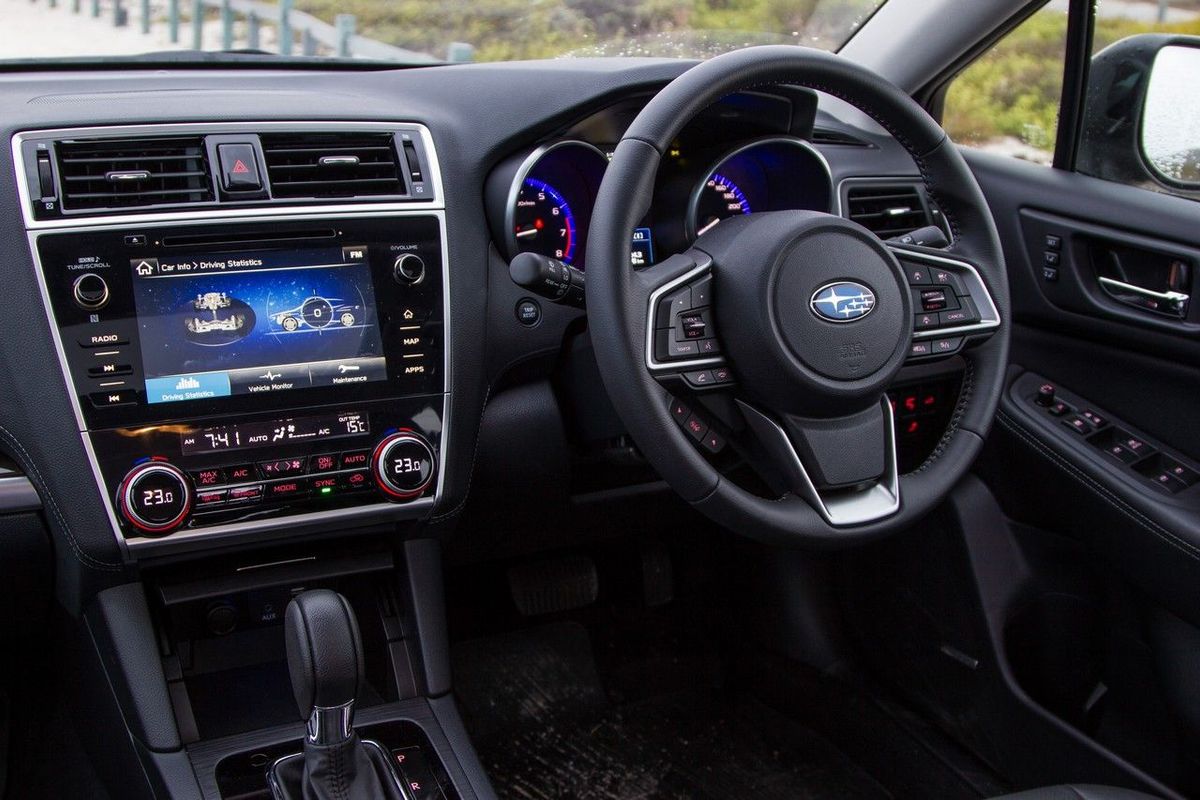
Large touch-screen infotainment screen is attractive and works well – but the navigation system on the test unit was faulty.
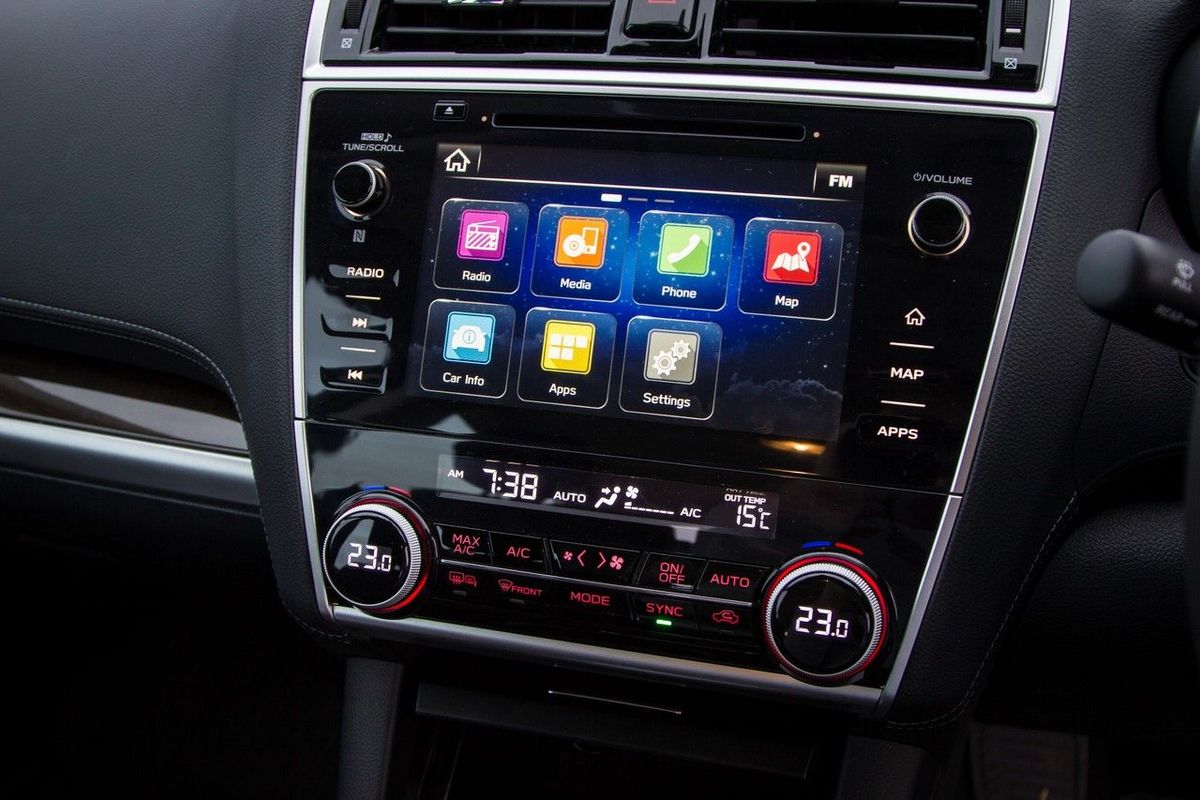
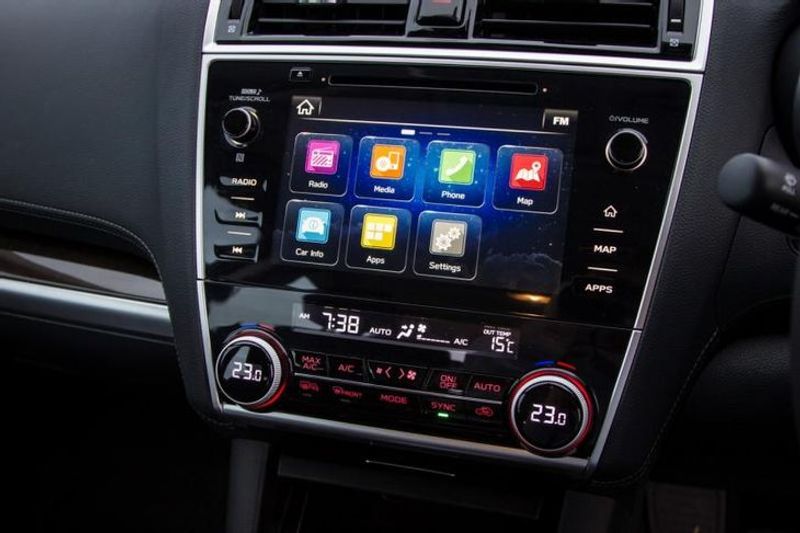
The latest round of changes includes a meaningful tech update, focusing on infotainment and safety. The new 7-inch infotainment system, with voice control, is a slick-looking unit and ergonomically works a treat (except for the navigation, see below). It also includes Apple CarPlay and Android Auto. The latter, of course, is not yet officially in South Africa, but if you can't wait here's a hack to help you access the feature. An 11-speaker premium Harman Kardon sound system is included too, as are USB ports for rear passengers. The revised steering wheel allows you to access many of the features without actually having to take your hands off the wheel.
Safety
The Outback is highly regarded for safety, with the pre-facelift car already having scored 85% and 87% in EuroNCAP crash testing for adult and child occupant protection, respectively, back in 2014. This new model features Subaru's EyeSight system, which essentially uses stereo cameras at the front of the vehicle to scan for potential obstructions or hazards.
Also included as standard in this model is adaptive cruise control (which works very well), pre-collision braking and throttle management, vehicle lane departure and sway warning and one of the most underrated modern automotive features, rear cross-traffic alert.
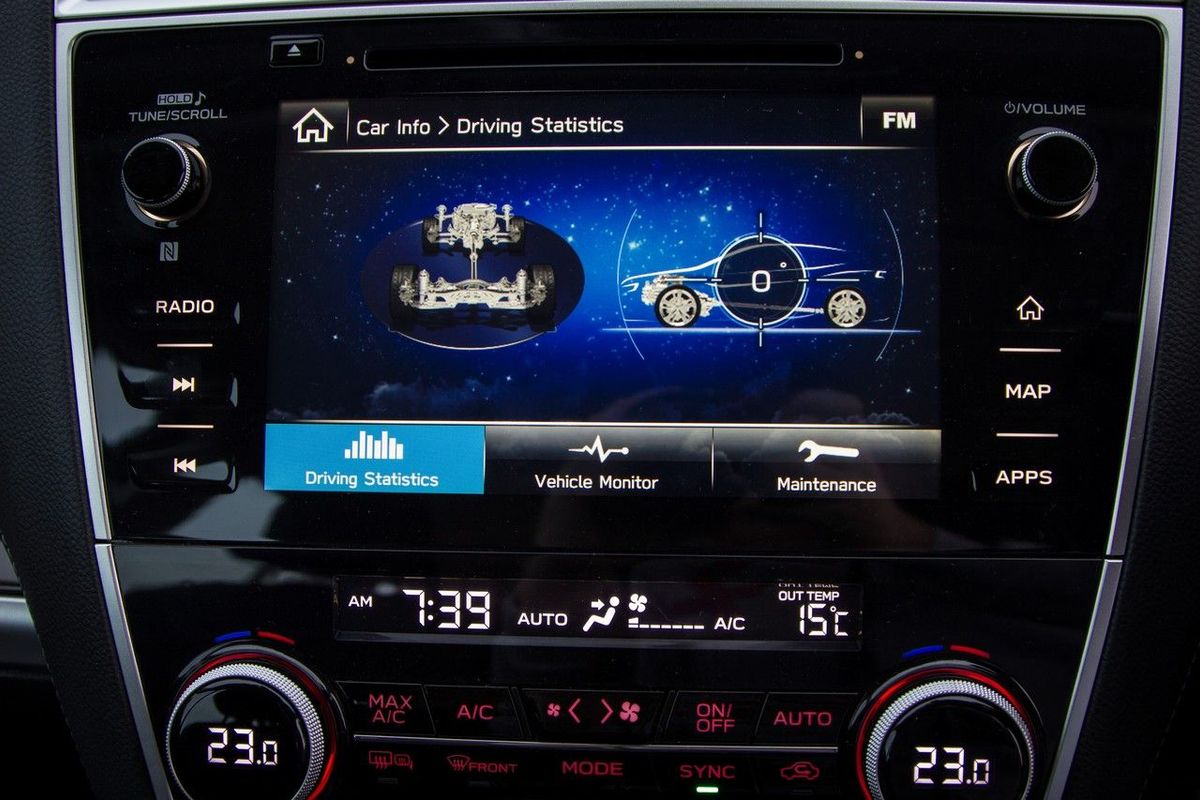
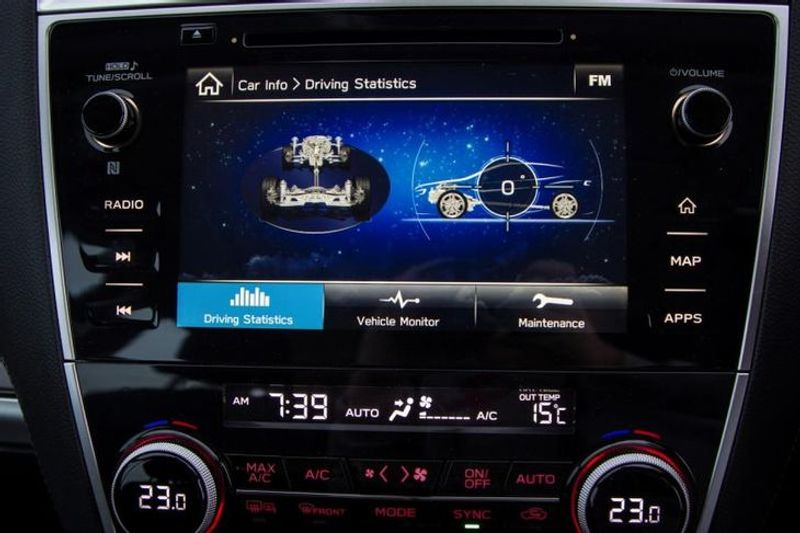
The Outback's infotainment system includes comprehensive driving information. Note new dual-zone climate controls lower down.
It's also worth pointing out the inherent safety advances of the Outback's drivetrain. Featuring symmetrical all-wheel drive and torque vectoring, the Outback exudes a sense of stability and safety, no matter what the road surface is like. Subaru says it has recalibrated the electrically assisted steering, too, and while we didn't have a pre-facelift model on hand to validate this claim, we do rate the set-up as responsive and consistent.
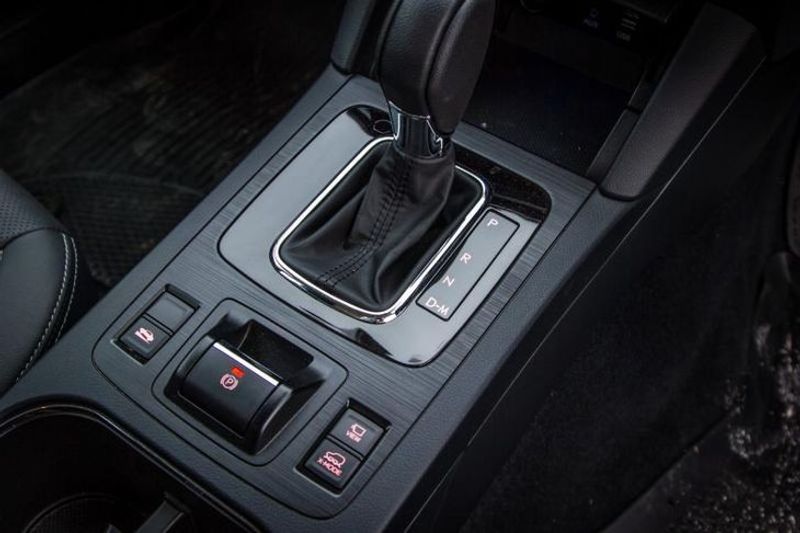
When the going gets really rough you'll appreciate the 213 mm of ground clearance, flat underbody and also X-Mode, which helps optimise traction in off-road conditions. There's also a Hill-Descent Control system.
Powertrain
As if consumer resistance to station wagons, in general, isn't enough, Subaru's flagship Outback is powered a large-capacity petrol engine – another potential stumbling block to market acceptance. Based on the 3.6-litre flat-6 petrol powerplant's on-paper specification, it would appear that scepticism is fair. After all, Subaru itself claims a combined cycle average consumption figure of 9.9 L/100 km!
But there are several positives too… so many, in fact, that we single out the powertrain as one of the stars of the show. Firstly, there's the power delivery. The engine packs a 191 kW punch and delivers good torque (350 Nm), too. Although the maximum torque figure is developed fairly highly (4 400 rpm), it "sustains" 90% of that maximum between 2 000 and 6 000 rpm, promising good responsiveness.
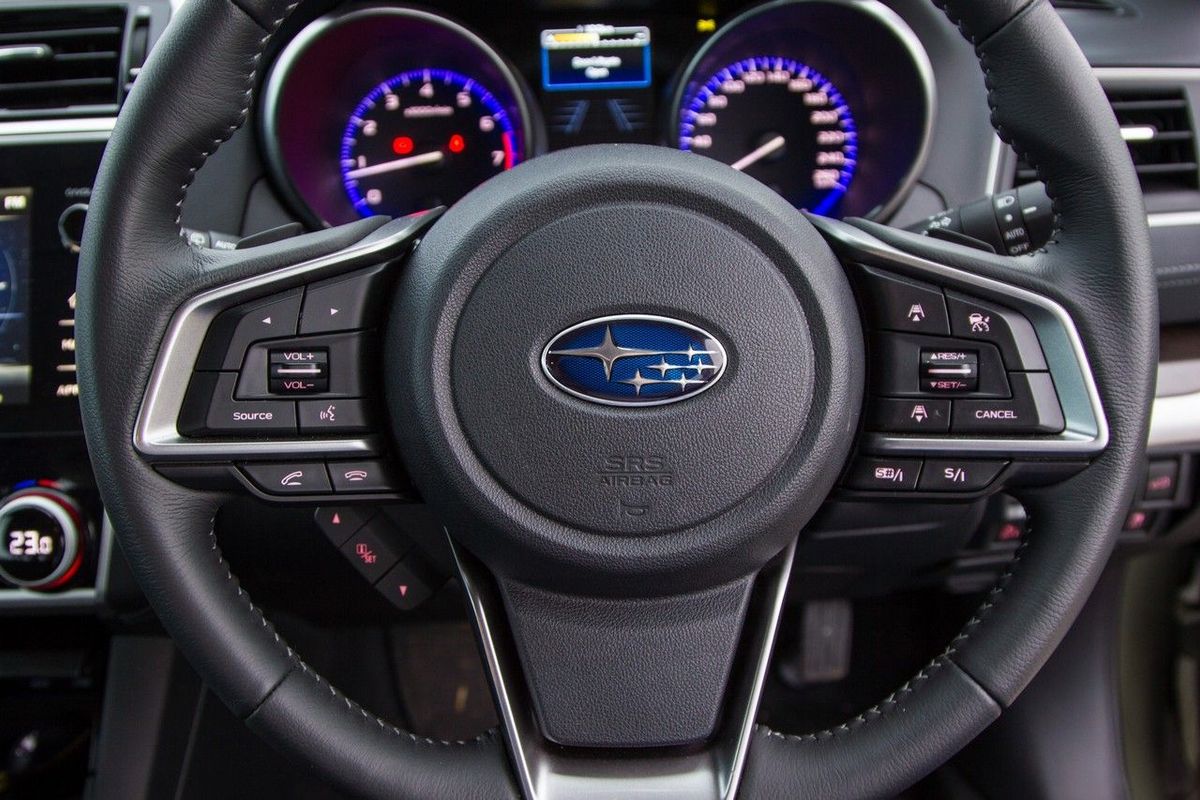
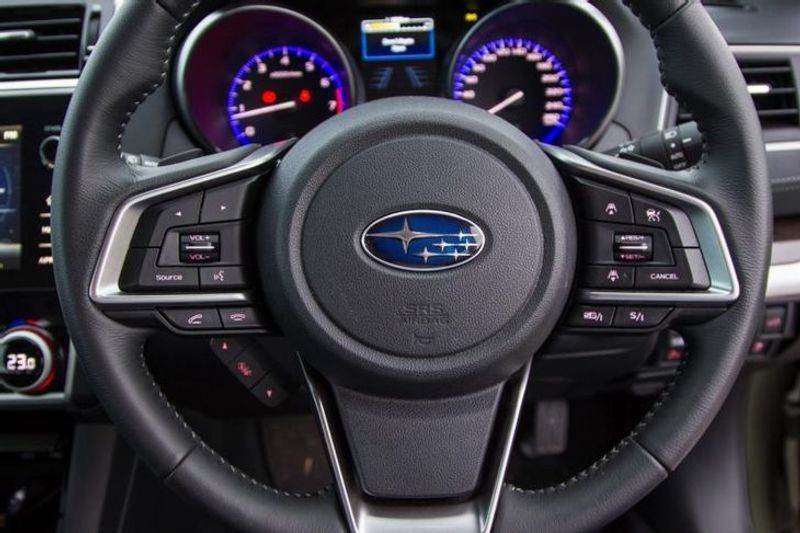
New steering wheel offers fingertip-access to a number of functions, including the i and S drive modes.
As is the case with many Subarus, you can select from efficiency-optimising "i" mode, to sportier "S" and so on. The engine is coupled with a CVT (continuously variable transmission), which is not our favourite type of transmission, but Subaru arguably makes the best one. Even when driven in "i" mode, the transmission is quick to respond to driver inputs and overtaking acceleration is always there when you need it.
Around town, it is indeed rather thirsty (forget about 9.9 L/100, you're looking at closer to 12!), but we were surprised by the engine's open-road, long-distance cruising economy. On 2 separate trips, we averaged 8.3 L/100 km, with the car fully loaded with passengers and luggage.
What will also impress is the refinement – the engine is creamy. If you're going to be doing a lot of long-distance driving, which we suspect many Outback buyers will do, then this engine/transmission combo ticks many boxes, as a matter of fact.
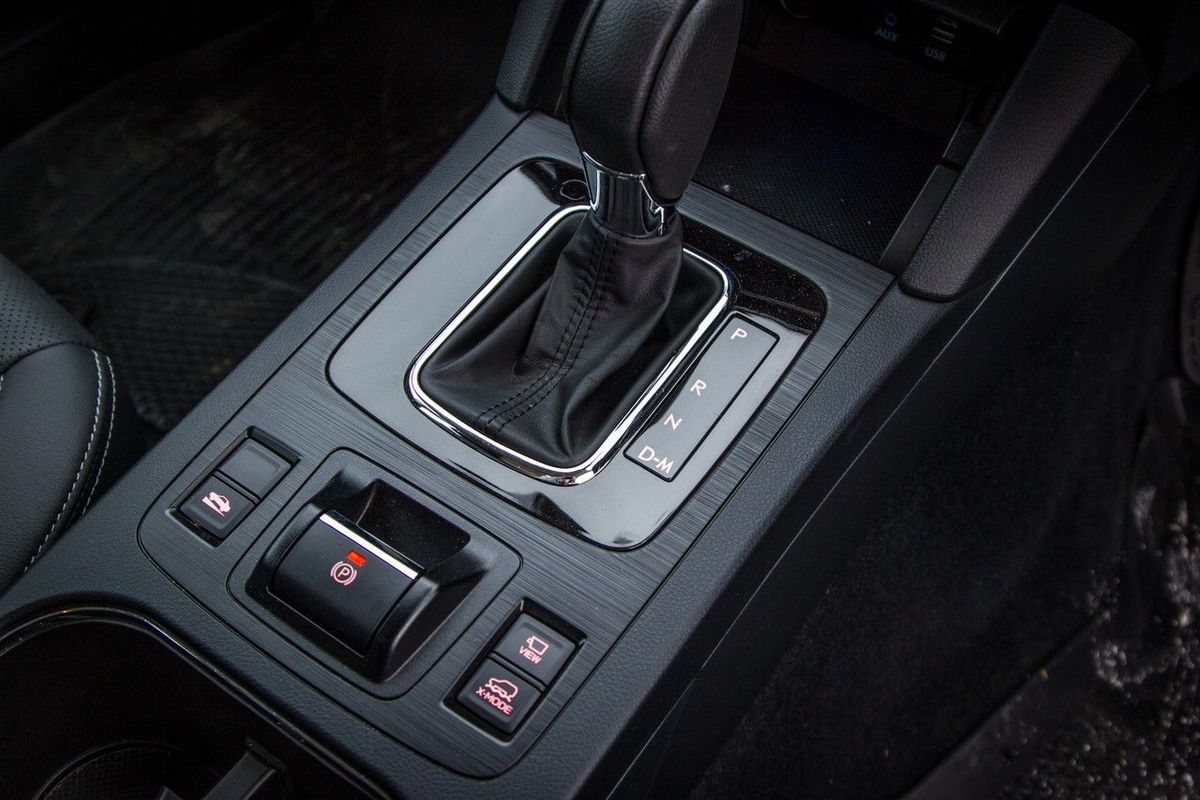
Press the X-Mode button and the various drivetrain electronics are optimised for "off-road" conditions. Hill-descent control is included.
Practicality
The Outback is a big car, measuring 4 815 mm in length, which makes it comfortably longer than a Volvo V60 Cross Country or Mercedes-Benz C-Class Estate. Interestingly, its wheelbase is shorter than either those cars', but this has not negatively impacted rear legroom. In fact, the Subaru is comfortably more spacious in the back than its Swedish and German rivals (or crossovers sold at the same price), and also offers a bigger boot (512 litres).
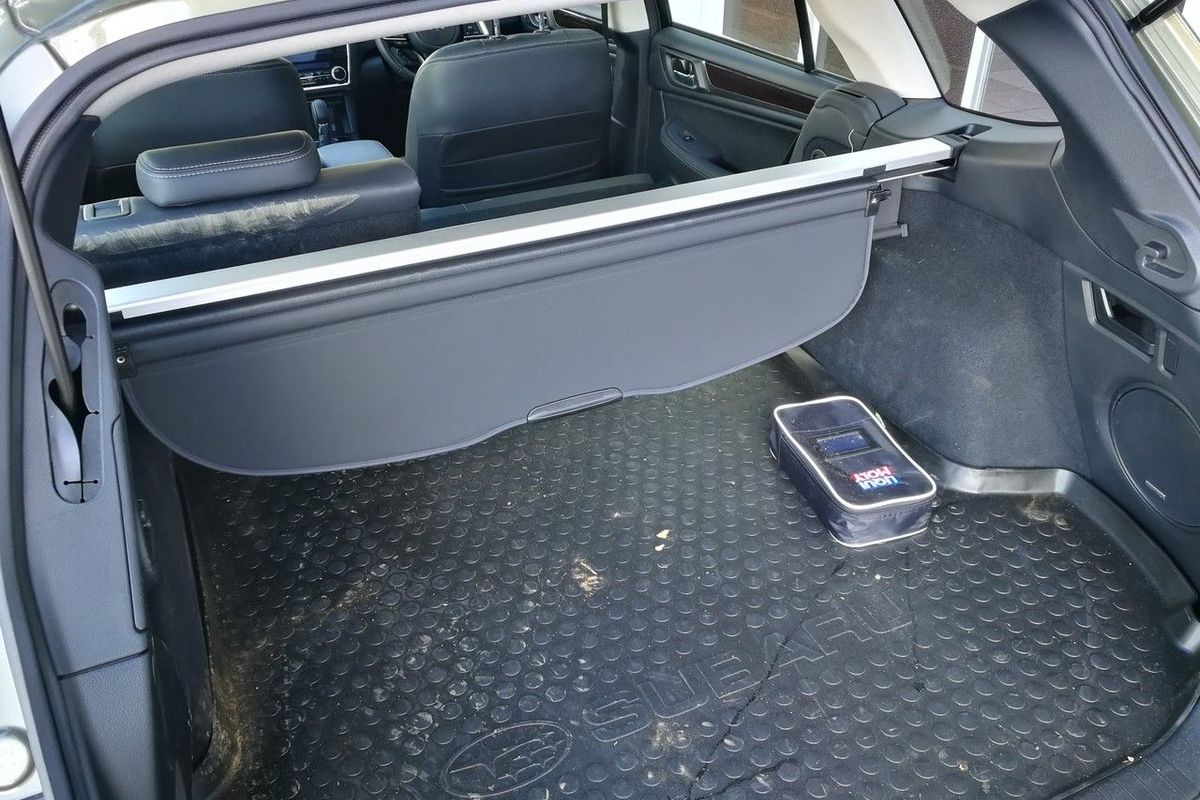
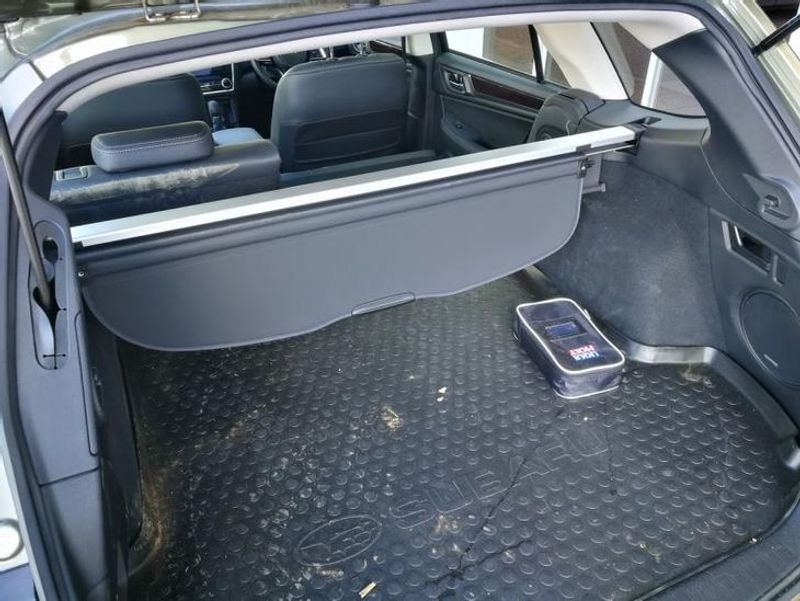
Raise the tailgate (automatically) and you'll notice not only the practical size and shape of the luggage bay, but also the levers mounted to the sides that allow you to flip the rear seats forward. Do that, and you'll free up a very long, very flat utility area that, quite frankly, no crossover at the price can likely compete with. On the outside, too, there are some exceptionally practical touches. The roof rails look rather elaborate at first glance, but that's because they can actually swivel across the roof the car, making it possible to immediately start using this feature, unlike most other vehicles where you'll still have to acquire separate, appropriate roof rails.
Very big boot's usability is further boosted by a rugged, easy-to-clean rubber mat.
The Bad
Navigation system issues
We found the Subaru's new infotainment system attractive and easy to use, but experienced a frustrating issue with the navigation system – it could never accurately find its own position on the map, and was therefore rendered mostly useless. According to Subaru the problem has also been picked up on other local Outbacks and is currently being investigated in Japan and locally. It says a remedy will be found soon.
City fuel thirst
As mentioned earlier in this review, the Outback is not particularly thrifty around town. Subaru itself claims an urban consumption figure of 14.2 L/100 km, but in our experience, the reality hasn't been as frightening – we achieved around 12 L/100 km. Stick to "i" mode and drive smoothly to get better city consumption. But yes, if you're buying because you need a new family runabout to "cart the kids off to school", then this is not going to be the most economical option, by a long shot.
Neat, conservative looks and upmarket detailing give the Outback significant presence.
Pricing & Warranty
The current flagship Outback model sells for a heady R655 000, but it's a full-house package that lacks very little in terms of specification. It is backed by a 3-year/75 000 km maintenance plan (as opposed to a service plan) in addition to a lengthy 5-year/150 000 km warranty. Service intervals are scheduled for every 15 000 km/year.
Verdict
There aren't many cars (certainly not at the price) that can do so many things quite so well as the Subaru Outback…
This is an exceptional car that deserves far bigger sales support. It's a pricey prospect and concerns of potentially weak resale value linger, but, as a product, there's preciously little wrong here. Superbly refined, marvellously practical and with a hewn-from-solid feel that's largely disappearing from modern premium vehicles at this price level, the Outback is the equivalent of an automotive swiss army knife. And with this latest round of updates, Subaru has once again shown the power and value of the sum of marginal gains.
An all-new Suzuki Ertiga Multi-Purpose Vehicle (MPV) was recently revealed at the Indonesia Motor Show and according to Suzuki South Africa, it’s expected to arrive on local soil early in 2019.
There’s a strong case to be made for an affordable and reliable 7-seater MPV such as the Suzuki Ertiga which offers a practical transport solution for both private owners and the rental channel.
Since its launch back in 2014, the Suzuki Ertiga has sold well locally with more than 2 276 units finding homes in South Africa. There is, however, an all-new second-generation Ertiga on its way to South Africa in early 2019!
Key details
The new Ertiga made its debut at the recent Indonesia Motor Show and it’s some 130 mm longer, 40 mm wider and sits 5 mm higher than the current model which means its interior will be more spacious. The Ertiga’s ground clearance, however, has been reduced by 5 mm to 180 mm. The new Ertiga will be built on Suzuki’s Heartec platform which underpins the new Suzuki Swift which is due to arrive locally in June 2018.
The Ertiga will employ a more powerful naturally-aspirated 77 kW/138 Nm 1.5-litre petrol engine that will replace the current 70 kW/130 Nm 1.4-litre unit and will be offered with a 5-speed manual or 4-speed automatic transmission. Fuel consumption for the manual is claimed at 5.5 L/100 km while the automatic is claimed to consume 6.0 L/100km.
Key features for the new Ertiga include projector headlights, LED tail lights, 15-inch alloy wheels, electrically folding/adjustable side mirrors, 6.8-inch touchscreen infotainment system, ventilated cupholders, roof-mounted air vents and wooden inlays for a classier interior finish.
In terms of safety, the new Ertiga will be equipped 2 front airbags, ABS with EBD, rear parking sensors, rear reverse camera, Electronic Stability Program (ESP) and hill-hold assist. Note that South African specification for the Ertiga has yet to be confirmed and will likely differ from the specification offered in Asian markets.
The new Suzuki Ertiga will be produced in Indonesia and India but models destined for South Africa in early 2019 will be imported from India.
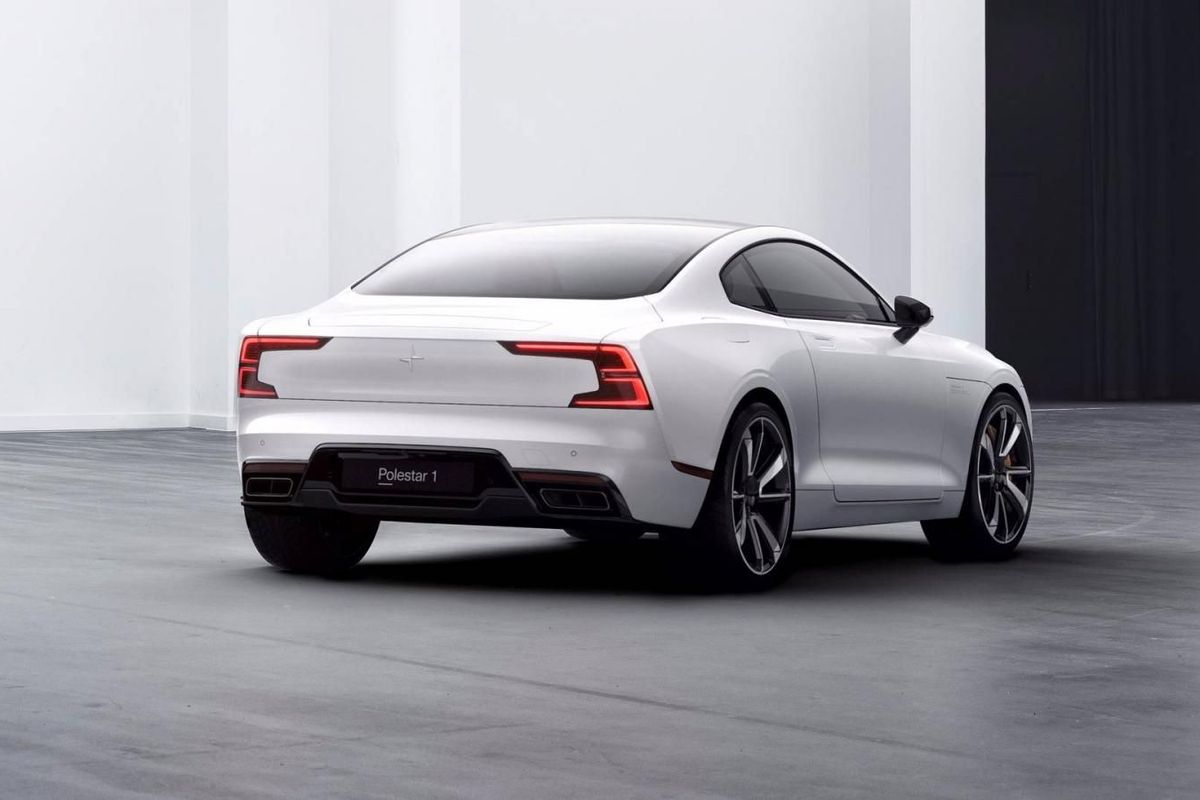
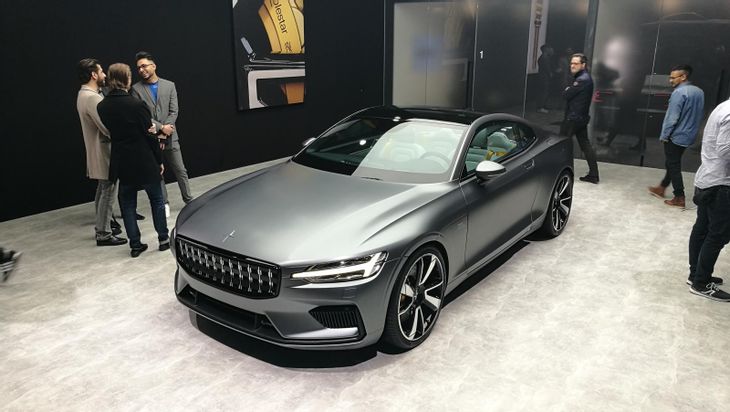
The Polestar 1 hybrid coupe is the first model to be developed by Volvo’s new stand-alone performance brand and a short video has been released showing a Polestar 1 prototype testing in the Arctic Circle in northern Sweden in temperatures as low as -28 degrees Celsius.
We saw the Polestar 1 at the Geneva Motor Show earlier this year and it was a definite highlight. It looks stunning in the metal and it drew massive attention from the car-crazy crowds in Geneva.
A Polestar 1 prototype has undergone rigorous cold-weather testing in northern Sweden and according to Polestar, the feedback from engineers and test drivers has been “overwhelmingly positive”.
The purpose of this cold weather test was to examine and fine-tune aspects such as suspension, driving dynamics, drivetrain, batteries, torque vectoring and chassis balance.
“Our test drivers have given us some enthusiastic feedback on the handling and dynamics especially. Besides being very happy with the balance of the chassis, they are particularly excited about the torque vectoring. We are now very confident about how this enhances the Polestar 1’s cornering responsiveness and accuracy. This is a driver’s car. We have now passed a major milestone in the development of the Polestar 1, and prototype testing continues throughout 2018” says Thomas Ingenlath, Chief Executive Officer at Polestar.
Production of the Polestar 1 will commence in 2019 at a newly built factory in Chengdu, China.
The Polestar hybrid coupe features a 2.0-litre supercharged and turbocharged engine along with 2 electric motors over the rear axle that combines to produce 447 kW and 1000 Nm of torque. Polestar 1 has a range of 150 km and all future Polestar vehicles will be all-electric.
China is a key market for Polestar and the Polestar 1 will be on display at the upcoming Beijing Motor Show which will serve as an introduction to the Chinese market. The performance hybrid coupe will be built in China at a new factory in Chengdu which is currently under construction with production expected to begin in 2019.
If you’re shopping for a 5-metre-long luxury SUV with seating for 7 occupants, but your budget stretches no further than what a new double-cab costs, here are some top 5 used luxury SUVs for R700k.
Ironically, 7-seater luxury SUVs don’t always make sense in the countries in which they are produced.
The United Kingdom’s country lanes are way too narrow for a Range Rover, in Japan’s congested cities there a very few places where you could park a Nissan Patrol and poky Germany is hardly the ideal place to test your depth perception when manoeuvring a lengthy Audi or Mercedes SUV.
For South Africans, the proliferation of luxury 7-seater SUVs has been a blessing. With huge distances between cities and significant distances, often punctuated by gravel roads and challenging terrain, to travel to getaway venues, a luxury SUV works for its living here.
South Africans’ obsessions with sport, recreation and community also mean we use all 7 of those seats, as many luxury SUV owners are part of a school or activity lift-club.
Luxury SUVs are expensive, but this also means that they depreciate a fair bit over time. For the price of a new double-cab bakkie, you have the option of some quite convincing pre-owned 7-seater SUVs, with luxury features and a fair turn of pace.
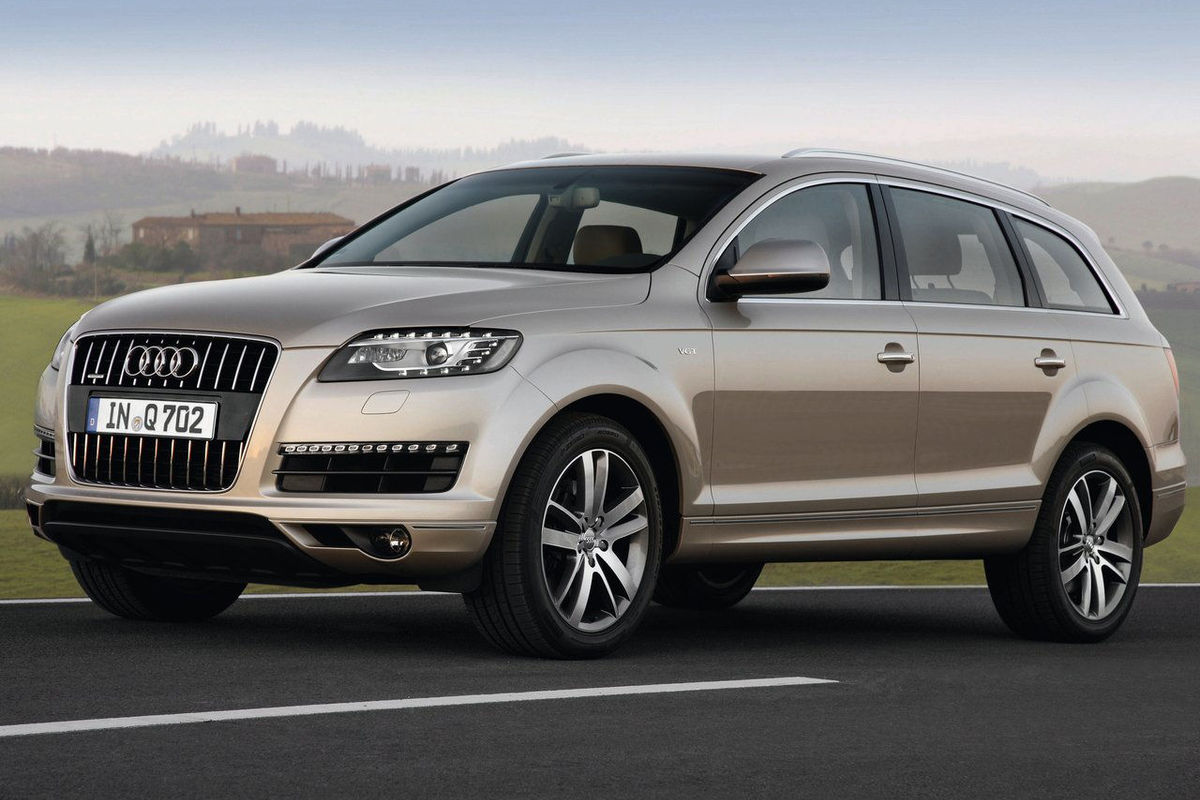
Top 5 Used Luxury SUVs for R700k: Audi Q7
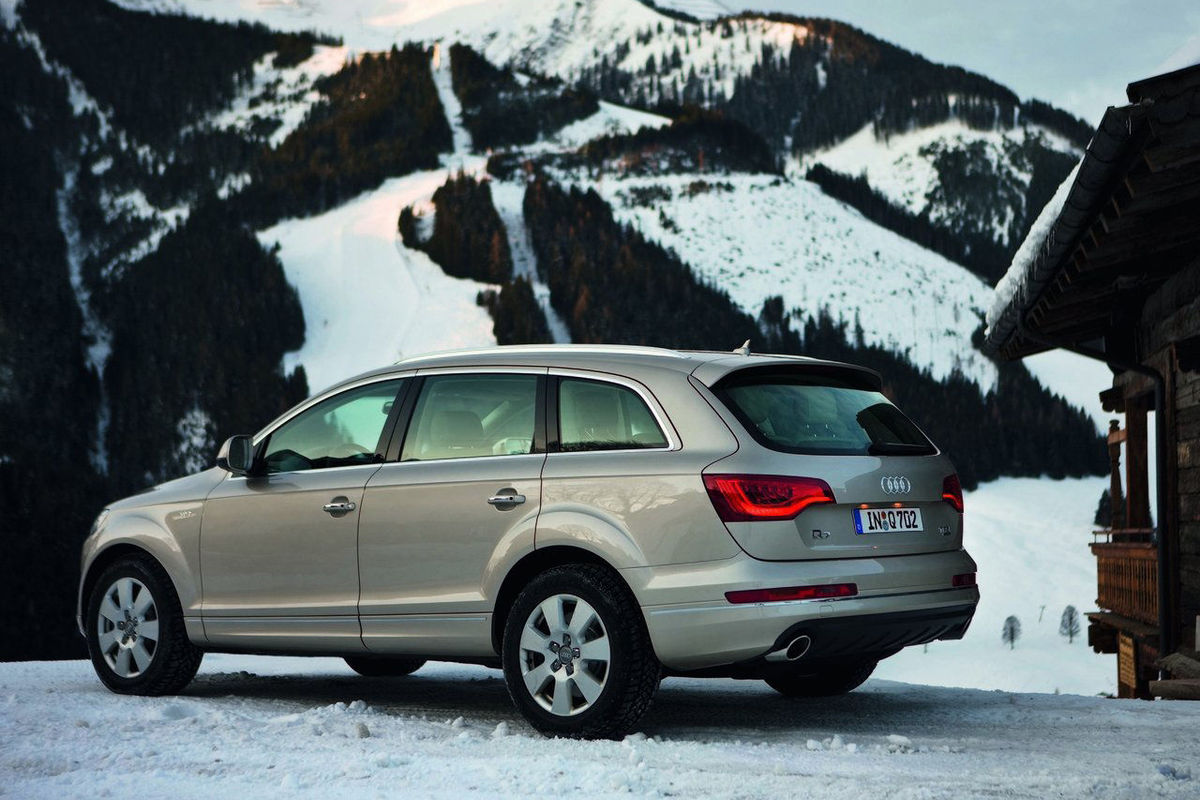
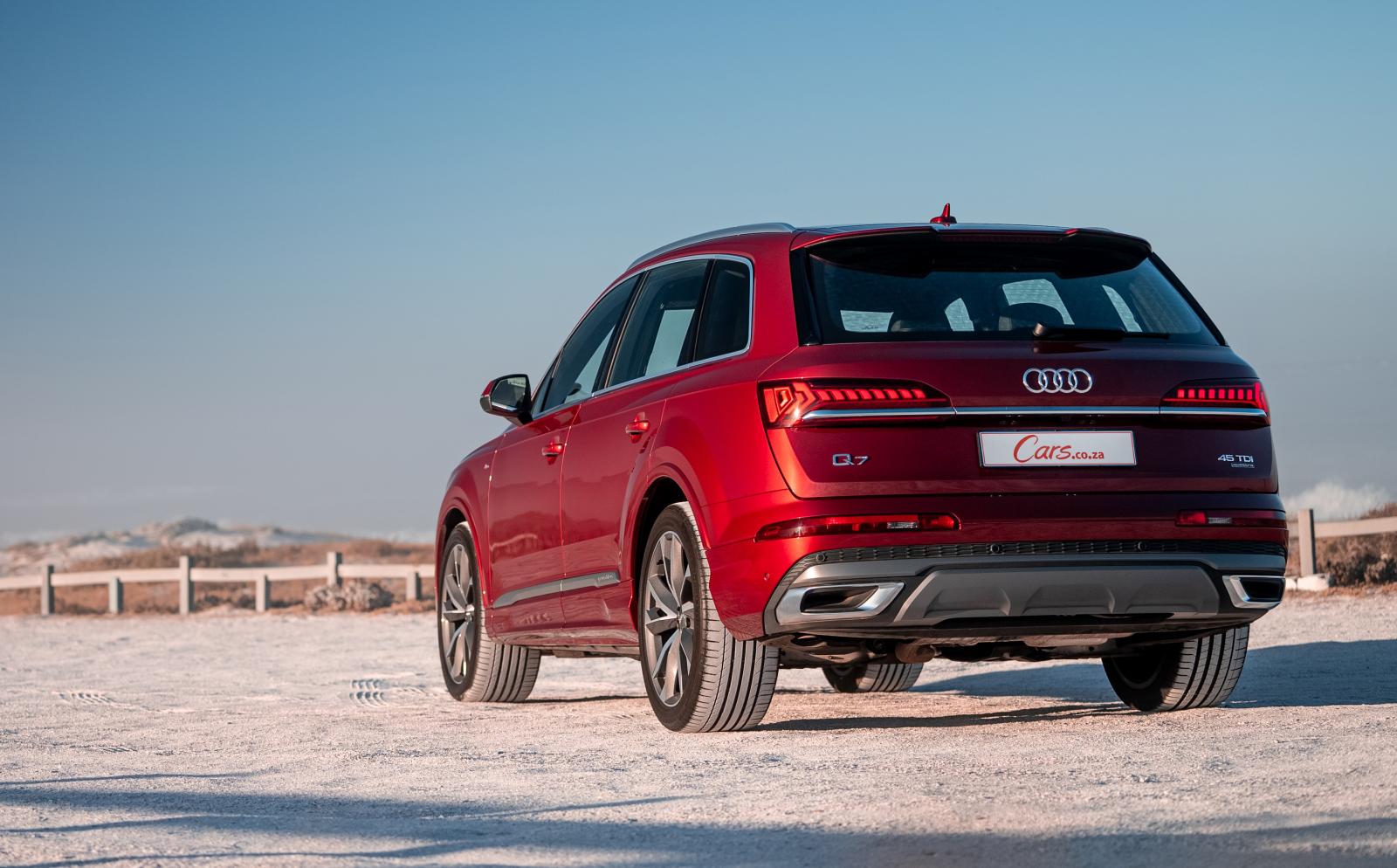
There was absolutely nothing subtle about the original Audi Q7…The second-gen version is an exercise in styling restraint and the art of making something rather large, appear much smaller than it is. But the original? It looked every bit as wide (2.1 metres) as it was.
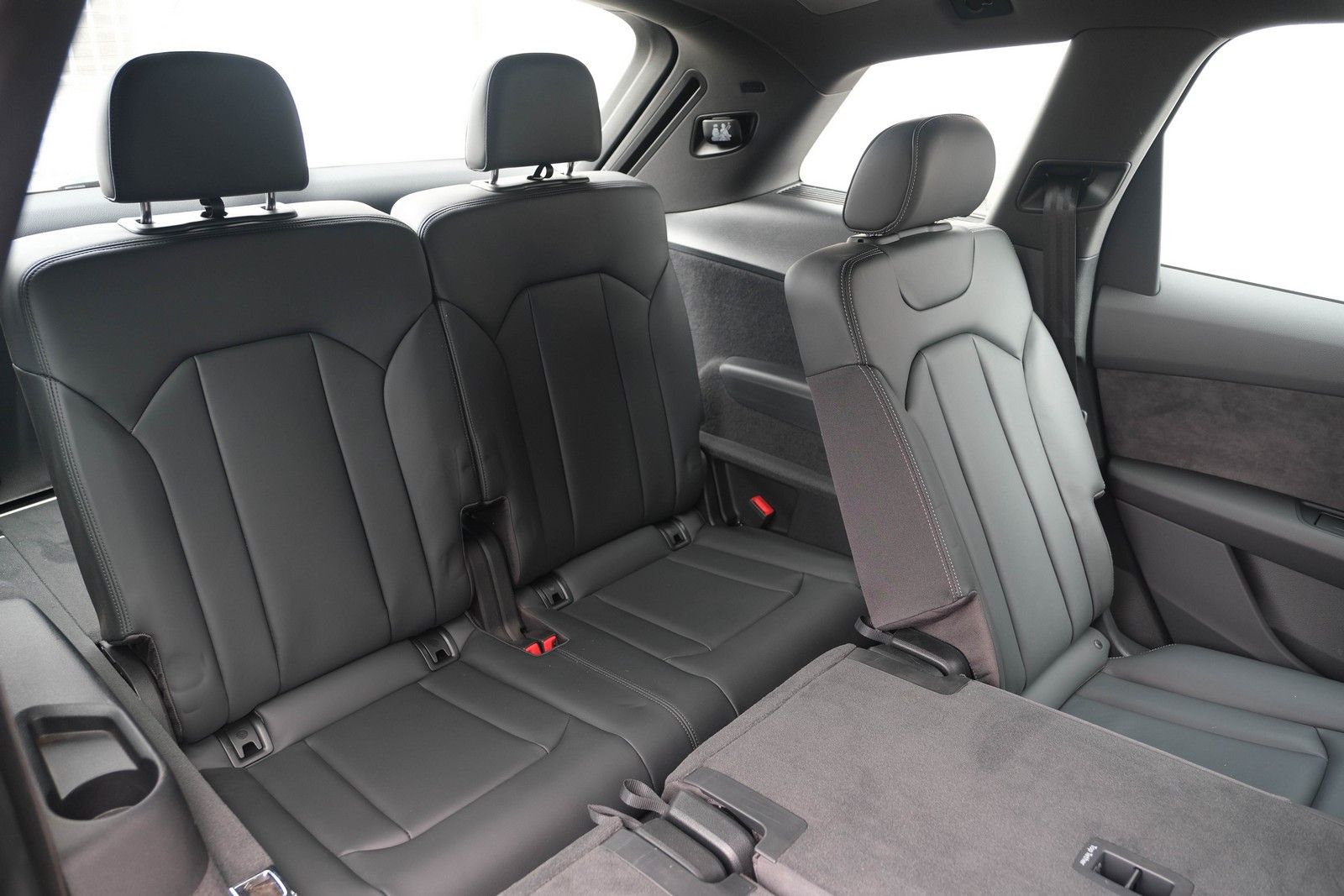
Soem great early second-gen Q7s are now marturing into the market and they offer third-row seating.
Although the third row seating isn’t really for adults and all-day driving journey across South Africa, they are plenty comfortable for kids and tweens. And best of all, the second-gen Q7’s rearmost seats, are individual reclinable, which is much better than the fixed adjustment that some three-row SUVs offers, with seats 6 and 7, being joined.
Luggage space is cavernous with seatings rows two and three stowed, yielding 1908-litres of luggage capacity.
The Q7 you want is ideally a late 2016 or 2017 model (it should have about 100 000 km on its odo’). Some of these are priced just below R500k now, depending on options fitted, with most derivatives in that price-range being 3.0 TDIs.
Powertrain is a crucial point of appeal with any Q7 7-seater. And the second-gen Q7s powered by Audi’s remarkable turbodiesel V6, is one of the best luxury SUV diesel engines. Rated at 183 kW and 600 Nm, these early second-gen Q7 3.0 TDIs are legendary for their high-speed cruising ability, even fully laden. And very low diesel consumption, is driven with restraint.
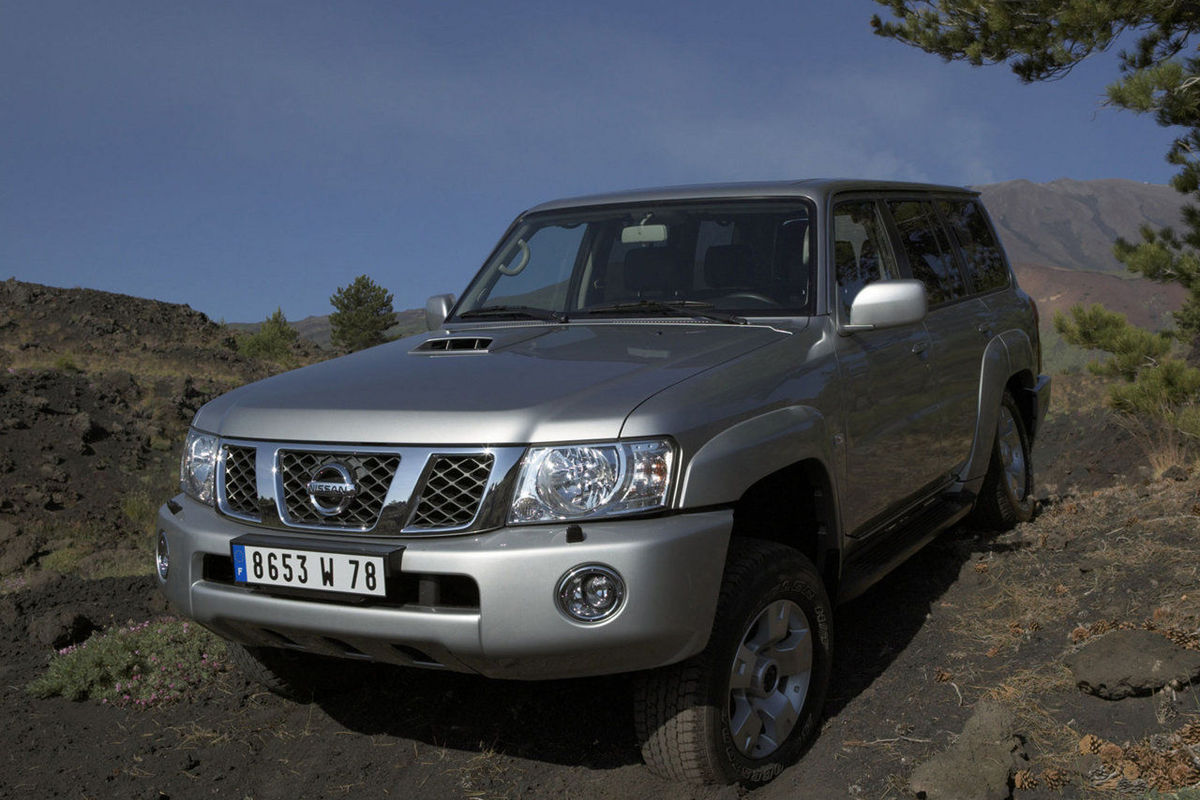
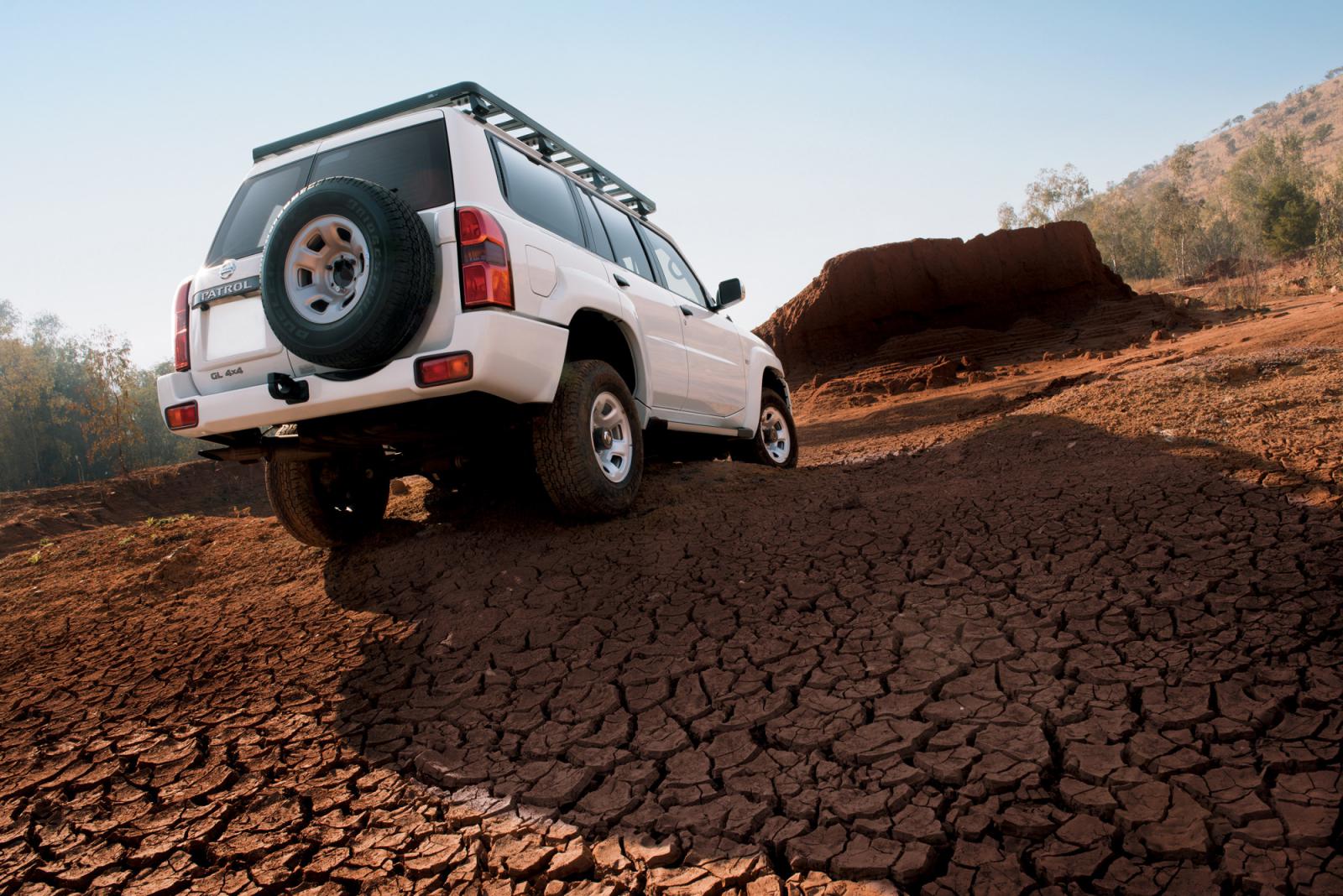
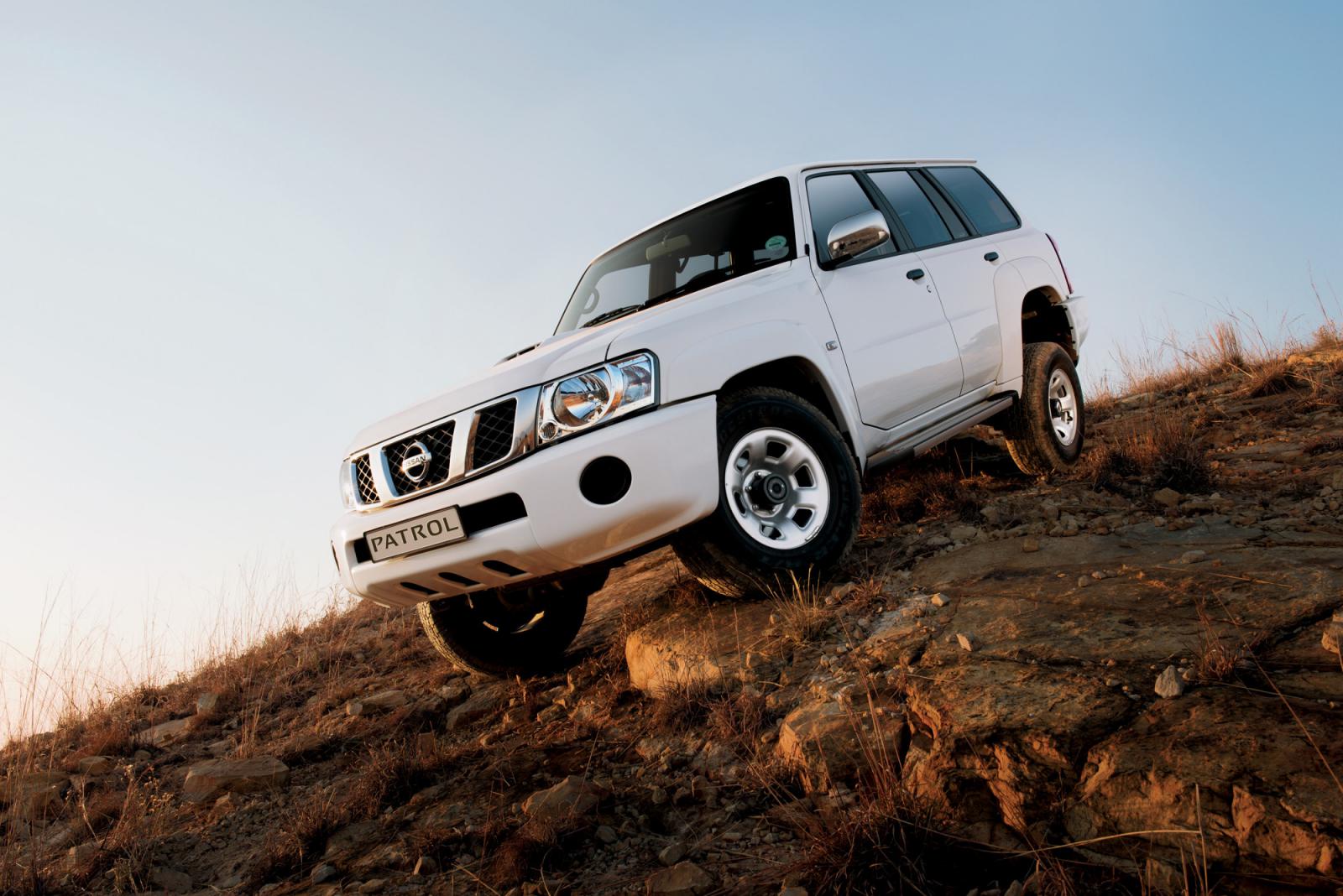
For those who require a ladder-frame luxury 4×4 with 7 seats, the obvious choice is Toyota’s Land Cruiser 200, but they’re very expensive. A credible alternative is Nissan’s Patrol, a vehicle that compares favourably with the Land Cruiser in every conceivable way, and one that’s highly regarded in the Australian market, which is similar in terrain and usage patterns to our own. For well under R500 000, you can expect to find a 5th-generation Patrol 4.8 GRX. Unlike the Land Cruiser 200, the bulk of Patrols sold in South Africa are petrol-, as opposed to diesel-powered.
Nissan’s 4.8-litre inline 6 is renowned for its reliability, so too are the Patrol’s nearly unbreakable differentials. The only downside is a limited range, with that 4.8-litre engine guzzling fuel at very near to 20L/100 km in real-world driving conditions. As such, you can never afford to pass up on a refuelling opportunity when you take a Patrol on a long-haul journey – regardless of the Nissan’s 135-litre tank capacity.
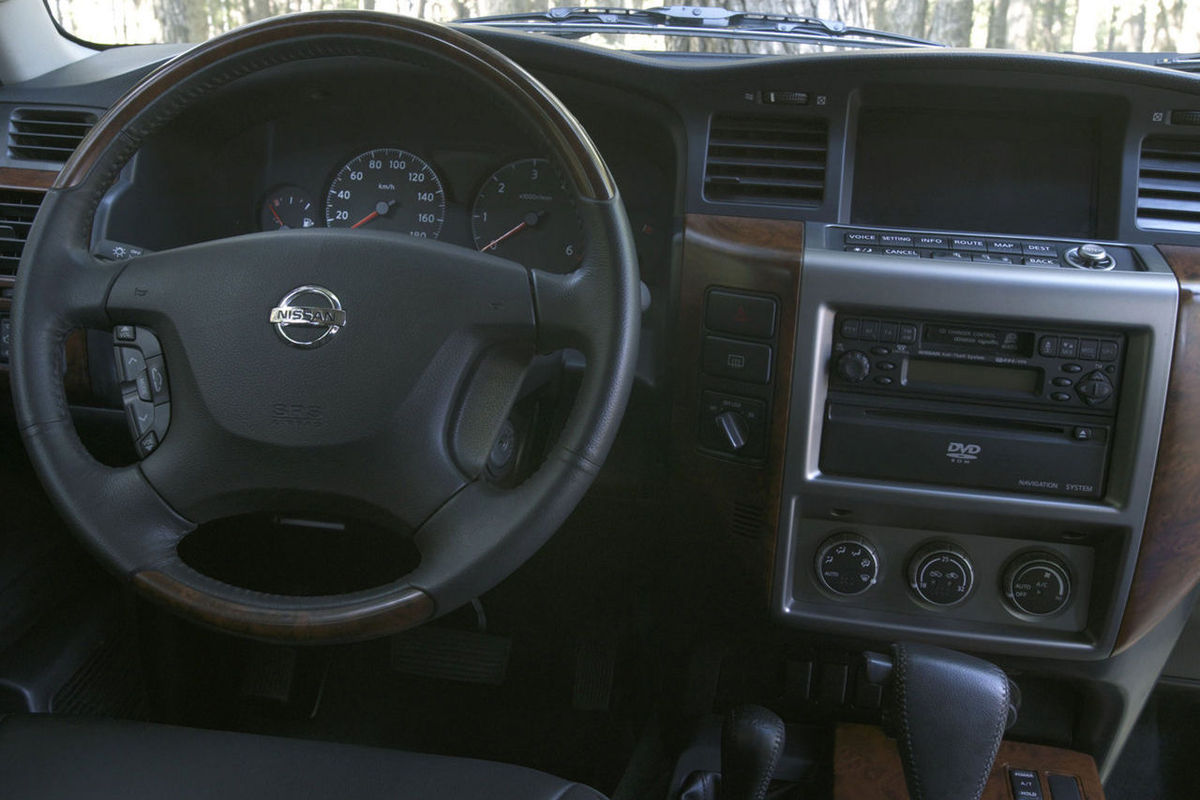
Due to its dedicated-off-roader design, the Patrol’s cabin is not the last word in luxury aesthetic and contemporary trim, but build quality is high and the potential for electronic gremlins low. There’s plenty of useful space too, with 668 litres of luggage space available behind the 2nd-row of seats (when the 3rd-row seating is not in use).
In the Nissan Patrol market, R350 000 buys a very tidy 2011/2012 vehicle with just shy of 120 000 km on the clock. And all things considered, up to 150 0000 km is virtually considered “delivery mileage” for a Patrol, considering how tough and reliable it is. Without question the toughest and durable vehicle on our top 5 used luxury SUVs for R700k list.
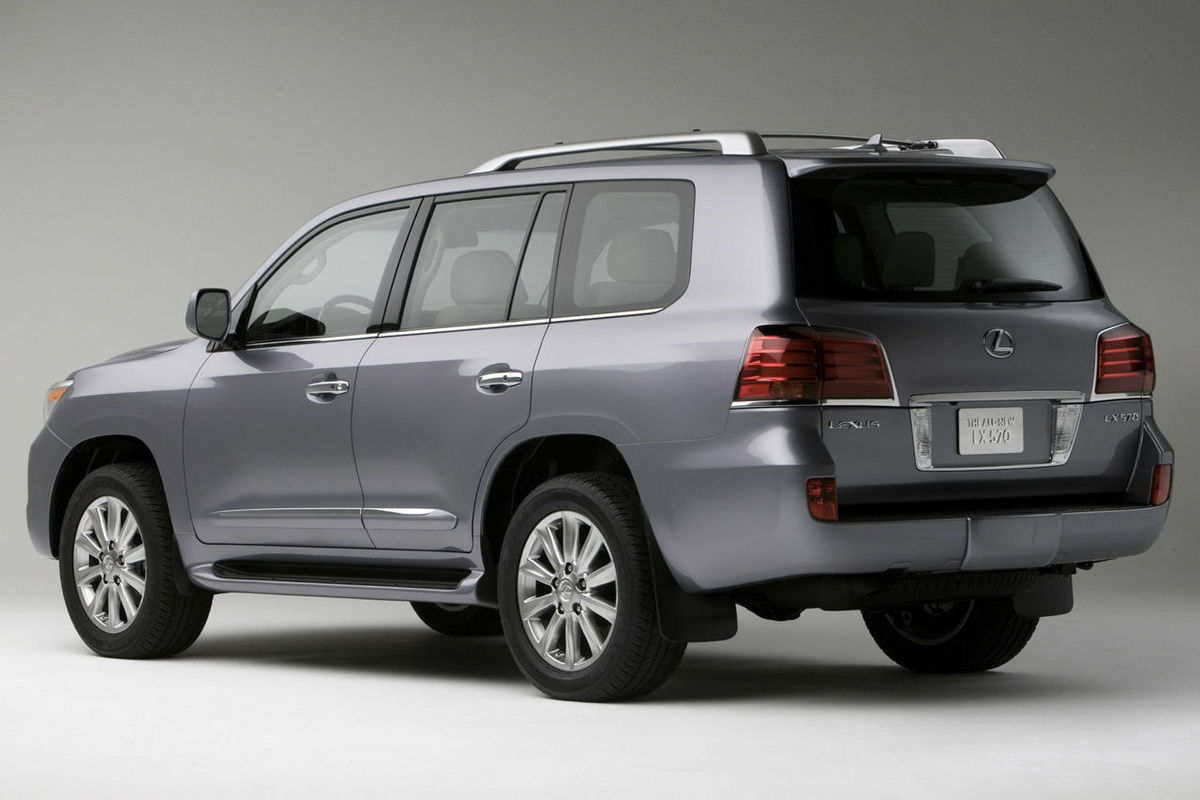
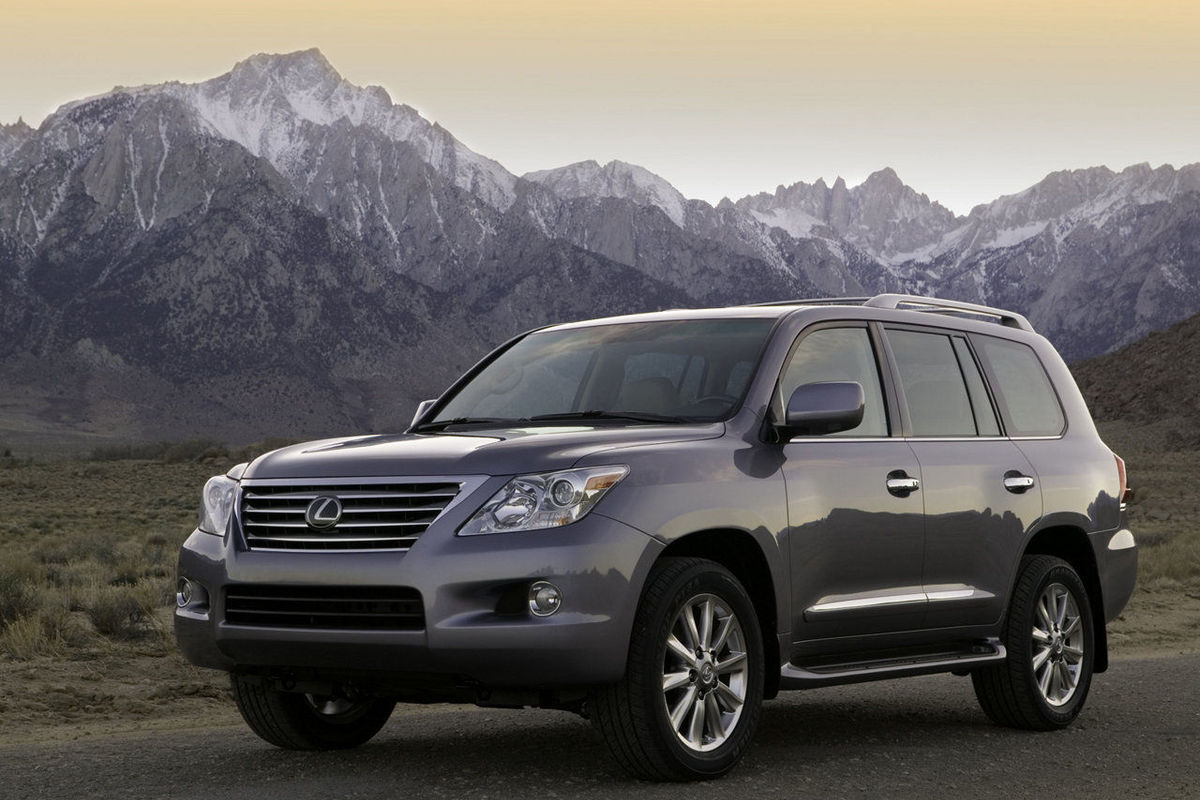
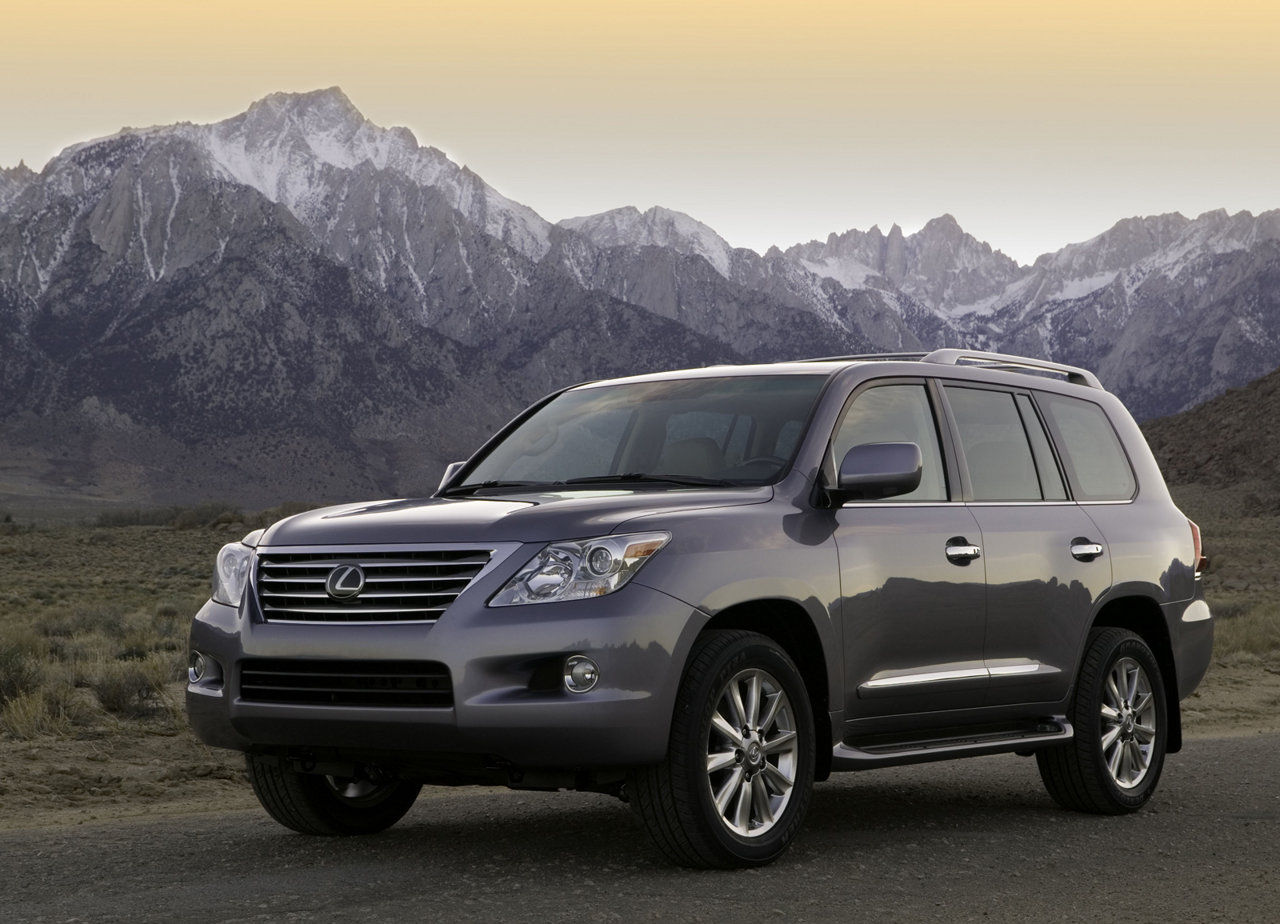
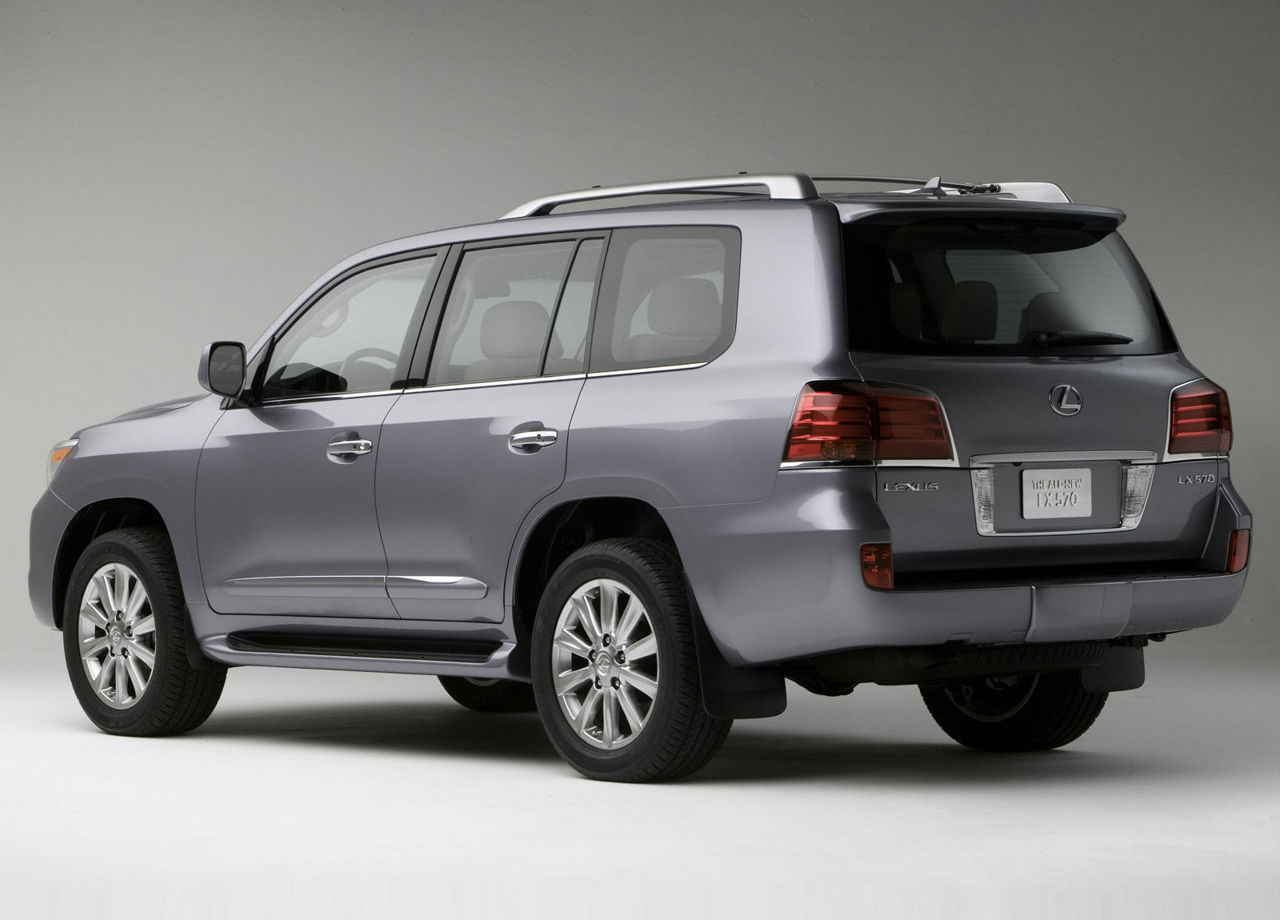
To put it bluntly, the LX570 offers Toyota Land Cruiser 200 ability and build quality combined with Lexus exterior and interior design elements. It’s an inspired choice for those who want all that is desirable about a luxury Land Cruiser 200, but can’t bring themselves to admit to driving a Toyota.
Powered by a huge petrol-fed V8, LX570 is the epitome of a Sandton-Safari-mobile. Inside it’s all soft leather trim and curiously bright Japanese infotainment interfacing, but underneath remains the prodigious ability of a Land Cruiser 200, which is the LX570’s cousin. You are buying one of the most over-engineered body-on-frame vehicle platforms ever built…
Interior space is prodigious, with 701 litres of luggage capacity, but you have to be wary of its range. Even with the 93-litre fuel tank brimmed, LX570’s economy hovers in the high teens. That said, the naturally-aspirated 5.7-litre V8 is unfailingly reliable and unlike many other luxury SUVs, powered by turbodiesels, the LX’s petrol V8 is not a nightmare to keep in good health, beyond 100 000km.
For under R700 000, you can get a tidy one. Always go for one with smaller wheels and larger tyres, as opposed to anything with inched-up alloys.
Of all the vehicles on our top 5 used luxury SUVs for R700k list, the Lexus is possibly the best blend of luxury and reliability.
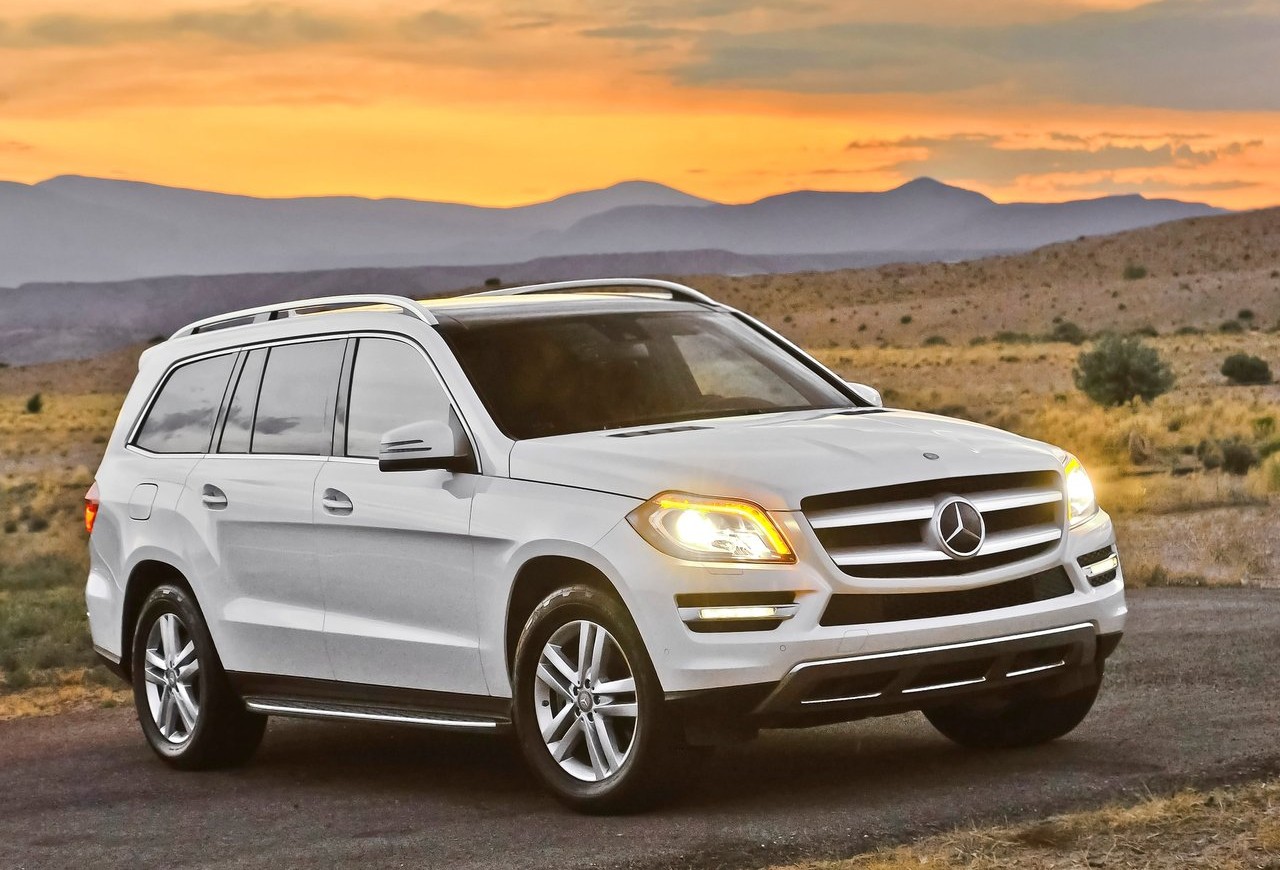
There is no luxury SUV more iconic than Mercedes-Benz’s Gelandewagen (now known as the G-Class). One can trace its origins to the 1970s and very little evolution has taken place in its packaging since then. The “G” is the loveable ladder-chassis throwback in Mercedes-Benz’s SUV portfolio.
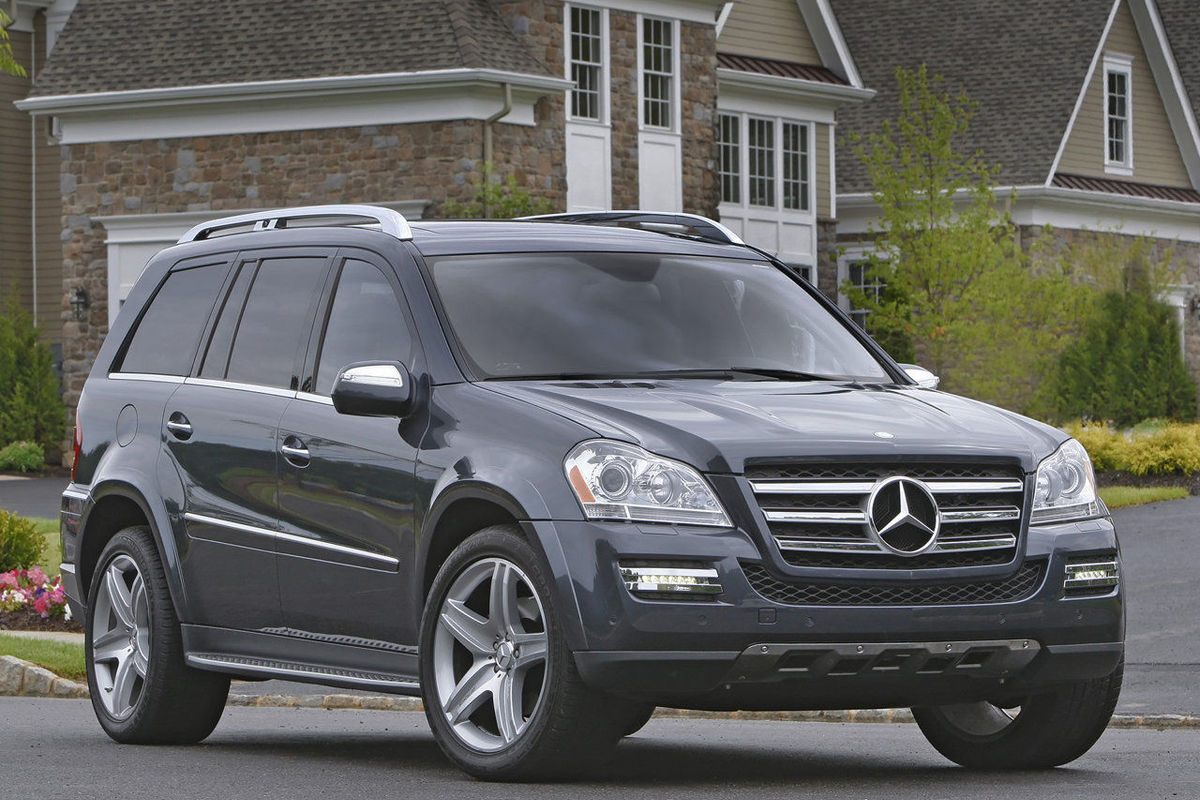
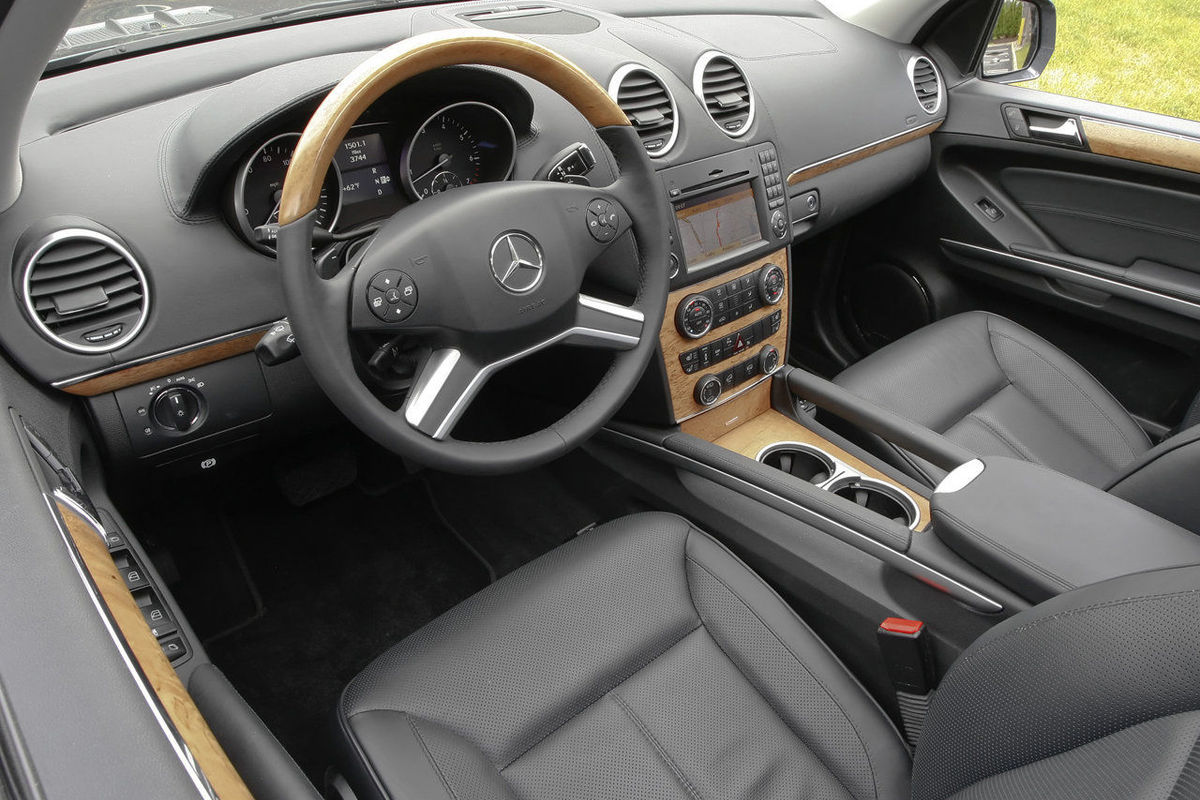
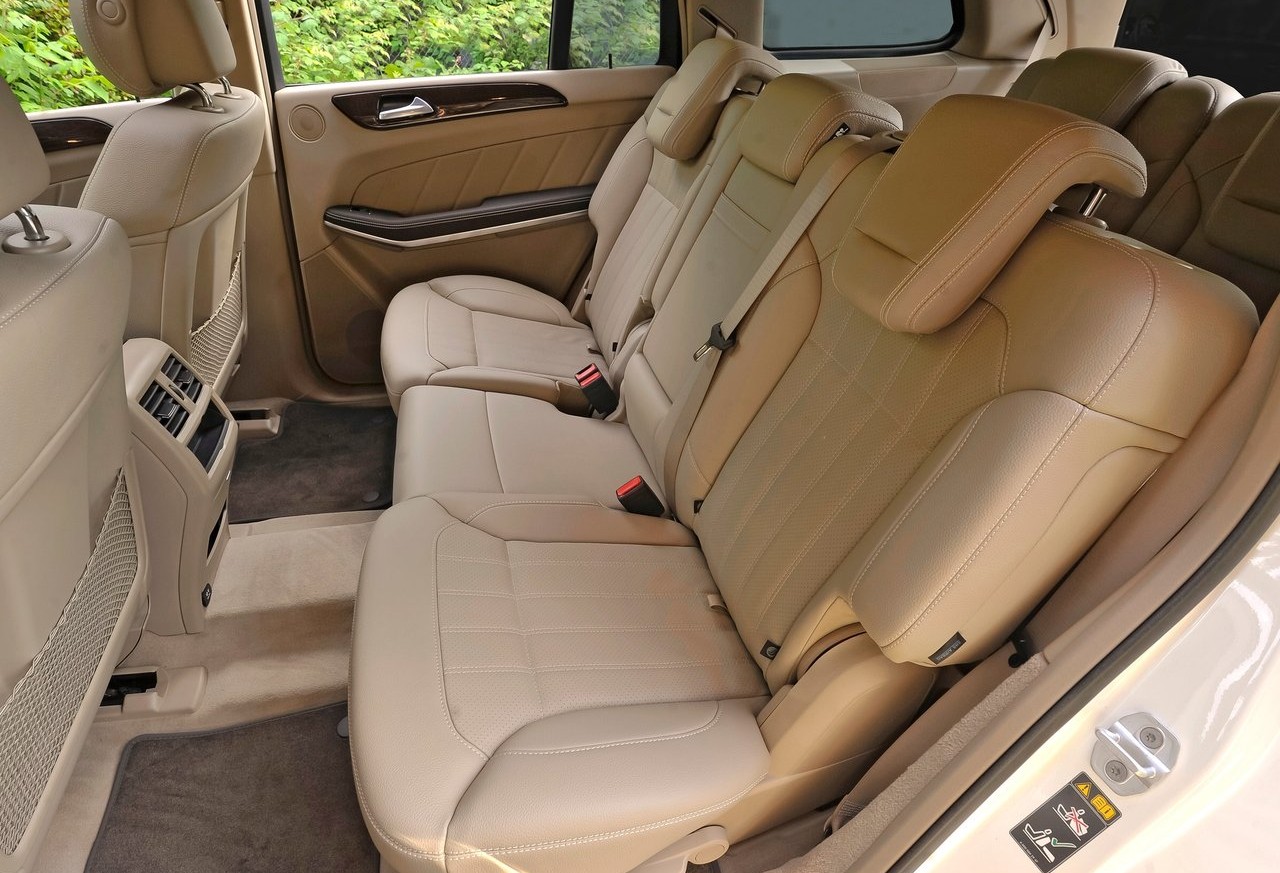
The problem with the G-Class is that it’s very cramped inside. Mercedes-Benz realised this and the “other” G-Class, the GL, was Stuttgart’s solution to this problem – on an unprecedented scale. A massive 7-seater German SUV built primarily for the American market, it brought Mercedes-Benz’s air-suspension technology and proven lockable differentials together to create quite a unique offering.
Mercedes-Benz’s second-gen GL was on sale from the early to late 2010s (2012 to 2019 model years). These vehicles share much of their cabin tirm with a comparable E-Class of the time. But the luggage space numbers, are massive. and with 680 litres of luggage space, you’ll never have to repack your weekend bags. Fold the 2nd- and 3rd-row seats flat and you get a gargantuan 2 300-litre load area… many mid-sized vans don’t offer that much utility space!
Most GLs in the second-hand market are powered by a 3.0-litre turbodiesel V6 that produces peak torque of 620 Nm, so with a 2.4-tonne kerb weight, the Benz is a capable cruiser, as opposed to a swift SUV. That said, it does have 190 kW of peak power, so it can get a move on when you need to make haste driving long distances.
With low-range and lockable differentials, allied with some ascending and descending stability control algorithms that manage the traction control electronics, GL is supremely capable off-road.
As a Grade 5 off-road-obstacle-taming German luxury off-roader, with ample space and seating for 7 occupants, GL is an oddity – but one which is very fit for purpose. Prices for the 2nd-generation GL, vehicles which entered the market at around 2012, are now under R500 000 when nearing around 150 000 km of mileage. If you want a Gelandewagen you could actually live with as a family vehicle, this is it.
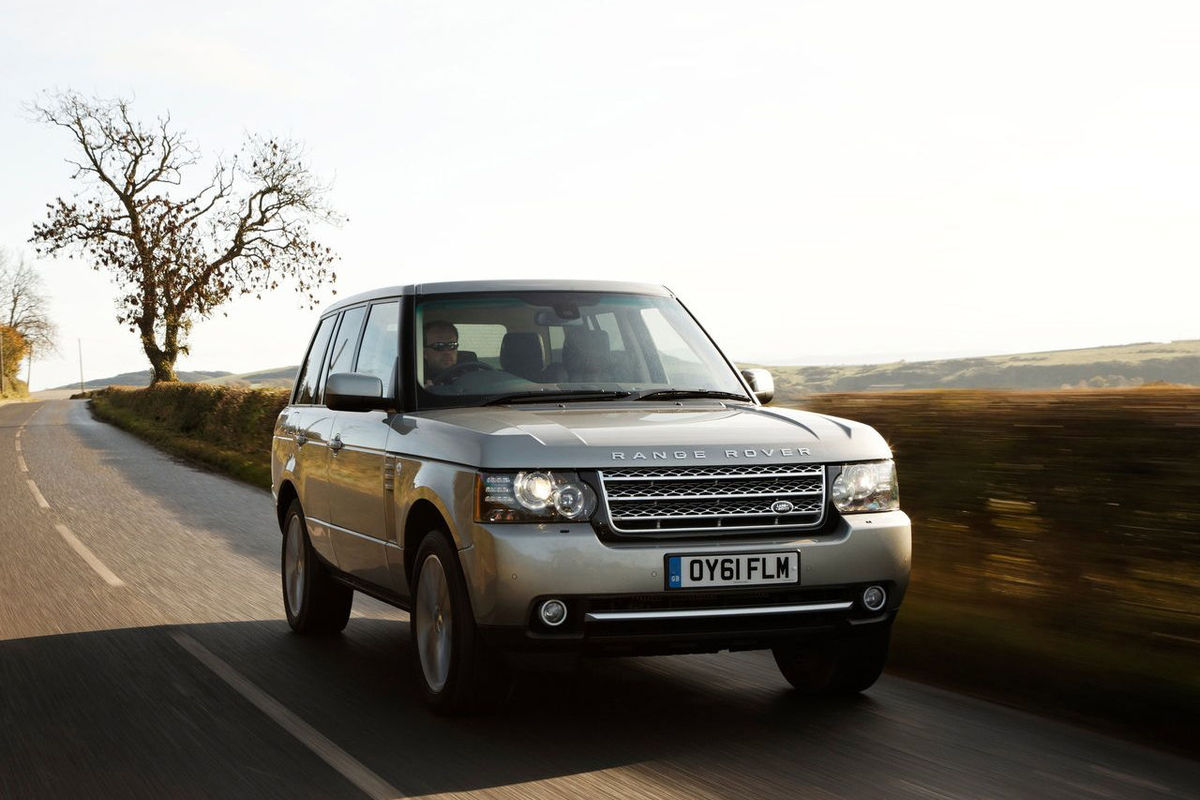
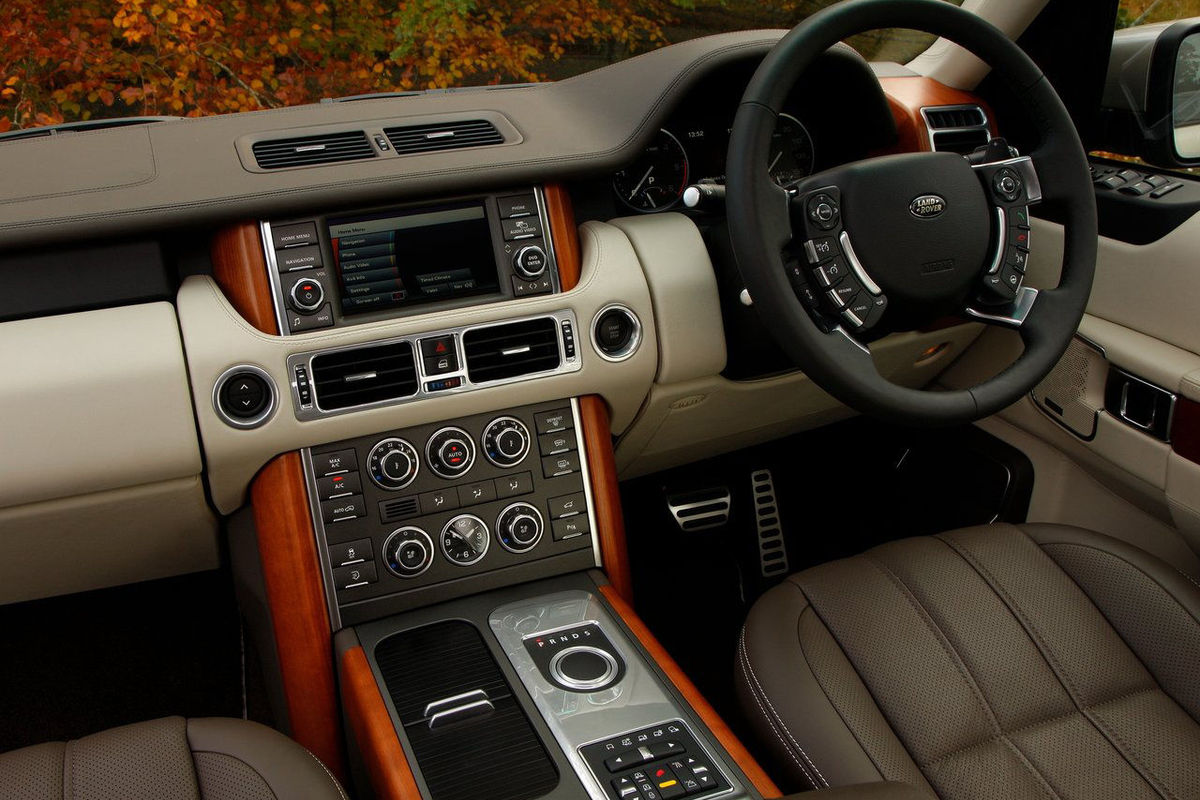
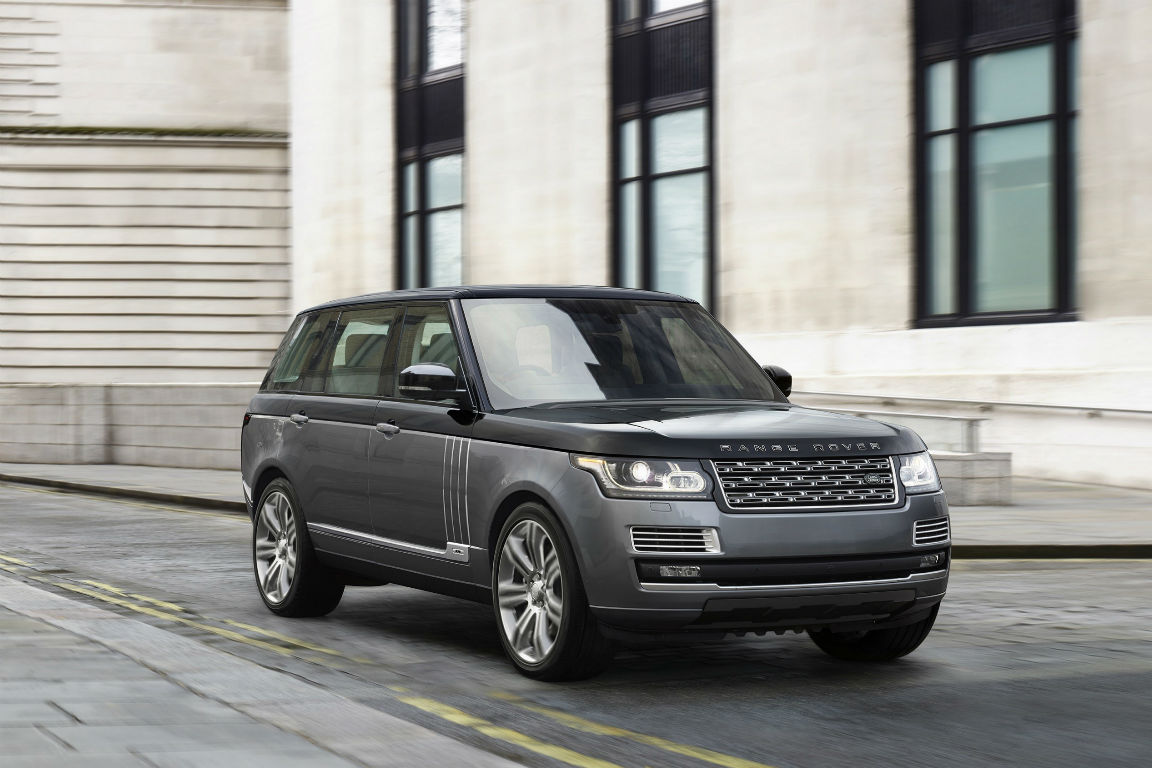
For many, this remains the quintessential first-class SUV and if you want a 7-seater, it has to be a Vogue, instead of a Sport, derivative. There is no top 5 used luxury SUVs for R700k list that could be considered complete, with a Rangey.
Certain production batches of Range Rovers have the unfortunate reputation for being some of the most unreliable luxury off-roaders of their era, but since Land Rover was recapitalised by Tata in 2008, build quality and engineering integrity have improved remarkably.
If you desire a Vogue priced below R700 000, look for a 4th-generation facelift model – which came to our market in 2013. The closer you can buy towards 2013-2015, the better; most Vogues of this vintage have done between 100 000 and 150 000 km.
The 4.4-litre V8 turbodiesel is immensely drivable, with 240 kW and 740 Nm. It gives these 4th-generation Range Rover Vogues all the imperious high-speed cruising ability they need to cover two provinces in a day. And excellent towing and slow-speed off-road pulling power, when you need to get up a steep, rocky incline. Or tow the dual-axle horsebox to a showjumping event.
That 4.4-litre V8 turbodiesel isn’t wonderfully light on diesel, but it still delivers much better range than the petrol V8s. Of all the engines in our top 5 used luxury SUVs for R700k, the Range Rover’s 4.4 TD V8 offers the most spirited driving experience.
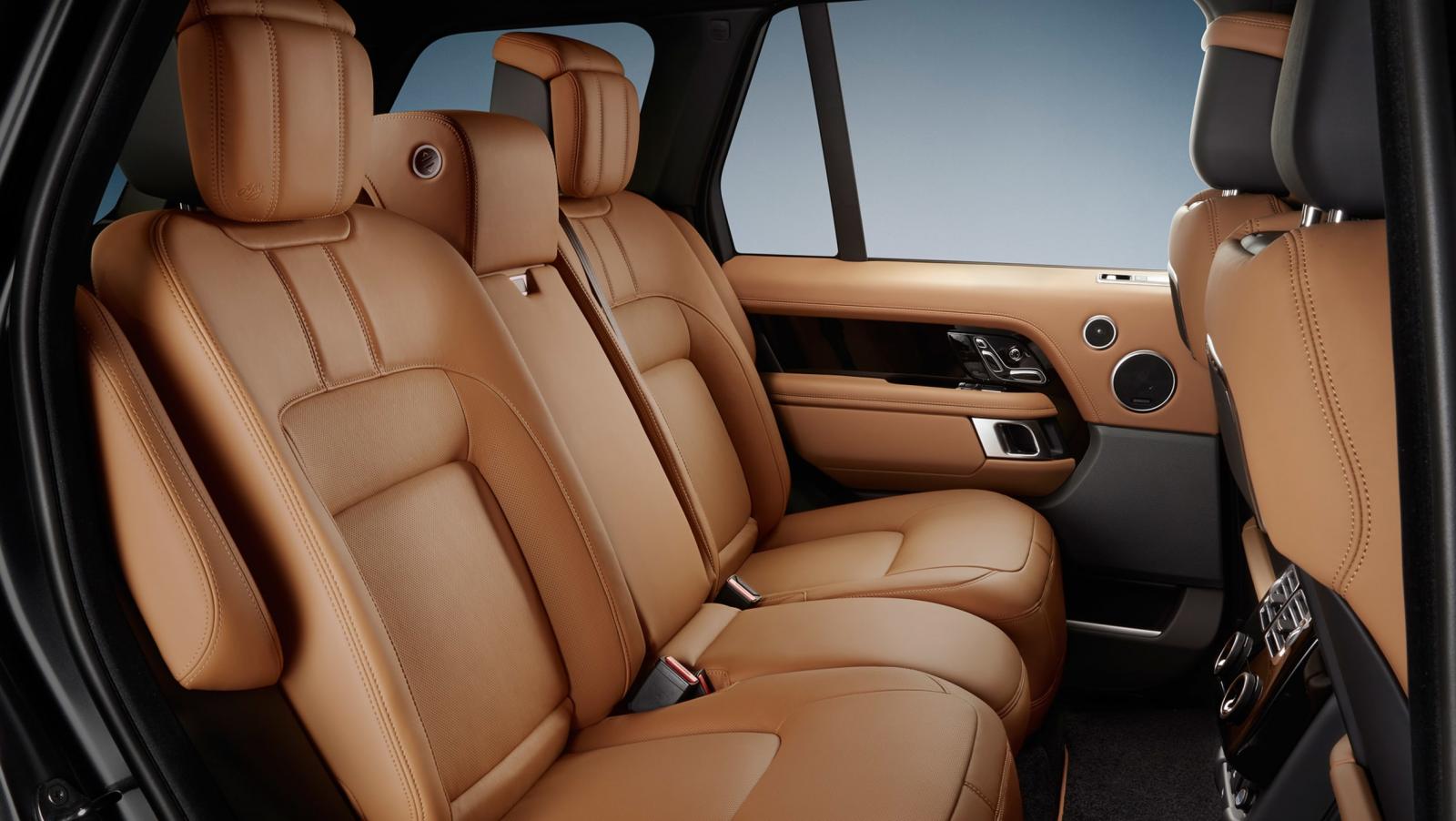
Cabin is a celebration of all things great about Range Rover trim, ergonomics and an absolute commitment to driver and passenger comfort. Design is classic nautically-themed, with a fantastically comfortable driving position and airy cabin ambience.
Infotainment tech has aged well, too, thanks to decent chip-sets being originally used by Land Rover’s software engineers, with the 4th-gen Range Rover Vogue infotainment system.
Luggage space hugely improved over the 3rd-gen Range Rover, with 900-litres of packing space as opposed to only 530-litres.
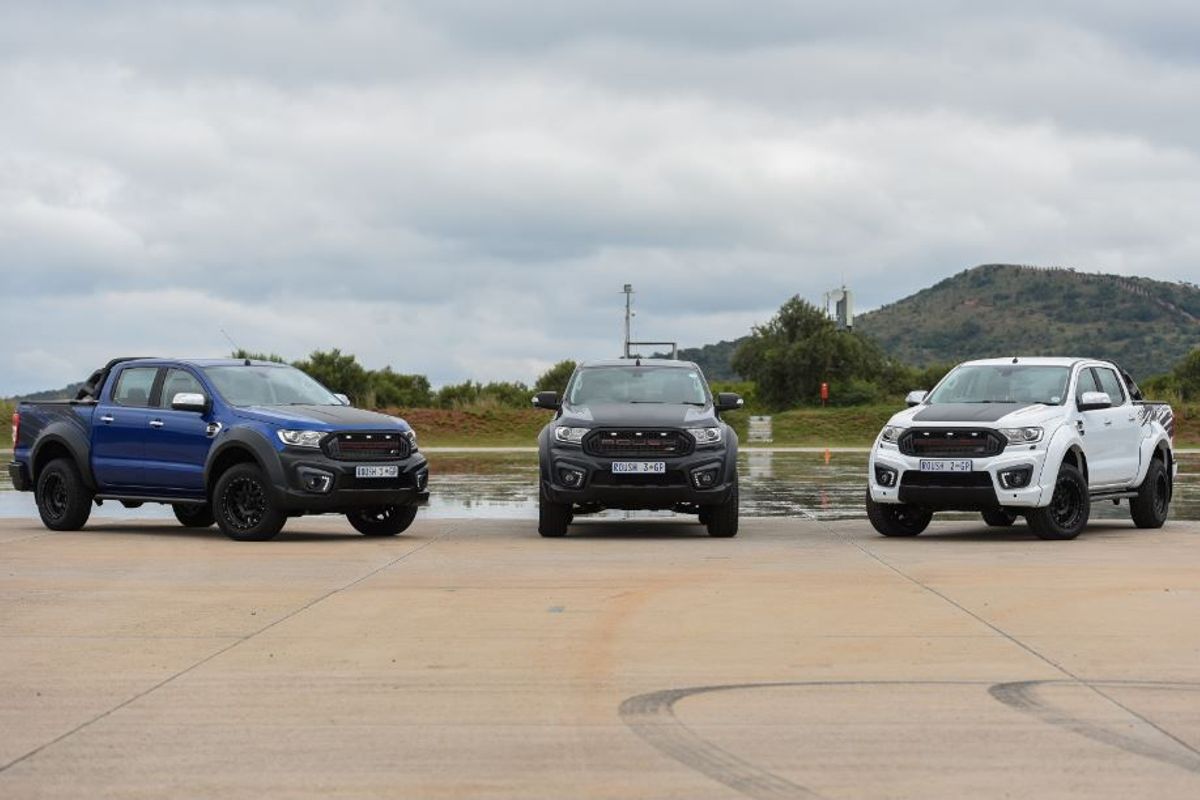
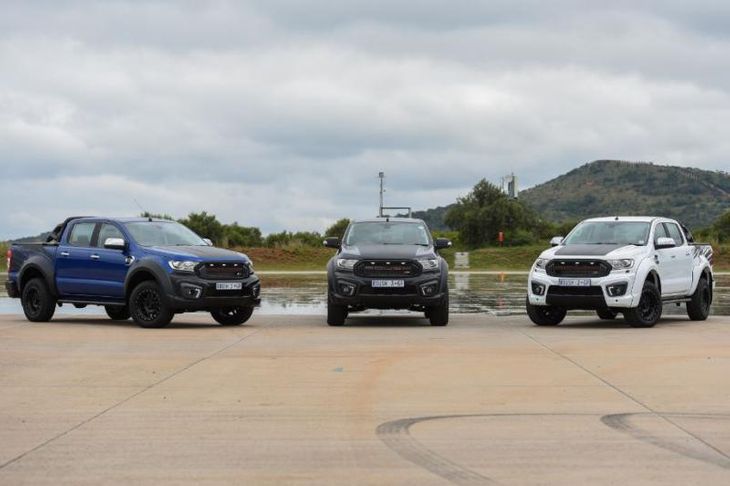
Can't wait for a Ford Ranger Raptor? How about a Roush-tuned Ford Ranger instead? Check it out!
With two years of development and testing under its belt, Roush Performance and Performance Centre has unveiled a Roush Ford Ranger for the South African market. The Roush Performance upgrade which is available in three stages and has been designed to be "within Ford's performance tolerances" ensuring that the engine won't be overly stressed. In fact, Roush is confident enough to offer a Ford and Roush 3-year / 60 000 km drivetrain warranty. The Roush upgrades are also fully supported by Ford Motor Company of South Africa, which bodes well.
Three stages of Roush
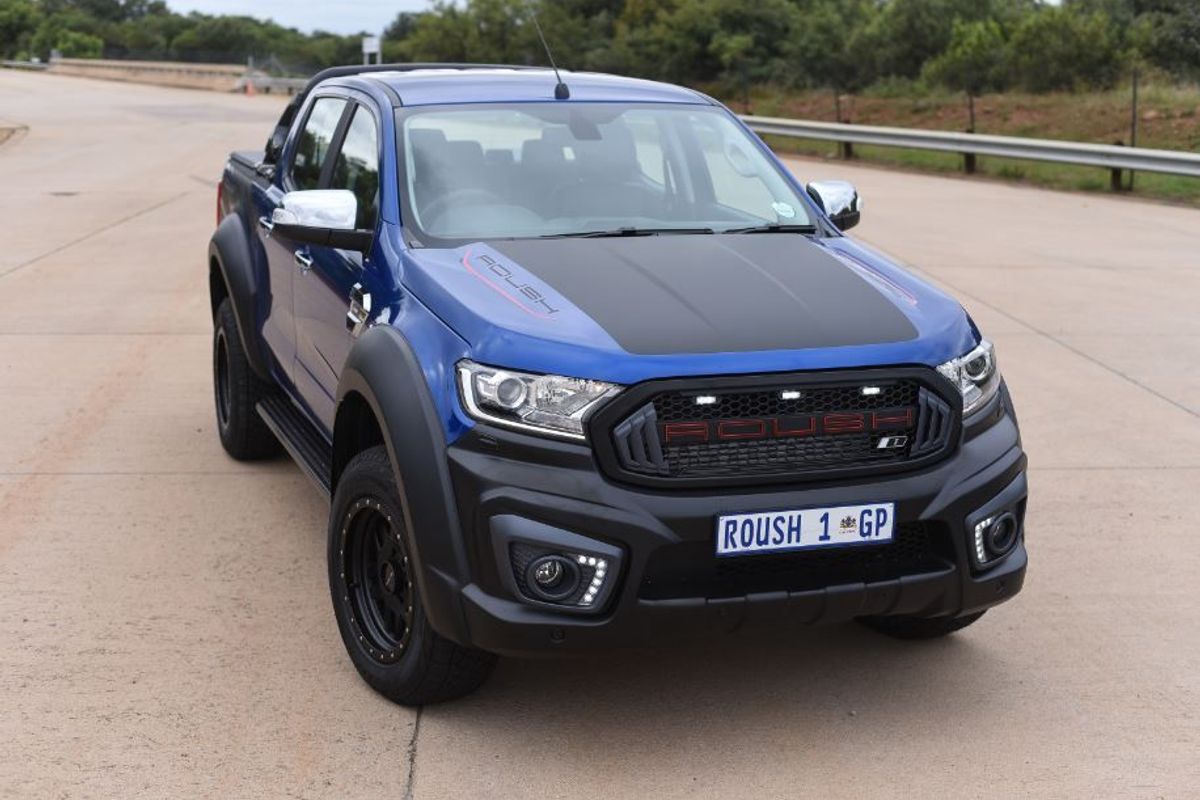
RS1 – The Roush Stage 1 Ranger offers aesthetic upgrades that individualize your Ranger and make it stand out from the rest, but allows you the option of a whole lot more. Kit includes:
Body Kit
ROUSH Bumper/front grill
ROUSH Extended Wheel Arches
Rear Bumper
Decklid Cover
18-inch Alloy Rims & Tyres
Sport Bar & Side Steps
Tonneau Cover
Dual Pipe Cat-back Exhaust
ROUSH Aesthetics
Bonnet wrap
Windscreen Banner
ROUSH Splash (Rear)
ROUSH Accessories
Embroidered Headrests
ROUSH Car Mats
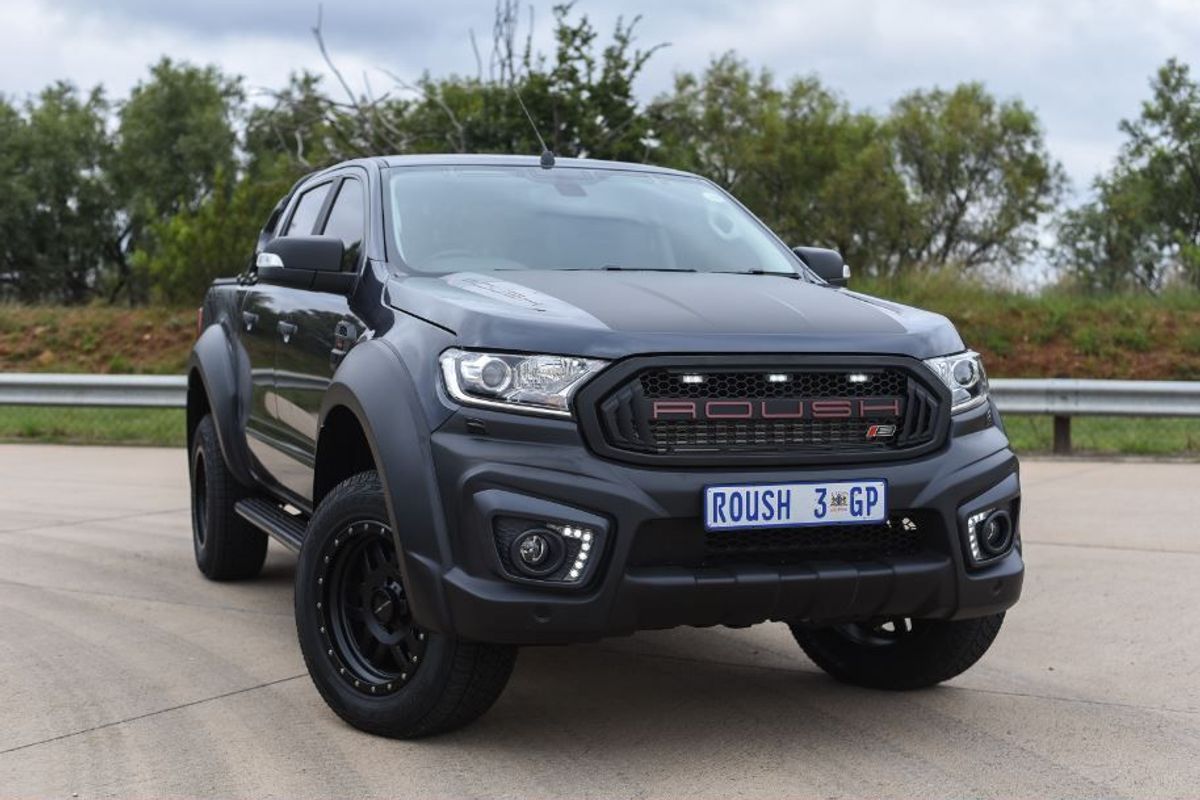
RS2 – The Stage 2 ROUSH Ranger offers more than street presence. With an improved high-flow cat back exhaust combined with the added performance from a pre-programmed chip that includes 5 pre-mapped programmes and a Hybrid turbo, you can expect up to 16% increase in power or 170 kW of power and 550 Nm on the flywheel. This from the 3.2-litre turbodiesel model Ford sells in a standard Ranger.
Body Kit
ROUSH Bumper/front grill
ROUSH Extended Wheel Arches
Rear Bumper
Decklid Cover
18” Alloy Rims & Tyres
Sport Bar & Side Steps
Tonneau Cover
ROUSH Decals
ROUSH Branding –
Bonnet wrap
Windscreen Banner
Side Stripes (Doors)
ROUSH Splash (Rear)
Dome Badges
Front Grill Letters
ROUSH Accessories
Embroidered Headrests
Rubber Car Mats
Level 1 Performance Upgrade
Uprated Performance Intercooler
Cat-back High Flow Exhaust System
5 Map Chip (Software)
Ford Protect 3yr/60 000km Comprehensive Drivetrain Warranty
Pedders Slotted Geomet Coated Rotor Brakes & Pads
Pedders Foam Cell TrakRider Suspension
RS3 – The ROUSH Stage 3 Ranger with an up to 30% increase in performance through the addition of a High-flow cat-back exhaust, performance uprated intercooler, hybrid turbo upgrade and a 5 map software chip. Power figures are estimated at 190 kW and 650 Nm. With added power comes improved braking with Pedders Kevlar Ceramic brake kits and smoother ride courtesy of Pedders Foam Cell TrakRyder Shocks with an elevated ride height.
The Body Kit
ROUSH Bumper/front grill
ROUSH Extended Wheel Arches
Rear Bumper
Decklid Cover
18” Alloy Rims & Tyres
Sport Bar & Side Steps
Tonneau Cover
ROUSH Branding
Dome Badges
Front Grill
Embroidered Headrests **
Rubber Car Mats
ROUSH Accessories
Full ROUSH Leather Interior
ROUSH Graphics
Sport Bar
Tonneau Cover
Side Step
Window Tinting
Level 3 Performance Upgrade
Hybrid Turbo Upgrade
Dual Pipe High flow Catback Exhaust
Aluminium Uprated Performance Intercooler
5 Map Chip (Software)
Ford Protect 3 yr/60 000km Drivetrain Warranty
ROUSH Handling Pack
Pedders Slotted Geomet Coated Rotor Brakes & Pads
Pedders Foam Cell TrakRider Suspension
Roush Ranger Pricing
The Roush upgrade costs are on top of the purchase price of a Ford Ranger.
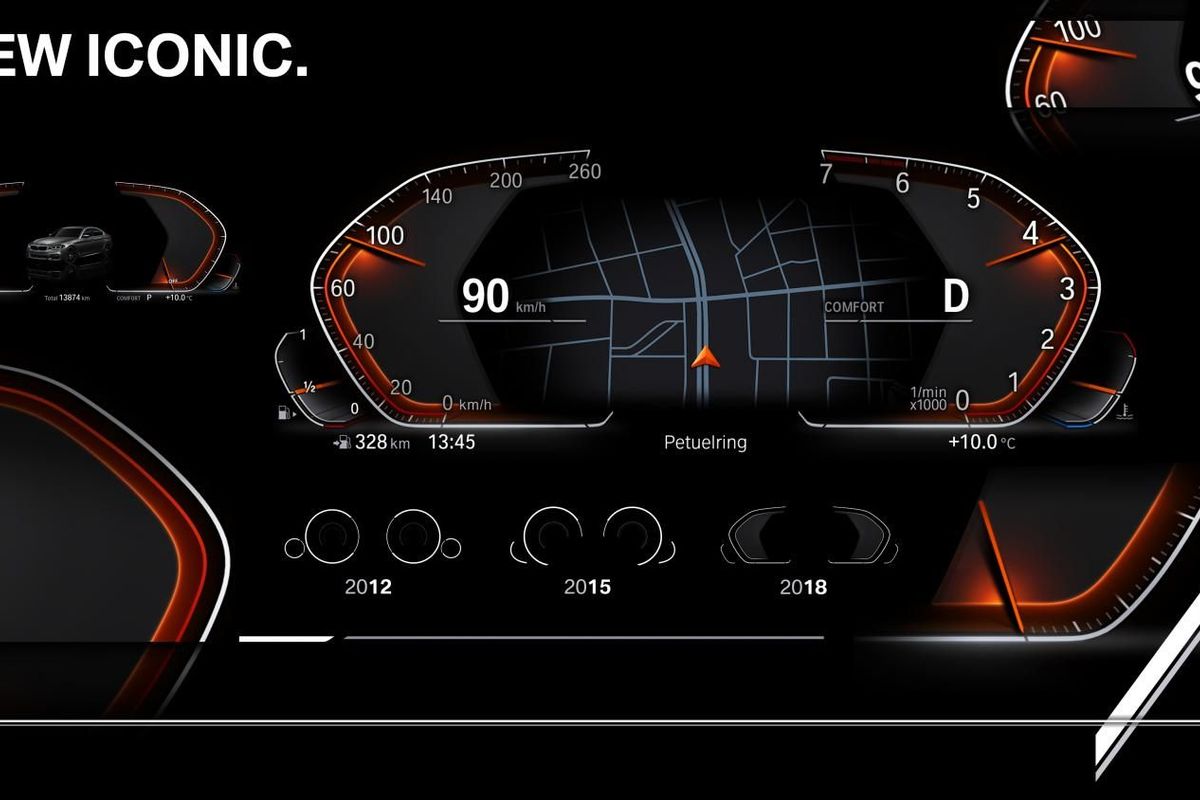
BMW will be releasing a new version of its iDrive in 2018 and we'll see the new infotainment system make its debut in the new BMW X5, 3 Series and 8 Series, which are due for reveal before the end of the year.
Can you believe that BMW's iDrive has been in service since 2001? However, given how fast technology progresses and despite numerous tweaks and facelifts, the BMW dashboard layouts tend to feel a little outdated in comparison to the crips offerings of the Volkswagen Group's Active Info Display / Virtual Cockpit and Peugeot's i-Cockpit.
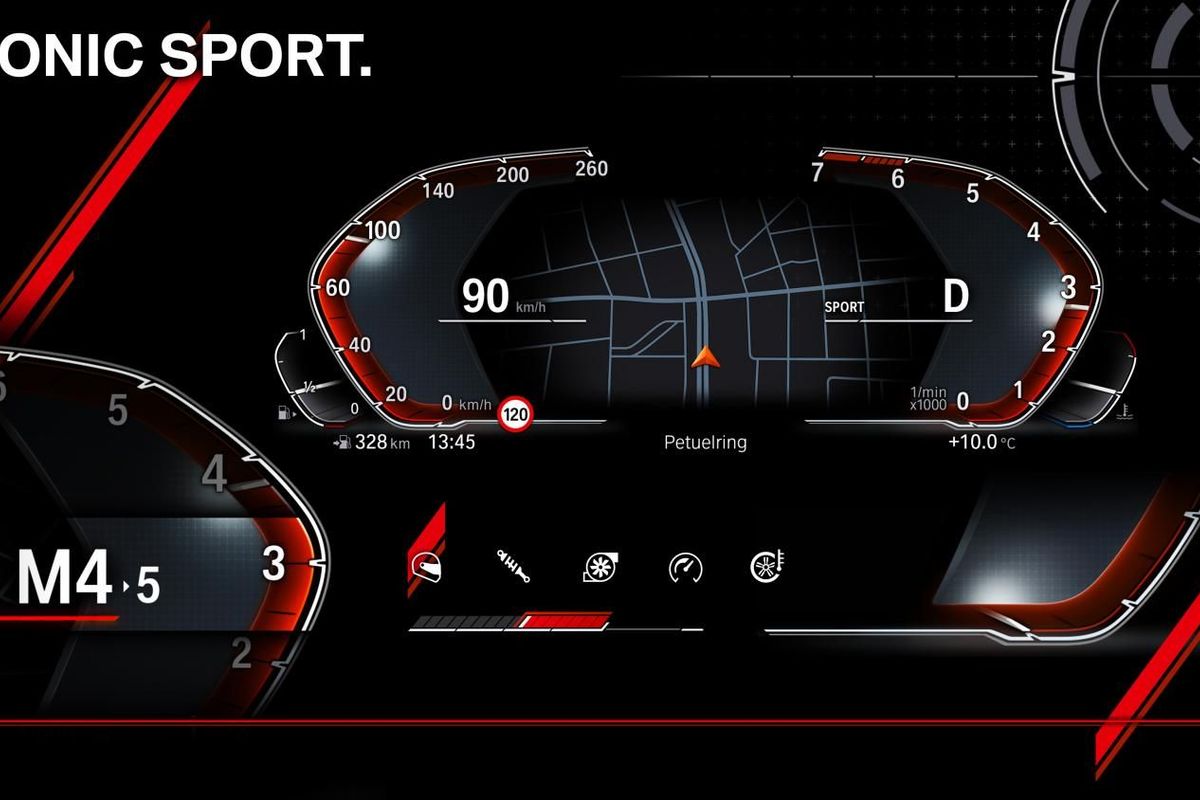
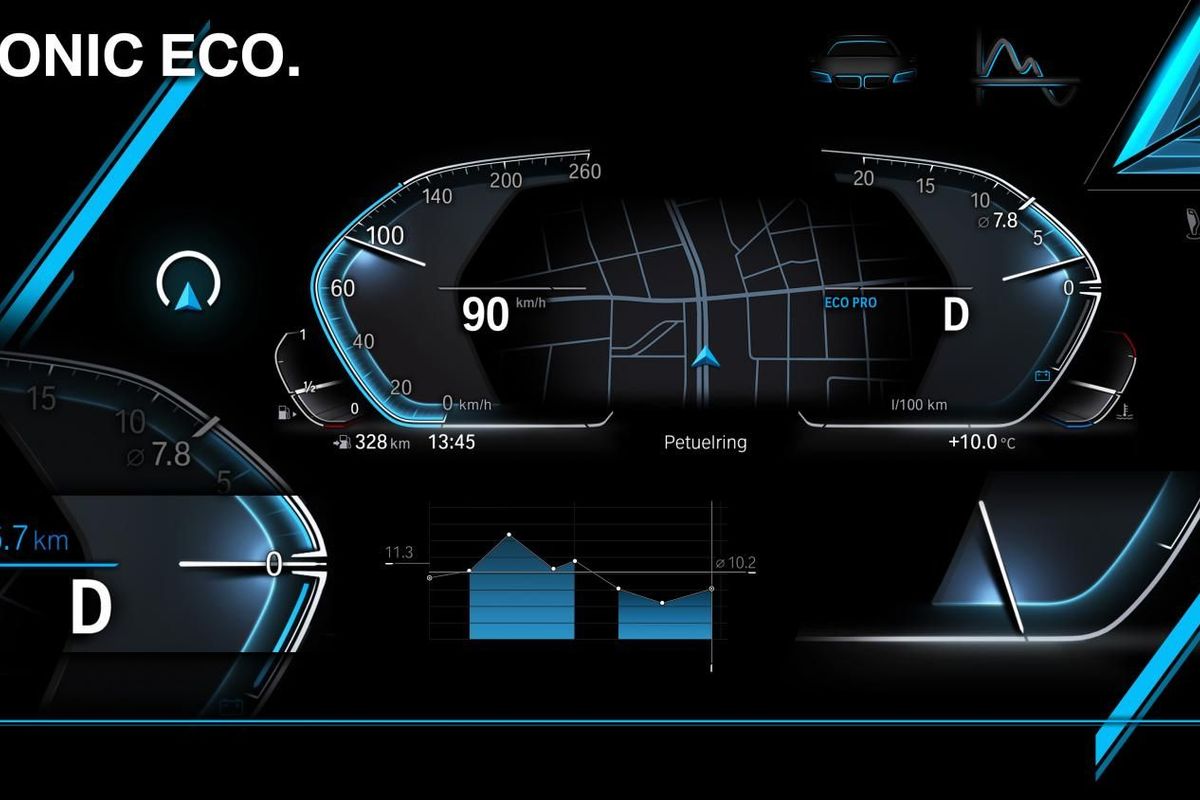
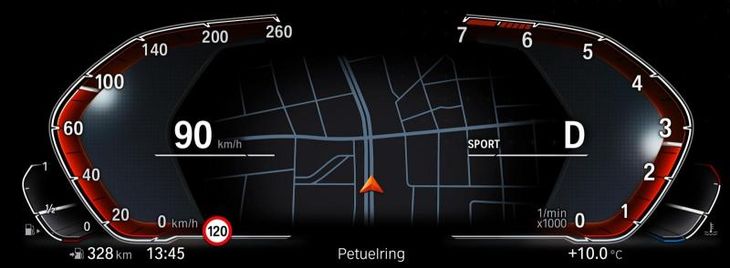
Dubbed BMW iDrive 7.0, this new generation of display is completely digital and is claimed to offer a "clear layout and structuring, intuitive operation, and customisable and personalised displays which has been designed to always provide the driver with the right information at the right time." With a navigation map located in the centre, the new system features a rev counter and speedometer, but not in the typical BMW circle dial shape which we've grown accustomed to over the decades.
First previewed in the BMW X7 iPerformance concept, this new dashboard layout looks fresh and clean, but the real test will be in the user experience. BMW claims that its new layout can be customised with "up to ten freely configurable main menu pages, each containing between two and four pads." The system will feature the standard iDrive controller, touchscreen functionality, voice control and the new gesture control tech. Naturally the display changes depending on which mode the car is in. For example, when your BMW is in Sport mode, it'll display performance data like turbo boost pressure and G-forces.
The new BMW OS announcement formed part of BMW's Digital Day, where it "offers an insight into current product developments, technological concepts, innovations and manufacturing processes that will enable it to shape the future of mobility."
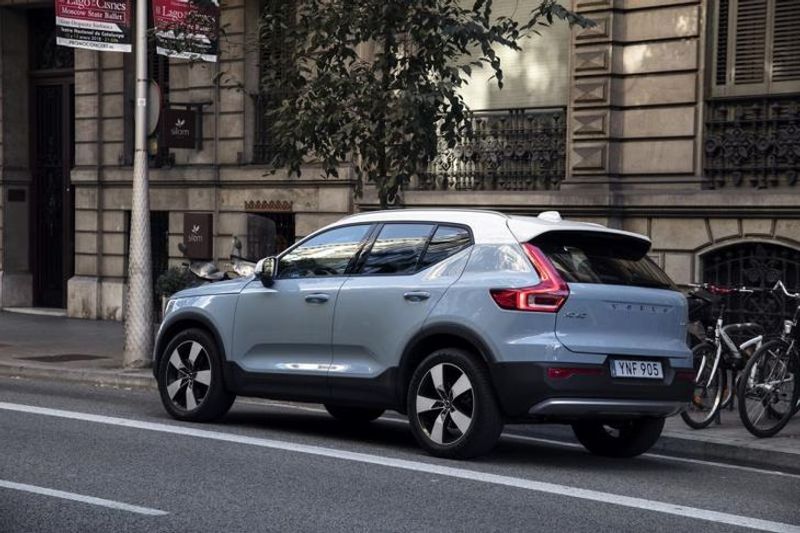
Volvo's XC40 has landed in South Africa and we had a chance to sample the new premium compact family car in Johannesburg. Is it worth your attention and, critically, can it match some of the German offerings? Short answer? Yes, most definitely… let's find out why.
It seems that Volvo cannot put a foot wrong at the moment. Buoyed by investment from Geely and lauded globally (the brand has bagged several #CarsAwards category wins), Volvo's SUVs have elbowed their way into the limelight on sheer weight of merit. The XC90 took the premium SUV market by storm, its XC60 executive SUV sibling recently won the 2018 World Car of the Year title and the new XC40, which has been named the European Car of the Year, is now available in South Africa.
What is an XC40?
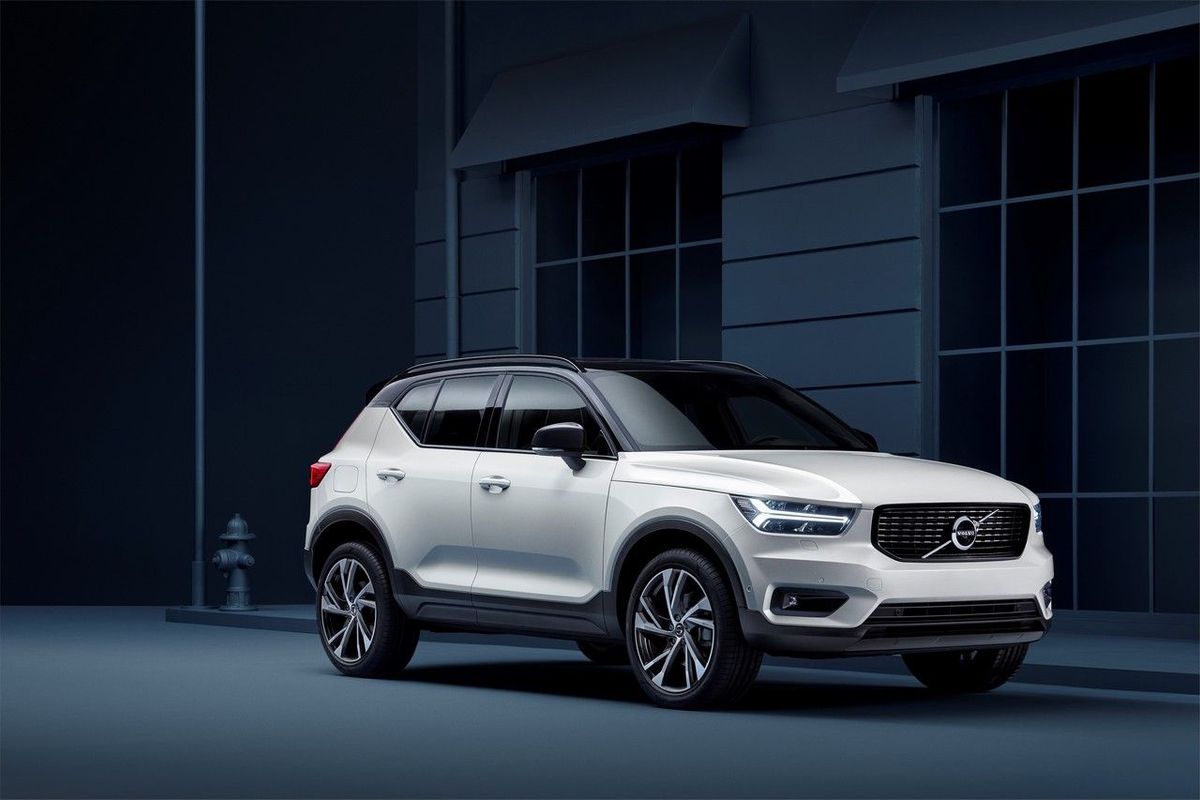
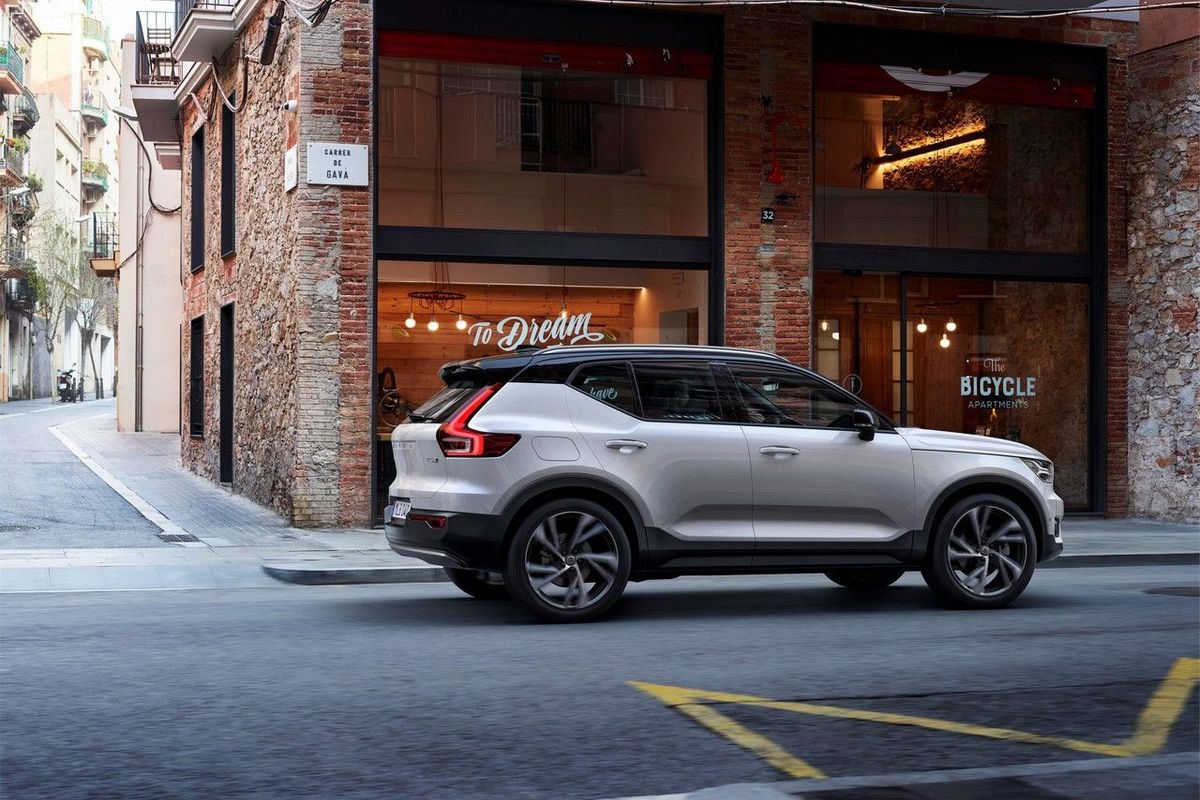
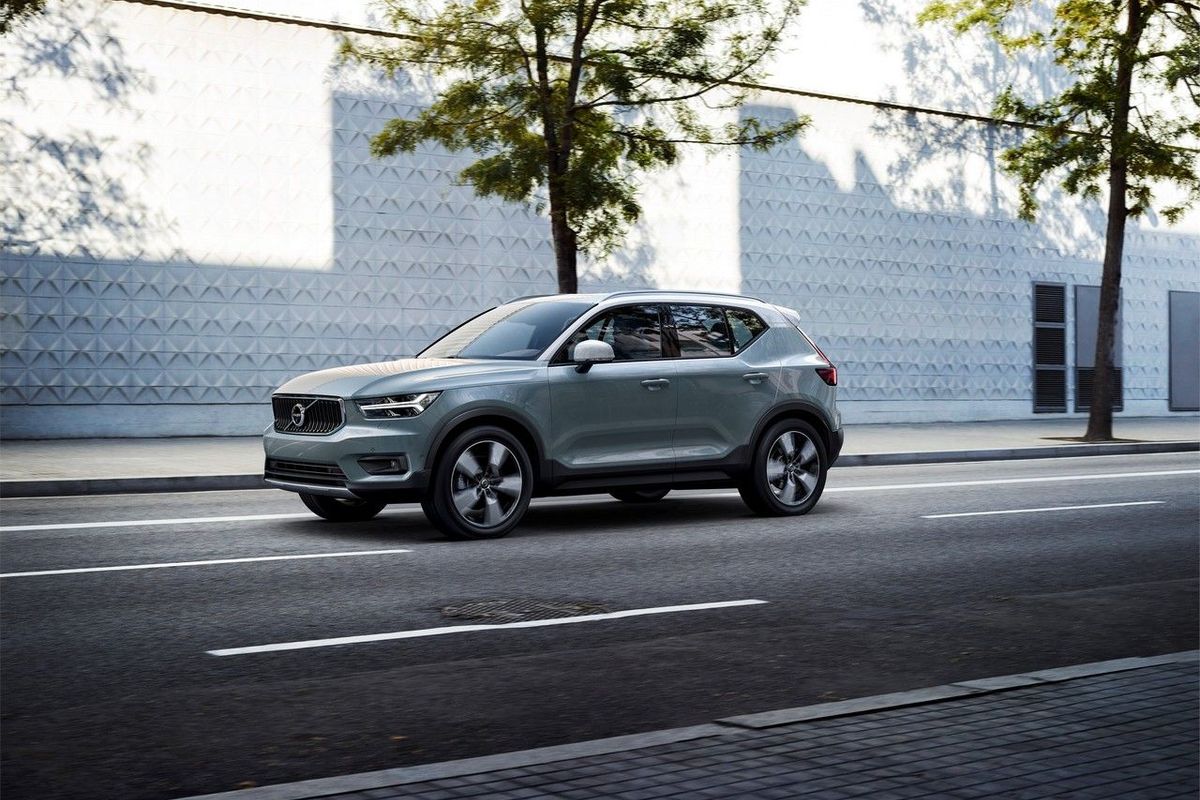
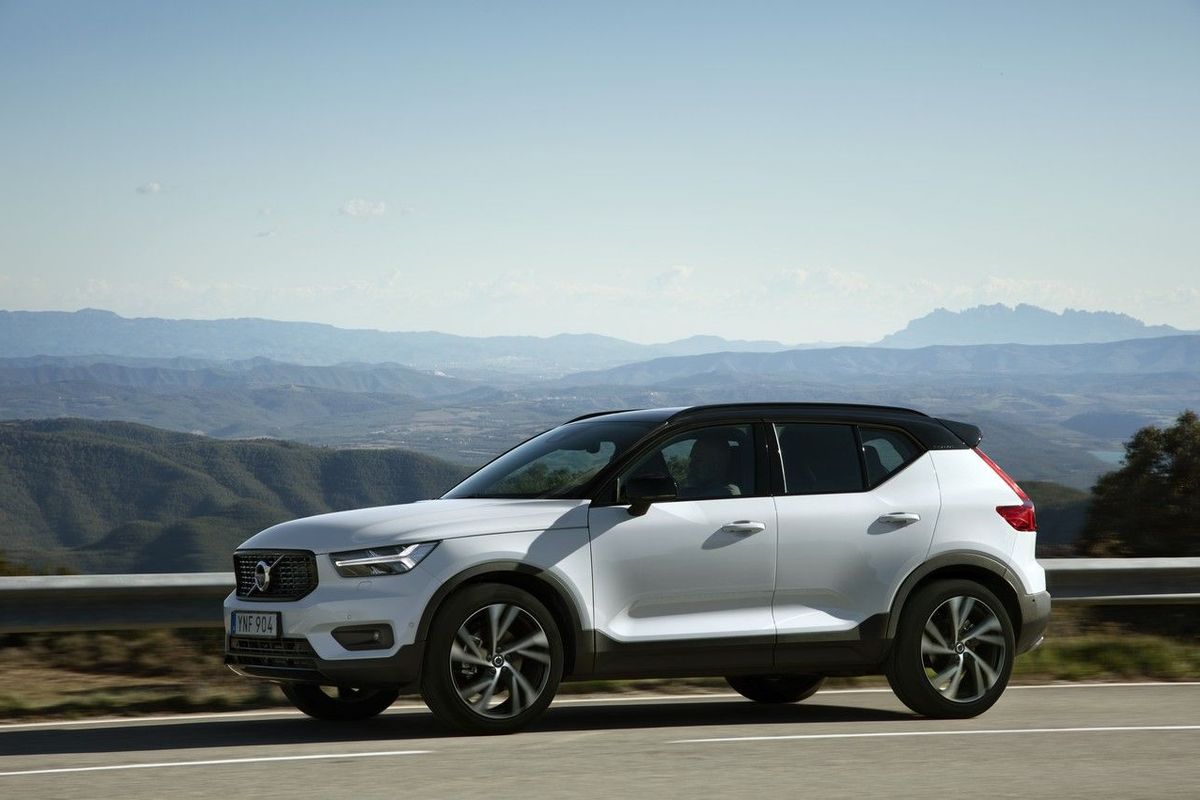
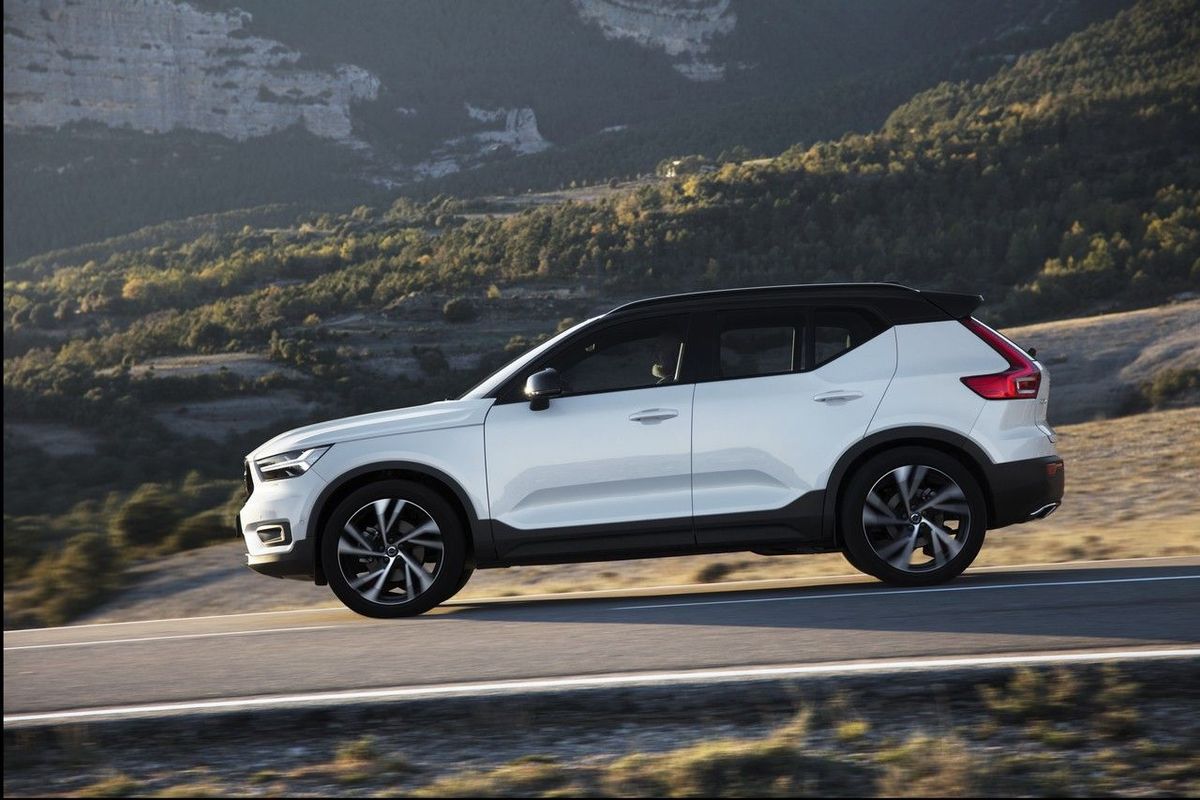
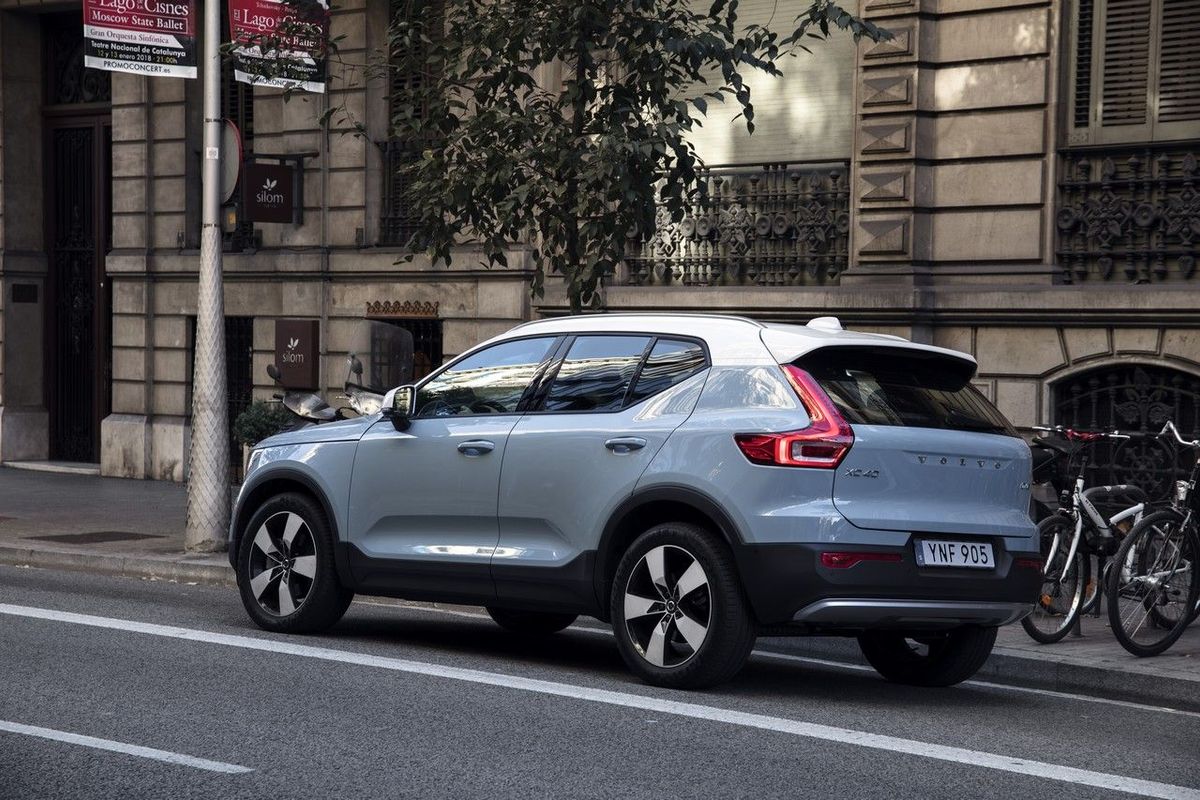
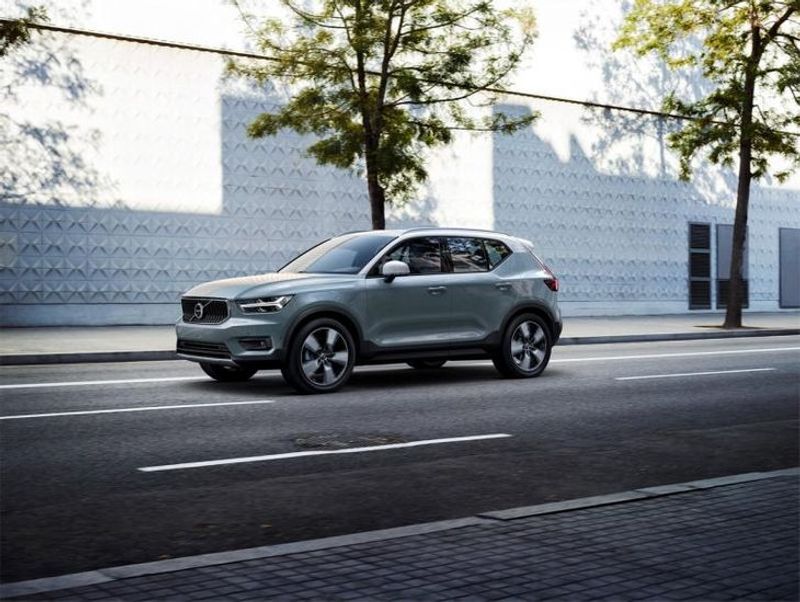
It's arguably one of the most stylish vehicles in the segment, yet it retains its Volvo identity.
Given how the market has reacted to the emergence of the premium compact family car segment, it makes sense for the Swedish brand to be playing in this space. However, Volvo is not alone; BMW (X2), Jaguar (E-Pace), Audi (Q2) and some various Mercedes-Benz SUVs also vie for their share of the pie.
It would be foolish to dismiss the XC40 as a shrunken XC60 or XC90, because while the vehicles share some elements, the newcomer is not built on Volvo's Scalable Product Architecture (SPA). The newcomer is the first vehicle to be assembled on Volvo's modular vehicle platform, named Compact Modular Architecture (CMA). This new platform will be underpinning future products and, based on our first impressions of the new XC40, we're keen to see how versatile this platform can be.
When you look at pictures of the XC40, it appears really compact but at almost 4 metres in length, it's bigger than you think. Volvo claims the new XC40 has the same height and width as the XC60. It may be the smallest SUV in the Volvo family, but it boasts 211 mm of ground clearance, making it suitable for some off-road excursions.
Personalisation
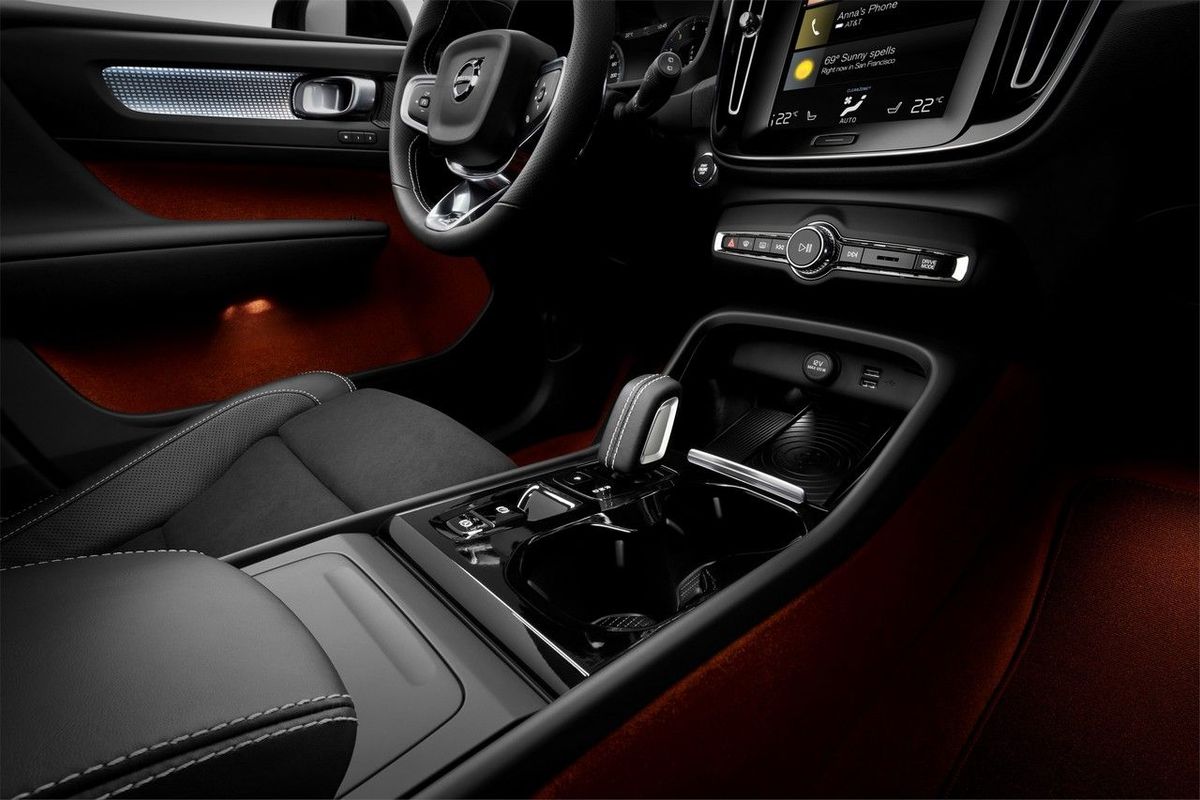
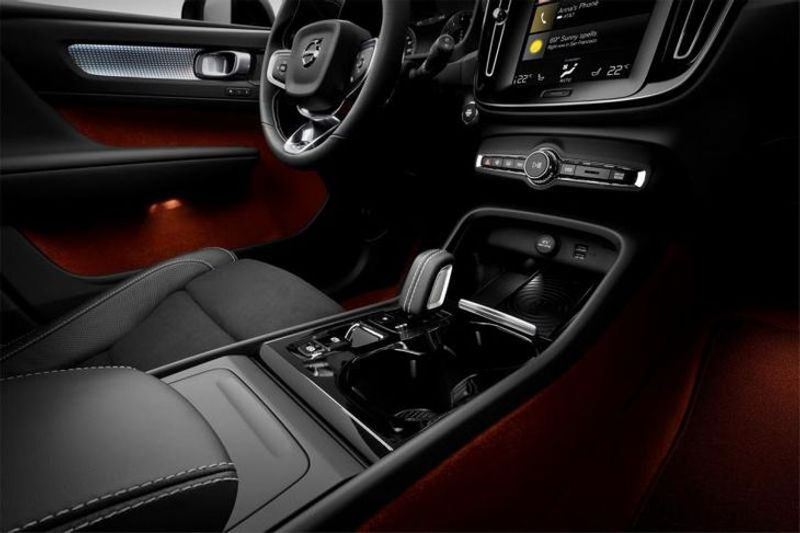
The Lava Orange inserts may not appeal to all tastes, but it adds some vibrancy to the cabin. Note the clever storage solutions dotted around the transmission lever.
Volvo South Africa has realised that image and personalisation options are key in this segment and, as a result, you can create an XC40 that is tailored to your individual taste and is likely to be one of a kind. There are 13 exterior colours, 9 alloy wheel designs, 7 interior themes and 3 interior trim inlays. We're quite fond of the Lava Orange floor colour, but understand that it could be too rich for some tastes.
Engines and trim
Volvo has ostensibly covered all the bases with regards to the new XC40's range line-up. There is a combination of turbopetrol, turbodiesel, manual, auto, front-wheel drive and all-wheel drive options. Admittedly they're not all available from the launch we attended this week, but we're glad to see there's an XC40 to suit the vast majority of customer requirements. The entry-level T3 derivatives arrive in the third quarter of this year and there'll be Inscription versions joining the range in future. This new T3 motor is a 1.5-litre turbocharged 3-cylinder unit producing 115 kW and 265 Nm, while consuming a claimed 6.8 L/100 km.
The rest of the lineup are engines we've experienced before in Volvo's other products. The D4 is a 2.0-litre turbodiesel 4-cylinder unit with 140 kW and 400 Nm, while the T5 packs 185 kW and 350 Nm, and is definitely the fastest model in the range. The turbodiesel engine will be the thriftiest of them all, with a claimed consumption figure of 5.2 L/100 km. At launch, the D4 and T5 will feature all-wheel drive and 8-speed automatic 'boxes, with the option of manual 'boxes and front-wheel drive coming later.
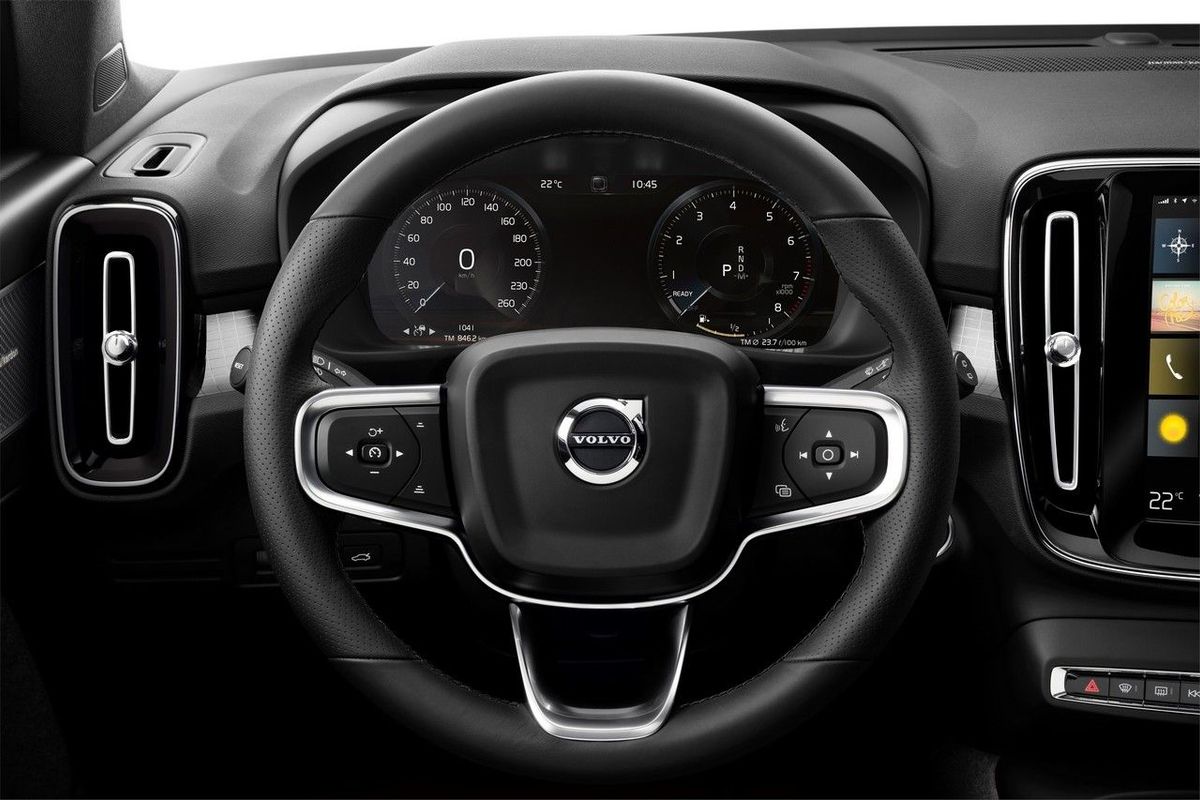
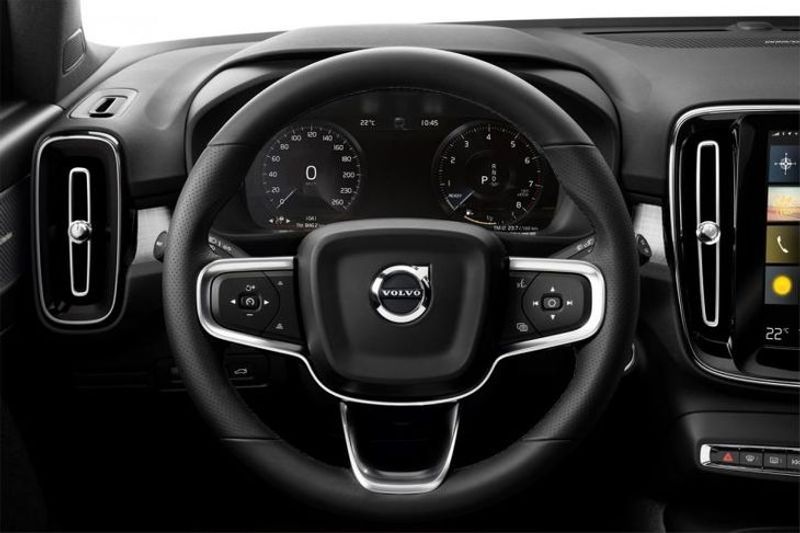
The digital display is crisp and clear, while the Volvo Sensus infotainment system features Android Auto and Apple Carplay – perfect for the modern generation
What's it like to drive?
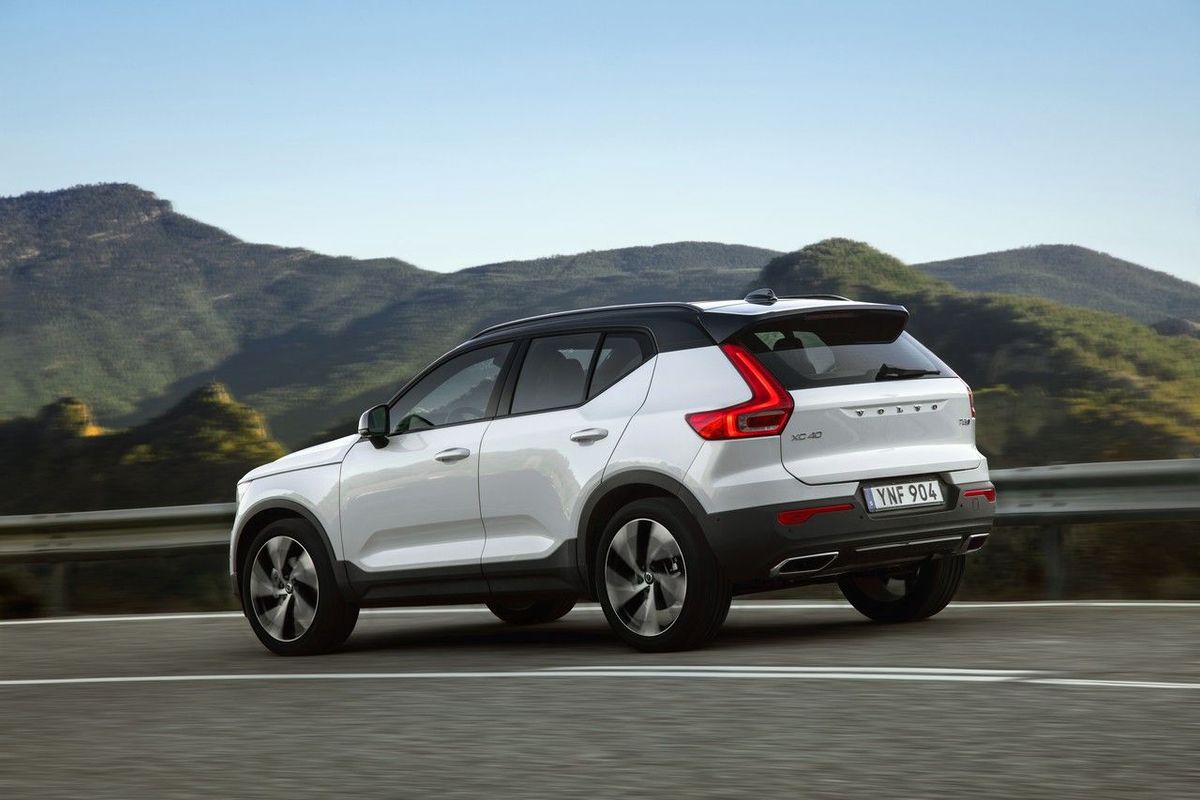
As ever, first impressions count for much. Image is vital in this segment, arguably more so than in more moderately priced compact family cars. When we set eyes upon the Volvo XC40 for the first time, we were deeply impressed with how contemporary the car looks. For the Instagram generation, the car is remarkably photogenic, both inside and out, and as mentioned earlier, it's bigger than you think. We often receive comments that a new car looks like an existing product made by another brand, or it has elements from a rival. Here, the design is so unique yet familiar, there'll be no mistaking it for anything other than a modern Volvo.
The cabin retains that modern Swedish minimalism and the level of fit-and-finish is great, which is what customers in this segment are looking for. The driving position is set high, the seats are comfortable and supportive and once you're used to its workings, the Sensus infotainment system is a gem. Being a Volvo, safety specification is off the charts and there's a lot of autonomous tech that will intervene on your behalf. Rear legroom is a little tight for taller passengers, but that's on par for this segment.
Photos make the XC40 appear small, but it's actually the same height and width as its XC60 sibling.
On the launch, we opted to drive the petrol-powered T5 R-Design and the D4 R-Design. Not only do they look good, but in the T5's case, it promises deceptively brisk performance. Both of these engines are 2.0-litre forced induction units from the DriveE series and we've experienced them both in other products from Volvo.
With 185 kW and 350 Nm, the T5 offers respectable off-the-line performance as well as commendable in-gear shove. Interestingly, Volvo SA claims this T5 will hit 100 kph from standstill in 6.4 seconds!. Even when in Comfort mode, there's no hesitation; the car can surge forward if you extend your right foot all the way down. However, when you do decide to stretch the car's legs, we found the engine note to be a tad unrefined. Granted, very few owners will be caning their XC40s, but its worth noting.
Our pick of the range has to be the turbodiesel, although we're eager to sample the compact 3-cylinder unit. The D4 2.0-litre turbodiesel has outputs of 140 kW and 400 Nm, making it pretty useful if you're perpetually in a hurry. But, despite those big numbers, the fuel economy is where the D4 really shines. While Volvo SA claims 5.1 L/100 km, we were quite happy to see 6.1 L/100 km on our test route through the urban Fourways sprawl. The engine pulls well from low in the rev range and the 8-speed transmission is responsive and smooth enough to keep the motor operating in its optimal range, but should you need power on demand, it's there when you need it. Unfortunately, the turbodiesel motor also suffers a bit in terms of mechanical noise and the sound can be intrusive and rough when pressing on.
With all-wheel drive and decent ground clearance, you can actually go for a gravel drive without fear
Both the T5 and D4 share some pleasant driving traits. From behind the wheel, the driving experience is pleasantly upmarket. The steering is surprisingly light and despite the high driving position, the X40 drives like a luxury hatchback. Alloy wheels come in 18-, 19-, 20- and 21-inch varieties and our two test cars rode on the stylish 20-inch rims and tyres. While pretty to look at, we found that our launch route was peppered with potholes and rough surfaces that upset the smooth ride quality and the coarse bitumen elicits some loud cabin noise. To be on the safe side, we recommend the 19-inchers, as they'd likely offer a better ride thanks to a higher-profile tyre.
Is it worth your attention?
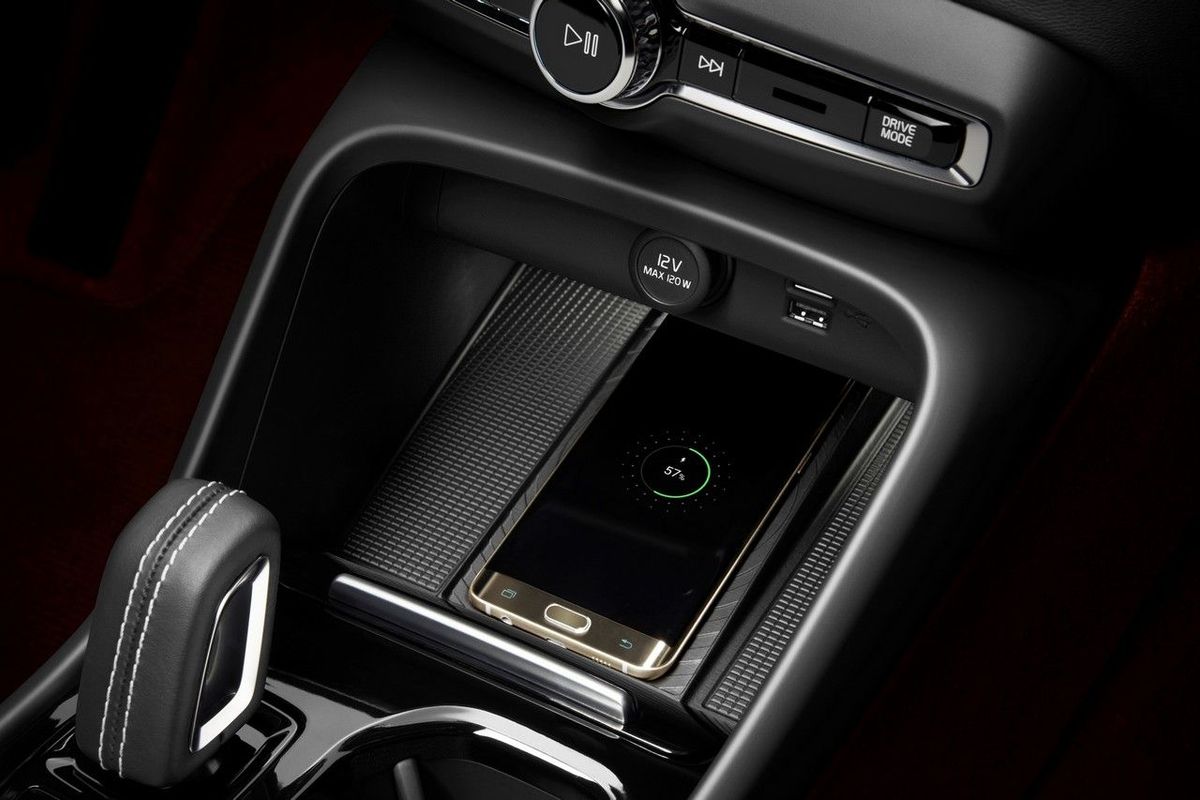
Volvo has struck a great balance of luxury and sportiness with its XC40. It's surprisingly spirited and agile to drive, yet exudes Swedish style and ingenuity. There are nifty cabin features that prompt us to say: "Why didn't we think of that?". The mobile phone cradle (with wireless charging pad), plastic bag shopping hook, removable bin and storage compartments under the seats are examples of what makes this a clever car. If you fold the rear seats down there's plenty of room for a mountain bike.
Given its luxury positioning, the XC40's pricing and specification is comparatively keen; it's pitched straight into the market where the BMW X2 and Jaguar E-Pace are already sparring for sales. The T3, for example, comes in at R486 500, which is impressive. With the car industry battling to find unique designs and brands typically playing it safe with conservative lines, it's great to see that Volvo can still produce head-turning designs that capture the buying public's imagination.
Indeed, this is no shrunken XC60 and even if you don't like the styling, you can't argue that it's not at least interesting. Volvo SA was happy to announce that it needed to stop taking pre-orders for the car because take up was so good that there were concerns stock supply would become an issue. The best problem in the world, in other words. We predict that this stylish newcomer will be the best-selling Volvo in South Africa. It is clearly in contention for the top spot in its segment. It's easy to see why.
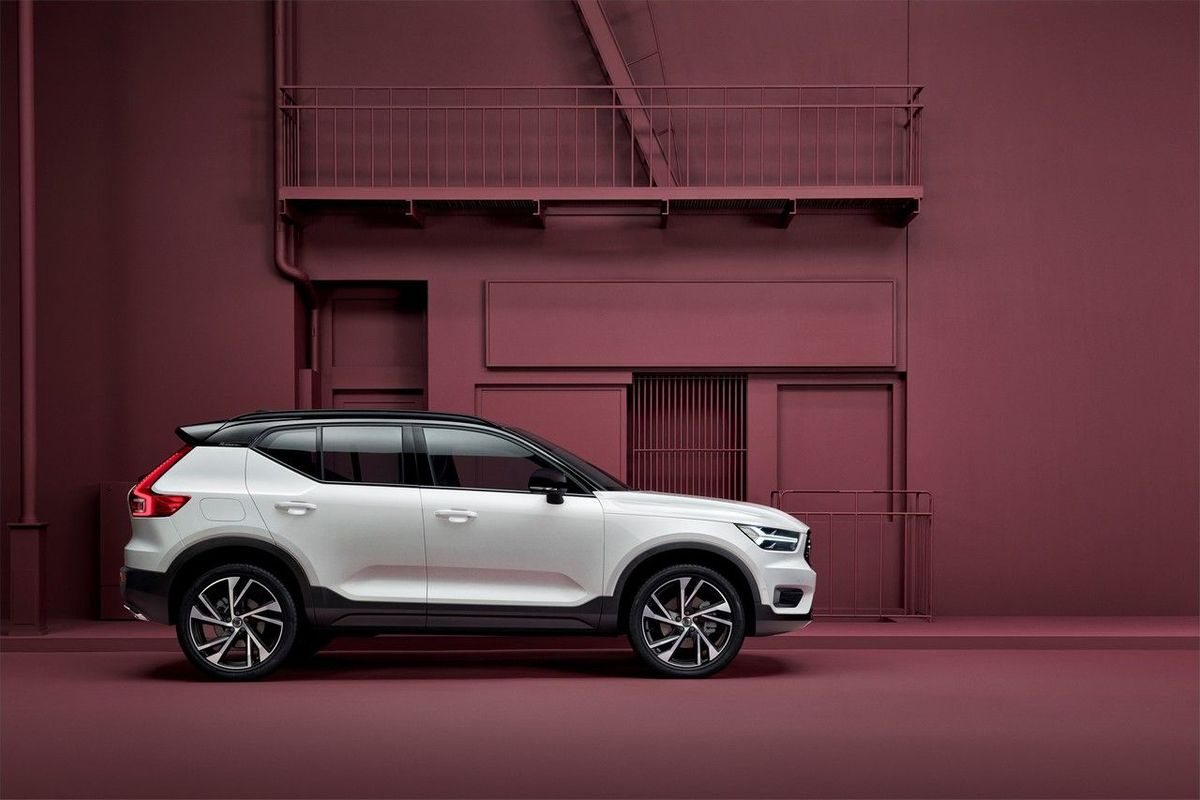
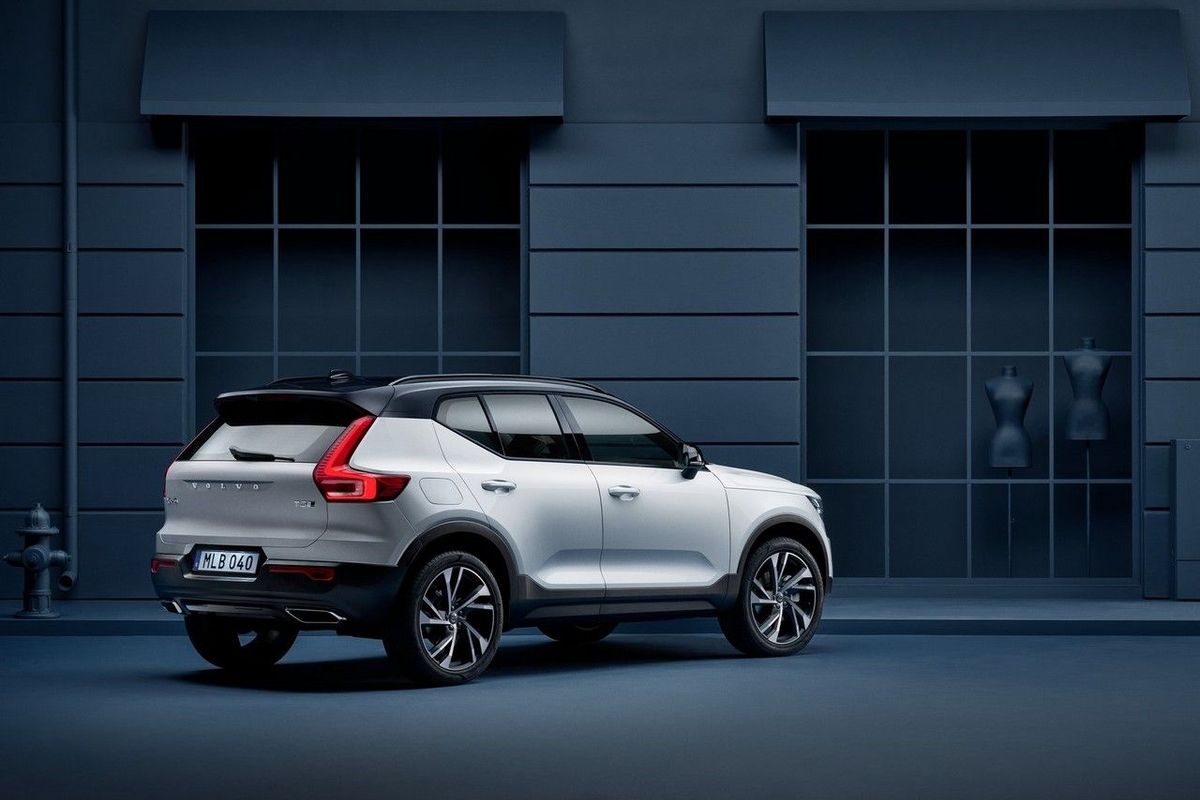
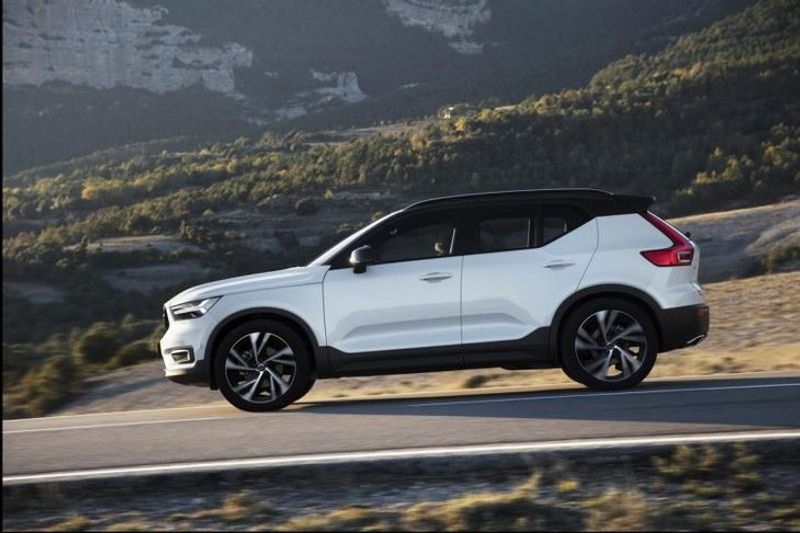
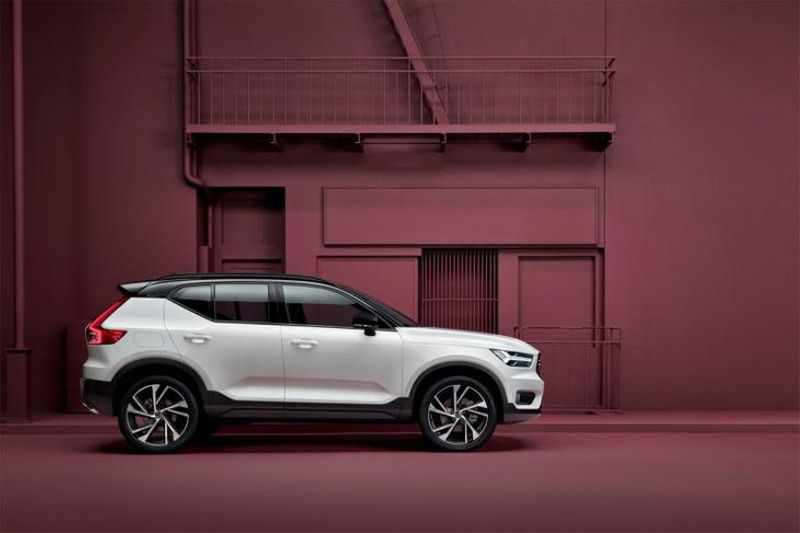
In contrasting white with black roof, the Volvo XC40 is one stylish newcomer to the premium SUV arena
Volvo XC40 price in South Africa
Every XC40 comes with a 5-year/100 000 km warranty and maintenance plan, 5-year/unlimited mileage roadside assistance (including a Skytrax track unit). The pricing below includes VAT, with the second amount being the CO2 emissions tax. Please note that the T3 entry-level models are only available from the third quarter of 2018.
Internationally, Volvo offers a subscription service called Care By Volvo, where customers can "subscribe to a car rather than buy it, for a fixed monthly fee which includes the likes of service, maintenance, insurance and other added value benefits". This plan is currently under consideration for introduction in the South African market and, if all goes according to plan, you'll be able to subscribe to Volvo ownership by the middle of 2019.