BMW M4 CS (2017) Launch Review [with Video]
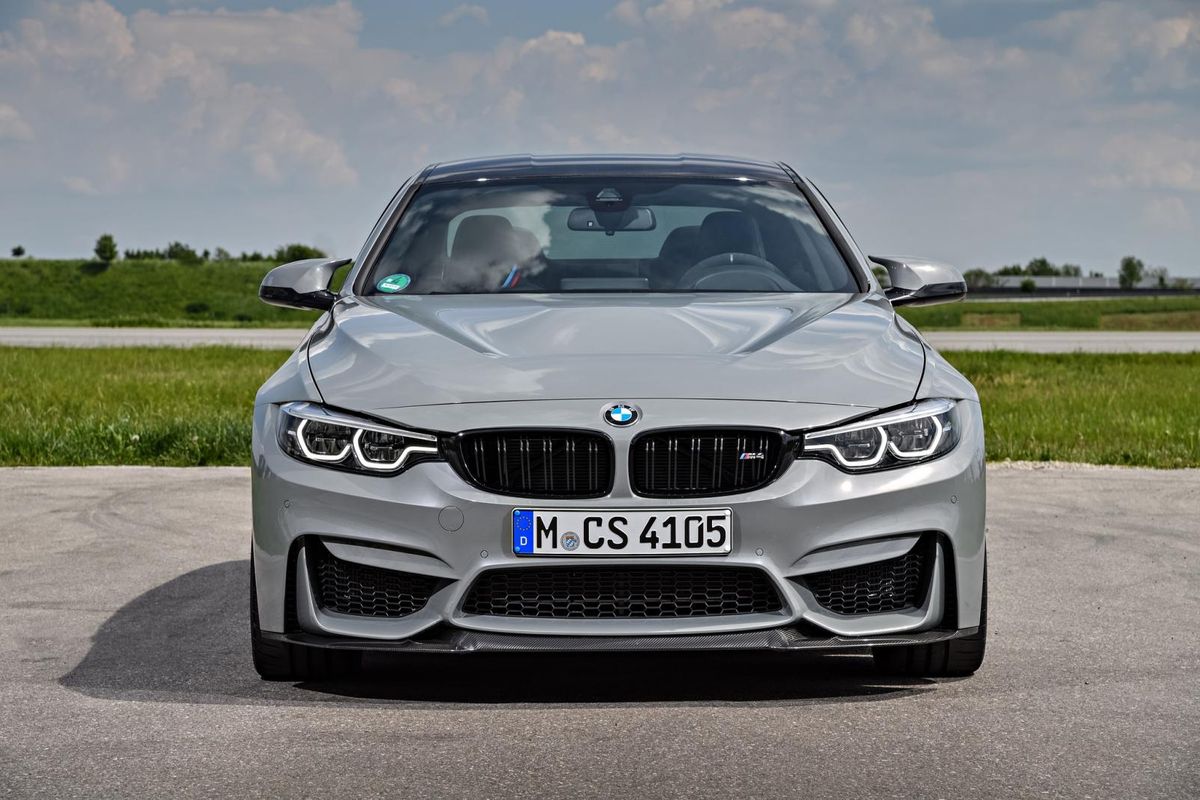
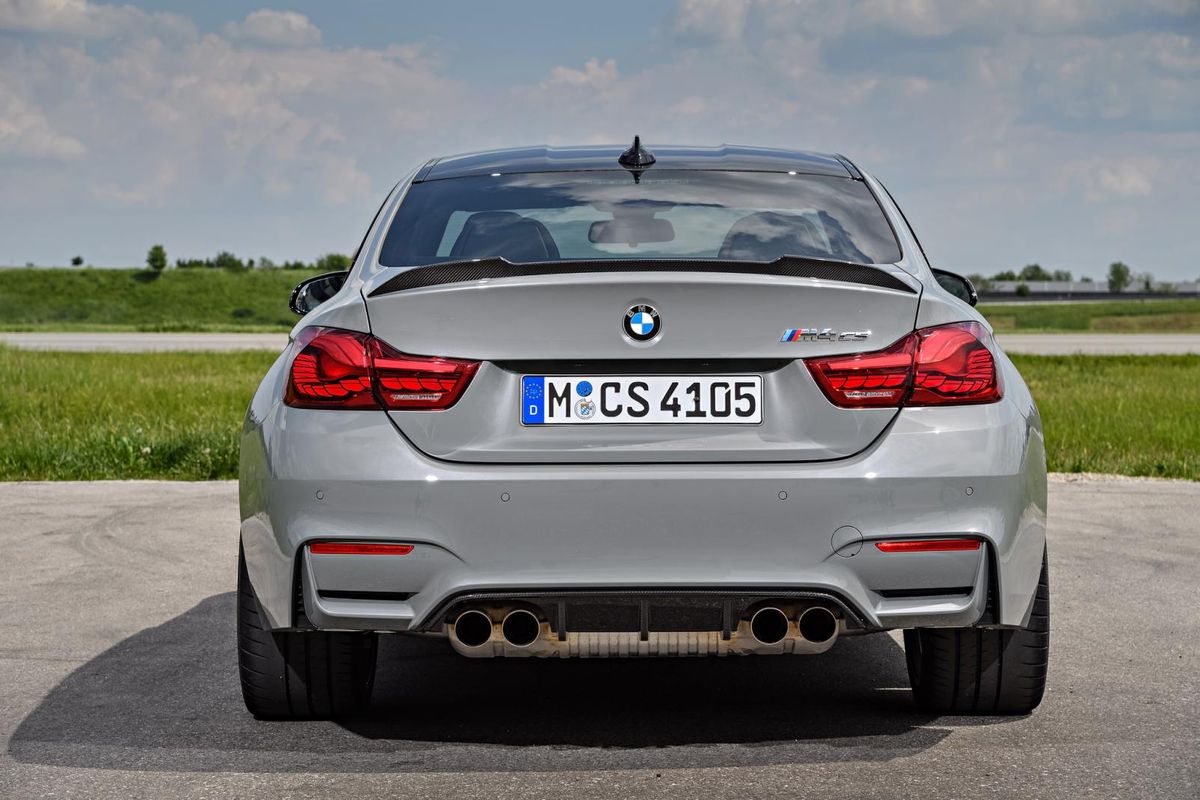
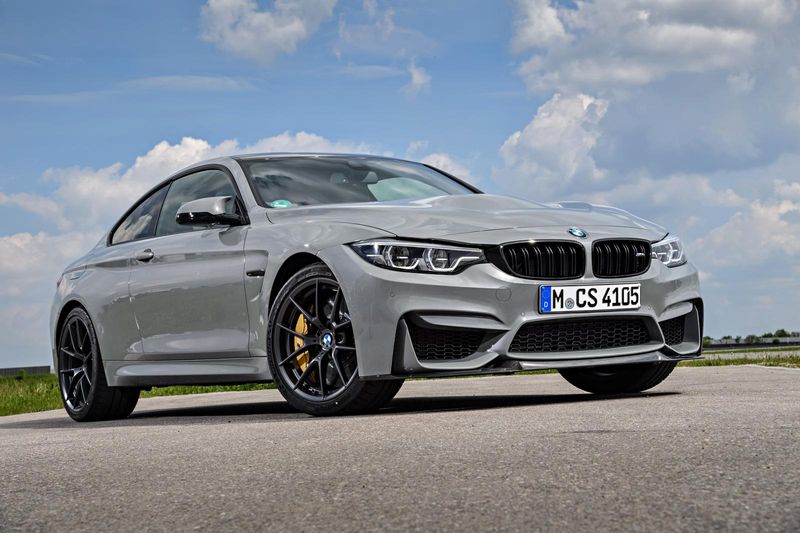
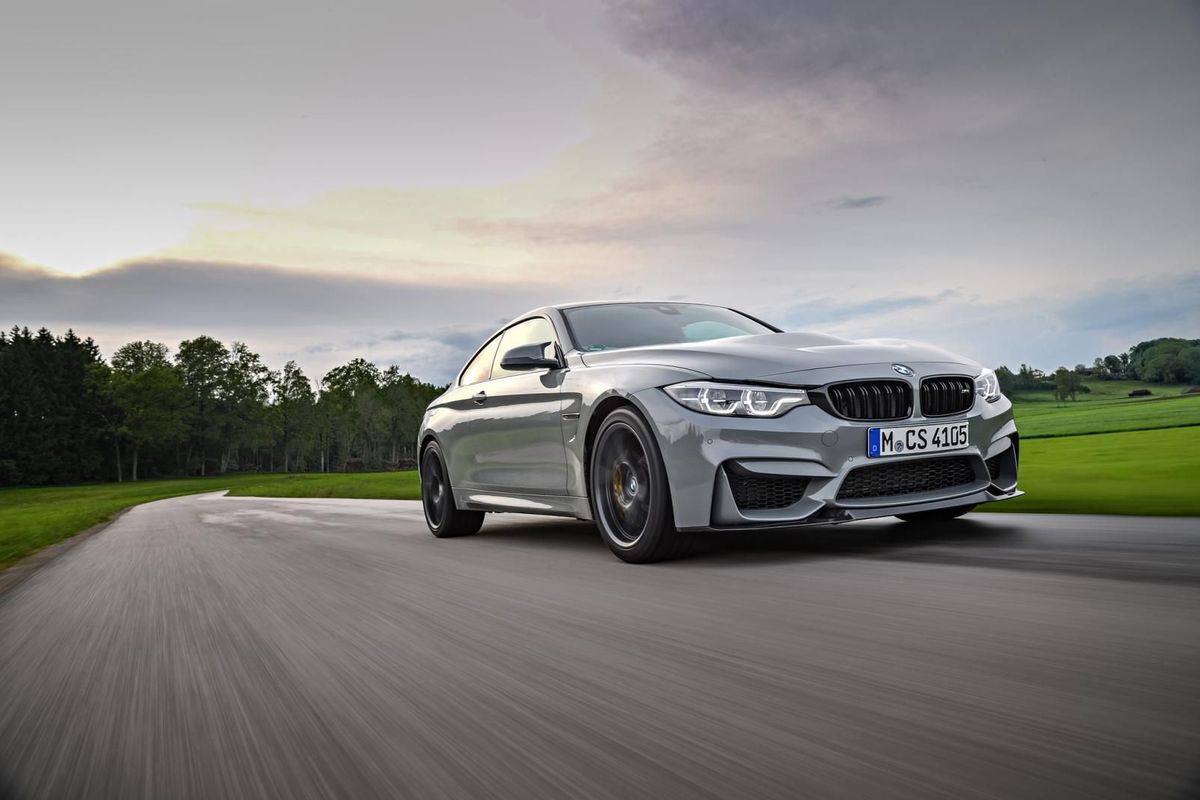
BMW has reinvented the CS badge and applied it to yet another special-edition M4. The highly desirable M4 CS, which was launched in South Africa in October 2017 with an eye-watering price tag of R1 838 500, feels more like a refinement than a reinvention, but it’s better than an M4 Competition and more usable than a GTS…

By Matt Saunders

The BMW M4 CS is the BMW Motorsport Division’s definitive take on the headlining 4 Series Coupe. Maybe. And if so, only at the fifth time of asking if we include the late "DTM Champion Edition" in the list of M4s we’ve been treated to already. Well, it’s no more cynical than Porsche’s profiteering with the ‘991’-generation 911 GT3, is it? Where desirable performance derivatives are concerned, it seems anything goes.

The M4 CS comes to market about a year after the even more expensive and specialised M4 GTS. It will be in production for the thick end of 2 years and although BMW initially said it’s not a limited-series car ("we will simply make as many as (we) can within the time (we have) to make them," M boss Frank van Meel was quoted as saying), it now appears that only 3 000 units will be produced.


Expect BMW to carry the CS badging forward onto new products. Next up is possibly the M2 CS.

Perhaps most interesting of all, the M4 CS is the start of something new and interesting from the M Division. Cars in this mould, with CS badging, will be a constant feature of BMW M’s model range from this point onwards – or so say company insiders. In light of that fact, Munich certainly wouldn’t want to undershoot against expectations of the first one.

No danger of that last time around, you may remember. The M4 GTS was an incredible car, but one that stretched the margins of acceptability for a BMW M-car in all sorts of ways: most notably on usability and value. It cost R2.2 million, it had a relatively high-maintenance water-injected engine, it had manually adjustable coilover suspension, it had no back seats and – much too firm suspension to even attempt a daily drive to the shops and back. BMW said it would build 700 of them (23 made it to SA) and, a year on from the car’s appearance, the word is that you can still get one overseas, with relative ease and without waiting too long. Not exactly a smash hit, then.

So if Porsche 911 GT3 RS-level mechanical execution and outlay turned out to be a bit rich for an M4, what happens when BMW M takes some of the GTS’ more trick ingredients, halves that car’s price premium (allegedly) and keeps everyday road suitability front of mind during the dynamic tuning process? The new M4 CS is the answer: a car with plenty of the special track-ready flavour of the GTS, but whose engine and suspension don’t require a ready supply of distilled water and a garage with a hydraulic lift to get the best out of.

What's it like?


Half Competition Pack-half GTS, the M4 CS appears to strike a perfect middle-ground.

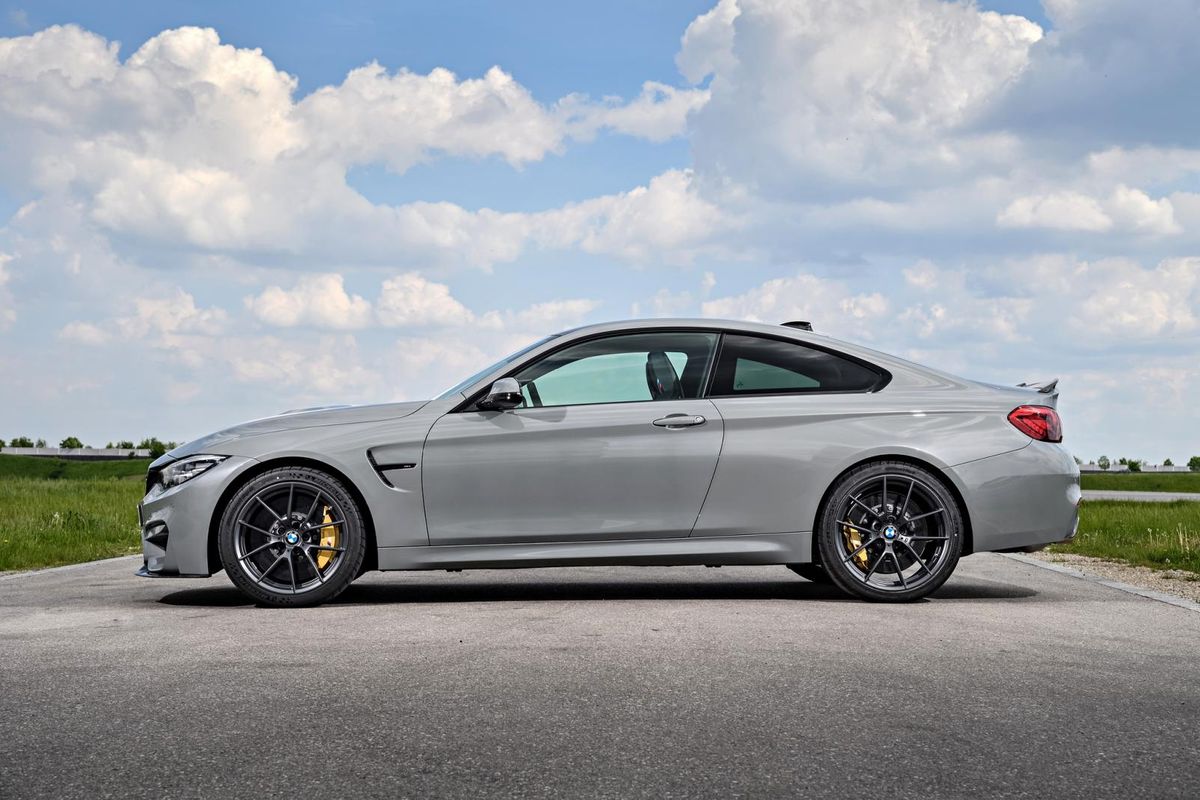
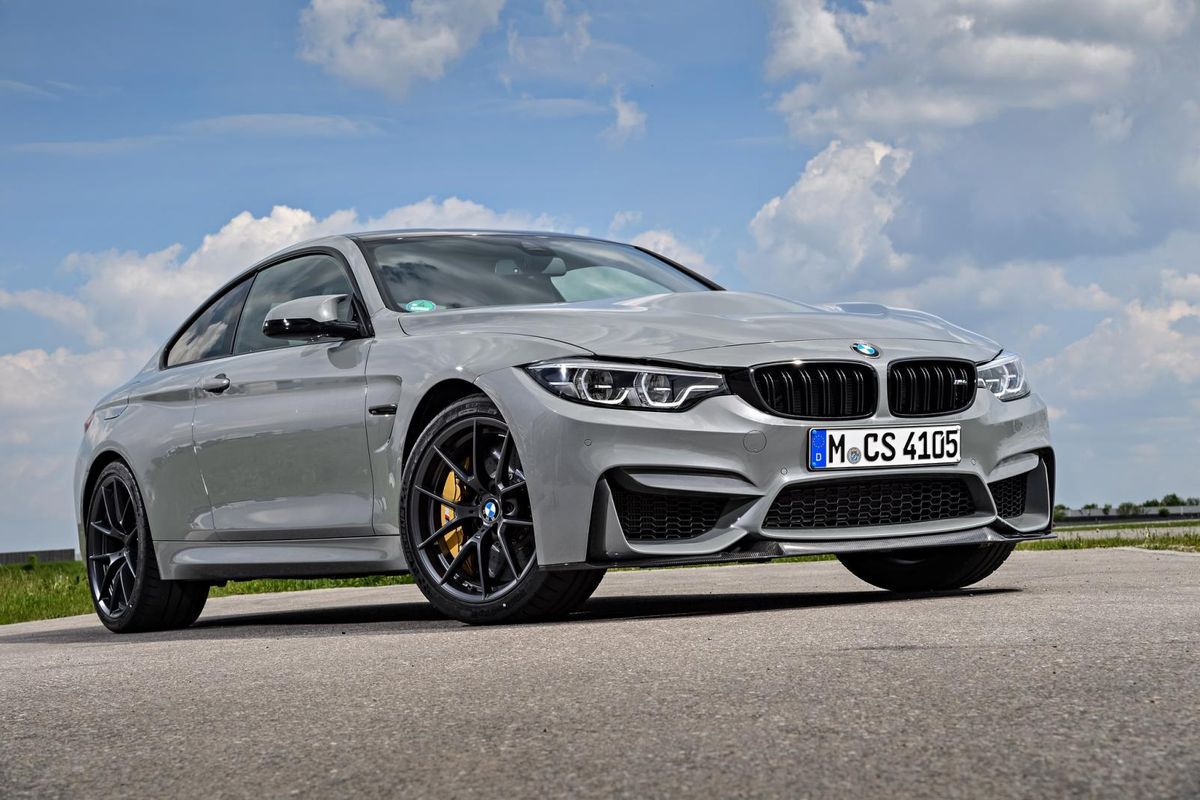
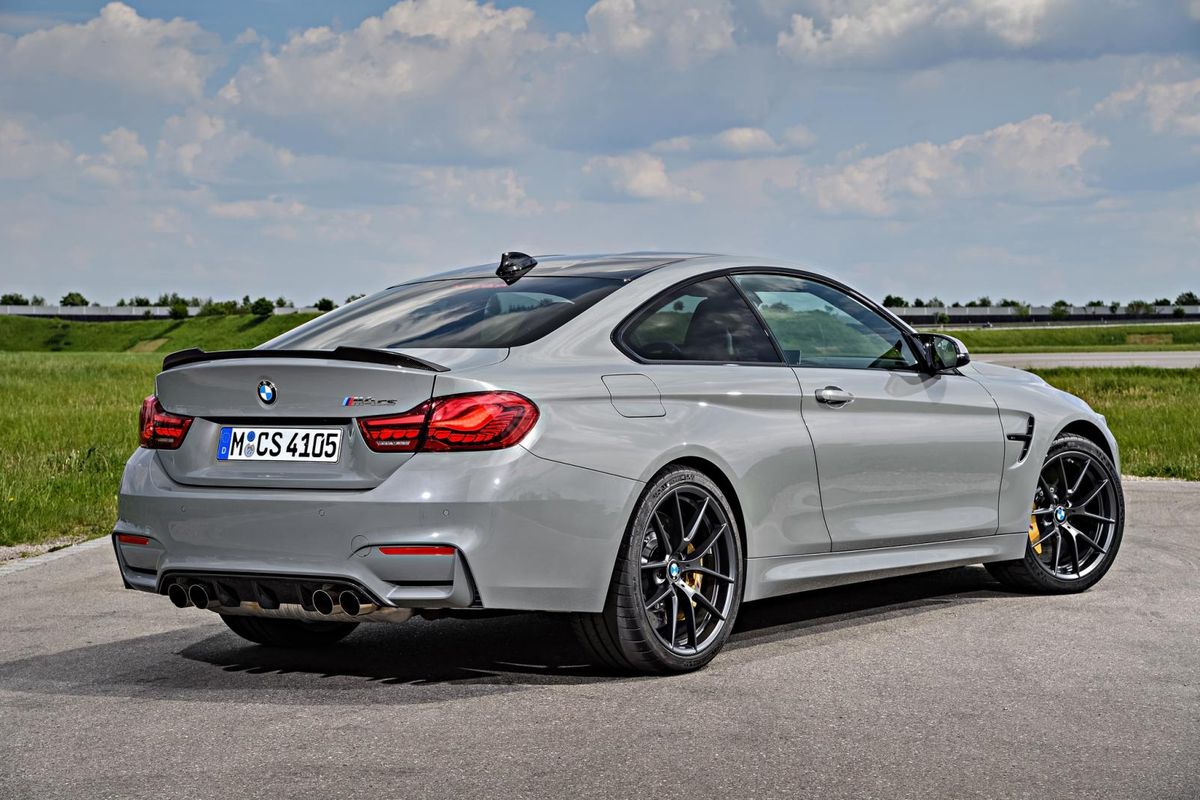
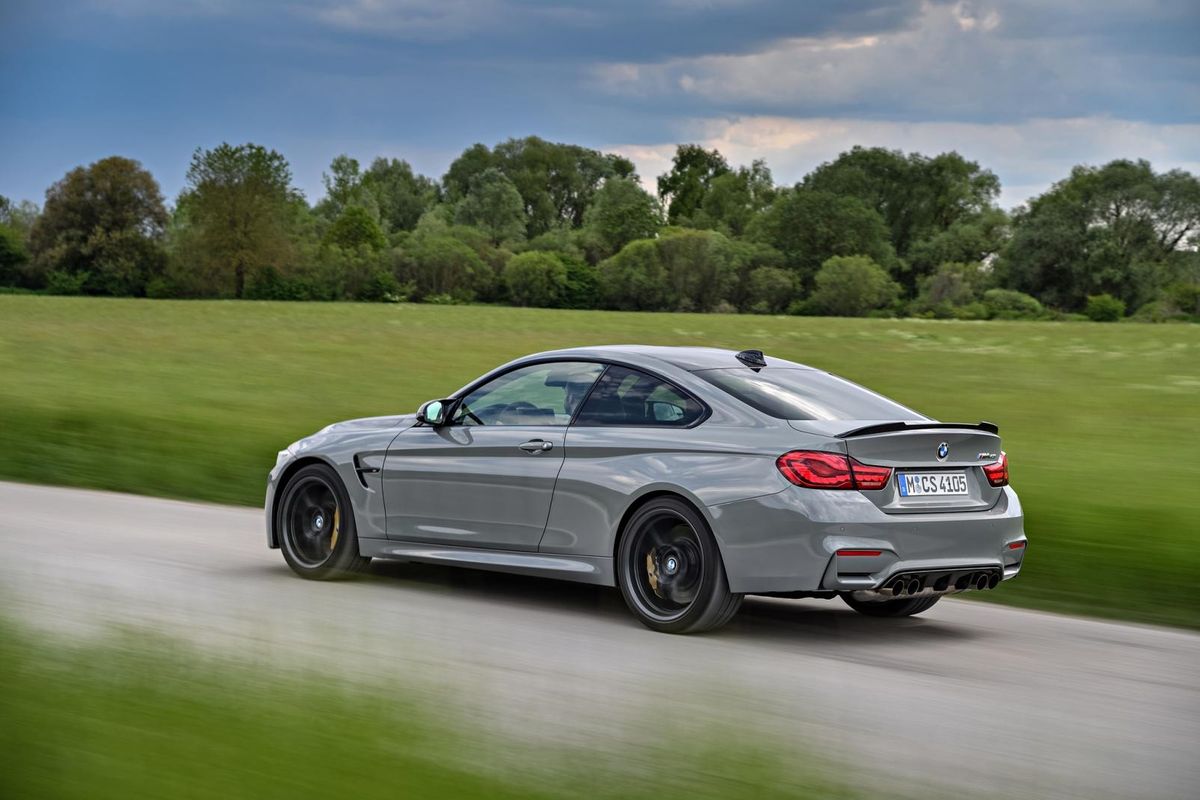
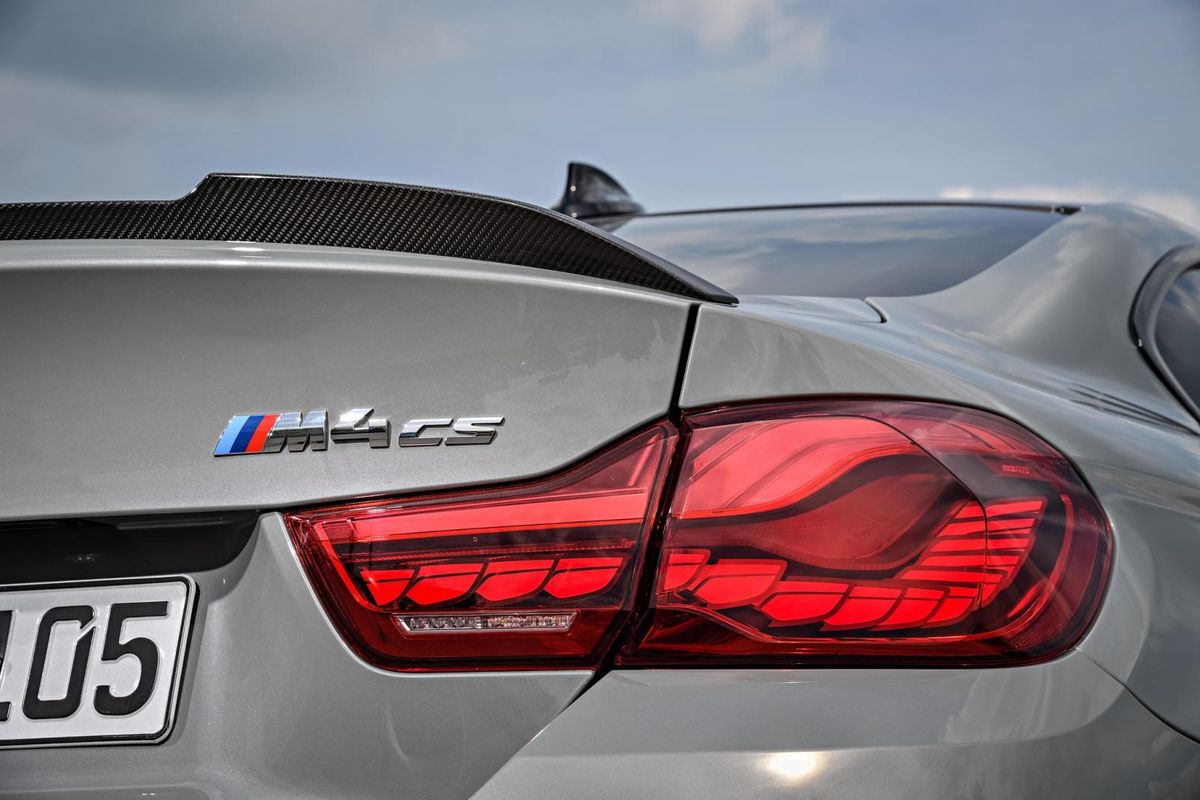
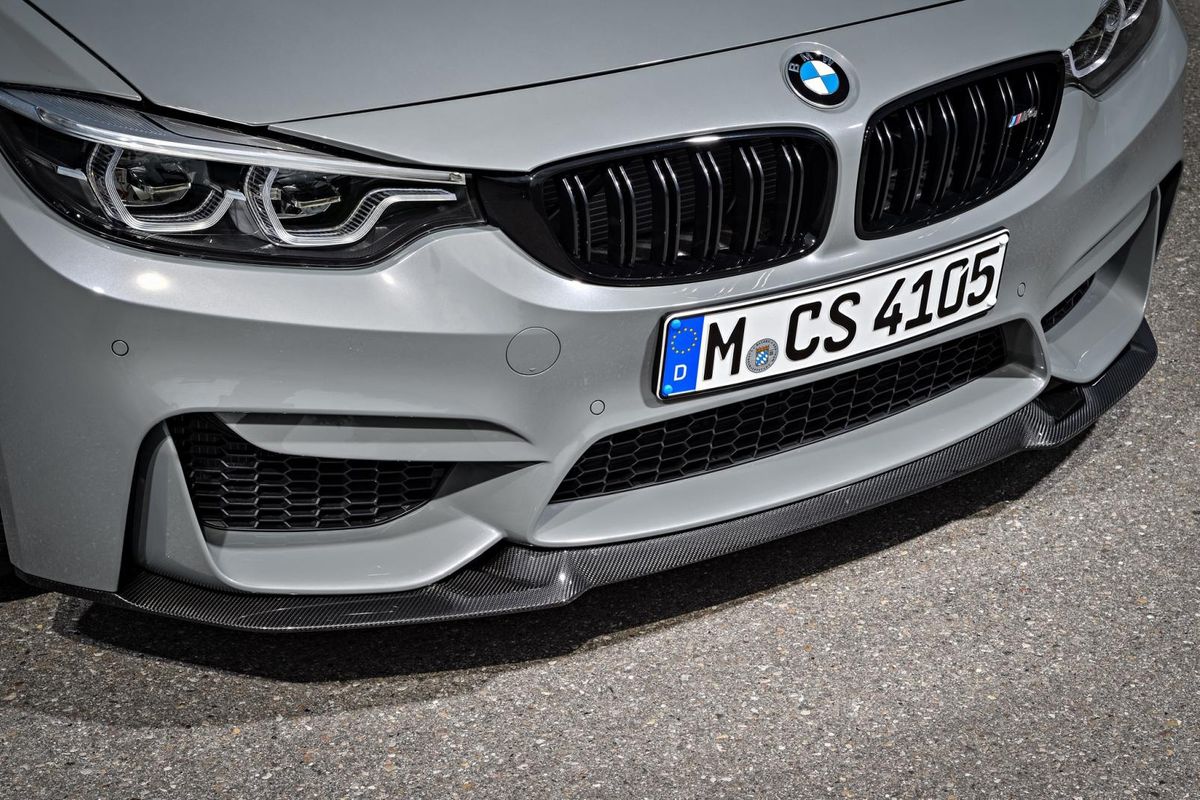
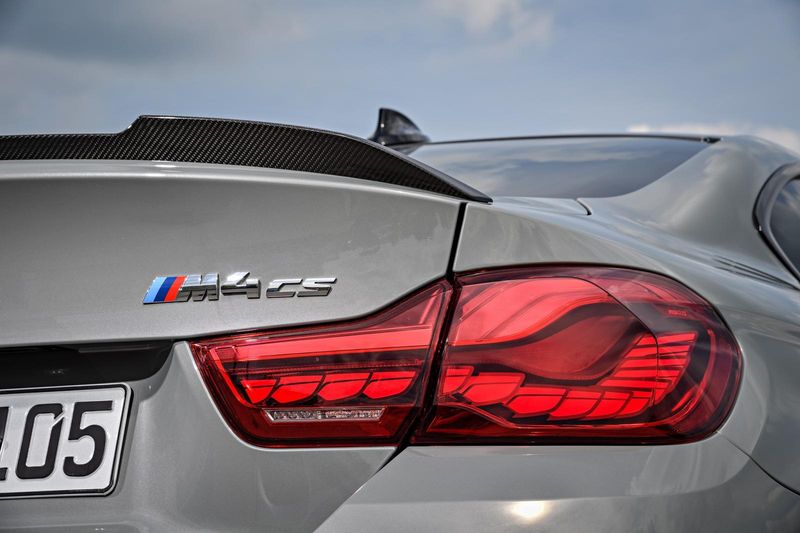
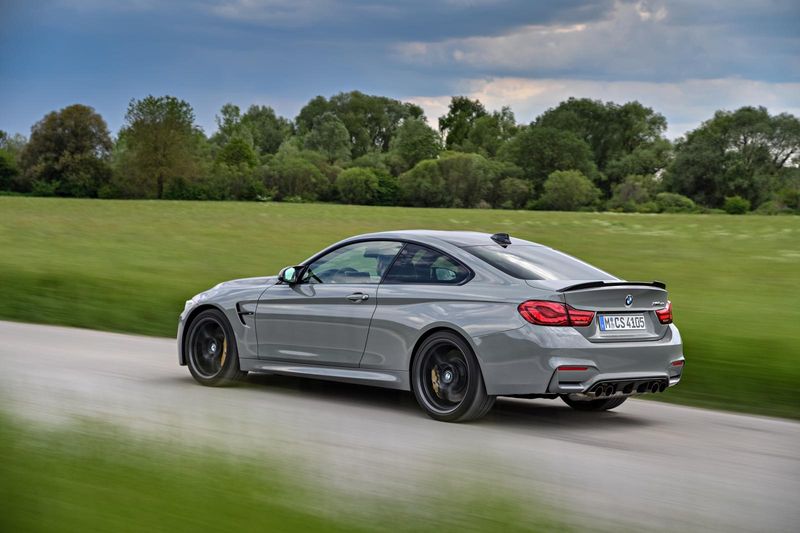
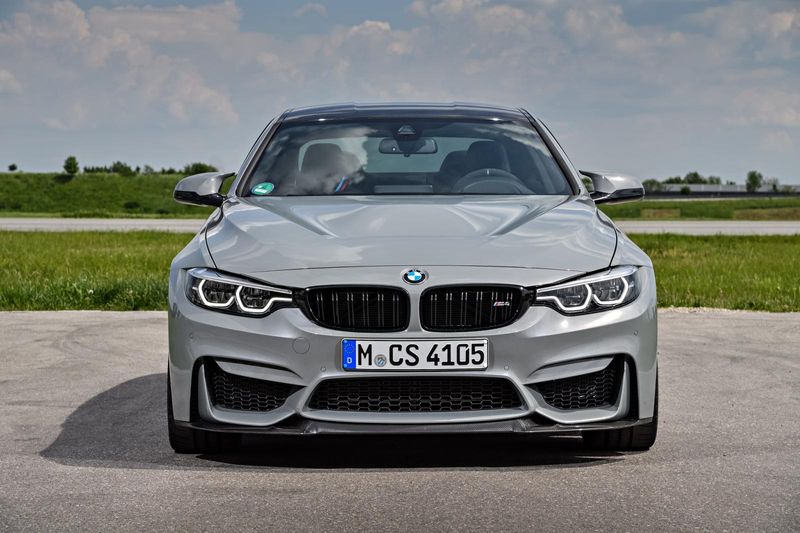
The CS uses the lightweight carbon fibre-reinforced plastic (CRP) bonnet and rear diffuser of the GTS and adds its own new fixed-height front splitter and rear gurney spoiler (also made out of CRP), while retaining the carbon roof of the regular M4 Coupe. Inside, it’s got the weight-saving lightweight door skins and centre console of the GTS as well as the special pared-down stereo. But, it’s also got back seats.

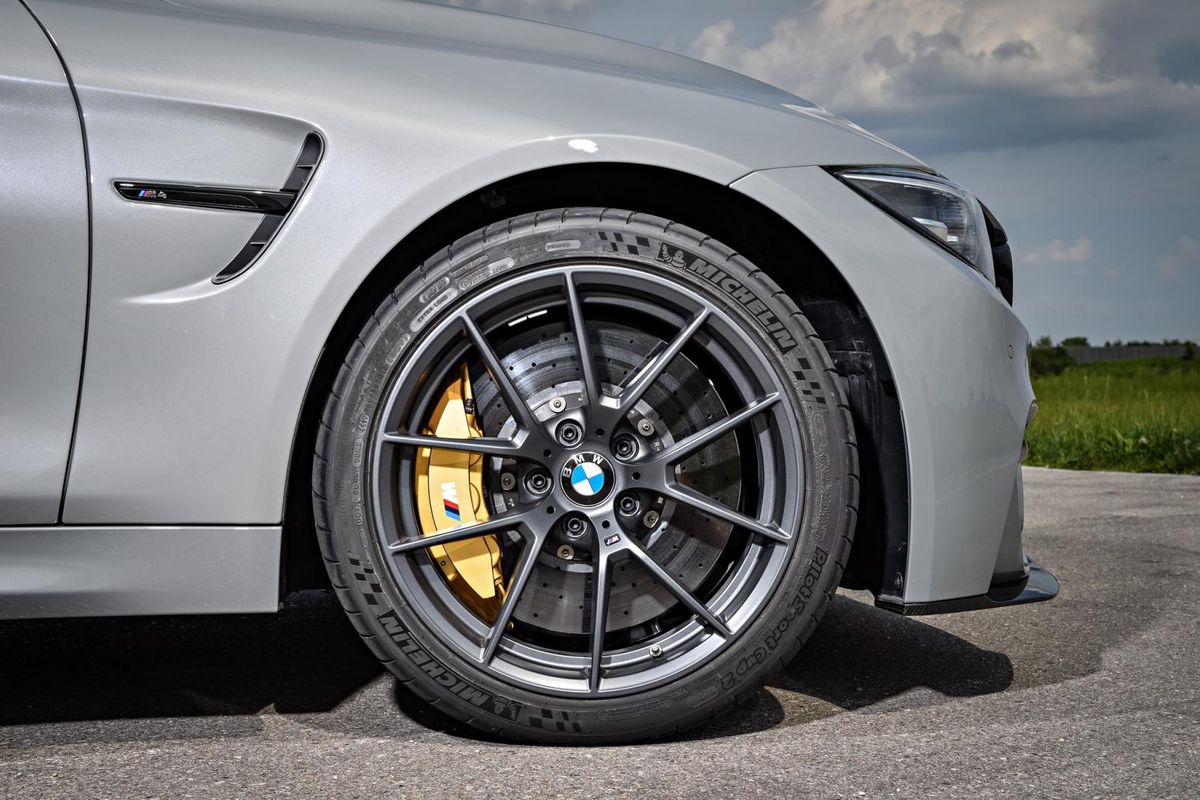
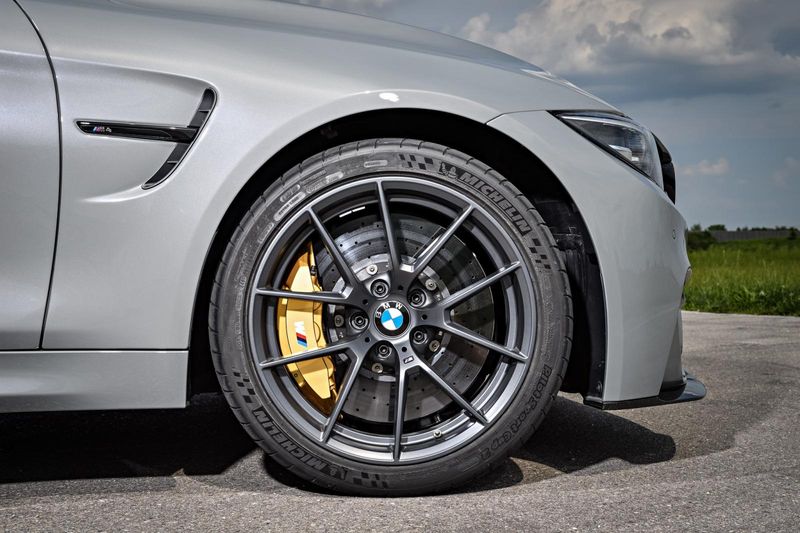
Unlike the GTS it doesn’t get lightweight carbon buckets up front or BMW M’s carbon-ceramic brakes as standard. Also, instead of the GTS’ complicated coilover suspension, the CS uses a retuned version of the M4 Competition’s suspension fitted out with new forged wheels and Michelin Pilot Sport Cup 2 tyres.

The upshot is that the new M4 CS goes only some of the way towards matching the weight saving of the GTS. It’s 35 kg lighter than an M4 Competition (before you add those optional carbon stoppers) while the GTS enjoyed about twice that advantage.

But that’s only half the picture…

The M4 CS’ engine makes a sizeable improvement to the real-world performance of the even the M4 Competition mostly by matching the peak torque of the GTS – 600 Nm – without the need for that water injection system. Amazingly, the engine’s internals are the same as those of the Competition Package car, but its software management is new and simply works its twin monoscroll turbos harder at middling revs.

Peak power increases to 339 kW, which remains a distance behind what the likes of the Mercedes-AMG C63 S Coupe and Alfa Romeo Giulia Quadrifoglio sedan produce. But BMW M will be trusting CS owners to realise that the combination of 10 per cent more torque, 35 kg less weight and some additional Cup-tyre-derived traction delivers this new M4 a claimed 0-100 kph time of under 4 seconds: 3.9- to be exact. That is just a tenth off that of an M4 GTS, and exactly what’s claimed for both the Mercedes-AMG and the Alfa Romeo.


Carbon-ceramic brakes are optional but the sticky Michelin Pilot Sport Cup tyres are standard.

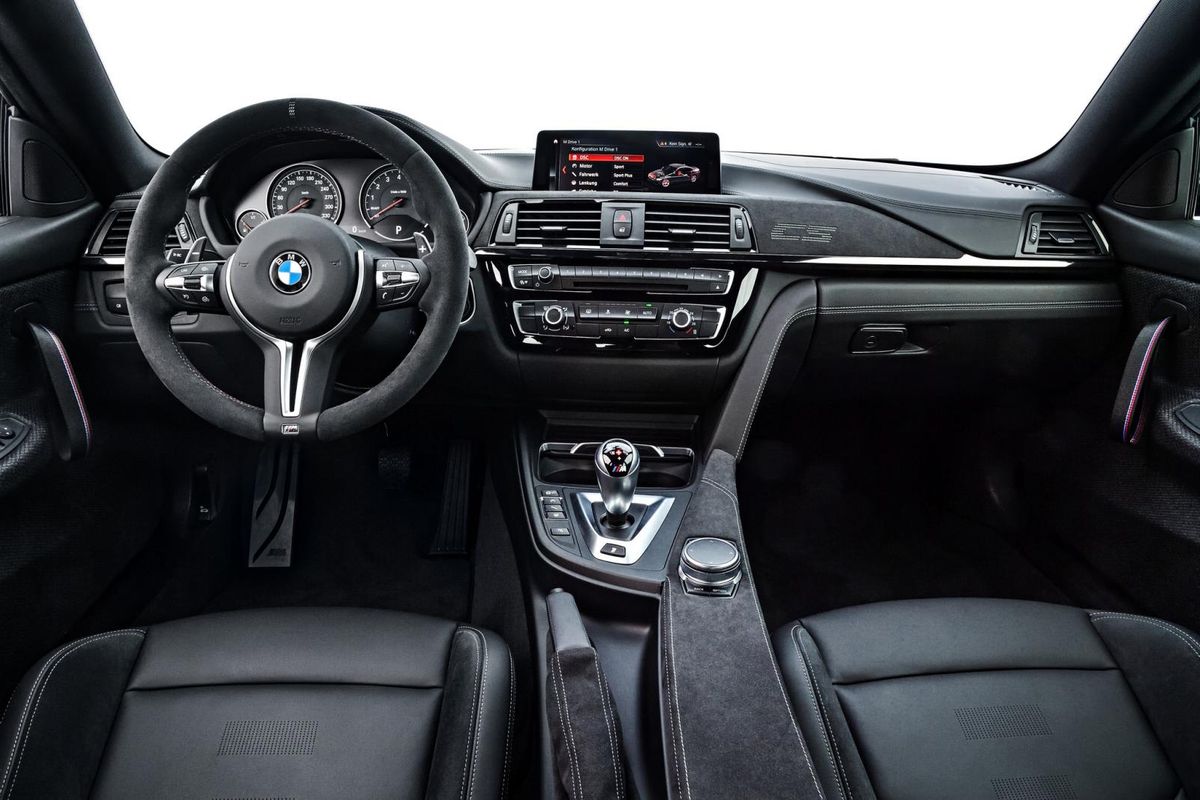
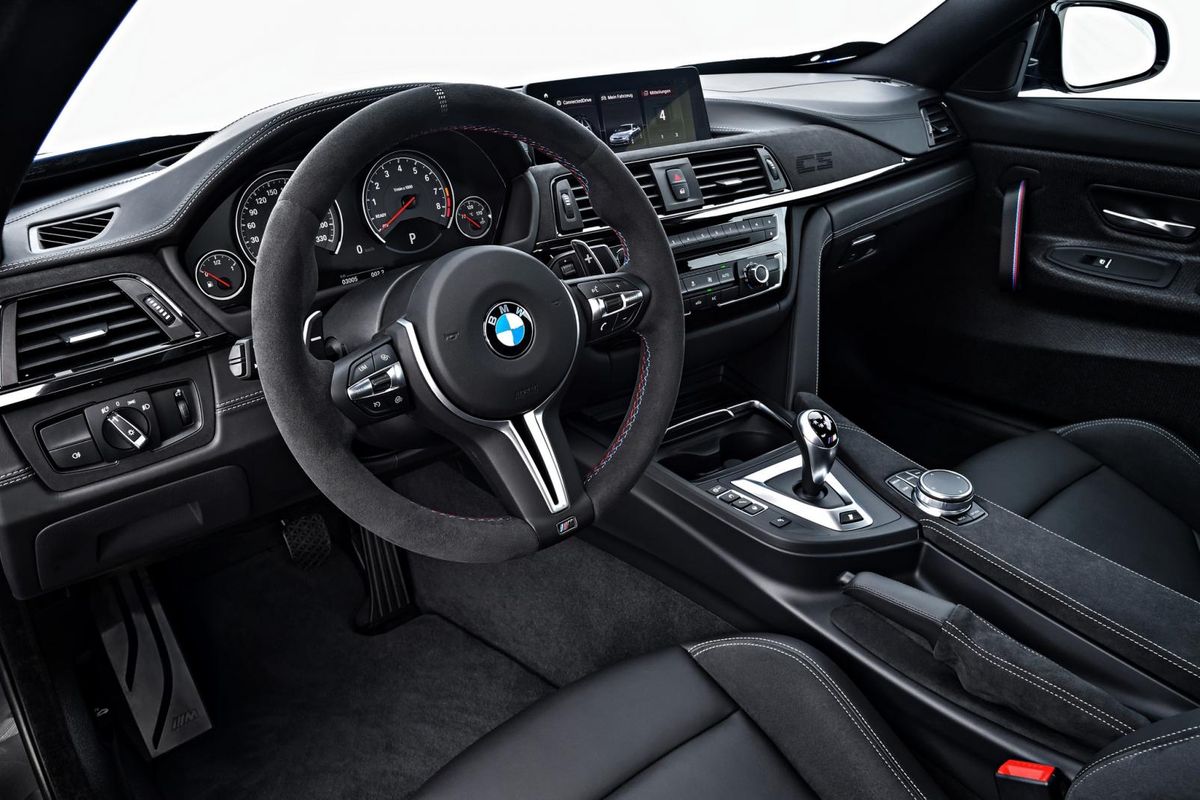
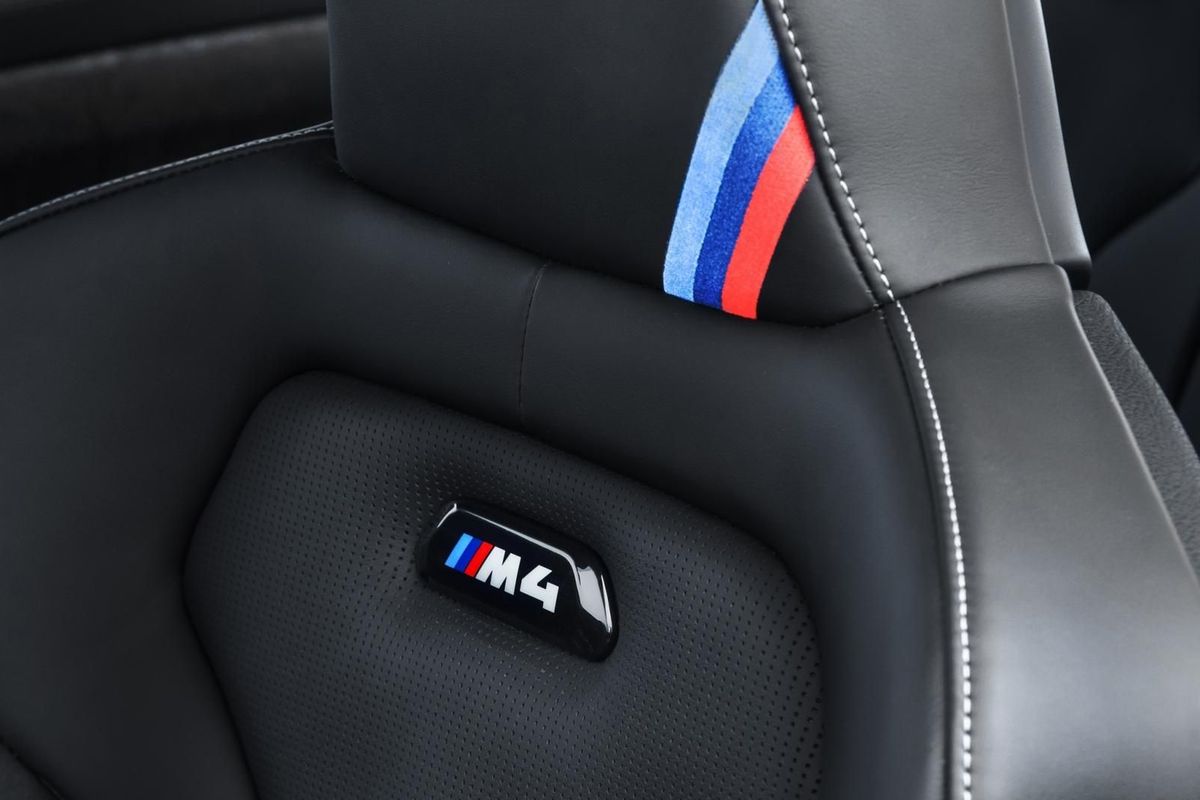
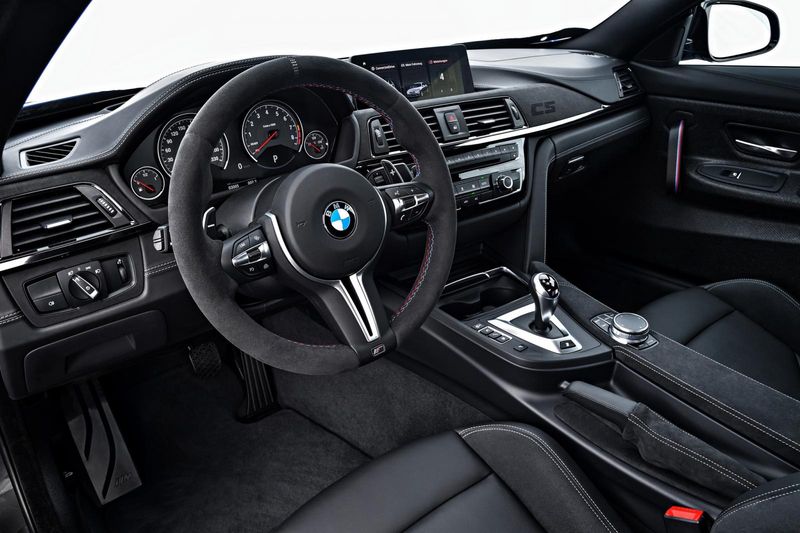
You install yourself into what seems like the same comfortable, thickly bolstered sports seat of the M4 Competition when you first get into the CS, identical, but for an illuminated logo on the backrest, a change to the upholstery theme and manual rather than motorised adjustment. The lightweight door skins and centre console on either side of you immediately bring the GTS to mind, conjuring a pleasing extra layer of performance purpose for the cabin that the "alcantara" suede trims for the fascia, transmission tunnel, roof and door consoles echo.

The manual, single-zone climate control system, slightly thin-sounding (but respectable) audio and Professional Media infotainment system combine to strike just the right balance between a sense of apparent hardcore purpose and pragmatic real-world usability. This is a car you’d happily drive every day, that has the convenience features you want of a modern German performance machine, but that’s deliciously light on the luxury trimmings.

Stereo aside, it’s also much better to listen to than a normal M4. The car’s quad exhaust system is the same as the one on the M4 Competition but, shorn of some sound deadening and with the CS’s new engine management in play (and a redline extended to 7 600 rpm) the CS sounds much more gritty and real than a standard M4. Not as angry as the titanium-piped GTS, granted; not even close.

But the improvement in the appeal of the car’s sonic character is plain. And it helps no end that BMW M’s lightweight door skins remove the stereo system’s door speakers that might otherwise broadcast the "engine sound modulation" so many object to in the normal M4. You still get some electronic augmentation of the engine sound but, at low and medium revs and under load, the perfectly synthesised digital warble of a normal M4 is replaced by a much more detailed, spiky and authentic engine rumble that you’ll instantly warm to on digging into the accelerator pedal travel.


Straps for door handles and a 'feature-lightened' infotainment system help strip the cabin of a bit of weight. 

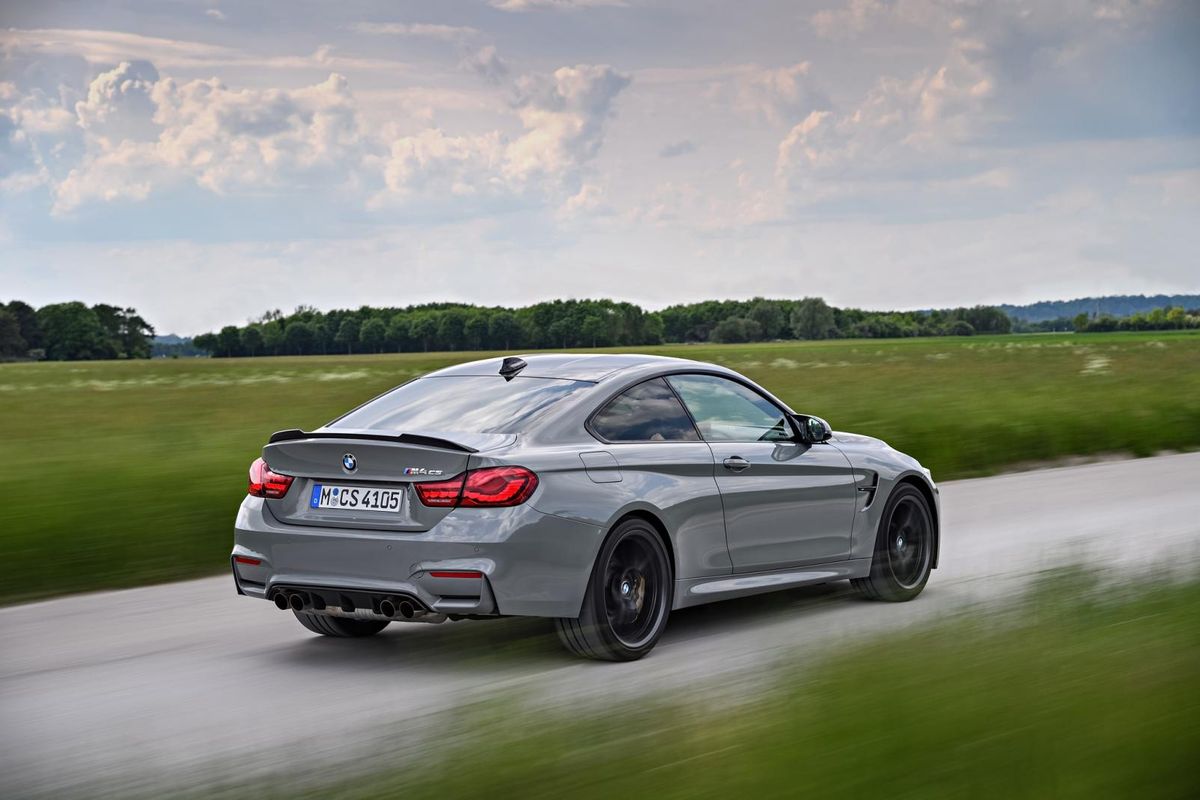
BMW gave us a couple of hours only in its new car, on roads around the Nürburgring Nordschleife made busy by crowds gathered for the annual ‘N24’ endurance race. But even here, with no opportunity to really test the car up to the limit of its dynamic abilities, two things were clear: that the additional performance served up by the CS’s engine is probably even greater than BMW’s claims suggest, and that the extra grip and body control created by its chassis not only makes the CS a more composed and precise handling car than a normal M4, but also one very at home on the road.

As in any other M4, the CS allows you to select from Comfort, Sport and Sport+ modes for its adaptive dampers, power steering and engine calibration; to choose between 3 shift modes on the standard 7-speed ‘M DCT’ twin-clutch gearbox; and between 2 dynamic stability control modes besides the obligatory DSC-off setting. Whichever mode you’re in, there’s a small-but-tangible improvement in contact patch feel through the car’s steering and a perceptibly sharper initial handling response as you feed the wheel through about 45 degrees either side of dead-centre.

New wheels, tyres aid steering feedback

We’d defy anyone who didn’t know as much to believe it after a drive in the CS, but the car’s extra steering feedback and body control come entirely from its new forged wheels and Cup tyres (the former an inch smaller in diameter up front, the latter getting a widened section at the rear, just like the GTS) and from redeveloped software calibrations for its dampers, power steering and active differential.

There are no hardware changes to the M4 Competition Pack’s springs, dampers or anti-roll bars here. And yet back-to-back testing against an M4 Competition revealed that the CS turns in even more instantly and keeps its body more level during hard cornering, with better vertical body control and less float over really testing lumps and bumps, but without any greater harshness of ride, shortage of compliance or evidence of bump-steer.


The CS is usable every day where the GTS is not and it has the right amount of power and torque to compete with newer rivals.

The CS’s handling balance is similar to that of its sister car. Where the engine’s greater mid-range torque allows you to give the driven axle more to do as you unwind the steering and exit a bend, those cup tyres reply with even greater adhesion, stability and traction than a regular M4 has. The CS enters bends flat and fast, then, and exits them even quicker with a composure unknown to the M4 Competition car.

You’d never believe a set of rims and tyres and a new adaptive damper tune could achieve so much. I suspect both a Mercedes-AMG C63 S and an Alfa Romeo Giulia Quadrifoglio have more adjustable handling; but I also suspect neither would produce the same needle-threading sense of handling accuracy as the CS has, which is its own reward on the road.

And I’d be very interested to compare the torque curve of the CS’ 3.0-litre straight six to that of the M4 Competition because the new car feels much stronger through the middle of the rev range. This is probably where the M4 most needed attention, the standard car just beginning to feel a touch weedy compared to the very quickest of its rivals – at least until its motor starts spinning beyond 5 000 rpm.

But the CS doesn’t feel weedy. At all. That extra torque has a big impact on its in-gear pace between 3 000 and 5 000 rpm, and there’s quite a lot more acceleration on tap where you really need it as you power away from corners and along slip roads.

Should you buy one?


Indicative pricing suggests that it will slot perfectly in the middle between an M4 Competition and M4 GTS.

When you stand back and digest the car’s abilities, you’re likely to conclude that the M4 CS feels more like a refined and perfected M4 than a radically altered one. It handles better, sounds better, goes harder and still works very well on the road. But it feels familiar, and in that respect, it’s probably notionally closer to a "Competition Package Plus" than a "mini-GTS" because its dynamic character and handling balance are broadly unchanged.

That’s good news is you like the regular M4, of course. For others, it’s probably too early to say whether BMW’s premium of R426 364 for the M4 CS is worth paying; for R1.8 million, the floating voter should accept nothing less than the best sports coupe in the class.

So this could be the car to put the M4 back on the top of its particular performance niche – but it’ll take a meeting with an Mercedes-AMG C63 S and an Alfa Romeo Giulia Quadrifoglio to establish it for certain. For now, it feels too close to call.

Quick Specs

Price: R1 838 500 

Engine: 6-cyl in line, 2 979cc, twin-turbocharged petrol 

Power: 338 kW at 6 250 rpm; 

Torque: 600 Nm at 4 000–5 380 rpm 

Gearbox: 7-spd twin-clutch automatic; 

Kerbweight: 1 580 kg; 

0-100 kph: 3.9 sec 

Top speed: 250 kph 

Related content

BMW M4 DTM & search for the perfect M car

BMW M4 DTM Champion Edition Lands in SA

BMW M4 GTS (2016) Review

BMW M4 with M Performance Parts (2016) Video Review

Spy Shots: BMW M4 Coupe Facelift

BMW M5 Prototype (2018) First Drive [with Video]

Alfa Romeo Giulia Quadrifoglio (2017) Video Review

Interested in buying a BMW M4?

Search for a used example on Cars.co.za

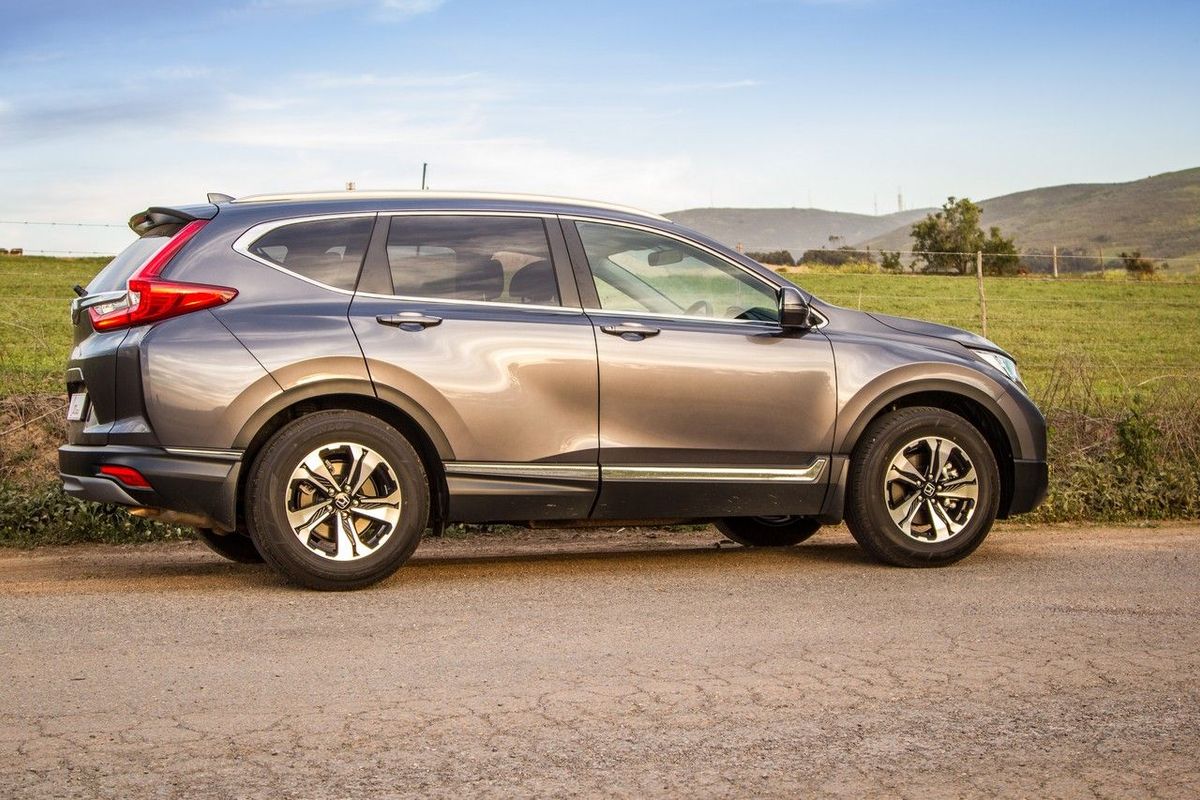
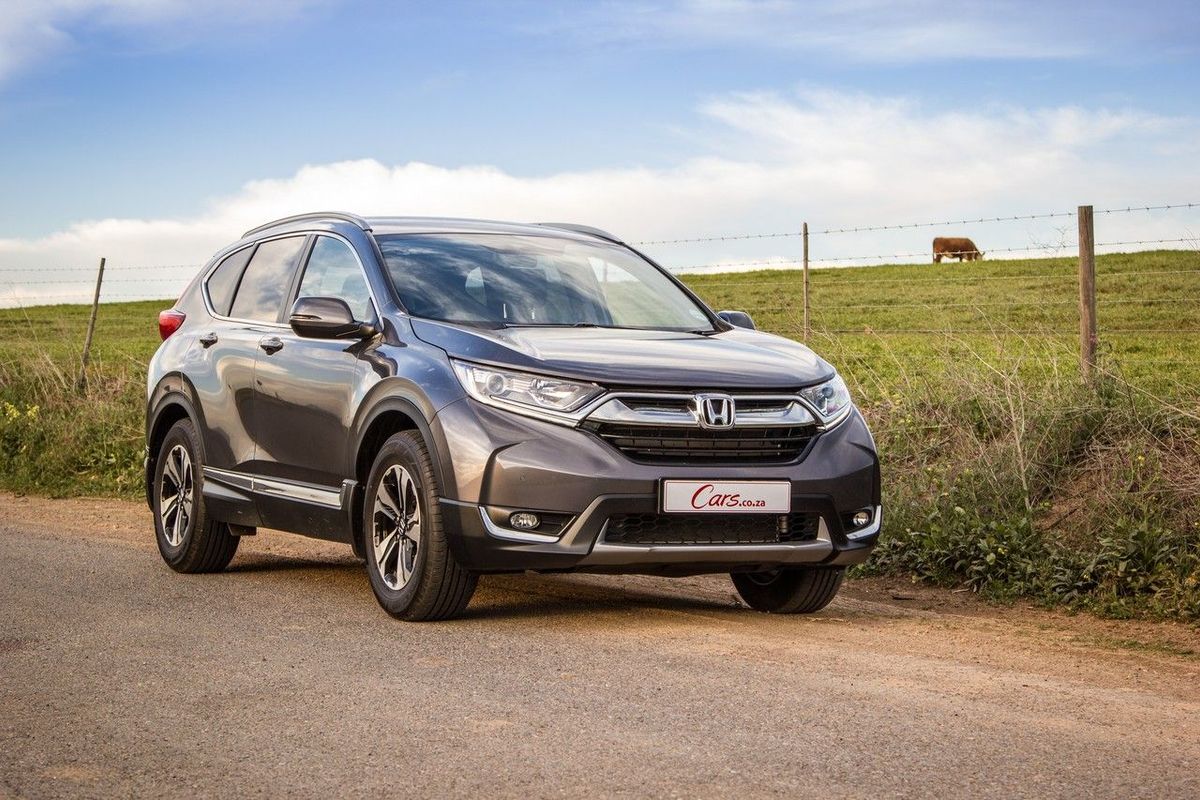
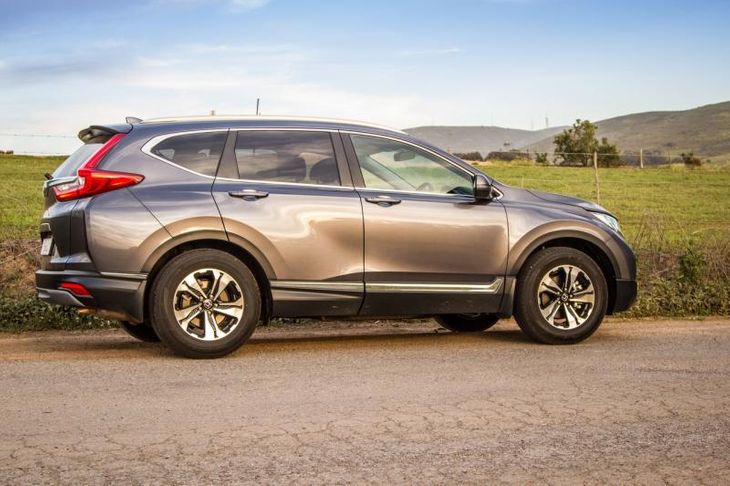
Honda CR-V 1.5T Executive (2017) Review

The 5th-generation CR-V was launched in the South African market in 2017 and while our initial impressions were favourable, Honda's latest family car has much tougher competition than its predecessor. We sample the first turbopetrol CR-V to see what it offers… 

We like: Excellent ride, generous specification, super space and practicality, high levels of comfort

We don’t like: Lack of in-gear punch, more expensive than rivals

Alternatives

  • The multiple award-winner: The 2016/17 #CarsAwards category-winning Volkswagen Tiguan is a fantastic piece of kit with a gem of an engine, but you will need to fork out a bit extra to be able to match the Honda in terms of spec. It's particularly good looking too, provided you specify the R-Line body kit. 
  • Korean top-seller: A popular model in the segment is the Hyundai Tucson 1.6 Turbo 4WD Elite and it's easy to see why it sells so well. A good powertrain combines well with excellent on-road manners – and don't forget about Hyundai's benchmark 7-year mechanical warranty. 
  • Good value for money: Recently-upgraded Ford Kuga is the most affordable car in this group, but its chances may suffer because of #Kugagate fallout.
  • Turbodiesel option: You can get an all-wheel-drive Toyota RAV4 in this price bracket and we're impressed with its refinement and practicality. However, it's a turbodiesel.

Compare the Honda CR-V to the Volkswagen Tiguan 2.0 TSI 4Motion R-Line and the popular Hyundai Tucson 1.6 Turbo 4WD Elite here

5 generations of Honda CR-V


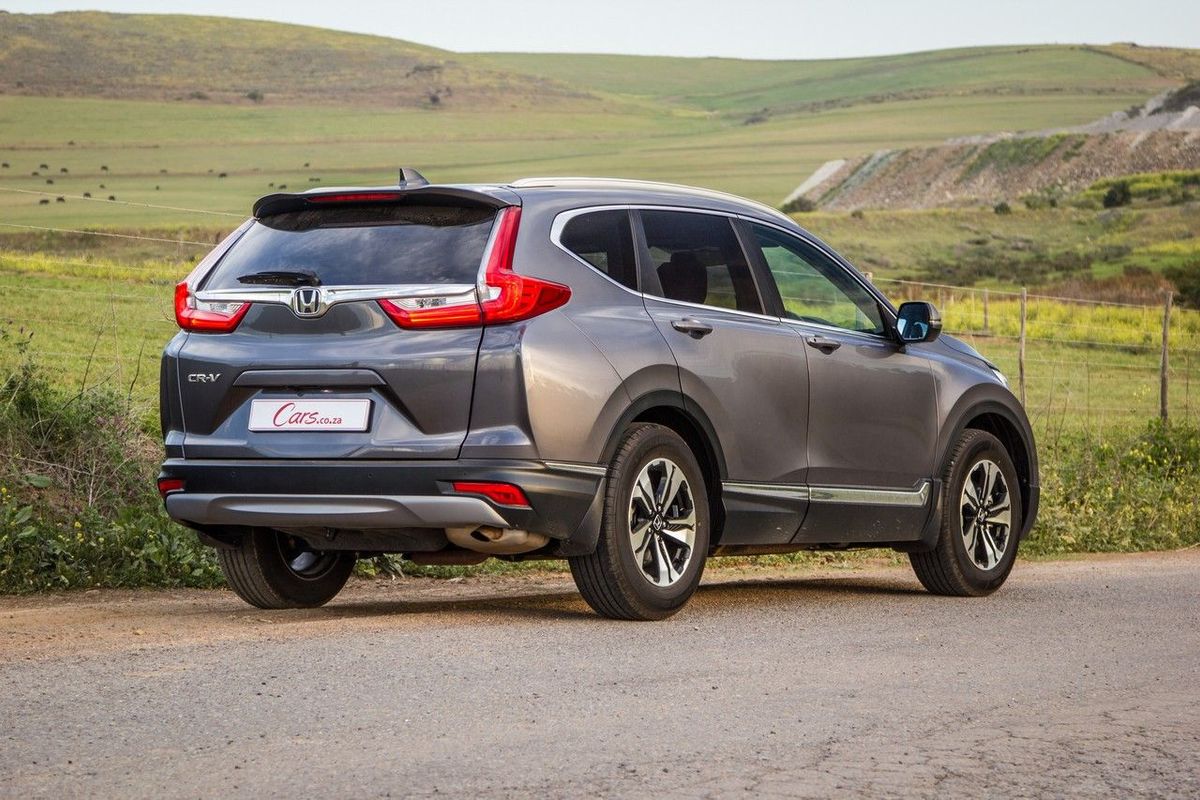
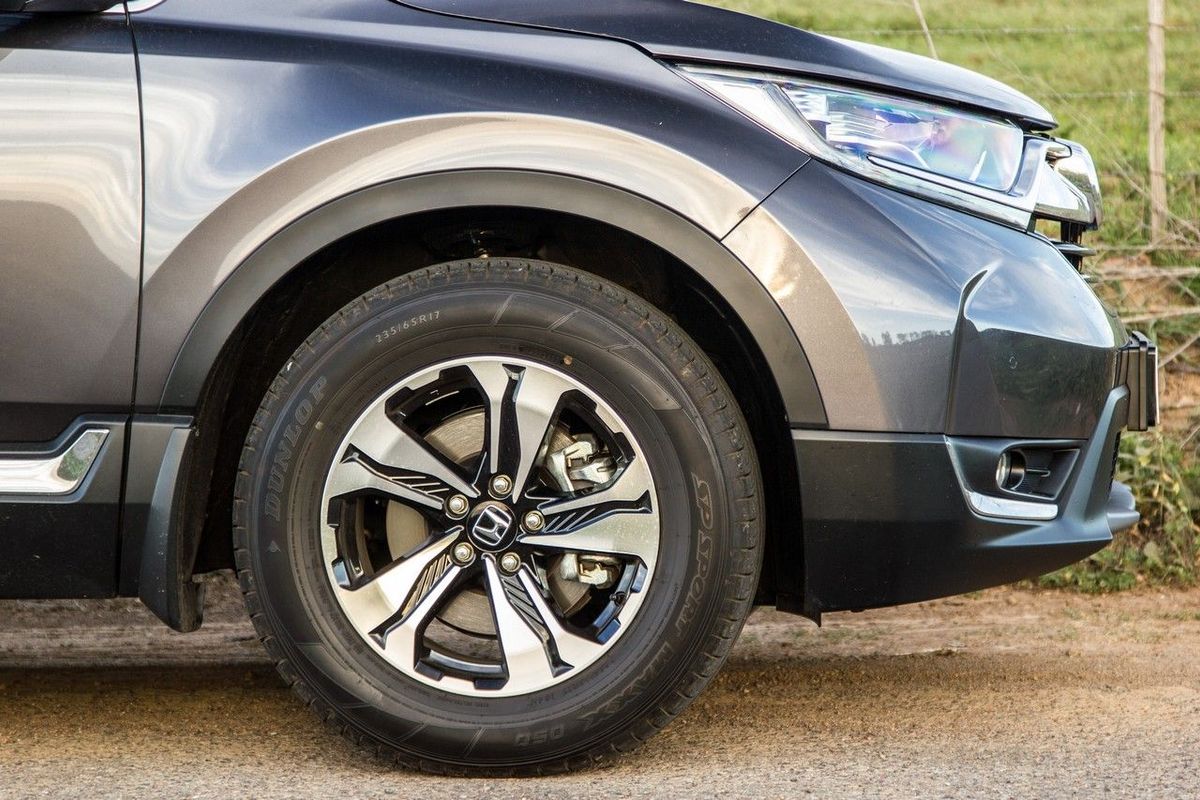
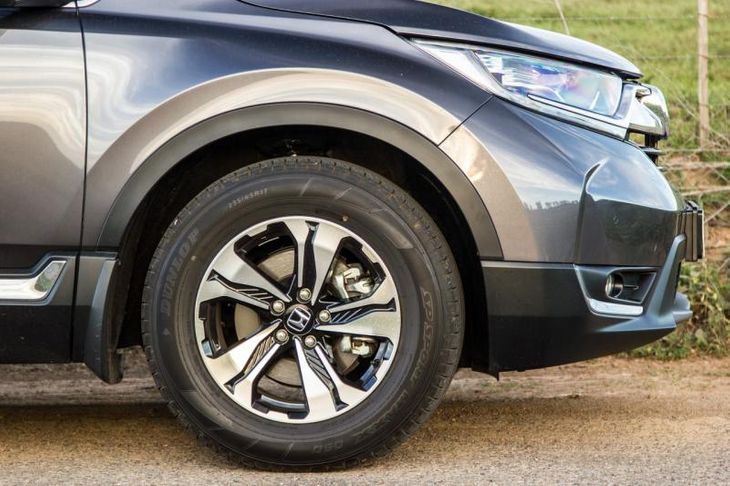
Thankfully Honda has bucked the trend of offering big alloy wheels on low profile rubber

We believe it is highly unlikely that when Honda launched its first CR-V family car/compact SUV back in 1995, the Japanese brand anticipated how successful the model would become. Back then SUVs weren't all the rage and Honda had a reputation for making smaller passenger cars such as the Civic, not mud-pluggers. But, as most of us know all too well, the market suddenly shifted and SUVs have become extremely popular. Suffice to say Honda's CR-V is one of the established players in the segment and has a terrific reputation for excellent packaging and practicality while offering superb ride refinement. 

However, the vehicle market moves quickly these days; model lifecycles are shorter to ensure a fast throughput of newer, better products. Honda recently adopted turbocharged petrol powertrains, whereas its competitors have been on that bandwagon for some time already. However, engine technology is just one small aspect of the overall package, and the CR-V has many talents. 

How does it fare in terms of…

Packaging & Design?


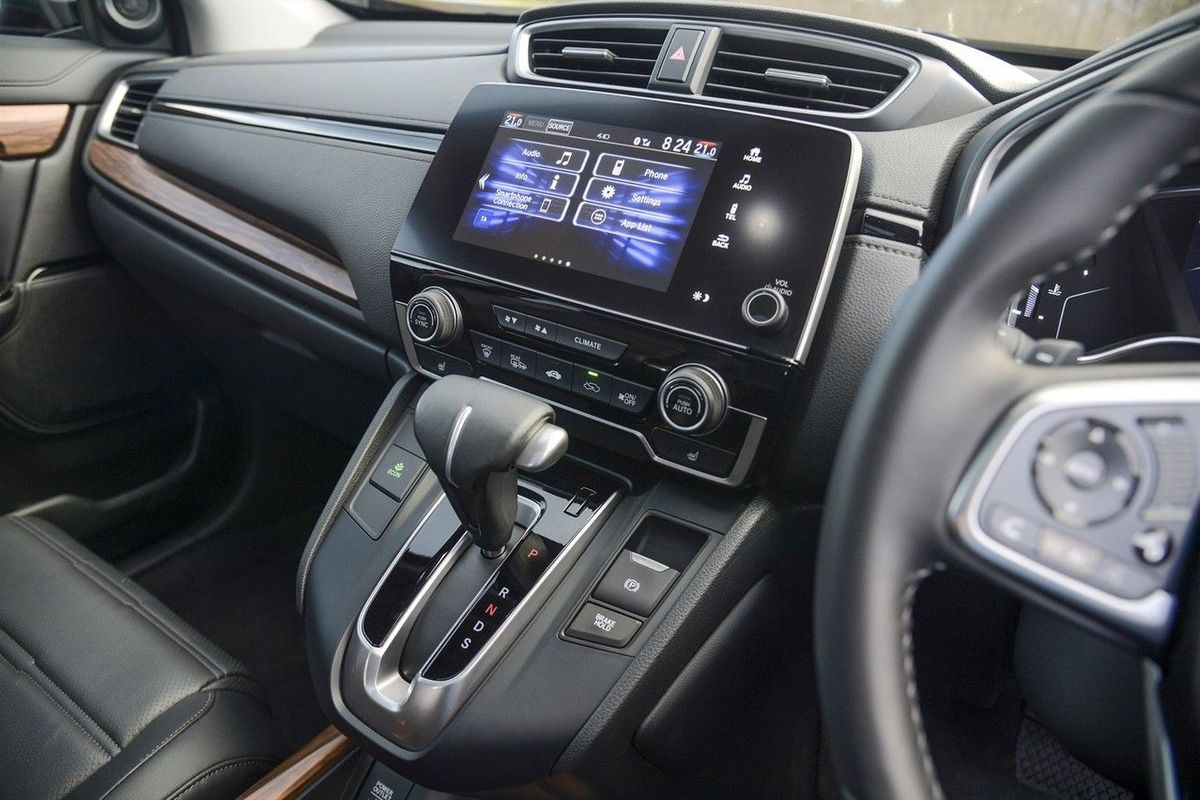
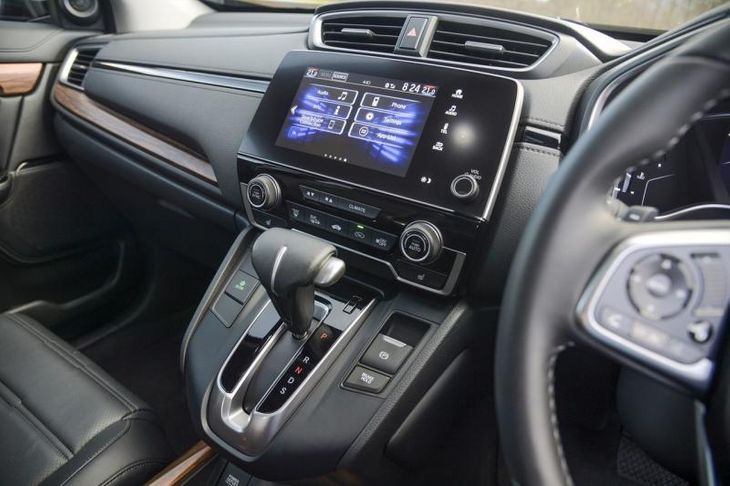
Android Auto and Apple Carplay functionality, as well as heated seats are two of our favourite features

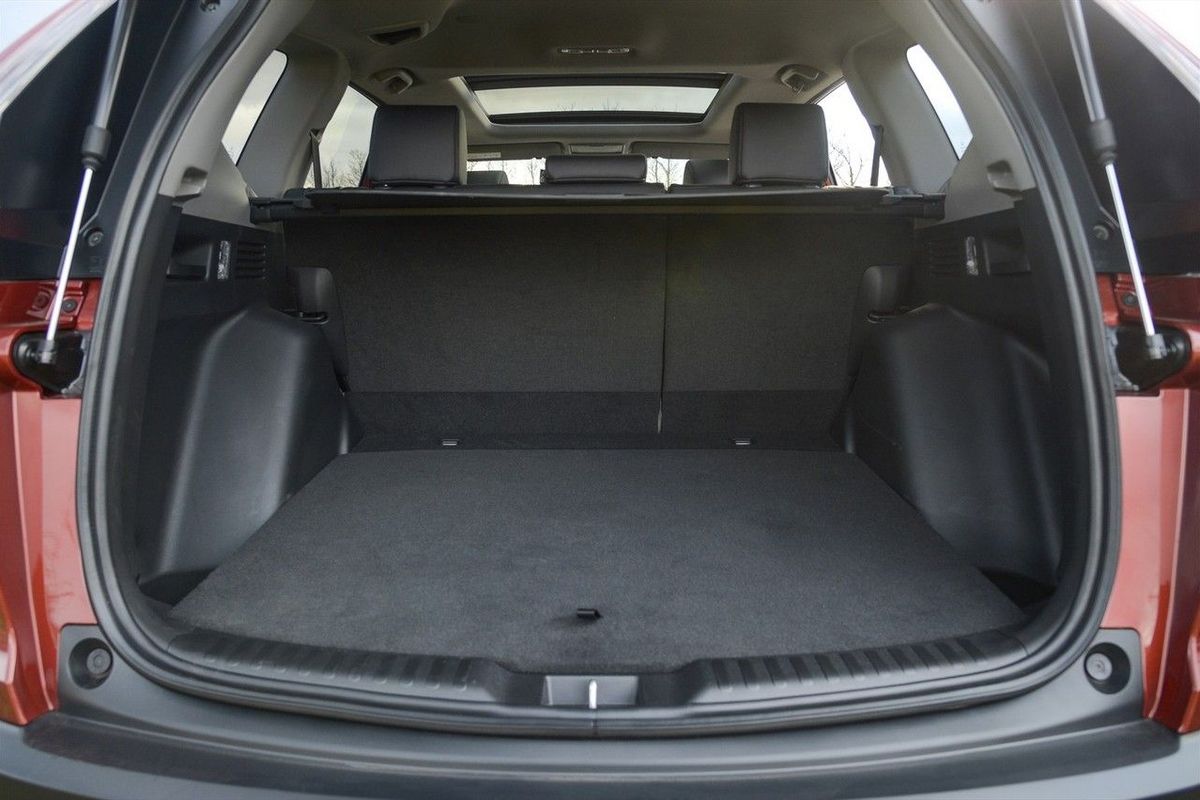
This is where the Honda CR-V really shines. In a feat of engineering, the Japanese firm has ensured that while the new CR-V is physically smaller than the previous generation model, the family car's interior space is fractionally bigger. Honda SA claims there's a 90 mm increase in second-row legroom, while shoulder room grows both front and rear. The luggage bay is bigger too at (a claimed) 522 litres, with 1 084 litres available if you fold the seats flat, and we mean properly flat.  

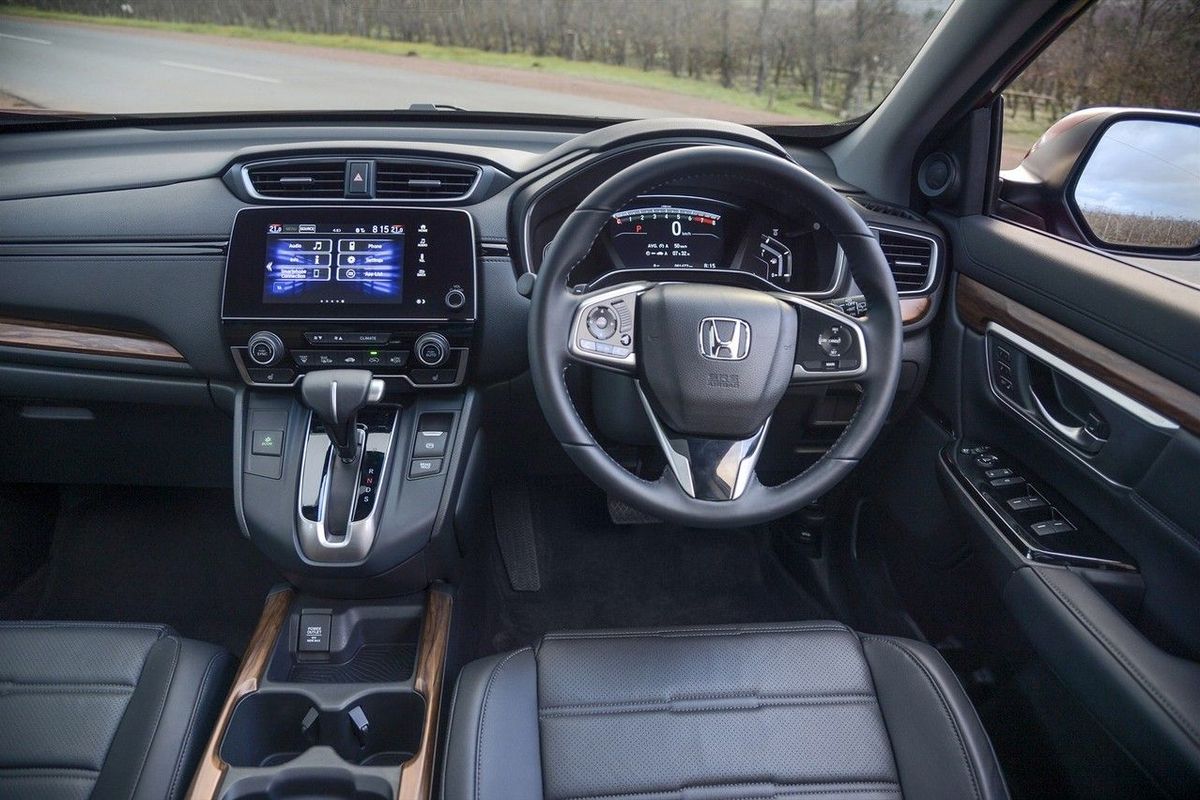
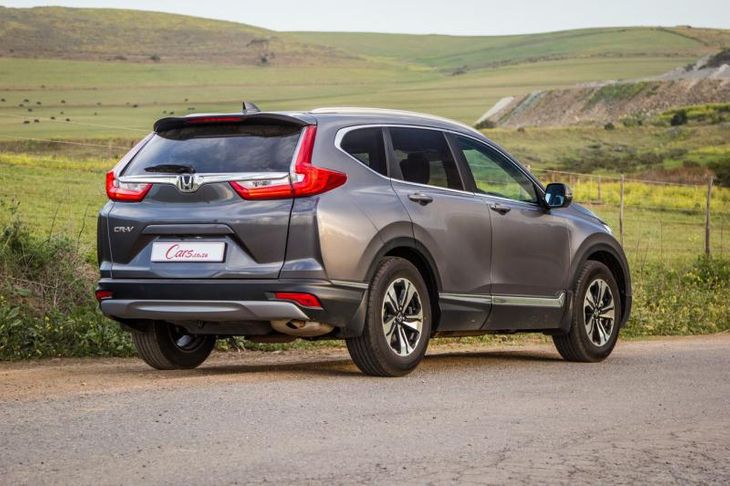
It's not a bad-looking vehicle either, with trademark Honda cues all around. The frontal view is imposing thanks to enlarged LED lights, but once you step inside the cabin it becomes abundantly clear that Honda has put in a real effort when it comes to design and ergonomics. There's a huge emphasis on comfort and ease of use, and while there's initial hesitation for certain buttons, it quickly becomes second nature.

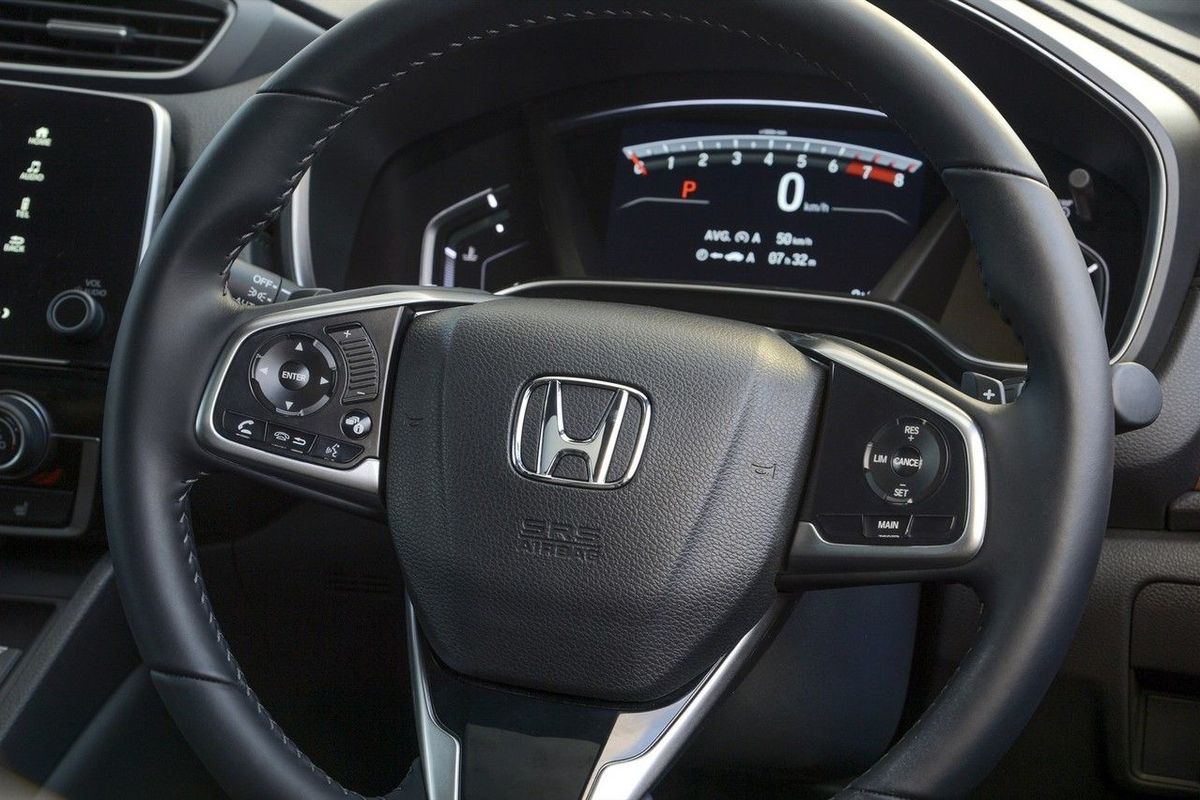
Our test unit was the second-from-top Executive CVT, which comes with a generous helping of standard features. These luxury mod-cons include leather upholstery, an Apple CarPlay/Android Auto-compatible 7-inch touchscreen infotainment system, enhanced audio setup, 2 USB ports (for front and rear passengers), an 8-way electrically adjustable driver's seat, 4-way adjustable front passenger seat with front seat heating as standard. Front and rear parking sensors are offered as well as a heating function for the electric side mirrors, automatic windscreen wipers and there's a leather-trimmed steering wheel too. 

Nice-to-have features include a panoramic sunroof, automatic levelling headlights, start/stop button and keyless entry. Previous generation Hondas tended to be meagrely specced, not so this derivative… 


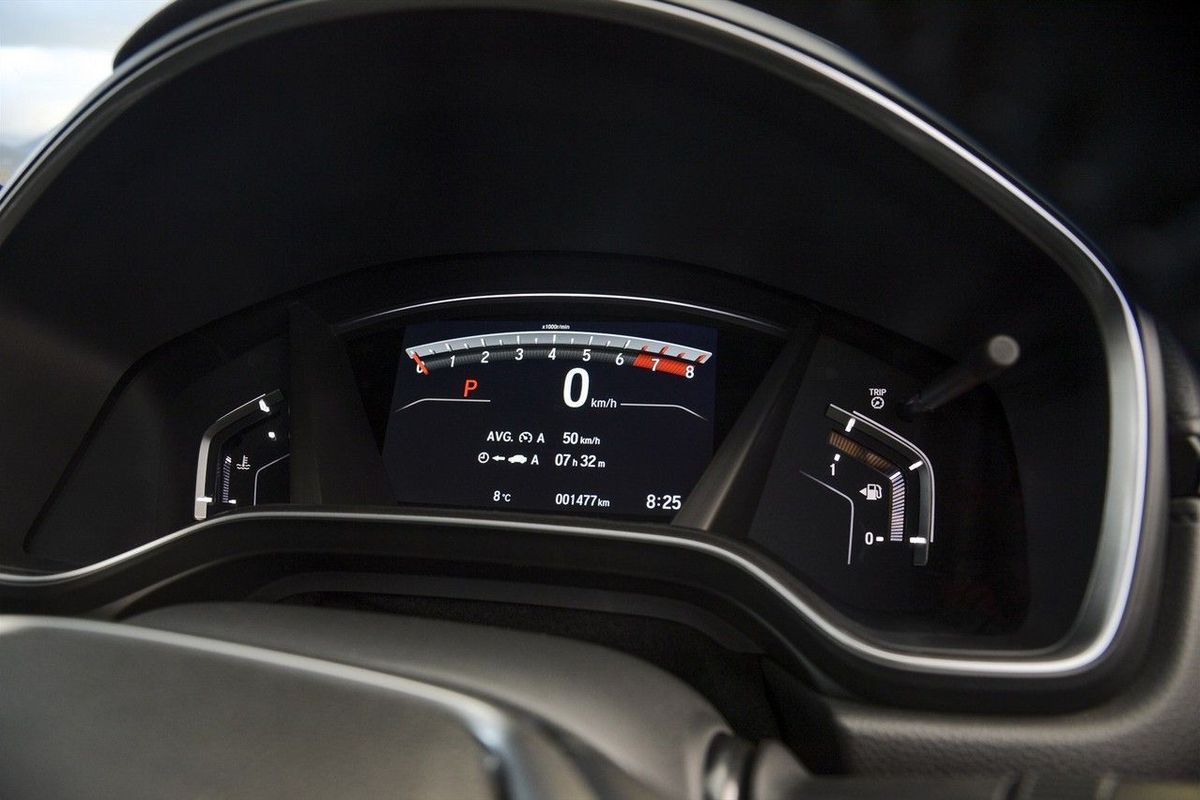
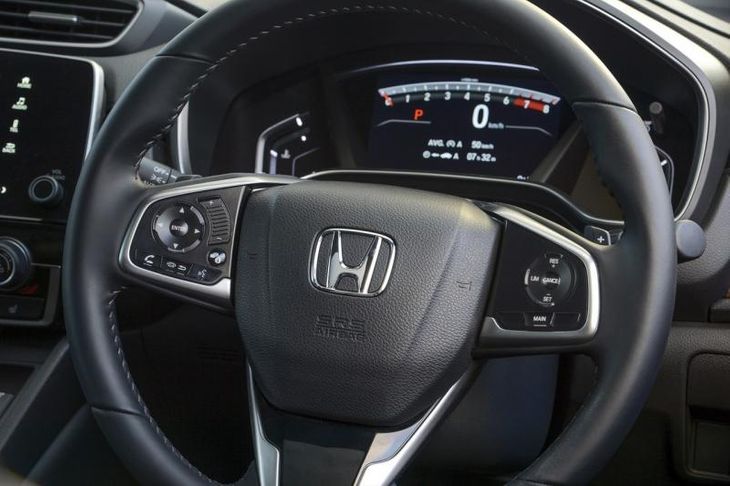
There's a multifunction steering wheel with gearshift paddles. In the background, a partial digital display

Given the CR-V's family car packaging, its safety specification is particularly important and, to that end, 6 airbags, ABS with EBD, Agile Handling Assist (AHA), Vehicle Stability Assist (VSA), Hill Start Assist (HSA), Driver Attention Monitor and ISOfix child seat mounting points are provided. If you feel you'll need more in the way of autonomous safety systems, then best you look to the Exclusive model, which features a Collision Mitigation Braking with Forward Collision Warning, Road Departure Mitigation with Lane Departure Warning, Adaptive Cruise Control with Low-Speed Following and Lane Keeping Assist.

Performance & Efficiency?


A turbocharged petrol engine makes its debut in the Honda CR-V, but its in-gear acceleration is not its strong point

For the first time ever, a turbocharged petrol engine makes its way into the CR-V. It's the same powerplant as that found in the Honda Civic and the motor's outputs are credible. With peak outputs of 140 kW and 240 Nm from a 1.5-litre turbocharged petrol engine, the Honda CR-V offers adequate performance… at least it seems so "on paper". In reality, however, it's a different story as the power delivery is not all that convincing. Sure, you can cruise along nicely at the speed limit and enjoy the (supple) ride, but when it comes to overtaking slower traffic on the national highway, things go a little awry.

You'll need to have your wits about you and make use of the "shift" paddles to keep the engine in the sweet spot if you intend to surge past slow-moving traffic. You will just need to turn up the volume of the (excellent) audio system to drown out the unpleasant engine note/drone of the (gearless) continuously variable transmission as the engine repeatedly hares to the redline and then gradually reduces revs… 

In terms of efficiency, Honda claims a fair 7.0 L/100 km, but in reality, the vehicle consumes a fair bit more than that. Perhaps it was the middling torque output of the engine combined with the CR-V's not insubstantial kerb weight (of around 1 600 kg), or the fact that our test week was characterised by dense traffic conditions, but we couldn't get the Honda's consumption to slip under 9.0 L/100 km. 

Ride & Handling?


The Honda CR-V has always boasted excellent refinement and this 5th generation model continues this tradition

The new CR-V's boasts an all-new suspension setup that is claimed to deliver excellent ride quality. Does it deliver? Absolutely. While we're not enthusiastic about the 1.5T's in-gear shove (or lack thereof), we're quite happy to cruise along and feel the CR-V soak up each and every little rut in the road, the latter of which will be more (if not most) important for the overwhelming majority of family car buyers. It's a resoundingly solid car to drive and the lack of road noise, thanks to excellent insulation, is also commendable. 

This vehicle features all-wheel drive on demand, which sends power to the rear axle if conditions deteriorate. While we didn't take our test unit onto any 4×4 tracks, we felt that the system was perfect for keeping things stable on gravel or on really wet roads. The CVT, meanwhile, may blunt driver engagement, but it works well in an urban environment in combination with an accurate 'wheel to deliver a relaxed drive.

Honda CR-V – price in South Africa (October 2017)

The 1.5T Executive CVT AWD derivative retails for R584 900, which includes a 5-year/200 000 km warranty, 5-year/90 000 km service plan and 3-year AA Roadside Assistance. Service intervals are set at 15 000 km for 2.0-litre derivatives and 10 000 km for 1.5-litre derivatives.

Verdict

The Honda CR-V does have its drawbacks, the big one being lethargy in cut-and-thrust driving conditions, but the positives far outweigh the negatives. It's a superbly-made product, drives with exceptionally polite manners and the spaciousness/practicality mean you can easily load it up for a family breakaway. Honda was in danger of losing its unofficial most-built-to-last tag because some of its recent products felt made to cost. We know cost-cutting is the norm, but not at the expense of hurting your brand image. However, this new CR-V rights many of the wrongs. It's a spectacular return to form and an excellent proposition in the family car market. Admittedly you are paying for this privilege as it's one of the more expensive offerings in its class, but if you're willing to fork out extra, it's well worth it. 

Related content:

Honda CR-V 2.0 Elegance (2015) Review

Comparative Review: Mazda CX-5 2.2DE AWD vs Hyundai Tucson 2.0CRDi Elite [with Video]

Comparative Review: Hyundai Tucson vs Kia Sportage vs Renault Kadjar vs Volkswagen Tiguan

Mazda CX-5 vs 2017 Hyundai Tucson (2017) Comparative Video Review

Hyundai Tucson 1.7 CRDi Executive (2017) Review

Hyundai Tucson Sport (2017) Quick Review

Volkswagen Tiguan 1.4 TSI 110 kW DSG (2016) Review

Volkswagen Tiguan 1.4 TSI Comfortline R-Line (2016) Review

Volkswagen Tiguan 2.0 TDI Highline 4Motion DSG (2017) Quick Review

Want to buy a Honda CR-V? 

Find a new or used Honda CR-V on Cars.co.za

3 Reasons Why Kia Picanto 1.0 Style is #CarsAwards Finalist

What makes the Kia Picanto 1.0 Style a strong contender in the Budget Car category of the 2017/18 Cars.co.za Consumer Awards programme – powered by WesBank? Read on…

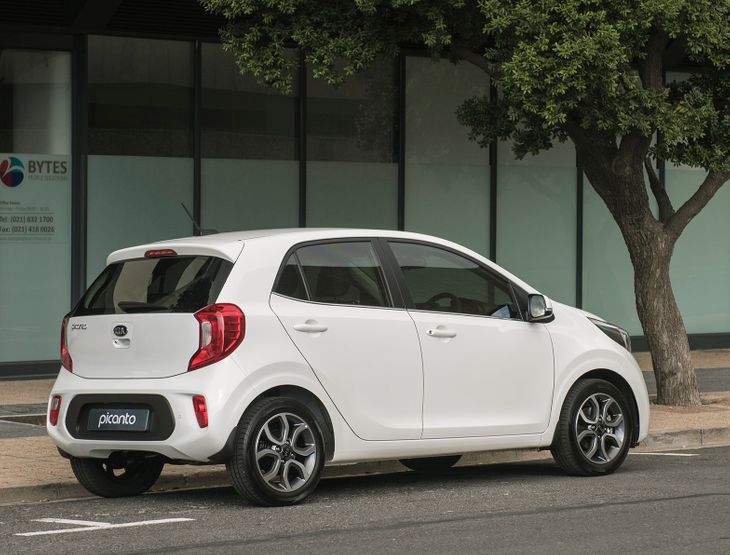
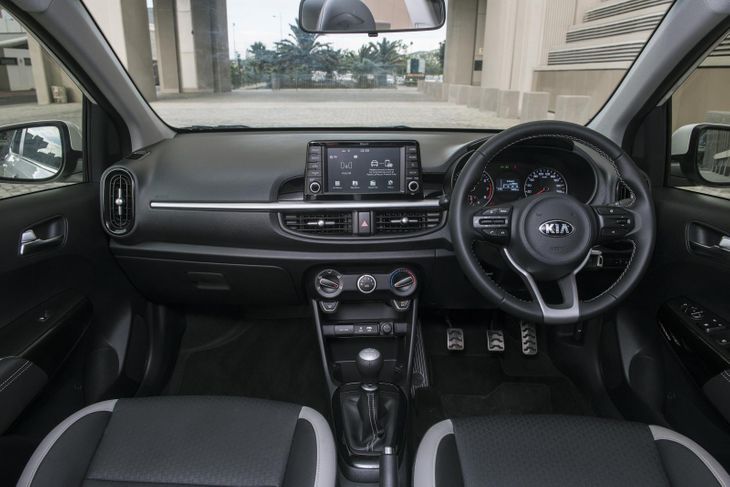
Kia introduced the 3rd-generation Picanto earlier this year with a fresh, modern look and a newly designed interior. Not only is the new Picanto more refined than the model it replaces but its ride quality, interior material quality and practicality has improved too.

3 reasons why the Picanto 1.0 Style is a #CarsAwards finalist…

1. Attractive pricing and warranty

The new Kia Picanto 1.0 Style is attractively priced at R159 995 while offering a comprehensive 5-year/unlimited km warranty. Service plans are, however, optional. Furthermore, Kia is well-established in South Africa with strong dealership support across the country and its latest products, including the Picanto, show the brand’s intentions to move upmarket and produce stylish vehicles, which means you get good value at this price point.

2. Modern interior and fair specification

The Picanto 1.0 Style offers nice-to-have features such as 14-inch alloy wheels, front electric windows, air conditioning, Bluetooth functionality, USB/Aux connectivity and a multifunction steering wheel that’s adjustable for rake and reach. The driver's seat is also adjustable for height. In terms of safety, a total of 2 airbags are fitted as well as featuring ABS with EBD. ISOfix child seat mounts are also fitted.

3. Practical urban runabout

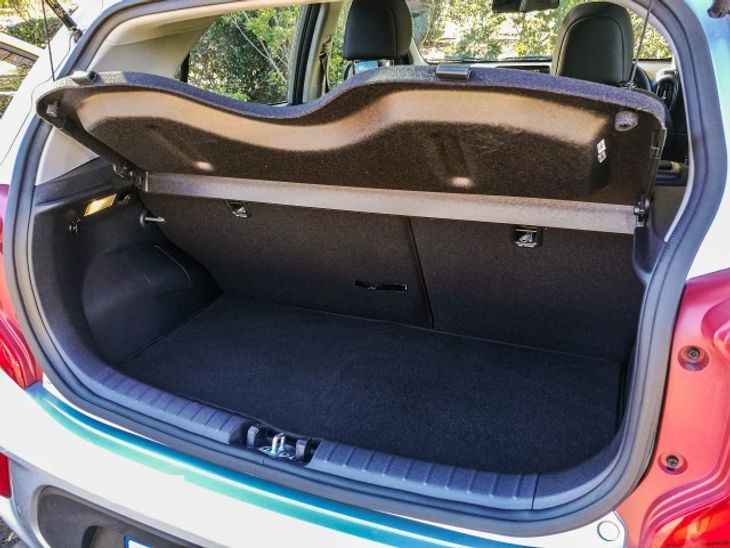
With its improved practicality, the Picanto’s luggage bay is larger at 255 litres and includes a 2-step boot floor that can be lowered by 145 mm to access more space or to keep valuable items hidden out of sight. The rear seats are split in a 60:40 configuration and with the seats folded down, space increases to a useful 1 010 litres. Clever retractable cup holders and a movable armrest are also fitted.

With its naturally-aspirated 1.0-litre engine offering 49 kW and 95 Nm of torque, fuel consumption is good with a claimed figure of 5.0 L/100km, making the Picanto a practical daily runner.

Watch our video review of the new Kia Picanto below!


Have Your Say: Complete our survey and WIN!

Do you own a Picanto? We would love to hear from you! Tell us about your experience by completing our Ownership Satisfaction Survey. Your input counts for 50% of the final result!

Which cars are the Picanto's rivals in #CarsAwards?

The 2017/18 #CarsAwards finalists: Budget Car category

Compare the Picanto's specs with those of the Suzuki Ignis 1.2 GL & VW Take Up!    


Related content:

New Kia Picanto (2017) Launch Review

Kia Picanto (2017) Specs & Price [with Video]

Juliet McGuire tests a trio of budget cars

5 Cheapest Automatic Cars in SA

Comparison: Kia Picanto 1.2 vs Suzuki Swift 1.2


Interested in buying a Picanto?

Search for a new/used one on Cars.co.za

Peugeot Introduces GFV Program in SA

Peugeot has launched a Guaranteed Future Value (GFV) and buy-back program in South Africa, encouraging owners to upgrade their vehicles more often without incurring additional costs.

Peugeot currently offers 3-year/100 000km warranty on all its products but now also offer a Assured Future Value financial agreement called Motion Finance from WesBank, giving customers the opportunity to drive a new Peugeot vehicle without additional costs.

Francisco Gaie, Managing Director of Peugeot Citroën South Africa said ““The South African market is undergoing a shift that is line with international trends where we see customers shifting from vehicle ownership to mobility. Although it is in its infancy here in South Africa we can already see this trend developing and obtaining traction. Our Guaranteed Future Value ensures that our customers can drive a new Peugeot vehicle every few years without incurring unforeseen or additional costs”.

The agreement guarantees customers the future value of their vehicles. Earlier this year, Gaie acknowledged concern pertaining to Peugeot’s ‘trade-in value perceptions’ and assured that he would rectify this perception going forward.

“We believe our GFV program is a step in the right direction and will change the perceptions on Peugeot’s trade-in value.” he said.

The GFV program will initially be rolled out for the Peugeot 208 Active and will be introduced to the rest of Peugeot’s range thereafter.

“We are positive that customers will welcome the introduction of the Guaranteed Future Value programme which will encourage them to replace their vehicle at the conclusion of their 3-year warranty” Gaie added.  

How does it work?

  • Choose your Peugeot 208 Active

  • Select your repayment terms i.e. 24 months, 36 months, 48 months

  • Agree on maximum mileage (available options 40 000 km to 80 000 km)

  • Agree on a deposit, or 0% deposit and monthly payment to suit your budget.

When the Motion Finance agreement comes to an end and provided that the all the conditions of the agreement have been met, the customer can choose one of the options below.

  1. Renew – You return your Peugeot as per the guaranteed buy-back program and renew your Motion Finance agreement on a new Peugeot model of your choice.

  2. Return – Return your Peugeot and end your Motion Finance contract.

  3. Retain –  You keep your Peugeot and re-finance it at the guaranteed buy-back value. (Note: This option is not part of the Motion Finance agreement, but you will rather enter into a traditional finance agreement under new terms and conditions.)

Peugeot also offers a service plan (Peugeot Protect Plan) to ensure the guaranteed buy-back of your vehicle. The vehicle will be maintained and restored for an agreed period from damages resulting from everyday wear and tear in return for a fee. This will ensure the guaranteed future of the vehicle. Furthermore, the Peugeot Protect Plan is not limited to models purchased on the Guaranteed Future Value program, but also covers all new and used Peugeot transactions.

Buy a Peugeot on Cars.co.za

Related Content

Peugeot 208 GT Line (2016) Review

Peugeot 3008 (2017) Launch Review

Peugeot 2008 1.2T GT-Line Auto (2017) Review

Peugeot 308 1.2 GT Line Auto (2016) Review

Peugeot 308 GTi (2016) First Drive

Peugeot 308 GTI (2016) Video

Top 10 Most Fuel Efficient Budget Cars


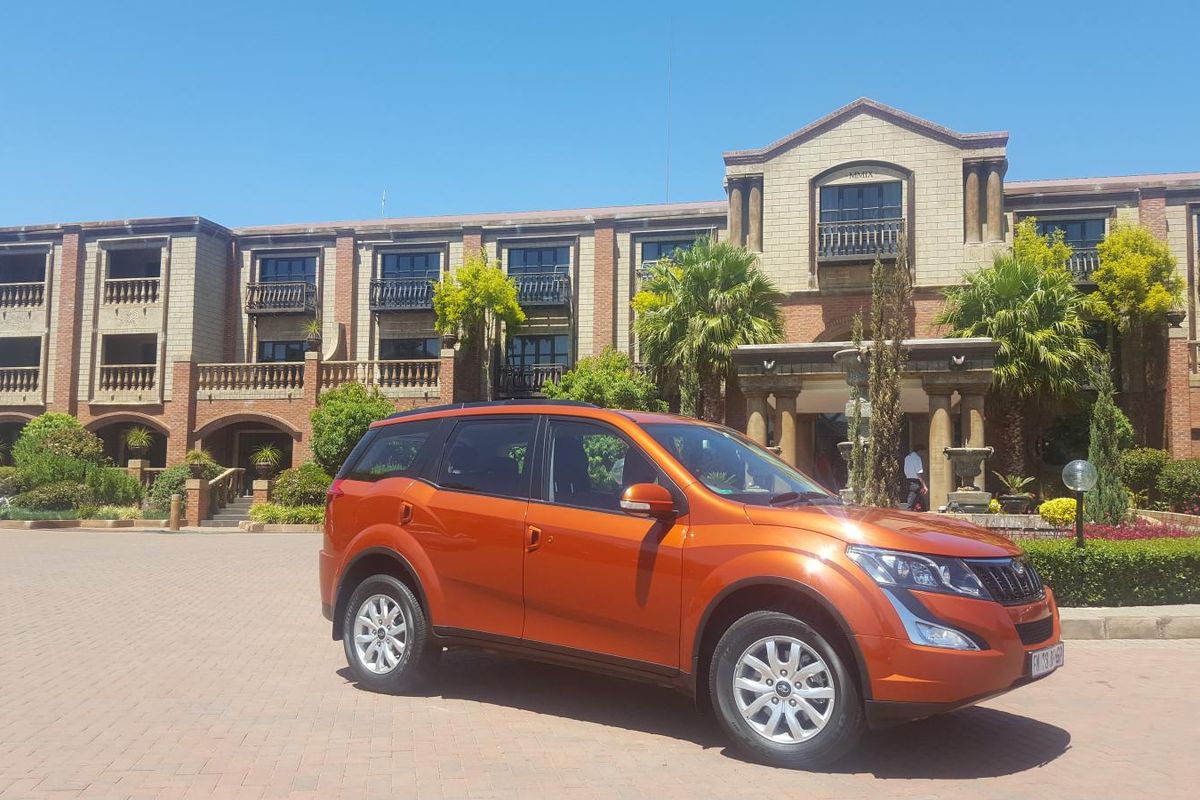
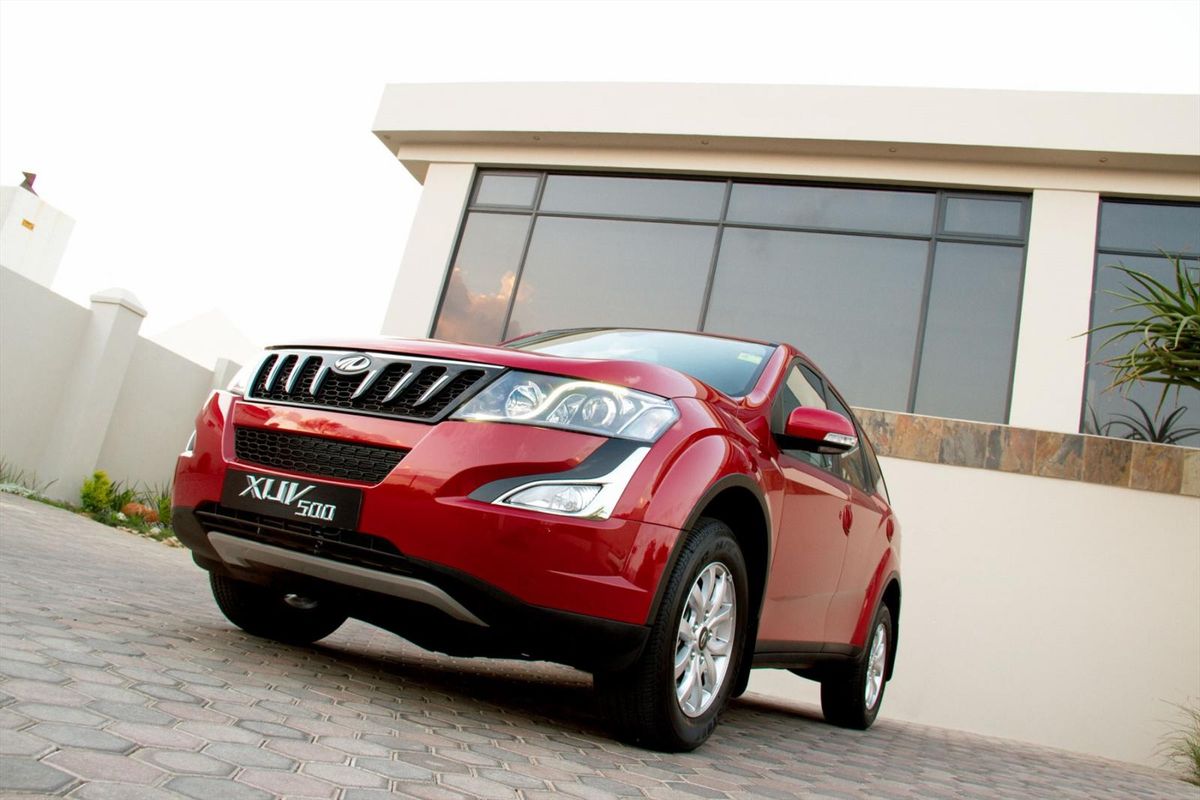
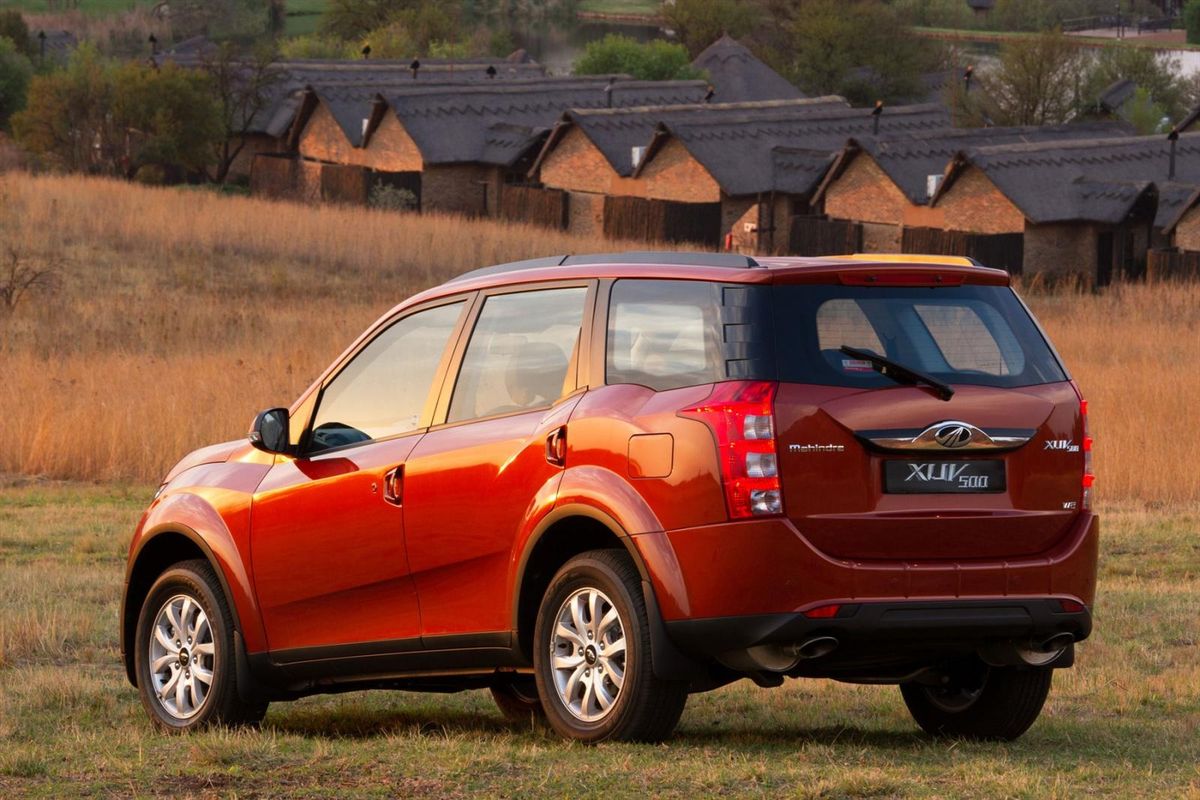
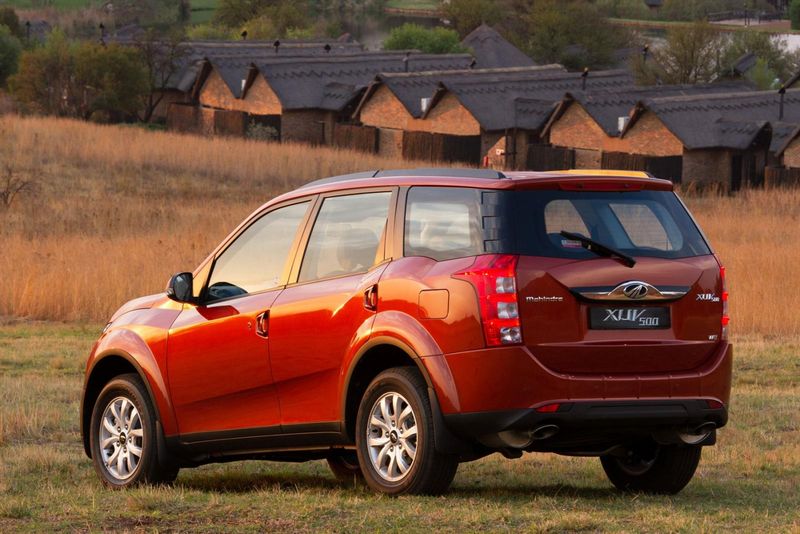
Mahindra XUV 500 2.2 CRDe W8 Auto (2017) Launch Review

With little direct competition at its price point, the Mahindra XUV 500 has built itself quite a sizeable following in South Africa. Until recently, however, it had lacked an automatic offering. Perhaps predictably, the new self-shifter has quickly become one of the most popular derivatives in the XUV 500 line-up.

Facts & Figures

  • Price: R394 995 (October 2017)
  • Engine: 2.2-litre turbodiesel
  • Transmission: 6-speed automatic
  • Fuel consumption: 7.4L/100 km
  • Seats: 7
  • Warranty: 5-years/150 000 km

Mahindra South Africa has been on a roll lately, with the local introduction of the much improved new Pik Up following on earlier model launches of the TUV300 and revised Scorpio SUV. It has also recently announced that it intends setting up a local assembly plant, possibly in Durban or Port Elizabeth. Also introduced in the second half of 2016 was the long-awaited automatic variant of the popular XUV 500. We recently had the opportunity to spend some time with this variant in and around Johannesburg. 

Focus on Efficiency


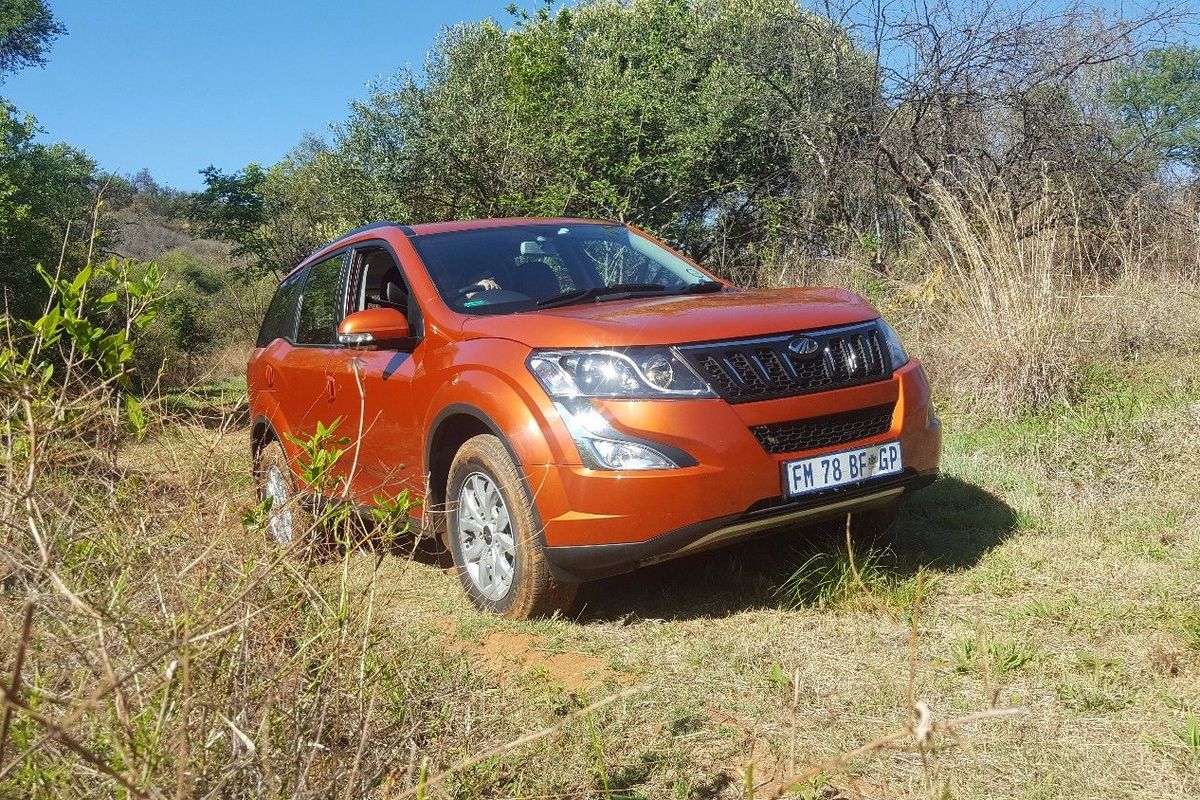
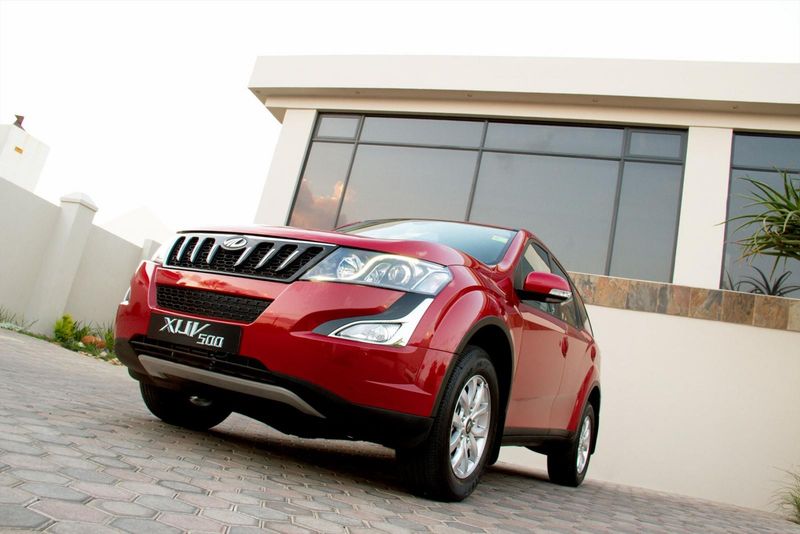
XUV 500 offers 200mm of ground clearance, but with front-wheel drive is more family crossover, than rugged SUV.

The XUV 500 was originally launched in South African in 2011 and had its major facelift in 2015, at which time Mahindra introduced not only a new look, but much improved interior ergonomics and other cabin refinements. At its core, however, the XUV 500 is now one of the elders in the local market, but is wearing its years well. While it is offered as a 7-seater, it is important to keep in mind that this is not a direct rival for the likes of the bakkie-based Ford (Everest) and Toyota (Fortuner) SUVs, but rather a spacious family car with SUV looks. It features front-wheel drive in this application and of particular interest is the transmission, a 6-speeder sourced from Aisin. 

Coupled with the brand's well-known 2.2-litre turbodiesel engine, the drivetrain has been tuned for efficiency. In other words, relaxed performance is paired with a claimed combined-cycle fuel consumption figure of 7.4 L/100 km, which given the size of the vehicle is impressive. The engine delivers 103 kW and 330 Nm of torque, with the latter figure being available from 1 600 to 2 800 rpm. Mahindra doesn't quote claimed performance figures, but subjectively speaking the XUV 500 has no trouble performing daily driving duties. It generally responds satisfyingly to throttle inputs and there is sufficient power for cruising at the national limit. While the gearbox is generally quite good at selecting the appropriate ratio, it does, however, occasionally select too a low a gear for the prevailing driving situation, and then tends to hang onto that gear for too long, resulting in a strained engine note. Of course, using a little switch mounted on the side of the gearlever, you can always change gears by yourself. 

On a side note… with the right gear selected and when cruising at higher speeds, the cabin proved hushed, a big improvement on earlier XUV 500s I had driven. In fact, Mahindra appears to have given the suspension a fair bit of tweaking as well. It claims that Lotus was called in to fine-tune the MacPherson front/multi-link rear arrangement. On the roads around Lanseria/Hartbeespoort Dam, the XUV 500 proved be slightly firm at lower speeds, particularly on poor, broken surfaces, but it significantly improved as the speeds picked up.  

Design & Practicality


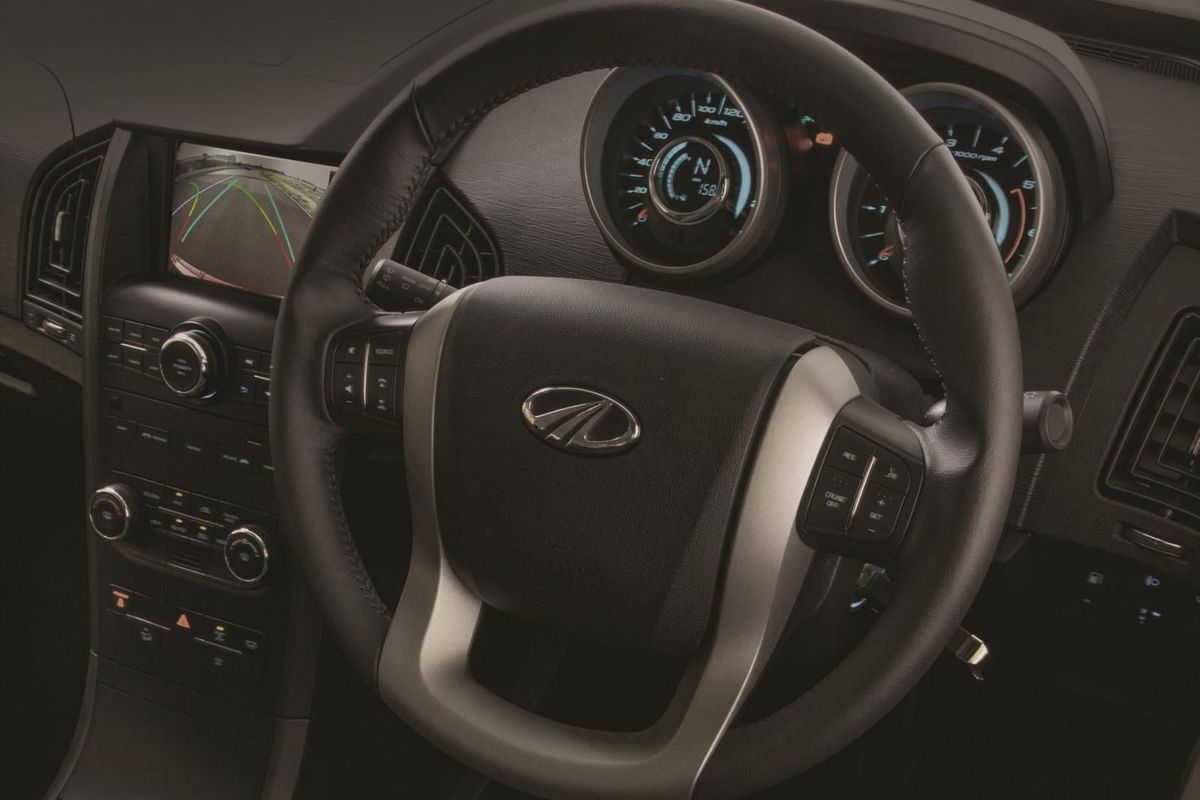
Revised cabin is an improvement, but some design and fit quirks remain. Specification is comprehensive.

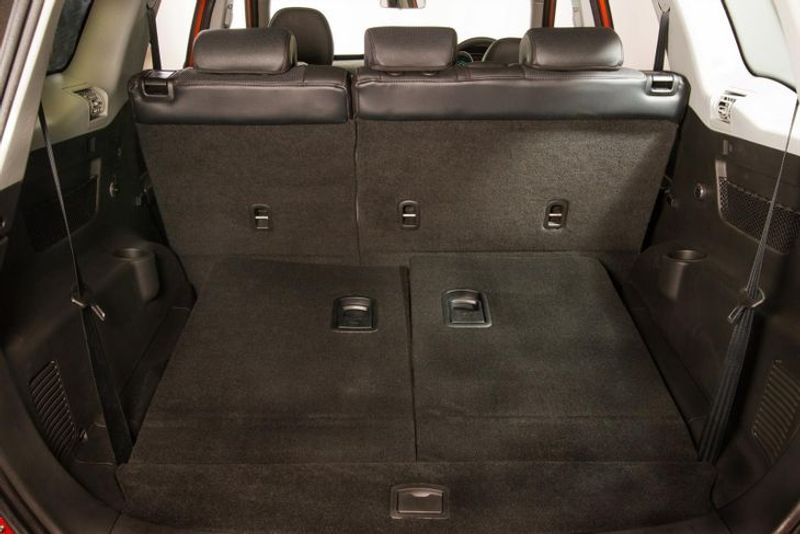
The XUV 500 is a good 30cm-odd shorter than a bulky vehicle such as a Ford Everest, so if you're looking for a 7-seat quasi-SUV primarily for town use, that's worth keeping in mind. The reality is, of course, that it's not quite as spacious as those larger vehicles inside, either. That being said, the XUV 500 offers generous second-row legroom, but the third row is really for kids or smaller adults, and then also only for shorter distances. With all 3 rows occupied, luggage space is negligible. Fold the third row flat into the boot floor, however, and there's sufficient packing space for a family of four or five's holiday luggage. A nice touch is that ventilation outlets and drinks holders are provided for all 3 rows – there is even fan control in the third row.

The focus on family practicality is also evident in the front, where there are two glove compartments, a fairly large and rubber-lined storage box on the facia, more storage between the front seats and a fold-down mirror that allows you to keep an eye on the rear seat passengers.

Features & Design


Seven seats are standard and stow away neatly into boot floor. Luggage space is generous with rear seats folded down.

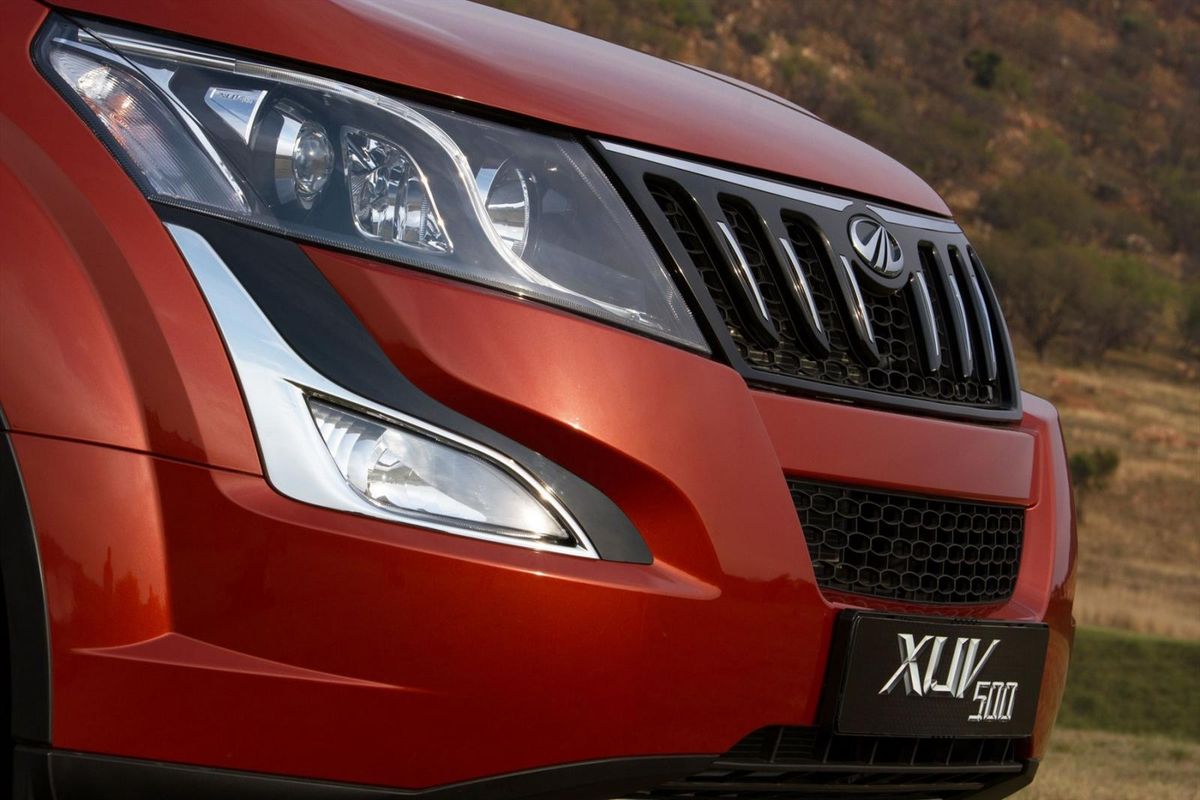
The automatic version of the XUV 500 is only offered in W8 specification, and that means you get a lot of features as standard, including a touch-screen infotainment system with navigation and bluetooth/Aux/USB support, auto lights and wipers, cruise control, climate control, leather upholstery, rear-view reverse camera, 6 airbags and ESP as standard, amongst quite a few other items. Visually, it's a neatly finished vehicle with far more coherent design than its predecessor. It comes standard with 17-inch alloy wheels, LED daytime running lights, twin exhaust outlets and roof rails. 

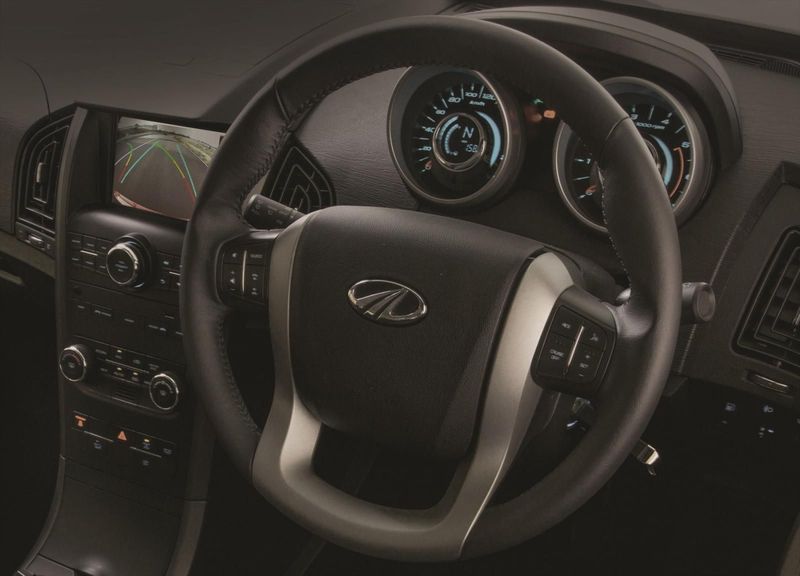
In terms of interior design, there are however a few niggles. The touchscreen slightly moved in its housing when pressed, which doesn't create an impression of great solidity. You also have to be quite slow and deliberate with it when selecting functions on the screen. That said, the test vehicle had more than 20 000 km on the odo and was completely free of rattles and creaks, so design integrity overall seems good.

Mahindra has clearly worked hard to correct many of the initial model's failings, including haphazard trim and almost OTT (over-the-top) design detailing. Things are much calmer in the latest XUVs, with predominantly tasteful charcoal and black used in the cabin. Still, some awkward surfacing remain, as well as somer lower quality fittings lower down in the cabin. Given the price of the vehicle, however, we can forgive many of these quirks, particularly as they are related to design, which is always subjective.

Warranty and Service Plan

The XUV 500 comes backed with a pretty impressive 5-years/100 000 km warranty and a 5-years/100 000 km service plan. Service intervals are spaced at 20 000 km/12 months.

Verdict


The XUV 500 is still quirky, but offers exceptional value for money and much-improved refinement.

At its current price just below R400 000 there really is very little direct competition for the XUV 500. The nearest automatic Ford Everest sells for roughly R80 000 more, but can't match the Mahindra's specification. And if you look at the Korean 7-seater twins (Kia Sorento and Hyundai Santa Fe), those are even more expensive. If you need a feature-laden family/holiday vehicle that is also rich in safety specification, provides occasional 7-up seating and which offers the combined appeal of an efficient turbodiesel motor and automatic transmission, then the Mahindra XUV 500 is hard to beat in the new-vehicle market at the price. 

You may also be interested in;

Mahindra to build bakkies in South Africa

Mahindra Pik Up Double-Cab (2017) Launch Review

Mahindra TUV 300 1.5CRDe T8 (2017) Review

Looking to buy a new / used Mahindra XUV 500?

Find one on Cars.co.za by clicking here

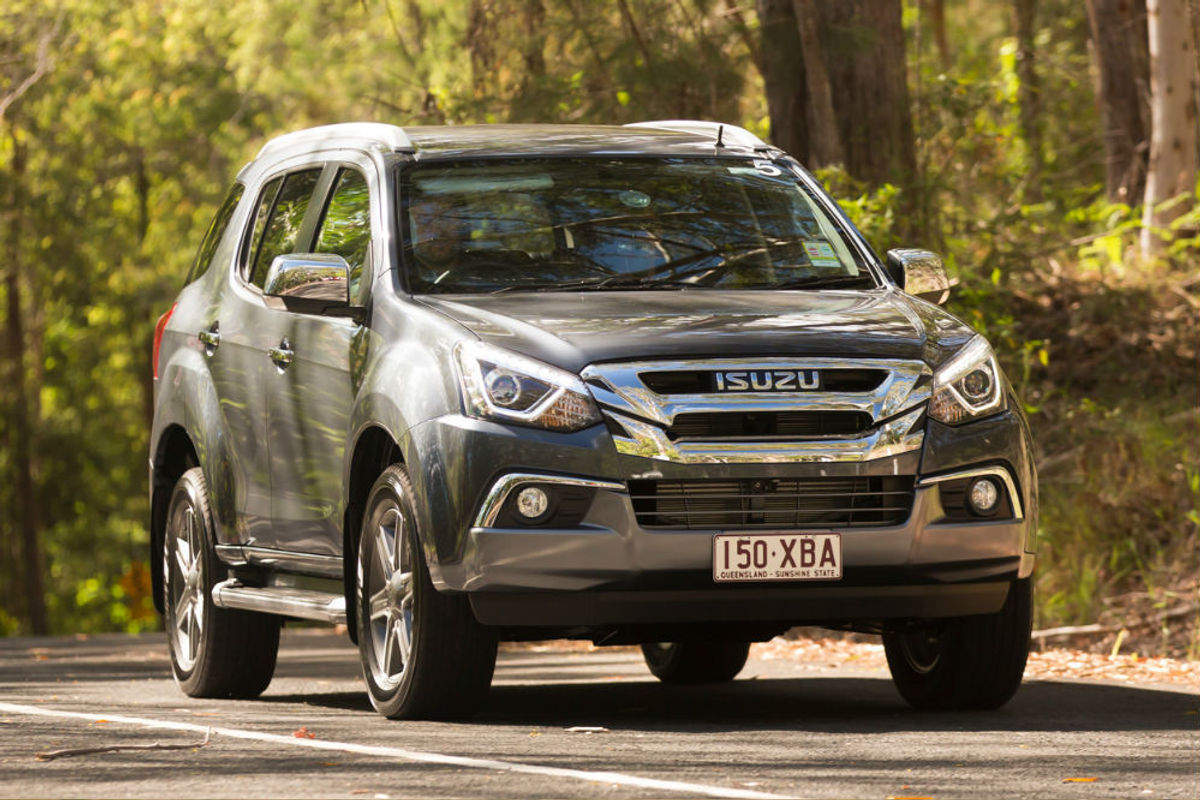
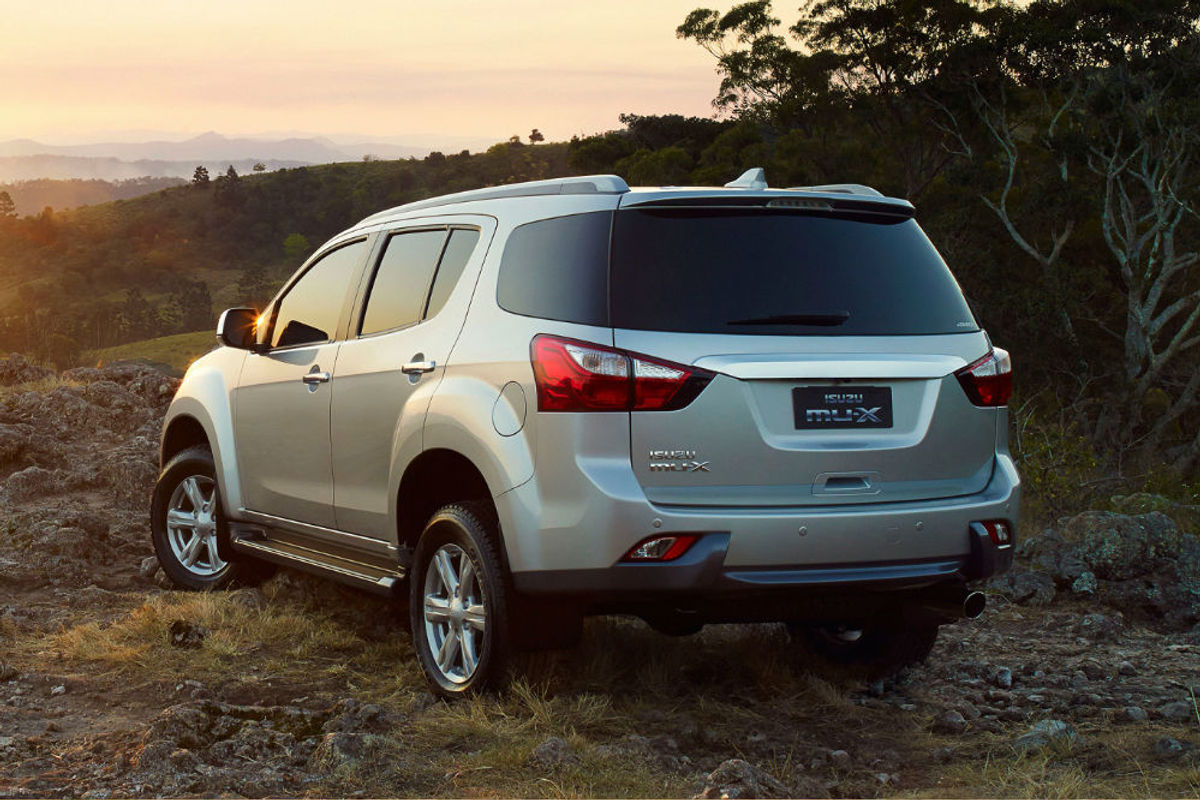
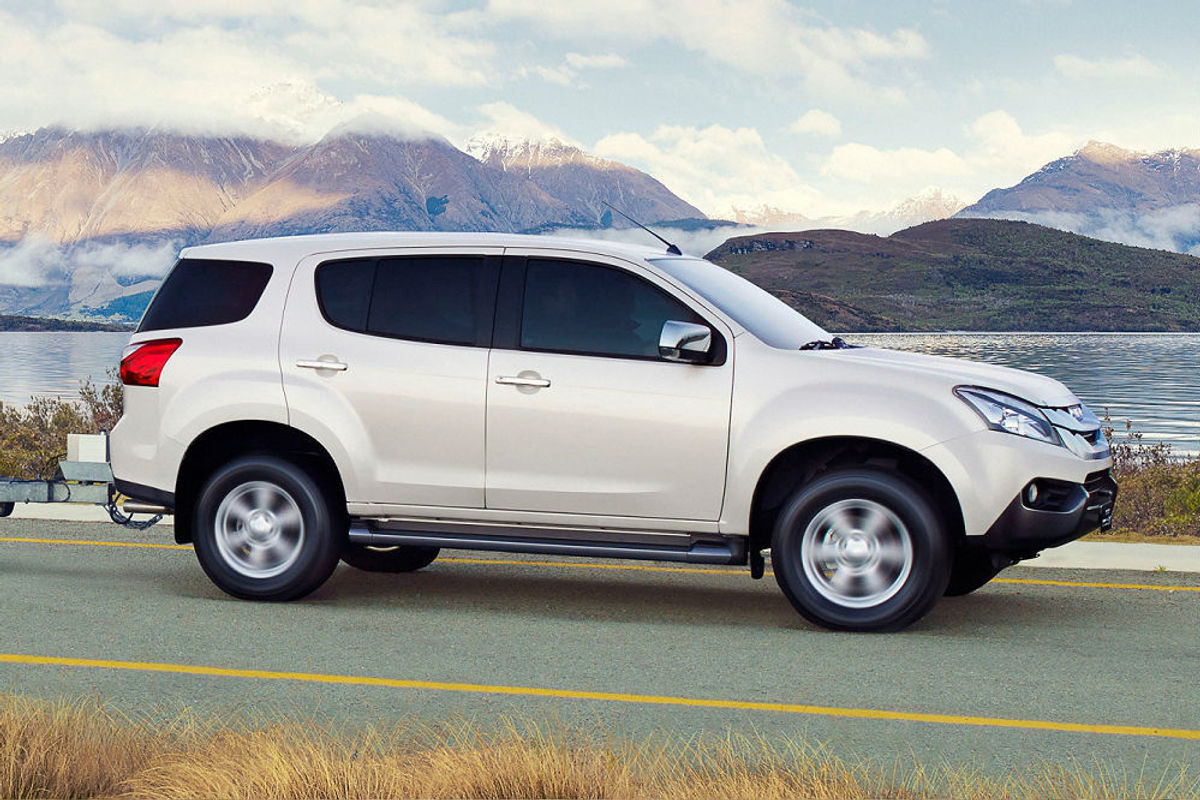
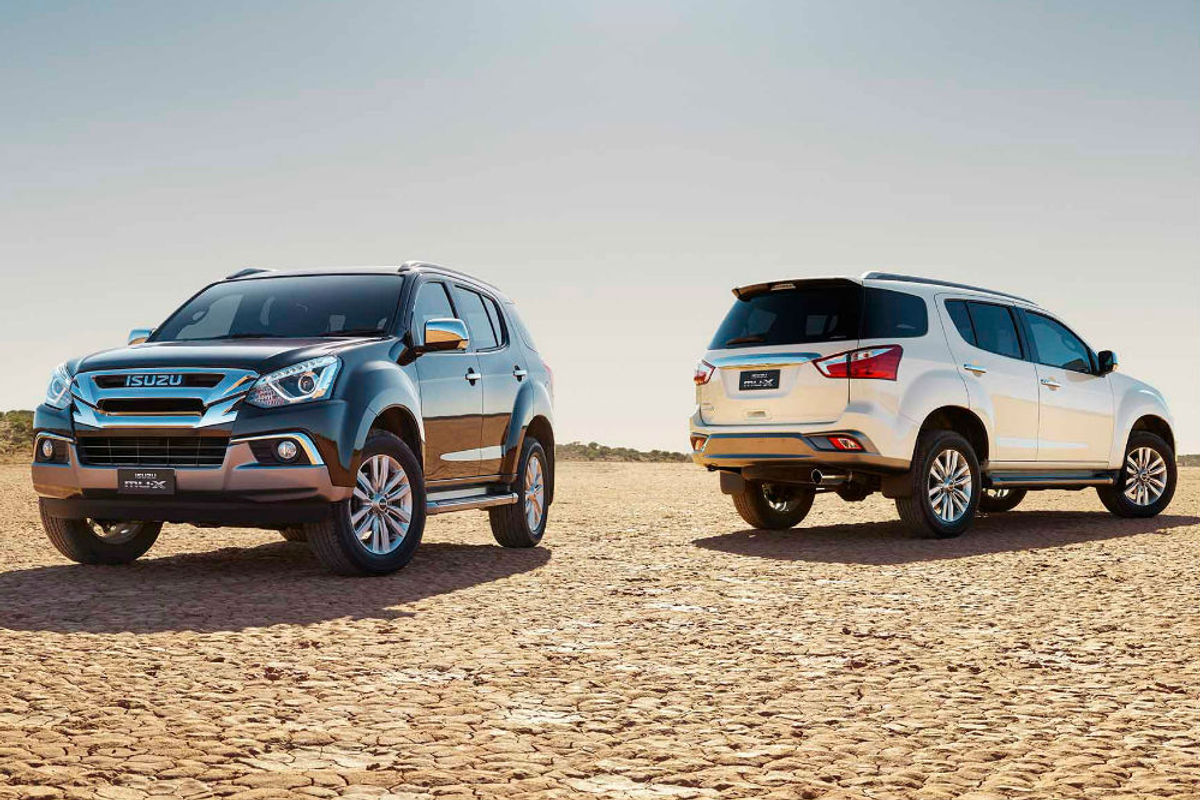
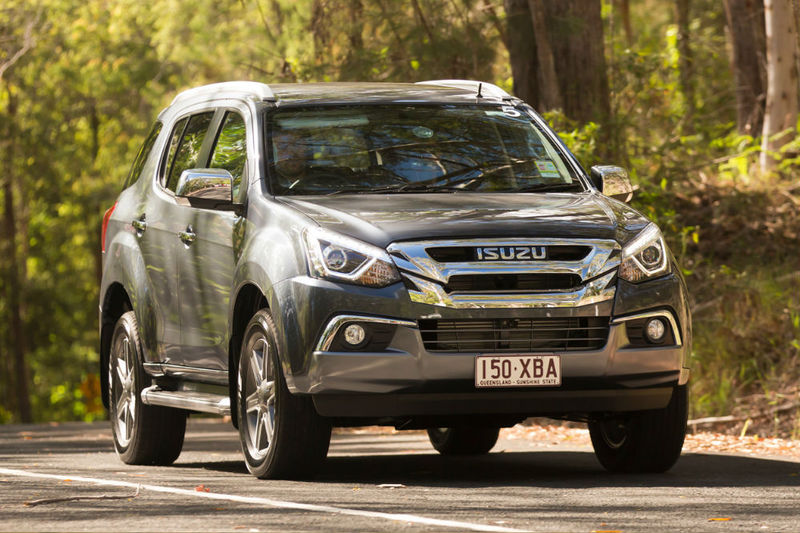
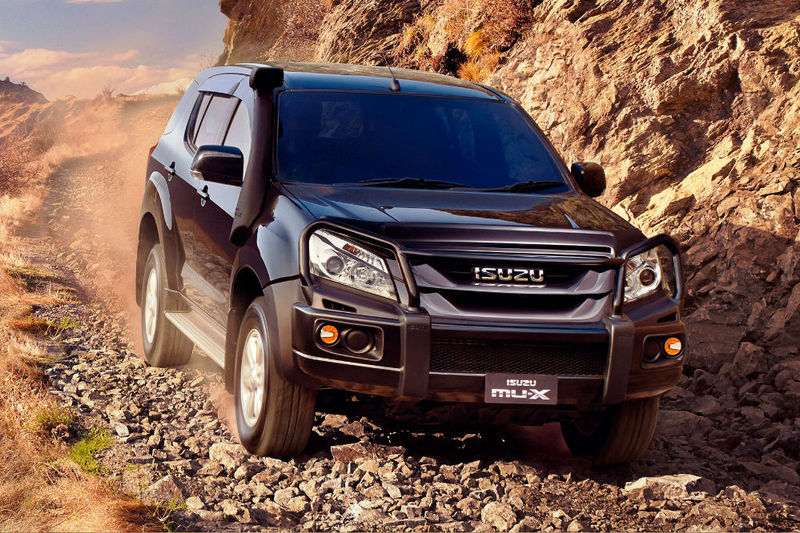
Isuzu MU-X (2018) International Launch Review

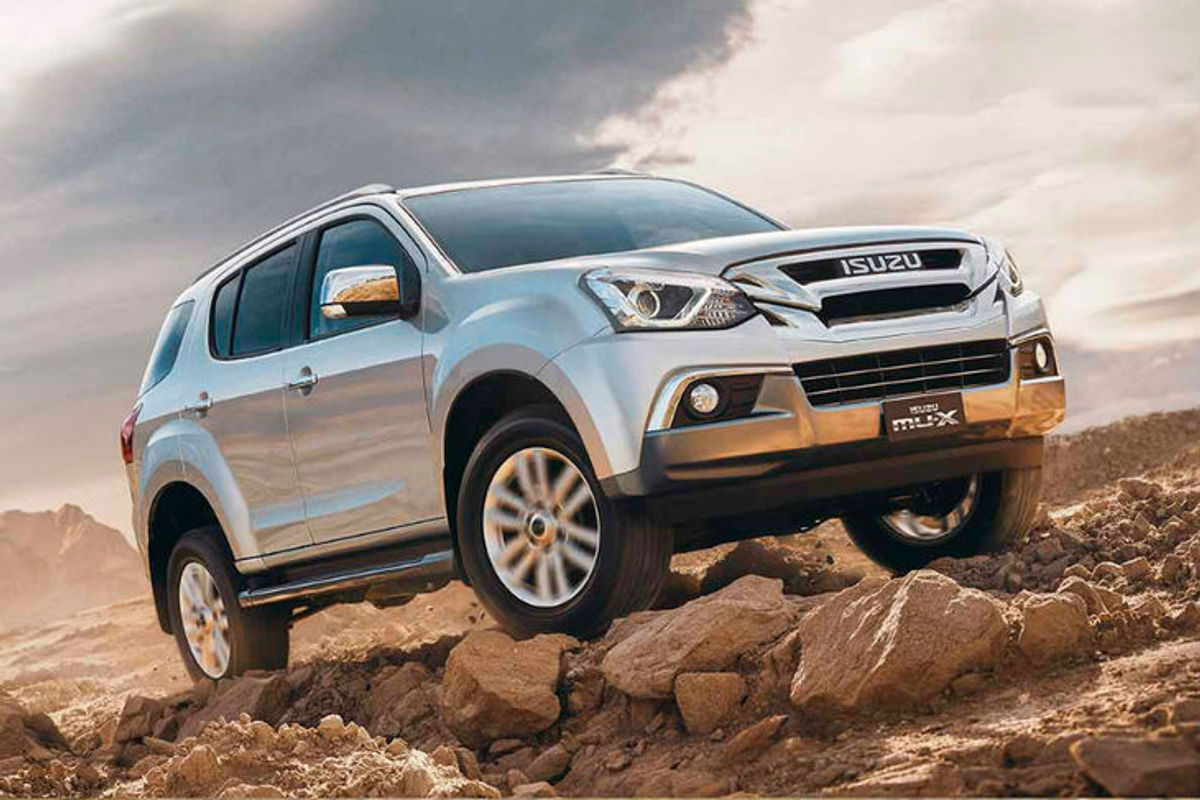
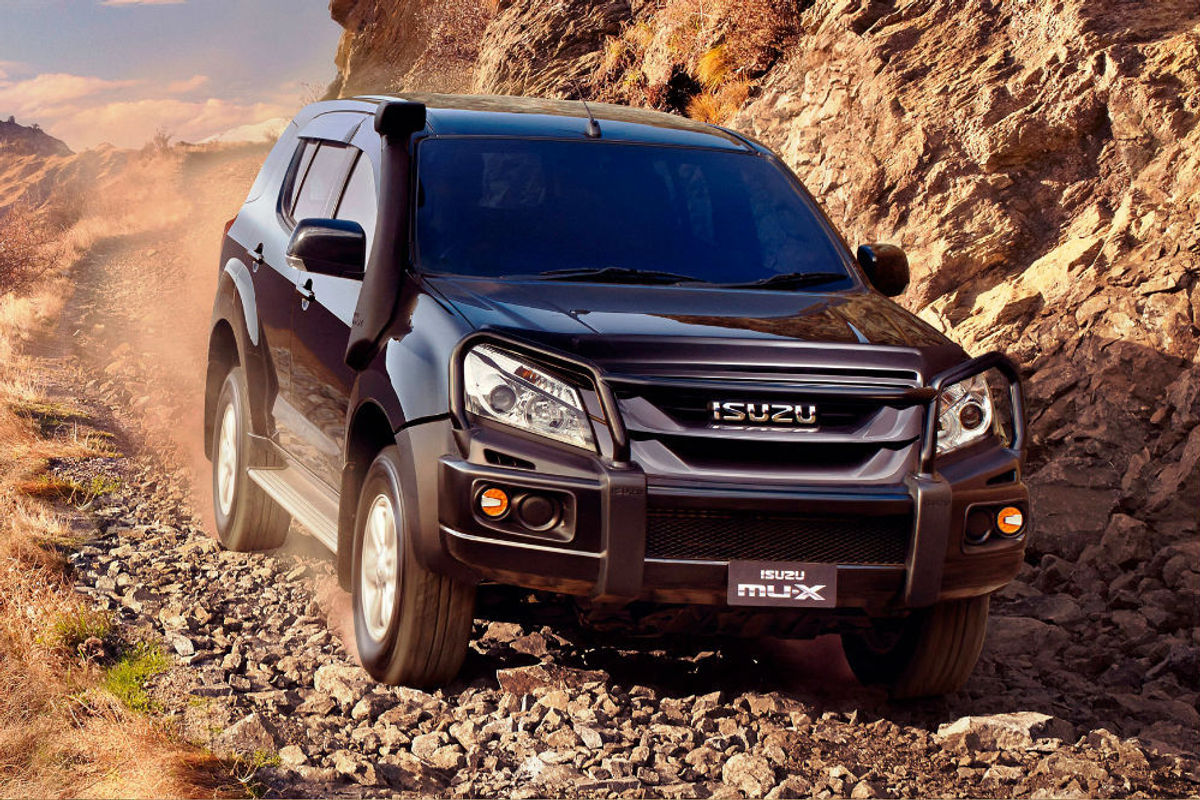
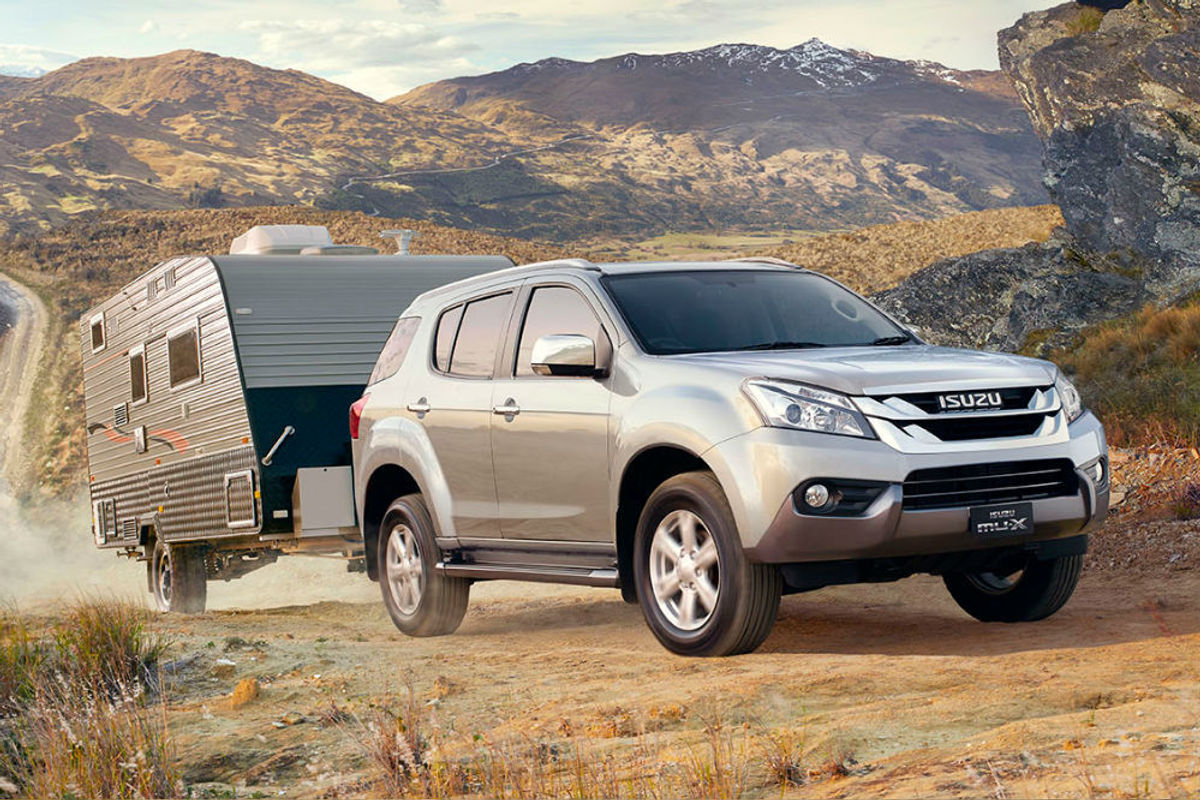
General Motors and its Chevrolet brand will soon no longer feature in the South African new vehicle marketplace, but Isuzu (and Opel) will forge ahead on their own steam from 2018. However, don't assume that the newly independent Japanese brand will only build and market bakkies and trucks… The 7-seater MU-X adventure SUV is, for all intents and purposes, Isuzu's substitute for the perennially underperforming Chevrolet Trailblazer, and it's likely to arrive on local soil in the second half of next year. 

Isuzu has such a strong history in the South African market with the KB bakkie that it’s kind of surprising that while the Japanese brand was under the custodianship of General Motors, the MU-X was marketed as the Chevrolet Trailblazer, replete with Duramax engines developed in conjunction with Italian company VM Motori. Suffice to say that, compared with the runaway success of the Toyota Fortuner, the Trailblazer was a relative sales disappointment (ever since its introduction in late 2012), especially considering that it offered surfeit kerb appeal, a diverse derivative line-up, extensive warranty and good off-road capability.   


The shape of the MU-X will be immediately recognisable to SA consumers… is it even better looking than the Trailblazer?

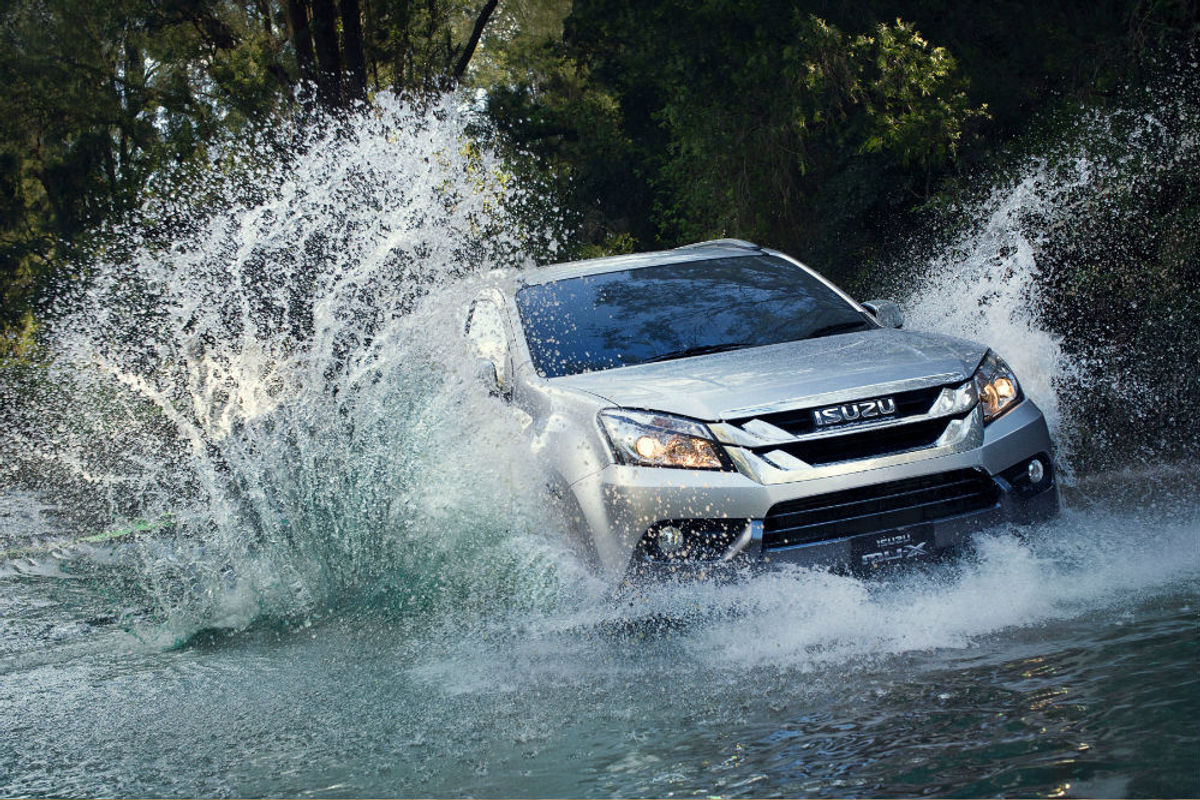
Meanwhile, the KB-based adventure SUV has been on sale for a few years now in markets like Australia, and it has forged a name for being a reliable, ready-for-anything off-roader with 7 seats and a bulletproof turbodiesel engine. A recent update to the MU-X saw it attract some refinement changes inside, not to mention a new drivetrain to make it keep up with newer competitors like the Mitsubishi Pajero Sport, updated Ford Everest and, of course, the Toyota Fortuner. 

Under the bonnet

The big news as part of the updated MU-X launched recently was the pumped up 3.0-litre turbodiesel engine, which retains the same 130 kW of power, but sees a torque bump to 430 Nm – that’s 50 Nm more than before (and what’s available in the current KB), but it’s made more usable by the fact a 6-speed automatic transmission is fitted in place of the old 5-speeder.

It may well be that Isuzu follows the same strategy with the MU-X as it does with the KB in the current (October 2017) market – an entry-level 2.5-litre engine with 100 kW of power and 320 Nm of torque, plus a stronger 3.0-litre with 130 kW and 380 Nm.


Although the Australian-spec 3.0-litre engine might not be offered on the local market; the KB's D-TEQ motor could suffice.

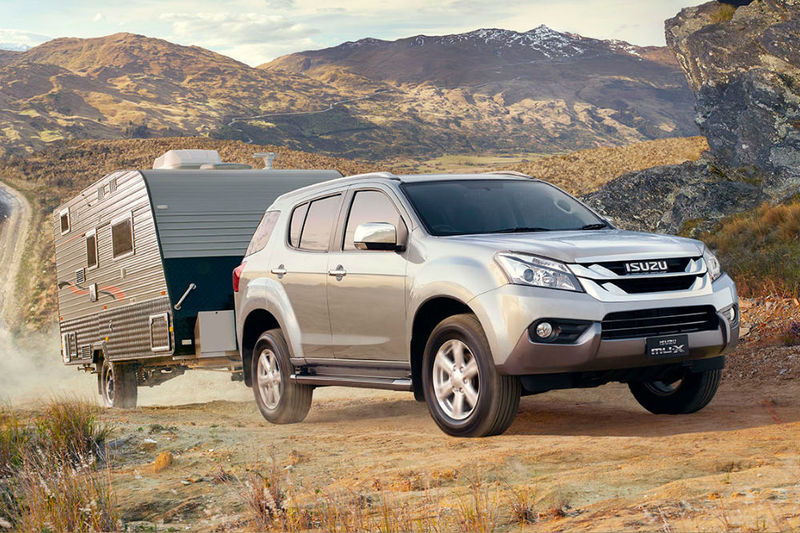
The 3.0-litre is a tireless engine, whether you’re doing backcountry miles with a caravan in tow, or if you’re tramping more common ground in your hometown. The diesel engine’s full torque output is only available across a narrow rev band (2 000-2 200 rpm), but a big proportion of it – 380 Nm – can be wrung from 1700 rpm through to 3500 rpm.

There’s a good level of refinement to the way it builds pace, and the 6-speed automatic doesn't lumber at lower speeds – though it can be a little confused as to whether it should be in 4th, 5th or 6th gear at pace.

It won’t lose too much pace up steep hills when laden with passengers or when tugging a trailer, but it's the day-to-day effortlessness of the 3.0-litre turbodiesel engine, and its well-known reliability, that could make this a good choice for potential buyers.


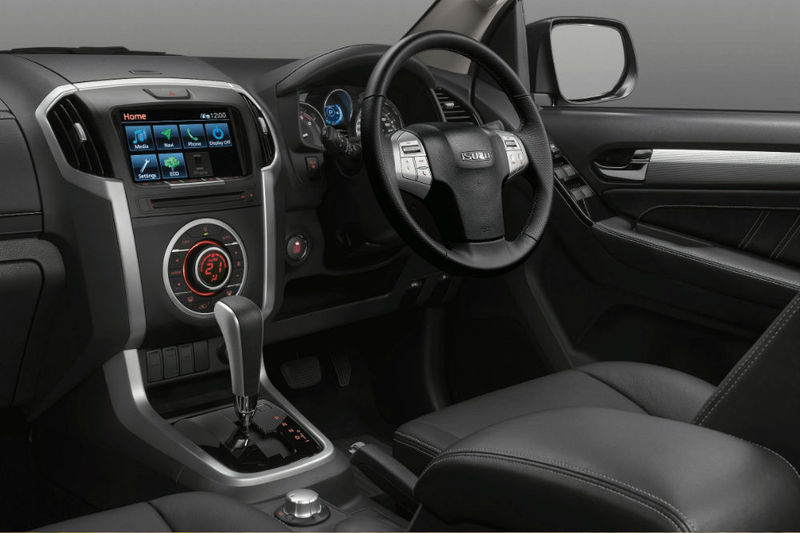
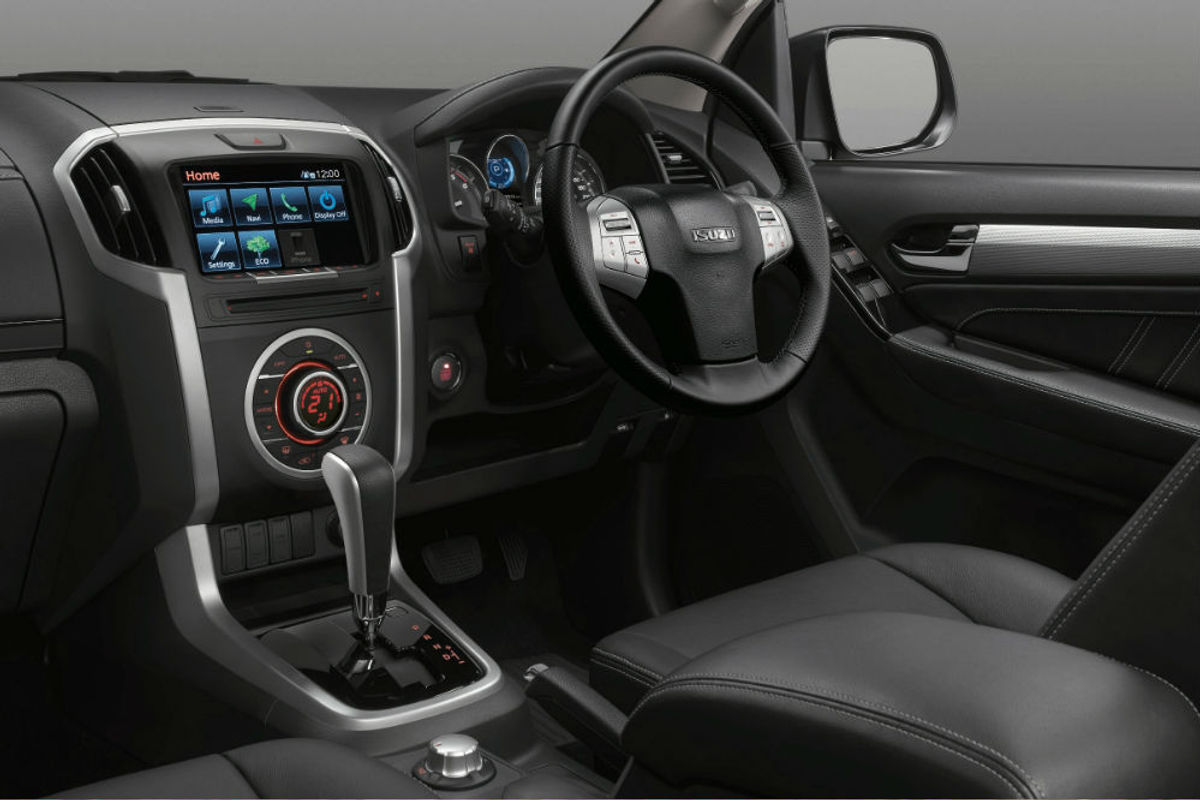
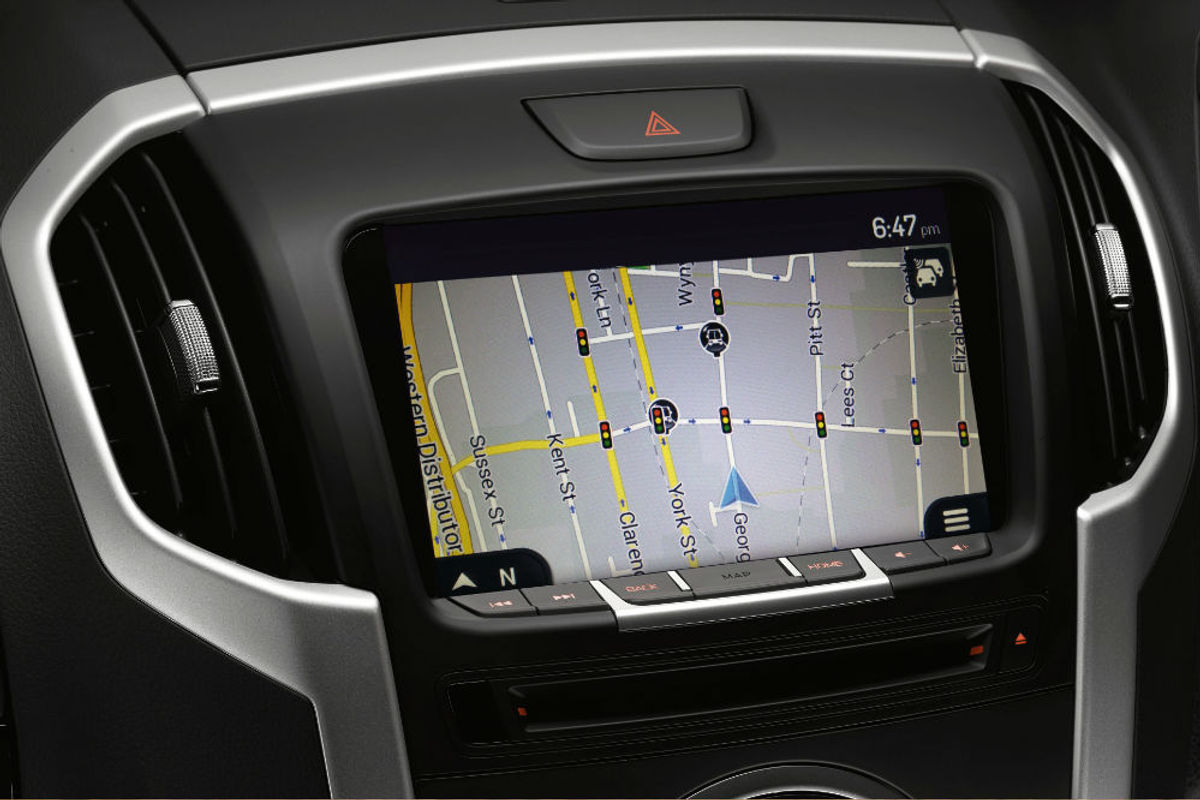
The Isuzu's fascia shows its age, but here's hoping local models will benefit from that touchscreen interface with integrated navigation. 

Driving dynamics

The Isuzu MU-X isn’t a new vehicle, having been around for quite some time in markets such as Australia (since 2013, to be precise), and it can’t necessarily keep up with the best leisure off-roaders on the market for driving dynamics. A Ford Everest, with its fingertip-light steering and pliant ride quality, is certainly a more convincing option for outright car-like-ness.

But that isn’t to say this MU-X is embarrassed by its senior status. It is still quite truck-like to drive, with a heavy and slow steering rack, and suspension that is tuned to deal with bumpy roads rather than absolute body control. However, the company added some extra insulation to the floor, firewall and windscreen as part of the recent update, so it feels relatively quiet and composed if you are hustling along a gravel road. Urban driving is easily dealt with, as the 5-link rear suspension (not leaf springs like the KB) is supple enough without being too soft.


The MU-X also features a 5-link rear suspension, as opposed to traditional leaf springs, which augers well for ride refinement. 

There are both 4×2 and 4×4 models sold around the world, though it would be remiss of a buyer to go for the 4×2, because there’s plenty of off-road cred to be explored in a ladder-frame SUV like the MU-X.

It has one of the simplest off-road gearing selectors that allows shift-on-the-fly changes from 2H to 4H at speeds up to 100 kph, and, of course, there’s a 4L mode for when things get particularly treacherous. And if they do, you’ll be assured by the MU-X’s newly added hill descent control system, not to mention the heavy-duty protection to the underbody and transfer case. The Bi-LED headlamps are quite good as well.

In the cabin

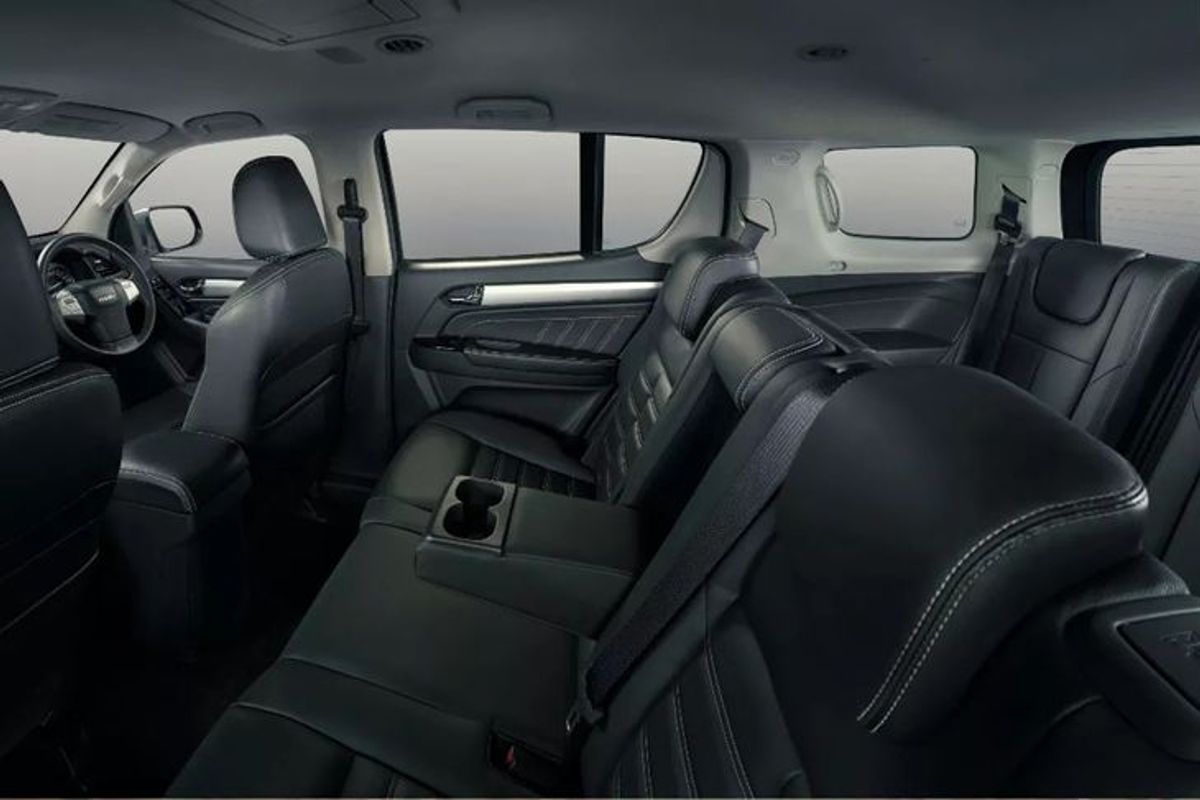
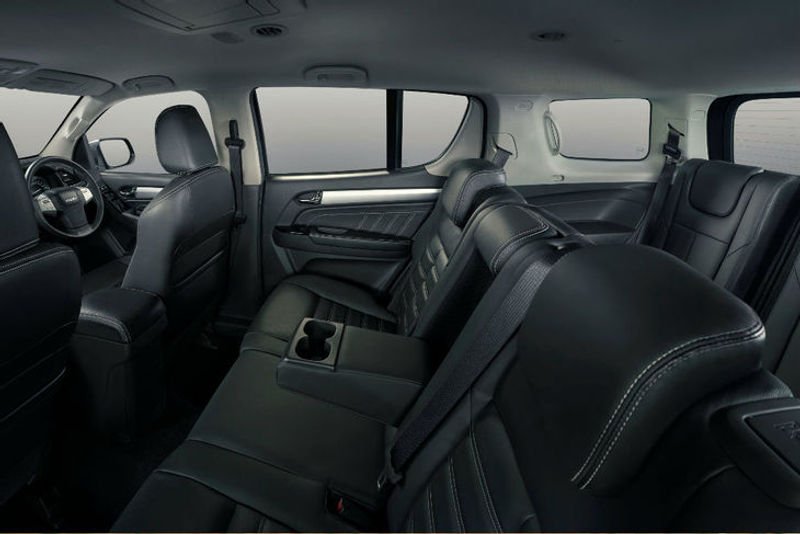
You can’t escape the utility roots of the MU-X – it lacks steering column reach adjustment, for example, and it has only single-zone climate control, where some purpose-built family SUVs have temperature controls for both front passengers and a separate setting for those in the rear. There are vents to all three rows, though, and the seating comfort for adults is definitely acceptable for front and 2nd-row occupants.


The interior comfort of the Trailblazer was a revelation upon the product's introduction 5 years ago; that still rings true today. 

The cockpit has good storage on offer for loose items, and if you are only using 5 seats, there is a large amount of cargo room on offer (878 litres). With all 7 seats in play that drops to just 235 litres, and if you’re only using the front 2 seats, there’s up to 1 830 litres if you fold the 2nd and 3rd roads flat.

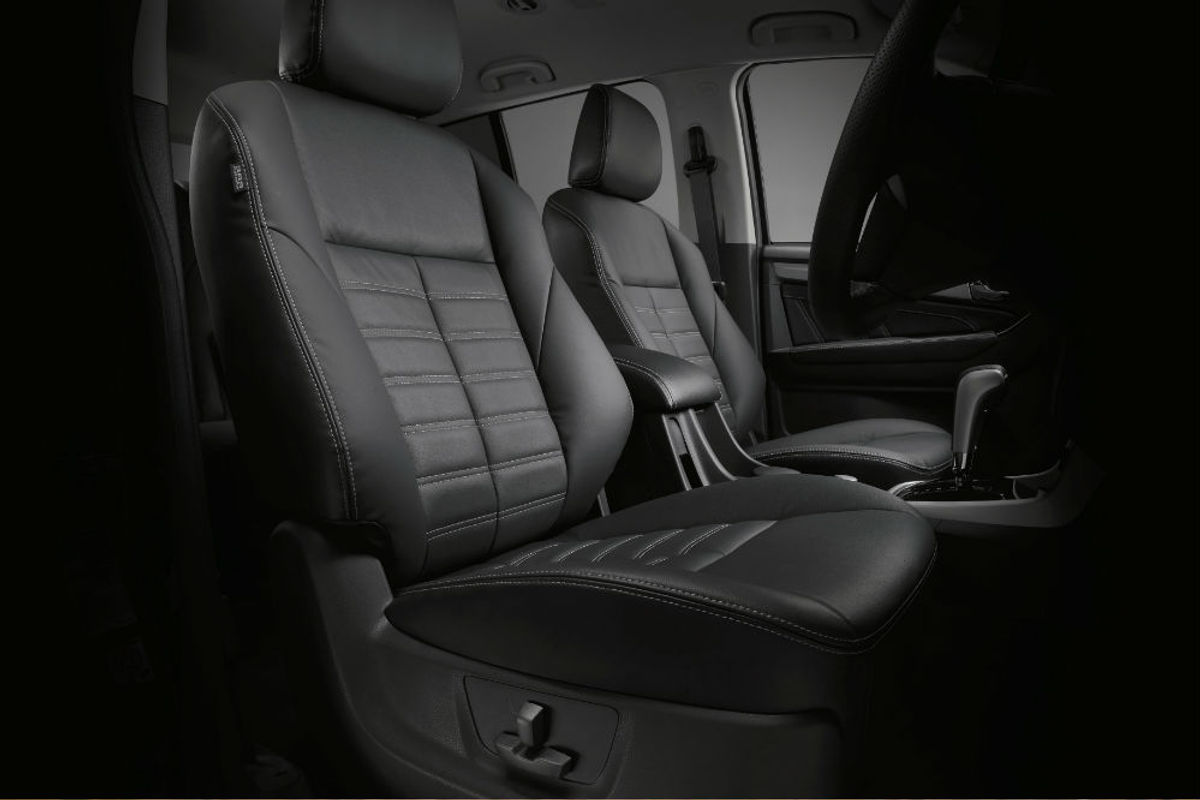
The particular model I drove was the high-end offering, which has all sorts of niceties like leather trim, electric driver’s seat adjustment, keyless entry and push-button start, and even a 10-inch roof-mounted screen for DVDs to keep the kids entertained.

No matter which derivatives end up being offered in South Africa, the MU-X should live up to your expectations IF you bear in mind its workhorse heritage – it remains convincing enough in its attempts to be family-friendly. In a way, it will be a brand builder for Isuzu… an adventure SUV that can only benefit from the buying public's regard for the Japanese marque.  


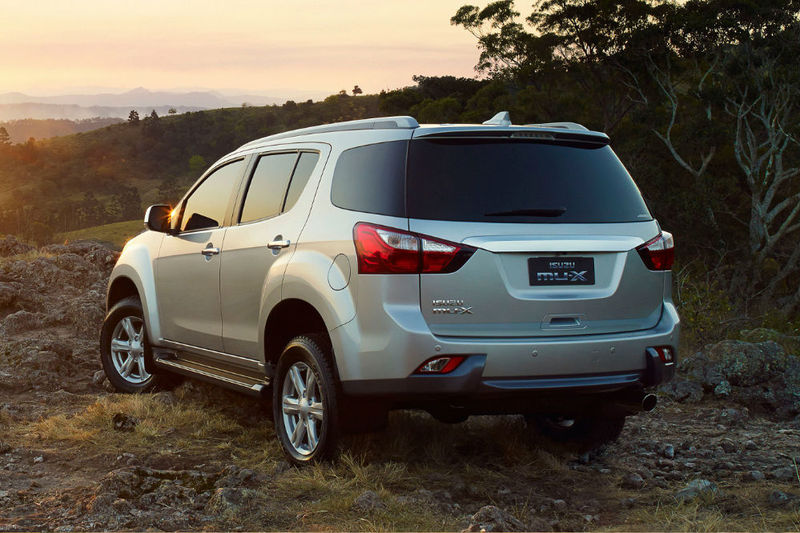
The biggest aesthetic difference between the MU-X and the Trailblazer: the tail-light clusters are more car-like. 

Summary

While the MU-X doesn't have a reputation for quality, overall ability and ruggedness to rival the Toyota Fortuner and isn't quite as polished an offering as the Ford Everest or, judging from our recent video review, the Mitsubishi Pajero Sport, there is no doubt the Isuzu represents a credible alternative to those vehicles, let alone a replacement for its late cousin, the Trailblazer. The official line is that the MU-X is "currently under consideration and (Isuzu is) studying the opportunity to introduce it to the local market. The proposed timing for potential introduction of the vehicle is around the second half of next year". However, there have been reports of evaluation units of the MU-X being spotted in South Africa and we're willing to bet it will indeed go on sale. If only Isuzu would drop the MU-X moniker and revive the Frontier name!

Related content:

Adventure SUV finalists for the 2017/18 Cars.co.za Consumer Awards 

Mitsubishi Pajero Sport Arrives in SA

Extended Test: Toyota Fortuner 2.8 GD-6 4×4 Automatic [with Video]

Toyota Fortuner 2.4GD-6 (2016) Review

Toyota Fortuner vs Ford Everest (2016) Comparative Review [Video]

Spec upgrades to Ford Ranger & Everest

Ford Everest 2.2 XLT auto (2017) Video Review

Ford Everest 2.2 XLT Automatic (2017) Quick Review

Interested in buying an Isuzu?

Seach for a new/used example on Cars.co.za

Range Rover Velar: 5 Cool Features

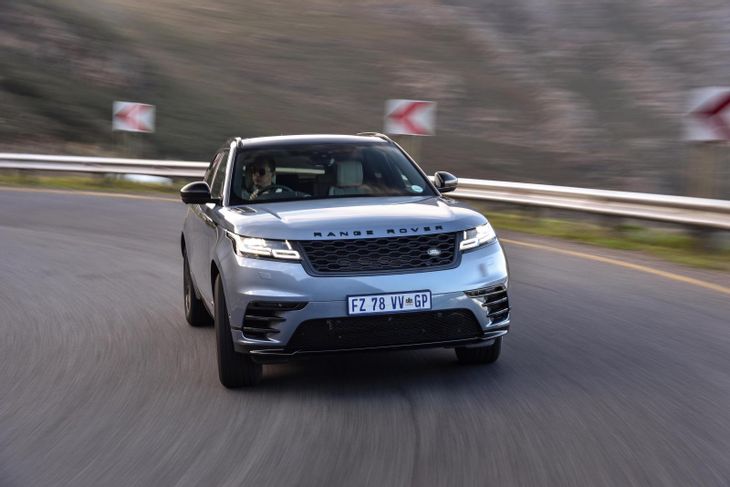
The new Range Rover Velar executive SUV has arrived in South Africa and it’s packed with super-cool technology. These are some of the newcomer's coolest features:

The Velar, the latest member of the Range Rover family is now available in South Africa and it will rival products such as the Volvo XC90, Audi Q7 and the Jaguar F-Pace. We attended the local launch this week where we not only drove 3 of the 6 engines options on offer, but we also experienced much of the technology that the Velar has to offer.


A post shared by Cars.co.za (@carssouthafrica) on

We came away quite impressed with the Velar. Not only did it deliver good performance and a comfortable ride on tar, but it also dealt with gravel roads with aplomb. However, the full breadth of its offroad capability is yet to be proven. It’s a refined product with excellent interior build quality and apart from its stylish and elegant design, the Velar is packed with great technological features.

Here are some of the coolest features that the new Velar has to offer.

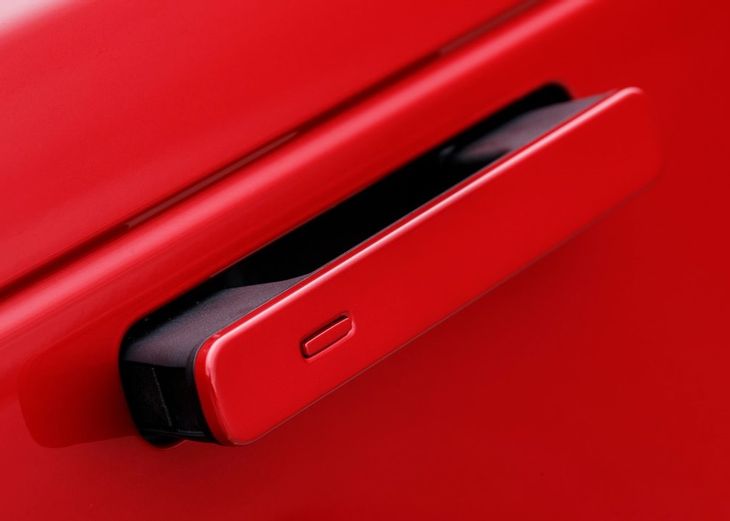
Flush door handles


Retractable and stylish hidden door handles are a unique feature on the Velar.

Starting with the exterior, perhaps one of the first things you will notice on the Velar is its flush, deployable door handles. Upon unlocking the Velar, the door handles conveniently deploy from the bodywork and retract when the vehicle is locked or on the move. It’s a small detail, but adds significant appeal to the Velar’s overall sleek design. The flush door handles contribute to the Velar’s aerodynamic performance and with an overall drag coefficient of 0.32, the Velar is the most aerodynamically efficient Land Rover built to date.

Matrix-Laser LED headlights


A total of 4 LED lighting options are available to buyers with the Matrix-laser LED headlights offering a lighting range of over 500 metres.

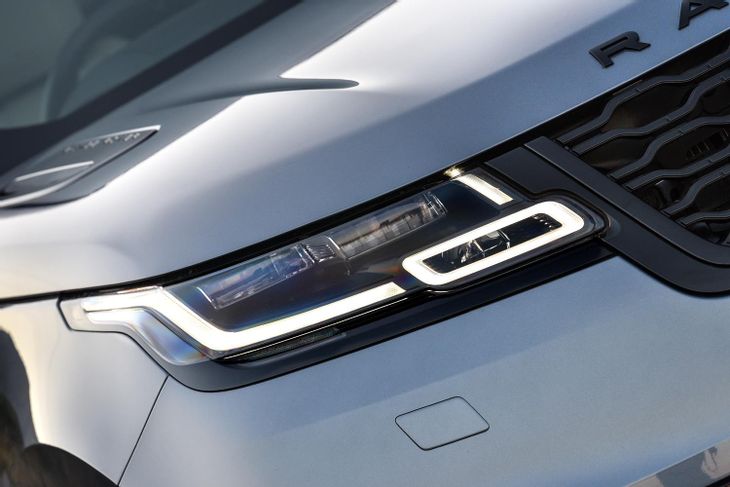
LED headlights are standard across the range. However, buyers can choose between 4 different headlight options including the standard LED headlights, Premium LED headlights with signature daytime running lights (DRLs), Matrix LED headlights with signature DRLs and the top-of-the-range Matrix-laser LED headlights with signature DRLs.

The latter offers a laser high beam, static cornering lights, adaptive front lighting, high beam assist and animated indicator lights. The Matrix-laser LED headlights offer excellent illumination and are 5 times more effective than standard LED headlights with a lighting range of over 500 metres.

Comprehensive infotainment system


The two 10-inch touchscreens eliminate most of the buttons in the cabin resulting in an elegant and minimalist interior design.

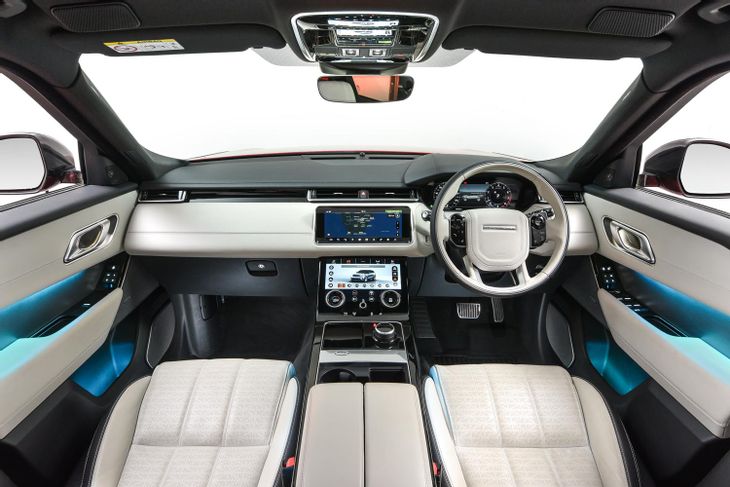
Stepping inside the Velar, you will notice that there are very few buttons in the cabin. This is because buttons have been replaced with touchscreen technology. The dominant feature inside the Velar is undoubtedly the Touch Pro Duo infotainment system. It comprises two 10-inch touchscreens that house all the interior and infotainment functions as well as most of the vehicle’s settings.

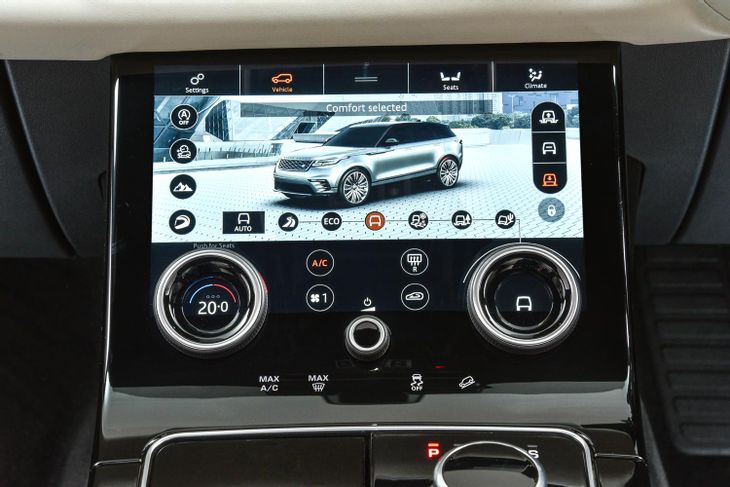
The bottom screen allows the user/driver to choose and set various vehicle functions including driving modes and suspension settings and it also controls seat functions and the climate control air conditioning system. The higher screen is dedicated to functions such as navigation, Bluetooth telephony, music and camera viewing. It’s an impressively slick system and it’s very intuitive and easy to use. When not in operation, the top screen folds back into the dashboard.


The lower touchscreen puts most of the vehicle's functions at the driver's fingertips. 

A cool option offered on the Velar is the Interactive Driver Display. It’s a 12.3-inch high-definition digital screen with 4 configurable modes that give the driver access to a host of functions such as vital driving information, navigation, media and telephony. There are also two 8-inch viewing screens integrated into front headrests for rear passenger entertainment, as well as wireless headphones and HDMI, MHL and USB connections.

Off-road capability


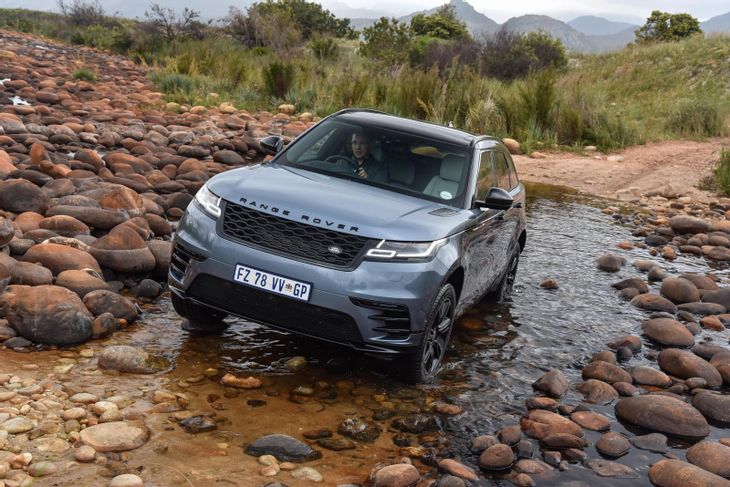
The Velar can go offroad and it has a wading depth limit of 650 mm.

The Velar features a Terrain Response system that can be used in various situations depending on the terrain. The system offers 6 settings including Comfort, Grass/Gravel/Snow, Mud and Ruts, Sand, ECO and Dynamic mode, all of which can be selected on the lower 10-inch touchscreen. All Terrain Progress Control and Terrain Response 2 are offered as options. Another handy feature is Wade Sensing (optional) which uses ultrasonic sensors to warn the driver (visually and audibly) when the 650 mm wading depth is being reached. An image of the vehicle is shown on the touchscreen depicting the current depth and the maximum wading depth.  The 360-degree camera system also gives you an all-around view of the vehicle which is useful in tricky terrain.   

In addition to all-wheel drive and active locking rear differential, the Velar is also equipped with Hill Descent Control and Hill Launch Assist. Electronic air suspension is offered as an option and it allows the driver to adjust the ride height of the Velar in an offroad situation. The height of the Velar can be altered by as much as 50 mm, which also makes it easier to load bulky items into the 673-litre load bay. The Velar will also automatically lower by 40 mm when you come to a stop, making it easier for you to get in and out of the vehicle.

Extensive engine choice


Buyers have lots of choice in terms of engines, trim grades and optional equipment to make their Velar unique. 

A total of 6 engine variants are on offer for the Velar with 3 diesel engines and 3 petrol engines available to buyers. All engines are mated to an 8-speed automatic transmission.

The Velar range kicks off with a 2.0-litre turbodiesel engine with 132 kW/430 Nm and a claimed consumption figure of 5.4 L/100 km.

Moving up the range is a more powerful 2.0-litre twin-turbodiesel engine with 177 kW/500 Nm and a claimed fuel consumption figure of 5.8 L/100 km.

The most powerful diesel engine on offer is the twin-turbocharged 3.0-litre V6 diesel engine with 221 kW/700 Nm and a claimed fuel consumption figure of 6.4 L/100km.

On the petrol front, the range starts with a 2.0-litre turbopetrol engine with 183 kW365 Nm and a claimed fuel consumption figure of 7.6 L/100 km.

A more powerful 221 kW/400 Nm 2.0-litre turbopetrol is also offered, carrying a claimed fuel consumption figure of 7.8 L/100 km.

The range-topping engine is a supercharged 3.0-litre V6 petrol engine with 280 kW/450 Nm and a claimed fuel consumption figure of 9.4 L/100km.

In addition to the extensive engine offering, the personalisation options on the Velar are almost endless and buyers can choose between various colours, interior trim/finishes and trim grades (S, SE, HSE, R-Dynamic S, R-Dynamic SE and R-Dynamic HSE). A bespoke Velar First Edition is also offered. Visit the Velar Configurator to build your own Velar!

Buy a Range Rover on Cars.co.za

Related Content

Range Rover Velar (2017) Specs & Pricing

Range Rover Velar (2017) International Launch Review

Range Rover Velar (2017) Launch Review [with Video]
7 Rivals the Range Rover Velar Needs to Beat

Update: Range Rover Sport Hybrid Revealed [w/video]

Facelifted Range Rover Revealed [w/Video]

Update: New Range Rover Velar SUV Revealed

Range Rover Evoque Convertible (2017) Quick Review

Range Rover SVAutobiography Dynamic Introduced

2015 Range Rover and Range Rover Sport Introduced With More Power and New Tech (Video)

Audi Q7 vs Volvo XC90 Video Review and Comparison

Limited Edition Renault Kwid in SA

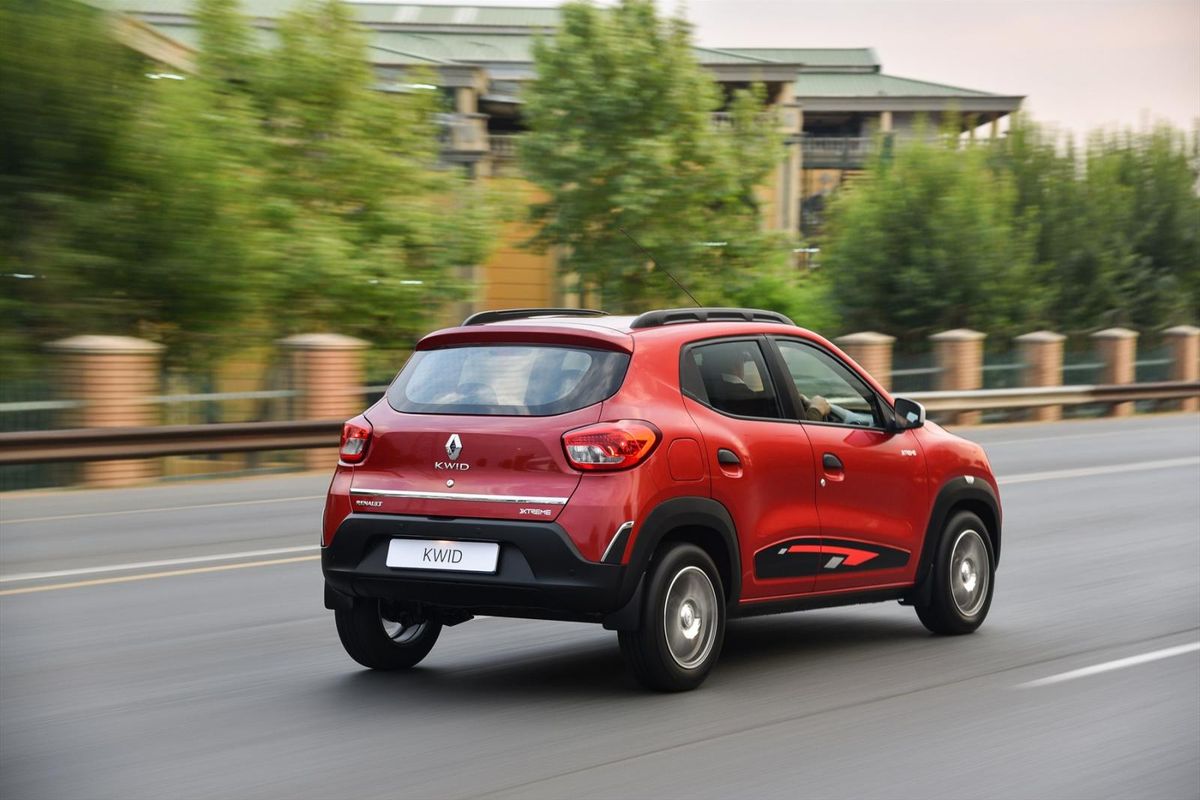
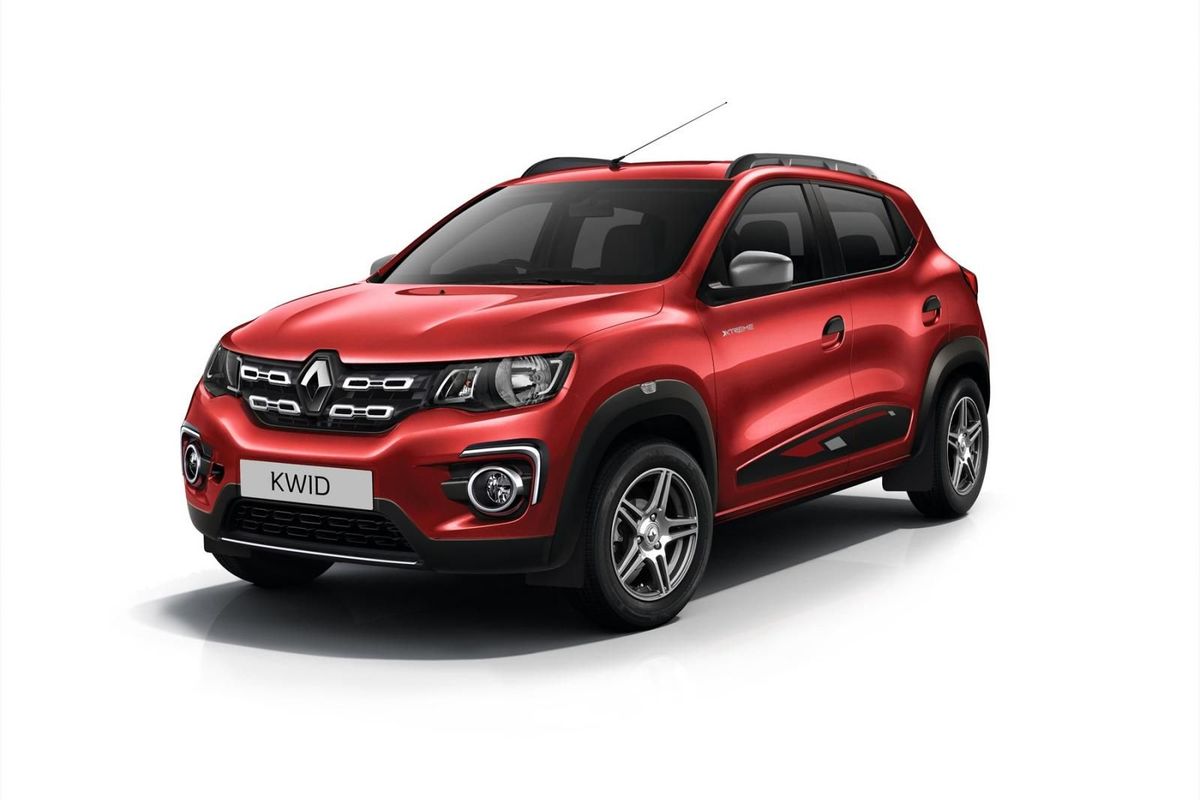
Renault has introduced a limited edition Kwid Xtreme derivative in South Africa. Herewith the details…

Renault’s budget-busting Kwid has experienced great success in the local market since its introduction almost a year ago with more than 6 000 units finding homes in SA and claims a sizable 11.5% share of the entry-level segment  Now, to celebrate the Kwid’s success, Renault is offering a limited edition Kwid Xtreme in South Africa that will be available in limited numbers. Herewith the details.

Kwid Xtreme – Key features


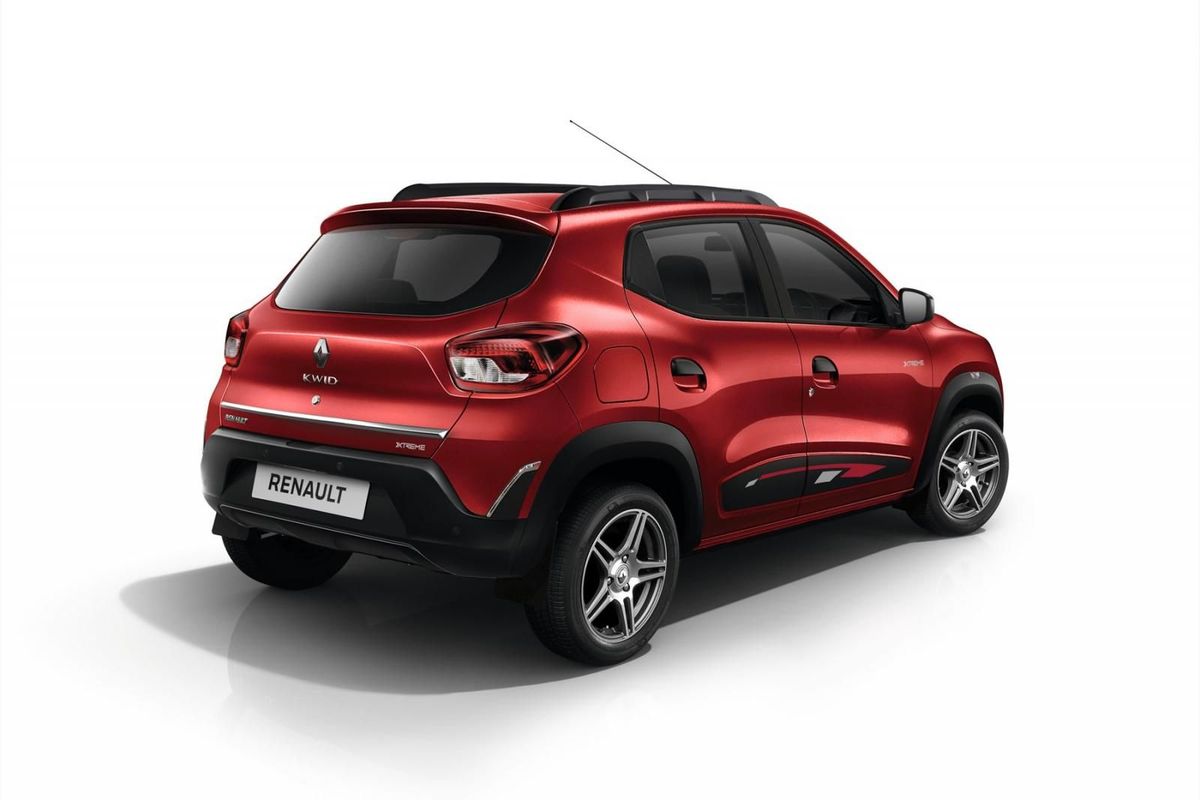
The Kwid Xtreme benefits from a number of additional styling features as well as rear park distance control. 

The Kwid Xtreme is powered by a 50 kW / 91 Nm 1.0-litre engine and is mated to a 5-speed manual transmission.

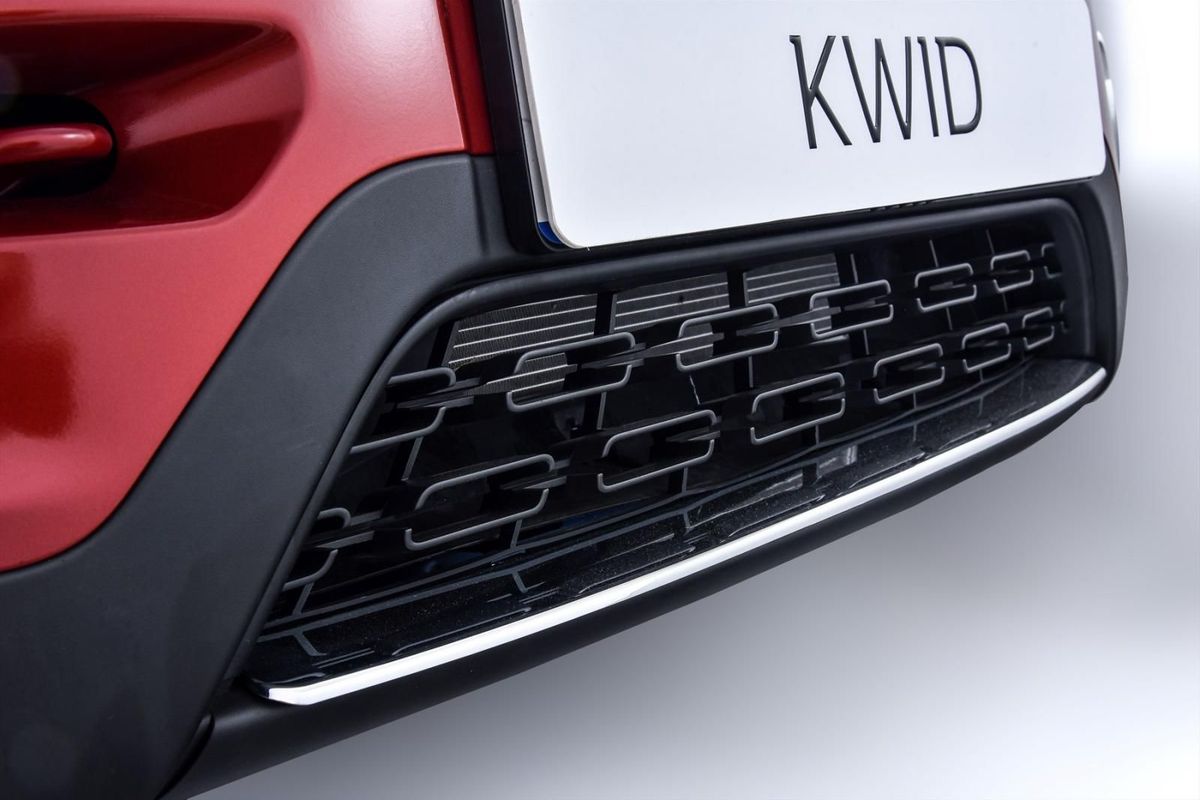
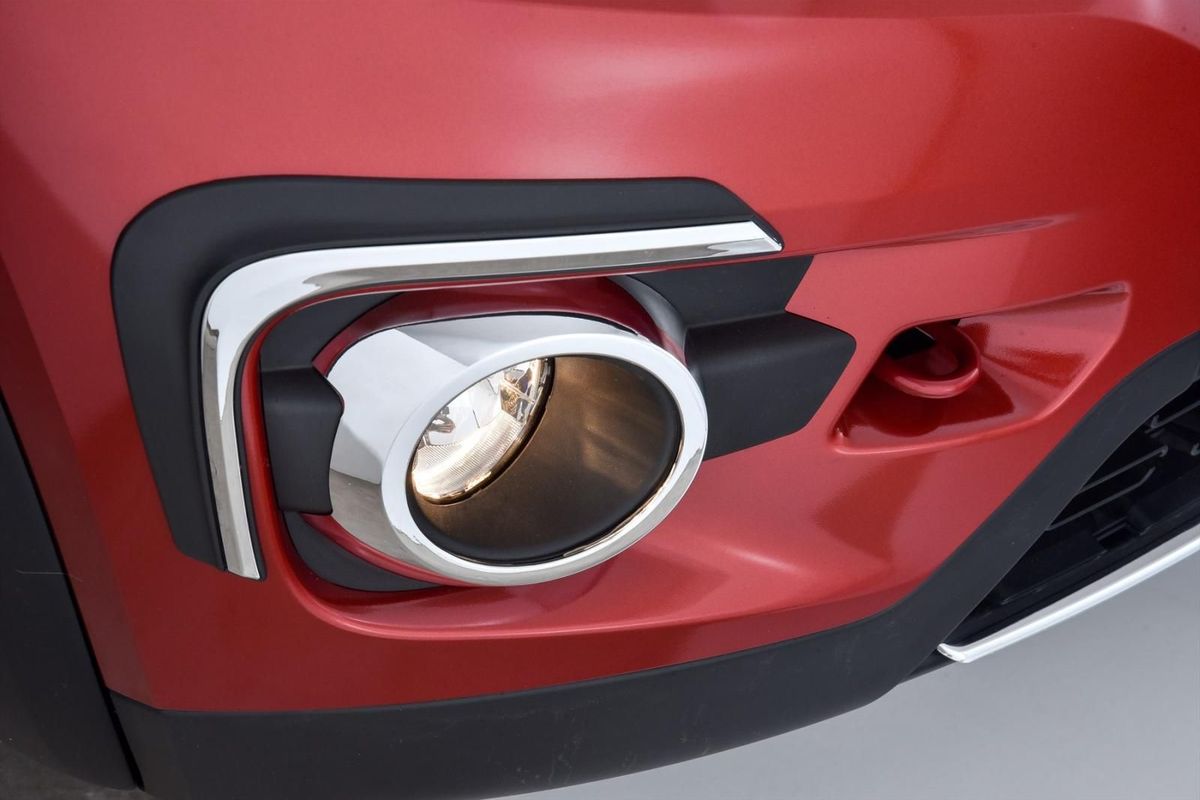
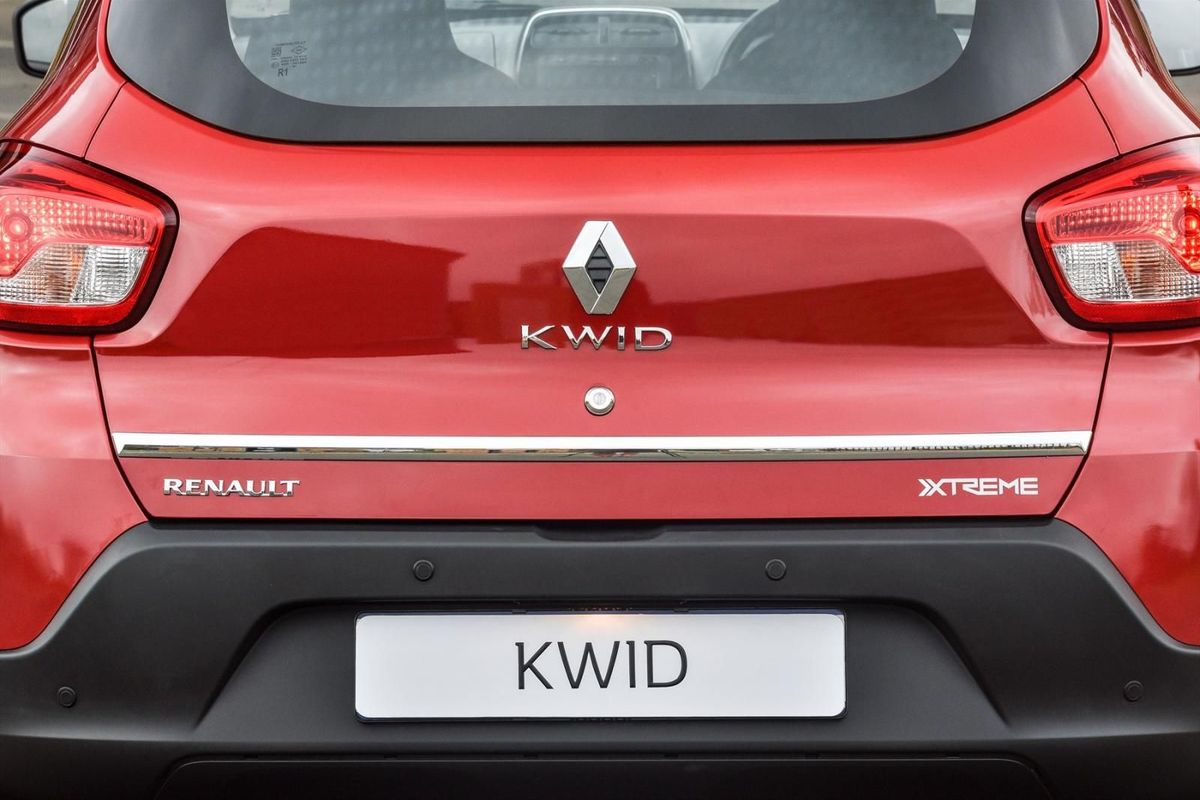
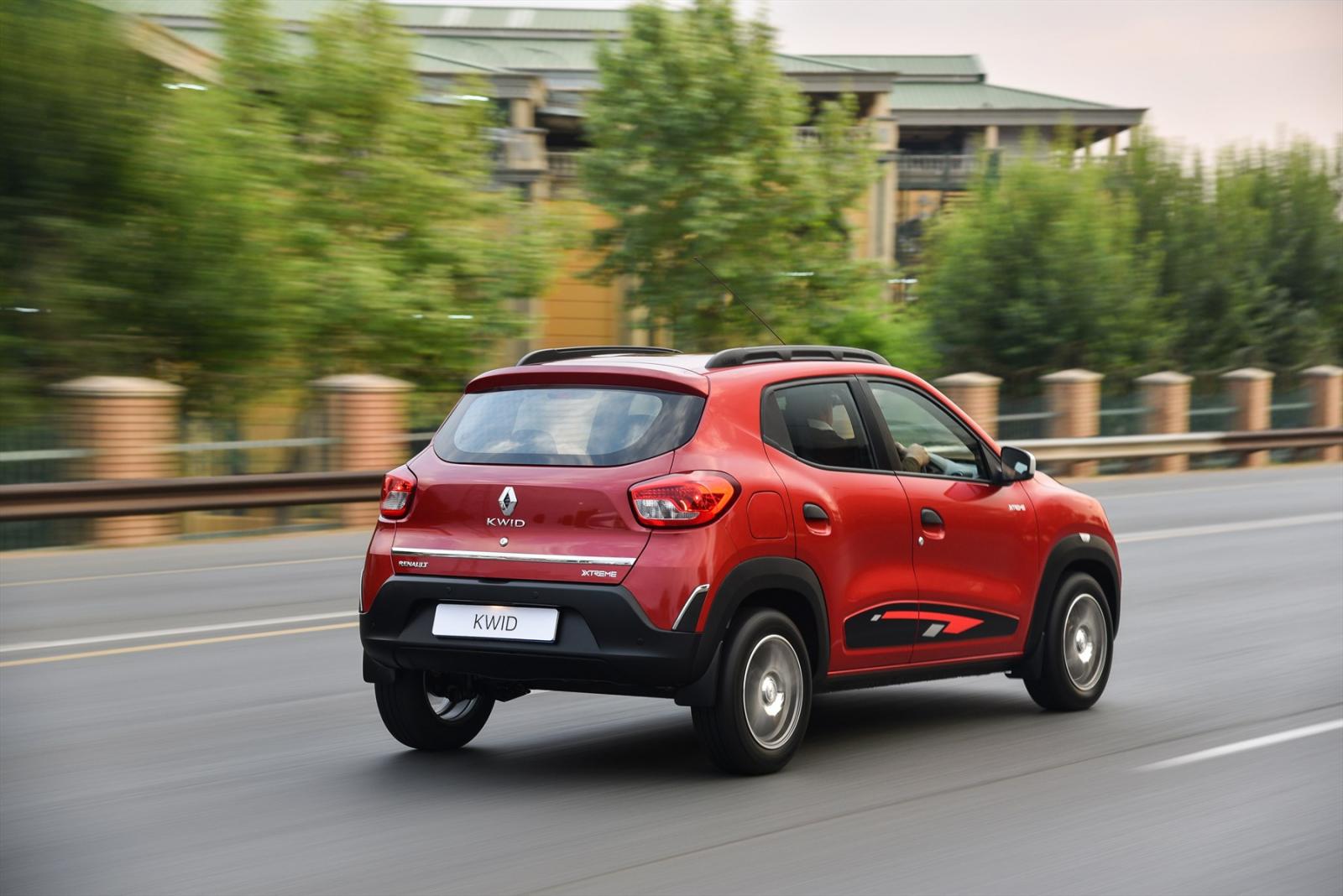
Based on the Kwid Dynamique, the limited edition Kwid Xtreme features an exterior styling pack that includes chrome accents seen on the grille, fog light surrounds, front bumper and on the tailgate. Bumper protection is fitted to minimise scuffs and scrapes.  


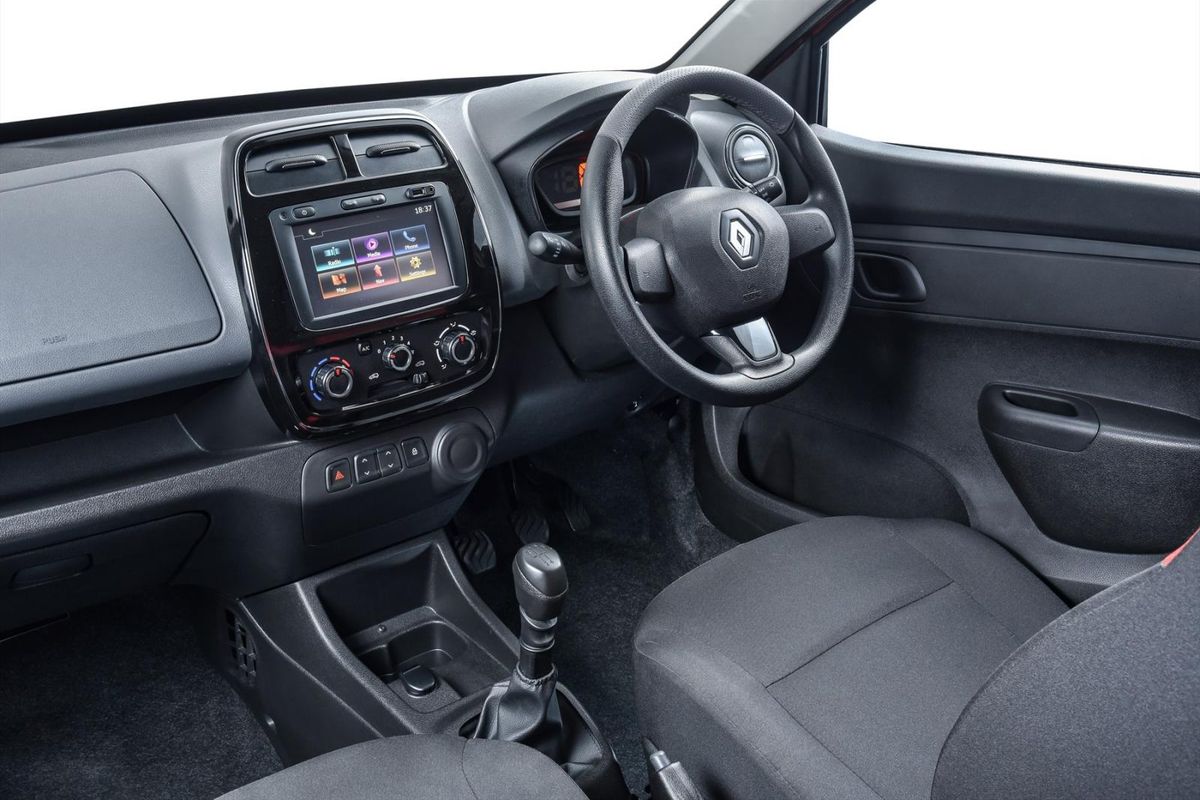
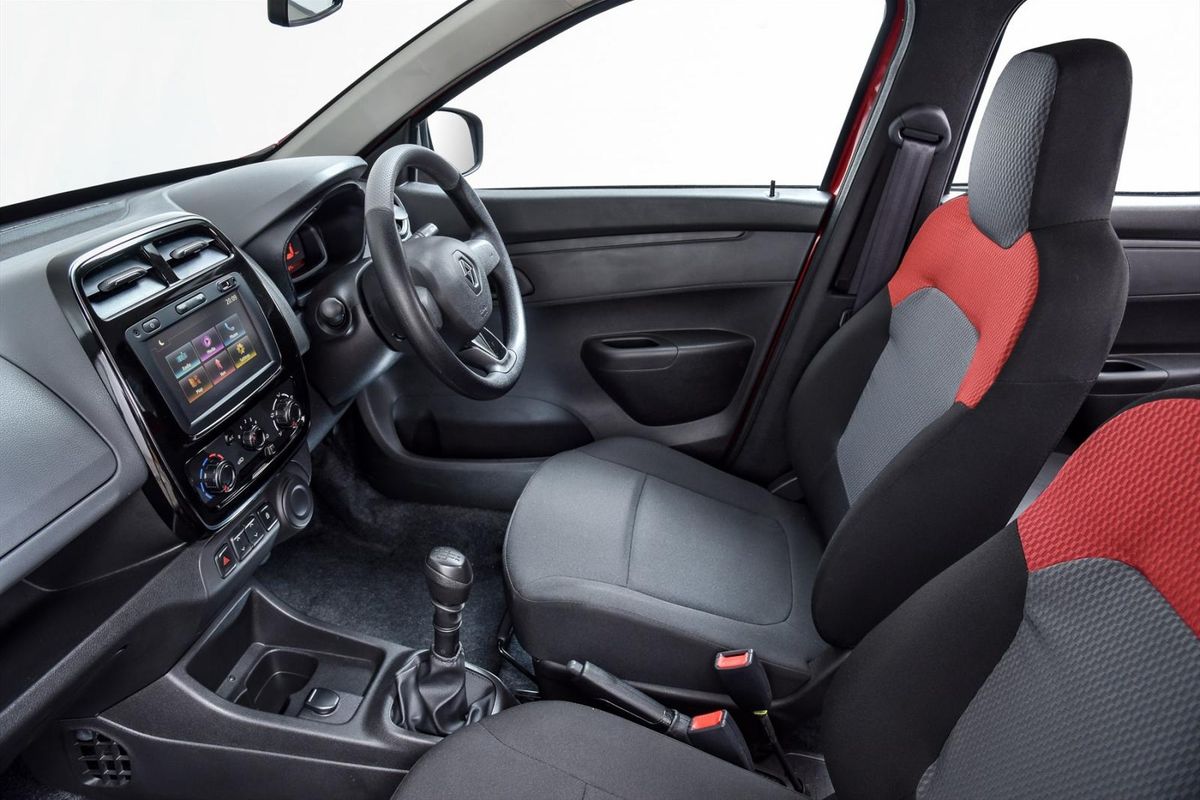
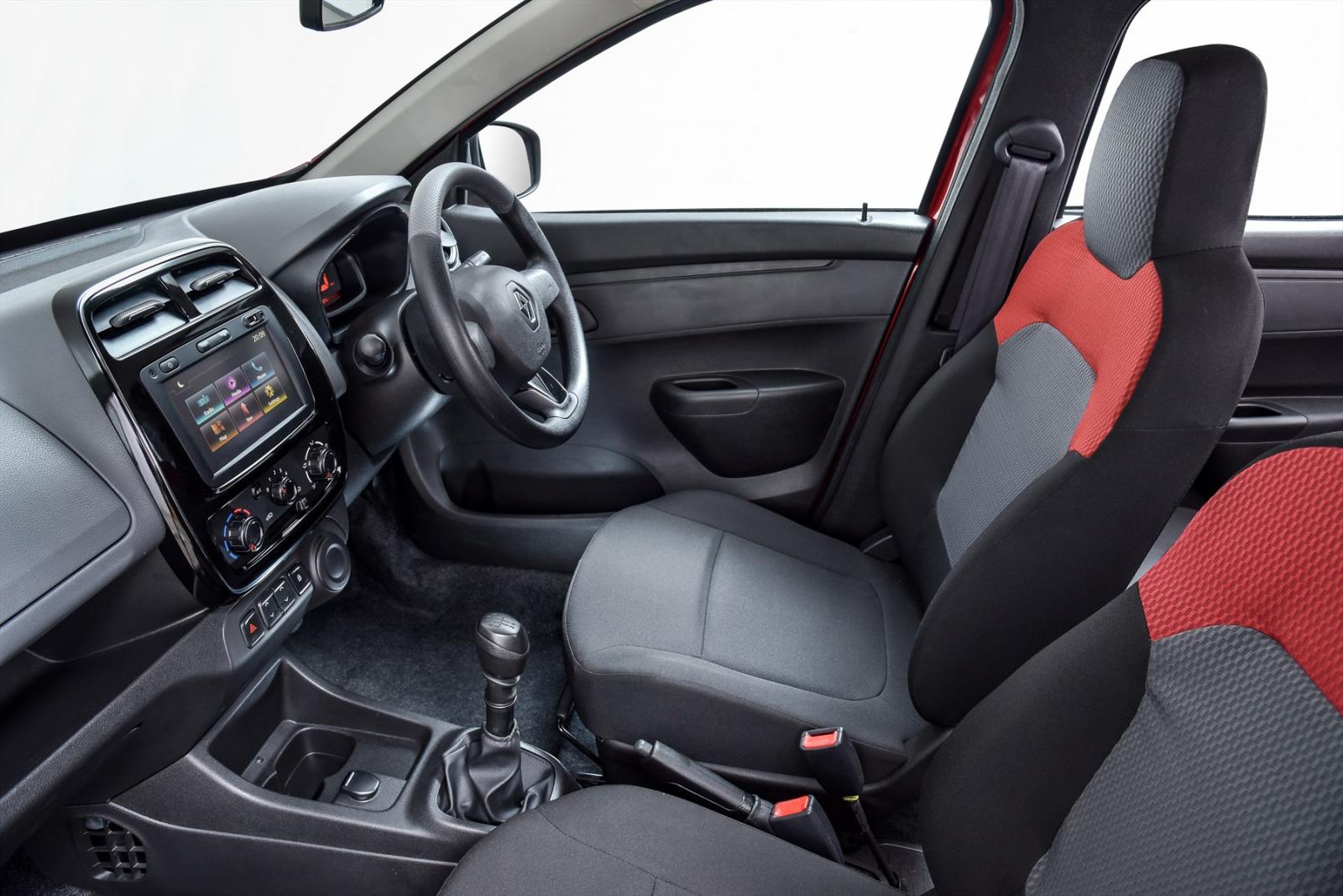
The interior highlight is the 7-inch infotainment touchscreen with navigation and special red-detailed seat covers. 

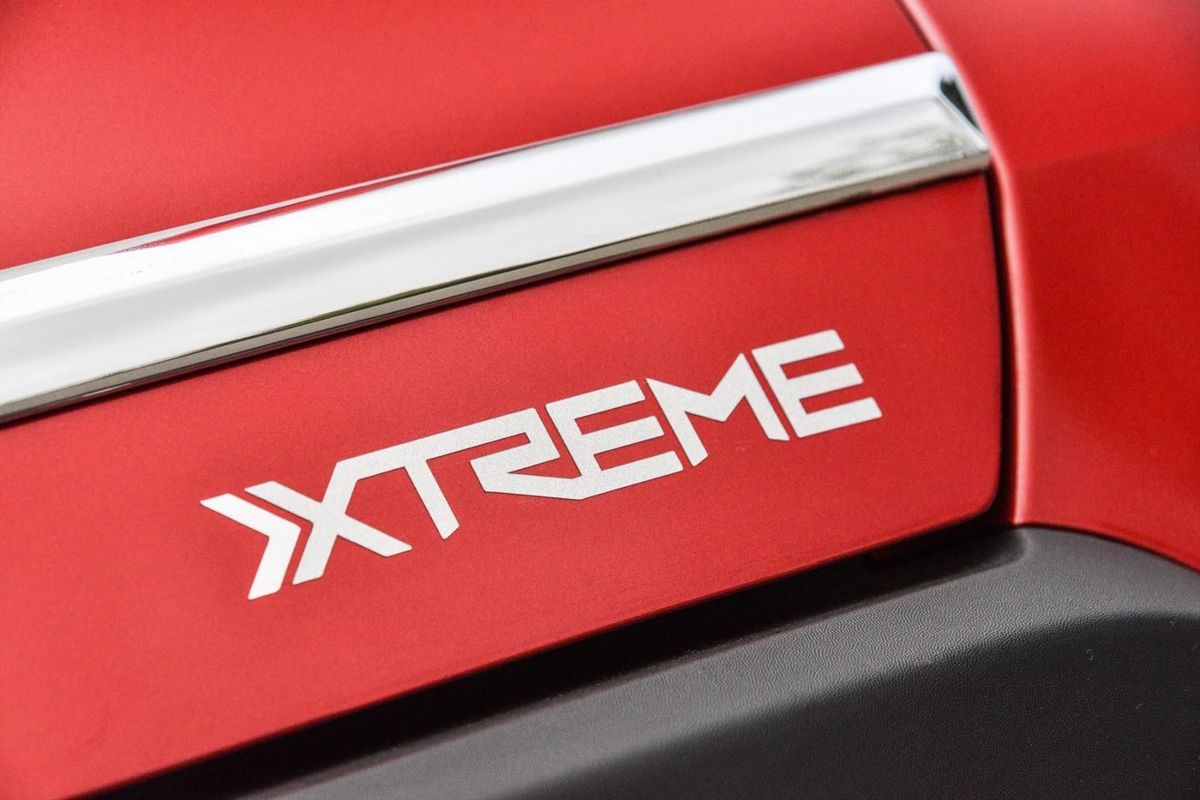
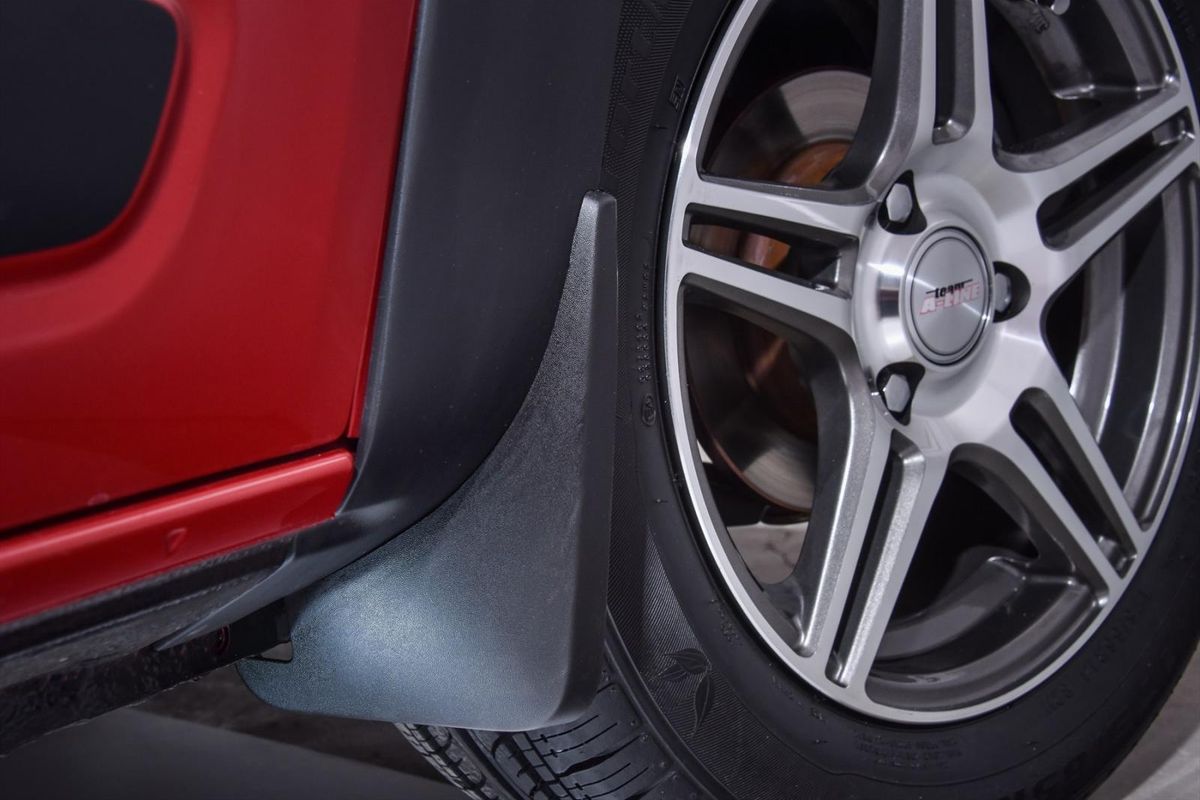
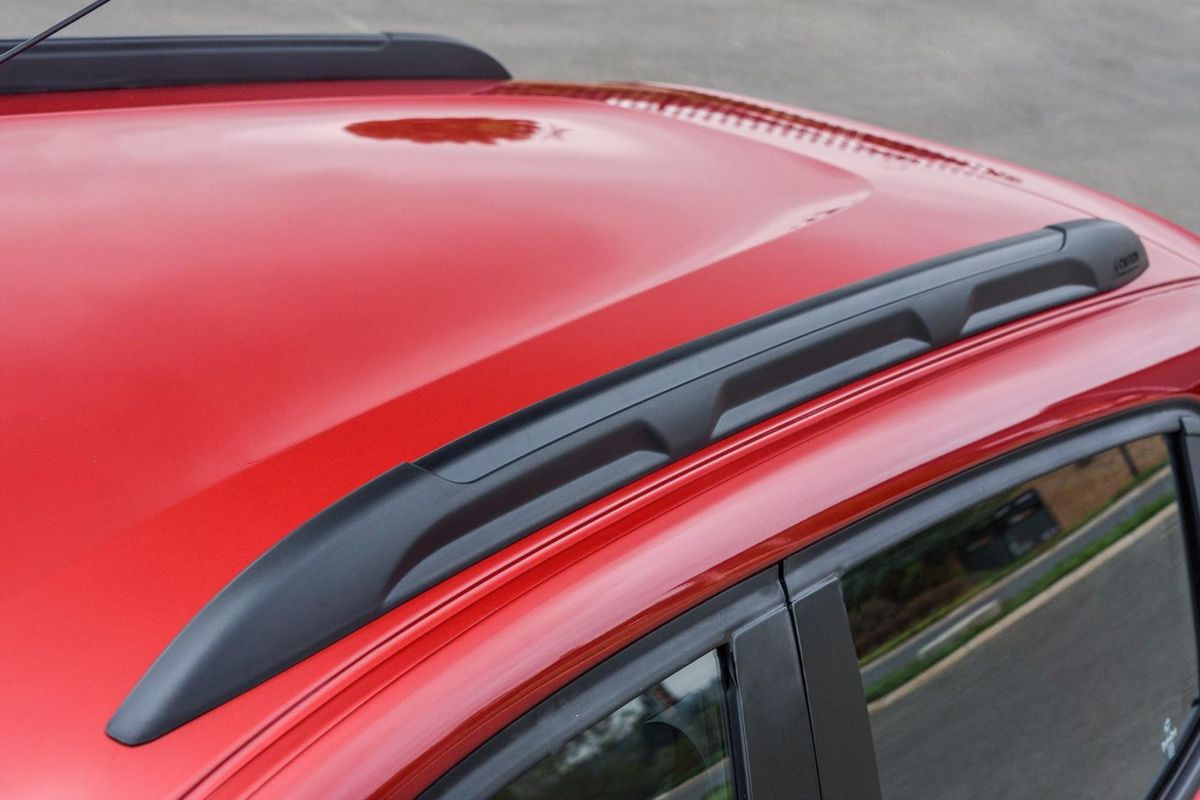
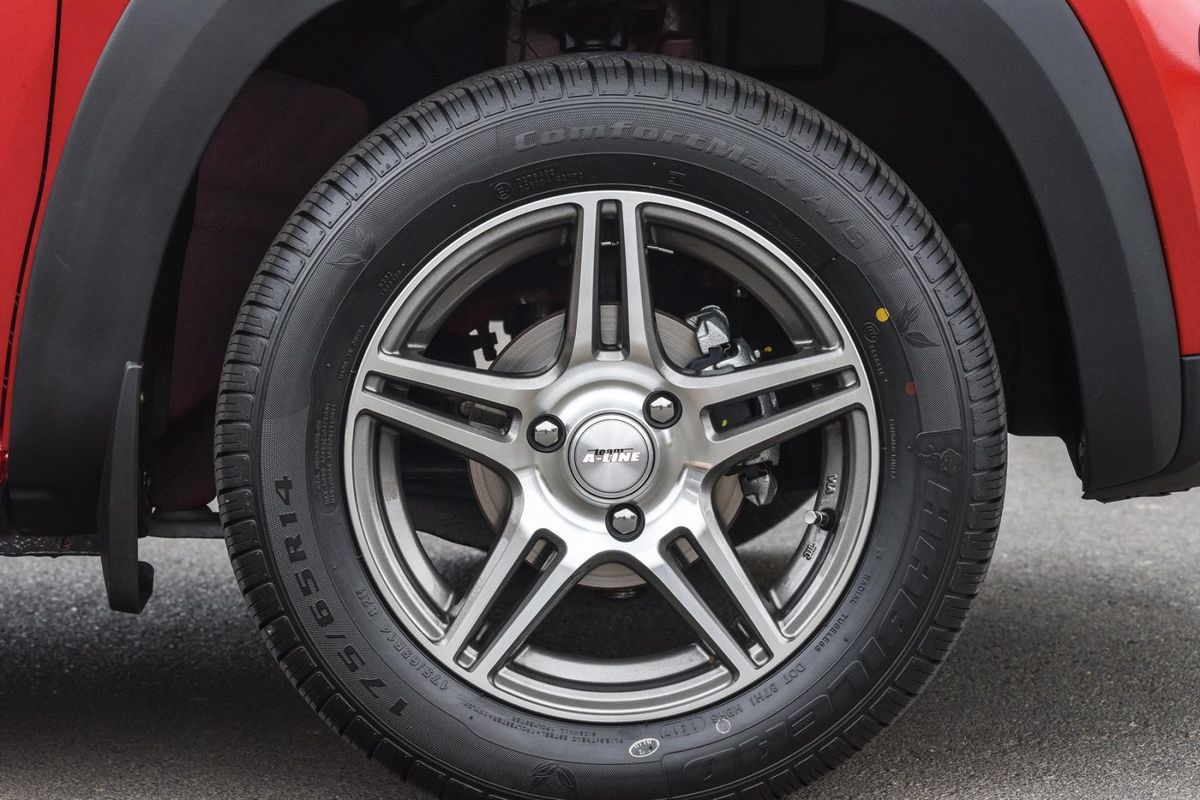
The Kwid Xtreme is also fitted with black roof rails, black plastic mud flaps and rides on 14-inch alloy wheels. Decals further add to the look of the Kwid Xtreme. In addition to the standard features offered by the Kwid Dynamique derivative, the Kwid Xtreme is fitted with rear park distance control as well as a Lock-On Drive system that automatically locks the doors at 20 kph for added security.

Key standard features include air conditioning, electric front windows and a 7-inch touchscreen infotainment system with navigation and Bluetooth functionality. The load bay offers 300-litres of space and Kwid has a useful ground clearance of 180mm.

Renault Kwid – Price in South Africa

Renault Kwid 1.0 SCe Expression – R124 900

Renault Kwid 1.0 SCe Dynamique – R134 900

Renault Kwid 1.0 SCe Xtreme – R149 900

The Renault Kwid is sold with a 5-year/150 000km warranty and a 6-year anti-corrosion warranty. Service plans are optional.

Buy a Renault Kwid on Cars.co.za

Related Content

Renault Kwid (2016) Video Review
Renault Kwid Dynamique (2016) Review
The Renault Kwid: A Game-Changing Budget Car?

Top 10 Most Fuel Efficient Budget Cars

Juliet McGuire tests a trio of budget cars

Datsun GO (2014) Review
Datsun GO+ Launches in SA


Nissan Navara vs VW Amarok (2017) Which is better for off-roading?

We've enlisted the help of 4×4 expert Alan Pepper to put the all-new Nissan Navara and recently facelifted Volkswagen Amarok through their paces on a 4×4 course to see how well the double cab pick-ups will deal with tricky off-road obstacles…
There are many similarities between these two rival products, so when the going gets rough, will the Nissan or the Volkswagen be the best vehicle for the job? This video also includes helpful tips for the novice off-roader and be sure not to miss Alan Pepper's expert recommendation at the end of the clip.

You may also be interested in:

Why the Nissan Navara shakes up the bakkie market

Are Double-Cab bakkies the new SUVs?

Mercedes-Benz X-Class and the rivals it has to beat

Most powerful Double-Cab bakkies in SA

Looking for a new / used Nissan Navara to buy?

Find one on Cars.co.za today by clicking here

Vehicle Licence Transaction Fee Hike on the cards

It almost slipped under our radar, but a government gazette proposal suggests that an increase in the transaction fee for eNatis vehicle licensing transactions is likely to be enforced in the near future. This means that whether you want to renew your vehicle's licence, register a car or change its ownership details – or do anything pertaining to vehicle ownership at your local traffic department, the transaction is going to cost you more...

Earlier in October 2017, the Transport Minister Joe Maswanganyi published the increased transaction fee in the Government Gazette 41170. It should be coming into effect on 1 February 2018. Here's where it gets sticky. This transaction fee is the subject of the increase and not the actual vehicle licensing cost. According to the Justice Project South Africa (JPSA), a non-profit organisation focusing on "ensuring that road traffic legislation is fair and equitable and is primarily enacted to achieve enhanced road safety objectives", this increase is absurd and needs justification.

Let's look at the numbers, sourced from JPSA.

"The increase of R30 per transaction equates to a whopping 71.43% increase in this transaction fee, raising it from R42 per transaction to R72 per transaction. In the previous year, the former Minister of Transport, Dipuo Peters increased this transaction fee from R36 to R42 per transaction, an increase of 16.67%."

Inflation, as it stands, sits at just under 5% and this new transaction fee is way above that. You can imagine how much additional revenue will be coming in with this new increase and according to JPSA, "there were 12 153 062 vehicles registered on eNaTIS, all of which must be licensed annually." 

We'll keep you posted if there are any further developments to this story. As it stands, you'll need an extra R30 to renew your licence for your vehicle.

Other Reading

Petrol Price: How SA compares with rest of world

How to get Android Auto in SA

5 Ways to Ensure Car Loan Approval

2017's New Cars: How They Fare in Terms of Sales

Petrol vs Diesel – Which is more expensive to own?