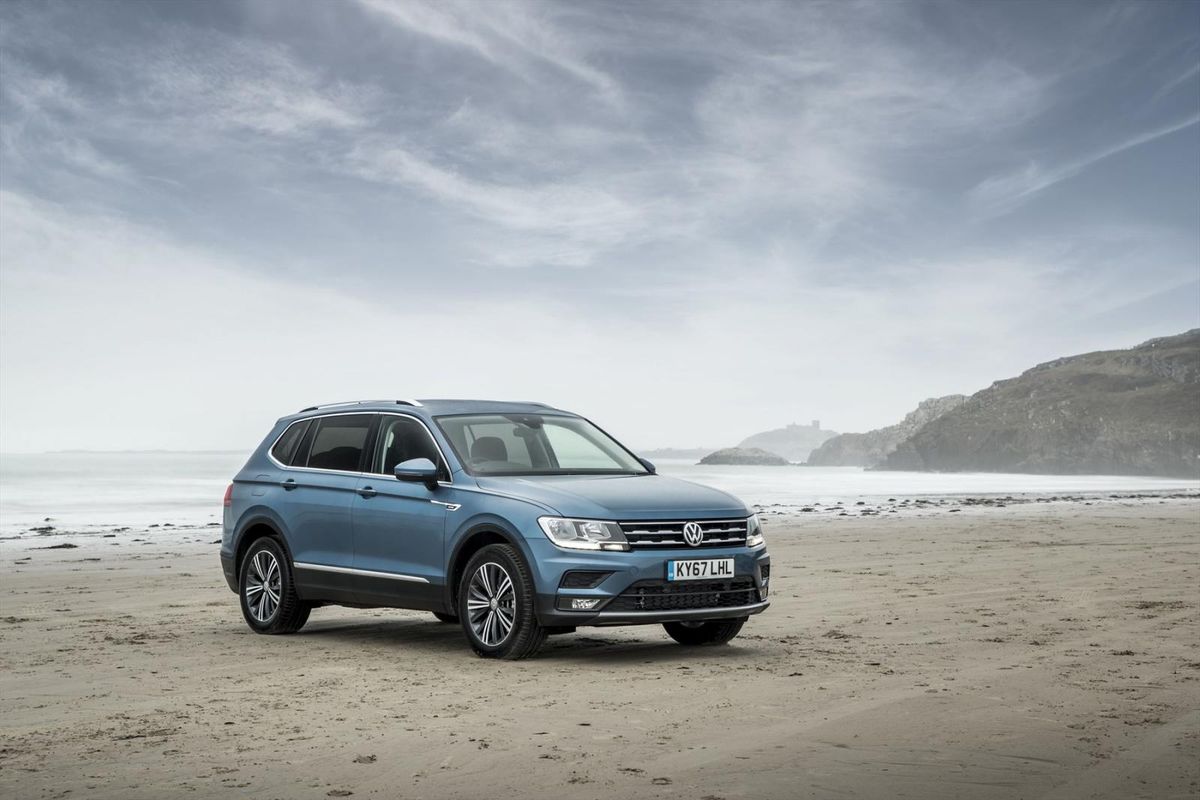
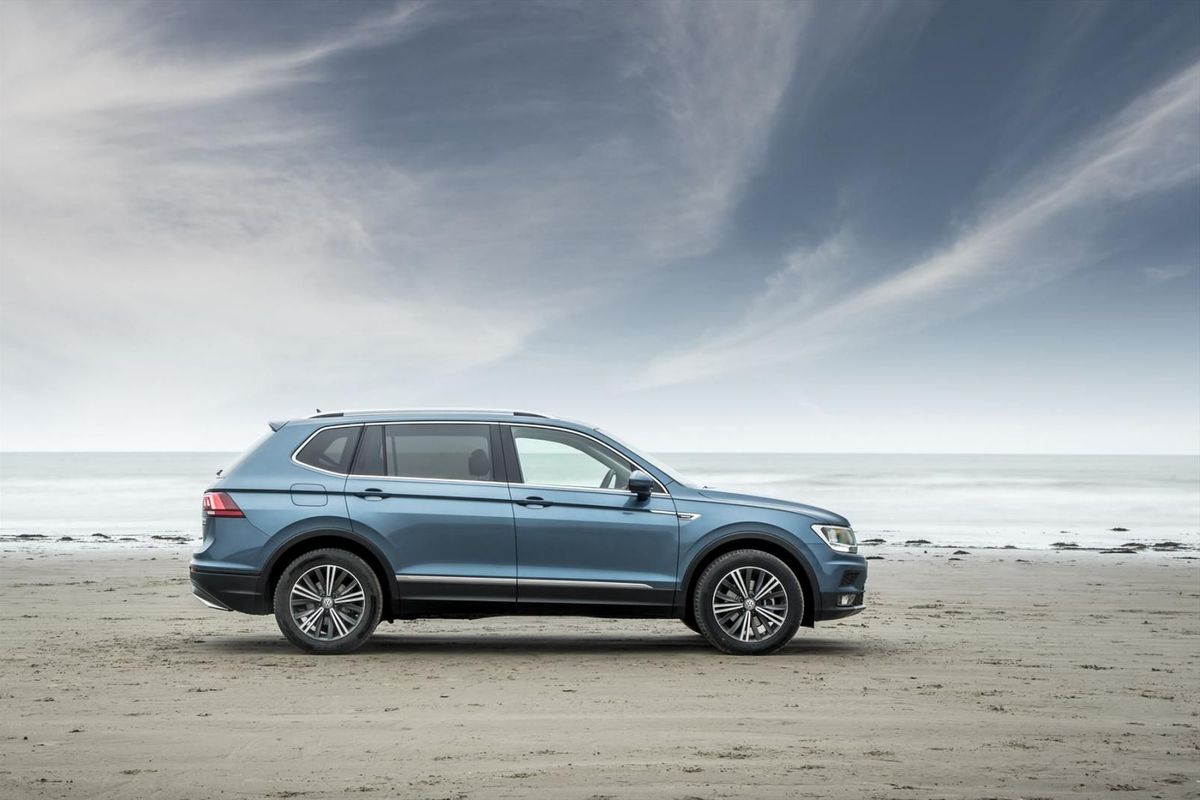
Volkswagen has added a 7-seater variant to its popular family car range, but is the Tiguan Allspace more than just a standard Tiguan with 2 extra seats? We drove it through twisty and muddy hills in KZN to see how different it really is. Read on…
What’s new?
Compared with the standard Tiguan, the Allspace is 210 mm longer overall (to house the extra pair of rear seats), but it has its a distinct design, standard specifications and a modified platform. The wheelbase is longer by 110 mm (for more rear passenger legroom) and the cargo capacity is improved by 115 litres (in 5-seater mode).
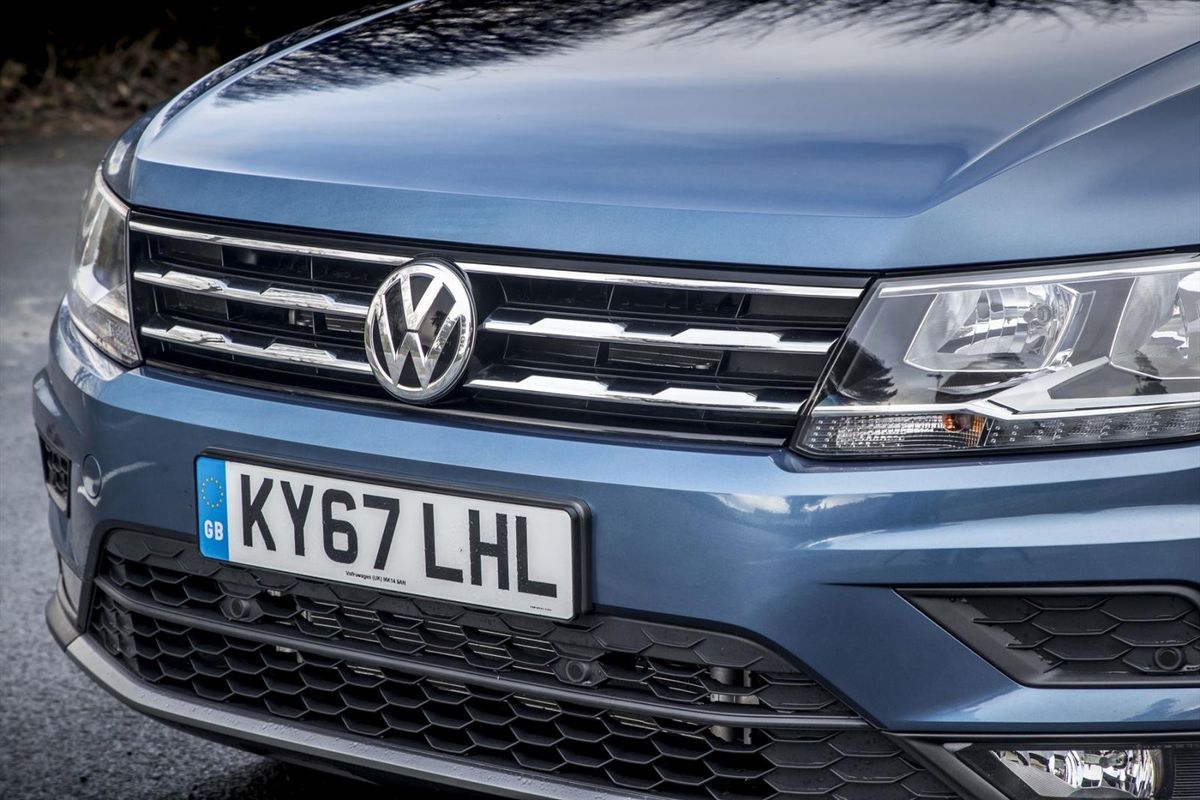
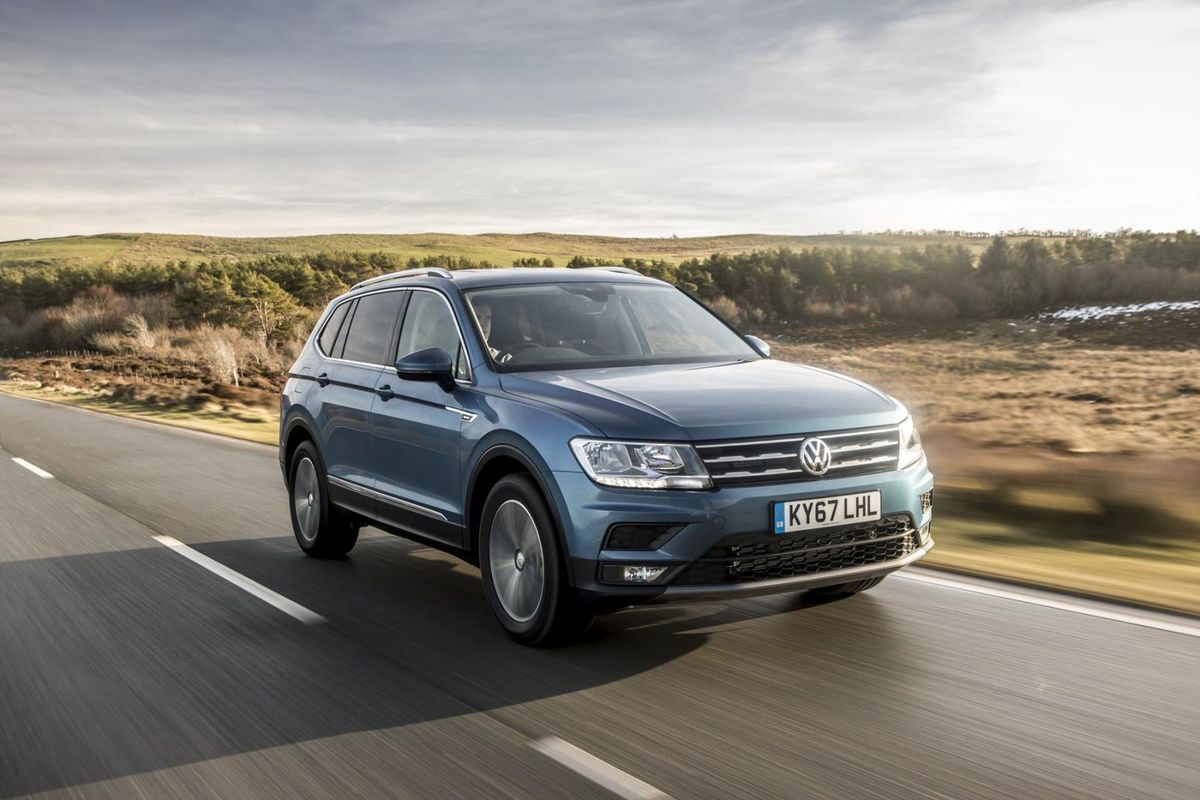
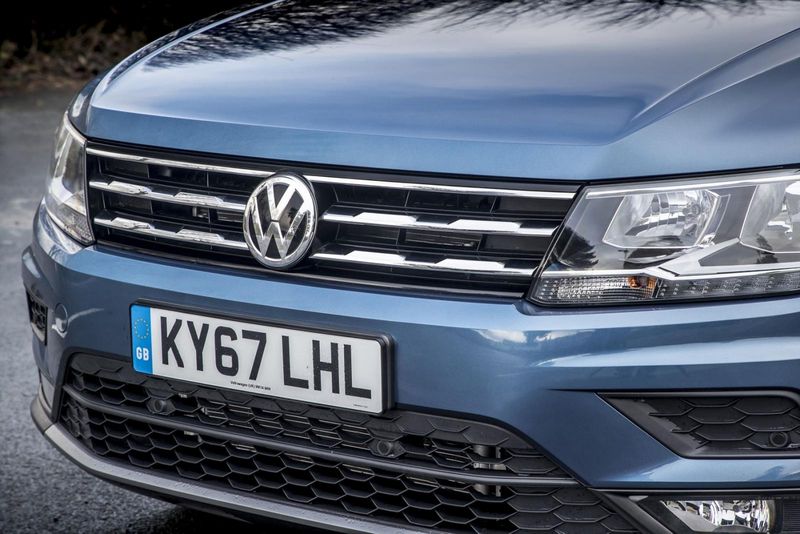
The face of the Tiguan Allspace, despite minor changes to the bumper, is immediately recognisable as its own model. The front end is rounder and less sporty in appearance. To put it another way, the standard Tiguan looks quite angular and square from the front, whereas the Allspace has a softer, smoother face.
Softer face of the Tiguan Allspace makes it look different from the standard model.
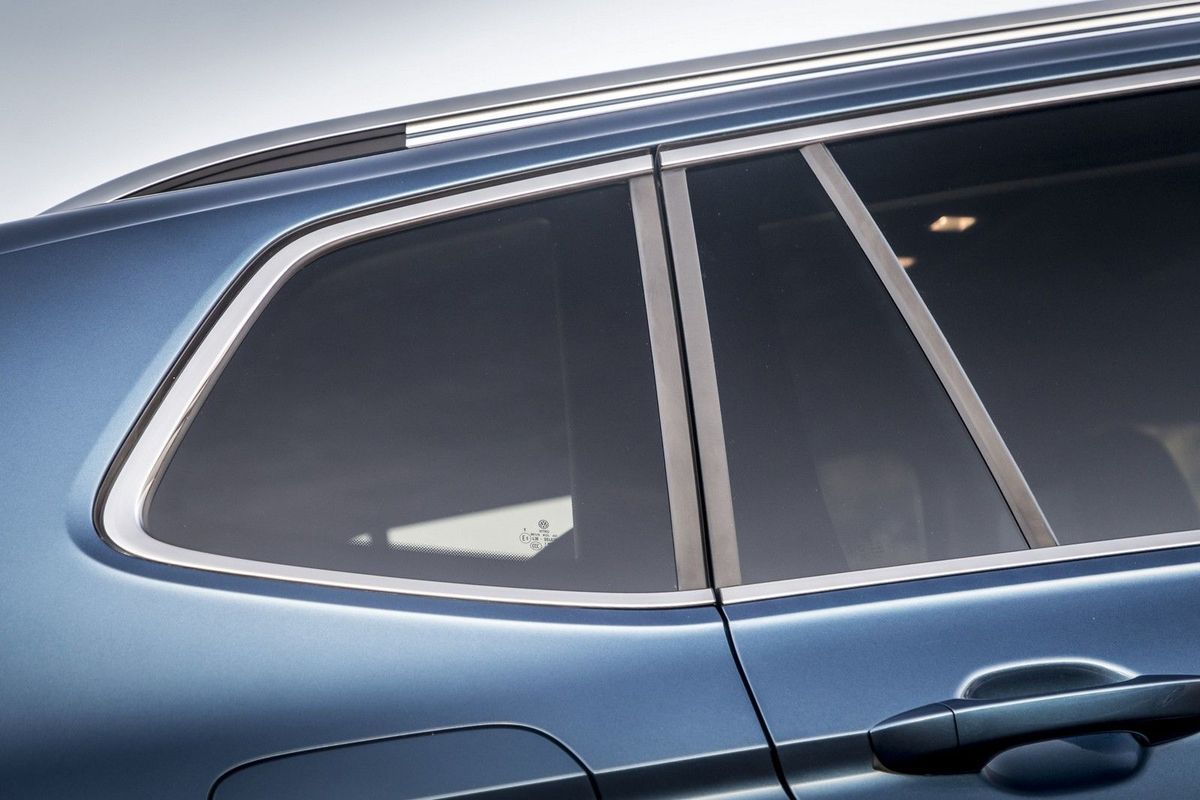
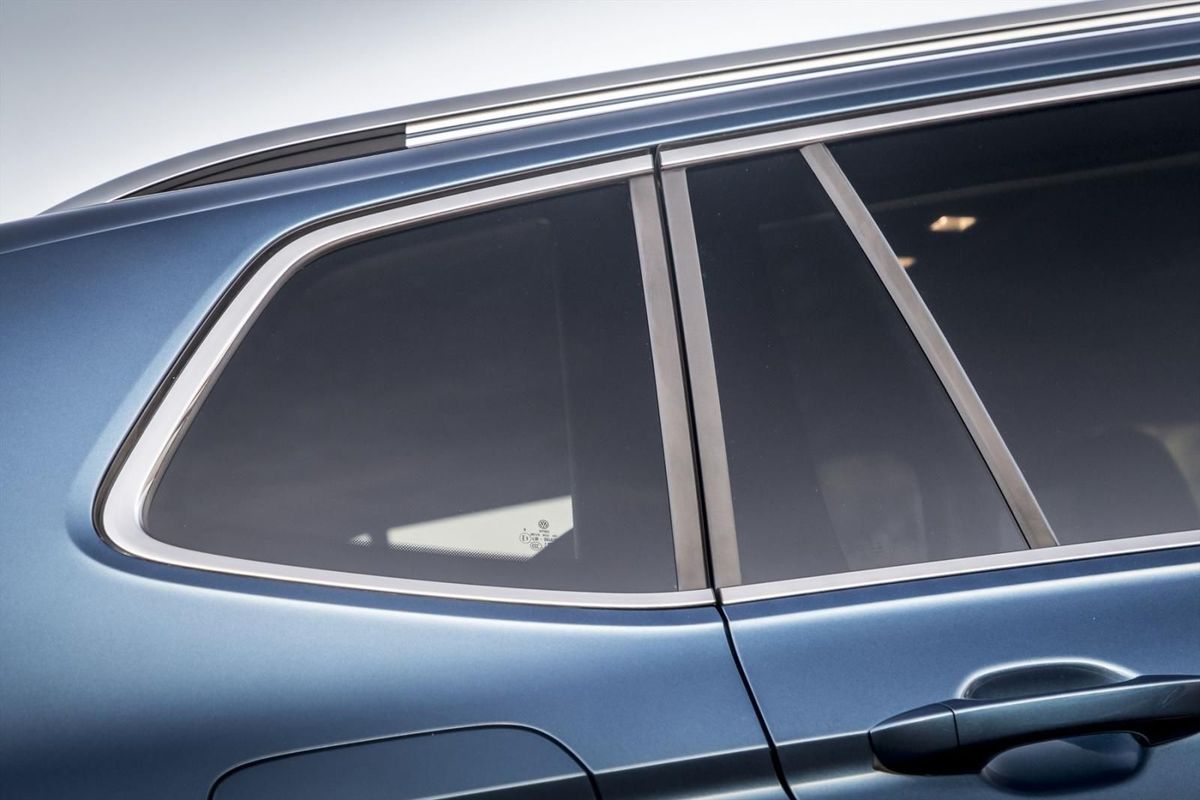
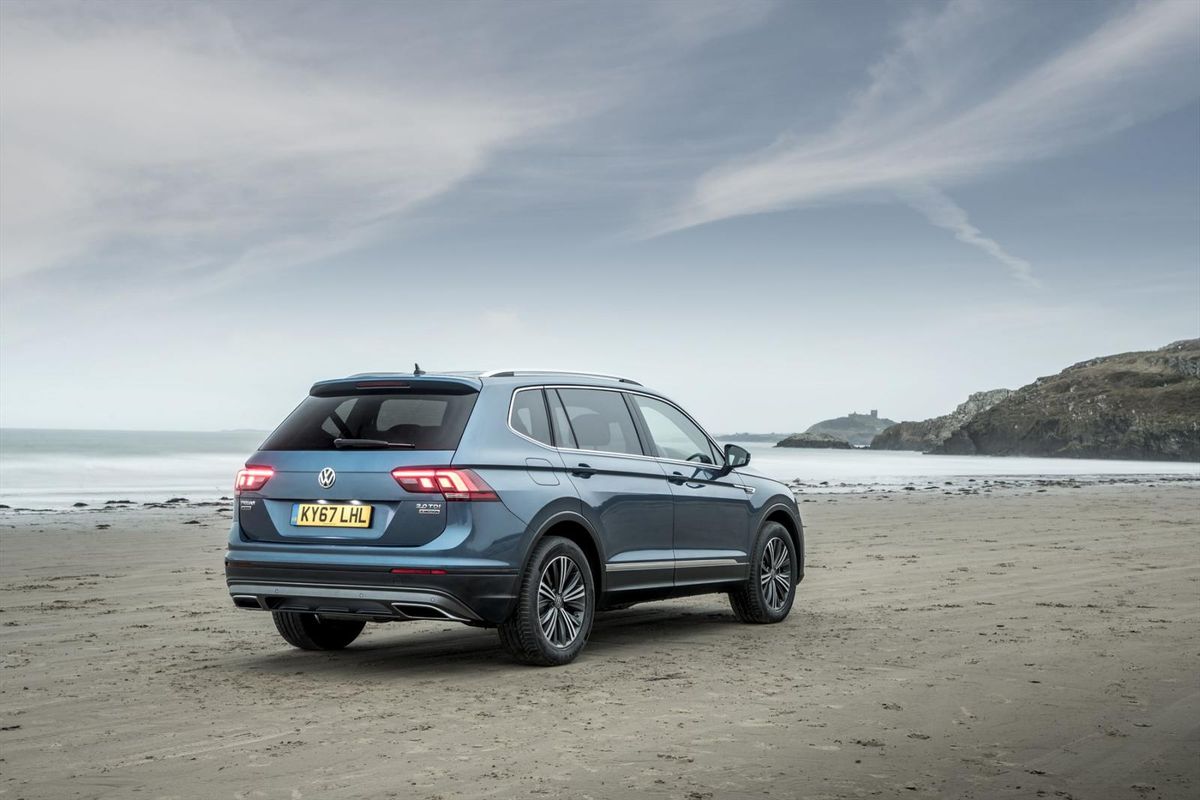
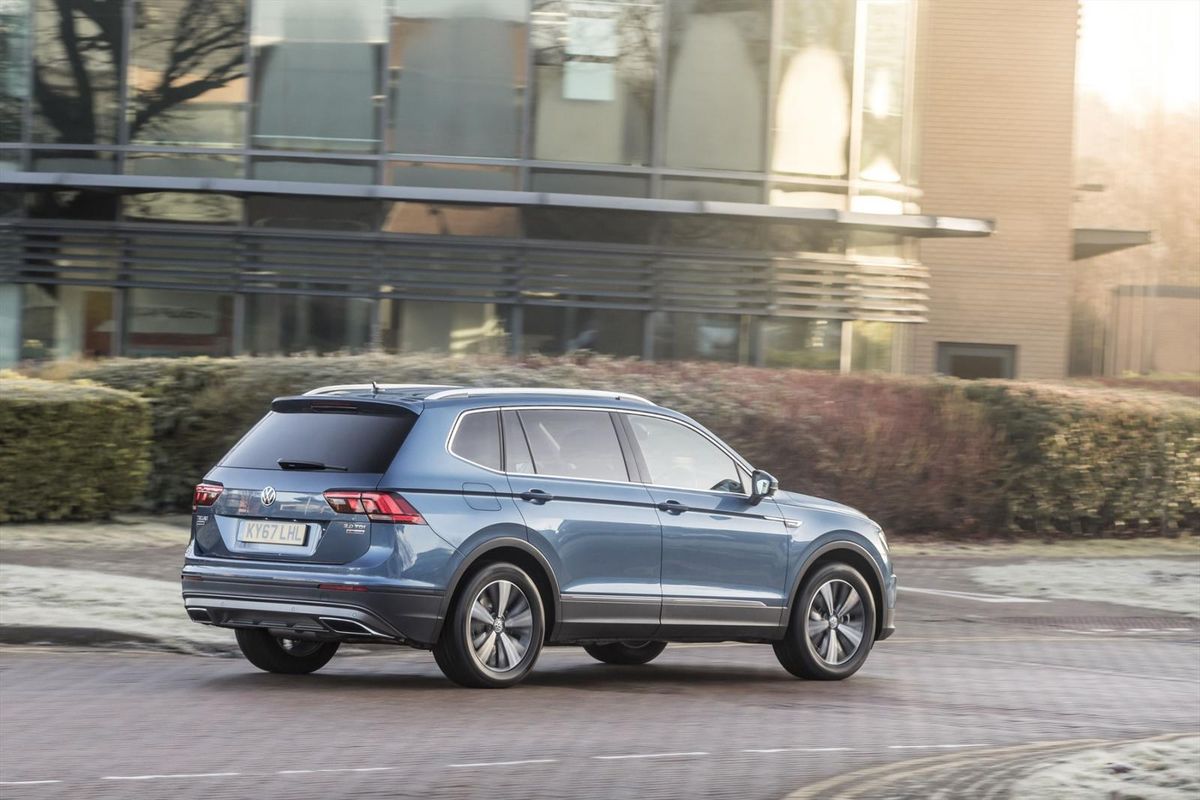
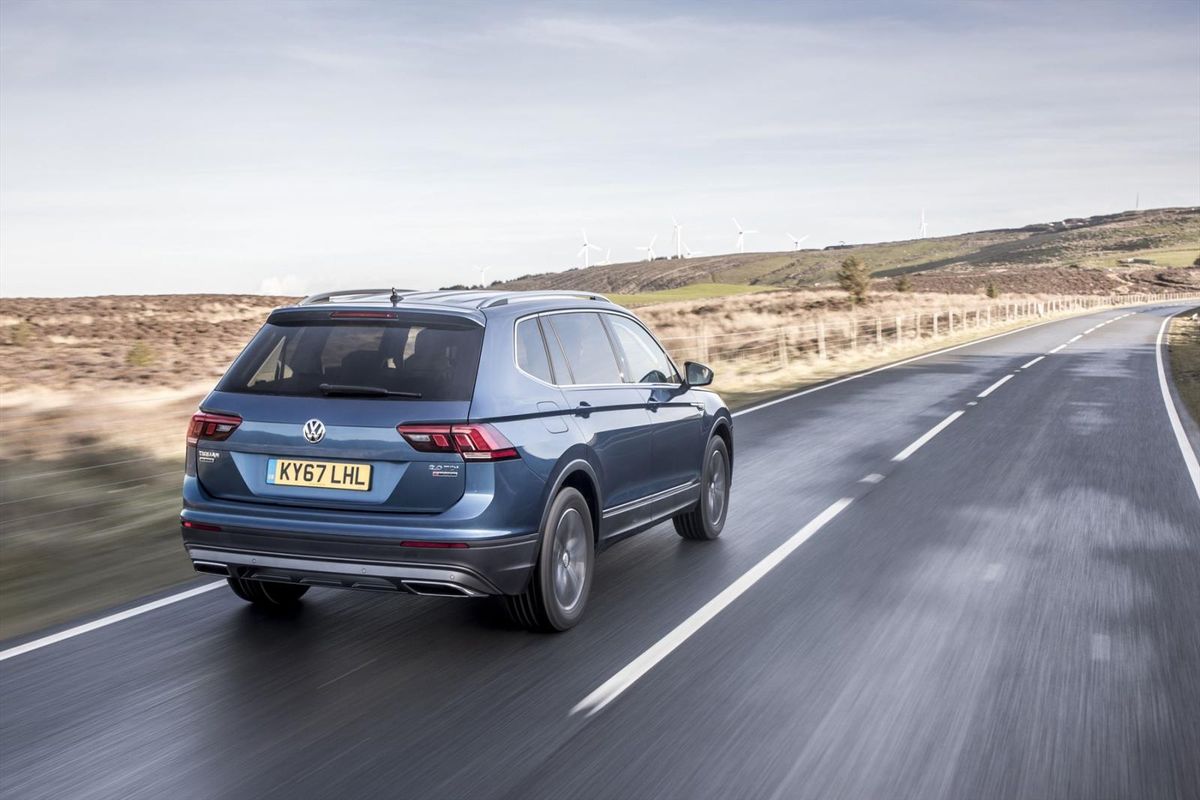
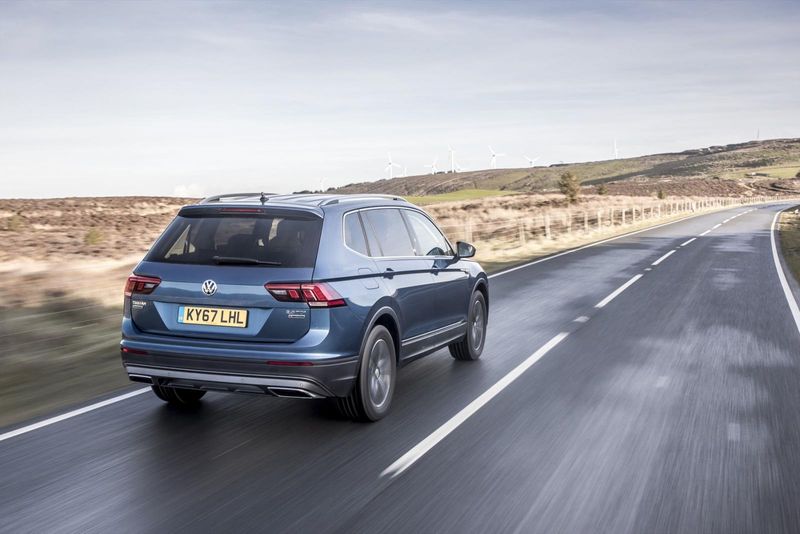
In terms of the newcomer's rear three-quarter aspect, the Allspace's back window has been extended to give 3rd-row passengers a slightly better view out of vehicle.
And, finally, on the engine front, there is a new 2.0-litre turbopetrol unit that delivers 132 kW and 320 Nm of torque. Those familiar with Volkswagen's engine line-up will recognise these outputs from the now discontinued Scirocco, which utilised this powerplant.
Can you actually fit 7 people in it?
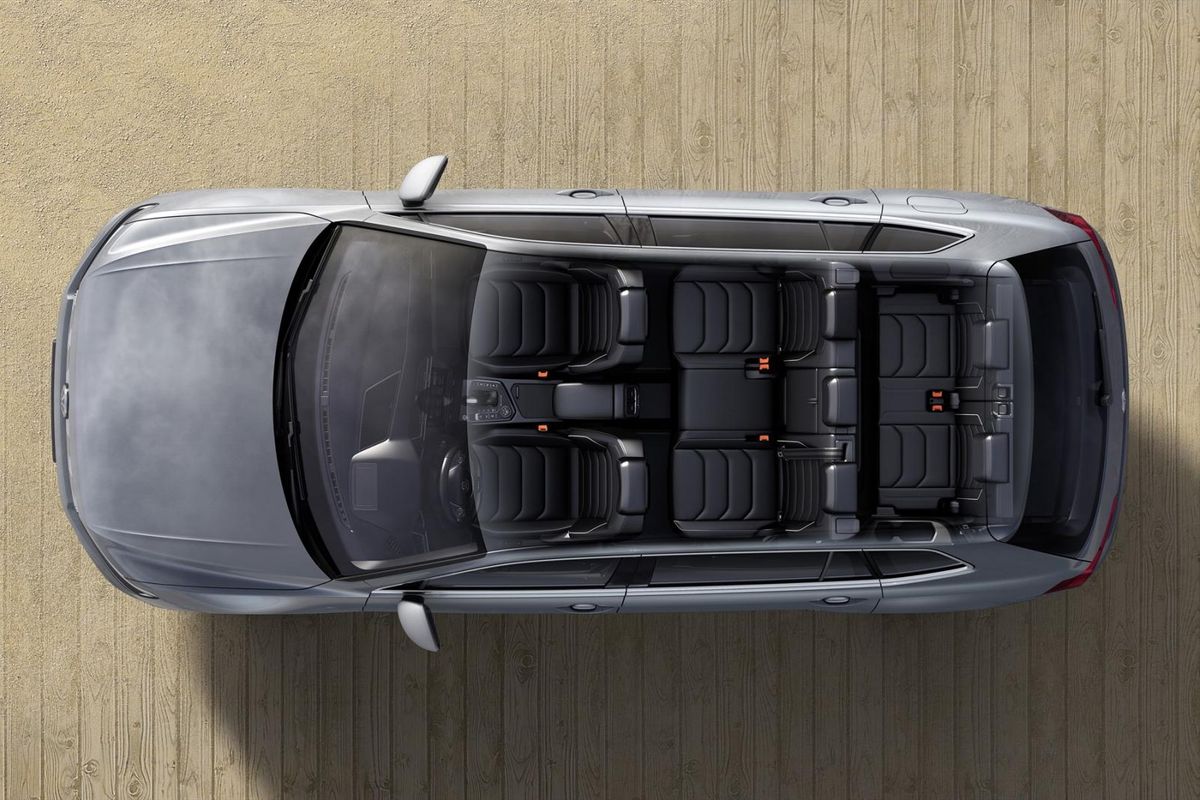
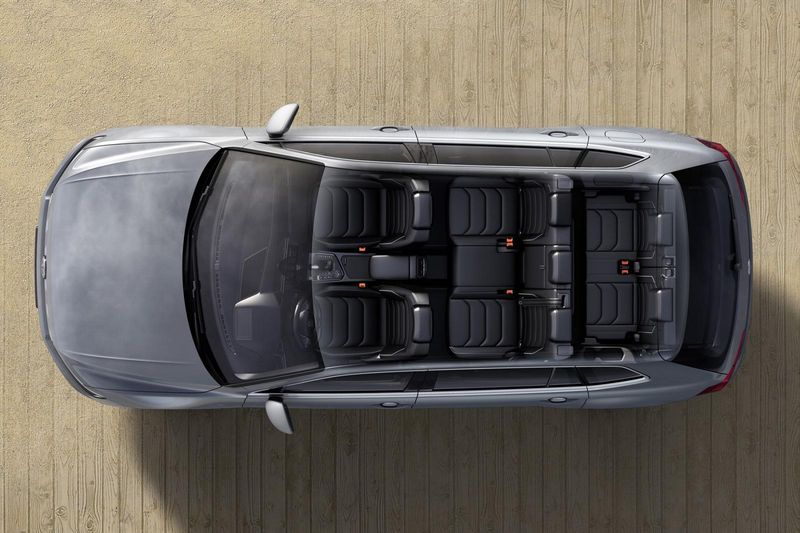
The 3rd row of seats is not suited to accommodate adults, because anyone over 1.7 metres in height is bound to run out of headroom. The 2nd row does slide forward on rails, however, providing a bit of extra legroom for the third row, making it perfectly suited for children (…and the vertically challenged among us).
The rear-most seats are fine for smaller people and luggage space with all the seats in place is still fair.
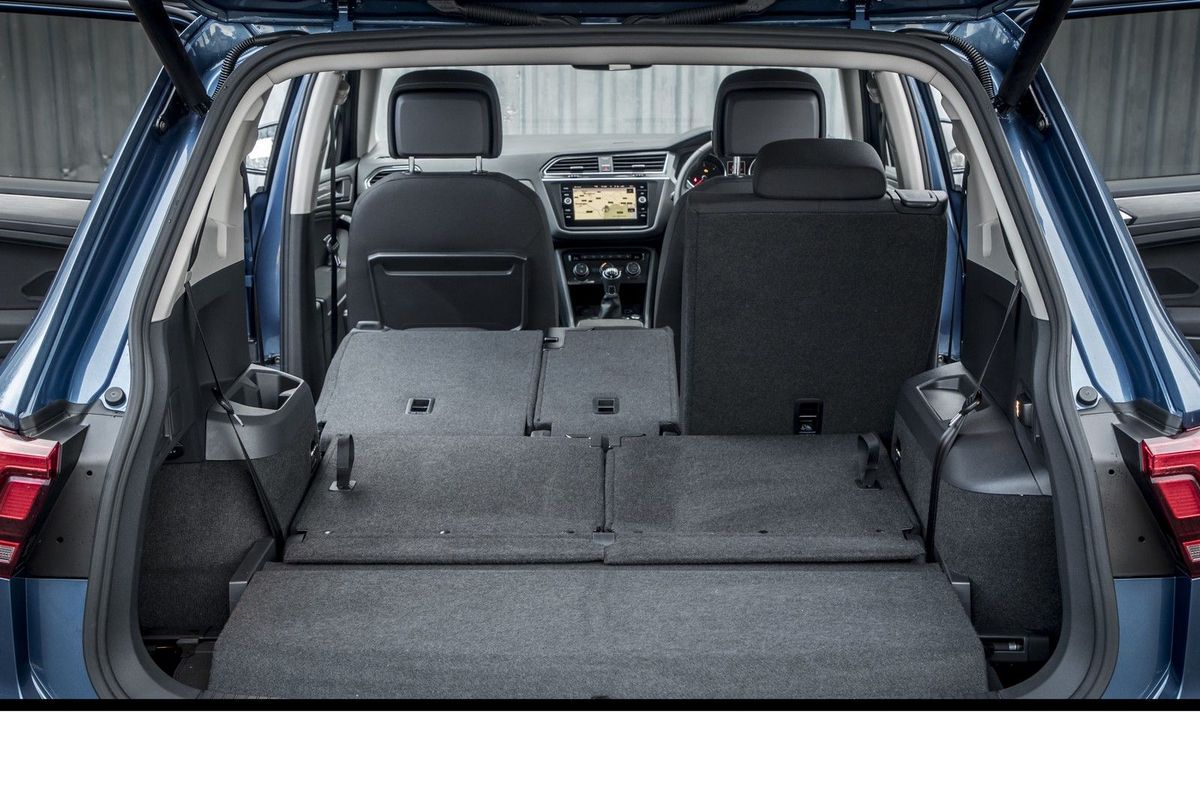
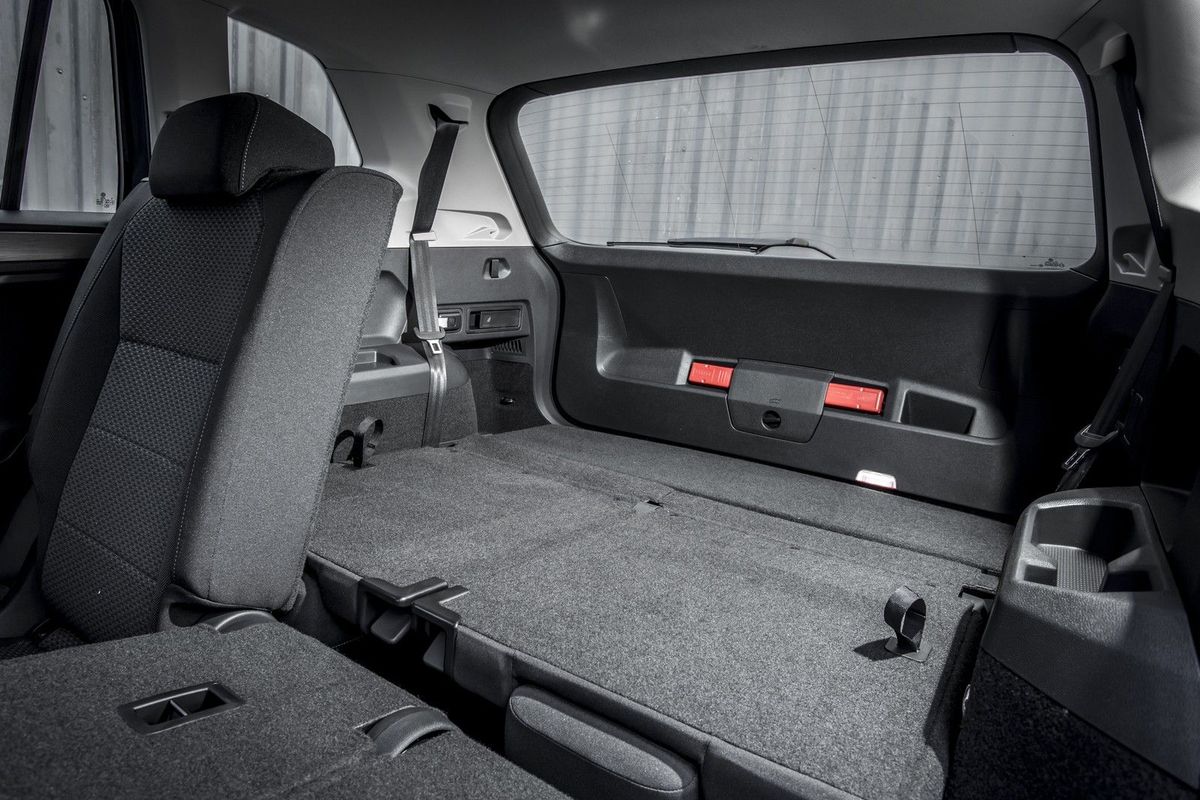
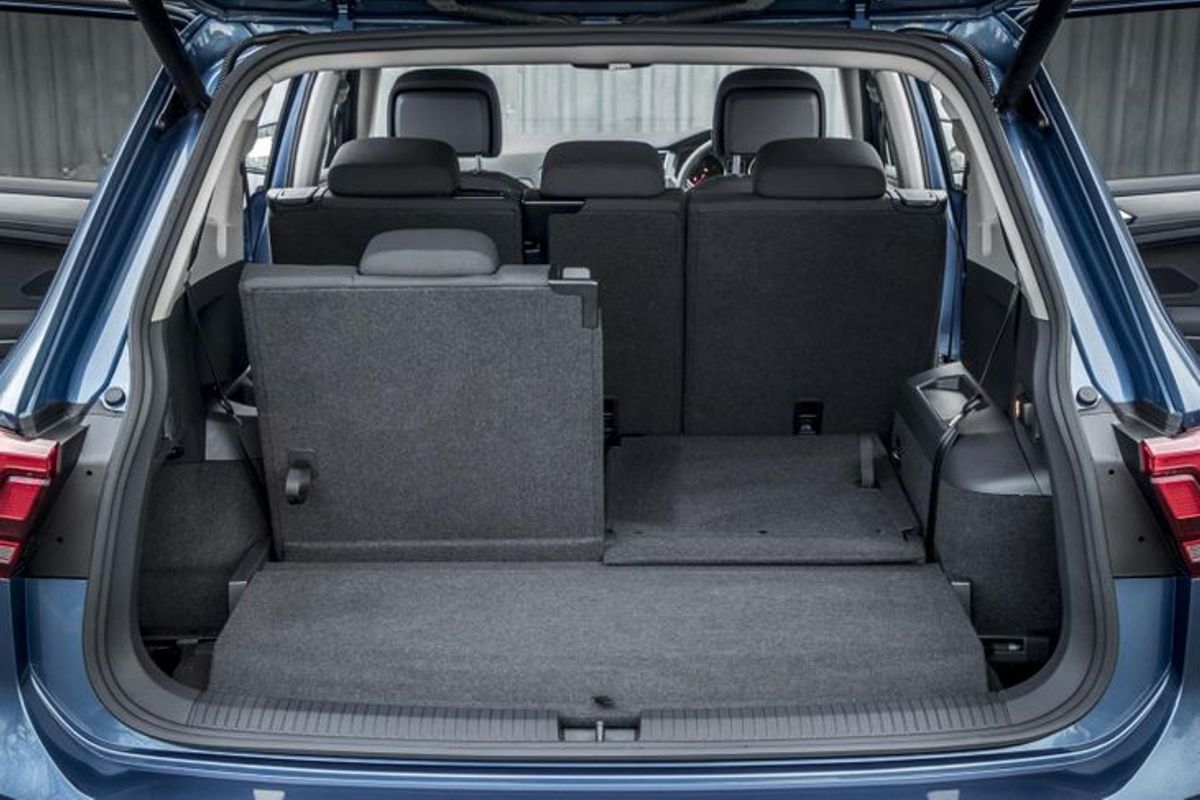
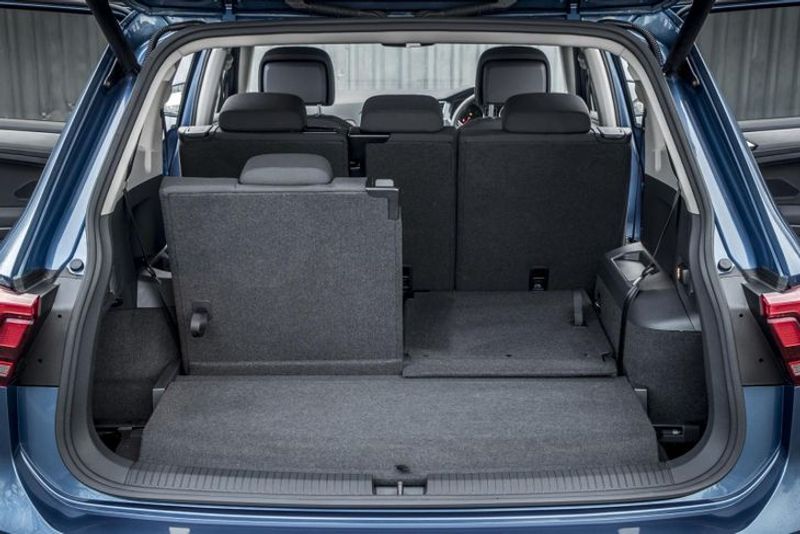
The seats are practical in their folding arrangement allowing for a 40/20/40 split and even the front passenger seat can be folded flat, which would make it possible to load an 8- or 9-foot surfboard without difficulty. The extra length has meant that the loading area grows to 700 litres in 5-seater mode and 1 775 litres with the middle row folded flat. Even with all the seats up, there’s a reasonable (for this segment) 230 litres of luggage space available.
Loading practicality is one of the Allspace's strongest traits: the rearmost seats can be lowered via a lever in the bay, which is flanked by shopping bag hooks and a handy torch.
How does it drive?
We had a chance to sample the new turbopetrol engine, which felt a little flat considering the power figures it is said to produce. The roads we drove required a lot of slowing down and then overtaking from low speed. The 132 kW didn’t really make its presence felt until you put your foot flat to summon all of the motor's available grunt. The DSG gearbox's mapping has always leaned towards economy (it often uses a higher gear than one might expect, which could be the reason the initial sluggishness).
The new 132 kW turbopetrol engine was previously used in the Scirocco.
Only the entry-level 1.4-litre turbopetrol 110 kW engine comes with front-wheel-drive, the rest of the derivatives has 4Motion all-wheel-drive and a selectable off-road mode. Ground clearance is 208 mm, which is decent for a road-biased SUV and, if you opt for the off-road kit, you get an extra 7 degrees of approach angle.
The Allspace gains a few extra standard features compared with the regular Tiguan, but comes with a bit of a price increase for obvious reasons (it has 2 more seats). There aren’t many direct competitors to the VW, save for the Nissan X-Trail 7-seater, but that lacks the Tiguan's engine and transmission refinement. Further afield there’s the much more off-road biased Fortuner and Everest or the more expensive Hyundai Santa Fe and Kia Sorento. If value for money is a major consideration then consider the Mahindra XUV500. All things considered, the Tiguan Allspace appears to have carved out a tiny niche for itself in the refined 7-seater family car segment.
1.4 TSI 110 kW Trendline DSG R463 400
2.0 TSI 132 kW Comfortline 4MOTION DSG R523 800
2.0 TDI 110 kW Comfortline 4MOTION DSG R571 100
2.0 TSI 162 kW Highline 4MOTION DSG R604 800
The new Tiguan Allspace comes standard with a 5-year/90 000 km service plan, 3-year/120 000 km warranty, 12-year anti-corrosion warranty and space saver spare wheel. The service interval is 15 000 km.
There are many models and variants of cars we don't get in South Africa due to our comparatively small market and right-hand-drive only law. But, are there right-hand drive cars out there that we're missing out on? Here are 5 SUVs that we think would be well-received locally.
South Africa is an isolated automotive market, with specific fuel and vehicle import tariff issues – not to mention us being a right-hand-drive destination too, which is the minority configuration globally. The latter is often tabled as an excuse why South Africans can’t have access to desirable family cars available everywhere else.
There are some very appealing right-hand drive cars we are being denied and to assist in a campaign for greater choice, we’ve done the homework and can now present you the case for some great family crossovers and SUVs which we think should be on sale locally.
Toyota Kluger
Ordinarily, one cannot imagine Toyota dealers having excess receiving and processing capacity to add any more volume to their avalanche of monthly sales. The Japanese brand absolutely rules our local market, with a portfolio of product perfectly tailored to South African customer requirements, across a very broad, accessible, pricing spectrum. But… There’s always room for more, isn’t there?
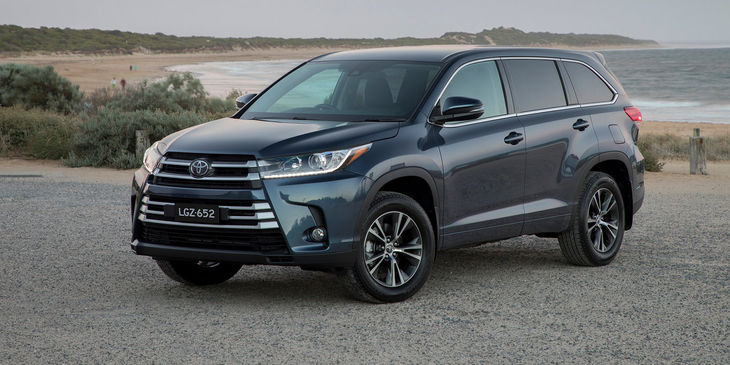
It’s called the Kluger and despite its strange name, this is a 7-seater crossover which is built on the same platform as a South African favourite which has never returned – the Toyota Camry. As such, unlike most of Toyota’s SUVs, Kluger is not built on a ladder-frame platform. Think of it as a big RAV4 and you’ll be imagining the correct technical reference: monocoque construction and a definite on-road bias with both front- and all-wheel drive options.
There’s no diesel engine but you have a naturally-aspirated 3.5-litre V6 good for 218 kW and 350 Nm, matched to an 8-speed automatic transmission, unlike the 6-speed in Fortuner. There’s a 65 kg mass difference between the front- and all-wheel drive Klugers, accounting for a small margin of advantage regarding fuel-consumption towards the two-wheel drive versions. Inside, it’s massive, a true 7-seater with 529 litres of luggage capacity and comfort levels you’d expect from a sedan.
For the South African market, Kluger would sit between Fortuner and Prado, a niche that is perhaps too small. But think about what is on offer here: a monocoque Toyota 7-seater with all-wheel drive. Surely there must be customers who want all those seats, access to the quality and convenience of Toyota’s vast dealer network, some AWD traction for gravel travelling and who appreciate the high-speed cruising stability and refinement of a Camry platform with some ground clearance. Surely?
Hyundai Kona
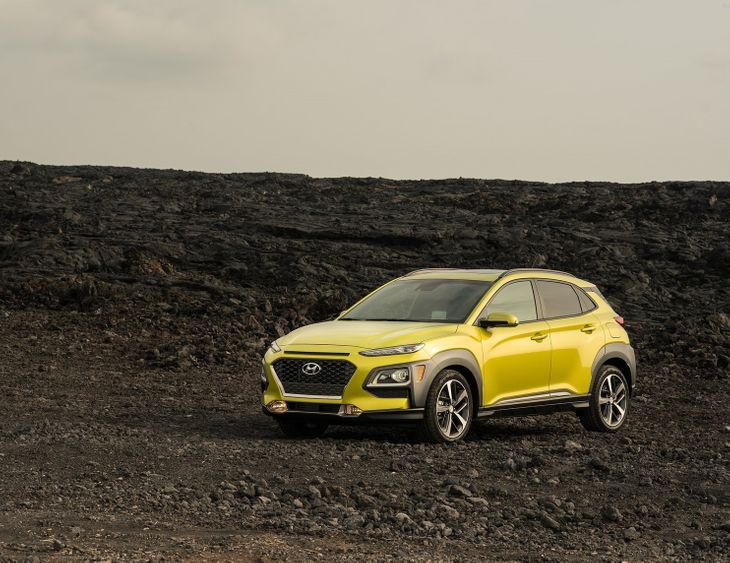
Although sibling brand Kia has garnered all the design awards and adulation for its courage in developing an authentic Korean automotive aesthetic, this Hyundai is unlike any that has come before it. It’s more radical in appearance than the production Kia Stonic – and built to specifications which expertly match current buying trends.
Kona is the correct configuration (B-segment SUV) and size, with styling that differentiates it from anything else and all the build quality you have come to expect from a Korean car. What Juke did for Nissan in 2010, Hyundai is most certainly hoping Kona will do for it in 2018. Beyond its daring styling, Hyundai has equipped Kona with those excellent engines of its own making, providing a myriad of choices including a naturally aspirated 2.0-litre (110 kW/180 Nm) or turbocharged 1.6-litre options in petrol (130 kW/265 Nm) or diesel (110 kW/300 Nm) form. Making the most of those engine outputs are 6-speed manual or snappy 7-speed dual-clutch transmissions.
There’s a tiny 1.0-litre turbocharged triple too, but with only 172 Nm, it might struggle a touch with South African distances and topography. The battery-powered Kona, due to go on sale globally later this year, features an astounding 470 km range claim, which could appeal greatly to those South Africans who made their homes grid-independent electricity sources during the days of loadshedding.
South Africans might not have warmed to the asymmetric-door Veloster hatchback, but they’ll certainly take interest in an outrageously styled Hyundai SUV. Hyundai South Africa is still trying to make a business case for the Kona and with the positive exchange rate movements during early 2018, it may have found a way to introduce the Kona locally.
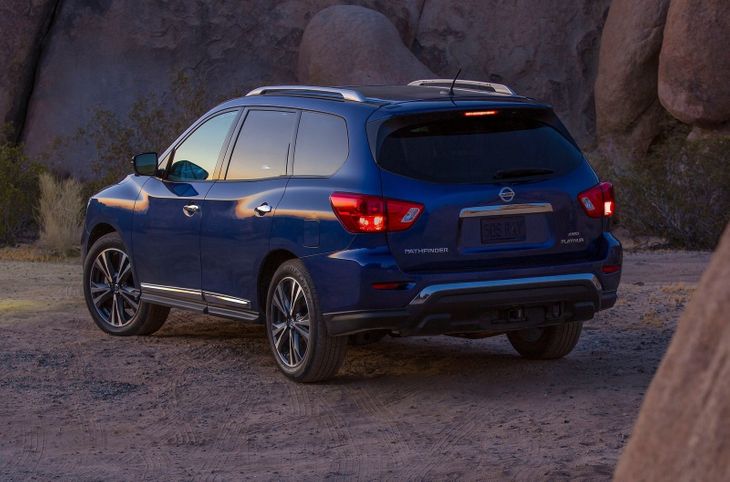
Nissan Pathfinder
Despite its name, the latest generation Pathfinder has not found a path to South Africa – getting lost to the reality of Toyota’s Fortuner and Prado absolutely dominating all and any Japanese SUV sales locally. That is a shame as this latest one has been reconfigured in a way that could make it work here.
Pathfinder is no longer related to the Navara bakkie and therefore features a monocoque construction, which makes it quieter, more agile and stable at speed. The debit is a great deal less capability in truly technical off-road terrain, but with its current marketing impetus being that of a larger 7-seater SUV, that doesn’t matter much. Both engine options burn 95 unleaded, with the 2.5-litre 4-cylinder hybrid using 13% less fuel than Pathfinder’s 3.5-litre V6, with a marginal performance discrepancy, the hybrid’s outputs being 188 kW/330 Nm versus that V6’s 202 kW and 340 Nm.
In time, Nissan’s Terra will surely fill the void of Pathfinder in South Africa, but for those who yearn for what Murano once was and dislike the unnerving body roll which is a feature of all ladder-frame SUVs, there could be an argument made for this Nissan SUV to find a path back into the local line-up.
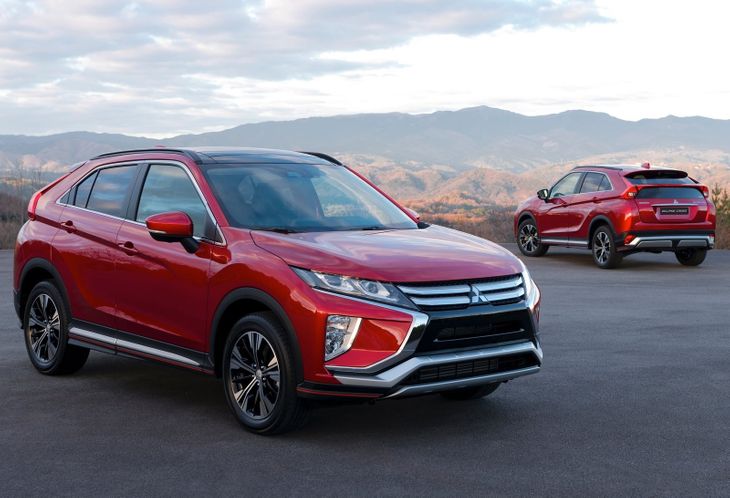
Mitsubishi Eclipse Cross
There was a time when Mitsubishi could do no wrong in the South African market if you were shopping for a gravel traveller: Pajero long- and short-wheelbase, Colt double-cab and even that diminutive low-range equipped Suzuki rival, the iO. As SUVs and crossovers have become a default purchase in the local buying market between R250 000 and R600 000, Mitsubishi has cruelly been denied any associated sales momentum.
Perhaps an outlandishly styled crossover – which certainly isn’t the current Outlander – could revive Mitsubishi’s South African market fortunes. Exactly such a vehicle exists, but peculiarly we can’t get it, yet. It’s called the Eclipse Cross and whereas that name was once reserved for a Mitsubishi performance coupe, in 2018 it denotes a Qashqai-size crossover. With suspension bits and wheelbase dimensions borrowed from the larger Outlander, Eclipse Cross is roomier inside than most rivals and not averse to some committed gravel travel, featuring Mitsubishi’s Active Yaw Control, which is what made their Lancer Evos so unbeatable as four-door pseudo supercars.
Powered by a sweet 1.5-litre turbocharged petrol, good for 110 kW and 250 Nm, Eclipse Cross has 175 mm of pothole proof ground clearance, with standard Apple CarPlay and Android Auto on-board too. Considering there is a R150 000 segment of opportunity for placement between ASX and Outlander in Mitsubishi’s local line-up, the absence of Eclipse Cross is most confounding. Earlier this year, Mitsubishi South Africa confirmed that the arrival of the Eclipse Cross to South African shores was scheduled for Q4 2018. It was also confirmed that it will slot between the smaller ASX and larger Outlander in the SA line-up.
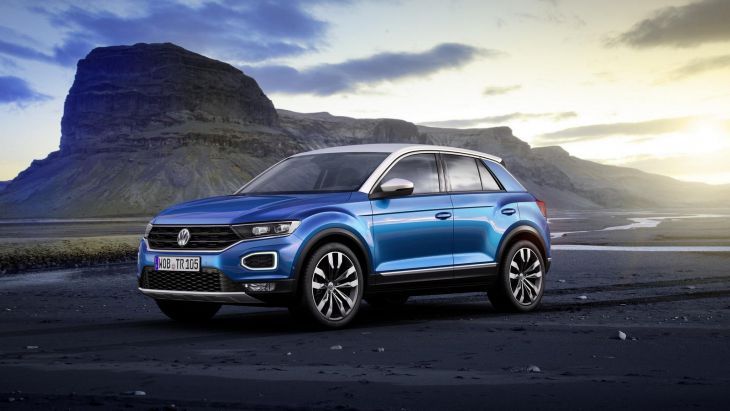
VW T-Roc
Smaller than Tiguan but built on the same, outstanding MQB platform, T-Roc is for those who seek all the appeal of a VW-badged crossover, yet want the parking convenience of more humble exterior dimensions. T-Roc’s luggage capacity is 65 litres larger than a Golf7 and greater than the Audi Q2 at 445 litres, but slightly short of Mini’s Countryman.
The design is contemporary, and VW offers its full range of compact engines within the model line-up including a 1.0-litre triple (same as you’ll find in the new Polo) and all the way up to the 140 kW, 2.0-litre engine powering the 4Motion T-Roc. With 400 Nm and VW’s 7-speed DSG transmission, the T-Roc 2.0 is a veritable compact crossover pocket rocket, capable of 0-100 kph in 7.2 seconds and more comfortable on gravel roads than you’ll ever experience in anything GTi.
In principle and execution, T-Roc has the making of a runaway success in South Africa – which makes its absence a mystery.
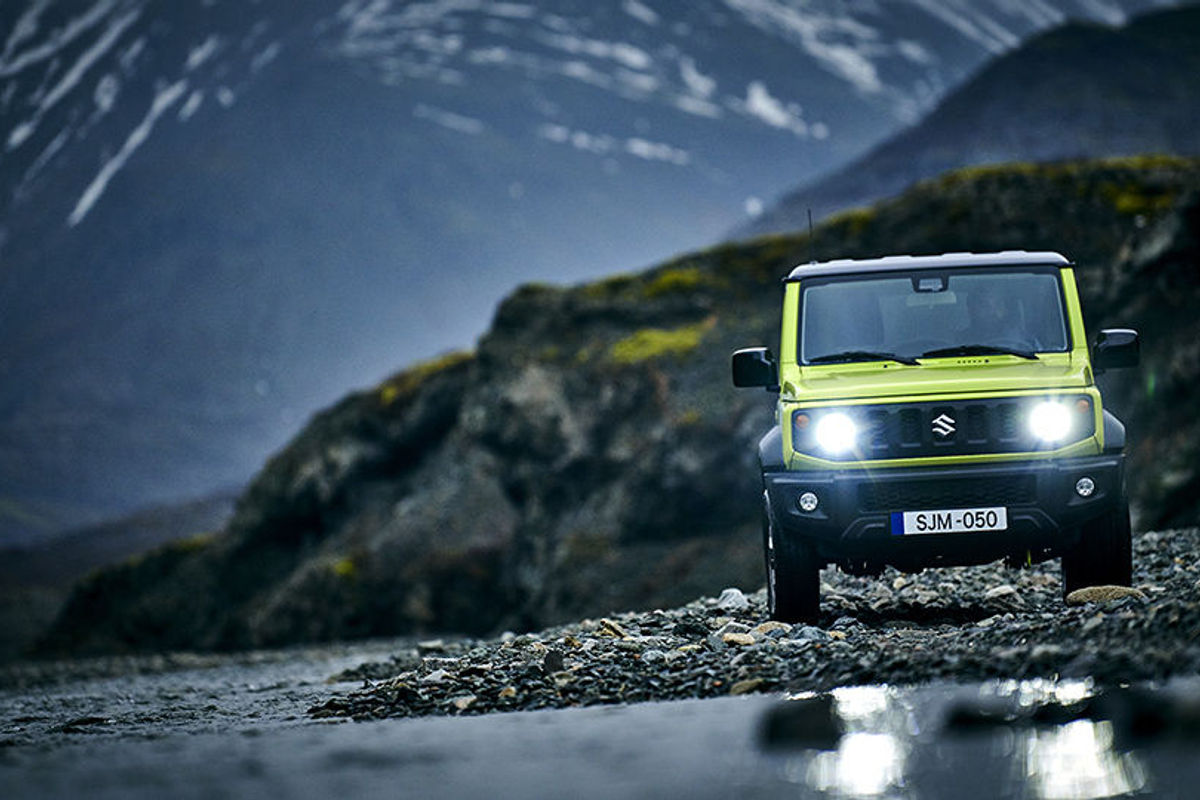
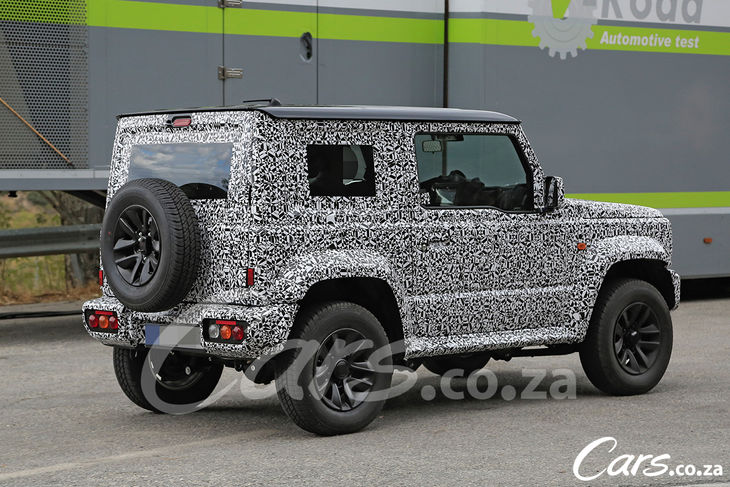
The lovable and relatively popular Suzuki Jimny has reached the end of its lifespan and reports are suggesting that the fourth-generation Jimny will be revealed towards the end of 2018 with market launch slated for 2019. Production of the current Jimny has reportedly come to an end and Suzuki is now preparing to produce the next iteration. Here’s what we know about the new Jimny thus far…
The Suzuki Jimny has a devoted fan base in South Africa and across the world. This compact off-roader is often lauded for its surprising capability in rough terrain as well as its compact dimensions and cute looks. There is, however, a new Jimny on the way and it will probably land in South Africa in 2019 after it is expected to be revealed later this year.
Its boxy dimensions will largely remain and it is expected to grow in size and Suzuki will retain its body-on-frame construction and 4×4 system which means it will still be very capable in the rough. The Jimny’s on-road handling ability is expected to improve and a major interior revamp is expected too. The interior will likely feature similar styling to the new Swift (due in SA soon) and will incorporate a touchscreen infotainment system.
The new Suzuki Jimny will grow in size, but it will retain its boxy styling with major changes expected inside.
The new Jimny is expected to be powered by a naturally-aspirated 1.2-litre petrol engine while top-of-the-range models will feature a Suzuki’s turbocharged 1.0-litre Boosterjet engine with 82 kW and 170 Nm of torque. Based on the fact that Suzuki SA does not offer the Boosterjet engine in the Baleno in South Africa and it’s not expected in the new Swift either, we will be surprised if it makes to our shores in the Jimny, but we hope it does.
The current Jimny is powered by a 63 kW/110 Nm 1.3-litre petrol but we hope the 1.2-litre engine will offer a bit more grunt. A diesel engine option is not expected.
Suzuki is keeping official details under wraps for now but we will keep you updated as soon as more information becomes available.
We all know that rust on a car isn’t a good thing and if it isn’t effectively dealt with, your car will eventually meet a rusty end. Do you think rust can affect the crash safety of a car? A non-profit Swedish organisation, Villaagarnas Riksforbund, conducted some tests to find out…
Car safety technology is far more advanced today than it ever was and most new cars on the market offer relatively high levels of passive and active safety. However, many people can’t afford new cars and rather opt for older, used models that suit their budget and needs.
When those older cars were on sale, they too had to meet the safety standards of the day, but the age of the vehicle and the amount of rust it has can seemingly have a negative effect on the car’s ability maintain its crashworthiness over time.
Villaagarnas Riksforbund, a non-profit Swedish organisation, simulated EuroNCAP crash tests (frontal and side impact) on 2 used cars, the Mazda6 (2003-2008) and Volkswagen Golf (2004-2008), both of which exhibited a fair amount of rust. Also, importantly, the crash tests simulated the EuroNCAP guidelines prescribed when these cars were new. The guidelines of today are far more stringent.
The final result revealed that the old and rusty cars could not meet the same level of crash safety that they once exhibited, particularly in the case of the Mazda6.
Results
Mazda6
The Mazda6 scored a weak 4 rating (26 points) on EuroNCAP’s 5-point rating system when it was a new car, but this rusty Mazda6 achieved a weak 3 (18 points) in these latest tests.
The researchers pointed out that “When the Mazda 6 was tested in the frontal test, the car was deformed so that the driver’s seat ended up leaning against the interior of the car and the crash test dummy hit its head in the B-pillar. It was also suggested that passengers were at 20% more risk of being killed in an accident as a result of rust, which is significant.
Volkswagen Golf
The Golf fared much better and lost only 1 point in this test. When it was new, its EuroNCAP safety score was a weak 5 (33 points) and in this test it scored a strong 4 (32 points).
Rust on older cars is common, particularly for cars at the coast but used car buyers are advised to thoroughly inspect the vehicle for rust before buying it and if necessary seek advice on how to manage rust.
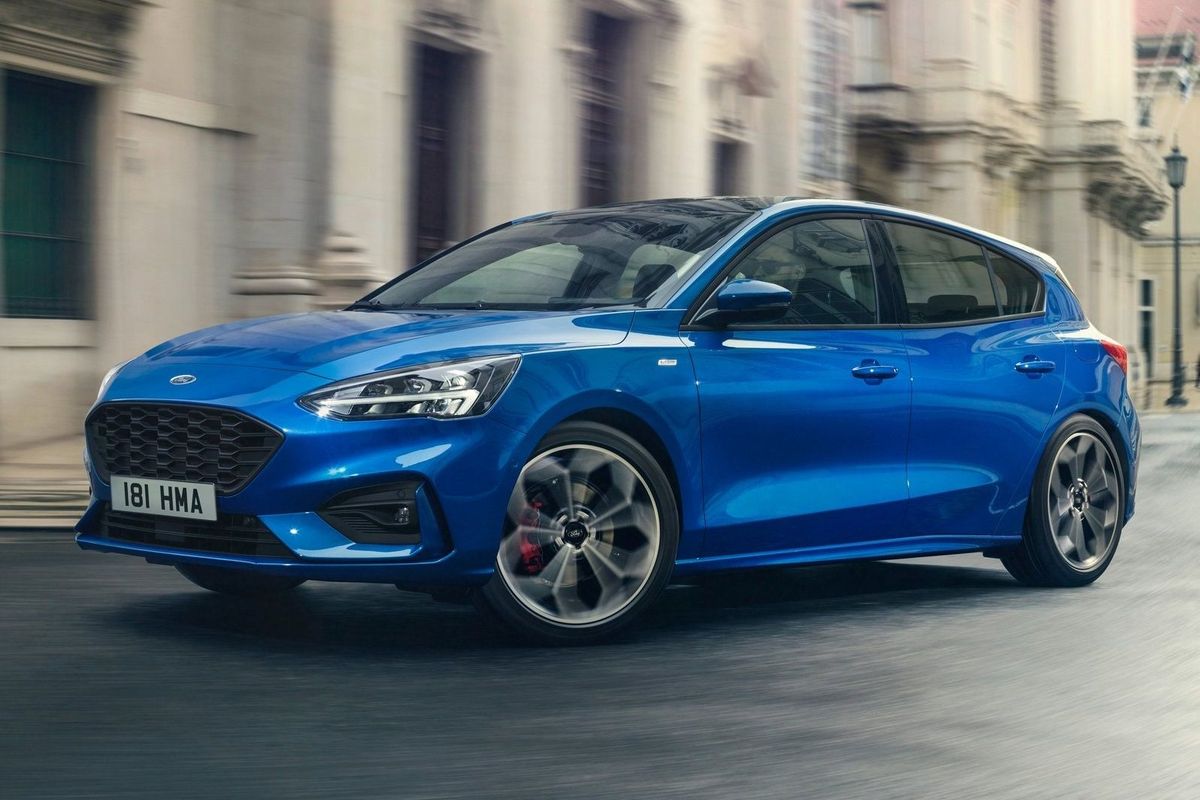
The all-new Ford Focus – which is set to arrive in South Africa before the end of 2018 – will offer a host of new technologies, higher levels of occupant comfort, plus enhanced performance and efficiency. However, Ford's newcomer will compete in the ultra-competitive premium hatchback market and will, therefore, have its work cut out to beat these 5 rivals.
The next incarnation of the Focus has been revealed (mid-April 2018) and the newcomer is claimed to incorporate comprehensive improvements. In fact, the premium hatchback has been redesigned from the ground up. The Blue Oval says the packaging of the new car was influenced by feedback received from Focus customers from around the globe and, as was the case with it's predecessor, the new Focus is a "global car", with each country's market receiving a Focus tailored to suit its needs.
While the South African spec of the new Focus is yet to be confirmed, Ford will offer its newcomer in sedan, estate and hatchback guises. Also, depending on the market, there are the various trims on offer such as Vignale, ST-Line, Active and Titanium. However, will the Focus be able to beat these 5 key rivals?
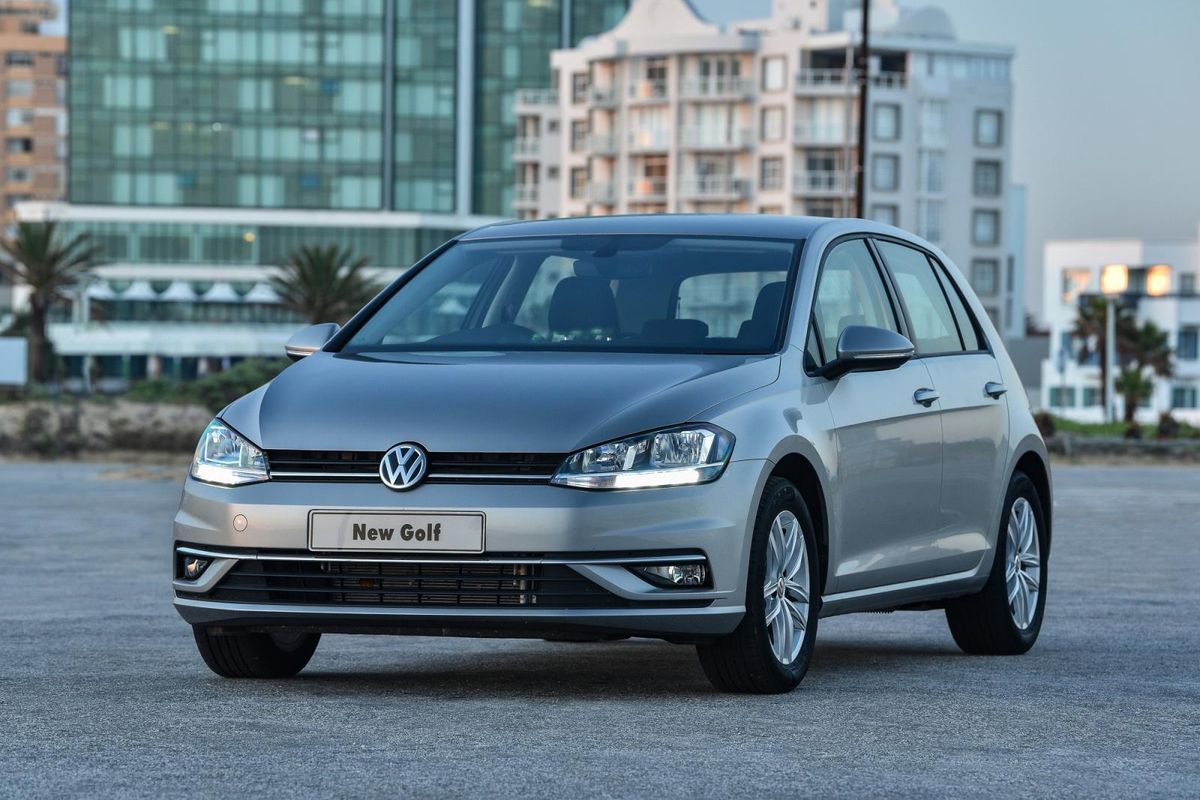
Volkswagen Golf
The Volkswagen Golf is one of the most popular choices in this segment and while the GTI version dominates sales, the 1.0- and 1.4-litre turbopetrol versions offer a lot of value, especially the 1.4TSI Comfortline R-Line derivative, which is the 2017/18 Cars.co.za Consumer Awards – powered by WesBank champion in the Premium Hatchback category. The Golf is impeccably built and refinement is class-leading; the range's prices start at R300k.
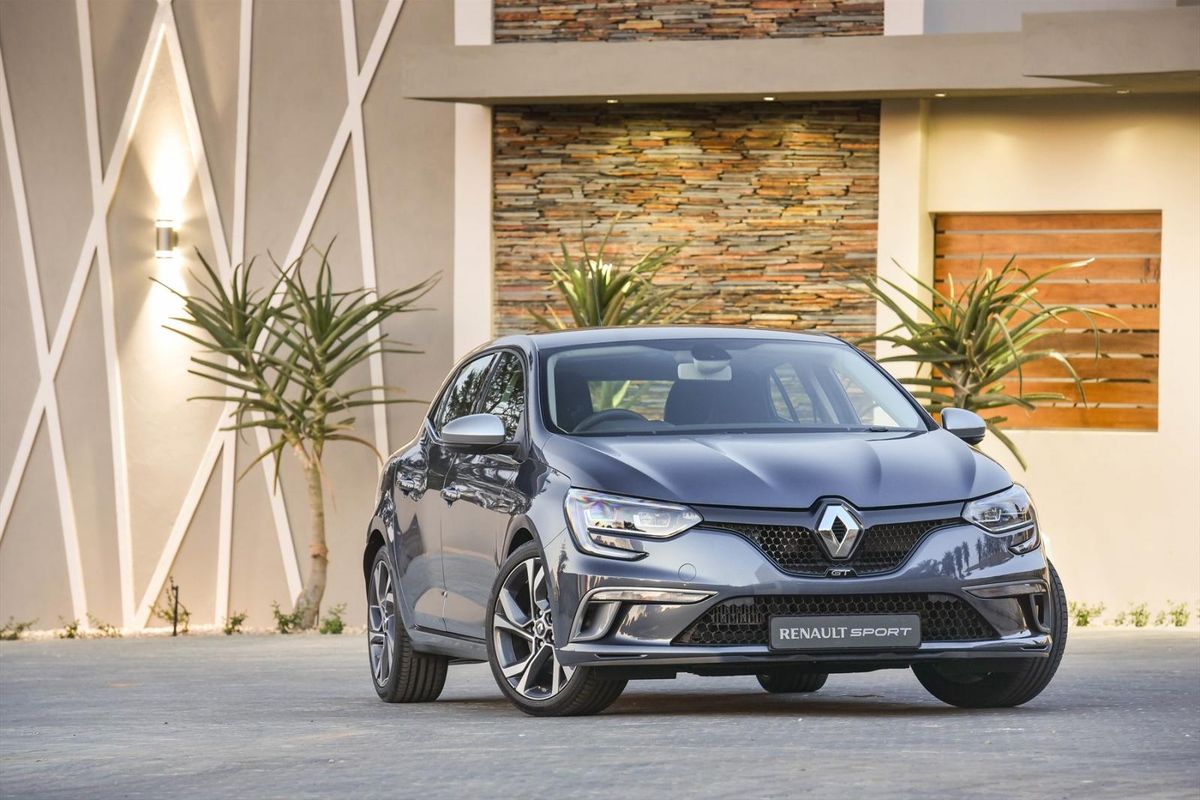
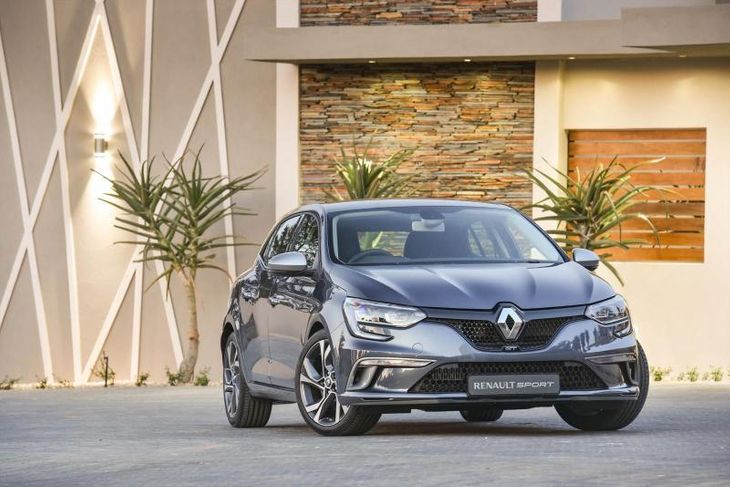
Renault's Megane is now in its 4th generation and, apart from offering sophisticated styling (both inside and out), generous specification and a satisfying driving experience, the French hatchback boasts impressive cabin space by virtue of sharing its platform with the Kadjar family car. There is a selection of compact turbocharged engines available and the Megane ranks well in terms of safety spec. However, its build quality is no more than fair. Derivatives are priced from R295k.
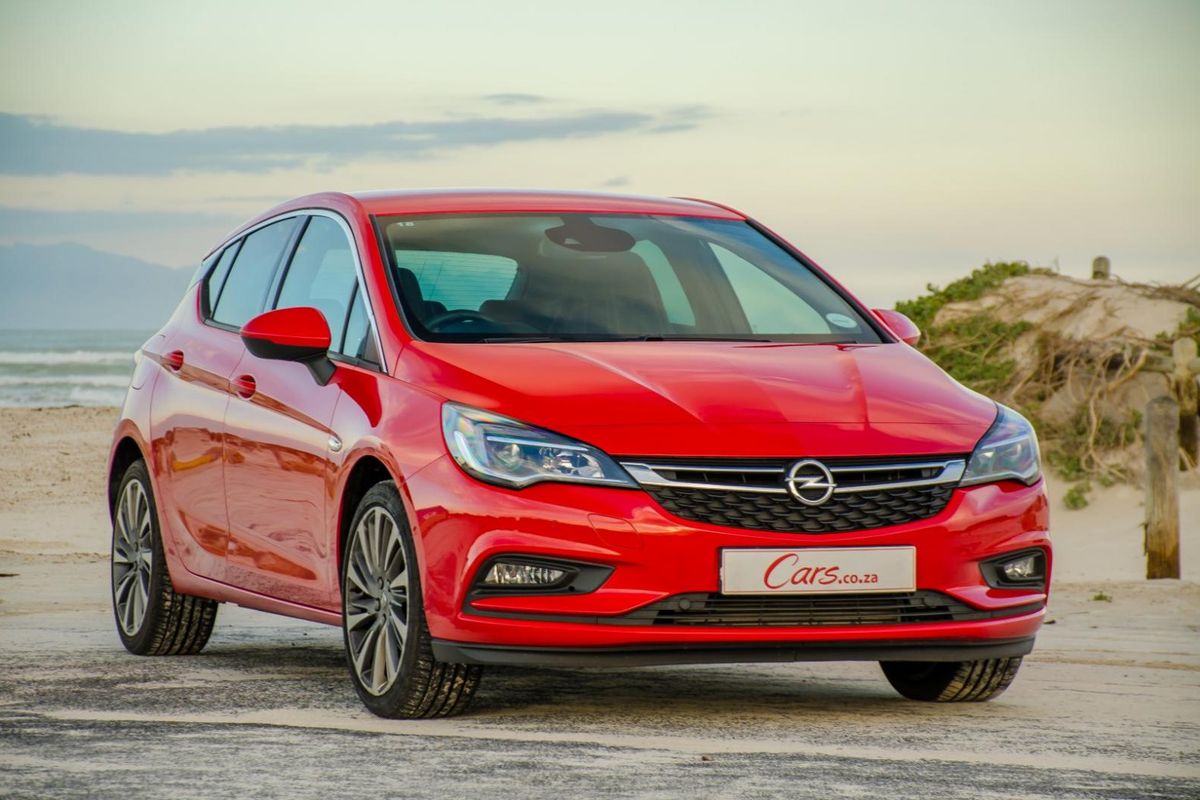
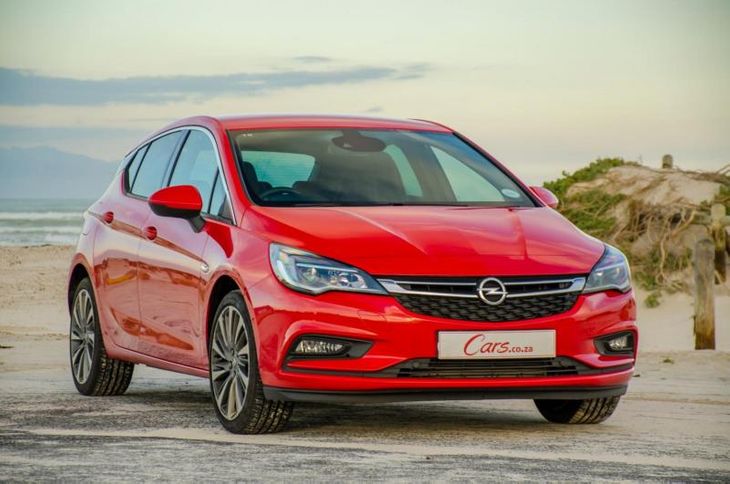
The distribution of Opel now falls under the auspices of the urban-based Williams Hunt dealer group (following the withdrawal of General Motors from South Africa at the end of 2017). Regrettably, in terms of sales, the Astra remains largely underappreciated in our market. It's a surprisingly competent vehicle, boasting an impressive array of technologies, good build quality and potent, but frugal powerplants. Priced from R283k, the Astra comes backed by a 5-year warranty and service plan from new.
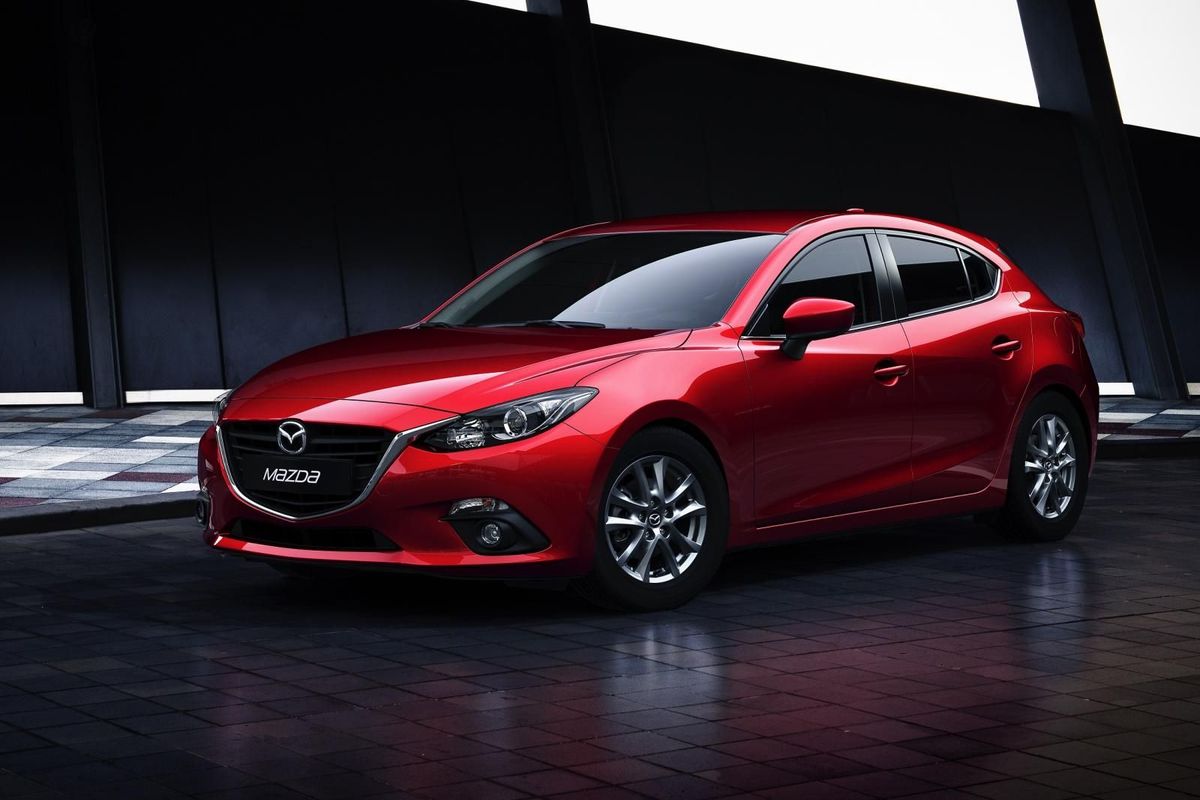
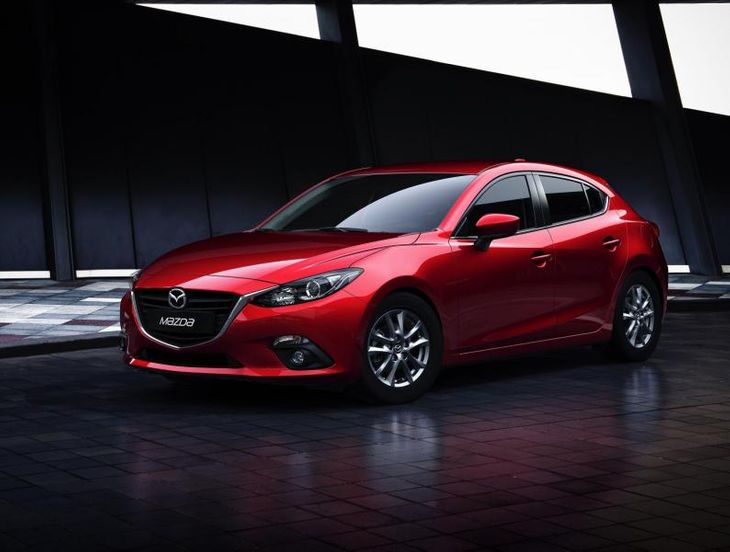
Mazda offers a variety of competitive products (the resurgent Hiroshima-based brand notably won a pair of 2017/18 Cars.co.za Consumer Awardscourtesy of the Mazda2 and CX-5). Whereas SUVs make up the bulk of the Japanese marque's sales on the local market, the long-serving 3 hatchback is a solid proposition. It is well-made, pleasant to drive and offers good cabin space, but lacks some of the tech (no turbo powerplants) and glamour of some of its rivals. Prices begin at R266k.
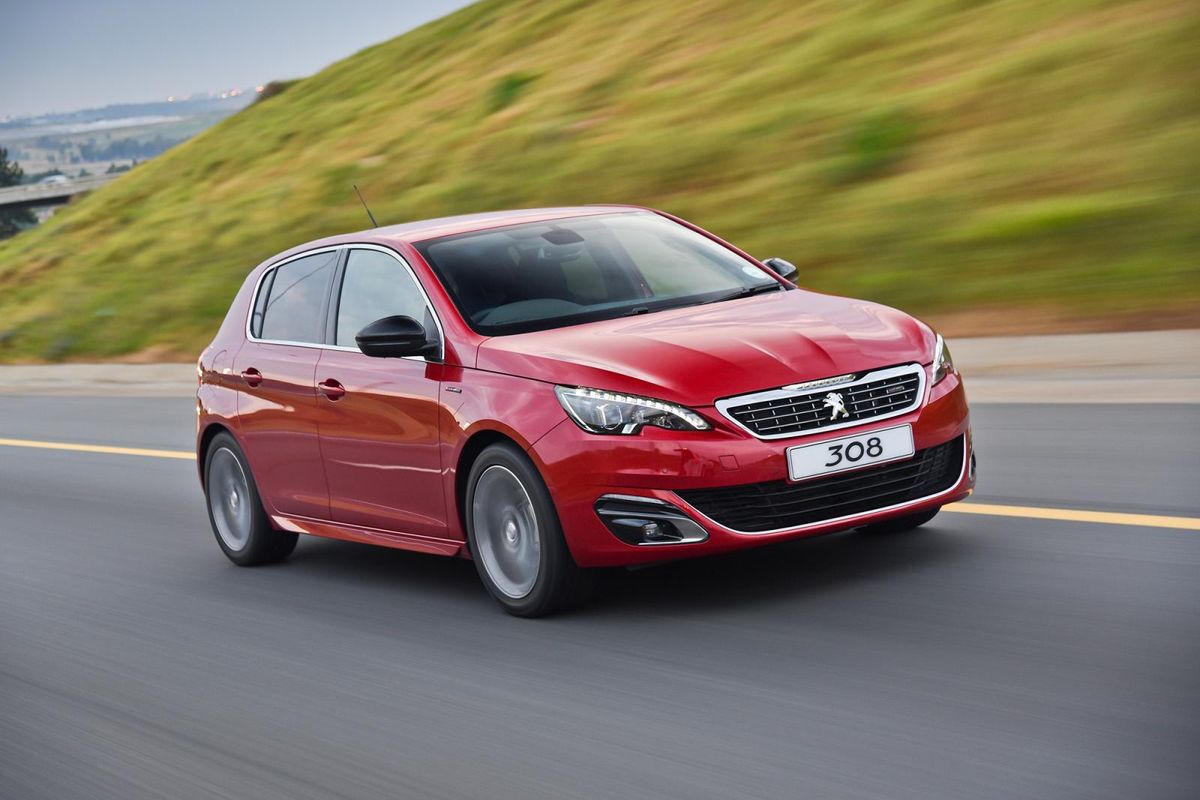
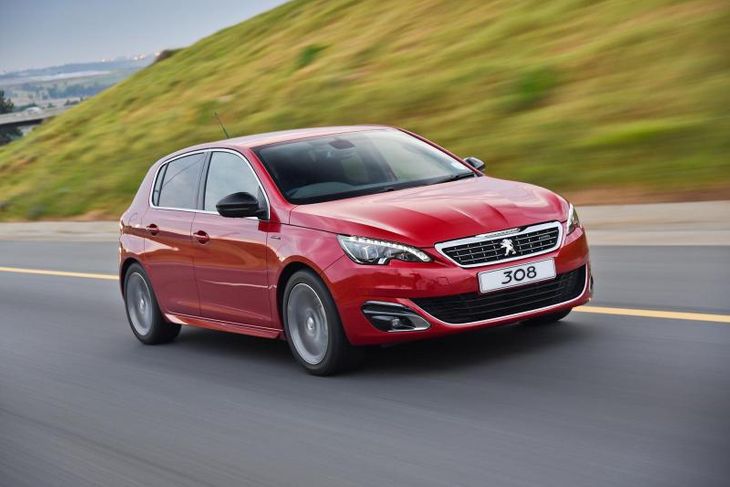
As part of a recent rationalisation of Peugeot's product line-up in South Africa, sales of the 308 were discontinued, which was a pity, because the French marque's premium hatchback offers a satisfying driving experience courtesy of a plethora of comfort and luxury features. However, a facelifted version is due to be introduced in South Africa in mid-2018 and that bears . As is the case with aforementioned Astra, the 308 remains an underrated product and comes with some excellent compact turbocharged engines.
Also Consider: Honda Civic, Toyota Auris, Kia Cerato, Hyundai i30.
Aston Martin Vantage (2018) Launch Review
Aston Martin likes to refer to its new Vantage as a "hunter" or a "predator". What's its prey, then? Well, there's the Porsche 911, to name one. But can this relatively small British marque really take on its formidable rivals with the new Vantage? After briefly driving the important new sportscar on local soil we think Aston Martin has reason to be so bullish. The 911 should watch its back…
The previous-generation V8 Vantage, which was on sale for more than a decade, was a charming offering. But the progress of time changed its context significantly: towards the latter half of the Aston's product cycle, it didn't really have much to offer apart from sexy looks, an evocative exhaust note and, arguably, a more evocative name than its similarly-priced rivals.
The new Vantage is to Aston Martin what the upcoming G20-generation 3 Series will be to BMW – a product that would be judged as a disappointment if it fails to achieve runaway sales success. The Vantage is the marque's core model and it competes in a particularly busy segment flooded with talented rivals. Unlike its predecessor, it won't have a very long model life, with new company boss Andy Palmer keen to avoid falling into that trap again. In future, Aston Martin will have more traditional model cycles, with profits from outgoing models funding the development of their next iterations.
In short, then… the new Vantage has to sell strongly. And to do that, it has to be flippin' brilliant, because the pinnacle sportscar market is absolutely cut-throat.
Local distributors Daytona organised a short test drive in Cape Town to allow us to make up our own minds. Although a far more in-depth evaluation (full review) of the newcomer will need to take place in future, we think the new Vantage might be even better than the hype suggests. Here are 5 reasons why:
1. It's got the look
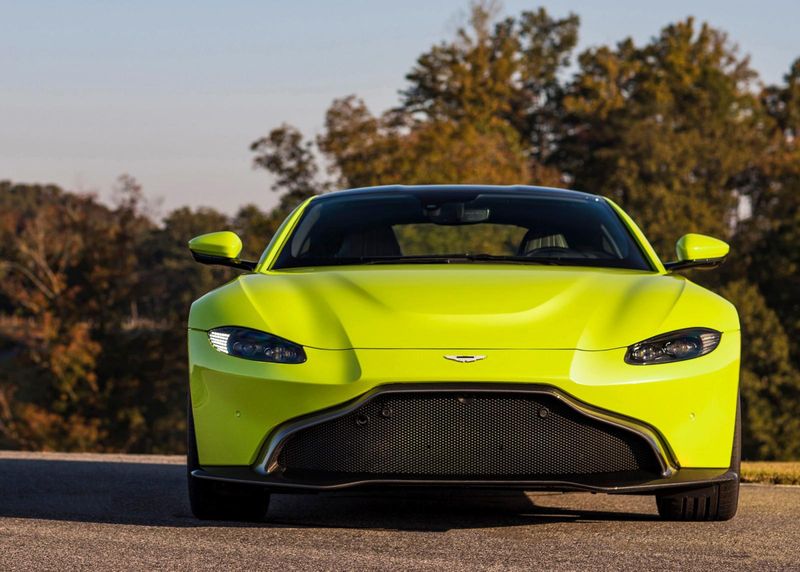
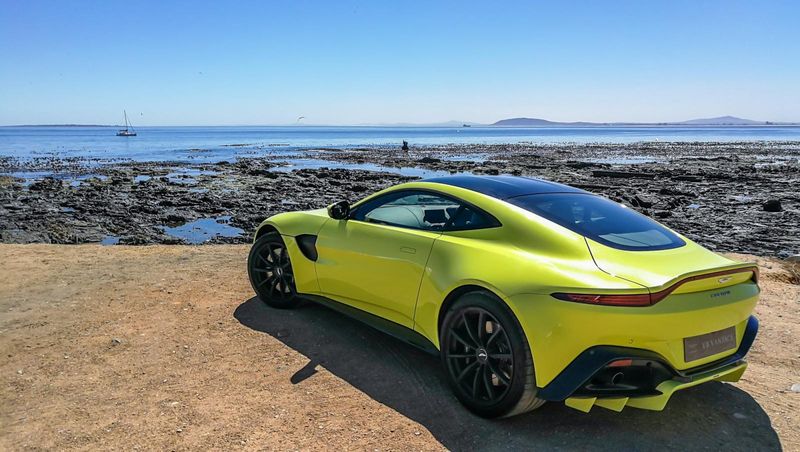
One of the most controversial aspects of the new Vantage is its grille. Aston Martin offers several different colour treatments.
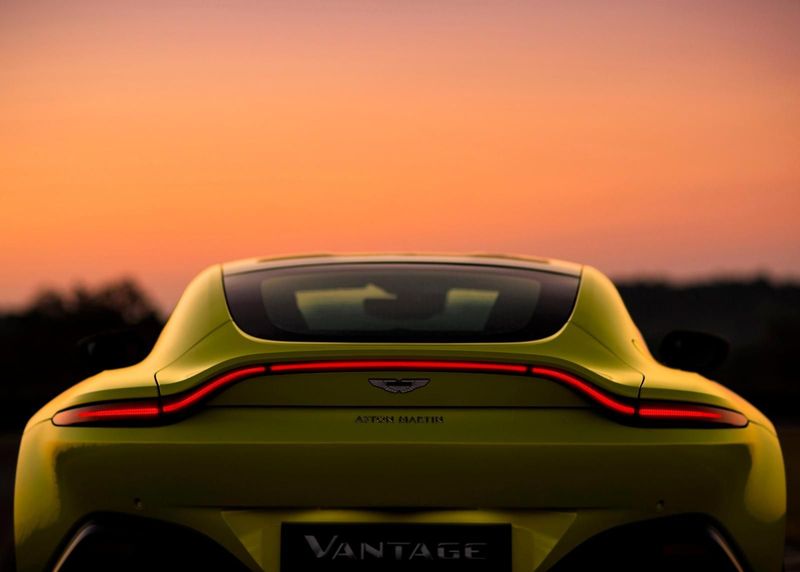
It's become something of a cliche to say that a new car looks better in the metal than it does in photographs, and the Vantage is indeed another one of those cars. Some brand purists have complained that the gaping grille marks too much of a departure from the Aston Martin design language and that the headlights look like they've been pinched off a Mazda MX-5. Some have also suggested that the back-end reminds them of the Honda Civic Type R.
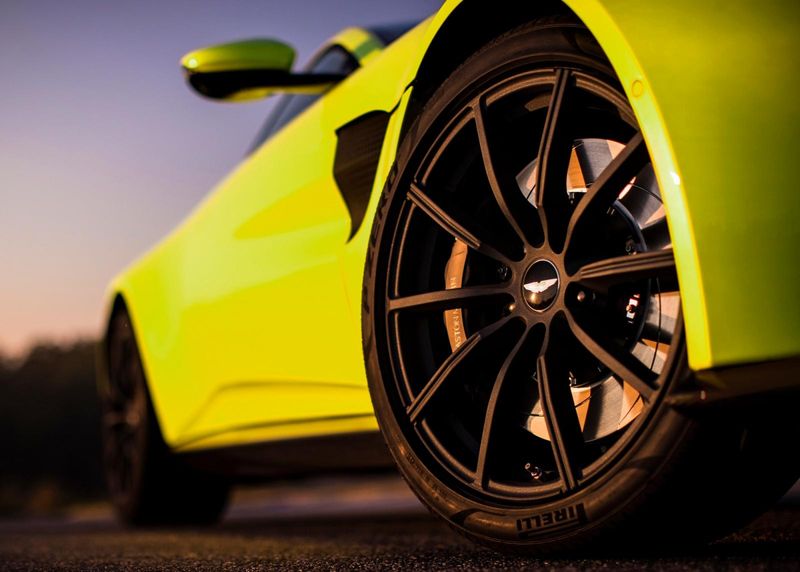
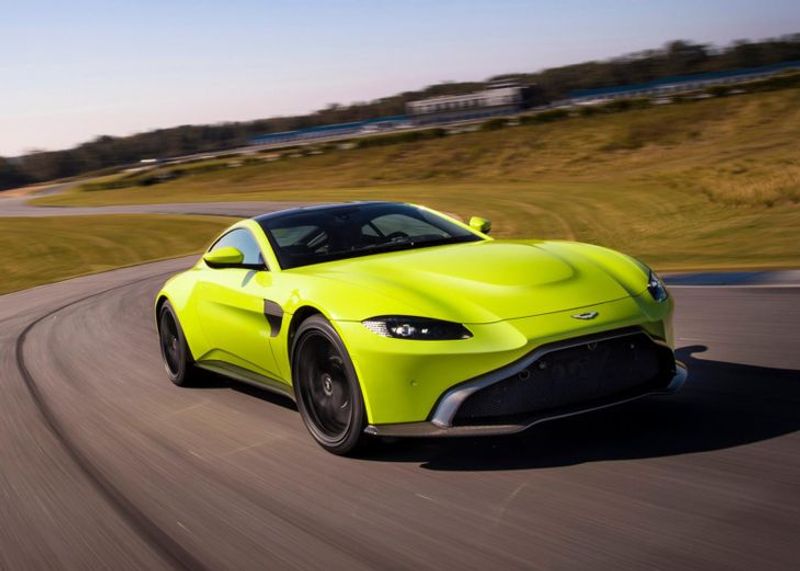
Well… there may be nuggets of truth in all of those criticisms, but I urge you to only make up your mind after seeing the new Aston in the metal. When finished in its launch colour, Vibrant Lime Essence (as shown here), the new Vantage represents nothing short of a bold piece of design. Having said that, I'm not a huge fan of this colour, as it tends to hide some of the more interesting sculptural aspects of the newcomer's shape, but it's but one of more than 40 colours in which the Vantage can be ordered. The proportions of the car are just spot-on: it's wider than before and with the wheels pushed out to the corners, the Vantage looks squat and muscular.
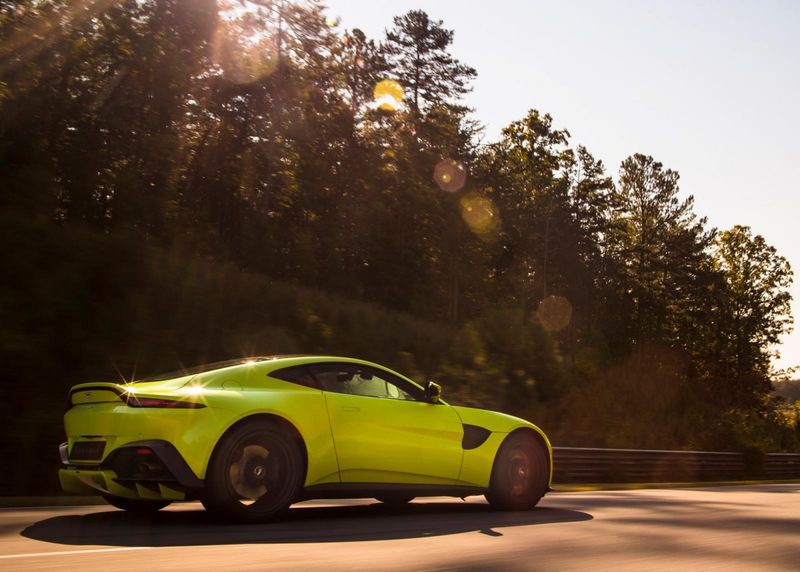
The aero-optimised rear-end is a big departure from Aston Martin's previous design language.
It's also worth noting that the new Vantage is essentially the production version of the DB10 that featured in Spectre, the last Bond film. Interestingly, Bond was going to drive the new DB11 in that movie, but when the director and producer visited Aston Martin's offices and spotted the DB10 concept, they convinced the marque to build 10 units for the film. For what it's worth, I didn't like the look of the DB10 – the Vantage is one of the very few examples where the finished product has turned out better than the concept!
There is a multitude of personalisation options available. For example, the controversial grille can be had in 3 different finishes. Depending on your chosen specification, the overall appearance of the Vantage (and, consequently, your opinion of its core design), could change quite dramatically. Go play around on the online configurator to build a Vantage of your dreams. You can find it here.
What is key, here, however, is that the Vantage looks different to everything else in its segment of the market. It also no longer looks like a smaller version of another Aston Martin. At its price point, exclusivity and individuality are major considerations – the Vantage certainly has those!
2. The cabin is a leap forward
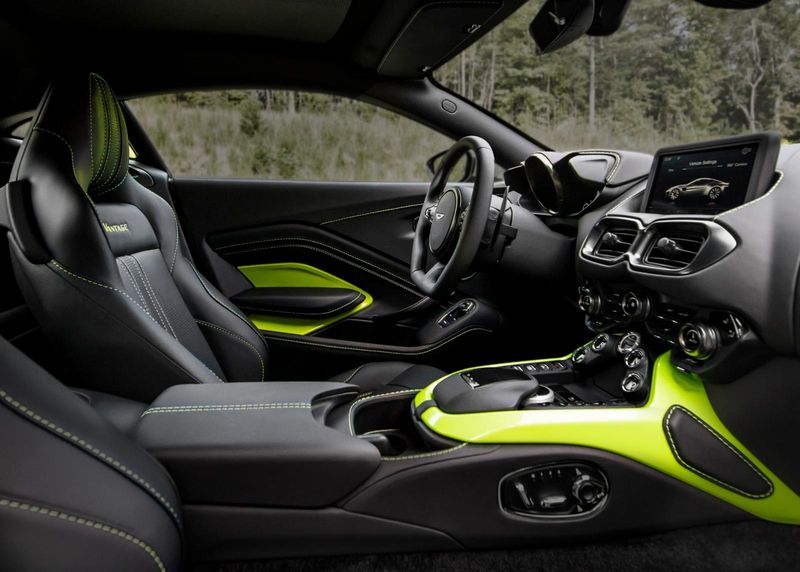
Comfortable for 2 and far more modern than before, the Vantage's cabin represents a major step forward for this model.
The previous-generation Vantage certainly looked the part on the outside, but one couldn't help but feel somewhat shortchanged when entering the cabin. While Aston Martin did an admirable job of hiding some of the shared Volvo and Ford interior parts, the clunky navigation system, at times messy ergonomics and occasionally cheap-feeling controls were definite let-downs.
The new car's cabin is infinitely better. The quality of the touch points is of a consistently high standard, and there are some very neat touches. I particularly like the leather-strap doorpulls. Sure, you'll recognise some elements from the Mercedes-Benz parts bin, but this time around the design is more coherent and nothing feels cheap except, possibly, the air vents. The extra width in the cabin also translates into more shoulder space, while the increased wheelbase means there is now considerably more space underneath the tailgate – enough, they say, to accommodate a pair of golfbags.
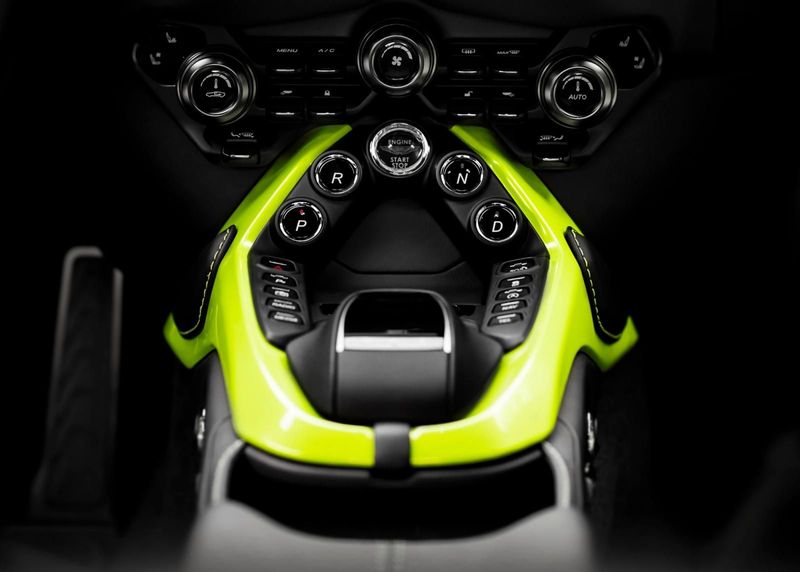
The centre console/transmission tunnel is quite busy with loads of minor controls. Note leather-covered brace pads.
As is the case with many new-generation sportscars, a number of important controls have migrated to the steering wheel. So, with a flick of a finger, you can scroll between the various drive settings or fiddle with the damper stiffness, all while keeping your hands on the wheel. I also particularly enjoyed the placement and size of the large shift paddles. They really fall easily to hand.
There are a vast number of options available for the cabin as well. To make things simpler, Aston Martin offers several "packs" – Sports Plus, Comfort, Exterior Black and Tech – to potentially make the selection process easier.
3. It's agile, communicative
Standard front brakes are large 2-piece, 400-mm ventilated steel items. The Vantage's steering is fast and linear.
The Vantage's structure is an all-aluminium one, but only about 30% of it is shared with the larger DB11; the larger car's suspension components have been transplanted to the Vantage, albeit in significantly different states of tune. The Vantage is quite a short car – it's shorter than a 911 – and with its engine pushed far back the new Aston boasts the 50/50 front-to-rear weight balance that's ideal for a dynamic sports car. Also worth noting is that the rear subframe is mounted directly onto the main structure, which, according to Aston Martin, makes the Vantage feel more connected with the road.
Dig deeper into the technical specification documents and you find more clues to why the Vantage feels so lively, direct and responsive on the road. It's the first Aston Martin to feature the company's new fast-acting electronic rear differential. At lower speeds it has been tuned to aid agility, while at higher velocities it improves stability. The car also features a torque vectoring system and highly adjustable dampers and powertrain settings.
The Vantage offers a very impressive blend of supple ride comfort and sharp dynamics.
Unlike the DB11, which has a more comfort-oriented GT setting, the Vantage kicks off with a Sport setting as the default, with Sport+ and a more aggressive Track mode to round things off. Despite its description, I found that Sport offers more than enough inherent comfort to make the Vantage an easy daily driver, yet it is also very responsive in this mode. Flick to Sport+ and there's an immediate and noticeable difference in the stiffness and reaction from the transmission/engine. But… and this is something that I rate as a BIG plus… as you flick into the more aggressive settings, the stability control doesn't disappear. So it's possible to have the increased responsiveness, louder engine sound and firmer springs without sactificing traction/stability. There is a separate switch to deactive stability control completely.
On the road and during our brief drive, the Vantage displayed marvellously fast, linear steering, and a lovely balance of suppleness and sharpness.
4. Fast and with a great soundtrack
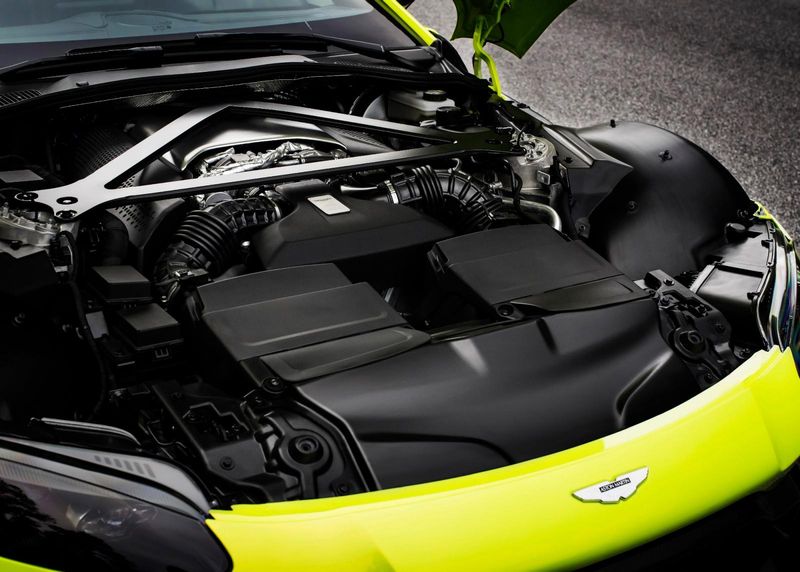
The 4.0L twin-turbo V8 is borrowed from AMG, but features some changes for use in the Vantage. It is positioned far back.
Aston Martin's current agreement with Daimler extends to the engine department, where the Vantage gets the twin-turbo 4.0-litre V8 used in Mercedes-AMG's GT. There are some differences, however. The Vantage engine has different turbos, a unique exhaust manifold and is mated not with the Mercedes-AMG's transmission, but an 8-speeder from ZF. The previous Vantage sounded great (it was one of the most admired aspects of the car), but this new one arguably sounds better, and is louder more of the time. Even in its "base" Sport setting the engine will make itself heard when you tickle the throttle. It suits the "predatory" nature of the car.
The engine delivers 375 kW at 6 000 rpm and 685 Nm of torque, all the way from 2 000 to 5 000 rpm. On the road that flat torque curve is very noticeable, and makes the transmission's job relatively easy. At first, it may seem odd that a car as overtly sporty as the new Vantage should feature a normal torque-converter automatic, but I'd rate the ZF 'box as one of the most surprising and impressive aspects of the overall package. Leave it to its own devices and it does its job smoothly and almost imperceptibly. Engage with it and the transmission will delight with the immediacy and crispness of its responses.
Aston Martin claims a 0-100 kph time of 3.6 seconds and a lofty top speed of 314 kph. These performance figures, by the way, are very similar to those quoted by Mercedes-AMG for the hardcore (and similarly priced) GT R.
5. Good value?
This is just the start of the new Vantage story – even more hardcore and faster versions are likely to follow.
With a base price of around R2.8 million, the Vantage is anything but cheap for an "entry-level" Aston Martin. However, perhaps it appears so because we are looking at it through our pre-2018 Aston Martin goggles. Right now, cars with similar performance (Mercedes-AMG GT R and Porsche 911 Turbo PDK/911 GT3 PDK) sell for similar money. The difference is that those rival vehicles appear at (or near) the top of their respective model ranges, while the Vantage is just the starting point of its own.
The Vantage doesn't exhibit the sheer brutality of the AMG GT R, and is neither as quick off the mark as the 911 Turbo, nor as intimately interactive as the GT3, but it now displays a spread of talents topped by a badge that adds considerable exclusivity and desirability to the mix. In summary, then, the list of reasons one can rightfully raise for not considering a new Vantage is very, very short and probably will have little to do with the abilities of the car.
Verdict
Exclusivity, desirability… the Aston Martin Vantage offers those by the bucket load.
I have driven most of Aston Martin's offerings during the past 15 years or so. From my perspective, this Vantage seems the most-complete sportscar the Gaydon-based firm has ever produced. Yes, we need to drive it on a track to really test its performance limits, but based on this short test experience, there are clearly several more reasons to consider the Vantage (compared with its predecessor).
Everything that has made Aston Martin appealing is still there – the dramatic looks, the evocative soundtrack, desirability and exclusivity. But now you can add excellent build quality, a cabin that's pretty much bang up to date ergonomically, greater comfort levels, a truly excellent engine/transmission combination and pin-sharp dynamics to the mix. The new Vantage is as rewarding to pilot for the capable enthusiast, as it is unintimidating to drive for a relative novice. I'm willing to bet that it will indeed be a thorn in the side of the establishment. It's a car that marks a new chapter for Aston Martin, and one that forces you to re-evaluate your own beliefs about this brand.
Nissan Qashqai (2018) Review | Facelift For The Win
The newly facelifted Nissan Qashqai reminds us why it's such a good seller all around the globe. We have a go in the top-spec diesel model with all the bells and whistles.
Take a guess what the best selling car in Britain is… it's the Ford Fiesta. In second place its the VW Golf and in third…another Ford, the Focus. But in fourth place, is this, the Nissan Qashqai. Yes our fellow motorists in the UK love the Qashqai, and when you spend some time with it, it is quite easy to see why.
In this video, we cover the load/boot space, interior features, fuel consumption, engine performance and new safety features now available in the latest Nissan Qashqai. The model reviewed is the top-of-the-range 1.5dCi Tekna variant, which in South Africa is currently listed at R445 500 (April 2018)
To compare the Qashqai to its rivals, visit our compare tool now:
Volkswagen adds the 7-seater Tiguan Allspace to its local offering this week and the new model comes with a slight adjustment to its proportions as well a new turbopetrol engine. Herewith pricing and specification for the newcomer…
The Volkswagen Tiguan Allspace hits the market this week featuring 7 seats and an elongated chassis along with a few styling modifications to differentiate it from the rest of the Tiguan range.
The Allspace is recognised by its different radiator grille and higher moulded bonnet. The major exterior design change comes further down the body where the rear side windows are bigger as are the rear doors, improving ingress and visibility for rear passengers.
The wheelbase has been extended by 110 mm, which allows for an extra 115 litres of cargo space. As a 7-seater, with all the seats up, there's still 230 litres worth of loading space. As a 5-seater, the extra length means that a huge 700 litres of space is available and with all the seats down there's 1 775 litres of packing space.
The Allspace is available in 3 trim lines – Trendline, Comfortline and Highline. The new Tiguan Allspace includes expanded standard features; highlighting its positioning between the normal Tiguan and the bigger Touareg.
Generous load space is offered by the new Tiguan Allspace thanks to its larger dimensions.
Tiguan Allspace Trendline. Available with the 1.4 TSI 110 kW/250 Nm engine and 6-speed DSG, the Tiguan Allspace Trendline is the entry-level model. Compared to the standard Tiguan, the Tiguan Allspace Trendline has the following extras:
LED daytime running lights
Light and Visibility Package (Auto dimming mirror, rain sensor and auto headlight control and High Beam Assist)
Chrome trapezoidal panels for exhaust system tailpipes
Front underbody protection in granite grey
Privacy glass on rear and side windows
Tiguan Allspace Comfortline Compared to the Allspace Trendline it is available in 2.0 TSI 132 kW/320 Nm 4MOTION with 7-speed DSG or 2.0 TDI 110 kW/340 Nm 4MOTION with 7-speed DSG variation. This version offers the following:
Electrically opening and closing tailgate
LED headlights with dynamic cornering lights
Hill Descent Assist
Tiguan Allspace Highline The Allspace Highline is exclusively configured with the 2.0 TSI 162 kW/350 Nm engine with 4MOTION and a 7-speed DSG gearbox. The Highline's features already include 18-inch alloy wheels, a silver front spoiler, silver roof rails, LED headlights with dynamic cornering lights, ambient lighting and Composition Media infotainment. Over and above this, the Tiguan Allspace Highline has further features added:
Keyless Access (locking and starting system)
Easy Open sensor controlled boot opener
App-Connect and Voice Control
Pricing
1.4 TSI 110kW Trendline DSG R463 400
2.0 TSI 132kW Comfortline 4MOTION DSG R523 800
2.0 TDI 110kW Comfortline 4MOTION DSG R571 100
2.0 TSI 162kW Highline 4MOTION DSG R604 800
The new Tiguan Allspace comes standard with a 5 year/90 000km Service Plan, 3 year/120 000km warranty, 12-year anti-corrosion warranty and space saver spare wheel. Service Interval is 15 000km.
Renault Kwid 1.0 Dynamique Auto (2018) Quick Review
The line-up of the popular Renault Kwid budget car has grown with the addition of an automatic (AMT) derivative, but there's a catch… Although the little Frenchman now ranks as the most affordable self-shifter on the market, the new transmission may indeed be one of the weakest links in this budget-busting package.
We like: Affordability, surprisingly spacious, standard spec
We don’t like: Lurching gearshifts, no ability to manually effect gearshifts, no hill-hold, lack of ABS
Alternatives:
Quality Suzuki: The Suzuki Celerio is a previous Budget Car category winner in the Cars.co.za Consumer Awards – Powered by WesBank, and this particular derivative features an admirable mix of comfort and safety features. Crucially, 2 airbags and ABS are standard. Boosting the value for money factor is the standard 2-year service plan. The transmission in this model is also an automated manual, but it works considerably better than the one in the Renault. Scratch around on Cars.co.za and you could find a nearly new Celerio Auto with delivery mileage for the same price as a new Kwid AMT.
Funky Kia: Kia's new Picanto is doing very well in South Africa and the 1.2 Start Auto derivative is one of the country's cheapest automatics. But it's not a car that smacks of cost-cutting… the design is trendy and the transmission is a proper automatic, not an automated manual as in the Kwid and Celerio. That, combined with the bigger engine, means it is not the most frugal of small autos, but it's the best to drive. Like the Renault, the Kia lacks ABS.
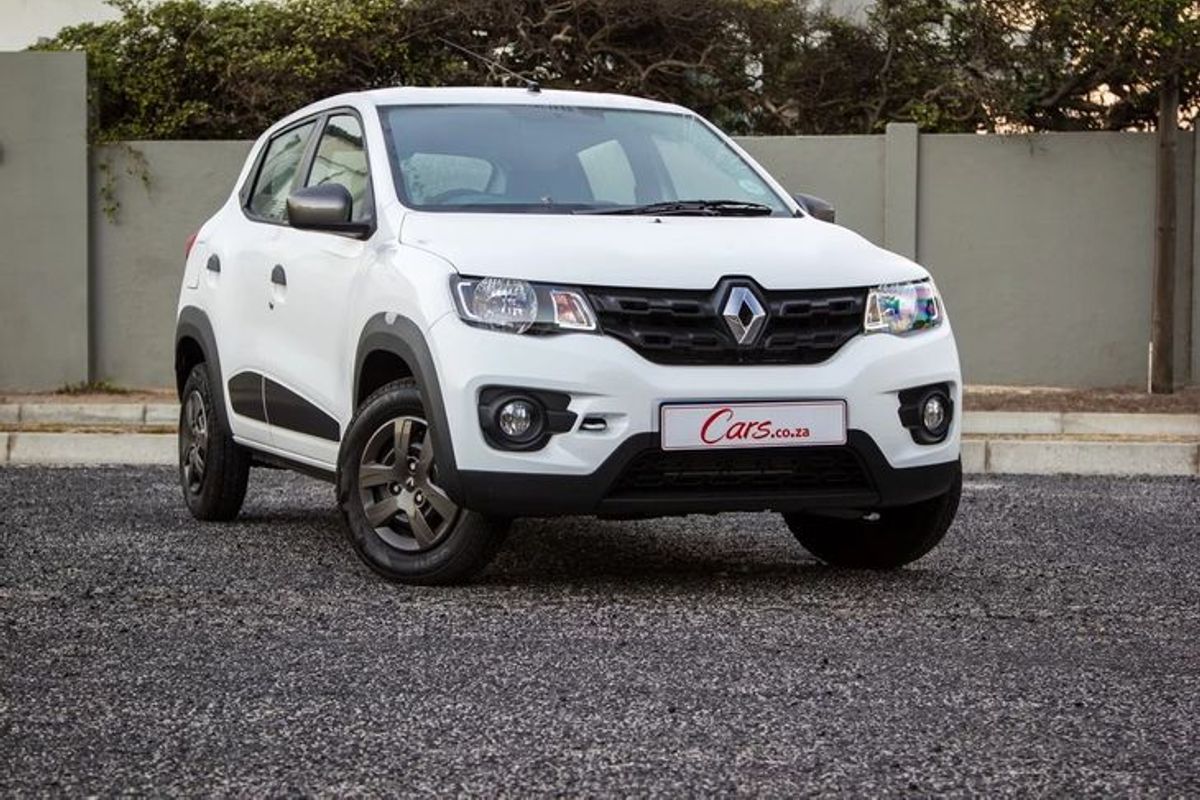
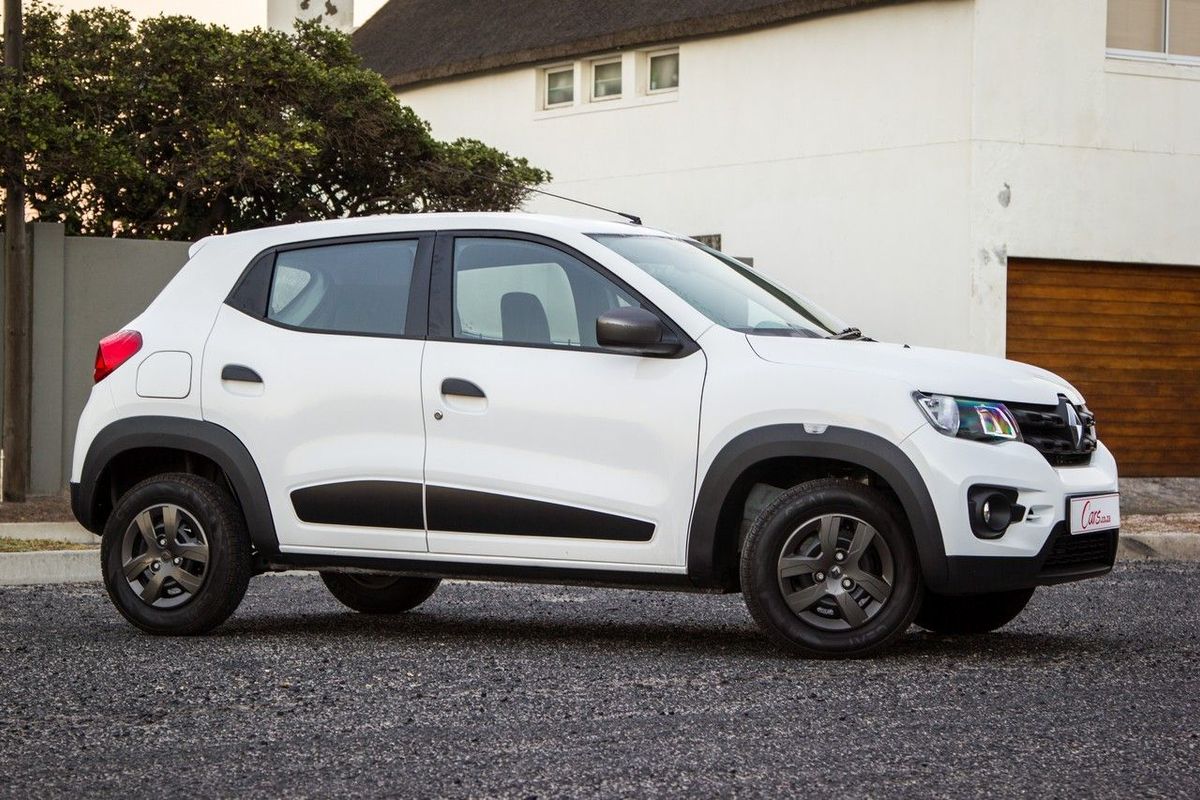
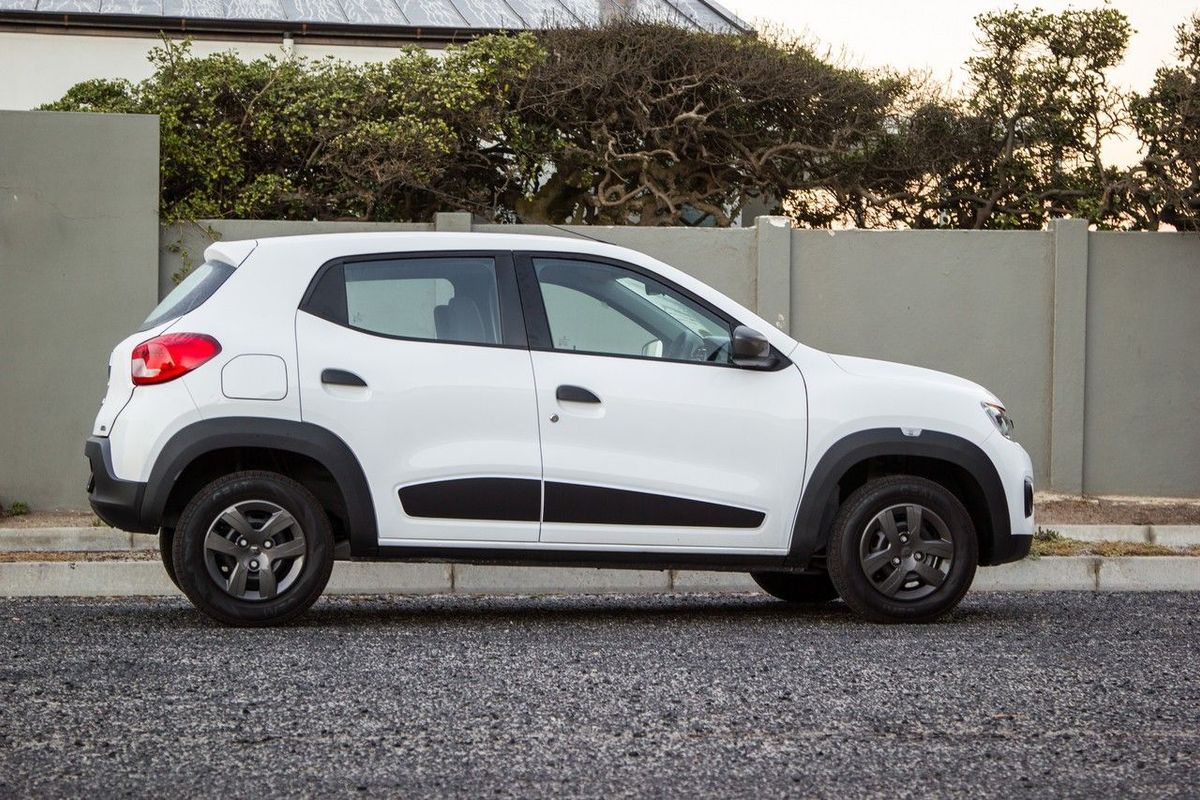
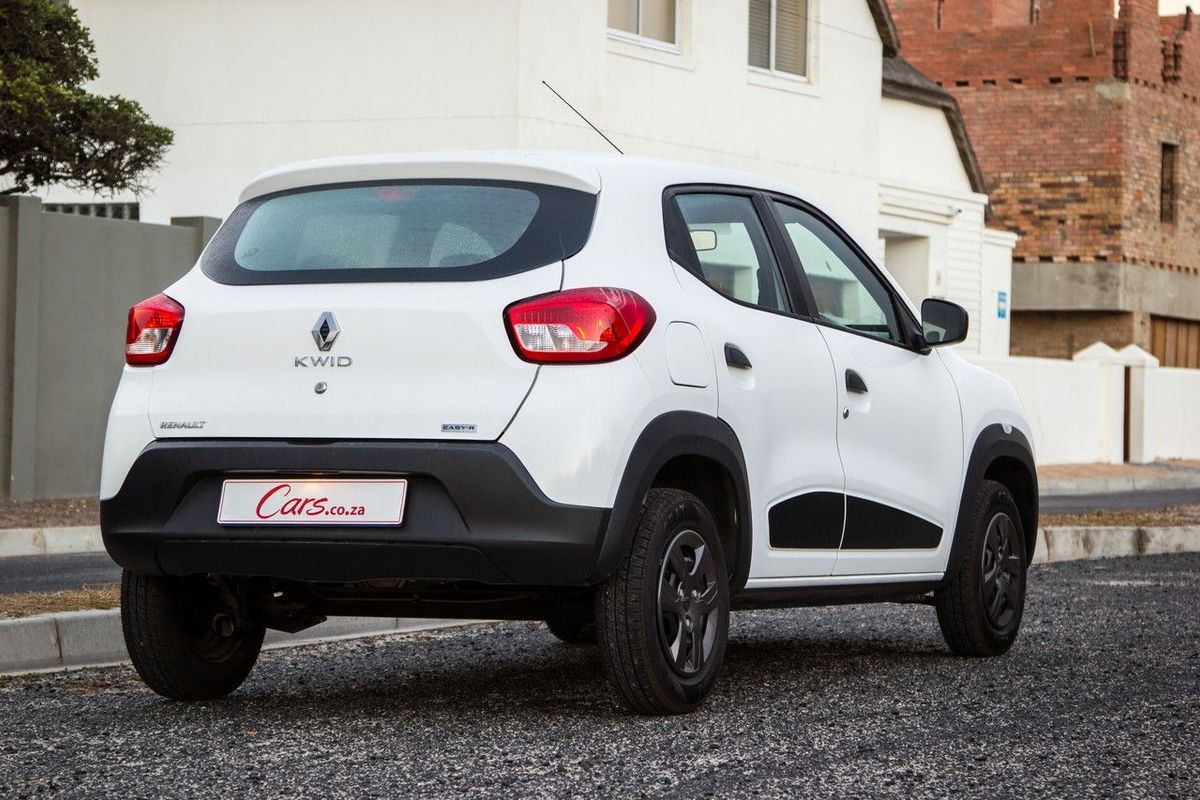
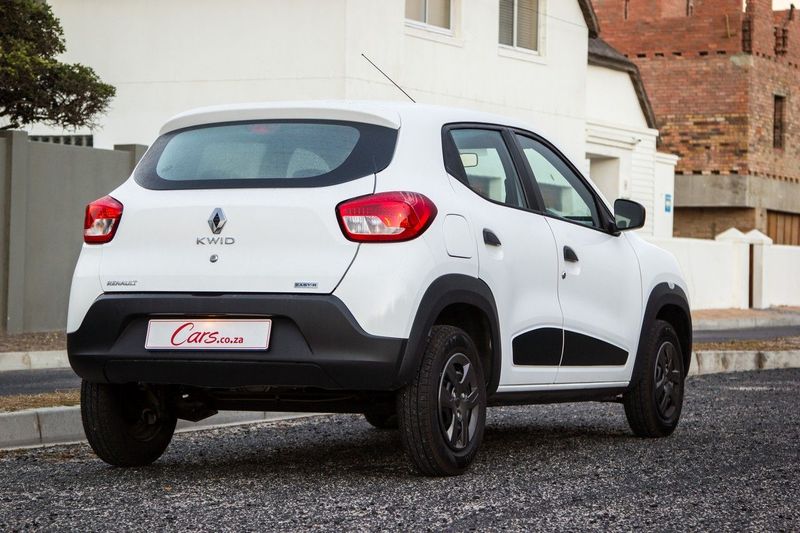
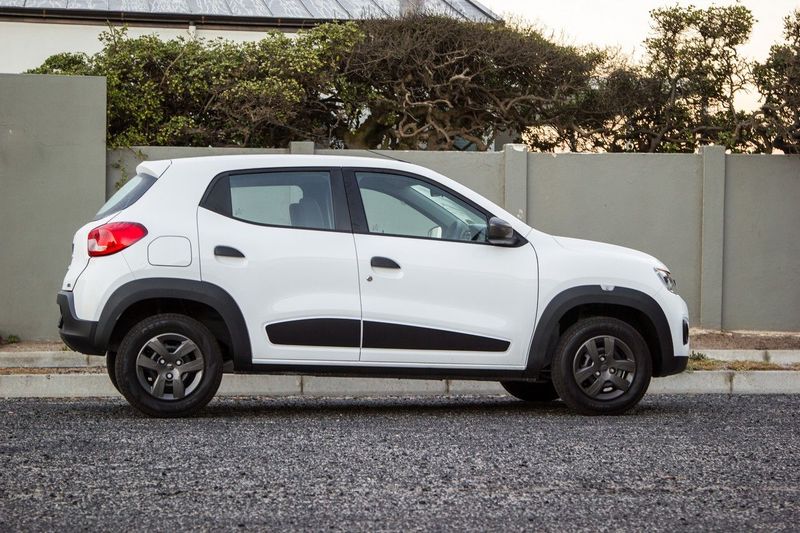
With 180 mm of ground clearance, compact dimensions and modern "crossover" design, the Kwid shows that cheap doesn't have to mean nasty.
With the demand for affordable automatic cars only likely to increase in coming years, and consumers under pressure on all fronts, launching the cheapest automatic car on the market puts one on a good wicket. Renault has done just that with the Kwid, a car that already sells strongly in South Africa. In fact, as a range, it sneaked into the top-10 best sellers (passenger cars) list last year, and the Kwid 1.0 Dynamique was the 6th-best-selling derivative in South Africa in 2017. See the full list here.
The new "automatic" version undercuts its next-cheapest rivals by a good R20 000, but if you're considering an automatic because of the driving ease/convenience that this type of transmission generally adds to the mix, you may have to think again…
The Good
Surprisingly spacious
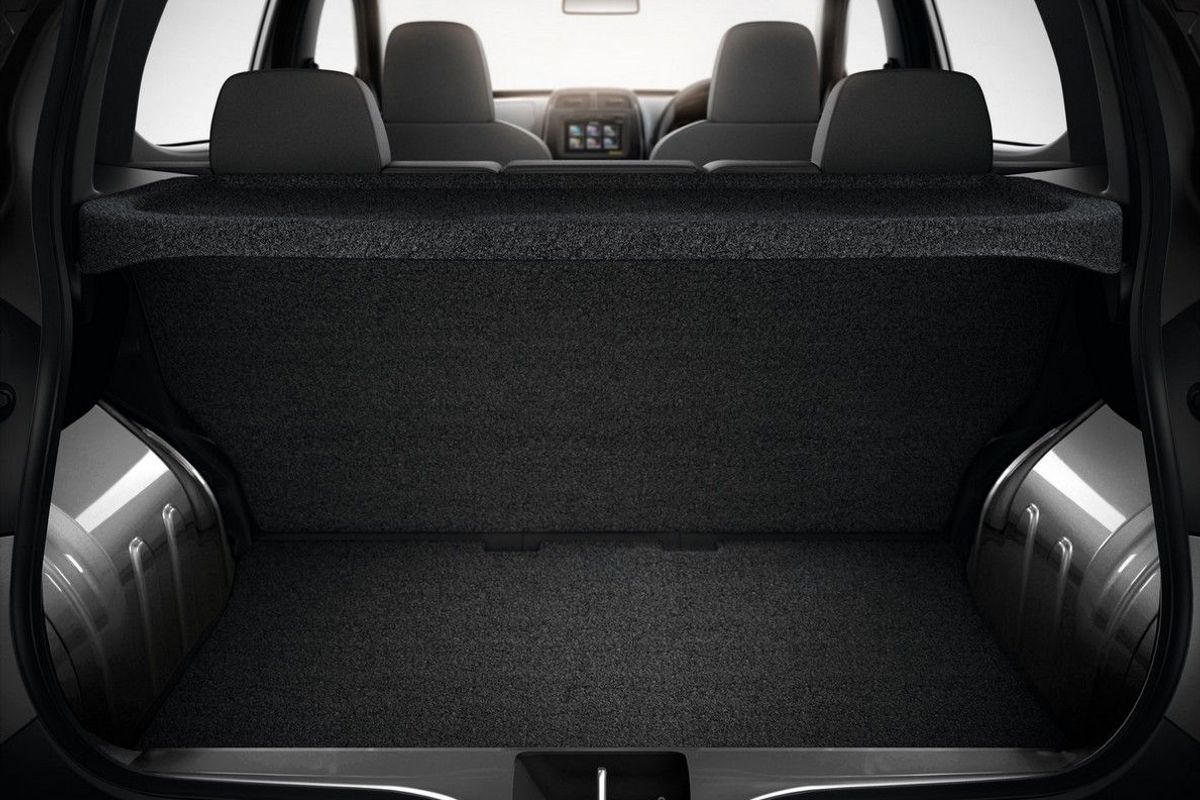
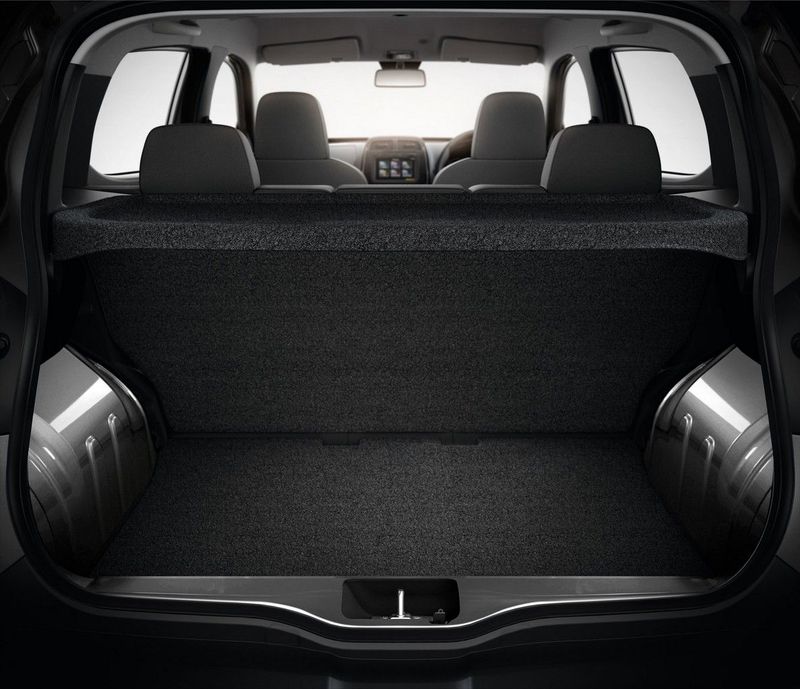
The luggage bay is generously sized and bigger than those offered by the Kwid's main rivals. Rear seatback folds as a single unit.
Based on the same underpinnings as the Datsun Go, the Kwid has very compact dimensions, but the extent of its interior space is quite surprising. In front, the lack of a gear lever has freed up more room between the front seats and the roof is quite high, so there is a definite sensation of spaciousness, which will please adult occupants.
There are also plenty of storage solutions availed at the front of the cabin. In the rear, too, legroom is good for such a small car, but it's the generous luggage area that is the biggest highlight. With a claimed 300 litres of loading space, the Kwid's bay is comfortably larger than those of its 2 listed rivals. Of course, there are some clear signs of cost-cutting… For example, the parcel shelf has to be lifted manually and the rear bench only folds as a single piece, which limits ultimate practicality.
Generously equipped
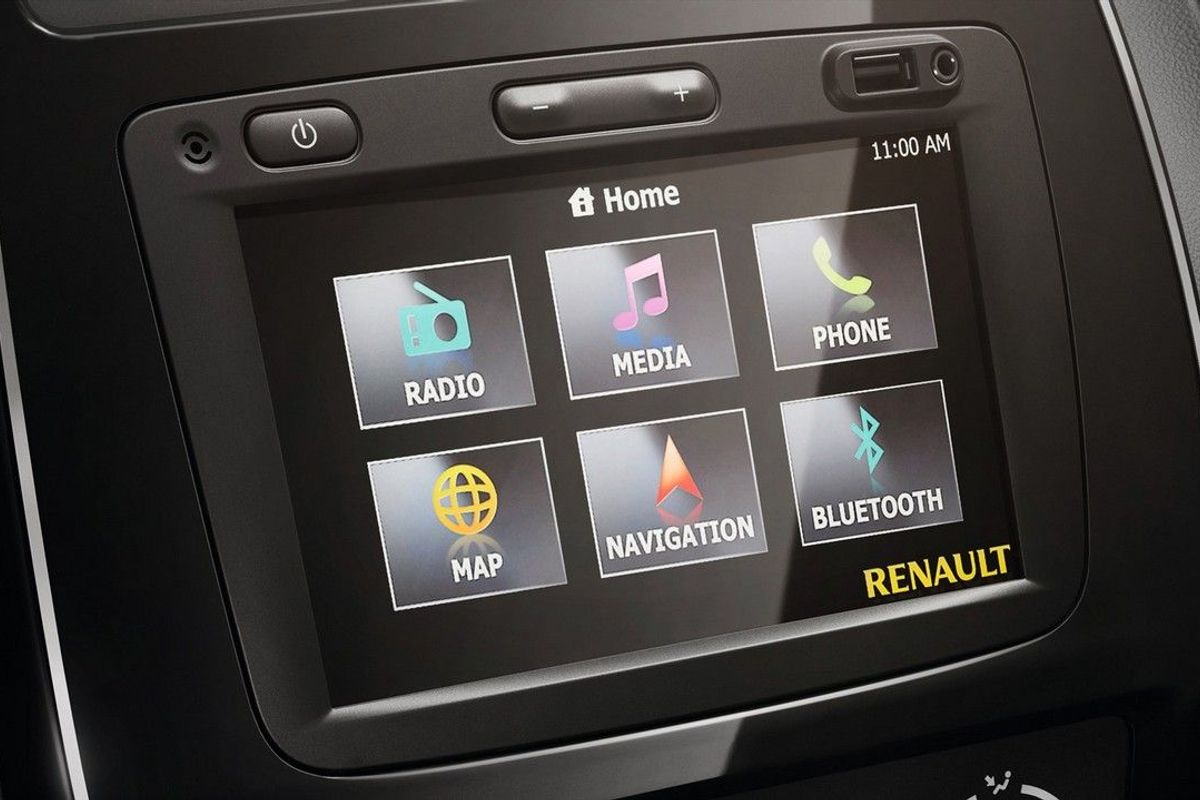
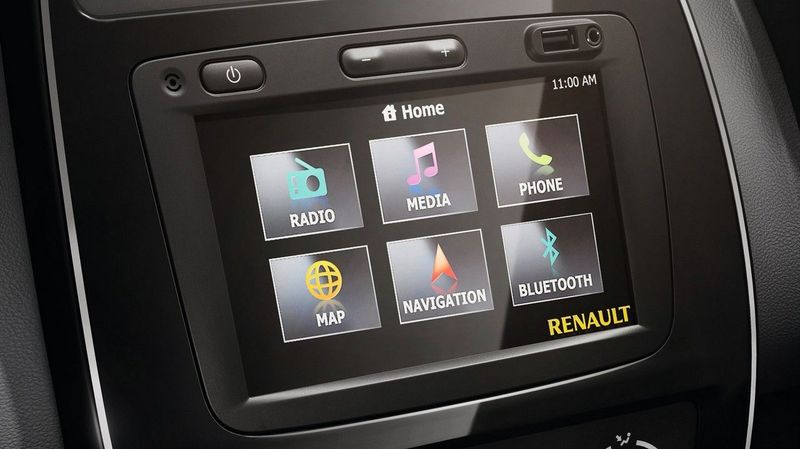
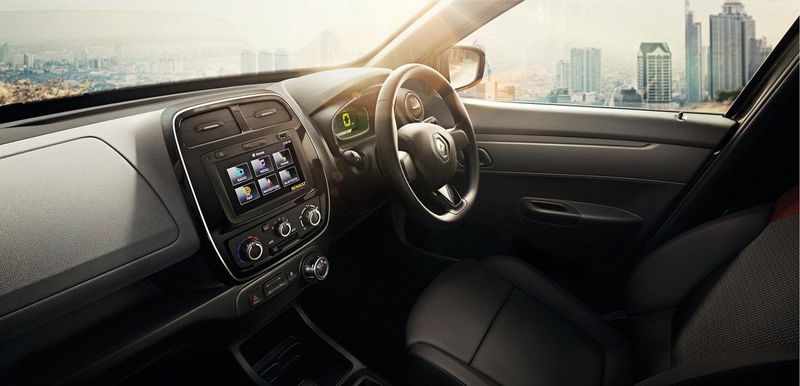
A very attractive feature (fitted as standard) of the Kwid is its comprehensive infotainment system.
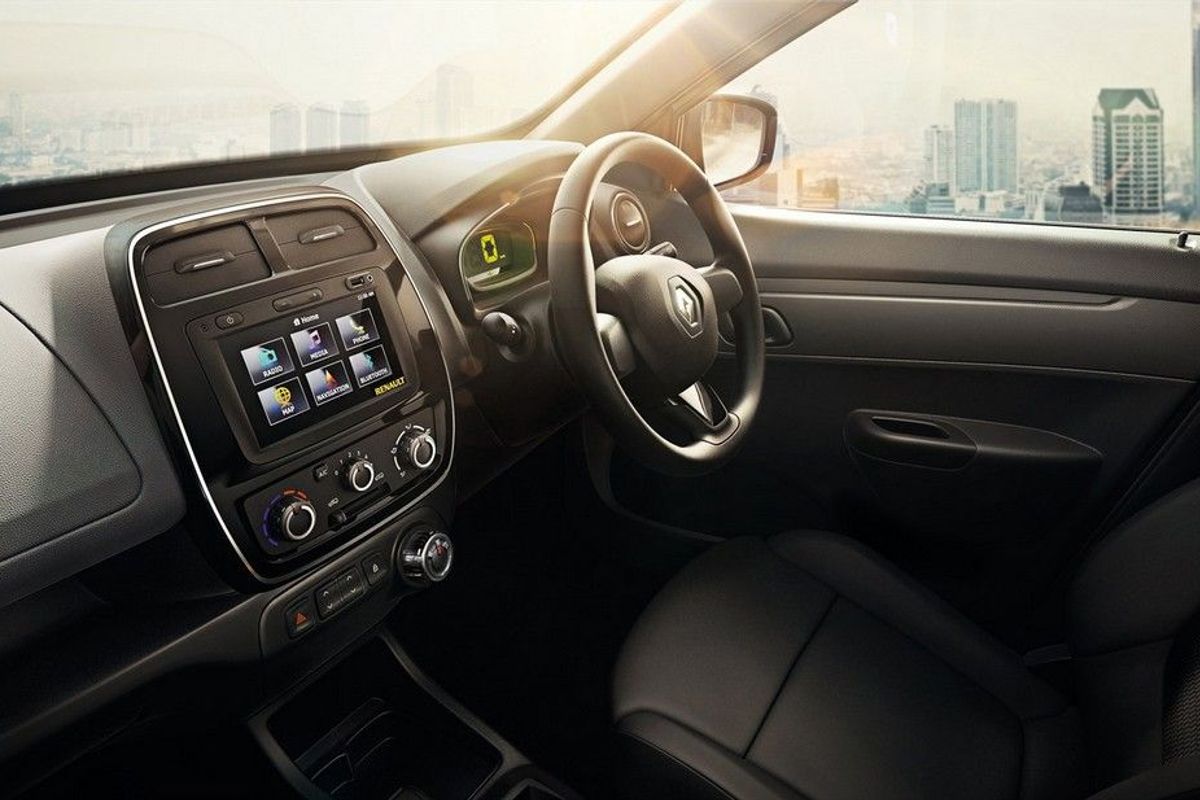
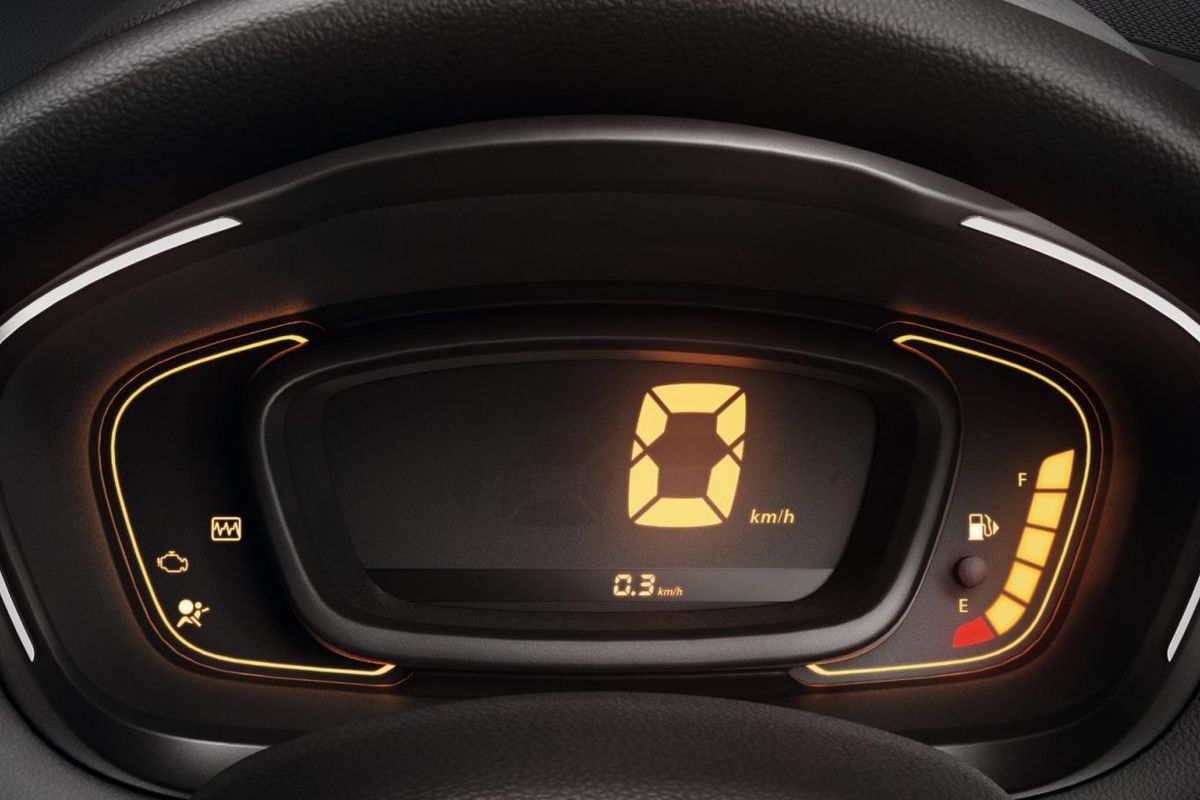
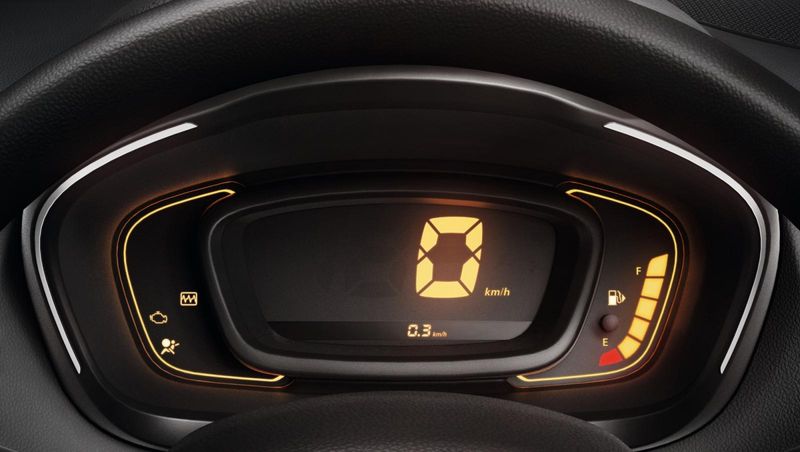
This new automatic derivative is only offered in Dynamique trim, which means the standard specification is quite generous. You get electric front windows, (manual) air-conditioning, remote central locking, power steering, front fog lamps and neat digital instrumentation. Best of all, there is a comprehensive 7-inch touchscreen infotainment system, which is unrivalled at this price level. The system includes auxiliary audio, USB and Bluetooth support, plus satellite navigation, no less.
Overall, the overall fit and finish of the cabin is of a high enough standard relative to the Kwid's budget-car status.
Fuel economy
Simple, digital instrumentation features in the Kwid. The little Renault is very frugal, but keep an eye on the fuel gauge, as the tank is small.
There are essentially 2 benefits to opting for a car equipped with an automated manual (AMT), as opposed to a traditional torque-converter automatic, transmission. Number one is cost… and it's easy to understand why Renault would opt for an AMT, given the positioning of the vehicle at the bottom-end of the price ladder. The other reason – fuel economy – also fits well within the overall Kwid purchasing proposition.
The Kwid is a very light car powered by a tiny engine, and the AMT allows it to offer self-shifting without impacting on the potential fuel economy that its drivers could achieve. In fact, Renault claims that the AMT version is more fuel efficient than the manual, with the former boasting a claimed consumption figure of 4.4 L/100 km and the latter offering 4.7. We achieved a figure of closer to 5.5 L/100 km, which is still excellent. Keep in mind that the capacity of the fuel tank is only 28 litres, however!
The Bad
Lurching gearbox
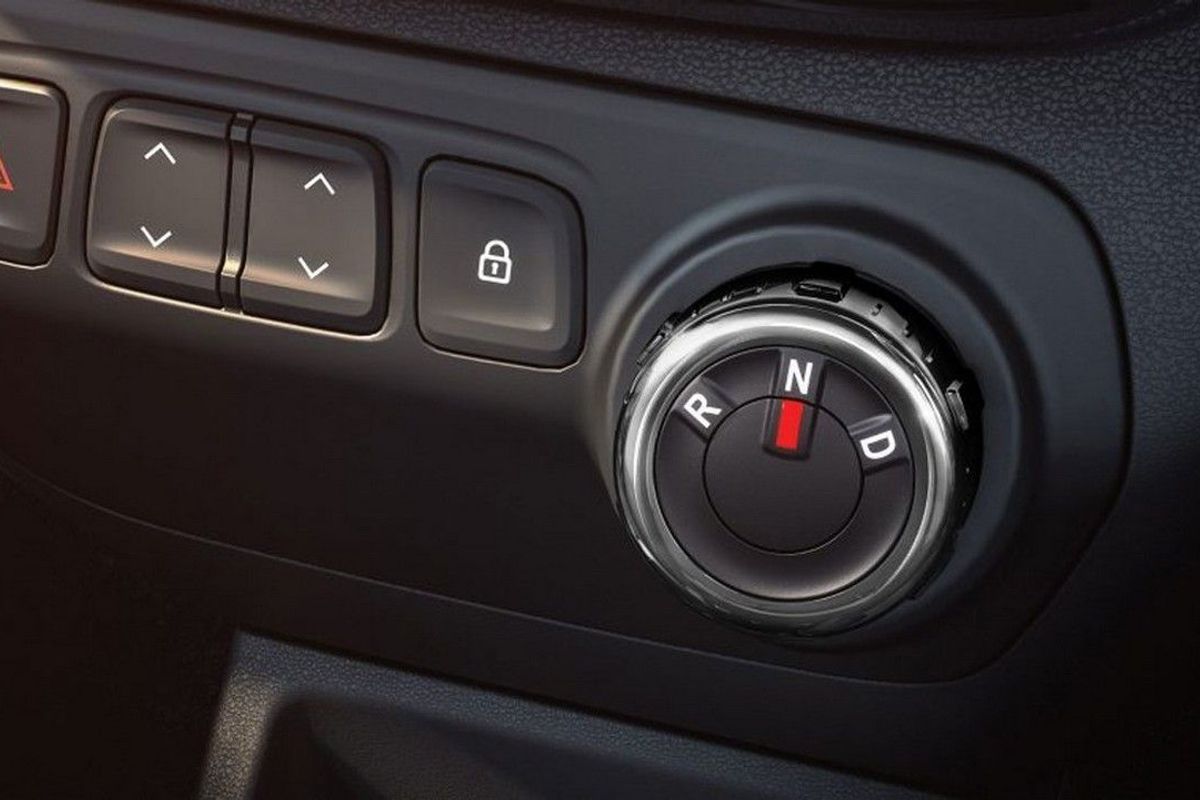
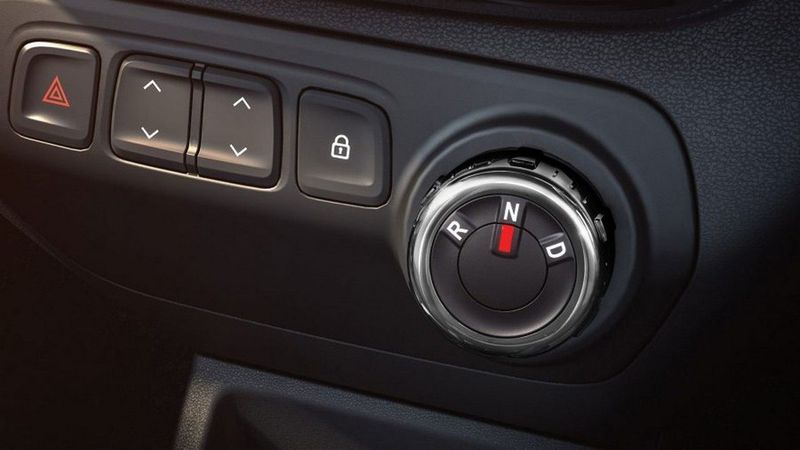
This simple dial on the facia controls the transmission. There is no "hold" or manual selection function.
The market is showing an increasing appetite for automatic vehicles and young, first-time buyers of this type of car appreciate the fuss-free use of a self-shifter, particularly if they're going to be spending a lot of time dealing with congested inner-city traffic. By virtue of the Kwid being the cheapest automatic on the market, interest in the little Renault was therefore always going to be significant. But, in reality, the gearbox fitted to the Kwid is arguably too compromised…
The 5-speed automated manual (AMT) works in the following way: a computer performs shifting duties and there's no clutch pedal, but the action of changing gear internally remains much the same as a manual car. So, as you would get with a normal manual car – depress the clutch, lift off the throttle, change gear with the lever, let out the clutch smoothly – there is a considerable delay when gears are changed. You can smooth out the transitions by lifting off the throttle momentarily (as you would in a manual car), but it's never a particularly fuss-free exercise. To drive the Kwid AMT smoothly takes as much concentration as it would in a manual car, so why bother?
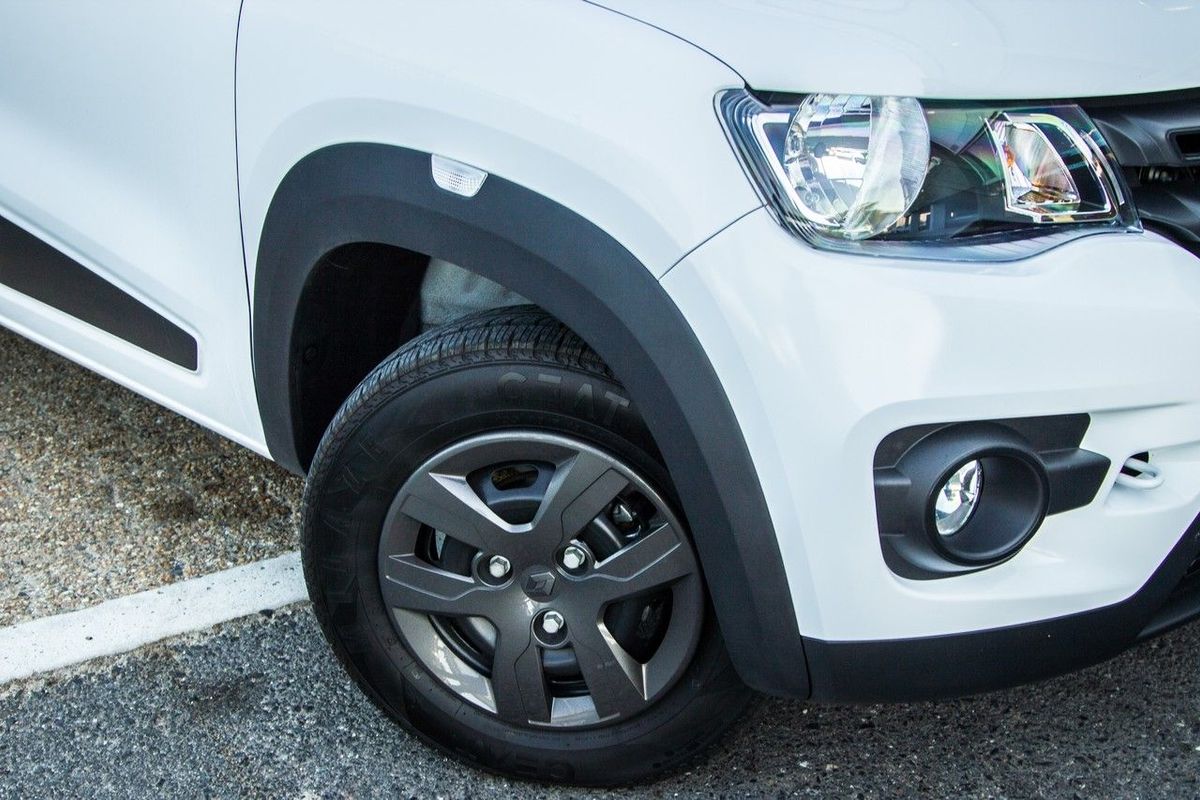
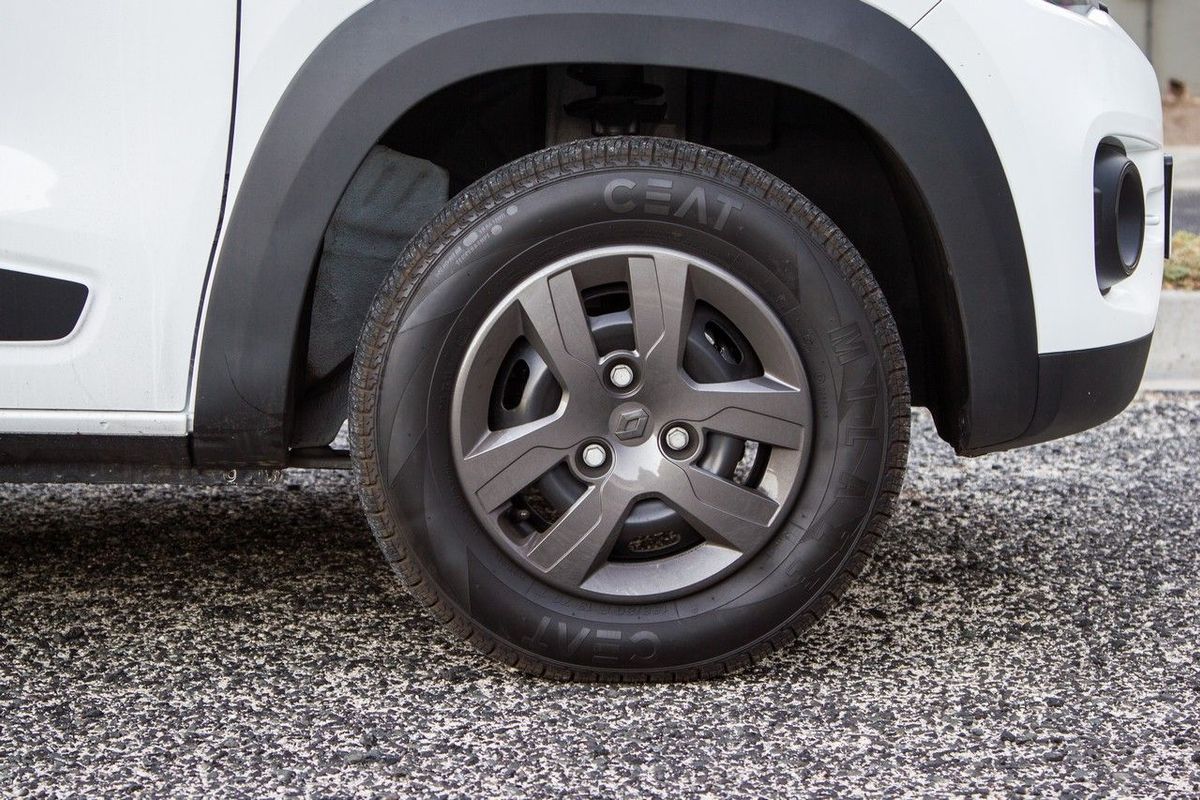
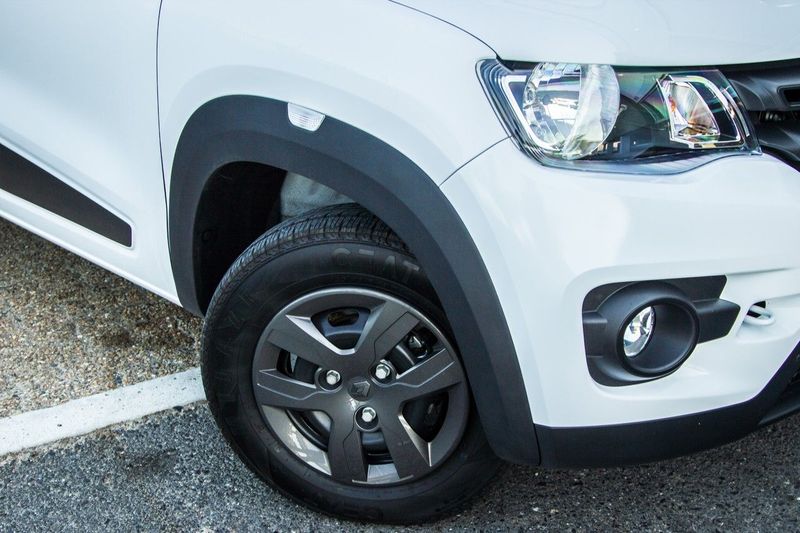
13-inch steel wheels with plastic covers are standard, but look neat. Front fog lamps are standard, too.
Furthermore, the integral hill-hold function of a normal (torque-converter-type) automatic is also missing in the Kwid, so when pulling away on upward slopes you have to use the handbrake or brakes to avoid rolling back (again, similar to driving a manual car).
Pulling away smoothly in the Kwid requires some concentration, as there is no creep function. The gear only "takes" once the throttle is depressed and this can result in lurchy getaways. Once on the go, matters improve somewhat, although the control system sometimes struggles to decide which of the 5 gears would be appropriate for the prevailing driving situation. When this happens, you'd also wish for the option to manually select (or even hold) a gear.
So, in several ways, the transmission actually takes the shine away from an engine that has thus far impressed us in manual Kwid derivatives. The 1.0-litre powerplant is certainly more willing than its meagre power (50 kW) and torque (91 Nm) figures suggest. Lift off the throttle when shifts take place and the Kwid becomes a bearable city slicker, but it starts to struggle at highway speeds, particularly when it needs to perform an overtaking manoeuvre or take a gap while travelling in the fast lane.
Lack of safety features
The interior is attractively finished and specified at the price, but the lack of safety features remains a major concern.
A major criticism of the Kwid (in its current incarnation) remains the lack of safety features. It comes with only a driver's airbag as standard. To be fair, the significantly more expensive Kia Picanto 1.2 Start Auto is similarly equipped in terms of standard features, but nevertheless we cannot easily advise consumers to buy non-ABS equipped cars, even if the Kwid's the cheapest, particularly when there are alternatives knocking around in the used market (barely used, too) that offer this crucial braking assistance feature. We found 2018 examples of the Suzuki Celerio Auto on our site with just more than 100 km on the odometer, for similar prices as the Kwid…
Furthermore, the Kwid is not as substantial a car as the Picanto as shown in international crash testing; we can testify to it feeling quite "insubstantial" in crosswinds. The news that Renault will be adding a front passenger airbag and ABS to the package in 2019 is good news, but it remains to be seen how much cost those items will add.
Pricing and Warranty
The Kwid Dynamique Automatic sells for R147 900, undercutting the next-cheapest automatic by around R20 000. For the money, you also get a 5-year/100 000 km warranty and a year of free insurance (provided it's not used for business purposes). It needs servicing at 15 000 km/12 month intervals.
Verdict
Cheap, cheerful and packed with desirable features, but until it gets (at least) ABS, we struggle to recommend the Kwid.
There is much to admire about the Kwid package. It offers the kind of features, compact size and attractive crossover looks that younger, first-time buyers will appreciate, and it does so at a very attractive price. That said, we find it very difficult to recommend a new car that doesn't feature one of the most effective safety features out there (ABS), especially when it is a car that will probably often be purchased by (or for) inexperienced young drivers.
We generally don't factor in used cars in a review of a new product, because there are so many variables at play, but when we did some research within our own site's listings and found that essentially brand new (100 km only) automatic Suzuki Celerios (to reiterate: the Celerio was the 2016/17 #CarsAwards budget car segment winner) can be picked up for very similar money to a Kwid AMT, we believe the Japanese car bears mentioning… and is certainly more worthy of your consideration.
The recently-launched Civic Type R hot hatch has reaffirmed Honda's ability to produce a visceral performance vehicle (regrettably, only on the odd occasion, these days), so can the Japanese marque maintain momentum and successfully instil its sportiest DNA in the Jazz compact hatchback? We review the new Jazz 1.5 Sport to see if it ticks enough boxes to keep driving enthusiasts satisfied.
We like: Purposeful looks, comprehensive spec, still one of the most practical cars in its class
We don’t like: Uninspiring to drive, CVT auto 'box saps driver engagement, coarse engine note
Alternatives (prices as of April 2018):
Want to go faster? For just R10k more, you can get behind the 'wheel one of the most enthralling compact hatchbacks of all. The Ford Fiesta ST trounces the Jazz Sport both in terms of outright performance and involvement. However, it lacks the Honda's practicality and will soon be replaced.
Want a slightly more premium car? The new Volkswagen Polo has arrived and it comes to the party dressed in smart, sophisticated attire. The Volkswagen offers similar power, but considerably more torque and has near-unimpeachable build quality. It doesn't have any sporty ambitions, however.
Is a premium German product within reach? Why yes, it is. For the same price at the 1.5 Sport, an Audi A1 is within your grasp, but it doesn't produce as much power from its compact engine, plus you'll need to fork out for options to bring it up to the same level of spec as the Jazz.
Strapped for cash? If bang-for-buck value is what you're after, then consider the Renault Clio GT Line. Should reasonably sporty performance, generous specification and outright affordability be your main requirements, then give the French car a long, hard look.
The #CarsAwards winner: The Mazda2 has gatecrashed the hatchback party thanks to a combination of fair spec, a satisfying driving experience, and an excellent warranty. It's hard to ignore.
The demure (if supremely practical and reasonably well-made) Jazz compact hatchback is not a product upon which most people would expect to see a Sport badge on the tailgate, but Honda nonetheless thought it prudent to enter the lukewarm hatchback market with its 1.5 Sport. The Jazz is a sensible product that appeals to mature buyers and thanks to its rear seats that fold flat, generous spec and overall comfort, the Japanese hatchback's a good allrounder… even if sportiness is not its forte.
Honda claims the 1.5 Sport was inspired by the Type R and while it's not going to break lap records, the newcomer, which effectively supercedes the Dynamic derivative as the flagship, seems an intriguing addition to the Jazz line-up. It's an interesting direction from Honda and we can see why the brand's trying to target a younger audience. Next time you see a Jazz on the road, take careful note of the age of its driver. Most times it's someone older, but can a sportier version change that?
How does it fare in terms of…
Kerb appeal?
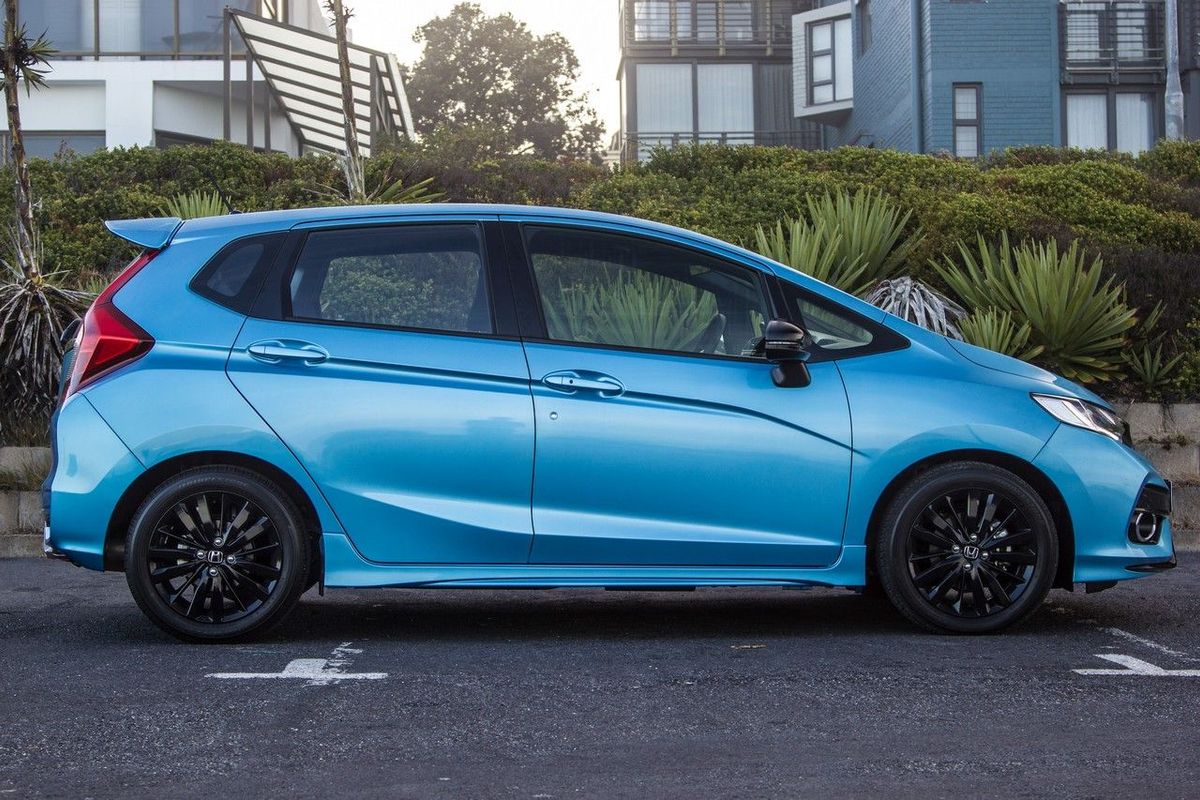
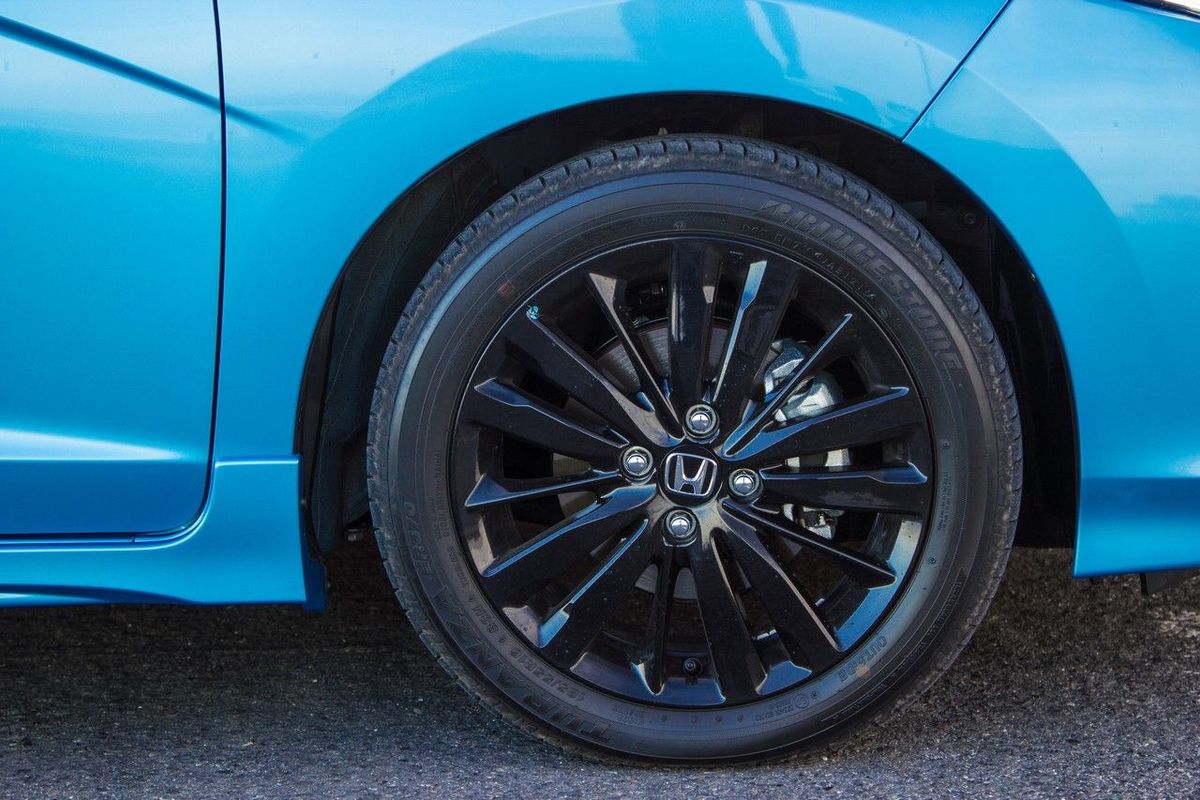
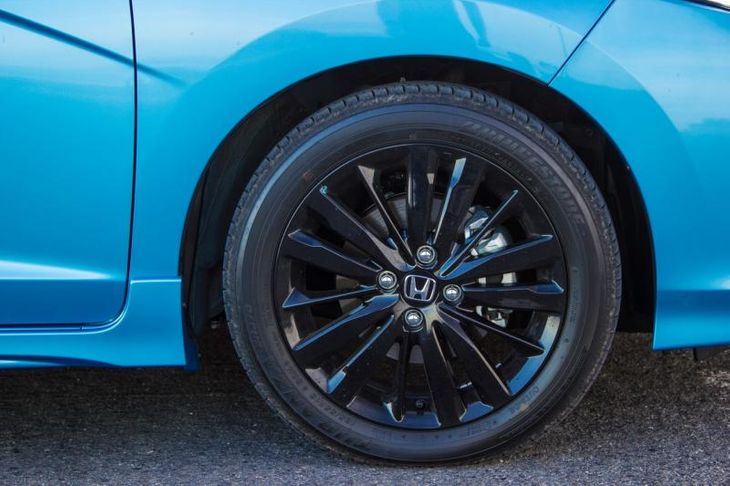
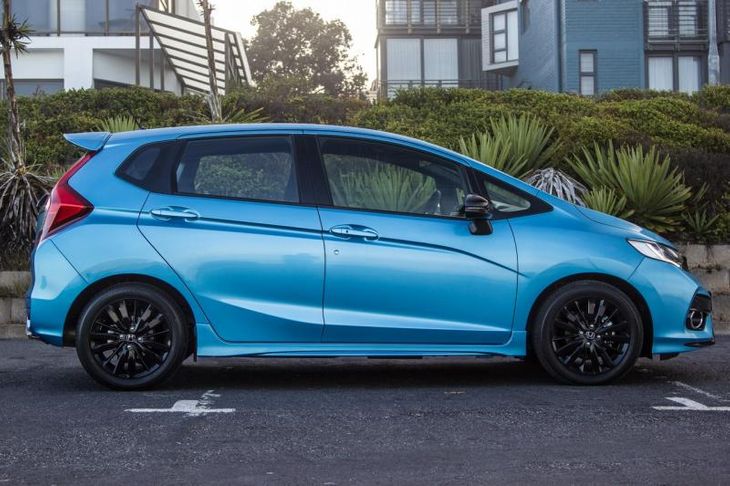
Gloss black 16-inch alloy wheels add to the JDM theme, but don't impact on ride quality too negatively.
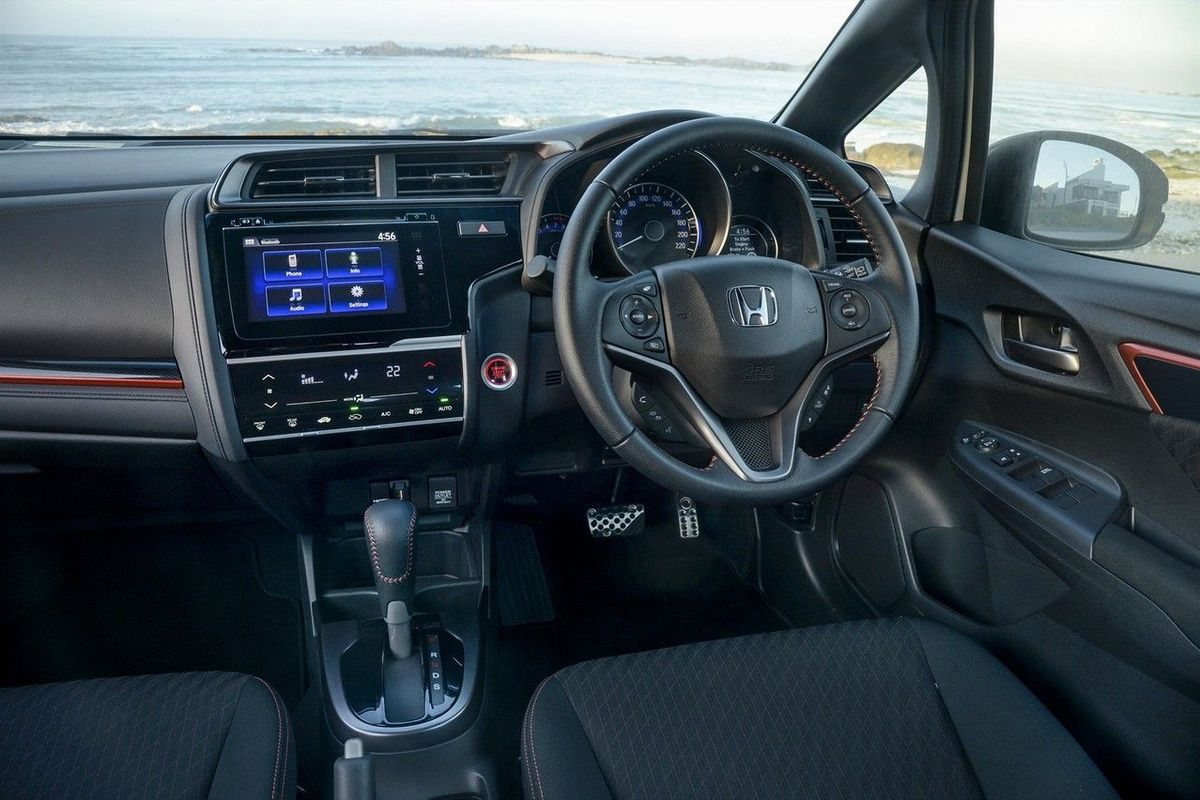
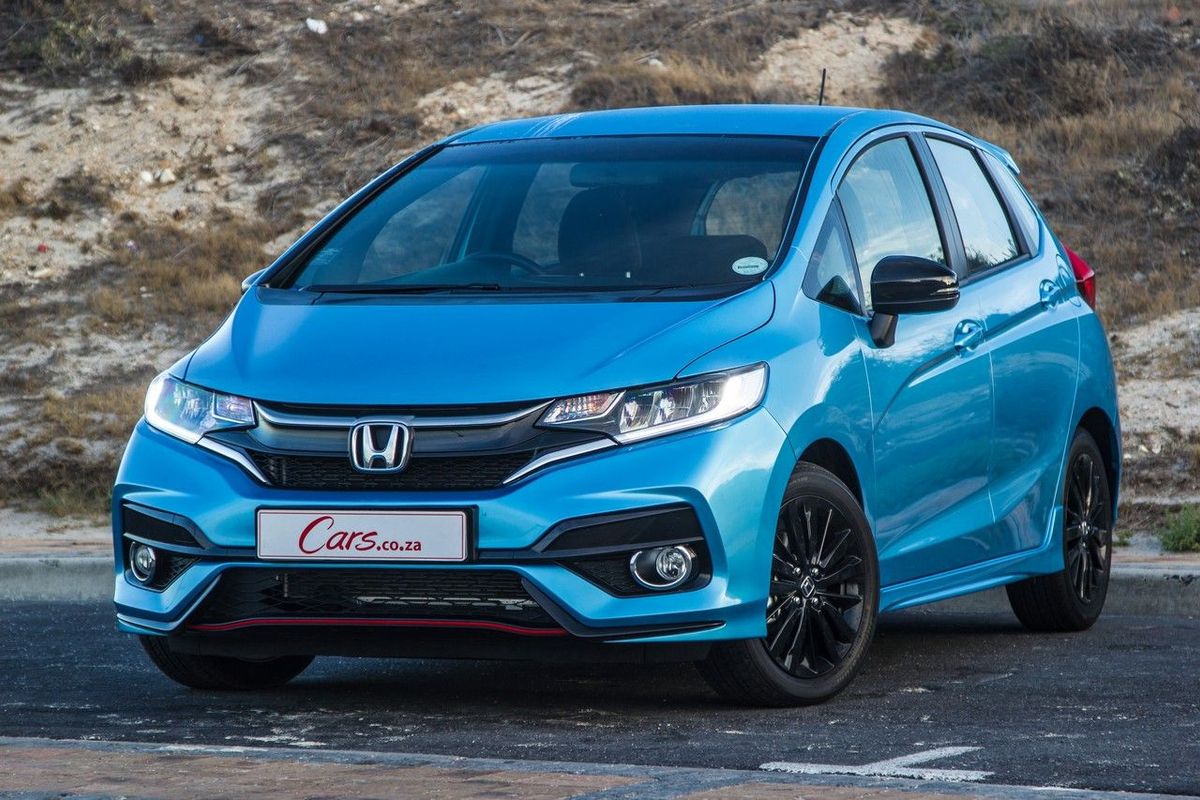
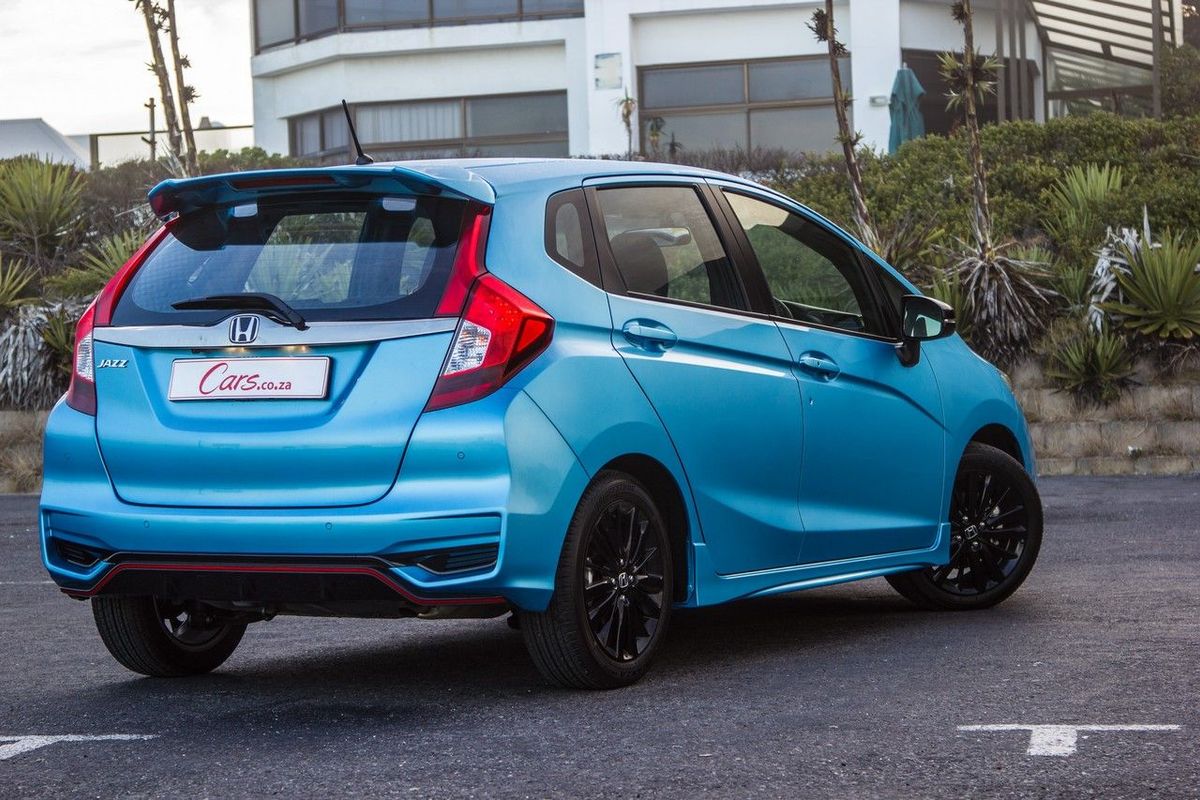
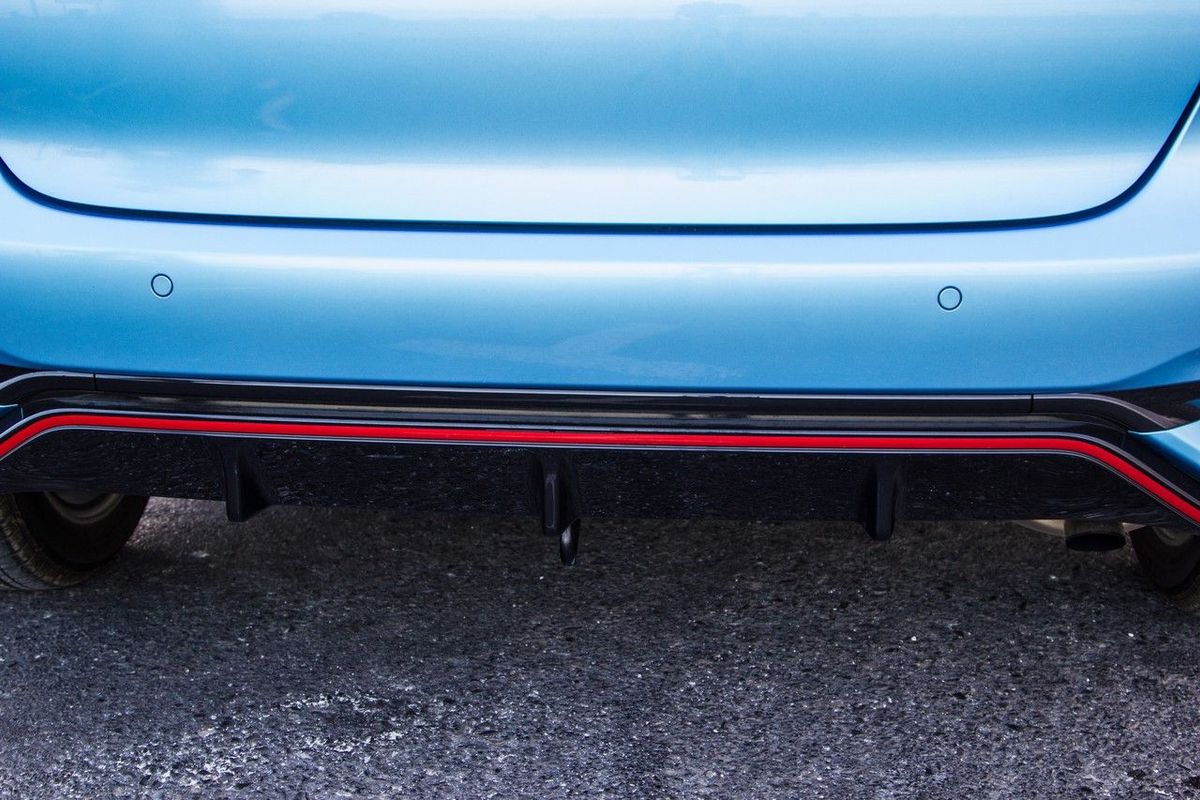
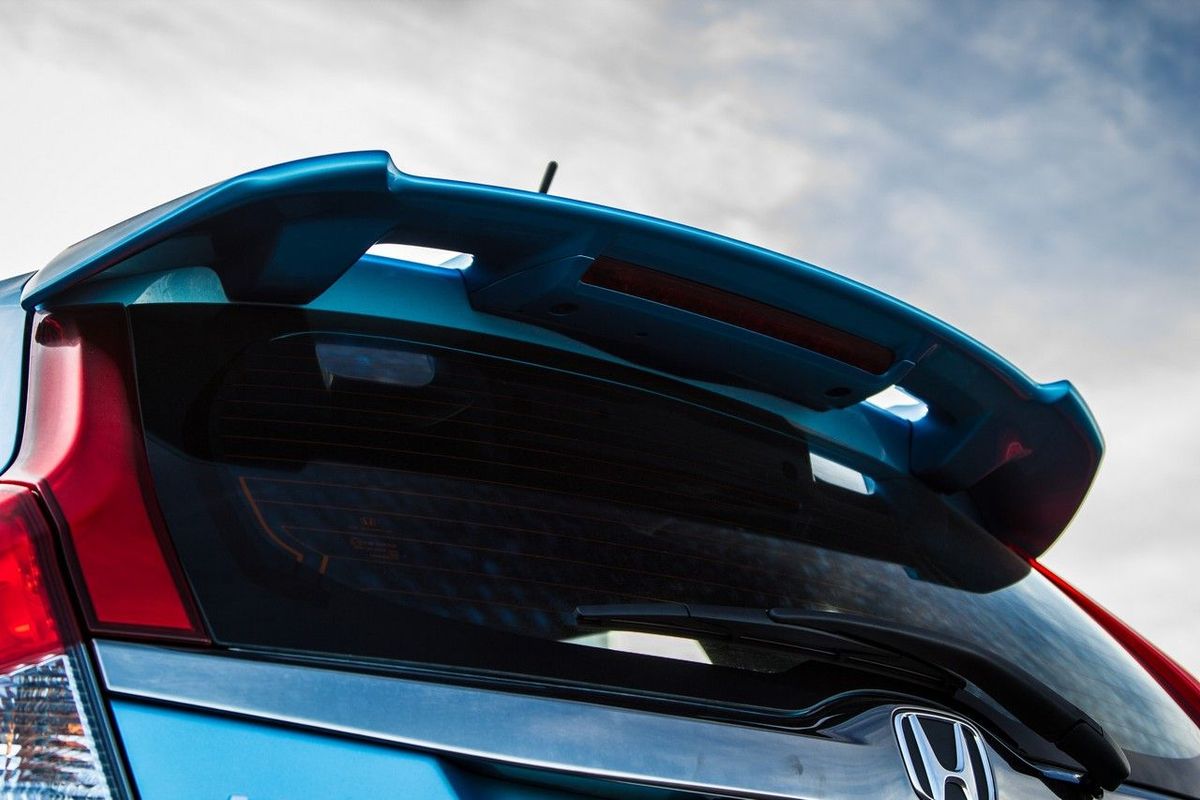
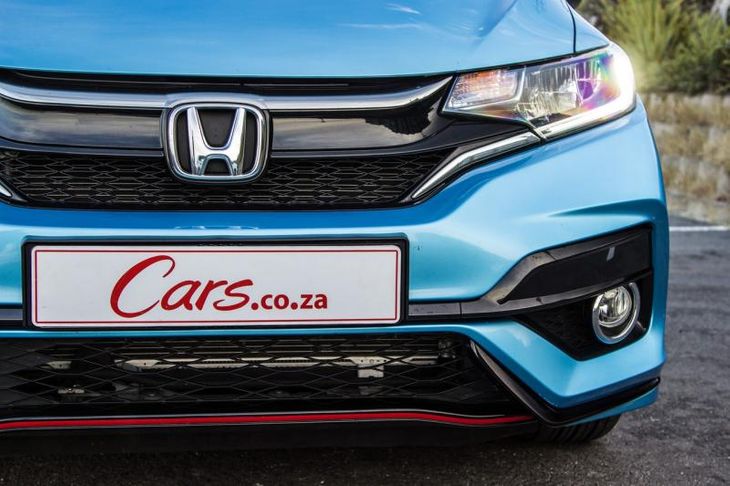
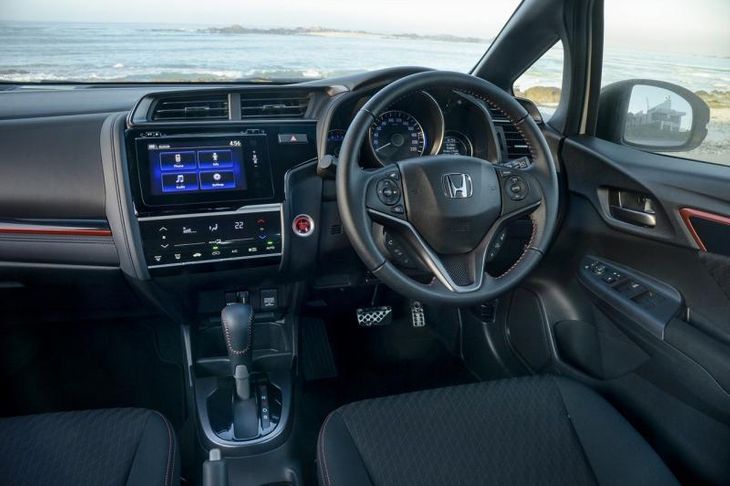
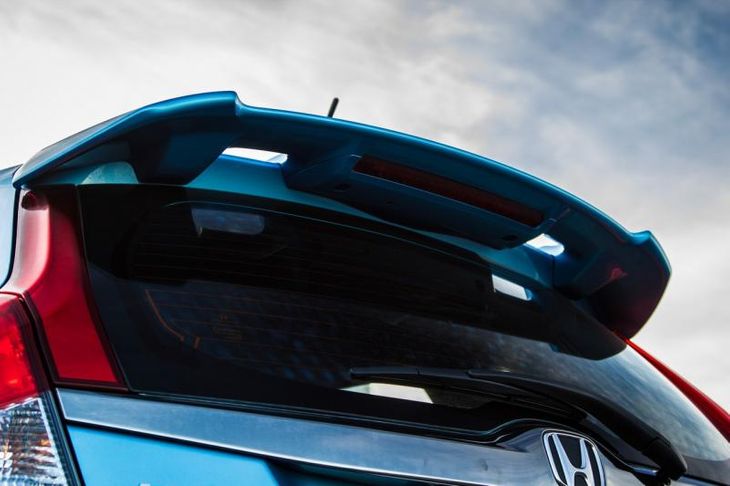
Honda has done a stellar job in making the Jazz Sport look the part. There's an exciting palette of colours to choose from and our test unit came finished in a sharp-looking SkyRide Blue metallic. At first glance, there's a distinct aftermarket JDM (Japanese Domestic Market) look about it, with its glossy black 16-inch alloy wheels, red pinstripe details fore and aft and a substantial spoiler mounted on the tailgate. From a front 3-quarter angle, the 1.5 Sport definitely looks purposeful thanks to its new LED daytime running lights and gloss black detailing. The cabin too has received some sportier tweaks in the forms of subtle red stitching and metallic sports pedals.
The sporty changes are not just of a visual nature either, there are mechanical upgrades as well, even if they don't seem hugely significant: the suspension has been reworked (new damper settings), the steering rack's been beefed up and the braking system now sports discs all round (where other versions have drums at the rear).
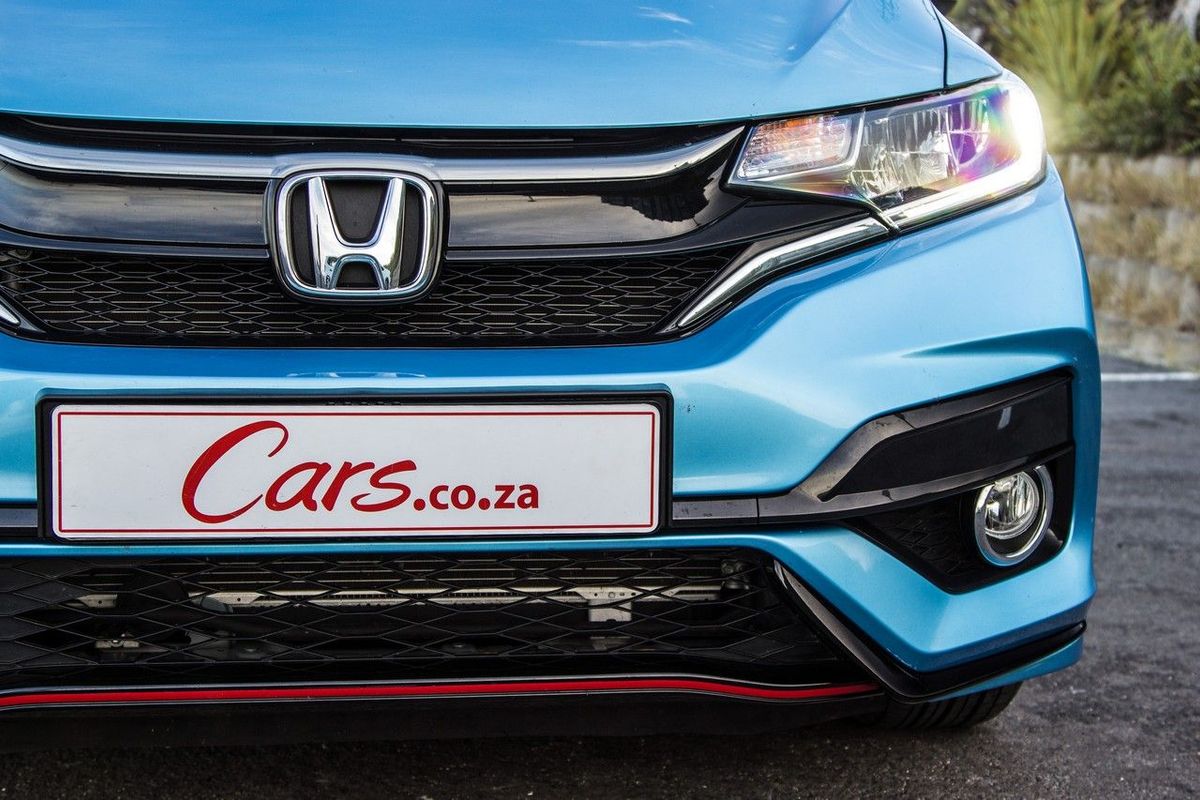
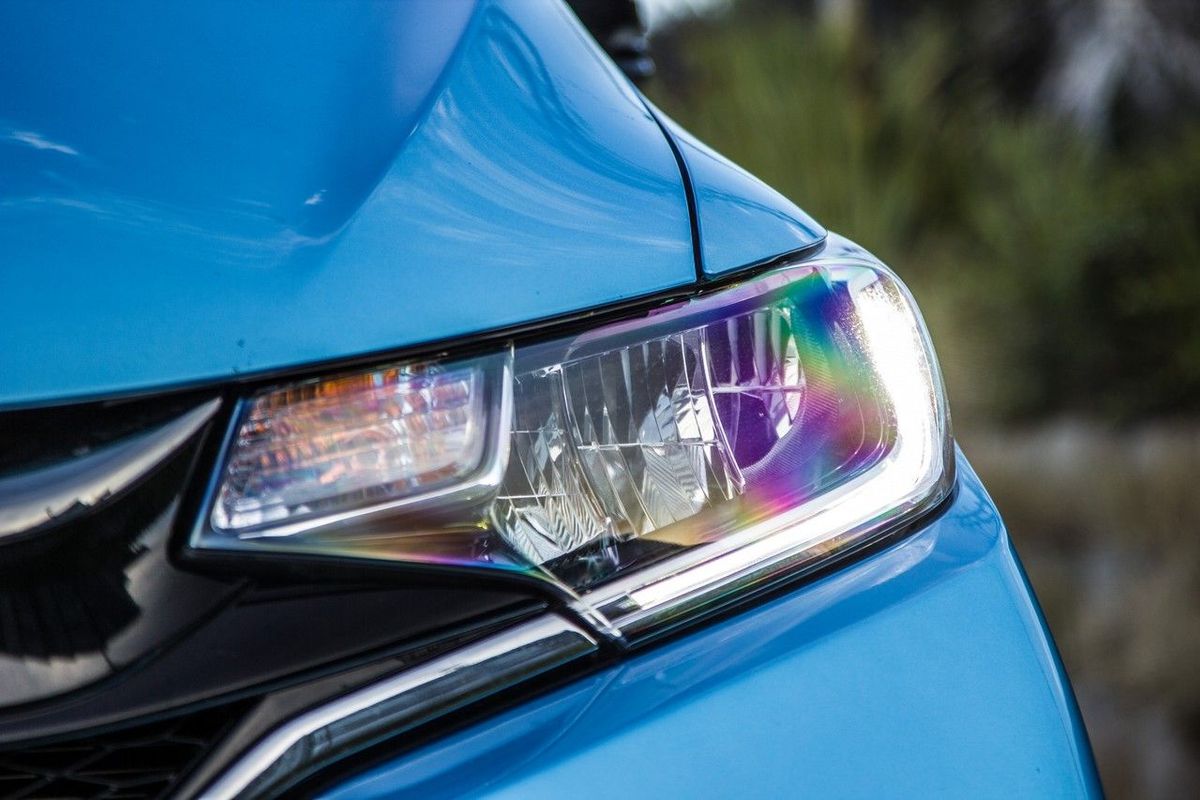
The combination of red detailing and new sharp-looking LED lights make the Honda Jazz Sport look purposeful
Comfort & Practicality?
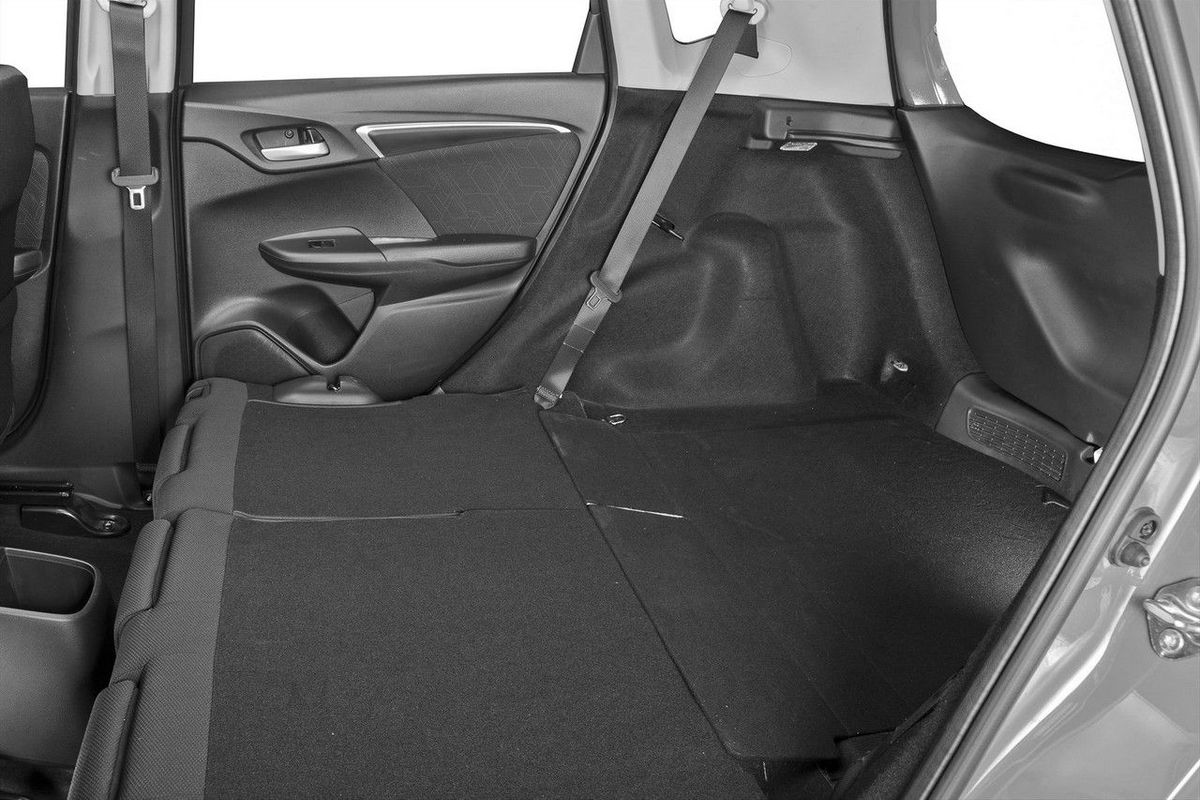
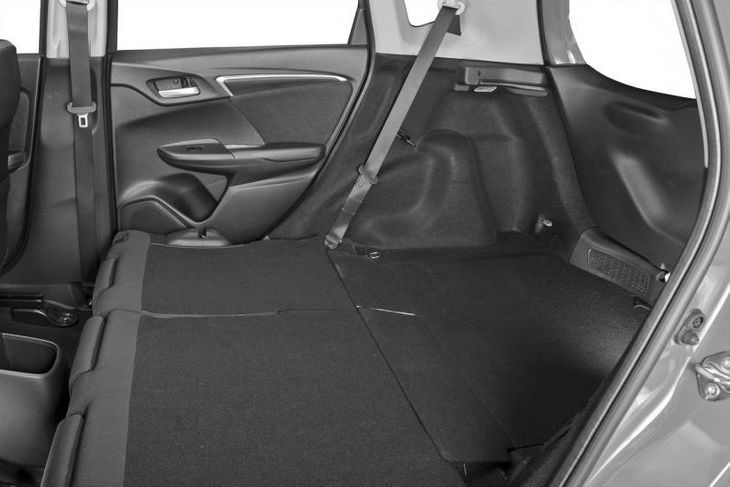
Sporty aspirations aside, you're still going to be ensconced in a Honda Jazz – a vehicle renowned for its practicality, comfort and sensibility. The cabin boasts best-in-class capacity and if you're regularly carrying considerable loads of cargo, you'll find that the luggage area offers oodles of space when the seats are folded flat.
The headroom availed to taller folk is commendable and rear legroom is impressive too, given the size of the vehicle. In terms of cabin quality, we feel that the Jazz's interior has fallen behind in the past few years; there's plenty of cheap-feeling plastics in the cabin. That being said, we anticipate those plastics to be quite durable.
Comprehensive specification is required at this price and the flagship Jazz delivers
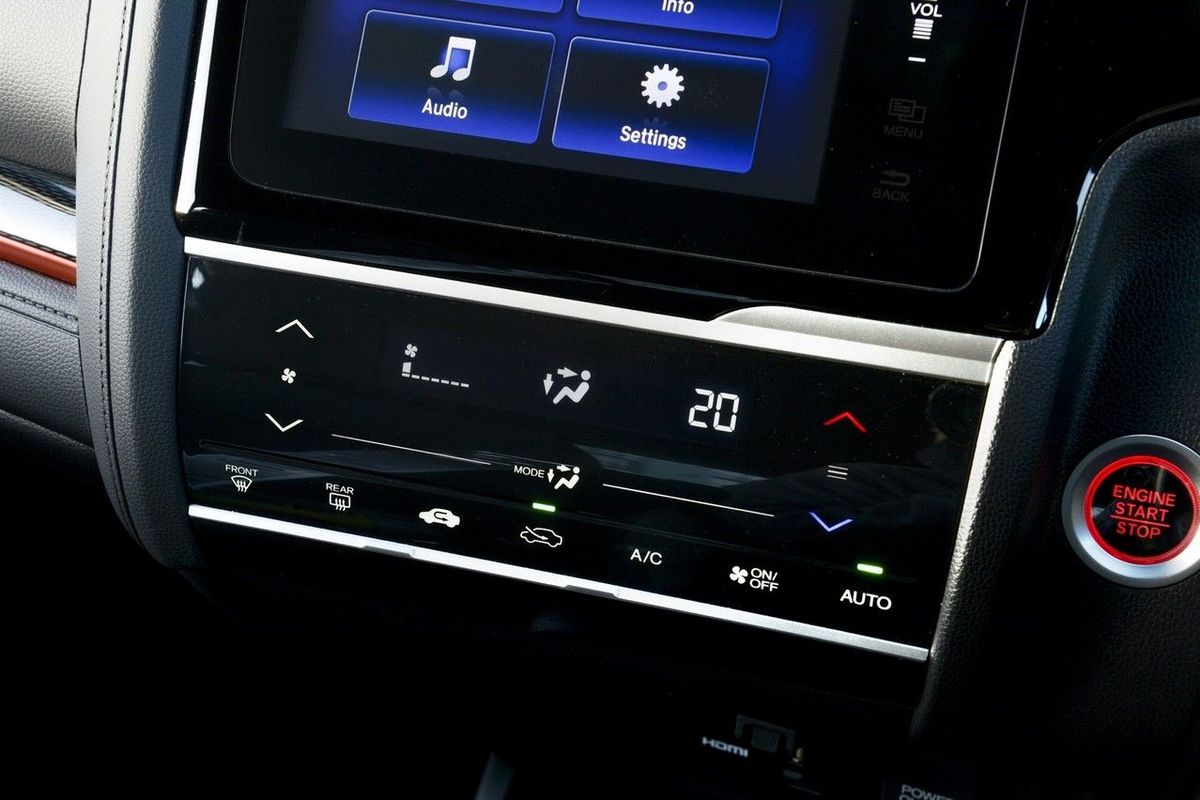
Being the flagship derivative in the Jazz family, you'd expect the Sport to well-equipped – and it is. Push-button start, keyless entry, 6-speaker audio system, 7-inch touchscreen display, Bluetooth connectivity, USB/HDMI connectivity and a reverse-view camera are just some of the standard features. Safety has always been well covered by Honda and the flagship Jazz Sport is no exception: there are 6 airbags, ABS with EBD, Vehicle Stability Assist (VSA) and Hill Start Assist (HSA).
The flat-folding flat rear seats are genius – undoubtedly one of the best features of the Honda Jazz
Performance & driving engagement?
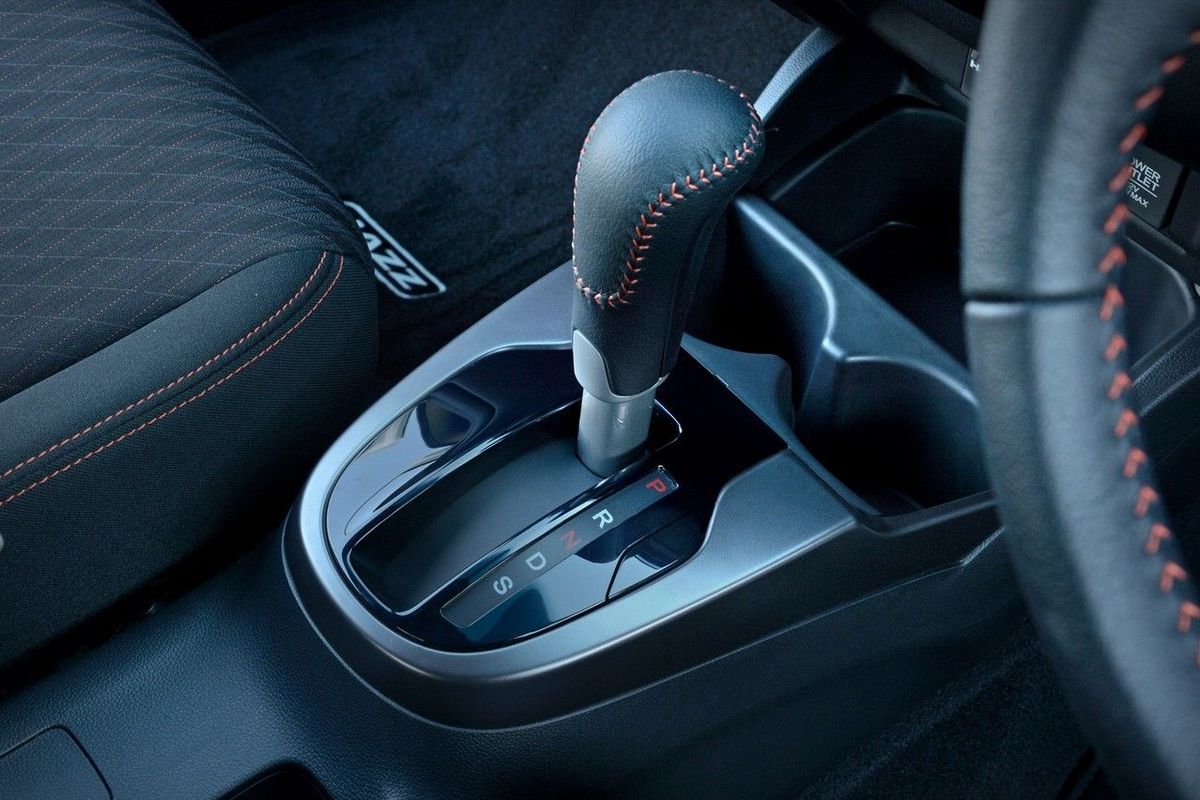
Under the bonnet sits a revised version of the 1.5-litre 4-cylinder petrol motor (claimed peak outputs of 97 kW and 155 Nm of torque), which drives the front wheels through a continuously-variable automatic transmission (CVT). A CVT wouldn't be our first choice for a sporty driving experience and it's interesting to note that in European markets, the 1.5 Sport is available with a manual 'box.
As expected, you need to rev the naturally aspirated engine hard to get the most out of it and those who've grown accustomed to the compact turbo engines will find the lack of immediate torque a little offputting. For those who were born and raised on rev-happy motors, it'll be business as usual as peak power arrives at a lofty 6 600 rpm!
Frustratingly, the engine's performance characteristics don't seem particularly well calibrated, or at least suited to, the leisurely way the CVT operates. Even in Sport mode, the engine tends to make more noise than deliver purposeful acceleration and when you're approaching the redline, the cabin is filled by a raucous din. Alas, despite the paddle shifters located on the wheel, the vehicle doesn't deliver as much driver involvement as we believe it would if it came with a manual gearbox.
The 1.5 Sport is zippy enough in short bursts, but the lack of torque becomes apparent when you try to perform 80-120 kph overtaking manoeuvres, for example. This problem will be exaggerated in the thinner air of Gauteng, where naturally-aspirated motors suffer a small power dropoff, so plan your freeway overtakes very carefully.
The racy-looking wing is a nice touch, even if we doubt it generates additional rear downforce.
It's when you're NOT driving like an extra in the Fast and the Furious franchise that the 1.5 Sport recoups some territory. Unlike some humdrum cars that have received sporty makeovers, the 1.5 Sport isn't compromised. It's ride quality is firm, yes, but not rock hard, and you'll find the car adept at soaking up potholes or floating over speed bumps. The steering is light/largely lacking in heft and feedback, but within the confines of an urban environment the small turning circle makes up for that.
Price and after-sales service
The new Honda Jazz 1.5 Sport (R310 000) is positioned atop the Jazz range and replaces the Jazz Dynamic CVT. It comes with a 5-year/200 000 km warranty and a 4-year/60 000 km service plan, as well as a 3-year AA Roadside Assistance package. Services are at 15 000 km intervals.
Verdict
It certainly looks the part, but the driving experience is unfortunately not sporty enough to merit a Sport badge.
It's introduction is a ballsy move by Honda, but the Jazz 1.5 Sport doesn't live up to its badge. Insofar as delivering the fun of spirited driving, the engine and transmission combination is not involving whatsoever. The CVT is clearly not the most appropriate choice of transmission in this application; we think that a slick-shifting 6-speed manual 'box would've made the Jazz flagship far more satisfying to drive. CVTs are typically mapped for economy and you cannot fool petrolheads by installing paddle shifters behind the 'wheel! Despite the powertrain dampening the car's sporty feel, the newcomer's balanced handling and sharp steering are praiseworthy, however.
It is regrettable that when it comes to sporty driving, the 1.5 Sport seems a packaging exercise that's not a patch on its rivals… cars such as the aforementioned Fiesta and Clio are far more engaging/enjoyable to drive spiritedly, even if our test unit delivered a ride quality that struck a good balance between sportiness and comfort.
In summary, then, we appreciate that Honda has seemingly gone out of its way to market the Jazz to new, younger car buyers. We feel that the 1.5 Sport is expensive in relation to most its competitors, but, that being said, if you forget about the sportiness for a second, you're still getting an accomplished and highly practical hatchback. The Honda Jazz is still one of the most sensible purchases in its segment; despite the Sport's high price, there is much value to be had in lesser-priced derivatives.