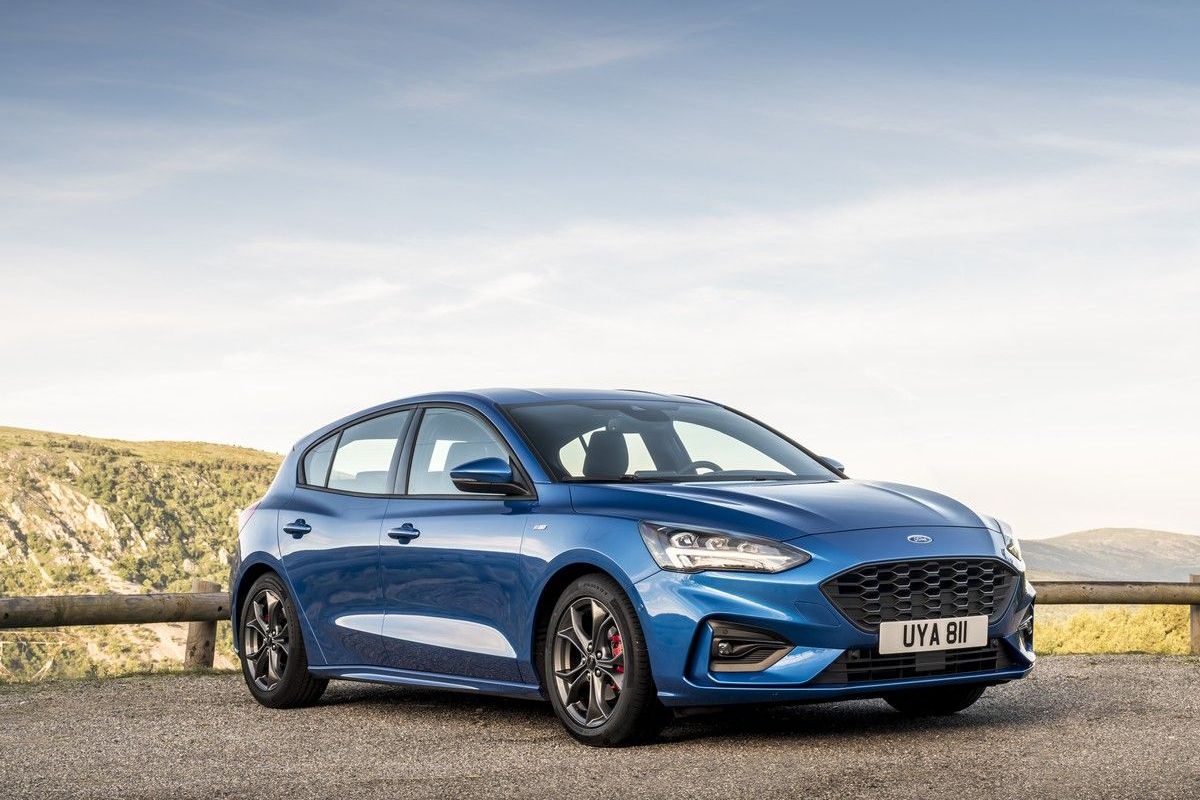
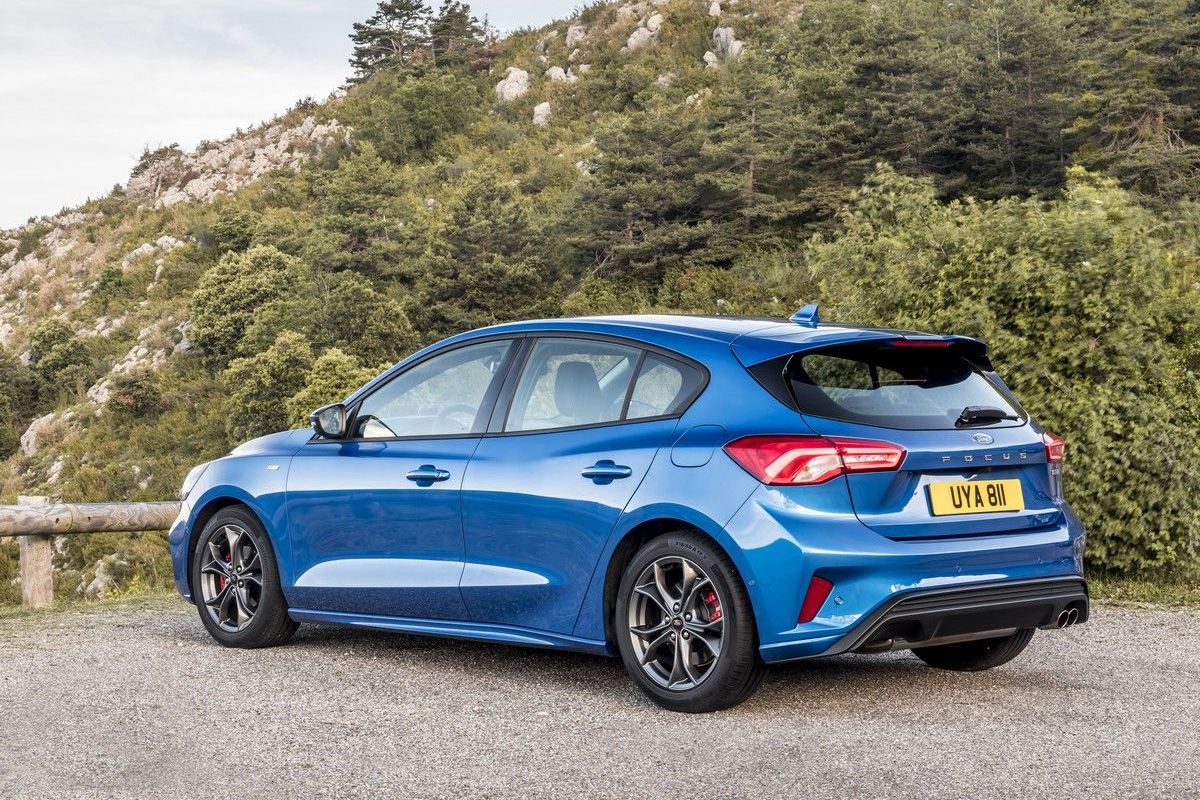
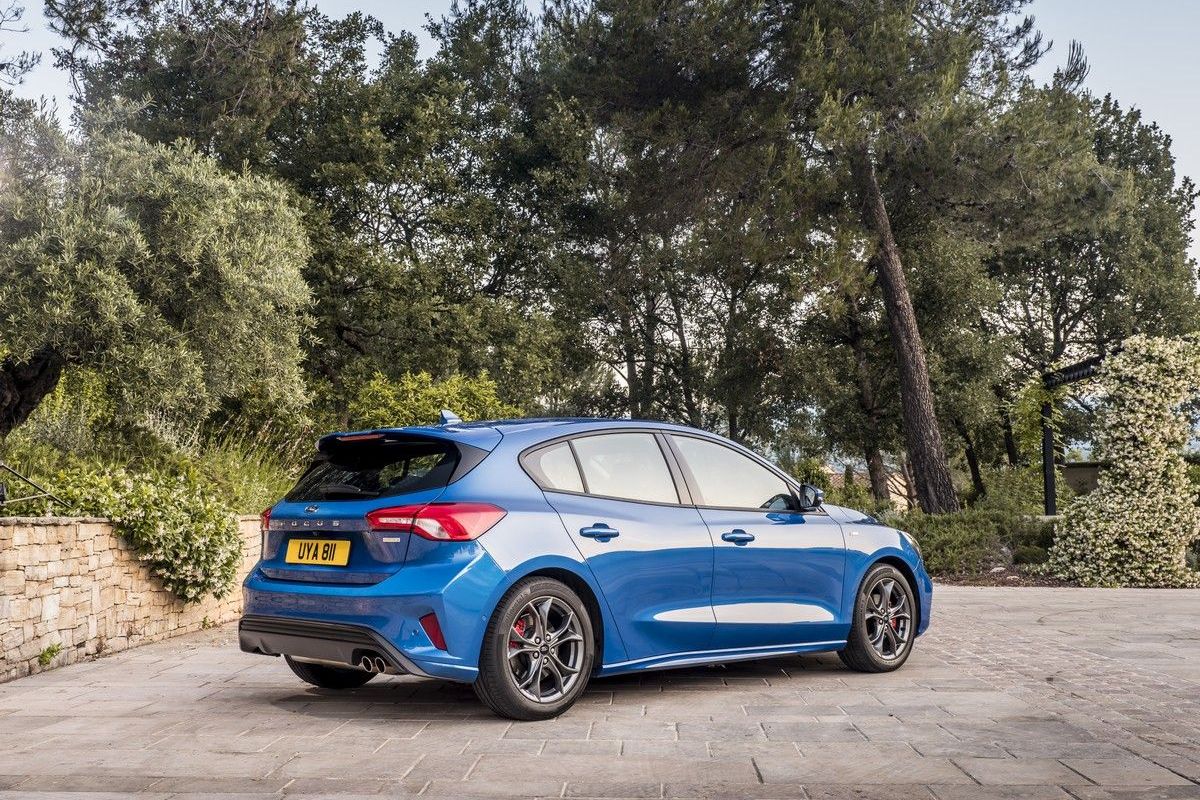
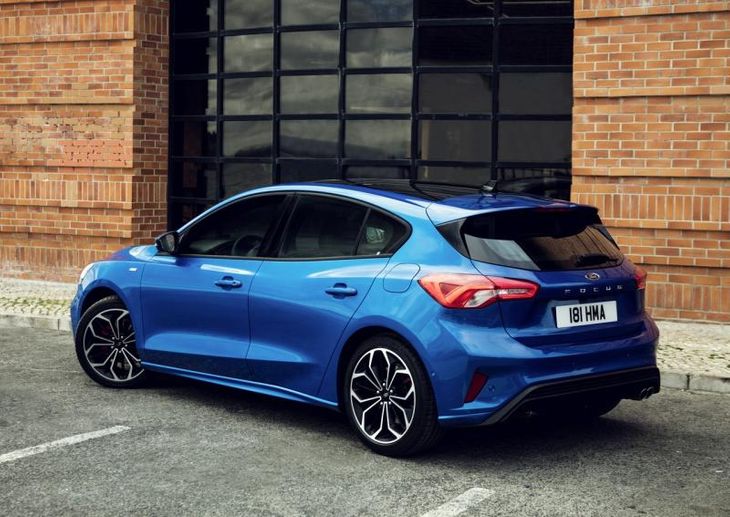
The all-new Ford Focus has just been revealed. Ford's popular C-segment hatchback has received a substantial makeover and promises more space, connectivity and is better to drive. Let's meet the newcomer.
The all-new Ford Focus has just been revealed and is promising advances in all departments. It has been completely overhauled and redesigned from the wheels up. Ford claims it has been talking to Focus customers around the world and addressed their concerns. Ford is playing an interesting strategy and is calling its new Focus a global car, with each global region receiving a tailored Focus to suit their needs. While South African spec is yet to be confirmed, Ford will be offering its new Focus in 4-door sedan, 5-door estate/wagon and 5-door hatchback body styles. Also depending on the market are the various trims, like Vignale, ST-Line, Active and Titanium.
What's New?
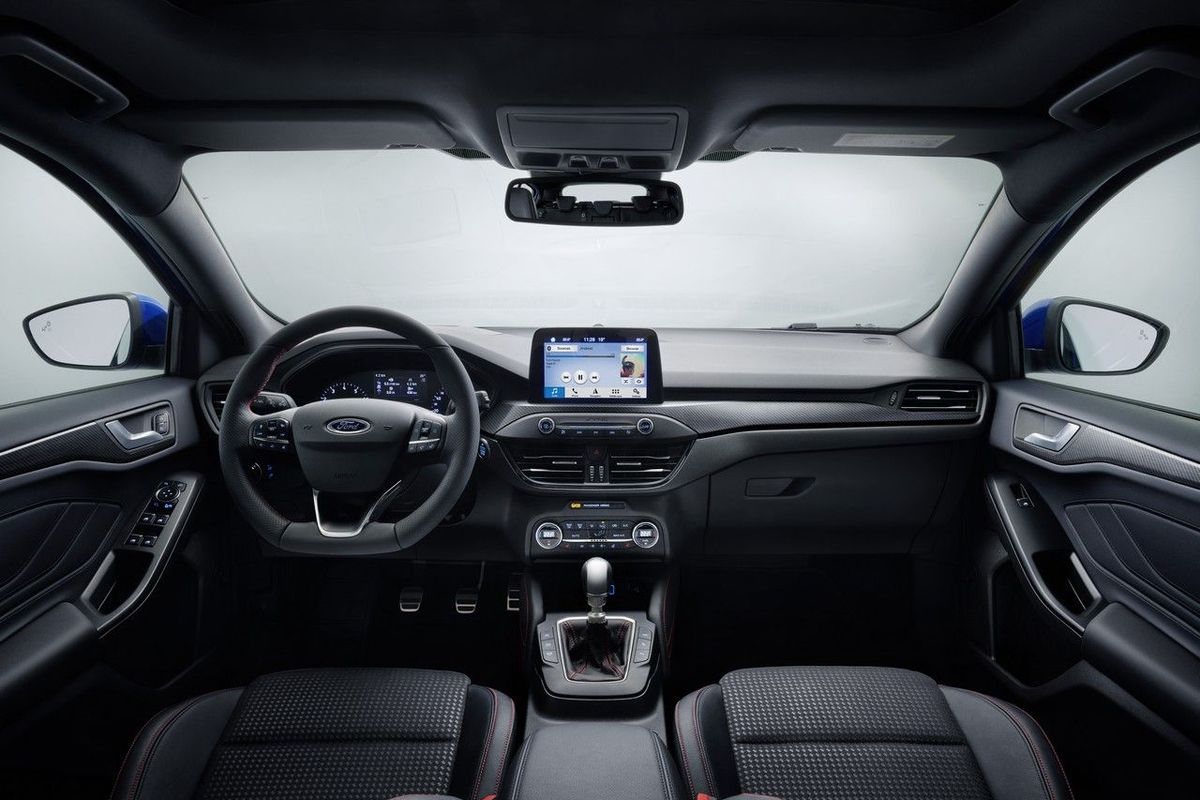
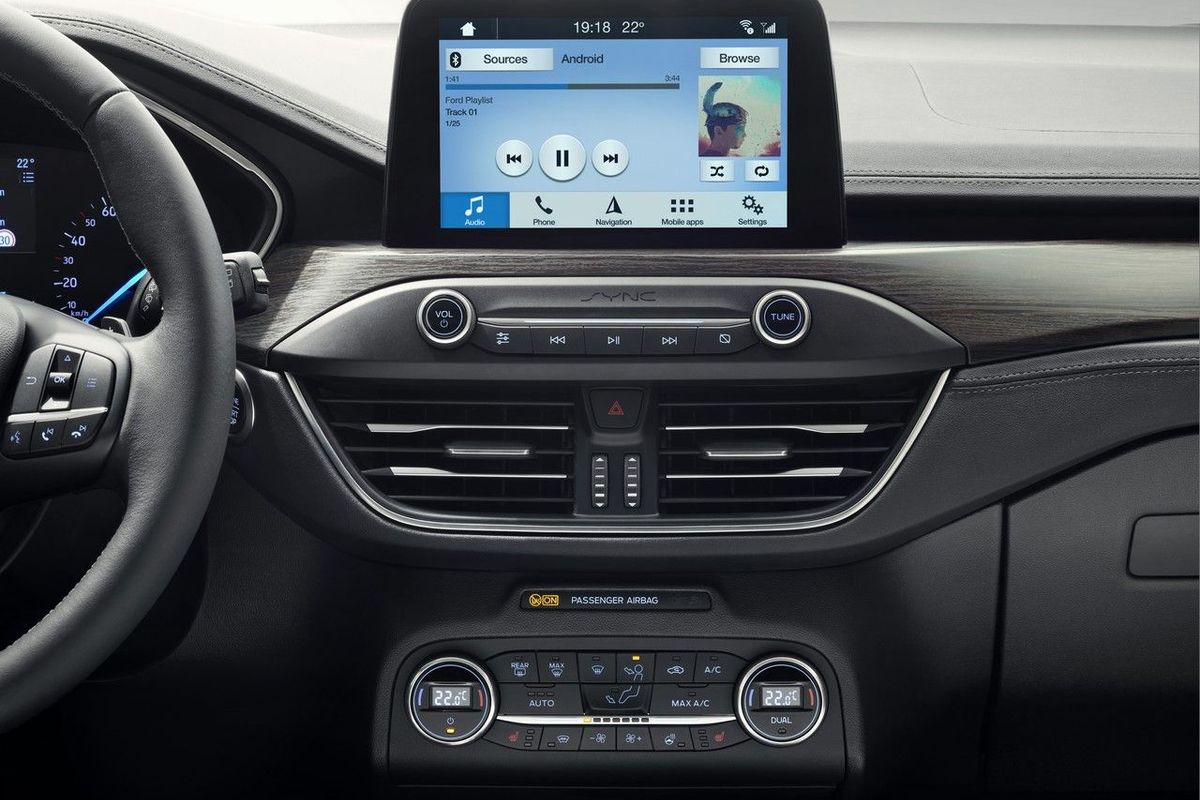
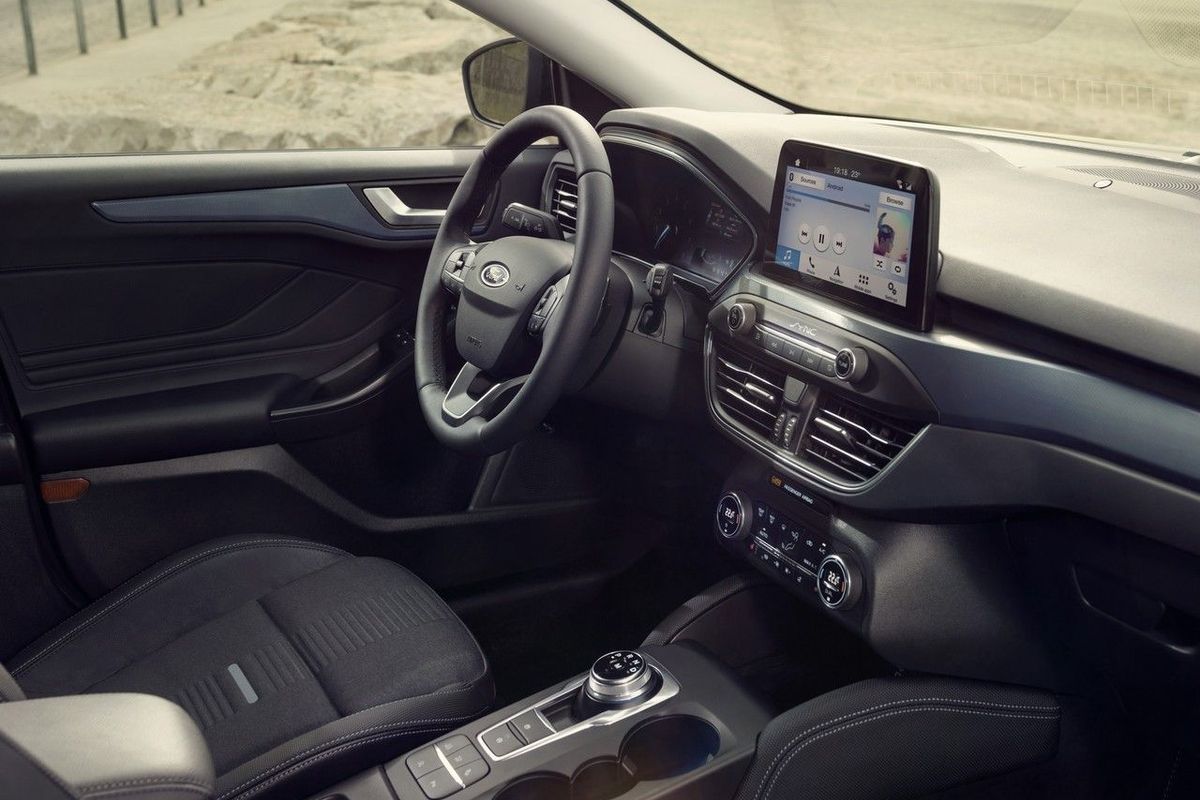
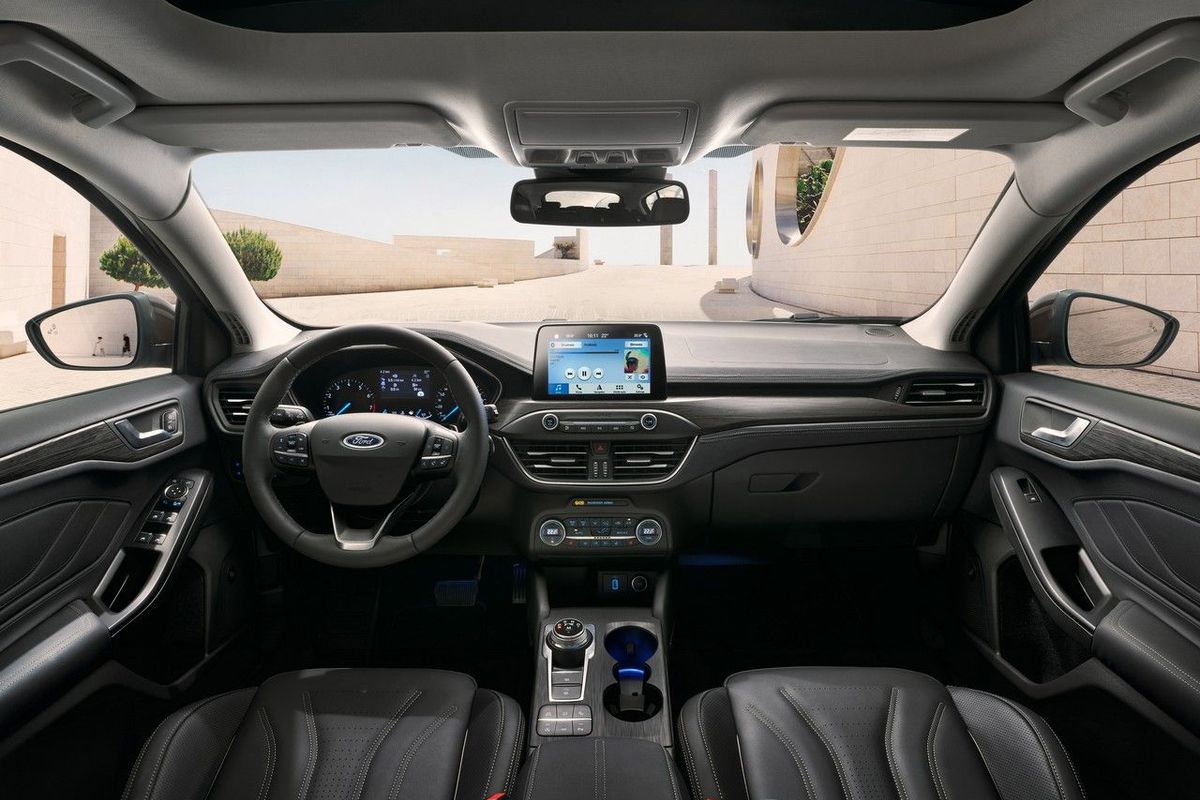
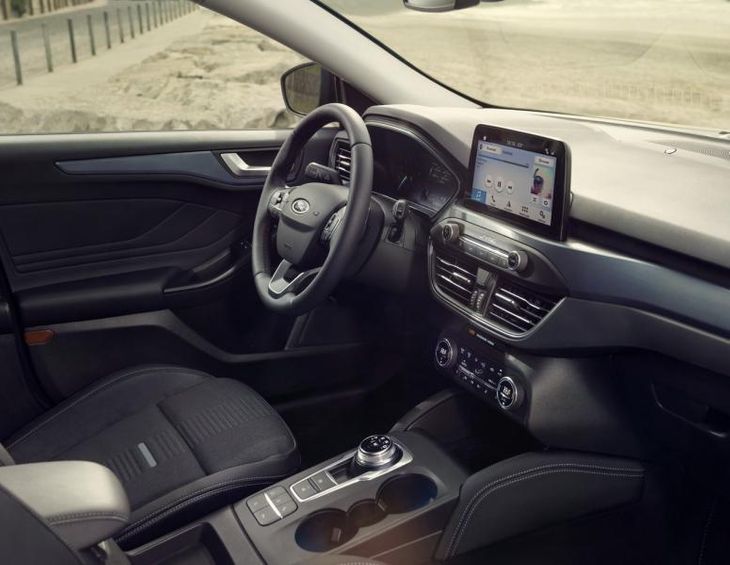
The Focus is available with an 8-inch colour touchscreen and Apple CarPlay/Android Auto are standard.
The new Ford Focus' overall dimensions have not changed, yet clever packaging has ensured that there's more cabin space for passengers and access is easier. The all-new chassis and suspension, coupled with the 20% improvement in stiffness mean that the Focus will still be enjoyable to drive. A new electric power-assisted steering setup makes its debut on the new Ford Focus. Cabin space has been increased for the rear passengers by extending the wheelbase and flat floor. Shoulder room has increased by nearly 61 mm, while knee clearance and legroom grows by nearly 51mm and 71mm respectively.
The key word here is efficiency and Ford claims to have "reduced the number of orderable configurations by as much as 92% versus the previous Focus, reducing from up to 360 configurations to as few as 26, depending on the global market. This complexity reduction helps Ford lower and control costs while ensuring Focus customers can more easily and quickly find the model that meets their needs."
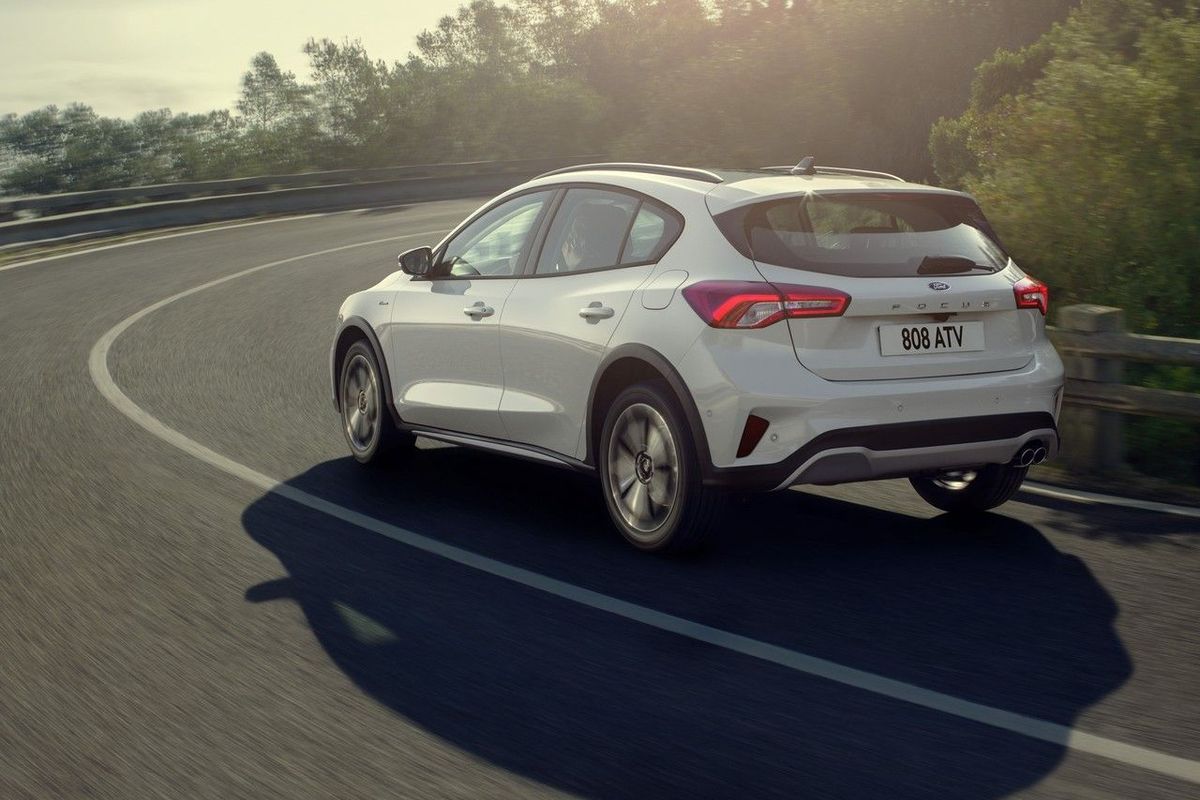
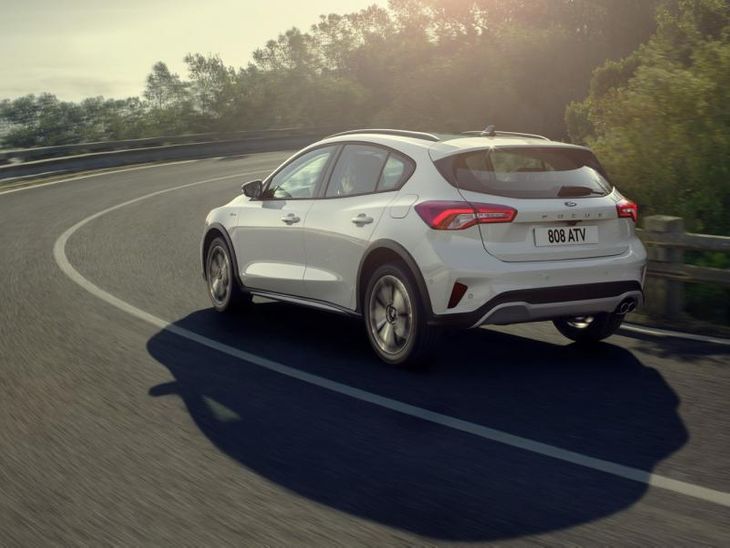
This is the Ford Focus Active – unlikely to arrive in SA, but an interesting prospect
New Technology
Ford's new Focus will be debuting technology such as Co-Pilot360 which Ford says is a suite of advanced driver assist technologies. Other notable tech includes Adaptive Cruise Control, Ford's Adaptive Front Lighting System, revised Active Park Assist and Evasive Steering Assist which will help drivers steer around objects to avoid collisions. The new Ford Focus will also feature FordPass Connect, which converts the Focus into a Wifi hotspot for up to 10 devices while the FordPass app features a vehicle locator, vehicle status indicator, remote start and door unlock. In the cabin, there is a wireless charging pad and Ford's SYNC3 connectivity.
A new available wireless charging pad beneath the instrument panel enables passengers to easily charge compatible smartphones and mobile devices. Devices can remain connected via Bluetooth to Ford’s SYNC 3 communications and entertainment system while using wireless charging. The Focus is also available with an 8-inch colour touchscreen and Apple CarPlay/Android Auto are standard.
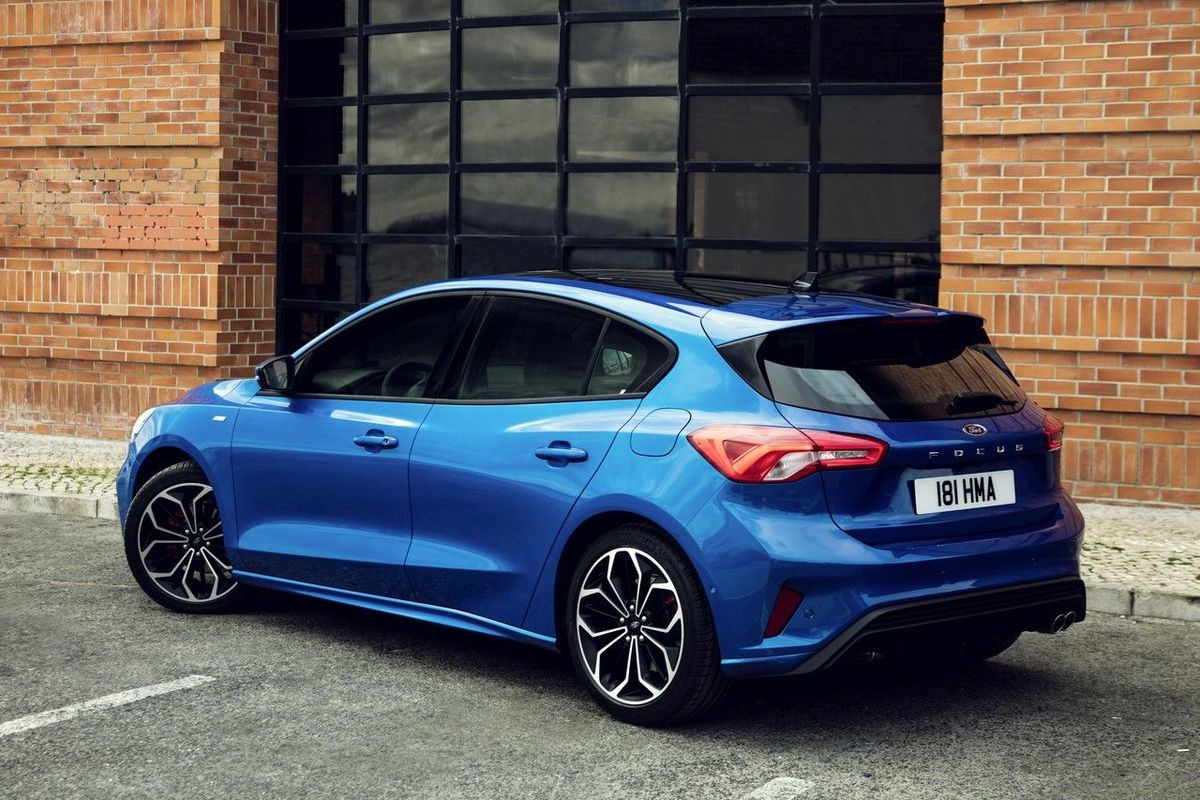
The Ford Focus ST-Line, complete with sporty alloys and aggressive kit
New Engines
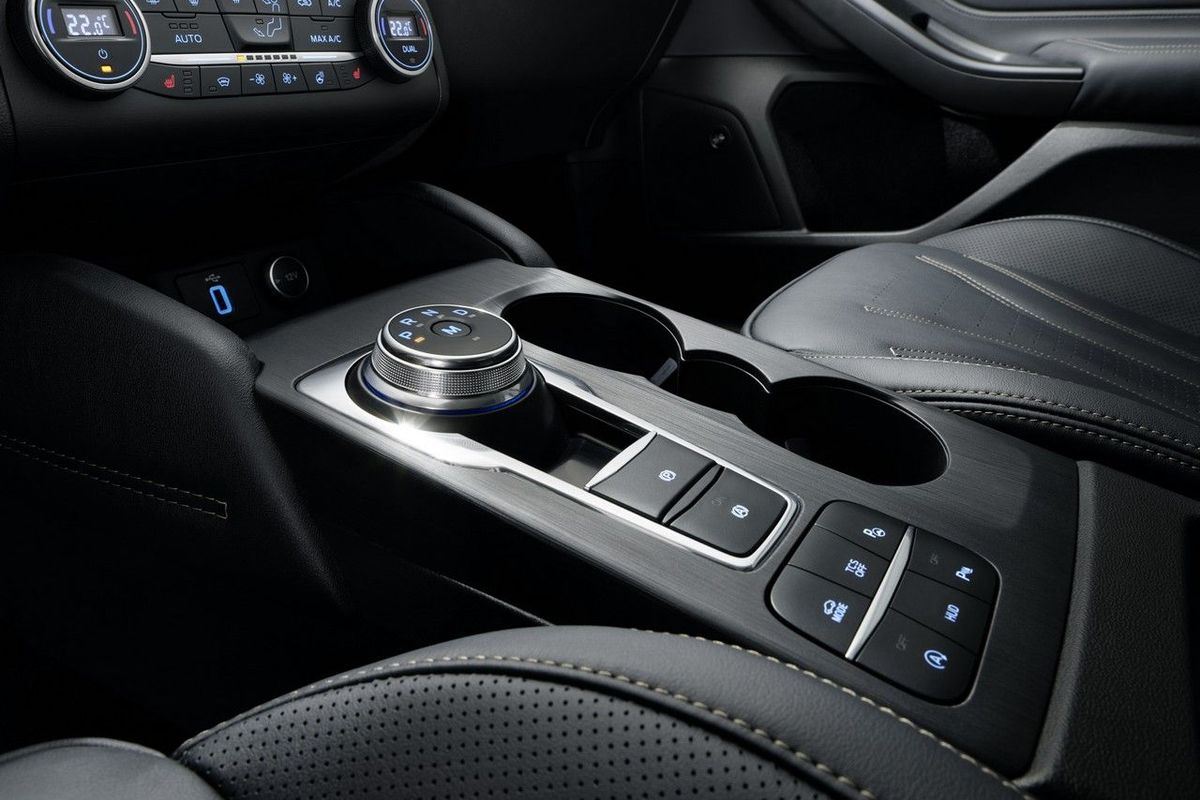
In terms of engines, the new Ford Focus will be featuring an array of powertrains. There will be Normal, Sport and Eco Modes for the vehicles too. The European market will receive the award-winning 1.0-liter EcoBoost engine, plus an all-new 1.5-liter EcoBoost engine, 1.5-liter EcoBoost petrol motor and a 2.0-liter EcoBlue diesel. The big news is that Ford will be offering a new optional 8-speed automatic transmission which is claimed to offer great fuel economy and responsive performance. Power will be sent to the front wheels through either the new automatic gearbox or a six-speed manual transmission.
When is it coming to South Africa?
The all-new Ford Focus hits European and Chinese markets in 2018 and it'll reach North America in the second half of 2019. A representative of Ford South Africa suggested that the new Focus could be in South Africa in the fourth quarter of 2018, with a bit of luck.
The Ranger Raptor will only go on sale in SA in 2019, but Ford's performance bakkie has already been priced for certain markets around the world. Using this pricing, we are able to estimate what the local price might be when the newcomer arrives next year.
Ford Australia has announced pricing for the Ranger Raptor this week, marking the first indication of how much the terrain-munching double cab could cost when it arrives in our market. Australia will receive its allocation of Raptors before South Africa as it is set to go on sale Down Under during Q4 of 2018.
Pricing has been set at AUS$74 990, which equates to R701 000. However, a bit more analysis of the pricing structure is required to get a clearer picture of what is in store for South African consumers. The top-spec Ranger WildTrak, for instance, costs R560 000 in Australia compared to the R633 500 locally, which is a R73 500 premium. Apply that increase to the Ranger Raptor and we would be looking at R775 000, which is the same as a top-spec VW Amarok V6 and mid-spec Mercedes-Benz X-Class.
One thing that could help reduce the cost of the Raptor is that Ford plans to build the Raptor and its engine in South Africa. This may help offset some of the import costs that Australia pays (its Rangers are shipped in from Thailand).
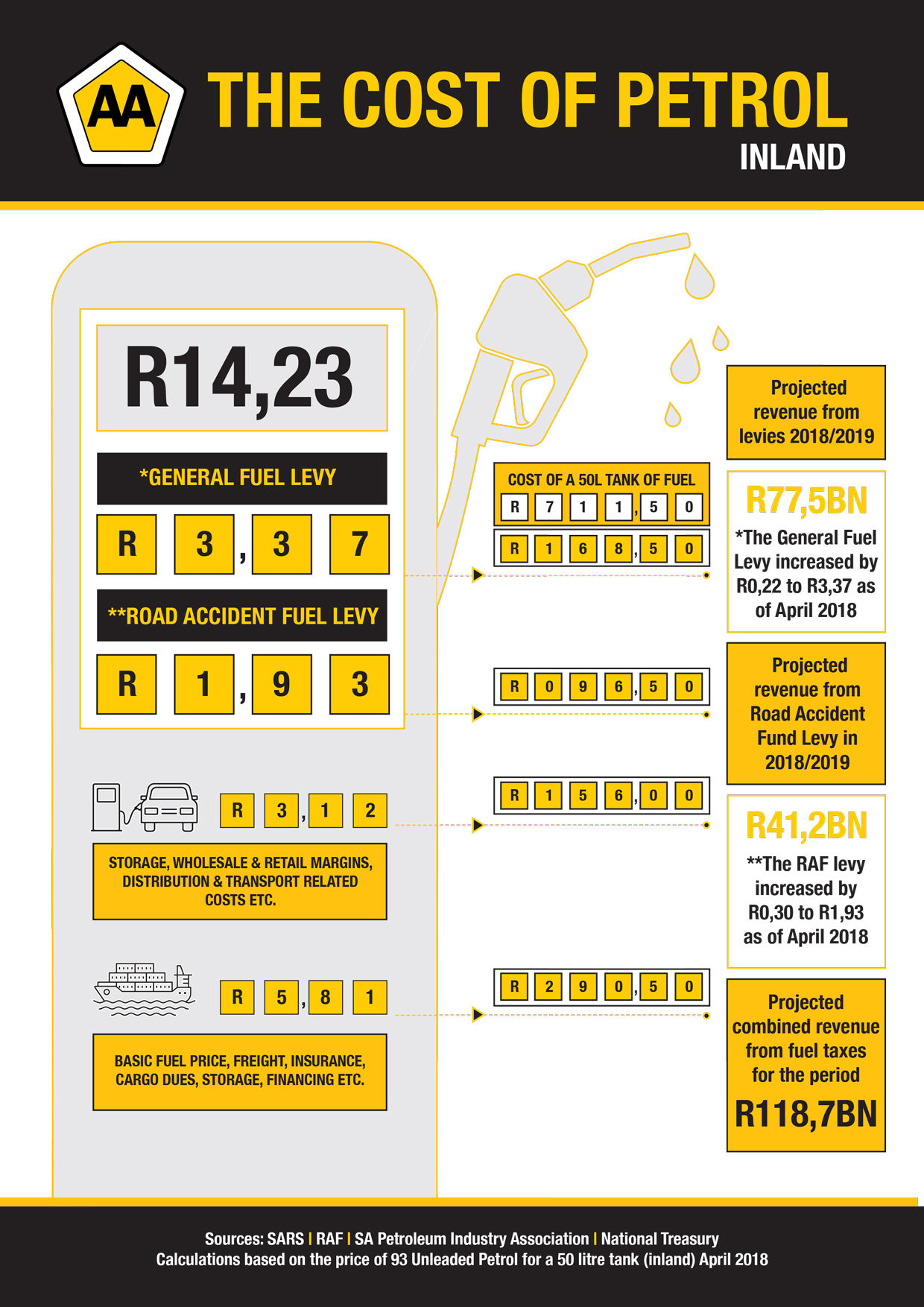
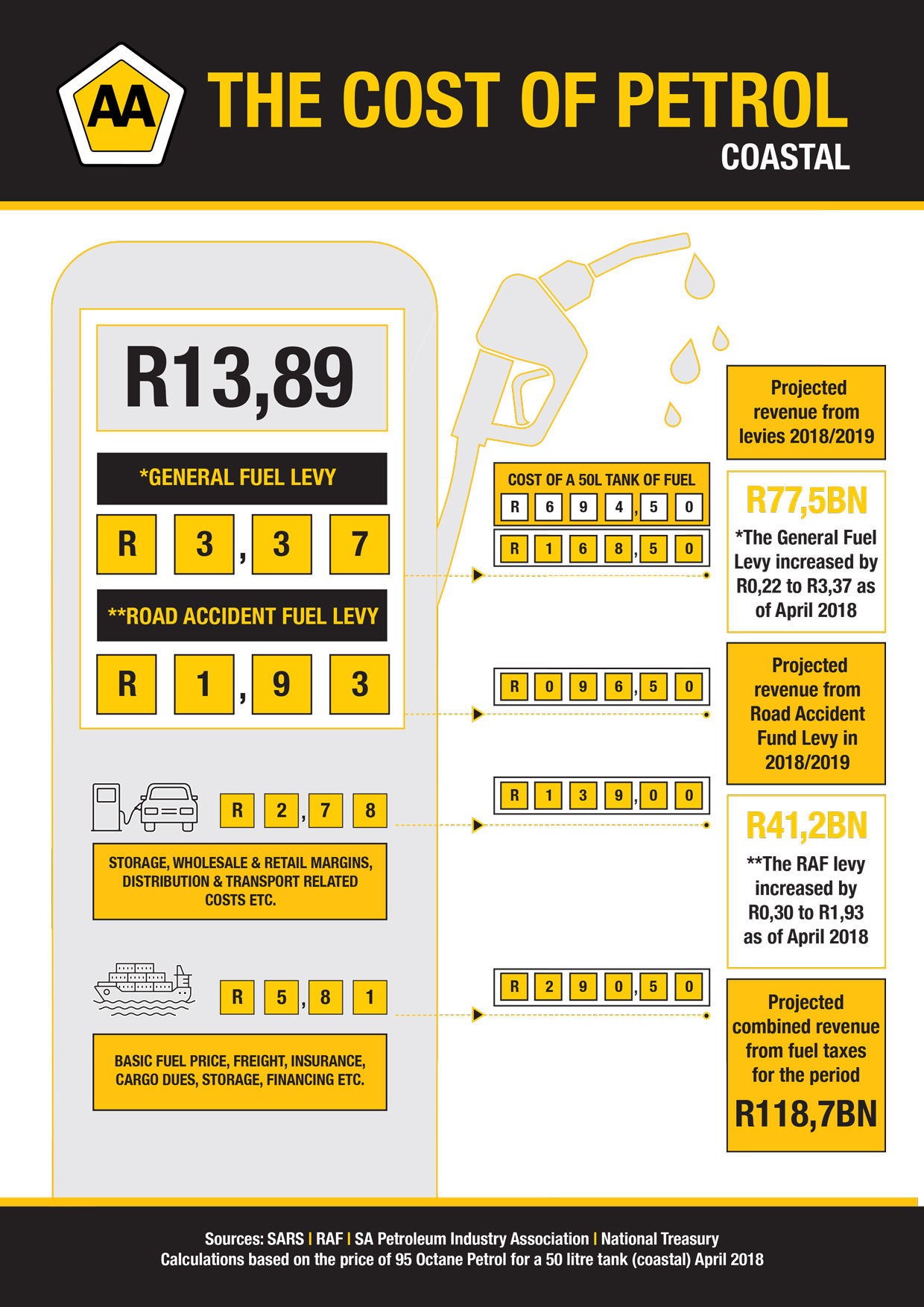
The recent fuel price increases have hit South African motorists hard, but it’s also worthwhile knowing and understanding the cost breakdown of every litre of petrol you purchase. Take a look at this petrol price breakdown for further insight…
In an effort to educate and inform the public regarding the cost of fuel, the Automobile Association of South Africa (AA) has provided a comprehensive price breakdown for a litre of petrol (inland and coastal) while also highlighting where the money is being allocated.
The figures presented here are based on 93 unleaded octane fuel (inland) and 95 octane fuel (coastal).
As you know, fuel prices in April 2018 rose by 69 cents and 72 cents per litre as a result of increasing international petroleum prices and an increase in fuel levies, the latter of which was announced in former Finance Minister Malusi Gigaba’s Budget Speech earlier this year and came into effect this month.
Previously, the AA warned that the increases would have a severe effect on poor South Africans who rely on public transport which, if the price of fuel increases, will need to recover these costs by passing them on to consumers. It’s also worth noting that increasing fuel prices also affect the cost of transporting goods and consumers are impacted as operators seek to recover increases by passing the cost onto consumers.
Not only are consumers faced with increasing fuel costs and more expensive goods, but the recent VAT increase from 14% to 15% is another hard blow for an already heavily-burdened public.
Fuel Price Breakdown in SA
There are 4 main elements that constitute the fuel price you pay at the pumps and they are as follows:
General Fuel Levy
Road Accident Fund (RAF) Levy
Basic Fuel Price (freight and insurance costs, cargo dues, storage and financing)
Wholesale and retail margins, distribution and transport costs
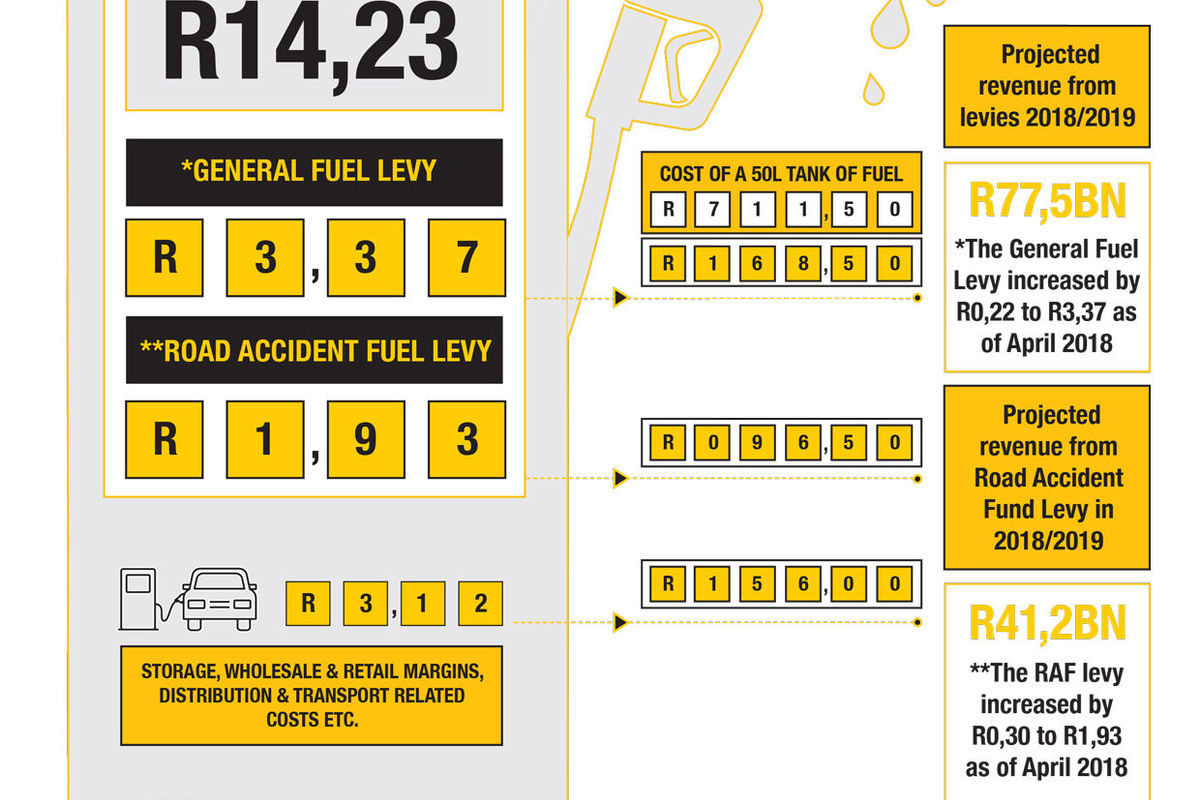
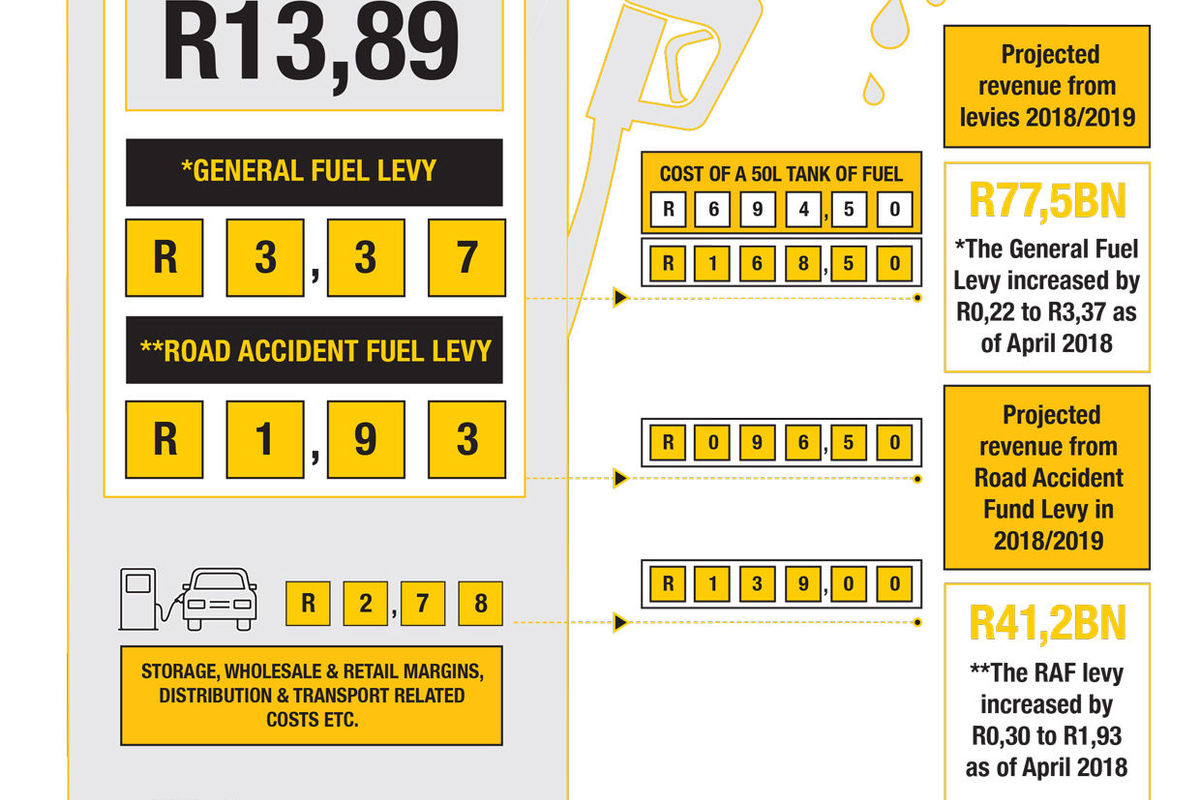
The General Fuel Levy is a tax charged on every litre of petrol sold. This year, the General Fuel Levy increased by 22 c/l and is now at R3.37 per litre. This tax is administered by the National Treasury and is considered to be a general tax and not used for road-related expenses as many people assume.
The RAF Levy funds the Road Accident Fund which is used to compensate victims of road accidents. In 2018, the RAF Levy increased by 30 c/l and now accounts for R1.93 of every litre of fuel sold.
Combined, the RAF Levy and the General Fuel Levy account for R5.30 of every litre of fuel sold. That means that if a litre of 93 Octane (inland) costs R14.23 per litre, then 37% of this amount constitutes tax. Similarly, if 95 Octane (coastal) costs R13.89 per litre, then 38% is attributable to tax. The difference between inland and coastal fuel prices is mainly due to transport costs of the fuel from depots at the coast to inland outlets.
The fuel price is adjusted monthly based on a number of factors but international petroleum prices and the Rand/Dollar exchange rate are major contributing influences.
The Basic Fuel Price (BFP) is based on costs of shipping petroleum products to South Africa from areas such as the Mediterranean, Arab Gulf and Singapore. Typical costs include insurance, storage and wharfage. The current Basic Fuel Price is R5.81.
Other costs that influence the fuel price include transport (harbours to inland), customs, excise duties, retail margins and secondary storage costs. These costs currently account for R3.12 (inland petrol) and R2.78 (coastal petrol). Over the past 12 months, the cost to transport fuel from the coast to Gauteng has increased by 10 c/l while retail margins at the coast and inland have increased by 11 c/l.
“Depending on whether the BFP increases or decreases during April going into May, a calculation that still needs to be done, the price of a litre of petrol could either increase or decrease. However, given the current increased international petroleum prices, and the volatility of the Rand against the US Dollar, it is likely the price of a litre of petrol will increase, in the short term at least” concludes the AA.
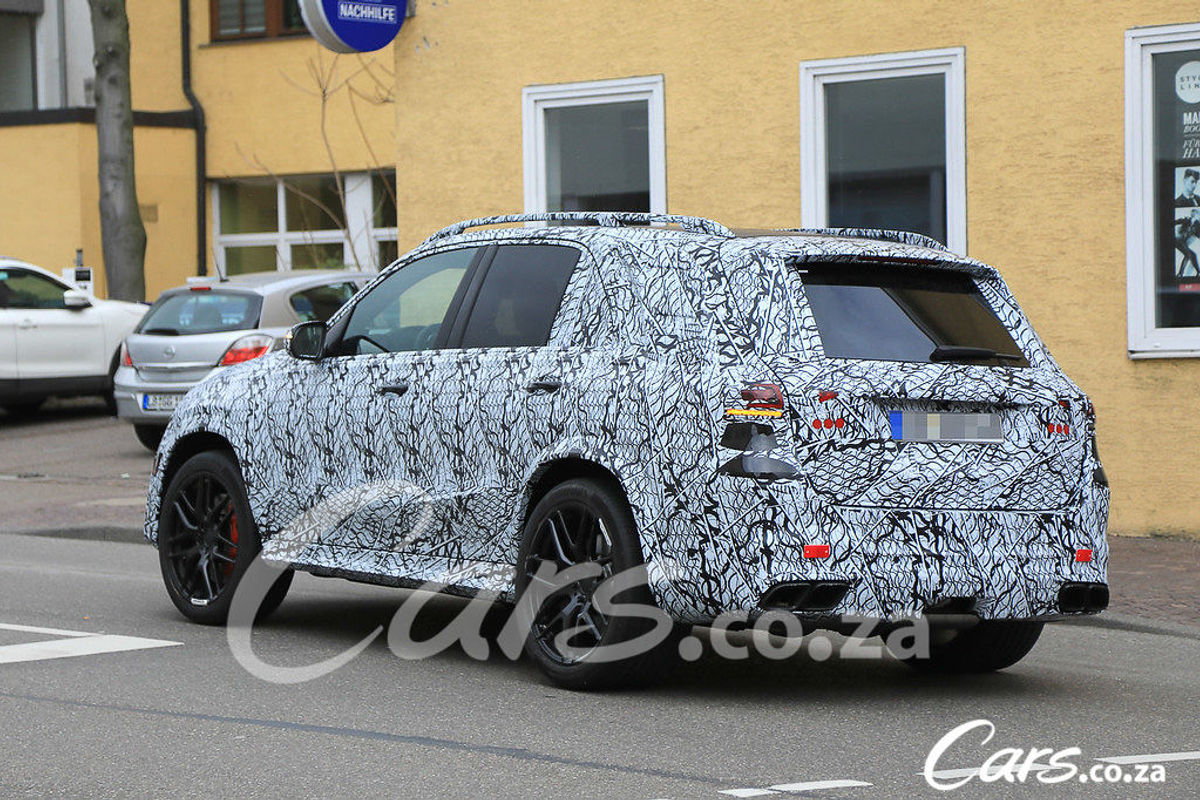
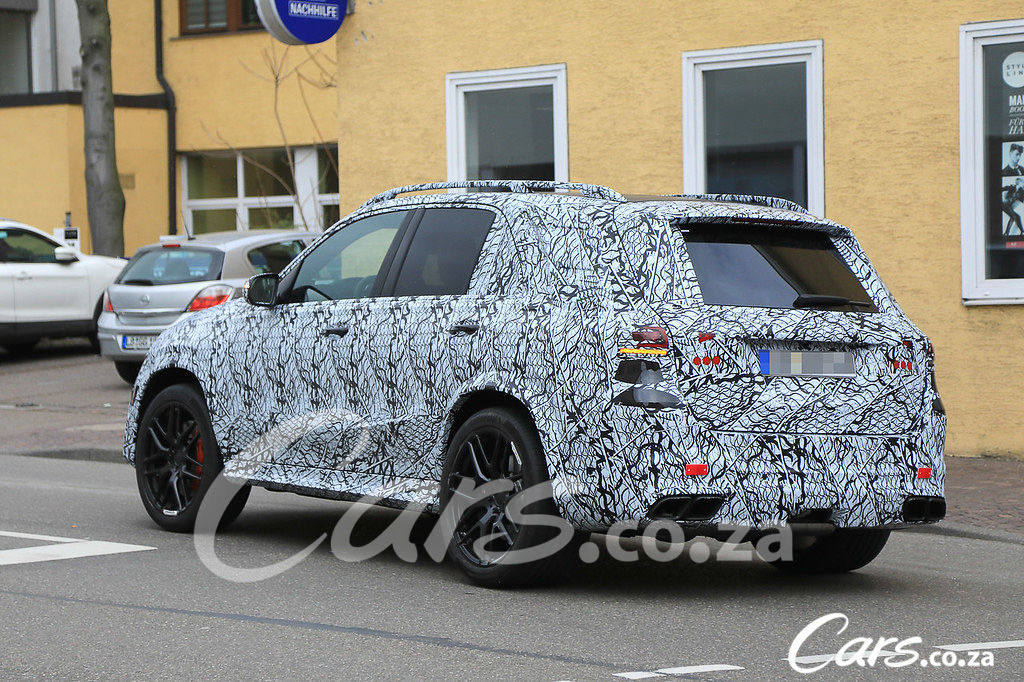
The new Mercedes-Benz GLE is expected to be revealed this year but these spy images show what you can expect from the range-topping Mercedes-AMG GLE 63 variant.
The big reveal of the new GLE luxury SUV is expected in coming months and will compete against rivals such as the BMW X5 and Porsche Cayenne. Like the E-Class, the GLE will now be underpinned by the MHA platform which will make it lighter and improve its handling ability while also offering a host of semi-autonomous technology.
The car you see here is the AMG-powered GLE 63. Where regular GLE’s will wear a 2-bar grille, the AMG GLE 63 will sport a large Panamericana grille and even though the GLE is heavily camouflaged, its new large headlights, LED daytime running lights and large air intakes are difficult to hide. At the rear, the large-bore quad tailpipes allude to the high-performance ability of this model. Overall, the new GLE will be more rounded in its design, much like the smaller GLC, as opposed to the boxy dimensions of the current-generation GLE.
The new AMG GLE 63 will pack at least 420 kW and will, for the first time, wear a Panamericana grille.
The interior is expected to be an all-digital affair featuring Mercedes-Benz’s MBUX infotainment system as seen in the new A-class which incorporates dual digital displays housing the instrument cluster and infotainment system.
As for power, the AMG GLE 63 will be powered by a twin-turbo 4.0-litre V8 petrol engine with outputs of at least 420 kW and 750 Nm while the GLE 63 S will offer in the region of 450 kW and 850 Nm. Lesser GLE’s are expected to be powered by a range of 4- and 6-cylinder turbo petrol and diesel engines carried over from the E-Class. A hybrid GLE 53 is also expected to join the range.
We will keep you updated as soon as more information becomes available.
What if you like to drag race, but only like to do it from the back seat? We answer the question literally nobody was asking when we put the BMW M4 Competition pack up against the BMW M760Li xDrive.
We agree, it's a bit out there in terms of like-for-like drag races but we had the 2 cars on the same day and a few spare moments at Killarney International Raceway, so why not?
The seriously powerful 448 kW 760Li has all-wheel-drive but weight in at 2.1 tons. Compare that to the M4, which only has 331 kW but weighs a measly 1 500 kg and the result is still a foregone conclusion. We knew the winner before we set off, but it was still a fun race to do.
Alfa Romeo Stelvio 2.0T Super Q4 (2018) Review [w/Video]
While performance aficionados lick their lips in anticipation of the arrival of the Stelvio Quadrifoglio, the Super Q4 and First Edition derivatives spearhead Alfa Romeo’s executive SUV offering in the local market. How does the entry-level 2.0 litre stand up to scrutiny?
We like: Eye-catching looks, ride/handling balance, practicality and refinement
We don’t like: Uninspiring colour/trim combo, trim plastics, lively steering requires familiarisation
Alternatives (prices as of April 2018):
One of Audi’s finest: The Q5 is a top-selling SUV in the Ingolstadt-based brand’s stable and the latest version impresses as a well-finished product that exudes refinement. There's a limited line-up of derivatives in SA, but the 2.0TFSI quattro sport derivative is priced close to the Stelvio at R804 500.
Bavarian allrounder: The exterior styling of the new BMW X3 may seem too evolutionary for some tastes, but the Munich-based marque's executive SUV has been improved in many ways. We've yet to test a 2.0-litre version, but the xDrive30i M Sport auto (R812 031) is a great match for the Alfa, looks-wise.
Sinuous feline: The F-Pace has reinvigorated Jaguar’s local product offering and apart from its fashionable appearance, the 185 kW 25t Pure comes closest to matching the power and torque of the Alfa. However, even though it's a base-spec derivative, the Jag's R33 000 dearer than its Italian rival.
The award-winner: The Mercedes-Benz GLC 250d 4Matic AMG Line won the 2017/18 #CarsAwards Executive SUV title courtesy of its prestigious image, smart interior and willing performance. Price-wise, the GLC300 4Matic Exclusive (R805 654) is a close match for the 2.0T Super Q4.
Full-houseLexus: The top-of-the-range NX300 F-Sport, which we recently tested, is very well specified and, therefore, looks good value at R797 500, but perhaps it lacks the requisite star appeal in this segment. It is well worth a test drive to those who seek premium luxury, but don't want to be flashy about it.
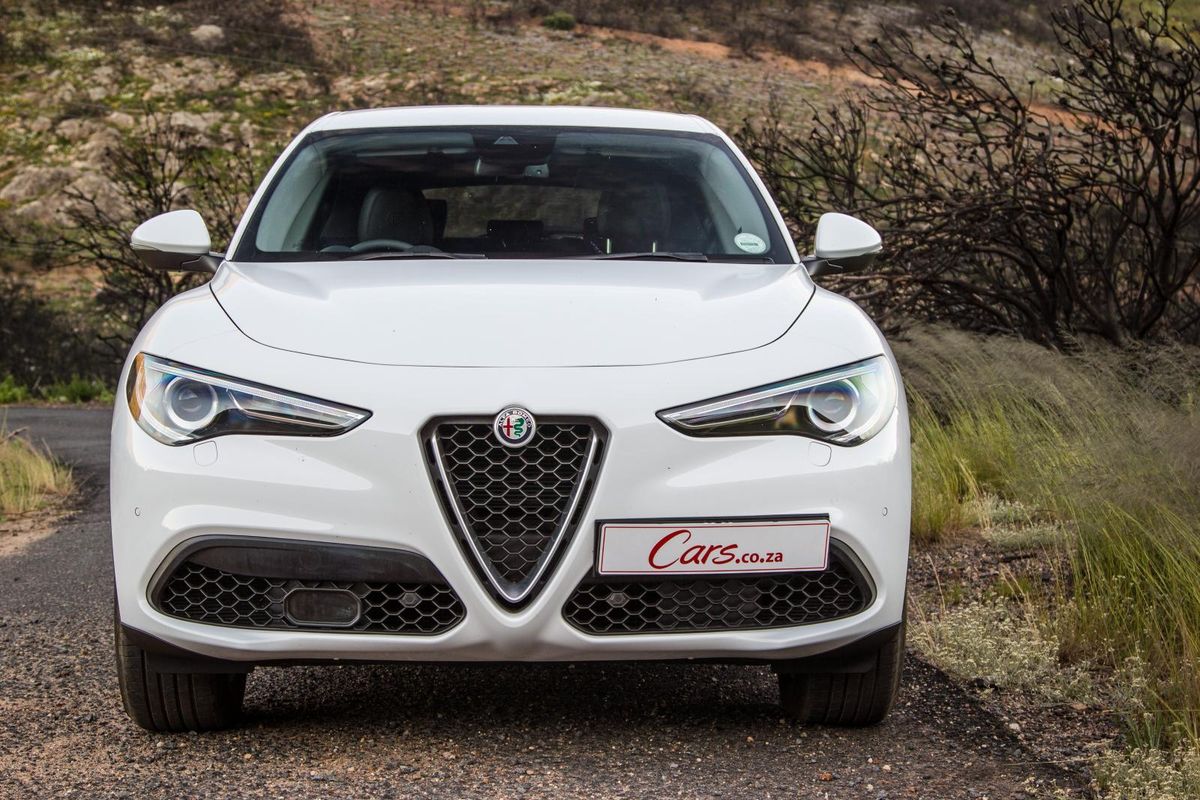
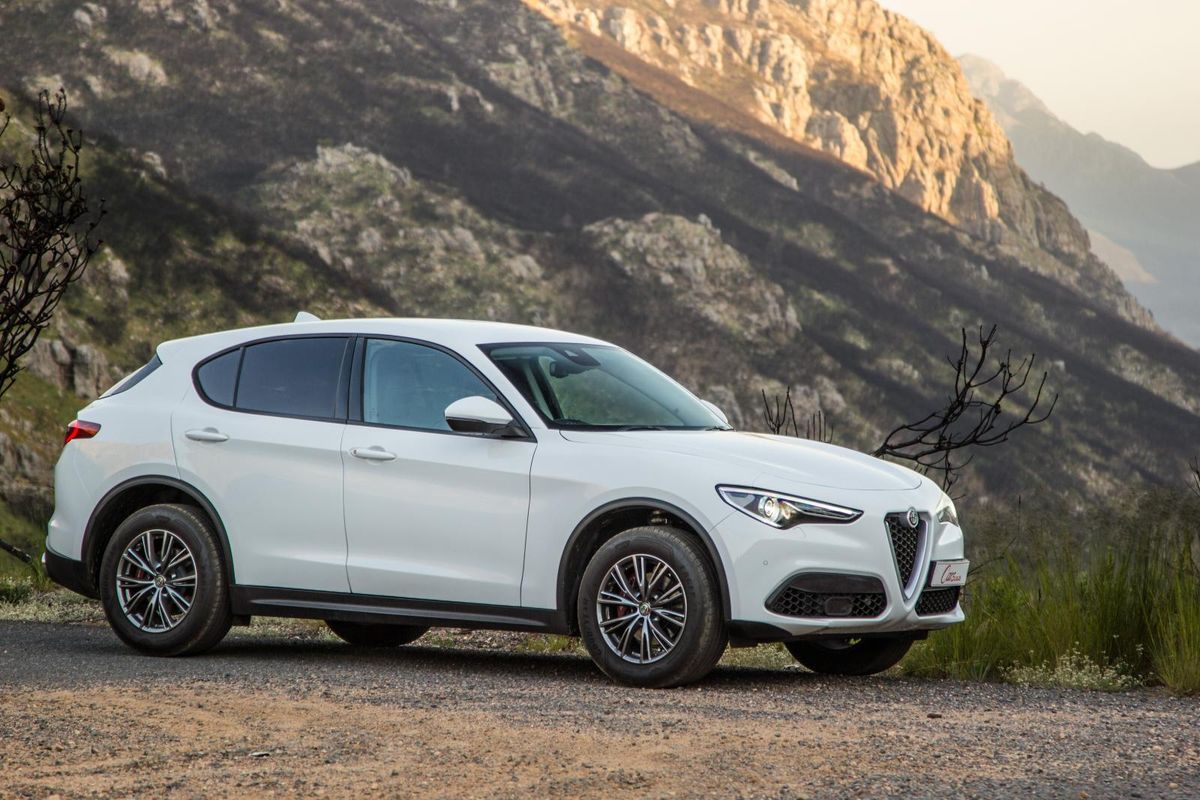
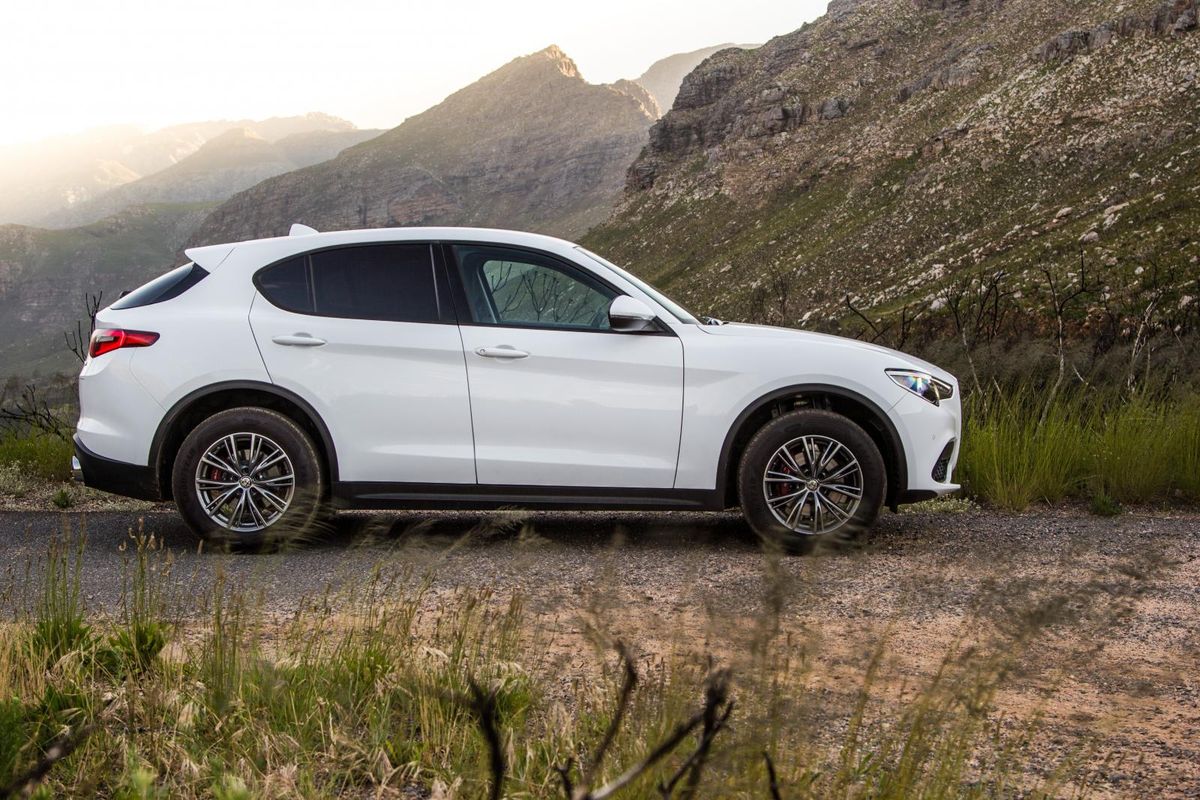
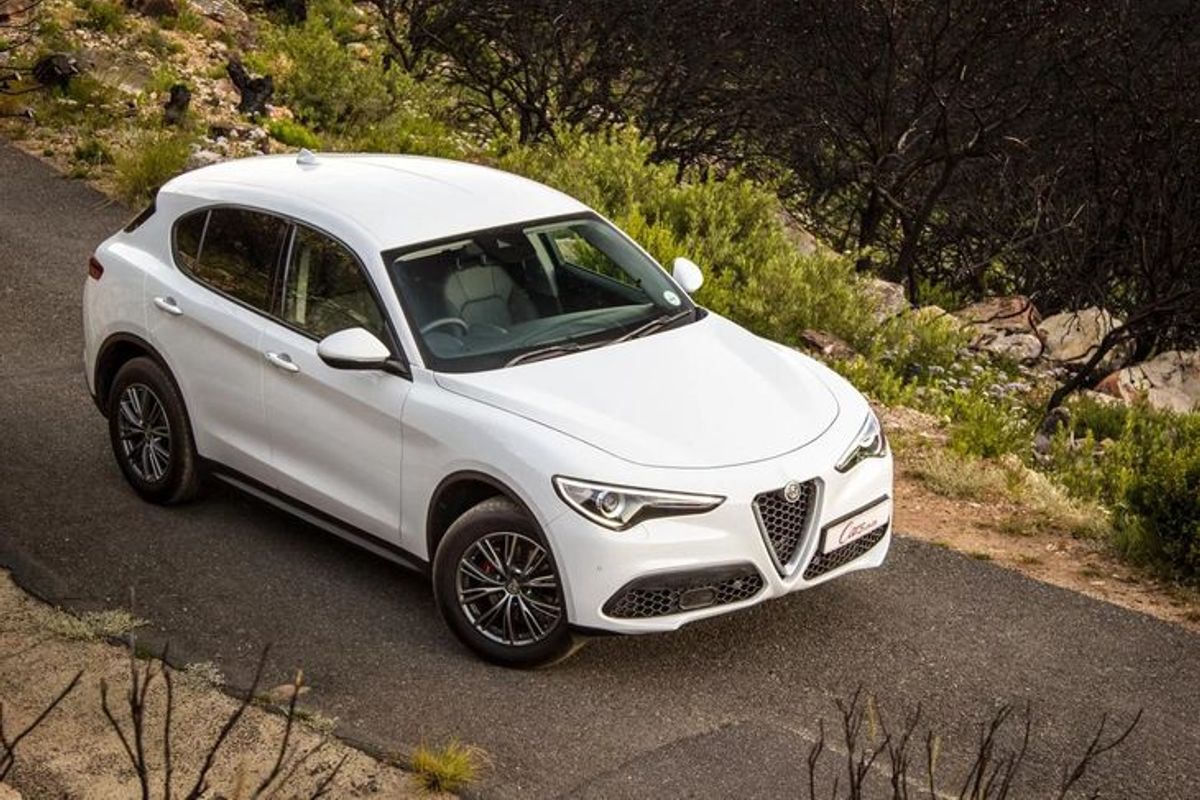
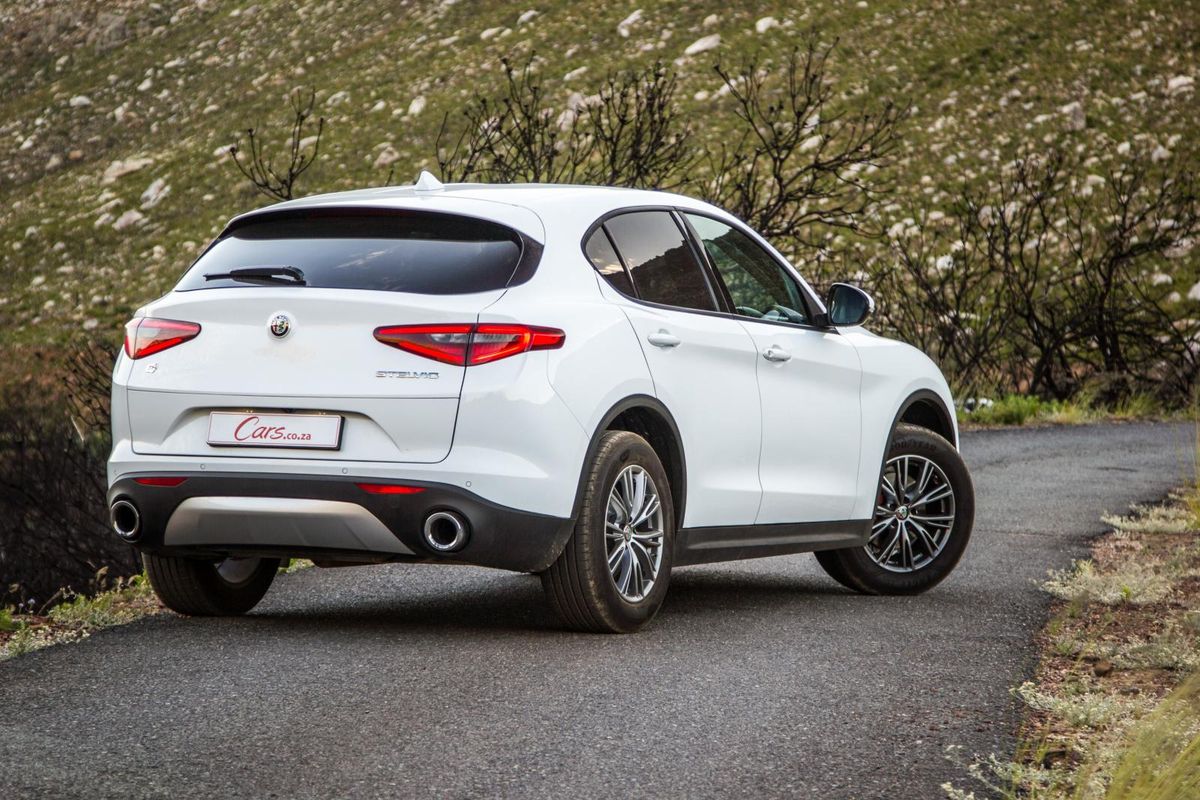
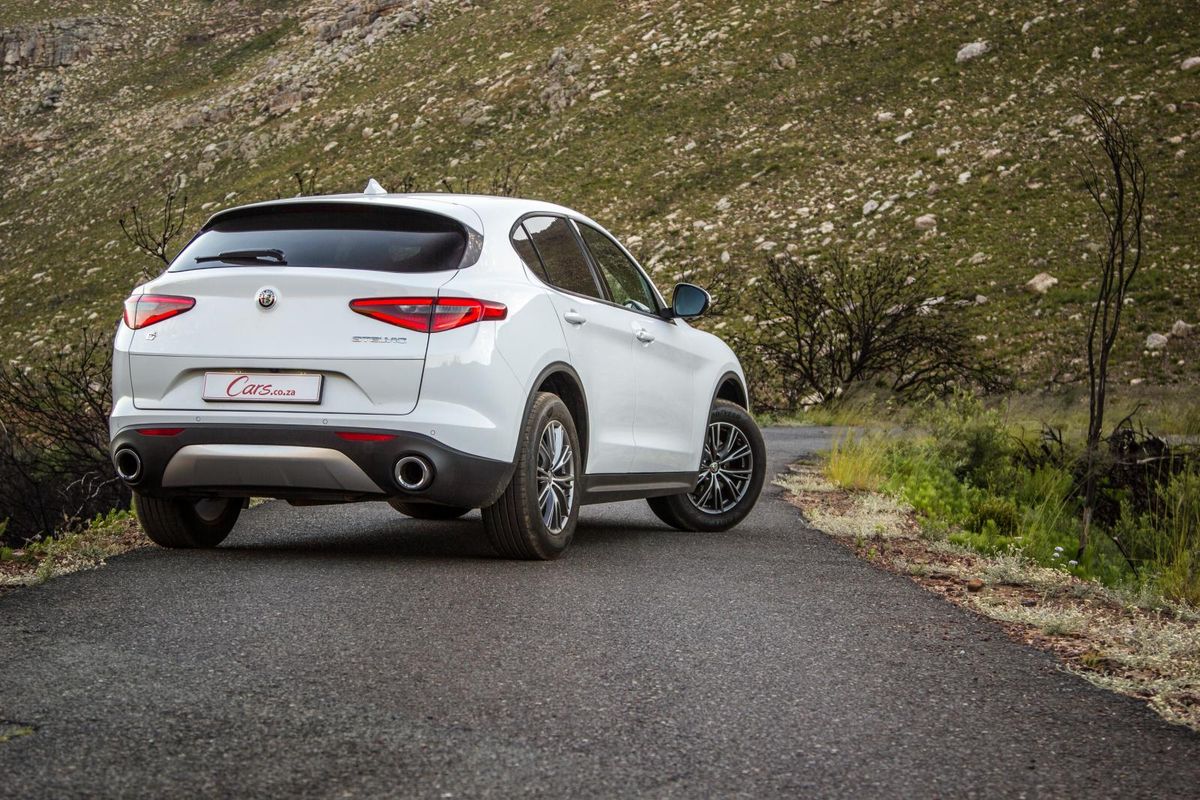
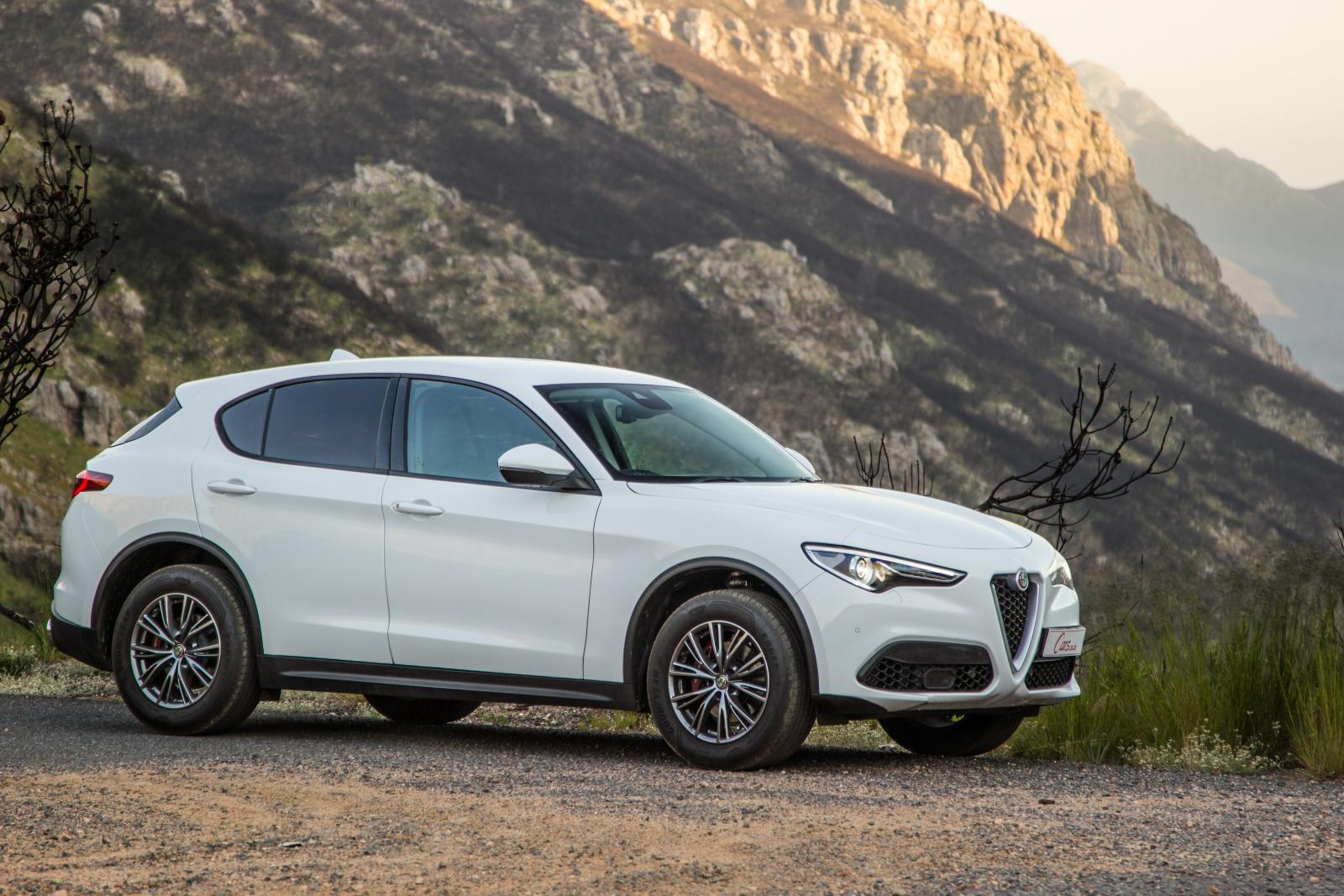
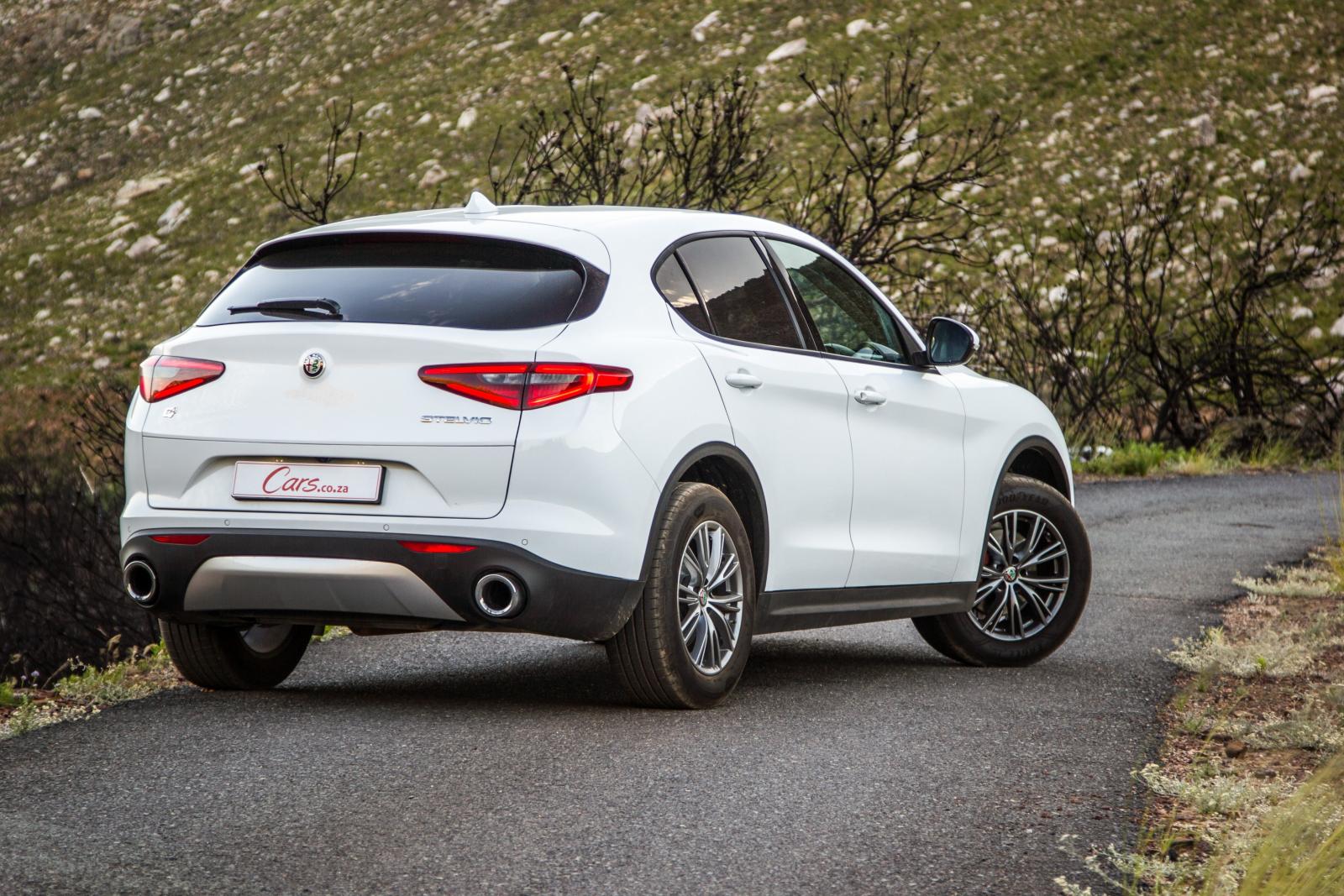
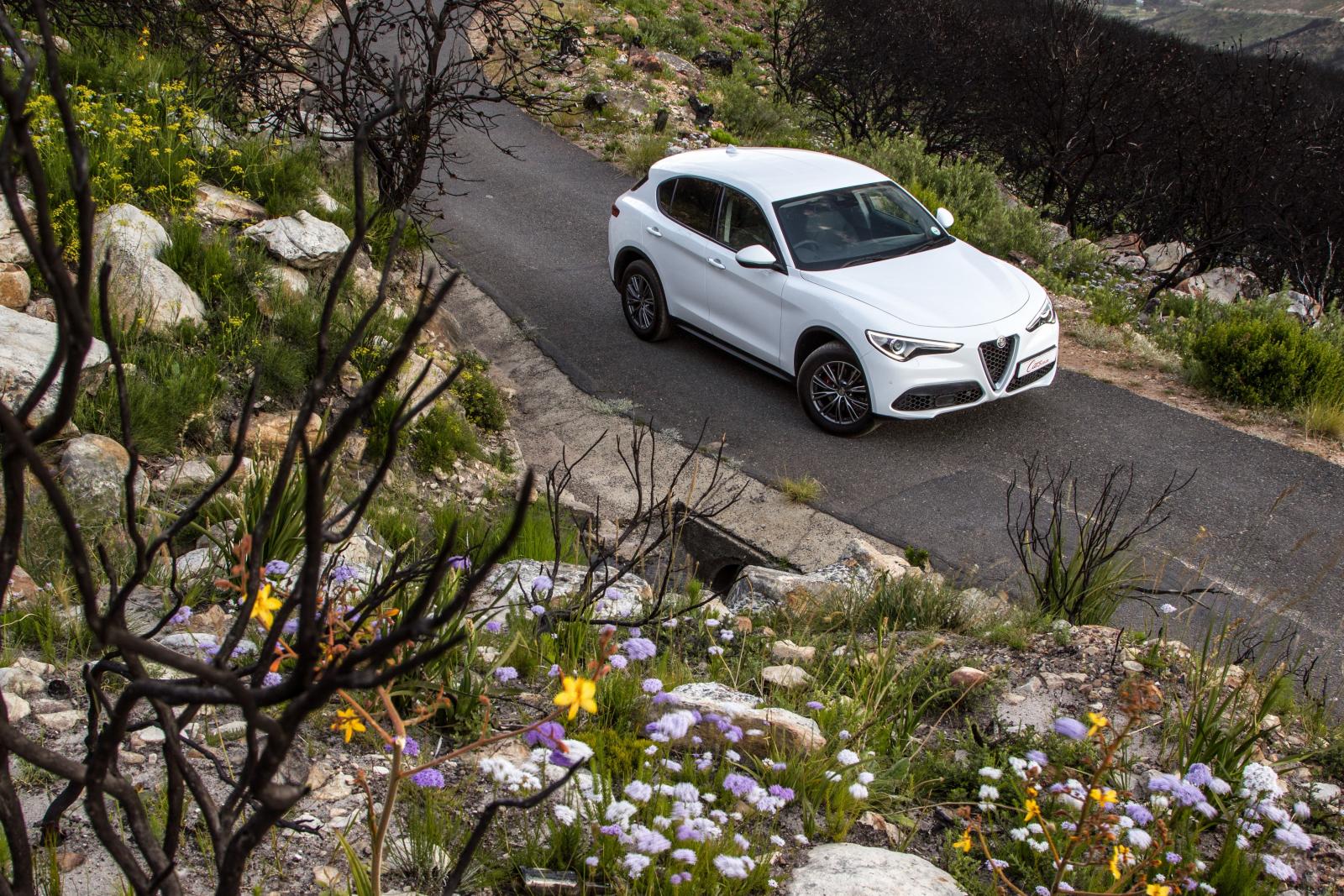
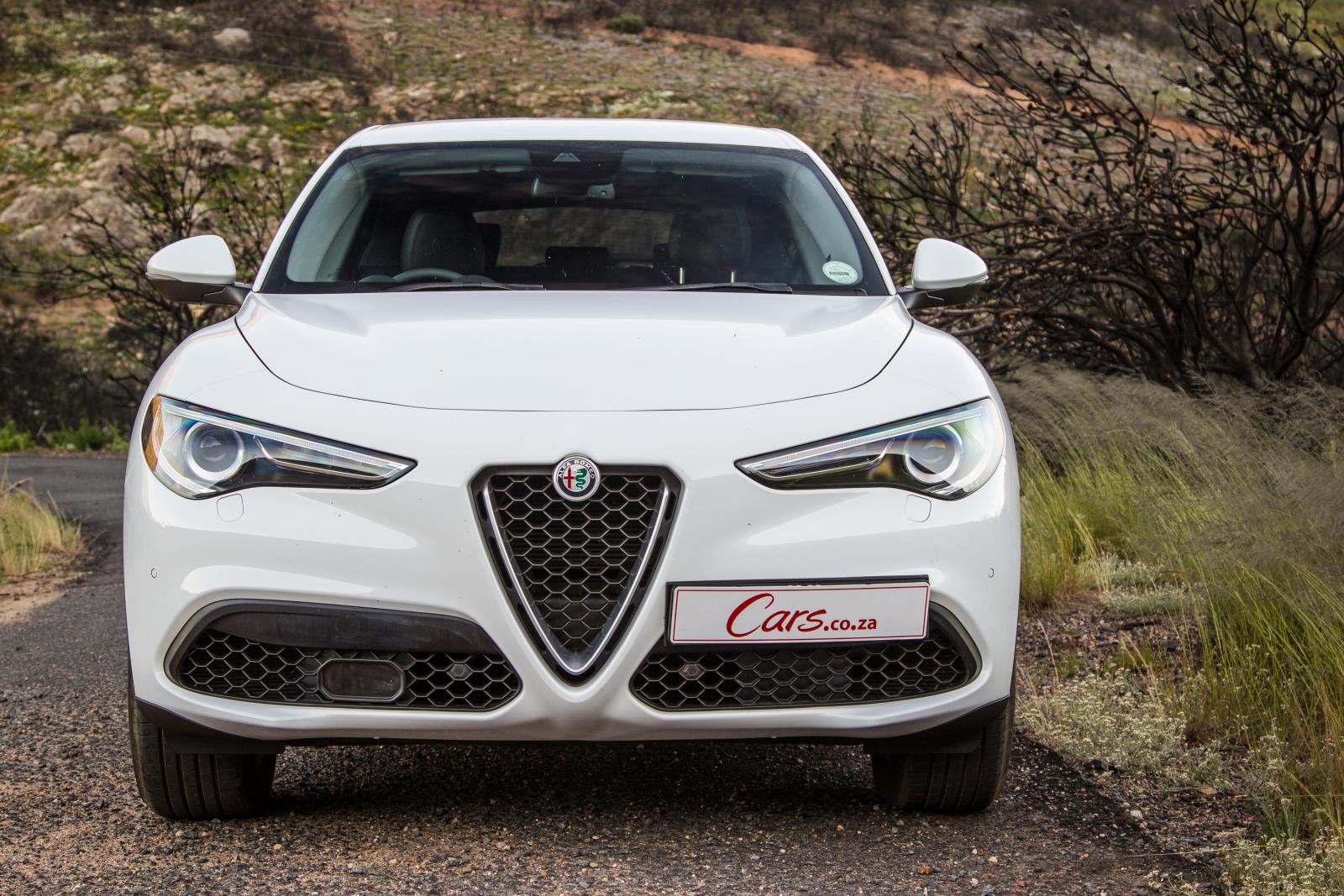
The head-turning Super Q4 begs for a smart metallic finish, but it's still quite a looker. Eighteen-inch rims and tyres are standard.
What is it?
The eye-catching Stelvio is based on the rear-wheel-drive Giorgio platform that underpins the Giulia business class sedan. That means that even without driving it, it is safe to assume that the newcomer is spacious, solidly-made and engaging to pilot. On the face of it, the default choices in this segment are the lauded Audi Q5, multitalented BMW X3 and award-winning Mercedes-Benz GLC, but there are more exotic offerings in the shapes of the Stelvio, the World Car of the Year-winning Jaguar F-Pace and recently refreshed Lexus NX. If you think more laterally, you can factor in the ageing Range Rover Evoque and Porsche Macan as well!
Whereas the German and British marques offer comprehensive derivative line-ups, there are but a pair of Stelvios to choose from at the moment (April 2018), the most affordable of which is the Super Q4 (Q4 is Alfa's equivalent of quattro). While we’ll delve into its price-versus-spec value in due course, it's worth noting that, performance wise, the Alfa Romeo is powered by a 206 kW/400 N.m turbopetrol engine that bests any 2.0-litre rival priced around it. This motor will soon debut in the Giulia too.
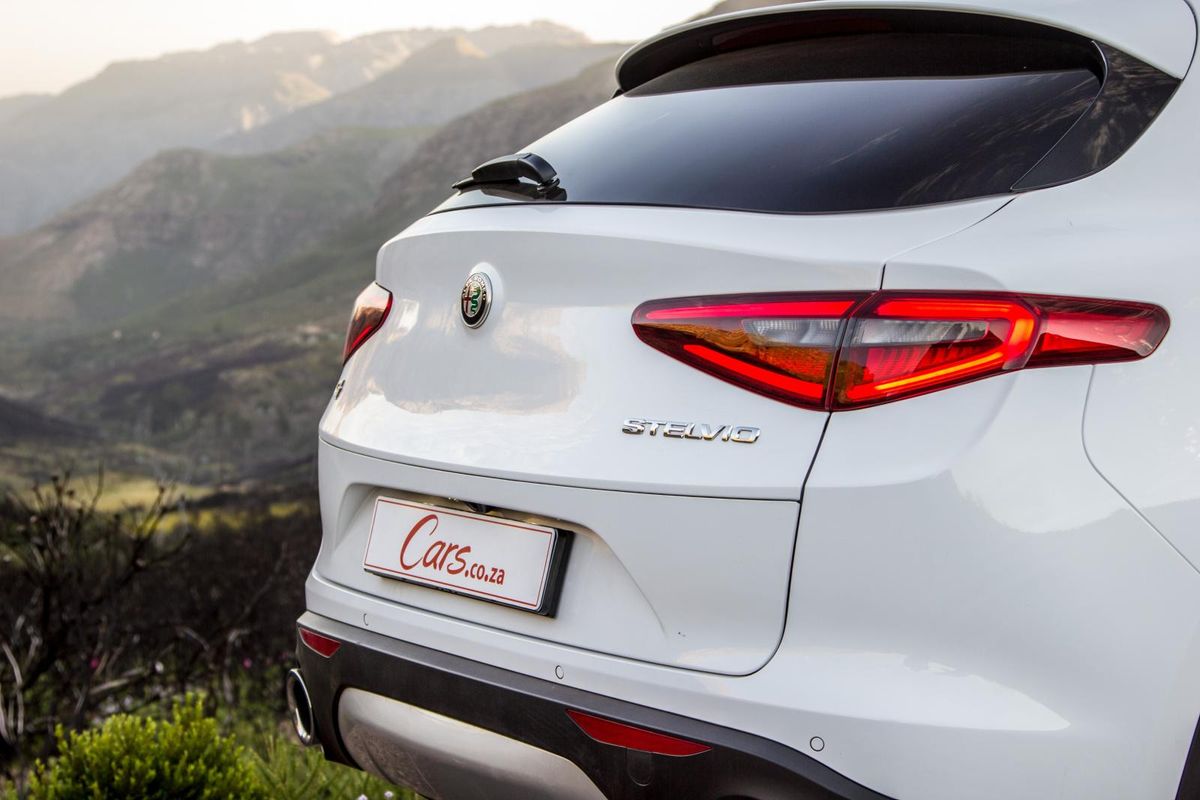
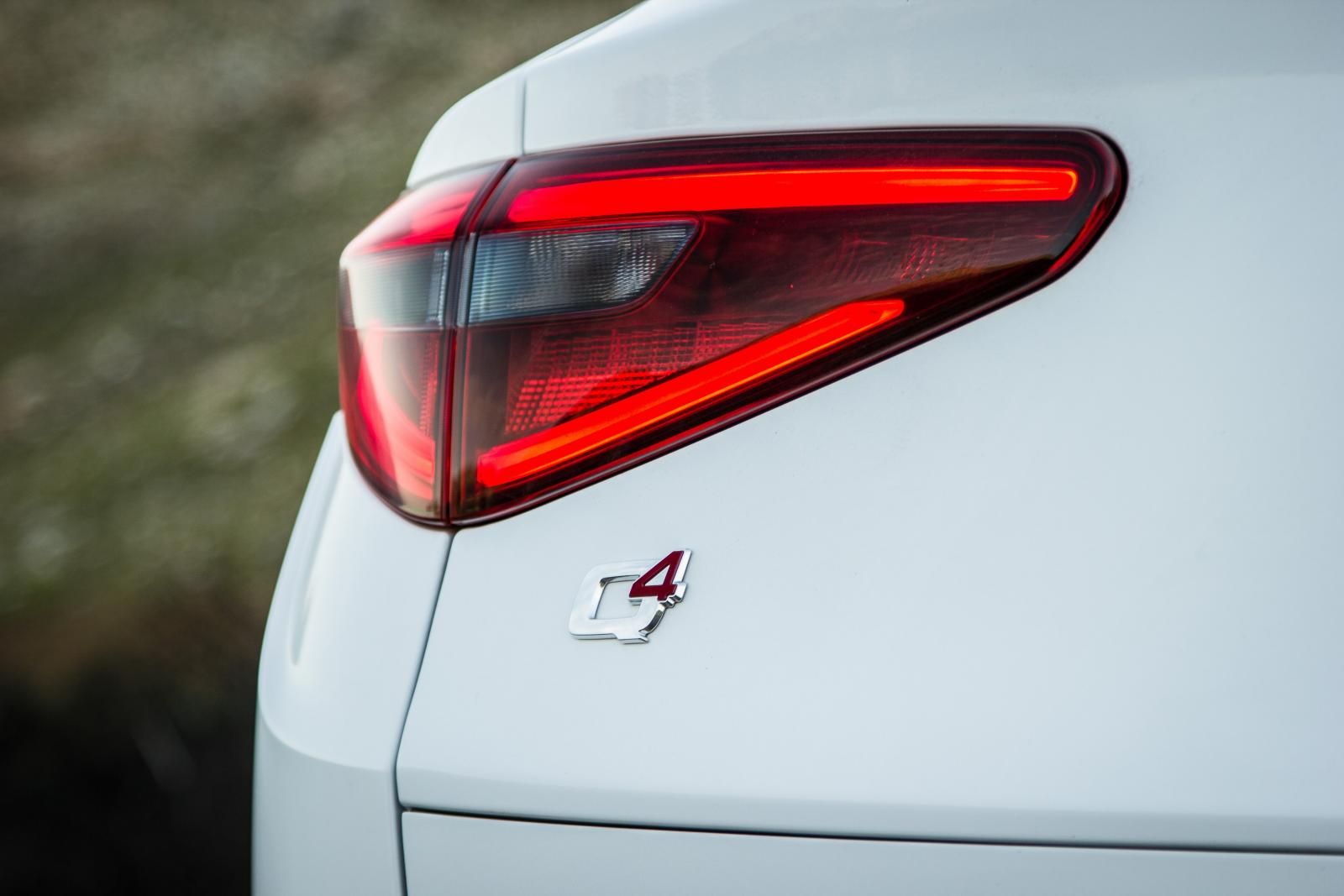
The rear spoiler with the integrated exhaust tips is stock standard. LED tail lamps complement the running lights at the front.
How does it fare in terms of…
Kerb appeal?
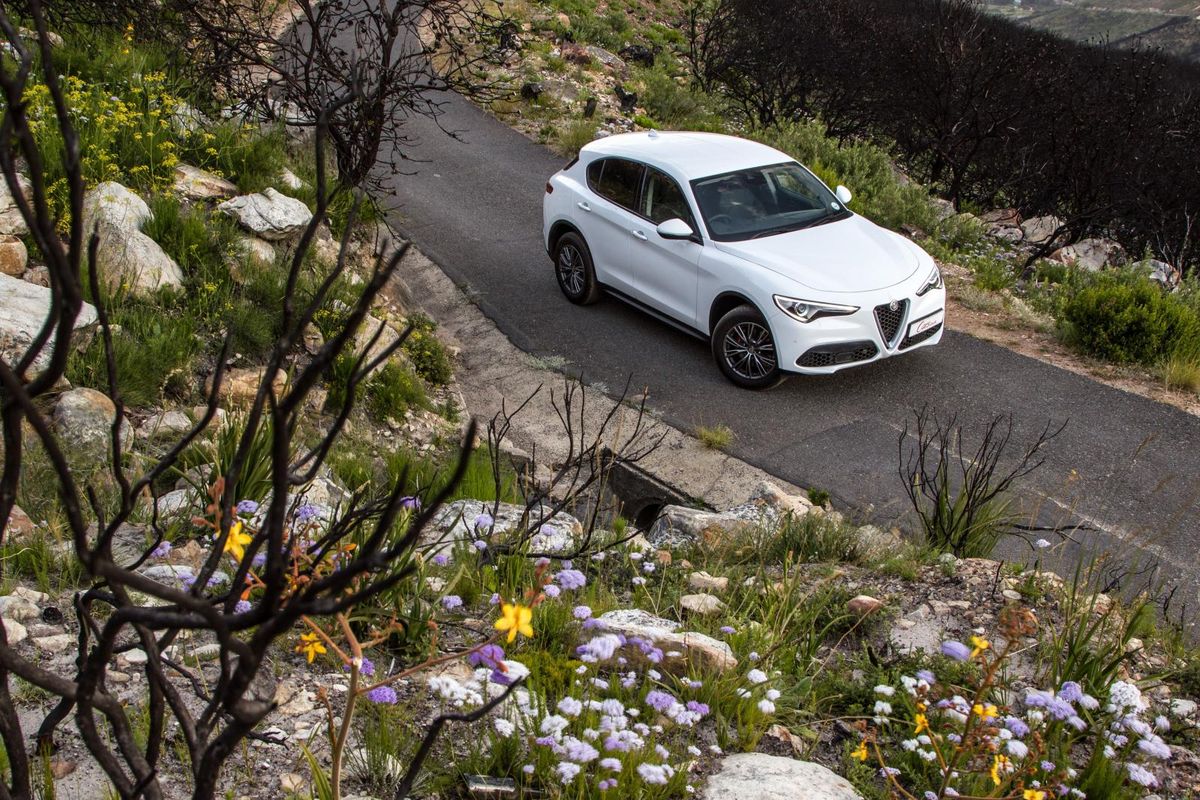
Check and mate. Even when shod with 18-inch wheels wrapped in plump tyres and finished in ho-hum non-metallic white exterior paint, the Stelvio is a looker – it draws plenty of admiring glances. Given that its (especially German) rivals are either comparatively conservatively styled, or plain looking if not specced up with Sport or Dynamic packages (in the case of the F-Pace or Evoque), the Alfa Romeo can still turn heads (again, it would help if it was dressed in a more imaginative colour).
Okay, 19- or 20-inch wheels are not pre-requisite and the red brake callipers and bi-Xenon headlamps (part of the standard Lighting Package) are welcome, but the Super Q4 could do with some roof rails, even if just subtle ones, tastefully flared wheel arches and sculpted side skirts, plus satin chrome-and-mesh-laced bumpers would really finish off the look nicely. Of course, for those who want a bit more bling on their Stelvio there’s the First Edition, but that costs a whopping R137k more!
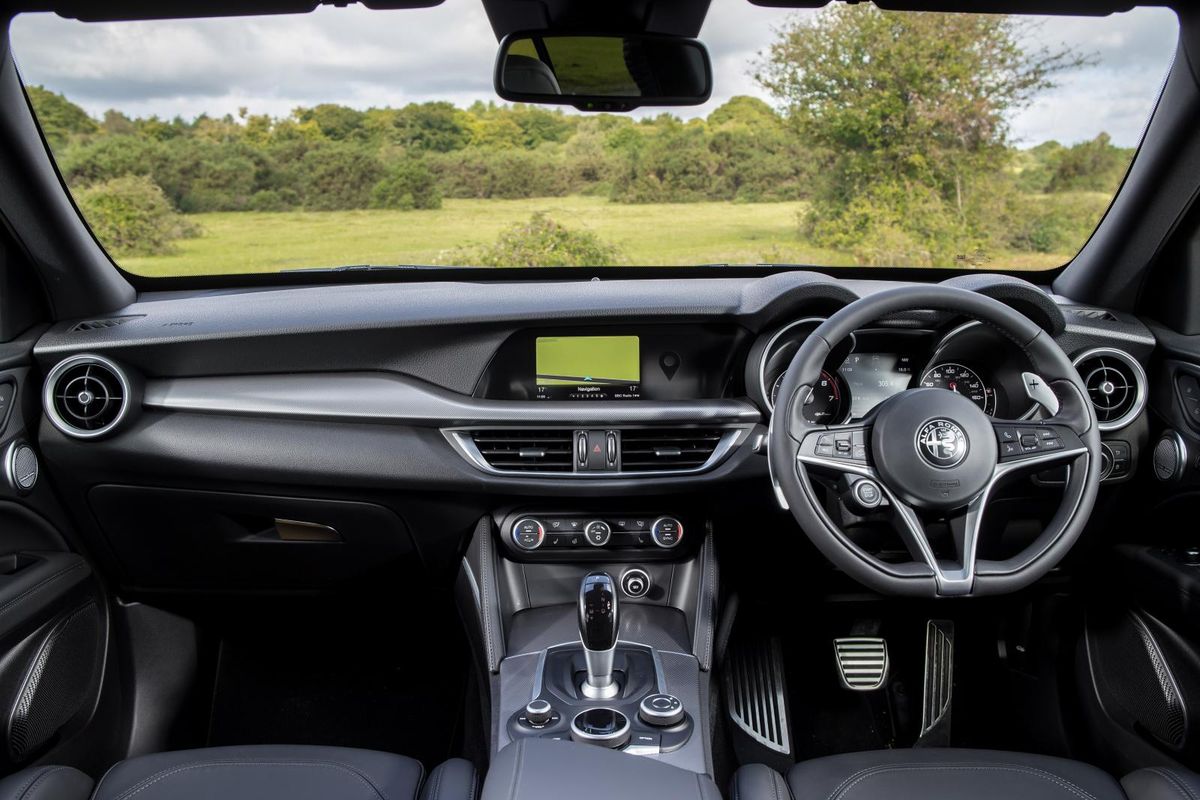
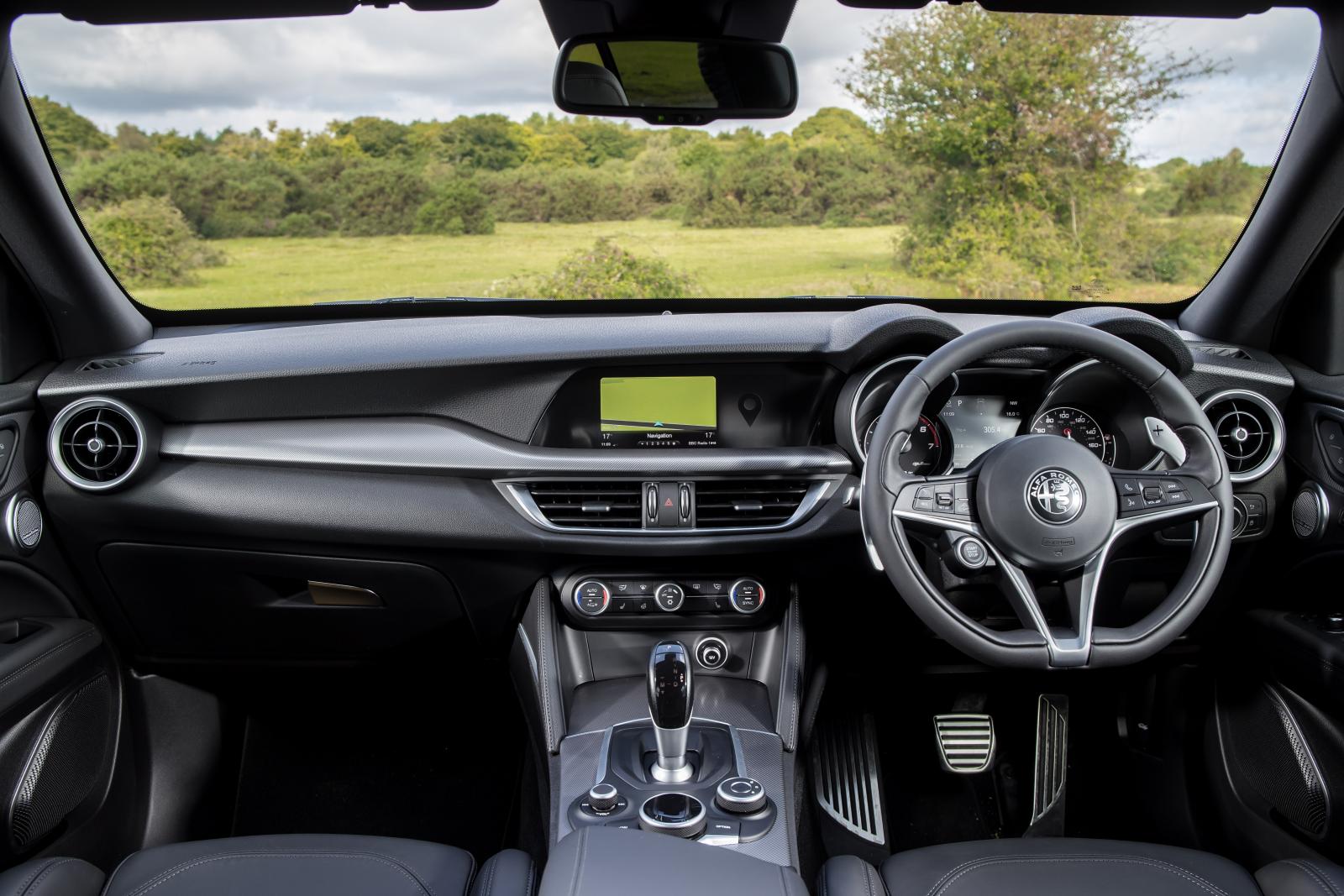
Even if the interior's a little sombre, the Stelvio's sporty driving position and tasteful dials and switchgear drew praise from testers.
Suitably luxurious interior?
The Stelvio’s handsome leather-trimmed interior borrows heavily from the Giulia… In fact, the facia, centre console and infotainment system are transplanted from the business class sedan, which we applaud… Until the arrival of the Giulia, high-end Alfa interiors looked pretty, but they tended to be ergonomically challenged and didn’t hold together very well. Testers praised nifty touches such as the monochrome Alfa badge and the racing-car-inspired starter button on the steering wheel. And while the Uconnect 8.8-inch 3D infotainment system’s screen may not be as high in definition as some of its rivals' units, the system is comprehensive, including navigation.
It’s not all good news, however. By virtue of a monotonous dark grey and black trim scheme, the interior lacks a sense of occasion (dare we ask: could it be a mite too Teutonic in execution?) and some of the cabin materials, particularly atop the dashboard and on the edges of the window sills, consist of a soft-touch (but rough-textured) moulded plastic that could have been trimmed in leather/leatherette, with some tasteful contrast stitching, instead.
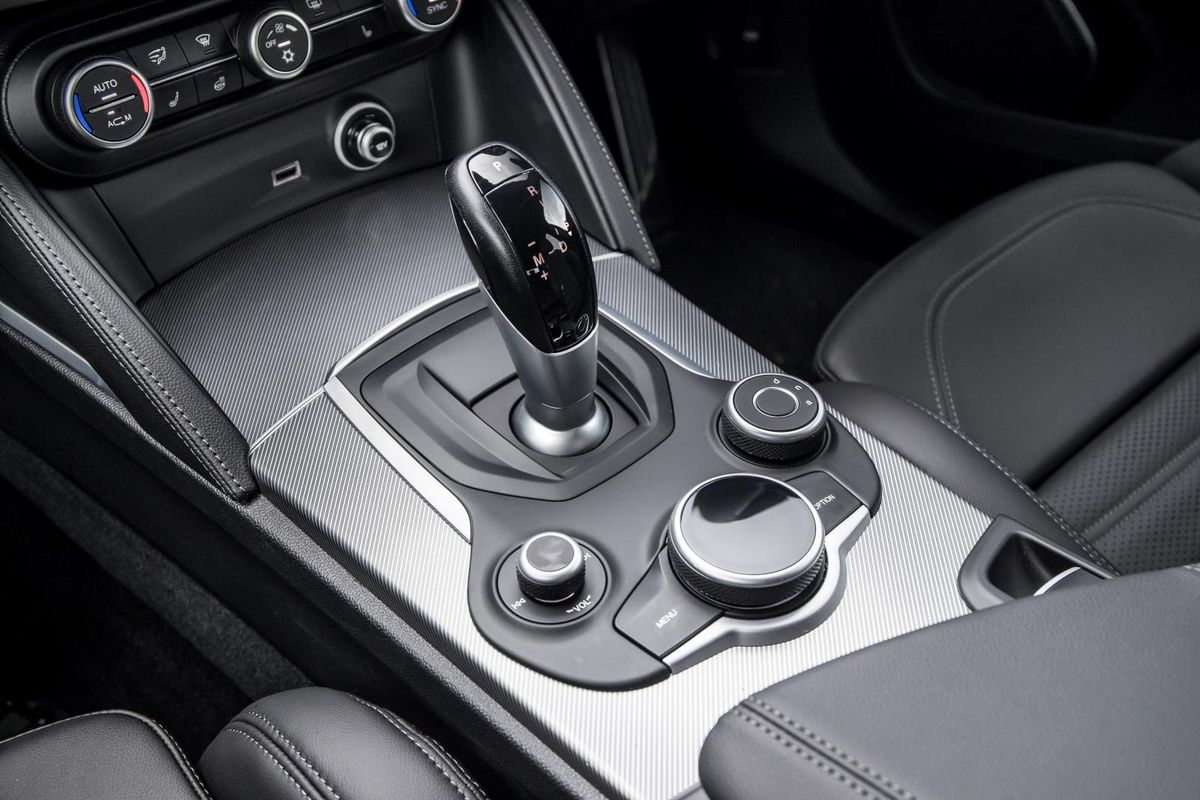
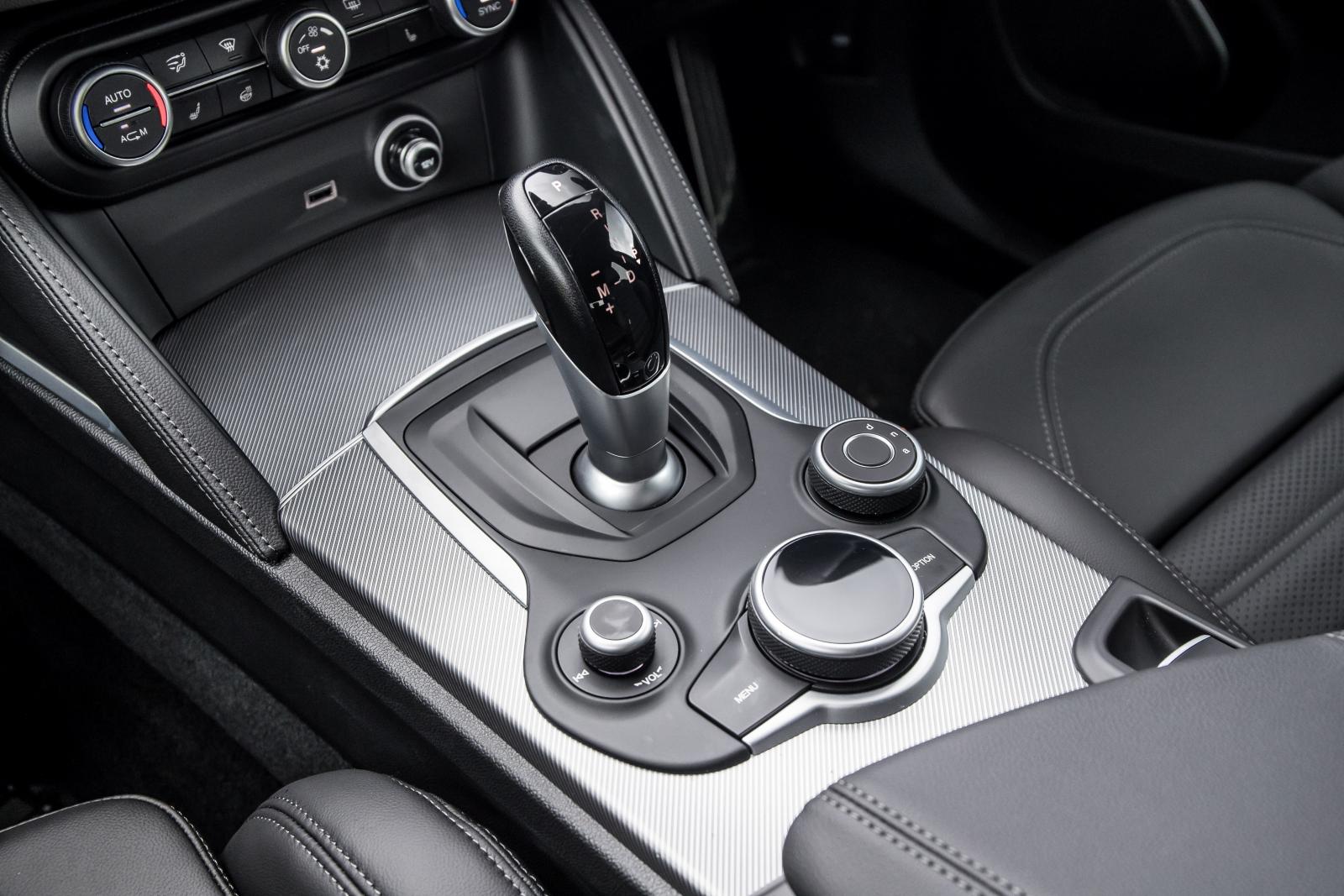
There's a pleasing weight to the dials on the centre console. Note the audio system's knob is separate to that of the main menu.
Comfort & Practicality?
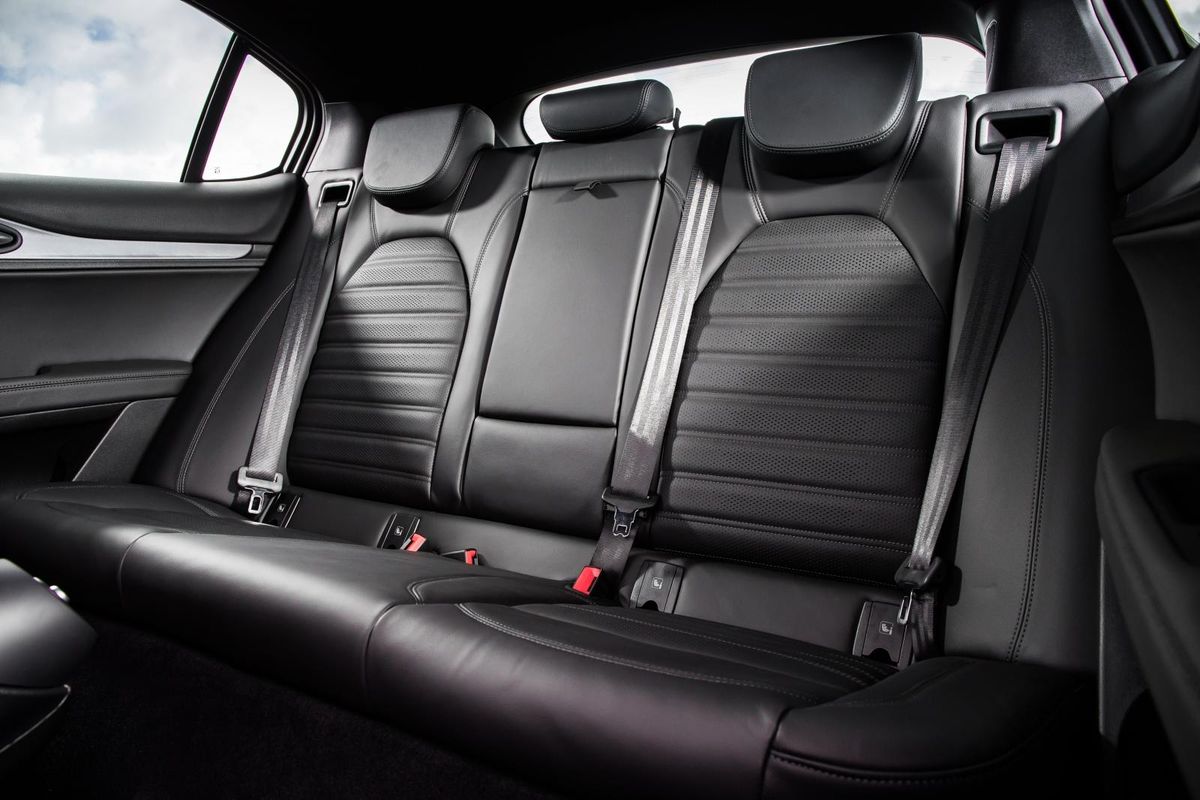
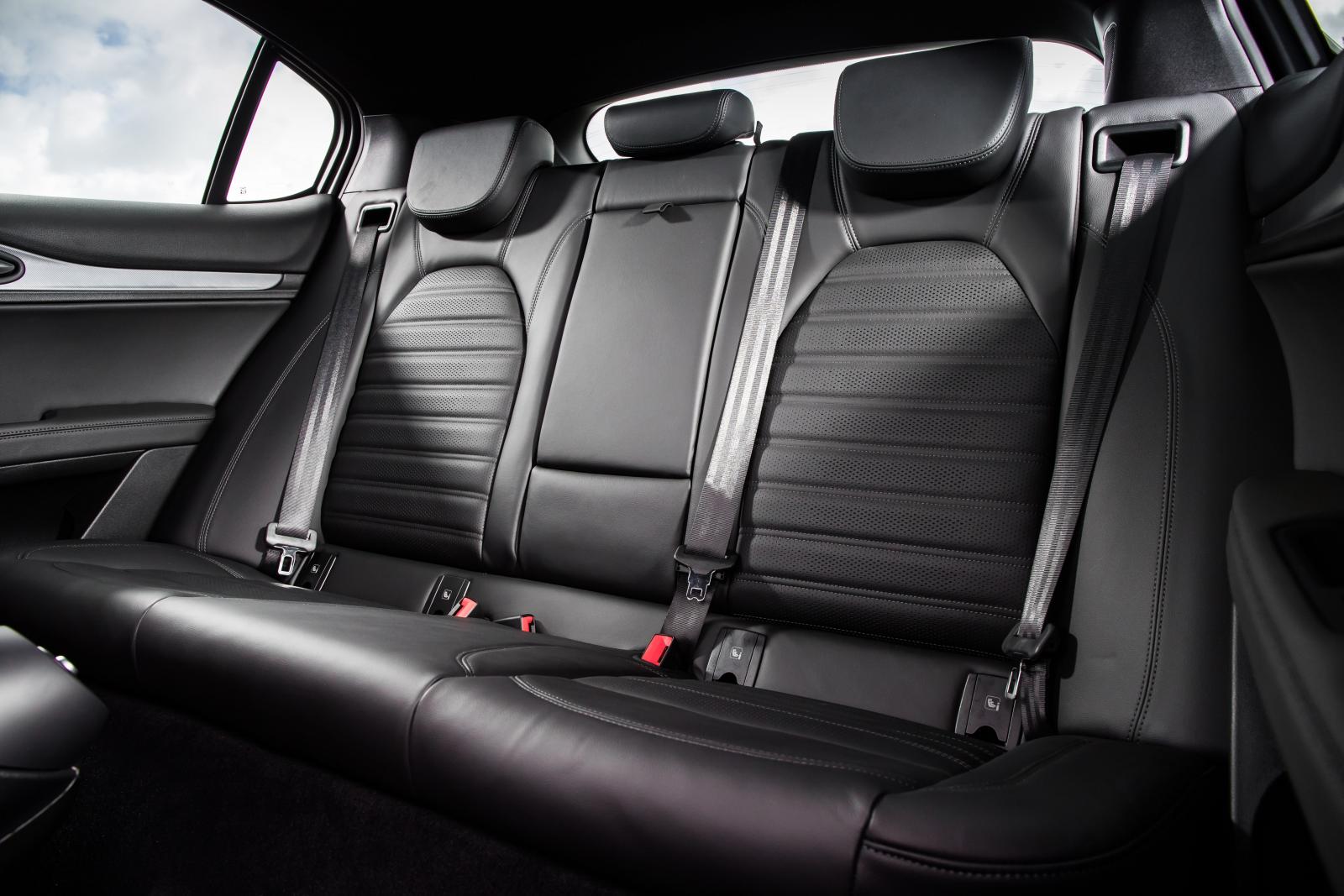
In a market where Executive SUVs, such as the recently launched BMW X3 and upcoming Volvo XC60 (the 2018 World Car of the Year), are making well-heeled consumers think long and hard if they really need to fork out a million Rand for the privilege of transporting their families in a Premium SUV, the Stelvio is a case in point. The Italian newcomer offers generous head and shoulder room for all occupants and the rear bench affords enough legroom for a pair of adults, let alone children.
The driver of this family-friendly SUV is afforded the benefits of an Adaptive Frontlight System, rain-sensing wipers, front and rear PDC, a reverse-view camera (with dynamic park-assist gridlines), as well as electrically-folding and self-dimming side mirrors. There is a USB port located just below the climate control console (even if it looks a little lost there…) and in the centre storage bin, while rear passengers benefit from an extra headrest, dual cupholders in the armrest, a pair of ventilation outlets and two USB ports that can charge personal devices, such as smartphones.
Executive SUVs aren't usually known to offer spacious rear accommodation, but the Stelvio does, plus other creature comforts.
All of which brings us to the luggage bay and, in that area, the Stelvio is generous. An electric tailgate is standard equipment and the loading space is particularly deep and long. Should additional utility space be required, the rear seatback easily splits in a 40/20/40 configuration. Alfa Romeo will even sell you a bicycle rack and dog net, if you’re interested in those sorts of things… a lot of you are!
Performance & driving engagement?
Whereas some of the Stelvio’s competitors may be able to get away with being smart-looking, luxurious and comfortable, while offering just a modicum of dynamism, the Italian marque pre-supposes spirited performance and dynamic handling – they’re elements at the very core of the brand.
It’s a very good thing, then, that the Super Q4 has an enviable ride/handling balance, measured body control and a crisp, darty steering, let alone a class-leading (for a 2.0-litre turbopetrol) engine mated with a superb 8-speed automatic and an easy-to-modulate integrated braking system. In terms of driving engagement, it is up there with the best that BMW and Jaguar can offer in this segment and, in terms of ride refinement, not far behind Audi, Benz or Lexus.
The Stelvio's engine produces more power and torque than its comparatively-priced rivals; its chassis is more than equal to the task.
Courtesy of a commanding seating position that still manages to be involving from a driving enthusiast’s point of view, the Stelvio’s refreshingly quick and pointy steering can be savoured while the well-calibrated transmission extracts the most of the 206 kW and 400 Nm produced by the motor (the Super Q4 is said to accelerate from 0 to 100 kph in just 5.7 seconds). Should you need to traverse a dirt road or encounter perilously wet roads, the dynamic (Q4) all-wheel-drive is a boon.
What’s more, the Stelvio can effectively imitate a cruiser when it’s simply pottering about town, even if that direct steering can feel a trifle too twitchy on freeways. The ride quality is firm but pliant and the cabin particularly well insulated from exterior noise. In fact, we spent hours (and hours) in this car in Cape Town traffic with three passengers and were all very comfortable… Click here to watch the Come Drive With Me episode featuring the Stelvio and Mi Casa.
Before Stelvio, the Q4 all-wheel-drivetrain last featured on the 3.2-litre V6 automatic derivative of the 159, the Giulia's predecessor.
Price and after-sales service
The 2.0T Super Q4 retails for R817 900, which includes a 3-year/100 000 km warranty and a very competitive 6-year/100 000 km maintenance plan. Apart from the usual array of airbags and integral braking and stability assistance systems, standard safety equipment on the Alfa Romeo includes forward collision warning, autonomous emergency brake, lane departure warning and hill descent control.
There are notable extra cost options, such as a self-dimming interior mirror, electric (and heated) front seats, full-grain leather, sports steering wheel with shift paddles, panoramic sunroof, blind spot assist and active cruise control and either a Sound Theatre- or Sound by Harman/Kardon Pack. Oh yes, and roof rails.
Verdict
There is much to like about the Stelvio 2.0T Super Q4. It might sound as if we’re damning Alfa Romeo’s admirable contribution to the Executive SUV segment with faint praise, but its design, packaging and – most notably – execution renders it a conventional rival, as opposed to a left-field alternative, to the volume sellers in the market. From the way it looks, feels and drives, to its benchmark 6-year/100 000 km maintenance plan, the Italian compares favourably with its peers.
Although the lighting package, which includes the bi-xenon headlamps with AFS, was initially an option, all Stelvios now feature it as stock.
Given the new vehicle market’s growing preference for SUVs over sedans, the Stelvio has better prospects that its largely underappreciated Giulia sibling. Having said that, Alfa Romeo continues to face a tremendous challenge to gain a foothold in the luxury end of the market. The same goes for Lexus and, to a lesser extent, Jaguar.
Some of our testers remarked, with merit, that this entry-level derivative, decked out in a rather dull trim and colour, is not the best representative of what a Stelvio could be. What’s more, there are a few nice-to-haves on the options list, which, if included as standard, would sweeten the deal nicely.
However, the Stelvio undeniably makes a strong style statement and stands out in a crowded segment. That feat, cynics will argue, is its primary duty and one it executes with aplomb. The fact that Alfa Romeo’s newcomer is well made, suitably practical and a thrill to drive (at speed and at a canter) are bonuses.
This derivative of the Stelvio, at its price-point, is a lot like the establishment in that, to put it quite simply, you get what you pay for. Like most petrolheads, we can’t wait to test the flagship twin-turbo 2.9-litre V6-engined Quadrifoglio when it arrives later in 2018, but in reality, a prudently-specced Super Q4 (ideally in red, with 20-inch rims and a few other extras, if your budget can stretch that far) is probably all the Stelvio you’re ever likely to need. Dismiss it at your peril.
Watch #CarsAwards judge Juliet McGuire review the 2.0T Super Q4 for Cars.co.za:
Honda has delivered an all-new Civic Type R… and rather sooner than many expected. How does this new model rank in the world of front-wheel-drive hot hatches… will the upcoming Renault Megane RS have its work cut out to regain the FWD crown?
We like: Absolute driving joy, everyday usability, performance and comfort.
We don’t like: Could sound better, getting accustomed to the looks.
Alternatives
If you’re prepared to wait: The Renault Megane RS is coming this year, so if you can hold out a while, it’s the only real direct competitor available in our market. Except it’s not… yet.
If you need AWD: The Ford Focus RS makes the right sounds and delivers ample power. It lacks the Type R’s pure driving experience, but it has a drift mode, if that’s your bag.
For something less violent: Volkswagen offers both the Golf R and Golf GTI as softer hot hatch alternatives. The R is closer matched in terms of speed, but may feel blunt and heavy compared to the Type R.
What’s new?
Just 2 years on from the last Type R, this model sees wholesale improvements in terms of performance and comfort.
As mentioned up top, the previous version of the Civic Type R only landed in South Africa in January 2016. Hardly 2 years have elapsed and now we have this: an all-new Civic Type R. How much could the Japanese marque have changed its hot hatch kingpin in such a short while? Well, a lot, as it turns out!
The engine remains the same 2.0-litre turbocharged unit as before, but with the help of new software and a lighter flywheel, it’s able to spin up the revs quicker and deliver faster throttle response. It still delivers peak outputs of 228 kW and 400 Nm of torque with the redline limiting proceedings at 7 000 rpm.
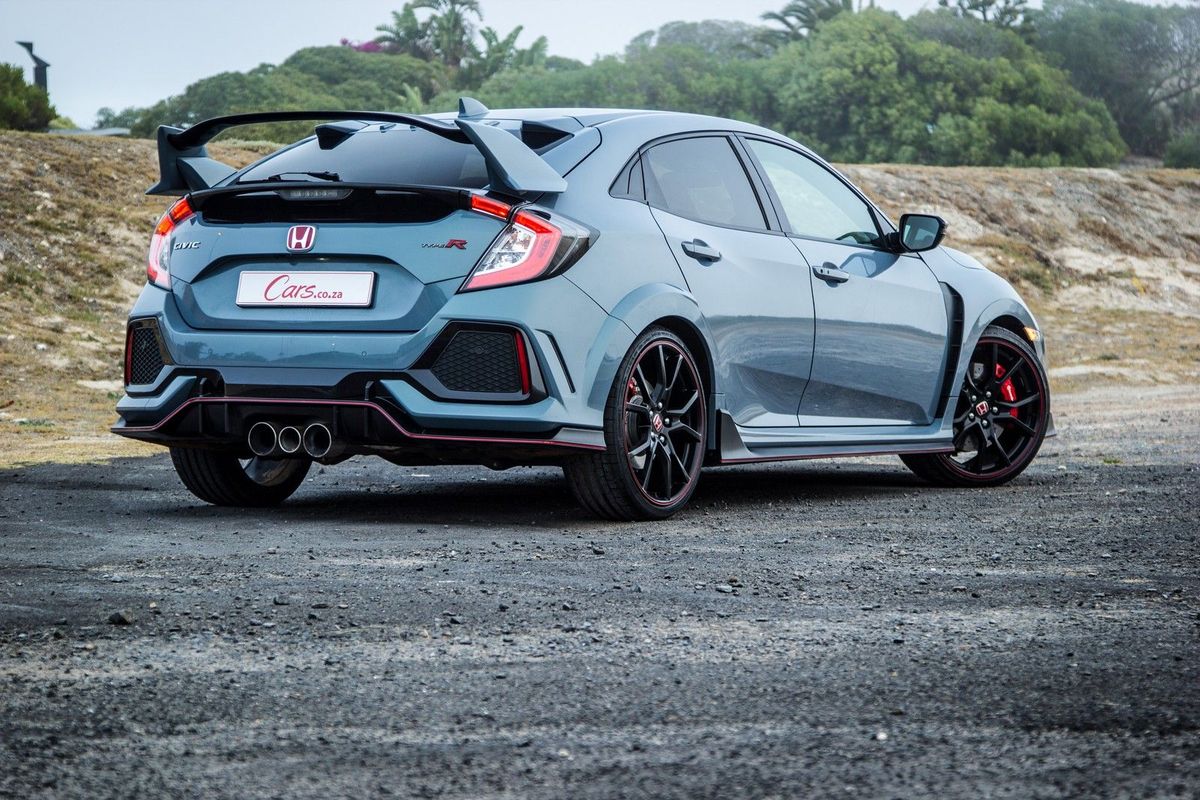
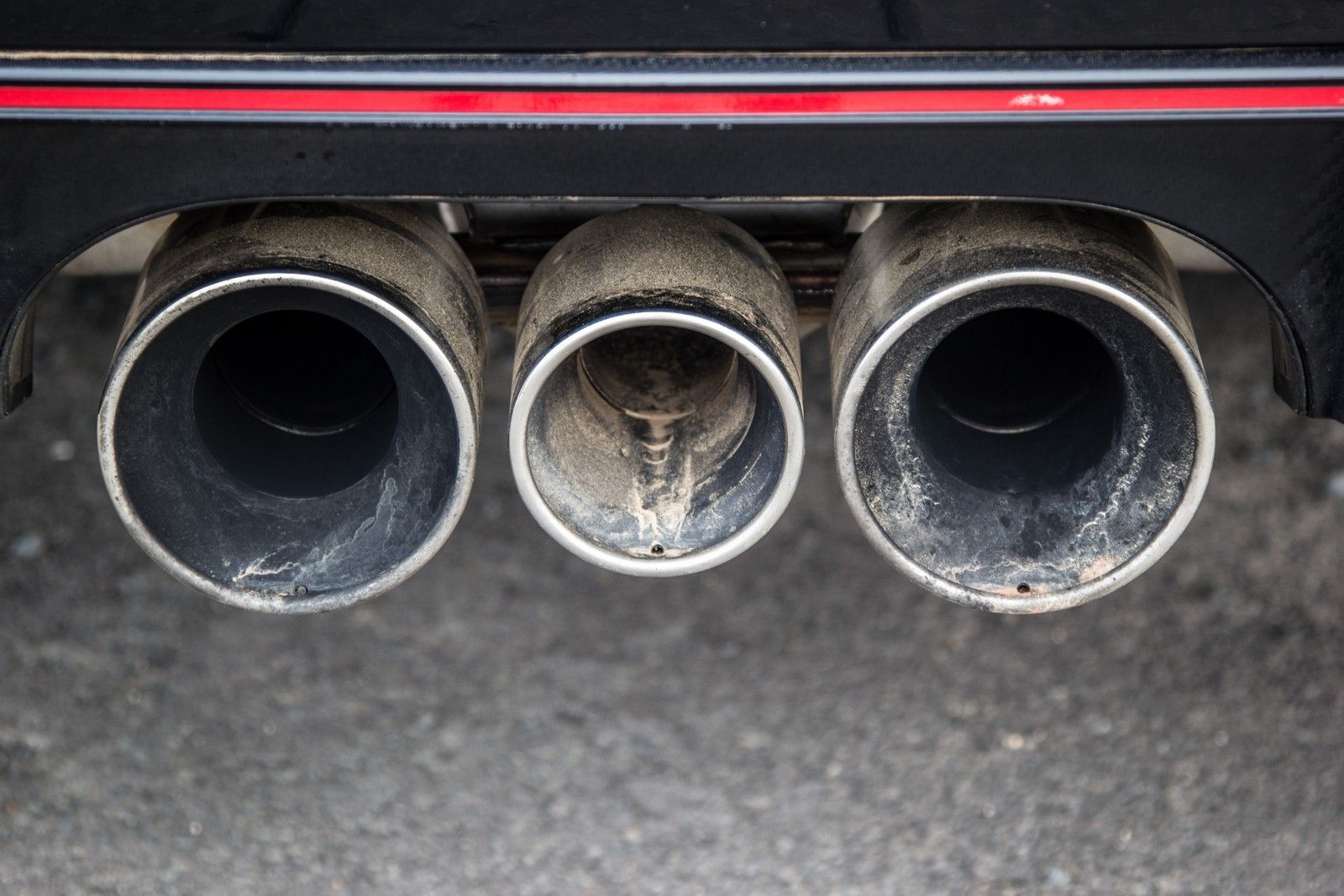
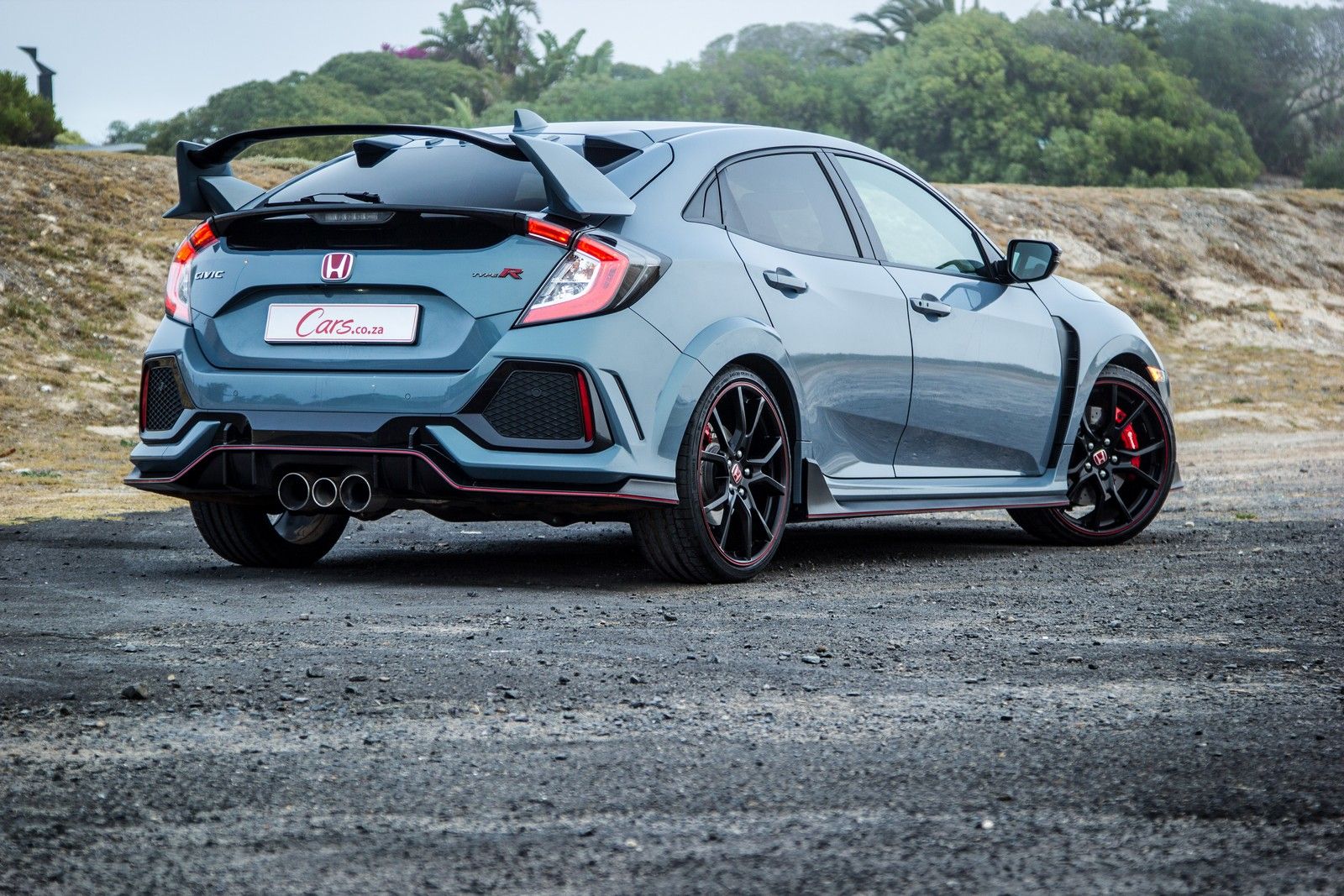
The 3-pronged exhaust, as you will have noticed by now, project out of the centre of the rear diffuser and improve the flow rate, while that smaller-bore centre pipe increases the exhaust sound by no less than 2dB.
The smaller centre pipe increases sound output by 2dB over the previous model. Still could have more rort to it, however.
The chassis and suspension sport major changes. The all-new platform was built with the Type R in mind, so it’s lighter and stiffer than before. The suspension has been designed to deal with torque steer better while adaptive damping should allow the Honda to be more comfortable in everyday use, but still responsive and agile on track. So, without getting into the minutia, those are the major changes to the new Type R. Has Honda effectively improved what was already a track-ready, hardcore hatch?
How does it fare in terms of…
Attacking a road?
There’s no getting away from it, this new Type R is leaps and bounds ahead of any hot hatch in the new vehicle market. Perhaps not in terms of statistics and armchair races, but point it at a sinewy stretch of tarmac and the Honda will instil the essence of a pure driving machine at will.
The 6-speed manual gearbox is the only transmission available with this derivative (admittedly Honda doesn’t have a capable dual-clutch 'box in its arsenal), but in true hot hatch tradition, the so-called stick shift is just brilliant. The short-throw action is simple and fast… it makes you feel like you’re getting shifts done faster and, as a result, driving faster. It makes you want to work on the lost art of heel and toe, except there’s a rev-syncing system that does it automatically for you.
The Type R is one of the very best at inspiring confidence on a demanding piece of road.
The steering is fast, like Alfa-Romeo-Giulia fast, but without so much electronic-assistance-induced numbness. It has a more mechanical feel to it, with feedback that actually feels like it’s coming from the road rather than a central processing unit lending electrical heft to the steering.
The new chassis and suspension settings have given the Type R better turn-in and more balance as you swing the Honda from side to side. It settles over bumps quickly and you can twirl the tiller with confidence and, for lack of a better description, aggression. By virtue of the steering being so rapid, small steering inputs are the order of the day, all of which makes the Honda feel hyper-responsive without feeling nervous/on a knife edge.
That front-wheel-drive-propensity-to-understeer notion is put entirely to bed as there is no hint of push from the front end. You would have to deliberately provoke the car by approaching a bend way too fast and adding armfuls of steering lock to notice any sort of understeer, but that’s driver error – not the car’s fault.
The new helical limited slip differential does most of its work on corner exit; shifting power to best keep the Type R on a tight line. It’s not as intrusive as the Mercedes-AMG A45’s diff and that’s probably down the chassis being fundamentally attuned to a track car… The Honda is not a humdrum hatchback turned into a hyper hatch.
Using it every day?
This is absolutely the most astounding part of the new Type R. Switch it into comfort mode and the adaptive dampers noticeably change the driving experience. The Honda becomes a comfortable everyday car. Not comfortable as in for-a-track-weapon comfortable, but like a Golf or Audi non-performance-model comfortable. It’s a party piece that no other hot hatch of this sort can match. A Golf R probably comes closest, but it cannot "turn it on" when it comes to track-time like the Type R can.
The adaptive damping makes the Type R easy to live with and extraordinarily comfortable, even on long journeys.
Seeing that the Honda is a 5-door compact hatchback, there’s plenty of space for rear passengers, even with the front bucket seats taking up a fair chunk of space. The luggage bay is big at 414 litres and in typical Honda fashion, the rear seatback folds flat to free up enough space to fit a large mountain bike without having to take its front wheel off (yes, we did that). There's no room for a towbar because the exhaust plumbing runs through the centre, but then, who'd tow something with a Type R?!
Looking the part?
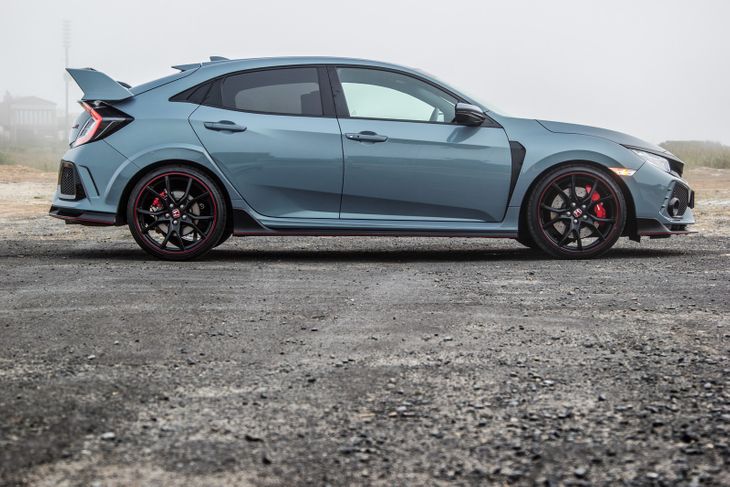
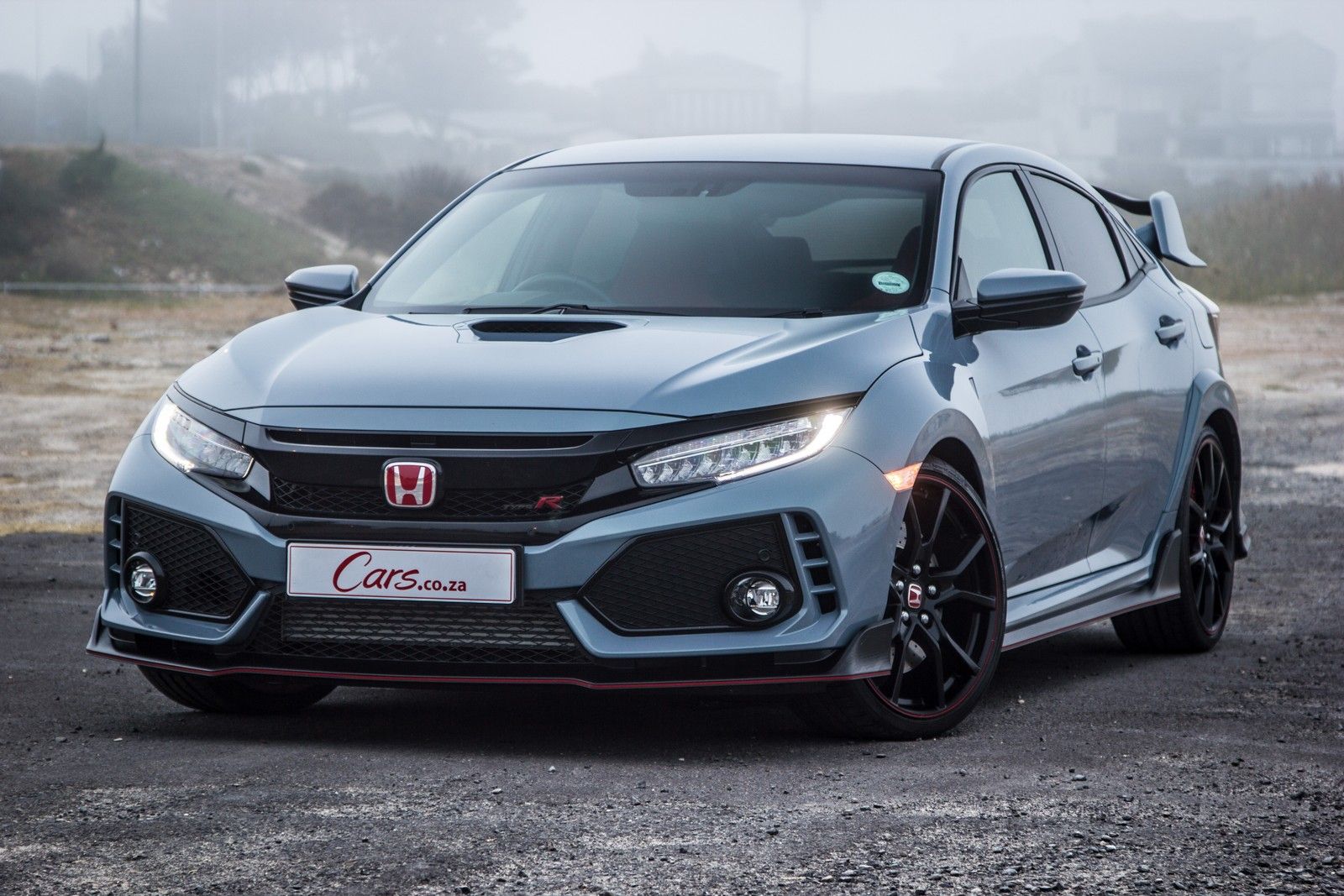
Look, the Honda's elaborately styled exterior design is certainly a lot to take in all at once. There are spoilers on top of spoilers, winglets everywhere and it has more fins than Finland. It looks like an extra from the Fast and Furious franchise! The paraphernalia is certainly over the top, but also functional for the purpose of creating aerodynamic efficiency. It could probably all have been done more subtly, like Renault did with the Megane Trophy or Mercedes-AMG does with the A45 4Matic.
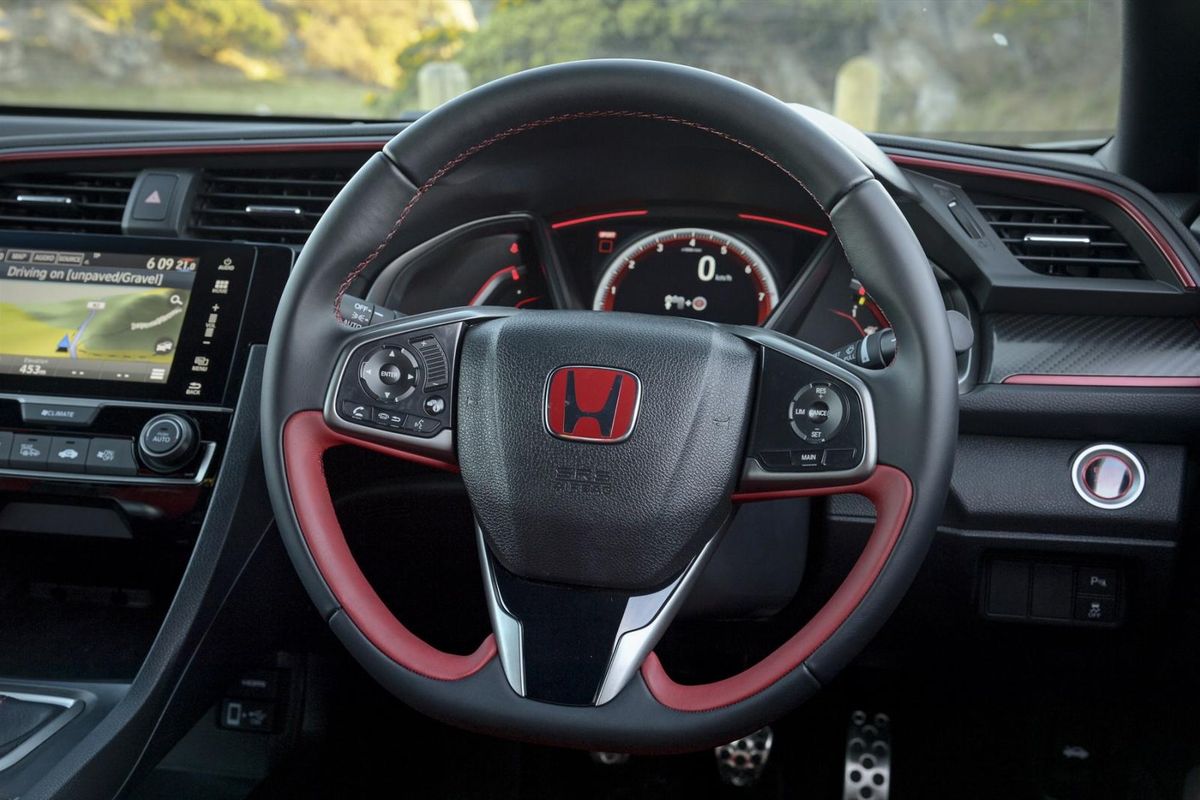
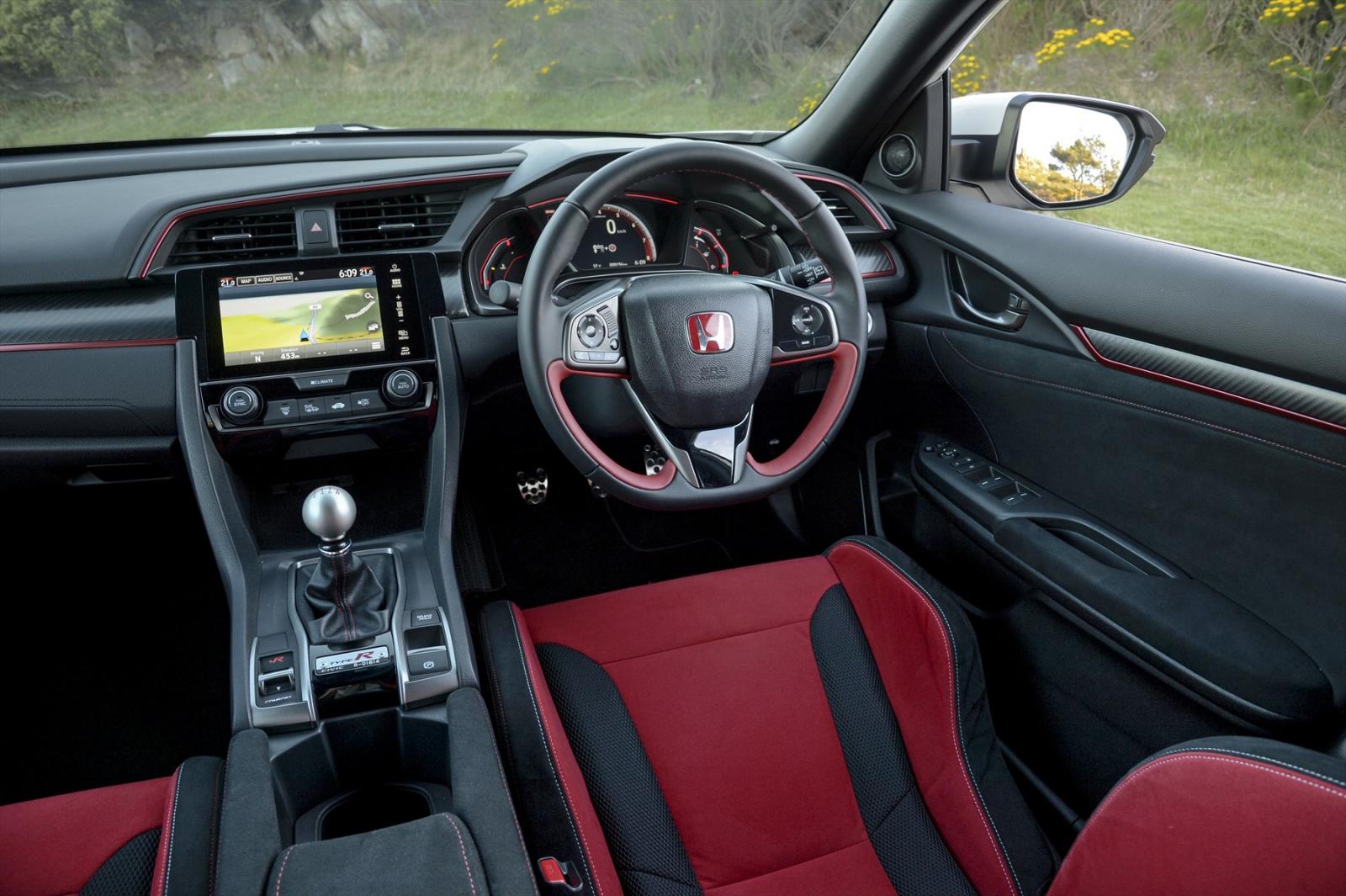
It’s unquestionably a love/hate relationship in terms of exterior looks, but the inside is less controversial. The sports seats fitted to the test unit are very red, but there’s the option of plain black upholstery for conservatively-minded would-be buyers (if they exist as a species). The 2-tier instrument cluster from the previous Type R has been banished in favour of a single-tier unit with 3 separate binnacles. It’s easier to understand and requires less looking around the cabin for a specific readout.
The interior is simpler than before and fully kitted with all the tech you'll want.
The infotainment system now includes Apple CarPlay and Android Auto compatibility, but its interface still feels a little sluggish to the touch and requires you to accept some or other "terms and conditions" every time you start the car.
Verdict
We've scratched our heads about this – we don't believe a track-focused hot hatch has ever been this pliant as an everyday road car. The new Type R ushers in a no-compromise option for those who thought hot hatches are synonymous with back-splintering drives to work and back.
The Honda's looks are divisive, to say the least, and for most of our testers, its appearance was the most difficult aspect to make peace with. It’s not the sort of car that blends in well if you’re in traffic or arriving at a social event. Believe us, you’ll spend a lot of time explaining why it has so many exterior addenda.
Once you step inside and begin to open up the Type R’s gifts, it awakens the racing driver inside you. It has poise, balance and confident steering. It works on a point and squirt strip of road just as well as a sweeping set of bends. The manual gearbox is a pleasure to work and enhances the experience as you synchronise seamlessly with the machine. Suffice to say the aforementioned new-generation Megane RS, which will undoubtedly be a brilliant driver's car, will need to beat the Type R first.
As a car, it’s one of the very best out there, a brilliant driver’s machine that's entirely usable day in and out. It’s practical on the inside too; that’s where you’ll want to stay.
One of the most hardcore hot hatches in the market is back! Is it just a one-trick track pony or can you live with it in the real world?
Much has changed with the new model as Honda looks to extract a whole new level of performance from an all-new chassis and suspension setup.
In this review, Ciro takes the Type-R into the mountains and becomes conflicted about what he likes – and doesn't like – about the front-wheel-drive hot hatch.
Production of the BMW X3 has started at BMW Group's facility in Rosslyn, north of Pretoria.
The BMW Group plant has a maximum capacity of 76 000 vehicles every year, but the big and important number here is the R6.1 billion investment into South Africa. The Rosslyn plant previously assembled 3 Series sedans for both local and international markets, but given the demand of the SUV, BMW Group has switched production to the X3.
The investment announcement came back in 2015 and over the past three years, the factory has been retooling and modifying its facilities to manufacture the X3. Thanks to what BMW claims are "three years of hard work and planning", the X3 production has started on time. The Rosslyn plant was the first factory to be built by the BMW Group outside of its homeland in Germany and the 3 Series was built for 35 years. That's almost 1.2 million cars assembled over this period!
Tim Abbott, CEO of BMW Group South Africa and Sub-Saharan Africa, says the successful ramp-up of production of the BMW X3 at Rosslyn is a vote of confidence in the country and in BMW Group South Africa’s associates. “The allocation of production of such a crucial model to our plant is about as big a vote of confidence as it gets,” Abbott says. “The demand for the BMW X3 globally is powerful, and ramping up on time and to the right standards is vital to the model’s success. I have full confidence in our associates and plant management at Rosslyn. This is the team that won the coveted JD Power Platinum award in 2015, showing that a South African plant can lead the world in terms of quality,” Abbott says.
Ford has officially released a teaser image and video of the next-generation Focus hatchback which is expected to be revealed on the 10 April 2018 and with a potential South African market introduction in 2019.
The new Ford Focus hatchback will be larger, but lighter, feature much cleaner lines and a raft of new onboard technologies. Based on a development of the existing C2 platform, the new Focus is expected to sit lower, wider and longer (the latter attribute certainly in the case of the sedan) than the current model. As is the case with the Fiesta, there should be a number of trim lines, including the sportier ST-Line and the upmarket Vignale (replete with chrome detailing and LED head- and tail lamps).
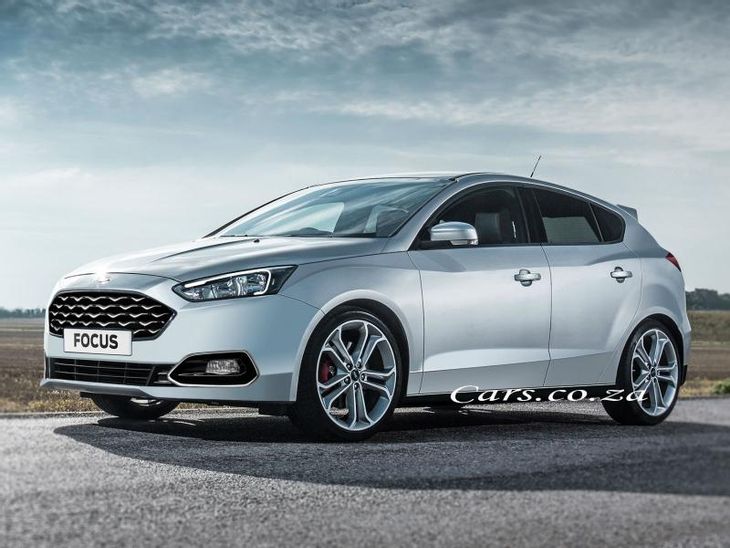
Our render from July 2017 is fairly accurate when compared to the official image from Ford.
The engine line-up has yet to be confirmed, but over and above weight saving measures such as the more extensive aluminium and high-tensile steel in the body construction, the Blue Oval will utilise its 1.0-litre EcoBoost turbocharged petrol engine in various states of tune as well as the 1.5-litre 4-cylinder turbodiesel. Let's not forget the performance ST version either. The manual transmissions will feature 6 ratios, but it remains to be seen whether the controversial 6-speed dual-clutch Powershift automatic option will be upgraded or replaced.
We'll be attending a test drive event in Europe in June and will bring you a comprehensive report. Watch this space.