Lamborghini Huracan Performante: Who’s the attention-seeker?

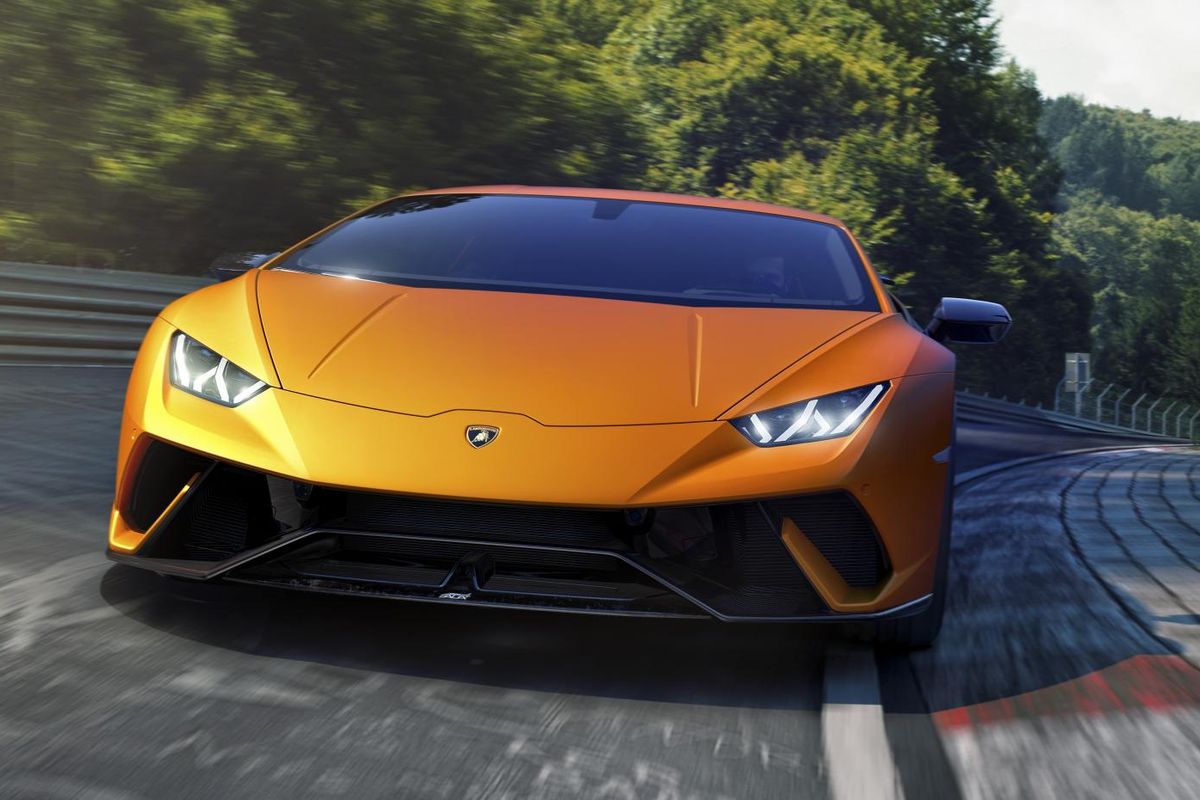
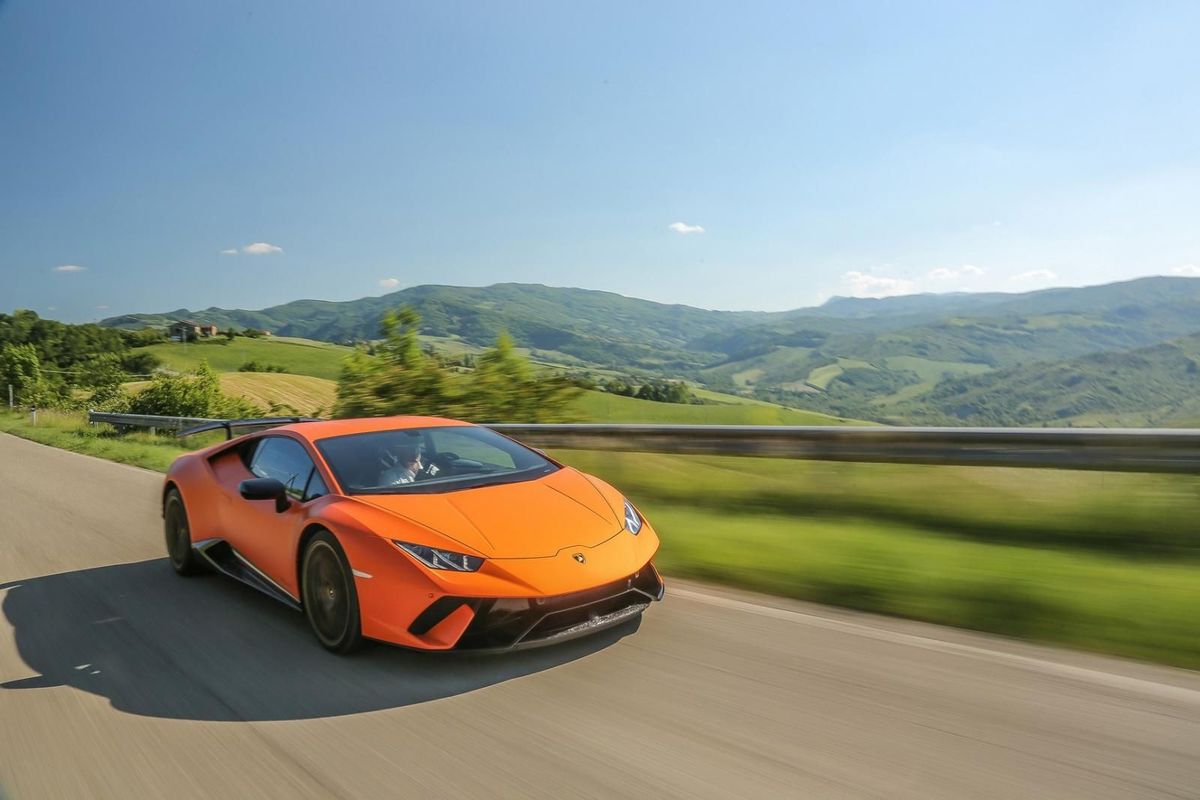
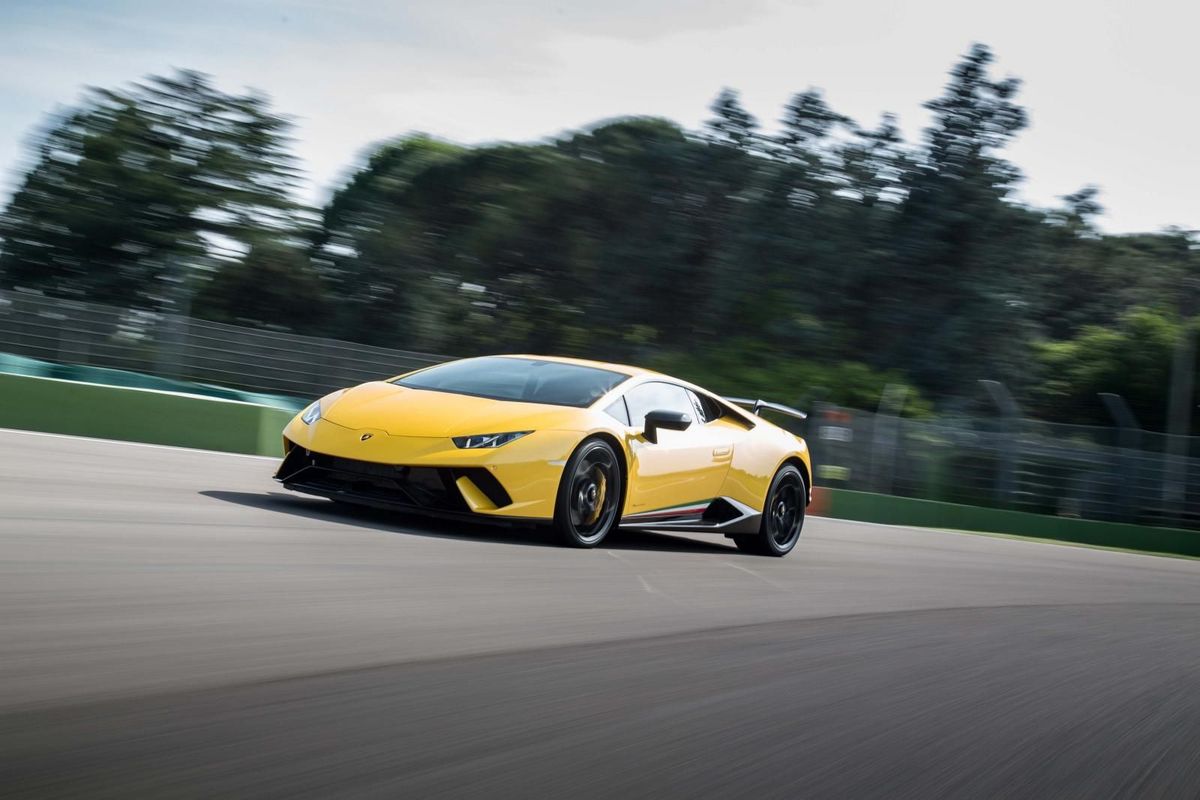
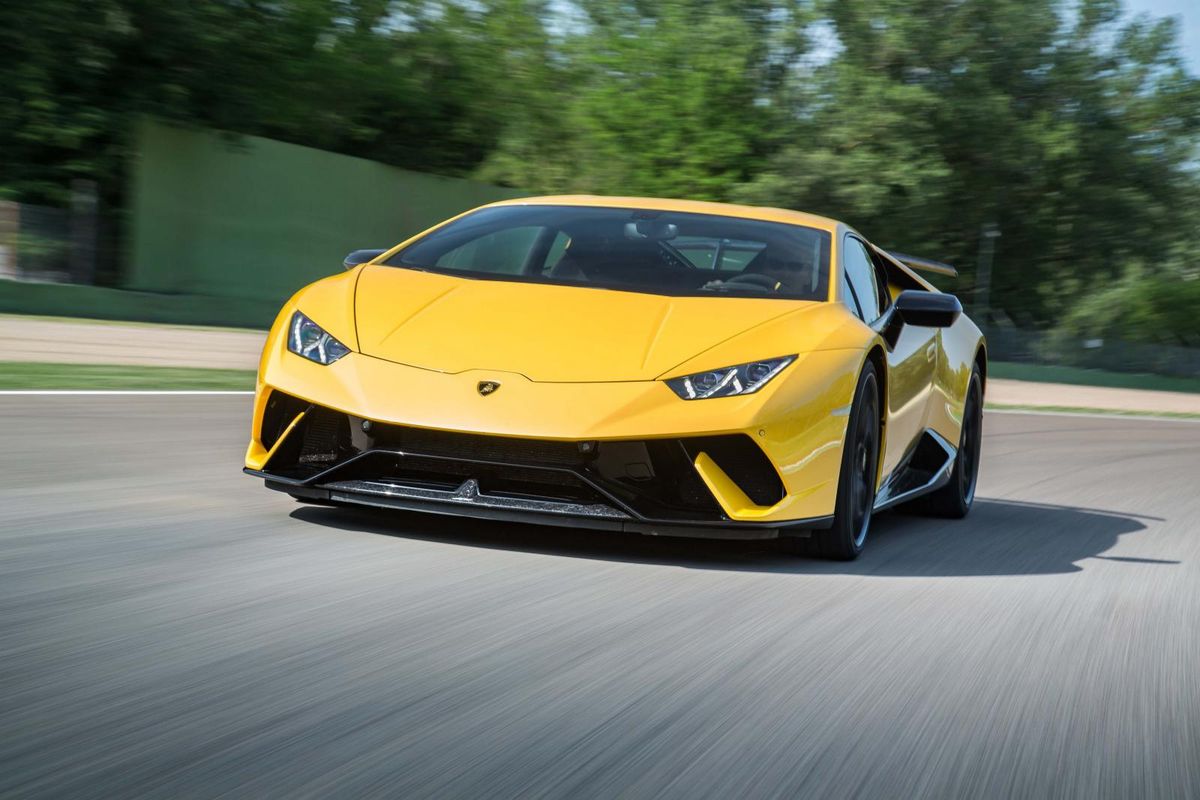
Do peak outputs of 470 kW and 600 N.m of torque, plus a sprint time from 0 to 100 kph of just 2.9 seconds, appeal to you? Of course they do! If you have just a millilitre of petrol pulsing through your veins, you would have to be excited by those performance figures!  Just imagine my excitement, then, when I got offered to drive the beast that delivers them: the Lamborghini Huracán Performante.

In March 2017, Cars.co.za reported that the Performante was unveiled, in all its glory, at the Geneva Show. The car’s claim to fame is that it beat the Porsche 918's time around the Nürburgring and here, 7 months after the show, it's in Cape Town, being handed to me on a silver platter (covered in insurance forms) to drive for the day.

I have been very fortunate to drive many different cars, supercars among them, but the last time I was behind the wheel (or even in the passenger seat) of a Lamborghini was way back when, when I was still working for CAR magazine. It was our annual Performance Shootout and I had a stretch in the Gallardo LP550-2. My only other memory of being in a Lamborghini, and this is not something I am proud of, was when I fell asleep in the passenger seat as my colleague drove us back to Cape Town.
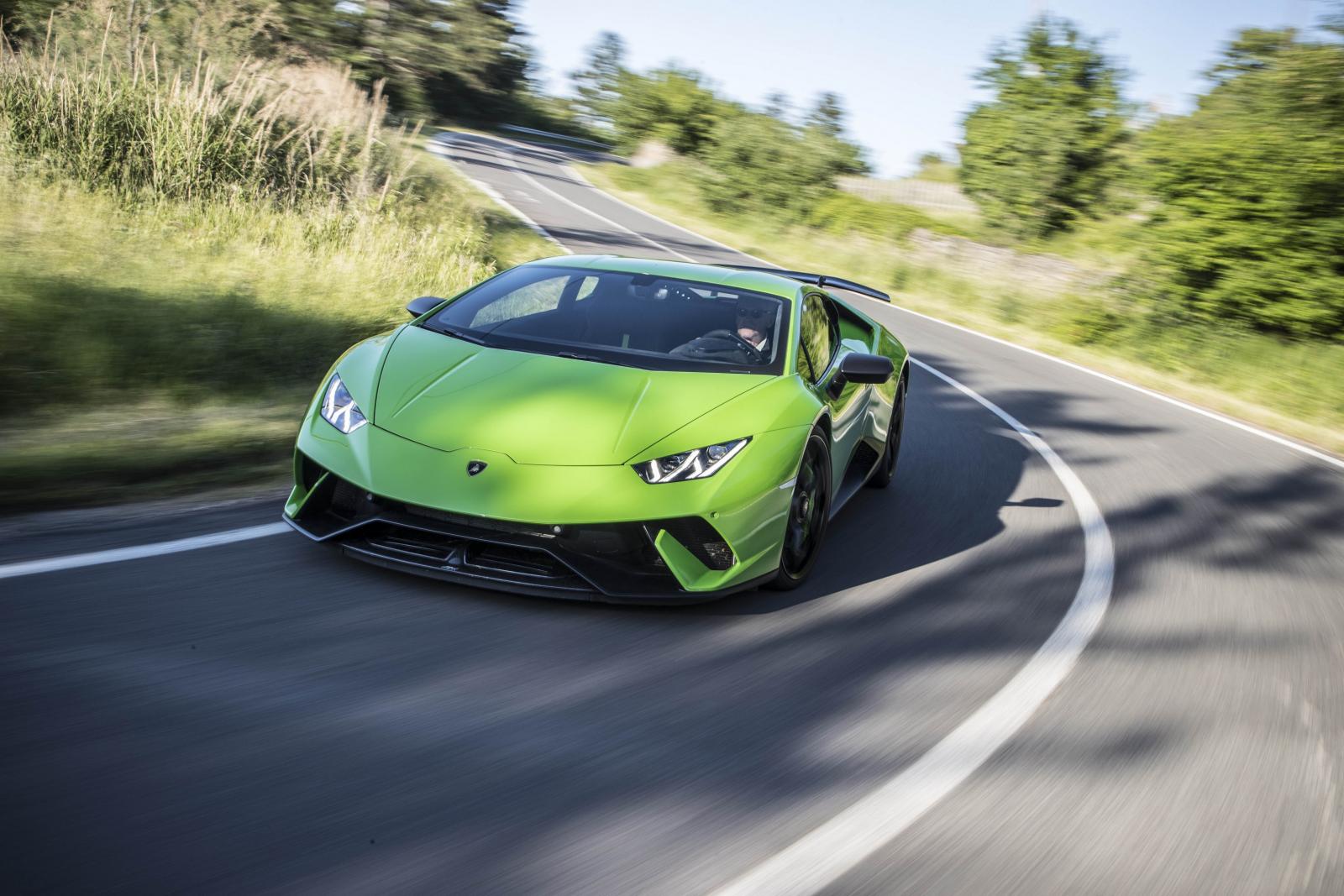

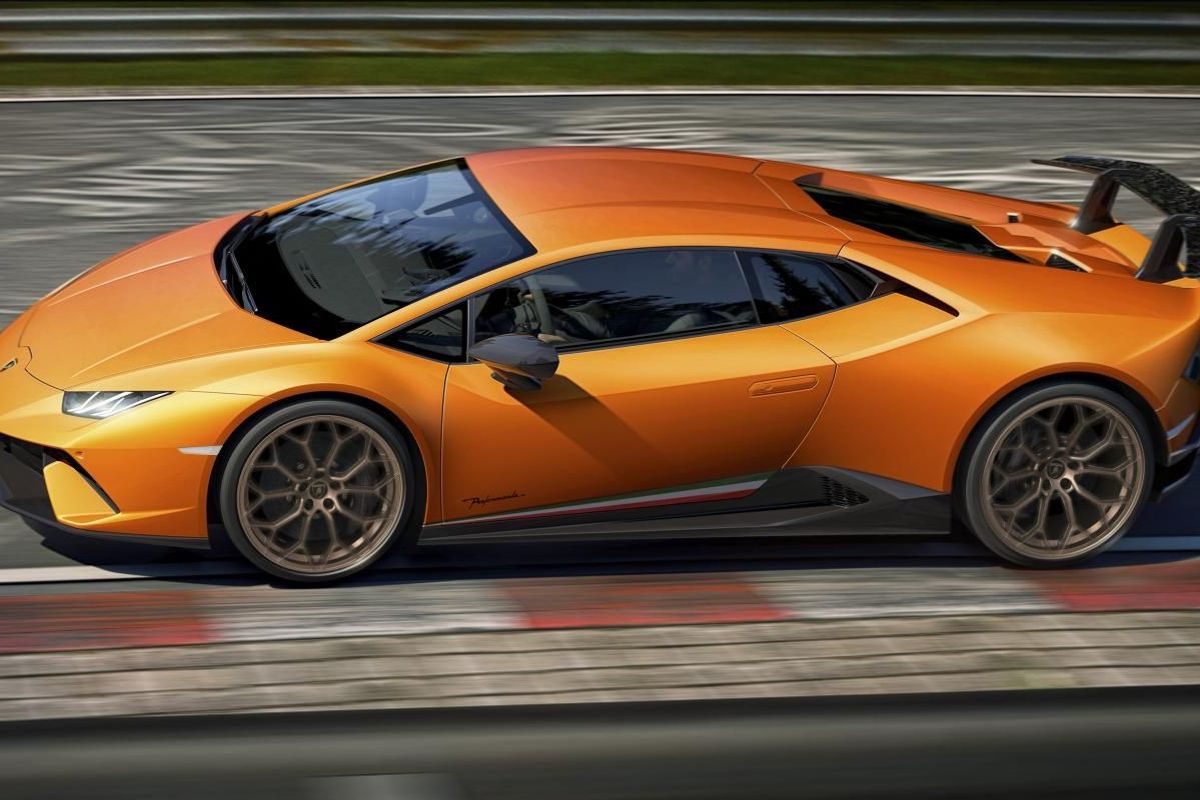
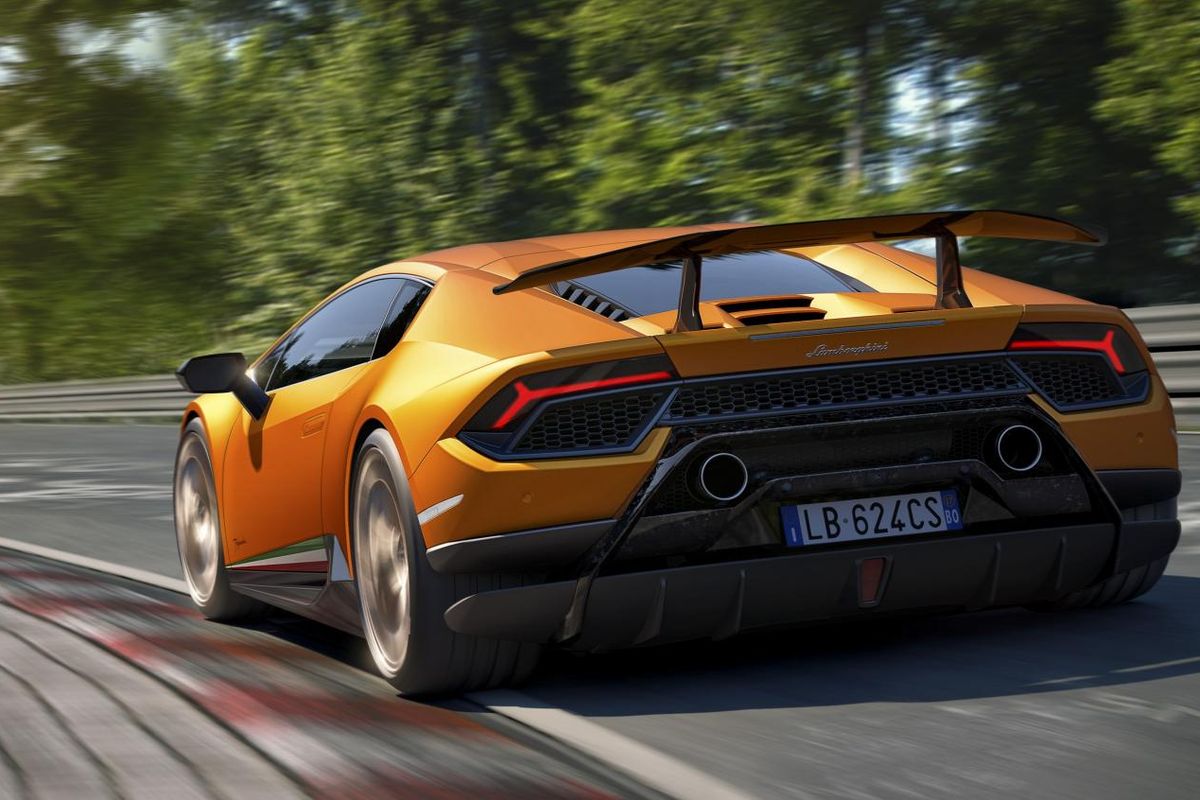
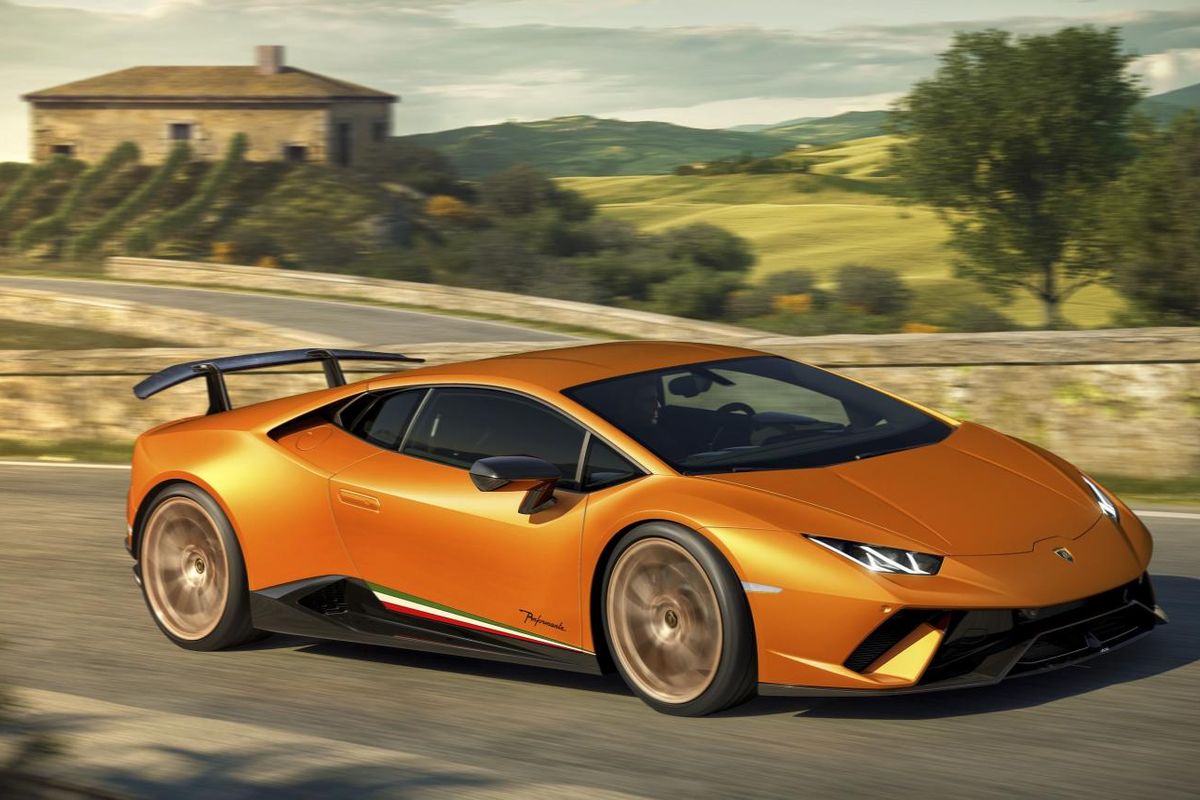
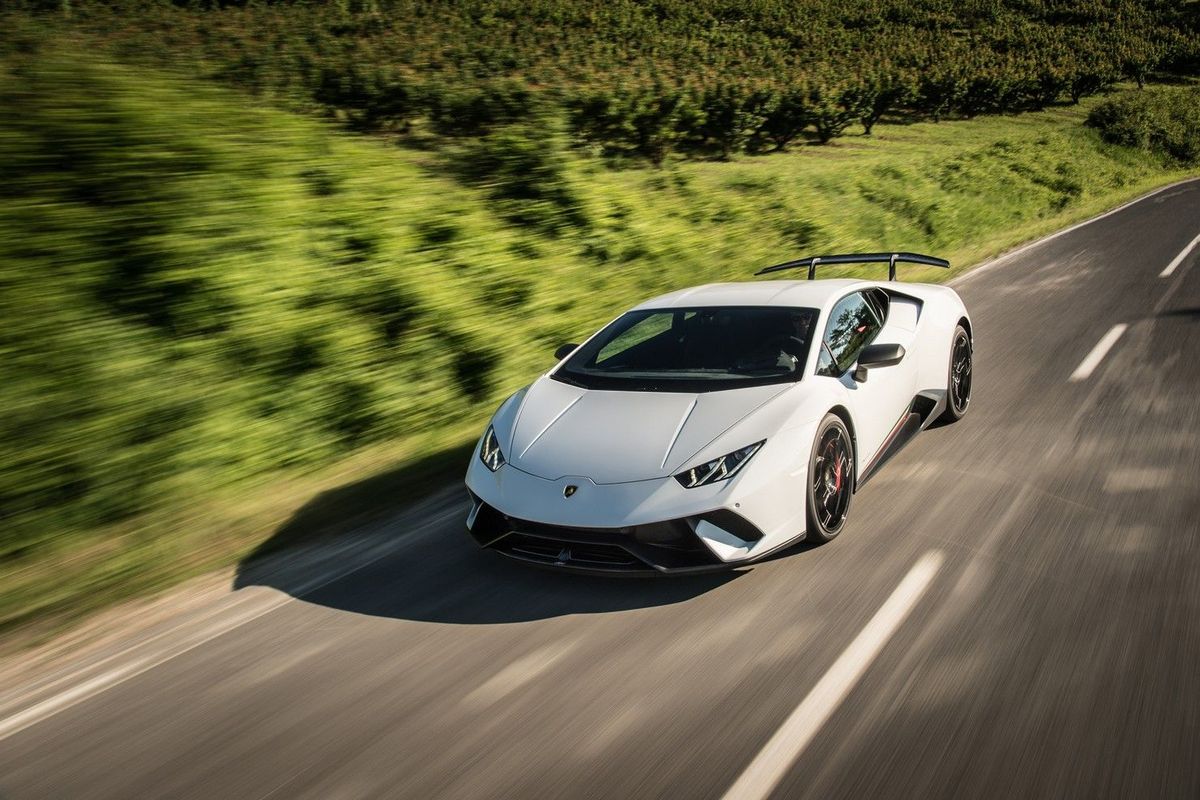
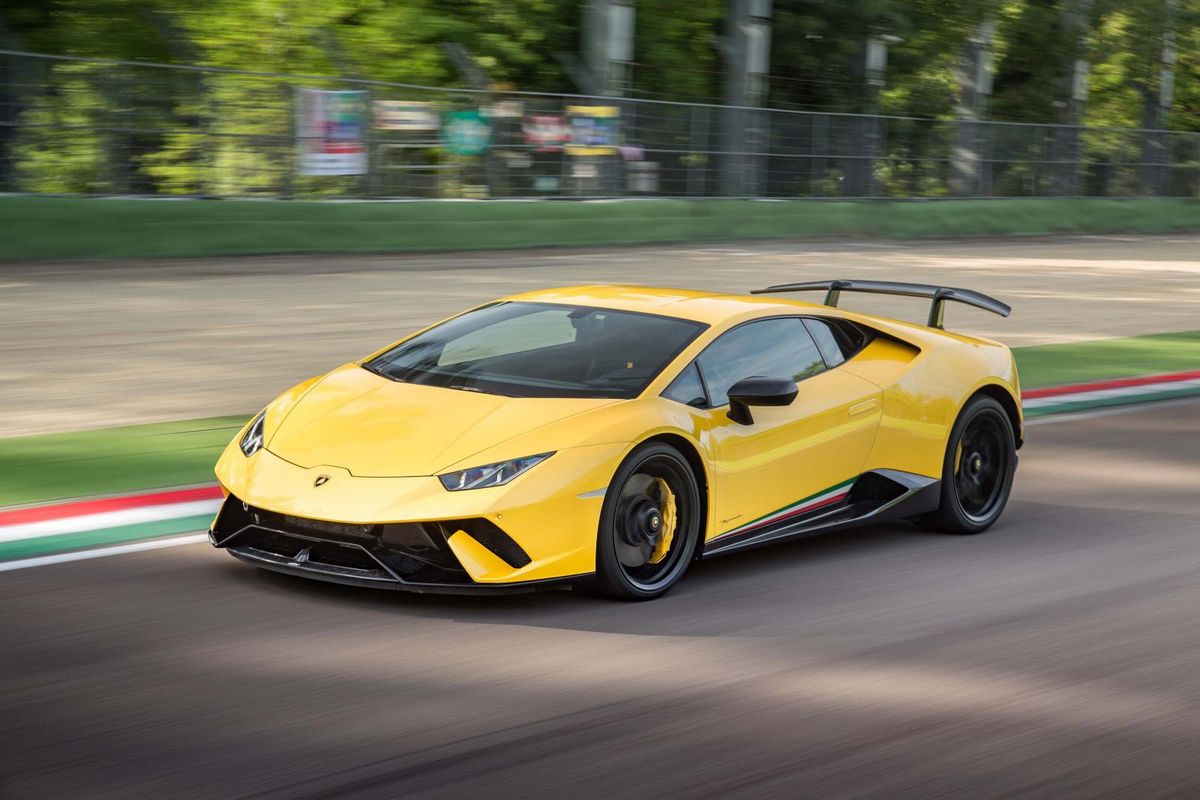
The Lamborghini Huracan Performante's most distinguishing characteristic is its active aerodynamics… or Ala, for short.

Needless to say, I have never lived this anecdote down. And so, with the Performante, I had something to prove and by God, I was going to give it horns! Except… I wasn’t allowed to take the Lambo on a track. Talk about a handbrake!

So here I was, sitting behind the wheel of this much-talked-about supercar, waiting for that moment where my nerves would subside and adrenalin would kick in. Something to bear in mind, this car has 750% more downforce than the standard Huracán. This is due to the (*cue Italian accent please) AeroDynamica Lamorghini Attiva or Ala, which means “Wing” in Italian and, if you’ve seen the Performante, you will understand why.

This system provides an active variation of aerodynamic assistance for high downforce and low drag conditions, whichever is applicable and everything in between. I’m not going to go into too much detail here, because it's helluva technical and let’s not pretend we all completely understand it. Suffice to say that all we really need to know is that it makes this car very, very fast. Well, that and the howling free-revving 5.2-litre naturally aspirated V10 engine, of course.

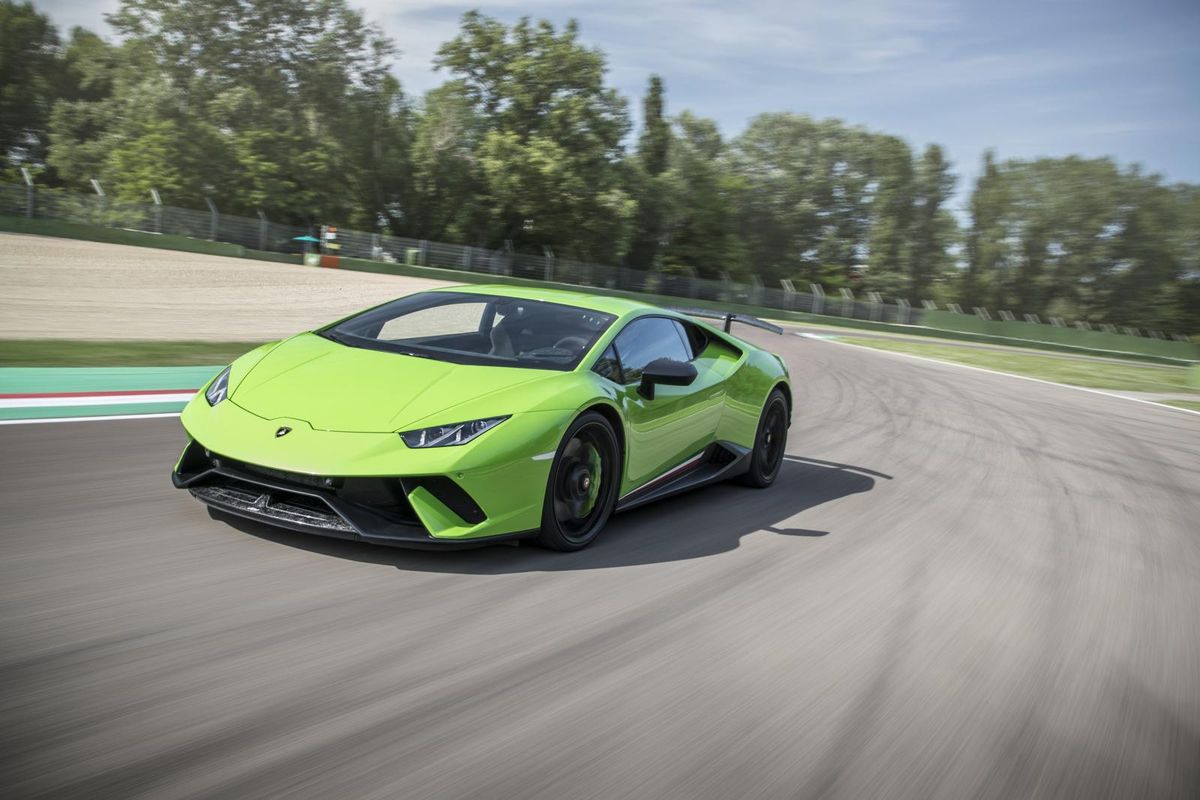
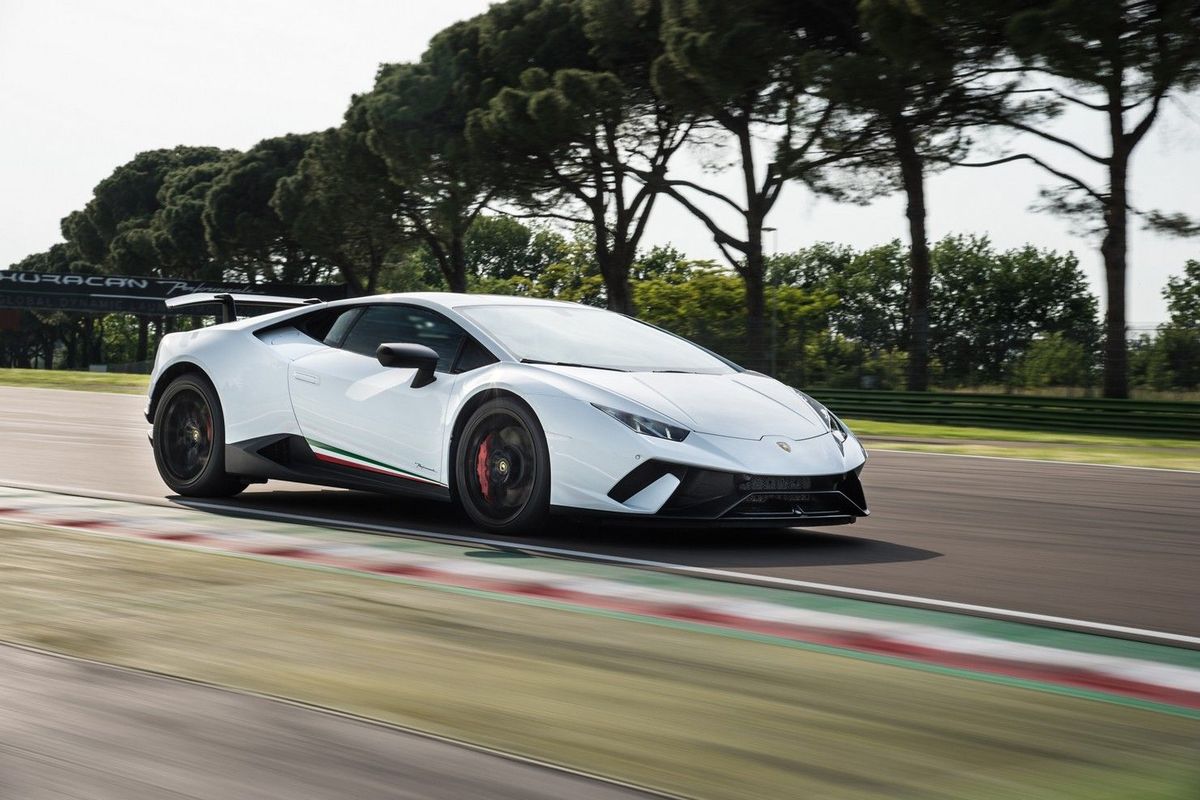
Experience the blur of speed and colour as the Performante attacks the famed Nurburgring:

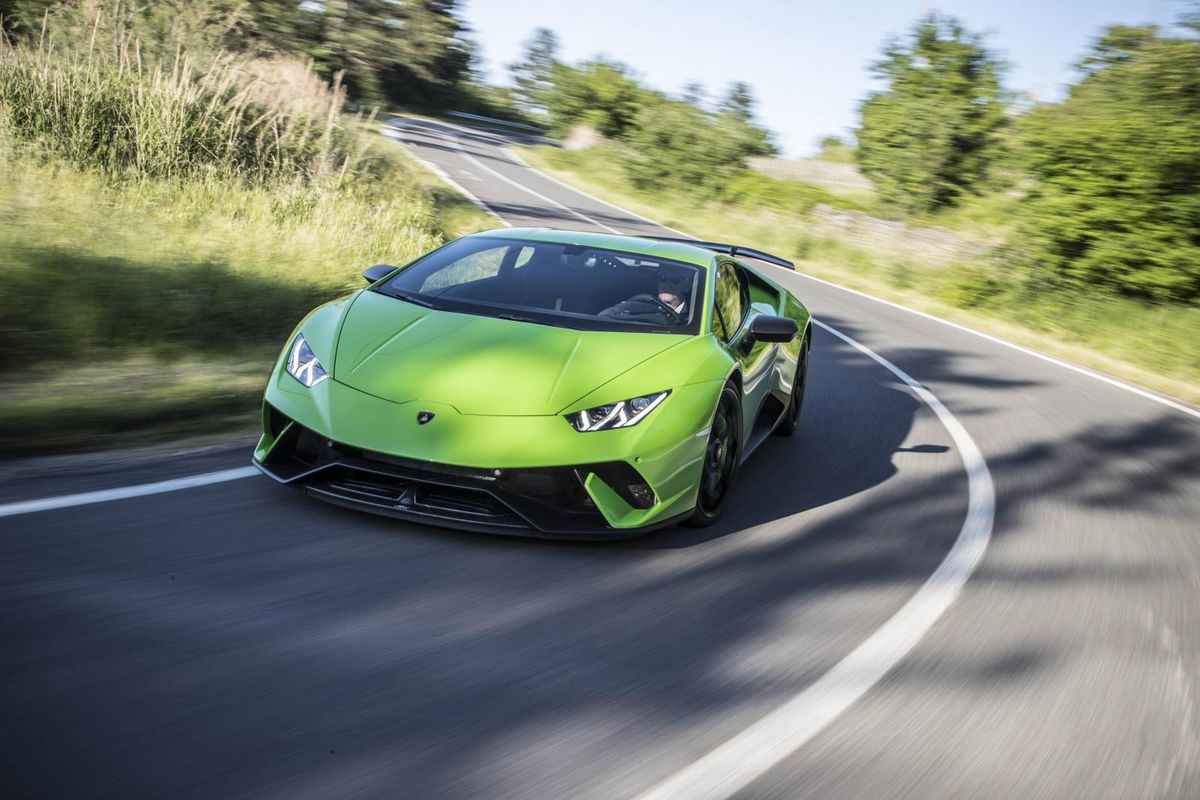
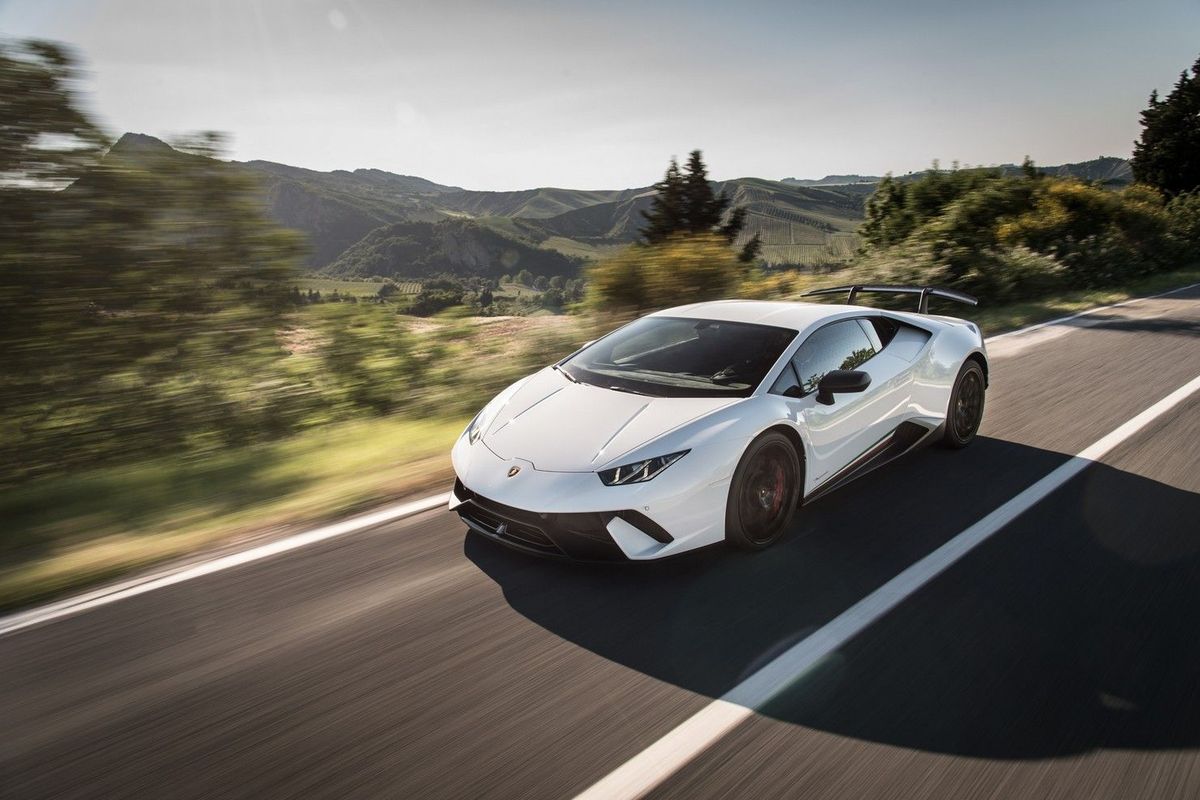
One tap of the throttle and I was off in the blink of an eye! My adrenalin was pumping, the wail of the exhaust caressed my ears (gosh, the sound is just tremendous!) and I felt the power pulse through me like very few things can (hey, get your mind out of the gutter…). But then, as quickly as the thrill entered my veins, so did complete and utter discomfort. Not from the seats or the ride quality, which are comfortable – and surprisingly smooth – respectively, but due to the eyes that followed my every move.

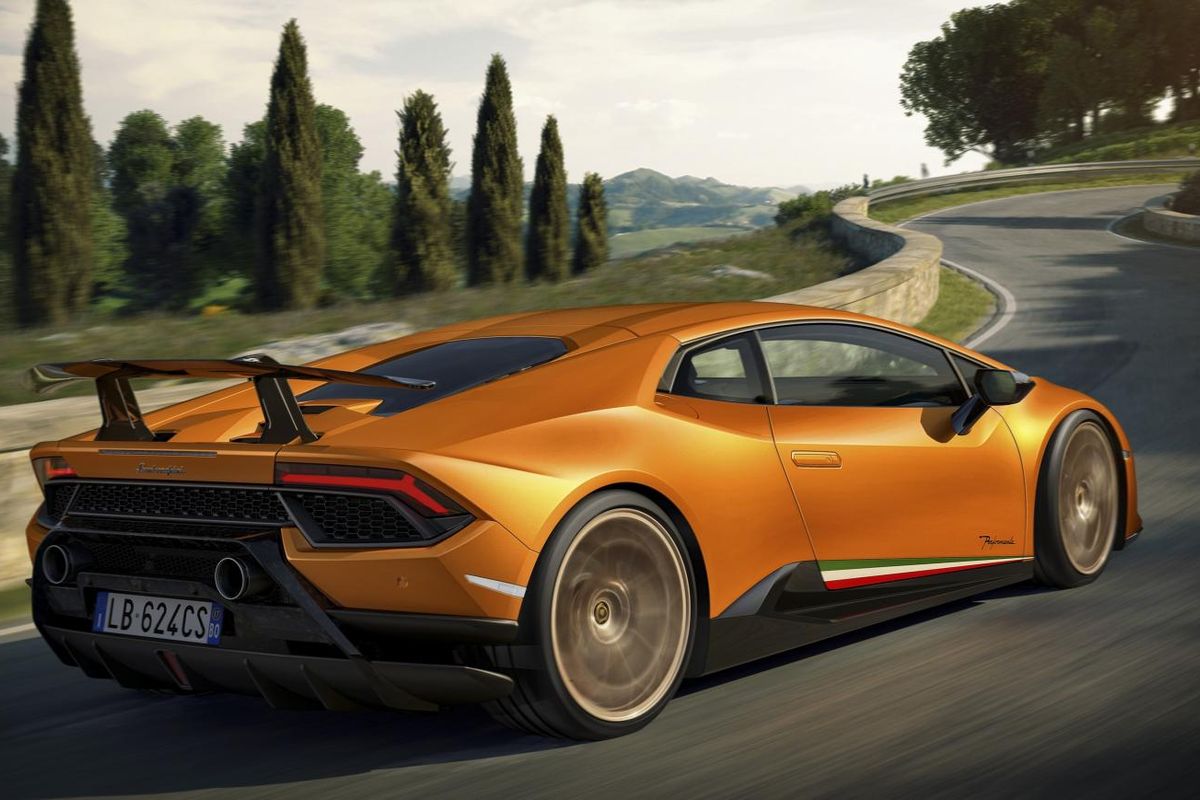
I came to realise something; more than having considerable wealth, it takes a certain kind of person to buy a car like this. Either a person who gives absolute rocks about what other people may think of them, or someone who seeks a lot of attention from others and craves absolute validation from their reactions. I am not trying to put a negative spin on this car, nor on the Performante's target market… I am merely saying that I am not someone who delights in the amount of attention this car attracts.

Along came a (458) Spider…

I am also evidently not the type of person that people expect to see sitting in a Lamborghini's driver’s seat… There were many interesting moments along this short drive, but one that stands out is the cliché that passed me: a Ferrari 458 Spider driven by an older grey-haired man with a much younger blonde woman perched in the supercar's passenger seat. He must have driven past me 5 times with a look of confusion that made me grin from ear to ear… not only because I was defying every archaic idea that so many people have about women and cars, but because I was driving the Lamborghini. It’s the more outrageous of the two, isn’t it?  
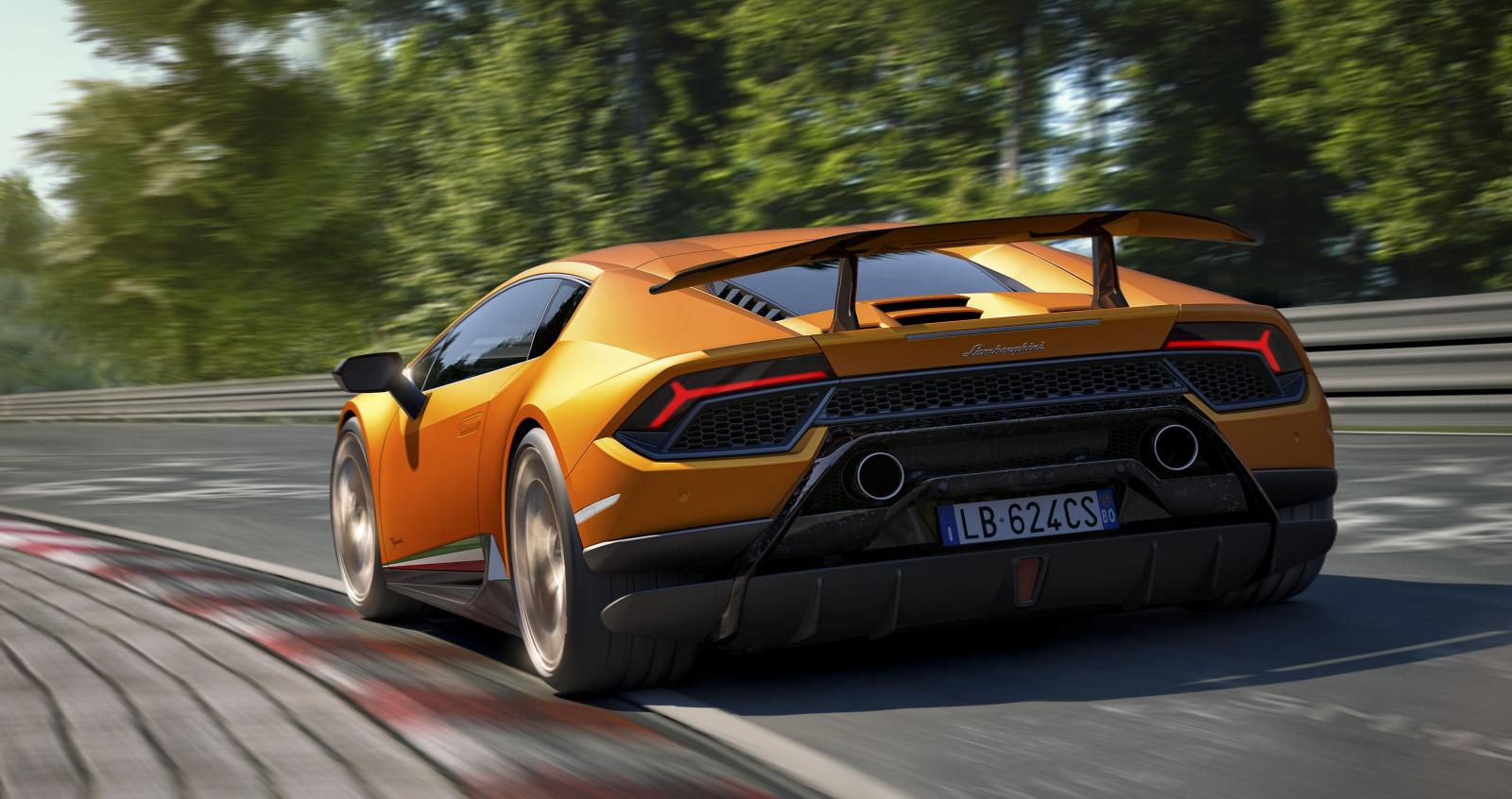

The revised exhausts are lighter and are positioned at a higher and more central position, for a more aggressive sound.

Don’t get me wrong, I would prefer to drive a Ferrari (I suspect most consumers would), but it seems like a comparatively safe purchasing option. Ferraris are far more common on our roads (and that's saying a lot) compared with a Lambo, which somehow captures a moment in time better than the overwhelming majority of cars can.

Truth be told I would rather drive an Audi R8 V10 Plus every day than its Lamborghini cousin. My reasons for saying this are all purely personal, the main one being that I am just not flamboyant enough to pull off a Lambo with great conviction. The Audi is, of course, the prudent choice. Sure, there is a price difference, the Performante will set you back a sweet R5 838 500, while the Audi will cost you half of that. But comfort is a huge factor for me and the R8 does comfort so well.

And let’s be really honest with each other, shall we? What is the point of owning a car that you can never ever unleash to its full potential? Why spend money that can buy you a house or a car that will almost never see a track and will only ever sit ever-so-politely around the 120 kph mark? It can only be for the attention. It’s like buying a house with the most epic entertainment area and then closing it in with glass walls so that it is only to be looked at, not played with.
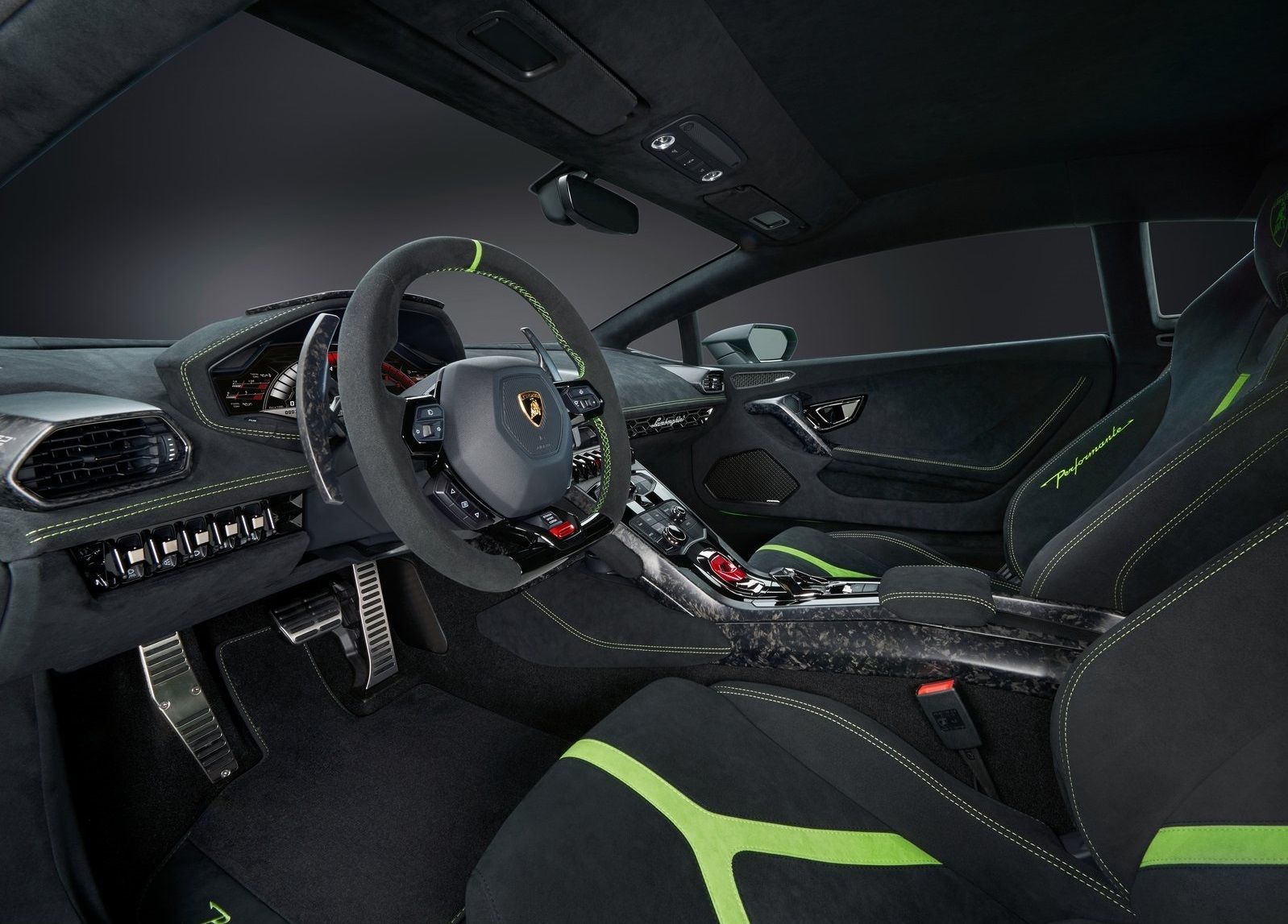

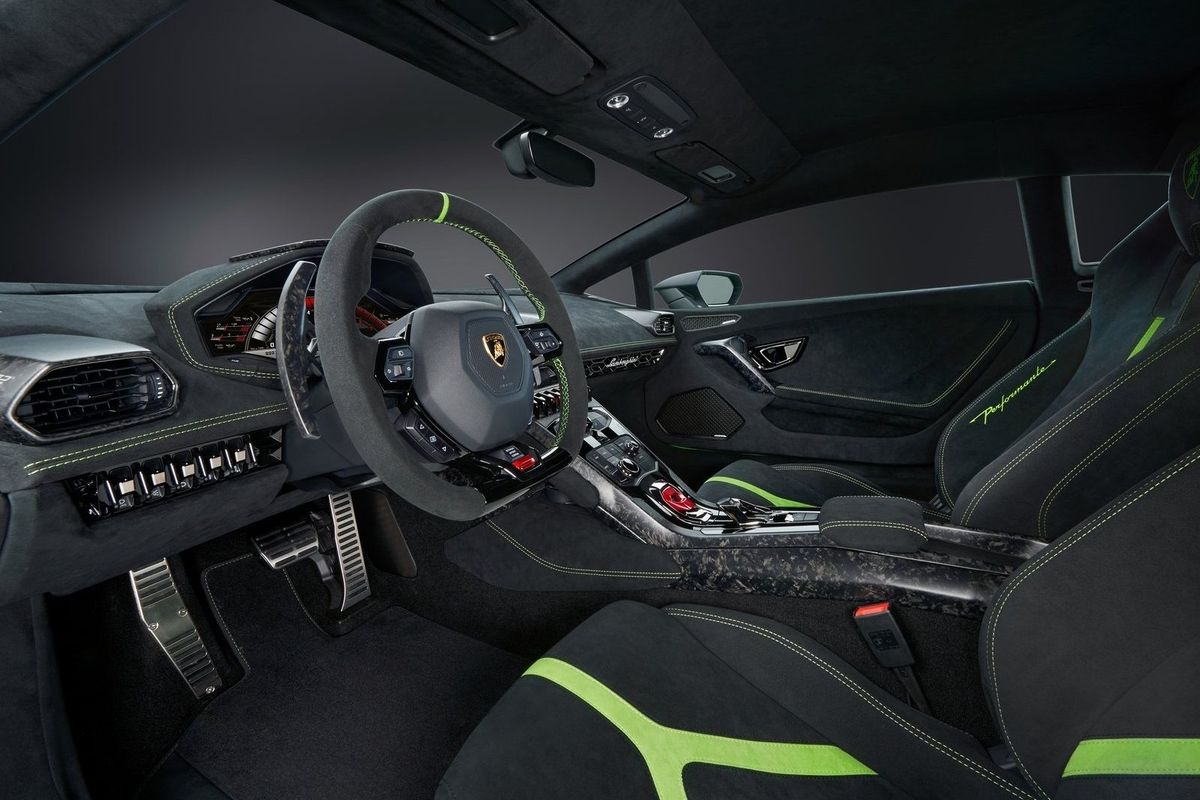
The cabin treatment is as extroverted as the Performante's interior, yet the driving experience is surprisingly user-friendly.

Driving the Lamborghini Huracan Performante will not be something I will forget about anytime soon. believe me. I know just how special it is and just how lucky I am to be able to sit here writing about whether or not I would own one. Let’s face it, I will probably never be in a position to buy any sort of supercar.  But I like the idea of sitting here in my glass tower, throwing stones and hoping that no rocks will be hurled back in my direction! And please, no more unwanted attention!

I got my fair share in this beautiful piece of machinery; enjoying the privilege of driving one has now been ticked off my bucket list. How does the Performante compare with an ordinary car… even performance variants and dyed-in-the-wool sportscars? Well, virtually all aspects of it… from the dramatic soundtrack, explosive acceleration, the difficulty of judging there the wide, flat car's extremities are, to the sensitivity of the steering and whiplash throttle/gear change responses are just totally over the top.

And the most sublime attribute of the Performante? For all its expensive underpinnings and cutting-edge mechanicals, the whole is still greater than the sum of its parts. As for the people who'd buy one: They'll most likely view the world in an entirely different way to you and me. Lamborghini would not want it any other way.

Listen to Juliet's other commentary from behind the Lamborghini's wheel…

Related content:

Lamborghini Huracan Tackles Perfect Road (Video)

Lamborghini Huracan Performante Unleashed

Lamborghini Huracan LP610-4 Spyder (2016) Review

Driven: Lamborghini Huracan Spyder & Rear-Wheel-Drive Huracan 580-2 [Video]

Our Lamborghini Huracan Blast Through Cape Town

Looking to buy a Lamborghini?

Search for one on Cars.co.za

SA’s Unsung Off-Road Sales Hero

The luxury off-road capable SUV market is brutally competitive and boundlessly profitable. But its star achiever remains unheralded.

When you think R1-million luxury SUVs, you think Range Rover Vogue – certainly not Evoque. Nothing symbolises seven-figure SUV ownership aspiration quite like a Range Rover, yet in South Africa there is a luxury SUV which outsells the iconic British luxury off-roader. And no, it’s not German.

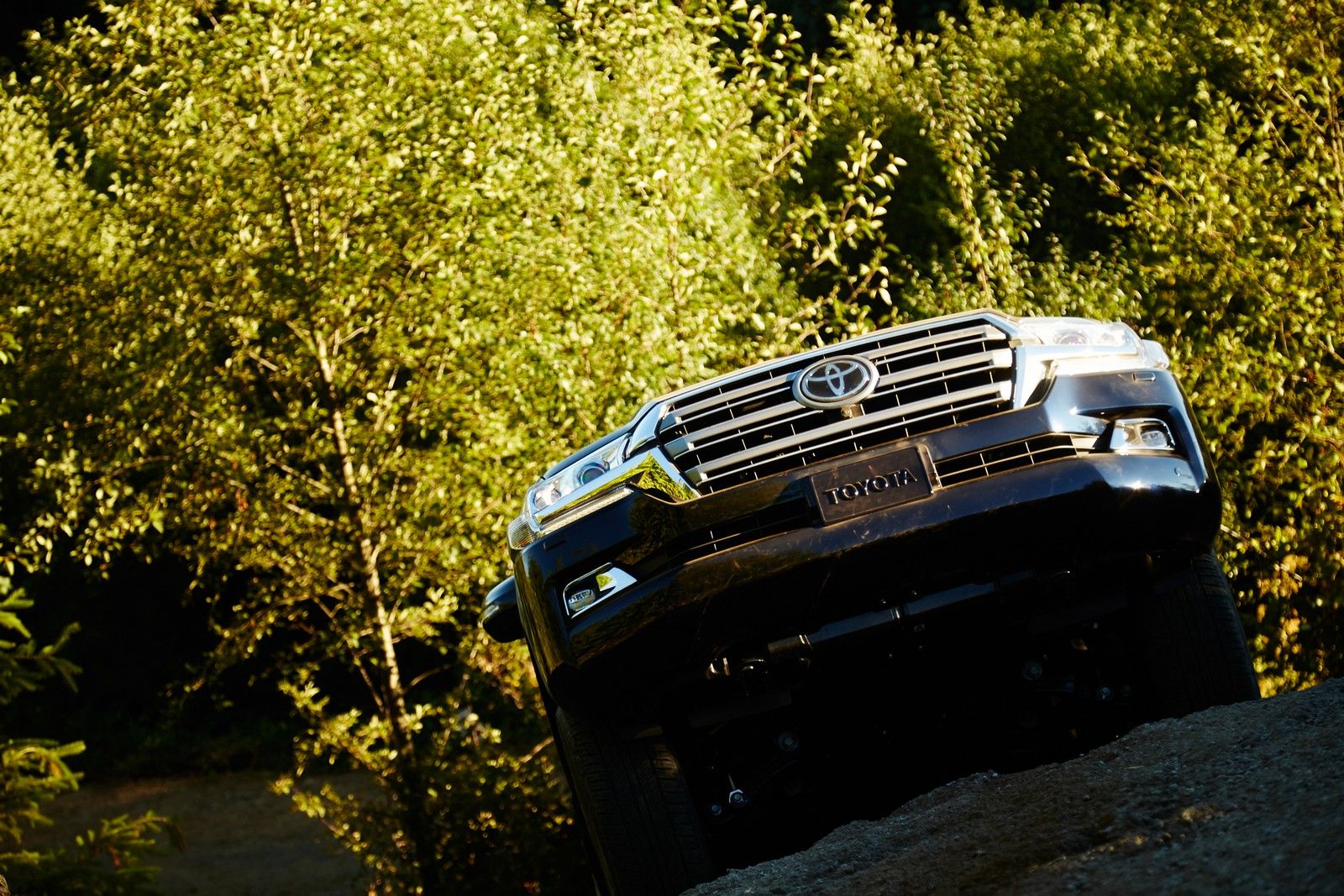
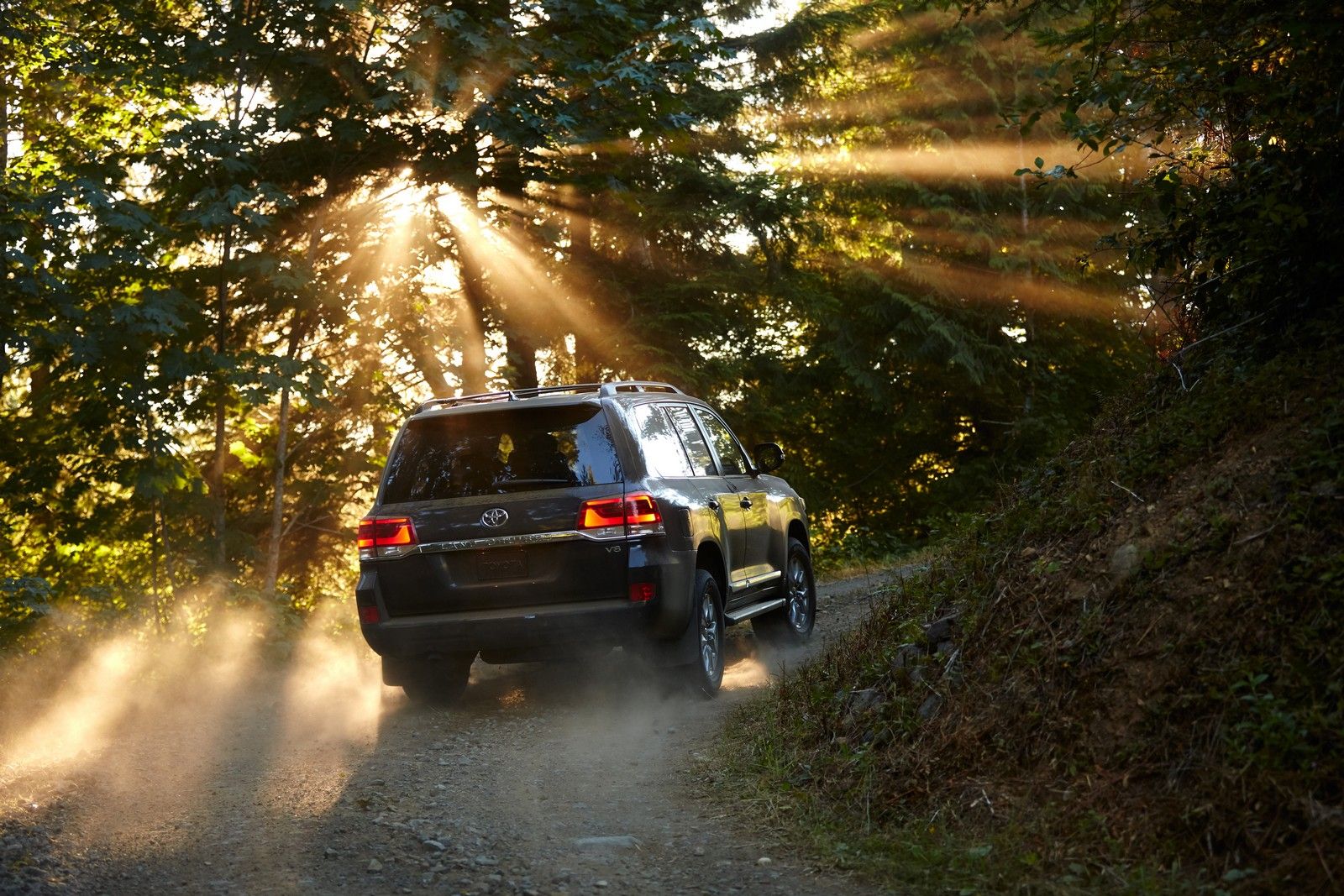
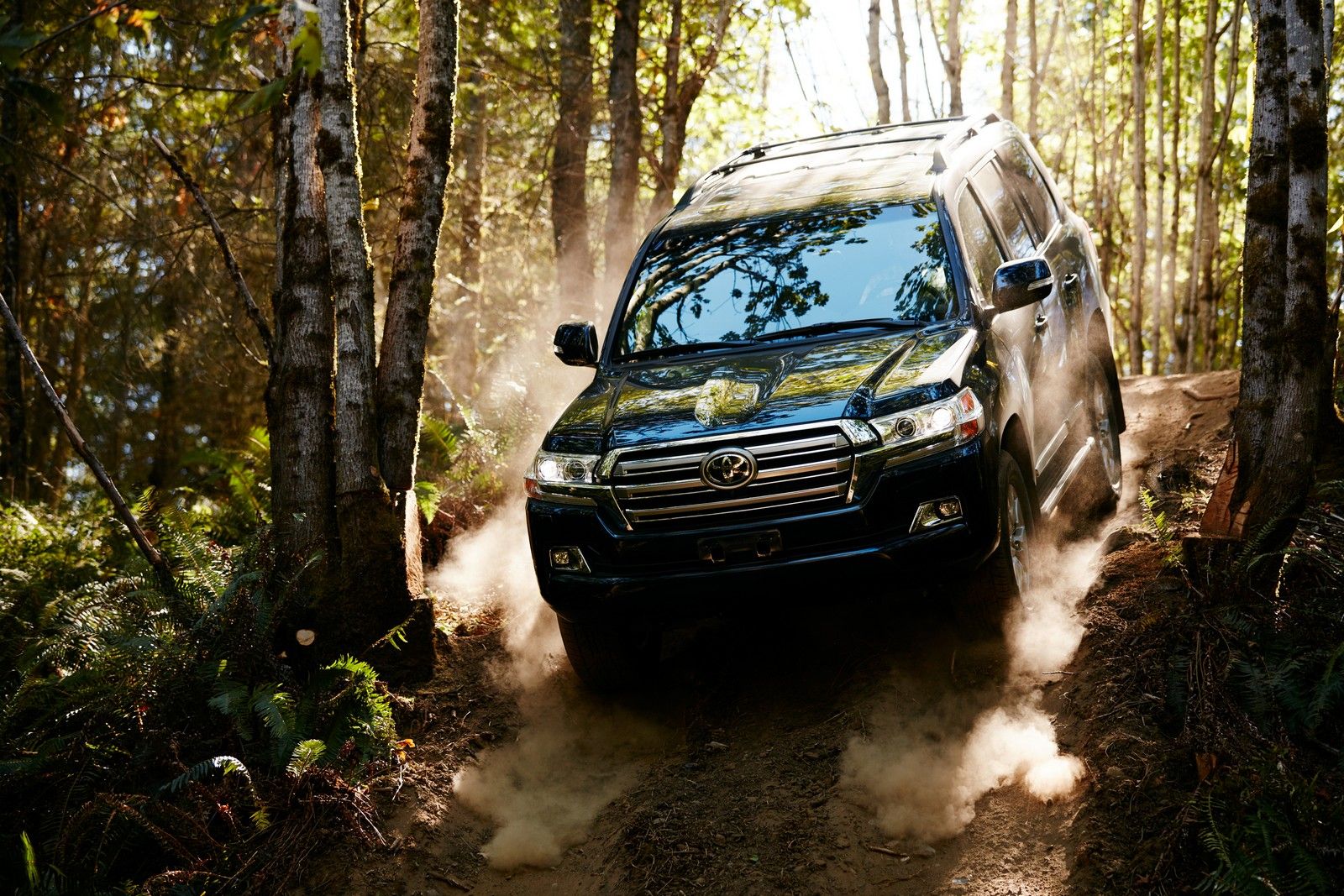
Amongst the staggering volume of product transactions which place it atop the monthly sales charts, is a hidden gem of Toyota South Africa’s success: a R1-million product, which does stupendously well, without anybody noticing. I’ll relieve the narrative tension for you, we’re referring to the Land Cruiser 200.

At R1.3-million it’s the most expensive Toyota you can buy, the only one which lists in 7 figures, and there are months where they sell more of these than Subaru do vehicles – in total. So successful is the ‘Cruiser 200 business that you’ll never see a broadcast or digital advertising campaign for one. Demand is so strong and customer loyalty so unflinching, that Toyota merely orders them in and distributes its allocation of 200s amongst eager dealers – who always wish they can acquire more units.

Proving old school works


Land Cruiser 200 sales are booming in SA. Toyota is doing something right…

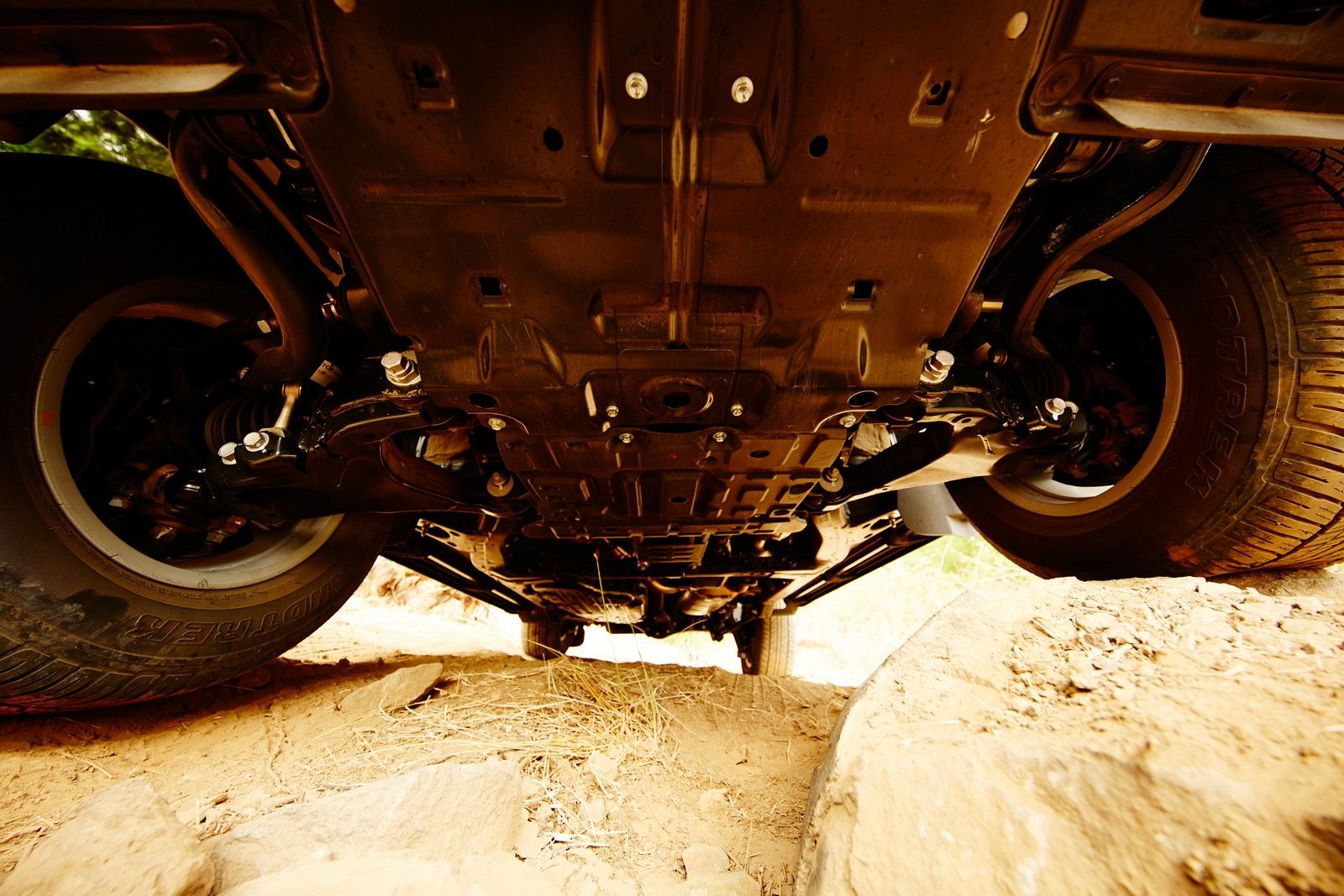
Theoretically, Land Cruiser 200 should be a failure. It competes in a terrifyingly competitive market segment – luxury SUVs – against a collection of rivals from the most esteemed German and British brands. Whereas all participants in the luxury SUV market recognise the 99% on-road user profile of customers, ‘Cruiser 200’s entire engineering philosophy is to get as far away from tar roads as possible. Evidence of this is the enormous Land Cruiser’s platform: it’s built on a steel ladder frame chassis in a market where all rivals (bar the Geländewagen (G-Class), if you wish to be pedantic) are unibody designs.

We tolerate ladder frame bakkies because they offer 1000 kg load capacity, somewhat justifying the body-roll and cabin packaging discomfort of this "ox-wagon" engineering – but a R1-million luxury ladder frame SUV? It’s a most curious thing, Toyota’s super-Cruiser. The body-on-frame build might be archaic, but there is infotainment everything, leather seating for 7 occupants and surround view cameras that will not only help you manoeuvre it without damaging the ecology (or your no-claims insurance bonus), but can also scan the immediate terrain ahead, enabling drivers to evaluate surface changes off-road.

Despite the absence of air-suspension, military vehicle dimensions (it’s only 50 mm short of 5-metres long) and comparatively ponderous on-road handling, compared to a Range Rover or Mercedes GLS (for example), Toyota manages to sell nearly 100 of these SUVs each month. Effectively double the number of Range Rover Vogues that Land Rover does, or Cayennes Porsche manages to home every 4 weeks in South Africa. And those are all brands with cachet; they retail luxury SUVs that offer impeccable road manners and – arguably – greater design appeal and superior technology.

How does Toyota do it? You could argue that the rampant popularity of SUVs is a tide that has raised the market share of all luxury off-roaders, but the ‘Cruiser 200’s size and ponderous on-road performance mitigate its appeal among rivals that are notably more athletic and agile. The secret to 200’s success is a legacy.

Dominating the market without marketing


The Land Cruiser's legacy continues to drive demand despite it being surrounded by more modern and athletic luxury SUVs.

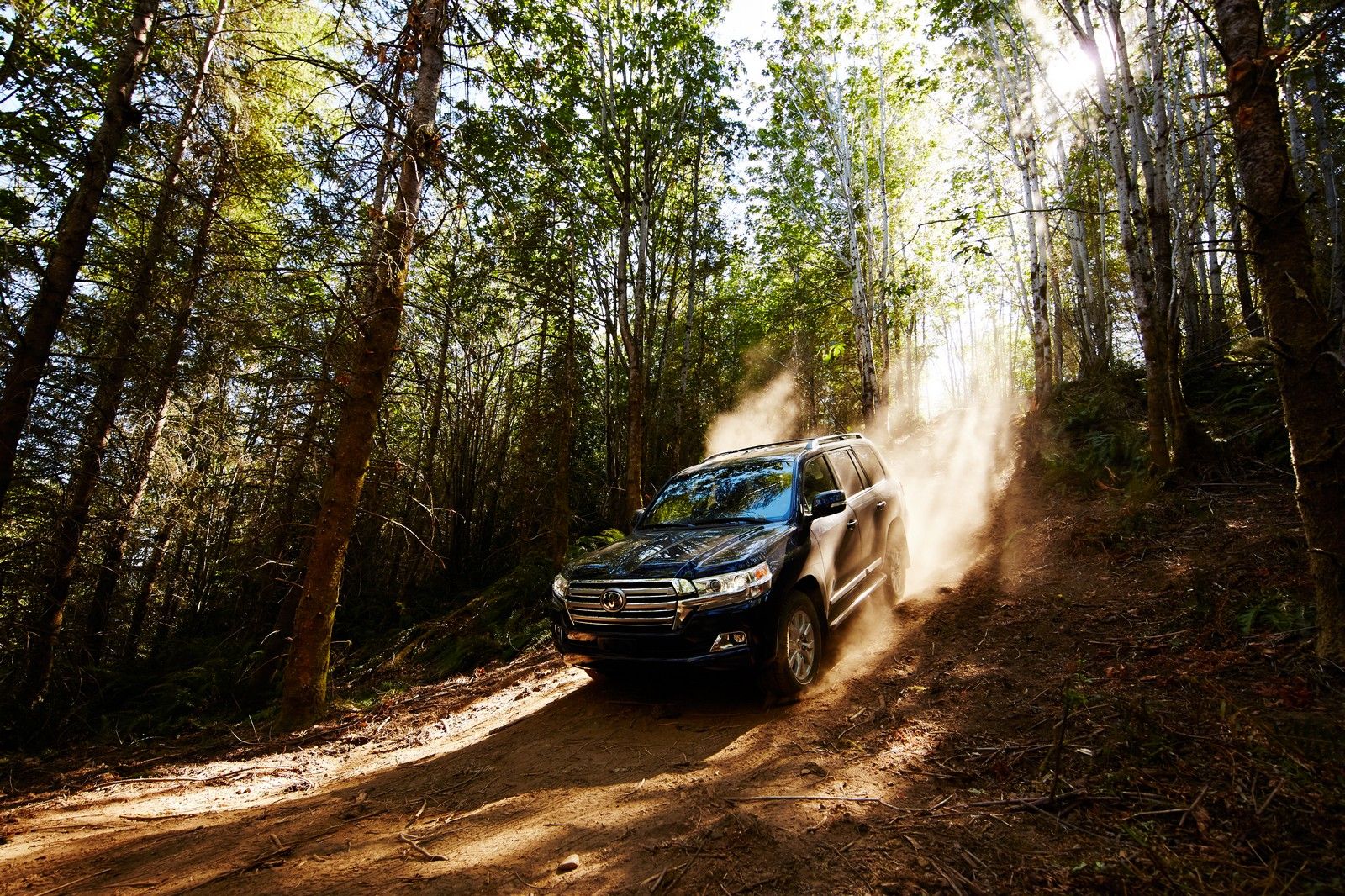
People who buy into the 2 740 kg Toyota idea each month are mostly return customers and, more pointedly, individuals who live and work in places other brands like us to imagine their SUVs can go – but hope they never do. Farmers and wildlife ranchers, mostly. Or urban business owners who have a proper mountain getaway. This is the ‘Cruiser 200's unique appeal and formula for success in South Africa: it’s a luxury SUV that works everywhere – all of the time.

Any unibody SUV rival will inarguably be the more rewarding drive from Joburg to the Lowveld, along those famed Mpumalanga mountain passes, but after 200 000 km of gravel roads, those high-frequency vibrations will compromise the cabin component integrity of a monocoque vehicle, manifesting as incurable squeaks and creaks. By contrast, Land Cruiser 200s retain nearly unbelievable residual values, even with ridiculous mileages; a ‘Cruiser 200 with 300 000 km is regarded as a good buy. You try and sell a German luxury SUV at similar mileage…


Strong and robust, the Land Cruiser 200 can go anywhere and do anything its owner commands. Good dog…

In a segment where the promise of profit margins are enticing, Toyota’s endured remarkable success by remaining true to South Africa’s unique SUV customer profile. In many global markets where you can buy Range Rover, Cayenne, GLS, Touareg and the like off a dealer floor, the ‘Cruiser 200 is a special-order vehicle. But in South Africa, it’s the white knight. It’s even more telling that Land-Cruiser 200’s Lexus twin, LX570, is that brand’s best-selling vehicle in South Africa.

Geography empowers the ‘Cruiser 200’s reputation in Africa, the tremendous distances and testing terrain allowing owners to access its tremendous off-road ability, which makes the on-road driving sacrifice entirely tolerable. I’ve met female ‘Cruiser 200 owners, who don’t hesitate to take the family on vacation through Botswana, Namibia or Mozambique during South Africa’s winter school vacation, unbothered by the risk of immobility. This is the pivotal appeal of Toyota’s product: it’s proven. There is no risk of perception creating unreasonable expectation.


The proof is in the pudding and the Land Cruiser 200 remains an honest and capable luxury SUV.

As purchasing propositions, Luxury SUVs require inevitable compromises. They’re built for autobahn speeds, which require 250 kph ZR rated tyres that are generally unsuited to gravel travel, rock crawling and dune driving. The Land Cruiser pretends to be no such thing. It’s fundamentally an off-roader, with sufficient space for all the safari gear and plug-in refrigeration, and one which doesn’t compromise on luxury features such as heated memory seats and wireless charging. As Land Rover, Mercedes-Benz, Porsche and Volkswagen battle each other for market share in the luxury SUV market with quicker 0-100 kph times and greater electronics sophistication, Toyota’s quietly been dominating, without fanfare or aggressive marketing.

The Land Cruiser 200 is an endearing South African story. Considered outdated and outclassed in most other markets, it’s respected and revered over here. The reason is simple: for those individuals with adequate disposable income, time is money, and there’s no time to have an air-suspension leak or inflation failure 300 km from the nearest town. Or suffer overly complicated electronics going awry.

The Toyota's off-road stability is guaranteed by the four-wheeled balance of its KDSS system, which operates a mechanically controlled hydraulic circuit to provide counter-balancing pressure at each corner of the car, ensuring it remains stable, and traction optimal, when you’re crawling over stuff. A luxury SUV with low-range and ladder-frame chassis might be bizarre to almost anyone else, but in South Africa, it’s the perfect solution.


When it comes to off-roading, is there anything you can't do in a Land Cruiser 200? We think not…

Old-school 4×4 values with contemporary luxury trim and cabin convenience features, you’d never imagine it to work in a world that’s gone performance SUV mad, but it’s the reason the Land Cruiser 200 has no rival. Toyota sold 94 of these behemoth SUVs last month, that’s 80% more R1-million SUVs than Land Rover did with Range Rover, and we’re being generous by including the Sport numbers there. If it was only measured in Vogues, Toyota’s superiority is 680%. Evidence to the fact, that Toyota can dominate the South African spectrum like no other, from R150k city cars to R1.3-million SUVs.

*Without low-range gearing or optional locking differentials, we’ve left BMW’s X5 out of our equation.

Related content:

Land Rover Discovery goes hardcore with SVX

Land Rover Discovery (2017) Launch Review

2016 Toyota Land Cruiser Revealed

Range Rover Lineup Updated

Most Wanted Premium SUVs in South Africa

Looking for a used Land Cruiser?

Search for one on Cars.co.za

BMW X5 Special Edition and X6 M Sport Edition Announced

BMW has created 2 special edition versions of the X5 and X6.

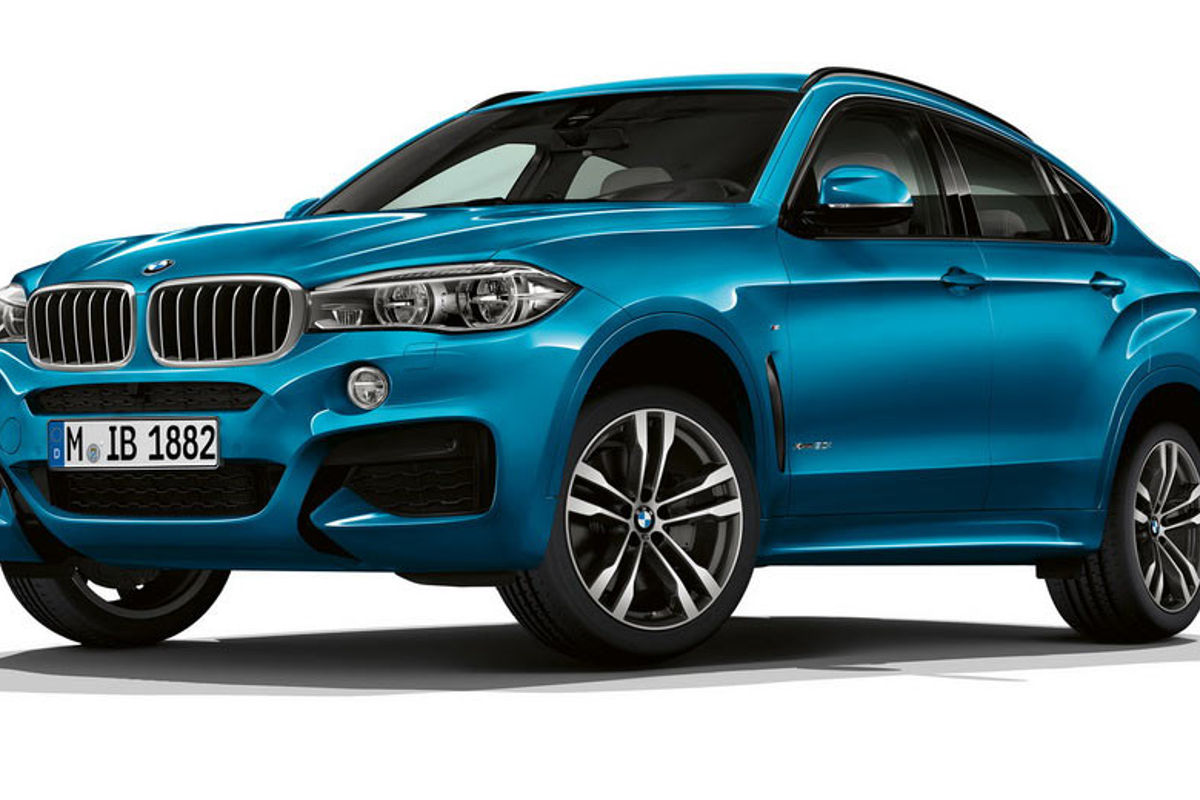
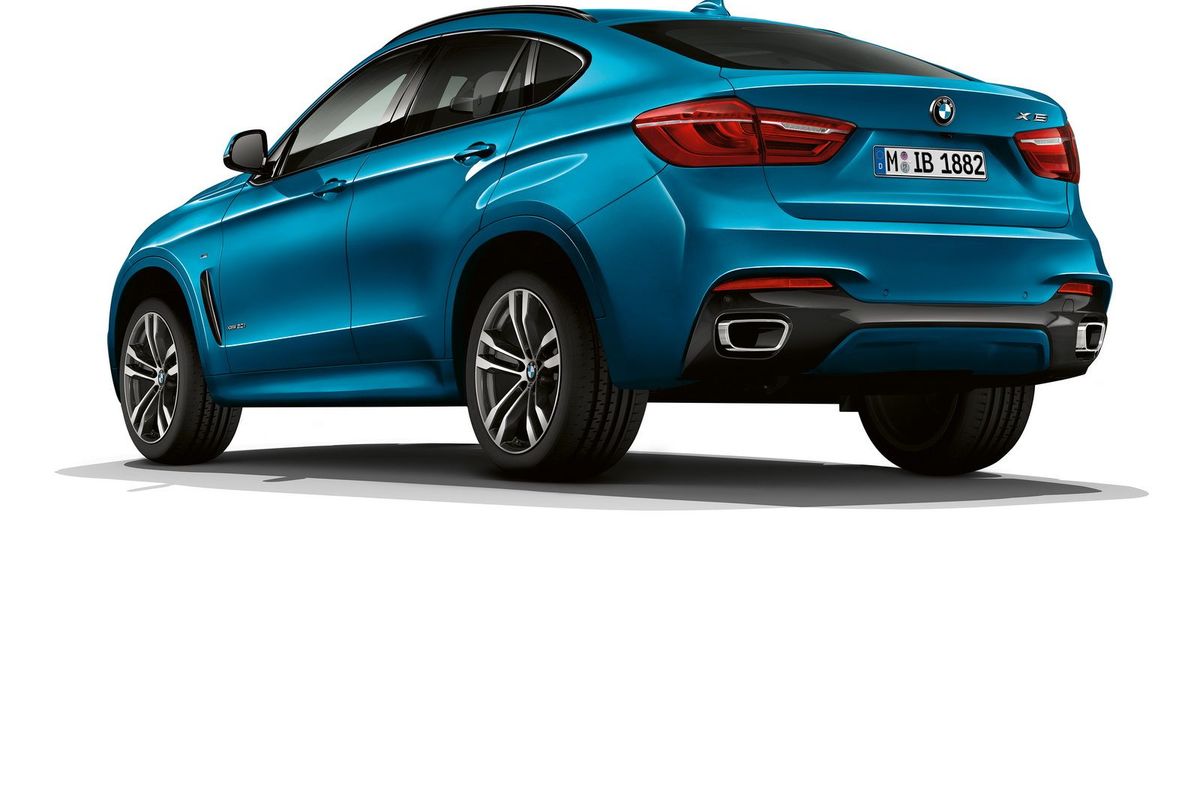
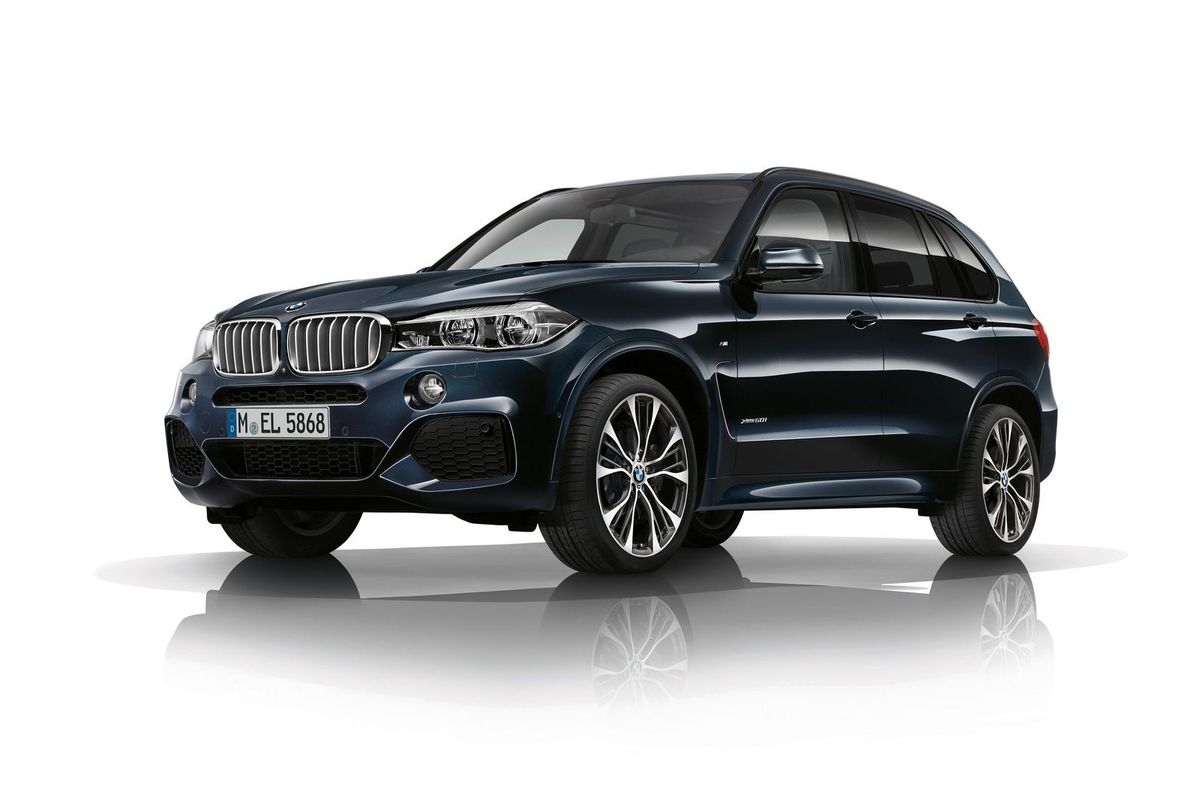
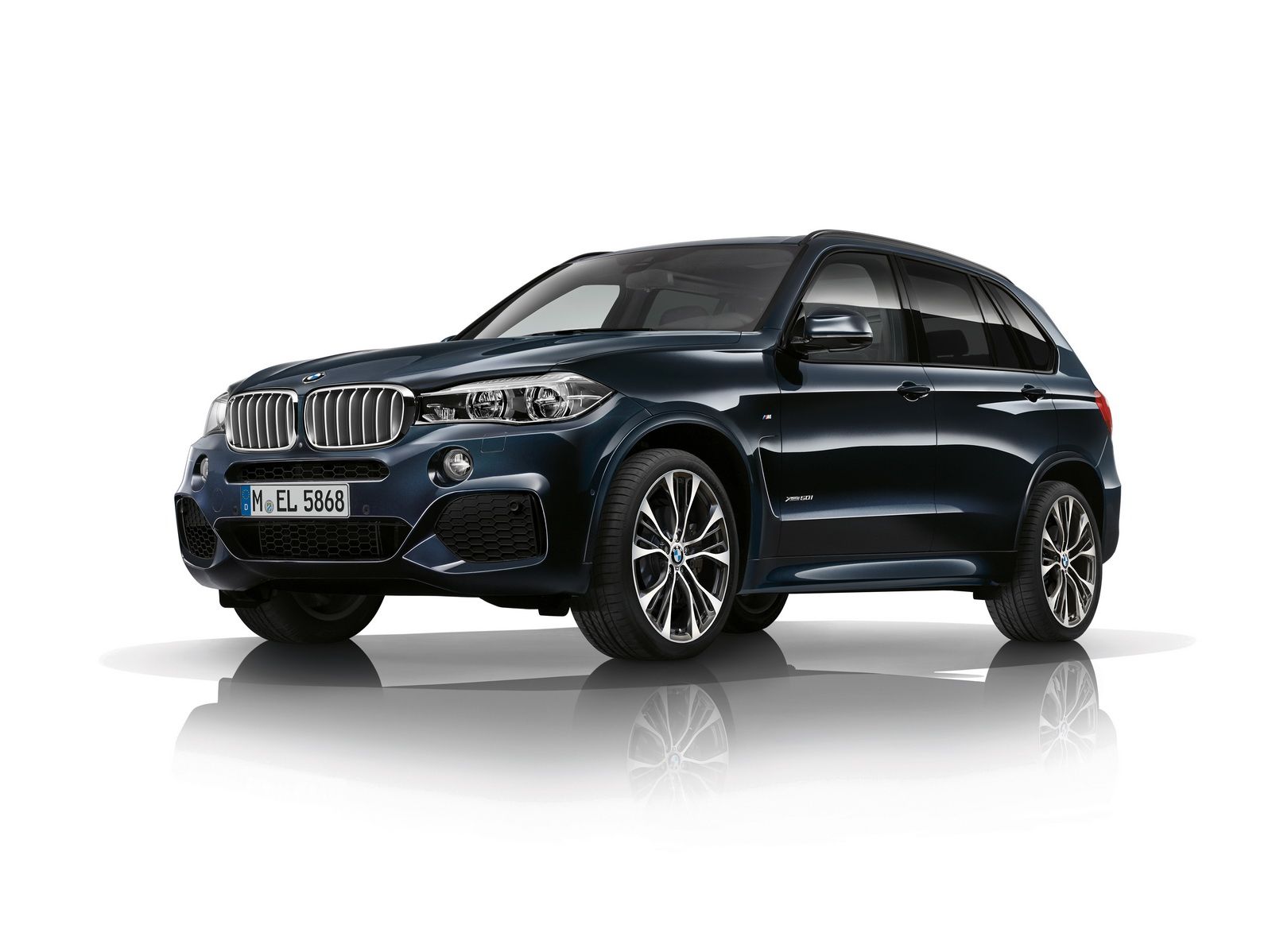
The X5 and X6 have received some special attention with BMW creating an X5 Special Edition and an X6 M Sport Edition. BMW says that the special edition models will be offered as of December 2017 but BMW South Africa has not yet confirmed if or when they will arrive in South Africa.

BMW X5 Special Edition


Heated leather seats are a welcome addition to the X5 Special Edition.

In the case of the of the X5 Special Edition, heated Dakota leather seats for the driver and front passenger have been included as part of the M Sport package. As an alternative, customers can opt for Alcantara/leather combination upholstery in Anthracite/black with M badging at no extra cost. Merino leather upholstery with the choice of 5 colours will be offered as an option.

The X5 Special Edition also features sun protection glass and a multifunctional instrument display. All versions of the X5 will be offered in Special Edition guise, except for the X5 M50d.

BMW X6 M Sport Edition


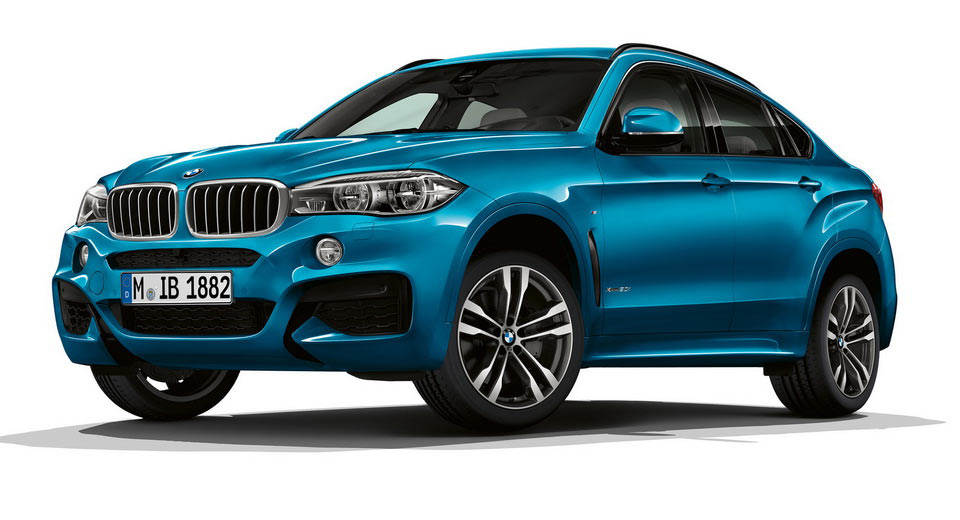
Long Beach Blue metallic paint gives the X6 M Sport Edition a striking look.

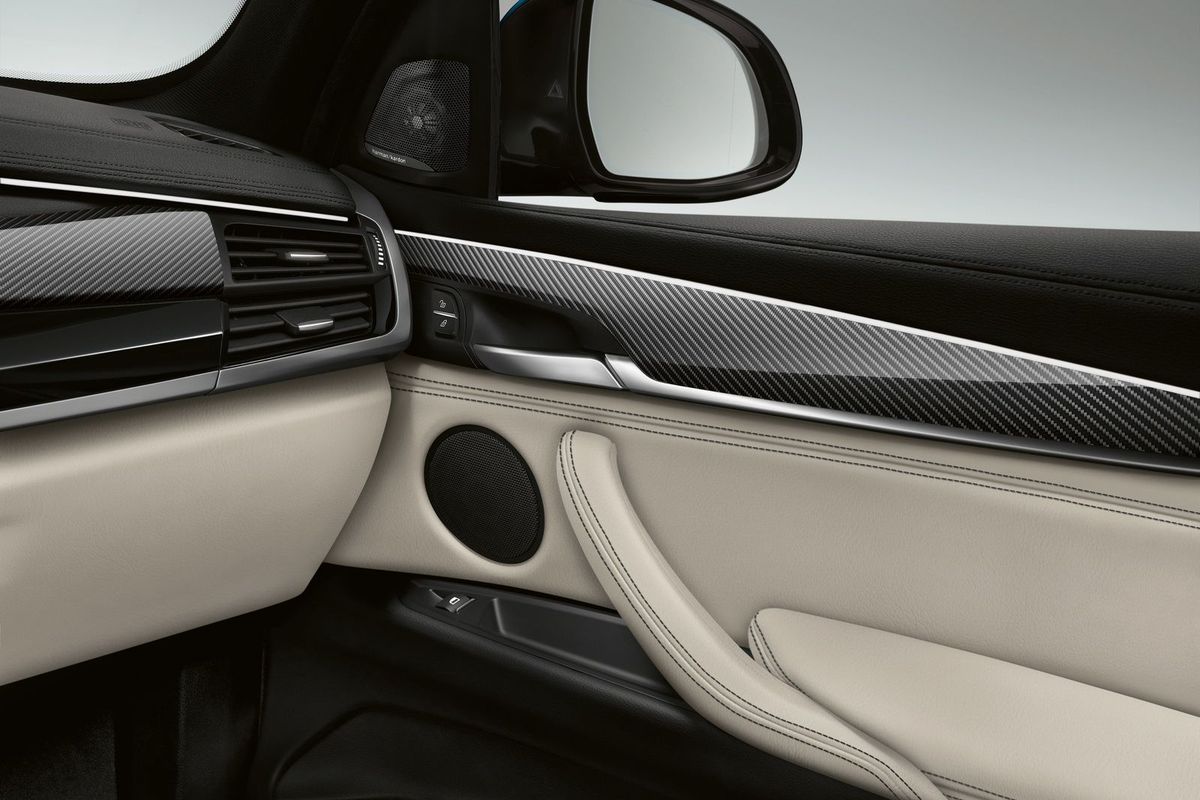
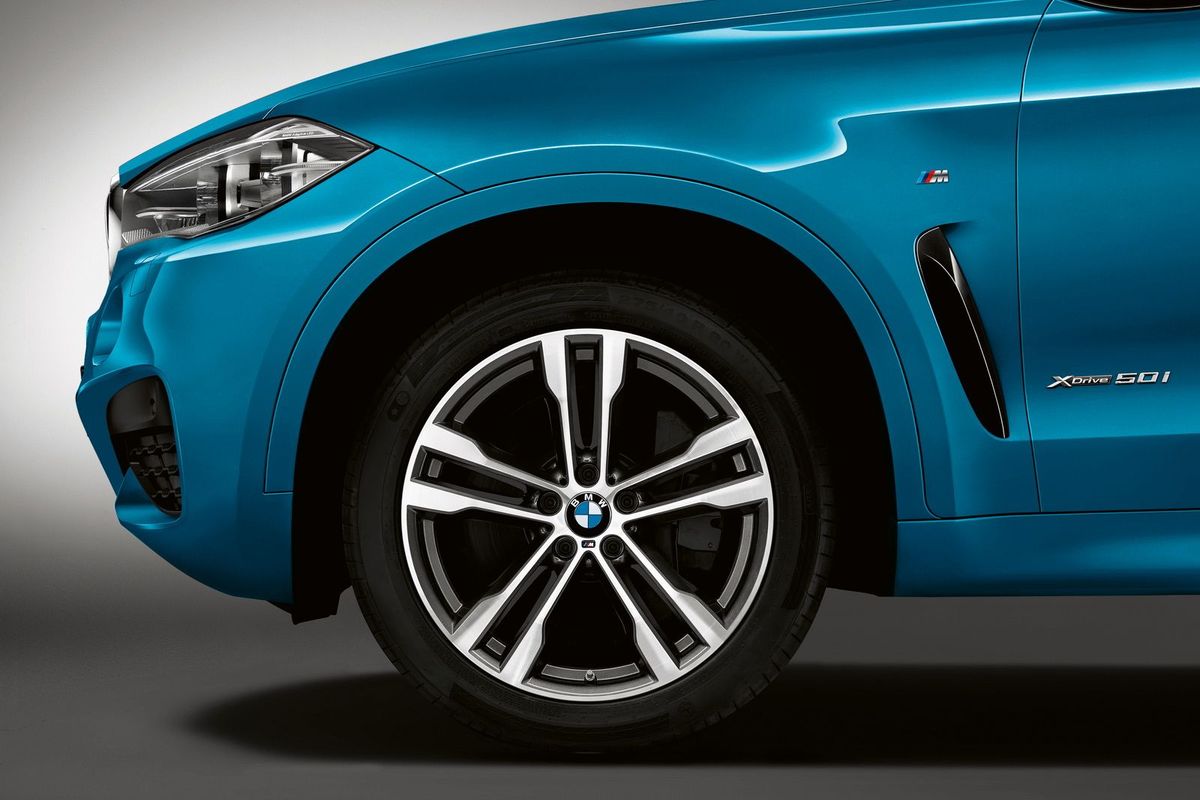
As for the X6 M Sport Edition, it will be offered with Long Beach Blue metallic bodywork as well as carbon fibre trim strips seen on the inside. As an alternative, customers can also opt for Carbon Black or Mineral White metallic paint finishes. In conjunction with the M Sport package, the X6 M Sport Edition will ride on 20-inch M light-alloy wheels with a double-spoke design while 21-inch M light alloy wheels will be offered as an option. All versions of the X6 will be offered in M Sport Edition guise, except for the X6 M50d.

We will keep you updated as soon availability details are confirmed.

Buy a new or used BMW on Cars.co.za

Related Content

BMW X5 M/X6 M Black Fire Edition Headed for SA

Spy Shots: BMW X5 M vs Mercedes-AMG GLE63

BMW X5 xDrive25d (2016) Review

BMW X7 iPerformance Concept Revealed

BMW X5 M (2015) Review

BMW X5 xDrive40e (2016) First Drive

2014 BMW X5 40d (2014) Review

Drag Race: BMW X6 M vs Mercedes-AMG GLE63 S Coupe

Drag Race: BMW X6M50d vs Range Rover Sport SDV8

BMW X3 (2018) Specs & Price

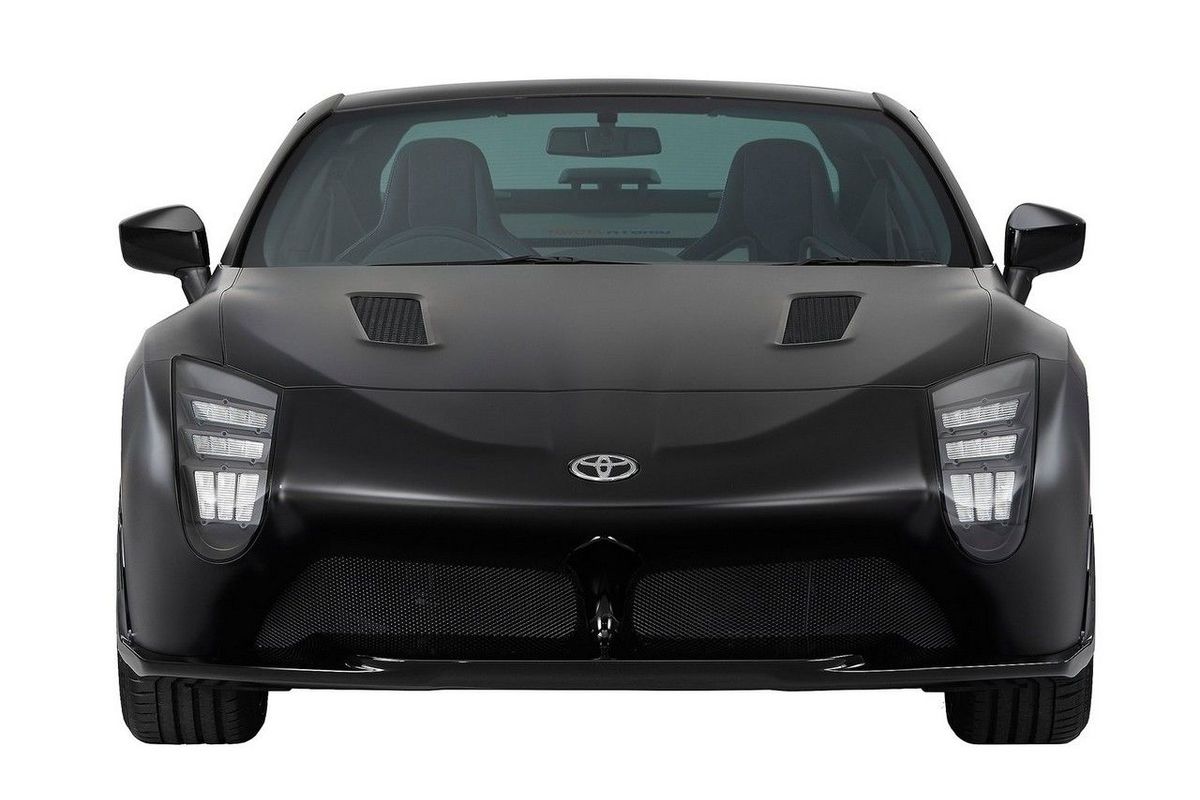
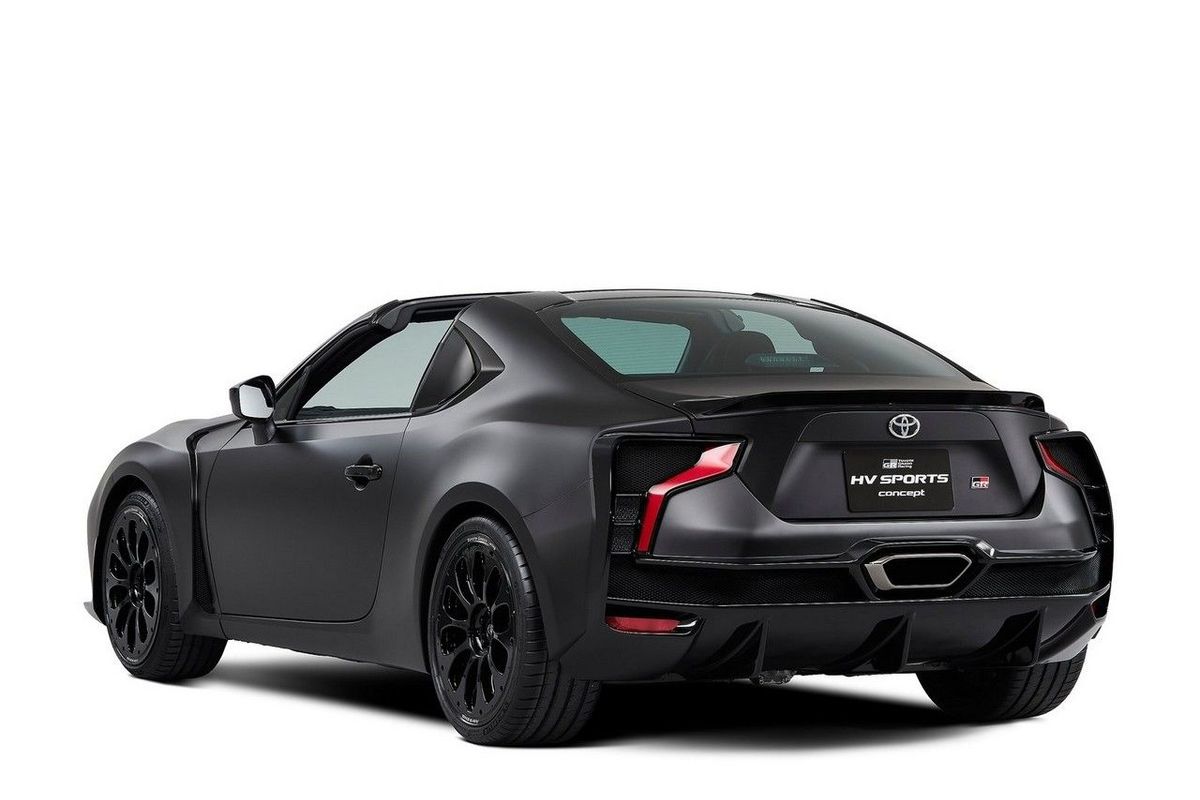
Toyota GR HV Sports Concept Headed for Tokyo

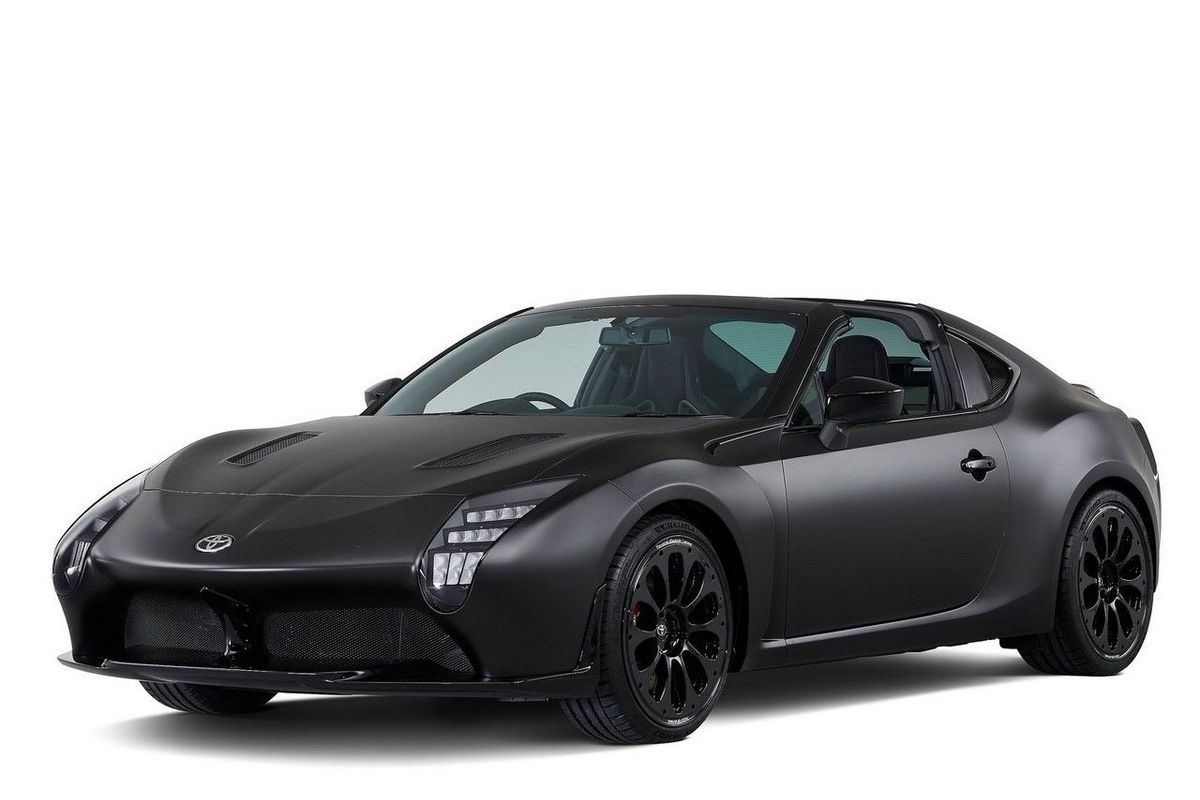
Toyota has revealed this new GR HV sports car concept ahead of the 2017 Tokyo Motor Show – it gives us some indication of what the brand is planning in terms of sports cars.

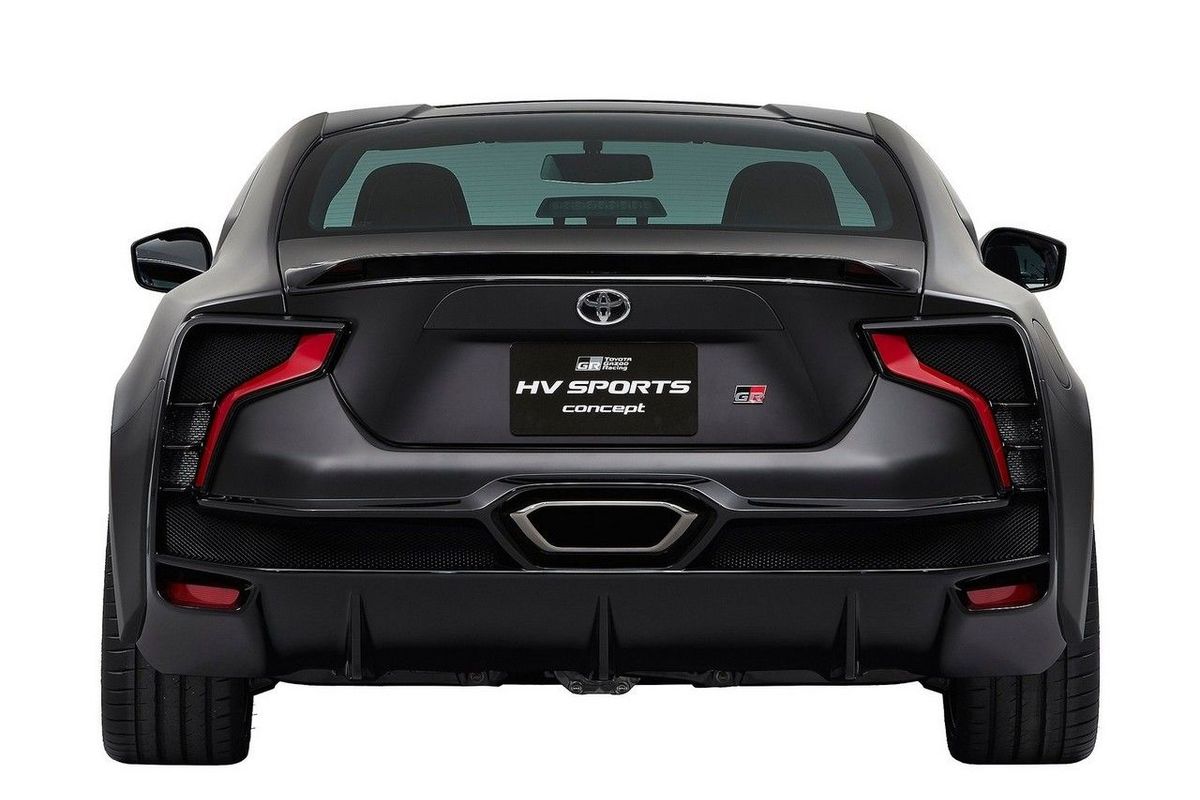
The Aichi-based manufacturer has made it clear that its GR HV Sports concept blends the thrill of a sportscar with the environmental friendliness of an eco car. It features a 'targa top' and the design resembles the TS050 Gazoo Racing hybrid race car that competes in the World Endurance Championship. It further sports LED headlights, aluminium wheels, a rear diffuser and is finished in matte-black. 

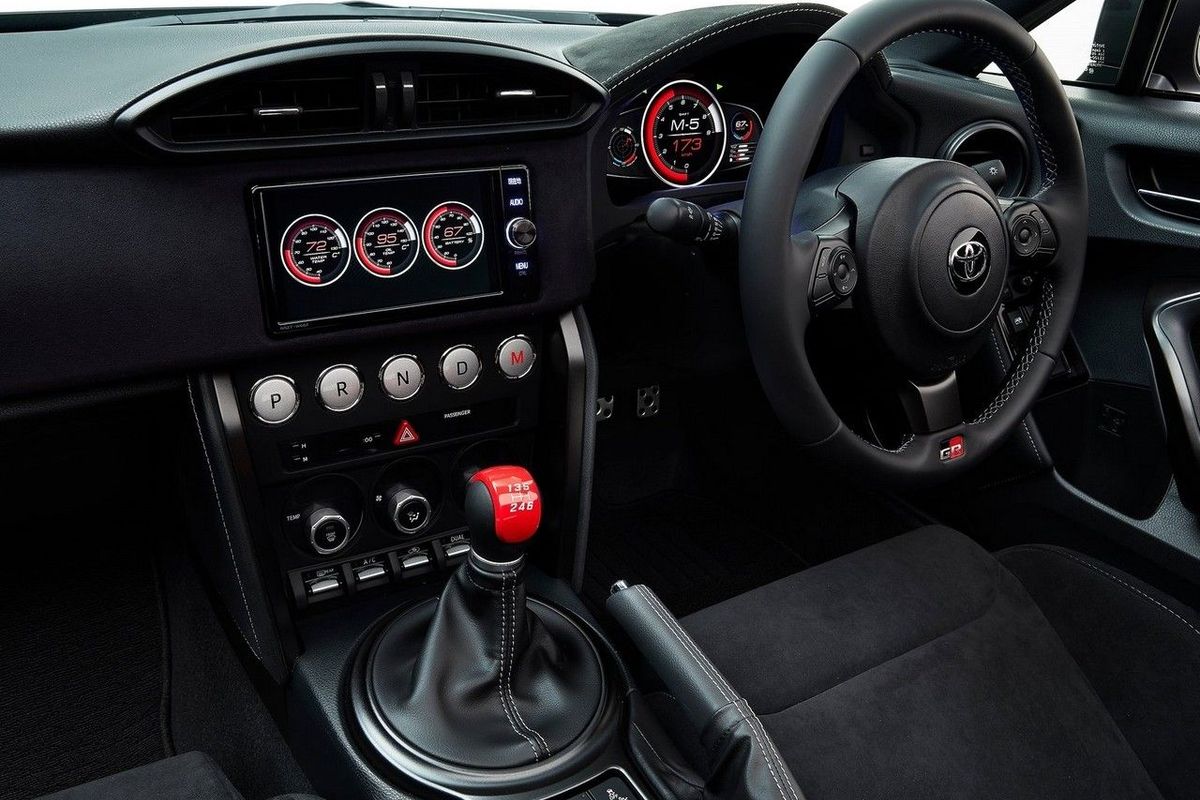
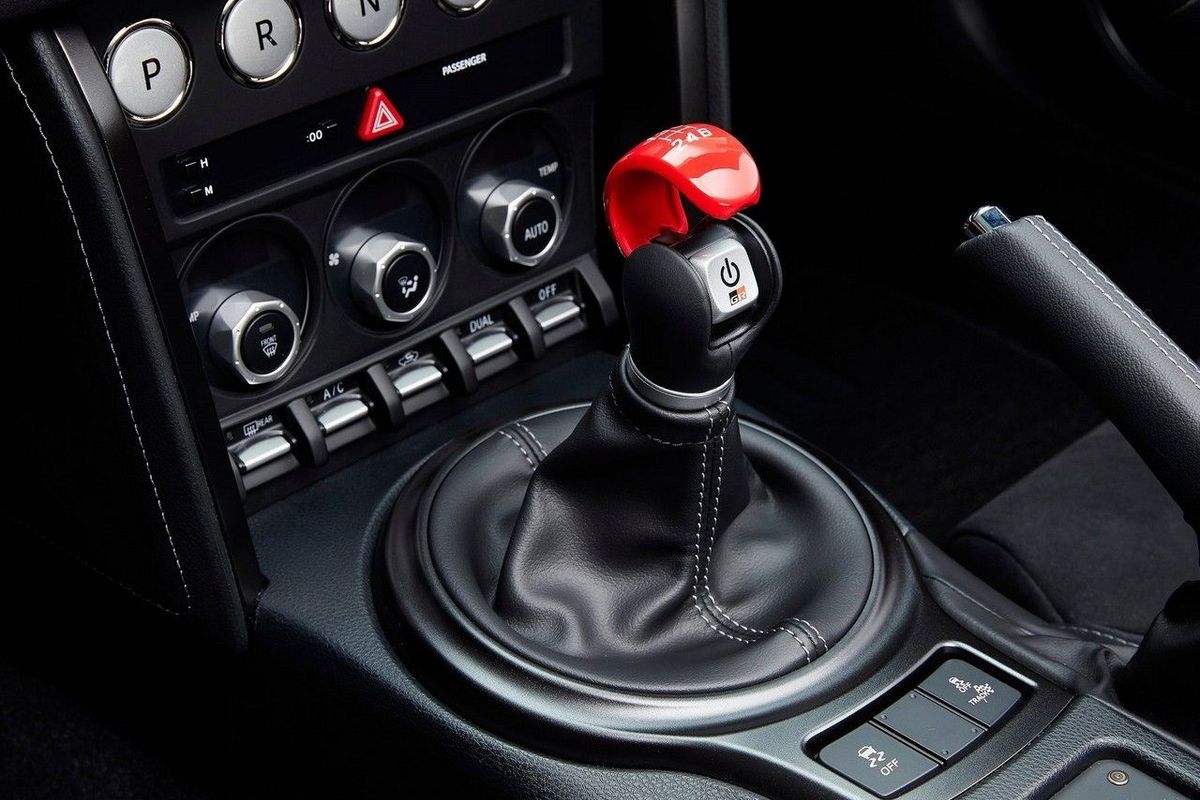
Inside, there's a selector switch that enables the car to be switched from automatic to full manual control and an engine on/off button is located in the gear selector. In terms of powerplant, not much is known except that Toyota says the concept is powered by a racing version of hybrid technology refined by the TS050. The GR HV concept adopts a front-engine, rear-drive layout with the hybrid battery centrally located to improve the centre of gravity and front-rear balance. 

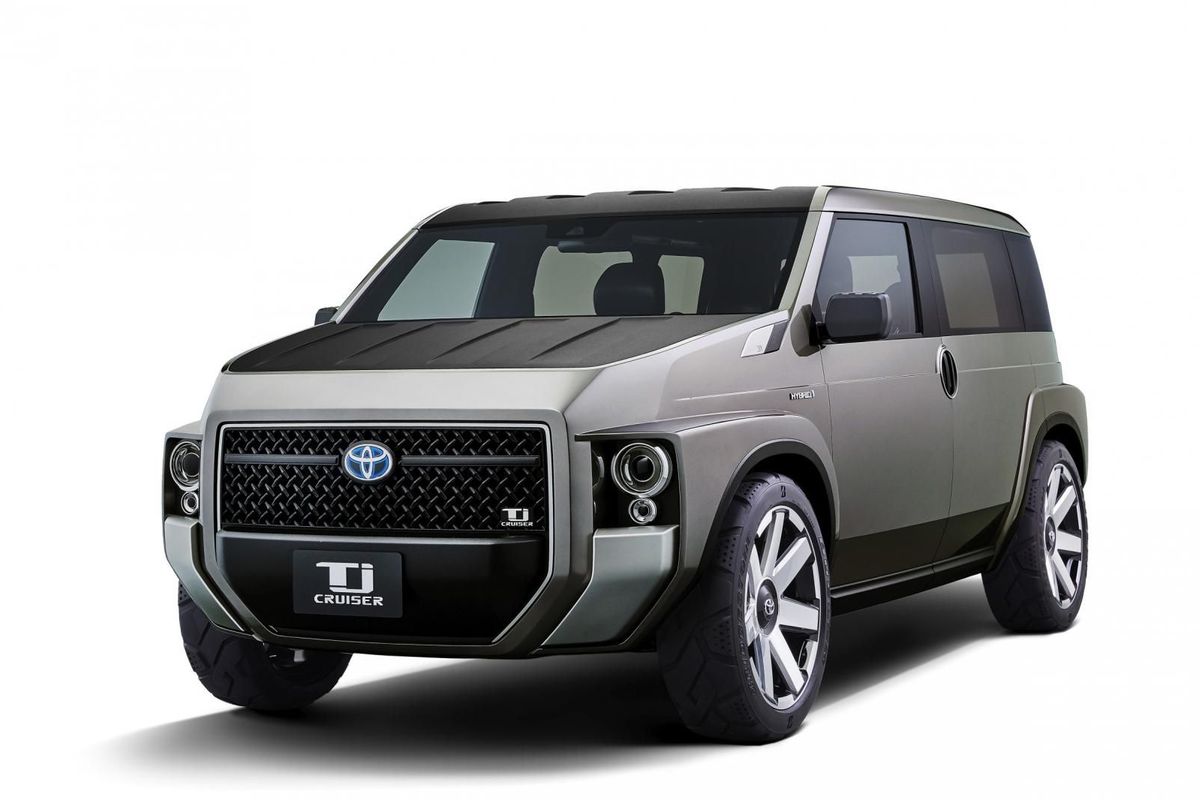
TJ Cruiser Concept 


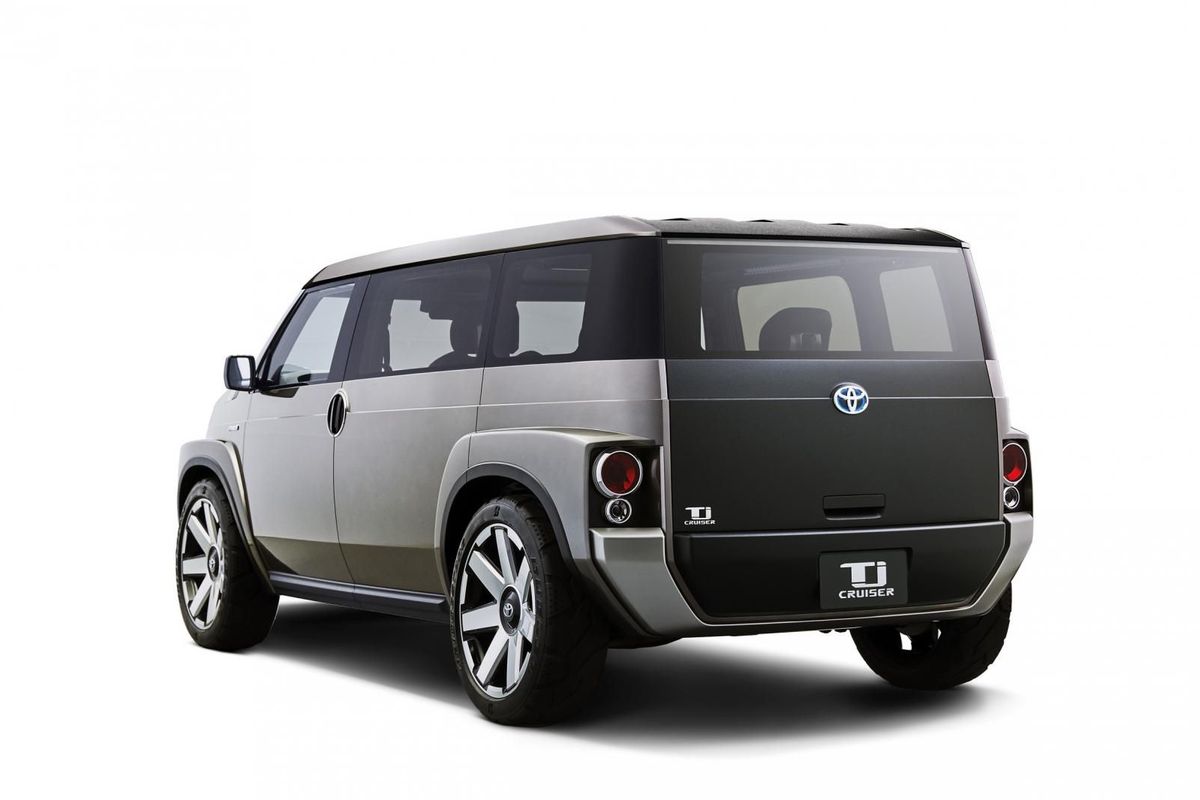
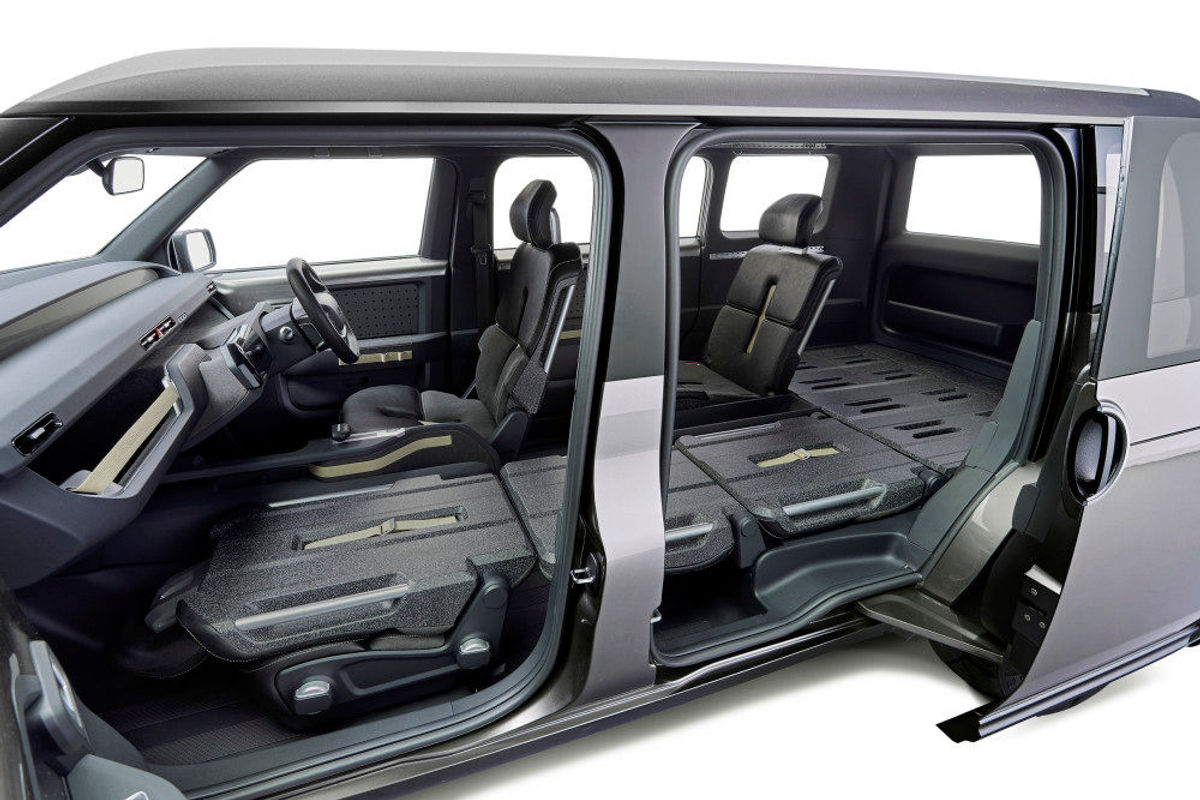
The TJ Cruiser concept combines the practicality of a van with the capability of an SUV.

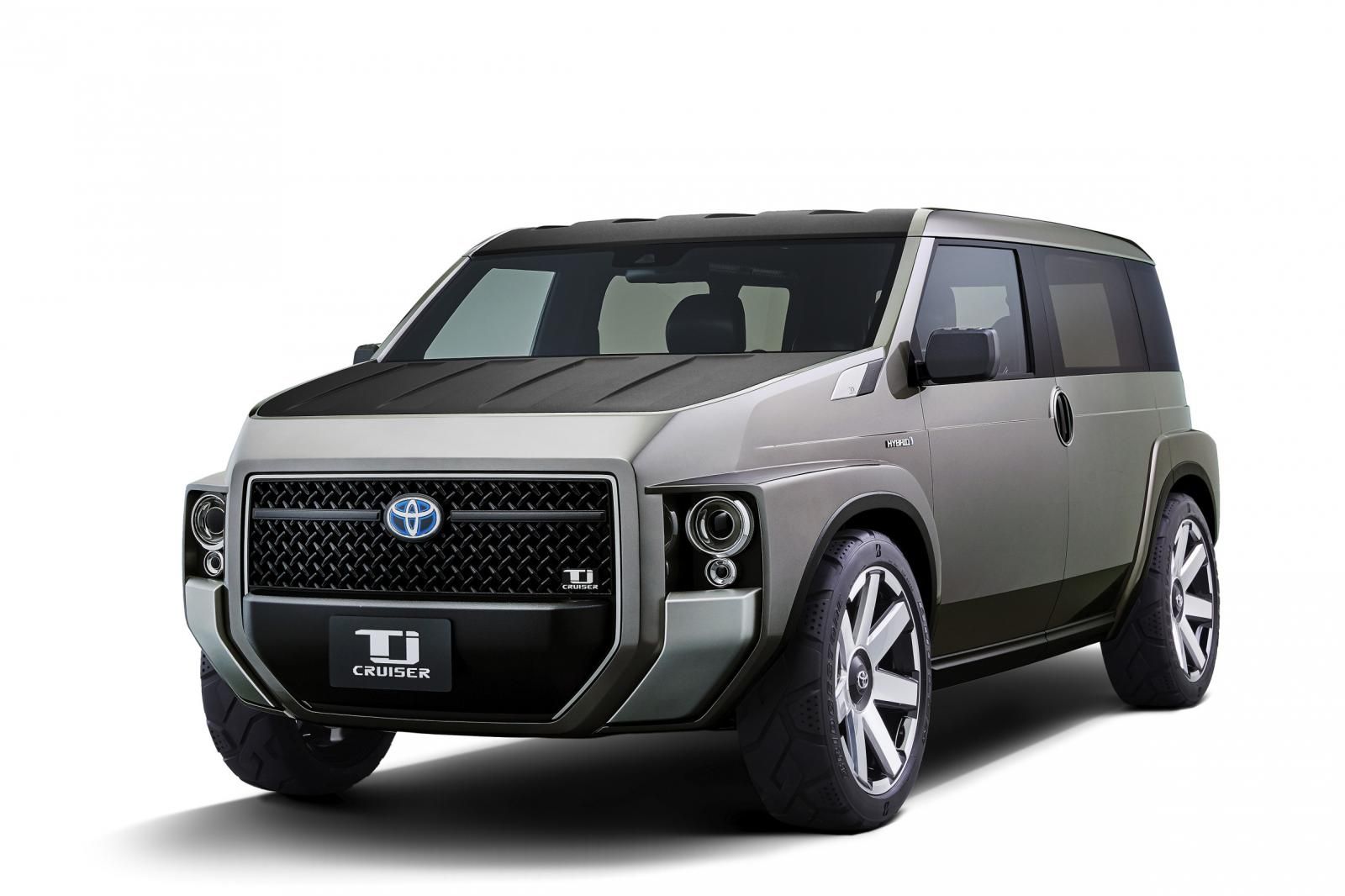
Toyota will also show the TJ Cruiser concept at the upcoming Tokyo Motor Show. The TJ Cruiser concept was designed to cater for both 'work' and 'play' lifestyles. The 'T' stands for 'Toolbox, referring to the practical nature of the vehicle while the 'J' stands for 'Joy', as in the joy of exploring new places, referring to the part-time all-wheel drive capability of the TJ Cruiser. 

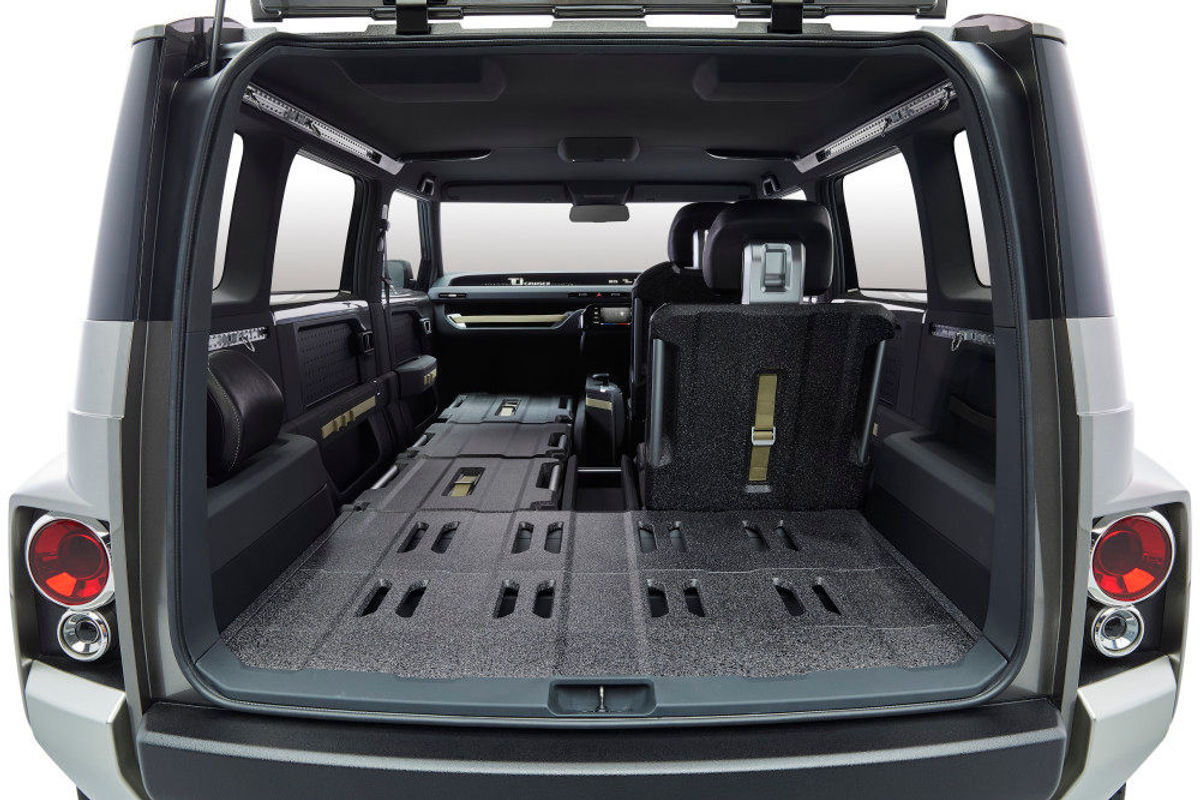
The TJ Cruiser concept rides on 20-inch wheels and offers a spacious cabin with up to 3 metres of loading space with the rear seats folded flat. A wide opening rear door allows for loading of larger and bulkier items such as bicycles and numerous lashing points allow you to tie items down. Large sliding doors also improve loading ability and make it easy for passengers to enter or exit the vehicle. 

The TJ Cruiser's bonnet, roof and bumpers feature 'care-free' materials with a special scratch and dirt resistant coating. Based on the next-generation Toyota New Global Architecture (TNGA) platform, the TJ Cruiser can be powered by "2.0-litre class" petrol and hybrid powertrains. 

Both the Toyota GR HV sports car concept and TJ Cruiser will be shown at the Tokyo Motor Show on 27 October – 5 November 2017. 

Want to buy a Toyota?

Find one on Cars.co.za

Related Content

Toyota RAV4 2.2D AWD GX (2016) Review

Facelift RAV4 Video Review – Load Space, Comfort, Features

Honda CR-V (2017) Launch Review

Kia Sportage (2017) Specs & Price

Kia Sportage 2.0 CRDi SX AWD (2016) Quick Review

Comparative Review: Hyundai Tucson vs Kia Sportage vs Renault Kadjar vs Volkswagen Tiguan

Hyundai Tucson Sport Gains AWD Auto

Hyundai Tucson Sport (2017) Quick Review

Hyundai Tucson 1.7 CRDi Executive (2017) Review

Mazda CX-5 vs 2017 Hyundai Tucson (2017) Comparative Video Review

Land Rover Discovery Si6 HSE (2017) Review

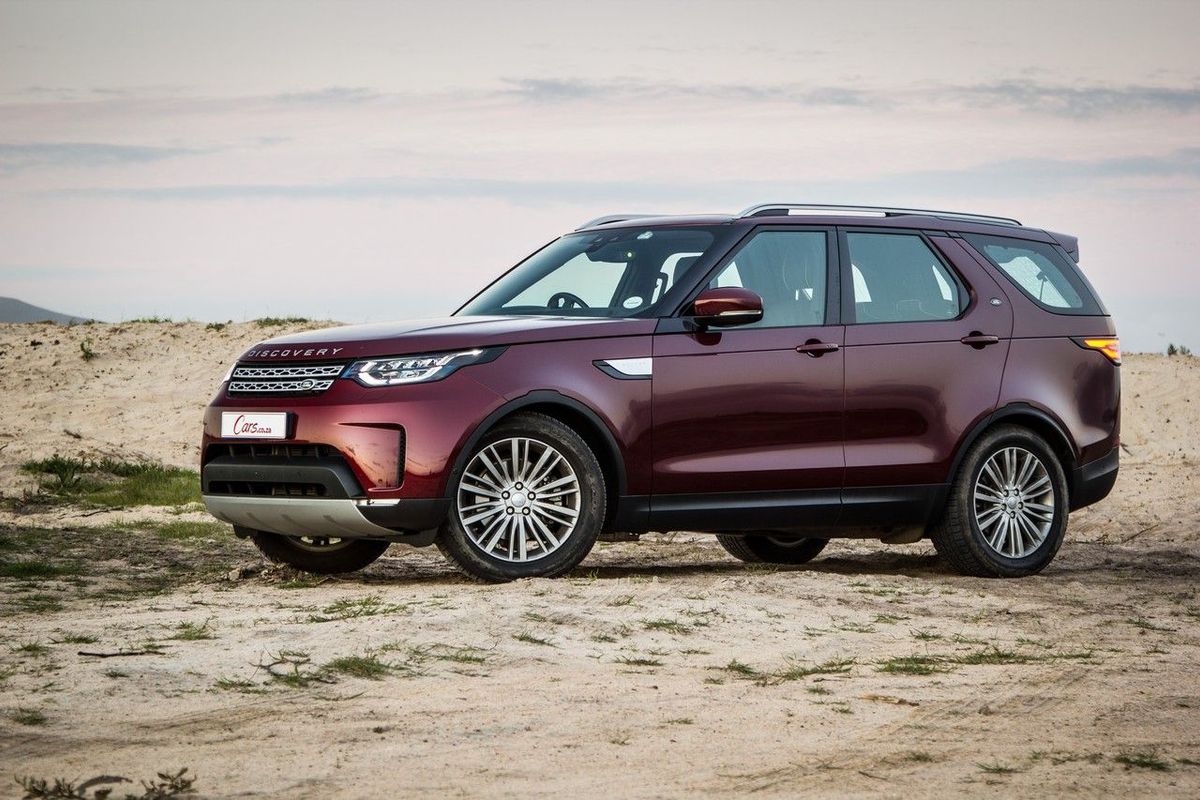
Dramatically different in overall appearance and under-the-skin construction, the 5th-generation Discovery boldly steps further upmarket. However, has Land Rover discarded too much of what made the previous model such an icon?

We like: Superb refinement, spaciousness and luxury, off-road ability

We don’t like: Fuel consumption, pricey options

Alternatives

  • The off-road S-Class: The Mercedes-Benz GLS 500 may sell for just over R1.5 million at base-price level, but if you add a few pricey options to the Discovery, the Benz’s price no longer looks that daunting. The turbocharged 4.7-litre V8 in the GLS is significantly more powerful than the supercharged V6 in the Land Rover, and (remarkably) has a lower claimed fuel consumption figure, too. The GLS has 7 seats as standard and is luxuriously equipped even before you delve into the options list… but it can’t match the Disco off-road.
  • Sweet Swede: The Volvo XC90 T8 Twin Engine R-Design is a more affordable 7-seater luxo-SUV for folks who don’t require the Discovery’s outright off-road ability. With its petrol-electric drivetrain it outpunches the Landy, too, but it’s not as spacious inside and can’t match the Discovery’s devastatingly good ride on all surfaces. Still… an appealing and classy offering at a considerable saving.

Compare the Land Rover Discovery Si6 HSE with the Mercedes-Benz GLS 500 and Volvo XC90 T8 Twin Engine R-Design by clicking here

The same, but different?


Not a trace of its predecessor’s boxiness remains on the outside, and it’s all change underneath too…

How do you replace a vehicle that has pretty much defined its segment for more than a decade? That’s exactly the conundrum that faced Land Rover when work started on the all-new 5th-generation Discovery. After all, the squared-jawed Discovery 3, launched way back in 2004 and which evolved gently into the Discovery 4 in 2009, had not only improved with age, but also showed no signs of diminishing in popularity.

What was the core appeal? Well, that’s the million-rand question and Land Rover would be right to point at the Disco’s unbeatable combination of luxury, 7-seat practicality, on-road refinement and off-road ability. So, when work started on this new model, none of those attributes could be compromised, but greater efficiency, weight-saving measures and modern in-car safety and entertainment technology had to be incorporated, too. That’s a tall order indeed…

How does it fare in terms of…

Design & Packaging?


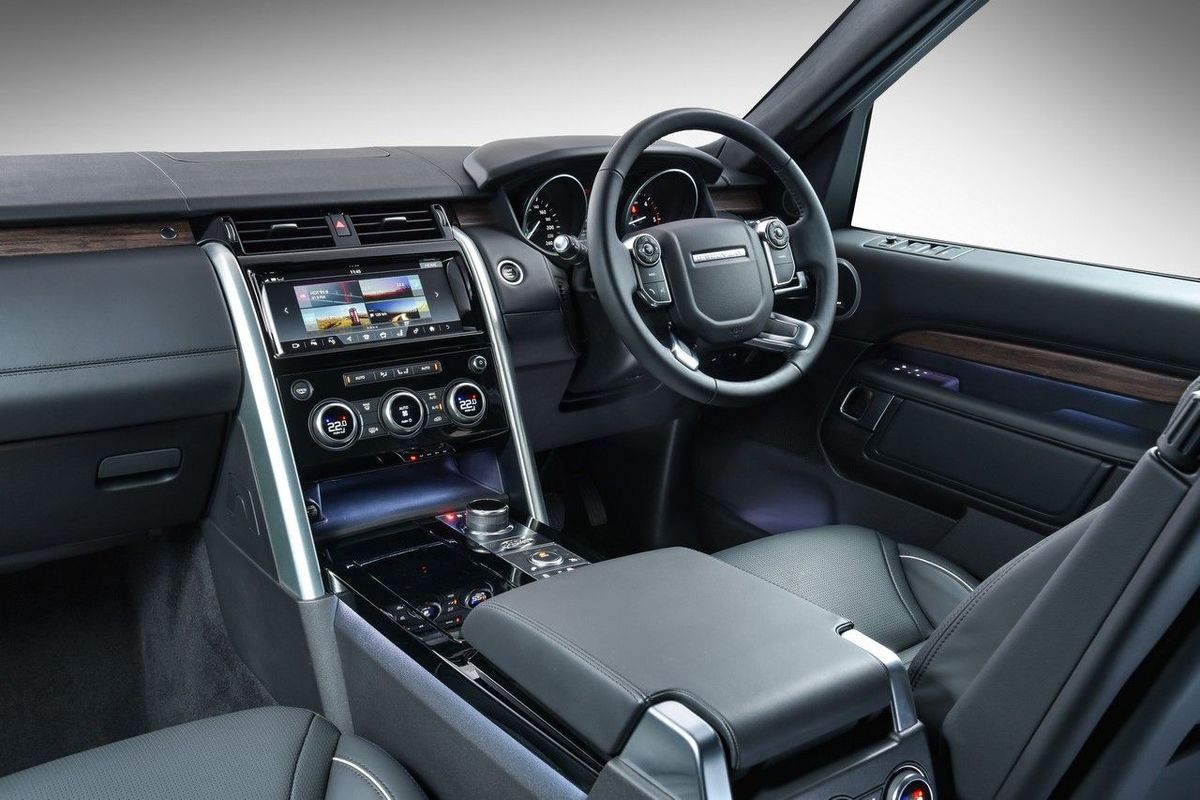
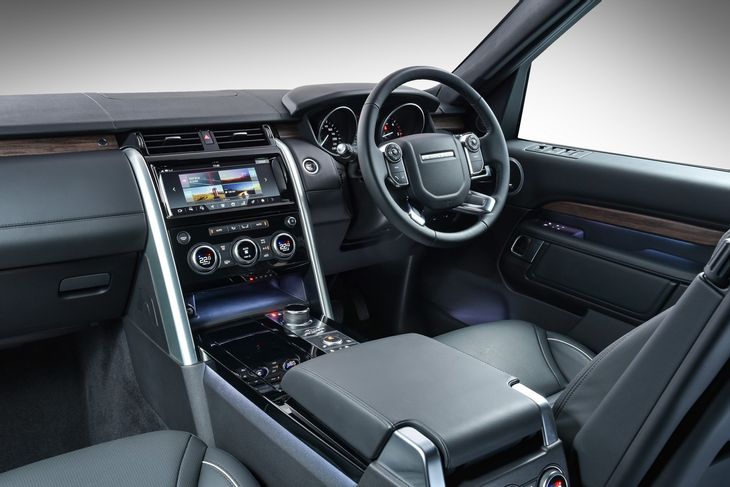
Practical, yet luxurious, the Discovery’s cabin marries functionality with feel-good premium design and materials.

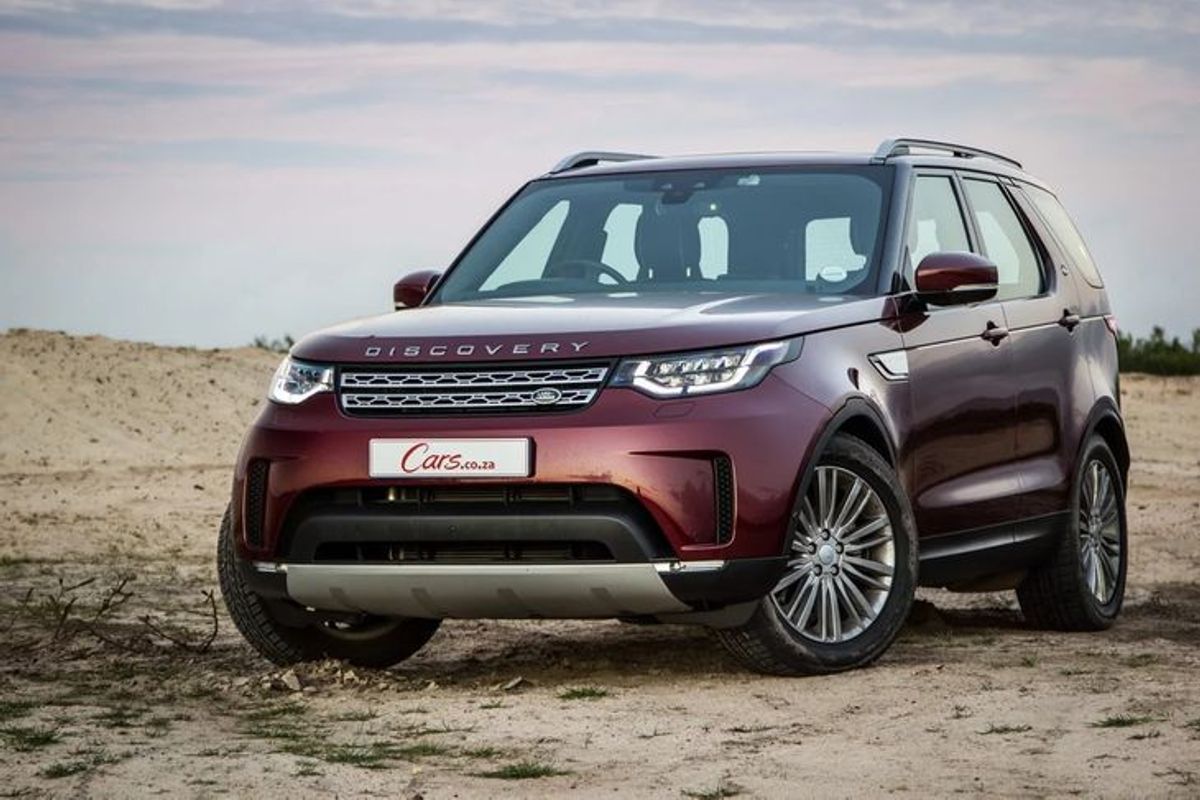
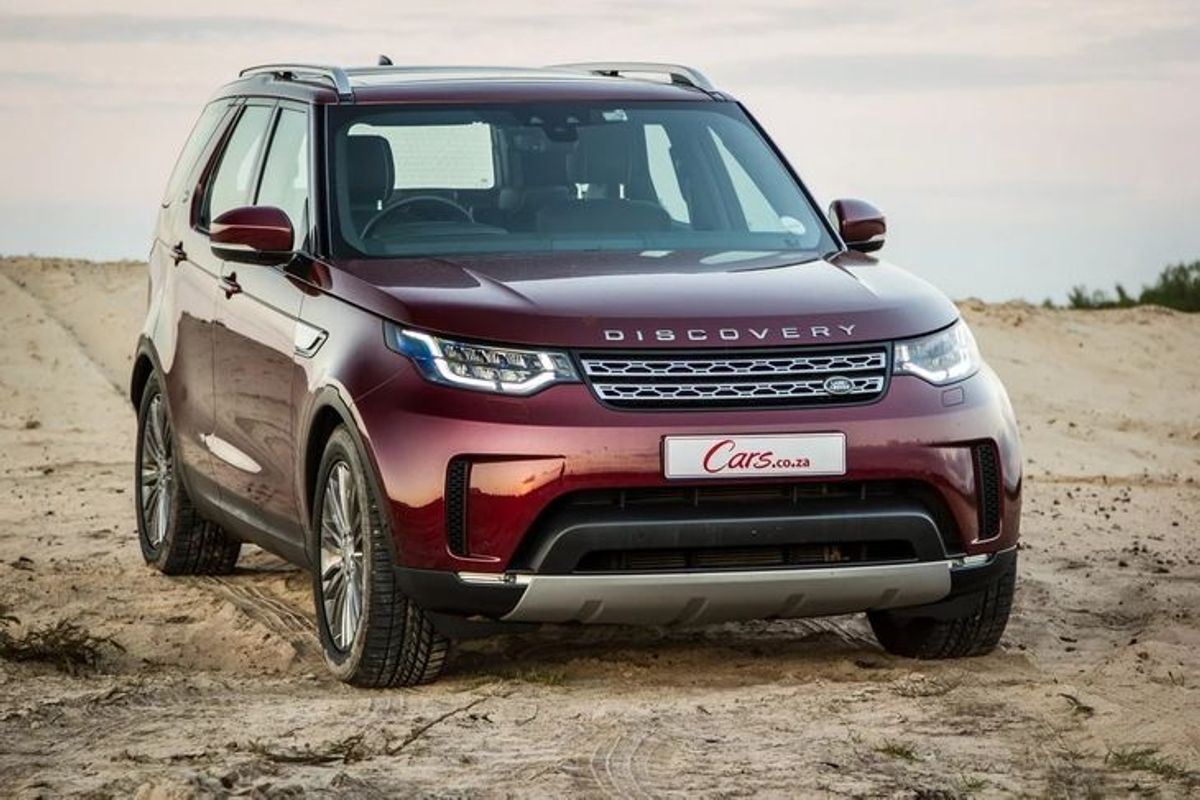
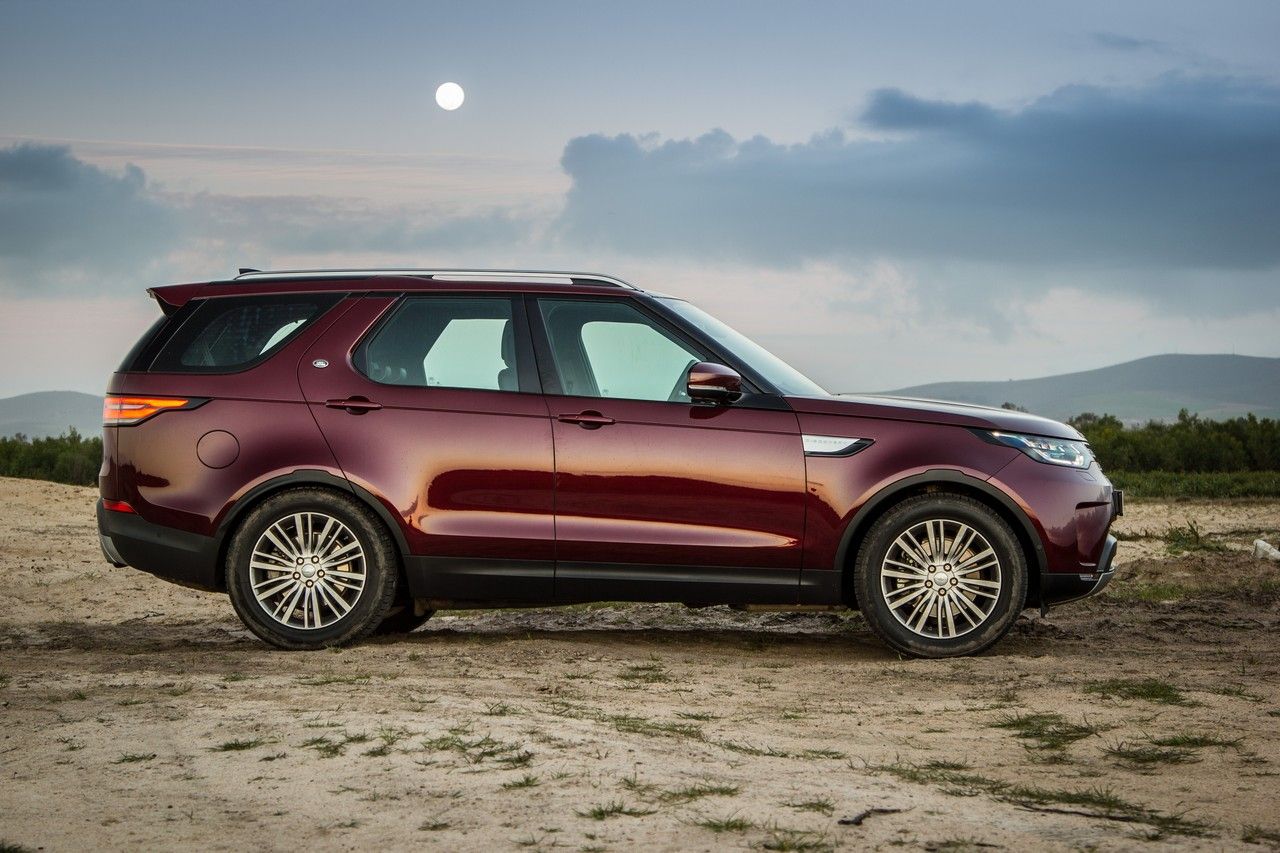
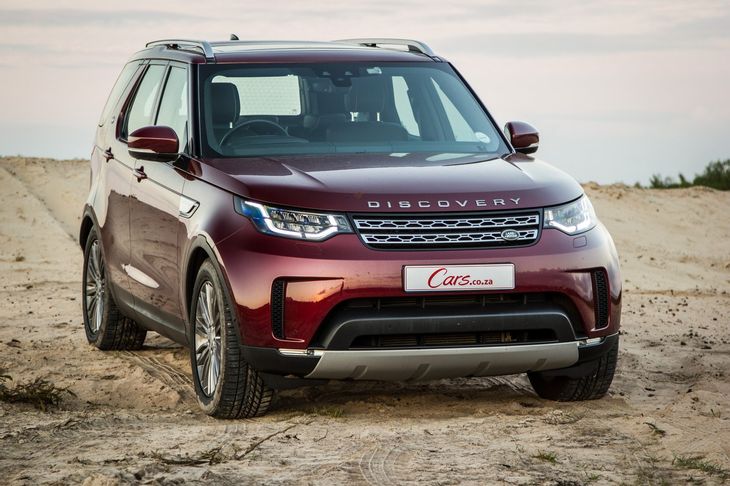
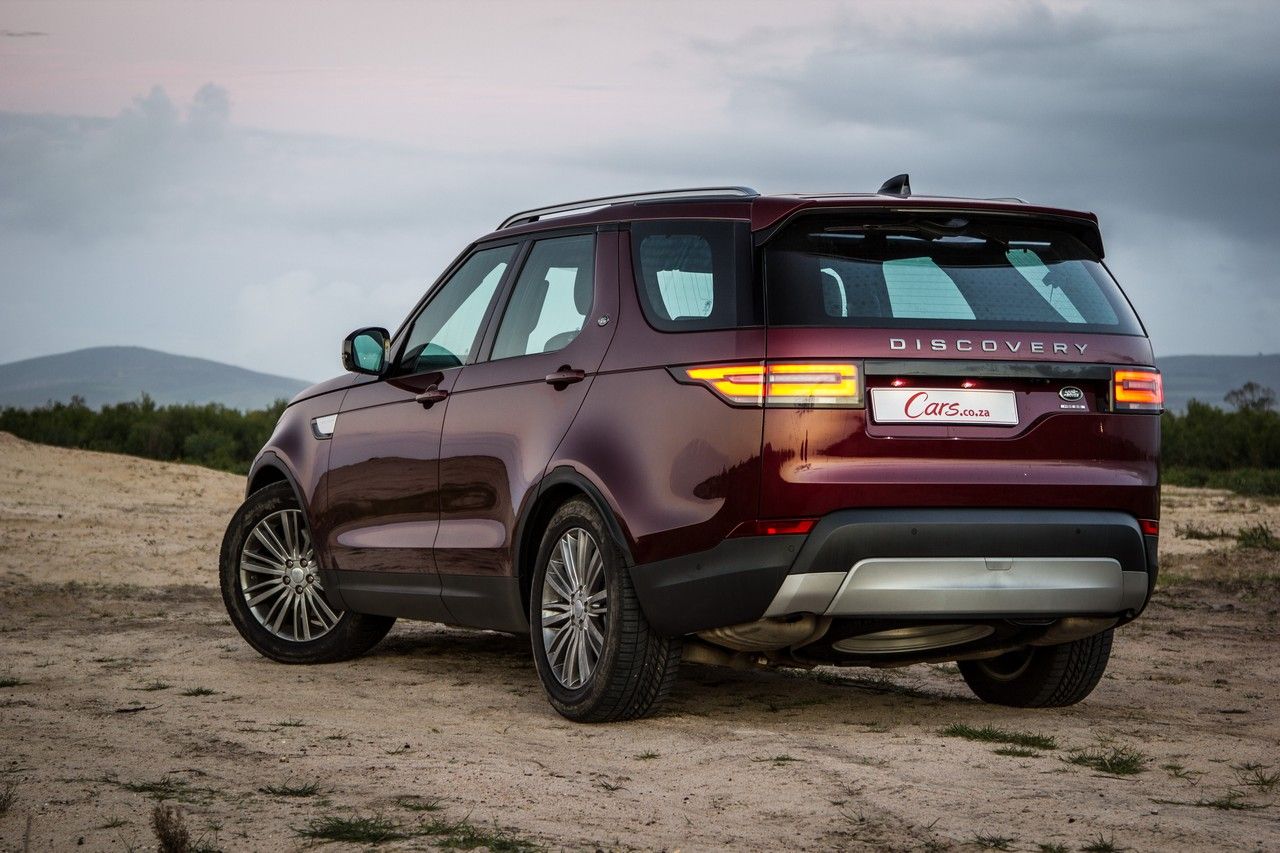
We’re not going to delve into a lengthy analysis of the new Discovery’s exterior design except to say that we sorely miss the old car’s visual character. Land Rover has tried to incorporate a few of its idiosyncrasies, however, such as the unsymmetrical rear number plate solution and there’s a much less pronounced stepped roofline, but overall the new Discovery can easily be mistaken for a Range Rover Sport. Admittedly, for some people that won’t be a bad thing.

The relationship with the Range Rover Sport is not merely an aesthetic one, however, because for the first time the Discovery doesn’t have a steel ladder chassis at its core, but rather the Sport’s aluminium monocoque. This move has been key to the shedding of weight – nearly half a tonne compared with its forerunner. We’ll get back to the underpinnings later, but from a packaging point of view Land Rover has taken care to evolve the Discovery’s trademark cabin practicality. 


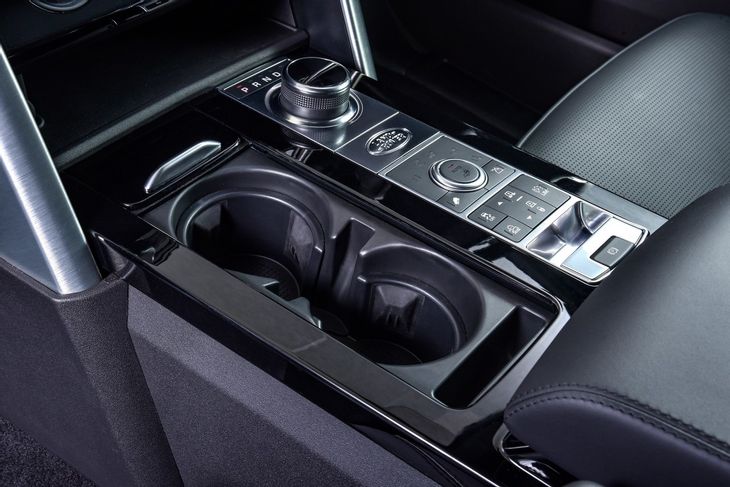
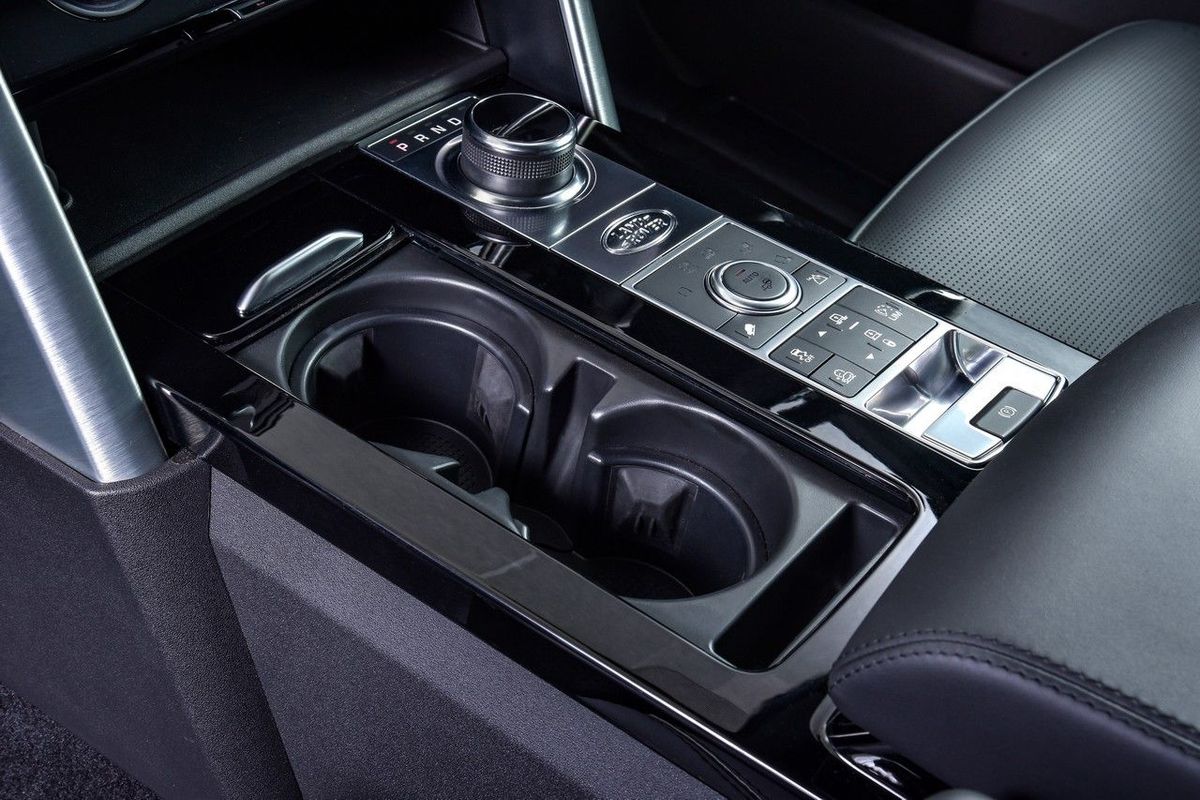
The cupholder area slides forward to reveal a large storage “box” underneath. 

The Discovery 5 has grown in most key dimensions, including in its wheelbase, which is 38 mm longer than before. From behind the steering wheel, however, it feels much the same as before. You sit high, peering down at drivers of “lesser” vehicles, and are always aware of the Land Rover’s sheer size. It’s a feeling not too dissimilar to driving a Rolls-Royce, in fact… What is new, however, are the surroundings.

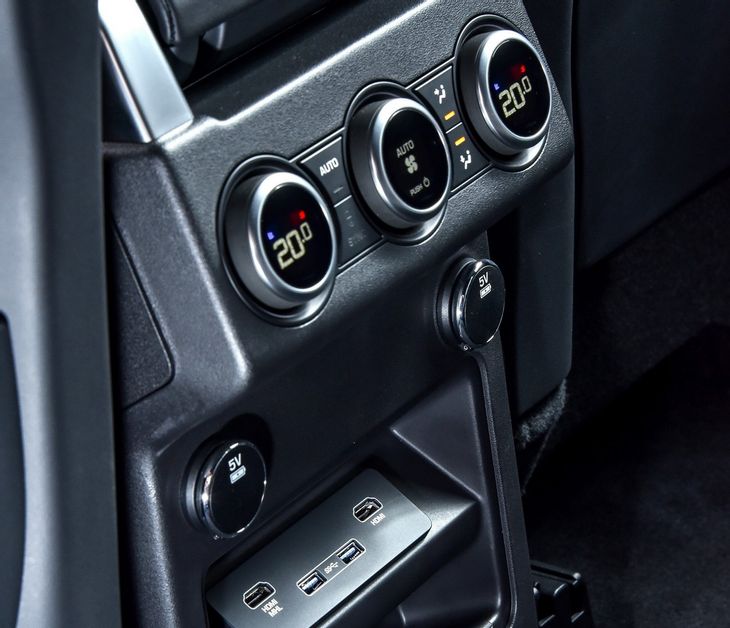
The design has been neatened up considerably, with most of the switchgear having migrated into the touchscreen control interface. At first glance the fascia can look a bit stark and minimalist, but there is a staggering number of hidden storage solutions… Besides the very spacious storage box between the seats (cooled as an option), another “secret” (and very deep) storage area is revealed by sliding the entire cupholder section on the transmission tunnel out of the way. Furthermore, the climate control interface lifts out of the way electrically to reveal another hidey hole. 


Note buttons on door frame to control the seat adjustment. 

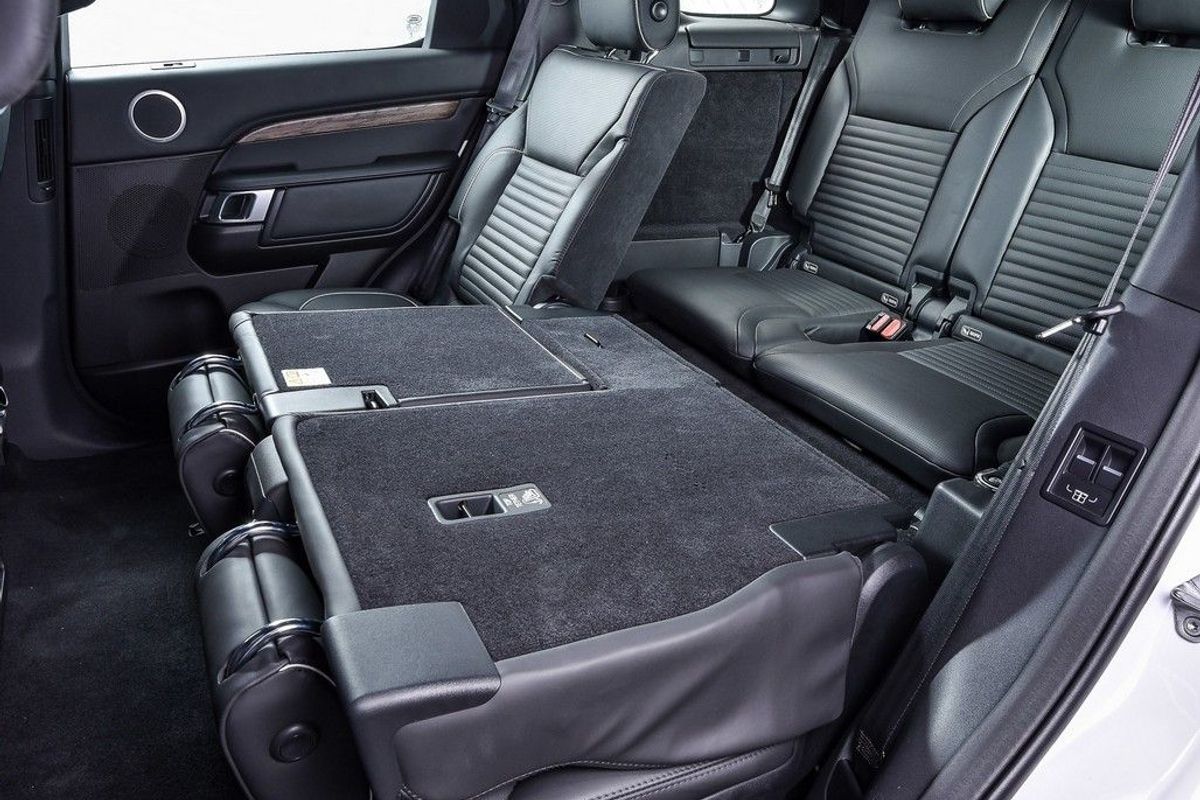
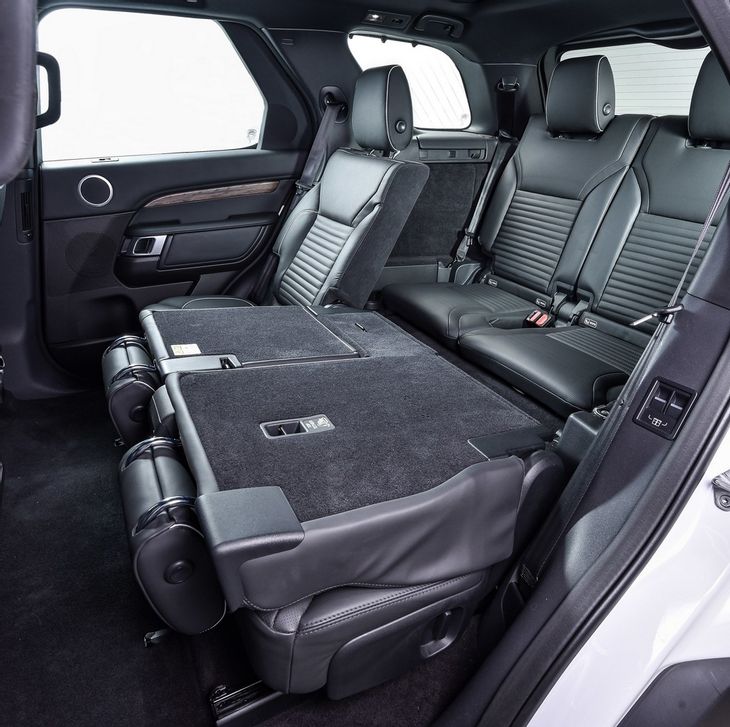
A key difference between the new model and its predecessor is that you now have to choose whether you want third-row seating… and then pay extra for it (R21 800). It’s an option box we’d eagerly advise ticking, as the Discovery’s cabin is so vast, and the seating arrangement so cleverly packaged, that it is one of the very few truly useful 7-seaters on the market.

Certainly, those seated in the second row will have very little to complain about, seeing as they are afforded reclining backrests as well as fore/aft legroom adjustment. The 2 seats in the back also offer enough legroom to make them practical for transporting more than just small kids. It’s also interesting to note that the 2 rearmost seats (when fitted) come standard with Isofix child seat mounting points.


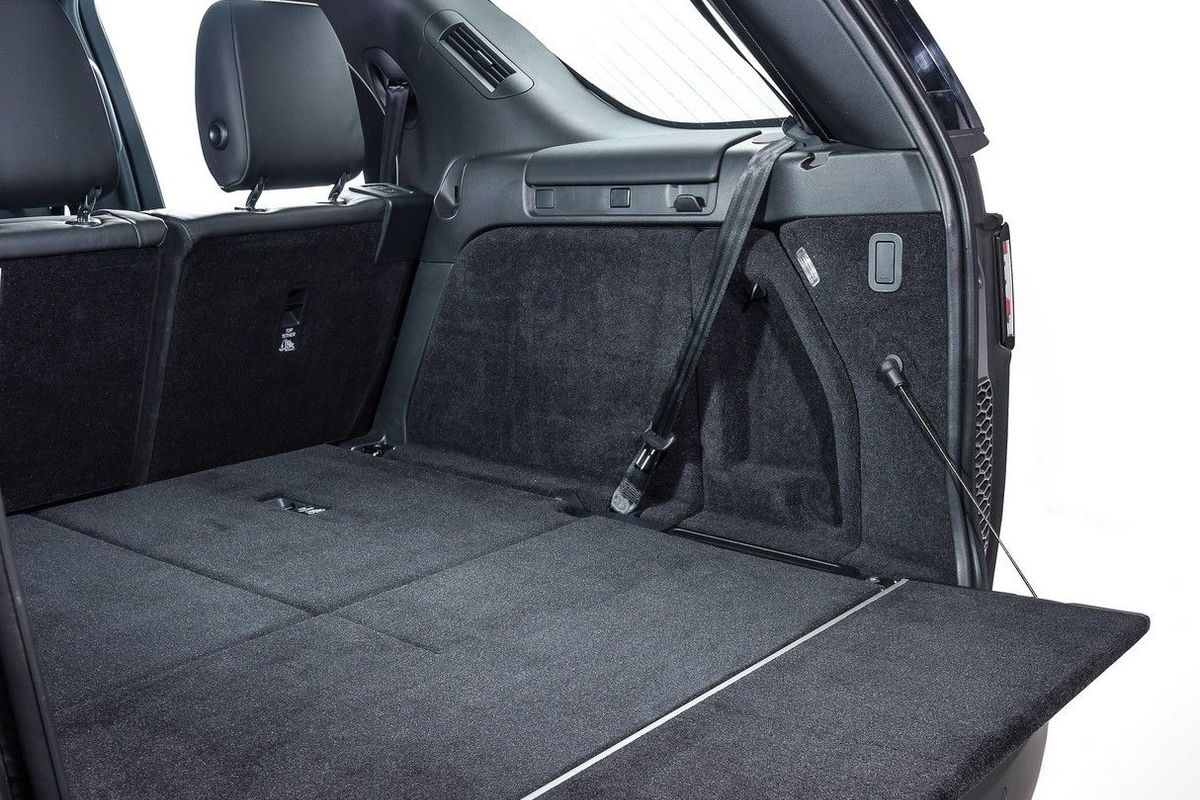
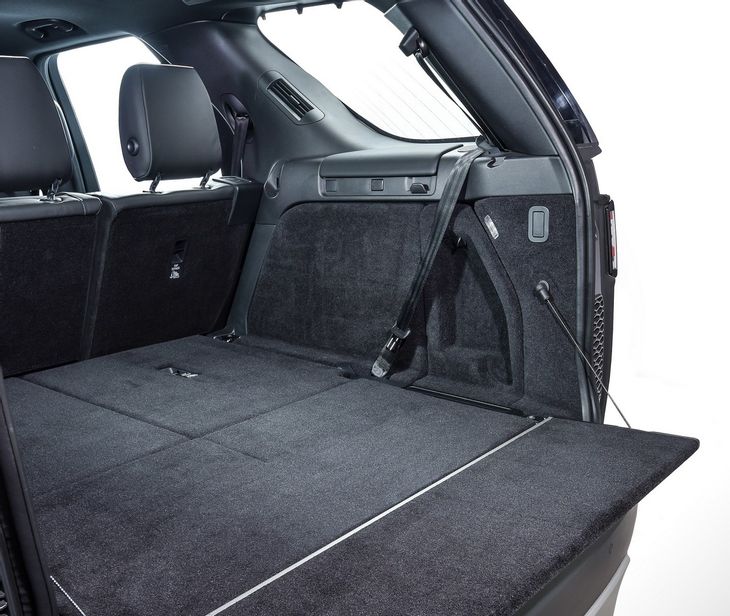
With the optional third-row seats folded away, the luggage area is vast.

As before, the packing space with the seats folded down is nothing short of cavernous. Even with 5 seats occupied there is more than 1 000 litres of luggage capacity on offer, and the total utility volume of 2 500 litres remains unmatched in this segment.

Our test unit was equipped with several interesting gadgets, including the ability to fold down the seats (second and third rows) electrically. It certainly beats clambering all over the cabin pulling on hooks and latches! When fitted with the Remote Intelligent Seat Fold pack (R22 100) one can adjust the seating configuration one of three ways; via the touchscreen system in the front of the car, buttons mounted in the cabin, or even by using an app on your smartphone. 

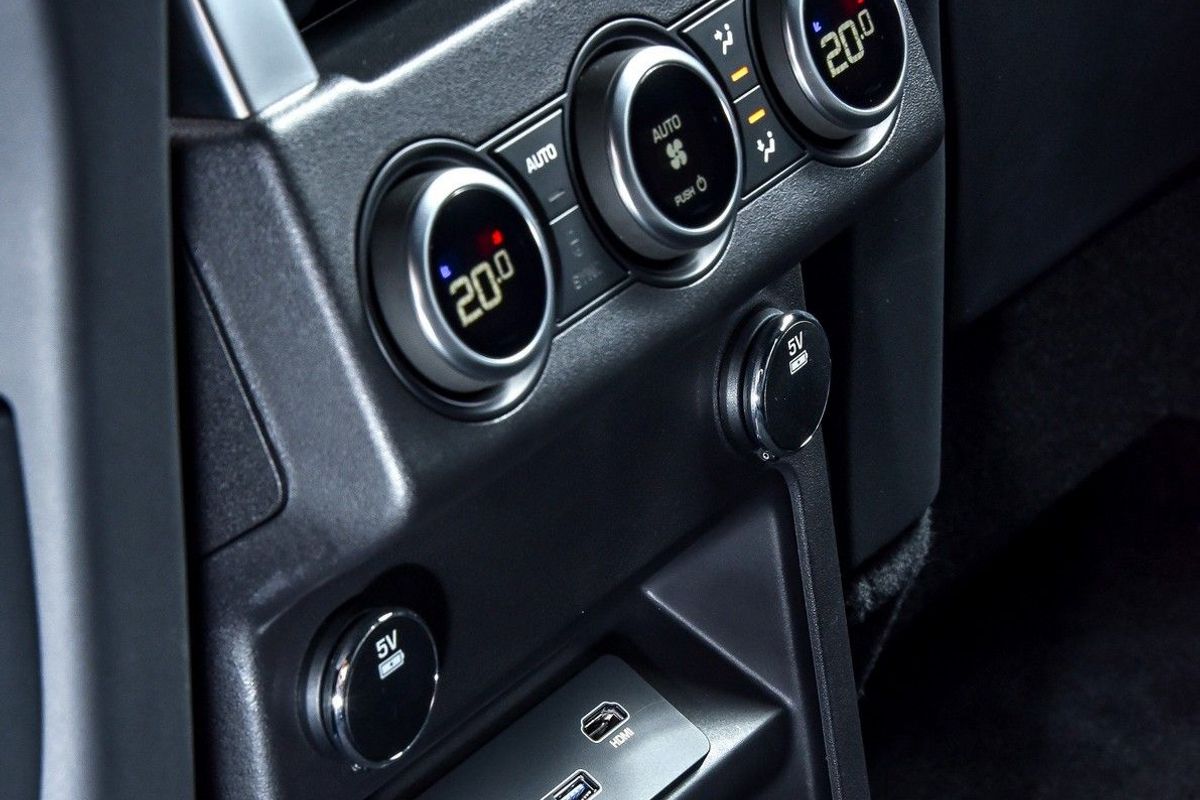
As standard, and even more so once a few option boxes have been ticked, the Discovery is loaded with modern features that will boost its appeal to tech-savvy buyers. Depending on specification, you can have up to 9 USB ports, no fewer than 6 twelve-volt charging points and even an in-car 3G WiFi hotspot that caters for up to 8 devices. So… no more entertainment complaints from the teenagers seated in the back when you hit the long road to grandma’s! They can remain very much “plugged in”. Needless to say, the infotainment system offers seamless iOS and Android connectivity.

Performance & Efficiency?

While the new-generation Discovery is up to 480 kg lighter than its predecessor, it’s by no means a featherweight SUV – it still tips the scales at more than 2 tonnes even in its most basic configuration. That means it still needs some serious grunt under the bonnet. While a review will follow of what is most likely going to be the top-selling derivative, the Td6, this write-up focuses on the Si6 with its supercharged 3.0-litre petrol V6. 


Although the petrol engine delivers pleasing performance, it is outpunched by the competition and is thirstier, too.

To be honest, we’re not sure why buyers would opt for the Si6… Sure, its peak outputs of 250 kW and 450 Nm are plentiful, but only when considered in isolation. The Discovery 5’s German (Mercedes-Benz GLS) and Swedish (Volvo XC90) rivals offer more grunt and, perhaps surprisingly so, the turbocharged 4.7-litre V8 of the Mercedes-Benz GLS 500 manages to theoretically offer better fuel consumption. Land Rover claims a figure of 11.5 L/100 km for this Discovery, which is on the high side and still proved impossible to match in the real world – we achieved a consumption figure of just over 13 L/100 km during our test period.

In the real world and in performance terms, there also appears little tangible benefit to going the superpetrol Discovery route. Due to the very nature of the Discovery driving experience (it’s a vehicle to waft in… not rush around), it’s throttle mapping is such that it’s not the briskest vehicle off the mark. Don’t misunderstand us… The Discovery Si6 is a lovely vehicle to drive and there is more than enough power for most needs, as well as excellent refinement, from the engine in general as well as the silky-smooth 8-speed transmission. We just believe that the torquey and more efficient turbodiesel better suits the likely owner profile and driving character of the vehicle.

Ride & Handling?

Any concerns that the new Disco’s Range Rover Sport-derived underpinnings have radically altered the driving experience are dealt with convincingly within the first few minutes behind the steering wheel. As before, the driver is always reminded of the Discovery’s size and height, and the trademark Discovery sense of “superiority” is therefore very much intact. It also “feels” similar to the previous car in the way that it responds to inputs, either via the steering wheel or the throttle pedal.

The steering may perhaps feel a smidge lighter than before, and the Land Rover arguably feels less top-heavy in the corners, but it comes across much more as an improved/refined Discovery 4, than a Range Rover Sport with different suspension and drivetrain settings. That’s a compliment, by the way…


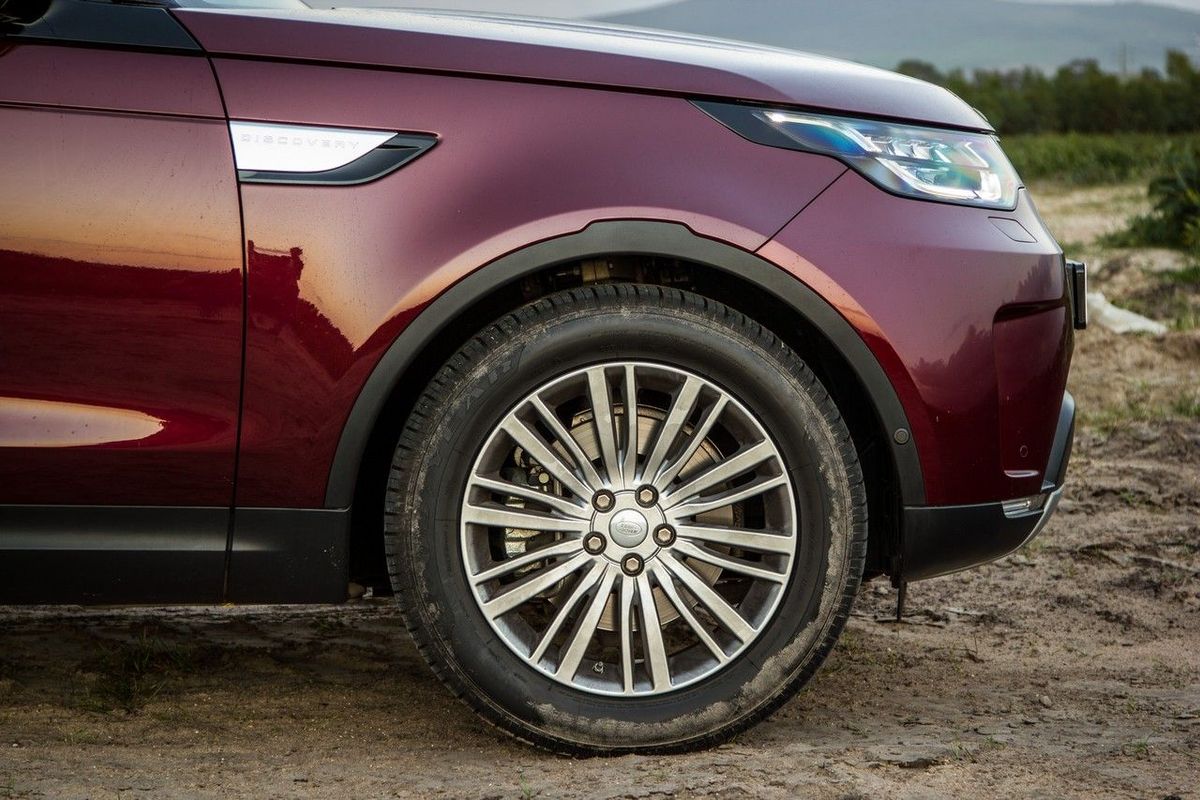
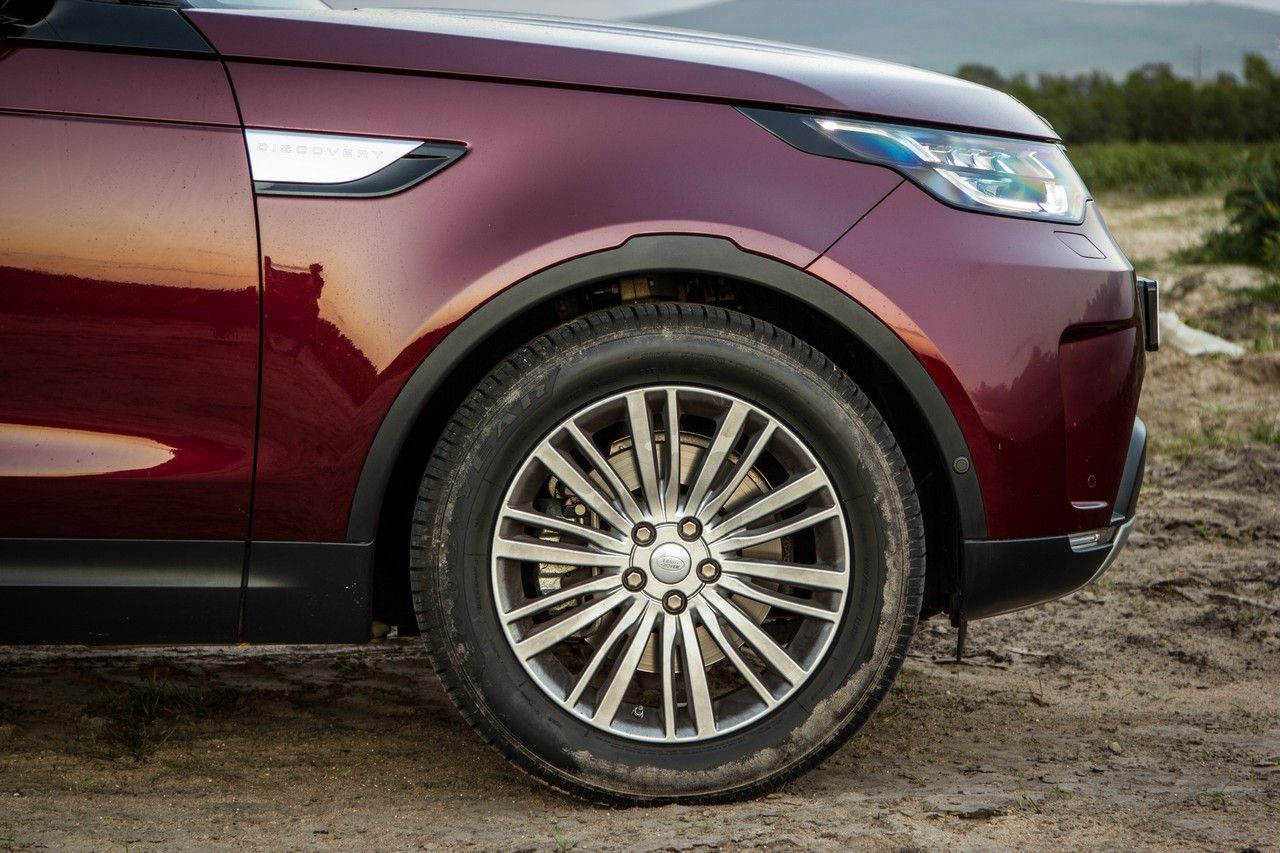
20-inch wheels are standard but buyers can also choose 21- or 22-inch optional rims. 

In HSE specification air-suspension and the high/low-range transfer box are included as standard, but Terrain Response 2 and ATPC (All-Terrain Progress Control) are optional extras. Don’t confuse Terrain Response 2 for a replacement for the well-known Terrain Reponse system, which is still offered as standard (with Rock Crawl mode) and allows the driver to manually select the appropriate mode for the upcoming terrain. Terrain Response 2 simply automates the selection. Even without ATPC and Terrain Response 2 there’s little that will trouble the Discovery when it sojourns off the beaten track.

Then again, it’s not so much the fact that the Discovery can overcome such obstacles, but the manner in which it does it that is so deeply impressive. With the correct settings selected and the ATPC set at a steady low speed, the Discovery will crawl over or through whatever comes its way, while the occupants of its 7 seats can relax while ensconced in the lap of luxury, merrily oblivious to the machinations of the immensely capable vehicle in which they’re being transported. Land Rover claims a ground clearance of 283 mm (up by 43 mm) and a highly impressive maximum wading depth of 900 mm (an increase of 200 mm).

The air suspension has another benefit… you can stand behind the vehicle and at a press of a button lower the rear end to easier load items in the luggage area, or to make the hooking-up of a trailer easier.

Ultimately, the Discovery 5 drives (on- and off-road) just as fans of the previous models would expect. Refined and quiet, it makes for a great long-distance touring vehicle. On gravel, it is arguably without peer, with its air-suspension, cabin insulation and various safety and comfort-boosting tech making it impervious to surface changes. 

Pricing & Warranty

The Discovery Si6 HSE’s base price is a heady R1 273 502, which includes a 3-year/100 000 km warranty and 5-year/100 000 km maintenance plan. HSE specification includes the following items as standard: electrically adjustable front seats (driver’s with memory), 20-inch alloy wheels, LED headlights, Meridian sound system and Navigation Pro, detachable tow bar, electronic air suspension, twin-speed transfer box (high/low range), auto lights/wipers, 3-zone climate control, reverse-view camera, front/rear PDC, keyless entry, cruise control and a powered tailgate, amongst other items.


4-zone climate control and several rear-seat entertainment options are available.

The options list is littered with attractive features, however, and we believe some should have been standard at HSE level, especially given the vehicle’s high purchase price. For one, 7-seater versatility is core to Discovery appeal but costs R21 800. If you want the ability to electrically fold those seats (2nd row included) remotely, then that’ll be another R22 100. The Discovery is a big vehicle and therefore tricky to park… so you’ll probably want Park Assist. That’ll cost R19 200, but excludes the 360-degree surround view which you must then also specify for an additional R5 400. Want to really use your Discovery’s off-road ability to the fullest? Then you’ll have to get the Capability Plus pack (R26 800) which includes Terrain Response 2, an active rear locking differential and ATPC (All Terrain Progress Control). 

So, while you ultimately have the freedom to “build” your Discovery to your very specific needs, it does rapidly escalate the Land Rover’s already heady price very quickly. We spent some time on the Land Rover configurator and managed to build an HSE specification Discovery that would cost significantly more than R1.7 million!

Verdict

Overall, the Discovery 5 remains the most versatile luxury SUV one can buy. The manner in which this newcomer seamlessly blends the roles of practical family tourer with status SUV, genuine off-roader and refined all-rounder is just about priceless, which just about justifies its hefty price tag. We’d humbly suggest, however, that the buyer’s speccing journey should start with the Td6 derivative, which offers an engine more in tune with the overall character of the car, as well as greater efficiency. 

You may also be interested in:

Land Rover Discovery goes hardcore with SVX

Land Rover Discovery (2017) launch review

Facelifted Mercedes-Benz GLS revealed

Volvo XC90 T8 Twin Engine Inscription (2016) Review

Looking for a new / used Land Rover Discovery to buy?

Find one on Cars.co.za today by clicking here

Rendering: SA-bound Ford Ranger Raptor


Last month, Ford South Africa confirmed that the highly-anticipated Ranger Raptor performance off-road bakkie will be offered locally. We have seen the Ranger Raptor prototype undergoing testing and our Cape Town-based artist has now created a speculative rendering of what the double-cab Ranger Raptor might look like.

The Ford Ranger Raptor is a hardcore, performance off-road bakkie that has local enthusiasts excited. Exact details of the forthcoming Ranger Raptor are scarce but this speculative render created especially for Cars.co.za provides some insight into what Ford is brewing in the Australian Outback.

The Ranger Raptor is currently being developed by Ford Performance in Australia and is expected to arrive in South Africa sometime in 2018 or even 2019, but its exact arrival date has yet to be confirmed.

In terms of what will power the Ranger Raptor, rumours abound and many believe that it will be fitted with either a revised 5-cylinder 3.2-litre turbodiesel currently used in the Ranger or even the 331 kW 3.5-litre V6 turbo petrol engine from the F-150 Raptor. However, interestingly, the latest indications are that the Ranger Raptor will debut a downsized, twin-turbocharged 2.0-litre diesel engine.

A smaller engine will cut weight and with 2 turbochargers, a high-output 4-cylinder diesel engine can produce the necessary performance required for the Ranger Raptor. Power outputs of the rumoured 4-pot are unknown at this stage. Much like the larger Ford F-150 that’s sold in the North America, the Ranger Raptor will employ a 10-speed automatic transmission driving all 4 wheels.

In order to deliver its notable off-road performance, the Ranger Raptor will likely be fitted with a heavily revised suspension system. The Ranger Raptor will certainly look the part too with more aggressive and beefier styling and a wider stance when compared with the standard Ranger.

We will keep you updated as soon as more information on the Ford Ranger Raptor becomes available.

We would love to hear what you think of the Ranger Raptor, so feel free to share your thoughts and comments with us. Also, watch the teaser video for the Ford Ranger Raptor below!


Buy a Ford Ranger on Cars.co.za

Related Content

Ford Confirms Ranger Raptor Bakkie (Video)

Nissan Navara 2.3D 4×4 LE (2017) Review

Why Navara shakes up the double-cab market

Ford Ranger Fx4 (2017) – a Raptor Kit with a Warranty

Toyota Hilux Raider Black Limited Edition (2017) Specs & Price

Toyota Hilux 2.8GD-6 DC 4×4 Raider Auto (2016) Review

6 Most Fuel-Efficient Double-Cab Bakkies in SA

Most Powerful Double-Cab Bakkies in SA

2016 Toyota Hilux vs Ford Ranger – Offroad & Review

Ford Ranger 2.2 XLS 4×4 Automatic (2016) Review

Ford Ranger 3.2 4×4 Wildtrak (2016) Review

Ford Ranger 3.2 XLT (2016) Review

Mitsubishi Triton (2017) Video Review

Mitsubishi Triton 2.4DI-D Double Cab 4×4 (2017) Quick Review

Mitsubishi Triton 2.4DI-D Double Cab 4×4 Auto (2017) Review

Volkswagen Amarok 3.0 V6 TDI (2017) Video Review

Volkswagen Amarok 3.0 V6 TDI Highline Plus (2017) Review [with Video]

Fiat Fullback Double-Cab 2.5 Di-D 4×4 LX (2017) Review

Isuzu KB 250 X-Rider 4×2 Double Cab (2017) Quick Review

Isuzu KB300 LX 4×4 Extended Cab (2017) Review

The Journey Ep 1: Namibia

The Journey: 4×4 & Surfing in Transkei

Jeep Grand Cherokee Trackhawk Coming to SA in 2018


Fiat Chrysler Automobiles (FCA) has had a busy year in South Africa in 2017, launching several key models to market, but the group is looking forward to 2018…

FCA is the world’s fifth largest automobile manufacturer and markets a host of brands such as Abarth, Alfa Romeo, Fiat, Fiat Professional, Mopar, Chrysler, Jeep and Dodge.

However, US-built Dodge and Chrysler vehicles are no longer produced in right-hand drive configuration and will therefore no longer be offered in the South African market. FCA will, however, continue to support and service local customers through its franchise dealers.

FCA will be expanding it dealer footprint with new dealerships expected in Sandton, Fourways, Menlyn and Durban. FCA will also be occupying a new Head Office in the second half of 2018.

In 2017, FCA launched key models such as the much-acclaimed Alfa Romeo Giulia D-segment sedan and the Fiat Tipo sedan and hatchback. The Fiat Panda was recently reintroduced to market and Alfa Romeo’s highly-anticipated Stelvio SUV is due to arrive in South Africa before the end of the year.

FCA will ride this momentum into 2018 where it will introduce the new Jeep Compass compact SUV to market as well as the new Jeep Wrangler.

The big news, however, is that the Jeep Grand Cherokee Trackhawk high-performance SUV will make landfall in 2018.

Jeep Grand Cherokee Trackhawk coming to slay BMW, Mercedes-AMG and Porsche


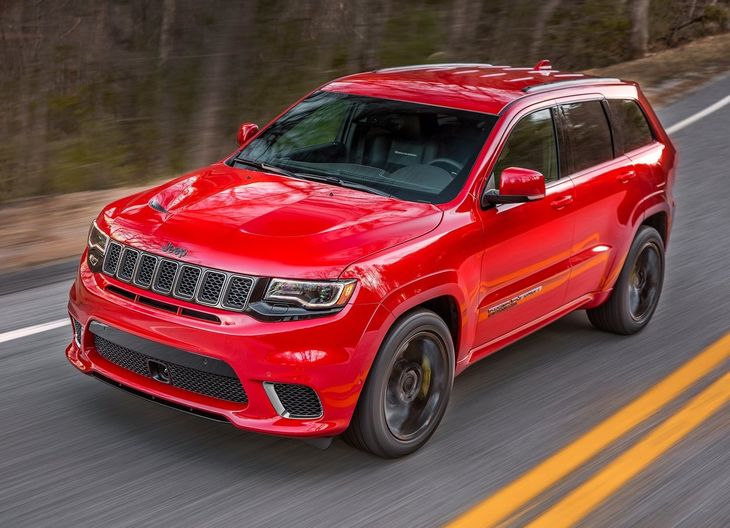
With 523 kW and 881 Nm of torque, the Jeep Grand Cherokee Trackhawk is significantly more powerful than its rivals. 

Rivalling mighty products such as the BMW X5M / X6M, Mercedes-AMG GLE 63 and Porsche Cayenne Turbo S, the Jeep Grand Cherokee Trackhawk is set to rock the high-performance SUV market when it arrives.

Fitted with a powerful supercharged 6.2-litre V8 engine sourced from the Dodge Challenger SRT Hellcat, the Trackhawk will produce a not-to-be-taken-lightly 523 kW and 881 Nm of torque, which is substantially more than what its rivals offer.

The Jeep Grand Cherokee Trackhawk will offer blistering performance with zero to 100 kph dispatched in a rapid 3.5 seconds while powering on to at least 290 kph.

An exact launch date is yet to be confirmed, but we will keep you updated as more information becomes available, so stay tuned!

Buy a Fiat on Cars.co.za

Buy an Alfa Romeo on Cars.co.za

Buy a Jeep on Cars.co.za

Related Content

Jeep Grand Cherokee Trackhawk – The Fastest Jeep Yet

All-New Jeep Compass Revealed

Alfa Romeo Giulia Quadrifoglio (2017) Video Review

Alfa Romeo Stelvio: Order Books Open in SA

Alfa Romeo Stelvio (2017) International First Drive

Alfa Romeo Stelvio Quadrifoglio Smashes SUV Ring Record

New Porsche Cayenne Revealed

SUV supreme: Porsche's new Cayenne Turbo

Porsche Cayenne (2018) Pre-Launch Review

Mercedes-AMG GLE 43 (2017) Quick Review

Spy Shots: BMW X5 M vs Mercedes-AMG GLE63

Mercedes-AMG GLE 63 Video

BMW X5 M/X6 M Black Fire Edition Headed for SA

BMW X5 M (2015) Review

BMW X5 M50d vs Range Rover Sport (Video)

Mitsubishi Pajero Sport (2017) Video Review


Following the launch of the Triton bakkie earlier this year, Mitsubishi has followed that up with the SUV version, named the Pajero Sport. An all-new Pajero Sport was introduced to South Africa recently and we took it offroading to determine if it has what it takes to compete with its rivals. Watch the video!

The Pajero Sport is a vehicle that is here specifically to take on the Toyota Fortuner and Ford Everest – both of which have a stranglehold on this segment of the market. However, the Pajero Sport is priced very competitively, sliding in beneath the equivalent Fortuner and Everest. It packs a decent punch from its new-generation 2.4-litre turbo diesel motor with 133 kW and 430 Nm of torque, which sends its power to all four wheels via a new 8-speed gearbox.

And of course, there is Mitsubishi's legendary Super Select four-wheel drive system thrown in for good measure. In this episode, Juliet McGuire takes the new Pajero Sport to our favourite 4×4 testing ground, outside Cape Town. We take a detailed look at the interior, the rear seats and load space practicality, and of course, we get the Pajero Sport properly dirty.

Want to buy a Mitsubishi?

Buy a Mitsubishi Pajero on Cars.co.za

Related Content

Mitsubishi Pajero Sport Arrives in SA

Mitsubishi Pajero 5-Door 3.2 DI-D GLS Legend II (2016) Review

Mitsubishi Pajero Sport 2.5 Shogun Auto (2015) Review

Mitsubishi Pajero LWB (2014) Review

Extended Test: Toyota Fortuner 2.8 GD-6 4×4 Automatic [with Video]

Toyota Fortuner 2.4GD-6 (2016) Review

Toyota Fortuner vs Ford Everest (2016) Comparative Review [Video]

Spec upgrades to Ford Ranger & Everest

Ford Everest 2.2 XLT auto (2017) Video Review

Ford Everest 2.2 XLT Automatic (2017) Quick Review


Mini Countryman JCW Automatic (2017) Quick Review


The new Mini Countryman came to market earlier this year and with its larger dimensions, it has grown into a rather practical premium compact family crossover with youthful styling appeal. The brawny Countryman John Cooper Works (JCW), however, sweetens the formula with more power and all-wheel drive capability. How does it perform and should you consider it? Let’s find out…

We Like: Bullish looks, performance, interior quality, practicality  

We Don’t Like: Pricey optional features

Alternatives

  • Mercedes-Benz GLA 250 4MAtic AMG Line – The GLA 250 is also powered by a 2.0-litre turbocharged petrol engine with 155 kW and 350 Nm of torque. It’s not as youthful as the JCW and perhaps not as playful to drive but it’s definitely an alternative worth considering. The GLA 250 4Matic AMG Line is priced from R681 190.
     
  • Volvo V40 Cross Country T5 Inscription – The V40 CC is a little smaller than the Countryman but offers a sleeker, more hatchback like shape that seems less bulbous. The current generation V40 CC is getting quite long in the tooth but it does have a super range of petrol and diesel engines and a comfortable interior at a cheaper price tag. It's priced at R584 706.
     
  • Audi Q2 2.0TDI Sport S Line Automatic – The Q2 has loads of styling appeal and even though it has less power than the JCW with 105 kW and 350 Nm of torque, its price of R585 150 gives you generous room to add a host of attractive features that are arguably more stylish than what the JCW can offer. It’s not a cheap option but it competes well in terms of visual appeal and will suit those looking to impress.

Compare the Mini Countryman JCW with its rivals here!


The Countryman JCW offers an attractive blend of practicality, style and entertaining performance.

Facts & Figures

Price: R636 972 (October 2017)

Engine: 2.0-litre turbopetrol

Power/Torque: 225 kW / 450 Nm

Transmission: 8-speed sports automatic

Fuel consumption: 7.4 L/100 km (claimed)

0 -100 kph: 5.1 secs

Top speed: 250 kph

Boot capacity: 450 – 1 390 L

What is it?


A wide planted stance in combination with all-wheel drive proves useful when venturing on gravel.

The Countryman is not only the largest Mini on offer, but this JCW Countryman is also the most powerful all-wheel drive Mini, ever.

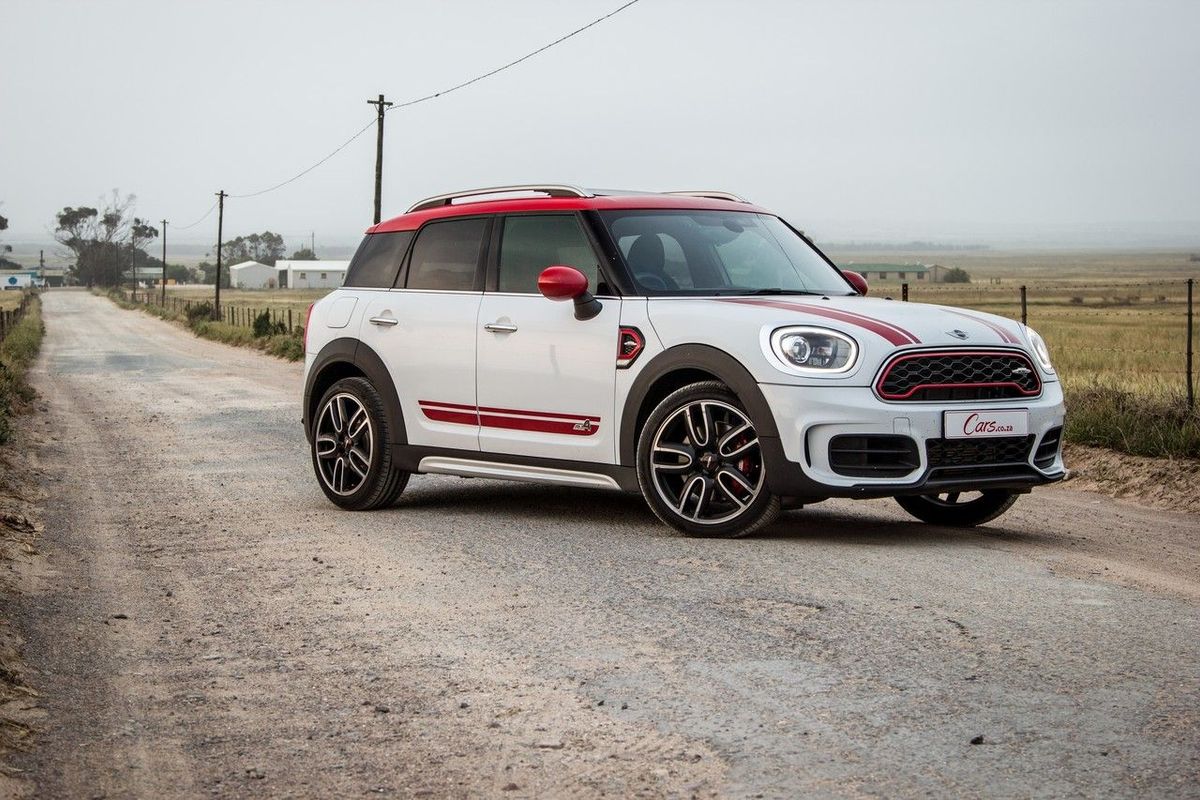
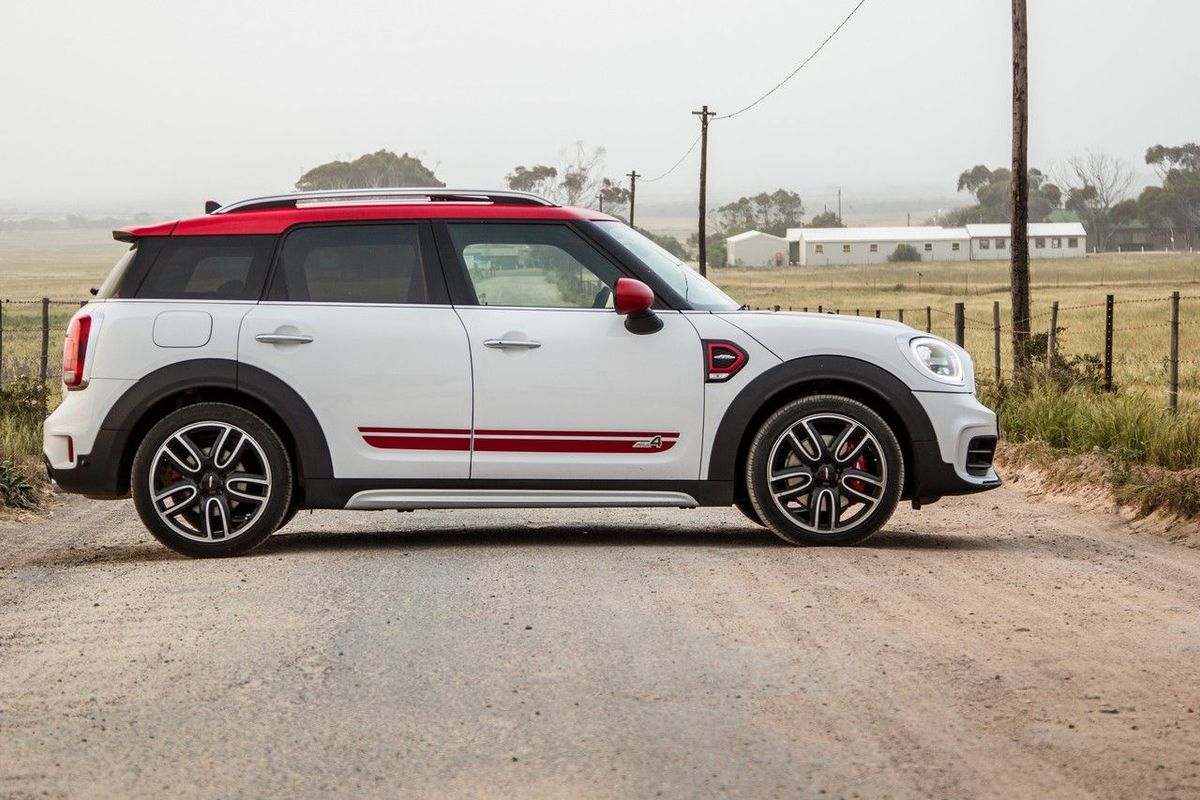
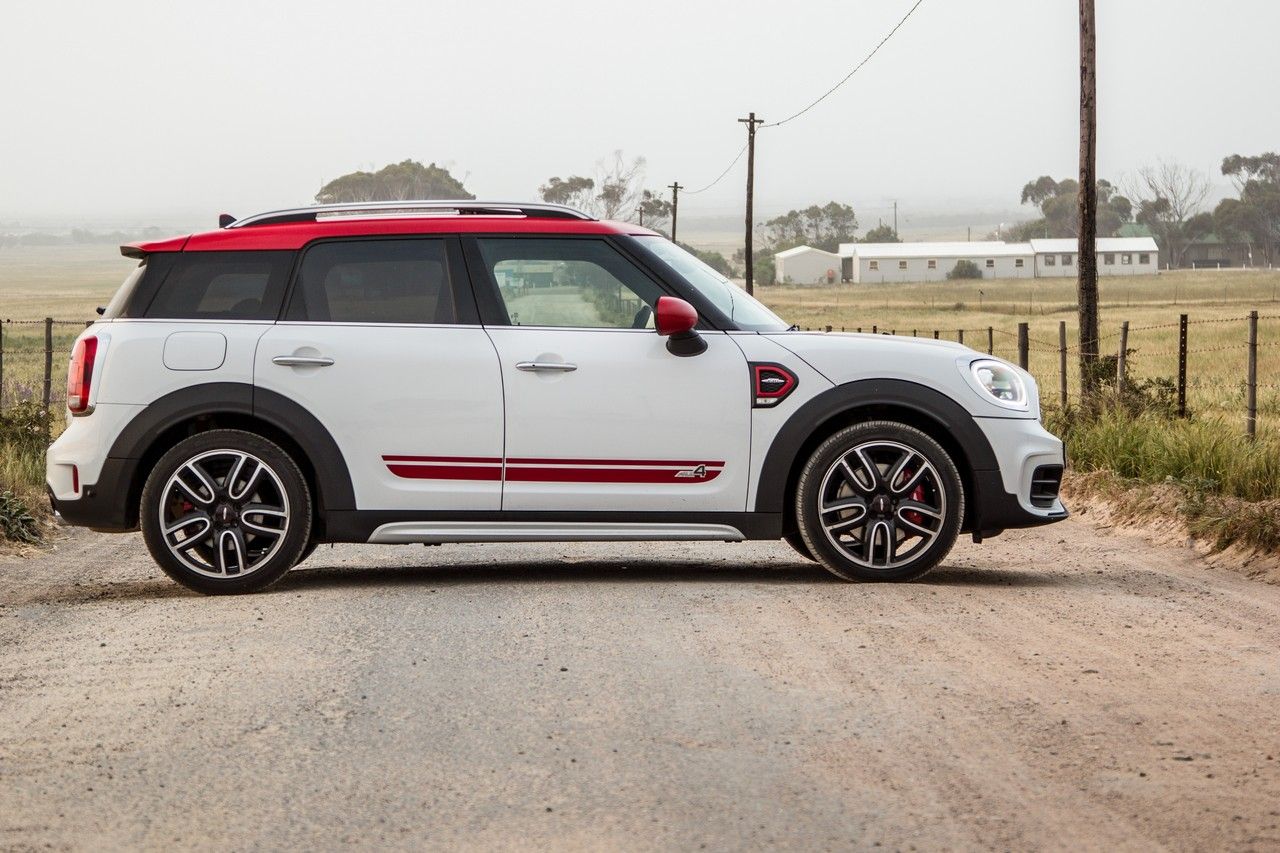
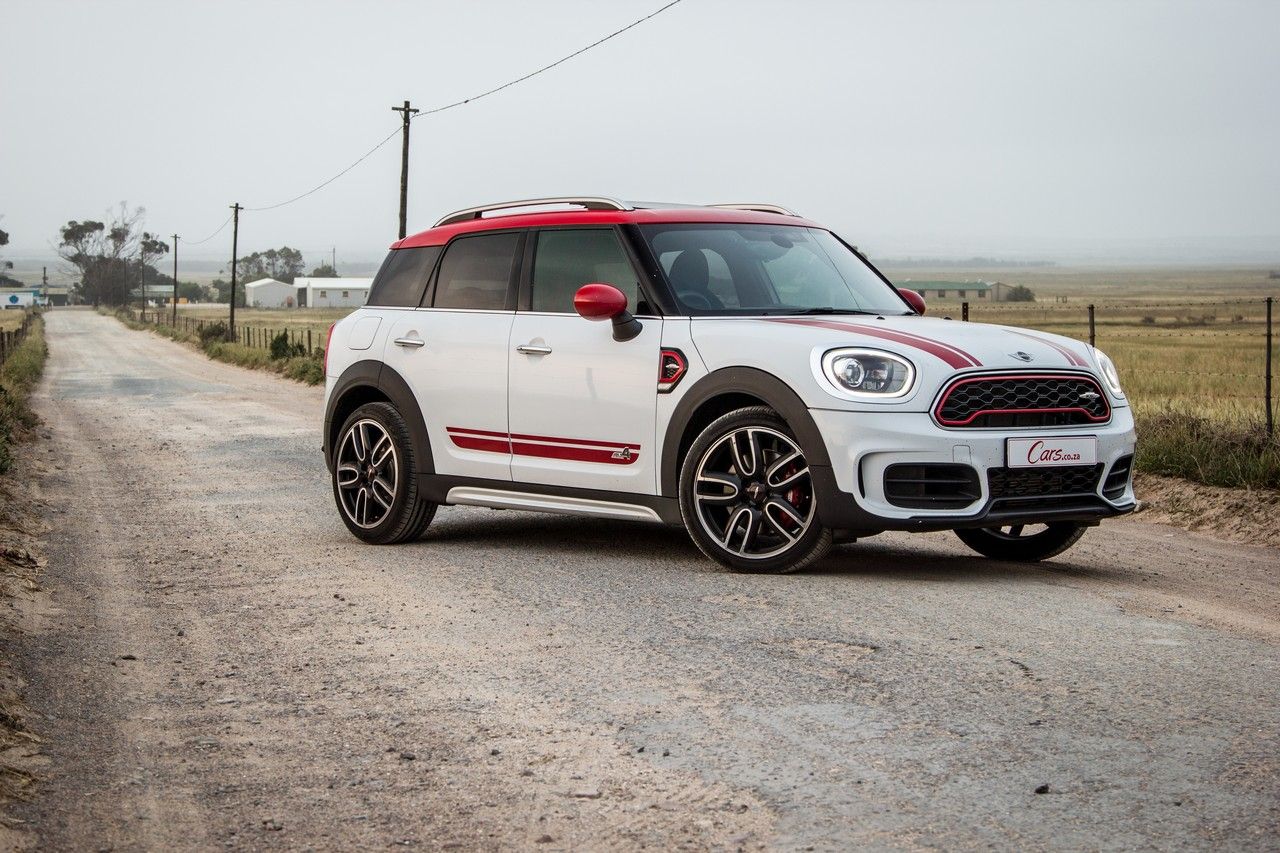
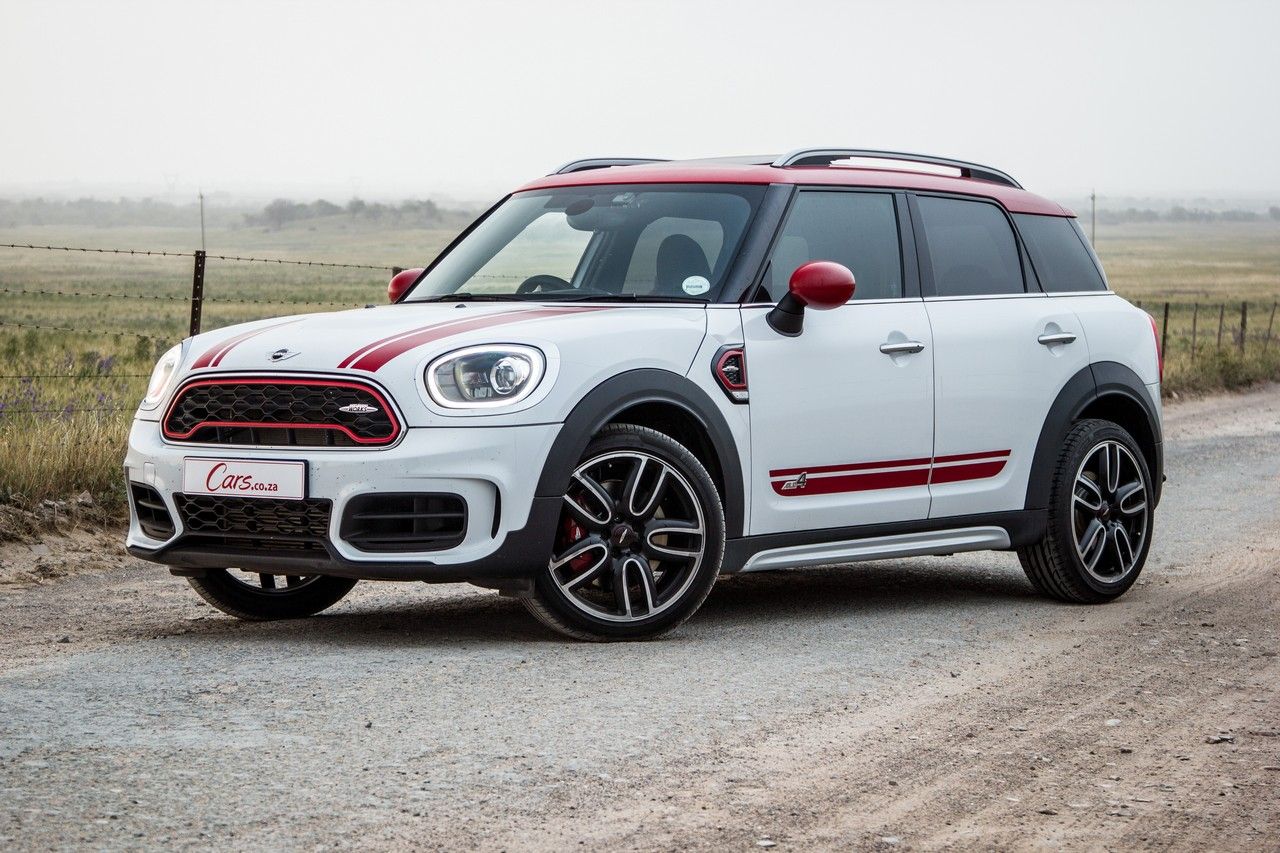
Most vehicles in the compact family crossover segment look comparatively bland when parked next to the JCW Countryman and that’s because it looks like it stepped out of the gym with bulging bodywork and a muscular demeanour. Younger buyers wanting a premium compact crossover with flamboyant styling and performance punch will find this JCW Countryman to be an alluring proposition.

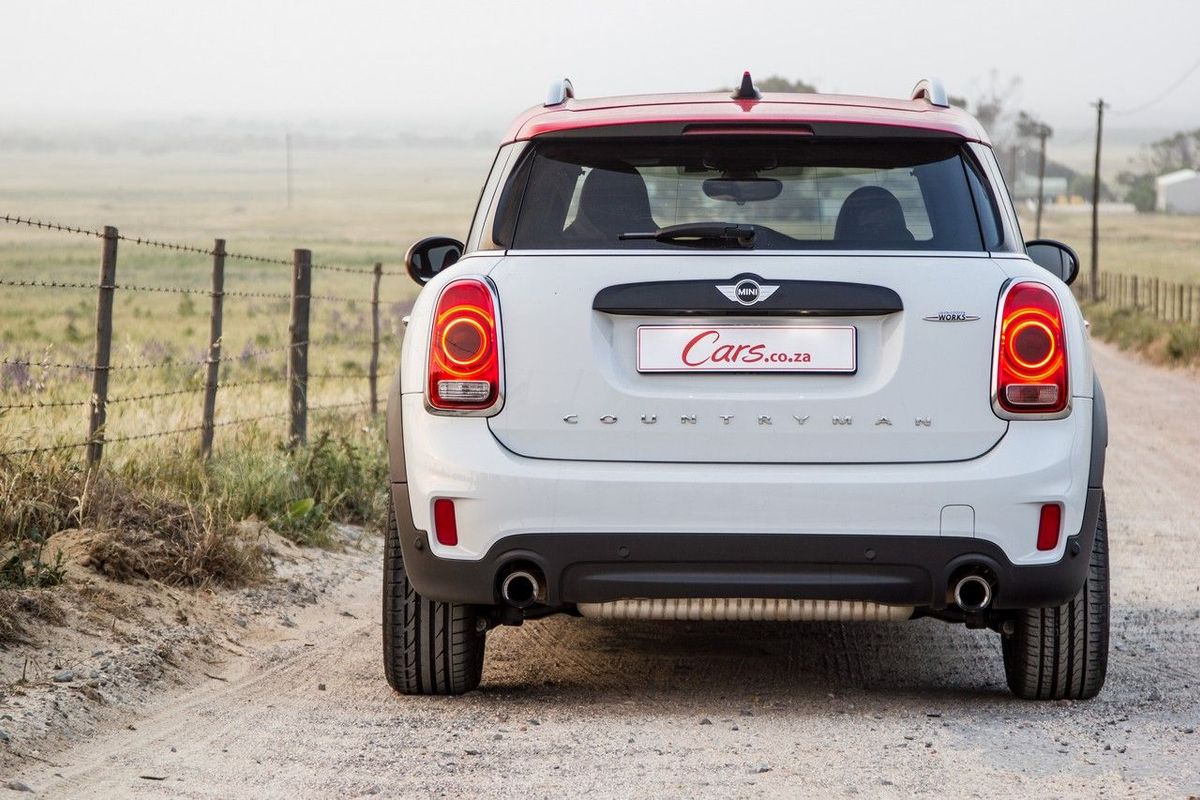
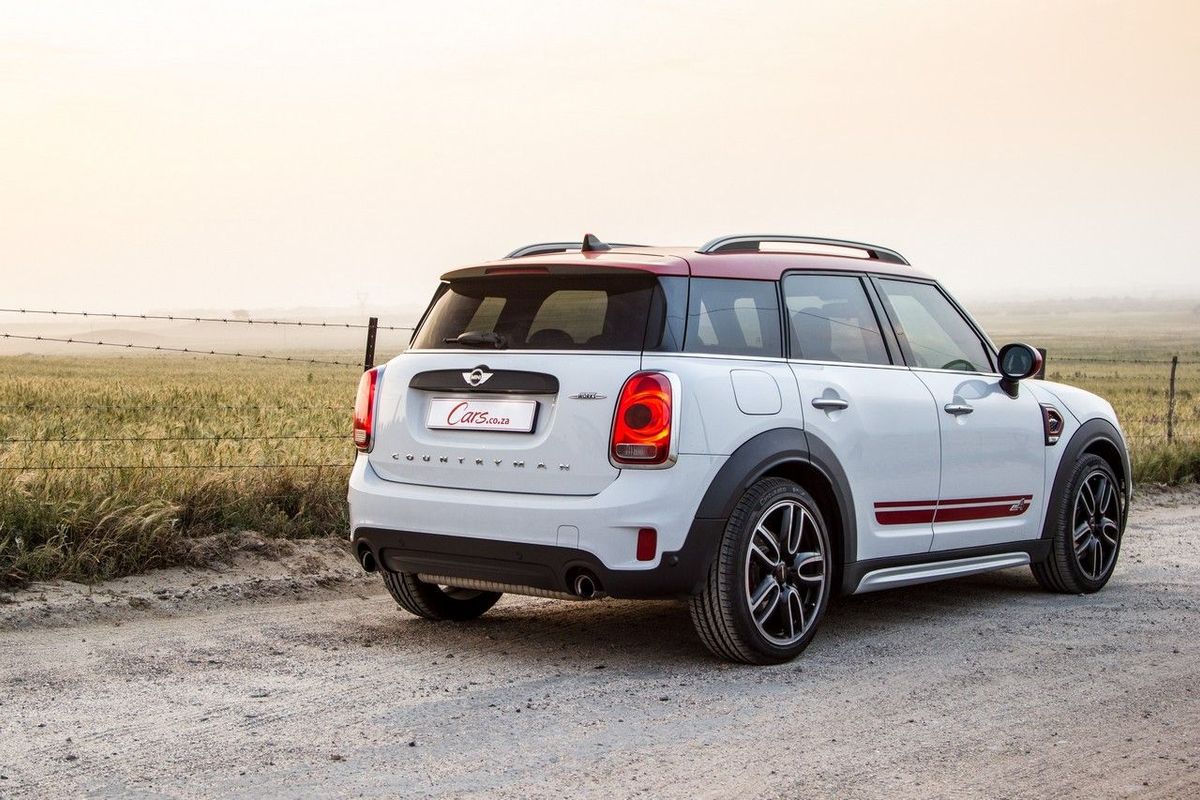
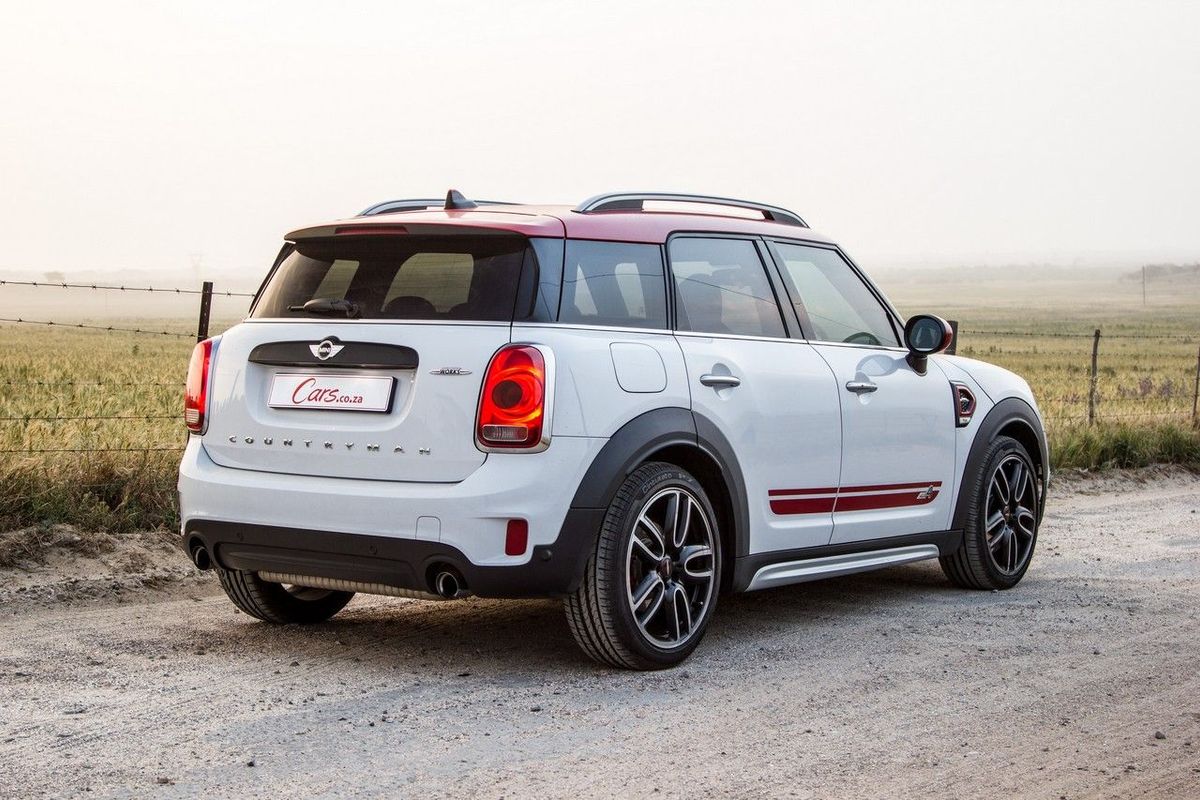
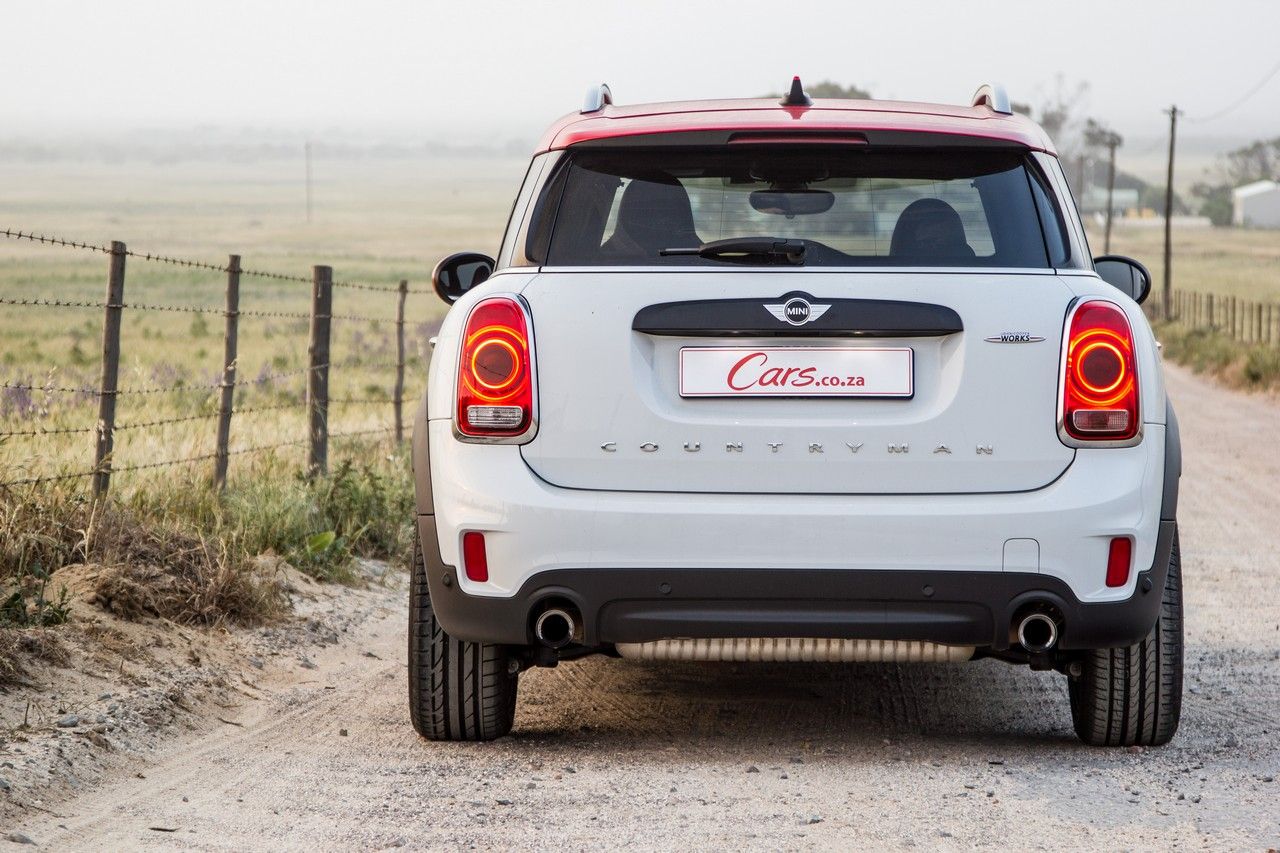
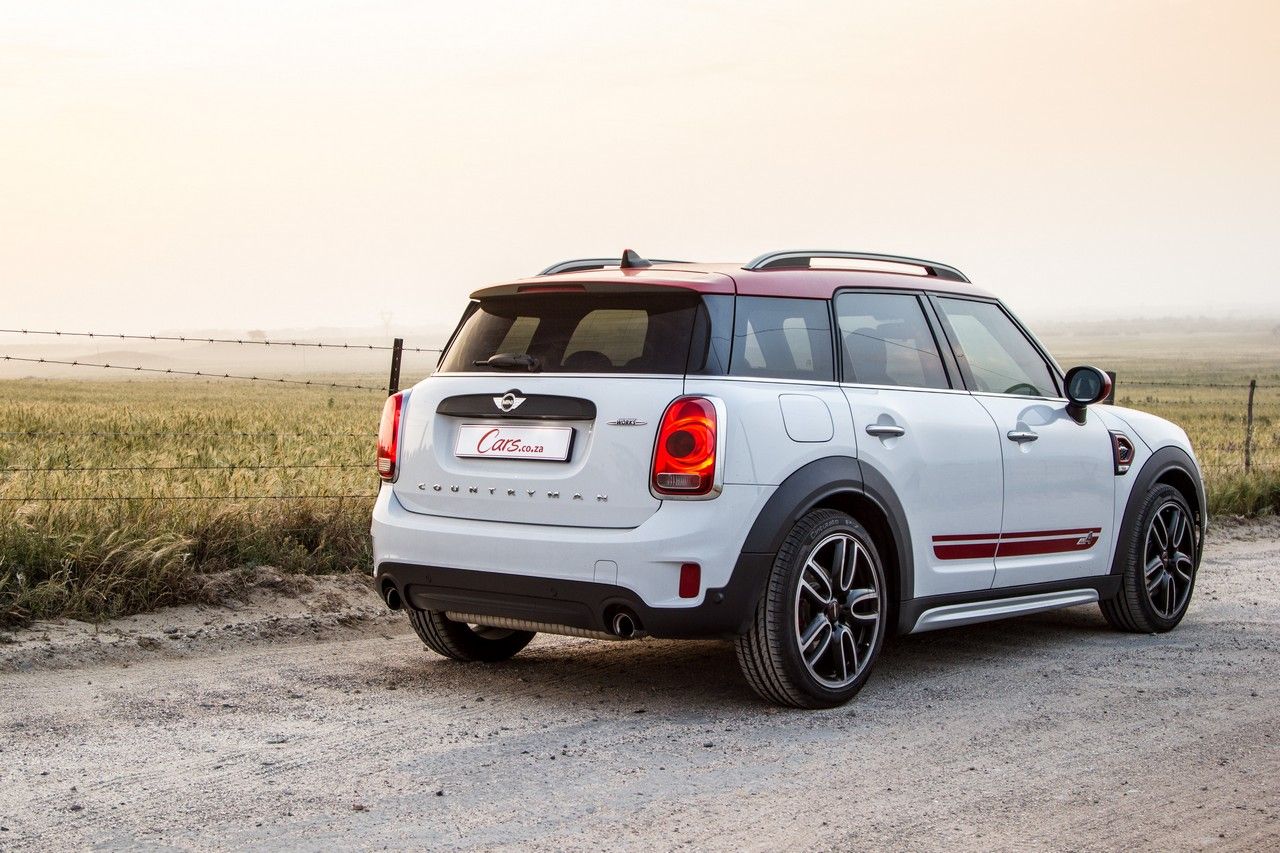
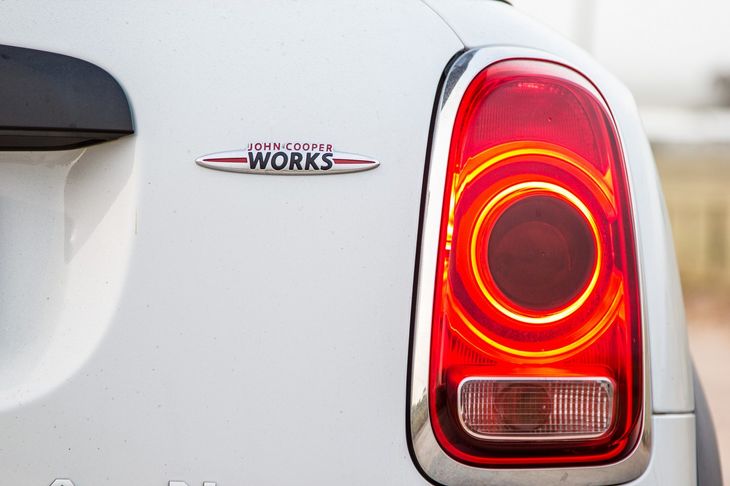
The JCW Countryman is distinguished from its lesser stablemates with sporty features such as large air intakes in the front bumper, a rear diffuser, a roof-mounted spoiler and roof rails to round off the look. This test unit came dressed in white with red sports stripes, red roof and you guessed it, red side mirrors. We think its brutish looks are appealing but it might be too much for the conservatives out there…

Is the Mini JCW Countryman all show or can it actually go? Let’s take a closer look at what it has to offer…

The Good

Strong Performance


A slick, seamless transmission and punchy engine ensure brisk acceleration and the dual exhausts are quite vocal too. 

A specially-tuned, 2.0-litre turbocharged petrol engine is found under the bulging bonnet of this JCW Countryman and in this application, offers a playful 225 kW and 450 Nm of torque. All 4 wheels are driven, part-time (front-wheel-drive until wheel slip is detected, at which point power is spread to the rear wheels), through a slick and quick shifting 8-speed sports automatic transmission.

With the full torque load delivered from between 1 450 and 4 500 rpm and maximum power achieved between 5 000 and 6 000 rpm, the JCW Countryman’s performance capability is always nearby, so close in fact, that it seemingly urges you to open the taps whenever you have an open piece of tarmac ahead of you. It coaxes the driver, begging for play time, and it’s part of the reason why we found this JCW Countryman so entertaining to drive.

When in Sport mode, the JCW Countryman livens up and goes into attack mode with the dual tailpipes gargling and barbeling all kinds of wonderful gurgly noises that might upset the dogs in your neighbourhood. Acceleration is quick when you lay the hammer down and the mounted shift paddles give you some freedom to exploit the engine’s capability. Mini claims 5.1 seconds in the sprint to 100 kph, which is enough to embarrass some wishful punters at the robots.

In contrast to its entertaining performance, the JCW Countryman can also be a sedate family crossover when driven with a mindful driving style. Fuel consumption varies according to your driving style and the highest figure we experienced was 11.6 L/100km on spirited runs but easily dropped to about 9.5 L/100 km with a more relaxed driving approach. Mini claims a fuel consumption figure of 7.4 L/100 km.

Fun handling and compliant ride


The Countryman JCW offers a comfortable ride suitable for the daily commute but a sporty undertone will keep you engaged.

True to its Mini genes and despite it larger girth, the Countryman JCW handles wonderfully and steering feedback is positive and predictable. It can be whipped through corners at pace while remaining true and composed. Given its wider, bullish stance, it hugs the tar with reassurance and much of its handling prowess can be attributed to its part-time all-wheel drive system which also gives it added grip on gravel roads or on slippery surfaces.

Although it’s ride quality isn’t plush in the SUV sense, it is however adequately sprung to comfortably absorb imperfections but yet firm enough to give it a sporty riding feel. That said, it’s a capable and comfortable daily runner with a distinct sporty flavour in the way that it drives and mommy’s and daddy’s should find it suitable on the school run and wherever else the road may lead.

Practical interior


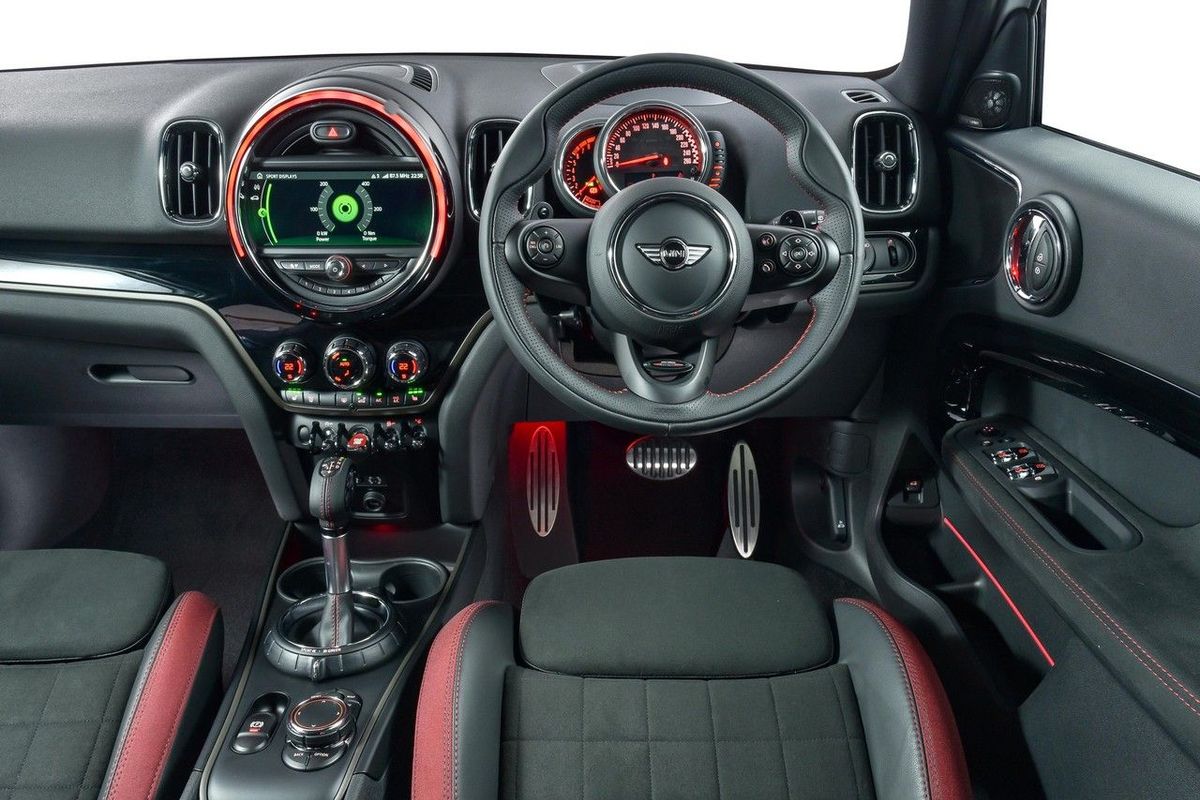
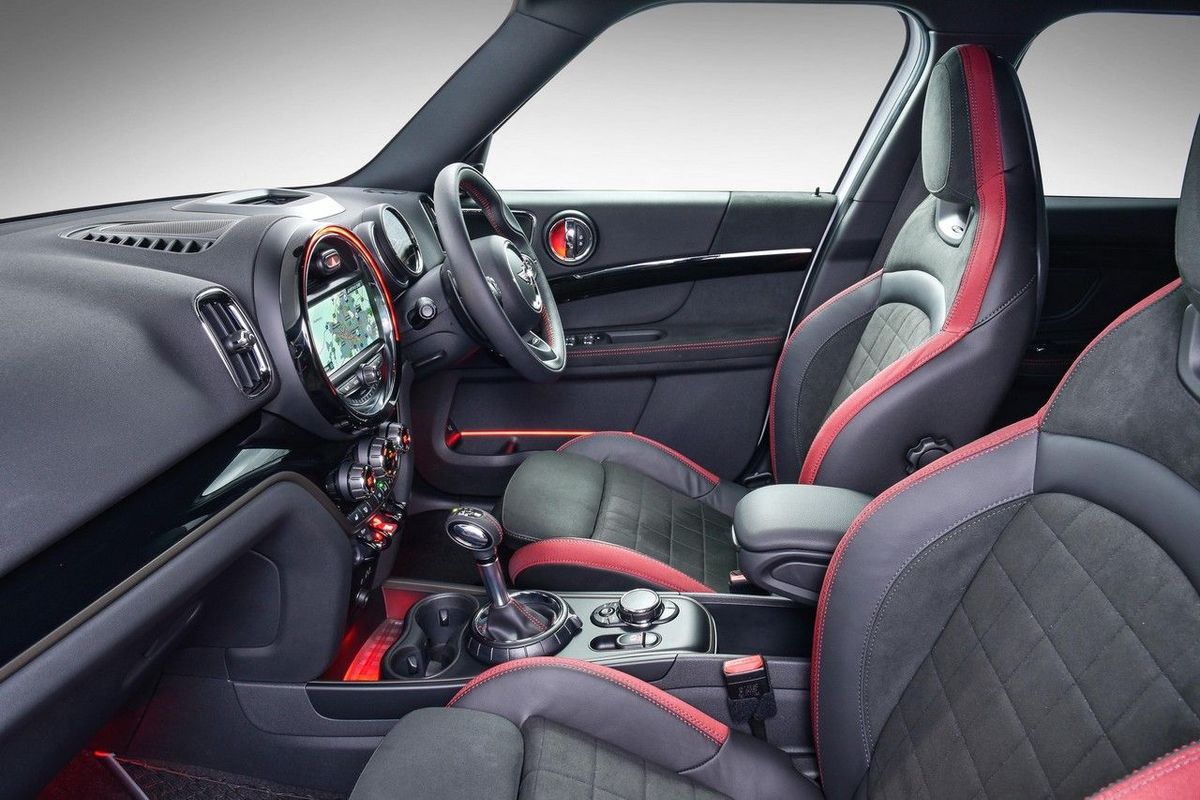
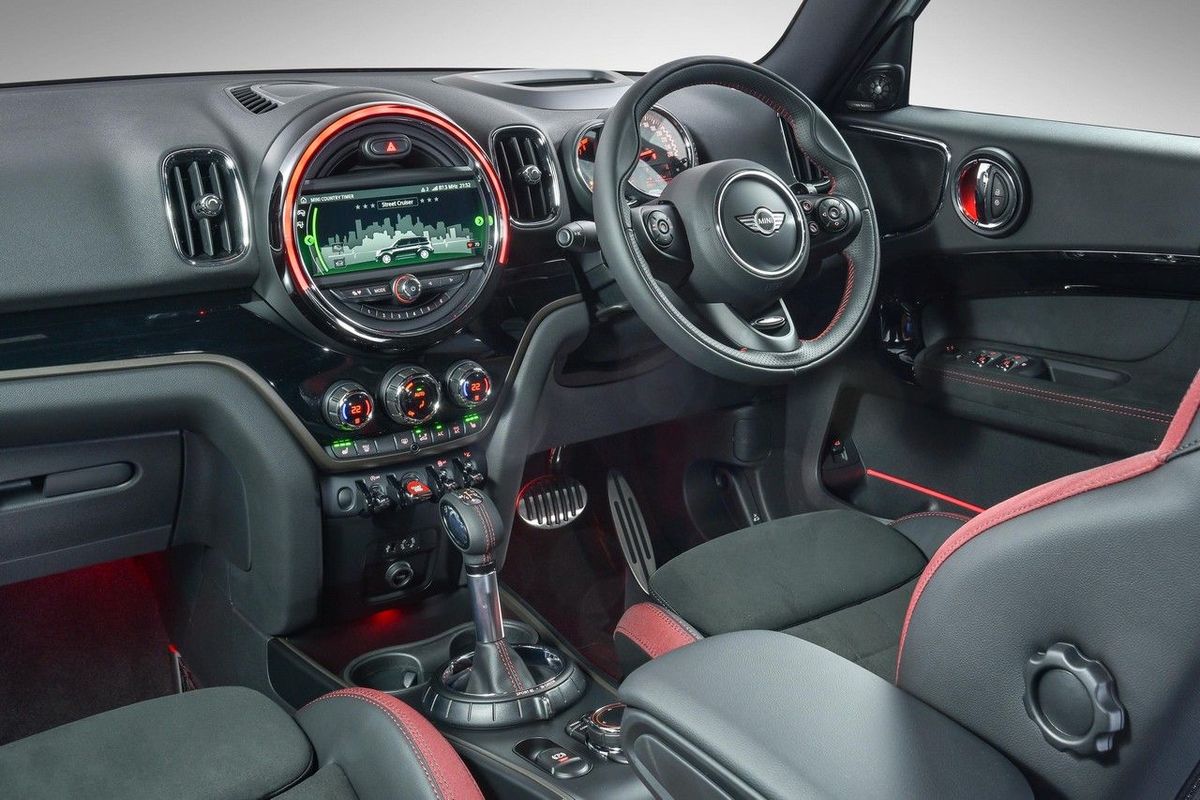
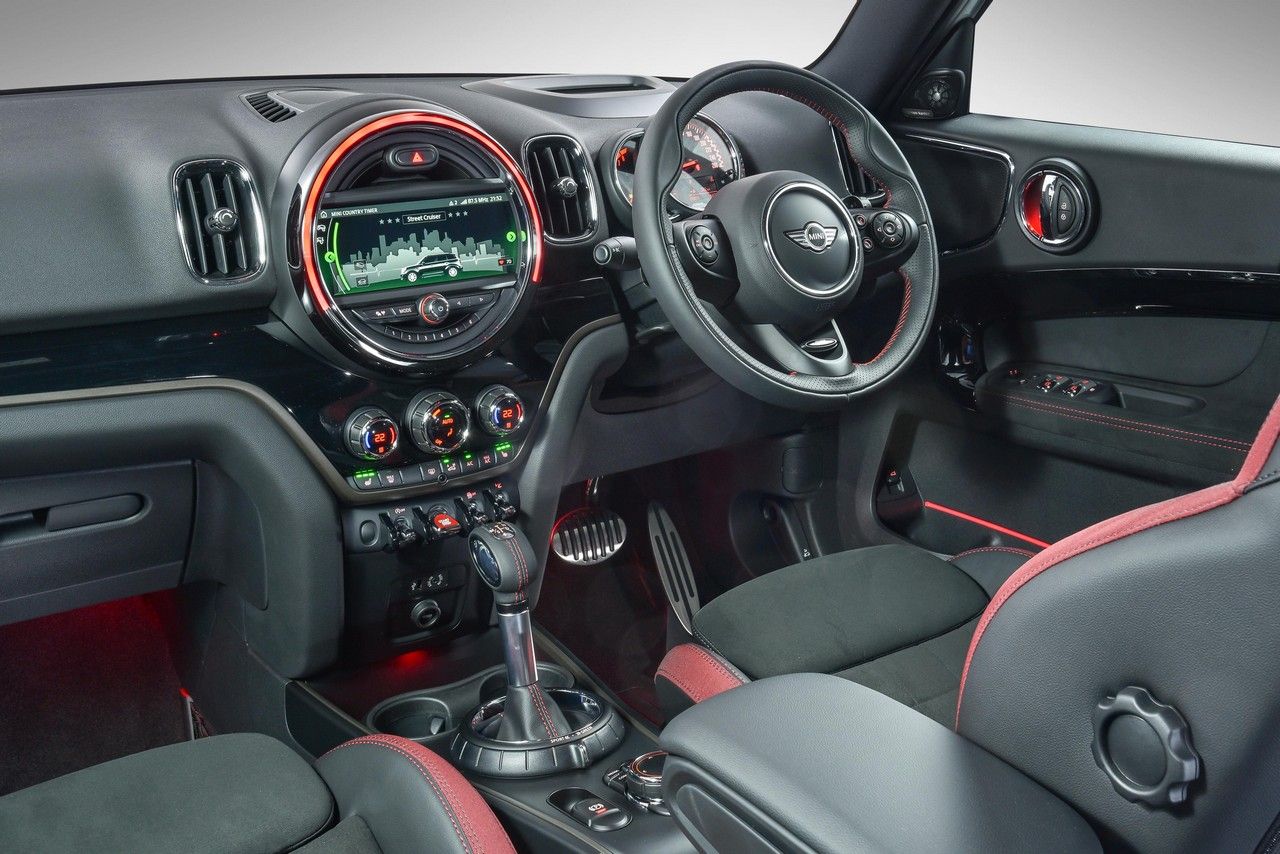
The interior is typically Mini and will appeal to a younger clientele. Perceived interior build quality is good.

The interior is what you would expect from Mini – vibrant, youthful and erm, colourful. The cabin is lit, in youth speak, with enough lights and colours to convince you that Christmas has arrived every time you step inside.

The interior is robust and solidly built with a premium feel befitting of its price tag. The jet-fighter inspired switchgear adds a nice sporty touch to the cabin and they have a quality feel to them.

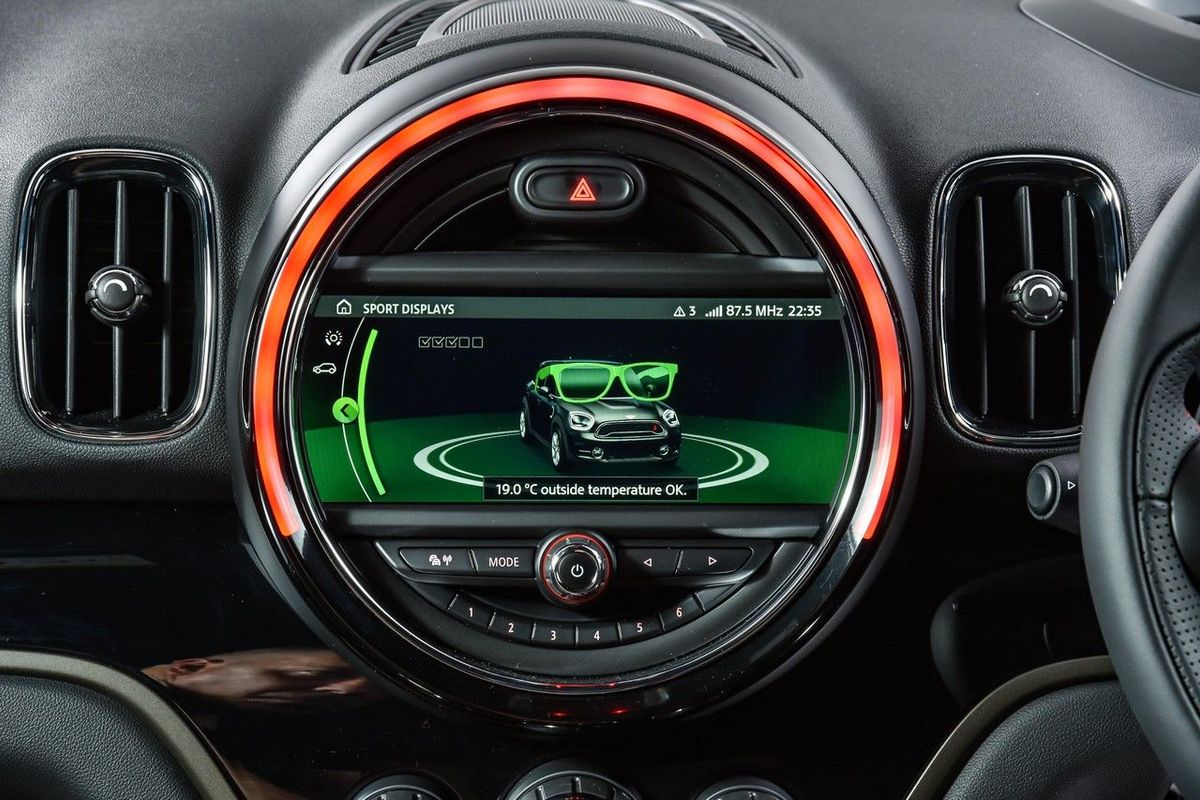
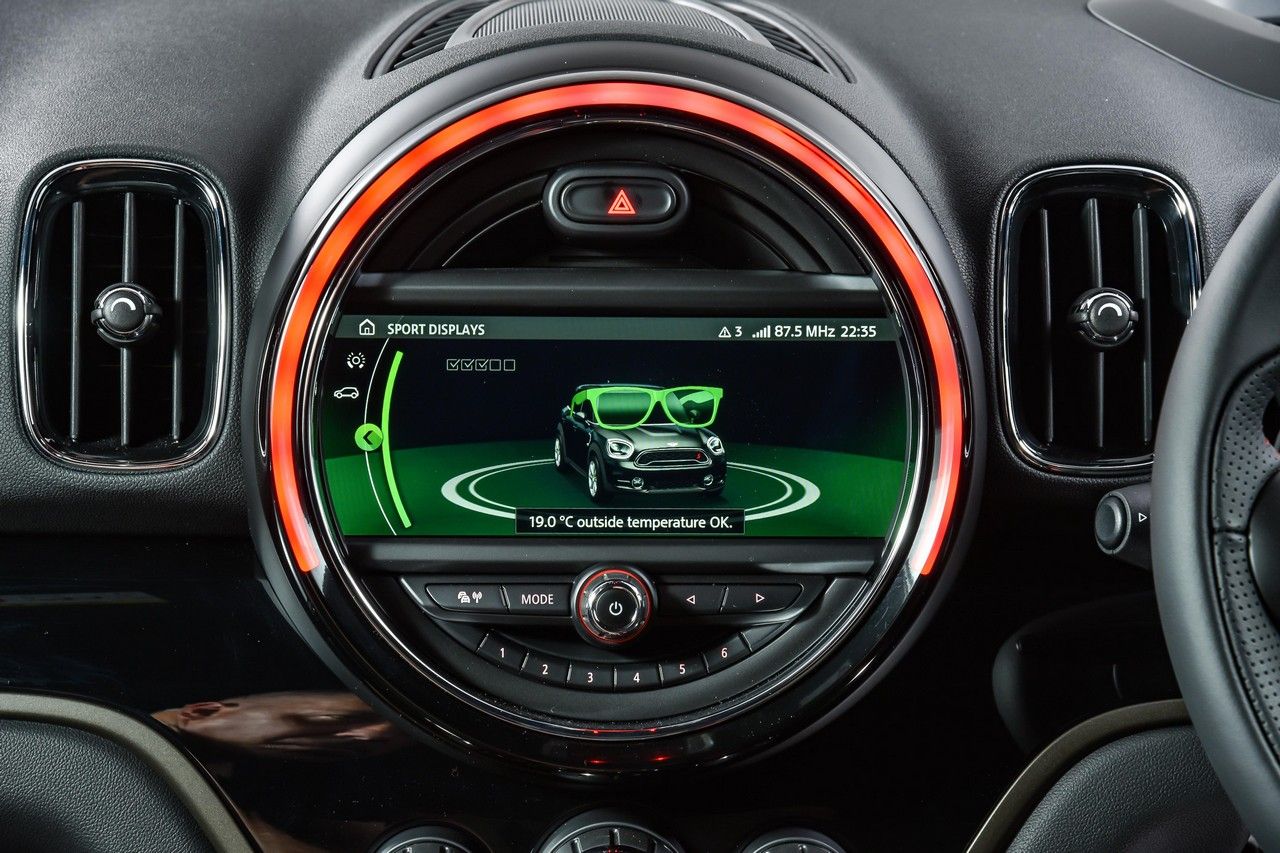
Once you familiarise yourself with the layout of the large, round, central infotainment system, it’s easy to use and toggling through the menus using the rotary dial soon becomes second nature. It offers myriad of functions including vital vehicle information, Bluetooth connectivity and Mini Connected App which, when downloaded on your smartphone, brings your social life, music, news, browsing and other functions to your fingertips when you are driving. A total of 2 USB ports and an auxiliary port are at your disposal for connecting or charging devices.


The infotainment system is vibrant and easy to navigate with a host of useful features including the Mini Connected App. 

The multifunction sports steering wheel is adjustable for rake and reach with mounted audio and cruise control buttons. This JCW is also fitted with well-bolstered, manually adjustable sport seats with height adjustment and adorned in a combination of leather and suede cloth. We found them to be firm and relatively comfortable and supportive. Climate control air conditioning is standard.

Rear passengers have ample space and the rear seats can slide forwards and backwards to accommodate taller passengers. Luggage space is large enough at 450 litres with a useful false floor to store valuables out of sight. With the rear seats folded down, the loading area is perfectly flat and space increases further to 1 390 litres for longer and bulkier items. There’s also ample cupholders and storage space for oddments.

Safety features

The JCW Countryman is fitted with 6 airbags, ABS with EBD, emergency brake assist and electronic stability control with traction control. ISOFIX child seat mounts are also standard.

The bad

Optional features


With R83 000 worth of options fitted, this Countryman JCW doesn't come cheap.

Like all Minis, a vast array of optional features are on offer to customise your car to your preferences. For buyers, this is both an attractive and costly exercise.

This test unit came generously equipped with additional features such as 19-inch JCW Course Spoke rims (R9 000), Climo View Package with glazed windows, panorama glass sunroof and heated seats (R14 000), red sports stripes (R3 500), folding side mirrors (R2 800), front armrest (R2 050), Harmon Kardon sound system (R8 900), Mini navigation system (R7 800), head-up display (R6 800), active cruise control (R7 600), front and rear park distance control (R7 500), tyre pressure monitoring (R2 750) and sport automatic transmission (R27 500). Do you get the point?

Additional features escalate the price quickly and this test unit comes in at around R722 000 with all its added features. Buyers are advised to tick off options carefully.

Price and warranty

This Mini Countryman JCW sport automatic is priced at R636 972 and is sold with a 2-year/unlimited km warranty and a 5-year/100 000 km maintenance plan with service intervals set at 20 000 km.

Buy a Mini Countryman on Cars.co.za

Verdict


Most crossovers are boring in comparison to the Countryman JCW. There's nothing quite like it and we like it.

We really like the Mini Countryman JCW and we think it is an impressive product that has fashionable road presence while delivering solid and entertaining performance. It also happens to offer desirable practical qualities and overall it proves that a premium compact family crossover needn’t be boring.

It is on the pricey side of the spectrum, especially when you start dipping your wallet into the extensive options list but if you consider that there is nothing quite like it on the market, then perhaps it’s money well spent if you are looking for a crossover with more punch and appeal than the GLA, X1, V40 Cross Country and Q2. It certainly won’t disappoint you, that’s for sure…

Related Content

Mini JCW Countryman & Clubman (2017) Launch Review

Mini Countryman (2017) First Drive

Mini Countryman Cooper (2017) Review

New Mini Countryman Revealed [with Video]

Mini Countryman Plug-in Hybrid Announced

Mini Countryman JCW Revealed

Mini Countryman S sports-auto (2017) Quick Review

Mini Cooper S Clubman (2016) Review

Audi Q2 (2017) Test Drive & Review Video

Mercedes-Benz GLA 220d 4Matic (2017) Quick Review


#CarsRaceDay winners list + McLaren 570S lap


This is the last video in our 2017 #CarsRaceDay series. In one of our most ambitious video projects yet, we worked with the city of Cape Town to close an incredible road in the farmlands beyond the city. It's always been one of our favourite pieces of tarmac to test cars and now we had it all to ourselves. 
We lined up 8 high-performance cars, fired up our race-ace Ashley Oldfield and staged 3 races.

For a recap of the 1st race, watch (and read!): Fiesta ST200 vs Renault Clio RS Lux.

For a recap of the 2nd race, watch: Volkswagen Golf 7.5 GTI vs Toyota 86.

For a recap of the 3rd race, watch: BMW M240i with M Performance Parts vs Jaguar F-Type 400 Sport vs Aston Martin Vantage N430

In this video, we review the #CarsRaceDay lap-time leaderboard and Ashley reveals, in ascending order, his favourite driver’s cars out of the 8 contenders that he spurred up the hill. Then, he gathers together all of his (considerable) driving skill to set a blistering time in the McLaren 570S, which promptly proved why supercars are in another league to (otherwise fast) road cars…

Related content:

Hillclimb Shootout: Ford Fiesta ST200 vs Renault Clio RS200 Lux [with Video]

Volkswagen Golf R, GTI & GTD (2017) Track Comparison Video

Toyota 86 High (2017) Quick Review

Jaguar F-Type 400 Sport (2017) First Drive

BMW M240i with M Performance Parts (2017) Video Review

Aston Martin Unleashes Ultimate Vantage AMR

McLaren 570S Spider (2107) Launch Review Video

Interested in buying a used car?

Begin your search on Cars.co.za