With a new 2.9-litre V6 and all-wheel-drive, the Audi RS5 Coupe Quattro accelerates from 0-100km/h in 3.9 seconds, exactly the same time as the Mercedes AMG C63 S Coupe. The RS5 also has the most beautiful interior of the three competitors, but that's not going to help much on the drag strip.
The two cars are very closely matched, and if Ashley could get the Merc off the line, we were in for a properly close race.
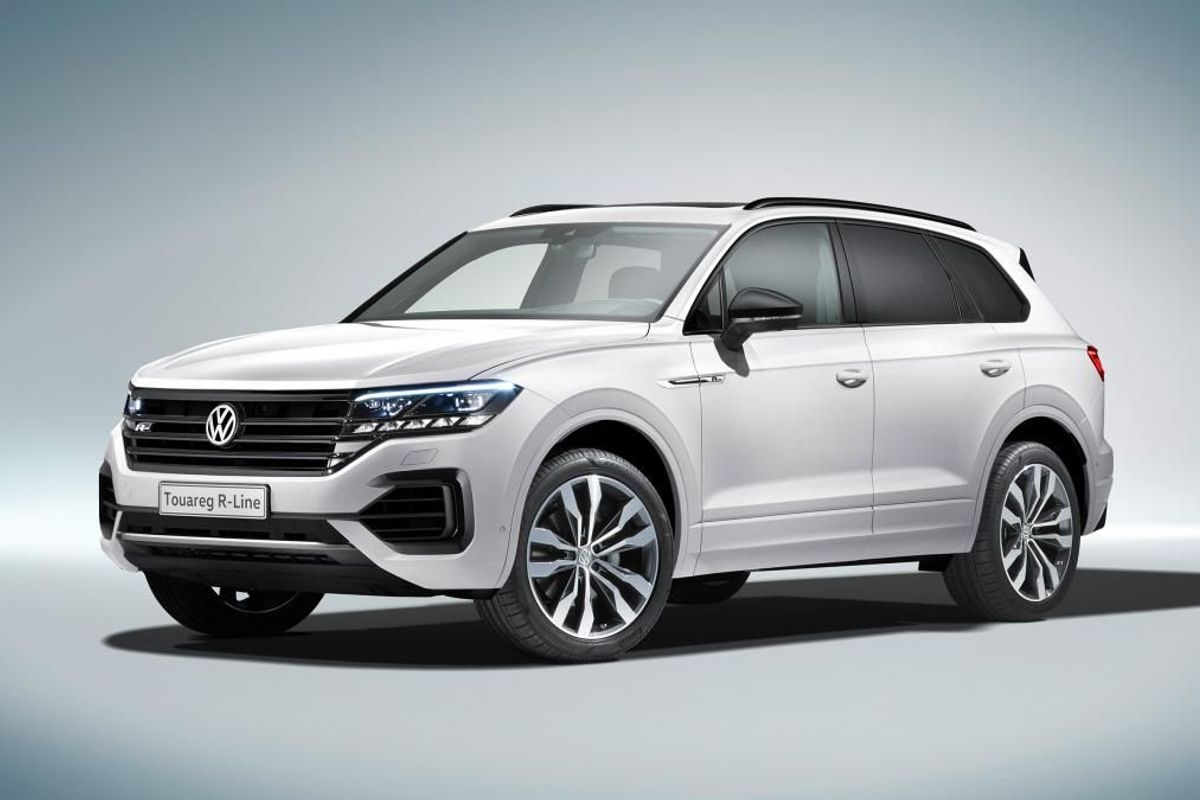
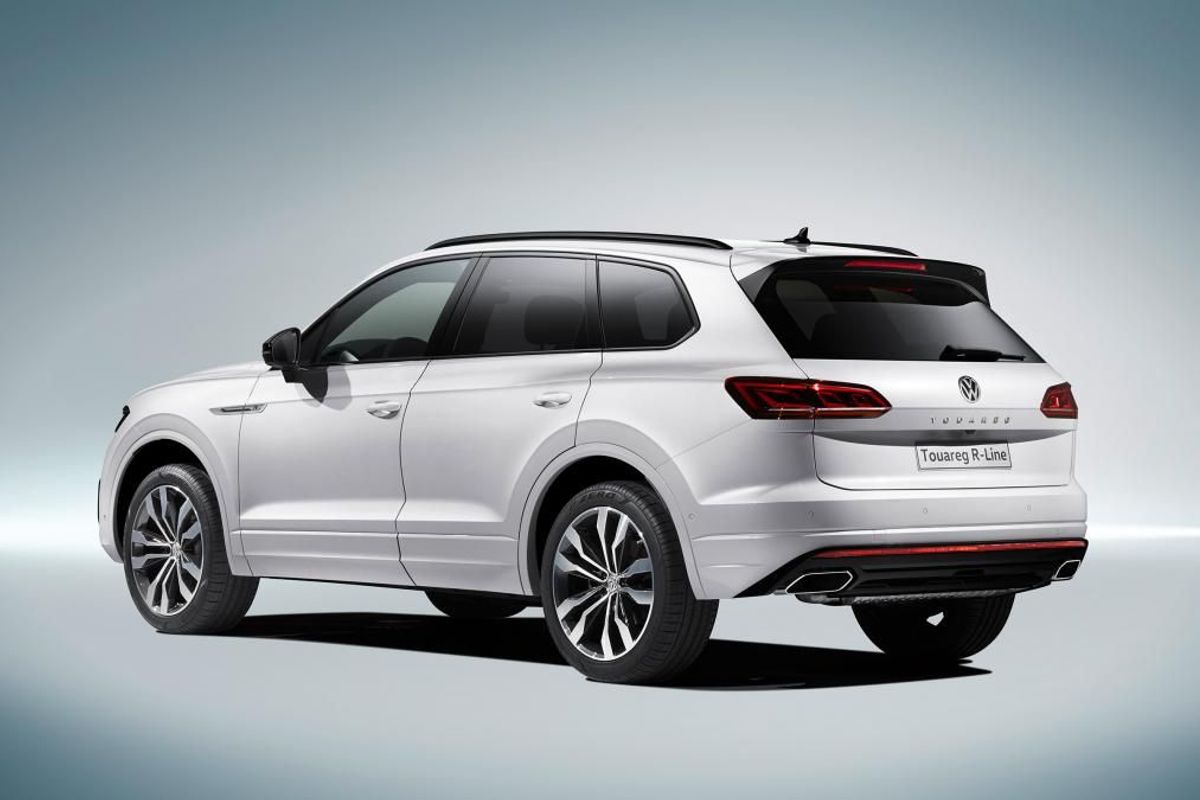
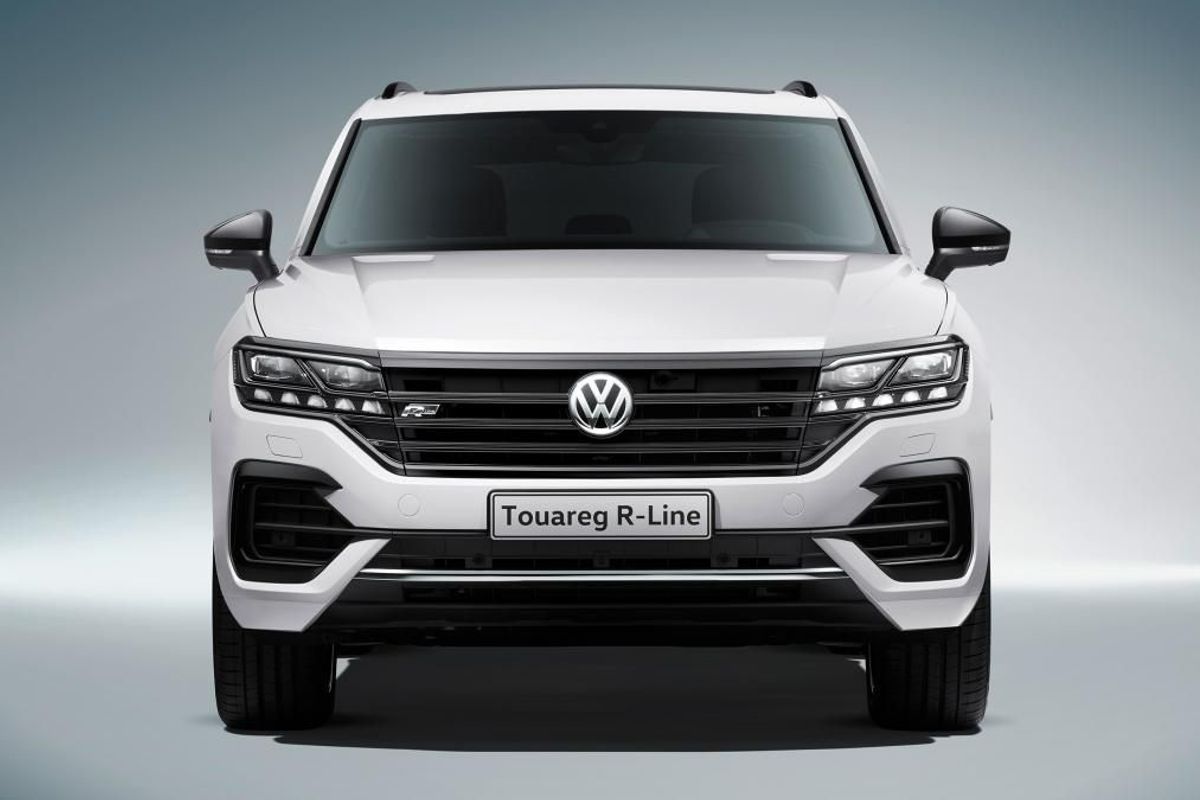
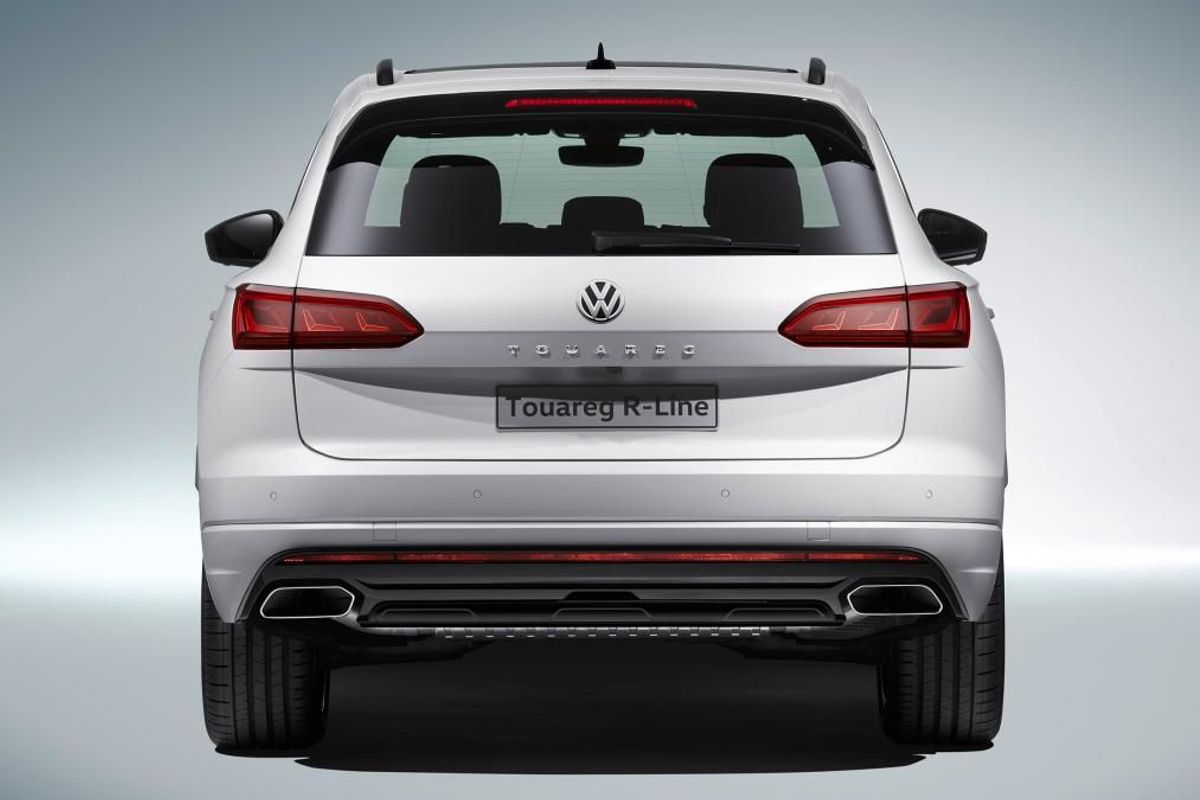
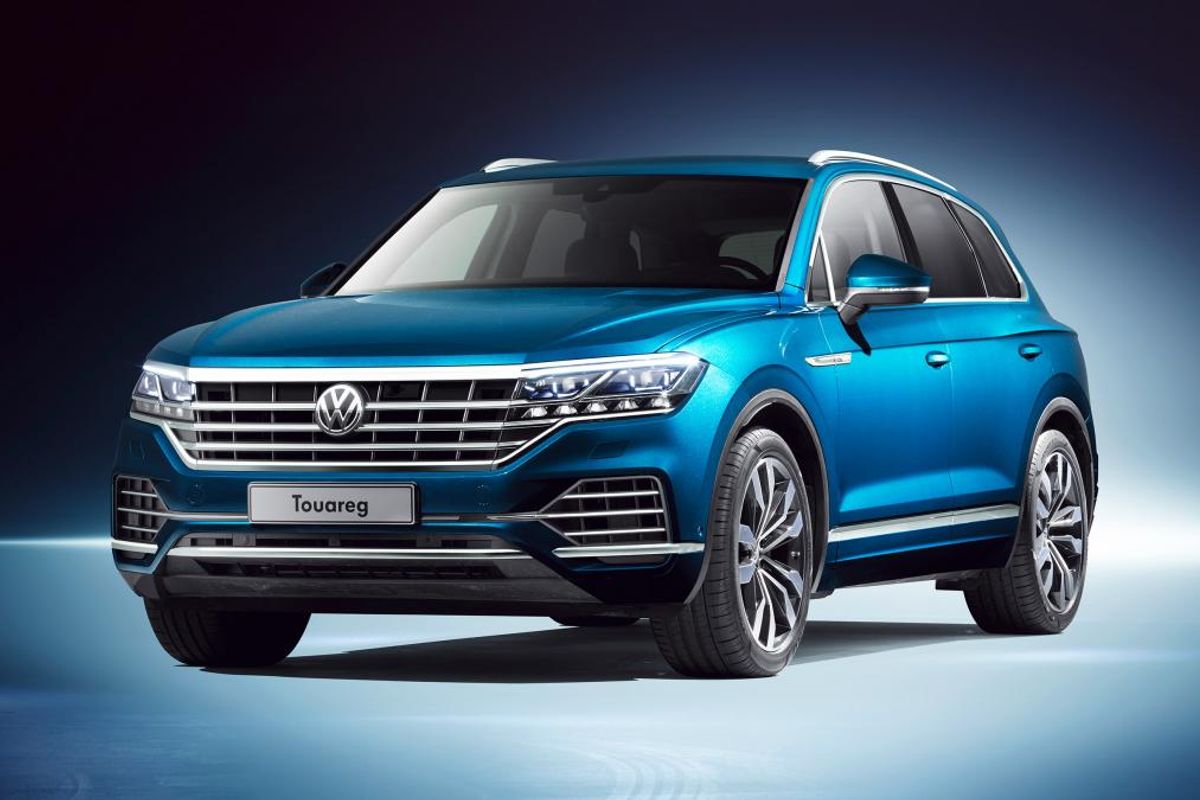
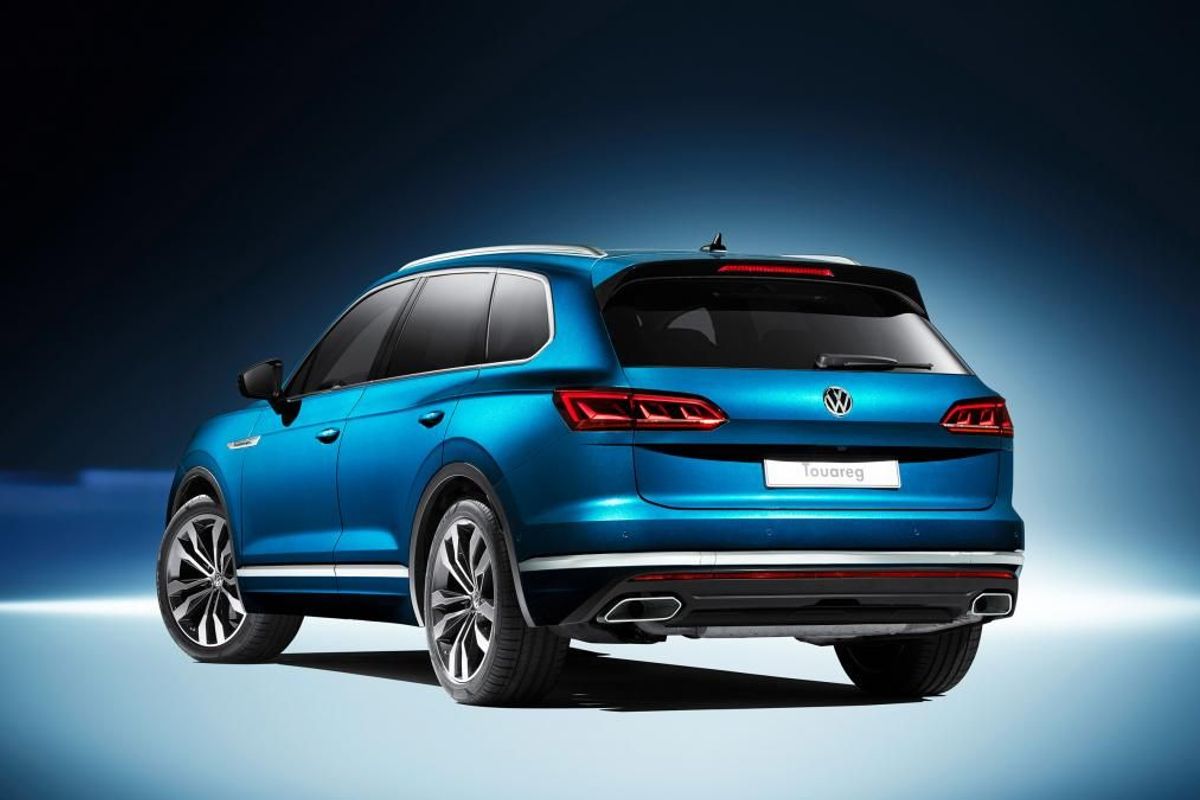
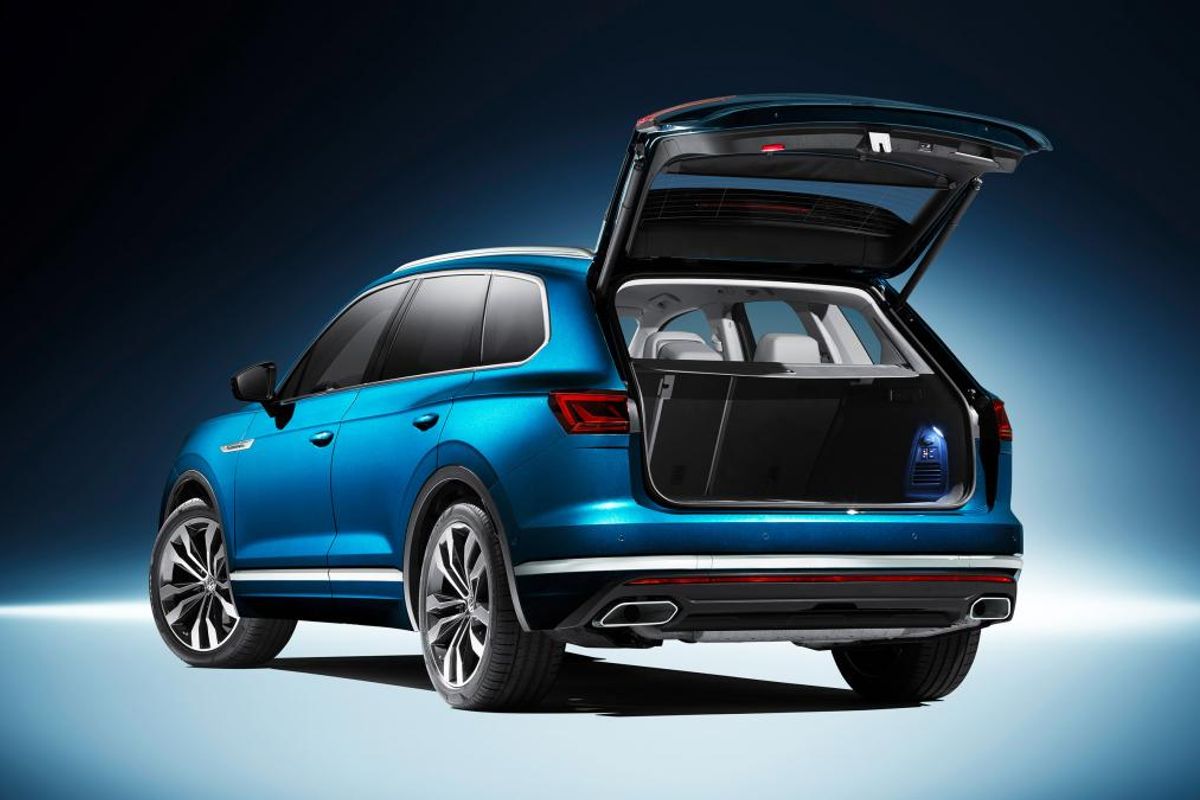
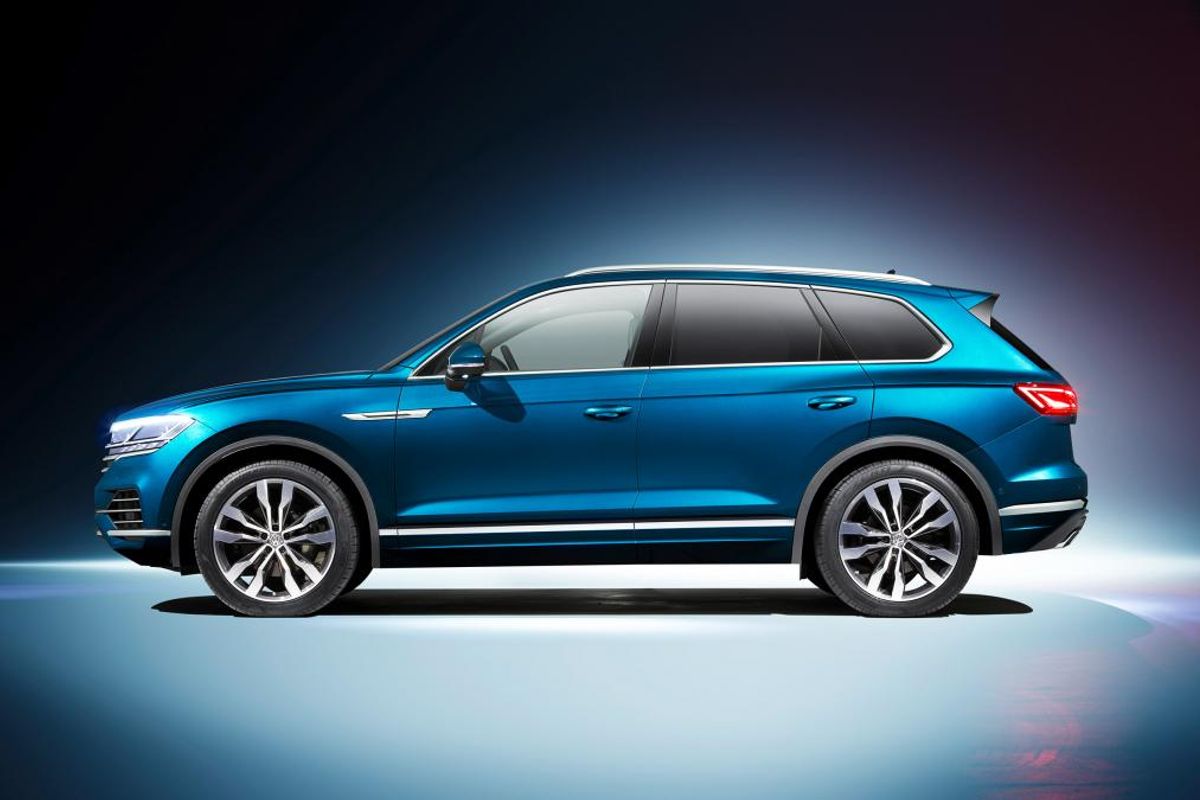
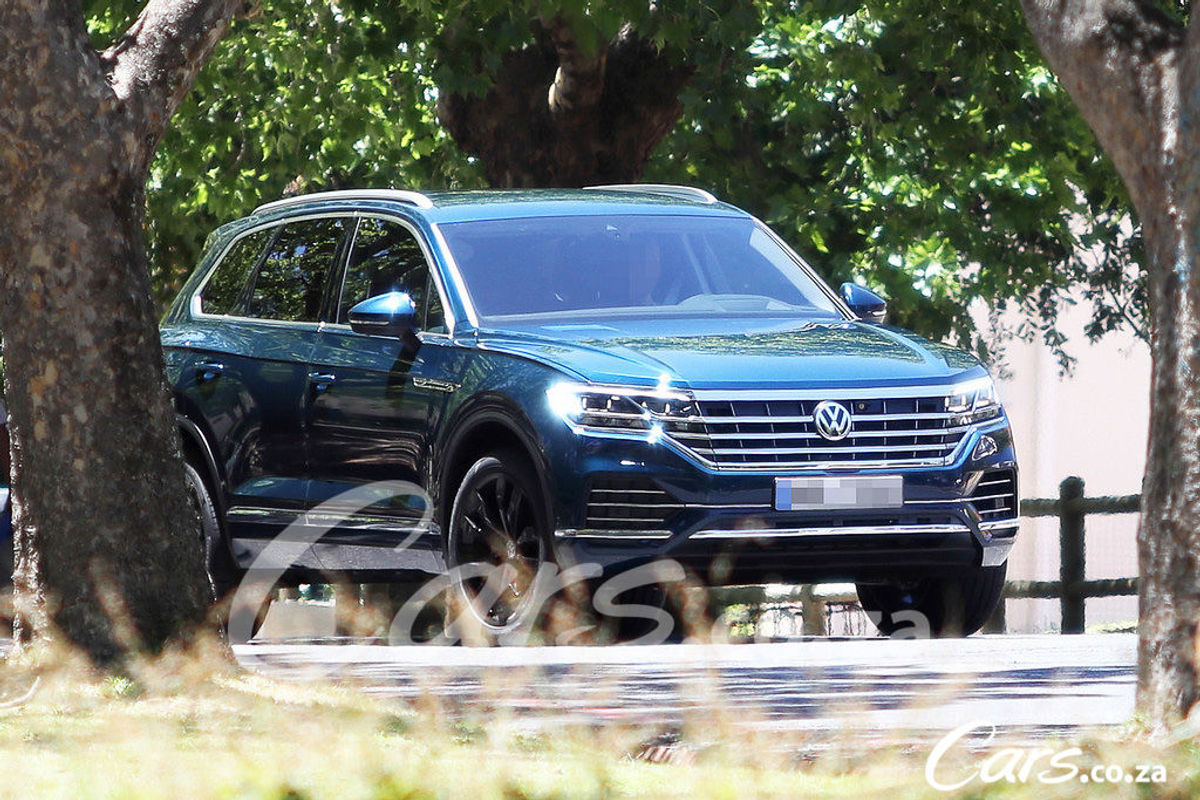
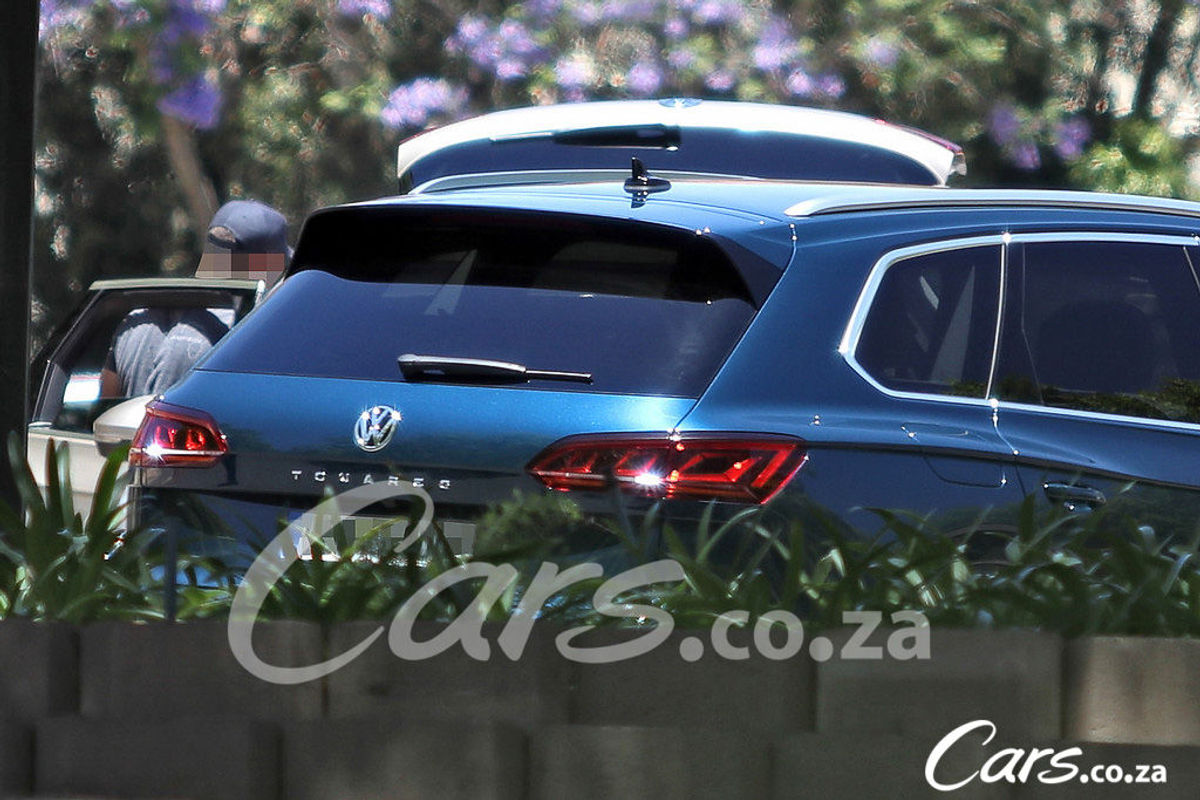
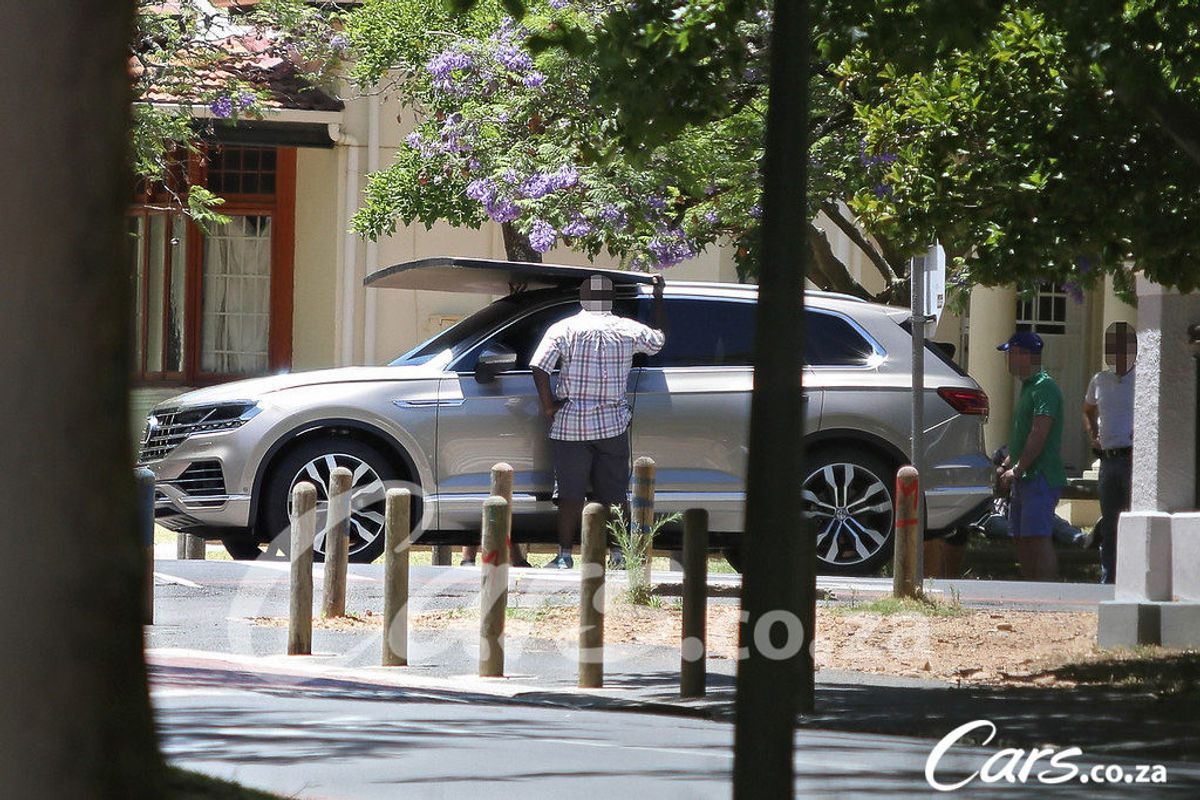
We recently published spy photographs of a production-ready version of the next-generation Volkswagen Touareg SUV which gave us a clearer look at what it will look like. Now, the new Touareg has made its official debut at the Beijing Motor Show and all the details have been revealed! Take a look at what the new Touareg has to offer…
Spy Pictures credit: S. Baldauf/SB-Medien
The big Volkswagen Touareg is a luxury SUV which has impressed us over the years, but it hasn't been able to quite deliver the sales. We suspect the allure of sister brand Audi's Q7 and the calibre of other German luxury SUVs have stifled the Touareg. This means that the next generation of Volkswagen Touareg needs to be better than good.
The third generation Touareg is underpinned by the long-wheelbase version of the MLB platform that spawns models such as the Audi Q7, Bentley Bentayga and Porsche Cayenne.
Engine choices
The Touareg will be powered by a 210 kW 3.0-litre V6 turbodiesel paired with VW's 4Motion all-wheel drive system and an 8-speed automatic transmission. A less powerful, 170 kW 3.0-litre V6 turbodiesel engine will also be offered as well as a 250 kW 3.0-litre V6 turbopetrol engine. Volkswagen will introduce the flagship 310 kW 4.0-litre V8 turbodiesel later in 2018. A plug-in hybrid Touareg is also expected at a later stage.
The Touareg is also equipped with air suspension that can increase ride height by as much as 70 mm for offroad driving. An optional offroad pack will offer additional driving modes, a larger fuel tank and underbody protection. The Touareg's wading depth has also been increased by some 80 mm to 570 mm. More so, new technology for the Touareg includes four-wheel steering which will improve the Touareg's manoeuvrability and enhance agility and directional stability at speed. The new Touareg has a maximum towing capacity of 3.5-tonnes using a retractable towbar.
Key design details
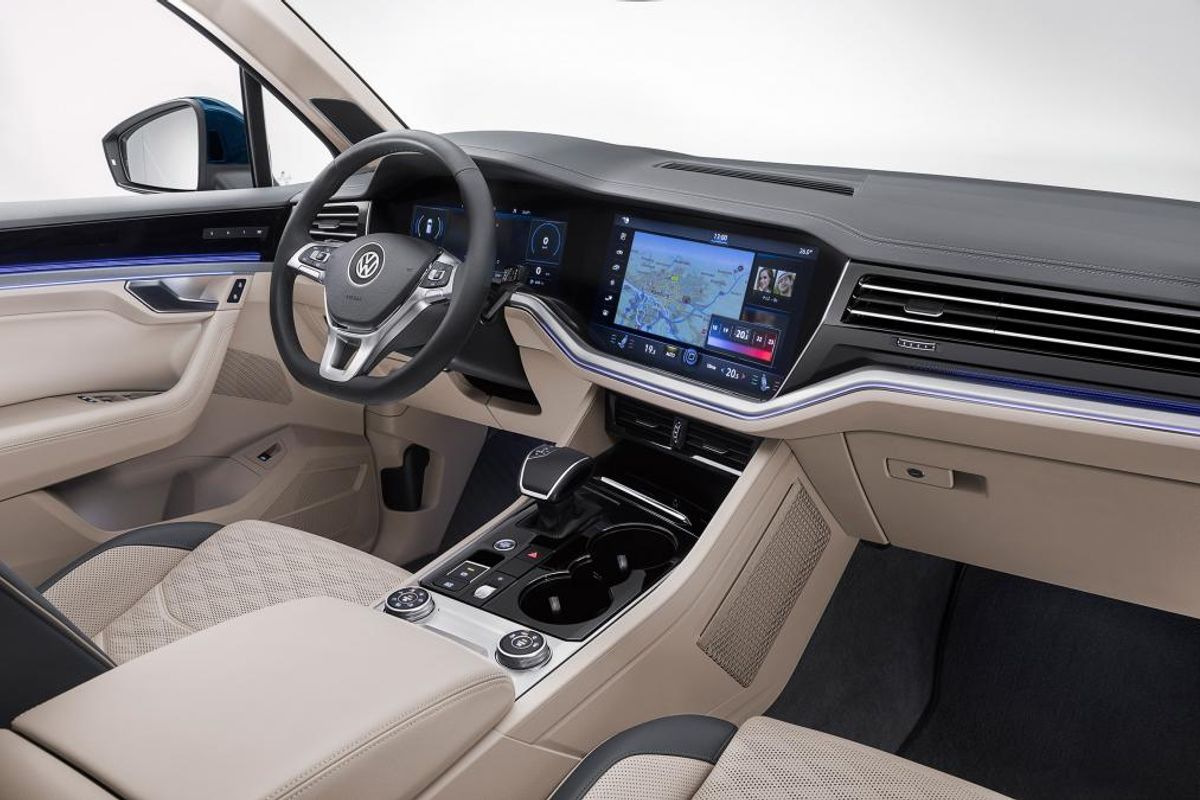
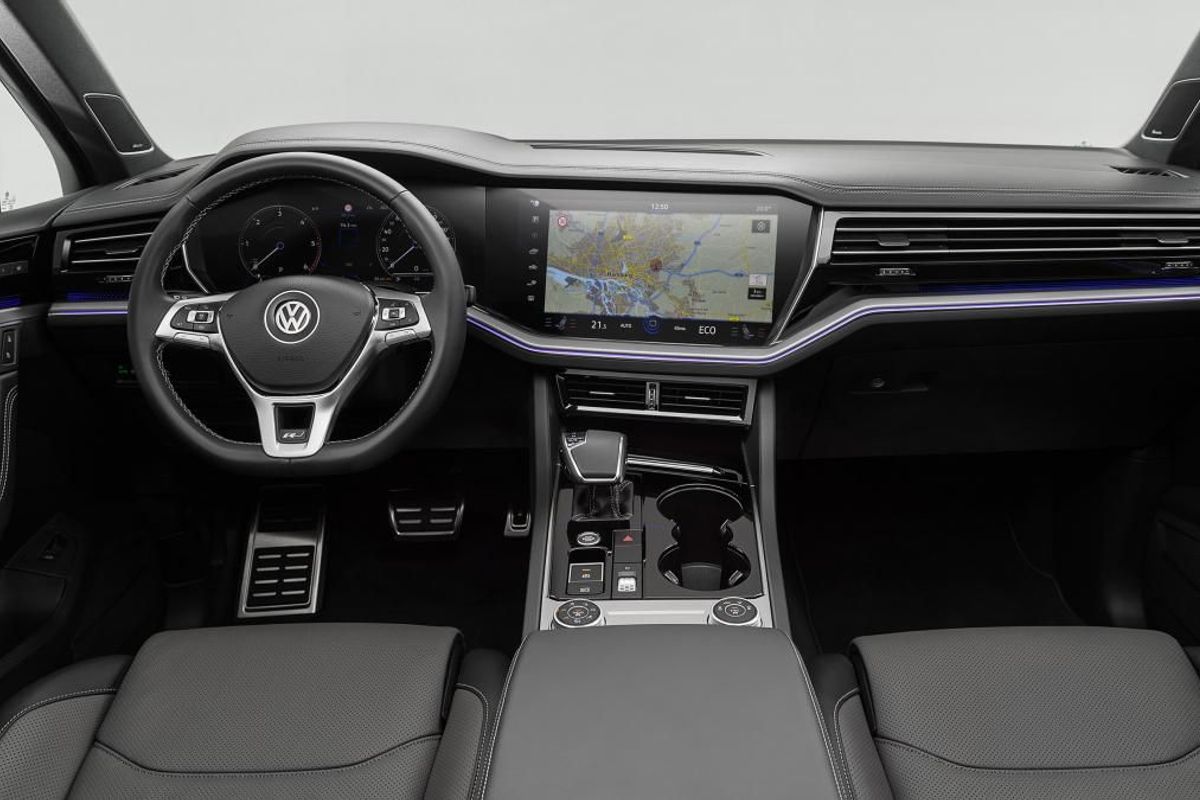
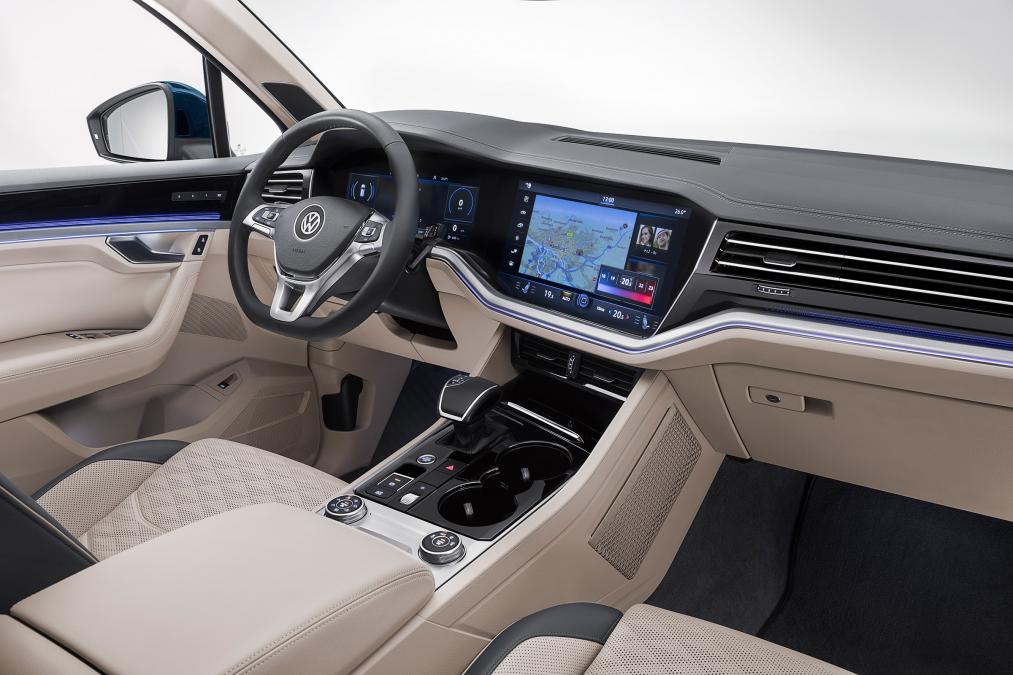
Digital screens dominate the facia of the new VW Touareg, resulting in a very minimalistic, clutter-free cabin.
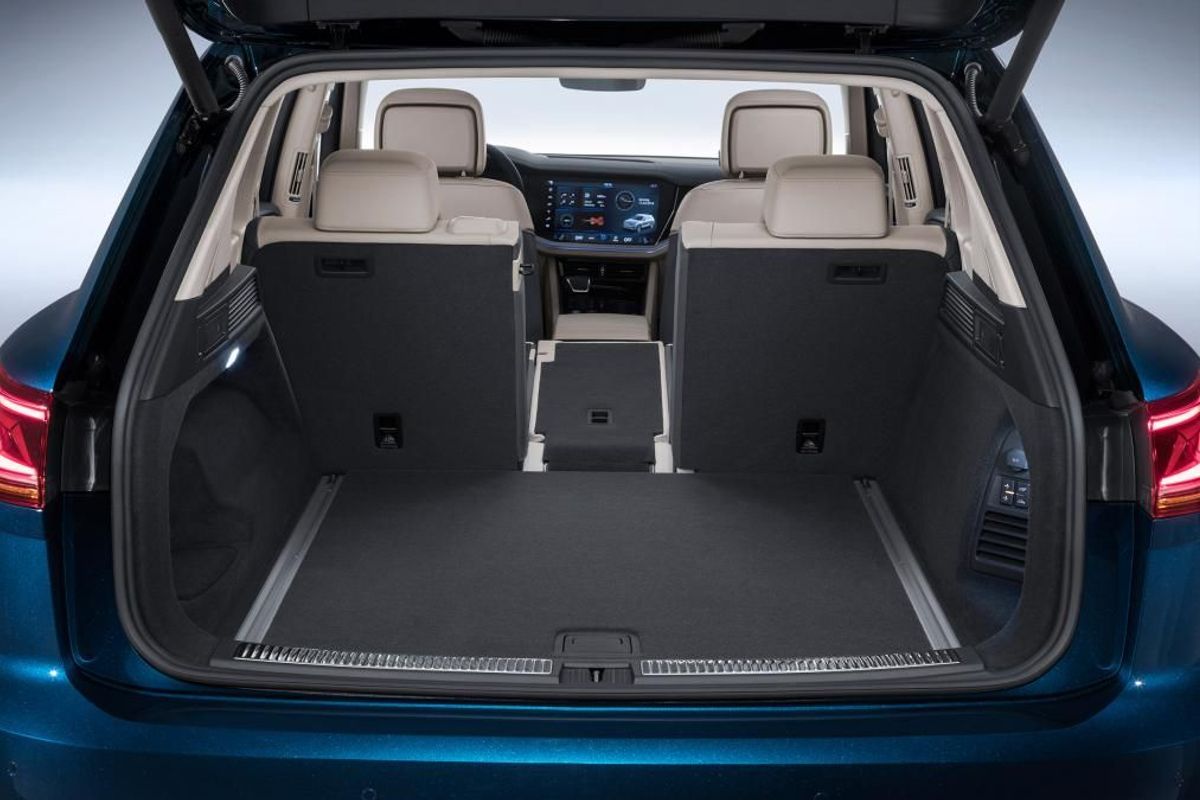
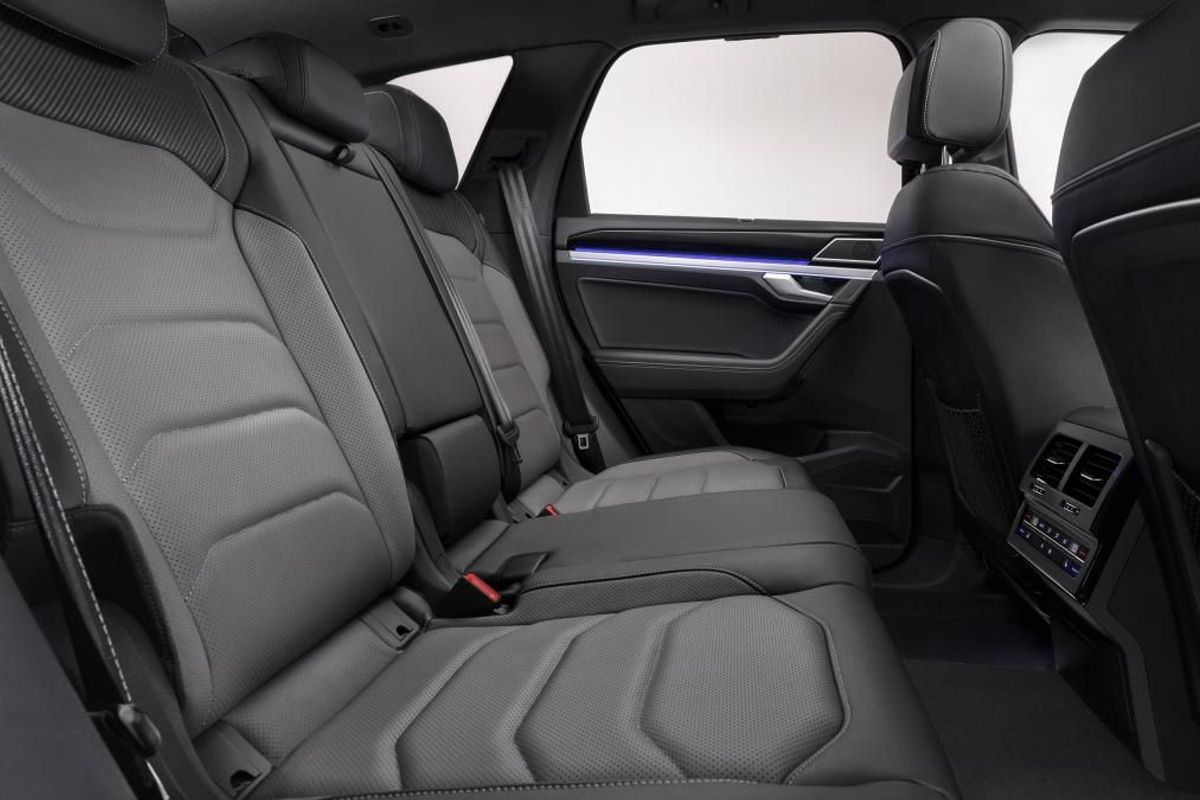
The Touareg is some 106 kg lighter thanks to its lightweight aluminium construction and its dimensions have increased by 44 mm in width and 77 mm in length compared with the outgoing model.The cabin is larger too and load bay capacity has increased by 113 litres to a capacious 810 litres.
Exterior design details include a bold chrome grille which is flanked by new LED MAtrix headlights with 128 individual LEDs. Wheel sizes vary between 18- and 21-inches and 13 exterior colour options will be available to buyers.
The new Touareg is packed with a wide range of new technology including a stylish Innovision infotainment system that comes in the form of a curved 15-inch touchscreen and a 12-inch digital instrument cluster that provides information to the driver. The screens are completely customisable and can be configured according to individual taste. Thanks to the new fully digital control interface, there are now considerably fewer buttons found in the cabin. The new infotainment system is Apple CarPlay and Android Auto compatible and features a WiFi hotspot that can connect up to 8 devices at a time. A head-up display for the driver will be offered as an option.
Availability in SA
Volkswagen South Africa has confirmed that the new Touareg will be launched locally in the third quarter of 2018. Exact dates have yet to be confirmed. We will keep you updated as soon as local specification and pricing details become available.
Mini Cooper S Convertible Automatic (2018) Quick Review
The Cooper S Convertible automatic offers oodles of “let’s go boulevard cruising” charm and has a characterful engine, but is the Mini really an effective sporty drop-top alternative to the Cooper S hatchback? We spent some time with it to find out…
We like: Engine/transmission performance, youthful appeal
We don’t like: Firm ride, creaky cabin, compromised handling, not very practical, pricey
Alternatives
Fiery Italian: Fitted with a 1.4-litre turbopetrol engine with 132 kW and 250 Nm of torque, the Abarth 500C 595 Competizione 1.4T automatic offers similar outputs to the Cooper S, but is slightly quicker in the 0-to-100 kph sprint, with a claimed time of 6.9 sec. Like the Mini, it is too pricey at R524 900.
Teutonic allrounder: The Audi A3 cabriolet 2.0TFSi S Line automatic is more than R100k more expensive than the Mini (at R603 000), but it's more accomplished as a drop-top offering. It's powered by a 2.0-litre turbopetrol engine that produces 140 kW and 320 Nm of torque, mated with a 7-speed automatic transmission. The A3 Cabriolet is more sophisticated than the Mini and is likely to find favour with more mature/conservative-minded buyers.
Quirky, fun and full of life is what this Cooper S Convertible is all about. However, it has some issues that can't be ignored…
Based on its Cooper S hatchback sibling, the Cooper S Convertible marries the performance offered by the hardtop 'S with the boutique appeal of a drop-top package. Mini is expected to introduce its facelifted Cooper range, which will usher in mildly revised styling, technology upgrades and more individualisation options, to South Africa around mid-2018. Does this Cooper S Convertible automatic work as a sporty drop-top city car… or will its practical/packaging shortcomings prove its undoing?
The Good
Cuteness Overload
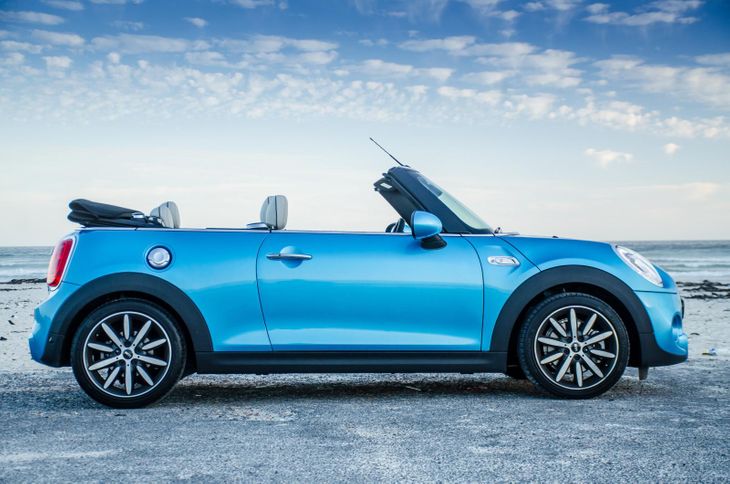
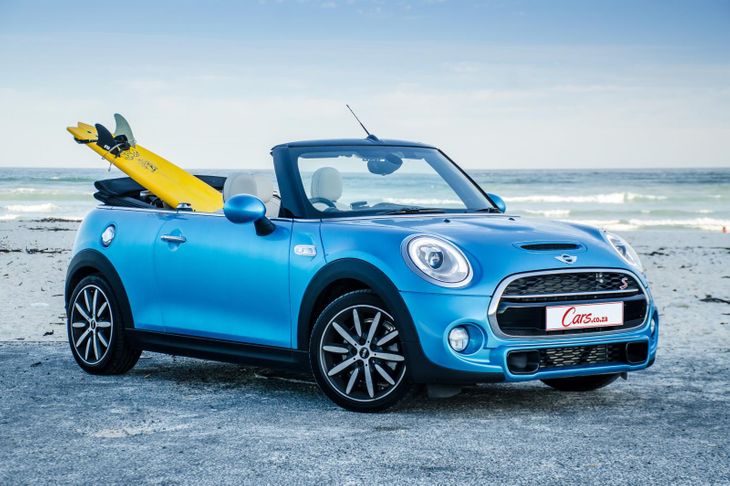
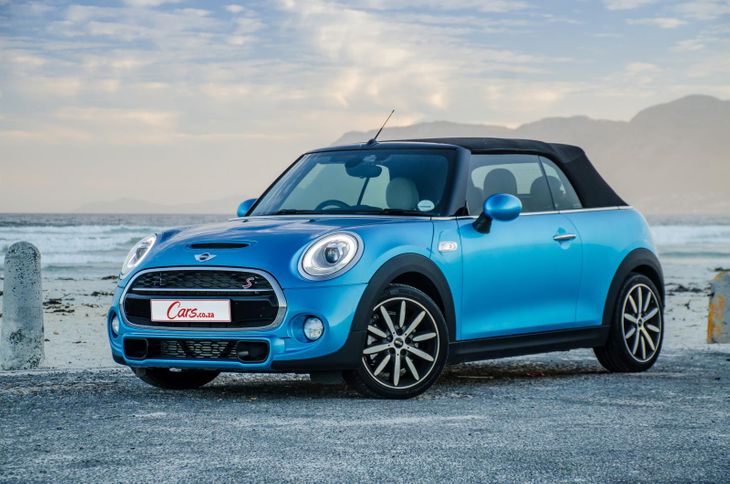
Metallic electric blue is an inspired choice of exterior finish for this Cooper S Convertible, wouldn't you say?
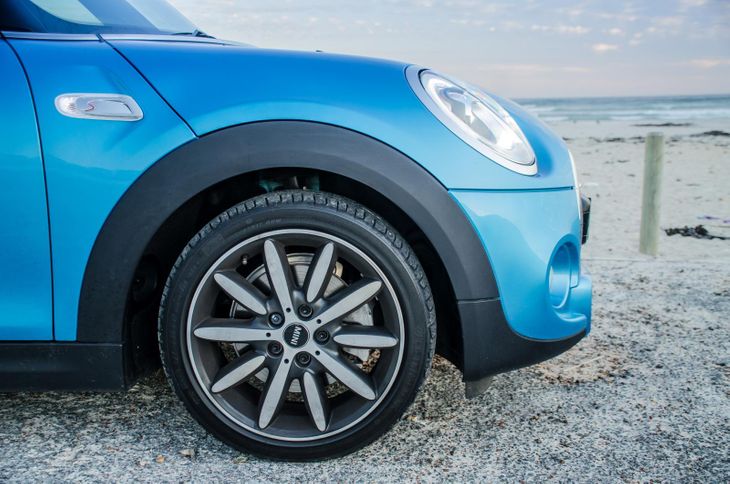
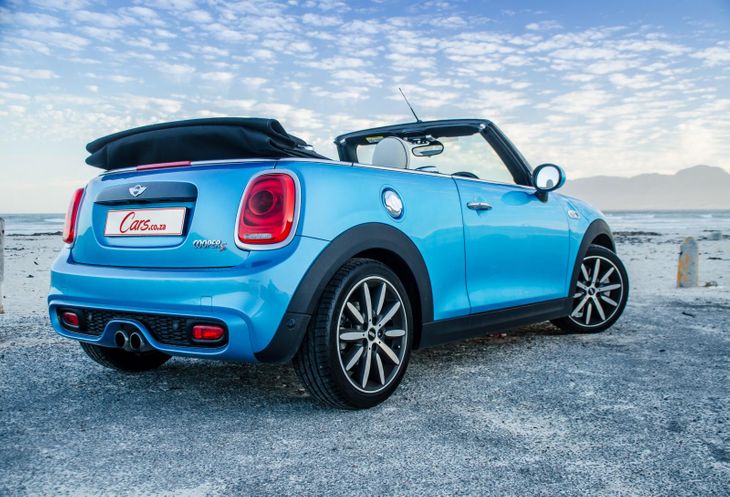
Dressed in an attractive metallic electric blue hue, this Cooper S Convertible drew many gazes from onlookers; it’s arguably the best colour on offer from Mini. Whether the fabric top is up or down, this car brings loads of cuteness and charm to the road. As is the case with all Minis, you can add a bunch of optional equipment to suit your tastes. This test unit rides on optional 17-inch, 2-tone propeller alloy wheels, which come at an additional cost of R2 000, while that gorgeous paint job costs R2 500.
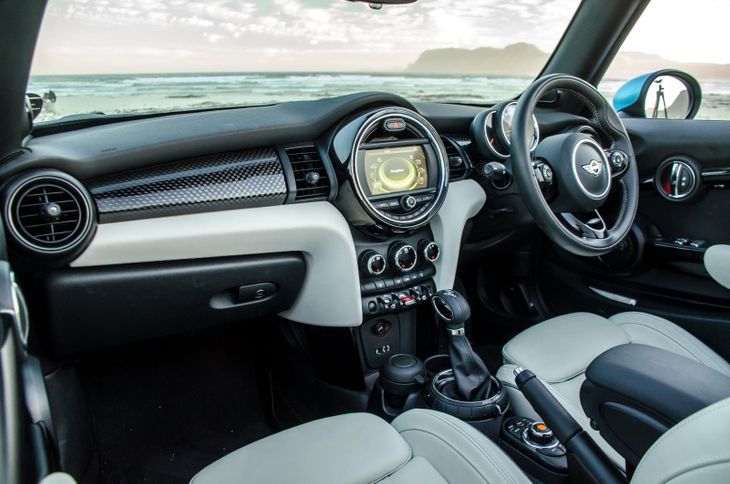
As for the interior, it’s fun in a typically-Mini kind of way and while general build quality is good, its interior styling exudes youthfulness in its design, yet conservative buyers might find it too over the top… what with all those deliberate circular elements, funky LED lighting and the "disco vibe" of the Visual Boost infotainment bezel.
You either love or hate Mini's interior design. We like its youthful vibe…
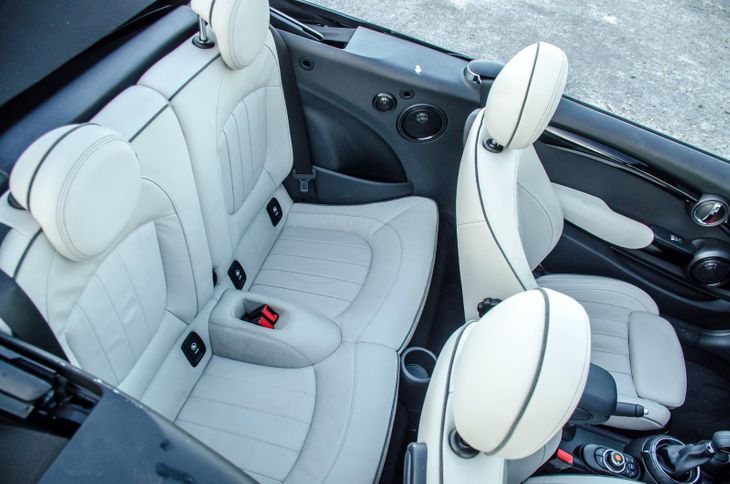
This test unit was specced-up with a number of optional features including Satellite Grey Leather Lounge upholstery, a particularly entertaining Harman Kardon sound system, Mini Navigation System, a sports steering wheel and reverse-view camera, to name a few options. All these additional features make the Cooper S Convertible that much more appealing, but the price escalates quickly too… in this case, the total as-specced value comes in well over R550 000. Ouch!
Notable standard features include sports seats for the driver and passenger, a height adjustable driver’s seat, cruise control, rear park distance control and automatic air conditioning. Safety specification includes 6 airbags, ABS with EBD, brake assist, electronic stability control with traction control, as well as ISOfix child seat mounts.
Punchy performance
A punchy engine combined with a good automatic transmission makes the Cooper S Convertible feel rather lively on the road.
The best feature on this Cooper S Convertible is arguably its engine. It’s a lively 2.0-litre 4-cylinder turbopetrol unit with peak outputs of 141 kW and 280 Nm of torque and it's mated with a responsive 6-speed automatic transmission that does a good job of picking the correct ratios when the Mini needs to hustle in and around the city.
In such a compact body, this combination delivers a fun and entertaining driving experience; there’s certainly no shortage of power. With your right foot planted flat, the exhaust emits a throaty bark as the transmission swaps cogs, which adds zest to the driving experience. The Cooper S Convertible will shuffle from 0 to 100 kph in about 7.1 seconds, which is brisk. The Mini ragtop is both capable of pacy sprints between traffic lights and can easily execute swift overtaking manoeuvres at highway speeds.
Driving modes such as Sport, Normal and Eco are at your disposal depending on your driving mood. Mini claims an average fuel consumption figure of 5.8 L/100 km, but we achieved in the region of 9.3 L/100 km during our test, which is roughly what we expected.
The Bad
Poor ride quality
The generally firm ride quite might not be to everyone's taste, but it improves slightly when driven in Normal mode.
By virtue of its low-profile tyres and sporty suspension, the Cooper S Convertible delivers an uncompromising ride quality; its harshest critics would say the Mini can turn otherwise smooth tar into a bump fest. Larger bumps and imperfections are generally ill-absorbed and the unforgiving firmness soon becomes tiring and cumbersome.
Vibrations inside the cabin can be felt (and seen!) as the Mini traverses uneven sections of road. In fact, the windscreen can shudder and shake so much when the going gets bumpy that the vibrations may disturb the driver and other occupants' outward vision, at least until the road smoothes out to an extent… Wincing before going over bumps becomes a natural reaction and you quickly learn to cut lines in the road that provide the least resistance and anguish.
Compromised body structure
A lack of rigidity, owing to the absence of a fixed roof, has compromised the sporting ability of this Cooper S Convertible.
A major letdown for this Cooper S Convertible is the very thing that makes it attractive – its electrically folding fabric roof. Rigidity is diminished because there is no B- and C-pillar support for the car's body and the marginal structural integrity becomes all too apparent in the uneasy flex of the chassis, which is especially noticeable when cornering at speed. If you listen carefully, you'll hear creaking as a result of body flex; much, we imagine, as you would on an ageing sea vessel adrift in a stormy ocean.
The fabric roof, however, folds down gracefully (in a 2-stage process) and takes roughly 18 seconds to retract completely. Pull the switch back and the roof will open halfway, when the retractable cover acts more like a sunroof. Hold the switch in that position for longer and the roof will retract all the way for the full convertible experience, which is rather pleasant on a sunny day in Cape Town. The roof does, however, swallow up some of the luggage space when folded down.
Not very practical
Legroom for rear passengers is almost non-existent and the rear seats are better used as additional storage space.
Although the Cooper S has seating for 2 in the rear, the Mini's rear bench can only accommodate a pair of small children. Yes, the cabin's focused on the comfort of front occupants and seating a tall driver and front passenger in comfort will just about nullify rear legroom (making the rear seats better suited as additional storage space). If you're able to squeeze yourself into the rear quarters, you will find the rear seatback very upright, which doesn't add to what little comfort is available to aft passengers.
What's more, the luggage bay is small; it offers just 160 litres of capacity with the roof down and increases to 215 litres with the roof up. There’s enough space for a small bag and some daily shopping items, but not much more. The author's surf bucket would not fit into the boot, so his surfing apparel had to be stored on the back seat…
Pricing and warranty
This Mini Cooper S Convertible costs R493 710, which includes a 2-year/unlimited km warranty and a 5-year/100 000 km maintenance plan.
Verdict
The Cooper S Convertible, although pretty, is compromised and mostly impractical. However, it still makes a cool statement…
Barring its cute looks and punchy engine, this Cooper S Convertible is difficult to recommend. It purports to be a drop-top version of its genuinely sporty Cooper S hatchback sibling, but due to its compromised body structure, it simply fails to deliver the same level of sporty ability. Sure, it performs reasonably well in a straight line, but it ultimately lacks composed, sure-footed handling ability. Therefore, in our opinion, it's not a “sporty” drop-top city car, just a mediocre one.
To make matters worse, the Mini's ride quality is generally too unforgiving and it's not very practical either, both in terms of rear passenger space and storage space. So, in essence, all this Mini Cooper S Convertible has going for it is its visual appeal, engine performance and the perceived allure of driving a convertible Mini.
Is there any way it could justify its price tag? Logic says no, but it will depend on your requirements… After all, some new cars are sheer heart-over-head propositions. So, if looking cool and hip as you cruise past the trendiest spots is what you are after, then the Mini Cooper S Convertible might pass this test, but only just. Consider a more affordable, moderately specified Cooper Convertible if you cannot resist the Mini wind-in-the-hair experience. Alternatively, if you can live without the indulgence of a folding fabric roof, but want engaging driving dynamics in a pugnacious compact package, simply buy the Cooper S hatchback. It will be far more pleasing to drive…
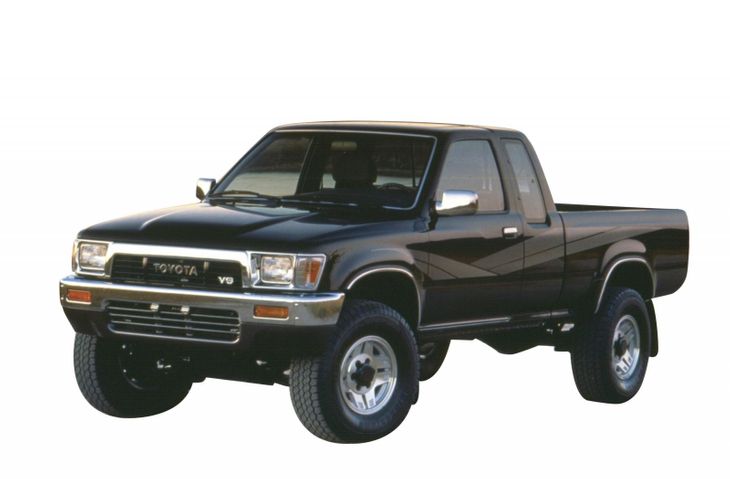
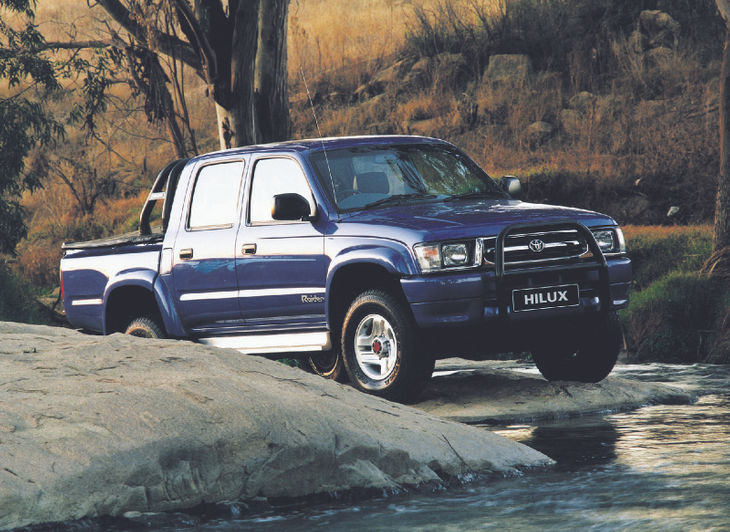
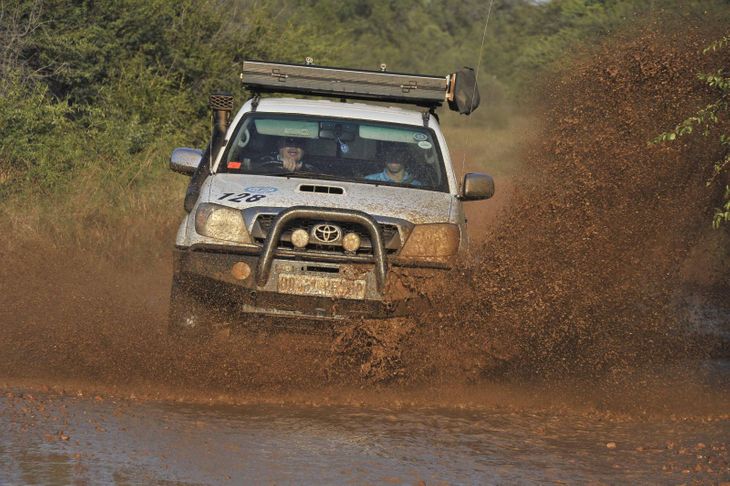
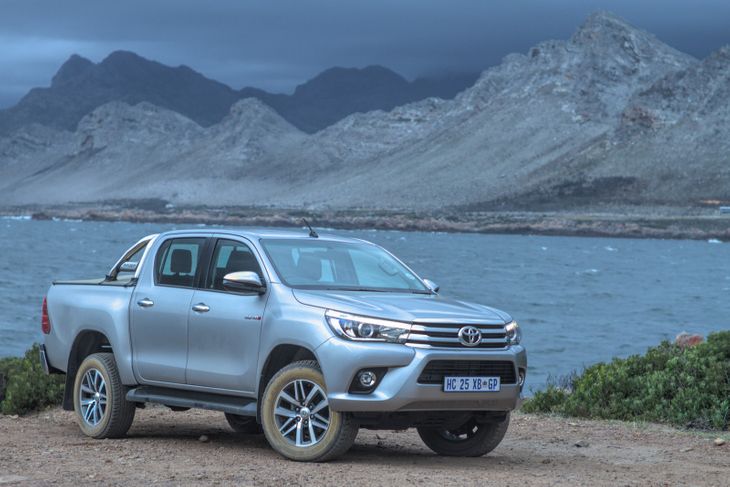
Toyota Hilux Turns 50: 8 Bakkies That Made it a Legend
South Africa’s most popular bakkie is half a century old. Here are the vehicles that helped the Toyota Hilux achieve legendary status.
A half-century can be a bittersweet milestone to celebrate… At 50, it’s too late for regrets and, often by that age, whoever or whatever is being celebrated shows the battle scars and signs of wear and tear that years of hard use can cause. And so, forgotten among the theatre of impossibly-powerful hypercars being revealed at the Geneva auto show, the reveal of the new X-Class pricing details and all Mzansi's other motoring news, a very important date will pass into time in March 2018.
It’s a birthday that cannot be ignored: South Africa’s most popular and, some would argue, influential vehicle is 50… It's been 5 decades since the 1st Hilux was produced and, through its 7 generations, the legend of the bakkie has grown to a point that all marketing spend, influencer mentions and clever hashtags can't quite do it justice.
For many South Africans, the Hilux is not a Japanese product. Mzansi's motorists feel such a sense of ownership towards the bakkie that one may be forgiven for thinking Toyota’s global mid-sized bakkie is inherently South African, right down to its bolts. Considering that the Hilux has been a critical transport cog that helped the local economy turn over for decades, that’s not surprising. When farmers don their extreme weather gear to fix fences or retrieve wandering livestock, a Hilux takes them there; when geologists go surveying for new mineral deposits, they go in a Hilux; when goods are distributed to rural retail networks, it’s on the back of a… yes, Hilux!
South Africa’s sense of ownership about all things Hilux is rooted in the fact that the bakkie is built here too – at Toyota factory's south of Durban. The renowned Dakar racing Hilux V8s are designed and fabricated locally, in Midrand. All told, Hilux is the definitive South African vehicle. Technically, the first South African Hilux bakkies only arrived in 1969, but global production began in 1968, hence this March is the venerable vehicle's 50th birthday. To celebrate its half-century, a genealogy is in order.
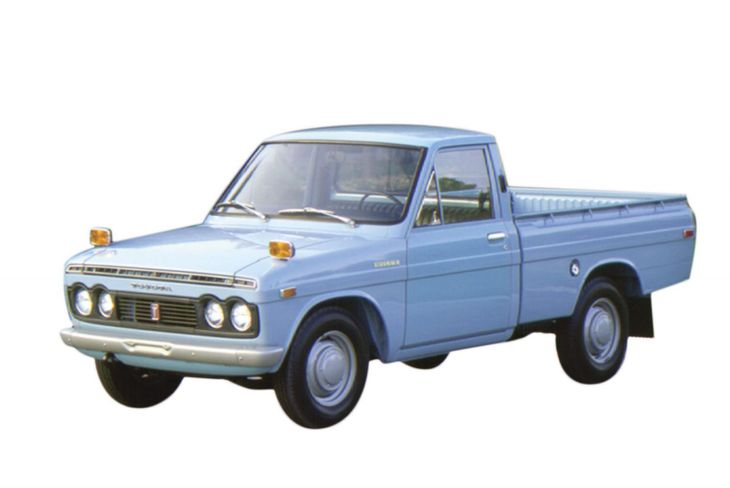
1st-generation N10 (1968-72)
The original… and an unlikely candidate to establish Hilux’s legacy. In the late 1960s, South African farmers, construction crews and miners were decidedly all-American in their bakkie choices (the Ford F-150 was particularly popular). To understand how outmatched Hilux was at the time, just consider the engines: F-150’s smallest option was a 3.9-litre inline 6, whilst the Hilux’s powerplant was a humble 1.5 litre. Reliability was key, and Toyota’s excellent manufacturing standards started convincing buyers who were counting costs per kilometre that Hilux made more sense than its appearance – or specification – suggested.
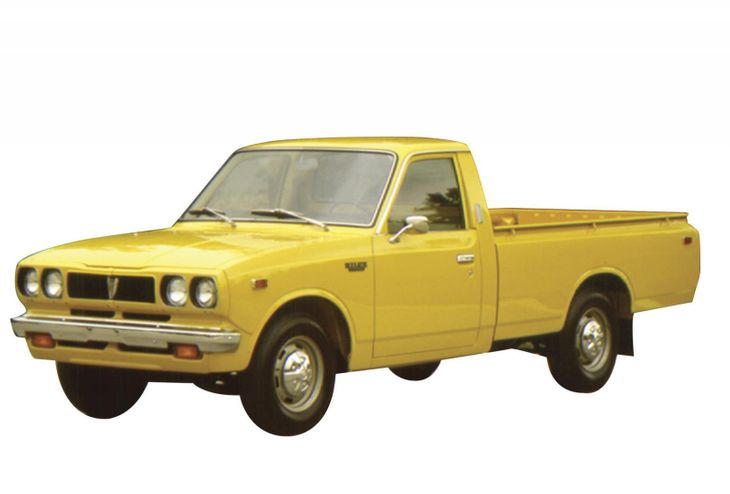
2nd-generation N20 (1972-1978)
Whereas Hilux was initially mocked for its small engines and overall lack of size, the 1973 oil crisis effectively killed off any appeal the big American bakkies had had in South Africa. Fuel rationing made farmers and other bakkie users realise how vulnerable they were in their V8s and as a result, buyers flocked to the N20 Hilux, which gained a slightly larger engine than its N10 predecessor (all of 2.2 litres!). That's a capacity that would serve it brilliantly in the years to come…
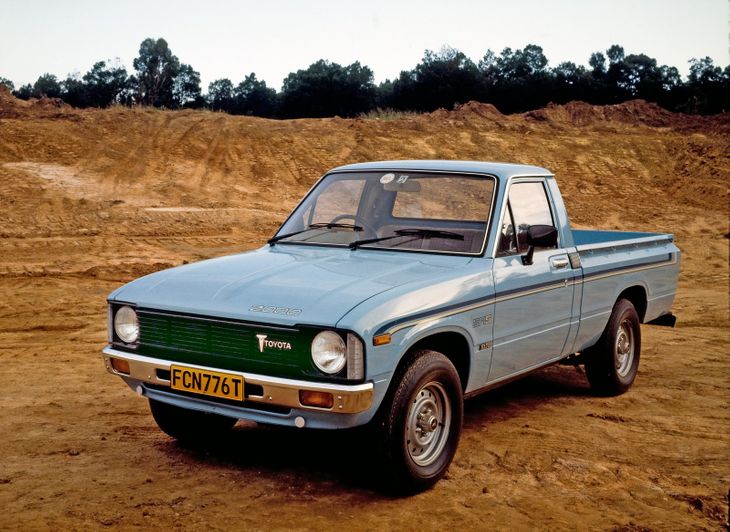
3rd-generation N30/40 (1978-1983)
With Hilux’s reputation for solidity and reliability well and truly established (and its popularity as a true workhorse accepted by most South Africans), the 3rd-generation bakkie introduced two crucial features: diesel power and all-wheel drive. Until now Hilux had been a gravel grinder, but it’s ability to go where Land Cruisers could go, was sorely limited. Well, those manual-locking front hubs graduated Hilux to its status as the weekend adventure-seeker's bakkie of choice. For bakkie fans of a certain age, there will be many not so fond memories of trying to turn those manual-locking hubs with frozen fingers on a winter morning.
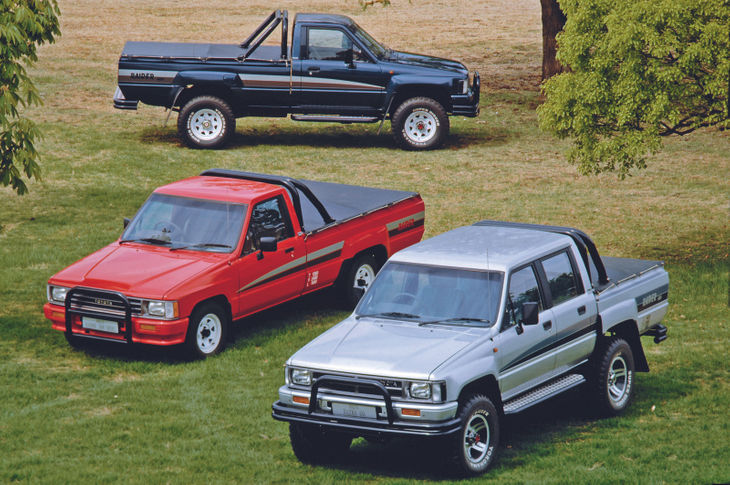
4th-generation N50/60/70 (1983-1988)
By the mid-1980s, oversized American bakkies were but a memory in the South African market and it was at that point where Hilux’s dominance, a dominance which would be challenged — but never snapped – was first secured. By introducing a double-cab, Toyota virtually doubled the marketability of its bakkie. These 4th-generation bakkies were incomparably good off-road too, despite being crudely uncomfortable due to their solid front axle suspensions.
The acronym for this Toyota bakkie was SFA and even today, SFA Hilux 4x4s command immense respect on the most testing of off-road trails. Despite being cruelly underpowered (the range-topping engine was a 2.2-litre 4-cylinder, which was good for only 70 kW – later upgraded to 75 kW), amazing approach and departure angles, virtually unbreakable components and very cleverly chosen gear ratios made these Hilux 2.2s legendary.
There was a better engine available globally, but it never came to South Africa. We were teased by it too, in the original Back to The Future film trilogy, as Marty McFly’s automotive object of desire: an SR5 Hilux, powered by a 2.4-litre turbo, good for 101 kW, which was an amazing power output for a Hilux back in 1985.
5th-generation N80/N90/N100/N110 (1988-1997)
This is where things get a touch complicated because even the most ardent local Hilux fanatic won’t recognise any of these 5th-generation bakkies. Why? Because we never got any of them. Around the time that Mzansi was transitioning into a democracy, local content laws that governed automotive production in South Africa meant that it was cheaper for Toyota to keep producing the 4th-generation Hilux past its international discontinuation date. For South Africans, the 4th-generation bakkie gained very few cabin comforts in this time, but by the mid-1990s there was the option of 2.4-litre petrol power (all 85 kW of it) and a locally developed 2.8-litre turbodiesel.
6th-generation N140, N150, N160, N170 (1997-2005)
The Hilux would finally become civilised. Sort of. The most significant platform change was an upgrade to independent front-suspension, which revolutionised ride comfort and did little to affect off-road ability. Toyota traditionalists were aghast that their favourite bakkie had "gone all SUV", but it was an unavoidable trend.
Initially, the flagship diesel engine was an amazingly slow naturally-aspirated 3.0-litre 4 cylinder, but that weakness eventually became the 6th-generation Hilux’s strength. Toyota pandered to customer input and introduced a turbocharged version of the 3.0-litre motor, codenamed KZ-TE.
It was to become a legendary bakkie: powerful enough to cruise to destinations at highway speeds, and sufficiently durable to run in low-range for days on end when navigating the toughest terrains. Need a reminder of how legendary the KZ-TE Hilux is? They’re 300% more valuable than comparable Mercedes-Benz sedans of their time. Don’t believe us? Search our classifieds…
7th-generation AN10, AN20, AN30 (2004-2015)
With its rounded corners this Hilux had loyal Toyota bakkie followers worried, but beneath the softer appearance was a significantly more potent vehicle. Finally, Toyota would no longer lag behind its rivals when engine outputs were compared as the 7th-generation Hilux debuted that legendary D-4D moniker and a V6 too, cranking out 120 kW for 3.0-litre turbodiesel and 176 kW from the 4.0-litre petrol. Durability remained unaltered, but cabin comfort improved remarkably.
The 7th-generation Hilux is particularly important in the story of Toyota’s South African sales success because it spawned the Fortuner Adventure SUV, which has become a phenomenon all of its own. An ambitiously heroic motorsport development, which started Hilux’s Dakar campaign, was also evolved from this series.
8th-generation AN120, AN130 (2015-)
There's not much that needs to be said about the current Hilux, is there? Although Ford has engineered a thoroughly accomplished rival in the form of the Ranger, South African acceptance of all things Hilux remains undiminished. It remains SA’s favourite vehicle and although the long overhangs have drawn criticism of the bakkie's exterior styling, they are a necessary crumple zone safety feature dictated by Euro NCAP. The only local bakkie to retain a powerful petrol engine, that awesomely melodious 4.0-litre V6, Hilux has evolved into exactly what South Africans require from a true all-terrain, all-purpose vehicle. At 50, Hilux’s reputation is undiminished.
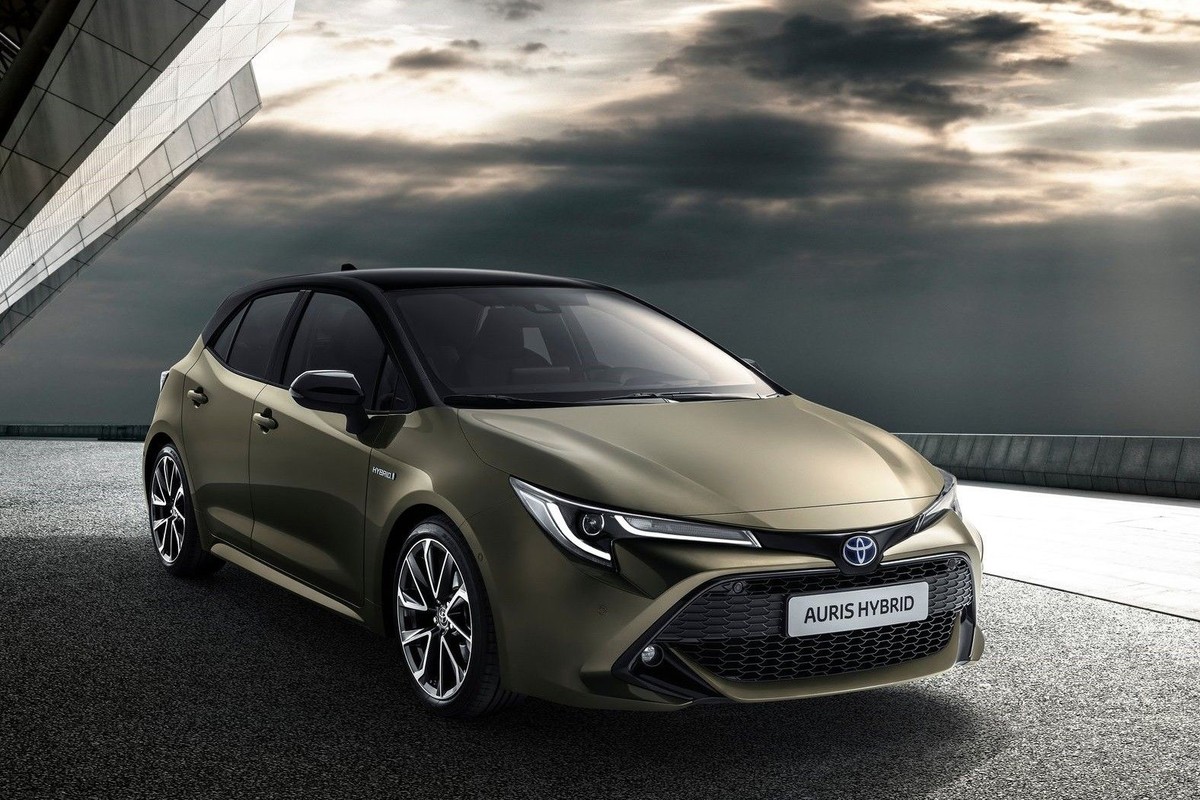
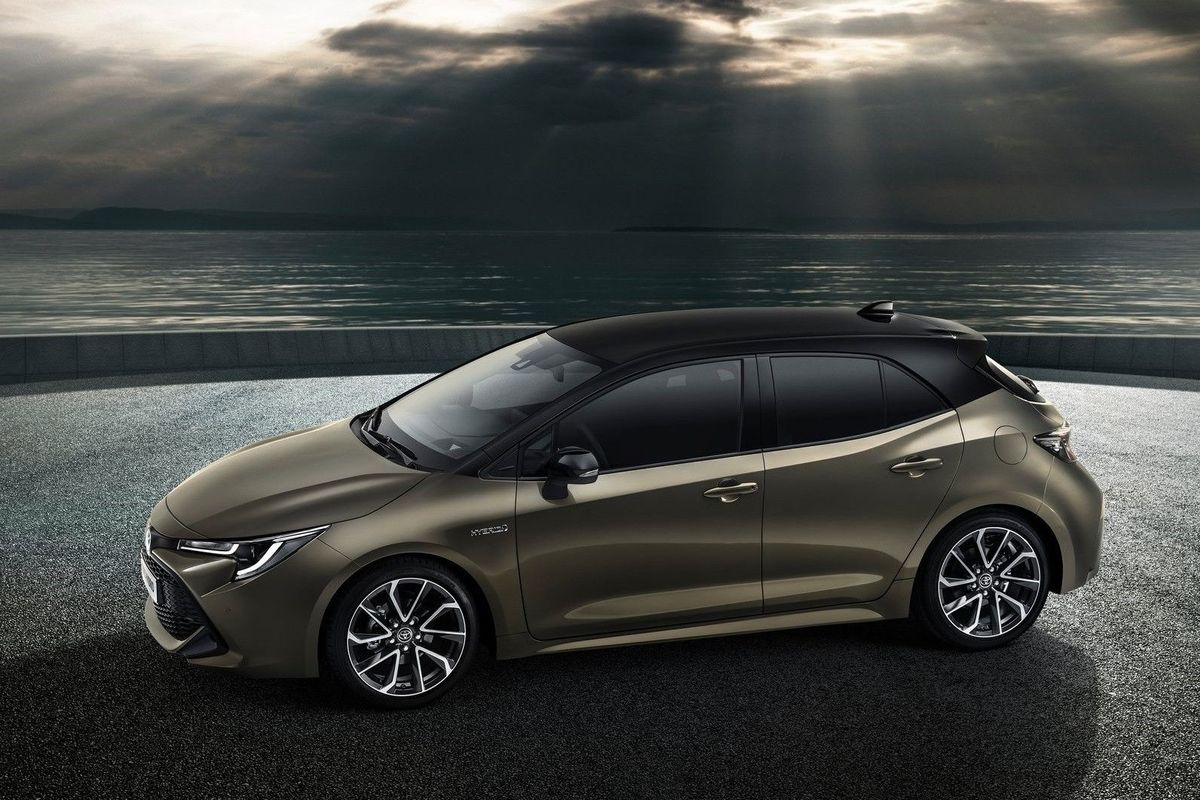
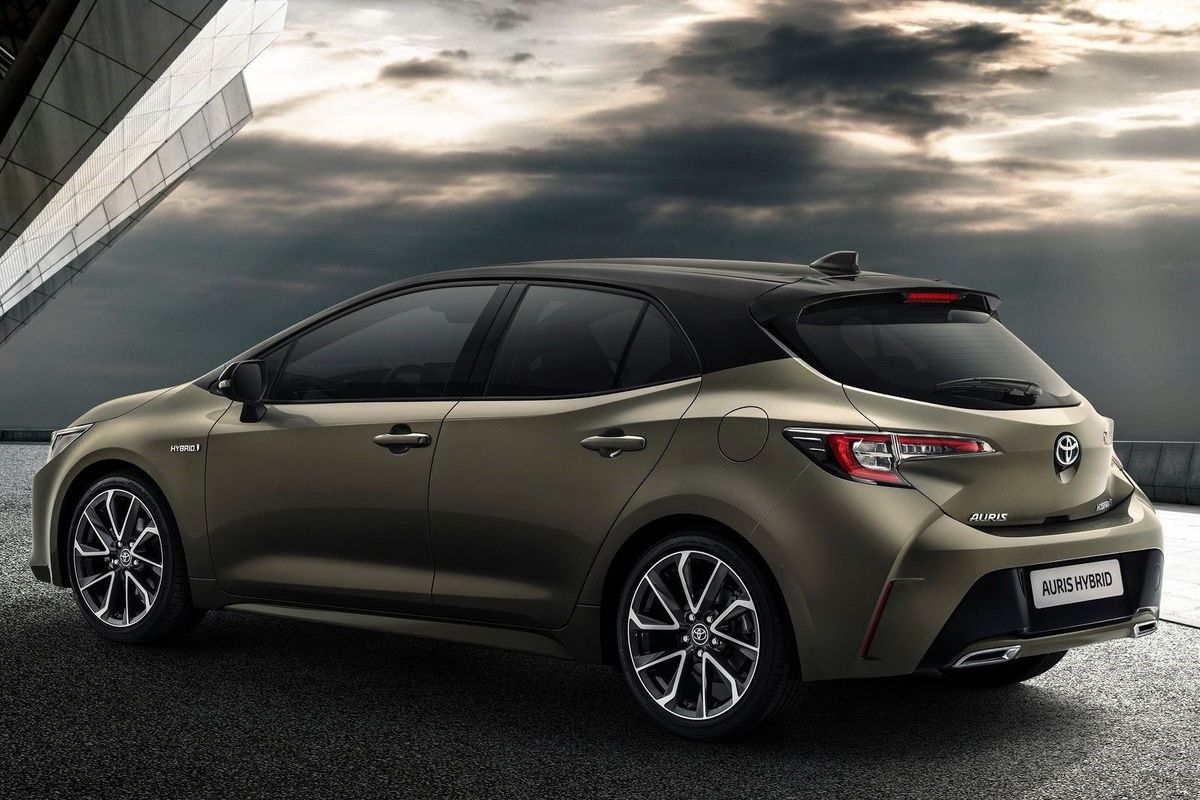
Toyota has used the 2018 Geneva Motor Show as a platform to launch its new Auris. Are these changes enough for the Auris to become a strong Golf rival?
The new Toyota Auris has grown up. Built on the Toyota New Global Architecture platform, the new Auris is 40 mm longer, 30 mm wider and 25 mm lower. Toyota has been in the hybrid game for 20 years and the new Auris will be benefiting from the latest in this technology.
The new Toyota Auris will offer customers just one conventional engine. It's a 1.2-litre turbo petrol which we've experienced in the Toyota C-HR. There will be two hybrid engines available. The 1.8-litre is the motor we've seen before in the Lexus CT200h and Toyota Prius, while the new 2.0-litre hybrid features 130 kW and a sportier drive. Stay tuned for updates.
Update: 23/03/2018
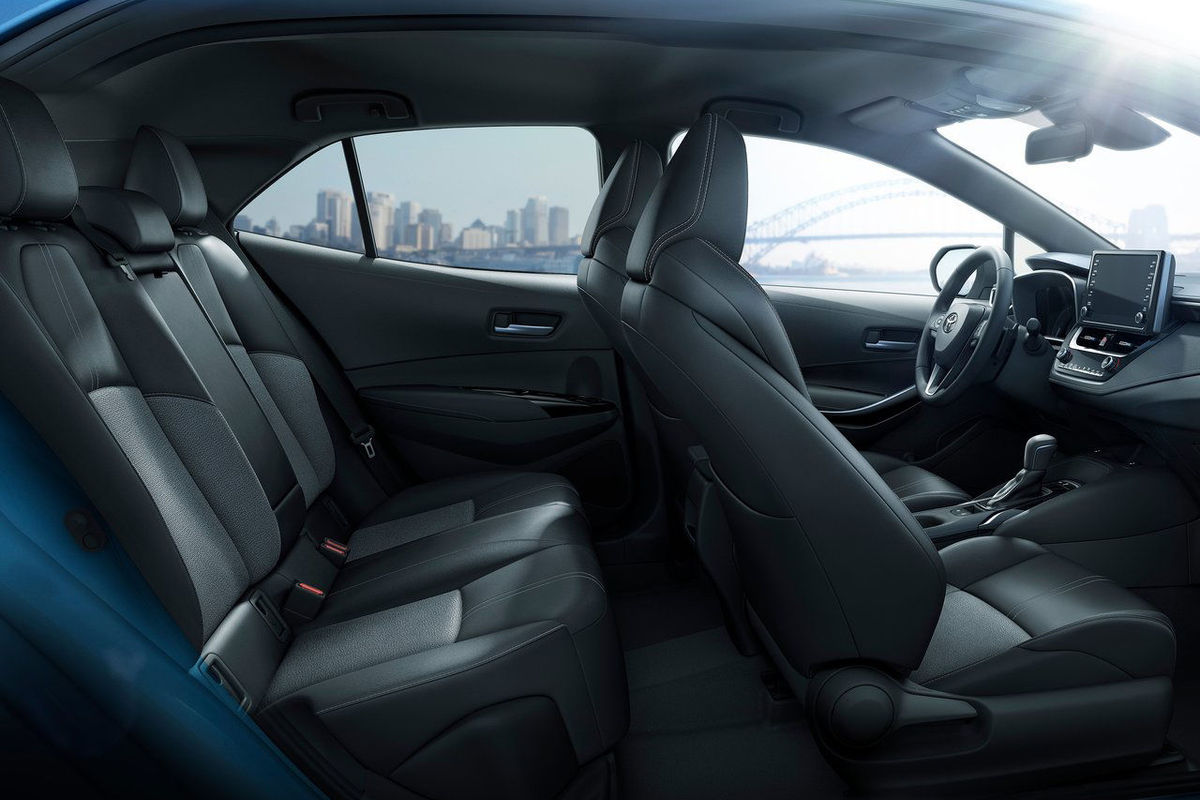
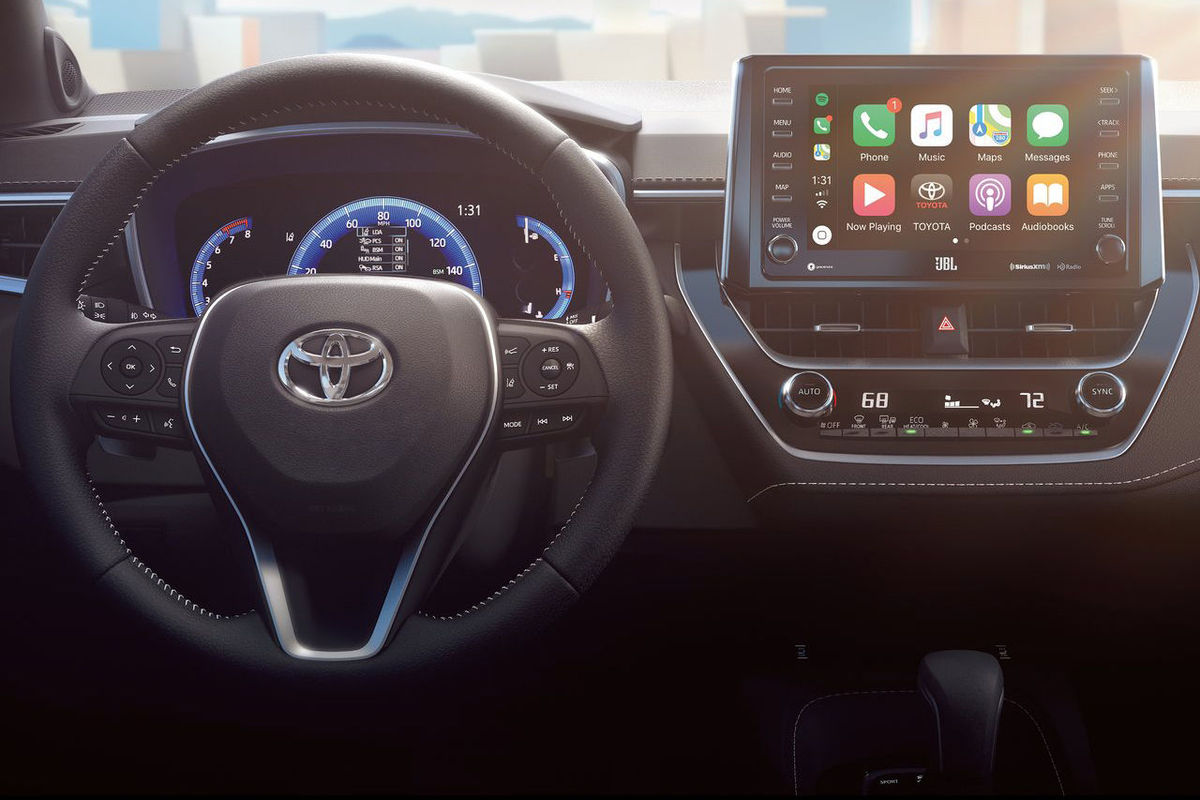
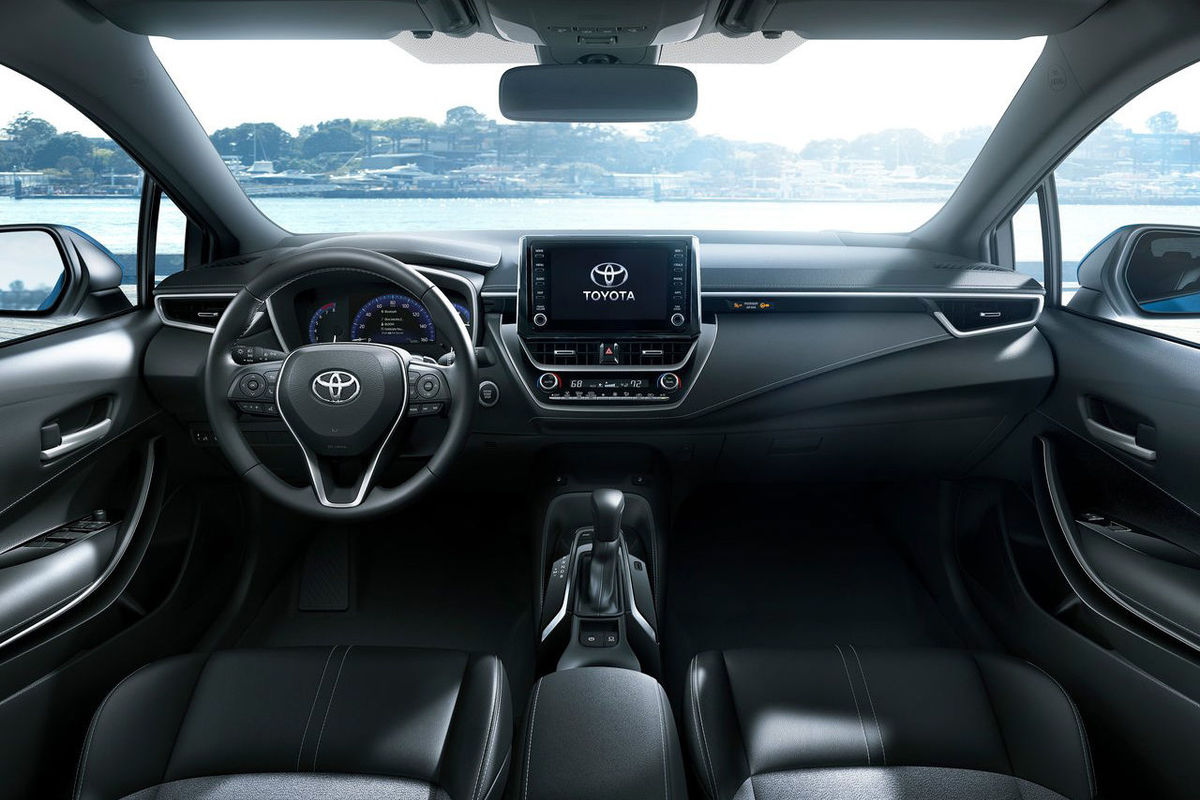
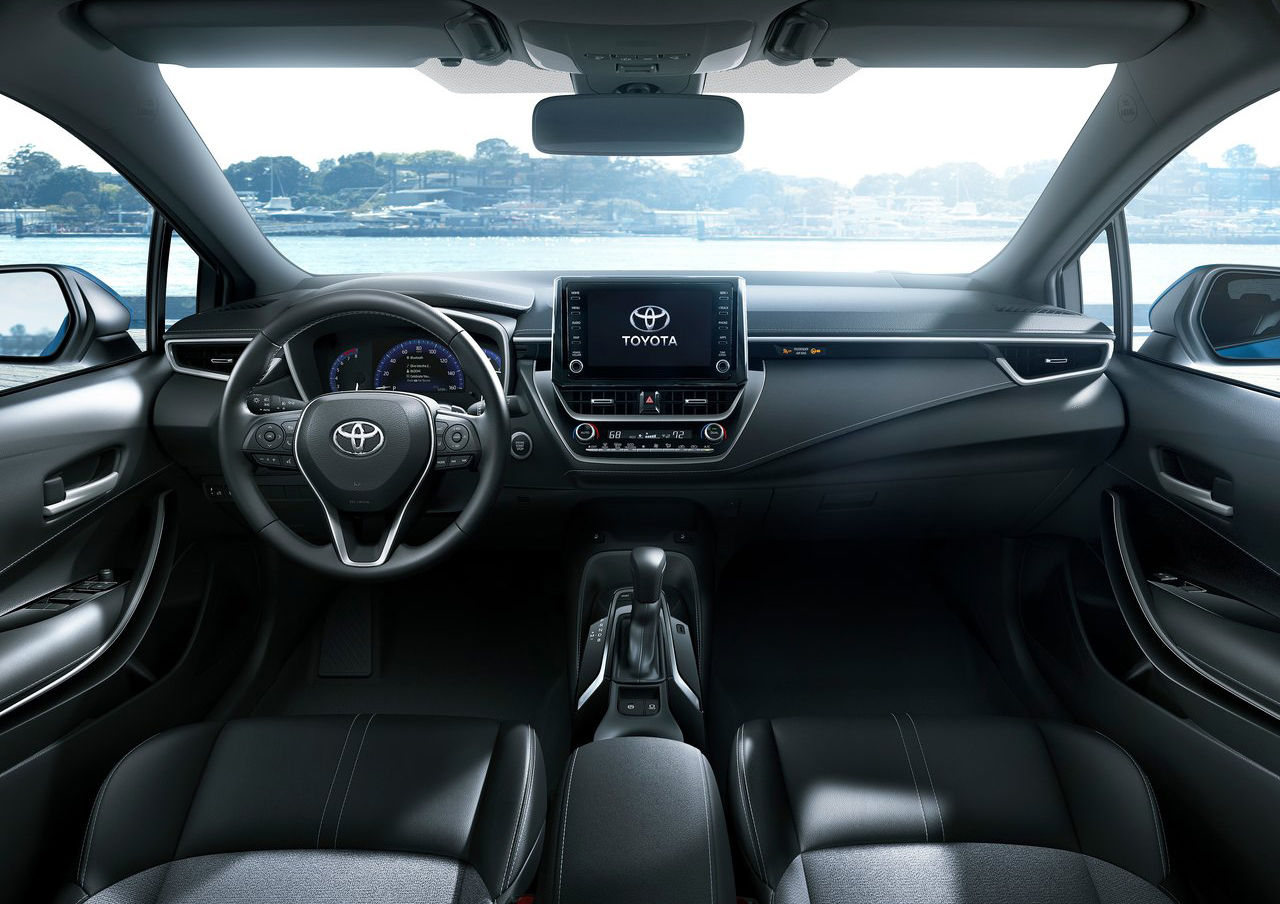
Images have appeared for the American spec Corolla Hatch (local Auris) which show off the new interior. An 8-inch touchscreen does duty as an infotainment system and features app connectivity as well as Apple CarPlay and Android Auto. Debuting in the states is a 10-speed/step CVT gearbox that is said to bring a bit more sportiness to the generally dull CVT gearboxes. The level of spec for American versions differs vastly from our local models, but some of the safety kit available is extremely upmarket. Pre-collision detection for pedestrians at day and night time as well as a fully dynamic adaptive cruise control that works from 0 kph.
What are your rights when you get stopped at a roadblock? Can you film an officer? Can you be arrested for outstanding fines? Herewith a list of important things you should know when it comes to roadblocks in South Africa.
You’re happily driving along, you haven’t had any alcohol to drink, your licence is valid and you have no outstanding fines. Then, you see those blue flashing lights up ahead and instantly fear sets in. Your palms start to sweat, you start to question when you last had a drink, “Was it yesterday? Or the day before? Will a breathalyser test find me over the legal limit? Has my licence expired?”.
Why do we panic the minute we know we have to head through a roadblock? Is it because we have to deal with the authorities, or maybe it’s because we all know someone who knows someone who was arrested at a roadblock, or maybe it is just the unknown that scares us. Do you really know your rights at a roadblock? Let’s take a look.
Not all roadblocks are the same
First of all, you need to know the different types of roadblocks. There is an informal roadblock which usually pops up on major roads and off-ramps and the primary goal is to check for drunken driving, speeding or unroadworthy vehicles and outstanding fines. The other kind of roadblock is the K78 which is approved by the National Police Commissioner. These are usually set up to find a specific criminal or a vehicle already on the authorities’ radar.
The main difference between these two types of roadblocks is the police’s ability and right to search your vehicle and person. A search cannot be performed at an informal roadblock without a warrant unless the officer can prove extraordinary circumstances. With that said, even at a K78 roadblock, you can ask the police officer to present you with the warrant or authorisation from the National Police Commissioner.
Both the police officers as well as you as the driver have rights. You should know both sides to feel safe, calm and informed.
According to an article originally posted on Carte Blanche, a police officer must be in full uniform when working at a roadblock. They can pull you over for any of the following reasons:
To complete a routine check of the vehicle and the driver. Depending on the type of roadblock, they may request a full search.
The driver committed a traffic offence like failing to stop at a stop street or speeding.
The vehicle is suspected to be stolen or the vehicle is believed to contain criminal individuals or contraband.
The officer is then legally allowed to do the following:
Request your driver’s licence and ID.
Check for outstanding fines.
Check the vehicle’s licence disk and ensure the car is roadworthy.
If the officer requests to search the car, he/she must provide you with a copy of an official warrant stating the reason for the search. Bear in mind that if a police officer has reasonable grounds to perform a search without a warrant, he/she may do so.
If the officer suspects you are driving under the influence he/she can ask you to exit the car and a breathalyser test may be requested. If you refuse, the police officer can detain you and have blood tests performed at the nearest police station.
A K78 roadblock is a bit different in that a police officer can search any vehicle or person without a warrant and seize items from the vehicle or person should these be illegal or suspected to be linked to a crime.
IMPORTANT NOTE: Should a police officer request to perform a body search, it is illegal for an officer of the opposite sex to search you.
If you find yourself at a K78 roadblock you are within your rights to ask for a copy of the authorisation letter given by the National Police Commissioner. It must state the date of the authorised roadblock, the duration of it and the purpose of it.
IMPORTANT NOTE: The South African Constitution makes no provision for cops to insist on the payment of fines on the spot. The only time you are legally obliged to pay a fine immediately is when the officer can provide you with a copy of the official warrant or summons. If an officer can’t provide you with a warrant of arrest but still wants to arrest you, ask to call your attorney immediately.
Safety
It is quite normal to feel unsafe at a roadblock, especially if you are driving alone or at night. The best thing to do is remain calm and call 10111 and inform them that you feel unsafe pulling over at a roadblock. If you are already stopped and feeling unsafe, you are at liberty to ask the officer for their badge number and calmly inform them that you wish to call 10111 to confirm their badge number.
Filming an officer
You are legally allowed to film or photograph an officer for evidence purposes in cases of threats or police brutality. It is illegal for a police officer to confiscate or damage your recording equipment or to force you to remove footage or images.
What will get you arrested at a roadblock
You are found to be driving under the influence.
You have been driving recklessly, carelessly or dangerously.
You are willfully obstructing the roadway.
You are found to be driving with a cancelled or disqualified licence.
Police suspect you may have committed or are about to commit a crime.
You verbally or physically abuse an officer. Any racial slurs, threats, crude gestures or physical contact could result in arrest. Also preventing an officer from doing their job is a criminal offence.
It can be a rather unsettling ordeal, but if you haven’t done anything wrong, you shouldn’t experience any problems. Pull over when you are flagged to do so, remain calm, cordial and respectful and follow the police officer’s instructions. If you have been caught doing something wrong, don’t argue! Accept responsibility and never engage in bribery. The police are doing their job, respect that.
Join Ciro De Siena as he recounts his recent road trip to Lesotho behind the wheel of a Ford Mustang…
When we received the invitation to travel to Lesotho for the first-ever Mustang Road Trip on the African continent, I initially felt confused. Why would anyone want to drive a fleet of Mustangs to Lesotho? Visions of scrambling up dirt roads fighting for grip in the country with the highest low point on earth didn’t seem like a particularly good idea. So, of course, I accepted.
Departing Cape Town on the red-eye, my trip began with a 5:00 am uber to Cape Town International Airport and I watched in horror as the N2 inbound resembled a parking lot – at 5:15 am. My flight to Johannesburg was painful! I had a busy Sunday and completely forgot to check-in, resulting in the cruel and unusual punishment of occupying the middle seat for 2 hours.
By the time the wheels hit the ground in Jozi, I was cramped, sleepy, annoyed and yet to have a coffee, which multiplies any negative morning emotion by at least a factor of four.
On the road
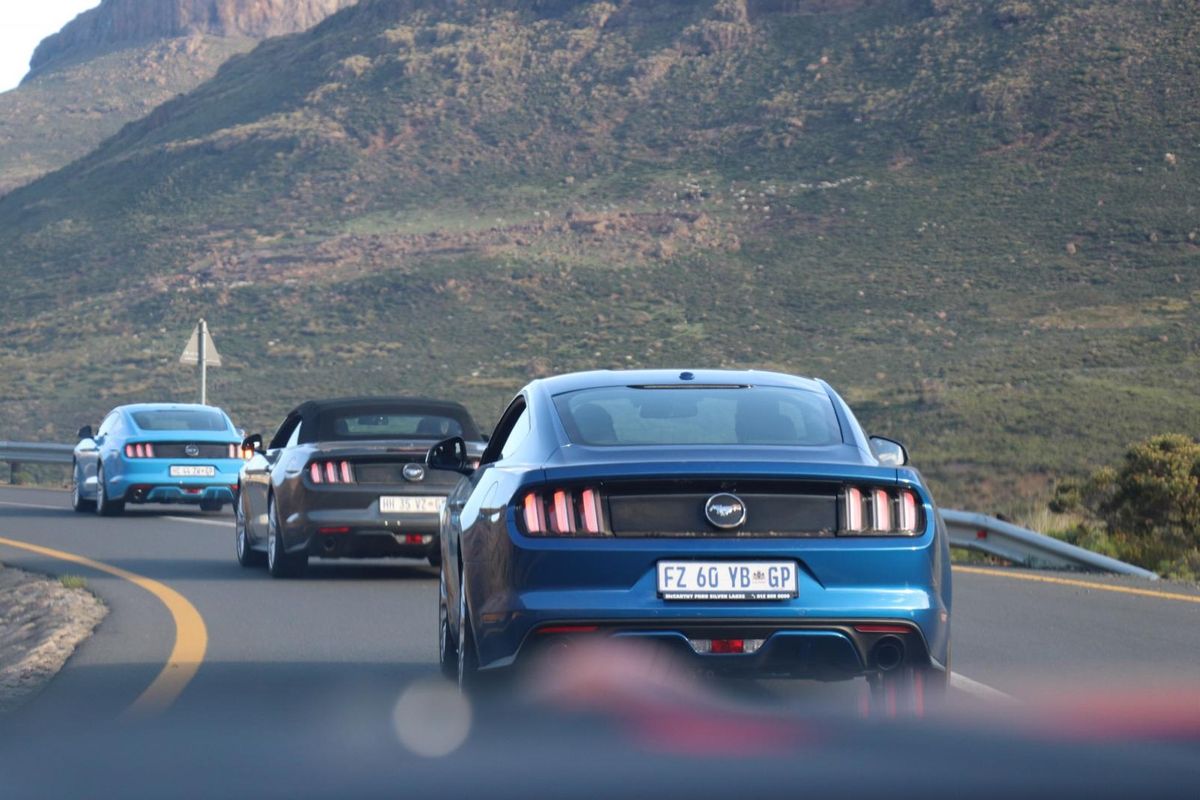
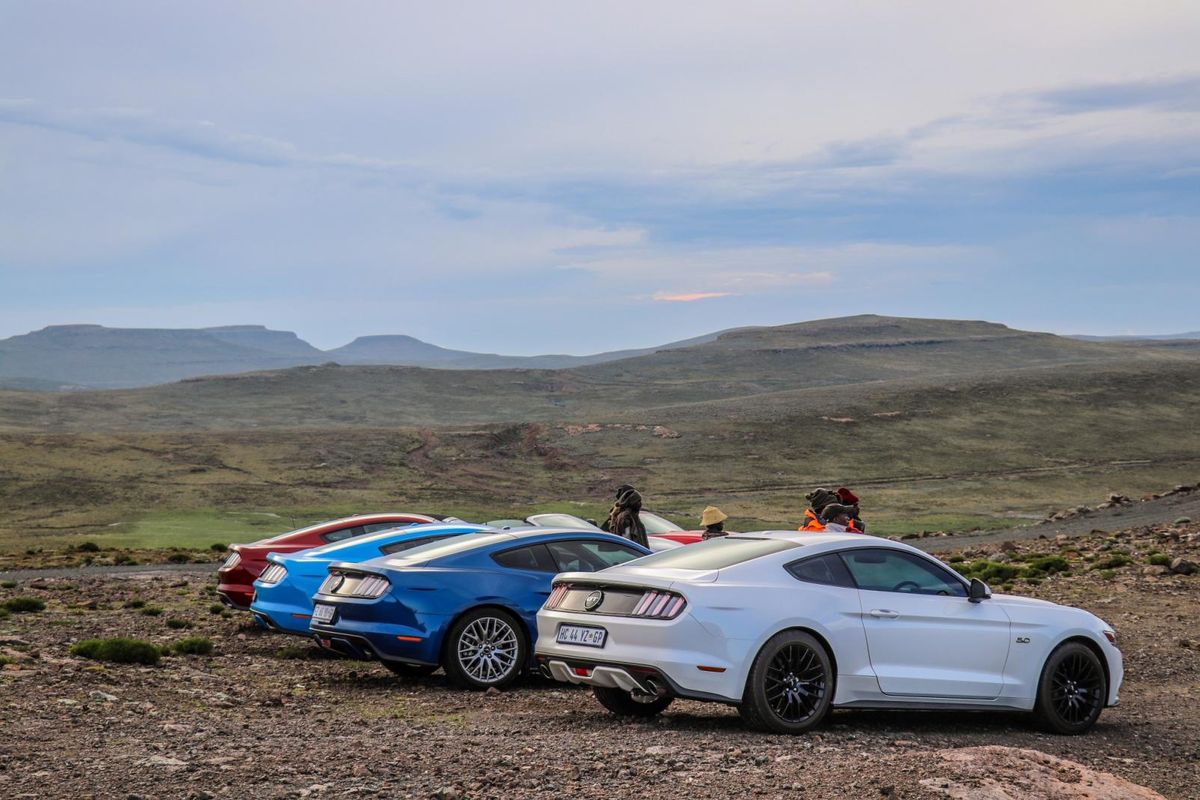
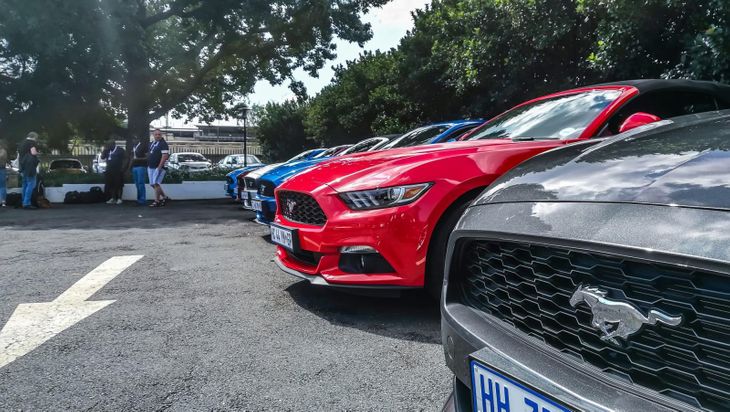
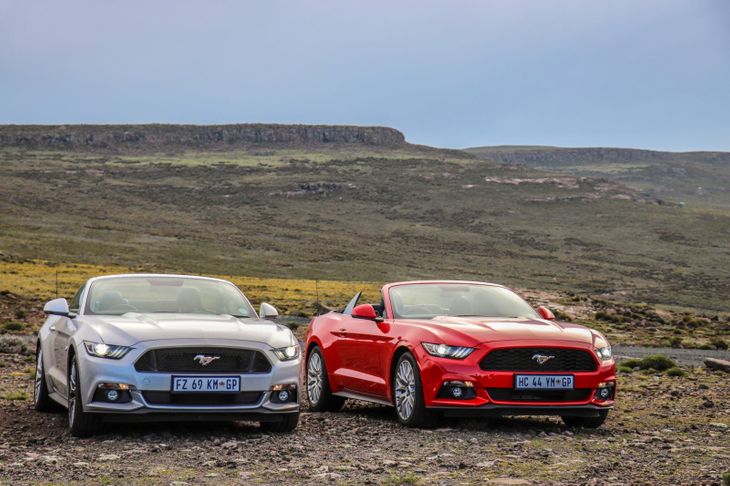
A total of 7 Mustang's welcomed us on what would be a memorable road trip to Lesotho.
Thankfully, breakfast was the first item on the agenda and rounding the hotel to the rear parking lot, we were greeted by the sight of 7 Mustangs parked perfectly in a row. After a mercifully brief briefing, we were on our way.
With plans to swop cars between the members of the media over the next few days, myself and my driving partner, Pierre Steyn, group editor of the travel titles at Media24, were not phased in the slightest to be driving the smaller-engined 2.3-litre 4-cylinder Mustang for the first leg.
In a stroke of genius, Ford had ensured that all the Mustangs were fitted with heated and cooled seats, which, as I would find out over the next 4 days and 1 200 km, is quite possibly the best invention in motoring since the windscreen wiper.
A beautiful scene somewhere in the Free State…
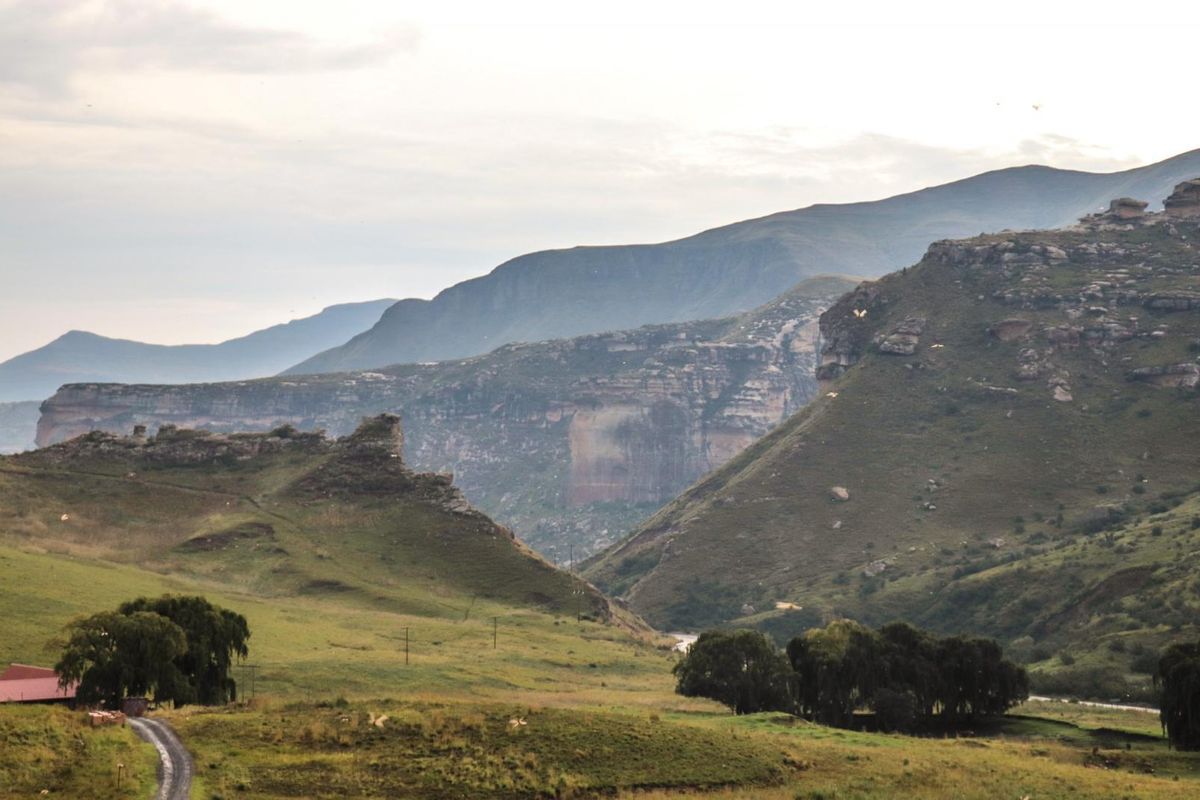
Gauteng’s urban sprawl quickly gave way to the rolling green pastures of the Free State. South Africa’s agricultural heartland, the expansive vistas are framed by increasingly tall sandstone cliffs. The Free State is often derided as a sort of no-mans land, a “fly-over state” in American parlance. But the reality is that it has a unique and endearing beauty. At this time of year, the road is framed on either side by a seemingly endless carpet of Cosmos blooms; a delicate white and purple flower, the seeds of which farms in the area export all over the world.
It is, however, particularly difficult to take in this beauty on some stretches of tarmac, especially as the driver, as some roads in the area are absolutely littered with potholes. Fortunately, no one in our 12-car convoy suffered a puncture, which was frankly miraculous, but we were encouraged to keep longer following distances to the car in front to allow for more time to react. However with no shoulder to speak of, combined with oncoming traffic, dodging the potholes is often a test of faith rather than driver skill.
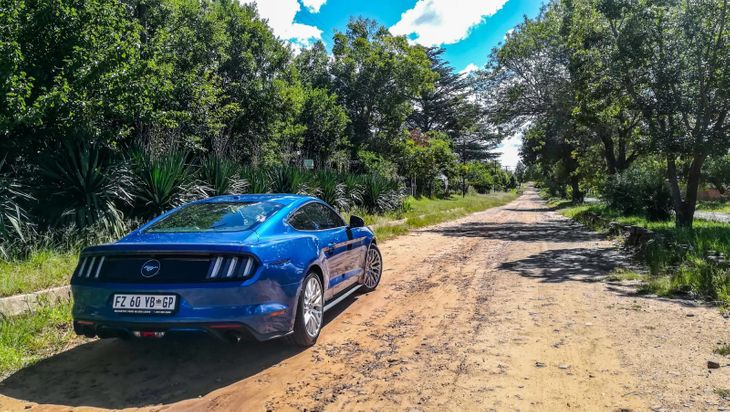
The Ford Mustang 5.0 Fastback GT pulls into Rosendal, home to only 70 people!
Our first stop was a town I didn't know existed until we turned left off the N5 and a large, hand-painted, sun-faded sign declared that we were now in Rosendal. Pronounced “Roo-sin-dal”, the local glass-blower informed me that it was a town of 70 people. Only 70! There was one tar road through the middle, with wide dirt boulevards darting off east and west, each road featuring a rough centre island dotted with tall trees, in many instances creating green and leafy tunnels.
Lunch was in a curious old home, the dining tables surrounded by antiques and bric-a-brac, the buffet table housed in a personal library, surrounded floor to ceiling with dusty literature. The food was innovative, yet homely, and everyone was delightfully fussed over by the owner, a short, square man in perhaps his 60s. Whispers of his fame quickly spread as he was recognised as the star of a long-running South African soapie which I’ve never watched. It turns out this was his country hideaway.
Galloping horses
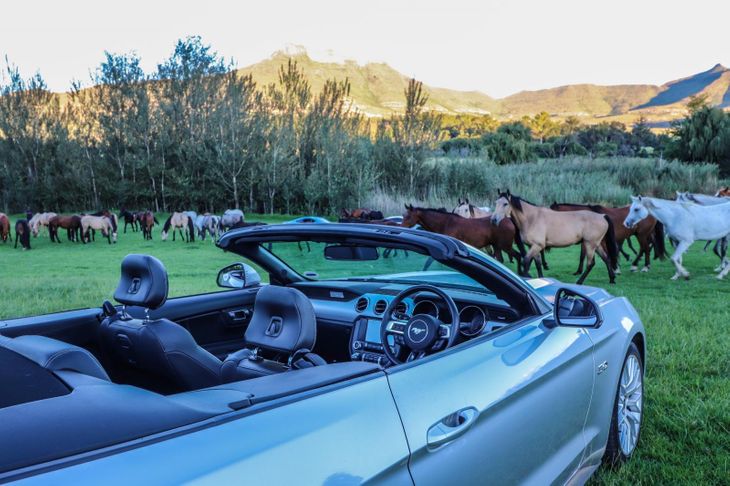
The Mustang fits like hand to glove on this stud farm in Moolmanshoek.
Departing Rosendal earlier than planned as the crew had discovered the town had run out of unleaded fuel, we hopped back on the N5 and cruised towards the Moolmanshoek stud farm. A fairly tricky dirt road led us down to a ravine, where a beautiful old sandstone building was perched on perfectly manicured lawns.
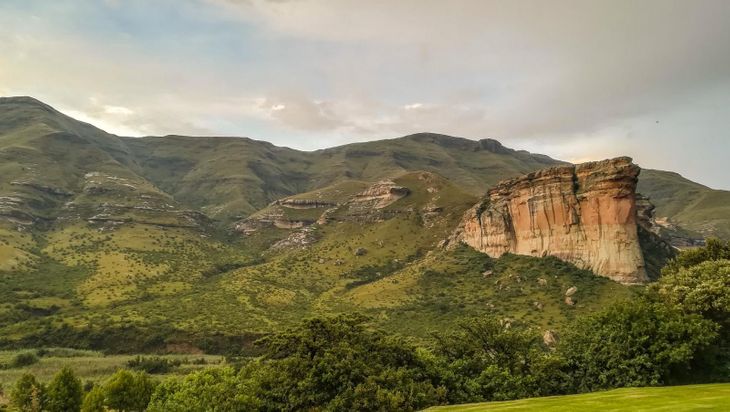
We were told to get our cameras ready while welcome drinks were poured. The sun had dipped below the mountains behind us and across the ravine, the sandstone cliffs gradually glowed a warm orange as the last of the sun’s rays lit up the cliffs.
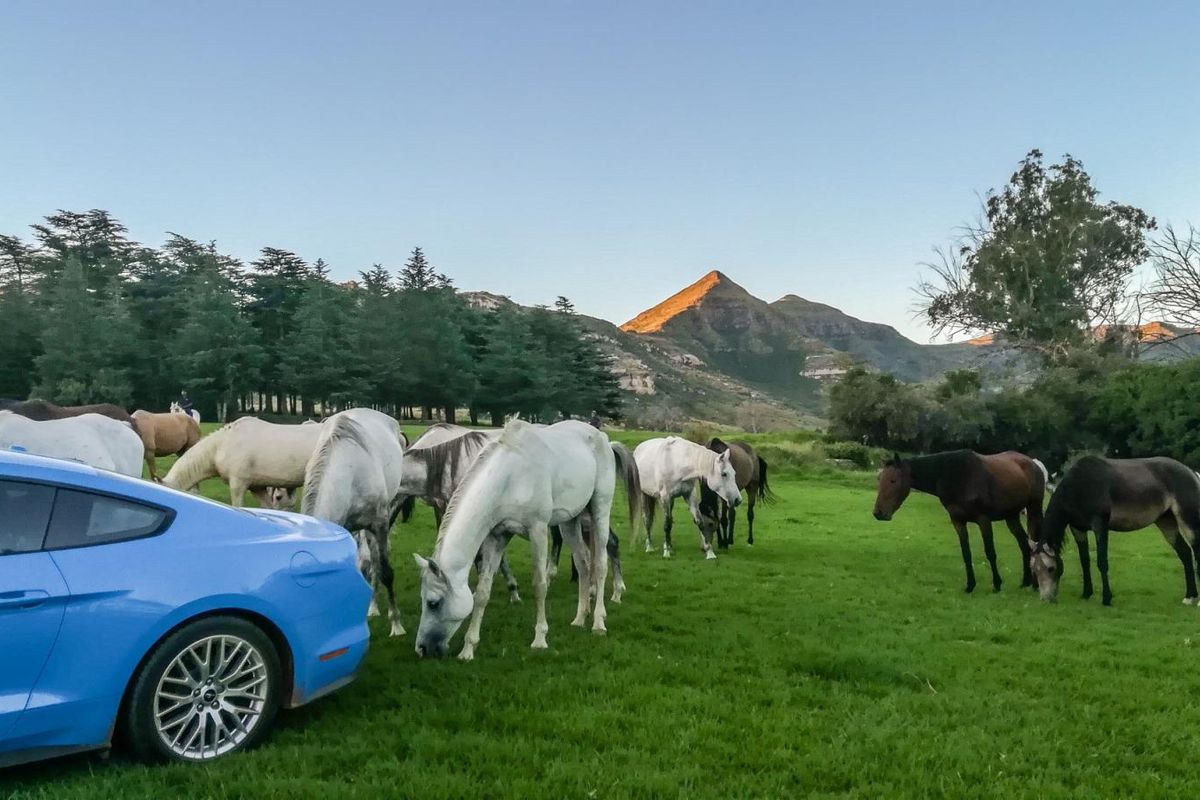
A distant crack of a whip reverberated through the cool evening air and the sound of hooves grew louder. Seemingly out of nowhere, a herd of perhaps 50 horses barreled towards us, running past the cars which the Ford team had parked on the lawns. It was a phenomenal spectacle; an experience which you felt as much as you witnessed, the vibrations of the stampede rushing through the ground and up through your feet.
The horses wandered back towards us and the cars, some came up to the guests for a closer look while a few licked the windscreen of the cars, curious about these metal oddities which had been parked on the tastiest piece of lawn.
Onwards and upwards into Lesotho
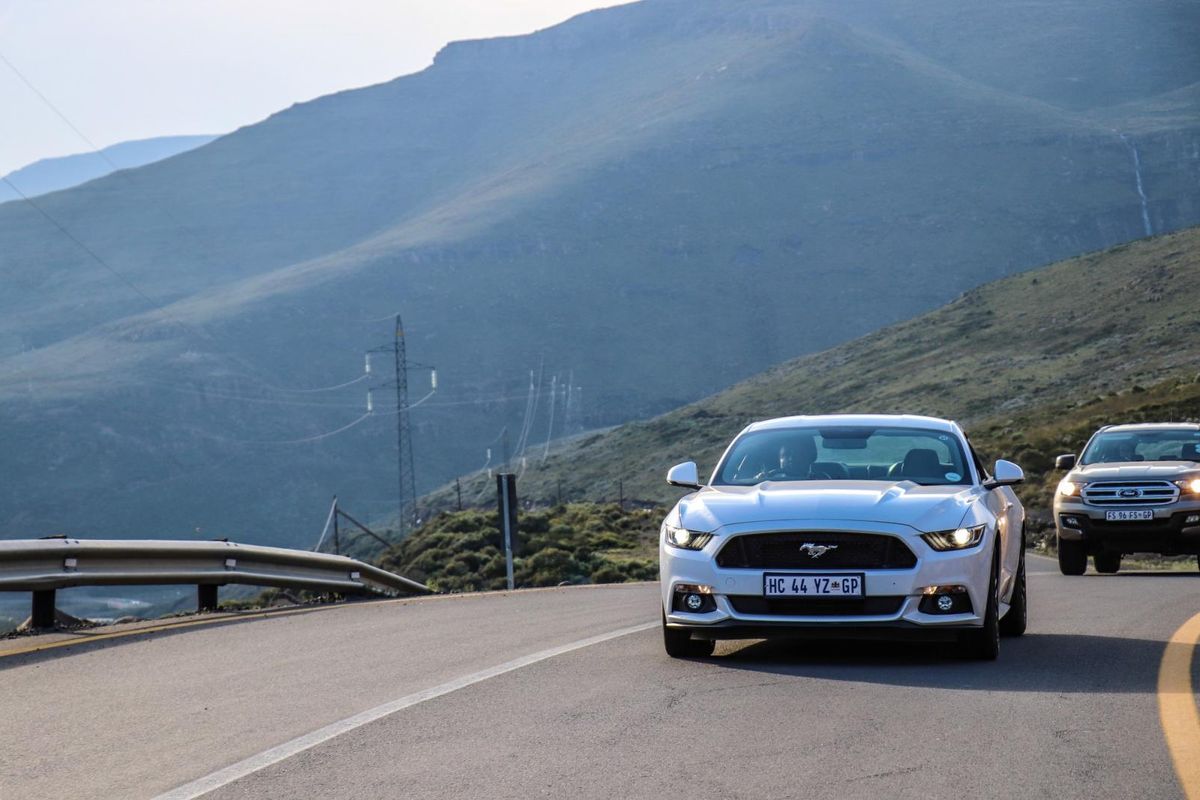
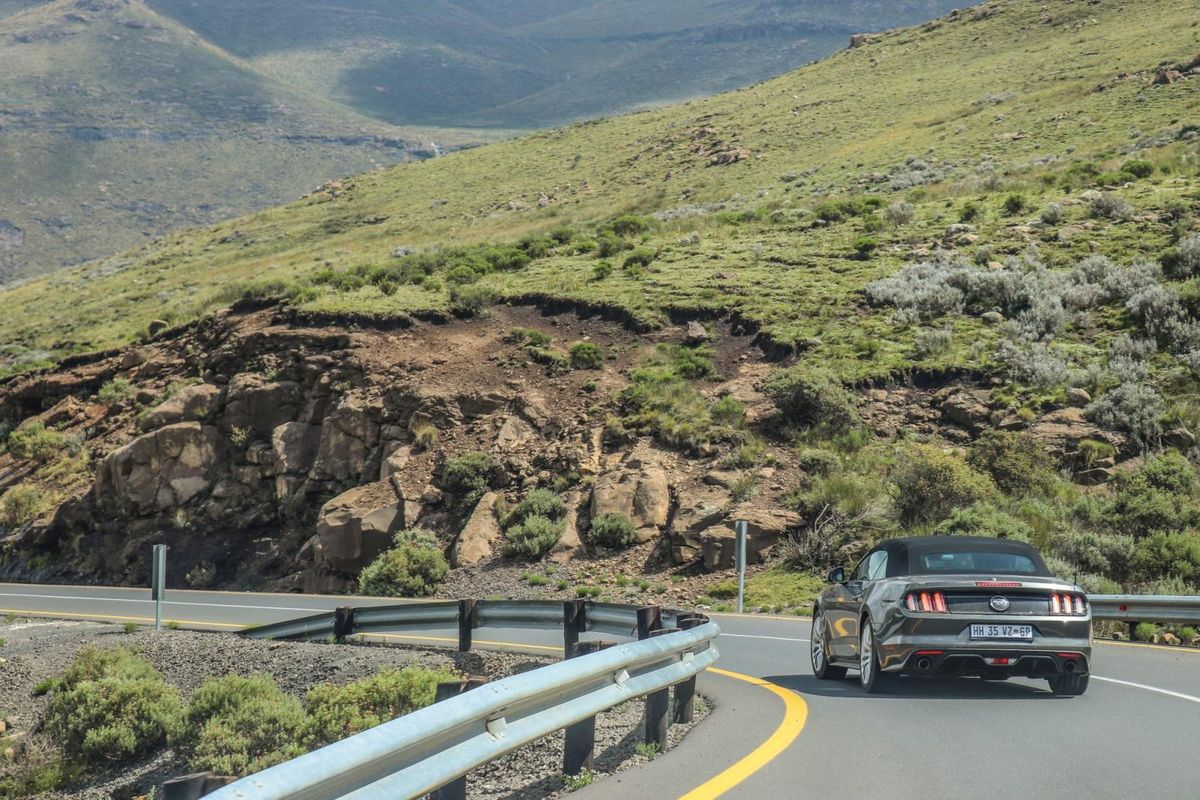
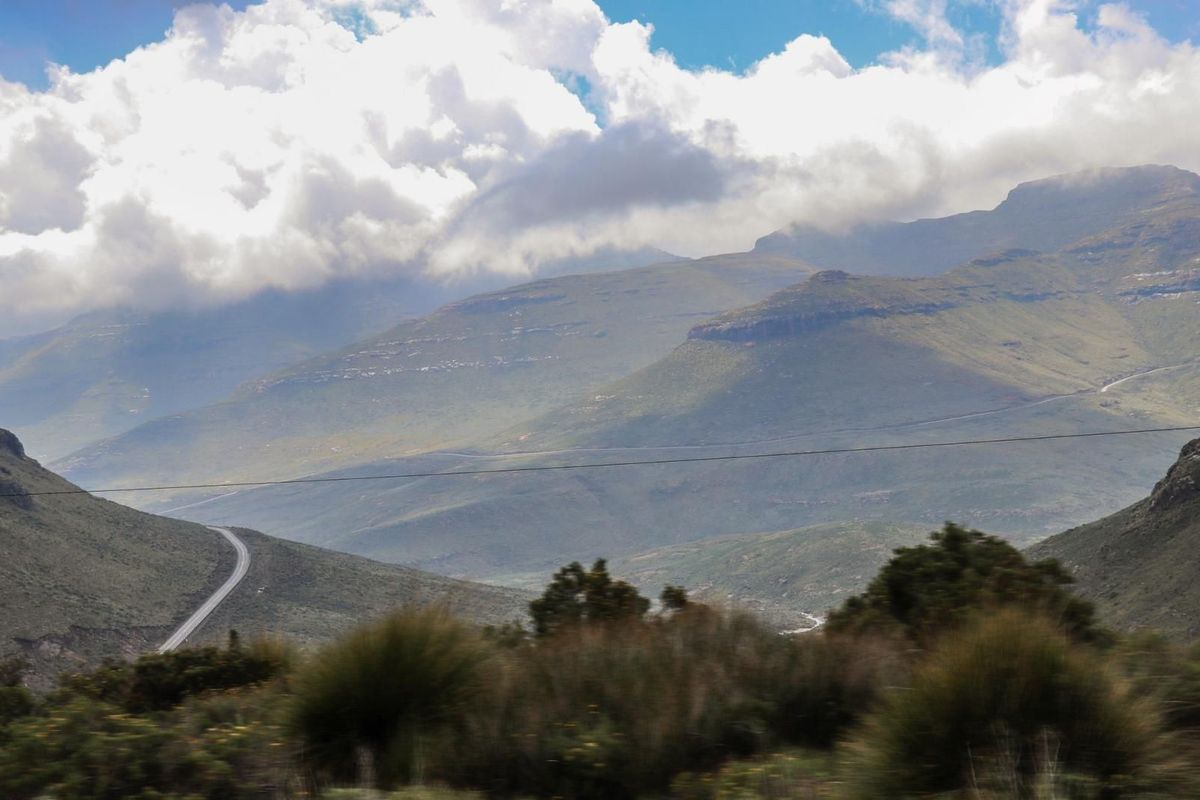
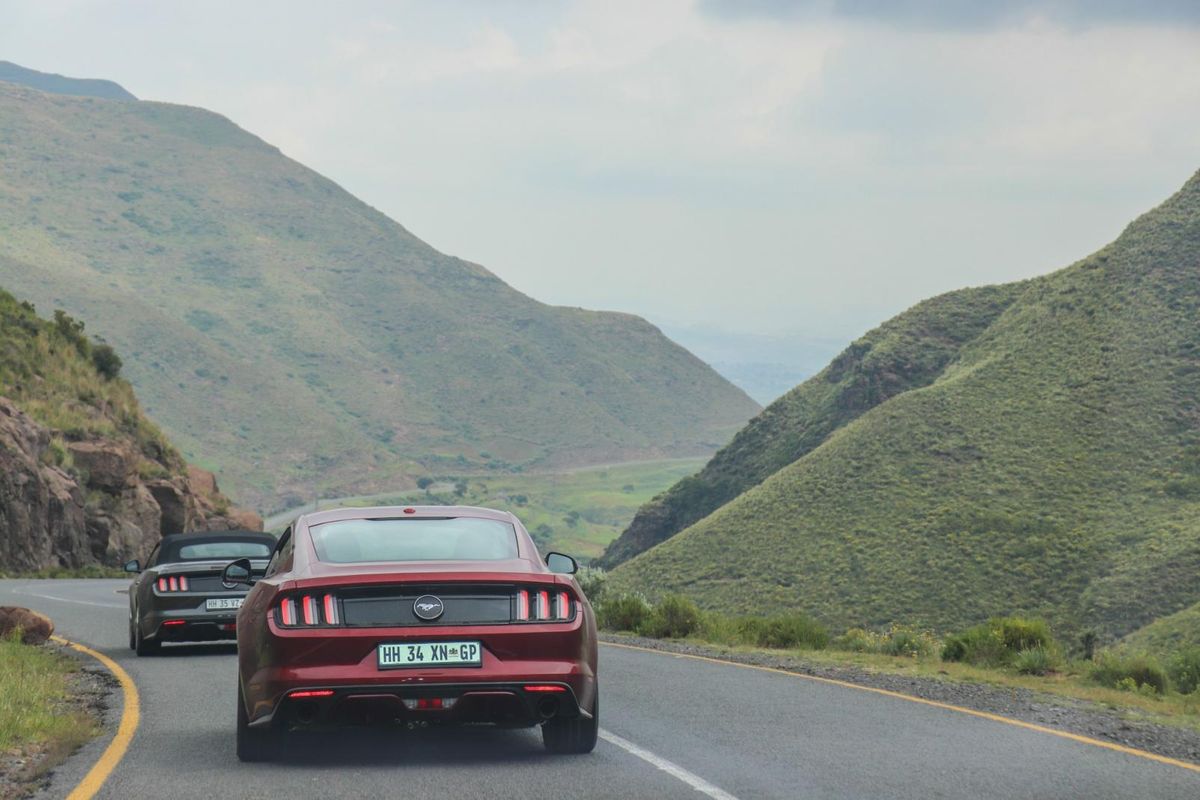
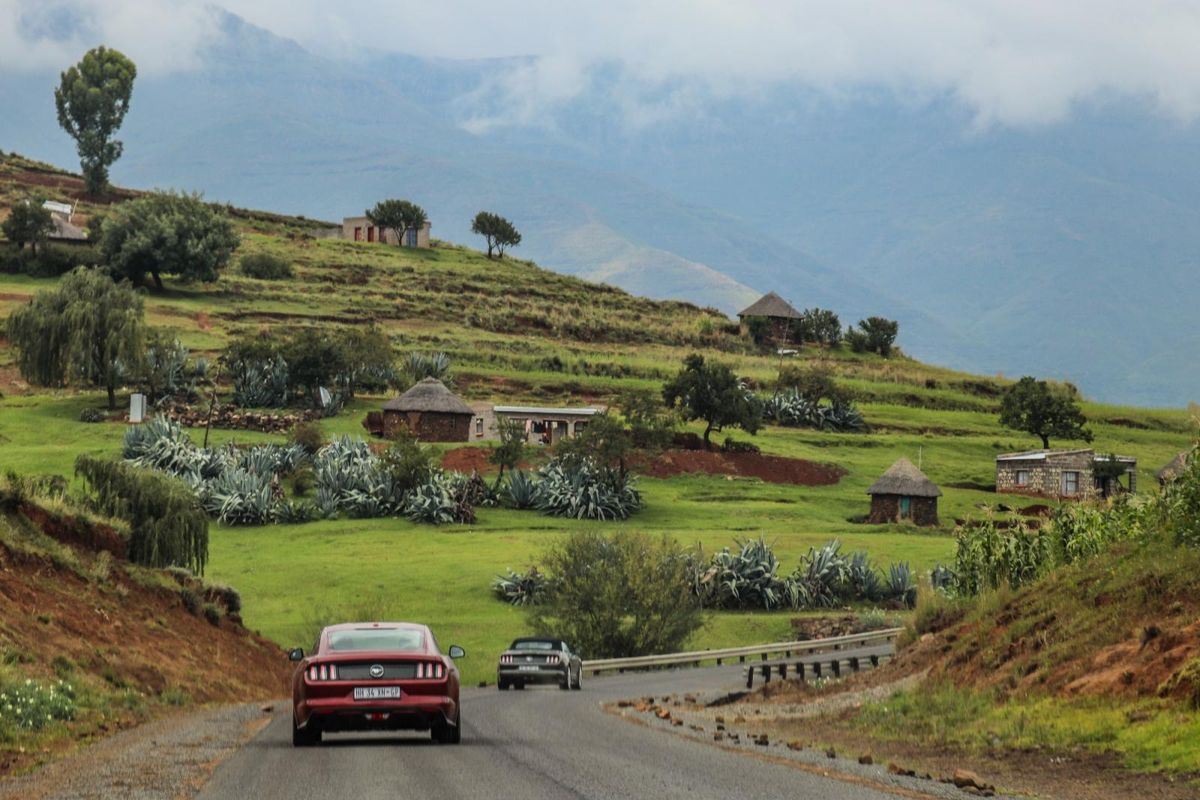
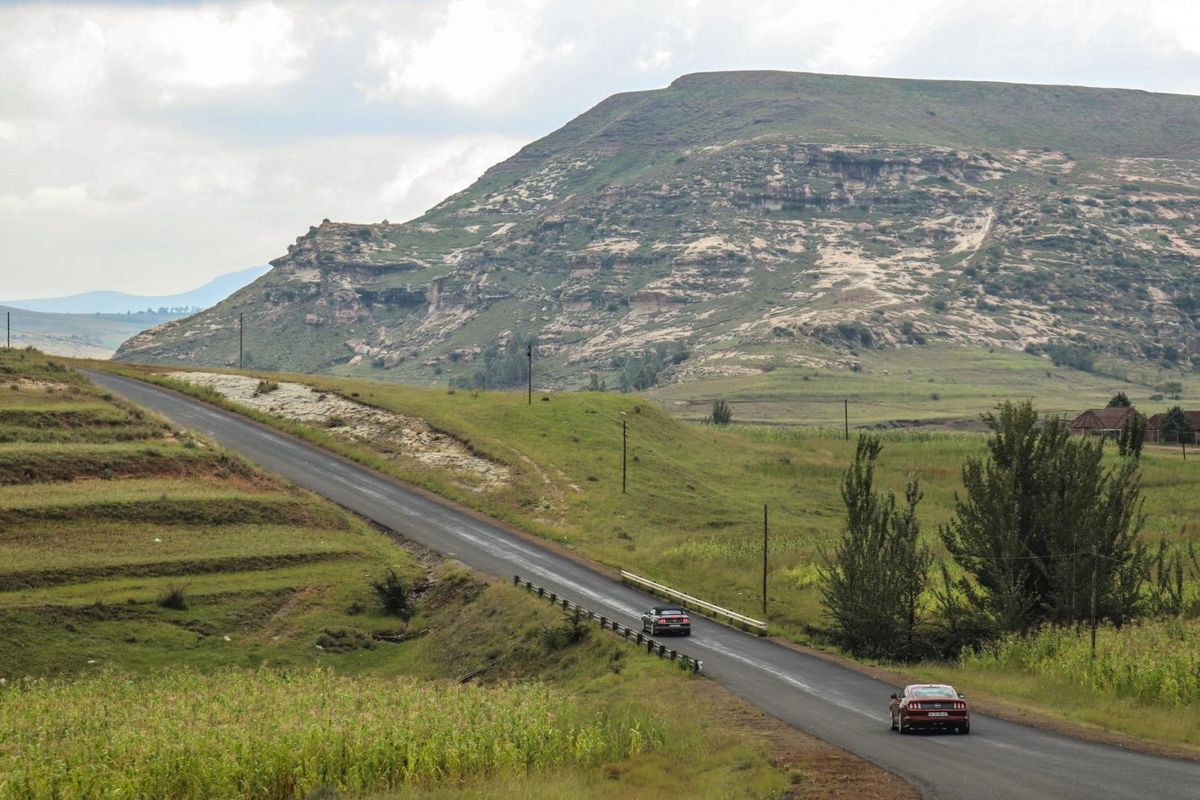
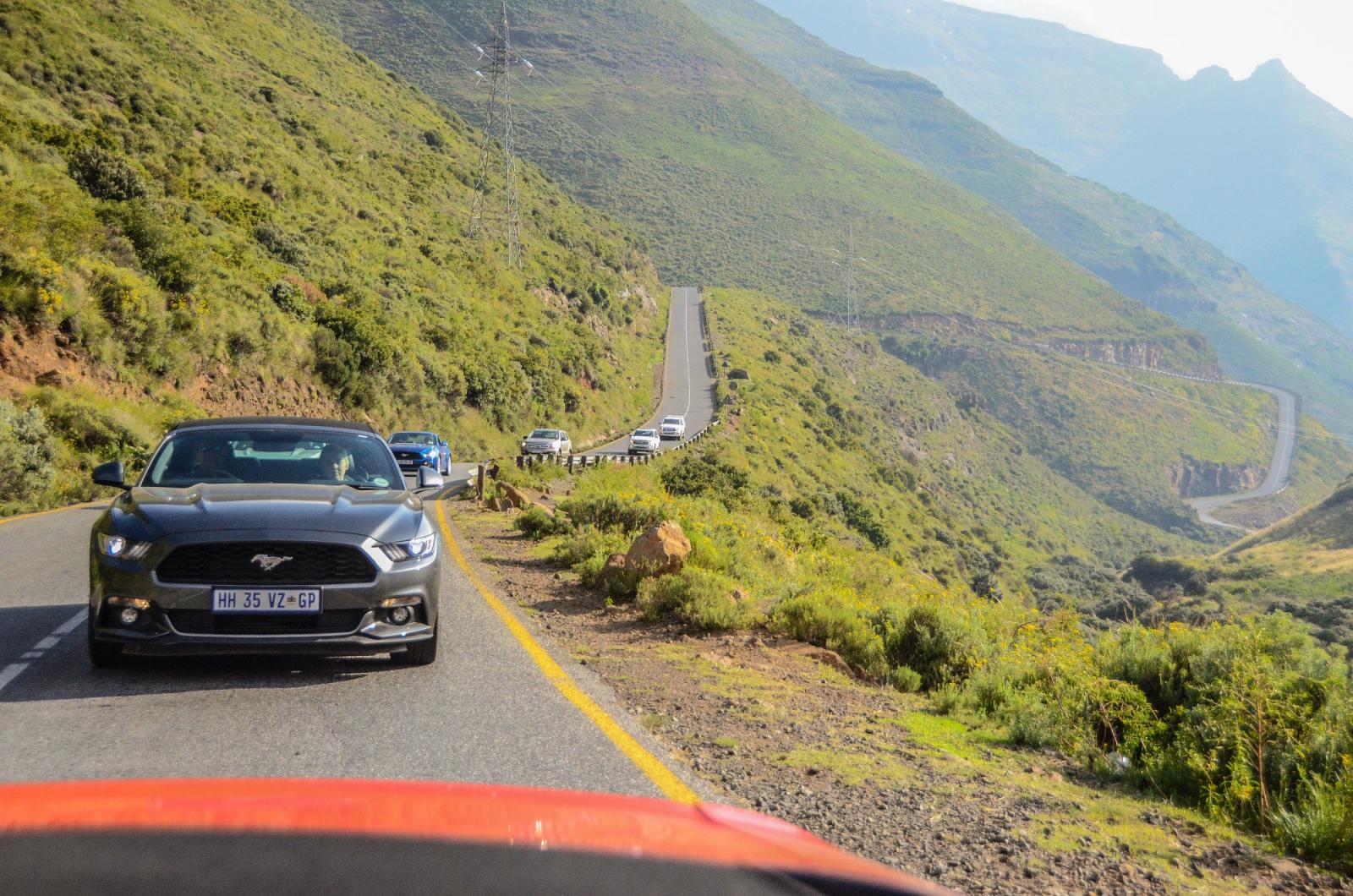
Lesotho provided scenic views and roads that would make any car enthusiast giddy with excitement.
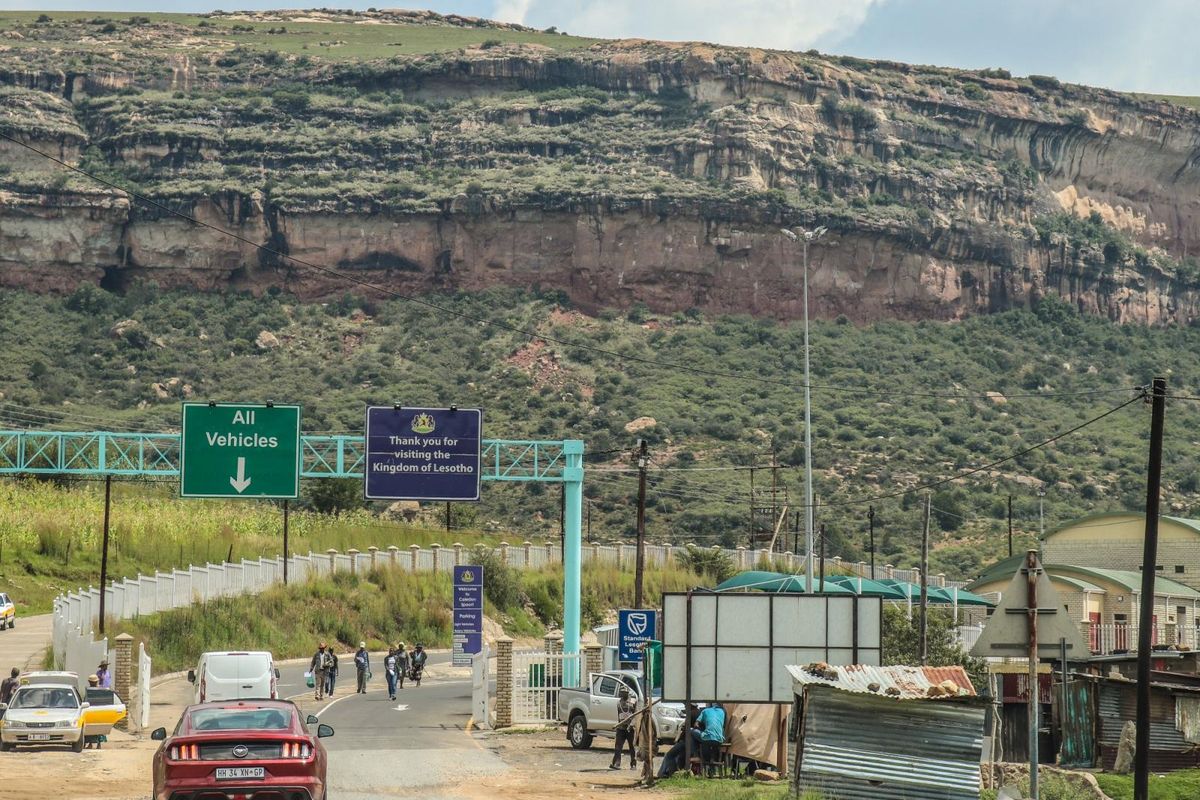
After a delicious braai washed down with one of my favourite red wines, the next morning we were back on the road! The convoy, led by one of the friendliest and most capable tour managers I have ever met, made its way to the Caledonport crossing on the South Africa/Lesotho border. The Ford team had sorted our paperwork long before the trip and we breezed through the border post, with customs officials and tourists enthusiastically taking photos of our convoy. This has to be one of the most hassle-free borders anywhere in Africa.
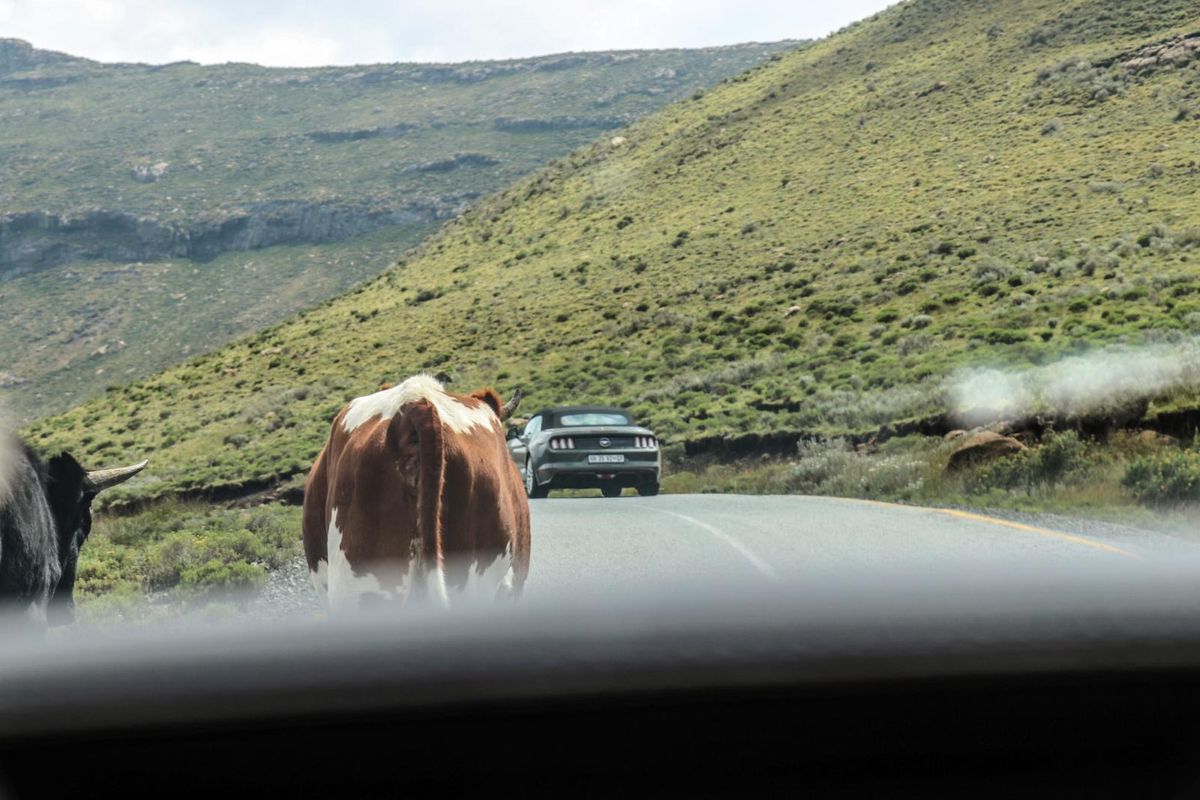
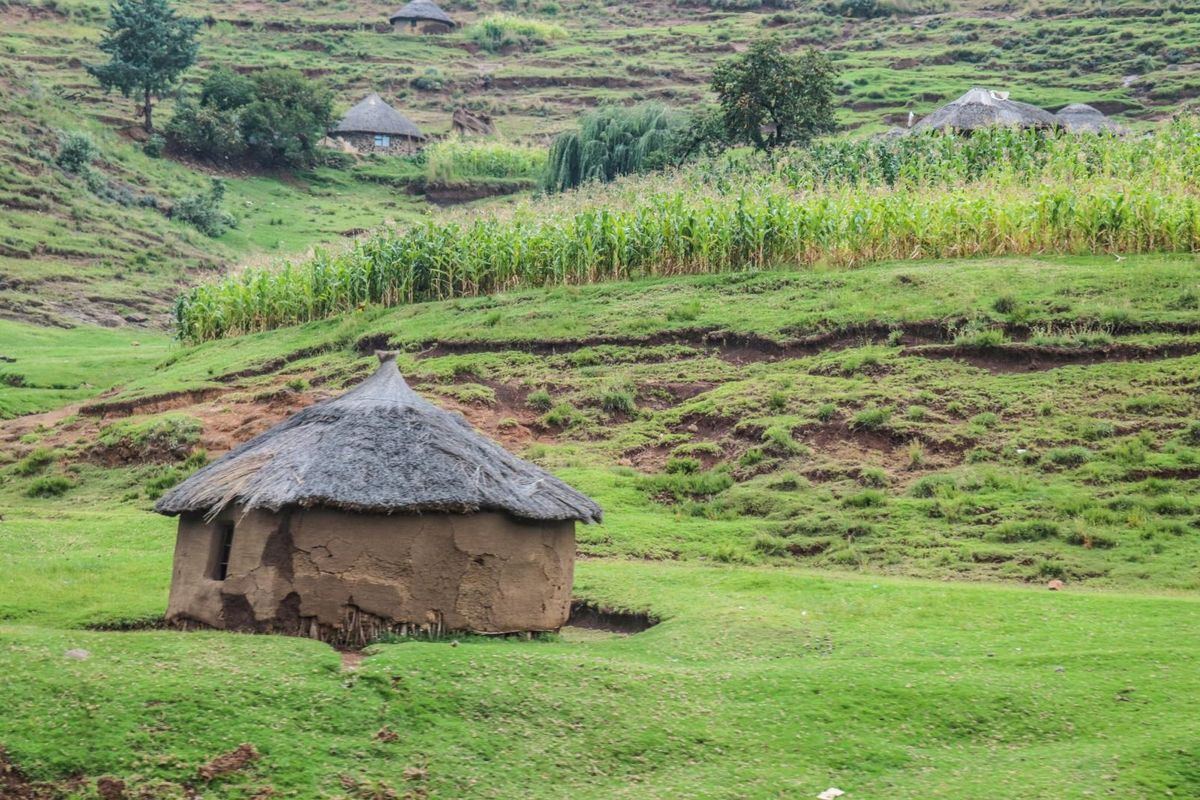
Lesotho immediately felt different. Round, thatched huts dotted the hills. Goats and cattle wandered confidently onto the road and we must have entered the first village just as the schools closed for the day, as hundreds of young learners cheered and waved us through into the countryside.
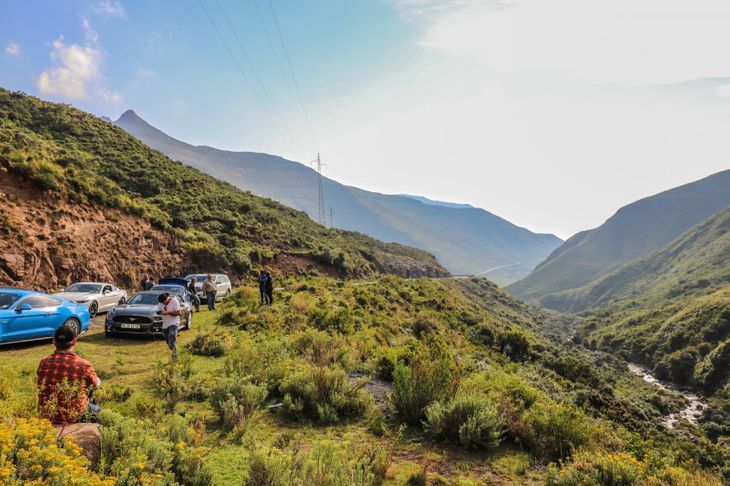
Another stunning setting, a worthy place to stop and soak in all the beauty Lesotho has to offer.
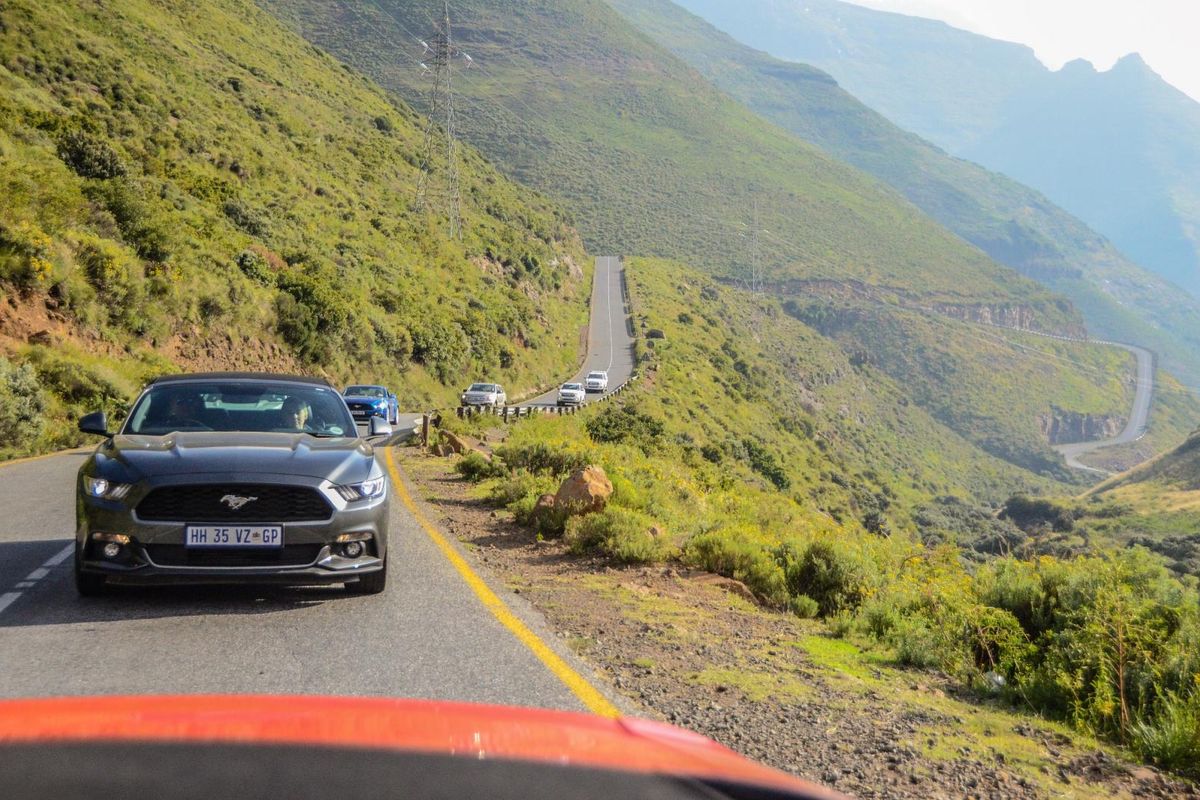
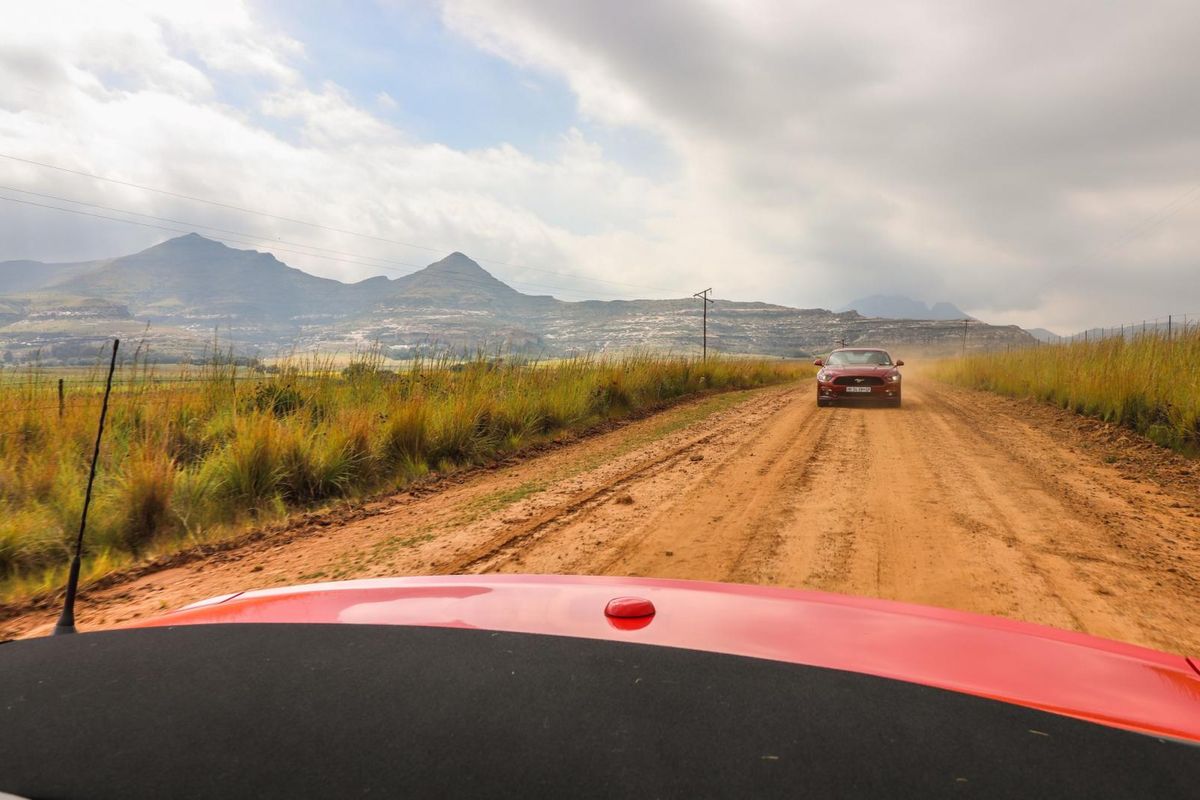
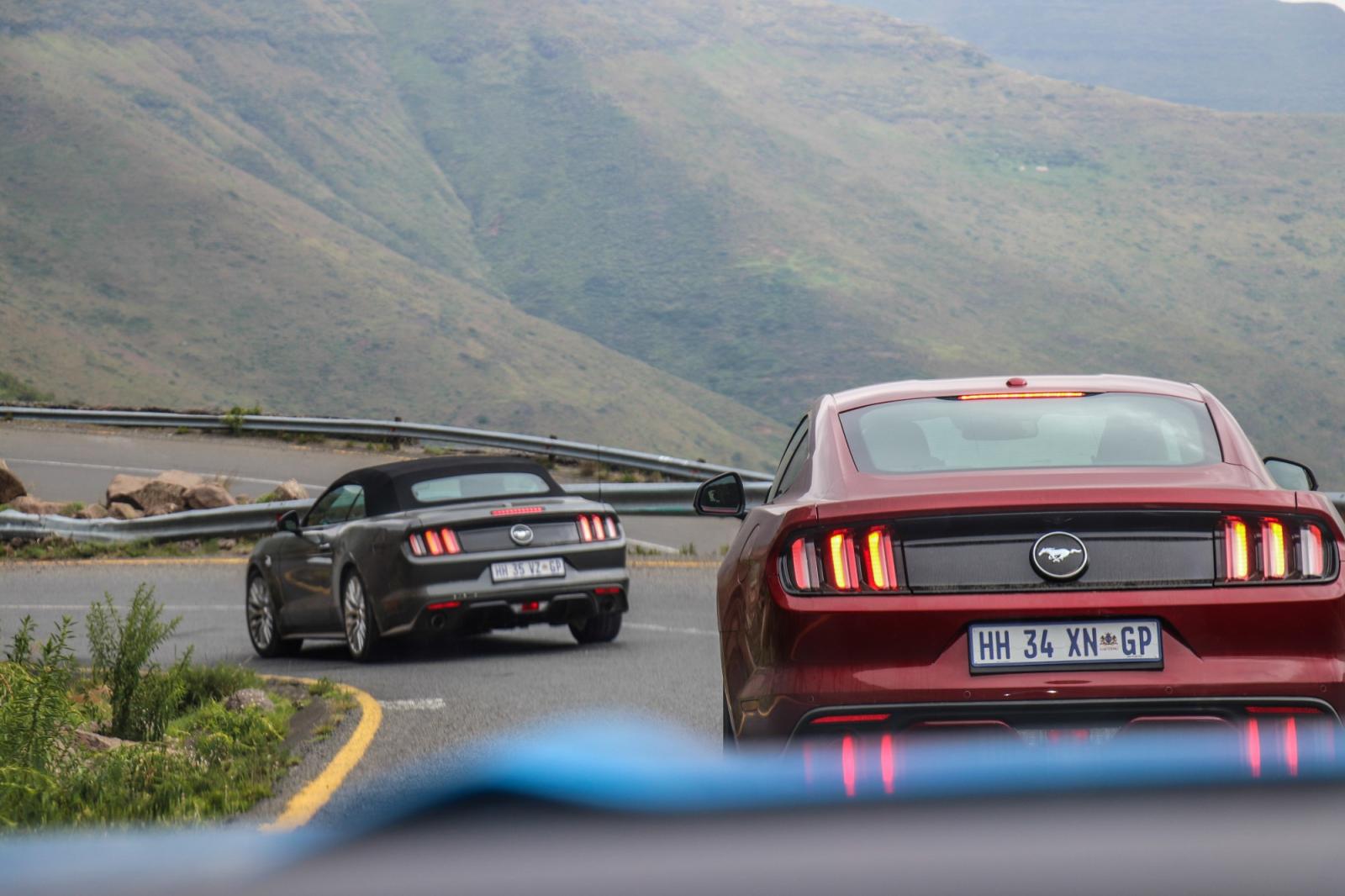
At this point, my driving partner and I found ourselves in a bright red convertible Mustang, with the same smaller engine as our previous set of wheels. I am really not a fan of travelling long distances with a convertible, so with the roof in place, we meandered through the increasingly steep Lesotho landscape. The gradients escalated quickly and in no time at all we stopped for a photo opportunity, gingerly parking the Mustangs on a tiny layby, the sound of a river drifting up from below.
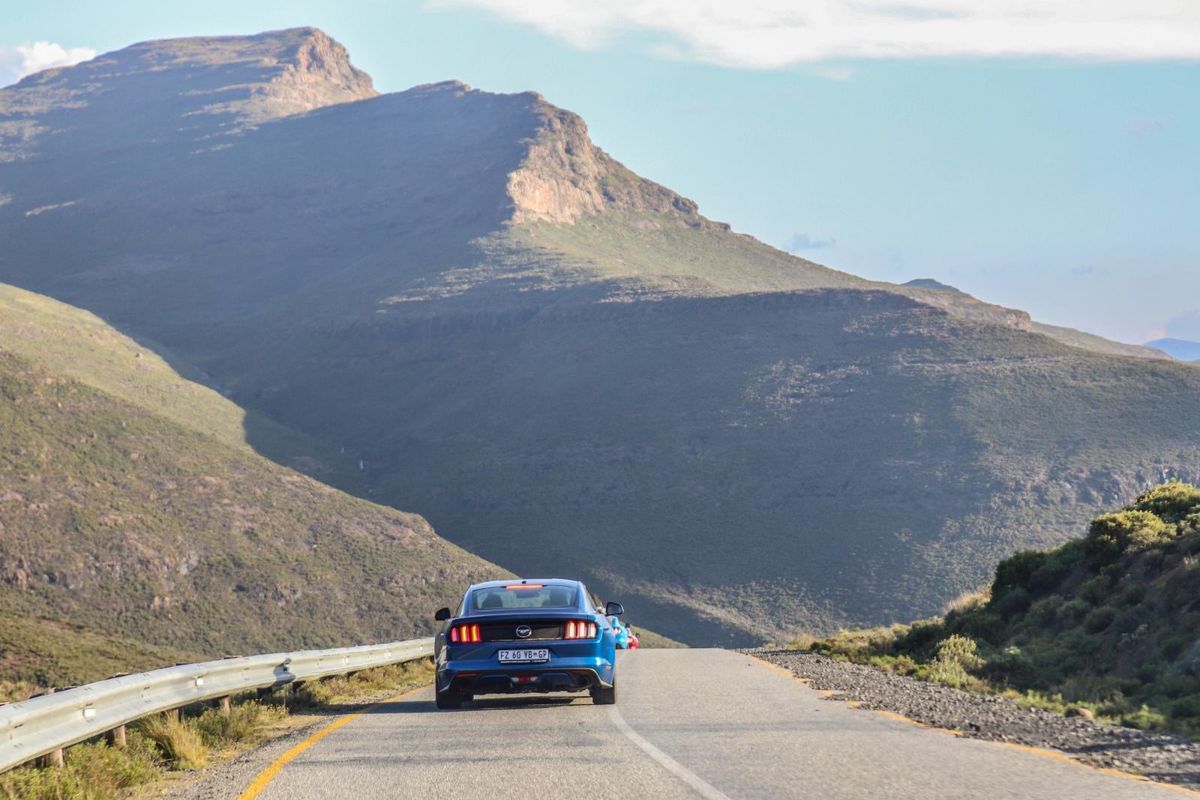
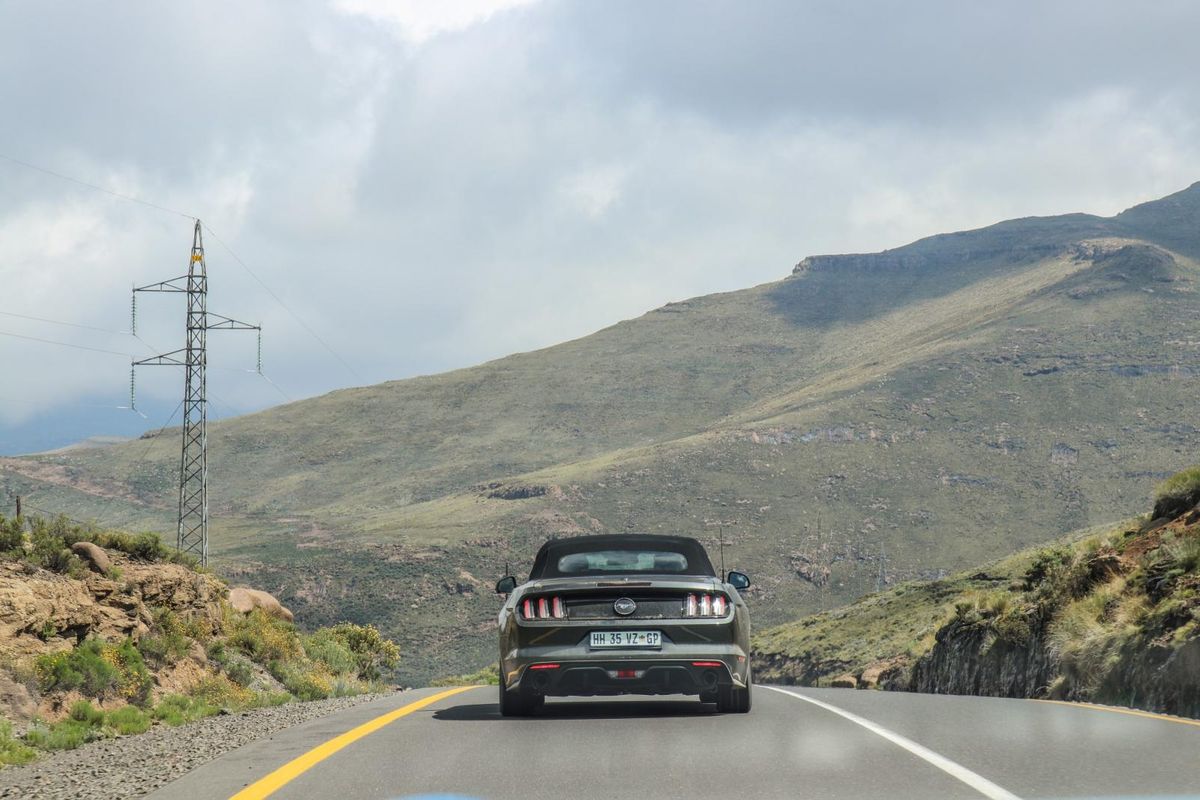
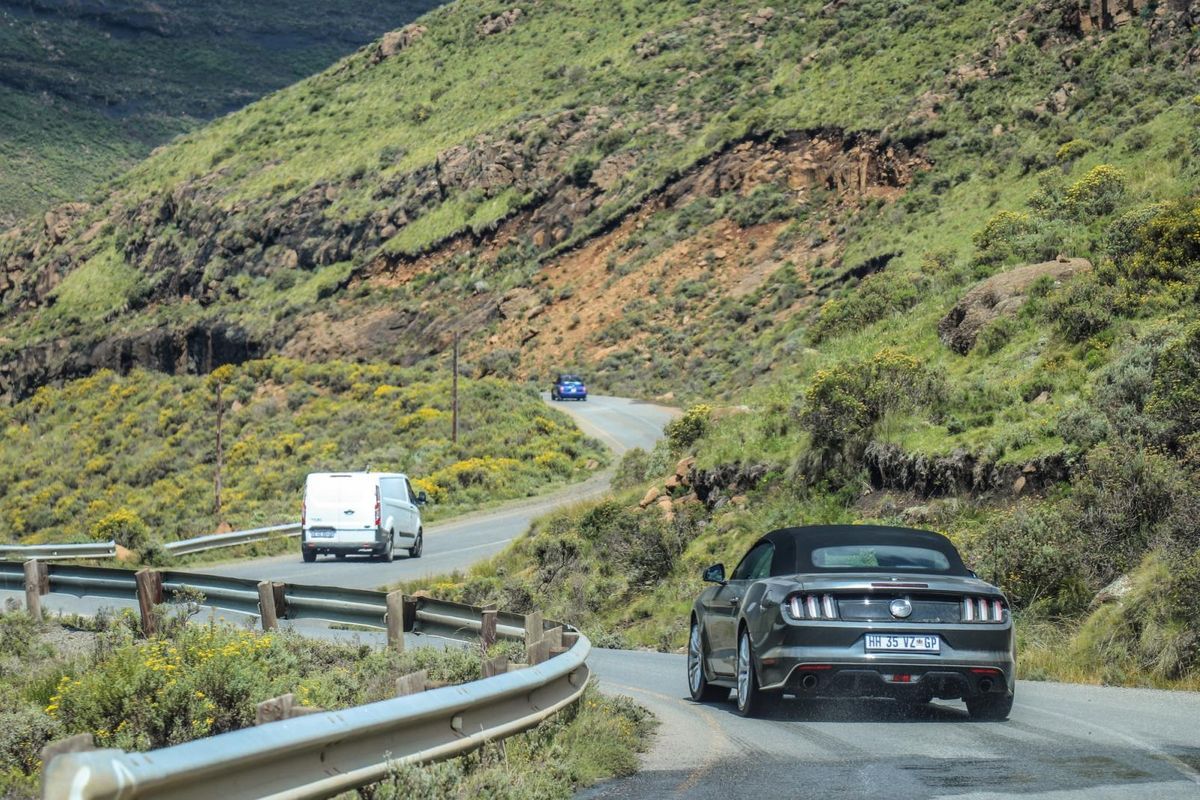
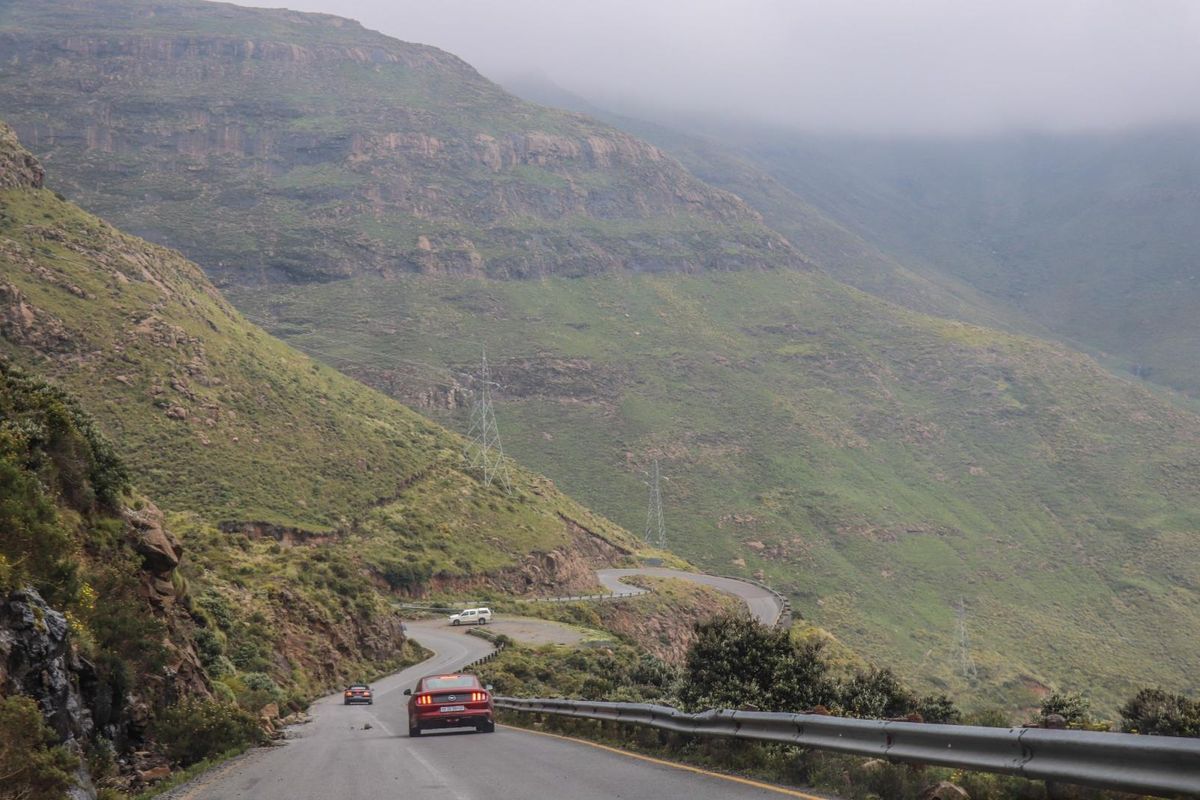
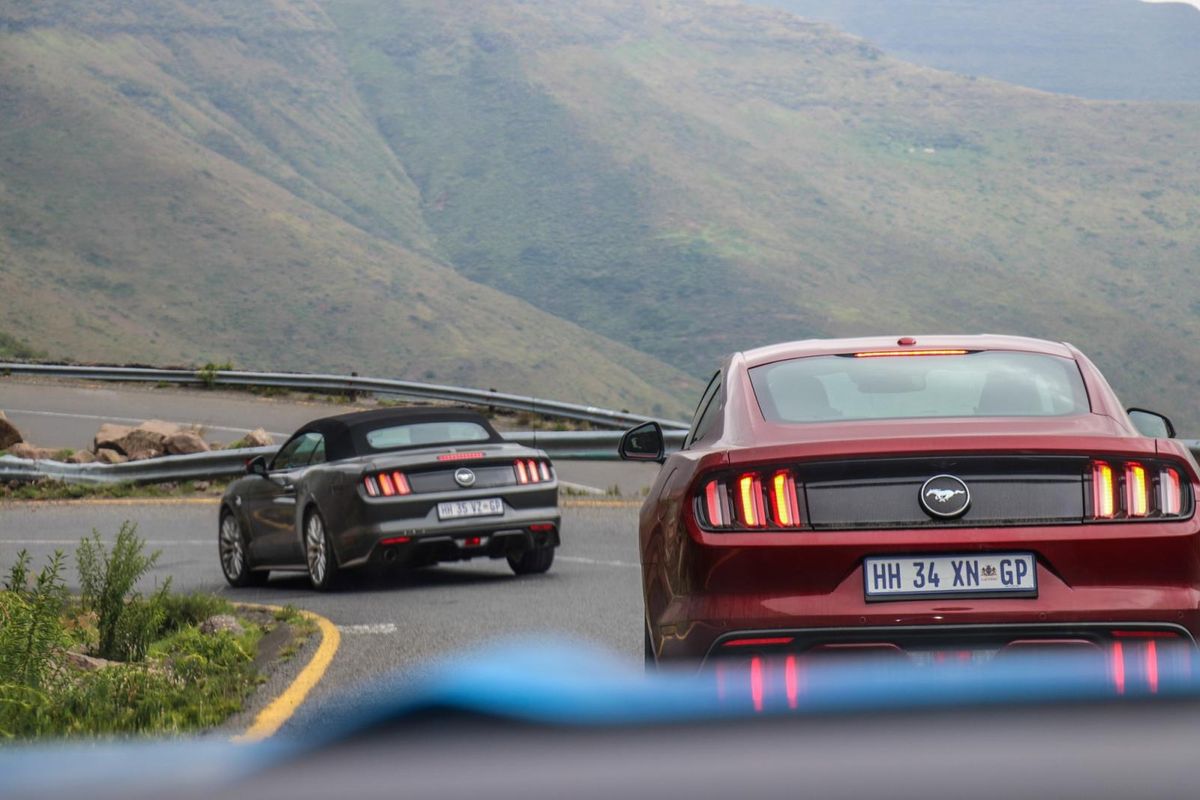
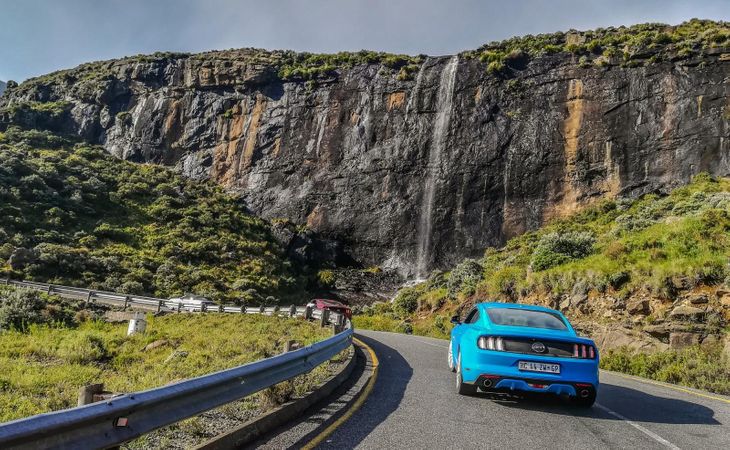
It was at this point that I suggested we drop the roof and that turned out to be a particularly good idea. The mountain pass became a series of tight switchbacks, with some stretches of road roughly chiselled into the rocky mountain. The road was flanked by waterfalls and deep, rocky streams, and occasionally a hairpin bend would feature a pothole the size of a jacuzzi.
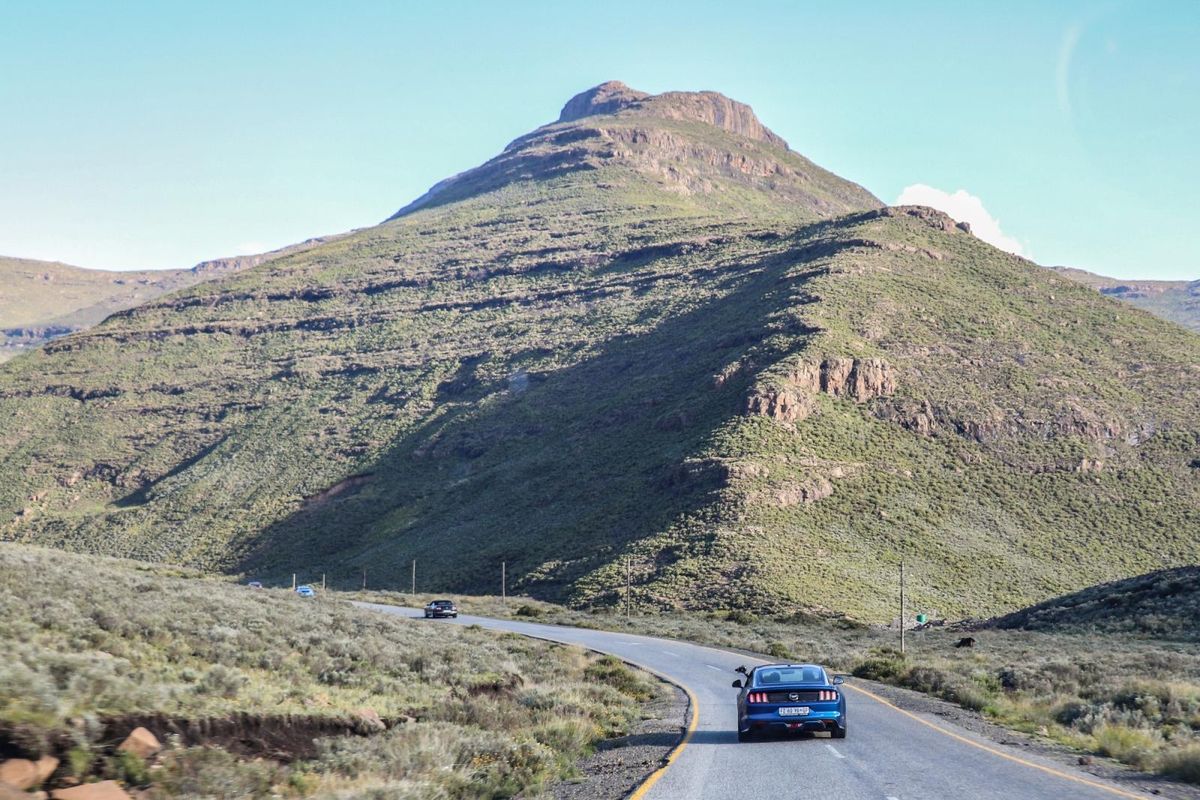
Mountains, waterfalls and sinewy tar provided for an entertaining drive but potholes were an ever-present danger.
The convertible was now really coming into its own. With the sun setting behind us, not a breath of wind in the air, and perfectly clear conditions in a country famous for its low cloud cover, we climbed high into the mountains. Pierre had long since started kneeling on the passenger seat, snapping gorgeous pics of the convoy navigating the pass, while I was simply enthralled by the experience, the slow rate of progress allowing me to stare out of the top of the car at the peaks which were once a faded foreground in the distance.
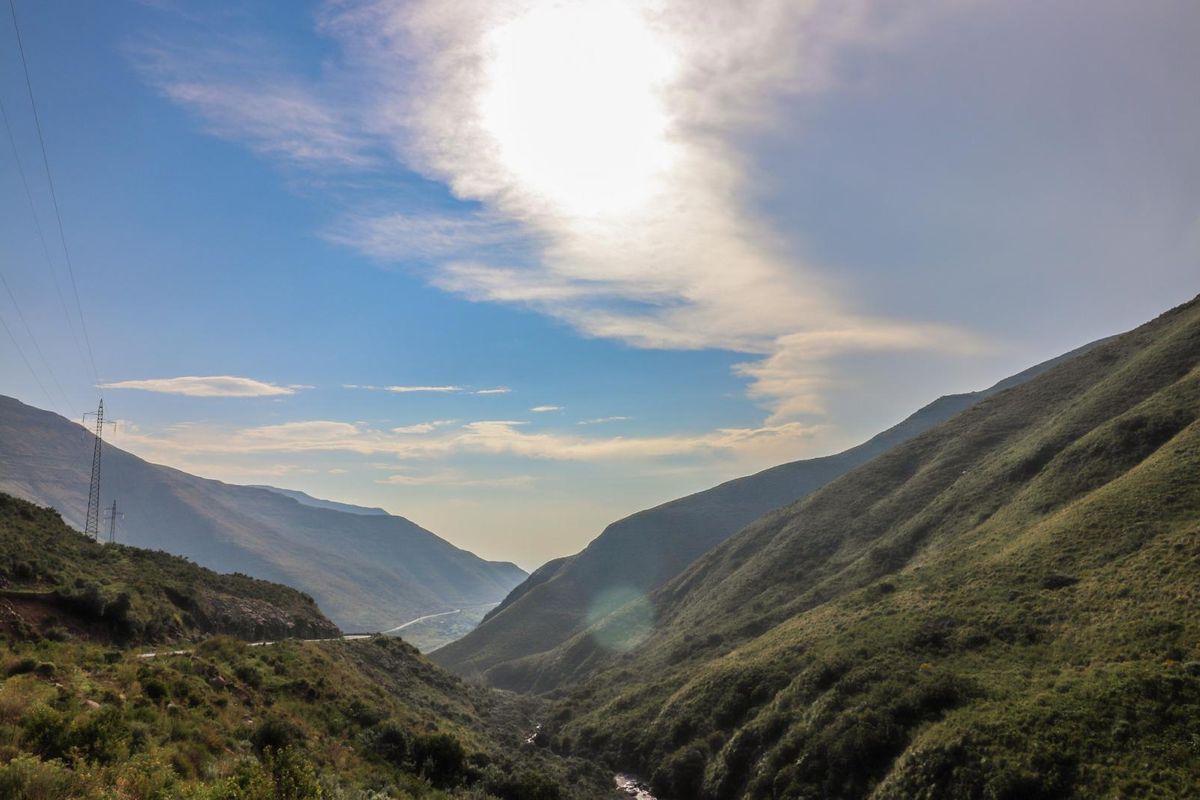
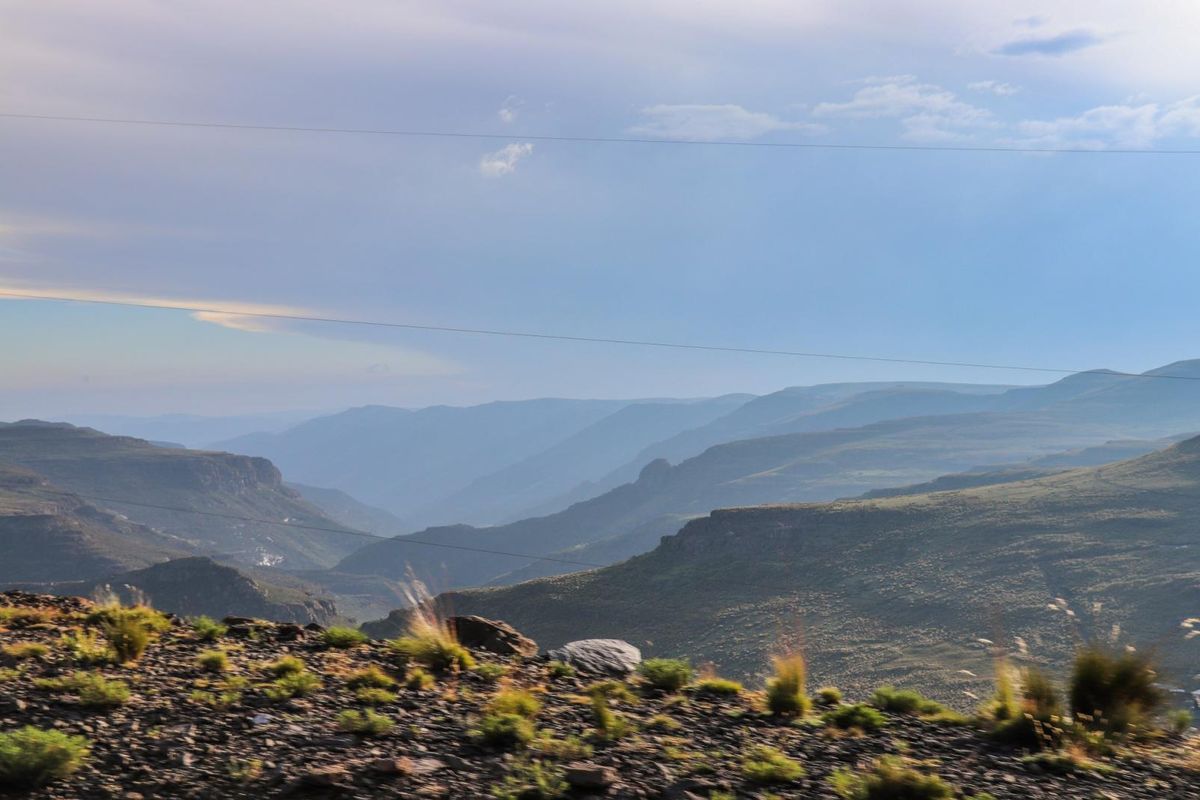
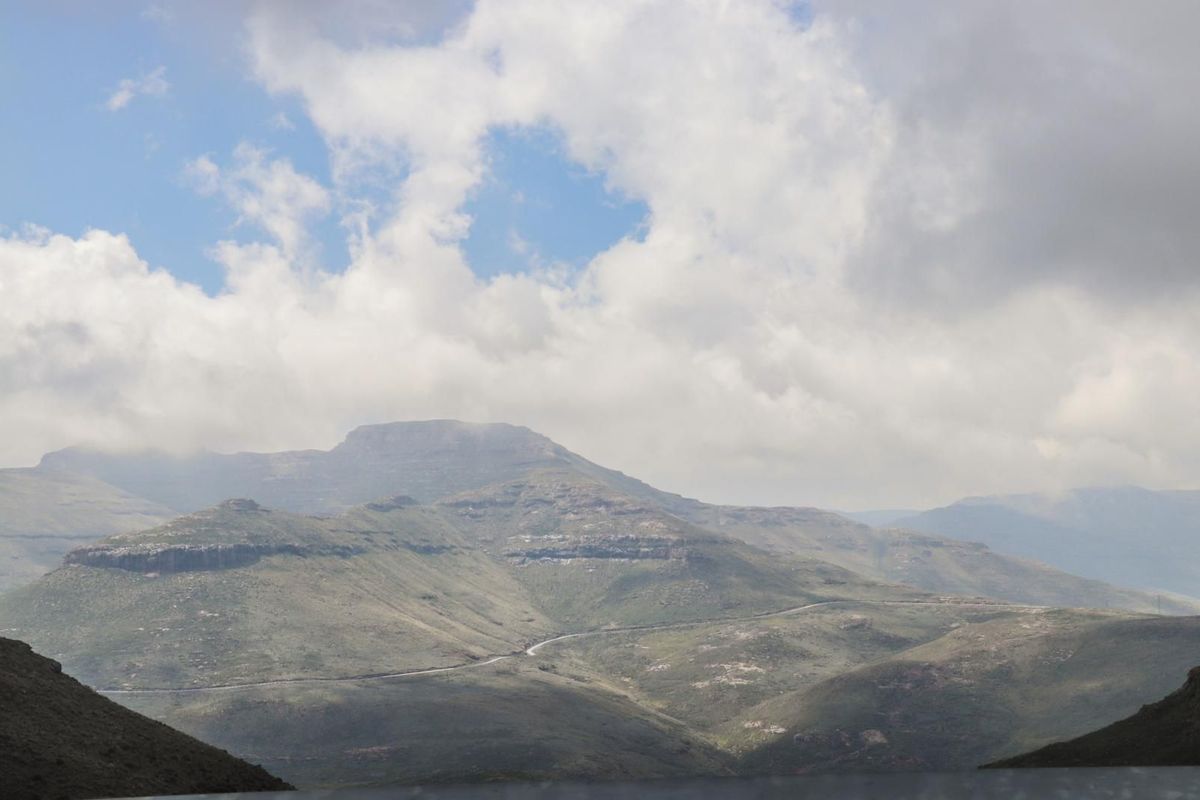
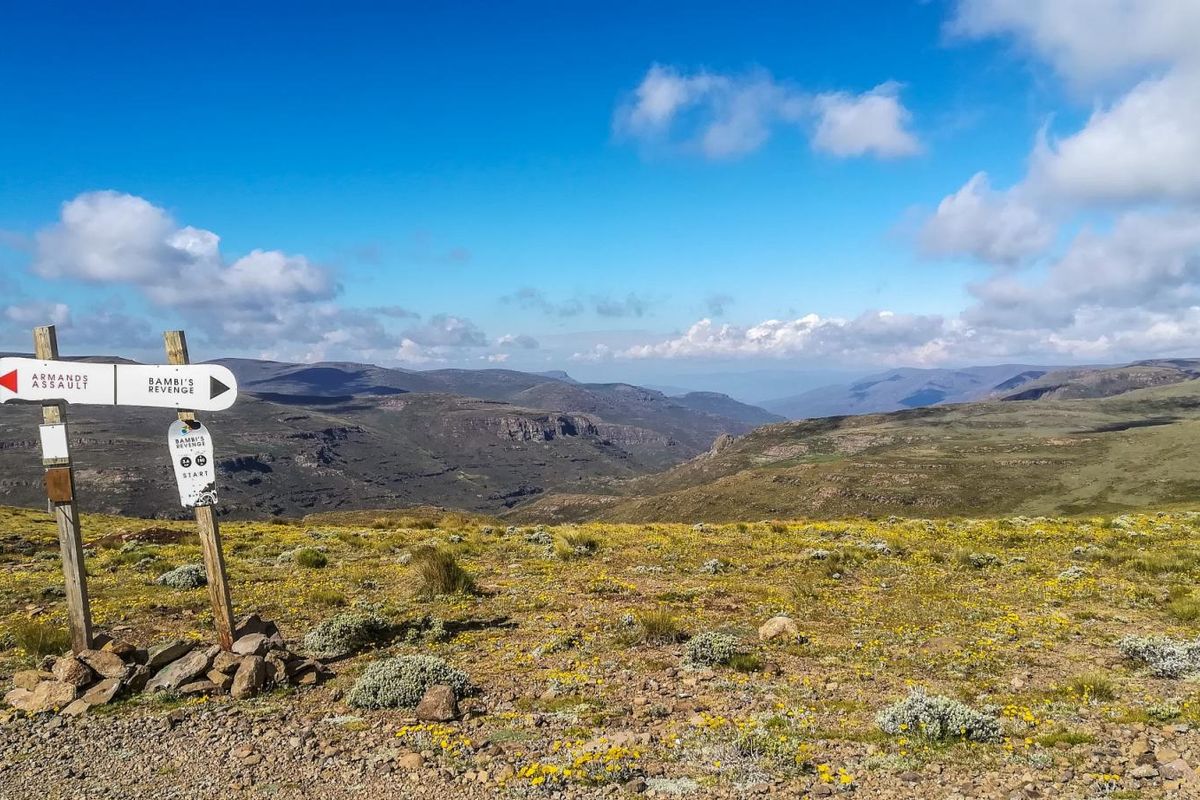
Climbing that pass in a convertible immediately took the top spot in my (thankfully substantial) list of best motoring experiences of my life. The excitement among the group was palpable as we stopped at a viewpoint at the top of the pass and shared our experience. And then the other side of the viewpoint caught our attention. An impossibly vast valley stretched out in front of us, with the road carved delicately into the slopes. Across the valley, a truck crossed the landscape, rendered miniature by the towering mountains above and below. Having not visited too many mountain ranges, the scale of this landscape, for me, was previously unimaginable.
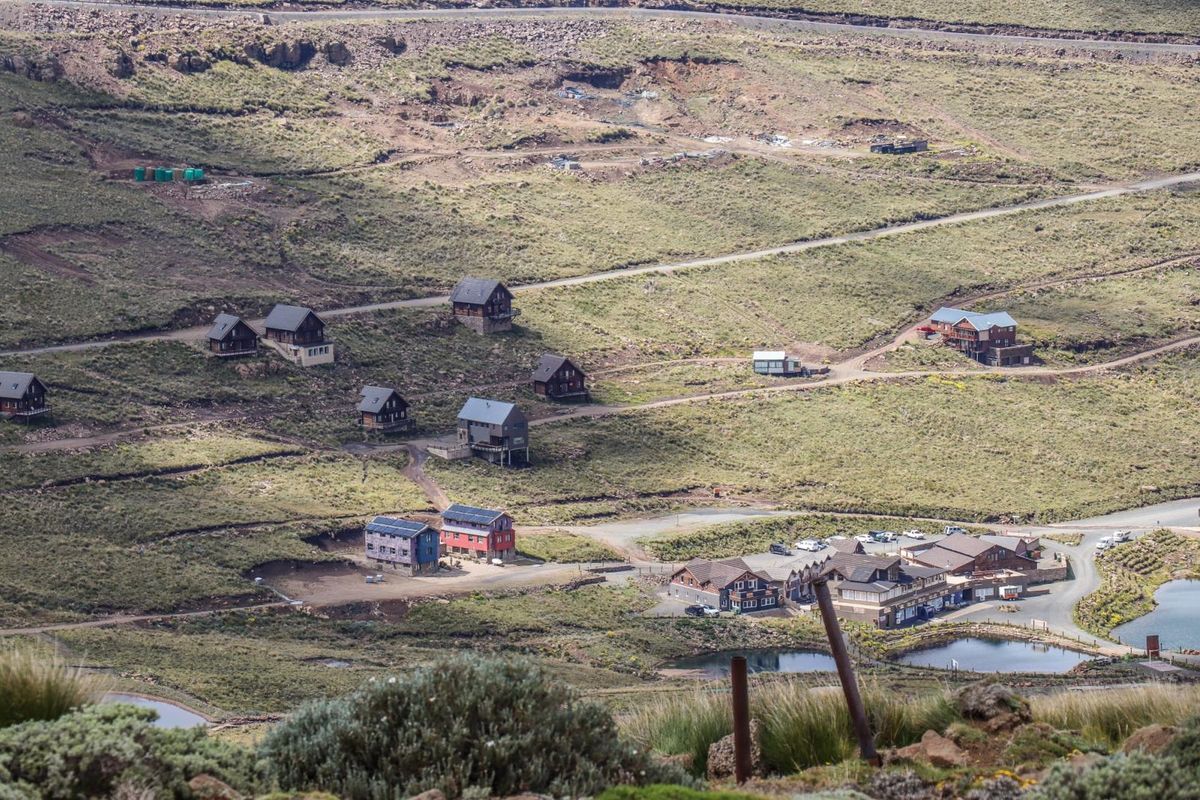
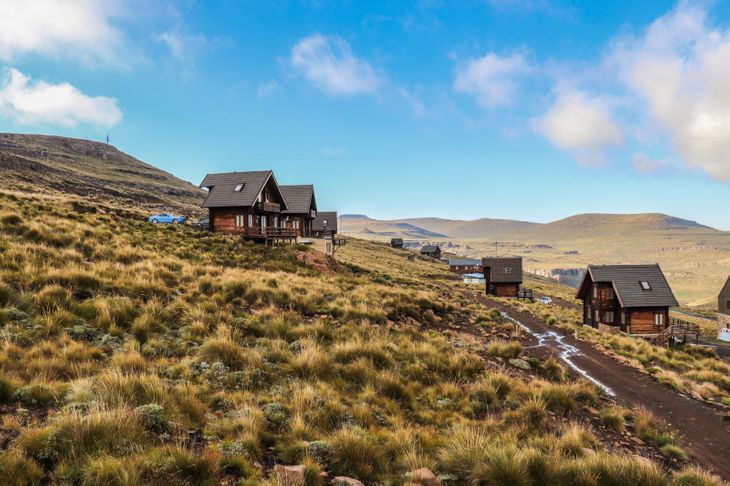
Afriski Mountain Resort in Lesotho, a place to relax and enjoy.
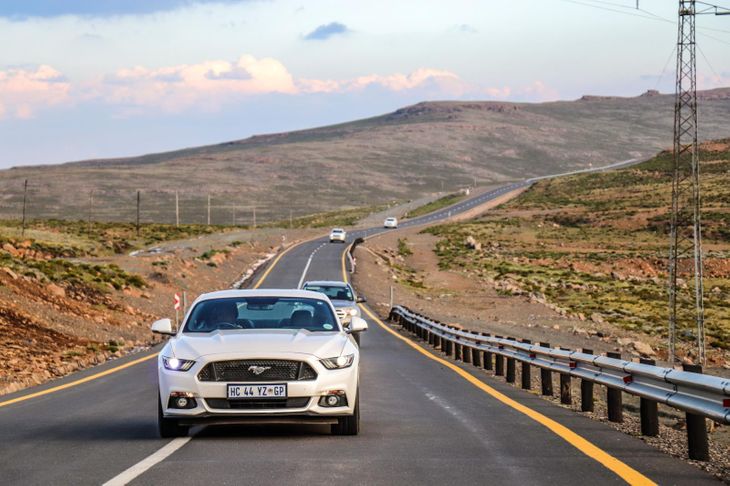
We made our way to the Afriski Mountain Resort along the road we had traced with our fingers from the viewpoint, but this stretch opened up into much faster sweeps with a significantly gentler gradient. This was a perfectly surfaced black ribbon of tarmac, the beneficiary of massive Chinese investment. This was pure driving nirvana! With barely any traffic on the roads, we powered along, conscious of the fact that we were driving at nearly 3 000 m above sea level.
The Mustang is not a particularly sporty car in terms of handling, but now with independent rear-suspension (finally), it offers more than enough for all but the most hardcore drivers to enjoy themselves on a road like this.
Whatever its prowess, these cars had ensured that, quite casually, we had just traversed the highest tarred road in Africa. The Mahasela Pass’s highest point is at 3 222 m above sea level, a staggering 2 200 meters above the top of Table Mountain. At this altitude, I began to notice that my sinuses were increasingly unhappy about the situation. The air was thin and the temperature had dropped substantially.
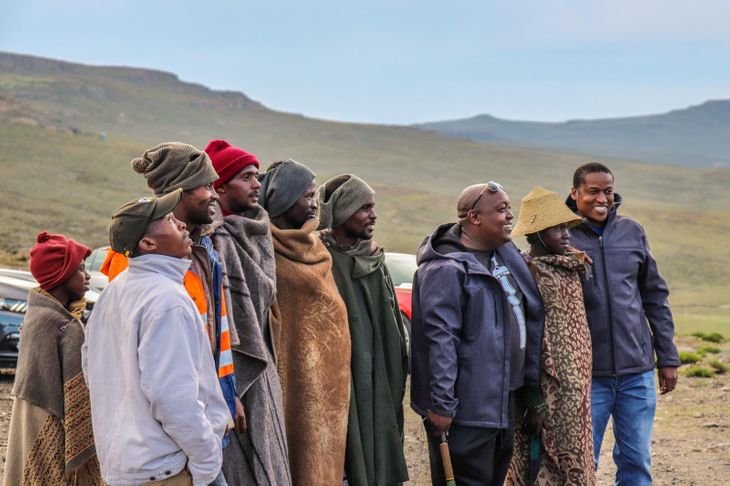
The allure of the Mustangs attracted local Basotho men from the mountains to get a closer look.
We pulled over and arranged the cars for a rather special photo opportunity, when all of a sudden, around 20 young Basotho men, camouflaged against the landscape in their widely-renowned blankets, came barreling down the hill towards what must have been an absurd sight: 7 American muscle cars, brightly coloured in some instances, perched high atop the Kingdom in the Sky. Hugely enthusiastic about posing for photos, we shared wonderful moments as we all posed around the cars.
We overnighted at Afriski, sharing the lodge with a contingent of particularly unfriendly Germans who were conducting high-altitude testing of yet-to-be-disclosed Mercedes Benz SUVs. Their test cars were covered in that highly technical camouflage which car makers are so famous for, and finding myself giddy at the prospect of being a spy-photographer for the day, I snapped away at the prototypes while their drivers not-so-subtly death-stared me. It was genuinely thrilling.
'Monster rolling' is a fun but potentially hazardous activity to do at Afriski, but it's definately worth it.
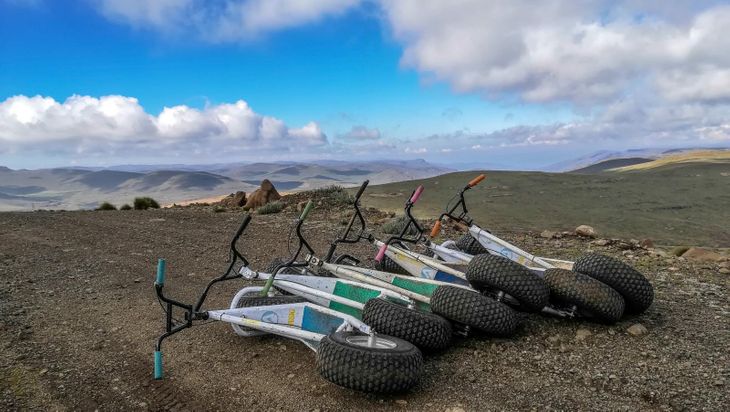
The rest of the story is probably of little interest to you, I’m sure, but it was essentially a sequence of red wine, dinners, a wonderful night’s rest, breakfast, driving…rinse, lather repeat. Although a highlight was “monster rolling” down the slopes at Afriski, which is a thoroughly enjoyable form of coming very close to severely injuring yourself. You’ll have to Google it.
Thoughts on the Mustang
The Mustang is a 'one of one' car with no direct rivals to speak of, making it unique in the SA market.
It was a hugely enjoyable trip, and I as sit here on the plane, bashing out my story before I land back in Cape Town, I have to report on the vehicle which made this all possible, mostly because that’s what I actually get paid for.
The Mustang is a curiosity in our market. It is sometimes compared to the usual German suspects, cars such as the BMW 440i and Mercedes C-Class Coupe. The reality is it is an entirely different proposition to those uber coupes from Europe’s powerhouse economy.
For me, the Mustang is one of one, a car with no segment to speak of, which is not necessarily a positive or negative circumstance. When Mustang launched, I was expecting GM to watch very closely as rumours of a right-hand drive Camaro made the likelihood of that car being introduced into South Africa slightly more realistic. The Camaro and the Dodge Challenger are the Mustang’s natural rivals, but without those on our showroom floors, it occupies a unique space in our market.
Perhaps the Mustang's most endearing quality is the way it effortlessly devours tar, it simply excels at cruising.
Ford is at pains to point out that the Mustang is not marketed as a luxury coupe, nor is it marketed as sportscar. In truth, it does a decent job of being both, but not an excellent job of being either. But what it really excels at, is cruising. The large, naturally aspirated V8 is, in some ways, a bit of a dinosaur, but it’s a lovable dinosaur. Lazy, with lots of low down torque, at 120 kph the engine is ticking over at barely 2 000 rpm, requiring the gentlest effort from your right foot to keep the show on the road. In fact, it cruises so effortlessly, neither myself nor my driving partner used cruise control once.
With a suspension set up biased towards comfort and large lounge-like front seats, the car seems to float over road imperfections in a way the highly strung, sportier Germans would battle to achieve. Importantly, the Mustang also doesn’t feel as fragile as the average German sports coupe. It handled some properly difficult conditions and each car emerged unscathed.
The Mustang V8 automatic is the one to go for, but it's pricey…
At nearly R900 000, the Mustang you want (V8 auto) is pricey, especially given the interior trim which does leave a little to be desired. My biggest gripe is with the engine start button, which looks and feels cheap. The driver’s interaction with that button is arguably the key emotional connection with the car, and the experience is cheapened by the button itself, which is a pity.
Arguably, the road trip is a dying convention. The advent of budget airlines, the ever-rising price of fuel and the very real dangers of travelling on South African roads has relegated this once-staple part of South African life to, perhaps, an after-thought for many motorists.
The reality is that we live in a phenomenal country, with varying, beautiful and dramatic landscapes that are best explored from the seat of a car. And it turns out that a modern Ford Mustang is a particularly enjoyable car to take you wherever your heart desires. Even if that place is the highest tarred road in Africa…
Drag Race: BMW M4 Competition Pack vs Mercedes-AMG C63S
It's drag race time! In this instalment, Germany goes up against Germany, straight-6 against V8 muscle, and big power against low weight. It's the M4 Competition Pack vs the Mercedes-AMG C63S.
In the world, but specifically in this video, two German car makers battle to be the best German car maker to race in a straight line in the Western Cape of South Africa. Representing Bavaria, the BMW M4, which in this case is orange and features Competition Pack upgrades, brings a powerful straight-6 motor to the fight.
It’s rival, the Mercedes AMG C63 S Coupe, is the V8-powered sledgehammer to BMW’s more nimble, lighter M4.
With a huge power and torque advantage, the Mercedes, on paper at least, looks like it should have this one wrapped up. But in our experience, powerful Mercs struggle for grip off the line.
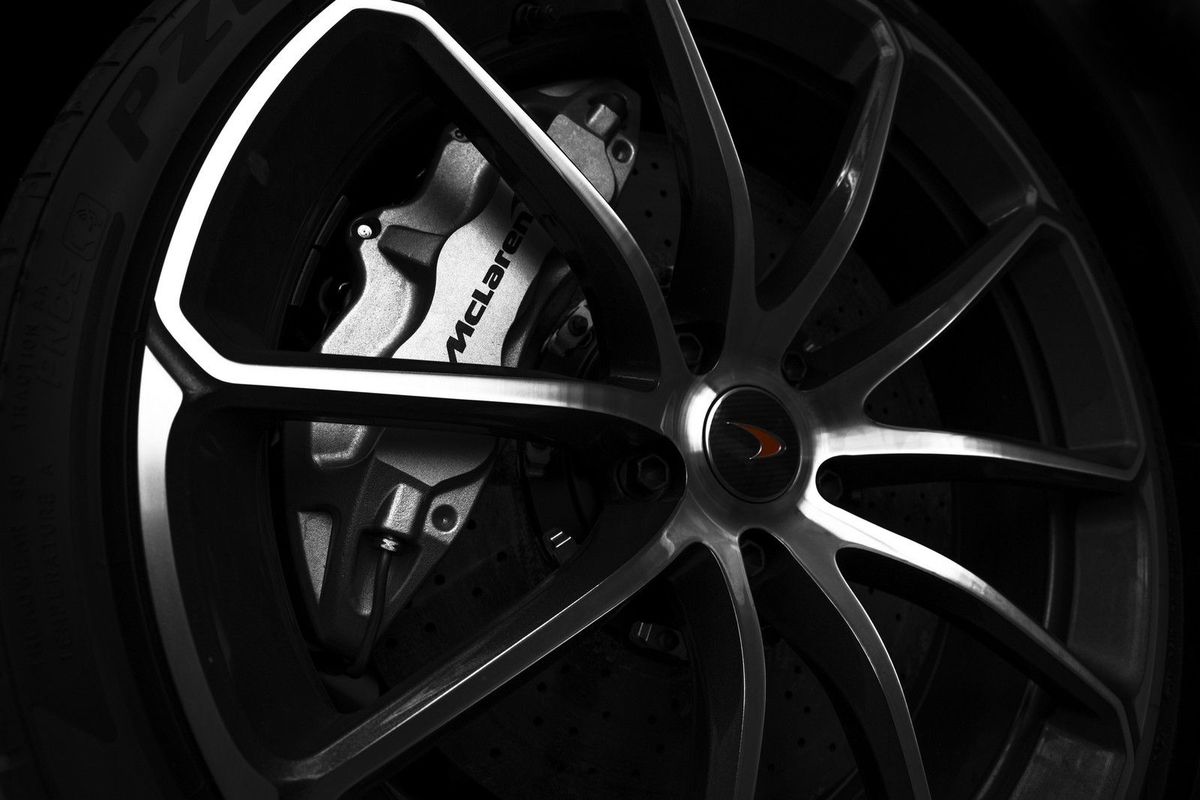
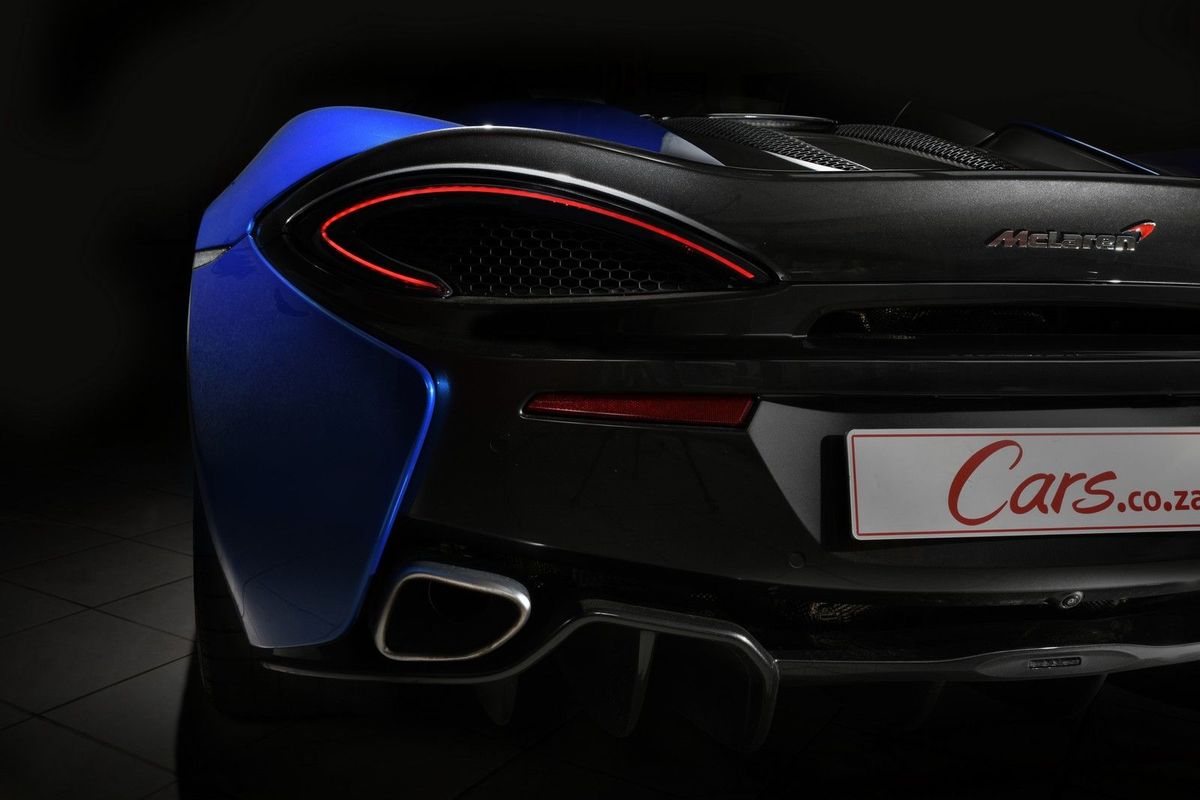
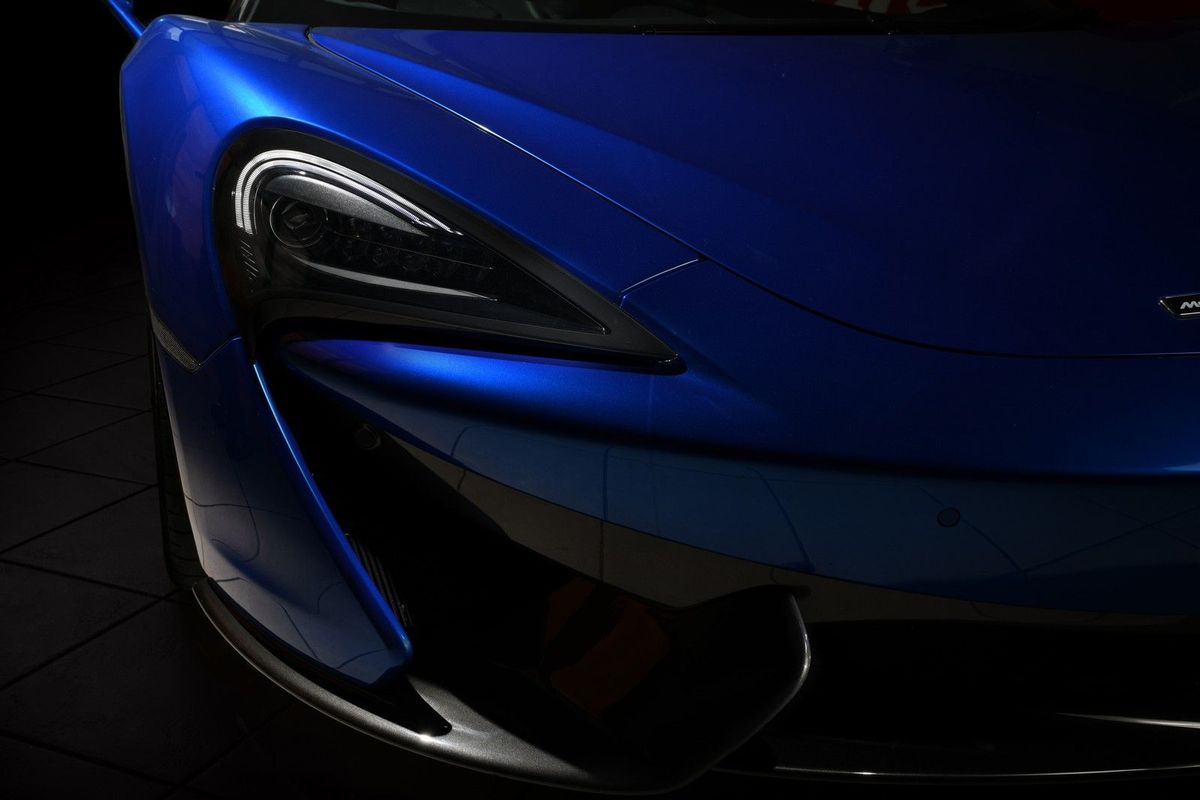
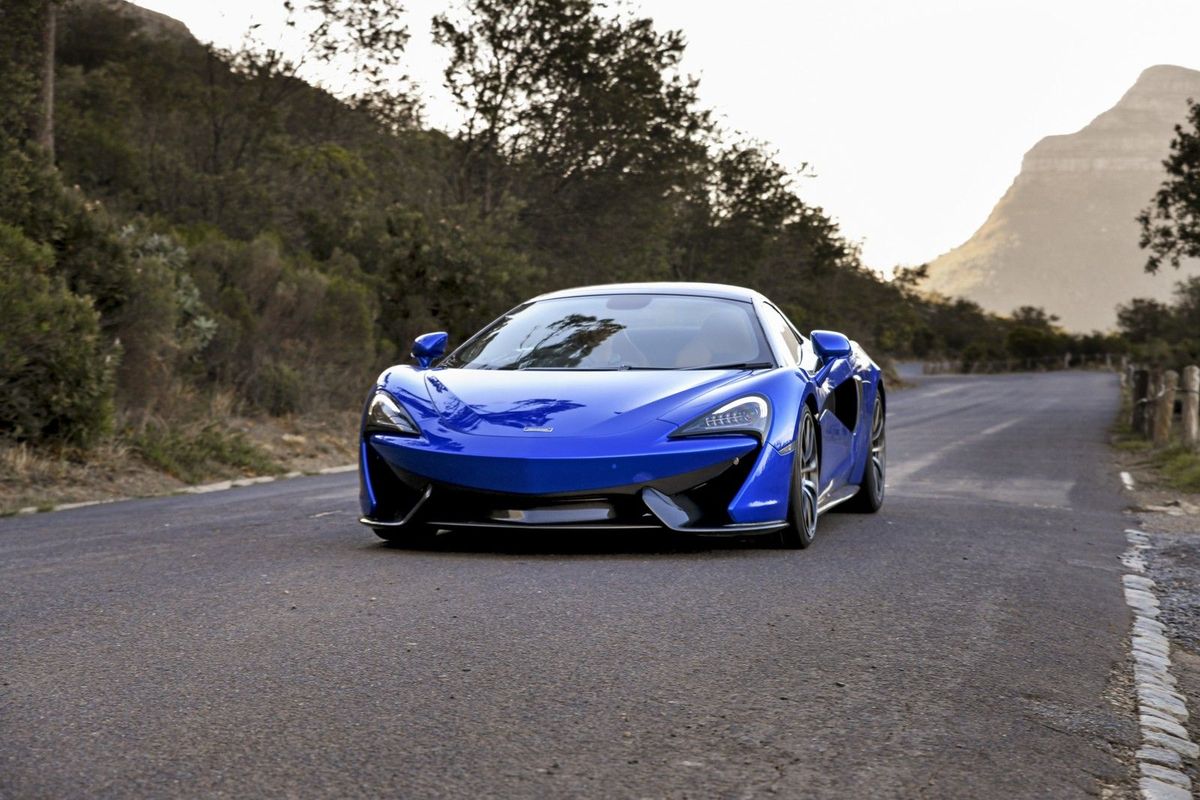
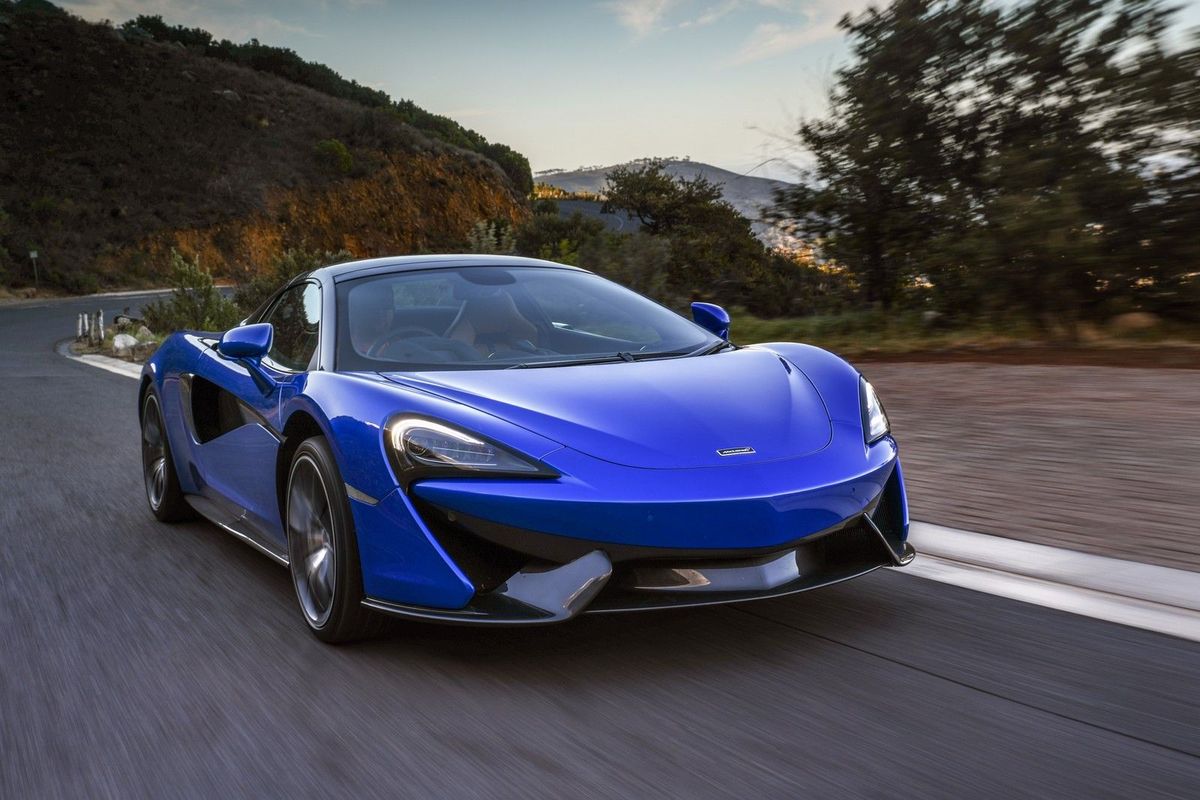
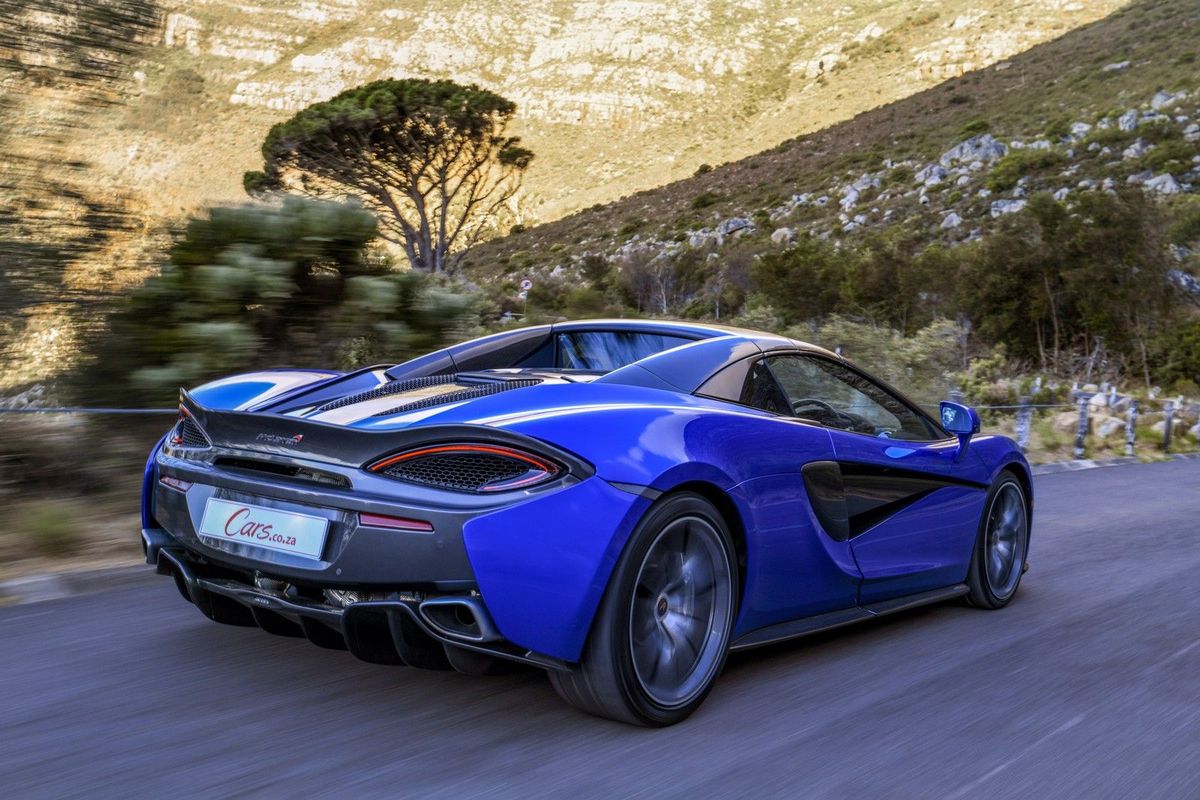
The 570S represents the (current) entry point for those seeking supercar thrills from the renowned Woking-based marque that made its name in the world of Formula One. What happens when you’re able to take the roof down, does the experience get even better?
We like: Unburstable power delivery, ease of use, styling, sound with the roof down.
We don’t like: Choppy ride when traversing bumpy roads at speed.
Alternatives
The archrival: The Ferrari 488 Spider is an obvious candidate to challenge the 570S Spider. The Maranello-made roadster has the edge in the performance stakes, but that’s not going to change that many minds at this end of the market.
The rear-driven Lambo: The Huracan LP580-2Spyder offers howling naturally aspirated thrills from its 5.2-litre V10 engine. If it’s ultimate aural stimulation (at the cost of some driver involvement) you're after, the Huracan is a winner.
If you only have R3.5 million to spend: The Porsche 911 Turbo S Cabriolet equals the competition in the power stakes but doesn’t have the same dramatic, make-a-statement styling.
"Bargain" Audi ragtop: Well, with an asking price of just over R2.9 million, the R8 5.2 V10 Spyder quattro offers genuine mid-engined wind-in-the-hair excitement, even if some will bemoan that it offers only 397 kW and 540 Nm (as opposed to 449 kW/560 Nm of the Plus hard-top derivative).
What is it?
McLaren’s road car company has been producing sport, super and hypercars at a prolific rate since it began with the somewhat inelegantly-named MP4-12C back in 2011. This 570S Spider represents the roadster version of the "entry-level" model in South Africa and the 570S is said to make up part of McLaren’s Sport range, which the Woking-based marque reckons means the car "is suited for everyday use as opposed to a weekends-only supercar".
The name 570S comes from the power output of its engine, which is tuned to deliver 562 hp or 570 PS. That’s 419 in kilowatt speak.
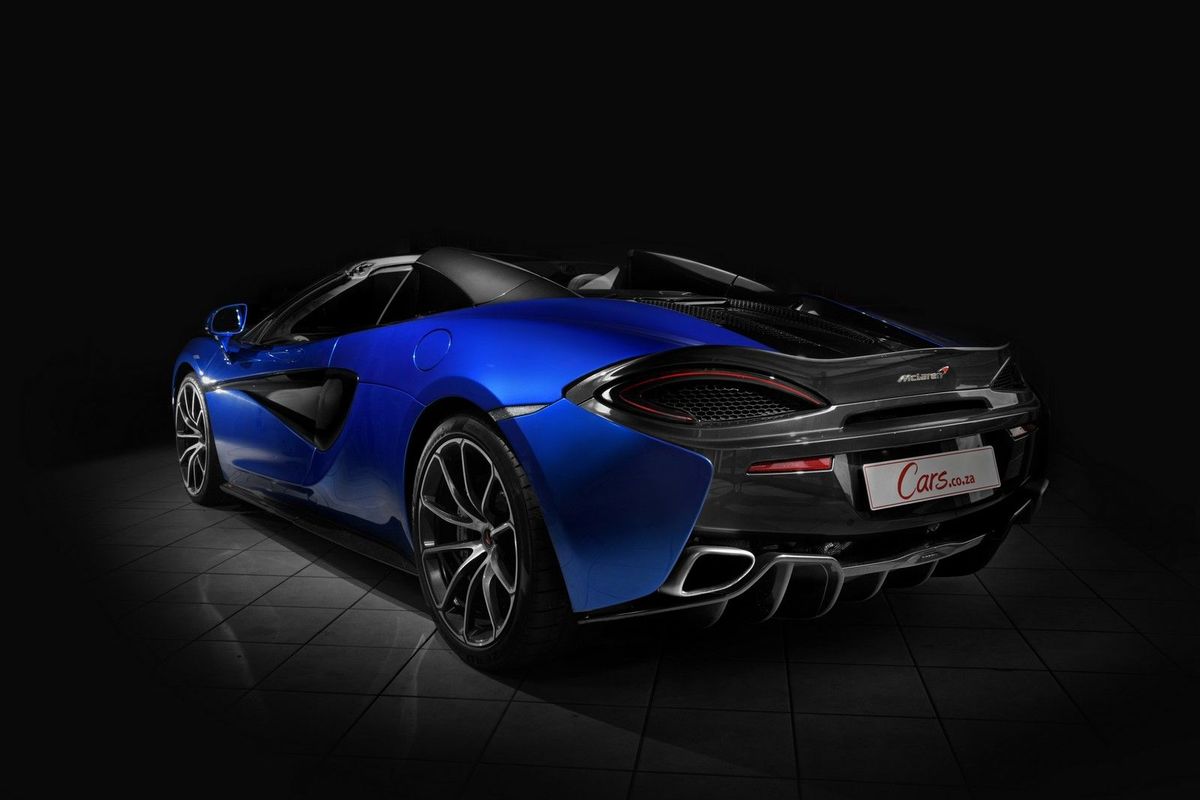
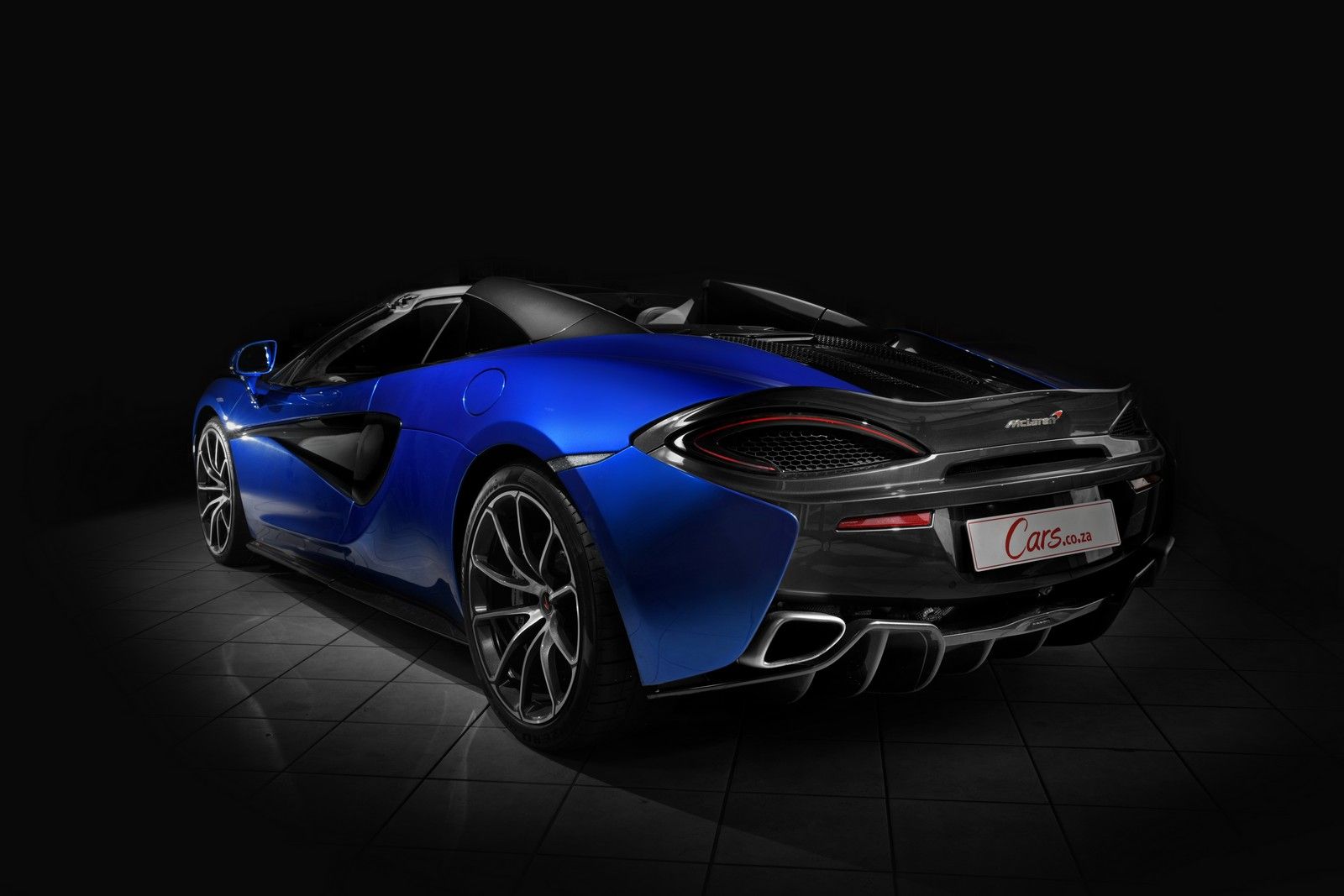
Gone is the active aero rear wing, which has been replaced with a slightly more subtle rear lip.
The Spider version uses a retractable hardtop roof that can be raised and lowered at below 40 kph. What’s interesting is that the assembly adds only 45 kg to the weight of the car and has no effect on rigidity… McLaren’s carbon fibre tub is designed like that of an F1 car, so it doesn’t require a fixed roof to stop the chassis from flexing.
The 570S Spider continues to use the same 3.8-litre V8 twin-turbo unit across all its models (albeit in very different states of tune) and is mid-mounted behind the cockpit.
How does it fare in terms of…
Eye-catching looks?
It's not that McLaren doesn't care how its cars look, but the brand's primary aim is to instil driving appeal and deliver an overload to the senses with its road cars. Still, if you’re spending R5m (approximately how much the Spider costs) then you probably want it to pull a crowd in a parking lot or turn heads as you drive through town…
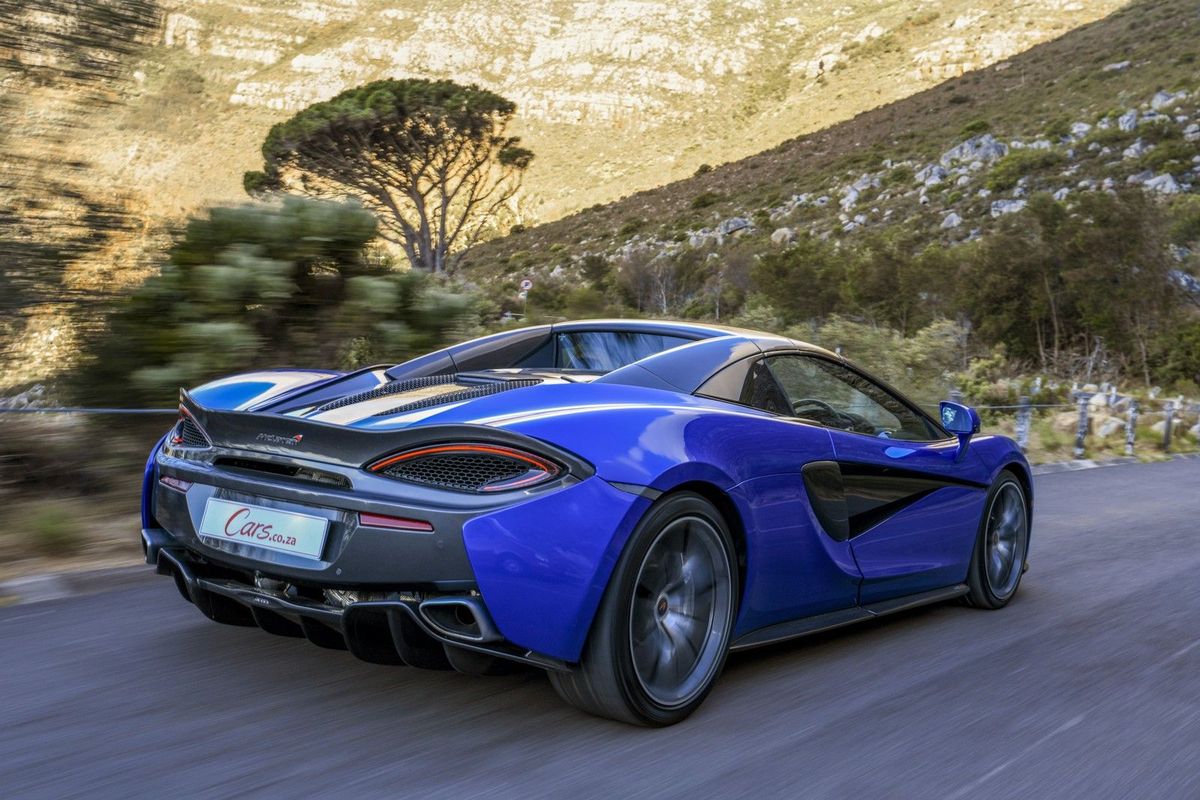
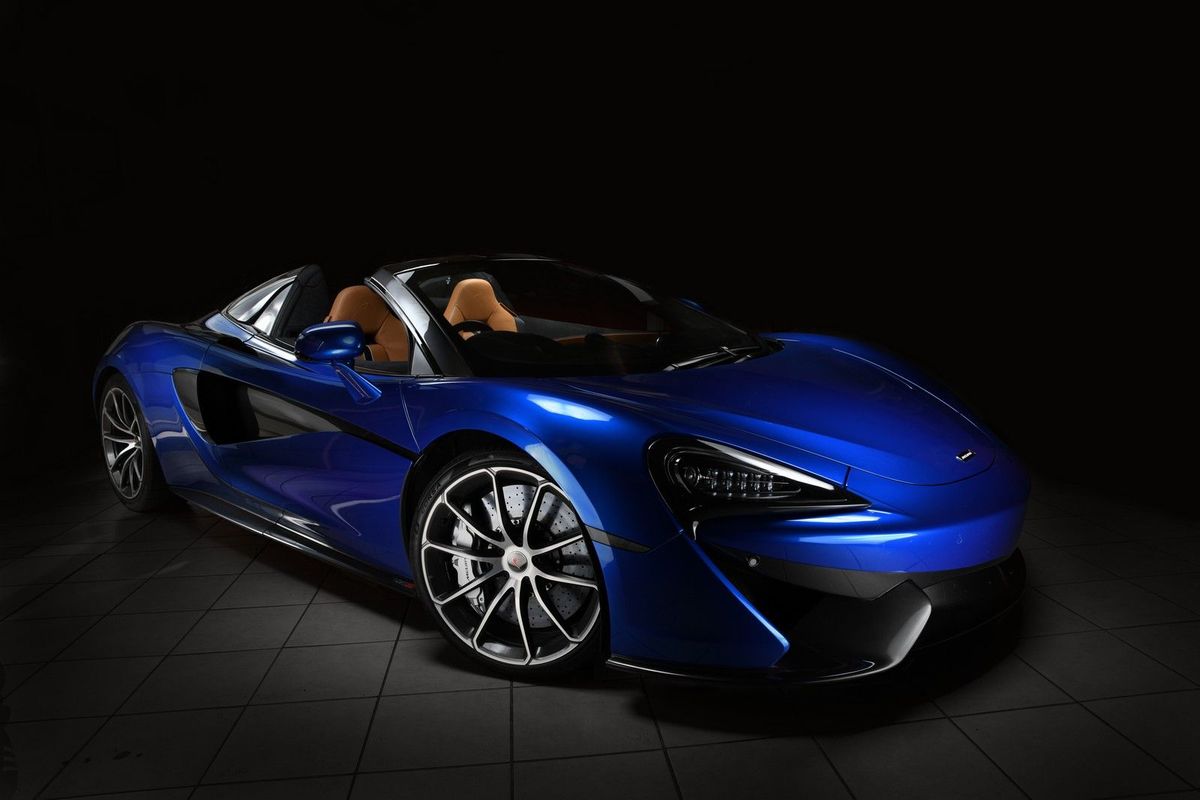
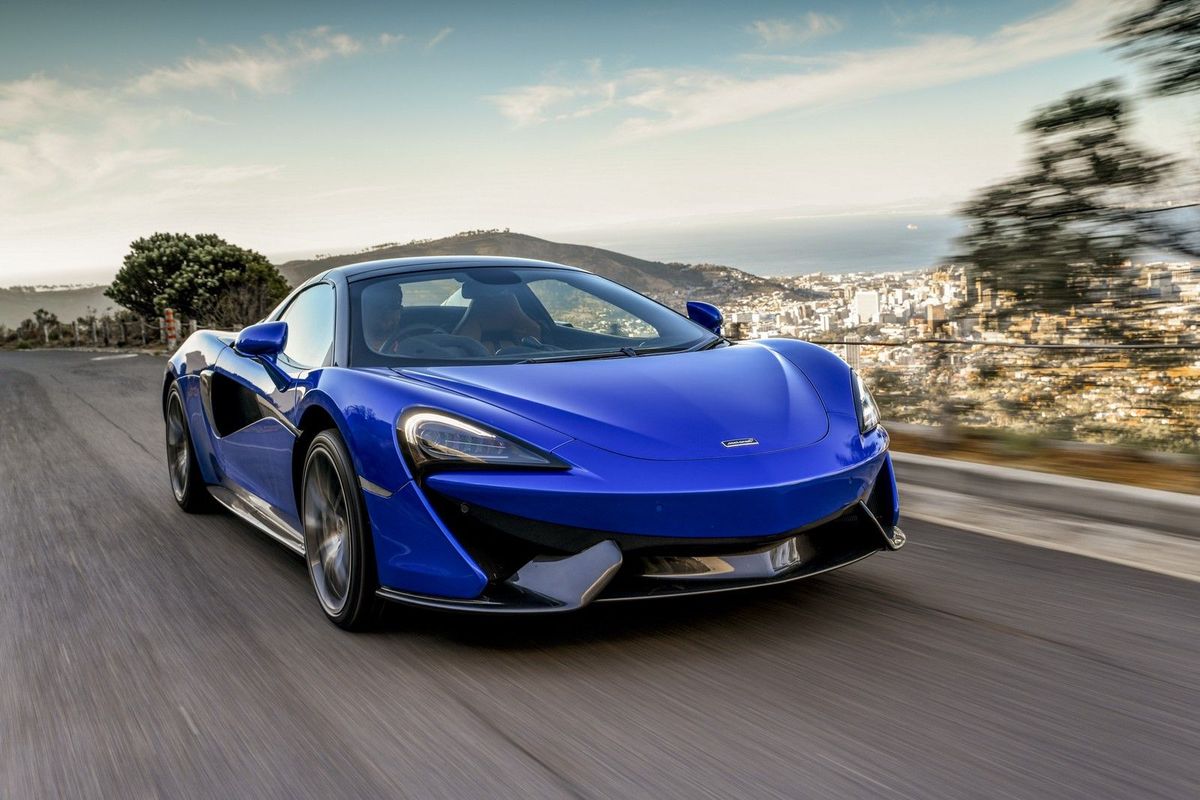
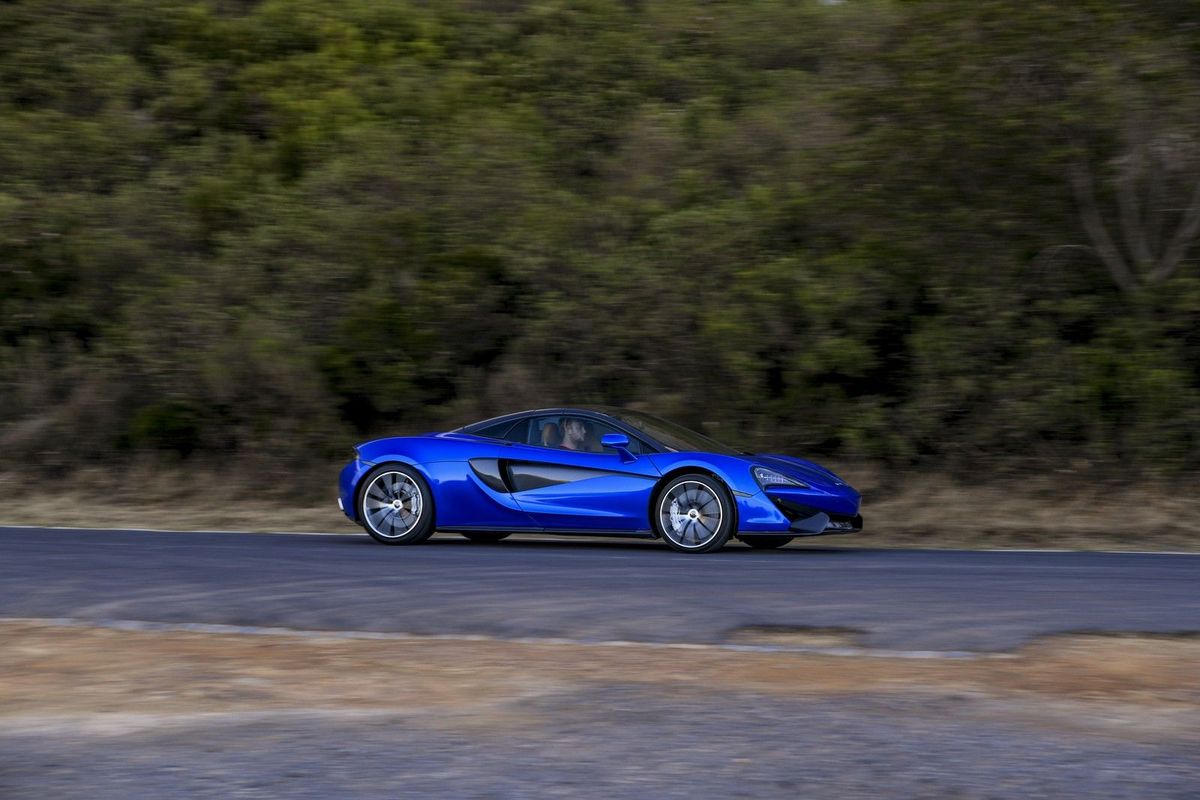
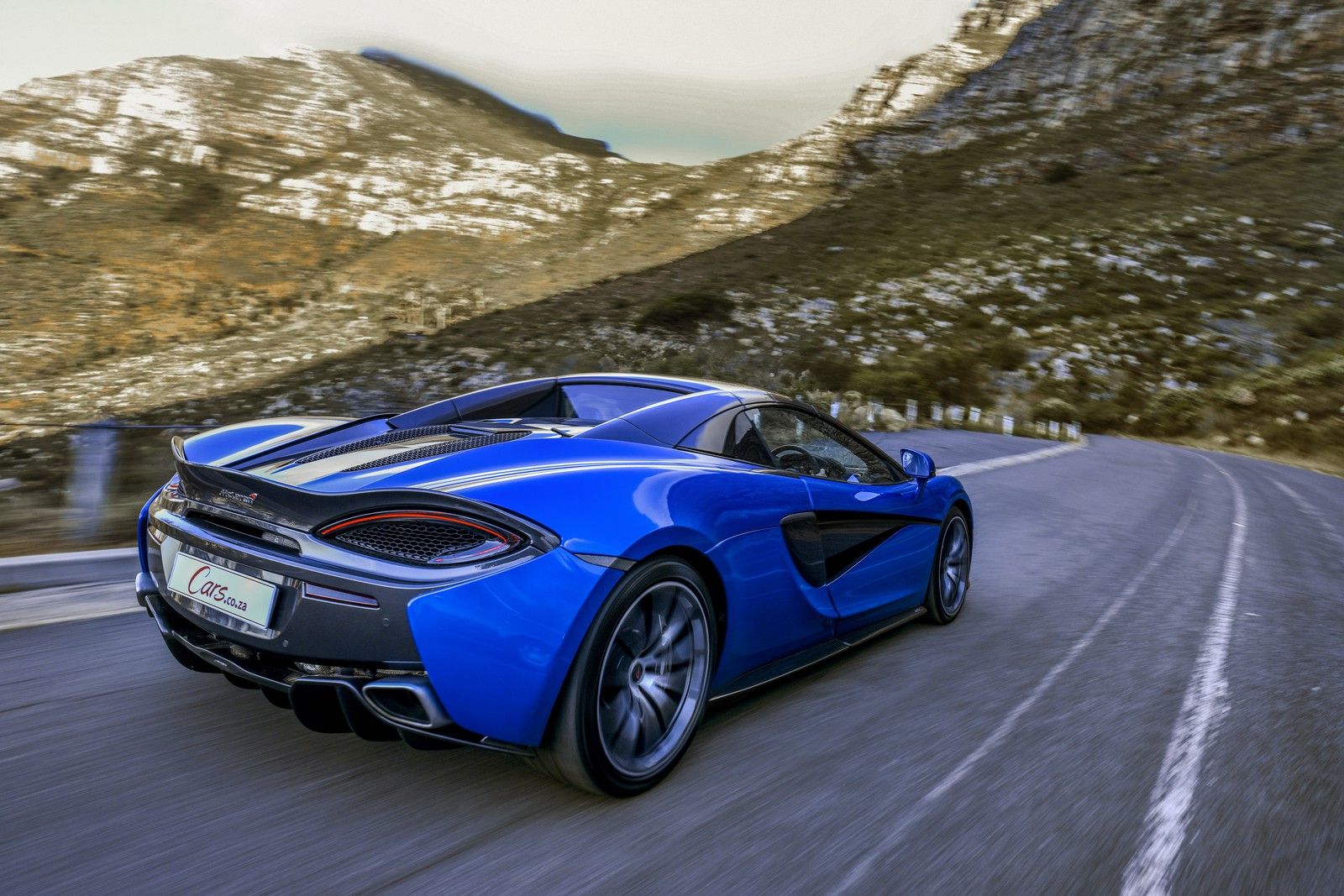
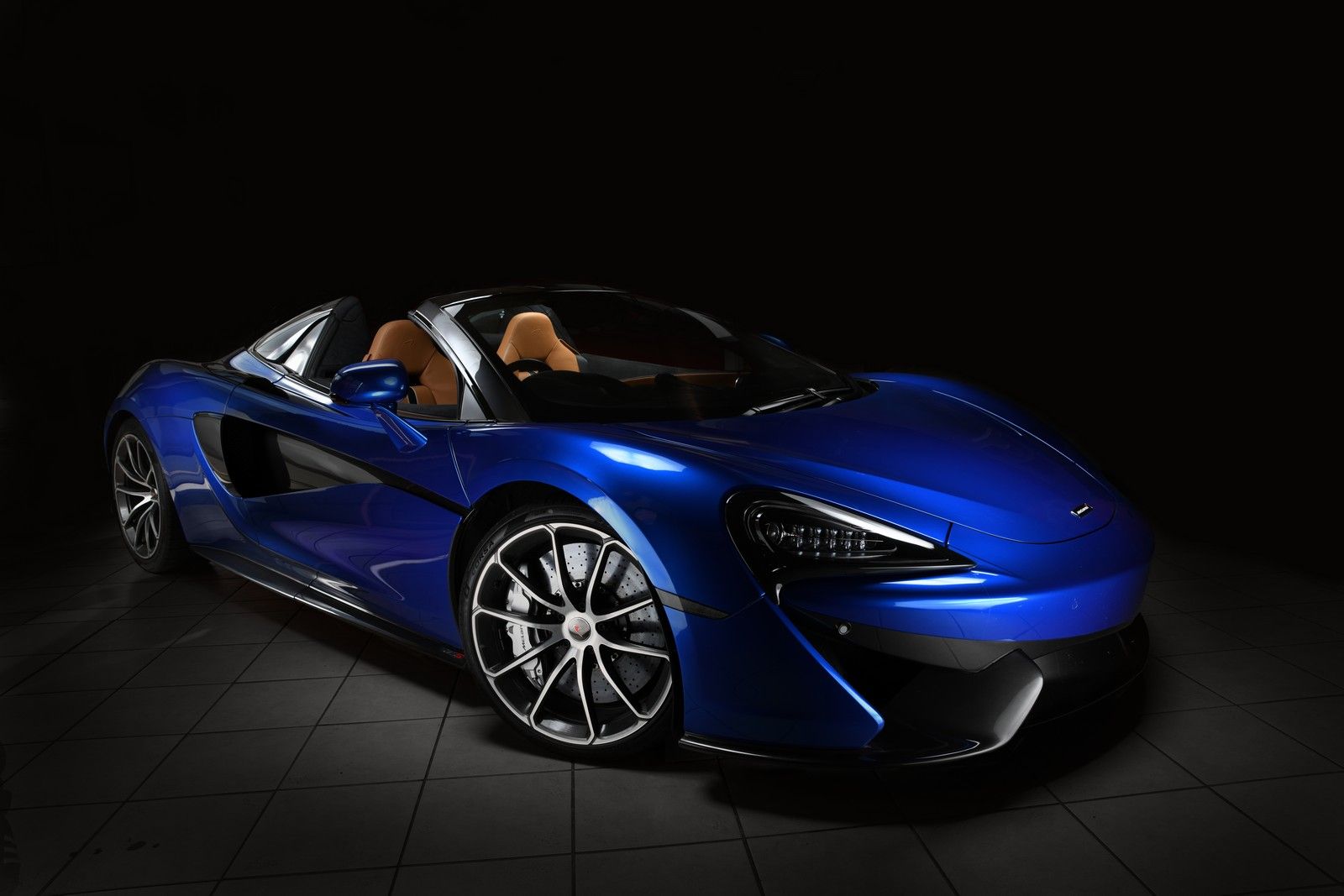
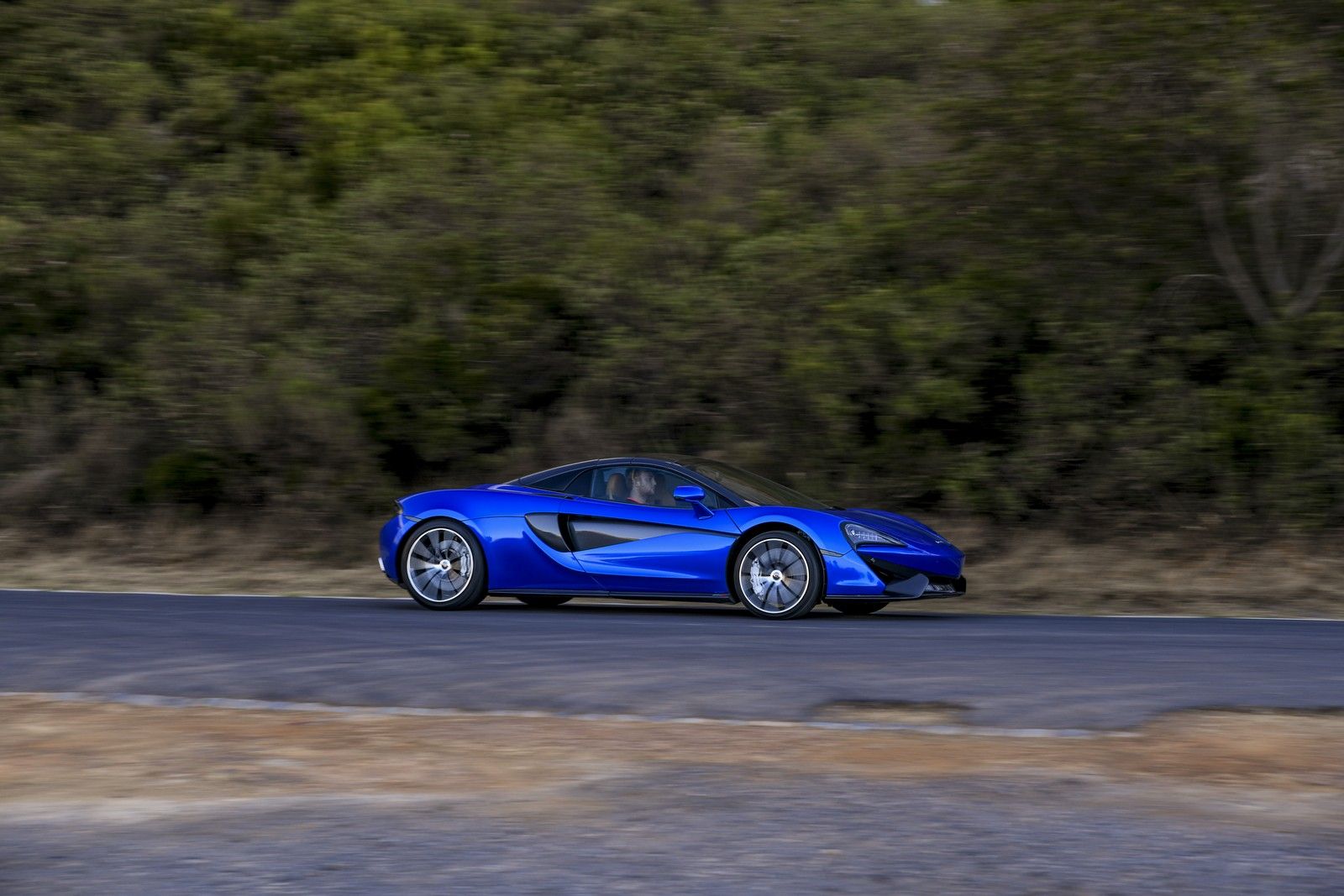
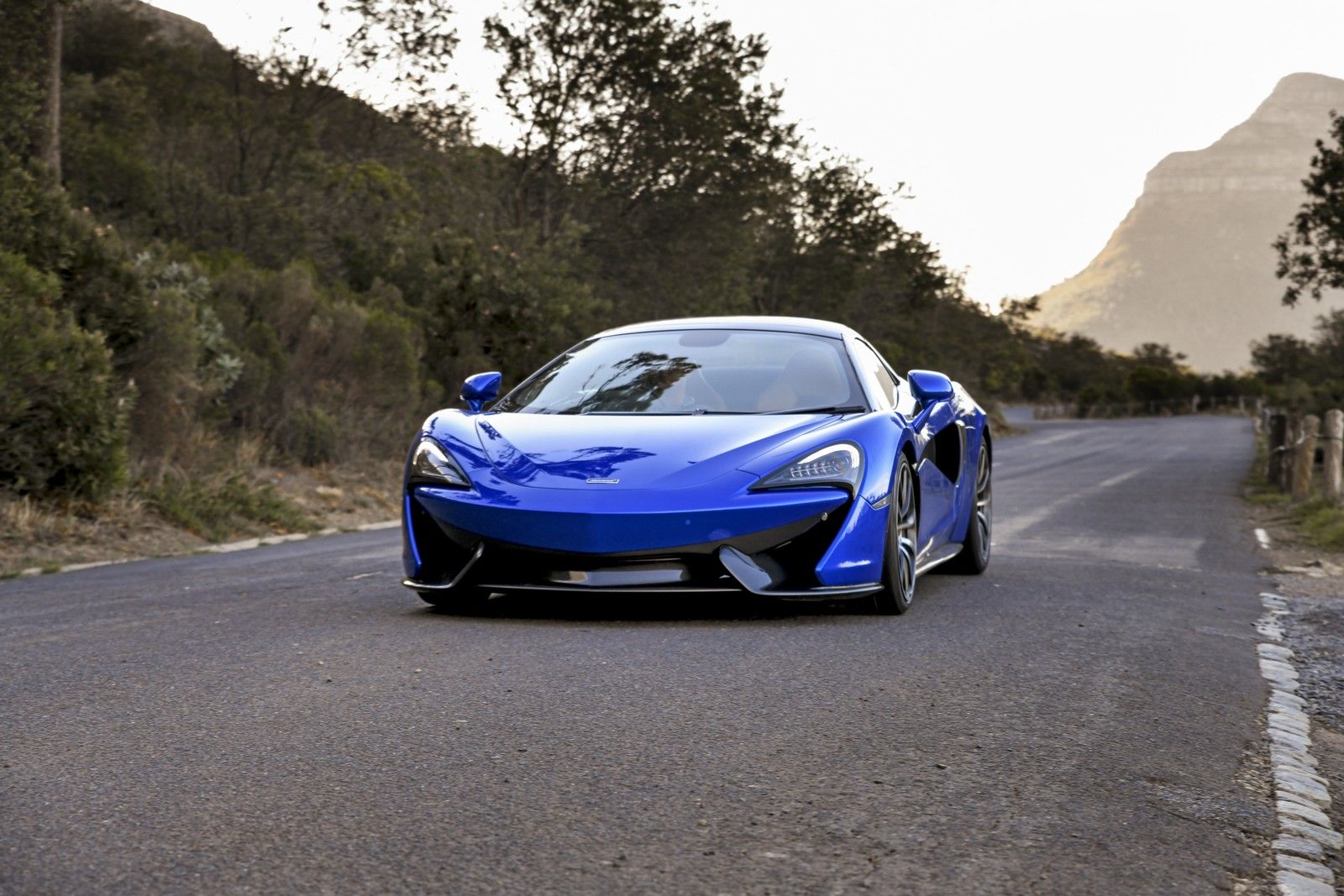
Classic supercar looks and a loud paint finish give the McLaren appreciable kerb appeal.
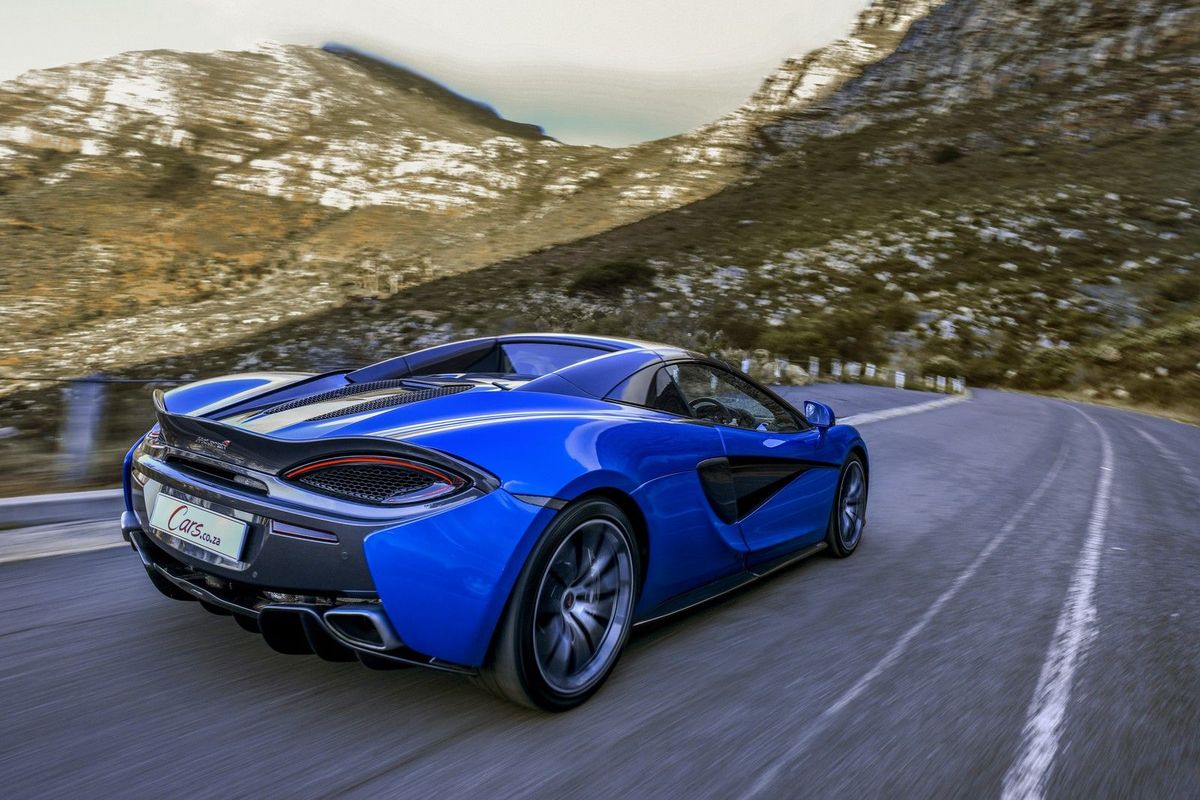
The 570S Spider with its roof down has classic supercar looks. It’s not overdone with aerodynamic winglets and panels, it doesn’t even have the active rear wing anymore, just a solid lip at the rear to add a bit of rear traction. The sheet metal is smooth, rather than creased and jagged. The only elements that detract from the sinuous design are the front side fenders that stab inwards like a crab’s pincers, it’s a little odd and much more pronounced than they were on the 12C…
Nevertheless, in this striking blue hue the 570S is a selfie station for passers-by; several road users whipped out their smartphones to get a blurry pic of the "baby Mac".
Action-packed drive?
We thought it best to head out to some of the Western Cape’s serpentine roads that sweep through the Winelands and flatten a selection of mountain passes with the Spider to assess what the average McLaren user’s driving experience would be like. The 570S may be the entry point to the McLaren nameplate, but nothing prepares you for just how intense 419 kW, 600 Nm and 0-100 kph in 3.2 seconds feel when out on the road with the roof down. The lightweight structure of the McLaren makes the test unit feel altogether different to mass-produced Audi R8s and Mercedes-AMG GTs. There’s no flex in the chassis; it doesn’t move around like an aluminium-steel car.
The baby Mac is best suited to flat, smooth tarmac. It can be tricky when the surface is less than ideal.
The experience becomes more direct, responsive and eye-widening as the revs climb. The farm roads outside Durbanville (where the roads are imprinted by a swell of truck traffic) upset the stiff chassis of the McLaren. As it moves up and down with the bumps in the road it has a tendency to track into the road’s impressions and give a slight tug on the steering wheel. You have to have your wits about you on those sorts of roads, especially at speed, where lots of steering corrections are required.
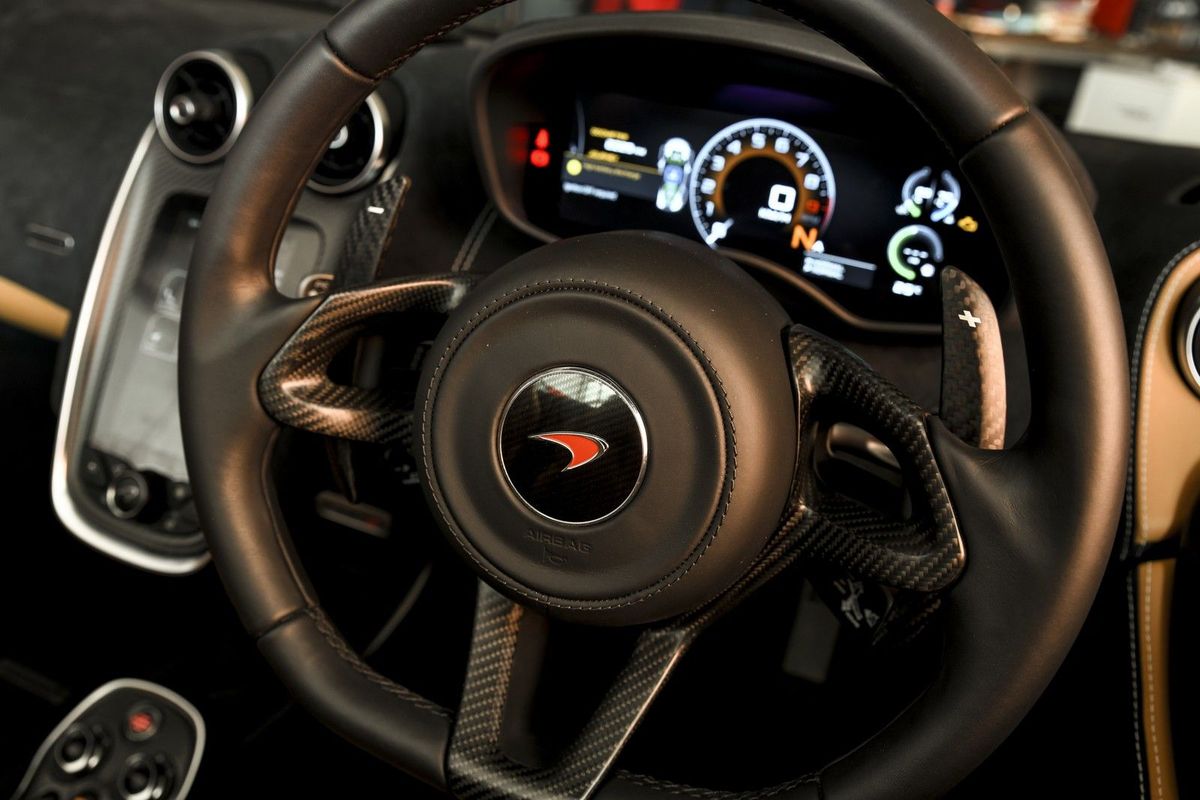
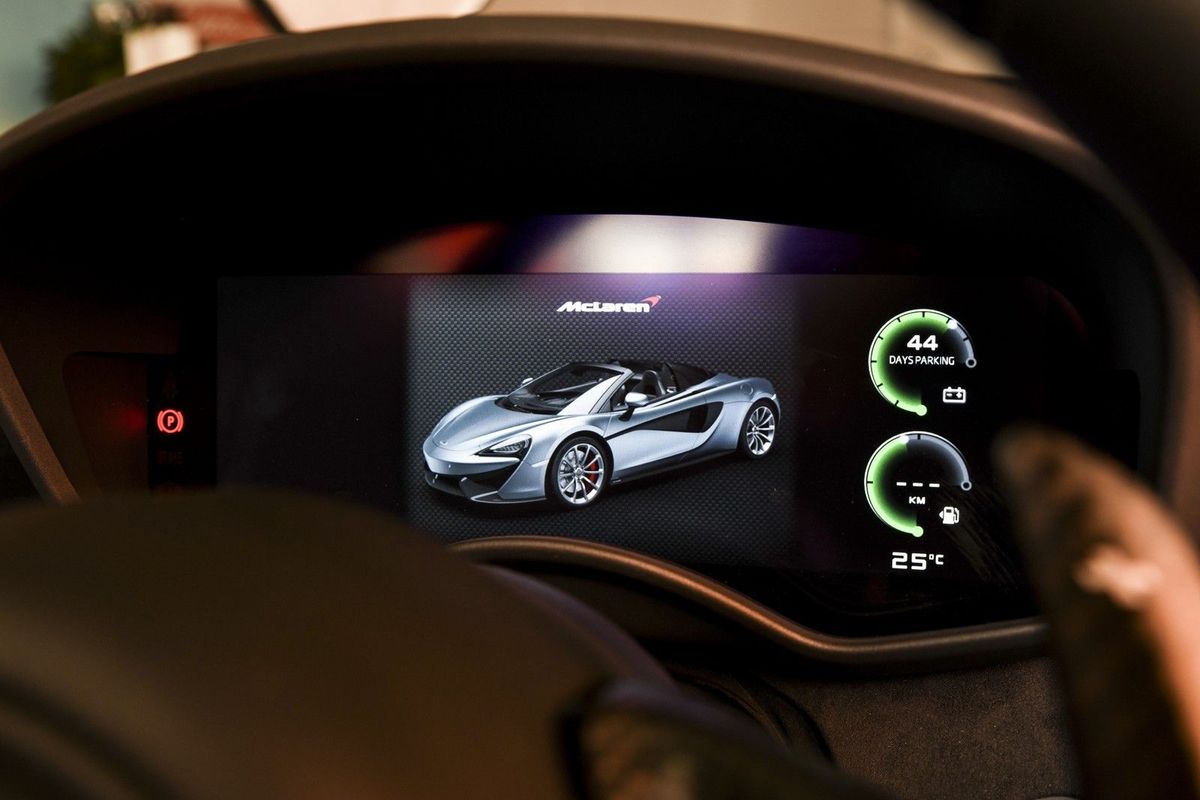
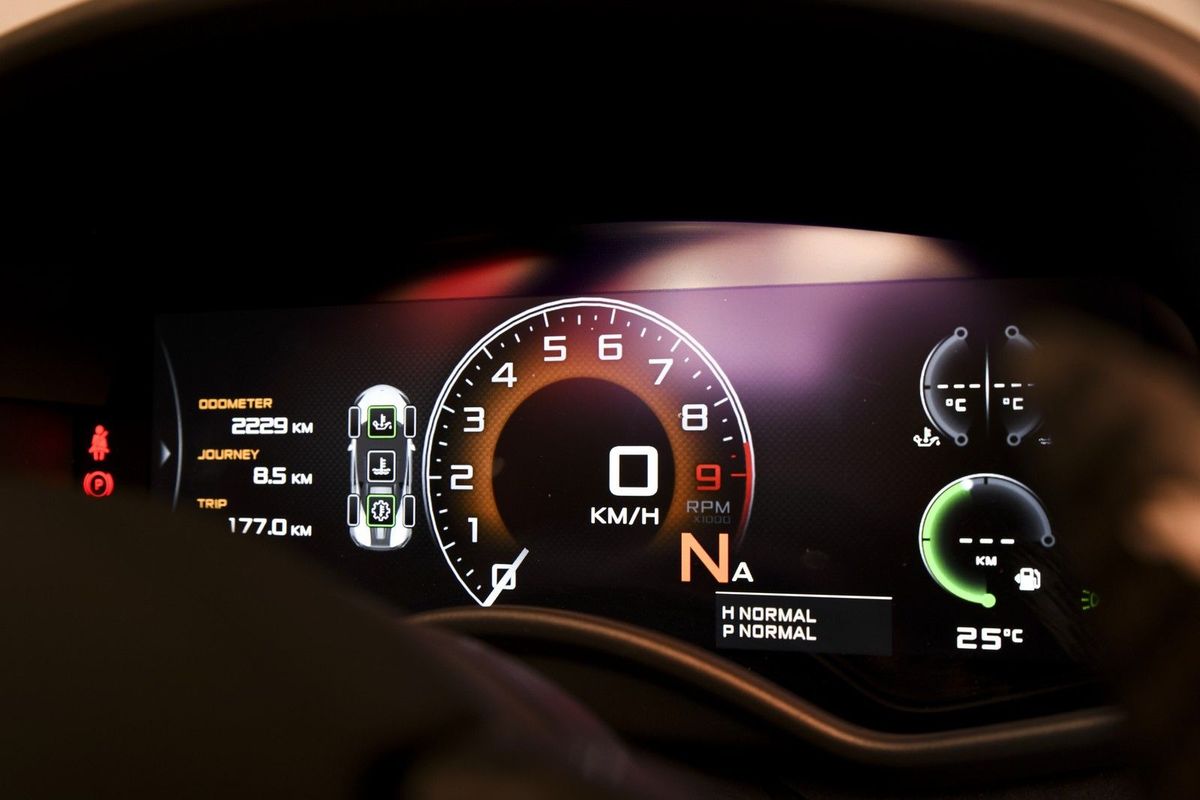
When we drove the Spider with zeal on better-surfaced roads, the baby McLaren opened a gateway to a whole new world of driving wonderment. With the instrument panel showing green lights for engine temp, gearbox temp and (most importantly) tyre temp you can start to test the waters of what the 570S has to offer. You can start to adjust the drive- and traction control settings or work your way up to maximum power and DSC in track mode as much as your bravery and driving skills allow.
Once it's properly warmed up, especially the tyres, you can begin accessing the near limitless err limits the McLaren has.
The front end can feel light on turn in as there’s no weight from an engine to push it down, but once the tyres warm up the grip level is exceptional. The precision at which you can dictate the front's direction is almost telepathic. The rear puts down the power smoothly and without aggression. Most rear-driven cars require a tentative prod at the throttle to get an understanding of how much rear traction is available, but with the McLaren, you can feed it in fast and confident that the back isn’t going to get frisky.
As you reel off one corner after the other you are likely to find yourself so deeply engrossed in the surplus of driving satisfaction on offer that the rest of the world seems to fade into a blur. The turbochargers whistle behind your left ear as they spool up (before the engine howl overwhelms them) and you warp towards a new destination.
When things calm down?
The modern wonder of suspension engineering allows a supercar otherwise capable of blitzing lap times at race-car speeds to wander around town in a comfortable, unfazed manner. Together with a brilliant 7-speed dual-clutch 'box, slow speed town driving doesn’t represent the panicky, embarrassing situation it used a decade ago.
The 3.9-litre twin-turbo V8 is used in every current McLaren up to and including the P1.
It’s also easy to get in and out of the 570S Spider in a dignified manner and the upward-opening doors add to the cool factor immensely. You will find that the bottom of the doors attracts some nasty stone chips so covering those leading edges with some sort of film is a must. There is a pair of storage bins for bags… The one in the front is only really big enough for a medium-sized luggage bag. The other is located underneath the roof cover and big enough for a pair of laptop bags. There is a sense of trepidation that the electric cover might crush whatever’s inside that recess as it the assembly closes, however, because it’s quite a thin loading area.
The wind buffeting in the cabin isn’t even that noticeable at freeway speeds, most of the turbulent air is deflected over or around the passengers. There is not so much of hint of scuttle shake or flex from the windscreen either, proving that that carbon fibre tub was always designed with a Spider variant in mind.
Verdict
McLaren predicts that the Spider version will account for most of the 570S sales. That's probably why this junior supercar was designed from the ground up to be a Spider, rather than as an afterthought, which is often, but not always, the case with mainstream manufacturers.
It feels every bit as good to drive as the hard top; having the raw soundtrack of the twin-turbo V8 piped into your ears while driving with the roof down is a major bonus.
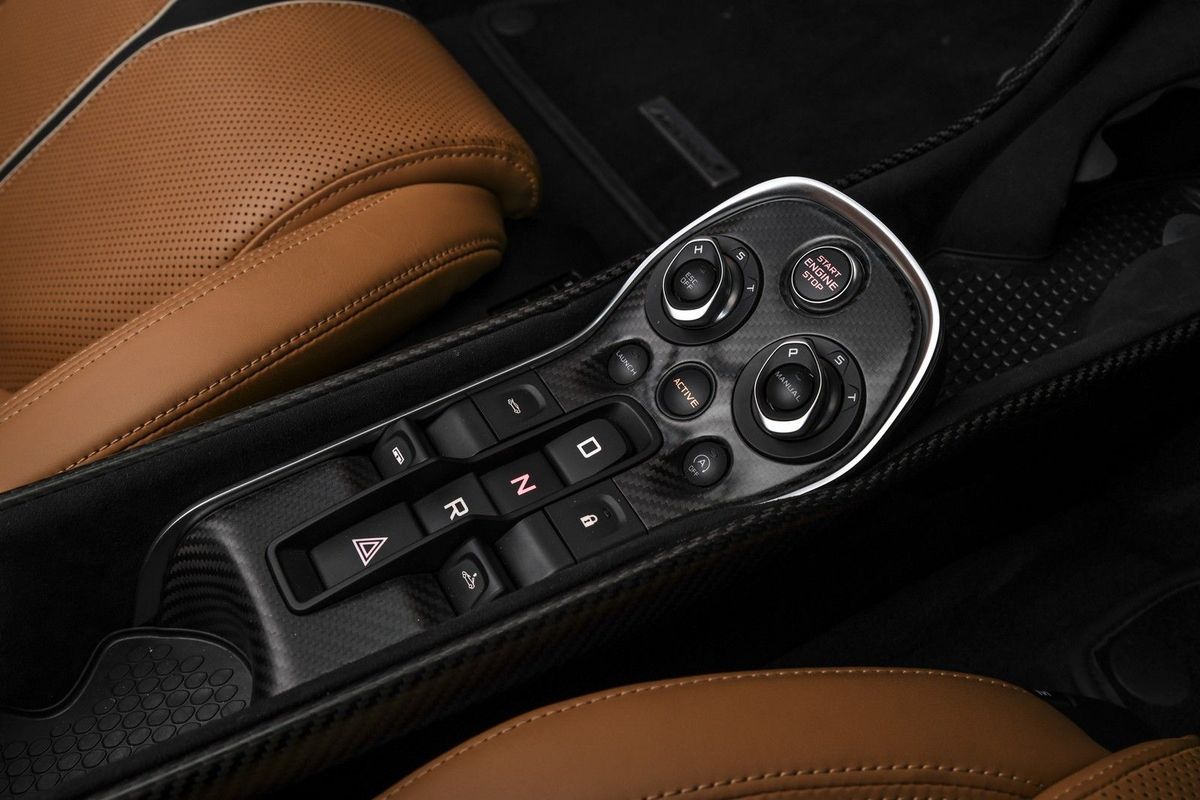
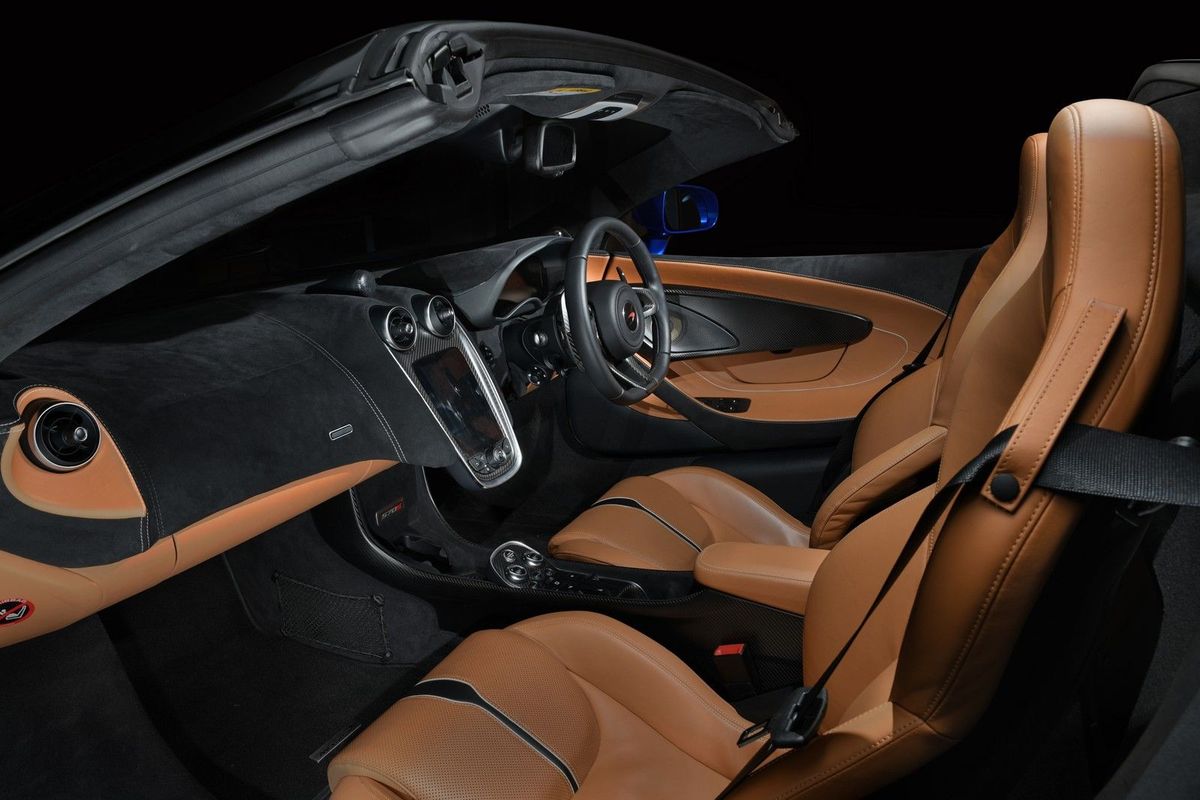
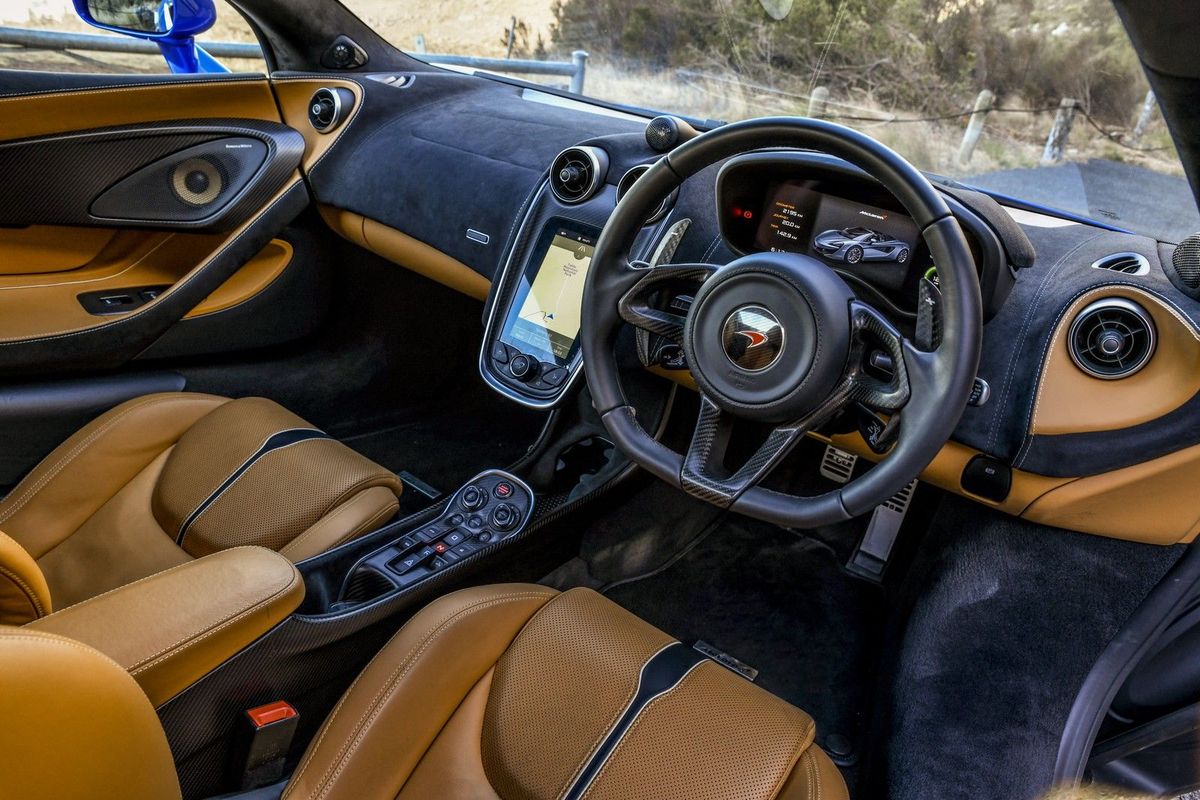
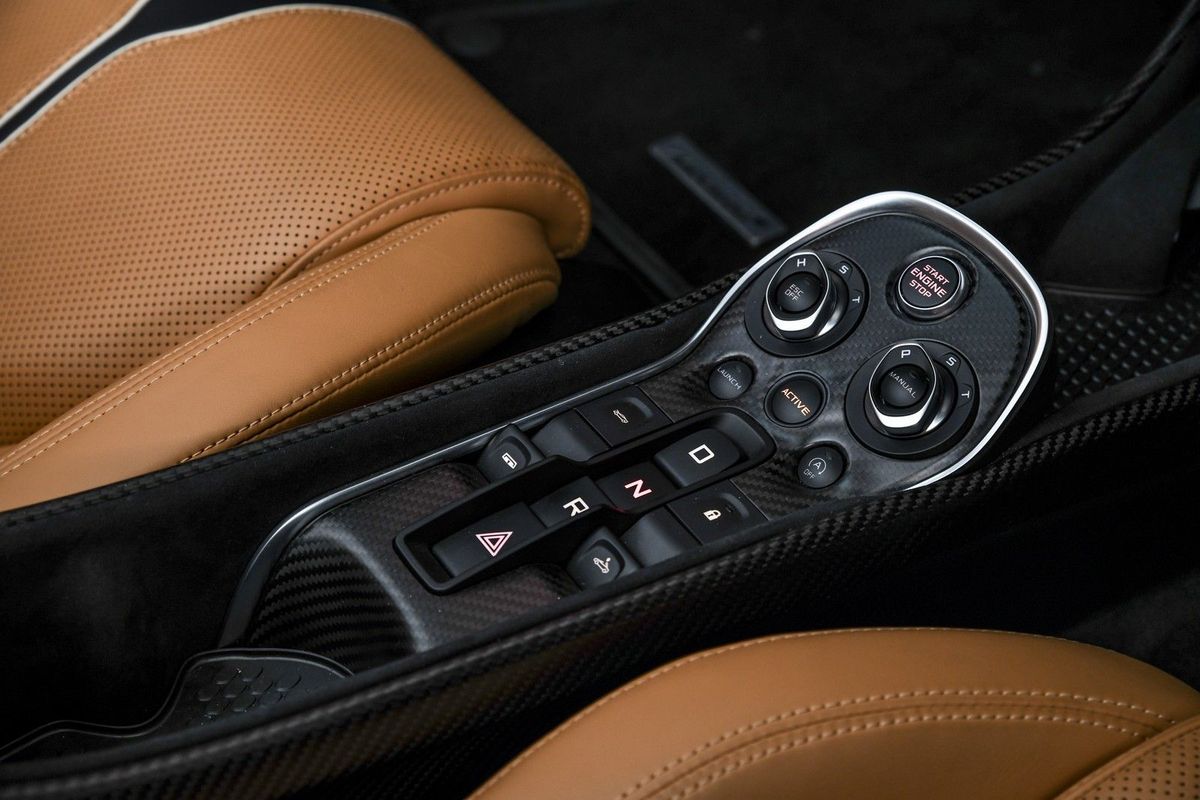
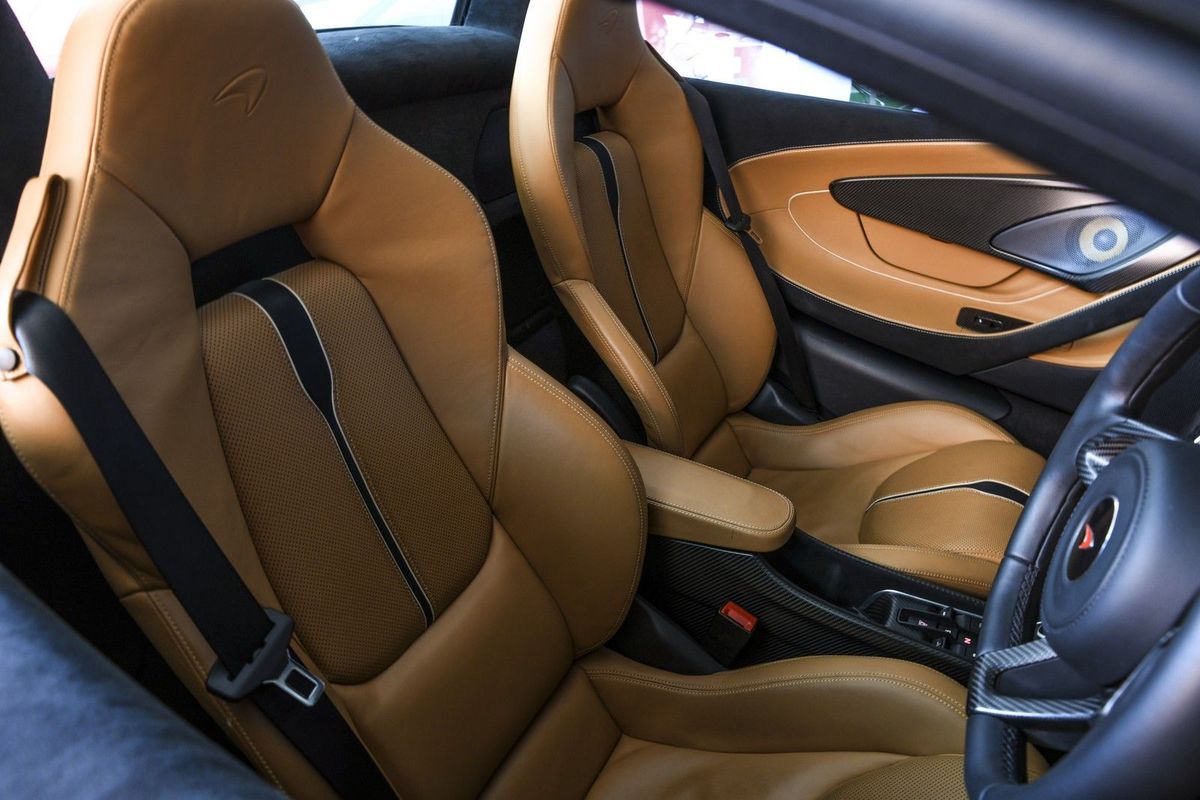
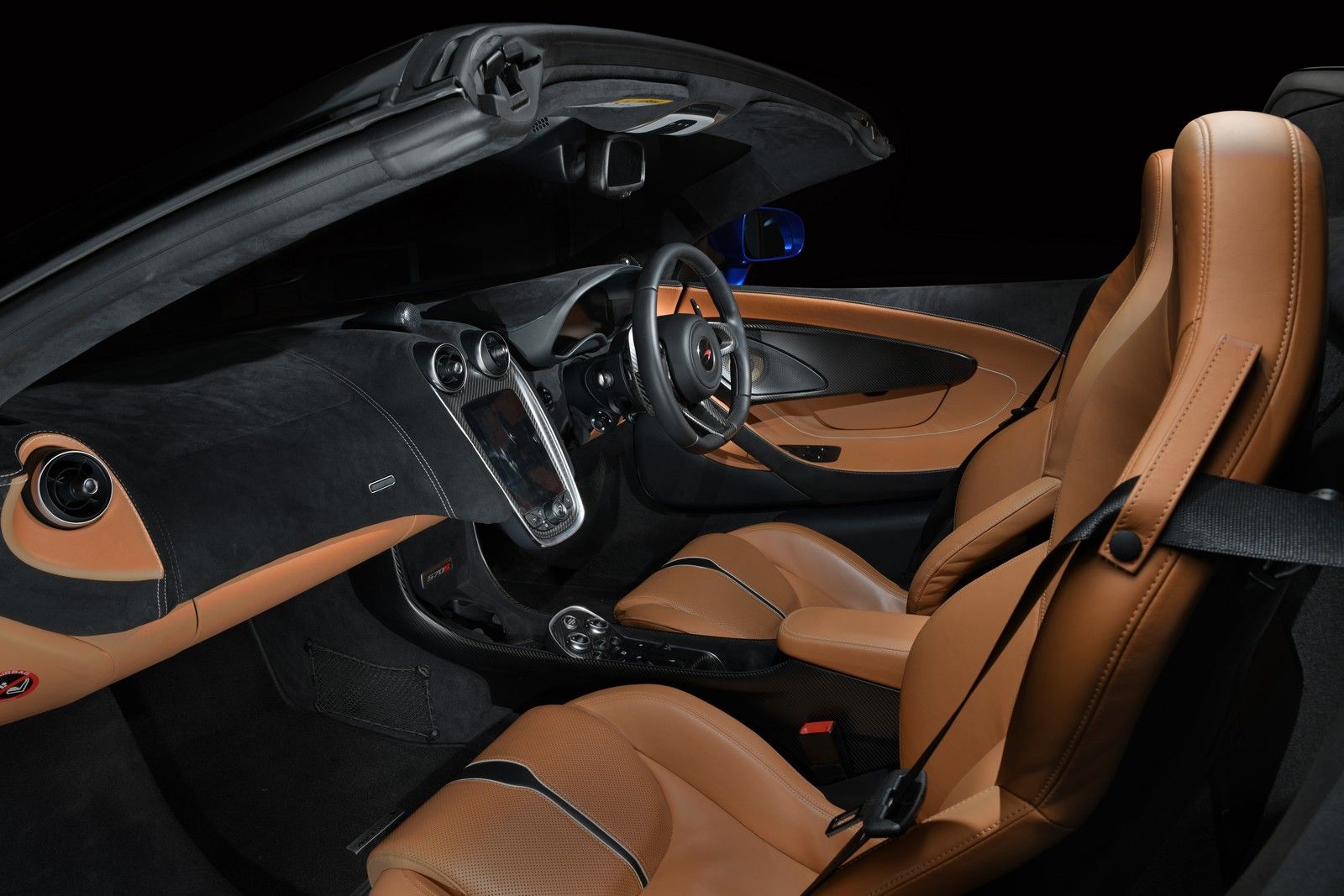
Comfortable seats for long stints in the saddle and a very simple instrument layout makes the McLaren a driver-focused tool.
The 570S Spider admittedly struggles to feel settled on less than optimal surfaces, where it can track and pull at the wheel as the surface dictates. Open it up on a smooth section of road, however and the McLaren comes to life with precision, agility and brutally fast acceleration that vividly separates it from humdrum sportscars.
What's more, the real trump card of the McLaren 570S Spider is it’s day-to-day usability. It’s comfortable to drive in town, easy to manoeuvre in parking lots and simple to get in and out of despite its low-slung seating arrangement. There are very few drawbacks to owning it, provided you can afford the R4.5-million (starting) price tag.
Suzuki Swift (2018) International Launch Drive [w/Video]
Suzuki will soon introduce an all-new version of its Swift compact hatchback in South Africa. Suzuki fans can look forward to a restyled Swift that offers a more spacious and modern interior that will enhance the appeal of this popular hatchback. Cars.co.za journalist (and current Swift owner) Gero Lilleike, headed to India to sample the new Swift in the metal. This is what he discovered…
The Swift is Suzuki’s best-selling model in South Africa – more than 18 200 units have found homes locally since the model was launched here a decade ago. Combining cute looks, affordability, an impressive ride/handling balance and low real-world fuel consumption, the Swift has proven itself to be an attractive proposition for buyers looking for a reliable daily runner. I, myself, purchased a Swift 1.2 GL back in 2014 for these very reasons and haven’t had any reason to complain since.
The Suzuki brand has strengthened considerably in South Africa and sales in 2017 compared with 2016 grew by a staggering 57% with Suzuki’s market share rising from 0.9% to 1.6%, which is a massive achievement. Suzuki has won the Cars.co.za Consumer Awards – powered by WesBank coveted Brand of the Year award 2 years in a row (2016/17 and 2017/18) and has snatched wins in the Budget Car and Compact Family Car categories of the #CarsAwards for the last 2 years running.
These achievements speak volumes of a brand that not only makes good, affordable cars but takes great pride in delivering excellent customer service at all levels. Suzuki is certainly on the rise and the imminent arrival of the new Swift will play an important role in maintaining the upward momentum of the Suzuki brand in 2018. The new Swift destined for South Africa will be built in India, while the Swift Sport, if it makes it to our market, will come from Japan.
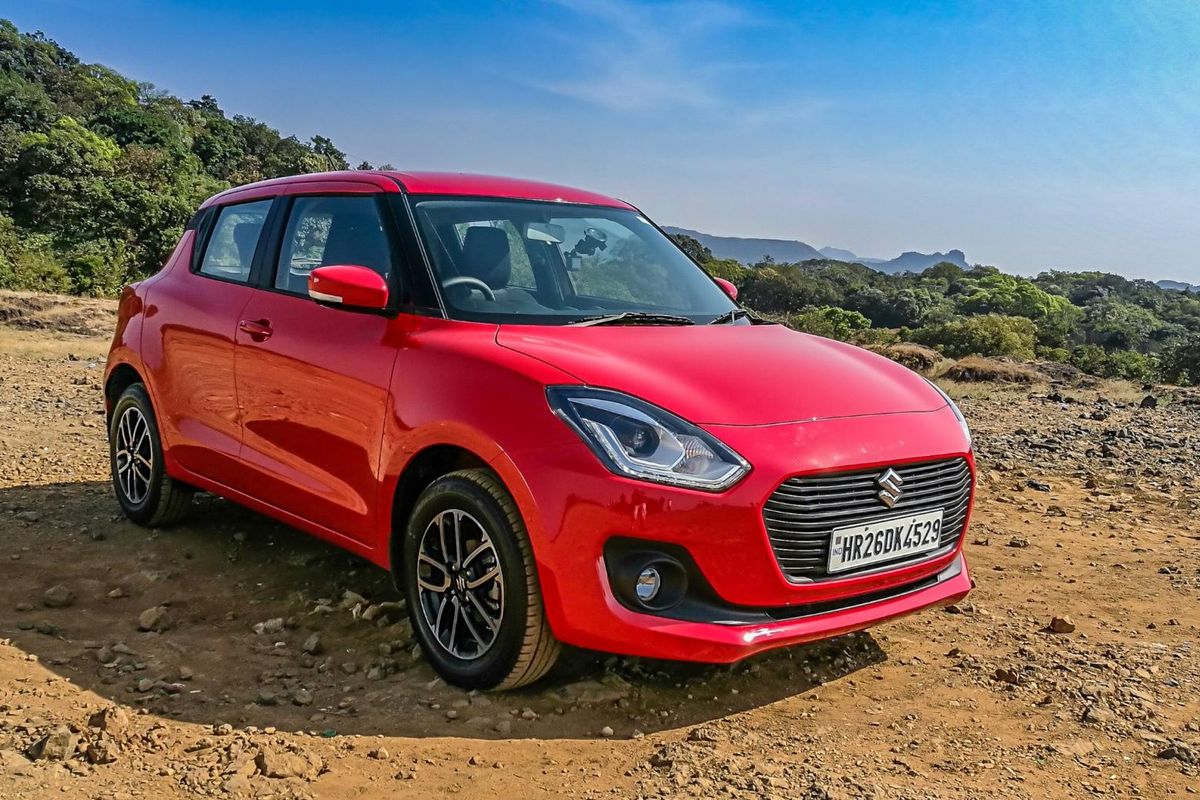
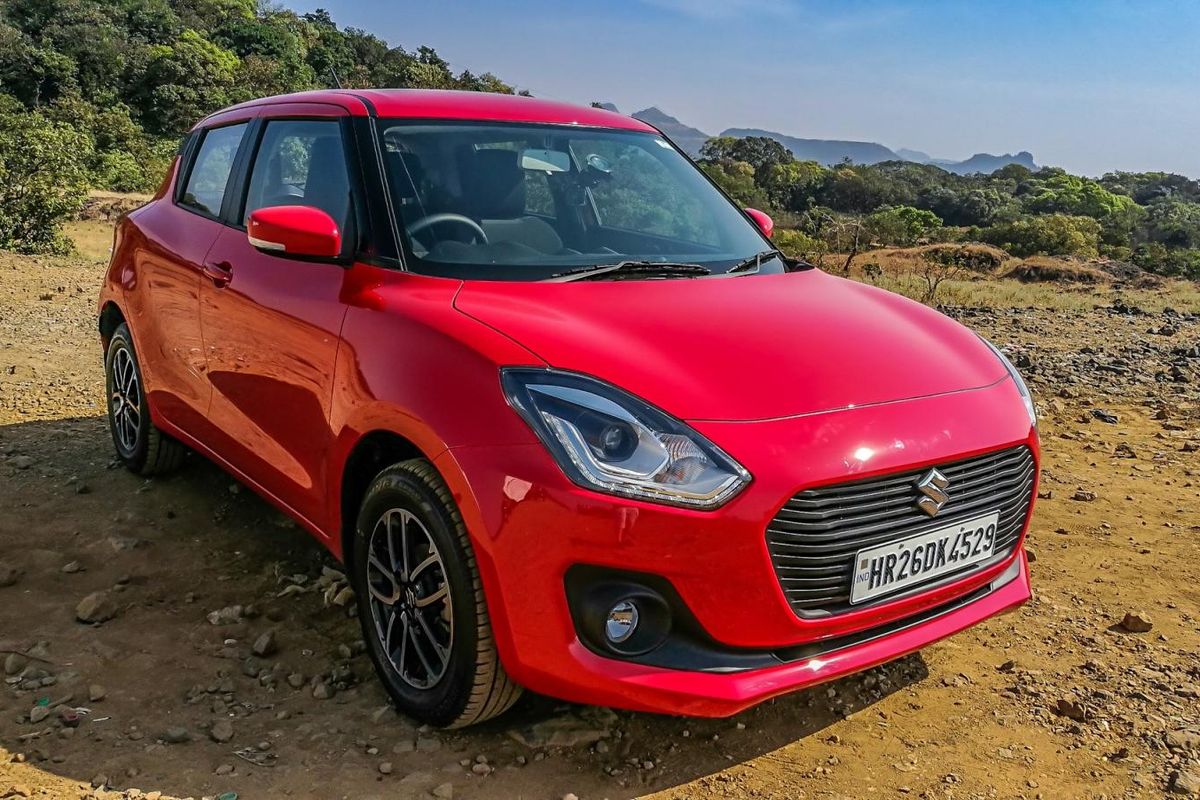
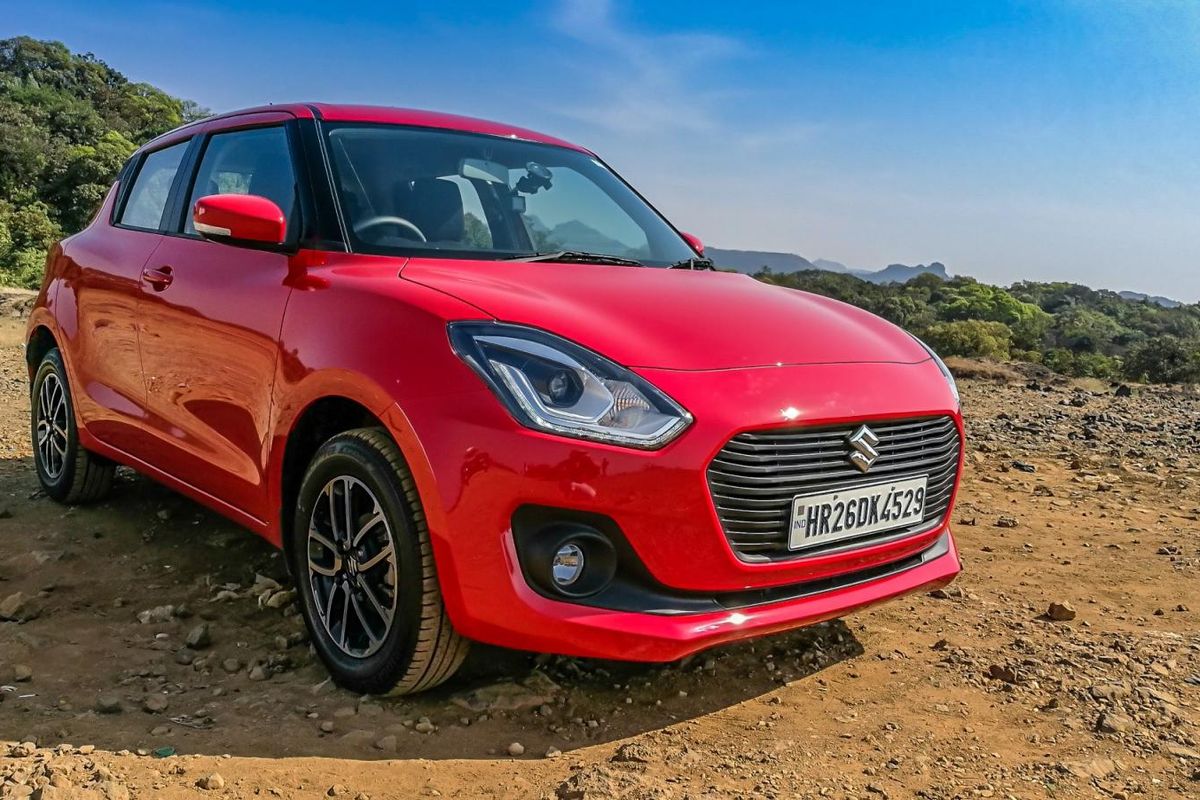
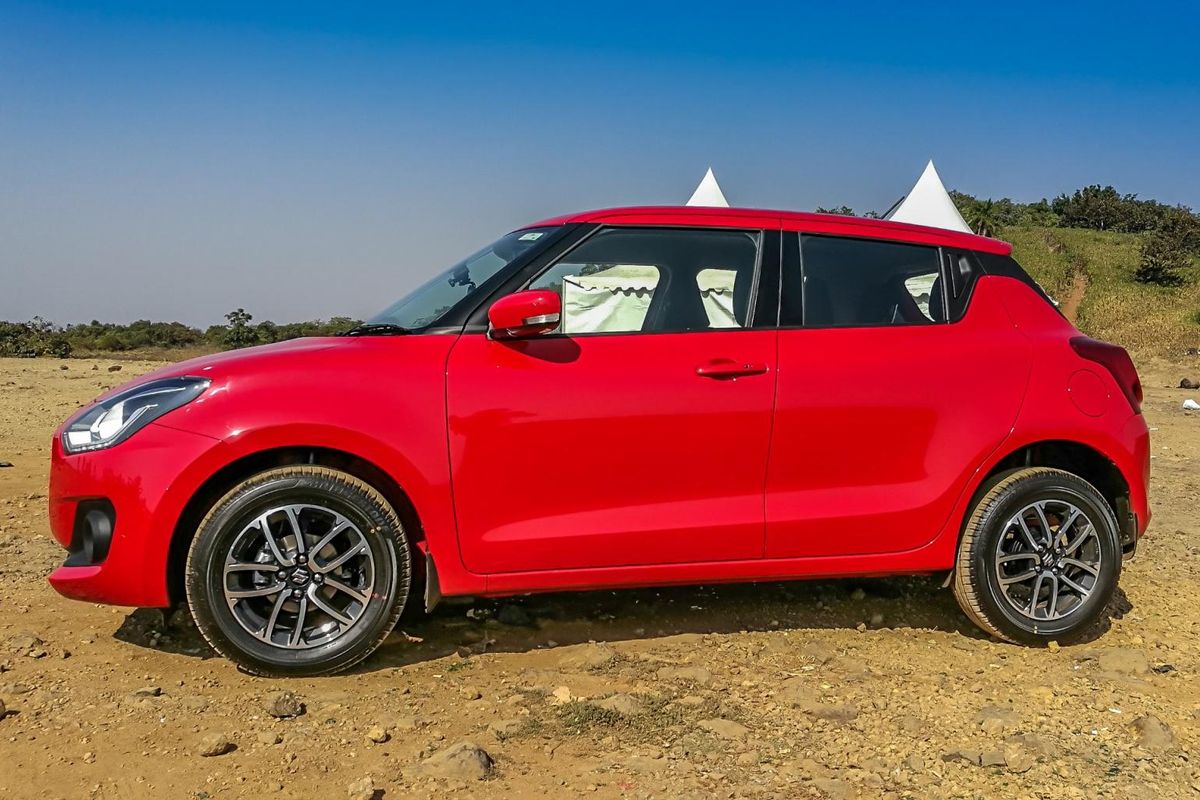
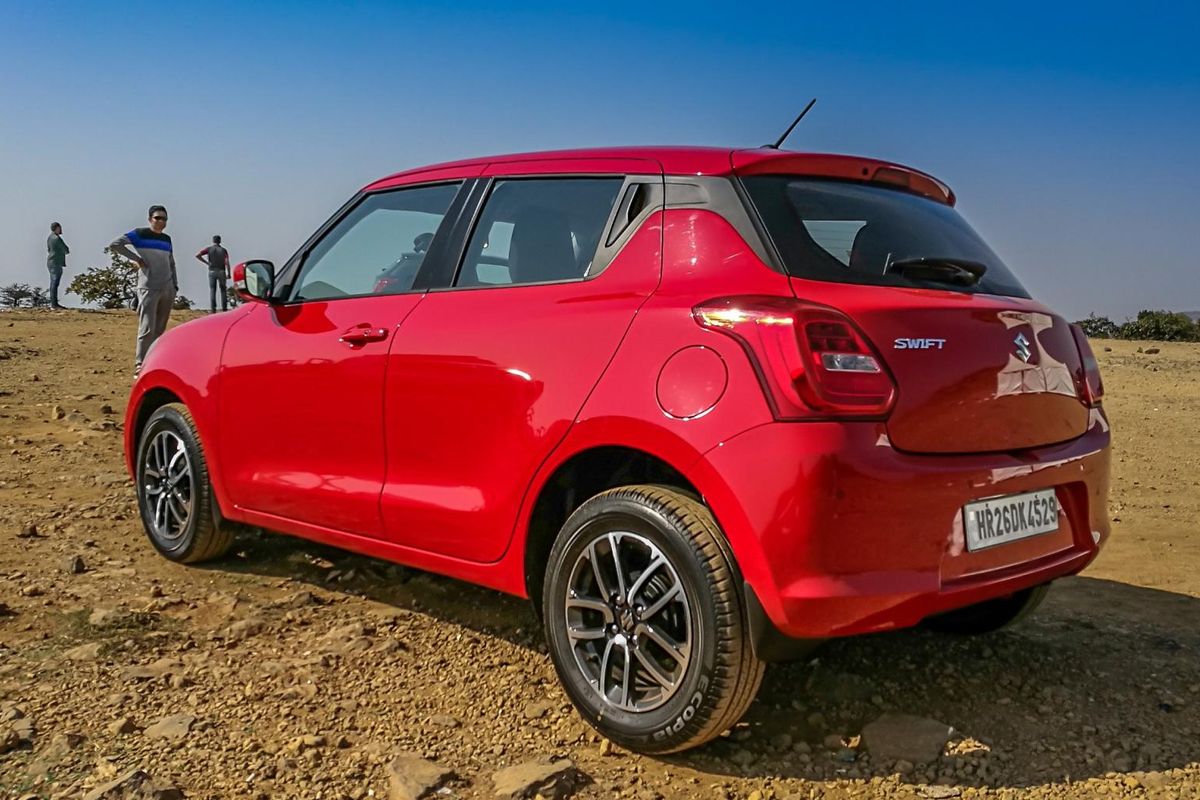
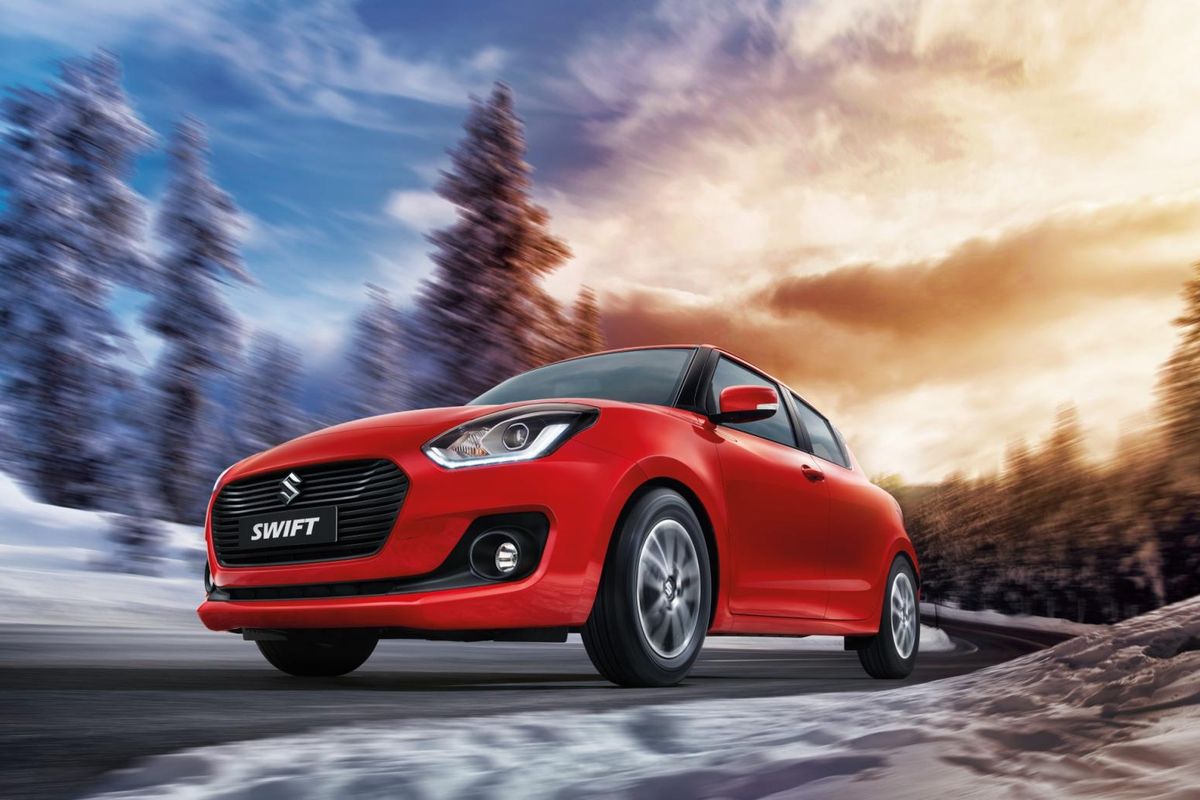
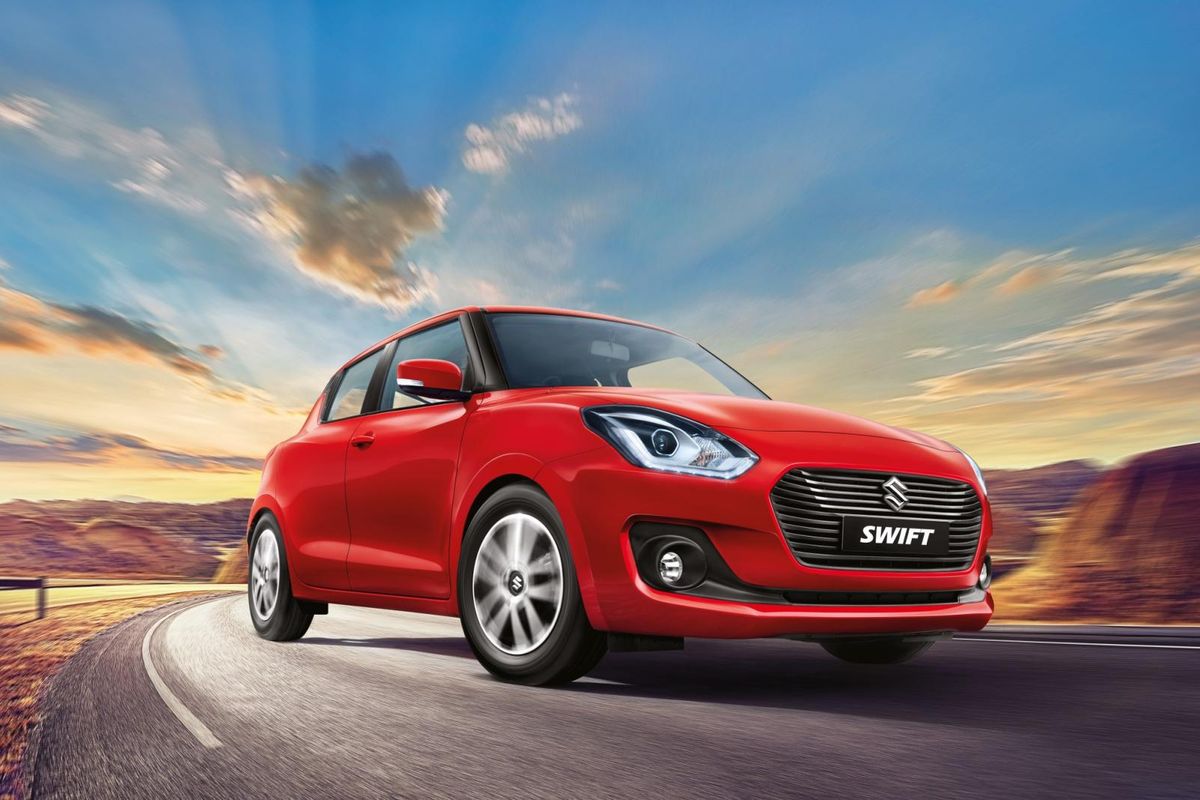
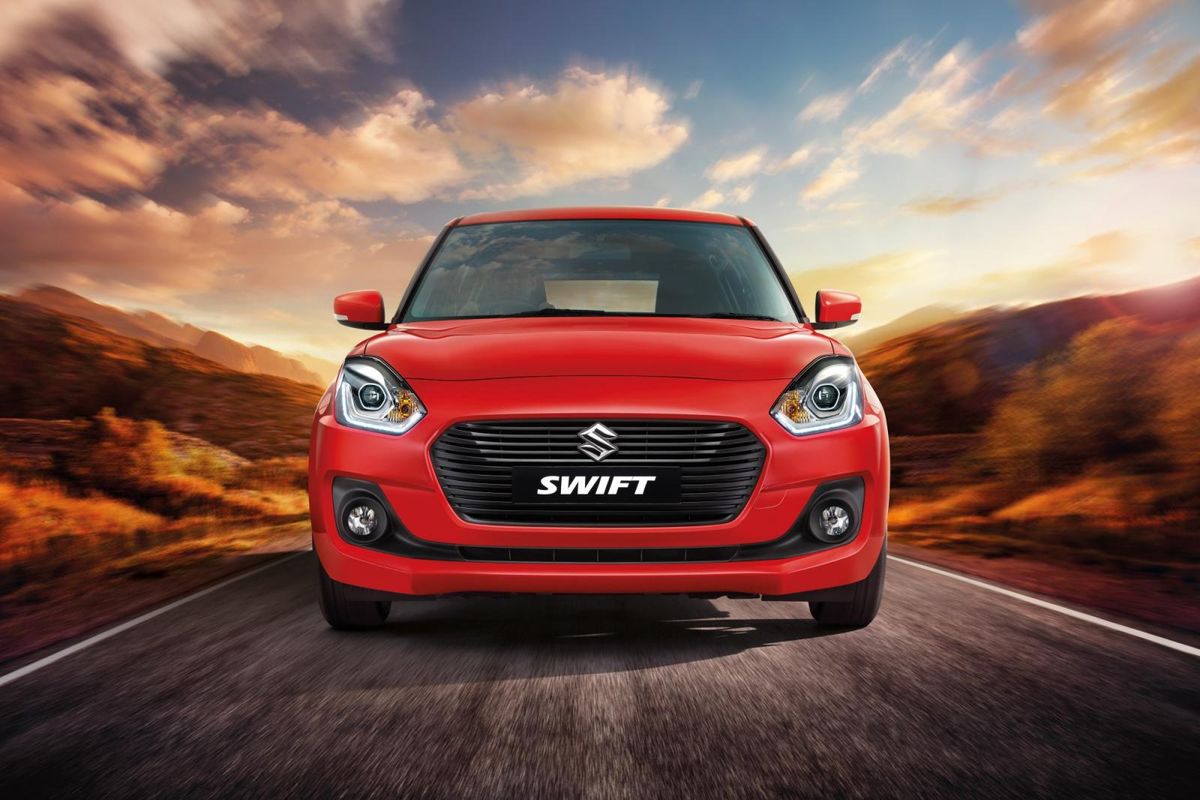
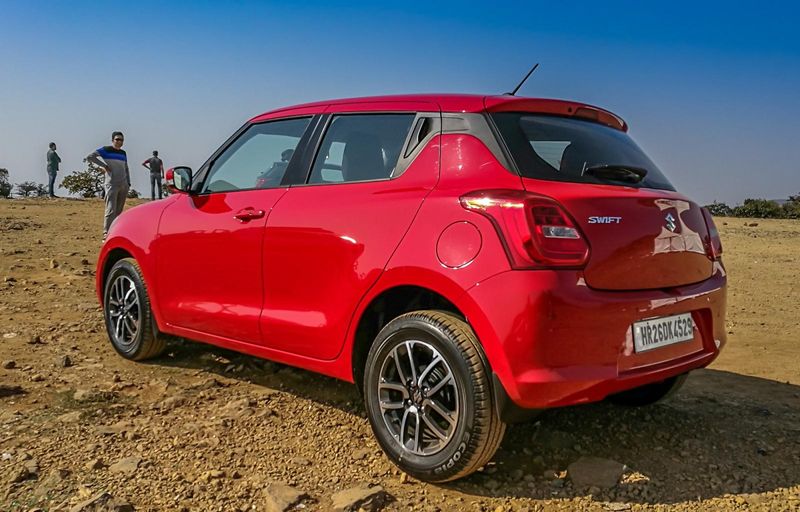
A slimmer, more refined design will boost the aesthetic appeal of the Swift in South Africa.
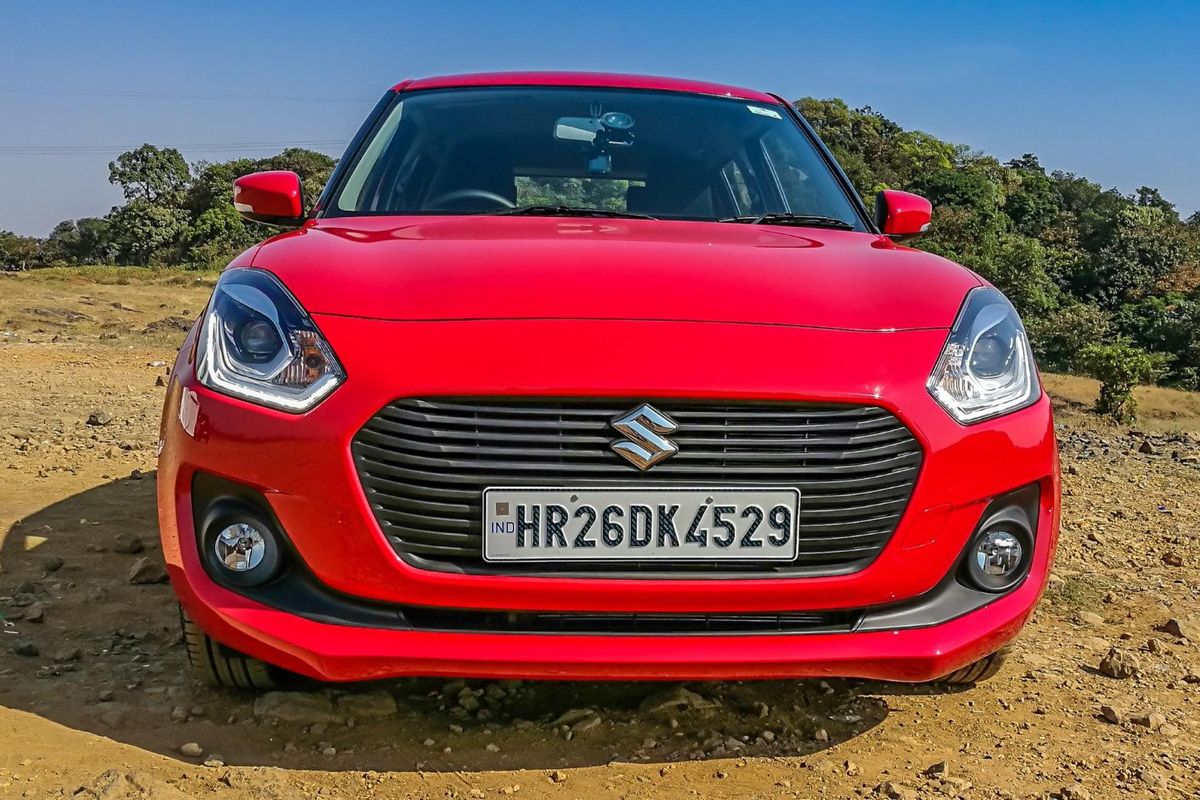
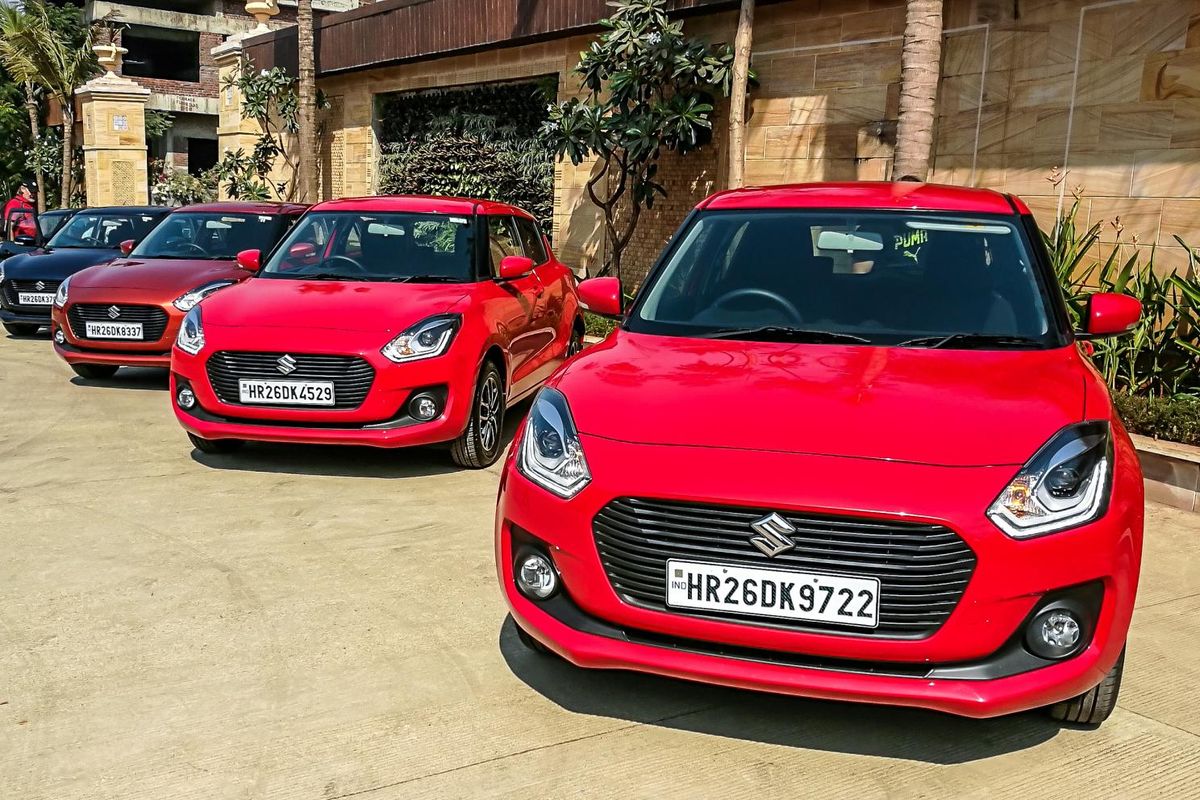
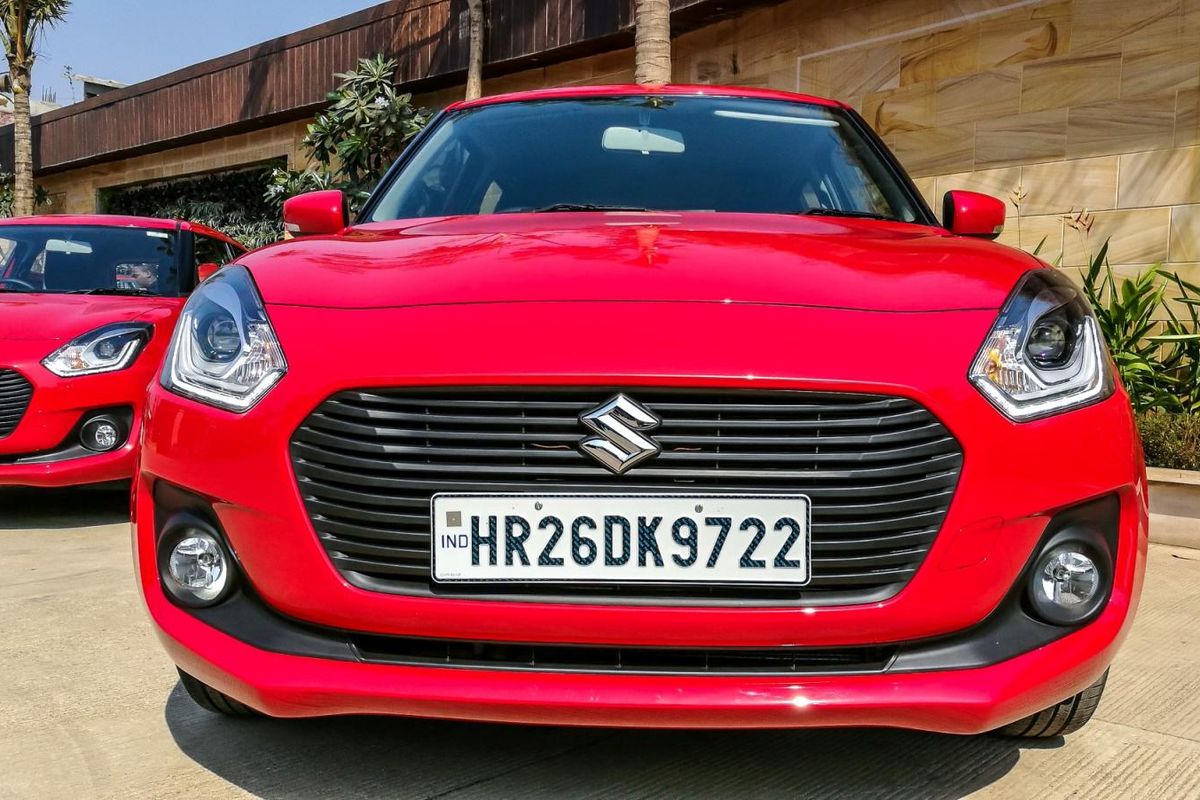
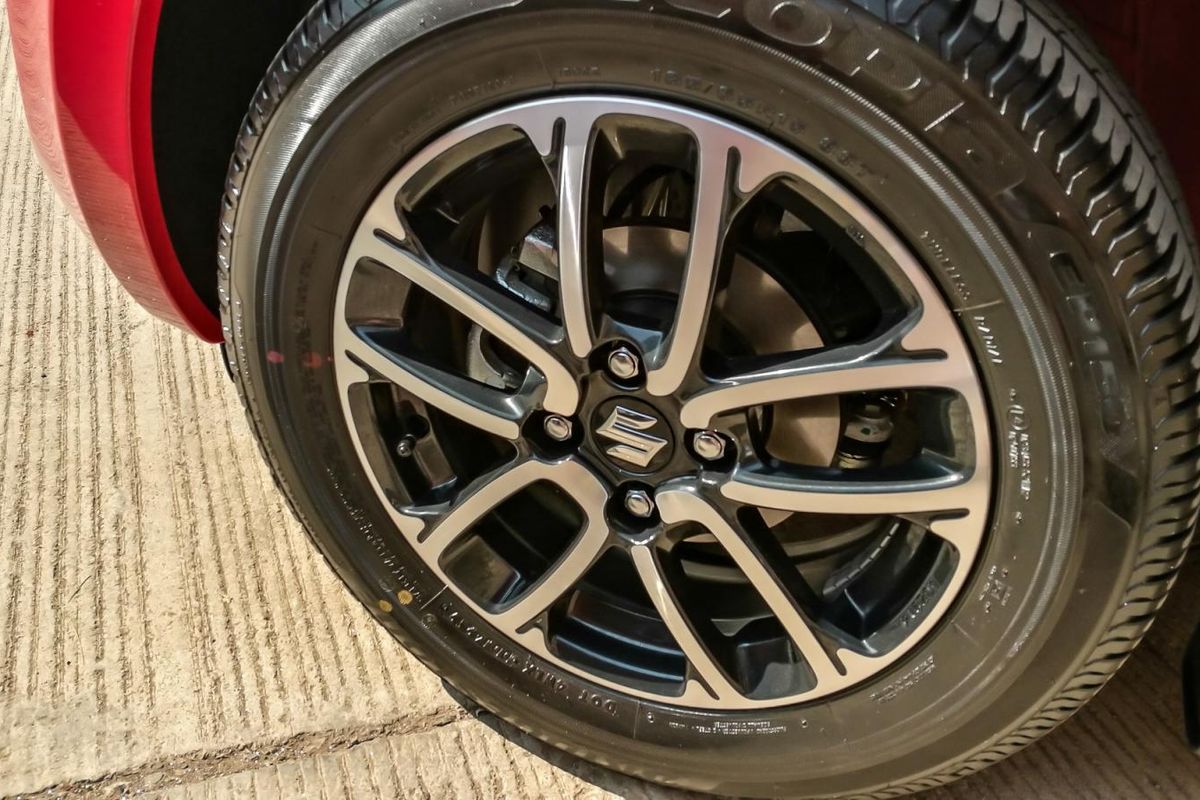
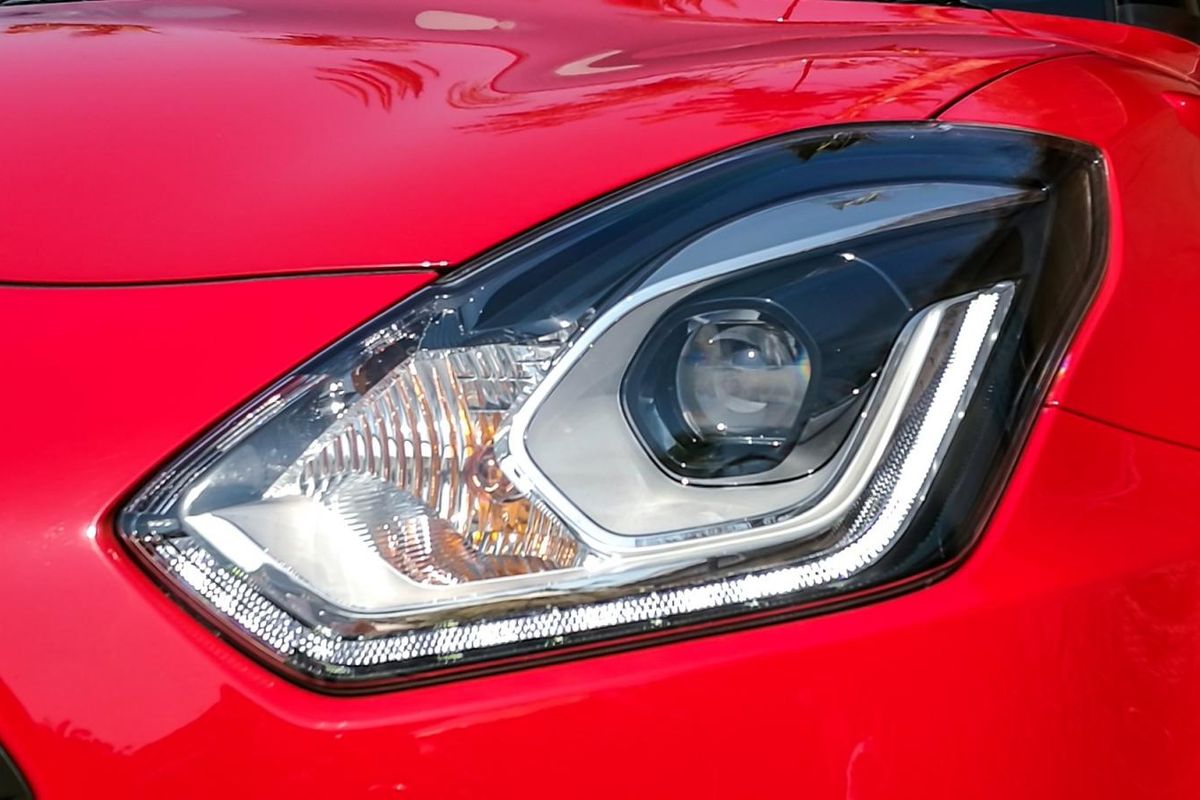
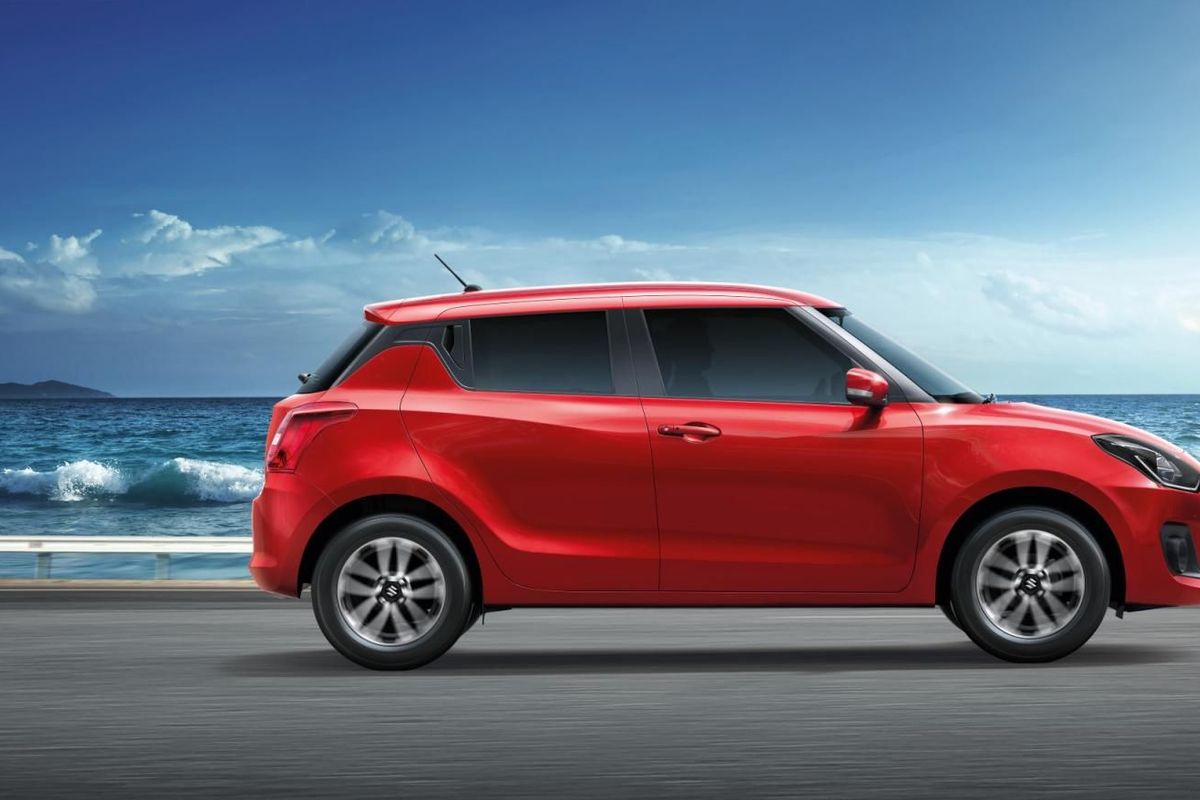
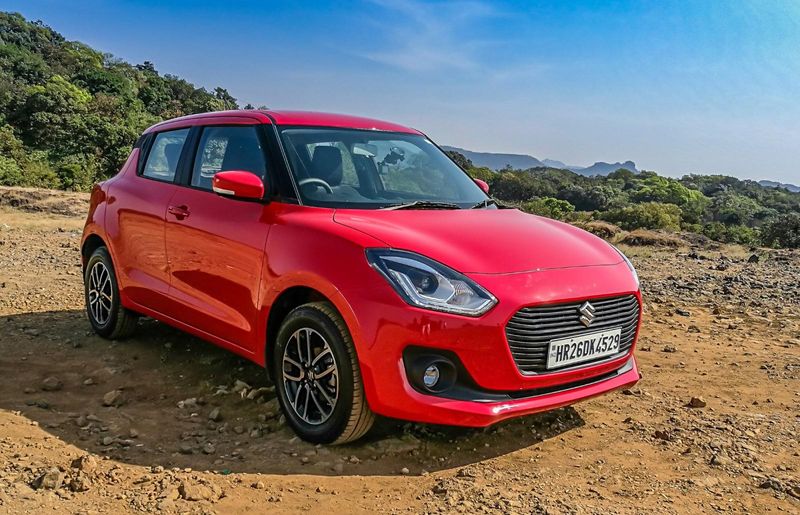
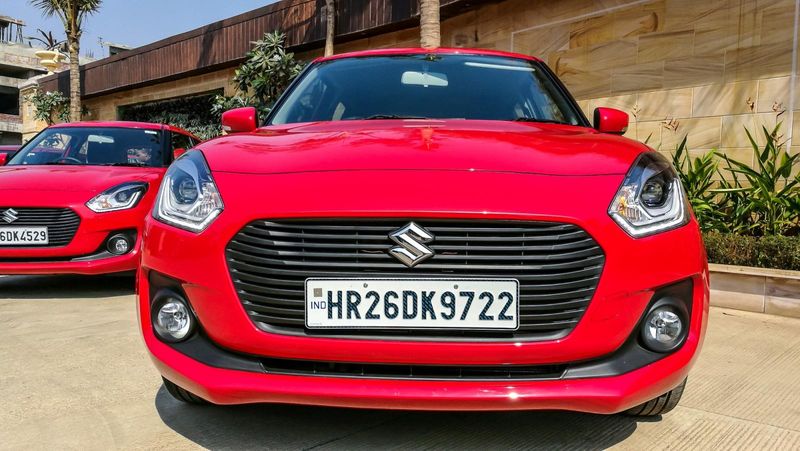
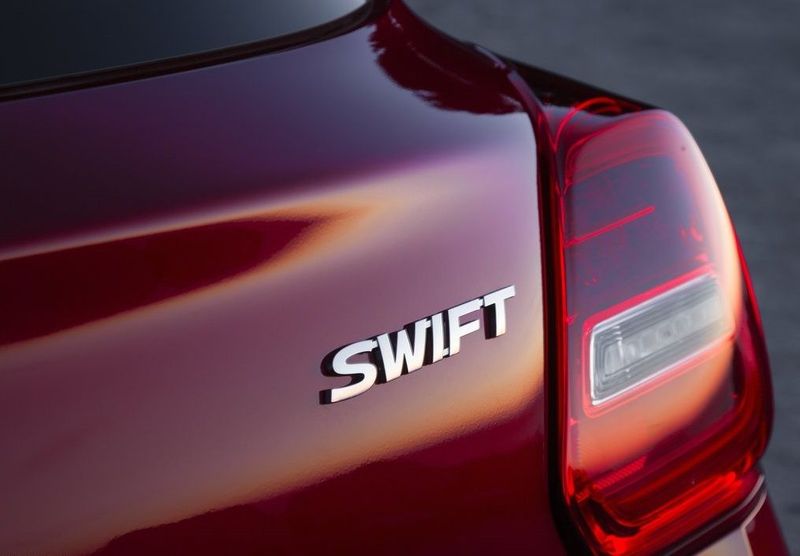
In terms of styling, the most obvious change to the new Swift can be seen from the outside. Whereas the outgoing Swift has a somewhat corpulent look, particularly when viewed from the rear, it successor has slimmed down and exudes a far better-proportioned shape. Nifty details include the refined grille design, newly shaped LED headlights with daytime running lights, 15-inch alloys, hidden rear door handles and a revised rear-end with distinctive taillights to round off a far more attractive-looking Swift.
The Swift is built on Suzuki’s new lightweight Heartect platform, which also underpins the Baleno and Ignis models. Importantly, this new Swift is some 85 kg lighter than before, which, for a small car, makes a noticeable difference… Suzuki claims that the weight saving has resulted in at least a 10% improvement in acceleration.
Although the car is some 10 mm shorter, it’s wheelbase has grown by 20 mm and it’s also 40 mm wider and sits some 15 mm lower than the model it replaces.
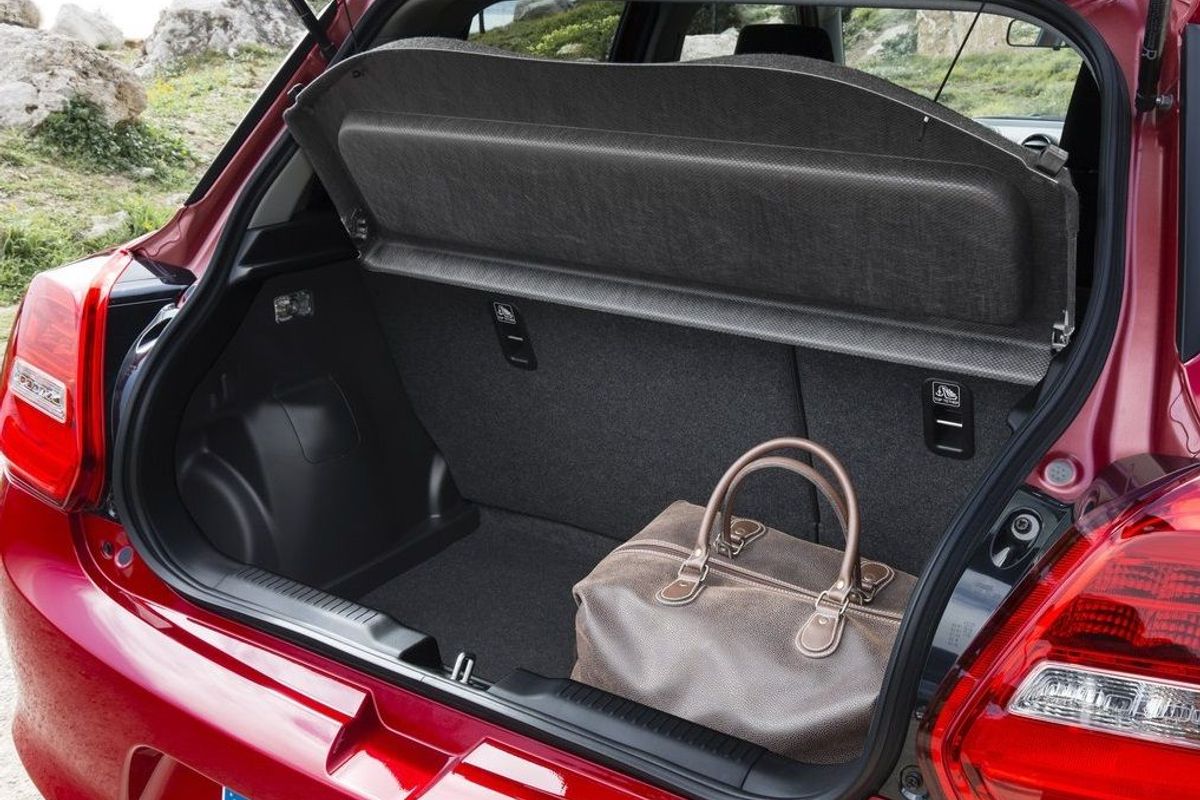
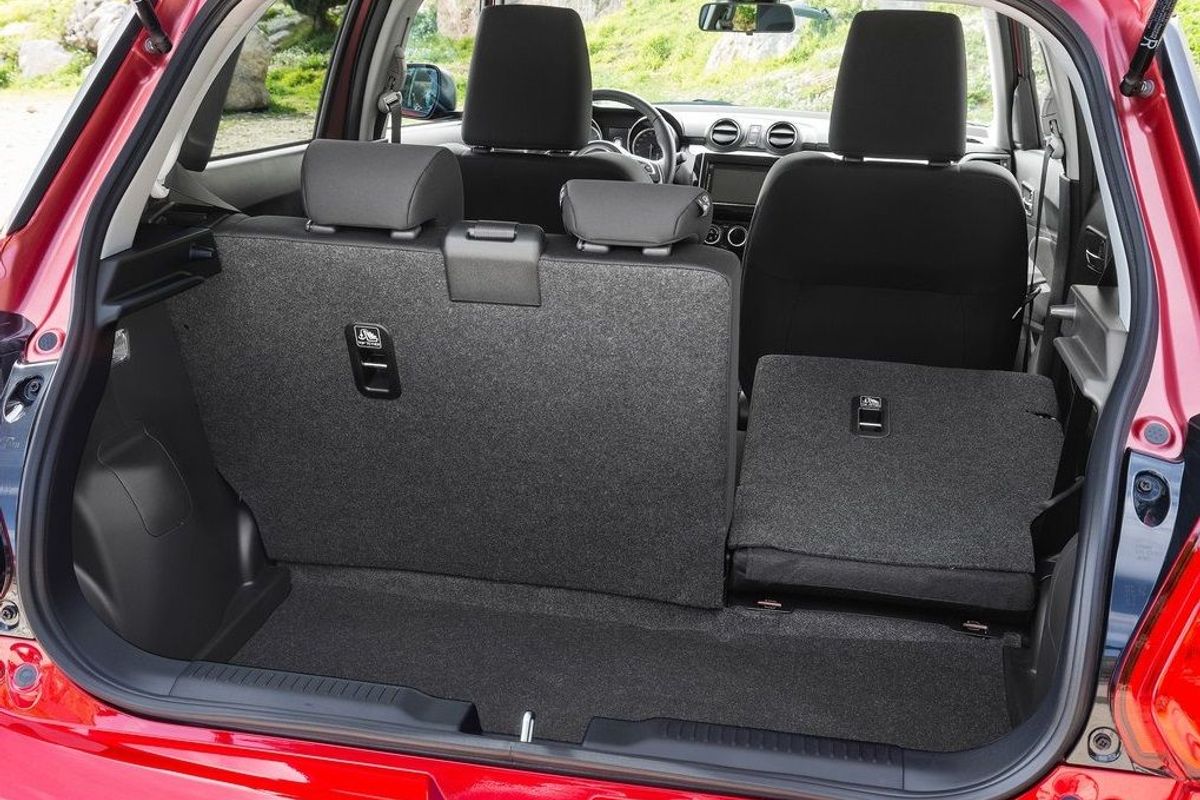
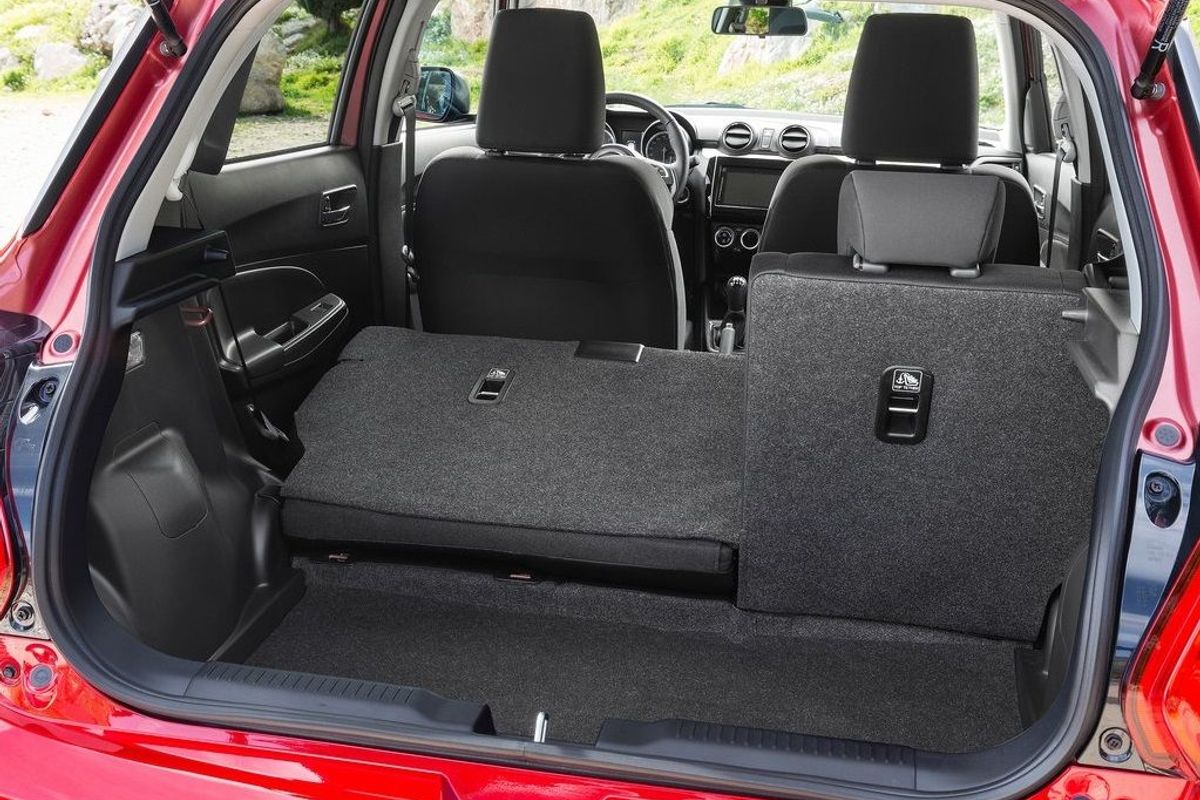
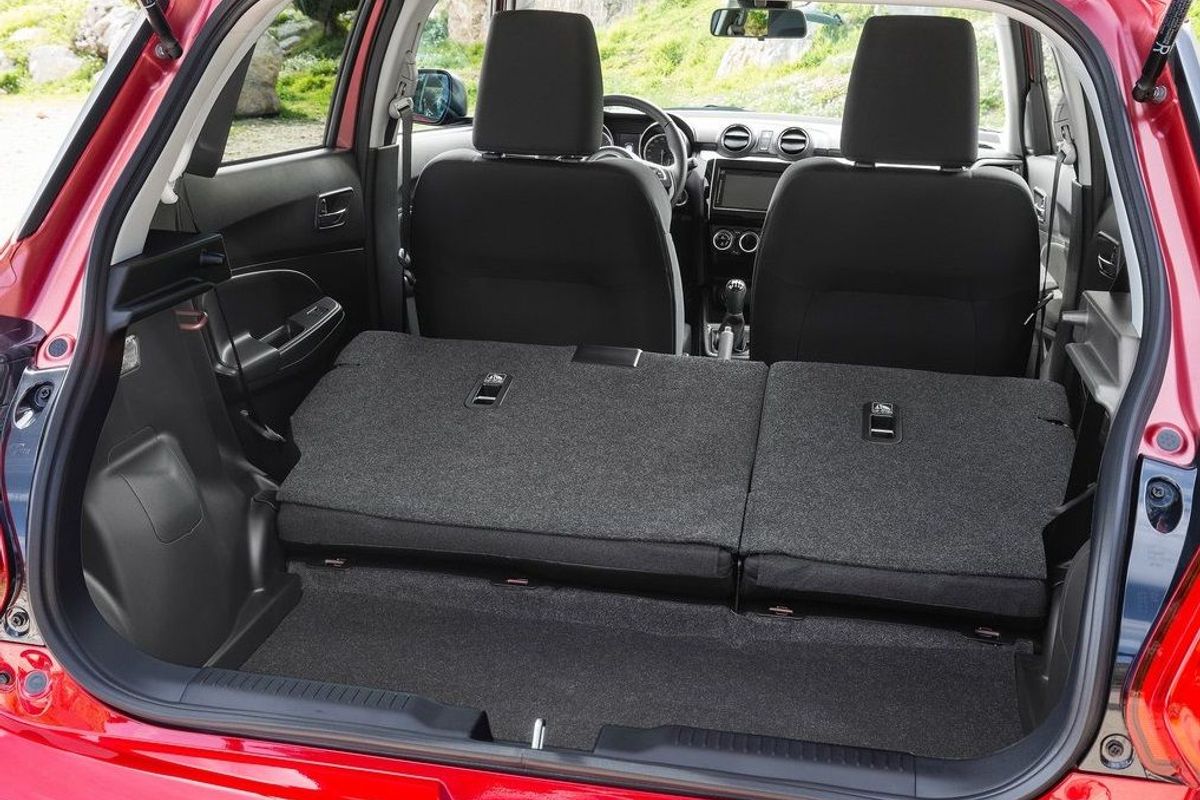
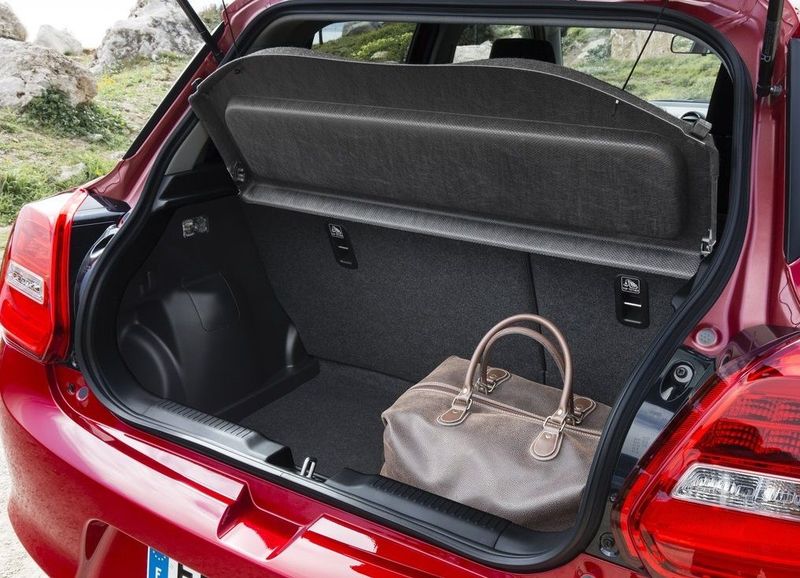
An enlarged luggage bay is welcomed in the new Swift and the 60:40 split rear seat improves practicality further.
For some compact hatchback buyers, the current Swift's comparatively small (210-litre) luggage space might have been a deal-breaker, but due to the new Swift’s larger overall footprint, interior space has improved and you will be happy to know that the load bay is now 25% bigger, now offering 268 litres of space – no less than 58 litres more than before. The rear seats are split in a 60:40 configuration, further strengthening the Swift’s practicality proposition. But if improved luggage/utility space is not enough of a gain, rear legroom has also been improved by some 17 mm, which should make aft passengers happy on those longer out-of-town road trips.
From the outside then, the new Swift certainly looks the part and more importantly, it has somewhat rectified the practical pitfalls that set it back previously. Let’s step inside and take it for a drive then, shall we?
What’s the new Swift like to drive?
By virtue of being some 85 kg lighter, the new Swift feels perkier than the model it replaces, with its 61 kW 1.2-litre engine providing adequate performance.
For a person who is accustomed to the oft-infuriating Cape Town traffic, Indian traffic was nothing short of maniacal and chaotic! Many of the rules of the road seem to simply not apply to Indian road users and accidents are very common. In fact, India is one of the most accident-prone countries in the world and when you see how haphazardly some motorists drive in that country, it’s easy to understand why. So when we learnt that we would be driving the new Swift far from the hustle and bustle of Mumbai, my heart was truly grateful. Our drive in the new Swift took place about 2 hours from Mumbai in the scenic mountains near Pune. Thank goodness!
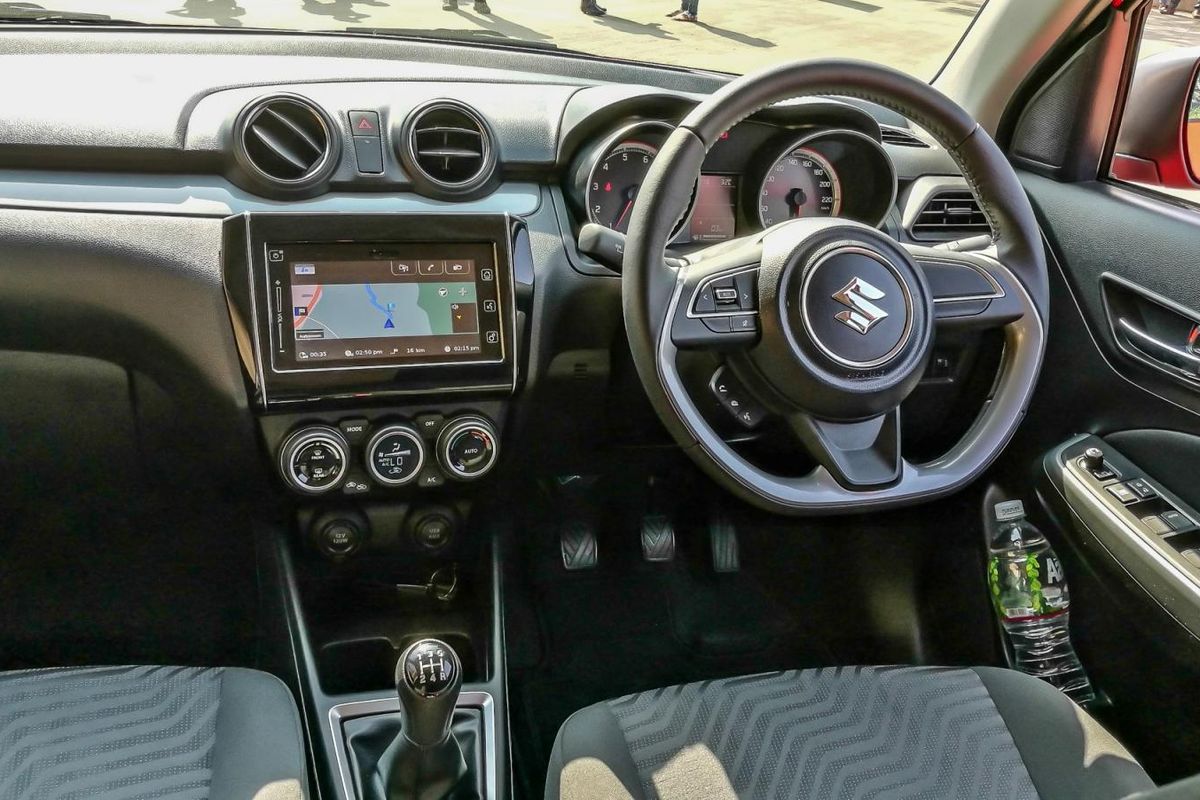
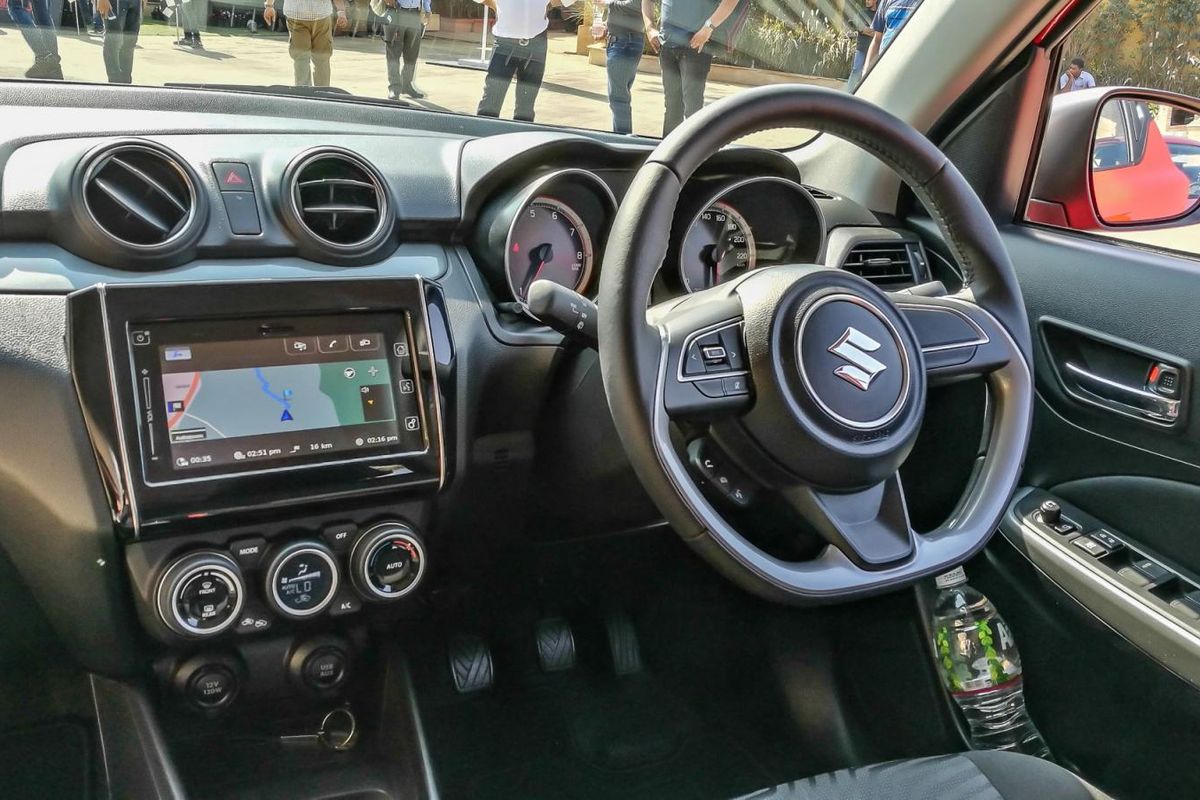
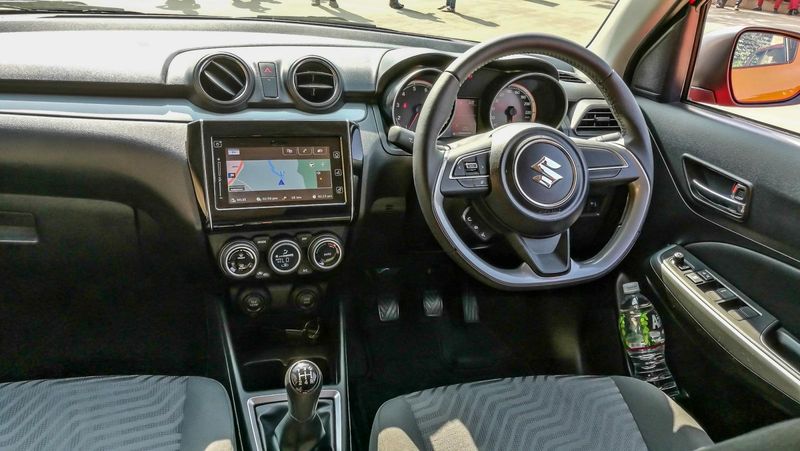
As a current Swift owner, the changes inside this new Swift were immediately apparent. Although much of the surfaces in the Swift are made of hard but durable plastics, there are a few nice touches in the Swift's cabin. The new-look steering wheel is flat-bottomed with a contrasting plastic insert which matches the trim elements seen in the dashboard and doors. The shape and look of the instrument cluster have also an been improved and it actually looks sportier now, which will increase appeal for especially younger buyers. General perceived build quality is good and you will also notice the new ventilation dials mark a major improvement over those of the Swift's predecessor.
The Swift's interior has improved significantly and the inclusion of a touchscreen infotainment system with nav is a highlight. Let's hope it will be offered in SA.
The 7-inch touchscreen infotainment system lifts the interior look significantly and it's a major highlight of this new Swift. The unit came equipped with navigation, Bluetooth, Apple CarPlay and Android Auto functionality. It's an intuitive system that's pretty easy to use, but Suzuki SA has yet to confirm whether derivatives destined for our market will get it… We think that as more consumers demand better smartphone-interface technology in their vehicles, its inclusion would only make the proposition of buying the new Swift that much stronger. A reverse-view camera was another useful feature on the Swift that we drove in India.
The seats are far more comfortable and supportive too. Unlike the relatively flat seats of the outgoing Swift, the seats in the newcomer have more pronounced side bolstering, which hugs your hips and cosset you nicely while driving and provide extra support when threading the Swift through corners.
We drove the Indian-spec Swift 1.2, featuring the same, yet mildly optimised, naturally aspirated engine found in the current Swift, but with 61 kW and 113 Nm of torque on offer. It’s also likely to be the only engine that will be offered in South Africa. It’s a refined motor and although its outputs are average, it’s suited to this leaner Swift.
Ride quality and handling ability remain key strengths of the Swift making it difficult to ignore in this segment.
The steering feel is noticeably lighter than before and although it felt reasonably responsive, I got the impression that it was perhaps a little too light with a numbness at its centre. Having said that, it's not light enough to make the steering feel overly vague. Despite this, the new Swift is still a nimble handler and it maintains its composure well when coaxed into corners with gusto; as ever, it’s actually quite fun to drive…
The Swift’s gearbox is another highlight and the 5-speed shifter delivers smooth, effortless 'changes with a positive feel. This new Swift definitely feels perkier than its predecessor and the fact that it's some 85 kg lighter has made a big difference in aiding and improving acceleration/general performance.
General ride quality and overall on-road composure are 2 of the Swift's key strengths and this latest version has lifted that bar a few degrees higher. Speaking in general terms, Indian roads are in a worse state than South African routes and the Swift's ride quality is pliant and forgiving, even over rougher surfaces. If I had to put a number on it, I would say that the Swift's ride quality has improved by about 10%, which is significant, because the outgoing Swift was pretty good in this regard.
Final thoughts
Provided that the new Swift's local pricing and specification is attractive, it should fly off Sukuki's showroom floors…
Overall, we came away suitably impressed with the higher levels of refinement offered by the new Swift and we have every reason to believe that it will be well received by critics and consumers alike and, therefore, will continue to sell strongly in South Africa. It appears to be a considerable improvement over its predecessor and not only is its styling more modern and attractive, but more importantly, it’s more spacious and the larger luggage capacity in itself could generate conquest sales. Its engine performs adequately and should return good fuel consumption figures on a regular basis while also delivering improved performance thanks to the reduced kerb weight.
With that said, the new Swift's value offering will depend on the specification and pricing structure that Suzuki SA can deliver to our market. As it stands, the new Swift will arrive in South Africa in Q2, or latest, Q3 of 2018. As far as we know, Suzuki's 83 kW 1.0-litre turbocharged Boosterjet engine is not expected to make it to South Africa, but we certainly will, eventually. Also, Suzuki South Africa is still ‘studying’ the prospect of introducing the new 103 kW / 230 Nm 1.4-litre turbocharged Swift Sport to our market. Again, let’s hope it comes…
In terms of positioning, the new Swift appears to be perfectly primed to take the fight to the popular Hyundai i20, Mazda2, Toyota Yaris and Opel Corsa. It will also surely look to steal sales from the latest Volkswagen Polo Vivo. Although it's not as premium an offering as the Polo (and, arguably, upcoming Ford Fiesta), it may even have enough clout to lure would-be entry-level Polo buyers into Suzuki's camp.