Mazda BT-50 Double Cab 3.2 4×4 SLE Auto (2017) Review

Upon gaining its independence from Ford, Mazda shifted its focus to the passenger car market, which relegated it to a fringe-playing role in the ultra-competitive bakkie segment. But now the facelifted BT-50 is here and eager to take a bigger slice of the double-cab pie. We tested the flagship 3.2 SLE 4×4 Automatic model to see whether the BT-50 can still compete with the likes of Ranger, Hilux and Amarok as a leisure bakkie.

We like: Build quality, off-road ability, improved looks, excellent warranty/service plan

We don’t like: Clunky drivetrain, dated cabin

Alternatives

  • Its more modern, handsome sibling: The Ford Ranger shares its basic underpinnings with the Mazda as well its drivetrain, but whereas the Ford has moved decisively with the times in terms of its design, tech and interior features, the Mazda hasn't. For around R40 000 more than the Mazda, the Ranger doesn't offer too many additional features, but it nevertheless has considerably more showroom appeal.
  • The market leader: The latest Toyota Hilux offers an excellent engine that delivers strong performance, refinement and economy. Inside, it boasts a car-like cabin layout that has moved significantly beyond its utilitarian roots. And, of course, it is a Hilux, so there is considerable peace of mind that comes with Toyota ownership. It arguably remains the best option if you intend going off-road often.
  • A brand new entrant: Also consider Mitsubishi's recently launched Triton. For the same money as the Mazda, you get a fresher design, but a similar balance of leisure and workhorse talents. The new 2.4-litre engine underneath the bonnet is impressive, offering excellent refinement and sufficient power. It is also very good off-road.

Compare the Mazda BT-50 3.2 SLE 4×4 Auto with the Ford Ranger 3.2 XLT 4×4 Auto and Toyota Hilux 2.8 GD-6 4×4 Auto

Too little, too late?


The BT-50 retains its polarising rear light cluster design. Underneath the odd-ball looks, it remains a solid, rugged offering.

While Mazda's performance in the passenger car-, and particularly the burgeoning crossover segments of the market, has been impressive, it has lagged badly in terms of bakkie stakes. There are a number of reasons for this… Firstly, the current BT-50 was co-developed with the Ford Ranger, but following the aforementioned breakup a few years ago, the partnership on this platform no longer exists, so Mazda has had to improve the vehicle all on its own. Then there's also the not-so-small matter of production. Until recently, the BT-50 was built next to the Ranger in Pretoria, but this new model is now sourced from Thailand – this, Mazda South Africa believes, is a positive, as evidenced by a stunning warranty/service plan offering. 

So, now we have the facelifted BT-50 and, by all accounts, it looks like a minor change. Furthermore, it has already been announced that the next (2018) BT-50 will essentially be a rebadged new-generation Isuzu KB and this current model could, therefore, be seen as a mere stopgap. All that said… should you still put the BT-50 on your test drive shortlist?

How does it fare in terms of…

Design and packaging?


Small detail changes to the design and smarter alloy wheels have improved the BT-50 still quirky looks.

The BT-50's design was polarising (to put it mildly) when it was originally launched in 2013. This facelift has brought a number of detail changes to soften the quirk-factor, but the big Mazda remains an acquired taste from an aesthetic point of view. Nevertheless, revised head- and tail-lamp clusters, as well as a new-look grille are the main revisions and the updates do have a positive impact (only the eagle-eyed will notice the resculpted front bumper, however). The dual-tone 17-inch alloy wheels fitted to the flagship test vehicle are all the evidence you need that a smart wheel design can do wonders for a vehicle's overall look. Dimensionally, the BT-50 remains one of the bigger bakkies on the market, and that load bay can take a useful 1 tonne's worth of cargo on the back. A heavy-duty towbar is fitted as standard to complement the 3 500 kg (braked) tow rating.

Inside, it is probably even harder to spot the changes, which are really limited to minor trim alterations. Unlike the Ranger, which made a significant step forward at the time of its facelift in terms of interior technology, the Mazda hasn't, so it looks rather old-fashioned. If you're not too concerned by that, you may be more impressed by the solidity of it all – this bakkie feels built to take punishment. SLE specification does include leather upholstery, but for the most part, the emphasis appears not to be on glitz and tech, but rather practicality, as evidenced by a good number of storage solutions dotted around the cabin, including a very spacious glove compartment and large pockets in the doors.

Features?


Though well built, the BT-50's cabin lags the class-leaders in terms of offering modern infotainment features.

As mentioned before, the BT-50, even in flagship form as tested here, lacks the mod-cons that you'll find in the Ford Ranger, Toyota Hilux and Volkswagen Amarok, to name but 3 examples. There's no fancy touchscreen infotainment system, but rather an old-fashioned, button-heavy set-up, with the rear-view camera's display positioned in the rear-view mirror. Still, the sound system does include Bluetooth and USB and auxiliary functionality. To be fair, remember that the BT-50 does cost about R40 000 less than the equivalent Ranger…

You also get cruise control, dual-zone climate control, auto lights and wipers and an 8-way electrically adjustable driver's seat, among other niceties. On the safety side there are 6 airbags (compared with the 7 for the Ranger), ABS with EBD, stability control, hill-start assist, downhill assist, trailer-sway mitigation and hill-descent control.  

Power and economy?


The 3.2-litre engine remains unchanged and is shared with the Ford Ranger. Good power, but thirsty.

Underneath the bonnet is the same 3.2-litre, 5-cylinder turbodiesel you'll find in the Ford Ranger. It remains one of the most potent engines in the bakkie segment, with peak outputs of 147 kW at 3 000 rpm and maximum torque of 470 Nm from 1 750 to 2 500 rpm. The engine is mated with a 6-speed automatic transmission. Mazda claims a top speed of 175 kph for this vehicle, and we have no doubt that it will get there, but we were not too impressed with the BT-50's lower speed behaviour.

A combination of some lag at low revs, with a tardy, clunky transmission makes for progress that at times can be described as "less than smooth". It also makes the BT-50 feel quite flat-footed around town, where leisure bakkies are driven often. In short, the Mazda's drivetrain feels somewhat less refined than most of its rivals, and more like an old-school bakkie that can be hard work to drive on a daily basis.

In terms of efficiency, it also struggles, just like the Ranger equipped with the same engine. Mazda claims a combined cycle figure of 9.7 L/100 km, but we achieved an average consumption of around 11.2 L/100 km, which is easily beaten by newcomers (with similar performance) from Toyota and Mitsubishi.

On- and off-road comfort


Rear space remains good in this segment, but the ride is not as relaxed as some newer rivals.

For reasons not entirely clear to us, the BT-50 feels different on the road compared with the Ranger. The latter vehicle appears to have a softer set-up compared with the Mazda, which can feel quite stiffly sprung at times. It's not harsh, by any means, but also not as supple and relaxed as an Amarok on the road.

Like the newer Triton, the BT-50 seems to have a pretty balanced approach to the lifestyle/workhorse ride requirement ratio, which may actually be a benefit to some consumers. It's not so soft that it can't work hard, and also not too stiff to stop it from doubling as a family adventure vehicle on the weekend. Then again, if you're looking for your bakkie to fulfil a purely lifestyle role, then there are a number of more comfortable and refined options available on the market.

Off-road the BT-50 puts in an impressive performance. An automatic transmission and an abundance of torque, as well as good traction (further aided by a rear diff-lock) combine to endow the Mazda with an almost unstoppable character when the going gets tough. The ground clearance of 237 mm is good, too, but mind the side steps.

Pricing and Warranty

The Mazda BT-50 3.2 SLE 4×4 Automatic sells for R555 700 (May 2017), which includes a recently upgraded and very impressive 5-years/unlimited km warranty and 3-years/unlimited km service plan. Service intervals are scheduled for every 15 000 km.


The BT-50 is well priced but has fallen behind the best in the Leisure Double Cab segment.

Verdict

The Mazda BT-50 is a good bakkie – it always was – but lacks a significant advantage or element of desirability that makes it a more attractive buy than some of the other options in the market. This (very subtle) facelift has only addressed a few of the design quirks, and has not brought the BT-50 back up to speed in terms of features, cabin design, or comfort- and safety-boosting technologies.

Like the Ford Ranger, the BT-50's engine looks great on paper but when combined with this tardy 6-speed 'box, it feels less powerful than it should, and can be downright clumsy to drive, not to mention thirsty. What you have, then, is a very solid, good (but not great) offering that is unlikely to let you down, and even if it does, the warranty and service plan package is excellent. But… if you're looking for a leisure vehicle first and foremost, there are better options on the market at present (see suggested articles below).

Related content:

Opinion: Why the Nissan Navara shakes up the bakkie market
Most powerful bakkies on sale in South Africa
Best Leisure Double Cab bakkies in South Africa
Mazda BT-50 (2017) specs and pricing
Mitsubishi Triton Double Cab 2.4D-ID 4×4 Auto (2017) Review

Looking for a new / used Mazda BT-50 to buy?

Find one on Cars.co.za today by clicking here

Facelifted Kia Soul (2017) Specs & Pricing

The Kia Soul crossover has received a facelift with updated styling and a new entry-level turbodiesel derivative joins the local range.

Shown at last year’s Paris Motor Show, the facelifted Kia Soul has now arrived on local soil with updated styling. Kia has also bolstered the local lineup with the addition of a new entry-level 1.6-litre turbodiesel Start derivative that offers 94 kW and 260 Nm of torque and mated to a 6-speed manual transmission.

“In a market of mundane crossovers and smaller SUV’s, the Soul has always been able to provide something a little different and stand out. As an alternative, the Soul gives consumers a great way to express themselves in a practical and funky way, but with all the features and the quality people expect from KIA” says David Sieff, Marketing Director, Kia Motors South Africa.

What’s changed?


Exterior revisions have enhanced the Soul's stylistic appeal and its boxy 'bread loaf' shape makes it somewhat unique. 

For this facelift, Kia has redesigned the Soul’s front bumper that now features a metallic skid plate, with the same treatment applied to the rear bumper. The rear fog lamps and reflectors also feature a new design. The familiar ‘tiger-nose’ grille has also been slightly reworked and the headlight composition and layout have also been revised. On the high-spec Smart derivative, the LED daytime running lights have moved to the bottom of the headlights.

The entry-level Start derivatives come equipped with newly designed alloy wheels, while the wheel designs for the Street and Smart derivatives remain unchanged.


The interior remains much the same with the Soul Start derivatives benefitting from new cloth upholstery.

As for the interior, changes are minimal, but entry-level Start derivatives now have redesigned cloth upholstery while the leather upholstery with contrasting stitching remains unchanged for Street and Smart derivatives. The Soul’s cabin does, however, feature new gloss black and metallic highlights and switchgear.

Engines and specification

A total of 6 Soul derivatives are available to buyers with 3 trim grades on offer (Start, Street and Smart). In addition to the new 1.6-litre turbodiesel Soul Start mentioned above, buyers can also opt for a naturally aspirated 1.6-litre Soul Start petrol derivative with 91 kW and 152 Nm of torque. A 6-speed manual transmission is standard and a 6-speed automatic transmission is offered as an option for this derivative.

Standard features on the Start derivatives include radio with RDS, MP3/Aux/USB jacks, Bluetooth connectivity and six speakers, central locking, an immobiliser, a rear-view camera, electrochromatic rearview mirror, electric windows front and rear, electric heated side mirrors with integrated indicators, and a leather-wrapped steering wheel. ABS, 6 airbags, active headrests, ISOFIX anchors and impacting-sensing door unlock function are also standard on Start derivatives.


The Soul 1.6 CRDi Smart DCT tops the range with 100 kW and 300 Nm of torque.

For added specification, you can consider the Soul in Street trim. The Soul Street is powered by either the 94 kW/260 Nm 1.6-litre turbodiesel engine or a naturally aspirated 2.0-litre petrol engine with 116 kW and 192 Nm of torque. Only a 6-speed manual transmission is offered on Street derivatives.

In terms of features, Street trim adds additional niceties such as glovebox cooling, electric folding side mirrors, a Smart Key with push button start and leather upholstery, Electronic Stability Control, Brake Assist, Hill-start Assist Control and Vehicle Stability Management.

The top-of the-range South Smart is offered with 2 engine choices, the 1.6-litre diesel and the 2.0-litre petrol. The former is standard with a 6-speed ‘box and the latter mated to a dual clutch transmission with outputs bumped up to 100 kW and 300 Nm of torque.

Smart trim extends its feature offering with front and rear park distance control, HID projection lamps with LED daytime running lights, LED rear combination lamps, cruise control and electric seats. Both the Soul 2.0 Smart and 1.6 CRDi Smart can be fitted with an optional sunroof for an additional R12 500.

Take a look at what you can expect to pay for the Kia Soul below…

Kia Soul – Price in South Africa (May 2017)

Soul 1.6 Start Manual – R309 995

Soul 1.6 CRDI Start Manual – R329 995

Soul 2.0 Street Manual – R347 995

Soul 1.6 CRDI Street Manual – R376 995

Soul 2.0 Smart Auto – R391 995

Soul 1.6 CRDI Smart DCT – R431 995

The Kia Soul is sold with a 5-year/unlimited km warranty, 4-year/90 000 km service plan and 5-year/unlimited km Roadside assistance.

Want to buy a Kia Soul?

Buy a new or used Kia Soul here!

Related Content

Kia Soul 1.6 CRDi Smart DCT (2016) Review
Nissan Qashqai Updated
Spy Shots: Nissan Qashqai Facelift
Compact Crossovers: Practical Hyundai Creta vs Stylish Toyota C-HR
Crossover Comparison: Honda HR-V vs Mazda CX-3
Crossover Group Test: Suzuki Vitara, Hyundai Creta & Renault Captur [with Video]

Range Rover Evoque Convertible (2017) Off-Road Review

Range Rovers, despite being very upmarket and luxurious vehicles, remain true to the ethos of the Land Rover brand: they are extremely capable off-road. Granted, most buyers are never going to take their shiny new Evoque Convertibles very far from the tarmac, but what if they did? We put the newcomer to the test on a challenging off-road track to find out how it fares in the rough stuff… 

The Range Rover Evoque Convertible: it's a car that will look marvellous cruising down a sunny boulevard, or exude style on the school run. It's a Range Rover, but with the added bonus of getting the wind in your hair… assuming that's something Range Rover buyers have always wanted, of course.

However, as it is equipped with all the same off-road systems as any other Evoque – a car that we've literally driven across Africa – we thought it might be interesting, at the very least, to take the Evoque Convertible and get it dirty.

Related content:

Range Rover Evoque Convertible (2016) First Drive
World Car of Year (2017) Jaguar F-PACE [Review]
Mercedes-AMG C63 S Cabriolet (2017) Quick Review
Mercedes-Benz SLC300 (2016) Review
Mini Cooper Convertible Auto (2016) Review
Ford Mustang 2.3 EcoBoost Convertible Automatic (2016) Review

Interested in buying a Range Rover Evoque?

Find one for sale on Cars.co.za

Ford Focus Gets Style and Tech Upgrade

The Ford Focus range has been enhanced with stylistic and equipment upgrades in South Africa and Ford has also replaced the previous 1.6-litre turbodiesel engine with a new 1.5-litre turbodiesel engine. Take a look at the details…

Consumers who are considering buying a Ford Focus will be happy to know that the firm has implemented a number styling and technological upgrades, as well as offering a new 1.5-litre turbodiesel engine mated to a 6-speed manual transmission with outputs of 88 kW and 270 Nm of torque. The Focus range now comprises a total of 19 derivatives.

What’s changed?

Styling and technological updates come in the form of an updated and expanded Trend Styling Pack as well as an upgraded Driver Assistance Pack which now includes the latest SYNC3 infotainment system with navigation.

The Trend Styling Pack is offered as an option on 5-door Trend hatchback models only and incorporates a new full colour-coded body kit with a rear spoiler and an electric tilt and slide sunroof. Multi-spoke 17-inch wheels with low-profile tyres add to the appeal and Bi-Xenon HID headlights from the ST3 are fitted with a cornering beam functionality and LED daytime running lights. Electrically folding mirrors, rear privacy glass and dual-zone climate control is also included.

The cost of the Trend Styling Pack amounts to R19 984.


The SYNC3 infotainment system features improved functionality via an 8-inch touchscreen. 

As for the Driver Assistance Pack, available on 4- and 5-door Trend derivatives, SYNC3 with navigation is now on offer. The system features full-colour graphics, an elevated 3D map view, predictive search function and voice activated points of interest (POI) functionality. Buyers will also benefit from free annual map updates for a period of 5 years.

The new SYNC3 system is faster than the previous SYNC2 system and boasts an 8-inch colour touchscreen with multi-touch gestures such as swipe, slide and pinch-to-zoom functionality. Smartphone integration is provided using Apple CarPlay and Android Auto, the latter of which is still subject to license finalisation for use in South Africa.

The Driver Assistance Package also offers Advanced Active Park Assist, Lane Departure Warning, Lane Keeping Aid and a rear-view camera.

The cost of the Trend Driver Assistance Package amounts to R17 089.

The performance orientated Focus ST and Focus RS also benefit from rear parking sensors now fitted as standard on the ST1, ST3 and Focus RS. Furthermore, the Focus ST3 also gains a reverse camera as standard. SYNC3 with navigation and 10-speaker sound system with a built-in sub-woofer are optionally available for the Focus ST3 and Focus RS.

Want to buy a Ford Focus?

Find a new or used Ford Focus on Cars.co.za

Related Content

Spy Shot: New Ford Focus
Ford Focus RS (2016) Video Review
Ford Focus RS (2016) Review
Extended Test: Ford Focus ST [with Video]
Track Test – Ford Focus ST [Video]
Ford Focus ST (2015) Review
Ford Focus 1.5T Trend (2015) Review


Facelifted Mercedes-Benz GLA in SA (2017) Specs & Pricing

The facelifted Mercedes-Benz GLA has arrived in South Africa! Take a look at specification details and what you can expect to pay for the refreshed GLA.

Shown at the Detroit Motor Show earlier this year, the facelifted GLA compact SUV is now available in South Africa with updated exterior and interior styling and updated equipment lines.

What’s changed?


'Canyon Beige' is the new colour available on the GLA, which also benefits from exterior and interior styling updates. 

Exterior revisions are minimal, but nonetheless include redesigned bumpers, a choice of new alloy wheel designs and a striking exterior colour called ‘Canyon Beige’ is now on offer. The GLA is fitted with a comfort suspension system as standard while an off-road suspension system is offered as an option, raising the body by 30 mm. A lowered suspension option is available on request provided that you opt for the AMG Line or the Dynamic Handling Package.

On the inside, a 360-degree camera is now on offer giving the driver full view of the vehicle and its direct surroundings. The interior benefits from new seat covers and trim elements with chromed control panels. An 8-inch infotainment system is fitted and the instrument cluster features new dials and needles.

Subtle highlights are seen on the electric seat controls on the door panels while the storage compartment in the centre console is now trimmed with a chrome frame. The air vent nozzle rings are also more pronounced. For the Urban and Style equipment lines, new seat cover fabrics and colours are available, including Artico man-made leather. LED high-performance headlights are offered as an option.


Most of the changes are found on the inside of the GLA with new details lifting the interior ambiance. 

The previous Exclusive package is now supplemented with a Luxury Exclusive package that includes black leather in a buffalo look and trim elements include a choice of trapezium-grain aluminium, light brown satin-finish poplar wood or high-gloss brown walnut. Matt black ash wood or AMG trim elements in carbon fibre are also on offer. The Exclusive package with standard sports seats is still offered as an option.

The Night Package can be combined with the Style equipment line which includes 18-inch bi-chromatic light alloy wheels, high-gloss black radiator louvres, black roof rails and a black shoulder line trim strip. The front and rear bumpers and exterior mirrors in high gloss black further add to the sportiness of the Night Package.

The GLA also boasts Hands-Free Access as an option, allowing you to open and close the boot lid with a foot movement. As part of the optional Stowage Facility Package, the boot floor can also be locked using a key.

The Engine Range


The GLA45 AMG Yellow Night Edition features yellow details giving the model a more menacing and sportier character.

The engine offering includes a 1.6-litre turbopetrol engine in the GLA200 with 115 kW and 250 Nm of torque as well as a more powerful turbocharged 2.0-litre petrol engine in the GLA250 4MATIC offering 155 kW and 349 Nm of torque. Diesel options include a 2.1-litre turbodiesel in two states of tune with either 100 kW/300 Nm in the GLA200d or 130 kW/350 Nm in the GLA220d 4Matic.

The GLA range is headlined by the Mercedes-AMG GLA45 4MATIC with its turbocharged 2.0-litre engine developing 280 kW and 475 Nm of torque. A 7-speed dual clutch sport transmission is fitted and claimed acceleration from zero to 100 kph is dispatched in 4.4 seconds. An automatically controlled exhaust flap is standard and the exhaust note can be note can be further enhanced if you opt for the optional AMG performance exhaust system. Fuel consumption is claimed at 7.4 L/100 km.

A Yellow Night Edition is also available to buyers who want something even more sporty than the standard GLA45 AMG 4MATIC. The Yellow Night Edition is painted in night black or cosmos black, combined with matt graphite grey and yellow details. The matt black light alloy wheels feature yellow rim flanges as well as a black-painted AMG twin louvre seen in the grille. Yellow highlights are also seen on the front apron, mirror housings, side skirt inserts, rear diffuser and on the rear wing. AMG sports stripes in matt graphite grey are seen on the bonnet, roof, boot lid and down the side of the car.

The yellow theme is carried over into the interior and the model benefits form an Aerodynamic Package and Night Package while the AMG Dynamic Plus package is offered as an option.

Mercedes-Benz GLA – Price in South Africa

GLA200 – R485 400

GLA250 4MATIC – R654 700

GLA200d – R513 000

GLA220d 4MATIC – R592 500

Mercedes-AMG GLA 45 4MATIC – R856 700

GLA45 4MATIC Yellow Night Edition – R961 700

The GLA is sold with a 2-year/unlimited km warranty and a 6-year/100 000 km maintenance plan.

Want to buy a Mercedes-Benz GLA?

Find a new or used GLA on Cars.co.za

Related Content

Facelifted Mercedes-Benz GLA Shown
Mercedes-Benz GLA45 AMG Edition 1 (2014) Review
Drag Race: Mercedes S65 AMG Coupe vs Mercedes GLA 45 AMG Edition1
Audi Q2 (2017) Test Drive & Review Video
Mini Countryman (2017) First Drive
Volvo V40 T4 Cross Country In-depth Review
Volvo V40 Cross Country T5 AWD Inscription (2016) Review

New Suzuki Swift (2017) First Drive

Suzuki has finally built an all-new Swift, which is the successor to the Japanese brand’s best-selling product in South Africa. We sent our UK correspondent Wayne Gorrett to the South of France to drive it before the newcomer arrives on the local market later this year.

Guided by the “Suzuki Next 100” plan announced at the Frankfurt Motor Show in 2015, Suzuki – the 2016/17 Cars.co.za Consumer Awards Brand of the Year – is currently on an international product offensive developing an entirely new range of what it does best – small city cars.

Two years ago, with the demise of both the Alto and Splash models, the roomy and frugal Celerio made its appearance. It was followed last summer by the impressive Baleno and earlier this year, it was the return of the Ignis name in the form of a quirky but refreshingly different micro-SUV – pure character on wheels.

According to Suzuki SA, a little over 16 000 Swifts have found homes in South Africa since its introduction in 2008. Now, the all-new third (global) generation Swift is on its way and should reach our shores late this year.


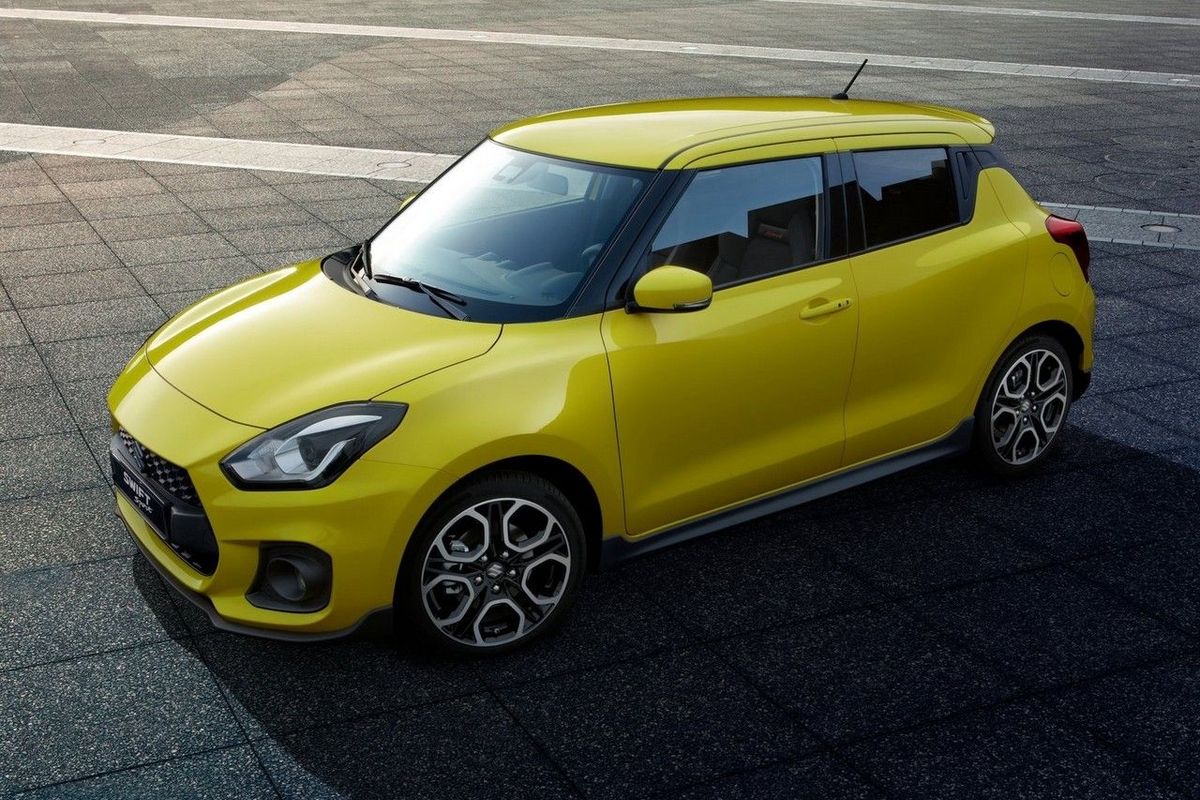
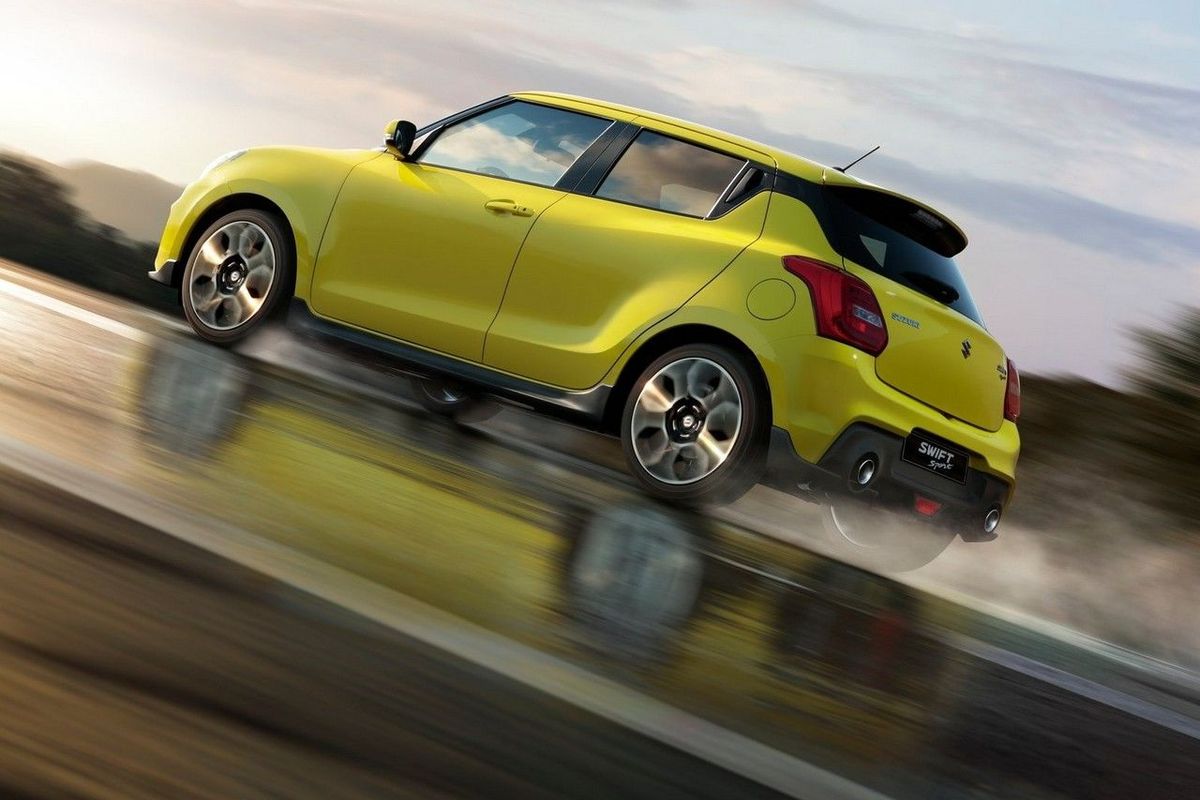
The new Swift in profile. It shares a platform with the Ignis and Baleno.

The 2017 Swift rides on the recently developed “Heartect” lightweight platform first introduced under the Baleno and Ignis. This new platform is 30 kg lighter, which has contributed to the lightest Swift in the new line-up registering a kerb weight of just 890 kg, which is 104 kg lighter overall – impressive, considering no one realised the excess weight was there in the first place.

The engineers have also spun their magic on the new car’s dimensions. The Mk3 Swift is 10 mm shorter overall than the outgoing model, but its wheelbase is 20 mm longer. Tucking the wheels even further into each corner means that there is more interior room, including a 20% bigger boot (at a claimed 265 litres – 54 more than the outgoing Swift). The new car is also 15 mm lower and 40 mm wider, which accentuates its bullish stance.

In the current Suzuki model line-up, the new Swift will slot in between the funky Ignis and more sober Baleno.

The external package

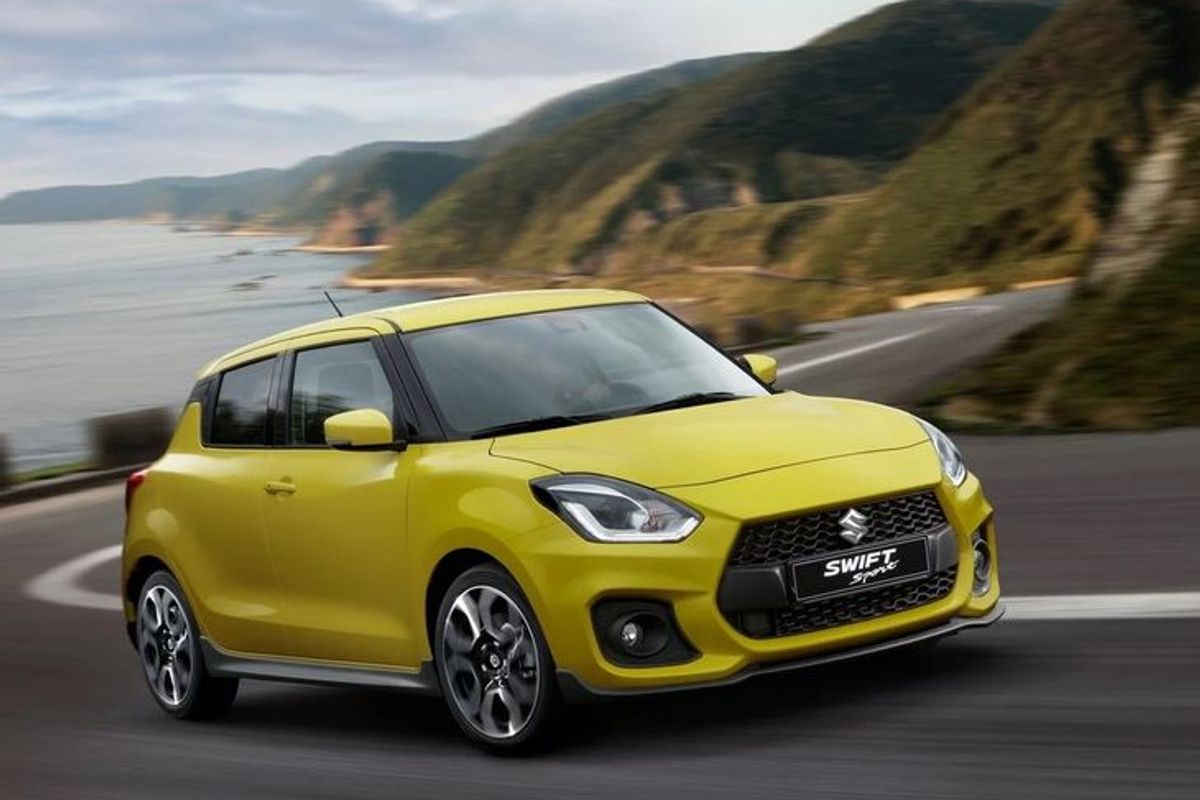
With 5.4 million Swifts sold worldwide since 2005, Suzuki knows a winning formula when they create it. The 2017 Swift is a familiar shape and very much a smoothed-off, buffed evolution of what went before, with the wrap-around windscreen, similarly shaped light clusters and the sloping roofline

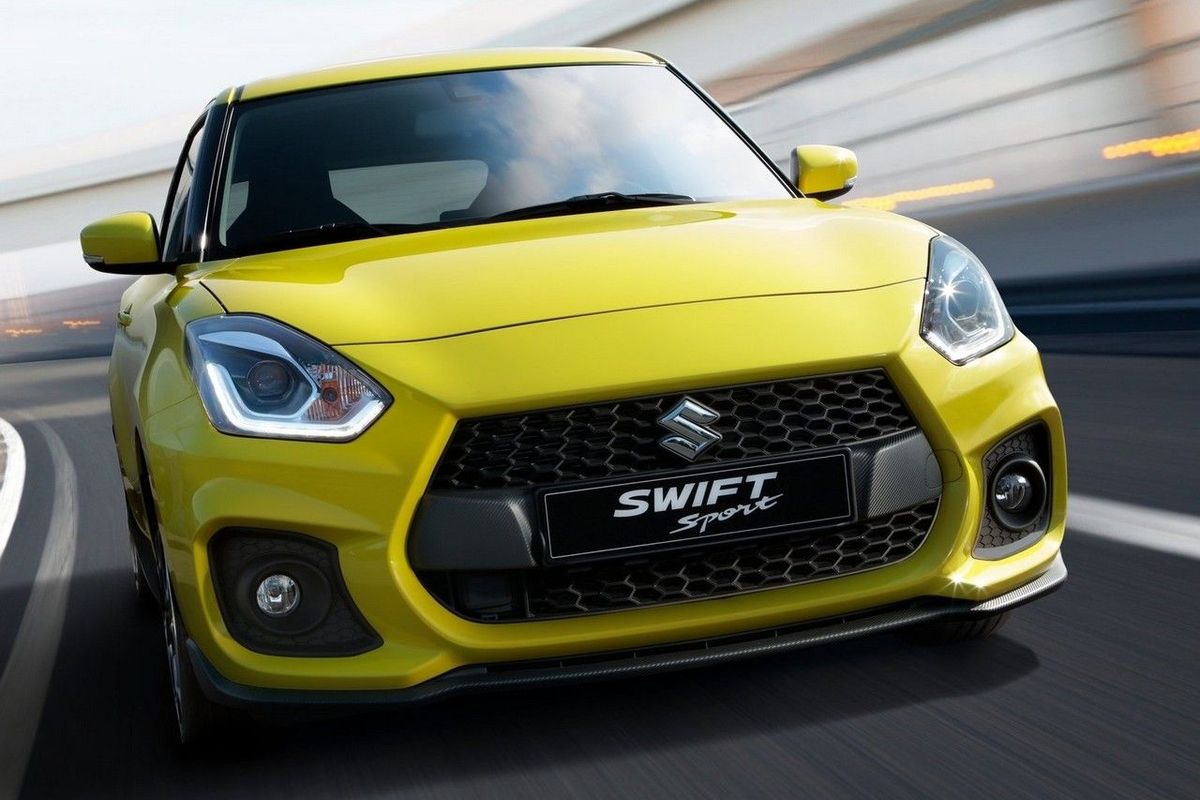
It certainly makes a statement with its aggressive grille, muscular arches and very distinctive shoulder line. The blacking-out of the entire A- and B-pillars along with the top half of the C-pillar, makes the roof appear to “float”.


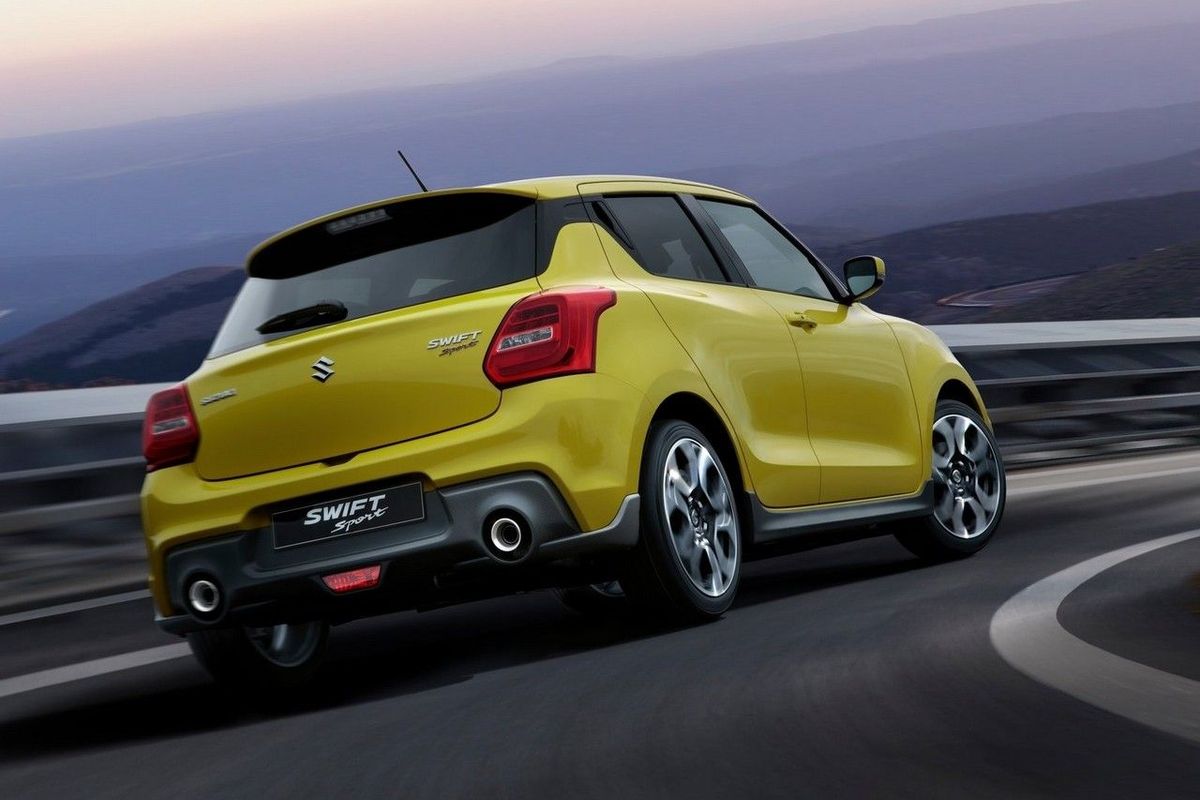
Rear door handles are hidden in the C-pillar to give it a 3-door appearance

Suzuki has discontinued the 3-door Swift derivative in most markets because of low take-up and, while the Swift in the photos might at first appear to be a 3-door, the more eagle-eyed will have noticed that the rear door handles are concealed in the black plastic trim of the C-pillars.

In the UK, the new Swift offers 10 fashionable exterior colours and full personalisation options both inside and out and, in doing so, target a more youthful demographic.

The interior

The good work done by the exterior designers is mostly continued on the inside. The interior has been completely redesigned and features a new dashboard with a V-shaped layout and revised vents. The dash design is neat, but nothing like the effort given to the Ignis.

Below is a 7-inch touchscreen replacing the radio unit and numerous buttons and knobs found in the previous model. The manual HVAC controls just above the centre console are also new, now including modern buttons with new graphics.


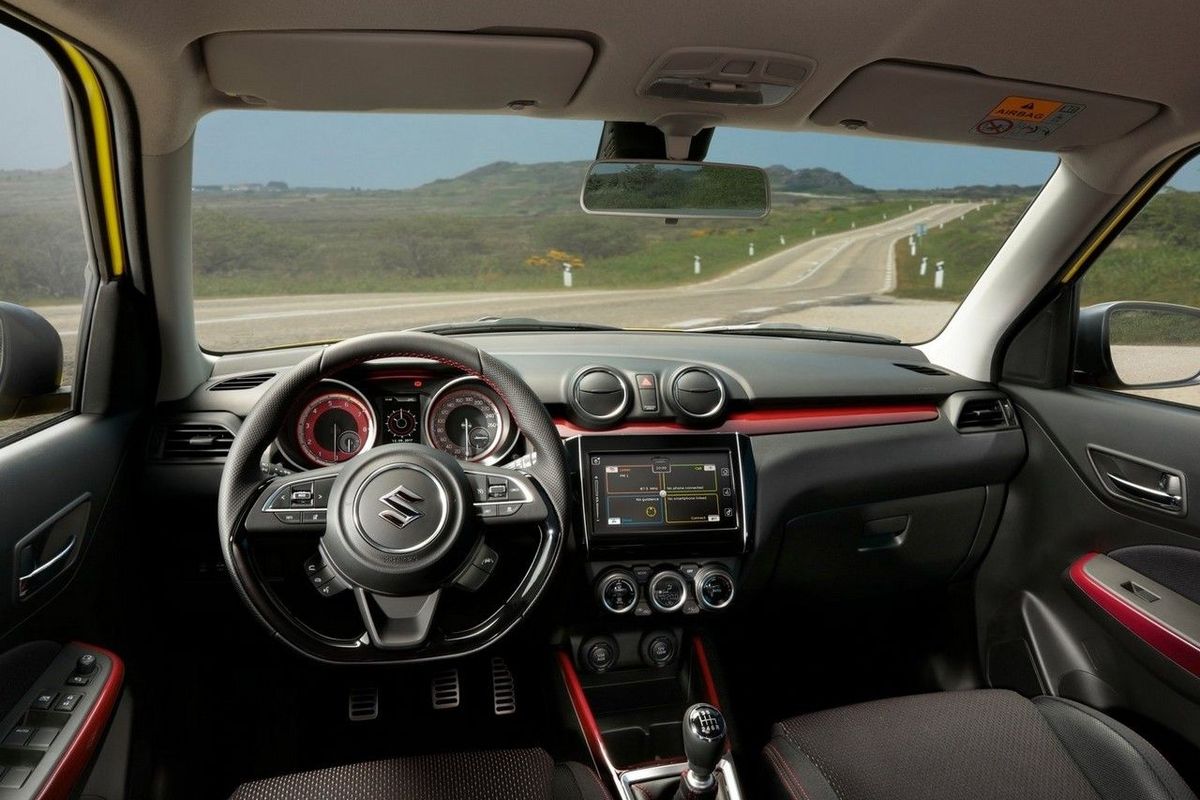
Interior has had a major overhaul and appears more modern, but some of the plastics still feel low rent.

The instrument cluster is an improvement and features separate covers for the speedo and rev counter and a new digital display in the centre. The steering wheel has a circular centre section (boss) with chrome detailing, controls on both spokes, sporty grip areas and a flat-bottom lower section.
There’s more interior room, comfortable front and rear furniture and a bigger boot to aid practicality. However, plastics deployed in critical touch zones look and feel a bit cheap.

Engines and transmissions

This far ahead of its South African launch, choices by Suzuki SA on engines and transmissions have yet to be announced. However, at its pan-European launch, a pair of petrol-fuelled engines were available to assess, coupled with 5-speed manual and 6-speed automatic gearboxes.

The first, a 1.2-litre four-cylinder 67 kW Dualjet engine offers CO2 emissions of 98g/km and combined fuel consumption of 4.3 L/100 km. This is the same engine as in the current Swift and will be in the new Ignis when it arrives soon. Deployed in the new Swift Lite, the engine offers noticeably more entertainment than before, which is good news. But wait, it gets better…


Naturally aspirated engines are available although we are uncertain what versions will make it to SA.

The real star of the show is the cracking 83 kW three-cylinder 1.0-litre Boosterjet engine, which Suzuki claims sips an official 4.6 L/100 km. This engine is also available with Suzuki’s SHVS mild hybrid system (Smart Hybrid Vehicle by Suzuki), although the combined unit is unlikely to make it to local shores. It loves revving and proves willing throughout the gearbox.

Both engine options drive the front wheels through a 5-speed manual as standard, while the 6-speed automatic and Suzuki’s excellent ALLGRIP 4WD are options with the 4-cylinder 1.2-litre Dualjet.

Performance, ride and handling

The turbocharged Boosterjet engine, with its 83 kW output is 16 kW more than the larger capacity 1.2-litre Dualjet unit, making the smaller-engined car faster to 100 kph by 1.3 seconds, yet it returns 4.6L/100 km, just 0.3L/100 km behind the 1.2.

Best of all, it’s an engine that shows eagerness and willing–it pulls strongly from low down the rev range (like a petrol engine shouldn’t) which proved a boon around the mountainous roads and hairpin bends around Monaco and along the French Riviera.

The car rides well and smothers the worst bumps, though extended lengths of uneven surface can make it a little skittish. Its cornering performance is excellent – the Swift turns in exactly where aimed and maintains its poise with good feedback from the wheel and little discernible body roll.


Larger wheelbase has made more space for passengers and luggage but hasn’t affected the Swift’s fun-to-drive chassis.

You don’t spend your time thrashing the 3-pot Swift just to keep up with traffic. It’s decently quick through 2nd and 3rd gear of the excellent 5-speed manual gearbox.

The Swift Boosterjet also has a highly appealing audio performance, just enough to make it sound interesting, without ever becoming harsh or sounding like it is wheezing towards the red line. It piles on the revs quickly and sweetly, belying its turbocharged status, which all helps to make the car feel so lively.
Prices

Again, as you would expect this far in advance of its South African introduction, no prices are available for the new Swift, but in the UK, the five-model range starts from £11 000 (R190 000). Anything between R180 000 and R220 000 seems within range, but it’s purely speculation at this time. 

Summary

The Suzuki Swift has always been an easy car to like and this 2017 iteration continues that attraction. With its smart design that builds on the cute looks of its predecessors and some appealing efficiency figures.

The new Swift is a genuinely capable little car. Not only does it cover all the important city car bases – it’s efficient, comfortable, good looking and well equipped–but it’s just as fun to drive as the class-leading Ford Fiesta. But critical parts of its interior finish are no better than the class average.

Overall though, the new Swift is a good car and–depending on final trims, engines and prices for the local market–will continue to be competitive in a busy class where it’s notoriously difficult to stand out.

Related Content

Suzuki Swift Sport (2016) Review
Renault Clio GT Line (2017) First Drive
Volkswagen Polo 1.0 R-Line (2017) Quick Review (w/Video)
Suzuki Ignis (2017) First Drive

Searching for a used Suzuki Swift?

Start your search here

Peugeot 2008 1.2T GT-Line Auto (2017) Review

Peugeot, now operating solo in the South African new vehicle market (without sibling brand Citroën), is refocusing its product line-up. One of the attractive new-generation vehicles that deserves a closer look is the refreshed 2008, a compact family car/crossover that is both practical, and stylish. We tried the flagship 1.2T GT-Line derivative to find out whether it merits your consideration.

We like: Excellent build quality, punchy engine, practical load area

We don’t like: Pricey, back-up concerns

Alternatives

  • Style… from a trusted brand: The newly launched Toyota C-HR is hard to ignore in this segment. Similarly priced at R356 000 (May 2017), it offers excellent build quality, refinement and the peace of mind that comes from buying a Toyota. But, it has its flaws – the boot is very small and the standard specification can't match the Peugeot's.
  • Quality and design: The Mazda CX-3 is a strong seller locally and should appeal for both emotional and rational reasons – it is solid, refined and well-equipped on the one hand, but also stylish and not entirely "predictable" or mainstream. The 2.0 Individual Automatic sells for R365 400 (May 2017).
  • More space, more power: The recently refreshed Opel Mokka X is a strong rival, offering more cabin space than the Peugeot, a more powerful (albeit thirstier) engine, and excellent standard specification in Cosmo trim. It is slightly more expensive (R368 100), but also boasts a stronger warranty and service plan.

Compare the Peugeot 2008 1.2T GT-Line with the Mazda CX-3 2.0 Individual Auto and Toyota C-HR 1.2T Plus Auto here

Where does it fit in?


With its GT-Line trim, smart wheels and upmarket detailing, the 2008 hides its essentially compact wagon design well.

French car maker Peugeot has been in the news a lot of late, but not always for its products. First came news of the local restructuring and organisational changes, all in an effort to ensure the brand's long-term presence and profitability in South Africa. As a consequence, the decision was made to cease importation of Citroën products so as to allow the focusing of efforts on rebuilding the Peugeot brand instead. Internationally, Peugeot grabbed the headlines earlier this year when it announced its acquisition of German brand Opel from General Motors. So, there's a lot happening…

But what South Africans probably haven't heard about all that much is the dramatic turn-around the brand has experienced in Europe. New boss Carlos Tavares restored the troubled company to profitability in only 2 years. And here's a key fact – that would not have been possible with poor product…

Locally intensive efforts are also underway to restore lustre to the famous brand, and the refreshed 2008 will play a key role as it competes in one of the fastest-growing and most competitive segments of the market, the compact crossover.

How does it fare in terms of…

Design and Quality


The GT-Line trim level adds several attractive details to the otherwise conservative 2008 design.

The Peugeot 2008 was originally introduced in 2013 as one of the first of the compact crossovers. Based on the popular 208, it offers a station-wagonesque bodyshape that is quite conservative in appearance. The combination of a clever facelift and upmarket GT-Line specification, however, makes for quite a handsome vehicle.

In truth, the facelift has been subtle but effective. The new, more upright grille design endows the 2008's face with a more assertive appearance where its predecessor played the "cutesy" card. Indeed, it is clear that Peugeot has tried hard to make the 2008 look more macho SUV, less city slicker – witness the greater use of black plastic cladding around the lower parts of the body and the wheelarch extensions. The GT-Line trim package further adds smart, dual-tone 17-inch alloy wheels, gloss black detailing and other shiny bits. The overall effect has been positive, with the 2008 looking at once modern and sophisticated.


The 2008's cabin boasts excellent fit and finish and top-notch materials.

Step inside and you'll find a cabin that impresses with its Germanic levels of fit and finish. The partially leather-upholstered seats feature exquisite red stitching, a detail that extends to the steering wheel, doorsills and even the oddly shaped handbrake lever. The combination of gloss black and satin silver detailing, with materials that are impressive to the eyes and fingertips, give the 2008 arguably one of the most expensive-feeling cabins in this segment.

Comfort and Features


There is no shortage of standard features in this 2008. Dual-zone climate control is standard.

Slide in behind the diminutive steering wheel of the 2008 and it may take some time to acclimatise. The steering wheel may offer rake and reach adjustability but is nevertheless set very low, and adjusting it into too high a position will see the top part of steering wheel obstruct the view of the instrumentation. Peugeot calls this setup the iCockpit and claims that the ideal steering position (low, small steering wheel, with a view over the top to the instruments) will quickly feel more natural. Perhaps we've got used to it with the 208, but there appears to be some truth in this… 

Save for the quirky driving position, the 2008's cabin is actually pretty straightforward and appreciably practical and comfortable. Those front seats are superbly supportive and comfortable, but arguably eat into rear legroom somewhat. Nevertheless, rear passengers are still reasonably well catered for, with especially headroom being generous courtesy of the stepped roof design. Speaking of the roof, interesting LED streaks are embedded into the roof lining – a nice touch!

The standard features list is very comprehensive, with dual zone climate control, a comprehensive touch-screen infotainment system (with navigation), auto lights and wipers, 6 airbags, Isofix rear child seat anchorages and cruise control all included as standard.


The 2008's load area is significantly bigger and more practically shaped than most rivals.

Unlike some rivals, particularly the swoopy C-HR and CX-3, the 2008's more traditionally wagon-shaped body gives it a big advantage in the practicality stakes. Lift the tailgate and you'll find a spacious luggage area measuring a claimed 410 L with the seats up, way better than almost all potential rivals. Fold down the rear seats and Peugeot claims a total utility space of nearly 1 400 L, which combined the box-like shape of the rear compartment, means that bulky items can also be transported. 

Ride and Handling


Like most Peugeots, the 2008 offers supple suspension and good roadholding.

Peugeot has long been one of the most talented brands when it comes to developing cars that offer both a comfortable, supple ride, and engaging dynamics in the corners. While it is unlikely that many owners would expect thrilling handling from their small crossover, the reality is that the 2008 is actually fun to pilot. The combination of quick, direct steering and a supple suspension set-up that also resists lean well in the corners will be appreciated by those for whom driving is not merely about getting from A to B. Those drivers who simply want a comfortable, refined and quiet cruiser will find that the 2008 also has those boxes ticked.

Performance and Economy


The 6-speed automatic transmission is nicely matched to the willing 3-cylinder turbo engine.

Powering this derivative of the 2008 is one of the best downsized engines available on the market, Peugeot's 1.2-litre, 3-cylinder turbopetrol. It delivers a strong 81 kW and 205 Nm of torque, the latter figure being particularly important as it is already available from a low 1 500 rpm. Also consider that the torque output is more than what Toyota's managed to extract from the 4-cylinder engine in the C-HR, as well as being higher than what's on offer from Mazda's naturally aspirated 2.0-litre, as fitted to the CX-3.

The engine is mated with a new 6-speed automatic transmission that drives the front wheels. It's particularly well-matched with the engine's power delivery characteristics, resulting in smooth, quick progress. Unlike many other set-ups of this ilk, the 2008 responds very quickly to throttle inputs with the little Peugeot feeling nippy and even quite sporty to drive as a consequence. Could a crossover be genuinely fun to drive? In the 2008's case, the answer appears to be a resounding "yes"!


The little 1.2-litre engine is keen to rev and delivers impressive performance (and economy).

A feature fitted only to this GT-Line model is called Grip Control. It features 5 settings (normal, snow, sand, off-road and ESP off), and simply uses electronic trickery to adjust the amount of traction on offer for the prevailing driving conditions. We doubt many drivers will ever get to use it, but it is comforting to know that this little crossover does have some "off-road" ability to go with its 165 mm ground clearance and black plastic-clad wheelarches.

Peugeot claims an impressive combined cycle fuel consumption of 5.2 L/100 km, which is comfortably better than what is claimed for the C-HR and CX-3. In the real world, of course, you're unlikely to match this figure, especially if you use the 2008's impressive performance often. Nevertheless, as far as small turbopetrols go, it is frugal when driven with restraint – we achieved figures of around 7.4 L/100 km during our test term, which you should be able to match or improve upon.

Pricing and Warranty

The Peugeot 2008 1.2T GT-Line automatic sells for R349 900 (May 2017), and comes backed with a 3-years/100 000 km warranty and 3-years/45 000 km service plan. The service plan can be extended at extra cost, or can be changed to a full maintenance plan if desired.

Verdict


Stylish, practical and with an excellent engine, the 2008 deserves greater success.

If you've read thus far, you'll have realised that the refreshed 2008 has turned from an also-ran into quite the star player. We've been impressed with the 1.2-litre engine in the bigger Peugeots before, and it honestly transforms the character of the 2008, providing excellent performance and efficiency. Inside, the 2008 now arguably offers class-leading fit and finish, a generous standard specification package and a more practical cabin than almost all rivals. 

So what stands between the Peugeot 2008 and your cash? Perceptions, most likely… At this point, when there is so much change at an organsational level of the brand in South Africa, one can only speculate as to what the future holds. We do believe that, given Peugeot's European turnaround, the restructuring is both necessary and hopefully successful in a local context. The small dealership footprint, however, will continue to ensure that the 2008 remains a fringe player, which is sad. 

You may also be interested in;

Facelifted Peugeot 2008 (2017) specs and pricing in SA
Peugeot/Citroën realigns strategy in South Africa
Peugeot's takeover of Opel (2017)
Review: Practical Hyundai Creta vs stylish Toyota C-HR (2017)
Review: Hyundai Creta vs Suzuki Vitara vs Renault Captur (with video) 2017
Preview: 5 small crossovers to look out for

Interested in buying a new / used Peugeot 2008?

Find one on Cars.co.za today by clicking here

Volvo V90 Cross Country (2017) Specs & Pricing

The Volvo V90 Cross Country has arrived in South Africa and it brings a combination of 'wagon practicality and off-road prowess to the executive sedan/estate market. 

Cross Country is an important moniker for the Volvo brand; such-branded models from the Scandinavian manufacturer has garnered a small, but loyal, following. The badge represents typical Volvo style and safety, with a healthy dose of practicality and off-road ability added to the mix.   

“We know that South African buyers in the premium crossover segment have limited choices, and so we are delighted that the new Volvo V90 Cross Country is now able to cater better for this discerning audience. It is the only crossover in its segment that is available in South Africa, allowing us to continue to lead with a lifestyle enabler that brings all of Volvo’s latest technology and design excellence to the fore,” says Greg Maruszewski, Managing Director of Volvo Car South Africa.

Offroad capable

The Cross Country is built on the same Scalable Product Architecture (SPA) as its S90 and XC90 siblings. For this application, the Cross Country benefits from additional 60 mm of road clearance, bringing it to a substantial 210 mm, which is well-suited to South African conditions. The tyres have been uprated too, the new rubber has a softer ride and offers more grip.

The vehicle's electronic chassis control has been reworked and this includes tweaks to the all-wheel drive, hill descent control, continuously controlled damping (CCD), electric power steering and electronic stability control. In terms of offroad ability, the vehicle's BorgWarner AWD setup apportions power efficiently between the front and rear axles.

On dry surfaces, the majority of power goes to the front wheels, but up to 50% of the delivery can be sent to the rear wheels. Interestingly, the system engages full all-wheel drive at a standstill, resulting in maximum traction upon pullaway.

Lauded Volvo tech carried over

The dashboard is not too dissimilar to that of Volvo's other products. The Cross Country features the acclaimed Sensus Connect 10-speaker infotainment system, which controls features such as navigation, climate control and entertainment. Bluetooth/USB/auxiliary connectivity is standard, but if you opt for the Smartphone Integration Package, you gain Apple CarPlay and Android Auto functionality too. 

The V90 Cross Country further features the semi-autonomous technology known as Pilot Assist, which takes some of the driving off your hands at speeds of up to 130 kph. There's also Adaptive Cruise Control, where the car uses a camera and radar to match the speed of the vehicle it is following. 

Driving modes in the newcomer include Comfort, Eco and Dynamic, which are self explanatory, but the Offroad application requires explanation: when going off the tar and onto rough terrain, Offroad mode activates hill descent control, adjusts throttle/transmission mapping, and if you have the optional air suspension, it'll also adjust the ride accordingly.

In terms of safety, the Volvo V90 Cross Country features a plethora of features, all of which are standard. ABS, EBD, EBA, stability and traction control, hill start assistance and six airbags, and Volvo’s Side Impact Protection System (SIPS) and Whiplash Protection System (WHIPS) are included. According to Volvo, "the V90 Cross Country was also recently named one of the three safest cars ever tested by industry safety benchmark testers Euro NCAP, having scored full points for autonomous emergency braking for pedestrians (made possible by pedestrian detection, part of City Safety)." The other two were also Volvo products, which goes to show how seriously the Swedes take safety.

Choice of Engines

The Volvo V90 Cross Country comes with a choice of 2 turbopetrol and 2 turbodiesel engines. All derivatives feature all-wheel drive and an 8-speed automatic transmission. 

D4: 2.0-litre 4-cylinder turbodiesel with 140 kW and 400 Nm. Average consumption is rated at 5.2 L/100 km. 

D5: 2.0-litre 4-cylinder turbodiesel with 173 kW and 480 Nm. Average consumption is rated at 5.3 L/100 km.

T5: 2.0-litre 4-cylinder turbopetrol with 187 kW and 350 Nm. Average consumption is rated at 7.4 L/100 km.

T6: 2.0-litre 4-cylinder turbo- and supercharged petrol with 235 kW and 400 Nm. Average consumption is rated at 7.7 L/100 km.

Choice of Trim

The Volvo V90 Cross Country features 2 trim levels per derivative, with both offering generous levels of kit. Momentum starts off the range, with Inscription offering more luxury. There are 13 exterior colours and 12 interior schemes to choose from. 

Momentum features glossy black window detailing, electric folding side mirrors, matt chrome roof rails, automatic full-LED headlights with Active Bending and Active High Beam, front LED fog lights, rain-sensing wipers, rear parking sensors, chrome-tipped exhaust outlets and 18-inch alloy wheels.

Inside, there's full leather upholstery with the innovative pearl seam, comfort seat padding, a electrically adjustable driver’s seat with variable lumbar support and memory function, Black Walnut décor inlays, a 12.3-inch digital instrument cluster, the 9-inch Sensus Connect interface, satellite navigation, a 10-speaker high-performance audio system, 2-zone automatic climate control, split-folding rear seats with a ski hatch, mid-level interior illumination, a leather steering wheel with full multifunction support, a leather gear lever, the diamond-cut Drive Mode selector, fully-automatic and laminated windows all-round, metal door sill mouldings, and a 12V power socket in the boot.

Inscription features 19-inch alloy wheels, a leather-clad key, Nappa soft leather upholstery, an electrically-adjustahle passenger seat with memory function, power-adjustable side support and extendable cushions for both front seats, high-level interior illumination with adjustable ambient colour settings, and illuminated door sill mouldings as standard.

Volvo South Africa is also offering pocket-friendly option packs for those who want some additional features. Want to go full Cross Country and embrace the lifestyle? We'd suggest looking at the Adventure Pack, which includes a panoramic roof, 360-degree surround view camera, auto-dimming mirrors all-round, integrated compass, powered folding rear seats, air suspension and a 230V power outlet. You can further customise your Cross Country with bike racks, scuff plates, boot mats, mud flaps, dog crates and harnesses, tow bars, and roof boxes.

Volvo V90 Cross Country prices in South Africa (May 2017)

D4 Geartronic AWD Momentum  R794 800
D4 Geartronic AWD Inscription  R825 200
D5 Geartronic AWD Momentum R839 500
D5 Geartronic AWD Inscription  R869 900
T5 Geartronic AWD Momentum  R770 900
T5 Geartronic AWD Inscription  R801 300
T6 Geartronic AWD Momentum  R890 900
T6 Geartronic AWD Inscription    R921 300

All models come standard with a 5-year/100 000 km full vehicle warranty, full maintenance plan and roadside assistance, as well as laminated glass and Tracker Connect as standard.

You may also be interested in

Volvo S90 (2016) First Drive video
Volvo S90 (2017) Specs & Pricing in SA
5 Reasons why the Volvo S90 matters
Winners of the Cars.co.za Consumer Awards – Powered by WesBank
With 5 Series, the Germans pull ahead again

Looking for a new/used Volvo to buy?

Find one on Cars.co.za today

Spy Shots: BMW X2

The first batch of spy shots of the upcoming BMW X2 have arrived. It’s not looking like the elegant concept anymore, is it?

Image credit: SB Medien

The all-new BMW X2 has been spotted putting in test mileage at the Nurburgring. The camouflaged coupe/SUV is set to be production ready at the end of this year with an expected sales ETA of 2018. It's essentially a sporty-looking version of the BMW X1 in the same way the X4 is to the X3 and the X6 is to the X5.

From the spy shots, it appears that the concept model’s sloping roofline and bold stance have been softened to meet production and safety requirements.

The front and rear lights have also reverted to a more familiar BMW design than the striking LEDs of the concept model. View the concept X2 here.

The Nurburgring testing mule also shows a car sitting on large, low profile tyres. This suggests BMW is perhaps testing a racier version of the X2, possibly something like an X2 M. We will keep you updated as more details emerge. 

Related Content

BMW Design: The Significance of X2 & Lessons from Paris

BMW X1 xDrive20d (2016) Review

Mercedes-Benz GLC 250d Coupe 4Matic (2017) Review

Alfa Romeo Giulia 2.0T (2017) Review

It may be the Quadrifoglio version of the Giulia that has been grabbing the headlines, but what about the not so hot models? We tried out the entry-level 2.0T to see if it’s still a match for the German segment leaders.

We like: Great ride, handles brilliantly, strong engine

We don’t like: Tiny wheels, brakes difficult to modulate

Alternatives

  • Ever so slightly bigger inside: The Audi A4 2.0 FSI is a great all-rounder in terms of space, drivability and comfort. Priced at R522 068 (April 2017), it's the current Cars.co.za Consumer Awards – powered by WesBank champion in the business class sedan segment. 
  • More comfortable inside, if not by much: The Mercedes-Benz C200 still has the comfiest ride in the segment. At R522 068 it seems like great value, but consider that the majority of buyers would want to spec a Trim Line when they order their Benz; Avantgarde spec will push the price up to the Giulia's level.
  • The default sporty sedan: The BMW 320i Auto remains the first choice for those who want that fine blend of sportiness, refinement and luxury. At R547 956, it undercuts the Alfa on price slightly, but note that the same that applies to the Benz (and Audi to an extent) is true for the Bimmer, Luxury Line pushes price beyond the Giulia's.  
  • Something not from Europe: The Lexus IS comes fully loaded with features and its higher price actually represents good value. It can’t match the Europeans for driver involvement or sheer desirability, however. The 200t E retails for R601 900.

Compare the Alfa's specifications to those of the Mercedes and the Audi

Compare the Alfa's specifications to those of the BMW and Lexus

What is it?


The base-spec Giulia comes standard with 16-inch wheels, they are tiny but can be upgraded to 17- or 18-inch.

The 2.0T is an entry point into the Alfa Romeo Giulia range. So much has been said, written, photographed and filmed of the Quadrifoglio Verde performance derivative that we’ve forgotten that Alfa actually needs to sell derivative versions of the Giulia to make some money. It's up against the stiffest of competition with the likes of the Audi A4 2.0TFSI, BMW 320i and the Mercedes-Benz C200.

The 2.0T is powered by a frisky 2.0-litre turbopetrol mated with an 8-speed automatic transmission. It offers basic luxuries – the real nice-to-haves are dispatched to the options list – so can this base version, distinguished by cloth seats, 16-inch wheels and a single-barrel exhaust pipe, successfully lure business class sedan buyers away from traditional fare by offering something that can't be listed on the spec sheets?


In a market that trades on kerb appeal and sportiness, the Alfa sticks to its knitting: the refined, elegant looks grow on you.

How does it fare in terms of…

Kerb appeal

The hype around the Giulia is still piquing people’s interest. During its tenure in our test fleet, the 2.0T garnered admiring looks and a plethora of questions from passers-by; indeed, Alfa Romeos still have that sense of romanticism/mystique about them. 

And the Giulia's cause is certainly aided by its surfeit kerb appeal. It looks purposefully sporty at the front and shapely at the rear. The number plate positioning still appears to be most onlookers' problem, but as an Alfa owner/enthusiast, you may just assert the brand "owns" that design quirk.


Still comfortable in traffic and city driving, but we would like to try it on the bigger wheel options.

Ride comfort

Somewhat surprisingly, for a sedan with a sporty bent, the Giulia delivers a satisfying blend of thrilling dynamics and on-road pliancy, courtesy of a supple suspension. Take it easy and the suspension soaks up speed bumps and crevices in its stride. It provides near C-Class levels of comfort in its ride, but it would be interesting to test it on slightly bigger wheels with a lower profile – something owners will probably opt to specify for their cars.

Interior tech and refinement


The cabin is minimalist in design, but the touchable surfaces all feel sturdy and premium.

In this particular segment, you expect a certain level of technology to be present along with opulent cabin trims and finishes. Unfortunately, although far from stripped out, the Giulia does not seem all that well specified. The standard cabin trim is cloth, which can be upgraded to leather at extra cost if you so choose, but the material is rather comfortable and the front seats are pleasingly supportive around the sides.

Dual-zone climate control is a nice standard feature, however and the 8.8-inch infotainment system connects quickly via Bluetooth and USB ports – it's one of the better phone-to-car systems we’ve used. Navigation is only available on the next model up (Super) in the Giulia lineup.

Meanwhile, the build quality of the Giulia appears to be good, if not best-in-class. The interior design is pleasing to take in and the touches of brushed aluminium on the dash and dark wood grain trim panel around the gear lever are great to run your fingers over.


Grained wood surrounds the gear lever, infotainment controller and the dynamic mode selector dial.

The rim is leather steering wheel is nice and thick and the start button located by your left thumb feels just right. There’s a lot to like about the cabin of the Giulia, even though it seems restrained and conventional by traditional Alfa Romeo standards, it would please most business class sedanistas.

Performance

Alfa Romeo no longer lags behind in the performance department or indeed its drivetrain technology. The 2.0-litre turbopetrol's outputs are very competitive at 147 kW and 330 Nm of torque; it moves the Giulia along effortlessly and is lightning-responsive to throttle inputs (for a turbo motor).

There’s plenty of torque in reserve if you need to overtake at freeway speeds and acceleration from standstill to 100 kph is claimed at 6.6 seconds, which is nothing short of blistering for an entry-level derivative. The 8-speed transmission is smooth-shifting up the gears and, for the most part, back down the 'box too. It can get a touch clunky when coming to a standstill as it rushes to get back into first gear.


The Alfa badge can hold up to the German test now. Start/stop button is a simple thumb away – a simple and practical idea.

The only criticism at this point would be the Giulia'sbrakes. They are difficult to modulate progressively. A small prod does nothing and a slightly harder prod appears to have the retardation of a Formula 1 car. Slow speed braking can make you look amateurish as you jolt your way to a halt.

Handling dynamics

Attenzione! There’s a new segment leader in this department. The Giulia was conceived as a performance car first and the chassis designed and tweaked specifically for it. The lesser-powered derivatives benefit from that design philosophy, particularly with regards to their handling and steering.


The Giulia is the new class leader when it comes to handling talents in the Business Class segment.

The Giulia will please you with its rapid steering that makes it feel light on its wheels and quick to change direction (it does require familiarisation, but is easy to adjust to). The sedan doesn’t lean dramatically as a result of the sharp direction changes and remains spirit-level flat (well, just about) when thrust side to side. It’s great fun to coax through your favourite twisty section and provides astounding confidence to push and find the limits.

The grip levels are high, even on the comparatively tiny wheels and the Giulia feels balanced and predictable, even if you force it to give up its grip on the road. The steering weights up gradually as you feed on the lock, but it lacks ultimate feel, but that can be said of so many electrically-assisted steering systems nowadays. It is one of the better steering systems we’ve used recently, however.

Pricing

The Giulia 2.0T comes in at R555 000. That's about R10-20k more than comparable base-spec German rivals and will ultimately cost more once you have upgraded its wheels and upholstery etc, but if you rank vehicle dynamics highly or are looking for something a bit more standout, then it's arguably worth the small extra outlay. The Giulia is sold with a 3-year/100 000 km warranty and a 6-year/100 000 km maintenance plan.

Verdict

There were worries that the Giulia would be a one-trick pony, that it was only going to work as a Quadrifoglio and that the run-of-the-mill versions would be average. Well, in our experience, the Giulia works as an entry-level business class car too. It feels like a luxury item from the interior to the driving experience and stylish exterior – bar the tiny (16-inch) wheels.

Its handling dynamics are its strong point, leaping ahead of the competition. The Giulia is engaging to drive and the chassis and wheels feel glued to the tarmac. The engine is excellent, with very little lag at the bottom-end. Space in the front and back is on par with competitors as is the boot space. It’s also surprisingly comfortable in day-to-day driving situations and apart from the difficult to modulate brakes, it's a smooth, refined sedan.

The interior, while lacking features such as parking sensors, cameras or fancy headlight systems, is a nicely designed and a cosseting place to sit and we'd rate its build quality as good; it's certainly not a negative. The infotainment system is easy to use and comprehensive in its abilities.  

We're willing to put our heads on the chopping block: If you’re buying a BMW 3 Series because it’s the most dynamic business class sedan on the market, then you’re buying the wrong car. The Giulia can now lay claim to that title.

Related content

2016 Audi A4 vs BMW 3 Series – In-Depth Review & Comparison (Video)
Audi A4 2.0T vs BMW 320i (2016) Comparative Review
Mercedes-Benz C-Class C250 (2014) Review
Alfa Romeo Giulia Quadrifoglio (2017) Video Review

Looking for a used Giulia?

Start your search here