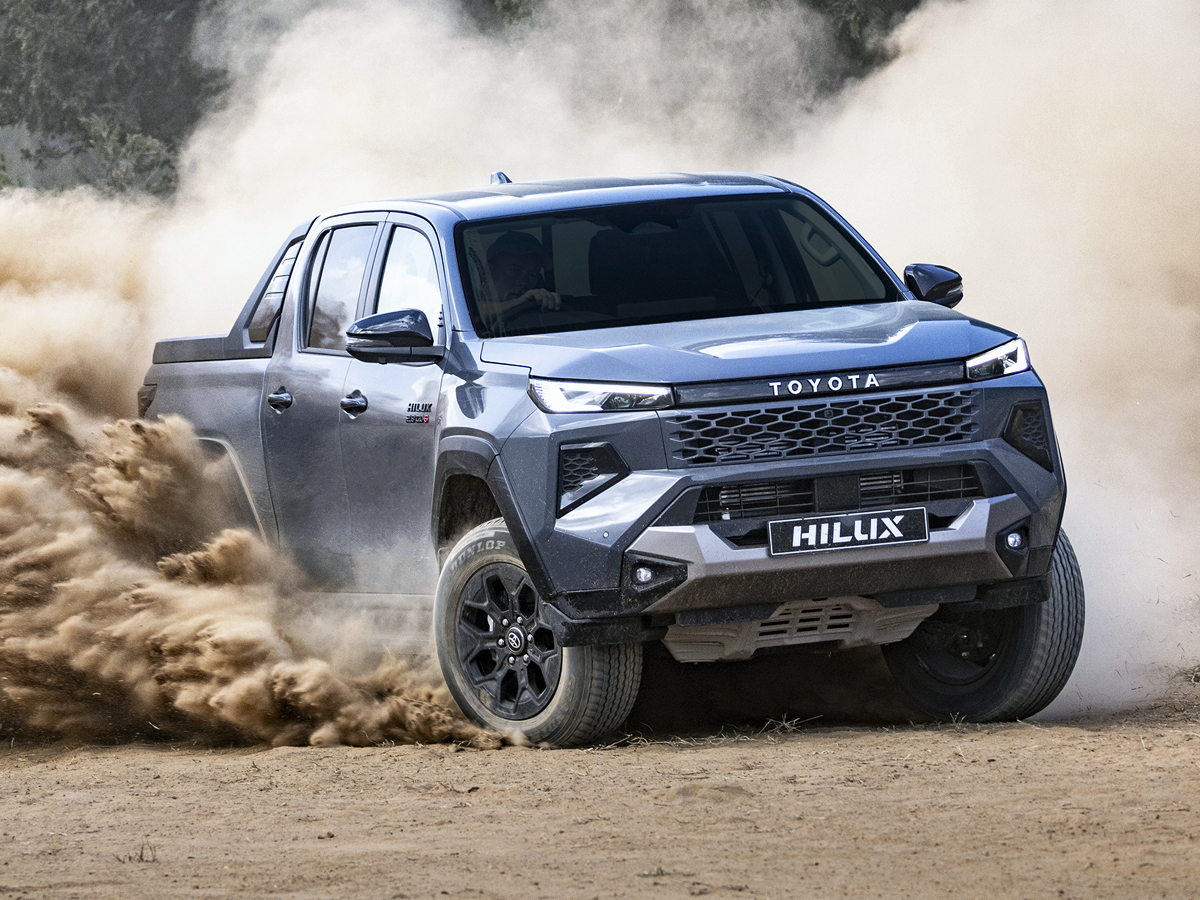
For the 2nd straight month, the Hilux finished ahead of the Ranger on the double-cab sales charts, though the latter still leads the race year to date at the end of August…
Hilux keeps double-cab sales crown in August
Ranger still leads SA’s year-to-date DC race
Toyota rules single- and extended-cab space
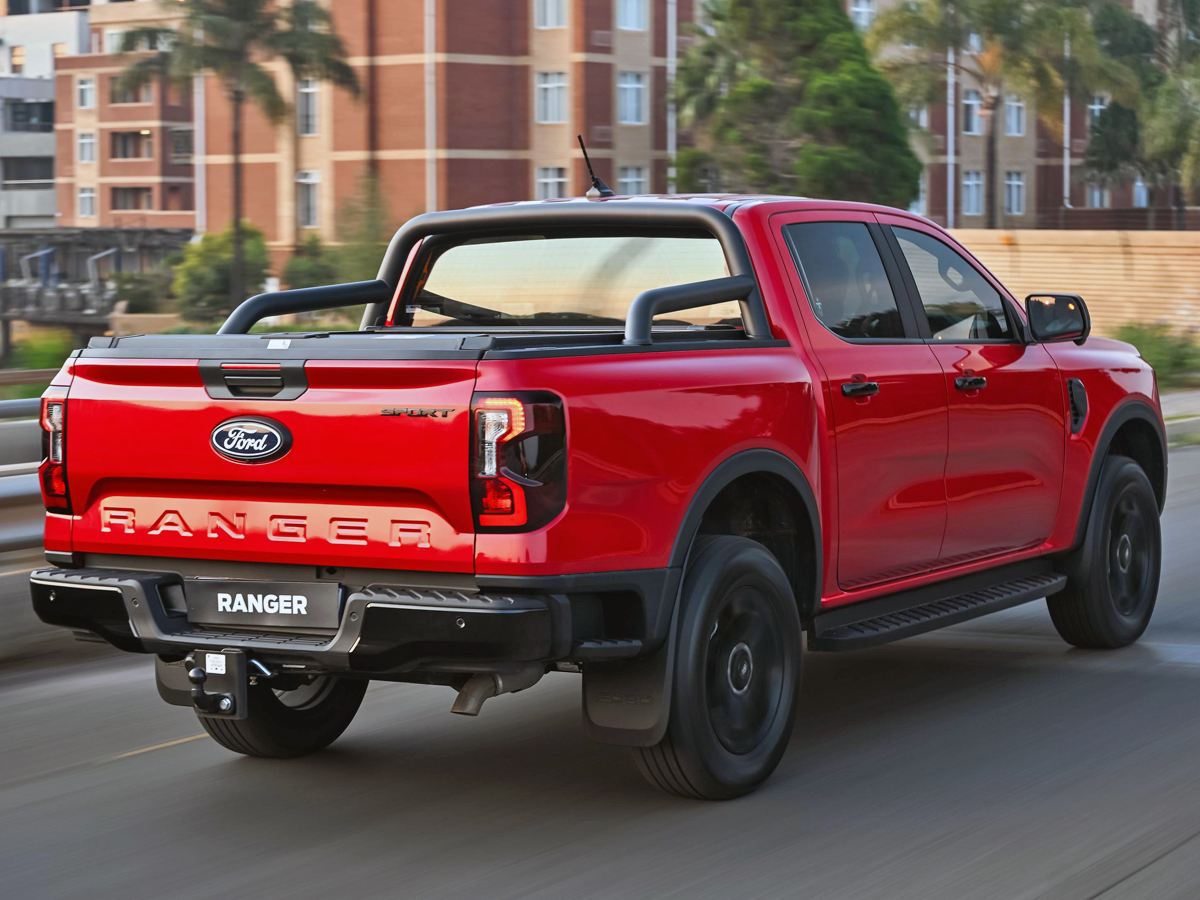
Though the Toyota Hilux has long served as South Africa’s best-selling bakkie overall, the Ford Ranger regularly tops the double-cab sales charts, having secured that title for a 3rd consecutive year in 2025. However, the Hilux again finished ahead of the Ranger in the double-cab rankings in August 2026 after having done the same the prior month.
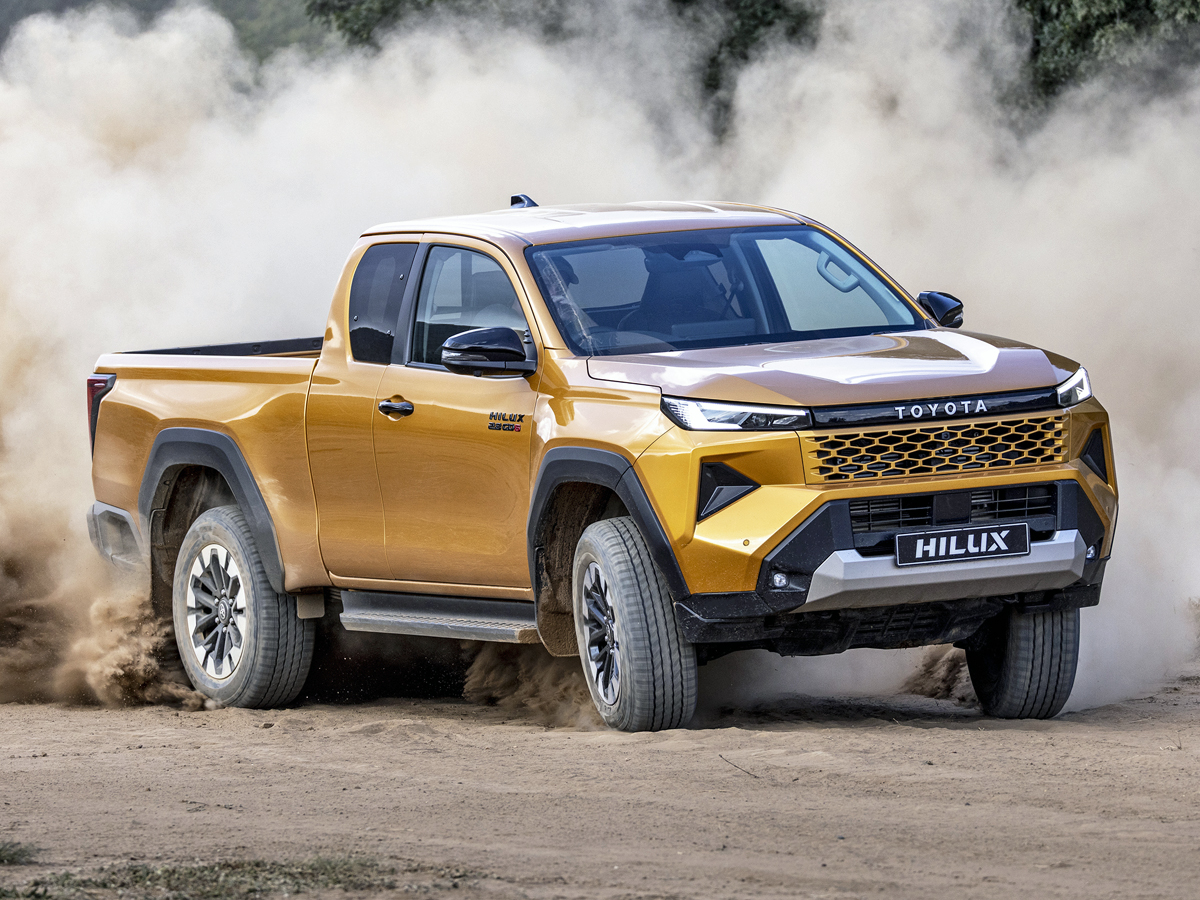
Yes, according to figures kindly supplied to Cars.co.za by Lightstone Auto, Toyota SA Motors registered 1 924 units of its Prospecton-built Hilux Double Cab last month (out of the model’s overall figure of 3 881 units, as reported to Naamsa), making it SA’s top-selling dual-cab bakkie in August.
That said, the Ranger wasn’t far behind. According to Lightstone Auto’s figures, Ford Motor Company of SA registered 1 888 units of the Ranger Double Cab (out of the nameplate’s 2 373-unit total) in August, putting it a mere 36 units off the pace set by its Prospecton-built rival.
Although it was the 3rd time this year the Hilux ranked ahead of the Ranger on the double-cab charts (after March and July) in South Africa, the Blue Oval brand’s bakkie still leads the race year to date at the end of August.
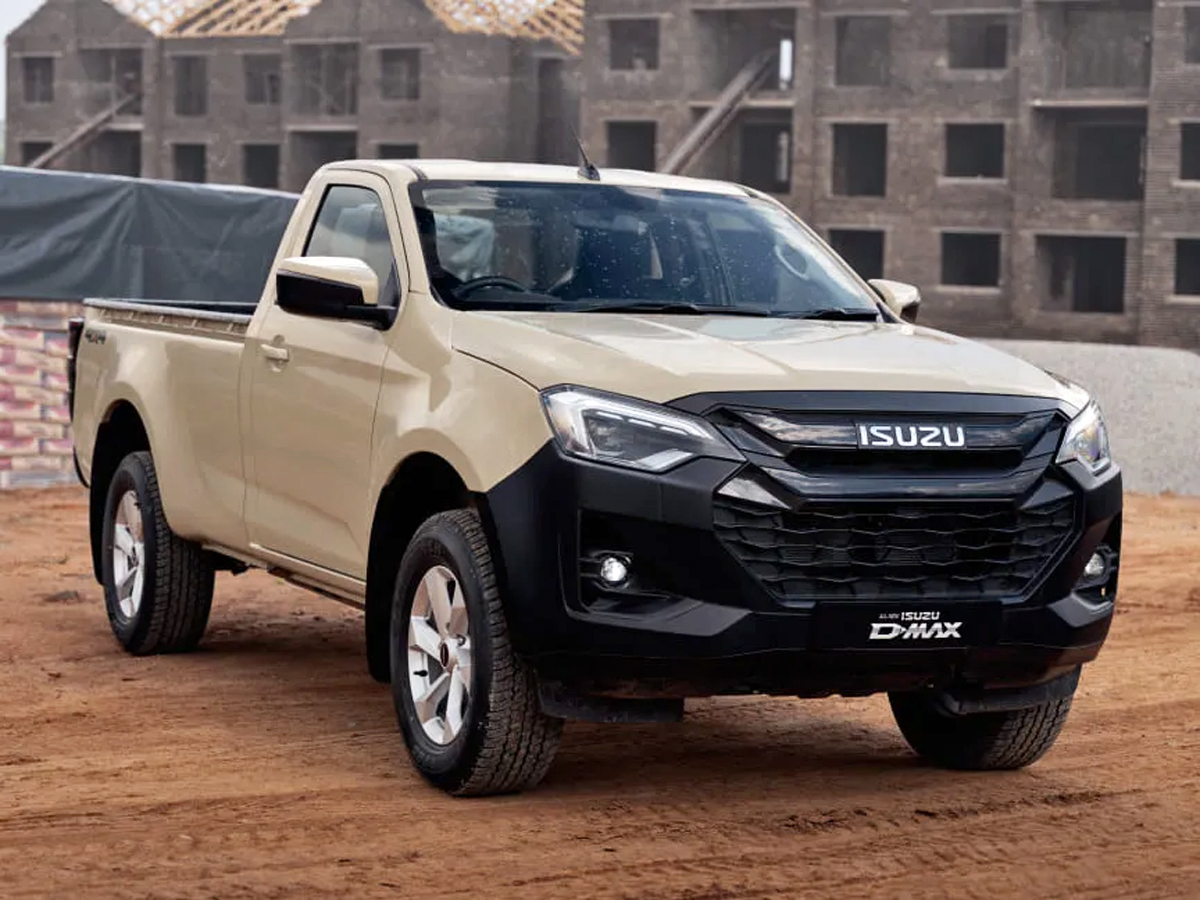
According to Lightstone Auto, the Ranger Double Cab’s 8-month tally stands at 13 562 units, while the Hilux Double Cab has reached a total of 11 733 units – some 1 829 units behind. For the record, the Struandale-made Isuzu D-Max Double Cab ranks 3rd, with 6 190 units registered (including 886 units in August), year to date.
Lightstone Auto’s dataset furthermore suggests that all other 1-tonne double-cab bakkies – that is, excluding the Ranger, Hilux and D-Max (and indeed models from any brands that don’t report sales figures to Naamsa) – collectively managed 18 044 units over the opening 8 months of the year.
August’s best-selling single- and extended cabs
Meanwhile, the Toyota Hilux again ranked as South Africa’s best-selling single cab in August 2026, with 1 293 units registered – pushing its year-to-date tally to 10 927 units. The Isuzu D-Max Single Cab stayed in 2nd with 900 units in August and 6 644 units over the opening 8 months of the year.
Once more, the KwaZulu-Natal-assembled Mahindra Pik Up completed the single-cab podium in August (481 units) and indeed year to date (4 729 units). For the record, Ford sold just 92 units of its Ranger Single Cab in August, taking its 8-month tally to 897 units.
Predictably, the Hilux also leads the extended-cab race, with Toyota having registered 599 units of its Hilux Xtra Cab last month and a total of 3 868 units, year to date. The Ranger Super Cab (393 units in August and 2 499 units, year to date) remained in the runner-up position, ahead of the D-Max Extended Cab (219 units last month and 1 208 units, year to date) in 3rd.
Overall – that is, including all 3 body styles – the Hilux remains well ahead in the year-to-date sales race (and still firmly on track to retain its crown), with 26 932 units registered, according to figures reported to Naamsa. The Ranger’s 8-month tally sits at 16 908 units, while the D-Max’s figure comes in at 14 042 units.
Frequently Asked Questions (FAQ)
Q: Which bakkie won the South African double-cab sales race in August 2026?
A: According to Cars.co.za and Lightstone Auto, the Toyota Hilux Double Cab took the top spot in August 2026 with 1 924 units sold, narrowly beating the Ford Ranger Double Cab (1 888 units) by 36 units to mark its second consecutive monthly double-cab win.
Q: Who is leading the year-to-date double-cab sales race in South Africa?
A: Despite Hilux’s August win, the Ford Ranger Double Cab continues to lead the year-to-date dual-cab race through the end of August 2026 with 13 562 units, holding an 1 829-unit lead over the Hilux Double Cab (11 733 units).
Q: How do total year-to-date overall bakkie sales compare across all body styles?
A: Combining single, extended and double-cab derivatives, the Toyota Hilux leads the overall market with 26 932 units through August 2026, followed by the Ford Ranger in second (16 908 units) and the Isuzu D-Max in third (14 042 units).
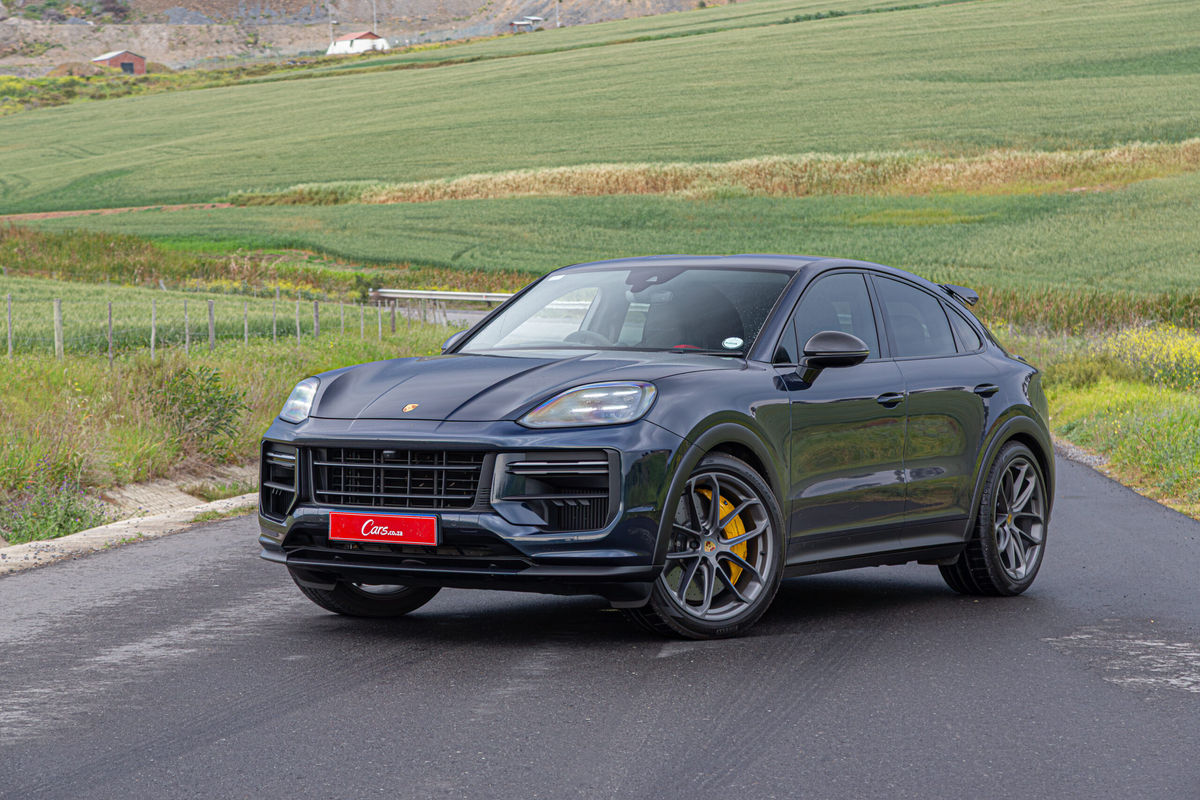
When the first Cayenne Turbo GT arrived, it ruffled plenty of feathers because the GT designation had until then been the preserve of Stuttgart’s most focused sportscars. Most of the doubters were won over soon enough. Now the facelifted version has arrived with more power, a revamped cabin and spec tweaks. We took it to the mountains to find out whether Porsche has managed to improve on a benchmark.
We like: Cayenne Turbo GT offers ferocious performance; astonishing body control and grip; glorious exhaust soundtrack.
We don’t like: We miss the previous car’s centre analogue rev counter; high starting price (with expensive options).
When Porsche first attached the GT badge to a Cayenne, purists feared the worst. Those two letters carry enormous weight among Porsche fans, and a high-riding crossover SUV seemed about the least likely candidate to wear them.
Then the original Turbo GT went out and set an SUV lap record at the Nürburgring, and anyone who drove it quickly realised that Porsche’s engineers had done something remarkable. Subsequently, in 2024, Porsche unveiled a significantly updated, so-called E3.2 generation of Cayenne, and once more the Turbo GT sits at the top of the food chain. But how on Earth would the company improve on it?
The answer, in typical Porsche fashion, is by means of a series of careful, incremental changes. The Turbo GT still heads up the petrol-powered Cayenne range, and you can’t have it as anything other than a Coupé.
Interestingly, due to current emissions regulations, this model is no longer sold in Europe (among several other markets), which means South Africa is one of the few fortunate places where you can still buy one.
The Cayenne Turbo GT squares up against a small but formidable group of super-SUVs, most notably the Lamborghini Urus SE (with which it shares its V8 engine family and general underpinnings), and the BMW XM Label, both of which are now plug-in hybrids. There’s also the related (and much more affordable, by some R1.4m) Audi RS Q8 performance that, like the Porsche, eschews electrical assistance in favour of the more traditional turbocharging-only route.
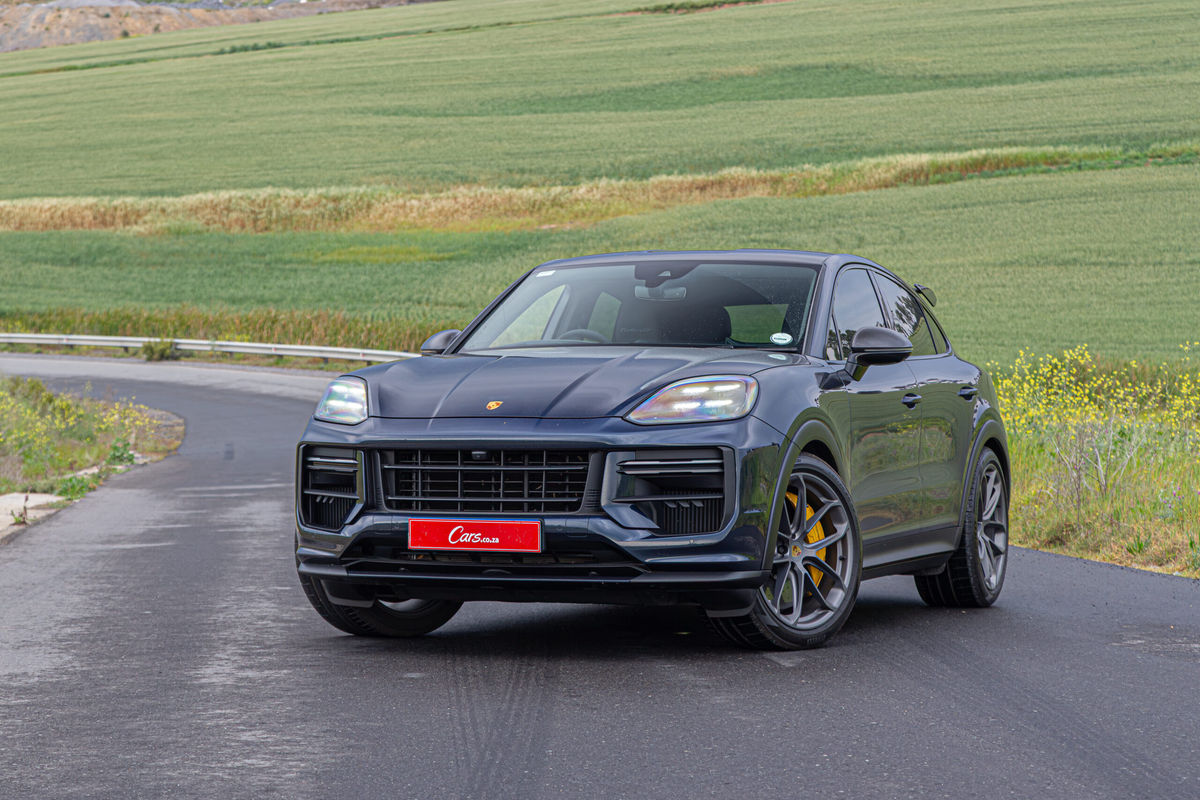
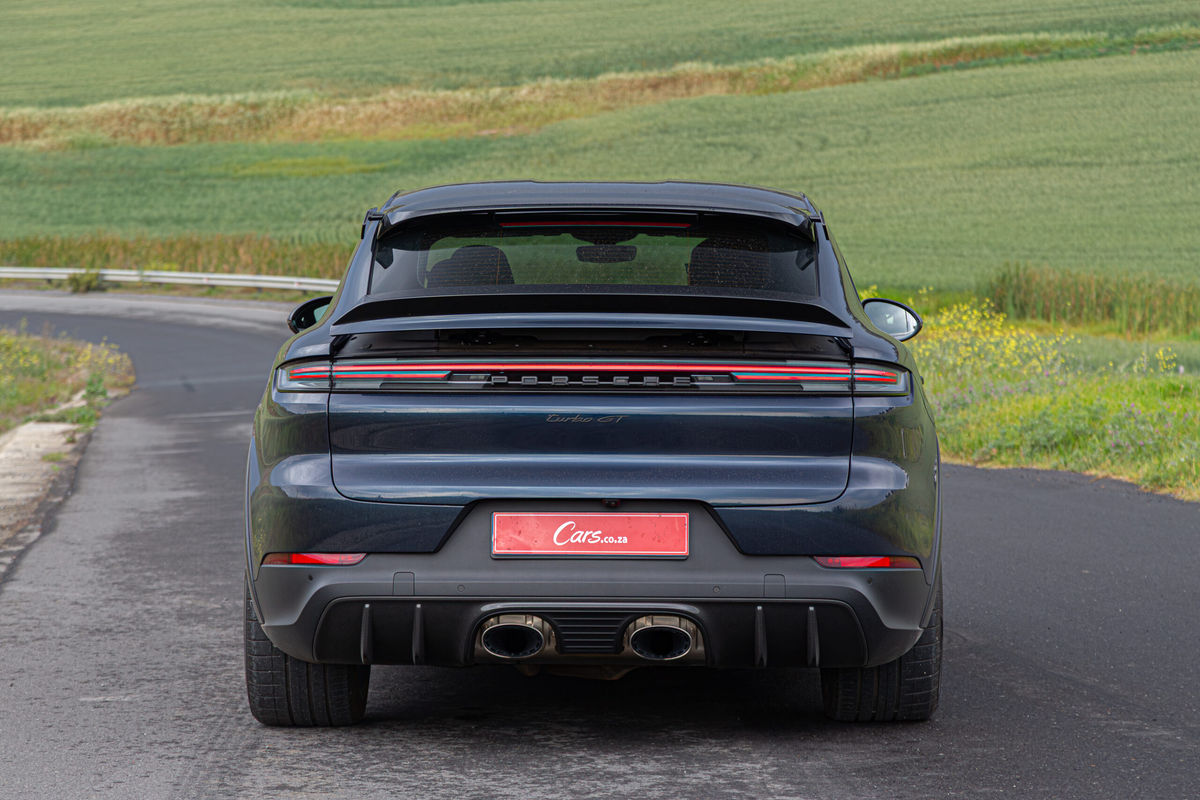
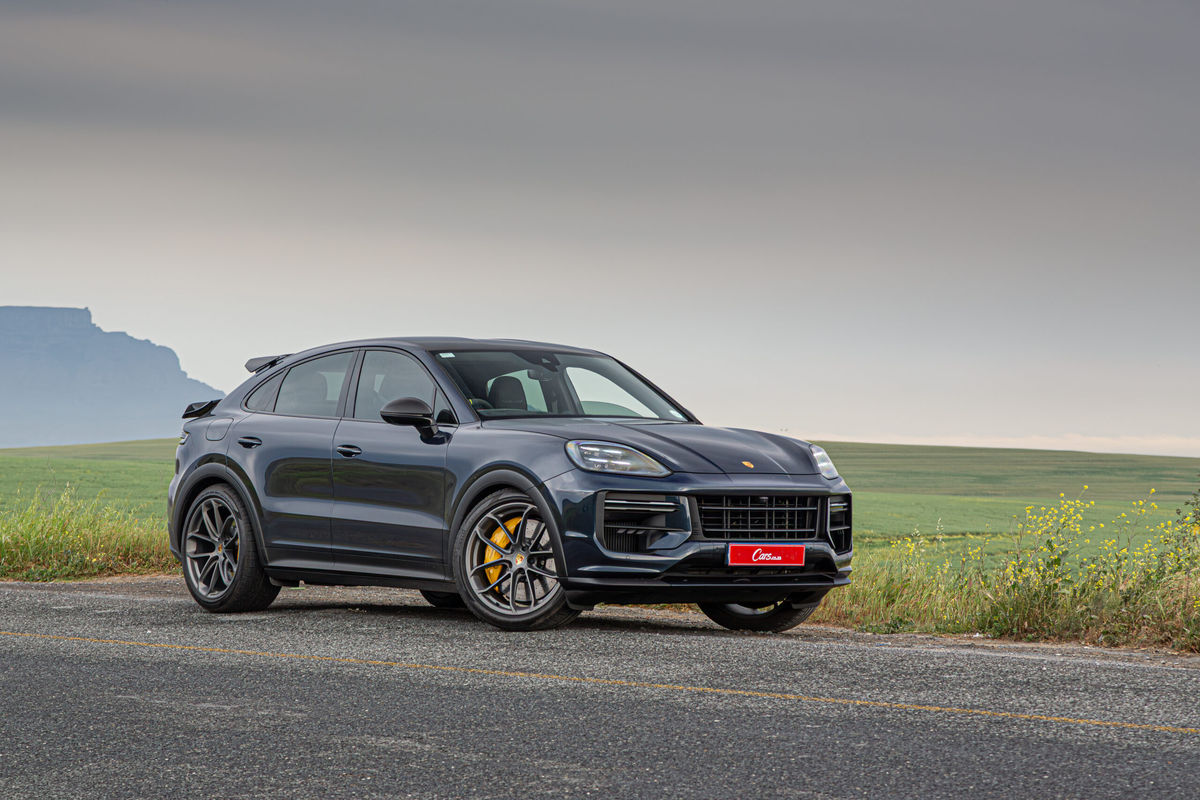
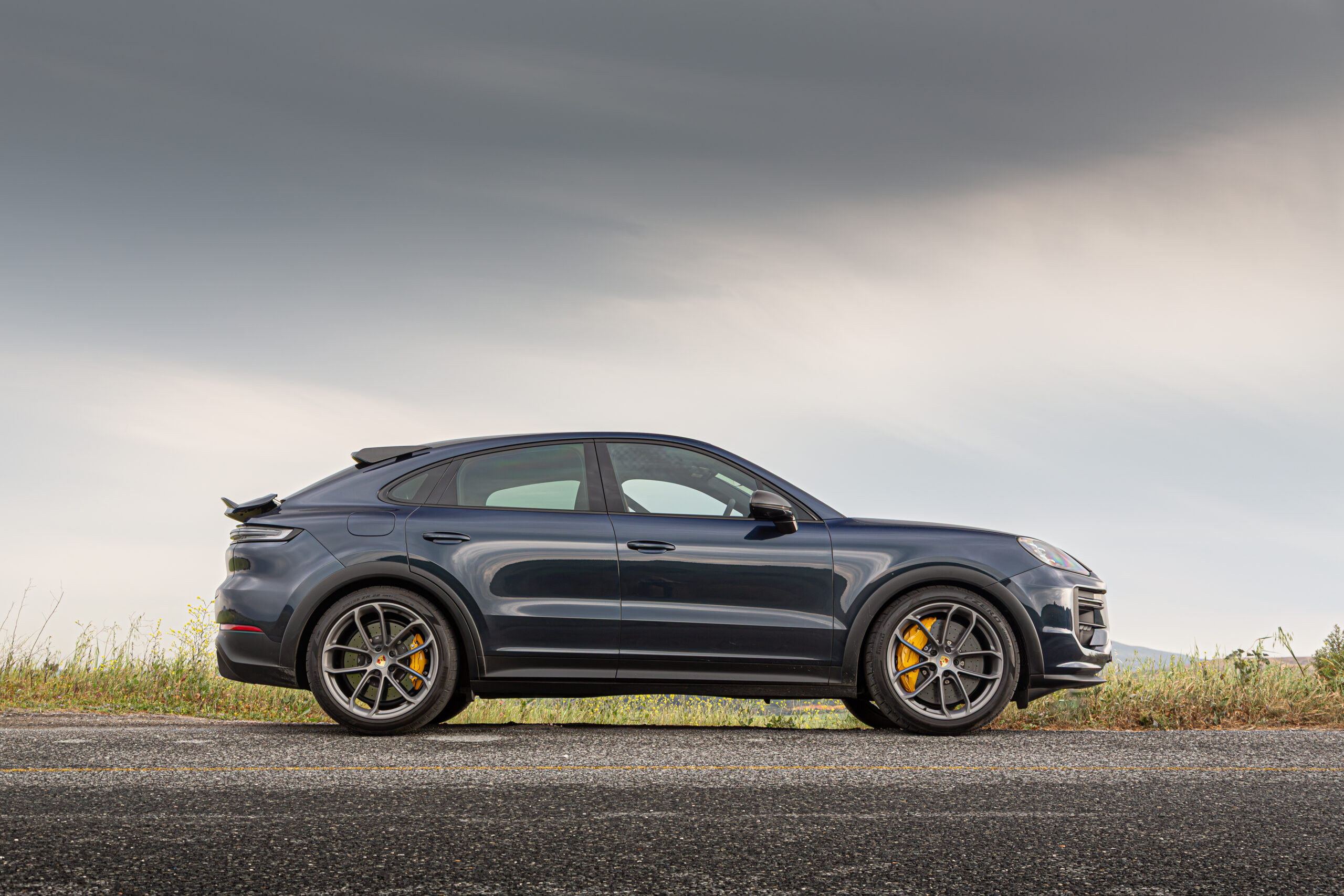
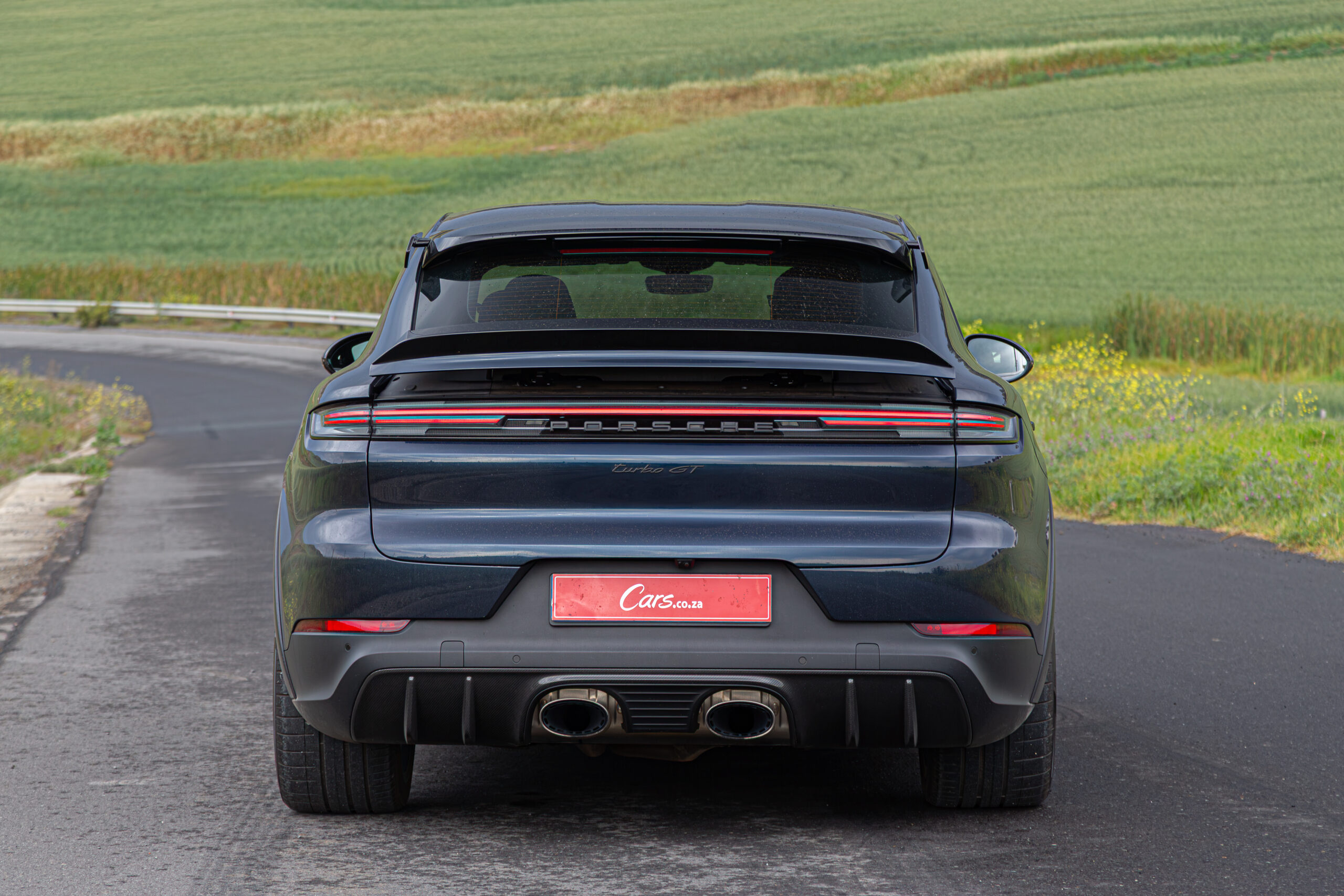
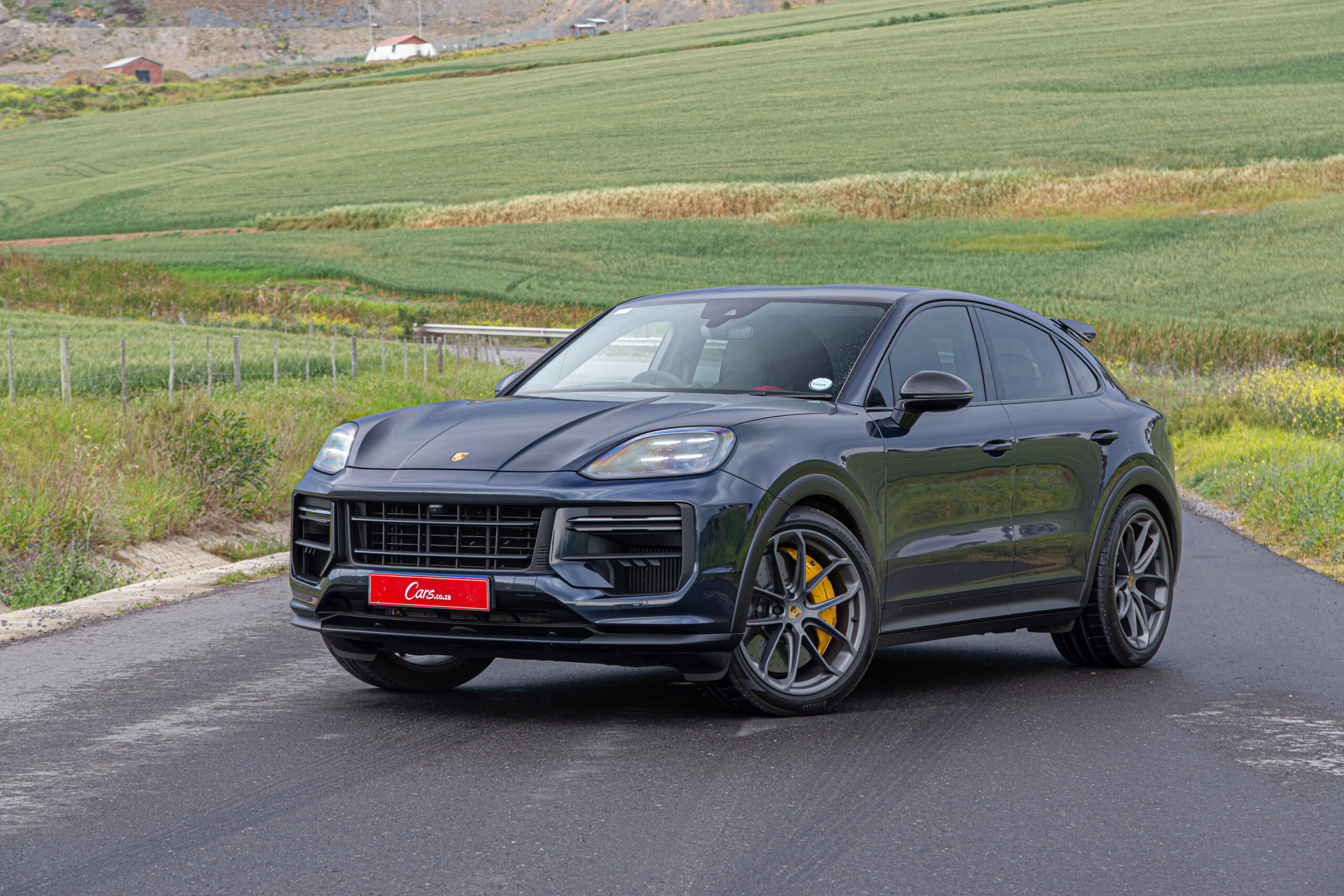
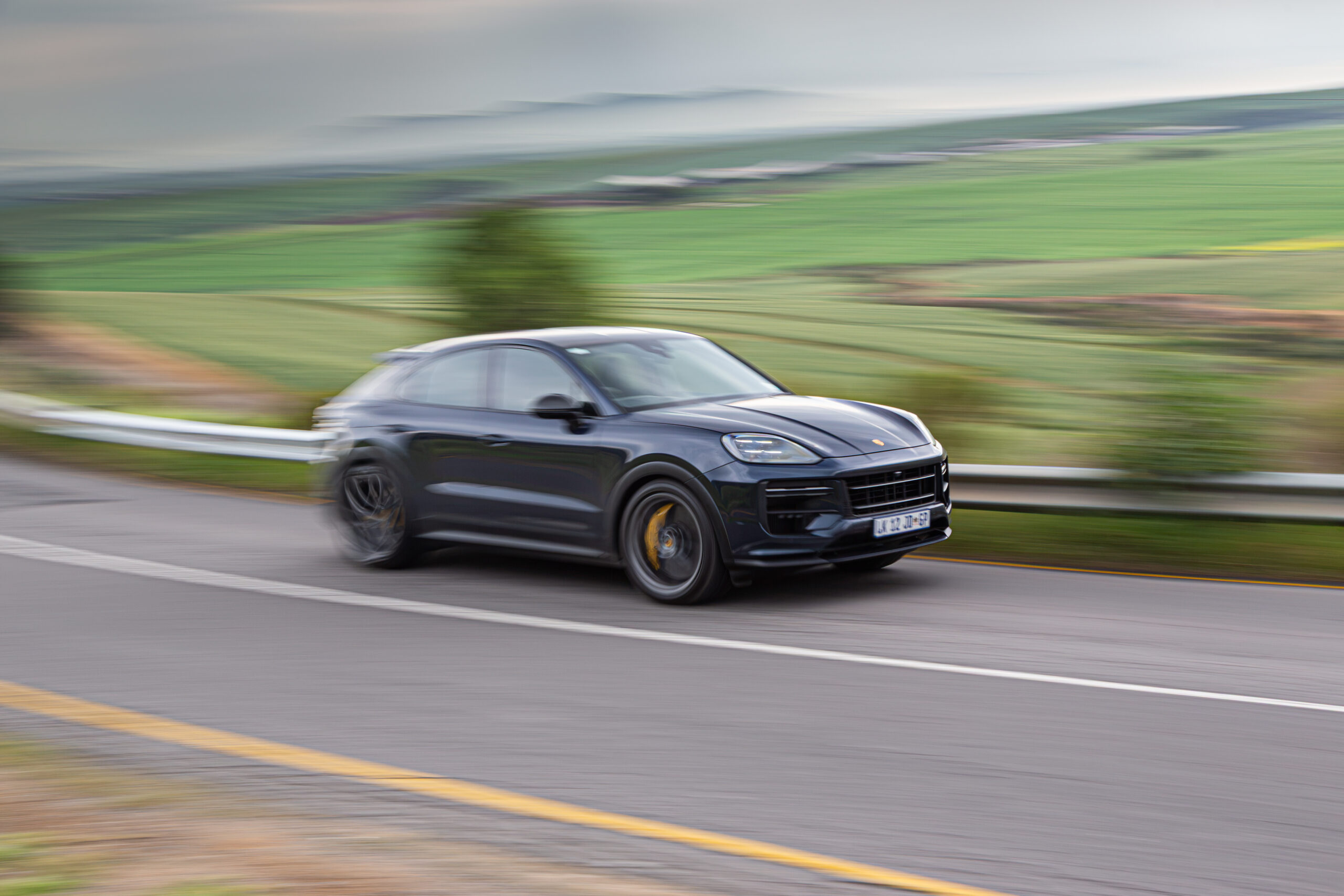
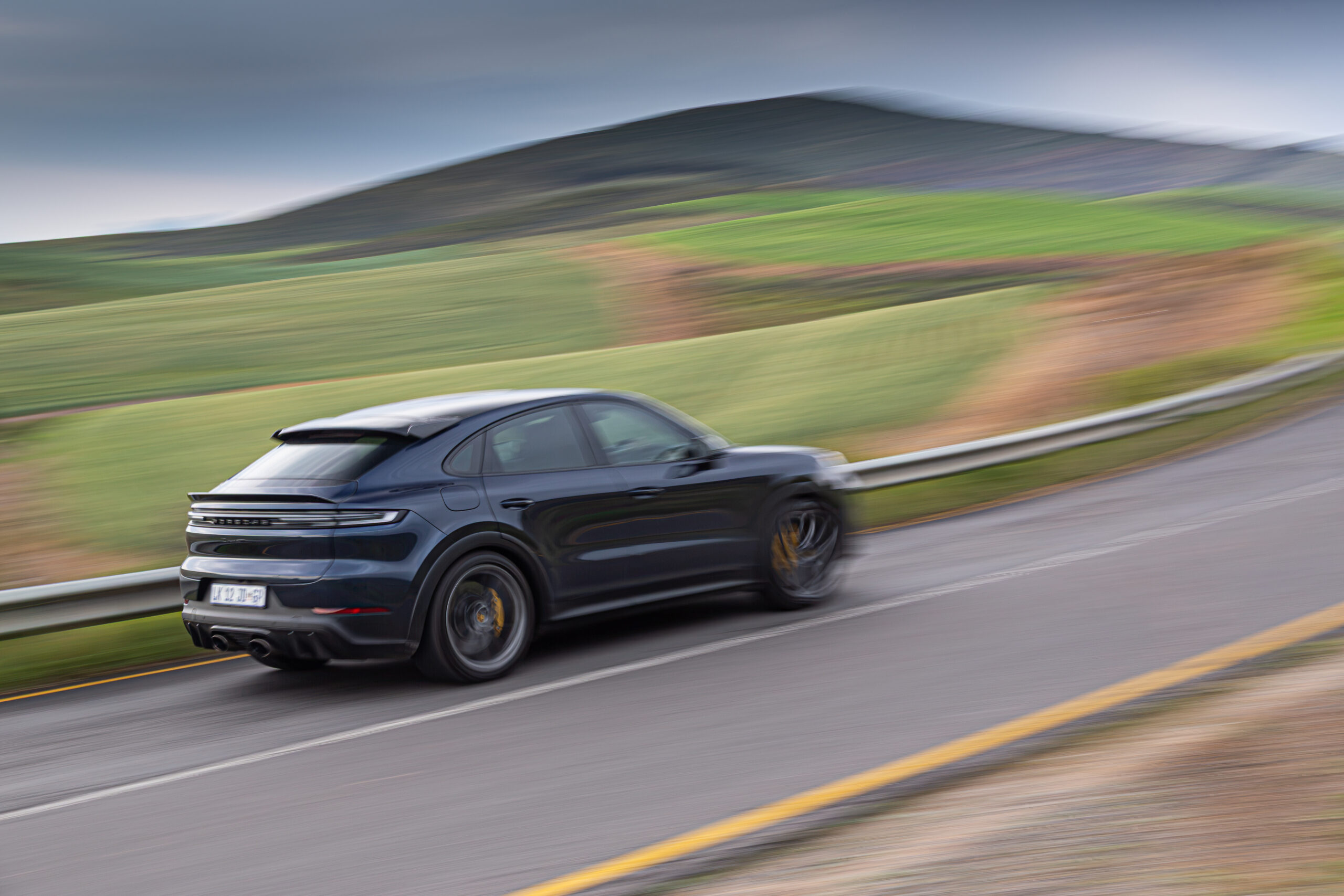
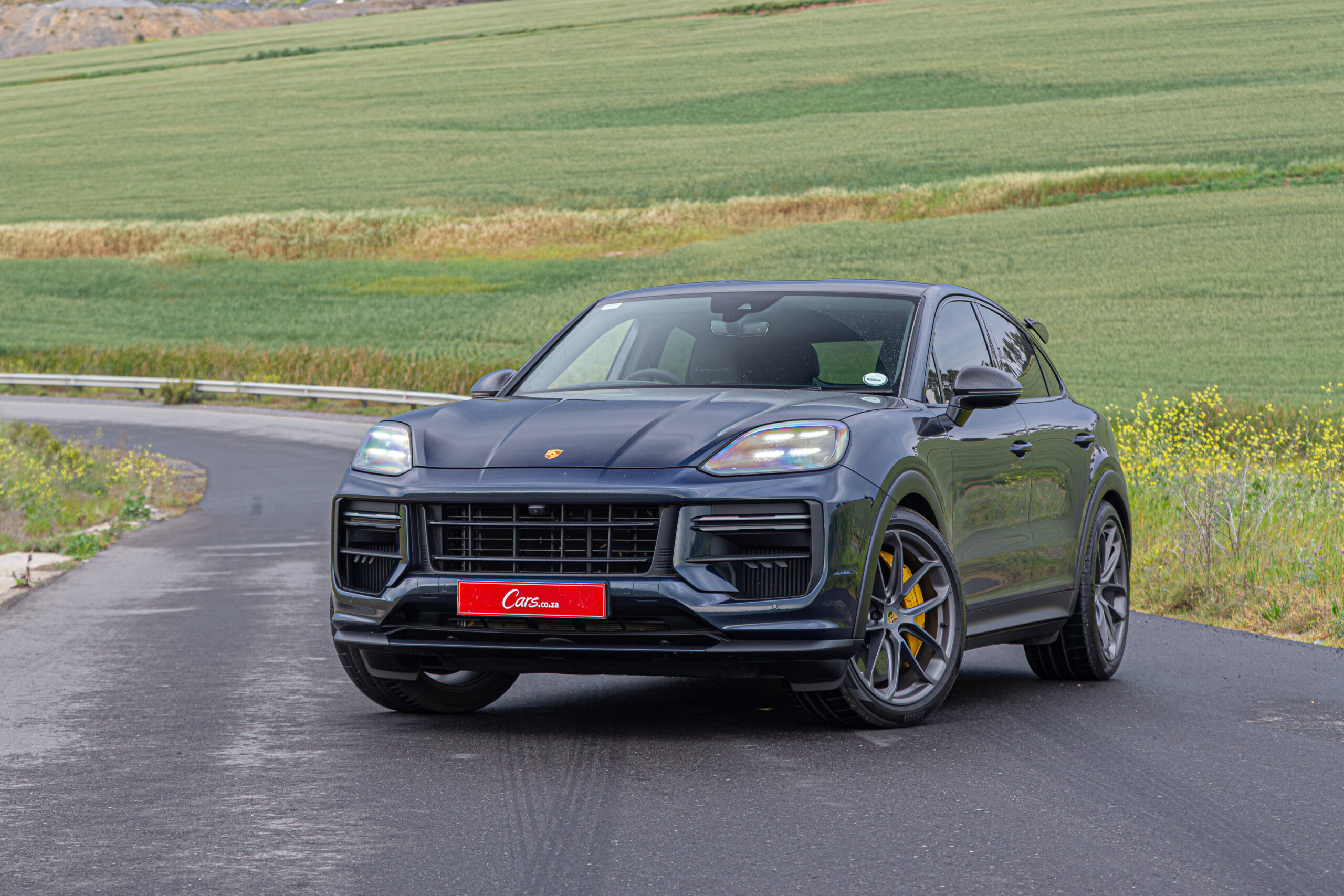
At a glance, you’d be forgiven for not spotting the differences between the new Turbo GT and its predecessor, but look closely and there’s plenty that’s changed. The model-specific front-end now has enlarged cooling air intakes and is finished in matte black, as are the rear apron, wheel-arch surrounds and the “PORSCHE” and “Turbo GT” logos on the tailgate.
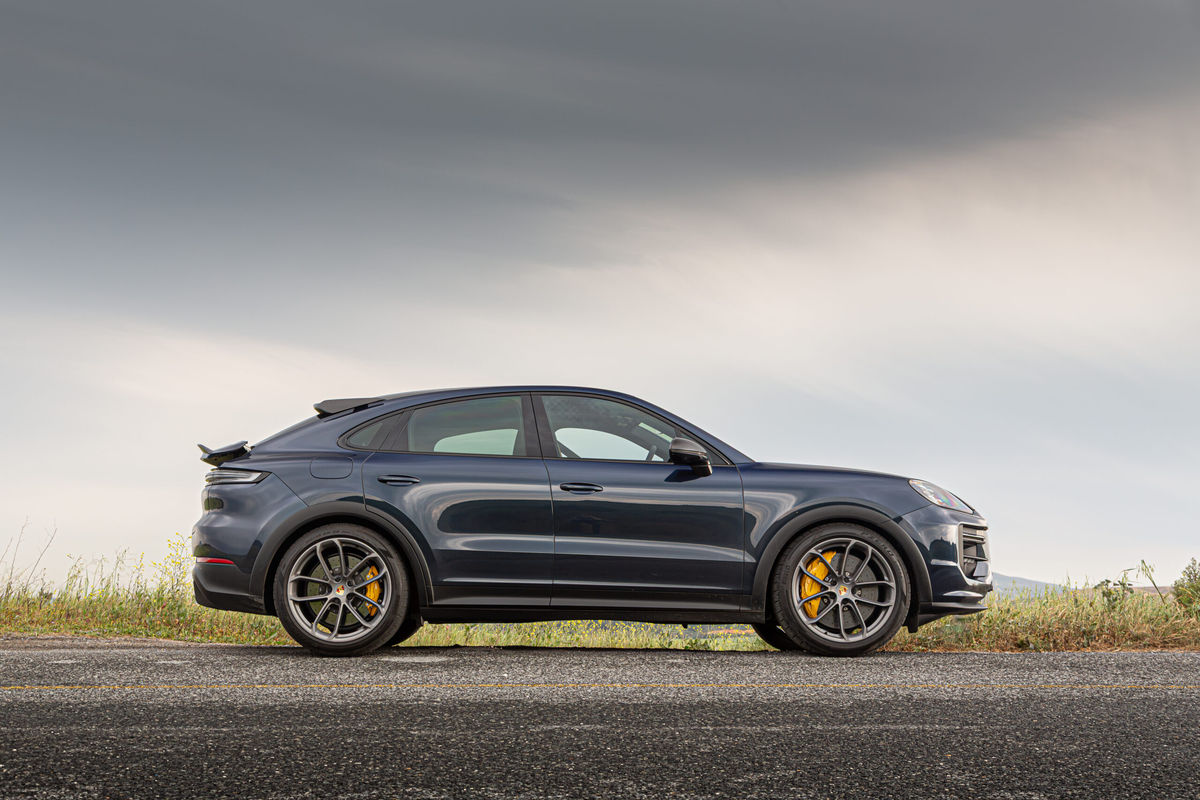
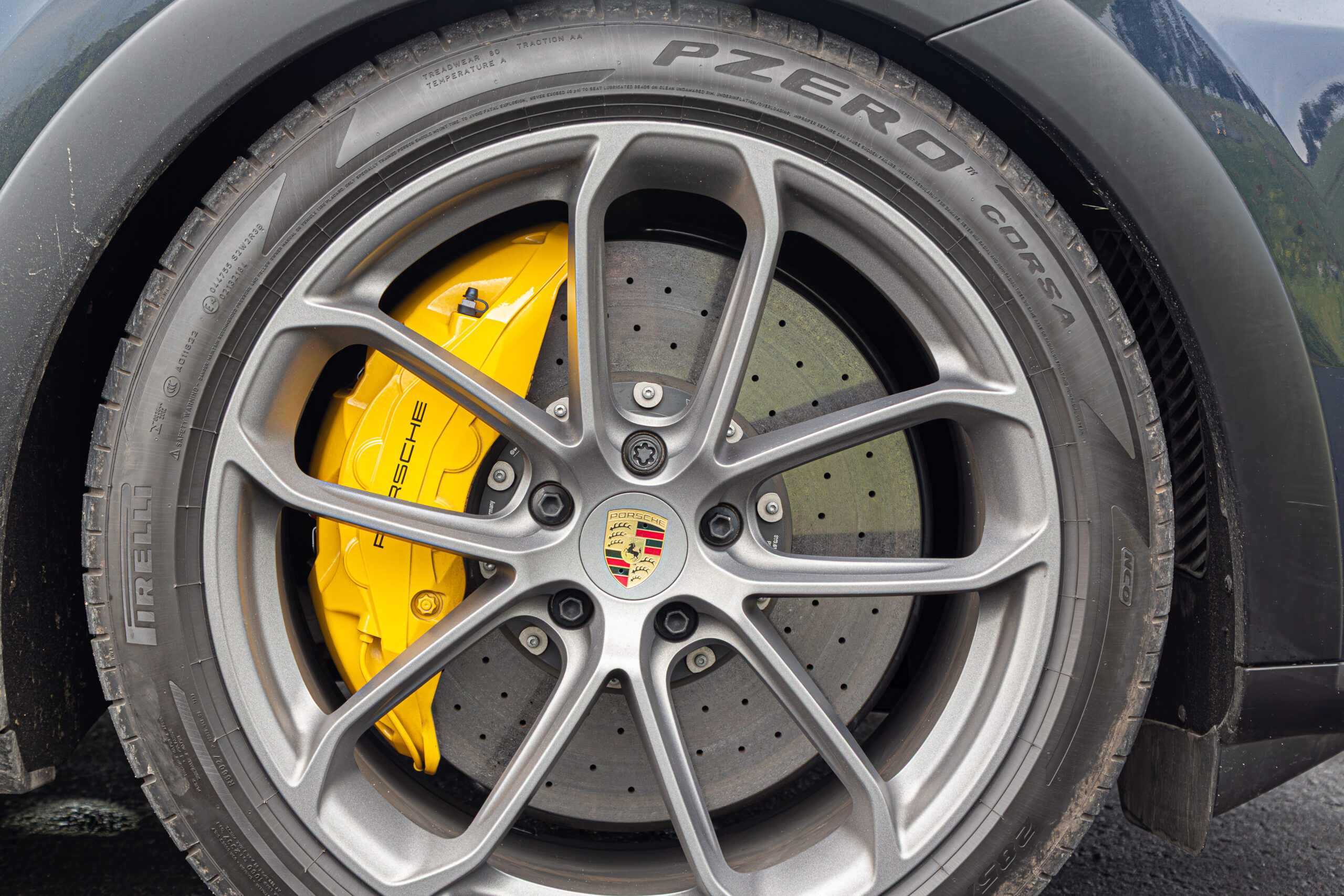
The 22-inch GT Design wheels come painted in Neodyme (that lovely satin gold hue) as standard (but not fitted to our test unit), while the HD Matrix LED headlights are now standard fitment, too. On the subject of the latter, they were particularly impressive in dealing autonomously with misty conditions during our test period.
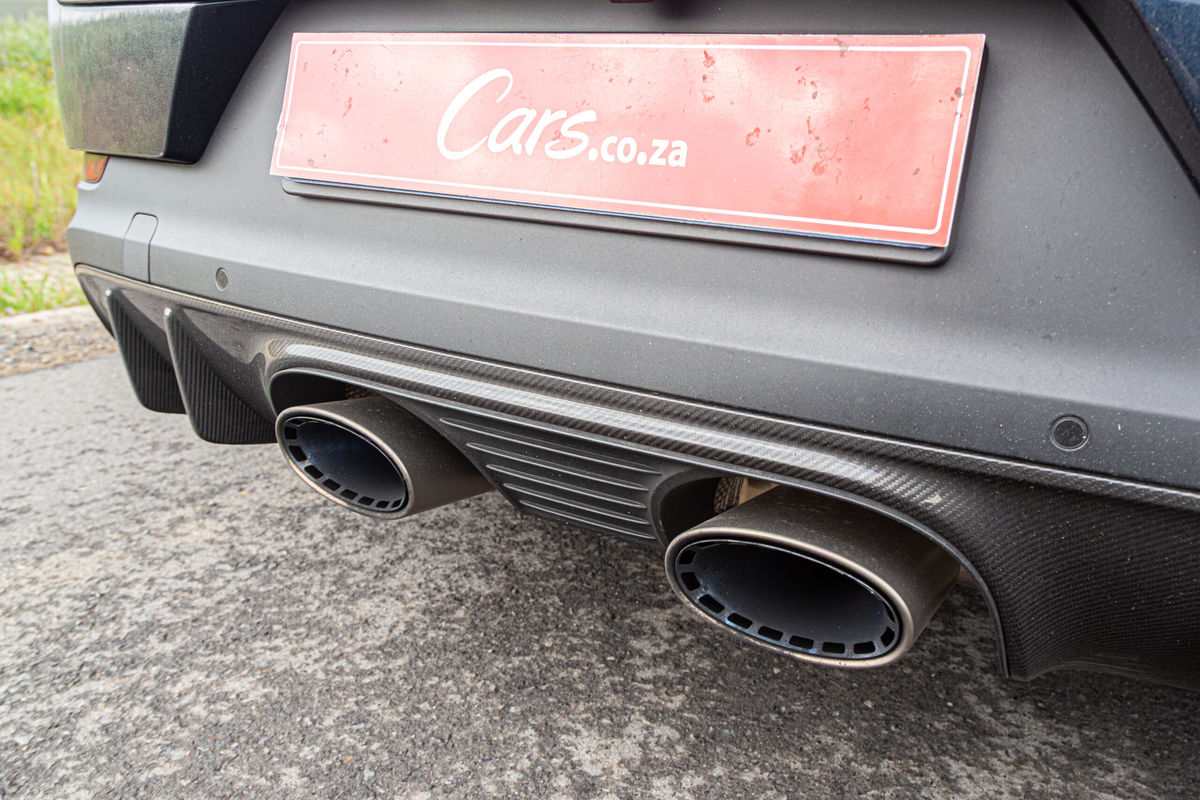
Plenty of the Turbo GT’s visual cues earn their place for engineering reasons. The lightweight carbon-fibre roof helps keep mass (and therefore the centre of gravity) low, and Porsche has used the same material for the diffuser trim and the rear spoiler’s side plates. An adaptive spoiler and an enlarged spoiler lip are standard.
But while it certainly has an overtly sporting presence, this Porsche doesn’t shout about its abilities. Parked alongside the more aggressively hewn Urus SE and the (let’s be kind) “divisive” BMW XM, it looks almost restrained. Anyone who isn’t a Porsche anorak may well walk past it thinking it’s just a nicely specced Cayenne Coupé. I would say, however, its presence is more menacing than the Audi RS Q8’s.
There’s a certain appeal in that kind of understatement, of course, but if you’d prefer your super-SUV to make more of a statement, Porsche’s extensive options list will happily satisfy you. Via the company’s Exclusive Manufaktur line, buyers can select a paint-to-sample option, which gives them access to 93 historical colours at an eye-watering price of R244 840! Our test unit’s wheels were not finished in the standard Neodyme but in a more reserved grey. That said, if you really want to stand out, you can even have them painted in Pyro Red (a R13 850 option), among other colours.
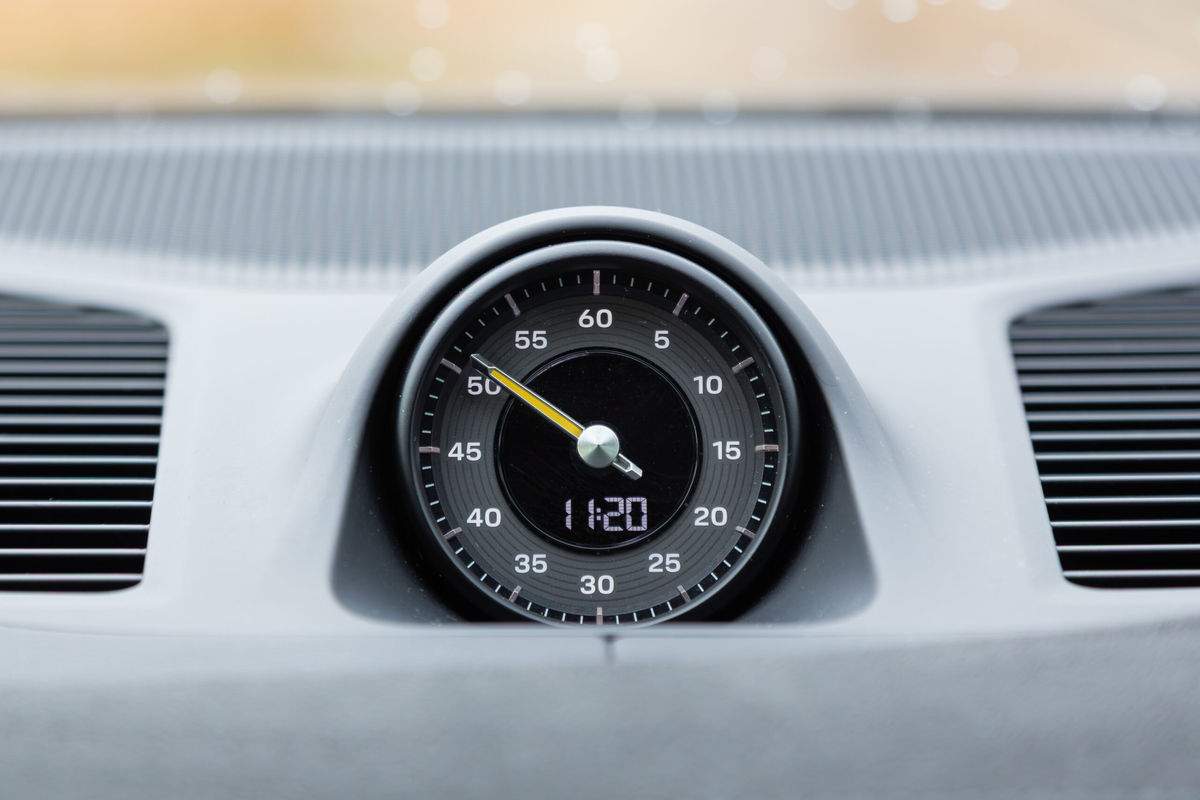
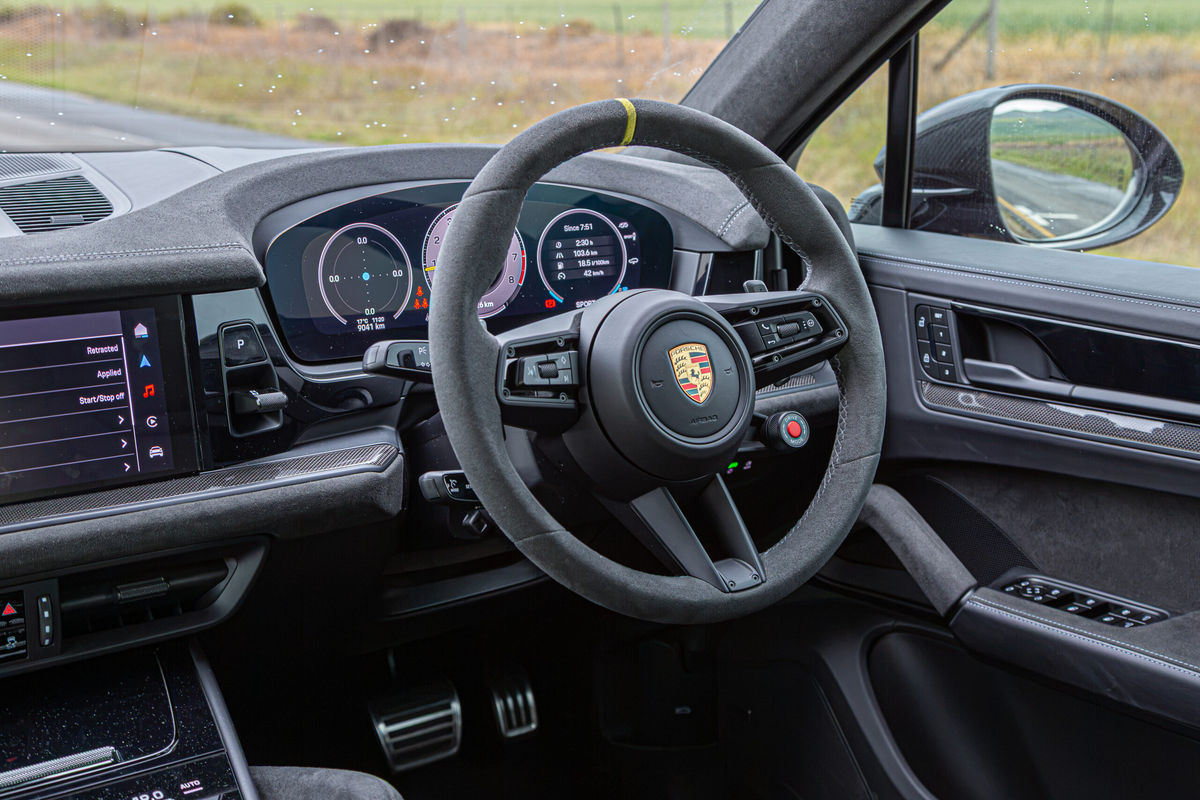
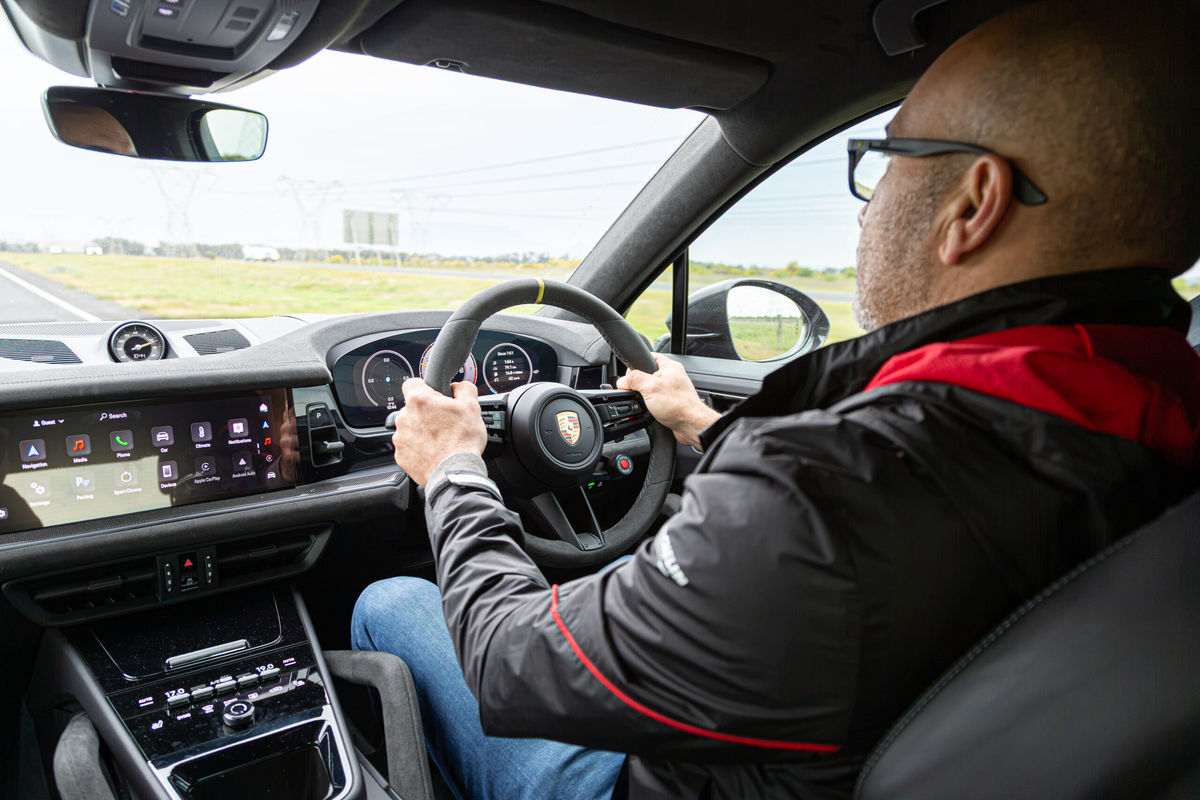
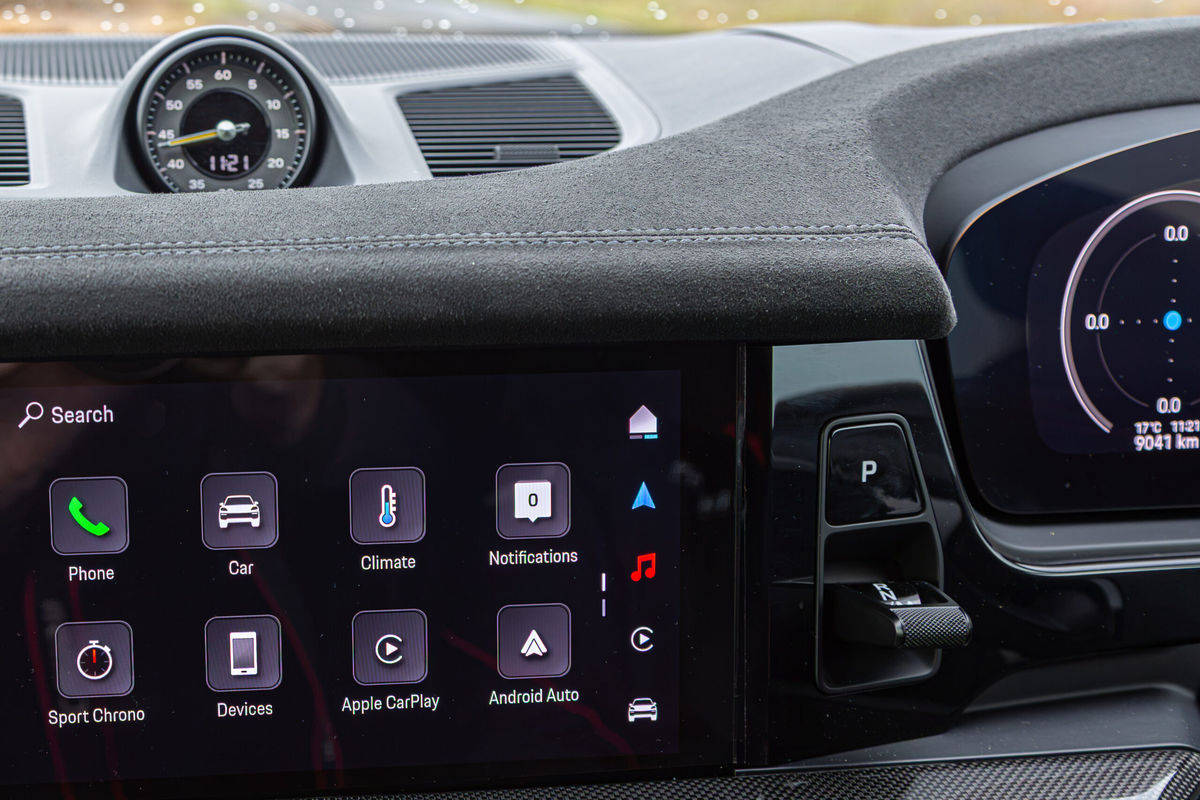
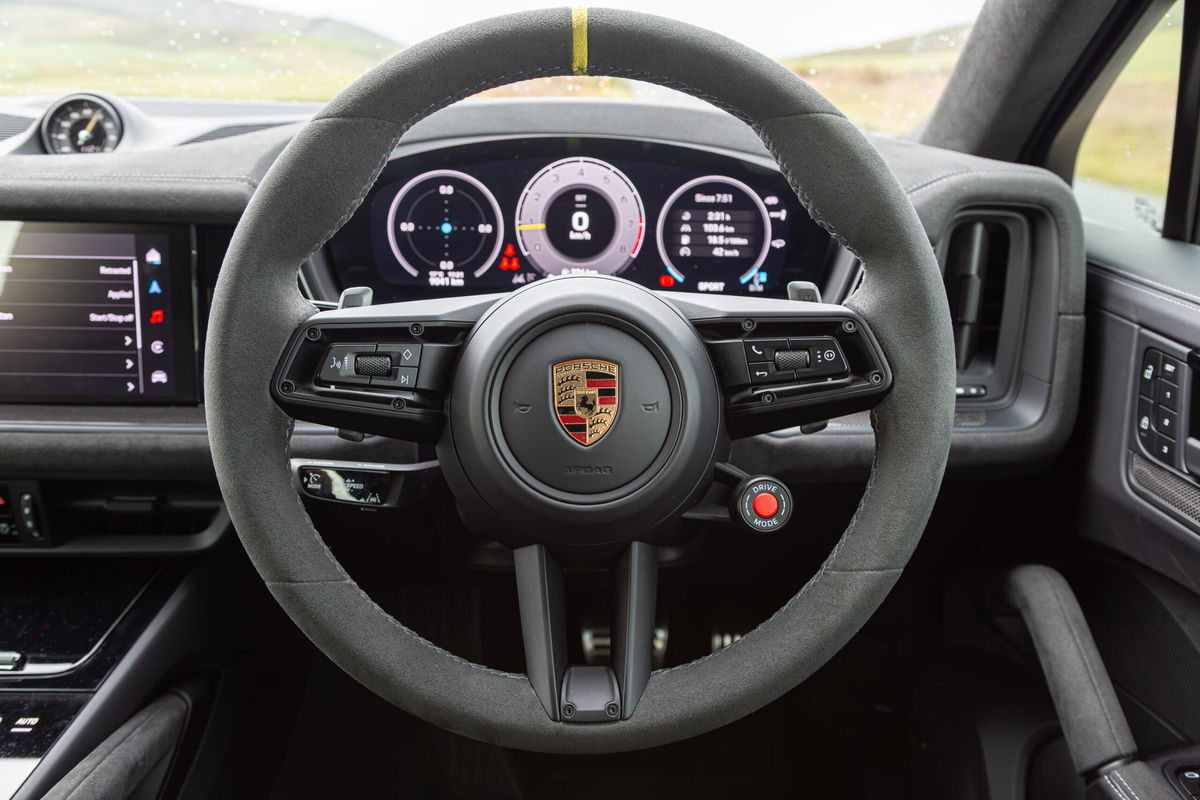
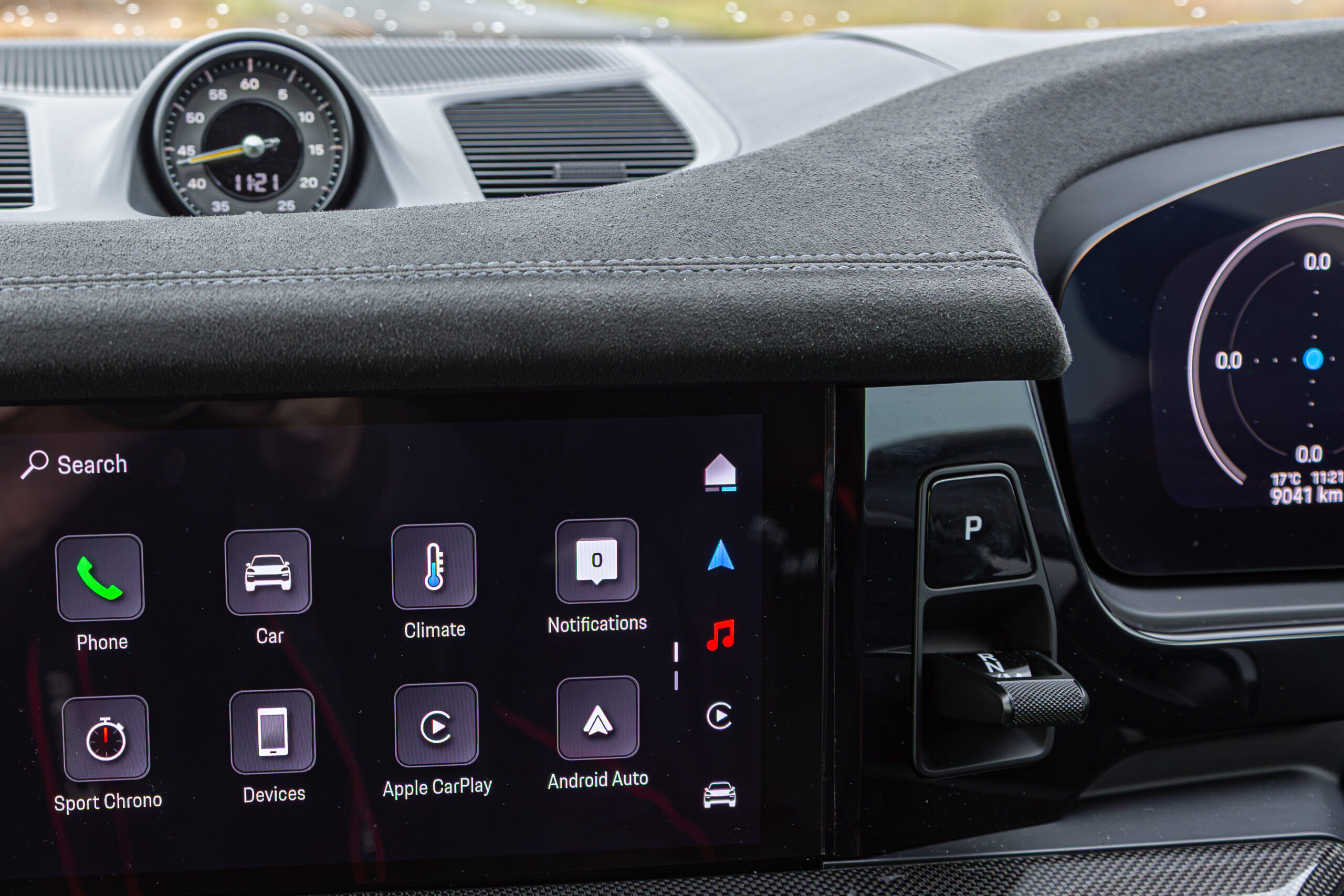
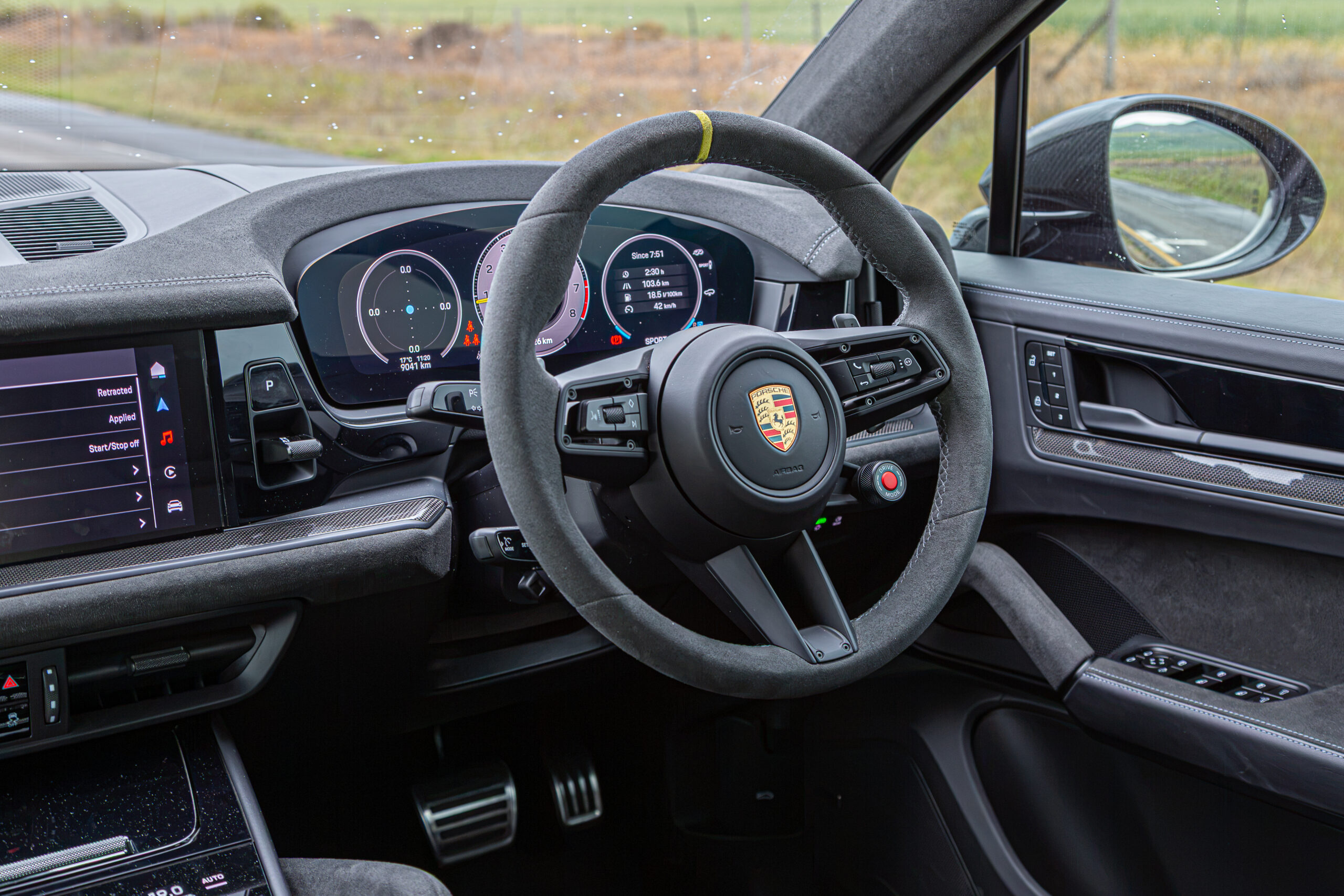
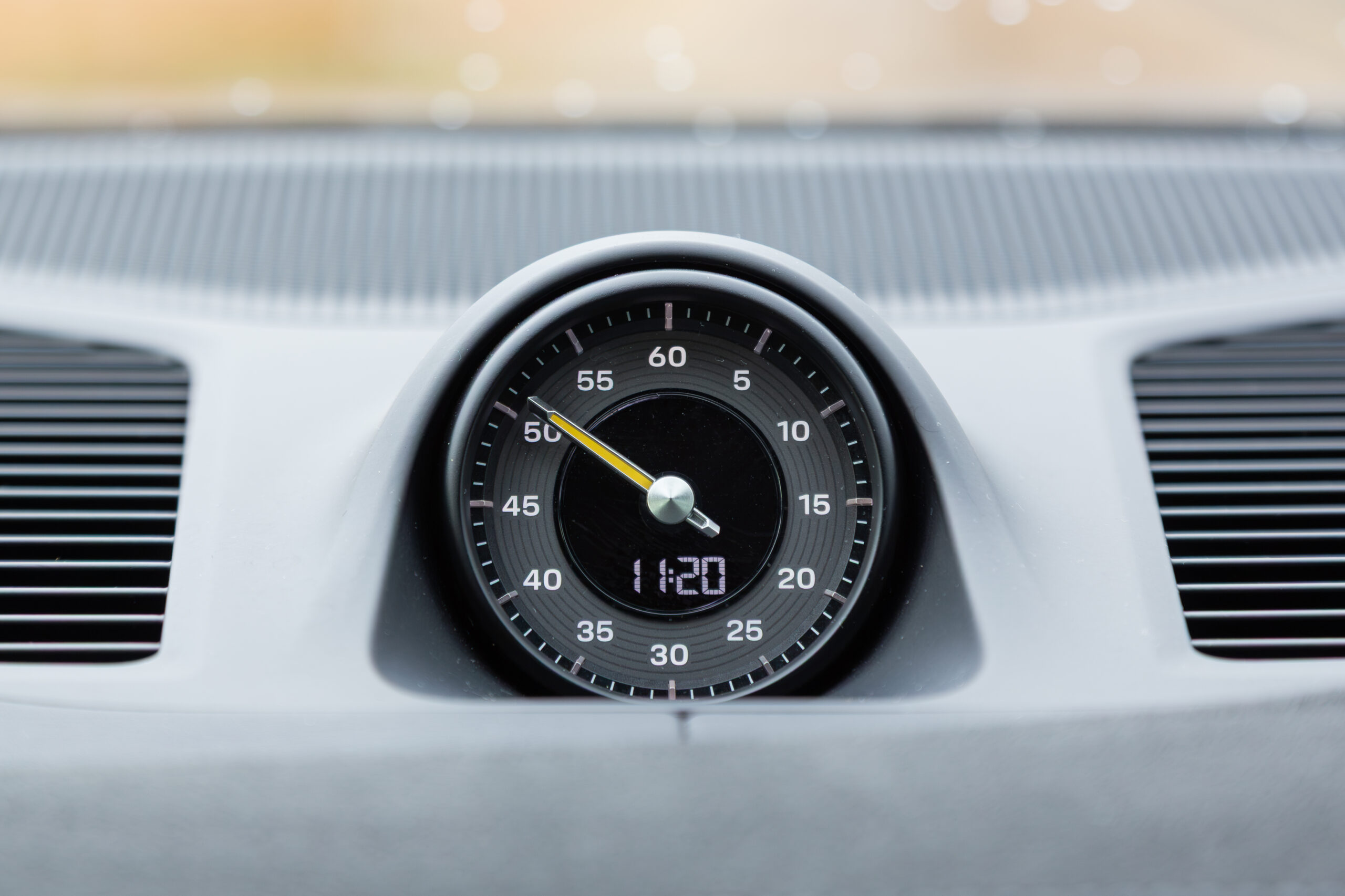
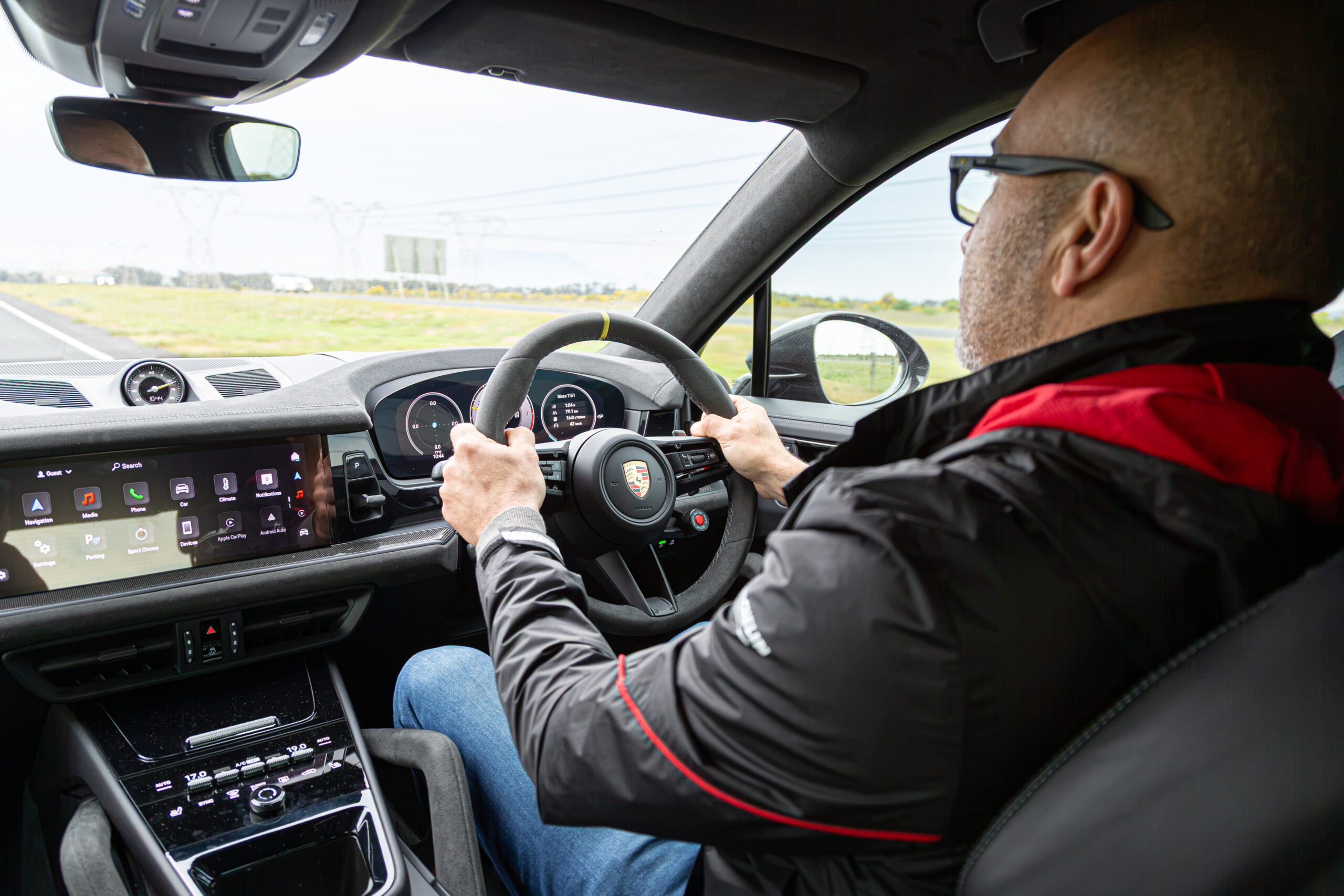
Inside, the new facia architecture (way more digital, with some physical changes as well, including the position of the gearlever) is probably the most obvious update of all. It certainly brings the Cayenne bang up to date in terms of technology, with a fully digital, curved instrument display and a thoroughly modern layout. I have to admit, however, I do miss the centre analogue rev counter of the previous car, which was a lovely nod to Porsche tradition in an otherwise digital cabin.
The Turbo GT’s cockpit is otherwise suitably special. You get 8-way electrically adjustable sports seats with integrated headrests (with a memory package), perforated Race-Tex seat centres and a matching rear sports seat system as standard.
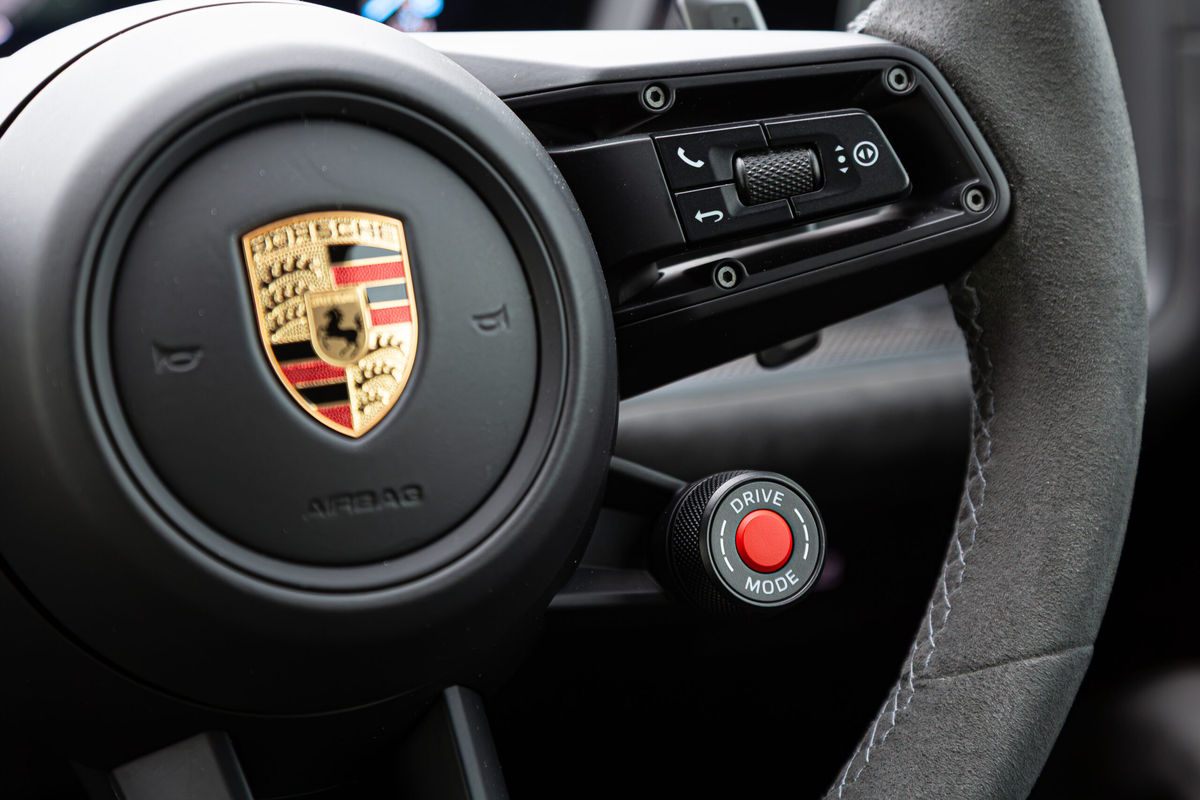
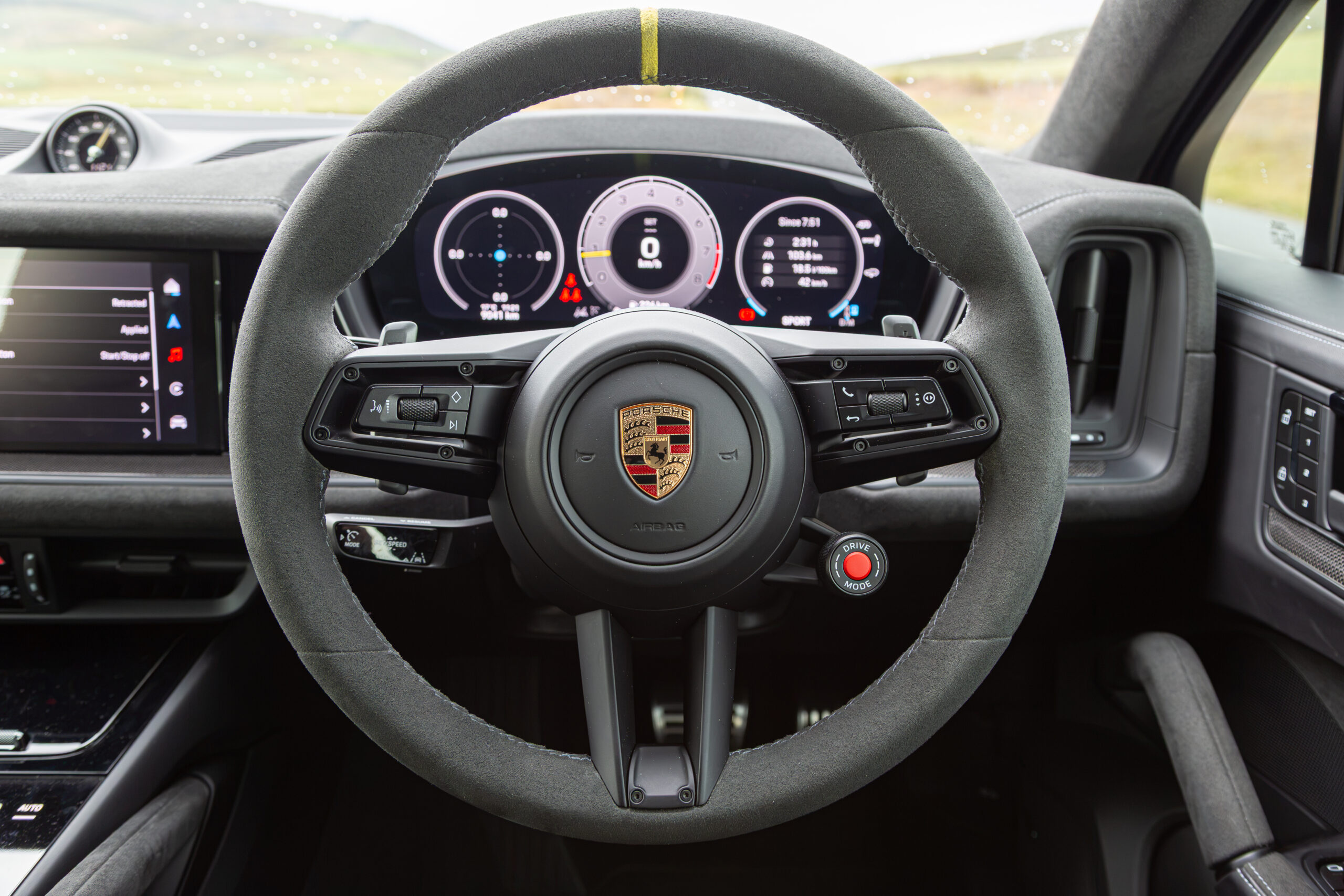
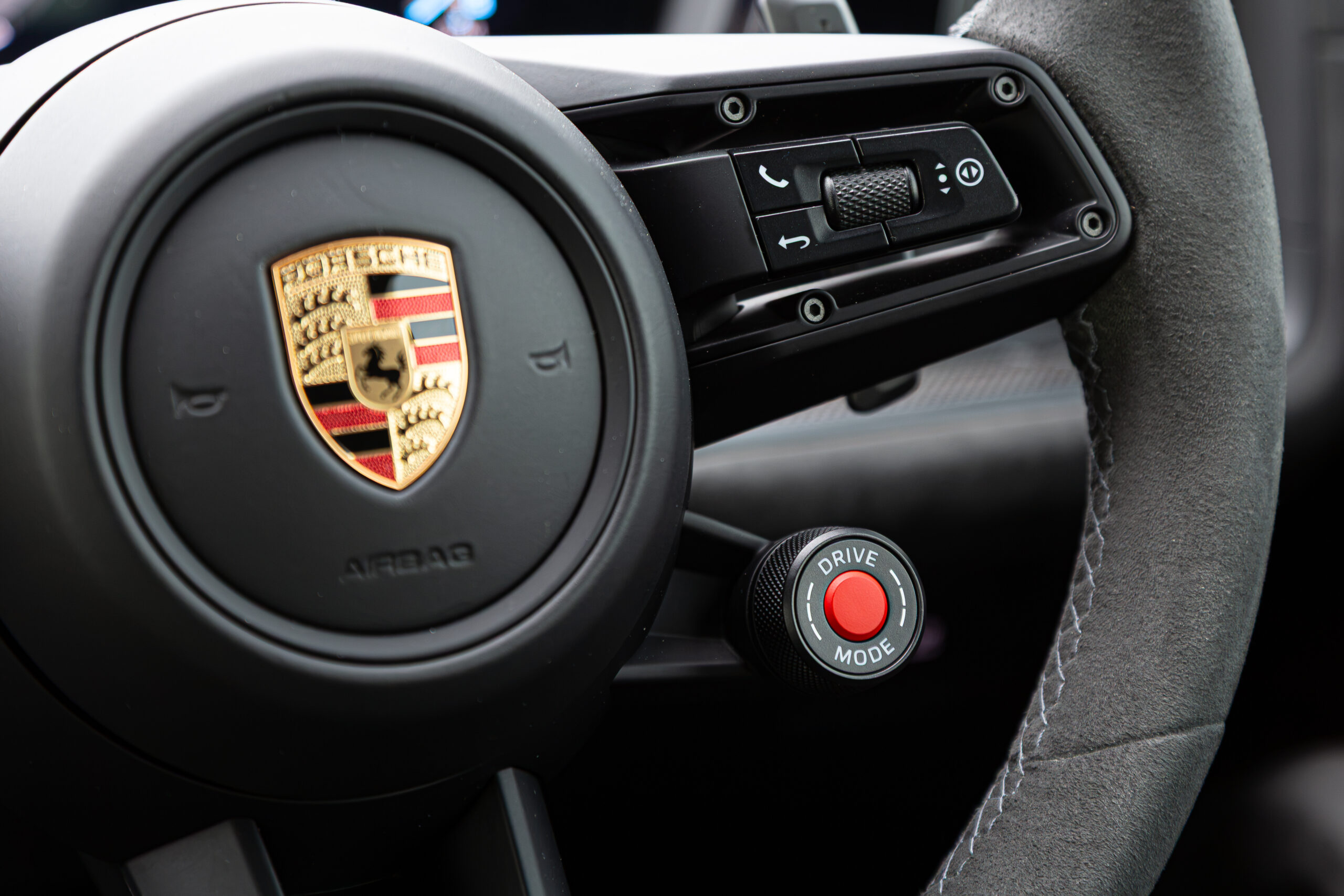
The standard GT interior package adds contrasting stitching in either Arctic Grey or Deep Sea Blue, while the Race-Tex-rimmed sports steering wheel features a sporty yellow centre marking, just like Porsche’s GT sportscars. Everything you touch feels beautifully screwed together. It is very pleasing to grab those handles that run along the side of the transmission tunnel and sense the solidity…
Tall rear passengers will notice the Coupé’s tapering roofline above their heads, but that aside, the Turbo GT is a genuinely practical everyday proposition for most buyers, and the boot offers a claimed 576 litres of luggage space.
Priced from R4.66 million before options, the Turbo GT has become considerably more expensive since its introduction, but it still slots in below the Urus SE (R4 875 000) and above the XM Label (R3 675 000), both also priced before options. To Porsche’s credit, the standard specification is now more comprehensive than before.
In addition to the aforementioned HD Matrix LED headlights, the Turbo GT now comes standard with lane-keeping assist (including road sign recognition), pro-active occupant protection (including reversible seatbelt pre-tensioners up front), ambient lighting and a smartphone compartment with wireless charging (up to 15 W), all of which address some of the omissions noted in the previous model.
Still, Porsche’s configurator is a dangerous place to spend an evening, and a few enthusiastic ticks can push the final figure up by a considerable margin. Take the revised interior: the much-discussed Passenger Display is a R36 960 option, a Burmester 3D High-End Surround Sound system costs R115 930 and Night Vision Assist will set you back another R57 770.
Performance & Efficiency
Under the bonnet sits Porsche’s familiar 4.0-litre twin-turbo V8 in its strongest tune, now rated at 485 kW (a 14 kW gain over the outgoing car), while torque stays at 850 Nm. Drive is sent to all four wheels via an 8-speed Tiptronic S automatic transmission. To ensure it can cope with sustained punishment, whether on the road or at a track day, the motor’s internals are reinforced, with revised pistons, con-rods, crankshaft and timing-chain drive.
Porsche claims a 0-100 kph time of 3.3 seconds and a top speed of 305 kph (up from 300 kph), but those claims turned out to be somewhat conservative. During Cars.co.za‘s own performance testing, the Cayenne Turbo GT accelerated from rest to 100 kph in a startling 3.27 seconds, which makes it one of the fastest vehicles we have ever tested, as well as the fastest SUV.
It then blitzed the quarter mile in 11.31 seconds, crossing the marker at 192.38 kph. Interestingly, its Ingolstadt-based cousin from Audi managed 3.56 seconds to 100 kph, and a quarter mile time of 11.43 seconds at 192.09 kph.
What makes this all the more impressive is that both of its key rivals use plug-in hybrid systems for their headline outputs. The Urus SE musters a combined 588 kW and 950 Nm and the XM Label 550 kW and 1 000 Nm, yet Lamborghini claims 3.4 seconds for the 0-100 kph sprint and BMW 3.8 seconds for the XM. Without a battery pack and electric motor to carry, the Porsche simply has less weight to haul, and that shows in both a straight line, and in the corners (as you’ll read shortly).
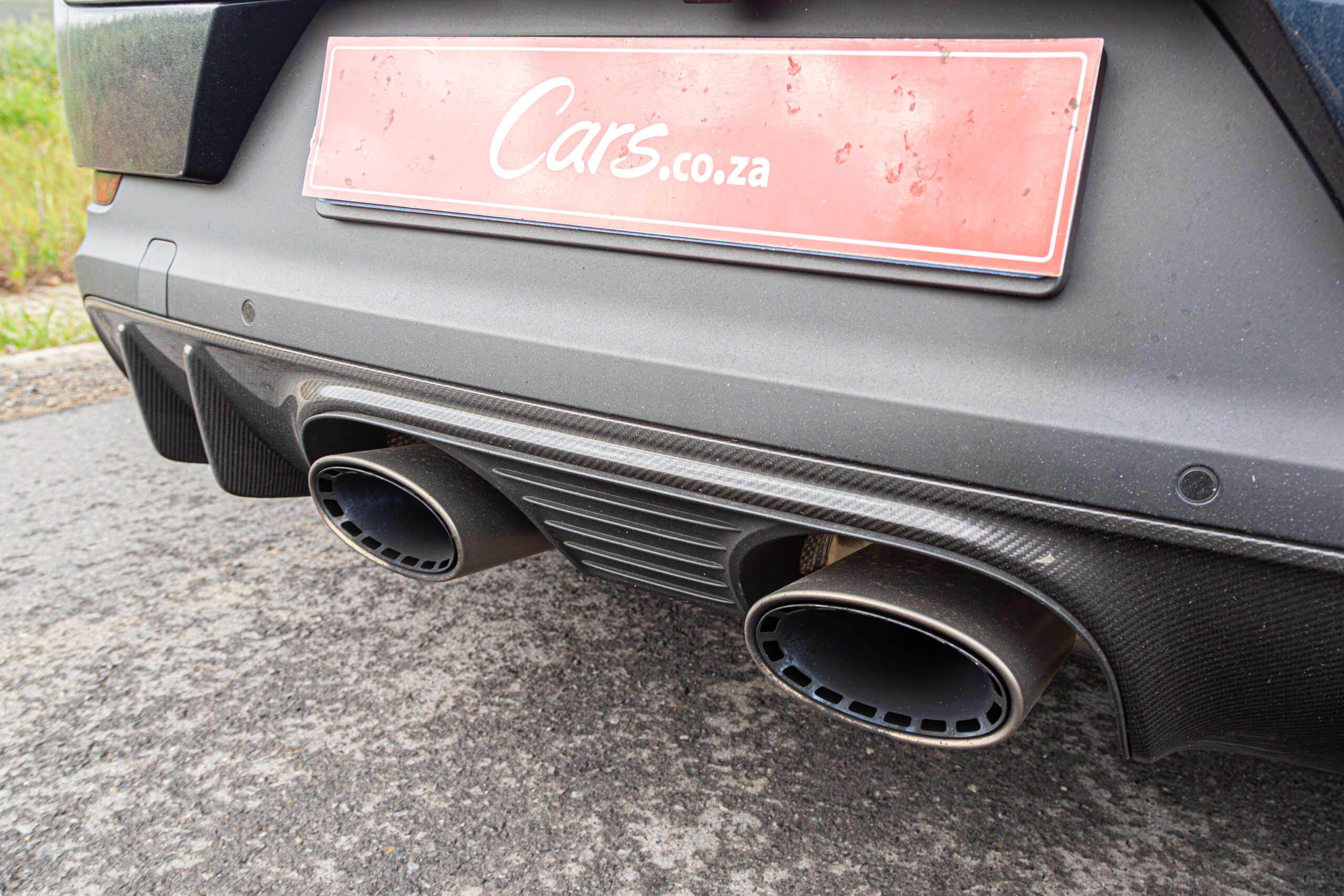
No other Cayenne gets the Turbo GT’s titanium sports exhaust, which exits through a pair of central pipes. A real treat is to open up the exhaust flaps and listen to the throttle blips on the downshifts as this monster storms into a corner. It’s an addictive soundtrack, one that makes you look for excuses to go back up the pass for another run.
Porsche’s claimed consumption of 11.9 L/100 km isn’t bad at all given the outputs on offer, but if you use the performance as often as we did, the real-world figure will be noticeably higher. We averaged around 15.0 L/100 km, but achieving even this figure will require restraint of the right foot.
Ride, Handling & Comfort
On the road, the Turbo GT remains a surprisingly comfortable companion. It’s firm, as you’d expect, but the air suspension takes the edge off most road imperfections, and the cabin stays quiet and refined when you’re simply cruising.
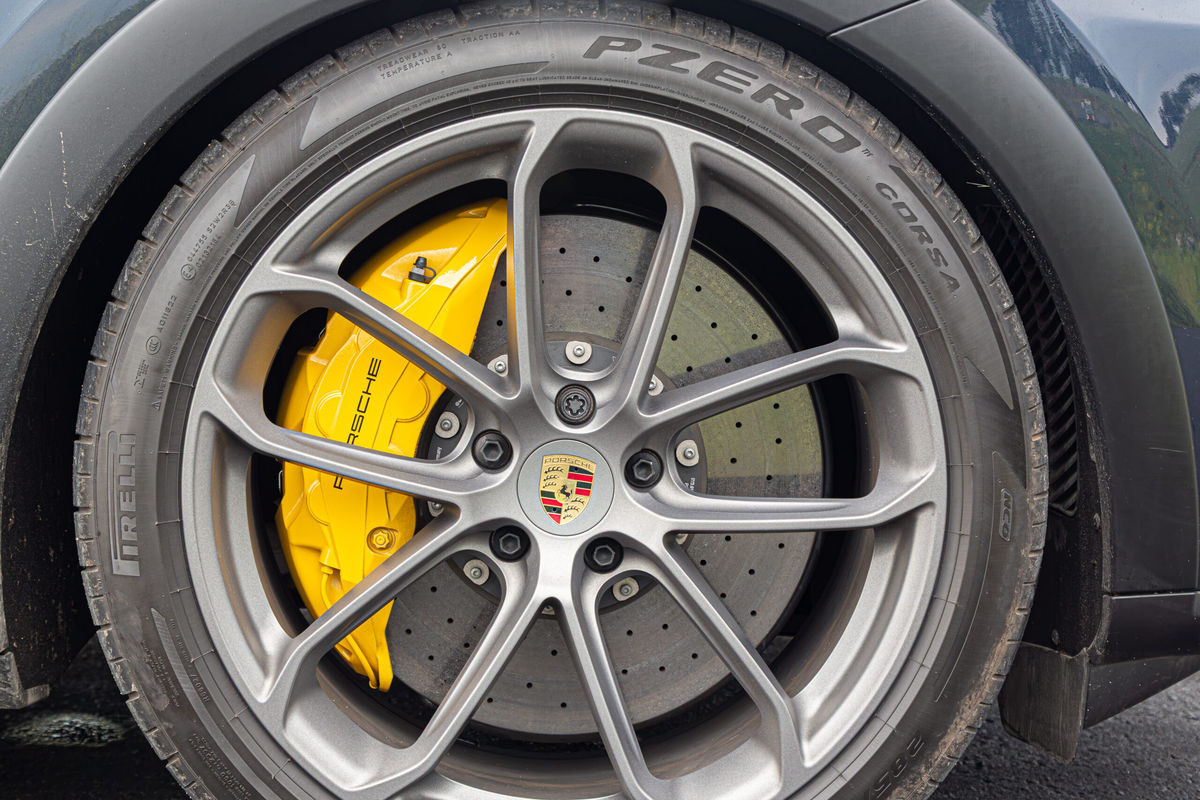
Which brings us to what this car is really all about. Porsche’s engineers have again given the chassis a thorough going-over. The front track has been widened and the front axle has more camber, while the standard adaptive two-chamber air suspension (with PASM two-valve damper technology and sports tuning) lowers the body by 15 mm. Ceramic composite brakes, Dynamic Chassis Control (PDCC), Porsche Torque Vectoring Plus and rear-axle steering are all standard.
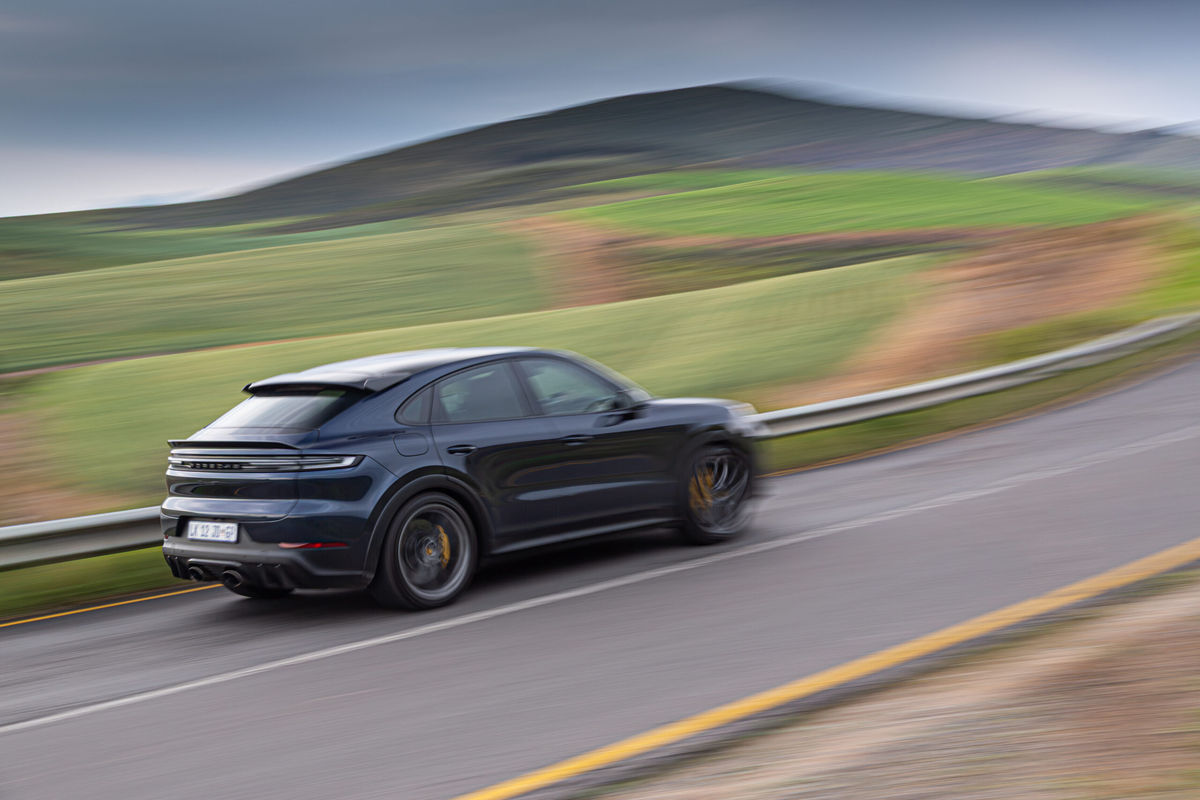
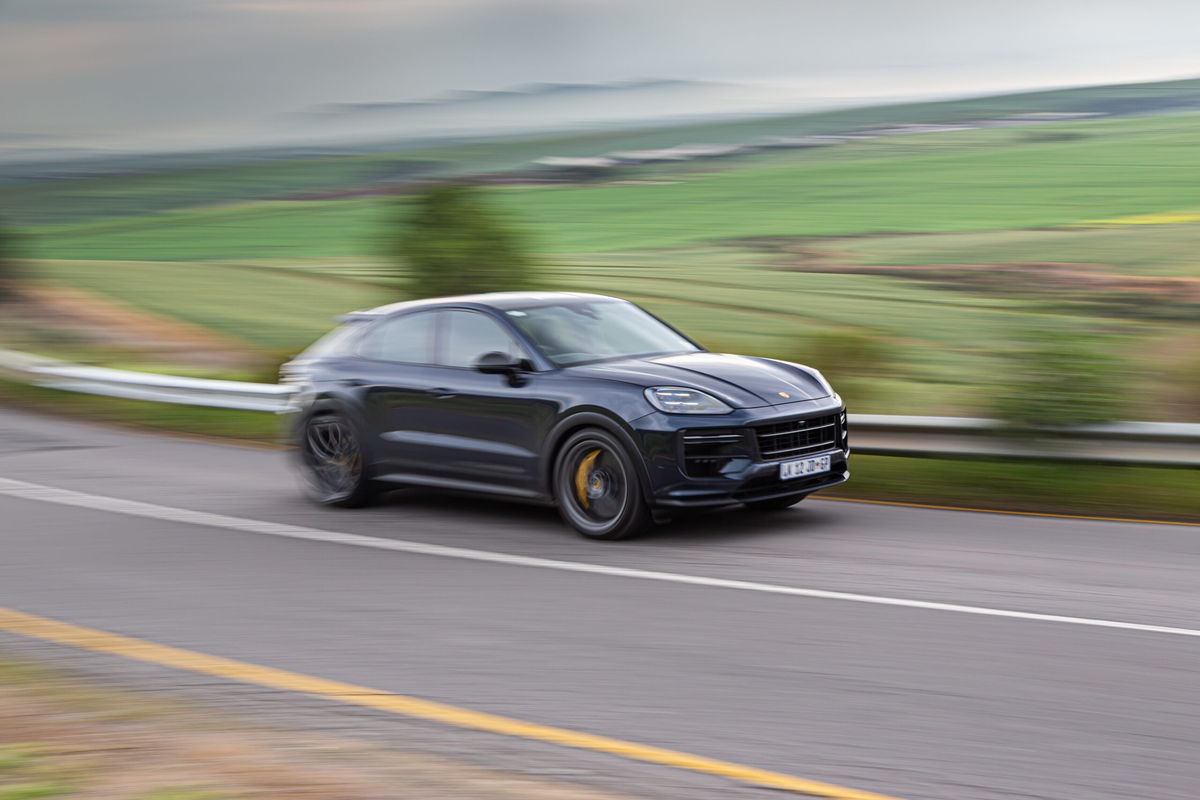
We took the Turbo GT onto the same great mountain roads around Cape Town as its predecessor, and those are about as good a proving ground as you’ll find anywhere. The result was, frankly, astonishing. The lasting impression is the Cayenne’s resistance to body roll during hard cornering, coupled with incredible grip from those massive tyres. It feels genuinely unflappable, no matter how hard you push it, yet also – somehow – light and manoeuvrable, which is not something you’d normally say about a vehicle of this size and weight (over 2.3 tonnes).
Like the car it replaces, the Turbo GT has an uncanny way of feeling smaller and smaller the harder you drive it through a series of bends. It pivots eagerly into corners, the steering is precise and full of confidence, and the massive ceramic brakes haul it down from big speeds with complete composure. Nothing about the way it drives betrays its size and, dynamically, no other SUV we’ve driven gets near it – barring the Ferrari Purosangue, of course, but that costs about three times more.
Price and After-Sales Support
Pricing for the Porsche Cayenne Turbo GT starts at R4 660 000 before any options are added, and that figure includes a 2-year/unlimited km warranty and a 5-year/100 000 km maintenance plan. As detailed elsewhere in this review, the list of optional extras is extensive.
Verdict
In typical Porsche fashion, the updates it’s made to the Cayenne Turbo GT seem subtle on the surface, but more power, a sharper chassis and a more modern (if less traditional) cockpit have further honed what was already a terrific machine. If you need the space and versatility of a big SUV, but refuse to give up the kind of driving thrills Porsche’s GT badge implies, the updated Cayenne Turbo GT remains the one to have.
What engine powers the Porsche Cayenne Turbo GT in South Africa?
The Porsche Cayenne Turbo GT is powered by a high-performance 4.0-litre V8 biturbo petrol engine delivering 485 kW (659 PS) of power and 850 Nm of torque. Power is transmitted via an 8-speed Tiptronic S automatic gearbox to an active all-wheel-drive system.
How much does the Porsche Cayenne Turbo GT cost in South Africa?
The flagship Porsche Cayenne Turbo GT starts from approximately R4 660 000 in South Africa before optional equipment.
What acceleration and top speed figures does the Cayenne Turbo GT achieve?
Equipped with the standard Sport Chrono Package, the Cayenne Turbo GT accelerates from 0 to 100 km/h in just 3.3 seconds and reaches a top track speed of 305 km/h.
What is the fuel consumption of the Porsche Cayenne Turbo GT?
The Cayenne Turbo GT carries a claimed combined fuel consumption rating of approximately 12.5 litres per 100 km, with combined CO₂ emissions rated at 285 g/km.
What warranty and maintenance plan cover the Porsche Cayenne Turbo GT in SA?
In South Africa, new Porsche models are backed standard by a 3-year / 100,000 km Porsche Driveplan maintenance agreement (extendable up to 5 years), alongside a 3-year manufacturer warranty and 24-hour roadside assistance.
Y63 Nissan Patrol’s SA launch timing locked in
Nissan South Africa has officially confirmed when it plans to launch the Y63-series Nissan Patrol, which will switch from a V8 to a twin-turbo V6 petrol engine…
New Patrol’s launch timing confirmed
Y63 model to switch to twin-turbo V6
Peak outputs of 317 kW and 700 Nm
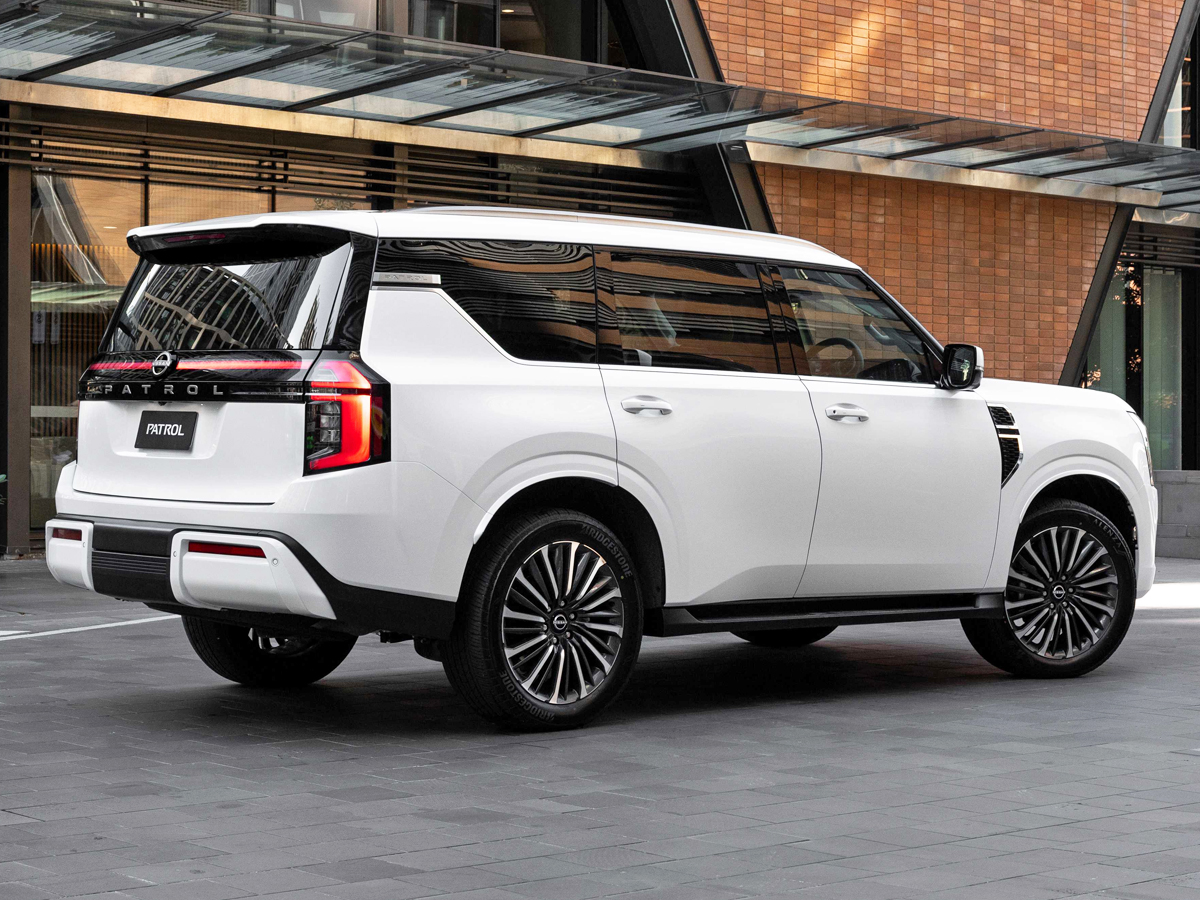
Nissan South Africa has confirmed that it plans to introduce the Y63-series Nissan Patrol ladder-frame SUV in Mzansi at some point in the opening quarter of 2027 – lining up with what the Japanese brand’s local division told us back in 2025.
The early-2027 launch will mark the return of the venerable Patrol nameplate – which boasts a heritage that dates all the way back to 1951 – to South Africa, with the V8-powered Y62-series model having been discontinued in May 2025.
Set to resume its role as the Japanese brand’s flagship, the new Patrol is described by Nissan as “the most advanced and capable” iteration to date. It will switch from its long-running predecessor’s naturally aspirated 5.6-litre V8 petrol motor to a twin-turbo 3.5-litre V6 motor generating 317 kW and 700 Nm.
Equipped with a 9-speed automatic transmission and all-wheel drive, the 3-row Patrol will ship standard in Mzansi with a “comprehensive range of luxury and off-road features” as well as an array of advanced driver assistance system (ADAS) functions, according to Nissan SA.
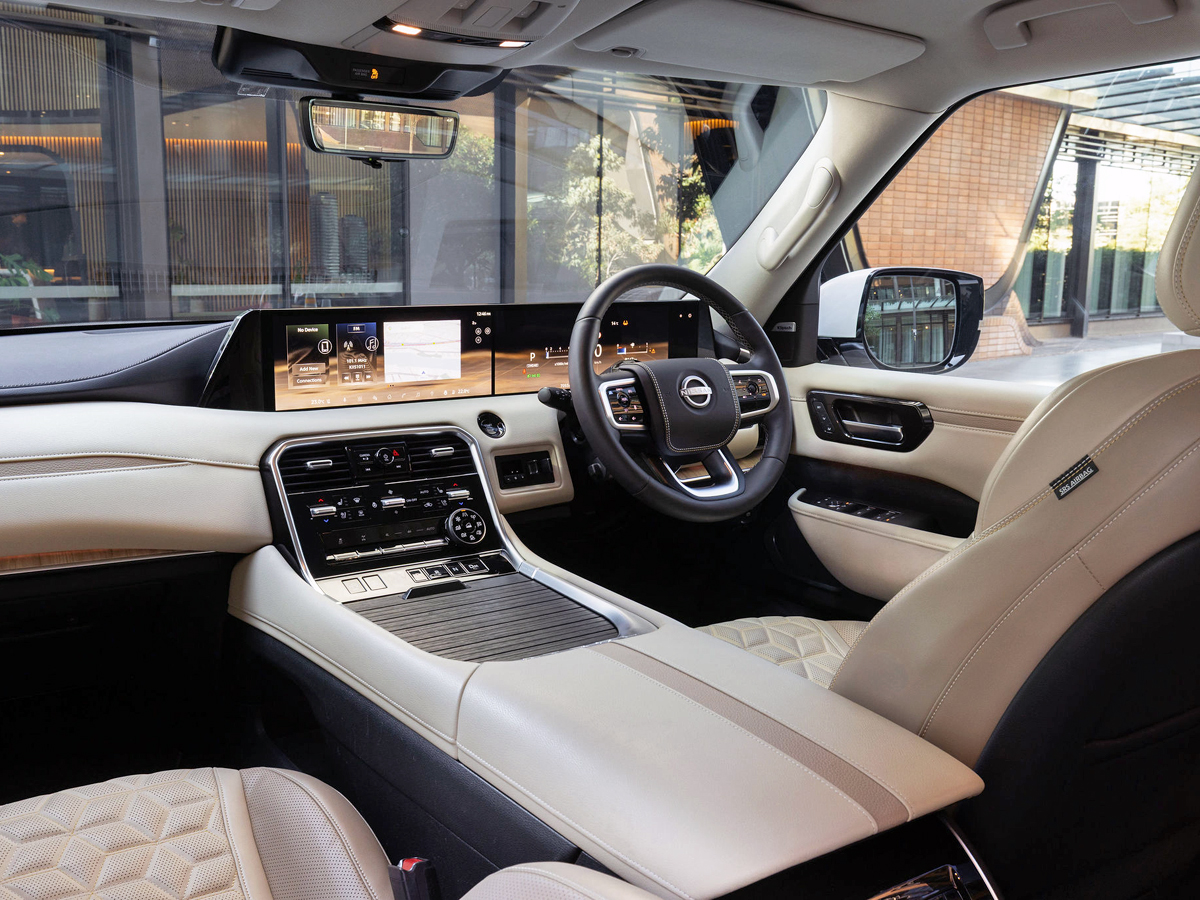
Revealed some 2 years ago (in September 2024), the Y63-series Patrol currently offered in the Middle East boasts features like adaptive air suspension, 6 drive modes, “exquisitely” quilted leather seats, a panoramic sunroof, a 28.6-inch horizontal “Monolith” display (comprising twin 14.3-inch screens) and dual 12.8-inch displays for 2nd-row passengers.
Frequently Asked Questions (FAQ)
Q: When will the new Y63-series Nissan Patrol launch in South Africa?
A: Nissan South Africa has officially confirmed that the Y63 Patrol is scheduled to make its local debut in the first quarter of 2027.
Q: What engine replaces the V8 in the new Y63 Nissan Patrol?
A: The previous naturally aspirated 5.6-litre V8 engine has been replaced by a new 3.5-litre twin-turbo V6 petrol motor, producing 317 kW and 700 Nm of torque paired with a 9-speed automatic transmission.
Q: What key features can buyers expect on the new Nissan Patrol Y63?
A: The new flagship SUV features all-wheel drive, adaptive air suspension, advanced driver assistance systems (ADAS), premium quilted leather interior options, a 28.6-inch dual-screen “Monolith” display and dual 2nd-row entertainment screens.
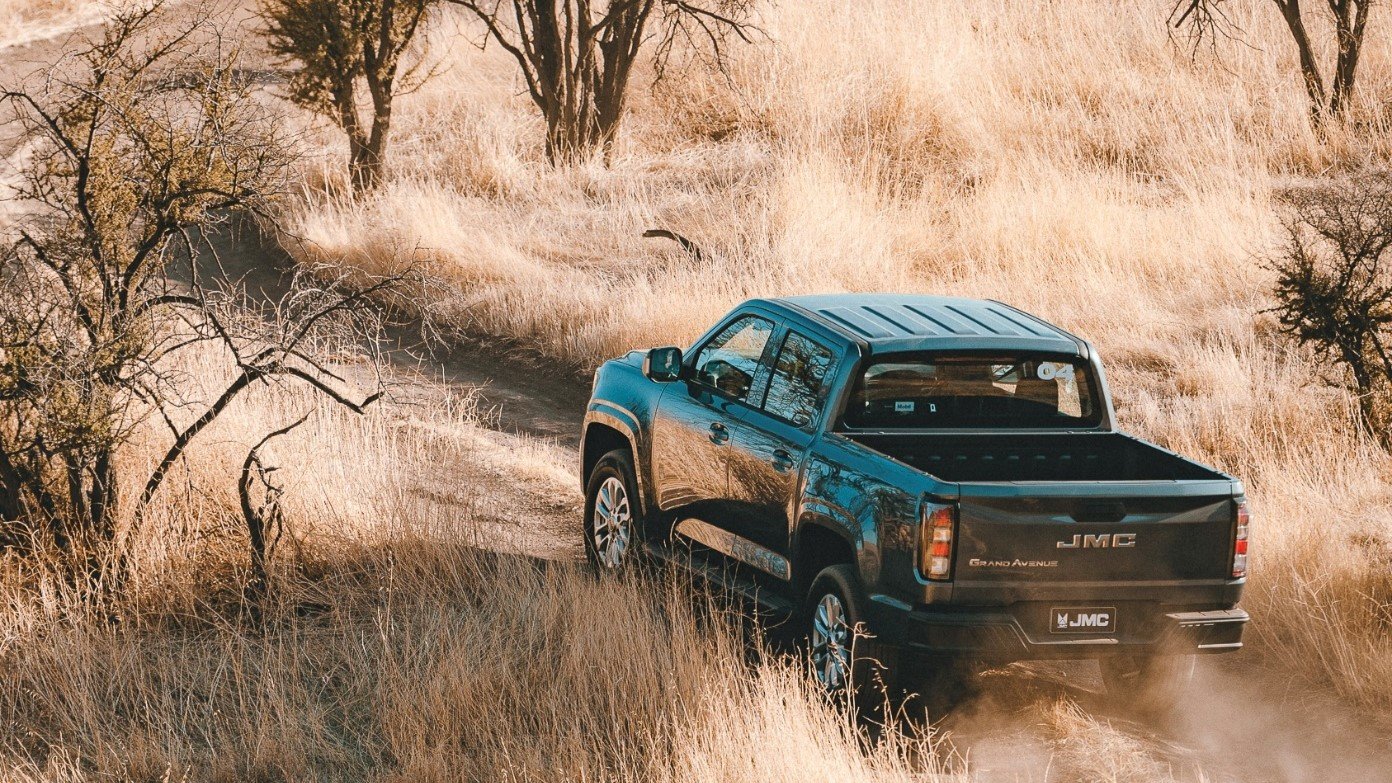
Is the new JMC Grand Avenue Mzansi’s best power-per-rand bakkie?
The JMC Grand Avenue bakkie brings a combination of power and features to the South African market at a nearly unbelievable price. But how does it really measure up to the class leaders from Ford and Toyota when evaluated on the numbers that matter?
JMC has a name that sounds awfully familiar to one of America’s biggest truck brands, GMC. Like GMC, the JMC business model is built on profiting from the seemingly endless global demand for double-cab bakkies.
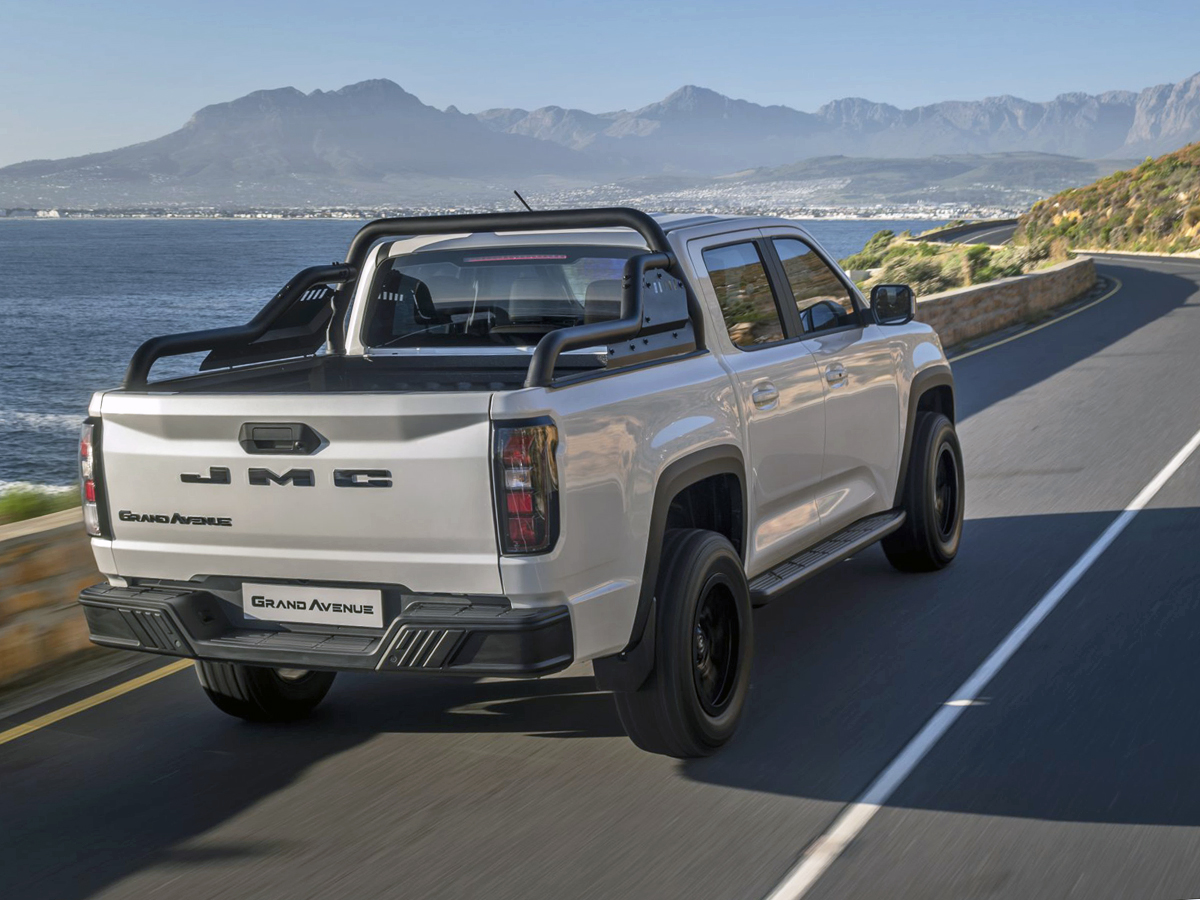
Since its South African product relaunch, JMC has been bringing proper big-body bakkies to market. Its latest Grand Avenue double-cabs are larger than market-leading models from Toyota and Ford – a footprint that brings distinct advantages and disadvantages.
The Grand Avenue is roughly 100 mm longer than a Ford Ranger, meaning it will test your low-speed parking skills and driving confidence on narrow inner-city streets or in security estates.
However, while this big JMC is long, it features impressive front-wheel steering geometry, yielding a turning radius of only 6.0 metres. That is marginally tighter than the 6.3-metre average for a Ford Ranger or Toyota Hilux double-cab.
JMC Grand Avenue cab comfort
One of the biggest engineering challenges with a double-cab? Rear seat comfort…
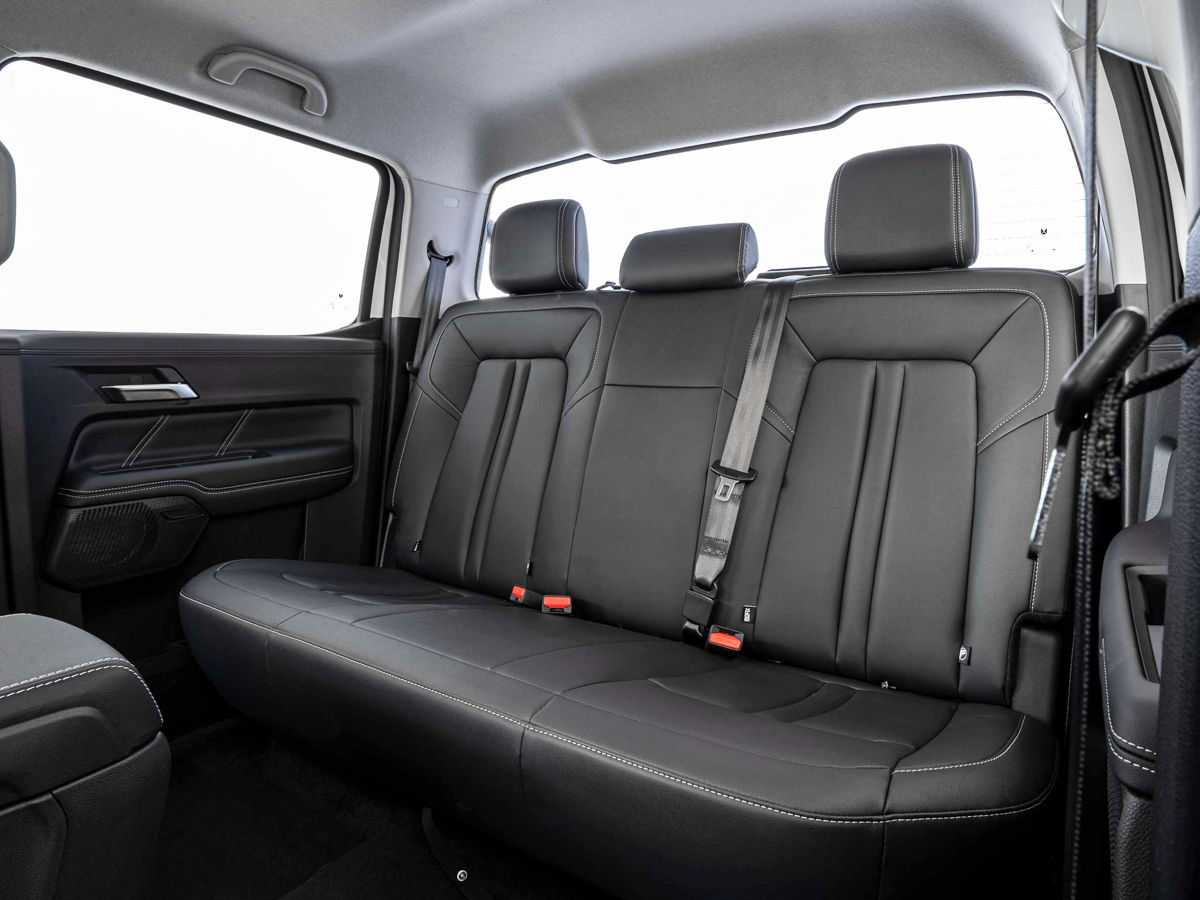
The size of JMC’s new bakkie has clear advantages, too. A larger platform and body structure mean a bigger cabin, which translates into better rear-passenger legroom.
A spacious cabin really matters on long-distance road trips when travelling with a full complement of adult passengers. Most double-cabs suffer from rear-seat discomfort due to legacy utilitarian bench designs and shallow floor packaging – issues inherent to body-on-frame architectures.
The Grand Avenue tackles this with an oversized cabin layout that makes long-distance travel roomier and far more comfortable.
Another issue plaguing rear seats is foam density. Soft padding can sag under load after a few hours, leaving larger South African adults unsupported on long drives. Fabric seats on many budget bakkies lack the necessary structure for all-day inter-provincial trips.
JMC’s product team knows rear-seat support is crucial to compete locally. That is why the Grand Avenue features leather upholstery over firm, supportive padding designed to hold its shape over distance. The upgrade to real leather also makes the seats far more breathable on hot days.
Much more powerful than Ranger 2.0 SiT. More gears than Hilux 2.8. Considerably cheaper than either.
Chinese brands know diesel remains the fuel of choice for South African buyers. The Grand Avenue is powered by JMC’s most advanced 2.5-litre turbodiesel, featuring a high-pressure common-rail injection system supplied by Bosch.
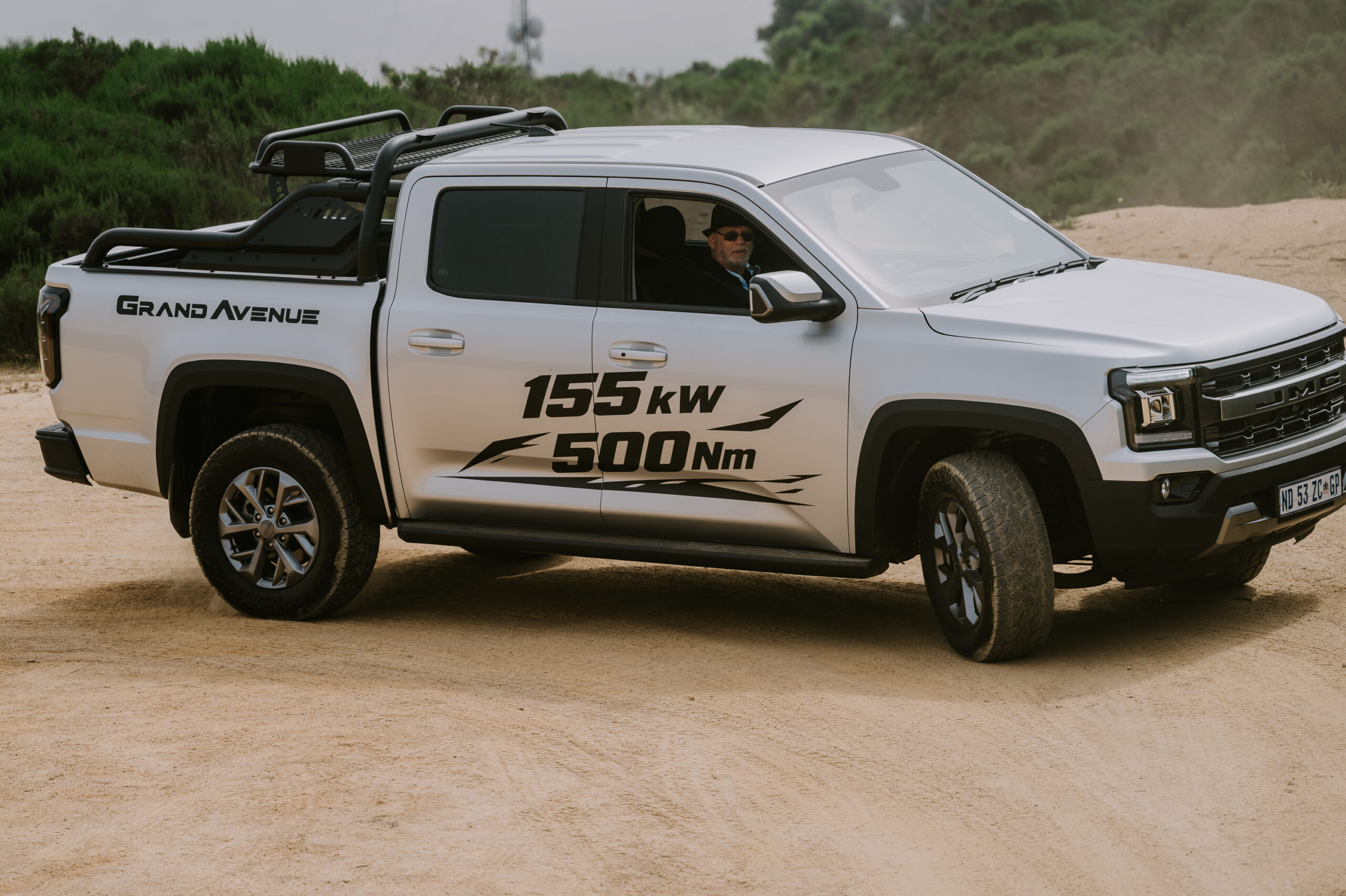
JMC engineers uprated outputs significantly for this application. While earlier iterations produced 127 kW and 430 Nm, the Grand Avenue delivers a stout 155 kW and 500 Nm.
Compared to traditional market leaders, those gains make a noticeable difference on the road. JMC’s flagship double-cab is significantly more powerful than Ford’s 2.0 SiT Ranger (125 kW) and edges out Toyota’s Hilux 2.8 GD-6 (150 kW).
Power matters, but so does transmission tuning. The Grand Avenue pairs its engine with a ZF-sourced 8-speed automatic, placing its gear-ratio spread neatly between the 6-speed Hilux and 10-speed Ranger.
Class-leading power-to-price
Bosch 2 000-bar injectors are integral to that 155 kW peak power number.
Power-to-weight ratio dictates real-world performance, and here the JMC holds a distinct paper advantage over legacy double-cabs.
For price-to-performance ratio, the Grand Avenue offers exceptional value. You would pay significantly more for a lower-spec Ford Ranger 4×4 SiT XL, which manages a power-to-weight ratio of roughly 58 kW per tonne.
A Toyota Hilux 2.8 in SRX spec improves on that figure at nearly 70 kW per tonne, but the Grand Avenue bests both with approximately 75 kW per tonne. That punch makes a substantial difference when overtaking slower traffic on cross-country routes.
In the sub-R800 000 bakkie market, you will struggle to find a better power-to-weight ratio than the new Grand Avenue.
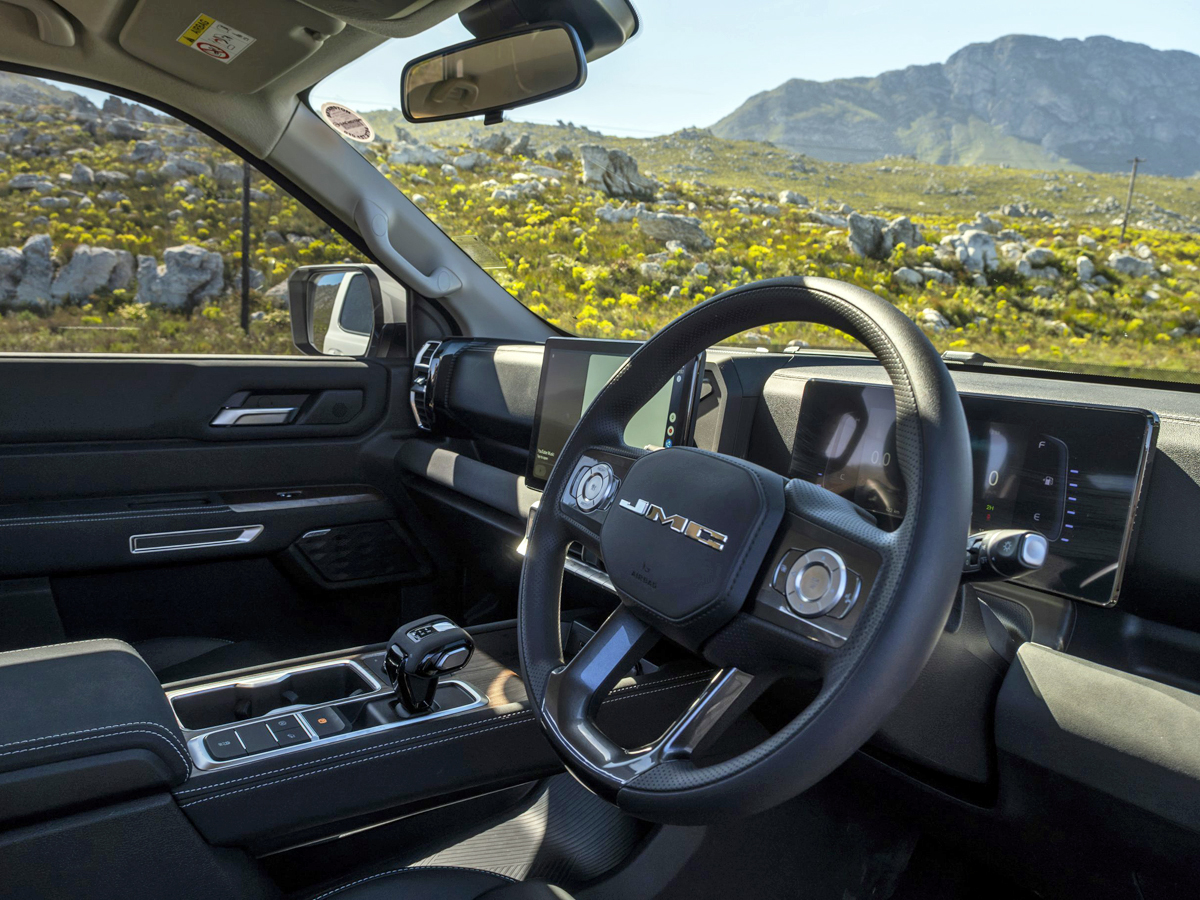
More luxury SUV than workhorse. The infotainment screen rotates 12 degrees to either side.
There is no questioning the cabin space, feature set, seat comfort and power-to-weight ratio of the JMC Grand Avenue. It delivers a massive amount of bakkie for the money, offering a substantial spec sheet at roughly a R150 000 saving over comparable 4×4 automatic entry offerings from Ford and Toyota.
At R579 900 for the flagship 4×4 GL AT, the JMC undercuts mid-spec 4×4 double-cabs like the Ford Ranger 2.0 SiT XL and Toyota Hilux 2.8 SRX by a massive margin.
However, JMC’s dealership footprint is much smaller and heavily urban-concentrated compared to the sprawling networks of Ford or Toyota. Buyers outside Gauteng, Durban or Cape Town will need to factor in service and maintenance logistics.
That said, local distributor backing appears confident, bundling the Grand Avenue with a standard 5-year/200 000 km warranty and a 5-year/100 000 km service plan.
The 5 electrified double-cab bakkies on SA’s new-vehicle market
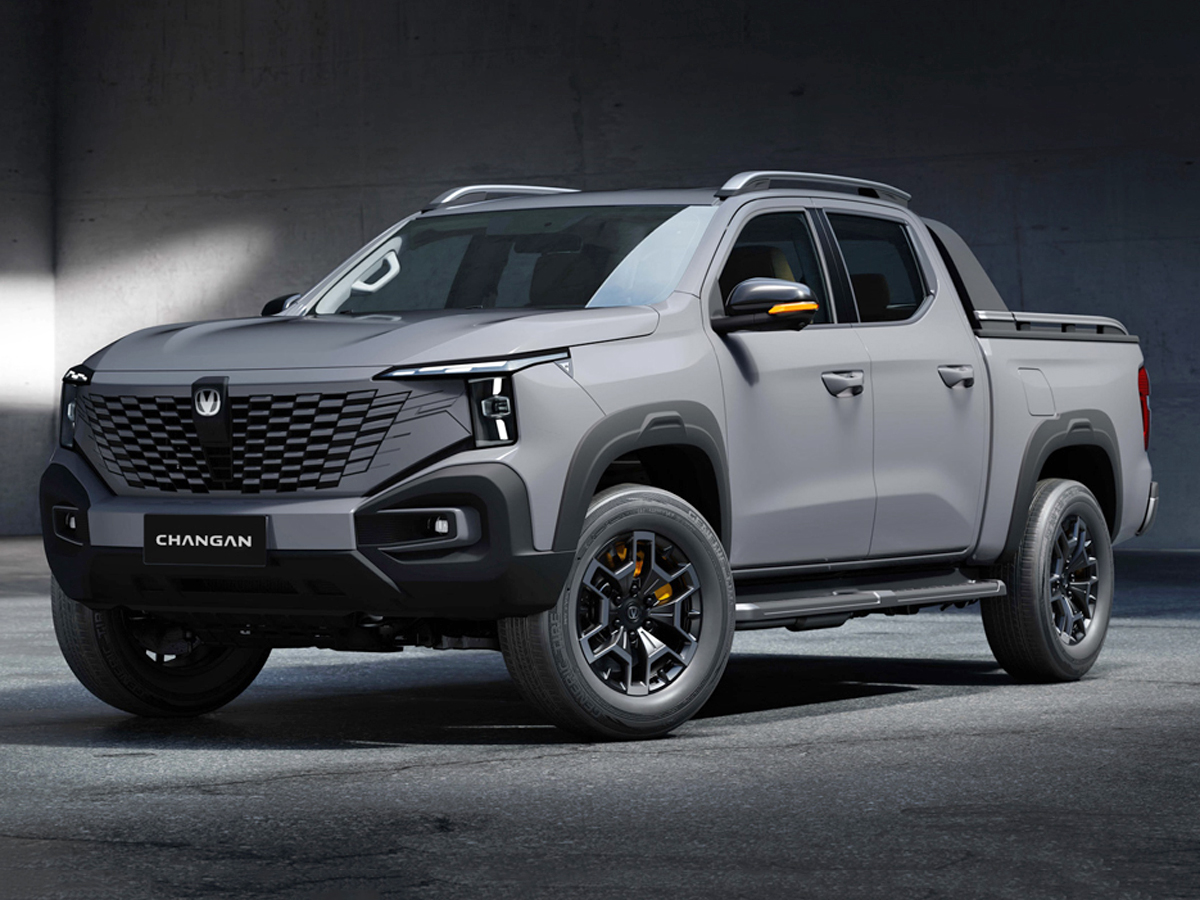
Prefer your pick-up with an NEV powertrain of some sort? Well, these are the 5 electrified double-cab bakkies currently available in South Africa’s new-vehicle market…
As South Africa’s broader new-energy vehicle (NEV) market grows, so too do the electrified options in the light-commercial vehicle (LCV) segment. These, then, are the 5 electrified double-cab bakkies currently available in Mzansi (pricing correct in September 2026).
Of course, there are more options on the horizon, chief among them the production version of Chery’s KP31 concept. For the record, that model – which is known as the Stockman in Australia – features a turbodiesel plug-in hybrid powertrain offering 350 kW and 800 Nm.
Set to hit the market in early 2027 wearing a different name, the Stockman is poised to launch as one of South Africa’s most powerful double-cab bakkies. Until then, however, these are your electrified options in Mzansi’s double-cab segment (note that the GWM P500 2.0T HEV was seemingly discontinued earlier in September, although the P300 PHEV is on the way)…
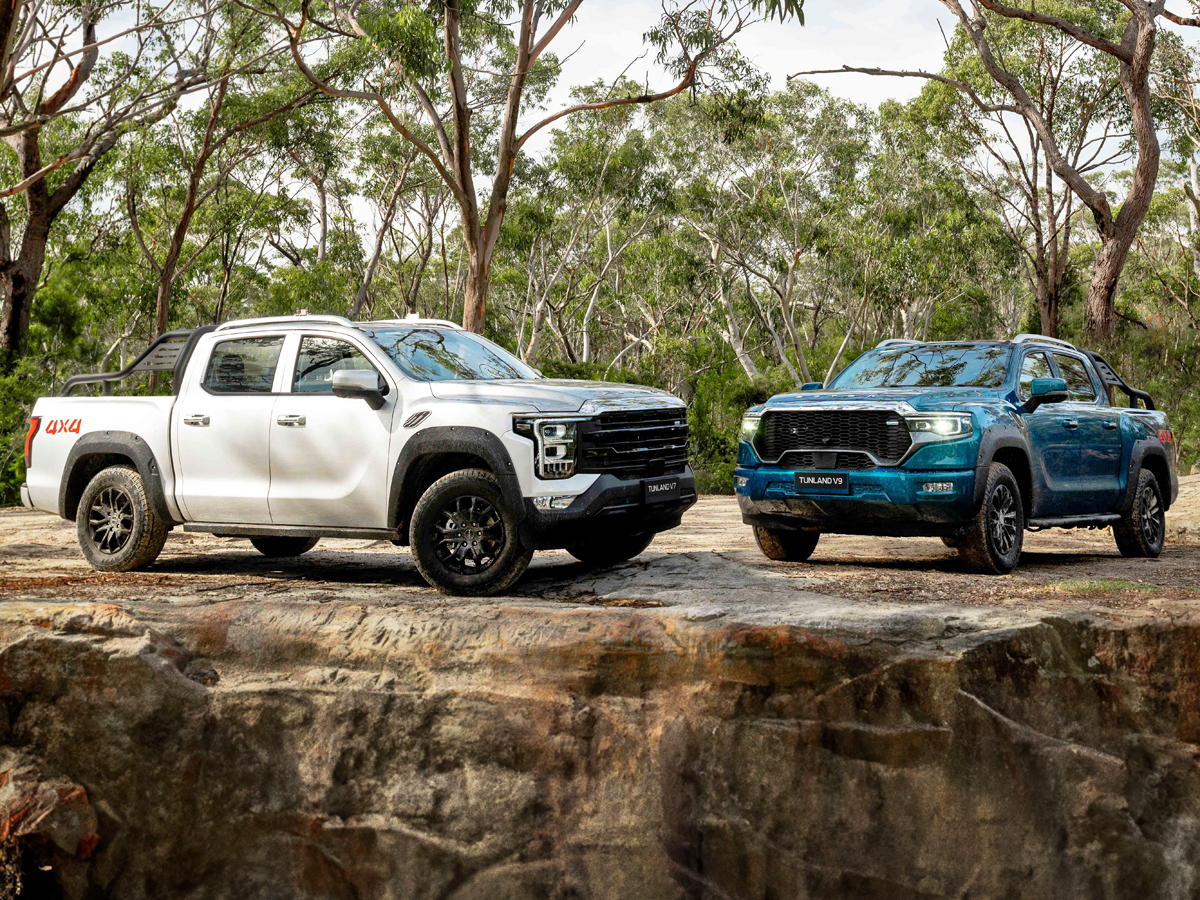
Foton Tunland V7 and V9
Both measuring a whopping 5 617 mm in length, Foton’s Tunland V7 and Tunland V9 are each available in 4×2 and 4×4, with pricing starting at R689 900. All derivatives employ a 2.0-litre, 4-cylinder turbodiesel engine (generating 120 kW and 450 Nm), along with a 48 V mild-hybrid system and a ZF-sourced 8-speed automatic transmission. Note that while the V7 features a traditional leaf-spring rear suspension setup, the V9 employs a multi-link arrangement at the rear.
Payload: 1 000 kg
Towing capacity (braked): 3 500 kg
Claimed fuel economy: 9.0 L/100 km (4×2)/10.8 L/100 km (4×4)
With an electric motor on each axle, Changan’s Hunter K50 REEV (that’s “Range Extender Electric Vehicle”) is effectively an electric double-cab bakkie boasting peak outputs of 200 kW and 470 Nm. However, this R799 900 pick-up also features a turbocharged 2.0-litre, 4-cylinder petrol engine that acts strictly as a generator, topping up the 31.2 kWh battery pack when charge levels fall below a certain point. According to Changan, the resulting range is well over 1 000 km.
The only model here not from a Chinese manufacturer, the Prospecton-built Toyota Hilux in Legend trim ships standard with a mild-hybrid system linked to its 2.8-litre, 4-cylinder turbodiesel engine (150 kW/500 Nm) and 6-speed automatic transmission. Priced from R947 500 in 4×2 form and R1 001 900 in 4×4 guise, this bakkie features a 48 V system comprising an 8.5 kW/65 Nm electric motor generator and a small lithium-ion battery pack to deliver what the Japanese brand describes as “smoother stop-start operation, enhanced driving refinement and improved responsiveness when accelerating from standstill”.
Payload: 795 kg
Towing capacity (braked): 2 800 kg (4×2)/3 500 kg (4×4)
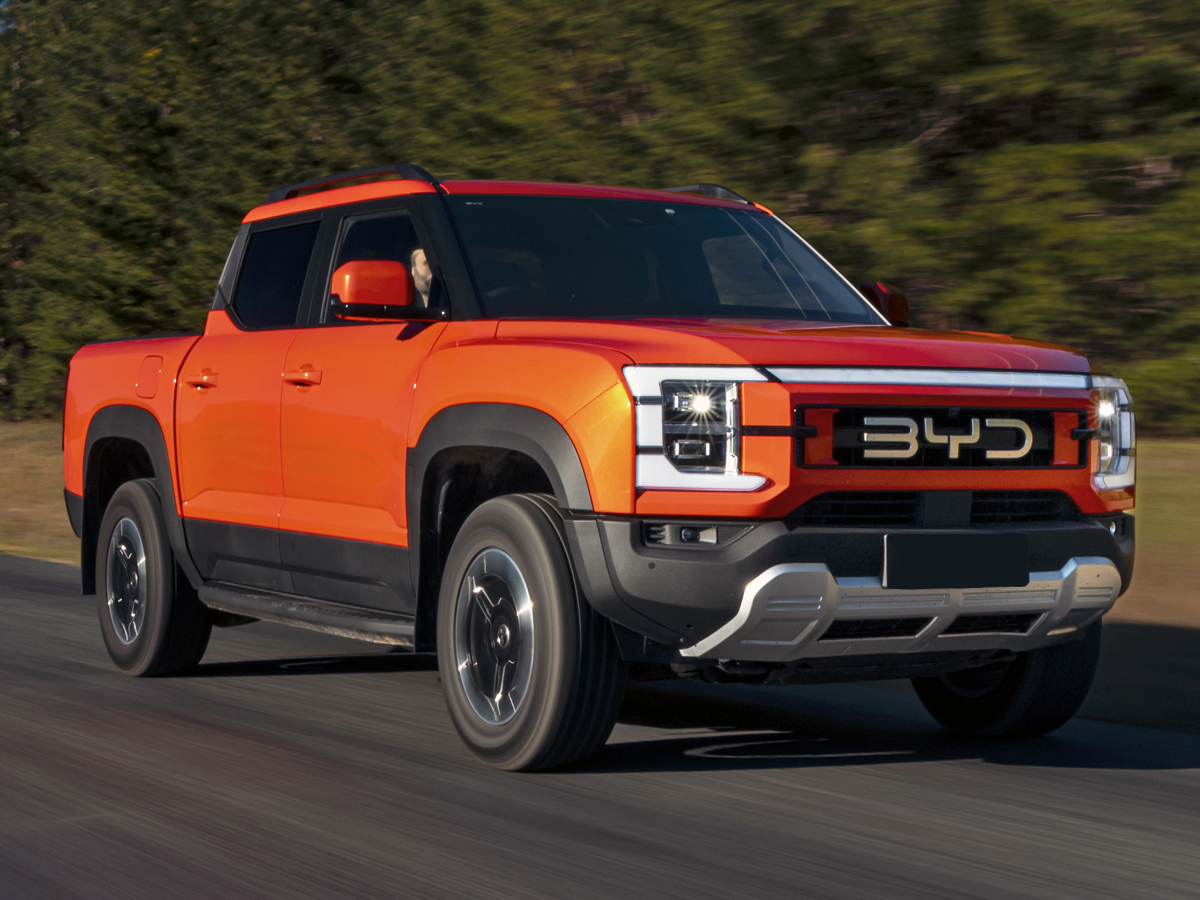
Holding the title of South Africa’s most powerful bakkie (for now), the BYD Shark 6 is priced from R999 900 in Premium guise and R1 149 900 in Performance form. While the Premium derivative (which features a turbocharged 1.5-litre, 4-cylinder petrol engine and an electric motor on each axle) churns out 321 kW and 650 Nm, the Performance flagship boasts peak outputs of 350 kW and 700 Nm. These increased outputs are facilitated by a larger-capacity turbocharged 2.0-litre petrol unit. For the most part, the petrol engine acts as a generator to top up the battery. Both derivatives feature a 29.58 kWh (gross capacity) battery pack.
Payload: 790 kg
Towing capacity (braked): 2 500 kg (Premium)/3 500 kg (Performance)
Claimed fuel economy: 2.0 L/100 km (Premium)/1.3 L/100 km (Performance)
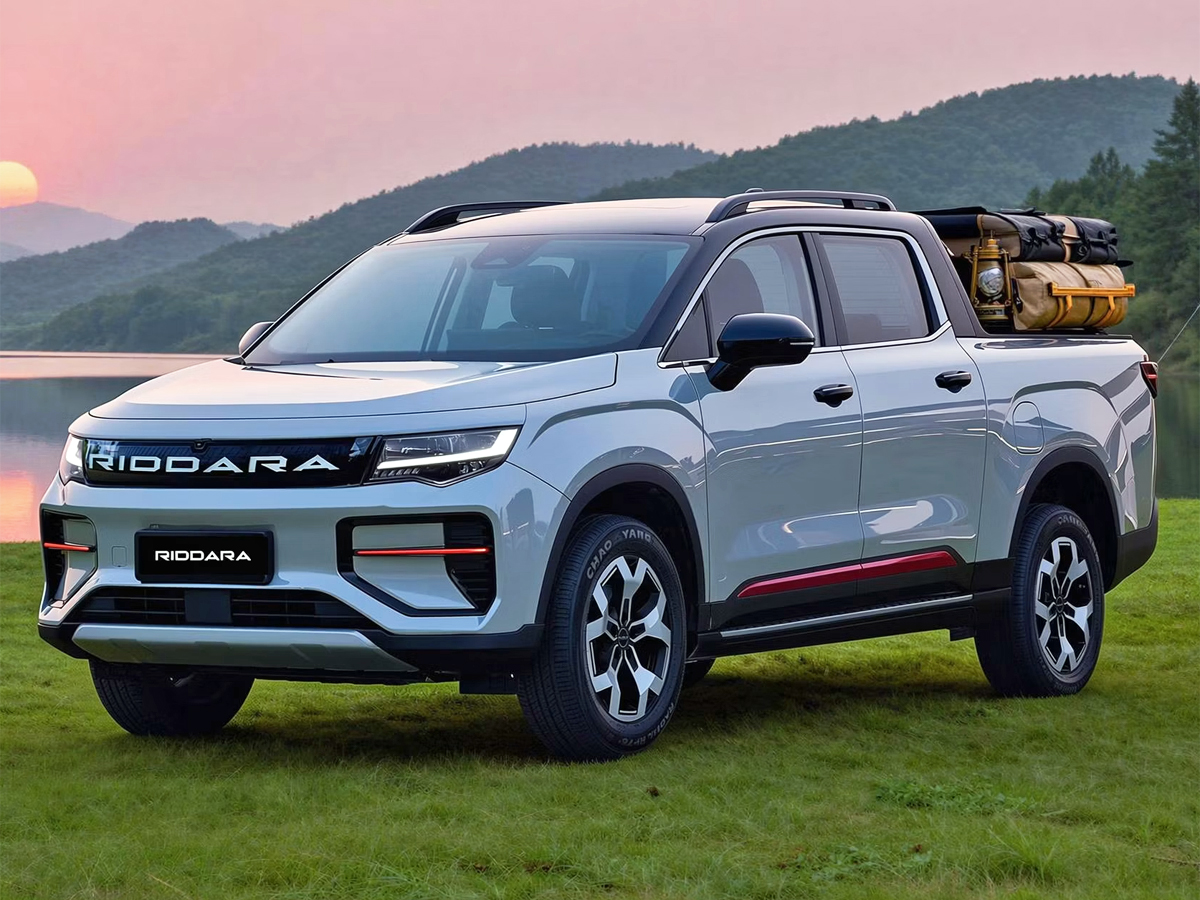
Kicking off at R611 900, Geely’s Riddara RD6 has the lowest starting price on this list. It’s also currently the only fully electric double-cab bakkie on the local market, with the Maxus T90 EV seemingly no longer available. The Econ Aspire RWD (180 kW/309 Nm) features a single, rear-mounted electric motor, while the AWD version adds a front-mounted electric motor, upgrades from a 63 kWh to a 73 kWh battery pack and has total outputs of 280 kW and 485 Nm. Finally, the Apex AWD tops the portfolio, priced from R781 900, boasting peak outputs as lofty as 315 kW and 595 Nm, and ranking as SA’s 2nd most powerful double-cab bakkie.
Payload: 1 115 kg (Econ RWD)/1 235 kg (Econ AWD)/1 030 kg (Apex AWD)
Towing capacity (braked): 2 500 kg (Econ RWD)/3 000 kg (Econ AWD & Apex AWD)
Q: What are the 5 electrified double-cab bakkies currently available in South Africa?
A: As of September 2026, the 5 electrified double-cab pick-ups on the South African market are the Geely Riddara RD6 (EV), Foton Tunland V7/V9 (MHEV), Changan Hunter K50 REEV (Range Extender), Toyota Hilux 2.8GD-6 MHEV Legend (MHEV) and BYD Shark 6 (PHEV).
Q: Which electrified bakkie is the most affordable in South Africa, and which is the most powerful?
A: The all-electric Geely Riddara RD6 is the most affordable options list starting from R611 900. The plug-in hybrid BYD Shark 6 holds the title of South Africa’s most powerful bakkie, generating up to 350 kW and 700 Nm in Performance guise.
Q: How do the powertrain technologies differ across these electrified pick-ups?
A: The line-up includes a mix of single/dual-motor battery electric (Geely Riddara RD6), 48V mild-hybrid turbodiesels (Foton Tunland V7/V9 and Toyota Hilux MHEV), range-extender electric with a generator engine (Changan Hunter K50 REEV) and high-output plug-in hybrids (BYD Shark 6).
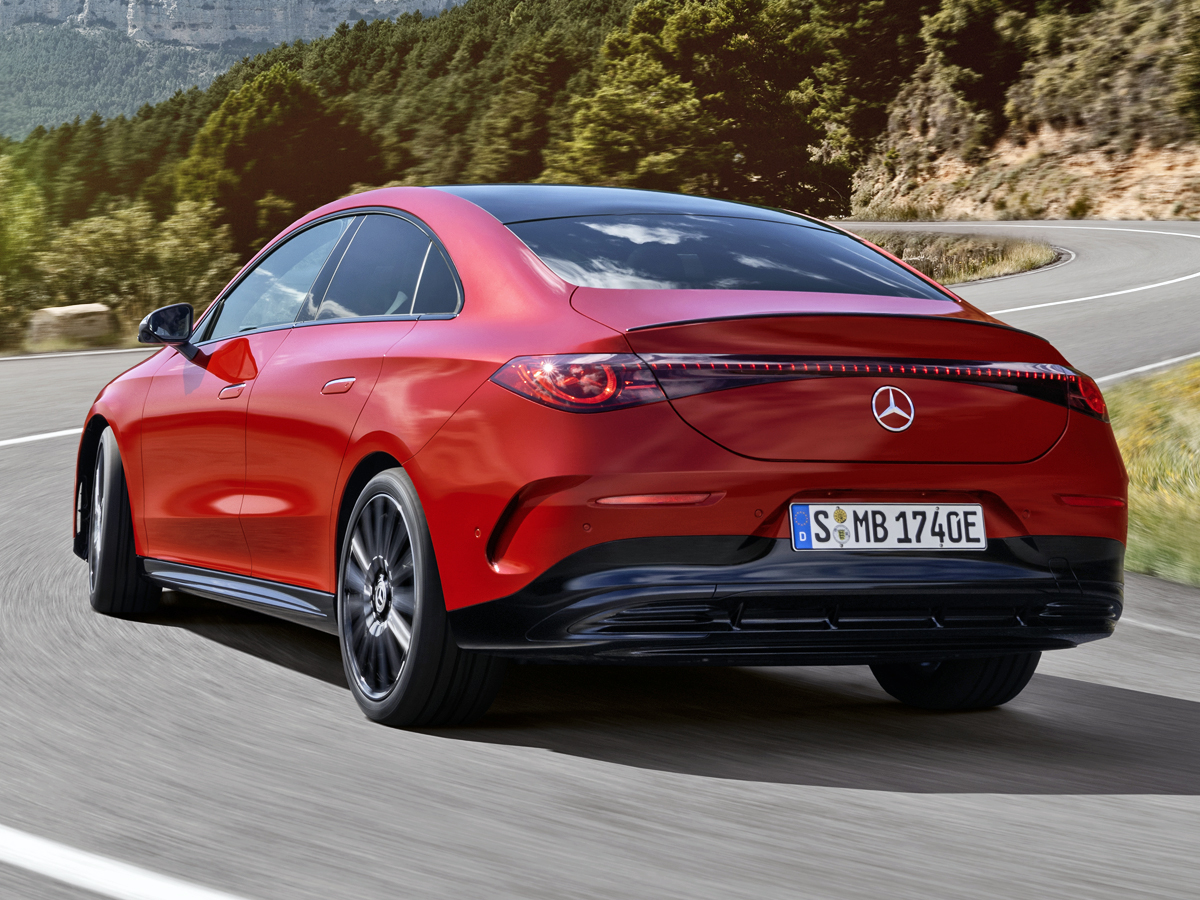
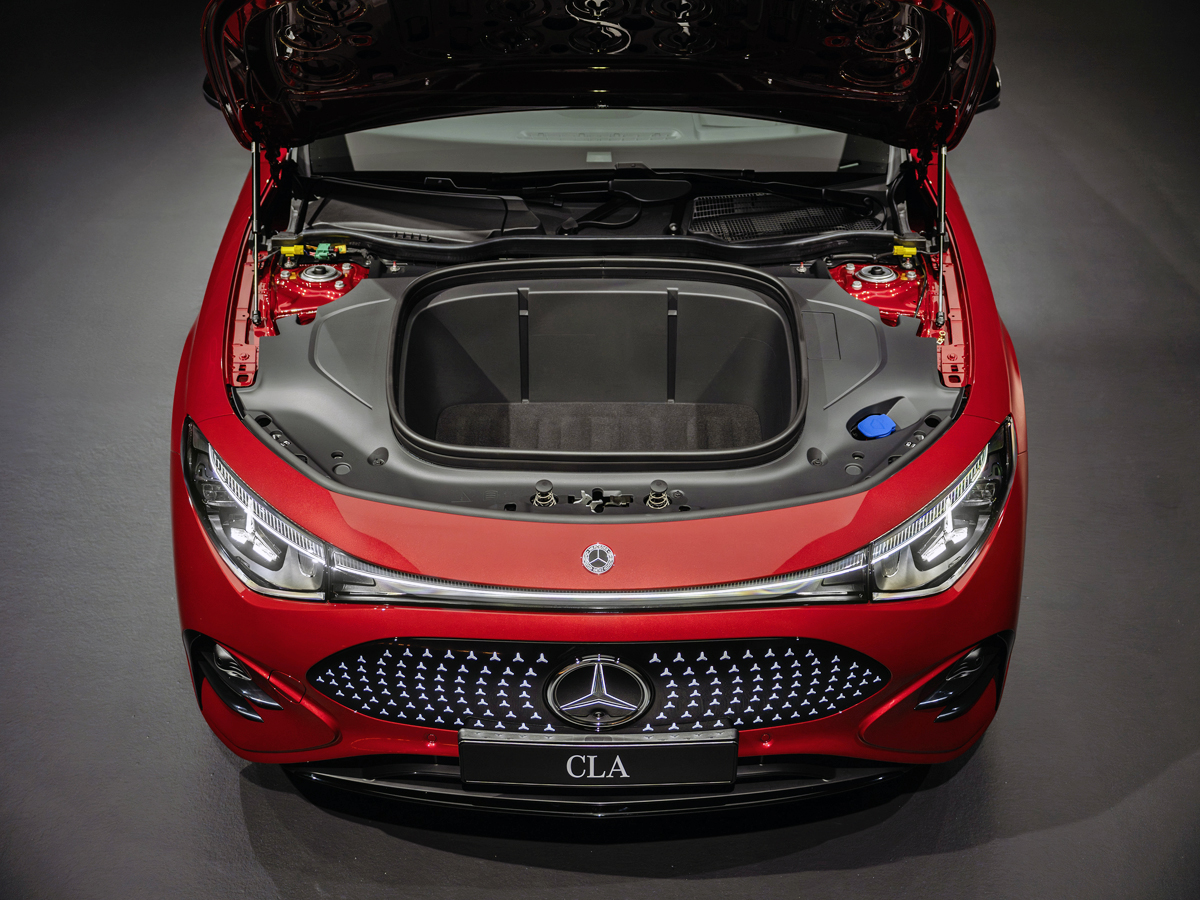
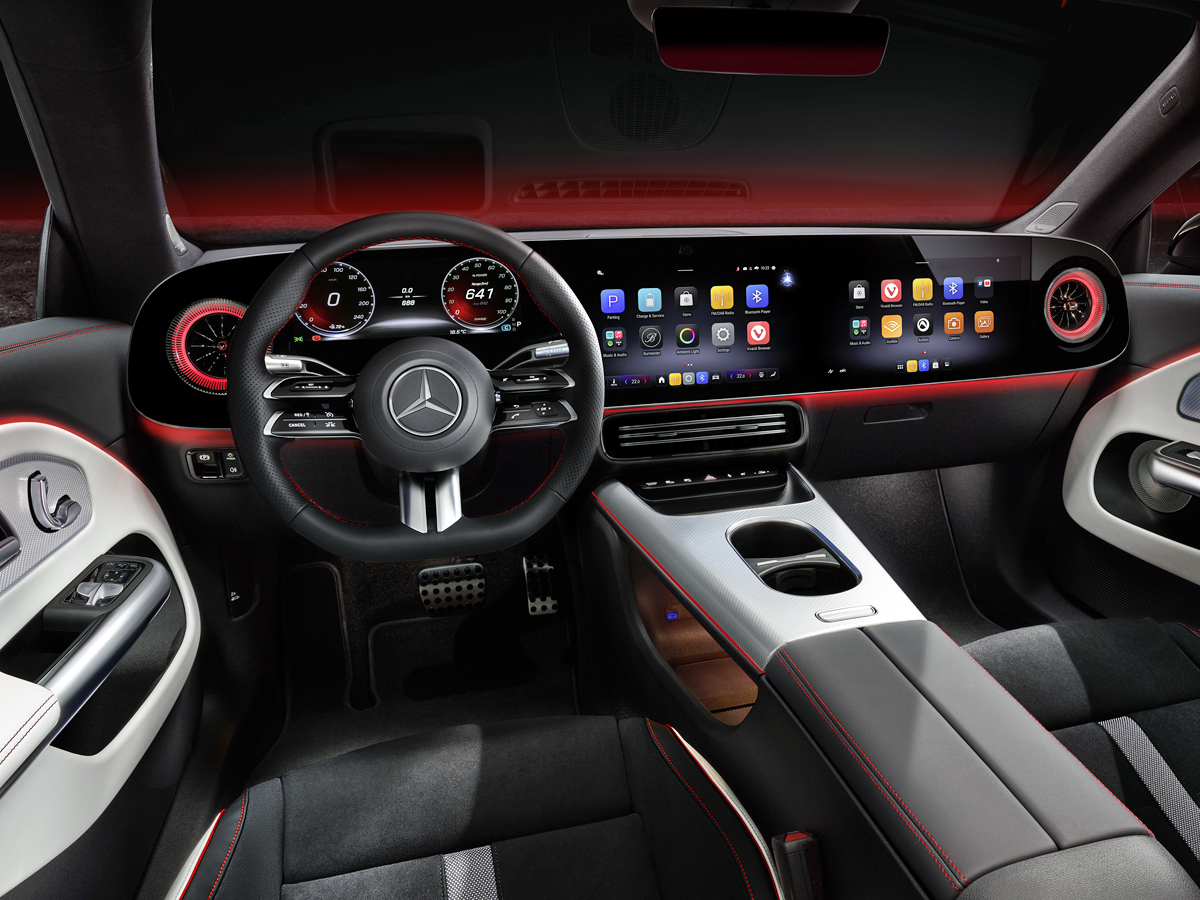
The fully electric Mercedes-Benz CLA 250+ with EQ technology has quietly arrived in South Africa. Here’s what the battery-powered sedan costs in Mzansi…
Rear-driven CLA 250+ generates 200 kW
Listed WLTP range tops out at 792 km
EV version follows petrol-powered CLA
The fully electric version of the new Mercedes-Benz CLA – officially badged as the CLA 250+ with EQ technology – has touched down in South Africa, offering a claimed single-charge range of nearly 800 km.
Yes, the German brand’s local division has quietly added the new C174-series electric vehicle (EV) to its configurator, a little over 2 months after the petrol-powered (with mild-hybrid assistance) version of the 3rd-generation sedan launched in Mzansi.
The CLA 250+ with EQ technology features a rear-mounted electric motor generating 200 kW and 335 Nm. According to Mercedes-Benz, these peak outputs facilitate a 0-100 kph sprint in 6.7 seconds and a maximum speed of 210 kph.
This electric powertrain features an 85 kWh nickel-manganese-cobalt battery pack, which the Stuttgart-based firm says offers a single-charge range of between 694 and 792 km (using the WLTP standard). The maximum AC and DC charging capacities are 11 kW and 320 kW, respectively, though the former number can be optionally increased to 22 kW (for some R13 000).
Shipping standard in Progressive trim, the new CLA 250+ is priced from R1 212 650. Selecting the AMG Line grade adds R47 400 to the starting price and forces the selection of the R29 300 Advanced Plus Package. Opting for the AMG Line Plus specification comes at a cost of R111 100 (while also forcing buyers to take the R82 800 Premium Package and the R2 300 automatic front-passenger airbag deactivation).
In South Africa, available options for the CLA 250+ include the Night Package (R19 000) and the AMG Line Sports Seat Package (R16 000), along with the aforementioned Advanced Plus Package and Premium Package equipment bundles, as well as the Premium Plus Package (R126 600).
Local buyers can also choose from a range of alloy-wheel designs (priced up to R42 642 for 19-inch AMG 5-spoke items) and specify additional extras such as multi-beam adaptive LED headlamps (R11 200), “Magic Sky Control” (R26 000) for the standard panoramic sunroof, the MBUX Superscreen (R23 000), a head-up display (R17 800) and a Burmester 3D surround-sound system (R21 500).
What does the new Mercedes-Benz CLA 250+ EV cost in SA?
DERIVATIVE
PRICE
CLA 250+
R1 212 650
The price above includes Mercedes-Benz’s 5-year/100 000 km warranty (we’ve yet to confirm battery-specific cover, but we suspect such warranty parameters will be 8 years or 160 000 km) and a 5-year/100 000 km maintenance plan.
Frequently Asked Questions (FAQ)
Q: What does the electric Mercedes-Benz CLA 250+ cost in South Africa?
A: The all-electric Mercedes-Benz CLA 250+ with EQ technology is priced from R1 212 650 in standard Progressive trim, with AMG Line and AMG Line Plus packages available at an additional cost.
Q: What is the driving range and battery capacity of the Mercedes-Benz CLA 250+ EV?
A: Equipped with an 85 kWh nickel-manganese-cobalt battery pack, the CLA 250+ boasts a WLTP single-charge driving range between 694 km and 792 km, supporting ultra-fast DC charging up to 320 kW.
Q: What are the performance specs of the fully electric Mercedes-Benz CLA 250+?
A: Powered by a rear-mounted electric motor delivering 200 kW and 335 Nm of torque, the sedan accelerates from 0 to 100 km/h in 6.7 seconds with a top speed of 210 km/h.
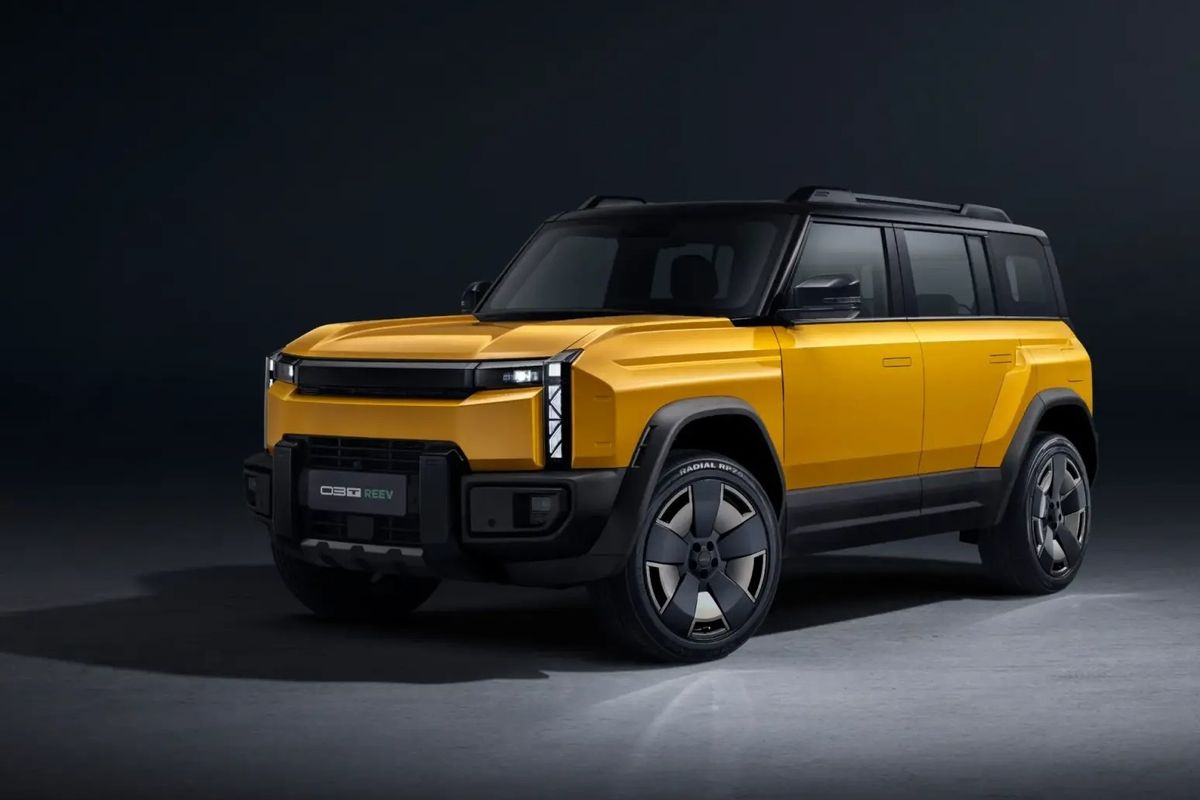
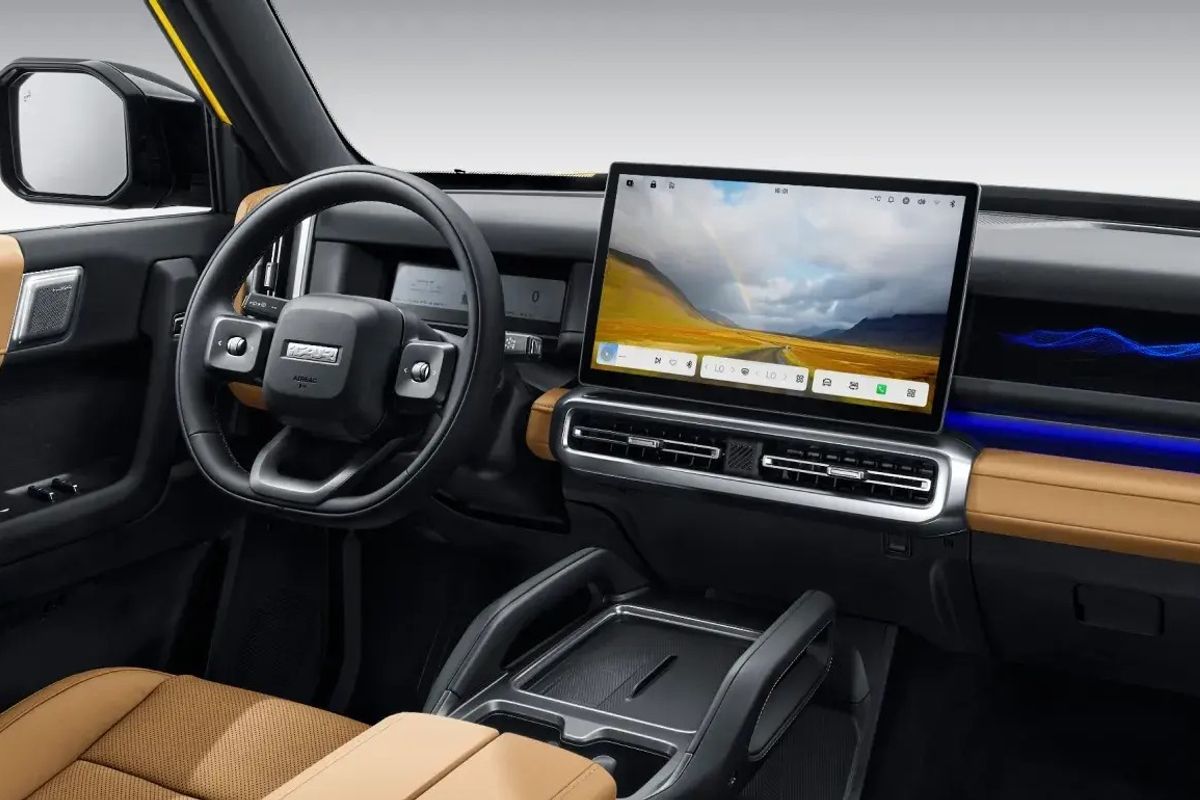
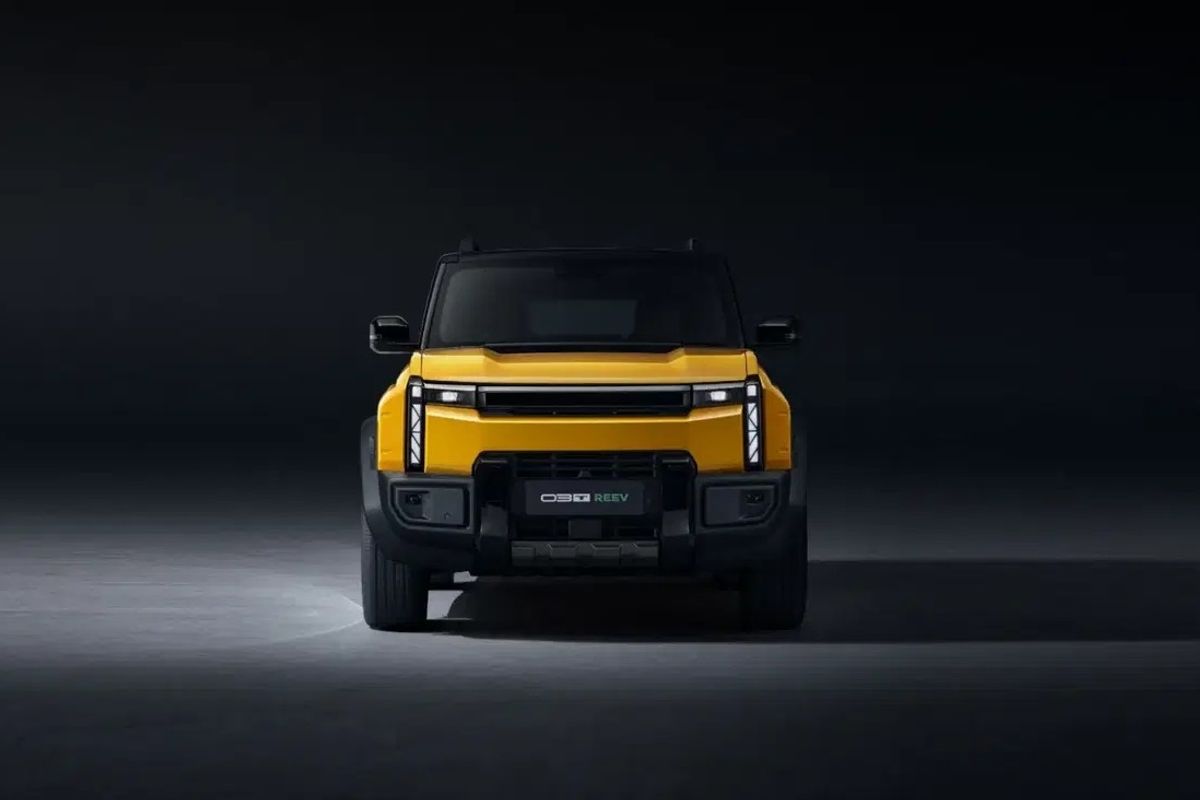
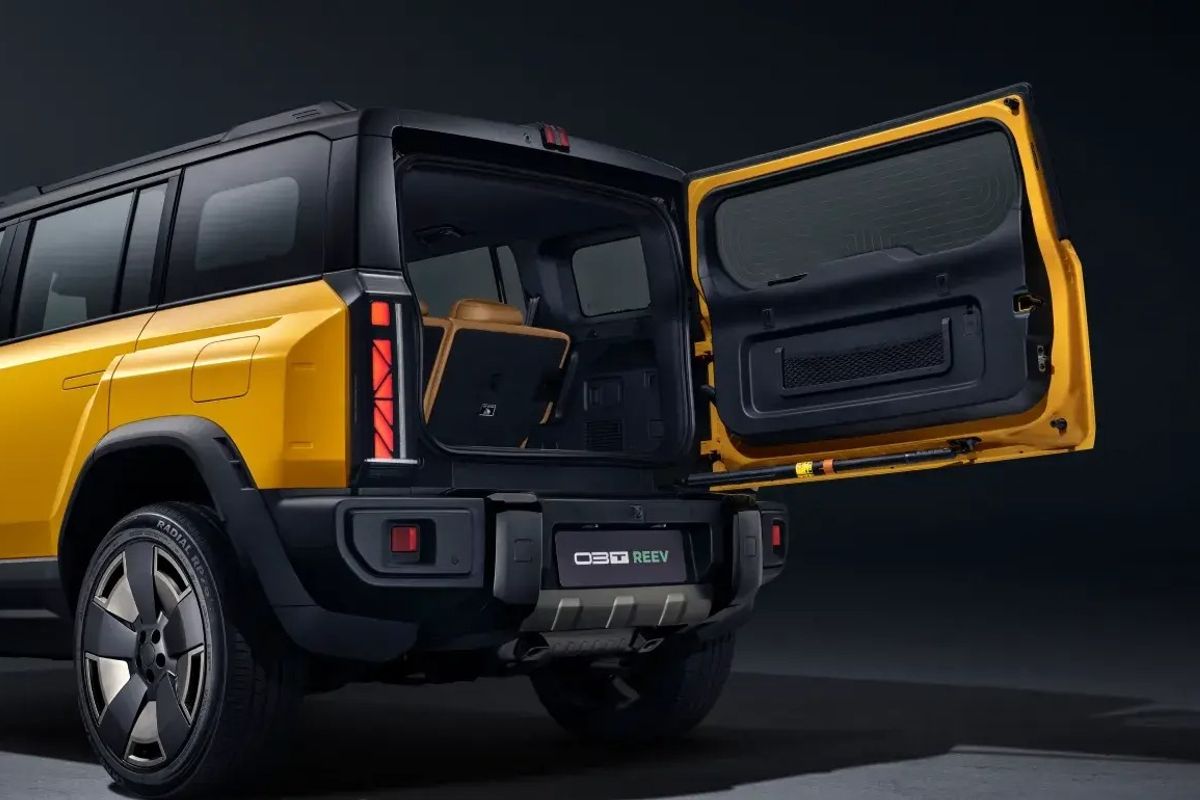
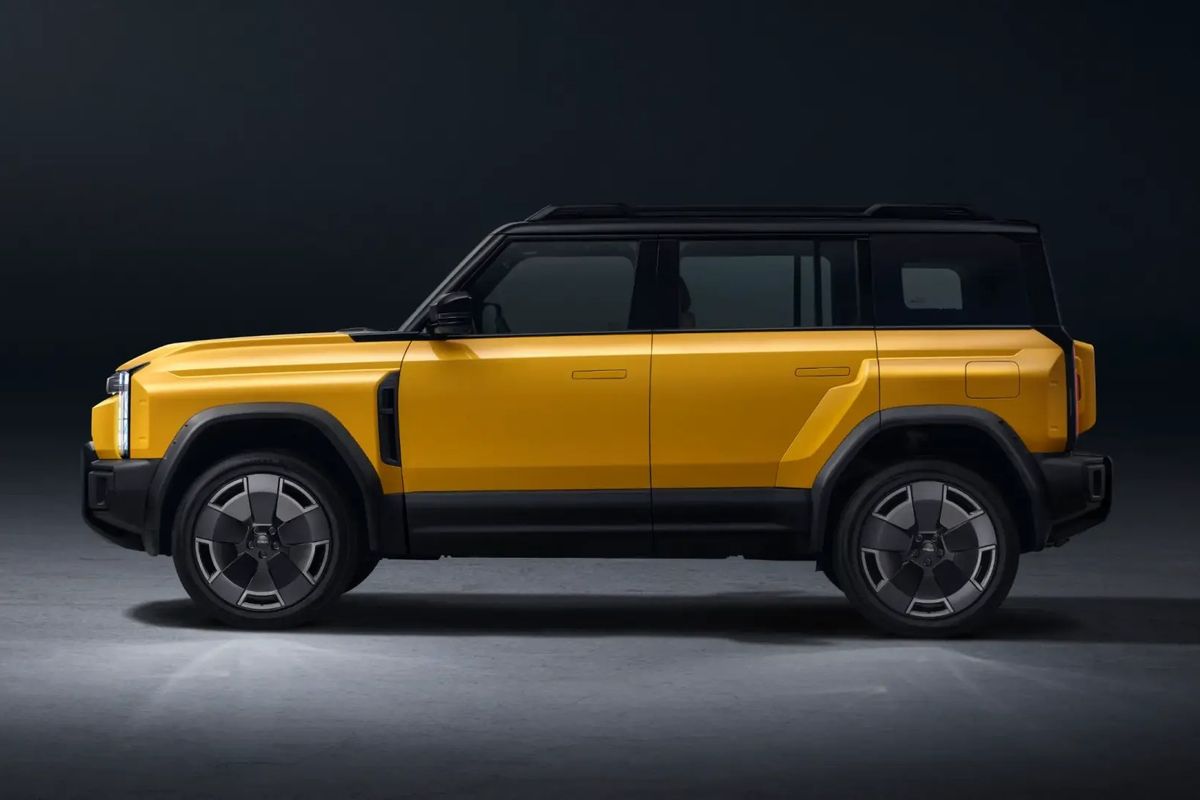
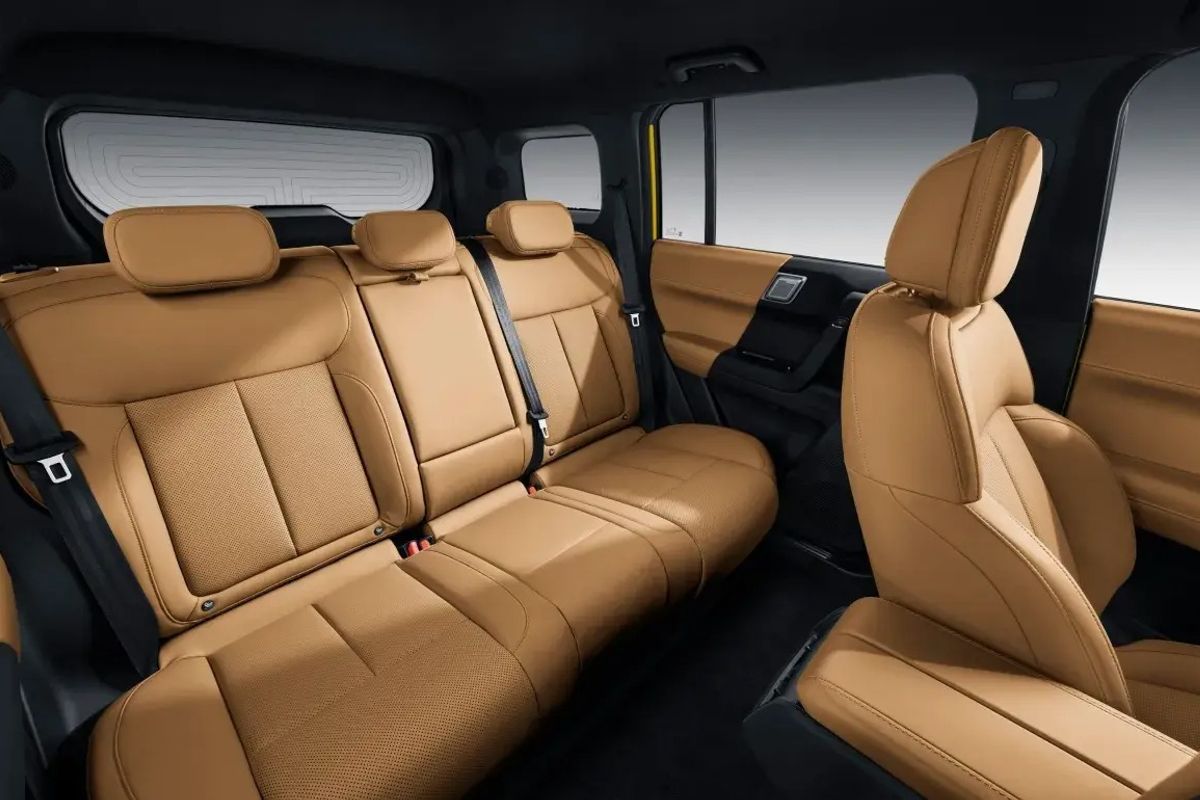
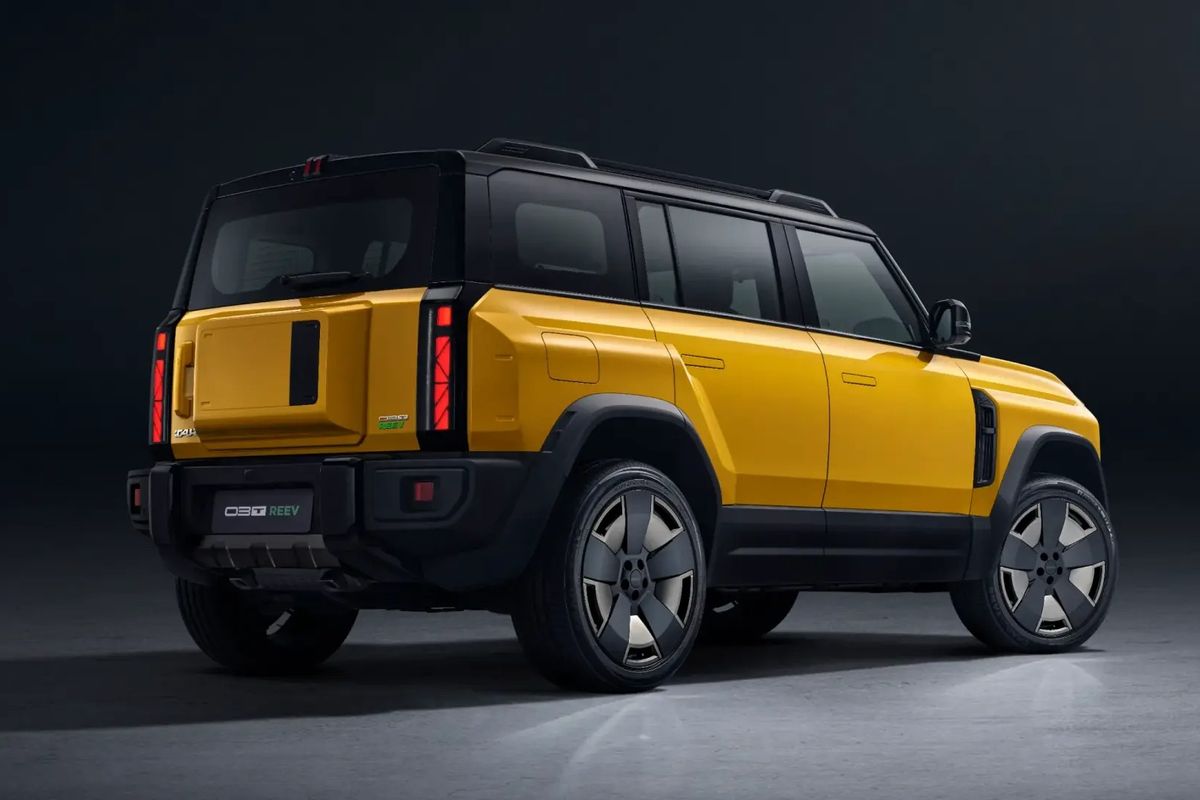
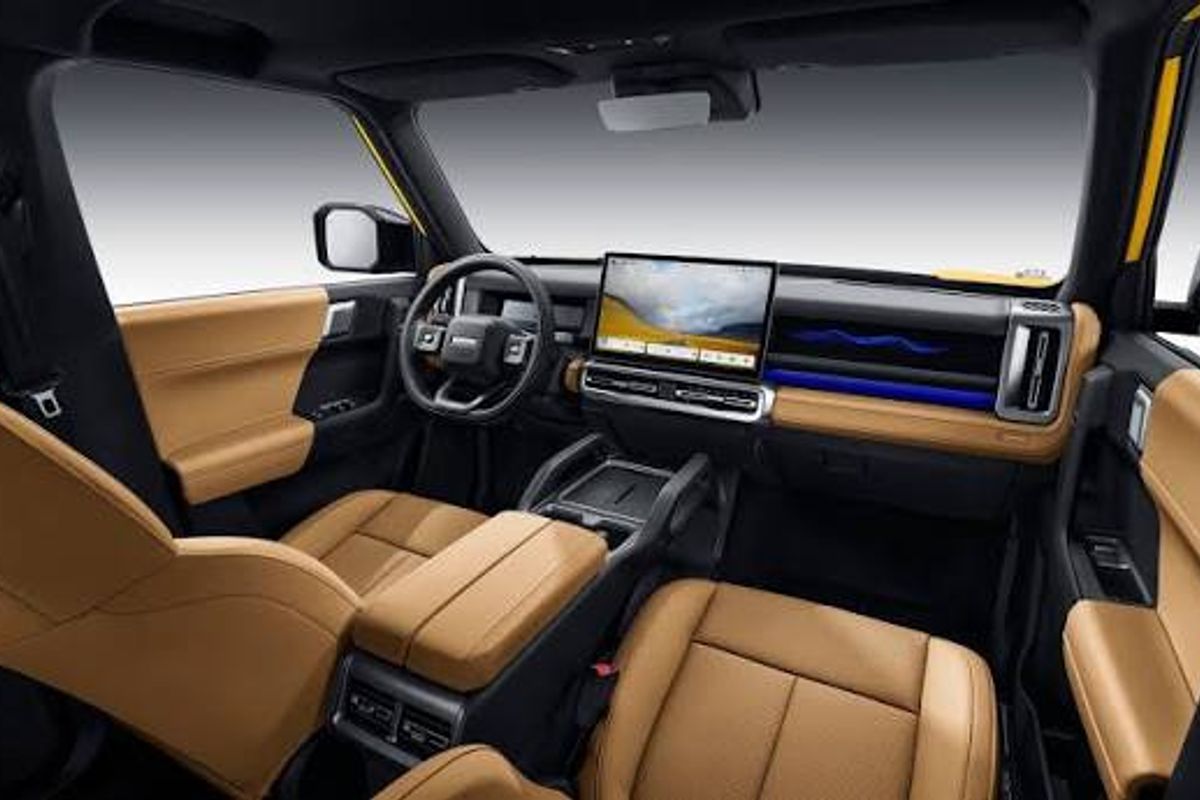
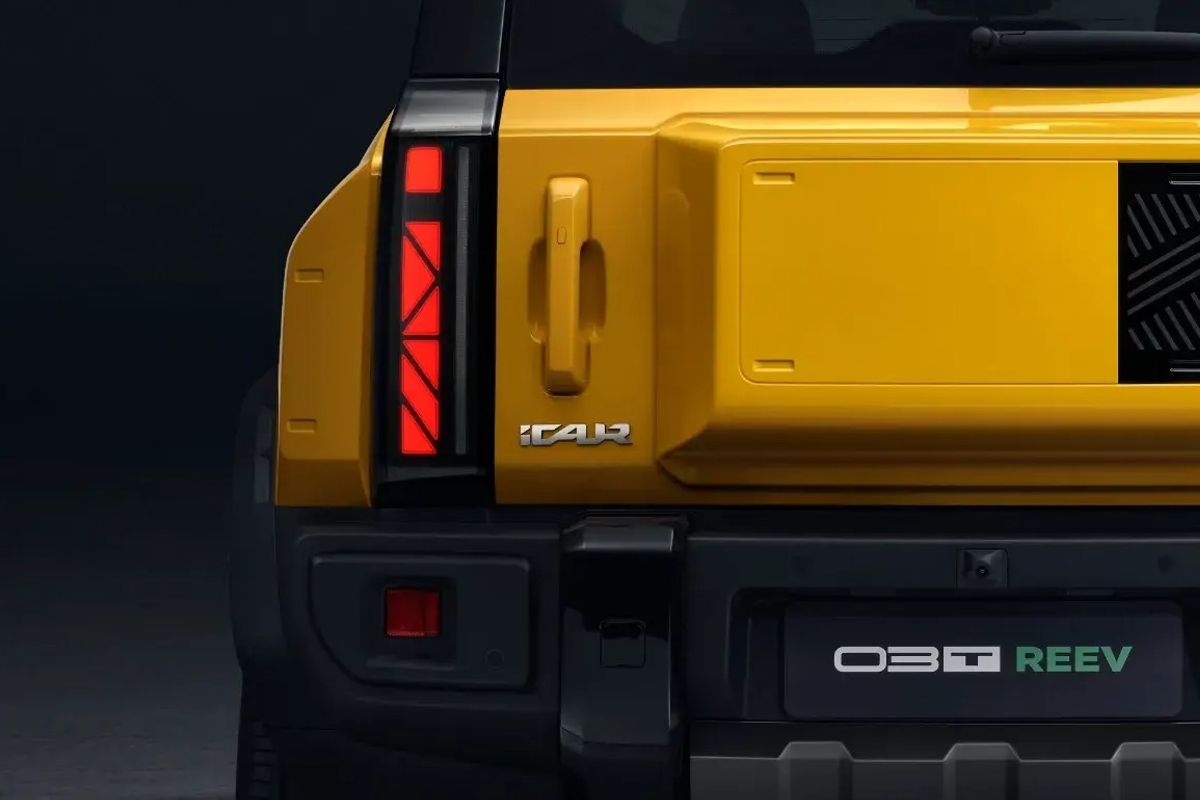
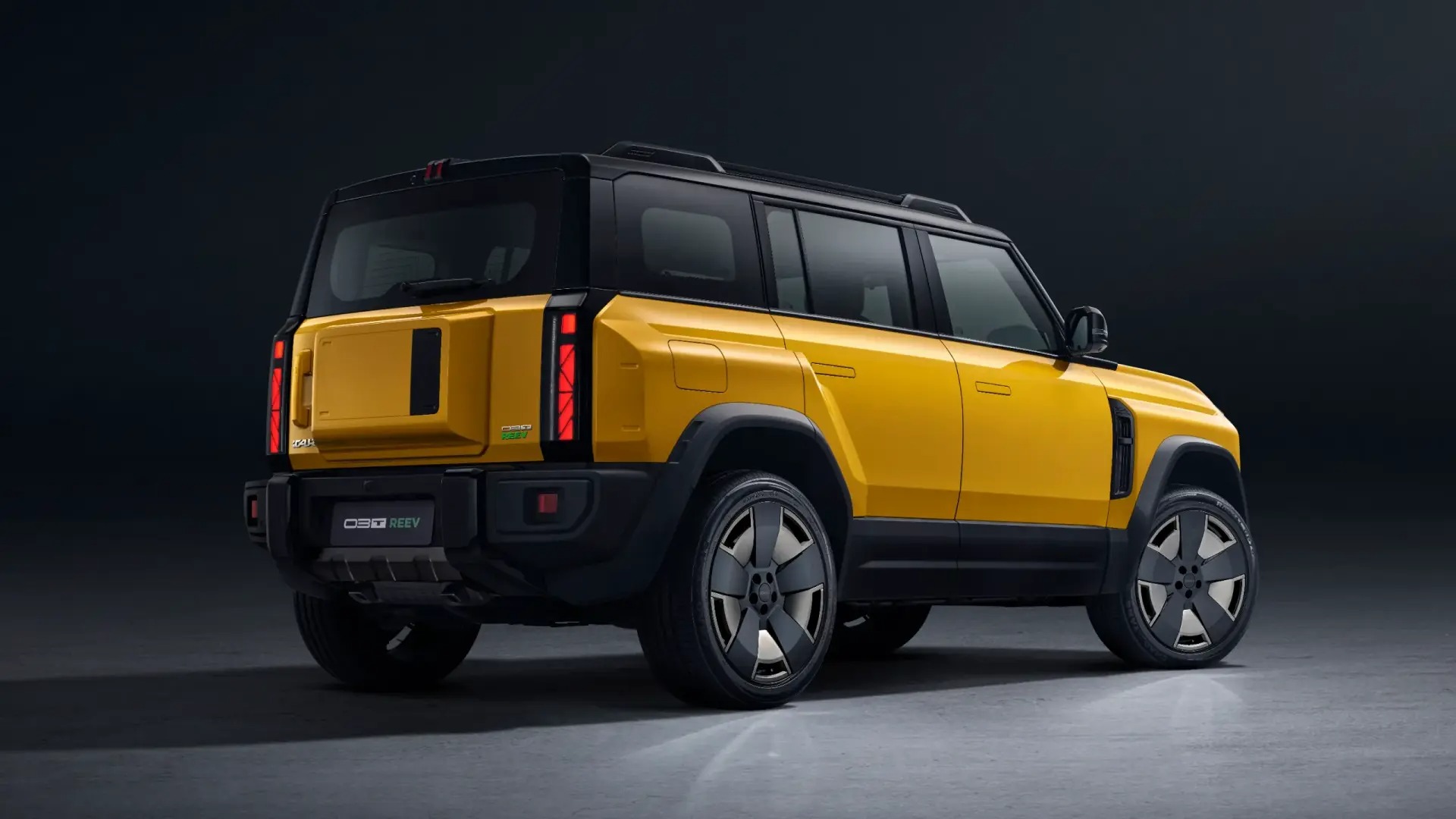
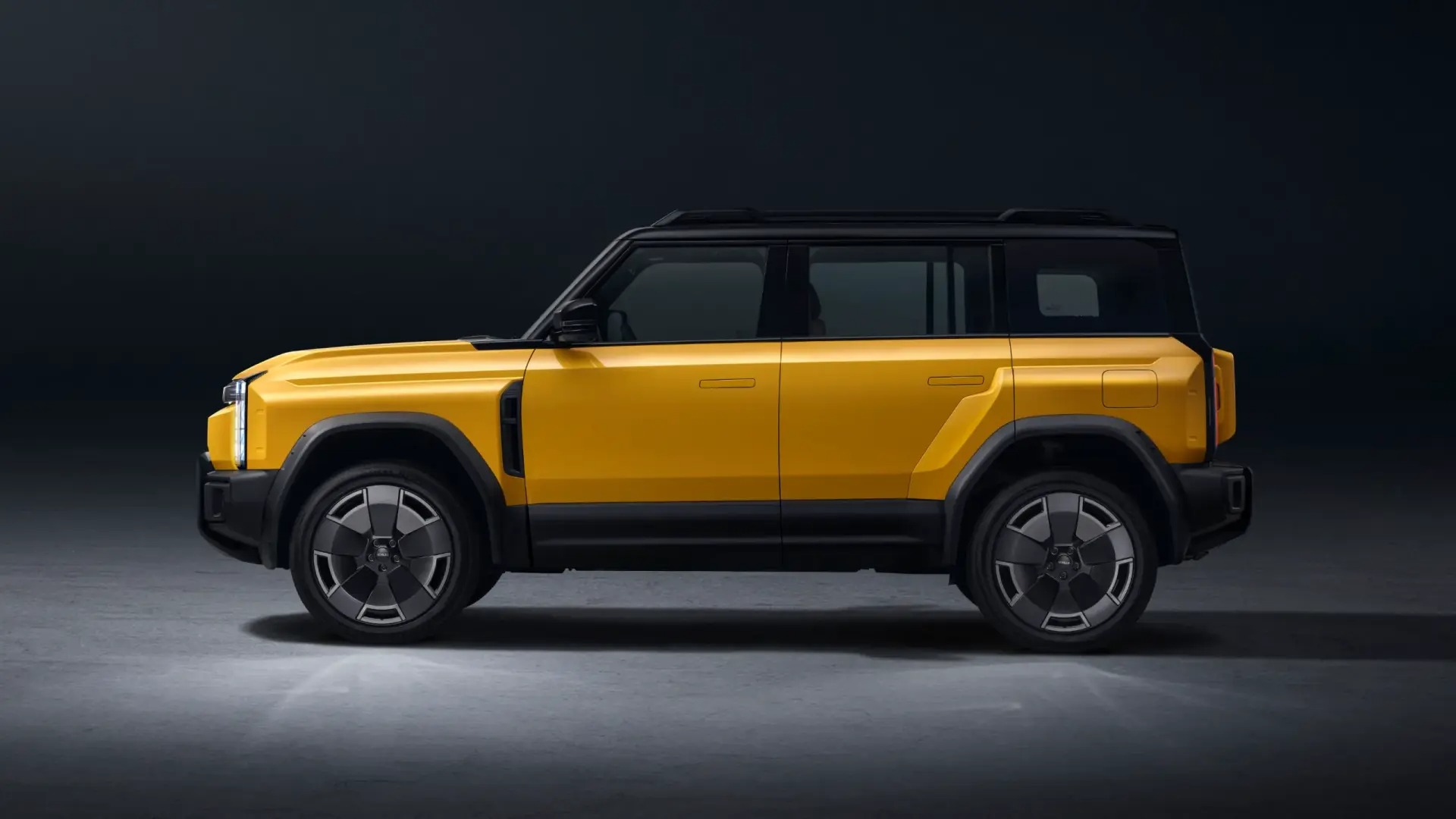
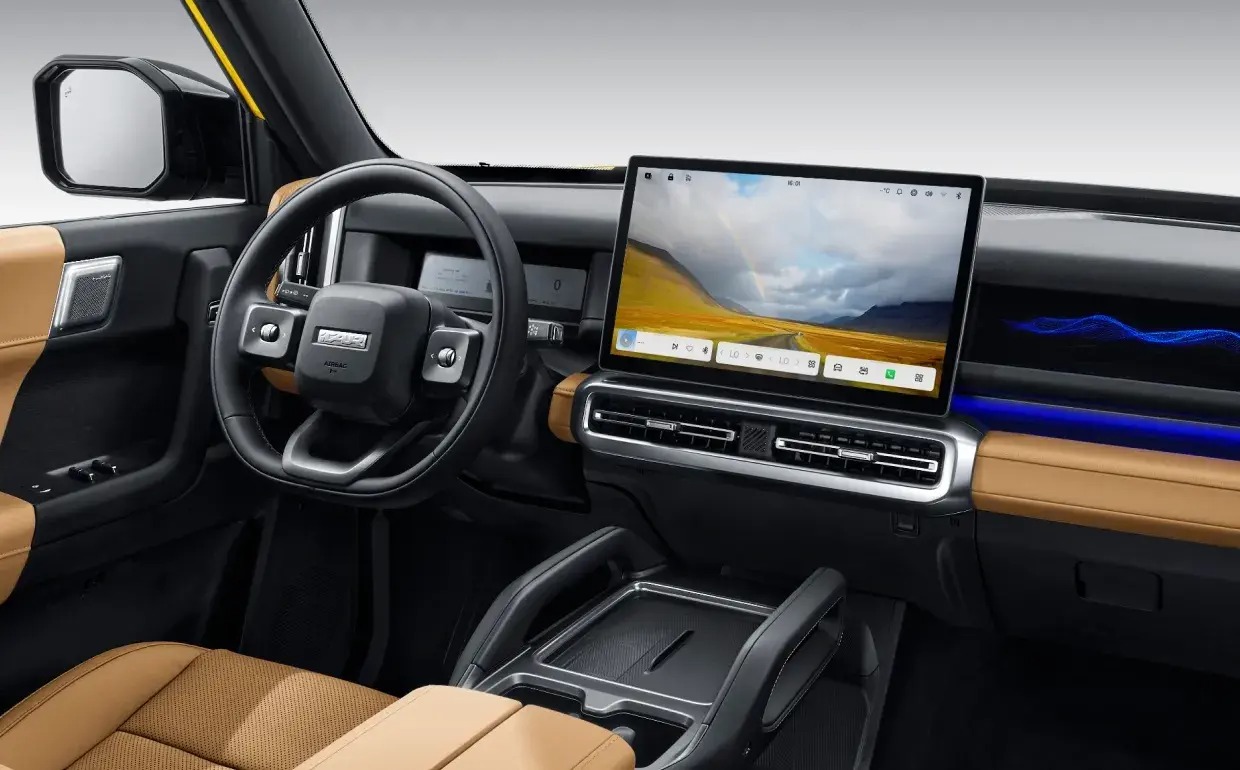
The petrol-assisted iCaur 03T REEV will help alleviate range anxiety and will be going on sale locally before the end of 2026.
New-energy vehicles continue to hit South African showroom floors at an impressive rate. Thanks to a combination of the price of fuel increasing substantially in 2026 and more affordable models going on sale, the new-energy segment is showing impressive growth.
Battery technology has improved substantially, too. Yet, there will still be hesitation thanks to range anxiety; the fear of being stranded due to a flat battery. Thankfully the car manufacturers have a potential solution. Enter the range-extender powertrain, or as they’re commonly known: REEV.
The premise is fairly straightforward, with the vehicle operating primarily as a battery-electric vehicle, but once those batteries run low, the petrol engine in the car switches on to power the electric motors and top up the battery. It’s important to point out that this engine does not directly power the wheels but rather acts as an onboard generator.
iCaur 03T REEV powertrain specifications
iCaur is one such brand to embrace such technology. Sure, the retro-styled V23 and 03T EVs have their novelty factor, but they are restricted to being urban runabouts. Enter the iCaur 03T REEV which will be touching down in South Africa before the end of the year. It pairs a 1.5-litre turbocharged engine to a single-motor setup and the result is 185 kW and 300 Nm, giving it a claimed 0-100 kph in under 8 seconds.
Of more relevance and importance is the range. Whereas the BEV V23 and 03T versions muster between 300–400 km in the real world, the iCaur 03T REEV is claimed to have a total driving range of 800 km, which is more usable. It has a fuel tank capacity of 45 litres and a battery capacity of 33.67 kWh, which can support 6.6 kW AC and 60 kW DC fast charging.
With range anxiety and a fledgling charging network hampering longer trips, a range-extender vehicle makes more sense. If the 03T isn’t quite big enough, the new iCaur V27 will also be touching down before the end of 2026. Pricing and specifications will be confirmed closer to its showroom debut.
What is the price of the iCaur 03T in South Africa?
The fully electric iCaur 03T is available in two variants in South Africa. The entry-level iCaur 03T 2WD (RWD) is priced from R639 900, while the range-topping iCaur 03T AWD is priced from R699 900.
What is the driving range of the iCaur 03T?
The 2WD model offers a single-charge range of up to 431 km from its 65.69 kWh battery pack. The AWD variant features a slightly larger 69.77 kWh battery, delivering a single-charge range of up to 436 km.
How long does it take to charge the iCaur 03T?
When connected to a compatible DC fast charger, both the 2WD and AWD versions of the iCaur 03T can charge from 10% to 80% in approximately 30 minutes.
What performance figures does the iCaur 03T deliver?
The single-motor 2WD model produces 135 kW and 220 Nm of torque, sprinting from 0 to 100 km/h in 10.5 seconds. The dual-motor AWD derivative steps up performance significantly, delivering a combined 205 kW and 385 Nm of torque, which cuts the 0 to 100 km/h sprint down to just 6.5 seconds.
What warranty and service plan comes standard with the iCaur 03T?
Both models include a comprehensive 8-year / 200,000 km vehicle warranty, an 8-year / 160,000 km battery warranty, a 5-year / 100,000 km service plan, and 8-year / 200,000 km roadside assistance coverage.
Chery Tiggo 8 Apex I (2026) Price & Specs
The Apex I brings a new-look cabin and exterior design to the Tiggo 8 range. Here’s how much you can expect to pay.
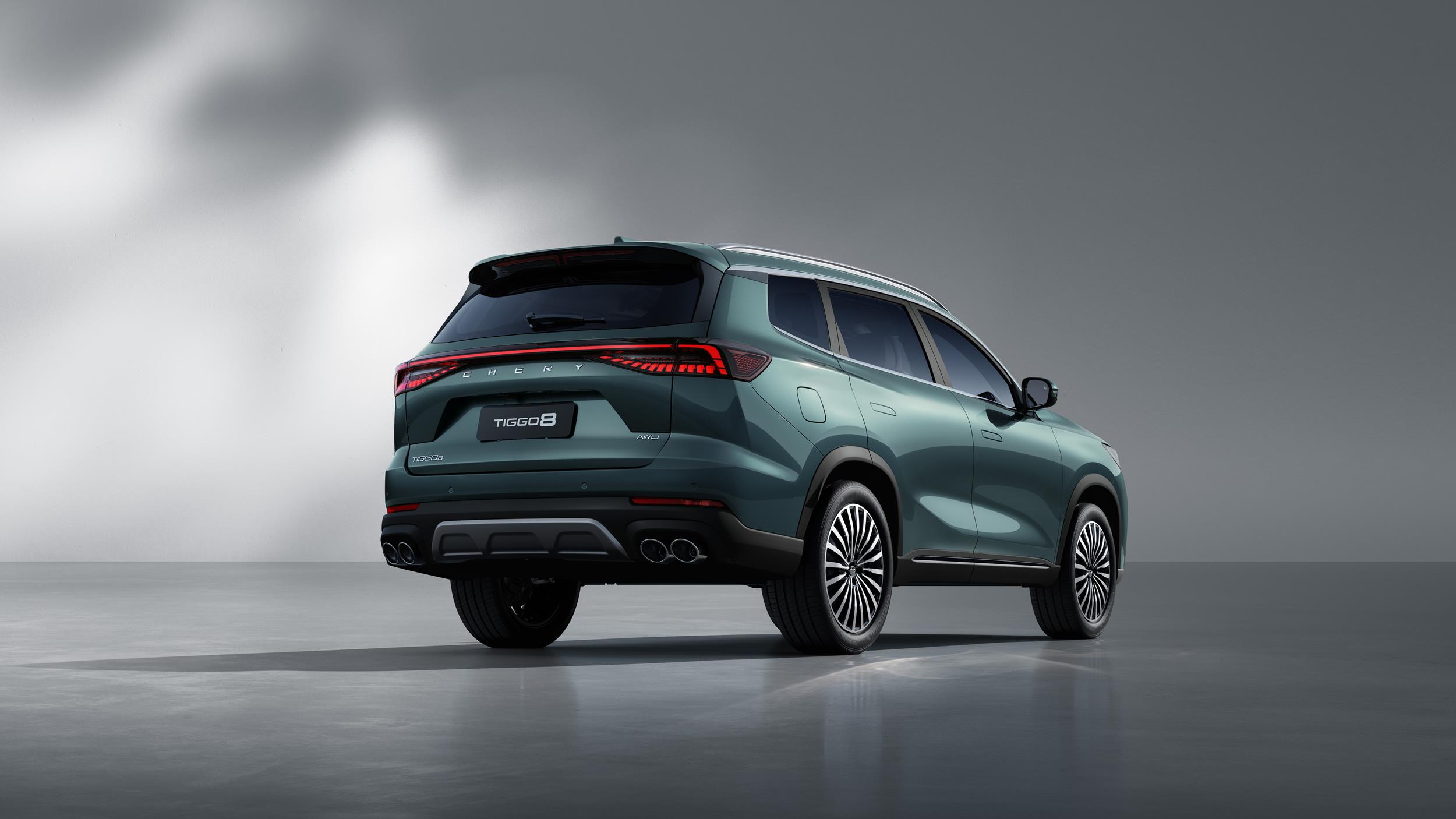
The Tiggo 8 is a 7-seater, 3-row family SUV and it has just arrived in local showrooms. Chery claims an updated exterior look, rejigged cabin without compromising on the extensive list of equipment or safety.
The front fascia gets a revision and there are full LED headlights at the front, while an LED light bar stretches across the rear. The vehicle rides on tasty 19-inch alloy wheels. Customers have three colours to choose from; Khaki White, Carbon Black and Bamboo Grey.
The engine on duty is a 1.6-litre turbocharged 4-cylinder petrol engine and in this application it makes 137 kW and 275 Nm. Power reaches the front wheels via a 7-speed dual-clutch transmission and Chery claims a combined fuel consumption of 7.7 L/100 km.
Standard features look all-encompassing with dual-zone climate control, 64-colour ambient lighting, panoramic sunroof, powered tailgate, 50W wireless phone charger, heated and ventilated front seats, plus the front passenger seat features wireless functionality.
When it comes to safety, this vehicle has 7 airbags, tyre pressure sensors, speed-limit reminder, 540-degree HD camera as well as ADAS functionality in the form of adaptive cruise control, autonomous emergency braking and lane-keeping assist.
How much does the Chery Tiggo 8 Apex I cost in South Africa?
The vehicle is sold with a 7-year/200 000 km vehicle warranty and a 5-year/75 000 km service plan. The first owner also receives Chery’s 10-year/1 million km engine warranty.
What engine and drivetrain power the Chery Tiggo 8 Apex I in South Africa?
The Chery Tiggo 8 Apex I is powered by a 1.6-litre 4-cylinder turbocharged petrol engine producing 137 kW of power and 275 Nm of torque. Power is transmitted to the front wheels via a 7-speed dual-clutch transmission (7DCT).
How much does the Chery Tiggo 8 Apex I cost in South Africa?
The Chery Tiggo 8 Apex I is priced from R569 900 in South Africa.
How many seats does the Chery Tiggo 8 Apex I offer?
The Chery Tiggo 8 Apex I is a 7-seater family SUV featuring flat-folding rear seats and up to 494 litres of luggage capacity with the 3rd row folded down.
What is the claimed fuel consumption of the Tiggo 8 Apex I?
The Tiggo 8 Apex I has a claimed average fuel consumption of 7.7 litres per 100 km on the WLTP cycle. Paired with its 57-litre fuel tank, it delivers an estimated theoretical driving range of around 740 km.
What warranty and service plan come standard with the Chery Tiggo 8 Apex I?
The Tiggo 8 Apex I comes standard with a 7-year / 200,000 km vehicle warranty and a 5-year / 75,000 km service plan. Additionally, the original owner receives Chery’s signature 10-year / 1-million kilometre engine warranty.
The iCaur V23 – what you should know
The iCaur V23 AWD is retro done right, at an unbelievable price. But does it make sense as a South African crossover SUV?
There is no automotive group with more brands trading in South Africa than Chery. Its strategy is to offer something for everyone – from entry-level first-car buyers to families wanting a large luxury crossover SUV. Of Chery’s sub-brands, the most outrageous is iCaur.
Chinese car design was a joke little more than a decade ago. Today, it is so bold and daring that it embarrasses legacy European design studios, producing concepts that would ordinarily never make it past the show-car stage at a traditional car company, yet become production models in record time. iCaur is proof of that shift.
You can’t buy more of a statement car for less money. But do these battery-powered crossover SUVs, with their extroverted looks, actually work as family vehicles in South African conditions?
Real adventure vehicles have round headlights, right?
There is a lazy perception that Chinese cars are mere imitation designs but that isn’t entirely true. Chinese design teams aren’t constrained by legacy and tradition in the way designers at established car companies are.
At a European manufacturer, a model range might be in its 5th or 6th generation, shaped by decades of lineage. Those designs are constrained by the need to pay homage to history. Chinese studios don’t work like that. In a market with fierce competition for recognition, designers try to outdo each other with ever bolder shapes.
There is another reason Chinese car design is misunderstood. When traditional car companies create a new body panel, bonnet surface, grille, or light cluster, they choose from a limited pool of suppliers. If projected production volumes are too low, suppliers simply aren’t interested in tooling up differentiated components.
In China, the supply chain is far deeper. Designers wanting to take a risk with a unique shape can always find a supplier willing to produce it. That is the secret of modern Chinese car design: a supply chain capable of manufacturing whatever designers imagine.
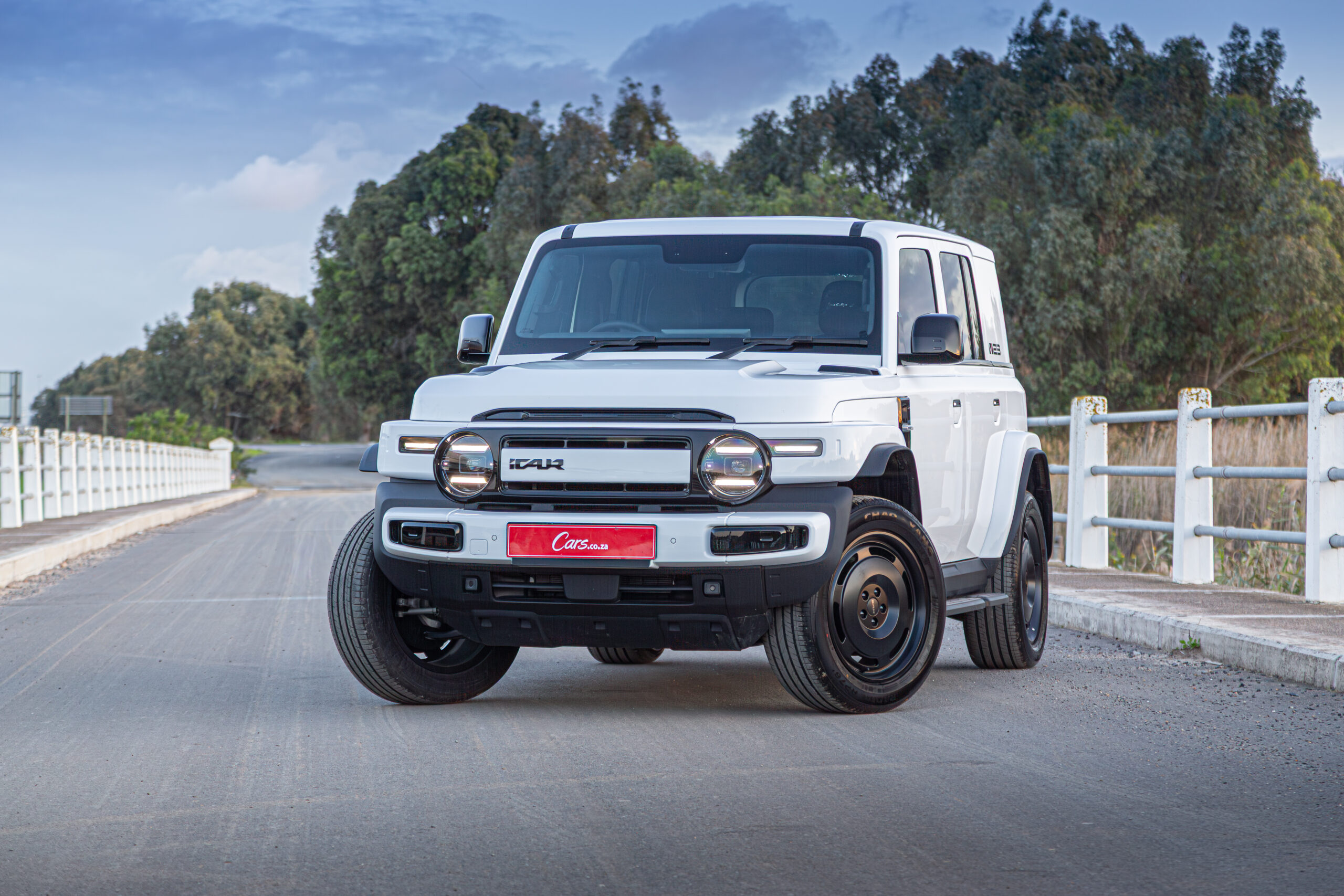
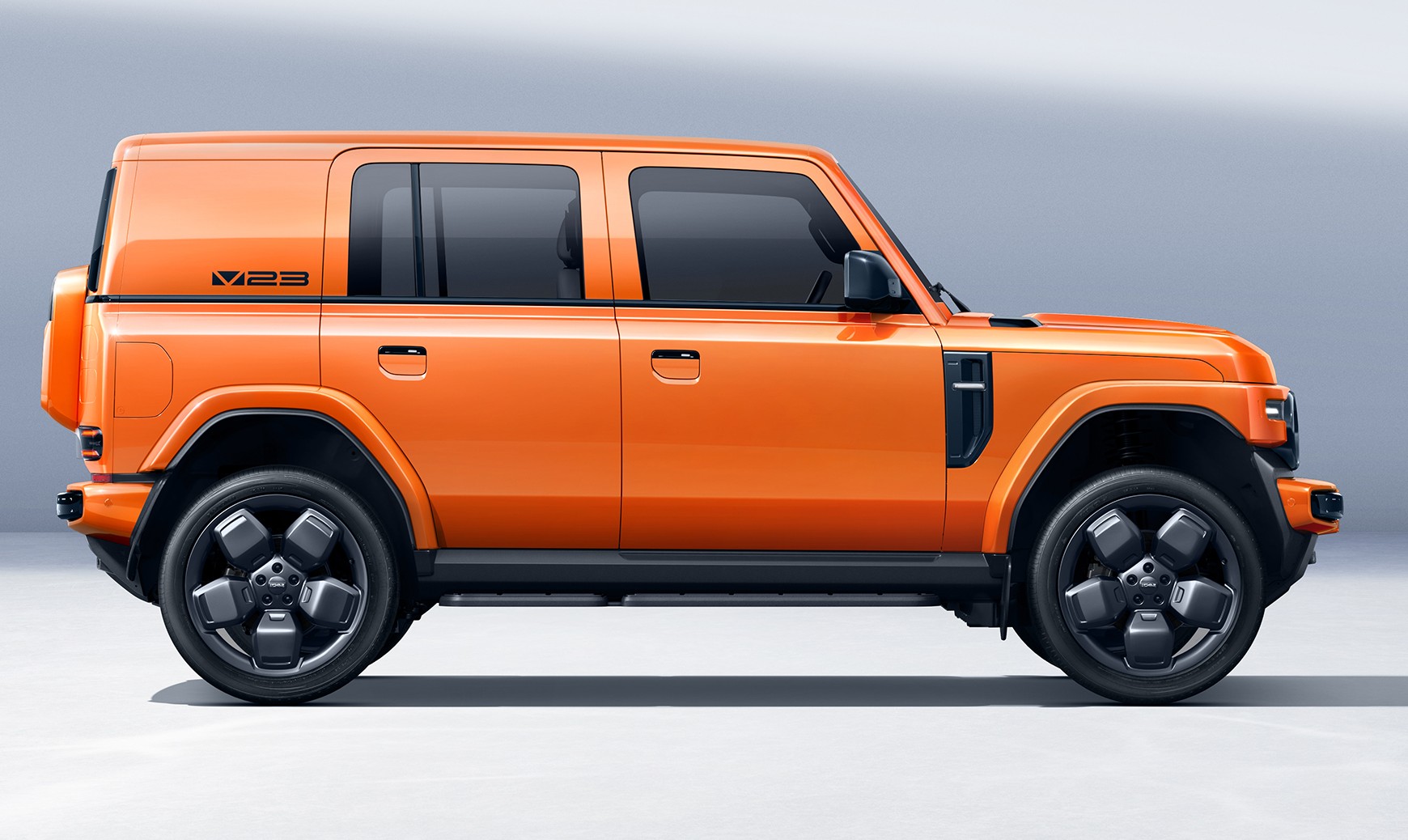
The retro-themed iCaur V23 looks better than almost anything else in its segment. Retro styling is risky because it can age rapidly, as VW learned with the New Beetle. Get it right, though, and it remains on-trend for decades.
For many local crossover buyers, styling and equipment levels are top priority. The V23 nails the visual appeal and packs a typically generous standard equipment list.
The spare wheel cover that isn’t
External tailgate pod should be upgraded to a wet/muddy gear storage space.
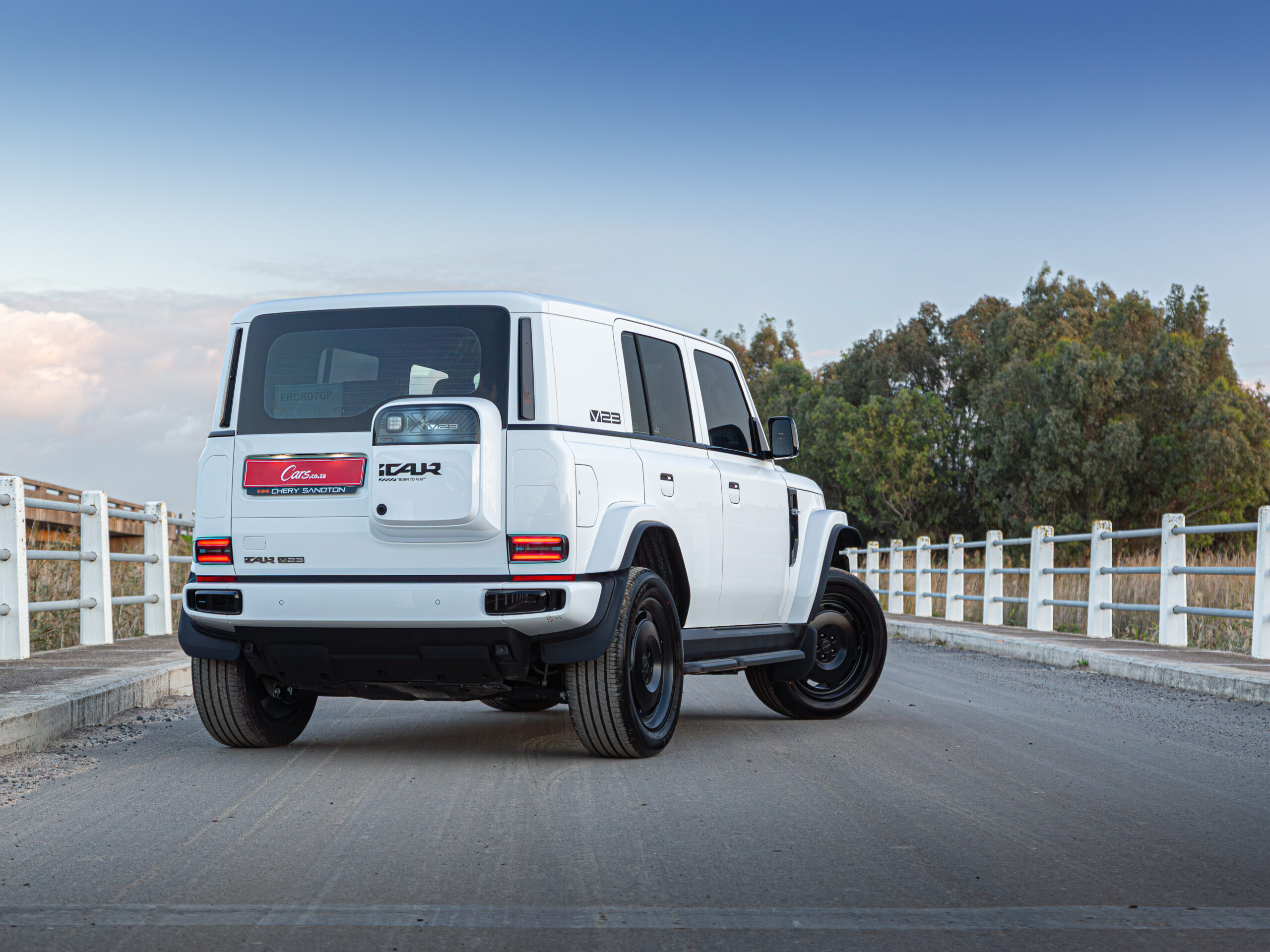
Designers at iCaur have proven that sometimes form follows function, but not always in a practical way. Take the external tailgate storage pod: it intentionally mimics a traditional adventure SUV’s tailgate spare-wheel mount, yet contains no wheel. It is simply a quick-access box for charging cables.
In theory, that tailgate pod could store muddy outdoor gear or wet beach towels on the journey home from summer vacation. Instead, it is dedicated solely to cable storage.
This fake spare-wheel pod highlights a real issue with many Chinese crossover SUVs in South Africa: the lack of a spare tyre. It reveals a poor understanding of how local buyers actually use their vehicles and the tyre risks present even on long-distance tar routes.
SA spec needs a spare wheel
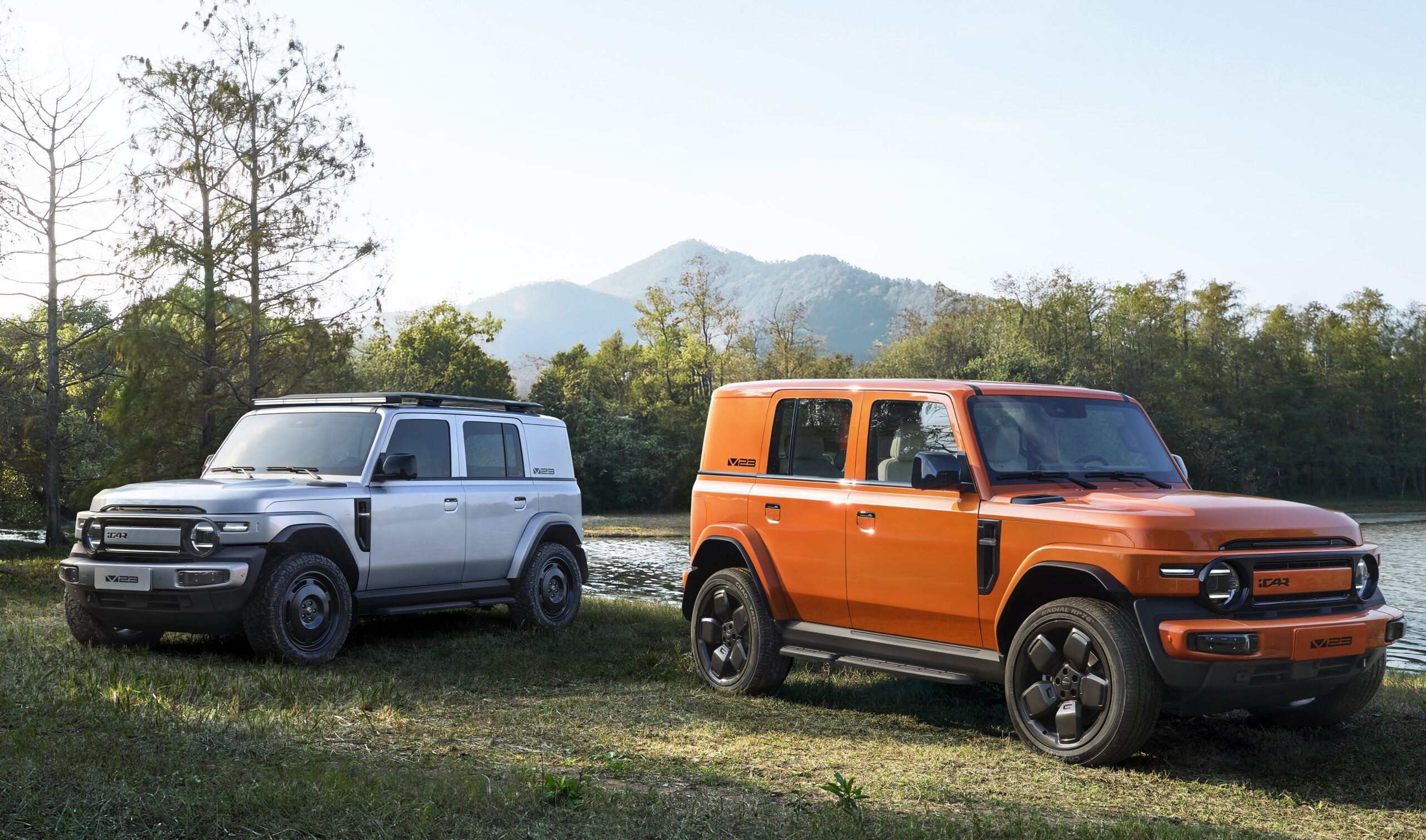
The silver V23 has all-terrain tyres. The orange V23 AWD is the popular SA spec with 21-inch highway tyres.
Vehicle design and engineering have shifted dramatically as digitalisation takes centre stage, but all the software engineering in the world won’t help when you have a flat tyre and no spare.
In South Africa, where long-distance road trips are routine and scenic detours bring a risk of potholes and harsh gravel, a spare wheel is essential.
The irony is that the iCaur V23 AWD rides on rubber ill-suited to dirt roads, corrugated surfaces, or pothole strikes. Rolling on 21-inch rims wrapped in 265/45 R21 tyres, the V23 offers decent width for traction, but its low sidewall profile leaves precious little cushion to absorb impacts. That is not the tyre setup you want for exploring rural routes, especially without a spare on board.
The iCaur V23 AWD road-trip issue
True two-box design looks great but it’s the worst shape for aerodynamics and driving range.
The iCaur V23 AWD suffers from the same flaw as several other Chinese adventure-styled crossovers: limited real-world touring capability, whether due to payload or driving range.
Payload is less of an issue in China, where owners often prefer high-speed rail or flights for long-distance holidays. In South Africa, loading up a car with family and luggage for a road trip is standard practice.
Both the rear- and all-wheel-drive versions of the V23 carry a payload rating of 375 kg, which is low for a vehicle of this size. Carrying four 75 kg adults leaves just 75 kg for luggage. It isn’t unusable, but it is far from generous.
Then there is the highway efficiency. Given the V23’s boxy shape and high aerodynamic drag, high-speed cruising rapidly depletes range, making inter-provincial journeys impractical regardless of payload.
As an urban statement car, it boasts immense presence. If you have a substantial home solar installation enabling low-cost charging, the iCaur V23 AWD makes a characterful, spacious daily driver or third family car. But as a true crossover SUV, its drag-heavy body limits range, making it more of a stylish lifestyle statement than a sensible long-distance buy.
Volkswagen will soon introduce a new Amarok 2.3TSI variant, offering a turbopetrol engine in conjunction with the flagship Aventura grade. Here’s what it will cost…
2.3TSI motor to be offered in Aventura trim
Turbopetrol powertrain generates 222 kW
R73 300 pricier than 2.3TSI PanAmericana
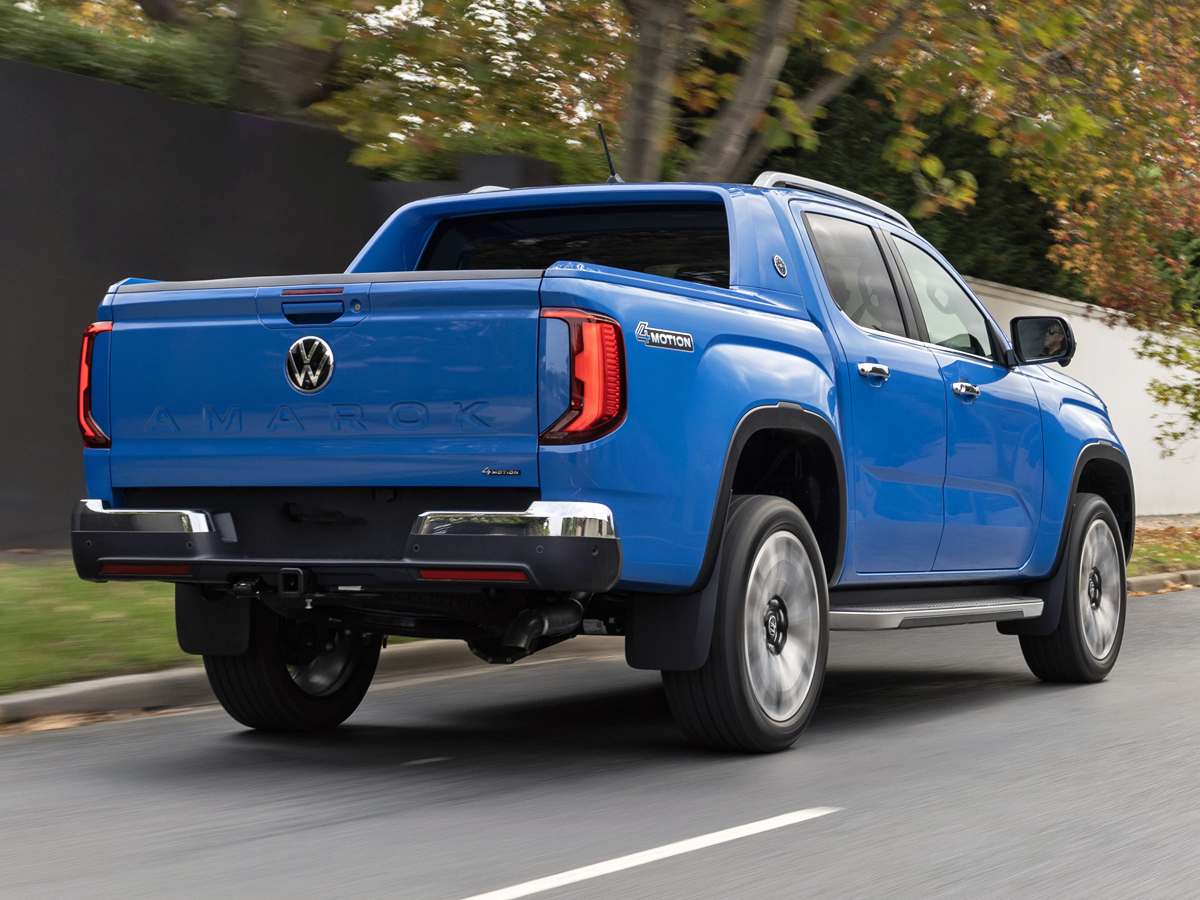
Volkswagen will soon expand its locally built Amarok double-cab bakkie line-up in South Africa by introducing a new Amarok 2.3TSI derivative in the flagship Aventura specification.
Yes, the Amarok 2.3TSI Aventura 4×4 10AT is set to join the local range, offering peak outputs of 222 kW and 452 Nm from its turbocharged 2.3-litre, 4-cylinder petrol engine, which is mated to a 10-speed automatic transmission as standard.
It will arrive as the 2nd petrol-powered derivative in the 2nd-generation Amarok line-up (which is, of course, built by Ford alongside the Ranger), with the Amarok 2.3TSI PanAmericana 4×4 10AT having launched locally back in October 2025. With a claimed 0-100 kph time of 7.6 seconds, this powertrain offers the fastest acceleration in the range.
Cars.co.za can confirm the new Amarok 2.3TSI Aventura 4×4 10AT will be priced from R1 178 900, making it some R73 300 more expensive than the PanAmericana derivative (starting at R1 105 600). Like that variant, the newcomer comes standard with 4×4, a configuration not currently available in the Ranger 2.3T (which ships only in rear-wheel-drive guise).
Interestingly, the Amarok 2.3TSI Aventura 4×4 10AT will be positioned some R80 800 below the range-topping Amarok 3.0TDI V6 Aventura 4×4 10AT (R1 259 700). As a reminder, that derivative boasts a 3.0-litre V6 turbodiesel motor generating 184 kW and 600 Nm.
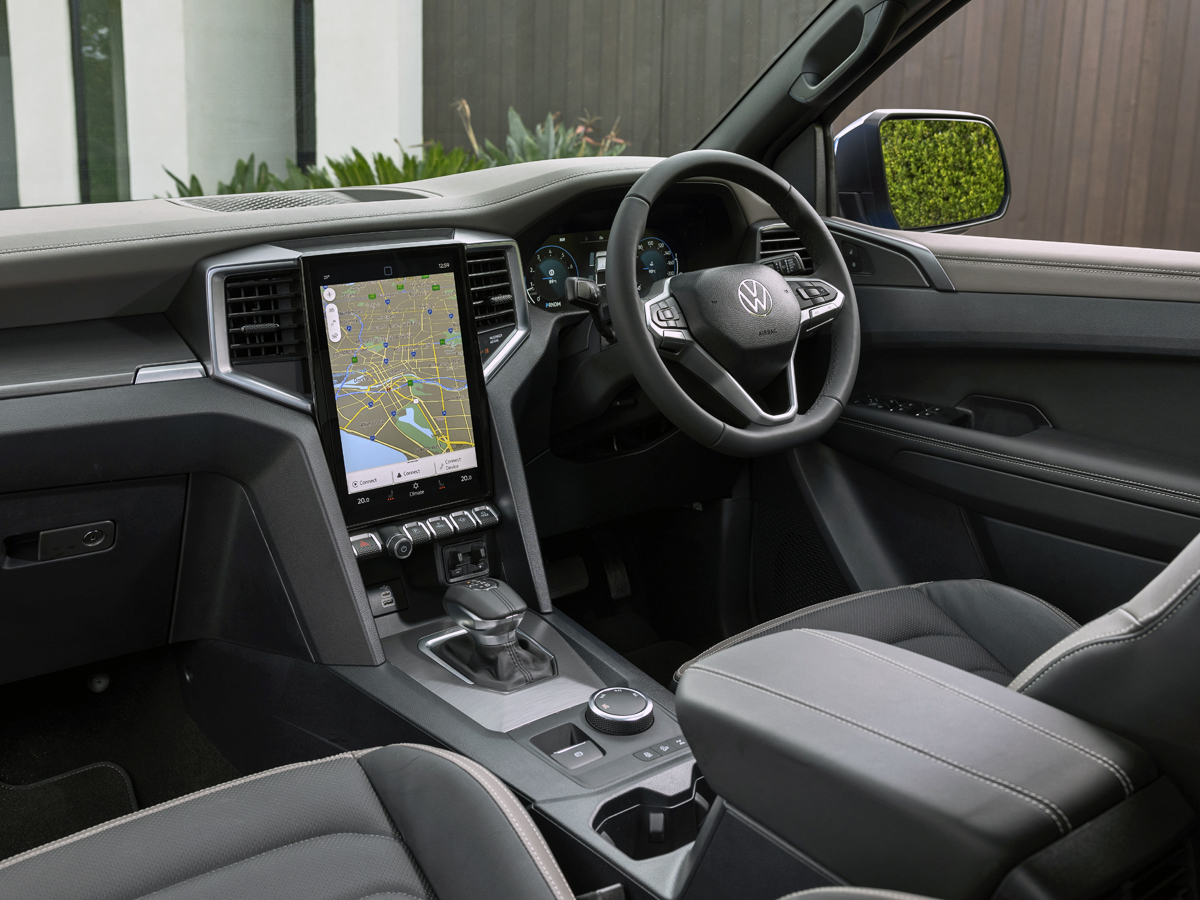
Though VW Group Africa has yet to release detailed specifications for its latest Amarok variant, we expect it to ship with broadly the same features as the aforementioned Aventura flagship.
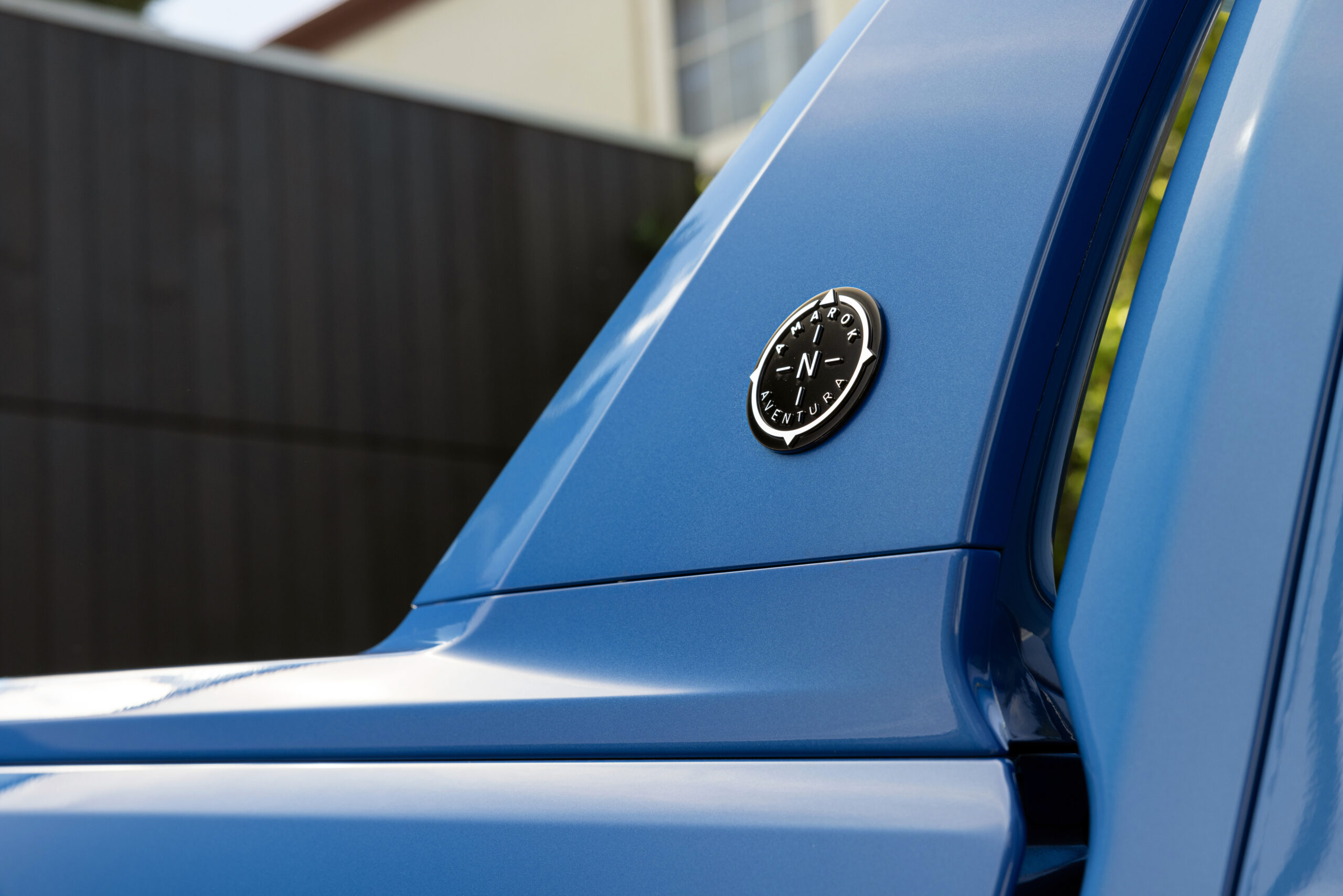
As such, it will likely come standard with items like “Savona” leather upholstery, 21-inch “Varberg” alloy wheels, chrome-effect exterior trim and a colour-coded sports bar.
What does the VW Amarok Double Cab cost in SA?
DERIVATIVE
PRICE
Amarok 2.0TDI 4×2 6MT
R673 700
Amarok 2.0TDI 4×2 10AT
R693 800
Amarok 2.0TDI Life 4×2 10AT
R708 900
Amarok 2.0TDI 4×4 6MT
R747 000
Amarok 2.0TDI 4×4 10AT
R772 100
Amarok 2.0TDI Life 4×4 10AT
R805 800
Amarok 2.0TDI Style 4×4 10AT
R902 000
Amarok 2.0TDI Dark Label 4×4 10AT
R937 200
Amarok 3.0TDI V6 Style 4×4 10AT
R1 083 000
Amarok 2.3TSI PanAmericana 4×4 10AT
R1 105 600
Amarok 3.0TDI V6 Dark Label 4×4 10AT
R1 118 200
Amarok 2.3TSI Aventura 4×4 10AT
R1 178 900
Amarok 3.0TDI V6 PanAmericana 4×4 10AT
R1 198 000
Amarok 3.0TDI V6 Aventura 4×4 10AT
R1 259 700
The prices above include a 5-year/150 000 km warranty and a 5-year/100 000 km maintenance plan.
Q: What does the new Volkswagen Amarok 2.3TSI Aventura cost in South Africa?
A: The Volkswagen Amarok 2.3TSI Aventura 4×4 10AT is priced at R1 178 900, positioning it R73 300 above the PanAmericana 2.3TSI and R80 800 below the flagship 3.0TDI V6 Aventura.
Q: What are the performance and engine outputs of the Amarok 2.3TSI Aventura?
A: Powered by a 2.3-litre 4-cylinder turbocharged petrol engine paired with a 10-speed automatic gearbox and 4×4, it produces 222 kW and 452 Nm of torque, achieving 0-100 km/h in a range-fastest 7.6 seconds.
Q: What warranty and maintenance plan are included with the VW Amarok 2.3TSI Aventura?
A: Pricing for the VW Amarok 2.3TSI Aventura includes a 5-year/150 000 km warranty alongside a 5-year/100 000 km maintenance plan as standard.