Volkswagen Offers Performance Parts for Golf R [Video]
The facelifted Volkswagen Golf R has arrived in South Africa, but Volkswagen is already offering up some go-faster goodies which we hope will make their way to our market. Let's see what they entail.
The Volkswagen Golf R arrived with an uprated 2.0-litre turbocharged engine, with 213 kW and 380 Nm. It also features a new 7-speed DSG 'box which allows the new R to slingshot to 100 kph in a claimed 4.6 seconds.
However, Volkswagen internationally has made some performance parts available to its Golf R customers and we're hoping these will eventually make their way to South Africa. The Volkswagen Golf R can be fitted with exclusive Performance packs, which comprise improved disc brakes, semi-slick tyres for track driving as well as an Akrapovic-sourced exhaust system, which will address the lack of an emotional soundtrack.
The Performance brake setup is 2 kg lighter than the standard stoppers and offer better braking power, and can be identified by R-lettering on the calipers. As for the exhaust, it too is lighter than the standard unit by 7 kg, and offers what Volkswagen claim are "completely new acoustics."
We hope that Volkswagen SA considers bringing in these parts, especially seeing as how popular the performance derivatives of the Golf are.
What does an Akrapovic-equipped Volkswagen Golf R sound like?
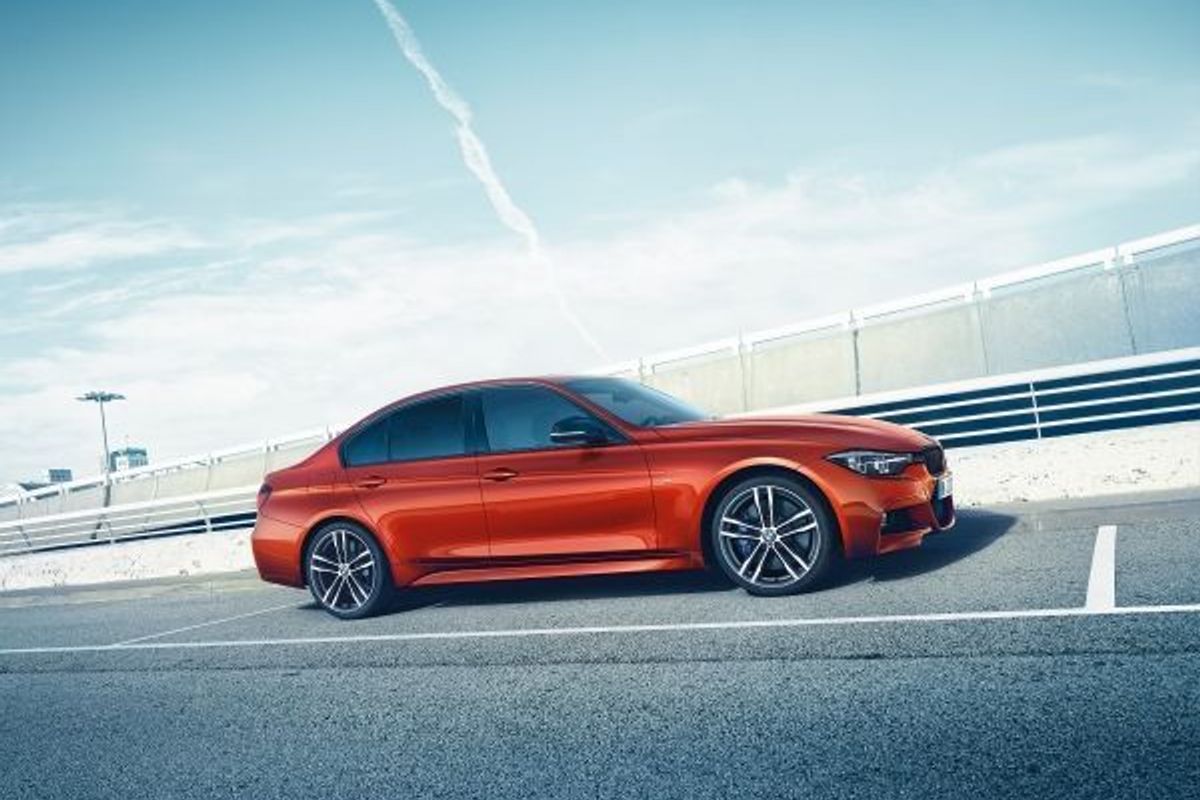
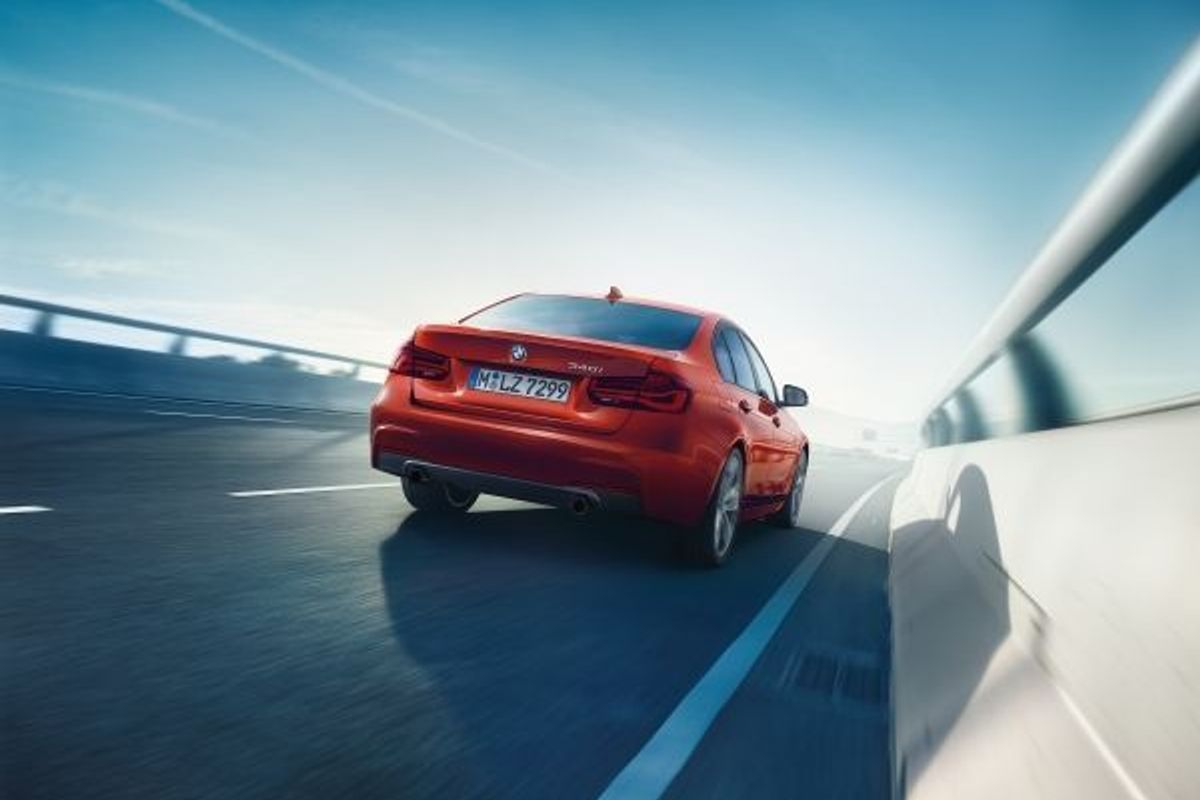
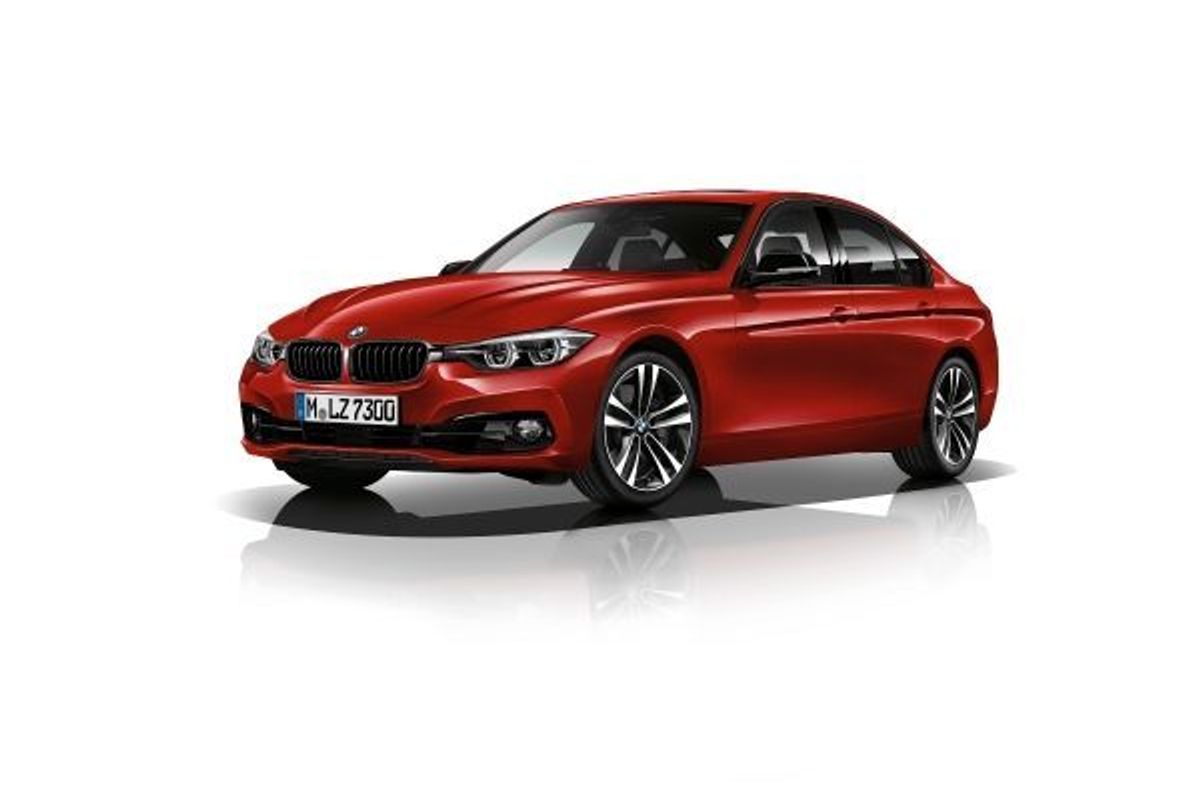
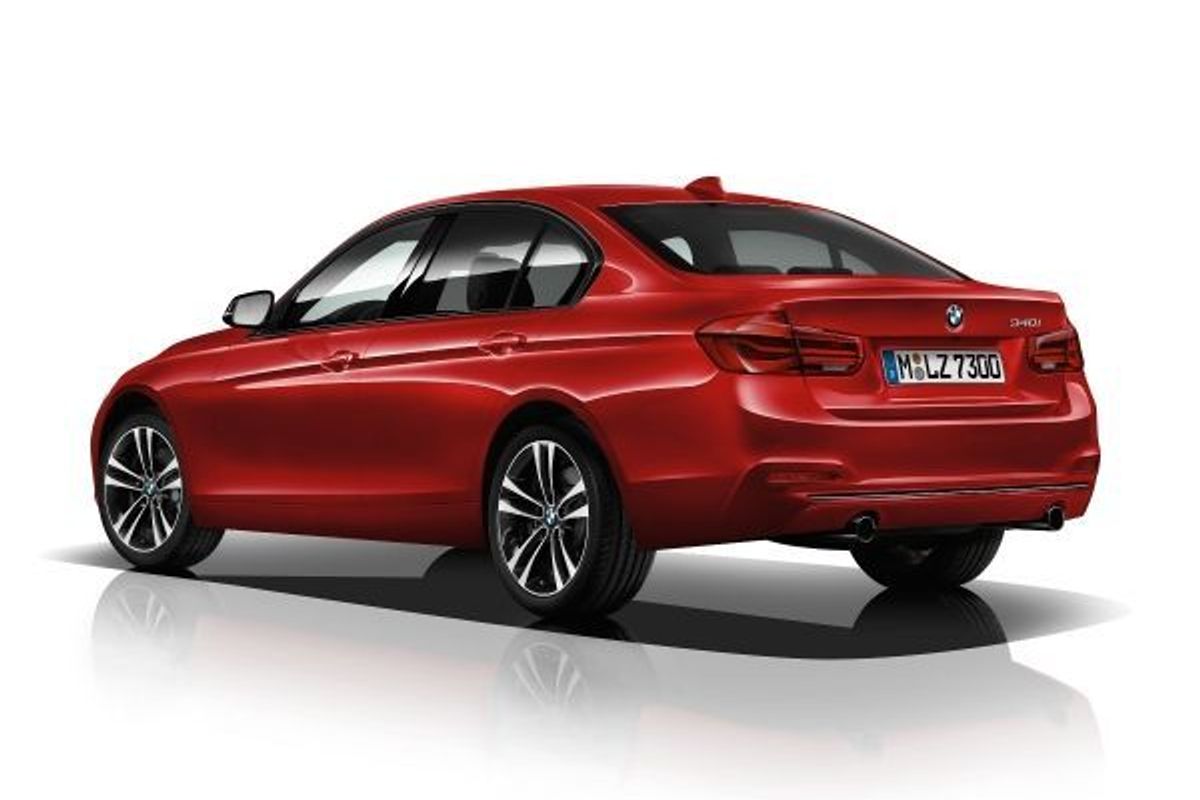
As of August 2017, BMW will be offering 2 new 3 Series edition models in South Africa as well as additional standard and optional equipment features for the 3 Series sedan.
The 3 Series sedan is a bread-and-butter model for BMW and monthly sales reflect its popularity in the local market. Worldwide, more than 15 million 3 Series vehicles have been sold. In an effort to further entice buyers, BMW is now offering 2 new 3 Series edition models, including the Edition Sport Line Shadow and the Edition M Sport Shadow. The edition models can be ordered in addition to those with existing equipment lines and in conjunction with various available types of engines.
In addition, BMW is also offering additional standard and optional equipment features across the 3 Series sedan range. Take a look at the details below…
Key details for new BMW Edition models
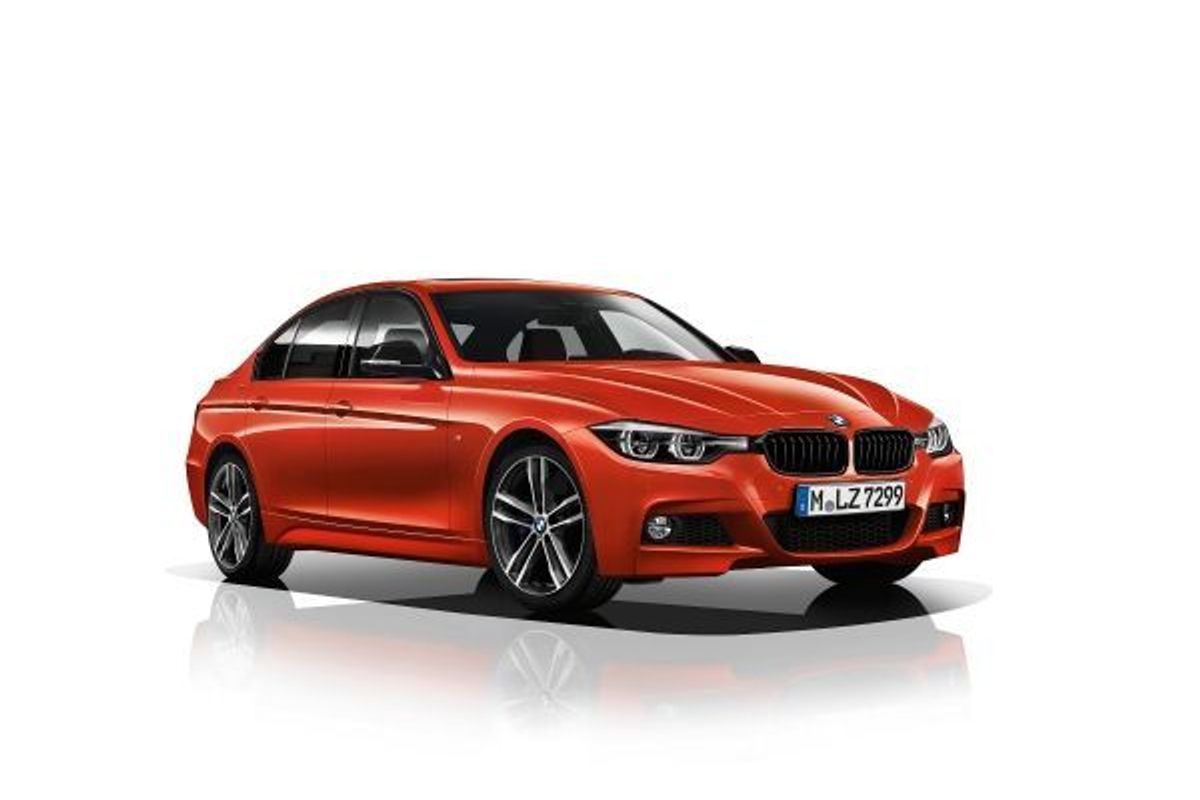
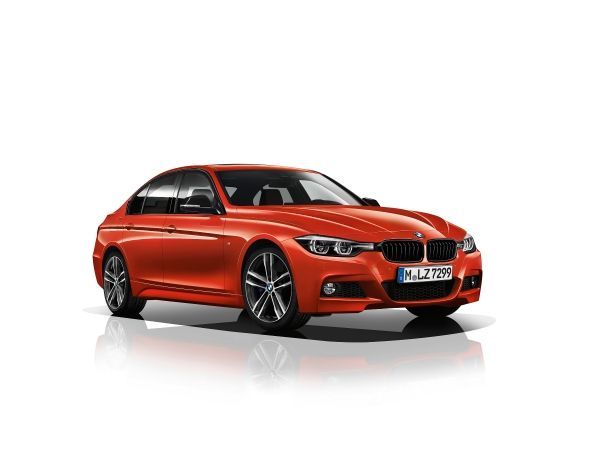
Sunset Orange exterior body colour from the updated 4 Series is now offered on the 3 Series.
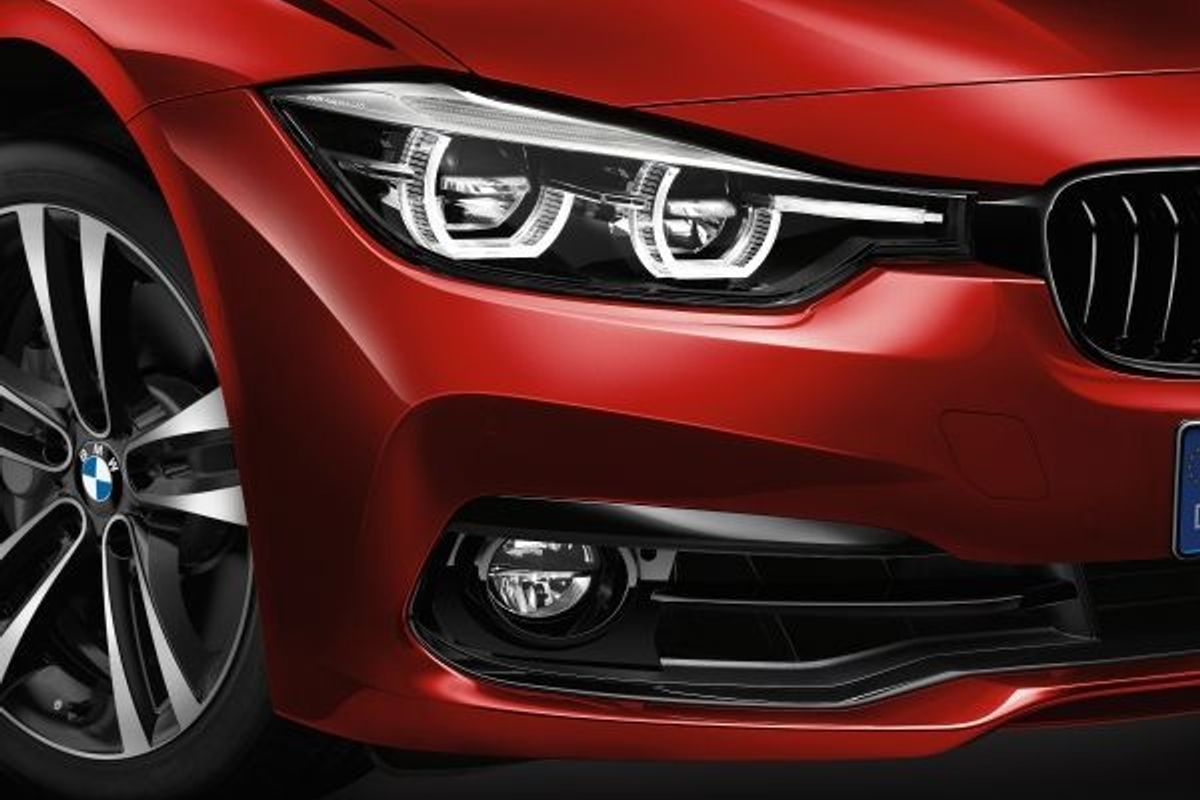
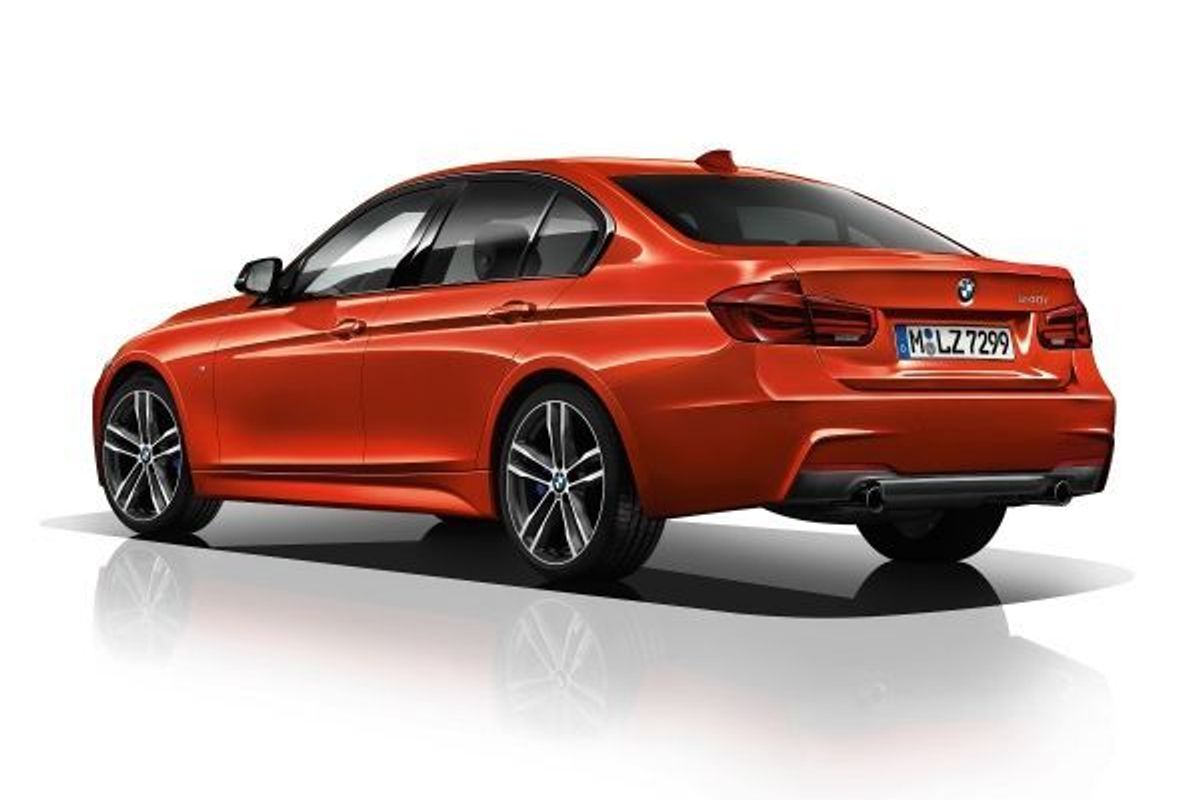
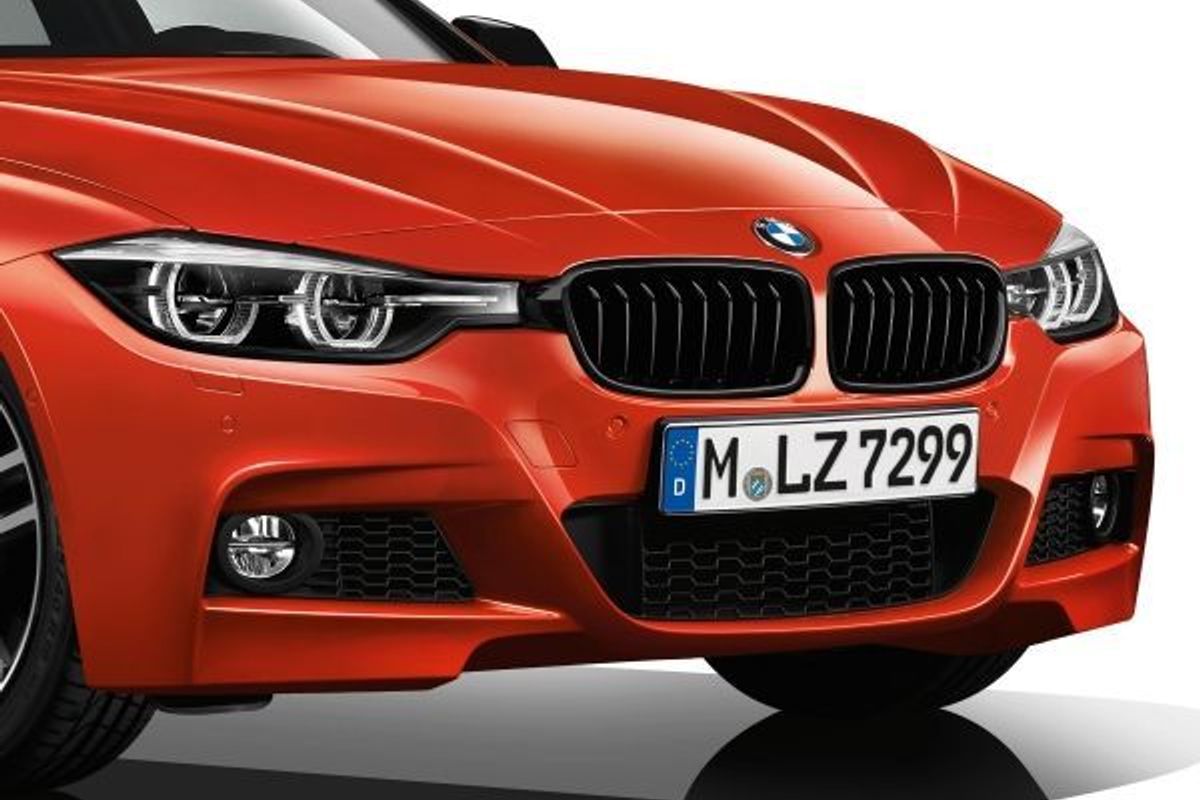
The Edition Sport Line Shadow, only offered for the 318i, features black inserts for the headlight and taillight assemblies and black is seen on the kidney grille surrounds and inserts of the lower air ducts. The tailpipes are also finished off in chrome black. As for wheels, the Edition Sport Line Shadow rides on 18-inch light alloys with a double-spoke design in an exclusive Jet Black colour.
The Edition Sport Line Shadow’s instrument panel features a new contrasting seam, upgraded instrument cluster and a new sports steering wheel. The sports seats are upholstered in a combination of cloth and leather and the interior features new Dark Aluminium Carbon trim with Pearl Gloss Chrome accent strips.
As for the Edition M Sport Shadow, offered for the 320i, 320d, 330i, 330e and 340i, key features include black headlight units and dark taillight inserts with a black kidney grille and chrome Black exhaust tailpipes. LED fog lights and black inserts for the lower air intake is also included. The Edition M Sport Shadow rides on 19-inch M light alloy wheels in a double-spoke design which can be finished off in Orbit Grey as an option.
Subtle, yet effective design details give the new Edition models a unique look.
On the inside, the Edition M Sport Shadow features sports seats in black leather with contrasting blue seams. Dark Aluminium Carbon trim strips with Pearl Gloss Chrome accent strips are included and the instrument cluster features improved display functions while the dashboard has contrasting stitching to round off the look. This model is also equipped with an M sports suspension, M aerodynamics package, M leather-covered steering wheel, roof lining in Anthracite, M door sills and Driving Experience Control including SPORT+ mode.
Additional standard and optional features for BMW 3 Series
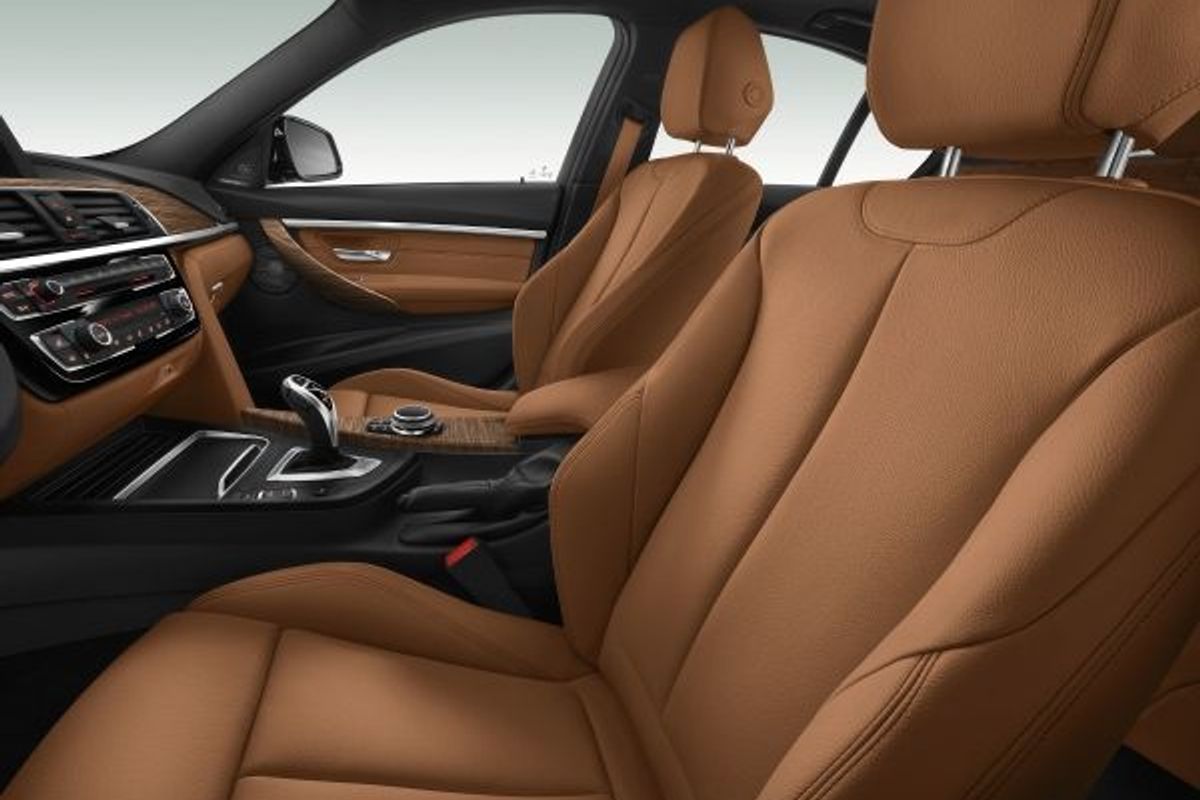
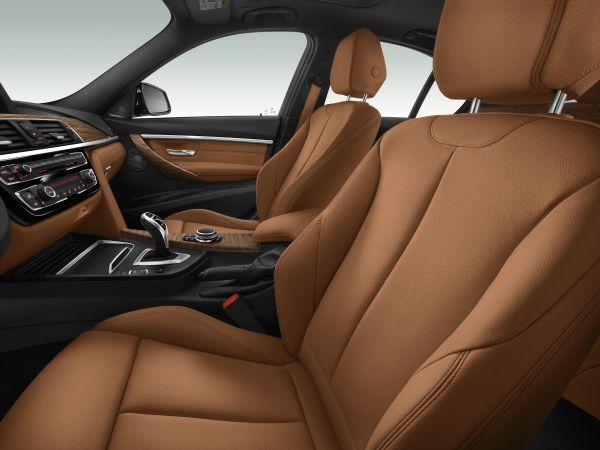
Customers can now have the optional Cognac leather upholstery in their 3 Series.
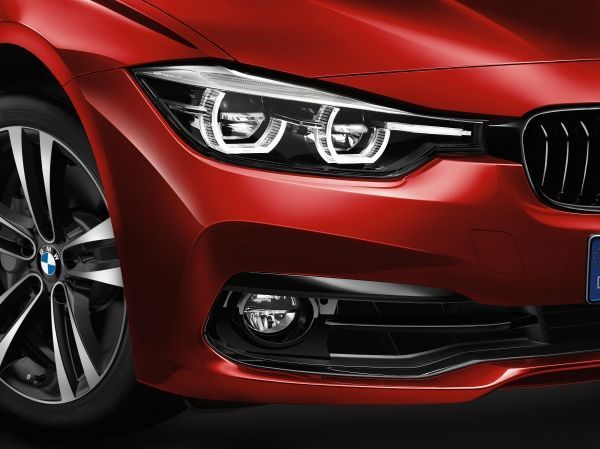
All BMW 3 Series derivatives are now offered with LED headlights and LED fog lights as standard. The striking Sunset Orange body colour, offered on the updated 4 Series, will now also be available for the 3 Series sedan.
Trim lines for the 3 Series including Sport Line, Luxury Line and M Sport will now include the contrasting seam on the dashboard. Cognac leather upholstery, additional trim strips and a choice of 17-, 18- and 19-inch light alloy wheels are offered as an option.
The navigation system Professional with the iDrive operating system is supplemented with a Control Display with a touch screen function. Both the standard Radio Professional and optional navigation system Professional now feature a menu display with a tile structure with animated graphics in live mode.
All 3 Series sedan derivatives can now be equipped with the optional multifunction instrument display. The fully digital TFT colour display shows driving-related information in an individually selectable design and the display varies according to the selected driving mode.
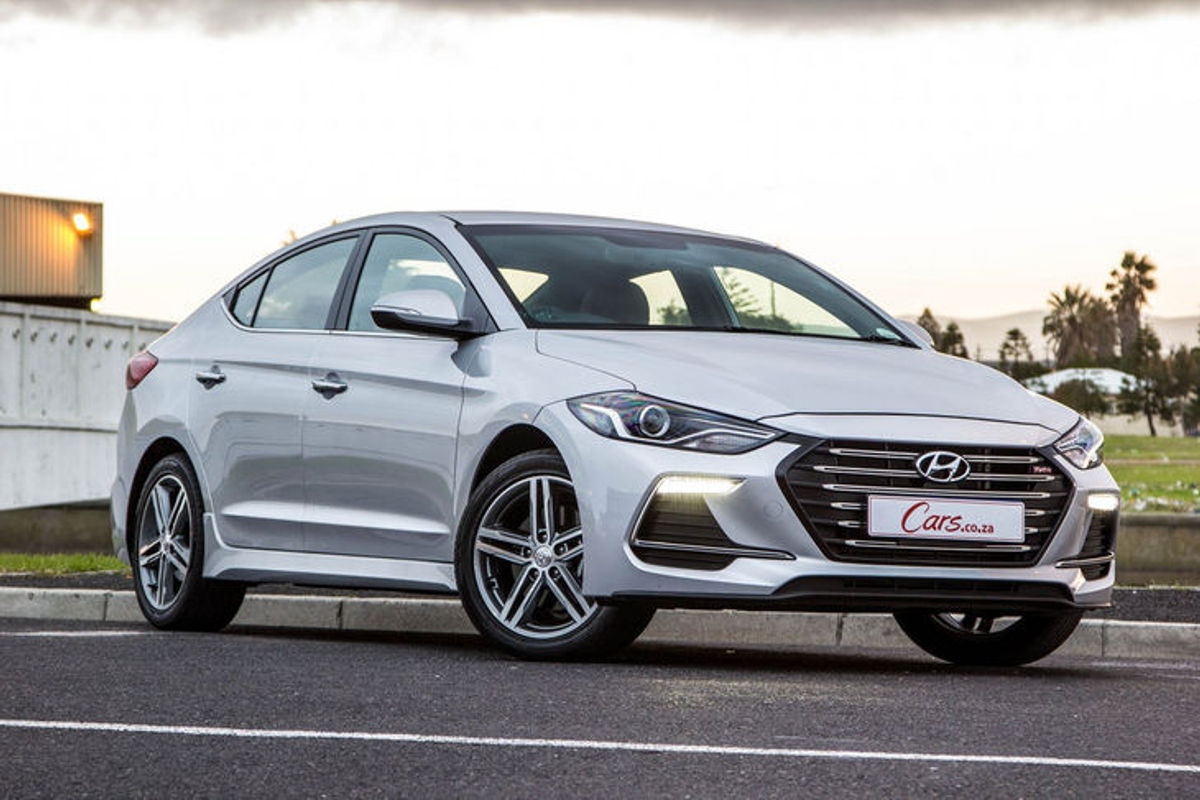
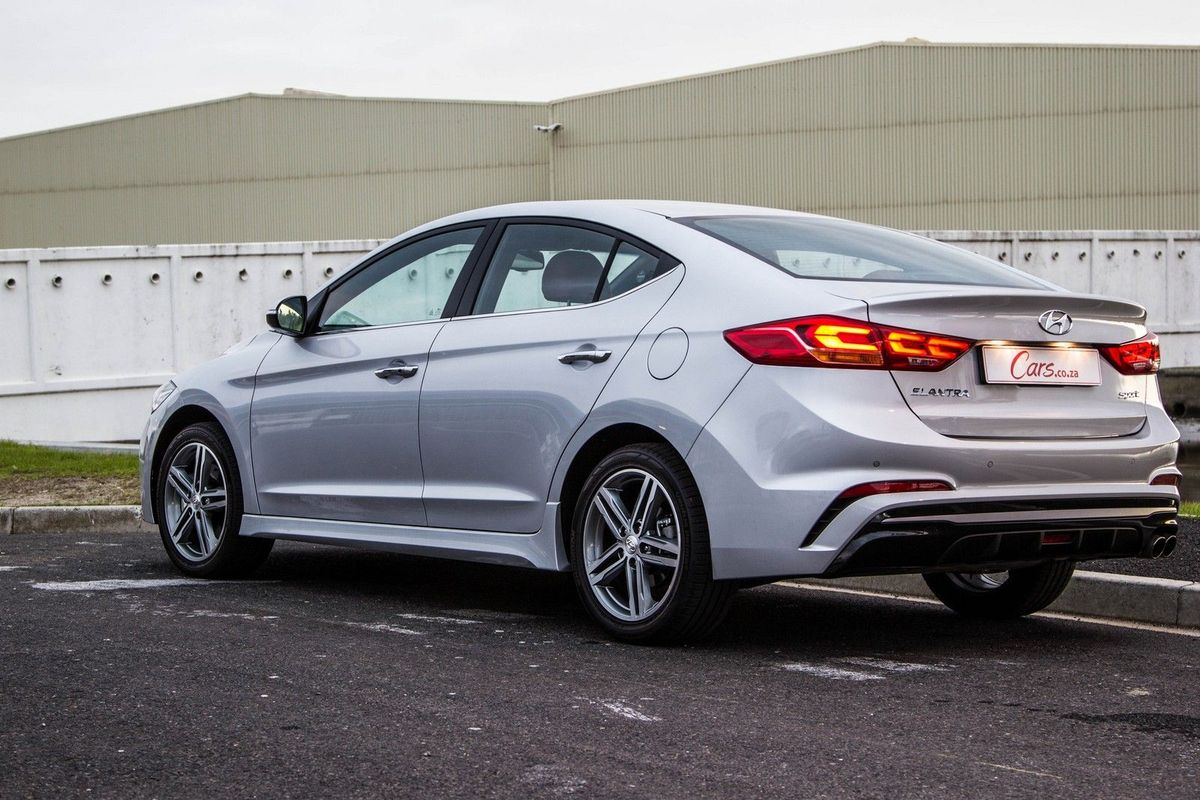
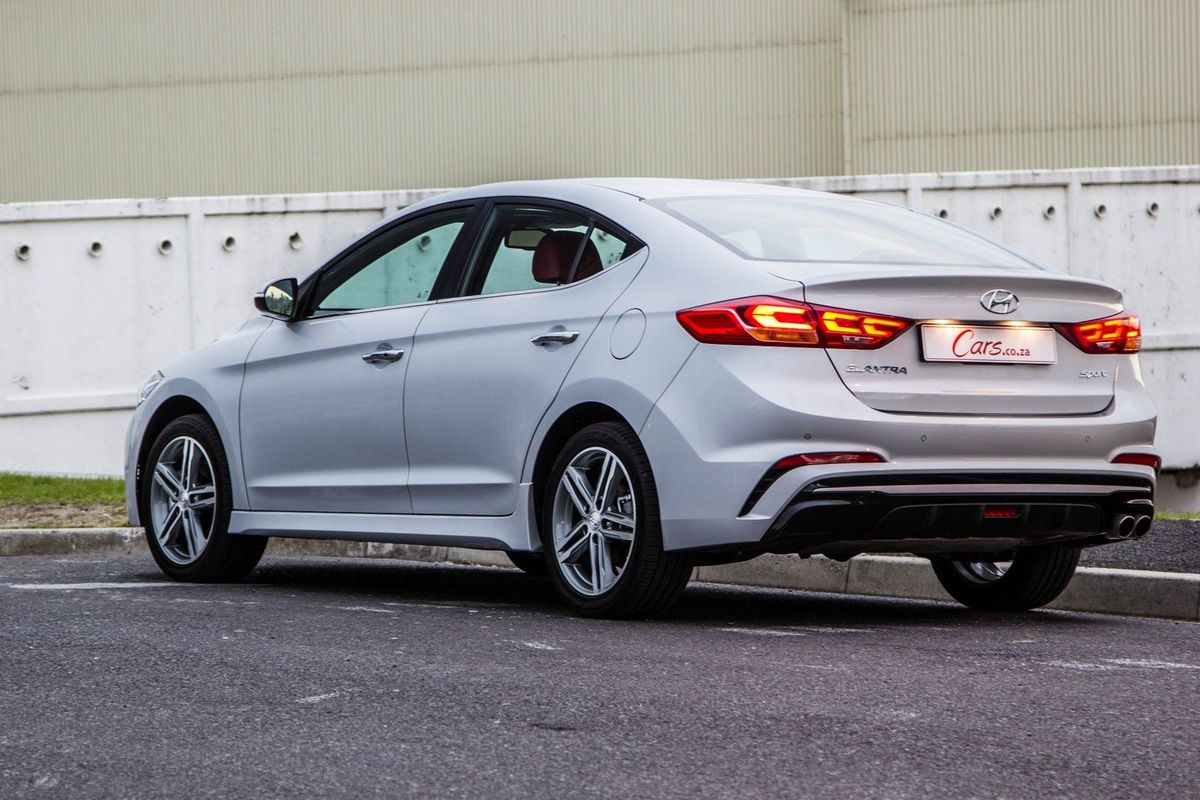
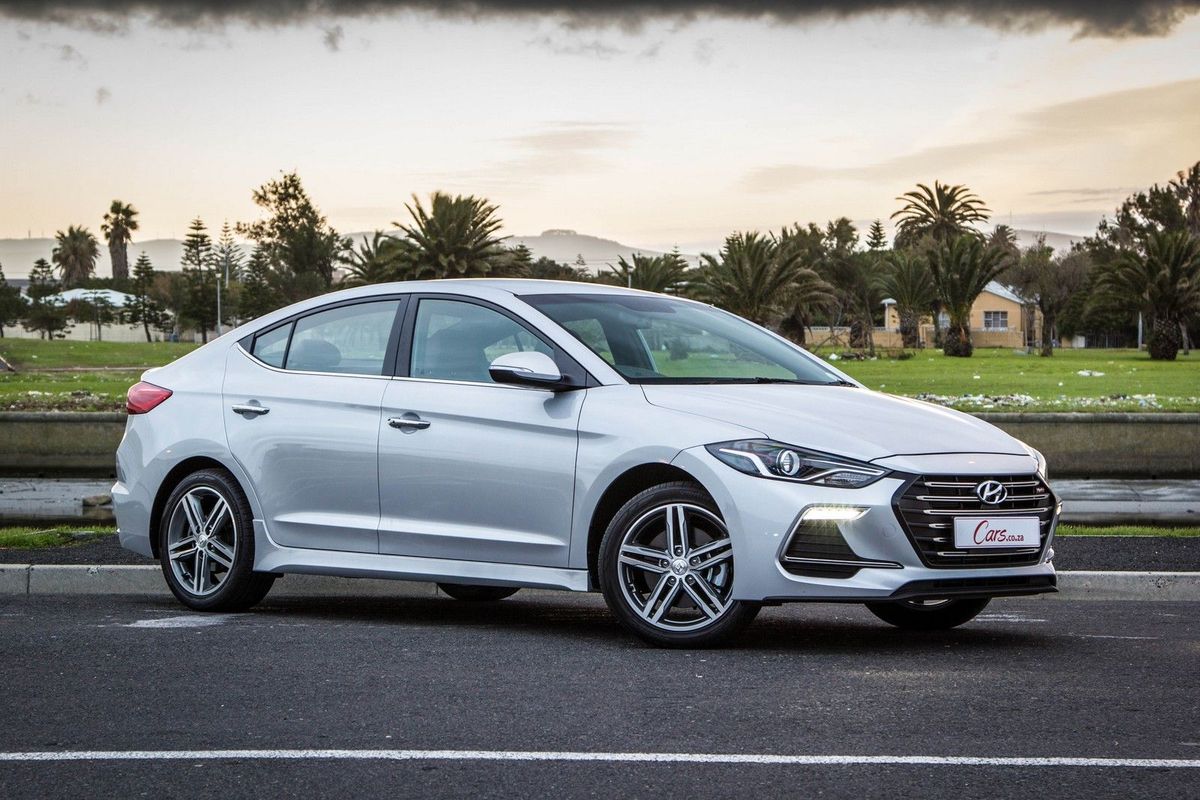
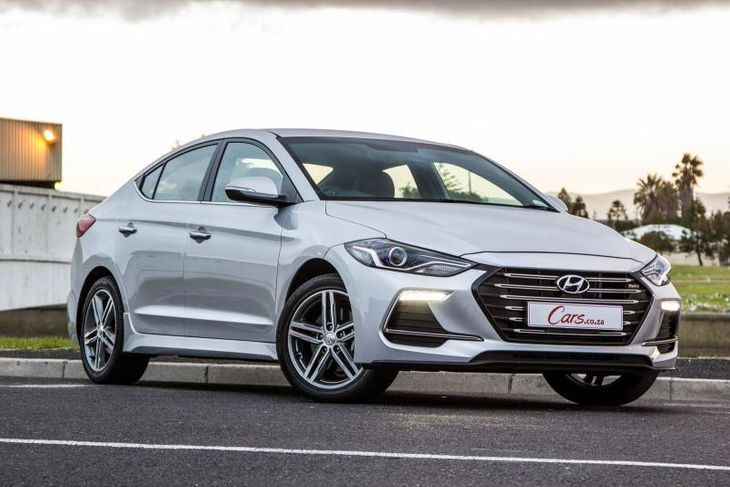
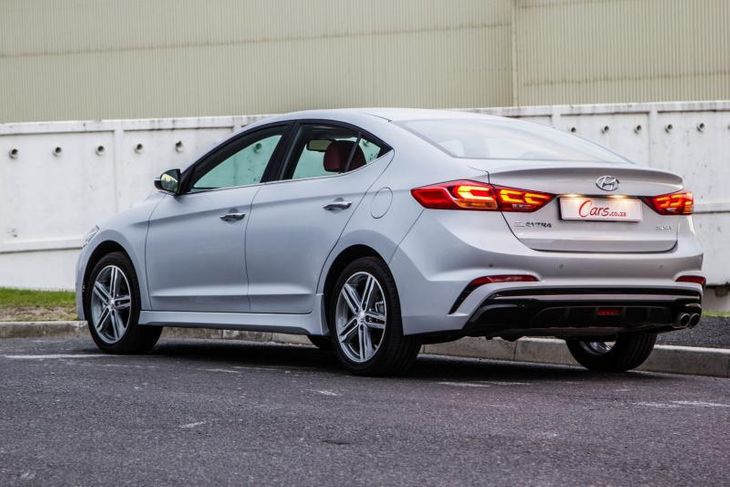
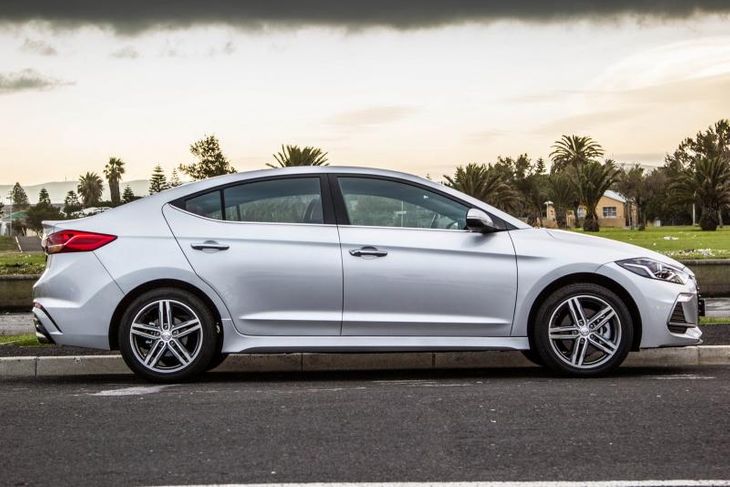
Hyundai Elantra 1.6 Turbo Elite Sport (2017) Quick Review
The Hyundai Elantra has been one of the brand's sensible sedan offerings for some time, but now the Koreans have attempted to move its product into a premium and sportier niche. Can a sporty Hyundai Elantra succeed at a premium price point? We get behind the wheel of Hyundai's flagship Elantra, known as the 1.6 Turbo Elite Sport.
We like: Impressive powertrain, refinement, standard features, spacious cabin
We don’t like: ride may be too stiffly-sprung for some, clunky infotainment system
Alternatives:
A segment stalwart: The Volkswagen Jetta1.4 TSI finds itself in a position where space, premium-ness and value for money come together nicely. It's down on power and doesn't offer as much as the Hyundai Elantra in terms of standard specification.
For premium brand appeal: In the compact sedan market, the Audi A3 4-door is at the top of the pile. However, you pay dearly for this privilege as its far more expensive than its Korean rival and at this price point you can only opt for a 1.0-litre turbo triple cylinder.
Honda Civic 1.5T Sport: The offering from the Far East brings exceptional styling and a peppy powertrain. Sadly, the cabin design and finish are woeful and far behind that of its Korean rival.
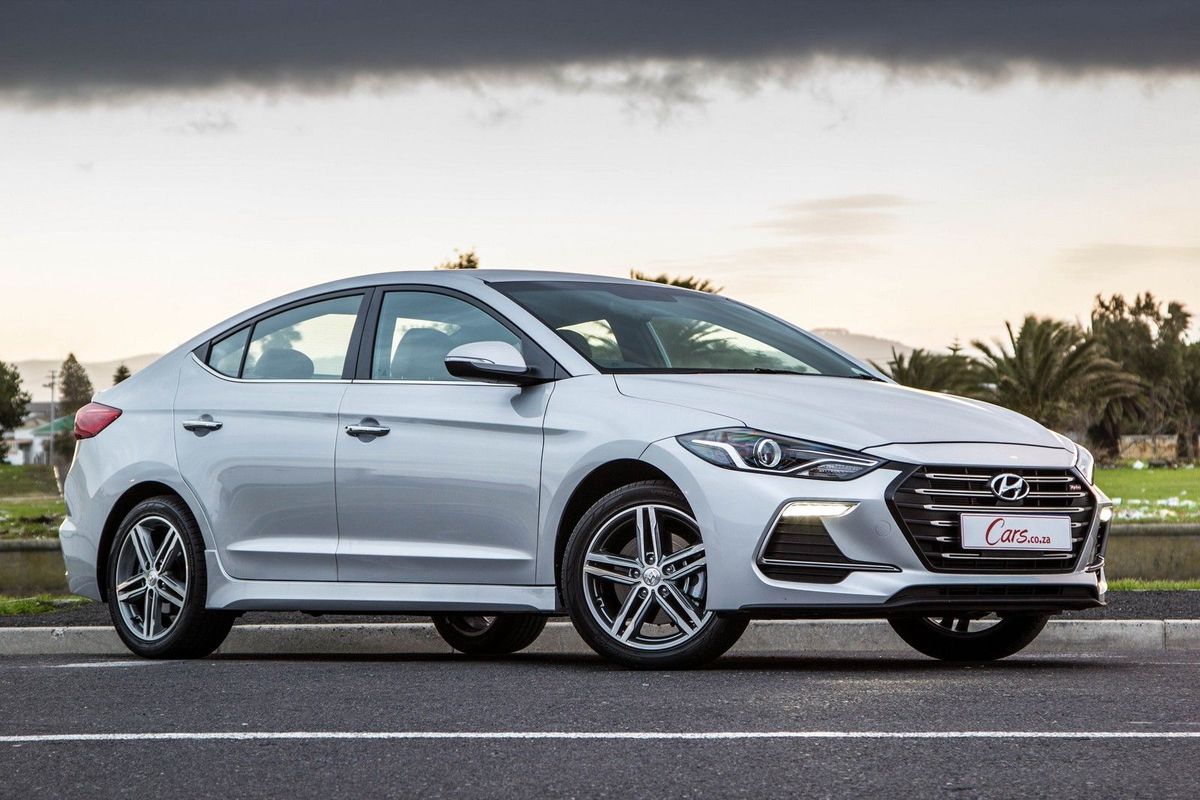
Despite its sporty demeanour, the Hyundai Elantra still retains its sensible and practical capability.
Generally speaking, previous versions of the Hyundai Elantra were regarded alternatives to Japanese compact sedans such as the Honda Civic and Toyota Corolla. For this all-new model, Hyundai looks to go upmarket by introducing a sporty derivative. This is not a cosmetic touch up (with a set of sportier big alloys here and a boot spoiler there), but rather a purpose-built warm (as opposed to hot) performance sedan. What's this all about, then?
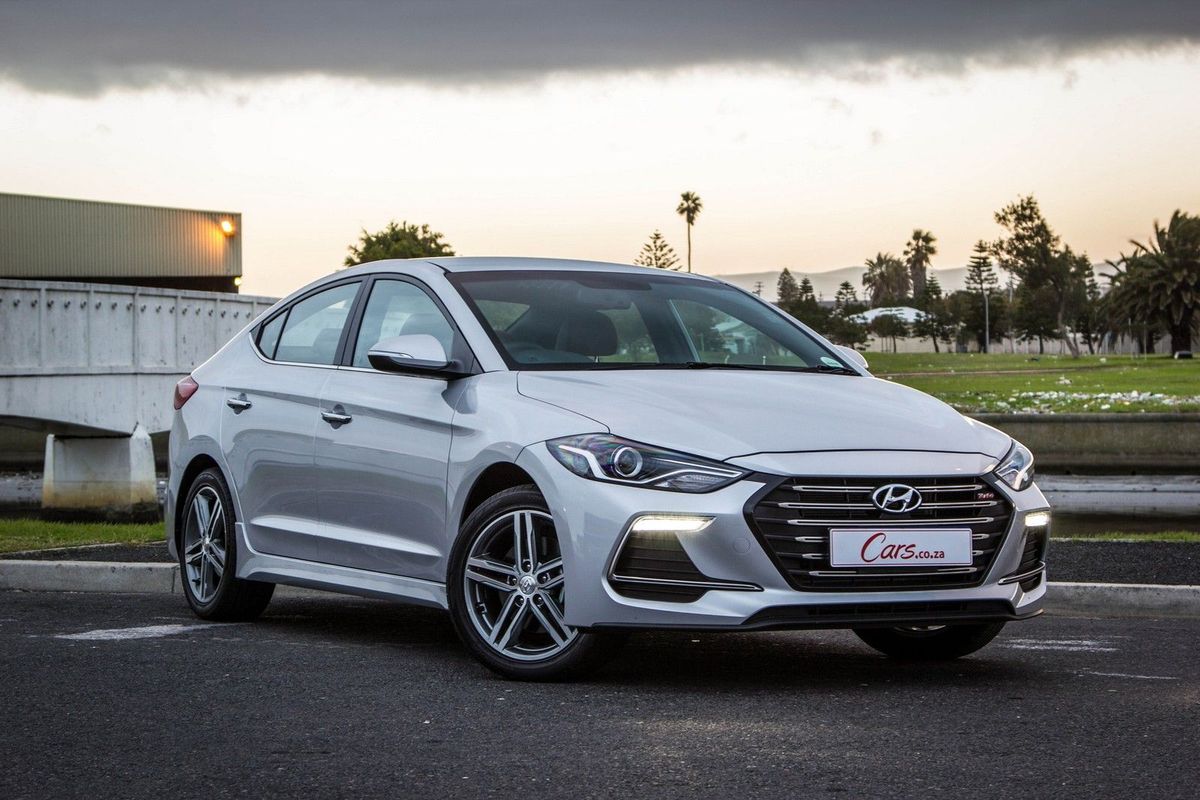
Well, the newcomer's sporty exterior execution speaks for itself: the Sport represents a deliberate overture to premium compact- and business class sedan buyers. Yes, there are more soberly specced Elantras that rival the likes of the Toyota Corolla, Kia Cerato, Mazda3 and the Ford Focus, but this is a completely different animal. Hyundai has lifted the engine and gearbox straight from a Veloster Turbo and bolted into this family sedan. Factor in the sporty visual addenda, both inside and out, and we have a Korean sedan nipping at the heels of some of the more premium players.
The good
Powertrain combination
Not everyone was delighted by the Hyundai Veloster Turbo's engine-transmission combo. It all sounded great in theory: a punchy 1.6-litre turbopetrol mated with a quick-shifting 6-speed dual-clutch gearbox, but it didn't gel… the auto 'box wasn't ideally calibrated to the motor's performance characteristics. However, for the Elantra Sport, Hyundai has installed a 7-speed transmission and optimised the mapping software.
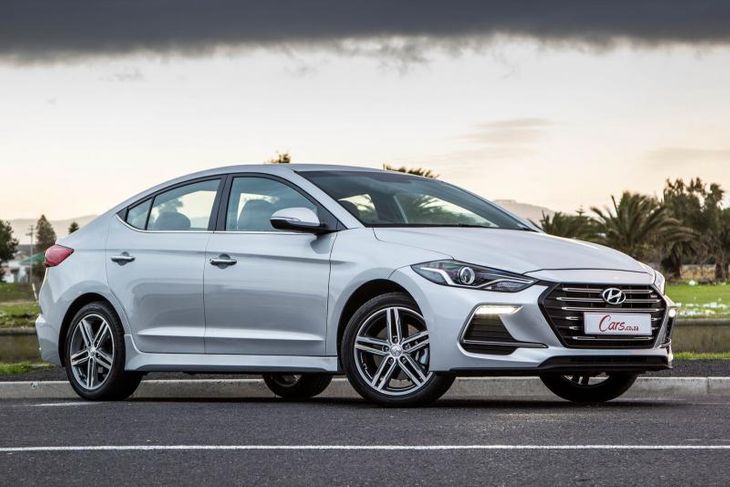
The Elantra is easily the sportiest-looking sedan that Hyundai has launched in South Africa.
The engine pushes out 150 kW and 265 Nm, which admittedly won't trouble the hot hatches of this world, but is enough to give the sedan urgent in-gear shove. Power goes to the front wheels via the aforementioned 7-speed dual clutch 'box and there are shift paddles located behind the steering wheel. What's more, there's a purposeful engine note to the Sport; while it's hardly noticeable in the cabin, its prominent (at full throttle) from outside.
Sporty upgrades
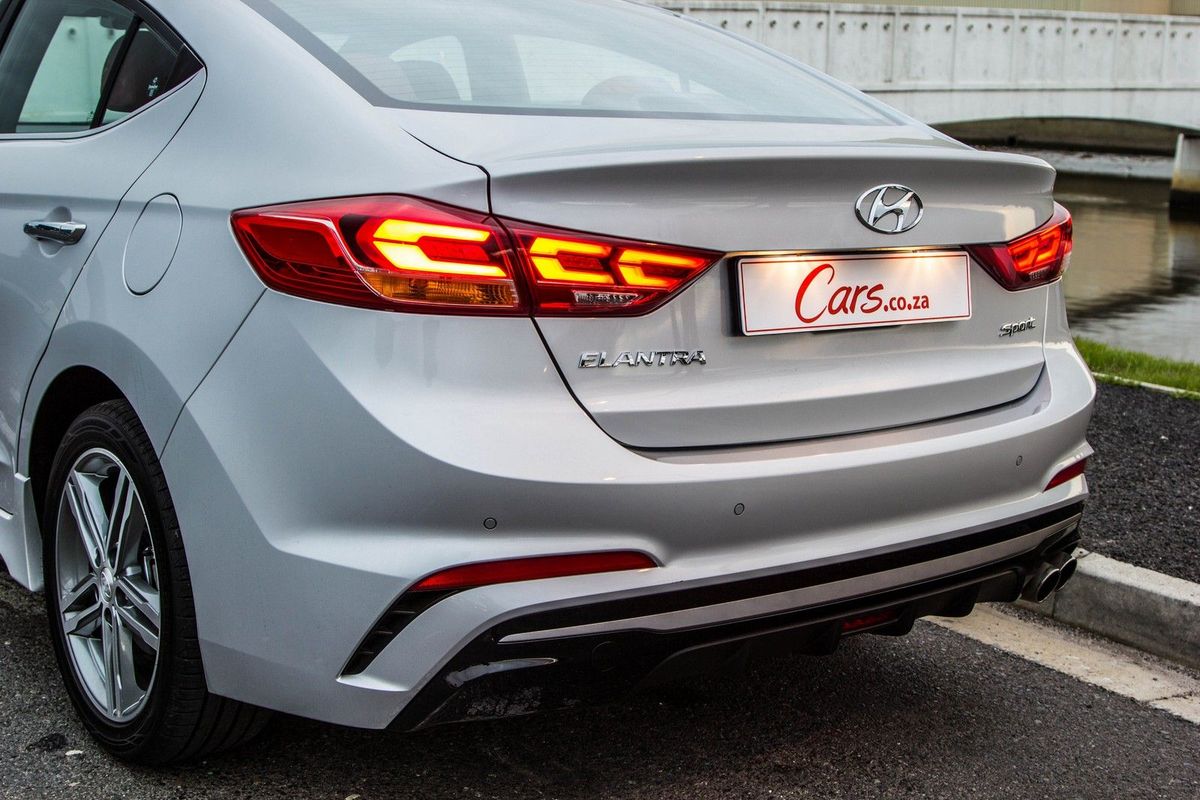
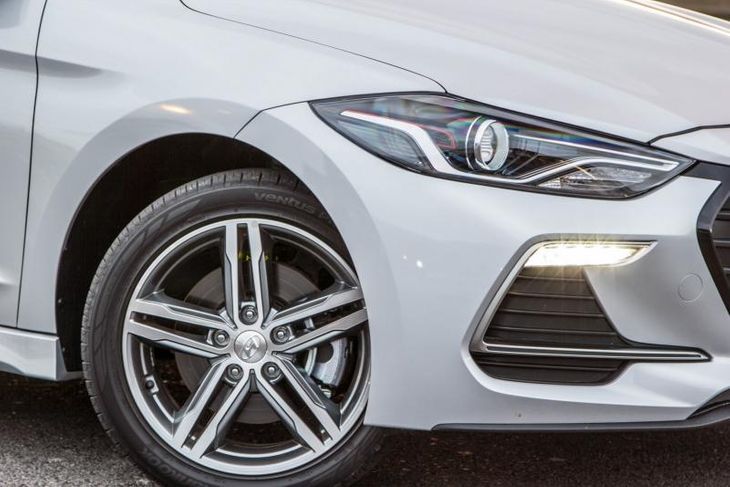
As mentioned above, the powertrain has already imbued the vehicle with a substantial sporty edge, but it'll take a keen-eyed enthusiast to appreciate the real details. Sure, a "Turbo" badge here and a "Sport" badge there aren't enough to make the Elantra a performance car, but bigger brakes and a substantially reworked sports suspension certainly help. Sports suspensions really prove their worth on billiard table-smooth sections of tarmac (or race tracks, for example), but, on the downside, they tend to convey bone-jarring thumps when dealing with cracks or bumps on public roads.
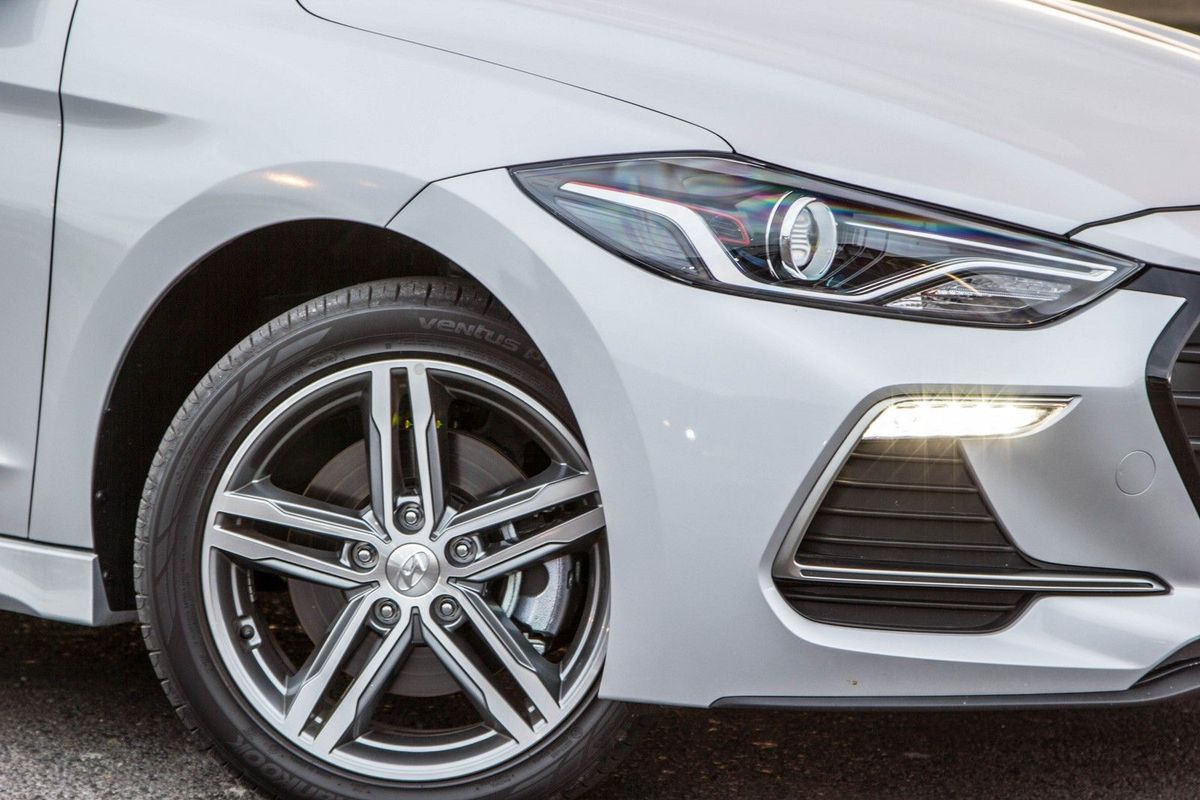
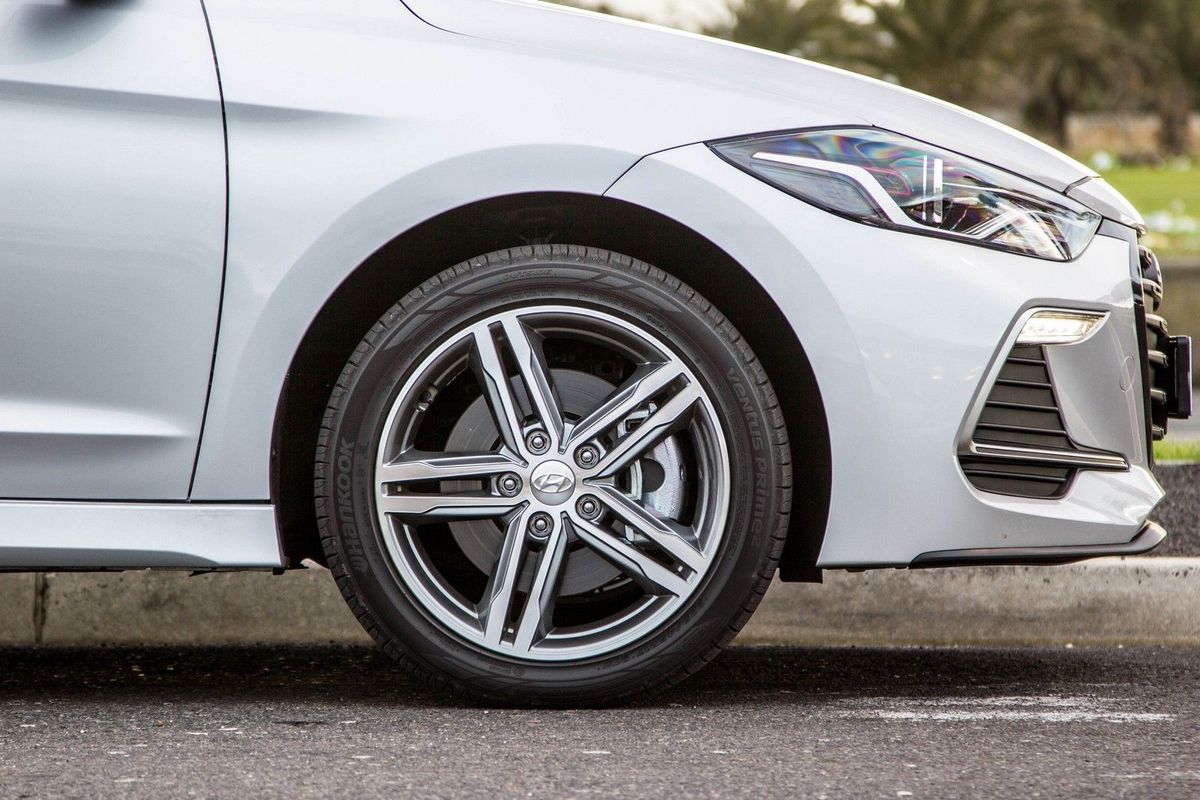
These attractive alloy wheels round off the package nicely
However, Hyundai appears to have struck a good balance between handling prowess and suspension pliancy with the Elantra Sport. During its tenure in the Cars.co.za test fleet, the Korean sedan's damping soaked up most of the road imperfections it encountered with relative poise. We'd say it's firm-but-fair for the daily drive/commute, but it's vastly better than its siblings when you just want to make the most of a sweeping section of road. Power delivery is good, with fun really beginning when the rev needle sits around the 3 000 rpm mark. Make sure you bang the next gear promptly for two reasons. Firstly, there's a bit of a power drop off and secondly, the engine's note becomes coarse as it approaches the limiter.
The Elantra Sport is brisk, as opposed to fast, in a straight line, and when you commit the sedan to corners with gusto, there's enough in terms of front end grip and prompt turn-in to entertain you. Sure, some work could be done on the steering feedback, which is disconcertingly light for a performance car, and pronounced understeer will intrude in extremis, but remember this is Hyundai's first real go at a performance sedan. Imagine what will happen when Albert Biermann (formerly of BMW's M division) and his team at Hyundai Motorsport get hold of the next-generation model?
Sensible at heart
While the sportiness and entertaining driving characteristics of this new Hyundai are praiseworthy, its core role is still to provide comfortable and safe transport for 4 people and their luggage. Does it do this? Yes, absolutely. Occupants remarked on the good head- and legroom availed by the cabin (even at the rear) and the boot was big enough to swallow a 29-inch mountain bike with the rear seats folded down. So, while the Elantra Sport appeals to people who want a bit more go and show from their middle-of-the-road family sedan, it was able to deliver the basics with aplomb.
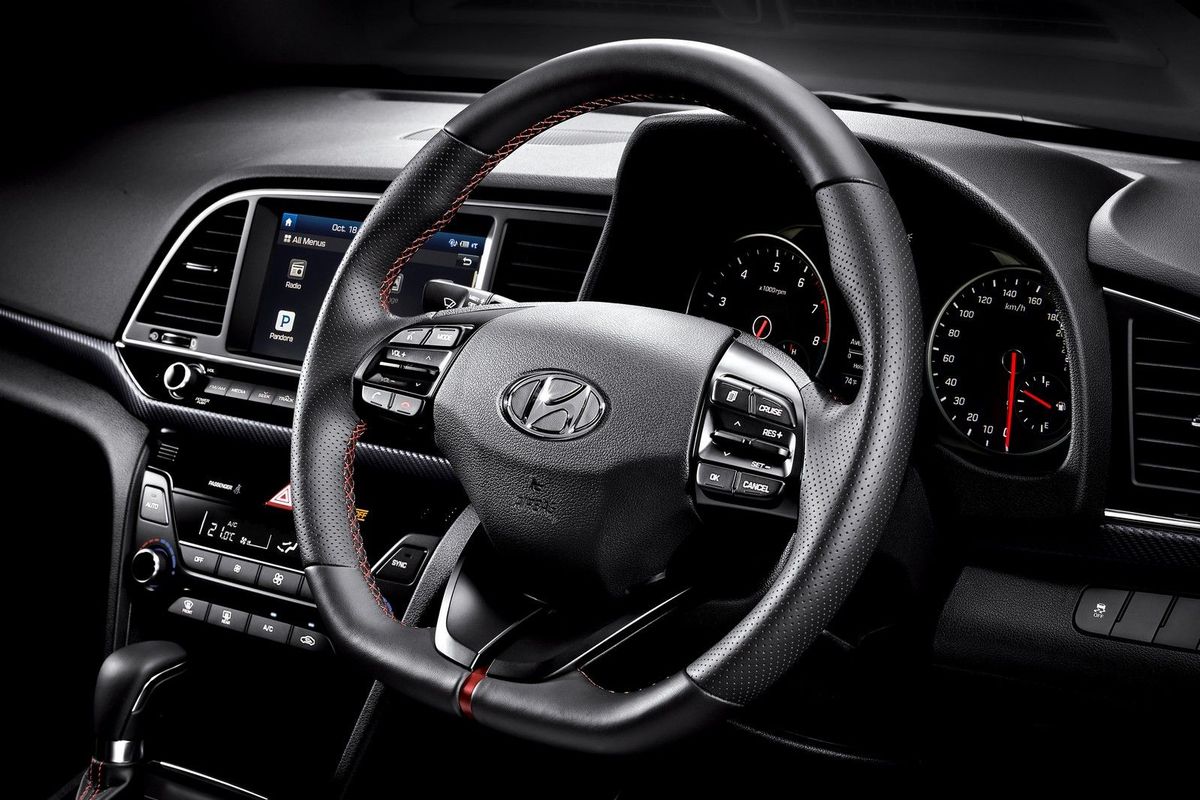
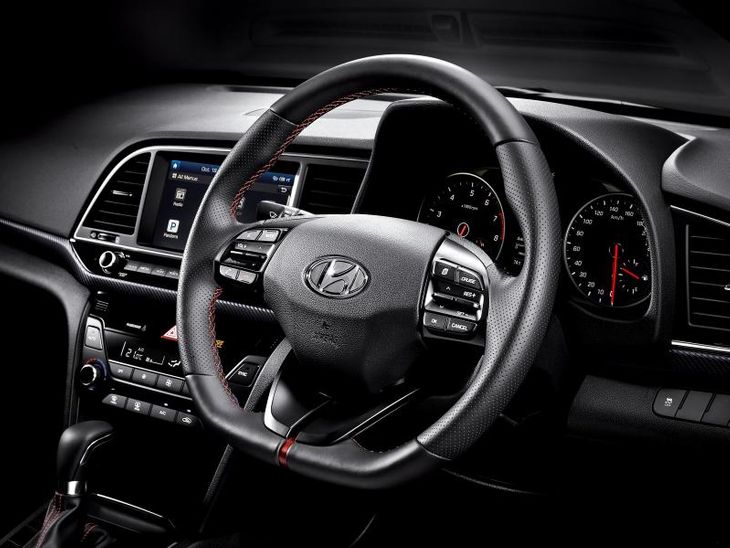
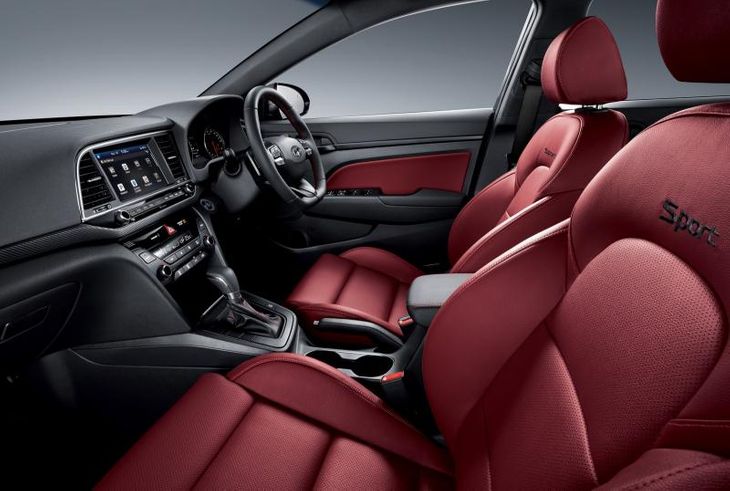
The sporty theme has been carried through to the interior with red stitching on the steering wheel and gear selector boot
The not so good
The infotainment system
Perhaps we're being a bit harsh here as the standard 8-inch infotainment touchscreen setup does cover all the bases, including a satellite navigation function, USB/HDMI connectivity, Bluetooth telephony and music streaming and so forth, but it's just not very intuitive or user-friendly to use. Sure, owners will get used to the interface/become accustomed to its functionality, but it was even a challenge to find and tune certain radio stations.
Red upholstery is an acquired taste
Unless you like red seats, this trim colour takes some time getting used to. Colour aside, they're comfortable but lack proper side bolstering
Do you like red? If yes, skip this section. If not, you're in for a spot of bother as the standard cabin trim is swathes of red leather. The red seats divided the opinions of our testers right down the middle. International spec Hyundai Elantra Sports offer black seats with red stitching, a classier touch. The red stitching is on SA spec vehicles and can be found on the steering wheel and boot of the gear selector. While there's nothing fundamentally wrong with the cabin, we anticipate that it might be a little too much for a typically conservative audience.
Pricing & Warranty
The Hyundai Elantra range starts with the 1.6 Executive manual at R299 900, with this flagship derivative coming in at R399 900. The price includes a 5-year/150 000 km manufacturer's warranty (with an additional 2-year/50 000 km powertrain warranty), 5 years' worth of roadside assistance and a 5-year/90 000 km service plan. Hyundai South Africa has pegped the service intervals at 5 000 km, 15 000 km and thereafter every 15 000 km.
This new Hyundai Elantra feels reassuringly solid and composed; its one of the few sporty sedans that remains relatively affordable.
Verdict
To put it simply, there is no compact sedan in the new vehicle market that can, for around the R400 000 mark, match the performance and luxury of the Hyundai Sport. Whether the market wants performance derivatives of value-oriented 4-door family cars is a moot point, but a brand that is better known for its sensible family SUVs and compact cars has somehow transformed its middle-of-the-road sedan into something engaging, which is far more than its rivals can say. Granted, there is an Audi S3 sedan, but that's in a different league in terms of performance and price. This new Hyundai Elantra feels reassuringly solid and composed, and we're happy to say its one of the few sporty sedans which is actually relatively affordable.
Sure, the Elantra Sport is not a fully resolved performance sedan per se, but it's definitely a signal of intent by Hyundai. If the hype around the fiery i30 N hatchback is anything to go by, then we predict the next Elantra Sport will be a more rounded product with even more performance. As for this particular product, it's a pleasant reminder that you can find some fun and enjoyment from a sedan without breaking the half-million-Rand barrier.
Suzuki previews Swift Sport, Extends Warranty (Updated)
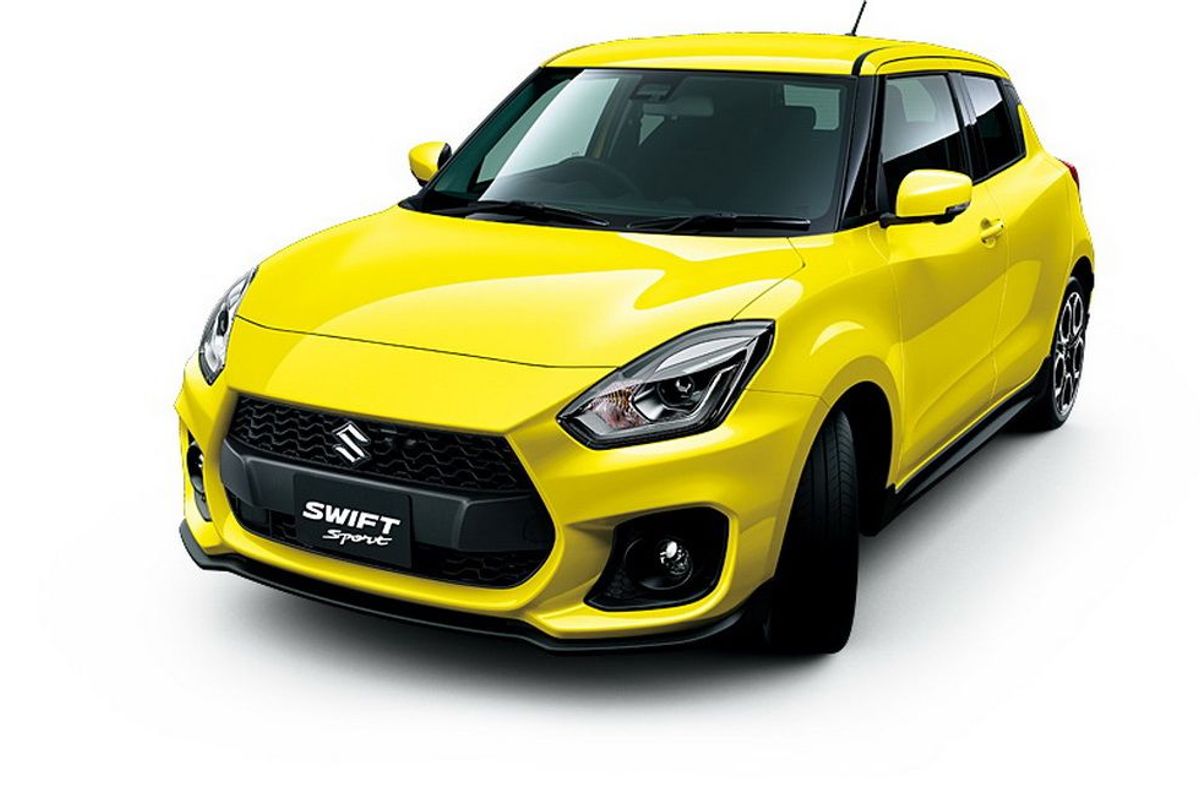
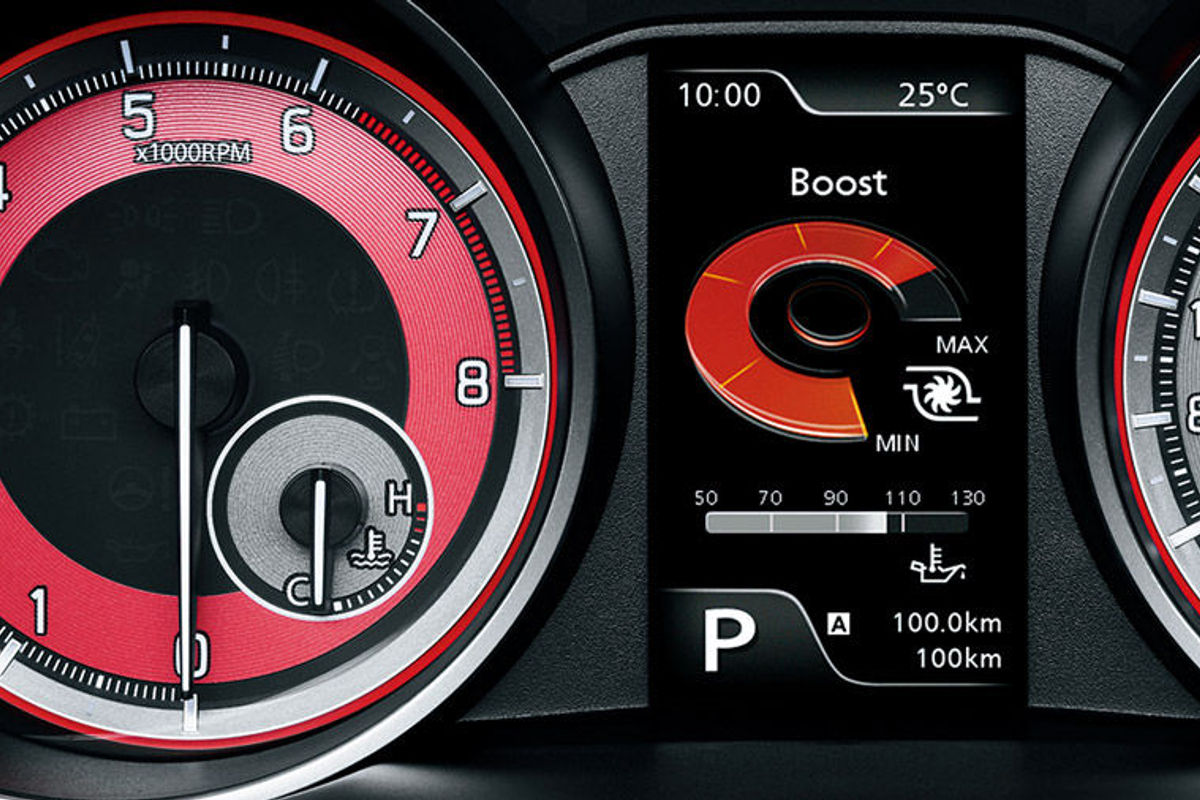
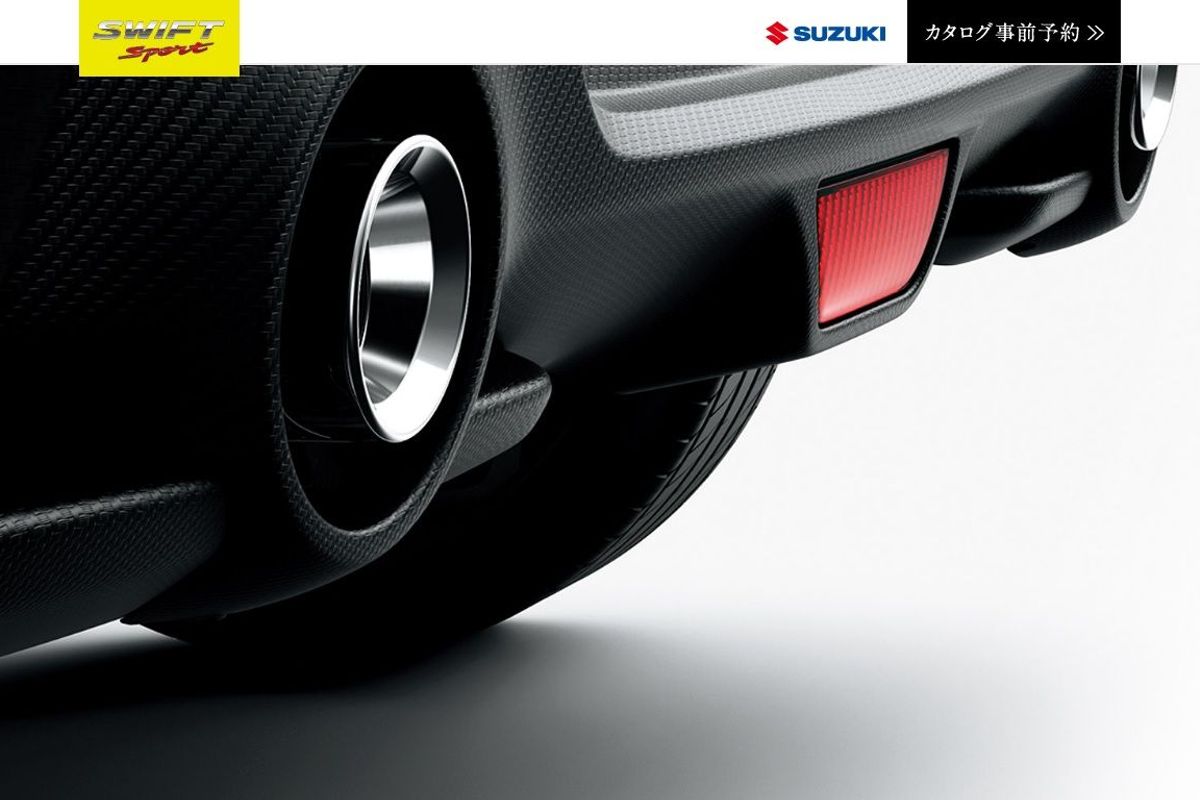
Suzuki has announced it will reveal the Swift Sport at the 2017 Frankfurt Motor Show and while the award-winning Japanese manufacturer prepares for the local introduction of the new model, it has increased the value proposition of its products by offering an extended warranty on new vehicles sold until the end of the year. Update: some more images and details about the performance Swift Sport have emerged.
Apart from the obvious cosmetic/aerodynamic upgrades sported by the car in the teaser image (released July 24), we know little about the newcomer so far. What we DO know, however, is that it will probably be powered by a 1.4-litre turbocharged petrol engine that delivers 103 kW and 220 Nm of torque, most likely coupled with a 5-speed manual transmission. Without context, those figures look relatively meagre for a modern-day performance car but note that the current naturally aspirated model has 100 kW and 160 Nm, so the torque, in particular, has dramatically been upped.
More importantly, the new Swift Sport could weigh as much as 150 kg less than its predecessor thanks to its light and rigid Heartect platform, resulting in an unmatched power-to-weight ratio at its price-point. The current model accelerates to 100 kph in 8.7 seconds – we would not be surprised to see its successor achieve the same in well below 8 seconds, closer to 7 sec in fact.
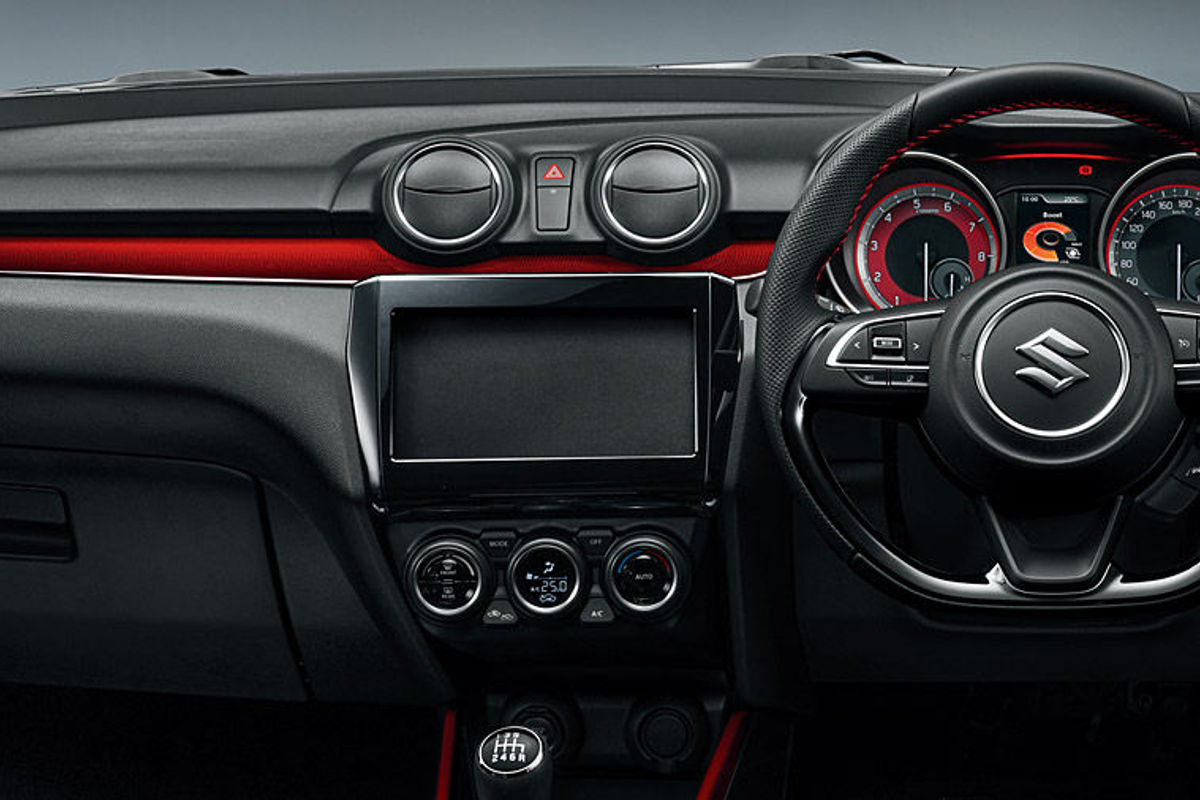
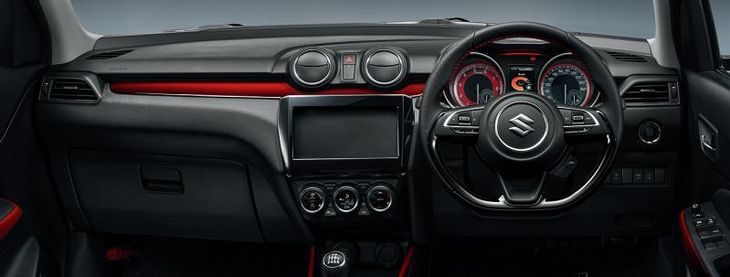
Update: Officially the new Suzuki Swift Sport will be shown at the 2017 Frankfurt Motor Show on the 12th September and we've got a first look at the interior details, such as the cabin and dashboard layout.
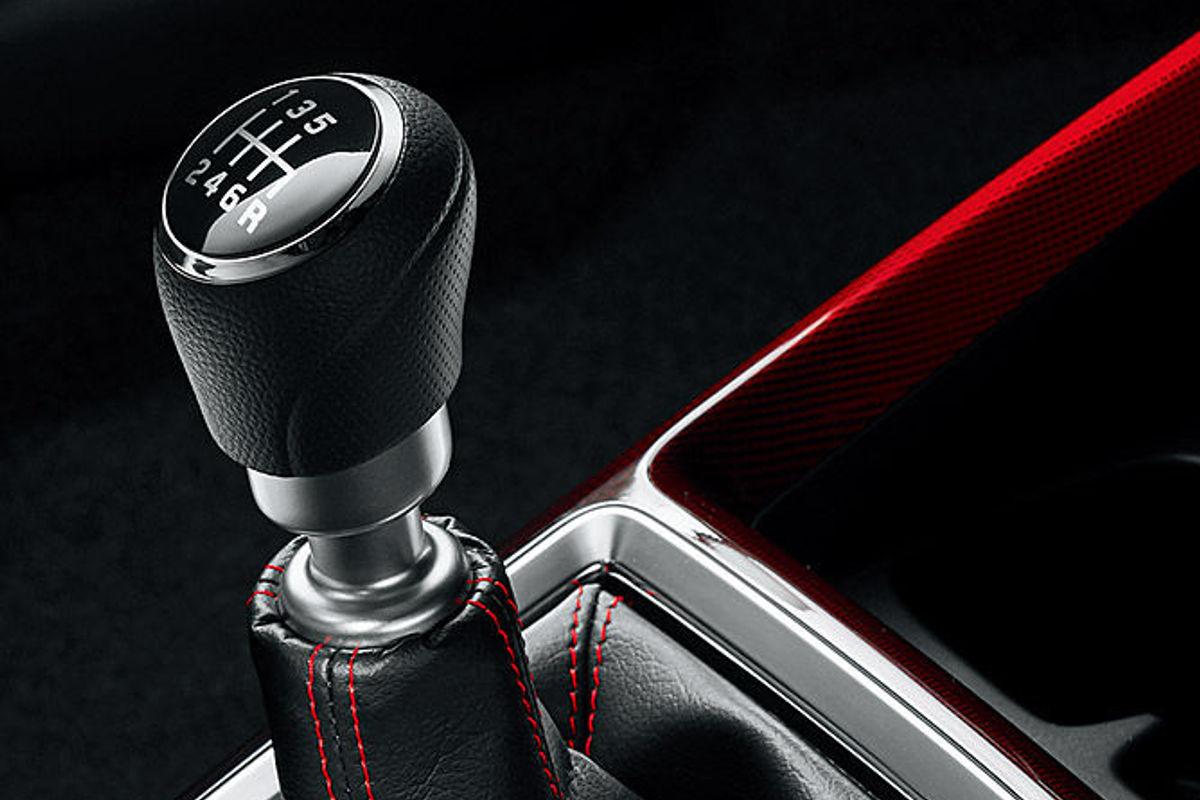
It's nice to see a six-speed manual gearbox and a flat-bottomed steering wheel. Performance should be similar to the current model.
Meanwhile, buyers purchasing a new Suzuki vehicle in South Africa will benefit from a promotional extended mechanical warranty of 5-years or 200 000 km, which replaces the previous 3-year/100 000km warranty. The new warranty applies to all vehicles sold from July to December 2017.
The new warranty covers all costs in the case of mechanical failure but does not cover failures resulting from abuse, lack of scheduled maintenance or a vehicle accident.
“Over the past few years, we have worked really hard to further improve our customer service and extend our dealer network to place good Suzuki service within the reach of more South Africans. We have also improved our warranty and service plans to be both easy to understand and as comprehensive as possible. The extension to 5-years or 200 000 km signals the successful completion of the project,” says André Venter, divisional head for sales and marketing at Suzuki South Africa.
Earlier this year, Suzuki was recognised as Brand of the Year in the annual Cars.co.za Consumer Awards – powered by WesBank. The result was determined using valuable consumer feedback via the Cars.co.za Ownership Satisfaction Survey and market data supplied by data specialists, Lightstone Consumer.
In addition to the extended warranty, Suzuki has also extended its partnership with the Automobile Association (AA) to offer 5-years free roadside assistance which includes services such as breakdown assistance, help with a flat tyre, battery jump-starting, car lock-out support, emergency fuel and even telephonic directions. The AA will also relay messages to family and friends in the event of an emergency.
Kia Keen to Sting SA with High-Performance Stinger
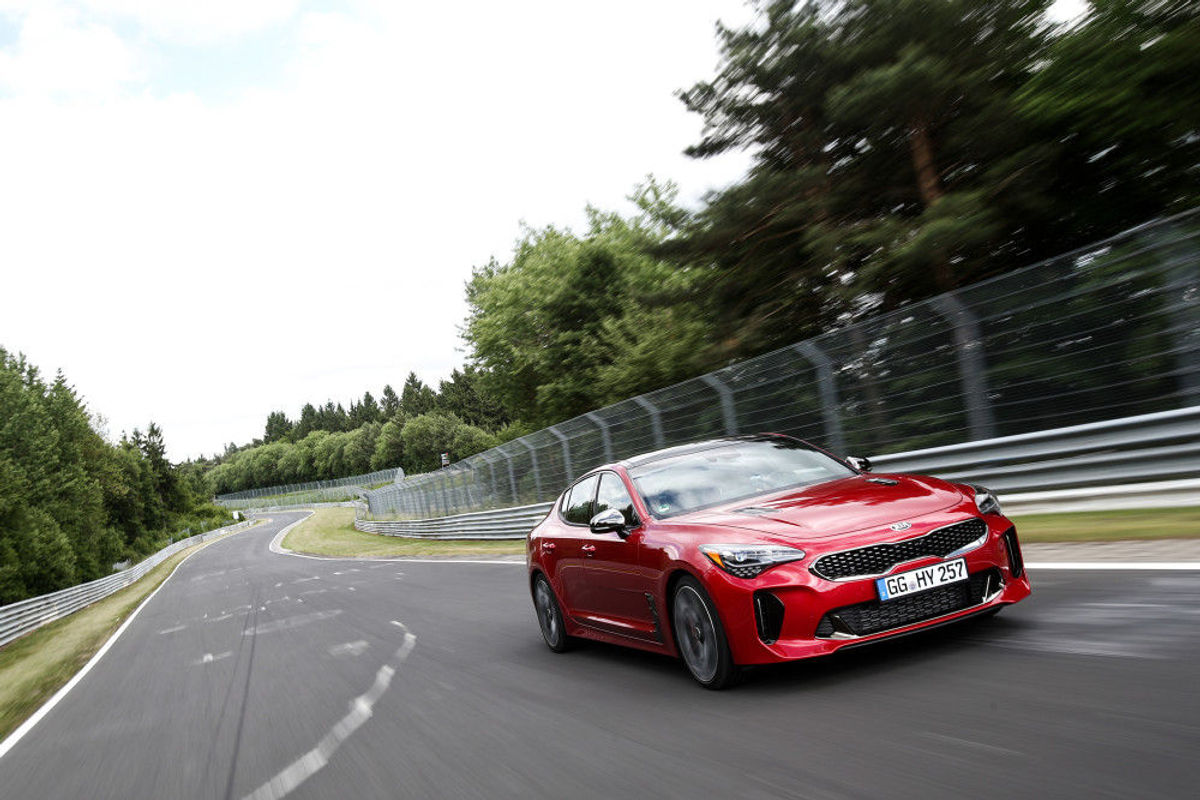
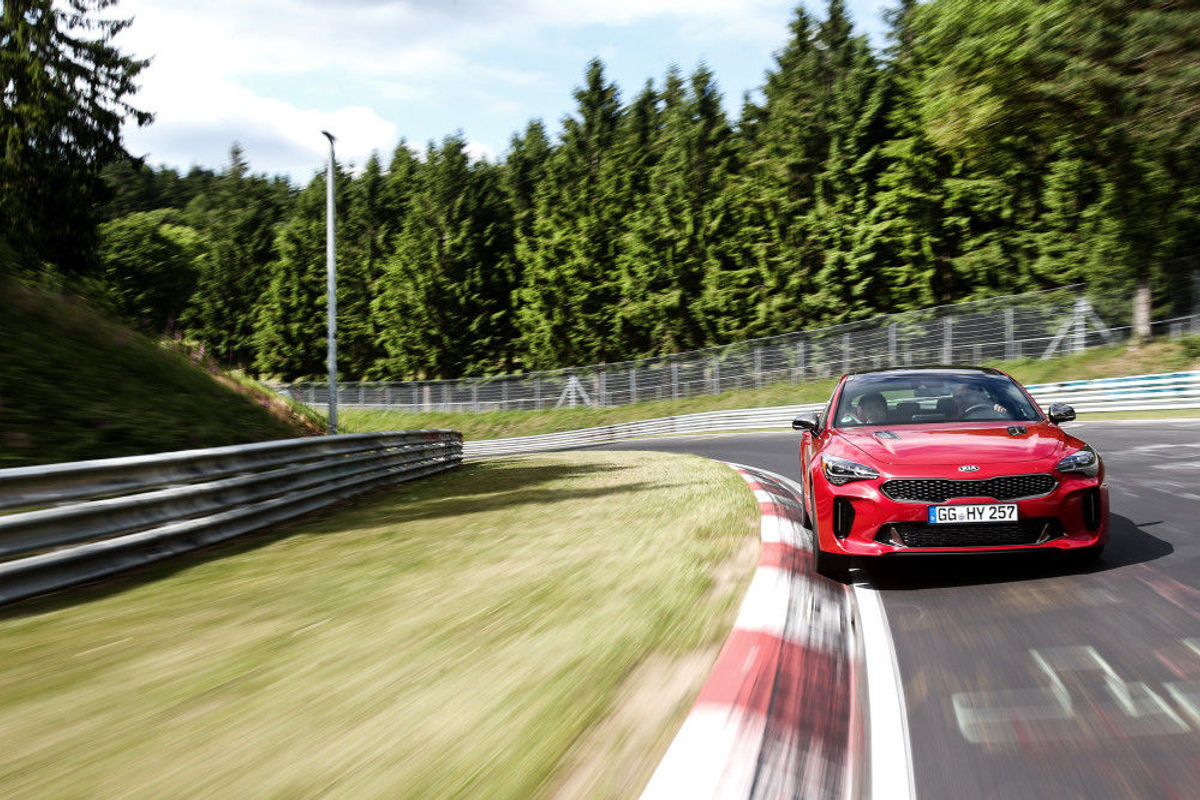
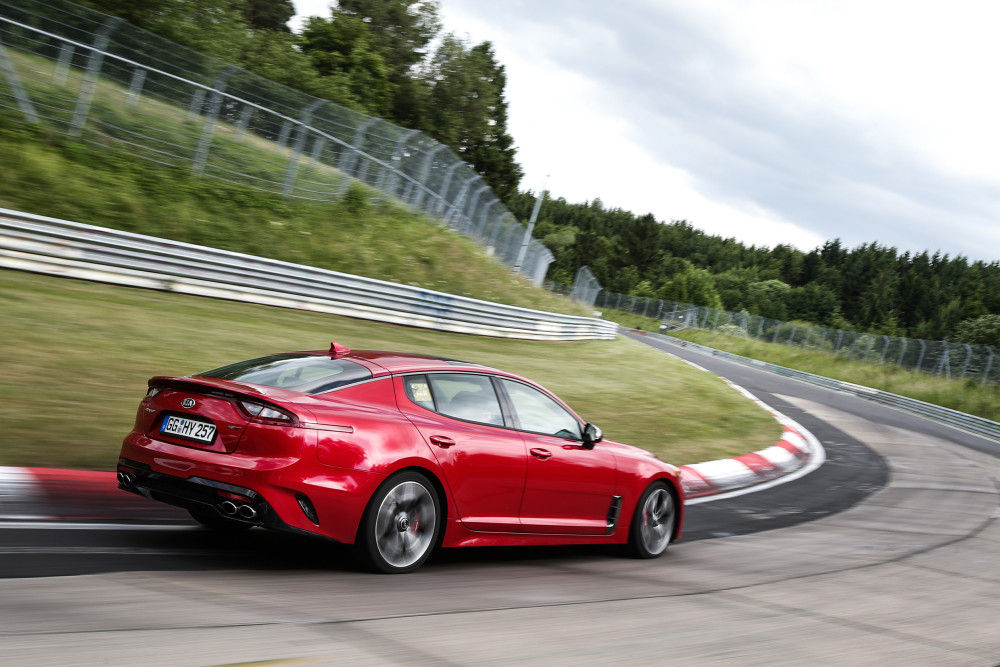
The new Kia Stinger fastback sports sedan has not been confirmed for South Africa, but a test unit has been spotted in Gauteng and Kia South Africa is dead-keen on bringing the model to market… Could it actually happen?
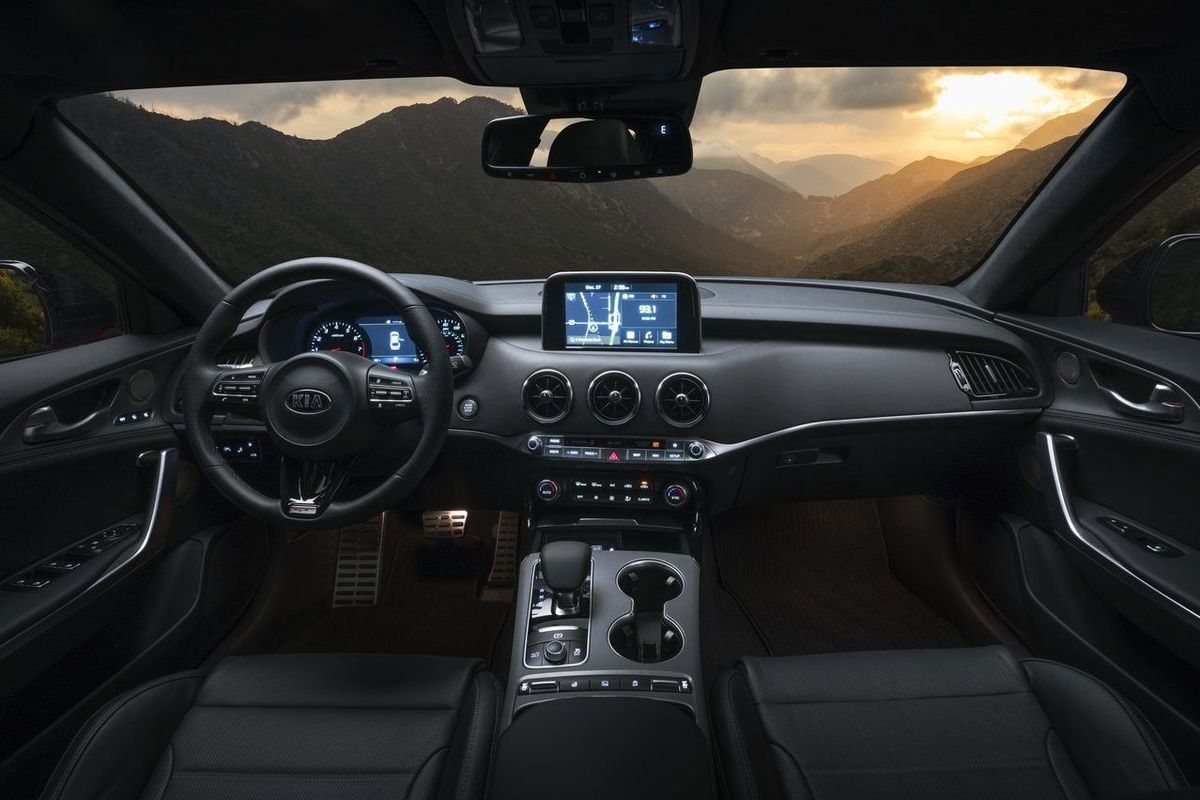
Kia is on a mission to change perceptions and step-up to the performance plate and it intends on achieving this with its new rear-wheel drive Stinger fastback sports sedan. The Stinger was shown earlier this year at the Detroit Motor Show and based on its appearance alone, it’s a cracker!
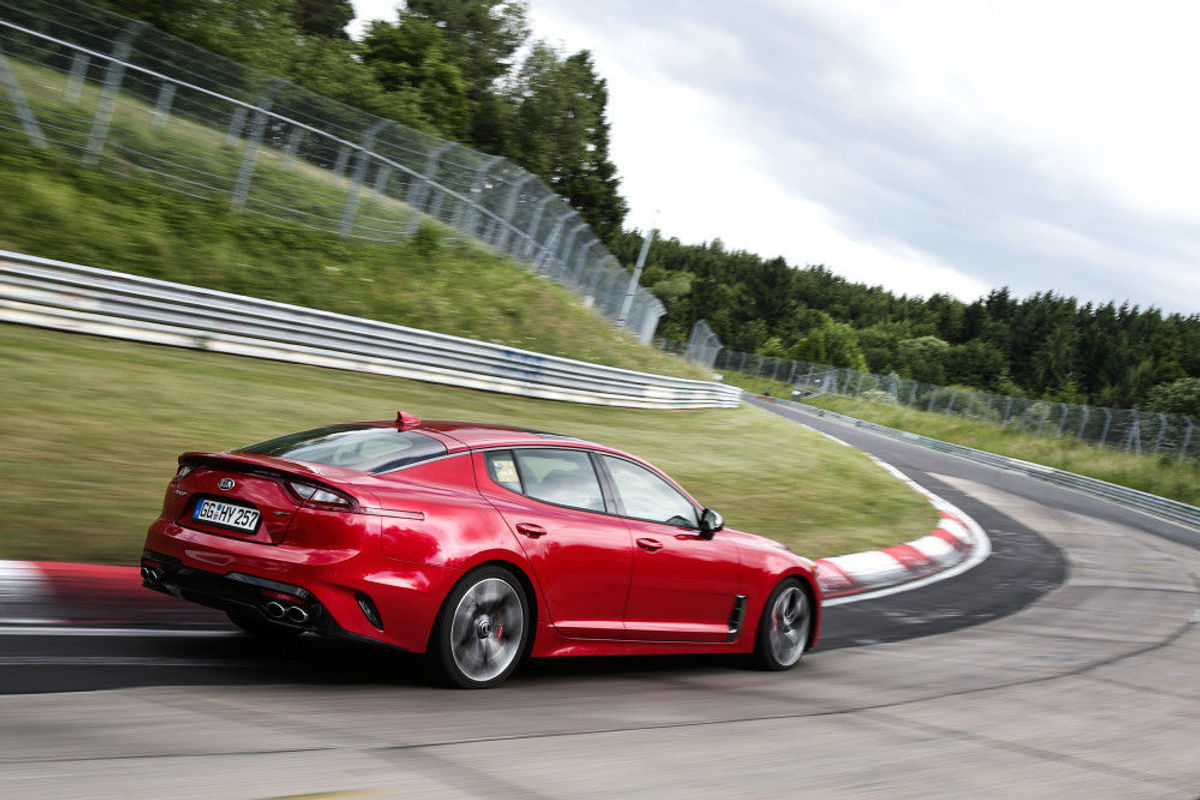
The Stinger is derived from the 2014 GT4 Stinger concept, which, with much effort, morphed into 5-seat sports sedan you see here.
The Kia Stinger was subjected to 480 laps or 10 000 km around the Nürburgring during a rigorous test and development program.
Although the Kia Stinger has cut its teeth on the Nürburgring Nordschleife during a rigorous test and development program, Gregory Guillaume, chief designer, Kia Motors Europe, is quick to point out that the Stinger is a "true gran turismo, a car for spirited long-distance driving. It’s not about outright power, hard-edged dynamics and brutal styling, all at the expense of luxury, comfort and grace. The new GT has nothing to do with being the first to arrive at the destination – this car is all about the journey. It’s about passion."
In terms of engines, the headlining act is a new twin turbocharged 3.3-litre V6 engine that develops approximately 273 kW and enables a 0 to 100 kph sprint time of 4.9 seconds using an 8-speed automatic transmission, making the Stinger the fastest accelerating Kia ever made. When the Stinger goes on sale across the world later this year, it will also be offered with a 2.0-litre turbo petrol engine as well as a 2.2-litre turbodiesel engine. All-wheel drive derivatives with Dynamic Torque Vectoring Control will also be offered.
Watch the Kia Stinger attack the Nurburgring below!
Will it come to SA?
As it stands, the new Kia Stinger has not yet been confirmed for South Africa, but according to a local Kia spokesperson, negotiations are currently underway to bring the Stinger to market in South Africa.
"We are still in negotiation with Korea regarding specification and, most importantly, pricing. Until the combination of these factors, i.e. a fantastically specced car at a competitive price, align, we cannot make any decisions. As such, we continue in optimism and pray that we can get the car at the right spec and the right price so that we can, in fact, bring it to SA."
"As for the single Kia Stinger seen driving around Gauteng, it will enter the formal homologation process and will in all likelihood be displayed at the upcoming SA Motoring Experience in September 2017 in an effort to gauge public interest."
Naturally, we will keep you updated as further information becomes available.
Would you like to see the Kia Stinger introduced in South Africa?
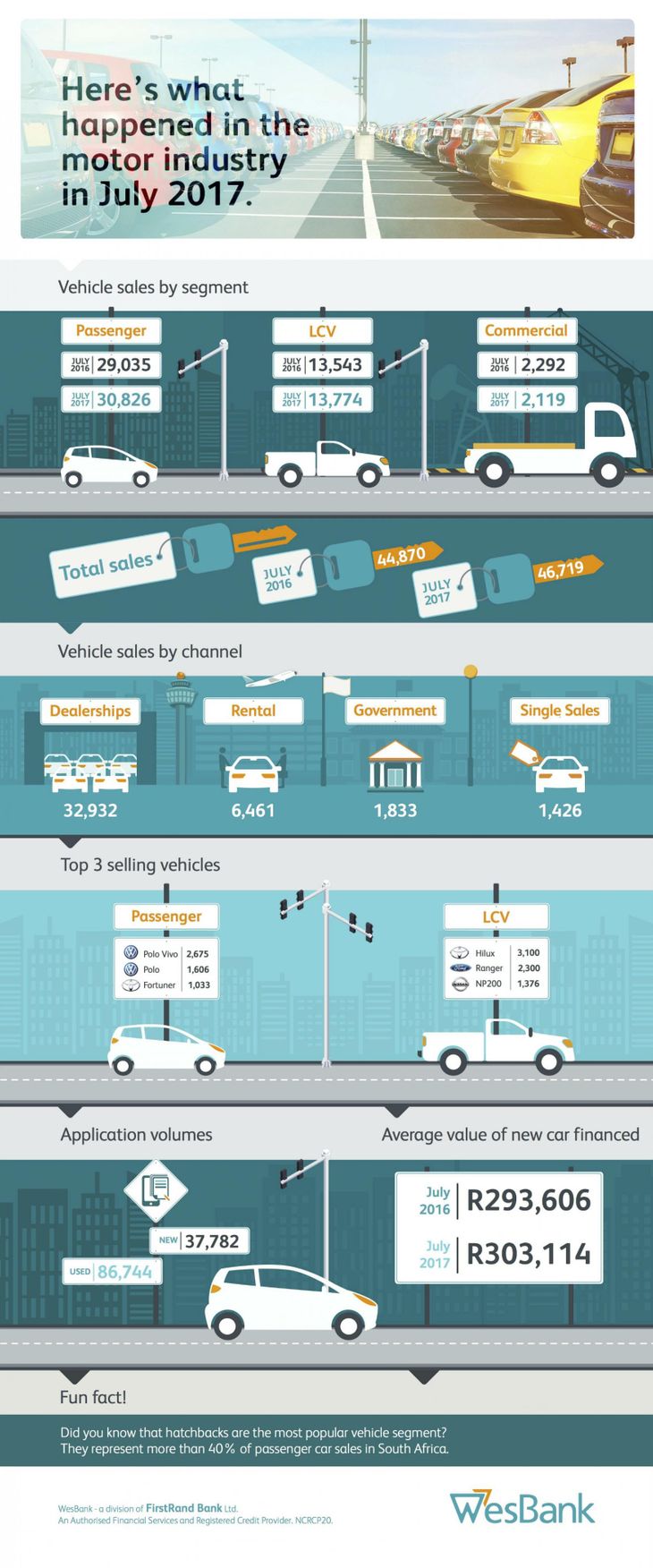
Although the local automotive industry remains under pressure, aggregate new vehicle sales showed positive improvements while exports recorded strong gains during the month of July 2017. Take a look at a summary of events for new car sales in South Africa.
New passenger car and Light Commercial Vehicle (LCV) sales reflected encouraging improvements while new vehicle exports recorded strong gains according to the National Association of Automobile Manufacturers of South Africa (NAAMSA).
The passenger car market, which represents two thirds of total sales volume, grew by 6.2%, contributing positively to an aggregate sales gain of 4.1%. Rudolf Mahoney, Head of Brand and Communications at WesBank said, “July’s sales performance can be attributed to positive changes in the underlying fundamentals in the market. We see this in our data, where the demand for new vehicle finance is up 9% this past month.”
WesBank also notes that vehicle manufacturers have taken advantage of a stronger Rand to directly pass value to consumers. This is seen in the number of attractive marketing incentives on offer to buyers in the new vehicle market.
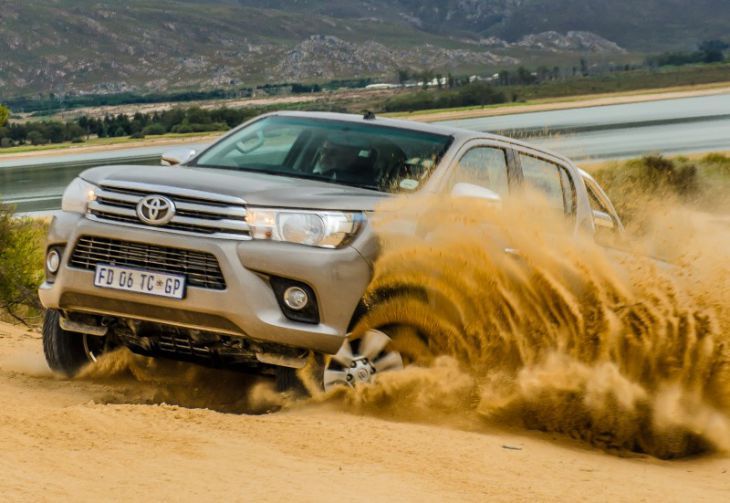
In terms of top performers for the month, Toyota was the most popular car brand and the Hilux was the best-selling vehicle in South Africa. The Volkswagen Polo Vivo recorded strong sales to claim second place ahead of the Ford Ranger. Hyundai's sales figures were impressive too, with the brand currently positioned in fifth place on the overall sales chart with a market share of 6.5%. Hyundai's most popular models are the Grand i10, Creta and Tucson.
New Car Sales Summary for July 2017
Aggregate new car sales of 46 719 units up by 4.1% (1 849 units) compared with July 2016
New car sales of 30 826 units up by 6.2% (1 791 units) compared with July 2016
LCV sales of 13 774 units up by 1.7% (231 units) compared with July 2016
Export sales of 35 486 units up by 22.2% (6 456 units) compared to July 2016
1. Toyota – 10 137 units with a market share of 21.7%
2. Volkswagen – 7 386 units with a market share of 15.8%
3. Ford – 5 561 units with a market share of 11.9%
4. Nissan – 4 917 units with a market share of 10.5%
5. Hyundai – 3 035 units with a market share of 6.5%
New car sales outlook for 2017
According to NAAMSA, the domestic automotive industry, despite, tough economic conditions, is holding up relatively well but it notes that a lack of business and consumer confidence poses an ongoing challenge. Business, Government and Labour therefore need to take concerted steps to create a more investor-friendly environment in order to boost growth.
The recent interest rate reduction if 25 basis points will give consumers some relief while a stronger Rand has contributed to a reduction in headline inflation and new vehicle price inflation.
“With this past month’s 25 basis points drop in the interest rate, we anticipate that the economy is now in a cycle of rate cuts. Failing any shock events on the local or global stage, this is great news for the economy and new vehicle market” says Mahoney.
NAAMSA predicts a fairly flat performance for the overall market in 2017, similar to the levels experienced in 2016. Exports, however, should continue to benefit from global economic growth at about 3.5%.
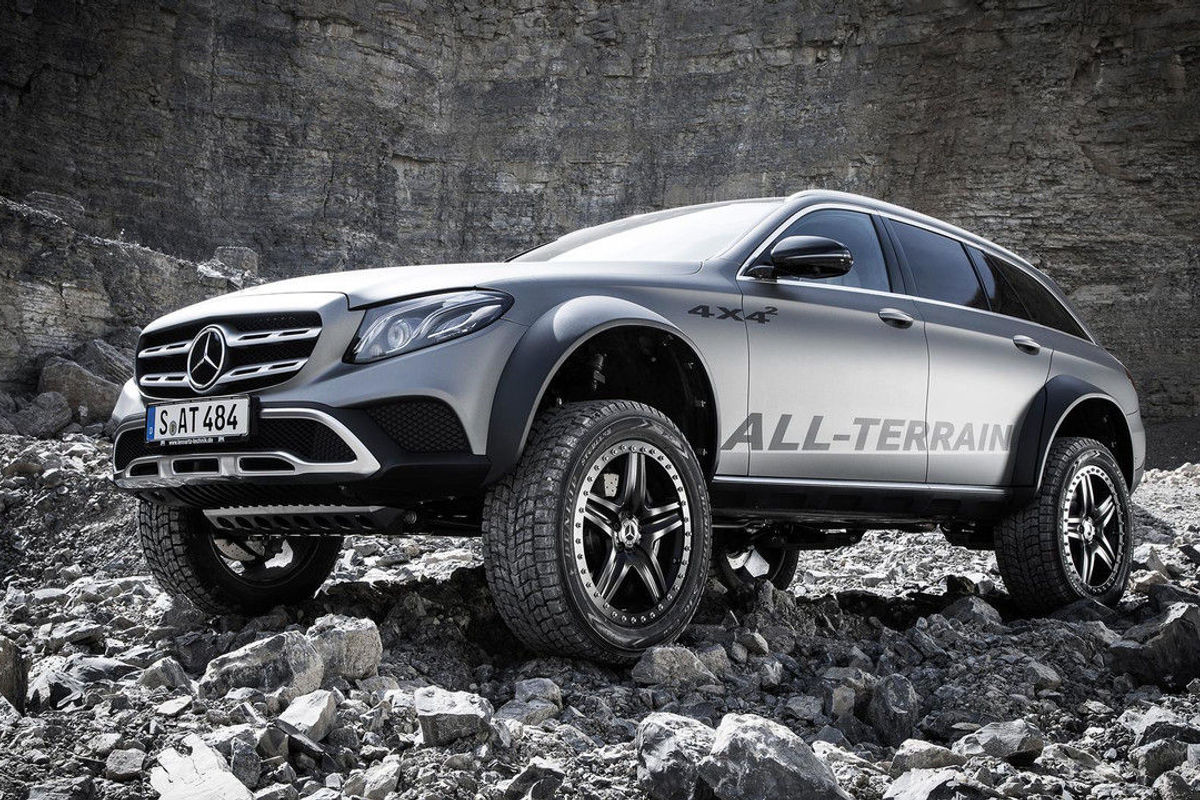
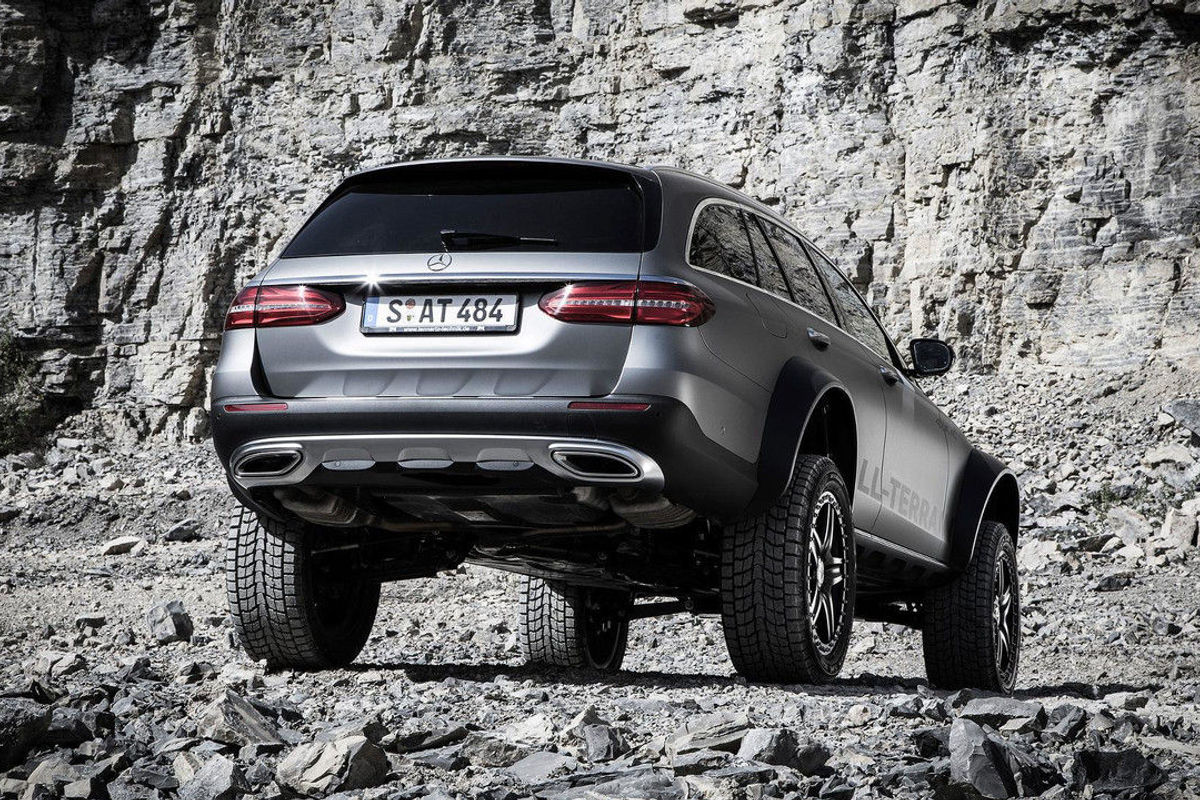
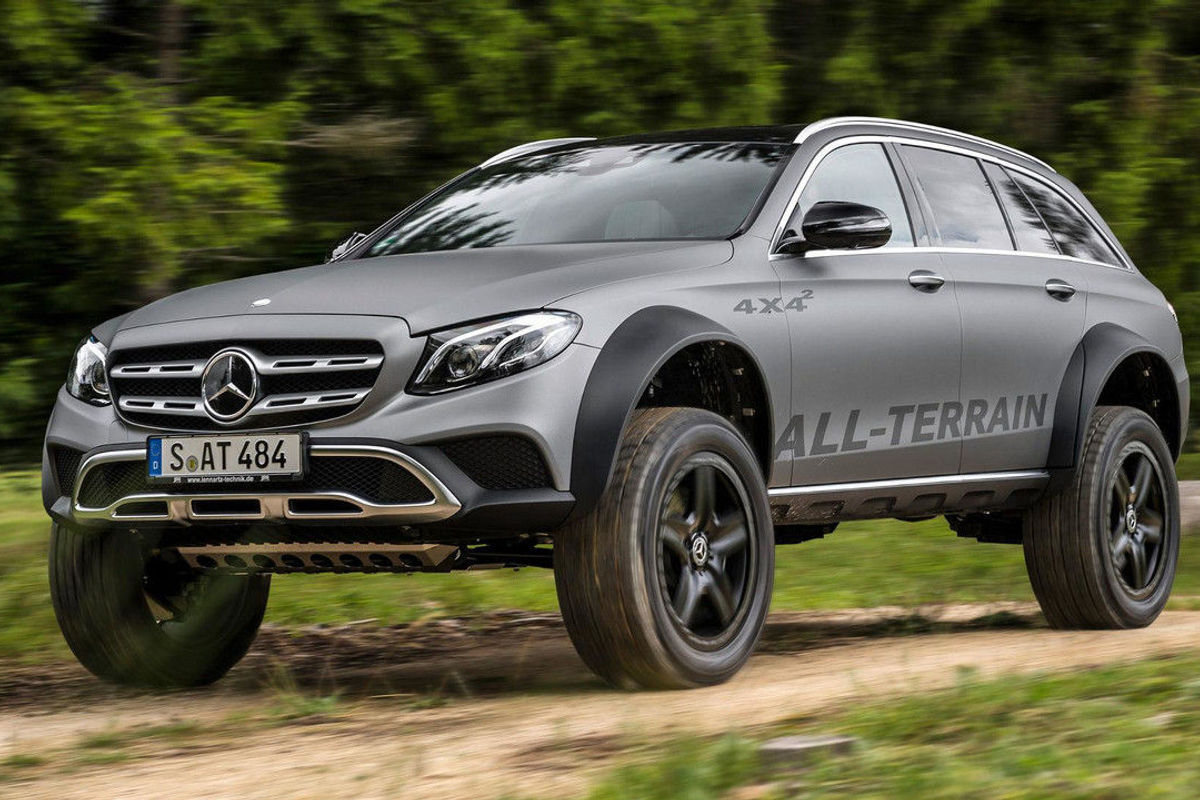
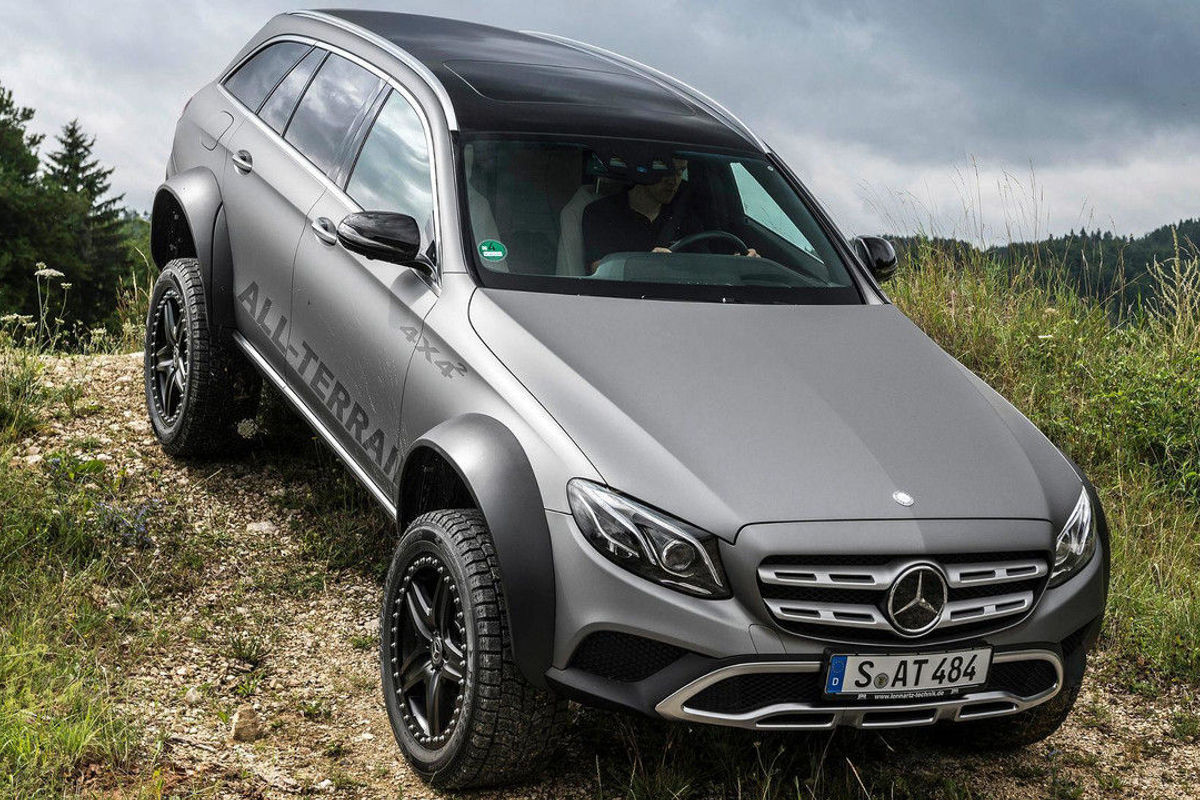
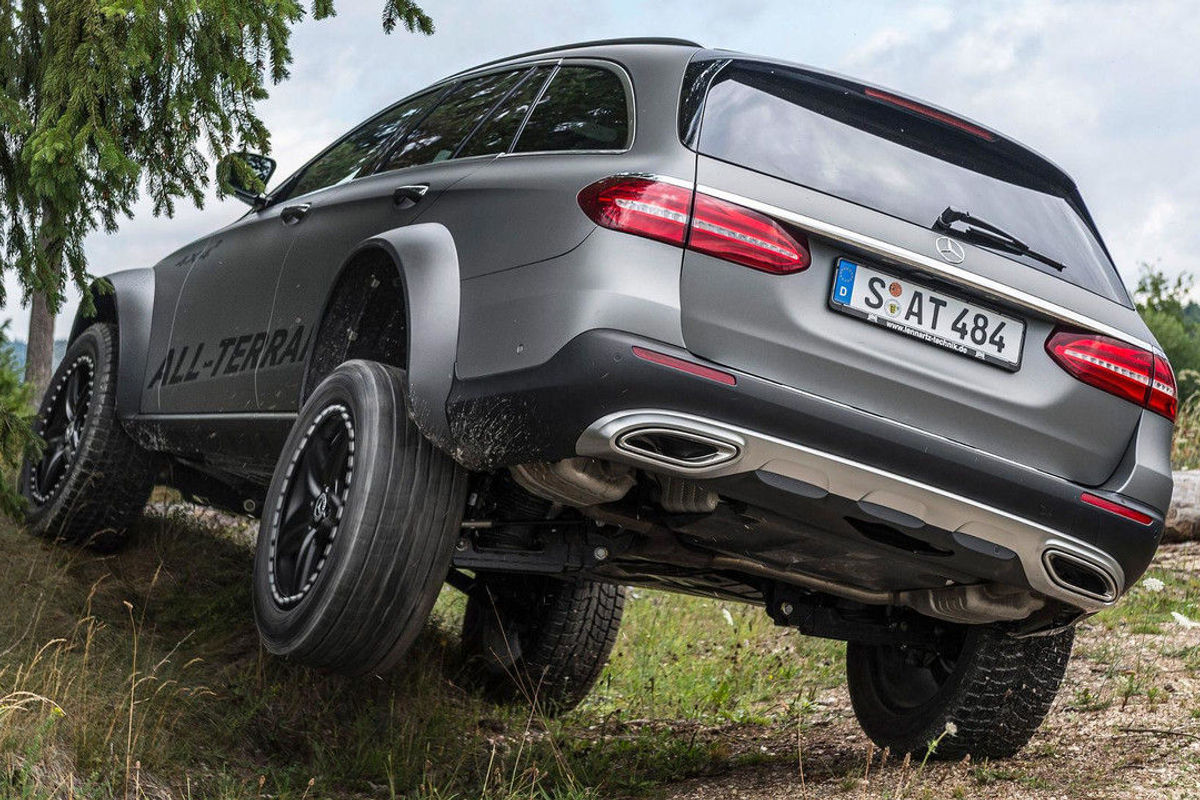
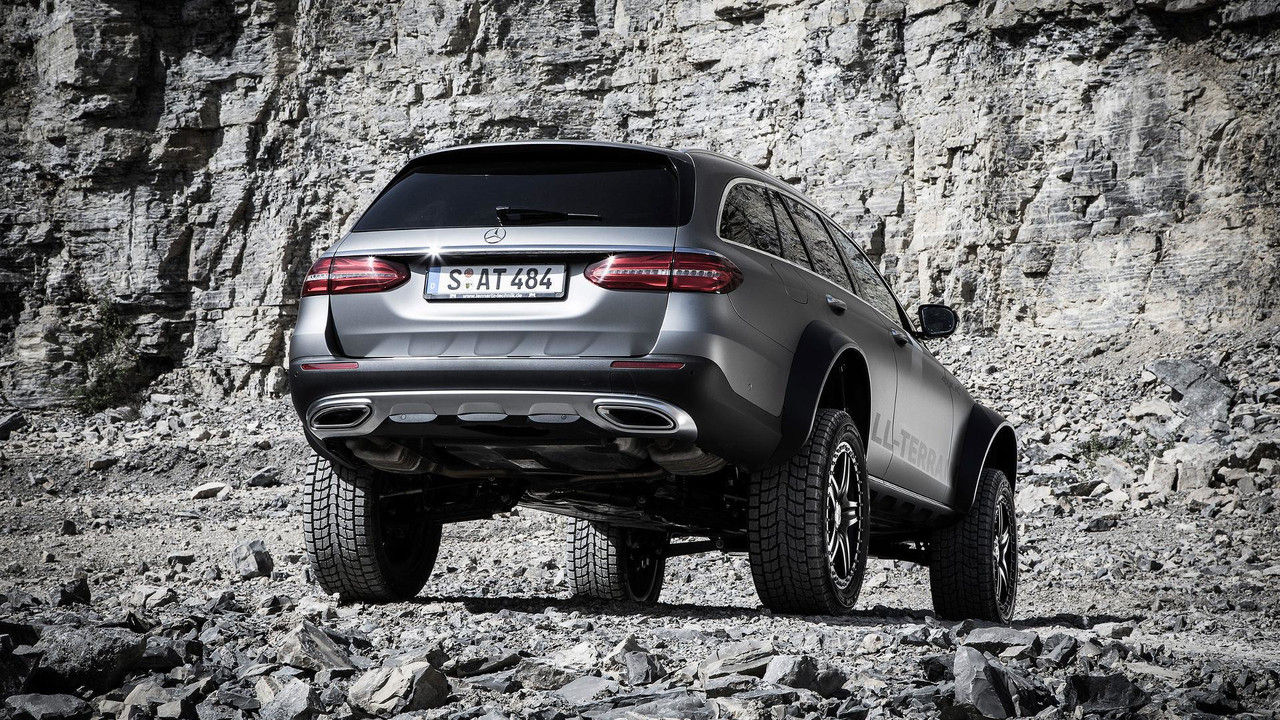
Your eyes do not deceive you, this is not photoshop wizardry. What you see here is the Mercedes-Benz E-Class 4×4² All-Terrain and the Stuttgart-based firm is considering it for production, albeit in limited numbers.
Last year, Mercedes-Benz revealed the E-Class All-Terrain, an E-Class wagon with plastic body cladding, skid plates, all-wheel drive and a 156 mm raised ride height that would rival the likes of the Volvo V90 Cross Country and Audi A6 Allroad.
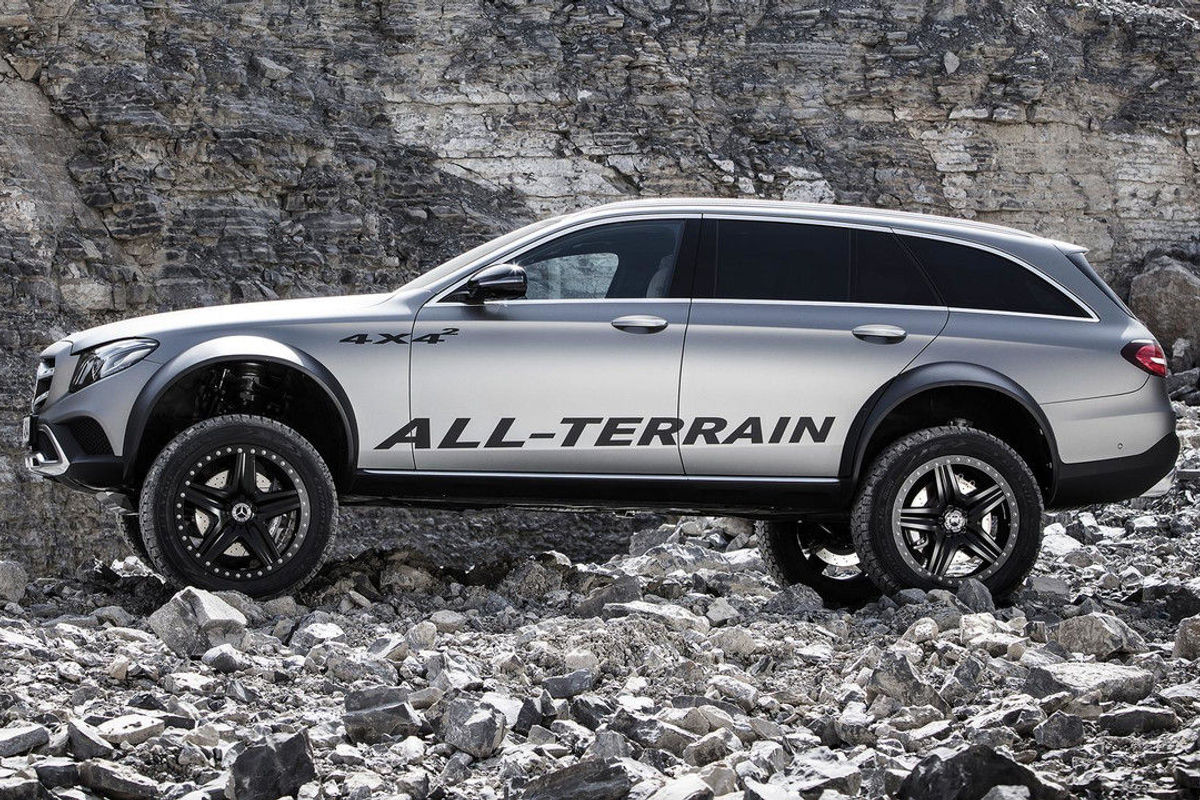
Then, a Mercedes-Benz engineer by the name of Jürgen Eberle spearheaded a project to create a hardcore E-Class 4×4² All-Terrain version by turning to the Mercedes-AMG G63 6×6 and G500 4×4² for inspiration. Eberle and his team proceeded to raise the ground clearance to nearly 200 mm but then took it a step further by installing the portal axles from the G500 4×4² which resulted in a formidable ground clearance of 420 mm, more than double than that of the original All-Terrain and some 50 mm more than the G-Wagon itself.
Who said a station wagon can't be hardcore? The E-Class 4×4² All-Terrain is as hardcore as they come.
With a wading depth of 500 mm and riding on 20-inch wheels shod with fat 285/50 R20 tyres, Eberle created a luxurious offroad beast. The project took 6 months to complete.
The E-Class 4×4² All-Terrain borrows the 3.5-litre V6 engine from the E400 with outputs of 245 kW and 480 Nm of torque.
Eberle is reportedly confident that the E-Class 4×4² All-Terrain will get the green light for production and if does, it will serve as a more affordable option to the Big 3 G-Wagons, the G63 6×6, G500 4×4² and the G650 Landaulet. Production numbers will be limited, however.
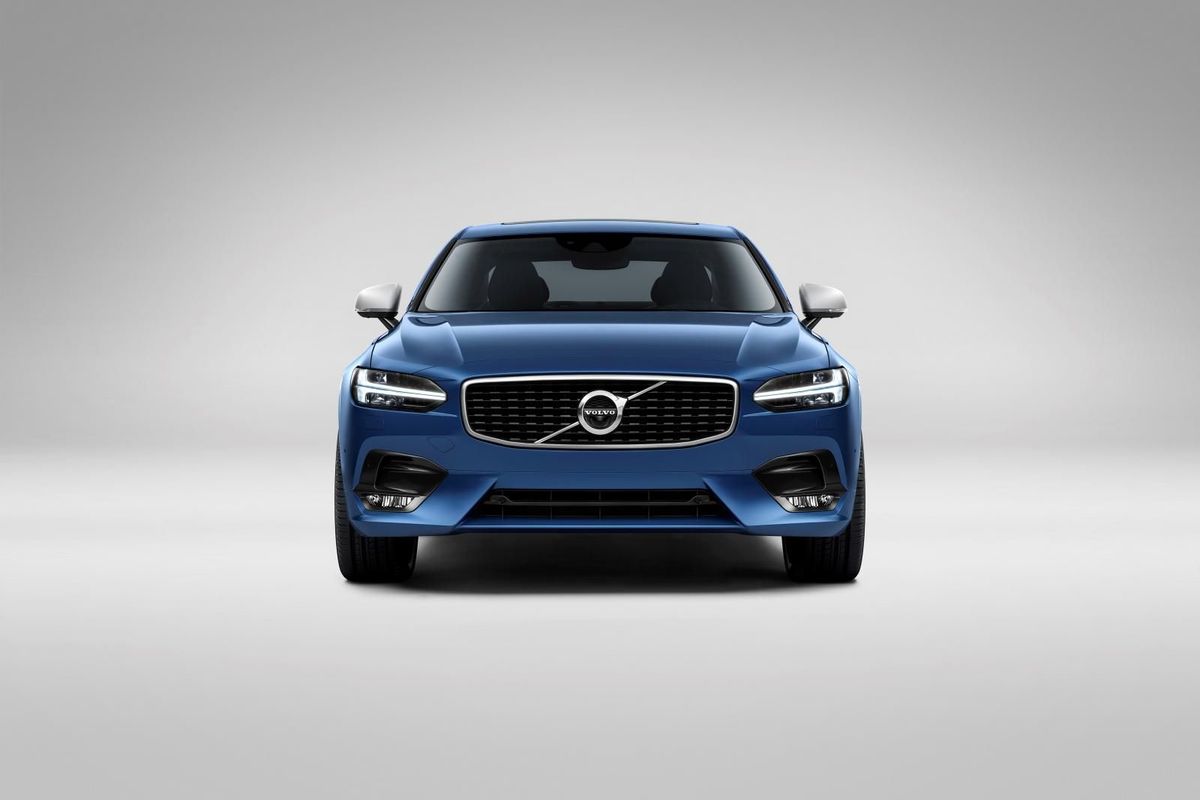
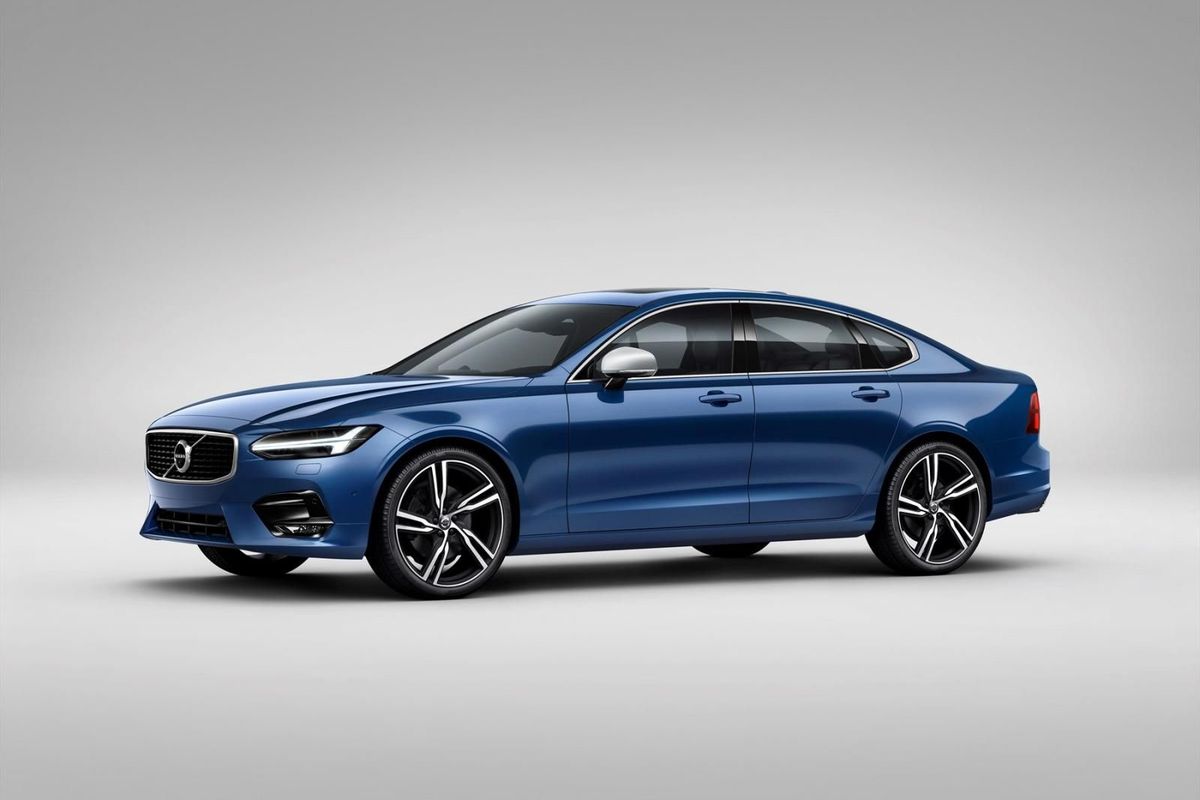
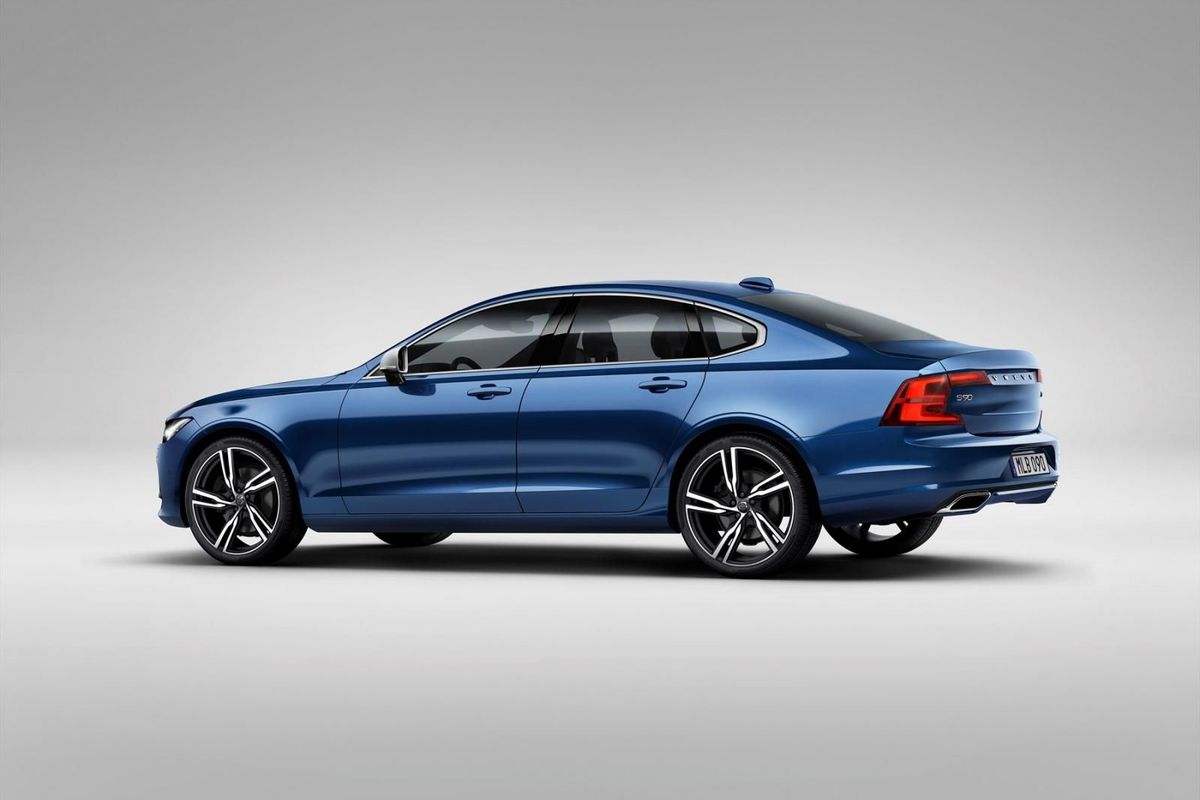
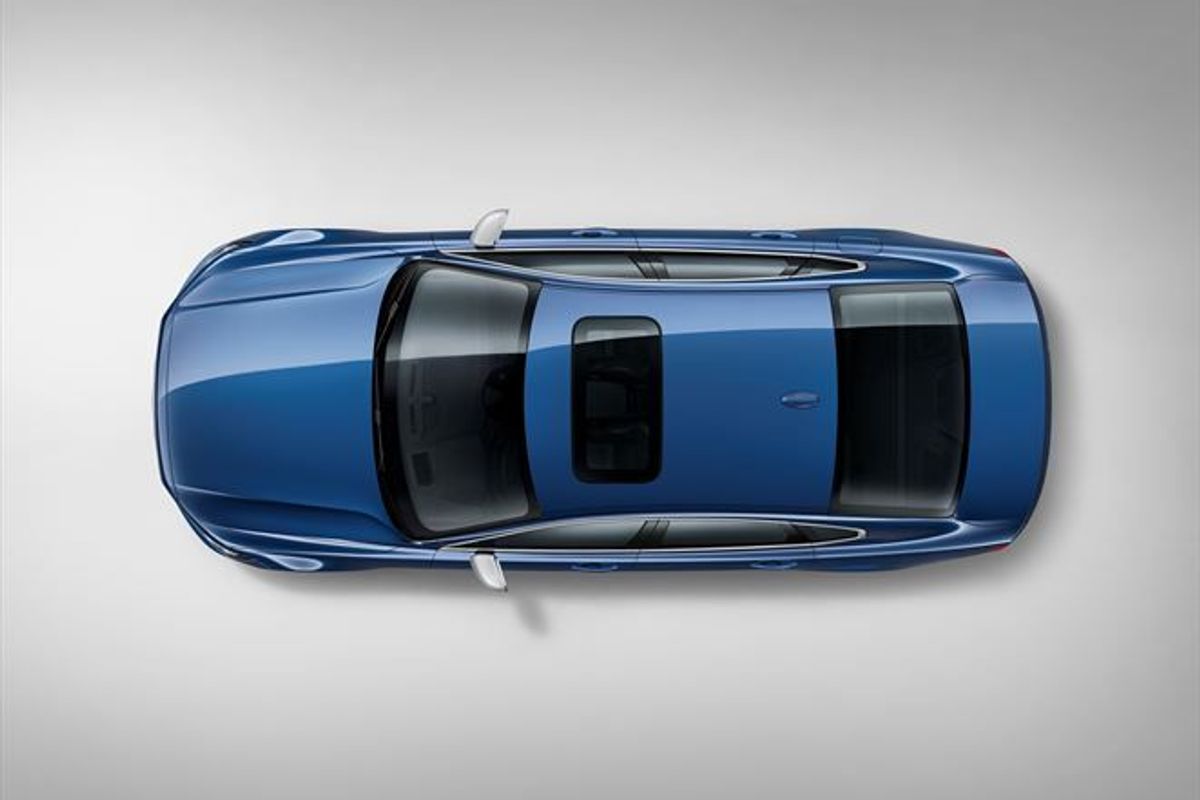
The new Volvo S90 executive sedan launched in South Africa earlier this year and the Gothenburg-based firm has now expanded the local range to include 4 sportier R-Design derivatives. Take a look at what’s on offer…
Competing with the likes of the Mercedes-Benz E-Class, BMW 5-Series and Audi A6, the Swedish Volvo S90 executive sedan offers high levels of comfort, safety, style and performance.
The S90’s appeal has now broadened with the introduction of 4 R-Design derivatives that not only bring edgier styling to the lineup but also offer enhanced dynamic ability.
Engine choice
A total of 4 S90 R-Design derivatives are on offer with 2 petrol and 2 diesel engines available.
There are 2 petrol and 2 diesel engines on offer for the S90 R-Design in both front-wheel drive and all-wheel drive formats. All engines 2.0-litre units and are mated to an 8-speed Geartronic transmission.
The front-wheel drive, diesel powered twin turbo D4 R-Design offers 140 kW and 400 Nm of torque with a claimed fuel consumption figure of 4.4 L/100 km.
The all-wheel drive, twin turbo diesel D5 R-Design has outputs of 173 kW and 480 Nm of torque with a claimed fuel consumption figure of 4.8 L/100 km.
On the petrol front, the turbocharged T5 R-Design with front-wheel drive develops 187 kW and 350 Nm of torque with a claimed fuel consumption figure of 6.5 L/100 km.
The twin turbocharged all-wheel drive T6 R-Design features both a supercharger (for low down torque) and a turbocharger (for power high in the rev range), developing 235 kW and 400 Nm of torque. Fuel consumption for this derivative is rated at 7.2 L/100 km.
The S90 R-Design's chassis has been uprated for sportier driving and features a tauter setup that’s optimised for enhanced dynamics. A double wishbone and coil front suspension and an integral axle with transverse composite leaf spring suspension at the rear supports the dynamic, yet comfortable feel of the S90 R-Design. Air suspension is not offered for R-Design derivatives.
Key design features
The S90 R-Design brings sporty appeal and engaging dynamics to the S90 range.
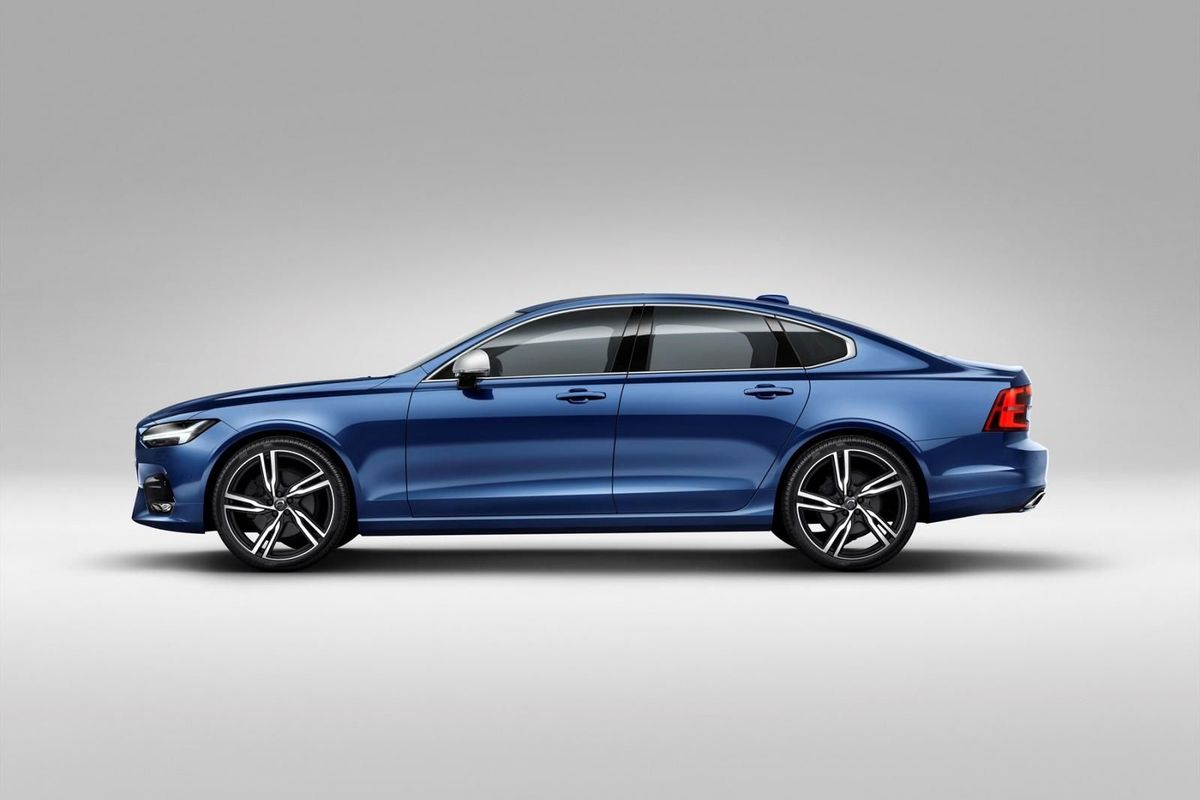
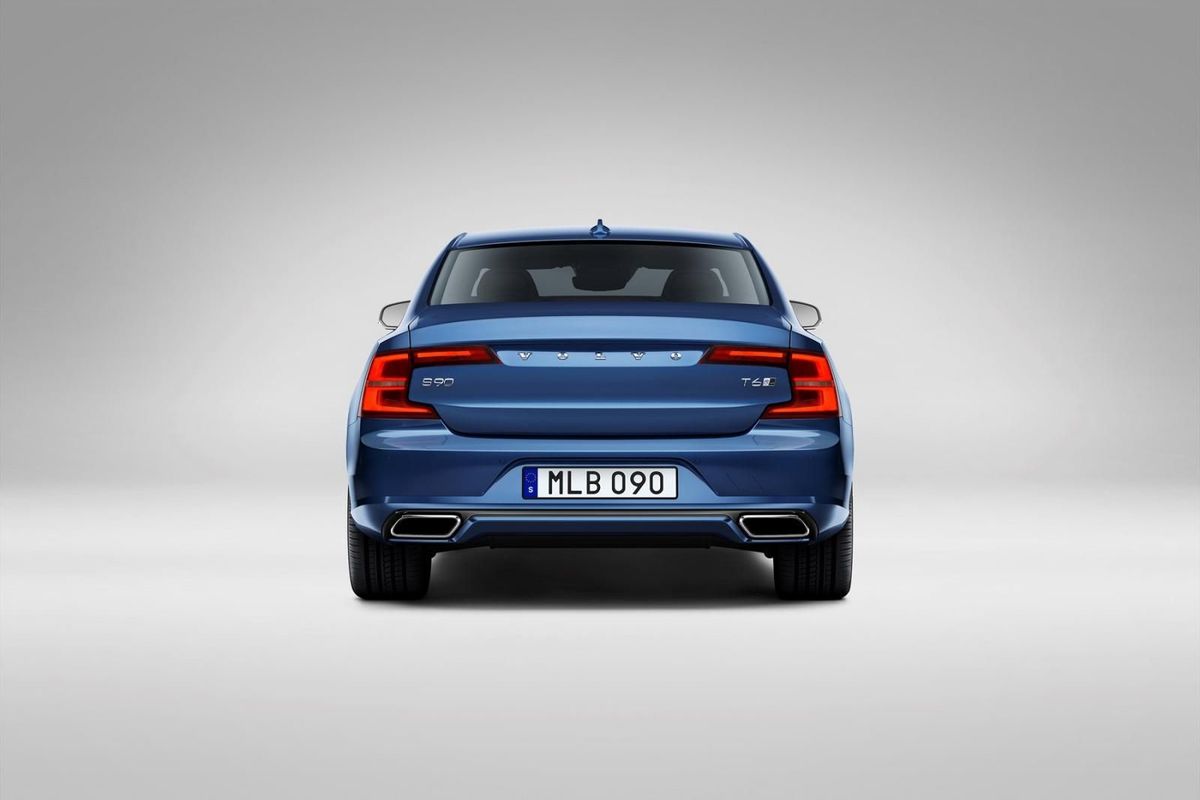
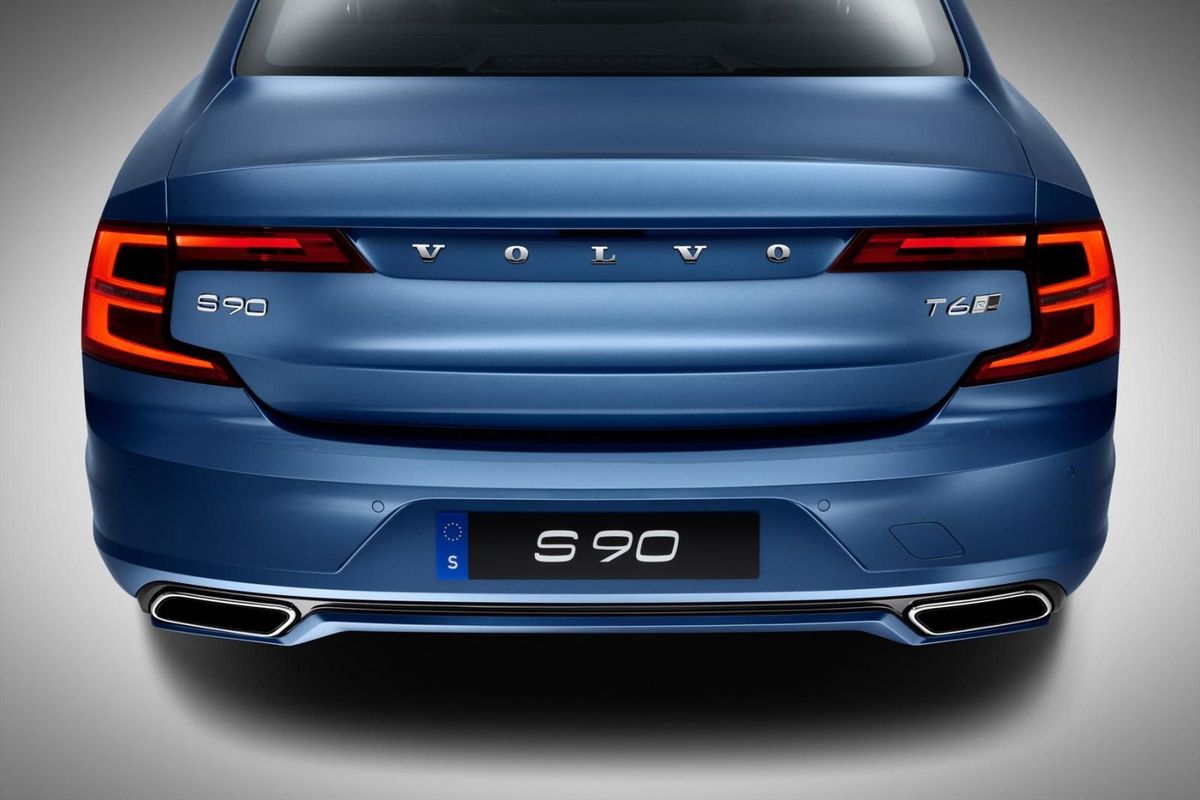
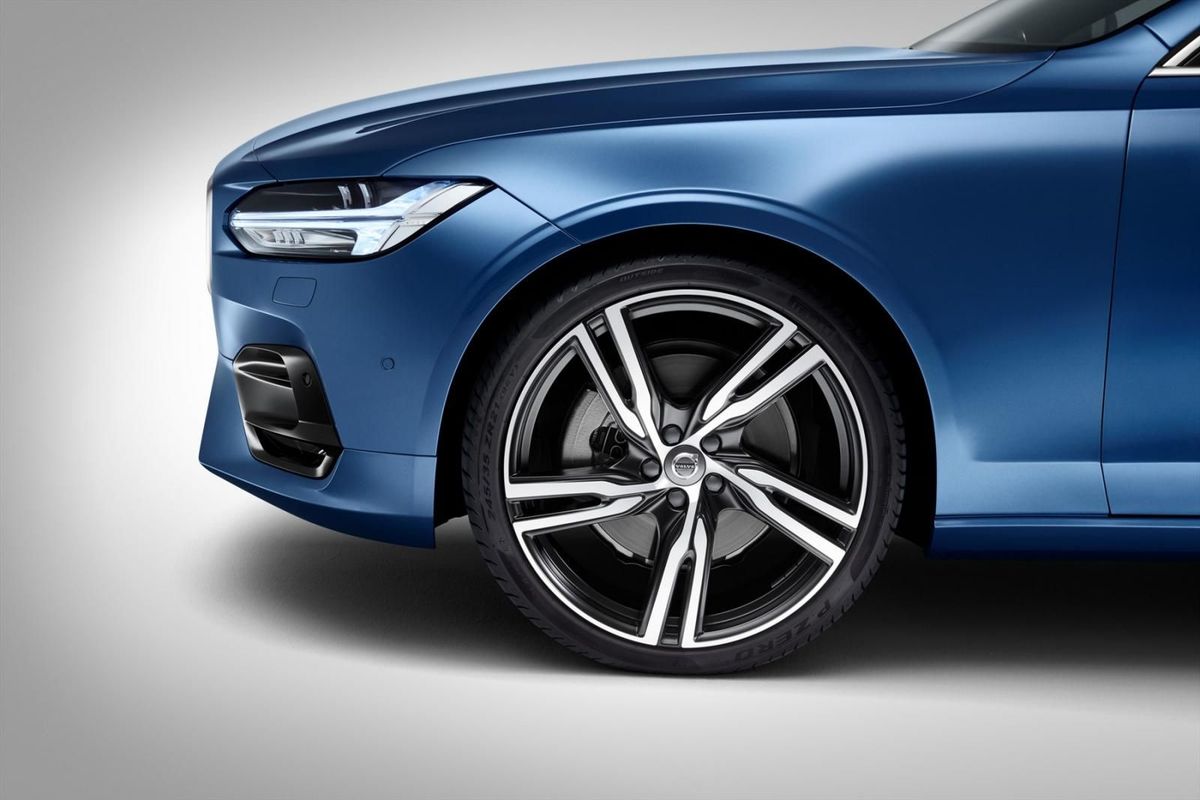
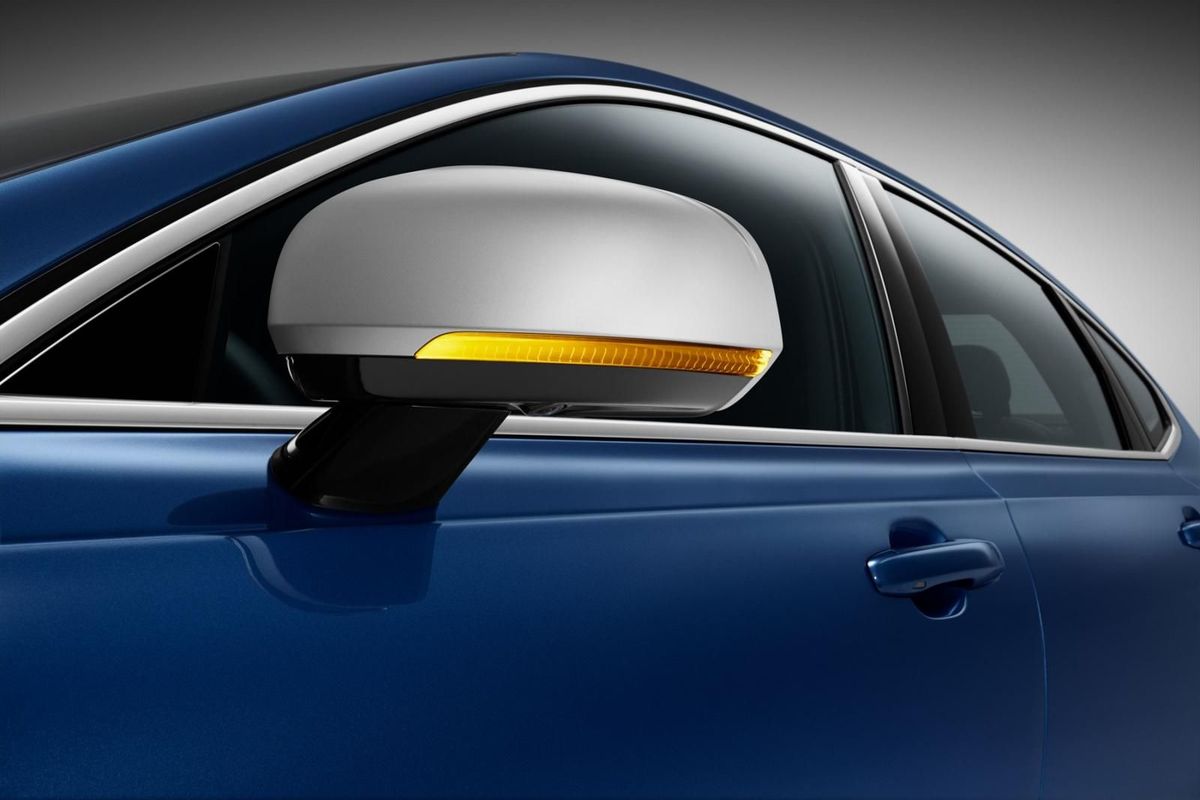
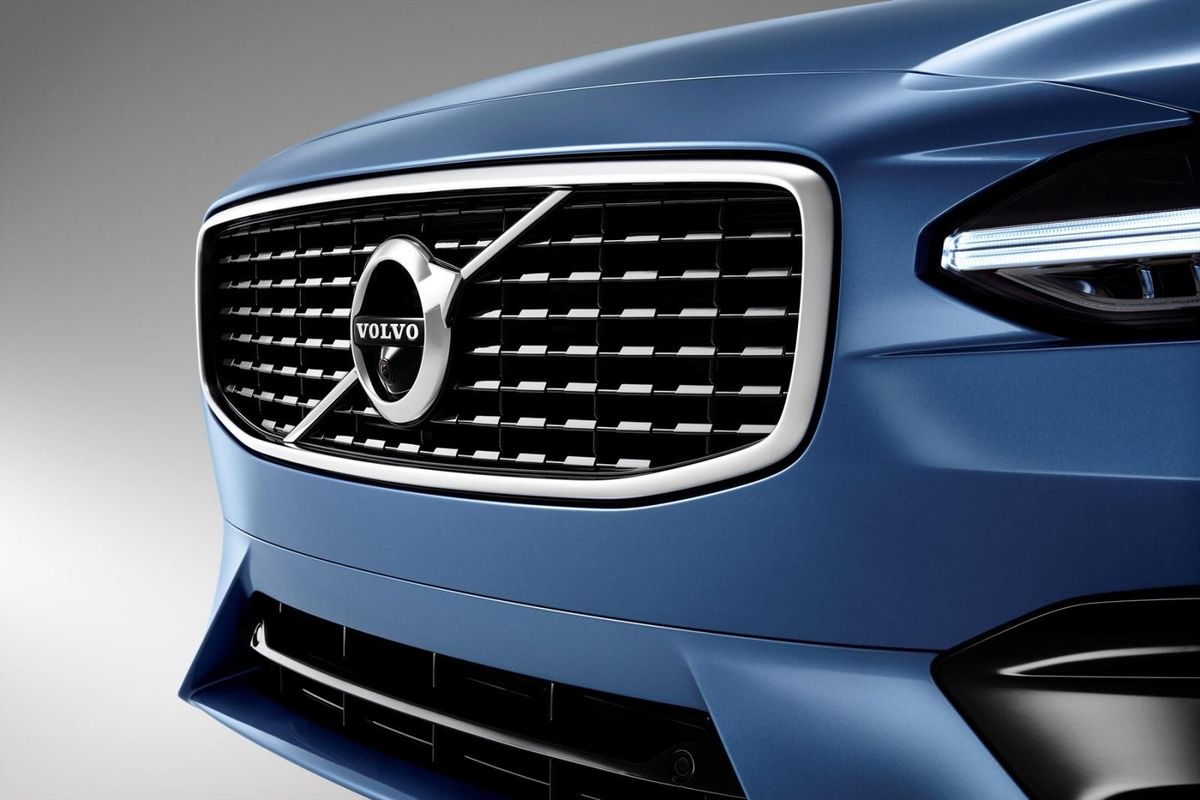
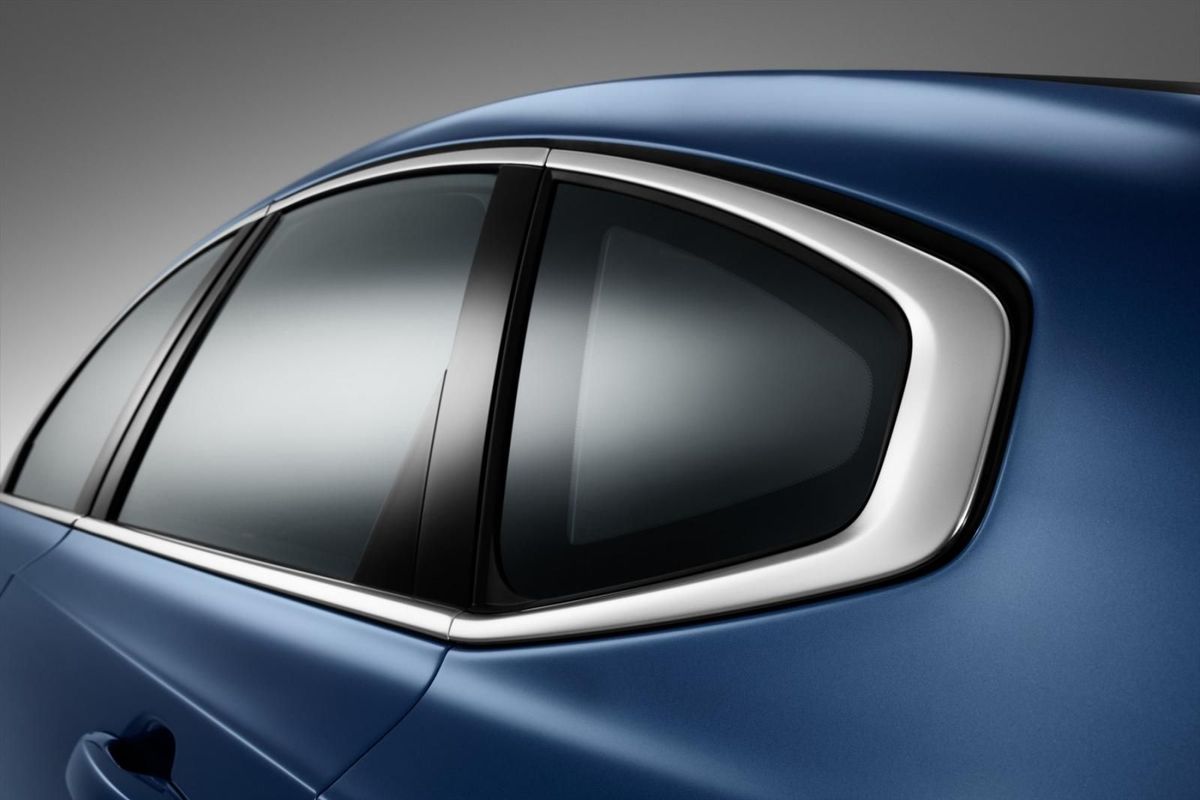
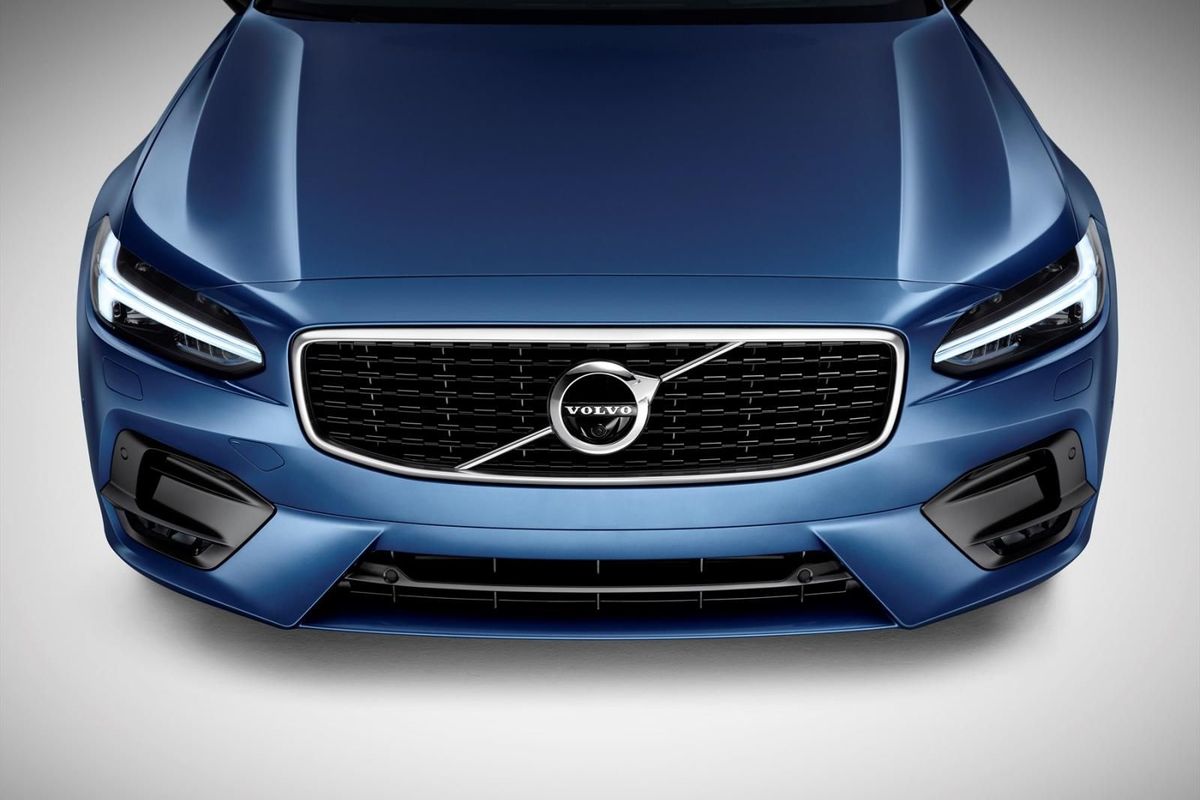
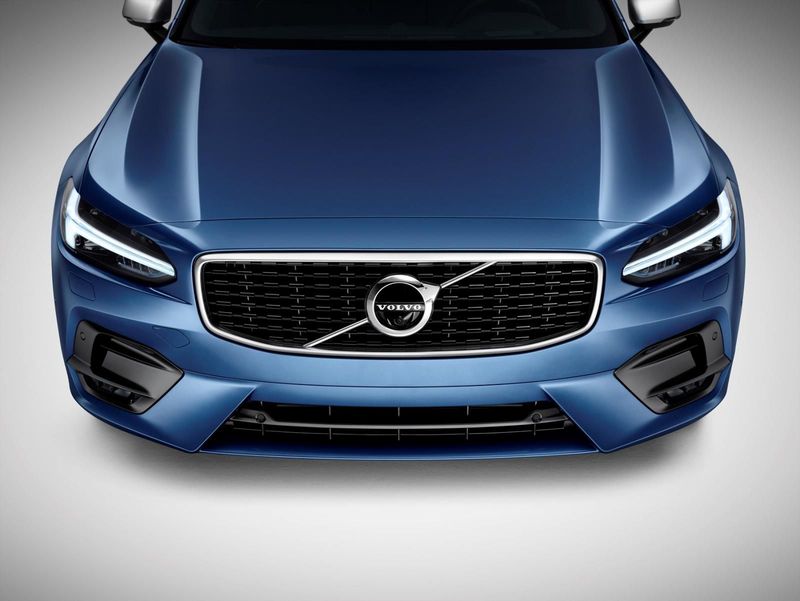
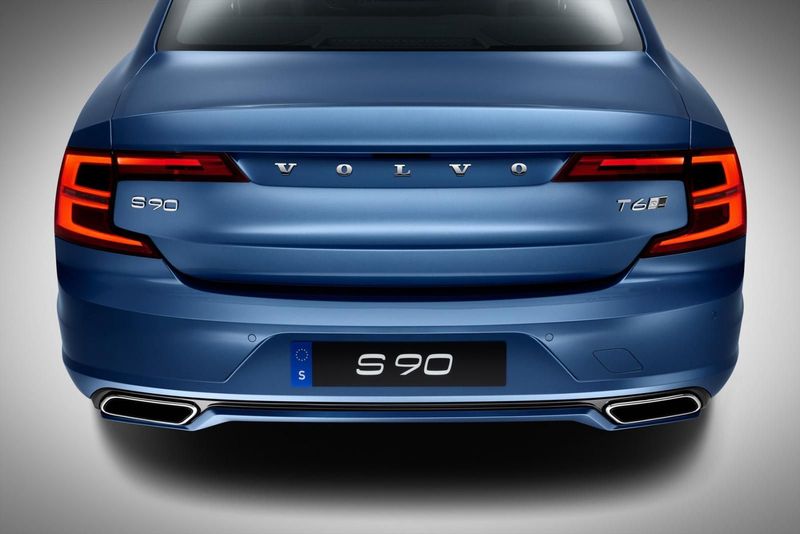
The S90 R-Design is visually distinguishable with a deeper front bumper, pronounced air dams and a new glossy R-Design grille with satin chrome accents. Satin chrome is also found around the windows and the mirror caps are finished in matt silver. The rear end features rhomboid tail pipes embedded in a sporty bumper with a colour-coded diffuser. The S90 R-Design rides on 19-inch alloy wheels as standard while 20- and 21-inch alloys are offered as an option.
Customers can further enhance the R-Design’s exterior appeal by opting for side sills, a chin spoiler for the front bumper, boot spoiler and split-integrated tail pipes.
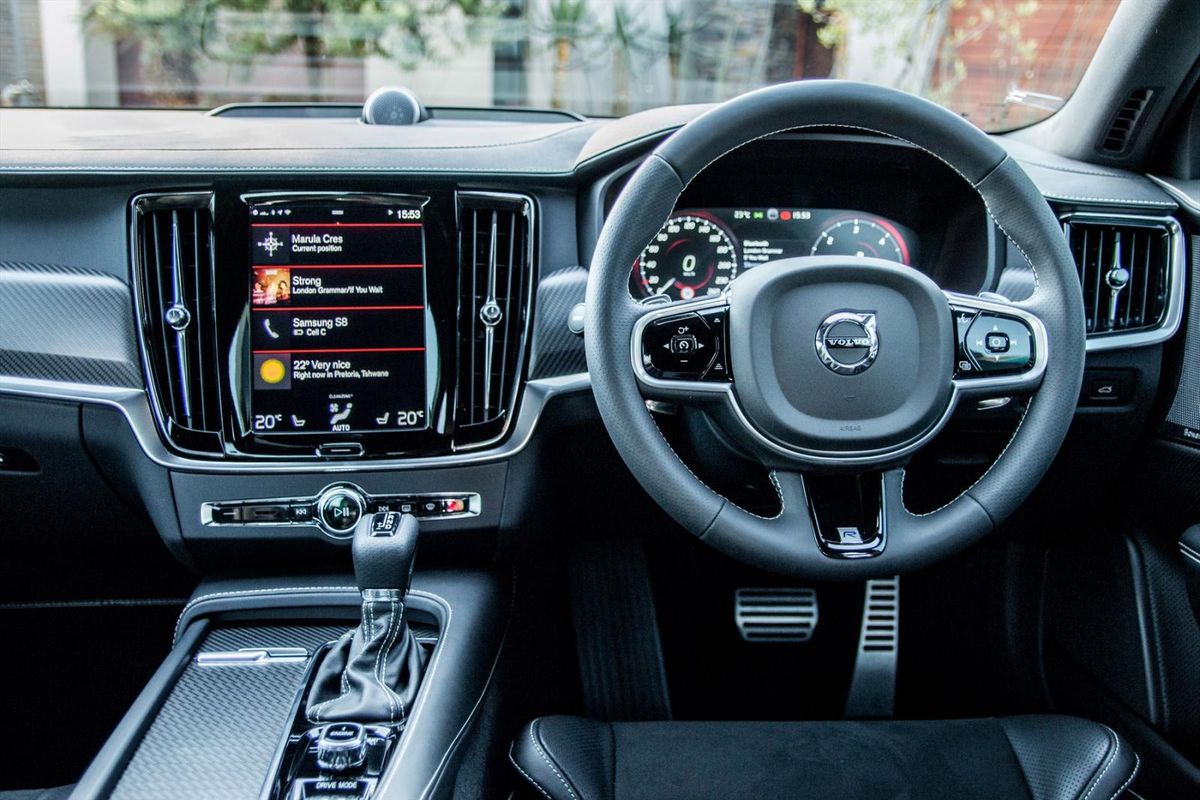
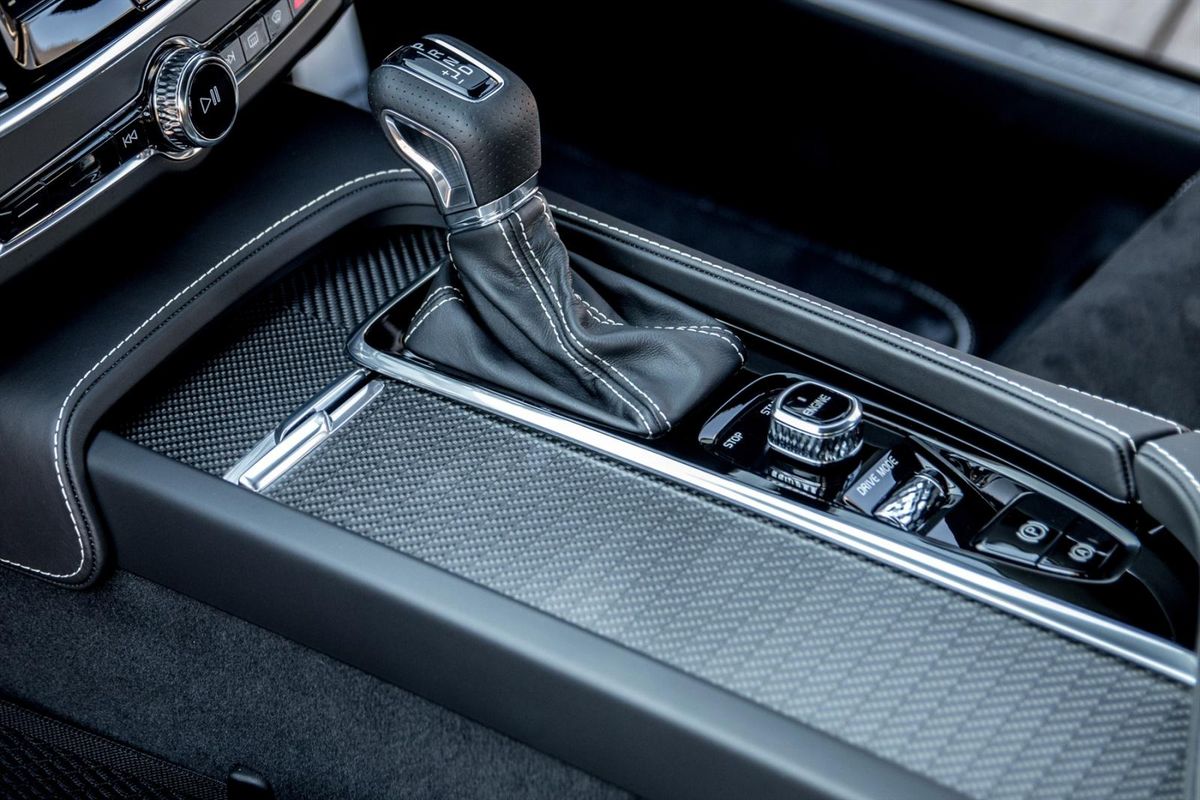
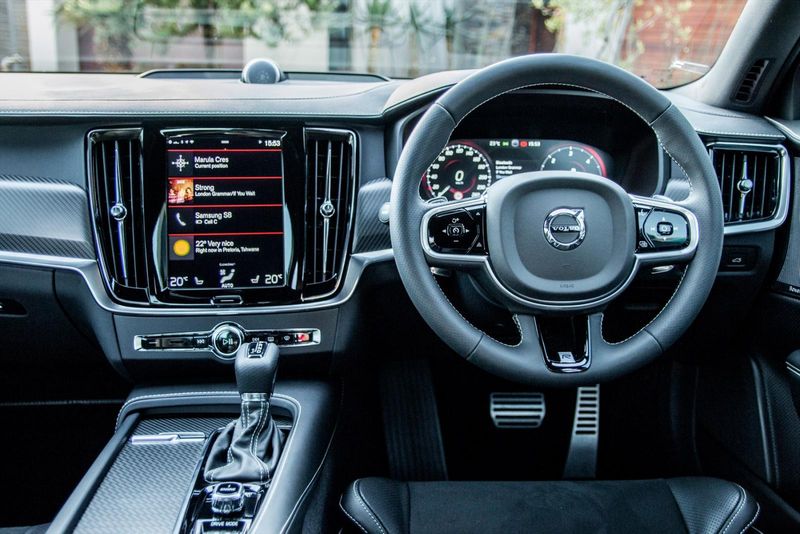
The interior features contoured charcoal sports seats upholstered in Nappa leather. A sports steering wheel with perforated leather inserts and R-Design badge adds a sporty touch as does the aluminium sports pedals and gearshift paddles. The gear lever also features perforated leather with contrasting stitching. R-Design floor mats and door sills are a further reminder that this is no ordinary S90.
A total of 9 exterior colours are offered but Bursting Blue and Passion Red are exclusively available for the S90 R-Design derivatives.
Standard and optional features
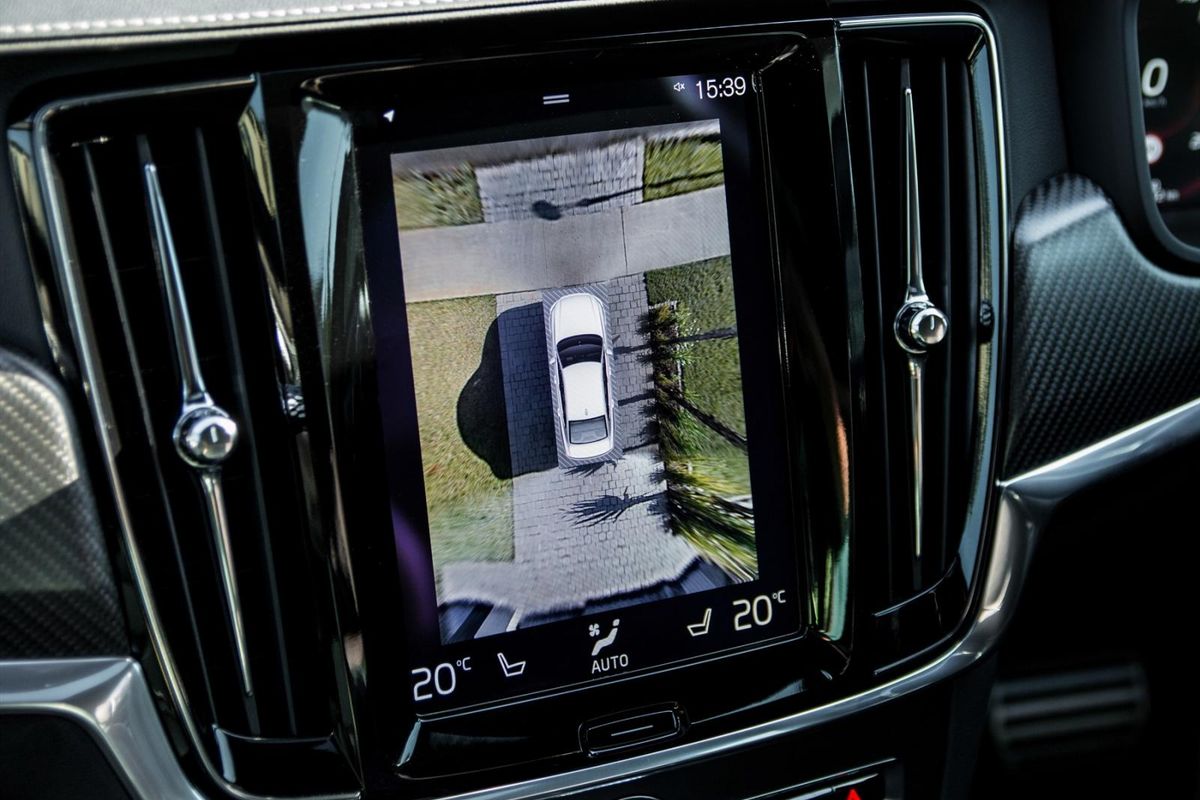
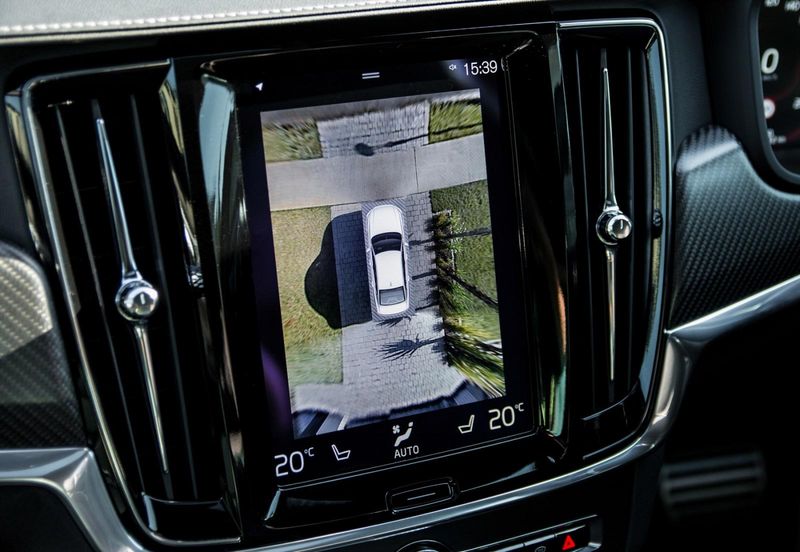
A 9-inch Sensus Connect touchcreen is standard while a 360-degree camera is offered as an option.
Standard features for the Volvo S90 R-Design include ‘Thor’s Hammer’ LED automatic headlights with Active Bending and Active High Beam, LED fog lights with cornering functionality, rear parking sensors, automatic windscreen wipers and laminated electric windows.
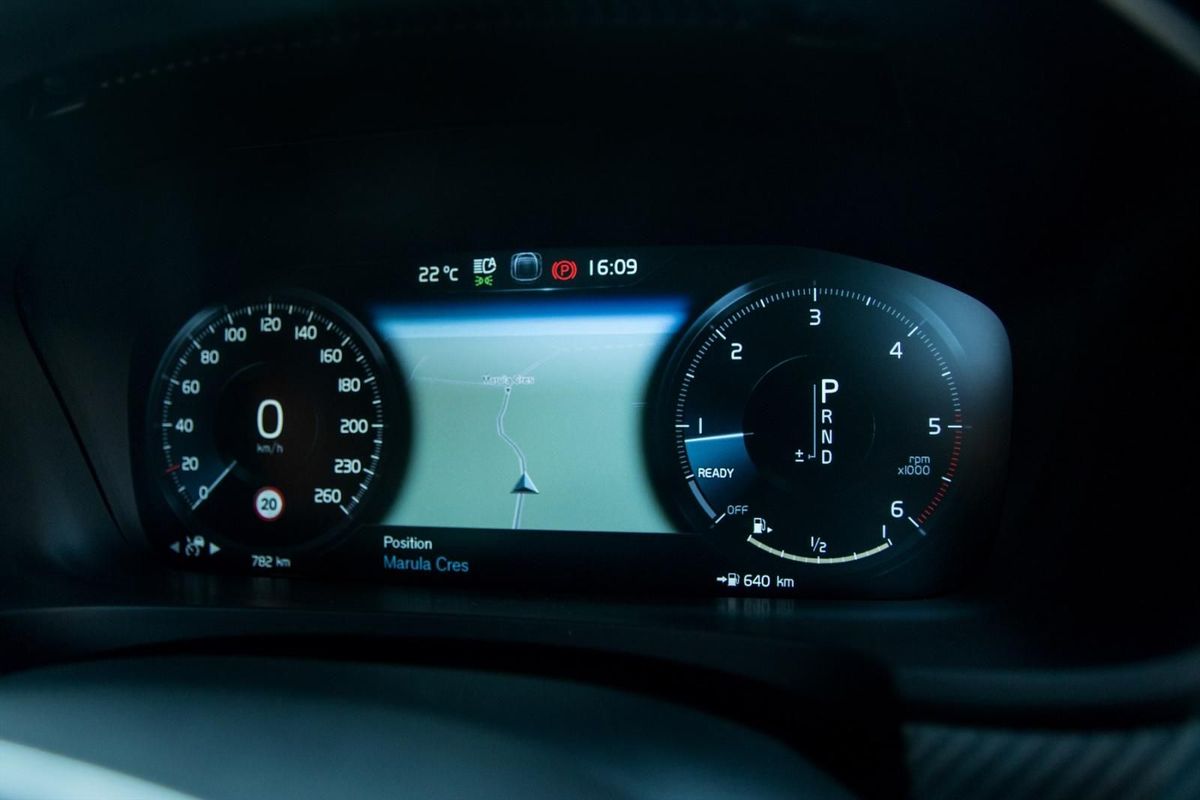
Interior features include a 12.3-inch digital instrument cluster, 9-inch Sensus Connect touchscreen display with navigation and Internet connectivity, automatic dual zone climate control, electric seats with memory function, Drive Mode selector and a 10-speaker high-end sound system with Bluetooth and USB/Aux input.
The S90 R-Design is semi-autonomous with features such Pilot Assist, an extension of the Adaptive Cruise Control, which can control acceleration, braking and steering at speeds up to 130 kph, provided that clear lane markings are present on both side of the vehicle. This feature still requires full attention on behalf of the driver but affords the driver with higher levels of relaxation in traffic jams or on the highway.
The interior of the S90 R-Design is well-sorted with features but a host of optional equipment is available to suit your needs.
Optional features include heated seats, electric-powered tailgate with hand-free access, electric-folding rear seats and headrests, rear window sun blinds, 4-zone automatic climate control, tailored dashboard, graphical head-up display and carbon fibre interior panels.
Customers can also opt for Park Assist Pilot, blind spot information (BLIS), Cross Traffic Alert, smartphone integration with Apple CarPlay and Android Auto, a 360-degree parking camera system and a 19-speaker, Bowers & Wilkins sound system.
Standard safety features include 6 airbags, ABS with EBD, BAS, HAS and ESC. City Safety autonomous emergency braking with forward collision warning and pedestrian, cyclist and large animal detection is also standard. IntelliSafe with run-off-road mitigation, impact-absorbing seats, automatic braking at intersections for oncoming traffic, lane keeping aid, lane departure warning, driver alert control and road sign information is also standard as are ISOFIX child seat mounts.
Volvo S90 R-Design – Price in South Africa
Volvo S90 T5 FWD R-Design Geartronic – R718 300
Volvo S90 D4 FWD R-Design Geartronic – R742 200
Volvo S90 D5 AWD R-Design Geartronic – R822 900
Volvo S90 T6 AWD R-Design Geartronic – R874 600
All derivatives come as standard with Volvo's 5-year/100 000 km maintenance plan and warranty, Tracker Connect and laminated glass.
The results of the annual Ipsos South African Competitive Customer Experience survey are out and once again it is Volkswagen and Audi that occupy the top spots.
Looking at the market overall, it is noteworhty that satisfaction levels continue to rise steadily across the board as South African car dealers improve their sales efforts. On the servicing side, however, the survey shows a static satisfaction graph for passenger vehicles, and a slight dip for LCVs (light commercial vehicles). For the public, though, the most interesting results will be the brands' individual performances. Note, however, that not all brands participate in the Ipsos study.
How does it work? Ipsos measures the purchasing aspect of the customer experience through a telephonic interview that takes place 10 to 35 days after delivery has been taken of a new vehicle, while the customer’s experience with dealer servicing is evaluated in an interview, also 10 to 35 days after a service transaction has taken place.
Sale & Servicing Experience
Audi and Volkswagen received Gold awards in both the sales and servicing survey categories. For both the German brands it is the fifth year in a row that the Gold sales award has been achieved. Audi also received the Gold award for the fifth year for passenger car servicing, while Volkswagen achieved the Gold standard for the second year running in the passenger car servicing category, and for the fourth time in LCV servicing.
So, a dominant performance, then. What about the others? From the brands that participated in the survey, Chevrolet, Mercedes-Benz, Nissan, Opel, Toyota and Volvo received a Silver award in the passenger car purchasing category, while Ford, Honda and Renault received Bronze. Besides VW, 4 other brands also received Gold in the LCV Sales category, namely Chevrolet, Isuzu, Nissan and Toyota. Ford was the only brand to received a Silver award in the LCV purchasing category.
When it comes to servicing, Nissan claimed Gold with Audi and VW in the passenger car category, while Chevrolet, Lexus, Mercedes-Benz, Opel and Toyota qualified for Silver and Honda, Renault and Volvo collected Bronze.
In the LCV servicing category, VW was joined by Chevrolet, Isuzu, Nissan and Toyota while Ford got Silver.
Note that major brands such as BMW, Kia, Hyundai, Land-Rover/Jaguar, Mazda and others do not participate in the Ipsos study.
Tell us what you think of your car, and the people that service it, to help us provide the best buying advice in South Africa. By completing this 10-minute survey, you will have a very real impact on everything we do, from the outcome of Cars.co.za Consumer Awards – powered by WesBank, to new buyer's tools and other insightful content.
Range Rover Velar (2017) International Launch Review
Land Rover calls its new executive SUV – the Velar, which will be launched in South Africa before the end of 2017 (full price list below) – the most road-biased car it has made. So does this rival to the BMW X4, Jaguar F-Pace, Mercedes-Benz GLC Coupe and Porsche Macan still feel like a proper part of the Range Rover family? Matt Prior investigates
What is that nagging feeling? That little suspicion that not everything's quite as clear cut as it should be?
I don’t know. Because, on the face of it, everything up here in this imperious cabin is very straightforward. There was a gap in the Range Rover line-up, see, and it is now filled. The Range Rover range started with the Evoque and then, via a large leap, went to the Range Rover Sport before naturally culminating with the Range Rover. This new Velar sits in that large space between the Evoque and the Sport.
Mechanically, then, this 4.8m-long car is more ‘Sport-minus’ than ‘Evoque-plus’. It’s not as full of fat as the Sport, sure, but it does sit on a longitudinal-engined, aluminium platform – the same one as Jaguar's XE, XF and F-Pace, incidentally – rather than the transverse-engined set-up of the Evoque.
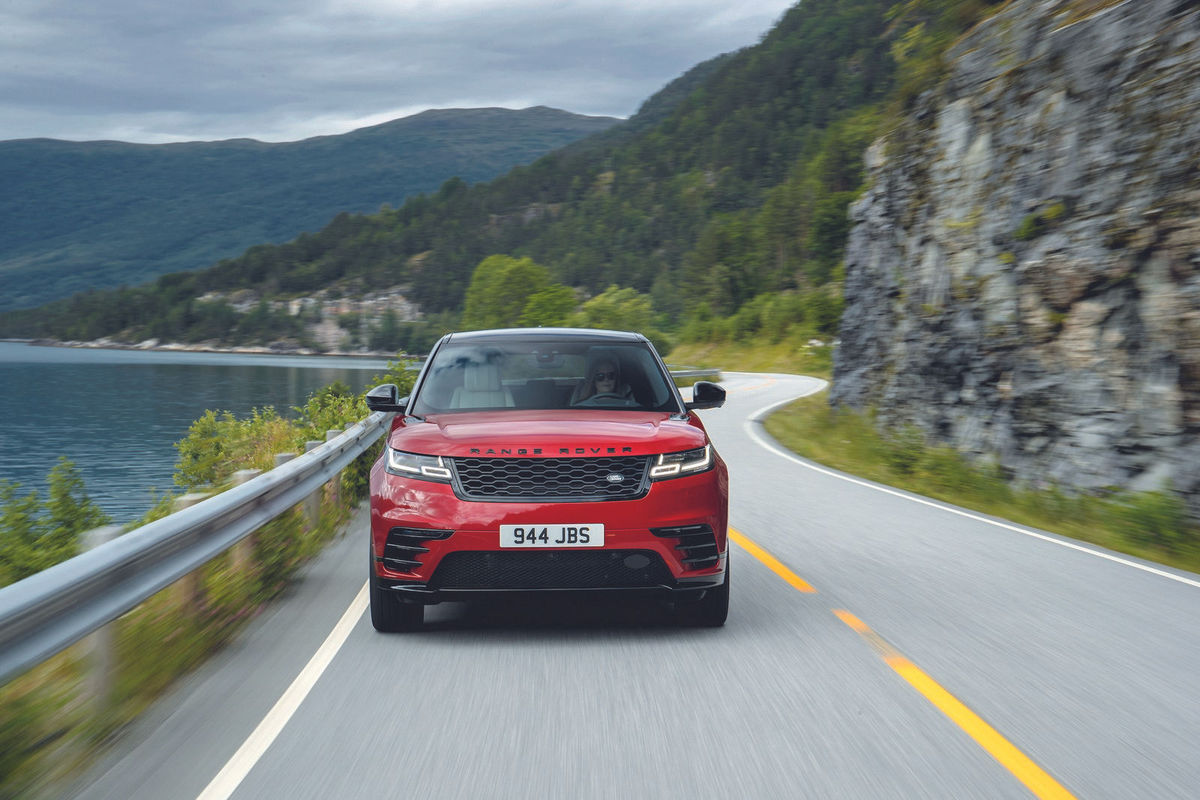
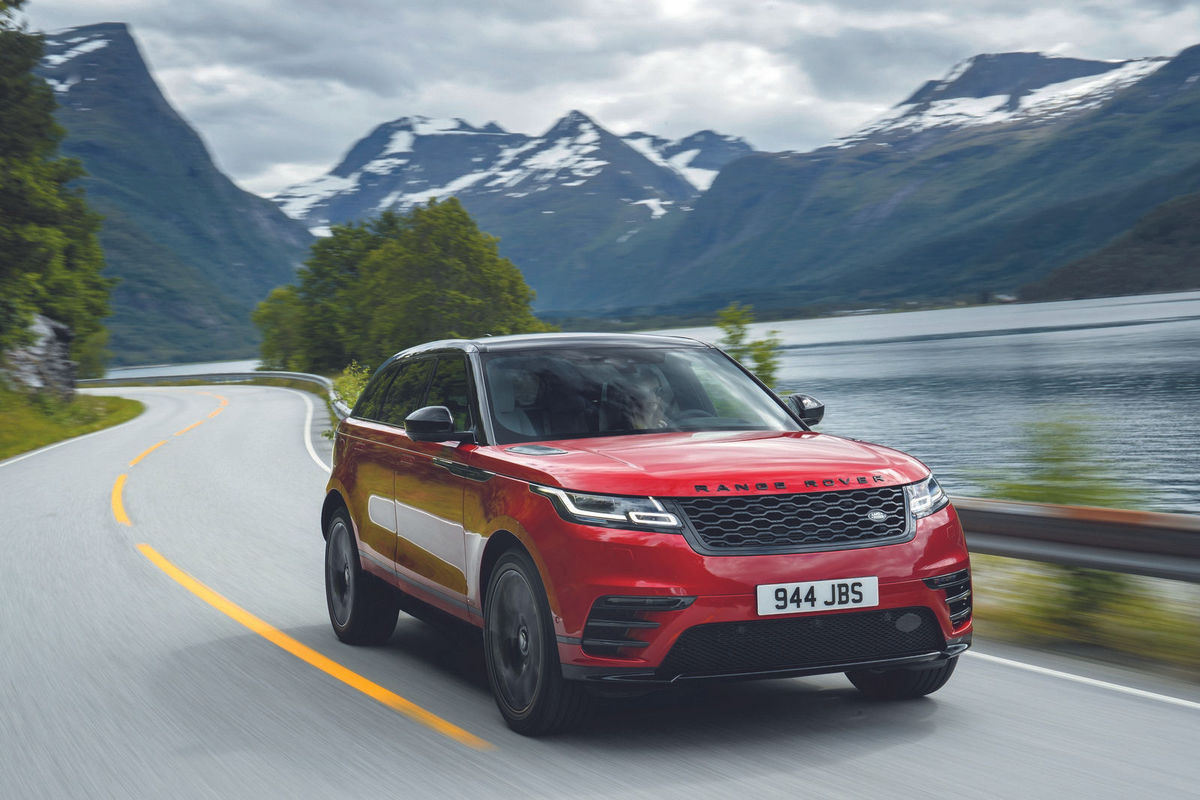
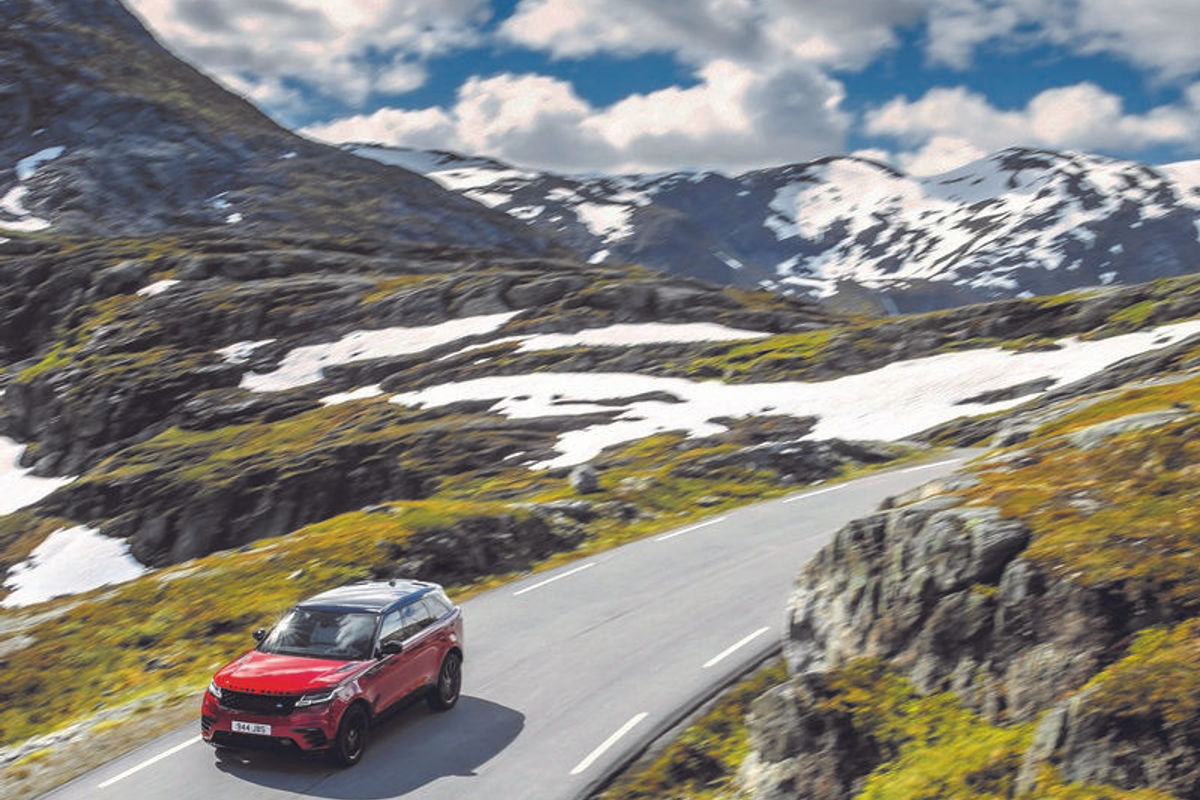
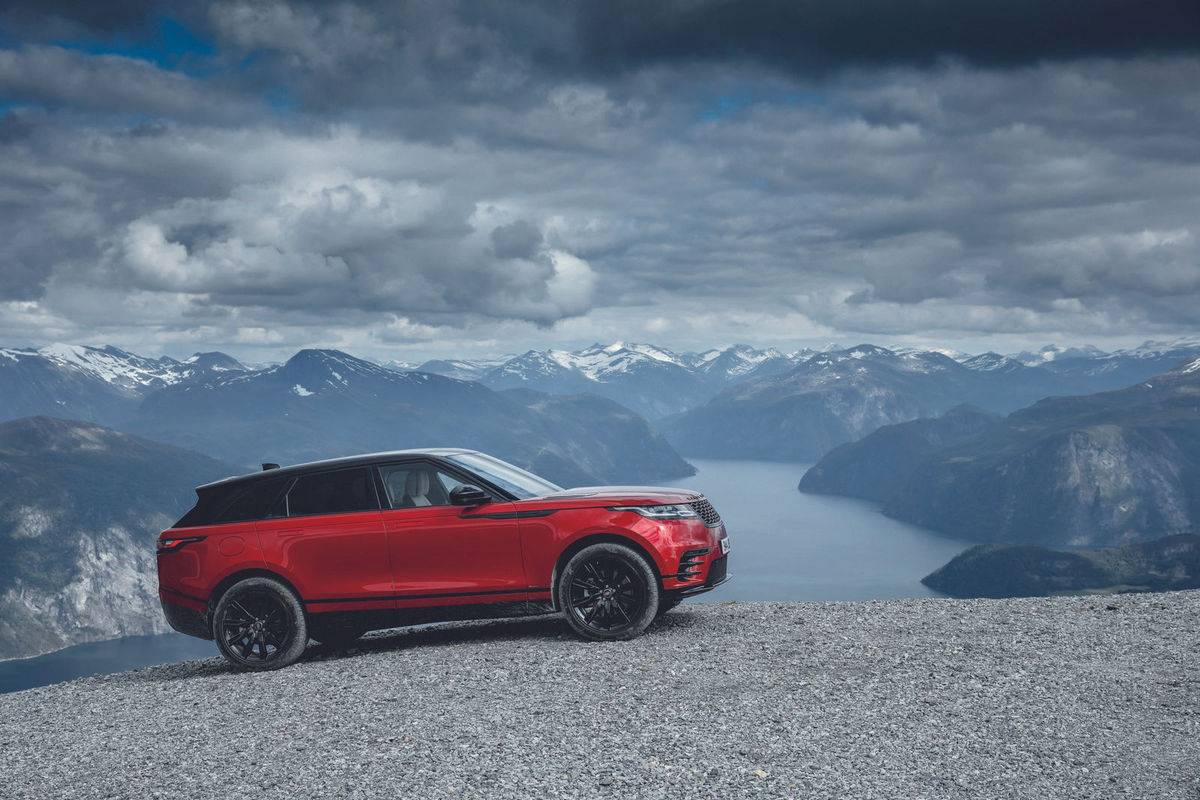
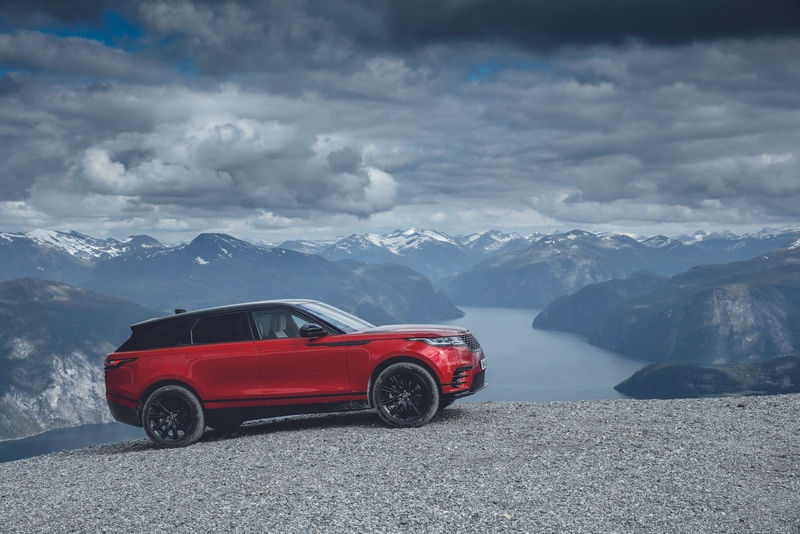
Range Rover's latest player, the Velar, filling the gap between Evoque and Sport, just.
The nitty gritty
The Velar’s chassis contains more aluminium than any of the Jaguars’, mind. It’s bigger than them all, too, and – fairly obviously – it is more off-road focused. But, fundamentally, that’s where it starts.
The Velar, then, ends up with an 81% aluminium body, with some steel under the boot floor, where it doesn’t hurt that it brings the weight distribution rearwards (albeit there’s a composite tailgate to maintain a low centre of gravity), and some magnesium under the bonnet to conversely, lighten the front end. Consequently, the claimed kerb weight for all versions, barring the biggest diesel, is less than 1 900kg.
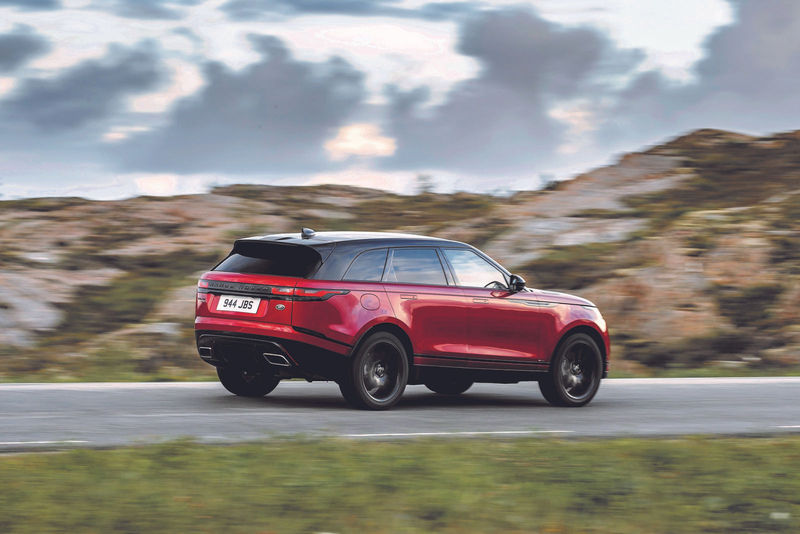
Heavy use of aluminium has meant that the Velar tips the scales at just under 2-tonnes. In Range Rover terms, that's light.
In the same way that the Jaguar models on this platform have double wishbones at the front and an integral link set-up at the back – which is like multi-link but with additional, lateral-rigidity-increasing components – so too does the Velar. Think of the Velar as a semi-skimmed Range Rover, then, to the Sport’s full fat and the RR’s gold top. (The Evoque is… what? Kinda non-dairy?)
If you want it less figuratively, compared with the Sport, the Velar’s towing limit is 2 500 kg, not 3 500 kg, and it doesn’t get a low-ratio transfer case. Of its six engine options, four are 2.0 four-cylinder engines, the other two V6s; and the four-pots, as standard, get coil springs. Air springing, which Land Rover uses to great effect to increase off-road capability on big models, is standard on V6s and optional on the fours.
Voluptuous interior
Some of those things will inhibit the Velar off road – we’ll come to that – but that might not matter because Land Rover says this is the most dynamically focused Range Rover yet. We’ll come to that too. But first, inside. Where, because it’s a Range Rover, there is a big, lateral slab across the dashboard; a leather-bound butcher’s block that has been a feature item on Range Rovers ever since Rover met BMW.
Now, as then, it’s meant to feel yacht-inspired; broad and powerful, but light and luxurious, a structural horizontal beam with vertical supports running through it. It’s the feature that really established a Range Rover’s interior as one to send postcards home about; one, surely, benchmarked by, among others, Volvo when creating the new XC90.
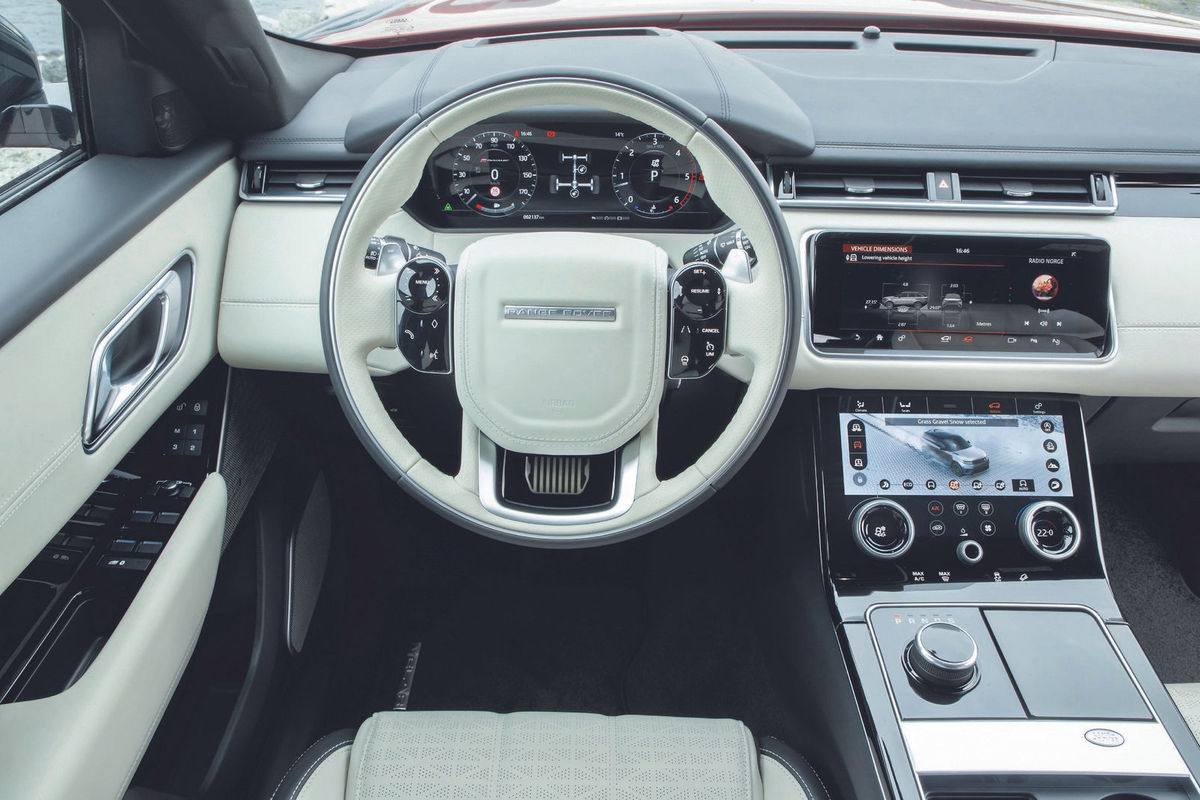
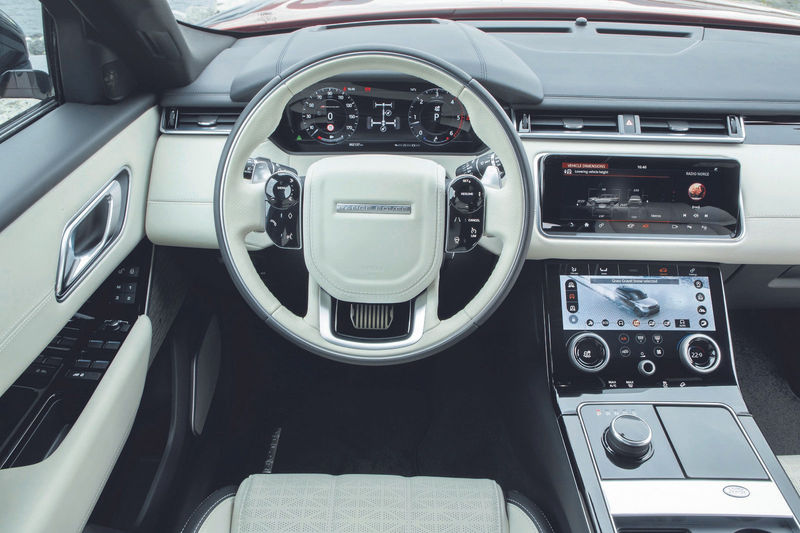
The Velar's interior is a fully digital affair, but for the first time, it's truly as good as the competition.
But there are two things about the addenda surrounding it this time. First is the Velar’s perceived material quality. On the face of it, things are great: the leather is good – Jaguar Land Rover (JLR) talks about using the same high-end stitching and fabrics as top models – but it flatters to deceive in places. Not everything can be leather, and on lower bits of the cabin, there are harder plastics, some scratchy, which seatbelt buckles have already given a hard time.
Some of the metalised plastics don’t convince you well enough that they’re not plastics, aside from providing an authentic, overly harsh glare in bright sunlight. Compared with, say, a Porsche Macan, the Velar is visually a lot more arresting. But while dark, rubbery plastics are boring, they’re not blinding, either.
I’m probably nitpicking, mind. But it strikes me that Volvo does it better. And the XC90, in terms of airiness and finish, is probably the Velar’s closest benchmark. It’s also a car that, like the Velar, has a predominantly touchscreen infotainment system. But here’s point two of note about the Velar: this thing now has a proper one. There is a fully digital instrument panel, with two, large, hi-res touchscreen panels on the dash. Even the steering wheel buttons are digitally highlighted.
And all of it is good. For the first time, I think JLR can turn around and say it has caught up with everybody else. Except? Well, except the lower panel is by your knee. It deals with systems you’ll use less frequently but, honestly, that’s too far away from where you should be looking.
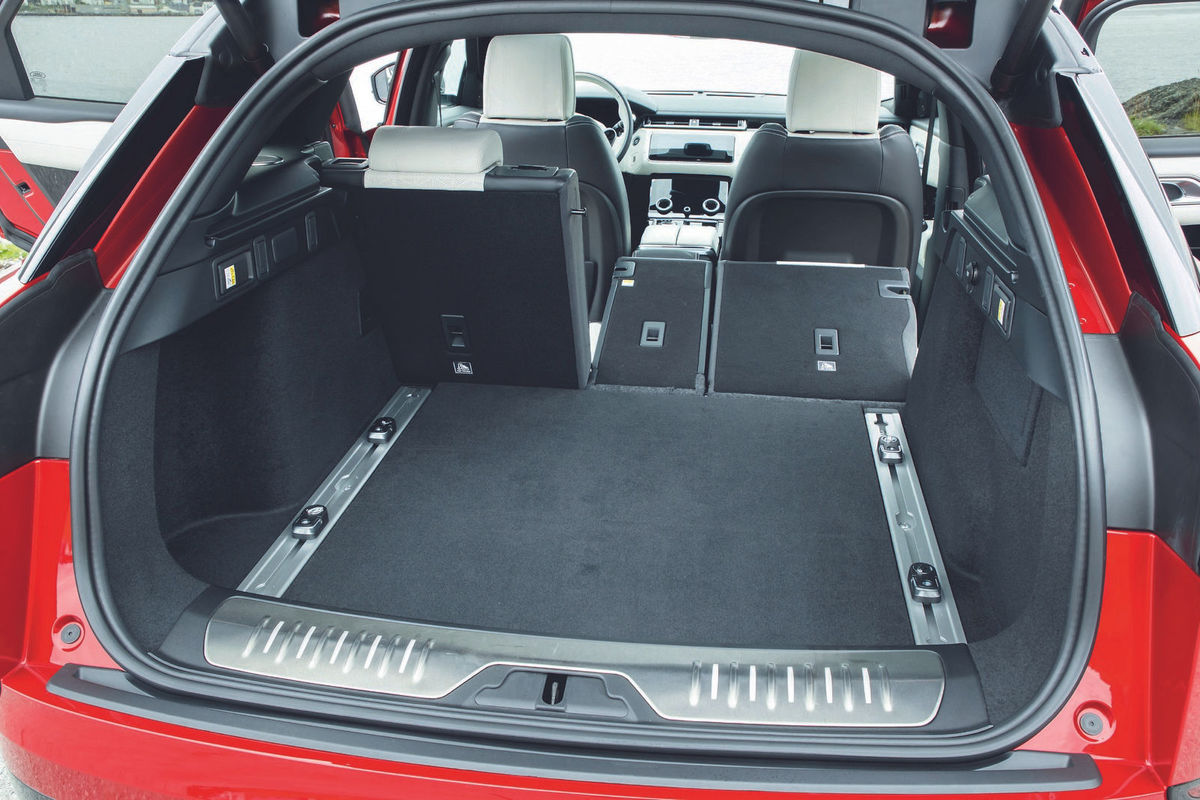
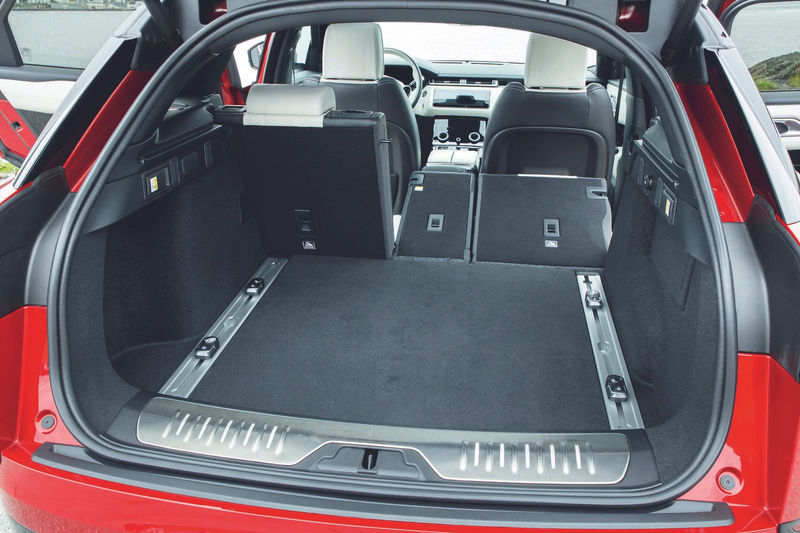
The Velar has a 673-litre boot but spec a full-size spare wheel and you start to lose a few hundred of those.
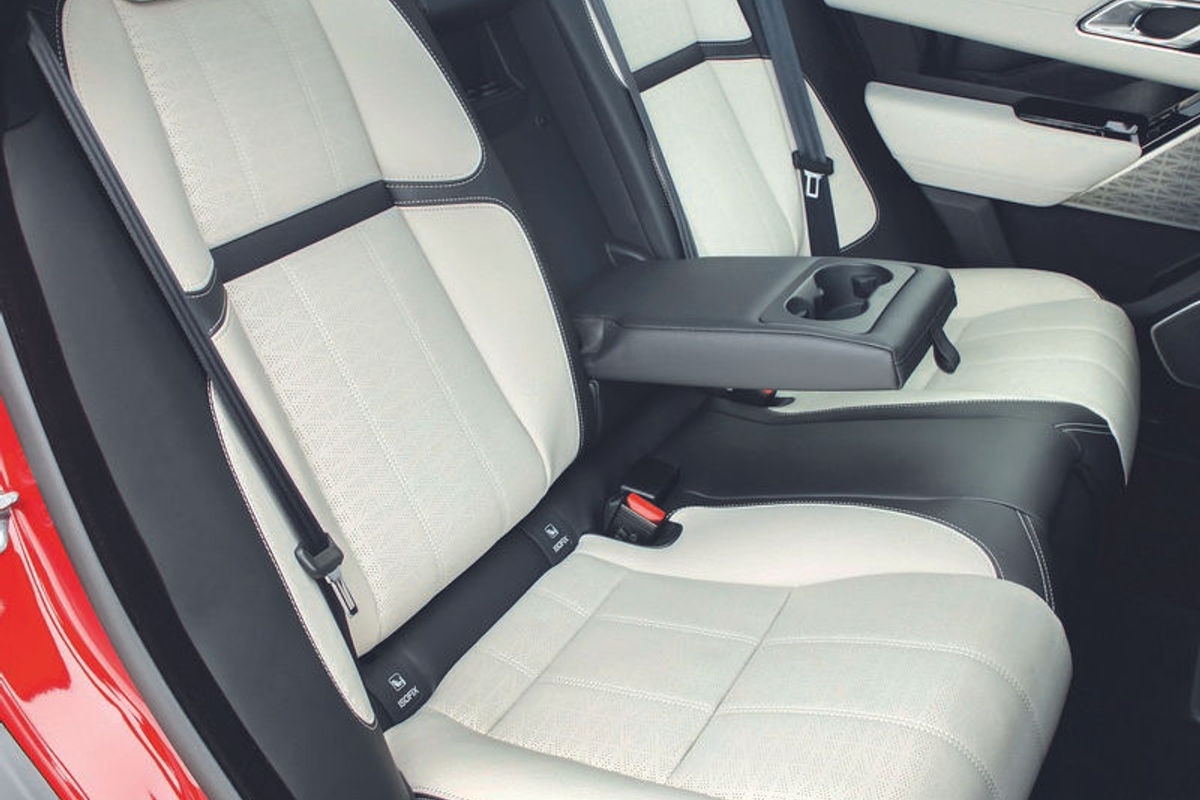
The rest of the interior? Well, it mimics, in its way, the F-Pace, in that it offers a large boot, at the expense of some rear leg room. And there’s nothing wrong with that. There’s loads of room in the front: the seats are big, there are slidey armrests, that sort of thing. I wouldn’t mind if the steering wheel reached a bit closer to me, but it is a good wheel. And there’s enough room in the back. I’m 5ft 10in and could sit behind my own driving position quite comfortably. Besides which, you get quite a lot more boot space this way (673 litres versus a Macan’s 500, if you’re interested). However, as standard, I don’t like the idea of a Range Rover, even a lefull-fat one, having a space- saving rather than full-sized spare. This is an off-roader, after all.
Drivetrains
All models – 132 kW diesel, 177 kW diesel and 221 kW V6 diesel (tested here), plus 184 kW petrol, 221 kW V6 petrol and 280 kW V6 petrol – drive through an eight-speed automatic gearbox. There are two versions of that, depending on the torque they have to cope with.
All models are all-wheel drive, too, but not in the traditional permanent Land Rover sense (nor even the newer Evoque sense). Instead, because the Velar comes from the same fundamentally rear-driven platform as Jaguars, it’s normally a rear-biased car, with a chain drive to transfer torque to the front when it needs it. There’s Land Rover’s Terrain Response system and you can raise the air suspension, but you can’t lock a centre differential, you can’t choose 50/50 power split, and although the electronics might do those for you, it’s their will, not yours. There is, too, the option of a limited- slip rear differential, likely to make it feel keener on the road and give better traction on it.
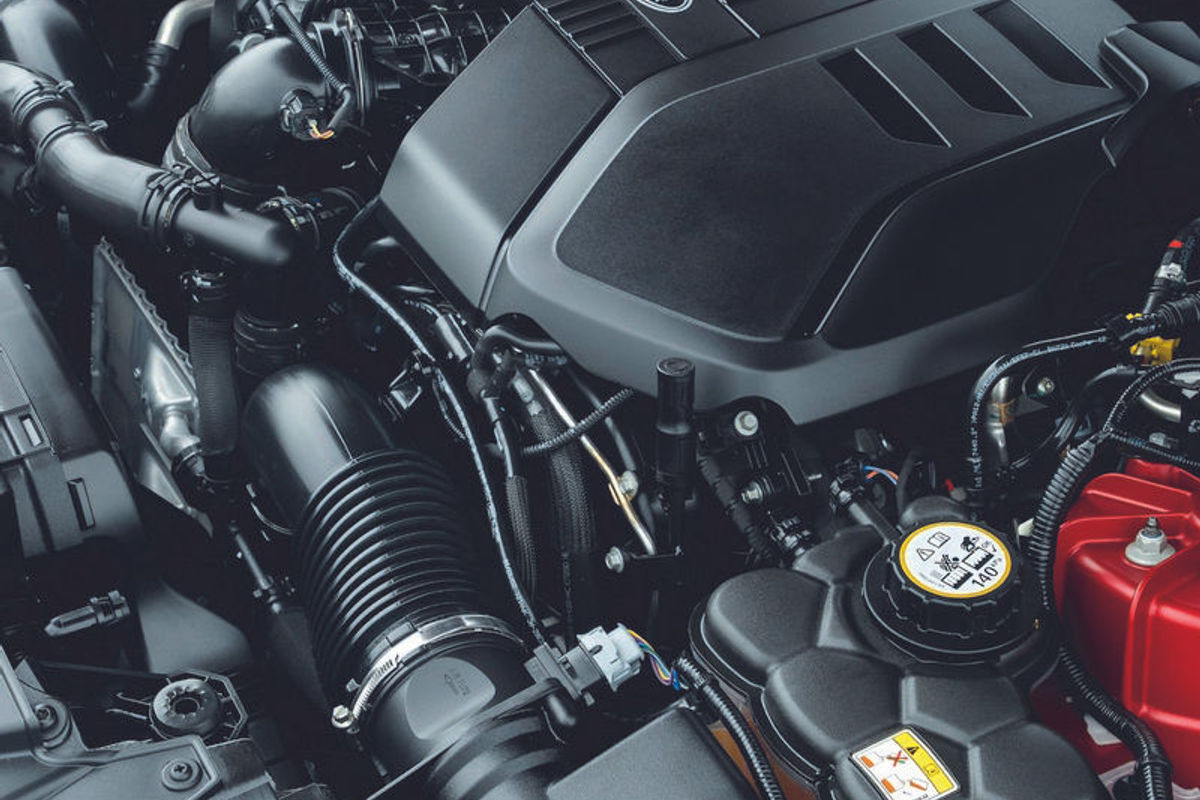
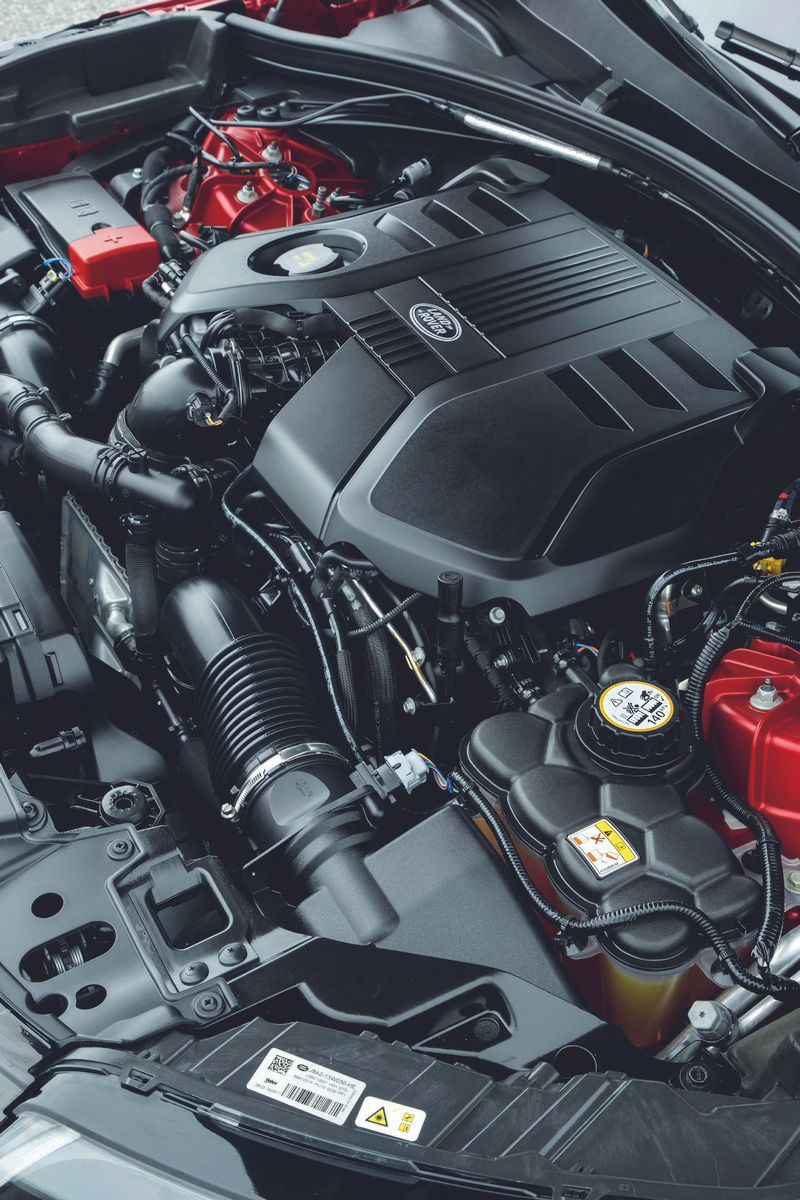
The full range of petrol and diesel Ingenium engines are on offer in the Velar, lots of power and lots torque too.
When it does come to off-road ability, it’s probably whether the Velar’s 2 500kg towing limit is up to Pony Club towing that’s more relevant than the 213 mm (coil springs) or 251 mm (air springs) ground clearance, or the 24 deg approach, 27 deg departure and 20 deg breakover angles. Or the 600 mm (coil) or 650 mm (air) wade depth. Despite no low-ratio ’box, mind, ultimately what limits the Velar off road is what usually limits an off-roader: tyre choice and ground clearances. Plus you might not like to damage the aluminium body.
It's got the look
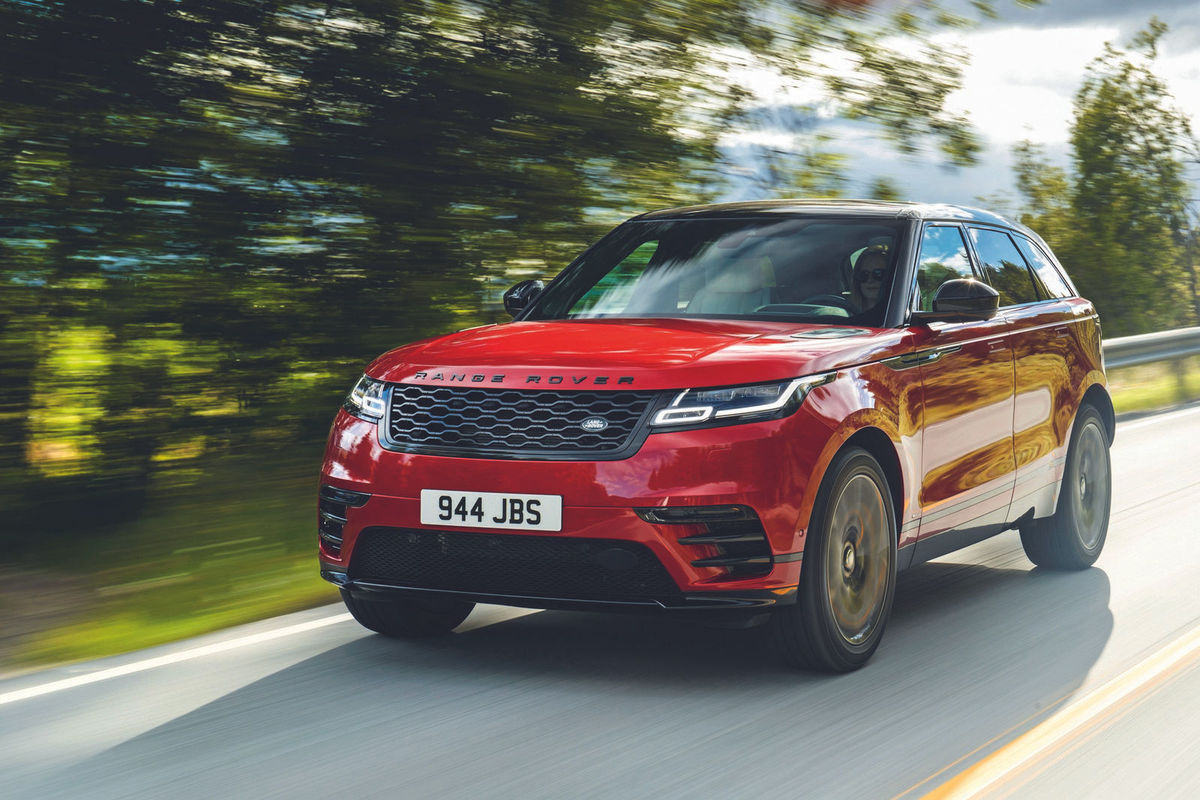
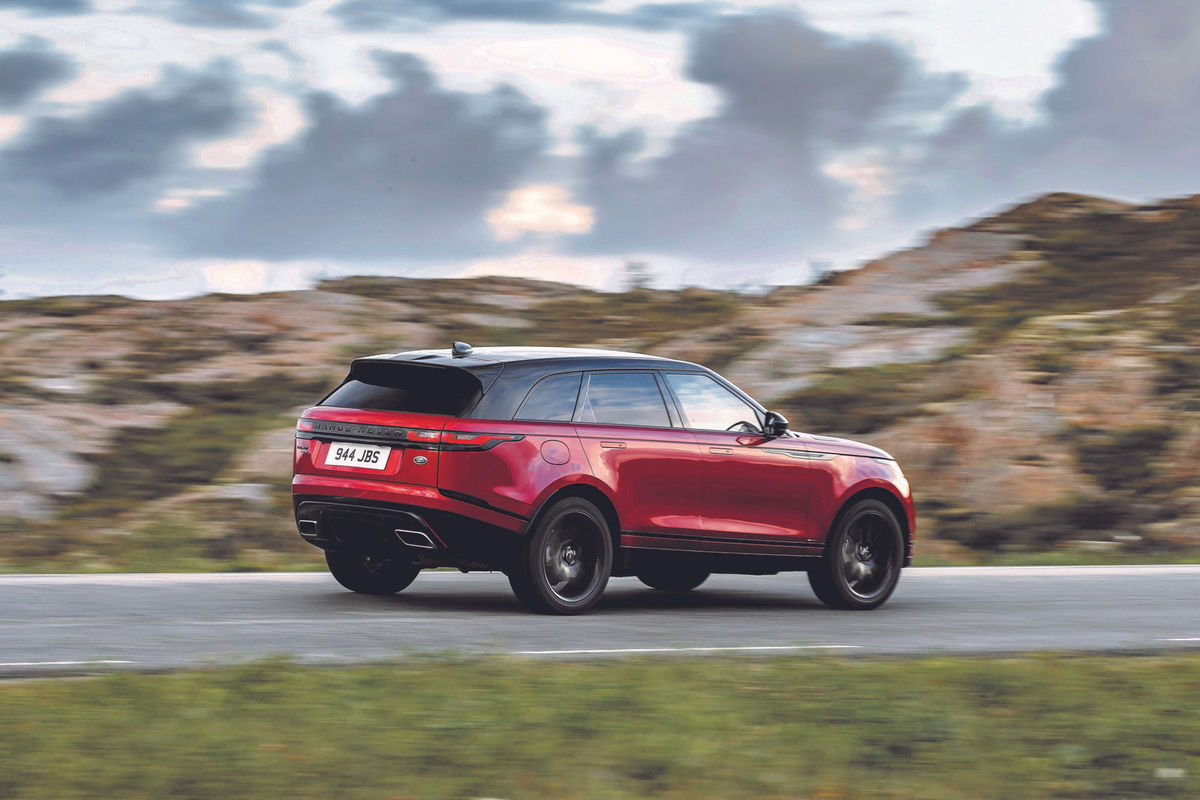
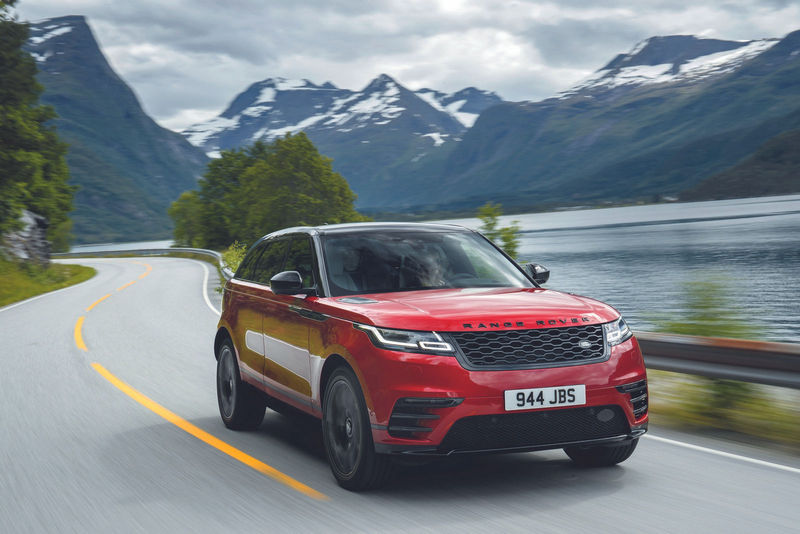
Maybe you thought I wasn’t going to mention it. I don’t always, what with beauty being so subjective. But you can’t not, can you? The Velar looks like the very personification of a concept car, to me. The real thing. Like it just stepped out of a salon. And the finish feels every inch a pucker Range Rover. What an astonishingly good-looking car.
Anyway, as well as being too pretty to damage, the Velar is, I’m told, also the most road-focused Land Rover product yet. So although it’s worth knowing if it’ll get you to your shoot (it will), what’s important is how it goes down the road.
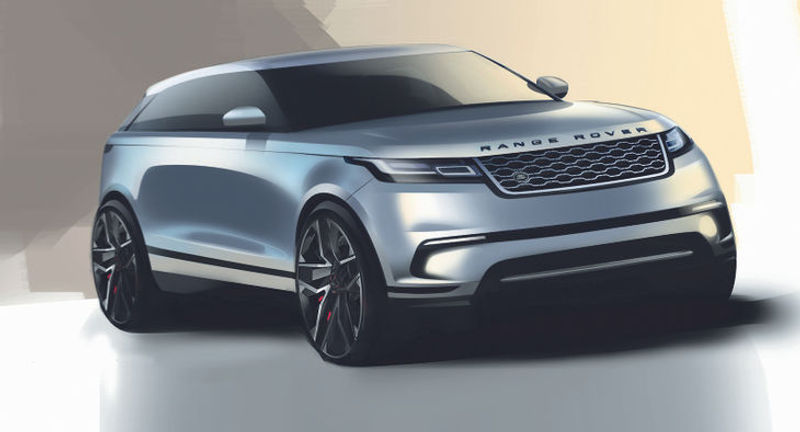
The Velar looks surprisingly similar to the concept sketch, something that happens less than you think.
There’s a notable sense of relief when a JLR engineer asks you whether it feels like a Range Rover, and you say “yes”, because I suppose there was a concern it’d feel too much like a Jaguar. It doesn’t.
Now, a couple of caveats. I’ve only tried two V6s, the higher-powered petrol and the higher-powered diesel, and they both get air springing, which is not available on an F-Pace. So maybe a four-pot on coil springs will be more Jag-ish, but there’s plenty of evidence to think not.
How does it drive?
The idea, despite the suggestion that this is a dynamically adept car for a Land Rover badge, is that it has a level of refinement that nothing with a Leaper on the front will match. I think they’ve done that. Ditto nothing with a Porsche badge matches it; nor with an Audi one. At least, not in Q5 terms, although the Velar’s price is such that you might consider a Q7. And an XC90’s lack of engine refinement removes itself from this conversation too.
But, no, it’s the Velar’s refinement, rather than its agility, that is the more prevalent. The steering is light and easy, and the ride, once you’re up to any kind of speed, nudges lumps and bumps aside comfortably. At low speeds, things aren’t quite so clever, as a result of the 21-inch (or 22-inch on the petrol model I tried) wheels that suit the Velar’s looks so well. What, when you’re moving, is a barely audible thump turns into a proper whack.
There’s some body movement to go with the isolation, inevitably, but that suits what feels like, to me, a car of decent hush. Another caveat: the roads in Norway, spectacular though they make these pictures, offer you no more than 50 mph. And some are abrasive, so there’s some road noise, to the extent that a test in the UK will be essential before a definitive verdict is reached.
No low-range transfer case in the Velar but multiple electronic modes and Terrain Response 2 are expected to compensate somewhat.
But the engine is merely a distant thrum. The gearshift changes smoothly. And Land Rover’s people say that they have put a lot of effort, plus materials and costs, into creating a space that’s more isolated than any of the cars whose basis the Velar shares.
I think that’s important. Look, it’s easy to get a bit tied down in platforms and architectures and whatnot, and it can be quite silly, really. After all, what is any car if not a collection of metals and plastics to a given size? Everyone hangs things from common systems. But it’s important that an SUV with a hefty price tag feels in no way related to a compact executive saloon that's cheaper.
And it doesn’t. At least, in no way does the Velar feel like any other JLR model any more than a Macan or an XC90 feels like another car from their respective ranges or groups. It feels like a Range Rover. Looks like one. Sounds like and is as refined as one. So why the little nagging doubt? The four-star rating that feels solid, but not outstanding.
Final thoughts
One day after driving it, I’m still not sure; for which, reader, I apologise. Perhaps the 80 kph roads were to blame. Perhaps it was some of those interior touches, which make the Velar feel less complete than its design suggests inside. Or, and this is equally likely, that it’s the two models I’ve driven – an R-Dynamic HSE diesel and a 280 kW petrol in First Edition trim, which cost R1.2 million and R1.5 million respectively.
And at that money, for all the glitz, for all the showroom appeal, I’d rather sit myself in the even more refined, even more capable, Range Rover Sport. Style is great and all, but a Range Rover is about substance. There’s enough of it lower down the range. But up here, Range Rover is pushing the boundaries of this platform’s qualities. Yet these are trims and prices to where loads of buyers will flock. I guess they’re paying for less tangible things, and I guess you can’t blame Land Rover for letting them.
Range Rover Velar local pricing
The Range Rover Velar will make landfall in SA during the fourth quarter of 2017. Local pricing has been released and for the first time, our local cars carry the same specification as the equivalent models in the UK. That means everything available there is also available on South African cars. Interestingly, buyers are no longer locked in to buying certain optional features when they upgrade trim levels. This means you can take a base spec Velar and pick exactly what you want in it.