Despite a contraction in the South African new vehicle market in 2017, Suzuki sales have been brisk. The Japanese brand is a small car specialist that offers a trio of hatchbacks: the Celerio (a #CarsAwards winner), Swift and Baleno, but the new Ignis marks a departure from the formula…
With its quirky looks, funky interior and plucky 1.2-litre engine, the Ignis has bucketloads of character and seems to embody everything "fun" that Suzuki wants to convey as a brand.
In this video, regular Cars.co.za contributor and Cars.co.za Consumer Awards judge Juliet McGuire presents a detailed look at the Ignis' engine, interior, luggage space and fuel economy. Plus, we compare the newcomer to the Renault Sandero Stepway and Volkswagen Cross Up!
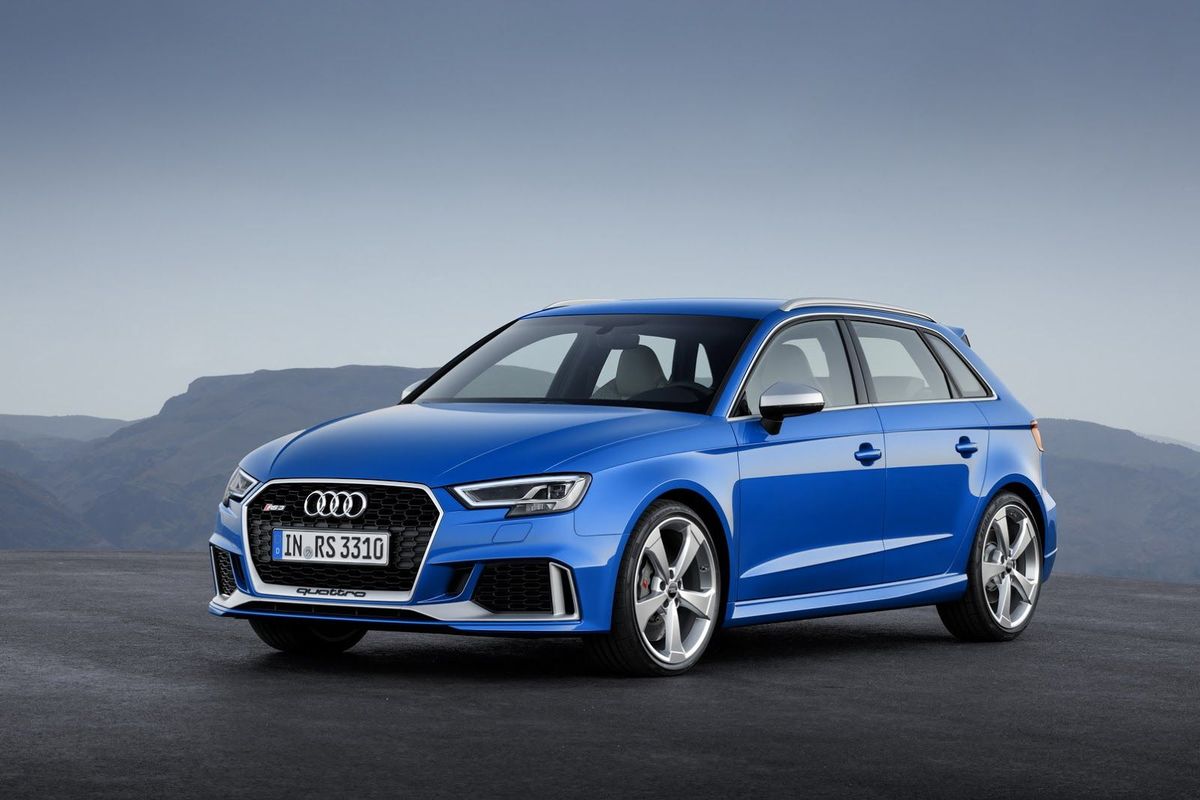
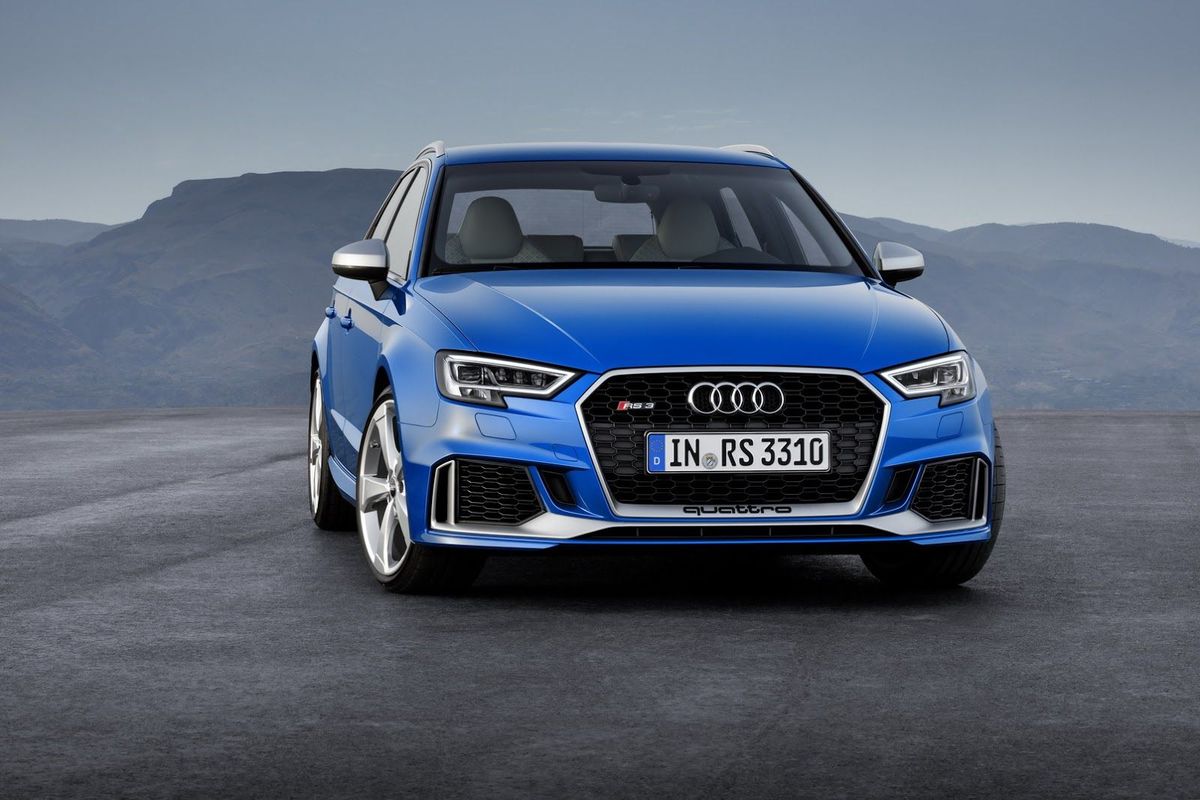
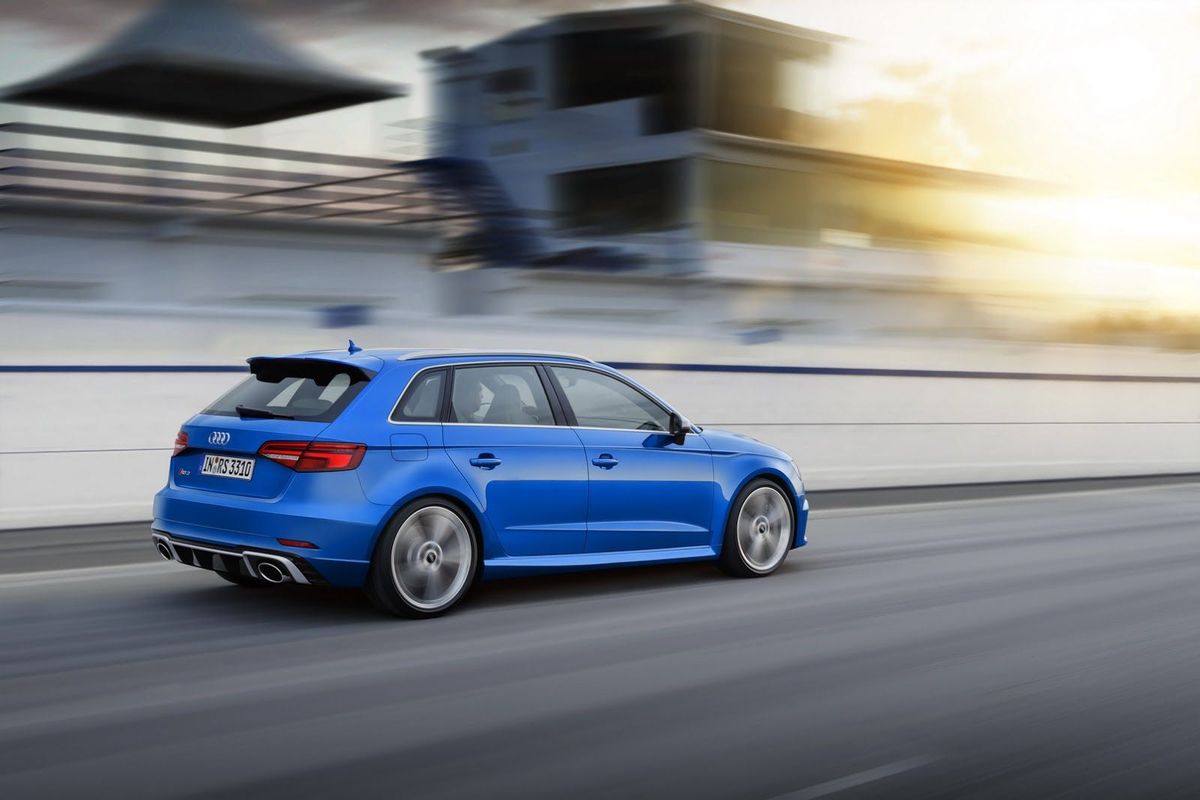
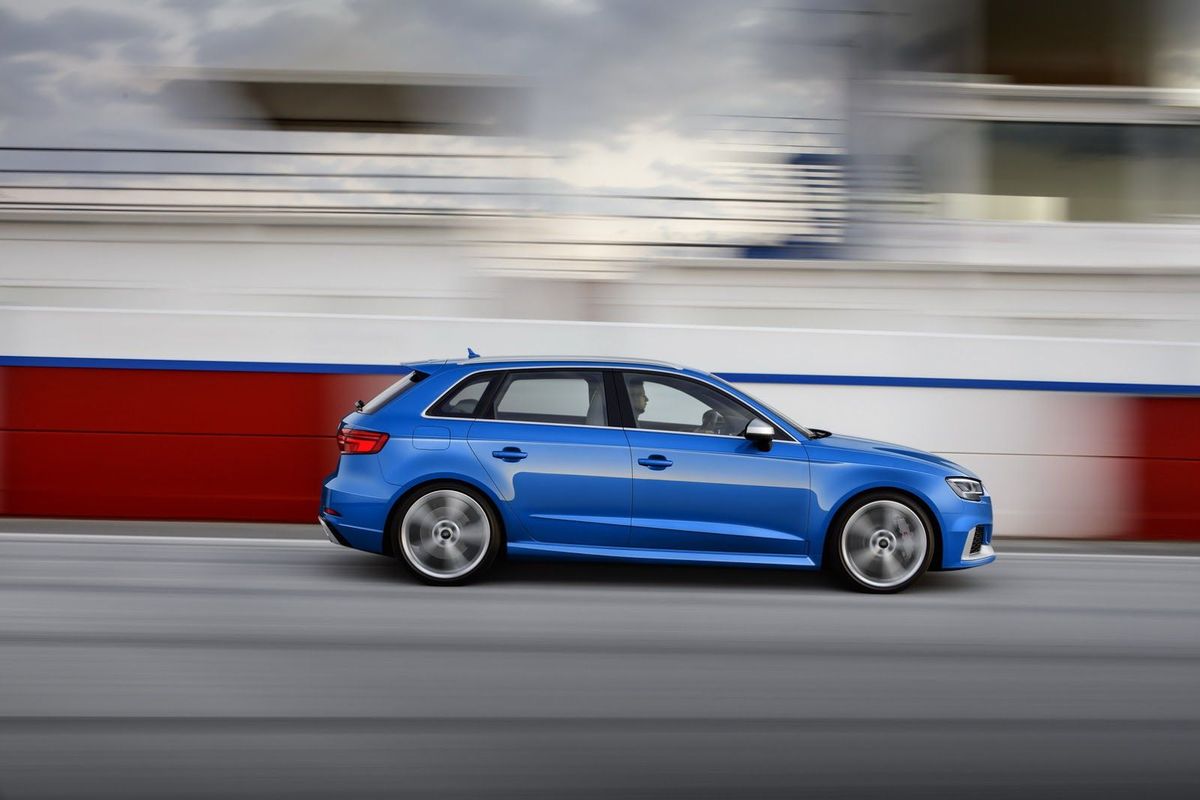
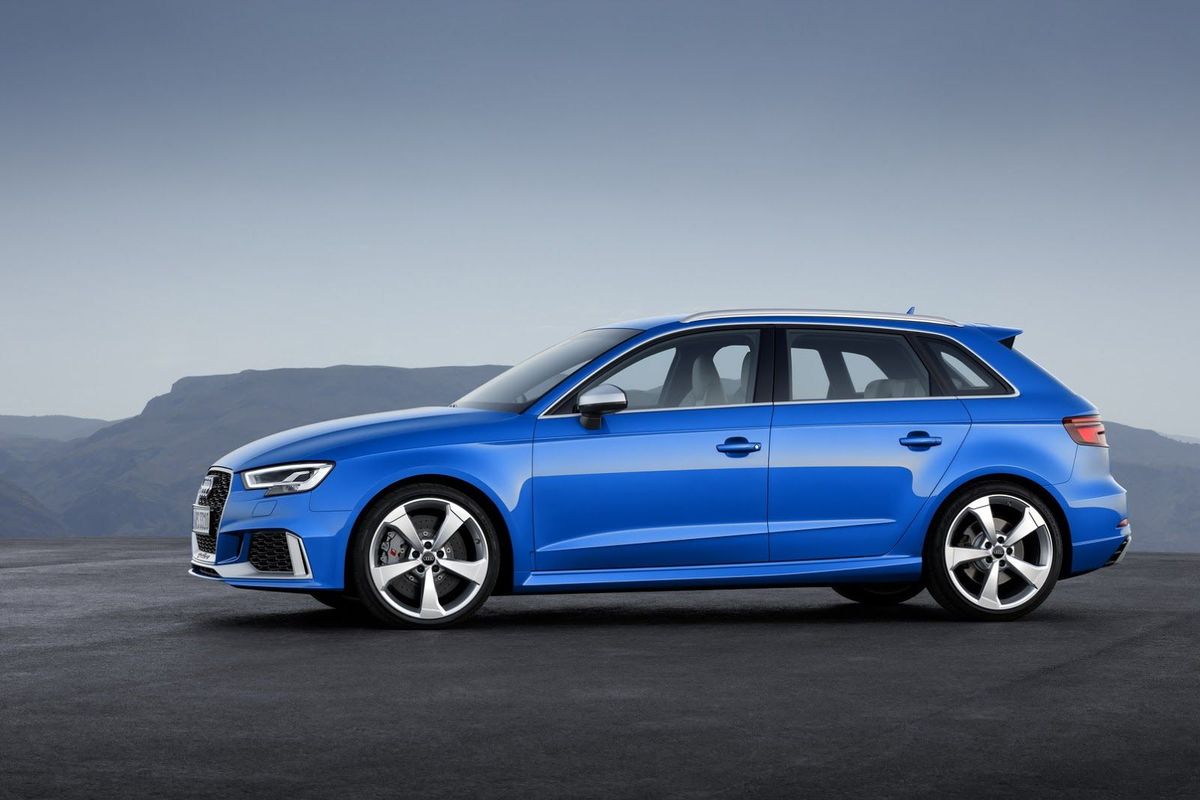
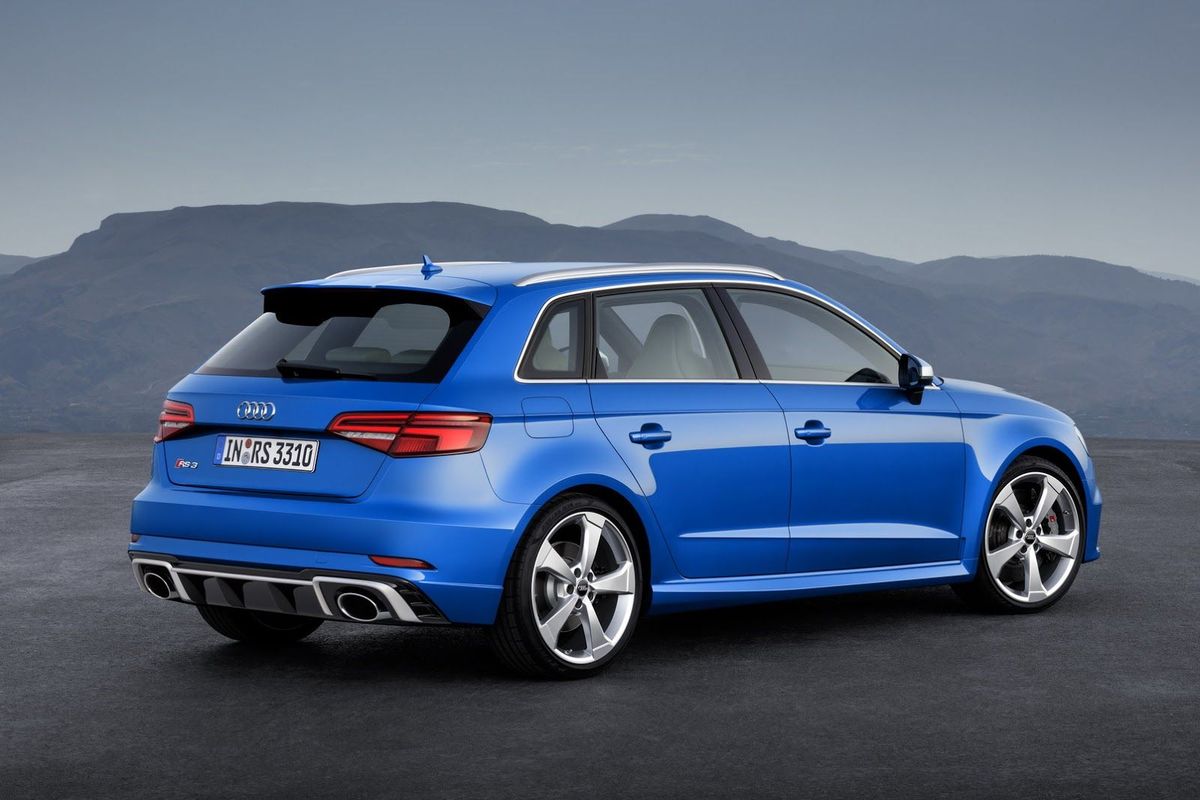
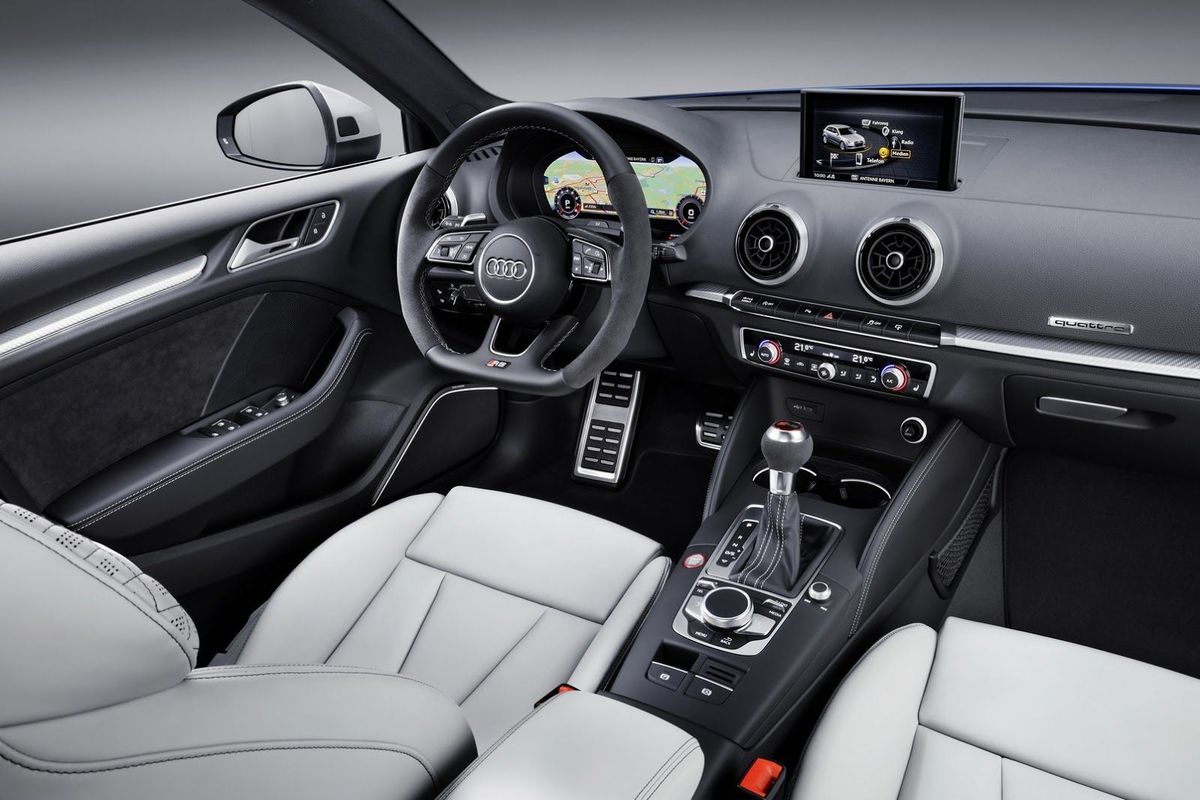
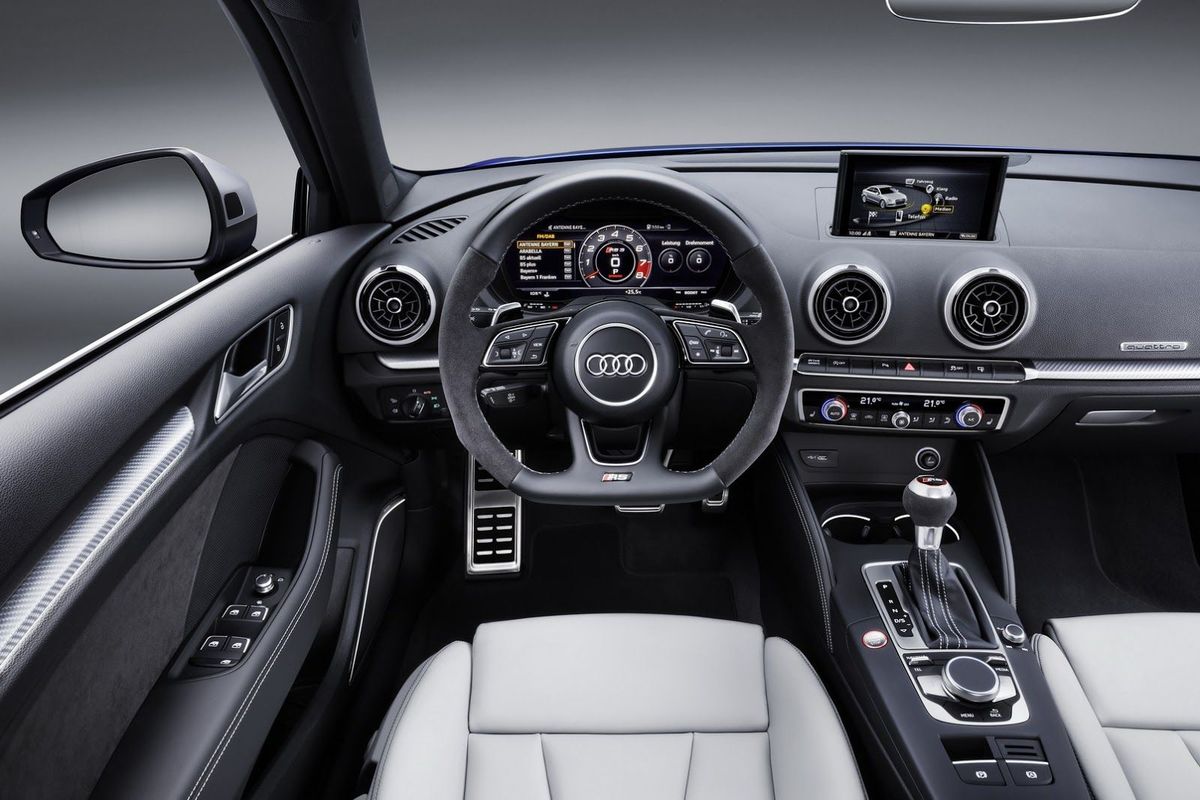
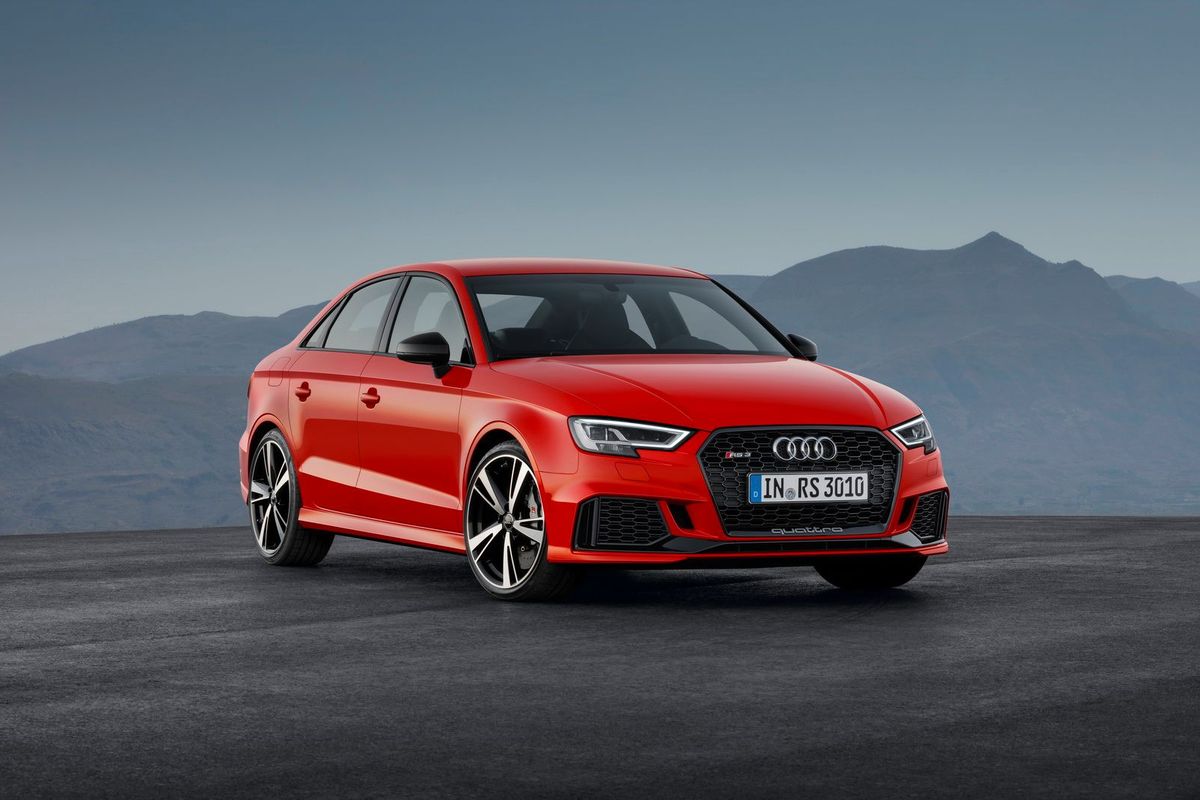
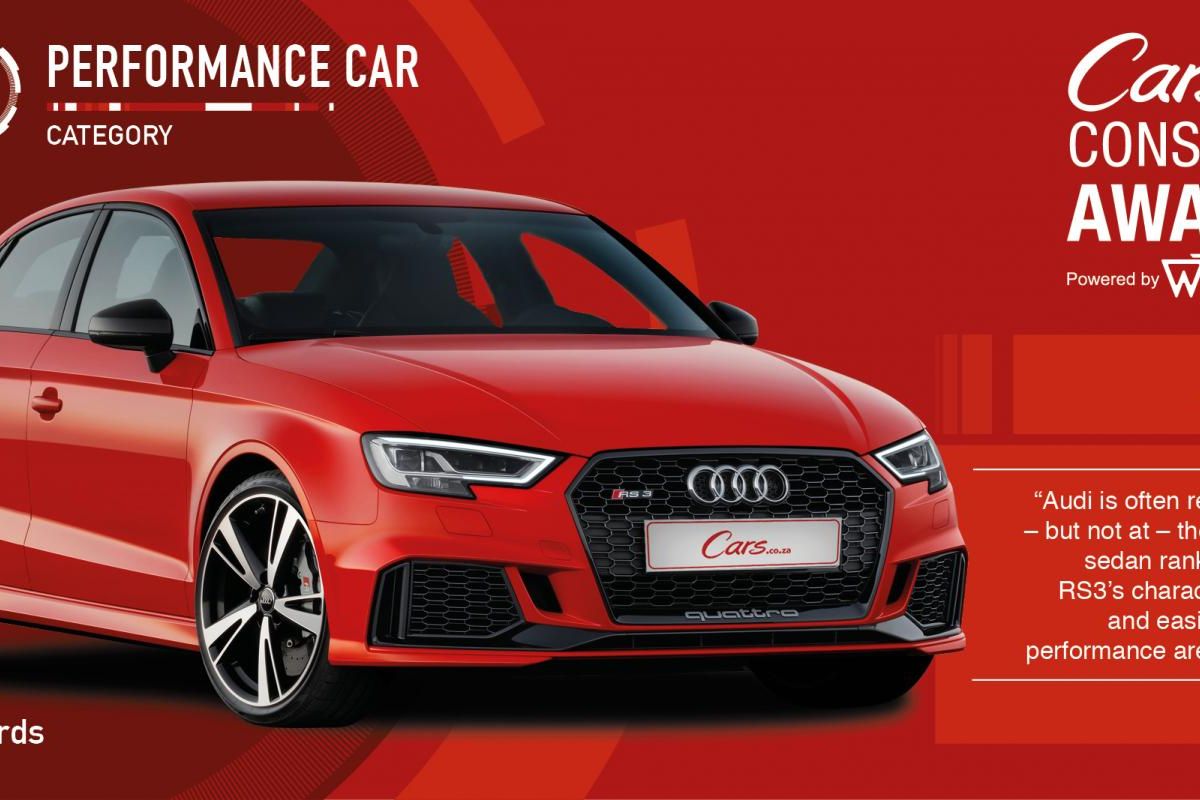
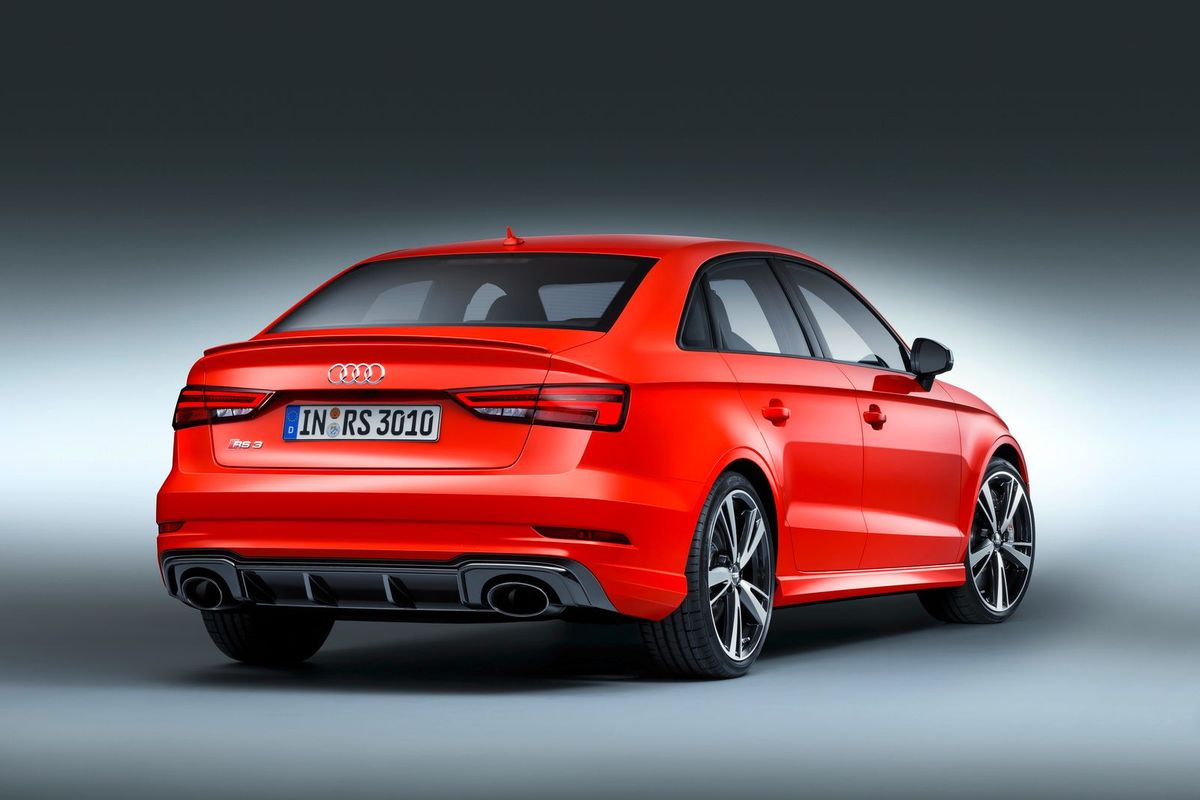
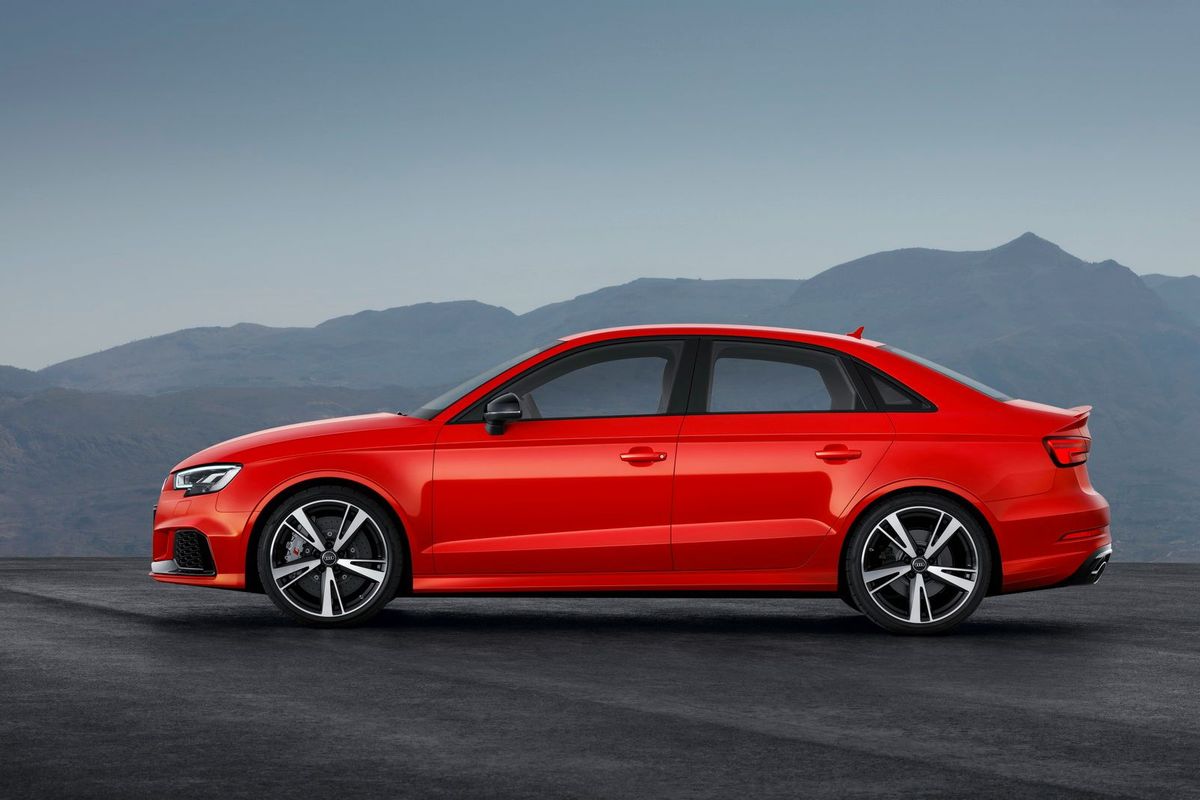
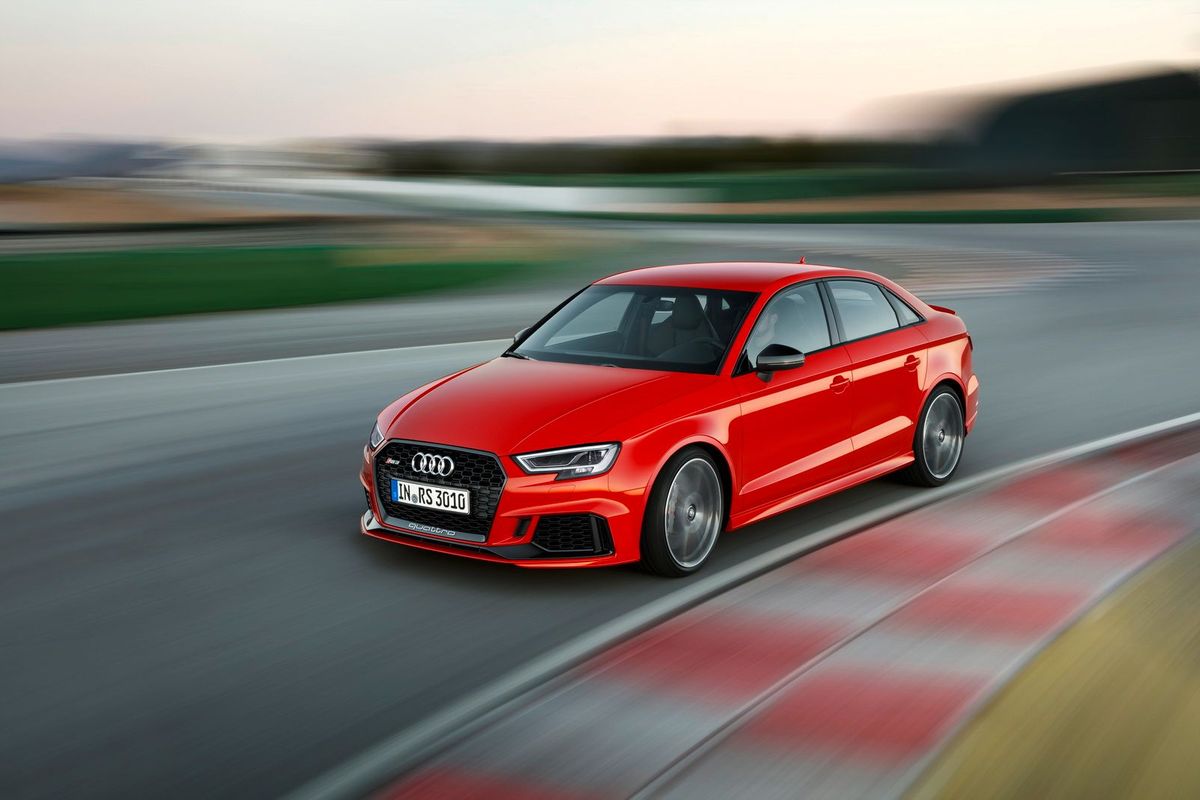
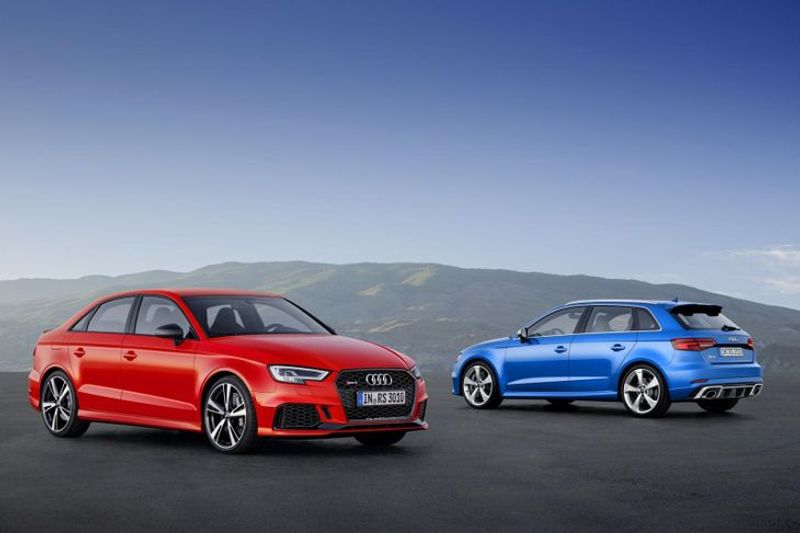
Audi has already welcomed the RS3 Sedan to South Africa and fans of the RS3 Sportback can expect the arrival of the facelifted version in November 2017. Take a look at the details below.
The RS3 is aptly described as a “tarmac terrorist” due to its ferocious performance ability. However, the facelifted RS3 seeks to up the stakes with exterior and interior styling improvements, equipment upgrades and most importantly, more power and torque.
Let’s take a quick look at what the facelifted RS3 Sportback will bring to the tarmac…
More power, more thrills
Both the RS3 Sedan and RS3 Sportback are equipped with a lighter and more powerful 2.5-litre, 5-cylinder turbopetrol engine.
The big news for the facelifted Audi RS3 is that it will adopt the lighter (26 kg lighter) and more powerful 2.5-litre, 5-cylinder turbocharged engine that’s found under the bonnet of the RS3 sedan and Audi TT RS. That means that the RS3 will now deliver 295 kW and 480 Nm of torque! That's 24 kW and 15 Nm more than the outgoing RS3.
Using Audi’s quattro permanent all-wheel drive and a 7-speed S-tronic dual-clutch transmission, the RS3 will rocket from zero to 100 kph in 4.1 seconds before reaching an electronically limited top speed of 250 kph. Audi claims a fuel consumption figure of 8.3 L/100 km. These performance figures are identical for the RS3 Sedan, too.
Hotter styling
The RS3 Sportback will bring enhanced styling to the tarmac and should be well received when it arrives in November 2017.
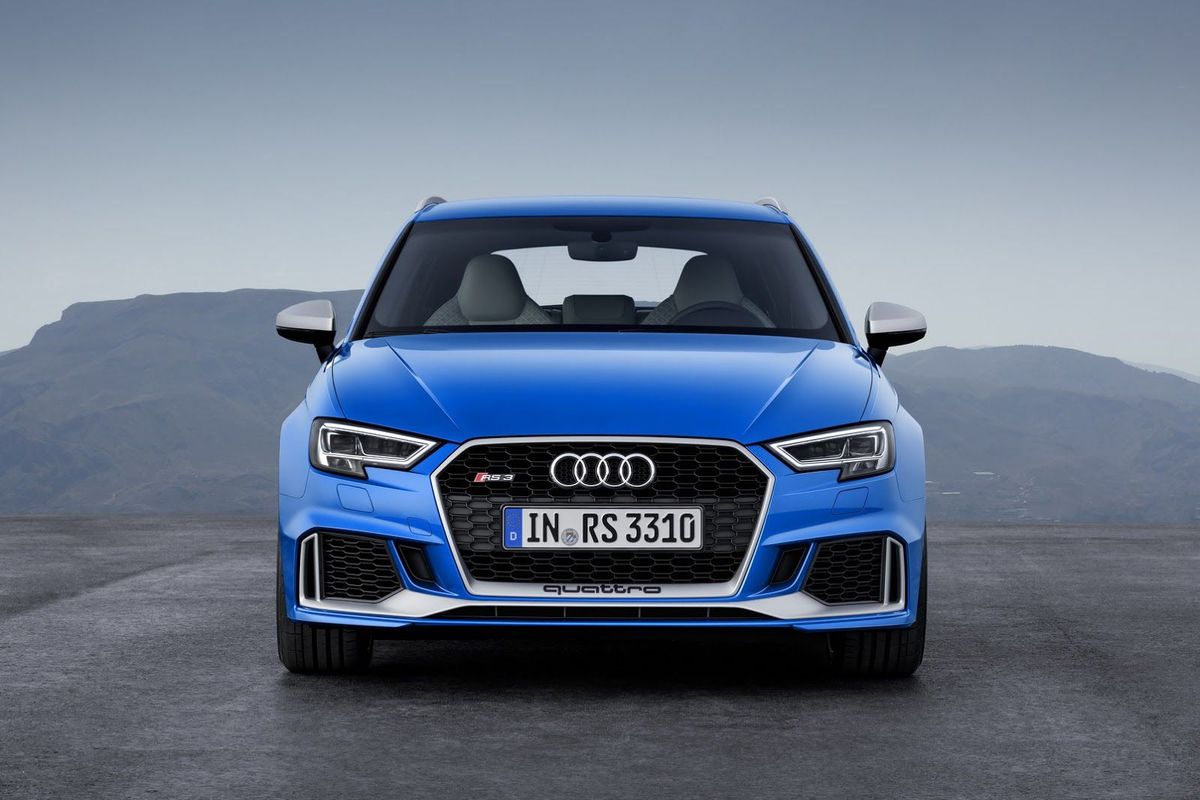
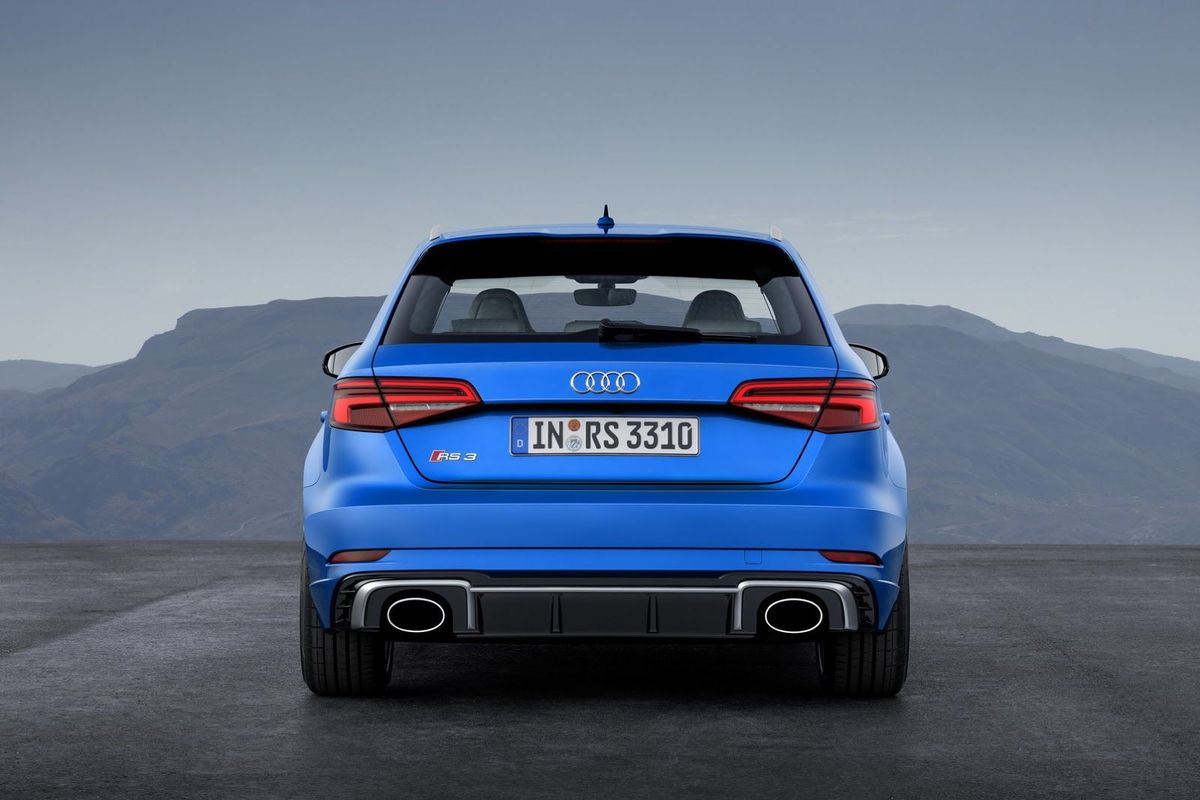
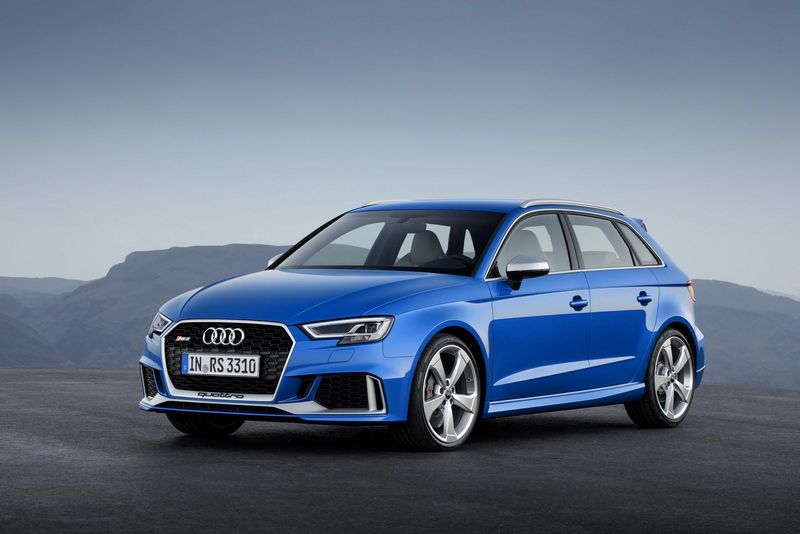
The facelifted Audi RS3 features a few design tweaks that improve the overall design. These changes include new LED headlight units (matrix LED headlights are optional) and a more angular surround seen on the single-frame grille. The front and rear bumpers have been reworked with a redesigned front blade, while the rear diffuser has also been revised. The RS3 also gains a new rear taillight graphic to round off the exterior changes. The RS3 Sportback features an RS roof edge spoiler while the RS3 sedan features an RS-specific spoiler lip on the boot lid. A total of 8 exterior colours are offered for both the RS3 Sedan and RS3 Sportback including Nardo Grey and Catalunya Red.
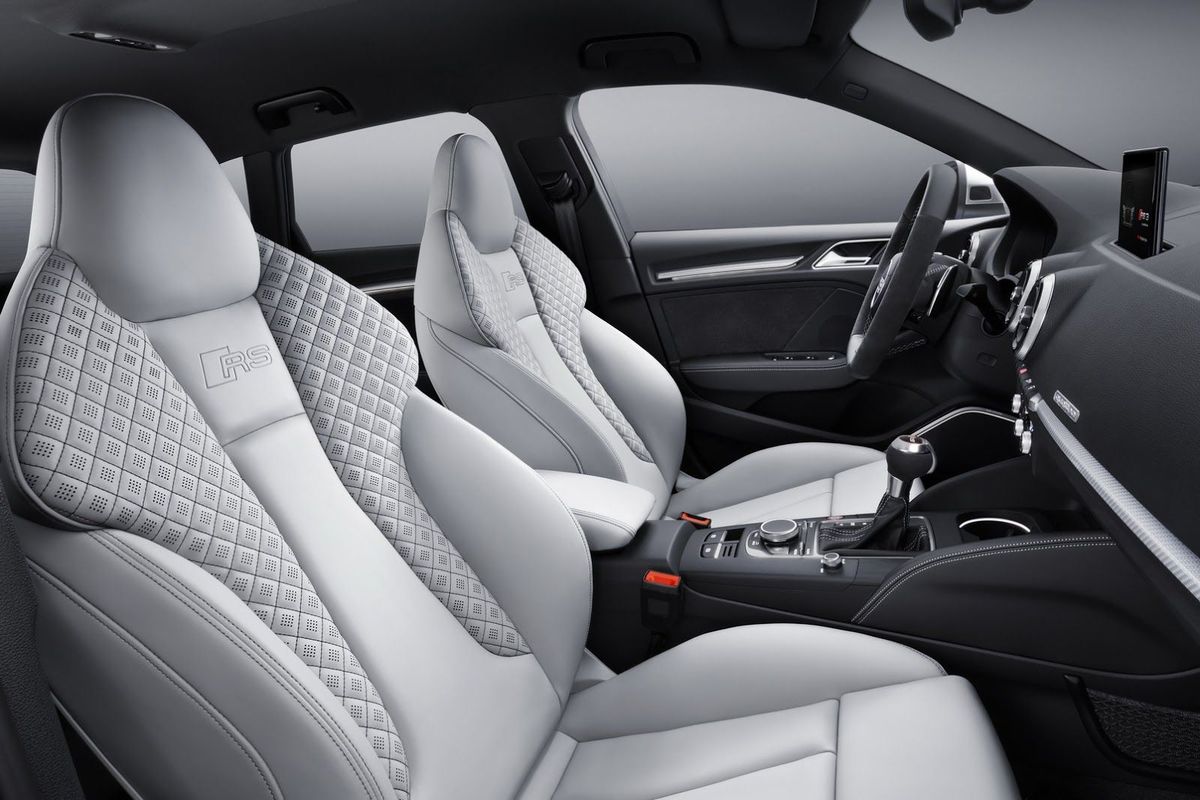
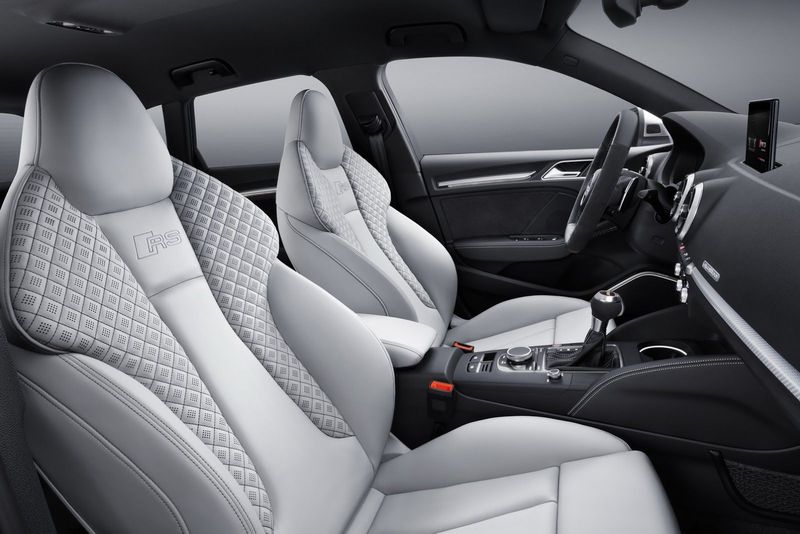
Fine Nappa leather sports seats and an updated infotainment system are but some of the highlights inside the facelifted RS3.
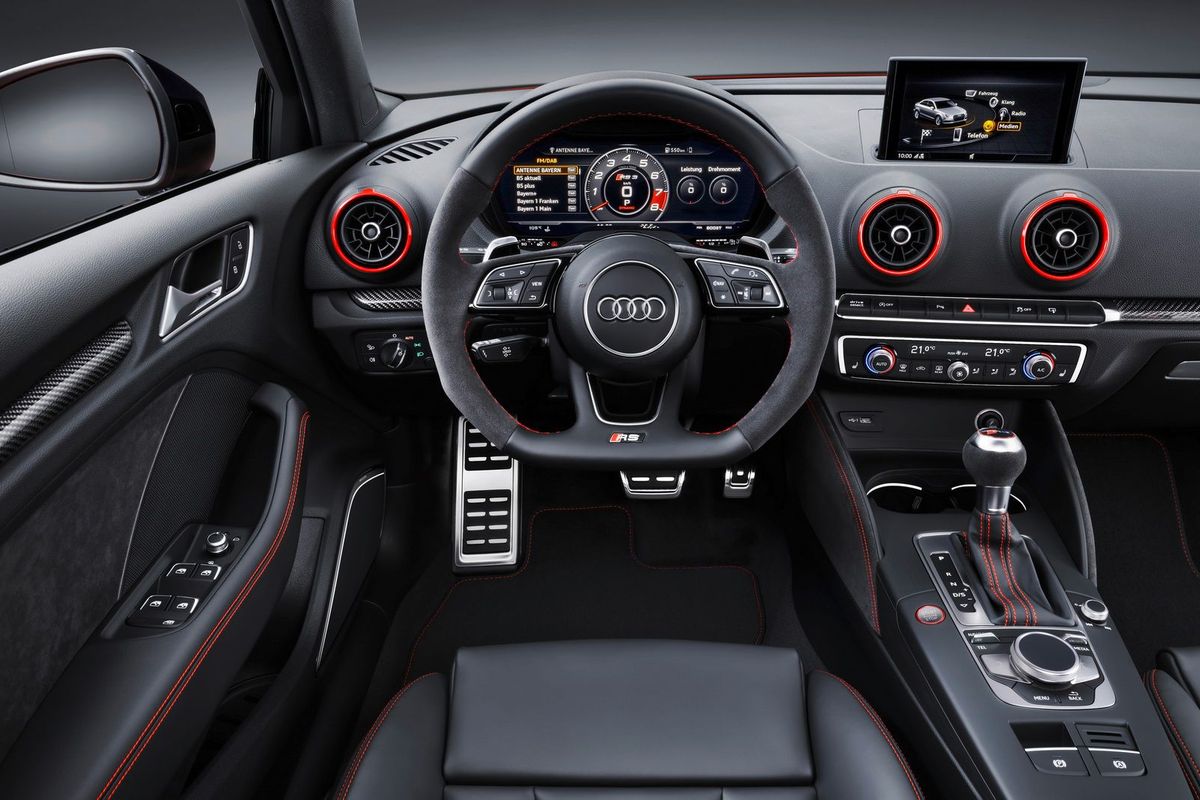
On the inside, the RS3 gains Audi’s Virtual Cockpit which is offered as an option. Nappa leather sport seats now feature a more contoured profile and customers can also opt for RS sports seats with sharply contoured side bolsters and integrated head restraints. An optional RS design package is on offer which includes red accent rings around the air vents and contrasting stitching on the upholstery for maximum effect while the door trim is finished in Alcantara and the footrest and pedals are in stainless steel.
The infotainment system has been updated too with a round rotary/push-button control on the console which has an additional joystick function in conjunction with the MMI navigation. With MMI Navigation Plus with MMI touch, a touchpad is found on the rotary/push-button control. Audi smartphone interface, which integrates Apple CarPlay and Android Auto, is optionally available in conjunction with MMI Navigation Plus. Qi-enabled smartphones can also be charged wirelessly or connected via the car's antenna using the Audi phone box. A 705W Bang & Olufsen Sound System with 14 loudspeakers is also fitted.
Standard Features
The following features are offered as standard for the RS Sedan and RS3 Sportback:
19-inch alloy Audi Sport wheels
4-link rear suspension
Acoustic windscreen
Aluminium matt styling package
Audi drive select®
Audi music interface
Audi sound system
Bluetooth interface
Brake pad wear indicator
Cruise control
Deluxe automatic air conditioning
Driver & front passenger airbag with knee airbag & front passenger airbag deactivation
Driver information system with colour display
Electronic stabilisation program (ESP)
Exterior mirror housings in matt aluminium look
Fine Nappa leather trim with contrasting stitching
Front seats with height adjustment and retractable thigh support
LED headlights & taillights incl. dynamic indicators
Leather-covered multifunction sports steering wheel, 3-spoke, flat-bottomed, with shift paddles
Lighting package
Parking system plus with selective display
Sports suspension
Start/stop system
Storage compartment and luggage compartment package
Tyre repair kit
Pedals and footrest in stainless steel
Progressive steering
quattro®
Rear fog lights
Rear spoiler
RS bumpers
RS sports exhaust system
Scuff plates in door apertures (illuminated)
Separate daytime running lights
Side airbags at front and head airbag system
The RS3 Sedan is now available at all Audi Sport dealerships in South Africa and the RS3 Sportback will arrive in locally in November 2017. Take a look at pricing for the RS3 Sedan and RS3 Sportback below.
Audi RS3 Sportback and Sedan – prices in South Africa
RS3 Sedan 2.5 TFSI quattro S tronic R925 500
RS3 Sportback 2.5 TFSI quattro S tronic: R895 500
Pricing includes a 5-year/100 000 km Audi Freeway Plan.
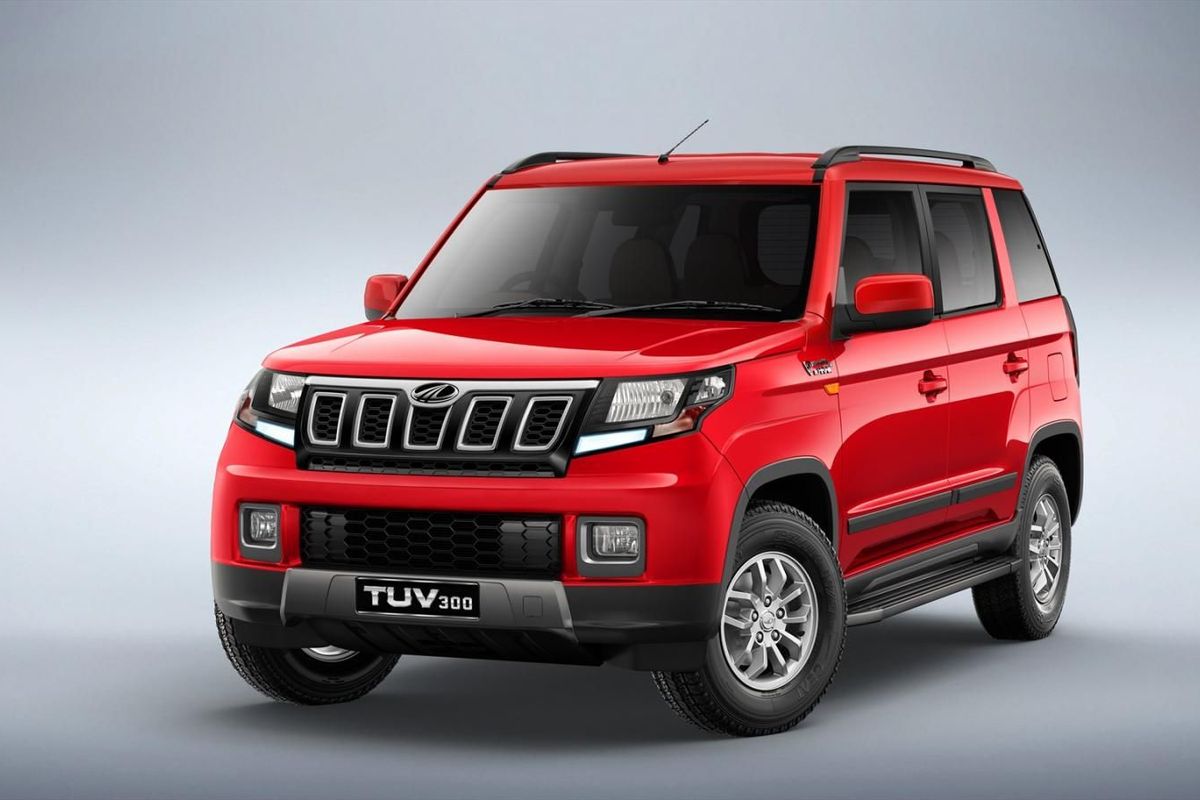
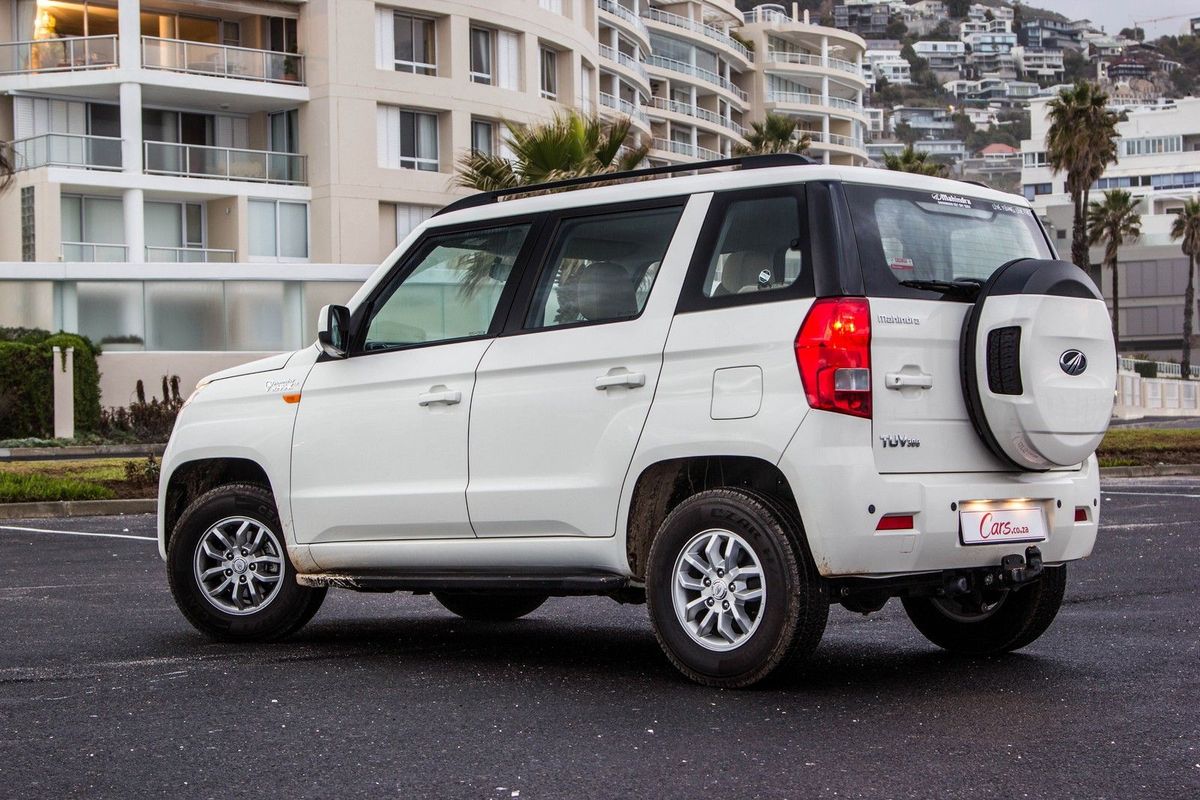
As one of only 2 Indian manufacturers currently trading in South Africa, Mahindra has built a fairly loyal following for their cost-effective and tough but rather agricultural bakkies. The TUV300, however, is Mahindra's third foray into the compact family car market. Does this cut-price 7-seater make for an appealing family car?
We like: Low price, fuel economy, generous boot space, comfortable front seats, generous features as standard, gravel-tackling abilities
We don’t like: Rough diesel engine, interior beige-ness, old fashioned tailgate, stop/start system
Alternatives*
* A note on alternatives: given the TUV300’s low asking price, its unique body-on-frame chassis, rear-wheel drive layout and the physical size of the vehicle, the car does not fit neatly into any particular segment. However, we have compared it to rivals here which offer similar practicality, as that is one of the main concerns for buyers in this segment.
For refinement and 7-seats: Consider the Honda BR-V. The base BR-V is priced at R246 100, just R17 000 more than the TUV300, and offers more car-like levels of ride quality and comfort, 7-seats and an impressive 5-year/200 000 km warranty.
For 7-seats on a budget: The Suzuki Ertiga tries to outdo the TUV300 in terms of interior beige-ness and nearly succeeds. But it remains a spacious 7-seater with a bulletproof little engine, all for under R200 000. Pricing starts at R196 900.
For 7-seats with an established badge on the nose: The Toyota Avanza, in our experience, has build quality issues, but for those interested in a household name, with 7 seats and a decent price tag, the Avanza is a mainstay of the market. Keep in mind that base-spec Avanzas offer very little creature comforts and you’d need to opt for the SX model at around R250 000 to match the TUV300 in terms of spec.
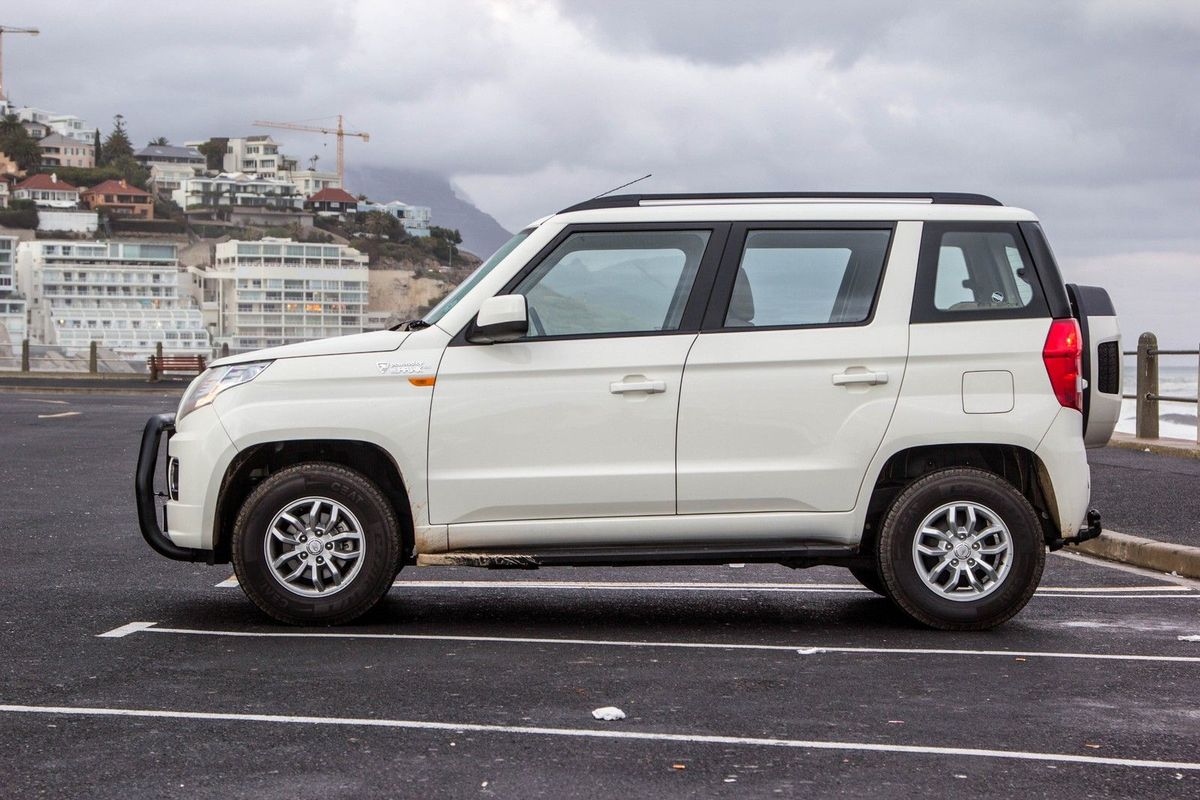
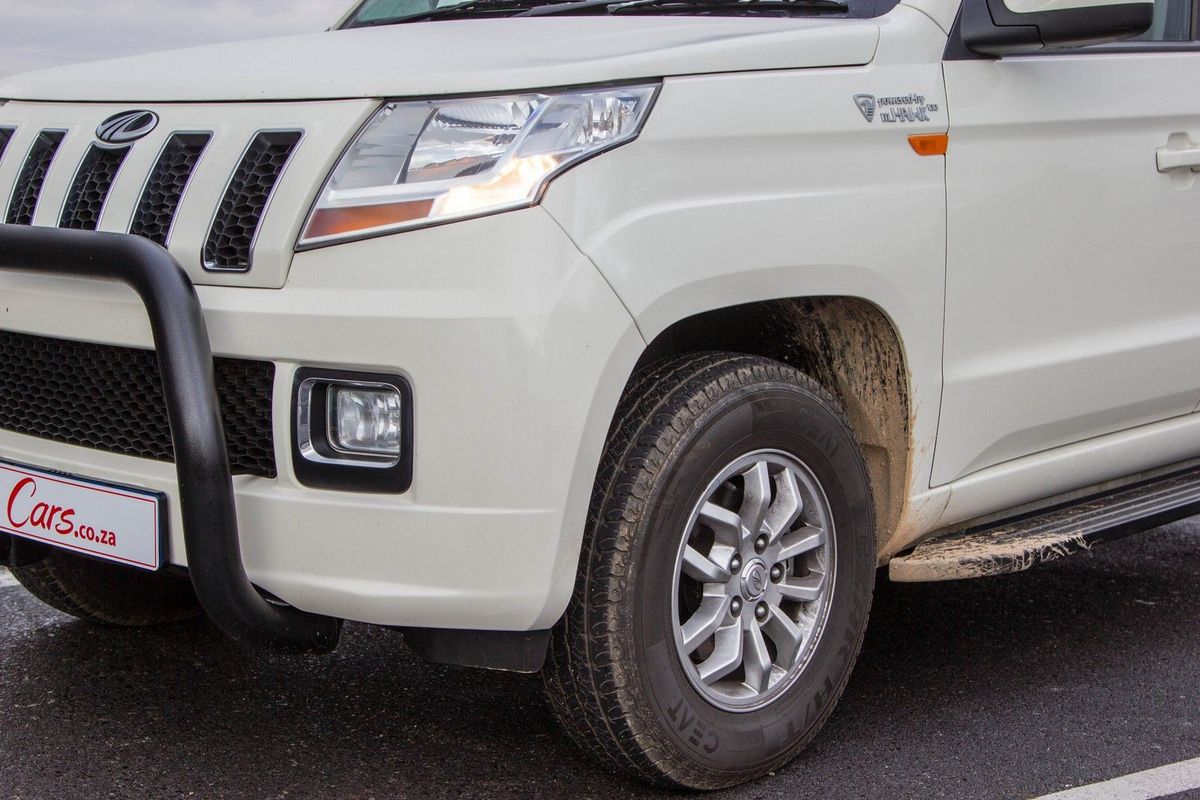
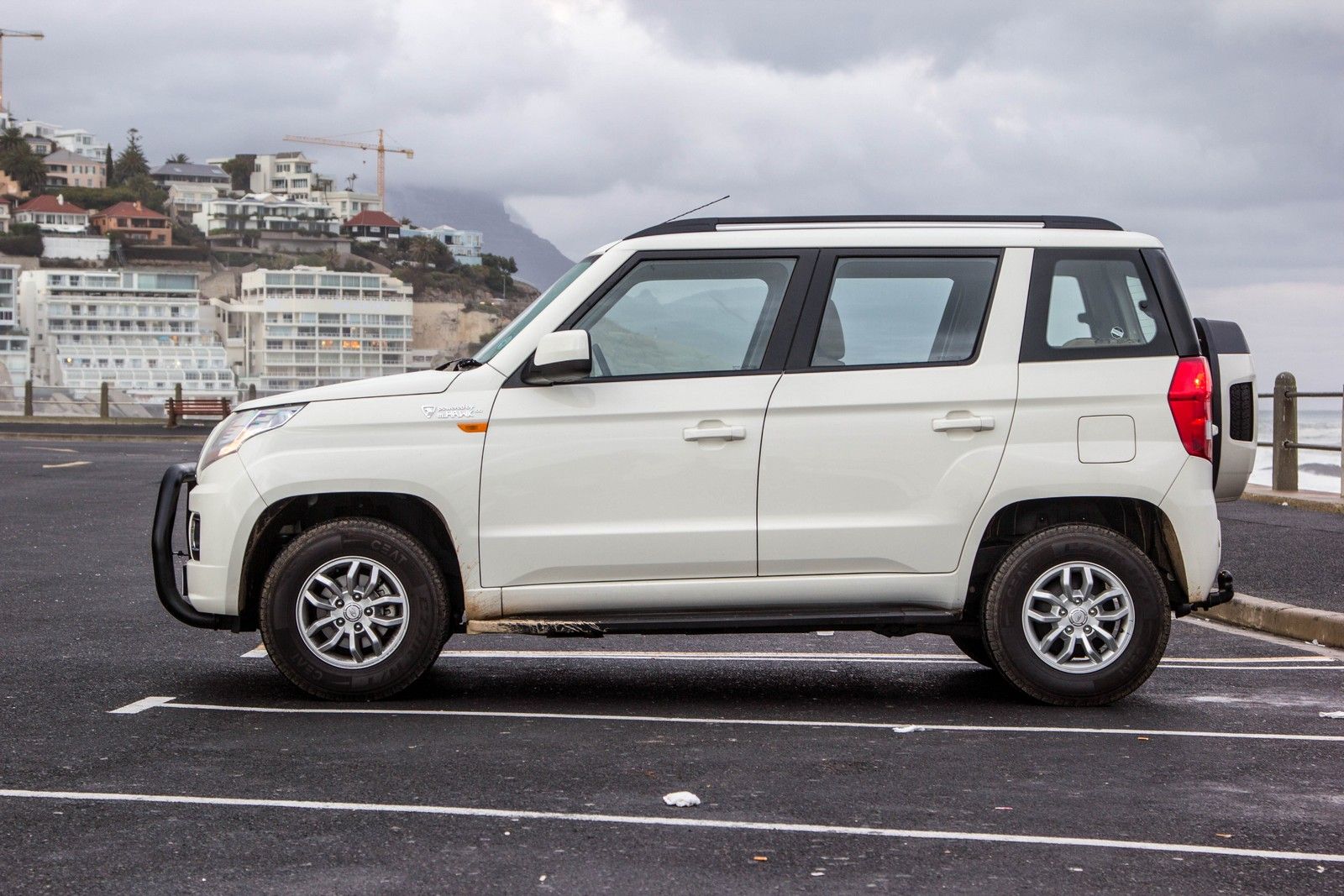
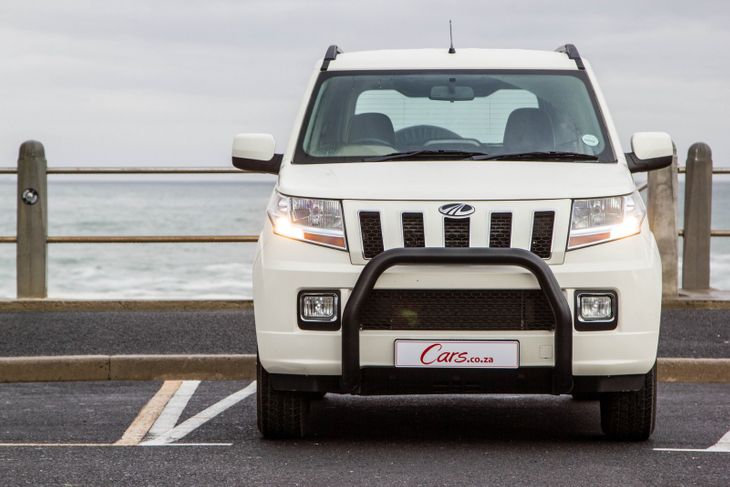
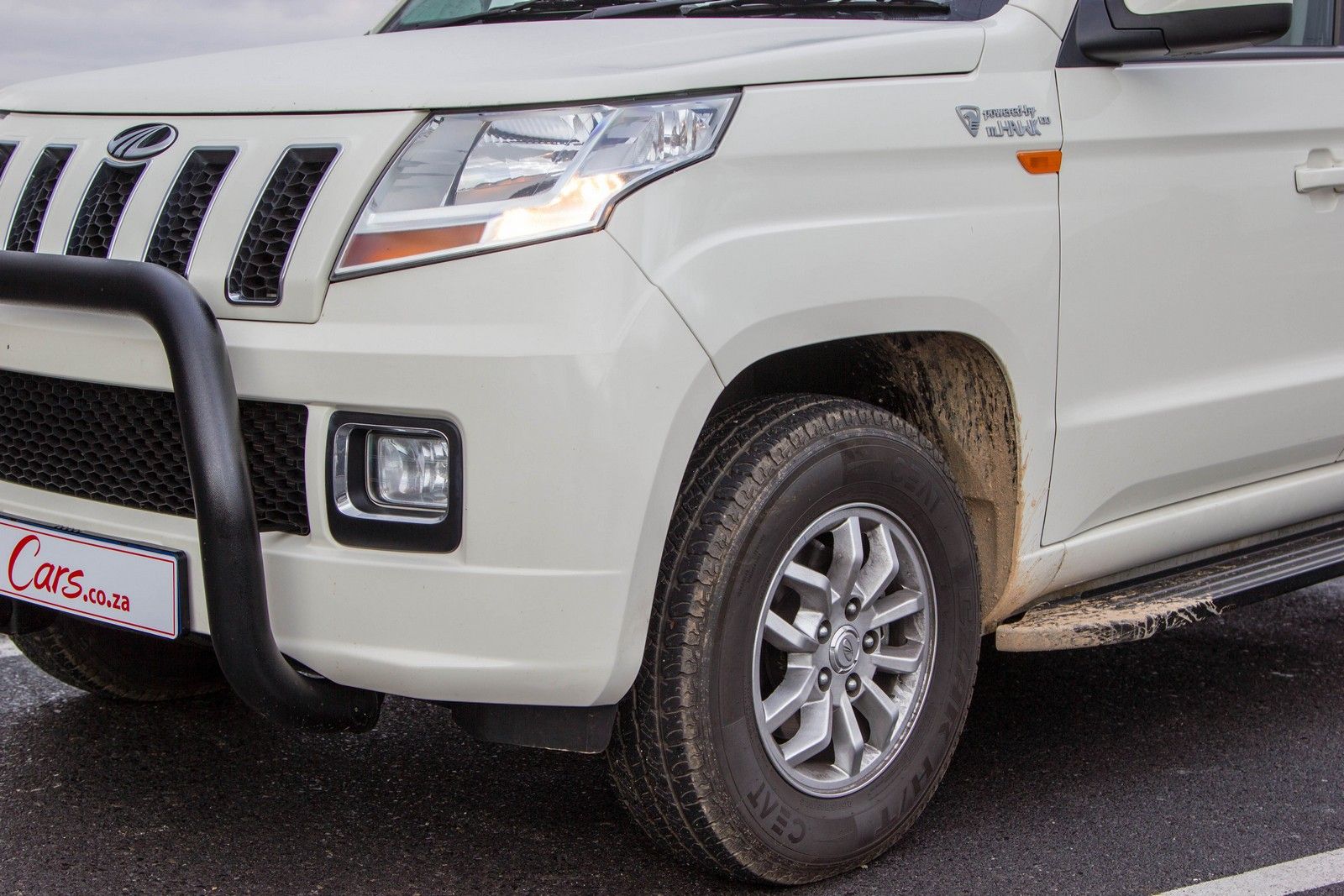
With a body-on-frame construction, the TUV300 is a more rugged offering than the Suzuki Ertiga, Honda BR-V and Toyota Avanza.
The TUV300 is a curious creature. Despite its compact family car dimensions, it shares most of its DNA with the humble bakkie. Foregoing unibody construction for a more robust body-on-frame design, the TUV300 might be more rugged than your average crossover but the downside is fairly agricultural ride quality and moderate levels of noise, vibration and harshness. Over smooth surfaces, the ride comfort is acceptable but as soon as the road surface deteriorates, the chassis and body tend to have a protracted disagreement and the cabin “jiggles”. If you’ve driven bakkies or SUVs such as the Toyota Fortuner, this will feel very familiar.
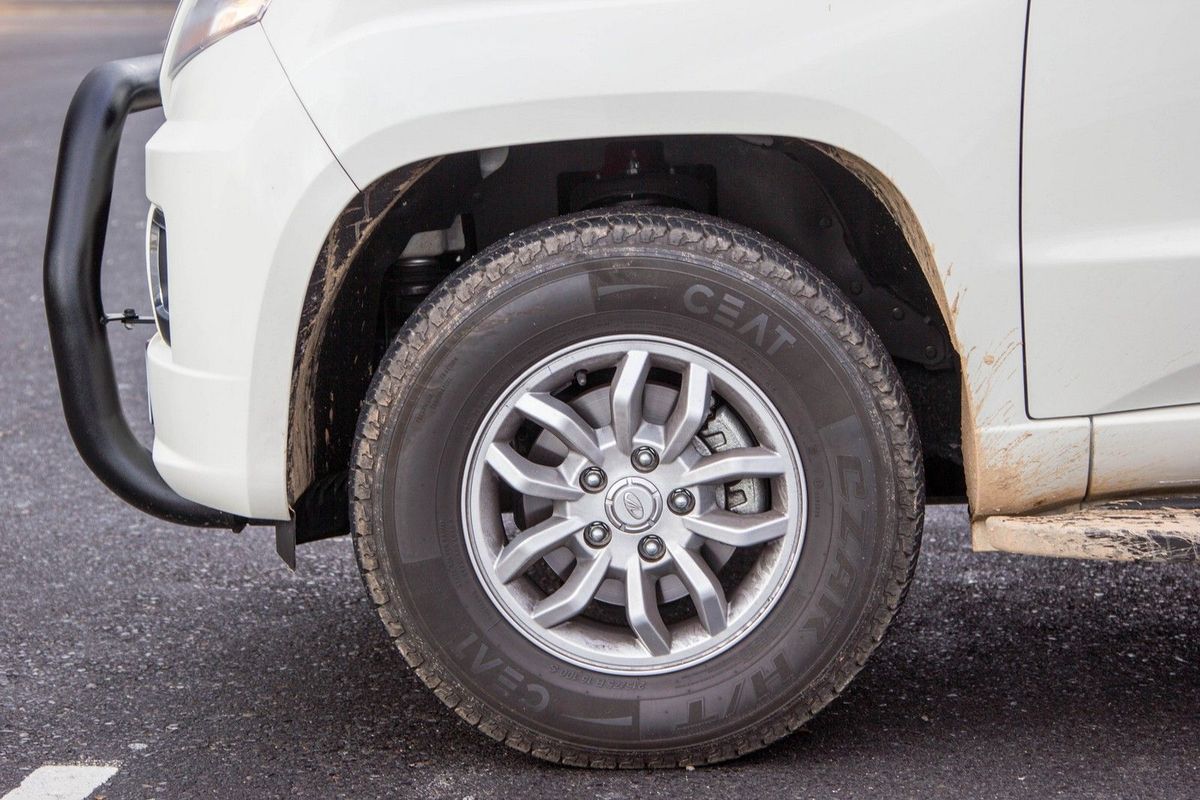
The TUV300 is also rear-wheel drive. In a segment where most cars are simply raised-height, front-wheel drive hatchbacks, some buyers might be pleased by this, as rear-wheel drive is regarded as being more suited to tackling gravel roads. And given the TUV300’s ride height, the car is well suited to this pursuit.
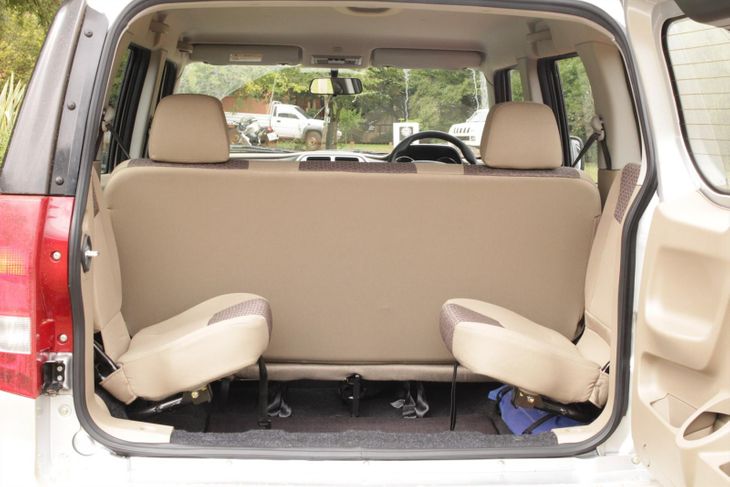
While the car is advertised as a 7-seater, the fold-down, military-style (face each other) rear seats are not fitted with seatbelts. For obvious safety reasons, we advise that you don't use them to transport passengers.
The good
Build quality and standard features
The TUV300 is well-specced with standard features and is sold as an 'all-inclusive' package with no options to tick.
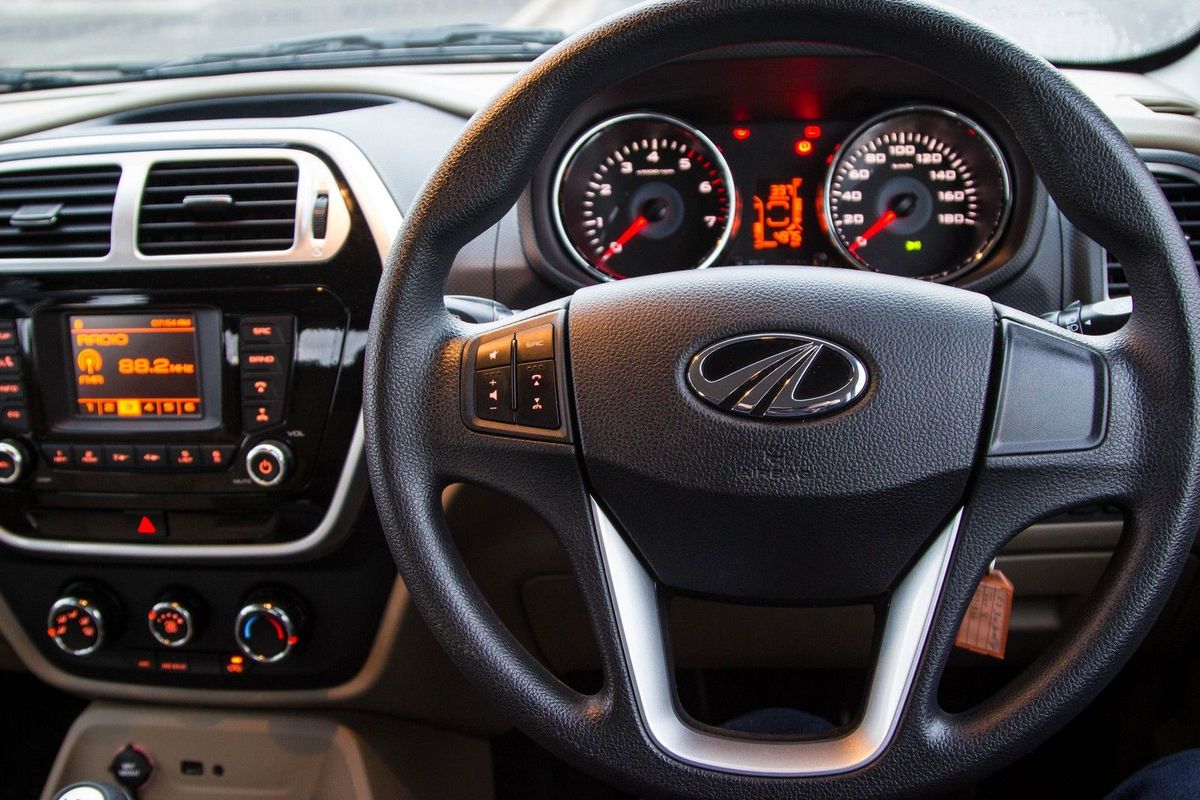
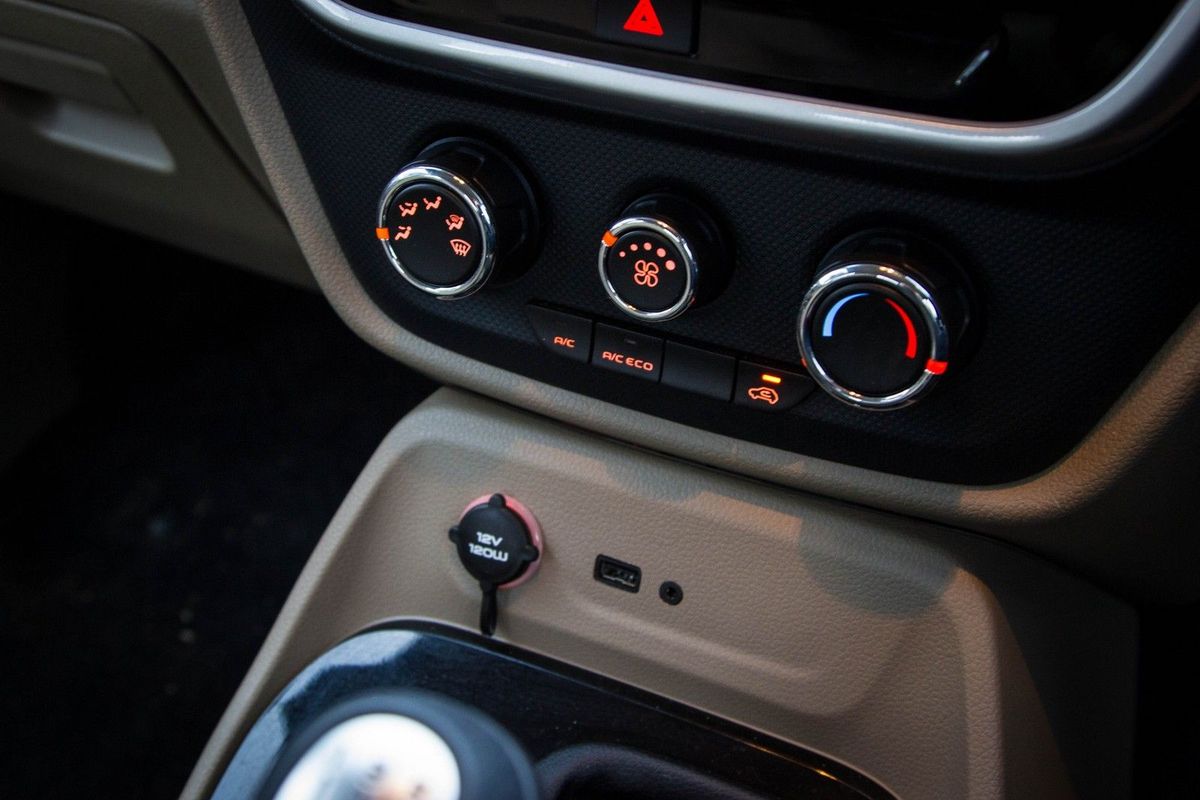
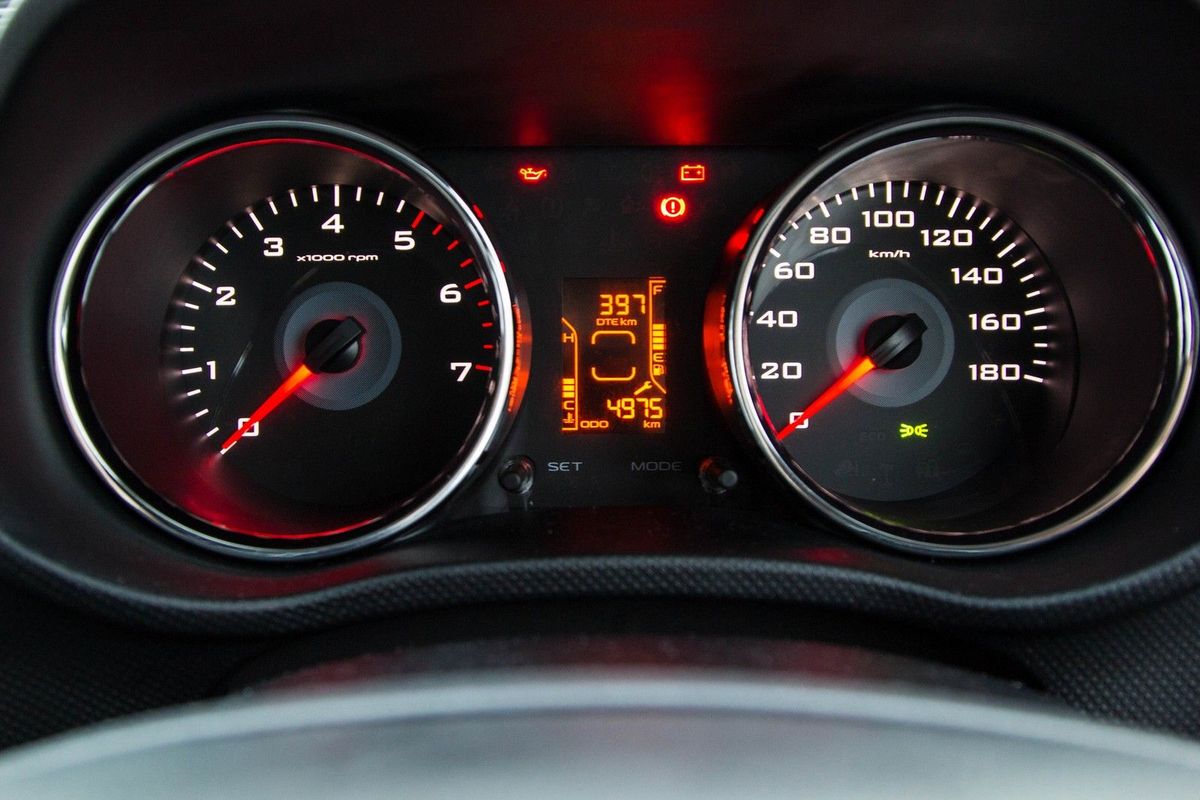
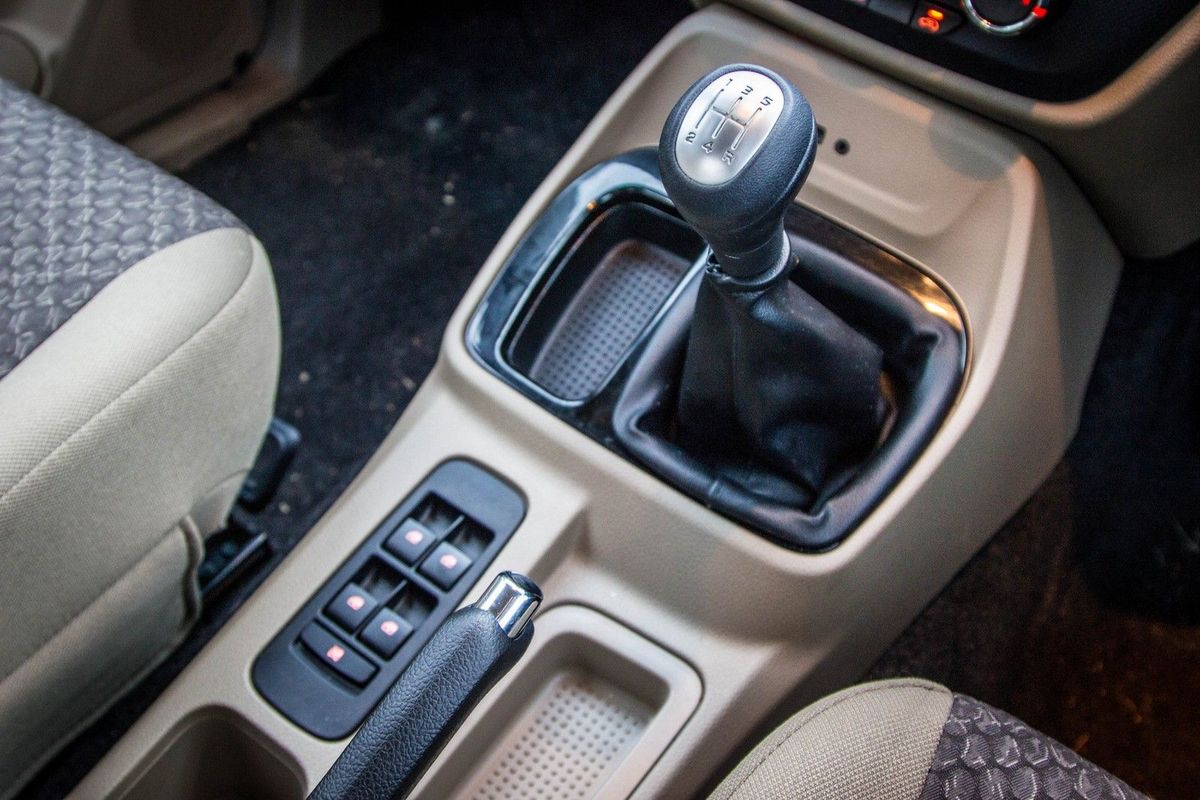
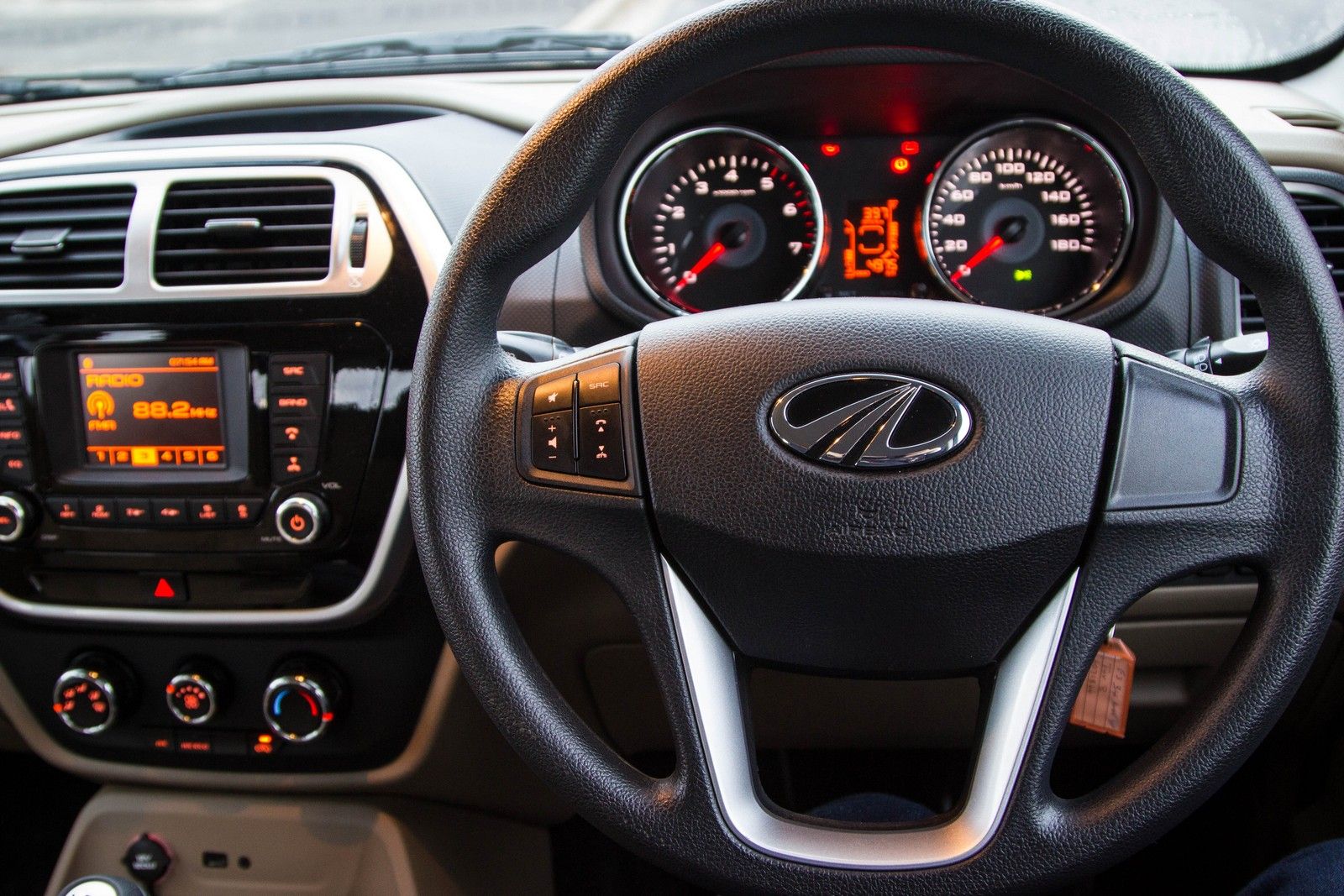
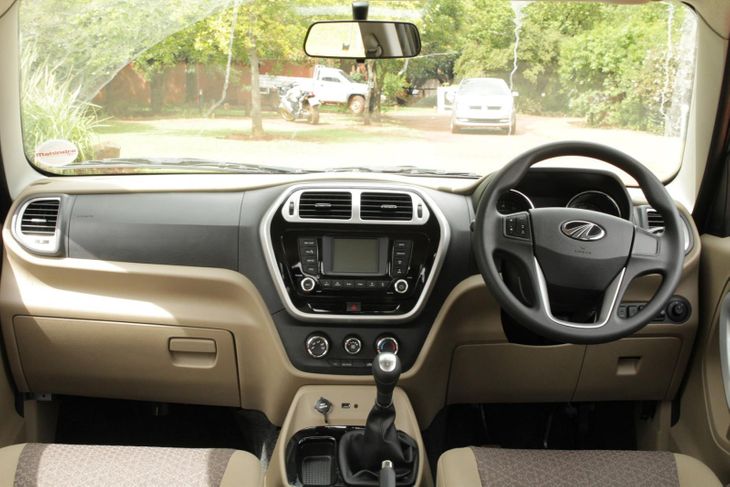
While the TUV300 does feel cheaply made, with hard plastics dominating the cabin, it’s not badly made. Everything feels properly screwed and glued together, and there were no rattles or squeaks to speak of during our test period. The incredible beige-ness of the interior aside, it's actually well-specced. There are no option boxes to tick at all – everything is included in the purchase price.
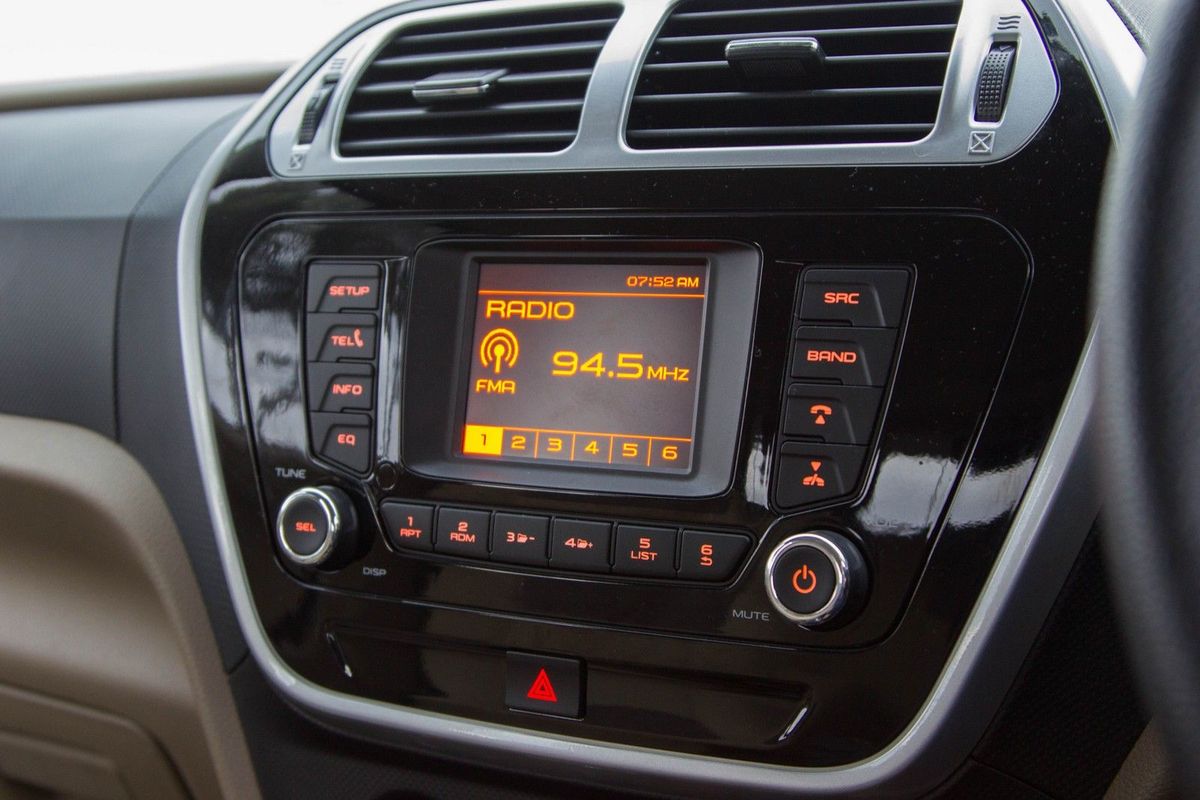
Bluetooth audio and telephony are standard, all controlled from the steering wheel, and the radio/CD player includes an aux jack and USB port. Rear park-distance control is a handy feature but there’s no reverse camera. There’s ample storage space in the cabin and the front seats are particularly comfortable on long journeys, with the driver’s seat featuring a fold-down armrest.
Engine power and efficiency
Performance is adequate in most situations but overtaking will require planning to execute safely.
While the 3-cylinder, 1.5-litre turbodiesel engine does sound quite gruff, it’s no worse than a similar turbo-diesel from, say, a Toyota Fortuner. And it doesn’t have the typical unbalanced feel of a 3-cylinder; if no one told you it was a 3-cylinder, you probably wouldn’t notice.
Power and torque is quoted at 74kW and 240Nm and while that power figure seems a little low, the torque more than makes up for it. The engine develops its torque smoothly and the power band does feel quite wide for a turbodiesel. As long as you don’t stab at the throttle, the TUV300 actually makes brisk progress in urban areas and is competent at highway speeds. Overtaking manoeuvres, however, need to be planned carefully as it’s not the sort of car that can spontaneously sprint past slower moving traffic.
Practicality
The 2 rear seats are not the most comfortable to sit on but rather serve as emergency seating should you require them.
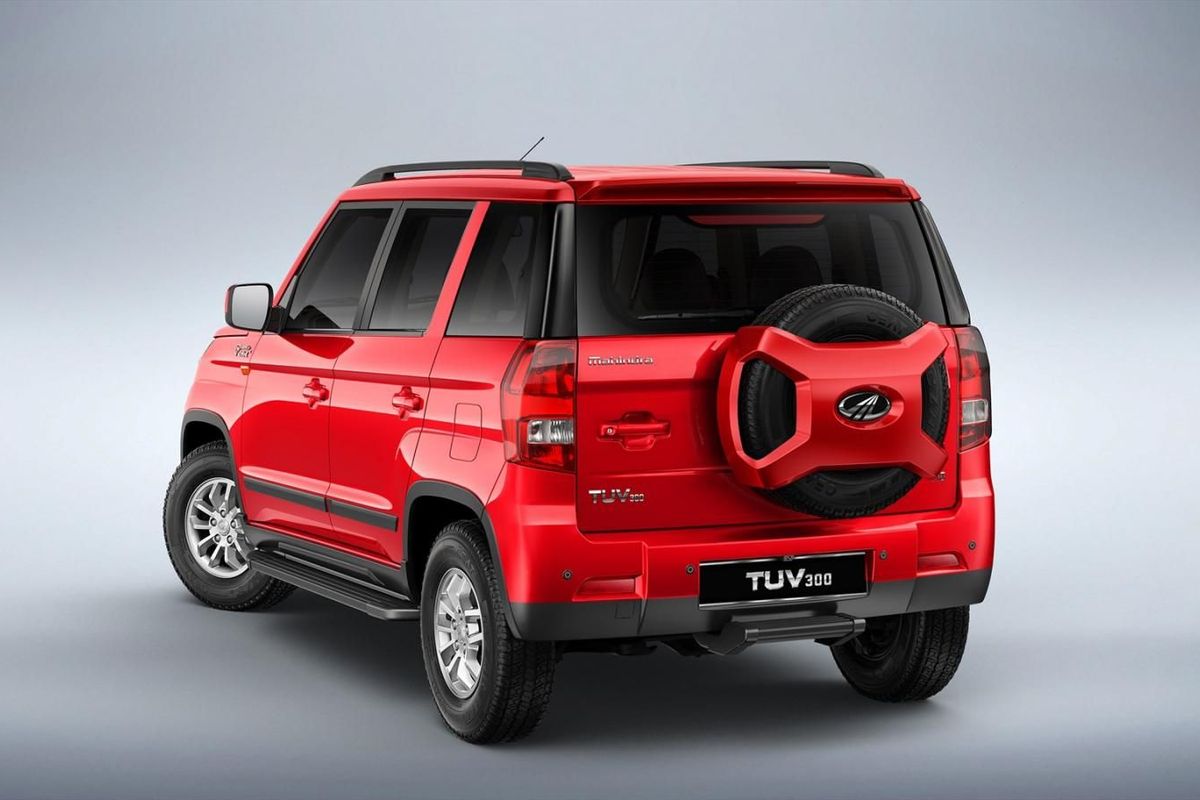
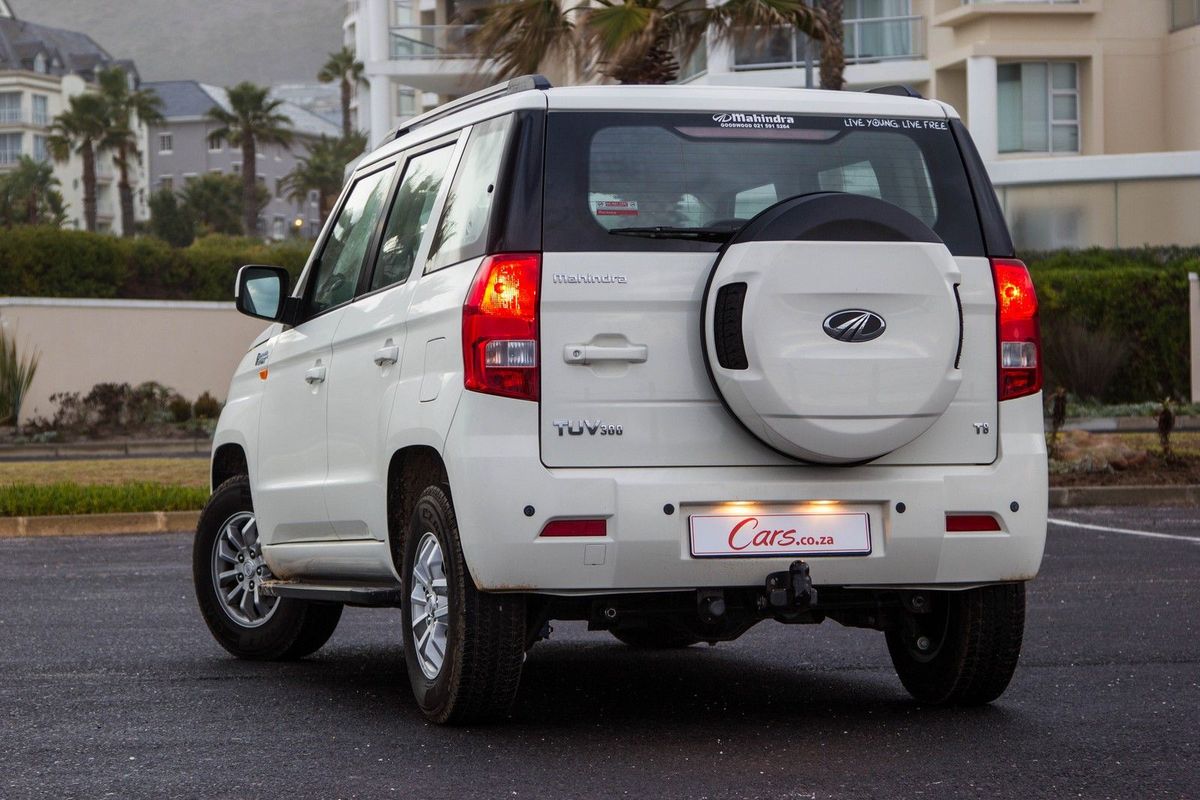
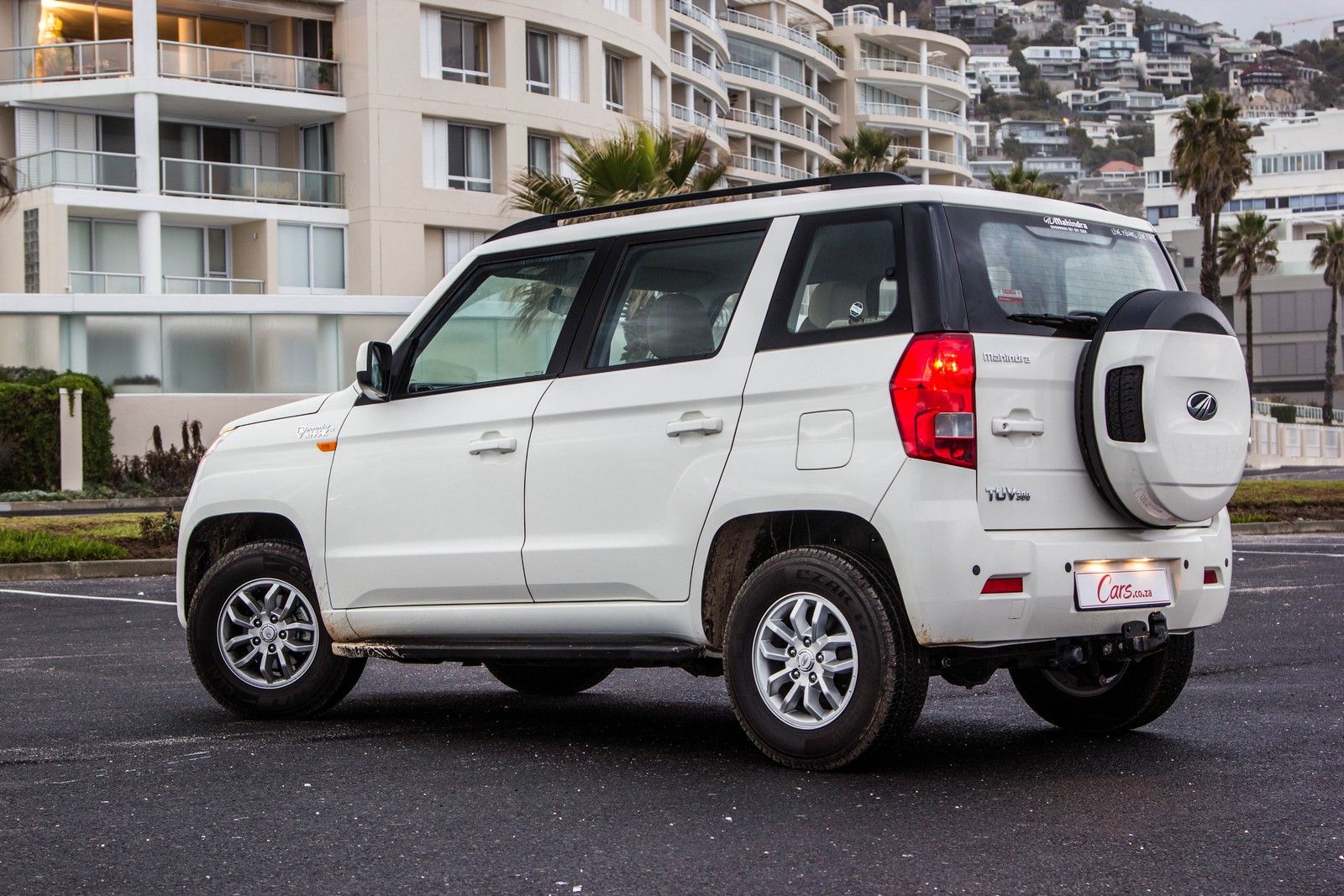
The TUV300 offers generous interior space, and, in particular, boot space. The rear bench can easily accommodate 3 adults side-by-side, but take note that there are no ISOFIX child seat mounts. The spare wheel is mounted on the back of the car (protected by a hard plastic cover in body colour) and as such, the boot space is especially deep – buyers should have no trouble throwing in children’s bicycles and a month’s worth of groceries. Of course with the rear seats folded down into place, this does essentially negate the boot area, which is a downside.
The purchase price also includes a tow bar, very handy for bicycle racks and of course trailers. The TUV300 feels like it should cope with everything up to a light caravan.
The not-so-good
The engine, gearbox, clutch and its stop-start system
While the engine’s vibration and sound levels are acceptable when compared to the average bakkie, in this segment, those characteristics are woefully behind the competition in terms of audible engine noise and refinement. Additionally, although the engine is a newly developed powerplant, shared by Mahindra and Ssangyong, the engine is only Euro2 compliant – an emissions regulation standard which was forced on the European market in 1999. Europe is currently on Euro6.
Beige is, unfortunately, the only interior colour on offer.
But the biggest bugbear with the engine is the stop/start system, which cannot be disabled. When the car comes to halt, and as long as the driver’s foot is off the clutch, the engine will cut out. This is the only time one feels the effects of a 3-cylinder motor – the car shimmies from side-to-side as the engine shuts down. This is fine in principle but restarting the engine in practice is unnecessarily tricky. In theory, the driver simply needs to depress the clutch. However, if the driver engages the clutch and selects first gear simultaneously, the engine will not restart. This left this tester marooned at intersections on a number of occasions. Of course, the long-term owner will adjust to this foible, but I found it particularly irksome.
The beige
It’s very, very beige in there, and there is only one interior trim available.
Pricing and Warranty
At R229 995, the TUV300 fits that old adage: a lot of car for your money. With no options boxes to tick, that is the price you’ll pay, potential discounts excluded. The car is sold with a 3-yearr/100 000 km warranty and a 3-yearr/90 000 km service plan, with service intervals of 20 000km.
Although it lacks refinement, the TUV300 is an affordable, fuss-free SUV option.
Verdict
The TUV300 represents something very unique in a segment filled with soft-roaders and crossovers. Its rear wheel drive layout, ride height and robust chassis separate it from other offerings.
However, those same characteristics make it a relatively agricultural car to live with in the city. There are simply much more refined alternatives available, albeit generally at a higher price. However, for those living a more pastoral lifestyle, perhaps in a more rural area, especially with gravel roads to traverse, the TUV300 makes for an interesting option; it does feel like it can handle a rough-and-tumble lifestyle. Its no-nonsense interior and affordable price tag mean that you probably won’t treat the car as a precious asset, and you probably won't be too bothered with the kids and dogs having their way with the beige interior either.
If you are looking for a cut-price people mover with bakkie credentials, this could be the oddball hybrid you’ve been waiting for.
Watch the video review of the Mahindra TUV300 1.5 CRDe T8 below:
BMW M240i with M Performance Parts (2017) Video Review
The M240i is a relatively lightweight, rear-wheel-driven coupe that looks the business and has a cracking turbocharged 3.0-litre straight-6 up front – it's essentially everything that the world's petrolheads love about the Bavarian brand.
The M240i that was supplied to us for review had a few special bits and pieces added on, sourced from BMW's in-house M Performance parts department. And these nice touches add tastefully to the visual appeal of the car.
Join us as we take the M240i to one of our favourite mountain passes outside Cape Town to find out what this visceral car is all about.
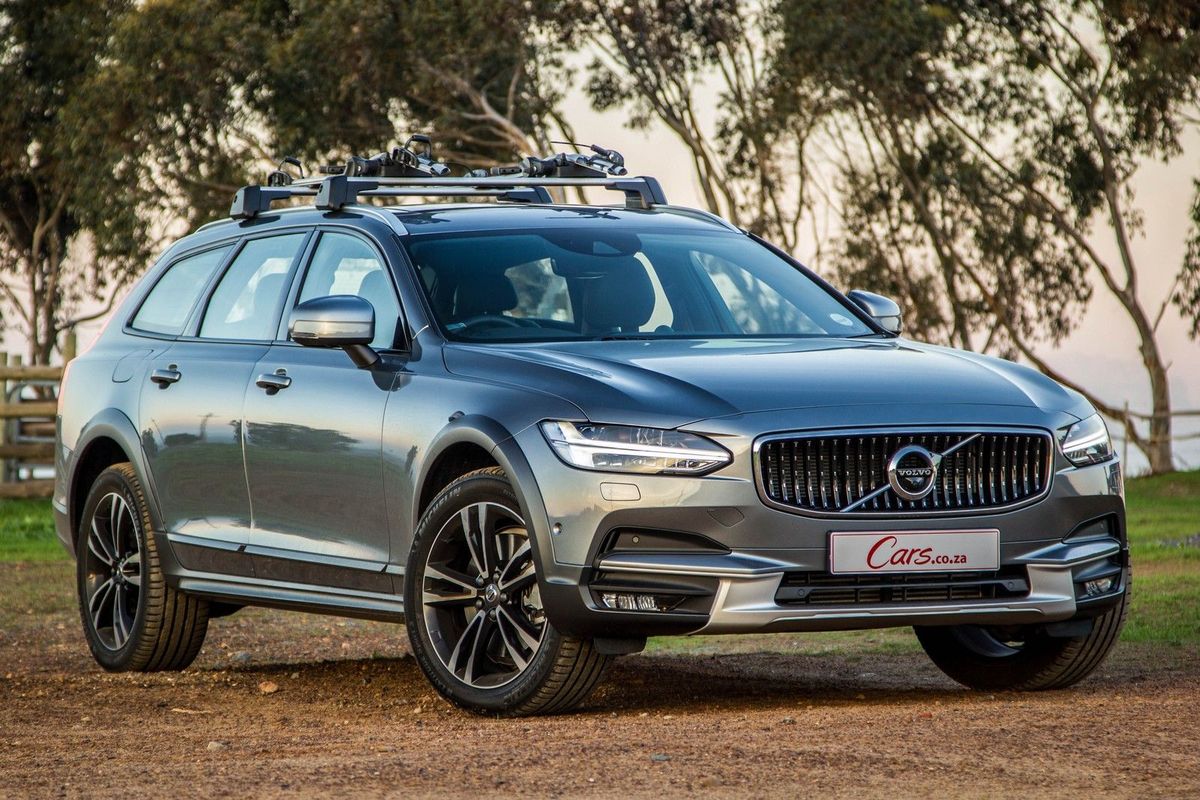
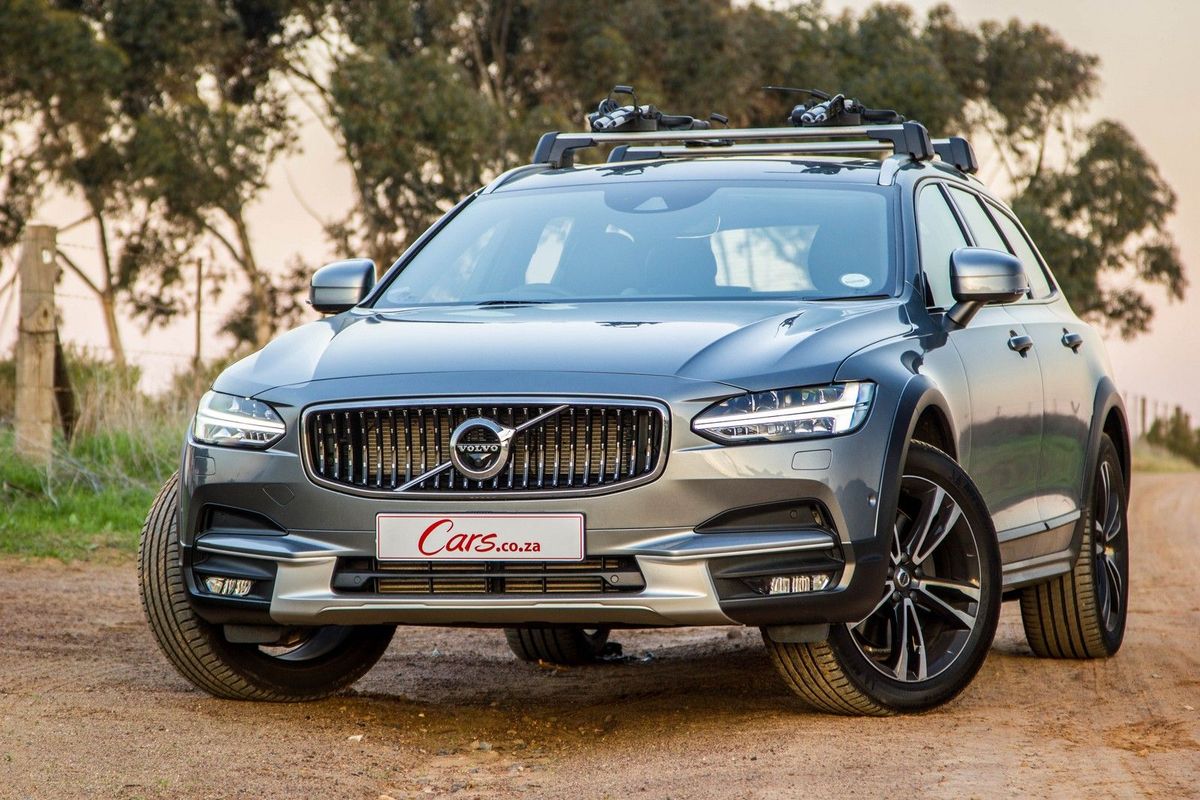
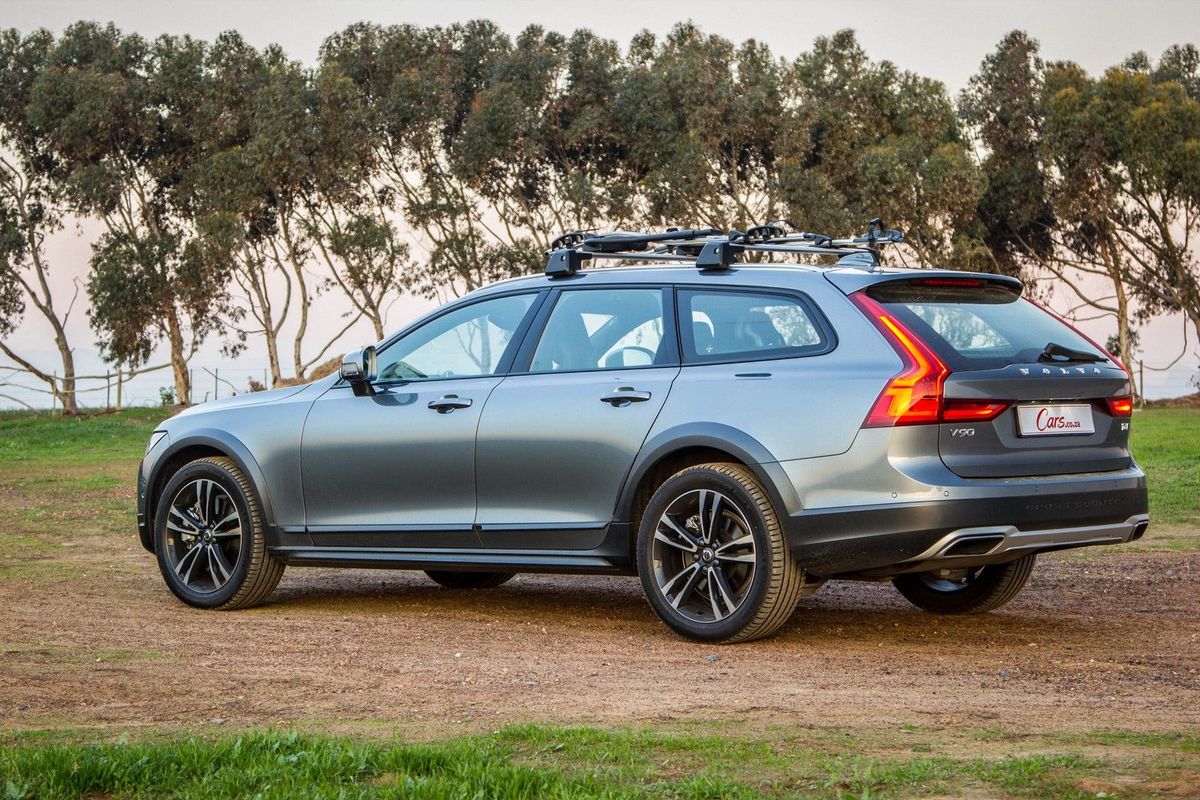
Volvo has opted to bring only its raised V90 – the Cross Country – to South Africa, a market in which wagons are usually shunned in favour of SUVs. We test out this raised station wagon that may just represent the perfect compromise between an executive sedan and a mild off-roader.
We like: Styling inside and out, comfortable, dirt road capable.
We don’t like: Low down power delivery, low-speed ride quality.
Alternatives:
With no real competitors, we had to think outside the box a bit here.
Most road-biased SUV on the market: The Jaguar F-Pace 25t AWD R-Sportis similarly proportioned to the V90 CC, the 25t is a gutsier engine than the Swede's, but it is much thirstier in real world application.
Mid-sized sports activity vehicle: TheBMW X4 xDrive28i xLine looks a rugged enough, is all-wheel driven and sports a turbocharged 2.0-litre engine. Slightly more design focused than the X3, but must be nearing replacement soon.
Yet-to-be-released Japanese 'wagon: Subaru Levorg is apparently still headed to SA with a 197 kW/350 Nm flat-four turbo, but we won't see it until 2018.
Or you could wait until mid-2018 for the Volvo XC60…
What is it?
Volvos of yore had certain characteristics: they were spacious, practical and safe. If they looked like bricks, it was a bonus. New generation Volvos (the best examples of which are the 90 series sedan, 'wagon and premium SUV, plus the new XC60 executive SUV) are starkly different… They're stylish, characterful and at the forefront of modern technologies. But wait, what do we have here? An all-new Volvo that's spacious, practical, very safe and shaped like a chiselled brick.
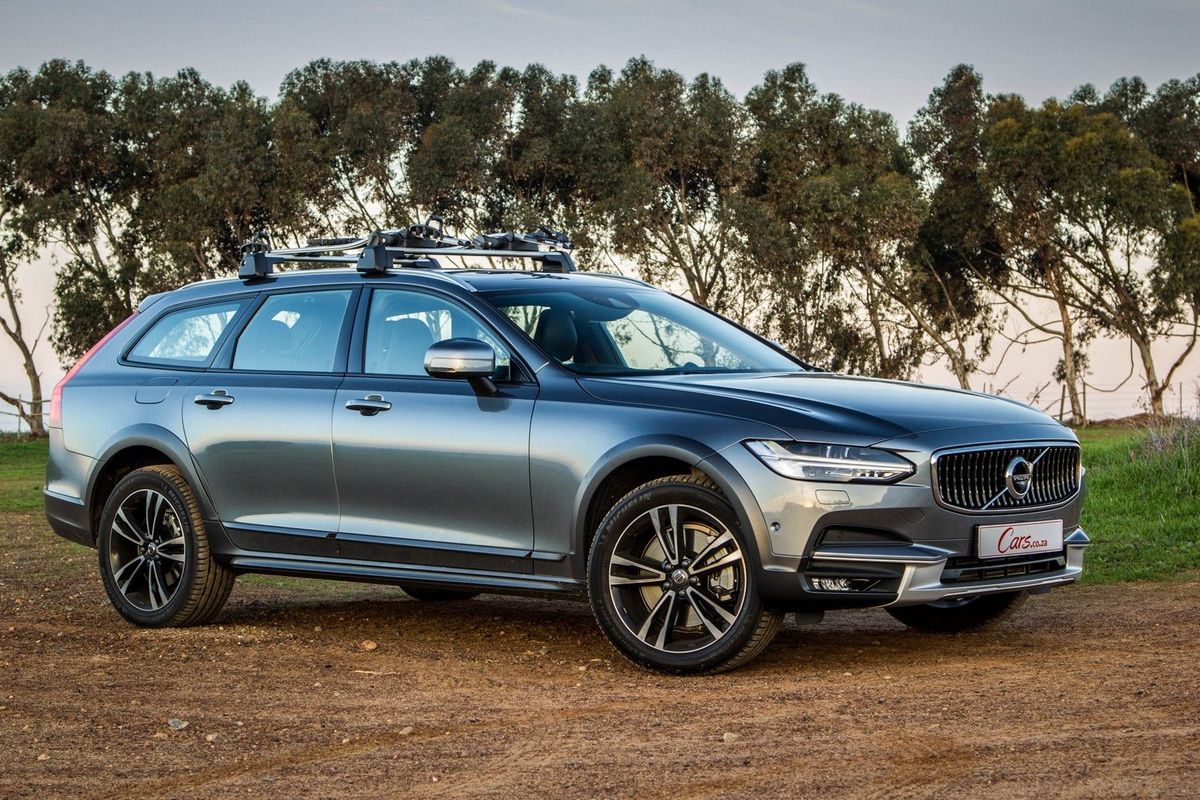
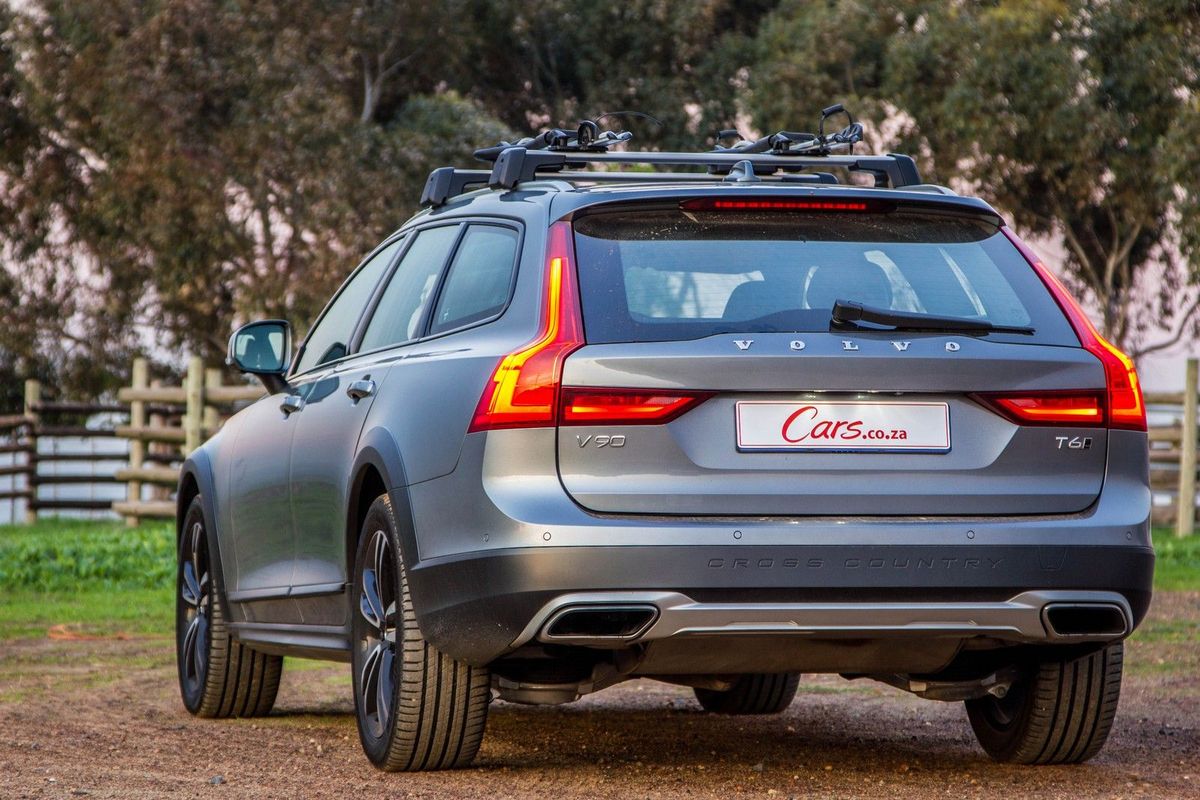
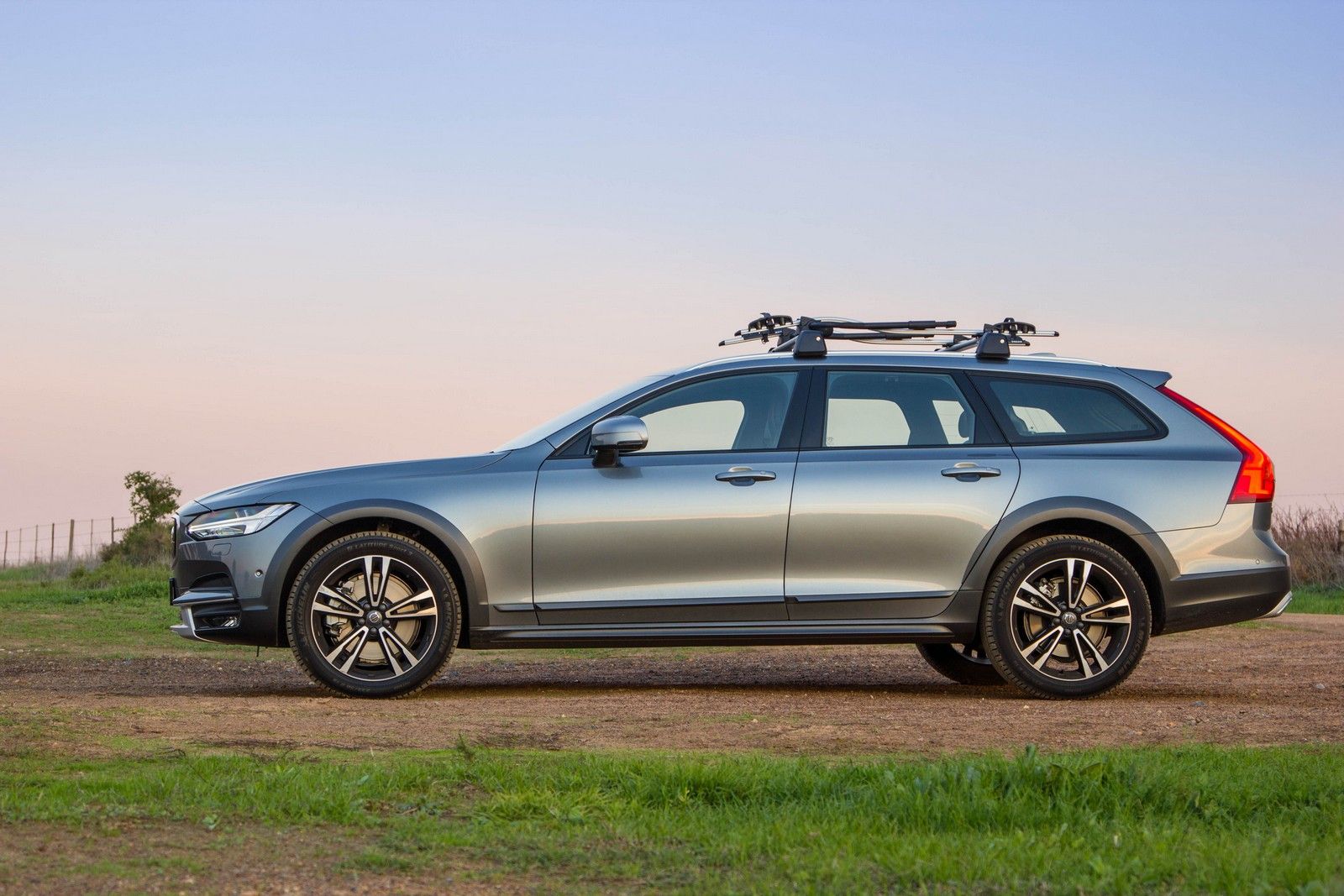
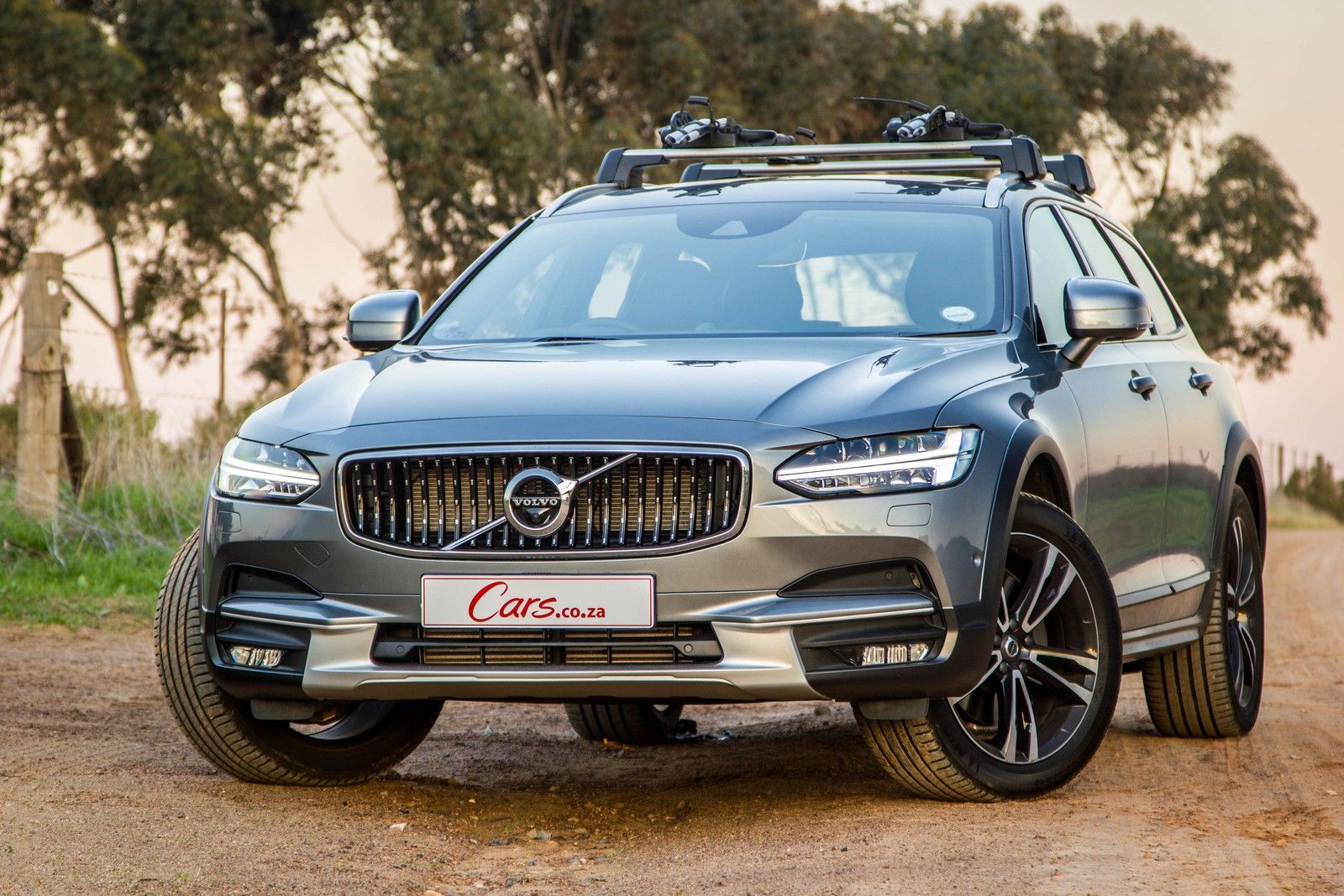
Granted we’re being a bit harsh on the V90 Cross Country (CC): it’s a very, very good-looking brick. The 90 nomenclature denotes the wagon's shared platform with the S90 and XC90 – the brand’s first all-new products since it came under the custodianship of Geely. And the CC tag means that it gets an additional 60 mm of ground clearance over the standard V90.
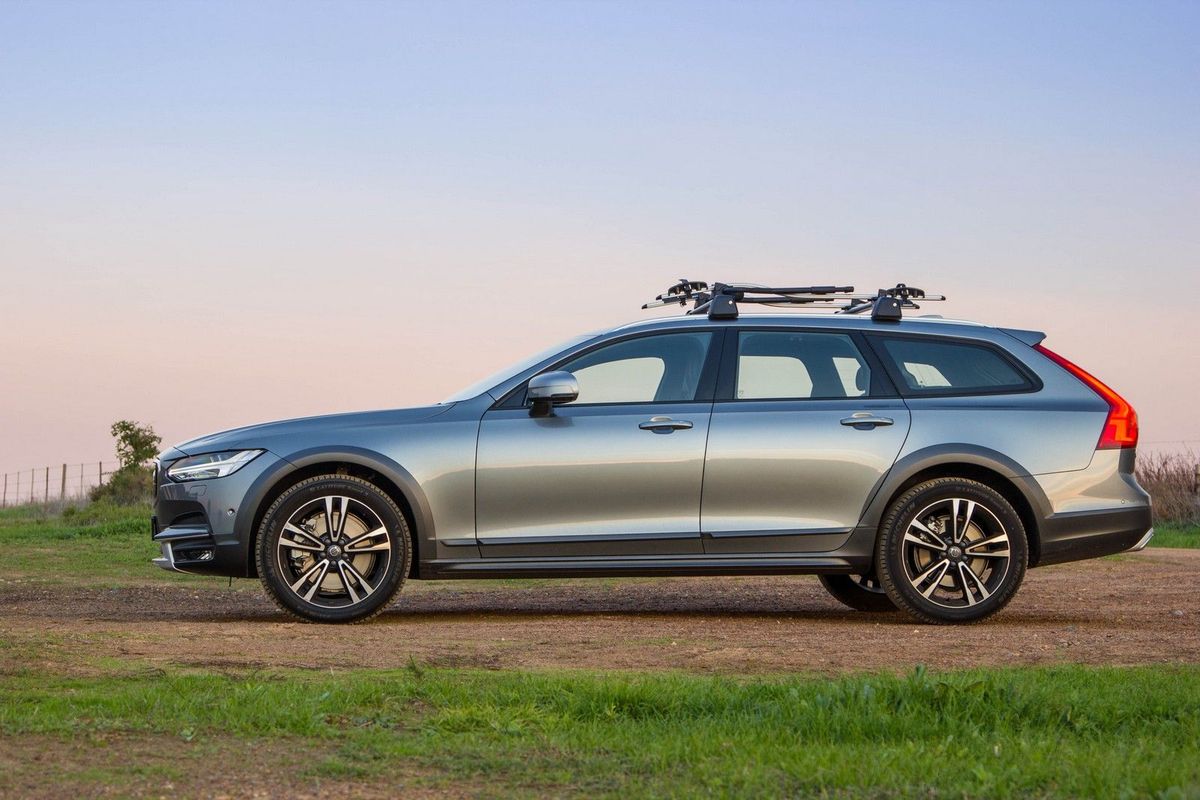
The V90 CC is raised by 60 mm over the standard model (taking it to 210 mm). That's more than a BMW X4 and similar to an F-Pace.
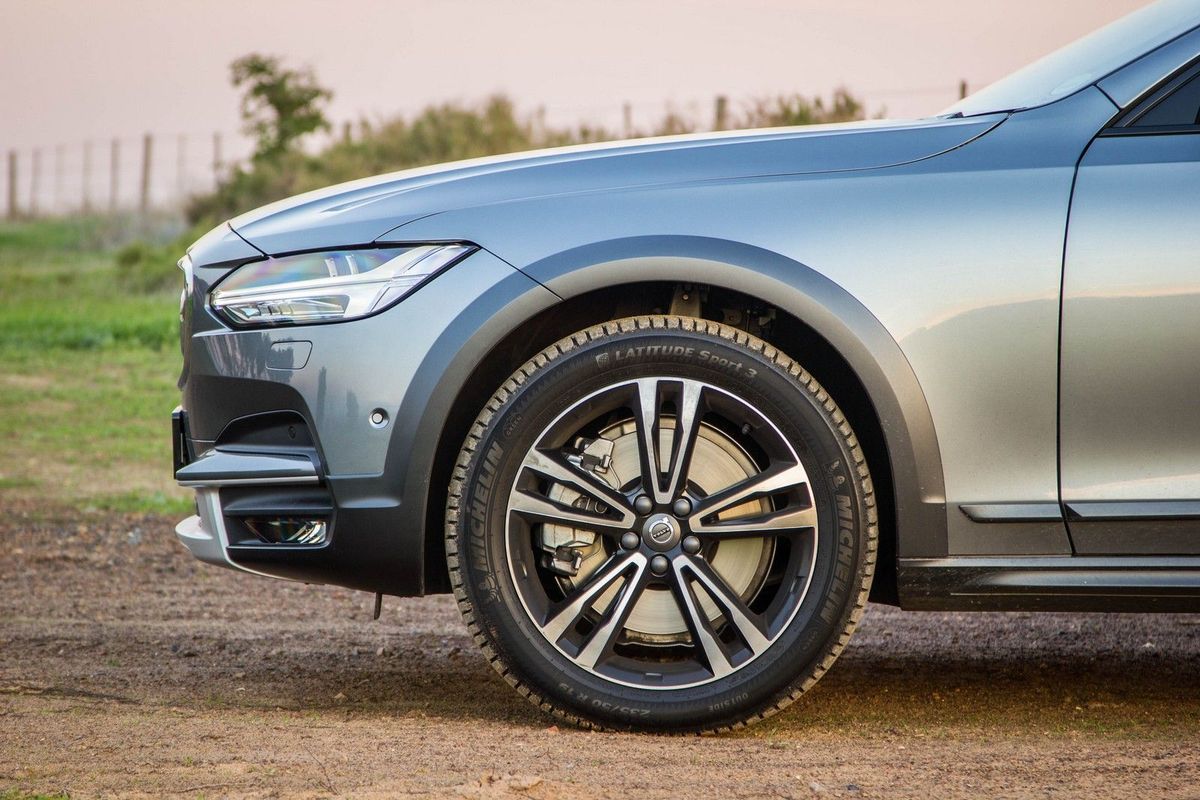
It’s not just a raise though, Volvo has tried to make this a proper all-purpose wagon. The tyres have been upgraded to deliver a more comfortable ride when you venture off-road and multiple electronic systems that control stability and ride handling have been tinkered with to improve the V90 CC’s handling specific to its intended use.
Our model is the very top-spec V90 CC currently on offer. The T6 is powered by a 2.0-litre turbo and supercharged petrol engine. It delivers 235 kW and 400 Nm through an 8-speed automatic transmission. The all-wheel-drive system is predominantly front-wheel drive, but when required, can send 50% of the power to the rear wheels.
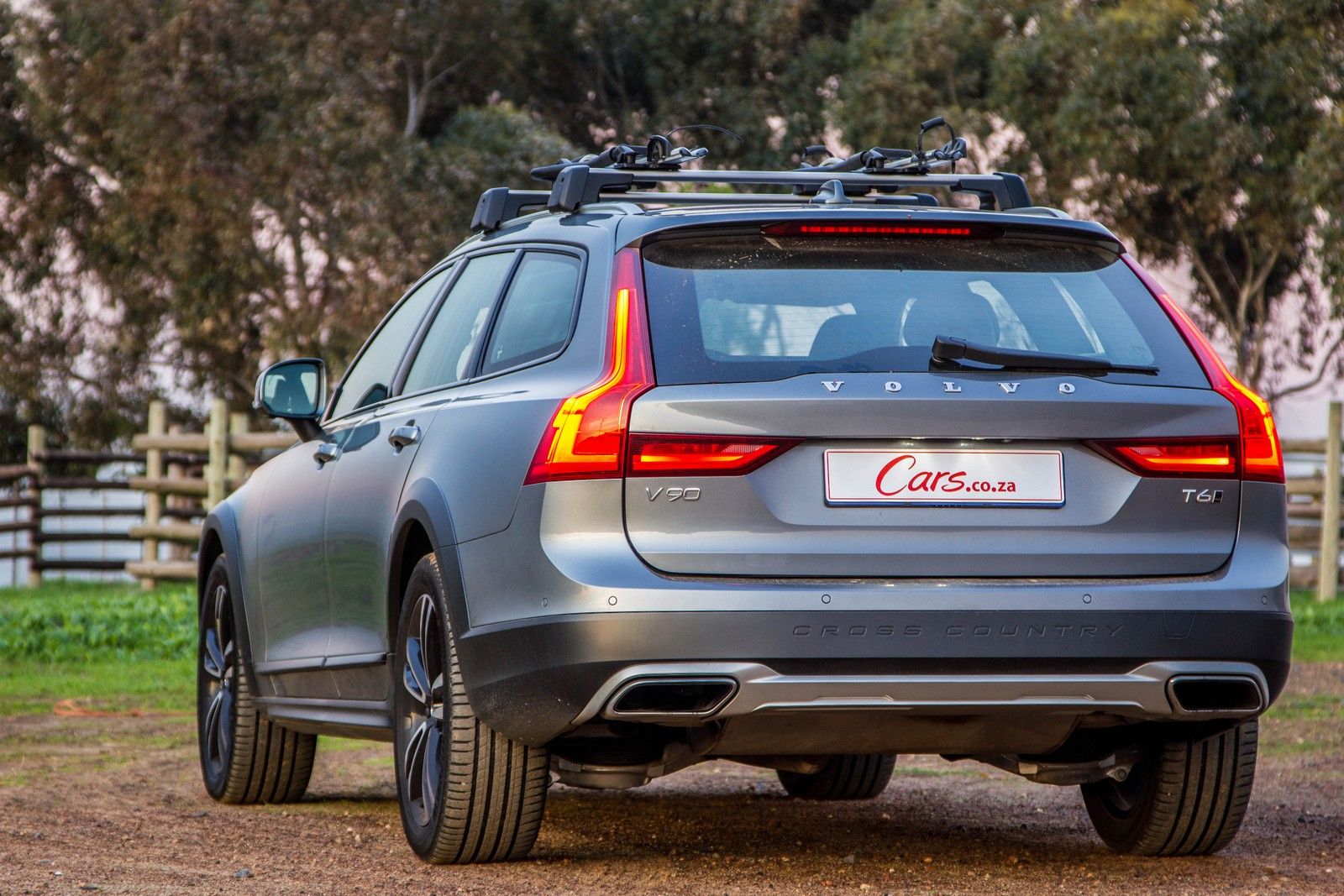
As you can see from the images above, our model was also fitted with a 2-bike roof rack, an accessory that can be fitted by the manufacturer.
It's a stylish car that harks back to Volvo's old credentials of safe, spacious and practical.
How does it fare in terms of….
Being an off-roading wagon?
The V90 CC may just be the perfect middle ground for luxury car buyers who don’t need a low range-equipped, gas-guzzling SUV, but require a modicum of off-road ground clearance with AWD capability to fall back on if things get a little tricky.
With a total of 210 mm of ground clearance, the Volvo actually sits as high as SUVs such as the BMW X4 and Jaguar F-Pace. But, as it is a sedan-based wagon derivative, you sit in a more car-like driving position that’s in the car rather than on the car. The added ground clearance and rugged-looking fenders give it some off-road credentials that are actually backed up by a bit of substance. The wet, muddy dirt roads of the Western Cape in winter are a good test of traction, which the V90 CC felt planted and tied down on. As you move away from a standstill, the V90 CC immediately adopts a 50/50 power distribution setup between the axles to reduce/negate any slippage that may result in a break in traction.
Just enough AWD capability to get you out of trouble but still a very comfortable road car.
The extremely long wheelbase of 2 941 mm means that over sharp ridges or drops, you can scrape the car's underbelly, but most buyers are unlikely to traverse terrain of that nature very often. A good example of the type of off-roading a V90 CC could generally be required to deal with was the sandy tracks of Cape Columbine Nature Reserve near Paternoster. Here we found the off-road driving mode almost too deliberate in its interventions for the only-slightly slippery driving conditions, but we appreciated the Volvo's poise and comfort nonetheless.
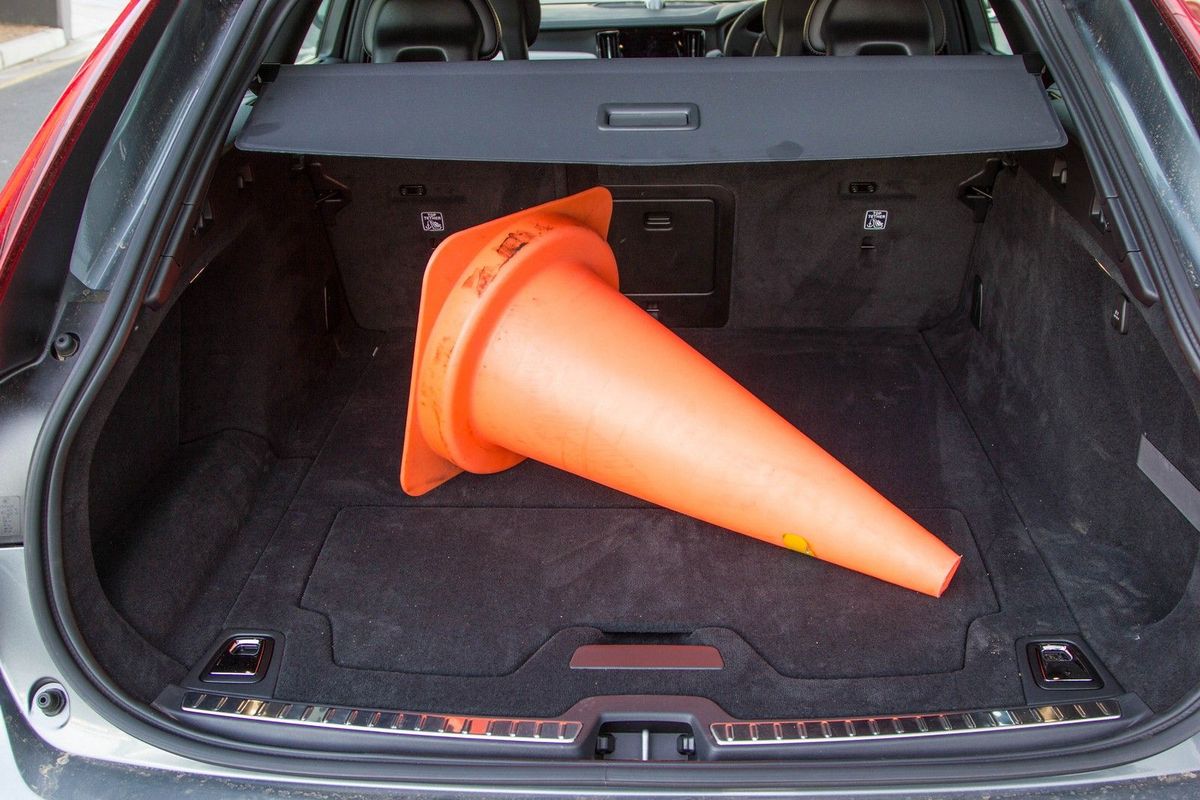
As you would expect from a wagon, there is a capacious luggage bay (a claimed 560 litres, to be exact). And, because a station wagon is essentially a stretched hatchback, it’s extremely easy to load/slide things into/around the rear of the car. Despite being built on the same platform as the XC90, the V90 CC doesn’t offer quite as much capacity as its sibling, but bear in mind that the SUV is a much taller car. With the seats folded down, the Volvo's loading capacity grows to a completely-flat 1 526 litres of utility space, which is nothing short of cavernous.
And how easy is it to access full utility mode? If you've already removed the luggage cover cartridge and have specified the Adventure Pack (for R75 000, as on the test unit), just press 3 buttons. The powered tailgate opens remotely via the key fob and the split rear seatback folds forward electrically! (see below). Our model was also fitted with the optional grocery bag holder (R800) – it’s essentially a flap in the boot floor that lifts up to stop shopping bags rolling about. It’s a neat option if the shopping hooks in the corner aren’t enough for you.
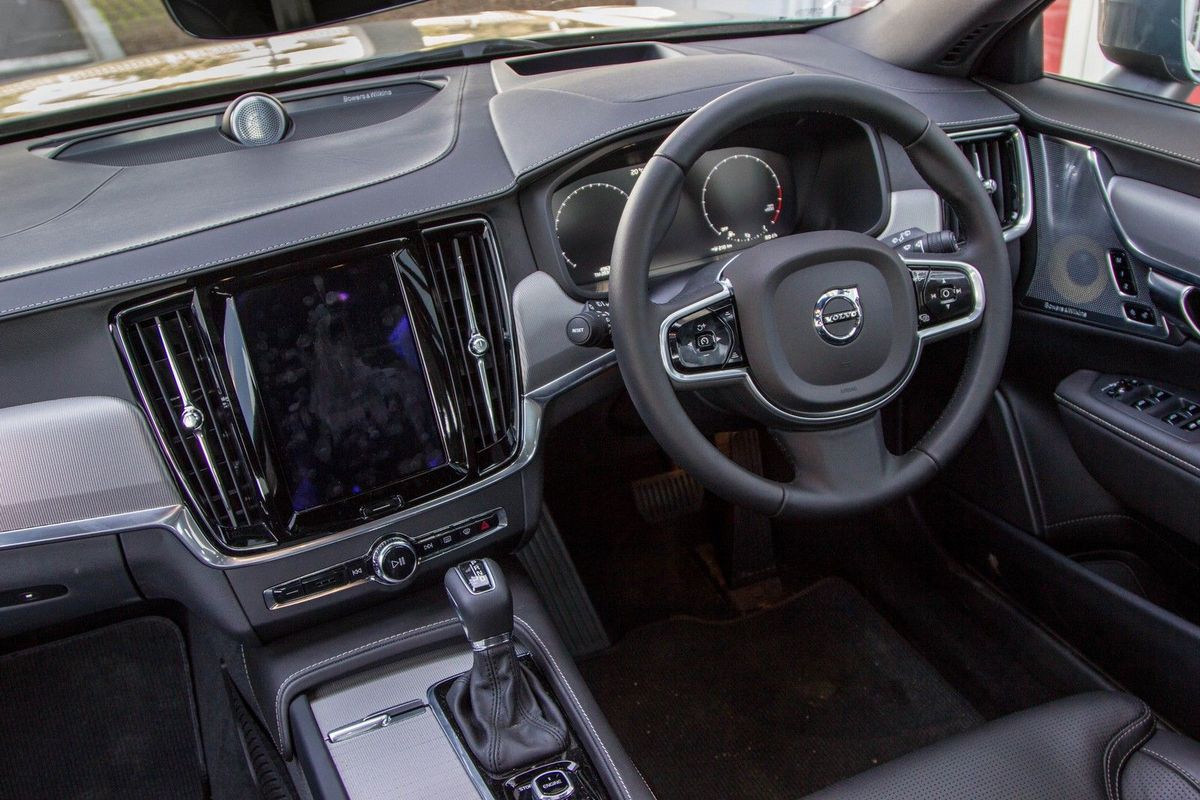
Passenger space is excellent all round and rear occupants, in particular, have loads of head-, shoulder- and legroom. Volvo’s exquisite use of leather, brushed metal and plush carpeting creates a luxurious and cosy cabin aura. By the prevailing standard of executive-class car interiors, the 90-series Volvos don't need to fear the opposition… The Adventure Pack further includes luxury must-haves such as; heated front seats; panoramic roof; keyless entry, automatic parking; cross traffic alert and air suspension – to name just a few items.
Munching the miles?
Despite the extra ground clearance, the V90 CC's ride quality doesn’t feel too soggy; in fact, it feels well sprung and provides a solid, sure-footed driving experience. The air suspension is an excellent addition, it smoothes out those pesky potholes and freeway joints. At slow speed, the knocks (like those caused by mounting a kerb or bouncing over a pesky manhole cover) are more noticeable, but suffice to say that the level of open-road cruising comfort afforded by the Volvo befits a R1-million car.
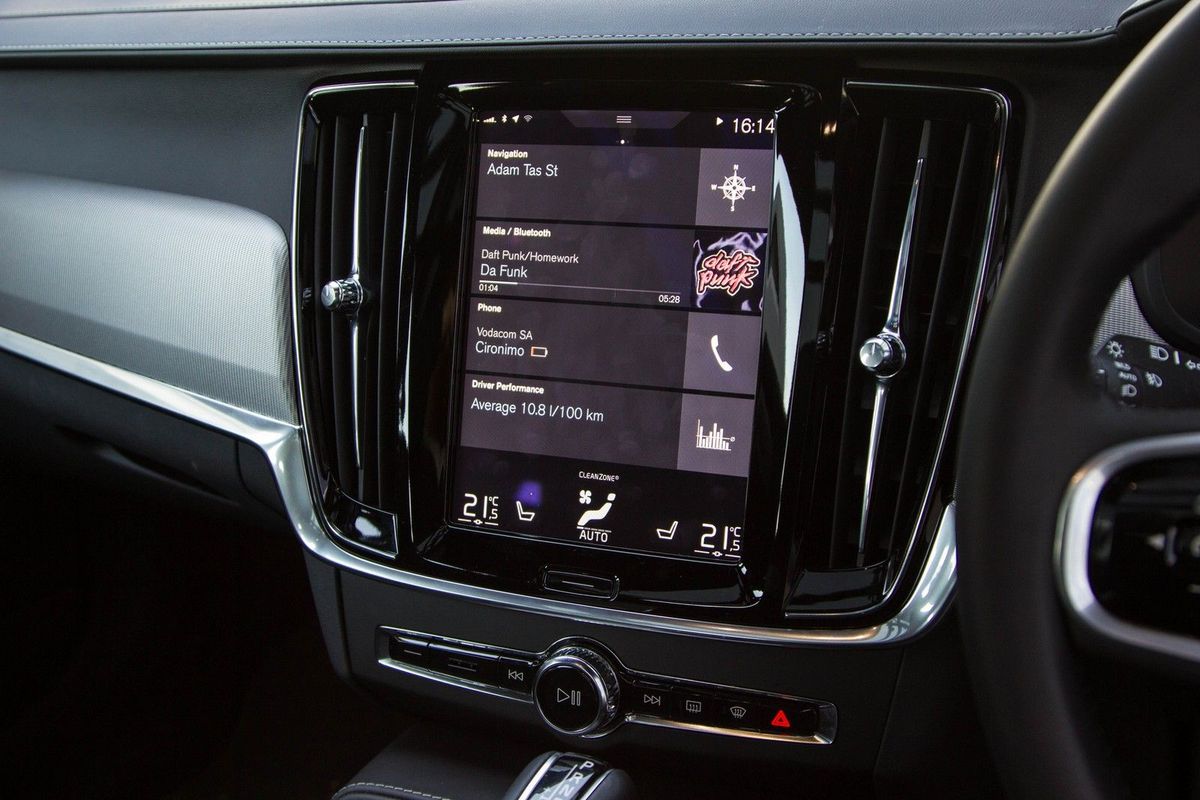
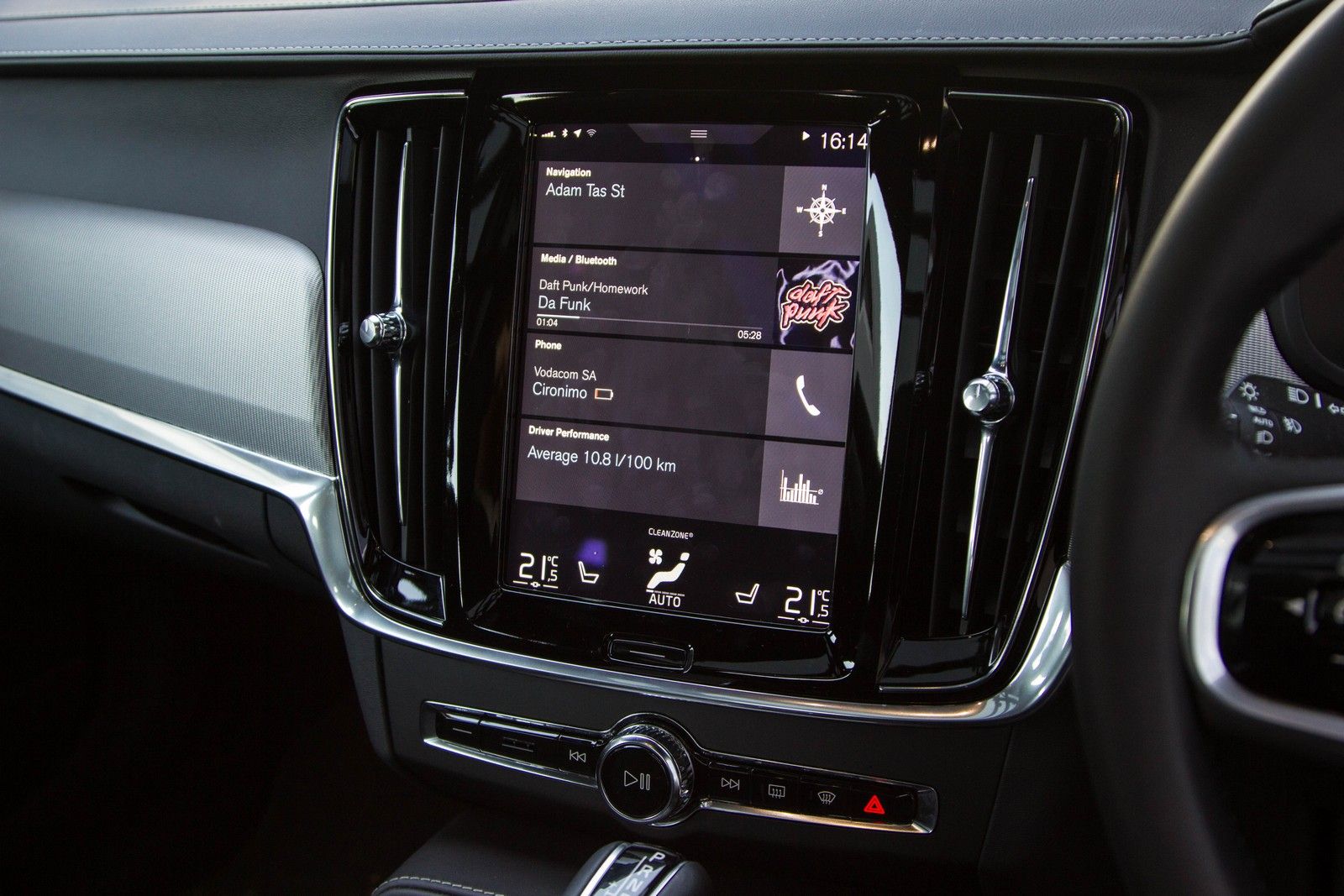
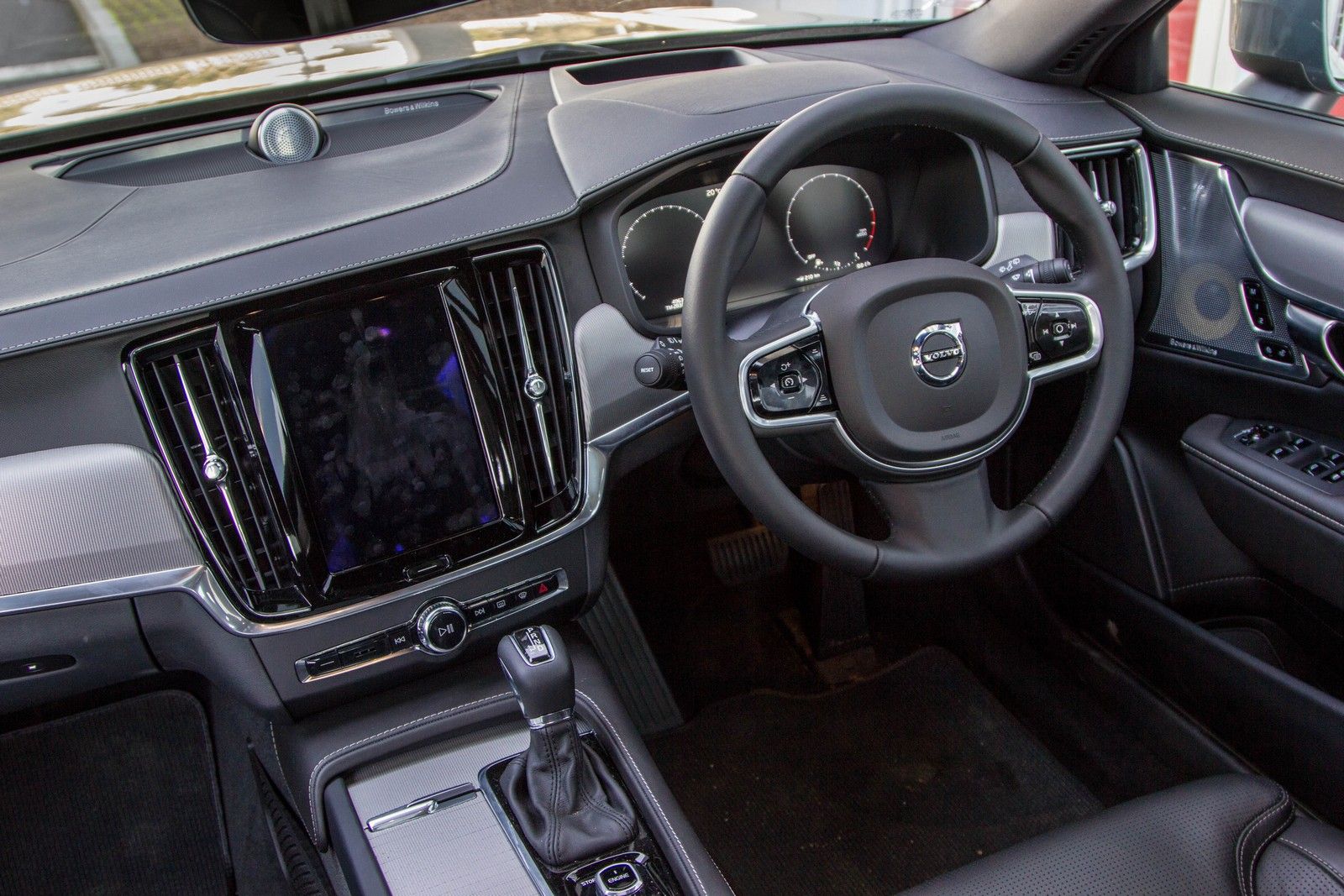
The much-loved Volvo infotainment screen is easy to use and integrates well with Smartphones, but attracts fingerprints too.
The engine has dual charging, which means it’s super as well as turbocharged. It’s a simple solution to reduce lag and provide a more linear power delivery across the rev range. Unfortunately, it hasn’t worked out as well as Volvo hoped. It still delivers the power in heaps and then when off the boil, the powerplant feels lethargic and struggles to get going. This feels worst at slow speed where you want to make a quick getaway or resume acceleration. A mix of multiple shifts down the transmission and real lag gets frustrating as you wait for the power to arrive. Out on the freeway at cruising speeds, it’s perfect as the petrol engine sits nicely on the crest of power, allowing for quicker reactions to throttle adjustments.
Fuel economy on the twin-charged unit is claimed at 7.7 L/100 km and we were content with the indicated 9.5 L/100 km, considering the extra drag created by carrying the bikes on the roof rack to Grabouw. We also marvelled at the adaptive cruise control with Pilot Assist system, which allowed us to leave the "driving" to the V90 CC for protracted stretches…
The Volvo infotainment system is much-loved because it works a lot like a Smartphone (with swipes and prods of the finger). It integrates with phones particularly easily and media is easily accessible via the menu. For an extra R4 000, the system gets Apple Carplay and Android auto, which is a much better solution for Smartphone integration. The R39 500 Bowers & Wilkins 19-speaker system is expensive, yes, but takes the in-car sound to a whole new level. If you’re a lover of clean, crisp and voluminous sound then this is the audio setup to have.
Spot the Bowers and Wilkins speakers in the door. It may be an expensive option (R39 500) but the sound is epic.
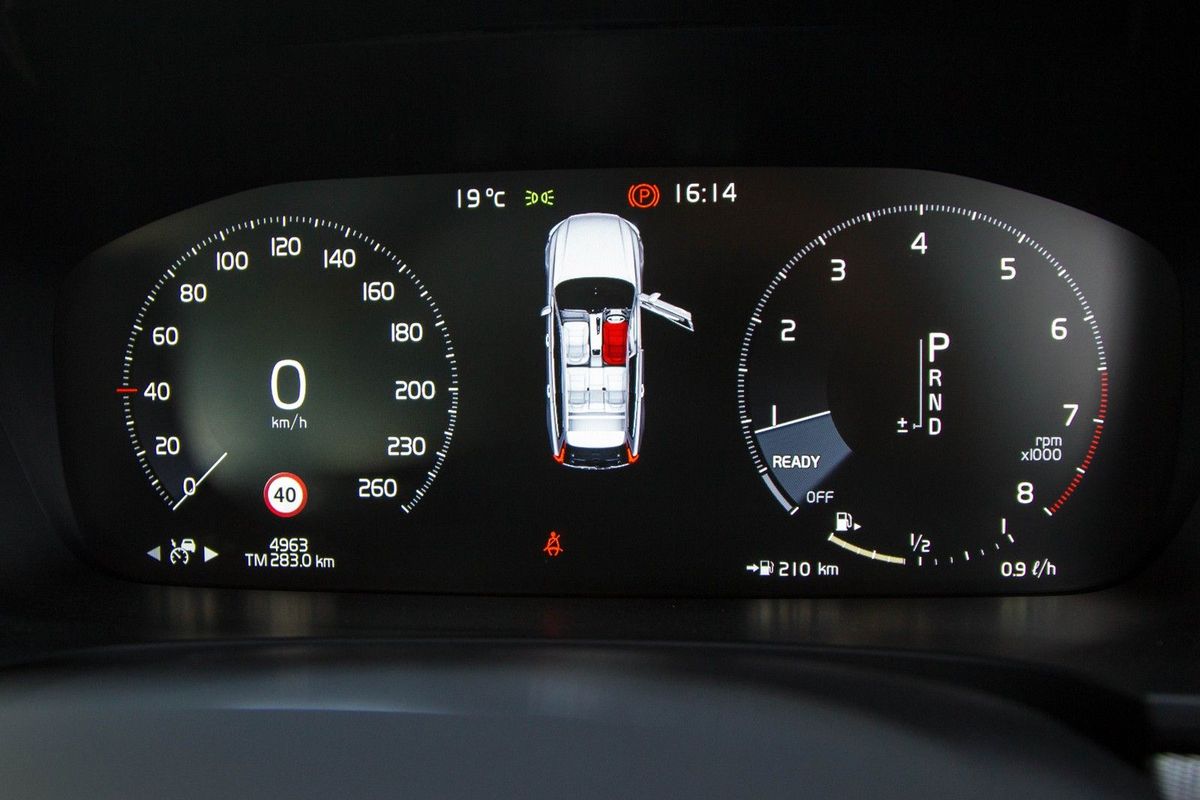
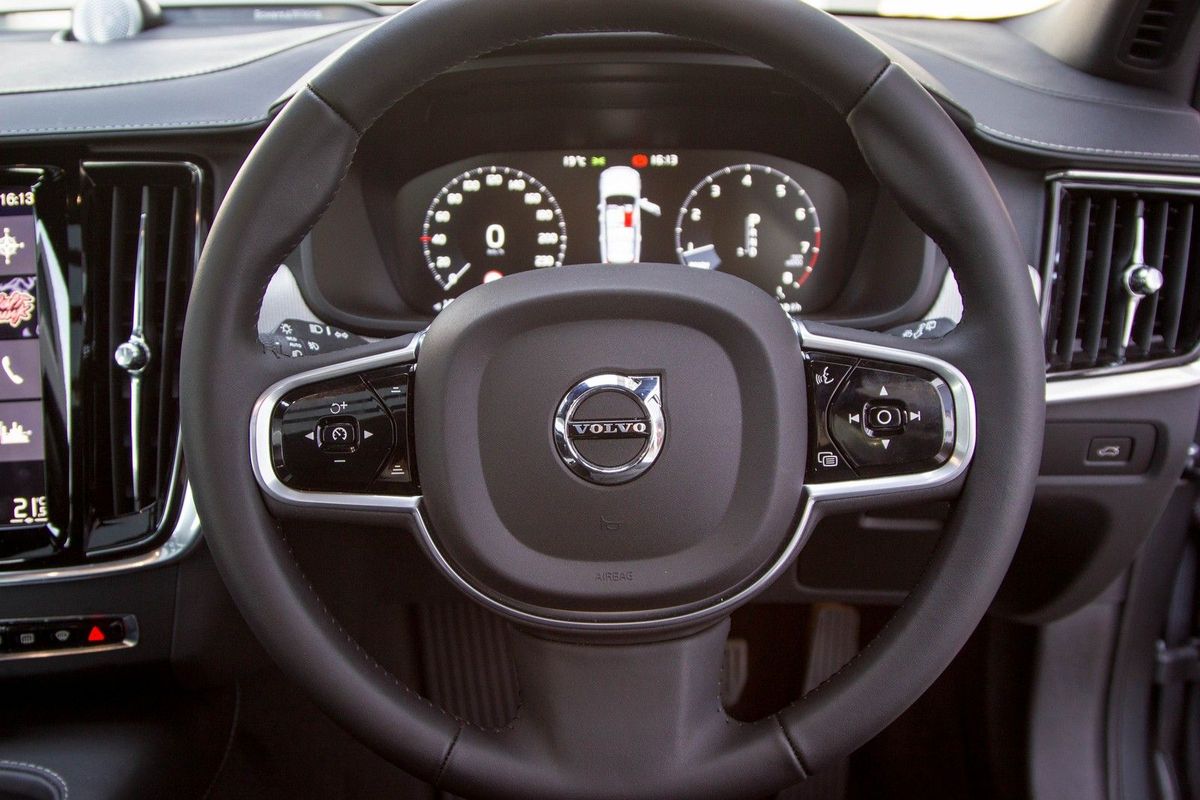
Apart from the encompassing infotainment system, the instrument cluster features a digital display that’s high in resolution and has a customisable trip computer, although it has to be said this is the hardest system to operate on the entire car as the display's symbols and combinations never quite seem to make sense. Perhaps it just requires more familiarisation.
Pricing and warranty
The V90 CC Inscription’s base price is R936 584. Our test unit, replete with Adventure pack options (R75 000) and a few other bits and bobs totalled R1 095 475. It’s just about as fully loaded as you can spec an executive car these days. It comes with a 5-year/100 000 km warranty and a 5-year/100 000 km full maintenance plan.
The Volvo V90 CC may be the perfect lifestyle vehicle for the buyer who doesn’t need low range or go-anywhere ability. It deals with a dirt road and mild obstacles with ease and the AWD system is there for you when the going gets a little tougher. Its road manners are near impeccable and the driving position feels more natural and comfortable than a high-riding SUV.
The wagon's air suspension feels more comfortable out on the open road than around town; bumps and thumps are more noticeable at slow speeds, where the big 19-inch wheels/low-profile rubber combination has a negative effect on the ride quality. The engine, while delivering some impressive figures for a 2.0-litre twin-charged 4-cylinder, has a noticeable dead spot at the bottom end, therefore it still takes a while for the big Volvo to get underway as everything seems to need to spool up before real power is delivered.
In conclusion, the V90 CC looks like a wagon, but hopefully it won't fall prey to the negative stigma attached to estates, especially large ones, in our market. It looks more like a low slung SUV with its raked windscreen, but drives like a sedan and we think it has a major "cool factor" about it. Currently, the V90 CC has no direct competitors, so it has 100% of the (admittedly rarefied) market to itself. It’s a very capable car and has all the boxes ticked for success, but does it have the appeal of the SUV in SA? We think not.
Although the facelifted Volkswagen Golf 7.5 was recently introduced in South Africa, details for the next generation Golf 8 have surfaced and if reports are to be believed, the new Golf will be revealed at the 2019 Frankfurt Motor Show.
Reports suggest that the arrival of the new Golf 8 will coincide with the introduction of Volkswagens I.D. electric vehicle lineup, but Golf will remain a key focus for the brand. The Golf 8 is expected to arrive in South Africa in 2020, following its official reveal in 2019.
Speaking to a British publication, Volkswagen chief Herbert Diess commented that "the priority is Golf because in the next generation it will be our main core product and that's where the focus goes. You might call it once again 'Das Auto', because it is such a good package for a 5-seater; it works so well."
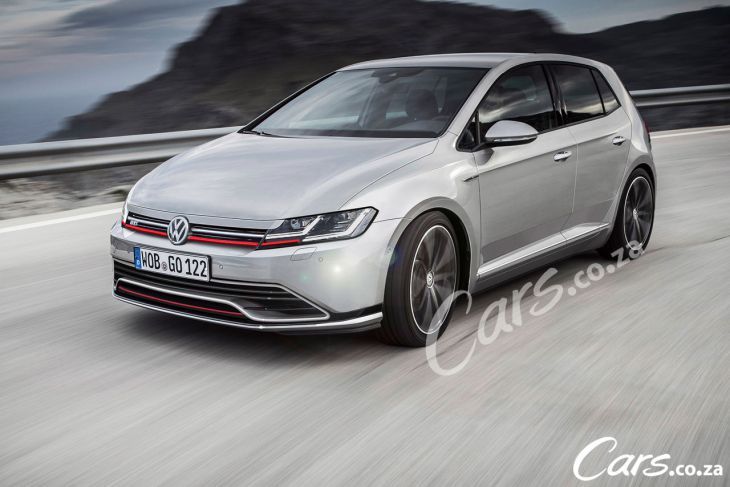
This Cars.co.za render provides some insight into what the next generation Golf GTI could look like.
The next generation Golf will be built on an updated version of the MQB platform that will result in a weight saving of up to 70 kg. Exact engine details have yet to be confirmed, but reports suggest that a turbocharged 1.0-litre (in various states of tune) and 1.5-litre petrol engine will be offered. On the diesel front, a new 1.5-litre and 2.0-litre turbodiesel powerplants are on the cards.
We previously reported that the 2.0-litre turbopetrol Golf GTI will in all likelihood comprise 3 derivatives including a standard GTI, Performance Pack GTI and Clubsport GTI. The standard GTI could offer as much as 195 kW, while the Clubsport could see power figures of 240 kW. As for the Golf R, a 300 kW 2.0-litre turbopetrol is likely but a 3.0-litre VR6 engine with up to 370 kW is not out of the question either. There will also be mild hybrid versions on offer, employing a 48 V electric system.
According to Diess: "mild hybrid systems will play a major role in the next generation of the Golf; that will be the first application."
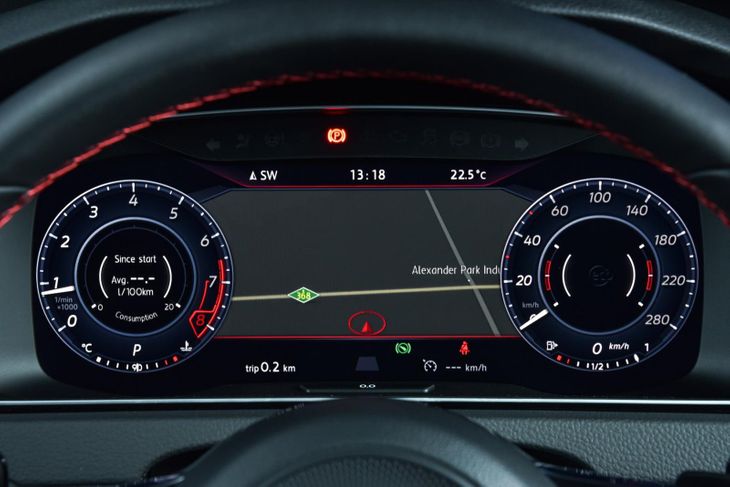
The redesigned interior of the VW Golf 8 will likely feature a large central touchscreen and a digital Active Info Display.
In terms of design, exterior changes to the Golf will be evolutionary and will be similar in design to the current iteration. The Golf 8, however, will likely gain slimmer LED headlights, a lower, redesigned bonnet and the "Golf" lettering will likely appear below the Volkswagen badge, taking direction from the recently-revealed Arteon luxury fastback sedan.
The interior, however, is where the major upgrades are expected. The interior design will be overhauled and digital displays will likely replace most of the switchgear. The Golf will probably feature a large touchscreen that will control most of the vehicle’s functions and Volkswagen’s Active Info Display is expected to be used extensively throughout the range.
We will keep you updated as more details become available.
Watch our video review of the facelifted Volkswagen Golf GTI below:
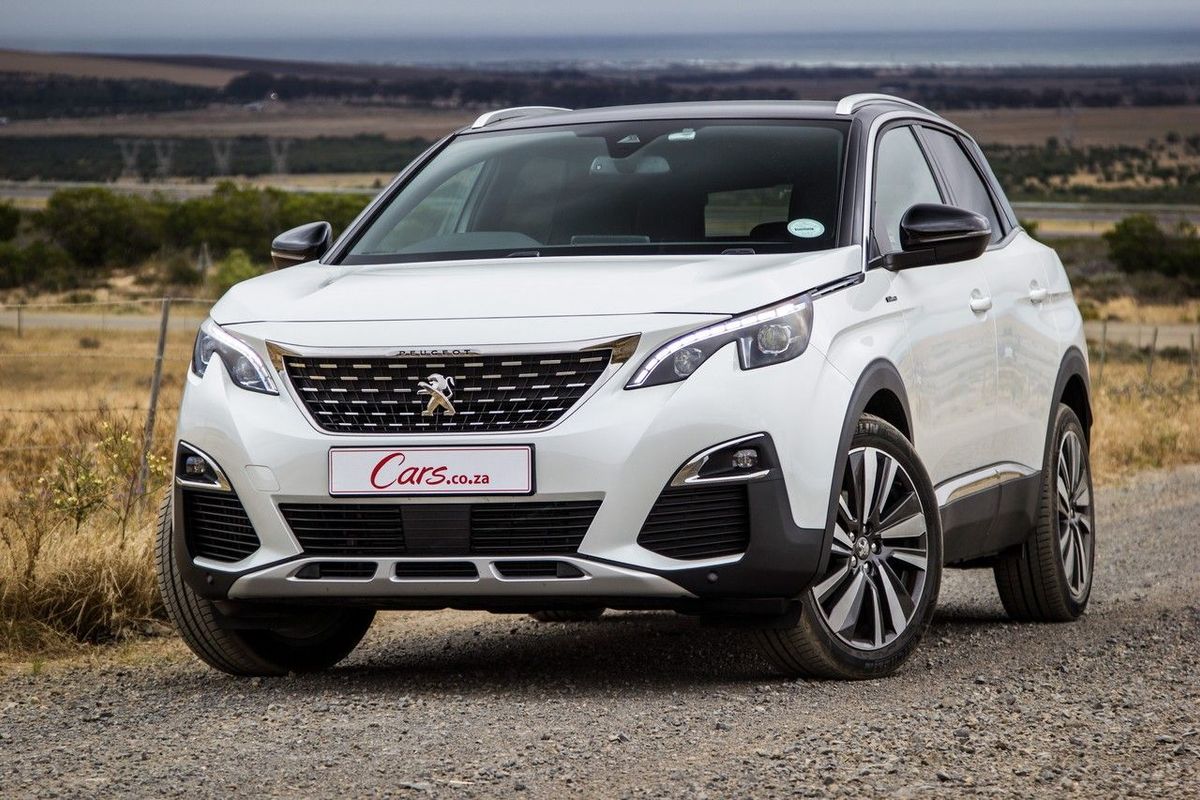
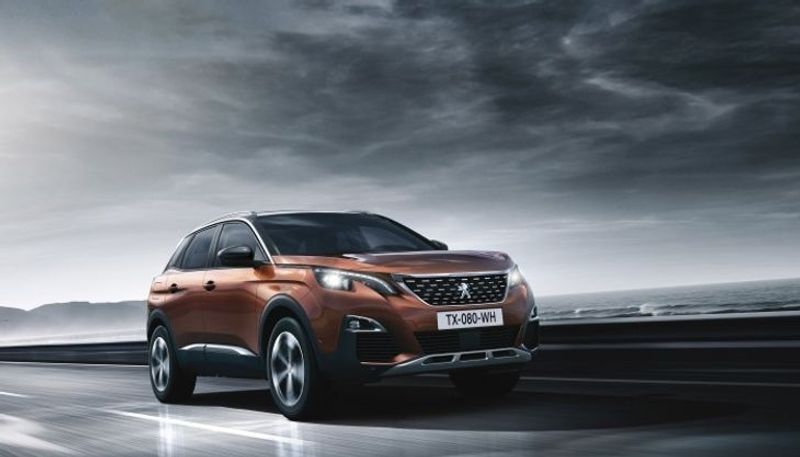
The new Peugeot 3008 SUV has arrived in South Africa and we attended the local launch this week to give the stylish French newcomer a drive. Take a look at our first impressions below…
The new 3008 has entered a very crowded SUV/crossover market and at this rate, consumers may begin to feel claustrophobic as there are a plethora of products to choose from. The new 3008 has a challenging task ahead of it to sway buying decisions in its favour against strong rivals such as the Volkswagen Tiguan, Nissan Qashqai, Mazda CX-5, Hyundai Tucson and Kia Sportage, to name a few. Let's examine what this new 3008 brings to the party, shall we?
Practical French Flair
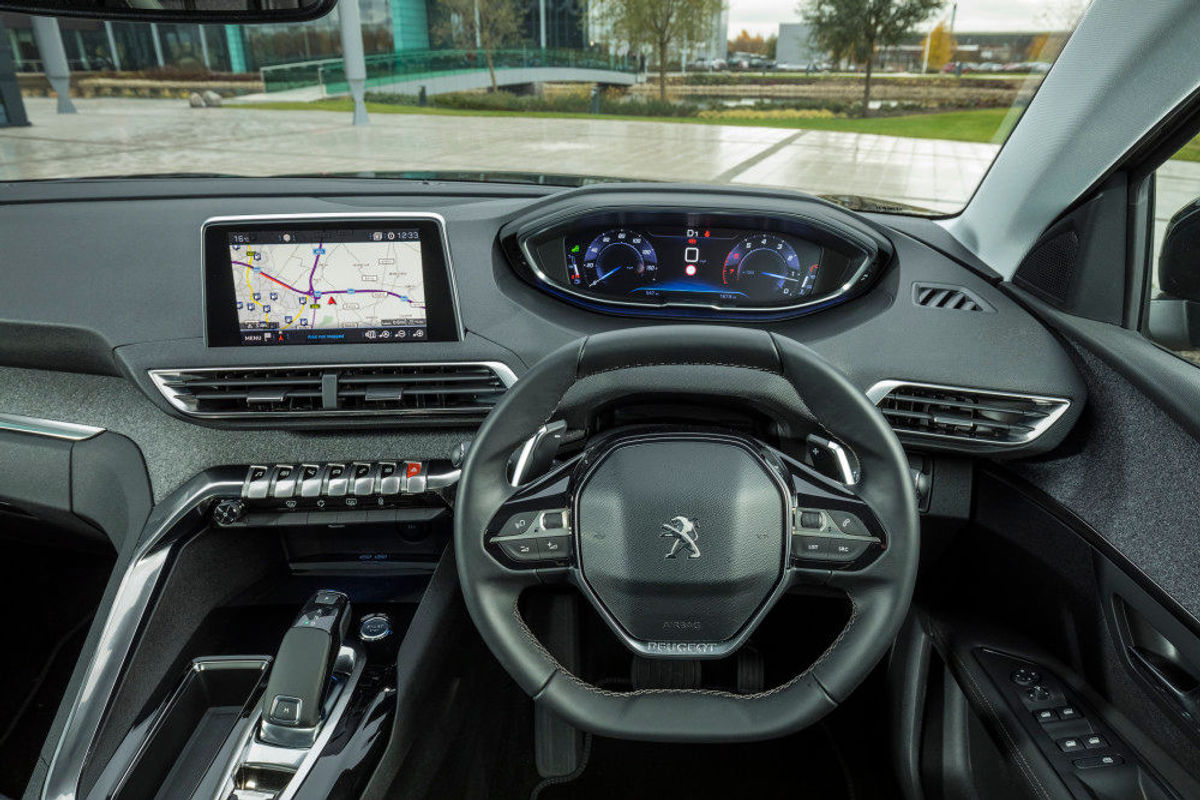
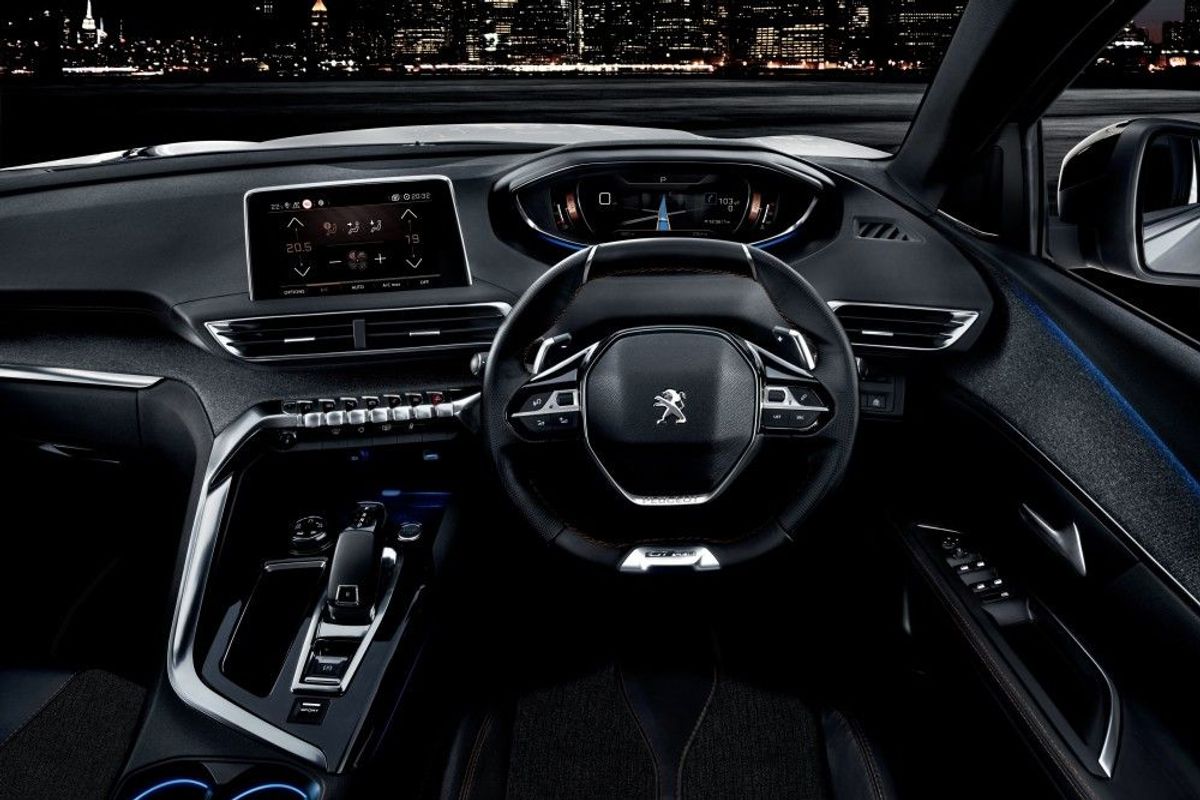
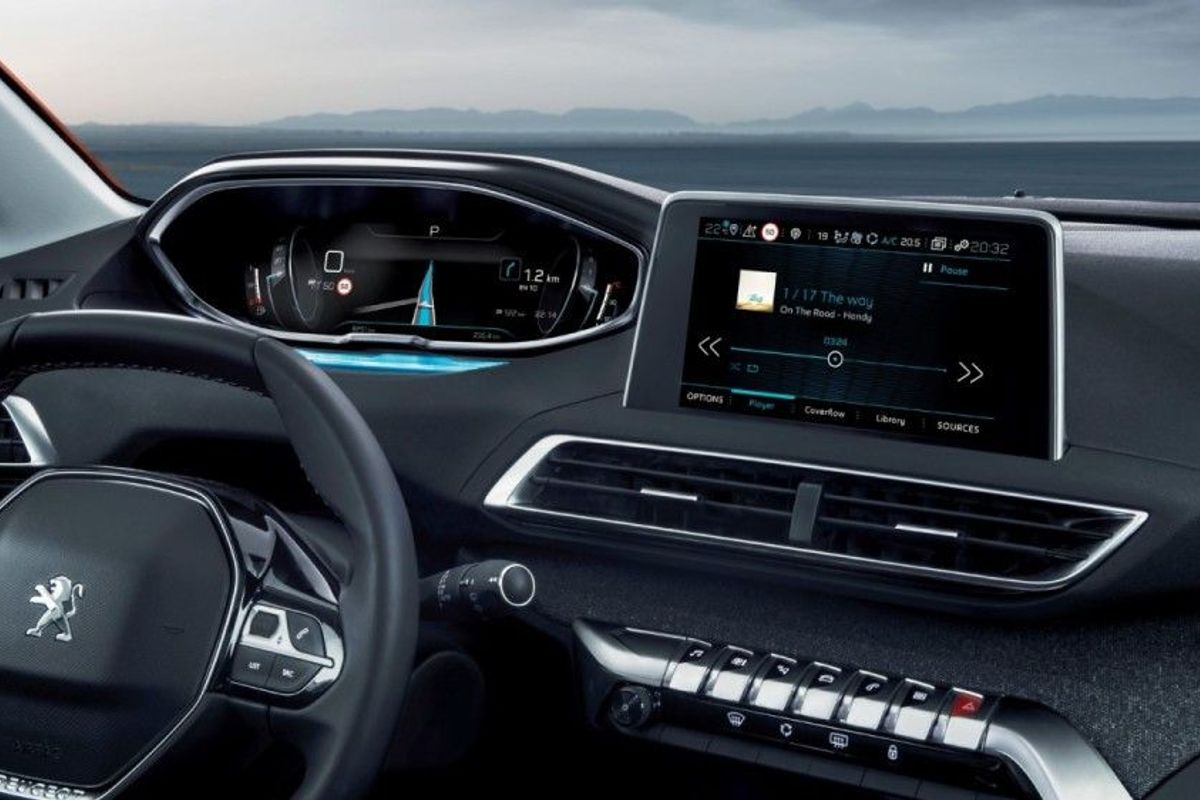
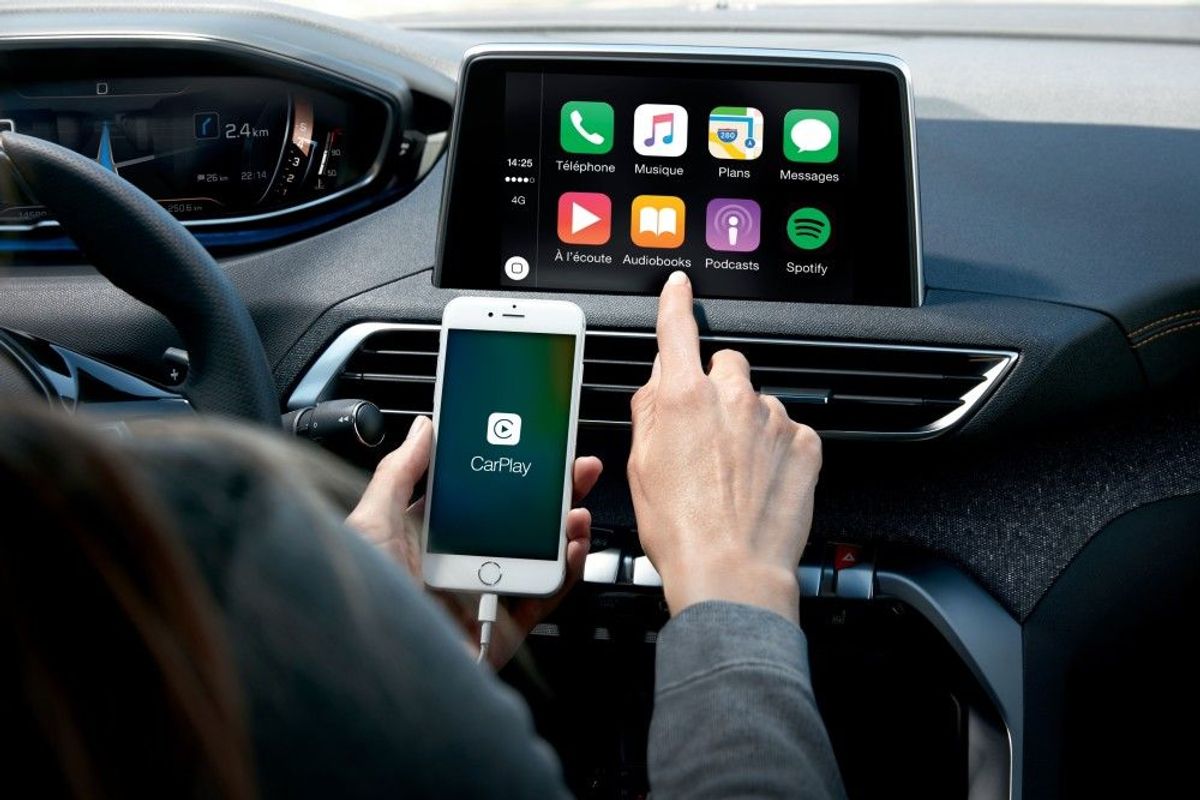
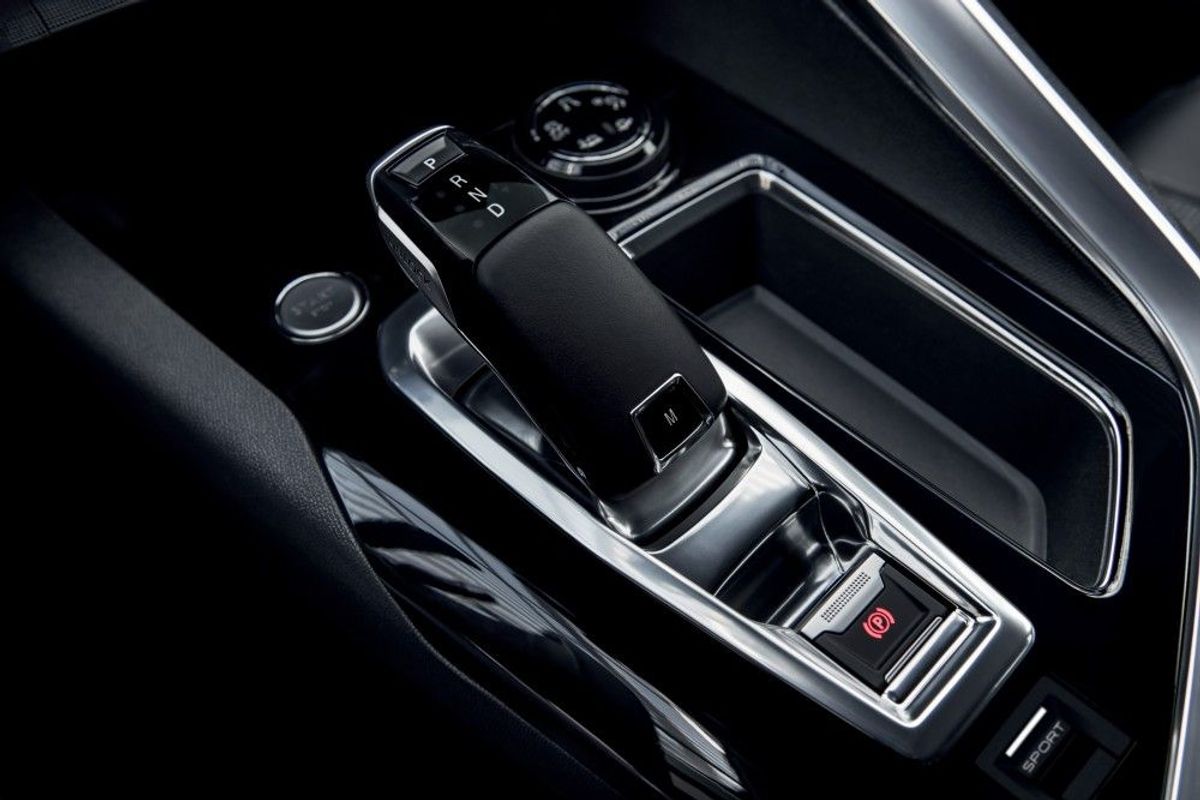
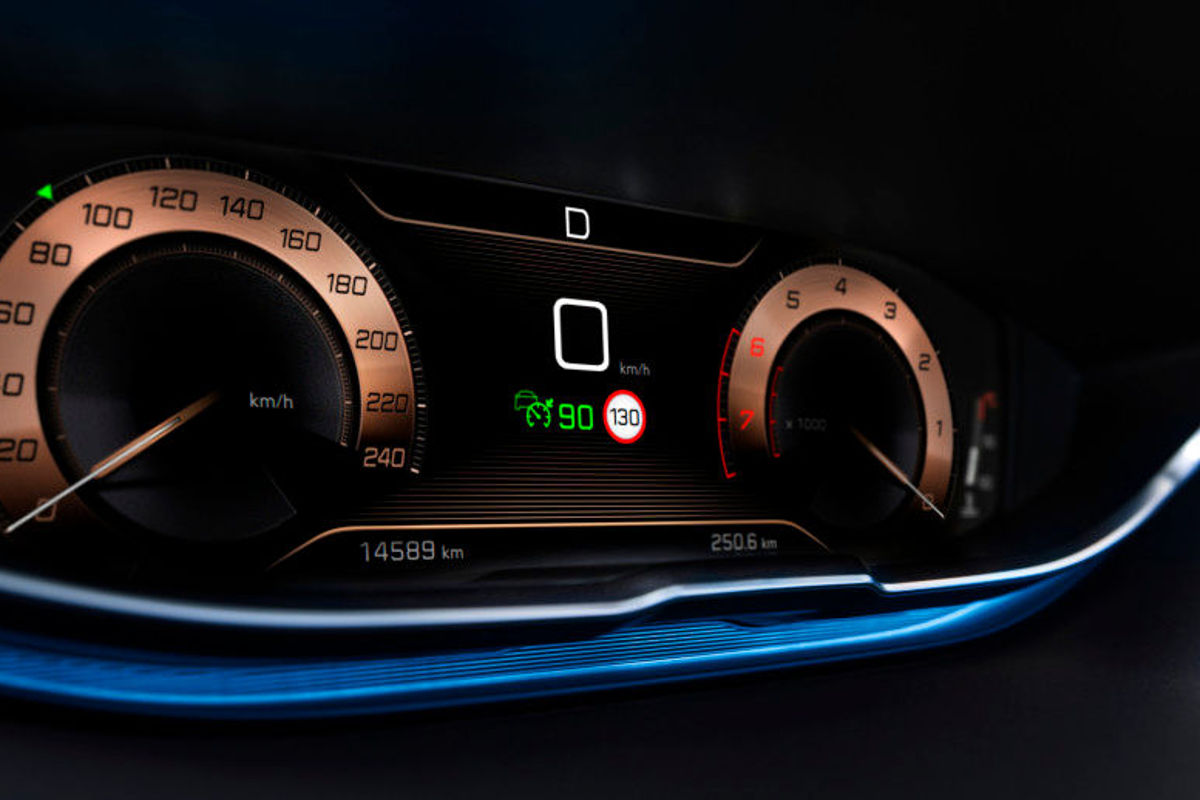
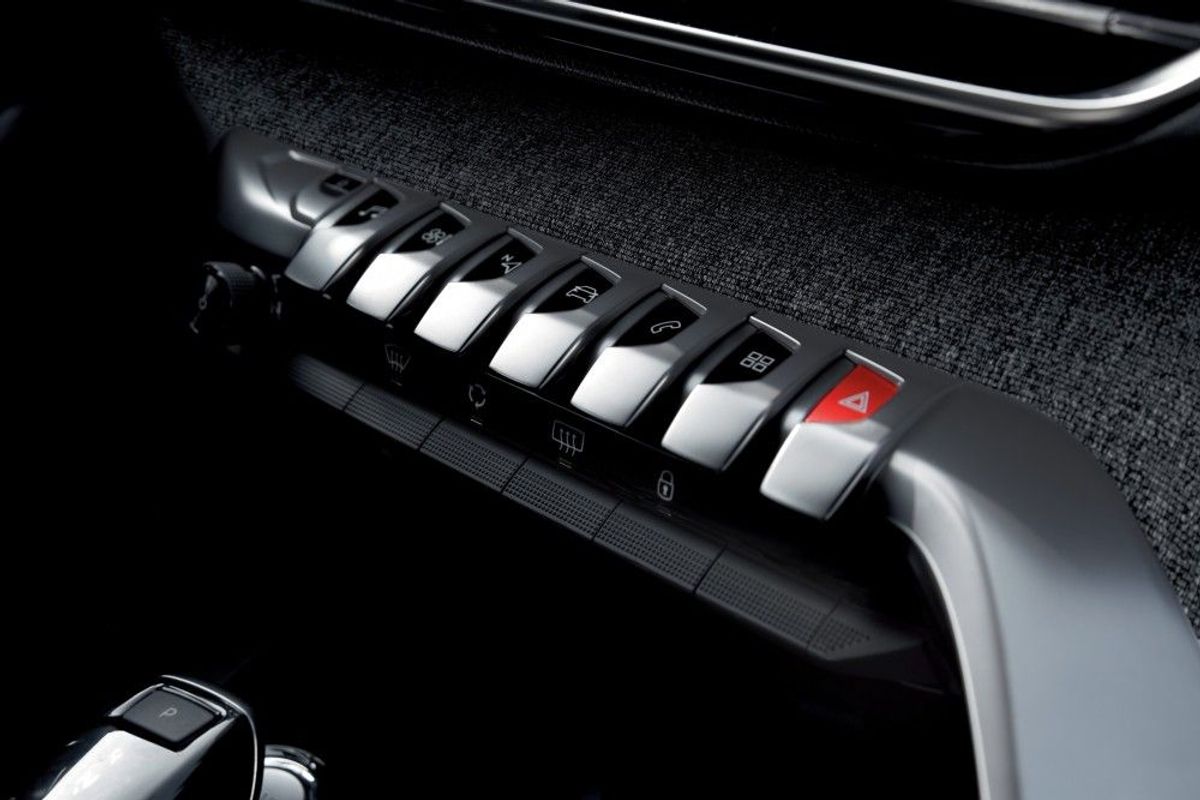
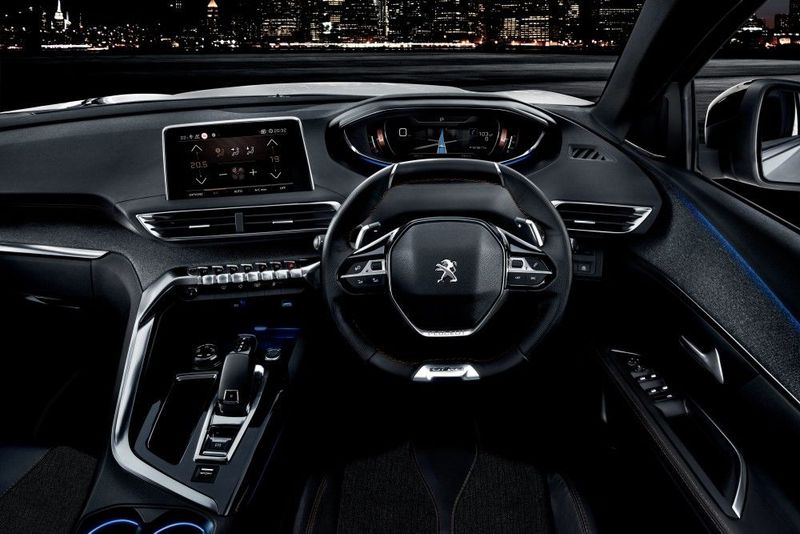
The 3008 features a futuristic-looking interior with an 8-inch touchscreen infotainment display and all-digital instrument display.
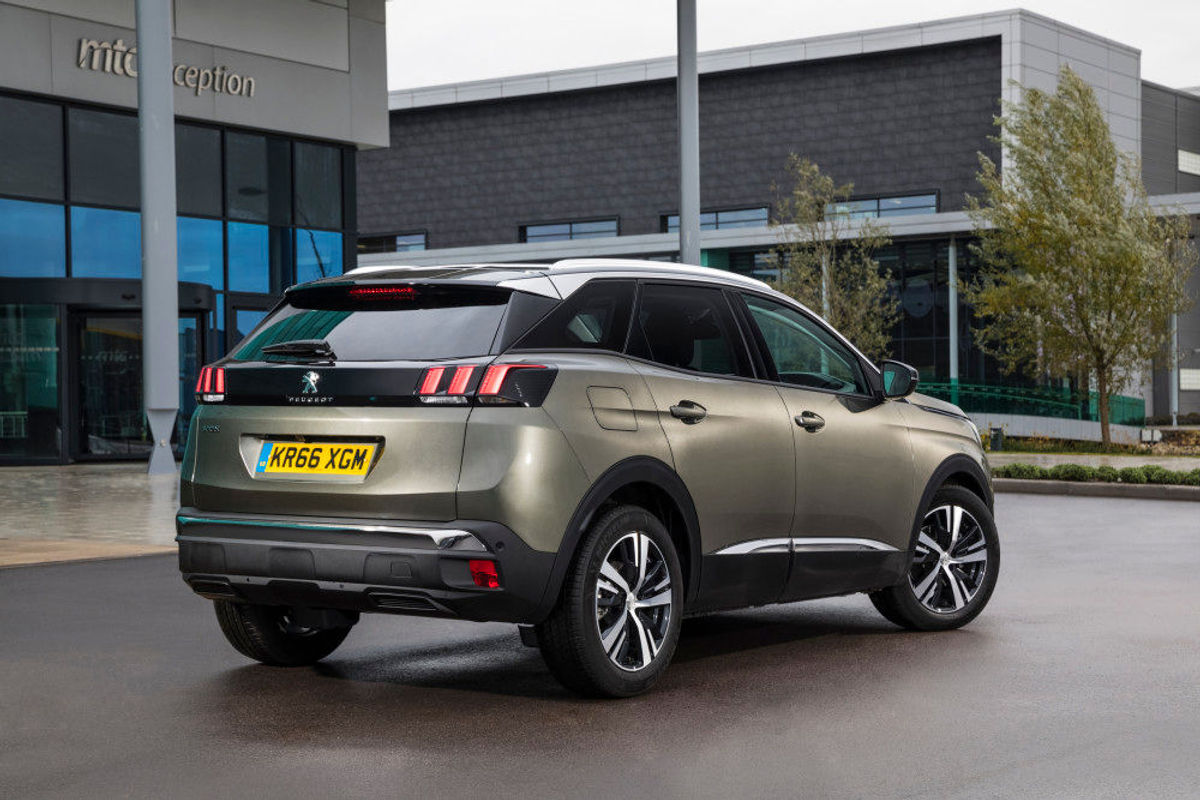
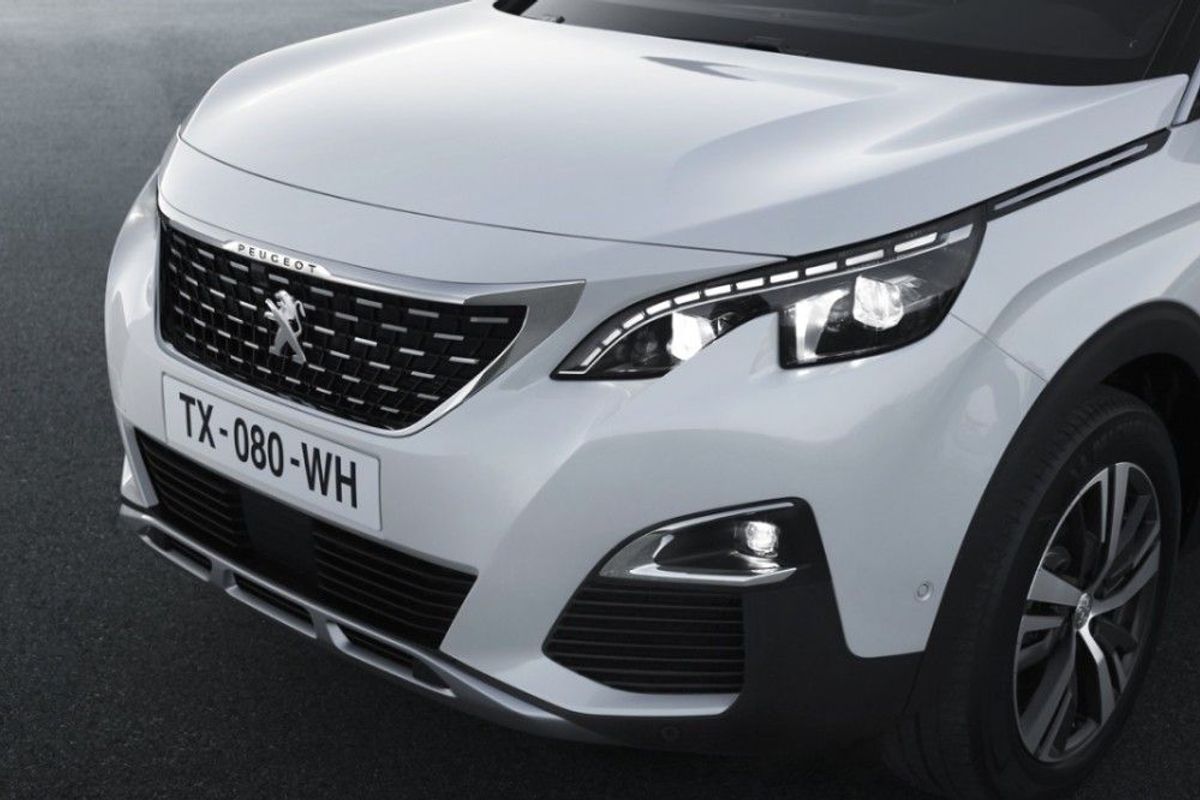
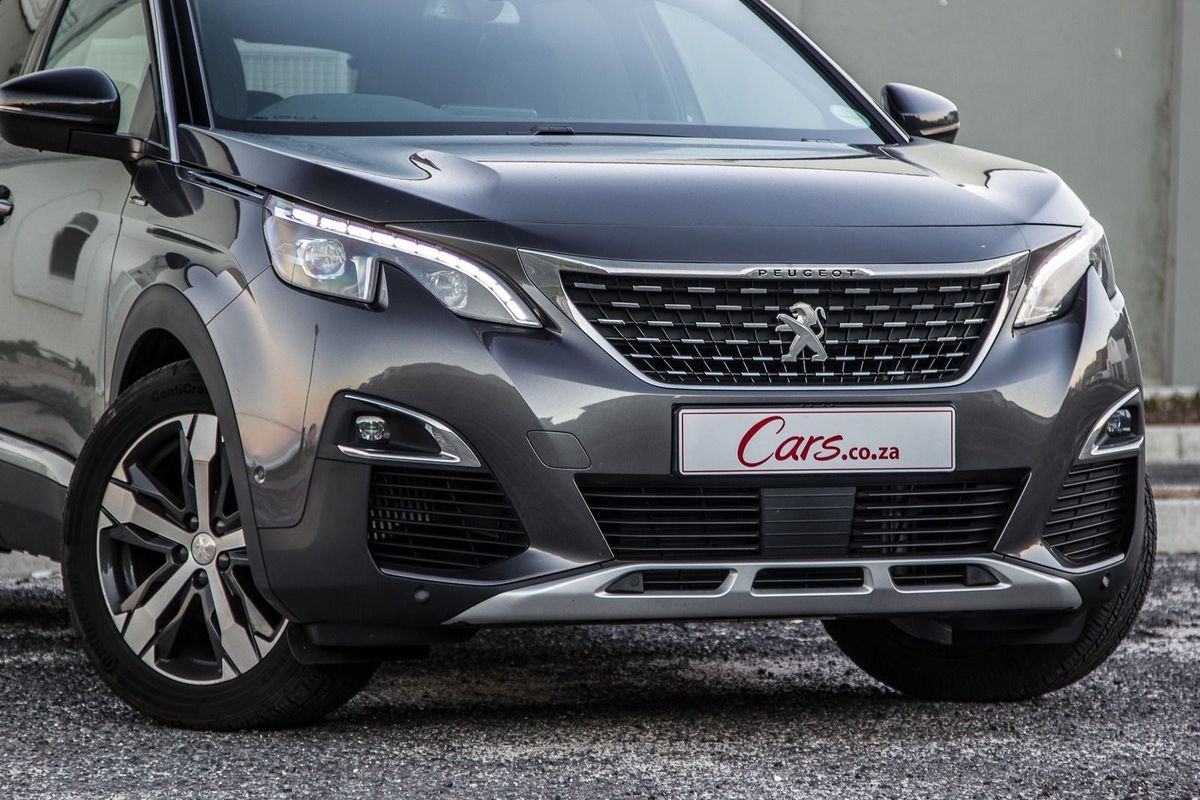
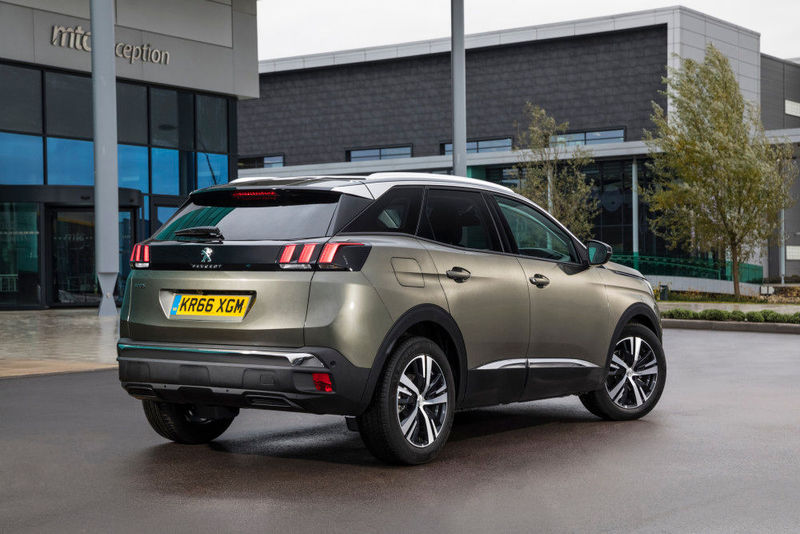
One thing that the new 3008 has in bucket loads, is style. It has a unique look, completely different from its competitors, which may intrigue buyers who are looking for something more chic and sophisticated.
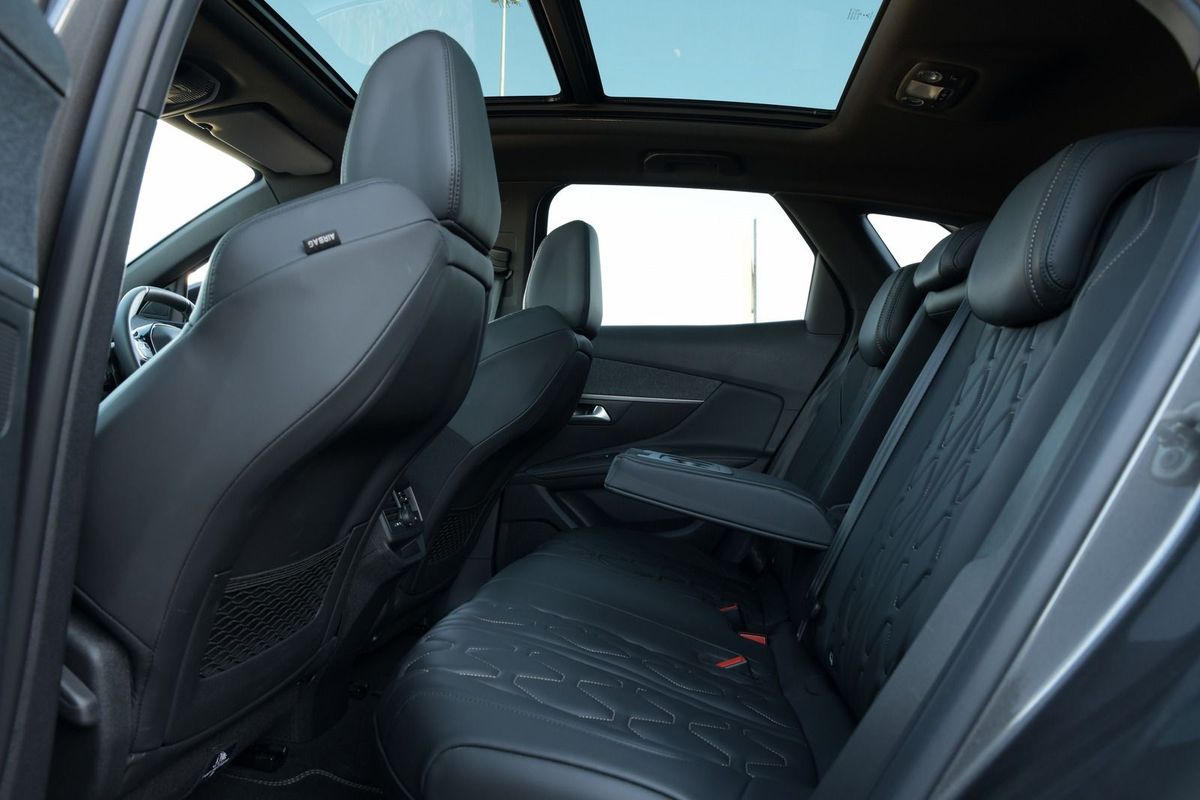
The exterior is unusually pretty, with angular sections creating a space-age visage. The new 3008 is larger than its predecessor, offering more space for passengers and luggage and is perfectly suited to a family that places priority on practicality. The luggage bay is sizable at 520 litres and with the rear seats folded down, space increases further to 1 670 litres. Interior build quality is of a high standard and having recently experienced the lovely i-Cockpit interior in newer Peugeots such as the 208 and 308, the 3008 does not disappoint.
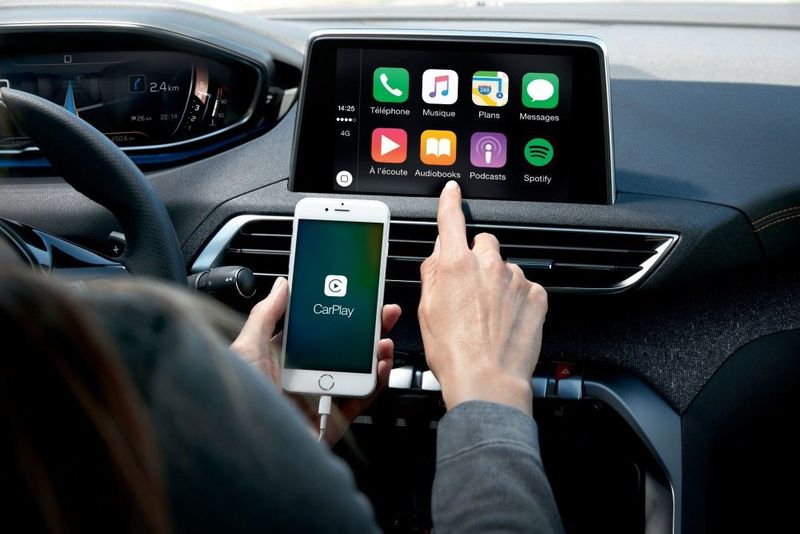
Apple smartphone users will be pleased to know that Apple CarPlay is offered on the new 3008.
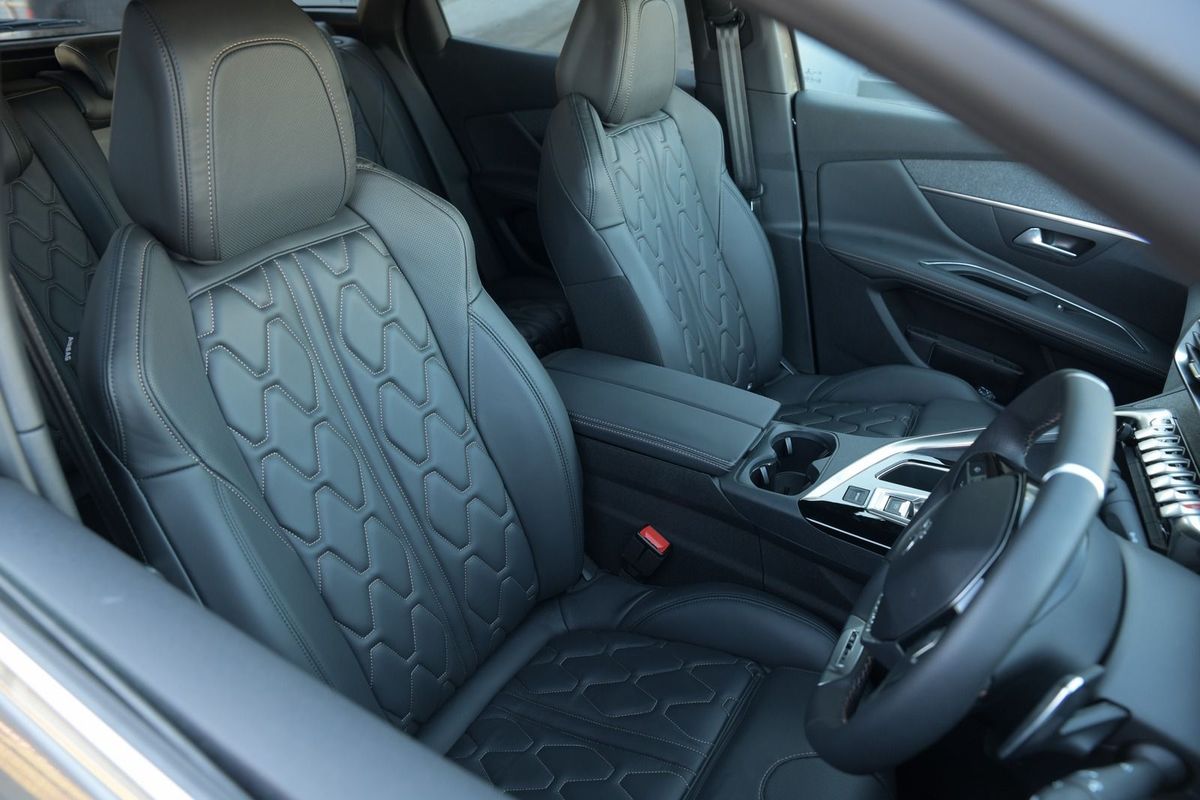
In fact, it encourages the driver and passenger to touch and feel the various switches and surfaces. All the action happens on an 8-inch infotainment touchscreen and although it takes care of most functionality at a touch, alternative switches are present, which some users may prefer to use. Apple CarPlay is offered and Apple users will jump for joy as there is no need to pair a device to the car. Android users have the option of Android Auto, but it's not yet fully available in South Africa. 3D navigation is offered as standard on the GT Line derivatives. One can’t help but feel like a character from the Jetsons while sitting in the new 3008, it’s all very modern.
In terms of safety, the 3008 is equipped with 6 airbags, ABS with EBD, brake assist, electronic stability control and traction control, driver attention alert, lane departure warning and road sign detection. ISOFIX child seat mounts are also fitted across the range. The GT Line+ derivative adds features such as advanced brake assist, front collision warning and active blind spot detection.
The Lineup
A 1.6-litre turbopetrol engine will power the 3008 range initially, with a 2.0-litre turbodiesel engine coming early in 2018.
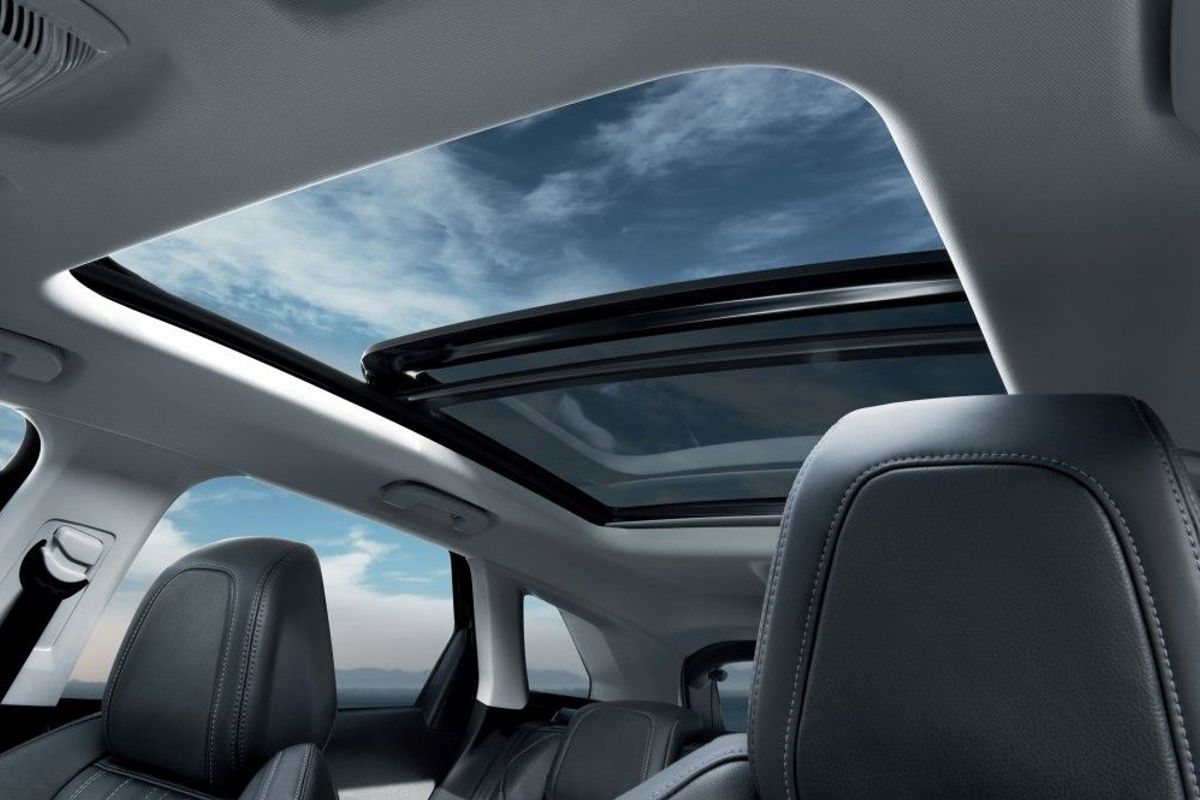
The new 3008 is offered with 3 trim lines to choose from including the entry-level Active, mid-spec Allure and Allure+ and the range-topping GT Line and GT-Line+. At launch, we had the opportunity to sample the Allure and the GT Line+. The Allure offers cloth seats on the inside and rides on 18-inch alloy wheels as standard. The GT Line+ is much more visually appealing and comes fitted with 18-inch alloy wheels, leather seats with massage function and a sunroof.
All 3008 derivatives are equipped with a 1.6-litre turbopetrol engine with 121 kW and 240 Nm of torque and only a 6-speed automatic transmission is currently offered. Peugeot will introduce a 100 kW 2.0-litre turbodiesel engine in the first quarter of 2018. Thankfully, the turbocharged 1.6-litre unit has adequate power and torque and although it's not particularly fast, it seems to be well suited for open road driving and commutes within the city.
Customisation is something Peugeot has focused on in the new 3008 and the sound of the engine changes depending on the driving mode you choose. In standard mode, a somewhat normal engine tone is apparent with a hiss apparent under harder acceleration. This sound changes when the Sport button is pressed, giving you a completely synthetic growl which is meant to make you feel more excited, apparently. I personally feel that this feature is unnecessary for a car in this segment, as it's not meant to be overly sporty. The focus should rather be on comfort, which is something the 3008 does do very well.
Another comfort feature offered is the choice of different scents you can have in the car. Through the infotainment system, you’re able to select between 3 different scents, some of which are better than others. Again, this may not seem necessary, but for buyers looking for a unique-smelling cabin, this feature may be of interest.
How does the 3008 perform?
The 3008 offers high levels of refinement and on-road comfort, but it is also capable of tackling dirt roads if need be.
On the road, the new 3008 is highly refined, giving you a quiet driving experience, barring the slight wind noise you hear coming off from the side mirrors at highway speed. With the radio on, however, the noise is drowned out, so there's no need to fuss over it. The ride quality is sublime, especially in the GT Line+ variant fitted with the leather seats. The 1.6-litre engine is responsive enough to initiate overtaking with ease and the gearbox is never too busy. Since the new 3008 is called an SUV, Peugeot included a gravel section on our route to demonstrate its off road capabilities. With its raised ride height, the 3008 will navigate gravel roads with ease but it's not a fully-fledged 4×4, so those more challenging off road routes are best avoided.
Overall, the driving experience of the new 3008 lives up to Peugeots aim to provide a premium offering in this segment. It ticks many boxes and is a complete, quality package. In light of recent events surrounding Peugeots sister company, Citroen, one would think consumers would be nervous to buy the product. This is not the case according to the Peugeot marketing team, who have apparently filled their order books for the new 3008 despite entering the market amidst stiff competition. That being said, consumer brand loyalty will ensure that Peugeot gets market share through a loyal customer base as well as new business. The 3008's packaging is somewhat unique in this segment and buyers looking for a more retro SUV offering will in all likelihood find the new 3008 quite tantalising.
We will have the new 3008 on test soon, so be sure to look out for a thorough evaluation coming your way soon.
Peugeot 3008 – Price in South Africa
3008 Active 1.6 THP A/T – R399 900
3008 Allure 1.6 THP A/T – R444 900
3008 Allure+ 1.6 THP A/T – R464 900
3008 GT Line 1.6 THP A/T – R499 900
3008 GT Line 1.6 THP A/T – R569 900
The new Peugeot 3008 is sold with 3-year/100 000 km warranty and a 4-year/60 000 km service plan with the option to upgrade to a full 5-year/100 000km maintenance plan. 3-year/100 000 km Roadside Assistance and a 12-year anti-perforation warranty is also included.
Sedans may not be that popular at the moment but they still offer loads of practicality and value, especially if your budget is under 200k. Take a look at 6 of South Africa’s most affordable sedans…
"Death by crossover" aptly describes the state of sedan sales in South Africa. Consumers are smitten with crossovers and sedan sales have plummeted as a result. However, with budgets tightening amid tough economic conditions, the practicality of a small sedan still has merit and the sedan has much to offer small families who are looking for a practical and reliable ride.
Join us as we take a closer look at 6 of South Africa’s most budget-friendly sedans…
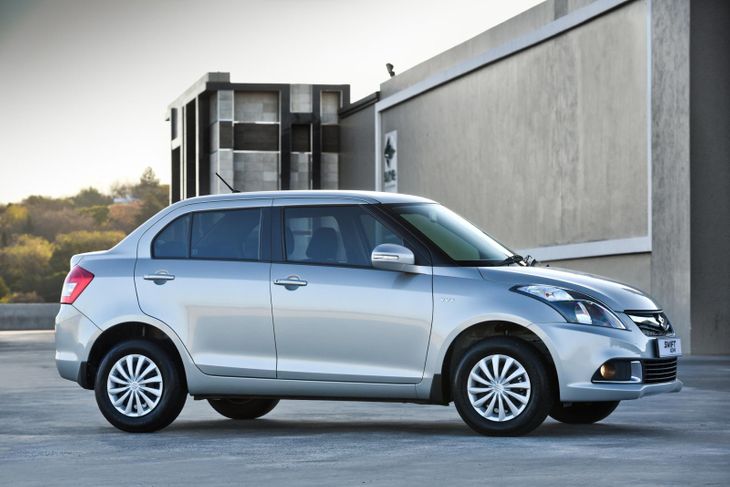
Suzuki Swift DeZire Sedan (from R155 900)
The Suzuki Swift Dzire offers buyers 3 derivatives to choose from. The Dzire range starts with the base GA offering (R155 900), followed by the high-spec GL manual (R169 900) and automatic (R186 900) versions. The Swift DZire is powered by a naturally aspirated 1.2-litre petrol engine with 63 kW and 113 Nm of torque. Suzuki claims a fuel consumption figure of 5.2 L/100 km for the manual derivatives while the automatic is said to consume 5.9 L/100 km.
The Swift Dzire has a claimed boot capacity of 300 litres and comes equipped with 2 airbags, ABS with EBD and brake assist.
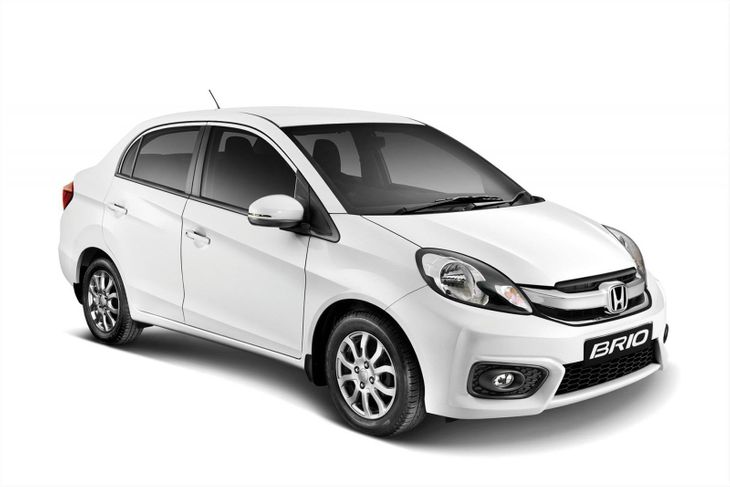
Three Honda Brio Amaze sedan derivatives are available, starting with the Amaze 1.2 Trend priced from R170 300. The high-spec Amaze 1.2 Comfort manual is priced from R182 500 while the automatic version carries a price tag of R196 300.
The Honda Brio Amaze is fitted with a 1.2-litre 4-cylinder engine delivering 65 kW and 109 Nm of torque and Honda claims a fuel consumption figure of 6.1 L/100 km for the manual derivatives. Claimed fuel consumption for the automatic version is 6.9 L/100 km. The Brio Amaze is said to offer 405 litres of boot space, with a pair of front airbags and ABS with EBD is fitted as standard.
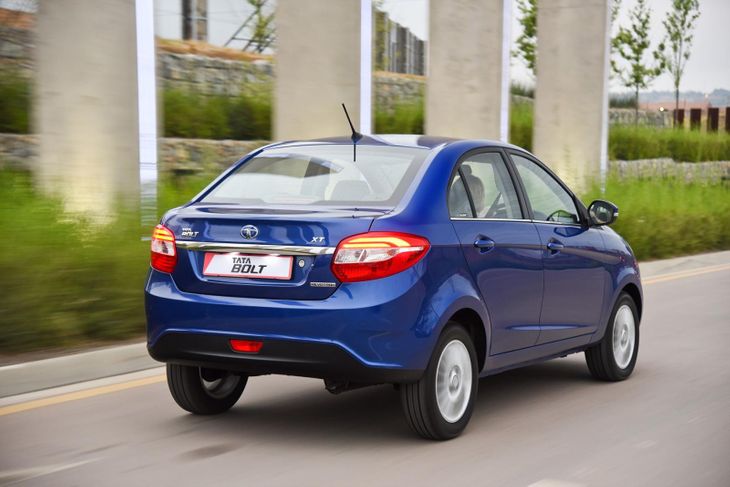
Two Tata Bolt sedan derivatives are available to buyers and both feature a manual transmission. The Tata Bolt 1.2T XMS is priced from R167 995 while the high-spec 1.2T XT is priced from R177 995.
A turbocharged 1.2-litre engine, which produces 66 kW and 140 Nm of torque, powers the Bolt sedan. Tata claims an average fuel consumption figure of 6.5 L/100 km and a luggage capacity of 360 litres. The safety features include 2 airbags and ABS with EBD.
Another option to consider from Tata is the Manza sedan. It’s powered by a naturally aspirated 1.4-litre engine with 66 kW and 116 Nm of torque, with a claimed fuel consumption figure of 6.4 L/100 km. Pricing for the Manza starts at R156 995 for the 1.4 Ini while the high-spec 1.4 Ignis is priced from R177 995. ABS with EBD is fitted as standard along with 2 airbags and the Tata sedan's boot capacity is reportedly a sizable 460 litres.
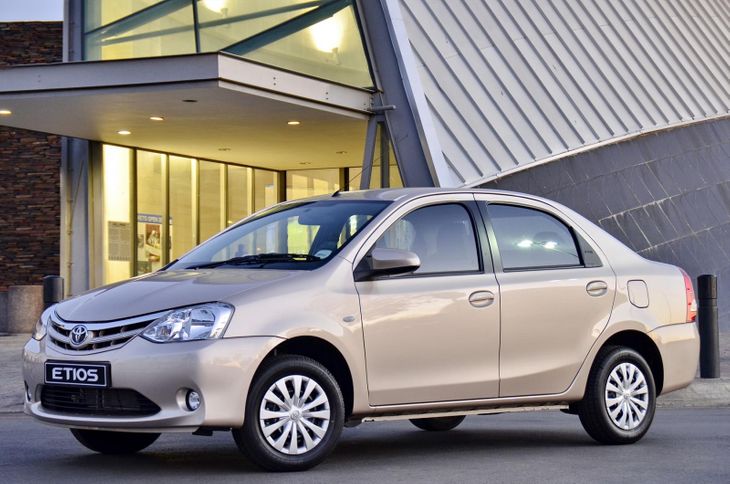
The Toyota Etios sedan is available in two derivatives – the 1.5 Xi and 1.5 Sprint. both are offered with a manual transmission and mated with the same 1.5-litre engine offering 66 kW and 132 Nm of torque. Toyota claims an average fuel consumption figure of 5.9 L/100 km.
Pricing starts at R172 200 for the Etios 1.5 Xi sedan and R182 300 for the Etios 1.5 Sprint sedan. Safety features include 2 airbags and ABS with EBD. The Etios sedan has the largest claimed boot capacity on this list at 595 litres.
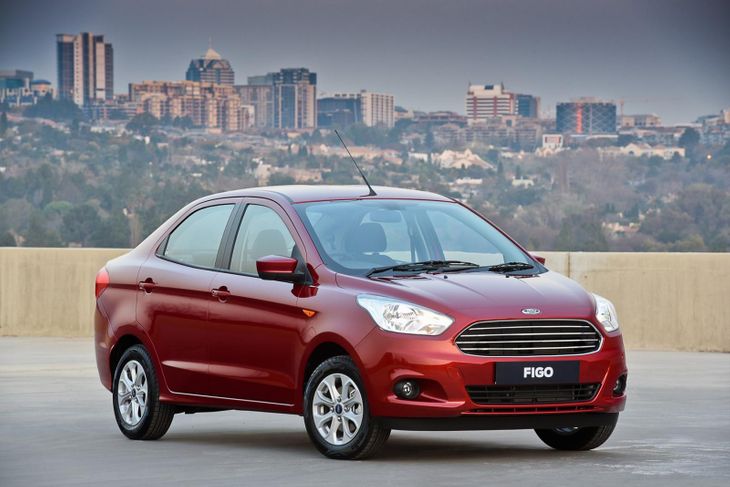
The Ford Figo sedan is offered in 3 trim levels: Ambiente (R176 900), Trend (R188 900) and Titanium (R217 900). All derivatives are powered by a 1.5-litre naturally aspirated engine with 82 kW and 136 Nm of torque, making the Figo the most powerful budget sedan on this list. Ambiente and Trend derivatives are offered with a manual transmission while the Titanium derivative is offered with an automatic transmission only. Ford claims 6.0 L/100 km for the automatic derivative and 5.9 L/100 km for the manual versions.
Boot capacity is rated at 445 litres and safety features include 2 airbags and ABS.
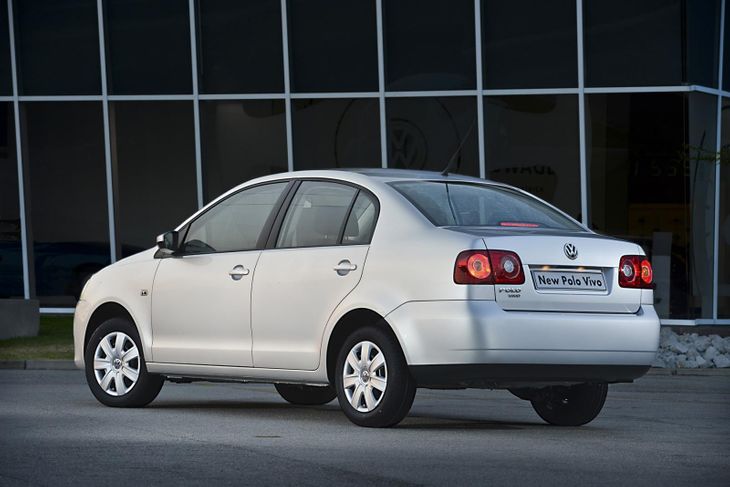
The Volkswagen Polo Vivo sedan is a popular choice in this segment and buyers can choose between 5 sedan derivatives with either manual or automatic transmissions. At the bottom of the range is the 1.4 Conceptline priced from R186 000. It’s powered by a naturally aspirated 1.4-litre engine delivering 55 kW and 132 Nm of torque with a claimed fuel consumption figure of 6.2 L/100 km. The mid-spec 1.4 Trendline is priced from R195 200.
There’s also a more powerful 1.6-litre engine on offer with 77 kW and 155 Nm of torque. It’s available in either Trendline or Comfortline trim and the 1.6 Trendline derivative is also available as an automatic.
The 1.6 Trendline sedan is priced from R203 000 while the automatic version is priced from R211 200 with a claimed fuel consumption figure of 6.9 L/100 km. The top-of-the-range 1.6 Comfortline sedan is priced at R211 600. The manual 1.6 derivatives have a claimed fuel consumption figure of 6.6 L/100 km.
The Polo Vivo sedan is said to offer 432 litres of boot space and safety features include 2 airbags and ABS with EBD.
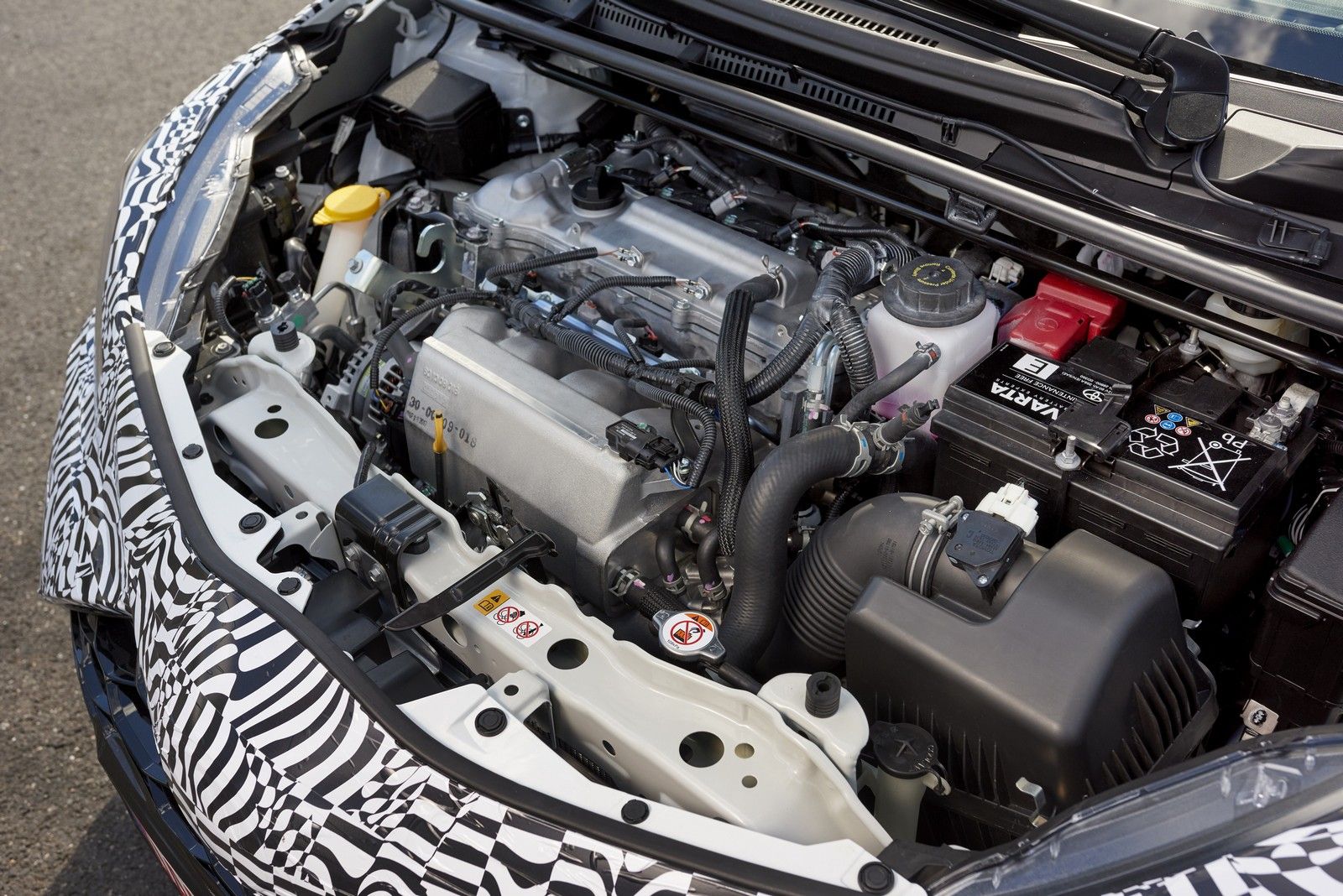
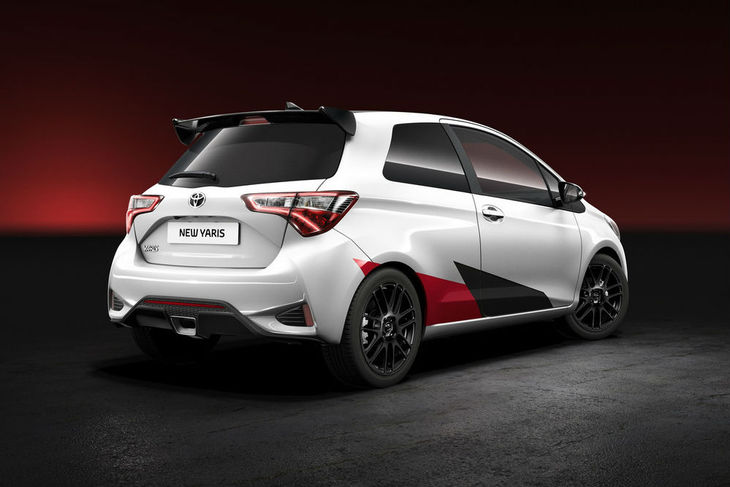
Toyota Yaris GRMN (2017) International Launch Review
Can Toyota successfully produce a hot hatch to rival the likes of the Polo GTI, Clio RS and Fiesta ST? The Japanese brand has come up with a world rally championship-inspired 157 kW Yaris GRMN and international correspondent Dan Prosser finds out if the newcomer is on the right track.
For the past 20 years, car manufacturers competing in the World Rally Championship haven’t really known how to draw a tangible link between their road cars and their mud-splattered competition machines. Not since the late 1990s have they been required by the rules to build road-going versions of their special stage weapons, which has meant that, for the most part, rally cars and road cars have shared scarcely any DNA.
The Yaris GRMN is Toyota’s attempt to make the bewinged beasts that fly over Finnish crests at 160 kph seem more closely related to the showroom models. Unlike its rallying sibling, however, the Yaris GRMN isn’t four-wheel drive, it doesn’t have bundles of power and it isn’t particularly fast.
What is a GRMN?
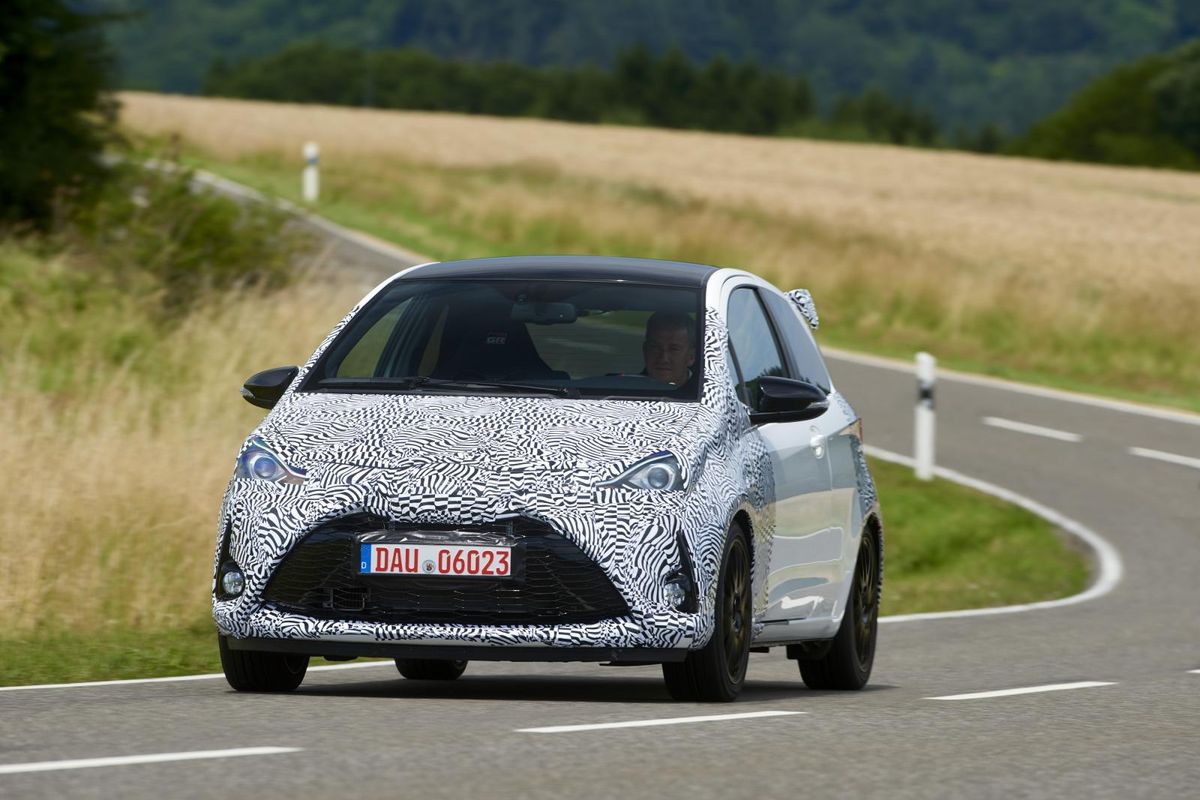
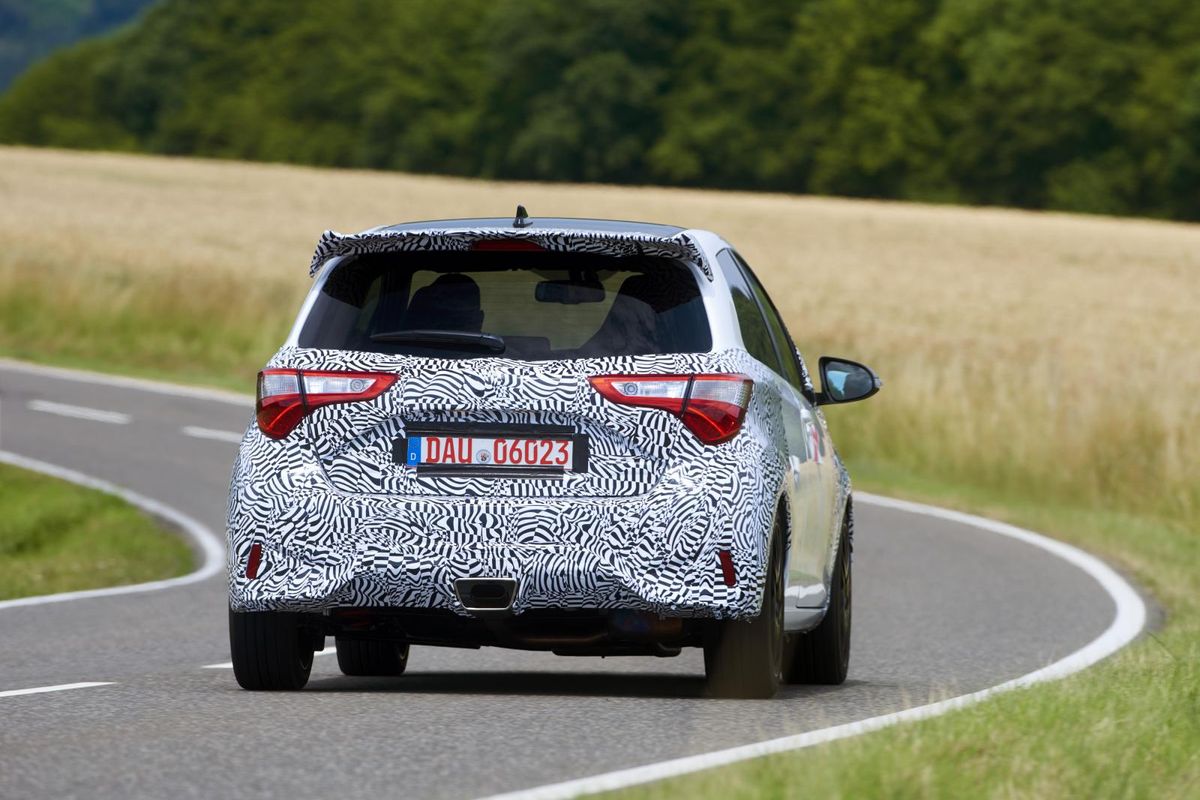
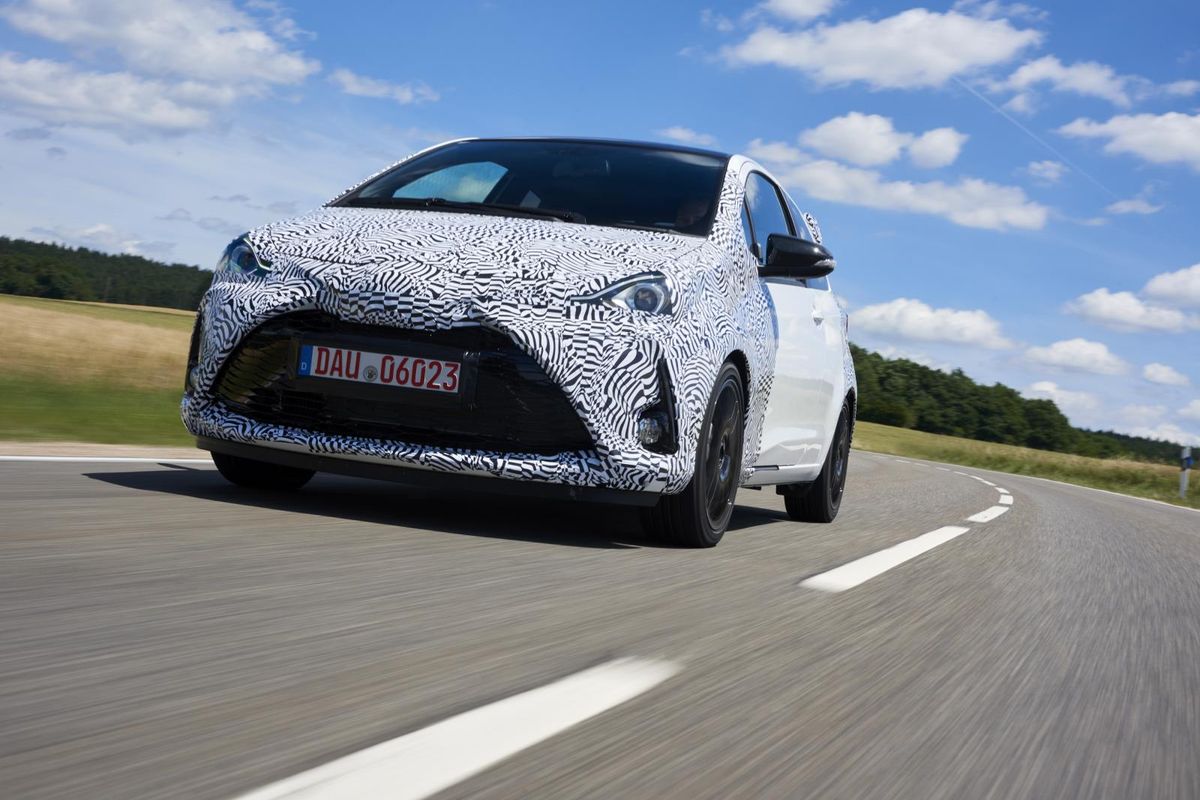
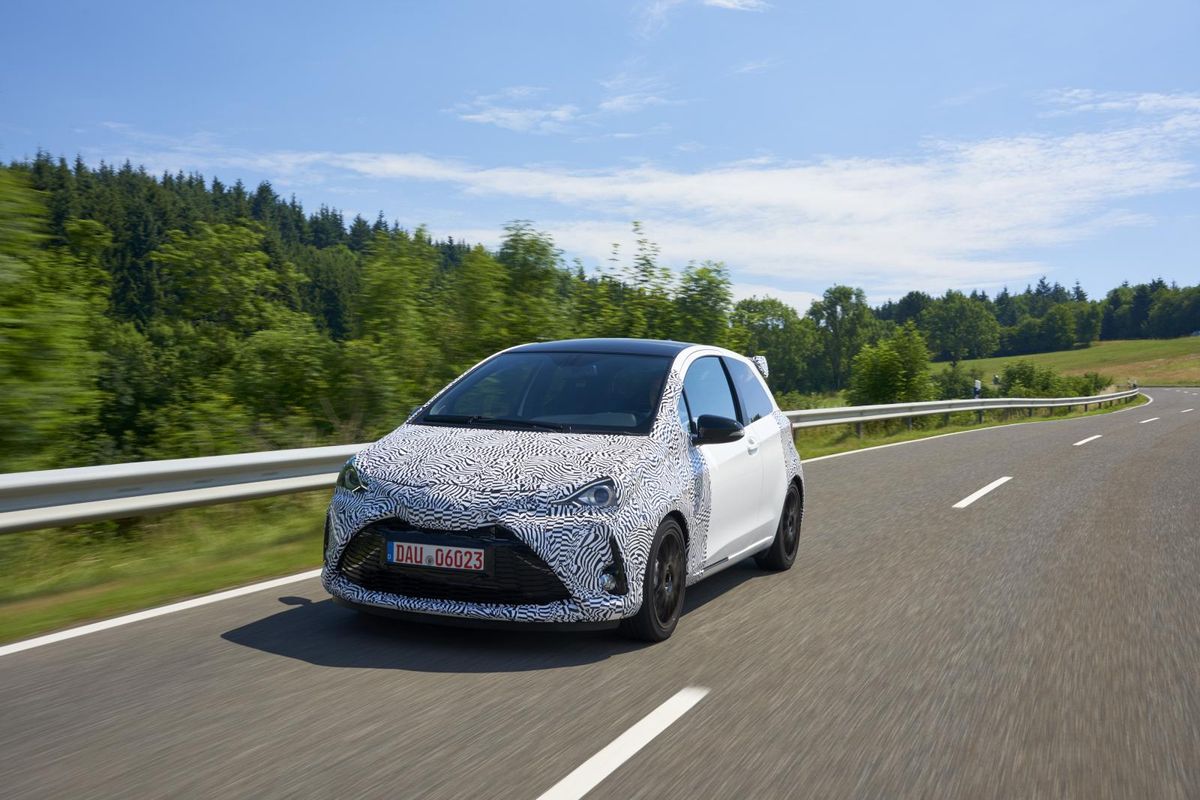
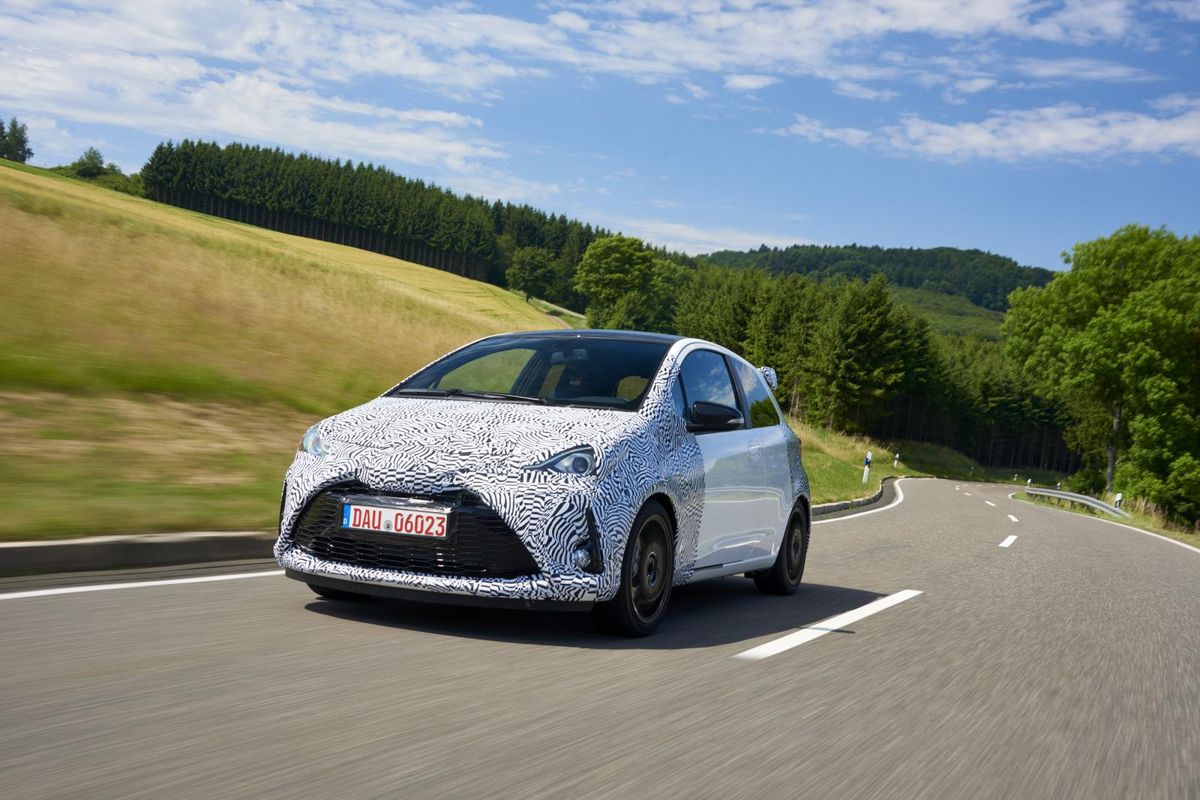
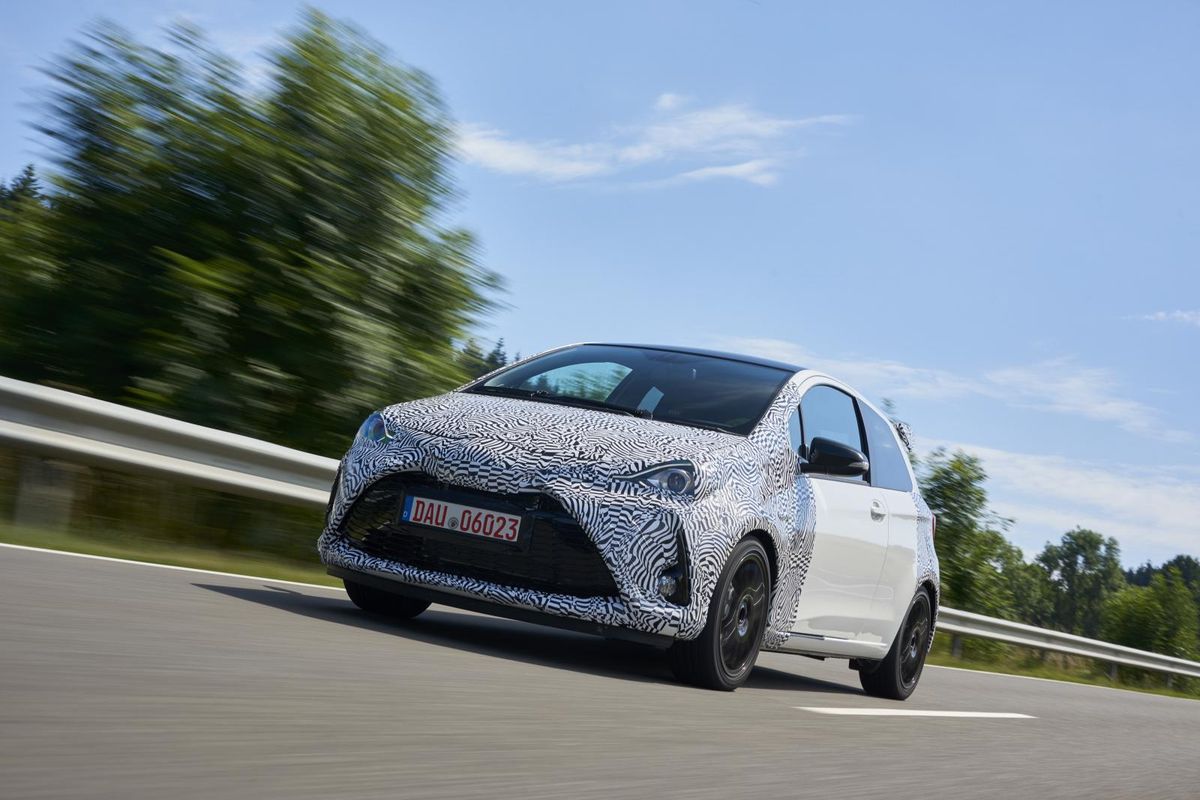
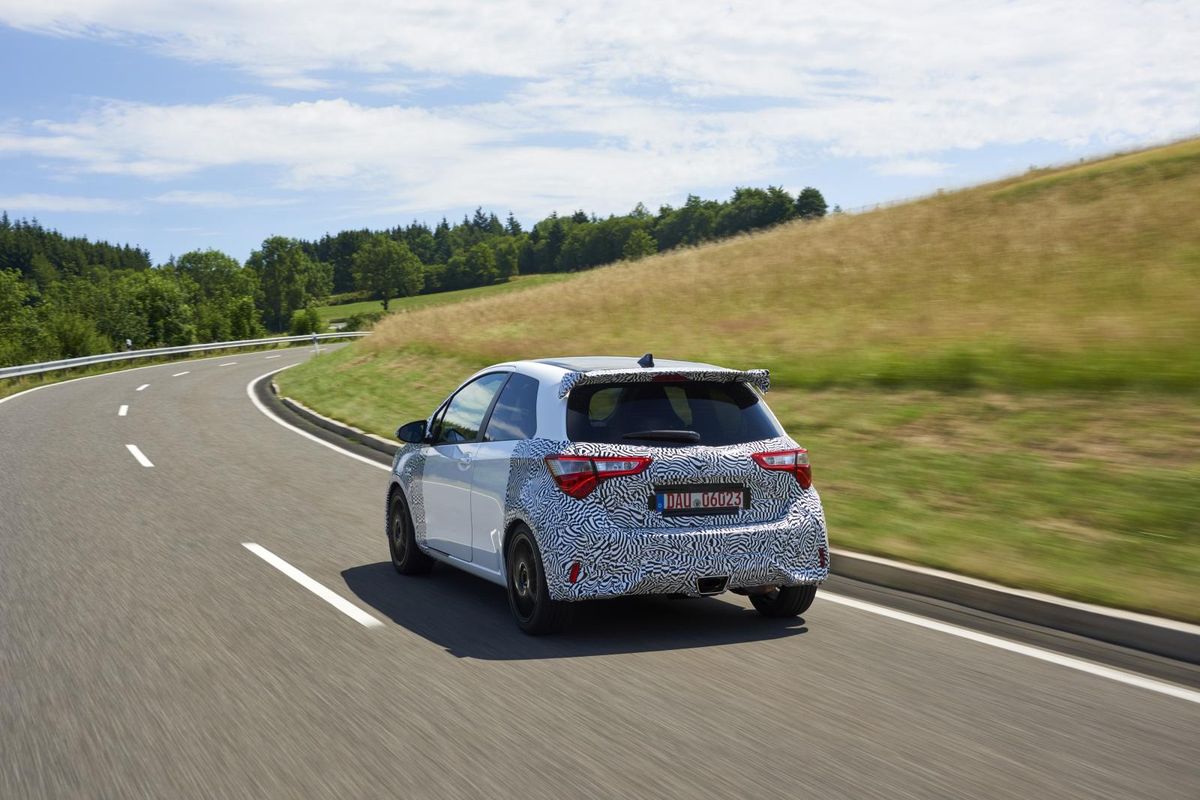
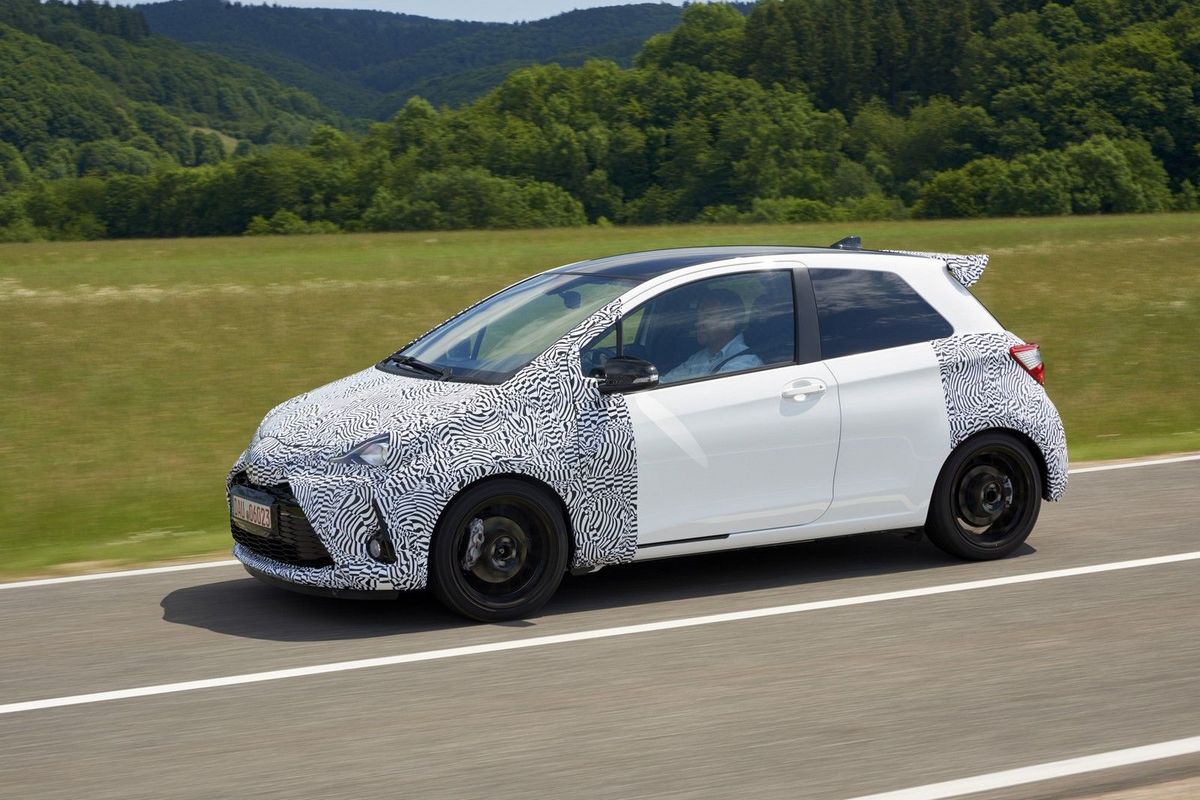
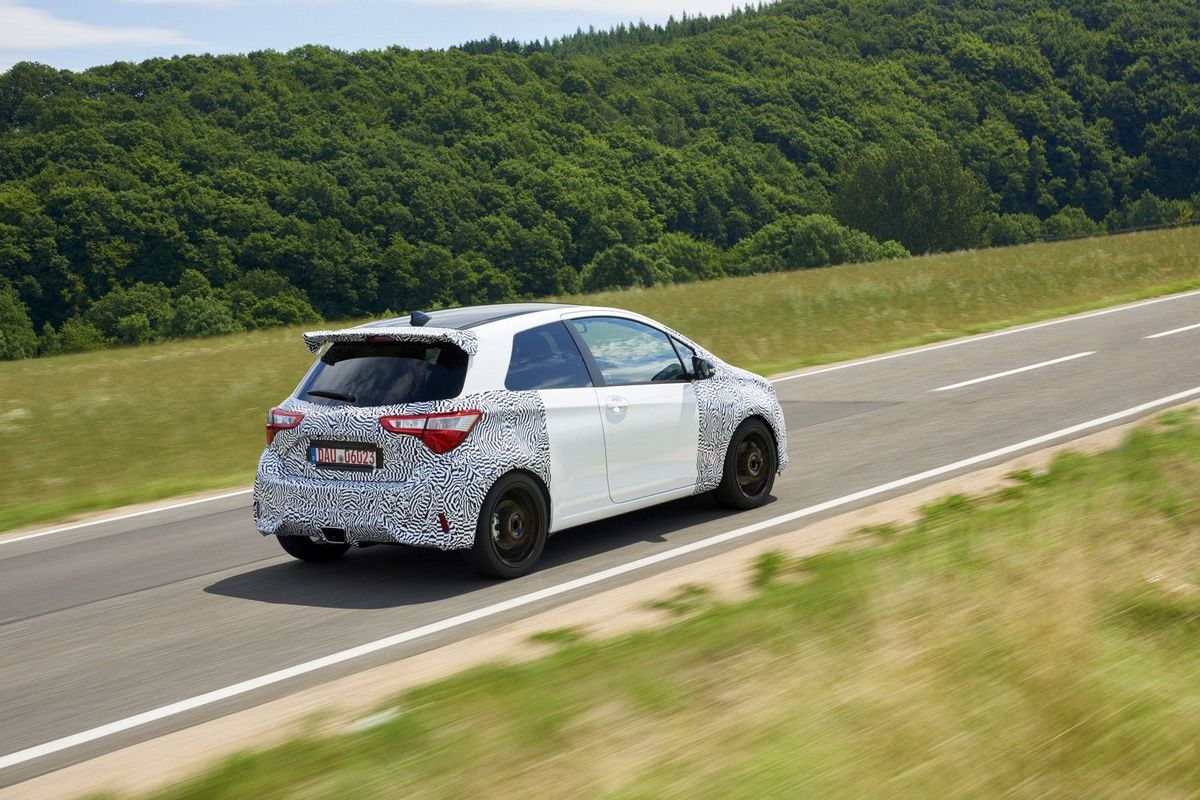
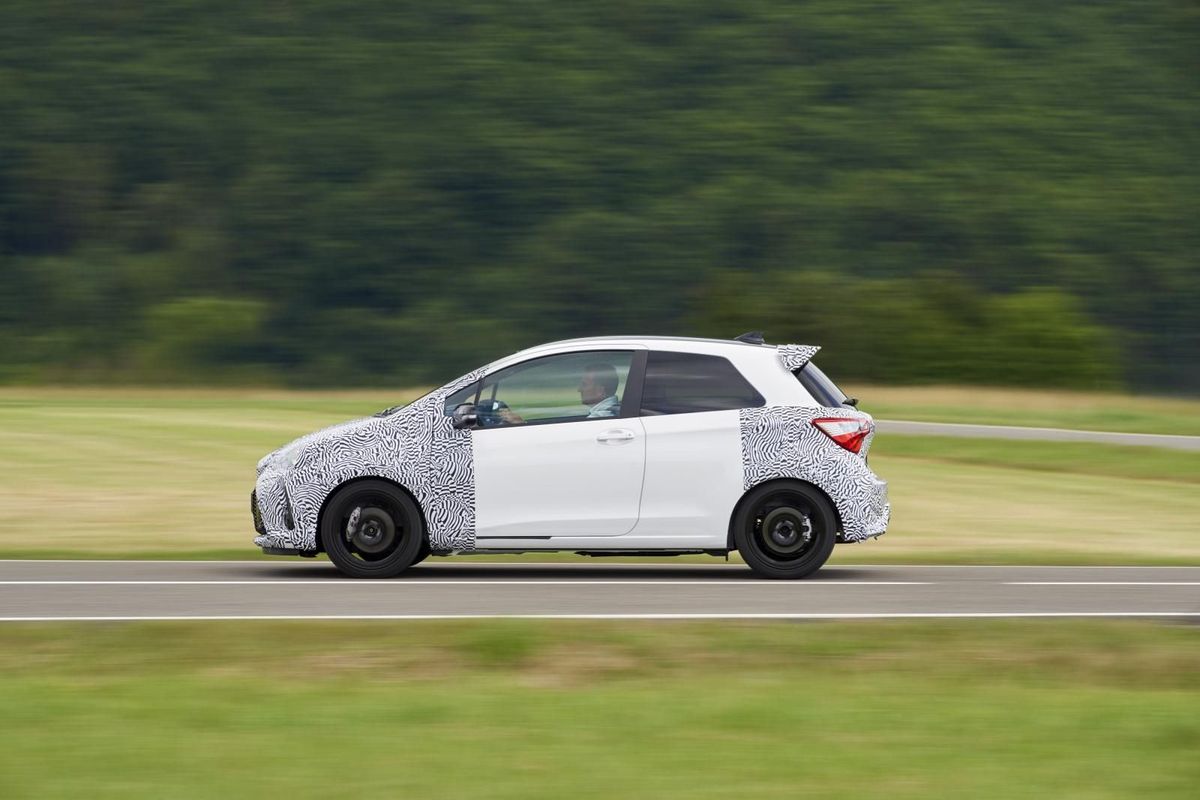
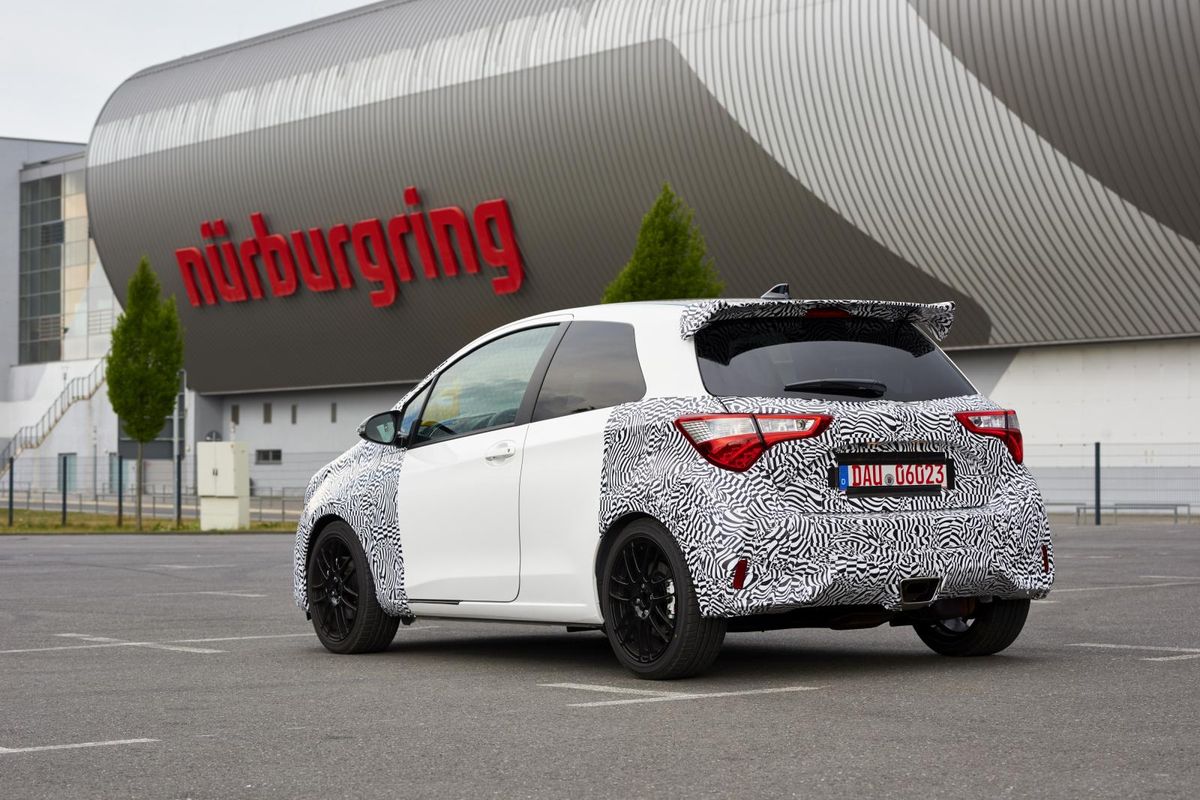
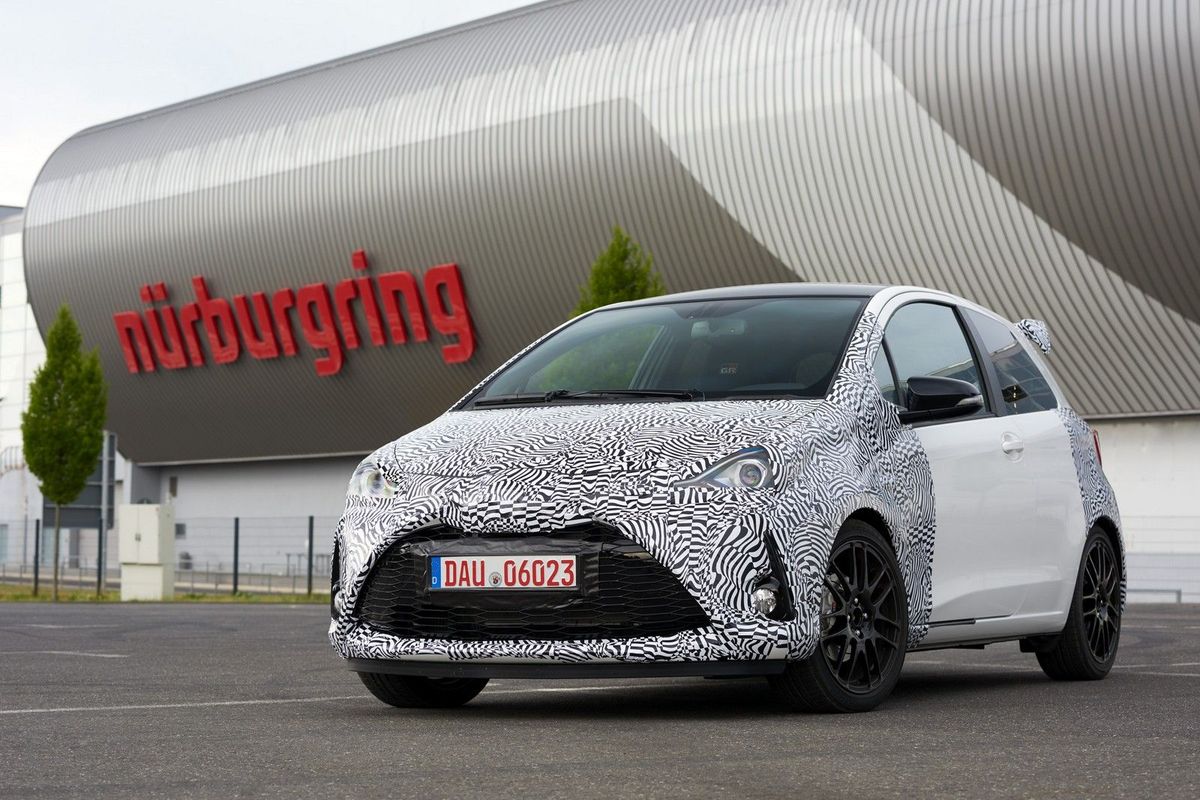
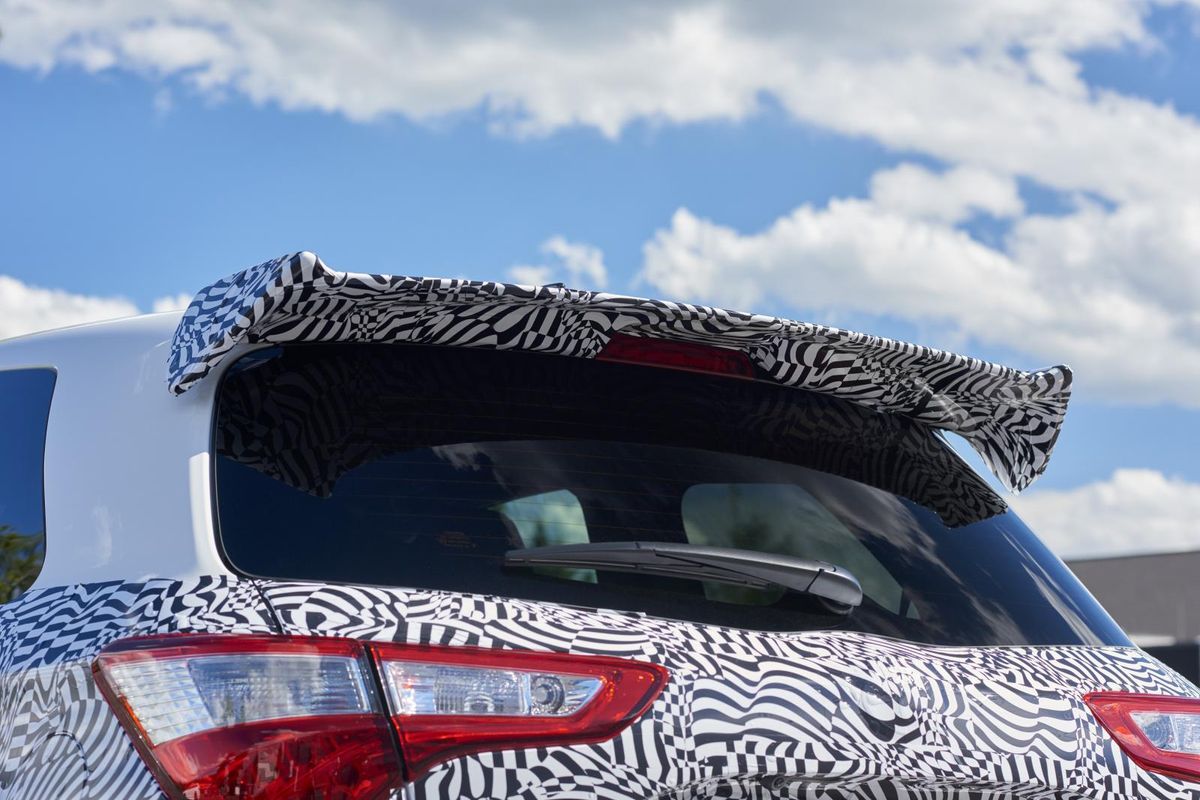
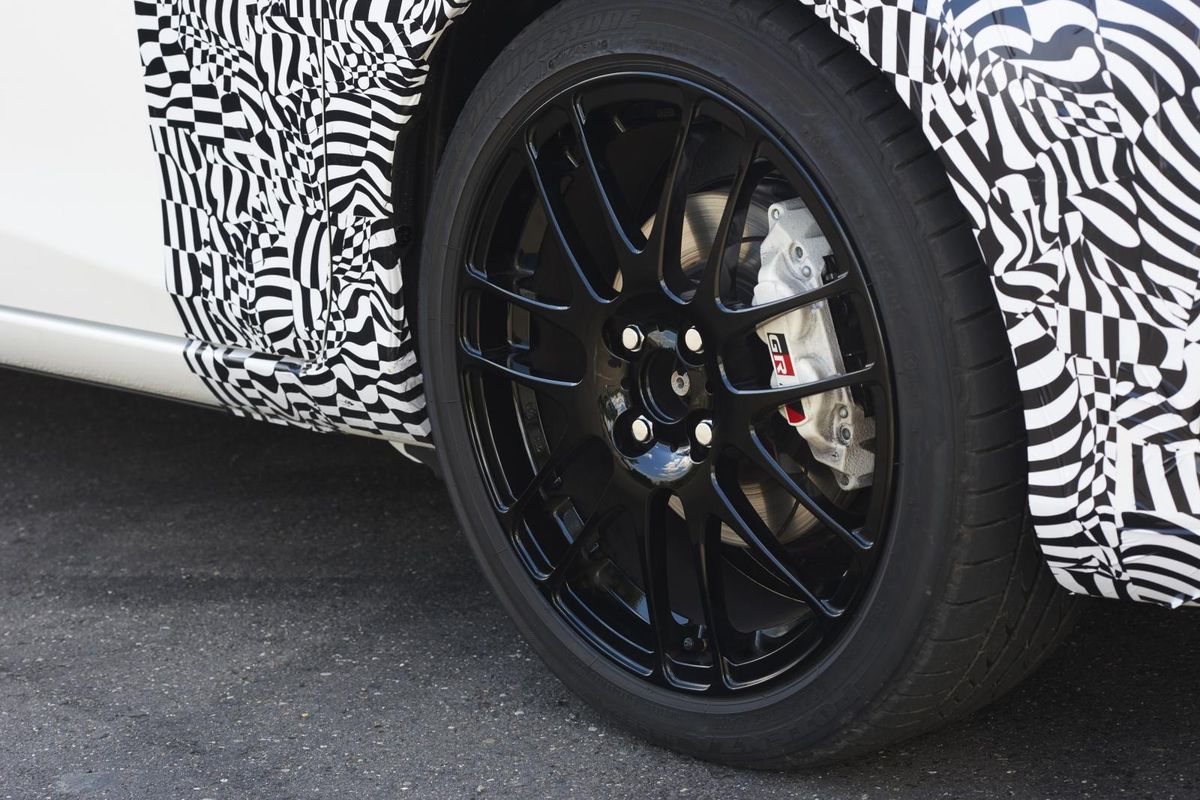
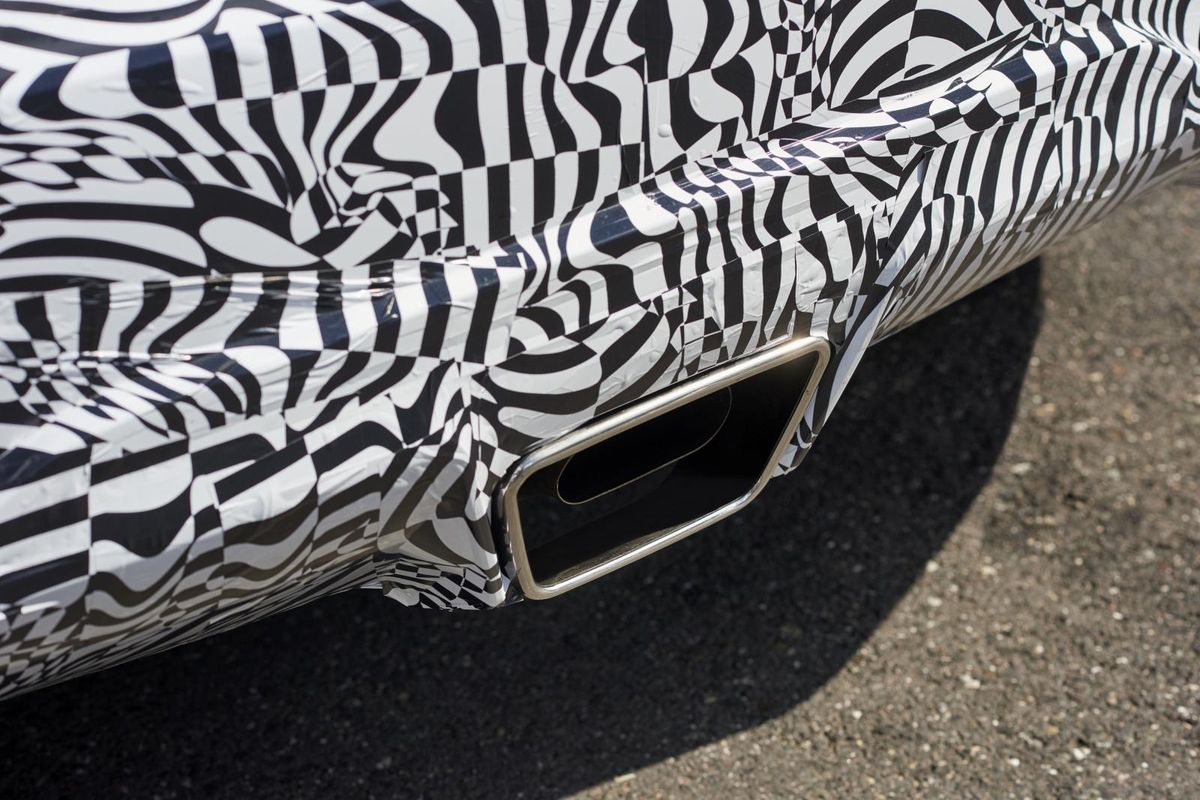
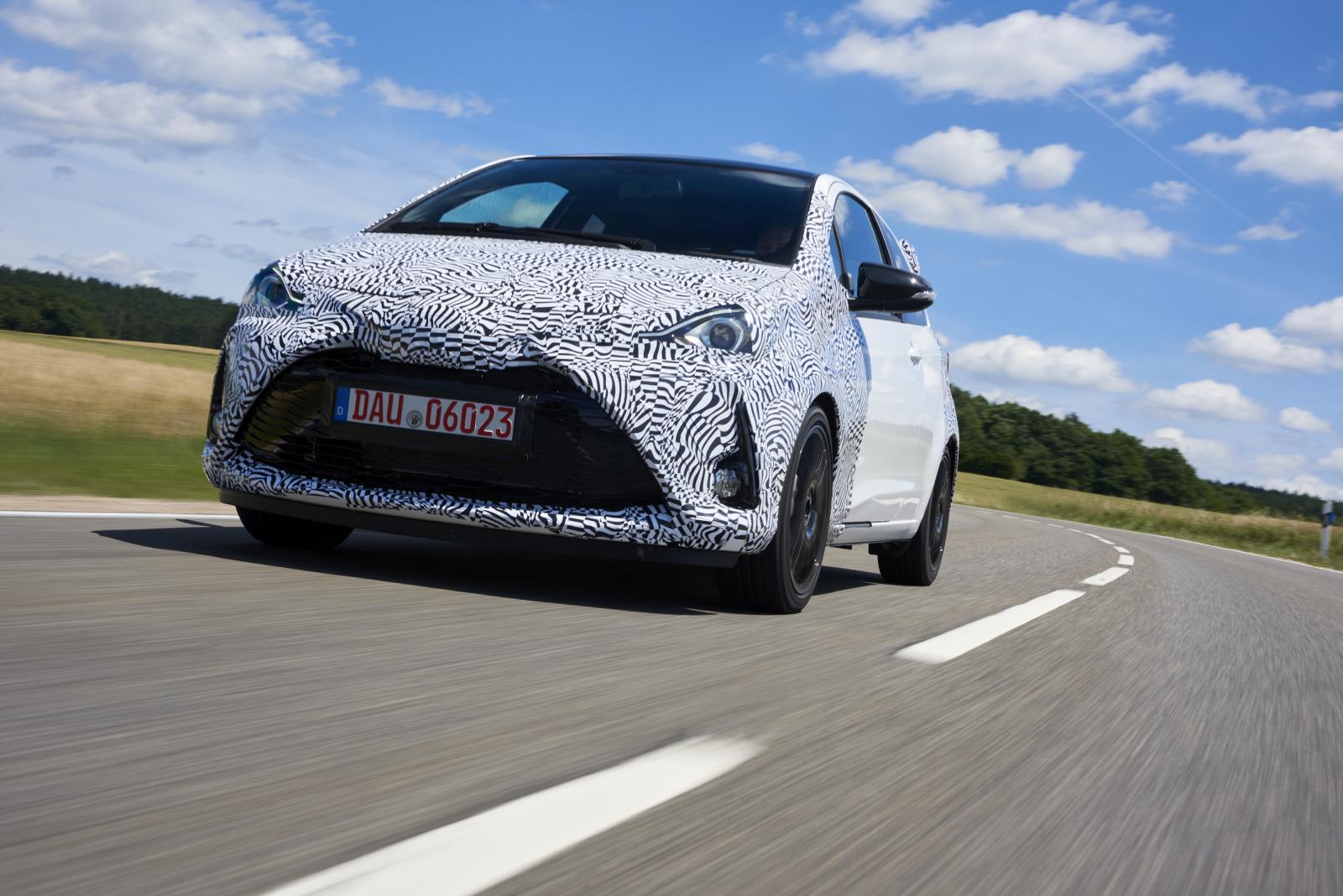
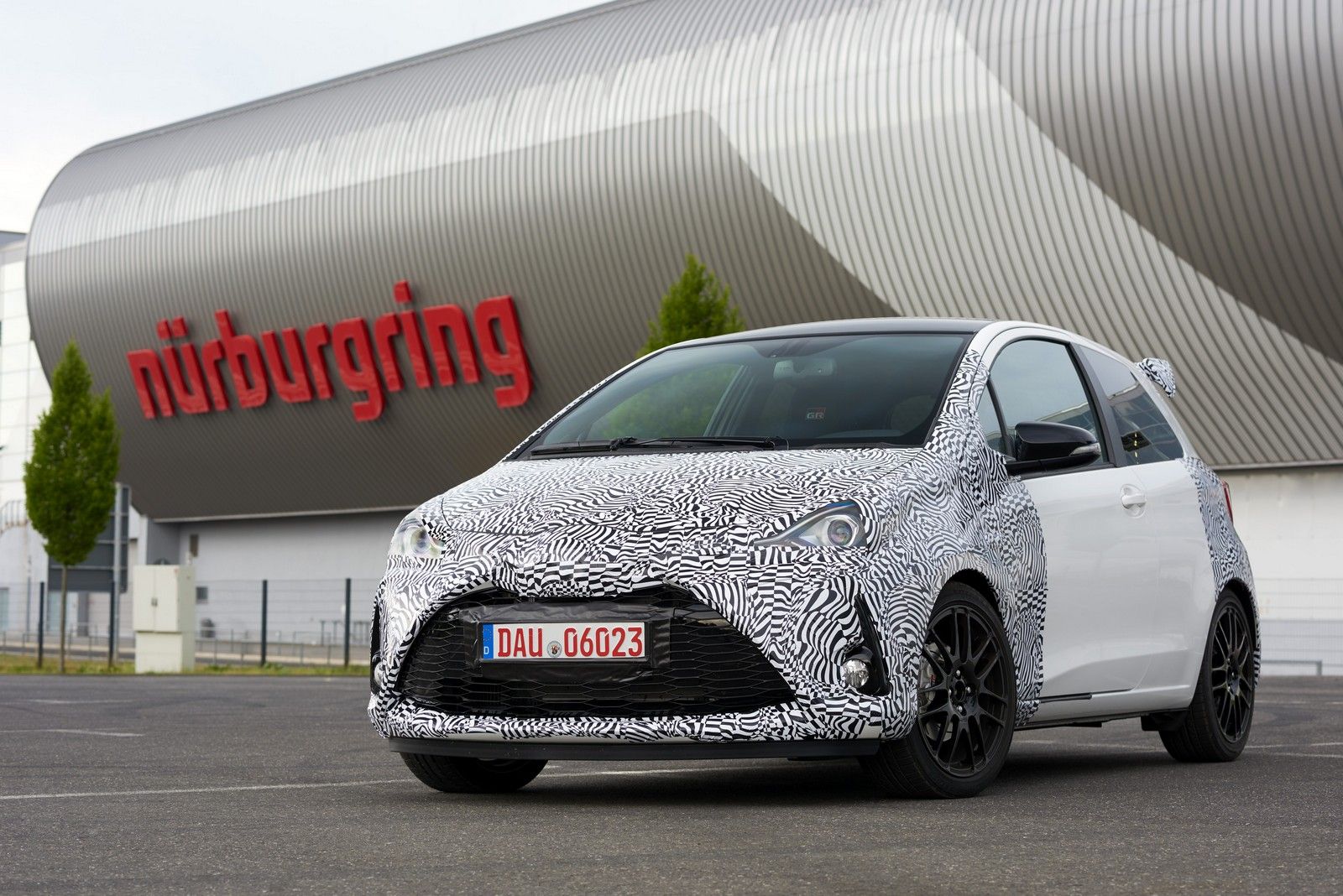
Still under wraps, the Yaris GRMN is in the final development stages before it goes into European production later this year.
To you and me, GRMN is as unfamiliar as it is clumsy to say aloud. It has actually been around in Japan for several years already, but now Toyota is launching the performance brand in Europe. The badge will be reserved for its sportiest, range-topping models. Toyota won’t confirm anything for the time being, but GRMN versions of the 86 and forthcoming Supra might well be on their way.
Those four letters stand for Gazoo Racing Meister of Nürburgring, which probably sounds more poetic to a native Japanese speaker than it does to the rest of us. Gazoo Racing is the in-house division that runs Toyota’s LMP1 and to some extent, Dakar programme, while ‘Meister of Nürburgring’ refers to the Nordschleife wizards who will test and develop the cars, working partly out of the company’s permanent facility near to the ’Ring.
Is it coming here?
The MN in GRMN stands for Meister of Nurburgring. Many laps have been clocked up in the spicy Yaris' development.
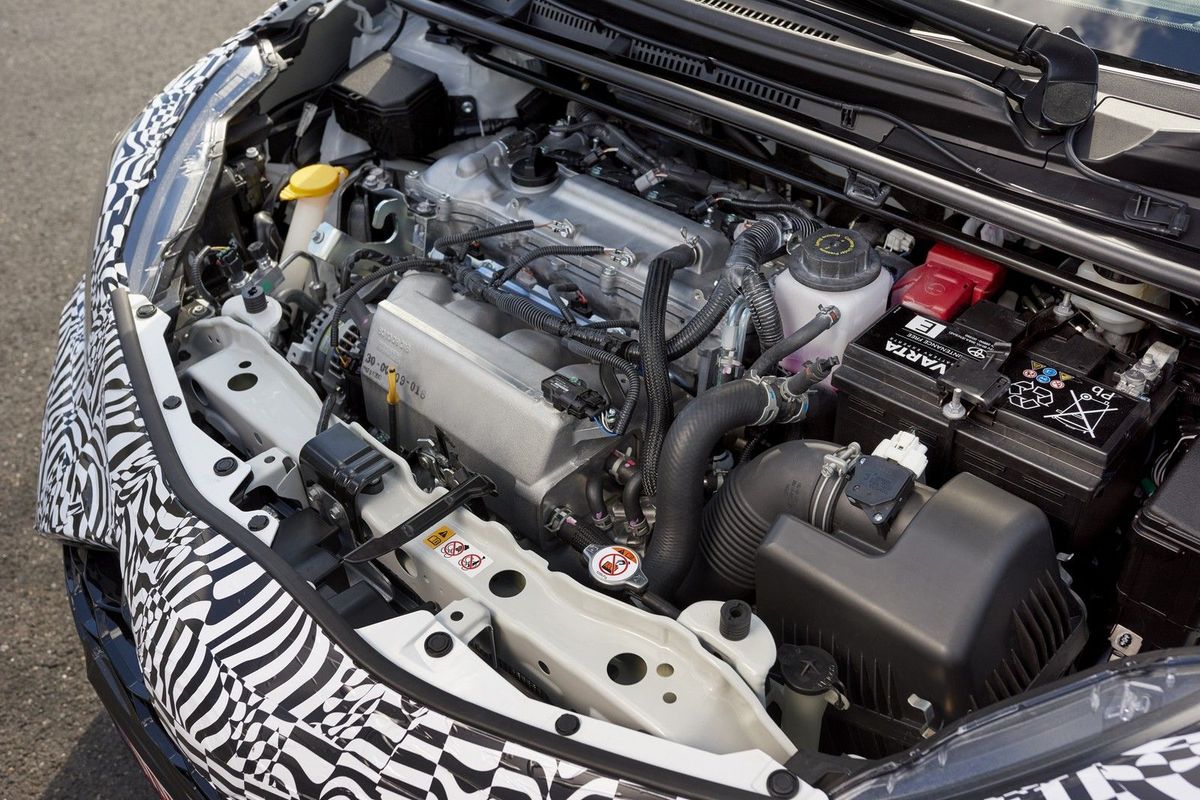
The Yaris GRMN will be limited to just 400 units in Europe, with no units destined for SA. It will cost 29 900 euros (R450 000) and uses a 1.8-litre supercharged 4 cylinder that will develop about 157 kW. Toyota South Africa isn't all that keen on the model anyway as it sees Yaris as a value-based all-rounder in the B-segment. That's not the only deterrent, however, fuel quality issues in South Africa prevent the Yaris GRMN's engine from breathing as cleanly as the Japanese require.
Toyota’s stated objective for the Yaris GRMN is bold: for it to be the lightest, fastest and most powerful car in its class. It remains front-wheel drive, although the body structure has been stiffened and the springs and dampers are bespoke. There is even a Torsen limited-slip differential.
“Every single day people told us this project was too challenging,” says project leader Stijn Peeters. “They told us to stop, but we always had the support of the management.”
Nonetheless, a company the size of Toyota is simply not structured to develop, build and sell a very limited- edition car that’s so different to the base model. Inflexible long-term product strategies and factories that are run with millimetric precision don’t leave much room for short-run projects like this one. In fact, for Peeters and chief engineer Yoshinori Sasaki, the entire project has been a battle from start to finish. You get the feeling that had they pitched four-wheel drive and 200 kW to the board, the idea of a Yaris GRMN wouldn’t have survived the first meeting.
How does it drive?
Toyota has chosen to supercharge its 4-pot rather than turbocharge like many of its competitors. This means instantaneous throttle response.
Production won’t begin until late 2017, which means the car isn’t quite finished yet. Even at this prototype stage, though, it is a huge amount of fun to drive. The Sachs dampers are fixed rate and there are no complicated driving modes or adjustable parameters. The exhaust barks out a snorty, tinny tune, rather than the contrived parping and popping score that accompanies so many small hot hatches. The Yaris GRMN is brilliantly simple.
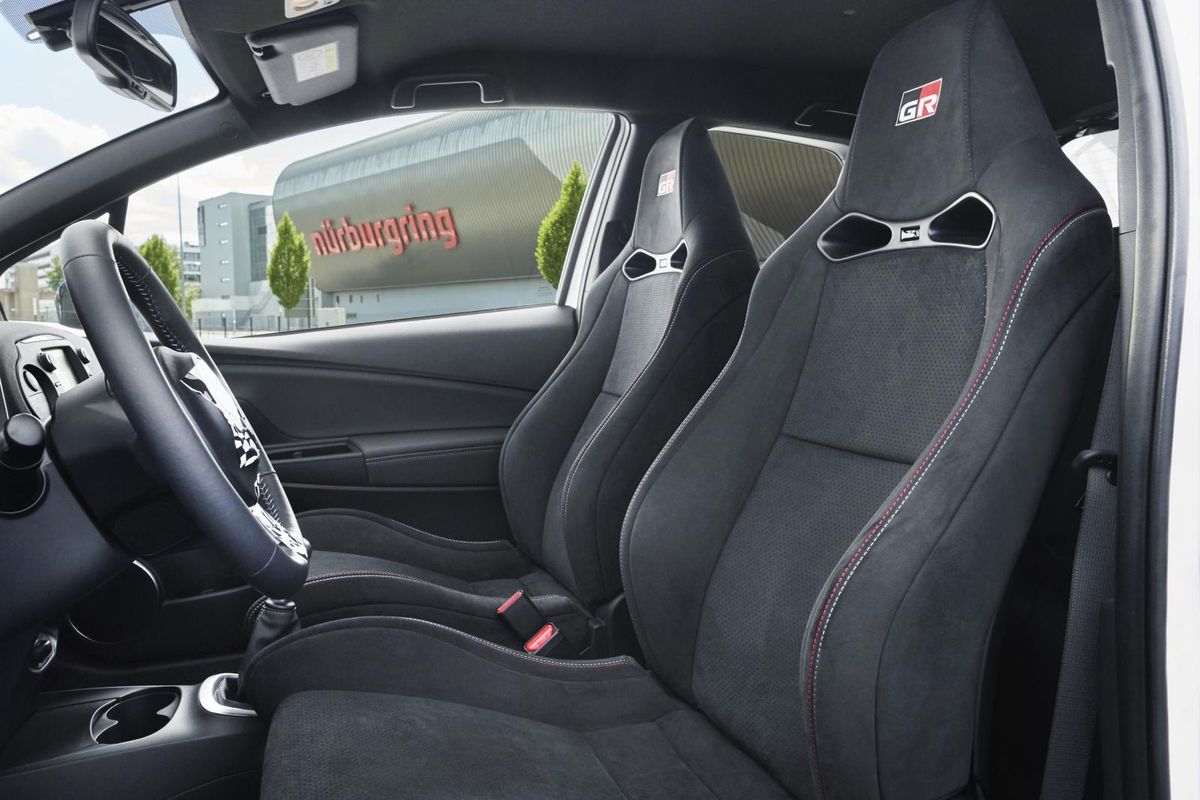
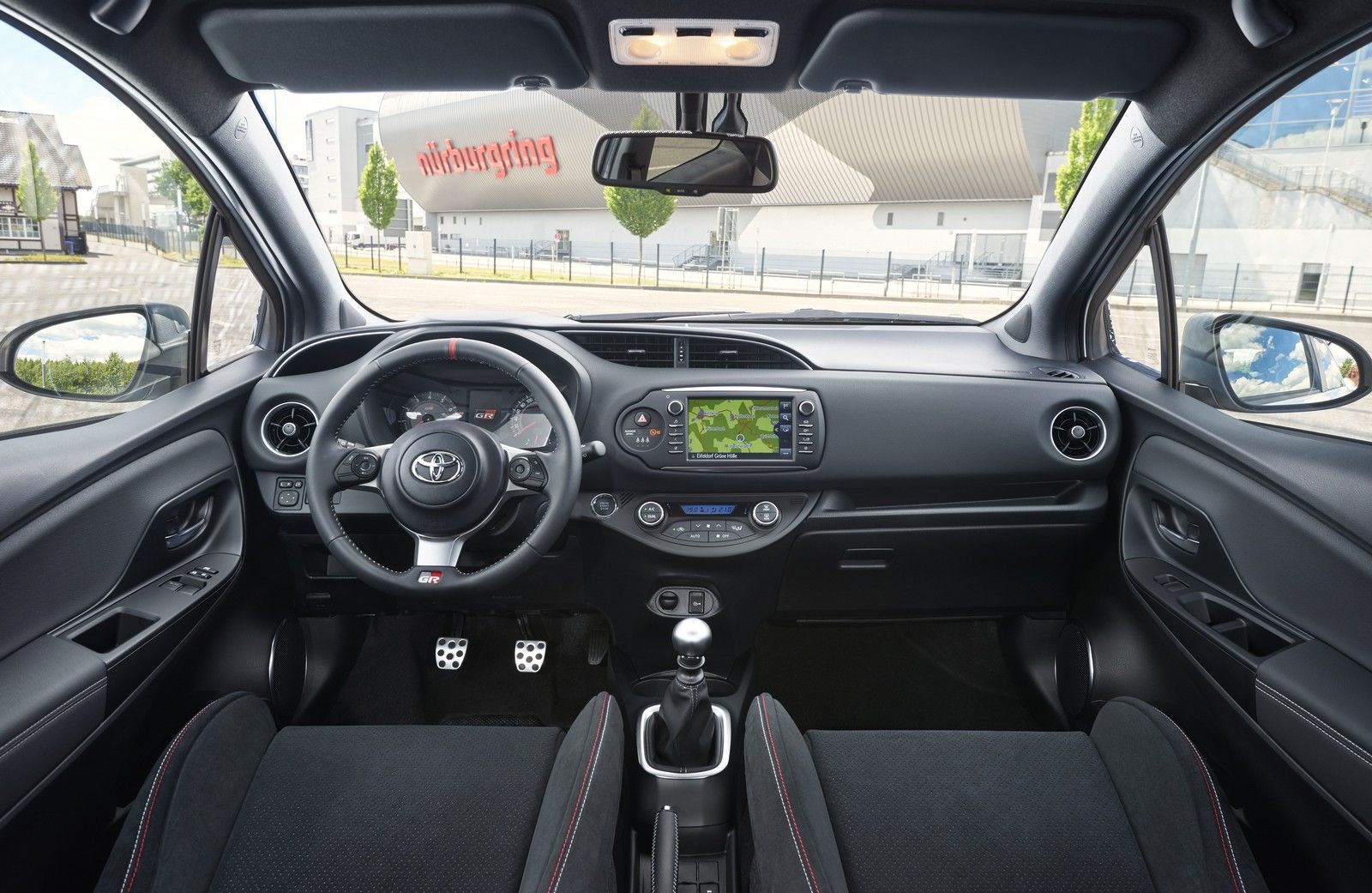
The specially developed sports seats offer lots of support, although they’re set a little high and the 86- sourced steering wheel doesn’t extend quite far enough. The pedals are also spaced a little awkwardly for heel and toe downshifts. Those things are all determined by Toyota’s unbendable global standards, which means the engineers’ hands were tied. In some ways, an independent garage would be better placed to build this sort of car.
The chassis is just about as focused as they come in this sector. It feels firm, with lots of support at each corner, but there’s enough quality in the damping to deal with most road surfaces. It’s properly taut, this Yaris; it feels just a set of knobbly tyres and some bucket seats away from being a junior rally car.
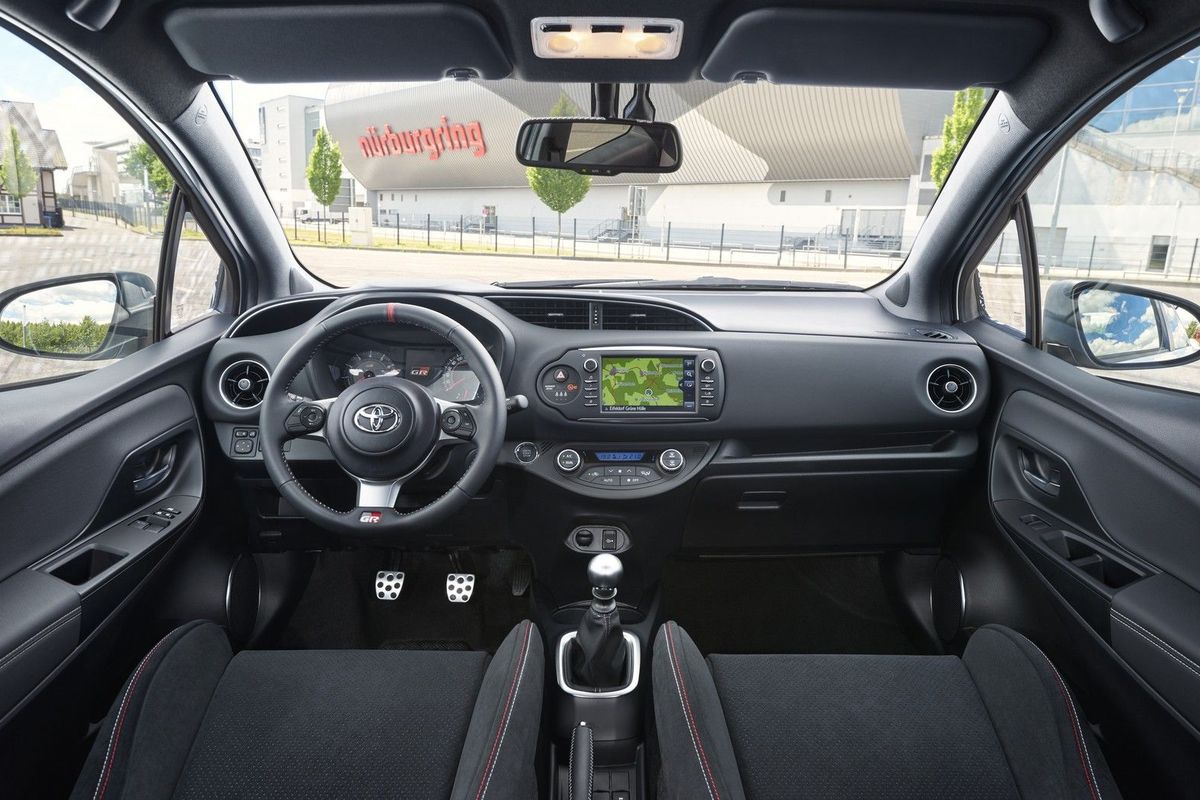
Bar the bucket seats, the interior isn't as racy as the engine and exhaust. Toyota 86 steering wheel is transplanted into this GRMN.
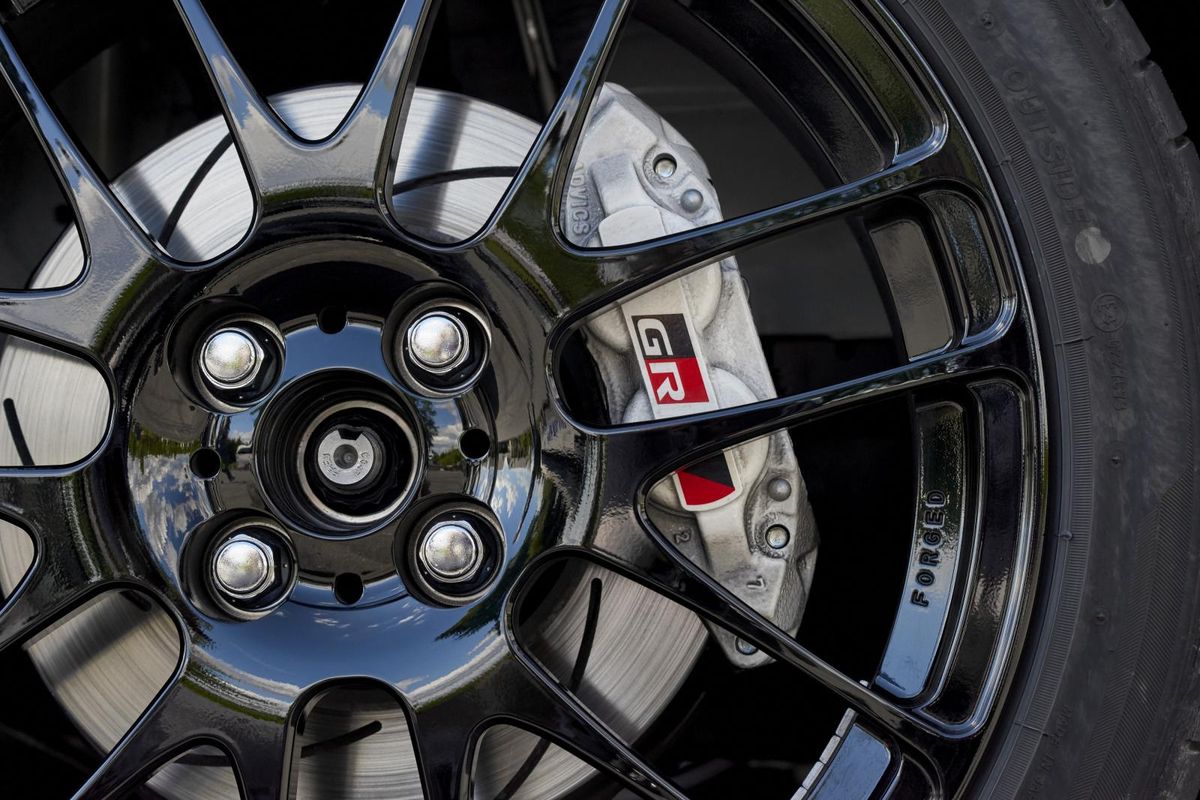
The Bridgestone tyres don’t generate huge grip, which means the car’s limits are well within reach on the road. That makes it a real blast to drive but, before too long, those modest grip levels might well become a frustration. It might not deliver the strong, boosty acceleration of a turbo unit, but the supercharged engine feels potent enough and very sweet. It also offers instantaneous throttle response, which no turbo engine does, while the LSD works subtly but effectively to give good traction away from corners. The manual gearbox is reasonably slick, the steering is decent enough and the four-pot brakes feel strong.
No matter the price, driving doesn’t get a whole lot more amusing than this. The Yaris GRMN isn’t the lightly detuned WRC monster some will have been hoping for, but it’s a very promising hot hatch…
The sportiest iteration of the Yaris to date lays down a marker for where the Toyota brand is headed.
Spec comparison
Toyota Yaris GRMN
Ford Fiesta ST200
Renault Clio RS220 Trophy
Volkswagen Polo GTI Auto
Power/torque
157 kW/250 Nm
147 kW/290 Nm
162 kW/260 Nm
141 kW/250 Nm
0-100 kph
6.3-6.5 s
6.7 s
6.6 s
6.7 s
Top speed
230 kph
230 kph
235 kph
237 kph
Weight
1 135 kg
1 170 kg
1 170 kg
1 272 kg
Toyota says the "Yaris GRMN brings the rhythm of rally to the road", and the Japanese firm "created the performance to prove it". The following clip, named The Dance combines the car and professional dancers "choreographed to match its power and precision". Have a look:
Volkswagen Offers Performance Parts for Golf R [Video]
The facelifted Volkswagen Golf R has arrived in South Africa, but Volkswagen is already offering up some go-faster goodies which we hope will make their way to our market. Let's see what they entail.
The Volkswagen Golf R arrived with an uprated 2.0-litre turbocharged engine, with 213 kW and 380 Nm. It also features a new 7-speed DSG 'box which allows the new R to slingshot to 100 kph in a claimed 4.6 seconds.
However, Volkswagen internationally has made some performance parts available to its Golf R customers and we're hoping these will eventually make their way to South Africa. The Volkswagen Golf R can be fitted with exclusive Performance packs, which comprise improved disc brakes, semi-slick tyres for track driving as well as an Akrapovic-sourced exhaust system, which will address the lack of an emotional soundtrack.
The Performance brake setup is 2 kg lighter than the standard stoppers and offer better braking power, and can be identified by R-lettering on the calipers. As for the exhaust, it too is lighter than the standard unit by 7 kg, and offers what Volkswagen claim are "completely new acoustics."
We hope that Volkswagen SA considers bringing in these parts, especially seeing as how popular the performance derivatives of the Golf are.
What does an Akrapovic-equipped Volkswagen Golf R sound like?