UPDATE: Volkswagen GTI Clubsport S Local Pricing

The VW Clubsport S is finally on sale in South Africa, but all 47 units were pre-sold. In fact, some of the S derivatives have already sprung up in the used market (replete with huge markups). Could this limited edition live up to its mythical status and should consumers shell out a premium just to get their hands on one? Our UK correspondent, Andrew Frankel, drove the Clubsport S last year and shares his thoughts on the car…  

The GTI Clubsport S is the most powerful GTI ever – it produces a peak output of 228 kW, which is directed to the front wheels. It also holds the record for the fastest front-wheel-drive production car lap time around the infamous Nurburgring Nordschleife (7m49.21). Special go faster bits include semi-slick tyres, a 17-inch braking system and specialised brake pads. The aerodynamics on the Clubsport S have been altered to improve downforce and cornering stability. The Clubsport S also has a special sports suspension as well as reconfigured front and rear axles that allow it to run more negative camber at the front, which improves turning ability and reduces understeer.

A total of just 47 units have made their way to our shores and all were pre-sold by Volkswagen. All 47 cars look identical in pure white body colour and a black roof. It’s also distinguishable by its 3-door configuration and lack of rear seats. While you can’t actually buy one of these Clubsport S models, the official retail price was R742 000. There are a few already available on the second-hand market, but the asking prices are around R900 000 already and we've seen some of them advertised at well over that figure!

By Andrew Frankel

You don’t really hear of Q-cars anymore. A few years ago, automotive enthusiasts referred to a high-performance car (usually a sedan) that looked like it couldn’t pull the skin off a cup of cold cocoa – but was blindingly fast – as a Q-car. The name reputedly came from the heavily armed merchantmen "Q-ships" deployed by the Royal Navy in the first World War to trap U-boats.


The kind of cornering speeds that the Clubsport S can achieve will give a Porsche Cayman GT4 headaches.

This Golf GTI Clubsport S is very Q-car-like. Were it not for its new front spoiler and subtle rear wing, you might think it the same as any other Golf GTI. But it’s not: by one measure at least it’s the fastest front-wheel drive car ever created.

That measure is its lap time around the old Nurburgring, a fact I’m not going to dwell upon because I know that for many, such talk bores them rigid.

So I’ll restrict my comments to saying only that a car’s speed around this particular track is an exceptional indicator of its all-around ability, The Green Hell tests power, grip, braking, aerodynamic stability and user-friendliness to the limit. Then consider this hatchback is only 7 seconds a lap slower around the Nurburgring than a brand new Porsche Cayman GT4. 

Top speed limiter raised to 265 kph

It got that way by Volkswagen cranking up the Clubsport's turbocharged 2.0-litre 4-cylinder motor's outputs to 228 kW and 380 Nm, fiddling with the suspension (adaptive chassis control now has a Race mode in addition to the standard Normal, Comfort and Individual modes), fitting (road-legal) semi-slick tyres and modifying the bodywork to turn the considerable lift that the Golf experiences at top speed (the limiter is raised to 265 kph in the S) into appreciable downforce. 


Aerodynamic addenda might be subtle, but the bodywork creates appreciable downforce at top speed. 

Equipped with a 6-speed manual gearbox and sold exclusively as a 3-door (as opposed to the DSG-equipped 5-door Clubsport that was recently released on the local market), the S features unique 19-inch alloy wheels too. But the biggest difference is inside the Golf's cabin, however, were Volkswagen ripped out 30 kg worth of equipment  

That includes the rear seat bench, which has been replaced by a rear strut brace (to aid the body's structural rigidity), the space-saving spare wheel has been replaced with a tyre mobility kit and the panoramic sunroof is not available. 

Remarkably easy to drive

I drove the Clubsport S at the infamous track – as hard as I could – and was stunned not simply at how the speed of the thing defied entirely its modestly enhanced appearance, but just how easy it was to drive.

To extract maximum lap time from a car usually means making it stiff and edgy to minimise weight transfer and make it change direction quickly; but the Golf was endlessly forgiving, assiduous in its dedication to building your confidence and devastatingly fast. By any measure, it was profoundly impressive.

And yet it felt just a touch clinical. The way it interacted with me was enough to make me feel involved, but not quite entirely immersed in the experience. And Volkswagen would not let me drive it on the public road, which makes me suspicious about its real world ride and refinement.


The Clubsport S will be the first 3-door Golf to reach the South African market for many a year.

Summary

Just 400 Golf Clubsport S units will be built; that's 10 for every year that the Golf GTI has so far been in production. The track-focused Clubsport S feels as if it was conceived to set a benchmark, which it duly did at the Nurburgring, but that does not eliminate the fact that (in the UK) you can buy a Golf R that comes fully equipped with back seats, a brilliant four wheel drive system for less money.

It’s not quite as quick as the ClubSport, but it’s no less fun to drive and a sight easier to live with. Even in these days of the Ford Focus RS (R699 900) and Honda Civic Type R (R615 900), it remains my favourite hatchback.

And brilliant though the Clubsport S is in so many ways, it can do nothing to change that.

Watch the Clubsport S set a new (FWD) lap record at the Nurburgring:

Related Content

Volkswagen Golf GTI Clubsport S Shatters Own Record
Volkswagen Golf GTI Clubsport (2016) Video Review
Volkswagen Golf GTI Clubsport (2016) Review

Audi Q5 (2017) First Drive

The new Audi Q5 is destined to reach South Africa in the third quarter of 2017. It's the follow-up to Audi's best selling model and what the firm calls the world’s best-selling premium SUV, so expectations are high. Does it deliver? Our British correspondent, Mark Tisshaw, reports…

Audi simply has to get this new Q5 right. Of course, the launch of any new model is important, but when it’s one that has recent history as your global best seller and you’ve constructed a whole new factory in which to build it, the pressure is ramped up on you quicker than you can say "Dieselgate".

The second-generation mid-sized SUV’s vitals are quite easy to guess – new modular platform, lighter weight, more efficient engines, high-tech interior – but it’s the context of the car that intrigues most, and why we’ve flown halfway around the world to Mexico for an early drive of it before it enters full-scale production early next year.


 Given that the Q5 is the kingpin in Audi's SUV line-up (from a global perspective), the newcomer's styling is "safe".

Mexico is where the Q5’s new factory has been built. This is the first time Audi will export a model globally from one of its plants outside of Europe. The facility is jolly big, at almost 4 km2, and is the most advanced Audi plant in the world, as well as being the one at the highest altitude… the significance of which I have no idea. We do know what all those workers will be building because we saw the new Q5 at the recent Paris Motor Show.

If not good-looking, plush on the inside

The new Q5 is built on the same MLB Evo platform as the larger Q7, a mixed-material structure that will be used across all big Audis from the A4 up. A looker it ain’t, on the outside at least, being all too generic and Germanic, but inside Audi has incorporated a combination of materials to offer something impressively luxurious and high-tech.


Given that the Q5 needs to repel rivals from Porsche, Jaguar and even Lexus, its interior quality is suitably top-notch.

The same is true of most new Audis these days, though, so here the significance of the car’s context comes in. The Q5 was launched in 2008 as a baby brother to the Q7 and went on to find more than 1.6 million homes in its 8 years on sale. Back then, Audi knew it was probably on to a winner as the SUV boom started – but just how successful the Q5 would become it didn’t predict.

That success was indeed to make the Q5 not only the firm’s best-selling model but also, Audi claims, the world’s best-selling premium SUV, coinciding with a time of a record-breaking sales boom for Audi.

Must follow up a bestseller

Replacing something successful, then, is no mean feat. You can’t get it wrong and kiss goodbye to sales, profits and growth at a time when rivals, including the new Jaguar F-Pace and Mercedes-Benz GLC, have never been stronger. The fact that Audi can’t afford to get it wrong probably explains those conservative looks. This isn’t a time to be alienating loyal buyers.


Compared with its predecessor, Audi's newcomer is exceptionally well-engineered, smooth-riding and refined. 

The thing is, though, the old Q5 was a tricky car to get excited about. Sure, it was pleasant enough to drive and sit in, but it was all a bit, well, bland and anonymous. You probably see a good dozen Q5s a day without even realising it, and I had to spend a week driving one before coming to Mexico to remind me what it was like, because driving it first time round had left no lasting impression on me.

Wouldn’t it be lovely, then, if the new Q5 could not only be Audi’s most successful car, but also one of its best to drive?

Ah. Here’s the thing about the new Q5. It may be an exceptionally well-engineered, smooth-riding, refined and well-built car that’s lovely to sit in and probably to own, but it’s just not that much fun to drive. Porsche and Jaguar have shown with the Macan and F-Pace that cake can be had and eaten, too, with a sporty drive while still fulfilling all of the other SUV requirements. As competent as it is, it still feels like an opportunity missed.


If there is a criticism to the Q5, it is that its driving experience is, if comfortable and accomplished, not really involving. 

But there remains much to admire and explore with the Q5, because it’s still an interesting thing, with a rather tantalising solution in the offing to its only real problem. It does have some standout features and, at times, it excelled on Mexican roads. Our route was some 200 miles in length, on a loop around the southern part of Baja California peninsula in Mexico – apparently the largest peninsula in the northern hemisphere.

Unmatched interior finish

We start near the town of Cabo San Lucas, where straight away we tucked into the Q5’s killer feature: its interior. The choice of materials, the sophistication of the technology and overall fit and finish are excellent and unmatched by any rival. We can see many people buying it for this alone.


From the Virtual Cockpit instrument panel to the crisp-looking infotainment system and trim quality, the Q5 exudes class.

Your eyes will be drawn first to the excellent 12.3-inch Virtual Cockpit colour screen, where the instrument binnacle once lived and which displays everything from the navigation screen to the speed. It’s very good in other Audis and the same applies here.

The MMI infotainment system, displayed on an 8.3-inch screen in the centre stack, is also as good as ever, ticking every type of usability and connectivity box you’d like, including Wi-Fi and Apple CarPlay and Android Auto smartphone mirroring functions. It’s also not one of those blasted touchscreens, being controlled by a superior rotary knob controller and a few shortcut buttons. Not only is the interior of a higher quality than before, but it’s also more spacious, with room for five adults and an increase in luggage capacity to 610 litres.


The initial engine line-up is headed up by a 3.0-litre turbodiesel, but the 2.0-litre derivatives should be more popular.

At the other end of our test car sits a 3.0-litre V6 turbodiesel engine with 210 kW, one of three launch engines for the Q5. Two 2.0-litre four-cylinder engines are also offered: a 186 kW turbopetrol and a 139 kW turbodiesel, both of which feature quattro four-wheel drive and automatic transmissions, of course.

Potent 3.0-litre V6 turbodiesel

This engine makes a positive impression as we head up the western shoreline of the Gulf of California. My word, it's smooth and refined – perhaps a good description of the car as a whole. There’s a wide spread of torque, with even the occasional sledgehammer delivery of it, such is the potency. You certainly won’t be wanting for any extra performance, and the 8-speed automatic gearbox works well with it and is unobtrusive.

The smooth carriageway along the shoreline, which crosses the Tropic of Cancer line at one point, also reveal one of the Q5’s other strong suits: its smooth, comfortable ride quality. The original Q5 was plagued from its launch with a dodgy ride, which was in part fixed for the facelifted version.


The Q5 benefits from sharing Audi's common large vehicle platform. It can comfortably seat adult passenger in the rear.

But Audi has got it spot on first time with the new Q5, at least with the optional air springs and adaptive dampers fitted to our test car. Not even the more extreme road surfaces later on the route seem to trouble it.

So far, so good. But as we turn inland and cut across the twisty roads of the peninsula towards the town of Todos Santos, the Q5’s mood killer rears its head. It turns in okay, it grips well, body control is well controlled and understeer is kept in check by the standard torque vectoring system, but you never come out of a corner with a smile on your face. Nor do you end up in a ditch even when taking corners at some speed, highlighting the fact that the chassis has plenty of slack in there.

Selecting Sport mode, one of seven available on the Audi Drive Select controller, lowers and stiffens the air springs and communicates through your bum a bit more of what is going on, as well as allowing the car to corner a touch flatter. But it’s still not involving and the lack of steering feel doesn’t help, either.


Optional air springs and adaptive dampers elevate the Q5's ride quality to a class-leading level.

Is the Q5 adept at off-roading?

Before reaching Todos Santos – home of the actual Hotel California –apparently, we sample one of the air suspension’s other tricks: rising 60 mm above its Sport mode setting to improve offroad performance.

Amazingly, it’s actually rather good. This is not an offroad course in the traditional sense with water hazards and huge inclines to descend; rather, it's a series of heavily rutted gravel and sand tracks, but still the sort that might raise questions over the ability of a car like the Q5 to conquer them.

It does so without fuss, accompanied by an Audi engineer’s insistence that, in the development stage, they had a Range Rover and a Mercedes G-Class along for some comparison and the Q5 could do what they could do in any kind of ‘real-world’ offroad situation in which an owner could realistically find themselves.


Mild off-road courses present little challenge to the Q5; its top-of-the-range suspension can raise/lower itself by 60 mm. 

Impressive 2.0-litre turbodiesel derivative

After putting the windscreen washers to use exiting the tracks back towards another super-smooth highway, this time along the Pacific coast, to return to our starting point, we switch to a 2.0-litre turbopetrol version.

It’s a nice, flexible engine, with a good spread of torque and a better sound than the larger turbodiesel. It also makes the Q5 feel a touch more sprightly and agile, but without fundamentally altering the character of the car.

That last phrase – fundamentally altering the character of the car – is one I’m left pondering as we return to our starting point.


The 3-quarter aspect of the Q5 is probably its most generic look; like many SUVs, it looks best with large alloys.

Summary

For now, the new Q5 has pretty much everything going for it: it’s quiet, comfortable, lovely to sit in and unlikely to cost you too much to run. Anyone who buys one will do so for any or all of those reasons and not be disappointed with what is a very impressively engineered car. It's clear that the newcomer's target market are those that would traditionally consider mid-sized premium SUVs produced by Audi's traditional rivals (also of the German variety); its refinement is exemplary.  

But Porsche showed with the old Q5 that altering its character could be done, in turning the Q5 into the Macan and making the best-handling SUV around in the process. We’re sure Porsche will do that again but, in the meantime, Audi is already quietly talking up the abilities of the SQ5 derivative, which could, like its predecessor, eventually make it to South Africa.

There’s talk of not only more power and some clever tech raided from the SQ7, but also new tuning for the suspension and steering, and a sports differential that will lead to “oversteer”, as one engineer put it. Crikey, that sounds like fun. What’s more, the Q5’s chassis is clearly a mighty fine thing just waiting to be tuned in a more involving way. Bring it on, Audi!

Watch a promotional video of the new Q5 below:

Related articles:

Jaguar F-PACE 30d AWD R-Sport (2016) Review
Jaguar F-PACE (2016) First Drive
Mercedes-Benz GLC Coupe (2106) Specs & Pricing
Mercedes-Benz GLC 300 (2015) Review
New Lexus NX200t: All You Need to Know (Video)
Lexus NX 200t F-Sport (2015) Review

Interested in buying a used Audi Q5?

Find one offered for sale on Cars.co.za

Mercedes-Benz G-Class Bakkie Spied

The rumours about Mercedes-Benz building a G-Class bakkie appear to be true — it’s been spotted testing in the snow.

Picture credit: S. Baldauf/SB Medien

The spy shots appear to suggest that the bakkie on the cards is a double cab G500 4×4. It also appears to ride on a longer wheelbase than the standard G-Class. The bakkie section is well hidden in the shots by a ‘tent canopy’ but it’s expected to look much like the rear of the 6×6 model Merc built in limited numbers.

The ride height looks to be raised quite substantially and requires a running board on the driver’s side (left) to ease access to the cockpit.

With the G63 6×6 proving to be a sought-after model, Mercedes-Benz seems intent on producing a more mainstream bakkie version of the G-Class. It could even be production ready in 2017.

Related Content

Mercedes-Benz 6X6 G63 AMG revealed
Update: Mercedes-Benz GLT Bakkie To Be Shown Soon (Video)
Can't Wait for Mercedes-Benz X-Class? Check this out

Interested in buying a G-Class?

Find a new/used one on Cars.co.za

BMW M140i (2016) Review

At the summit of the BMW 1 Series range sits a hidden performance gem. It’s called the M140i and despite this unit's vivid orange paint job, it too lives in the shadow of its much-vaunted M2 sibling. We get to grips with the understated newcomer and make an interesting discovery…

2016 was a notable year for BMW when it came to product launches. A new 7 Series was launched locally and made enough impact to land a nomination for the First Class category for the Cars.co.za Cars Awards. It’s that good. For the performance fans, the BMW M4 GTS and BMW M2 were launched; both were highly anticipated and both fearsomely fast. However (almost under the radar), came a mild facelift to the BMW 1 Series range including this performance variant you see here. How does it stack up against other performance hatchbacks?

We like: Value for money thrills, raucous 6-cylinder soundtrack, smooth power delivery

We don’t like: Ride could be firm without optional adaptive M suspension, not as pretty as its M240i coupe sibling

Alternatives:

  • Want a real M car? While the BMW M2 is a coupe and this M140i a hatchback, the inter-related engines and similar performance mean comparisons are inevitable. Consider that the price of the BMW M2 is knocking on the door of a million Rand, as opposed to the under-R700k M140i. The M2 is an exclusive machine, however, and in another class dynamically. Perhaps the svelte M240i coupe (which was approximately R20k more expensive than the 5-door at the time of this review) is a better rival… 
  • All-wheel drive option A: The Mercedes-AMG A45 has been a hit for the brand. It may be down 2 cylinders and 1 litre in displacement, but it packs a considerable punch. It has more power, but less torque, than the M140i and will outsprint it, but the BMW is arguably more comfortable to live with and more involving to drive.
  • All-wheel drive option B: On paper, the Ford Focus RS promises much and its outputs suggest it’s a performance match for the BMW. However, the RS is a hardcore driving enthusiast's car and its cabin certainly doesn’t feel better assembled than the BMW’s. It’s also a bit more expensive than the M140i, and it feels a bit more exclusive.

See how the M140i compares with the Mercedes-AMG A45 and Ford Focus RS


There's little to distinguish the M140i from its 1 Series siblings, but for those eye-catching M wheels and blue brake callipers.

How does it fare in terms of…

Performance?

While the rest of the performance hatchback segment has downsized to turbocharged 4-cylinder motors, BMW proudly bucks the trend by offering the M140i a wholesome 6-cylinder unit. The new B58 engine is the successor to the N55, which was BMW's second-generation forced-induction 6-cylinder engine and was utilised in many of the Bavarian marque's products. This new unit has fractionally larger displacement (2 998 cm3 as opposed to 2979 cm3), a bigger turbocharger and other small changes. The outputs? A nice, round and substantial 250 kW and 500 Nm of torque. These numbers are staggering. The BMW E46 M3 from 2001 had 252 kW and 365 Nm, yet this M140i (not even a fully-fledged M car) trounces it.


A video posted by Cars.co.za (@carssouthafrica) on

BMW claims the M140i will hit 100 kph from standstill in 4.6 seconds, but traction will be an issue because at full throttle the rear tyres can scrabble for grip (unless the stability control can prevent it, which it does in other circumstances). Be circumspect with the throttle to get the M140i off the line, and then open the taps for maximum effect. The constant stream of 500 Nm is fully available from 1 520 to 4 500 r/min, which is, as a matter of fact, an elbow to the ribs of the BMW M2, which can only muster 465 Nm (500 Nm is available for short bursts on overboost). That leads us to believe that the M140i will run an M2 close in a mid-range acceleration test, not that we're likely to get a chance to test the theory… 

How does this all translate to the on-the-road experience? At start-up, you’re greeted with that BMW trademark 6-pot rumble, which provides a welcome hint of what this vehicle is capable of. There are various driving modes (Comfort, Sport, Sport Plus, Eco), which alter the power delivery and responsiveness. Pottering 'round town during the school run or in between meetings? Comfort or Eco neuters the performance aspect to the car, and makes it feel like a responsible premium hatchback. If there a pesky Golf GTI spoiling for a dice, Sport mode will help make him disappear in your 'mirror. Note that Sport Plus loosens the safety shackles for some tail out sideways action, but will catch you before slides become terminal.


The cosmetic updates to the 1 Series interior are subtle, but the shift paddle-adorned sports steering wheel is a delight.

The star of this show is the sheer tractability of the engine. Yes, you have the benefit of an 8-speed ‘box to keep the engine in boost, but there’s no need to frantically bang down the cogs as the turbo starts pulling from the early teens (rpm). Overtaking? Effortless. It’s addictive, the overtaking potential of this motor will even please fans of old-school burly V8s.

Of course, the fun really begins when you point the Bimmer at a sequence of tight, winding bends. Whereas many members of the all-wheel-driven performance car brigade have a tendency to convert high speed into understeer when powering through corners, the BMW M140i does the opposite. Those who are talented enough will be able to coax some sideways action from the M140i, but even those who just enjoy the under-appreciated art of driving will relish what this car is capable of. It feels purer to drive than many of its competitors and less complicated by fancy electronics and differentials. Let us put it this way: it's more like you're making the car go fast rather than leaning on all its systems to usher you around the bends.

Features?

Sure, while this BMW M140i is a delight to drive, it’s reassuring to know that it benefits from the latest advancements in technology and communication. Standard specification is fair, and there are some interesting options to choose from. The centrally-located infotainment screen now features visuals that look similar to the first-class-segment display in the 7 Series, but the intuitive menu system of the pre-facelift 1 Series has been retained. BMW calls this new system iDrive 5.0, which shows just how far the firm's proprietary user interface has come.


The sumptuous infotainment graphics of the 7 Series seems to have filtered down to the "humble" 1 Series!

Our test unit came with the 8-speed automatic with paddle shifters located behind the steering wheel. A manual gearbox is available, but we’d bet that out of every 10 units sold, 9 would be autos. We’d recommend you tick the boxes marked Navigation System Professional, Harman/Kardon audio, Park Distance Control, and most importantly, Adaptive M Suspension, because, by virtue of the M140i's low-profile tyres and sporty damping, the ride can become a trifle choppy on uneven surfaces and the latter feature compensates for that to a degree.   

Practicality and Comfort?

The BMW M140i is competent in the practicality and comfort departments. It’s a five-door hatchback with a generous boot (one of the biggest in class, as a matter of fact). The rear seats fold in a 60:40 split, which increases the loading capacity from 360- to 1 200 litres, which is useful for those carting larger than usual items. The front two seats are comfortable and trimmed in leather. There is enough seating for five, but it’ll be a squeeze to accommodate 3 occupants in the back. Rear legroom is okay, but taller folk won’t be comfortable.

BMW M140i Price in South Africa

You can get behind the wheel of a BMW M140i from R652 802. The price includes a 2-year/unlimited kilometre warranty and a 5-year/100 000 kilometre maintenance plan. Services are determined by the onboard computer.


The M140i seems expensive for a premium compact hatchback, but not compared with top-end performance rivals.

Verdict

There are numerous choices available in the performance hatchback segment, which is reserved for cars that are in a different league (performance- and price-wise) to hot hatchbacks. While the M140i is not as race track-ready as a Honda Civic Type R (at least it does not feel that way) or as adept at executing point-to-point sprints in variable conditions as the Golf R, for example, the BMW M140i makes an interesting case for itself. Bear in mind that if you do want that ultimate driving tool, the M2 is where you should be headed – if you can afford it.

Overall, the BMW M140i is a great all-round offering as it brings readily accessible performance to the table, entertaining dynamics, yet offers comfort and "premiumness" associated with the BMW brand. Not everyone wants to thrash their cars on racetracks and to be blunt, cars such as these are mostly driven to work and back, where their talents are largely wasted. The BMW M140i will do the daily drive effortlessly. It’s brisk, it’s comfortable and knowing that you could enjoy "one of the best drives of your life" on a mountain road is reassuring.

Compared with the flashier offerings on the market, the M140i feels like a grown-up, mature and sensible choice. It’d be hard to justify the purchase of a winged-warrior Civic Type R or electric blue Focus RS to your (probably non-petrolheaded) partner or spouse, but this? Well, it should be a bit easier, because the BMW largely flies under the radar and delivers thrills when it counts most. The M240i coupe might hold the edge in terms of looks, but the M140i offers more practicalityand would constitute a R120k saving over a Mercedes-AMG A45.

Related Content

BMW M2 Coupe 6-Speed Manual (2016) First Drive
BMW M2 Coupe Auto (2016) Review
Track Race: Audi RS3 vs Merc-AMG A45 vs Honda Civic Type R vs BMW M2 [Video]
Ford Focus RS (2016) Video Review
Ford Focus RS (2016) Review
Mercedes-AMG A45 4MATIC (2016) Review
New Honda Civic Sedan (2016) First Drive

Interested in buying a BMW 1 Series?

Search for a new/used example on Cars.co.za

New Car Technologies Showcase: More integration, personalisation

CES 2017 marked the show’s 50th anniversary, and while the automotive industry has been increasing its presence at the show over the years, this year, at least 9 of the somewhat largest car manufacturers chose to share their roadmap for the future.

CES is the largest consumer electronics tradeshow that takes place in Las Vegas in early January each year. It’s where technology companies showcase new products, some of which are ready to ship, and some are working prototypes; but a large amount never make it to production. The show sets the tone for the year ahead and gives consumers an idea of what to expect in the technology space.

In no particular order, here are the biggest car-tech announcements from CES 2017…

Hyundai Google Home integration

Hyundai has announced Google Home integration on its Blue Link service that allows drivers to control certain functionality of their vehicles remotely through supported smartphones and smartwatches. Blue Link is Hyundai’s connected car solution that requires a subscription for access to all features, which makes up a combination of safety, remote functionality, car care and infotainment. Google Home is a voice-activated speaker powered by Google Assistant that plays music, answers web queries, set alarms, retrieve flight info, turn your lights on and off, etc, triggered by “Ok, Google”.

The integration of controlling a car through a digital home assistant is new; and if you’re worried about security, you will be prompted for a PIN code. Asking your speaker to turn on your car’s engine and air conditioner while finishing up a cup of coffee, or finding a restaurant and sending the directions straight to your vehicle? Yes, please!

Ford is bringing Alexa to SYNC 3

Ford was busy at CES this year. It announced a rollout of seven electric and hybrid vehicles within the next five years; unveiled a self-driving hybrid Fusion expected to go into production by 2021; and said it's bringing Alexa into all vehicles through SYNC 3. Ford is the first car manufacturer to pair the Amazon Echo with its vehicles. Similar to rival Google Home and Hyundai, users can also control their cars through their Echo, but Alexa will also work inside Ford vehicles.

You can ask her to switch to your favourite playlist, read the news, play audio books, add items to your Amazon cart; and as you approach home, ask her to open the garage doors or turn on your home lights, and so much more. The two-phase rollout is expected to take place later this month in supported countries. Other announcements by Ford include turning SYNC-supported vehicles into WiFi hotspots and pairing the Samsung Gear S2 and S3 smartwatch to assist with parking, alerts and reminders.

BMW HoloActive Touch System

Remember BMW’s gesture controls introduced on the 7 Series last year in South Africa? The German automaker revealed a futuristic HoloActive Touch display system concept making use of gesture controls once again. On its YouTube channel, BMW said it uses technology similar to its head-up display, combined with a gesture camera, to create a new interior layout on the dashboard between the driver and vehicle, sort of like a virtual touchscreen.

A full-colour display is then created through reflections on the inside of the vehicle, rather than being projected onto the windscreen, said the BMW blog. The gesture camera picks up fingertip movement and positioning, and when an item is selected, the user will feel a pulse to know it registered. The concept is part of BMW’s I Inside Future study, which is meant to work seamlessly with autonomous vehicles. BMW also announced it will bring Microsoft’s AI Cortana into its automated vehicles.

Toyota Concept-i

And now for something completely different. Toyota’s Concept-i car is an advanced AI that learns human behaviour over time to build a relationship with its owner. Toyota says it can measure emotional responses to places you drive, so if you’re stressed while sitting in traffic, you will get a seat massage. The car’s virtual assistant Yui can do everything on the vehicle, all you have to do is ask. Yui will also know when you’re tired and take over driving. Hmm, too futuristic, or too creepy?

Faraday Future FF91

Faraday Future threw a lavish launch party at CES for its FF91 electric car – designed and built in two years, despite the bad press it received leading up to the unveiling. Reports of executives leaving, suppliers suing and being in a huge financial mess, the company managed to convince some 64 000-odd buyers to lay down a $5 000 deposit, none of whom physically saw the vehicle. The 738 kW electric car has a range of about 608 km and can go from 0 to 100 kph in 2.39 seconds!. The vehicle is packed with cameras, displays, multiple modems, two WiFi hotspots, reclining and massaging seats, and facial recognition technology that includes mood detection with a corresponding experience to match.

Oh, did we mention it failed an auto-park demo on stage, and no word on pricing? Production is set for 2018. We’re not holding our breath.

Autonomous vehicles

Meanwhile, Nissan has come up with a system called Seamless Autonomous Mobility (SAM), that combines NASA’s existing technology to remotely take control of a self-driving car in a dangerous situation. SAM will use in-car AI with NASA’s Visual Environment for Remote Virtual Exploration (used on the Mars Rover), in a bid to move Nissan towards a zero-emission, zero-fatality future, said CEO Carlos Ghosn.

Audi and Nvidia announced they are working on an autonomous vehicle that will hit the roads by 2020. Scott Keough, head of Audi America said a prototype based on the Q7 has been ‘driving itself around’ in Las Vegas. The car will be “level 4” capable, meaning it would require no human supervision. Well, 2020 doesn’t seem that far off, now does it?

Electric mobility

Honda revealed a concept electric vehicle called NeuV, aimed at the ride-sharing community, which looks similar to the Google Car. It features an AI with an “emotion engine” called Hana. She reminds you when to recharge, talks to you, offers facial recognition and heart-rate monitoring, amongst other things. While it can navigate the road, it is not fully autonomous.

Get a load of this. Fiat Chrysler said its electric concept minivan called Portal is specifically aimed at millennials, who they’ve been studying for ‘more than 20 years using ethnographic research’, and the reason why the minivan had to have upgradeable technology and autonomous capabilities. Okay then. A 100 kWh battery pack offers a range of more than 400 km, while a 20-minute charge yields up to 240 km. The side mirrors are actually cameras providing a 360-degree view and the car is classified as “level 3” capable, meaning it still requires human oversight.

Mercedes-Benz unveiled an all-electric concept SUV called EQ, expected in 2019. A large 24-inch display (with touch controls on the steering wheel) will provide speed, range, navigation, and driving data. With a range of just under 500 km, it won’t offer a lot of autonomous features. When you’re low on battery, the display will direct you to the nearest charging station. Hmm, worth a follow.

Related content:

Self-Driving Cars: BMW Puts the Record Straight
Ford’s Autonomous Future: A Hands-Off First Drive
Android and Apple versus car infotainment systems
The Problem With Electric Mobility
Why the tech in your next car matters
BMW 7 Series: A Tech Showcase [with Video]


Coming soon: Cars.co.za Consumer Awards – powered by Wesbank

The countdown to the announcement of the winners of the Cars.co.za Consumer Awards winners – powered by WesBank, has begun. Here are the 39 finalists (3 in each of the 13 respective categories) that stand a chance of winning trophies in Johannesburg on January 19 2017.  

The finalists were selected from a group of 65 cars that the seven members of the Cars.co.za editorial team agreed were the best derivatives available in the South African new vehicle market on 1 September 2016.

To reduce the selection of vehicles per category from 5 to 3, the same team ranked the contenders against predetermined pillars of success in each category. No fewer than 18 brands are represented in the list of finalists and 27 of the final 39 vehicles are produced by German and Japanese marques. The BMW Group, Mercedes-Benz and Volkswagen lead the nominations with 5 derivatives apiece, while Toyota South Africa Motors and Jaguar Land Rover SA have 4 each.

The 3rd phase of the Cars.co.za Consumer Awards – powered by WesBank took place in early November 2016 when a combined judging panel (the Cars.co.za test team and seven guest judges) evaluated the finalists back-to-back during a 2-day testing session at Gerotek.

Survey results critical to final outcome

However, the findings of the 14 judges will only count for half of the finalists’ total scores – the remaining 50% will be based on rankings that the respective vehicles’ brands achieved in the Cars.co.za Ownership Satisfaction Survey, in partnership with leading data specialists Lightstone Consumer. The data incorporates feedback from tens of thousands of vehicle owners, based on their experiences of their vehicles (must be less than 5 years old and serviced through franchised outlets).    

"We are confident that we have very strong candidates in each category, though they're not always strong for the same reasons. It will be fascinating to see how the judges – our own and the external panel – vote, and what impact the Cars.co.za Ownership Satisfaction Survey's data will have," says Cars.co.za Consumer Experience Manager Hannes Oosthuizen.

"The scene is set for a very interesting final test routine and judging," he adds. “We urge all South African car owners to complete the survey. We want real, credible input, and the only way to do that is for the public to give us their views on the cars they know best – the ones they own.”

The finalists are (in no particular order):

Budget car (less than R160 000)

  • Suzuki Celerio 1.0 GL
  • Renault Sandero Expression
  • Toyota Aygo X-Play

Read more about the semi-finalists in this category

Compact hatchback (between R160 000 and R250 000)

  • Honda Jazz 1.2 Comfort
  • Opel Corsa 1.0T Enjoy
  • Volkswagen Polo 1.2 TSI Comfortline

Read more about the semi-finalists in this category

Compact family car (between R250 000 and R350 000)

  • Nissan Qashqai 1.2 Visia
  • Renault Captur dCi 90 Dynamique
  • Suzuki Vitara 1.6 GL+

Read more about the semi-finalists in this category

Family car (between R350 000 and R500 000)

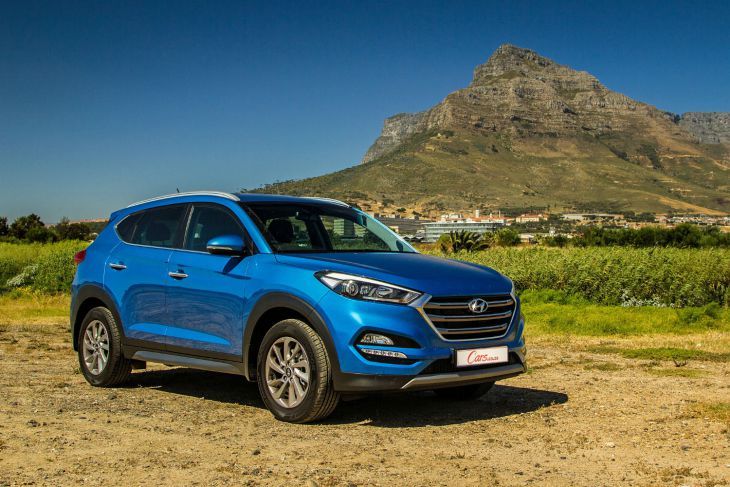
  • Hyundai Tucson 2.0 NU Elite Auto
  • Nissan X-Trail 2.5 SE CVT AWD
  • Volkswagen Tiguan 1.4 TSI Comfortline DSG

Read more about the semi-finalists in this category

Performance car (between R600 000 and R1 000 000)

  • BMW M2 M-DCT
  • Mercedes-AMG A45 4MATIC
  • Ford Focus RS

Read more about the semi-finalists in this category

Premium hatchback (between R350 000 and R500 000)

  • BMW 120i M Sport sports-auto
  • VW Golf GTI DSG
  • Mercedes-Benz A220d Style

Read more about the semi-finalists in this category

Fun car (less than R600 000)

  • Mazda MX-5
  • Mini JCW auto
  • VW Golf GTI Clubsport

Read more about the semi-finalists in this category

Lifestyle SUV (between R500 000 and R750 000)

  • Ford Everest 3.2 LTD
  • Toyota Fortuner 2.8 GD-6 4×4 Auto
  • Land Rover Discovery Sport TD4 SE

Read more about the semi-finalists in this category

Executive sedan (between R750 000 and R1 000 000)

  • Jaguar XF 25t Portfolio
  • Lexus GS350 F-Sport
  • Mercedes-Benz E220d Avantgarde

Read more about the semi-finalists in this category

First class (more than R1 000 000)

  • Mercedes-Benz S500e LWB
  • BMW 750Li Design Pure Excellence
  • Range Rover SDV8 Autobiography LWB

Read more about the semi-finalists in this category

Leisure double cab (more than R450 000)

  • Ford Ranger 3.2 Wildtrak 4×4 Auto
  • Toyota Hilux 2.8 GD-6 4×4 Raider Auto
  • VW Amarok 2.0 BiTDI 4Motion Highline Auto

Read more about the semi-finalists in this category

Business class (between R500 000 and R750 000)

  • Audi A4 2.0T FSI Sport S-tronic
  • BMW 330d M Sport sports-auto
  • Mercedes-Benz C250 AMG Line

Read more about the semi-finalists in this category

Premium SUV (between R750 000 and R1 200 000)

  • Audi Q7 3.0 TDI Quattro
  • Jaguar F-PACE 30d R-Sport
  • Volvo XC90 T8 Twin Engine Inscription

Read more about the semi-finalists in this category

Members of the public can follow developments of the Cars.co.za Consumer Awards – powered by WesBank (such as the respective phases of the judging process) on Cars.co.za’s channels. Related content will feature the #CarsAwards hashtag.

More information on the programme, including its categories, judges and finalists is available on the Cars.co.za Consumer Awards – powered by WesBank website.

Facelifted Subaru WRX, WRX STI confirmed for SA

The facelifted Subaru WRX and WRX STI will arrive in South Africa in the third quarter of 2017. Get the details here…

Subaru showed the facelifted WRX and WRX STI at the Detroit Motor Show and Subaru South Africa has confirmed that the models will be offered in South Africa in the third quarter of 2017. The WRX and WRX STI feature an updated design with enhancements made to performance, comfort and safety.

What’s changed?


The Subaru WRX and WRX STI features updated styling and improved performance.  

The facelifted version of the WRX and WRX STI features a sportier front fascia with a revised grille and larger lower grille opening. Night time driving is further improved with redesigned LED Steering Responsive Headlights and roof rack mounting brackets are now included.

The WRX is powered by a 200 kW 2.0-litre turbocharged boxer engine with all-wheel drive and active torque vectoring. The engine mated to a revised 6-speed manual transmission or an optional Sport CVT with manual mode. The WRX also features new front and rear suspension for improved stability and ride comfort. Furthermore, the electric power steering has been revised too and now offers a “smoother, more natural feel” according to Subaru. Standard 18-inch wheels with a new double-spoke design are fitted.

As for the WRX STI, a 227 kW 2.5-litre turbocharged boxer engine is utilised in conjunction with a Multi-Mode Driver Controlled Center Differential (DCCD) symmetrical all-wheel drive system, torque vectoring and a Multi-Mode Vehicle Dynamics Control. Suspension on the STI has been revised and the Brembo Performance Brake System has been upgraded with stronger callipers at the front and rear. The STI rides on new 19-inch alloy wheels for the first time, featuring a Y-shaped spoke design and Recaro seats are offered too.

Improved interior and safety


The facelifted Subaru WRX and WRX STI features improved interior quality and finishes. 

Interior materials in both the WRX and WRX STI have been upgraded and the models now feature a rear seat armrest with cup holders and redesigned door grips. A larger 5.9-inch multi-function display is fitted for better visibility and the electric boot lid has also been revised to open faster than before. The WRX Premium derivative will feature an upgraded 7-inch STARLINK multimedia system.

In terms of safety, the front structure has been revised to enhance performance in the event of a front-end collision. EyeSight Driver Assist Technology will be offered, including Vehicle Hold (AVH) and the new EyeSight Assist Monitor (EAM). The vehicle hold function will effectively hold the vehicle on all road grades while the EyeSight Assist Monitor will use LED indicators to display EyeSight status and alerts on the windscreen, without the driver taking eyes off the road.

We will keep you updated when local specification and pricing becomes available, so stay tuned

Related content

Celebrating 50 years of Subaru's Boxer
Drag Race: VW Golf 7 R vs Subaru STI (Video)
Subaru WRX STI (2014) Review
Subaru BRZ Updated for 2017

Want to buy a Subaru? 

Find a new or used Subaru on Cars.co.za

Porsche 911 Carrera S Coupe (2016) First Drive

The latest version of the 911 is the first to feature an all-turbocharged lineup (save the track-oriented GT3). Has the greener direction turned the most iconic sportscar into something a bit bland and non-distinct? Our UK-based correspondent, Andrew Frankel, investigates…

There is no car more often unfairly pre-judged than a new 911. This should come as no surprise, for Porsche has been playing with the design of its seminal sports car for almost as long as it has been around. And the only consistent thread amongst every new 911 is that the new one would be radically different from its predecessor. Of course, as we know, they never actually strayed far from the original path.


Still the most recognisable car design on the planet, the 911 has subtly adapted to the times.

With the introduction of the 964 generation in 1989, with its ugly big bumpers, power steering, anti-lock brakes, vaguely coherent interior and, oh the shock of it, four-wheel drive, it was, we thought a 911 too far, too modern, too not like a 911. So when the 993 series went on sale in 1994 it, of course, did not go far enough. A new rear suspension system and a six-speed gearbox was not really enough when what was needed was an all-new car. But when Porsche did provide that all-new car, the 996 of 1998, we fell on that too because, cooled by what you drank rather than what you breathed, that really was a 911 in name alone. The 997 attracted some opprobrium at the time because it really was just a 996 with the benefit of hindsight rather than the new car it was made out to be, and when the 991 was introduced in 2011 with its long wheelbase and electric steering, Porsche was accused, once more, of overcooking it again.

And yet despite these protests, it turns out that time and again, Porsche failed to ruin the 911. Some generations will be more fondly remembered than others, but none has dealt so much as a disabling blow to the world’s most enduring driver’s car, let alone the coup de grace some anticipated.

The effect of turbocharging?

Porsche has been adding exhaust-driven forced induction to 911 engines for over 40 years so, on one hand, there’s little conceptually new here and so, it might logically seem, little to get steamed up about. Except every 911 Turbo has not only been quicker but also less enjoyable than the cheaper, normally aspirated version upon which it was based. But now there is no such car because from now on all 911s, save the GT3 exotica, will be turbocharged. So it’s easy to believe they’d be more powerful, faster and more frugal than before, but better to drive? That was harder to envisage.


The biturbo V6 that powers the Carrera S models.

What else has changed?

True to typical Porsche philosophy, there is far more going on beneath the surface than its visually similar skin would suggest. There are the new 3.0-litre engines of course, each boasting 15 kW (309 kW for the S) more power and 60 Nm (500 Nm for S model) of additional torque over the normally aspirated engines they replace. In addition, the cars are 10 mm lower (20 mm if you opt for sports suspension) and all now have Porsche’s adaptive damping system. The rear tyres are fatter and can be steered too – as an option on the S model. Both manual and automatic versions of the seven-speed transmission have been re-engineered to provide quicker, smoother shifts. They have higher ratios too, to improve economy and cover a reduced rev range. Inside you’ll find a new touch screen and control system that drags Porsche into the modern era.


New infotainment system brings Porsche up to date with its rivals.

Whether you’re going to enjoy driving it a lot or a little depends entirely on you. If you’re the kind of driver who likes to sit back and enjoy very big reactions to very small inputs, I’d get your order in now. For the first time, this is a standard 911 model that requires almost no effort to drive fast. You don’t need to change down a gear or two before overtaking, you don’t actually need more than 1 700 rpm on the clock before it will summon up all the torque it possesses, and it will keep on doing it all the way to 5 000 rpm. The outgoing car not only had substantially less torque, you needed 5 600 rpm on the clock to find it. The downside is that while its throttle response is good for a turbo motor, the new engine lacks that instantaneous answer to your foot, as well as a thick slice of the old unit’s rev-range and, sadly, some sound quality too. Its voice is still unmistakably that of a flat six, but with a mouth full of cotton wool. Simply put, it's more impressive but less exciting.

The pick of the range?

As for the choice between the base Carrera and a Carrera S, the view often held in the past that less is almost always more when it comes to the 911 no longer applies. The Carrera’s straight line performance is actually very good but where it struggles is in issuing a real challenge to a chassis that in many ways has actually moved on just as much as the engine. Grip levels are stupendous such that only those likely to encounter serious low-grip surfaces should even think about buying a four-wheel drive model. But even on a bone dry surface, the Carrera S engine with its additional 37 kW at least feels a match for the chassis in which it is installed. One of the characteristics of original 991 car is that you have to drive it very fast before it comes alive, and this facelifted 911 is no different. But if you do find the right kind of quick, quiet road for which you might imagine a 911 would be born, the Carrera S will devour it in a dazzling display of pace, poise and efficiency.


The newest 911 has thrills that are much easier to access than ever before.

Verdict

Although this is a mere mid-life update to the 911, it seems more changed than most brand new generations. When the 991 was introduced, it brought with it a long wheelbase and electric steering and was a pretty different kind of car as a result, but the change in the car’s character wrought by the turbo engines feels greater.

And there’s no doubt that for die-hard 911 fans, something of the car’s character has been lost. As this 911 is more capable, so it's less distinct and when that happens to perhaps the most distinctive everyday car there is, it’s a crying shame. Others will find less cause for concern: these are those who like the style and image of a 911 but not the fact that it requires you to work at it before it will perform. In these days where instant gratification is all, it's a car that knows where its customer base lies.

Looking for a used 911?

Browse our selection here

Related Content

Porsche 718 Cayman S (2016) First Drive

Second-gen Porsche Panamera (2017) Revealed

3 Highlights from Detroit 2017: What We Really Think of Them

The 2017 North American International Auto Show aka the Detroit Auto Show has come and gone, and here are 3 highlights from the exhibition. We look at how these products will fit into the market and what they bring to the table. 

This year's Detroit Auto Show was a low-key affair, with not as much metal exposed as expected. Perhaps a combination of budget cuts, the declining interest in automobile shows or the fact the monster Geneva Auto Show is not too far away were to blame. It's hard to understand as this is Motor City, this is the home of the American "auto industry". Both Ford and General Motors have their headquarters here and other than a facelifted Ford F-150 and a Chevrolet Traverse, there wasn't much coming from the Americans this year. 

There were some vehicles that caught our eye, however, and while one is a concept (although its manufacturer will claim its more pre-production than concept) 2 of them are living, breathing, working production automobiles. Sure, there was a fair degree of self-driving autonomy on display, but we all know that those cars are some way from mainstream adoption. 

Kia Stinger

If there was a product that will see Kia break its shackles of practicality and sensibility, it's this. This is Kia moving from practical to emotional and aspirational. Former Audi employee Peter Schreyer (the man who designed the original TT) has done tremendous work during his time at Kia and it wouldn't surprise us if he is bestowed with the Korean version of a knighthood. As for the Stinger, we were all worried that the GT4 Stinger concept from 2014 (upon which it is based) would suffer the same fate as most concept cars, you know, that "Looks Amazing, But They'll Never Built It" business. What's worse than seeing something utterly breathtaking and futuristic, then realising that it'll never be mass produced?

Sure, the Kia Stinger has morphed from two-door sportscar to a sensible five-door sedan/grand tourer, but we're okay with it. Power comes from a 3.3-litre biturbo V6 and power reaches the rear wheels, and the car was tested and tuned on the Nurburgring. It's lovely to see a manufacturer make this shift in priorities, even though petrolheads constitute a fraction of the potential customer base. However, we're worried for a number of reasons. Firstly the sedan market has nosedived over the past few years as people move into SUVs and crossovers, and secondly, given the specification level (generous and German-rivalling), it's not going to be cheap. As incredible and significant leap forward for Kia this is, it's going to be a hard sell to try convince a potential Audi S4 customer to head on over to the land of Kia. Valiant effort by Kia, and surely the star of the Detroit Auto Show.

Read more about the Kia Stinger here

Audi Q8

Audi's product line-up (TT and R8 excluded) has become a little generic over the years. The variation in sizes were the only giveaways, and the vehicles have become borderline dull to look at. It's a sad state of affairs when you have to point out that the A4 is an all-new model… it's truly wonderful to drive and beautifully made, but it blends in with traffic far too easily. The SUV range has suffered a similar affliction and it'll take a keen-eyed enthusiast to spot the difference between an old and a new Audi Q5.

The 2017 Detroit Auto Show saw the unveiling of the Audi Q8 concept. Two words: that grille. The entire front end brings some much-needed vibrance to Audi's SUV range and it's this design language we'll see on loads more forthcoming Audi products. It's fresh, its modern and it's unmistakably Audi. As for the Q8 name, expect this to be a luxurious alternative to the Mercedes-Benz GLE coupe and BMW X6. The Q8 will feature a choice of petrol, diesel and hybrid engines, and we won't be surprised to see a fast hot version. It's an exciting time if you're a fan of Audi's SUV range.

Read more about the Audi Q8 here

Lexus LS 

Japanese luxury brand Lexus is back in the limelight thanks to its outrageously attractive LC 500 sportscar. Following on from that is the all-new Lexus LS,  the brand's take on the luxury top-end of the market. Previous generations had excellent track records and surprised a great many customers. This was Lexus' answer to the BMW 7 Series and Mercedes-Benz S-Class, and judging by feedback, it was more than a match for the German duo. Now in its fifth generation, this Lexus LS promises to keep on providing refinement and luxury features that its competitors will find a challenge to match. Did we mention that it looks sensational? It'll also be deceptively fast too, thanks to an all-new twin-turbocharged V6 motor. It also features a 10-speed automatic transmission, which we're keen to sample. 

Read more about the Lexus LS here

Further Reading

2017 Kia Picanto: Official Images Released
Comparative Review: Hyundai Tucson vs Kia Sportage vs Renault Kadjar vs Volkswagen Tiguan
Lexus LC500 (2017) Track Drive [Video]
Facelifted Lexus IS (2017) Specs and Pricing
Lexus LC500 (2017) First Drive
Check out a first drive report of the Audi Q5

Looking to buy a used Kia, Lexus or Audi?

Find a used Kia for sale here
Browse used Audi products for sale
Check out Lexus vehicles for sale

Jaw-dropping GT C Coupe Joins AMG GT Family

Mercedes-AMG is celebrating its 50th anniversary this year and in good spirit, its sporting GT family of sports cars has been updated and expanded to include the new GT C Coupe.

We recently travelled to Portugal to drive the new Mercedes-AMG GT R and if you haven’t read our first drive report yet, do yourself a favour! The GT R is an insanely capable sports car, the best some might say, and it will arrive in South Africa later this year. Mercedes-AMG has now updated and extended its family of GT sports cars, now featuring 6 models, in celebration of the Mercedes-AMG’s 50th anniversary this year.

The big news is that the AMG GT range is expanding with the introduction of the new GT C Coupe, slotting between the updated version of the AMG GT S and the range-topping GT R. Initially, the new GT C will be available as a special Edition 50 model, standing alongside its GT C Roadster sibling. Furthermore, Mercedes-AMG have also implemented visual and technical upgrades to the AMG GT and GT S.

More power, more fun


Both the AMG GT and GT S now benefit from more power and torque.

Power outputs derived from the potent, twin-turbocharged 4.0-litre V8 engine have been increased for both the updated AMG GT, GT Roadster and GT S derivatives. Both the AMG GT Coupe and GT Roadster now boast an additional 10 kW and 30 Nm of torque to deliver 350 kW and 630 Nm of torque. The AMG GT S now offers 9 kW more at 384 kW with torque increasing by 20 Nm to 670 Nm.

Moving up on the power scale, the new AMG GT C Coupe and GT C Roadster derivatives both offer 410 kW and 680 Nm of torque, while the impressive AMG GT R thumps out 430 kW and 700 Nm of torque.

All models in the AMG GT family now feature the AMG Panamericana grille with 15 chrome-plated vertical bars, also seen on the AMG GT3 race car, as well as the AirPanel active air management system derived from the AMG GT R to enhance engine cooling.

Key features of the Mercedes-AMG GT C Coupe


The AMG GT C Coupe joins its Roadster sibling and will be initially offered as a limited Edition 50 model. 

The new GT C Coupe shares a number of technical features with the AMG GT R such as larger wheels, wider rear track and active rear-axle steering. The new model has the same dimensions as the AMG GT R and is some 57 mm wider than the AMG GT and AMG GT S. A wider rear apron improves airflow while the integrated rear aerofoil can be electronically extended or retracted depending on speed and the drive program selected, much like the AMG G and AMG GT S.

The GT C Coupe features AMG Ride Control sports suspension with variable, adaptive adjustable damping which automatically adapts damping at each wheel depending on the particular driving situation, speed and road conditions. An electronically controlled rear-axle limited-slip differential also features on the GT C Coupe, as it does on the AMG GT S and GT R, which improves traction and cornering ability of the vehicle.  

The limited AMG GT C Coupe Edition 50 model comes in two exclusive colours including designo grey magno and designo cashmere white magno with black chrome highlights found on the side skirt trim, front splitter, air inlet trim strips on the grille, side air outlet fins, rear diffuser and exhaust tailpipe trim. The cross-spoke AMG forged wheels also feature a black chrome finish to match the body elements.


The AMG GT C Coupe Edition 50 features exclusive details to celebrate 50 years of Mercedes-AMG.

The interior features a contrast between black and silver with exclusive the STYLE Nappa leather in silver pearl and black with grey diamond topstitching. The Dinamica microfibre AMG Performance steering wheel features grey topstitching with “Edition” lettering on the wheel bezel and a 12 o’clock mark in silver pearl. The Edition 50 is fitted with the AMG Interior Night Package as standard which adds steering wheel spokes, shift paddles and doors sill panels all in black. The bespoke look is rounded off with “GT Edition 50” embossed on the head restraint of the AMG Performance seats, while the silver seat belts and black chrome trim further add to the contrast.

More options and equipment on offer

The AMG GT and AMG GT S will benefit from more equipment options including an AMG Exterior Chrome Package, AMG Dynamic Plus package and AMG Interior Night Package. An AMG Exterior Carbon Fibre package will also be offered. A number of light-alloy wheel options will be available in different sizes and finishes. The AMG GT and GT S can also be equipped with the optional STYLE Exclusive Nappa leather trim in diamond-patterned macchiato beige while optional seat climate control will also be offered.

For those with a penchant for track driving, the optional AMG Track Pace app will allow owners to analyse and improve their track performance with a host of useful functions such as lap/sector times and various data such as speed, gear, steering angle, time, position and acceleration. The app is suitable for Apple iPhone and is connected via WiFi. Users will also be able to record video and share their performance achievements on Facebook, YouTube and AMG Private Lounge.

Related Content

New Mercedes-AMG GT Models to Order in SA
Mercedes-AMG GT R (2016) First Drive
Mercedes-AMG GT & GT C Roadsters Coming to SA
Mercedes-AMG Unleashes Hottest AMG
GT R
Mercedes-AMG GT S (2015) Review
Five Interesting Facts About The Mercedes-AMG GT S

Want to buy a Mercedes-AMG GT?

Find new or used examples on Cars.co.za