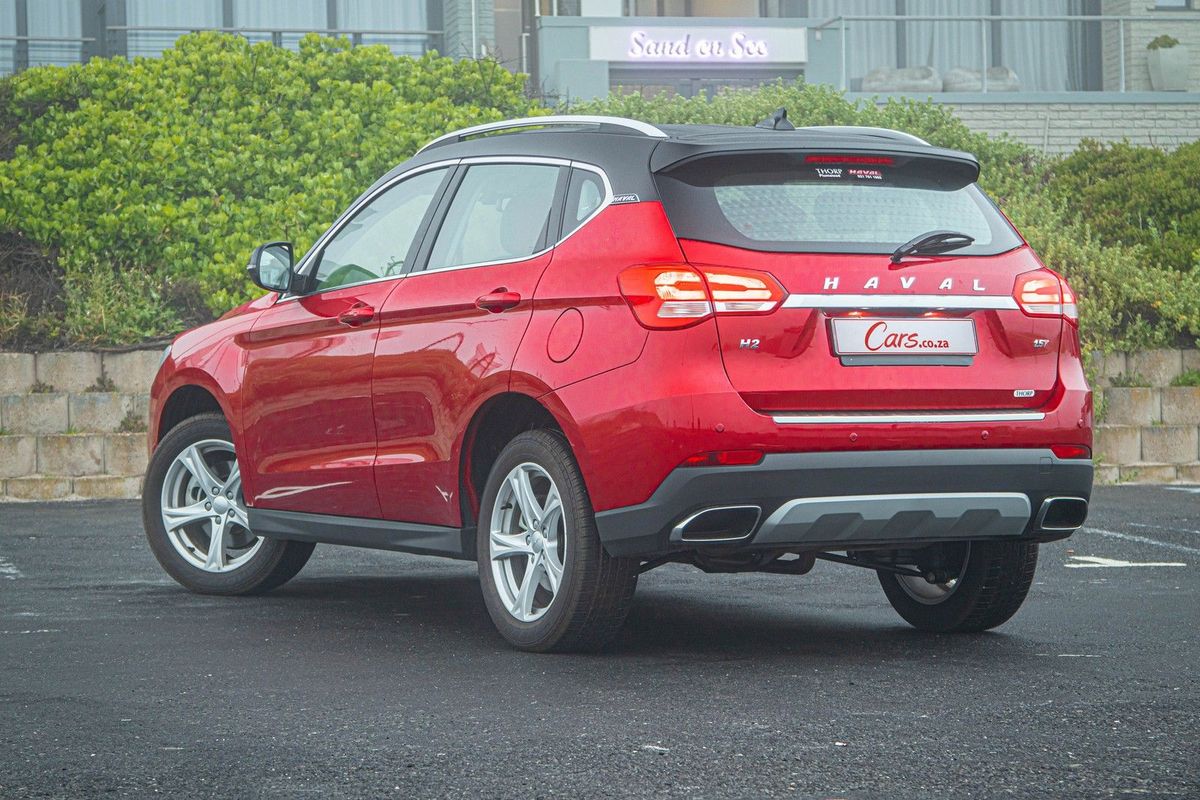
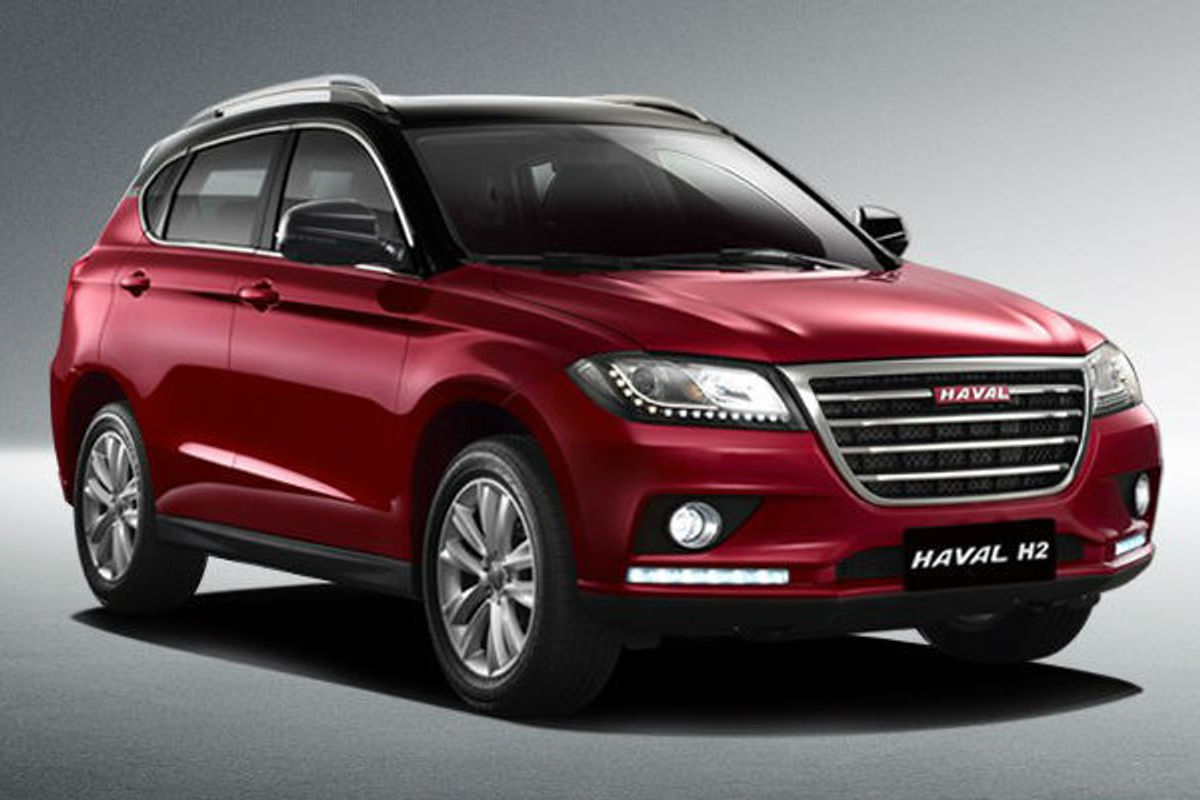
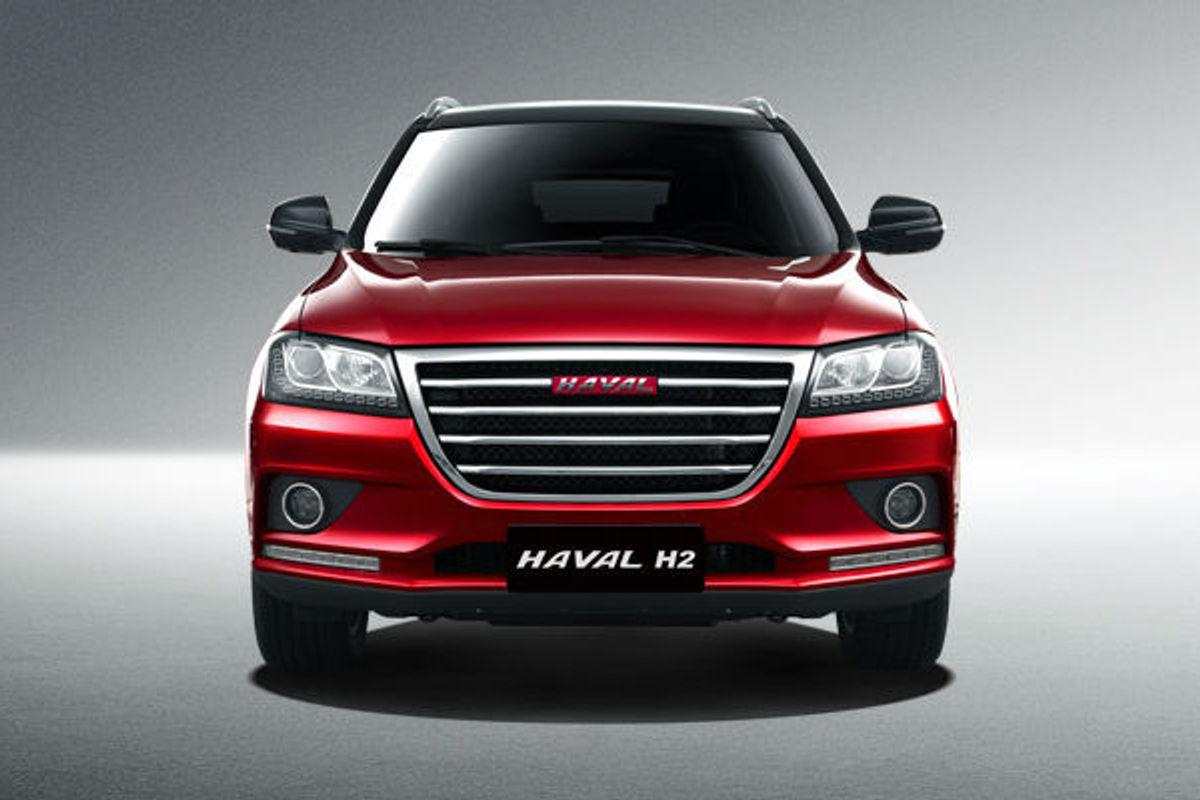
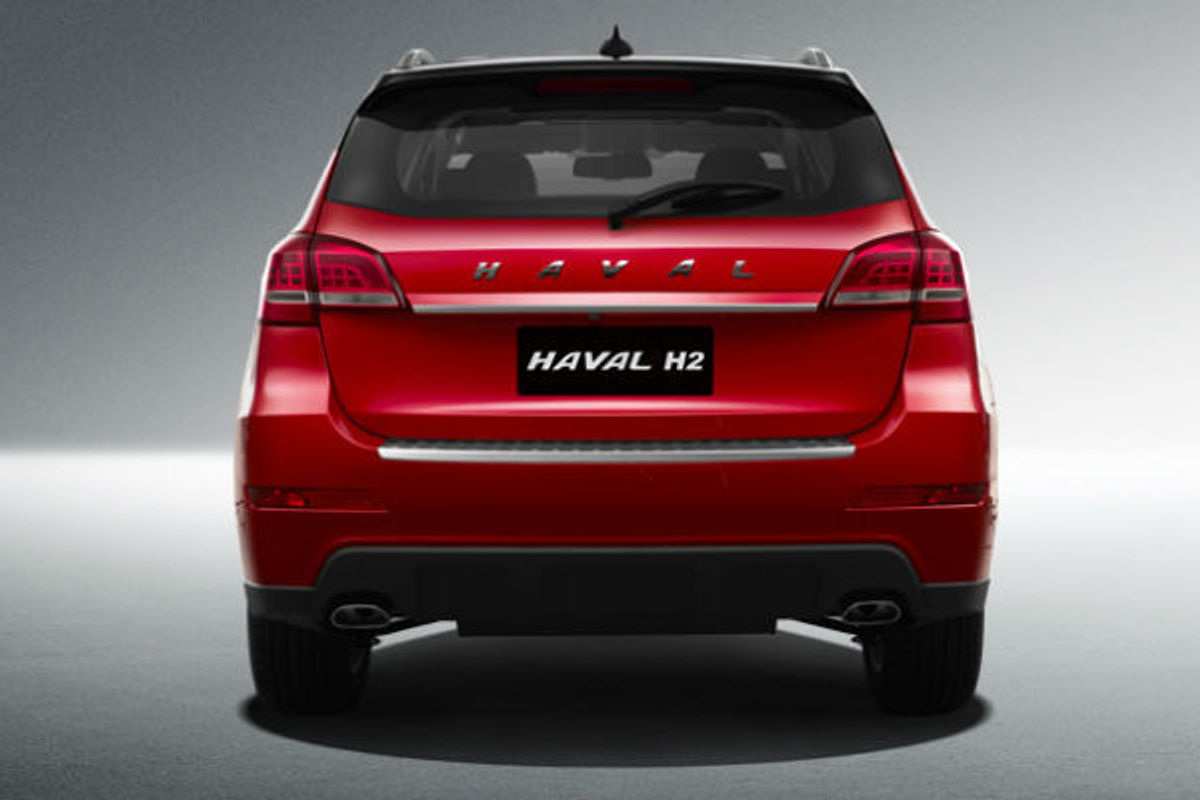
Chinese SUV giant,Haval, has arrived in South Africa with a number of new products due to launch into our market. The first vehicle to make landfall is the Haval H2, which we drove at the brand's launch at Kyalami in Johannesburg.
Haval Motors South Africa takes over from Great Wall Motors SA, a bakkie brand familiar to many. GWM managed to outmanoeuvre its rivals to become the most popular of the Chinese brands and now, Haval comes to market on the back of massive sales in China.
Haval has been the number one luxury SUV retailer in China for the past 14 years and with such a diverse product portfolio, it's hoping to gain a foothold in developing markets such as South Africa. Other markets in its crosshairs include Russia and Australia.
Haval is taking an interesting approach to marketing and sales in South Africa. GWM bakkies and vehicles will still be available, but Haval products will be taking most of the limelight. There are 40 GWM dealerships in SA, but not all of them will be selling Haval products. We understand that it'll take some time to convert the dealerships to Haval spec (think luxury and premium fittings).
Right now, there are just three dealerships in SA capable of selling Haval products: Rustenburg, Alberton and Polokwane. Expansion into sub-Saharan Africa is also planned and a feasibility study into potentially using SA as an export hub is being conducted. As it stands, the portfolio comprises of only SUVs in varying sizes. From June 2017, the H2 goes on sale with the H6 / H6 coupe arriving in September 2017. The H7L and H9 will make their way to our shores in 2018.
From what we can see, it looks like Haval will be coming to market with an aggressive pricing strategy to gain a foothold, before unleashing its entire arsenal of vehicles. However, the brand is going to need substantially more dealerships and we'd like to see how the products fare in terms of servicing and longevity. Watch this space.
Haval H2 – What's it about?
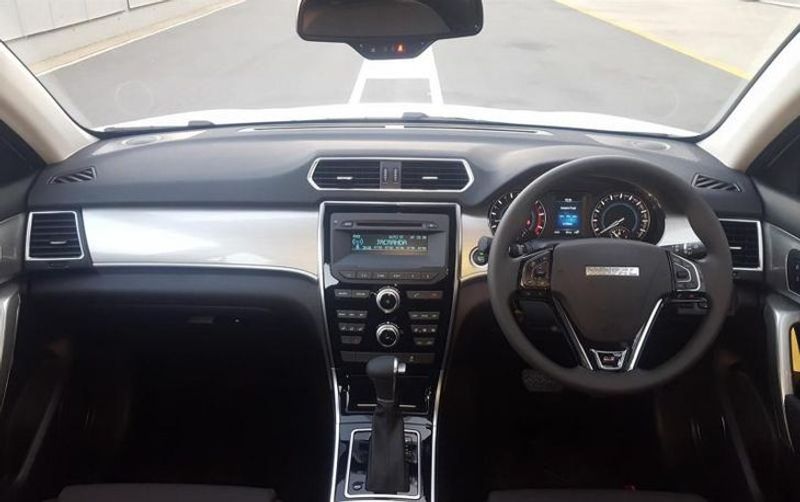
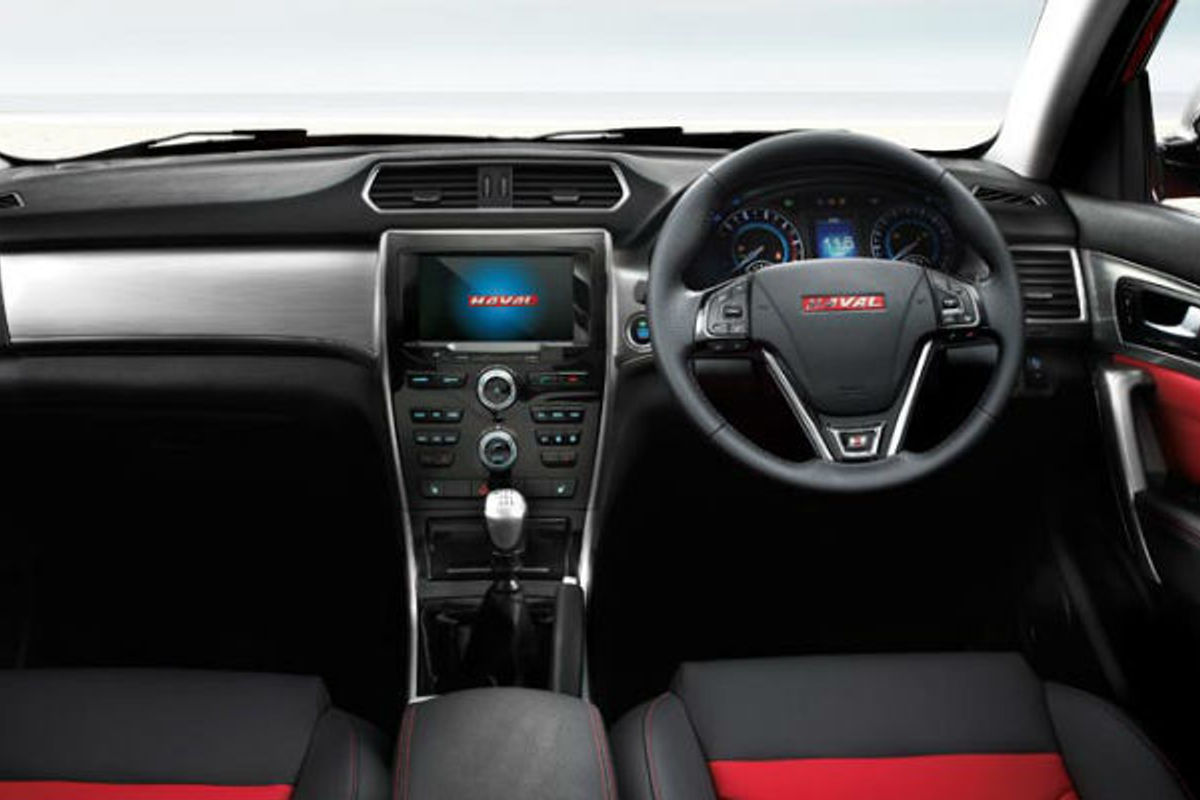
Haval H2 interior. Functional, fair ergonomics, but the real strength here is the build quality and finishings. It's well put together.
The first product from Haval is the H2, a compact SUV which goes up against the likes of the Suzuki Vitara, Ford EcoSport and Renault Captur. Power comes from a 1.5-litre turbocharged petrol engine, which offers up 105 kW and 202 Nm of torque. There's the option of either a manual or automatic gearbox, as well as a choice of 3 trim levels.
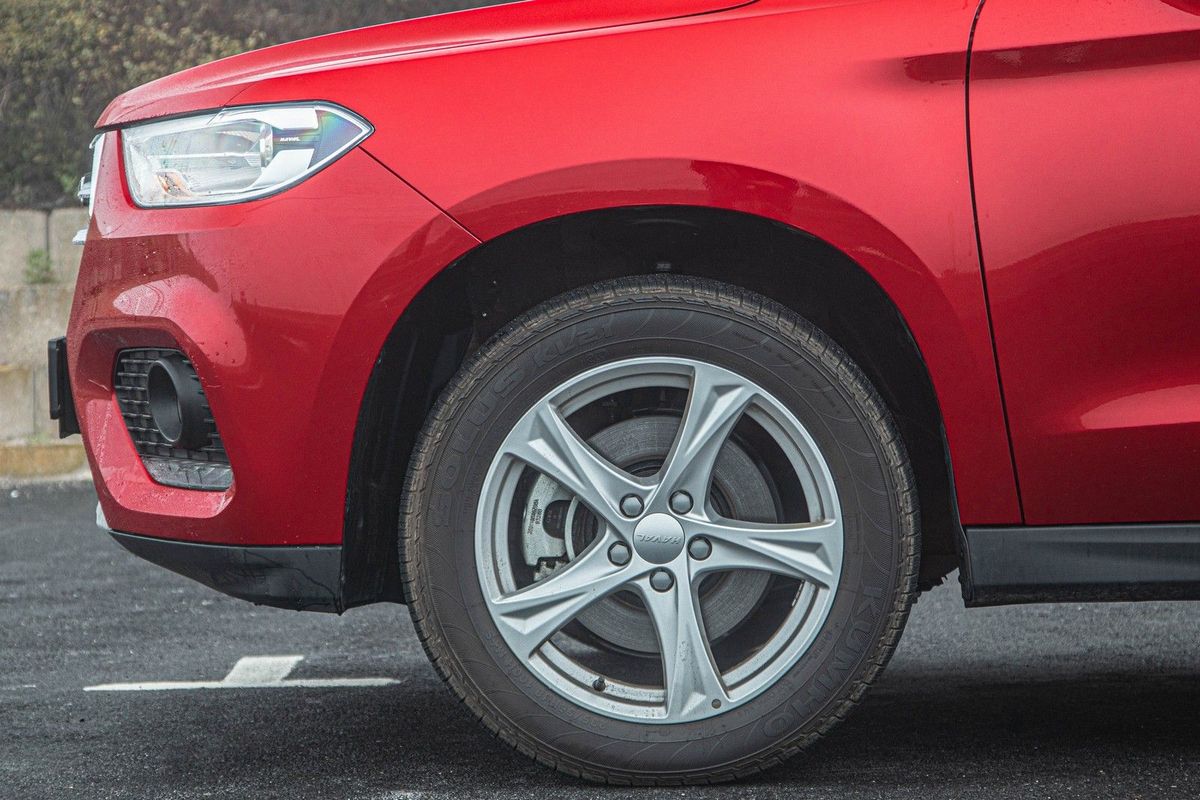
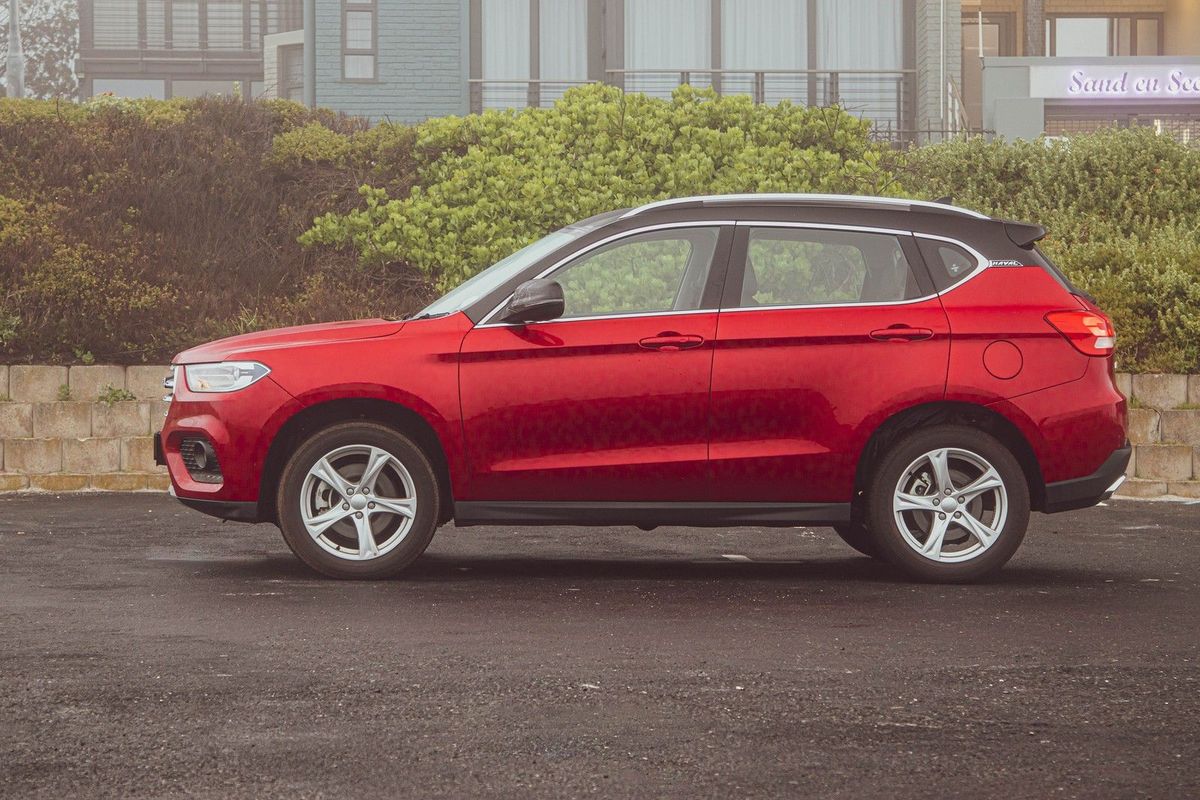
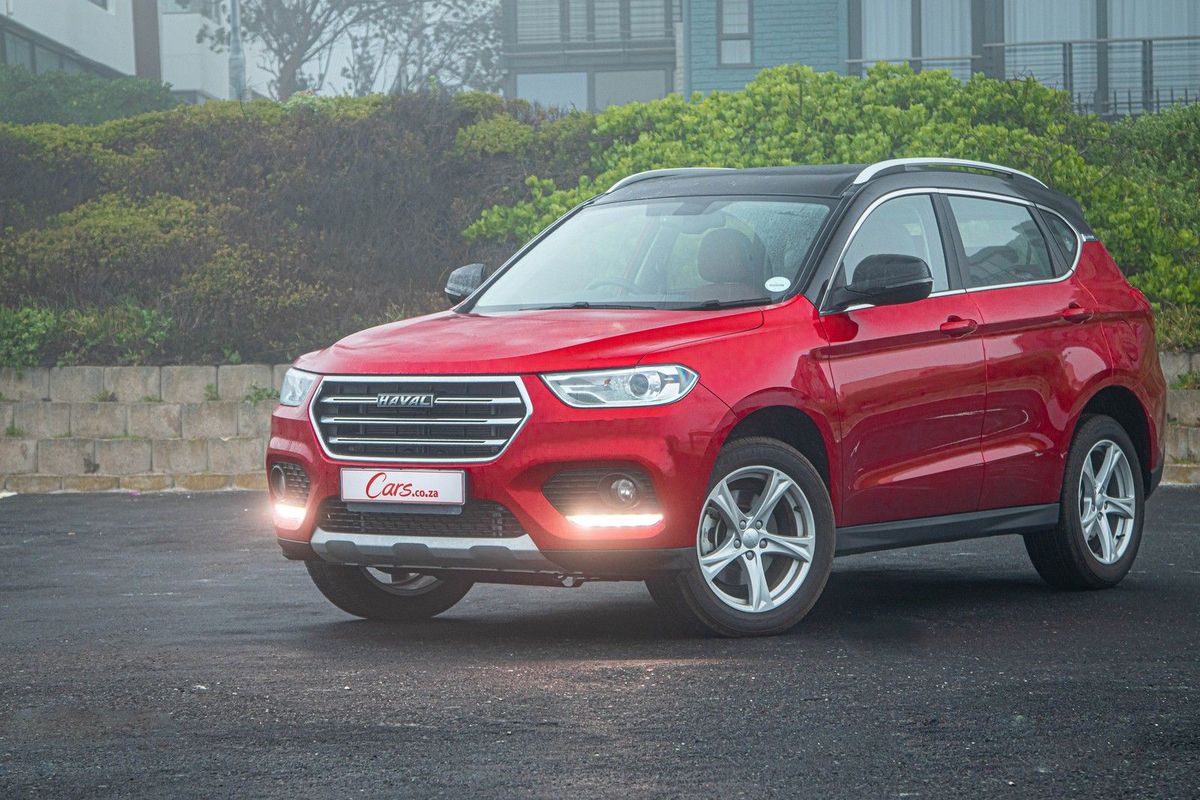
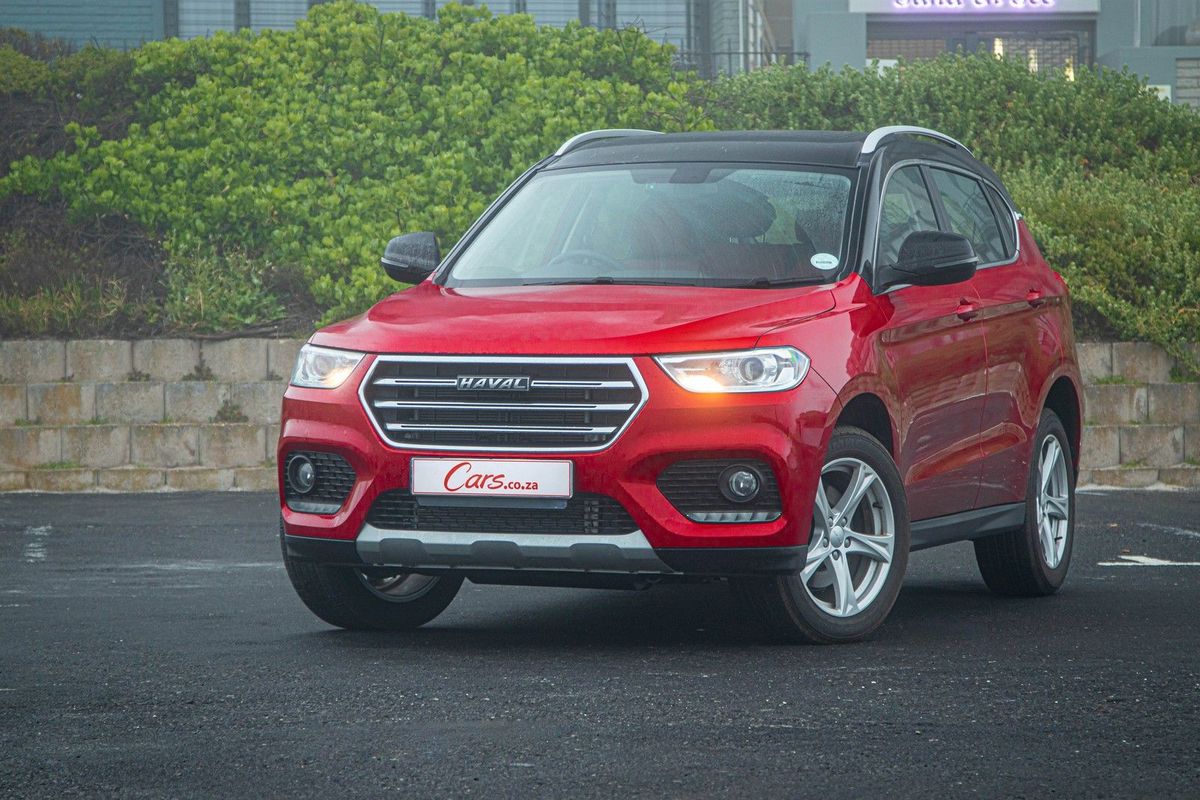
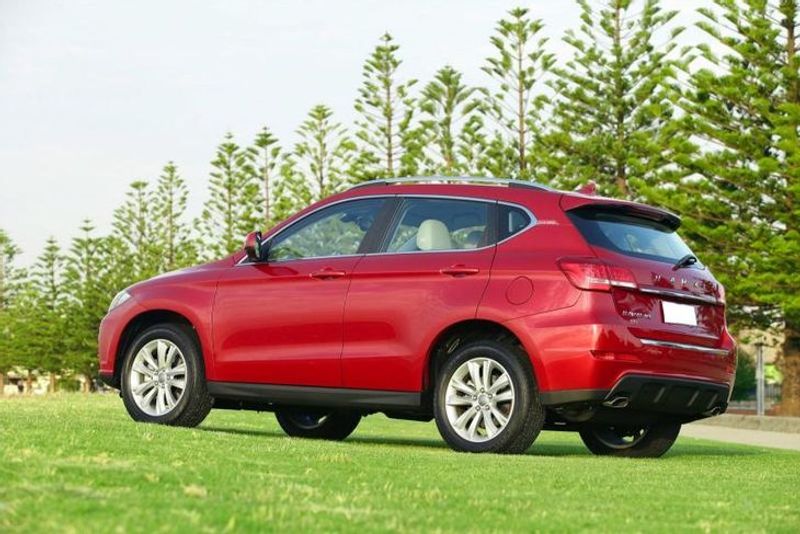
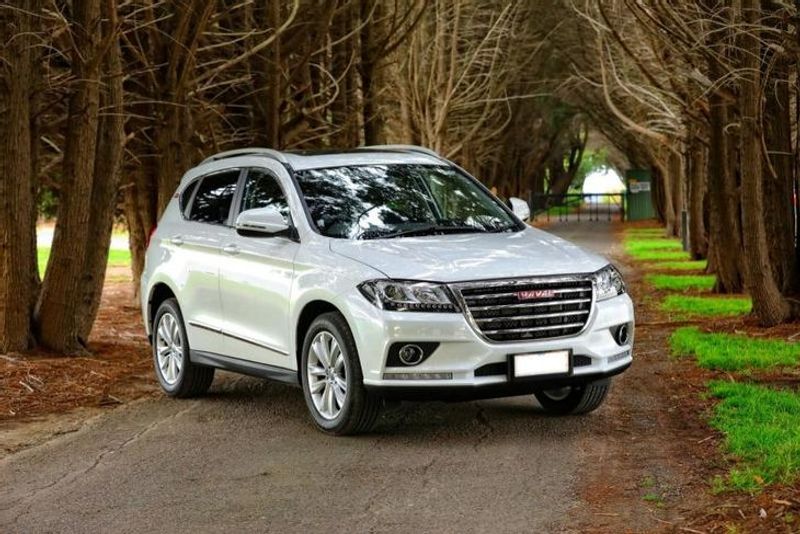
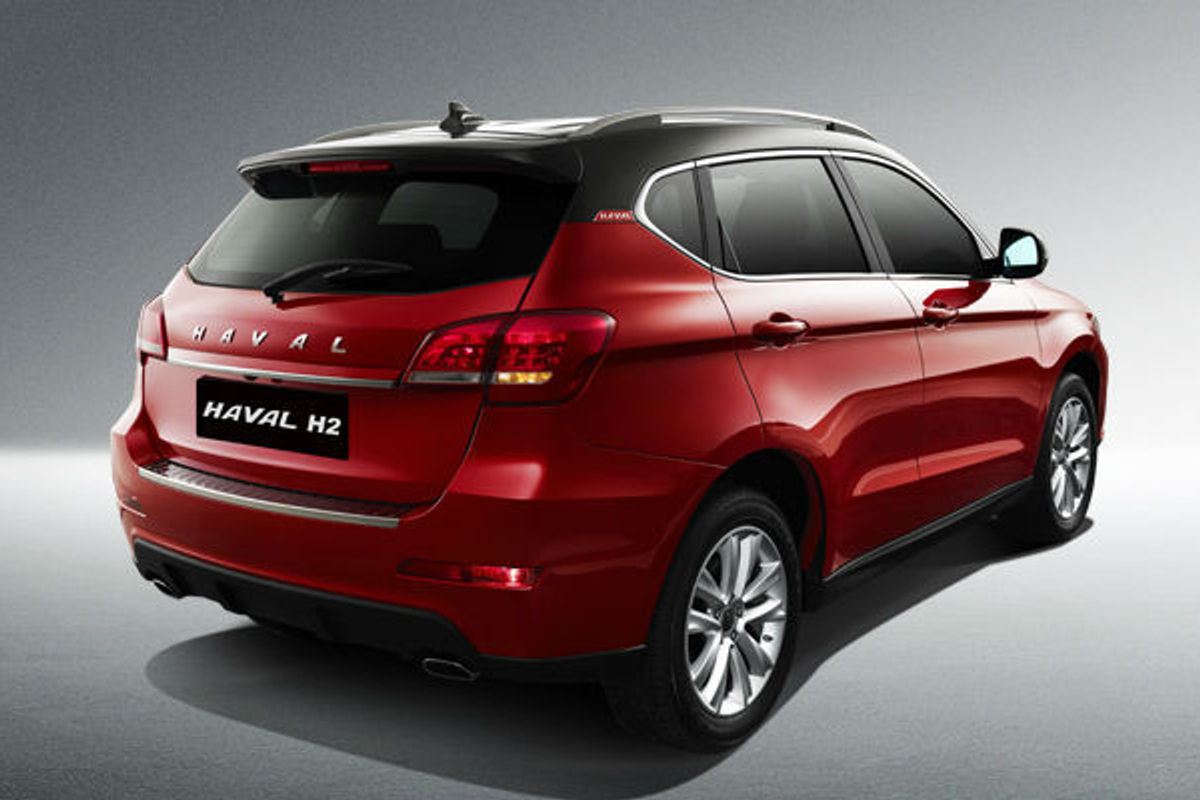
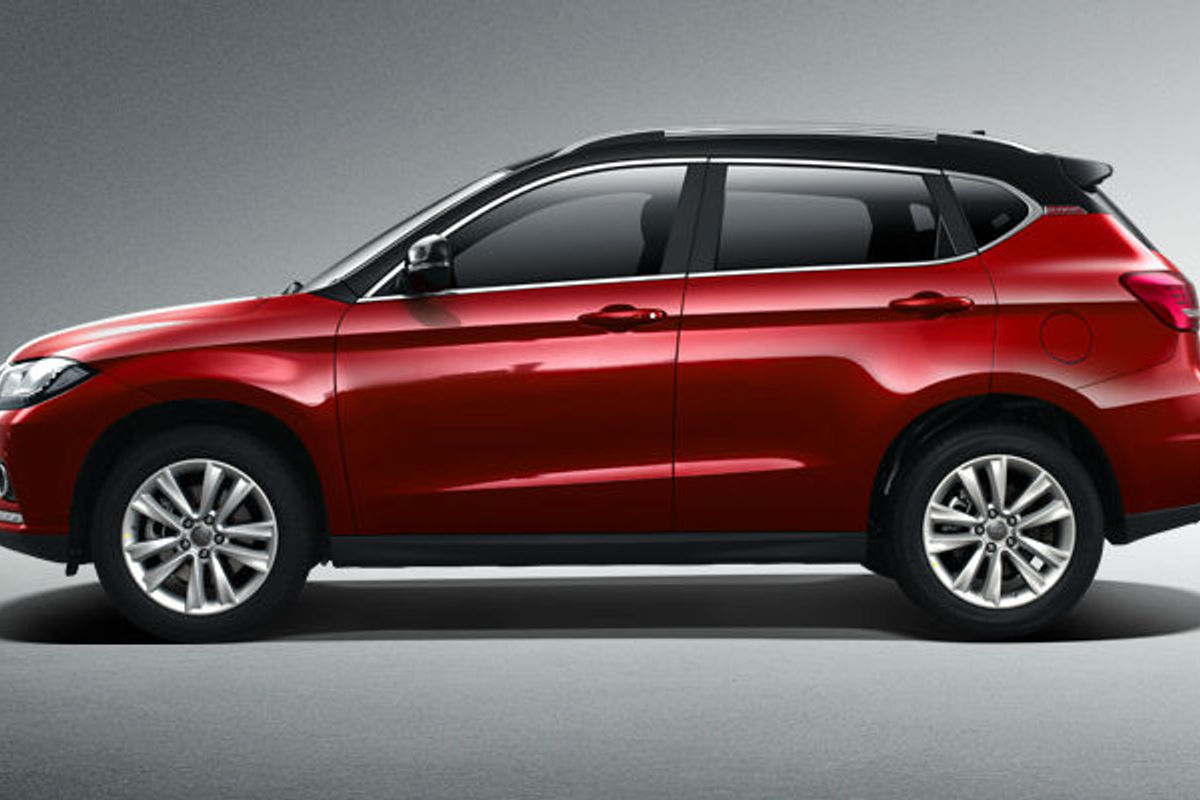
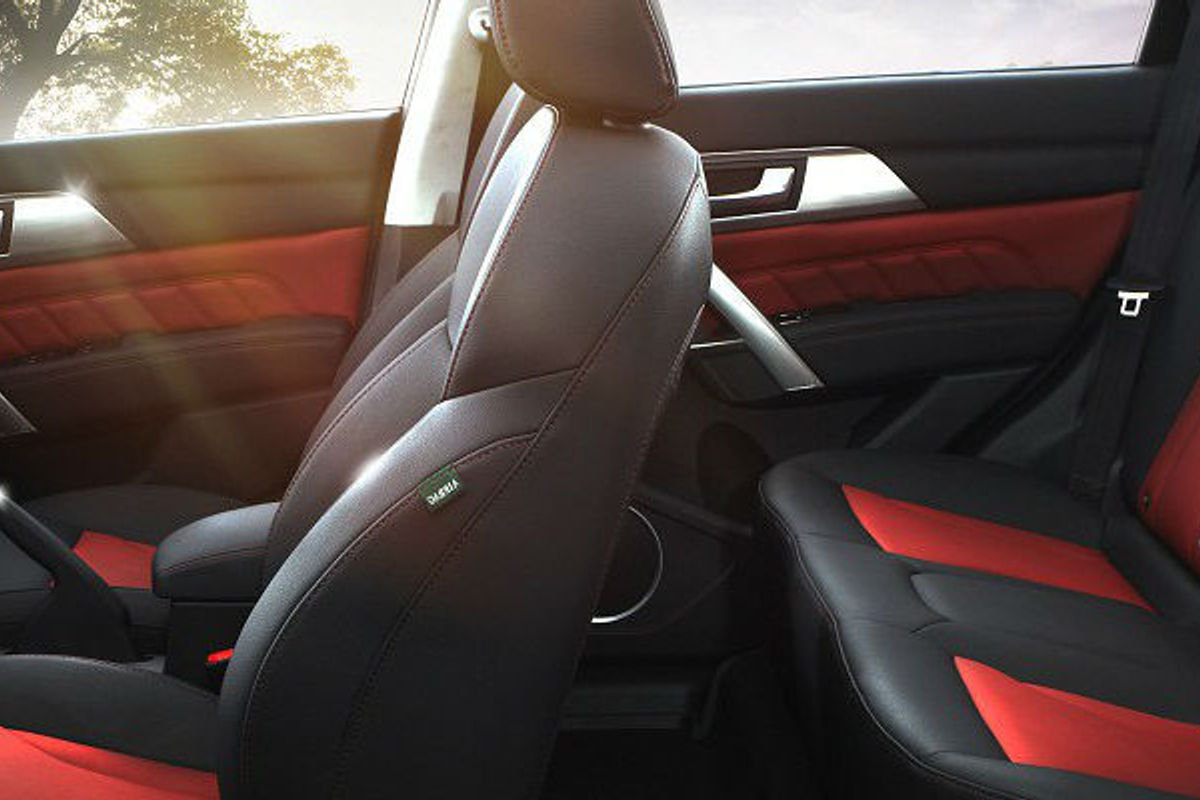
In terms of styling, the H2 resembles a generic SUV. There's nothing outrageous nor ultra conservative about the looks, but the key point here is that it's modern. That's one box ticked. The specification is generous at this price point. Automatic headlights and windscreen wipers, leather upholstery, high-resolution touchscreen infotainment system and six-way adjustable driver’s seat are offered on high-spec derivatives. It boasts some comprehensive safety features too, with front, side and curtain airbags as standard on the vehicle. It scored a 5-star rating on the Chinese version of the NCAP safety test.
The Haval H2 is a compact SUV with dimensions similar to that of a Mazda CX-3. Front space is generous, while the rear legroom-fanatical Chinese have ensured there's substantial room in the rear. The boot, when compared to its rivals, looks to offer more length and depth.
Styling remains generic SUV – expect other models in the portfolio to have more assertive and individual designs.
First Drive
Our drive of the Haval H2 comprised of a few laps on the beautifully surfaced Kyalami race track. The vehicles weren't licenced for South African roads, but the excellent quality of the track meant that we weren't able to assess ride quality. However, what we did manage to gather was that the H2 is remarkably refined and NVH levels are well supressed. The engine gets a bit rough when you're pressing on, but few people are going to drive the H2 in that manner. The steering is fairly weighted and the engine has adequate power. There's a focus on safety too, as the hazard lights engage (to signal to following traffic that emergency brake assist has kicked in) when the brake pedal is substantially depressed.
What impressed us most was the cabin quality of the products on static display. The shut lines are precise, rubber seals correctly lined up and roof linings neatly finished. The quality of Chinese products has improved considerably when you look at what Haval's offering and this is just the start. The buttons and switchgear look and feel like they've been taken straight from the Volkswagen Audi Group parts bin and the bigger models feature all-digital dashboards, just like the Volkswagen Active Info Display and Audi Virtual Cockpit.
Our first drive was short and limited to Kyalami Race Circuit, but we were impressed with lack of wind noise and good ride quality. Bring on the road test!
Feedback from social media has been interesting and divided. Many are vowing not to touch this "inferior" product, while others are expressing interest, albeit cautiously. If we look at the rise of China as a manufacturing superpower in terms of technology outside of the car world, its growth and market dominance has been staggering and is worth taking note of. Smartphone brands such as Huawei and Xiaomi, for example, effortlessly match brands like Apple and Samsung both in terms of quality and features.
Also consider drone and film production company DJI, which has become the market leader (and it's equipment we at Cars.co.za use regularly). If this is how the Chinese perform when it comes to the latest technology, imagine how the traditionally slow-to-grow motoring industry will accelerate once the Chinese start to tackle the global market. The world with its established players could be in for a rude awakening…
Haval H2 Prices in South Africa:
1.5T City
R244 900
1.5T City AT
R279 900
1.5T Premium
R254 900
1.5T Premium AT
R289 900
1.5T Luxury
R274 900
1.5T Luxury AT
R309 900
The H2 is sold with a 5-year/100 000 km warranty, 5-year/60 000 km service plan and 5-year/unlimited km roadside assistance.
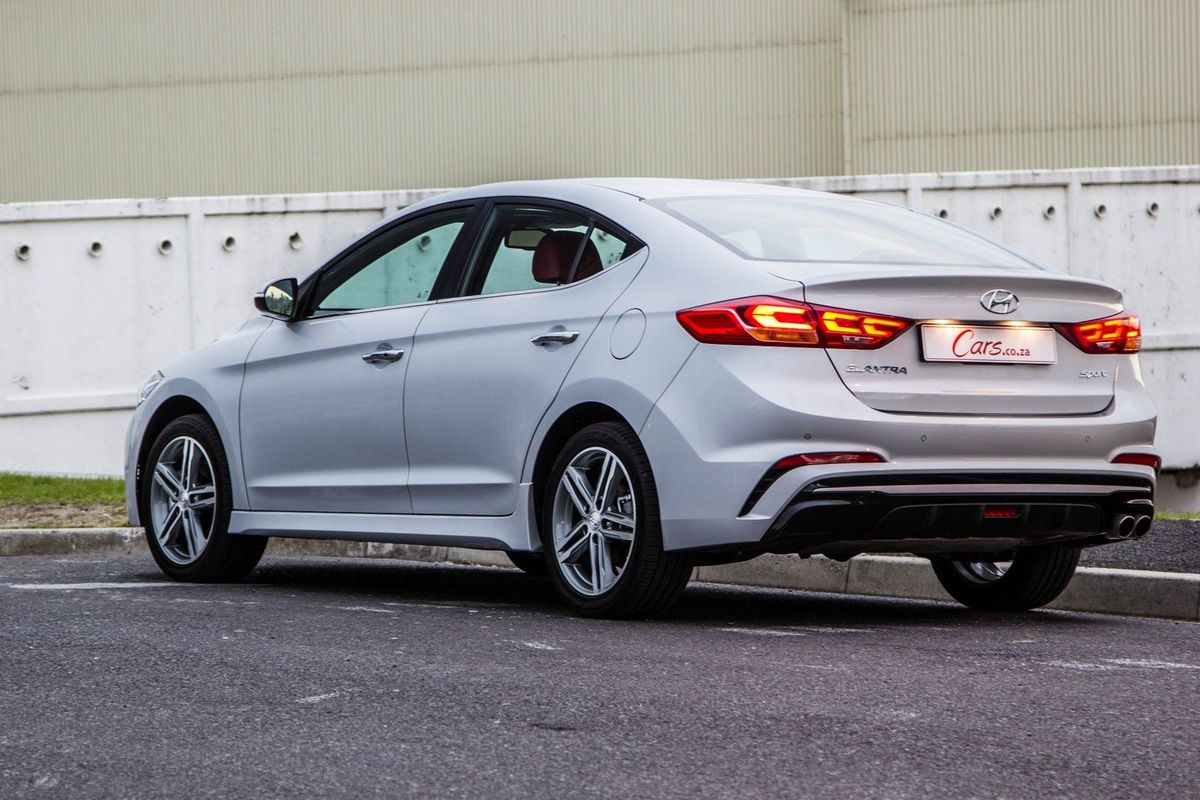
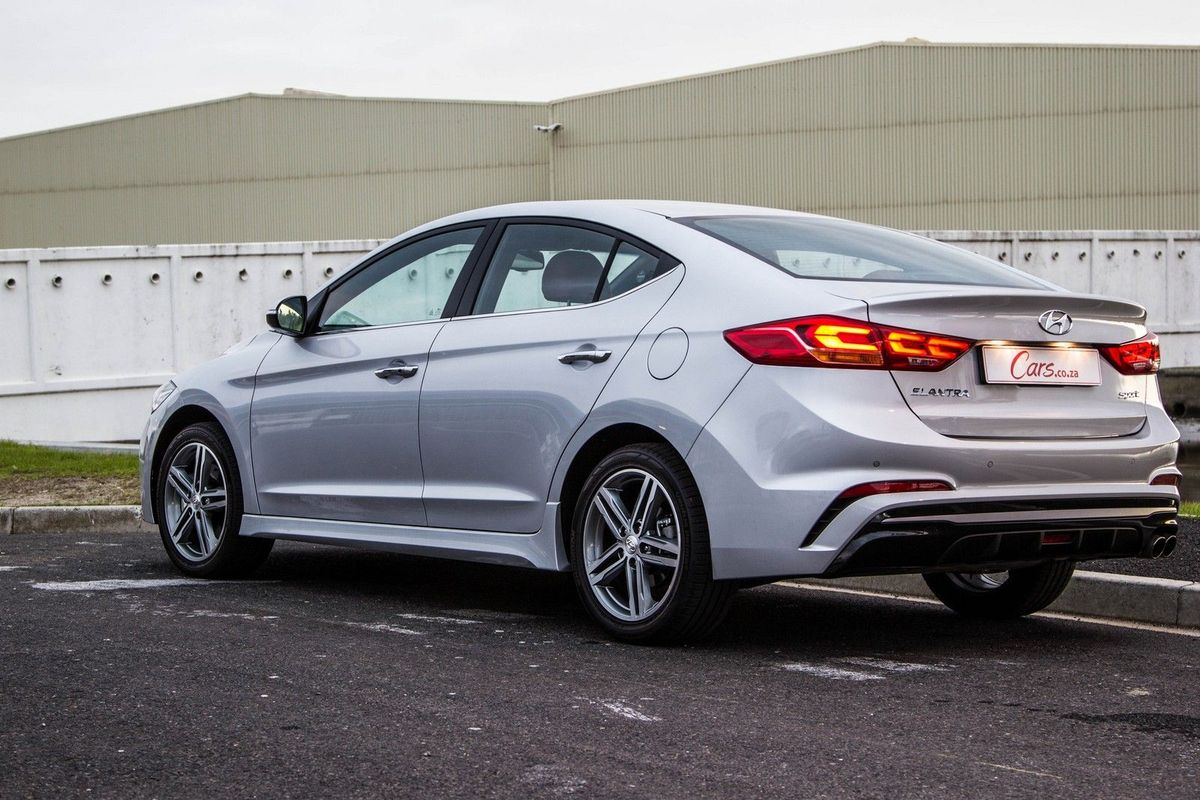
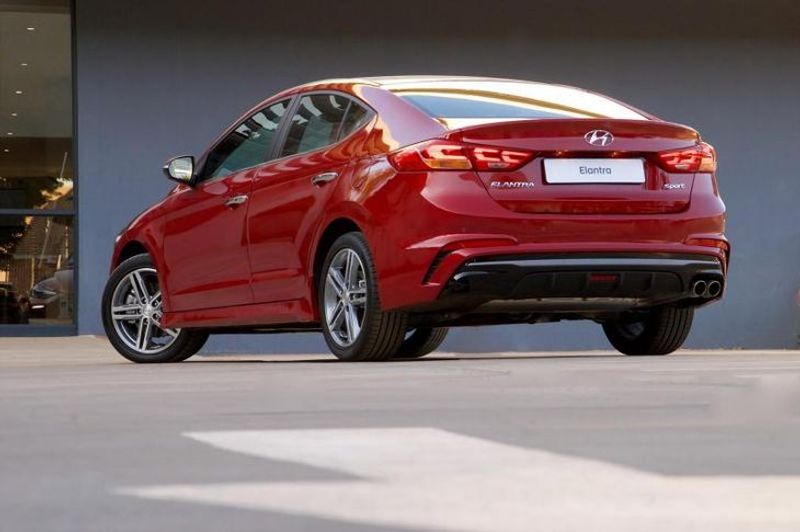
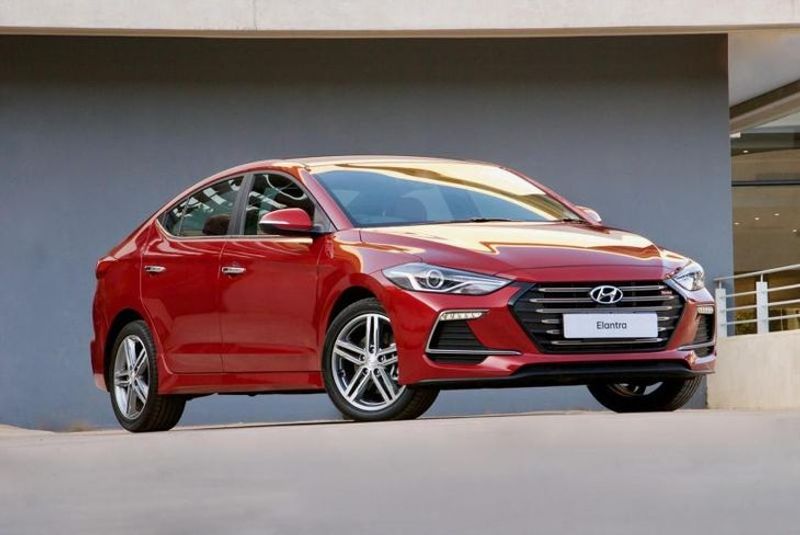
Hyundai South Africa has launched an all-new Elantra compact sedan. As expected, the line-up includes 1.6- and 2.0-litre naturally aspirated derivatives, but also a 1.6-litre turbopetrol flagship. Herewith the specifications and pricing.
The Elantra has done well in our market: since winning the 2012 SA Car of the Year award, it has tallied up a substantial 14 722 sales. Now for 2017, there's an all-new model. The newcomer, which is available in 4 derivatives from launch, rivals the Ford Focus, Kia Cerato, Mazda3 and Toyota Corolla sedans. However, given its price, spec and performance, the flagship model has Honda Civic and upcoming Subaru Impreza in its sights.
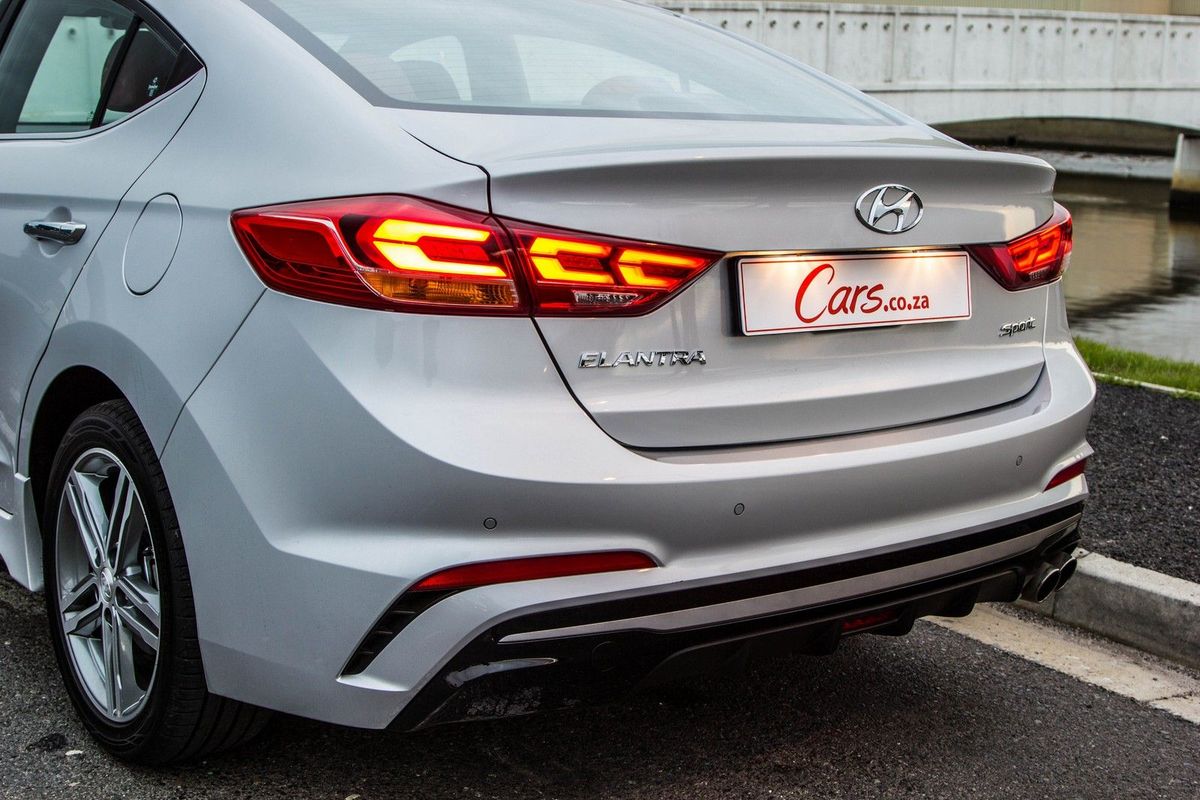
The new Hyundai Elantra now boasts a performance flagship, equipped with a dual-clutch 'box and turbocharged engine.
Engines and Transmissions
The new Hyundai Elantra range starts with a base-spec 1.6-litre Executive, which is cheaper than the outgoing entry-level offering. It's powered by a 1.6-litre naturally aspirated petrol motor (with peak outputs of 94 kW and 154 Nm) and the derivative is available with either a 6-speed manual or automatic transmission. This Executive is claimed to consume 6.5 L/100 km and 6.9 L/100 km for the manual and automatic respectively.
A 2.0-litre naturally aspirated motor with 115 kW and 195 Nm powers the mid-range Elite. This model is only available with a six-speed automatic transmission. It's a tad more thirsty as it returns a consumption figure of 8.3 L/100 km.
Finally, the new Elantra flagship model comes to market armed with a 1.6-litre 4-cylinder petrol turbopetrol motor mated with the Korean firm's 7-speed dual-clutch transmission. With peak outputs of 150 KW and 265 Nm on tap, this 1.6 Turbo Elite is said to be capable of accelerating from zero to 100 kph in 7.7 seconds. It's the sportiest Elantra, but it's not the thirstiest; Hyundai claims it will consume 7.9 L/100 km.
Sharper lines, daytime running lights and sportier alloy wheels make the new Hyundai Elantra stand out a bit more
Specifications
The range is well specced and there are only minor differences between the trim levels. The Executive comes equipped with (manual) air-con, touchscreen infotainment system with RDS radio/satnav/MP3/Aux/iPod/USB, Bluetooth connectivity, cruise control, rear park assist, 16-inch alloys and leather seats. The Elite trim adds smart key push-button start, climate control, rain-sensing wipers and 17-inch alloys.
In terms of safety, the Hyundai Elantra range is well specified with ABS with EBD, 6 airbags, daytime running lights, central locking, ISOfix child seat mounting points, with the Elite models additionally fitted with an electronic stability programme.
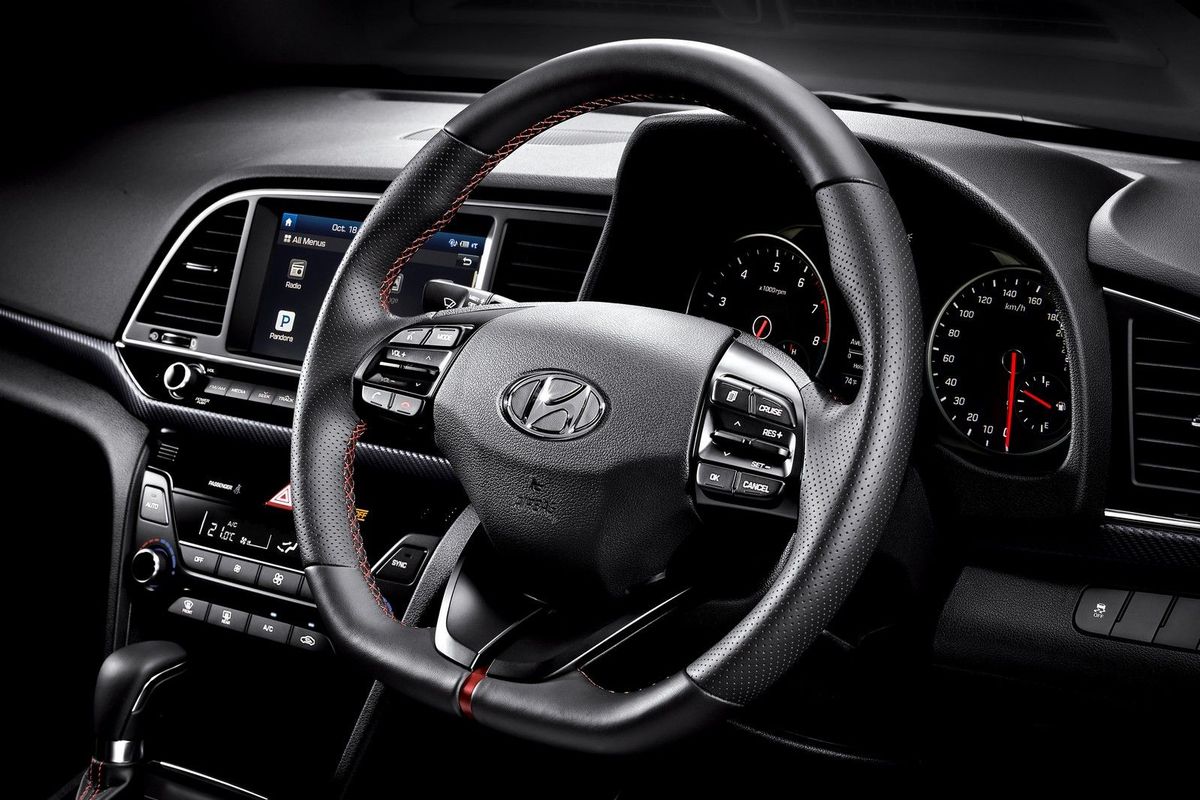
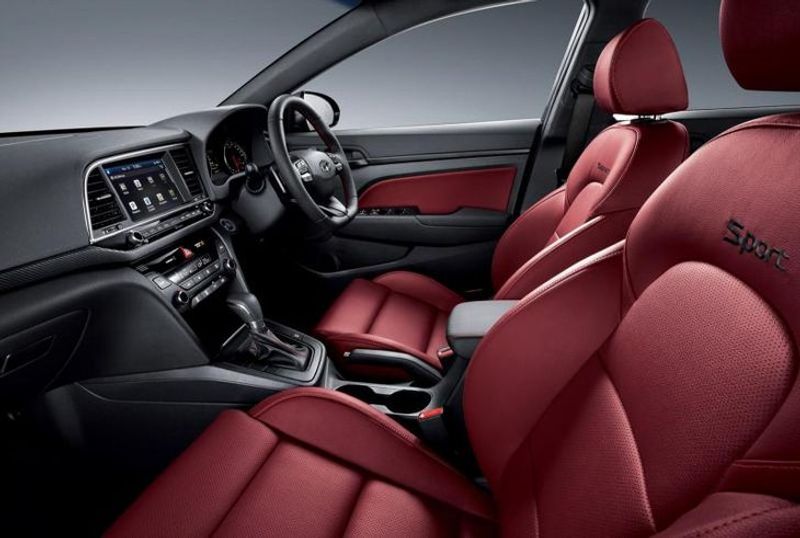
The red trim may not be to everyone's tastes, but it gives the cabin a sporty feel. Fortunately, the car is sporty to drive too.
Hyundai Elantra prices in South Africa (June 2017)
The new Hyundai Elantra comes with a 5-year/150 000 km manufacturer's warranty, with an additional 2-year/50 000 km manufacturer powertrain warranty. Furthermore, there is roadside assistance for 5 years (or 150 000 km) and a 5-year/90 000 km service plan. The intervals are 15 000 km.
Hyundai South Africa has expanded its top-selling Tucson family car/compact SUV range through the addition of a beefed-up Sport model. We got to grips with this newcomer at the local launch event in the Western Cape.
The Hyundai Tucson has been a phenomenal sales success since the new model was launched back in March 2016. While Hyundai SA doesn't report its monthly sales figures, the launch presented us with some face time with the importer's management team and they were only too happy to divulge how sales of the Korean marque's products were faring in the South African new vehicle market.
In the period from March 2016 to April 2017, the Tucson comfortably outsold its rivals, taking 16.5% of the segment share. The closest rival was Toyota's RAV, which could only muster 12.6%. It's been a terrific period for Hyundai and the Tucson's specification and value for money have won it many fans. The addition of the 1.7-litre diesel engine further broadened the product's appeal and now, well, we have something a bit off the wall.
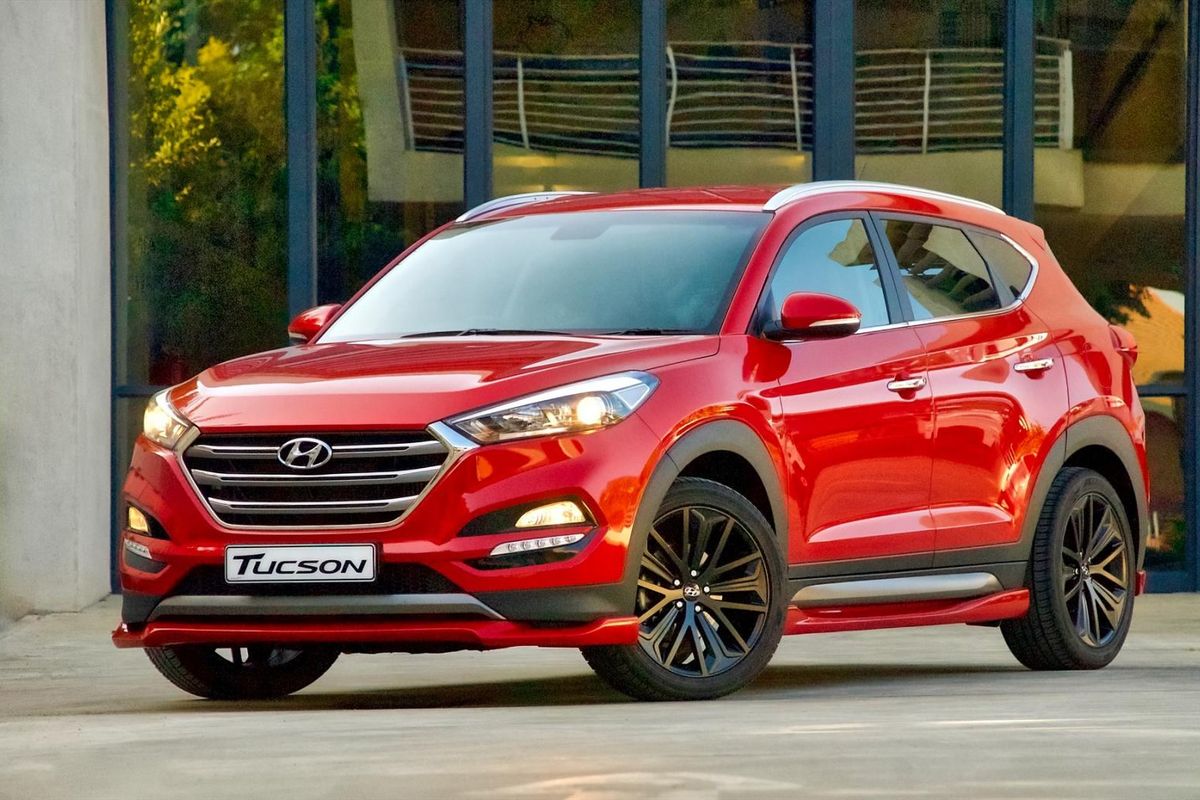
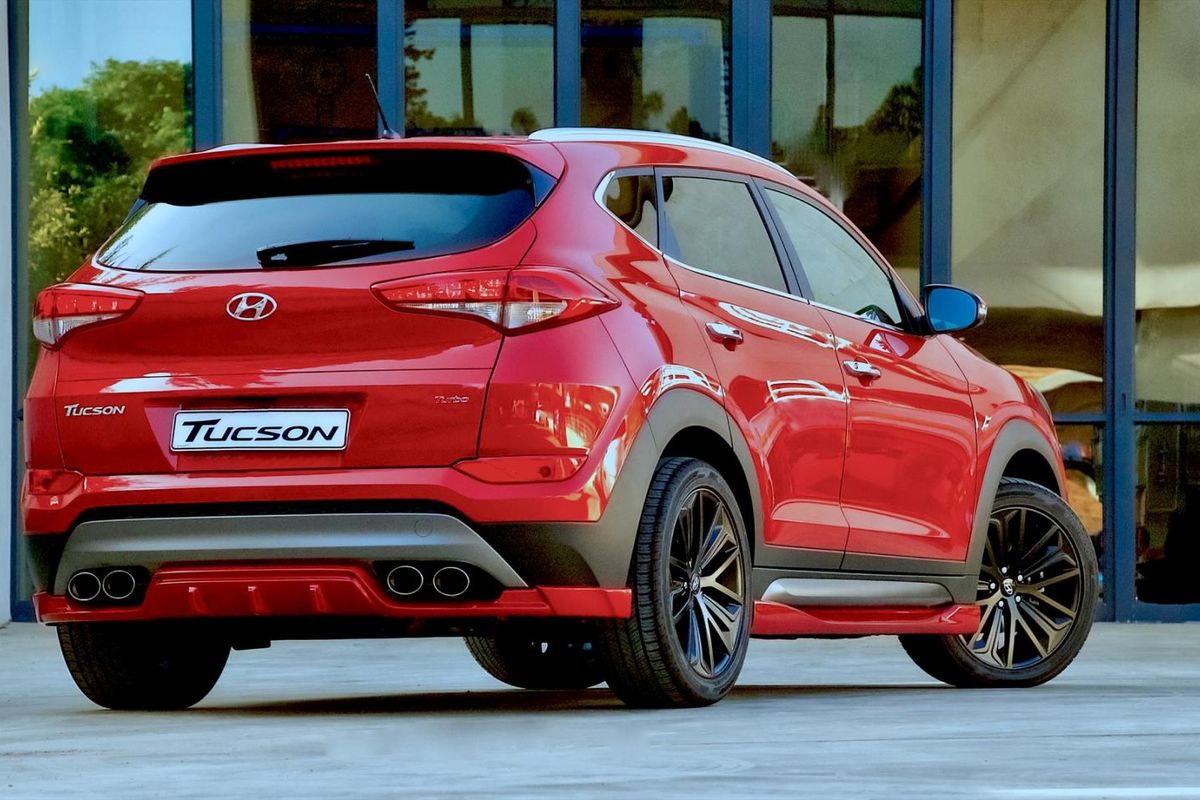
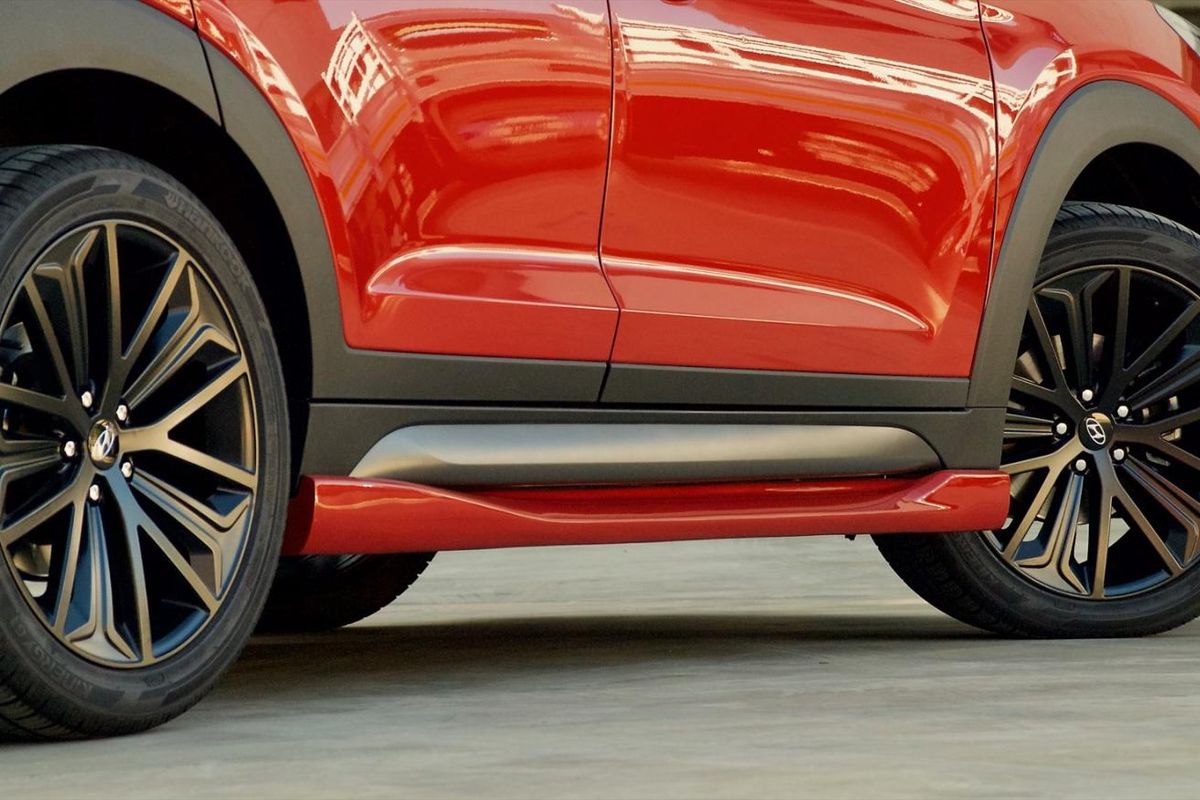
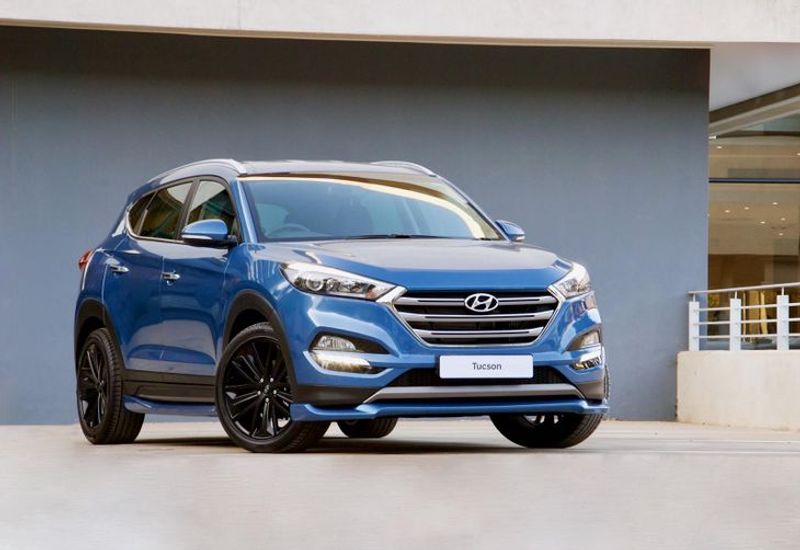
The bespoke bodykit adds oodles of "bruiser cruiser" kerb appeal to otherwise demure Tucson.
Hyundai Tucson Sport specifications
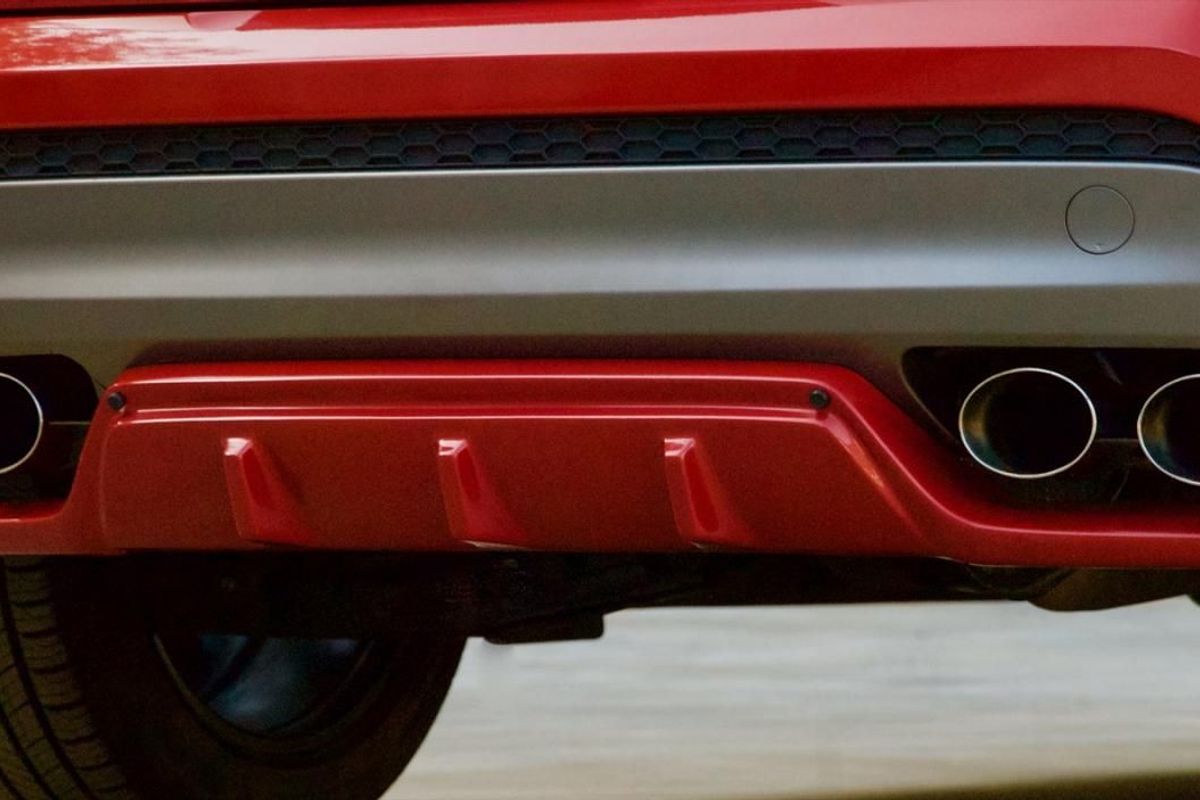
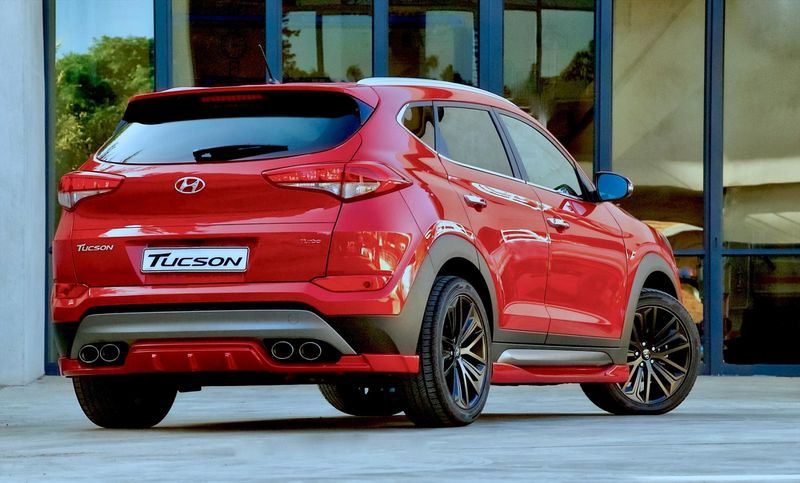
The Hyundai Tucson is widely considered a good-looking vehicle, but Hyundai SA approached its supplier in Korea with the idea to bring an overtly sportier derivative of the popular family car to market. A body kit comprising front bumper, side skirts and rear diffuser was imported, while Tiger Wheel & Tyre was enlisted to supply an alloy wheel specifically for this product; the blacked-out 19-inch alloys definitely look the part.
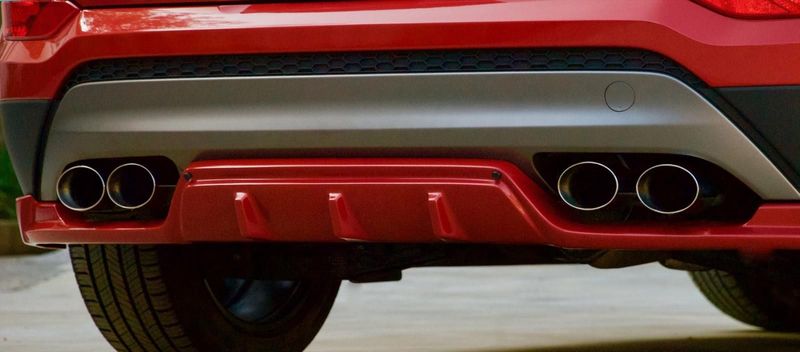
Finally, there needs to be rortier noise to round off this "performance" Tucson and, to that end, a 4-pipe sports exhaust has been fitted. The result is the Hyundai Tucson Sport, a locally-created product that visually easily outshines its sibling. In terms of peak power outputs, you're now looking at numbers of 150 kW and 295 Nm, which are respectable figures. In comparison with the standard model, those are increases of 20 kW and 30 Nm. As with the standard car, power reaches the front wheels through a 6-speed manual gearbox.
The satin chrome insets combine tastefully with the black cladding and rims to give the Tucson "a hunkered down" look.
The specification of the Tucson Sport is based on the Executive trim line, which means the creature-comfort count is generous: climate control, infotainment system with USB and auxiliary ports, plus Bluetooth connectivity, reverse-view camera and rain-sensing wipers are just some of the standard features. Its safety spec is impressive too: ESP, ABS with EBD, front/rear fog lights, ISOfix child seat mounts and 6 airbags are fitted.
Driving experience
We drove the new Hyundai Tucson Sport in conjunction with the new Elantra at a media launch in the Winelands region. Upon start-up, the Tucson Sport has a surprisingly raucous soundtrack, with the noise subsiding as the rev needle returned to idle. What's more, there's a bit of an induction bark when you jab the accelerator pedal.
The ride on the bigger wheels is firm, but fairly pliant, although we'd recommend against traversing gravel surfaces in the Sport because the low-profile rubber would be vulnerable to jagged edges. Despite the bigger wheels/thin sidewalls, however, the cabin doesn't convey much road noise.
The quadruple exhaust tips look… and sound… wild. Although they are a bit boomy at cruising speeds, the high-rev howl is worth it.
One of the problems with these adaptations such as these (and we experienced it with the Hyundai i20 Sport, for example) is that the exhaust tends to drone when you're on the open road, which can be mildly annoying. However, we're quite happy to report that unless you're really trying to get a move on, the exhaust noise never really overwhelms the cabin, it's more like a subtle reminder that you're not in an ordinary Tucson and the additional shove is certainly present.
Hyundai Tucson Sport price in South Africa
The Hyundai Tucson Sport retails for R499 999 and comes with a 5-year/150 000 km manufacturer's warranty, with an additional 2-year/50 000 km manufacturer powertrain warranty. Furthermore, there is roadside assistance of 5 years (or 150 000 km) and a 5-year/90 000 km service plan.
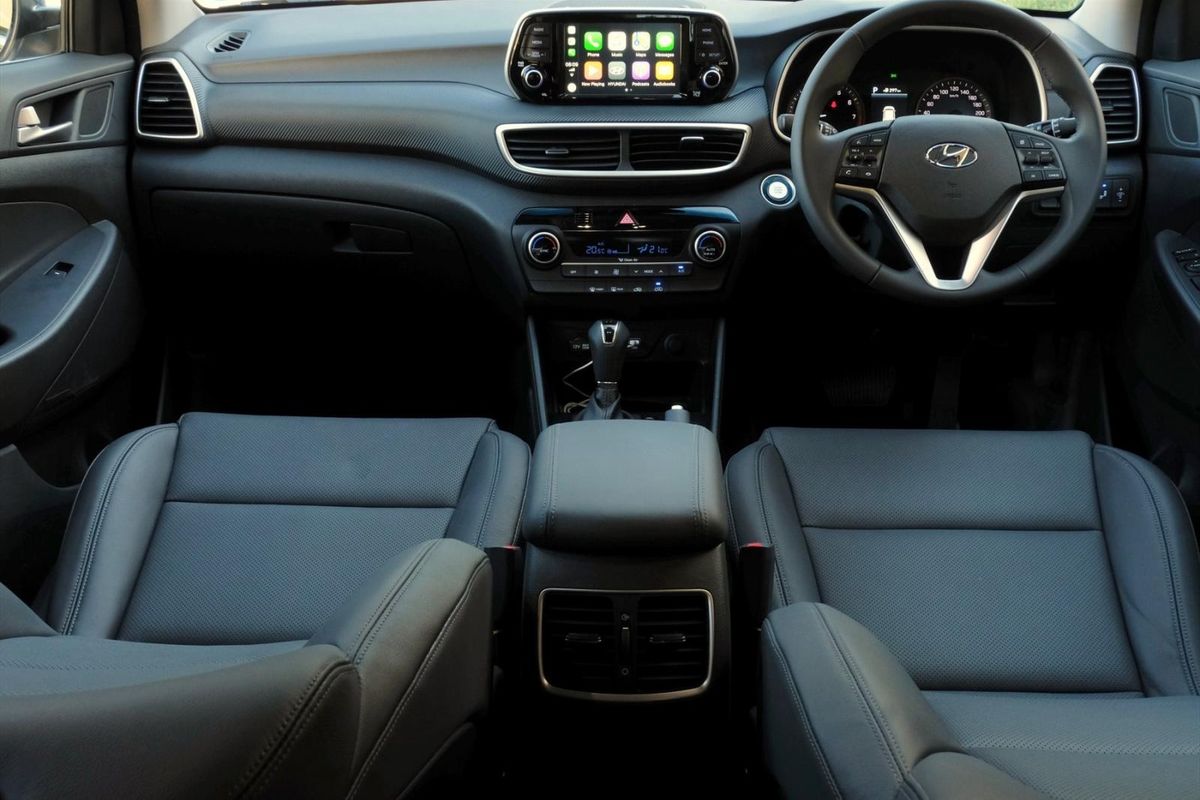
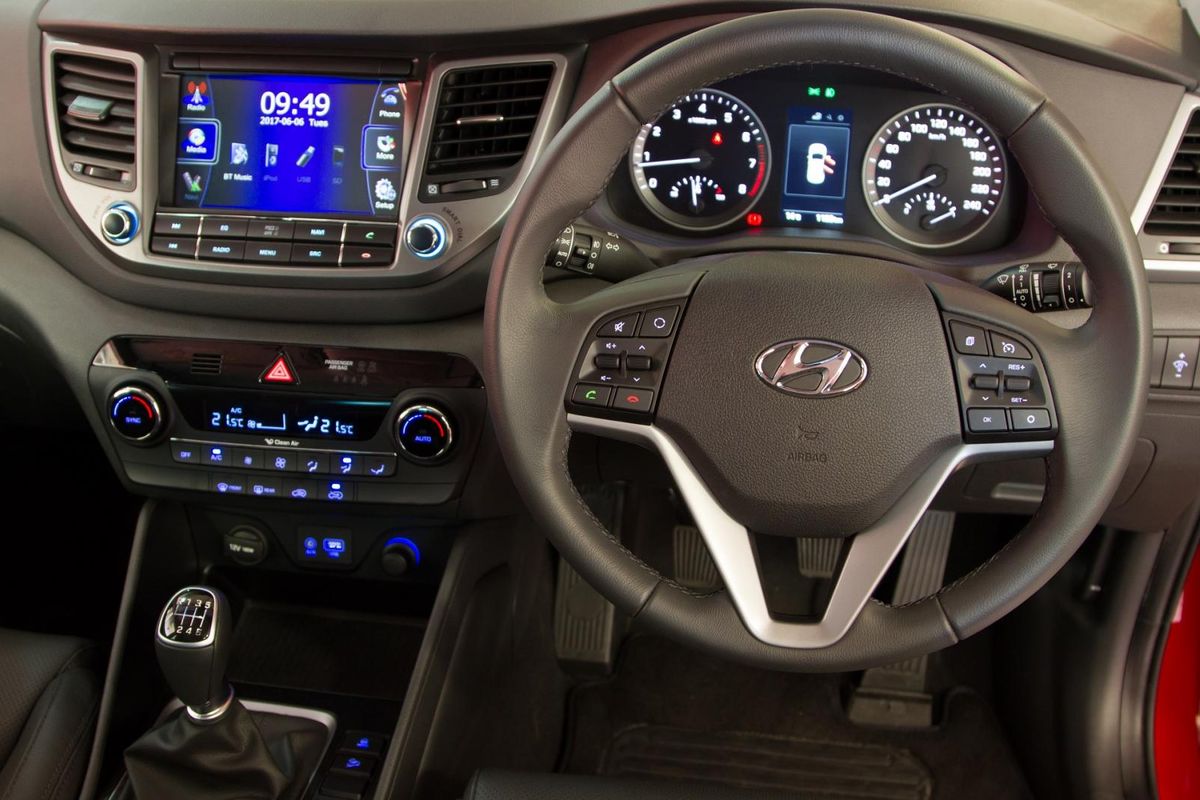
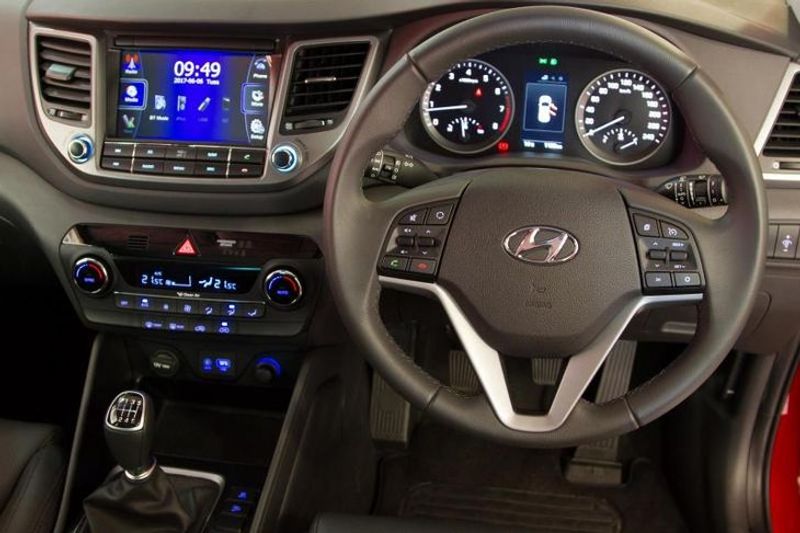
The Tucson Sport's interior remains unaltered, which, considering the bold exterior, some buyers might find a trifle disappointing.
Verdict
The introduction of the Tucson Sport is a bold move by Hyundai South Africa, but considering the success of the Tucson range, the firm had every reason to feel bullish about the newcomer's chances. After all, the Tucson is likely to sell in impressive numbers, regardless of whether this special model succeeds or not. Is it more than just a packaging exercise? Can it justify its R50 000 premium over a 1.6T GDI Executive?
Well, its execution is certainly edgier than those of other premium compact family cars, plus the upgrade allows owners to add muscle to the Tucson's kerb appeal without voiding the vehicle's warranty and service plan. Granted, the exhaust note is loud, but not to the point of being a distraction.. it (the noise) is quite bearable when cruising on the open road cruising and only really becomes raucous when you're pressing on. Suffice to say the Tucson Sport is not for everyone… and that is why, for a particularly extroverted, individualistic customer, it will be just the ticket.
Renault Clio GT-Line & RS Trophy (2017) Video Review
Renault has recently launched their facelifted Clio range in South Africa and we were afforded the opportunity to test two of the more special models in the line-up: the GT-Line and extra-special RS Trophy.
The Clio has been a resounding sales success in South Africa and the latest iteration of the French compact hatchback seems destined to continue that trend. The GT-Line offers much the same specification as cars like the Volkswagen Polo, but at an altogether better price point. The RS Trophy is, of course, the fire-spitting, top-of-the-line Clio that offers a properly hardore driving experience. Or does it? We test both in our latest video.
Extended Test: Opel Mokka X 1.4 Turbo Cosmo [with Video]
The top-spec derivative of the recently refreshed Opel Mokka X compact family car had an extended tenure in the Cars.co.za test fleet, during which time it provided well-specced, comfortable family transport and excelled at the daily commute. What were its strengths and weaknesses?
The recent announcement regarding the withdrawal of General Motors (and the Chevrolet brand) has left a question mark over the local market future of Opel, which is no longer owned by GM. While the future of Opel in a post-GMSA era will be revealed on June 8 2017, whatever will happen to the Russelsheim-based brand in South Africa (it probably will endure…), that must not detract from the fact that the Mokka X compact family car represents excellent value… and should continue to do so despite the impending rationalisation of the General Motors dealership network.
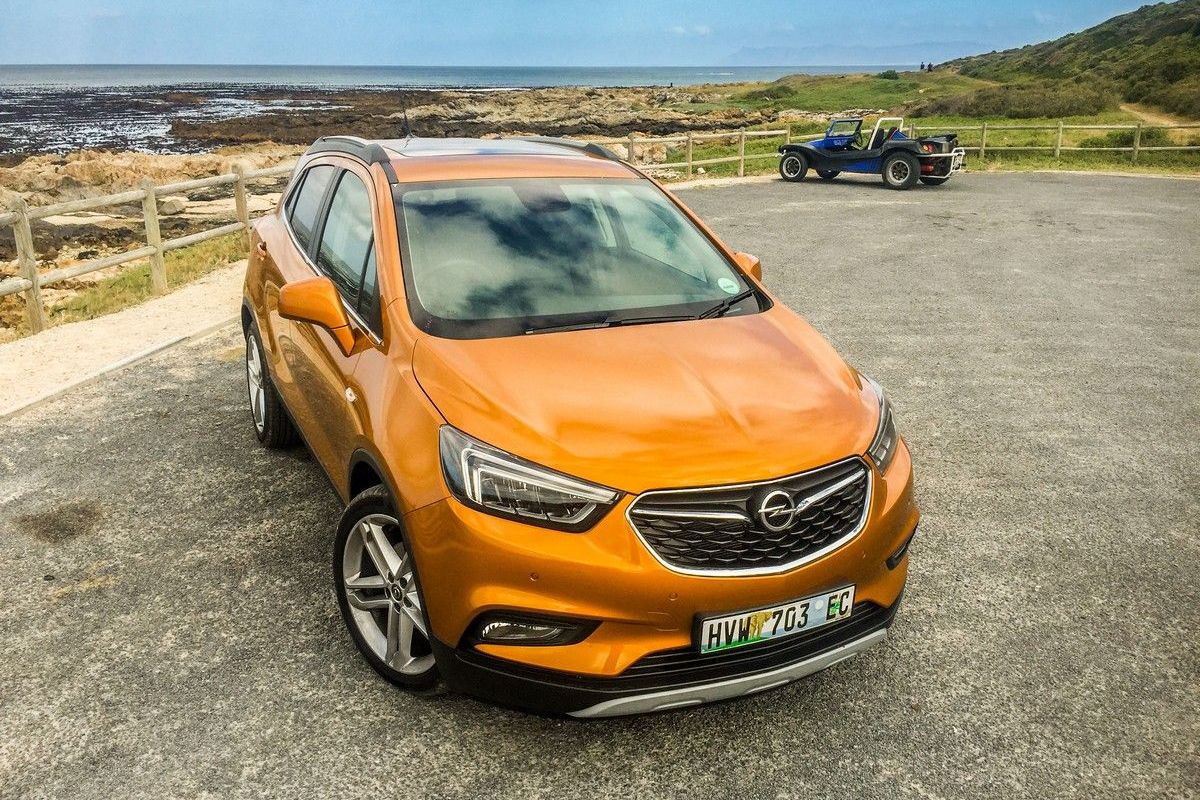
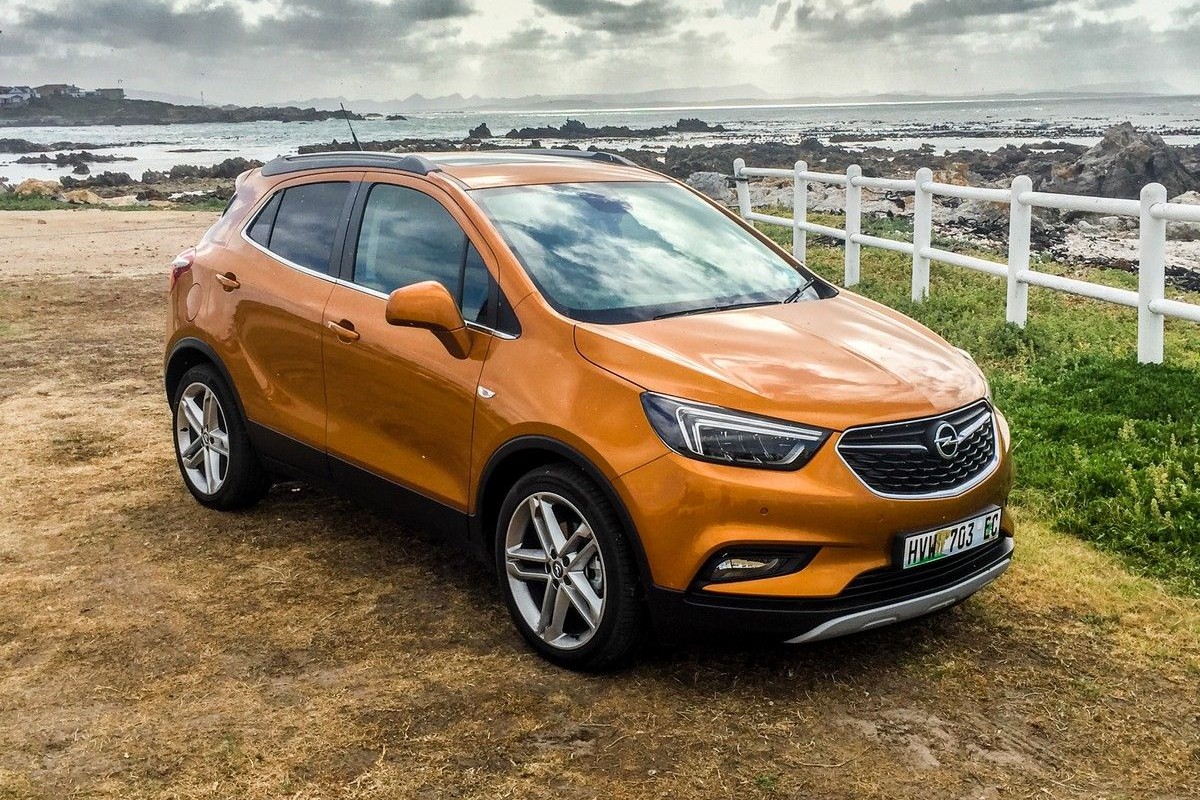
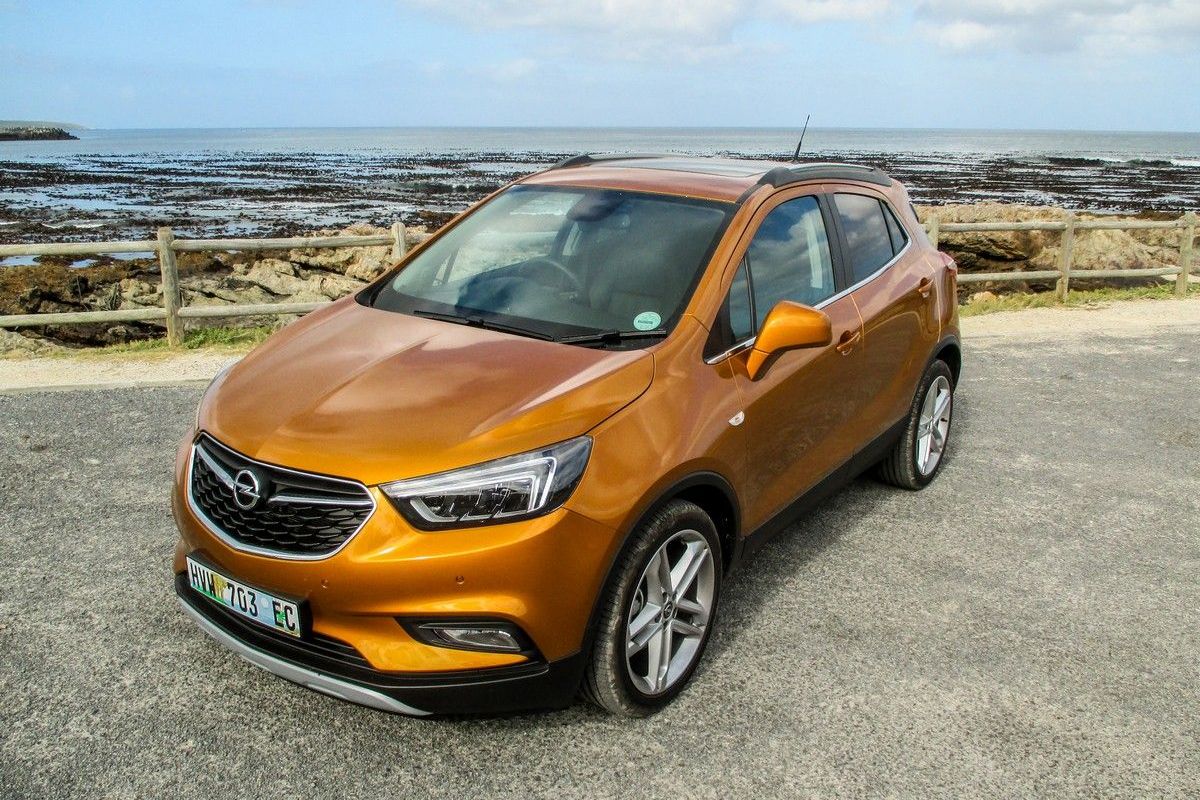
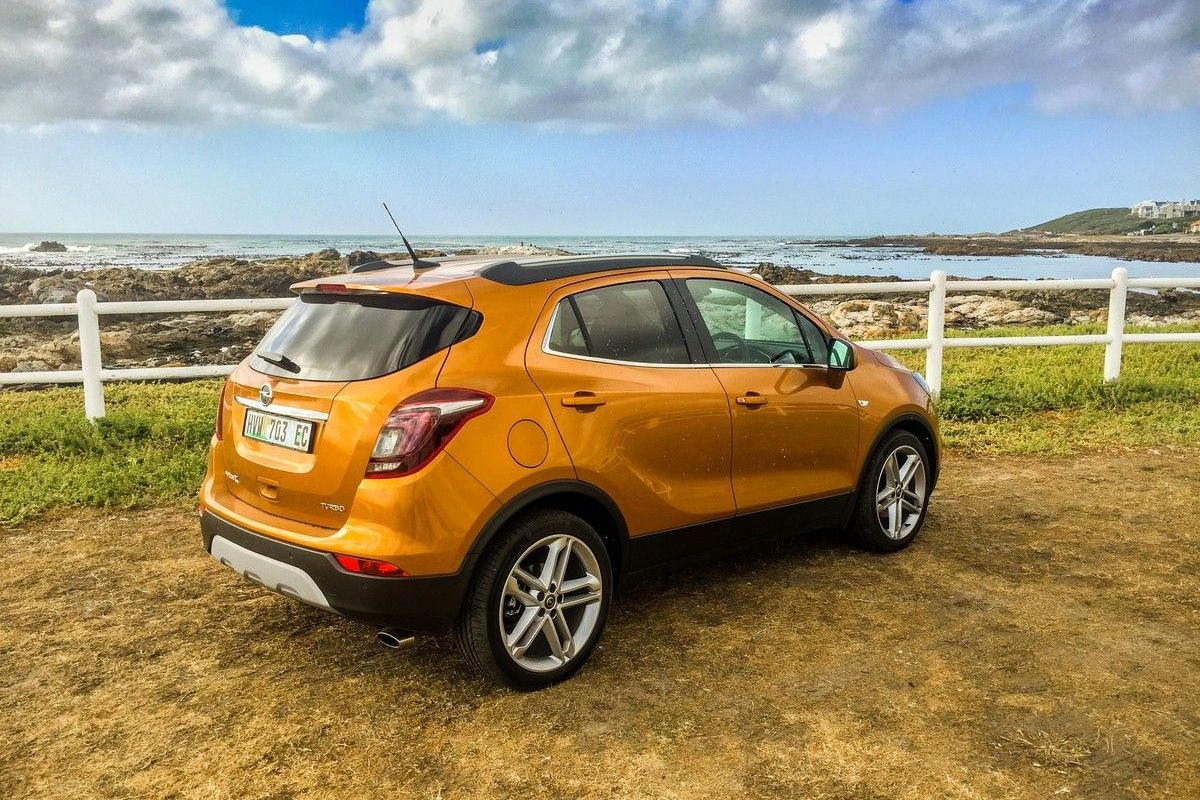
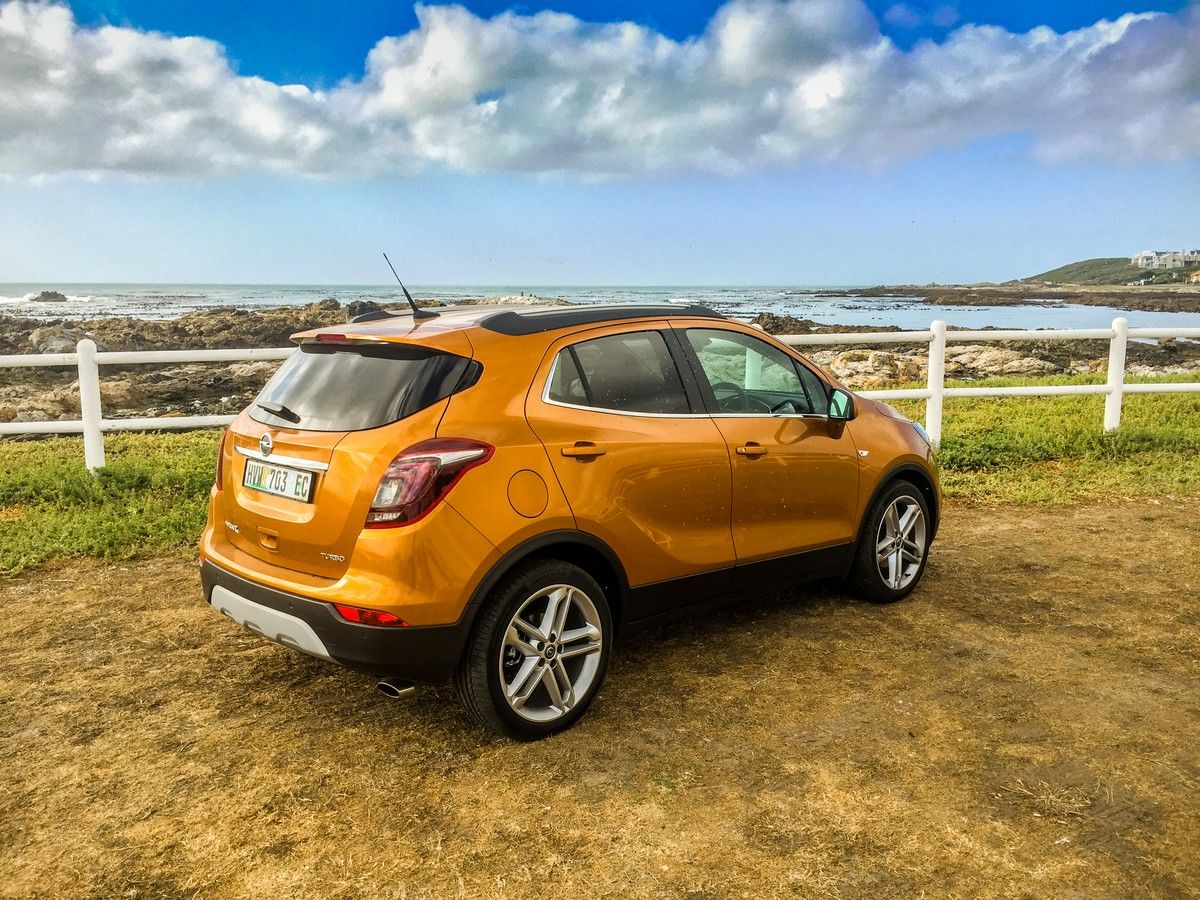
The Mokka X journeyed to Gansbaai, which is 2 and a half hours' drive from Cape Town, for a brief holiday jaunt.
The positives
Standout style
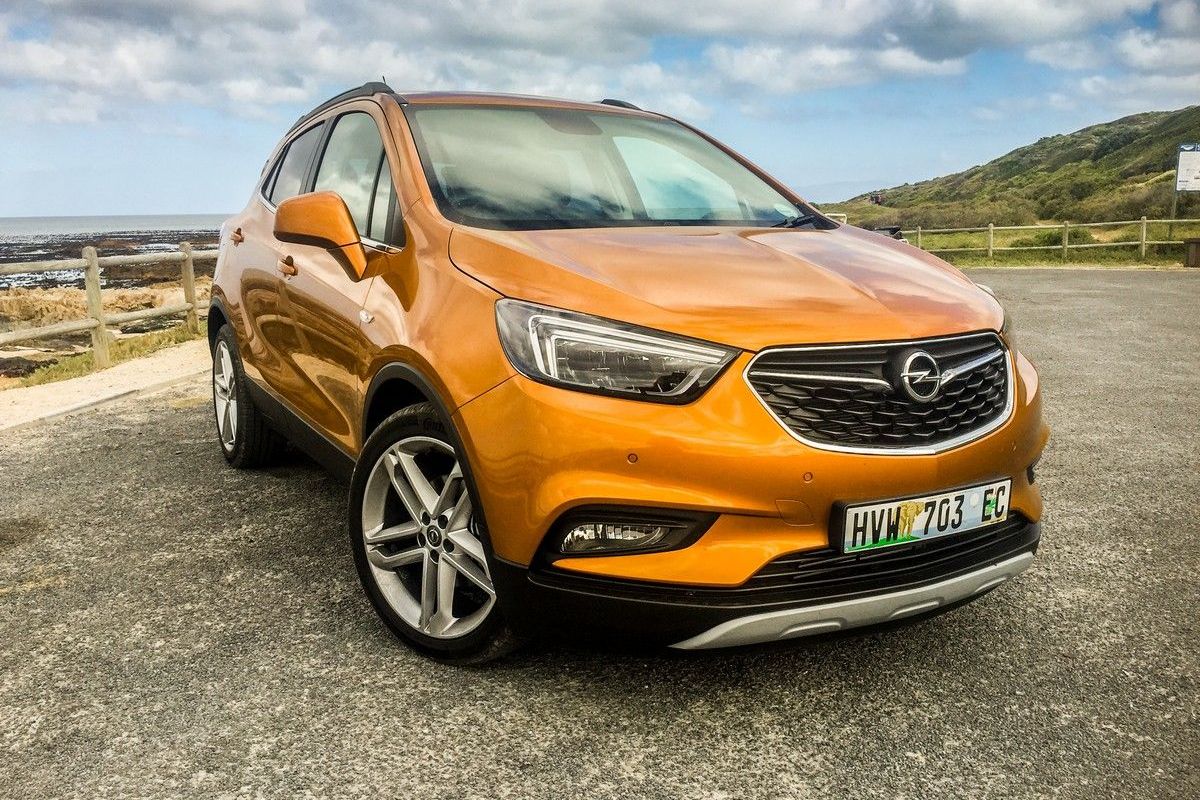
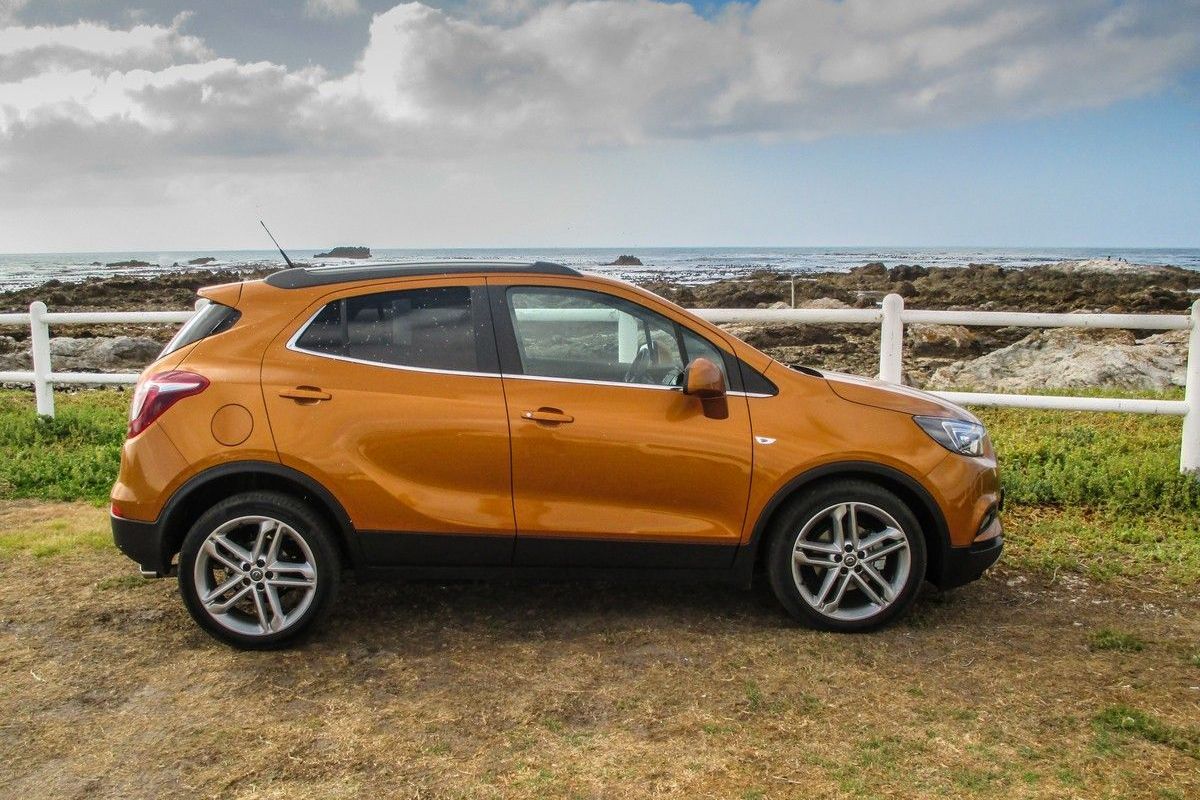
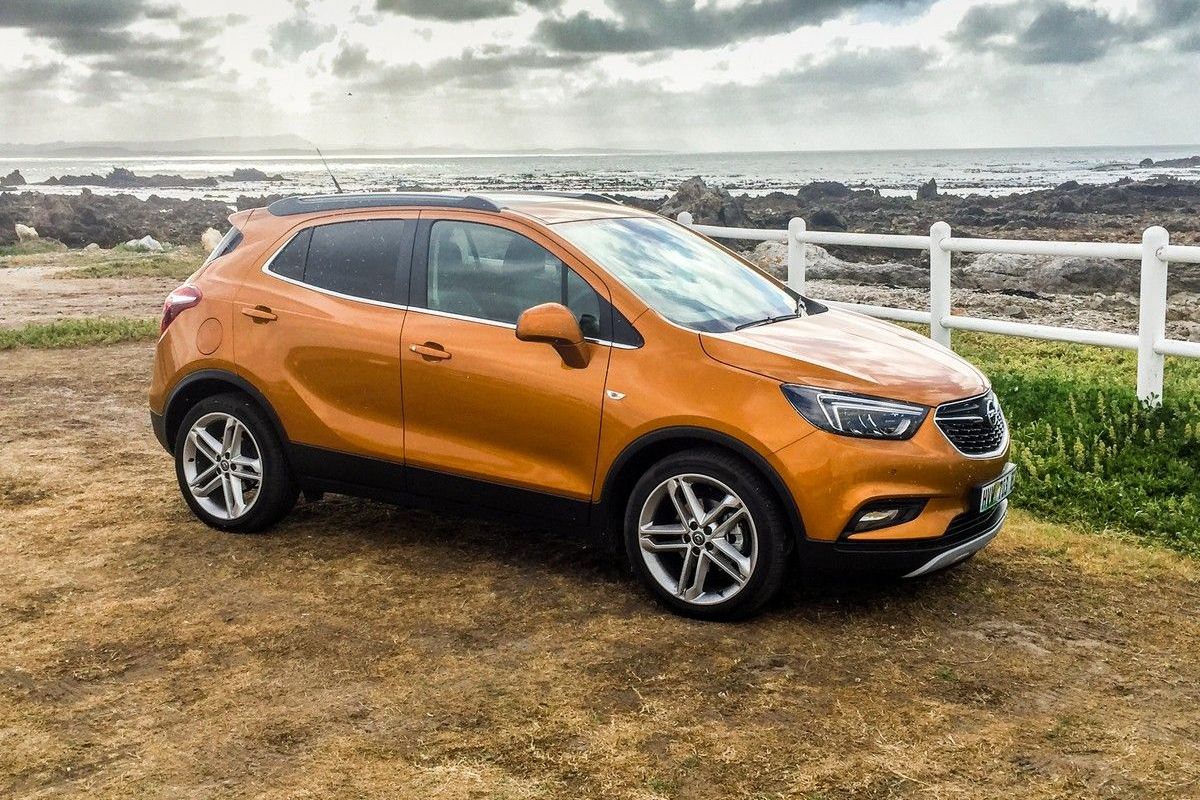
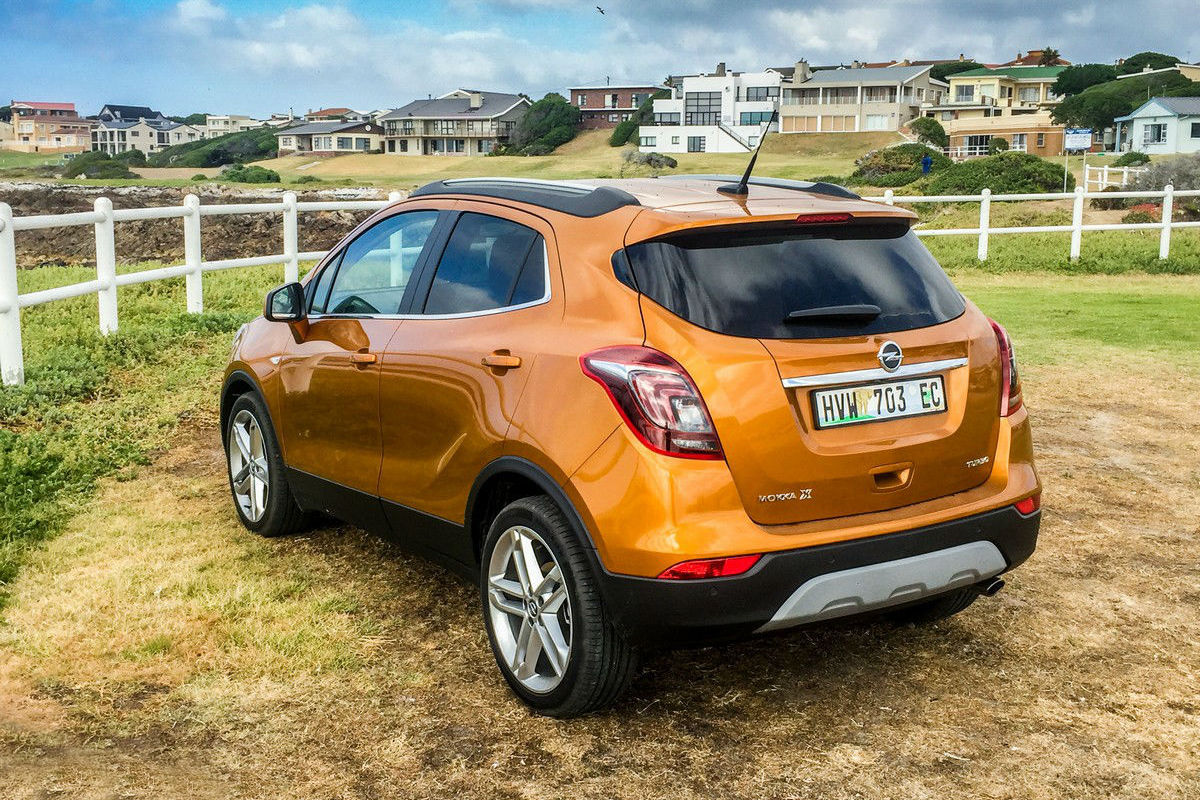
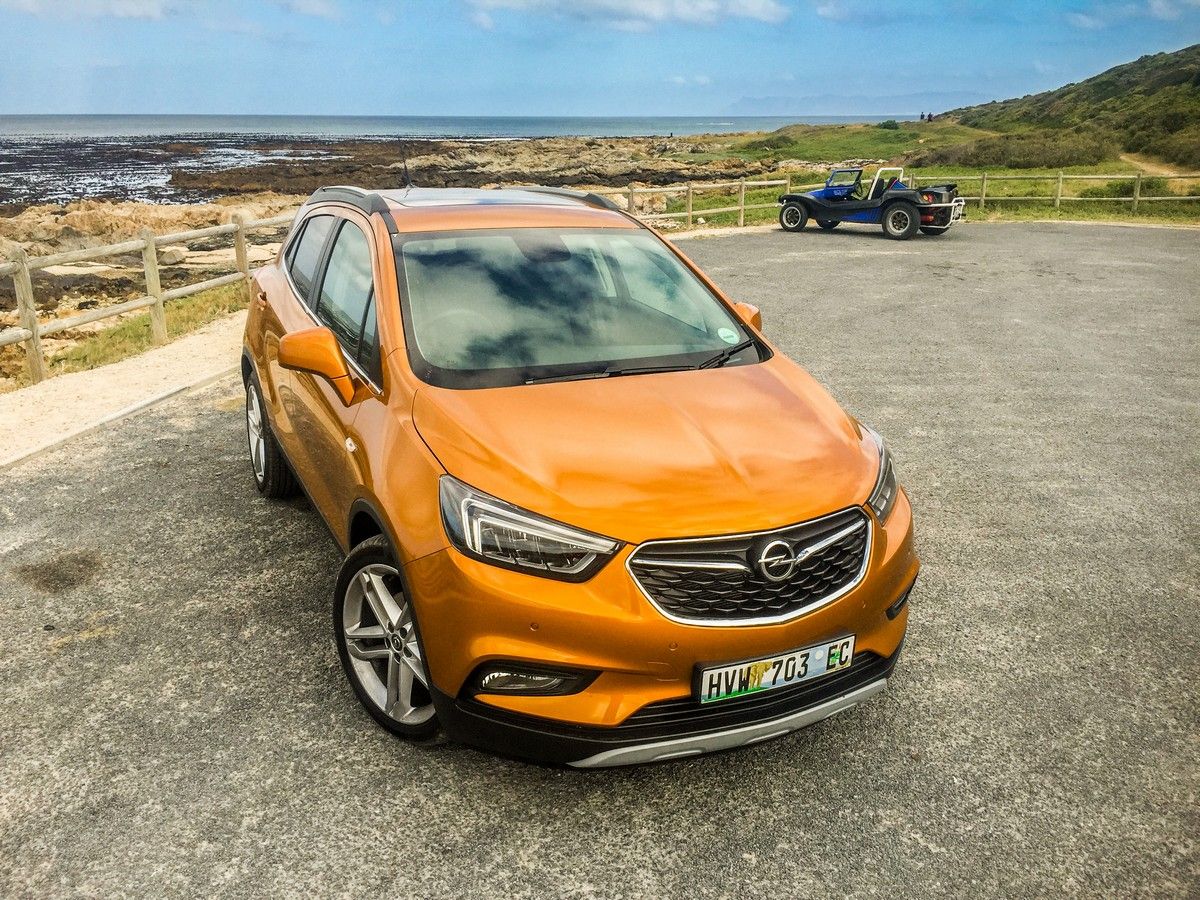
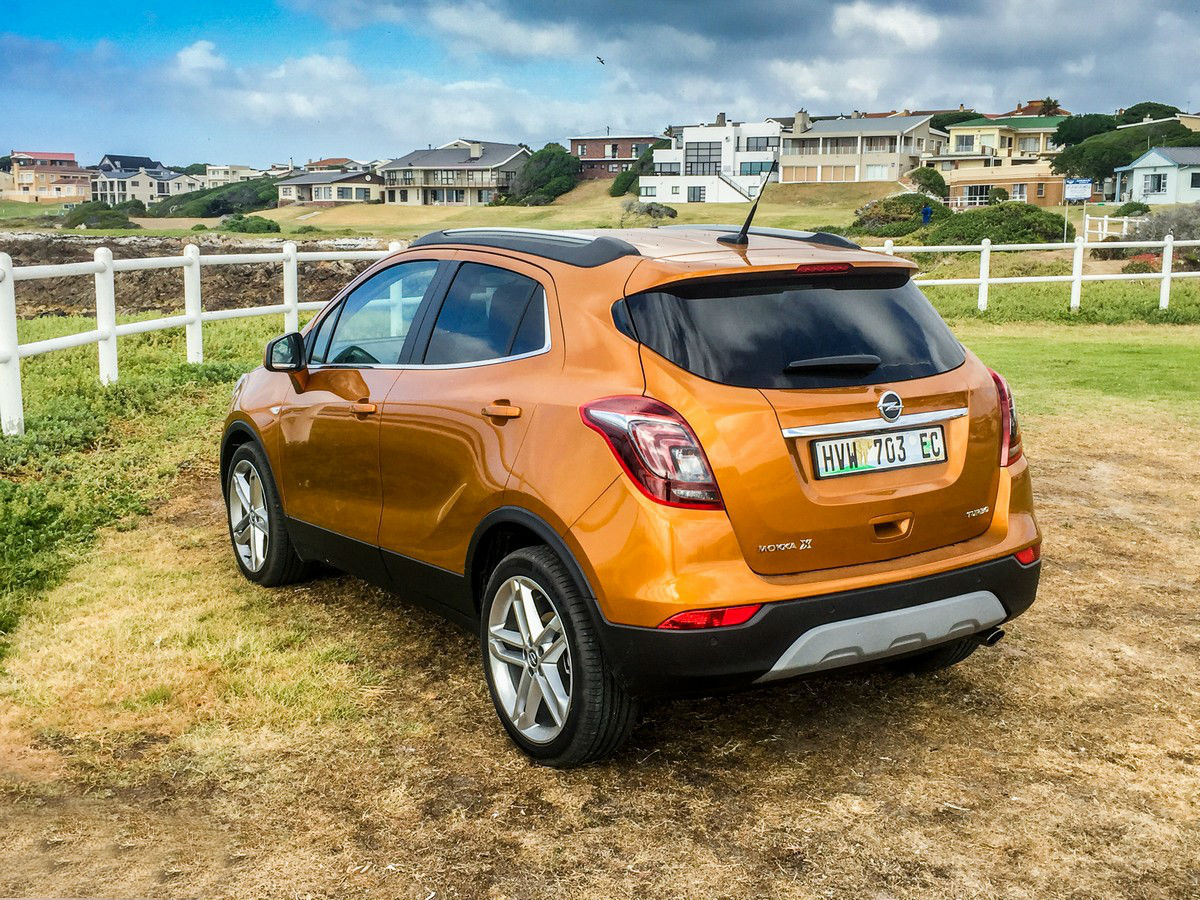
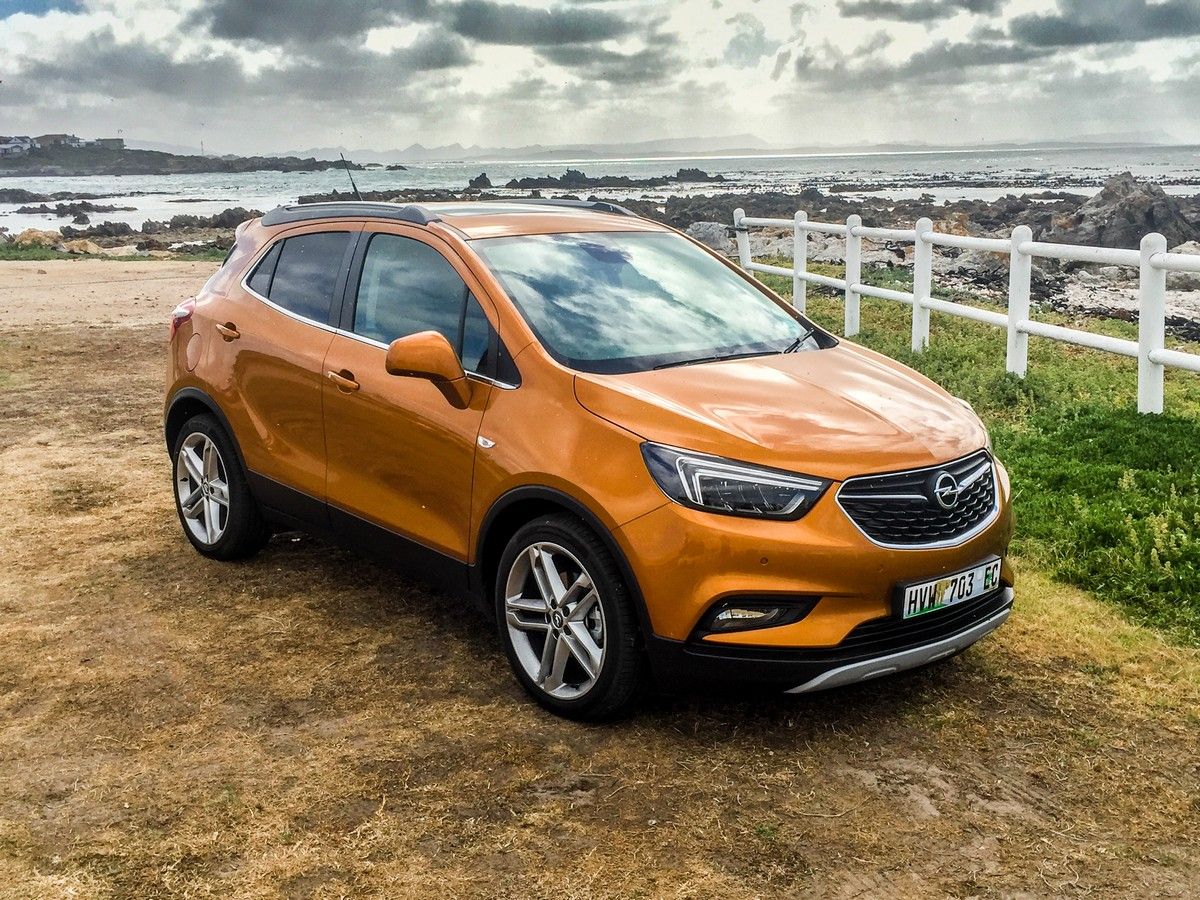
Considering that the car previously known as the Mokka has been production since late 2012 (although it was only launched in South Africa in March 2015), it still looks comparatively fresh due to a recent facelift. Now bearing the name Mokka X, Opel’s perennially underrated compact family car looks much more youthful and less overtly cladded (as was the case with the pre-update version), with a redesigned slimline headlight clusters complemented by integrated double-wing LED daytime running lights, a wing-shaped horizontal grille and an ornate front bumper.
Specified with the Premium Lighting Pack, the Mokka X gains front cornering lamps, LED high beams with directional control beam technology, plus LED taillights. Combined with the Amber Orange paintwork, satin bumper and window trims, roof rails and 19-inch wheels, the Cosmo-spec derivative strikes just the right balance between “cute ‘n’ cuddly” and “it looks like it just might be able to go off-road”. Although most of its rivals, with the exception of the Suzuki Vitara, err on the side of (let's say) boutique styling, the X probably has more unisex appeal than most.
The Mokka X test unit was additionally specified with a panoramic sunroof… the 19-inch wheels and satin cladding were standard, however.
Excellent specification
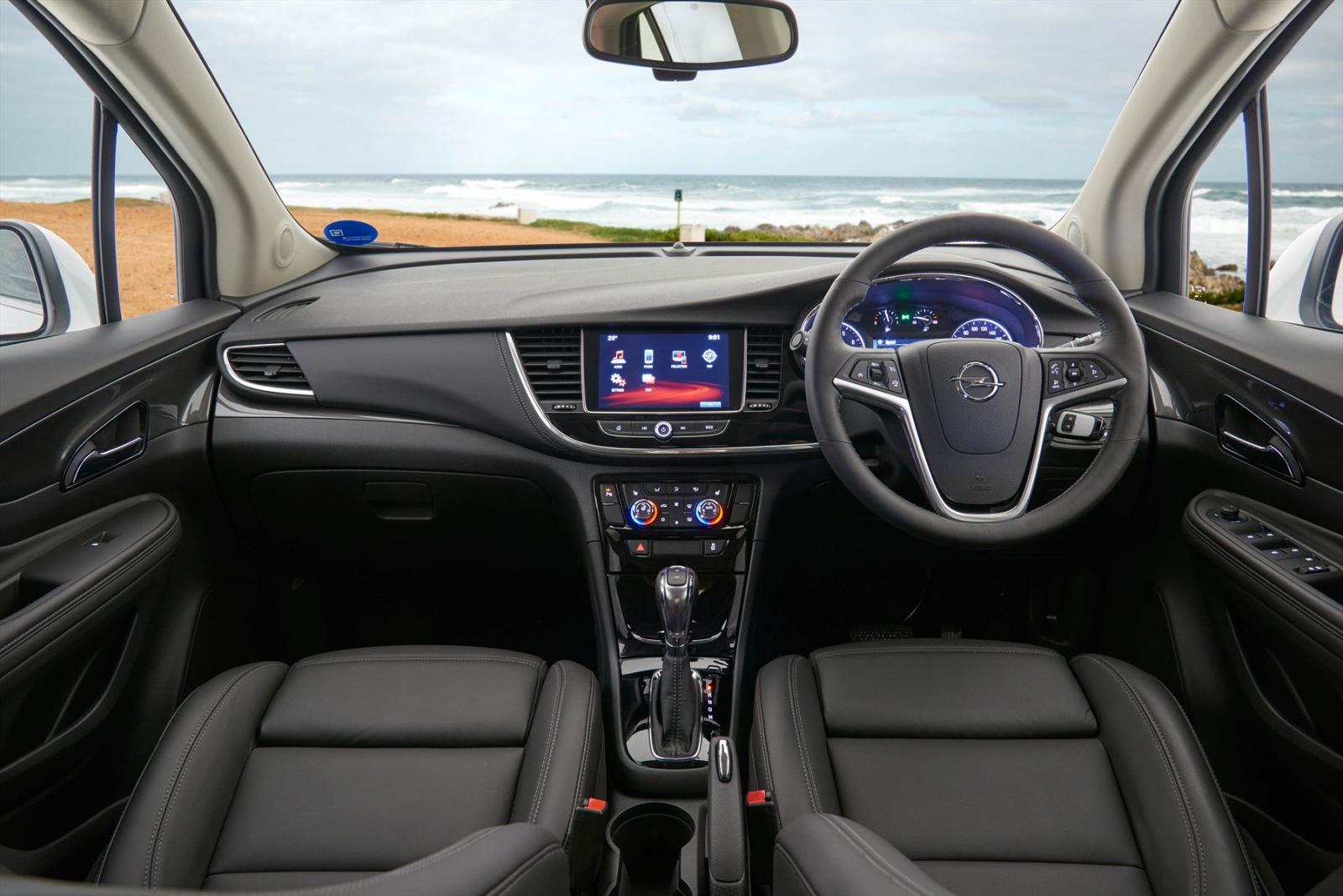
As befitting a flagship derivative, the Cosmo comes with a host of features that are almost too many to mention (but we'll try). Suffice to say that, specification-wise, there are few compact family cars that can match what the top-of-the-range Mokka X offers. To begin with, the front seats (AGR Certified Ergonomic with height adjustment for driver and passenger) and the multifunction steering wheel (including cruise control with speed limiter toggle) are trimmed in leather (as is the rest of the cabin, plus they are heated.
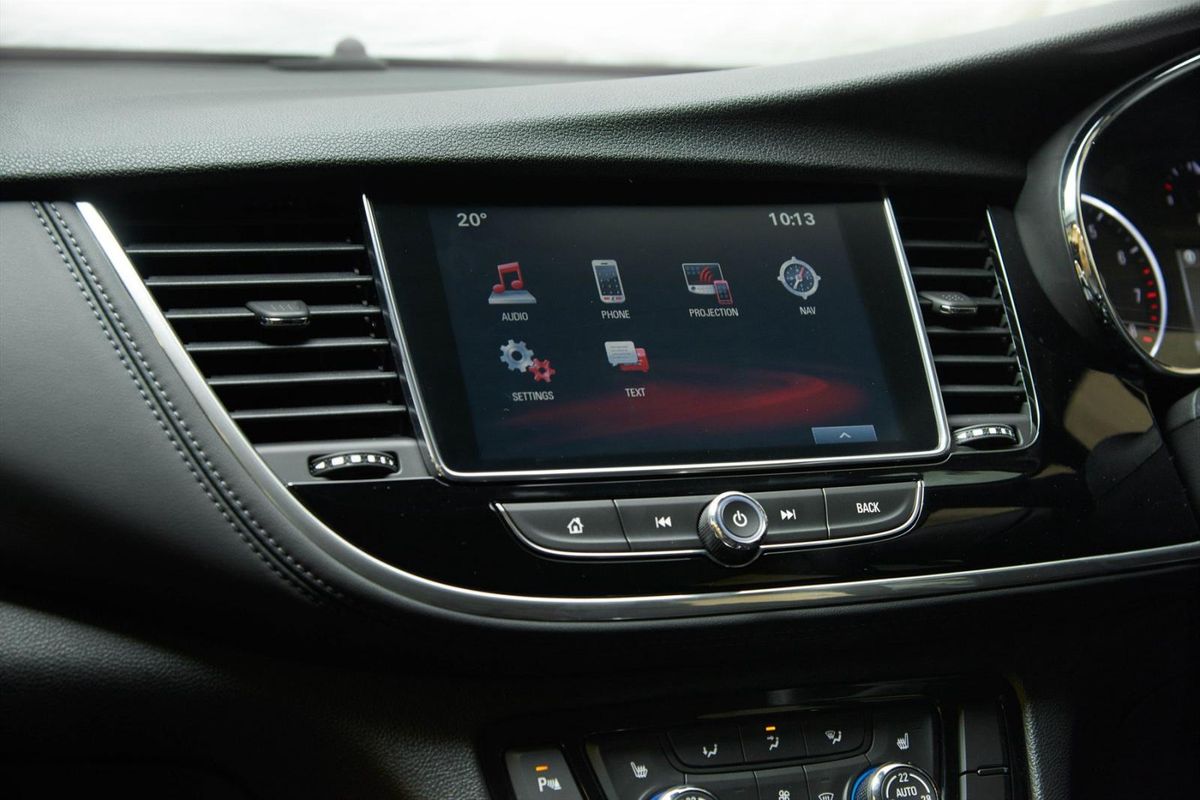
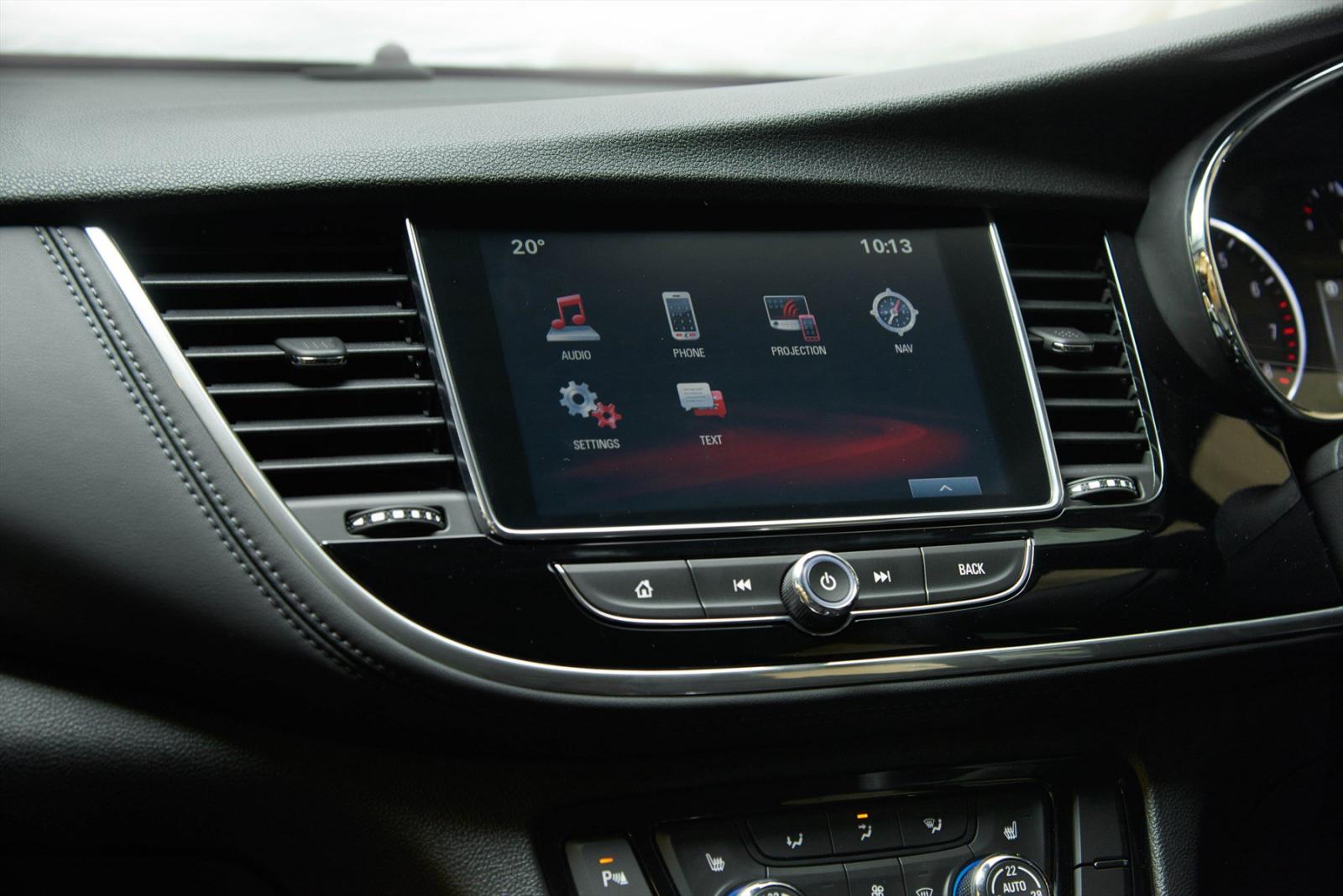
As for the side mirrors, they're heated and foldable, there is dual-zone climate control, rain sensing wipers and automatically activated lights, an auto-dimming rear view mirror, reverse-view camera, as well as park distance control (front and rear). The biggest revision from an ergonomic point of view, one which is increasingly critical as the user-friendliness of personal electronics interfaces become a focus area of so many consumers, is the introduction of the Intellilink touchscreen infotainment system that has drawn so much praise in the Astra and Corsa ranges.
Highlights of the interior include leather trim, a raised driving position, smart-looking piano black trim and a touchscreen infotainment system.
However, the test unit was additionally specified with a full-colour IntelliLink Navi 900 Infotainment System with an 8-inch screen, which includes navigation function and support for Apple CarPlay/Android Auto. The system is both crisp to look at and intuitive to use and is availed in conjunction with the multi-colour graphic in the instrument panel's driver information display panel.
As a result, the Mokka X feels modern and upmarket in ways that draw so many buyers to the baby SUV/crossover market. Granted, some of the harder plastic panels still betray the Opel's made-to-a-cost compact hatchback origins, but the strategic application of soft-touch materials, piano black insets and metallic look trim lift the ambience. There are a couple of surprise-and-delight features, most notable of which are the fold-down driver's armrest and privacy glass in the rear doors… So, to sum up, the Cosmo derivative's spec leaves little to be desired. The upgraded 8-inch Intellilink touchscreen system incorporates satellite navigation and Apple Carplay/Android Auto compatibility.
Packaging
Although compact family cars/crossovers are expected to deliver user-friendliness and maximum utility in a city-friendly package, the age-old conflict between practicality and style is as pertinent in this segment as any other. Some of the most eye-catching cars in this segment, such as the Mazda CX-3 and Toyota C-HR, don't offer generous rear legroom or luggage areas, whereas some of the boxier iterations, such as the Suzuki Vitara and Hyundai Creta, are practically packaged… but unlikely to win beauty contests. The Nissan Qashqai probably strikes the best balance in that regard.
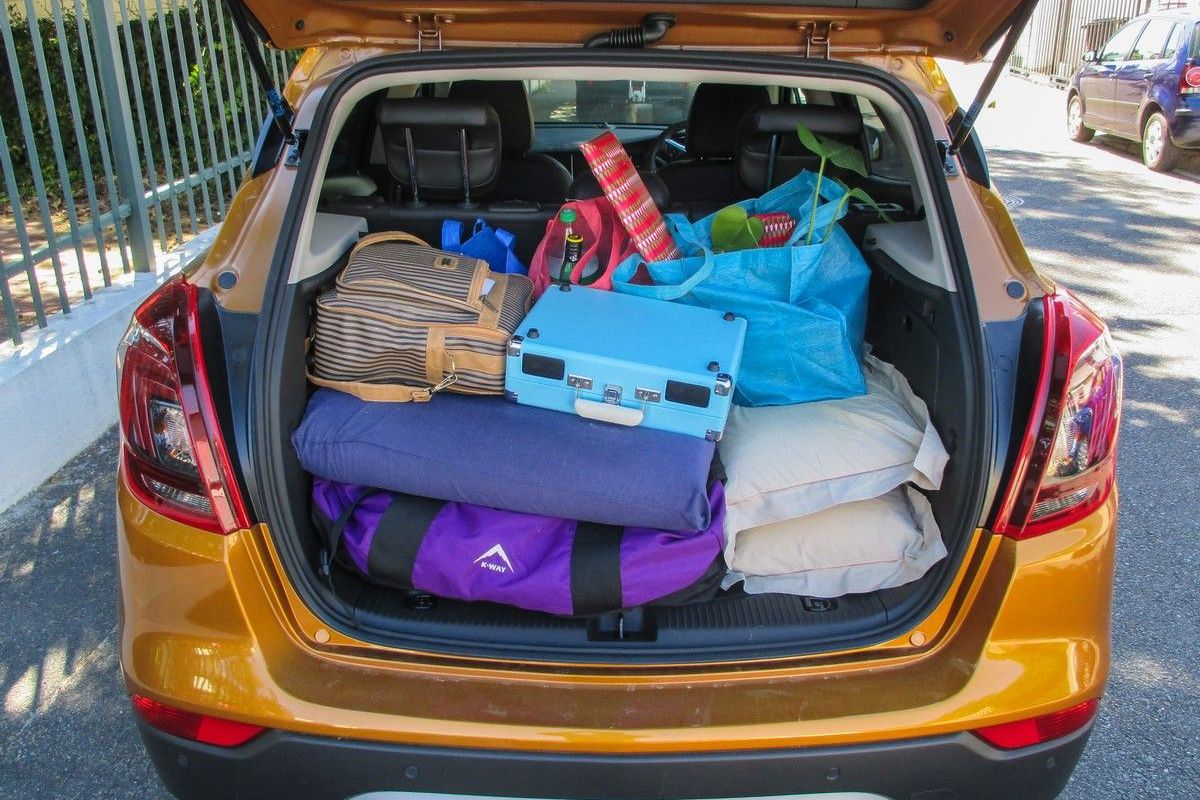
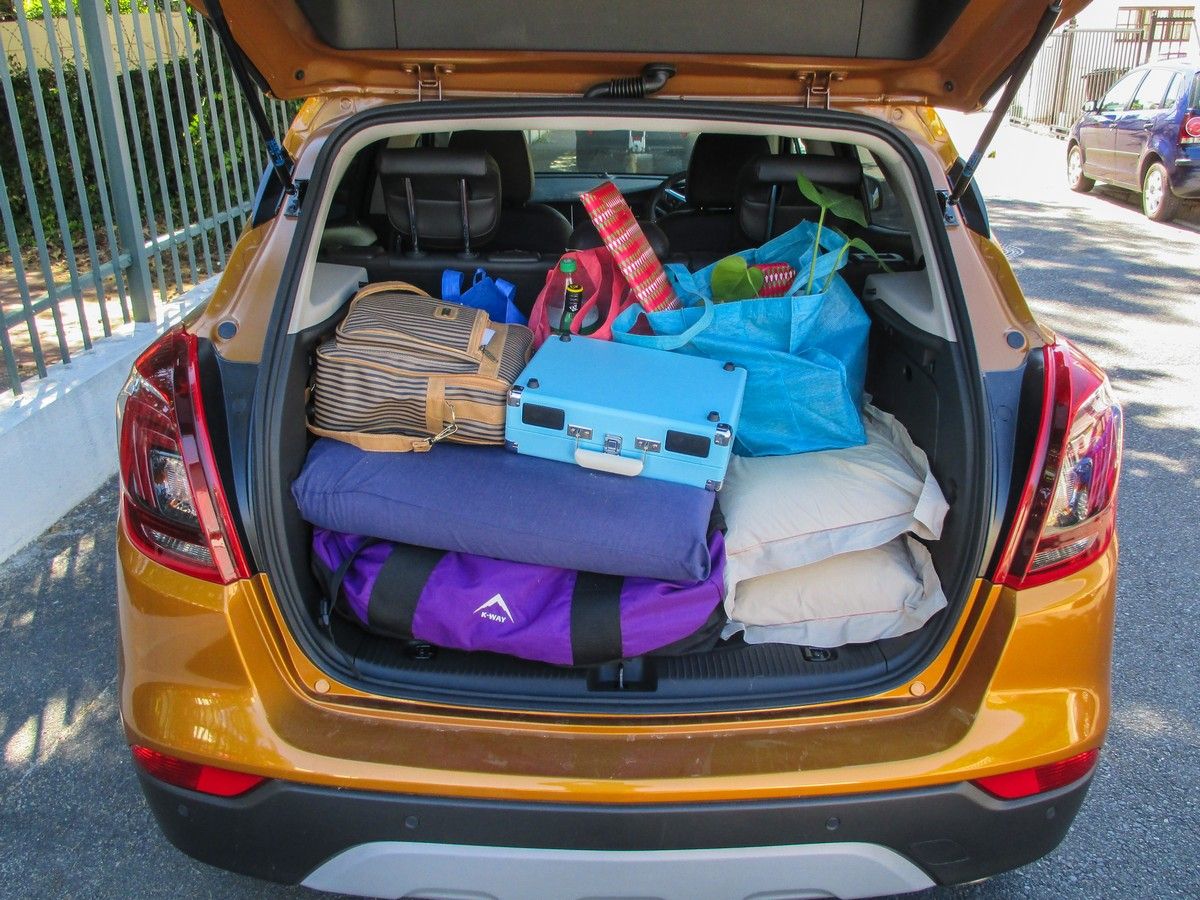
Fancy a weekend away? The Mokka X's luggage bay swallowed three occupants' luggage and bedding easily.
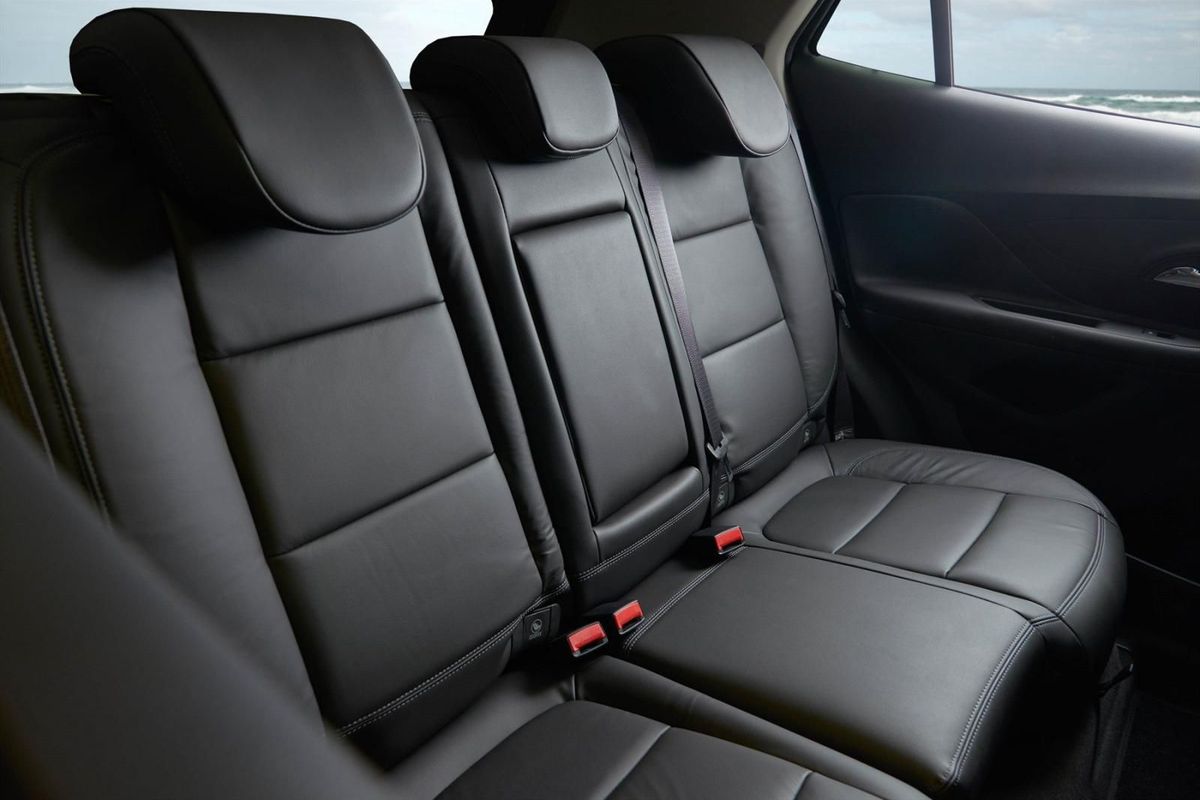
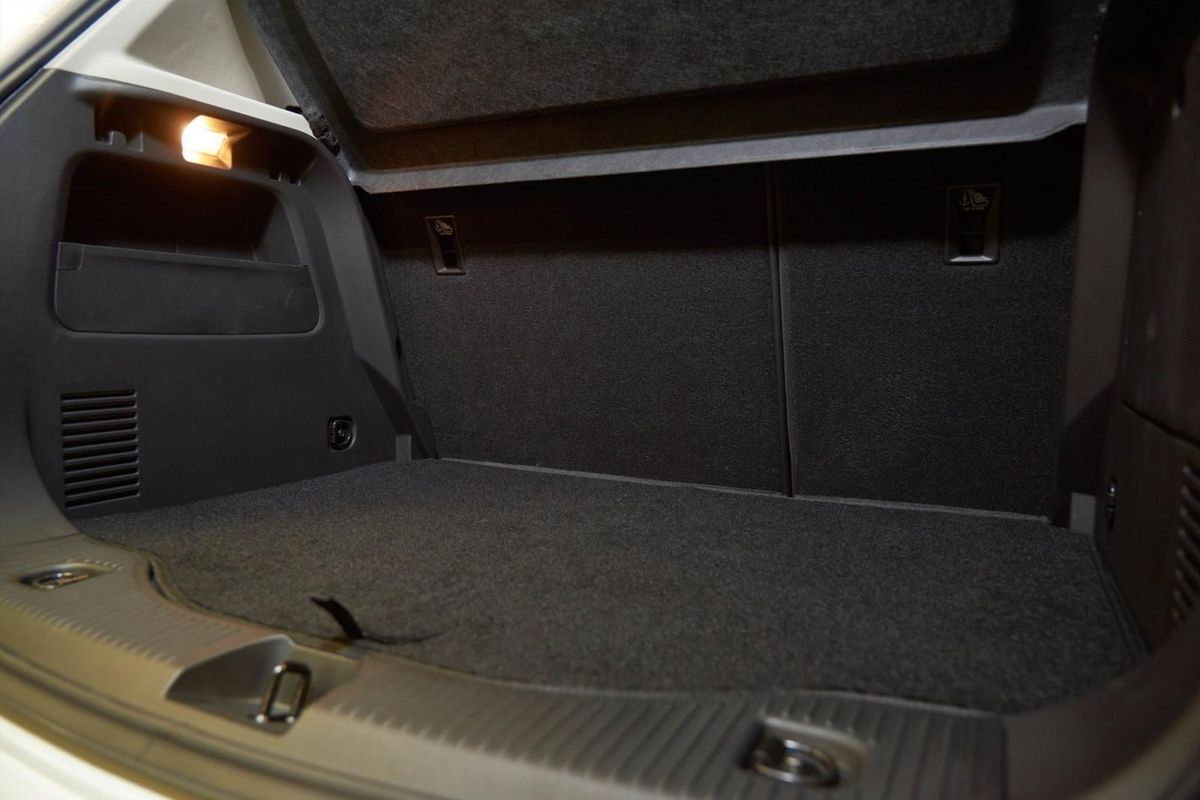
The Mokka X is a reasonably good all rounder too. Rear occupants are afforded more-than-acceptable rear leg- and headroom, while the luggage area, if less than generous, can accommodate a small family's shopping or weekend luggage without the need to fold the 60:40 split rear seatback forward. Freeing up the useful utility space takes two steps, as opposed to simply unlatching the backrests and folding them forward (view a demonstration), but it did not perturb those members of the test team who are avid surfers and needed to load/unload their boards regularly.
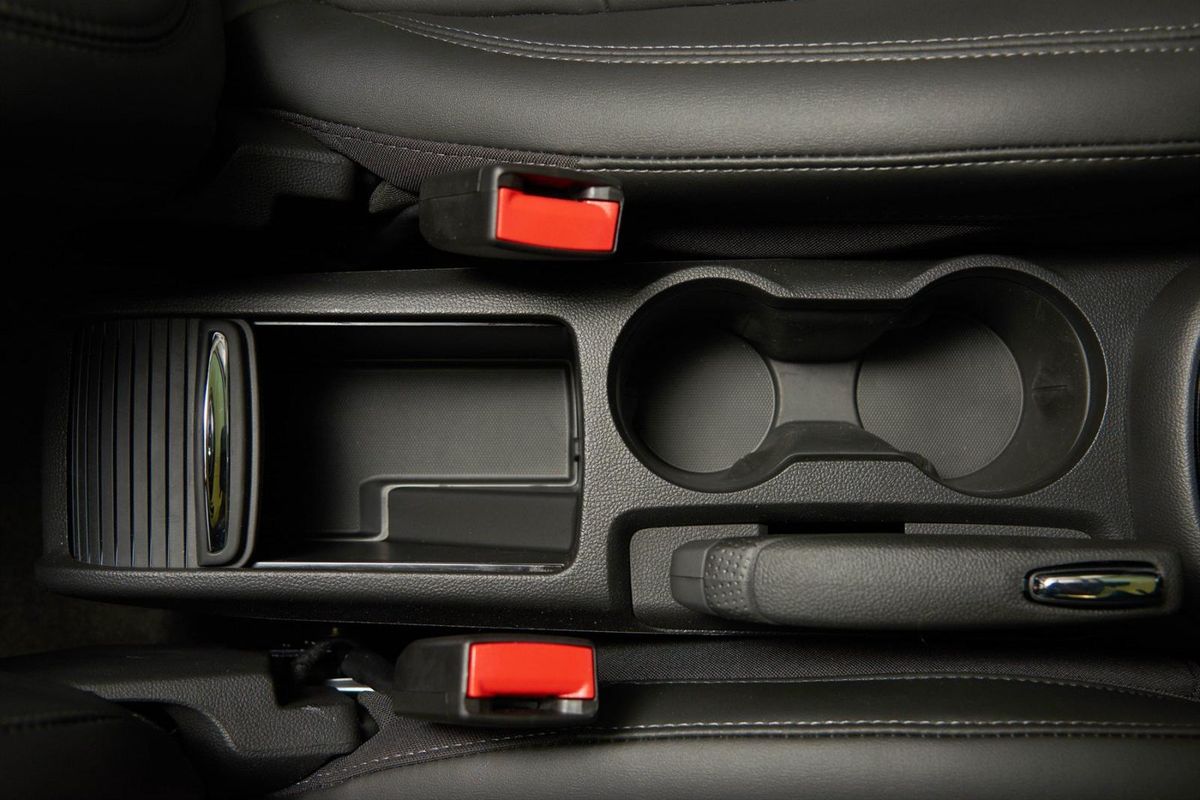
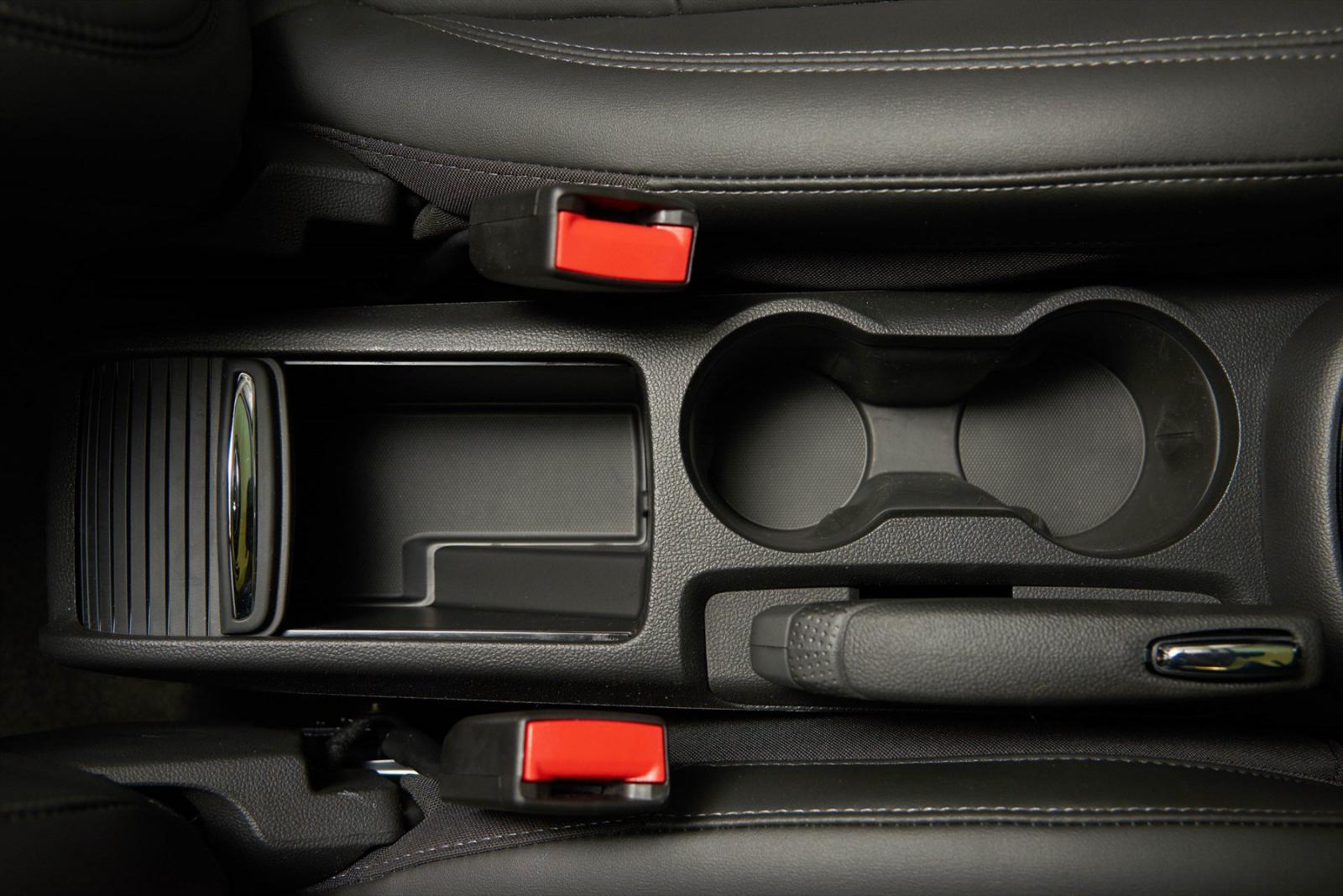
From a driver and front passenger's point of view, we were particularly impressed with the plethora of oddment stowage spaces. The door pockets are voluminous, as are the lidded compartments in the centre console and above the gear-lever/below the climate control binnacle. We often find that the cabins of compact cars can easily look cluttered because house/flat keys, smartphones, wallets and e-cigarettes end up clogging cars' drinks holders.
The lidded storage bin in the centre console helps to keep the dual cupholders free of detritus.
In the case of the Opel, however, the (dual-sized) drinks holders could be used as they were intended and, by virtue of the auxiliary and USB ports and 12V socket being housed inside the uppermost lidded compartment, devices (and their cables) could be stored discreetly while they were being charged or used to stream music or project the Apple Carplay function.
Performance & Efficiency
The engine line-up in the Mokka range is limited to one motor – a 1.4-litre 4-cylinder turbopetrol mated with either a 6-speed manual 'box or 6-speed automatic transmission. Even though its (moderate) outputs are unchanged from the pre-facelift version (103 kW/200 N.m), it provides reasonably flexible performance allied with a slick, positive shift action. Cruise control was utilised extensively on a return trip between Cape Town and Gansbaai (320 km), where we found good use for the sixth ratio to achieve an indicated fuel consumption of 7.7 L/100 km, which was not drastically higher than the claimed 6.0 L/100 km and more than reasonable given holiday traffic conditions and that there were 3 occupants and their luggage on board.
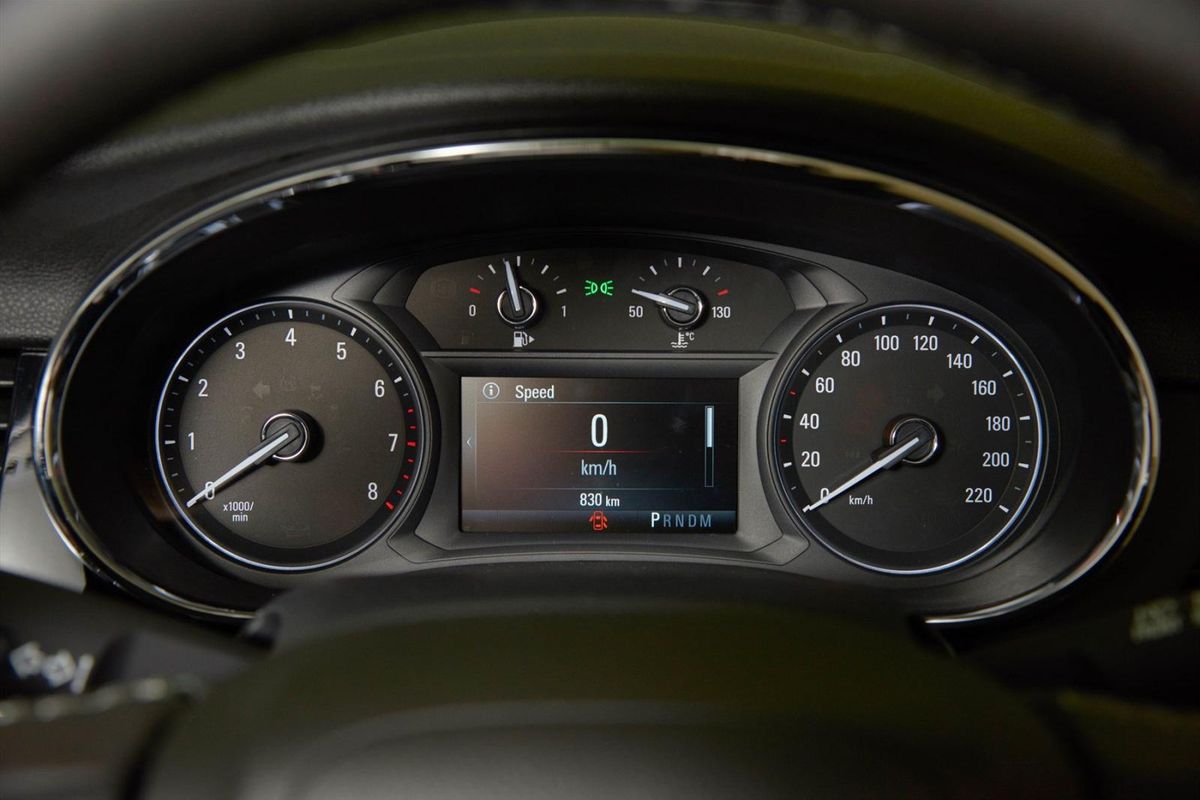
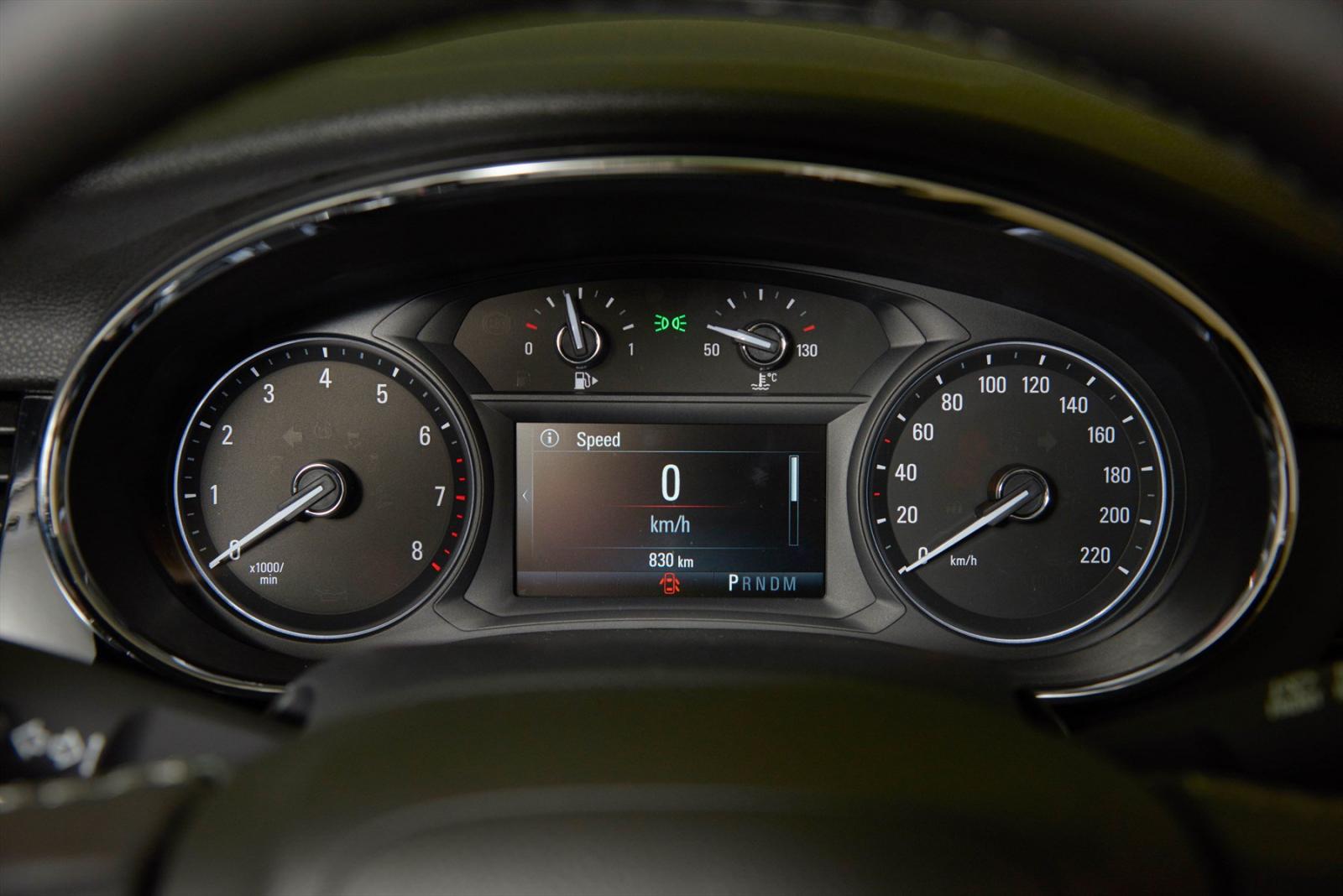
The instrument panel looks a generation older than it should be, but the colour information display matches the fascia screen well.
The negatives
Does show its age in some areas
Although the Opel's ride quality is generally composed, there is a price to pay for those handsome low-profile 19-inch rims and well-seasoned MacPherson strut-torsion beam suspension setup… the Mokka X's ride can feel a tad fidgety or nervous. It's not to say that progress feels unbearably bouncy over poorly-maintained roads, it just doesn't soak up hard bumps as well as more modern (and probably soberly-shod) rivals.
Although the 1.4-litre turbopetrol offers willing performance, the motor does sound a mite strained when asked to rev hard.
We also found the automatic aircon somewhat over-exuberant; perhaps the long dashboard (a by-product of the gently-sloping windscreen) absorbs too much heat, which fools the temperature sensor to blast copious volumes of cold air into the cabin (at least more than what the climate control settings should require under normal circumstances). A few testers also remarked the park distance sensors were imprecise; the ones at the rear would warn of an impending collision when the reverse monitor suggested there was still room left to reverse further.
That Opel "bugbear"
There is no way to sugar-coat this.. Of all the German car companies represented on the South African market, Opel is a fringe-player. Throughout its tenure in now-former parent company General Motors' stable, the Russelsheim-based brand has alternated between being the darling son/daughter and unloved stepchild of the North American auto giant and that rang true for the local subsidiary's variable product strategies too. As a result of that (and other factors), Opel's market share has gradually shrunk to the point that no matter how well-packaged and attractive its products are, they're viewed as "speculative alternatives" to the volume-selling mainstream models produced and sold by German, Japanese and Korean manufacturers.
With General Motors heading for the exit in Mzansi, the future of Opel products is, if (probably) not bleak, somewhat uncertain.
To further complicate matters, Opel is now owned by Peugeot Citroen (PSA) and the French multinational has a tiny dealer footprint in South Africa. Will PSA (or Isuzu) take over the distribution and support of Opel products in the post-General Motors era? Well, whichever manufacturer or importer (if any) takes custodianship of Opel in Mzansi, the brand's standing warranties, service plan agreements and parts supply will be honoured, but how much collateral damage could the current uncertainty inflict on the public perception of the German brand? If you look a little further "down the road", how will second-hand values of Opel products hold up until such time as buyers' trust in the brand's future distributorship has been confirmed?
Summary
Of course, the market upheaval created by General Motors and Chevrolet's exit from South Africa, and the subsequent rationalisation of the dealer network that distributes (and provides after-sales support for) Opel, is no fault of the German brand and it would be unfair to label the Mokka X a marginal purchasing proposition because of it. Granted, it may not be the newest compact family car available in the South African market, but it represents excellent value for money (we could not think of any feature that we would have liked to add to the standard specification), plus it comes replete with a 5-year/120 000 km warranty and 5-year/90 000 km service plan. With a list price of R357 400, the 1.4 Cosmo manual is a good deal.
However, in between now and the conclusion of General Motors' withdrawal from the local market, you can expect very enticing sales incentives on (soon to be former, or discontinued) GM products, which will apply to Opel too. If ever X marked the spot, there are bargain deals to be made.
Watch Ciro de Siena's video review of the Mokka X below:
The local automotive sector remains under pressure as declines across all segments were registered during the month of May 2017. Take a look at this new car sales summary for the details.
The National Association of Automobile Manufacturers of South Africa (NAAMSA) has reported declines across all sectors for May 2017. However, the association commented that the sale of new cars and light commercial vehicles were better than expected. Export sales also reflected year-on-year decline.
The Ford Ranger bakkie topped the local sales chart for May 2017 with the Toyota Hilux also selling well to claim second place. The Volkswagen Polo Vivo holds third position closely followed by the Toyota Corolla and Volkswagen Polo. Toyota is currently the best-selling car brand in South Africa.
Herewith a basic summary of events in May 2017.
Aggregate new car sales of 41 783 down by 2.6% (1 129 units) compared with May 2016.
New passenger car sales of 26 317 down by 2.5% (663 units) compared with May 2016.
Light Commercial Vehicle (LCV) sales of 13 410 down by 1.5% (210 units) compared to May 2016.
Export sales of 29 596 down by 12.0% (4 023 unites) compared with May 2016.
Top 5 Best Selling Car Brands in South Africa for May 2017
1. Toyota – 9 601 units with a market share of 23.0%
2. Volkswagen – 6 386 units with a market share of 15.3%
3. Ford – 4 902 units with a market share of 11.7%
4. Nissan – 3 258 units with a market share of 7.8%
5. GMSA – 3 228 units with a market share of 7.7%
Top 5 Best Selling Cars in South Africa for May 2017
Despite marginal improvement in new vehicle sales in the beginning of the year, NAAMSA’s outlook for the remainder of 2017 is uncertain. A polarised political environment and the prospect of subdued economic growth in the short to medium term continues to have a negative impact on business confidence and consumer sentiment.
NAAMSA comments that domestic vehicle sales for 2017 “will likely be flat at best” based on a number of assumptions including that South Africa would avoid further credit rating agencies’ downgrades, that interest rates won’t increase over the short to medium term, that economic growth would improve and finally, that the exchange rate remains stable, despite volatility. NAAMSA does predict, however, that exports will improve by some 3.6% on the back of expected global growth in 2017.
Although the Golf 7 has only recently been facelifted and very much remains the most popular C-segment hatchback around, work is progressing swiftly on its replacement. Here’s what we know thus far.
The eight-generation Volkswagen Golf will be unveiled in 2019 before going on sale worldwide (including South Africa) in 2020, with hot GTI versions following soon after. According to VW insiders, the Golf will remain its most important product, at least for another generation, as the German marque develops and rolls out its entire new series of I.D. electric vehicles.
Lighter, more practical and more efficient
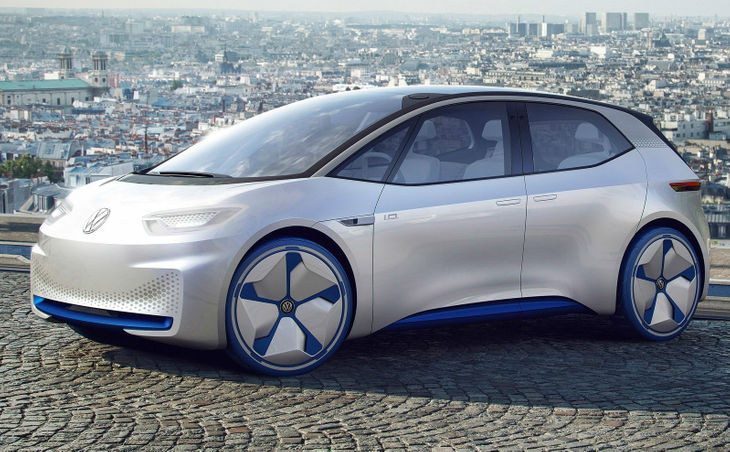
VW's new I.D. range of electric vehicles will not share a platform with the Golf 8.
While Volkswagen has recovered well from the Diesel Gate scandal, the impact on product development has not been limited to the heightened importance attached to bringing electric vehicles to market. The Golf Mk8 line-up will be affected by the scandal, too, with especially more focus likely to be placed on the petrol engine and hybrid derivatives.
Volkswagen will be introducing a sophisticated 48V electrical system on Golf 8, which allows for the fitment of a wide range of efficiency measures. Indeed, efficiency is a strong focus overall, with a weight saving of up to 70 kg suggested on some models. Golf 8 will use an evolution of the acclaimed MQB platform that has given current VW products such excellent ride/handling characteristics. The new electric vehicle line-up will get its own platform, dubbed MEB.
Sharper design, more tech
Cabin will feature even more top-end materials and tech integration.
In terms of design, expect the Golf to follow in the wheeltracks of the highly-acclaimed Tiguan and next-generation Polo, by being slightly wider and lower, with more chiselled, angular looks. Volkswagen’s new design boss, Michael Mauer, is ex-Porsche, and knows a thing or two about evolving the looks of an icon carefully, but remaining relevant. Our artist's impression (main image) includes some of the latest information coming out of Germany.
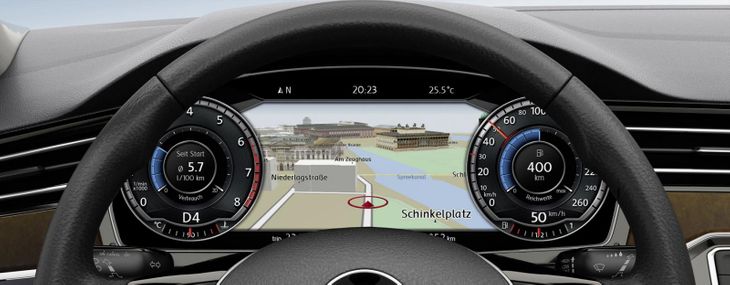
Inside, Golf is likely to step completely into the premium leagues. In recent years the C-segment hatchback (including the Golf) has started to shed market share because car buyers want either premium badges or compact crossovers. Insiders say Golf 8 will feature authentic materials and a focus on technology, such as gesture control and an updated version of the marque's smart TFT dash display. A number of autonomous-driving features are likely to feature, too, including traffic-jam assist.
The likely engine line-up
At the moment reports indicate a comprehensive model line-up consisting of turbodiesels, turbopetrols and hybrids. On the controversial turbodiesel side, a new modular 1.5-litre powerplant will be offered in various states of tune, while the 2.0-litre TDI seemingly remains part of the plan, too. As far as the petrol line-up goes, both 1.0- and 1.5-litre TSI units will be offered, again with varying outputs. It has, however, also been reported that Volkswagen is looking at reducing complexity in the model line-up, so don't expect the same extensive product range (at least in Europe), as is currently the case.
2020 Golf 8 GTI
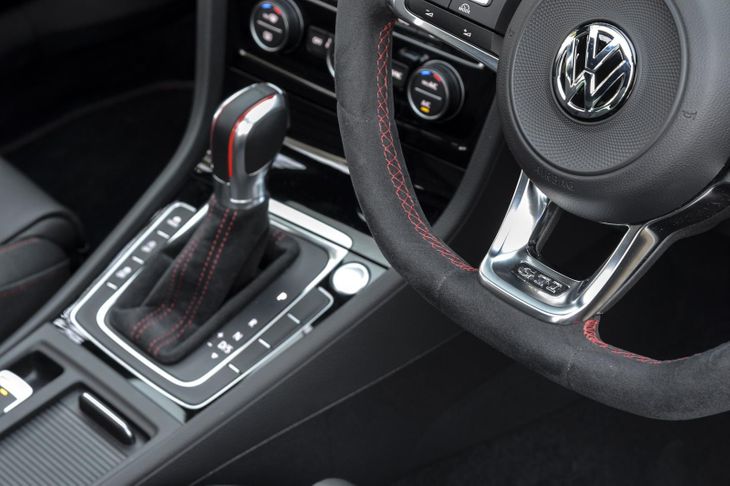
No 10-speed DSG for Golf 8 GTI. A 7-speed dual-clutch 'box will likely continue but an overboost function is on the cards.
Given the big contribution to overall Golf sales made by the GTI derivative, this iconic car seems to be evolving into a type of “sub-brand” of its own. Already there is talk of 3 derivatives being on the cards – a standard GTI, a Performance Pack and Clubsport. The target power output for the “base” GTI is said to be the recent Clubsport’s 195 kW. It is rumoured that an overboost function provided by an electric motor mounted in the front section of the transmission is a possibility, effectively turning the next Golf GTI into a mild hybrid. The "flagship" Golf 8 GTI Clubsport could pack as much as 240 kW from its 2.0-litre turbopetrol.
With Volkswagen having recently announced that its 10-speed dual-clutch transmission project has been cancelled (but the data saved…), it is likely that the Golf GTI will continue to use an updated 7-speed DSG 'box. A 6-speed manual will remain available for purists.
And what about Golf 8 R?
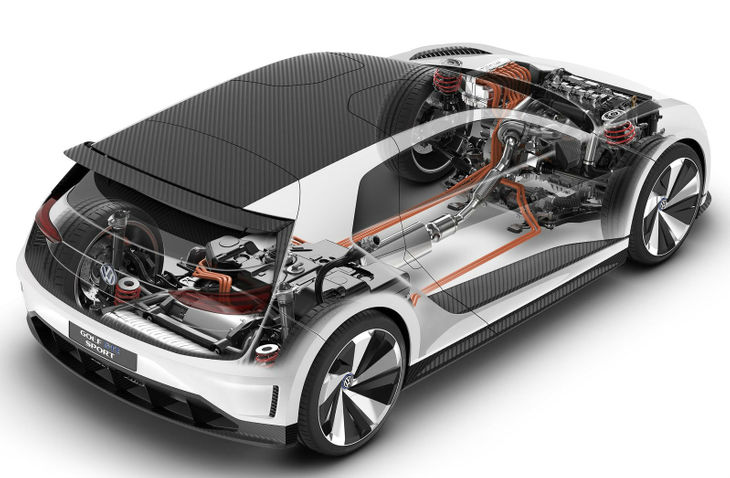
Could the Golf GTE Sport concept's drivetrain be destined for the high-performance Golf R? It's a tantalising possibility…
With a big jump in power very likely for the Golf 8 GTI, the pricier Golf R will have to be something really special. At present it looks set to get either a 300 kW 2.0-litre turbopetrol, or a 3.0-litre VR6 engine with anything up to 370 kW! A third rumour suggests something very different, however – a plug-in hybrid set-up using a powerful turbopetrol mated with two rear-mounted electric motors. This setup was previewed on the Golf GTE Sport concept, shown above, and should also deliver around 300 kW. The hot tip, however, is for the Golf R to stick to the 2.0-litre motor.
While sales volumes of full electric or plug-in hybrid vehicles remain small in South Africa, the recharge network has grown considerably. Let's have a look at just how many such facilities there are in Msanzi.
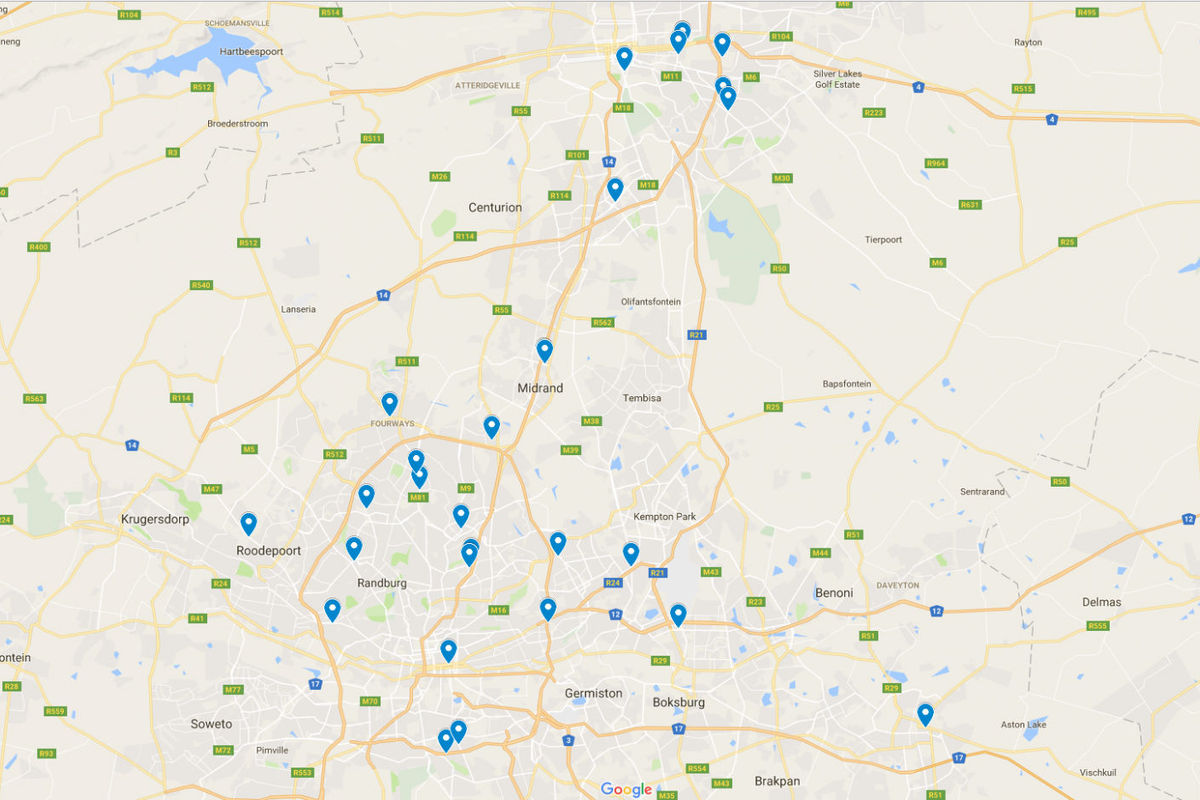
Four years ago, Nissan took a bold step in bringing its full electric vehicle – the Leaf – to the South African market. Fast forward to 2017, the Japanese manufacturer says it has met its target in terms of rolling out public charging stations to 7 sales and service dealers in Gauteng, and charging-only facilities to an additional 2 dealers.
The company’s initial local strategy for the Leaf was business-to-business, with a focus on Gauteng’s metropolitan areas. There are currently no Leaf dealers in Cape Town, but the company says it is looking at expanding into KwaZulu-Natal and the Western Cape.
Nissan South Africa has told Cars.co.za that pure EV uptake is very slow as customers are aware of the limitations around travel distances and public charging infrastructure. Since the first EV went on sale in South Africa in 2013, fewer than 500 examples of the Nissan Leaf, BMW i3/i8 have been sold, but 2017 could be the EVs' best year yet…
As of May 2017, Nissan has a total of 9 charging facilities in Gauteng (listed below), and an additional 5 locations that are not attached to dealers (listed below).
Slowly expanding network
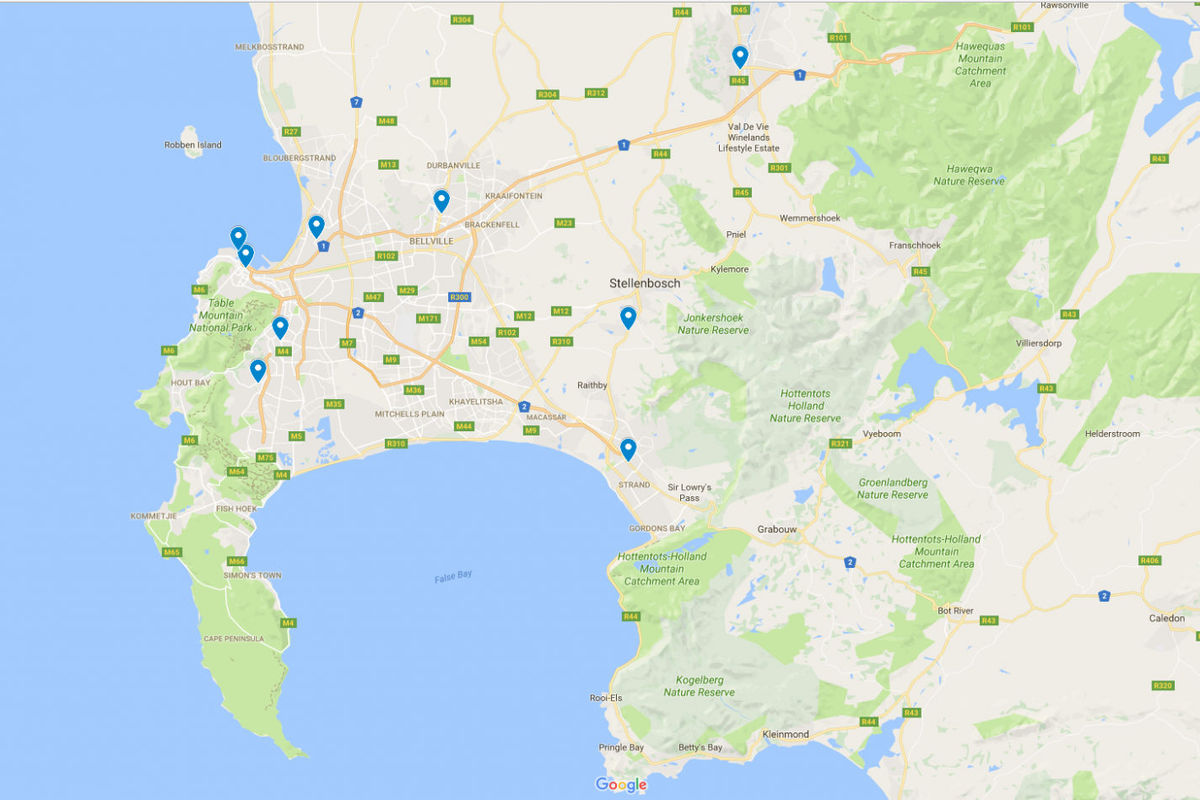
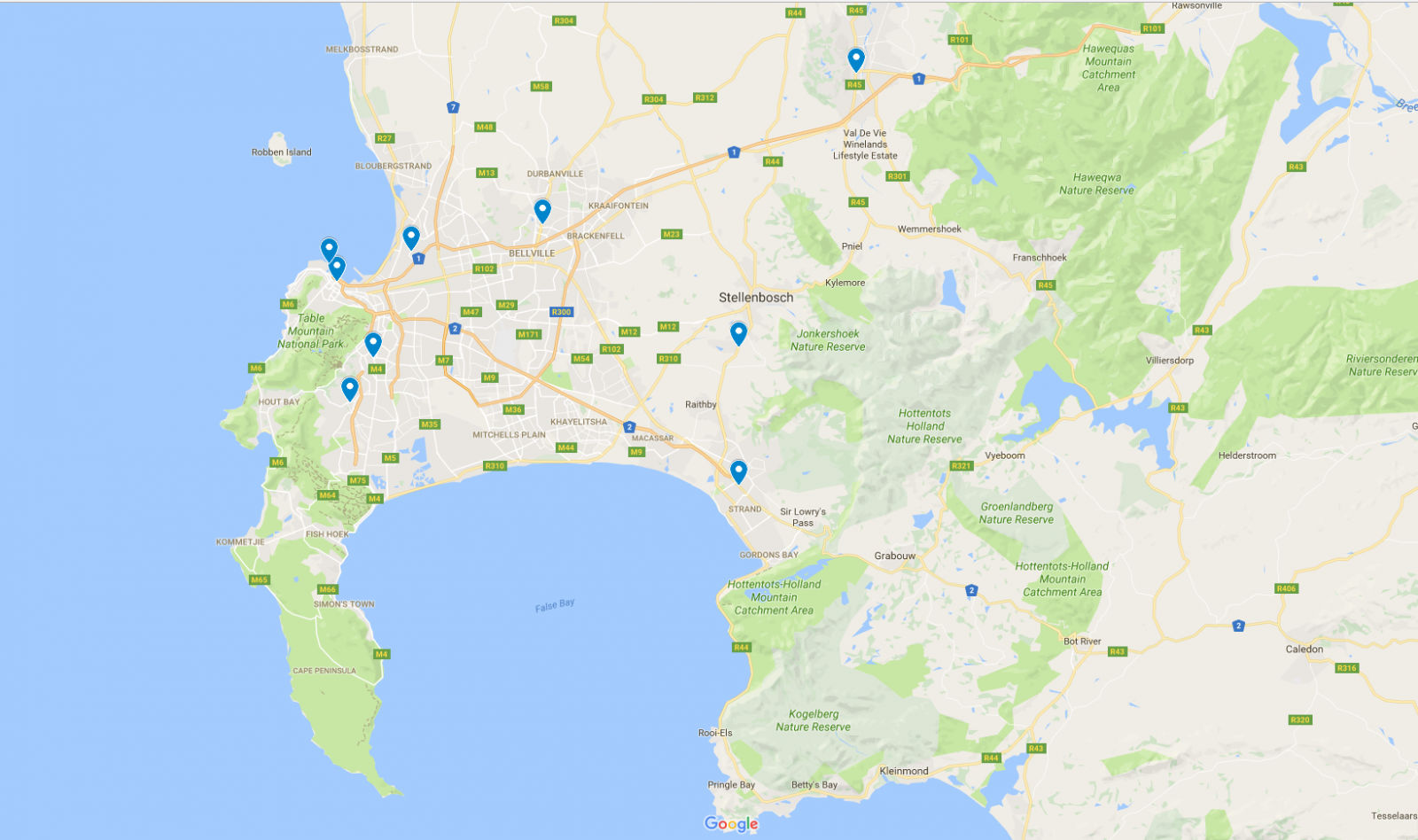
A map of the Western Cape showing the locations of the relatively few EV charge station locations. (blue pins)
Meanwhile, BMW South Africa, which launched the full electric i3 (and range-extender REX version) back in 2015, has been faster in its rollout of charging stations. There are currently 38 BMW i-dealerships dotted around South Africa in 8 provinces – listed below that have AC chargers. They are free for customers to use, provided it is activated with their Charge Now card.
There are currently only 4 BMW dealerships that have DC charging stations, namely Sandton Auto, SMG Cape Town, Supertech (Durban) and Club Fountains in Pretoria. BMW South Africa’s head office in Midrand also has public charging infrastructure with two AC chargers and one DC charger. Additionally, BMW has one solar car port charger available at its HQ.
AC chargers can power an i3 from 0 to 80% in approximately 2 hours and 30 minutes, while DC chargers can do the same, but in a much faster 30 minutes.
Shared rollout
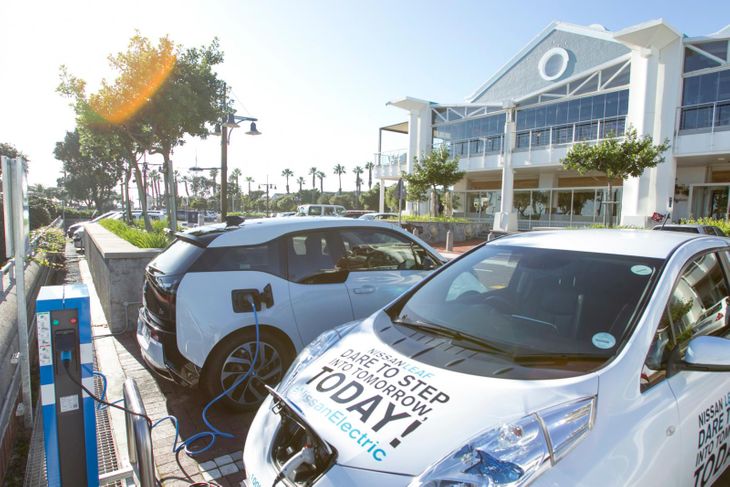
The joint charge facility at the V&A Waterfront in the Western Cape.
Between Nissan, BMW and Growthpoint Properties, there is a memorandum of understanding (MoU) to share costs of public charging facilities, which is currently in place until 31 December 2017. So far, 2 of these facilities have been rolled out in the Western Cape, one at the V&A Waterfront and the other at Constantia Village.
BMW South Africa says it was important for these public charging stations to offer Type 2 connections that can be used by the i3, the hybrid i8 and the Leaf. These stations are future-proof and are able to cater for future EV and PHEV (plug-in hybrid electric vehicles) models, says BMW.
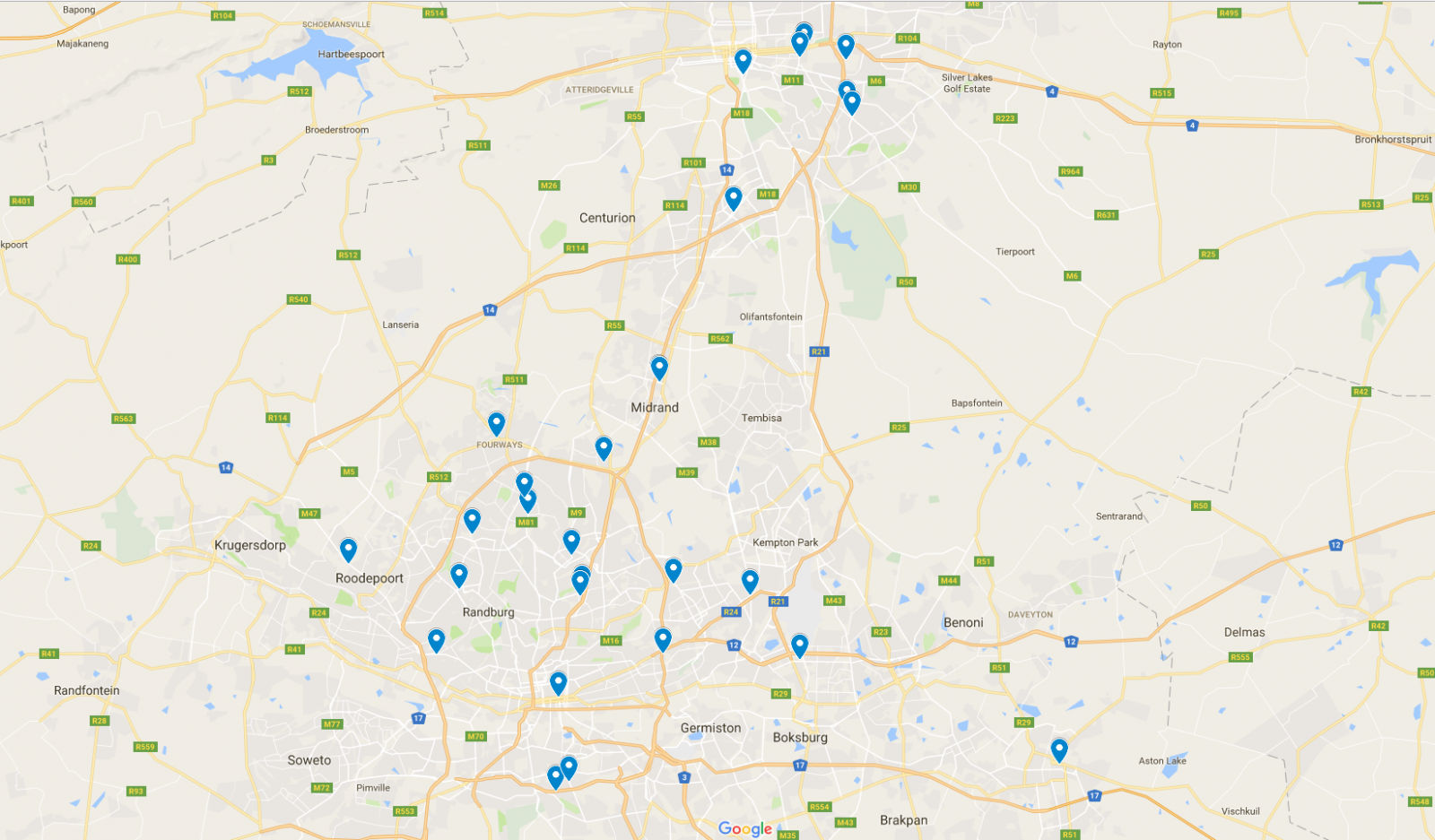
A map of Gauteng showing the location of the majority of EV charge stations.(blue pins)
Going forward
BMW is currently in negotiations with key partners to expand the EV and PHEV public charging infrastructure in metropolitan areas throughout South Africa. Its focus areas in the coming months are to further expand into Gauteng and Kwa-Zulu Natal.
Meanwhile, Nissan is busy exploring its expansion with strategic partners but cannot confirm the number of additional charging facilities that will be made available.
Nissan Leaf Dealers
CMH Sandton – Corner Of Ballyclare & William Nicol Drive
Melrose Nissan – 89 Corlett Drive, Melrose North
Edenvale Nissan – Corner Of Van Riebeeck & Aitken Street
IC Roodepoort – 43 Van Vuuren Street
Imperial Nissan Menlyn – 116 Louis Avenue
Bb Hatfield Nissan – 1290 Corner of Pretorius & Richard Street
McCarthy Randburg – Corner Of Malibongwe And Avon Road
CMH Midrand – 451 New Road
Nissan The Glen – Cnr Lois & Skukuza Road
Other Charging Stations
Nissan Head Office ( Pretoria ) – 2 Ernest Oppenheimer Street
CSIR (Pretoria) – Meiring Naudé Road , Brummeria
Eskom Head Office (Johannesburg) – Megawatt Park – Maxwell Drive , Sunninghill
Melrose Arch ( Johannesburg ) – 60 Atholl Oaklands R oa d & Melrose B ou l e v ar d
BMW i dealerships
Gauteng (18)
Auto Alpina Boksburg – cnr North Rand Road and Pond Street, BEYERSPARK
Auto Alpina Springs – 33 Second Avenue, SPRINGS EXT
Auto Bavaria Midrand – Cnr New Rd And 16th Ave, HALFWAY HOUSE
Auto Glen Motors – Cnr Oak and Middle Lane, OAKDENE
Autobahn BMW – Corner Brabazon and Isando Road, ISANDO
Bedfordview – 8 Kings Road, Bedfordpark
Cedar Isle Auto – Cnr Witkoppen & Cedar Road, Dainfern
Clearwater – Cnr Hendrik Potgieter & Falls Rd, Little Falls
Club Motors Fountains – 84 Harmony Street, MUCKLENEUK
Joburg City Auto – 190 Commissioner Street, MARSHALLTOWN
JSN Motors – 41/43 Ormonde Street Cnr William Nicol , SANDTON
Leo Haese Centurion – 2023 Lenchen Avenue South, CENTURION COUNTRY CLUB
Leo Haese Pretoria – 1207 Burnett Street, HATFIELD
Menlyn Auto – Cnr January Masilela Dr and Garstfontein , MENLYN
Northcliff Auto – 11 Cresta lane, CRESTA
Sandton Auto – 126 Rivonia Road Cnr Daisy, Sandown
Vaalridge Auto – Cnr Johannesburg Rd & Gen Smuts Rd, Vereeniging
Zambesi Auto – 501 Breedt Street, Montana Gardens
Western Cape (7)
Auric Auto – Main Road, Claremont
Auto Atlantic – Cnr Heerengracht & Hertzog Boulevard, CENTRAL
Donford – C/O Cnr R44/ Webers Valley Road, Stellenbosch
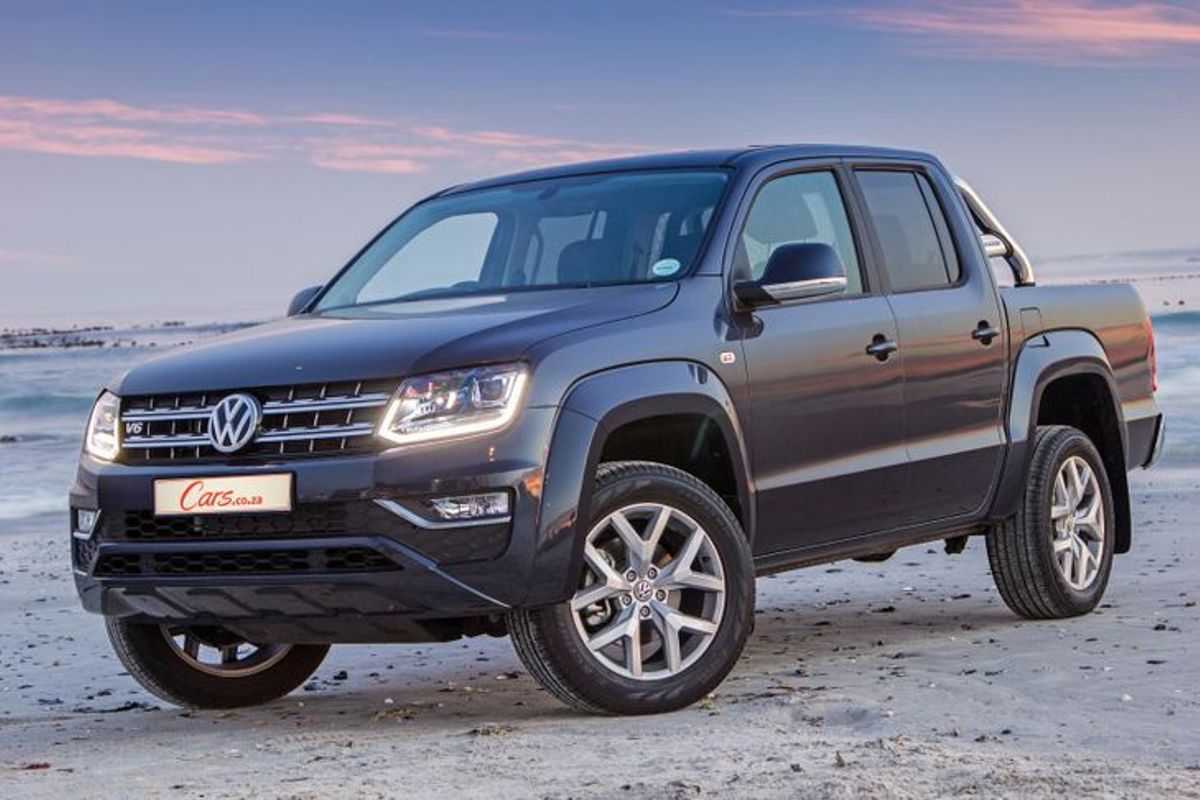
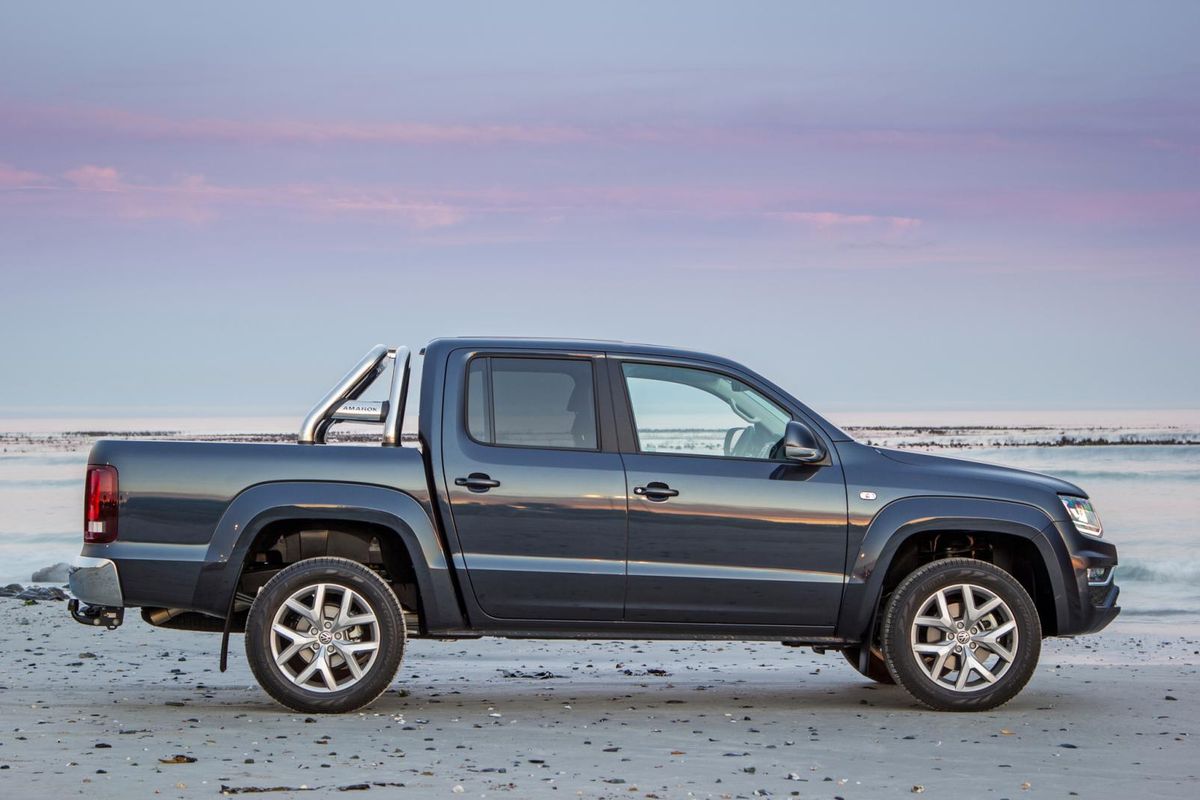
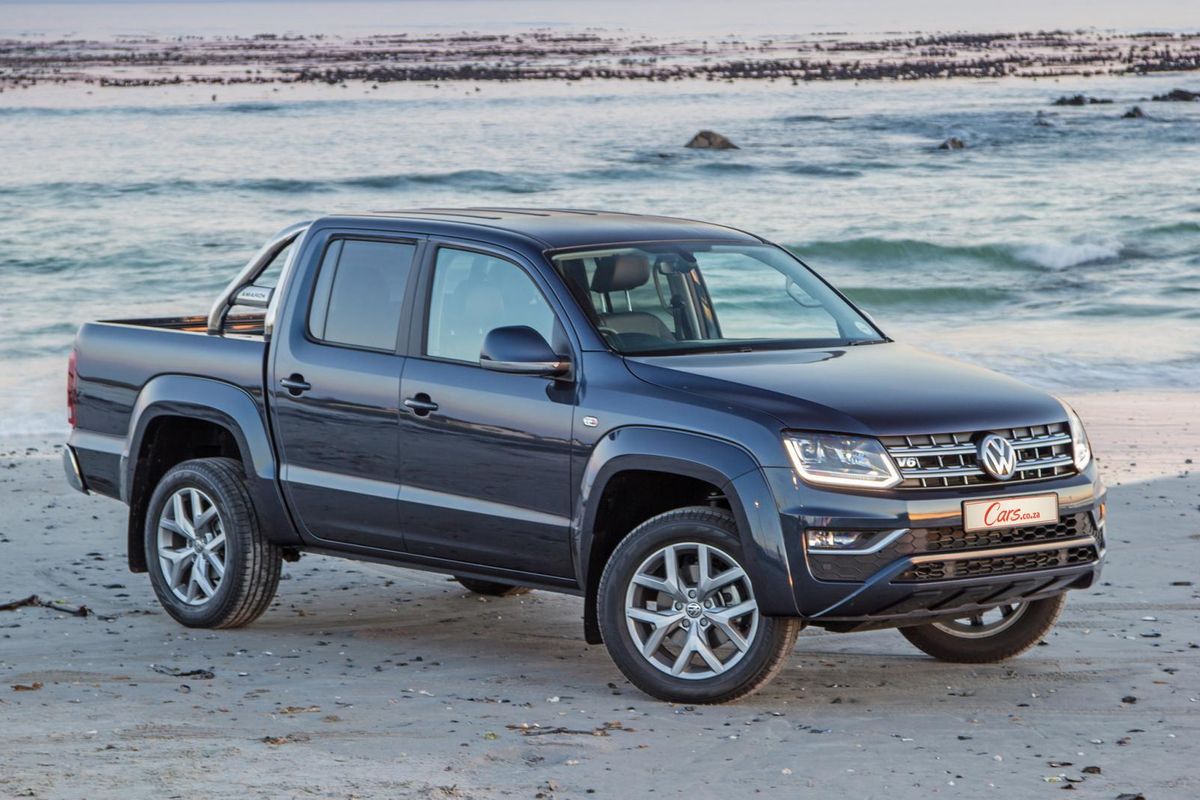
In a bakkie-obsessed country such as ours, where the leisure double cab is very much seen as a practical lifestyle choice, but in some instances also a status symbol, the Volkswagen Amarok 3.0 TDI V6 was always going to make waves. Is it as good as the hype suggests, and does it justify the high price? Let's find out!
We like: premium cabin ambience, ride quality, refinement, performance/efficiency balance
We don’t like: limited rear legroom, eye-watering price
Alternatives
Big Bruiser from Ford: The Ford Ranger has been dominating the top end of the Leisure Double Cab segment in South Africa, with both the XLT and Wildtrak derivatives finding favour with buyers. In Wildtrak guise it is our reigning Cars.co.za Consumer Awards – Powered by WesBank champion, but now falls well short of the refinement, power and premium appeal benchmarks set by the new Amarok V6 TDI.
Brand new Navara: While we're yet to test the all-new Nissan Navara with its much-debated multi-link rear suspension, first indications are that it will be a strong competitor in this segment. That it will be used as the base for the upcoming Mercedes-Benz X-Class should speak volumes about its inherent refinement. In (current) flagship guise, it is a good R120k-odd cheaper than the Amarok, but neither as powerful, nor as lavishly appointed.
Trusted original: The current Toyota Hilux flagship is well-priced at just over R570k, and offers as much bakkie versatility, off-road ability, and passenger-car refinement as most consumers will ever need. But perhaps Toyota should consider a more luxurious version with added features and unique design appeal to head the line-up? After all, it looks like a good few consumers out there would like to have the "ultimate" version of whatever the base vehicle may be.
Is the Amarok V6 TDI the new king of the bakkies? It may very well be…
The leisure/lifestyle pick-up market has been identified by several brands as a global growth opportunity in the next decade or so. Consequently, Mercedes-Benz will introduce what is said to be world's first "premium" bakkie soon, based on the latest Nissan Navara, which itself is chasing the leisure market with its fancy rear suspension. Renault, too, has plans in this segment, with the Navara-based Alaskan all-but-confirmed for South Africa, which is still one of the world's biggest pick-up markets. But, getting a jump on all of them is Volkswagen, whose Amarok has quietly been racking up impressive sales in the upper end of the local double-cab market, particularly for vehicles equipped with 4-wheel drive and automatic transmissions. Since launch, around 29 000 Amaroks have been sold locally, and about a third of those were top-end diesel automatics.
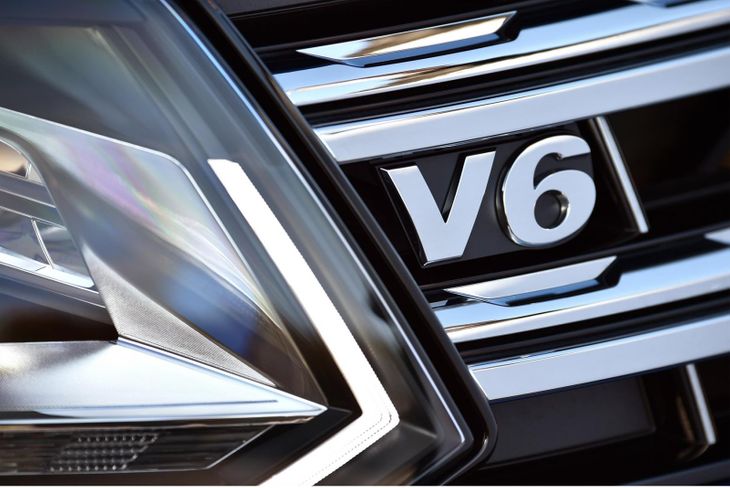
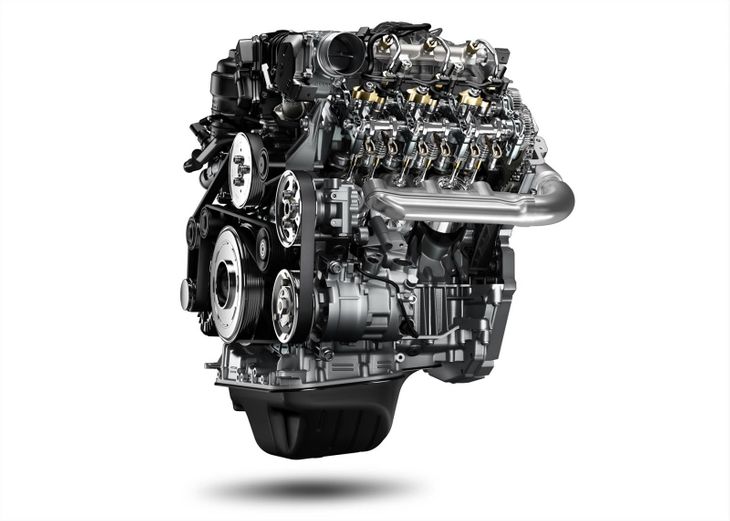
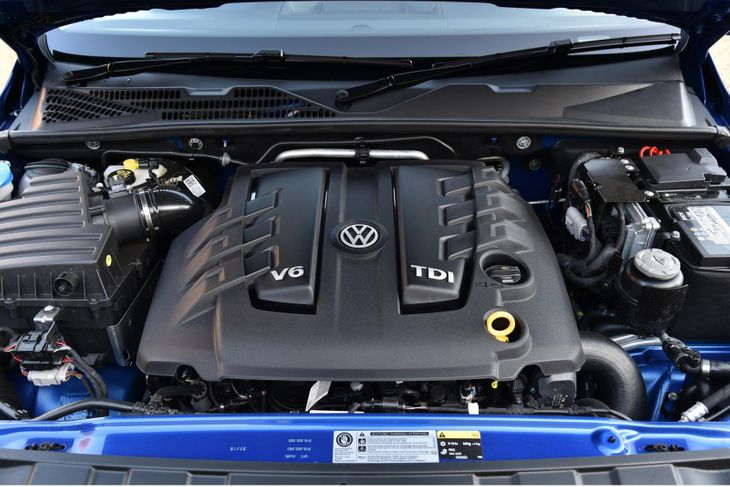
Now, finally, the German marque has added a 3.0-litre V6 turbodiesel engine to the mix – something that many enthusiasts have been begging them to do for years. The engine, straight from underneath the bonnets of premium SUVs such as the Audi Q7, Volkswagen Touareg and Porsche Cayenne, makes the über-Amarok one of the most talked-about releases of the year. It comes at a heady price, however.
How does it fare in terms of….
Performance & Economy
Any discussion about the new flagship Amarok starts with its engine, so let's not waste any time. This powerplant started its career in 2014, underneath the bonnets of premium cars such as the Audi A6 and A7. It was therefore designed to be good enough for ultra-luxury passenger vehicles, but has been further improved for use in the Amarok. In its latest guise, called Generation Evo II, the 24-valve 3.0-litre V6 has a new variable geometry turbocharger that is said to result in improved responsiveness, across the entire rev range. Unique in this segment, Volkswagen says, is a special cylinder bore honing process and piston rings with less downforce that reduce internal friction by around 10 per cent. It also mentions a cooling system that features 2 separate circuits and thinner walls for a shorter warm-up phase, as well as improved fuel efficiency.
The Amarok's 3.0-litre V6 turbodiesel engine was developed for passenger cars and upmarket SUVs. It boasts excellent refinement.
The result of all of this is an engine that delivers a class-leading 165 kW from 3 000 to 4 500 rpm and 550 Nm of torque, from 1 400 to 1 750 rpm. There is also an overboost function, which for short periods of time – such as when overtaking – lifts the maximum power and torque figures to 180 kW and 580 Nm. Oh… and the Amarok can sprint to 100 kph in 8 seconds and very nearly cracks the 200 kph mark with a top speed of 193 kph.
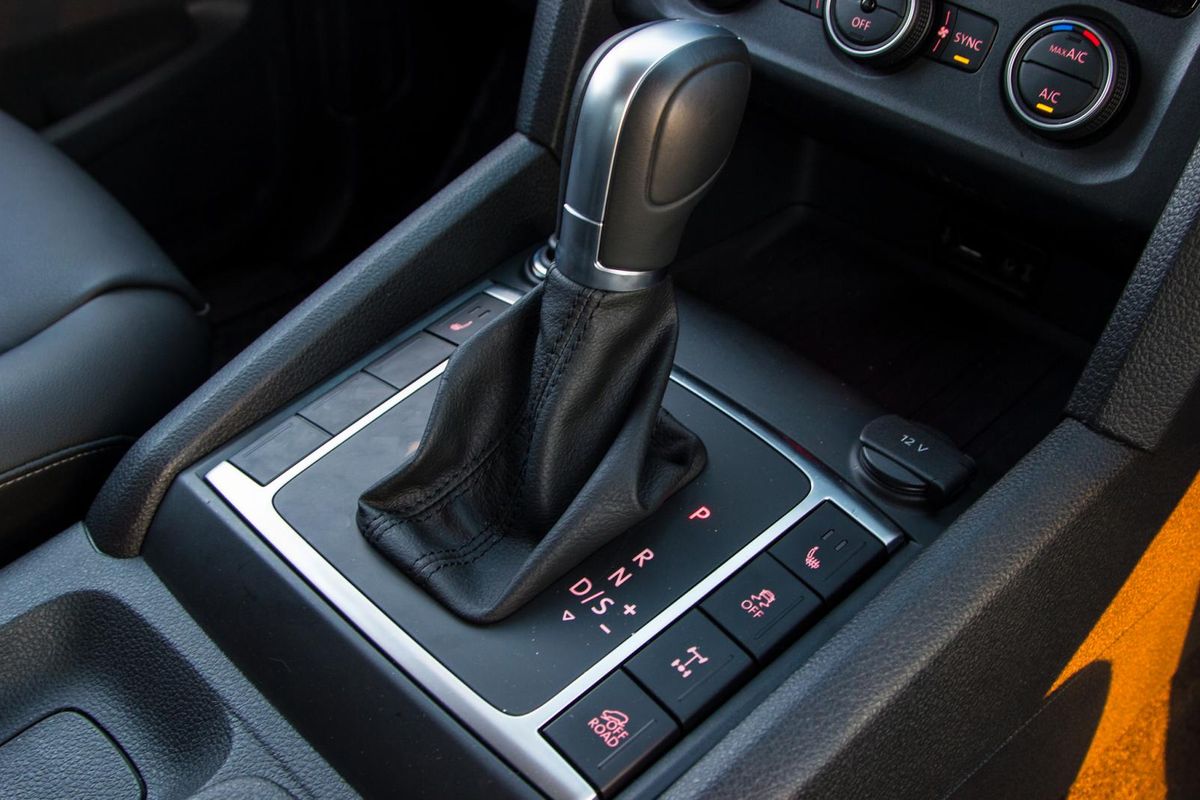
The engine is mated with VW's excellent 8-speed automatic transmission and the 4Motion permanent all-wheel drive system. Under normal running conditions the Torsen differential distributes power in a 40:60 front-to-rear split, but can vary it as the situation demands. And because first gear is set-up for off-roading and towing specifically, the Amarok doesn't need a low-range transfer 'box. It copes just fine in the rough…
Delivering stonking performance and good fuel economy, the 3.0 V6 TDI engine sets a new benchmark for bakkies.
So, what does this all translate into on the road? Quite simply, the Amarok sets a very high new benchmark, not only for performance, but for responsiveness and refinement, too. Turn the key and there's an almost eerily long wait before the engine fires up, but most impressively there's none of the typical diesel clatter that still characterises modern bakkies at start-up. You could really be sitting in a premium-brand SUV… Click into drive, and the Amarok pulls away eagerly in a hushed manner, with good responsiveness to throttle inputs evident no matter what speed you're travelling at. Once up to cruising speeds, the relaxed 8th gear is a further boon, and combines well with the standard cruise control to make the Amarok a superb long-distance tourer.
And here's the clincher… Volkswagen claims a combined cycle consumption figure of 9.0L/100 km, the same as Ford's bigger-capacity Ranger. But whereas we had to contend with real-world figures of around 11L/100 km in the Ford, the Amarok's consumption doggedly stuck to the 10L/100 km barrier, despite our "Bush Lamborghini" filming activities… (see video at the end of the article).
Ride refinement?
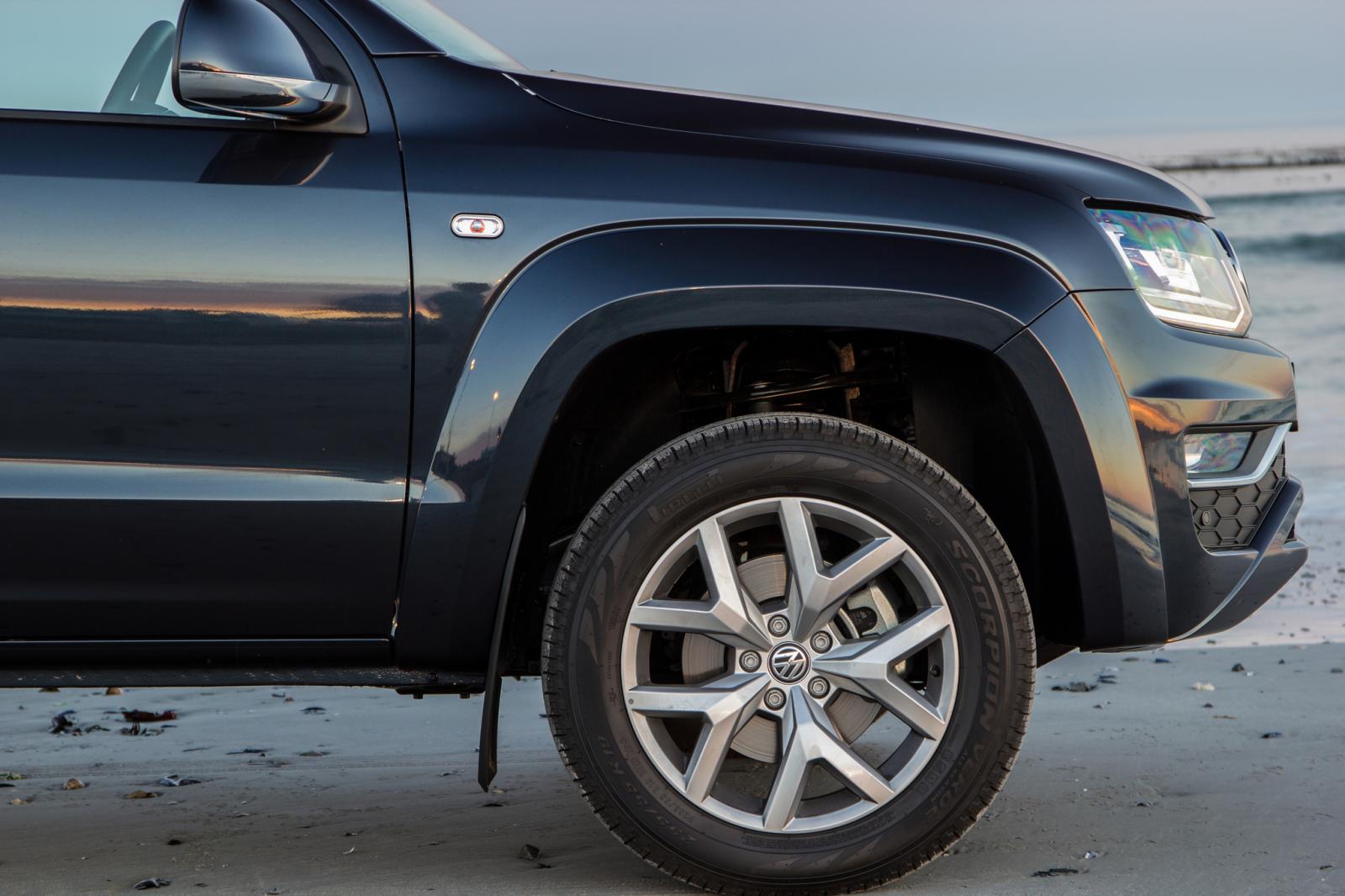
Even on optional 19-inch wheels the Amarok boasts impressive ride refinement.
One of the main factors driving the Amarok's success as a leisure vehicle in the bakkie segment has always been its relatively passenger vehicle-like ride quality. Compared with many of its rivals, it is simply the more refined, "supple" vehicle across a wider variety of surfaces. Still, due to the inherent characteristics of its underpinnings (ladder frame, leafsprings), the rear suspension doesn't like transverse ridges that come in quick succession, but the consequences of this trait can be dulled by putting a load on the back.
So, while the ride quality may very possibly be the best of the bakkies, and edges closer than ever before to the drive experience of a bakkie-based SUV (such as the Toyota Fortuner and Ford Everest), it can't compete with a normal monocoque SUV. Still, remember the trade-off – you can load a lot on the back, and won't have to worry so much about getting stuff dirty or damaged – this is core to the appeal of a bakkie in the first place.
Where the Amarok puts clear distance between itself and other bakkies, however, is in refinement. From the precision of the steering, to the smooth-shifting nature of the transmission, the exceptionally impressive NVH (noise, vibration, harshness) control, and its ease-of-use in off-road conditions, the Amarok really is a bakkie from a different league.
Standard Features
The Discover Media infotainment system is standard and includes satellite navigation.
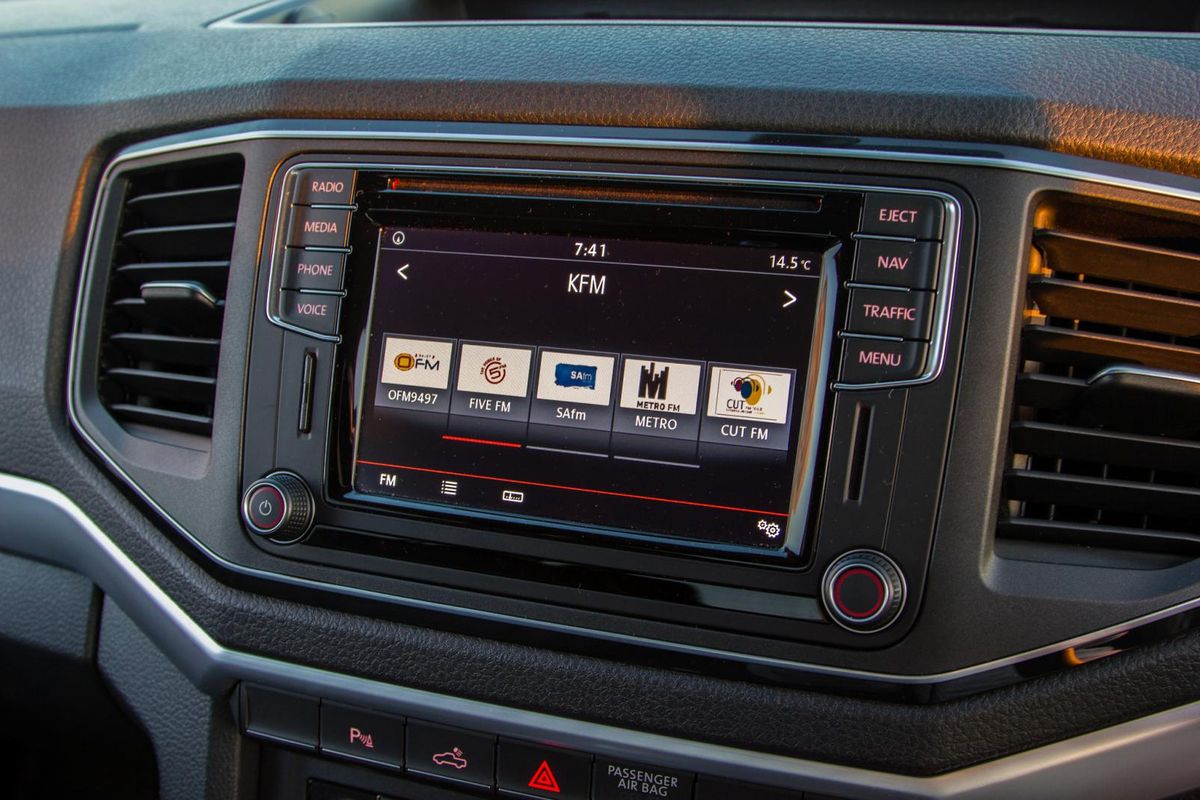
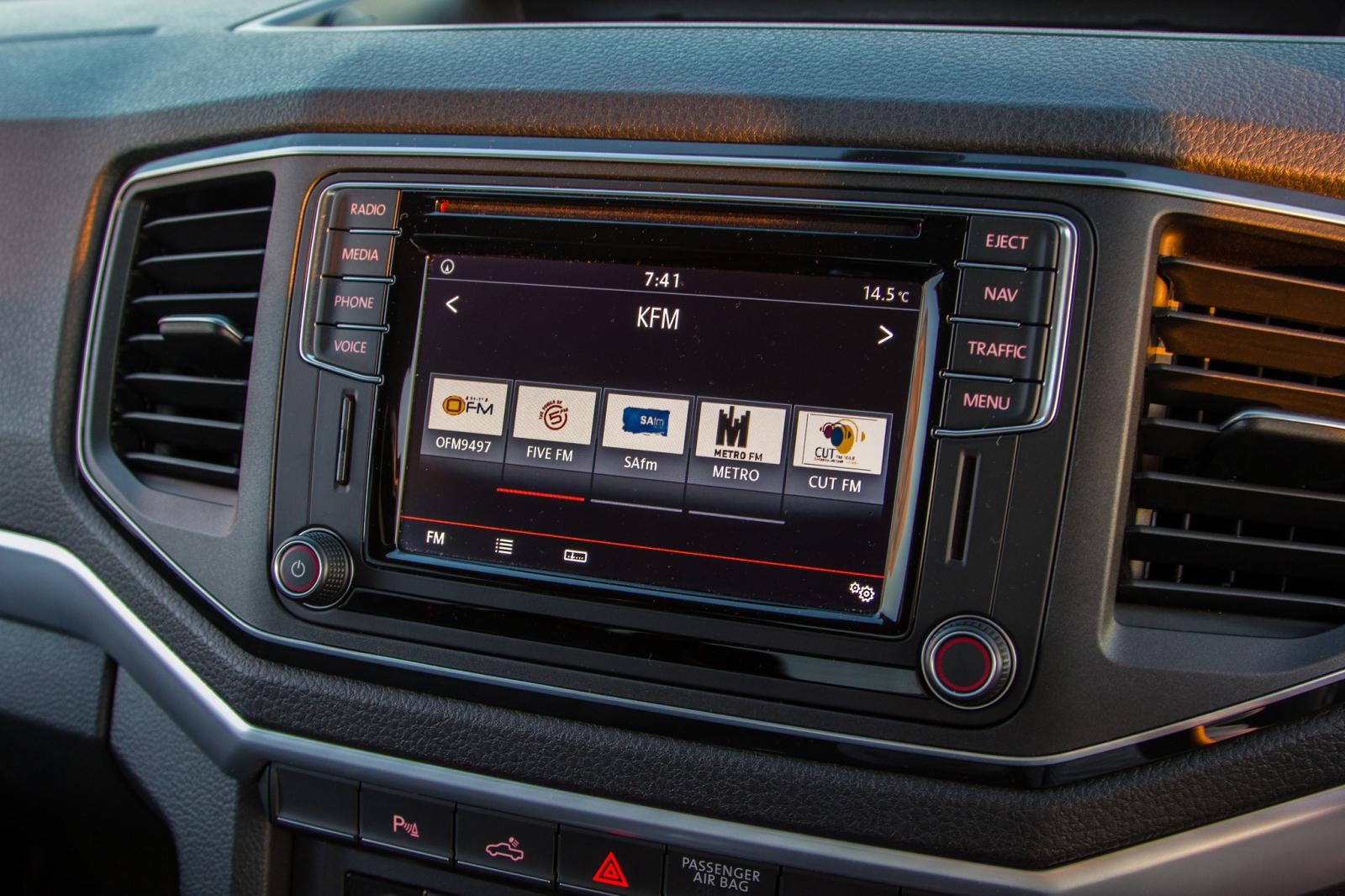
Comfort levels are further boosted by a reasonable (for the money) specification level. With rake/reach-adjustable steering and height adjustment for both of the superb front seats, long-distance comfort is not going to be a likely problem. Our test unit also boasted optional heated front seats (R5 000), but the automatic lights and wipers are standard, as are cruise control, dual-zone climate control and front and rear park assist (with camera). The latter feature is particularly valuable as the Amarok is a big and bulky vehicle to manoeuvre around town. Also standard fitment is the Discover Media infotainment system that features satellite navigation and a neat touch interface with pinching/sliding functionality – Bluetooth and USB/aux compatability is standard.
In terms of safety, too, the Amarok ticks a lot of the boxes, even though the fitment of "only" 4 airbags is somewhat disappointing. You still get Isofix rear child-seat anchorages, an electronic stability control (ESC) system with integrated hill-start and hill-descent assistance and, specifically for the rough stuff, an off-road ABS function and a mechanically locking rear differential.
Design & Packaging
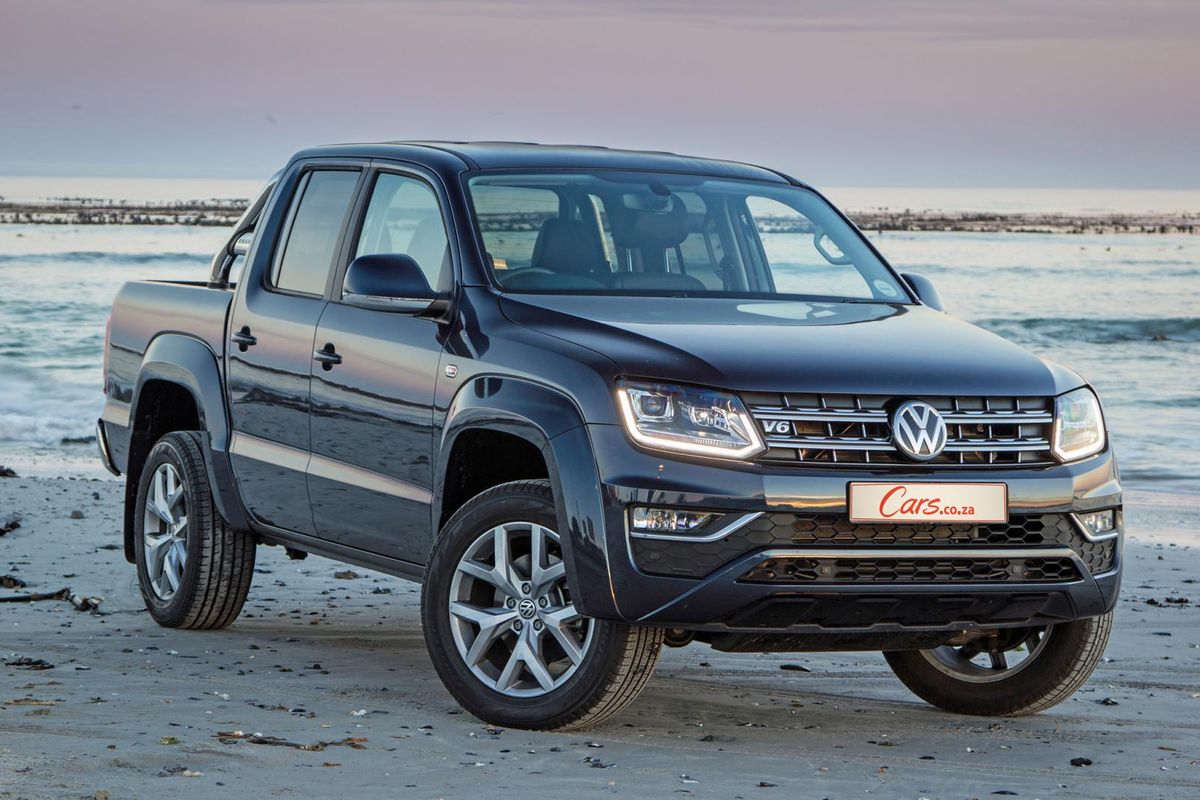
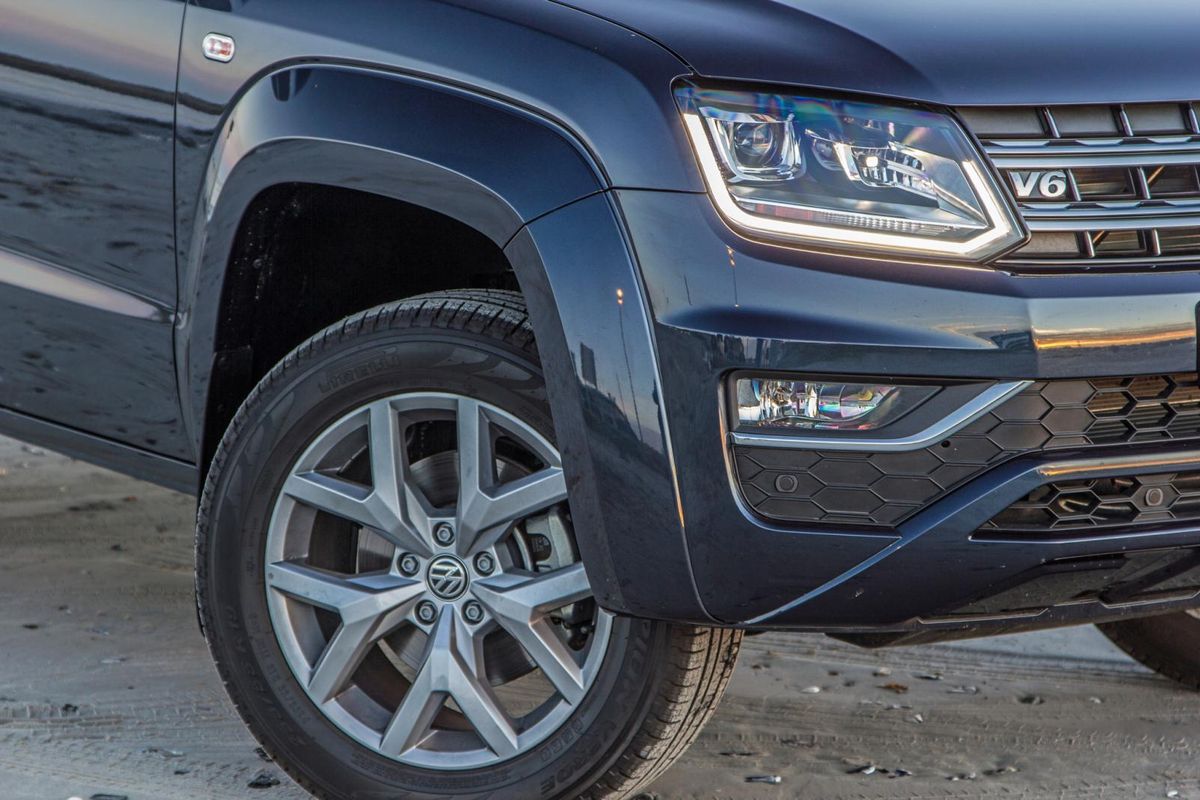
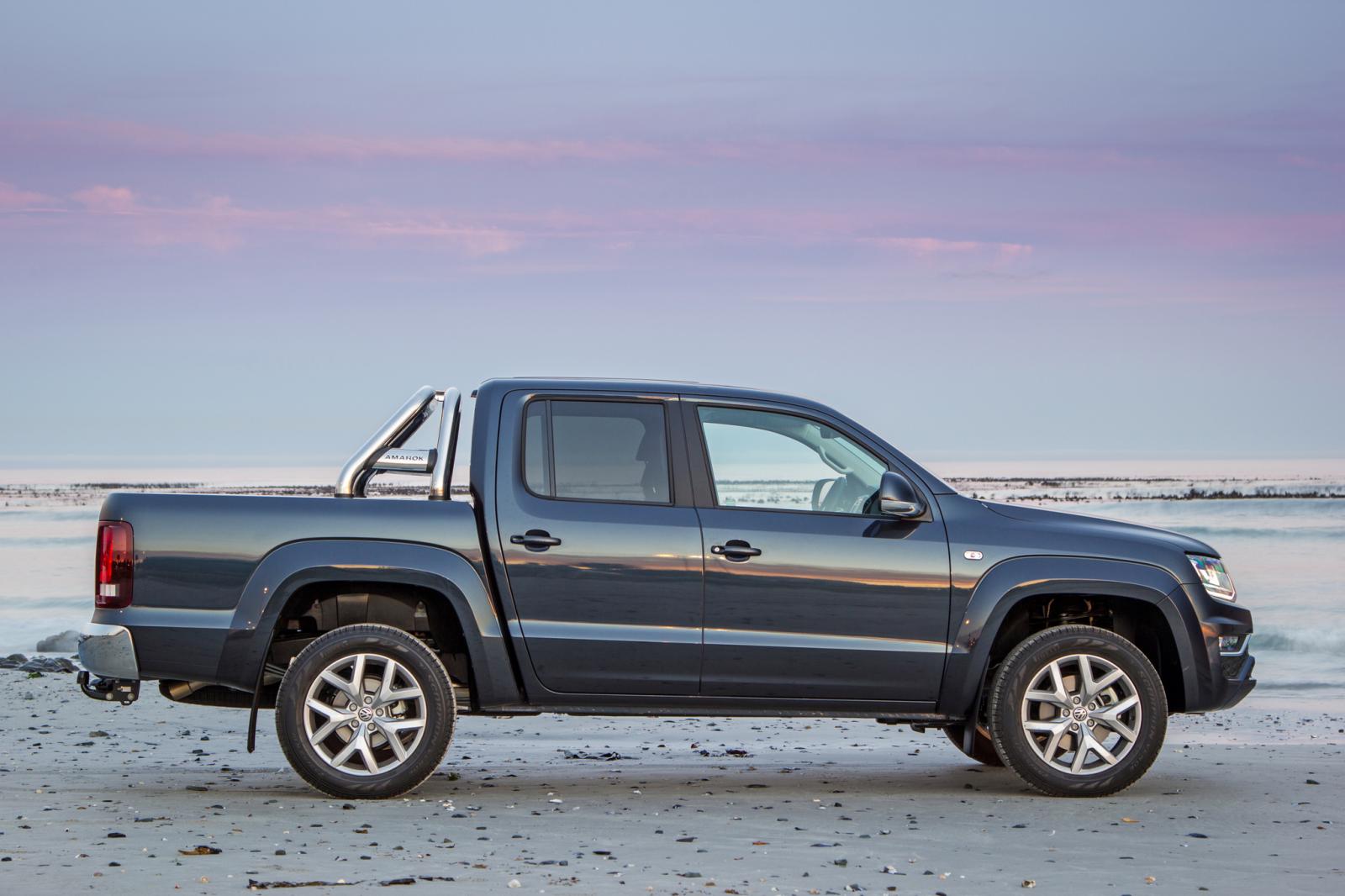
Although the exterior changes are minimal, the recent update has brought Amarok in line with VW's latest design language.
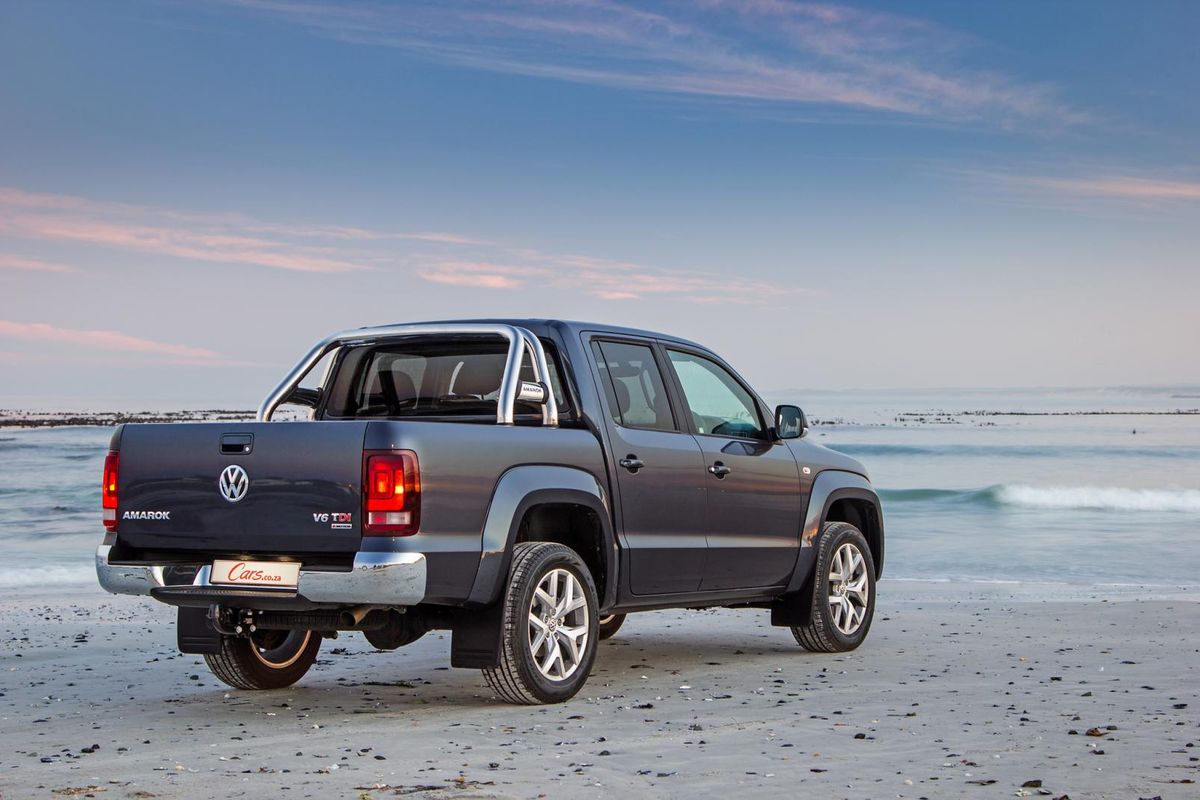
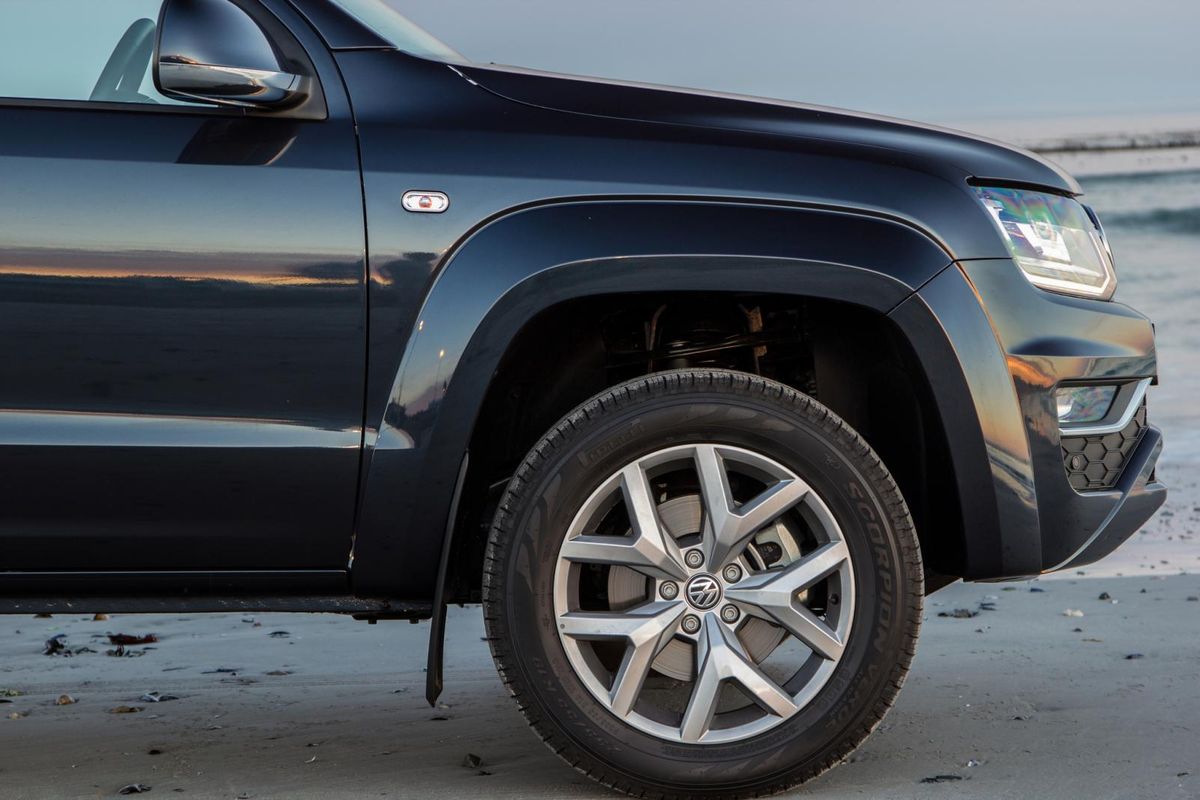
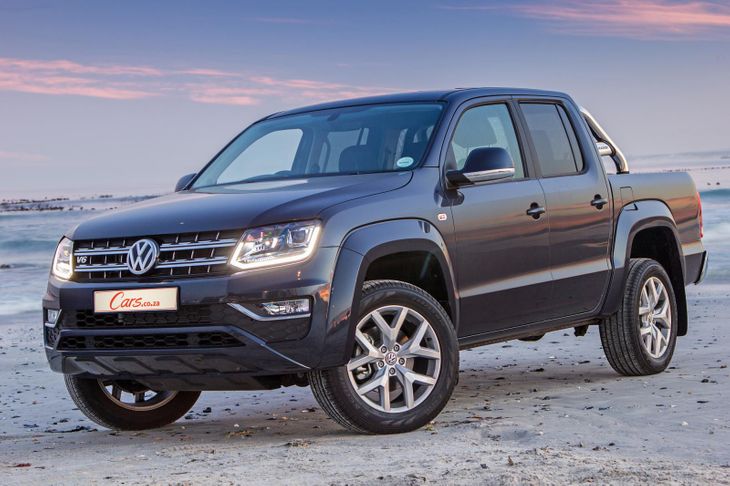
The addition of the 3.0 TDI V6 derivatives have come at the same time as a comprehensive facelift for the entire Amarok line-up. But from the exterior, at least, you'll have to look closely to spot the changes, which are mostly limited to new head- and taillight graphics and a revised grille. This Highline Plus model, tested here, features bi-xenon headlights and LED daytime running lights as standard. Though 18-inch wheels are standard, 19-inchers are offered as an option (as fitted to the test unit) for just under R12 000.
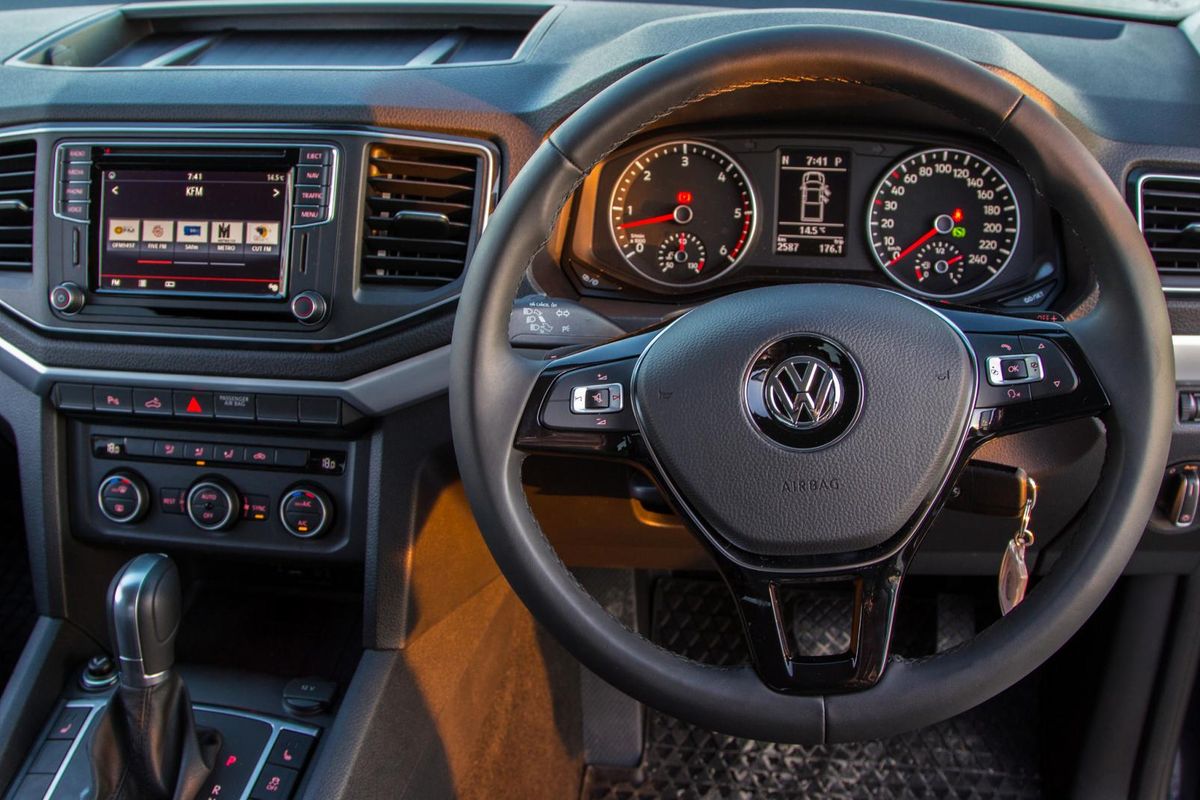
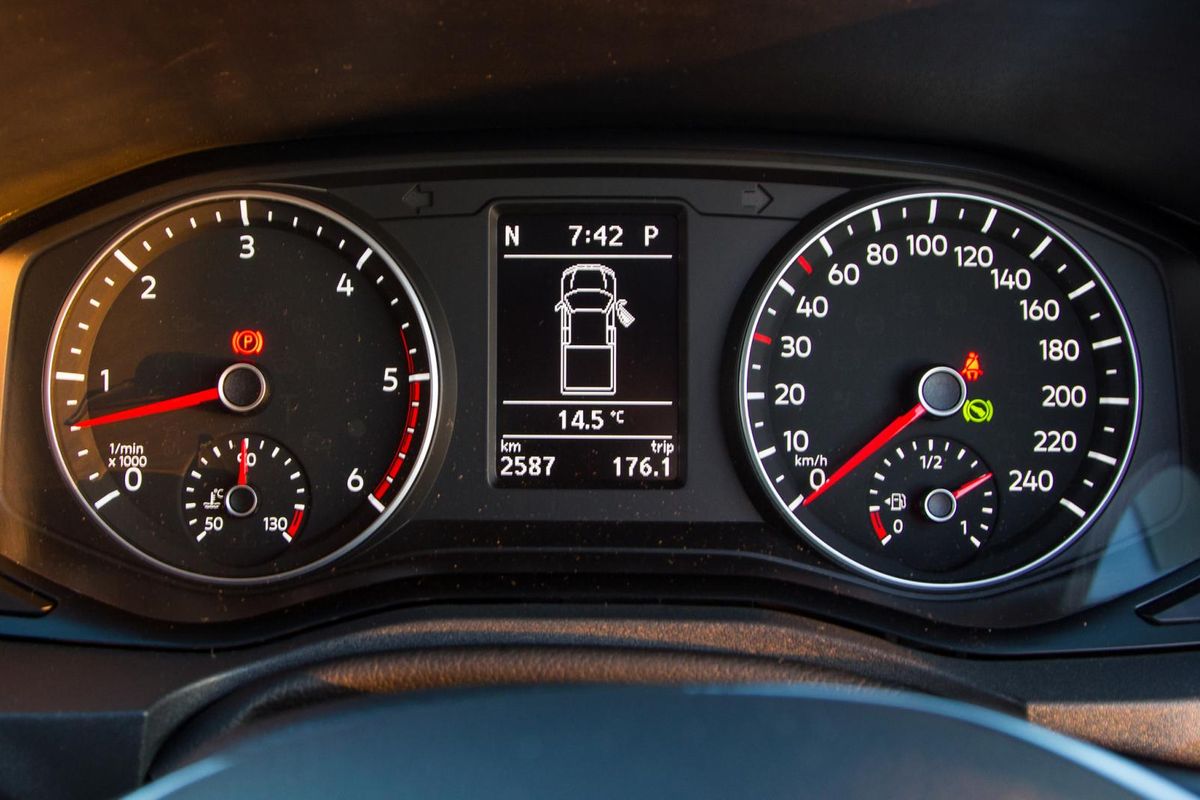
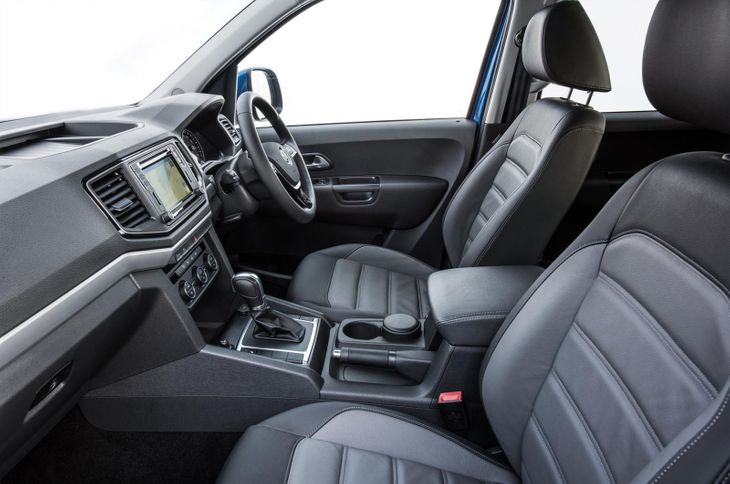
It is inside where the bigger changes have been made. There's an all-new facia that is still hard to the fingertips, but which is "softer on the eyes" and which contributes to the overall upmarket look of the cabin, further boosted by standard dual-tone Vienna leather-upholstered seats on this model. You also get those nice satin-chrome details that make the latest Volkswagens look so expensive inside, and a very neat, leather-wrapped steering wheel. As discussed in the section above, the standard specification level is good, and the fitment of the touch-screen (nav-capable) infotainment system does a lot to make the Amarok feel worth the outlay.
Cabin design, finishes and features wouldn't look out of place in a pricey premium SUV.
The Amarok's cabin is very spacious in the front, mostly because it is so wide and high. There's enough space for a large storage box between the seats and the front passenger "feels" very far away from the driver. Both front seats are manually height-adjustable, and there really is no shortage of headroom. The attention to detail that is so typical of most VW products is also evident in the Amarok, whether through the rubber padding of the various storage holes (not all), or the actual size of them – the door pockets can take 1.5L bottles! There are also storage drawers underneath the front seats.
In the rear, however, the picture is less rosy. While 3 adult passengers can sit next to one another on the bench, they won't be very comfortable because legroom is quite limited. They also will have to sit quite upright, and there are no ventilation outlets for those in the back. It's not entirely impractical, though, because the rear seat cushions can flip up (split 66:33), leaving a very usefully large storage space behind the front seats. The rear seatback can also fold, but as a single piece.
The Amarok's rear passenger area is wide, but relatively short, so rear legroom is lags the best in class.
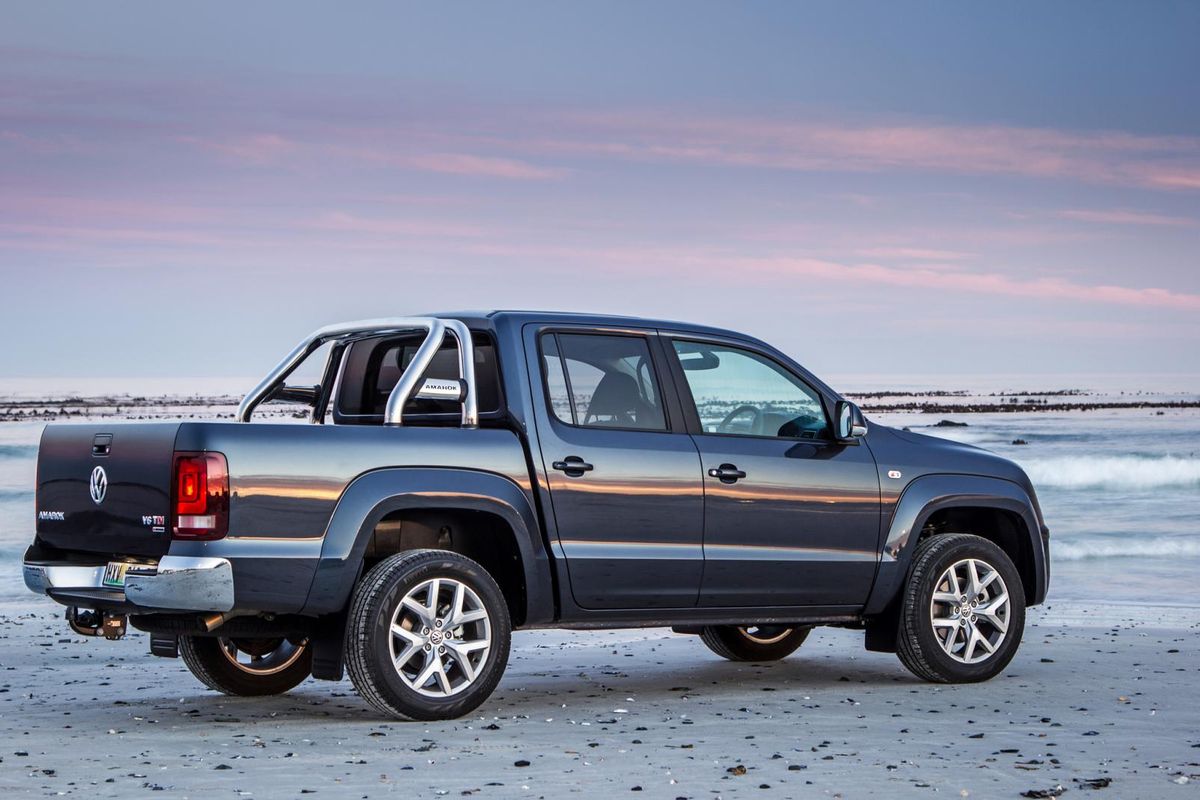
But let's not forget that the Amarok remains a bakkie. At the rear you'll find what remains one of the widest load areas available in the bakkie market (can take a Euro pallet tranversely), and measures 2.52 square metres. The cargo area light remains a clever and unique feature in this segment. Ultimately, however, the Amarok's payload and tow ratings (3 300 kg for the Amarok) slightly lag the best in this class, so if you're really looking for the hardest worker for your money, then you may have to shop elsewhere.
Pricing & Warranty
The Volkswagen Amarok V6 TDI Highline Plus sells for R716 600 (June 2017). The price includes Volkswagen's usual 3-years/100 000 km warranty and 5-years/90 000 km service plan. It needs to be serviced every 15 000 km.
Verdict
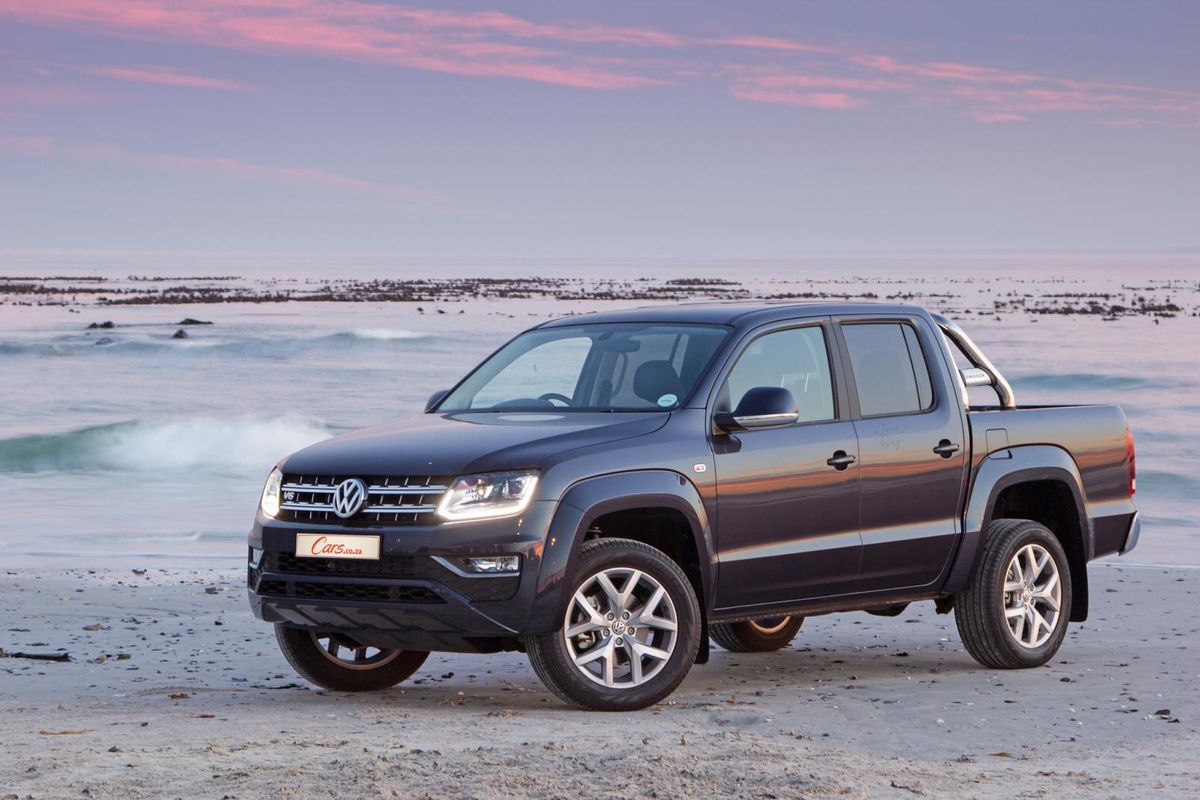
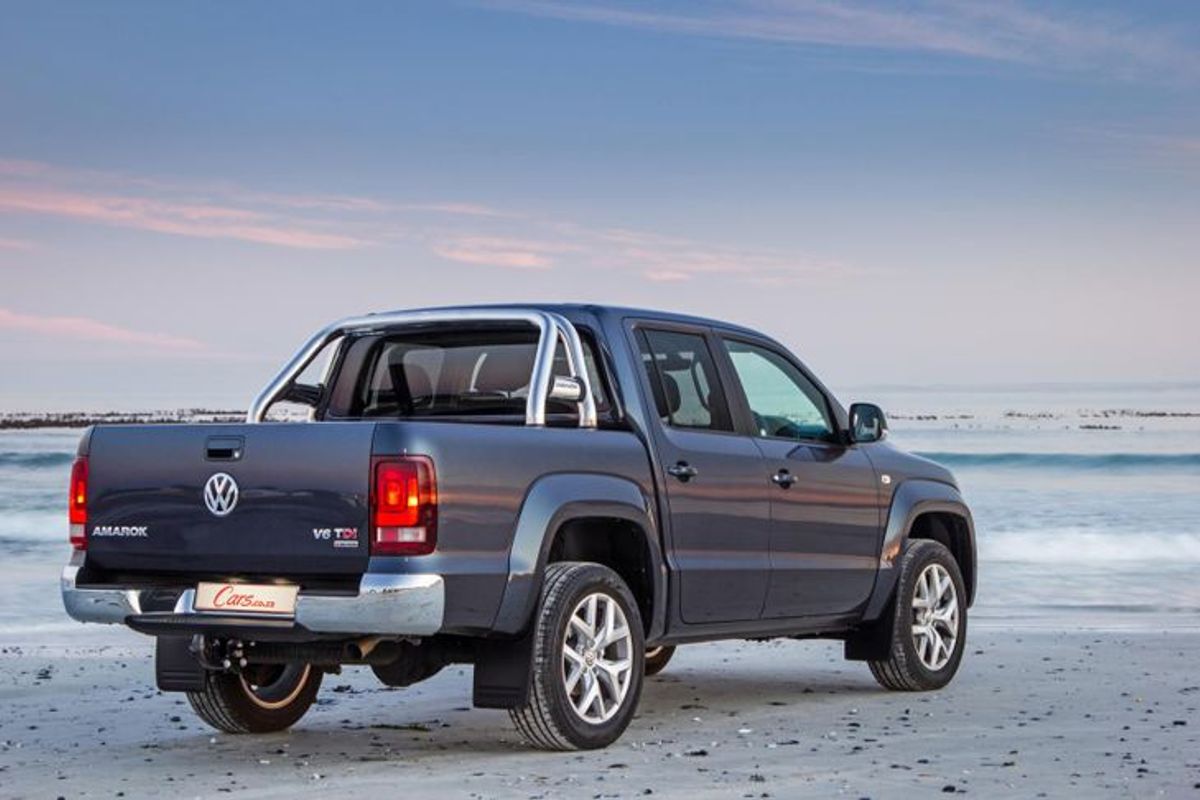
The badging is subtle, as is the design, but this latest Amarok advanced the art of the bakkie convincingly.
So, is the Amarok V6 TDI worth the R100 000 extra compared with its nearest direct competitor, the Ford Ranger 3.2 Wildtrak? Ultimately the answer to that question depends on what you value most in your double-cab bakkie. The flagship Amarok easily establishes new benchmarks for refinement and responsiveness, has the most premium SUV-like interior of all, and arguably the best ride quality, too. Although it is still seen by many as a "softie" in the market, it is also very capable in the rough. Where it falls short, perhaps, is in ultimate practicality, with rear passenger space lagging the class leaders. It also can't match some of its rivals' payload capacity or tow ratings. That said, if you want the best "Leisure" or "Lifestyle" Double Cab on the market, however, and you're able to afford it, the Amarok V6 TDI is the new champion, by some margin.
Chinese carmaker, Haval, has arrived in South Africa and has launched the new H2 crossover to the local market. Herewith specification and pricing details for the new Haval H2.
Haval Motors has made landfall in South Africa this week by launching its new H2 crossover that will rival the likes of the popular Renault Captur, Ford Ecosport and the Cars.co.za Consumer Awards – powered by WesBank Compact Family Car champion, the Suzuki Vitara.
As a sub-brand of GWM, Haval will cater for the passenger market and is the best-selling SUV brand in China, having sold over 1-million units in 2016. Haval will look to penetrate the local market with affordability being a key driver, starting with the H2 crossover and its smaller H1 sibling.
Key details
The Haval H2 comes to market with a 1.5-litre turbopetrol engine with 105 kW and 202 Nm of torque on offer. Buyers can choose between a 6-speed manual or automatic transmission.
In terms of features, niceties such as automatic headlights and windscreen wipers, man-made leather upholstery, high resolution touchscreen infotainment system, 6-way adjustable driver’s seat are offered on high-spec derivatives. All H2 models are fitted with front, side and curtain airbags as standard and the vehicle carries a 5-star CNCAP crash safety rating. A total of 3 trim levels are on offer including City, Premium and Luxury.
We attended the launch of the Haval H2 in Johannesburg earlier this week, so look out for our first drive impression coming soon. For now, take a look at what you can expect to pay for the Haval H2.
Haval H2 prices in South Africa:
1.5T City
R244 900
1.5T City AT
R279 900
1.5T Premium
R254 900
1.5T Premium AT
R289 900
1.5T Luxury
R274 900
1.5T Luxury AT
R309 900
The H2 is sold with a 5-year/100 000 km warranty, 5-year/60 000 km service plan and 5-year/unlimited km roadside assistance.