Next-Generation VW Products Undergo Tests In SA [Video]
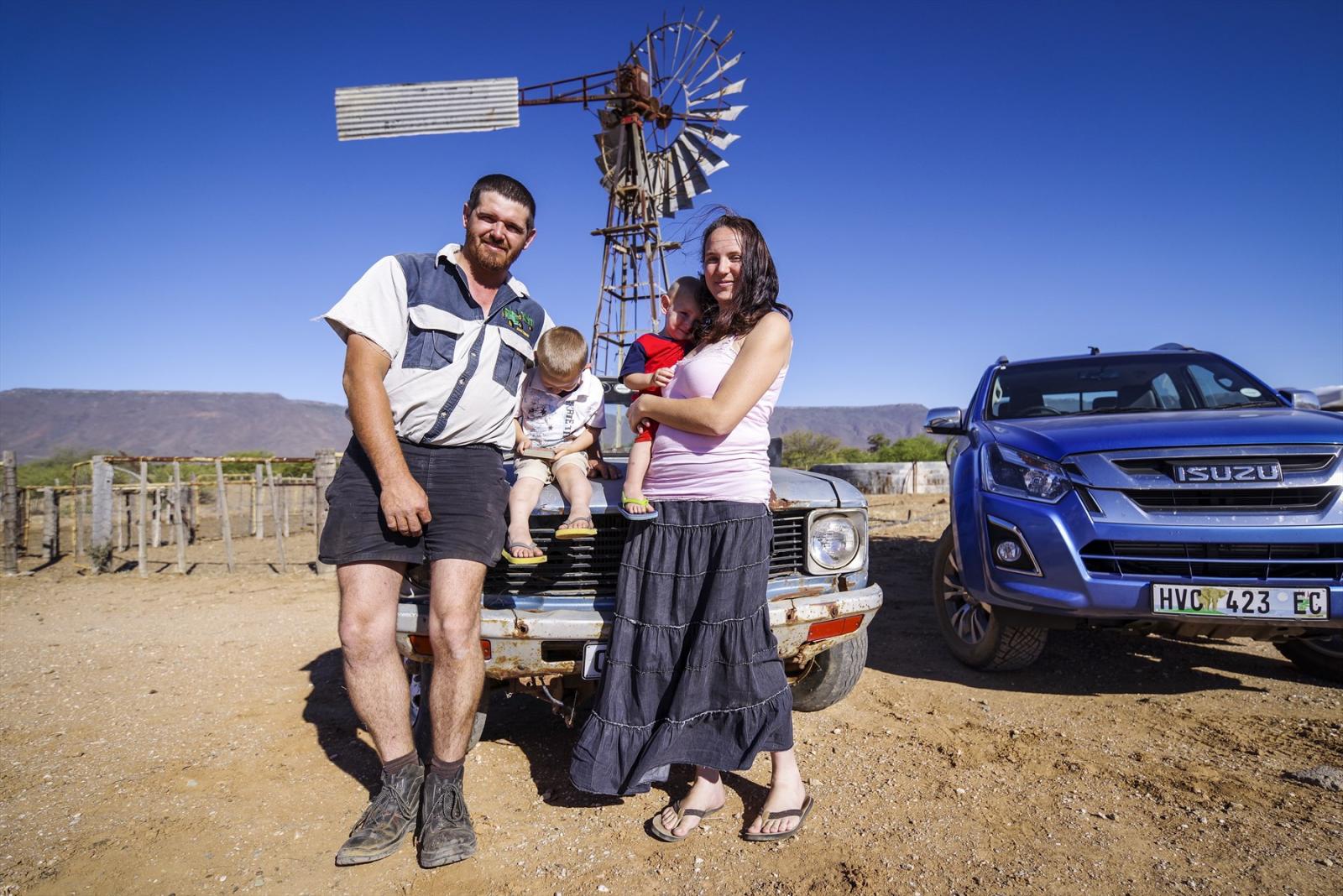
Volkswagen is one of many manufacturers that use South Africa's hot and dry climate for vehicle testing. Watch the next generation of VW products being put through their paces on our roads.
South Africa's altitude and climate borders on the extreme, which makes it a perfect destination for vehicle companies to test their forthcoming products in the harshest conditions. There's so much interest in testing in SA that many exciting disguised cars have been spotted around the Upington area and the Volkswagen Group has a highly-secured "Area 51" facility north-east of Pofadder. If you're a car-spotting fanatic, the Northern Cape is the place to be.
In this video, which was released by Volkswagen, you can see the next generation of its products on our roads. First up is the Tiguan Allspace, a 7-seat version of the stylish new SUV.
Then we get a proper look at the Volkswagen Arteon. It's going to be a premium sedan which replaces the CC and will sit in a more premium slot above the Passat. Finally, the Up! GTI gets some of the limelight and while it's not confirmed for SA introduction yet, we live in hope. All three of these products will be officially unveiled in 2017.
Intern design students at Volkswagen have created the intriguing Varok concept, combining the practicality of a wagon with the convenience of a bakkie.
Concepts play a critical role in the car design process. They are often outlandish in design and although few ever make it to the production line, many production cars share design cues derived from concepts. Concept cars are important in that they explore and expose ideas that would otherwise remain unseen and, more importantly, they point to the future of automotive design.
Take this Volkswagen Varok concept as an example. The Varok was created by two French intern design students, Valentin Fuchs and Pierre Joveneaux, who set out to create a unique wagon that transforms into a utility vehicle. "The goal of this project was to imagine how Volkswagen could enter in the Australian market with a ute vehicle," said Valentin.
The students took inspiration from the Volvo V90 and Vauxhall Maloo in the creation of the Varok concept. In wagon guise, the Varok can accommodate 5 passengers and a fair amount of luggage. By disassembling the stern, the Varok can be converted into a stylish utility vehicle with a load bay. In this configuration, the Varok concept can seat 3 passengers, while surfboards, bikes and other leisure items can be stored in the load bay.
There is no indication whether the Varok concept will make it to production, but it certainly tickles the imagination. We rather like the look of the Varok…
With myriad new products scheduled to arrive in local showrooms in 2017, it promises to be an exciting year for South African motorists. We've picked 5 that we're particularly excited about: the new BMW 5 Series, the Toyota C-HR, Land Rover Discovery, Alfa Romeo Giulia and Nissan Navara.
In conjunction with this preview video, we've created an article that lists the new models alphabetically (by brand), including related exclusive First Drive- and news articles. Read: Cars Coming to SA in 2017.
The Baleno offers big-car comfort at a small hatchback price, but can it lure buyers away from top-selling hatchbacks or compact family cars/crossovers? We put Suzuki's newcomer to the test.
We like: Exterior styling, good performance, handling, economy, lots of space.
We don’t like: Interior design is a bit bland, infotainment system a little clunky to operate.
Alternatives:
Like for like: Consider the Ford Focus 1.0 Trend priced from R272 900. Yes, it's more expensive, but the Focus offers more power with 92 kW and 170 Nm of torque from its turbocharged 1.0-litre, 3-cylinder engine. The Baleno, however, has a bigger luggage bay, more spec and is considerably more affordable.
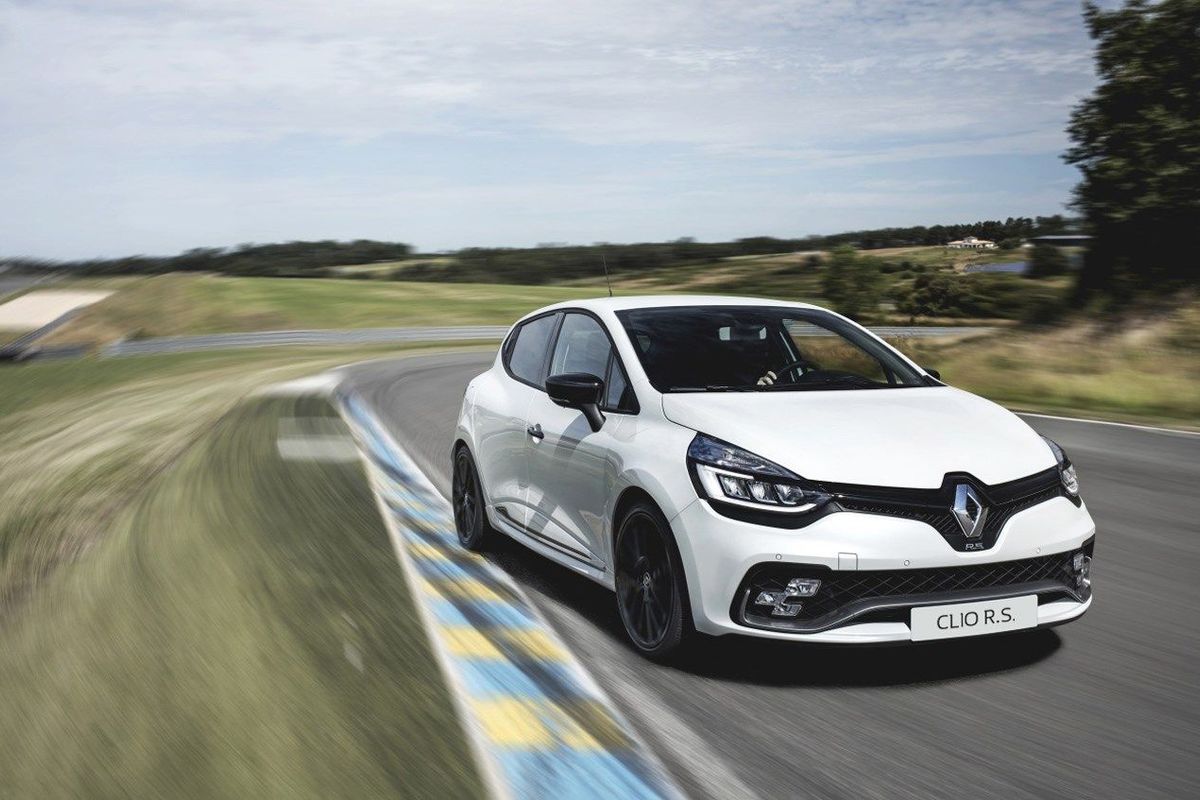
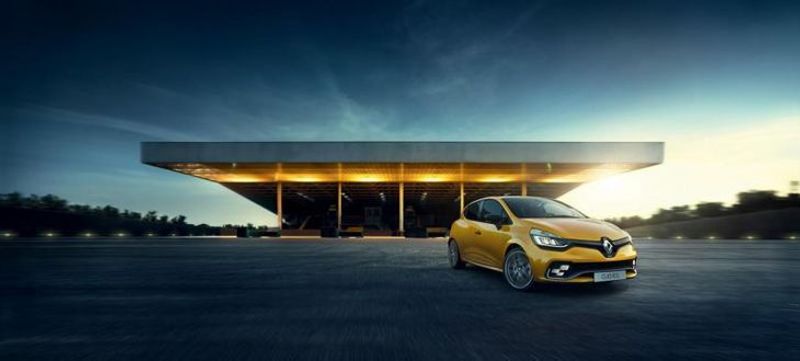
For a high-spec B-segment hatch: Consider the recently facelifted Renault Clio 66kW Turbo Dynamique priced from R244 900. It offers 66 kW and 140 Nm of torque from its 0.9-litre turbocharged engine, is undeniably good looking and comes well-specced, but it's not nearly as spacious as the Baleno.
For a crossover: For R249 900, you can hop into the Renault Captur 66 kW Turbo Expression. It has a bigger loading bay at 377 litres, expanding to 1 235 litres with the rear seats folded down and it offers similar specification to the Baleno. The comparatively conservative Suzuki feels a more substantial product, though.
Spacious, practical and affordable best describes the new Suzuki Baleno.
An analysis of new vehicle sales figures shows South African private buyers and fleet companies have a predilection for B-segment hatchbacks: products such as the Volkswagen Polo, Ford Fiesta, Hyundai i20, Toyota Yaris… there are several other examples… Suffice to say, consumers are spoilt for choice. But for motorists who seek more practicality than those models can offer, C-segment hatchbacks, such as the Golf, Focus, i30 and Auris (just to expand on the previous examples) may just be out of reach price-wise – and they vie for the same slice of the market as compact family cars/crossovers.
Those aforementioned offerings are all compelling, but their ranges' pricing starts in the late-R200k-to-early-R300k range. The new Baleno, by contrast, tested here in 1.4 GLX manual guise, effectively offers C-segment practicality while offering attractive B-segment pricing (R229 000, including a service plan). Could the newcomer's practicality and strong value package convince buyers to forego volume-selling smaller hatchbacks (or digging deeper in their pockets to jump on the compact crossover bandwagon) and opt for a conventional hatchback from a workmanlike brand? Perhaps. Read on…
How does it fare in terms of…
Kerb appeal?
The Baleno features typical Suzuki design cues, but its design is more refined. It looks distinguished, if unremarkable.
The design of the Baleno is unmistakably Suzuki. It’s reserved, yet seems to exude an air of sophistication that you wouldn’t typically associate with the brand. The newcomer's built on a new platform that emphasises increased rigidity and lower overall mass (the Baleno’s kerb weight is only 915 kg); even though it's bigger than its Swift sibling, it looks less dumpy.
This GLX derivative rides on dark grey 16-inch alloy wheels and comes fitted with a rear roof spoiler, adding a dash of sportiness to the overall design. We think the Baleno is a smart casual-dressed hatchback and for a brand that’s traditionally viewed as being, dare we say it, a bit bland and conservative, the Baleno’s design represents a progressive step in Suzuki's bid to convince the public its automotive products are "fun-loving". The photographs of the Baleno speak for themselves…
Practicality?
Previously, buyers seeking a more practical hatchback than the Swift needed to consider the SX4 or Vitara (from the Suzuki stable) or products made by other brands. With the arrival of the Baleno, the drawbacks of a small loading bay and scant rear legroom (which are inherent to most B-segment hatchbacks, to be fair) have well and truly been addressed.
The loading bay is large and deep, capable of swallowing luggage and whatever else you might need to transport.
The Baleno has a sizable loading bay (a claimed capacity of 355 litres). That’s substantially more than the rivals at its price point and with the rear 60:40 split seat folded down, utility space increases to 1 085 litres. We tested the Baleno’s loading capacity with a trip to the nursery and 10 large bags of compost and wood chips were easily packed into the hatch. In fact, there was still space for more goods. It’s quite impressive! It must be noted however, that when you fold the rear bench down, it’s not completely flat, as the seat forms a pronounced lip in the loading area. Nonetheless, the space is welcome.
In terms of rear leg-, head- and shoulder room, the Baleno is generous; it can comfortably seat a pair of average-sized adults and rear passengers further benefit from 3 headrests, a 12V socket and bottle holders in the door mouldings.
The Baleno affords rear passengers with excellent legroom, which is typically not expected at this price point.
The driver's seat offers height adjustment, the steering column can be repositioned for optimal rake and reach and the leather-trimmed 'wheel features audio, cruise control and Bluetooth toggles. There is a pair of cup holders (located in front of the gear lever), along with a small storage tray. The centre bin is rather small, but it’s big enough to store your cell phone and house keys out of sight. Additional storage space in the door mouldings can accommodate bottles and other items.
The Baleno also benefits from keyless start and all the windows are electrically operated – as are the side mirrors. A USB port and auxiliary audio input jack are availed to the driver and front passenger, as is a 12V socket. Overall, the Baleno offers most of the essentials and its space offering is by far its biggest asset, making it more practical than most of its rivals.
Performance?
The Baleno offers sprightly performance and its comfortable ride make it a good daily runner.
In South Africa, the Baleno is powered by the same naturally-aspirated 1.4-litre engine that does duty in the Swift and Ciaz. We don't believe Suzuki’s new 1.0-litre turbopetrol, which is offered overseas, will be offered in the local Baleno in the foreseeable future, but the 1.4-litre engine is adequately suited to the car and offers 68 kW and 130 Nm of torque.
Despite those numbers not being particularly impressive on paper, the Baleno’s light weight helps matters somewhat and those outputs are enough to make the hatchback feel lively and perceptibly more responsive than you’d expect. The Baleno is by no means a hot hatch, but it’s quick enough between robots and is eminently suitable for navigating the urban sprawl.
The front wheels are driven through a 5-speed manual gearbox, which offers a positive shift action and gear changes can be executed smoothly thanks to an easily modulable clutch pedal. The engine produces its peak outputs higher in the rev range, so to get the most out of it, you have to keep it spinning at 4 000 rpm (where maximum torque is available) and all of the modest 68 kW comes 2 000 rpm later. Therefore, in overtaking situations, you will invariably have to gear down to access more power, but we like the fact that the Baleno can be a relaxed, sedate cruiser and the newcomer's impressive fuel efficiency is a worthwhile tradeoff. Suzuki claims the Baleno will consume 5.1 L/100 km and we easily achieved 6.2 L/100 km. If driven with consideration on a regular basis, the Baleno could very well return figures below 6.0 L/100 km.
Another aspect of the Baleno that quickly became apparent is its respectable ride quality and handling characteristics. The Swift is good in those regards, but the Baleno is better. Its suspension does an admirable job of dealing with road imperfections and the ride is generally composed. The Baleno feels solid and planted in the corners, thanks, in part, to its stiffer chassis, and the steering weighting provides satisfactory feedback to the driver. This bodes well for everyday use.
Interior quality and features?
The interior of the Baleno isn't exciting, but its simple, practical and well-built.
The Baleno’s interior build quality is, if less than luxurious, a model of solidity. The cabin is dominated by flush-fitting, hard-wearing plastic that will likely withstand the daily abuse from the kids on the school run. The design of the interior is by no means exciting, however. You can tell by the choice of materials that Suzuki tried to strike a balance between affordability and practicality. That said, the Baleno’s cabin is not premium, nor does it feel cheap, it’s rather somewhere in between.
It’s a noticeably dark cabin, with the only contrast seen in the silver trim surrounding the automatic climate control air conditioning system and air vents. The instrument cluster adds some colour to the interior with its blue backlighting and houses a 4.2-inch TFT information display that includes two circular bars that indicate how much power and torque you are making use of. It looks a tad gimmicky perhaps, but bear in mind that it is but one of the availlable trip computer displays..
The instrument cluster adds much-needed colour to an otherwise predominantly dark interior.
The GLX derivative is equipped with an aftermarket 6.2-inch infotainment system that takes care of basic functions such radio, CD and Bluetooth streaming. The system's functions are easy enough to use once you're used to it, but we think it could be better. The small buttons make the system finicky and distracting to use; a Suzuki with a touchscreen is a novelty.
In terms of safety, the Baleno isn’t equipped with electronic stability control, but it does have ABS with EBD, brake assist and the GLX model is fitted with 6 airbags. If you have offspring to cart around, there are Isofix child seat tethers on the rear seatback. Rear park distance control is included, but a reverse-view camera would have been a nice-to-have feature.
Pricing and warranty
The Suzuki Baleno 1.4 GLX manual is priced from R229 000 and is sold with a 3-year/100 000 km warranty and 4-year/60 000 km service plan. Service intervals are set at 15 000 km.
The Baleno is great if you want the practicality of a bigger hatchback at a more affordable price.
Verdict
The Baleno is a solidly impressive addition to Suzuki’s vehicle range. It’s a neatly-styled hatchback that offers reasonable performance, plus well-sorted ride and handling abilities, but its spaciousness (given the newcomer's keen asking price) is a stand-out feature. Even if the interior lacks a degree of aesthetic appeal, it’s comfortable and well-equipped enough to live with on a daily basis and based on our experience, the Suzuki should regularly return good fuel consumption figures.
Whether the newcomer takes a big enough step in terms of adopting an exterior design that will coax a younger clientele away from "Polo-sized cars" or matches/exceeds the appeal of climbing into a small crossover is debatable – the market's response to the Baleno will tell. The 1.4 GLX represents excellent value and warrants consideration based on sheer merit.
Mike Fourie says:
The Baleno's strongest traits are its traditional, spacious hatchback configuration, generous specification and its solid build quality. It's not flashy, but certainly endearing…
Lamborghini has revealed an enhanced version of its flagship Aventador supercar!
The Sant’Agata Bolognese-based firm has revealed details of what is essentially a facelifted version of its ferocious Aventador – meet the Aventador S. With a focus on aerodynamic performance, the Aventador S features an enhanced design with improved suspension and electronics, and for the first time on a Lamborghini, features a new four-wheel steering system. The Aventador S has also been blessed with more power generated from its naturally aspirated 6.5-litre V12 engine, now offering 552 kW.
“This is the next generation Aventador as well as the expression of new technological and performance milestones in super sports car development. The Aventador S is visionary design, cutting-edge technology and driving dynamics in pure harmony, and elevates the concept of super sports cars to a new level,” says Automobili Lamborghini Chairman and Chief Executive Officer Stefano Domenicali.
Design details
The Aventador S features more power and considerable improvements in aerodynamic performance.
The front-end of the Aventador S has been enhanced with a longer front splitter to improve aerodynamic performance and engine and radiator cooling. The two ducts seen on the side of the front bumper help to reduce aerodynamic interference from the front tyres while also improving airflow to the rear radiator.
At the rear, a prominent black diffuser with vertical fins reduces drag, optimises airflow and creates much-needed downforce. You will also notice 3 single exhaust tips in the rear bumper (the exhaust system is 20% lighter than before). The Aventador S is also equipped with an active rear wing that can move in 3 positions to improve overall balance of the vehicle during high-speed runs.
Lamborghini says that aerodynamic performance has improved significantly with the new design and front downforce has seen 130% improvement compared with the previous Aventador. With the rear wing in its optimum position, 50% additional rear downforce is created while low-drag mode downforce has improved by as much as 400%.
The new four-wheel steering system has improved lateral control and the Aventador S is more agile at low to medium speeds, with increased stability at high speed. The updated pushrod and Lamborghini Magneto-rheological Suspension (LMS) suspension with revised kinematics has been adapted for the four-wheel steering.
Engine power
A naturally aspirated 6.5-litre V12 engine now produces 552 kW (30 kW more than previous Aventador) and 690 Nm of torque. A lightweight Independent Shifting Rod (ISR) 7-speed transmission sends power to all four wheels.
Four driving modes, including STRADA, SPORT, CORSA and the new EGO mode allows the driver to exploit the Aventador S’ performance. Acceleration from zero to 100 kph takes only 2.9 seconds before reaching a top speed of 350 kph. The Aventador S is equipped with a stop/start system as well as cylinder deactivation, which deactivates 6 cylinders when full engine capacity isn’t required. Under acceleration, the system reverts back to full 12-cylinder mode with the changeover virtually imperceptible to the driver.
On the inside, the Aventador S features a new TFT digital dashboard that can be customised according to the driver’s preferences. Apple CarPlay is standard, providing voice-activated communication and entertainment using a personal Apple device. A telemetry system, used to record lap times, track performance and trip information, is offered as an option.
The estimated price of the Lamborghini Aventador S is in the region of R4-million.
Volkswagen is planning on introducing a new Up! GTI model in 2018!
The Volkswagen Up! city car has been a sales success in South Africa since it was launched almost 2 years ago. The facelifted up! was introduced recently but reports are indicating that Volkswagen will be "spicing up" the range with a new Up! GTI model due to make its debut in 2018.
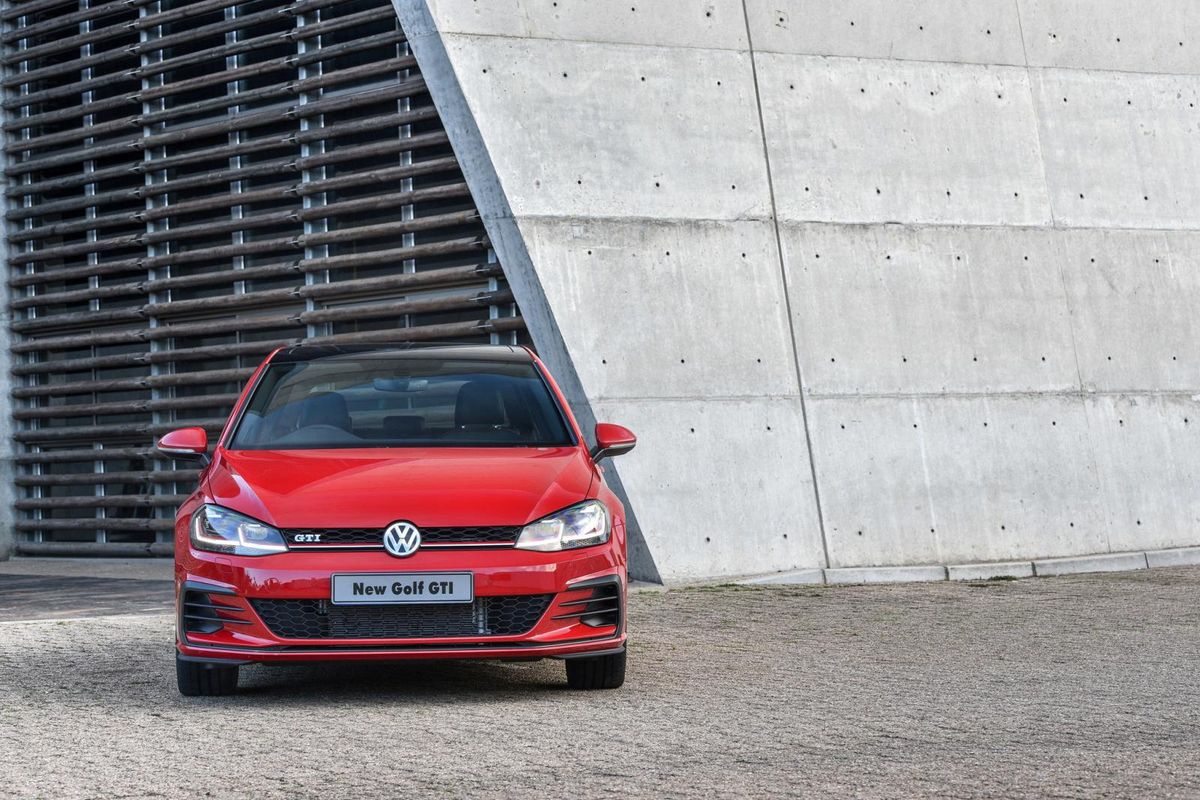
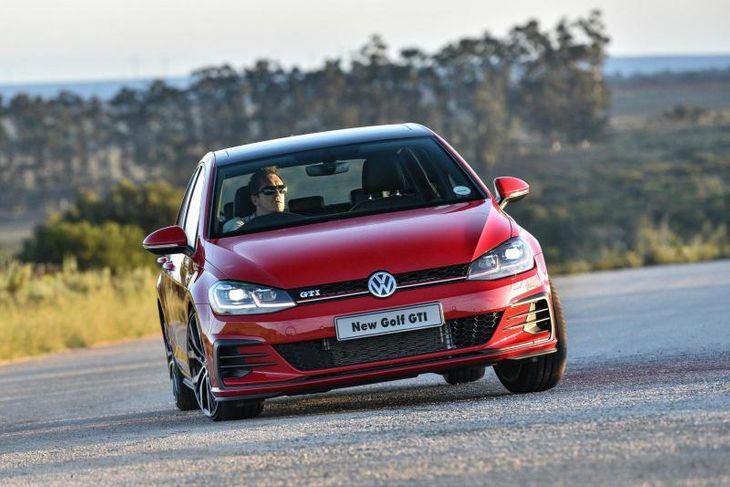
If there is one car South Africans love, it’s the Golf GTI and it’s hardly surprising that Volkswagen will introduce an Up! GTI. Just by virtue of adding GTI lettering to its name, the popularity of the up! is bound to increase as a result.
Key details
Much like the Golf GTI, the Up! GTI is likely to feature sportier styling that sets it apart from the rest of the Up! range. The red exterior detailing seen on the Golf GTI is likely to appear on the Up! GTI and you can expect sports seats, a sports steering wheel and sport pedals transferred into the new model.
A GTI model, however, means nothing without performance and the Up! GTI will still be fitted with a 3-cylinder, 1.0-litre engine, but power will be tuned to 85 kW (current Up! offers 55 kW) with a manual gearbox driving the front wheels. Although 85 kW might not sound like much, with a kerb weight of only 880 kg, a favourable power to weight ratio will ensure perky performance and the zero to 100 kph sprint will take approximately 8.8 seconds.
We will keep you updated as more details become available, so stay tuned!
Aston Martin will replace and expand its entire product line-up over the next 5 years – and the Gaydon-based marque will build the production version of the controversial DBX concept at an all-new (second) factory in Wales.
The British sportscar manufacturer, which recently availed us a First Drive of the knee-tremblingly pretty DB11, will soon start construction of a 360 000 m2 facility in St Athan as part of a R3.5-billion investment in a second manufacturing plant.
The factory has been earmarked to produce the DBX crossover, which was first shown at the 2015 Geneva Show (if that is what the production version will ultimately be named) by 2019. At a later stage, Aston Martin will also start assembly of Lagonda-badged first class sedans at the plant, but only after Aston Martin has rolled out replacements for the Vantage and Vanquish, which will continue to be produced in Gaydon, UK.
The somewhat inelegant C-pillars and up-on-stilts look of the DBX concept have drawn criticism from some quarters.
A production version of the RapidE all-electric vehicle is also on the cards for 2018.
So, is the DBX Aston Martin’s answer to BMW’s X6 (of which a bigger brother is apparently in the works) and Maserati Levante, to name but two examples, a more practical proposition than the Bentley Bentayga and Lamborghini Urus, or simply a super-luxurious, supersized Range Rover Evoque coupe? Over to Aston Martin CEO, Andy Palmer…
"The DBX… is a challenge to the existing status quo in the high luxury GT segment. It envisages a world, perhaps a world not too far away, when luxury GT travel is not only stylish and luxurious but also more practical, more family-friendly and more environmentally responsible.
Aston Martin is keen to explore the crossover market… but will the production version by an all-electric car?
“I asked my team at Aston Martin to expand their thinking beyond conventions, to explore what the future of luxury GT motoring would look like in years ahead, and the DBX Concept you see before you is the result," he said back in 2015.
Aston Martin DBX details
Although it remains to be seen if the DBX will stay true to its concept and feature an all-wheel drive and all-electric configuration (although the confirmation of the RapidE EV suggests it could, it will most definitely be a plush 4-seater.
Even in a highly stylised conceptual cabin execution, the rear accommodation looks a trifle claustrophobic.
The concept featured dual cargo areas: the rear luggage bay, as well as a frontal loading area (there is no conventional engine bay by virtue of the lithium sulphur cell-powered electric motors being located inboard of the wheels). The exterior sheet metal was made of machined billet aluminium, while the interior was covered in velvet-like Nubuck leather.
It remains to be seen whether the auto-dimming “smart glass”, bespoke driver and passenger head-up displays will be on the roadgoing, fit-for-public-consumption version, but Active LED headlights and carbon ceramic brakes coupled with an integral energy recovery system do not seem too far-fetched…
The next-generation of the popular Ford Fiesta is expected to arrive in South Africa in late 2017 or early 2018. Here is a detailed list of what consumers can expect from the compact hatchback.
We were afforded the opportunity to attend the world unveiling of the next-generation Fiesta at the recent #GoFurther event at the Blue Oval's factory in Cologne, Germany.
As the launch of the newcomer is about a year away, it's too early to confirm the exact engine line-up, but the 1.0-lite EcoBoost engine (74 kW, mated with a 6-speed automatic transmission, or 92 kW, when mated with an all-new 6-speed gearbox) will almost certainly be offered on the local market. All Fiesta derivatives will have a stop-start button while Ecoboost derivatives feature an Active Grille Shutter and manual versions will gain an ECO button.
The 5-door version is shown here in top-of-range Titanium specification.
1. ST-line & Active versions debut
Ford unveiled 4 iterations of the new Fiesta in Cologne… One of them was the Titanium (shown above), which is, as is the case with the current product, the highest-spec 5-door version and another was the 3-door Vignale, which is not earmarked for the local market.
However, the ST-line, which has been introduced throughout Ford’s product line-up abroad, promises to deliver a sportier look and suspension tuning for buyers who like the look of the ST derivative, but don’t aspire (or cannot afford) to own the top-of-the-range Fiesta, which is, of course, in the pipeline too.
Why hasn't anyone thought of this before? ST-esque looks will be available on lower-priced derivatives.
The ST-line's exterior adornments include unique alloy wheel-, grille-, bumper- and side-skirt designs; the interior features sports seats, alloy pedals and a flat-bottomed steering wheel.
What’s more, the new Fiesta Active represents Ford’s answer to Volkswagen’s CrossPolo. It comes equipped with a slightly raised suspension, with dark body cladding that flows from the front bumper lip, through the wheel arches and side profile to the rear, plus a contrast-painted roof replete with rails. Is there room in the market for this as well as the top-selling Ford EcoSport? We’ll see.
A smattering of black plastic cladding and tasteful roof rails give the Active that fashionable crossover look.
2. Evolutionary design, but much attention to detail
Joel Piaskowski, Ford of Europe’s design director, says the market’s "ongoing positive response to the dynamic design of the current model (even 7 years after it was introduced) prompted the firm to evolve the hatchback’s design to be more contemporary, yet not lose its 'Fiesta-ness'." Therefore, the newcomer’s looks are evolutionary, but with simplified, straighter lines and de-cluttered surfaces.
Size-wise, the new Fiesta looks similar to its predecessor, but it's 71 mm longer and 12 mm wider. The bonnet loses its centre bulge, the grille is wider and the headlamps smaller and longer. Ford further extended the Fiesta's belt- and window lines to give it a more dynamic profile and the side mirrors feature a straight cut between the upper and lower sections to “hide” the indicators lenses.
Quickest way to distinguish between the next Fiesta and current model is former's the elongated, swept-back headlights.
An openable, full length, panoramic glass sunroof (which will obviously be an option) is but one of the newcomer’s only finer details: the parking sensors are fitted flush with the body panels, the windscreen washer nozzles are hidden beneath the upper lip of the Fiesta's bonnet and the upgraded wipers clear 13% more of glass area. Also, when it rains the roof design better channels water away from the edges, which reduces the risk of occupants being dripped on, Ford claims.
Furthermore the doors are said to require 20% less effort to close and feature Ford's Door Edge Protector (a protective flap concealed in the door that moves into position as it opens to prevent damage to paint and bodywork in parking spaces).
The now discontinued Citroen C3 had a panoramic glass roof, but the new Fiesta's item will be able to open…
The Fiesta’s rear is arguably its most conservative aspect, but then again, aesthetic appreciation is entirely subjective. Horizontal tail-light clusters enhance the Fiesta's widened stance and feature C-shaped LED patterns. There are no visible screws in the taillights and the shut line between the roof and the tailgate has apparently been reduced by more than 30%.
3. Much more sophisticated interior
Even if it could be argued that the Fiesta’s exterior treatment has stood the test of time, most would agree that its somewhat button-bespattered fascia hasn’t. To remedy that, the newcomer’s cabin features flush, seamless surfaces and a one-piece centre console connects discreetly to the lower instrument panel.
The user-centric Fiesta interior design is said to have been influenced by “consumer interactions with smart devices and tablets” and the ergonomic positions “were confirmed using eye-tracking software”. But over and above more liberal applications of soft-touch materials (including the top of the instrument cluster), the number of fascia and centre console buttons have been reduced by almost 50% compared with the current-gen Fiesta.
Although the Fiesta's climate control console is evolutionary, the touchscreen transforms/simplifies the cabin.
How? Well, several of the infotainment system’s functions are now operable by a touchscreen interface. The top-of-the-range system is an 8-inch colour touchscreen, which can be operated with pinch and swipe gestures. Ford claims “all Fiesta screens offer class-leading resolution and are up to twice as bright as those competitors”. A 6.5-inch touchscreen or a 4.2-inch colour screen with the MyFord Dock (for mounting and charging mobile devices) will be offered on lesser derivatives.
The integral SYNC 3 communications and entertainment system not only offers Bluetooth connectivity and audio streaming capability, but will enable drivers to control audio, navigation and connected smartphones using voice commands. It’s compatible with Apple CarPlay and Android AutoT and incorporates SYNC AppLink, which enables voice-activation of apps. A pair of USB ports is standard.
For a demonstration of how some of the SYNC 3 functions work, watch this video:
As for basic conveniences, the new instrument cluster features a 4.2-inch multi-function TFT screen, the height-adjustable driver's seat has repositioned lumbar support for greater comfort, the armrest is more practically positioned and a heating element will be optional on the steering wheel (in Europe).
Other upgrades include: a 20% larger glovebox, a 1-litre media bin in the centre console and rear doors can store 0.6-litre bottles and, most notably, rear seat passengers benefit from 16 mm more knee room, supported by new slim-back seats that are softer and offer greater side-to-side support.
The colour TFT screen in the new Fiesta's instrument binnacle matches the look of the touchscreen interface.
In terms of refinement, the new Fiesta’s stiffer body structure, improved noise insulation to isolate powertrain noise vibration and harshness (NVH), plus an acoustic windshield contribute to what Ford claims is “best-in-class interior quietness”. The firm claims the newcomer has an interior road noise level of 29.3 sone – a metric for loudness – at 100 kph, which is a 7% improvement over the outgoing Fiesta.
4. High-end safety systems
The next-generation Fiesta features no fewer than 15 driver assistance technologies, including adaptive cruise control, auto high beam, adjustable speed limiter, blind spot monitoring, traffic sign recognition (see the demonstration video below), driver alert, a lane keeping aid and -alert system and forward collision warning.
Ford South Africa stressed that not all of these systems would be offered on the local market when the Fiesta arrives because, in full safety specification, the advanced driver assistance technologies are supported by 2 cameras, 3 radars and 12 ultrasonic sensors, all of which can monitor 360 degrees around the vehicle and scan the road ahead up to 130 metres… that’s expensive kit!
Still, it is worth nothing this Fiesta is the first Ford to feature an enhanced version of Pre-Collision Assist with Pedestrian Detection that can detect people who are in the road, or who may cross the vehicle's path, especially at night. “The system (can) reduce the severity of some frontal collisions involving vehicles and pedestrians, or help drivers avoid some impacts altogether,” Ford claims.
Need help with parking? Ford's Active Park Assist with Perpendicular Parking has been enhanced to now apply the brakes if drivers do not respond to system guidance and proximity warnings while performing forward and reverse manoeuvres, and a collision with a parked car or obstacle is imminent. Fiesta is also the first car in its segment (in Europe) to offer Cross Traffic Alert, which warns drivers reversing out of a parking space of vehicles that may soon be crossing behind them.
How Active Park Assist with Perpendicular Parking works:
5. (Even) more fun to drive
"A fun driving experience is central to the Fiesta's appeal, and our next generation Fiesta remains true to the character, with the sharpest, sportiest and most balanced performance yet," Joe Bakaj, Ford of Europe’s vice president of product development, said at the newcomer’s unveiling in Cologne.
And how has Ford managed to coax a claimed “10% more cornering grip”, improved steering feel, better braking performance from the Fiesta, while simultaneously improving the car’s ride refinement?
Through advances in production, the body has 15% more torsional stiffness. Front and rear track have been widened by 30 mm and 10 mm respectively and wheelbase is slightly longer (by 4 mm).
No presentation of the new Fiesta would have been complete without a claim to its inherent driving dynamics…
The suspension features a lighter, stiffer hollow front anti-roll bar (said to contribute to better roll control and steering feel. New double-bonded suspension bushes are twice as stiff as the outgoing Fiesta for sharper steering response and they “bulge in a specific shape designed to better isolate road imperfections, combining with a larger rear twist-beam to reduce the impact of small bumps”.
Furthermore, “steering friction has been reduced by 20%, gearboxes now deliver smoother gear changes… (and) braking distances at 100 kph are reduced by more than 8%,” the manufacturer claims, adding that rear disc brakes feature on models with more than 73 kW outputs.
Electronic Torque Vectoring Control, which enhances the driving experience by applying a small amount of braking to inside wheels to assist traction and stability when cornering, is also offered.
But what, there’s 1 more…
Heads up, audiophiles… The next-generation Fiesta is the first Ford model to offer a B&O PLAY audio system as an option. At this stage, it is unclear whether it will be offered in South Africa, but if not on the next Fiesta, certainly future products.
New B&O PLAY in-car audio systems are exclusive to Ford's global vehicle line-up and, for the Fiesta, this means 10 speakers including a boot-mounted subwoofer and a central mid-range speaker on top of the instrument panel. The total amplifier power is 675W, governed by a Digital Signal Processing Amplifier that controls equalization and audio mixing including Surround Sound.
ICYMI: Watch the spectacular reveal at Ford's Cologne plant below:
The latest iteration of the Lexus IS is set to go on sale early in 2017. We took the revised business class sedan for a drive around the winding roads of the Lowveld to get a feel for it.
Such is the domination of Audi, BMW and Mercedes-Benz in the premium sedan market that Lexus battles to garner significant volumes with its IS model – not that the Japanese marque is alone in that predicament. It's just a particularly mysterious trend because Lexus seems to have the recipe spot on: the IS200t and IS350 are particularly well-made, suitable refined and all-inclusive, spec-wise. Options aren’t really… well … options at all, everything is included in the purchase price. This new model has merely refined its offering with a few styling tweaks and the odd bit of new tech.
Lexus is determined to change its image from a maker of solid, reliable and comfort-oriented premium vehicles to a brand whose products incorporate evocative style, have sporty pretensions and appeal to hearts' desires. We saw evidence of that with the LFA and most recently on the LC500 we just drove in Spain. The notable exterior tweaks to the facelifted IS revolves around the grille and headlights. The changes are subtle, but include LED headlamps and a new front bumper that makes the sedan's nose look more aggressive. The rear lights now have streaked LEDs, which are particularly noticeable.
A few improvements have been made to the interior too, most notable of which is the infotainment screen that features a much higher-resolution screen. F-Sport and EX derivatives have a 10.3-inch screen, whereas the E model is equipped with a 7-inch screen. Otherwise the cabin's unchanged, apart from a few trim changes that look a little more pleasing.
Improved handling
Tweaks to the suspension and chassis make for a better handling IS
Driving enthusiasts will appreciate that much of the development work for the IS facelift was devoted to making the sedan more fun to drive. The suspension and steering systems have been tuned to provide a more engaging driving experience and, when we drove the IS on the swooping roads of Mpumalanga, it felt an appreciably more resolved driving machine.
The steering certainly has better weight and feel to it and the body doesn’t lean over as much under hard cornering. The IS certainly is inching closer towards the "inherent sportiness" of the Teutonic sedans with which it competes. It’s not quite there yet, as it's not as quick to change direction; the suspension requires a second to settle before you can accelerate hard.
That behaviour could be attributed to the fact that the IS is, after all, damped for ride comfort, which is still a major selling point for the Lexus – whether it be on rough potholed roads or cruising through town. The suspension soaks up bumps beautifully and together with the well-insulated cabin, creates a very serene and relaxing place to drive or be transported in.
Engine line-up
The engine range remains the same as the previous IS with a 2.0-litre 4 cylinder turbopetrol in the E and EX grades. The motor develops peak outputs of 180 kW and 350 Nm of torque. It’s a capable engine, when driven enthusiastically or when the Lexus is just calmly eating up the miles at 120 kph. The abundance of torque lower down in the engine's rev range (at least compared with a non-turbo motor) makes it a little easier to overtake and its 8-speed ‘box fires off nearly imperceptible shifts as you waft along. Fuel consumption from Dullstroom to Johannesburg (a 260 km trip) averaged out at 7.9 L/100 km.
Interior of the F-Sport get the digital instrument cluster and 10.2-inch infotainment screen
The F-Sport model’s engine is the familiar 3.5-litre V6 non-turbopetrol mill that produces 233 kW and 378 Nm. It’s more of a cruising engine as it only really starts to sing when you push it into the upper echelons of the rev range. The torque is also delivered at higher revolutions, which means the gearbox has to work harder to help deliver optimal overtaking acceleration. When pushed, it does produce a sonorous V6 howl, that’s nothing short of thrilling to conduct along a mountain pass.
Summary
Given the mildness of this update, it would be a trifle unfair to expect the Lexus IS to suddenly challenge for best-in-segment honours, especially considering that its BMW 3 Series rival was updated relatively recently and all-new foes in the shapes of the Audi A4 and Volkswagen Passat were launched late 2015/early 2016. Stylistically, the IS predates the purposefully-evocative LC500 by several years and, in that regard, it was perhaps ahead of its time when it was launched.
Nonetheless, there are several reasons why we'd recommend the sedan: refinement, comfort and yes, a good balance of poise and sportiness. The business class segment is no longer about overt sportiness anyway… for real excitement you need to fork out for S (or RS), M and AMG derivatives (in the cases of Audi, BMW and Mercedes) and, in terms of a "no need to pick myriad options from the extras list to procure a nice package" purchasing proposition, the Lexus excels.
In fact, the only notable feature that seemed to be missing was adaptive cruise control. Standard cruise control is available, but the adaptive version would add a little extra convenience to longer drives. All models are sold with a 4-year/100 000 km service plan and you can now buy a Lexus on guaranteed buy back.
IS200t E – R601 900
IS200t EX – R659 100
IS350 F SPORT – R728 800
They call it the Monster from the Green Hell. They say it is essentially a road-going version of a Nurburgring 24-Hour Race-winning GT3 race car. It looks somewhat like the automotive equivalent of the Hulk, and sounds like a demon… a very furious demon. Has the new Mercedes-AMG GT R stretched the brand too far? Is it too uncompromising in its pursuit of race-honed dynamism and shattering performance? We travelled to the international launch in Portugal to find out.
QUICK FACTS
Engine: 4.0-litre V8 biturbo
Power: 430 kW/6 250 rpm
Torque: 700 Nm/1 900-5 500 rpm
Transmission: 7-speed dual-clutch
0-100 kph: 3.6 sec
Maximum speed: 318 kph
Availability in SA: Order books are open. First delivery around May next year
Price in SA: R2 689 900
PORTIMAO, PORTUGAL – As I arrive at the Conrad Algarve hotel, my stress levels have been dialed way up. You see, Mercedes-AMG has been building the legend of the GT R intensively in the past few months. Consequently, and even before anyone had driven it, the GT R already has something of a reputation as a handful. Not content with the no less than show-stopping looks of the GT and GT S models, the growl of their V8 engines, or the driving entertainment they offer, the Affalterbach-based brand has developed this: an essentially street-legal version of its winning GT3 racing car. By the look and sound of it, it is bound to be handful to drive. And the place where I am to pilot it is the Portimao circuit in Portugal – a place legendary for its blind corners and stomach-churning altitude changes. I’ve never been on it, which is… less than ideal.
The pursuit of optimal airflow
Panamericana grille is unique to this model, but most of the aero changes are hidden underneath the car.
I’m a big fan of the GT/GT S. The evocative short-tail, long-bonnet profile, gloriously rumbly 4.0-litre V8 engine and inviting interior more than compensate for the few areas where the dynamics could be somewhat sharper or more resolved. You’d think, therefore, that not much would be required from Mercedes-AMG to upgrade it into a GT R… but you’d be wrong.
In the metal, the R looks markedly different to its GT/GT S siblings. The biggest change is at the front, where it sports the so-called Panamericana grille with 15 chrome slats. The bespoke nose is not purely for aesthetics, however… the large outer air intakes channel air to the radiators more effectively and the side gills reduce drag by creating “air curtains” around the front wheels.
Massive rear wing and intricately designed rear diffuser are not there for the looks, but to improve airflow.
Having spent some time with the engineers responsible for developing the car, it quickly became clear that there was an almost obsessive desire to suppress lift on the GT R’s front axle. Not only is the front splitter wider, there are active vertical louvres in the lower airdam that can be opened or shut automatically to better directly airflow. Plus, a carbon fibre underbody section automatically lowers by about 40 mm at 80 kph in Race mode (120 kph in the other driving programmes) to dramatically change airflow beneath the car, reducing lift on the front axle by as much as 40 kg at 250 kph.
At the rear, the most obvious visual changes are again there for aerodynamic purposes – the large wing increases negative lift force on the rear axle and can be manually adjusted (if needed), while the intricate double diffuser is integral to the underbody active aero package, so as to further improve driving stability and reduce temperatures in so-called hot spots.
Less weight = more speed
Bonnet and bootlid are made of magnesium, while the rest of the body and chassis are in a variety of aluminium alloys.
After optimised aerodynamics, the next big focus of this track juggernaut’s development was weight reduction. This would not be easy for the engineers, as they were not allowed to simply strip out the cabin, as many other brands do with their most extreme “specials”. No, the GT R had to retain all of the luxuries of its GT and GT S siblings.
So, a lot of fine detail work was done; the bonnet and bootlid are made of magnesium, for example, while the various chassis and bodywork parts are fashioned out of a number of different aluminium alloys. Underneath the car is a new single-piece carbon fibre brace that replaces a 3-piece, heavier design on the lesser models.
It’s not only lighter, but also improves torsional rigidity by a not insignificant 7.5%. Then there is the so-called “torque tube”, which connects the engine and transmission – it, too, is now made of carbon fibre and weighs just 13.9 kg, which is 40% lighter than the aluminium unit in the GT S. Crikey, they’ve even put in a lighter lithium-ion battery.
Finally, the forged alloy wheels were designed specifically for the GT R and further reduce the car’s unsprung mass.
So then… stiffer, lighter and aerodynamically clever. What about power?
Heart of the Beast
With 430 kW and 700 Nm of torque at its disposal, the AMG GT R blasts to 100 kph in 3.6 seconds.
Through a change to the turbochargers, mostly, and greater boost (1.35 bar compared with 1.2 in the GT), the AMG GT R packs a 55 kW bigger punch in the engine department (compared with the GT S). The charismatic 4.0-litre twinturbo V8 powerplant churns out 430 kW (at 6 250 rpm) and 700 Nm, the latter figure available from as low as 1 900 rpm and remaining entirely available all the way to 5 500 rpm. Read that sentence again and try to picture the torque curve and the impact that it has on the driving characteristics. Yup…this thing promises to pull like the proverbial steam train.
Mercedes-AMG has optimised the GT R’s transmission too. The 1st gear is longer, so that it’s not only a pull-away gear, while the 7th gear is shorter so that the sensation of acceleration remains heightened. The final drive ratio has been reduced too, and the transmission was beefed up to cope with the extra power and torque outputs.
The GT R still offers the Race Start mode, which allows you to achieve the claimed 0-100 kph time of 3.6 seconds! The maximum speed is a claimed 318 kph.
Ready to Race
If you’re a real driving expert, you can adjust the degree of slip at the rear axle using this facia-mounted button.
Ultimately, however, and as you will see during the driving report lower down, the biggest change in character, as well as the major point of improvement compared with the GT S, has come as a result of the changes to the suspension.
Because the GT R is significantly stiffer than the GT S, the AMG engineers have been allowed to soften the damping on the GT R. It also gets race-inspired coil-over suspension (specifically designed for this derivative), which is paired with AMG Ride Control – a continuously variable, adaptive damping system. This latter automatically adapts the damping on each individual wheel as required by the driving situation, speed and road conditions. It works brilliantly – but more on that later…
Precision is further improved by the fitment of uniball joint bearings on the lower wishbones at the rear axle (again, inspired by what is used in motorsport). They are said to have zero play, so the wheels’ track and camber do not change, even when the GT R is being pushed extremely hard in the corners.
The GT R is no stripped-out racer. You still have all the mod-cons, and lots of buttons to play with when setting up the car to your specific needs.
Furthermore, the GT R is the first AMG model to feature active rear-wheel steer. At speeds of up to 100 kph the angle of the rear wheels is opposite to those in the front. This is said to improve agility and reduce steering effort. At speeds over 100 kph, however, they are angled parallel to the fronts, which has a positive impact on stability in high-speed corners.
Finally, an addition that will please enthusiastic drivers: AMG Traction Control. Accessed through a racy-looking (and impossible to miss) yellow switch on the fascia, it allows skilled drivers to tune the amount of slip allowed at the rear axle. There are no fewer than 9 settings to choose from.
On the Road
In this instance, race-honed doesn’t mean harsh and uncompromising on the road.
The roads around the Portimao racing circuit were the ideal place to test a vehicle such as the Mercedes-AMG GT R, because there was a variety of sections: tight corners, sweeping curves, straights to “open the taps”, smooth asphalt and coarser, bumpier sections too. In all honesty, I did not expect the GT R to excel in such variable conditions, but it did…
Of course, I left the damping in Comfort mode, but quickly switched the engine to Race and the Exhaust to Sport+. By doing that you can experience all the sound and fury, as well as the responsiveness of a race car, on the road, but with a fair degree of ride comfort. Look… even in Comfort mode the GT R’s ride is firm, but even on the worst sections of the road it never felt harsh or crashy. You can really feel that the damping has been improved, and yet there is precious little roll in the corners. I had a chat with multiple DTM champion Bernd Schneider later in the day and he echoed my sentiments – the GT R doesn’t only handle and steer better than the GT S, but it rides better too. And that is quite an amazing achievement…
Besides the surprising ride comfort, there are other reasons why you could conceivably drive the GT R daily. Firstly, the cabin is every bit as luxuriously trimmed and equipped as that of the GT S, so there’s no lack of features. It affords usable boot space, and although the seats look like they offer “aggressive” bolstering, they proved comfortable. Yes, select the more comfort-oriented transmission and engine settings, and the GT R will hide its race-car-for-the-road attributes well.
Hitting the Track
Mercedes-AMG also offers a Track Pack, consisting of a rear roll cage and 4-point race harnesses.
If you’ve been following Jeremy Clarkson’s new Grand Tour series, you would have seen Portimao in episode 1. It was the track Clarkson and Co used for the “Holy Trinity” sequence, featuring the LaFerrari, Porsche 918 and McLaren P1. The track is a bit like a rollercoaster and remarkably undulating in nature. There are a large number of blind corners and, to really turn up the pressure, we have to try and keep up with Bernd Schneider. Oh… and it’s started to spit with rain.
Highly conscious of the surfeit power being directed to the rear wheels, I am quite tentative in the first few corners, but by the time we’re halfway through the first lap.my confidence in the grip coefficients of the R’s tyres is much stronger. As was the case on the twisty bit of road I encountered away from the track, the GT R impresses with the immediacy and accuracy of its steering responses. It feels incredibly agile in the slower corners – a tangible benefit of the rear-wheel steering.
The gearbox, too, is magnificent. Following the advice of Herr Schneider I leave the GT R in automatic for the first few minutes, and the transmission shifted precisely as needed despite my initial ham-fisted driving and lack of track knowledge (which was not helped by all the blind corners and crests). Shifting manually, of course, proved to be even better and more entertaining, with explosive pops, from the exhaust when shifting down into corners, adding to the fun factor.
And then, when we started picking up real speed, especially in the more sweeping corners, the stability of the car was highly apparent and proof that all the aero and suspension fettling paid off for Benz. For all its intimidating looks and furious sound, as well as a specification sheet littered with race-car terms, the AMG GT R is actually easy to drive fast… forgiving, even.
But don’t think, not for so much as a moment, that the driving experience is so “friendly” that it lacks fizz. No chance of that. The acceleration is so ferocious/relentless that you don’t really get the opportunity to breathe as you’re squashed into the seat. And then, under braking, the optional carbon ceramics are so powerful and consistent that whatever air is left inside your lungs is squeezed out by the strain of the safety belt. Talk about a driving experience leaving you breathless!
Later in the day I hitched a ride with Herr Schneider to really see what the GT R can really do. It left me highly impressed, but with a severe case of motion sickness and a knee hurting from having to brace my body from being shaken about amid all that on-track action and fury. And it feels as if the GT R can do this… pounding a race track… all day long.
Summary
Green Hell Magno paintwork make sure the AMG GT R is unmissable… as if there was ever any chance!
It seems unlikely that one would ever be able to call a car costing this much (approximately R2.7-million) a bargain, but I’m tempted to proclaim a Mercedes-AMG GT R “a smart buy”. If you want your supercar to draw crowds with its jaw-dropping looks, then that’s a box ticked… particularly in Green Hell Magno green. And what about an incredible soundtrack? Sizzling, usable performance? Comfort on the road? Engagement on the track? Tick… tick… tick… (big) tick!
So, to answer the question posed at the beginning… Has the AMG GT-R stretched the Mercedes brand too far? Nope… it has established a new benchmark for performance cars carrying the three-pointed star.