Volkswagen readies compact family car/crossover [Video]
Volkswagen has released footage of the yet-to-be-released T-Roc. It's a compact family car/crossover (small SUV) that will be launched globally in 2017 to compete with Hyundai Creta, Mazda CX-3, Nissan Qashqai, Suzuki Vitara and Toyota CH-R, to name just a few popular models.
The Volkswagen T-Roc concept was showcased at the 2014 Geneva Auto Show and we were impressed by its modern looks. Now Volkswagen Group has released a video showing a pre-production T-Roc in camouflage undergoing testing and Volkswagen South Africa has confirmed that the model is under consideration for the South African market!
What we know so far
The Volkswagen T-Roc will be based on the MQB platform, which underpins the majority of the VW Group products.
There will be an array of petrol and diesel engines to choose from. We predict the 1.4 TSI and 1.0 TSI motors will be available, but don't be surprised if this Golf-based SUV also features the acclaimed 2.0-litre TSI turbopetrol engine.
The T-Roc will share many components with the Golf hatchback, the interiors of the two cars will share a number of common elements.
T-Roc is positioned between the forthcoming T-Cross Breeze and the Tiguan SUV.
The shape and dimensions are not too dissimilar to that of the Audi Q2.
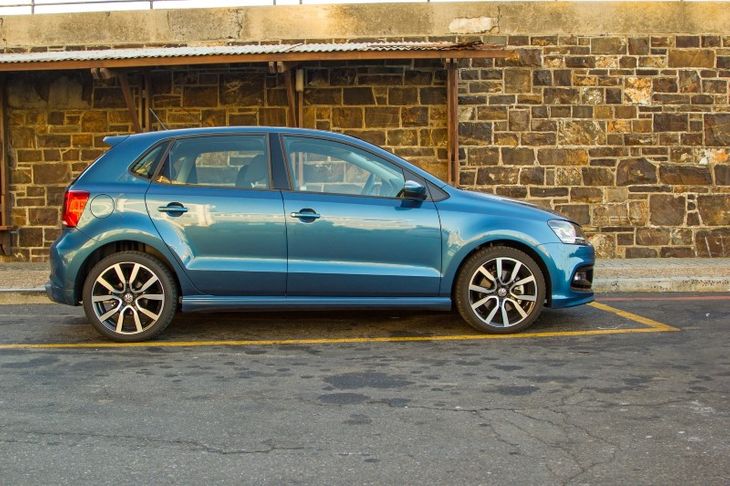
Volkswagen has drawn inspiration from the iconic CitiGolf to produce a limited edition version of its top-selling Polo Vivo. Unsurprisingly, it's only available in red, yellow and blue! We take a closer look at the cheeky newcomer.
Launched in 1984, the CitiGolf was a cheeky, no-frills and budget-positioned continuation of the first generation Volkswagen Golf, which had famously replaced the original Beetle in the Seventies. Production continued until 2009, during which time 377 000 CitiGolfs were produced; the little car, despite its lack of ABS and airbags, achieved cult status in South Africa.
Based on the 4th-generation Polo, the Polo Vivo became Volkswagen’s entry-level offering and much like the CitiGolf it replaced, the Vivo has topped the sales charts since 2010. Now, as the automotive market gears up for the introduction of the 6th-generation Polo (and quite possibly, the next generation Vivo), Volkswagen has released a Citi version, which is still fun-loving, but anything but basic.
Which cars are South Africans buying most in these tough economic times? Looking at the sales results of the first quarter of 2017, it would appear trusted favourites remain the way to go…
The source for the sales figures below is Lightstone Auto, and for the purpose of this report we've selected only vehicles sold through the dealership channel – totals exclude sales to rental companies and government etc. Also note that sales volumes for the following brands, Chery, Daihatsu, Foton, FAW, Hyundai, Kia and Proton reflect estimates calculated from the aggregated volumes reported, as well as financial data.
Passenger cars
Toyota and Volkswagen dominate this segment, but the Korean brands (see note above) and Ford also do well. Volkswagen's Polo, recently bolstered with the addition of the 1.0 TSI R-Line model, continues to dominate the market, closely followed by what is essentially its predecessor, the Polo Vivo, which recently gained the nostalgic CitiVivo variant. Toyota claims a spot on the podium with its Fortuner, the country's top-selling SUV.
Even though a new Polo is around the corner, the current model still dominates the SA market.
1. Volkswagen Polo
4 130
2. Volkswagen Polo Vivo
3 761
3. Toyota Fortuner
3 044
4. Toyota Etios
2 086
5. Ford EcoSport
1 957
6. Hyundai Tucson
1 735 est
7. Toyota RAV4
1 498
8. Ford Fiesta
1 462
9. Renault Kwid
1 390
10. Hyundai i20
1 368 est
11. Toyota Corolla
1 320
12. Ford Everest
1 262
13. Volkswagen Golf 7
1 254
14. Toyota Corolla Quest
1 248
15. Kia Picanto
1 202 est
16. Hyundai Grand i10
1 154 est
17. BMW 3 Series
1 151
18. Hyundai Accent
1 099 est
19. Volkswagen Tiguan
1 075
20. Kia Rio
966 est
Commercial Vehicles
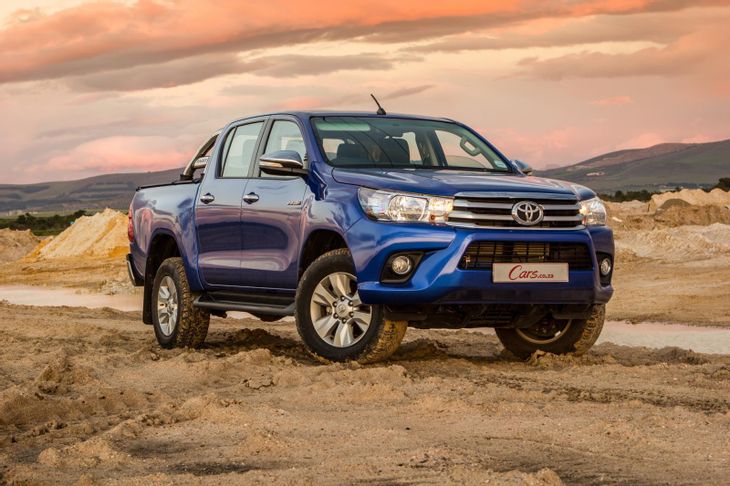
It continues to be a closely matched contest at the top of the charts, where the Toyota Hilux and the Ford Ranger are slugging it out. In the first quarter of this year, the Hilux has come out tops, but only by around 300 units. It is interesting to note, however, that the Hilux's win is largely because of its dominance in the single-cab segment. If one compares only Double-Cab sales, then Ford is the comfortable leader (5 135 vs 2 998). Nissan's ageing NP200 and NP300 line-ups continue to sell well with General Motors' Chevrolet Ute and Isuzu KB seemingly under pressure.
The Toyota Hilux is South Africa's favourite bakkie, but not in double-cab form.
When the Volkswagen Tiguan range was launched in 2016, its model line-up was limited… Where was the economical turbodiesel derivative? Well, the Wolfsburg-based company has now extended the range (2017) and we got to test the new flagship Tiguan, which is both diesel-powered and all-wheel driven. Is it the best-in-class family car in South Africa, or should you be considering cheaper alternatives in these cash-strapped times?
We Like: R-Line body kit adds striking visual presence, powertrain refinement, surprisingly competent offroad ability, exquisite build quality
We Don't Like: We'd like the European-spec engine, but SA diesel quality is not up to scratch. Pricey when compared to rivals. Firm ride.
Alternatives:
What can the Koreans muster: Hyundai's Tucson and Kia's Sportage are quality vehicles and have tallied up many sales. We'd favour the Tucson over its counterpart because it offers more value. However, the combination of diesel and all-wheel drive is not possible. If you want all-wheel drive, then look to the 1.6-litre turbopetrol version.
How about a sensible Mazda: The Mazda CX-5 is about to be replaced, but at the time of writing it offered a commendable driving experience, generous specifications and a powerful 2.2-litre turbodiesel engine.
The affordable choice: The Renault Kadjar is the cheapest vehicle in this list and it offers liberal specification as standard. It's comfortable to drive and its diesel engine is adequate. However, it lacks that premium solidity that the Tiguan offers in such abundance and the Koreans' interiors are just as well-assembled as the French offering.
4Motion offroad ability is better and more capable than expected
The Good
Surprisingly capable off-road
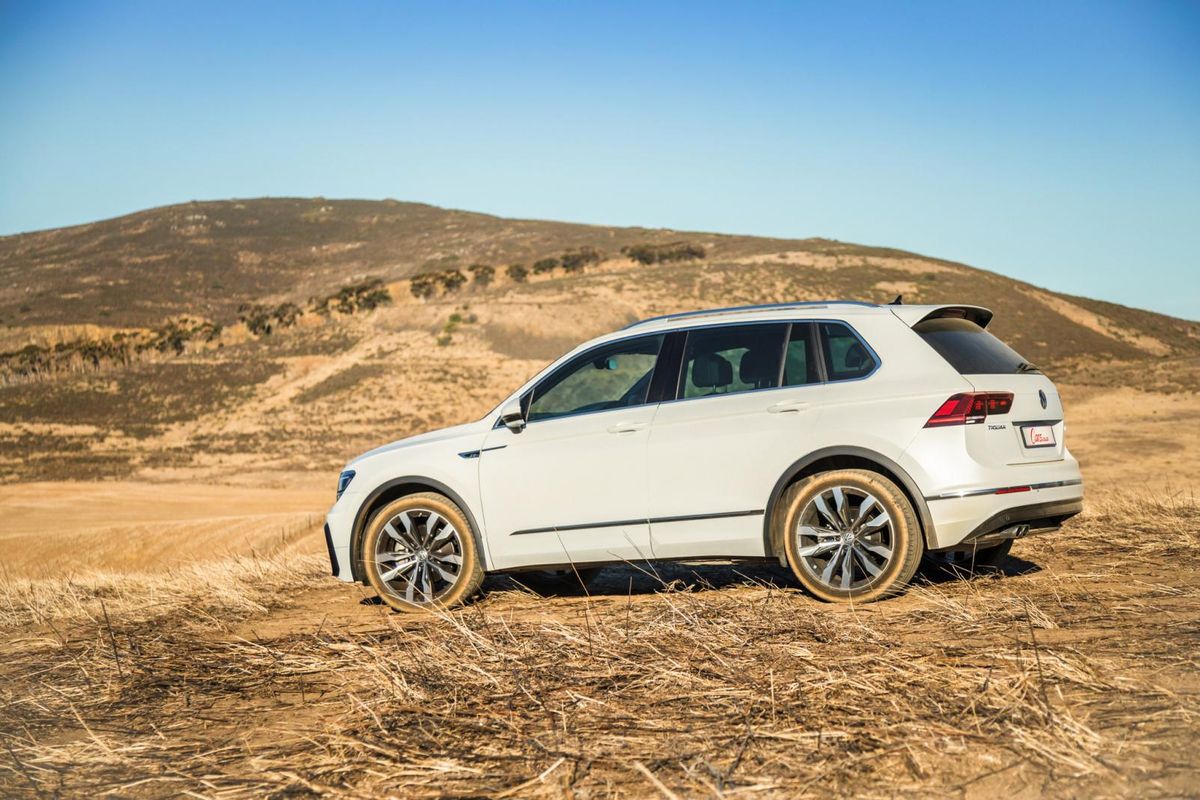
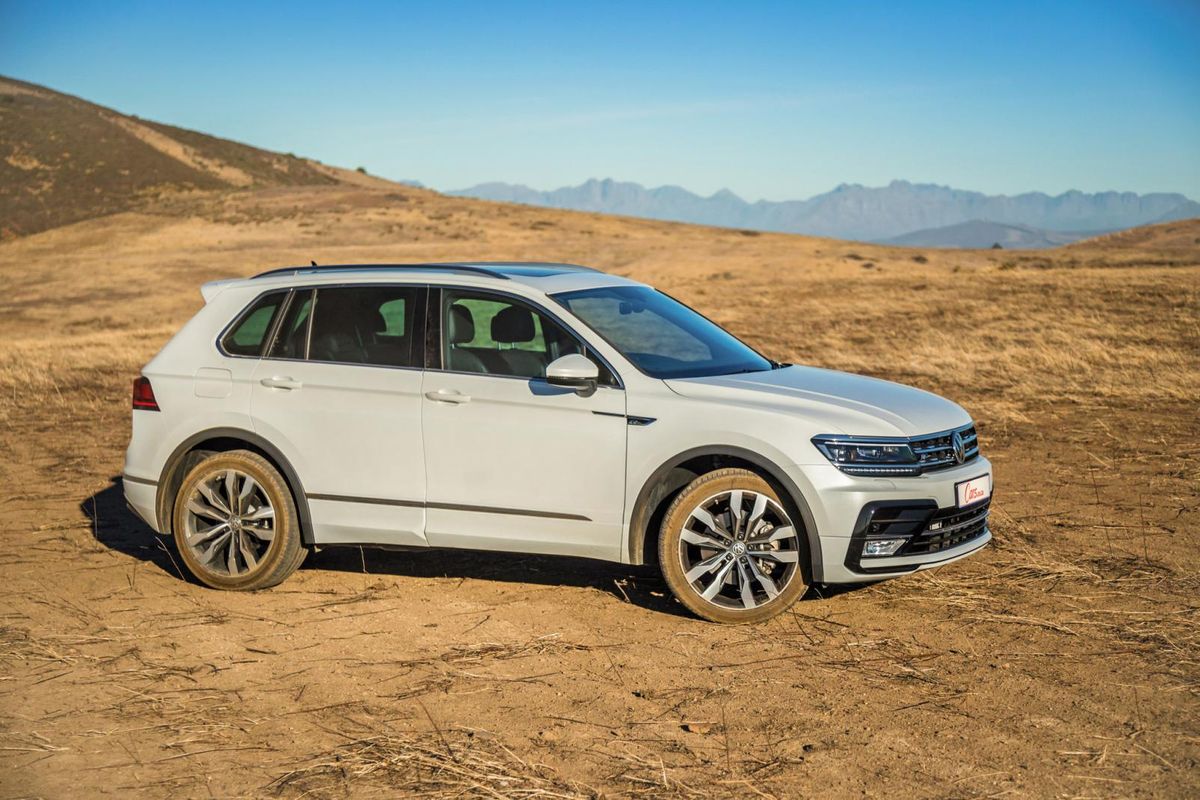
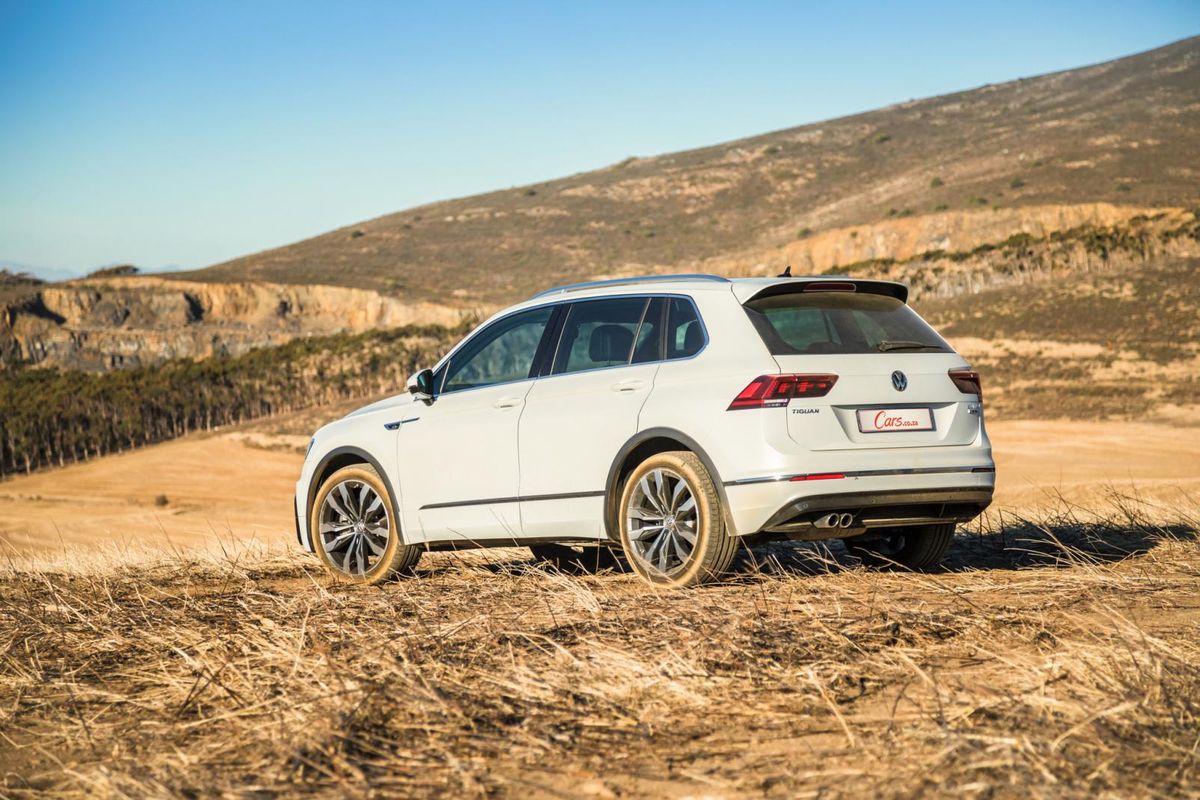
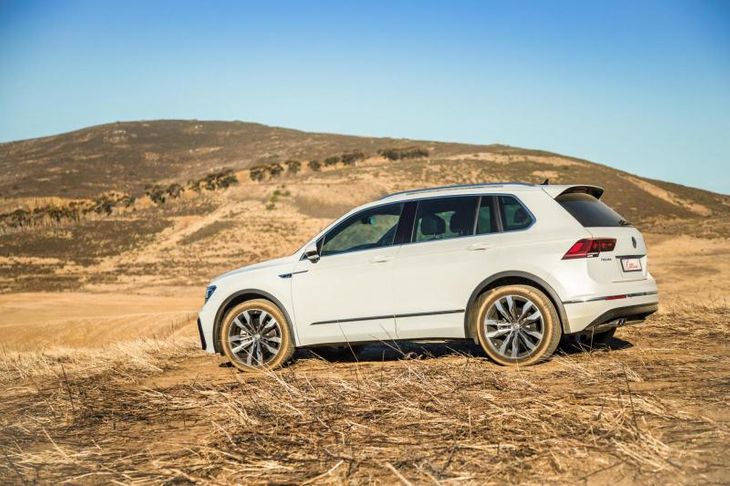
Given its 4Motion (all-wheel-drive) configuration, what better way to put the Tiguan to the test than by turning off the tarmac, engaging the dirt mode and seeing what the VW can do? A case of "let's see where this dirt road goes" turned into "this is getting tricky now, we should do the photos here". The road in question comprised a steep and rutted gravel/dirt path, but we were optimistic and hopeful that our Tiguan test unit could traverse such terrain. And so it did; the fact that the Tiguan didn't bottom out or battle for grip was a pleasant surprise.
See, this 4Motion arrangement is not meant to be a serious off-road 4×4 technology, but rather an aid for slippery conditions such as snow and gravel. Nonetheless, we were more than impressed with the way the Volkswagen dealt with barely passable farm roads on a hot afternoon in the drought-stricken Cape Town area. There was little slippage/loss of traction thanks to the dynamic system sending power to the wheels that needed it most. We're not advocating this Tiguan as a rival to something like a Toyota Fortuner, but it exceeded our expectations.
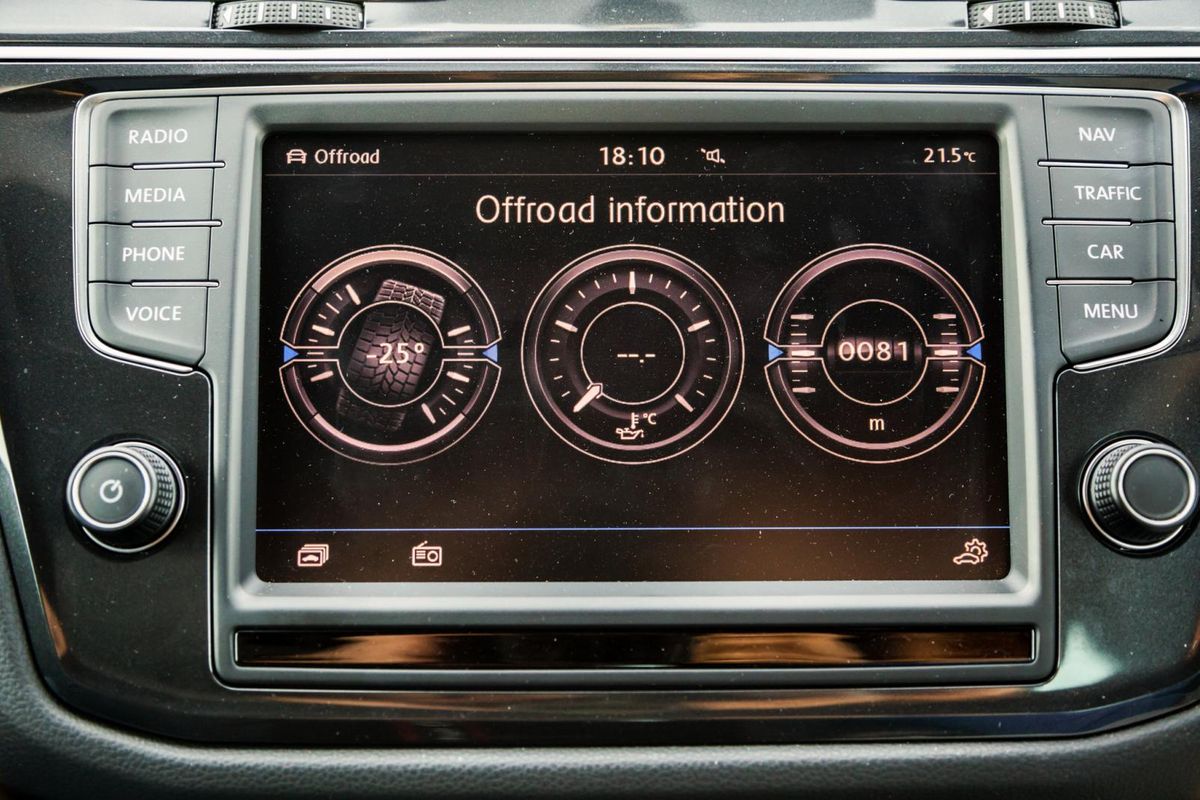
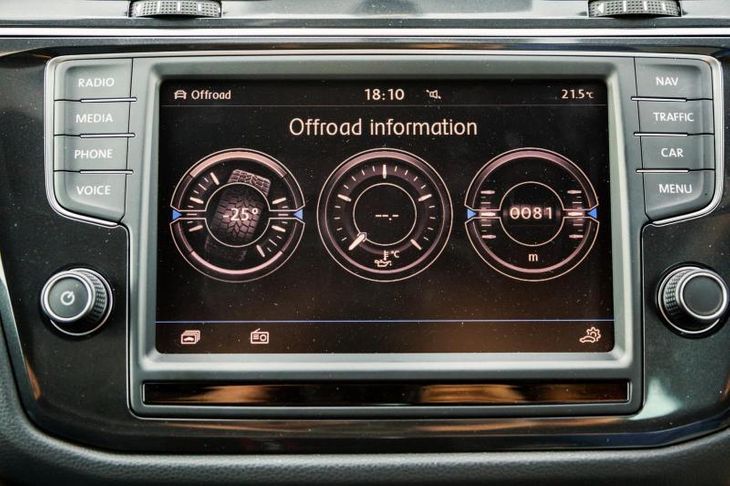
Off-road information on the high-quality infotainment display
Modern looks
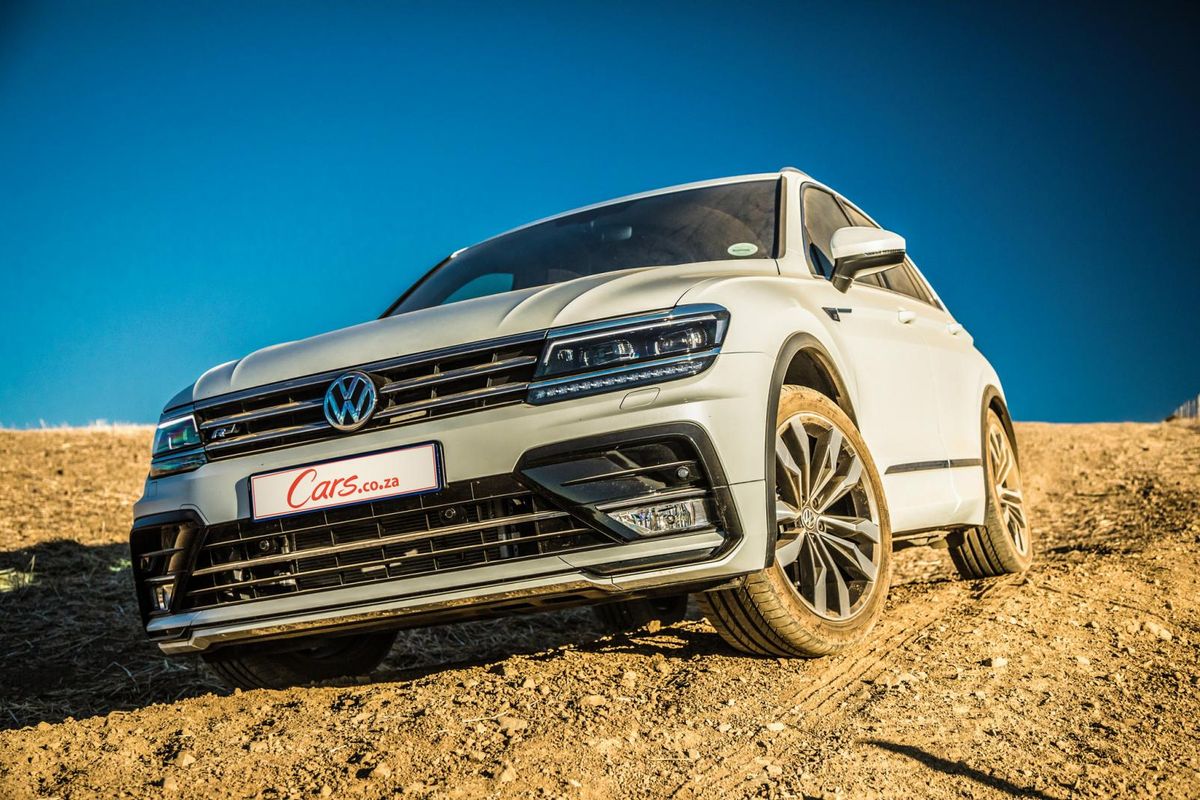
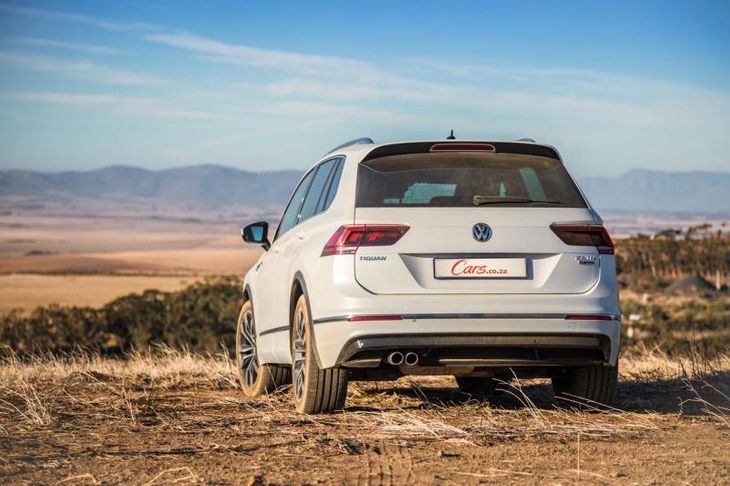
Fitting the test unit – the entire Tiguan media fleet, in fact – with R-Line body kits was a stroke of genius by Volkswagen's marketing department, because the newcomer's visual appeal is greatly enhanced by the R18 000 upgrade. It's hard to find a base-spec Tiguan to compare it with, but when you see one, you'll be dismayed at how ordinary it looks by comparison. It may be an extra-cost item, but it really makes the Tiguan stand out. Rounding off the R-Line kit are some tasty 20-inch alloy wheels and a sports suspension.
Drivetrain refinement
In some countries (mainly in Europe), there is mounting resistance to diesel-powered vehicles. It's a pity, because we believe that a turbodiesel is the best powerplant for this class of car. Granted, it's the engine that proved the culprit in the recent emissions scandal, but despite the negativity and bad press, it complies with SA emission standards and that's that.
This 2.0-litre turbocharged diesel motor boasts more-than-healthy outputs of 130 kW and 380 Nm, with power directed to all 4 wheels via a 7-speed automatic transmission. It's a good combination and despite some initial lag (hesitation) at pullaway, the engine swiftly comes on strong and pulls well thereafter. We suspect this Tiguan derivative could prove a more than capable towing vehicle. It's also fairly frugal when you're treating the accelerator pedal like an on/off switch… during its time with us, we saw a consumption readout of 7.9 L/100 km.
Volkswagen's dual-clutch gearbox (DSG) just seems so seamless in its behaviour: each shift (up or down) occurs without any noticeable let-up in power delivery. You can, of course, use the steering wheel-mounted paddles to actuate gear changes yourself, but we chose to leave the 'box to its own devices most of the time.
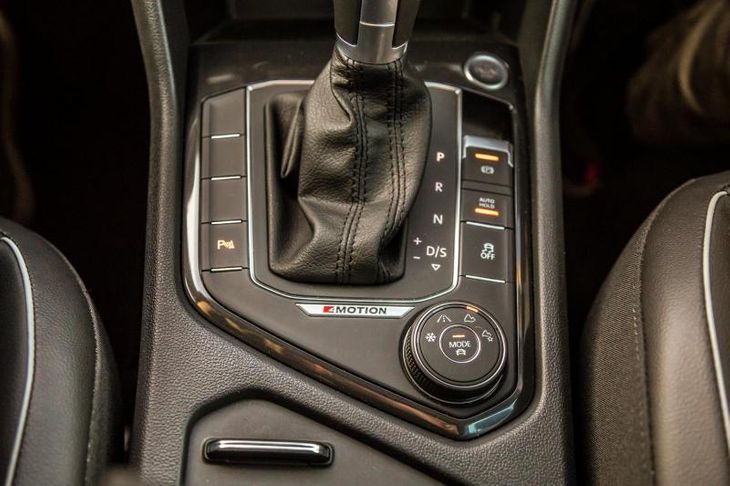
DSG is the industry benchmark in dual-clutch gearboxes. Note: 4Motion specific offroad mode selection wheel
Build quality and features
Volkswagen seems to achieve top-notch build quality and fit-and-finish with unerring regularity. This Tiguan feels superbly made and you could step out of it and into one of the premium brands' cars and not feel any immediate differences. Our vehicle's dashboard was sharp and modern, dominated by the optional 8-inch Discover Pro infotainment system.
Also fitted was the digital instrument cluster; it's a little difficult to find all the correct information, but this shouldn't bother owners who will have ample time to become familiar with it.
In a chapter we could potentially call "Options we didn't know we actually needed until now", we discovered that the test unit came with some rather great optional extras. The 230V socket was handy to charge our camera kit and the discrete electrically-released towbar meant that you can fit a bicycle rack. Also worth consideration is the DynAudio sound system.
The Not So Good
Rivals are more affordable
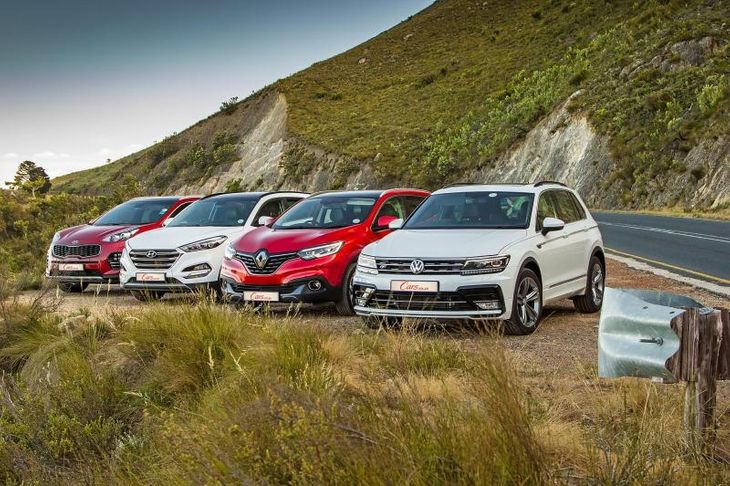
From a previous comparative review: As you can see, this segment is jammed with rivals. Tiguan is the most expensive, but is it worth the extra outlay?
As good as the Tiguan is, you pay dearly for that excellence. A cursory glance at our comparison tool highlights that the Tiguan is priced appreciably higher than its immediate rivals. Admittedly the likes of the Renault Kadjar can't compete in terms of finish and the Koreans' badges don't have as much appeal as the German's, but still, the price gap is considerable.
The popular Hyundai Tucson, for example, comes in at just under R540k, but you can't get an all-wheel drive derivative with a turbodiesel engine. The diesel-powered all-wheel drive Kadjar more than R100k cheaper, while a top-spec Mazda CX-5 (due for replacement at the time of writing) is comfortably R30k less than the Tiguan.
R-Line ride quality
Part of the Volkswagen R-Line kit on the Tiguan includes the combination of 20-inch alloy wheels and a sports suspension. While it makes for a firm, yet fair ride quality on perfect tarmac, not all roads offer a smooth surface and on roads that are degrading and feature potholes and tree roots, we found the Tiguan to be a touch too firm. It's a minor niggle, but worth noting.
On the other side of the coin is the fact that the MQB platform (as utilised by several VAG products) delivers notable driver enjoyment; when you're piloting the Tiguan swiftly through some the lovely sweeping bends that the Western Province is renowned for, you'll encounter pleasant levels of composure and directness.
Verdict
Volkswagen Tiguan 4Motion 2.0 TDI DSG – a complete car which is practical and capable. but you're paying a premium for it.
The Tiguan, equipped here with a reasonably thrifty (yet punchy) turbodiesel motor and all-wheel drive, is a very accomplished vehicle. There's so much it does right. Not only does it feel firm and solid, but its build quality is close to that of overtly luxurious SUVs. The practicality is hard to fault and whether you're a child or an adult, rear leg-, shoulder- and headroom are fair. We were also impressed with its composure, sure-footedness and overall capabilities on the dirt, particularly steep gravel farm roads where we photographed this test unit.
It's a great offering that ticks multiple boxes in terms of roles, but, given its high price tag, you'd expect nothing less. In short, it's a complete package that could be all the family car you'd ever need in one attractive, albeit budget-stretching vehicle. Given how South Africa's credit rating has been downgraded and that people will be downscaling to save money, we wouldn't be surprised to see potential customers of the Mercedes-Benz GLC, Audi Q5 and BMW X3 looking at this Volkswagen Tiguan as a "more-value-for-money offering…
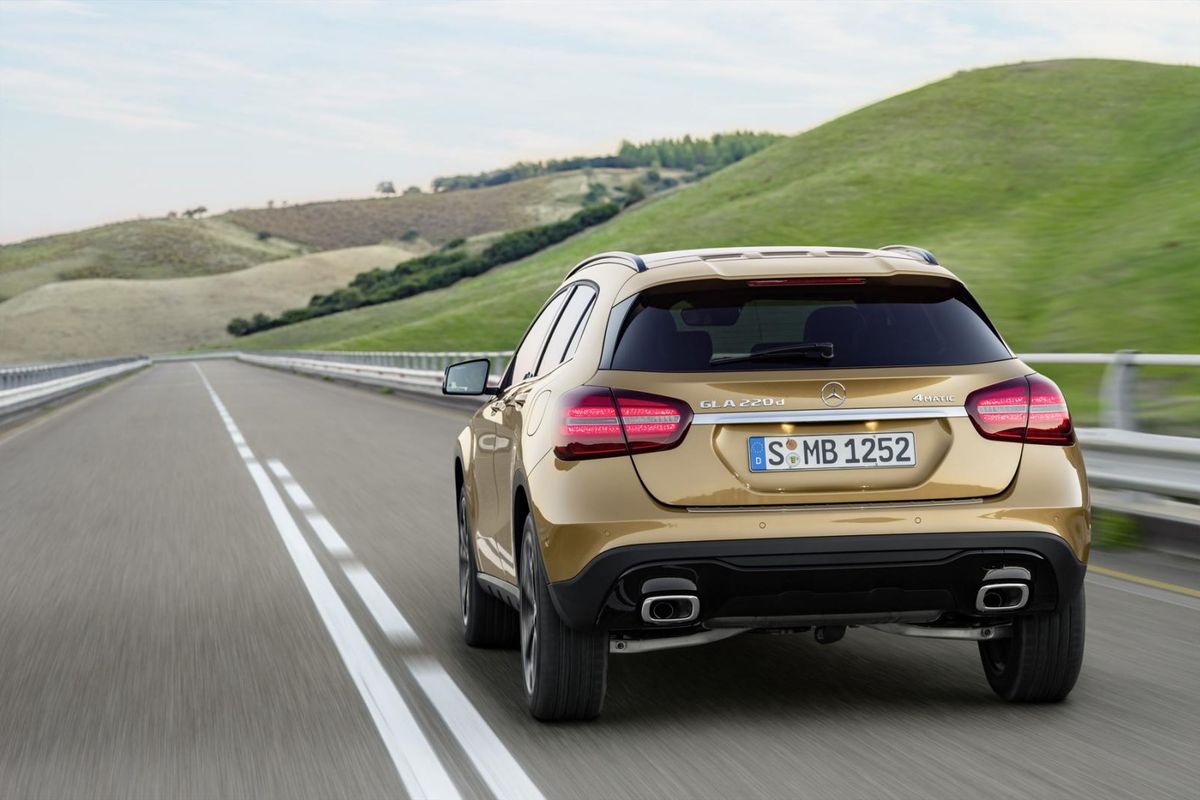
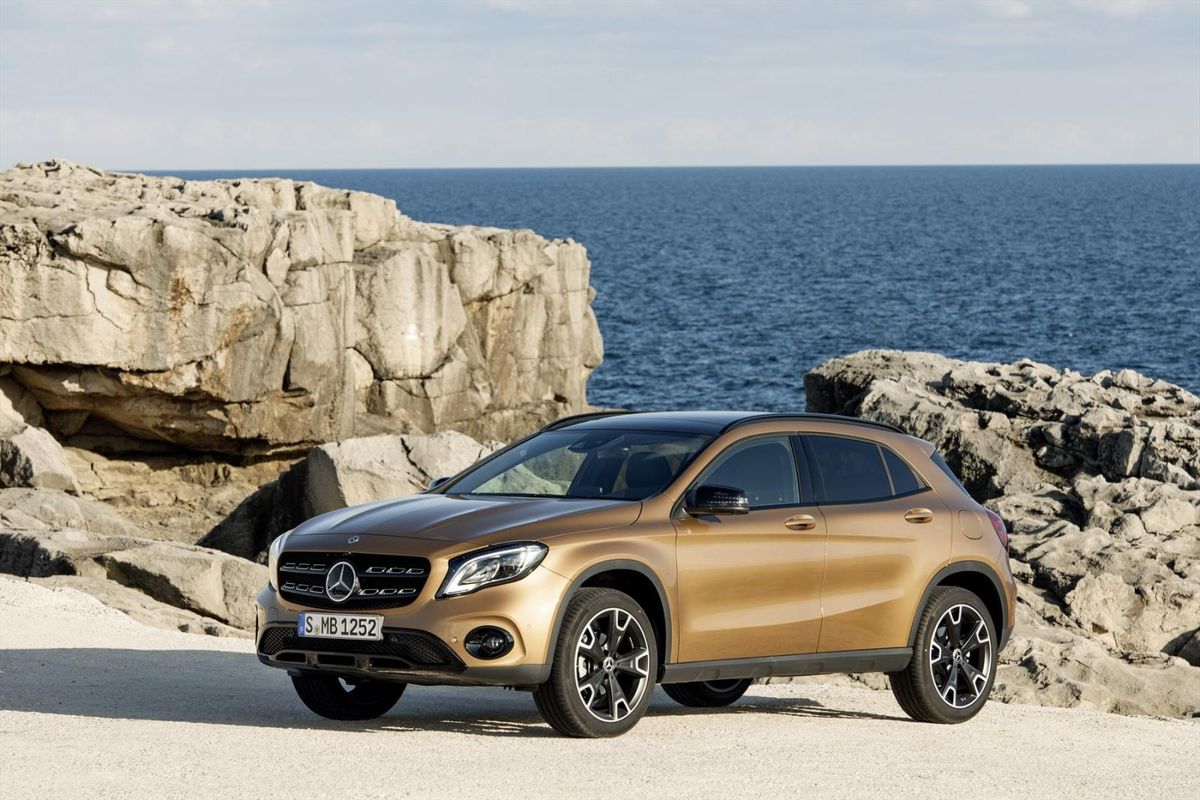
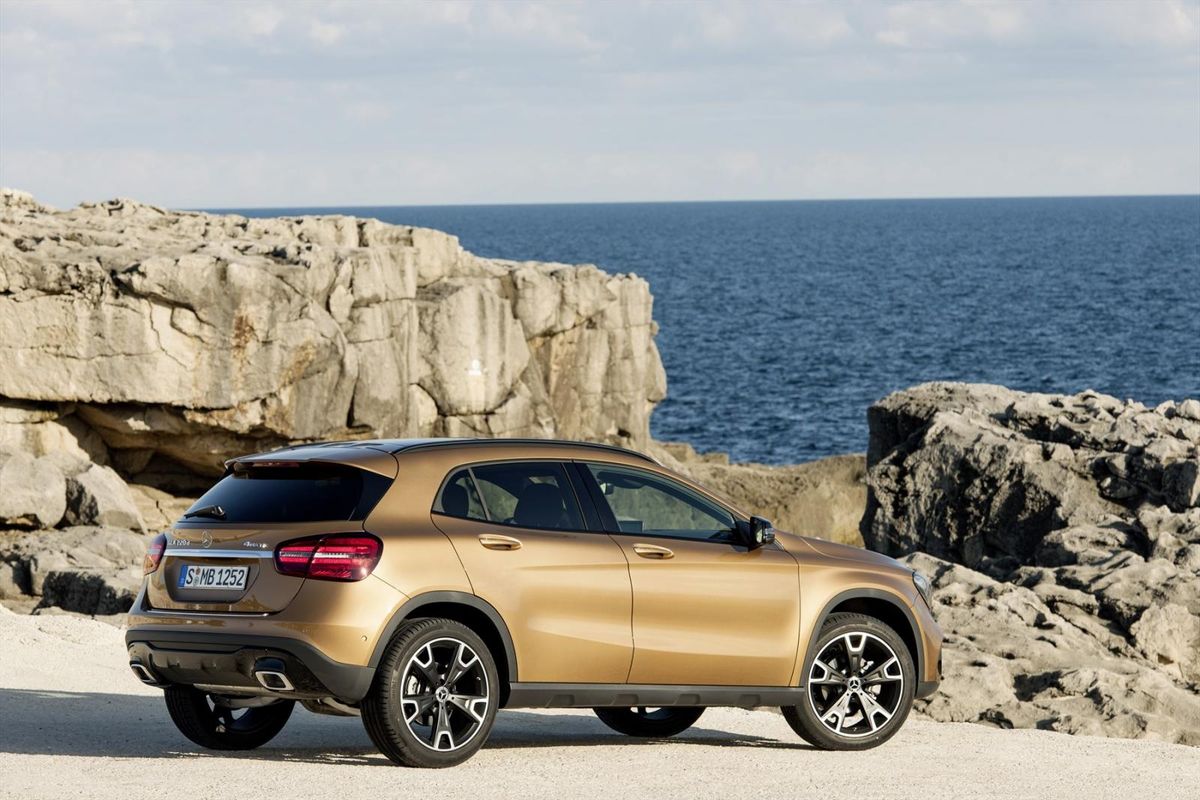
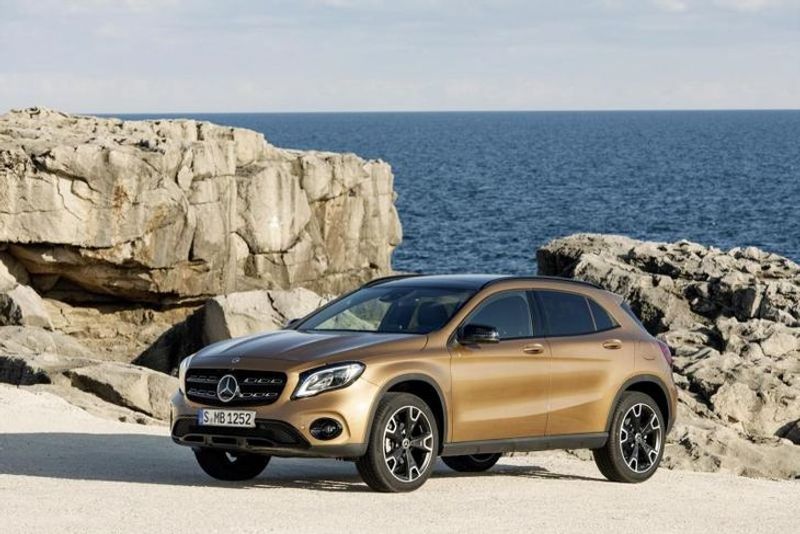
Is Mercedes-Benz’s compact family car/crossover also perhaps its best A-Class? We drive the Sindelfingen-based brand's facelifted GLA to plot the curious progress of Jurassic park and A-Class.
Twenty years ago, Mercedes-Benz did something unusual. Stuttgart’s most storied brand revealed products that conventional Benz customers never considered necessary: a luxury SUV and front-wheel drive hatchback.
It does make one feel a touch old. I recall the curiosity from E-Class owners about MLs in "that dinosaur movie" (Jurassic Park) and open hostility towards A-Class. In 2017, a lot of Mercedes-Benz’s business concerns selling vehicles with gravel-travel ability and where A-Class was originally a retiree’s city car, it’s now an independent range, 3 model-lines strong.
Mercedes-Benz in 2017 is a branding execution nearly unrecognisable from what the marque stood for in 1997: daring, youthful, immersed in social media channels and digital platform marketing. Where once the Three-pointed Star was all about appealing to company directors and countries' diplomats, today the brand attempts to captivate youthful designers and, well, there’s no comfortable way to say it: hipsters. How else do you explain red-seatbelts threaded through the B-pillar guides on an A-Class?
The GLA is 1 of 3 Mercedes-Benz compact vehicles. Benz-branded compact cars were unthinkable 20 years ago, yet they've carved out a substantial slice of the premium hatch pie.
No car exemplifies the promise made by Mercedes-Benz with its daring 1997 dual venture of SUVs and A-Class like GLA. If you predicted it 20 years ago, people with Three-pointed Star keyrings would have abruptly excused themselves from your company.
Whereas A-Class has been the agent of change for Mercedes-Benz’s urban youth movement, globally, GLA makes terrific sense for South Africa. More so, than in many other markets, because we have gravel. A lot of it. And there’s always the yearning sense of adventure to be revealed and experienced when travelling along those great tracks of gravel that connect South Africa’s matrix of cities, towns and topography. And now you can chase down all those follower-generating hashtags in a new GLA. Well, a slightly revised one, to be honest.
A few new things
The car to enable a lifestyle of Instagram location expectation, and South African mobile phone data network disappointment, is GLA. There’s not an awful lot which is new. It’s styling and illumination engineering upgrades, mostly: LEDs replace the Bi-Xenons. We’re all screen luminescence experts in a Smartphone-addicted world, so you might be interested in the trivia of these new GLA LEDs, the fronts radiate a colour close to daylight (about 6000 on the Kelvin scale) and the rear LEDs adjust their redness according to ambient lighting conditions.
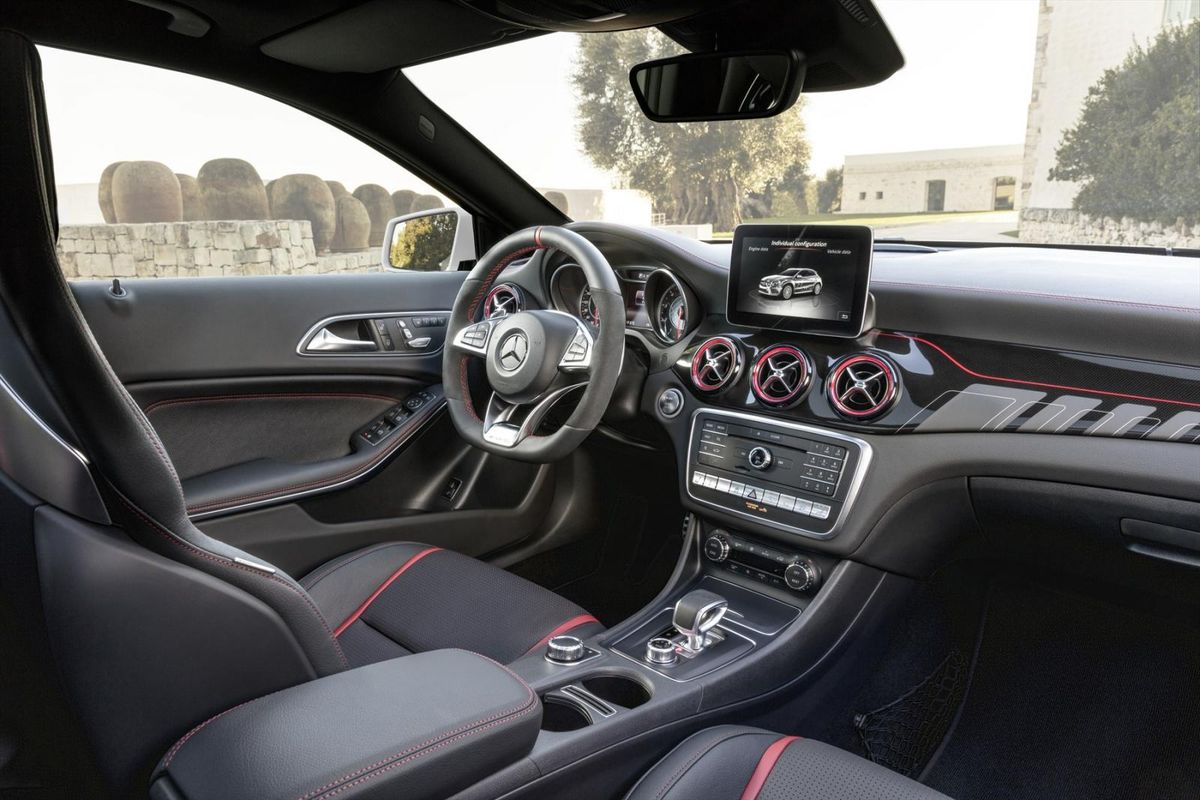
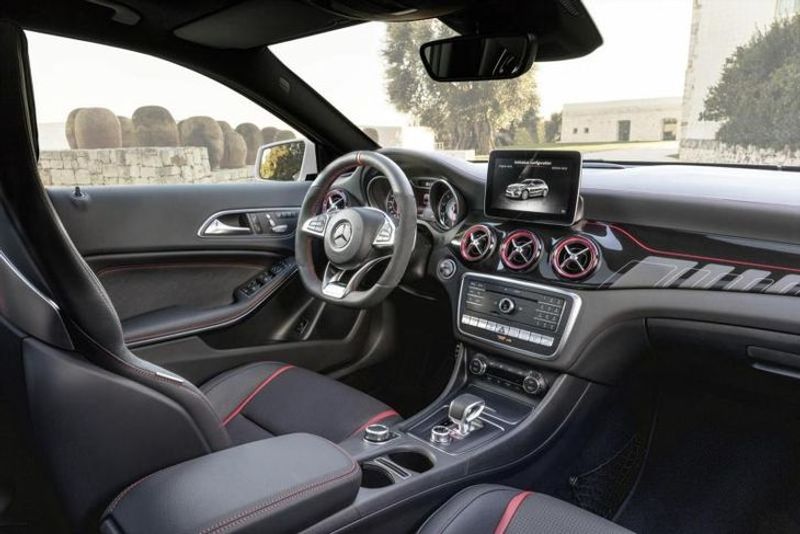
GLA offers slightly more interior space in the cabin when compared to the A-Class
Inside it’s a world of artificial leather and blind spots, although the claustrophobia you feel in an A-Class, with its enormously oversized roof pillars, is lessened. Mitigating the blind spot issue is a 360-degree camera system which sweeps a compound perspective to give you a reproduced bird’s eye view. Dynamic assistance systems include Active Brake Assist (autonomous brake-intervention if you’re about to impact something) and Attention Assist, which warns you that your lane discipline is weakening alarmingly.
Engines are familiar compact Benz configuration, from the sedate and economical 2.1-litre turbodiesel (100 kW worth in GLA 200d, 130 kW in the 220d 4Matic), to 115 kW of GLA 200 (which is, of course, a 1.6-litre), and 155 kW of "mildly hot hatch" with GLA 250. There’s the unrestrained mania of GLA45 too, powered by the world’s most potent production 4-cylinder engine, AMG’s award-winning M133, which converts unleaded fuel to 280 kW and 475 Nm.
First amongst equals of Benz’s A-offering
What are they like? One should always declare bias, and I prefer the GLA to the A-Class. They feel less confined inside and the additional ground clearance, suspension stroke and gravel-travel appropriate wheels gift GLA superior ride quality to A-Class, which suffers terribly on South African roads with its autobahn specification wheels. GLA is also that much more liveable than an A-Class, with 140 litres of additional boot space.
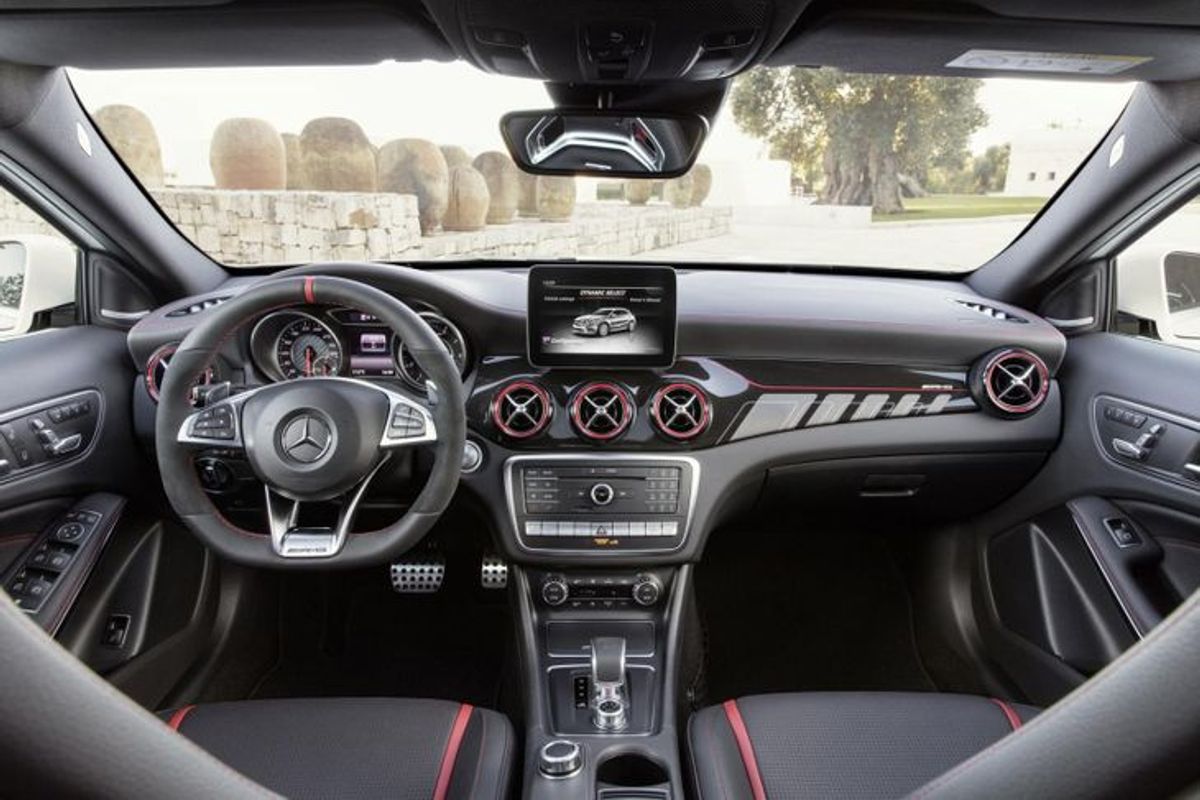
Despite some less than premium bits of trim, the W123-imitation aviation-style vents and shift paddles, which are beautifully machined and shaped aluminium with a satin finish, imbue the cabin with sufficient tactility to remind you this is a Mercedes. A smaller one of unusual configuration, but always a Mercedes.
Criticisms? The turbodiesels aren’t sufficiently brisk. Mercedes needs a new compact diesel engine for its A-Class cars, the current 2.1 simply doesn’t leverage the benefit of having a 7-speed dual clutch transmission. GLA250 has always been the "best-buy" candidate and it’s an interesting blend of performance, offering 155 kW of urge which feels true to the claimed 0-100 kph time of 7.1 sec, and traction on slippery surfaces, further aided off-road by some ABS modulated hill-descent control.
The 4Matic GLAs ride notably better than any other compact Mercedes, thanks in parts to the 215/60 dimension tyres, rolling on 17-inch wheels, but also the slightly dialled down suspension compression settings. With an astounding 15 wheel and tyre options, my advice is to ignore the R20 500 adaptive dampers. Instead, option the most generously profiled tyres, on the smallest available rim, to optimise a mechanical damping benefit which is real, instead of paying for adaptive dampers, which are a false economy of comfort if you’re rolling on 20-inch wheels with low-profiles at speed, over a particularly bad section of South African B-road.
New GLA offers some inexplicable options, best avoided. South Africa has immense UV radiation, hence no requirement for the R13 900 panoramic sunroof. I think R7 400 for red brake callipers, which clamp with no additional hydraulic force to non-red ones, is slightly excessive. On the theme of red, those scarlet seat belts, at R5 800, maybe not. You might be an AMG F1 fan, but R17 500 for carbon-fibre side-mirrors are a touch too close in price to those on Lewis’s W08.
OMG AMG
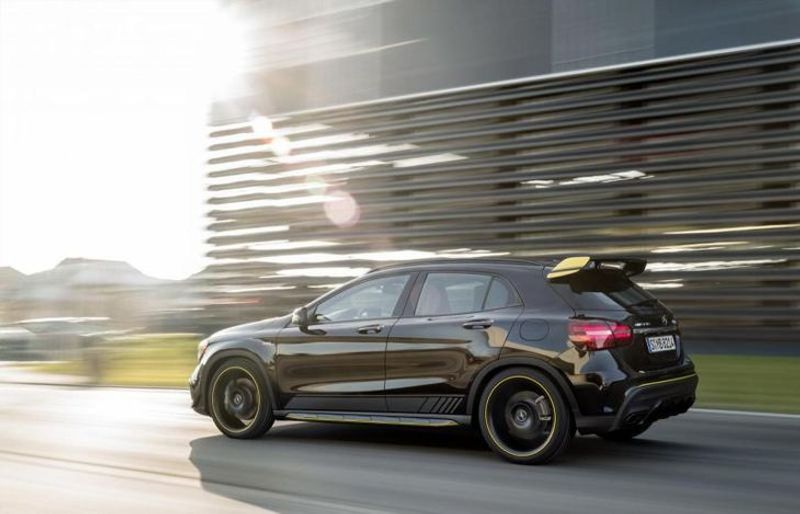
Mercedes-AMG has introduced a Yellow Night Edition package for the GLA45. Yellow trim is subtle and classy.
Facelift GLA offers a Yellow Night Edition package for AMG buyers. For R105 000 extra you get a black GLA45 with a lot yellow exterior and cabin trim, to channel your early 1990s German performance car aesthetic fetish.
Mechanically GLA45 is mostly unchanged, but for a tighter spacing of the AMG speedshift transmission’s gears from three-through-seven, making it four tenths of second quicker from 0-100kph (4.4 sec). With a higher centre of gravity than A45, the GLA AMG is perhaps the safer real-world performance car, as that initial onset of body-roll happens slightly earlier, and is, therefore, a fairer warning that you’re being a bit too ambitious.
The vision Mercedes had in 1997, with its compact A-Class and the venture into luxury SUVs, with original ML, has been expertly executed two decades later with GLA. It’s the most convincing of Stuttgart’s compact cars.
Mercedes-Benz GLA Price in South Africa (May 2017)
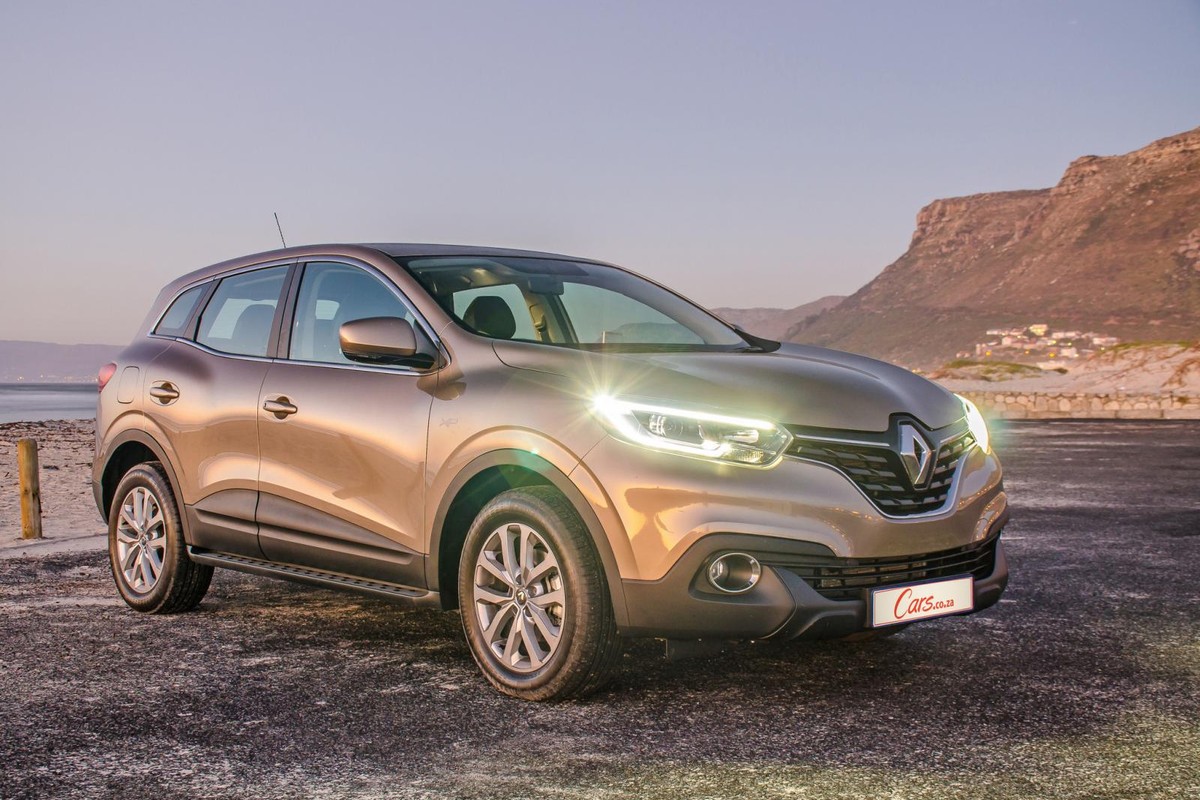
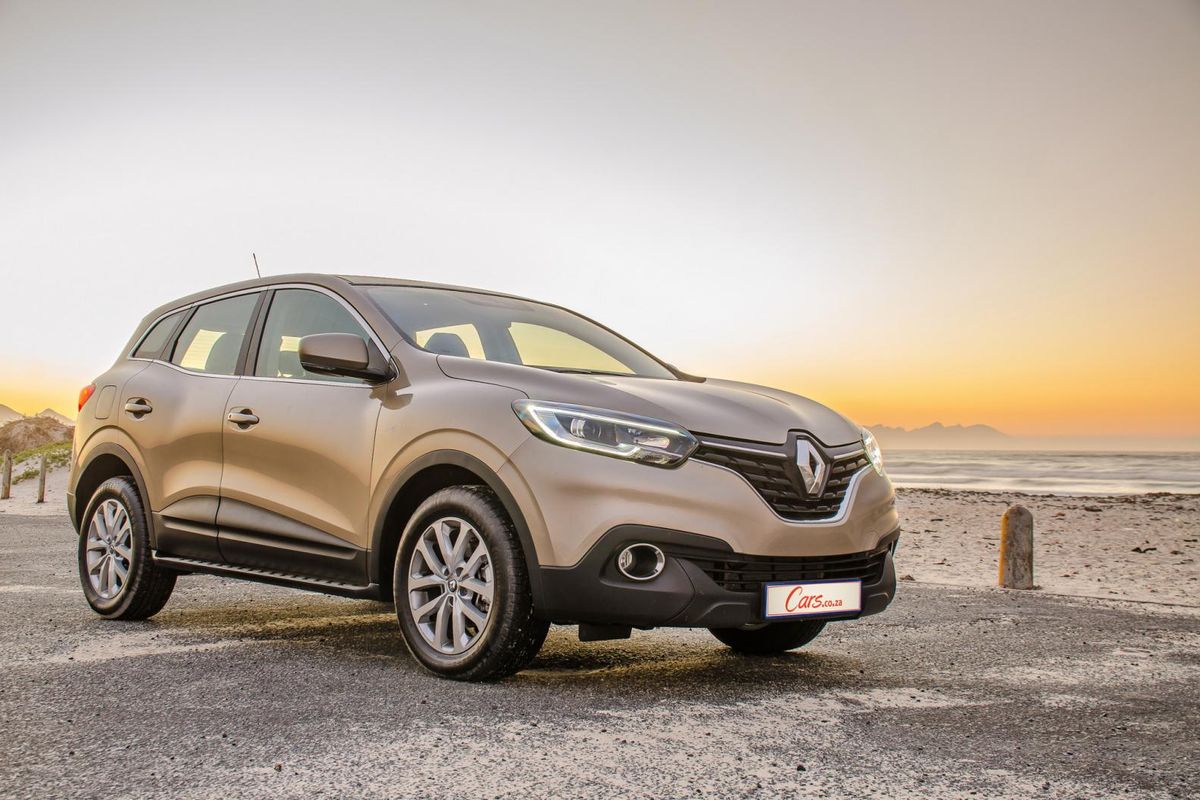
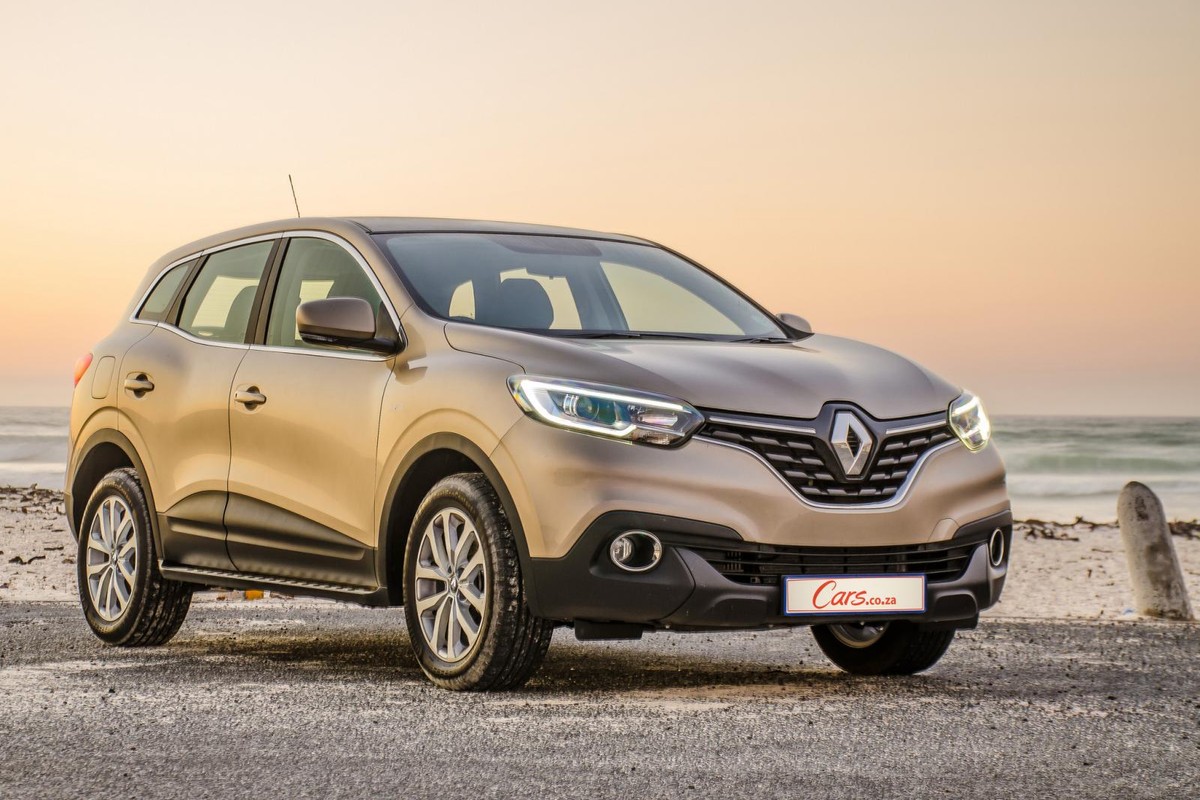
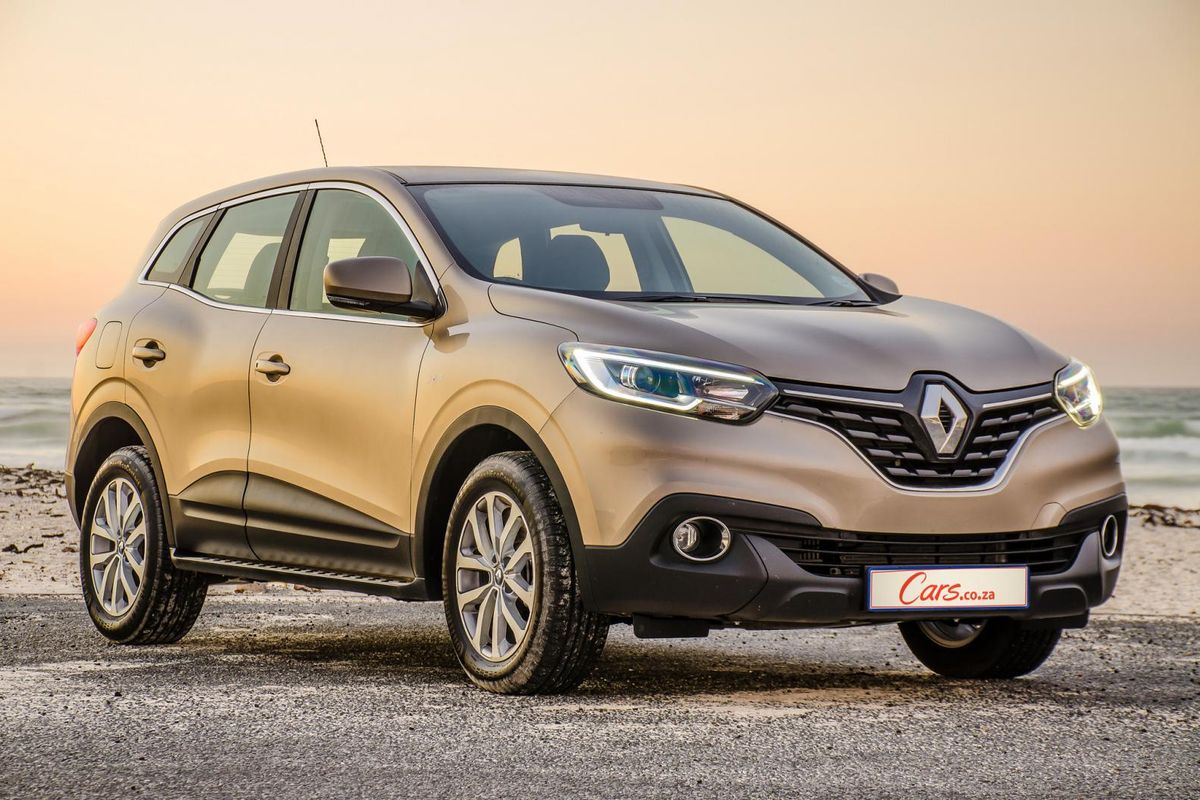
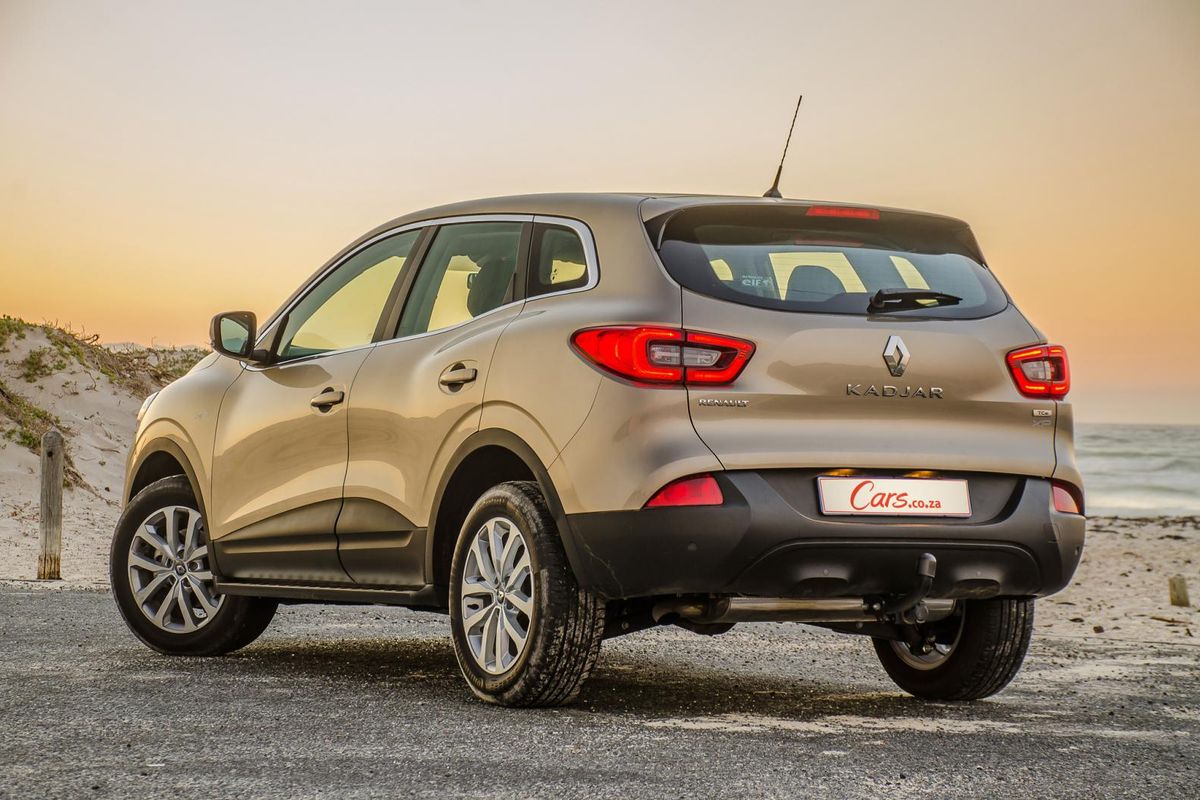
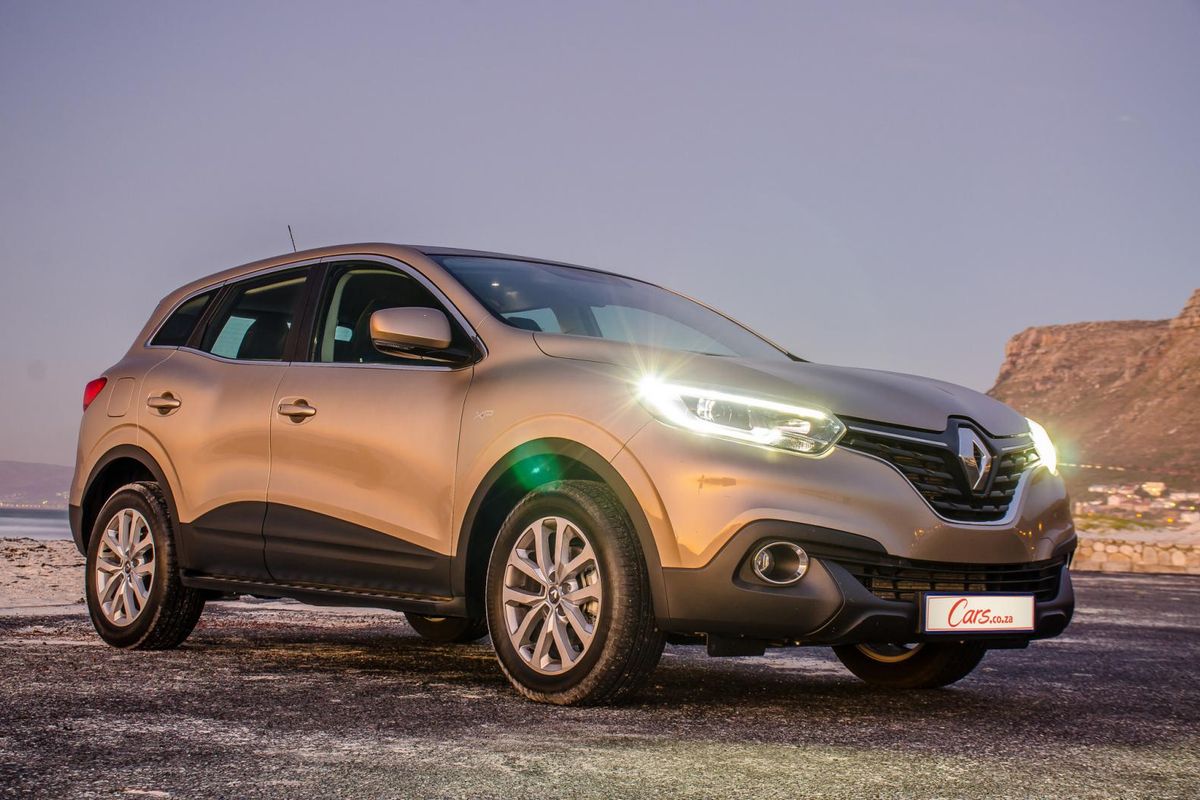
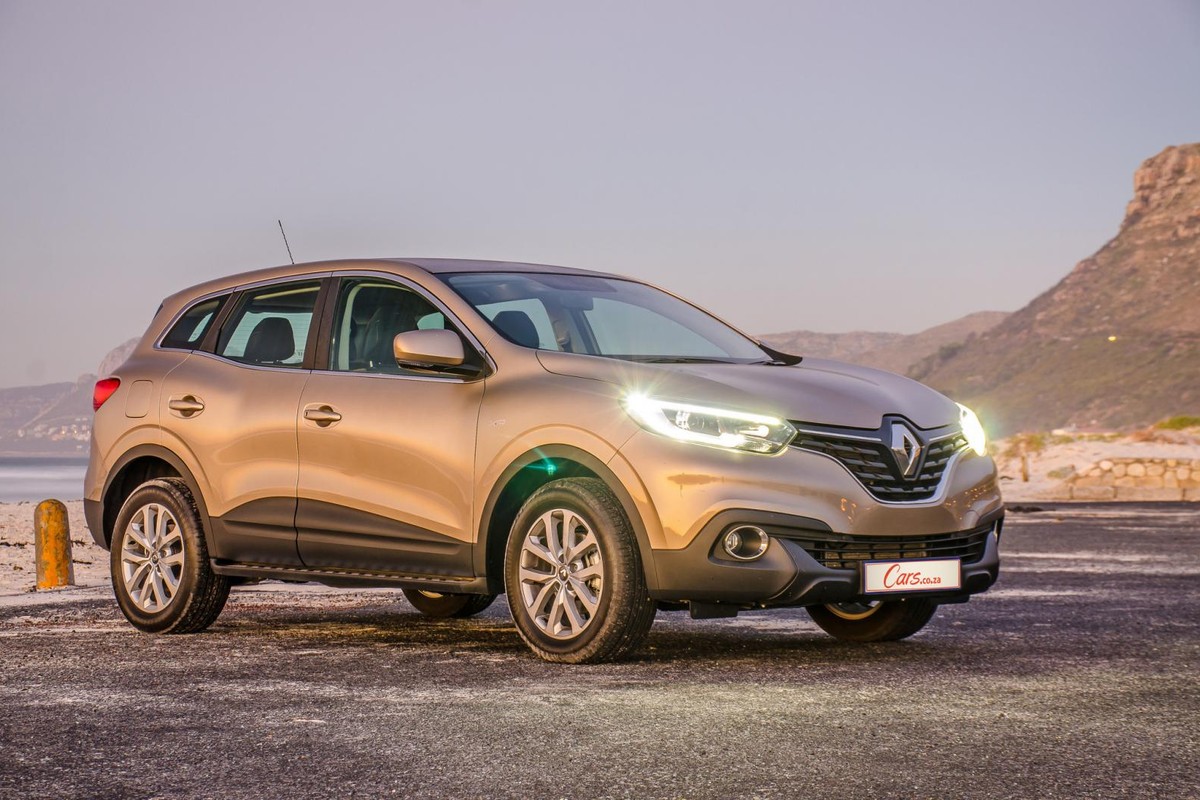
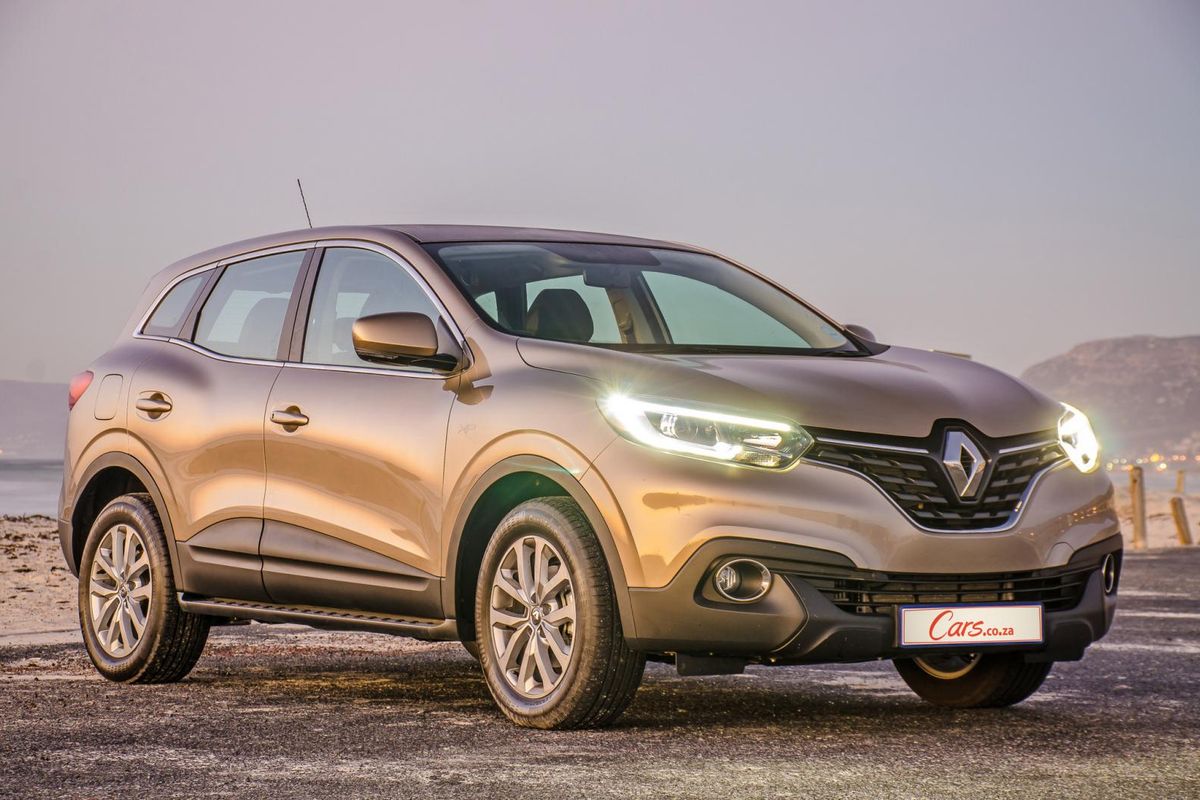
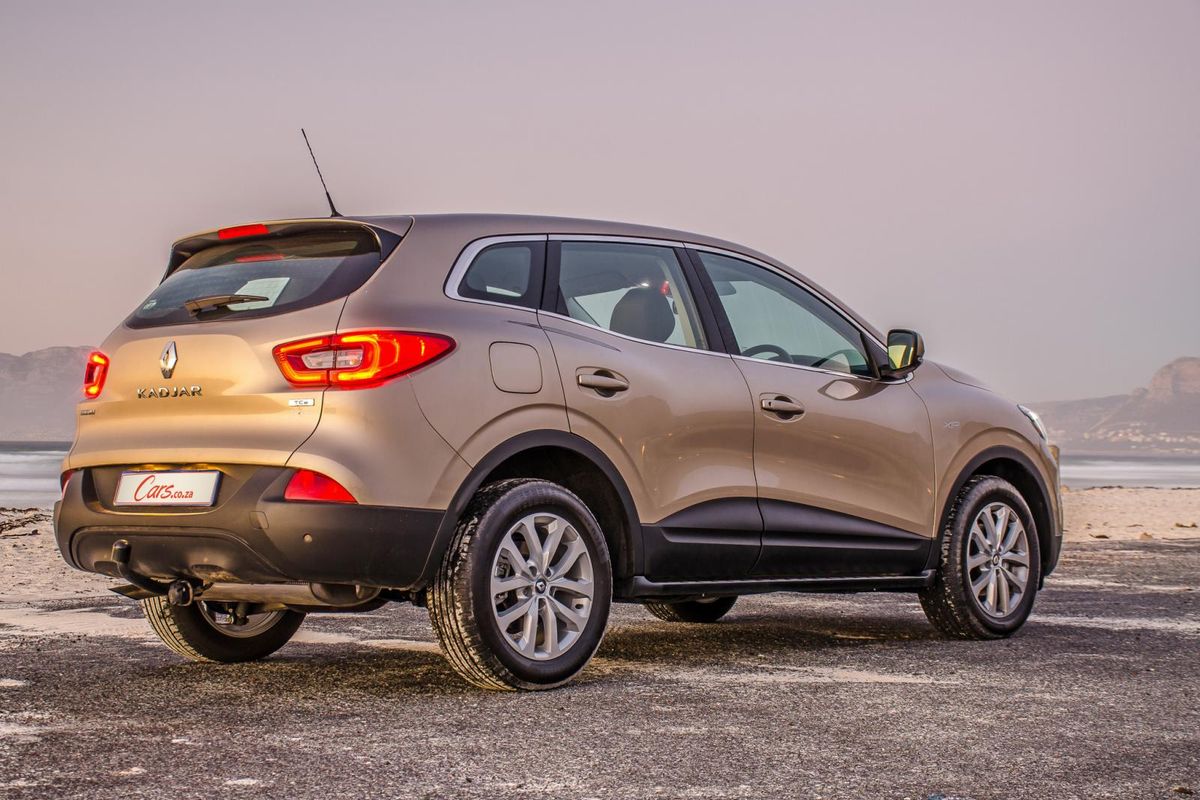
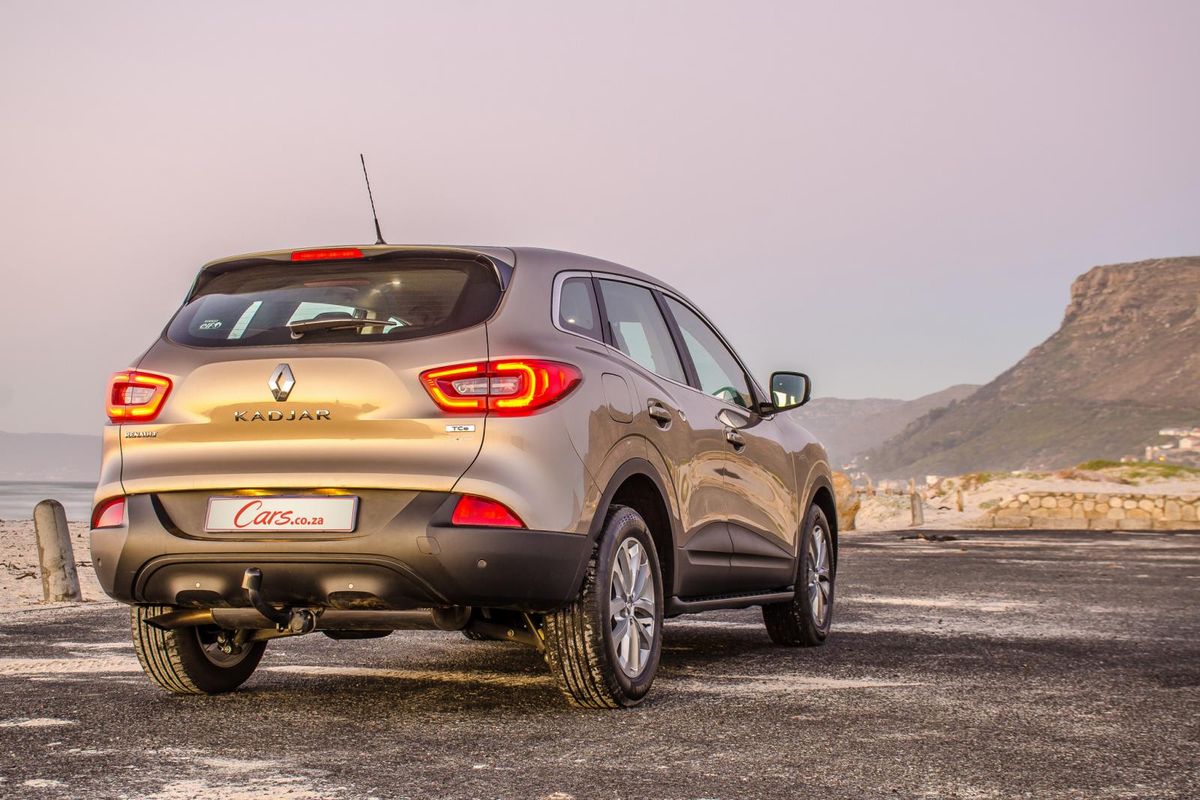
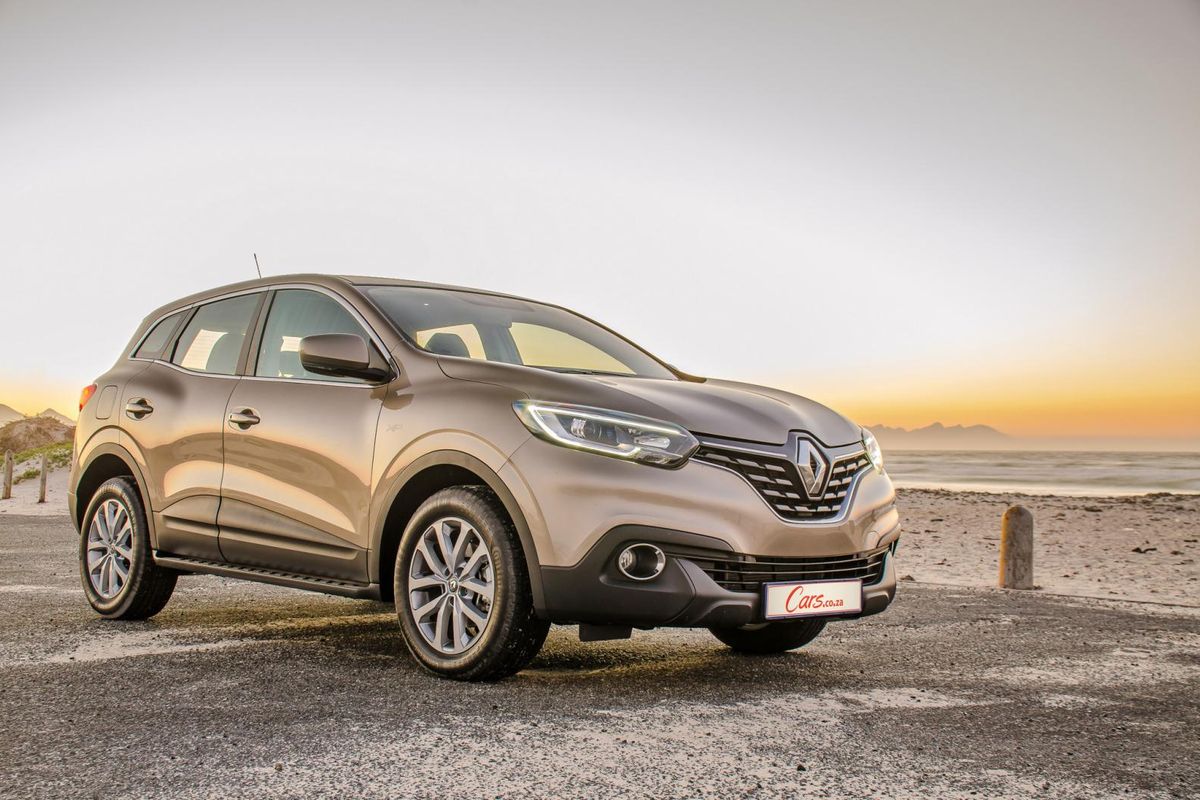
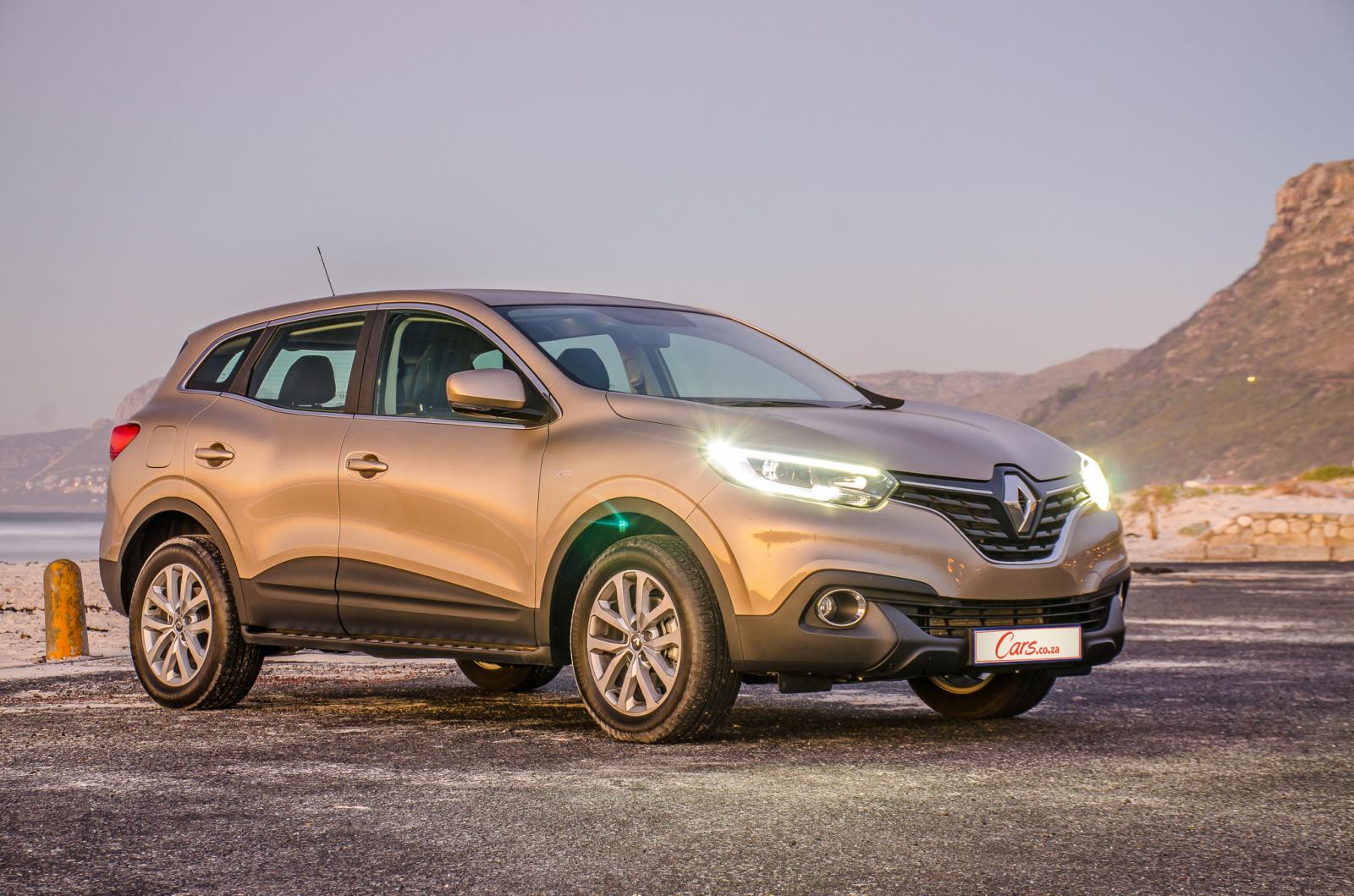
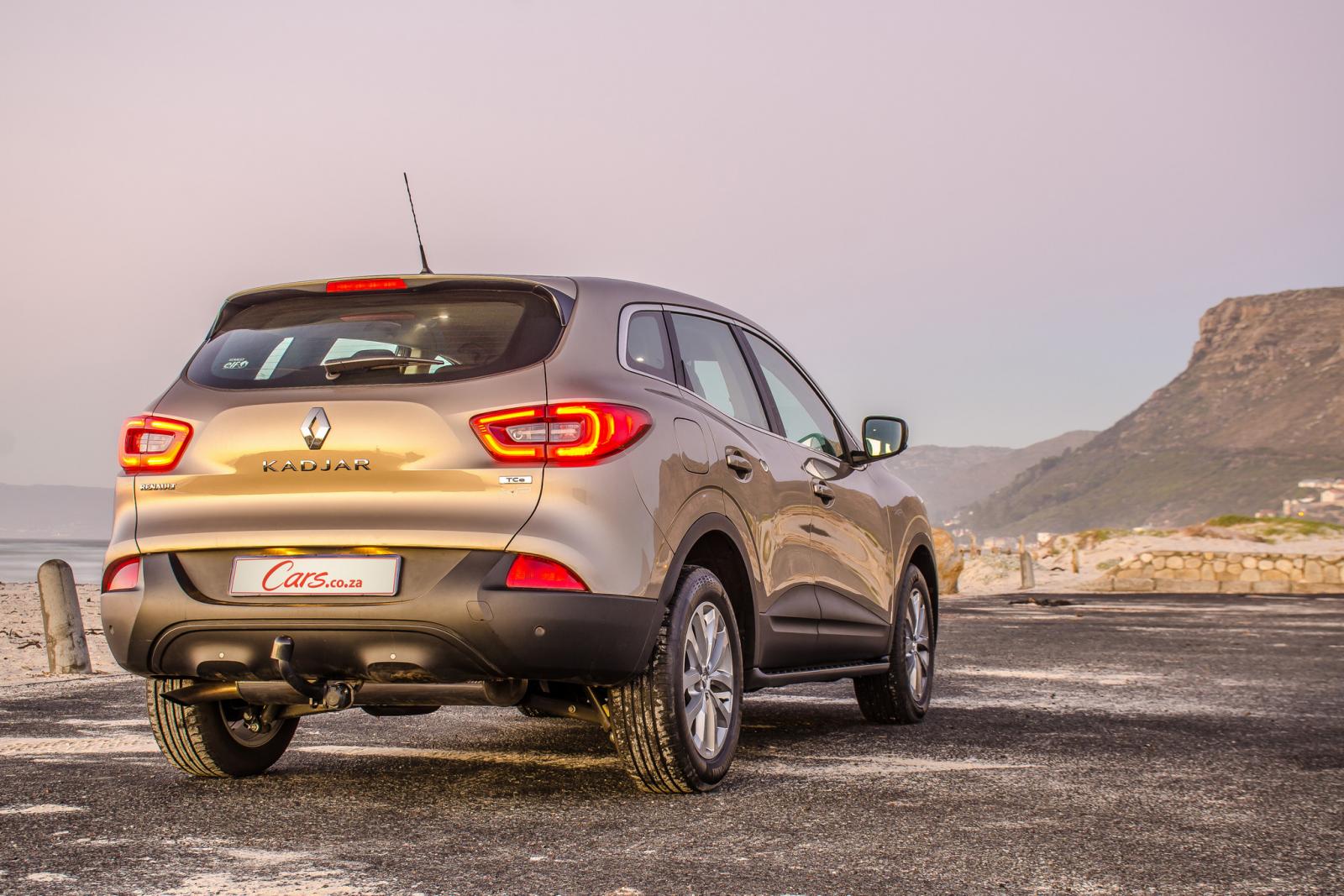
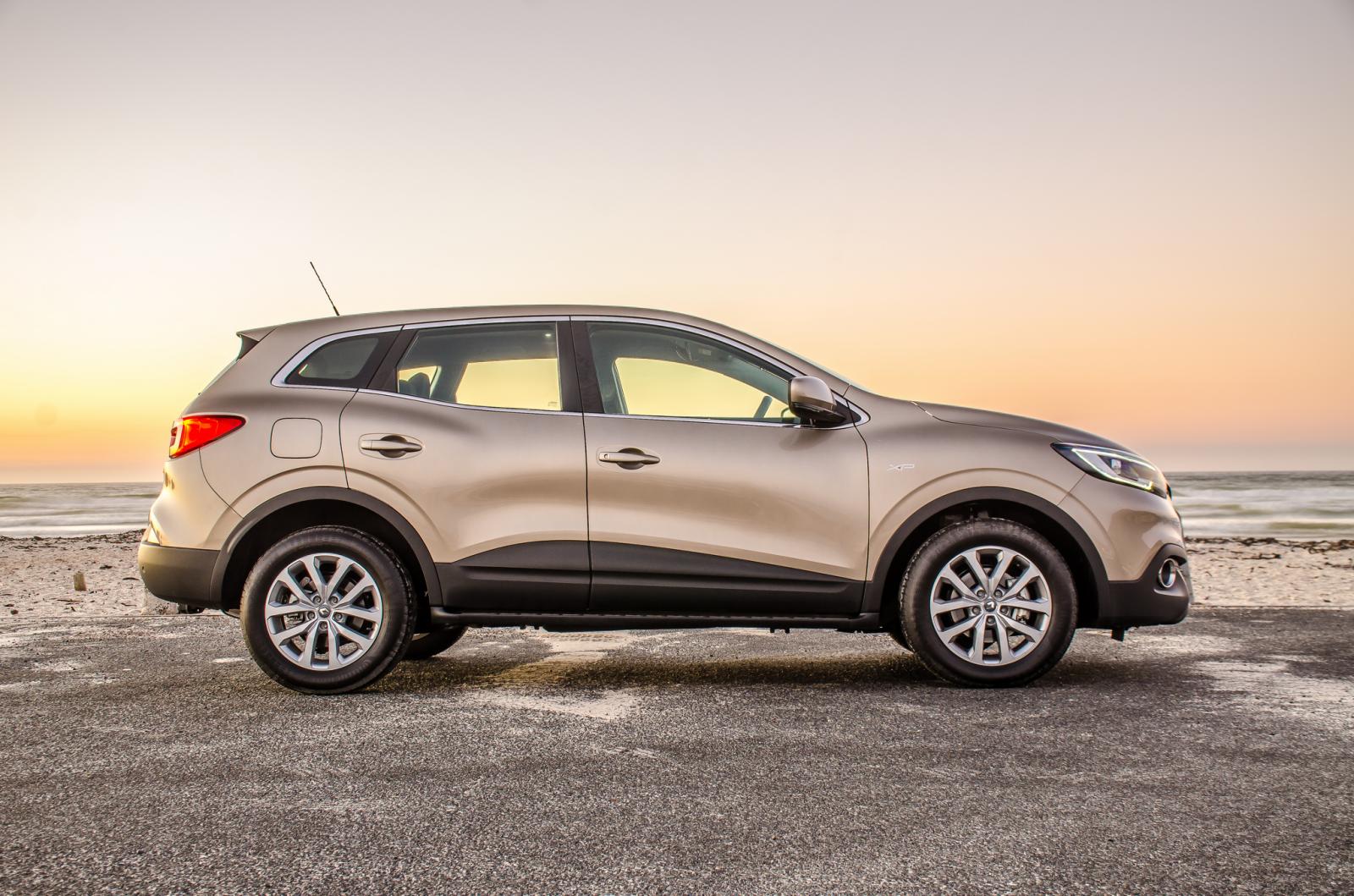
Renault Kadjar XP Limited Edition (2017) Quick Review
Renault has bolstered the Kadjar range with a limited-edition version of its entry-level derivative. It has a few bolt-on bits to make it appear more rugged, but the price remains the same. Seems good value then? We chase the Cape Epic mountain bike race with a Kadjar XP to find out…
We like: Value for money, capable drivetrain, quite spacious
We don’t like: Explaining why it’s called an XP, missing some of Renault’s best features
Alternatives
For a different grille badge: The Nissan Qashqai 1.2 Acenta is essentially the same car. Its engine delivers less power and torque, but the Nissan's R10k cheaper.
For a non-turbo engine: The Hyundai Tucson 2.0 Premium offers more luggage space and a quieter cabin, but compared with the Renault, it’s thirsty.
For overt off-roader looks: The Jeep Renegade 1.4T looks like a small off-roader and consequently offers more kerb appeal. It is more expensive and… has less ground clearance.
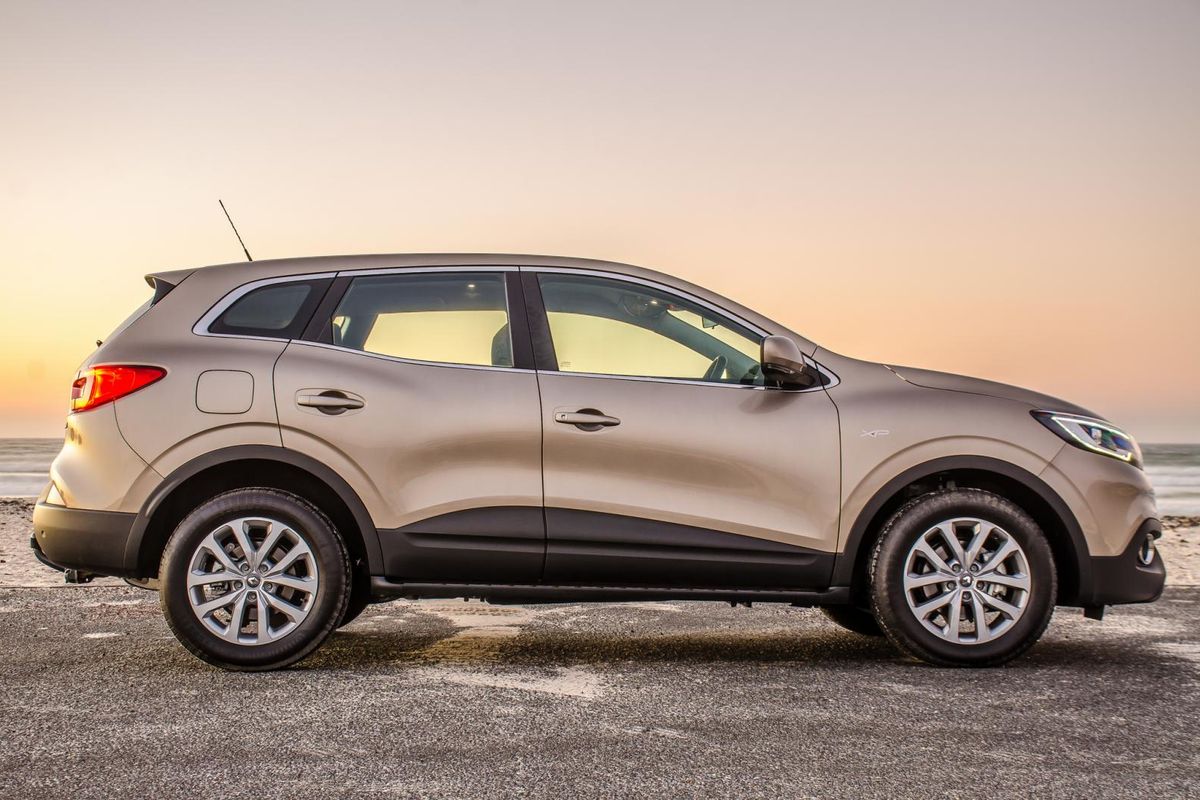
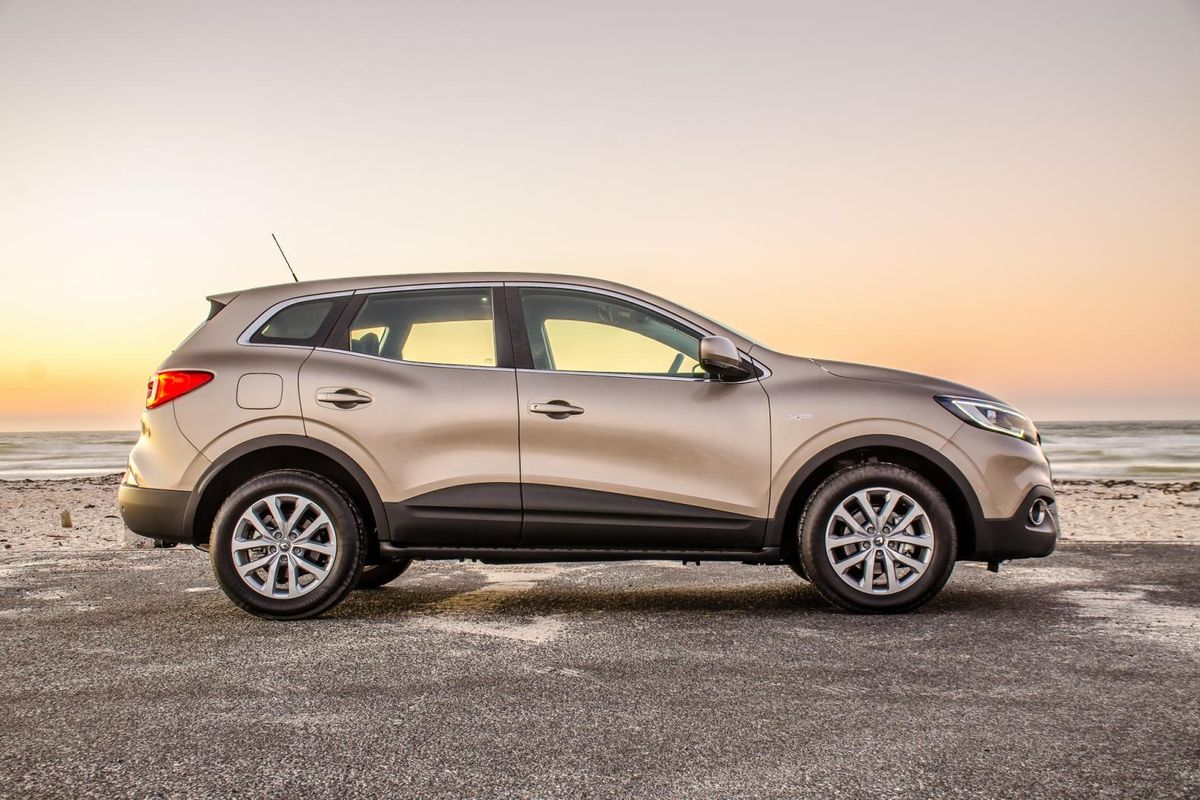
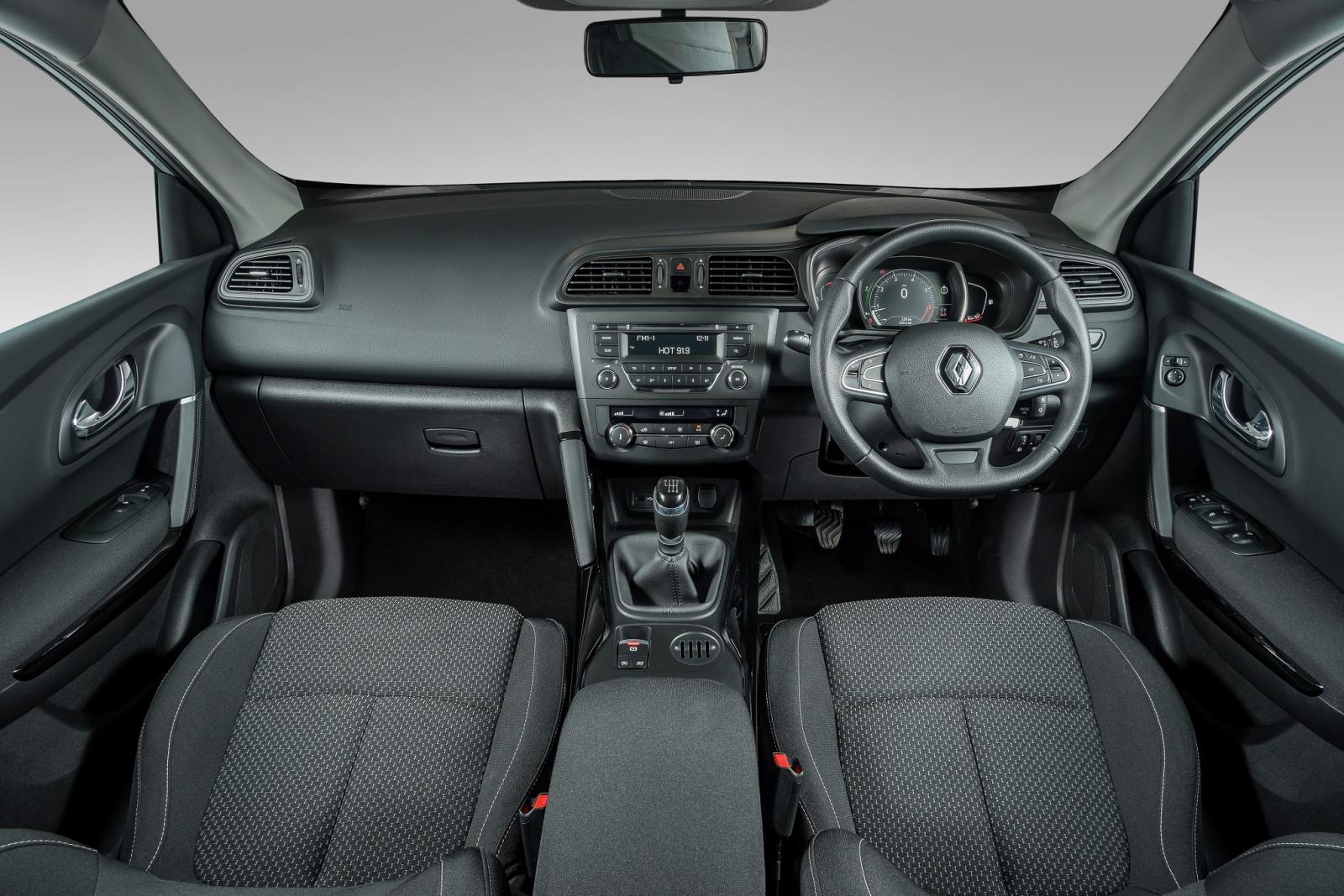
Renault has spruced up the base derivative of its Kadjar with a few accessories and called it the XP, an abbreviation for "experience points". Yes, just like in those role-playing games you play(ed), Renault wants you to head outdoors and do activities gaining experience points along the way, helping you to "level up" in life. Explain that to your mates when they ask. The extras include 17-inch wheels, cornering fog lights, a towbar, side steps and a roof rack. All are standard and included in the price. Our model does not have the roof rack, however.
Side steps, 17-inch wheels and corner-lighting foglamps are all free add-ons applied to the XP model
The Good
Value for money
Renault admits that the extras total R40 000, but the XP's price remains the same as the base derivative's. While some of the extras like the side steps are superficial and don’t actually add anything other than visual appeal, most of the additions are useful. A towbar is almost a must-have these days for an SUV and cornering fog lamps are a valuable safety feature (if they could talk, our tester's neighbour’s driveway pot plants would certainly attest to that).
At 364 900 there isn’t much that can match the Kadjar for occupant space. The generous rear leg- and headroom are 2 of the car’s better selling points. The luggage bay is a reasonable 370 litres, which is 50 litres less than that of the Nissan Qashqai, but at least houses a full-size spare wheel.
Towbar and roof rails are also included in the XP model, our test unit was not specified with roof rails, however
Engine and gearbox
The 1.2-litre turbopetrol (mated with a 6-speed manual gearbox) does a good job of propelling the Kadjar at a brisk pace. An automatic may be the more popular choice of transmission in a family car, but the manual has a quick action and a short throw. The gears are well-matched until you get to 6th, which could be a little bit longer to keep the revs lower at 120 kph.
With 96 kW and 205 Nm of torque, the Kadjar coped with a spare passenger, luggage and a bike on the towbar quite well. The torque delivery is substantial from low down the rev range and it adds sufficient impetus to overtaking manoeuvres. Once at the national speed limit, there isn’t much left in the way of grunt, but with cruise control, you can leave it in 6th and it will hold steady over most hills.
Powered by a 1.2-turbopetrol engine the XP is powerful enough and light on fuel
Gravel composure
During a long stretch of corrugated gravel road outside Greyton (in the slipstream of the Cape Epic), we found the Kadjar to be composed and stable. When travelling at speeds between 60 kph or 80 kph, it feels sure-footed and stable over the washboard surface. If you try to unsettle the Renault's body control by applying an abrupt tug to the steering wheel, the car's the stability control steps in to sort the direction out and avert any possible danger.
In terms of noise and vibration in the cabin, everything seemed to hold together while the Kadjar traversed the dirt road, although the constant shuddering did shake the dashboard about. Once the route returned to an asphalt surface, the interior didn’t appear to have gained any rattles, thus the integrity of dashboard remains the only criticism of the Kadjar’s build quality.
The Bad
A low-spec Renault?
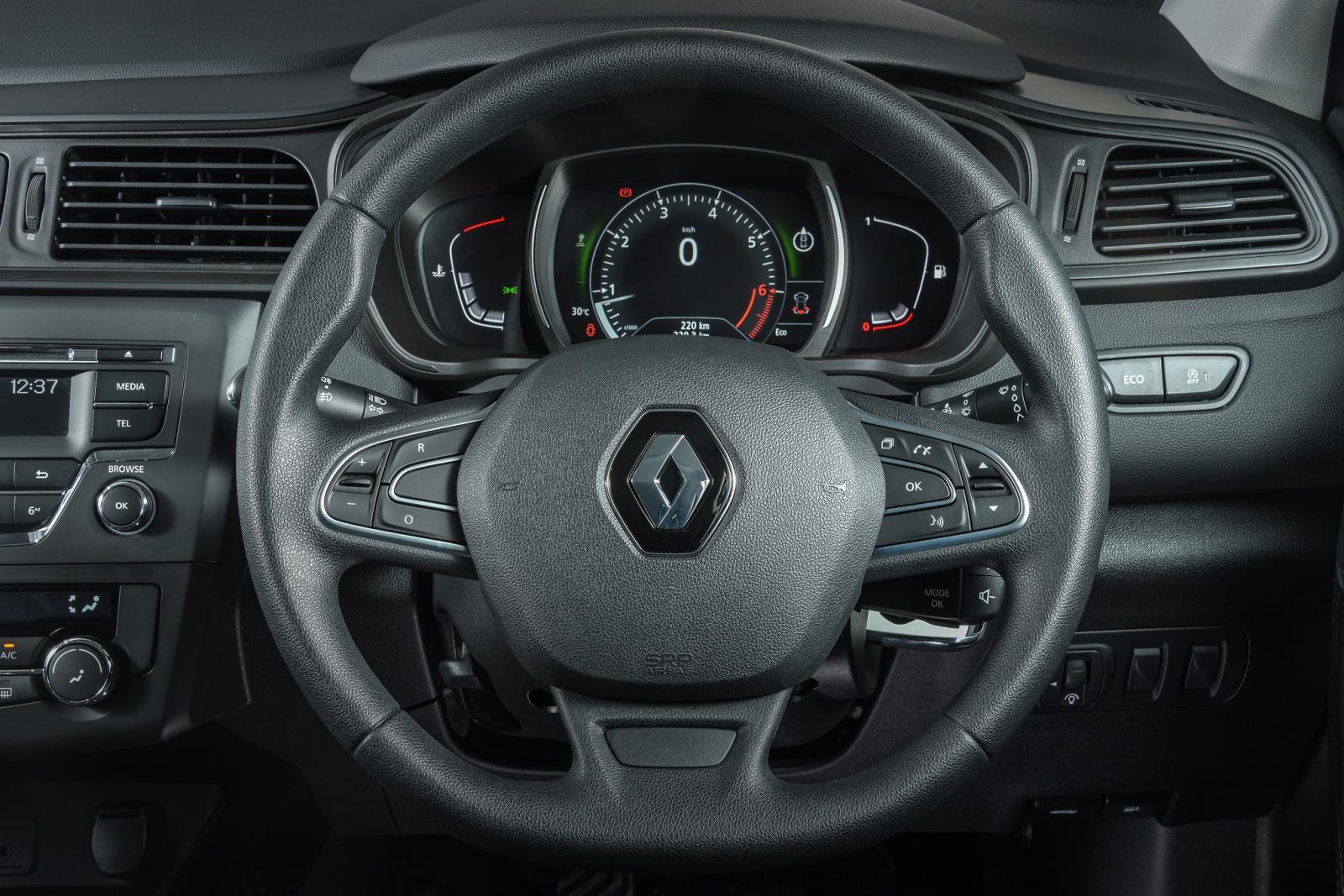
It’s a pretty rare occurrence to jump into a Renault and find it doesn’t have all the latest tech features. The budget-oriented Renault Sandero Stepway has a touchscreen with navigation, but this Kadjar comes replete with a radio/cd player with a "dot matrix" LCD readout. It has Bluetooth and a USB port but, it’s hardly what we’ve come to expect from Renault.
Rare not to have a touchscreen or navigation in a Renault
There’s no keyless entry/start system, nor automatically activated lights and/or wipers. It may sound like nitpicking, but Renault usually fits features such as those to its products to improve their value propositions/give them extra showroom appeal. It does have rear park distance control, thankfully. Despite its lack of nice-to-have features, it’s still one of the better-specced cars in its segment, replete with cruise control, a digital instrument cluster, 6 airbags, brake assist, ABS and stability control.
Verdict
In spite of its somewhat arbitrary moniker, this limited-edition Kadjar is a solid proposition. Its price point is particularly attractive considering the aesthetic extras Renault added for the sake of an "adventure-capable" look. It may be missing a touchscreen infotainment system, but the functionality of the standard radio is adequate (bar navigation) and it’s easy to use.
No leather in this Renault. Even the steering wheel resorts to a basic rubberised unit.
The XP offers a good engine and gearbox pairing and with it, fuel economy gains over equivalently powered (but naturally aspirated) 2.0-litre petrol competitors. The Qashqai is ultimately the same car, only with a different design and lower-output engine, but you don’t get the extras.
Both the Kadjar and Qashqai seem fair value considering that offerings such as the much smaller Toyota C-HR and Mazda CX-3 cost about the same as this test unit.
Follow 2017 Jaguar Simola Hillclimb with Cars.co.za
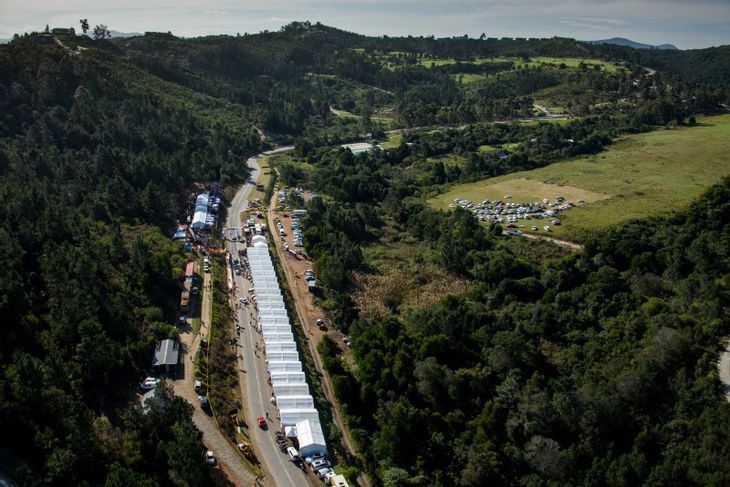
The 2017 Jaguar Simola Hillclimb takes place in Knysna this weekend and Cars.co.za is there to cover the action!
The Jaguar Simola Hillclimb is the premier event on the local motorsport calendar and the 2017 iteration is set to be the best yet. Official proceedings kick off on Friday 5 May with Classic Car Friday, where 64 entrants will take to the 1.9 km Hillclimb course. Saturday and Sunday (6-7 May) will be dedicated to the main King of the Hill event that will see 84 entrants lining up to test their mettle on the climb.
New format for 2017 Jaguar Simola Hillclimb
The Jaguar Simola Hillclimb format has changed somewhat for the 2017 event and there will now be 3 King of the Hill ‘Jody’ trophies (named after South African F1 World Champion, Jody Scheckter) up for grabs across 3 categories.
The first category is Class A, comprising of road-going saloon cars. Class B will showcase modified racing saloons and Class C will feature single-seaters and sports racing cars, where reigning champion, Franco Scribante will defend his 2016 record run of 38.646 seconds in his heavily modified 1972 Chevron B26. The fastest 10 cars from each category will then square off in a shootout to determine the King of the Hill in each category.
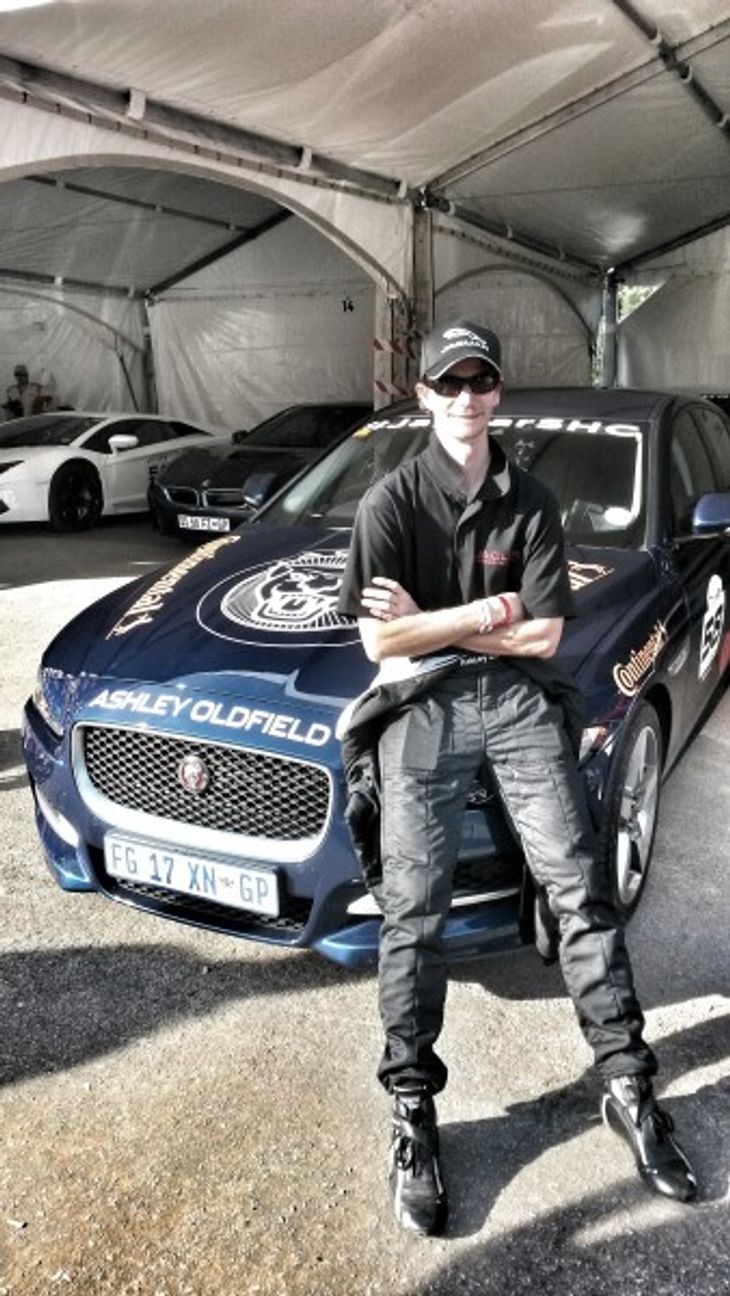
Ashley Oldfield to take part in Jaguar F-Type
Our very own Road Test Editor, Ashley Oldfield, will once again be competing in this year’s event and he will be piloting a Jaguar F-Type 400 Sport. Ashley is well versed in extracting maximum performance from a car having previously raced as a factory driver for Nissan in the UK. He has also won the Media Challenge 3 times at the Simola Hillclimb. He will be competing in Class A at the 2017 Jaguar Simola Hillclimb.
How can you tune into the action?
Cars.co.za will be covering the 2017 Jaguar Simola Hillclimb with a particular focus on the King of the Hill event on 6-7 May 2017. If you haven’t done so already, follow us on Twitter (@CarsSouthAfrica) and on Instagram (carssouthafrica) for updates from the event. The official hashtag is #JaguarSHC.
Also, for the first time in the event’s 8-year history, a live broadcast will be aired to viewers across the world for limited periods each day. Viewers will be able to watch the live broadcast on the Internet at www.jaguarsimolahillclimb.com using a smartphone, tablet or laptop.
The South African new vehicle sales data for April 2017 has been released: It's not a great time to be a new car salesman with the market showing a severe decline, both in sales and export data.
New vehicle sales for the month of April declined some 13.4% from the same period last year. Exports also decreased by 25.5% over the equivalent period during 2016. Most of the export drop can be attributed to the public holidays that occurred in April, where in 2016, most of the public holidays were in March.
All of the new vehicle sectors showed double-digit declines with passenger cars being the worst hit at 13.7% worse off than April 2016. Other factors that contributed to the decline include local business sentiment, political instability and the recently acquired junk status.
In terms of SA's top selling models, the Ford Ranger pipped the Toyota Hilux to the top spot on the sales chart. The evergreen VW Polo Vivo and Polo models showed good numbers again wrapping up third and fourth spot respectively.
New car sales summary for April 2017
Aggregate new car sales of 34 956 down by 13.4% (-5 392 units) compared with April 2016
New passenger vehicle sales of 22 452 down by 13.7% (-3 560 units) compared to April 2016
Light commercial vehicle sales of 10 592 down by 13.3% (-1 625 units) compared to April 2016
Export sales of 24 449 down by 25.5% (+8 383 units) compared to April 2016
At the beginning of the year, the new car sales outlook appeared positive, 4 months down the line things are vastly different. Naamsa reports that the balance of this year now appears negative for sales growth. Naamsa puts this down to extra-ordinary political events at the end of March 2017.
"Naamsa anticipated that greater clarity would be forthcoming over the next two to three months regarding the impact of socio-political events on the direction of the economy and this would enable then the Association to resume projections on new vehicle sales."
It does however, expect exports to remain positive as global growth continues. "Indications for the global economy were reasonably positive with the latest IMF projections anticipating global growth at around 3.6%. This would benefit vehicle exports to Europe, Australasia, Asia, the United States and South America. NAAMSA anticipated that export sales would register upward momentum over the balance of 2017 thereby continuing to contribute positively to South Africa’s trade balance."
Range Rover Evoque Convertible (2017) Off-Road Review
Range Rovers, despite being very upmarket and luxurious vehicles, remain true to the ethos of the Land Rover brand: they are extremely capable off-road. Granted, most buyers are never going to take their shiny new Evoque Convertibles very far from the tarmac, but what if they did? We put the newcomer to the test on a challenging off-road track to find out how it fares in the rough stuff…
The Range Rover Evoque Convertible: it's a car that will look marvellous cruising down a sunny boulevard, or exude style on the school run. It's a Range Rover, but with the added bonus of getting the wind in your hair… assuming that's something Range Rover buyers have always wanted, of course.
However, as it is equipped with all the same off-road systems as any other Evoque – a car that we've literally driven across Africa – we thought it might be interesting, at the very least, to take the Evoque Convertible and get it dirty.
The Ford Focus range has been enhanced with stylistic and equipment upgrades in South Africa and Ford has also replaced the previous 1.6-litre turbodiesel engine with a new 1.5-litre turbodiesel engine. Take a look at the details…
Consumers who are considering buying a Ford Focus will be happy to know that the firm has implemented a number styling and technological upgrades, as well as offering a new 1.5-litre turbodiesel engine mated to a 6-speed manual transmission with outputs of 88 kW and 270 Nm of torque. The Focus range now comprises a total of 19 derivatives.
What’s changed?
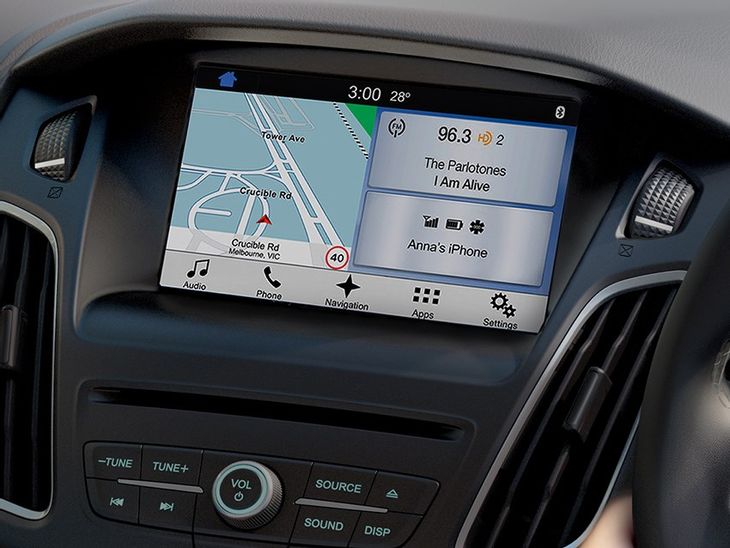
Styling and technological updates come in the form of an updated and expanded Trend Styling Pack as well as an upgraded Driver Assistance Pack which now includes the latest SYNC3 infotainment system with navigation.
The Trend Styling Pack is offered as an option on 5-door Trend hatchback models only and incorporates a new full colour-coded body kit with a rear spoiler and an electric tilt and slide sunroof. Multi-spoke 17-inch wheels with low-profile tyres add to the appeal and Bi-Xenon HID headlights from the ST3 are fitted with a cornering beam functionality and LED daytime running lights. Electrically folding mirrors, rear privacy glass and dual-zone climate control is also included.
The cost of the Trend Styling Pack amounts to R19 984.
The SYNC3 infotainment system features improved functionality via an 8-inch touchscreen.
As for the Driver Assistance Pack, available on 4- and 5-door Trend derivatives, SYNC3 with navigation is now on offer. The system features full-colour graphics, an elevated 3D map view, predictive search function and voice activated points of interest (POI) functionality. Buyers will also benefit from free annual map updates for a period of 5 years.
The new SYNC3 system is faster than the previous SYNC2 system and boasts an 8-inch colour touchscreen with multi-touch gestures such as swipe, slide and pinch-to-zoom functionality. Smartphone integration is provided using Apple CarPlay and Android Auto, the latter of which is still subject to license finalisation for use in South Africa.
The Driver Assistance Package also offers Advanced Active Park Assist, Lane Departure Warning, Lane Keeping Aid and a rear-view camera.
The cost of the Trend Driver Assistance Package amounts to R17 089.
The performance orientated Focus ST and Focus RS also benefit from rear parking sensors now fitted as standard on the ST1, ST3 and Focus RS. Furthermore, the Focus ST3 also gains a reverse camera as standard. SYNC3 with navigation and 10-speaker sound system with a built-in sub-woofer are optionally available for the Focus ST3 and Focus RS.