Range Rover Evoque Landmark Special Edition coming to SA
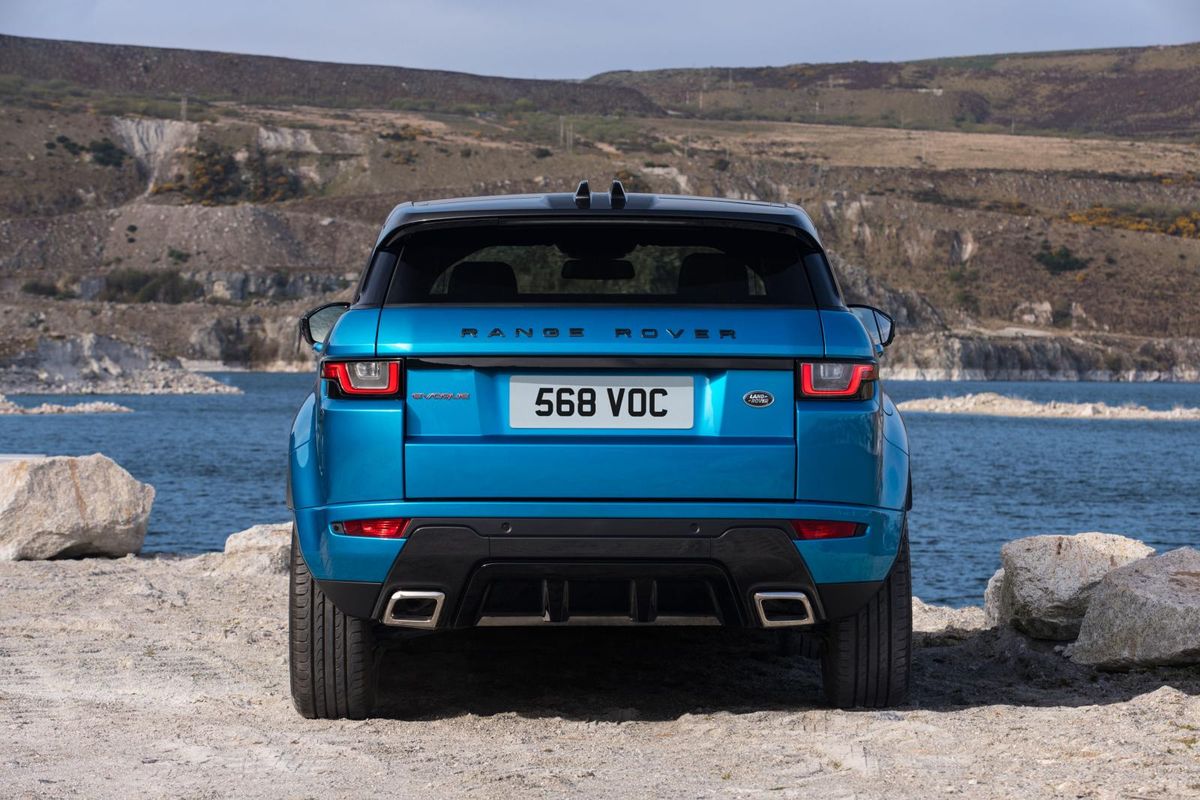
The still-stylish Evoque has proven a massive sales success for Range Rover, and to celebrate the brand has created a special edition model called the Evoque Landmark.
More than 600 000 Range Rover Evoques have been built at JLR's Halewood facility since 2011. It's a global success story, and in one month alone, nearly 18 000 Evoques were sold. It was won many awards too, both locally and internationally. An Evoque is built every 170 seconds and is sold in 130 countries.
Range Rover Evoque Landmark Features
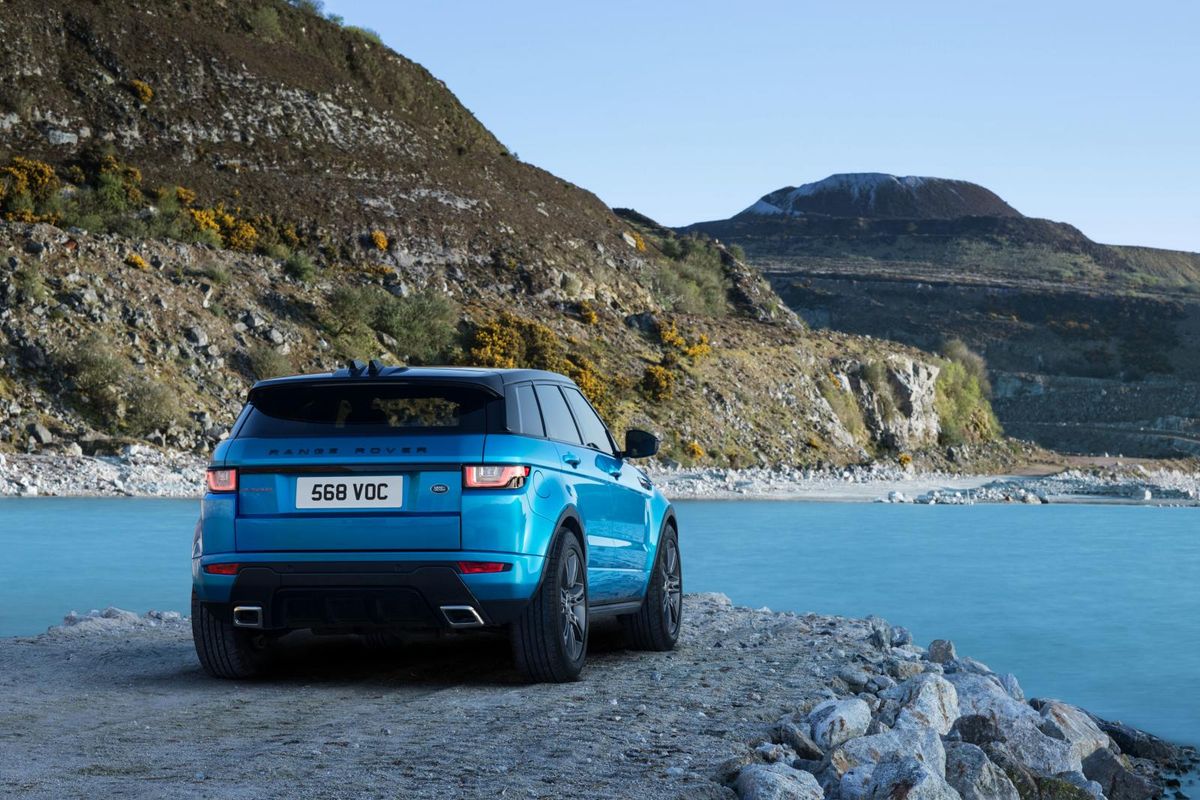
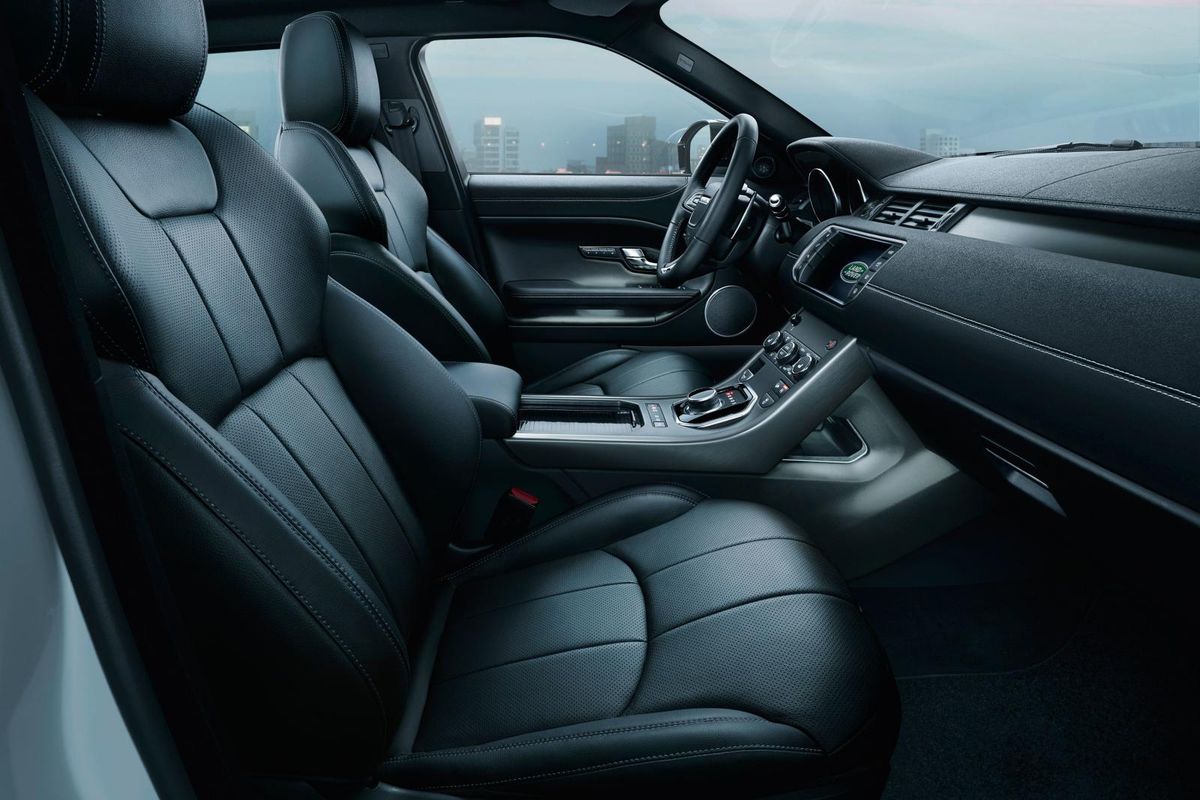
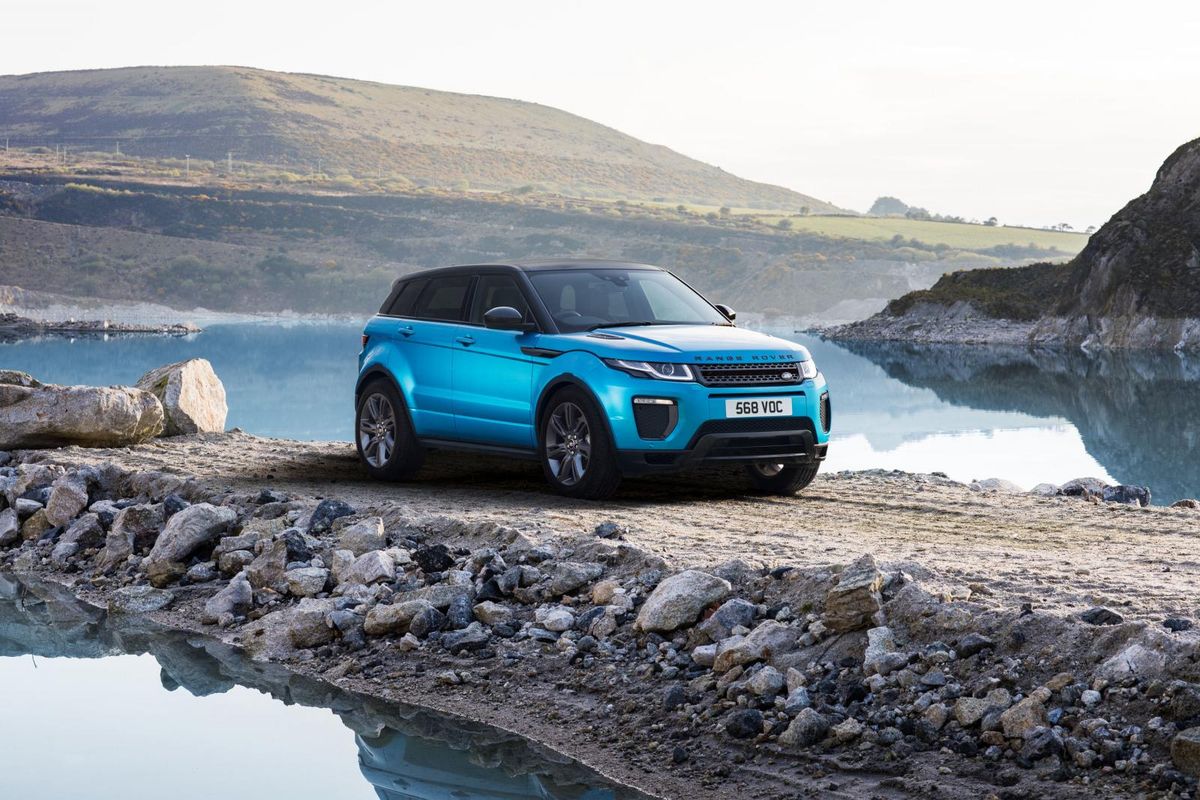
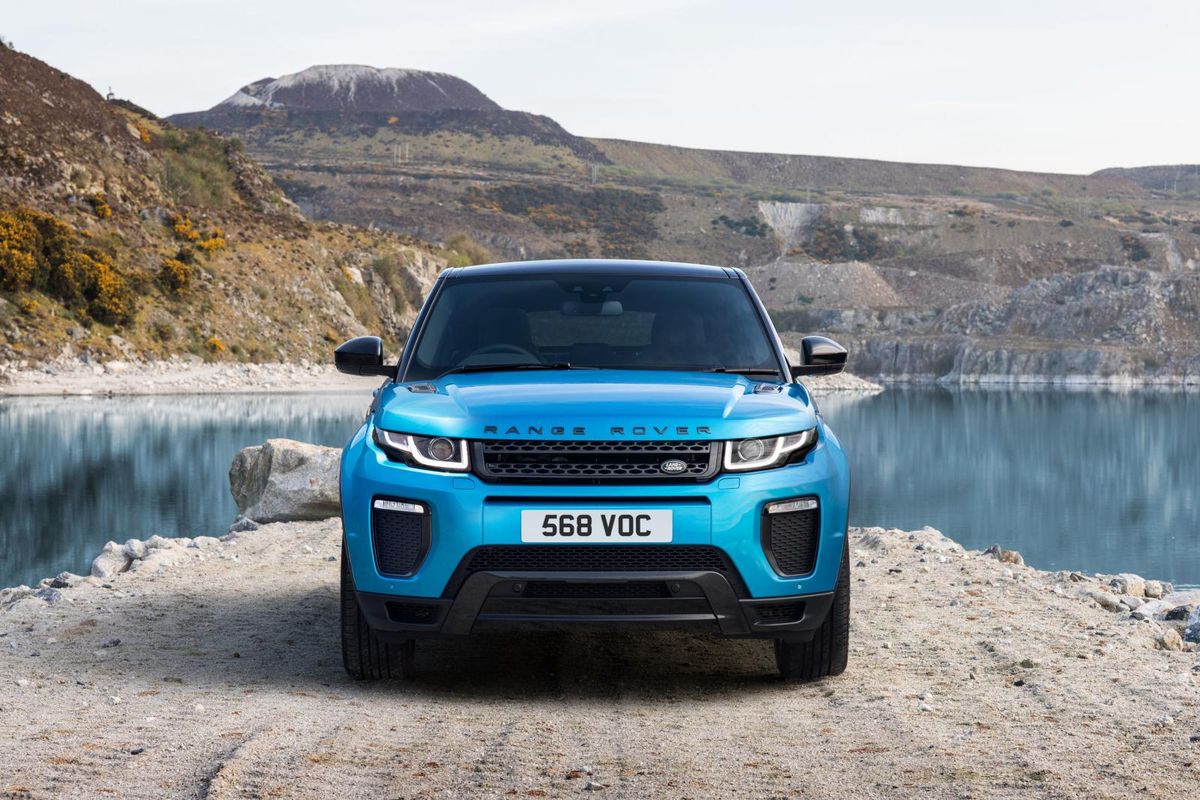
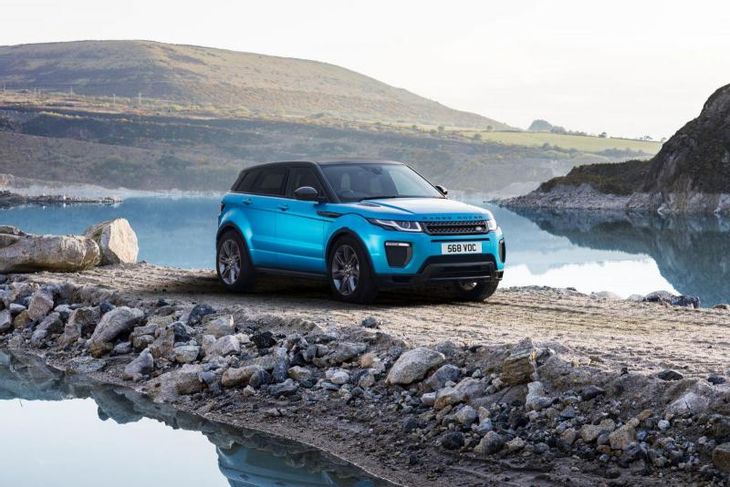
To celebrate this production and sales milestone, a special edition version is on the way. It's called the Range Rover Evoque Landmark and will be available in this striking Moraine Blue paint, said to be 'inspired by the turquoise lakes of the Canadian Rocky Mountains.' Other colours available are Yulong White and Corris Grey. It features a contrast panoramic roof, 19-inch Gloss Dark Grey alloy wheels and Graphite Atlas grille, bonnet, fender vent and tailgate lettering. Dark grey accents continue inside in the form of brushed satin centre console trim finishers. Grained Ebony leather seats with contrasting Light Lunar stitching and a perforated mid-section also catch the eye.
Range Rover Evoque Landmark features vibrant blue paint and celebrates the sales success of the stylish SUV.
“What makes Evoque so special is its relevance. The design remains modern and fresh. The Evoque is widely acknowledged to have brought a whole new youthful generation of buyers into the Range Rover brand, including more women,” said Gerry McGovern, Land Rover, Chief Design Officer. “Its success was clear from the start and gave us the confidence to break new ground, which you can see with vehicles like the Evoque Convertible. This Landmark Special Edition is a celebration of 6 years of success so far.”
The Range Rover Evoque Landmark special edition is confirmed for our market and we'll have pricing when the order books open in June 2017.
Pedalling an F-Pace: a cyclist’s jaunt to Oudtshoorn
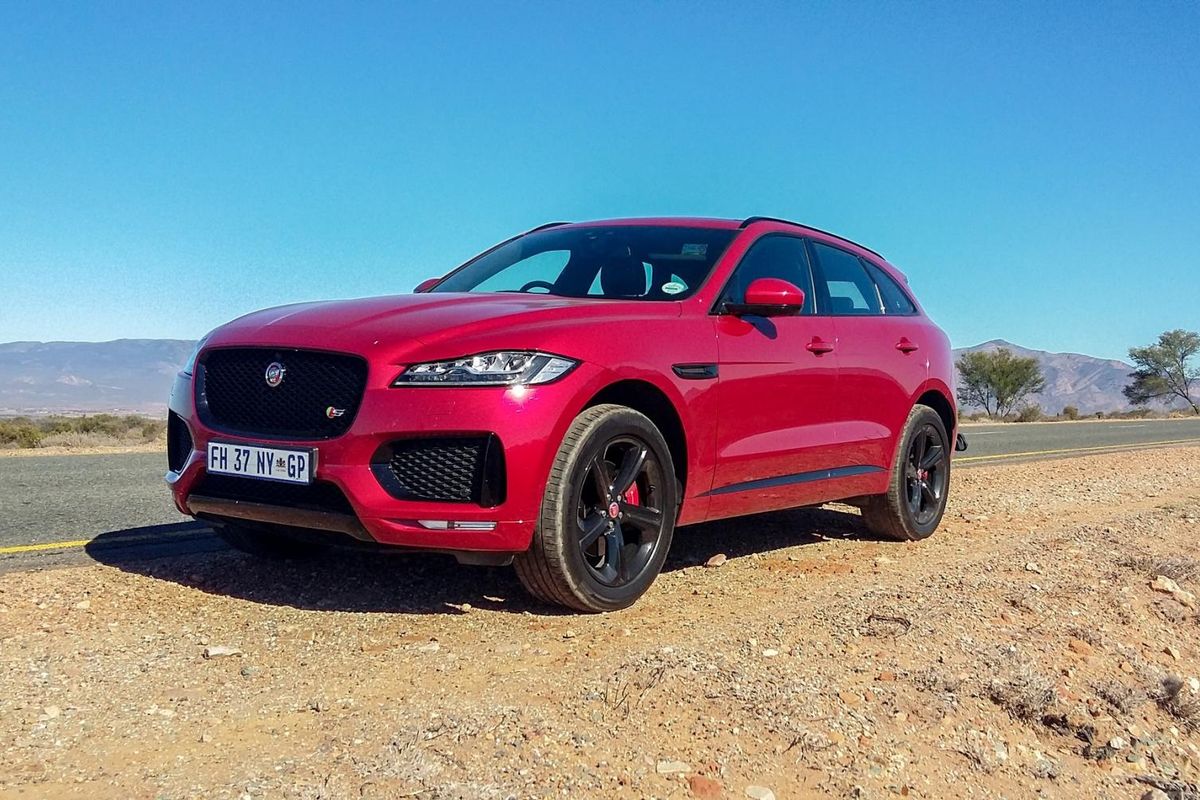
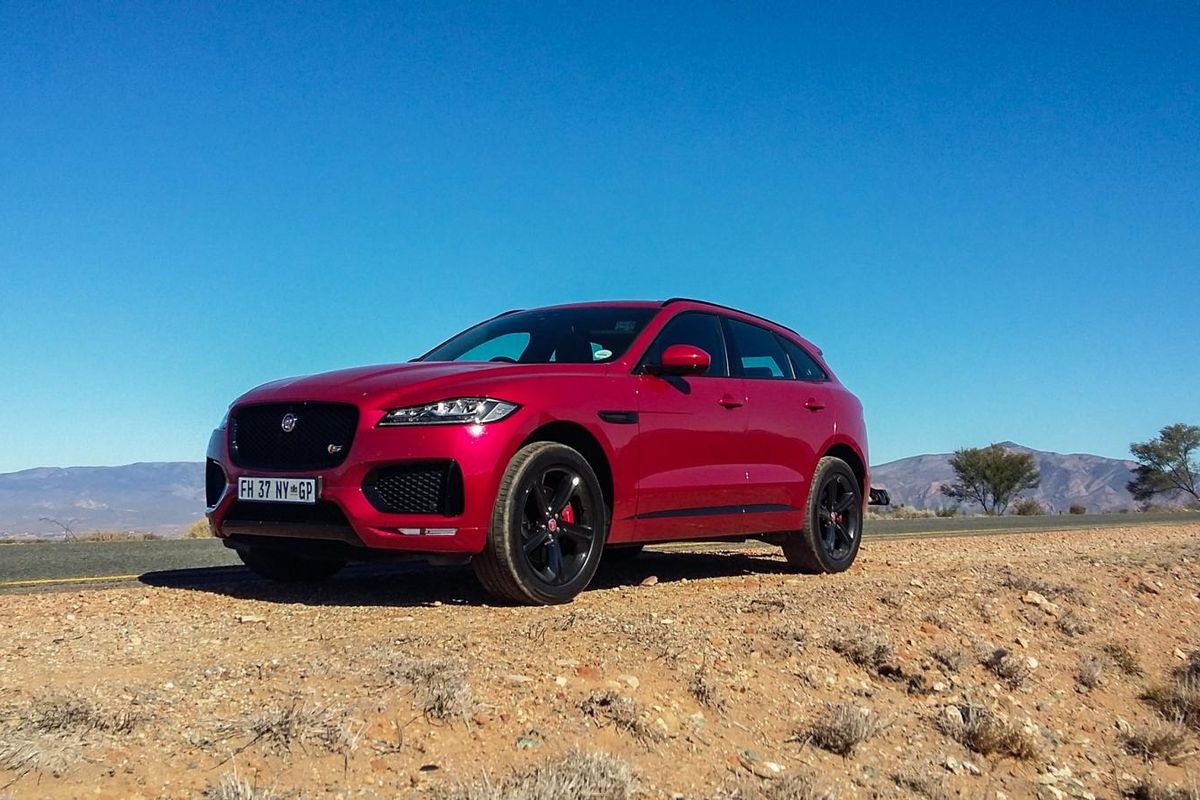
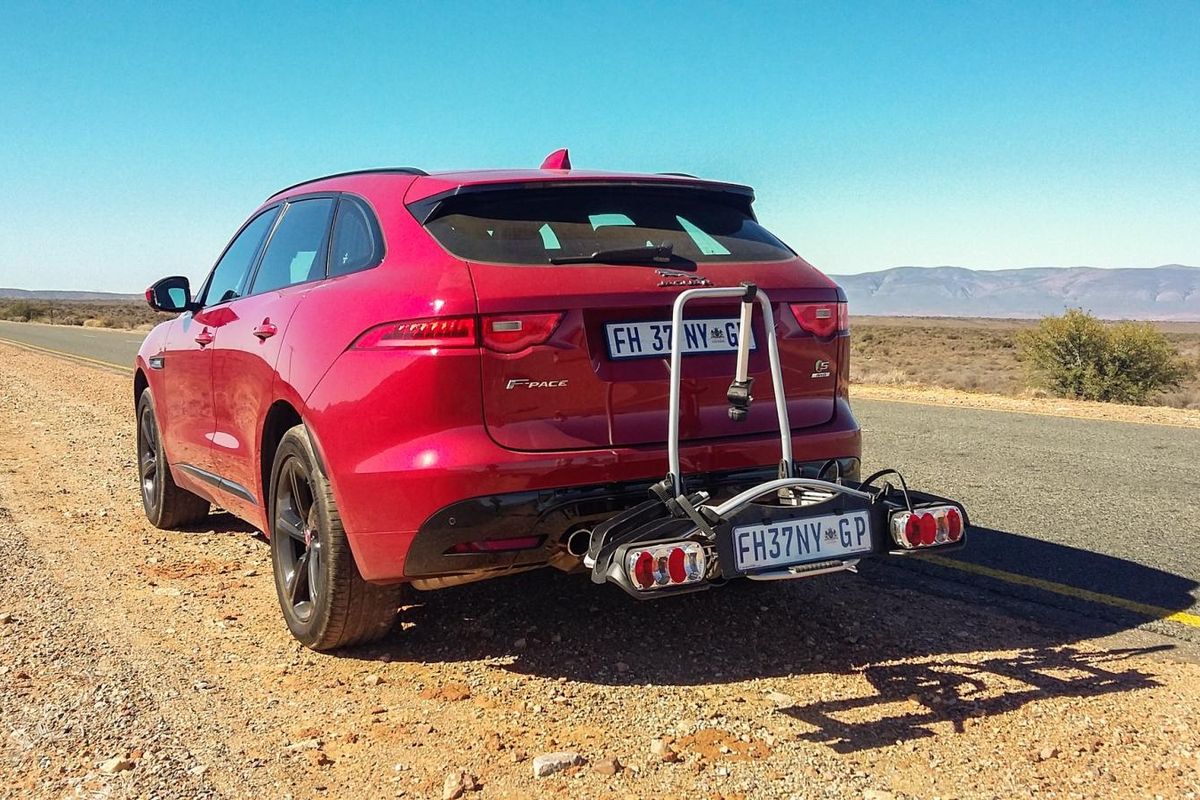
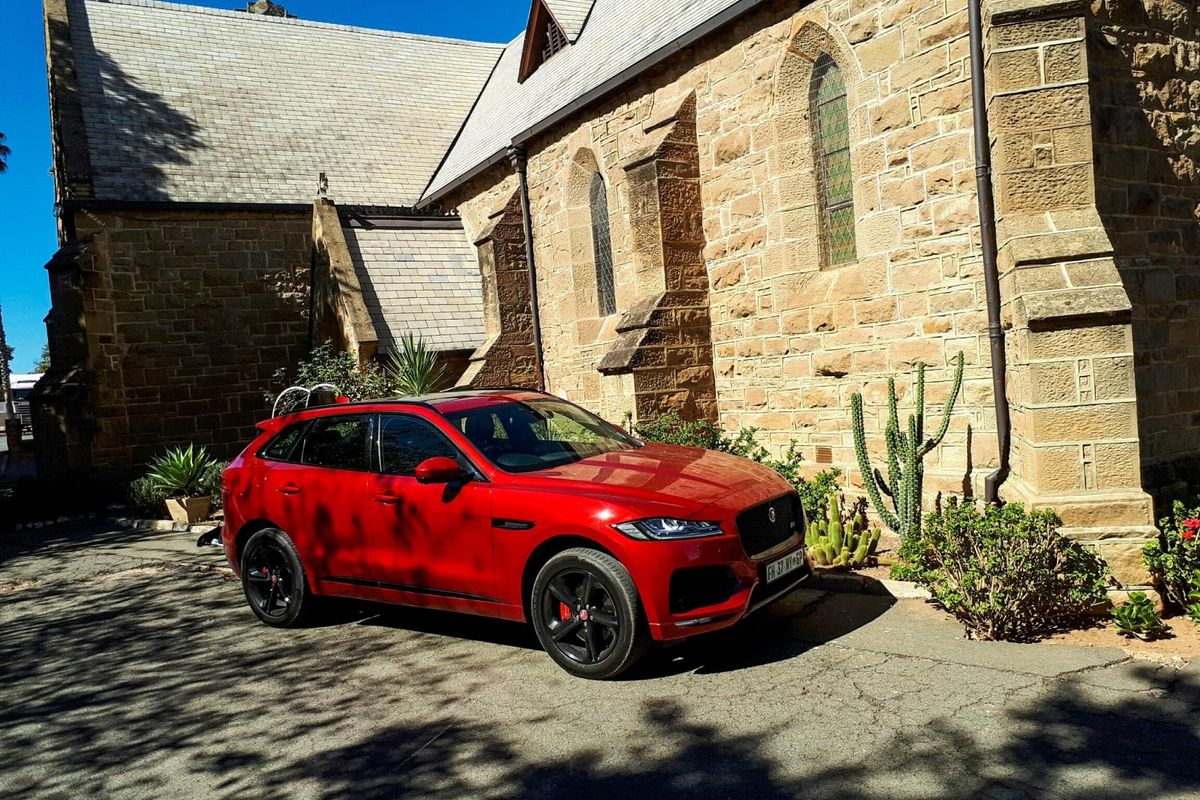
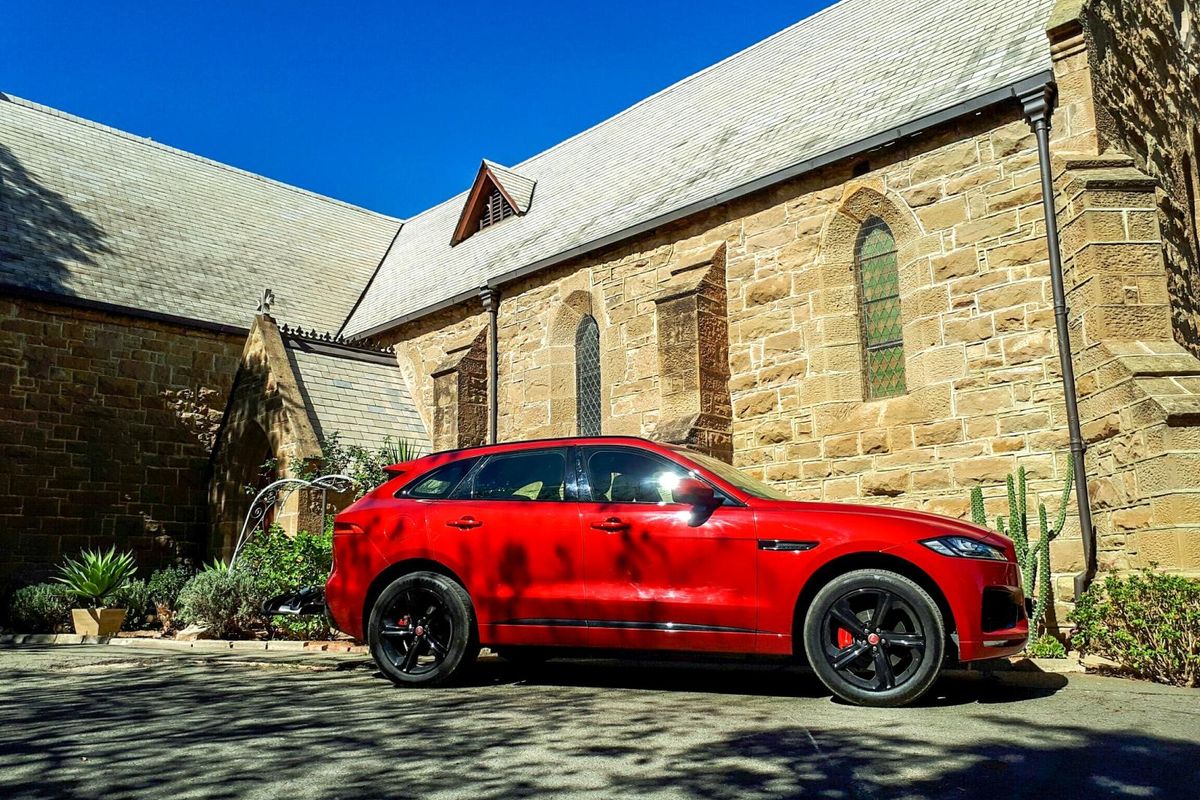
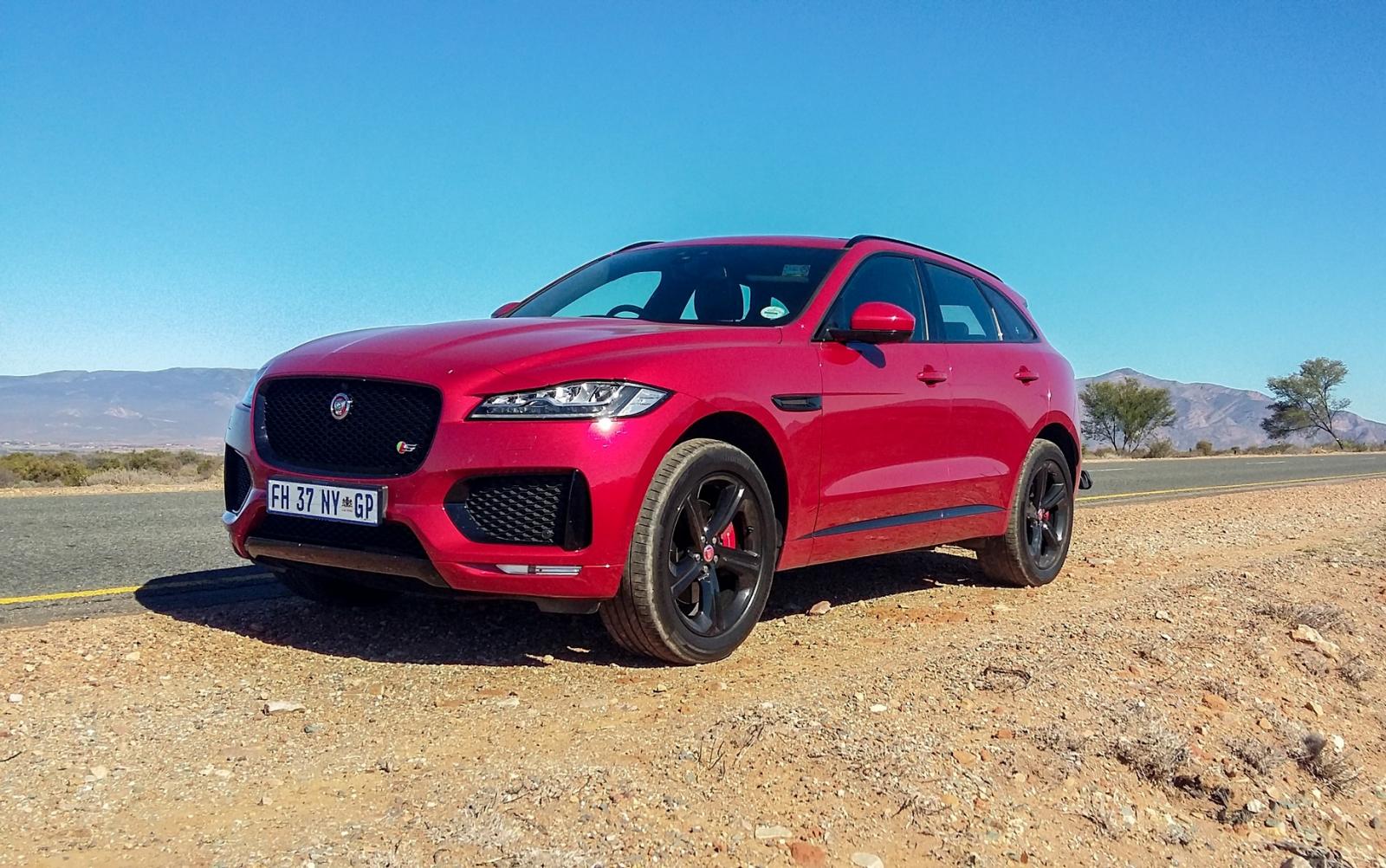
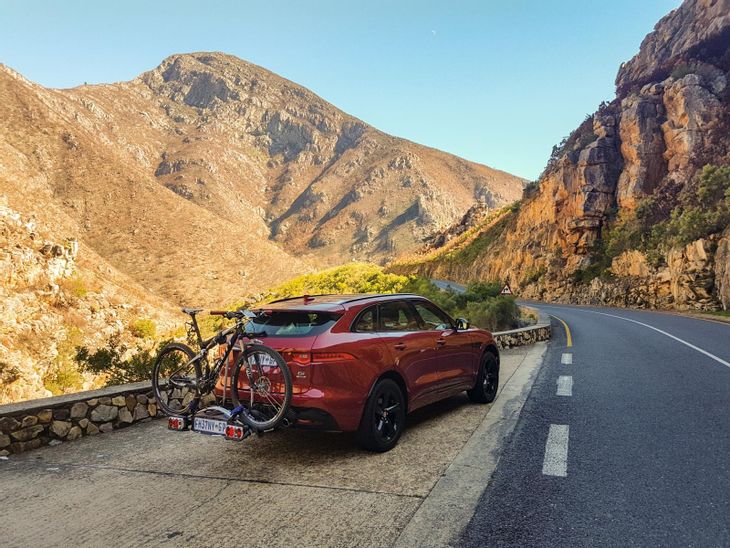
When we heard the call of the Karoo, with its vast open landscapes, silent roads and mountain passes, we saddled up a Jaguar F-Pace 35t AWD S and headed for the Ostrich capital of the world.
When I was handed the keys to a Jaguar F-Pace, which would be tasked with transporting a bike and 3 support crew to Oudtshoorn, I quickly opened up a new tab in my Google Chrome web browser, typed maps.google.com and hit enter. I look up the Karoo, quickly zoom in and then zoom out. Which roads look the most squiggly and where have I never driven before? Then I found my answer. Ahh, the R324 between Swellendam and Barrydale, more famously known as Tradouw Pass. How have I never driven this road before? I was confused too, having actually driven and compiled an entire magazine a few years back on South Africa’s Best Driving Roads. Embarrassingly, I would amend it, if that magazine still existed…
The route
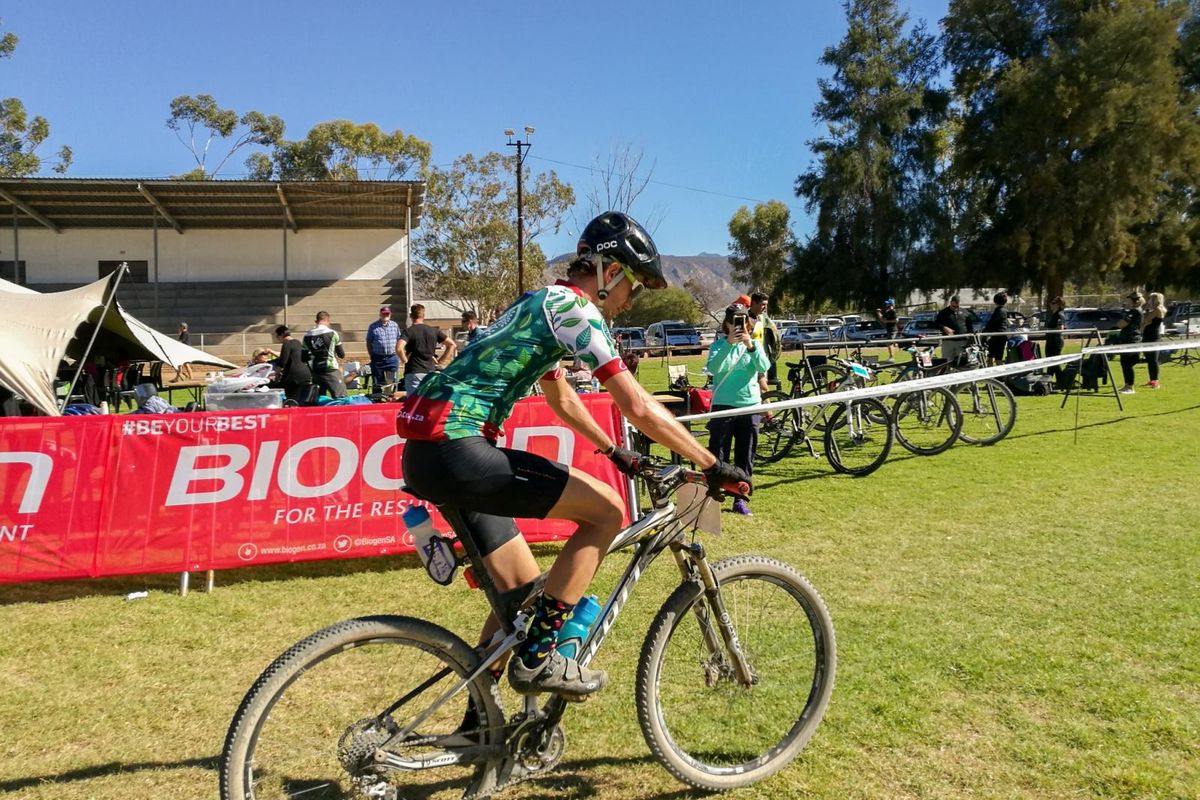
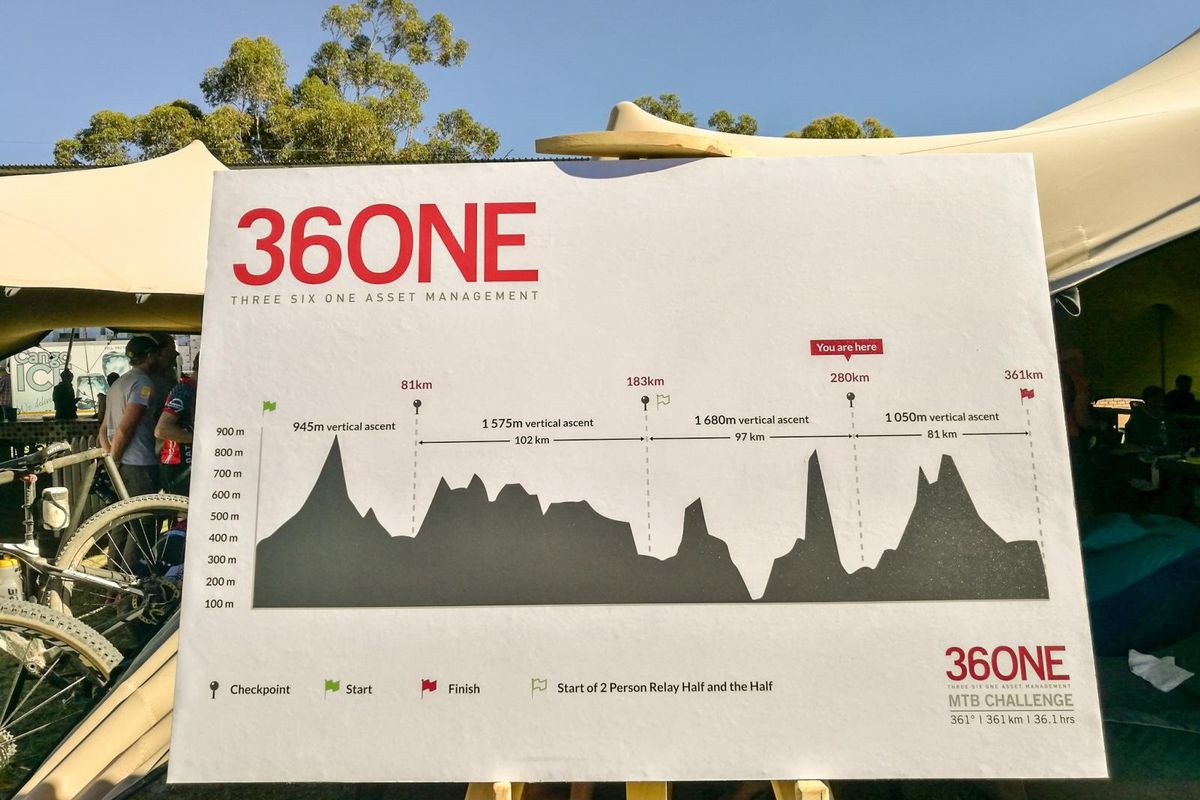
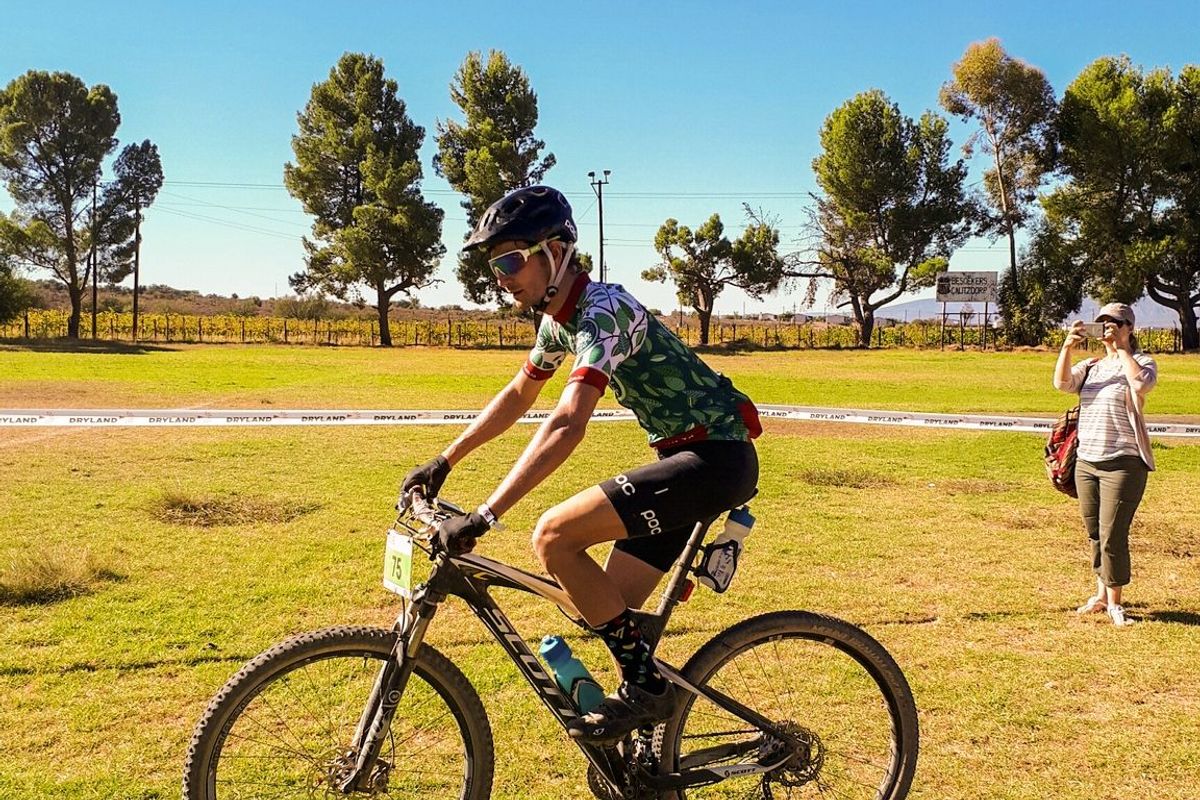
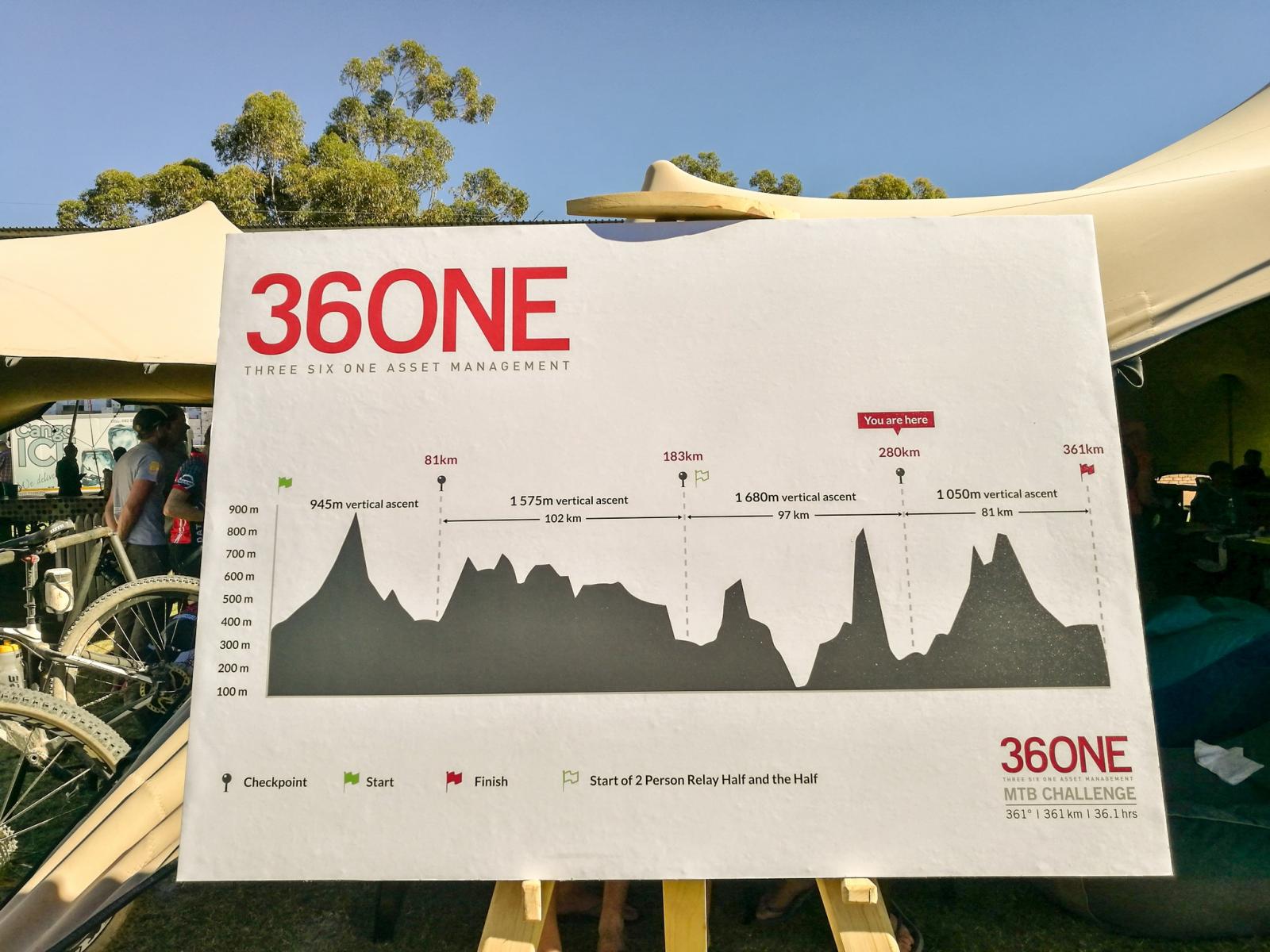
The reason I was heading for Oudtshoorn was two-fold, firstly to take part in the 36ONE mountain bike race, where I would be pedalling in the 180 km leg of the 361 km race. The second was to plant some trees. One hundred and sixty-eight trees to be exact. Cars.co.za plants trees in aid of our planet and through riding the event I would be helping to combat the carbon emissions released by my F-Pace 35t AWD S on the trip – at least that was the idea.
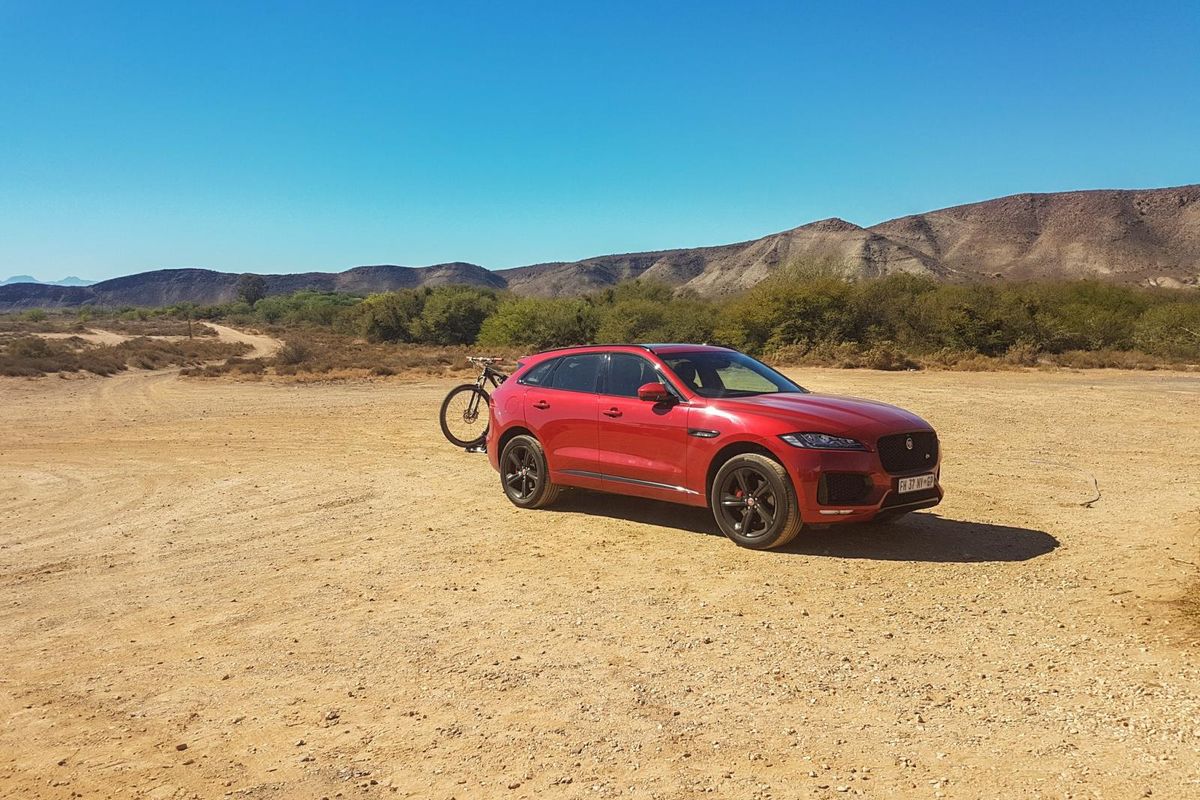
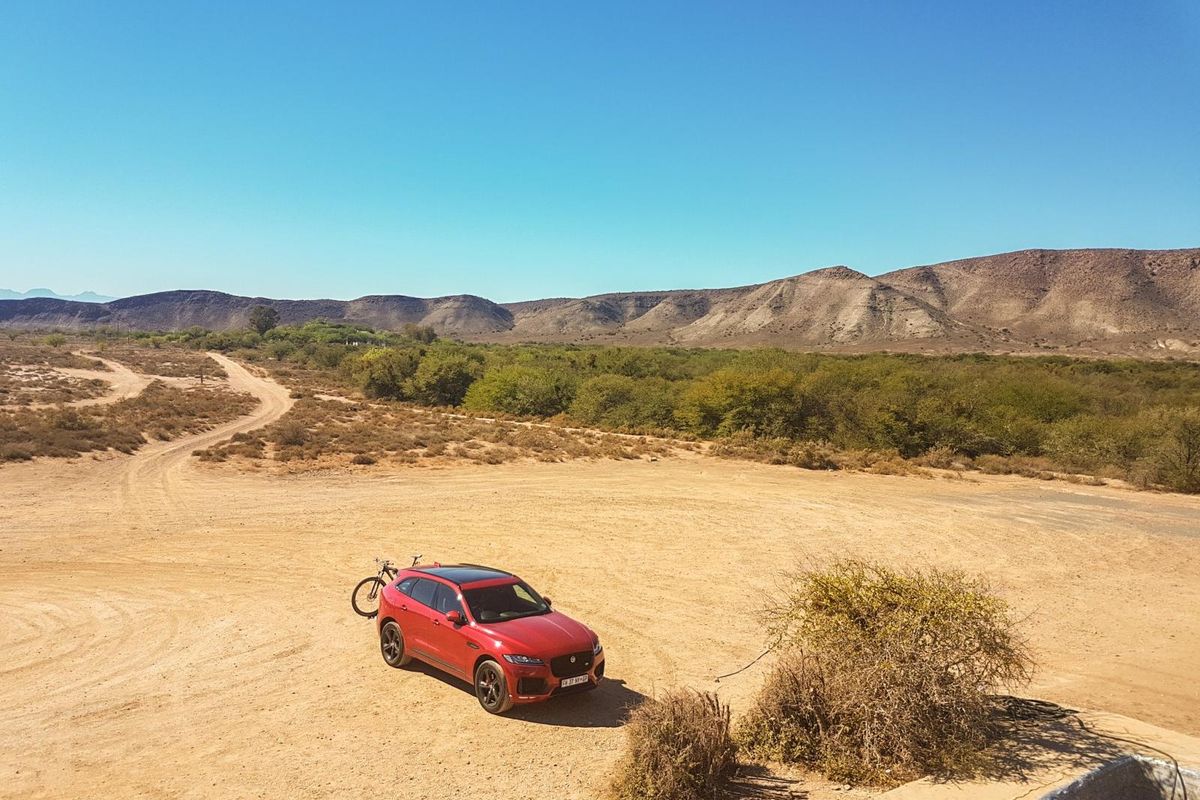
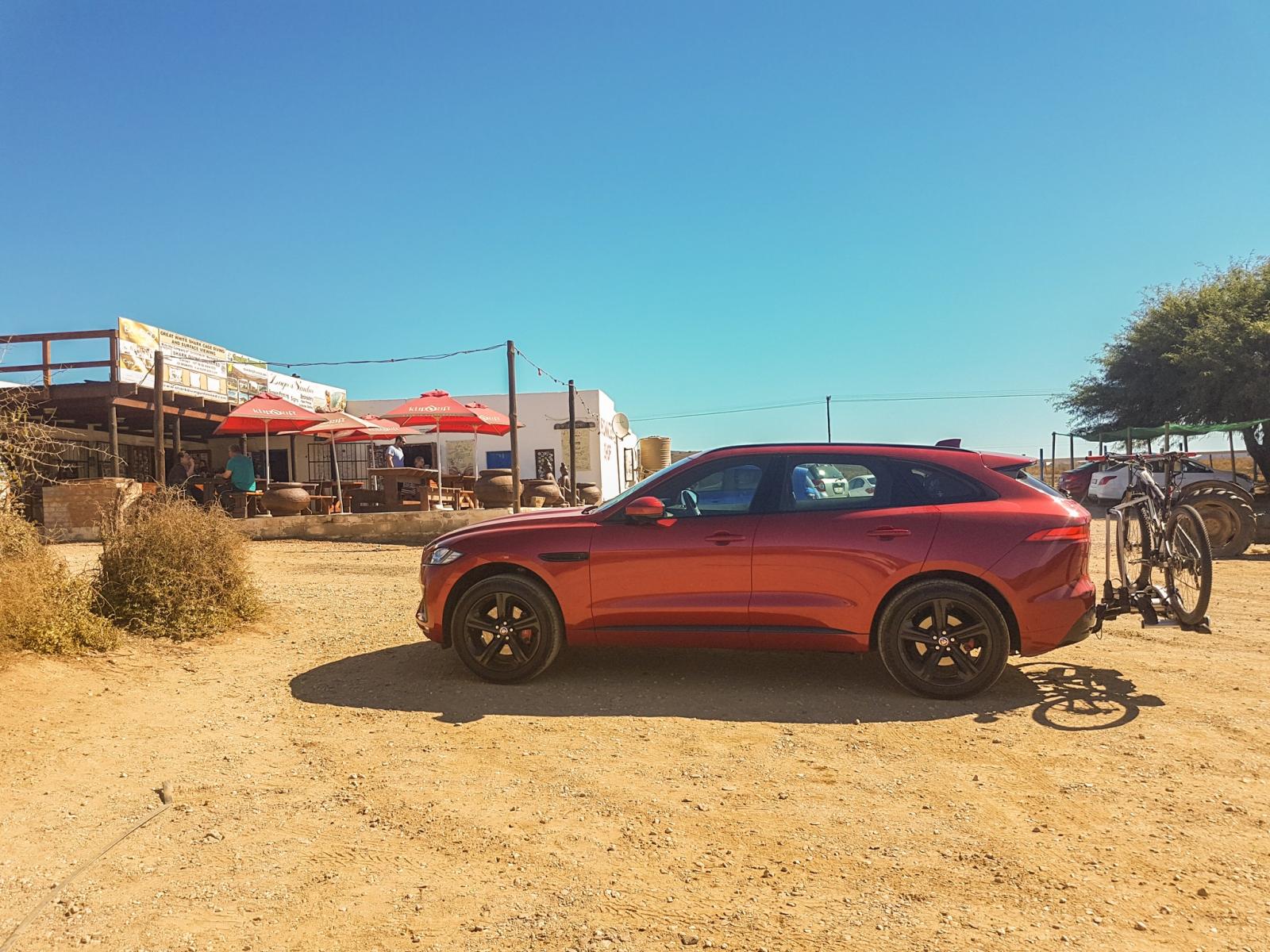
The F-Pace 35t AWD S sat in the middle of the Klein Karoo between Calitzdorp and Oudtshoorn.
My drive would start in Cape Town and then entirely avoid the N2 (Somerset West is known for killing the vibe of all road trips) by taking the N1 to Worcester and then hooking a right to Robertson down the R60. At Ashton, I would avoid the now 2-year long road works and traverse the beautiful road into Swellendam. A begrudging short stint along the N2 follows before eyeing out a left-hand turn up the R324 Tradouw Pass to Barrydale. From there it’s a simple flat out blast along the picturesque R62 to Oudtshoorn. A total of 440 km.
The car
In a bid to emit as little CO2 as possible, I initially asked for a 2.0-litre turbodiesel-powered F-Pace to get the job done. That way I could really test the F-Pace’s long distance range. Jaguar countered with the offer of a V6 supercharged petrol, to which all my previous notions of frugality disintegrated into visions of clipped apexes and screaming exhaust notes. “Ja, okay” was all I managed to reply, while trying my utmost to sound disappointed.
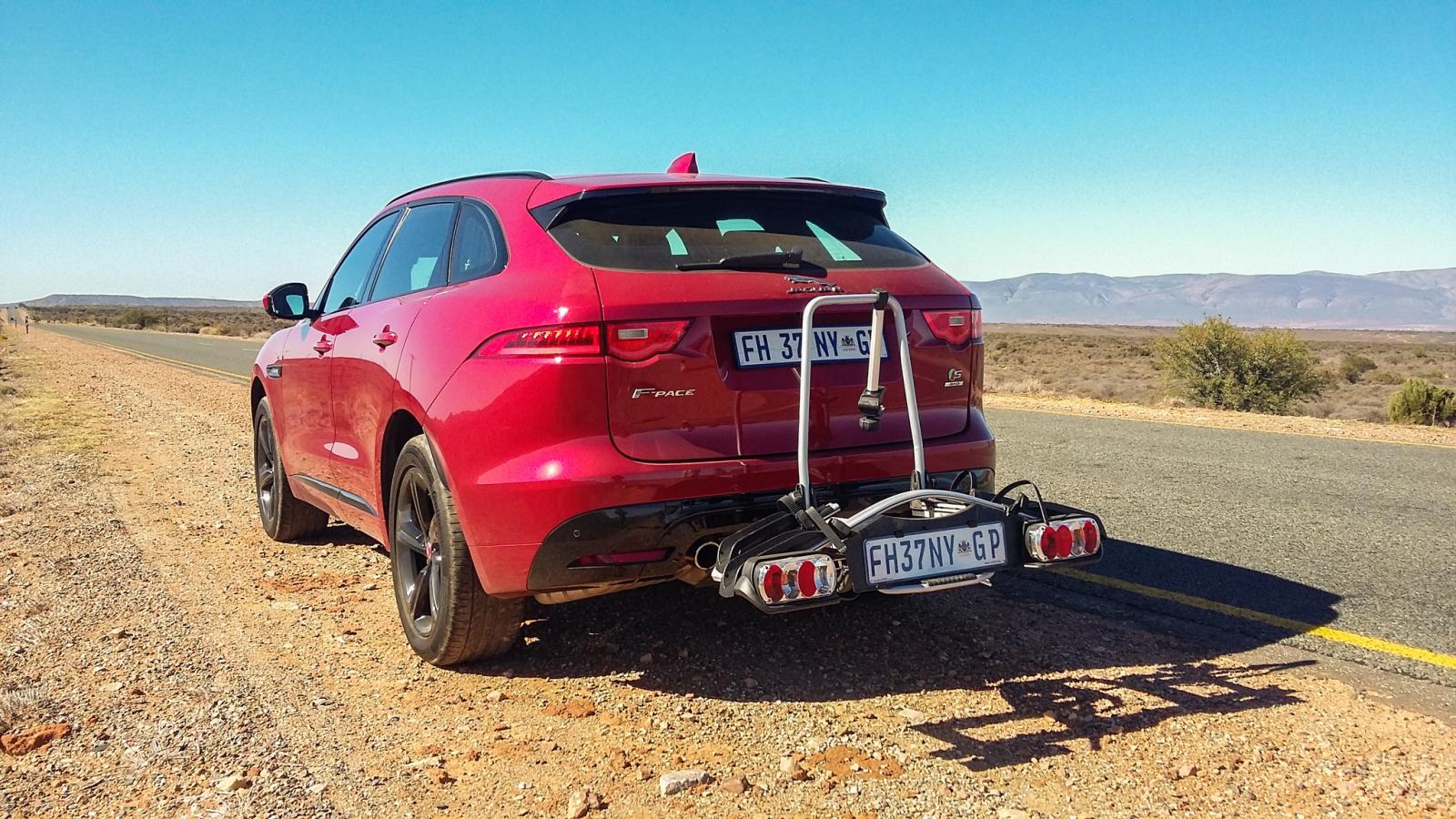
The test unit arrived at the Cars.co.za office replete with a custom Thule/Jaguar branded bike rack and 19 000 km on the odometer. It’s extremely rare to receive a test car with anything over 5 000 km on the clock so I was intrigued to see how the F-Pace had stood up to extensive use.
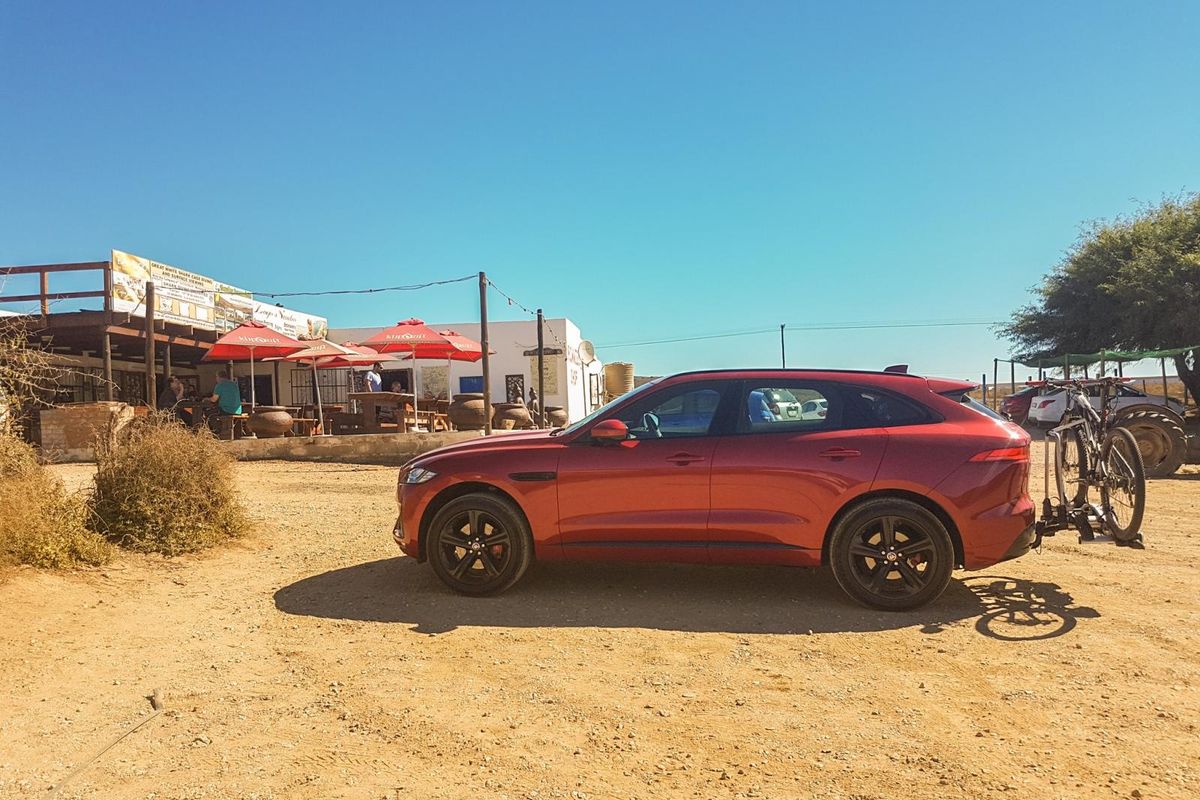
Special Jaguar bike rack made by Thule. There are all sorts of extras you can add on like roof rails and an electronic towbar.
A worrisome feature of the F-Pace is the full-size spare wheel that South Africans demand. Personally, I’m fine with a space saver that will get me to the nearest tyre dealer, but I can’t argue with the research manufacturers do on this topic. The full-size spare reduces the cavernous 650-litre boot to a hatchback-sized 463 litres. Jaguar Land Rover does offer a space saver upon request and you’ll have to weigh up whether the peace of mind of having a fully inflated tyre in reserve is worth the loss of practicality. For me, I've had 1 puncture in 15 years of driving, but I require a large luggage bay at least once a month – I'm happy to take that risk.
Tripping
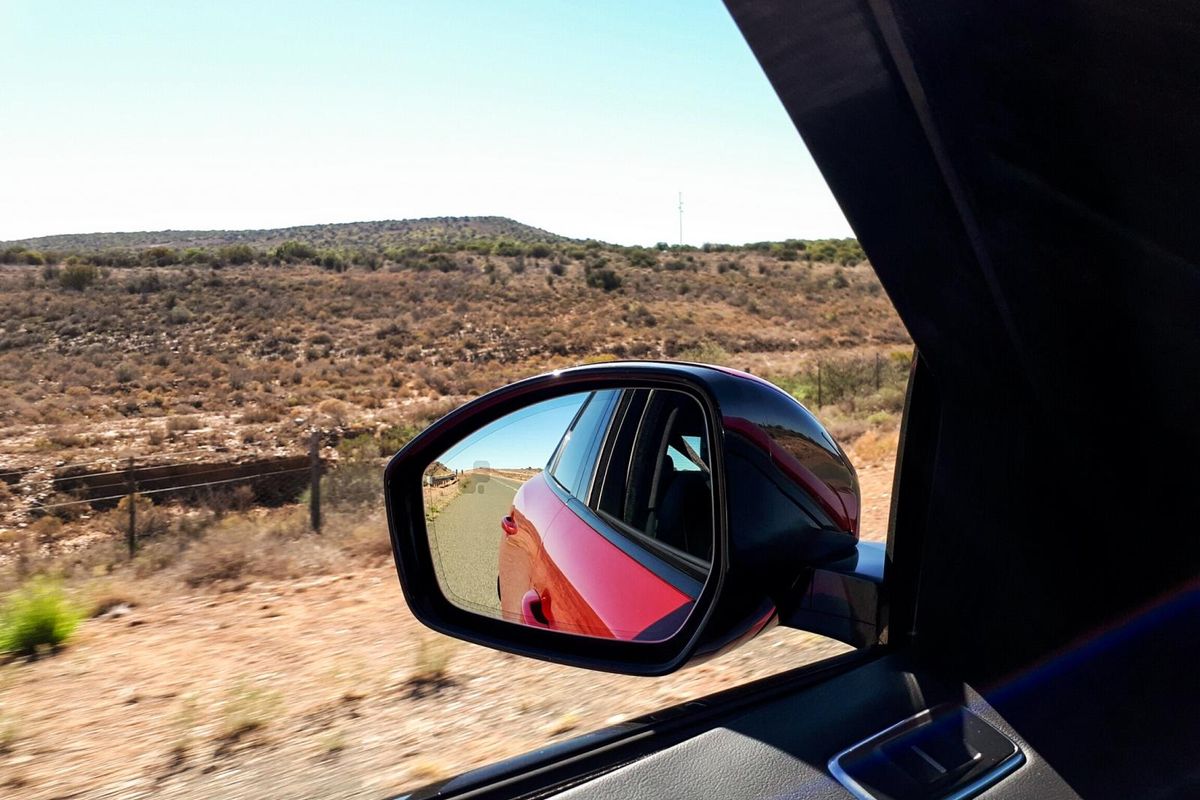
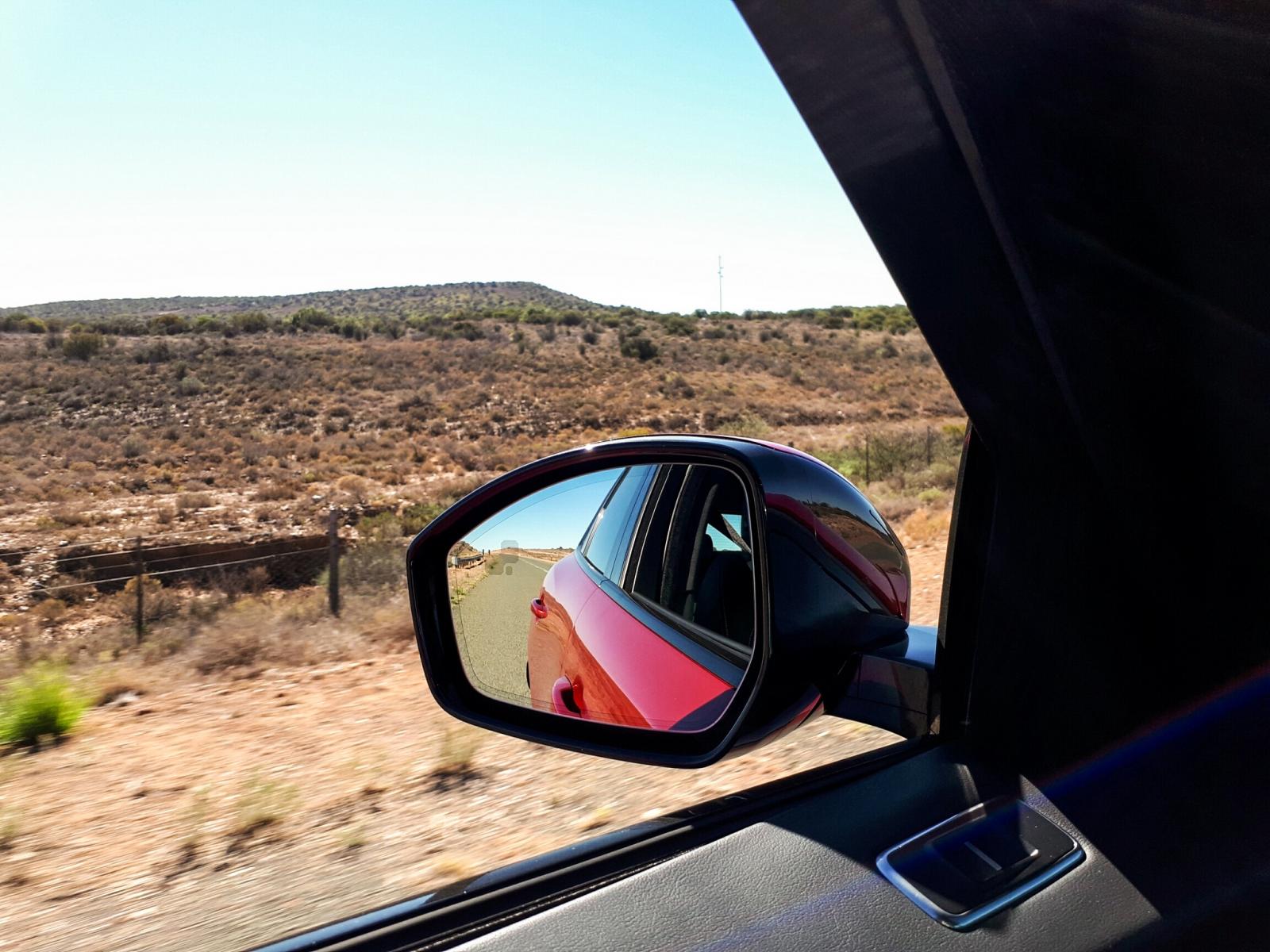
Said luggage bay just about coped with 4 people's luggage with minor overspill onto the unused centre rear seat. I carved myself out a letterbox sized hole between all the bags so I could see something out the rear-view mirror. Thankfully the side mirrors are particularly large so rear visibility is excellent.
With the bike locked and loaded we headed off into peak traffic at 8am on a Friday. Once we hit the N1, we would be heading against traffic to our first stop in Paarl (for breakfast). We needed to make Oudtshoorn by 3pm in order to register for the next day’s race so there was no real rush, but with 280 kW at my beck and call it was sometimes hard to keep my right foot steady. Overtaking with that much power in reserve is actually an enjoyable task: peek at a gap, floor the throttle and the Jaguar's transmission quickly knocks down a gear or 2 and then hurtles forward with impressive grace. There’s the backing track supplied by the forced-induction V6 engine that only becomes audible above 4 000 rpm that adds to the enjoyment.
There had been a flood in this area just 2 weeks prior to our trip. You wouldn't say so looking out the window.
Our F-Pace was specced with 4 USB ports, enough to charge the phones of everyone in the car, and they’re 1.5 milliamp ports that can fast charge a modern Smartphone. The best companion over the course of the road trip, however, was the 17-speaker Meridian sound system. There’s nothing like listening to 825W of crisp sound to make those miles tick faster.
The Tradouw pass
… is 20 kilometres of cooked spaghetti tarmac. It traverses the mountain range between the nutrient- and flora rich Swellendam and the dry and desolate Klein Karoo. It’s amazing how a mere 10 km (as the crow flies) can provide such a vast difference in landscapes. The one side bustling with vineyards, wheat and canola farms and the other side, dominated by patchy tufts of veldt and rock, open and untouched. The pass is lined with a brick barrier, a constant reminder that it’s unlikely to hold up to an impact, which could ramp us into the ravine.
The rotary knob that acts as a transmission selector in Jaguars was stealthily rotated into S, sending the 'box into its Sport shift pattern. The drive select button required a couple prods to send the chassis into Dynamic, which apart from lighting the instrument cluster in red, sends the drivetrain and suspension into hyper mode. The F-Pace is billed as a sports SUV, a slogan bandied about (not just by Jaguar) in order to subvert the idea that big cars don’t handle well.
Tradouw pass has spectacular views and kilometres of winding tarmac. Mind the barriers though, they are unforgiving.
The F-Pace is as close as any SUV comes to being sporty – its chassis feels tight and light. There’s less body roll than other Heffalumps (a reference for those who also appreciate the Winnie the Pooh series) and its rear-wheel drive bias allows the front to tuck into apexes quicker thanks to the front wheels being uncorrupted by power.
Surprisingly, most of the passengers were enjoying the whipping, squirting of power and deft braking. Still, we stopped for some air at the midway point of the pass before continuing our onslaught. I’m impressed by the steering of the F-Pace in Dynamic mode, it’s fast and direct and the deep dish wheel enhances the sporty demeanour.
For an SUV, the F-Pace has tonnes of grip… on the many long corners of the pass, the front holds fast and the more power you feed in, the more the torque vectoring system disperses it to the best axle.
The fuel situation
I was expecting the supercharged V6 to be thirsty, very thirsty. Even on the long road, where, at 120 kph, the Jaguar barely idling at 2 000 rpm, it drinks 10.0 L/100 km. Over the entire weekend, the 1 100 km was completed at an average of 10.7 L/100 km. That’s actually not all that bad, all things being considered. I would prefer a larger fuel tank than the 63-litre one that's fitted because it limits the car's range to around 500 km before the fuel light comes on. The Mercedes-Benz GLE, for example, has a 93-litre tank, I'd probably be happy with an 80-litre unit as a compromise.
Mistakes were made
After overnighting near the Cango caves, I set out at 5.20am to get to my race start by 6am, some 40 km away – easy going right? “Sh*t, I forgot my bottles!” I shouted at my sleepy (now sole remaining) passenger a mere 10 km into the trip to the start line. You don’t want to be without hydration in a 180 km race, so there was no option but to u-turn and head back. Anyone who has driven to the Cango caves knows that the road leading there is exceptionally good. Cambered corners mixed with fast sweeps and tight hairpins – it’s driving heaven. I had to pin it, there’s no such thing as a late start in a mountain bike race!
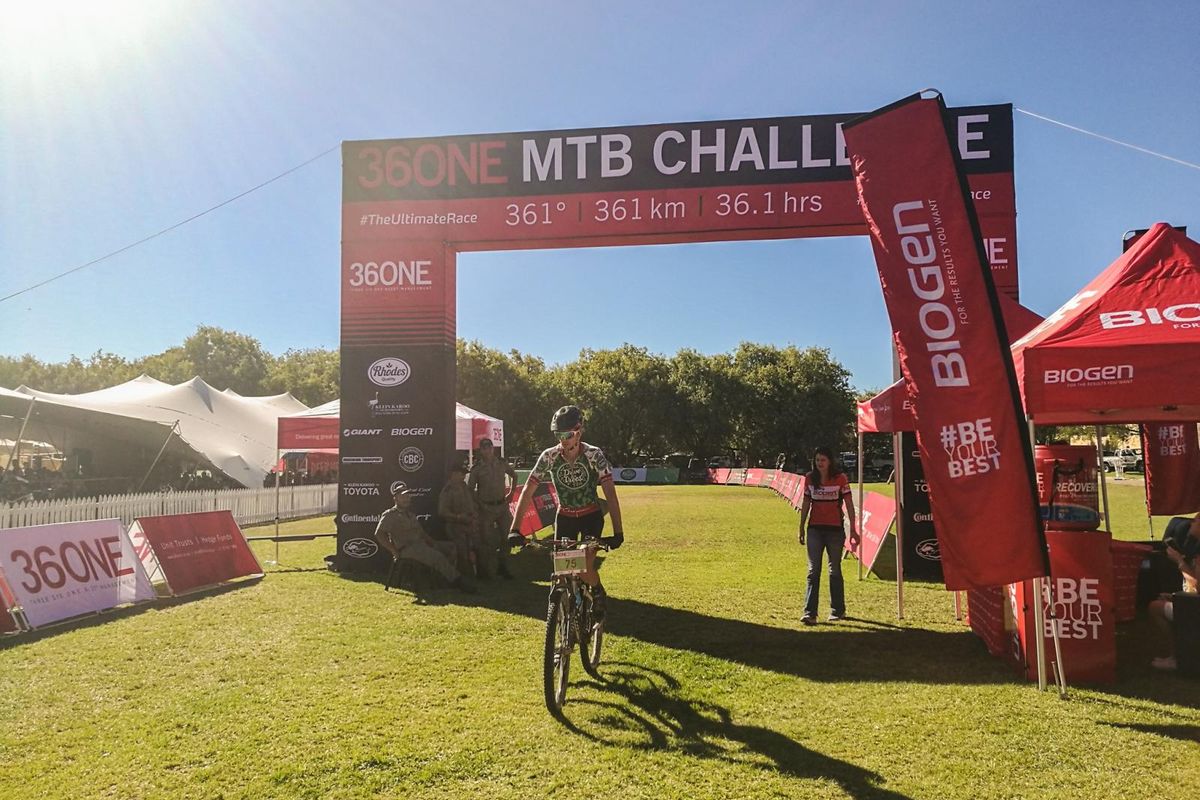
All 361 km of riding. The ride has to be completed within 36 hours, which is madness.
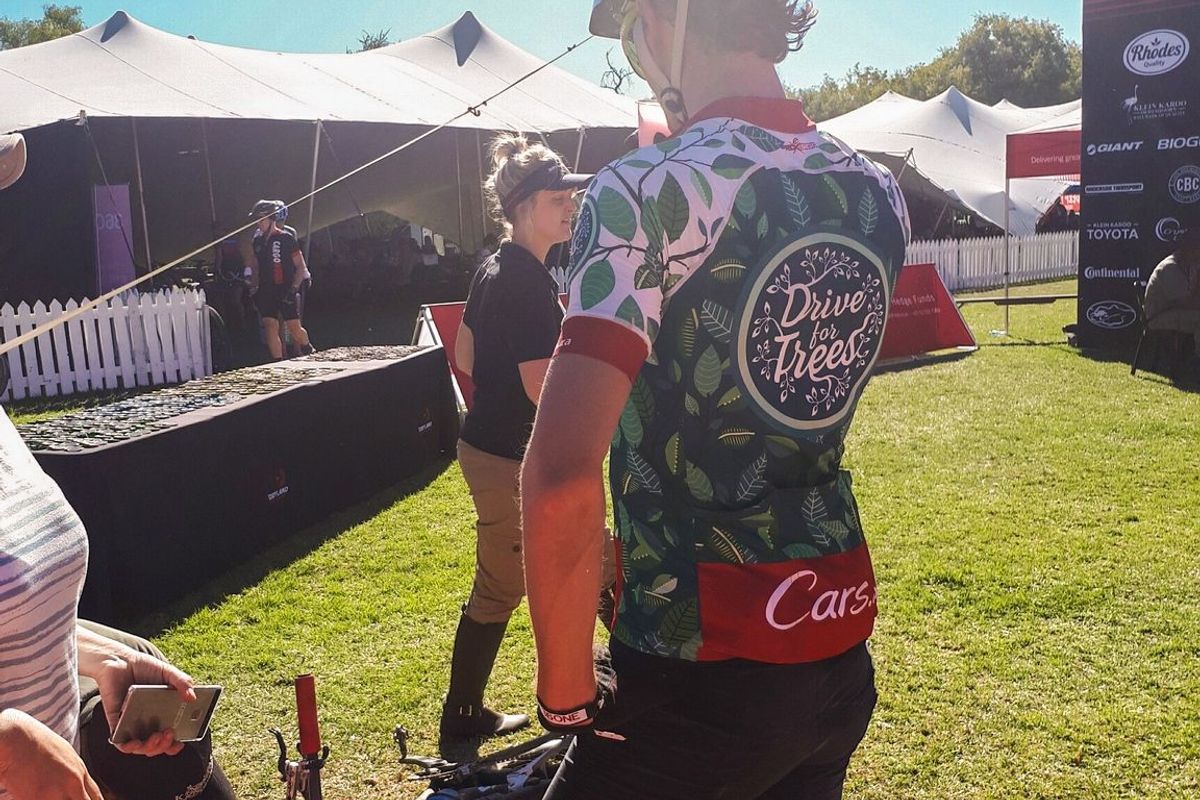
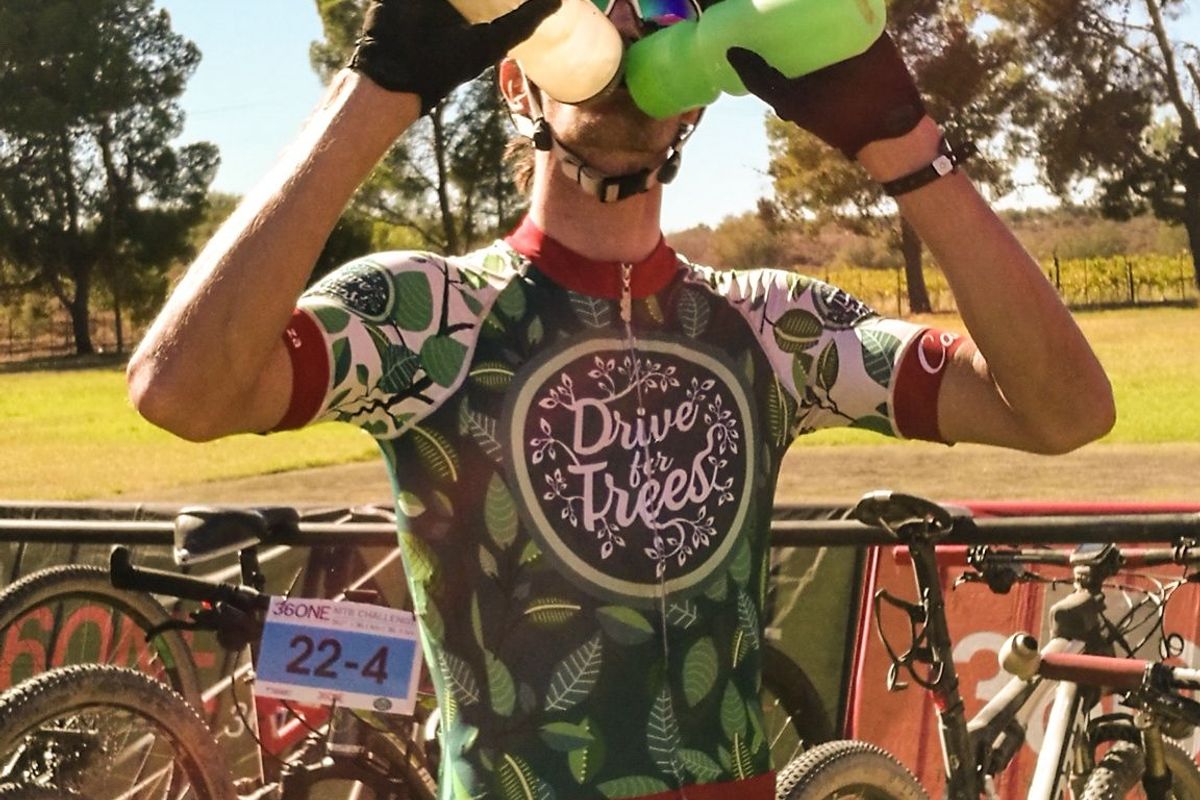
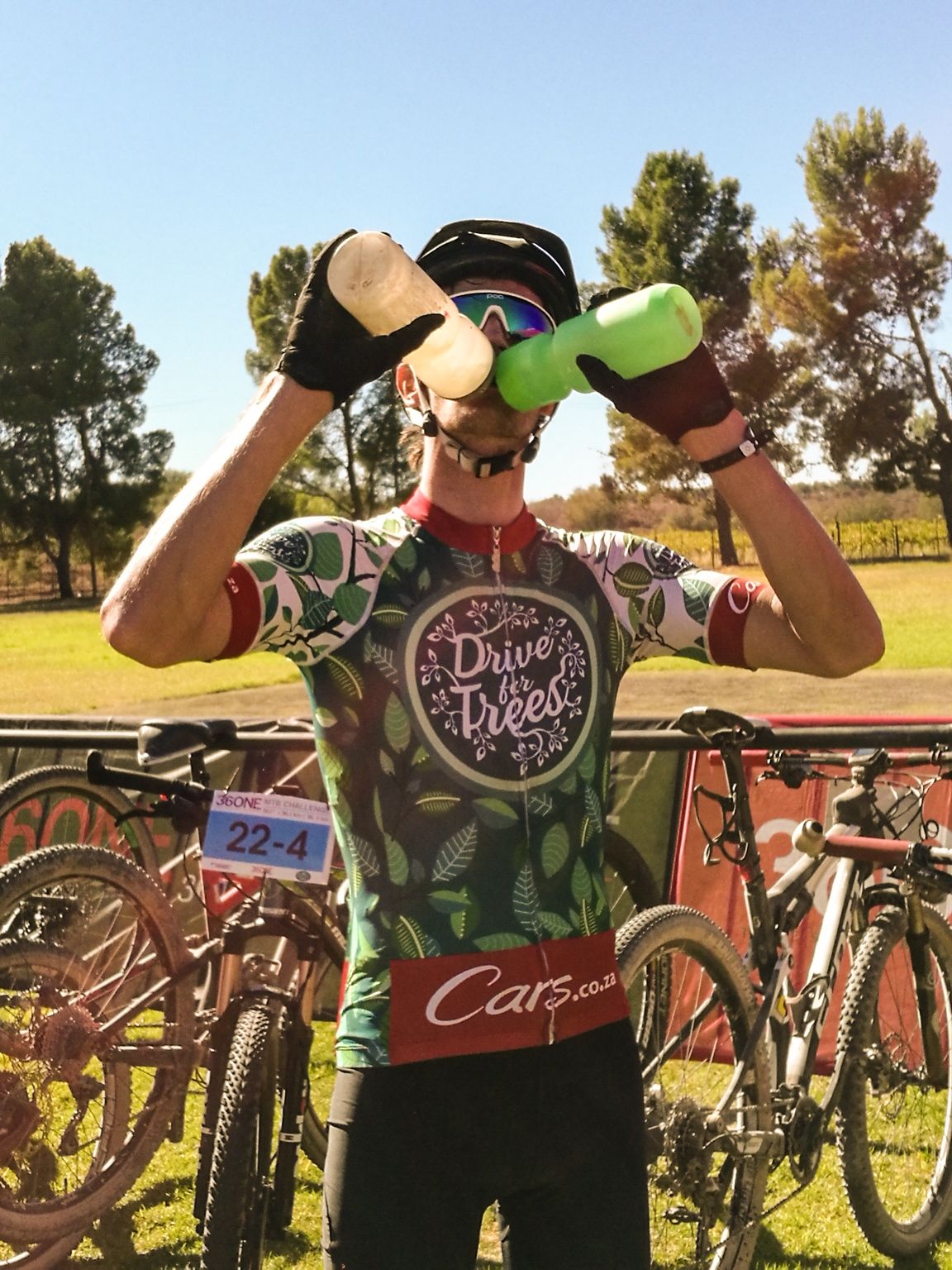
The F-Pace’s capabilities were tested, as were my passenger's stomach and nerves as we hustled it one way, collected the bottles and then whipped it back through the pass again to get to the start with a mere 5 minutes to spare. The Jaguar sat, ticking away as it cooled off in the dark while I rushed into my special Drive for Trees kit and felt my way to the start line
Bike to car
No less than 180 km of riding later and I was absolutely finished, in a world of pain and exhaustion. The route took us from just South of Oudtshoorn, around the Gamkaberg nature reserve and then up the Rooiberg Pass. That pass, in particular, was an absolute highlight in the early morning; it's a 6 km climb, but once at the top, there is an endless view of the Karoo and its vastness. From there we headed to Calitzdorp and along the foot of the Swartberg mountain range before trailing back to Oudtshoorn. The temperatures ranged from 3 degrees celsius at dawn to 33 degrees celsius in the cauldron below Swartberg.
168 trees were planted in partnership with our Drive for Trees programme.
At the finish, I sampled some local beer and then headed swiftly for the passenger seat in the Jaguar for the return trip to our overnight accommodation. I was thankful for dual-zone climate control and a place to rest my weary legs, but entirely aware that the weekend’s physical fitness schedule wasn’t complete. Yes, despite being near-immobile after the day's exertion, my spectators/travel buddies were excited about tackling the adventure course at the Cango caves. That was just what my legs needed – a session of spelunking!
The return leg
The route back was the same, but with stops in different towns for fill-ups and nourishment. The R62 has undergone some extensive tourist upgrades, every town along the road feels geared for travellers with curio shops, speciality food and markets. Barrydale, in particular, is a little gem with a section of the town decked out with timber farm stalls and restaurants.
Swellendam is a popular stop along the N2 highway, and if you veer off the main road, has interesting heritage from its Dutch East India Company days as well as a huge sign noting that it’s South Africa’s number 1 rated municipality.
The mandatory stop on the R62 at Ronnie's Sex Shop.
Returning an F-Pace with 20 000 km plus change revealed some interesting tidbits. The engine still remains an absolute beast and apparently hasn’t skipped a beat since its first kilometre. It’s got yet more work to do: American racing legend Randy Pobst was its next caretaker as he used it to drive from Cape Town to the Jaguar Simola Hillclimb.
The interior has, for the most part, held up extremely well. The leather doesn’t look a day older than new and the carpeting is all still thick and lush. There are a few rattles, especially in front of the dashboard and somewhere in the left front corner, an area Jaguar would hope to eliminate them from in the future. I’m also not a fan of the plasticky cover on the instrument cluster – I would expect something less scratchy/more soft-touch in a car costing in excess of R1.2 million. These are minor gripes, I admit, and ones I could certainly live with. As much as I like the engine and its performance characteristics I would still pick the 3.0d. It’s got all the grunt you’ll ever want and could extract 700 km on a tank, easily.
The F-Pace has won 2017's Word Car of the Year, something some may dispute. As the world continues to buy more and more SUVs, it makes sense that they should have a decent shot at the title. The F-Pace is certainly the most dynamic SUV on sale at the moment, whether it's the best example of an SUV is still up for debate, it may have just come at the exact right time as the world was ready to accept the SUV as the perfect everyday car.
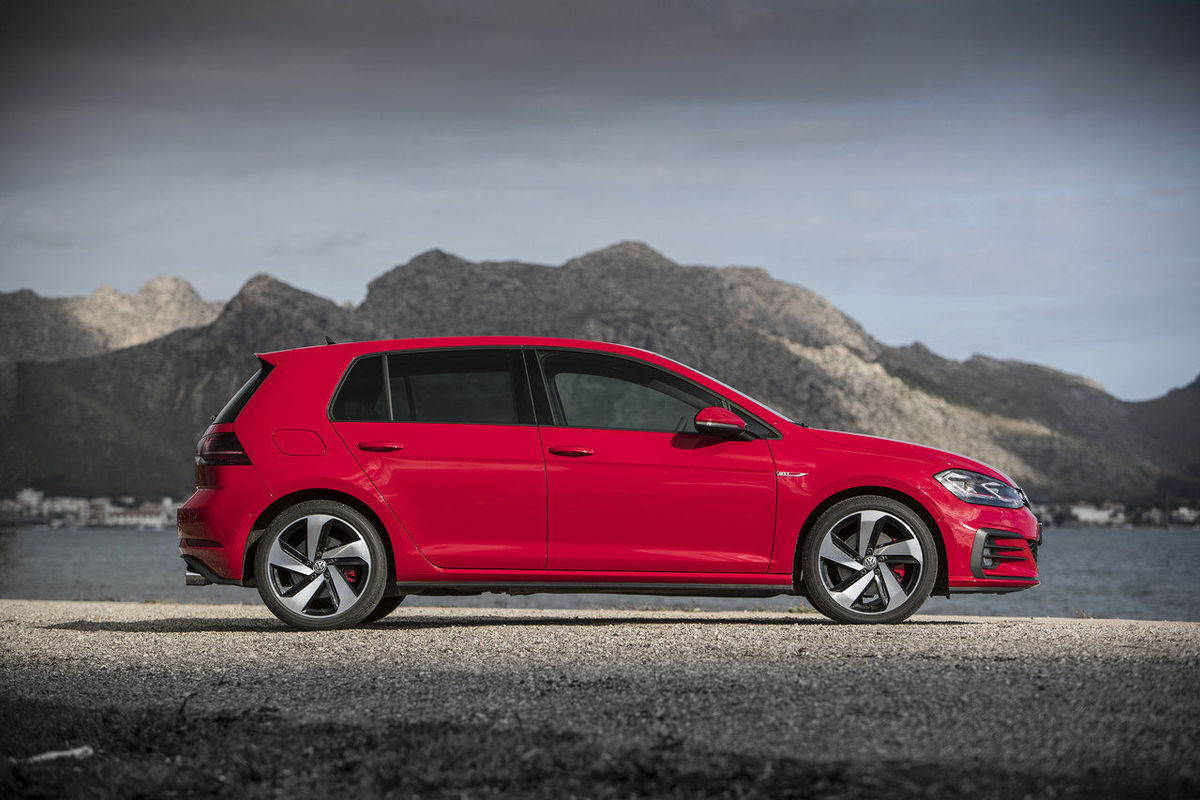
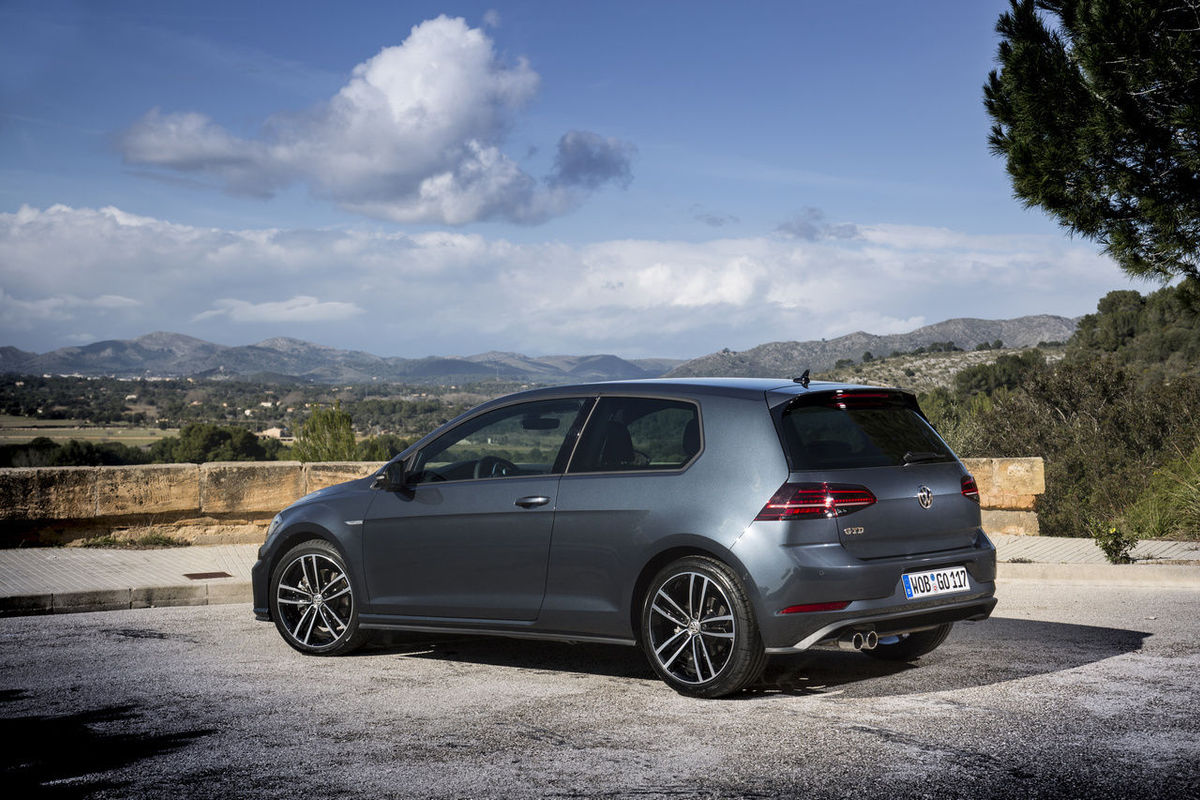
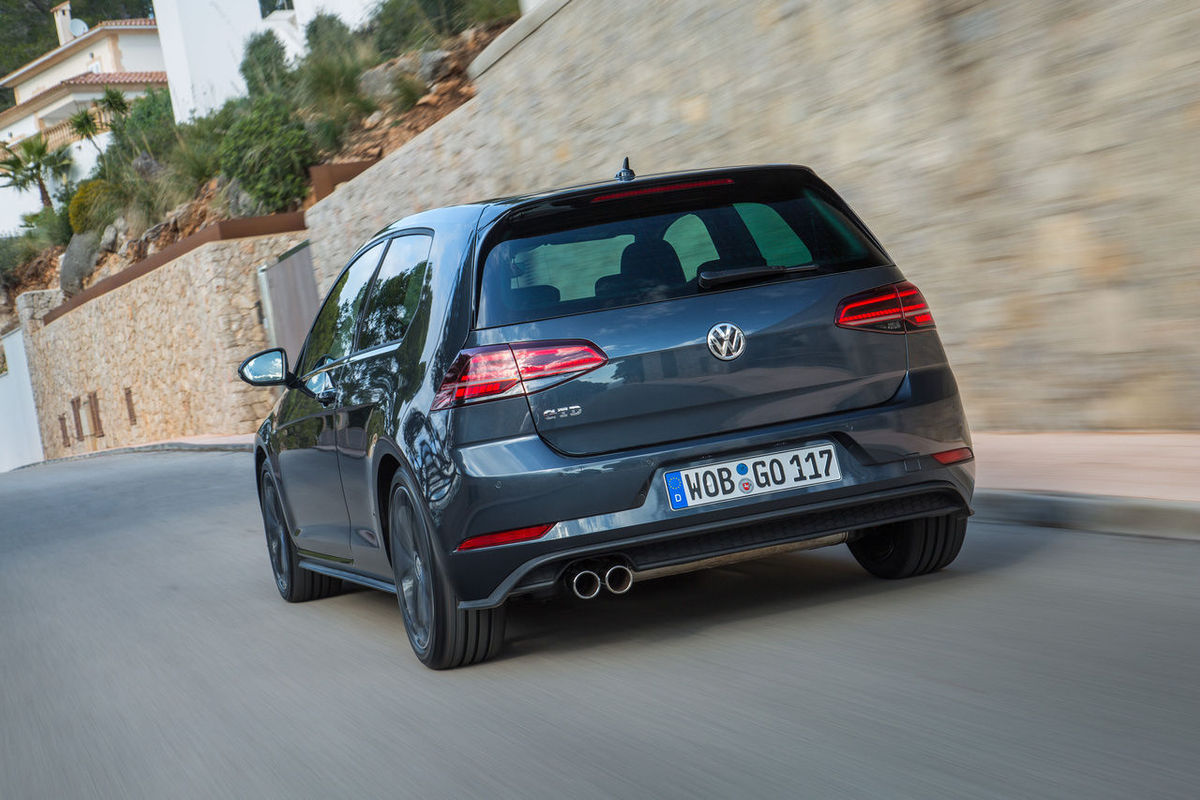
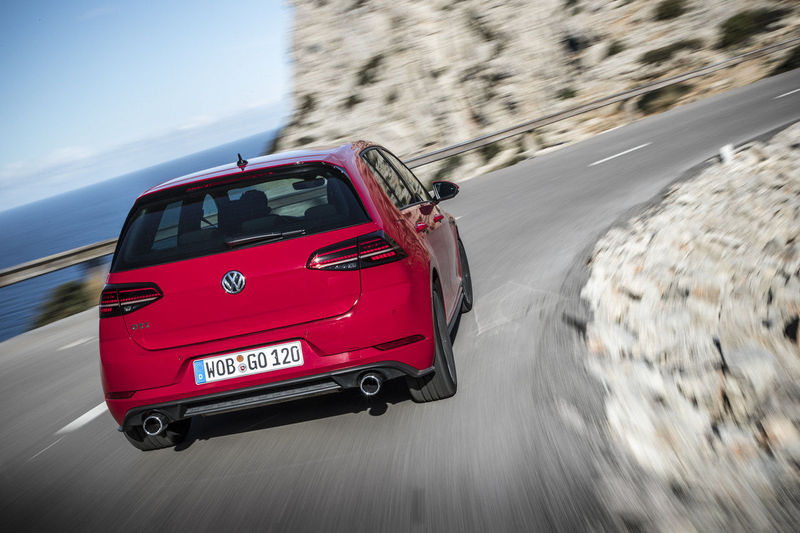
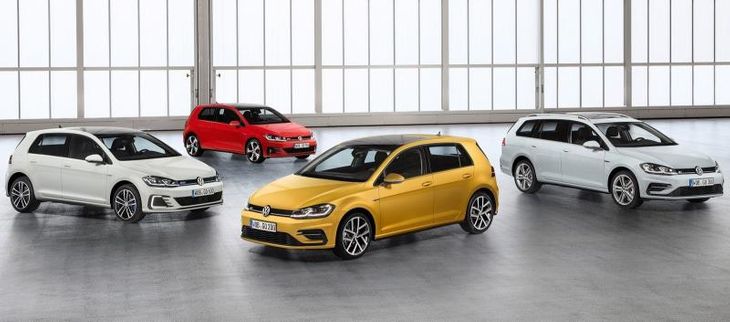
The international launch of the facelifted Volkswagen Golf range took place in Mallorca, Spain. We get to drive the latest iteration of the iconic GTI – the reigning Cars.co.za Consumer Awards premium hatchback champion – plus its intriguing turbodiesel-engined sibling, the GTD!
Now in its 7th generation, the Volkswagen Golf has been one of those vehicles that, despite its rivals' best efforts, outmatches them in terms of build quality, refinement and drive quality. Kudos to the rest (including premium manufacturers Audi, BMW, Lexus, Mercedes-Benz and Volvo) for trying to dethrone the Golf; some of them run the Volkswagen very close…
But Golf 7 has that admirable trait where you could get out of something more premium and get into the VW without experiencing a drop in quality. It’s the kind of build integrity and use of premium plastics that annoys journalists everywhere. How can something in this segment be this good? And, how on Earth could VW engineers improve on an already excellent product?
The Golf 7 has left many rivals in its wake, so can the facelifted version increase Volkswagen's advantage?
Turbodiesel GTD scheduled to arrive mid-year
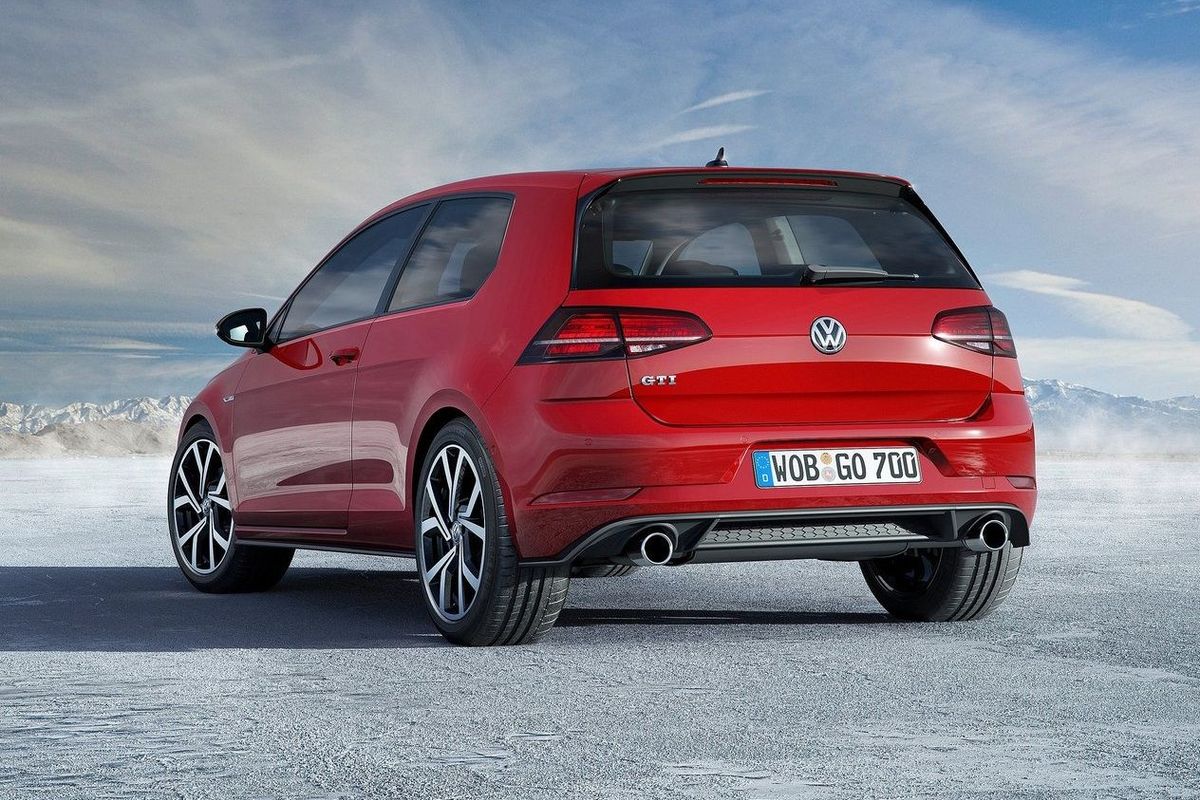
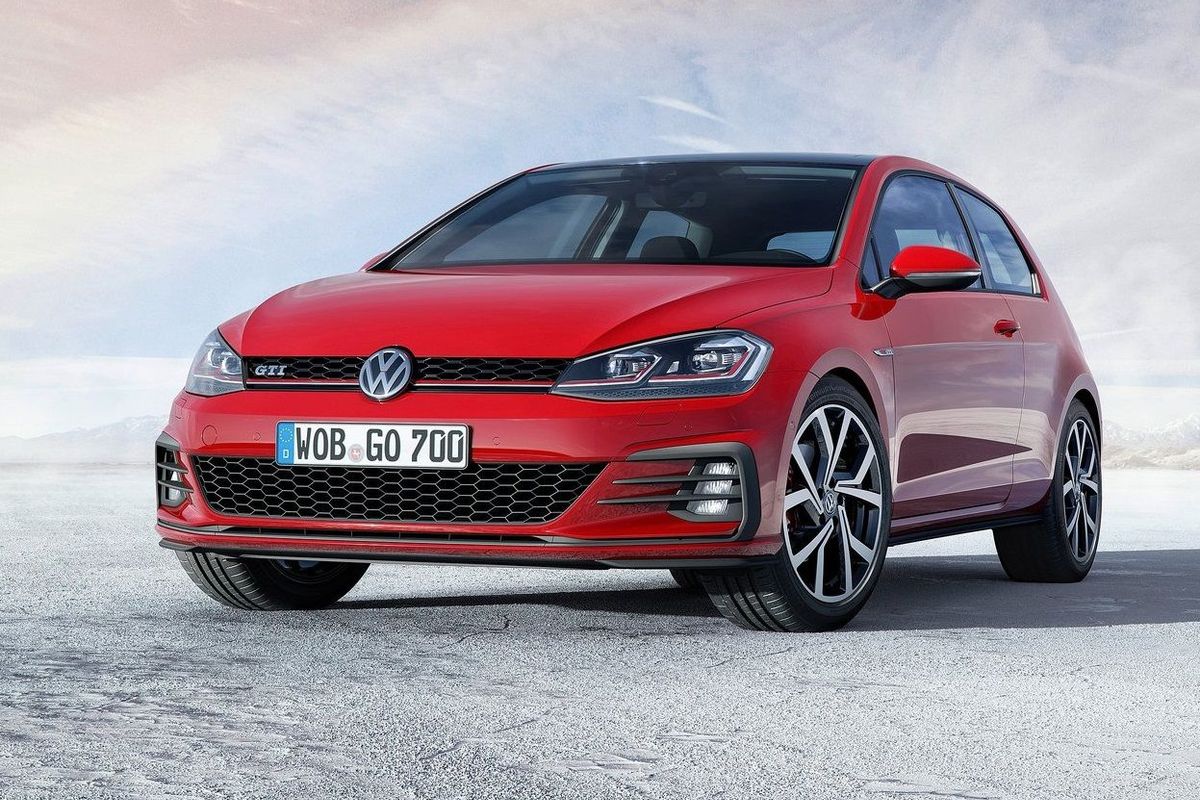
This brings us to where we are this week. We’re spending some time with Volkswagen in Europe where we are driving its latest Golf offerings. On hand is the new-engined, run-of-the-mill "normal" Golf, a facelifted Golf GTI and the performance turbodiesel GTD, the latter which has been officially confirmed for South African introduction around the middle of 2017.
The Volkswagen Golf GTI has been a runaway success for the brand in South Africa. The addition of the Performance Pack and outstandingly good Clubsport to commemorate 40 years of GTI, only sweetened the range. South Africa provides a unique situation for Volkswagen. In our market, the GTI that makes up the majority of the sales numbers. Of those, the most popular are the DSG-equipped models and that explains why the Uitenhage-based brand will only introduce the facelifted GTI in automatic guise: the dual-clutch transmission (with shift paddles) GTI is easier to launch off the line, gear changes are quicker and more efficient than by human hand, plus you have all the comfort, economy and convenience of an automatic.
Cars.co.za Consumer Awards success
The Volkswagen Golf 7 GTI is a vehicle to which we are very accustomed. Not only did the entire team enjoy its complete repertoire of skills, but it also bagged the Premium Hatchback of the Year award twice on the trot, seeing off premium opposition from BMW and Mercedes-Benz. The hands-on GTI Clubsport walked off with the Fun Car trophy. You can read more about the Cars.co.za Consumer Awards – powered by WesBank here!
What’s new?
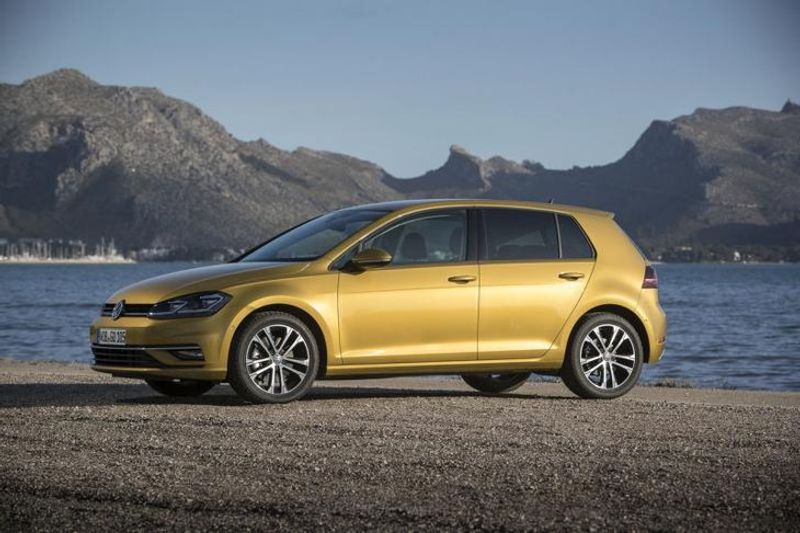
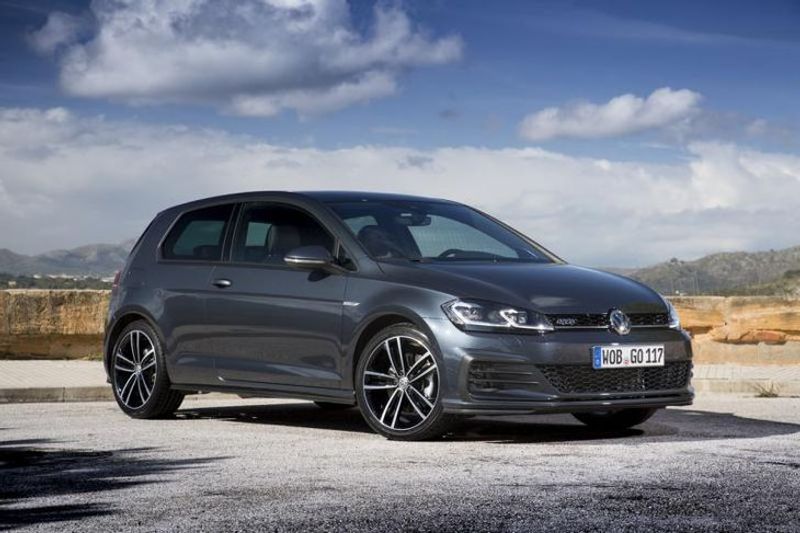
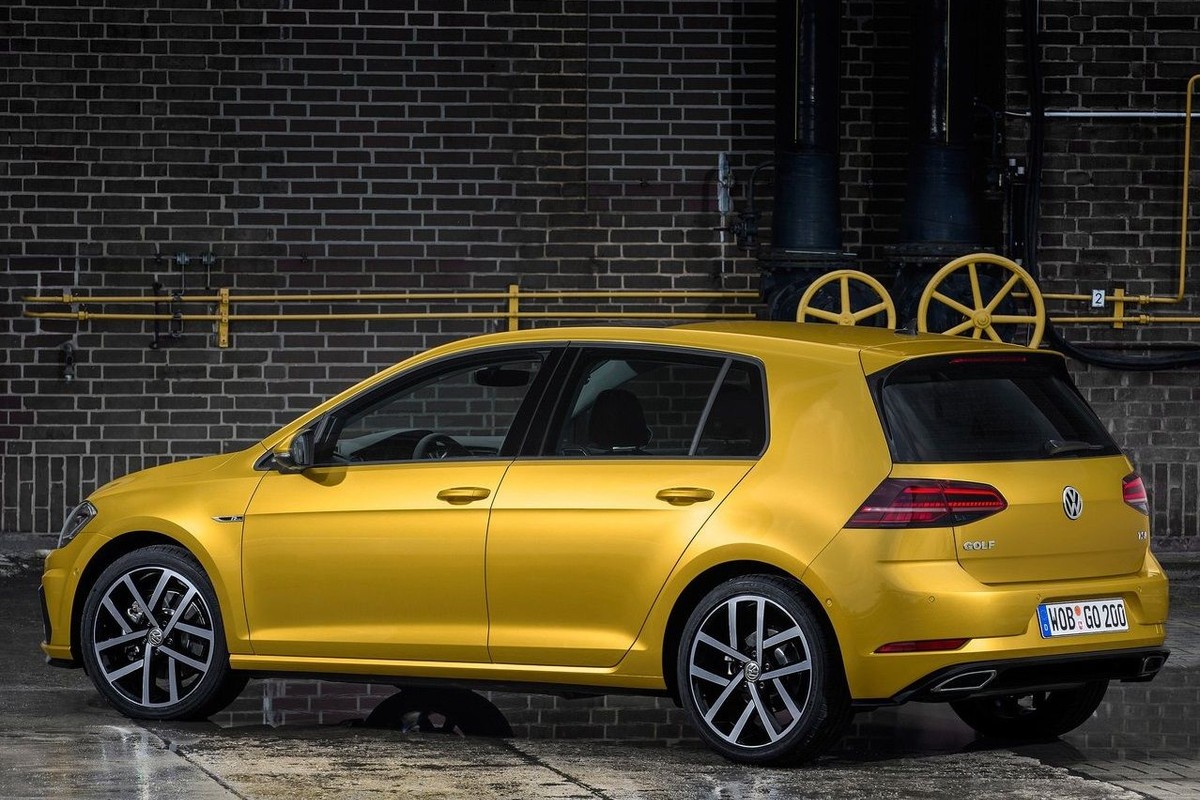
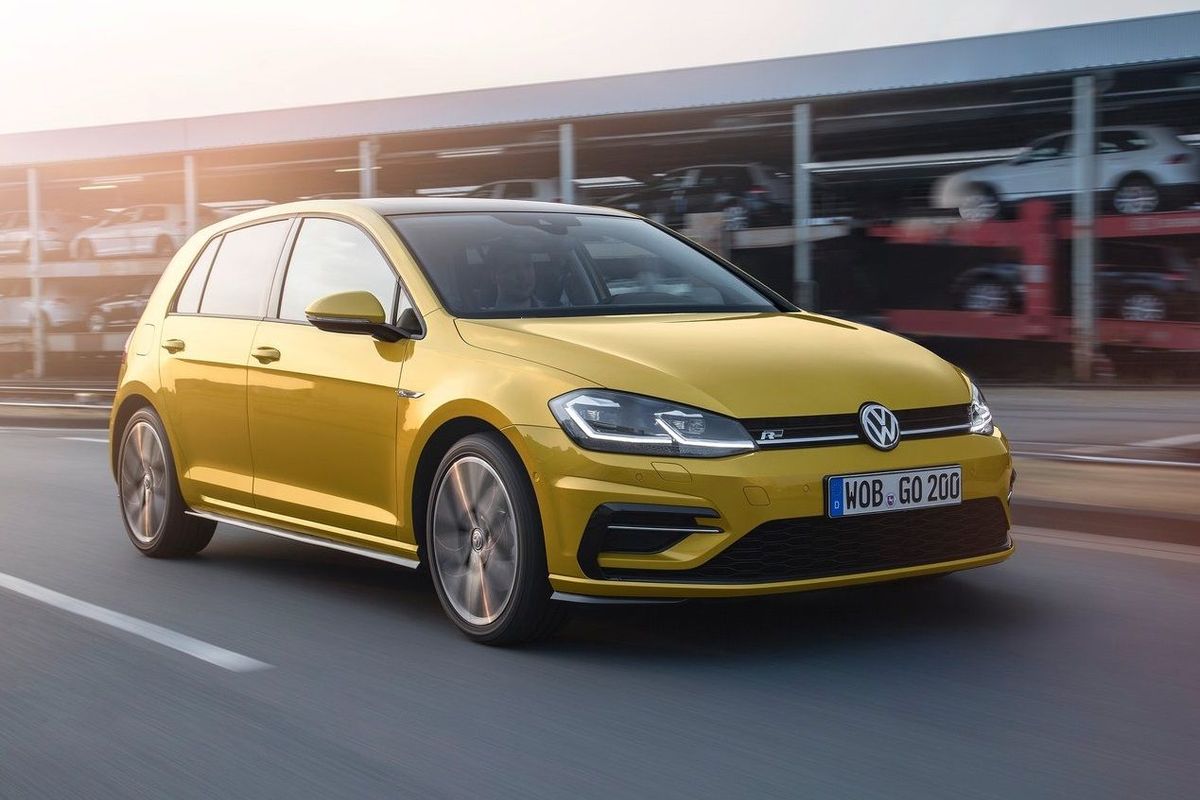
A non-GTI facelifted Volkswagen Golf in the launch colour: Kurkama Yellow. It looks suspiciously like BMW's Austin Yellow.
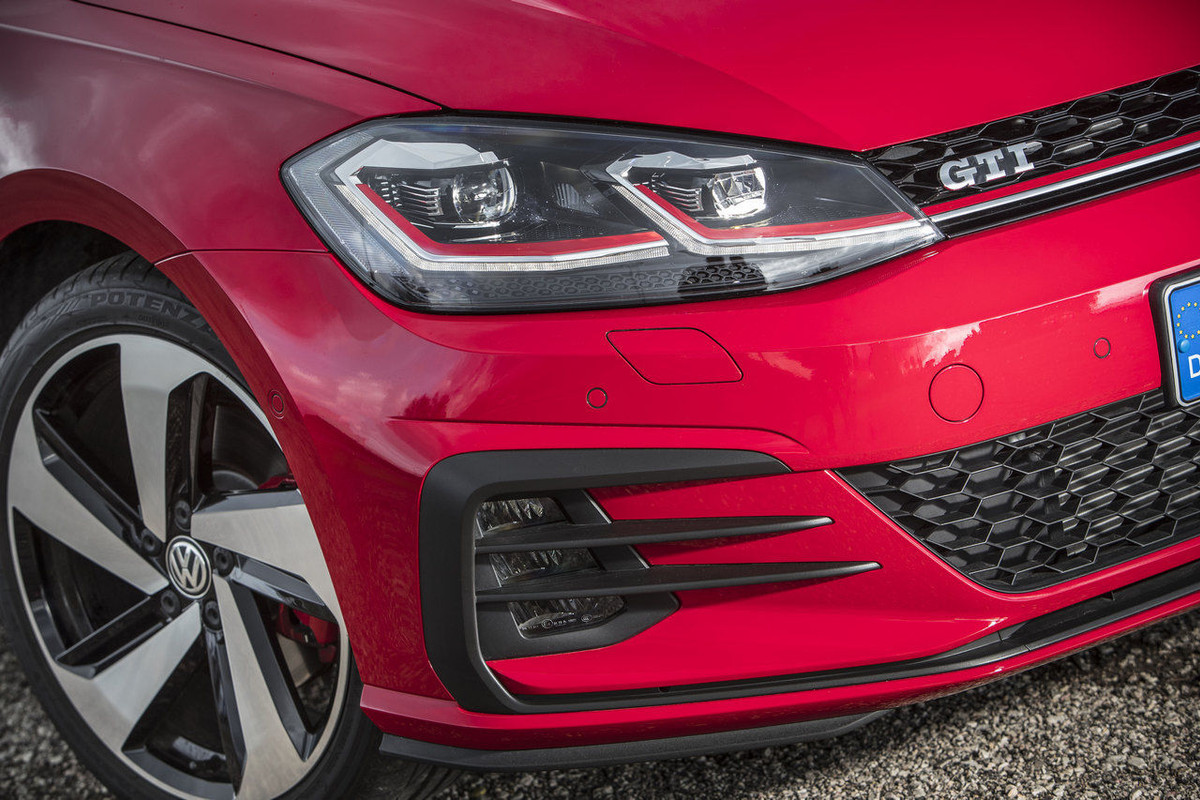
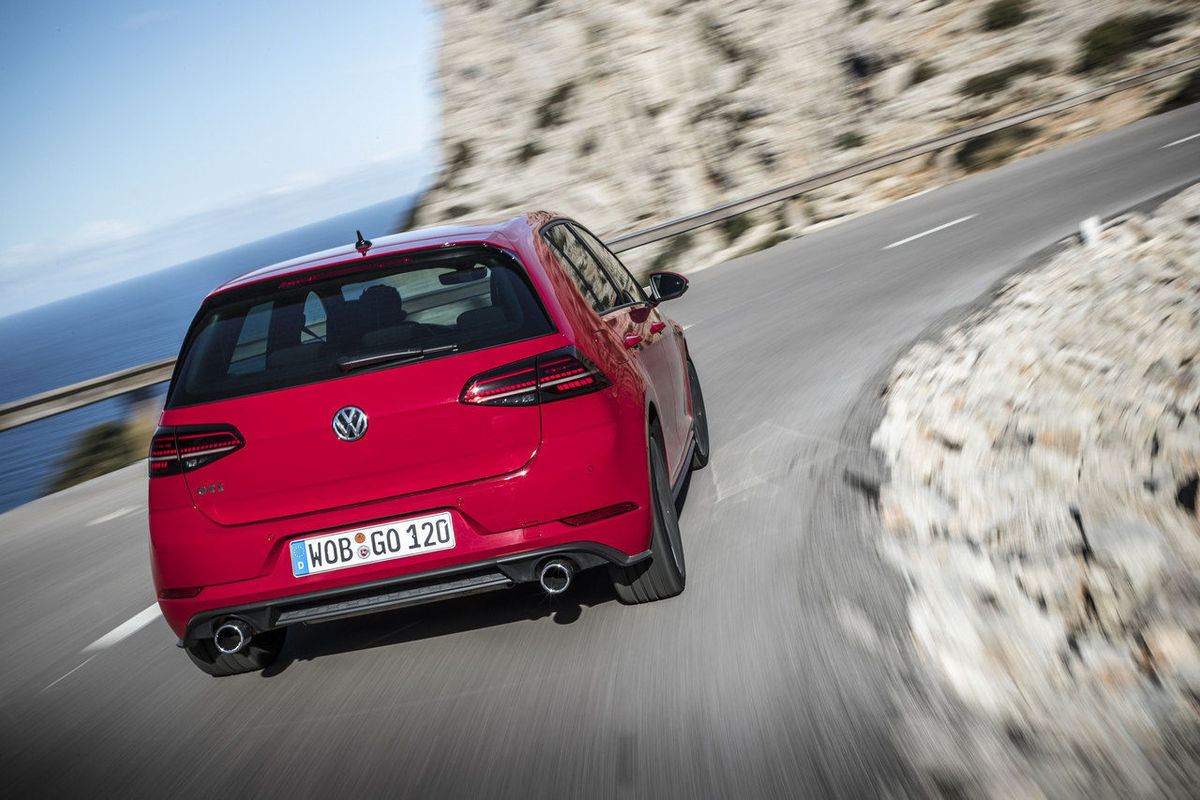
The design has not changed dramatically and there are new bumpers, headlights and LED tail lights. It’ll take the new and the current car positioned side by side to really be able to tell the difference, but for the updated Golf 7, the changes are more under the metal than cosmetic. Other than tweaks to the engines and gearboxes, the cars are mechanically identical.
In the age of downsizing, where car companies have shrunk their cubic capacities and lopped off cylinders, Volkswagen has gone the other way and made a bigger engine. Gone is the tried-and-trusted 1.4-litre turbocharged petrol unit and in its place is an all-new 1.5-litre 4-cylinder turbocharged petrol. Outputs are rated at 110 kW with torque sitting at 250 Nm.
Power goes to the front wheels via DSG transmission. The gearbox has been revised and now features an extra ratio to make it a 7-speed unit. While not immediately available, we expect this engine to potentially make an appearance in our market. In terms of the Volkswagen Golf GTI, power has been increased to 169 kW from 162 kW, while torque has remained the same at 350 Nm. The Golf GTI Performance Pack will be coming in 2018 and it will offer 180 kW.
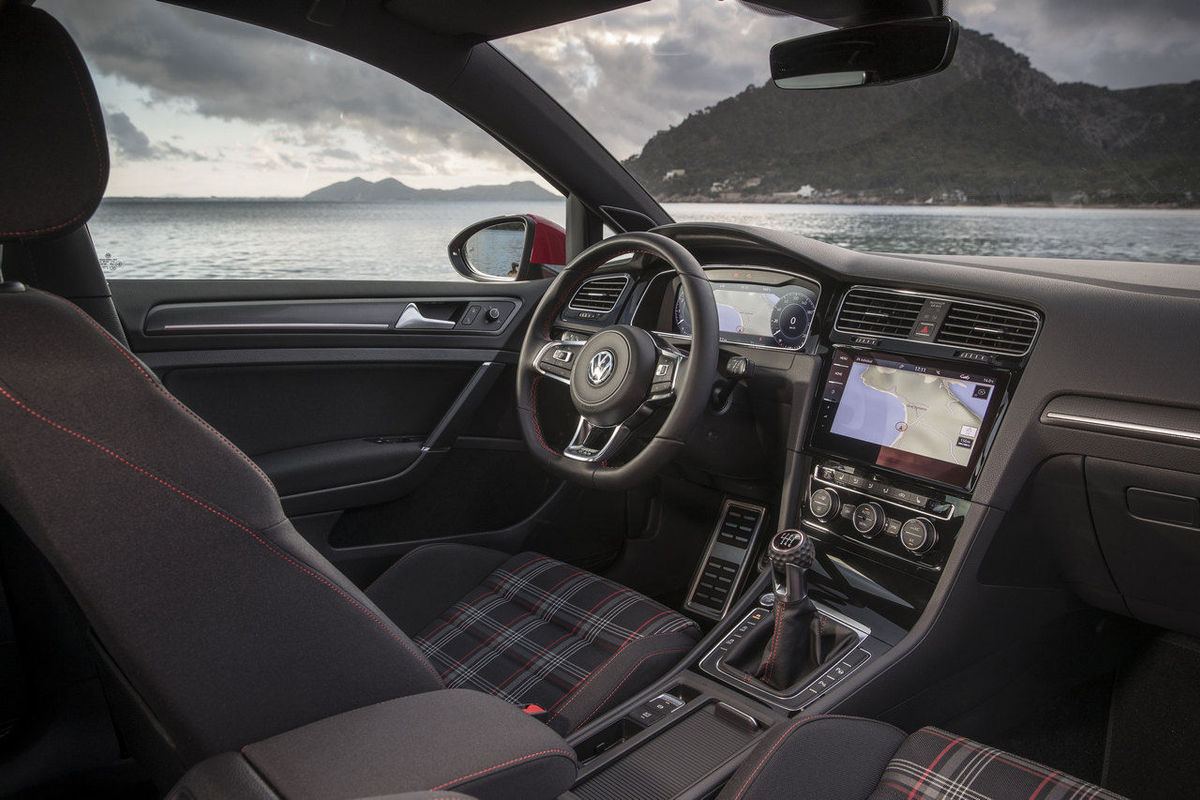
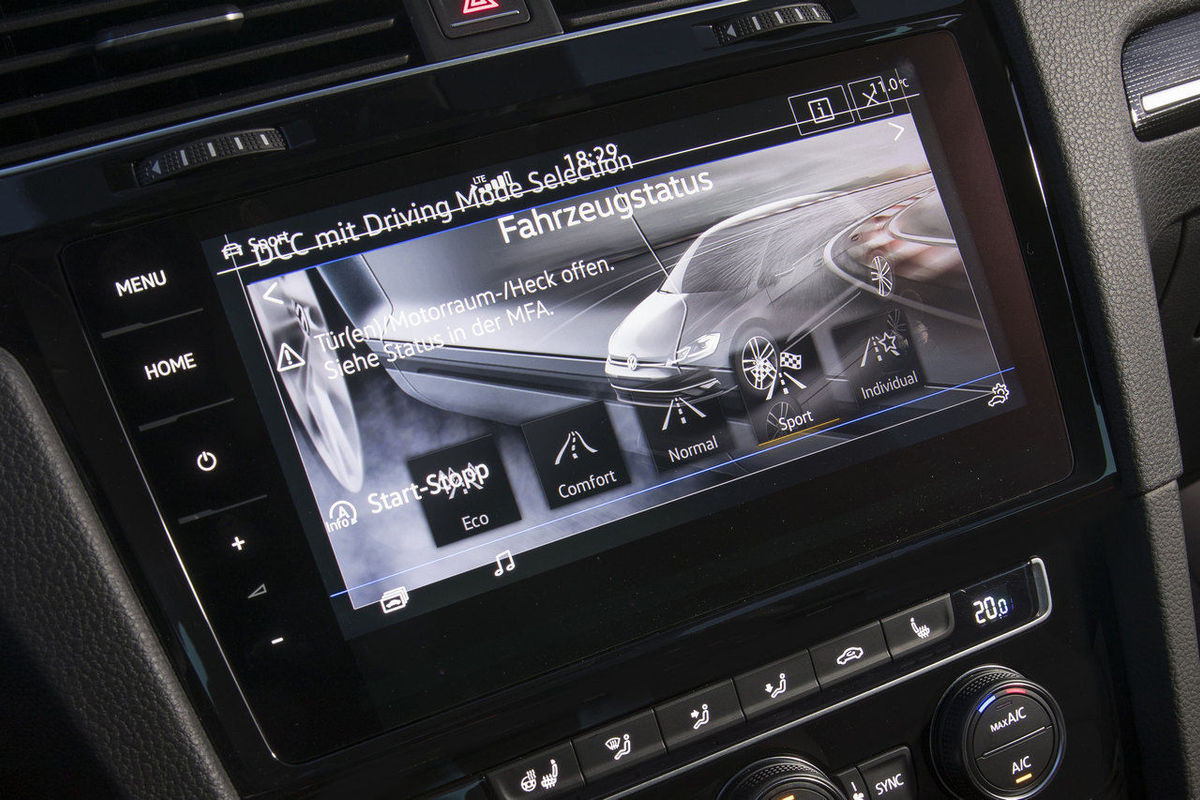
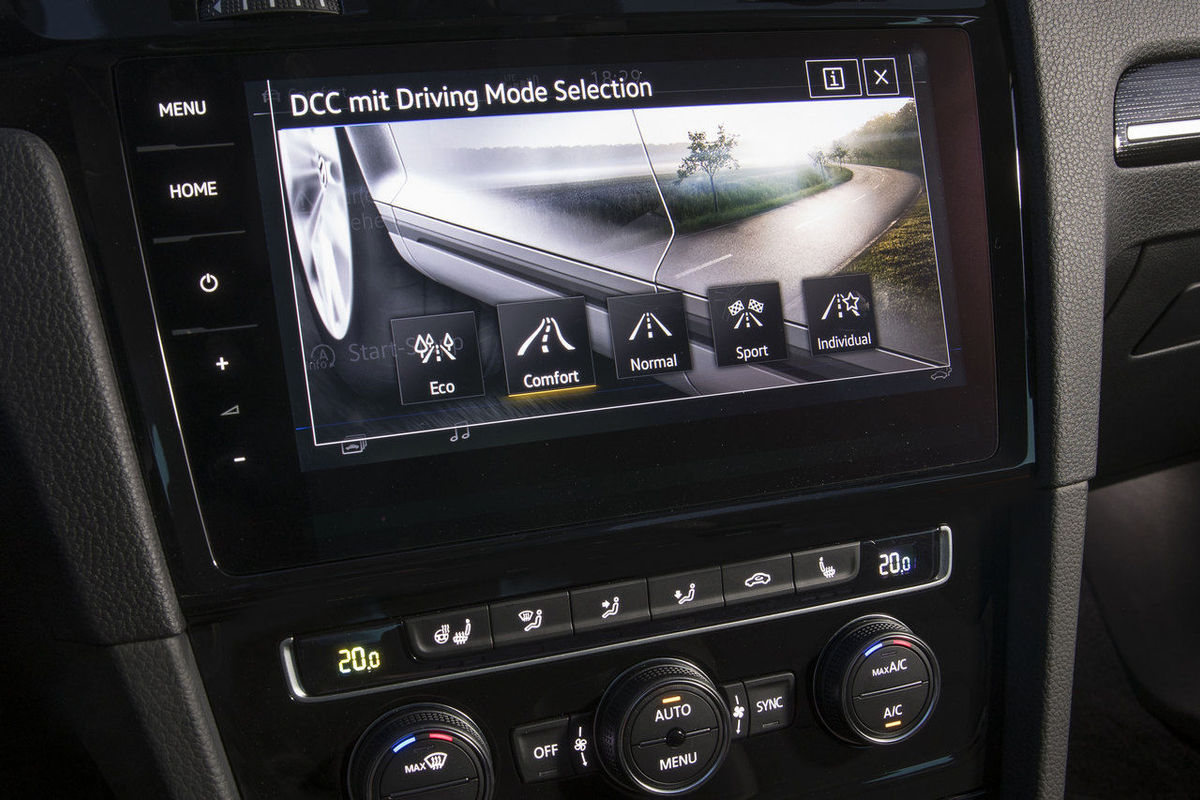
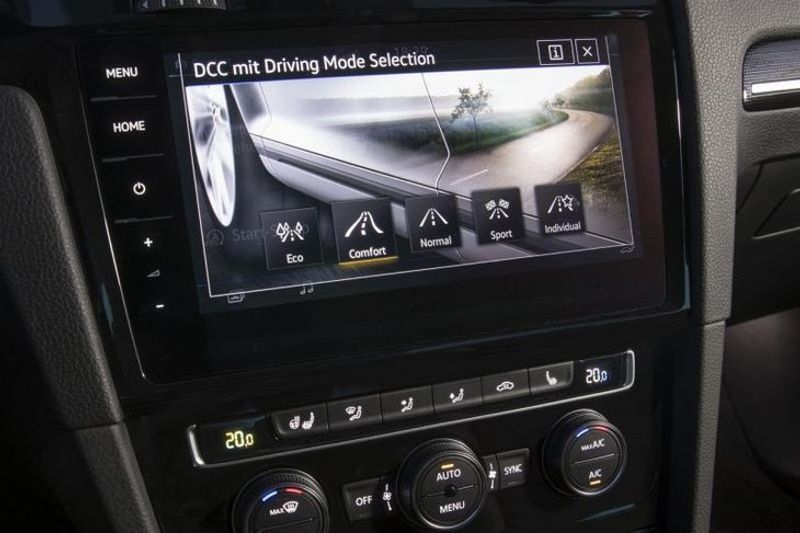
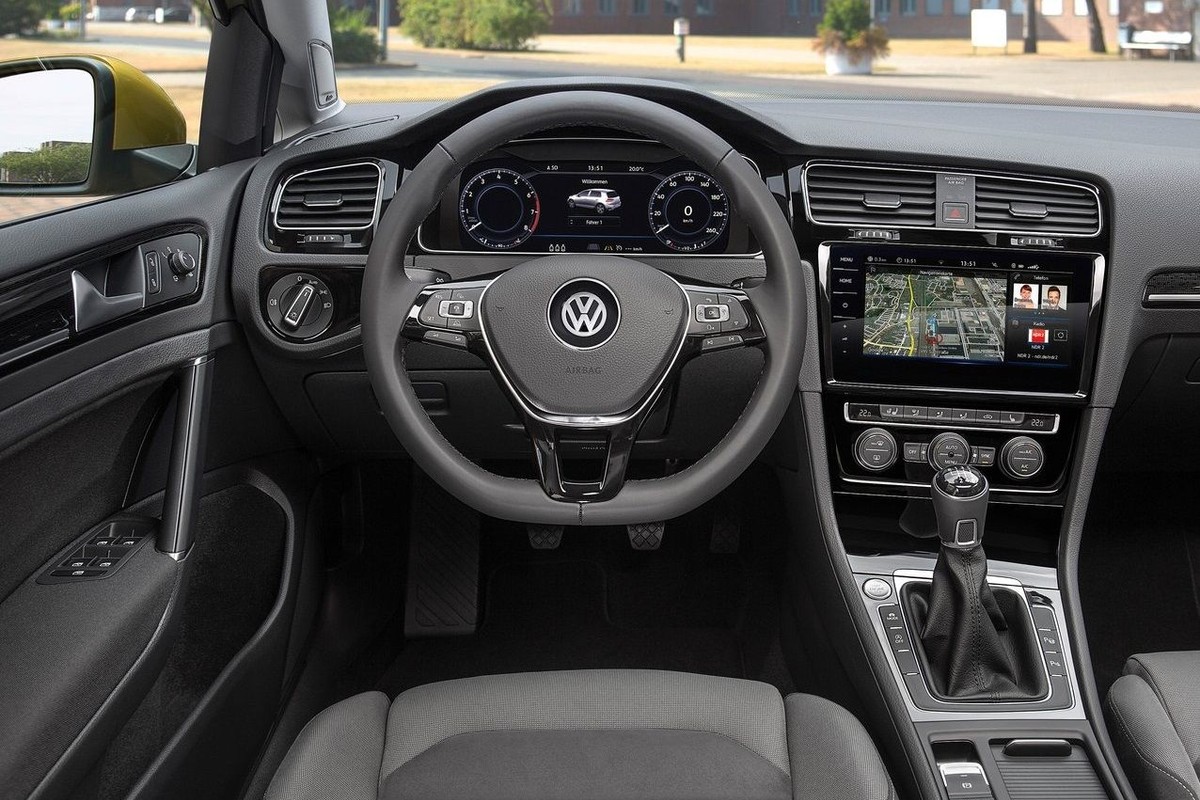
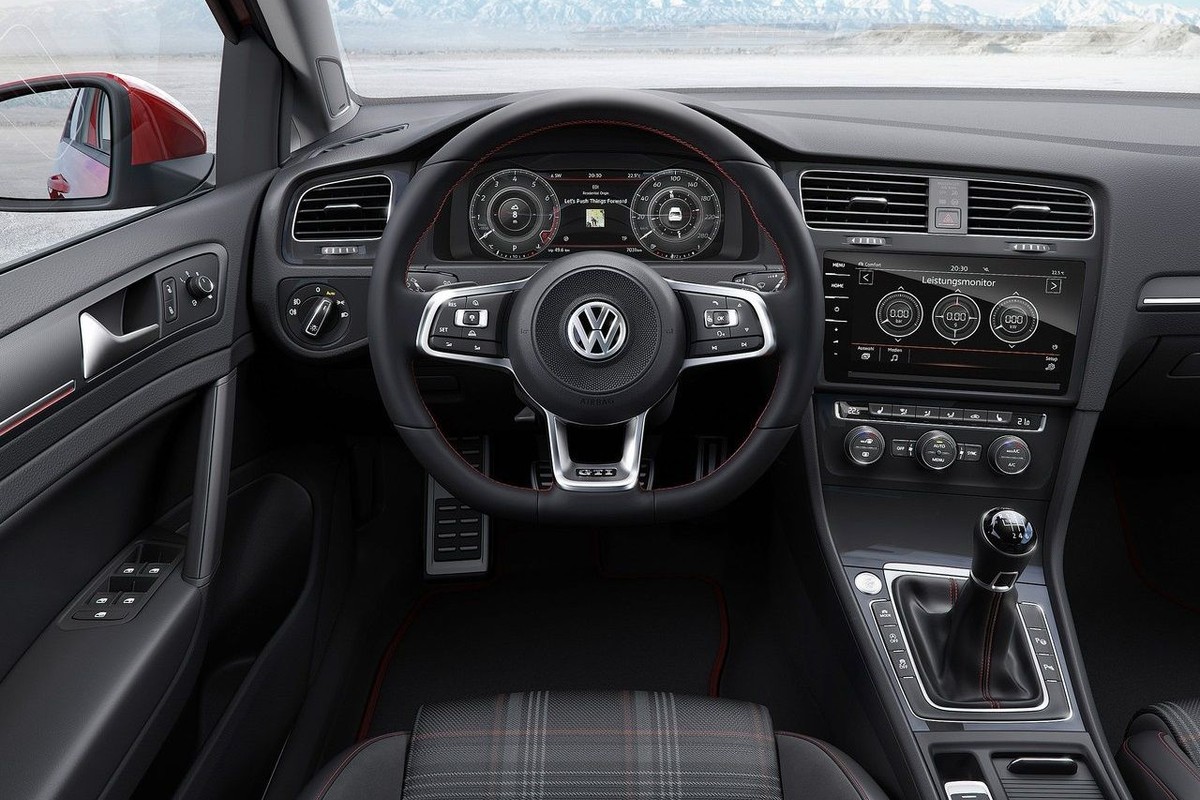
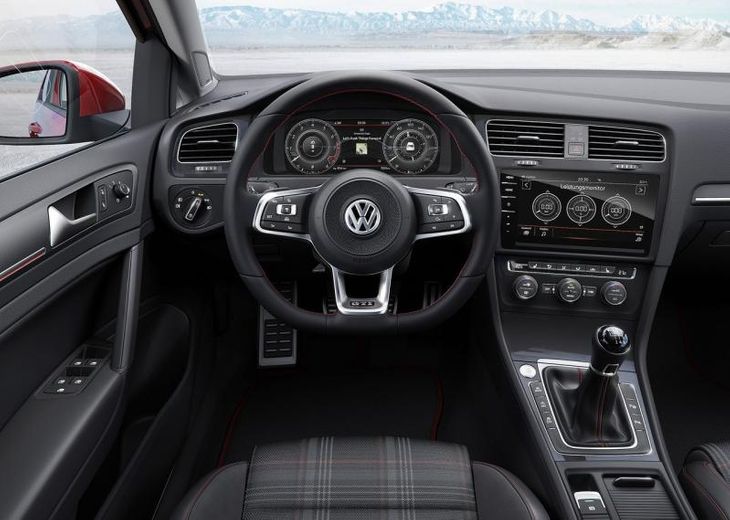
The business end of the Volkswagen Golf facelift pertains to the connectivity and safety departments. Climb into the vehicle and your eyes will immediately fall on the rather large, buttonless infotainment touchscreen. It’s called Discover Pro and when combined with the all-digital Active Info Display, the entire dashboard feels as if it has been lifted from a more premium product. The graphics on this 9.2-inch screen are crisper and it’s a big leap forward, but the technology doesn’t stop there. Android Auto and Apple CarPlay make their debuts in the new Volkswagen Golf: after a satnav routing error sent us off course, a fellow journalist’s iPhone with Apple Maps linked to the car and set us back on track.
Crisper and prettier graphics on the new large infotainment screen, but where's the volume knob?
This facelifted Volkswagen Golf now features semi-autonomous capability in the form of Traffic Jam assist, where the vehicle can drive by itself at speeds of up to 60 kph using a combination of active cruise control and lane assist. The updated Golf can also automatically stop in the event of a collision and it can detect pedestrians and finally, for those who tow with their Golfs, Trailer Assist has become available.
After driving both the Volkswagen Golf GTI and GTD, we came to the conclusion that the gesture control was a bit of a gimmick as it didn’t quite work properly and that we missed the rotary knob to turn the volume down. A touchscreen volume control without haptic feedback was very tricky to master and we resorted to using the steering wheel-mounted audio controls. Our test cars also came absolutely jammed with all the options, while necessary to test out the new kit, will raise some eyebrows in terms of the total vehicle cost.
Diesel GTI? What?
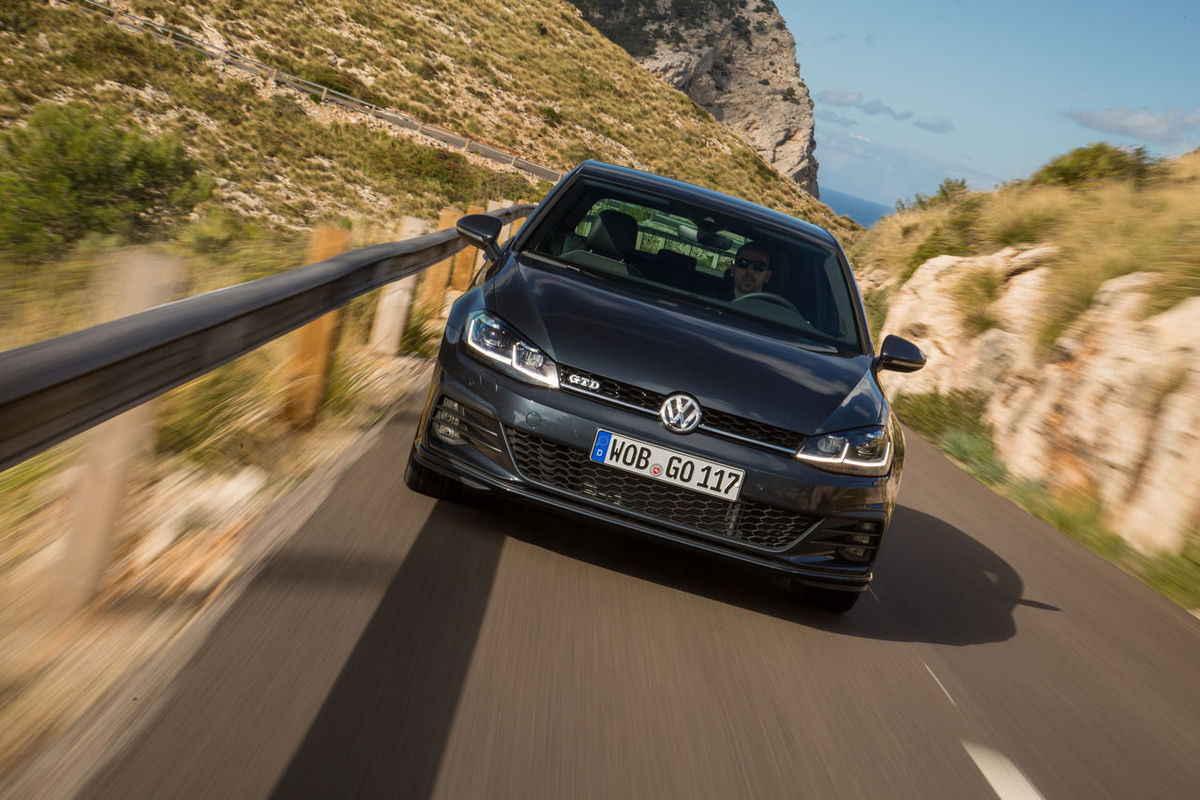
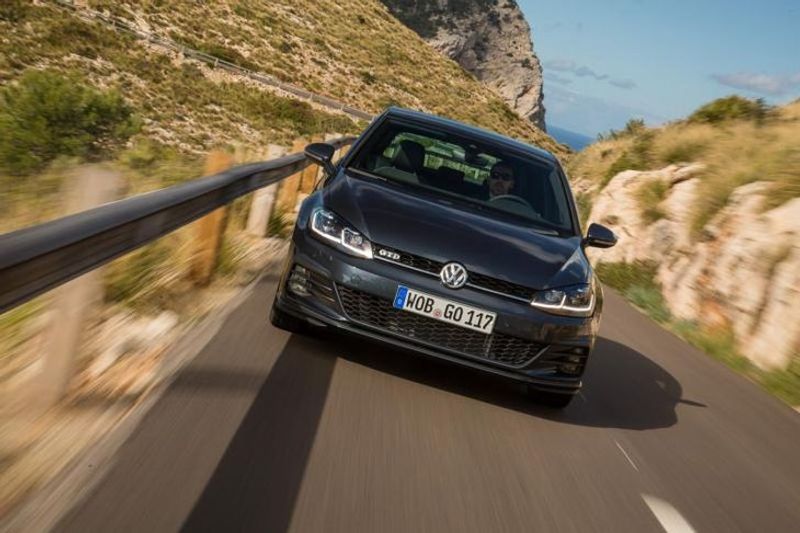
A 2.0-litre diesel engine with 130 kW and 380 Nm powers the Volkswagen Golf GTD.
Yes, that’s right folks. It’s all kicking off. The performance diesel Golf GTD has been confirmed for the South African market and on paper, it promises credible pace. Power is sourced from a 2.0-litre turbocharged diesel engine, which has a healthy 130 kW and 380 Nm on tap. Power goes to the front wheels via a new 7-speed DSG transmission. Volkswagen claims a 0-100 kph time in 7.5 seconds, but of more significance is the fuel economy which sits at 4.4 L/100 km.
Does it work? Yes, absolutely. You can use the driving modes to personalise your experience and while the car is perfectly adequate being left to its own devices and in full auto mode, putting the gearbox into manual mode and changing the engine mapping to Sport results in some good driving fun. You'll find yourself shifting early, making use of the abundance of torque located from just before 2 000 rpm and without too much effort, will find yourself doing three-figure speeds. This engine and gearbox combination work well together and unless you’re deliberately putting your foot flat, you can pick up speed without any real exertion.
You don’t need to wring the engine’s neck to get the best out of it either. Sure, the turbo petrol GTI is quite happy to fling the needle of its rev counter around the dial without so much as a hint of fuss, but the turbodiesel GTD does tend to sound a bit rough as you approach the redline. No amount of insulation and synthesised sounds through the speakers can mask that. Drive gently though and you’ll find it hard to believe you’re in a diesel at all.
The handling is just as good as the GTI and you can thank the excellent chassis and MQB platform for that. The steering is quick to respond and thanks to a low ride height and stiffer sports suspension, flinging the GTD around the twisties is a pleasure.
As it stands, Volkswagen SA has confirmed the GTD for launch in the South African market with pricing said to be cheaper than that of the petrol-powered GTI. Sure, it won’t be as fast as the GTI, but there’s enough performance to keep the petrolheads happy. The ace up its sleeve is its economy and despite the sporty suspension setup, it’ll make for a magnificent mile-munching family hatchback. It’s a great trade-off and pretty much what a Golf GTI sibling should be.
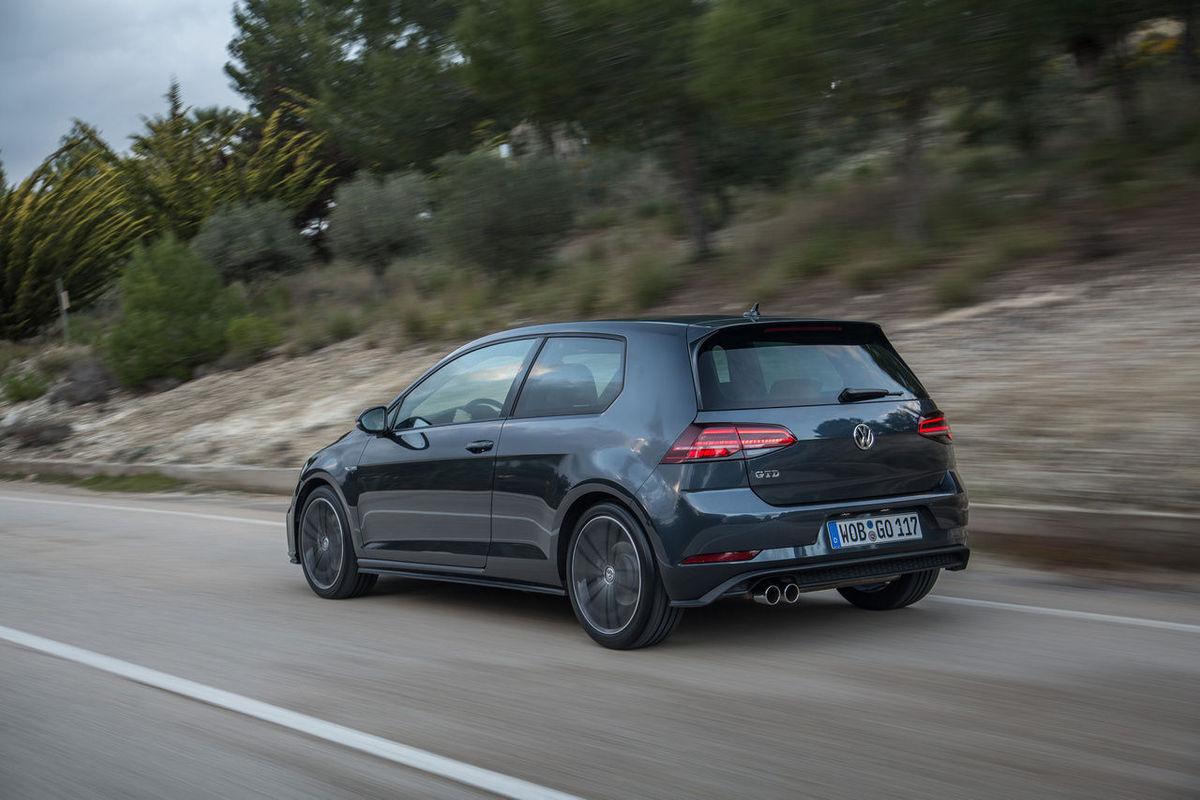
The Volkswagen Golf GTD: A fun and frugal family hatchback. Coming to SA!
The Volkswagen Golf Family Arrival in South Africa
As mentioned earlier, the 1.5-litre turbo petrol Golf is not yet confirmed for our market.
A 1.0-litre Trendline with 81 kW kicks off the local range and there’s a Comfortline derivative available for this engine too. The 1.4-litre Comfortline with the choice of either a manual or DSG transmission will still be offered. The flagship non-performance Golf will be the 2.0-litre diesel Comfortline with only DSG. For the performance fans, the five-door Golf GTI with 169 kW will come with DSG only. All of the above vehicles will arrive in May 2017. In July 2017, we’ll see the Volkswagen GTD and Golf R come to our shores.
Summary
The facelifted Volkswagen Golf is just that: a facelift. There's nothing groundbreaking in terms of ride and handling, and it's still the performance hatchback that we've come to know and love for its all-round skillset. The real changes come in the form of the new infotainment system and digital dashboard, as well as the introduction of a new 1.5-litre engine. As good as this Discover Pro infotainment system is, there were some user experience issues with the gesture control and we will miss the rotary volume knob. It's good to see semi-autonomous technology being introduced in this car and while there are some detractors of this tech, the majority will appreciate the benefit Traffic Jam Assist. The real news here is the confirmation that our market will be getting the 2017 Volkswagen Golf GTD… it's a brisk and comfortable hatchback that will broaden the appeal of the Golf even further.
Volkswagen Golf GTI Price in South Africa
130 kW 2.0 TDI GTD DSG Price to be confirmed at a later stage
169 kW 2.0 TSI GTI DSG R545 800
213 kW 2.0 TSI R DSG Price to be confirmed at a later stage
Mitsubishi has given its well-equipped and practical (if nondescript) Outlander SUV a bolder look at both ends. Is revised styling inside and out enough to garner this four-wheel drive, Japanese seven-seater more attention from high-rider-hungry buyers? We decide if the only Outlander derivative Mitsubishi offers, the 2.4 GLS Exceed, deserves a spot on your shortlist.
We like: Full-house specification, ride comfort, practicality, seven-seat flexibility
We don’t like: Mundane driving experience. CVT soundtrack
Alternatives
The direct rival: The only vehicle that neatly mirrors the Outlander’s mechanical configuration and seat count is the Nissan X-Trail 2.5 SE 4WD CVT. A match on performance and efficiency, the X-Trail gives away a fraction of luggage space to its slightly longer rival, but hits back with a more consistent design and a far cheaper price tag of R417 900 (April 2017).
Seven seats, no four-wheel drive: Two facelifts and a major cabin redesign have just about kept the Chevrolet Captiva 2.4LT Auto in the game. Yes, it’s old and is no longer available with four-wheel drive, but it has room for 7 occupants, has solid on-board tech and competes well in terms of ride comfort. Priced at R428 600, the Captiva makes the 4WD X-Trail look like even more of a bargain.
Four-wheel drive, but just 5 seats: The current Honda CR-V 2.4 Executive AWD costs a tad more (at R568 100) than the Outlander, but bests it in terms of specification levels. A premium feel to the cabin’s design and build quality plus a longer warranty also easily make up for the extra outlay. Take note though, a new-generation CR-V is due in South Africa in coming months.
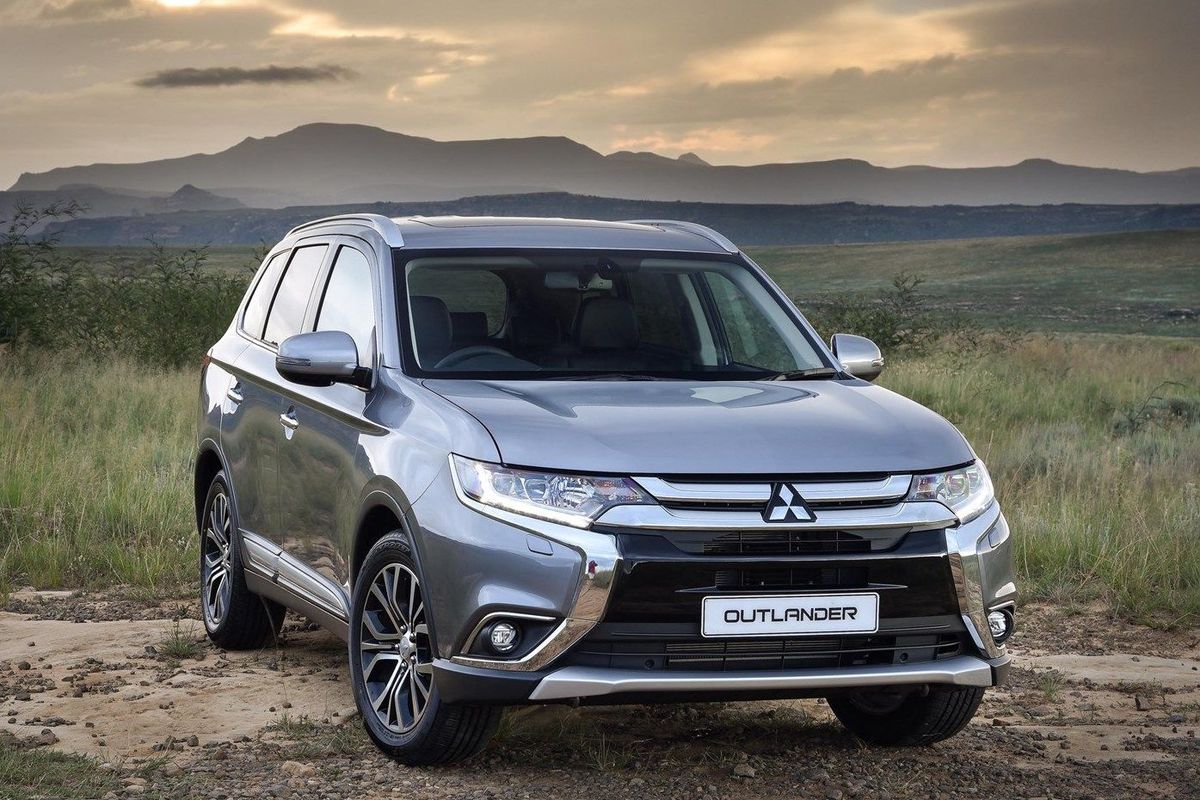
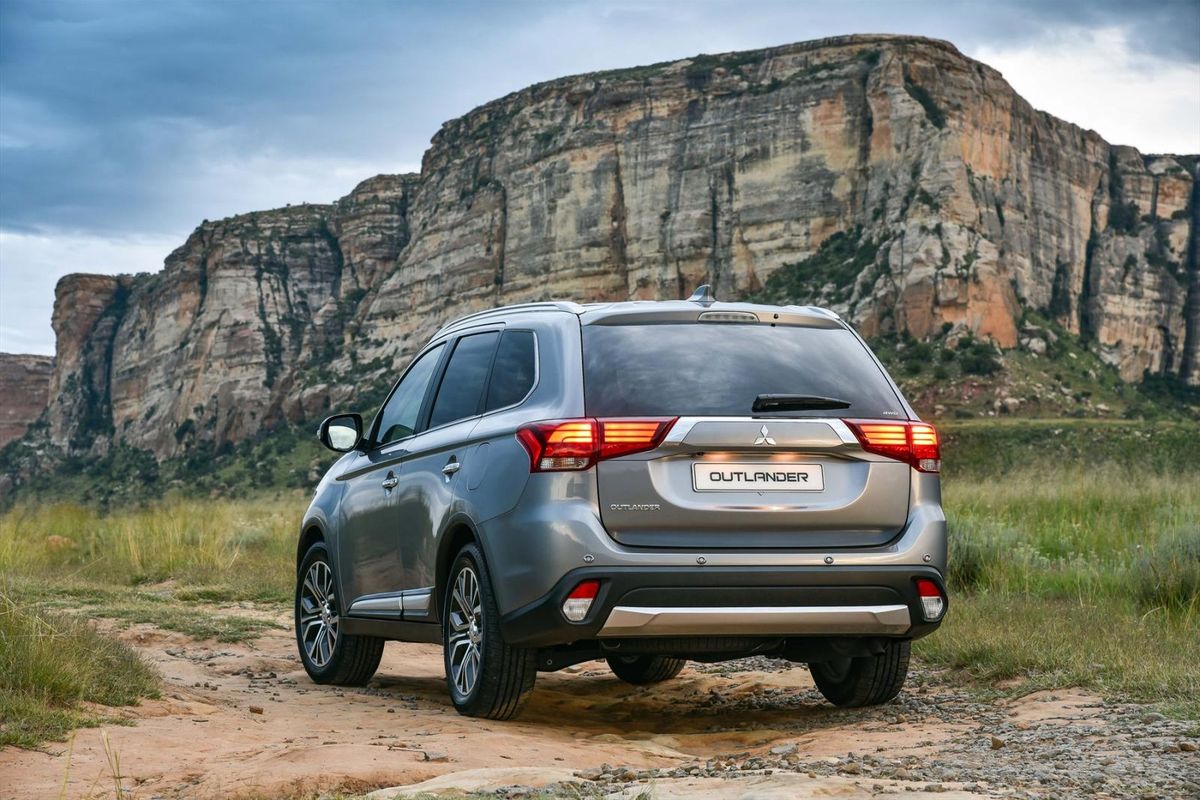
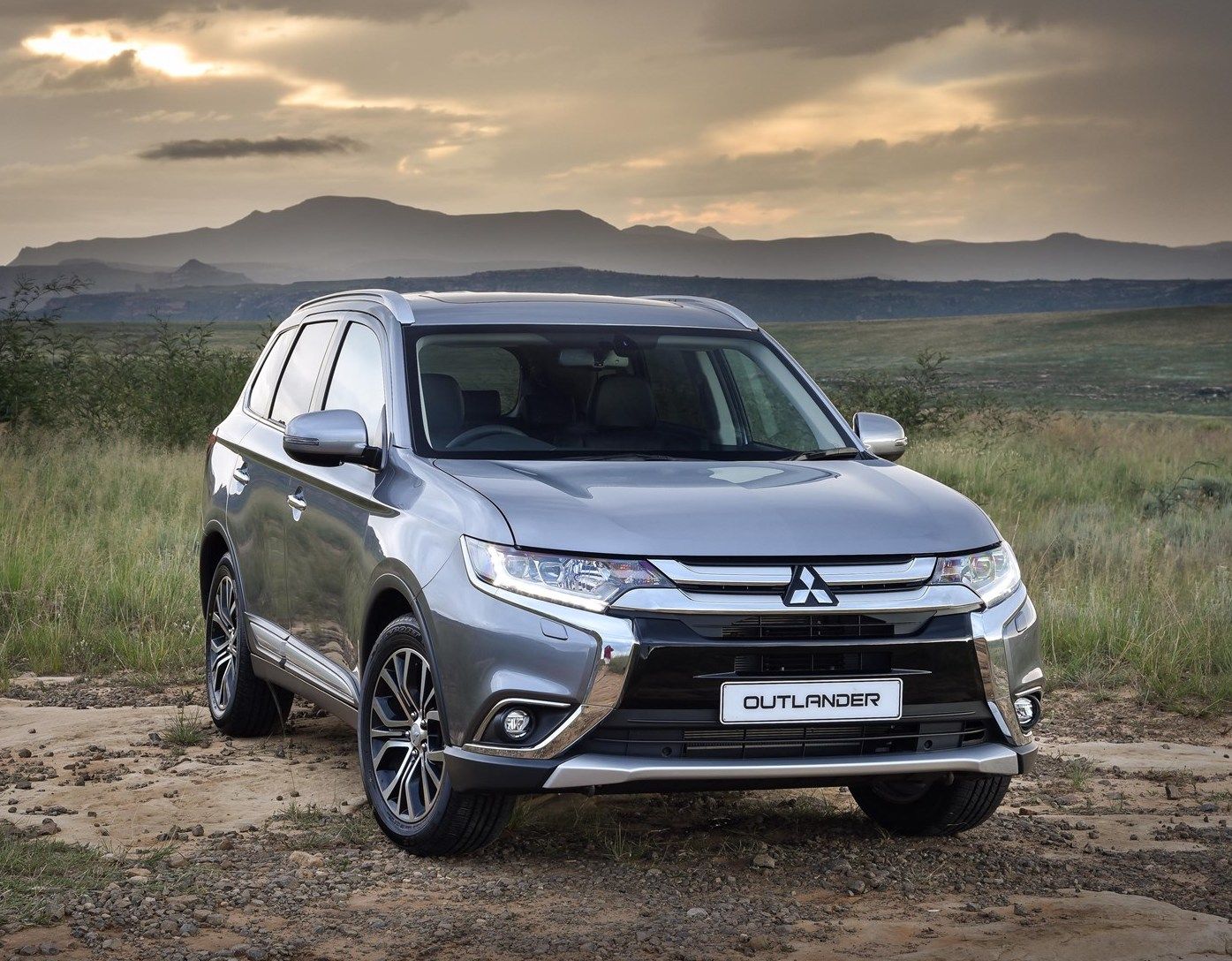
Offering revised styling, a host of standard features and 7-seat capability, the Outlander is a suitable multi-tasker.
Still lost in the crowd?
There certainly isn’t a lack of choice for consumers in the market for a spacious, well-equipped crossover for around R550k. Insist on 4WD and 7 seats, however and the list of contenders thins out dramatically. Yes, there are the bakkie-based alternatives, such as the Toyota Fortuner, Chevrolet Trailblazer and Ford Everest, but improvements in refinement and on-road manners aside, they’re still rough and gruff, mostly turbodiesel-powered SUVs derived from commercial vehicles. That leaves just the Outlander and Nissan’s X-Trail. The more distinctive Nissan’s greater popularity is not in dispute, outselling its far more demure countryman many times over… Mitsubishi’s riposte is this comprehensive facelift.
How does it fare in terms of…
Design and packaging?
As with a number of Japanese carmakers, Mitsubishi has been unable to establish a single, strong design language. This has resulted in huge variations not just between generations, but even between facelifts. The Outlander is a prime example. Not so long ago it featured a large gaping grille obviously referencing the marque’s Evo X sports sedan. That model was replaced in 2014 by a softer-surfaced, more generically styled body that failed to make an impression on loyal Outlander fans, let alone owners of other makes.
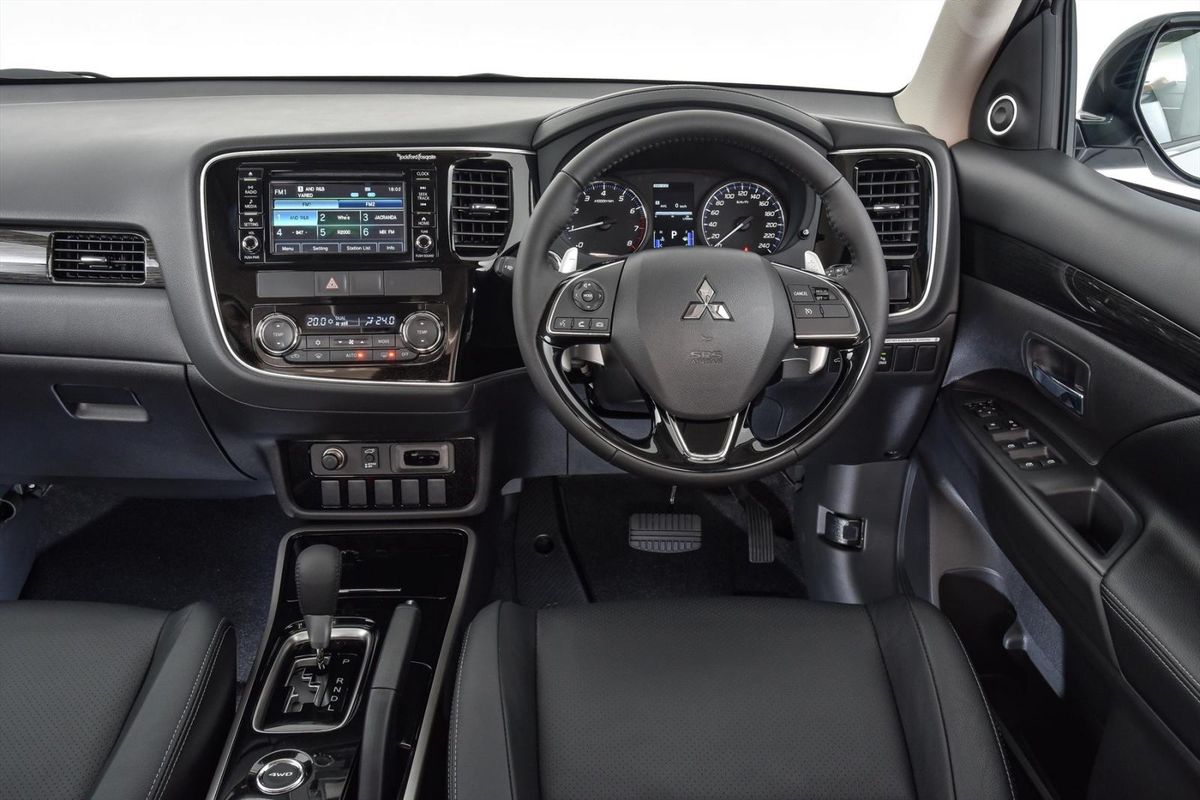
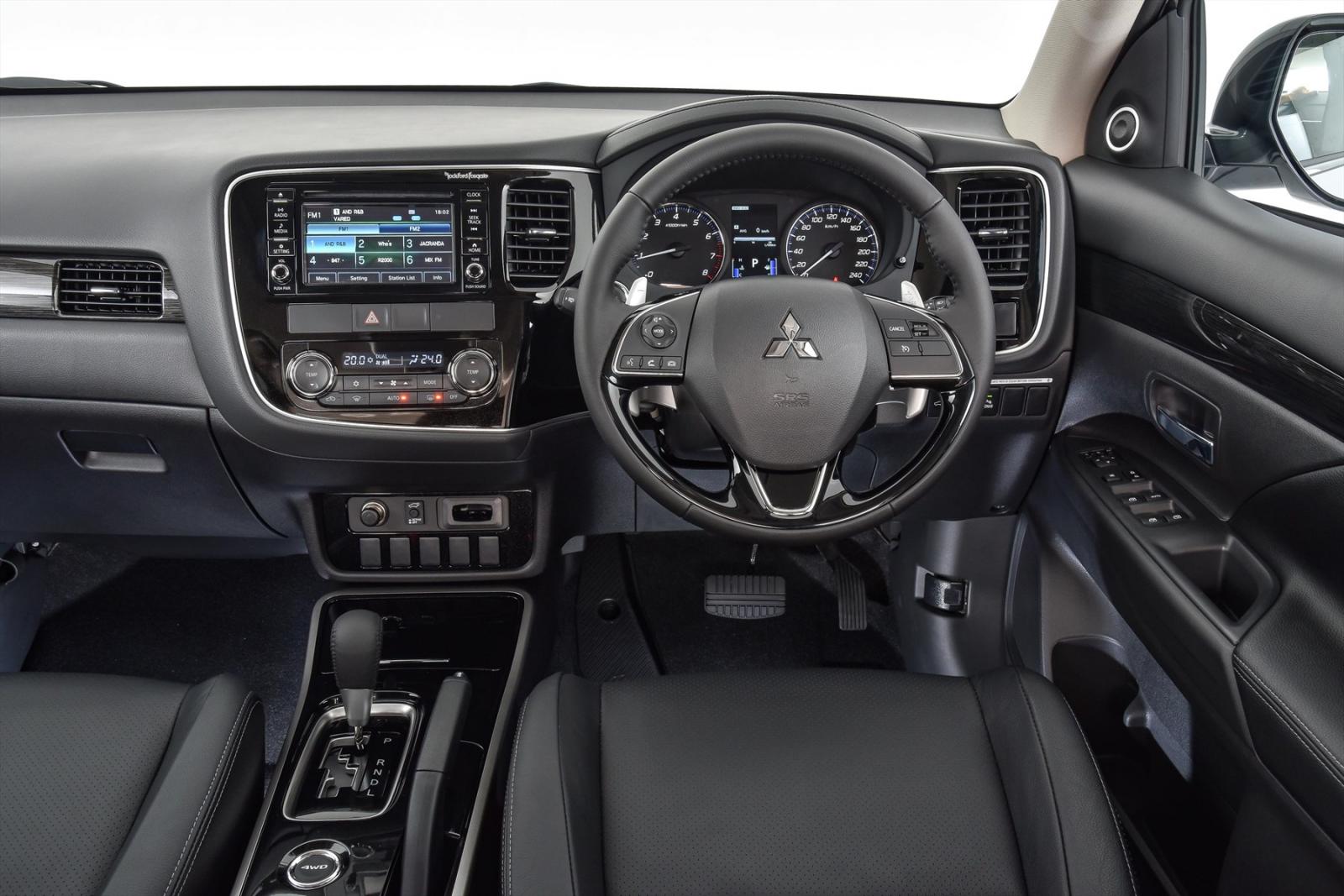
The interior benefits from a mild revision giving the Outlander a greater sense of perceived quality.
Mitsubishi’s response is this facelifted model, which incorporates the brand’s latest style statement. Called "Dynamic Shield", the new look is characterised by a set of shiny, angular walrus tusks that flank a blacked-out lower grille and bumper section. New HID headlights and shapelier chrome grille slats add expression. Is it prettier? No. More purposeful? You bet.
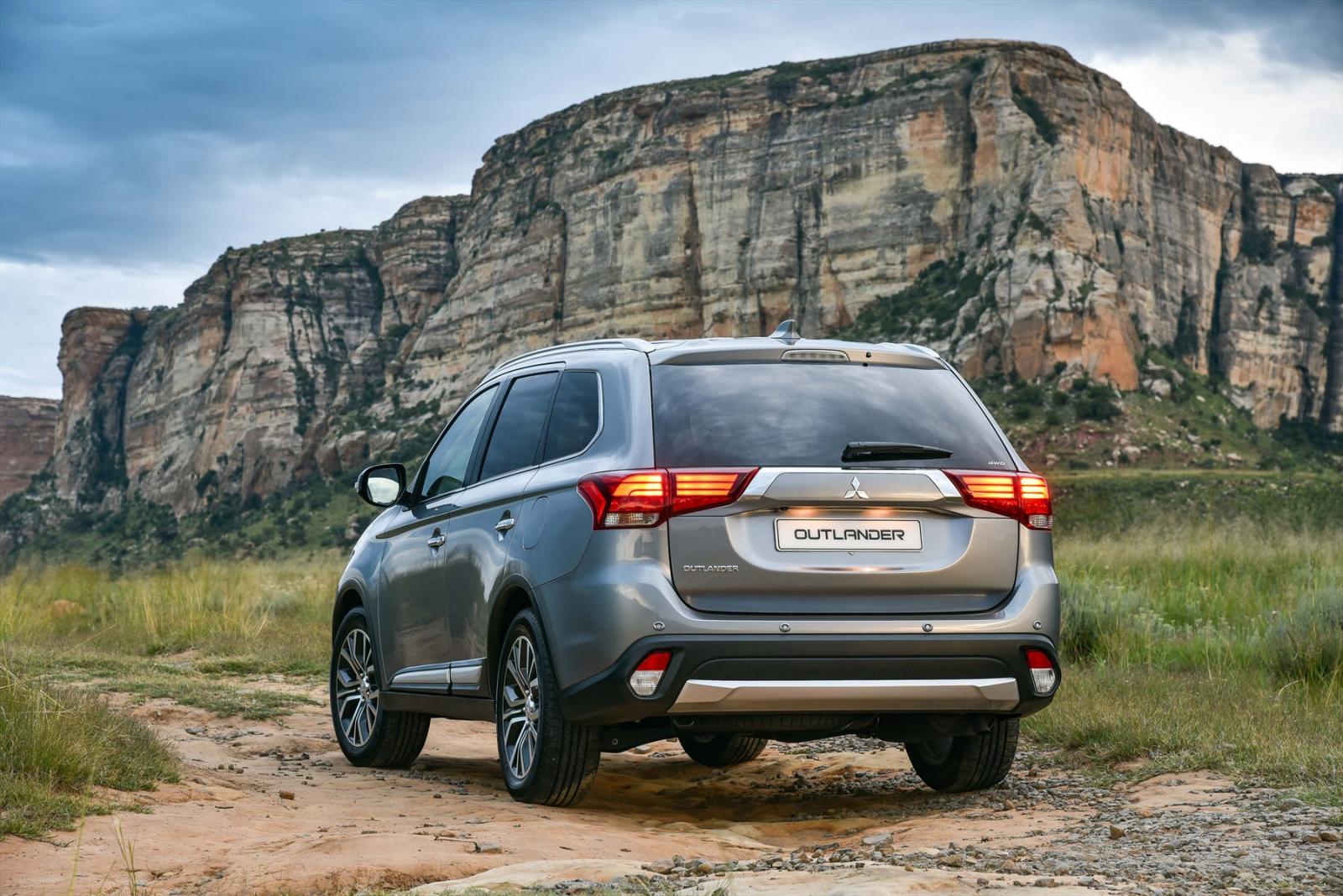
The rear end has also received attention with redesigned tailgate lamps and an all-new black bumper with fog lights positioned further apart to emphasise width. Faux skid plates finished in matt silver plastic complete the visual makeover. It’s a comprehensive facelift that endows the Outlander with more standout appeal.
Apart from swapping the previous model’s somewhat garish fake wood door trim for classier black grain as well as a new gear selector and handbrake housing finished in piano black, the interior revisions are less obvious. The steering wheel is unchanged in terms of functionality, but a touch more chrome and a gloss black lower insert subtly increase perceived quality. Two sets of physical buttons have appeared either side of the central touchscreen and, well that’s pretty much the extent of the cabin upgrade.
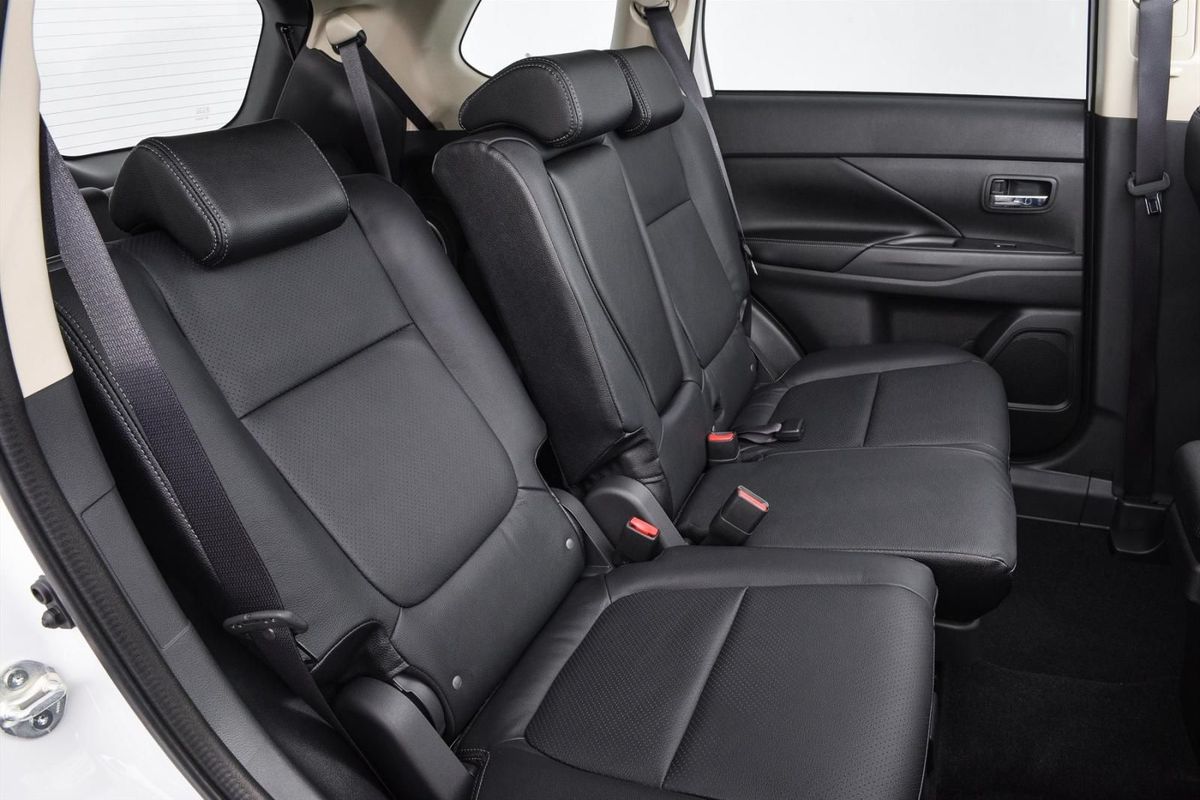
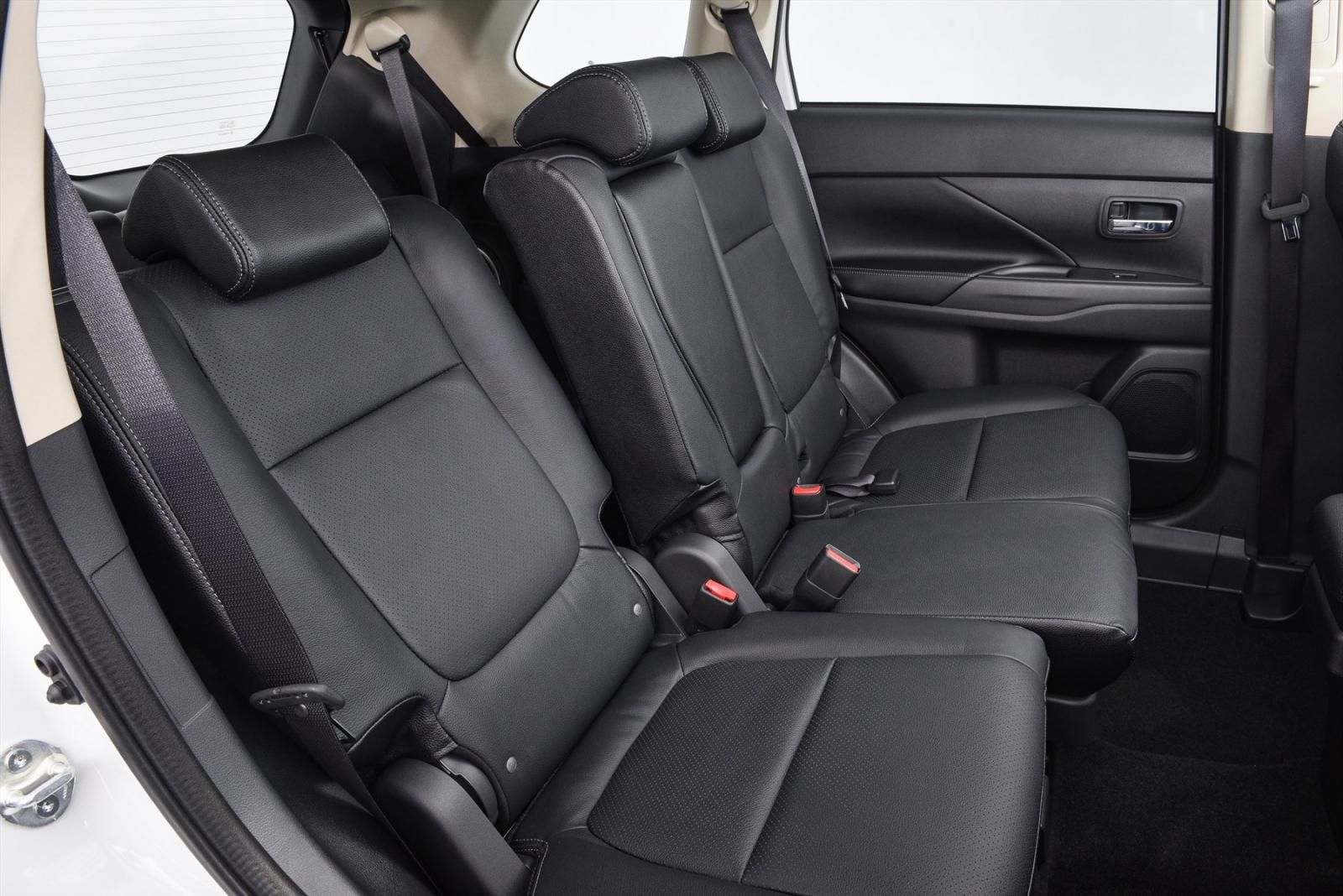
The second row of seats can slide forward, allowing to access to the third row. Legroom is sufficient no matter where you choose to sit.
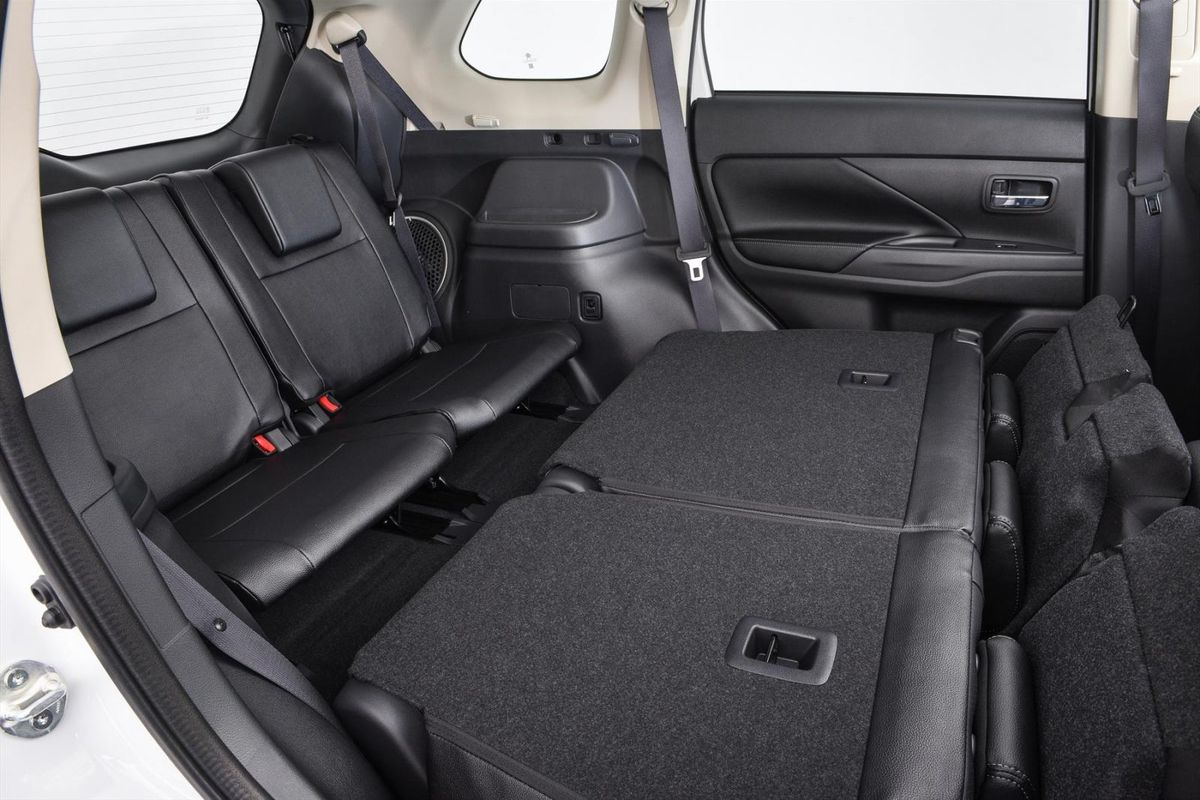
As for packaging, the Outlander makes very efficient use of its 4.7-metre length, featuring 3 rows of seats with a decent amount of legroom all round. Access to the third row is via 60:40-split second-row seats that slide forward by as much as 250 mm with tilting and flat-folding backrests. There’s a retractable-type luggage cover, but no place to store it when the rearmost seats are in use. The luggage area is large and usefully shaped, though some cargo capacity has been absorbed by a (frankly ridiculous) moulded-in sub-woofer…
It would be interesting to hear how many Outlander buyers yearn for the deep bass of the 9-speaker 710W Rockford Fosgate audio system. Owners will appreciate the full-size alloy spare, but may be less pleased that it’s externally mounted, behind the rear bumper and underneath the car.
Visibility from the driver’s seat is better than most thanks to the vehicle’s more pragmatic side styling, which trades trendy rising waistlines and overtly angled pillars for sensibly sized and shaped glazing.
Ride and handling?
Vehicles of this nature are forced to wear a few hats: family-friendly road trippers, school run people movers, reasonably capable off-roaders and one-up commuters. Therefore, to meet that array of demands requires a well-sorted suspension setup. The Outlander ticks this box emphatically. As you’d expect, it delivers a comfortable ride in town, yet is still firm enough that it doesn’t turn to jelly when you’re alone on a deserted winding back road or bottom out too easily when you’re travelling with 7 occupants on board. So yes, while there is a certain degree of body roll apparent during higher-speed cornering, the ride versus handling compromise is pretty much spot-on.
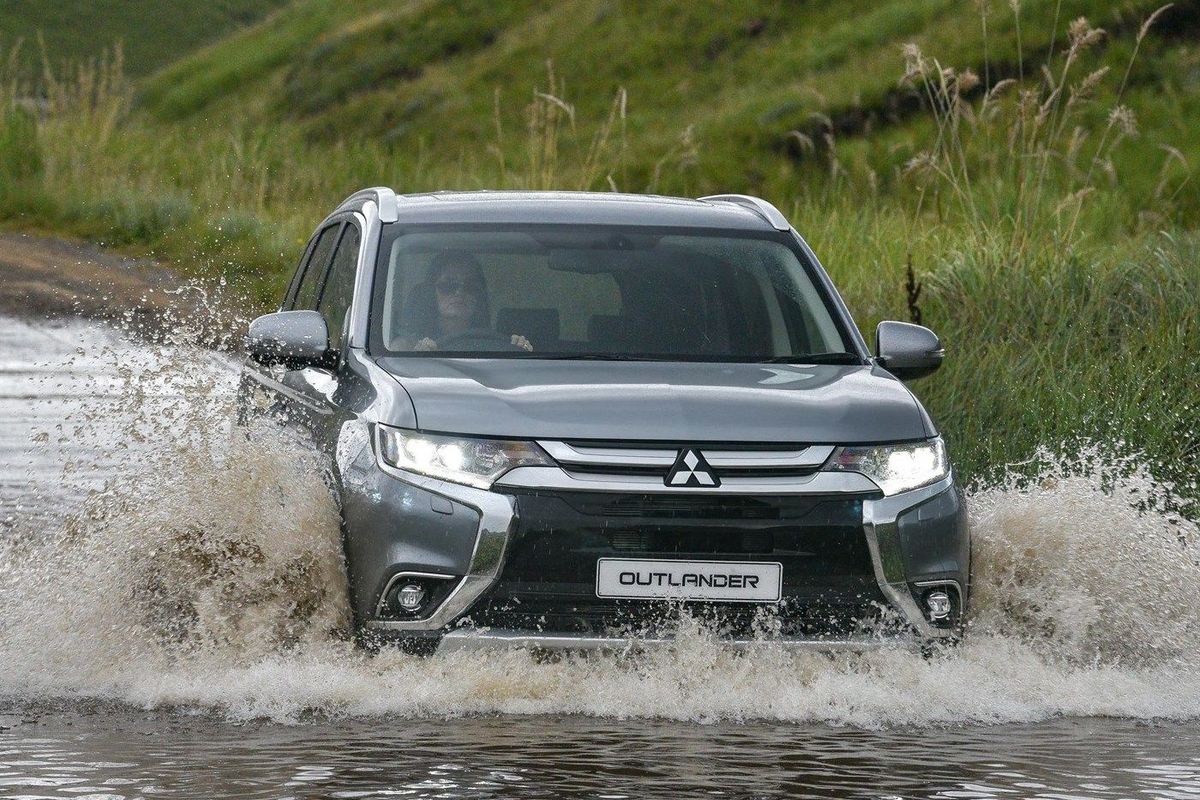
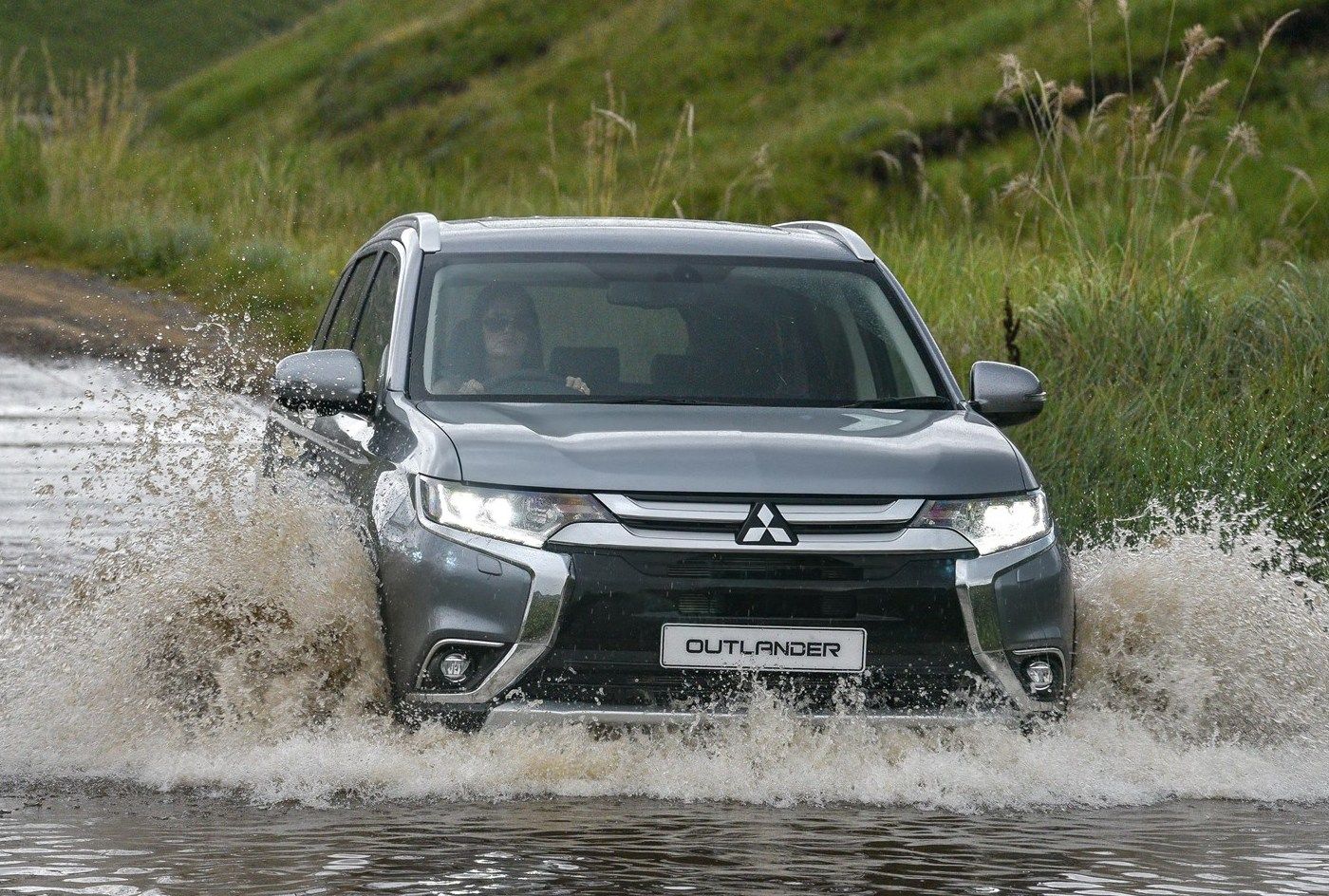
A 3-mode four-wheel drive system and a ground clearance of 190 mm provide a degree of versatility in varying terrain.
It’s much harder to get the steering to feel right in a wide variety of scenarios, and it’s here where the Outlander is both hit and miss. While the level of assistance on offer is just fine, keener drivers may find the slow gearing tedious. On the plus side, it results in relaxed gravel road cruising and makes descending a rocky road down to a secluded glampsite less of a wrist-jarring affair.
Adding to the Outlander’s capabilities is 190 mm of ground clearance and a 3-mode four-wheel drive system that starts with a predominately front-drive setup called 4WD Eco, a more alert mode labelled 4WD Auto and a 50:50 torque split Lock mode for maximum traction in all conditions.
Performance and efficiency?
Charged with powering the Outlander is Mitsubishi’s familiar 2.4-litre inline 4-cylinder petrol engine. Though generally refined, the naturally aspirated motor’s not exactly cutting edge in tech terms – it still shouts about having 16 valves and a variable valve timing system – or power and torque outputs. However, most direct and indirect rivals (front-wheel-drive 7-seaters and four-wheel-drive 5-seaters) feature similar engine configurations and performance stats, so in that context, figures of 123 kW at 6000 rpm and 222 Nm at 4100 rpm are on par.
The Outlander is on par with its rivals in terms of power and torque, but the CVT can become cumbersome when driven enthusiastically.
Still, the motor’s not an aural delight when it's forced to rev harder (during overtaking manoeuvres, for example). Drive it as if you’re on vacation with loads of time to get anywhere and progress is hushed and pleasant enough, making great use of a continuously variable transmission to keep the engine off the boil. Driving with much more enthusiasm though does bring out the worst attribute of CVT, namely: constant rpm acceleration and an associated engine whine. Fortunately, the Outlander has a set of metal gear-shift paddles fixed to the steering column housing that provides manual access to 6 pre-set steps or artificial gear ratios – essential for sportier driving stints and when towing.
Mitsubishi quotes a combined cycle consumption figure of 8.2 L/100 km, which compares favourably with similar capacity petrol models in the Honda CR-V, Nissan X-Trail and Chevrolet Captiva ranges. In reality, expect an average of around 10.5 L/100 km.
Comfort and features?
As the name suggests, the Outlander is supposed to be an ideal getaway car. Okay, so it’s not likely to feature on any bank robber’s wish list, but as a road-trip companion, it doesn’t disappoint. General roominess, tinted side windows, a glass sunroof and firm, yet comfortable leather covered seats all play a part here. For the record, the front seats have a heating function with electric adjustment on the driver’s side. Storage areas include a large cubby beneath the front central armrest, a lidded space ahead of the gear selector and wide door pockets. Middle row passengers have access to 2 cup holders in the central armrest and 2 bottle holders in each rear door pocket.
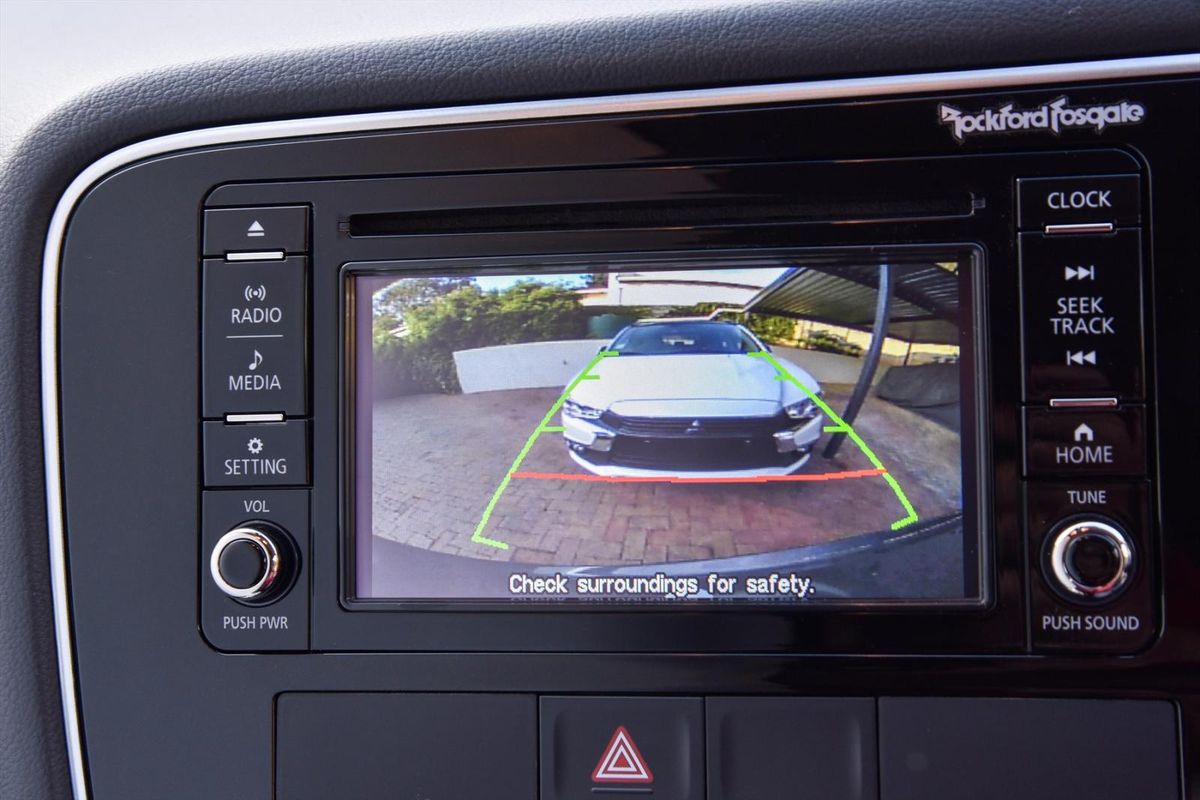
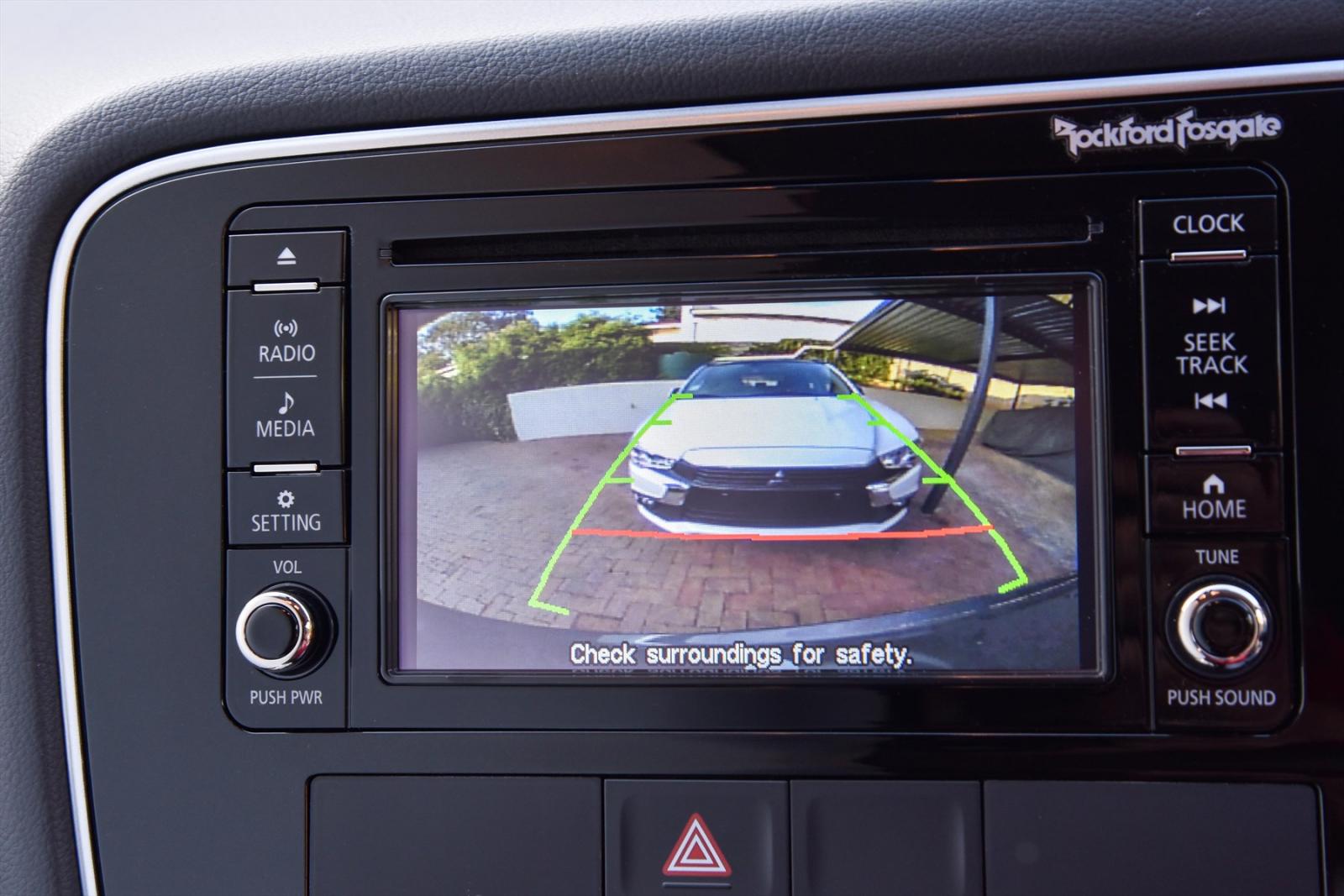
Rear parking sensors and a rearview camera are useful features, while a rear roof-mounted DVD entertainment system will get the thumbs-up from the kids.
When it comes to charging devices, only front rowers get easy access to a 12V outlet and USB input. Providing amusement for those in the rear is a standard-fit roof-mounted DVD entertainment system complete with wireless headphones and a remote control unit. You don’t see that very often, but then the Outlander features all the convenience items you’d expect such as auto headlights, rain-sensing wipers and dual-zone automatic air-con plus cruise control, rear parking sensors, rear-view camera and an agonisingly slow powered tailgate.
As before, there’s a 9-inch touchscreen interface for audio and Bluetooth-based functionality. However, its operation is now more intuitive thanks to the addition of physical menu buttons and a second dial for rotational fine-tuning. A comprehensive list of safety features includes 7 airbags, ABS, EBD, Brake Assist, stability control, ISOfix seat anchors and headlamp washers.
Pricing & Warranty
The Mitsubishi Outlander 2.4 GLS Exceed sells for R549 900 (April 2017) and is backed by a 3-year/100 000 km warranty and a 5-year/90 000 km service plan. Service intervals are scheduled for every 15 000 km.
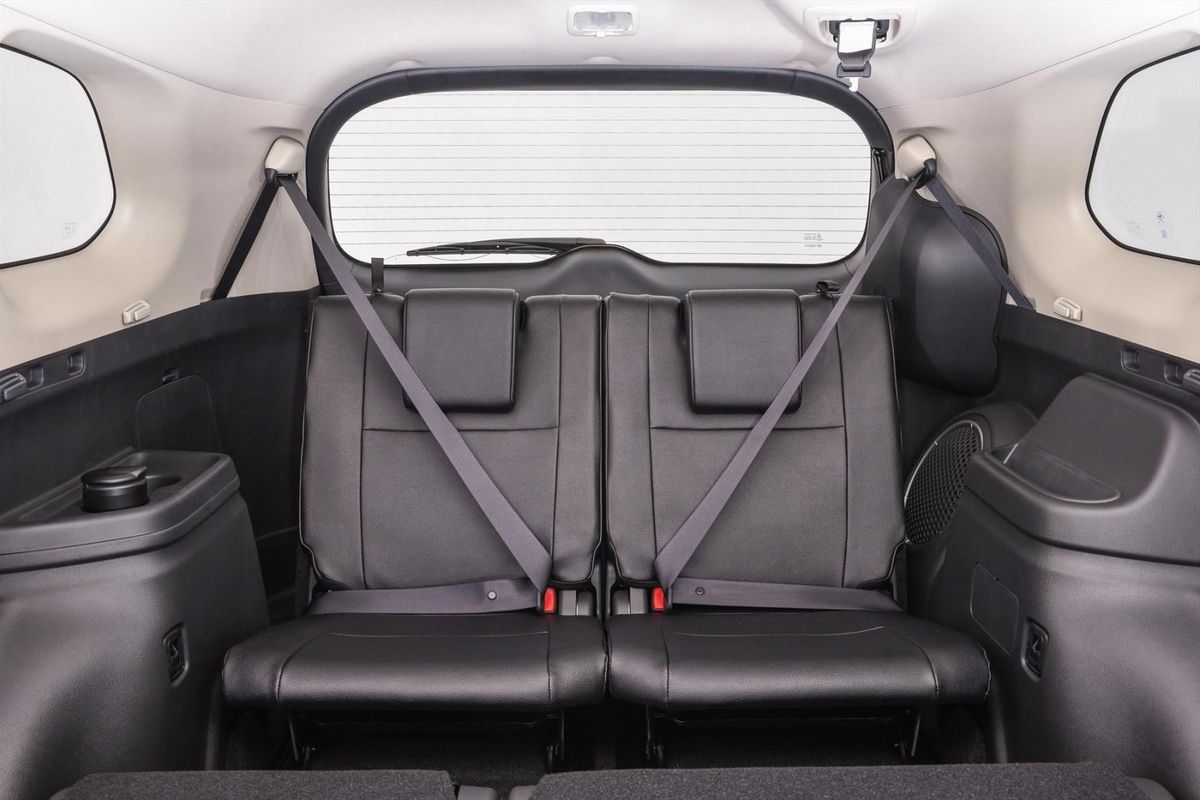
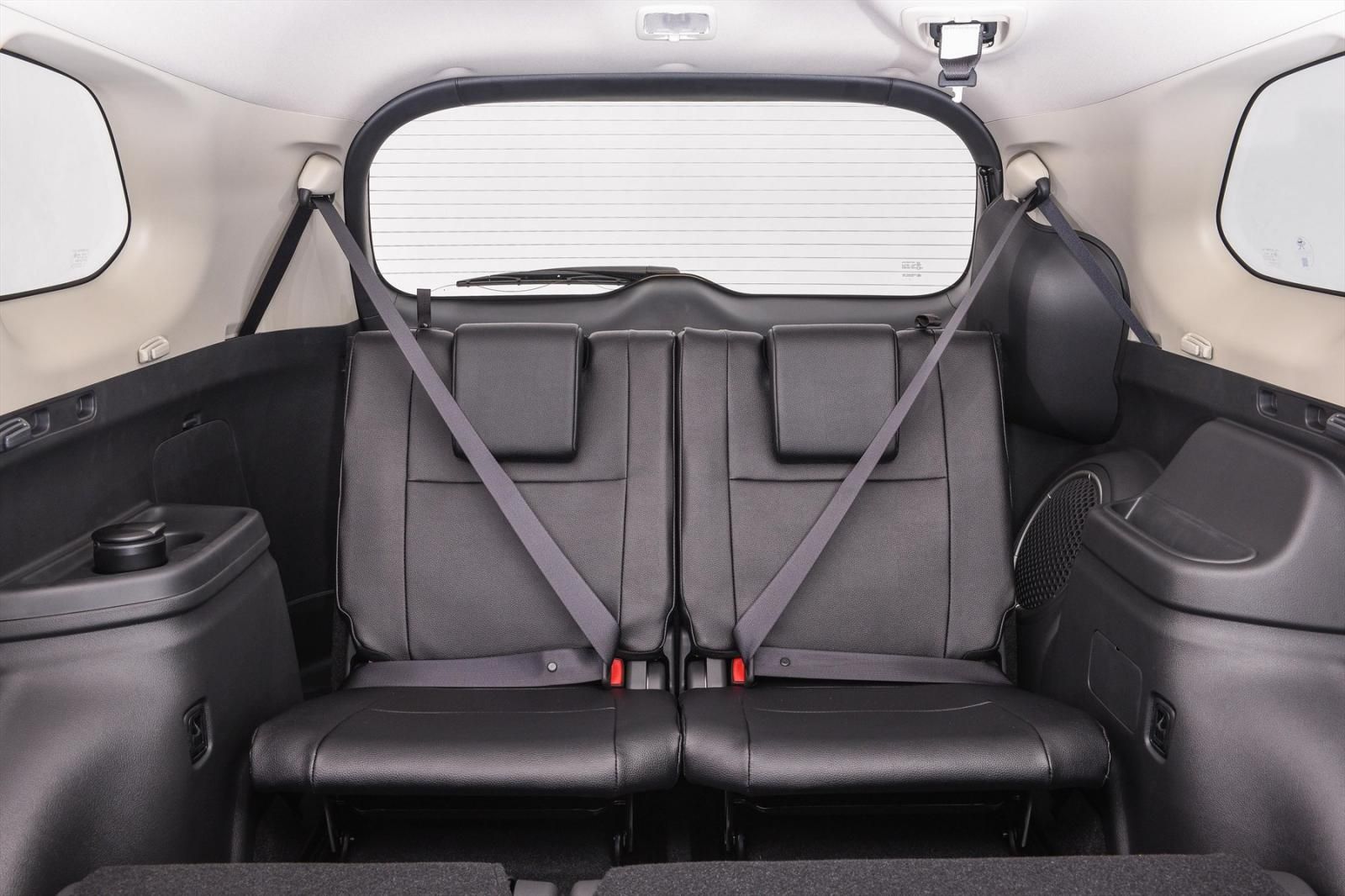
Although the rearmost passengers aren't afforded much in the way of legroom, 3-point safety belts and drinksholders are fitted.
Verdict
You don’t have to be a Mitsubishi fan to like the Outlander. It’s comfortable, easy going, spacious, now more distinctive to look at and is loaded with useful and desirable features. It's not particularly involving (nor entertaining) to drive, but then it was never designed to lure folk out of their sports activity vehicles anyway. The Outlander’s real USP is the combination of a 4WD automatic transmission and an extra set of pop-up seats. The trouble is the 7-seater X-Trail 2.5 SE 4WD CVT sells for just R417 900, which means you can add Nissan’s Techno Pack (sat-nav, 360-degree bird’s eye view, lane departure and blind-spot warning systems) and still have more than R100 000 left over.
Foregoing the extra 2 seats blows the list of competitors wide open while increasing the net to include turbodiesel derivatives adds cars with more torque-rich driving experiences, too. So while the interior revisions and new walrus tusk snout have made the purchase case more compelling, the Outlander is still unlikely to make its way onto the best-seller list anytime soon. Those who insist on 7 seats and are willing to pay the premium will no doubt appreciate the exclusivity…
We attended the international drive event of the facelifted Volkswagen Golf in Spain earlier this year. The facelifted Golf will arrive in South Africa in May 2017. Take a look at indicative pricing for the facelifted Golf!
The Volkswagen Golf is one of the brand's most successful models and this latest update to the premium hatchback range incorporates an updated design, new engines, improved driver assistance systems and a new generation of infotainment systems. We drove the facelifted Golf GTI and Golf GTD in Spain this week and local introduction is expected in May 2017, with the Golf GTD arriving in July along with the Golf R.
Engines
Kicking off the changes is the debut of an all-new turbo petrol engine. The new motor is a 1.5-litre turbo petrol engine which has claimed peak outputs of 110 kW and 250 Nm, but this engine has not yet been confirmed for South Africa. This engine is claimed to consume 4.9 L/100 km. A 1.0-litre petrol engine with 81 kW is on the cards and the 92 kW 1.4-litre turbo petrol Comfortline will still be offered.
The big news is that the Golf GTD will be introduced locally with a 2.0-litre turbodiesel engine offering 130 kW and 380 Nm of torque. There will also be an 81 kW 2.0-litre turbodiesel Comfortline derivative available to customers.
Power from the Golf GTI's 2.0-litre turbocharged petrol engine has been bumped up 169 kW with 350 Nm of torque. The Golf GTI Performance Pack will deliver 180 kW when it arrives in 2018. The Golf R will arrive in July with 213 kW. In terms of transmission, a new 7-speed Dual Clutch Gearbox (DSG) will be replacing the older 6-speed transmission.
New Look
The revised aesthetic execution includes re-profiled bumpers, new halogen headlights with LED DRLs, new full LED headlights instead of xenon headlights, new front wings and full LED taillights, all of which will be standard on all derivatives. There are new wheels and colours to choose from, and the interior of the 2017 model year Golf is finished off with refined new decorative trims and fabrics. The range of equipment versions of the Golf remains unchanged.
Technology
Meanwhile, the latest Volkswagen onboard technologies have found their way into this new Golf. The digital dashboard known as Active Info Display has been made available, which will greatly improve the interior ambience. Gesture control has also been made available for the top-of-the-range versions.
The current infotainment systems have been replaced by all-new touchscreens, which have grown in size. The 5-inch "Composition Touch" and "Composition Colour" systems (with a display resolution of 400×240 pixels) have been replaced by the new 6.5-inch "Composition Colour" system, with a touchscreen resolution of 800×480 pixels, and the monochrome "Composition Touch" has been discontinued. The next level up, "Composition Media" and "Discover Media" (incl. navigation) have so far had 6.5-inch screens, but they have also been replaced by systems with the same names, but with 8.0-inch screens, while the resolution of 800×480 pixels also remains unchanged.
The 8.0-inch screen of the top-of-the-range "Discover Pro" system (incl. navigation) will from now on be replaced by a 9.2-inch touchscreen, with the resolution increased from 800×480 to 1280×640 pixels. The new "Discover Pro" will be the first Volkswagen infotainment system to offer both touch- and voice-command operation with gesture control in addition to proximity sensors – a world premiere in the compact car segment, Volkswagen says.
Other technology of interest includes an amplifier with an output of 4x20W, a DVD drive, two USB ports (Apple compatible), a pair of SD card slots, auxiliary input socket, a 10GB SSD drive, the full range of music playback capabilities, a movie player, jukebox, podcast player, proximity sensor and voice control as well as navigation. Optional are a "Rear View" (reversing camera), DAB+, up to two extra USB sockets as well as two mobile phone interfaces.
The driver or front passenger can simply rest their smartphones in a redesigned optional storage compartment with a mobile telephone interface. The highlight here is that the phone can be charged and coupled to the vehicle's external antenna via inductive charging. New connectivity allows the Golf to connect to current Apple and Android smartphones via App Connect which features CarPlay (Apple) and Android Auto (Google).
Safety
Adaptive cruise control, Front Assist with city emergency braking and pedestrian monitoring (with the radar hidden behind the big Volkswagen logo on the nose of the car) have been introduced in conjunction with Lane Assist, a blind-spot sensor, Rear Traffic Alert, Park Assist, Driver Alert, a reverse-view camera (Rear View), traffic sign recognition, automatic post-Collision Braking and trailer stabilisation (Trailer Assist – the first time a trailer manoeuvring system has been available in a compact hatch) and Emergency Assist. The proactive passenger protection system (PreCrash) has also been refined.
Traffic Jam Assist, in combination with Lane Assist (a lane departure warning system) and Automatic Distance Control will reportedly be available with all Golf models with a DSG transmission (although this still needs to be confirmed for the local market). The system makes traffic jams or stop-and-go driving in the Golf much more comfortable. It also makes driving in traffic jams safer, as the assistant helps the driver to avoid the rear-end collisions so typical of traffic jams.
Facelifted Volkswagen Golf – Price in SA
81 kW 1.0 TSI Trendline R289 900
81 kW 1.0 TSI Comfortline R304 200
92 kW 1.4 TSI Comfortline DSG R356 400
81 kW 2.0 TDI Comfortline Price to be confirmed at a later stage
130 kW 2.0 TDI GTD DSG Price to be confirmed at a later stage
169 kW 2.0 TSI GTI DSG R545 800
213 kW 2.0 TSI R DSG Price to be confirmed at a later stage
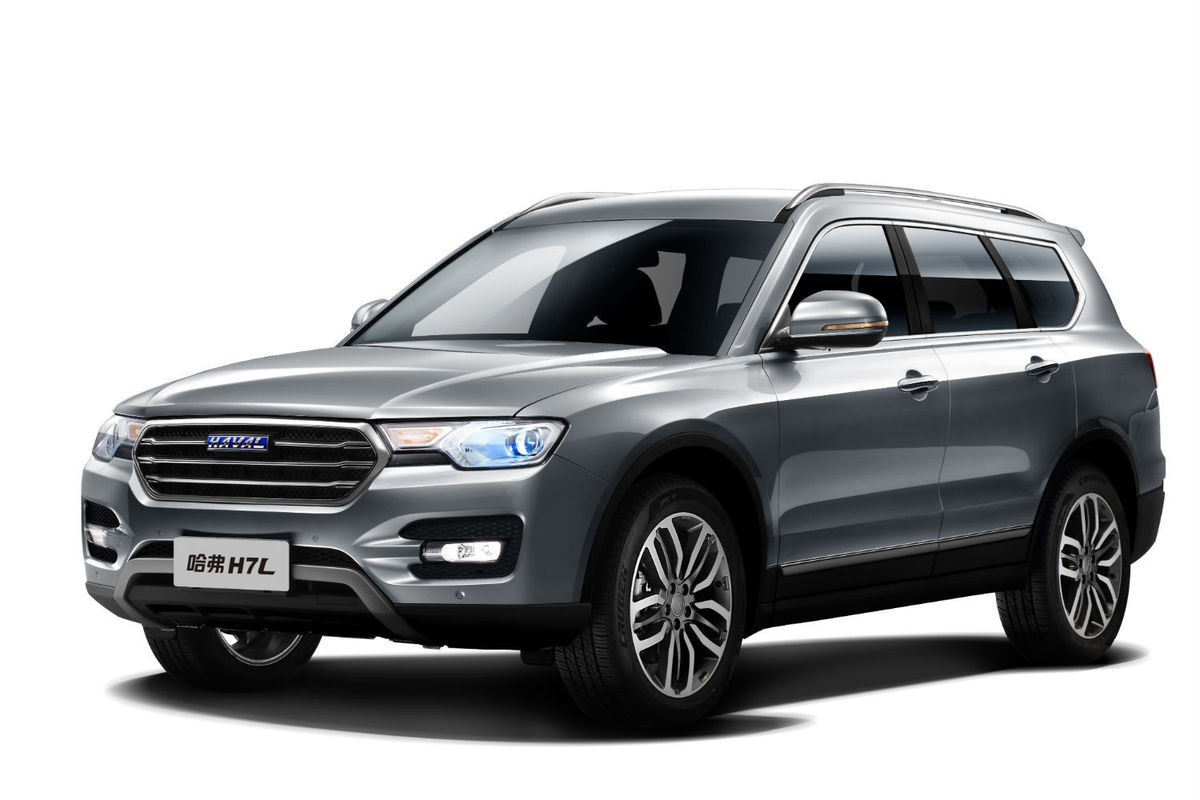
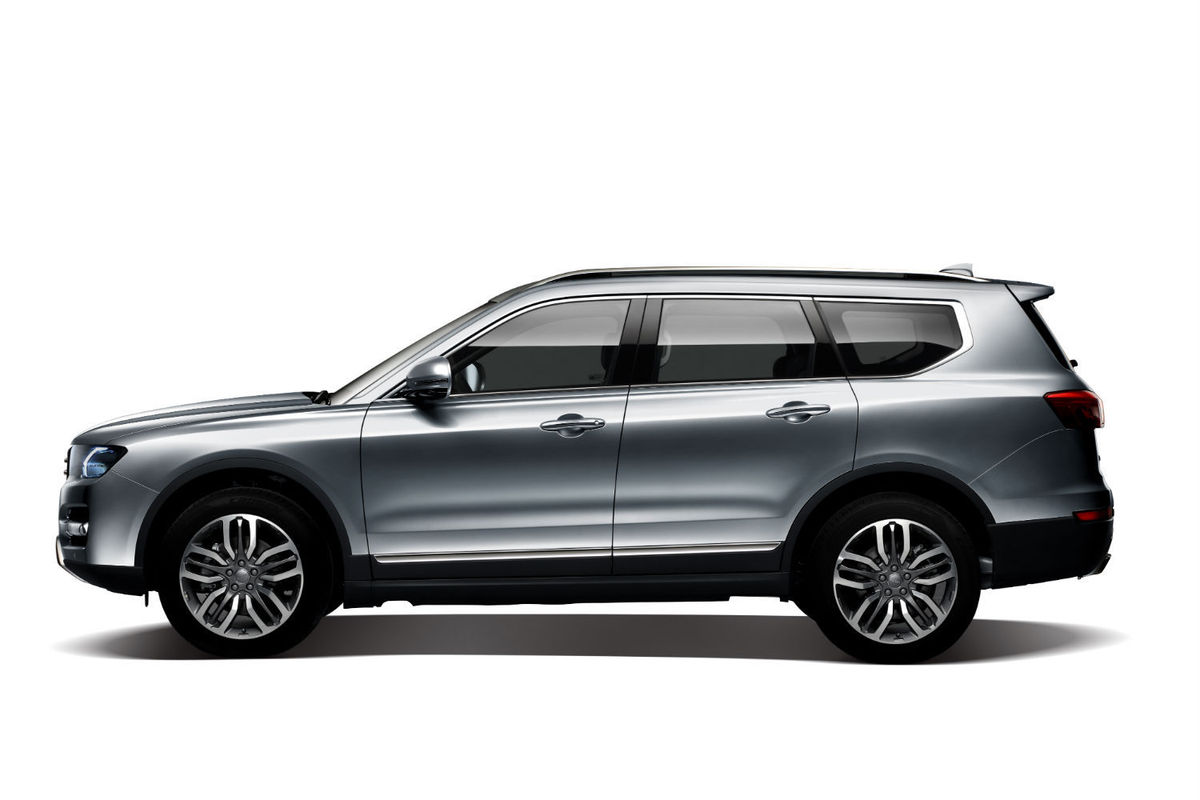
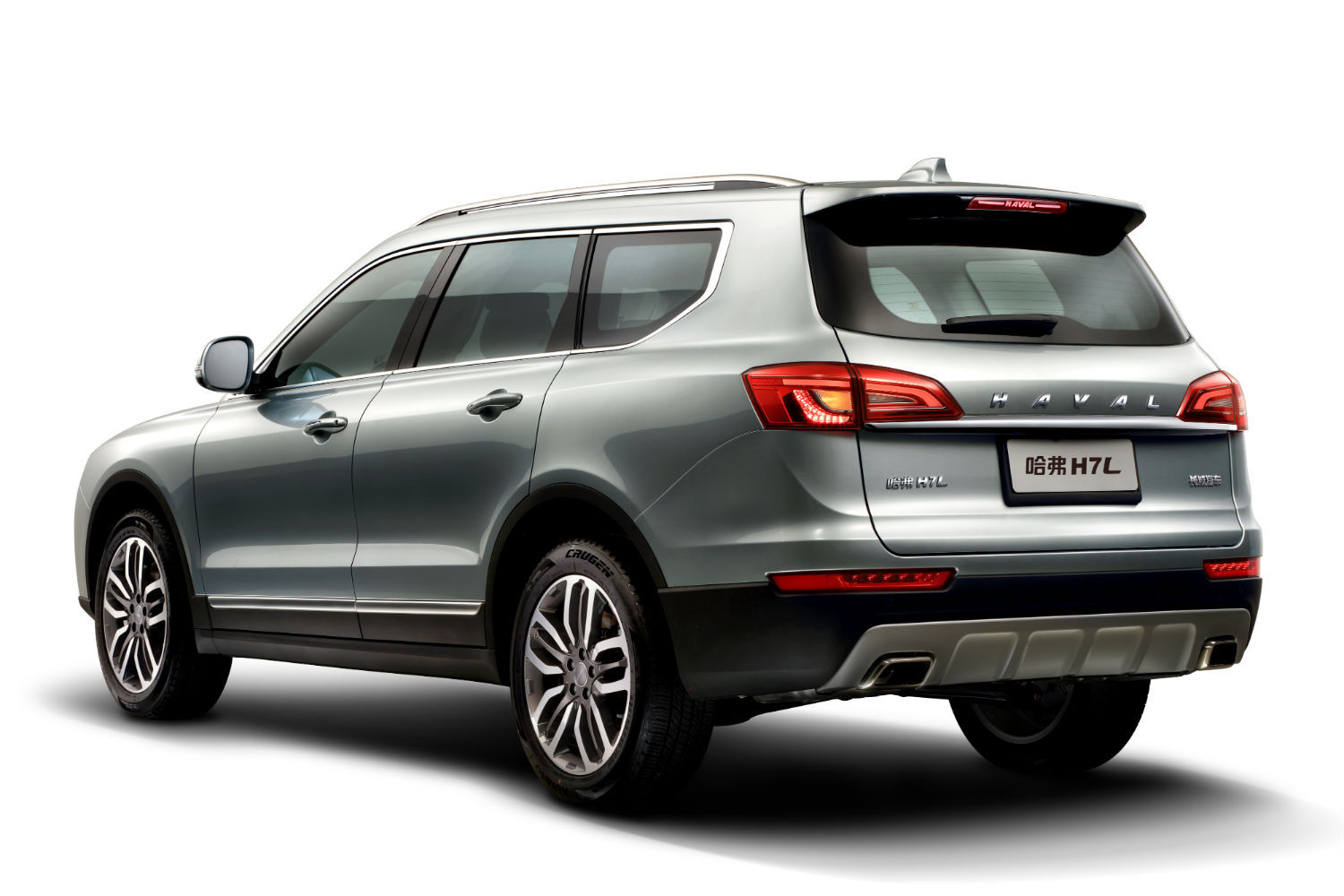
Haval will launch at least 2 vehicles in South Africa later this month, but we can already confirm that GWM's premium SUV brand's stylish new Hyundai Santa Fe/Kia Sorento rival, the H7L, will debut locally early next year.
GWM's Haval SUV sub-brand sold more than 1 million units last year, with the vast majority of those vehicles remaining in China. But Haval is gearing up to extend into the global market, and South Africa will see its first Haval-branded products within weeks. Read more about those by clicking here.
Arriving later this year will be the sporty H6 Coupe and then, most likely in the first quarter of 2018, the H7L.
What is it?
The H7L fits in somewhere near the top of the staggeringly complex Haval product line-up, but underneath the older H8 and H9 models. In China, a shorter wheelbase H7 is also offered, but South Africa is likely to only get the H7L, which is 200 mm longer and slightly taller. Whether we will get the blue label (sporty, youthful) or the red label (more premium/luxury) remains to be seen, but the other Havals on the way to South Africa appear to all be red label variants, suggesting the H7L will follow suit.
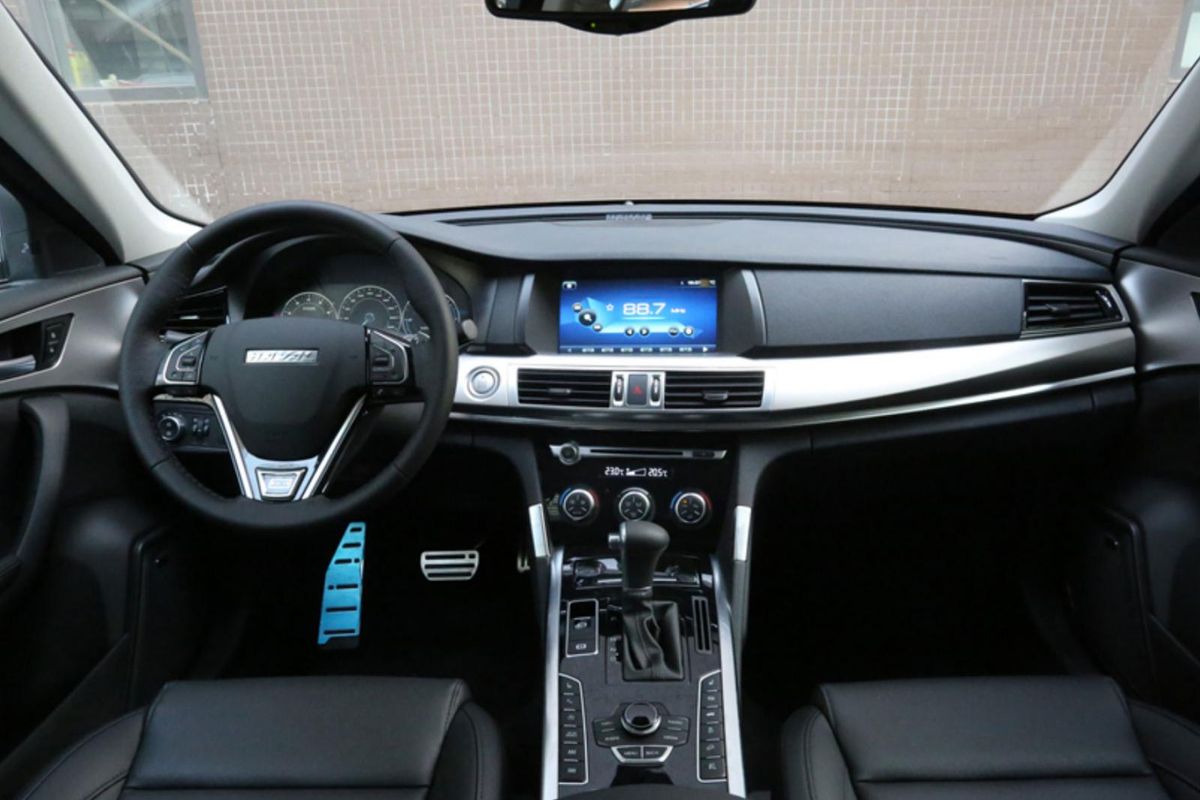
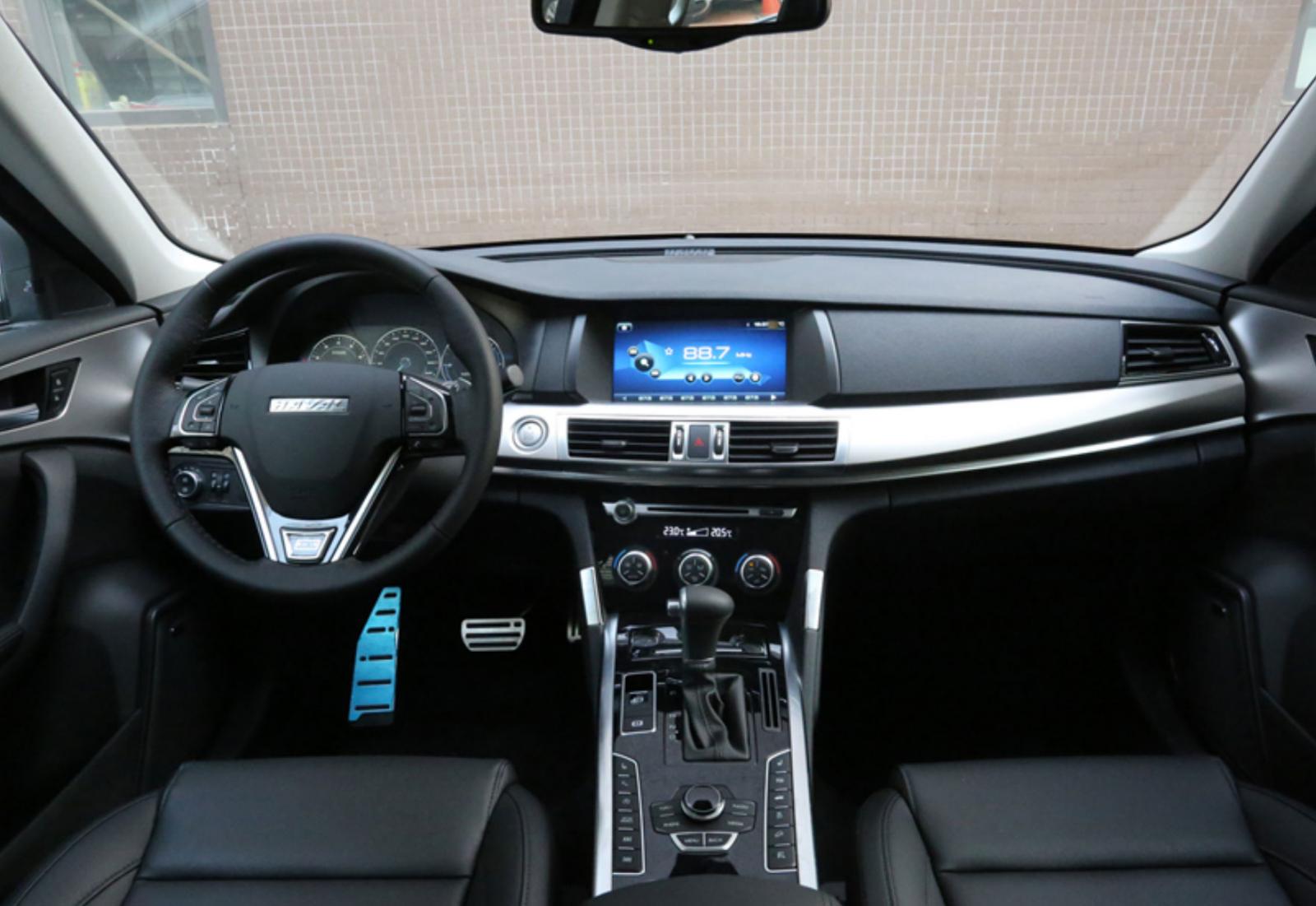
Cabin design is heavily BMW inspired with quality materials and impressive fit and finish.
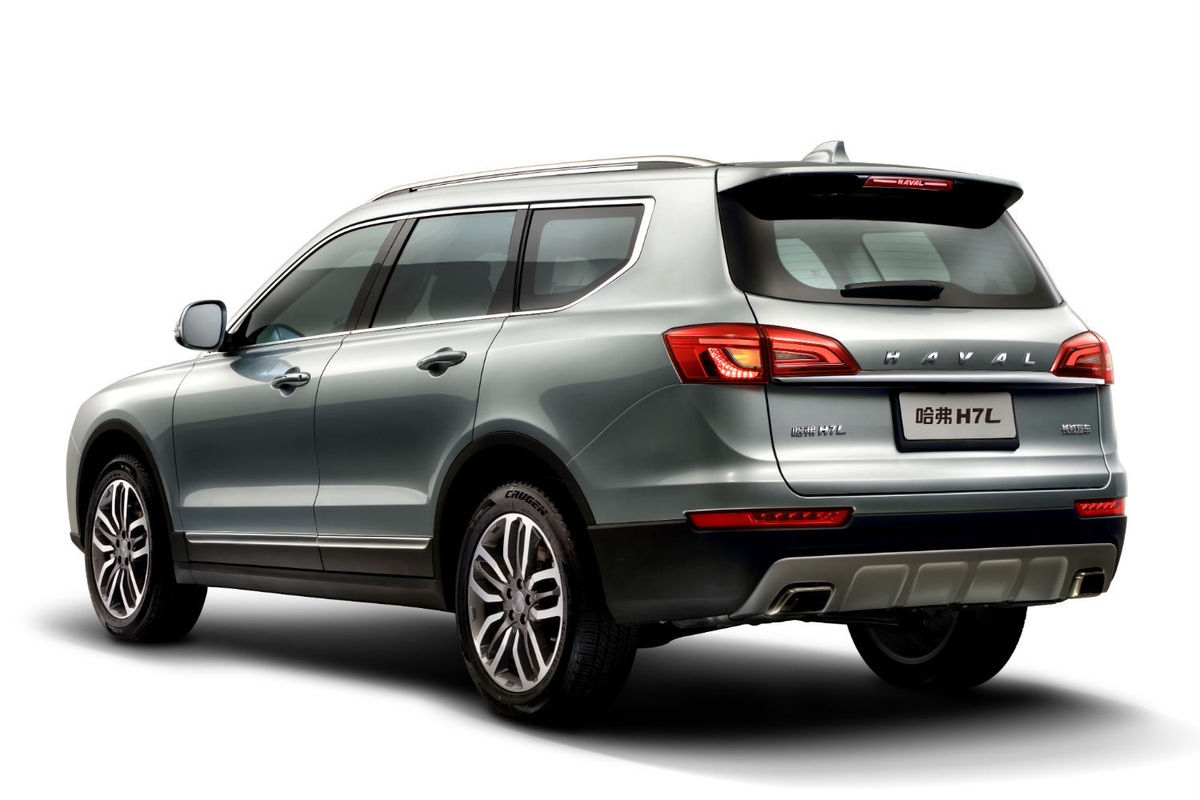
The H7L is a large SUV/crossover that will compete with Kia's Sorento and Hyundai's Santa Fe. At 4 900 mm in length, it is significantly longer than its Korean rivals and thanks to its generous 2 850 mm-wheelbase, it promises to offer more cabin space as well. South African consumers are in for another pleasant surprise – the fit-and-finish quality of the H7L's interior is impressively "premium" and the vehicle's designers seemed to have drawn inspiration from BMW cabin layouts… This should hardly come as a surprise, as GWM/Haval's current design director, Pierre Leclerq, is ex-BMW and the man who previously penned the German marque's X5 and X6 models.
Powertrains
With its stretched wheelbase and long body, the H7L will likely be one of the more spacious 7-seaters on the local market.
Under the bonnet is further evidence of dramatic technological gains in recent years. The H7L will be powered by Haval's new 2.0-litre turbopetrol engine, an advanced unit that produces a strong 170 kW at 5 500 rpm and 355 Nm of torque from 2 200 to 4 000 rpm. Haval is reported to claim a sub-10 second 0-100 kph sprint time and a top speed of 220 kph. We recently had the opportunity to go for a ride in the H7L in China – at Haval's impressive new Xushui test facility. The H7L was not only surprisingly refined and quiet, but 220 kph looked like a conservative claim… The H7L will use an all-wheel drive set-up and a Getrag 6-speed dual-clutch transmission (with paddle shift).
In China, the H7L is available with a vast array of modern safety- and comfort-boosting technologies, including forward-collision alert, adaptive cruise control, a 360-degree camera view, autonomous braking, lane-departure warning etc.
Local availability
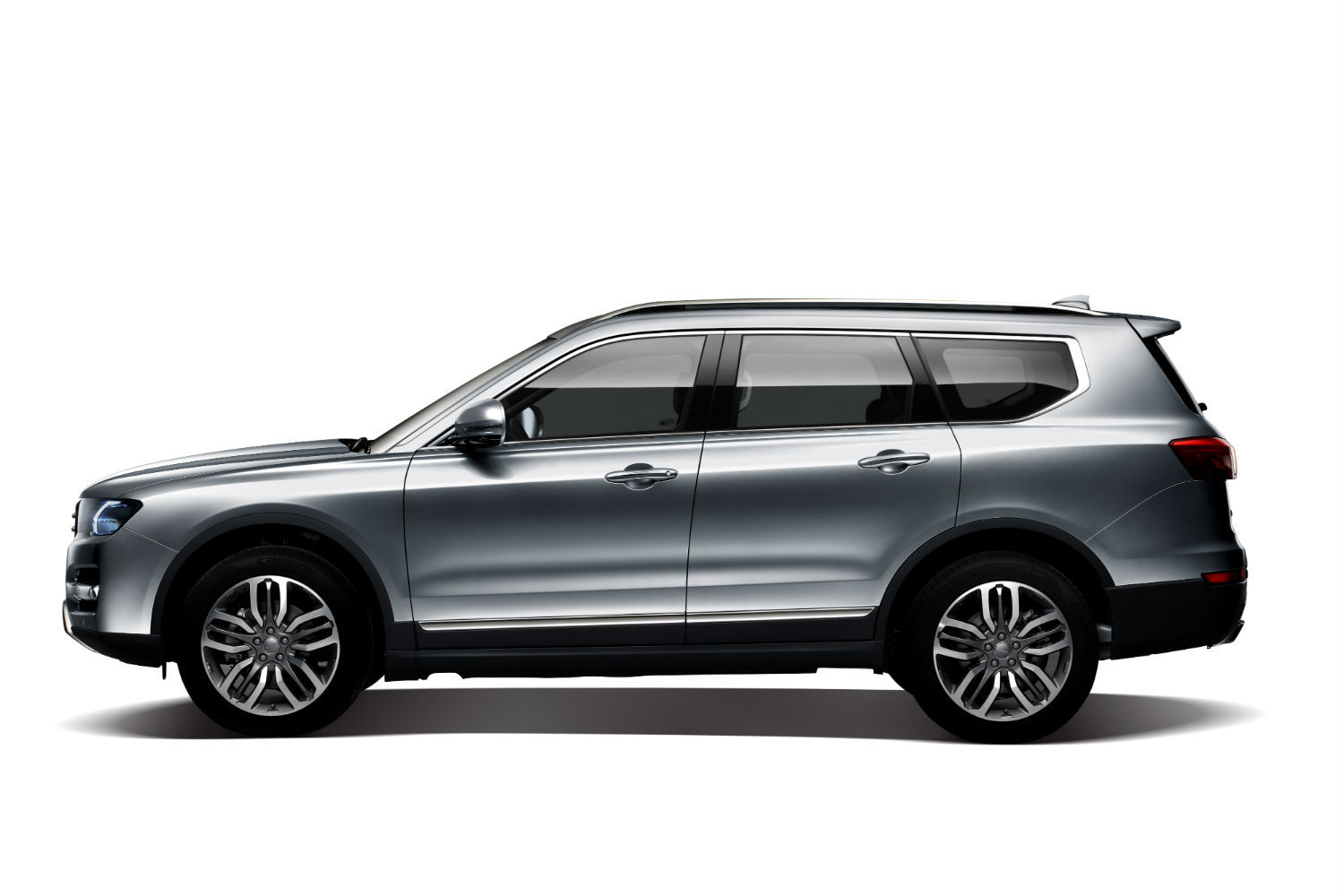
Neat, conservative design all-round.
The first (homologation) unit of the H7L has arrived in South Africa and, at present, the local launch looks set to take place around March 2018. It is much too early to confirm local specifications, but we anticipate a high level of standard equipment and pricing that could undercut the Korean twins by as much as R200 000 (spec-for-spec).
Top 10 Cool Cars from 2017 Jaguar Simola Hillclimb
The 2017 Jaguar Simola Hillclimb showcased some impressive machinery and we have chosen 10 cars that stood out for us at the event.
It was a car appreciator's paradise at the 2017 Jaguar Simola Hillclimb with a staggering variety of machines in action on Classic Car Friday and the King of the Hill event over the weekend. From classic cars, single-seaters, sports cars, supercars, road cars and modified saloons, spectators were treated to a variety of eye-catching (and rapid) automobiles!
Take a look at our pick of 10 cool cars from the 2017 Jaguar Simola Hillclimb!
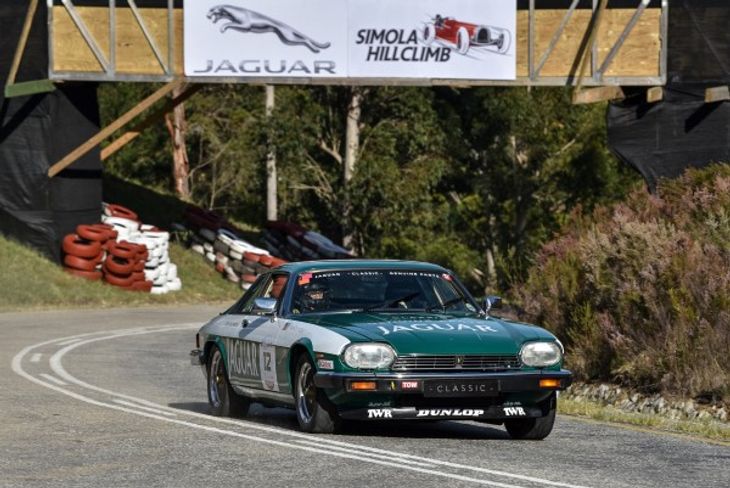
Jaguar XJS 5.3-litre V12
This beautiful 1983 Jaguar XJS in Tom Walkinshaw Racing (TWR) livery, powered by a 5.3-litre V12 engine was driven by multiple US racing champion, Randy Pobst, at the Classic Car Friday event. The Jaguar XJS was one of 60 entrants on the day and with Pobst behind the wheel, the XJS achieved a best time of 53.493 sec on the 1.9 km course. Randy also piloted a Jaguar F-Type SVR Coupe in the King of the Hill event and placed second overall with a time of 44.999 sec.
“The XJS is very much a street car that is mildly prepared, yet it competed against race cars and did very well. I’m really happy with our results, and the car is a delight to drive, with the V12 just singing all the way up the hill while going flat-out” said Pobst.
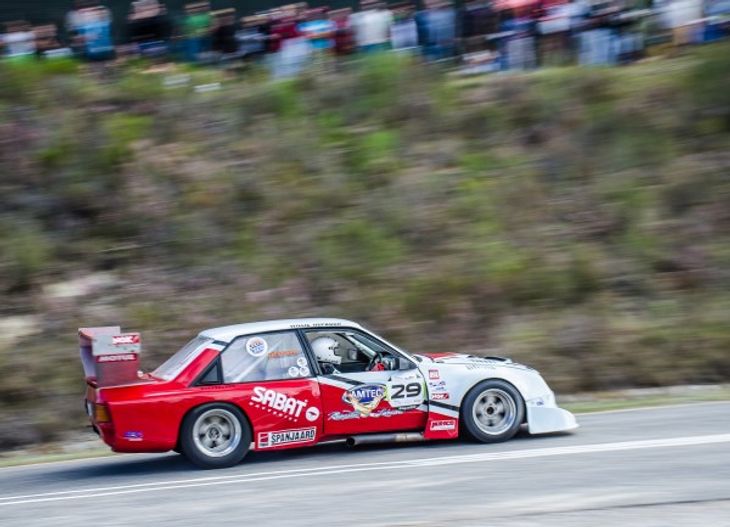
Opel Rekord 6.3-litre V8
This thundering 1981 6.3-litre V8-engined Opel Rekord put on a good show on the hill and was piloted by multiple saloon car champion Willie Hepburn, who was also the oldest driver to take part in this year’s event. Hepburn placed third in the B6 class final with a time of 58.445 sec.
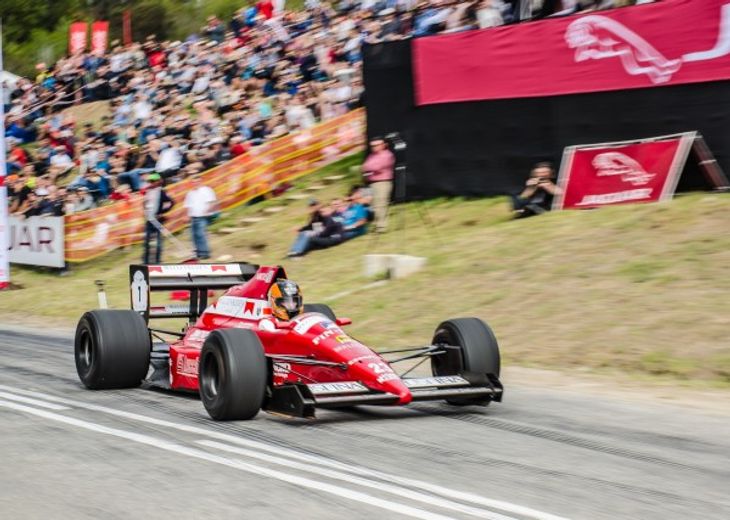
Dallara F189 Formula One car
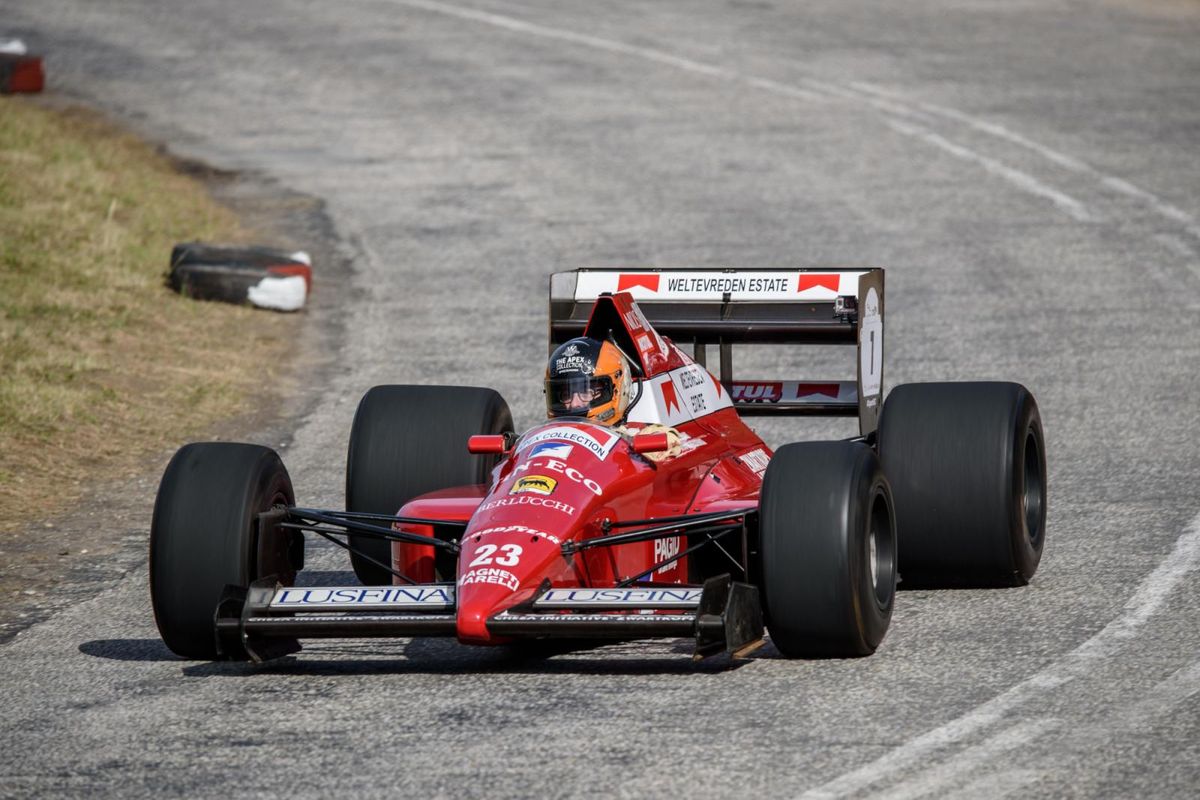
The Dallara F1 car delivered a phenomenal performance at the 2017 Jaguar Simola Hillclimb with Andre Bezuidenhout behind the wheel. Bezuidenhout won his second King of the Hill title at this year’s event and he set a new record time of 37.695 sec, shattering the previous record held by Franco Scribante’s 1972 Chevron B26.
Ford Ranger 5.0 V8 Prototype
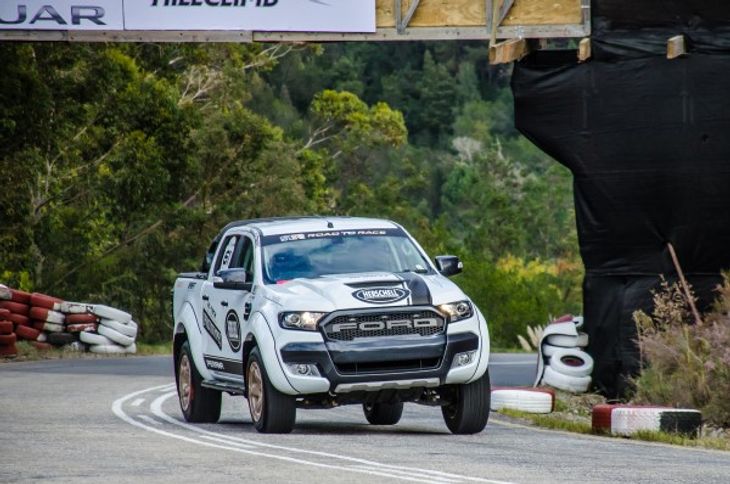
This year, Peter Lindenberg took to the hill in a modified Ford Ranger bakkie prototype. It was the first bakkie to take part in the Jaguar Simola Hillclimb and it put on a great show for spectators. This is no ordinary Ranger, however: Under the bonnet lurks a monstrous 5.0-litre V8 that sent the Ranger rocketing up the hill at break-neck speeds.
Nissan R32 Skyline GT-R
Driven by Des Gutzeit, this heavily-modified 1992 Nissan R32 GT-R was one of the fastest cars up the Simola Hill. It’s blisteringly fast off the line (with about 1 100 kW on tap) and despite his best efforts, Gutzeit had to settle for second place with a time of 40.114 secs, which was narrowly slower than Wilhelm Baard's 2014 R35 GT-R.
Chevron B26
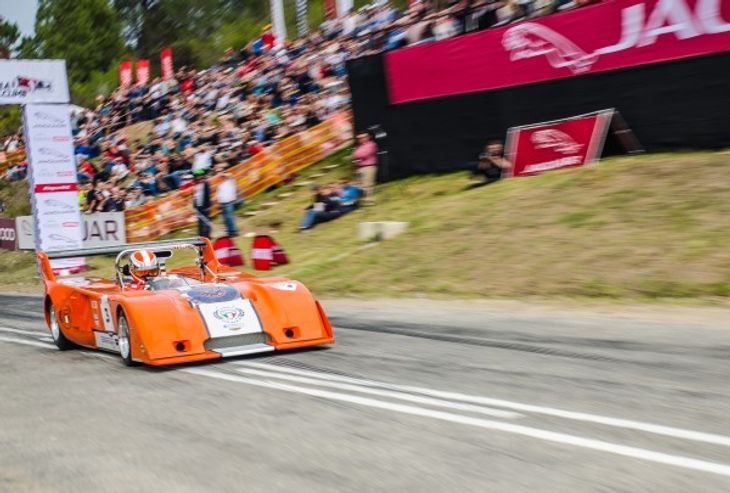
The 1972 Chevron B26 driven by Franco Scribante is a massive crowd pleaser and it previously held the Hillclimb record of 38.646 seconds. This year, however, the Chevron B26 was dethroned by Andre Bezuidenhout in his Dallara F1 car, who set a new record time of 37.695 seconds. Nonetheless, Scribante still claimed second place with a time of 39.754 seconds.
Nissan R32 GT-R
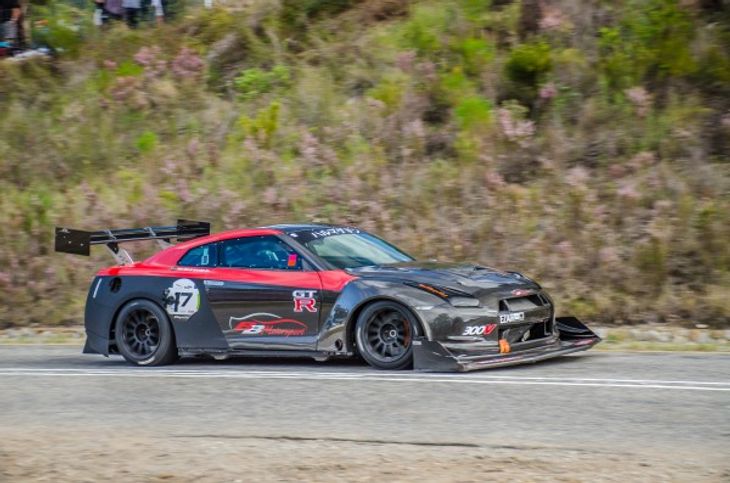
The 2014 Nissan R32 GT-R driven by Wilhelm Baard was particularly impressive because it was the first modified saloon car to break the 40-second barrier at the 2017 Jaguar Simola Hillclimb. Baard won the King of the Hill trophy in his category with a blistering time of 39.892 sec.
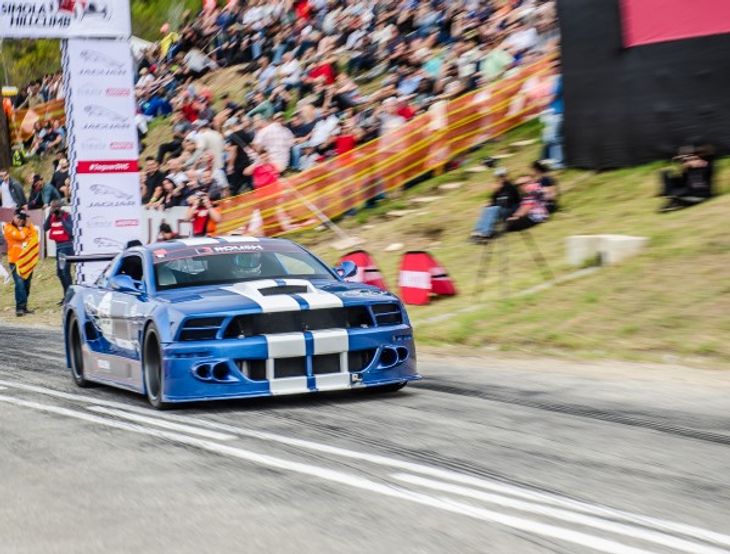
Ford V8 Masters Roush Mustang
This V8 Masters Roush Mustang with a 6.0-litre V8 engine and nitrous oxide injection was a pleasure to watch as rally ace Enzo Kuun blasted it up the hill. With a peak output of around 522 kW, this beast of a car placed 9th in the Top 10 Shootout with a time of 44.447 sec.
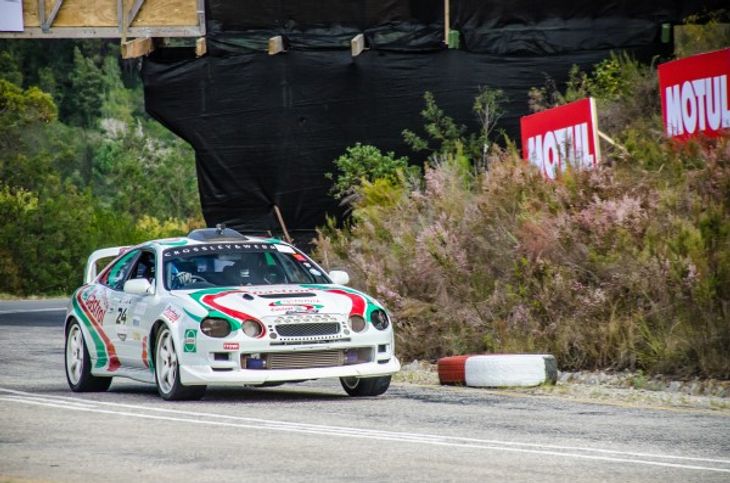
Toyota Celica GT4 Rally
Driven by John Carlos Da Silva, this 1995 Toyota Celica GT4 Rally in classic Castrol livery provided pleasant variety at this year’s Hillclimb event. This ST205 version was produced between 1994 and 1999 and is fitted with a turbocharged 2.0-litre, 4-cylinder engine.
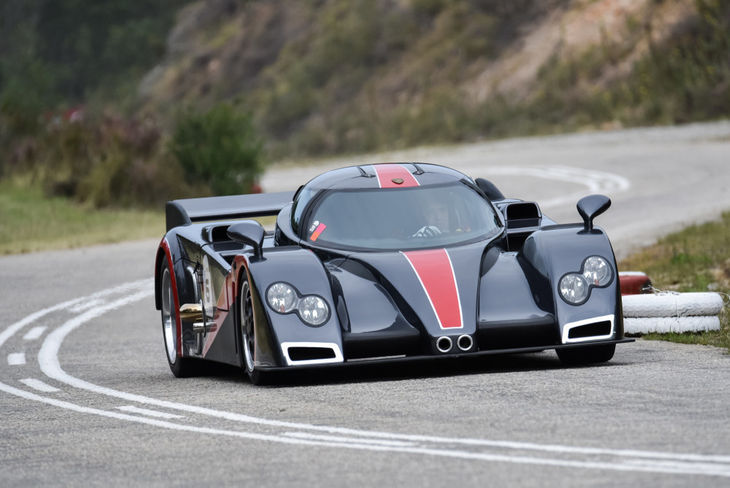
SA-made Barnard BTR
And finally, some local flavour. This South African designed and built Le Mans-style prototype named the Barnard BTR was campaigned by racing veteran Izak Spies. The road-legal model, nicknamed (by some as) the Bloemfontein Bomber, was powered by a 560 kW Chevrolet LS7 V8-engine.
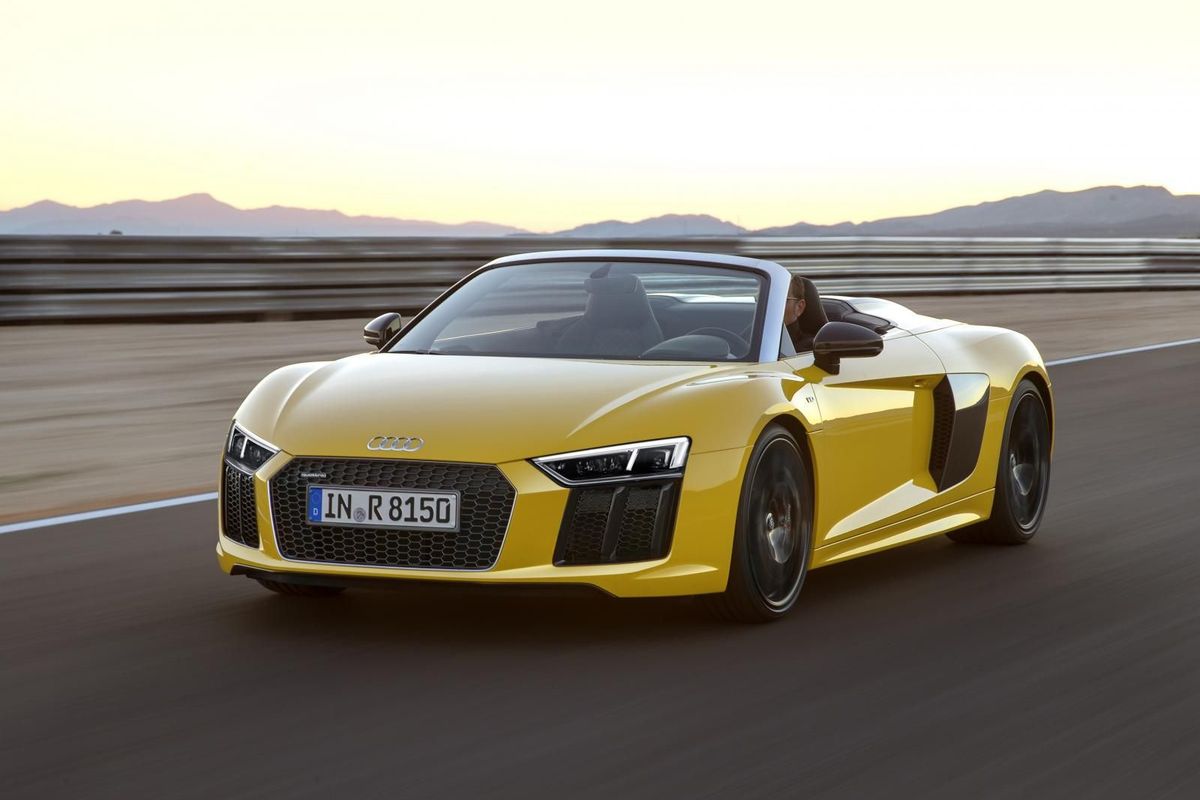
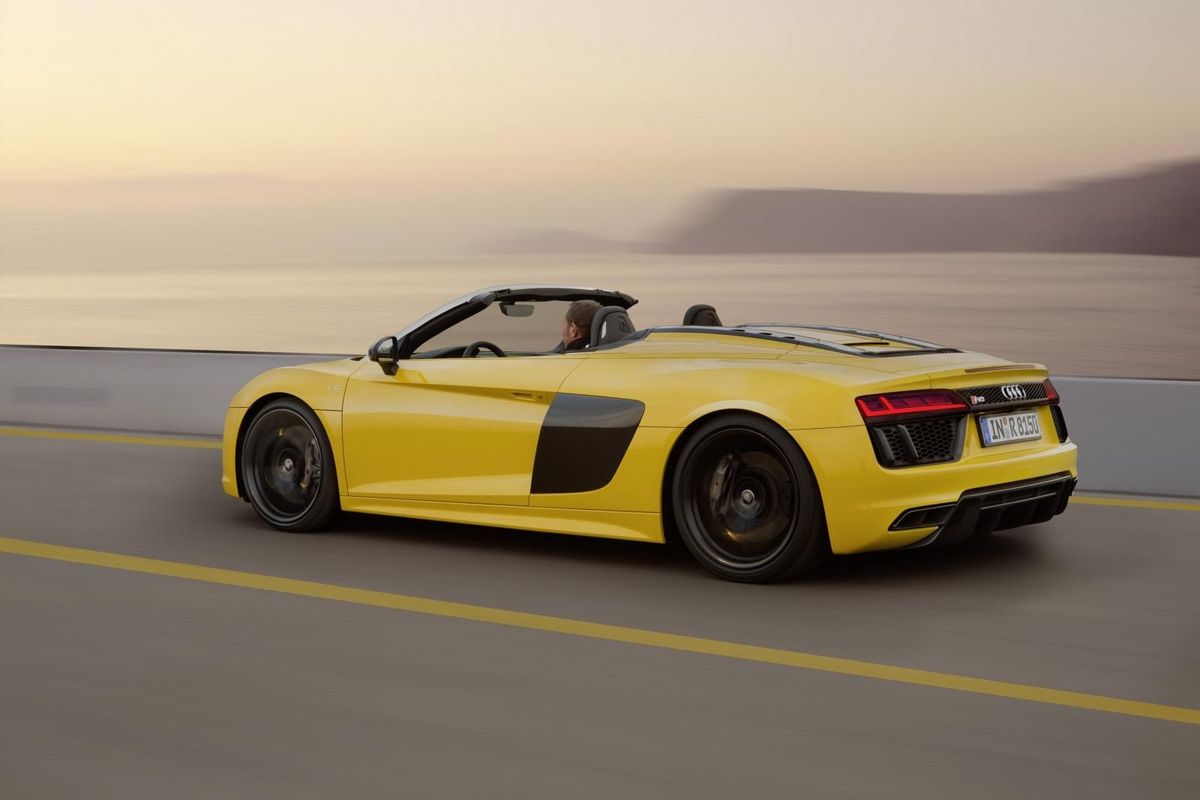
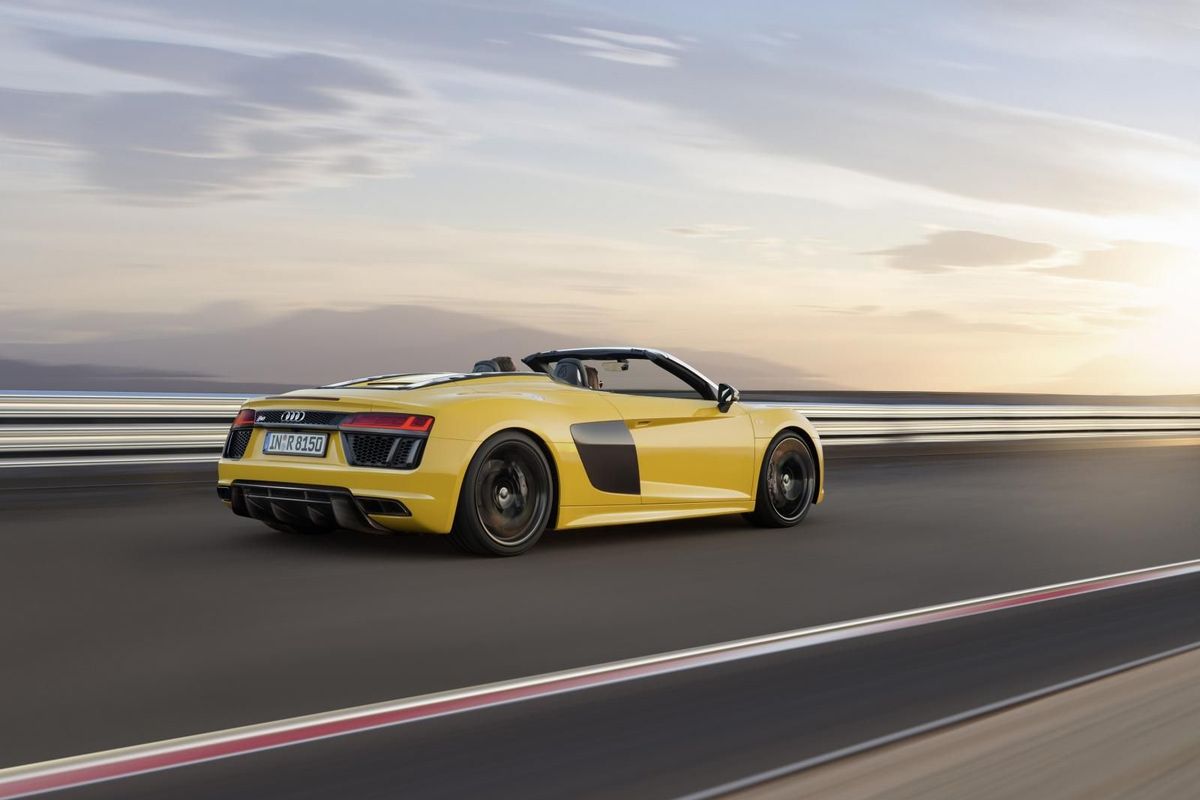
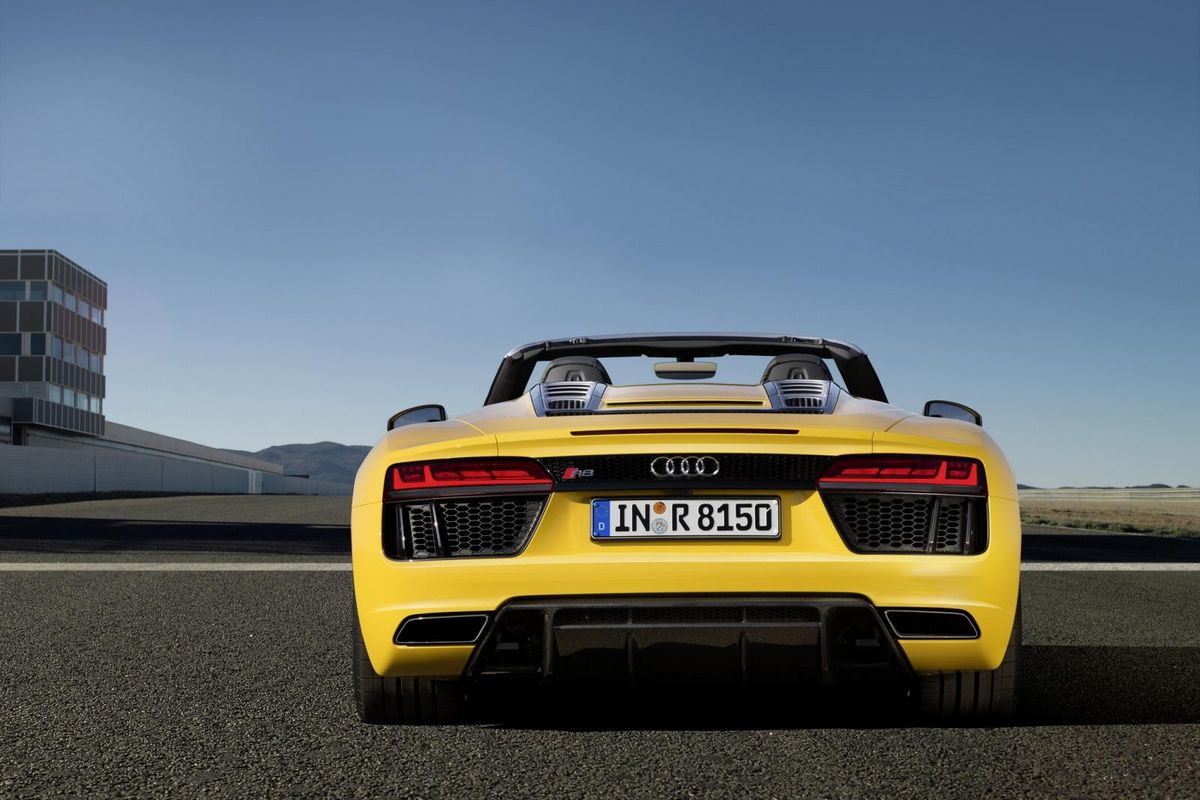
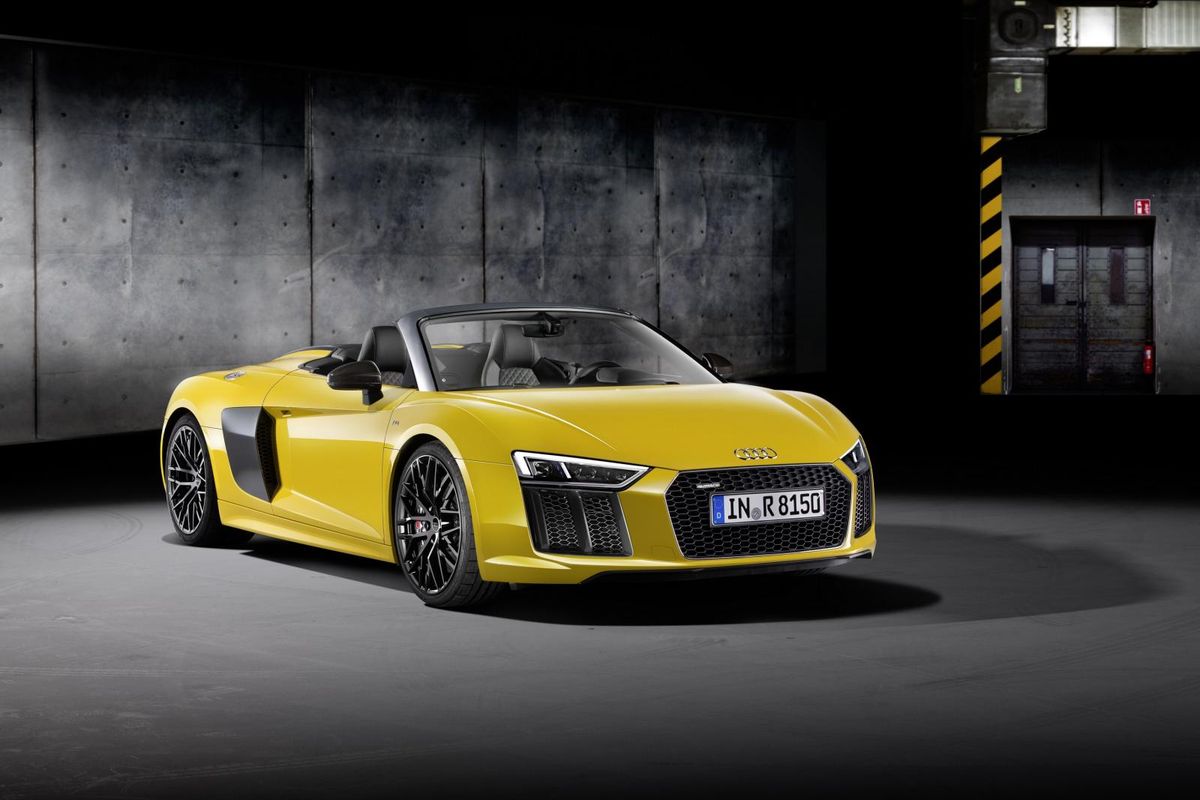
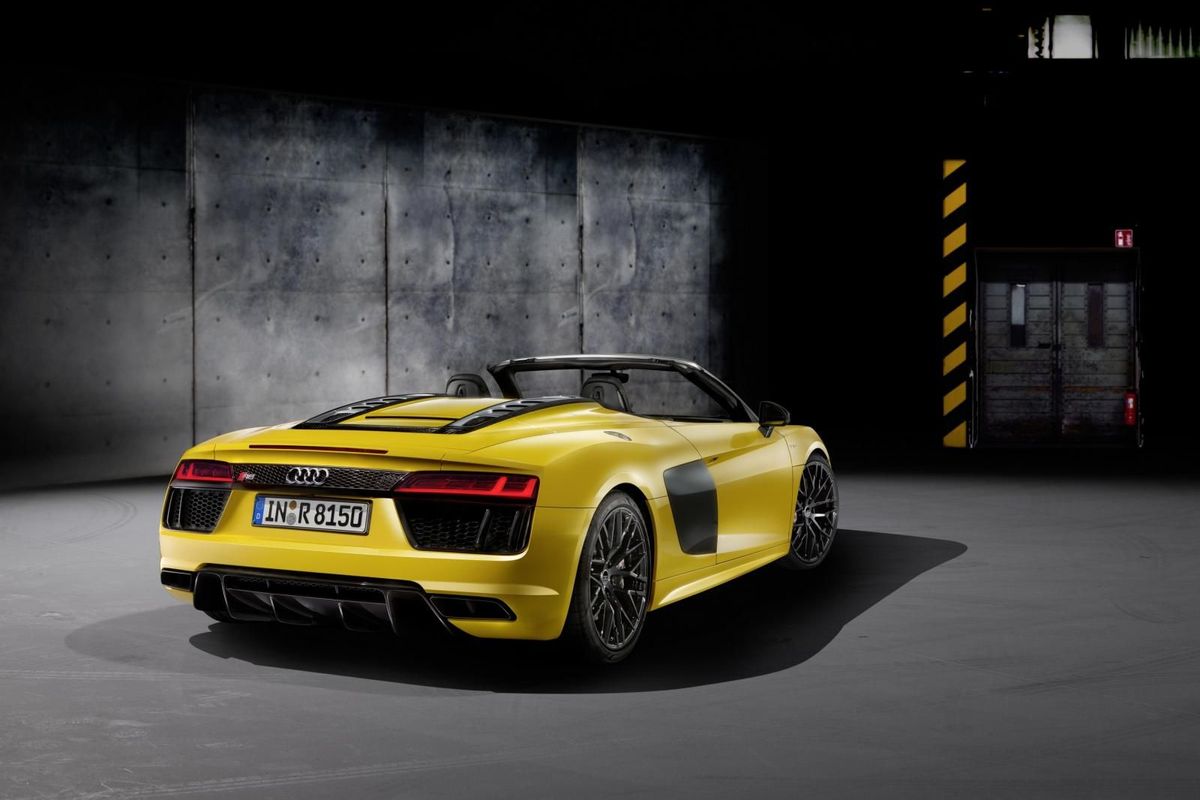
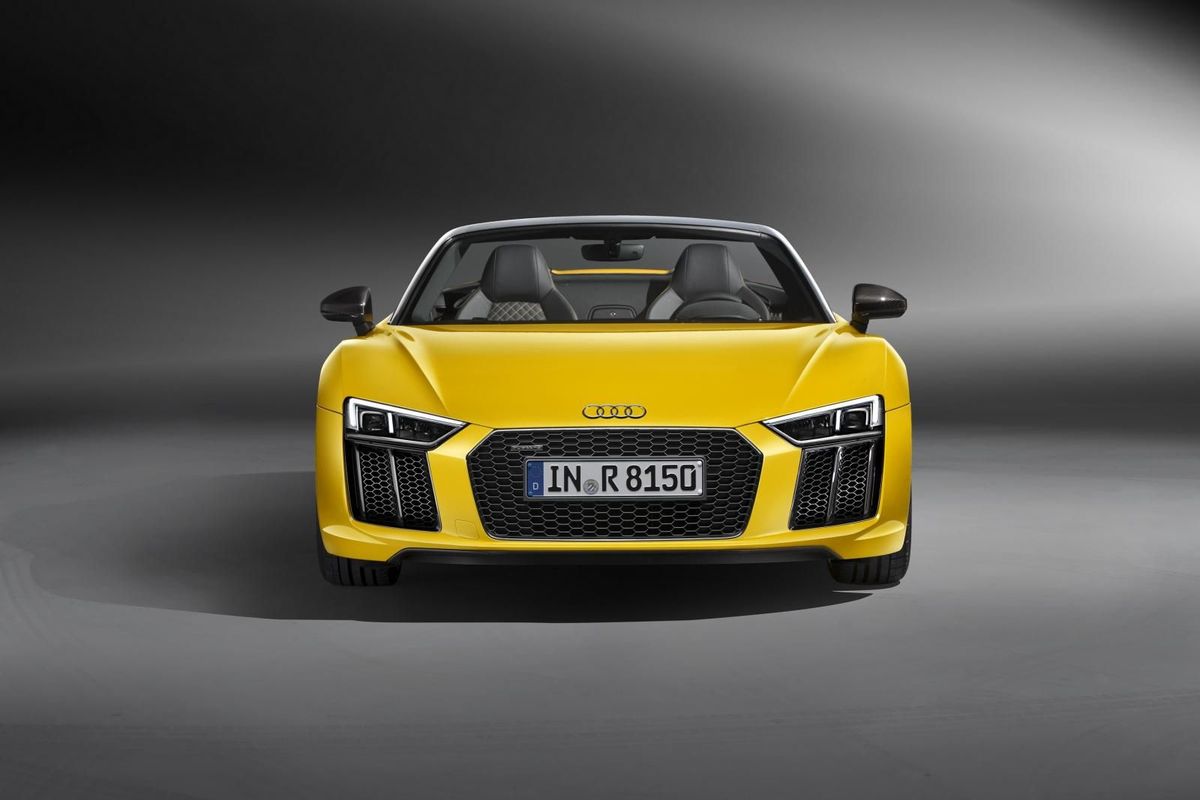
Following the introduction of the R8 V10 and V10 Plus in South Africa last year, Audi now welcomes the R8 Spyder V10 to the local market!
The Audi R8 Spyder V10 is offered with the 397 kW/540 Nm 5.2-litre V10 engine, which is mated with a 7-speed S tronic dual-clutch transmission.
The new R8 Spyder V10 is 14 mm shorter, but 36 mm wider than its predecessor and has a dry weight of 1 612 kg courtesy of its Audi Space Frame (ASF), which combines aluminium components (79.6%) with structurally integrated carbon-fibre reinforced polymer. Torsional rigidity has also increased by 50% compared with the previous car.
According to Audi, the R8 Spyder V10 will accelerate from 0 to 100 kph in 3.6 sec, on to 200 kph in 11.8 sec and achieve a top speed of 318 kph. And, in the pursuit of maximum aural stimulation, the Ingolstadt-based firm says that “road and wind noise inside the car are much lower” than on its predecessor…
Watch a brief clip of the R8 Spyder V10 in action:
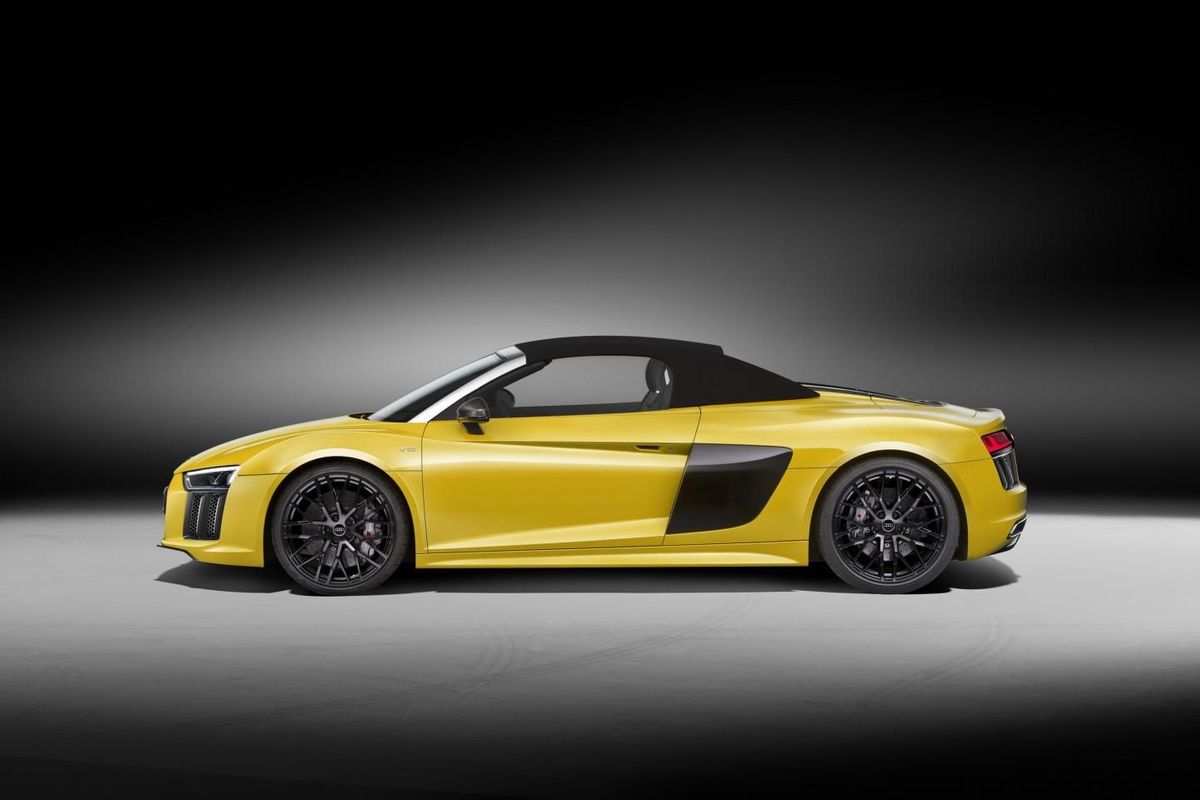
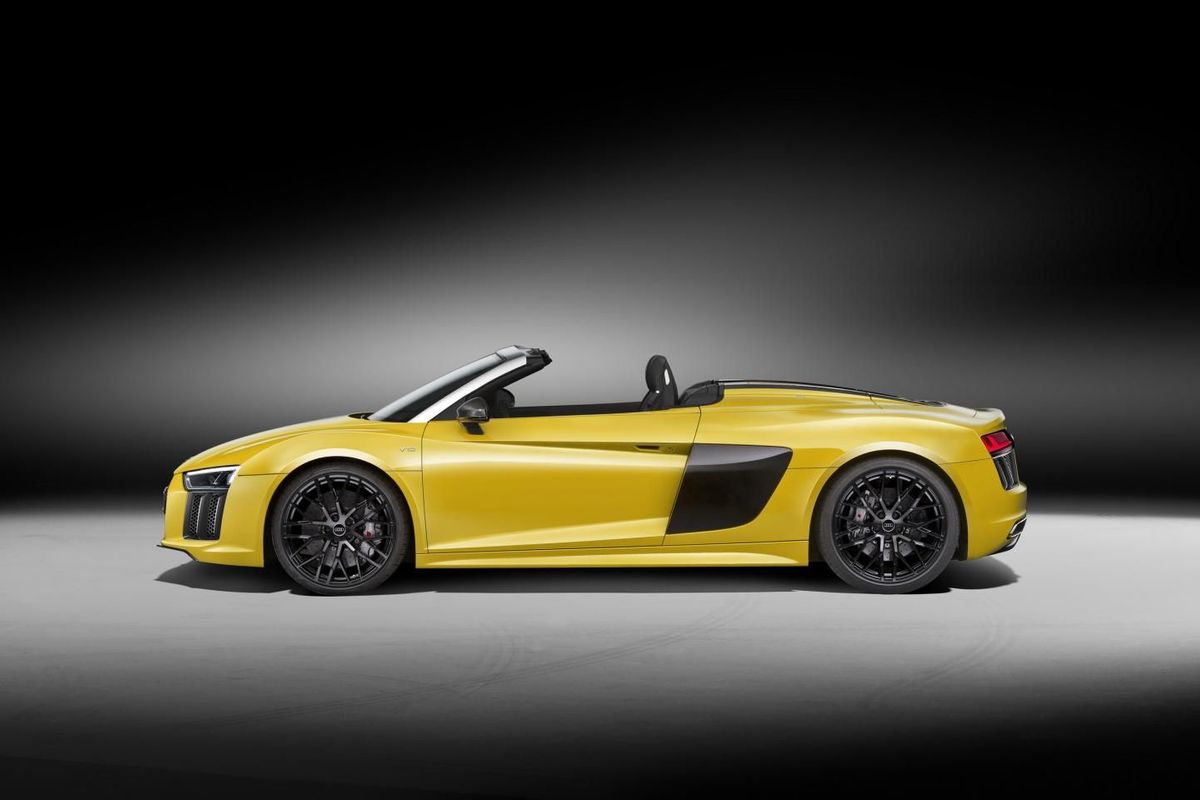
The newly developed soft top is manufactured from cloth, weighs only 44 kg and an electro-hydraulic drive can open/close the top (at the press of a button) in 20 seconds at speeds of up to 50 kph. Plus, with the hood down, occupants should notice that air turbulence at head level is lower; a standard wind deflector reduces the reverse flow around the head by about 90% and around the shoulder/neck by 80% (compared with the first R8 Spyder). And, less buffeting means better sound: exhaust flaps are standard, but an optional sport exhaust with gloss-black gives the sound added edge.
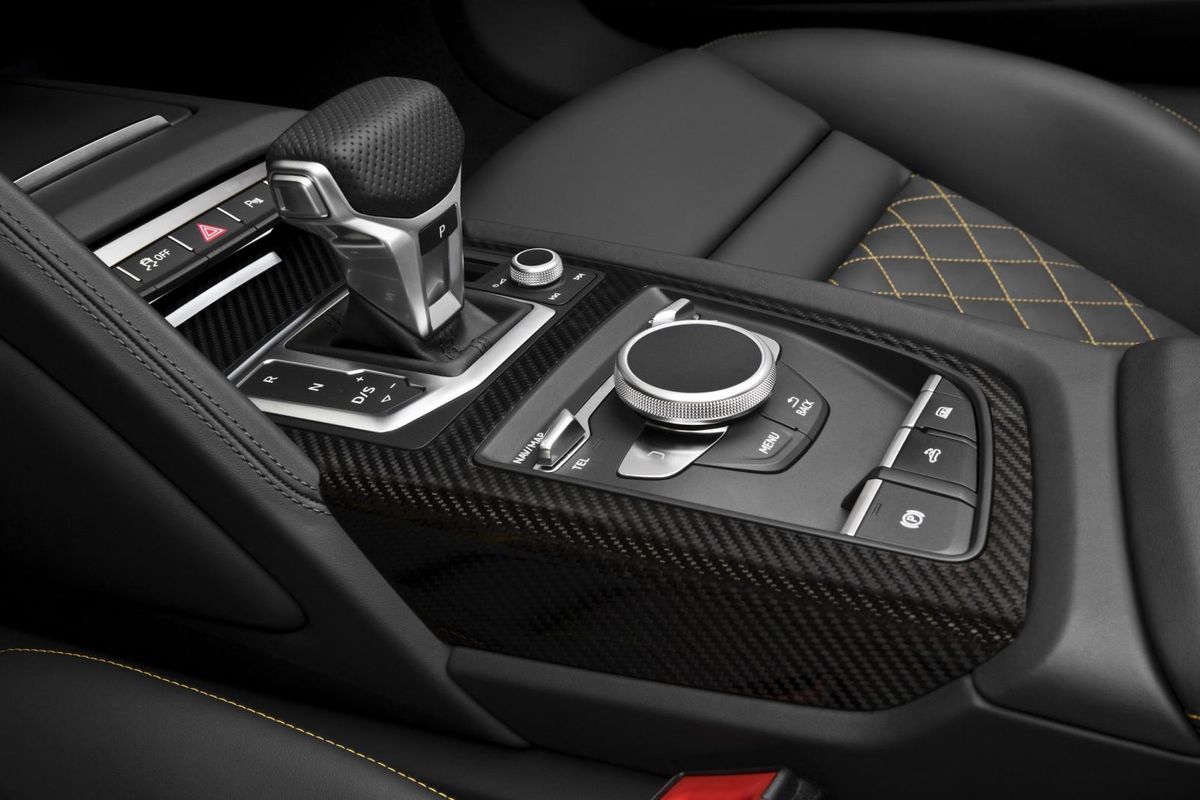
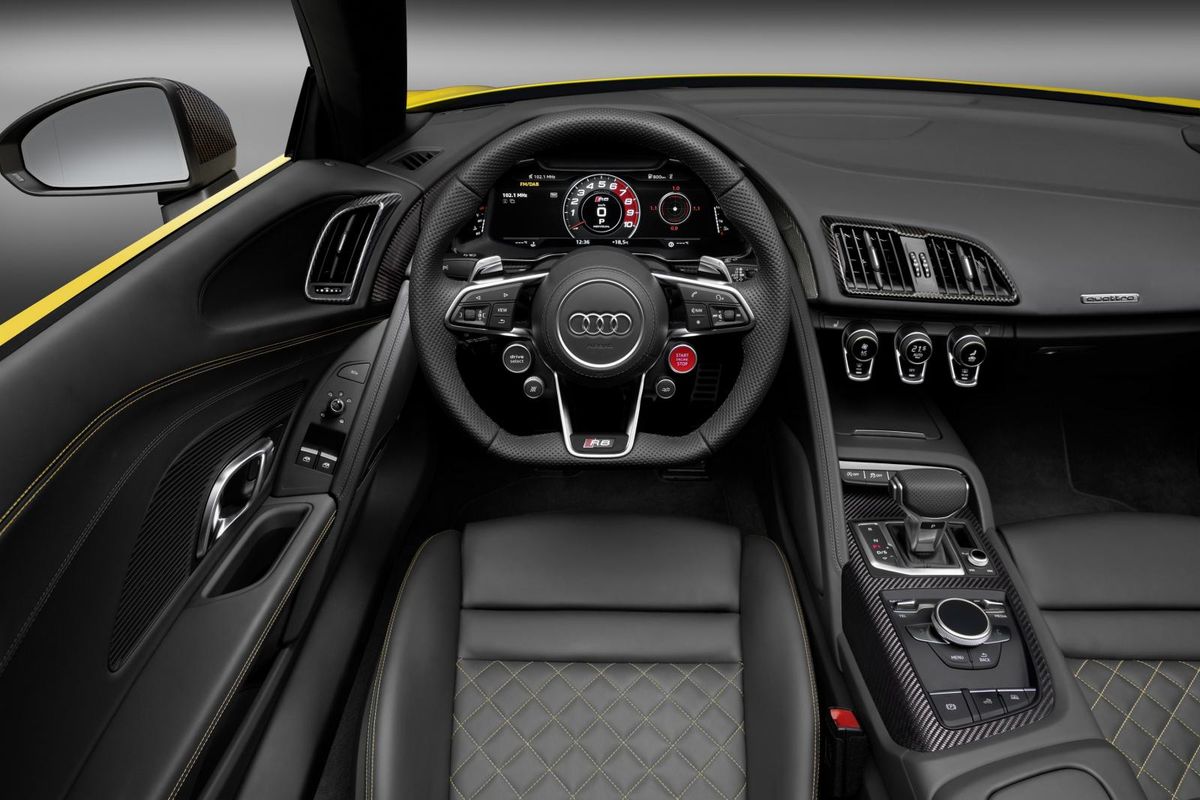
As for the interior, sport seats – upholstered in diamond-pattern leather – are standard, as are the highly customisable Audi virtual cockpit display, MMI infotainment control (with navigation function) and Audi connect wireless internet module. A Bang & Olufsen Sound System with 13 loudspeakers (with a pair of 2 speakers in each seat, positioned at ear level of the driver and passenger), is standard as well.
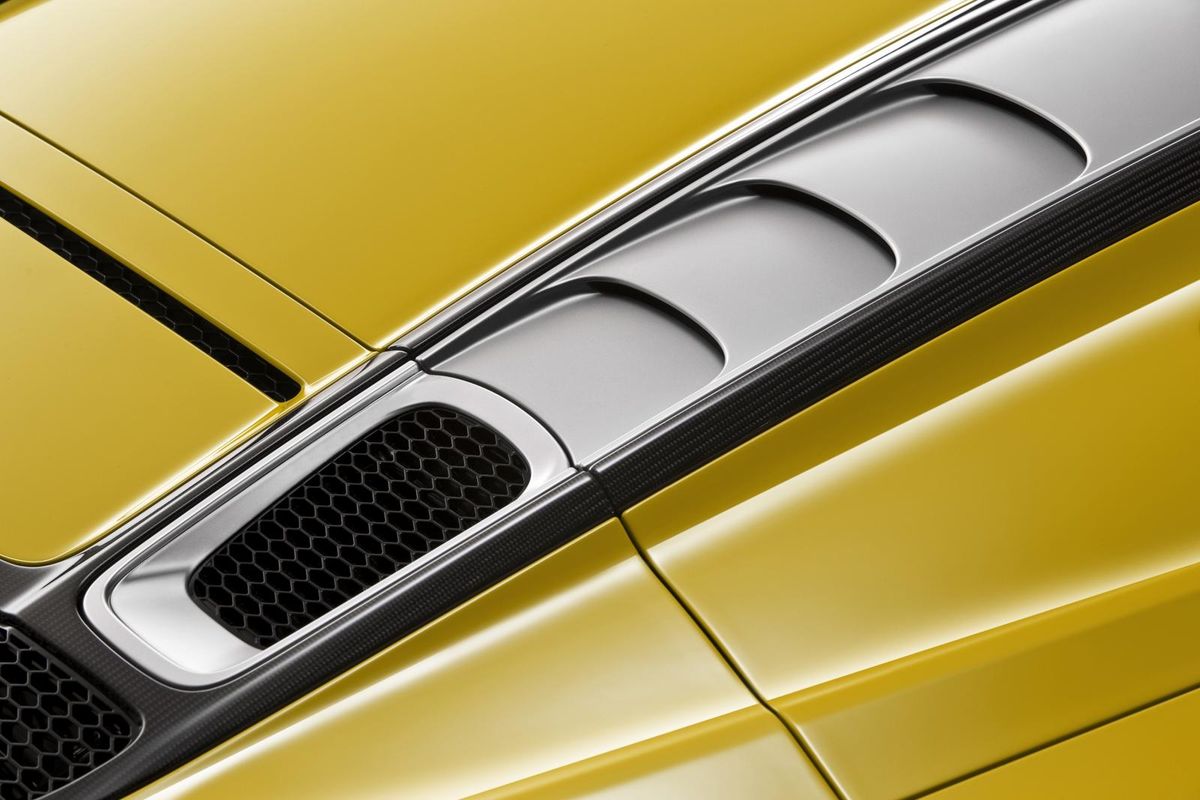
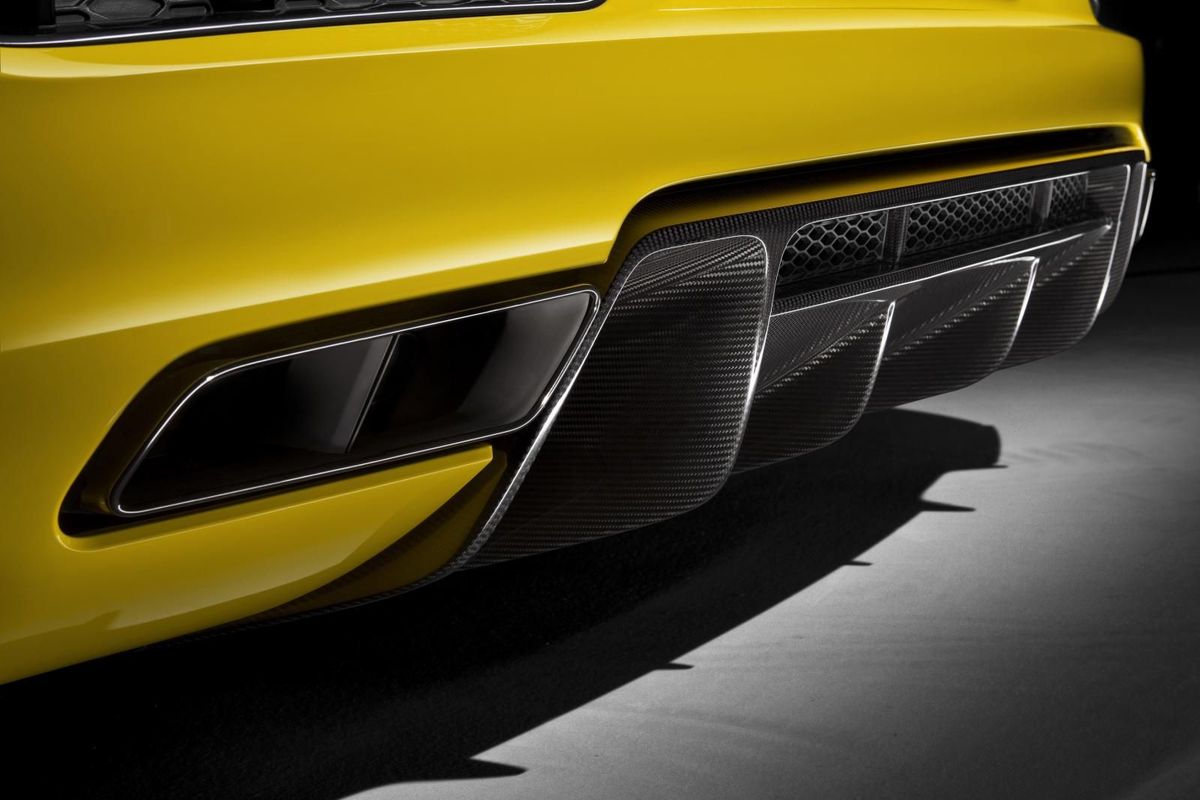
The R8 Spyder V10 is individually customisable with extra items such as carbon fibre front spoiler, diffuser and side blades and Audi laser lighting with an anodised blue strip, to name just a few options…
Audi R8 Spyder V10 – Price in South Africa
Audi R8 Spyder V10 – R2 905 500
The Audi R8 Spyder V10 is sold with a 5-year/100 000 km Audi Freeway Plan.
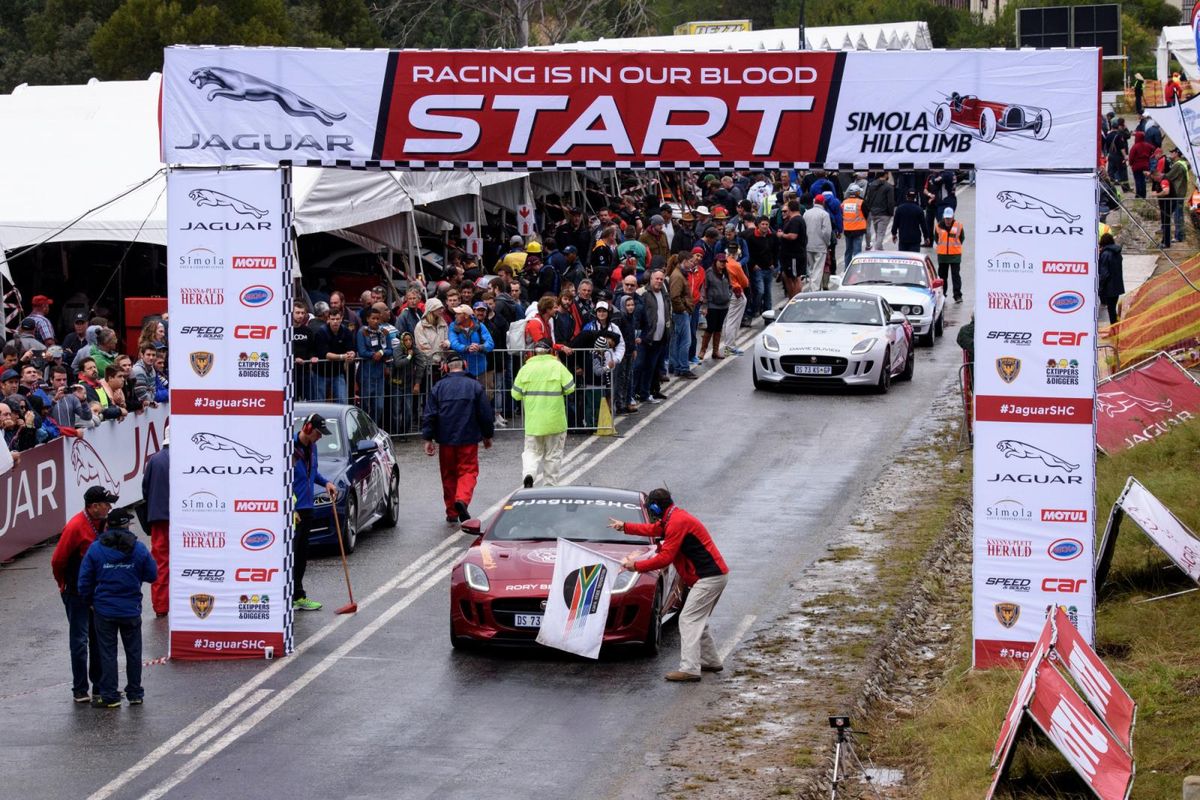
This weekend saw the 8th running of the Simola Hillclimb at Knysna, where more than 15 000 spectators arrived to watch a total of 64 competitors –including multiple circuit racing and rally champions, motoring celebrities, as well as guest drivers from the US – take part in the annual event. The line-up of machinery that ascended the hill comprised a multitude of single-seaters and sports cars, modified saloon cars and road and supercars.
In the headlining Single Seaters and Sports Cars class,Andre Bezuidenhout smashed Franco Scribante’s 2016 lap record of 38.646 sec by almost a full second at the wheel of a Dallara F189 Formula One car. He blitzed the 1.9-kilometre Hillclimb course in an astonishing new official lap record of 37.695 sec at an average speed of no less than 181.456 kph.
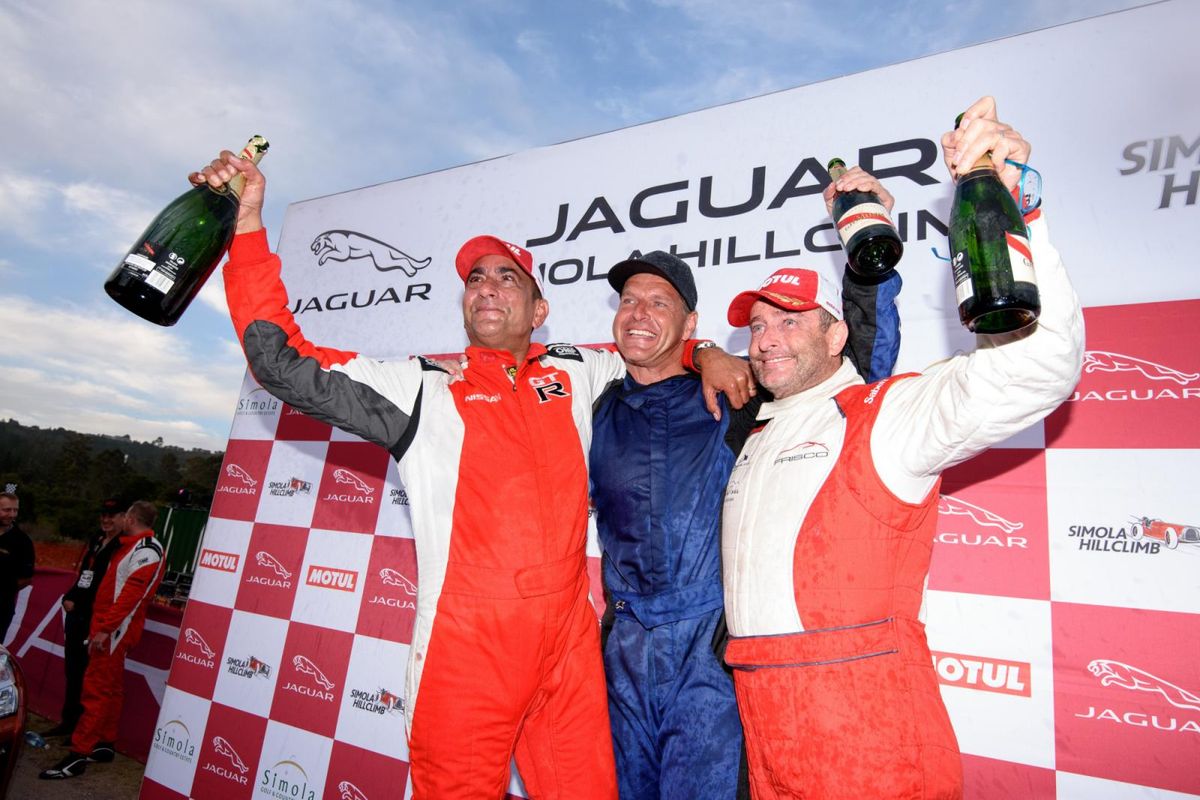
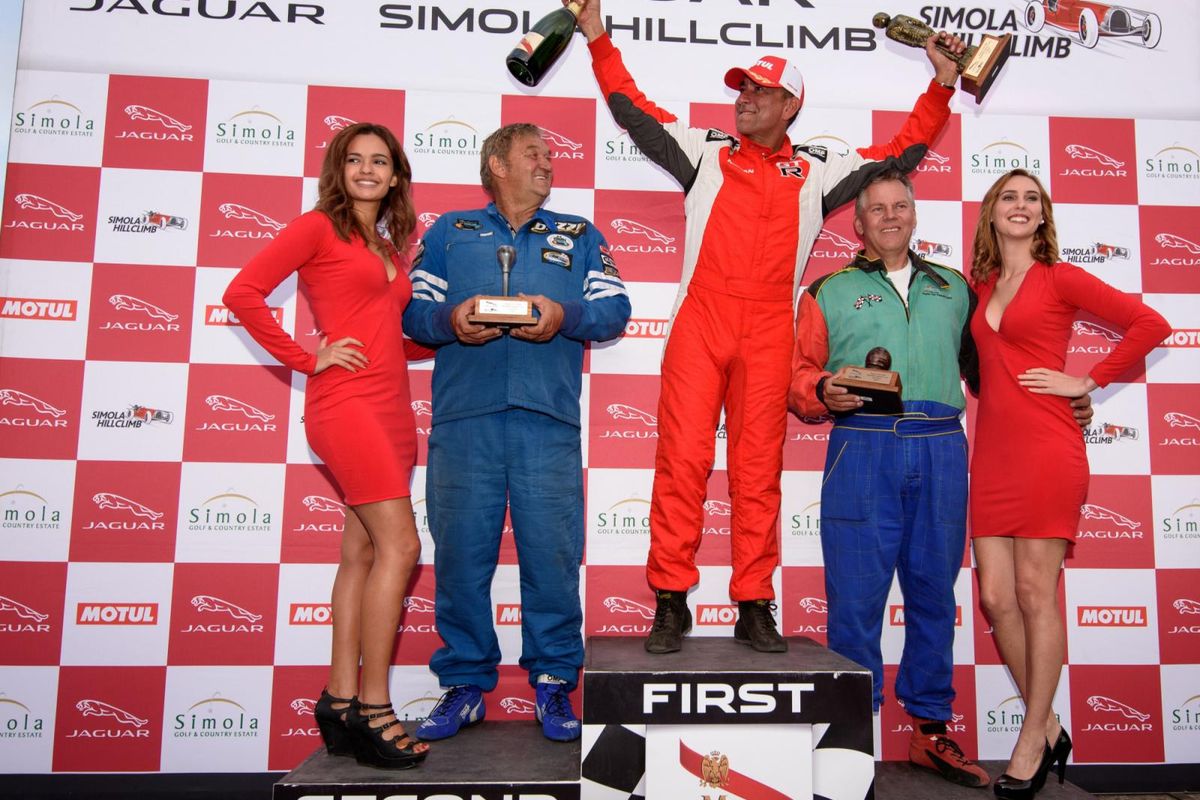
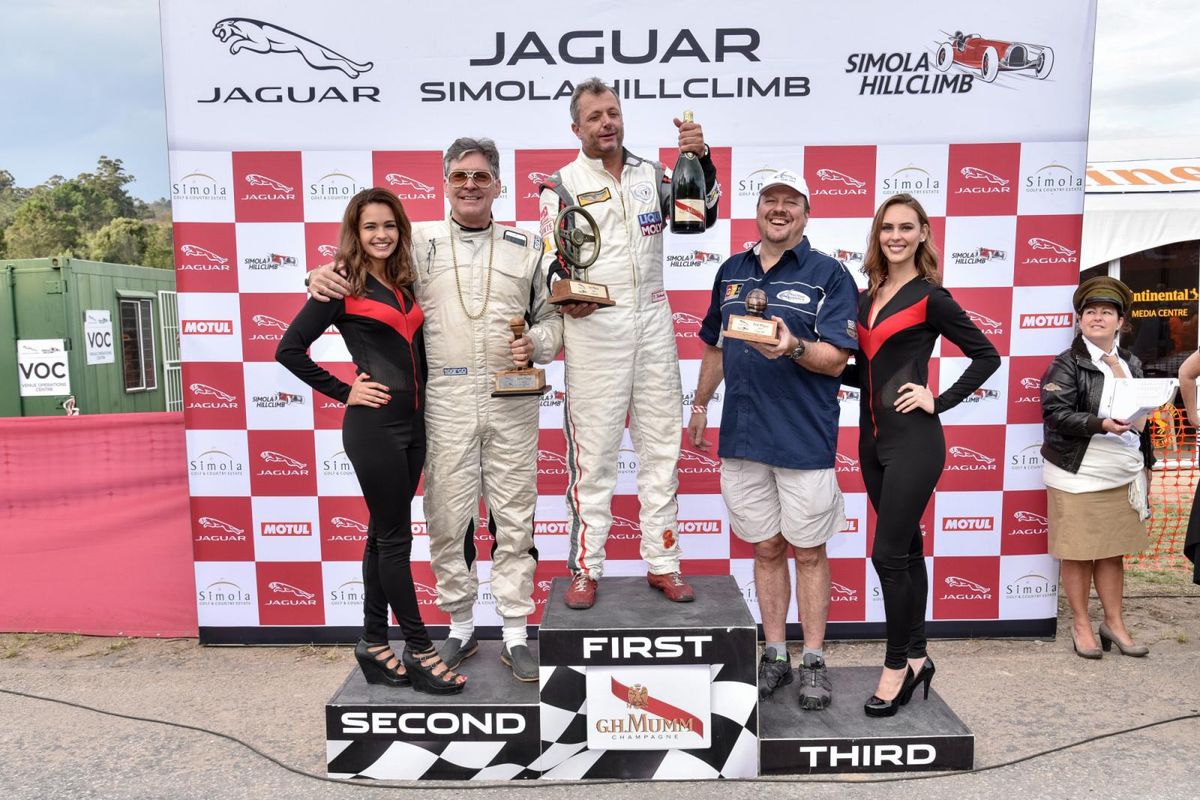
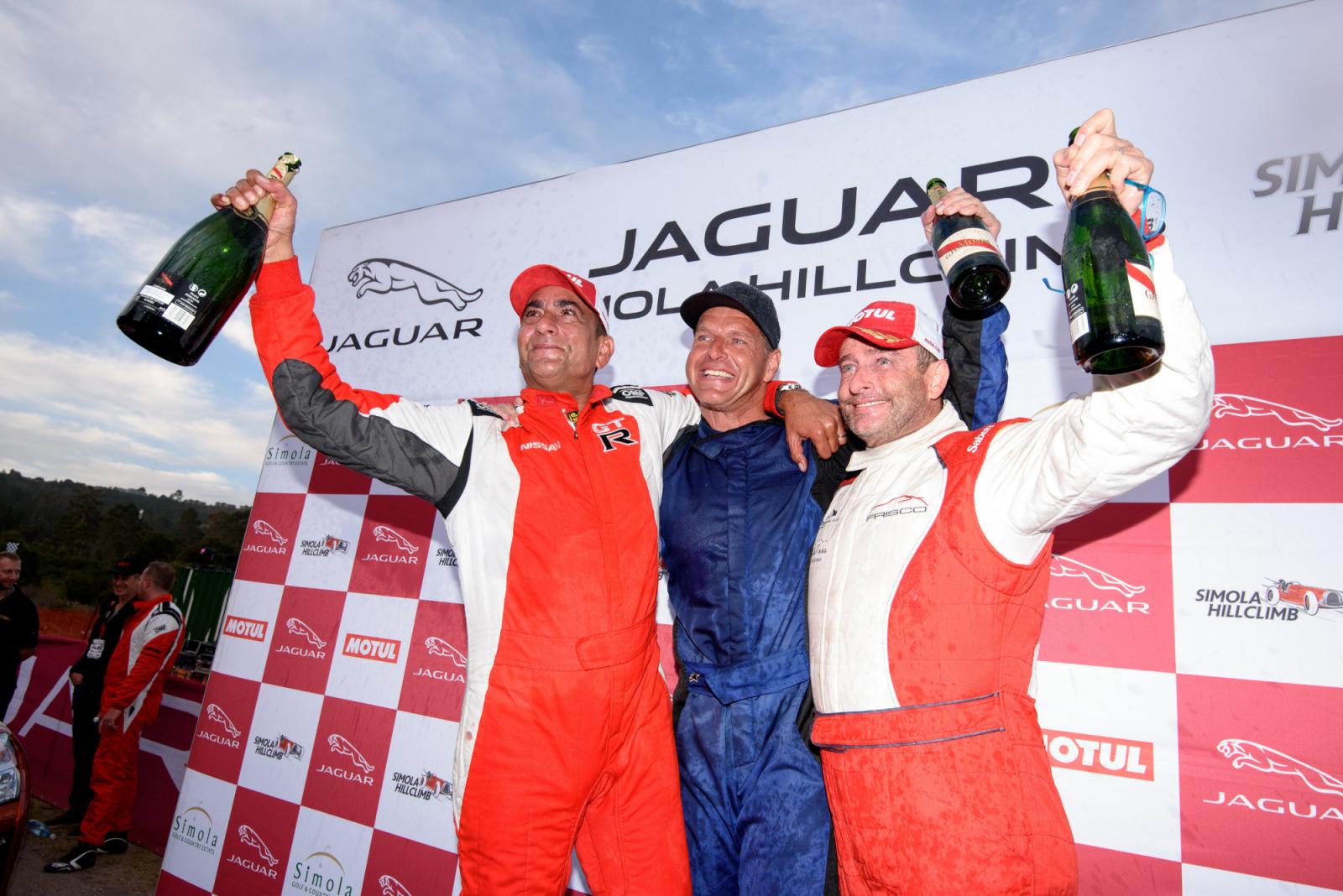
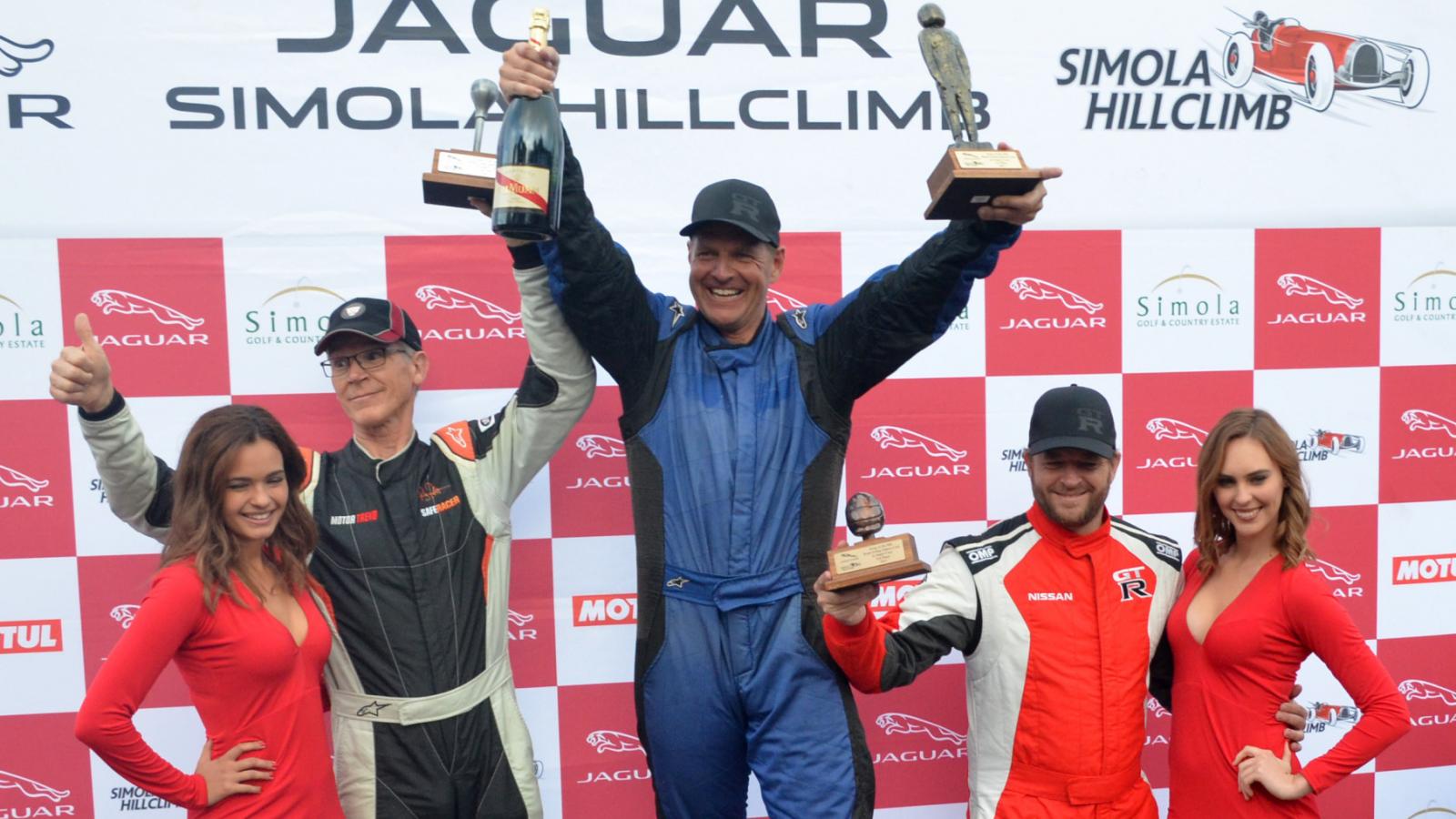
The three winners of the 2017 King of the Hill titles: Wilhelm Baard, Reghard Roets and Andre Bezuidenhout.
Bezuidenhout set his fastest time of 37.162 sec during the fourth qualifying session, but could not replicate the time in the Class Finals, which took place in cooler conditions. Scribante, who was seeking his third King of the Hill title in a 1972 Chevron B26, finished second and Robert Wolk placed third in the Formula Renault V6.
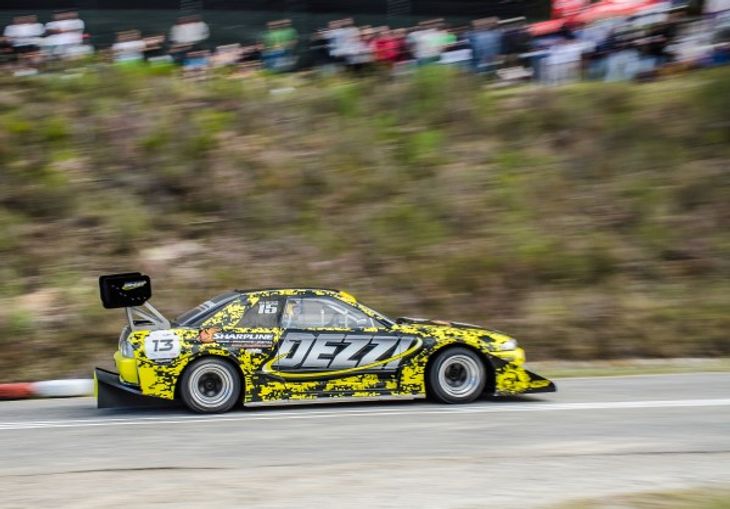
In the Modified Saloon Car category 2011 winner Wilhelm Baard and 2015 title-holder Des Gutzeit – both driving highly-tuned Nissan GT-Rs – duked it out in a nail-biting Top 10 Shoot Out. Baard's 2014 R35 GT-R set a new record (and broke the 40-second barrier in the class for the first time) with a blistering time of 39.892 sec.
Ride on board with Cars.co.za road test editor Ashley Oldfield for his run up the hill in the Jaguar F-Type 400 Sport.
Gutzeit's 1992 R32 GT-R was second with a time of 40.114 sec (despite eclipsing his own 2015 record of 40.148 sec) and Anton Cronje finished third in his 2013 Subaru Impreza WRX.
Meanwhile,the Road and Super Car category saw a thrilling tussle between the two latest-specification 2017 Nissan GT-Rs of Reghard Roets and outgoing champion Jaki Scheckter, along with a pair of Jaguar F-Type SVR entries of multiple US racing champion Randy Pobst and Dawie Olivier.
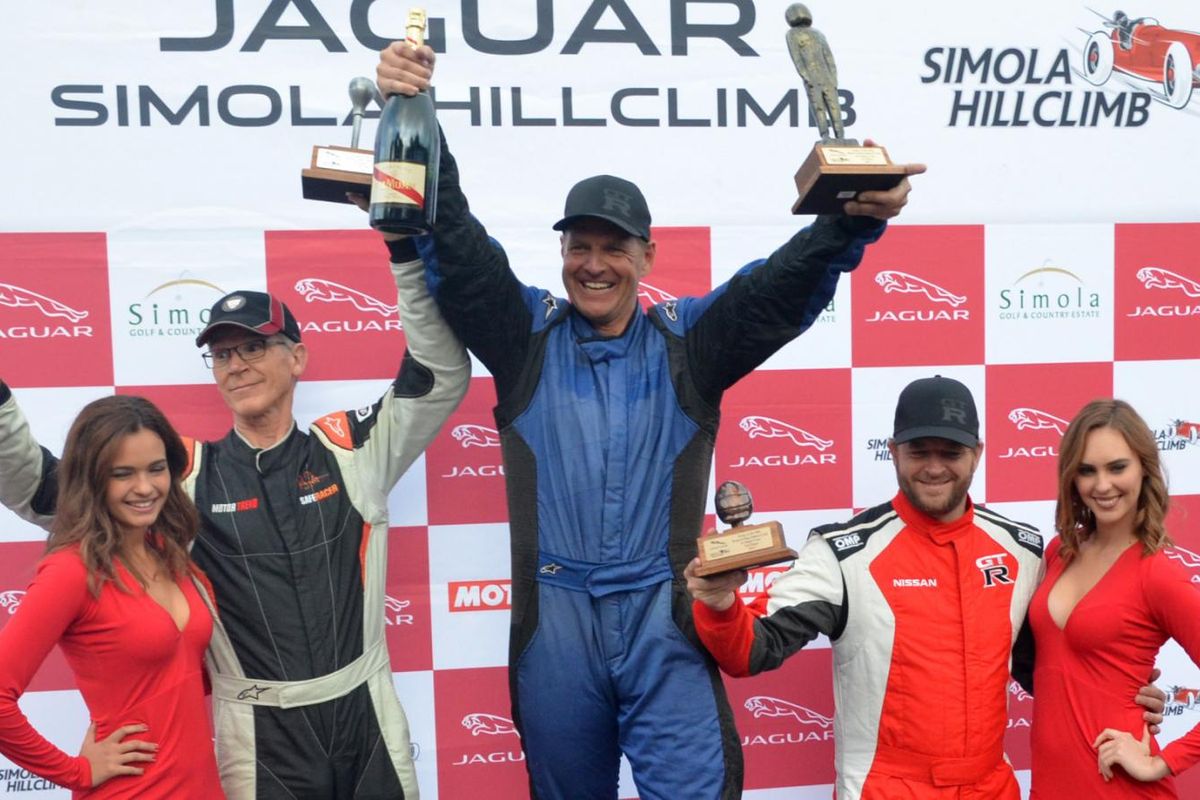
Roets (centre) was joined on the Road and Super Car category podium by Pobst (left) and Scheckter.
Despite damaging his car's rear suspension on Saturday, Roets set the fastest lap ever in a road-legal car of 44.766 sec on Sunday to earn this King of the Hill title for 2017. Pobst took second place in the Top 10 Shoot Out with 44.999 sec in the F-Type SVR Coupe, Scheckter was third with 45.171 sec and Olivier was fourth in a Jaguar F-Type SVR Convertible.
Meanwhile, Cars.co.za Road Test Editor, Ashley Oldfield, finished second in Class A3 with his Jaguar F-Type 400 Sport with a time of 47.592 sec, behind Robert Gearing, who set the fastest time of 47.398 at the wheel of a BMW M3 Competition Pack.
Volkswagen outlined its product rollout strategy for the next few years during the firm's recent annual meeting in Wolfsburg, Germany…
It looks like the dark cloud of Dieselgate is finally dissipating as Volkswagen announced healthy sales and profits. The brand has taken a battering since the saga broke back in September 2015, but some restructuring and cancellation of non-mainstream products such as Golf R400 has seen the German multinational weather the storm. At the 2017 annual meeting, Volkswagen announced production dates for its new vehicles. This company roadmap highlights key vehicles for both our local and international markets.
The big one is the new Volkswagen Polo. Production starts in June 2017 and we estimate that this car will be on sale in South Africa before the end of the year.
The China-only Phideon Plug-In Hybrid starts production in August 2017.
A South America-only Virtus (Polo sedan) will be assembled from November 2017.
The next-generation Touareg production starts in November 2017.
The next-generation Jetta production starts at the end of 2017.
Volkswagen is backing electric power for the future and the claim is that 'VW wants to be the global leader in electromobility by 2025 and sell 1 million cars per year'. SUV models form a massive part of the product strategy and there'll be 19 different SUVs to choose from by 2020.