Ford South Africa has expanded its safety recall to now include the Fiesta ST.
Following the voluntary recall of the 1.6 EcoBoost Kuga earlier this year, Ford has announced that the safety recall will now also include the 1.6 turbopetrol Fiesta ST. Approximately 1 078 Fiesta ST models produced between September 2012 and December 2014 are included in the safety recall.
“The safety of our customers is our top priority, and the expansion of the safety recall is being rolled out as a precautionary measure on the Fiesta ST,” said Jeff Nemeth, President and CEO, Ford Motor Company of Southern Africa.
The Fix
Ford Fiesta ST models will undergo hardware and software upgrades and the action will include the fitment of a coolant level sensor with supporting hardware and software changes. Customers will not be charged for the upgrades.
Parts will only be available in the fourth quarter of 2017 and customers will be notified when they should schedule a booking for the necessary repair work.
Customers can still drive their vehicles and Ford advises that you should take your car to a Ford dealer if a coolant leak is evident and if you frequently have to add coolant or if your engine is overheating. Ford advises that you check your coolant regularly and refer to your owner’s manual for instruction.
Any queries can be directed to your Ford Dealer or Ford Customer Service on 0860 011 022 or e-mail [email protected].
What to do if your engine is overheating?
If you see any indication that your engine may be overheating or see warnings on the instrument cluster, it’s advised that you pull your vehicle off the road immediately when it’s safe to do so. Switch the engine off and make sure all occupants are safely out of the vehicle. For safety reasons, do not open the bonnet!
Emergency services can be contacted if it’s required and you can also contact Ford’s Roadside Assistance on 0861 150 250. This service is available 24/7 and is supported through the AA.
Customers are also advised to conduct regular inspection and maintenance of the cooling system and must ensure the correct 50/50 water-coolant ratio between services.
Car brochures or information pamphlets often include specification sheets that are meant to tell you all you need to know about the car. Some of this information is easily digestible, but other items need further explanation. Here are some terms you should know.
The engine
Number of cylinders
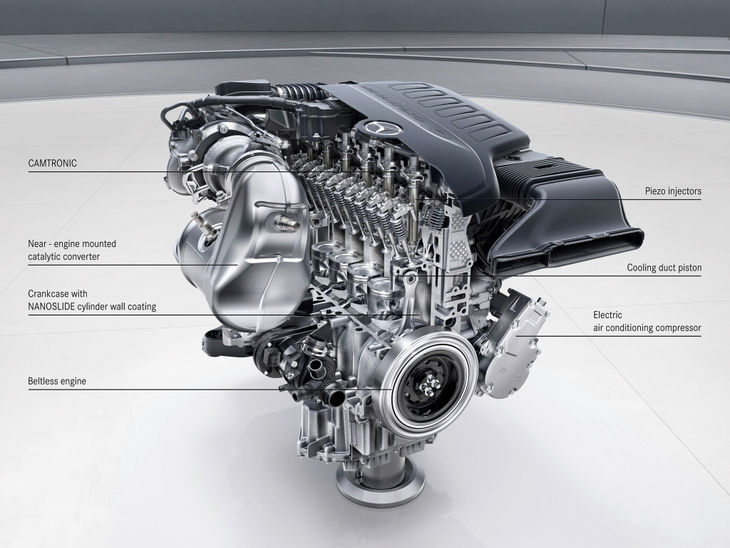
The ideal number of cylinders for any particular engine size has become an important statistic. More cylinders with smaller bores make an engine smoother, but increases manufacturing costs, servicing expense and fuel consumption. A smaller number of cylinders with bigger bores increase engine roughness but are cheaper to manufacture and service. In the latter case, the smaller piston areas in contact with the bores will also reduce frictional losses significantly and decrease fuel consumption. Many manufacturers have recently changed from 4 to 3 cylinders on their budget market models and some Fiats only have 2 cylinders (see our review of the Fiat 500C 0.9 TwinAir Lounge).
A contemporary Mercedes-Benz 4-cylinder engine.
Cubic capacity
This is the volume of the cylindrical shape the piston moves through when it’s going from the top of its travel to the bottom. It’s calculated from the bore and the stroke times the number of cylinders. This number tells you how much air the engine is (theoretically) capable of sucking in over two revolutions. Fuel is added to this volume in a more-or-less fixed ratio so that it is related to the maximum torque an engine can develop. For marketing purposes, an engine's cubic capacity is usually expressed in litres eg. 1.4- and 2.8-litre engines.
A video that explains cubic capacity:
Compression ratio
This is the volume of mixture above the piston at the bottom of its travel divided by the volume above the piston at the top of its travel. It is a measure of the extent to which the mixture has been compressed just before combustion occurs. An engine’s efficiency increases as the compression ratio increases, but petrol engine compression ratios are limited to approximately 12:1. Above this value, harmful detonation (non-uniform combustion) is likely to occur. Turbodiesel engines compress air only, and require ratios that are sometimes as high as 22:1. These high ratios generate enough heat to ignite the fuel a fraction of a second after it is injected.
Engine output
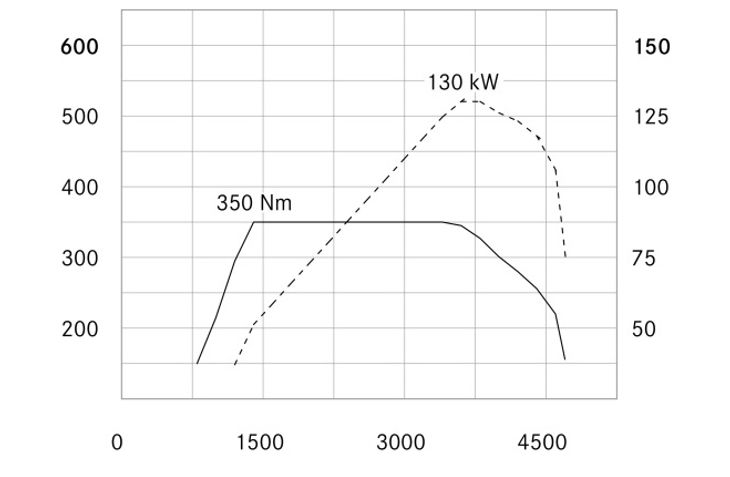
An engine’s output is usually given in Newton metres as well as kilowatt. The former is a measure of torque and is related to the size of the force that a car’s wheels can transmit to the road while the latter is a measure of power, which is essentially the speed of force delivery. This means that a high torque value can get you slowly up a steep hill, but you need a high power output to go fast.
Engine output graphs
Some publications will publish power and torque output graphs. These are measured at the factory by means of an engine dynamometer that is coupled to the engine at the flywheel. The readings are always taken at full throttle and the important points to notice are the maximum values of the power and torque delivery as well as the engine speeds where this occurs. The shape of the torque curve is particularly important; if it rises to a high value quickly and stays there the vehicle will not need frequent gear-changing, but if it struggles to get to a maximum value and then falls rapidly the driver will have to change gear frequently when driving in traffic.
Gearbox/transmission and the rest
Gearbox
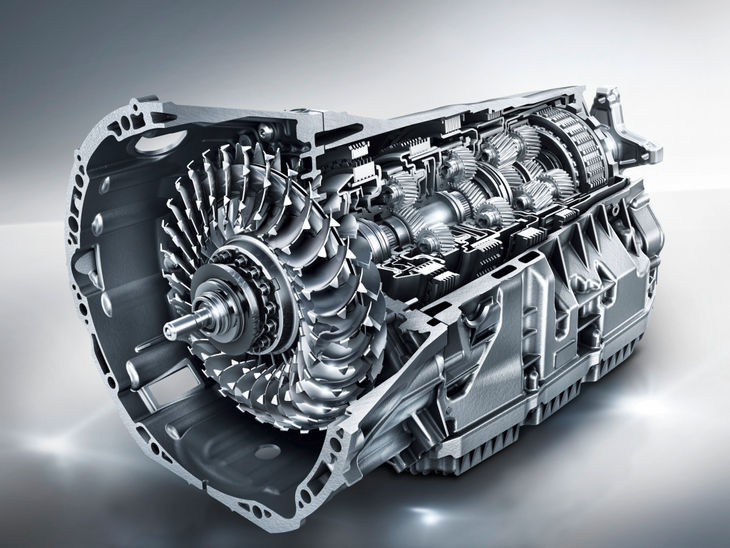
A gearbox adjusts the ratio between engine speed and driven-wheel speed to suit the driving conditions. Down changes increases engine speed as well as the torque being transmitted and up changes reduces engine speed as well the torque being transmitted.
This occurs not only because the torque changes with the engine speed, but also because a gearbox is a torque multiplier. The ratios are chosen by the manufacturer to work well with the shape of the torque curve in order to optimise fuel consumption without hurting the performance too much.
A cross-section of a Mercedes-Benz 7G-tronic automatic transmission.
Engine efficiency improves at large throttle openings. At low engine speed, a lot of energy is lost when air flows past a semi-closed throttle valve. However, high-speed fuel consumption is higher because more energy is being delivered. The more gearbox ratios there are, the closer the engine can get to the most economical speed/power output combination. This explains why some automatics have as much as ten ratios, and they employ electronic control to search for the ratio that best approaches the sweet spot under all driving conditions.
A video that explains how a manual transmission works:
Tyre size
The code on the side of the tyre can best be explained by picking a particular tyre. For example, a 185/65 R14 85T tyre has a width, measured across the widest part, of 185 mm, and a height measured from the ground to the base of the wheel rim, of 65% of 185, which is 120.25 mm. 65 is called the aspect ratio or profile. Percentages above 60 are known as high profile whereas the lower percentages are called low-profile.
Some modern tyres have profiles as low as 30, because this increases road grip at the expense of ride comfort. The letter R implies radial-ply, 14 is the wheel diameter in inches, 85 is a load rating and T is a maximum speed rating. An interpretation of the latter two codes is given on a chart that may be consulted at tyre dealers.
Fuel tank
The quoted fuel tank capacity is usually less than the maximum that the tank can take. Most tanks have an air gap equal to about 13% of the total volume to prevent the tank bursting in an accident, and also prevent spilling due to fuel expanding on a hot day. If a pump attendant keeps trickling more fuel in after the automatic stop has kicked in, this extra fuel will fill the air gap and make the tank unsafe.
Performance claims
The variation in the power output of vehicles leaving a factory is plus or minus 4%. This is due to a slight variation in the clearance between parts. A claimed output of 100 kW could be anything from 96 to 104 kW. This means that car buyers have no idea what the exact outputs of their vehicle's engines are.
Changes in atmospheric pressure and temperature have an effect on the power being delivered with the result that most performance figures are only estimates. In addition, naturally aspirated engines lose about 16% of their power output at Gauteng altitudes, but turbocharged engines lose only about 4%.
Factory performance figures are usually measured using the fastest production car they can find under very favourable weather conditions. Most factory fuel consumption figures are measured according to the New European Driving Cycle (NEDC) inside an atmosphere-controlled room on a chassis dynamometer.
The speeds chosen exceed 70 kph only for a few seconds. The test conditions guarantee repeatability, but the results have been criticised for delivering fuel consumption figures that are unachievable in the real world.
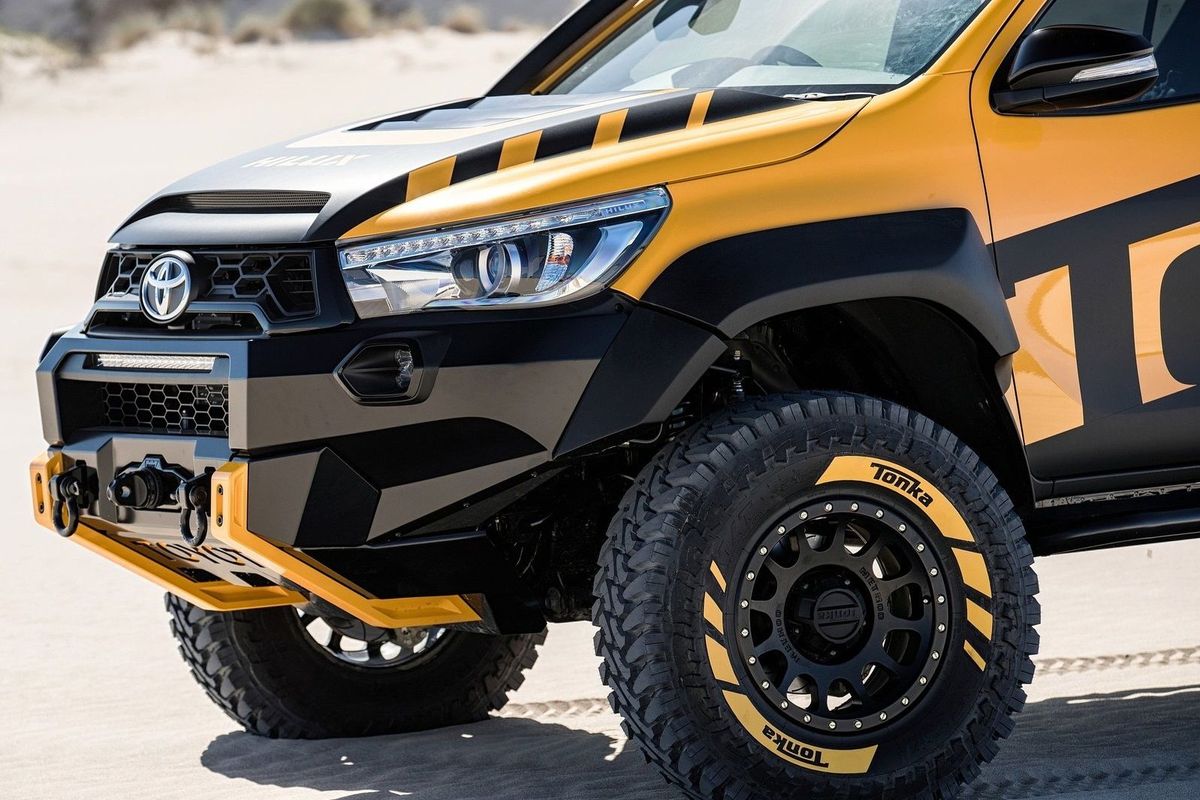
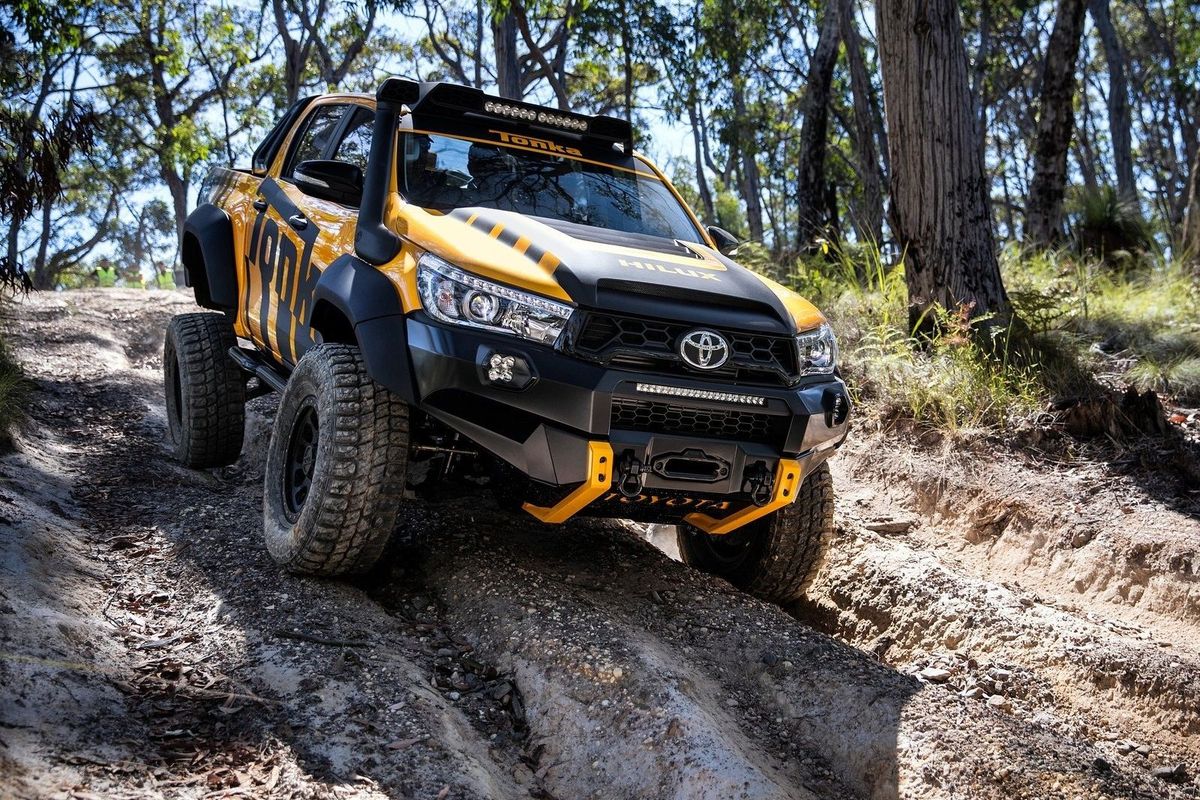
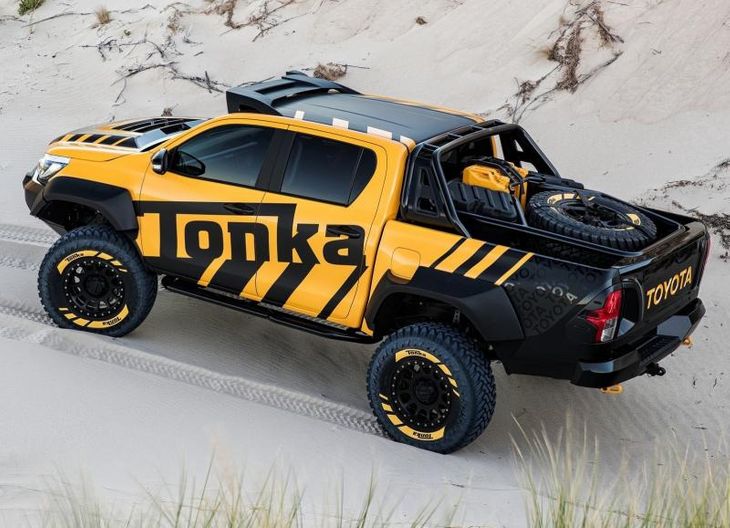
Toyota Australia has partnered up with toy truck maker Tonka to create this one-off Hilux concept bakkie and it looks epic. We want one!
Just look at it! This Toyota Hilux Tonka Concept bakkie looks like something that every bakkie owner can only dream of. Toyota Australia claims it is "a full-size dream toy for adults", which says it all really. The project originated in Australia and the vehicle was assembled and tested by Toyota Australia's team from product planning and development.
Product design chief Nicolas Hogios is enthusiastic about the project. "We have taken Tonka out of the sand pit and reinvented Hilux from top to bottom and from nose to tail. Inspired by the Tonka trucks that kids play with in their backyards, the Hilux Tonka Concept goes way beyond the already hugely capable abilities of Hilux to traverse rocks and rugged terrain. The Hilux Tonka Concept is dramatic evidence that our local team loves to have fun, we're keen to explore new ideas and we're always looking to push the boundaries of what's possible".
Toyota Hilux Tonka concept modifications
Such an incredible-looking Toyota Hilux! We'd love to have this in our garage.
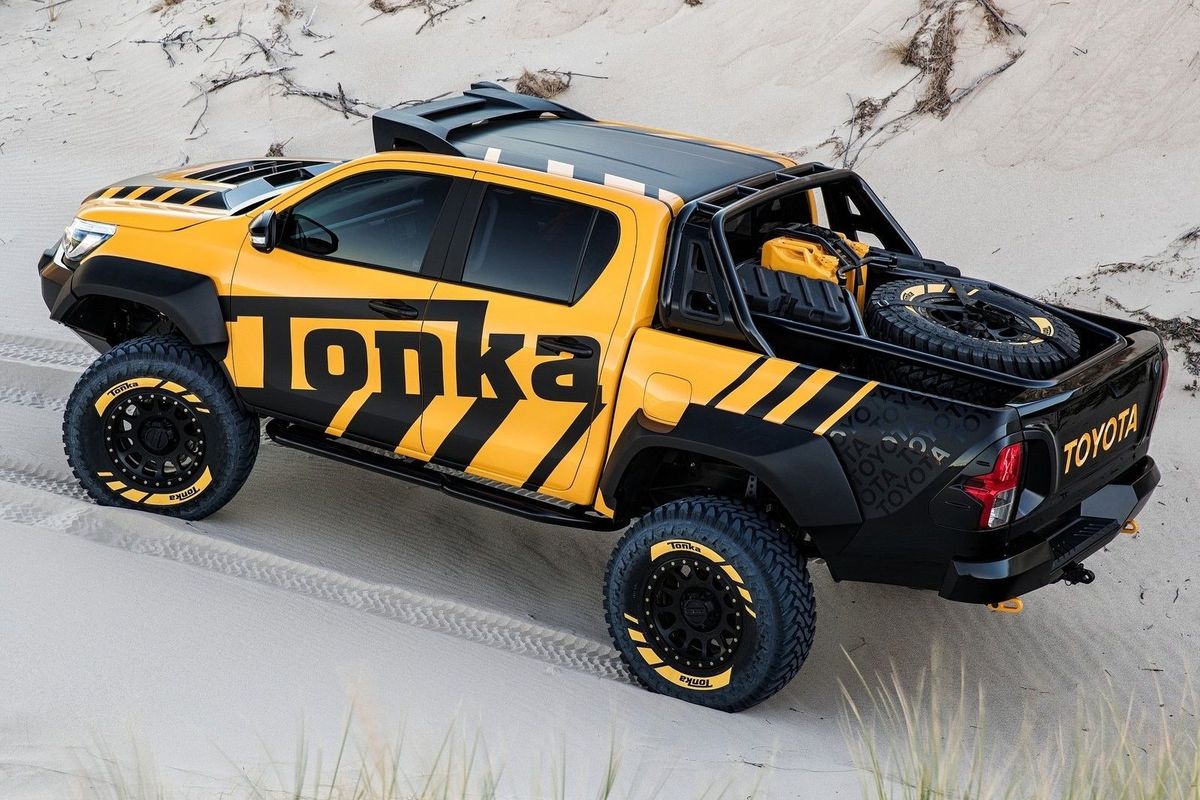
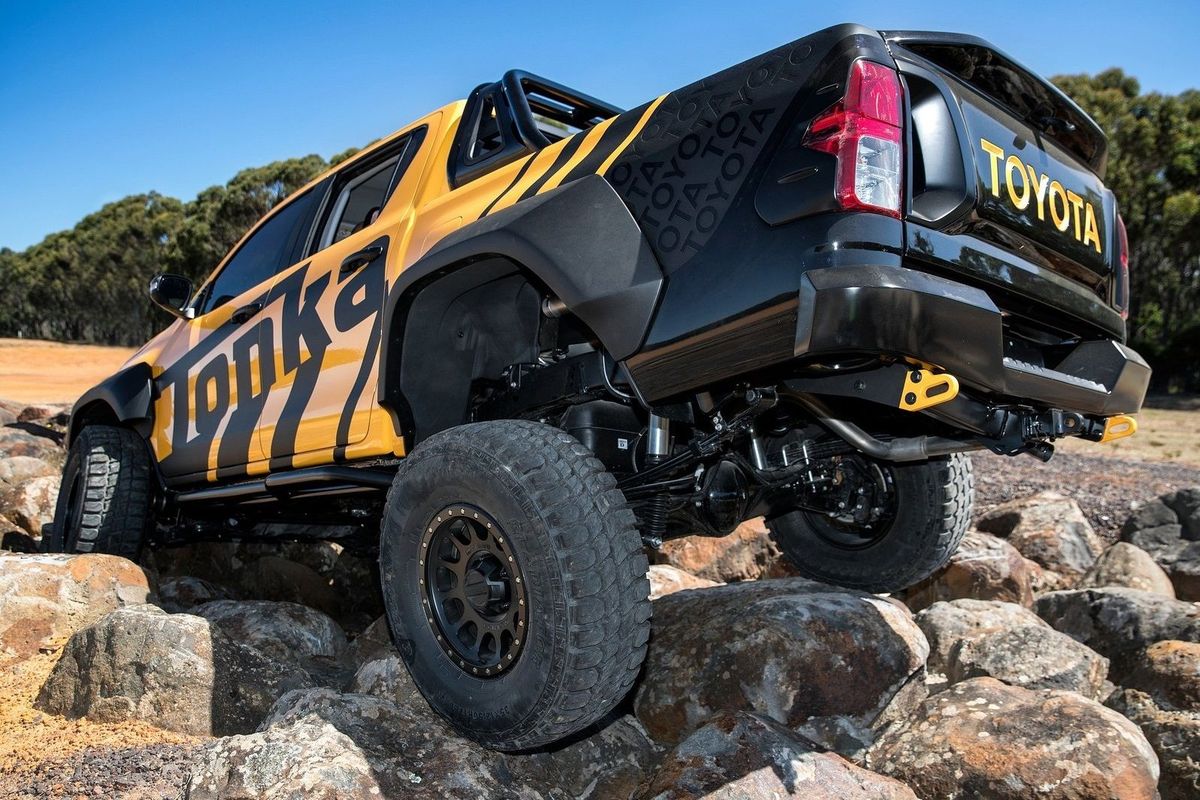
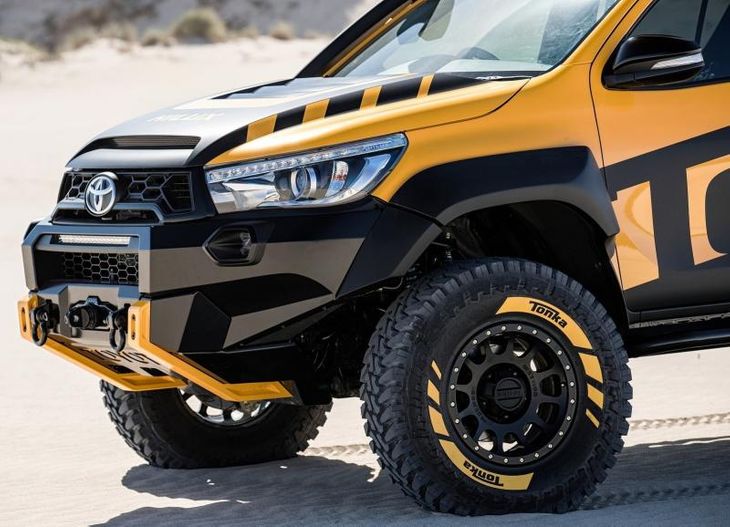
There's no denying the immense capability of the Toyota Hilux, but this concept really pushes the envelope. The list of modifications is extensive and incorporates a 150 mm increase in ride height (already substantial at 286 mm), a high-riding axle, heavy-duty suspension and 35-inch diameter tyres. In terms of cosmetics, there's a carbon-fibre skin bonnet, with air scoops and power bulge. High performance LED lights have been fitted in the bar and on the roof, as well as an all-new tailgate that includes a spoiler and vents.
To protect the vehicle's underbody, a 6mm-thick alloy bash plate has been fitted and that covers critical components such as the sump. The load bay features a removable frame that will hold items such as diesel fuel cans and there's storage for your hardcore recovery gear. A fire extinguisher, axe, shovel and high-lift jack are thrown in too. Interestingly, the only thing that has been left untouched is the 2.8-litre turbodiesel engine.
Can you buy one?
Sadly not, as Toyota Australia is quite adamant that its Hilux Tonka Concept will not make it to dealerships, but it will be touring around Australia on promotion. However, there is light at the end of the tunnel for South African bakkie fanatics: the modifications are easily attainable at dedicated 4×4 shops. We chatted to ex-4×4 journalist turned travel writer Gerhard Horn, who reckons the biggest issue around these modifications is the actual size of the vehicle. He questions the stability at national speed limit and wonders how easy it would be to park.
Big tyres, ground clearance, LED spotlights and armour-plating make this Tonka-branded Toyota Hilux look formidable
The turning circle would be insane, too. Despite these technical hurdles, modified 4×4 bakkies look epic, but if you take the mods too far, you render the car useless, so take it easy when speccing up your bakkie. Slightly increasing the ground clearance and fitting underbody protection is a great idea, but ultimately you need to decide whether you're building a car for show or a bakkie that is truly capable. Given how good the standard Toyota Hilux is, you don't need to do much to it to make it stand out in a crowd.
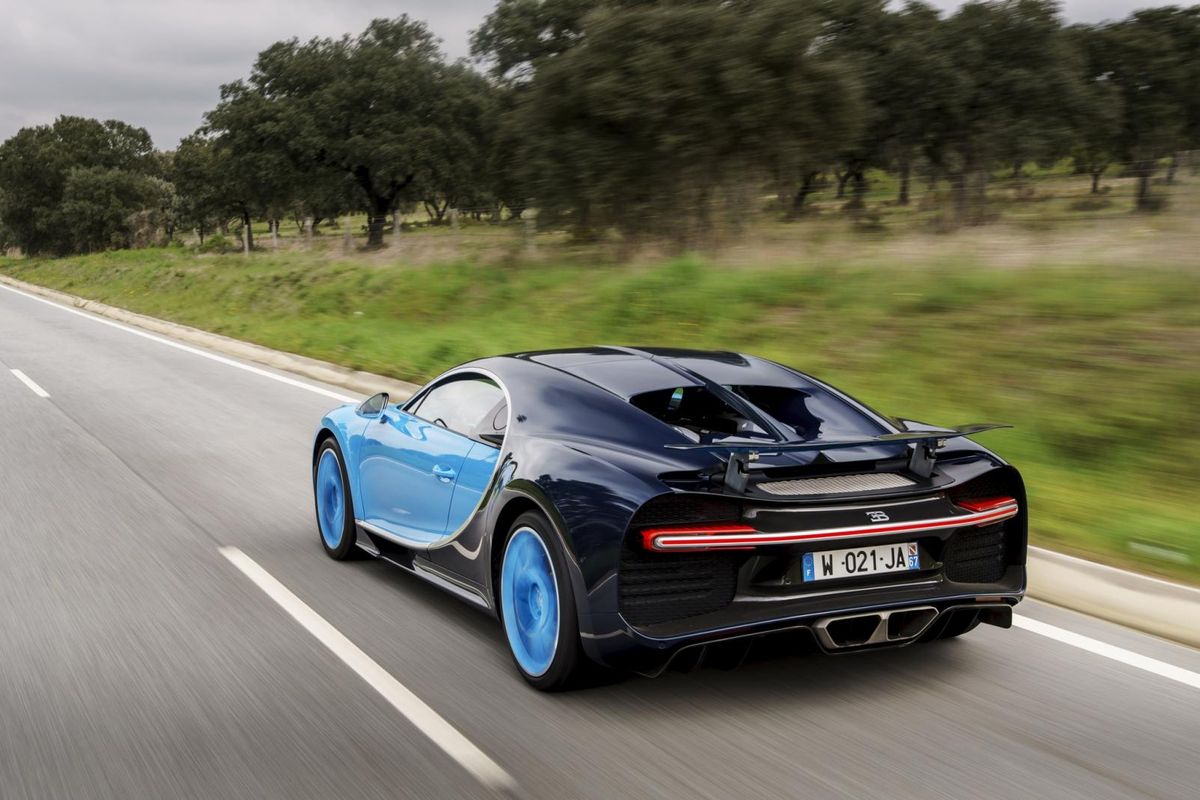
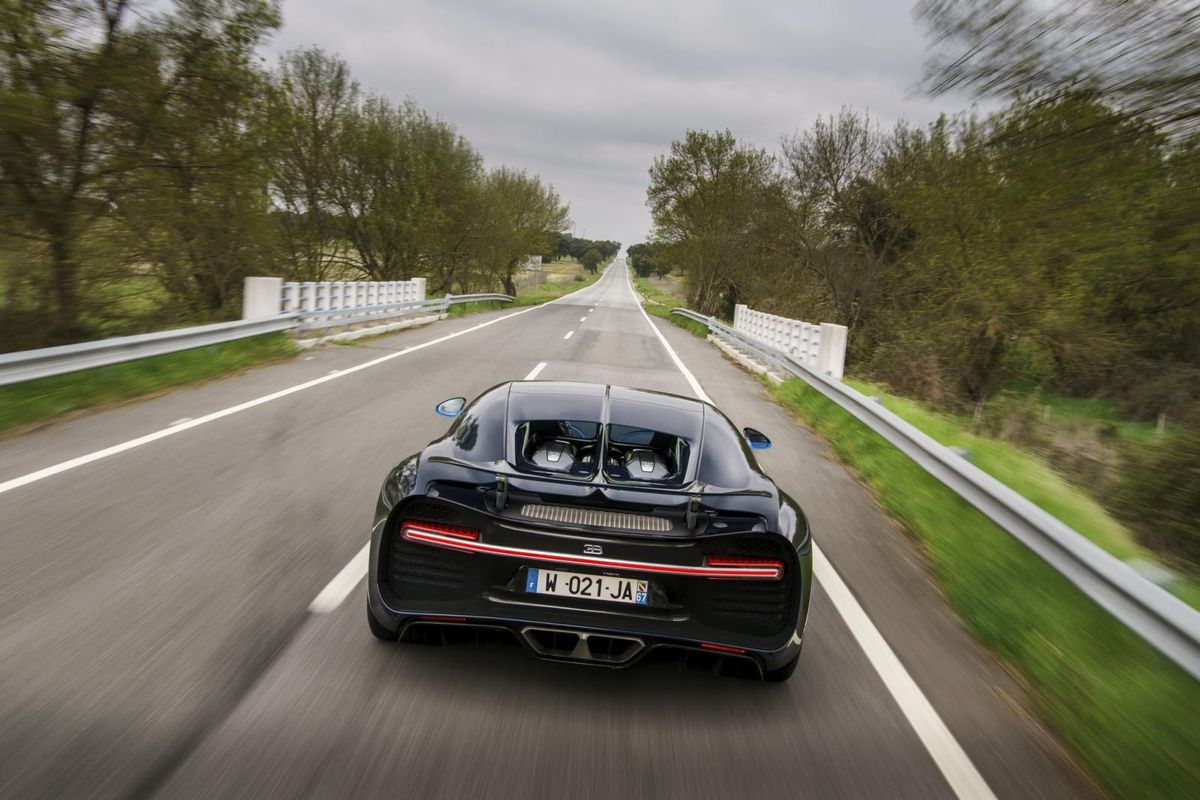
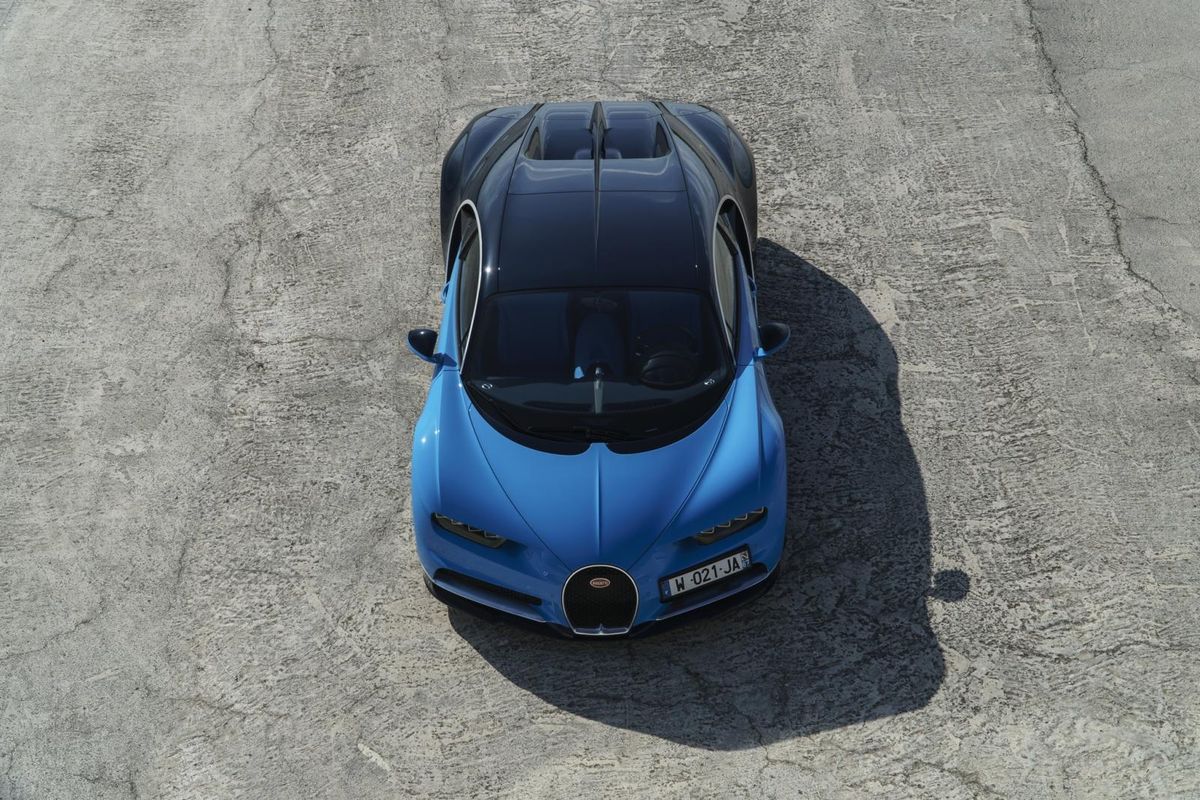
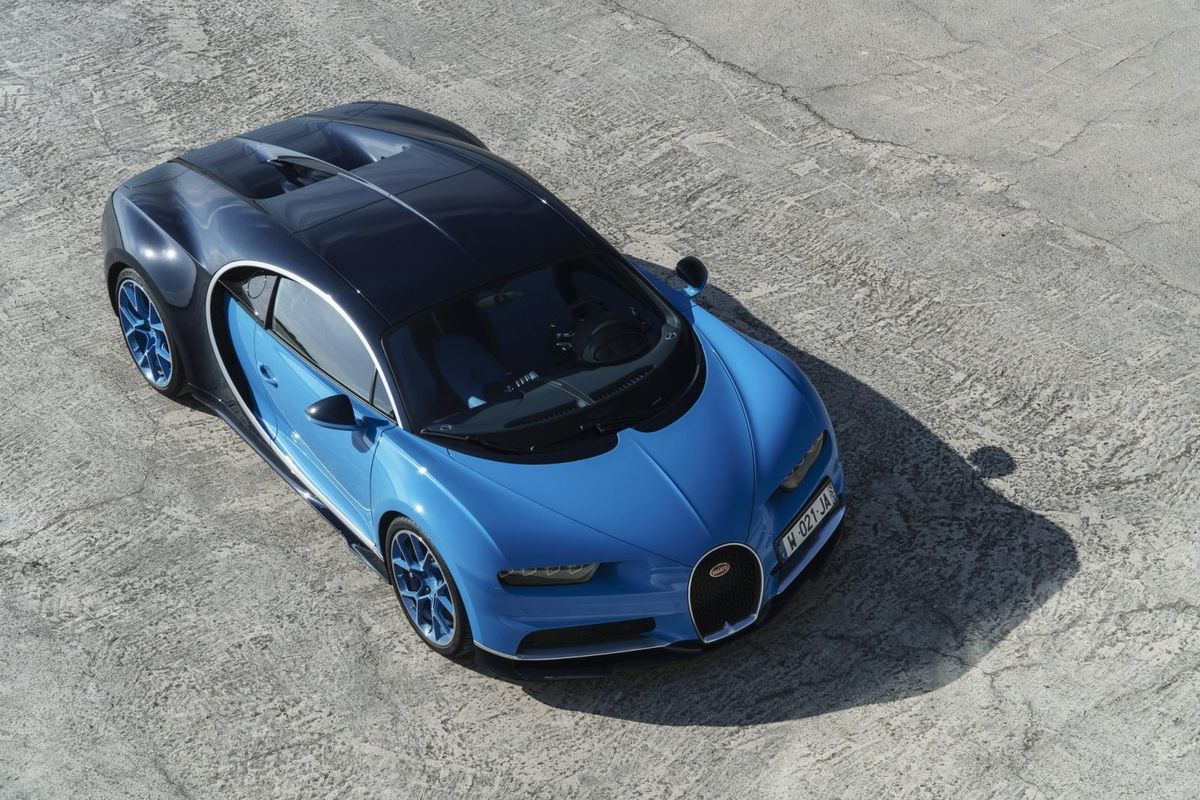
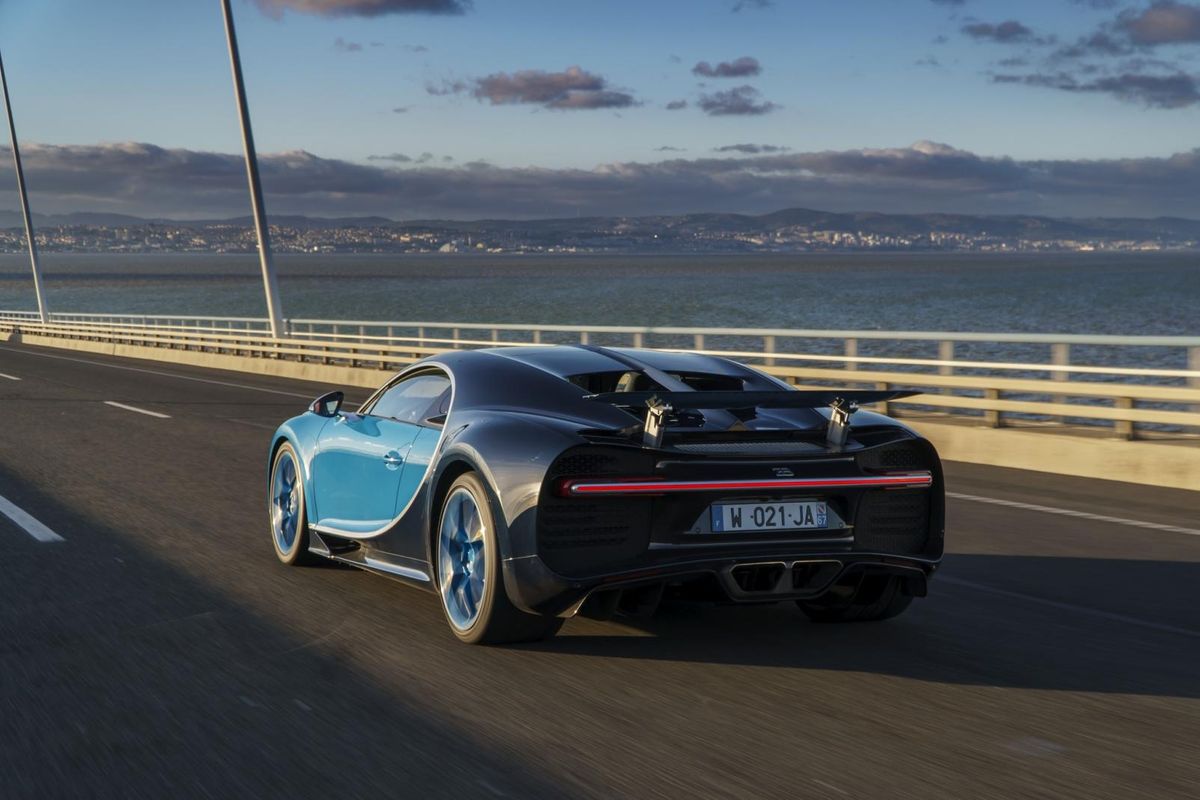
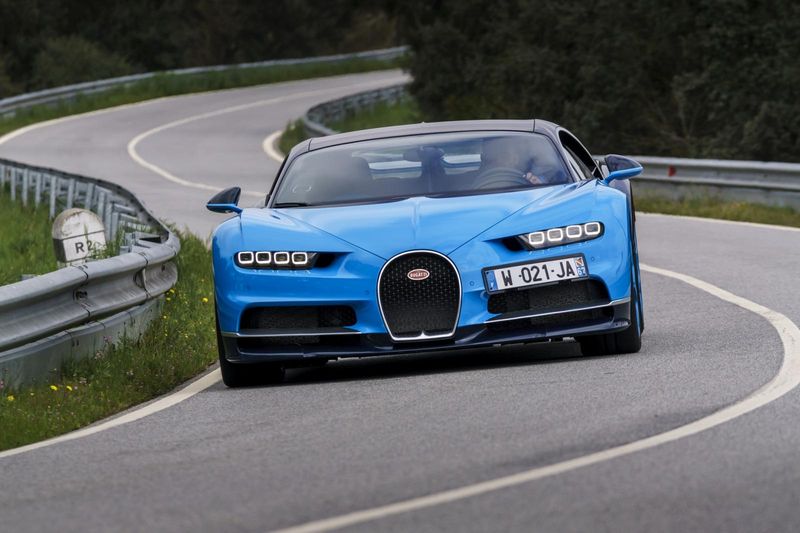
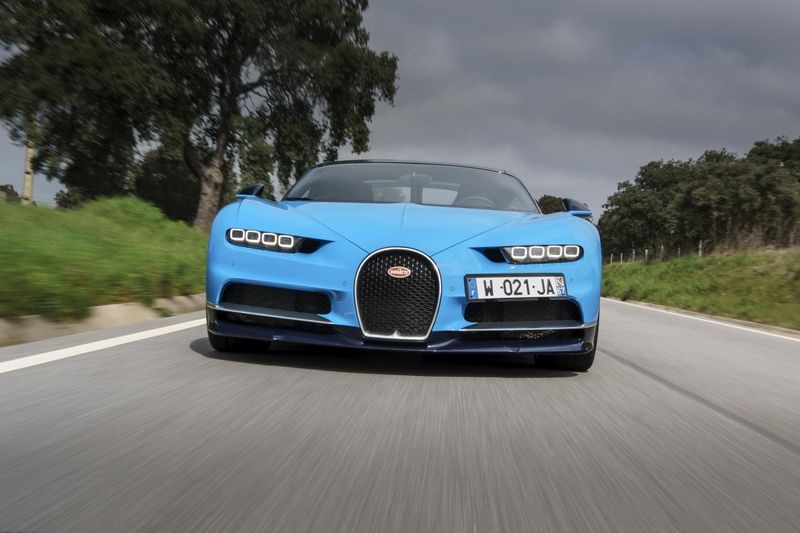
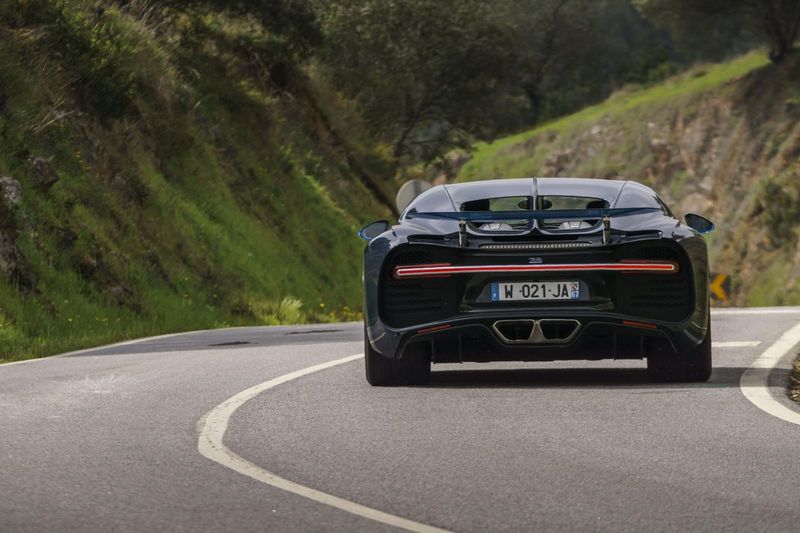
Some sequels are more difficult to top than others. What happens when you have to make a follow up to the all-conquering Veyron? The Bugatti Chiron happens! Our foreign correspondent, Matthew Prior, headed to Portugal to give a whirl…
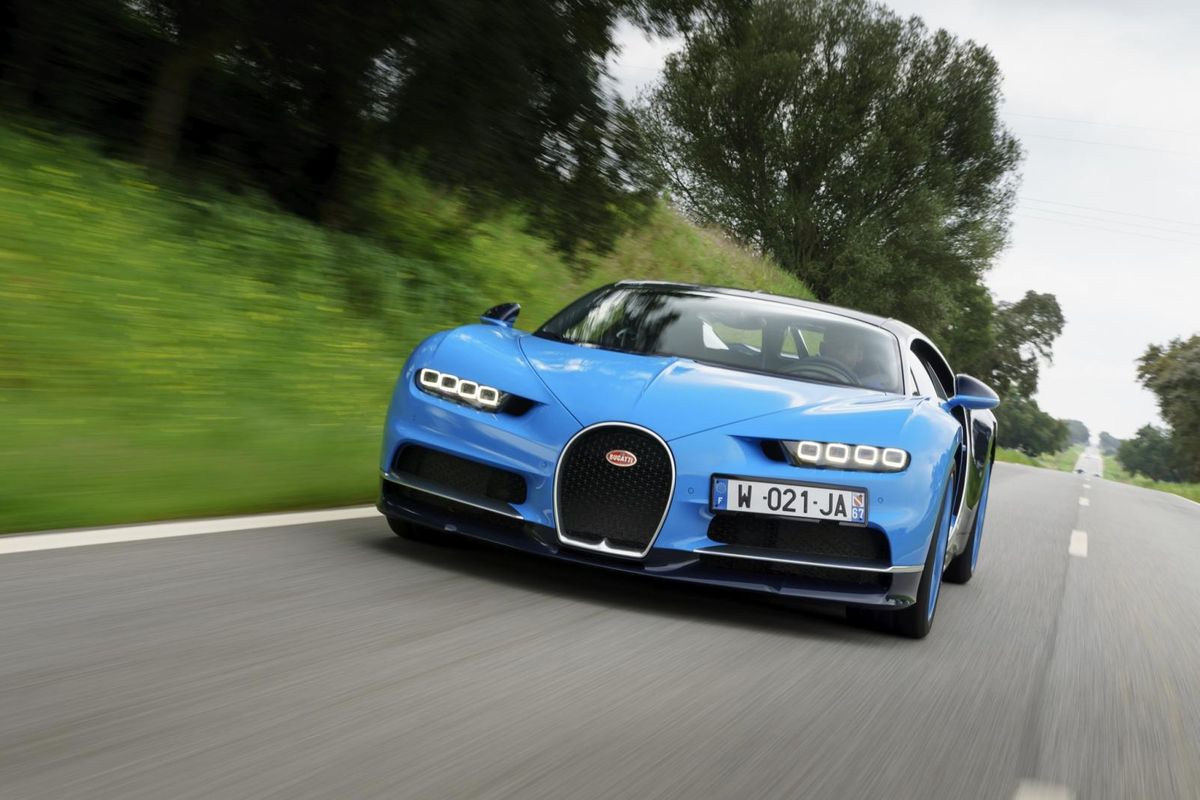
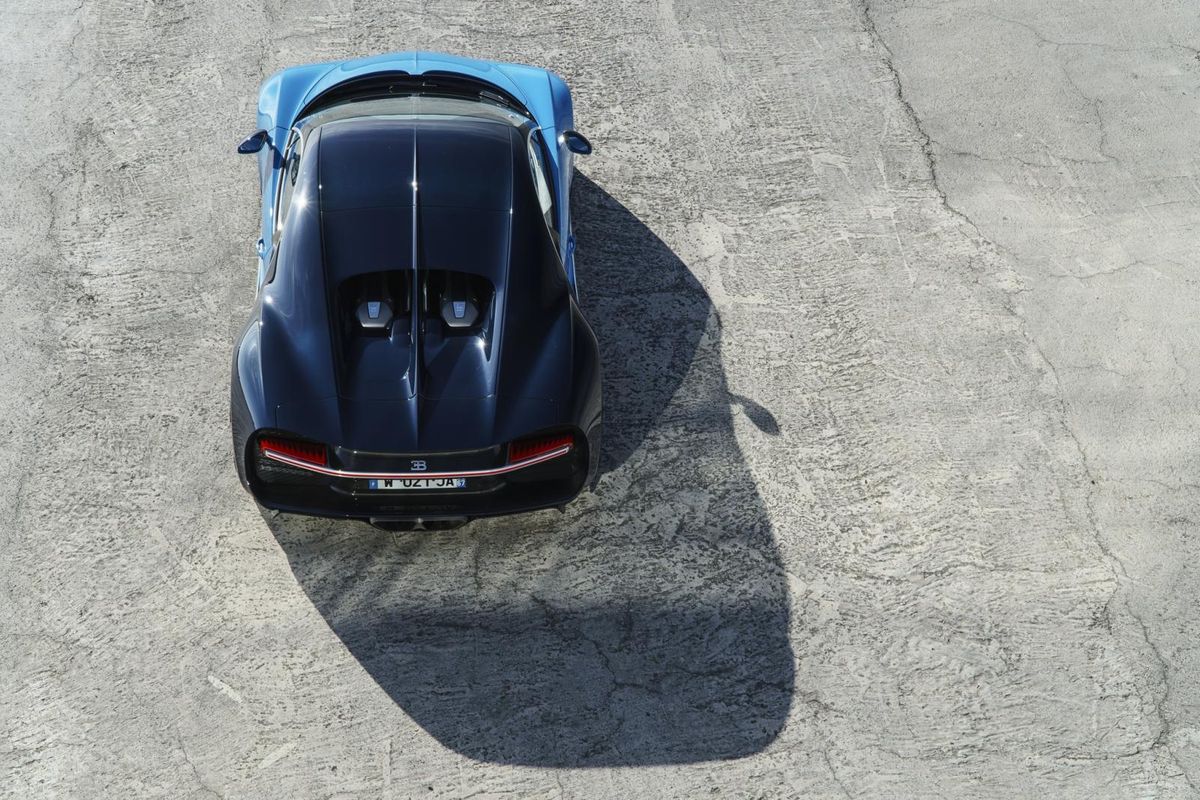
It’s just a car. That’s the thing to remember. Just a car, like any other: four wheels, some seats and a tank of petrol. It’s just that the Bugatti Chiron happens to be a car that’s able to do… what, exactly? Well. Some numbers, if I may. The official figure says the Chiron is able to do 420 kph, but that’s misleading because it is both electronically limited and slower than the old Bugatti Veyron Super Sport when that became the world’s fastest production car at 431 kph. That had a mere 1 183 bhp (882 kW). The new Chiron has 1 479 bhp (1 102 kW). So, it ought to go faster than that, especially given that the Chiron’s brief was very simple.
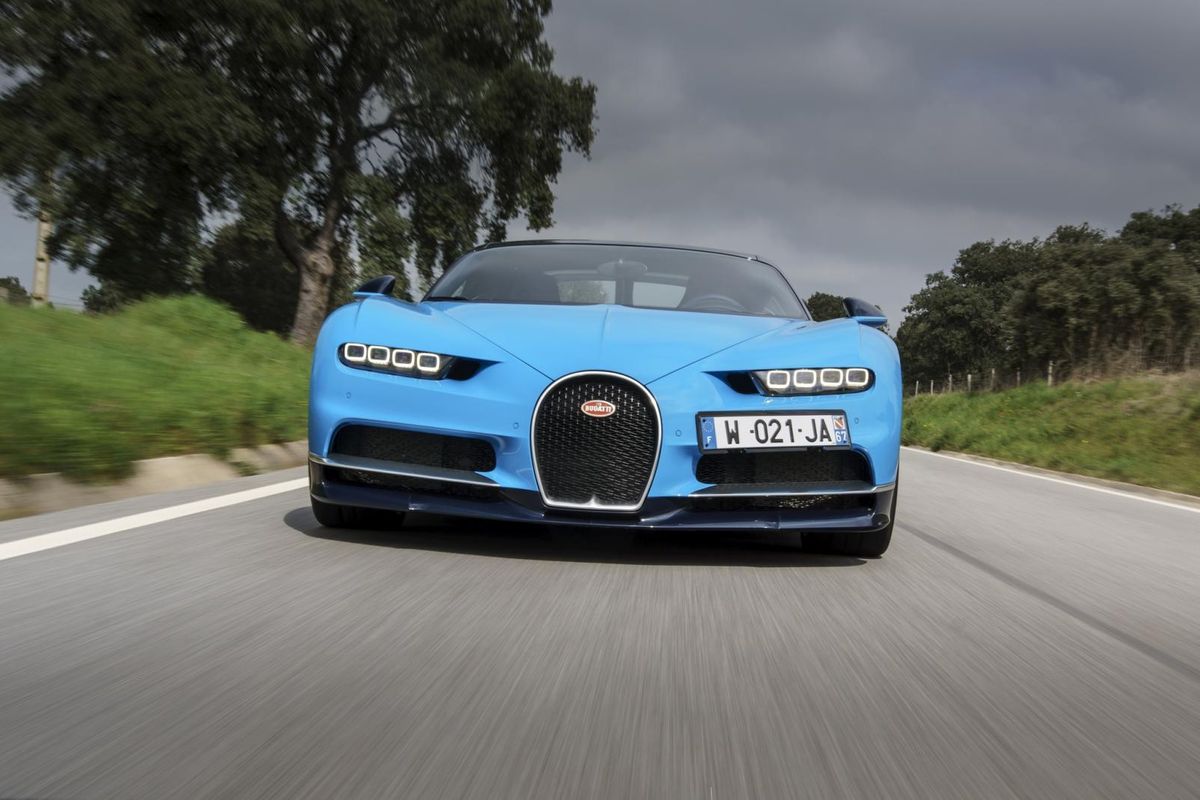
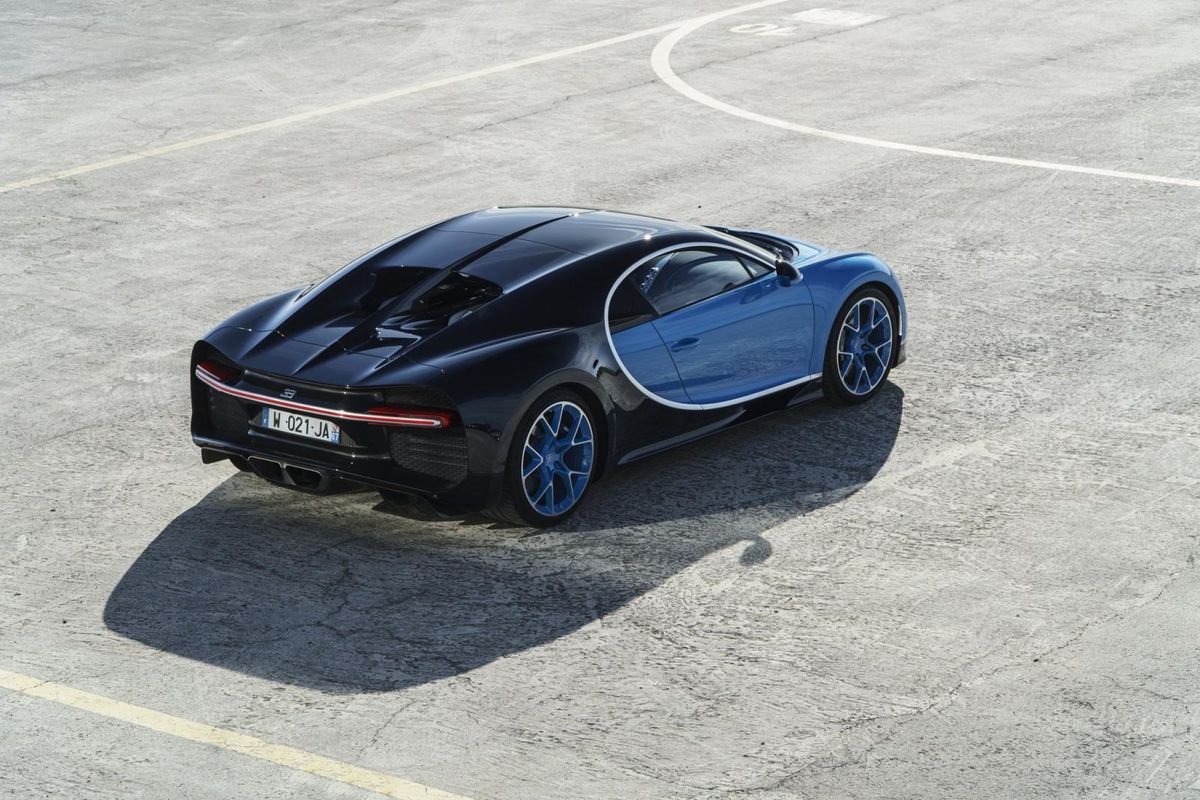
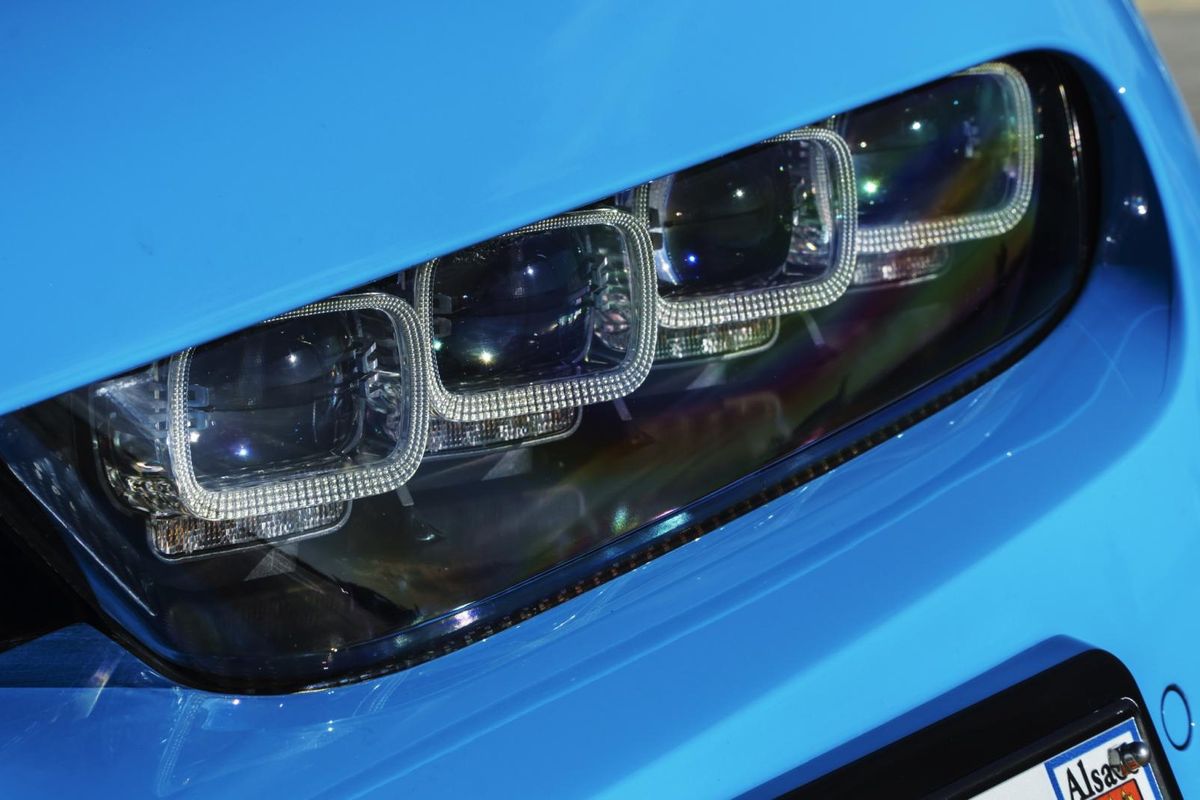
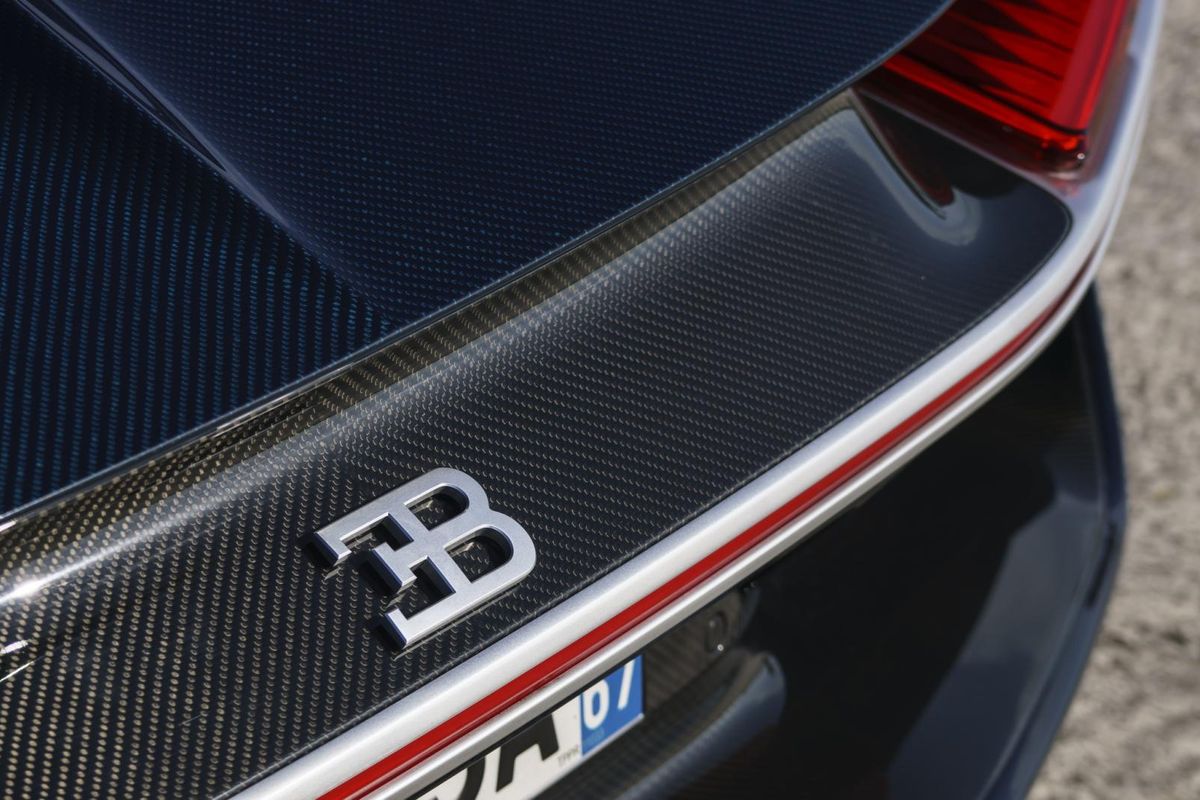
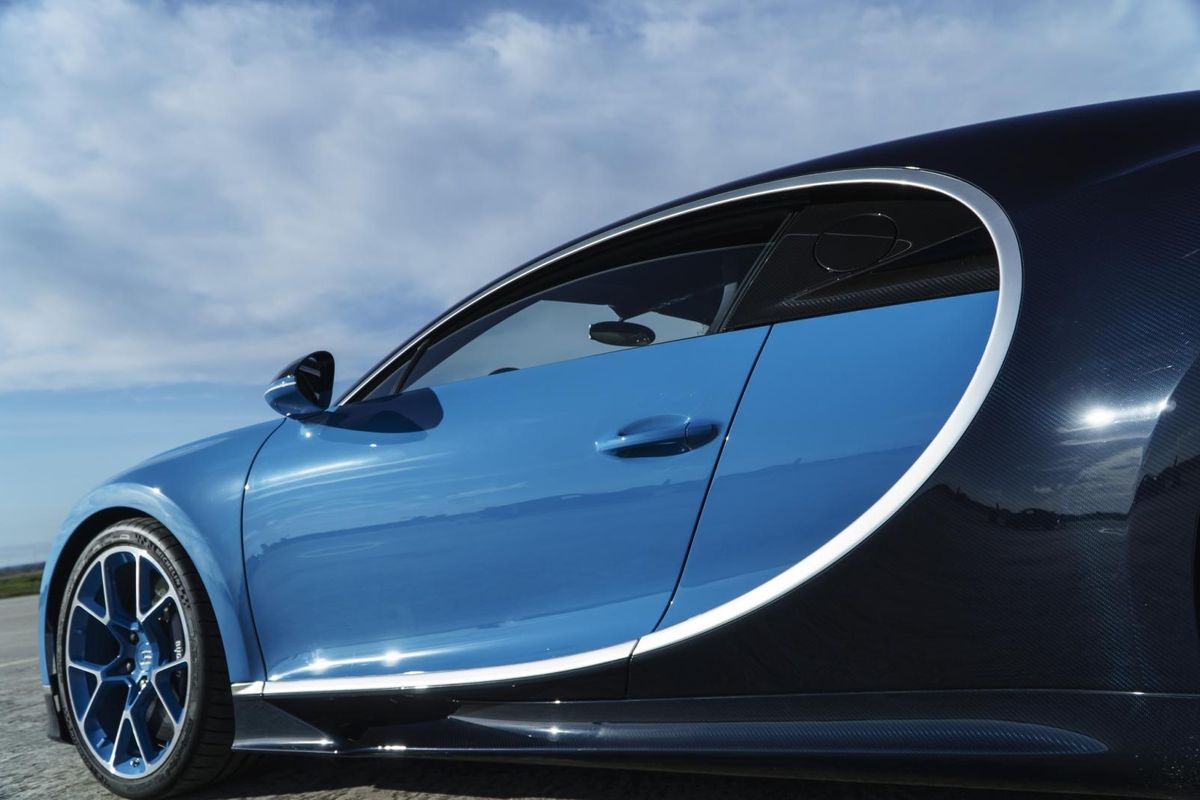
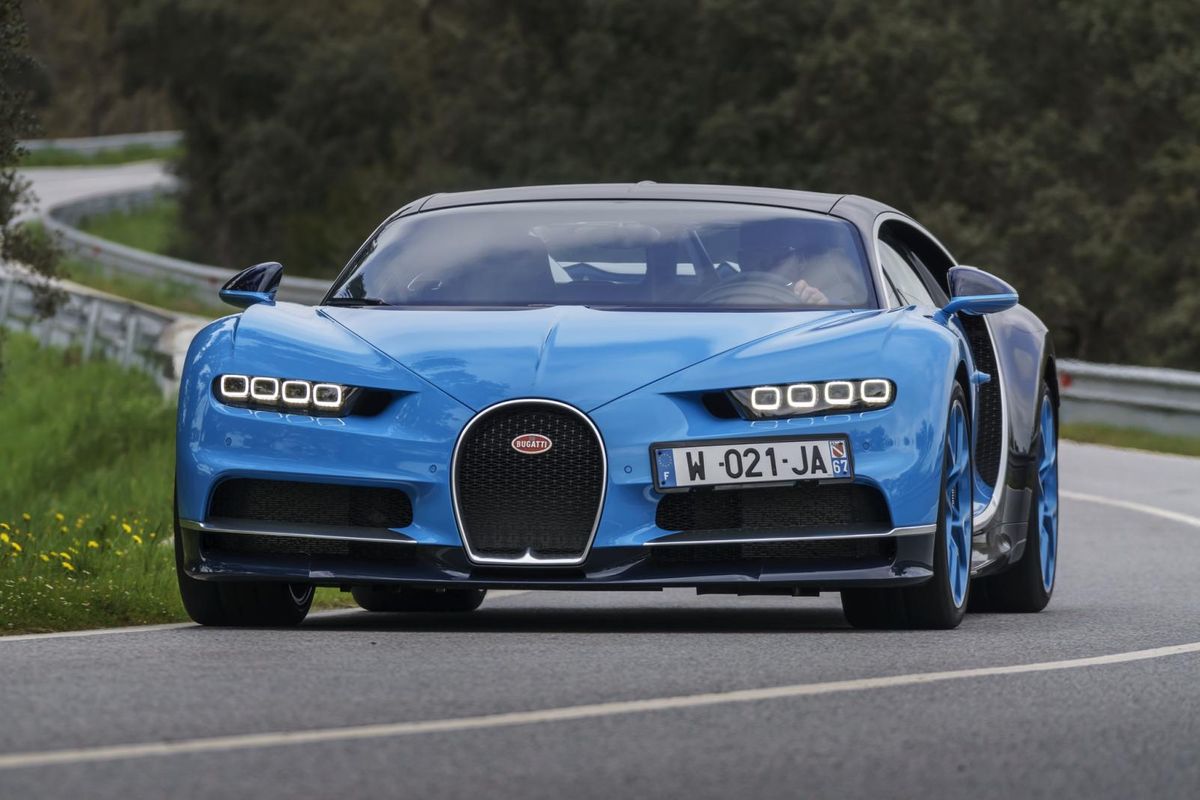
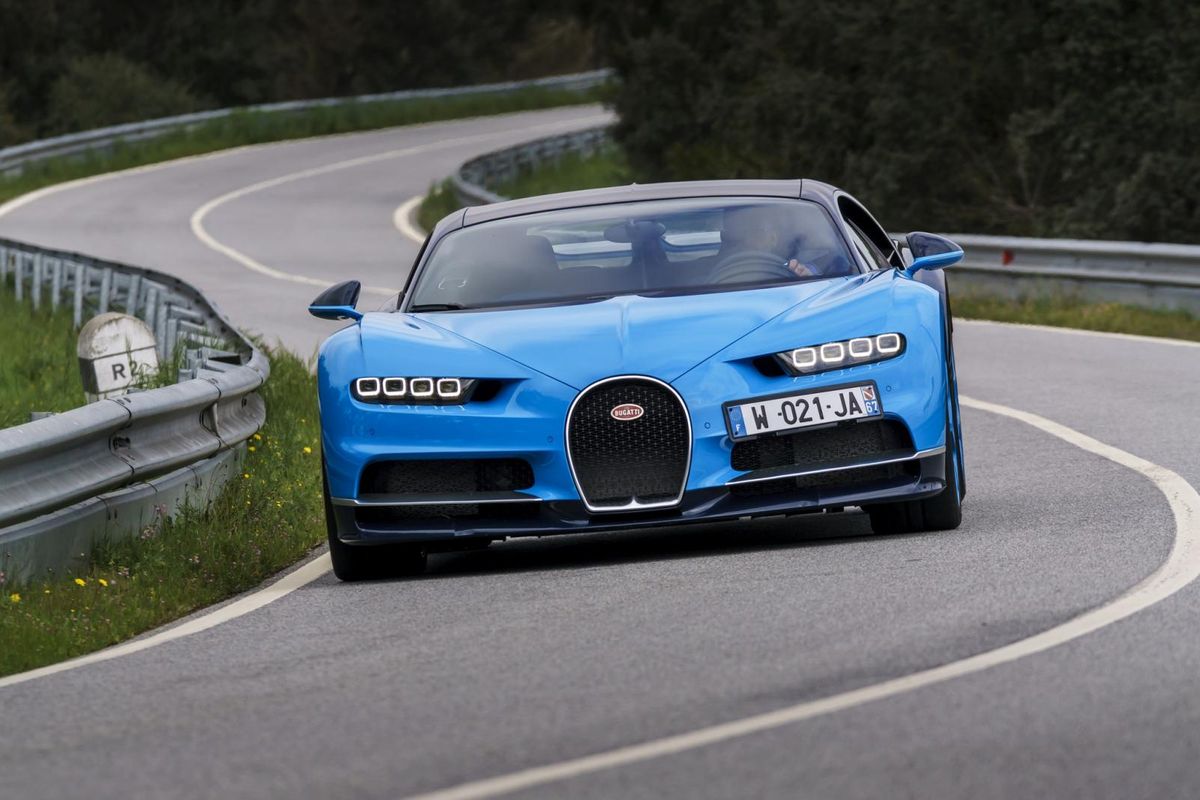
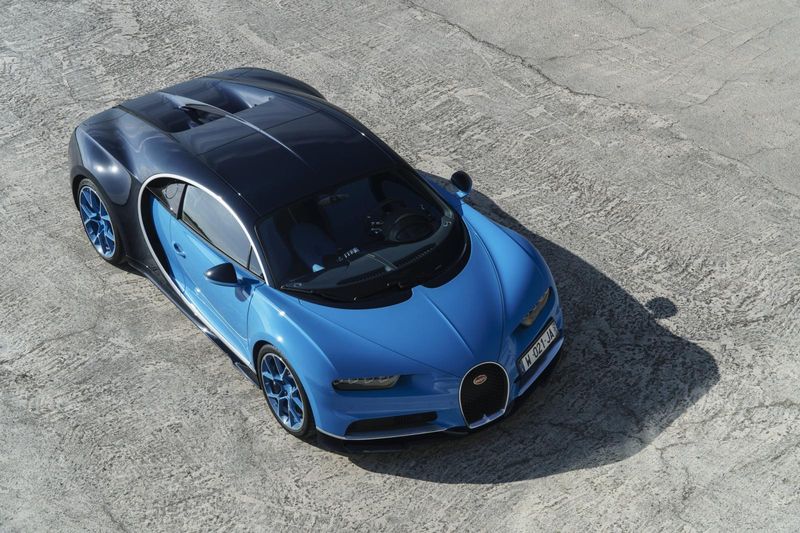
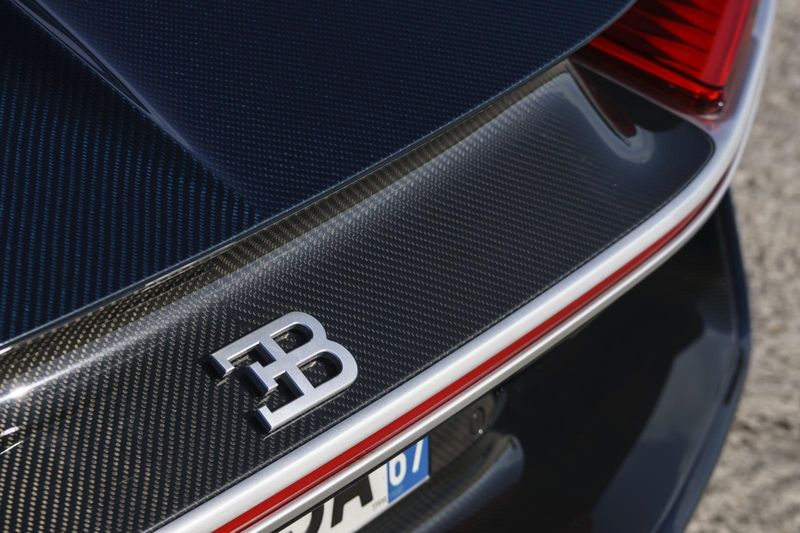
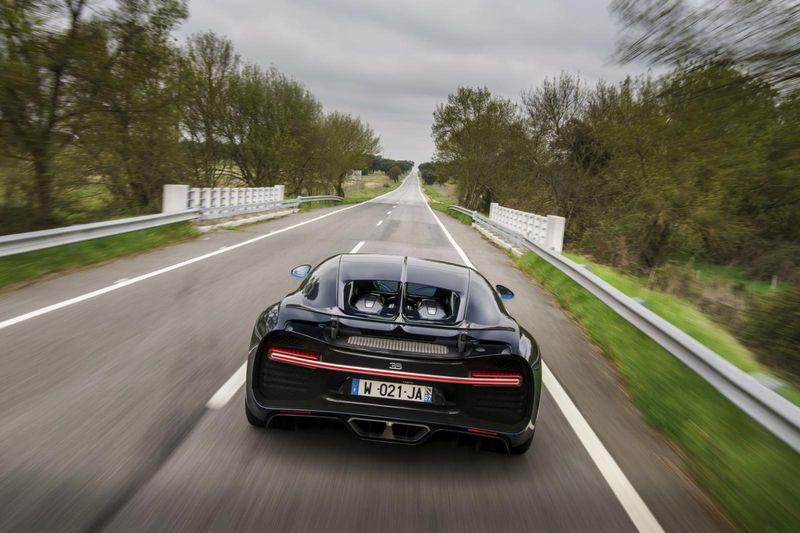
The Chiron is still easily distinguishable as a Bugatti. The design team has modernised its looks whilst making sure it can hit 400 kph plus.
The brief
The Chiron brief was the simplest that Bugatti boss Wolfgang Durheimer – once head of Porsche R&D, but by dint of him being brilliant and several of his Volkswagen Group colleagues being suspect, now in charge of both Bugatti and Bentley – had encountered in his career.
“Be better than the Veyron in every respect,” it said.
Which means that, when Bugatti goes back to Volkswagen Group’s Ehra Lessien test track with the Chiron in 2018, to tell us exactly how fast it’ll go, it’ll be a bigger number than that official figure. Bigger than the Veyron Super Sport’s number, Durheimer says, by a notable amount, although nobody at Bugatti cares to speculate how fast that might be. If it were 10% faster, and with 50% more power that’s not unreasonable, that’d be 475 kph.
But it won’t be that. The Chiron will go, by my reckoning, only as fast as its tyres will allow before they explode. So my guess is they’ll test some to destruction on an aerospace rolling road, instruct a driver to swallow some brave pills, strap in, hold on, and ease off at a few mph under the point of detonation. Let’s call it, for the sake or argument in this feature, 440 kph; this is my number, not theirs, and if I’m under by 10 kph either way, so be it. Four forty is a plenty big number.
But it’s important, because everything else you read about the Chiron here has to be tempered by that fact. A car defined by massive numbers is at once constrained and liberated by that singular top speed. It dominates yet compromises its character. Yes, it’s just a car. But remember, it’ll do 440 kph and that entirely defines what it is like, like in no other hypercar.
The engine
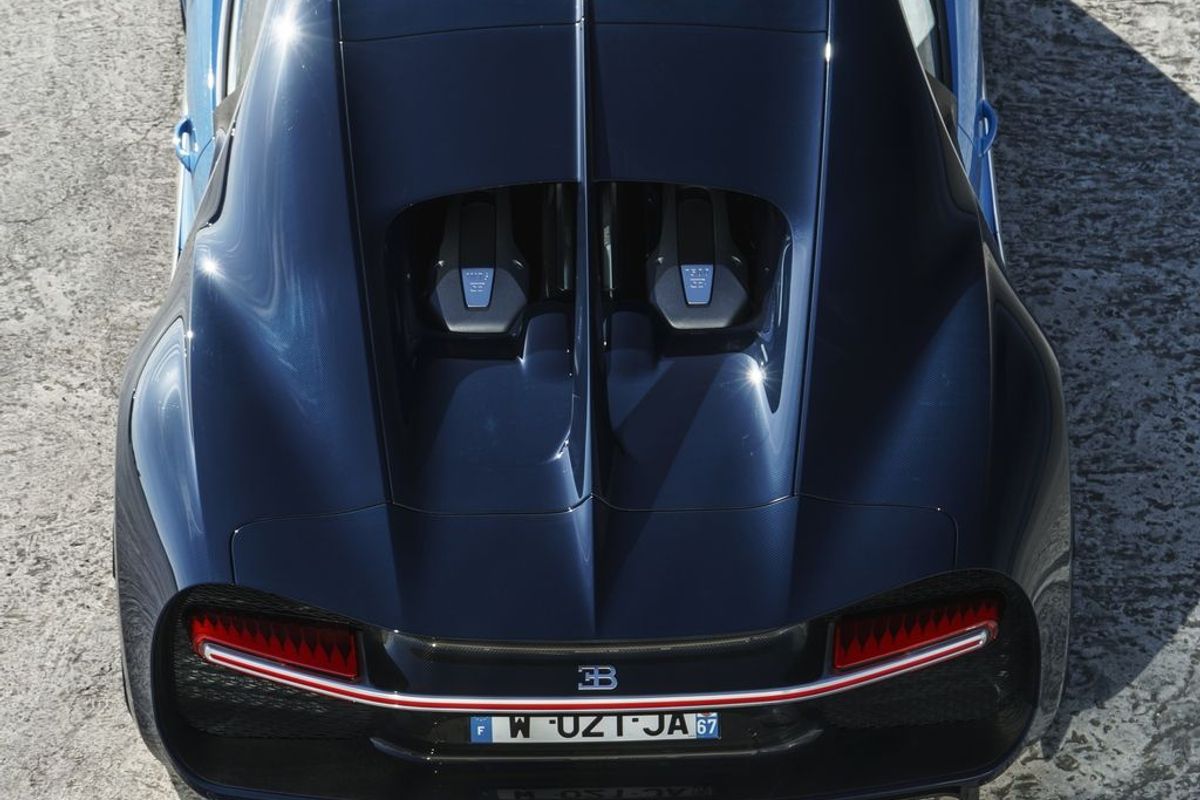
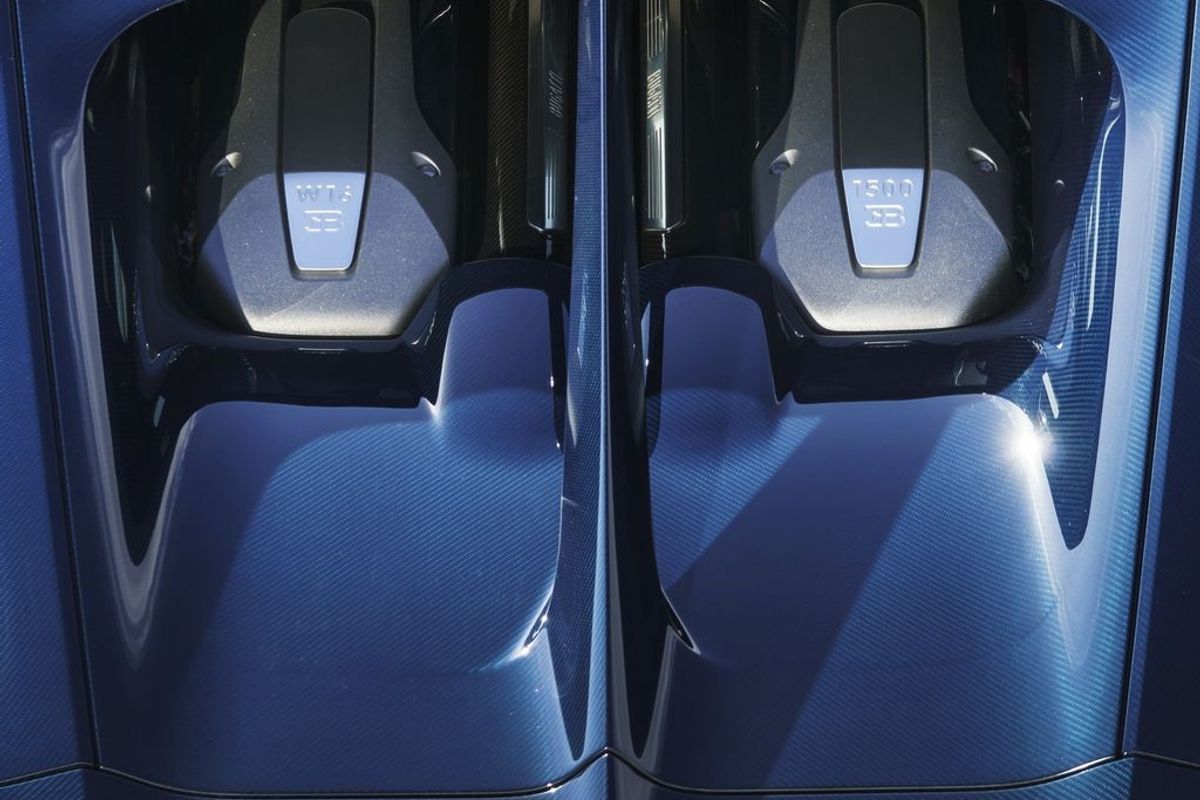
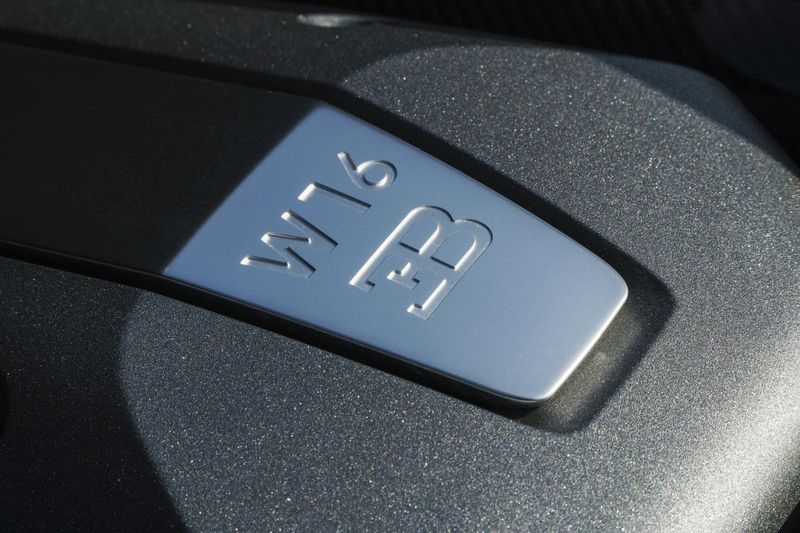
Sixteen cylinders and 4 whopping great big turbochargers are homed beneath the body of the Chiron.
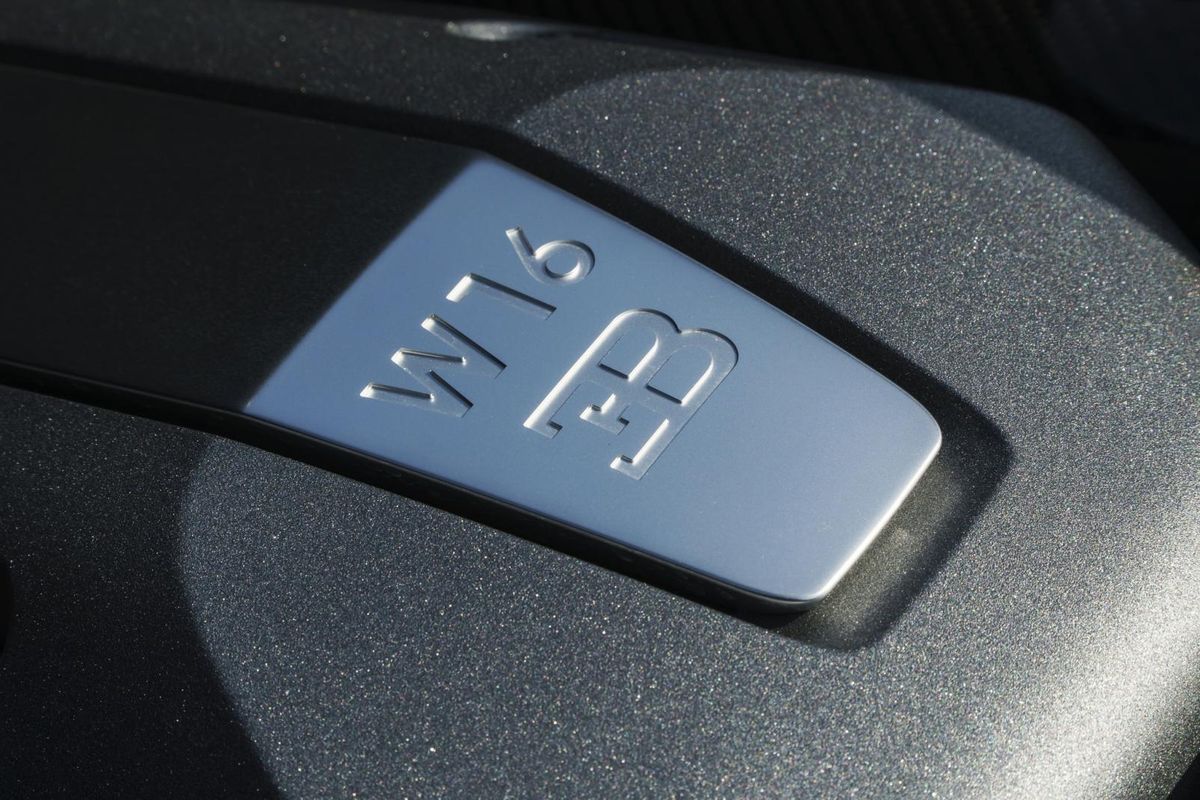
When they tell you about the engine, you stand there and they begin to hand you parts and show you graphs. The chase of such a big number is so obsessive that it's easy to get lost in the details. You would want hundreds of pages and minutes to tell you all of it, but the short of it is this: the Chiron is a carbon fibre-tubbed two-seater with conventionally opening doors. It has an 8.0-litre, 16-cylinder engine in a W layout – which means four banks of four cylinders around a common crankshaft, the upper two banks with a 90-degree vee between them, and the lower two another 15 degrees each side of those.
They are fed through four turbochargers; two of which are blowing all the time and fed by eight exhausts apiece, to minimise what would otherwise be unimaginable lag. The other two are valved, to drop in and out depending on throttle position and rev range, and when they’re ‘on’, each of the four turbos is powered by four exhausts.
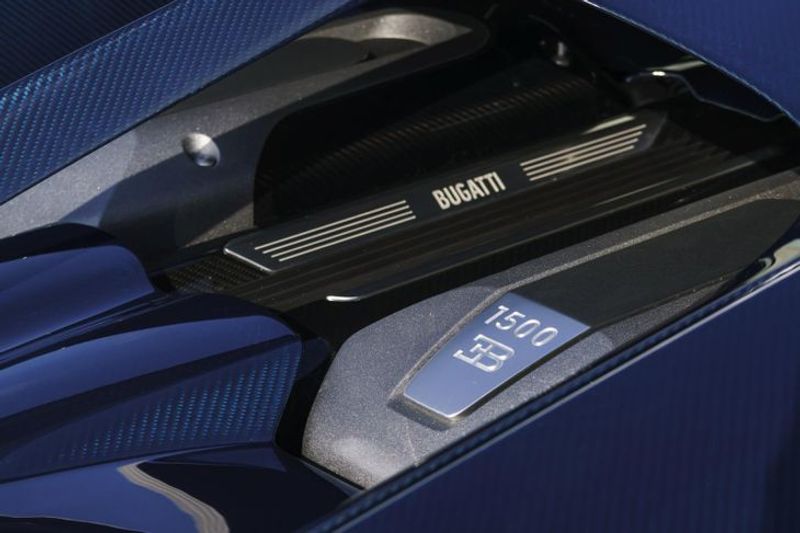
The Chiron is mid-engined – like the Veyron, the 1 500 badging rounds up the engine horsepower output.
That they drop in and out contributes to a near-flat torque curve, of 1 600 Nm from 2 000 rpm to 6 000 rpm, a number that seems no smaller no matter how many times you write it. It travels to all four wheels via a revised Ricardo dual-clutch transmission – there are heavier duty clutches, lighter gears – with power going mostly to the rear wheels, but with a Haldex coupling pushing it to the fronts when it troubles the rears, which would be often.
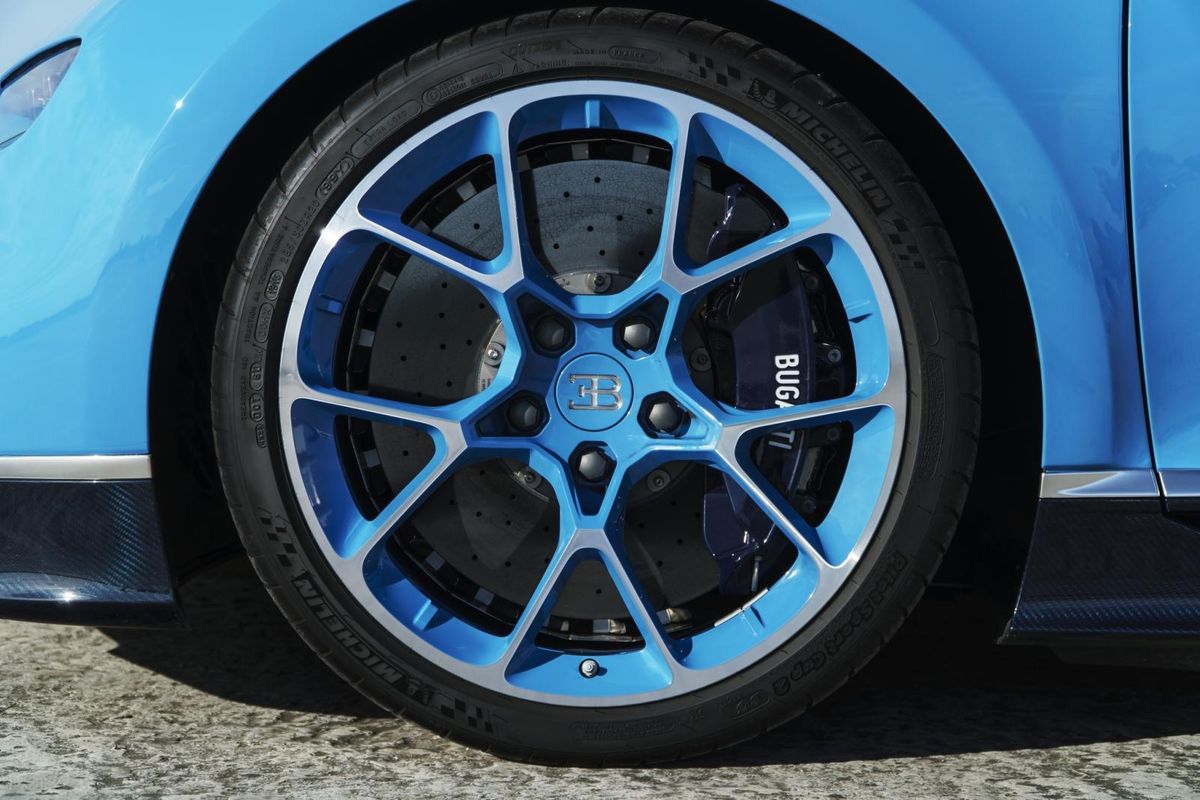
Wheel sizes are up by an inch each end over the Veyron, so 20's at the front and 21's at the rear, but the tyres are wider at the front (285 mm) and narrower at the rear (355 mm) than on a Veyron Super Sport, to give a better handling balance. Yes, Bugatti cares about track times and handling: by its calculations, it would be among the fastest cars in the world around Le Mans, thanks largely to its performance along the Mulsanne straight. Being a Volkswagen Group car, the Chiron must work all over the world and 1 100 kW and 1 600 Nm wants an astonishing amount of cooling, so although the Chiron is low (1 212 m), it is wide (2 038 mm).
Notable details?
Reinforced carbon fibre is used liberally to keep the weight down and improve chassis stiffness.
Literally hours of them. Turbochargers that look bigger by about 50% than the Veyron’s; an intake manifold now crafted from carbon fibre; conrods that can take half as much more strain as a Veyron’s but weigh no more; 420 mm diameter carbon ceramic brakes; a steering wheel milled from one solid piece of aluminium; suspension bushes that contain three different rubber compounds to give different responses laterally, longitudinally and vertically; the CFRP underbody, flat apart from Naca ducts, a few strakes by the front wheels, a deeper diffuser and constructed from a new, honeycomb-cored, carbon skinned composite that, in thinner form and with a smarter finish, comprises the body – a body whose weave is so exquisitely constructed that you can leave it bare if you like, or colour it mildly through the clearcoat.
I could go on, so I will. The passenger cell is carbon fibre too, naturally, but now so is the rear subframe/engine carrier. The engine is put in position at Bugatti’s Molsheim factory – more of an assembly area than an industrial heartland – and the cell and carrier are assembled around it, joined by just ten titanium bolts, it has, Bugatti says, a torsional rigidity of 50 000 Nm per degree, racing car levels of stiffness.
The stats
The Chiron may not win many beauty contests but it's unmistakeable and awe-inspiring to look at.
These relay stats like: 0-100 kph in 2.5sec, 0-200 kph in 6.5sec, 0-300 kph in 13.6sec. And possibly, 440 kph.
Oh, one more number: R40 million as I write. There will be only 500 Chirons made and the truth of it is that R40 million each is too cheap. Yes, Bugatti will make money on the project, Durheimer tells me, but not so much that Volkswagen would necessarily have sanctioned it in the climate the company currently finds itself. But still, yes, too cheap: it’s two million quid before taxes; multiply that by the 500 and you have a billion pounds, with which to design, engineer, produce and support an entirely new car that is homologated for sale the world over and must meet VW group’s testing for seemingly trivial but no doubt expensive things like keeping its interior cool when it’s hot and clearing the windscreen when it’s cold. It is, after all, just a car.
Bugatti set out to sell 450 Veyrons and after painting some of them like Ming vases and by getting pianists to put their name to others, eventually it got through them all but didn’t make a bean in the process. This time, Durheimer says, it knows what it’s doing; so already 250 Chirons are sold and he’s confident of selling the rest. In two years’ time, he’ll have to go back to Volkswagen’s board and pitch for a replacement.
This stuff matters. Not because a R40 million hypercar matters a jot in the great scheme of things, but because with the inevitability that the sun will rise, so, certainly, will more mainstream cars get bigger, faster, stronger, more expensive, and with it will come the trickle down, the democratisation, of uber-expensive materials and processes that the Chiron spearheads.
Is it nice inside?
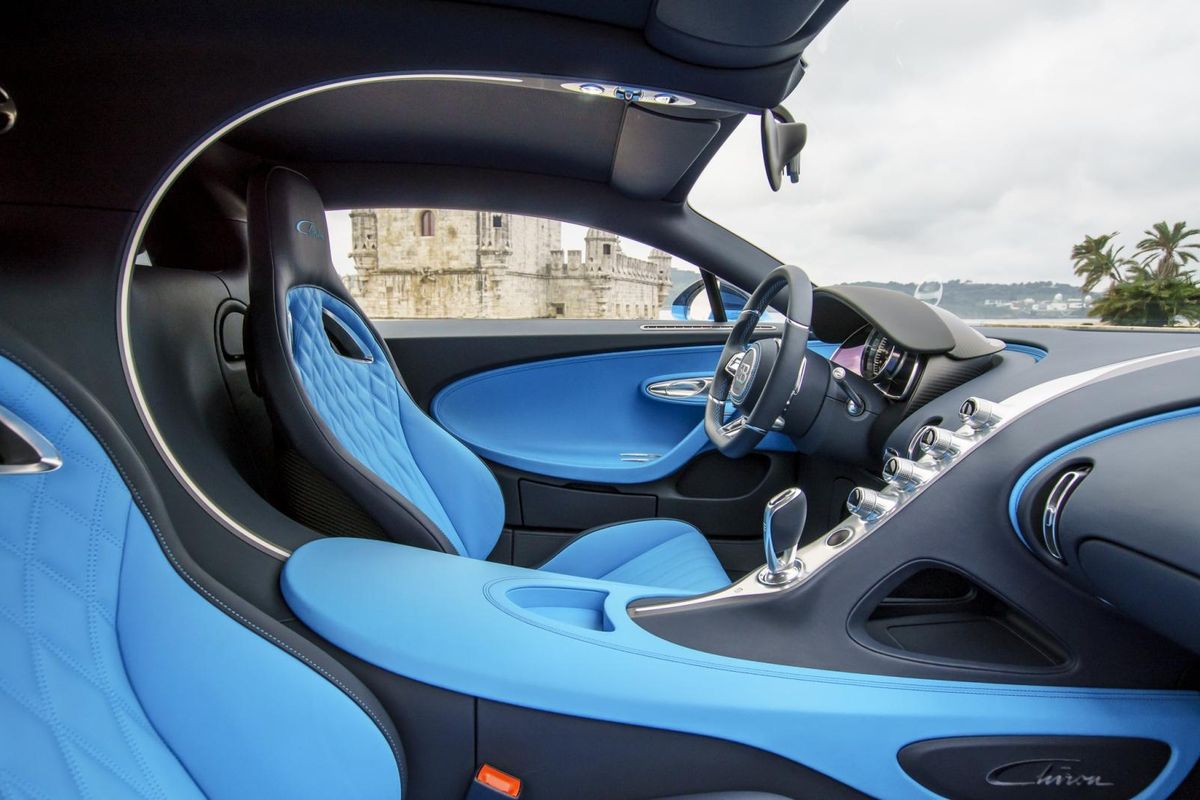
If you're paying R40m for a car, it better be lush inside. Compromises have to be made in order to keep the weight down.
Among the materials, there is leather, obviously, and metal, obviously, and not a lot else, inside the Chiron. It feels beautifully assembled because it will be but the leather covering is firm, not soft because you’re aware that with weight to save – hey, we’ve 440 kph to do – adding tens of kilos of insulation is a premium one cannot afford.
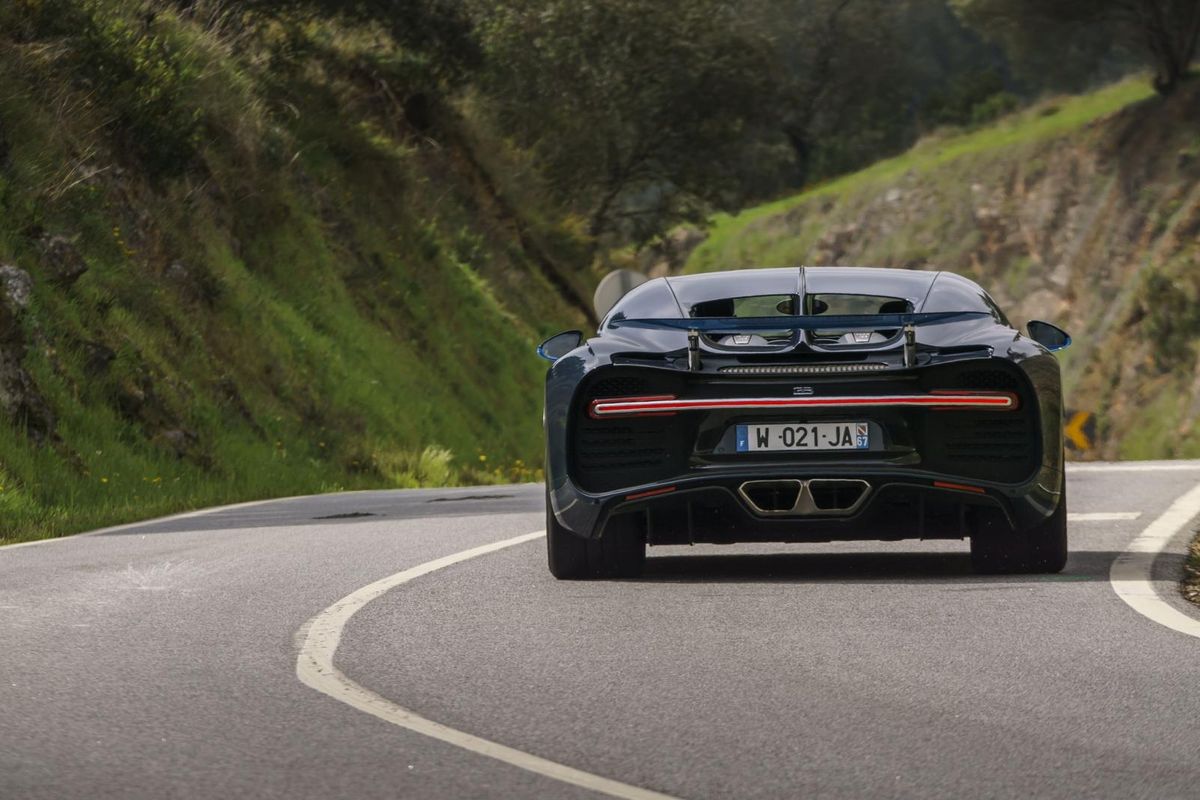
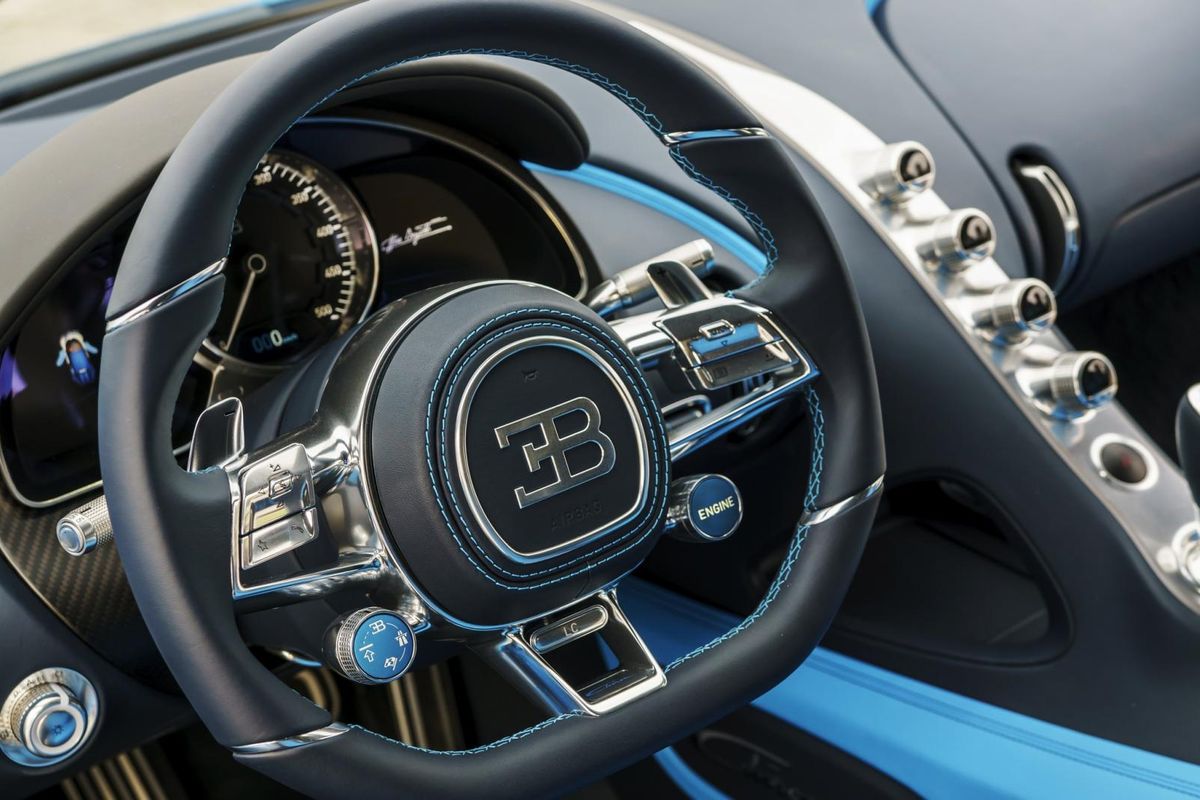
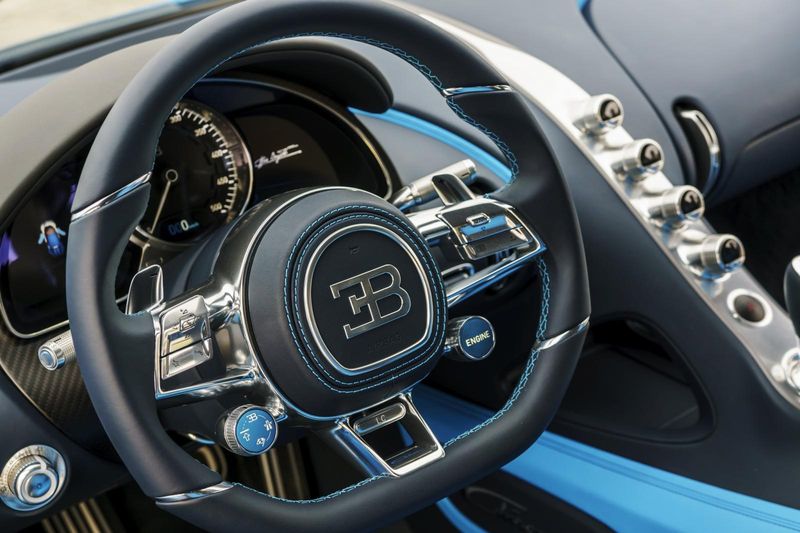
But there are reminders that this is a R40 million car, as you’d hope. Stitching is lovely and gaps between materials nanometre perfect. The world’s longest automotive lighting bar, it says here, swoops around behind you, enhancing a feeling of separating between driver and passenger, while splitting the view rearwards in two and making you wonder how they’ll do a convertible and how much floppier it’ll be. The seats are supportive, not broad, electrically adjusted, but the cabin feels wide. The steering wheel is adjusted manually and comes with a start button, a drive mode selector and flappy paddles.
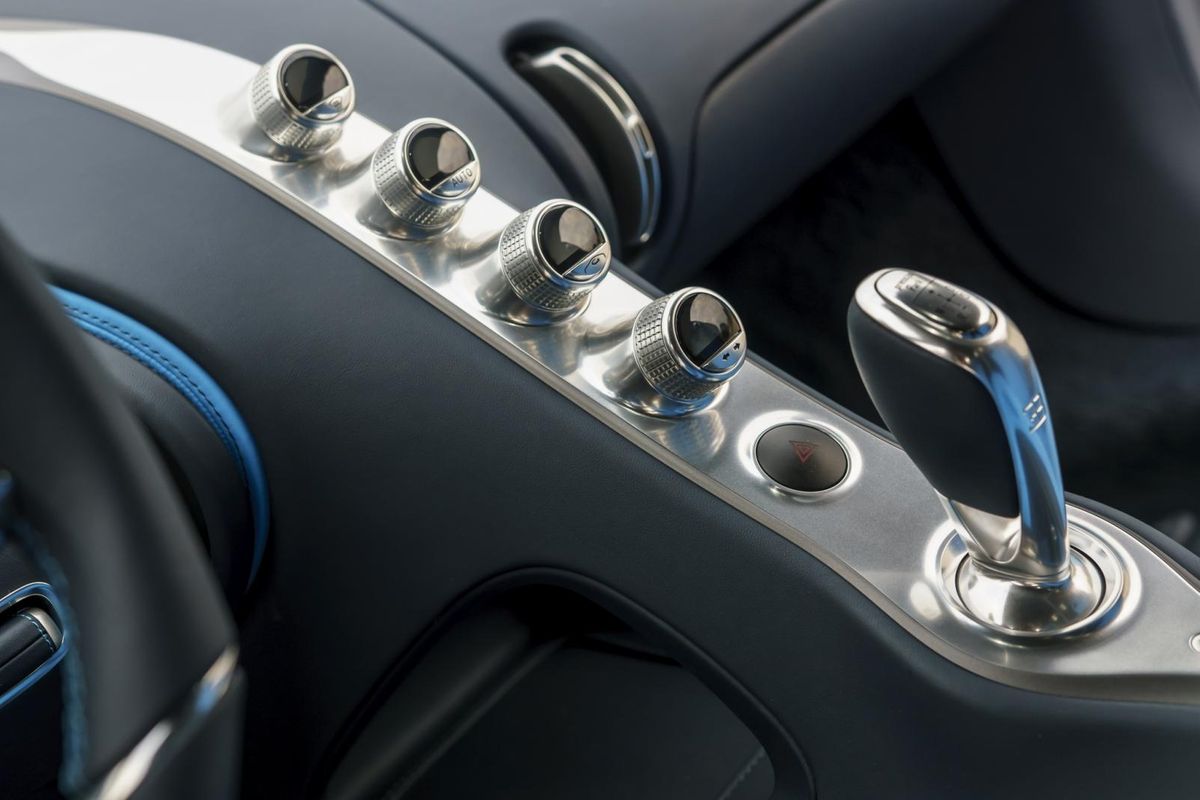
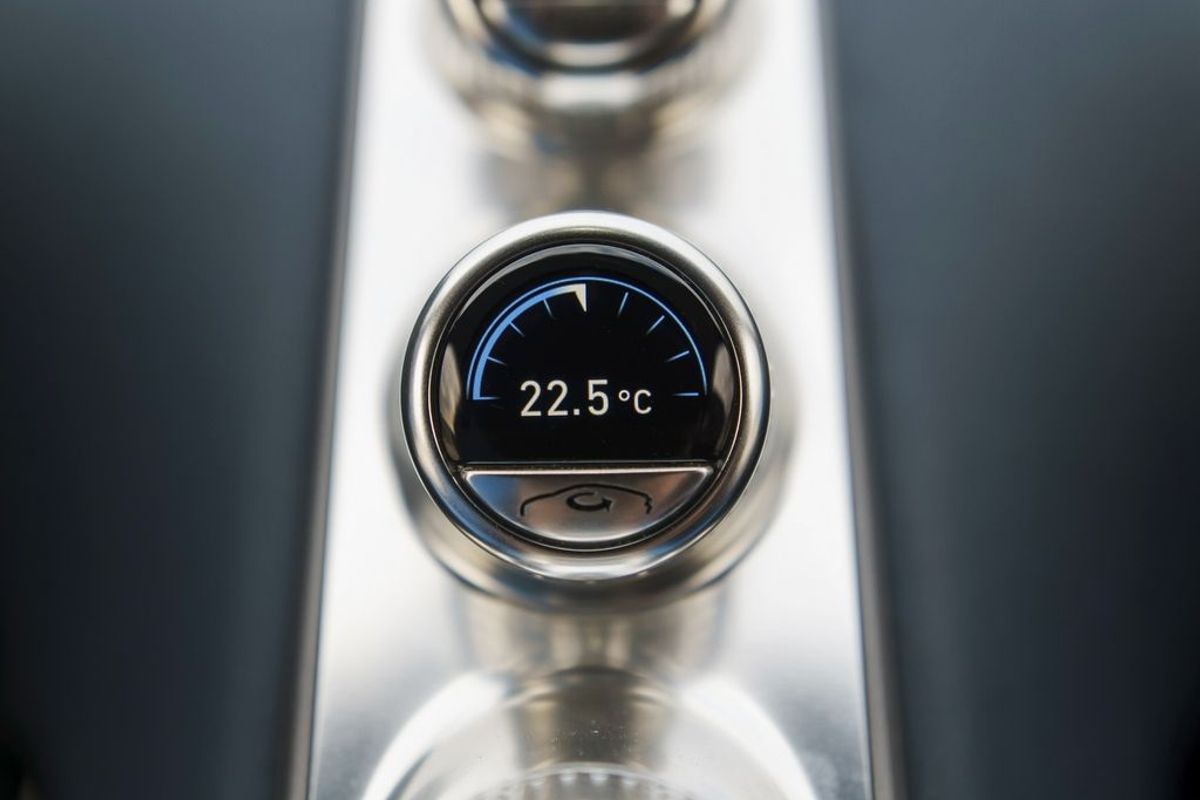
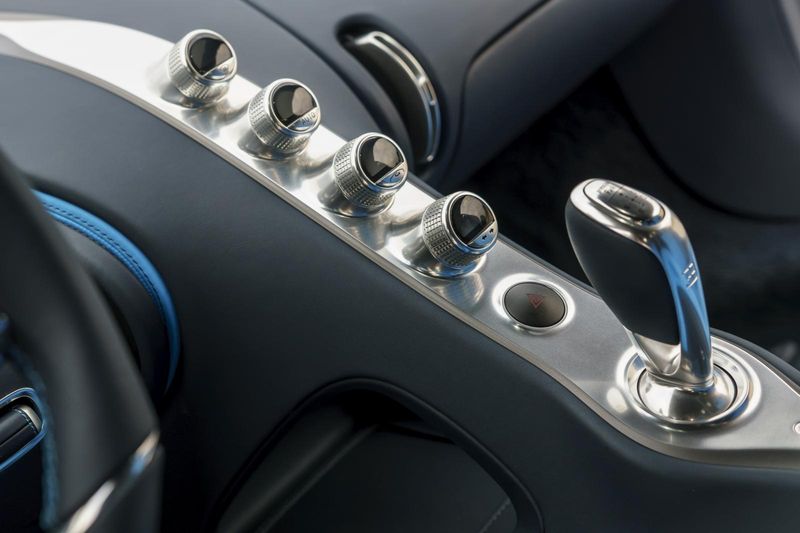
The handbrake is electronic, the centre console ultra-slim (hence the swoopy bar, to add perceived width and strength down the car’s centre) and covered in one-piece, beautifully machined and satin-polished metal, adorned with multi-function knobs that turn with the oiliness of top-end hi-fi’s. Column stalks are pleasingly crafted from aluminium. There’s still a special key if you want to unlock the full 420 kph maximum speed and not ‘just’ be limited to 380 kph, but these days lives in a socket in the car, so could as well be a button; that would save weight and not look like a metallised fob from a VW Polo Vivo.
This is what you get when no expense need be spared on the details.
Visibility is pretty average but ergonomics are otherwise straight out of the Volkswagen-group handbook. So you thumb a starter button and the engine fires to a voluble but, from a cylinder-count perspective, indistinct cacophony and it is ready. Foot on brake, pull gear lever back to D, away you go.
Everything is where you expect it to be. You could be in a Volkswagen Golf. A 1 100 kW, 8.0-litre, 2.0-metre wide Golf that can do 440 kph or thereabouts, but a Golf nonetheless. I mean that in a flattering way. It’s a remarkable achievement.
What's it like to drive?
There's a bit of turbo lag on initial pull away but despite that, the Chiron will still get to 100 kph in 2.5 seconds.
The truth is that the road testing part of the Chiron experience doesn’t take very long. Not when, despite Bugatti’s assurances that we could test the car properly, it presented a car with a top speed of 440 kph on roads with a maximum allowable speed of 120 kph and reminded us we were responsible for our own licences. I have no idea what the inside of a Portuguese prison looks like and no particular desire to find out, but if I look over my shoulder and whisper there are things I can tell you.
How fast is it? It’s very fast, obviously, but so are lots of cars. It is the way it is fast. It’s not fast in a Tesla Model S P100d way – the Tesla is immediate, it gets up and goes before the Veyron has considered which of its turbos to send air through. It isn’t Ariel Atom V8 fast, which is hairy and immediate like a superbike. It’s not even McLaren P1 kind of fast; the P1 has a torque filling motor to get going and relatively speaking, a race-style engine, two-wheel drive and lighter weight to push it forwards.
No, the Chiron has a far more literal interpretation of acceleration than any of these. There’s lag – quite a lot of it, usually – and then it inhales massively and, about a second after you asked it to, begins to push you along the road, in loping, increasingly urgent strides of noise and blur. It is not a soulful noise, but it is not an unpleasant one and it's always an overwhelming one – like standing next to an express train or hovercraft as they leave a station or waterside. It spools and rushes and up to the relatively modest speeds I took it to, it simply doesn’t stop. Bugatti’s test driver tells me it is still accelerating notably when it hits the 420 kph limiter. So you lift off when you’re afraid, at which point it whistles with a volume of air like the tube has blown off a bouncy castle. And so do you.
Ride and handling?
Handling is not the Chiron's forte, it's more about reeling in horizons at mind-boggling speed.
It has a reasonable former and on the road a fairly unapproachable latter. You can swap between ‘EB’ (the standard one), ‘Highway’ and ‘Handling’ drive modes but, God, all this ‘making it comfier for this road and stiffer for that one’ is somehow unbecoming of a R40 million hypercar.
In short, the former adjusts the adaptive dampers’ stiffness automatically, the latter pair of modes stiffen their parameters and reduce ride height. But regardless of the mode, body control is always good and the ride always firm, yet rarely crashy. In EB, the Chiron will even ride Belgian pave, but in this standard-height mode the key benefit that it’s less likely to ground out as it enhances comfort. In comfort/body control terms it’s good, but closer to a Porsche 911 GT3’s level of jarring than Ferrari 488 GTB’s curious plushness. Steering weight is good – albeit unnecessarily heavier in Handling mode – self-centering just right, solidity around straight ahead reassuring (as you’d hope), the directness and feel (or the approximation of it, given it’s electrically assisted) are decent; about as good as in a VW Golf R.
And it grips and it handles, up to the point I was prepared to find out because power arrives in a hurry, it’s two metres wide, and, often, feels every inch.
Verdict
They Veyron's records are set to tumble when the Chiron gets its chance on Volkswagen's high-speed test ring.
Didn’t Ettore Bugatti once say that WO Bentley “built fast trucks”? Well, I don’t mean to sound rude, but making a car with a desire to do 440 kph and retain a comfortable, leather and metal-lined interior brings compromises when it comes to agility and driver involvement.
But that’s understandable. Commendable, even. It would have been easy to give the Chiron a vast engine and forget the rest, but it would be no harder than tuning a Nissan GT-R to 1 500 kW. The Chiron is more than that.
When we road-tested the Bugatti Veyron Super Sport, people with limited familiarity with the car arrived at our test runway, climbed in, drove at 320 kph, drove back to the start and climbed out again. Easy. The Chiron would do all of that but with an extra 100 kph, extra luxury, comfort and handling on top. Its crowning triumph is that it makes the utterly remarkable look ordinary.
A track-focused Mercedes-AMG C63 R is reportedly under development and it could be on the road in 2 years.
*Pictured is the Mercedes-AMG C63 Edition One*
The Mercedes-AMG C63 is already a potent performer and reports are suggesting that a more hardcore track-focussed version is being developed to take on the BMW M4 GTS. The new model will be called the C63 R and much like the AMG GT R, it will feature a host of enhancements to make it an effective weapon on the strip.
The AMG C63 R is expected to shed a few pounds compared with the AMG C63 S and its 4.0-litre twin turbo V8 engine will no doubt be tinkered with to increase output. Some reports suggest that as much as 447 kW are on the cards. The additional power and torque will be accompanied by numerous aerodynamic addenda which will likely include a large fixed wing.
It will still be some time before the AMG C63 R becomes reality and it will likely arrive after the C-Class receives its facelift, which is due in 2018. We will keep you updated as more details emerge.
The South African compact family car/crossover segment is abuzz following the introductions of the Hyundai Creta and Toyota C-HR in quick succession. Ciro de Siena examines these newcomers' interior features in the studio and then tests the pair on the road…
Hyundai Creta
Hyundai is currently the fourth-largest seller of new passenger vehicles in South Africa. And, with the Creta, the firm’s hoping to move up to third place — that's how much how confidence the Korean brand has in this newcomer.
And, besides the pricing, which is at the top end of this segment, there's not much that we don't like about the Creta. We tested the top-of-the-range 1.6 CRDi Auto derivative and were impressed with the pliant ride quality, the premium feel of the interior, a generous standard specification and a glut of safety features.
During our time with the new C-HR, we found it did something that possibly no Toyota has ever done before: stop people in their tracks, eager to get a closer look at this striking new compact crossover. This car is certainly a bold move for Toyota. For a brand long synonymous with hugely popular but ultimately bland vehicles, the C-HR is designed to challenge, to provoke and to stir emotion. And we found it to be very successful in that respect.
However, we wanted to know, how successful is it as a vehicle that you might use on a daily basis? We brought it into our studio for an in-depth look and we also hit the streets of Cape Town for a road test, to assess the performance of the new 1.2-litre turbopetrol motor and overall ride quality of the vehicle.
Toyota is now offering discounted servicing for all Toyota models older than 5 years in South Africa.
Toyota South Africa Motors’ (TSAM) has announced that discount servicing of all Toyota vehicles older than 5 years, irrespective of year, mileage or model, will be offered throughout its local dealership network.
Toyota owners will benefit from a guaranteed minimum of 10% discount on replacement parts including engine coolant, brake fluid, differential oil, gearbox oil and a capped labour rate when booking their vehicles in for a service at a Toyota dealership. Servicing is carried out by certified technicians using Genuine Parts and owners will be able to maintain a full Toyota service history, keeping their vehicles safe and reliable.
All workmanship and parts carry a 12-month warranty and Toyota Value Service (TVS) is done in accordance to prescribed service schedules including safety inspection and routine adjustment and lubrication.
TVS also offers a dealer and vehicle specific online service calculator so that customers can see exactly what parts and costs will form part of the next service. You need the vehicle’s registration and VIN number to use the online service calculator. You can also book a Toyota Value Service using the MyToyota mobile application, which can be downloaded from Google’s Play Store or Apple’s App Store.
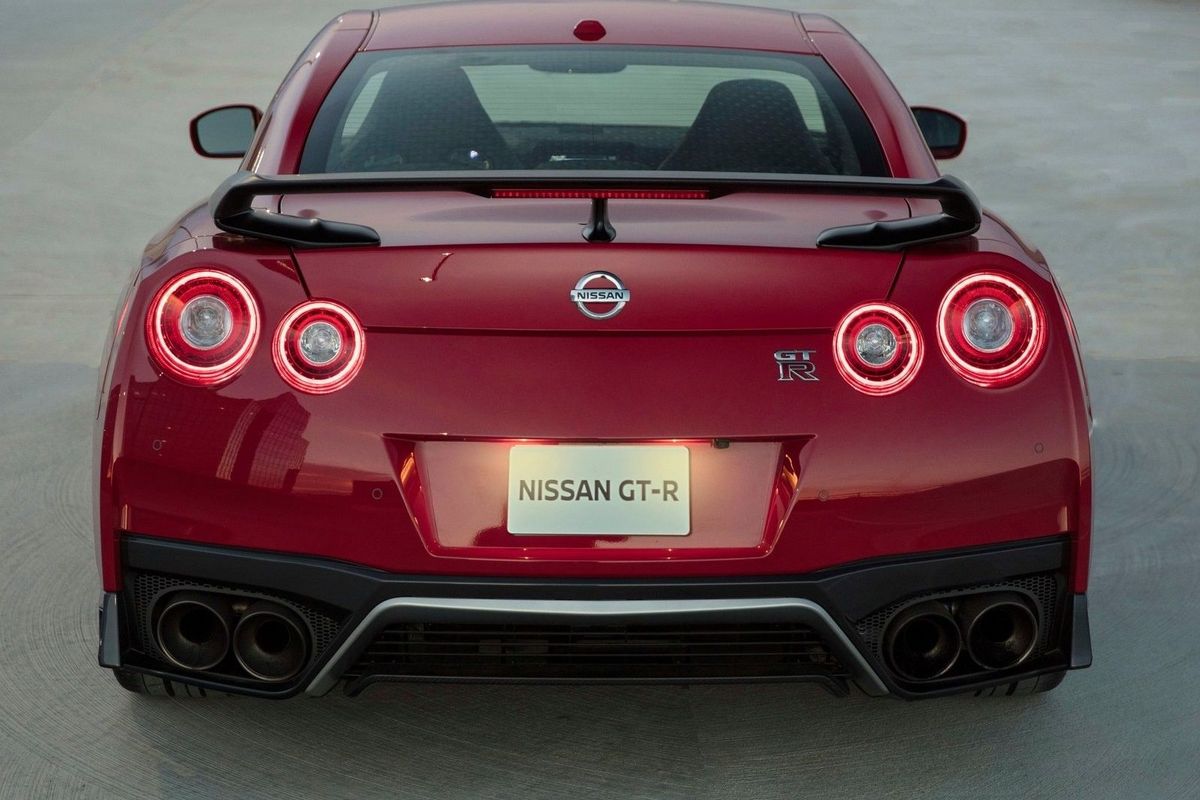
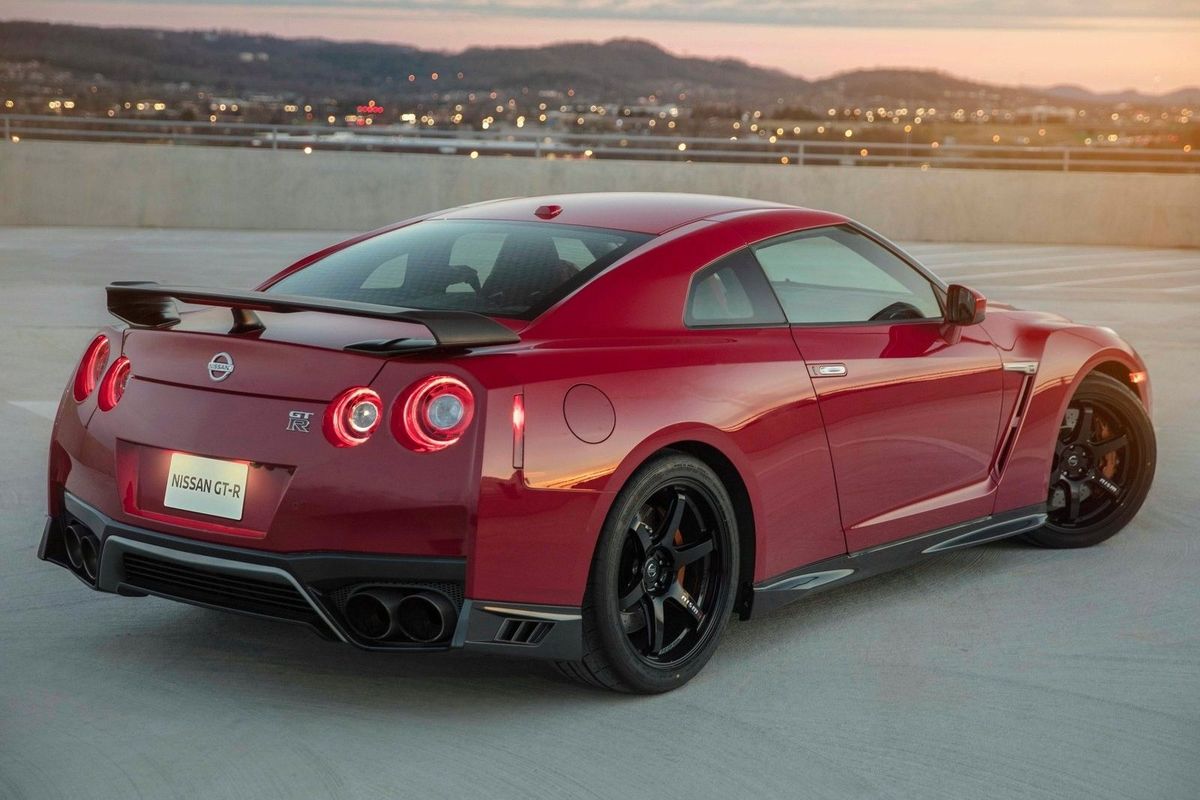
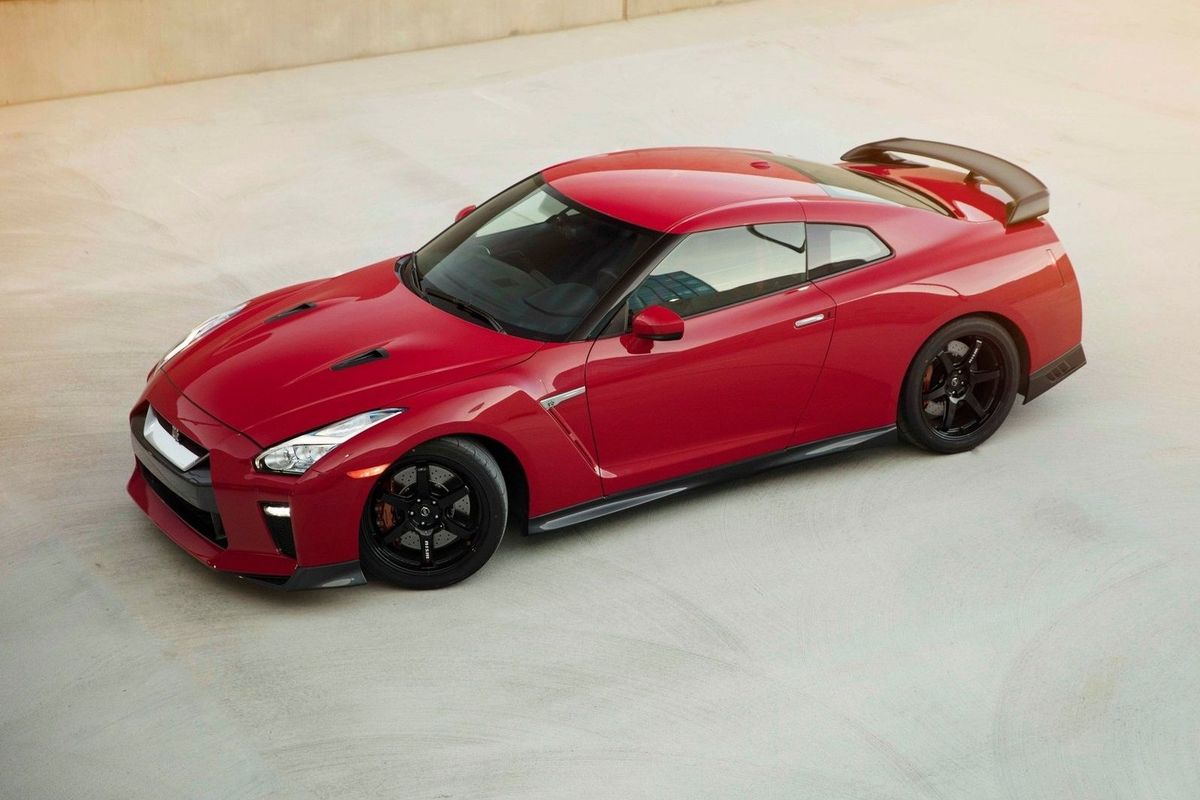
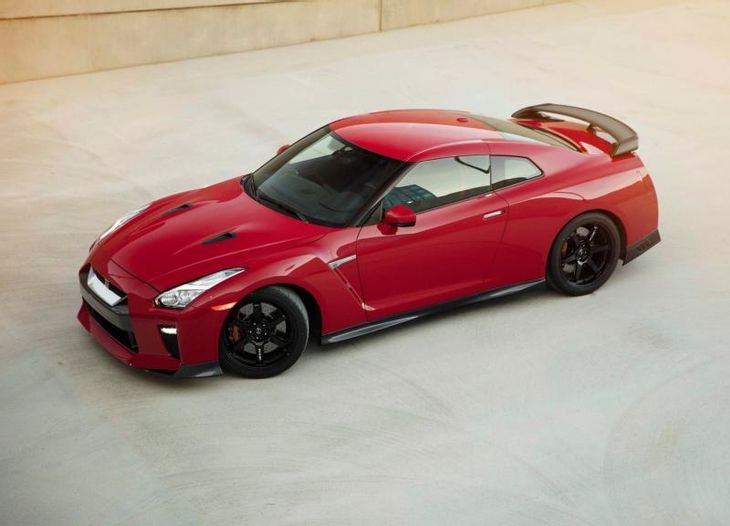
Nissan has showcased a more racetrack-focused version of its GT-R supercar. Let's meet the 2017 Nissan GT-R Track Edition.
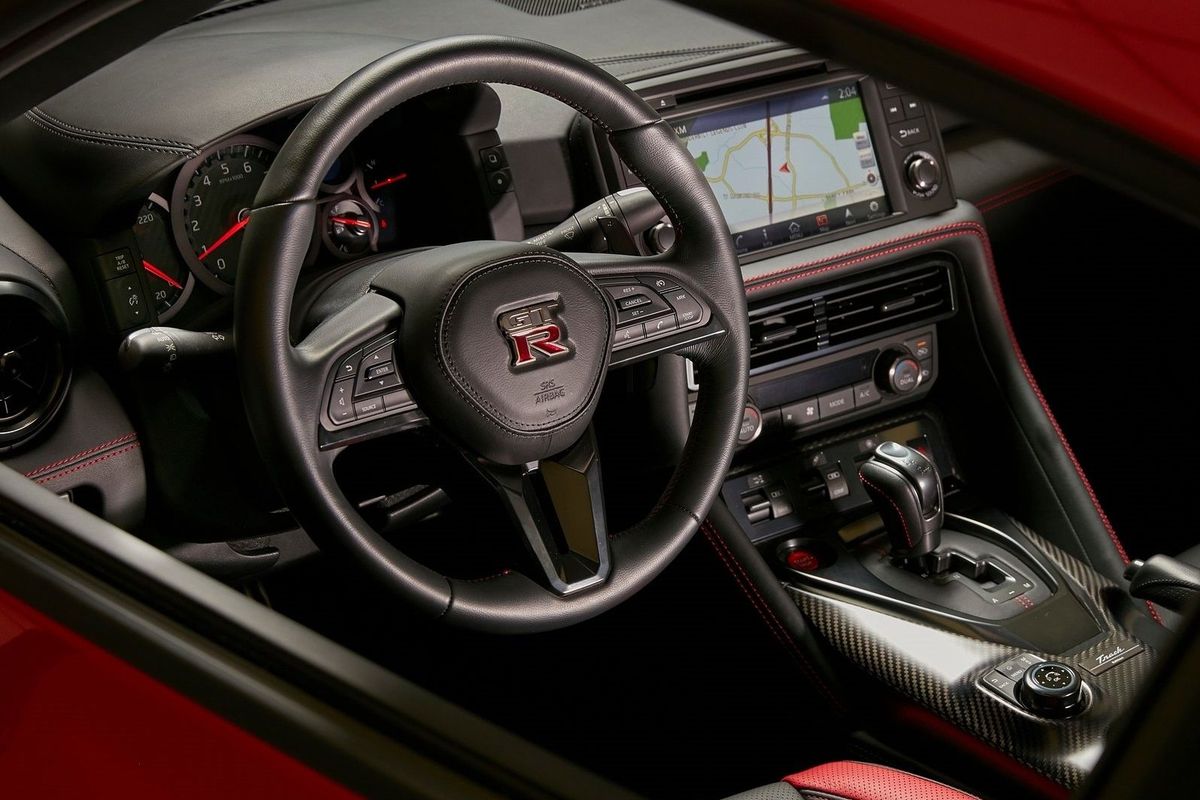
The 2017 Nissan GT-R Track Edition is differentiated from lesser models with a redesigned front end that not only looks the part, but is optimised for improved airflow into the engine (for better cooling). There's a matte chrome grille finish, new-look mesh pattern, the bonnet has been reinforced for high-performance driving and, overall, the body rigidity has increased.
The cabin gains a red and black interior with leather-wrapped Recaro bucket sport seats and the dashboard layout includes just 11 switches for a minimalist look. There's also an 8-inch touchscreen monitor. The Track Edition also includes standard NissanConnectSM with navigation, mobile apps and services, which allows users to use a smartphone to remotely lock or unlock the car doors, activate the alarm, summon emergency services or track the car if it is stolen. The Bose audio system has been retained and it features Active Noise Cancellation.
Let's Go Faster
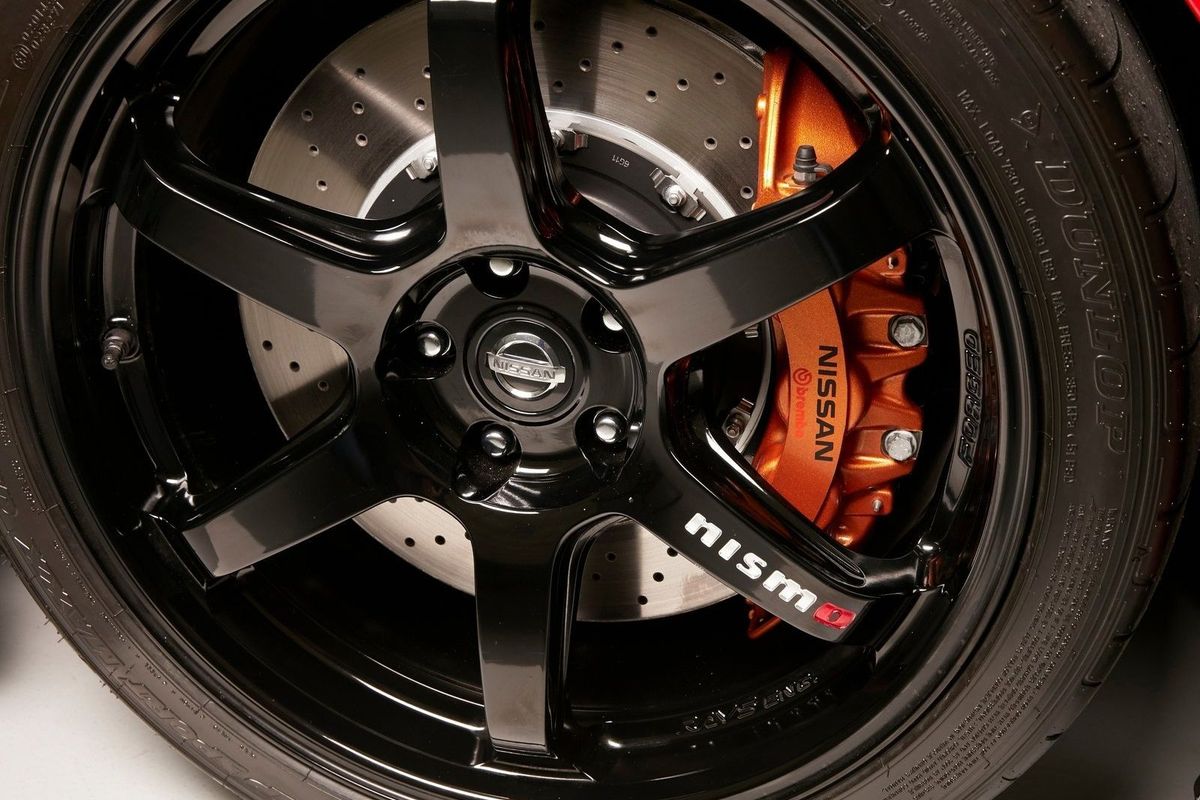
While the standard Nissan GT-R is no slouch, this track edition gains a titanium exhaust, carbon-fibre wing, four-wheel independent suspension tuned by Nissan's Motorsport division (Nismo) as well as bespoke alloy wheels. Power comes from the hand-built twin-turbo VR38DETT 3.8-litre V6 engine – its outputs (421 kW/633 Nm) are the same as the standard car's.
This Track Edition sits below the halo Nismo Edition and will be fully revealed at the 2017 New York Auto Show.
The second-generation Mini Countryman becomes available in South Africa this week! Take a look at specification and pricing for this new model. The launch is currently taking place in Durban, and we'll have more details and a first drive impression soon.
Gone are the days when Mini products were compact city cars and the Countryman is an example of how the brand has expanded its range with a focus on space and practicality. The new Mini Countryman is bigger than the outgoing model and is 200 mm longer and 30 mm wider. The wheelbase has been increased by 75 mm to open up the interior space. The five-seat vehicle now features reclining and sliding rear seats and the bigger boot can now carry up to 450 litres, but you can also fold the seats down in a 40:20:40 fashion to increase capacity.
Engines and powertrain
The new Mini Countryman receives the same engines found in the hatchback Cooper and Clubman. The range kicks off with the excellent 1.5-litre, 3-cylinder turbo petrol motor which has 100 kW and 220 Nm of torque. Then you get the Cooper S, which has a bigger and meatier 2.0-litre four-cylinder turbo petrol pushing out 141 kW and 280 Nm. However, the big news is that a diesel engine has been confirmed for South African introduction and we'll be getting the 2.0-litre turbocharged diesel engine which has 110 KW and 330 Nm. The Cooper reaches 100 kph in a claimed 9.6 seconds for the manual, while its S sibling does the same sprint in a quicker 7.5 seconds (7.4 seconds for the automatic).
In terms of transmission, the Countryman is offered with a six-speed manual gearbox and an eight-speed automatic transmission. Power reaches the front wheels only, but if you're wanting the reassurance of all-wheel drive, then you're going to have to wait for the performance-orientated John Cooper Works derivative.
Mini Countryman Price in South Africa (March 2017)
The long-serving coupe version of the Audi A4 business class sedan has been replaced. We got a chance to test a few derivatives of the new range in the Western Cape to see if Ingolstadt's latest could sway customers from the sporty BMW 4 Series and stylish Mercedes-Benz C-Class coupe.
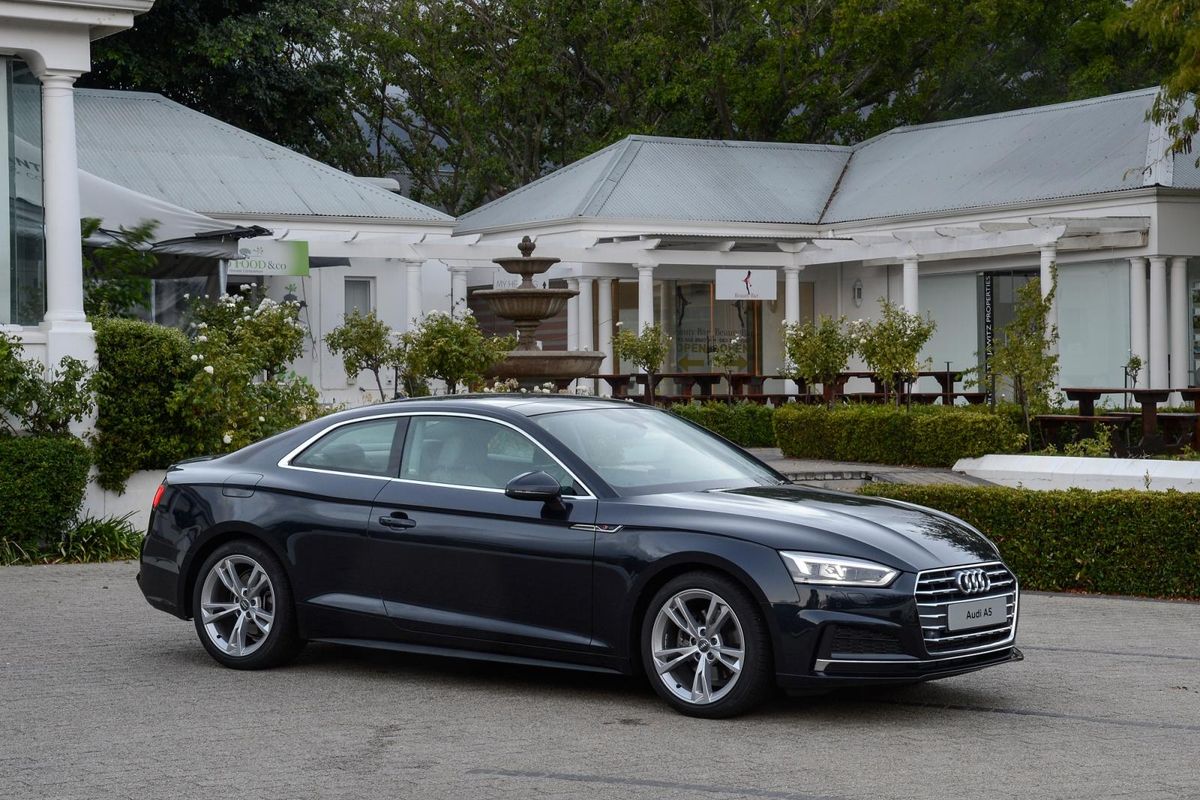
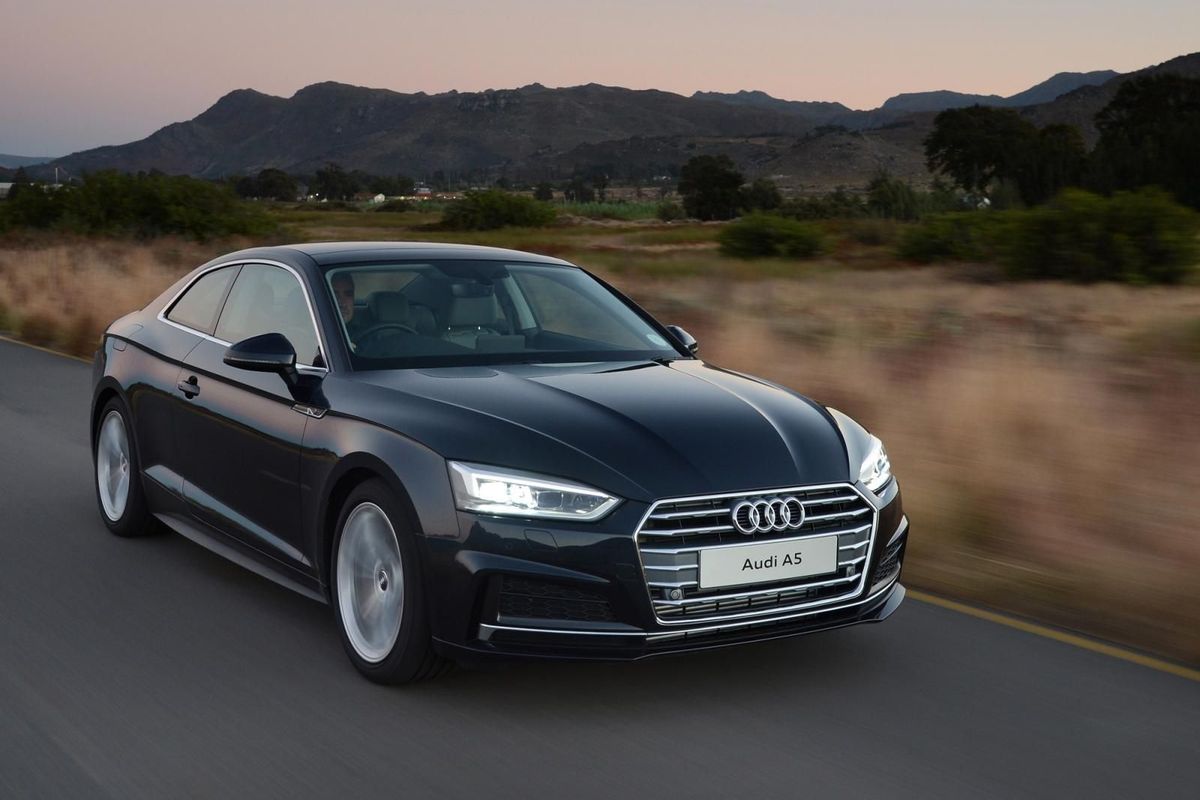
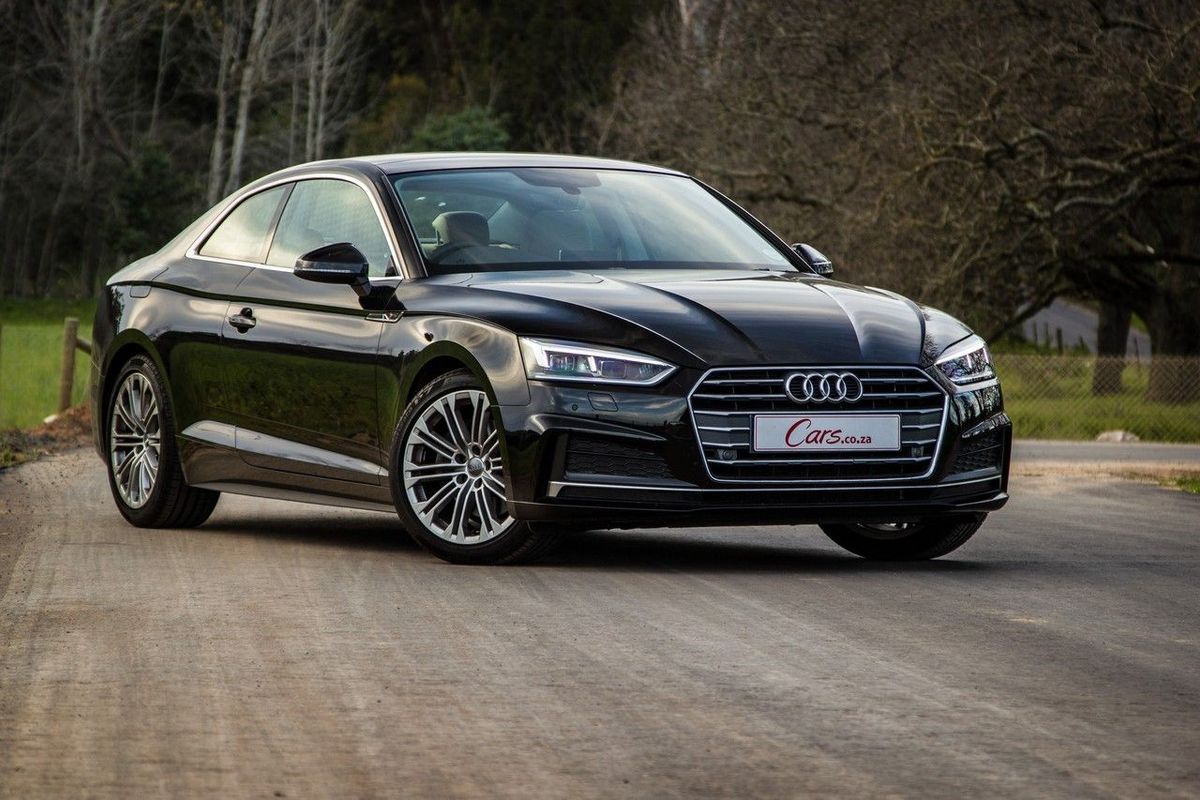
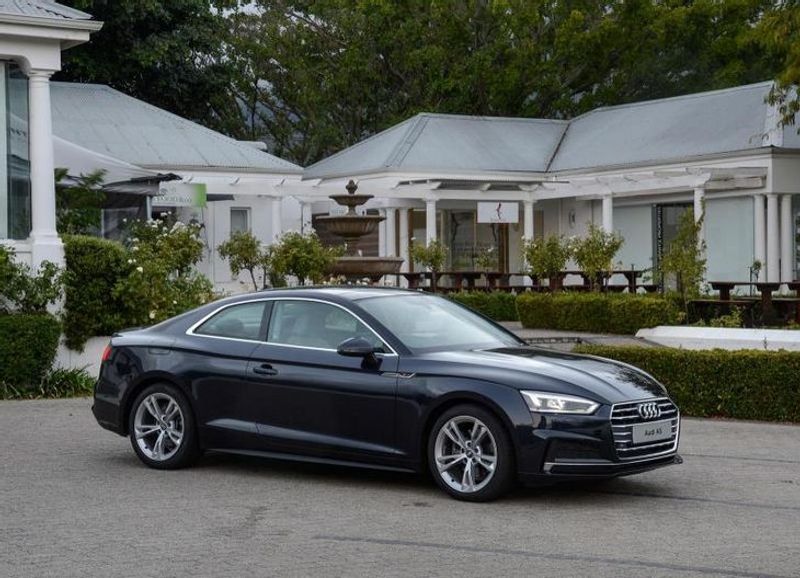
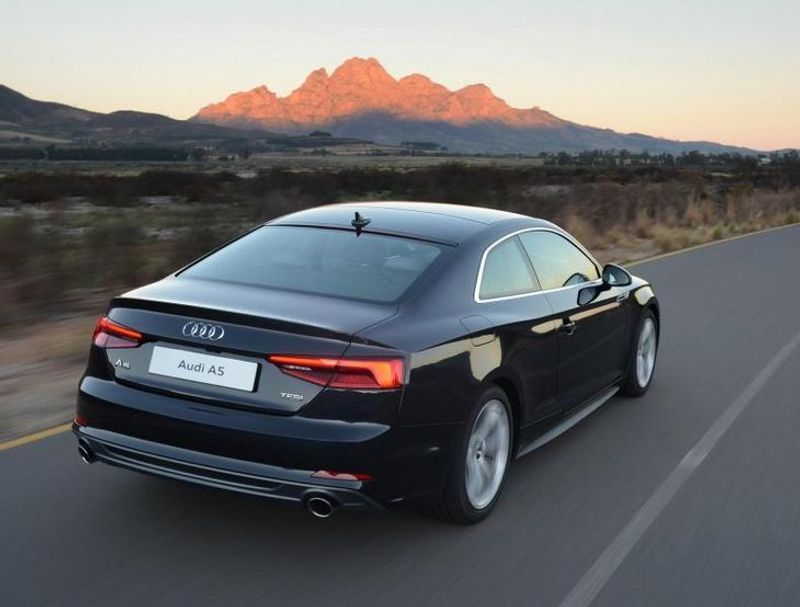
The Audi A5 was first unveiled to the South African public in 2008 and the range was bolstered by the A5 Sportback and A5 Cabriolet in 2010. So far, almost 10 000 units have found homes in South Africa. Now, almost 10 years on, there's an all-new Audi A5. Not much has changed from a visual point-of-view: it's still a svelte-looking coupe with more curves and less sharp angles than before.
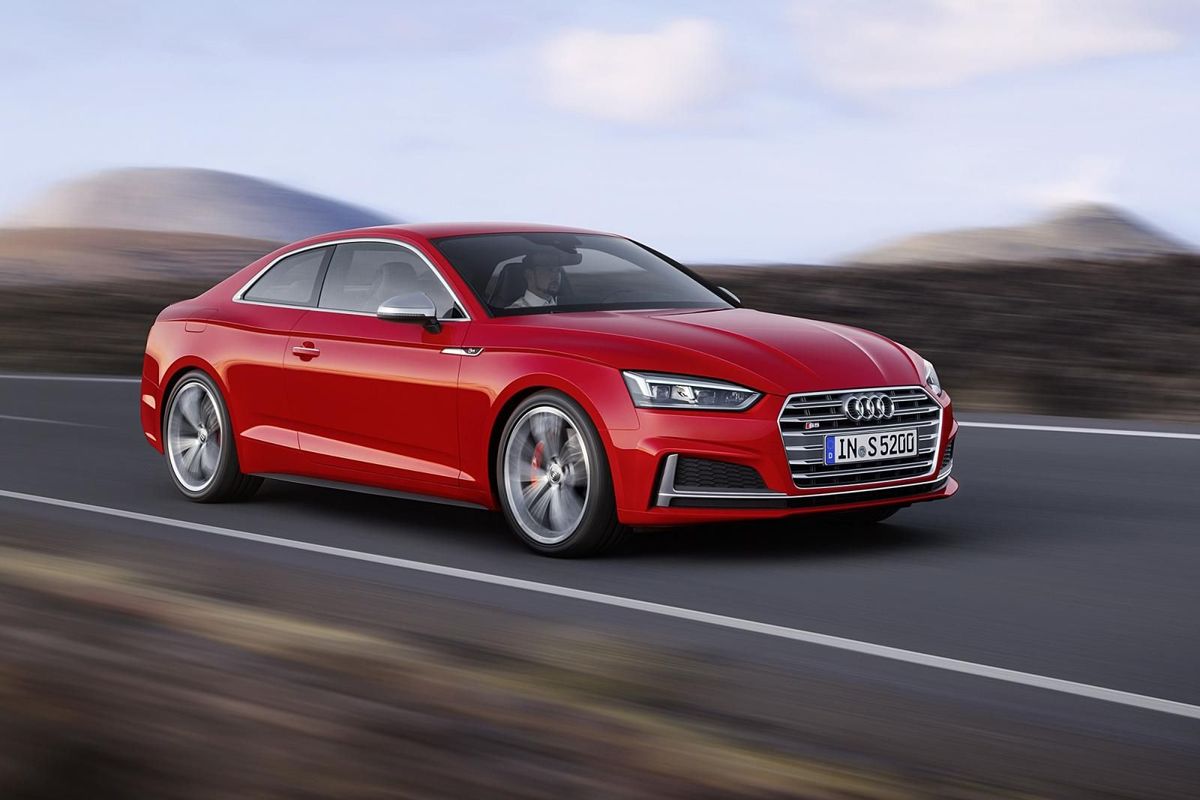
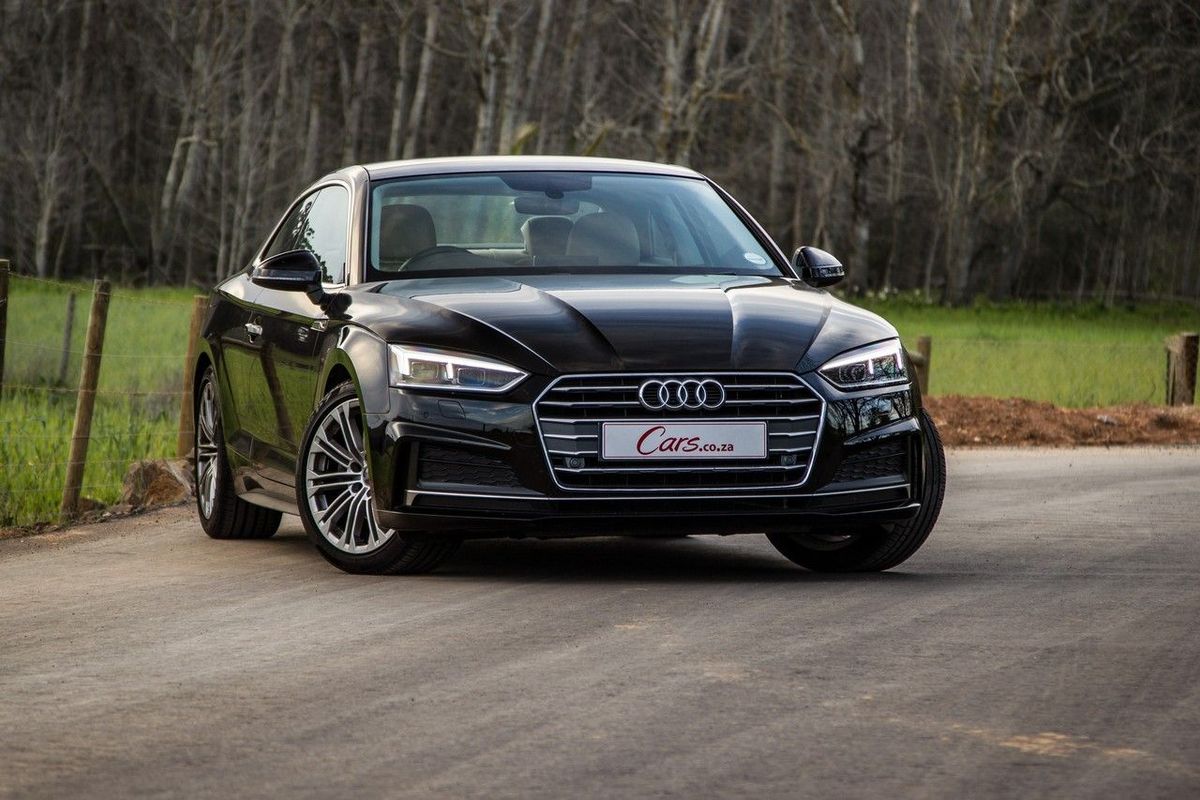
It's unmistakably an Audi and those characteristic daytime-running lights underline the brand identity… um, brilliantly. Some might suggest this design is less sporty, but more stylish than its predecessor's, but, whichever way you look at it, the new A5 2-door is a fairly good-looking and ultra-modern interpretation of what a luxury two-door German coupe should look like.
Audi A5: Fairly generic styling that will take some time to grow accustomed to. It's not ugly, but it's not striking. Hmm…
Audi claims that while visual changes to the A5 are not that dramatic, the real work has occurred under the sheet metal. The newcomer appears to benefitted from a successful diet and has shed some kilos (the body is 60 kg lighter than before) the A5 rides on the latest version of Audi's MLB chassis architecture, so excellent ride quality can be assumed. However, no matter how much sportiness you can infer through marketing material, there's a real fear that the sporty-looking A5 will only be as exciting to drive as the sedan it is based upon.
That's not to say this is a bad thing as the superb ride quality and driving characteristics of the A4 are some of the reasons it walked away with a Cars.co.za Consumer Award in the 2016/17 iteration of the programme. This is a sportier Audi though and enthusiasts. even the mildest ones, would be disappointed if more driver engagement could not be coaxed out of the chassis and suspension. Audi has fitted stiffer springs in the A5 to give it some excitement that potential customers will be looking for… some go to match the show, if you will.
Uprated powertrains
The new Audi A5 comes to market with 2 turbopetrol and one turbodiesel engine. Audi claims these motors offer up to 17% more performance with a 22% improvement in fuel economy. The first engine up is the 2.0-litre 4-cylinder turbopetrol. It produces 140 kW and 320 Nm, which is enough to see it reach 100 kph from standstill in a claimed 7.3 seconds and go onto a limited top speed of 250 kph. The 2.0-litre 4-cylinder turbodiesel motor is next and it too offers up 140 kW, however torque is a significant 400 Nm. Its real strength is fuel economy, which sits at a claimed 4.1 L/100 km. If you're wanting to sprint, it'll reach 100 kph from zero in a claimed 7.7 seconds.
Finally, there is a beefedup version of the 2.0-litre turbocharged petrol now pushing out 185 kW and 370 Nm, which should be good for a sub-6 second sprint to 100 kph. For those craving even more performance, there is the Audi S5. It features a 3.0-litre TFSI motor with 260 kW and 500 Nm, and it's capable of sprinting from 0 to 100 kph in just 4.7 seconds.
Trim and features
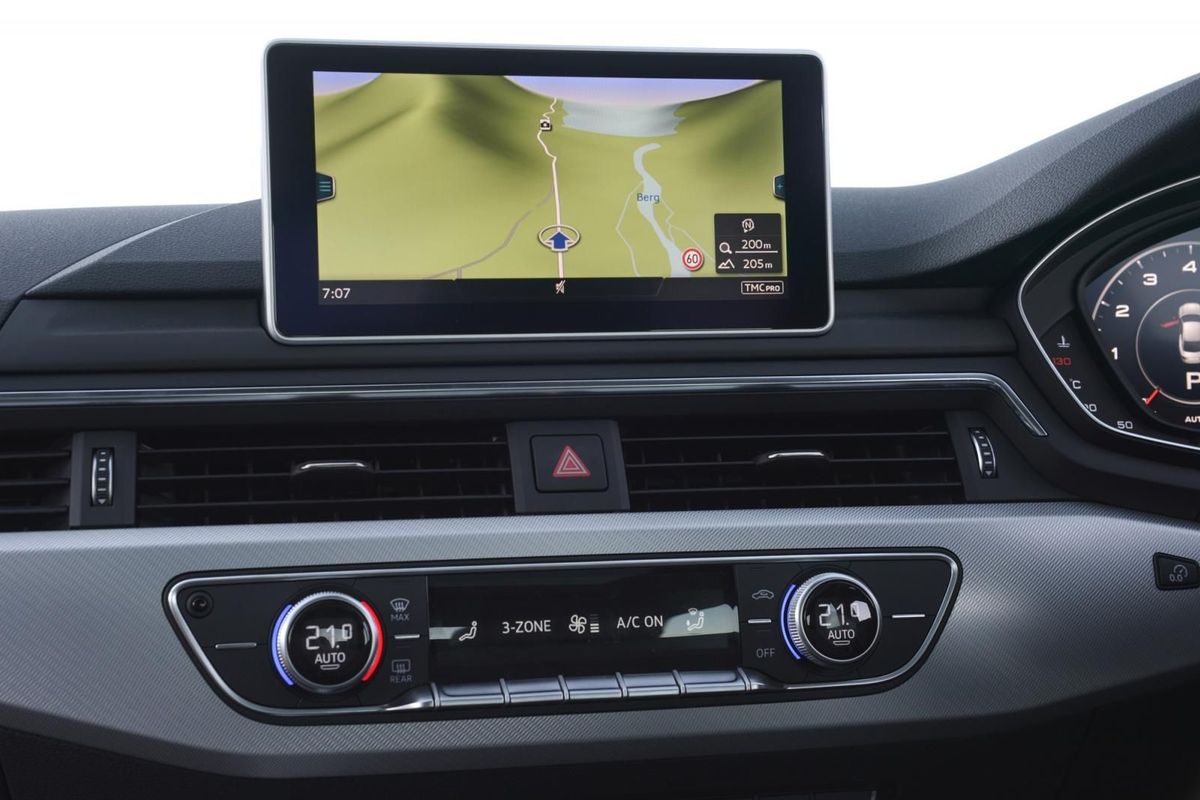
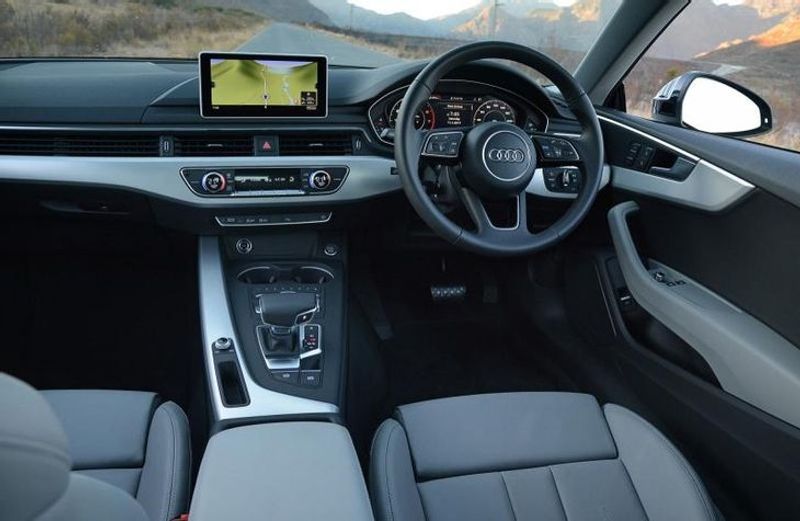
Well-assembled cabin, but it feels like a combination of Audi interior bits rather than an all-new interior offering.
There are two trim levels for the Audi A5 range called Base and Sport, with the option of further customisation via S line sports pack and Audi Design. As always, Audi offers a tremendous number of optional features for the vehicles and some of the cars we drove features the digital Virtual Cockpit dashboard, heated seats, dynamic indicators, and interestingly, a wireless charging pad for smartphones. Being tech-focused, we're delighted these pads are becoming mainstream as they're efficient and easy to use.
The following spec is available as standard on the 2.0T FSI 140 kW and the 2.0 TDI 140 kW.
17-inch alloys
Automatic boot opening
Dynamic suspension
Space-saving spare wheel
Leather steering wheel with multiple functionality
Audi Drive Select (Driving modes)
ISOfix child seat mounts
Folding rear seats
Tyre pressure monitoring system
Xenon headlights and LED rear lights
Cruise control
Automatic air conditioning
Audi sound system
Bluetooth
MMI radio
Leather upholstery
USB and Aux inputs
Sport models gain:
18-inch alloy wheels
Front sport seats
Sportier radiator grille
Chrome air intakes
Exhaust tailpipes in chrome
The 2.0T FSI 185 kW quattro features:
Front seats which are electrically adjustable
quattro all-wheel drive with a self-locking centre differential
Rear parking assist
Audi S5 V6 features the following:
19-inch alloy wheels
LED headlights
LED rear lights with dynamic indicators
Audi pre-sense
Comfort key
Electrically adjustable front seats with massage functionality
Fine Nappa leather
quattro with self-locking centre differential
S front sports seats
S sports suspension
How Does It Drive?
The Audi A5 doing an Audi A5: An excellent grand tourer combined with polite road manners, refinement and a healthy dose of performance. But it's lacking in driving entertainment.
On the launch of the A5, we were offered the entire range to sample and we opted to sample the derivatives that customers are likely to buy. First up was a 2.0T FSI quattro, packing 185 kW and 370 Nm. Our route consisted of a combination of national highway, mountain passes and urban road environments. After the first few kilometres were eaten up, 2 realisations came to the fore: firstly, this is an exceptionally refined vehicle and secondly, it doesn't feel that fast even though it obviously can deliver a fair dash of speed.
Let's talk about that refinement. Despite the varying degrees of tarmac quality around the Western Cape, the A5 soaked it all up, despite riding on bigger alloy wheels with sportier rubber. This is one fine car for touring. Not only is the drive quiet and restrained, but it's also doused in luxury and premium finishes – something owners will appreciate. One thing's for certain, many A4 owners are likely to look on in envy and longing for the day when their children will have flown the nest and the requiement for a 4-door sedan is all but gone.
The engine, fast-shifting S tronic and Audi Drive Select make for an excellent combination and the Audi is able to offer relaxed cruising capability in Comfort- and facilitate frugality in Eco mode. If you're in the mood, you can engage Dynamic mode which summons up every last kilowatt and maximises responsiveness for some performance driving. By taking the reins and using the steering-wheel-mounted paddle shifters, you're afforded a more hands-on driving experience and the steering feels responsive and reasonably light in your hands. Quattro all-wheel drive means you can boot it out of corners earlier, without any loss of traction and the car feels poised and capable of delivering more thrills.
However, there is a drawback. We've come to appreciate and love the distinct exhaust pop after each dual-clutch gearshift, like the Audi S3, but in A5 application it's strangely missing. There's no sporty soundtrack whatsoever, so if you're after some noise, then best you save up for the V6-powered S5, which offers some aural satisfaction.
We also discovered that the 2.0T FSI 185 kW features launch control and we tested it out. It scooted off to 100 kph in such a calm and undramatic manner, it left us flabbergasted. Surely something as sporty as an A5 coupe needs something to let you know its capable of such brisk off-the-line prowess? A chirp from the tyres, a pop from the exhaust or an induction bark would have been something, but it is quite incredible how clinical and athletic this offering is.
Meet the Audi S5
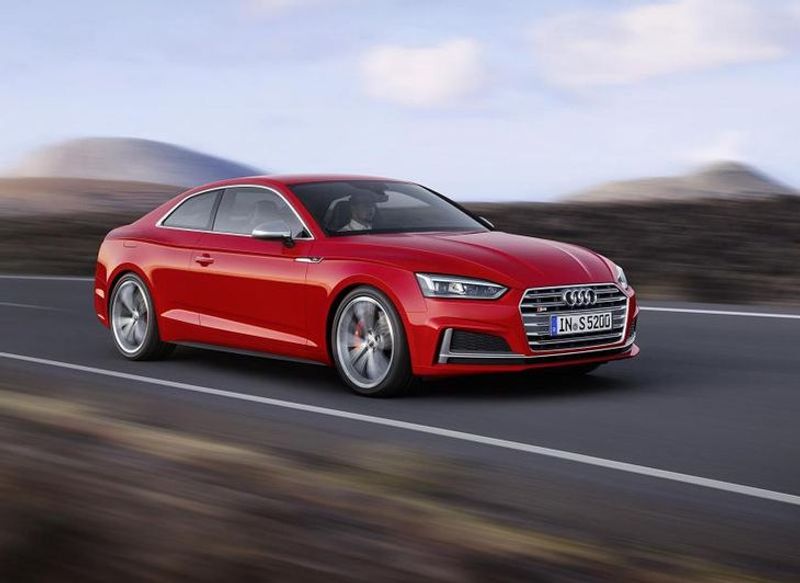
A bigger grille, bigger brakes, S5 badging and quad exhausts are the visual cues that you're looking at the hotter model in the Audi A5 range
If you want an A5 with performance credentials, consider the Audi Sport-fettled S5. At the start of the second day at the launch, we got the chance to drive the current flagship of the range. With an all-new 3.0-litre turbocharged motor (it replaces the old supercharged unit), the S5 offers up respectable numbers and commendable performance. That said, it's no BMW M4 and Mercedes-AMG C63 beater and you'll have to wait until the fourth quarter of 2017 for the mighty RS5, which should give the aforementioned chargers a run for their money.
Still, there's nothing lacklustre about a 260 kW/500 Nm package. Those naysayers who suggest the older supercharged motor was a little more responsive don't really have a case as this engine comes on song under 2 000 rpm and will deliver maximum shove all the way to the redline. Reach for the right paddle on the steering wheel and summon the next gear into action. Then rinse. And repeat.
Look, as a sportscar, the S5 is certainly not pedestrian, yet it feels somewhat lacking in the fun and involvement factor. Perhaps the brand did not want to tread on the toes of its forthcoming been-at-the-gym brother, or maybe Audi was just going about its "we do subtle and classy" business as usual. Let's be realistic for a second, most Audi S5 owners would probably frown upon seat-of-the-pants driving and rather use the engine's performance for quicker overtaking.
The numbers don't lie: Zero to a hundred in under 5 seconds is not slow and getting to its top speed of 250 kph is effortless. Our earlier critique of the A5's lack of soundtrack has been addressed in S5 application and the mild roar from the V6 is much more like it. There are distinct exhaust pops during each gear change and the car makes a lovely growl at full throttle.
We had the opportunity to put the Audi S5 through its paces on some spectacular fast sweeps in the Overberg. The driving position is low and the S5-specific seats offer both style and support in abundance. Unlike its S Tronic-equipped siblings, the S5 makes do with an eight-speed Tiptronic transmission, mapped to feel like a dual-clutch 'box. Downshifts aren't as slick as the marvellous S Tronic though. The steering could be a bit firmer, but given its role as a fast grand tourer, it was never going to be an ultra-direct action like that of, say, an Alfa Romeo Giulia Quadrifoglio.
Throw some corners into the mix and the combination of an excellent chassis and quattro surefootedness instils confidence in the driver. It's an easy car to drive quickly and each corner coaxes you into pushing the handling boundaries into the next. It lacks that hands-on feel and involvement that we've come to expect from this corner of the market, and recent experience with a BMW 440i and a Mercedes-AMG C43 coupe highlighted how a rorty engine mated with competent chassis can prove to be entertaining. The Audi S5 will make you happy if you're after a comfortable, sophisticated and competent grand tourer, but if you're after some fierce with your flair, then look to its rivals to get your driving jollies.
Summary
The Audi A5 is a clear indicator of how the brand is reading the market. It's well aware what its rivals can do in the driving dynamic stakes and it's not going to try take them on until the RS5 arrives. But driving dynamics is just one small facet of motoring; there are many more important aspects such as comfort, practicality and technology, and this is where the Audi really excels. The A5 is a classy, supremely refined vehicle. Given its excellent chassis, exceptional comfort and ride quality, and wide selection of efficient powerplants, we can heartily recommend it as a stylish and sensible luxury coupe. The range will be expanded with the launch of a 5-door Sportback, a convertible and finally the fiery RS5 at the end of the year.