Motorists can expect a hike in fuel prices at the end of October 2016.
The Automobile Association (AA) has stated that fuel prices in South Africa are likely to increase at the end of October, citing unaudited mid-month data released by the Central Energy Fund (CEF).
"There has been a definite appreciation in oil prices since OPEC resolved to cut oil production. The international price of petrol has climbed from 136 US cents per gallon to 148 cents since 27 September. Despite the Rand's gradual appreciation against the US dollar over the same period, there has been a substantial impact on what South Africans are likely to be paying at the pumps next month” the AA said.
Consumers can expect the price of petrol to increase by about 48 cents per litre while the price of diesel is expected to increase by 64 cents per litre.
Expected Petrol Price
Reef – 93: R12.82 / 95: R13.08 / LRP: R12.82
Coast – 93: R12.44 / 95: R12.60 / LRP: R12.60
Expected Diesel Price
Reef – 0.05%: R11.37 / 0.01%: R11.40
Coast – 0.05%: R10.97 / 0.01%: R11.02
The AA also stated that the Rand’s recent fall, due to the NPA’s decision to charge Finance Minister, Pravin Ghordan with fraud, is yet to be collated into the data before the end of the month and could have further negative consequences for fuel prices in November.
The AA concluded that “Our hope is that the matter will be brought to a swift conclusion to reduce the tensions our markets are currently experiencing, and to bring more stability to our economic outlook.”
With traditional automotive firms seemingly facing imminent rivalry from the likes of Apple and Google, they have to position quickly and smartly for the era of the digitalisation of the car. We spoke to the man in charge of BMW’s efforts, Dieter May, at the Paris Motor Show.
Electrification, autonomous tech and digitalisation – these were the 3 buzz items at the recent Paris Motor Show, but while the first two are generally well understood, the latter is not… and yet, it is arguably the most important.
With the pervasiveness of connectivity in the automotive space only set to snowball in the next few years, car companies are scrambling to secure resources and skills to effectively compete with new challengers from the likes of Google and Apple.
The reward for a successful “digitalisation” strategy is not only going to be relevance and survival, but also significant financial reward. Last year consultancy firm McKinsey & Co. predicted that the revenue from data streams and connectivity components would total an estimated 180 billion Euros per year by 2020! That's a pretty attractive incentive…
South Africa is not excluded from this process, with the local launch of BMW South Africa’s ConnectedDrive store and MyConnectedDrive customer portal this month (October 2016).
The man in charge of the BMW Group’s strategy is Dieter May, formerly from Nokia, Infineon, Motorola and IBM – at the latter company he was an R&D project leader. Officially, he is the Senior Vice President of Digital Services and Business Models… a position that did not exist at BMW a mere 2 years ago…
Car firms have to operate like internet companies
Smartwatch support has already been rolled out in several world markets.
Dieter smiles when we start discussing how “disruptive” the digitalisation process is, and will be in the next few years. “That’s the challenge, that’s why I like this job,” he enthuses. “You have 2 dimensions – the first one is the disruption of the traditional automotive industry and if you want to cope with that one you have to operate differently,” he explains.
“So we started from scratch 2 years ago, and we built all R&D internally. We have a development centre in Chicago with pure Internet guys, in Shanghai for the Chinese market, and then Munich. We are operating like an Internet company, which means we have 6 weeks release cycles. If you take BMW Connected as a platform, we launched in the US with a version 1 at the end of March, and by August we’ve had 2 intermediate releases. In August, we also went live in Europe, and in 4 weeks we rolled out 18 countries in Europe. In September, we announced Android, smartwatch integration from Samsung, and a few weeks later we introduced the Amazon Echo integration as another touch point. We have to be this fast because the sustainability of digital value propositions are much shorter because the barriers to replicate are pretty low,” May continues.
"The car will become the ultimate mobile device," says BMW's Dieter May. (pic. Youtube)
Speed, indeed, is crucial. Smartphone users have become used to regular updates to apps and software, and the same will happen to the car. But unlike hardware, copying software is far easier and can be done much faster…
“We’ve already had a competitor do a press announcement where you can see a copy/paste of our experience,” May laughs. “So you need to be really fast, and that is the key if you want to compete.” He also points out that the likely new competitors in the automotive space (Google and Apple) have an advantage because they’re operating from their core competency – speed.
“The fight against them (the tech companies entering the automotive space, ed.) is the key thing, and nobody knows how this will end. We have a lot of assets that we can differentiate through the assets we have in the car, and make digital better than a Google or Apple can,” May believes, indicating that it may be easier for car companies to venture into digital, than it is for digital companies to become car makers… Indeed, recent reports suggest that Apple have scaled back plans to introduce its own car.
“But we can’t be tied to car launches that happen every 5 years, where I need to deliver my software 2 years in advance. My planning visibility right now is 12 months, I know what I’m building next year, but right now I’m freezing what I will deliver in the fourth quarter this year! So there’s an intrinsic difference, and challenge also.”
The car as a digital touchpoint
May points out that BMW’s ConnectedDrive services are hardly new. In fact, the offering has been around for about 10 years! The next challenge is to build on top of this existing connectivity because, after all, the pipeline is already there.
“We believe now that the car will be an ingredient of the digital life of all consumers,” May explains. "It’s not an isolated thing, where you put an app in, you need to think about the car being part of your daily life, like your smartphone, your digital watch, your Amazon Echo device… all these digital touch points. The car is one of those touch points, so we want to bring the best services at the right moment to the consumer.
Almost anything is possible in the long-term
“We first concentrate on what we call the ‘journey of mobility management’, because this is core to us, and I give you a simple example; Today you get into the car, and you have traffic information service. The problem is that if I’m in the car, and it tells me I have an hour traffic jam, it’s a bit late, so that means the journey, for the consumer, needs already to start much earlier. You should get an earlier wake-up call, receive notifications, you get a tank stop built into your journey, and all with the ambition that you still arrive on time at your appointment. These are the things we are building with BMW Connected as a platform, enabling us to accompany the user and make mobility seamless for him.”
Journey management is the focus of the first available Connected functions.
But that’s just the start… Using systems such as Amazon Echo and Alexa voice-recognition tech, you could soon start to form a much closer relationship with your car.
“To its full extent, let’s say you have one fully configured car with reduced production complexity, and you can personalise it on demand. You could put seat heating in there, for example. We know it’s winter, it’s -20C outside, and he now has to drive to the office. We also know it’s damn cold inside the car, so why don’t we ask him if he wants seat heating and convert that into a purchase.”, May ponders.
“So there are so many things possible, because we understand the consumer behaviour, the context that he is in, what he likes, doesn’t like, what he uses, and you can basically then sell additional car functionality and you can also sell additional devices. Today we offer, for free, the integration with Amazon Echo (American market, ed.) and you can also put Alexa in the car. Let's say you see your kids in the back of the car causing terror, then you can simply say, ‘Alexa, please stream a video to my rear seat entertainment’, and you are immediately engaged with another eco system.
The core is really that we have a consumer profile that lives, which is basically dynamic, and we can adapt all experiences in a very contextualised and personal way. The good thing is also that whenever you change your car in the future, you just take your profile with you.”
It's bigger than apps
“The digitalisation of the car is not about apps, which is a word I hate,” May points out. This is much bigger. It’s about engaging with the consumer, being a digital platform… to be able to play the experience out, however you want. The app paradigm is something that is still there but it's probably not the thing of the future.
“We serve all digital touchpoints, that’s our approach, to be as seamless as possible. And we have it. We have it in operation. We’re not selling a vision here. That’s the thing. Because we’re operating like an Internet company. Get something out, and iterate and only make it better. There’s a great opportunity in this revolution, but also a lot to lose.”
What does it mean for South African BMW owners?
The BMW ConnectedDrive store brings selected Connected services to local BMW owners.
With the launch of BMW ConnectedDrive store in South Africa, owners of suitably equipped BMW models can start experiencing the digitalisation of the car for themselves.
BMW Connected uses a flexible platform called the Open Mobility Cloud as a basis, and is claimed to seamlessly integrate the vehicle into the user’s digital life via multiple touchpoints, such as an iPhone or Apple Watch. Initially, most of the services focus on journey management for the vehicle, to help the user reach their destination on time and stress-free.
So how does it work? To begin, the user has to set up a ConnectedDrive account and complete a short online registration process. Then they create their BMW Connected customer profiles quickly and easily.
If you’re a BMW owner and you’re keen to try it out, go here. Note however, that initially, BMW Connected is only offered for Apple iPhone users.
Once registered, BMW Connected scans for any mobility-related information, such as the addresses and arrival times contained in calendar entries and notifies the driver of the ideal departure time for arriving at their destination punctually.
Other functions already available for purchase in the South African store include; Remote, Real-Time Traffic and Concierge Services etc.
You can now get a warranty-friendly power upgrade for the Ford Mustang in SA thanks to Ford Performance and Roush.
The biggest worry with tuning your car is the warranty void tag that comes with vehicle enhancements, Ford however, has put that worry at ease by covering performance upgrades to its Mustang.
An upgraded Mustang with Ford Performance Parts or Roush Performance fitments is covered by comprehensive 3-year/60 000 km powertrain warranty which, will cover the performance upgrades, while the remainder of the Ford new vehicle warranty will not be voided.
Ford Performance has already made performance upgrades for Fiesta ST, Focus ST, Ranger and Everest.
Roush is authorised to distribute 3 levels of upgrades for the Mustang. Level 1 includes cold air induction and an exhaust system. Level 2 includes Level 1 plus some cosmetic enhancements as well as an ECU upgrade. Level 3 further adds the fitment of a Roush supercharger and revised suspension. So far the highest reading achieved on the facility’s dynamometer for a Level 3 Mustang is 514 kW.
Currently, Centurion is the only dealership able to ally these modifications but there is a plan to increase the network of approved dealers across the country. Ford Performance also hopes to have details on the performance upgrades for the Everest and Ranger soon.
Renault has updated its Duster SUV offering with a number of visual and practical enhancements. Let’s take a look at what’s changed…
The Duster SUV has proven to be hugely popular for Renault in South Africa and since its launch in 2013, more than 10 000 Duster’s have been sold and it’s currently one of the best-selling compact SUVs, alongside the popular Ford EcoSport.
In an effort to offer more value for customers, Renault has now enhanced the Duster lineup with a number of additional features, without an increase in price. The changes are as follows.
Exterior:
New headlights and taillight design
New black alloy wheels
Rear camera fitted as standard on Dynamique models
More exterior colours to choose from
Interior:
7-inch MediaNav touchscreen is standard on Dynamique models
Cruise control is standard across the Duster range
Expression derivative now standard with electric rear windows
Drive away lock is standard on all Duster models
Redesigned fabric for inner seat segments and door panels
Leather upholstery is optional on all three Dynamique models
Engine offering
Buyers still have the choice between a 77 kW/148 Nm naturally aspirated 1.6-litre petrol engine offered as a 4×2 in Expression and Dynamique trim. Fuel consumption for this motor is claimed to be 7.6 L/100 km.
For those seeking diesel power, an 80 kW/240 Nm 1.5-litre turbodiesel engine is available in Dynamique trim only and can be had in either 4×2 or 4×4 guise. Renault claims a fuel consumption figure of 4.8 L/100 km for the diesel-powered Duster 4×2 and 5.2 L/100km for the Duster 4×4. A 6-speed manual transmission is standard on all Duster derivatives.
Renault Duster – Price in South Africa
Duster 1.6 Expression 4×2 – R239 900
Duster 1.6 Dynamique 4×2 – R 259 900
Duster 1.5 dCi Dynamique 4×2 – R279 900
Duster 1.5 dCi Dynamique 4×4 – R 304 900
The Renault Duster is sold with a 5-year/150 000 km mechanical warranty, 3-year/45 000 km service plan and a 6-year anti-corrosion warranty. Service intervals are set at 15 000 km.
Honda’s new 7-seater BR-V crossover recently sneaked onto the market in South Africa. Is the BR-V the perfect everyday family car? We put it to the test…
We like: Ride quality, solid interior, lots of space for goods and passengers, decent performance
We don’t like: Awkward loading space when seats are folded down, could do with more airbags and park distance control
Alternatives:
For a bargain: Consider the Suzuki Ertiga 1.4 GL priced at R215 900. It’s powered by a naturally aspirated 1.4-litre petrol engine offering 70 kW and 130 Nm of torque. The Ertiga offers similar practicality to the BR-V and includes rear park distance control as standard.
For more torque: The Mahindra Xylo 2.2CRDi E8 7-seater is powered by a 2.2-litre turbodiesel engine that offers 89 kW and 290 Nm of torque. It is also available as an 8-seater. Pricing for the Mahindra Xylo 2.2CRDi E8 starts from R269 995.
For better safety features: Toyota recently updated its popular Avanza to include stability control, in addition to the already fitted Isofix child seat mounts, dual airbags and ABS with EBD. It is priced from R219 900.
The Honda BR-V is practical, spacious and comfortable to drive.
The arrival of the Honda BR-V on local soil is well timed. Sales figures suggest that buyers are increasingly considering small crossovers and SUVs instead of MPVs and Honda is looking to capitalise on the opportunity with its surprisingly spacious BR-V.
The compact crossover segment is currently dominated by products such as the Ford EcoSport, Renault Captur and Duster, but the BR-V has a few tricks up its sleeve that buyers will find intriguing. The BR-V is Honda’s new compact "crossover SUV" offering, slotting in below the HR-V, and combines practicality, affordability and the ability to seat 7 passengers. In truth, however, the BR-V is more of a cleverly disguised MPV, masquerading as a SUV.
The BR-V range consists of 5 derivatives across three trim levels and we recently had the high-spec BR-V 1.5 Elegance manual on test to determine just how versatile it is. Does the BR-V offer enough value to gain traction in this highly competitive segment? Let’s see what the BR-V has to offer…
How does it fare in terms of…
Kerb Appeal
With its raised ride height, wheel arch mouldings, roof rails and cladding, the BR-V is an MPV disguised as an SUV.
The BR-V features distinctive Honda styling traits as seen in the swathe of chrome detailing found on the grille, fog light surrounds, door sills, door handles and tailgate. If you aren’t a fan of extensive chrome, then you might find the BR-V a tad OTT (over the top). Its boxy shape is softened with slim headlights, roof rails and extended taillight clusters that give it a more purposeful look. A set of stylish 16-inch alloy wheels are fitted as standard and this particular test unit came in the Carnelian Red exterior colour (3 other colours are on offer).
Overall, we think Honda has done a good job in creating a relatively attractive family vehicle and the BR-V seems to pip its 7-seat rivals (Toyota Avanza, Suzuki Ertiga, Mahindra Xylo) in the looks game. Well done, Honda!
Performance & ride quality
The BR-V is powered by the same naturally aspirated 1.5-litre engine that’s found in the HR-V, Jazz and the now discontinued Mobilio MPV. It’s a zingy motor that develops 88 kW and 145 Nm of torque and those numbers drive the front wheels through a 6-speed manual gearbox.
Decent performance is offered in the BR-V and ride quality is good on most surfaces.
Power delivery in the BR-V, with minimal load, is good. The BR-V gets a move on and happily chugs away at highway speed without much effort. Under harder acceleration, however, the engine starts to whine and strain, but in normal driving conditions, engine noise is bearable. When the BR-V is fully loaded with passengers and luggage, performance becomes more sluggish and the driver will be working the gears and engine harder to compensate for the additional weight.
Being a new vehicle, we did find the transmission to be a bit notchy and stubborn at times and it occasionally required additional force to shift into gear. This characteristic should improve once the vehicle has done sufficient mileage, though.
We were impressed by the BR-V’s impeccable road manners. It handles well and delivers a surprisingly composed and comfortable drive, even on puckered road surfaces. Despite its dimensions, the driver can confidently steer the BR-V into corners and it’s nippy between robots too. Also, note that the BR-V has a ground clearance of 210 mm, which means it can hop the odd pavement if you need it to. The generous ground clearance and plump tyres (196/60 R16) also means that the BR-V is quite comfortable on gravel. Note, however, that no electronic stability system is fitted.
In terms of fuel consumption, Honda claims 6.3 L/100 km and during our test period, we averaged 7.1 L/100 km with ease. You can, however, expect higher figures if the BR-V is fully loaded.
Practicality
Vehicles that claim to seat 7 passengers usually do so at the discomfort of the poor souls who have to cram into the third row, which is more often than not only adequate for little people or the dogs. The BR-V shatters that mould in the sense that it actually offers decent levels of comfort for fully grown adults. The third-row in the BR-V offers good head and shoulder room, while legroom is adequate, depending on your height – the shorter you are, the better. There are even two cup holders back there to keep passengers happy!
Third-row seating is easily accessed in the BR-V and even adults will find it surprisingly comfortable.
Accessing the third row is simple and can be done by flipping the split-fold middle row of seats up. Space for second-row passengers is very generous and you can actually stretch out a bit, too. There’s also a foldable armrest that can be deployed for extra comfort. The rear door mouldings are equipped with bottle holders and additional storage space and rear passengers also have the benefit of roof-mounted ventilation outlets.
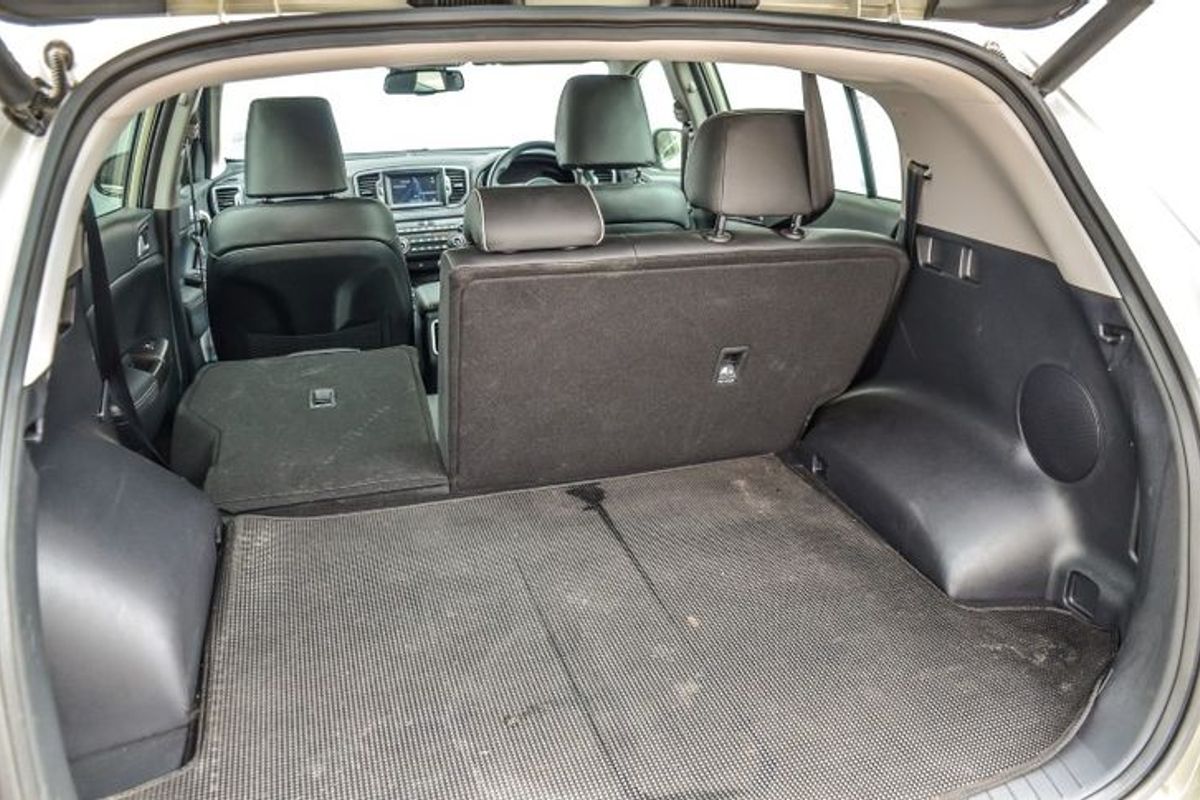
In terms of loading space, with all the seats in place, the BR-V still offers 223-L capacity in the rear. With the third-row seats folded up, space increases to a sizable 691 L and when the second row of seats are folded down, space increases to 1 116 L. However, in this position, the loading area isn’t flat and you will be loading items directly onto the backs of the seats, which could cause damage over time. This Elegance derivative is fitted with leather seats and loading heavy or sharper items will almost certainly result in torn leather.
Boot space can be increased further by folding the third-row seating up, creating ample space for large and bulky items.
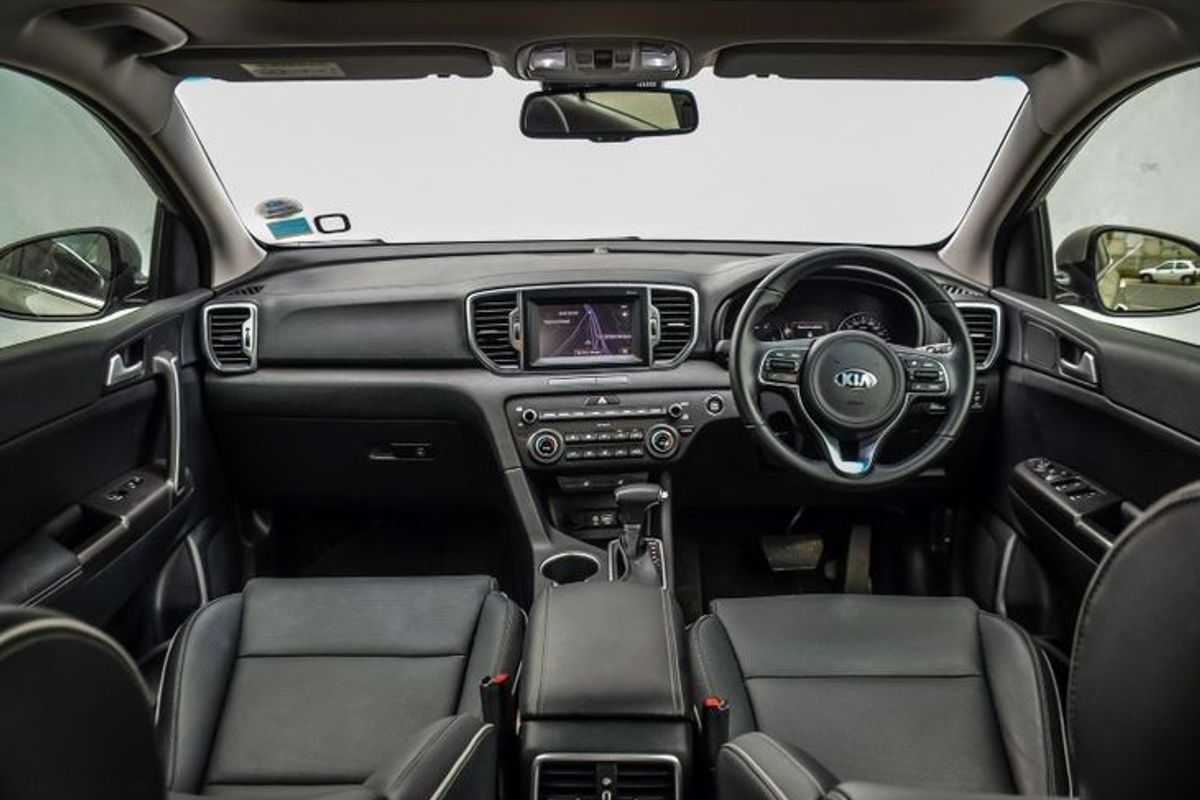
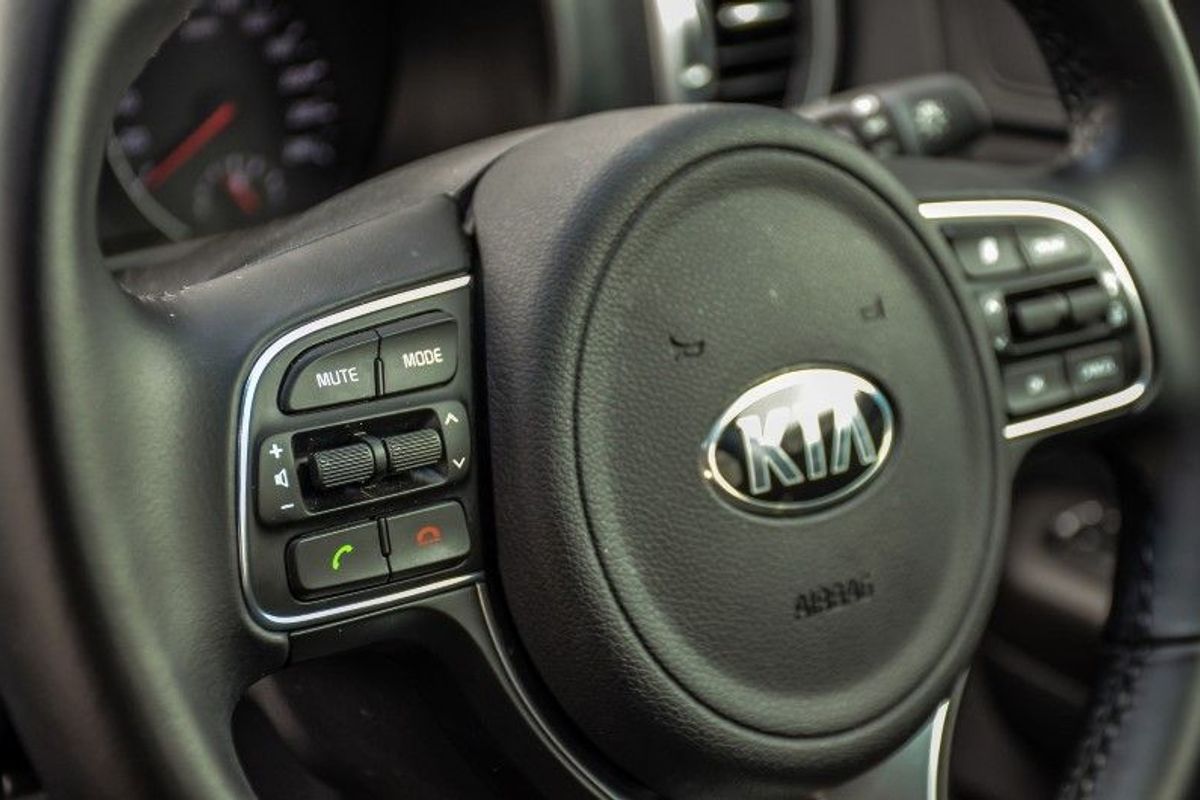
The driver and front passenger also have sufficient space and the driver’s seat is manually adjustable with height adjustment. The steering wheel features mounted audio controls and is adjustable for rake only. There’s also ample storage space up front with two cup holders included and there’s more storage space in the door mouldings.
Practicality is a clear strength of the BR-V and it should prove to be a particularly attractive proposition for small families. The only major concern we have with the BR-V's specification is that it only offers 2 airbags (for the driver and front passenger), which may force family-orientated buyers to consider safer options. Isofix child-seat anchorages are also missing from the standard features list. If the lack of these safety features are a concern you may want to look at the recently updated Toyota Avanza, which now featurs electronic stability control as well as Isofix.
Features
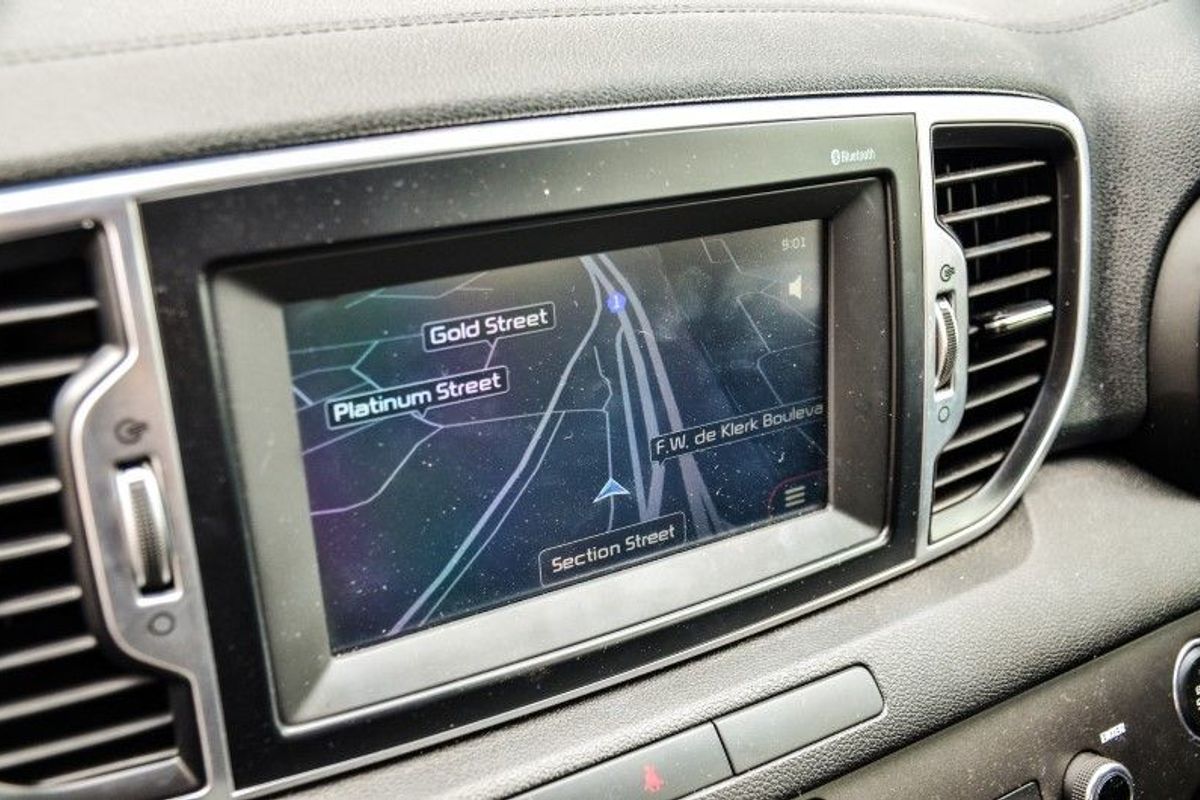
The BR-V 1.5 Elegance is decently equipped with standard features, including keyless start, leather upholstery, climate control air conditioning, electric windows and side mirrors and a multi-information display. A rather simple radio system is installed, which is Bluetooth compatible and easy to use. USB and auxiliary ports are fitted as standard.
As mentioned previously, the BR-V only has two airbags and ABS with EBD and brake assist is standard. We were also surprised to find that rear parking senses aren’t fitted, which is odd considering the dimensions of the BR-V. Even the much cheaper Suzuki Ertiga 1.4 GL has rear parking sensors fitted as standard…
Simple and functional best describes the interior of the new Honda BR-V.
Pricing and warranty
The Honda BR-V 1.5 Elegance manual is priced from R272 900 and is sold with an excellent 5-year/200 000 km warranty and 2-year/30 000 km service plan.
Pricing for the entry-level BR-V 1.5 Trend starts at R238 900 while the most expensive derivative in the range is the BR-V 1.5 Elegance CVT priced at R288 300.
Verdict
The Honda BR-V 1.5 Elegance is a well-packaged crossover SUV that offers lots of space and versatility for a variety of family tasks.
Engine and gearbox performance is decent in most applications and unless you are loading the BR-V up to capacity on a regular basis, there should be enough power at your disposal. Importantly, the BR-V rides well and buyers will appreciate its smooth demeanour on most road surfaces.
At this price point, we feel the BR-V falls short in providing critical features such as additional airbags and stability control. The BR-V 1.5 Elegance is also pricier when compared to the Suzuki Ertiga that offers similar practicality, but the BR-V is certainly worth consideration if you are looking for a relatively affordable and spacious 7-seater crossover, but prefer the more fashionable appearance of an SUV over a MPV.
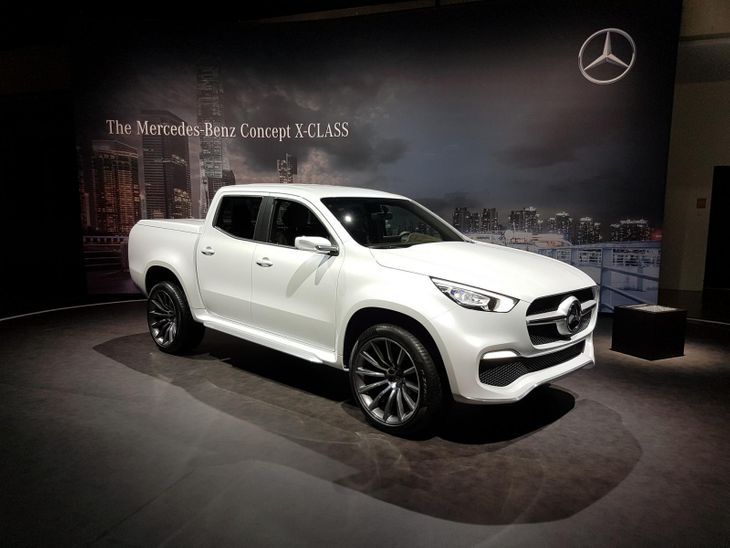
Update: Mercedes-Benz GLT Bakkie To Be Shown Soon (Video)
Mercedes-Benz will show its new GLT bakkie before the end of October and it can be expected on showroom floors in 2017.
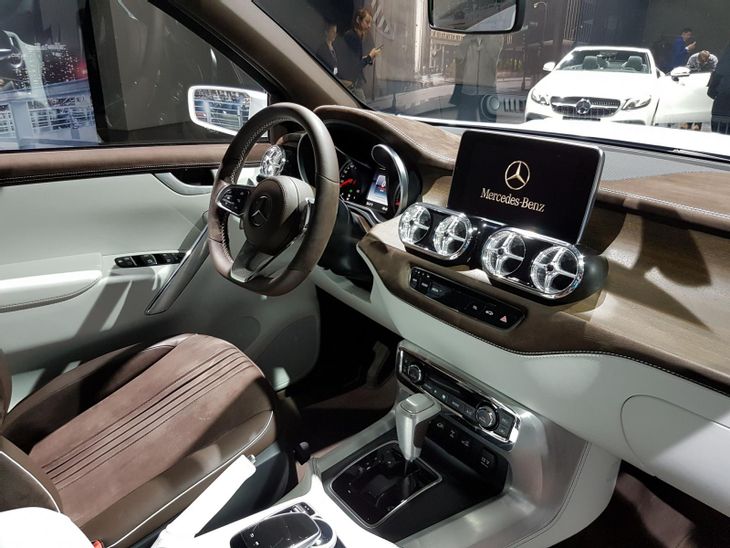
Rumours are rife that this new model from Mercedes-Benz will be called the GLT, but nothing has officially been confirmed. It will be built on the new Nissan Navara platform, but will feature luxury appointments and technology. Mercedes-Benz commercial vehicle division head Volker Mornhinweg revealed last year that the “GLT” will be produced in 3 specification levels and only as a double-cab. It is expected that turbopetrol and –diesel powerplants will be offered in 4- and 6-cylinder guises and that there will be a choice between 6-speed manual and 7-speed automatic transmissions.
Speaking to Cars.co.za at the 2015 Frankfurt Show, Mornhinweg said that the double-cab would offer sufficient build- and driving refinement to meet Mercedes-Benz's strict quality levels. It will be sold from passenger vehicle dealerships (as opposed to its commercial vehicle outlets). The premium focus would extend beyond Benz offering the most luxurious cabin in its segment, he added — the level of integrated technology (convenience- and safety-wise) will be at a level that traditional Mercedes-Benz customers have come to expect. It is estimated that this new Mercedes-Benz bakkie will be launched sometime in 2017.
According to reports, Mercedes-Benz will officially reveal the GLT at an invite-only event on Tuesday 25 October 2016 before making its world debut at the Sao Paulo Motor Show in Brazil.
Are you excited to see the Mercedes-Benz GLT in South Africa? We certainly are…
Update: Mazda MX-5 RF Coming to SA in 2017 (Video)
Mazda has started production of its retractable fastback version of the legendary MX-5 roadster, and it's coming to South Africa!
Mazda’s iconic and much loved MX-5 roadster will now feature a fastback design incorporating a three-piece electrically retractable roof, which will soon stand alongside the fabric roof version.
Production of the new MX-5 RF (Retractable Fastback) commenced this month at Mazda’s Ujina Plant No.1 in Hiroshima. The MX-5 RF will go on sale in Japan before the end of the year and will also be exported to Europe and North America, with sales starting in early 2017.
South African MX-5 fans can expect to see the RF on local soil in the first half of 2017.
The MX-5 is a successful model for Mazda, having won more than 280 accolades worldwide. The current fourth-generation MX-5 scooped the 2016 World Car of the Year and 2016 World Car Design of the Year and has also been nominated in the Fun Car category of the annual Cars.co.za Consumer Awards – powered by WesBank.
Distinguished by futuristic looks, a new, responsive turbopetrol motor and spacious interior, the Civic seeks to bridge the divide between compact and business class sedans. It comes well specified and is satisfying to drive, but can Honda lure buyers away from the premium marques?
We like: Progressive styling, legroom and boot space, engine-transmission combo, ride quality
We don’t like: Feels an upmarket product, but there are a few finish and trim niggles
Alternatives:
For more space and power: Ford Fusion 2.0T Trend (R433 900) is a fully fledged D-segment saloon with a feisty 149 kW motor and spacious cabin. Spec-wise, it cannot match the Honda for luxuries (even alloy rims are optional), fuel efficiency is middling and its build quality is fair, but not great.
For sophisticated comfort: Volkswagen Passat 1.4TSI Comfortline auto (R432 600) may be a trifle too conservative for some tastes, but it’s a very well-made family sedan. Lags behind the Honda in terms of specification, but is lighter on fuel and comes standard with a 5-year maintenance plan.
In case you missed it: If it’s a capacious family sedan you’re looking for, there are a number of recently-discontinued cars to consider, such as Mazda6, which (in top-spec) offers a well-finished, generously specified interior and 2.2-litre turbodiesel automatic powertrain. Find one on Cars.co.za
If you ignore the premium-marque-dominated business class segment for the moment, the history of the large family saloon in South Africa reads like a Greek tragedy. Discontinued in the recent past are (in alphabetical order, not by order of merit): Citroen DS5, Honda Accord, Hyundai Sonata, Kia Optima, Mazda6 and Peugeot 508; market leaders Toyota last dabbled in this segment a decade ago with the Avensis and are unlikely to return. That leaves us with only the Ford Fusion, Lexus ES and Volkswagen Passat to compete with dominant Audi, BMW and Mercedes-Benz products.
The Civic's Sport specification foregoes lashings of chrome brightwork for edgy black accents.
The new, enlarged Civic is purported to fill the void left by its departed Accord sibling, but it needn’t bother in that regard, because as much as we’d like to take a myopic view and blame the family sedan’s demise squarely on SA consumers’ penchant for brand snobbery, the fact that the family car segment of Cars.co.za Consumer Awards is locked out by compact SUVs/crossovers speaks volumes.
But wait, the Ballade (the car that we now know as the Civic, not to be confused with the Jazz-based product) was always positioned slightly above volume compact sedans (it was regarded as a kind of junior executive/business class sedan). It was sporty to drive, offered commendable build quality and finishes and had a kind of classless, cross-generational appeal. Unfortunately for Honda, the Civic became an increasingly conservative, if accomplished, proposition – especially in sedan guise. So, perhaps if the Japanese manufacturer could revive the sedan’s spiritedness, there’s some hope.
How does it fare in terms of…
Standout looks?
Ever since the sci-fi inspired 8th-generation Honda Civic hatchback (launched in South Africa in 2006), dropped out of light speed near Earth and descended to terra firma, only the now-defunct CR-Z hybrid could be described as a Honda with any semblance of arresting styling; the rest of Japanese manufacturer’s products have all been humdrum and staid in terms of aesthetic execution.
The 1.5T Sport marks the first time that the Civic has sported a standard rear spoiler in many a year.
Well, consider the reset button a-pressed. The newcomer, brandishing a Sport-spec wing-shaped black grille, menacingly slanted LED-laced headlights, purposeful slashes in the flanks, a side-glass area that tapers to the rear in concert with an almost fastback-like rear screen, looks low-slung and eminently sporty; the 17-inch alloys fill out the wheel arches handsomely and, from the rear, the elaborate C-shaped taillights neatly cup the spoiler-adorned boot line. Kerb appeal? Check.
In a segment not renowned for adventurous outer packaging, the Honda is just “from outer space”, yet “smart and distinguished” enough to attract the right kind of attention from prospective buyers. Not all testers agreed that the rear spoiler was an appropriate addendum, given that it is attached to a CVT-employing family car with a mere 127 kW at its disposal, but more about that later…
Spaciousness and luxury?
The Civic’s interior treatment strikes a tasteful between the futuristic and classic. The instrument cluster, for example, is a vibrant all-digital affair (and no, that’s not an optional extra), yet Honda has segmented it into three stacked sections and added racy brushed metal copings for the temperature and fuel readouts. In fact, the application of metallic trim is quite minimal, yet effective, on the soft-touch dashboard, climate control- and centre consoles as well as the multifunction steering wheel.
The Civic's interior features a number of sporty touches, including shift paddles and drilled aluminium pedals.
The driving position is low and engaging, so much so that even our taller testers felt the need to ratchet the driver’s seat up a notch and a little further back to adopt a relaxed daily-commute position. We were impressed with the quality of the cabin materials, especially the uppermost plastic surfaces and appreciated ample space to rest a mobile phone out of sight under the bottom edge of the fascia, plus the generous oddment space underneath the centre console.
Ergonomically, there are elements that are good… and not so good. As far as the steering wheel is concerned, we applaud Honda for packing so much functionality into the tiller’s simplistic controls. We believe that the touch sensitive volume controller, for example, which responds to fingertip glides to adjust the audio system’s output, will definitely catch on. However, the 7-inch infotainment touchscreen may look slick, but its menus seemed a trifle clunky to navigate, which would get easier with familiarisation, but it’s still not as responsive or intuitive as most smartphone interfaces.
As for rear accommodation, our testers had no difficulty getting seated behind the driver’s seat when the former was set up for themselves and the shoulder- and headroom available was perfectly acceptable, which is even more impressive given that the cavernous boot is claimed to swallow 430 litres. So far we’re not missing the Accord much, but there’s always a caveat.
This cross-section of a Civic cabin demonstrates how much added rear legroom has been availed.
Although we were generally impressed with the upmarket ambience and luxury appointments of the new Civic, there were elements that we thought could be improved. Upon opening the driver’s door, for example, you can see an (albeit impeccably painted) welding seam, the lid of the glovebox felt insubstantial and one tester noted that the boot lid trim seemed to be slightly loose at its edges.
Ride and handling?
For all the criticism that continuously variable transmissions have copped in the past, detractors have often failed to mention that CVTs are usually combined with motors with narrow peak-torque bands (in rpm), leading to drivers and occupants having whirring and oft-shrill aural experiences.
Honda (and other manufacturers) have engineered “steps” into the way the CVTs operate to endow them with torque converter gearbox-like “shifts”. More importantly, the Japanese manufacturer, having been slower to adopt turbocharging in passenger vehicle applications (compared with its European counterparts), has produced a plucky forced-induction 1.5 litre that avails 220 N.m from 1700 to 5500 rpm. It’s not the most potent motor, but proved very willing and, importantly, flexible.
In a welcome return to form, for a non-Type-R Honda product at any rate, the Civic responds eagerly to inputs; in fact, the steering seems a little too quick/pointy, perhaps because it is feather-light.
The dominance of the digital rev-counter on the dynamic digital instrument cluster will please driving enthusiasts.
And it’s all good news from that point on. Be it as a combination of the plump 215/50 rubber tyres or the anti-seesawing composure of its extended wheelbase, the Civic has a pliant ride quality, without insulating its driver entirely from the road surface. At freeway speeds, the sedan demonstrates low levels of wind, mechanical or structural sound intrusion. It is in this aspect that Honda’s newcomer sets itself in a different league to its (smaller) compact sedan rivals.
Value for money?
At its asking price of R430 000, the Civic seems pricey compared with its traditional compact sedan rivals, yes, because it juxtaposes the 1.5T Sport with a mid-spec Ford Fusion and entry-level Volkswagen Passat. Then there is the small matter of being within touching distance of the less practical, lower-spec but very desirable Audi A3 sedan and, to a lesser degree, Mercedes-Benz CLA.
In its defence, the Honda has a very competitive powertrain, a healthy dollop of charisma and over and above the mod cons expected on vehicles of its stature, the derivative comes equipped with a full leather interior, climate control, keyless entry with remote start and auto lock, heated front seats, cruise control, electric folding mirrors, rear PDC and reverse camera, an 8-speaker Bluetooth compatible touchscreen audio system – all standard. Front PDC would have been nice to have too.
In terms of safety specification, dual front-, side and curtain airbags, ABS with EBD, vehicle stability control, hill start assist and the firm’s agile handling assist (AHA) system if fitted. Full marks there.
Given the conventional silhouettes of its Civic (and Accord) predecessors, Honda's newcomer cuts a distinctive profile.
Price and after-sales support
The 1.5T Sport costs R430 000, which includes a 5-year/200 000 km warranty, a 5-year/90 000 km service plan, as well as 3-years of AA Roadside Assistance. Services are at 15 000 km.
Verdict
It’s been a while since a Civic sedan has stirred much excitement, but Honda, having erred on the side of conservativism to the benefit of its products’ quality, reliability and, ultimately, reputation is gradually regaining the sense that its vehicles don’t only need to be solid, but bold and spirited too.
After all, in a cut-throat automotive market, a volume-selling brand cannot dare to be viewed as 1-dimensional or dull and we humbly suggest that it is easier for a marque to button down than put on a blazer and tie. The new Civic sedan embodies most of Honda’s best-known and finest traits, but it also has a sense of daring (from a stylistic point of view) and fun (as a mildly engaging driver’s car).
This one-rung-below-flagship derivative of the Civic feels more substantial, luxurious and refined than its traditional rivals and, yes, it’s even entertaining to drive. We are not too concerned with the quality niggles we discerned (we drove one of the first models to arrive in South Africa), but at its price point we are unconvinced the Civic nameplate has the sheer brand cachet required to pinch notable sales from well-entrenched marquee-badged rivals. What’s more, the newcomer’s sedan configuration seems a drawback in a market obsessed with crossover/SUVs, of which Honda itself has good ones.
Those who do opt for the reinvigorated Civic are highly unlikely to be disappointed with their purchases, however. This ambitious newcomer bodes well for where Honda, as a brand, is heading.
The claimed average fuel consumption/emissions figures of contemporary vehicles are calculated in a way to ensure that they will comply with tightening emissions regulations, not give consumers realistic indications of how much fuel their cars should consume in general use. Therefore, downsizing (fitting smaller, turbocharged engines augmented by turbocharging) is not an ideal solution to better fuel economy – and the emissions game's about to change anyway.
Downsizing refers to the process of either reducing an engine’s cubic capacity or reducing the number of cylinders. Most manufacturers combine both techniques in order to reduce fuel consumption. This will also reduce CO2 emissions because when consumption in L/100 km is multiplied by 23.3 for petrol engines and 26.2 for diesel engines the answer will be the CO2 values in grams/km.
Some V8 engines have been dropped in favour of 6-cylinder engines, while sixes have been replaced by fours. Many naturally aspirated four-cylinder engines with capacities between 1.4- and 1.6-litre have been replaced by turbocharged 3-cylinder engines displacing between 1.0- and 1.2-litres. These changes have been forced onto manufacturers by the ever more stringent fuel consumption limits demanded by governments.
A really good video showing the components and operation of a three-cylinder engine.
Advantages
Removing 1 cylinder from a 4-cylinder engine, or reducing the cubic capacity by a significant amount must have the following advantages:
Internal frictional losses will be reduced since the piston ring/bore interface is the highest source of friction in an engine.
The engine will weigh less, take up less space, and will be cheaper to produce in unblown form. If it is turbocharged the price advantage will be lost.
When it comes to engine repair time the smaller number of cylinders will be a distinct advantage.
Driving sedately MAY result in low fuel consumption values.
You may end up paying a zero CO2 emission levy. Passenger vehicles emitting more than 120 g/km of CO2 are taxed at R75 per g/km for every km above 120 kph when buying a new vehicle.
Disadvantages
Many downsized engines are turbocharged or supercharged to restore the power and torque lost due to smaller displacement. This will increase the complexity and service costs of the power unit as well as the control mechanisms.
Road tests by magazines and motoring organizations have shown that most downsized engines, and especially the smaller ones, find it difficult to achieve the claimed fuel consumption figures.
Some downsized engines are not as smooth as the bigger units. The smaller number of cylinders always introduce higher levels of vibration that often require special mechanisms to reduce the vibration’s amplitude. For example, 3-cylinder units introduce a transverse torque that tries to tilt the crankshaft (when seen from the side of the engine). This has traditionally been balanced by an engine-speed balance shaft, and the threes from BMW, GM, Fiat and Nissan do incorporate such as shaft. However, the new Ford and Toyota 3 employ an innovative setup using specially unbalanced flywheels and front pulleys to achieve the required engine smoothness. This is an extra complication compared to an old-fashioned 4-pot, but modern 4 cylinders often have balance shafts as well.
Small turbocharged engines tend to suffer from turbo-lag. Such an engine needs time to spool up to the high (up to 250 000) revs where it delivers a high boost. BMW get over this by employing a small low inertia turbo for low-speed boost and a larger turbo for high-speed boost. Volvo uses employs a supercharger to enhance boost at low speed and a turbo to deliver extra boost a high speed.
Why the heavier fuel consumption?
A major reason for being disappointed with the fuel consumption is that motorists expect to get close to the manufacturer’s published figures. These are usually measured according to the NEDC (New European Driving Cycle), and this test is known to be unrealistic.
During full-throttle acceleration in a petrol-engined turbocharged or supercharged car there’s always a risk of harmful detonation taking place. The control unit copes with this risk by either retarding the ignition timing or supplying a rich fuel mixture or both, as soon as the knock sensor gives a warning signal. In the first case the engine deviates from the ideal timing and in the second case the fuel consumption increases.
Diesel engines do not have a detonation problem, but runs very lean at part throttle. This means that they also tend to use more fuel at large throttle openings.
Blown engines usually run at significantly lower compression ratios than unblown engines to avoid the risk of detonation that arises from the increased combustion pressure and temperature. This lowers engine efficiency.
Driving sedately is difficult with a turbo because it’s natural to use extra power if it is available.
The above paragraphs show that one can only get good fuel consumption from a turbocharged engine by avoiding large throttle openings.
NEDC (New European Driving Cycle)
Measuring fuel consumption on the road does not give repeatable results. There are too many variables that cannot be controlled. This test was developed in the late fifties and updated in 1970 to provide a more scientific way to measure fuel consumption. The test is done in a temperature-controlled room on a chassis dynamometer in a strict sequence of events to reduce uncontrollable influences. Unfortunately the test is completely out of sync with modern motoring habits. One can see from the graph and the video that the vehicle speed is mostly below 120 kph and the acceleration is leisurely. In a turbocharged engine this means the turbo is just idling so that its above-mentioned disadvantages are masked.
A Dutch video with English subtitles. It shows a journalist driving on the road according to the NEDC test cycle in order to demonstrate how ridiculous the test is. The NEDC is composed of two parts: ECE-15 (Urban Driving Cycle), repeated 4 times, is plotted from 0 seconds to 780 seconds; EUDC (Extra-Urban Driving Cycle) is plotted from 780 seconds to 1 180 seconds.
Summary
Modern engines (especially 3-cylinder turbocharged ones) are not designed for the real world; they’re designed for the NEDC and similar Japanese and American test cycles, but a change is on the way. The Volkswagen emission debacle has put a lot of pressure on the industry to adopt a more realistic on-the-road test cycle.
The European Union is introducing new-model on-the-road testing for NOX pollution next year, and for fuel consumption and CO2 emissions 2 years later. This announcement has forced most automotive engineers to admit that their cars emit far more pollutants on the road than on a NEDC dynamometer test.
The surprising consequence is that some manufacturers are having second thoughts about extreme downsizing and fitting turbos. At the recent Paris motor show Thomas Weber, head of research and development at Mercedes, said: “It becomes apparent that a small engine is not an advantage. That’s why we didn’t jump on the three-cylinder engine trend.”
What's more, Reuters reports that the new test will effectively kill the development of small turbocharged engines due to the fuel consumption penalty (for petrol engines) and NO X penalty (for diesel engines) when driven at real-world speeds.
The agency quotes sources that suggest "Renault, General Motors and VW are preparing to enlarge or scrap some of their best-selling small car engines over the next three years" and "other manufacturers are expected to follow".
"The tougher tests may kill turbodiesel engines smaller than 1.5-litres and (petrol motors) below about 1.2-litres, analysts predict", the report adds.
Our 5 contestants in the running to advance to the final of the Fortuner 4×4 Challenge have to tackle a set of challenges in order for us to select the strongest candidate to vie for the grand prize. First up: a test of their off-roading skills…
In episode 1 of our 3-part video series about the #carsfortunerchallenge, our finalists take on a 4×4 challenge at Hellgat near Melkbosstrand in Cape Town. Points are deducted if they hit any of the demarcated cones, reverse or damage the Fortuner… nail-biting stuff.
Look out for the rest of the episodes coming up over the next 2 weeks to see who Cars.co.za will select to go to the final and stand to win the Toyota Fortuner 2.4 GD-6 4×2 manual.
Want to know what the Fortuner challenge is all about? Check it out here