Volvo V40 D3 Momentum (2016) Review
We recently tested the facelifted Volvo V40 D3 Momentum. Does the middle-of-the-range turbodiesel-powered V40 offer enough value to warrant your attention? Let’s take a look…

We Like: Styling, quality interior, ride quality, safety features

We Don’t Like: Distracting buttons on centre console, small boot and limited rear passenger space

Alternatives:

  • For a sportier drive: Consider the BMW 120d 5-door automatic priced from R484 500. Its 2.0-litre turbocharged engine produces 140 kW and 400 Nm of torque. The 120d will offer a sportier drive, if that’s what you’re after. You can also consider the 140 kW/400 Nm Volvo V40 D4 Momentum for more kicks, priced at R451 200.
  • For better value, but less spec: The Volkswagen Golf 2.0 TDI Highline at R432 700 is the top-of-the-range Golf derivative bar the GTI. Well-built and practical, but not as well specified as its Highline nameplate might suggest, it is due for a facelift soon. 
  • For more practicality, but at a premium: The facelifted Audi A3 Sportback is now listed on Audi South Africa's site. With premium appeal as well as family-friendly packaging, the hard-to-fault 2.0 TDI S tronic starts at an eye-watering R489 000, however. 
  • For similar style: Consider Mercedes-Benz A200d Style, offering 100 kW and 300 Nm of torque from its 2.1-litre turbocharged engine. Interior quality is good and the A200d Style is priced from R467 500.

Compare the Volvo V40 D3 Momentum with the BMW 120d 5-door automatic and the Mercedes-Benz A200d Style.

Frugal and fun


The Volvo V40 D3 is a stylish premium hatchback offering decent performance for the daily commute.

We recently tested the range-topping Volvo V40 Cross-Country T5 AWD Inscription derivative and although it offered sufficient power and torque (180 kW/350 Nm), it returned higher than expected fuel consumption figures, averaging 9.8 L/100 km. Does the turbodiesel-powered V40 D3 strike a better balance between performance and economy? Let’s see what this V40 D3 Momentum has to offer…

How does it fare in terms of…

Kerb appeal?

The V40 is undeniably attractive and this D3 looks even better with the "Thor’s Hammer" LED headlights and 18-inch Narvi alloys (both of which part of the R27 500 Sport Pack). This test unit came dressed in pastel Amazon Blue and our test team were torn between opinions as to whether the colour does the V40 D3 any justice. We will leave that for you to decide. We think there are better colours on offer from Volvo…

Another rather interesting point of contention in the Cars.co.za office was what Volvo calls the new City Weave interior, in this case a blonde colour scheme with a tweed-like fabric pattern on the seat upholstery. Volvo refers to the (no cost option) City Weave interior as “timeously trendy” and we don't quite agree.


The City Weave interior will appeal to those with a particularly sophisticated taste, but it's difficult to keep tidy.

Although the City Weave interior exudes an air of sophistication and classiness, we found it to be rather polarising. The City Weave is an acquired taste and those with a penchant for tweed will find it appealing, but bear in mind that the V40's prospective second owners might not. In fairness though, the members of our team are not exactly fashionistas; you will know if you like it, or not. Buyers will, however, appreciate the solid build quality and finish of the interior.

Performance and ride quality?

This V40 D3 is powered by a 2.0-litre turbodiesel that develops an honest 110 kW and 320 Nm of torque. The front wheels are driven through a 6-speed automatic transmission that also allows for driver-actuated manual gear changes. The transmission operates smoothly and copes reasonably well with sudden throttle inputs when swift overtaking manoeuvres are required.
 
Out in the thrum of the city, the V40 D3 is an average performer. It has enough power and torque to navigate the daily grind, whether it be on the highway or on city streets, but it does leave you wanting a bit more when you bury your right foot in search of more performance that never quite materialises. That said, if you are looking for more shove from your diesel V40, then the 140 kW/400 Nm D4 Momentum is a better bet.
 
With a claimed zero to 100 kph sprint time of 8.4 seconds, the V40 D3 won’t get your heart pounding, but it’s sufficiently able and its good ride quality more than makes up for its shortfall in outright performance. It’s a comfortable car to drive, especially on longer journeys. The D3 also feels more nimble when you are pressing through a bend and it delivers a composed drive that reassures the driver on every journey. The steering is well-balanced and lighter compared to the heavier V40 Cross Country T5 AWD version we tested recently, making it feel lighter and more manoeuvrable when you are getting a move on.

In terms of fuel consumption, Volvo claims 4.0 L/100km, which we found to be rather ambitious. During our test, the V40 D3 Momentum averaged 7.6 L/100km.

Practicality?

The Volvo V40 features a notably smaller boot compared with the class-leading Volkswagen Golf (380 litres). However, at 335 litres the V40’s boot can still store a fair amount of luggage and it comes equipped with a false floor, that when lifted up, can store flatter items out of sight. A 12V socket is also availed on the side of the luggage bay should you ever need it. The rear seats can fold forward in a 60:40 configuration, which increases utility space to 1 032 litres.


Boot space in the V40 D3 is smaller than its rivals but it's adequate for shopping and weekends away.

Space for rear passengers in the V40 could be better. Taller passengers will have an issue with the sloping roofline that encroaches on headroom, while tight leg and knee room may also be problematic. Children, however, should find the rear bench suitably comfortable. A large rear central armrest adds a degree of added comfort for rear passengers. The door pockets also feature storage space for bottles and other items such as books or magazines.

The driver’s seat is electrically adjustable with a memory function and the side mirrors and windows are also electrically operated (welcome standard features). Finding the perfect driving position is easy and the steering wheel can be adjusted for rake and reach and comes with mounted controls.


The plethora of buttons on the centre stack are distracting to use while driving.

Possibly our biggest issue with the V40 is the button-laced centre stack where the driver controls the climate control air conditioning, telephonic functions and infotainment system. It takes some time to come to grips with all the buttons and functionality and they are particularly distracting to use while driving. We think Volvo’s touchscreen system, seen in the XC90, is a much better and safer solution. 

Buyers that opt for the City Weave interior (blond colour in particular) should also take note that this interior shows dirt and marks up very quickly. Even the simple action of getting in and out of the V40 will start to leave clothing marks on the exposed "blonde" leather trim. Scuff marks from shoes quickly become visible on the doors and you will in all likelihood have to clean the interior on a regular, if not weekly basis.  

Features?


The interior is comfortable, well-built and sufficiently equipped with features.

One of the features that we enjoyed using on this V40 D3 test mule was the optionally fitted adaptive cruise control (cruise control is standard). It works so well and it’s easy to engage using the multifunction steering wheel. The driver can adjust the following distance to the vehicle in its path of travel and the V40 will accelerate and brake according to the traffic situation, making for a stress-free drive.

Adaptive cruise control is offered as part Volvo’s Driver Support Pack (R32 500) that includes a host of additional safety features includes a blind spot information system, cross traffic alert, driver alert system, active high beam, lane keeping aid, pedestrian detection and a rear parking camera. Volvo’s automated city safety braking system and tyre pressure monitoring system is fitted as standard.

Standard safety features fitted to this V40 D3 derivative include 8 airbags, ABS with EBD, brake assist, hill start assist and stability and traction control.

Buyers can also opt for the Sport Pack (R27 500) to further enhance their V40 and some of the added features include a digital instrument cluster, ‘Thor’s Hammer’ LED headlight signature, navigation, high-performance sound system with 8 speakers and park assist pilot. This particular test unit was also fitted with a panoramic sunroof (R8 500) that gave the cabin an airy feel.

Price and warranty

The Volvo V40 D3 Momentum is priced from R441 400 and is sold with a 5-year/100 000 km warranty and 5-year/100 000 maintenance plan.

With the optional Sport Pack, Driver Support Pack and panoramic sunroof fitted, this test unit is priced at R509 900.

Verdict

The Volvo V40 D3 is a stylish offering that delivers decent performance for everyday driving and although the returned fuel consumption was a bit higher than we expected, it still performed admirably. The V40 is comfortable to drive and comes reasonably well equipped with standard features. Buyers who prioritise space might be disappointed with the V40, but for tasks such as the school run, shopping and weekends away, you will have more than enough. If you require more space, it's probably best to look elsewhere. The interior is of high quality and safety conscious buyers will appreciate the level of safety offered in the V40, especially if you opt for the Driver Support Pack (R32 500), which is recommended. Perhaps the D3's biggest problem is that the D4 derivative, which produces peak outputs of 140 kW and 400 N.m, costs a mere R10 100 more… Nonetheless, it is a mature, grown-up quality product.

Related content

Volvo V40 Cross Country T5 AWD Inscription (2016) Review
Volvo V40 Facelift (2016) First Drive
Finalists for Cars.co.za Consumer Awards – powered by Wesbank

Want to buy a Volvo V40?

Find a new or used Volvo V40 on Cars.co.za

Toyota Adds Auris Xi to SA Range


Toyota South Africa has bolstered its Auris hatchback range with the addition of a Xi derivative.

The Auris is a hatchback version of the successful Corolla sedan and in an effort to offer more value for customers, Toyota has now added the Auris Xi to its range. The Auris Xi is positioned between the base model Auris X 1.3 and the mid-spec Auris Xs 1.6 and is priced at R297 300.

The Auris Xi represents a new entry point for buyers who want to drive the naturally-aspirated 97 kW/160 Nm 1.6-litre Auris with a 6-speed manual transmission. Claimed fuel consumption for the Auris Xi is 6.2 L/100 km.  

Key features of the Auris Xi


The Toyota Auris Xi has most of the basic interior features covered and is well priced.

The seats are upholstered in cloth and the leather-wrapped steering wheel features mounted controls. The leather gear knob, chrome details and ‘carbon tread plate’ motif adds an element of style to the Auris. The upper dashboard is in leather with contrasting stitching. A multi-information display gives the driver access to trip and vehicle information while a centrally-mounted screen with blue illumination provides access to features such as the Radio, CD player, USB and Bluetooth connectivity. The Auris Xi rides on 16-inch ‘turbine-inspired’ alloy wheels as standard.

In terms of safety, the Auris Xi is equipped with 4 airbags, ABS with EBS and brake assist. ISOFIX child seat mounts are included.

Toyota Auris – Price in South Africa

Auris X – R 267 000

Auris Xi – R 297 300

Auris Xs – R 310 300

Auris Xr – R 343 400

Auris Xr CVT – R 360 000

Auris Hybrid – R 411 500 

The Toyota Auris is sold with a 3-year/100 000 km warranty and a 5-year/90 000 km service plan.

Related content:

Toyota Auris 1.6 XR (2015) Review

Toyota Auris HSD XR Review

Want to buy a Toyota Auris?

Find a new or used Toyota Auris on Cars.co.za

Update: Toyota Avanza Gets Added Safety

Toyota South Africa has added Vehicle Stability Control (VSC) as standard across its Avanza range in South Africa. 

The Toyota Avanza is a proven South African favourite for Uber drivers, moms and shuttle services. It’s a no-frills, affordable seven-seater MPV that serves up the simplest and most practical way to transport people and things around. The Avanza received an update late last year with a more modern exterior design and an improvement in the quality of the cabin. Toyota has now included Vehicle Stability Control (VSC) as a standard feature on the Avanza. 

The new look Avanza

The refreshed Avanza features an almost entirely new front-end design in order to catch up to the new Toyota design language that is being implementing across all models. Consequently, the Avanza looks more substantial and bulkier where the older model looked tall and thin.

Updated interior

Toyota has aimed to improve the quality within the cabin of the facelifted Avanza. The previous model always felt a little utilitarian, especially when compared with newer rivals from Suzuki and Honda. Amongst the changes inside is a new instrument cluster that features amber-hued inserts, a silver outer bezel and white night-time illumination for greater clarity. All models receive a new Eco indicator, to provide feedback to the driver on economical driving – no doubt this will help your Uber driver improve his overall fuel economy as well. Toyota has also seen fit to add a driver foot rest.

Seat flexibility

A new, split third-row seat allows passengers to independently adjust the back row seating, allowing more flexibility and seating arrangements. In addition, the third row of seats also feature a tumble function to increase cargo space when so required.

The adjustable second and third-row seating of the Avanza make it possible for owners to configure the interior layout to suit their exact requirements, offering various combinations of passenger versus cargo space.

Improved basic safety

A few basic improvements have been made to the Avanza to try and improve passenger safety. The second row of seats comes with a centre headrest and the middle seat can also be ordered with a proper three-point seatbelt. ISOFIX points have been included and the Avanza is sold with driver and passenger airbags as standard. ABS with EBD, Brake Assist, Vehicle Stability Control and Traction Control is also standard.

Overall refinement

As well as the aforementioned changes, the new Avanza is said to be quieter with improved vibration and harshness (NVH) control. Slight tweaks to the suspension are also said to improve handling and stability – something current owners will no doubt look forward to, especially in windy conditions.

Engines

Providing the motivation are two new engines, in 1.3 and 1.5 litre guise. These engines are shared with the Etios hatchback, with specific tuning for use in the Avanza. The 1.3 litre engine delivers 70 kW with 121 Nm of torque, with the 1.5 litre delivering 77 kW and 137 Nm. The previous engines made 67 kW/117 Nm and 76 kW/136 Nm respectively.

Fuel economy is improved with 6.1 L/100 km being quoted for the 1.3 litre and 6.3 L/100 km for the 1.5 litre manual. The automatic derivative weighs in at 6.7 l/100 km.

Buyers have the choice of a 5-speed manual transmission or 4-speed automatic on the 1.5l model, which drive the rear wheels.

Toyota Avanza – Price in South Africa

1.3 S – R219 100

1.3 SX – R235 900

1.5 SX – R243 100

1.5 SX AT – R261 600

1.5 TX – R277 100

1.3 Panel Van – R224 400

5 Small Crossovers to Look Out For

Take a look at 5 new small crossovers that are set to shake up the local market when they arrive in 2017 and beyond.

The crossover segment is the fastest growing vehicle segment in South Africa and vehicle manufacturers are introducing new crossover models at a blistering rate. The small crossover market is inhabited by the Ford EcoSport, Renault Captur and Duster, Mazda CX-3, Opel Mokka, Peugeot 2008, Honda BR-V and HR-V, Fiat 500X, Jeep Renegade and even the Kia Soul.

Consumers seem spoilt for choice, but there is a host of new and exciting compact family cars destined for South Africa and they could disrupt the crossover club upon their arrival. Let’s take a look at 5 of the most highly-anticipated crossovers that will be introduced in South Africa in the near future.  

Opel Mokka X

The Opel Mokka was introduced to South Africa in March 2015, but has been selling up a storm in Europe since 2012. Now, a heavily revised version, called Mokka X, is on its way and it’s expected to arrive in South Africa in the first quarter of 2017.

The Mokka X features updated styling and a newly designed interior. The current 1.4-litre turbopetrol motor (with peak outputs of 103 kW and 200 Nm) will be carried over to the new version (available with either a 6-speed manual or automatic transmission), but in front-wheel-drive configuration only. 

Further reading:

Opel Mokka X (2017) First Drive
Opel goes all-wheel drive with Mokka X
Opel Mokka 1.4T Cosmo Automatic (2015) Review

Serach for a new or used Opel on Cars.co.za

Toyota C-HR

Toyota used the recent Paris Motor Show to showcase its new C-HR crossover and based on looks alone, it’s bound to sell up a storm when it arrives in South Africa early in 2017. The C-HR, which had its full reveal at the recent Paris Motor Show, will be powered by a two turbopetrol engines including an 85 kW 1.2-litre turbo engine and a range-topping 2.0-litre turbo engine producing 106 kW. A hybrid C-HR is also likely, offering 90 kW. Buyers will have the choice between a 6-speed manual gearbox or a Continuously Variable Transmission (CVT).  

Further reading:

Toyota C-HR: Officially Debuts in Paris
Toyota C-HR Crossover Revealed

Find a new or used Toyota on Cars.co.za

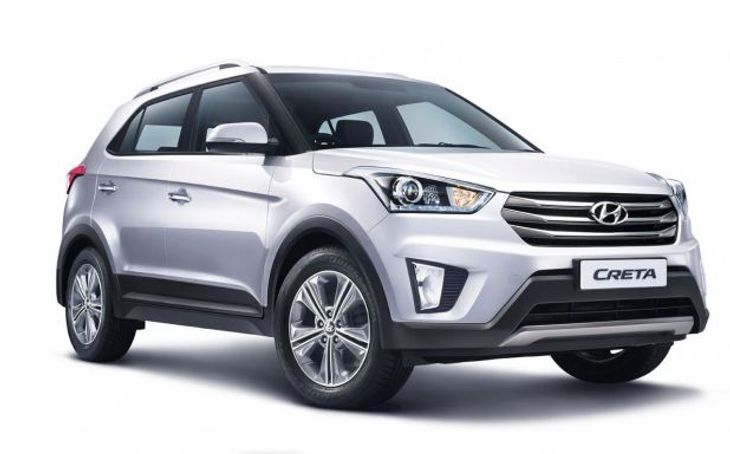
Hyundai Creta


Hyundai products are quite popular in South Africa and the new Creta crossover (also known as iX25 in some markets) should be well received when it arrives on local soil in February 2017.

Featuring the brand’s latest fluidic sculpture design philosophy, the Creta will be powered by either a petrol or a turbodiesel engine. The naturally aspirated 1.6-litre petrol engine will offer 90 kW and will be mated to either a manual or automatic transmission. The flagship Creta derivative will be powered by a 1.6-litre turbodiesel engine that will offer 94 kW and will only be offered with an automatic transmission. All Creta derivatives will come in Executive trim only, which means it will be available with a high level of standard features.

Further reading:

New Hyundai Creta Compact SUV Revealed

Find a new or used Hyundai on Cars.co.za

Audi Q2

The new small crossover from Audi is coming to South Africa in the first quarter of 2017 and it will offer the latest infotainment, connectivity and safety systems in the brand’s arsenal. In terms of engines, Audi is yet to confirm local engine specifications but you can expect a three-cylinder 1.0-litre turbo engine offering 81 kW. A 1.4 TFSI motor is likely too as well as a turbodiesel option, which will likely be an 85 kW 1.6-litre unit. A 6-speed manual or 7-speed S tronic dual clutch transmission will be available.

Further reading:

Audi Q2 (2016) First Drive
Audi Q2 Finally Revealed at Geneva 2016
Teased: Audi Q2

Find a new or used Audi on Cars.co.za

Nissan Kicks

Slotting between the Juke and Qashqai, the Nissan Kicks will only be introduced to the local market in 2018.

The engine offering for the South African market is yet to be confirmed, but you can expect the Kicks to be powered by the same engines found in the Juke and Qashqai. That means that a 1.2-litre turbopetrol motor offering 85 kW and 190 Nm of torque is probable, as well as a 1.5-litre turbodiesel engine with 81 kW and 260 Nm of torque. A CVT or 6-speed manual transmission will be offered.

Further reading:

Nissan Kicks [2018] First Drive
Nissan Kicks Coming to SA in 2018 [with Video]

Find a new or used Nissan on Cars.co.za

Honda BR-V (2016) First Drive
Honda has launched its BR-V 7-seater compact family car to the South African market and, at first glance, the newcomer looks likely to become a popular model for the Japanese brand. 

Honda has been hard at work trying to bring something fresh and particularly competitive to market amid the tough trading conditions that have made the new car industry virtually grind to a halt. Simply put: there's not enough disposable income going around and people are not willing to get further into debt. However, there's always a need for affordable motoring and Honda, well aware of these trying times, has launched the BR-V in South Africa. Trends have shown that the market is favouring a small crossover that offers practicality and reasonable spec and the BR-V ticks both those boxes with ease. 

Honda South Africa did not hide the fact that the BR-V is aimed squarely at prospective customers in the Ford EcoSport/Renault Duster/Suzuki Vitara market and while this segment is extremely competitive, the Honda has one major advantage – it has 7 seats, whereas most its rivals especially major competitors, can only accommodate 5 occupants. And, unlike most 7-seaters, which offer pitiful legroom for the third row, the BR-V is acceptable for adults, but admittedly it is a tight squeeze for taller folk. Fold the third row of seats down and you gain access to what Honda calls "class-leading space". The seats are easy to operate and the second row tumbles forward to provide decent access to the third row.


A photo posted by Cars.co.za (@carssouthafrica) on

The Honda BR-V is made in India and rides on the same platform as the Mobilio and Brio. Interestingly Honda South Africa has discontinued the Mobilio, because the market favours SUVs over MPVs. We could be rude and say the BR-V is essentially a raised-up Mobilio with some styling changes. This is not an insult, as the Mobilio was a surprisingly capable people mover. The BR-V boasts some impressive ground clearance at 210 mm, but there's no offroad 4×4 capability. Instead, you'll find it competent on gravel roads and that extra clearance will keep rocks away from the vehicle's vulnerable underbelly. 

The range comprises 5 models, 3 specification levels and 2 transmission options. The same engine powers the entire line-up: a 1.5-litre naturally aspirated motor that produces peak outputs of 88 kW and 145 Nm. There is a choice between a 6-speed manual gearbox and a continuously variable (automatic) transmission and on launch, we drove the top-spec manual derivative.

Light on its… feet

We found that the BR-V had a fair ride quality and the vehicle feels light and nimble in general driving conditions. The gearbox, clutch and steering felt easy to use, which is great. This will change, of course, when you start loading the Honda up with passengers and this is where we reach our first niggle.

While the rev-happy engine copes well with a pair of passengers on board, there's a lack of in-gear punch for overtaking. You'll need to drop a gear or two and rev the engine to get the best out of it. Once the motor reaches a certain point of the rev range, it sounds terribly strained. Being a Honda motor, it'll probably be reliable and quite frugal. The BR-V is claimed to consume 6.3 L/100 km, we found the vehicle's consumption hovering around 7.5 L/100 km.

Summary

Over and above its 7-seat configuration, the BR-V is very well priced. The range starts off at R238 900 and there's no other vehicle in the crossover segment that can match the Honda for interior space. Sure, the Renault Duster has more technology and creature comforts, but it's not as practical, the Toyota Avanza is also practical, but cannot match the Honda attractive packaging. The flagship 1.5 Elegance CVT is priced at R288 300, making it a very well-priced offering under R300 000. We think this new offering from Honda will prove popular thanks to its super pricing, decent features and excellent practicality. The safety features are a little shy and comprise just two airbags, which we find odd for a seven-seat vehicle.

For detailed specifications of the Honda BR-V, click here

Honda BR-V – Price in South Africa

1.5 Trend Manual R238 900
1.5 Comfort Manual R252 900
1.5 Comfort CVT R268 300
1.5 Elegance Manual R272 900
1.5 Elegance CVT R288 300

Pricing includes a 5-year/200 000 km warranty and 3-year Roadside Assistance. Comfort and Elegance models benefit from a 2-year/30 000 km service plan with services set at 15 000 km. 

Related content:

Spy Shots: 2018 Honda CR-V
Crossover Comparison: Honda HR-V vs Mazda CX-3

SUV Comparison: Ford Kuga vs Honda CR-V vs Subaru Forester
Honda HR-V Video Review and Comparison
Honda CR-V 2.0 Elegance (2015) Review

Interested in buying a Honda?

Shop for a new/used example on Cars.co.za

Can new BMW 5 Series match Mercedes-Benz E-Class for tech?

BMW has just revealed the new 5 Series, citing technological leadership as one of its essential selling points. Can it match the current Mercedes-Benz E-Class for innovative thinking?

BMW, Mercedes-Benz and Audi to an extent, play a game of one-upmanship with their new models. As soon as one brand launches a new model, it aims to beat its rival’s competing model. With the new E-Class launched earlier this year, Mercedes-Benz certainly set the bar high with technologies like remote parking, a massive interior display unit and loads of safety additions. Let’s take a look at the new 5 Series and see how it compares tech-wise to the E-Class.

Self-driving capabilities

The E-Class has a Drive Pilot that will take over steering duties at speeds of up to 200 kph but, only for 1 minute before it asks the driver to take over again. Automatic lane changing can also be done by the E-Class, as long as you hold the indicator down for 2 seconds, it will check the lane next to you and then begin its lane change when it's safe to do so.

BMW has a similar system to Merc, except, it can manage speeds of up to 210 kph autonomously. The 5 Series does require at least a few fingers on the wheel most of the time but will give the driver a reminder to place hands on the wheel after a few seconds. The 5 Series will also change lanes in this ‘automated mode’ and is able to stay in its lane even when road markings are unclear.

Winner: BMW 5 Series

Remote control parking

Both the E-Class and the 5 Series offer remote control parking that can be done from outside the vehicle. Merc’s system allows you to use your phone to connect to the car and complete the parking manoeuvre.

The 5 Series’ system is much like the 7 Series’ system where the car is controlled via the key fob. Both also offer automated parking systems for perpendicular or alley docking parking. The BMW does have a built-in system where you can book your parking spot roadside or in a multi-storey parking. This won’t be available in SA however.

Winner: Draw

Navigation systems

The Mercedes-Benz E-Class uses a 3D navigation display that can be fitted with real-time traffic alerts and an accident alert feature. The feature allows E-Class’ to connect to each other (via the cloud) and notify each other where an accident has taken place.

BMW has gone to town with real-time traffic allowing destinations to be inputted via the Connected Drive app on your phone/PC/Nav system. It will then let you know when you need to leave in order to get to your destination at the time you set. It constantly updates as traffic and accidents occur on your route.

Winner: BMW 5 Series

Infotainment screen

Mercedes-Benz set a new benchmark with its extended hi-res display that spans from the instrument cluster right the way across to the infotainment screen. It's crisp, clear and isn’t a touchscreen so doesn’t attract fingerprints.

The 5 Series has the latest update for gesture control – premiered on the 7 Series and features a 10.25-inch screen on the centre dash. It is also hi-resolution and can be controlled by the iDrive controller or by touching the screen. Not really anything new here.

Winner: Mercedes-Benz E-Class

Safety

As well as a full complement of airbags and precautions to prevent accidents the Mercedes goes a step further with side impact protection. It will inflate the bolster of a front seat on the side of the impact to push the occupant towards the centre of the car, which reduces the intensity of the impact on the occupant. There’s even a sound diffuser that goes off inside the car to protect the occupants ears in the event of a crash. There's also seatbelt airbags to prevent further injuries such as whiplash.

BMW has focused on the exterior body structure that offers optimised safety both for the vehicle’s own occupants and occupants of other vehicles. The aim was to split up the main load paths so that the impact forces are dispersed over as wide an area as possible by the time they reach the passenger cell. This ensures optimal deceleration of the passenger cell in an accident, allowing the front, rear and side impact restraint systems to provide the most effective protection possible.

Winner: Mercedes-Benz E-Class

Result: 2-2

There's no doubt that the proof will be in the pudding and we look forward to testing the new 5 Series so that we can make a definitive conclusion. BMW also notes that the 5 Series aims to be exceptionally dynamic for its size – something BMW is renowned for. For now, you can read up on our review of the previous 5 Series against the new Mercedes-Benz E-Class.

Related content

Mercedes-Benz Expands E-Class range in SA

Mercedes-Benz E350d Exclusive (2016) Review
Looking for a used E-Class?

Search for one here

Or a used 5 Series perhaps?

Search for one here

BMW Design: The Significance of X2 & Lessons from Paris

Prior to the unveiling of BMW's much anticipated X2 compact crossover in Paris recently, most of us were expecting it to look like a slightly swoopier X1 or a downsized X4. What we (including yours truly) got, was something much braver…
Besides having the opportunity to view the X2 up close and in the metal (after the crowds had dissipated), I was also afforded the rare opportunity to speak to BMW Group's head of design, Adrian van Hooydonk about the significance of the X2, as well as the challenges his team currently faces, specifically on the hot topic of the "digitalization" of the automobile. 

This is what we learned.

The X2 concept won't be "watered down" for production


Though technically still a concept, the X2 previews a very similar production version.

Concept cars are interesting and occasionally lovely things, but they can also be frustrating – way too often the reality (production car) fails to live up to the promise of the shiny concept. According to Van Hooydonk, however, the X2 won't fall in the same trap. "We don't like to over-promise and under-deliver," he says. "It's very close (to the production car)." Of course some of the showcar details won't make it to dealership floors on all models – the over-sized wheels with their chunky tread patterns, for example. "The tyres might become smaller," says Van Hooydonk, "but for the ride and smoothness that is probably a good thing!"

The X2 marks a change in BMW's design philosophy


BMW Group's head of design, Adrian van Hooydonk.

When the X2 first rolled onto the display floor in Paris, the sense of collective surprise was palpable. Those in attendance were expecting just another of BMW's crossover coupes – simply a smaller version of the X4, which in itself resembles a smaller version of the X6. That journalists present on that day in Paris could feel capable of predicting a new BMW design is the result of having such a strongly – some may say "rigidly" – defined brand design language. The X2, however, is an indication that BMW might be willing to allow greater individuality in its products going forward. 

"The silhouette of the X2 is not like the X4's and X6's," Van Hooydonk says. "I think that if people were expecting a specific type of X2, they probably got a different one… with a different roofline," he continues. "But we felt (that) with the proportions of the vehicle we were working on, this would be a better way." 

Then, crucially, Van Hooydonk added the following; "Today we see each new car as an opportunity to further the design language of the brand. It's also necessary because the competition, of course, is very strong, to do a very good and distinct design in each segment. The X2 is an opportunity for us to inject some freshness – youthfulness possibly – into the BMW brand." 


The first BMW with an inverted grille was the classic 507 roadster (above).

A major point of debate in any discussion of the X2's design is always its grille. BMW's iconic "kidney grille" is an important part of its heritage, so major changes are quite rare… or so I thought. 

"If you look into our heritage, this is not the very first time that we've done this inverted grille," Van Hooydonk points out. "It may surprise you, but the 507 had it as well. If you look at the history of our grilles, you see everything from oblong, to very wide… this way and that way." 

And then comes the moment when Van Hooydonk truly sums up the importance of the X2 best; "What it (the X2's grille) tells you is not necessarily what all the grilles for the brand are going to look like, but that it's one point in case by which we are showing that we are working towards a brand, that you can still recognise as such, but where each of the vehicles have a more distinct character. Each of our cars have to do better in their own respective segments. People buy a car in a particular segment because they want that size and that price range, and they don't necessarily care if the 5 or 7 Series looks the same or not."

I interpret this as an indication that BMW design will allow for greater differentiation between individual product lines going forward.

Van Hooydonk did, however, add the following, too; "Obviously, to be a premium brand, you have to have consistency in your design language, so we will do that. But that doesn't mean that we use, say a mould, and then simply rubber stamp similar elements on all the cars."

Heritage remains important


Featured here on the 3.0 CSL Hommage concept, the badge on the C-pillar could become a production reality.

As far as being a platform to showcase some of BMW's more precious design elements, the X2 is not an obvious choice. After all, it's the first X2 that BMW will make and it's not exactly positioned as a glamorous sports car that "channels" an iconic predecessor such as the 2002, 3.0 CSL or 507. Nevertheless, it appears to do just that.

The inverted grille harks back not only to the 507, but it's also deeper, so as to remind of the shark-nose BMWs of the past. Then there is the presence of the BMW badge on the C-pillars. This was a much-loved feature of the immortal 3.0 CSL, and also recently appeared on the Hommage concept car (shown above).

Are these details merely there for effect, or will BMW use them in production? Van Hooydonk cleverly side-stepped the question with a strong; "Why not? I feel it adds character," when asked whether the badges on the C-pillars would make it onto the production X2…

Digitalization, not Electrification, is driving design change

Walking the Paris Motor Show this year highlighted the focus on so-called autonomous vehicles as well as "connectivity". A few years ago electrification was the buzzword, but in Paris, this year, it was not the focus. 

"Obviousy we are working on vehicles for 2019, 2020 and beyond by now and in that time period there will be lots of technological changes," Van Hooydonk predicts. "Not so long ago we thought that electric mobility would be the big game changer. Now that has become fairly normal, even though it is not yet completely pervasive, but we see it simply taking its course. Soon, let’s say in 10 years, all cars will be able to do some distance electrically. A bigger game changer is around the corner," he cautions. "Vehicles will become more intelligent, and this digitization will change the way we use the car, and the way the car looks, probably even more than the electrification."


As futuristic as this may appear, expect cabin designs to be radically affected by new tech, sooner rather than later.
 
"I see this as huge opportunity for design," Van Hooydonk says. "I feel… and that’s also been my experience, that when you have bigger technological change, there is more creative freedom. You see the same thing in racing. When the regulations are the same for a number of years, all vehicles become alike beause they go to a certain optimum. And when the rules changes it is open for interpretation and I think that’s very much where we’re at in the industry. So I like that. There’s a lot to be defined right now."

"I’ve told my team that my job was never boring, but I feel that the past 23 years have been good training, the real match starts now."

Software updates and lifecycles


How we communicate with our cars will change quickly in the next few years and is increasingly a focus area in the design process.

A major area of concern has been that with the rapid pace with which technology is moving, lifecycles would become much shorter and consumers would be stuck with obsolete products more often. Van Hooydonk has a different view on this matter, though acknowledges that there are challenges. 

"It won't necessarily in our view change the lifecycle of the product. But there’s one important aspect, of course, that is changing and that is that the lifecycle of what you could call the digital aspect of the car is much, much shorter. We’re looking at 2-year lifecycles, but that will happen over the air, in updates," he says when referring to remote/cloud software updating. "In the future a lot of the computing power will be off-board of the vehicle, so you can increase computing power without touching the vehicle," he continues. "So these are things that are beginning to be resolved. Still, of course, the shape of the dashboard, at some point, you have to freeze."

"We are also in design responsible for what you see on the screen and the way you navigate through all this information, and that in fact has been a growing part of my team, so we’re setting ourselves up to do all these things in one team, but on very different time scales. Let’s say the hardware side is still on the 7 year cycle, but the software side is on the 2-year cycle. That’s the way we want to set this up.

As always, the automotive designers of today still have to try and imagine what the world will look like in 5 to 10 years, but Van Hooydonk says this is not so easy on the digital front. "In terms of some of the (digital) services that we use now, on a daily basis, 3 years ago they were non-existent. That’s the hardest part. If you talk to computer people about what they think will happen in the future, they start talking. So you ask them 'when', and they say June next year! Then you say 'no-no, I mean, in 5 years', and they say they don’t know, that it's not possible to say. So this still is quite a challenge. But by uncoupling this hardware and software sides of a car, we can solve it for the most part.

Conclusion

So, how does a brand that has such a proud history and motorsport heritage as BMW embrace a future that can be seen to demand a shift away from its core principle of "Sheer Driving Pleasure"?

"I don’t see a contradiction in that," Van Hooydonk responds. "I’ve been with BMW for almost 24 years, and I know the heritage, I like the racing, and that to me is just another example of a technological challenge. The company has always sought to gain a competitive advantage. It brings out the best in the engineers. Sometimes the solution is simple, sometimes it is really complex, but somehow it is in BMW’s blood, our DNA you could say, to do this type of thing, to be competitive in our road cars and in racing. So let’s say the future holds bigger technological changes or challenges. BMW sees this as a competitive challenge. I don’t see a disconnect there at all. In design we will always ask to go as far forward as possible," he concludes.

Further Reading;

BMW previews X2 crossover at Paris Motor Show
The sci-fi of BMW's Vision Next 100 Concept
BMW 750i Design Pure Excellence (2016) Review
A day at BMW Classic's Headquarters

BMW and Nissan switch on first coastal recharge stations

2016 Kinsey Report: The Cheapest Cars to Service and Repair

Which are the cheapest cars to service and repair? The annual Kinsey Report is out now!

The Kinsey report for 2016 has been revealed. The report aims to give the consumer an idea as to how much it costs to service or replace parts on your vehicle. Winners in each category are determined by costs of servicing parts (filters, spark plugs, wipers and brake pads), repair parts (cam belt, shocks, clutch plate, flywheel and fan belt) and finally crash parts (doors, fenders, bumpers, glass, lights and wheels etc.). The winner is the cheapest in the 3 categories combined. While the report does its best to provide the consumer with accurate information, it does state that shopping around for parts can be beneficial. The Kinsey report sources prices from dealers around the Durban area over the course of a single month.

2016 Kinsey Report winners

City cars and entry-level cars

Position Datsun Go 1.2 Lux Nissan Micra 1.2 Visia + VW Polo Vivo 1.4 Trendline hatch
Servicing parts R2 033.57 R3 297.13 R3 380.10
Repair parts R7 241.74 R7 694.16 R10 547.71
Crash parts R33 917.93 R44 080.19 R43 041.13

More on the Datsun Go

Datsun launches limited-edition Go Remix
Datsun Go 1.2 Lux (2015) Review

Search for a used Datsun Go here

Compact hatchback

Position Peugeot 208 1.2 Active Renault Sandero Turbo Dynamique VW Polo 1.2 TSI Comfortline
Servicing parts R4 726.15 R3 016.40 R3 279.77
Repair parts R16 182.73 R19 135.01 R14 539.99
Crash parts R58 781.74 R61 631.98 R72 341.96

More on the Peugeot 208

Peugeot 208 Facelift (2015) First Drive
Renault Clio RS vs Peugeot 208 GTi (Video)

Search for a used Peugeot 208 here

Family cars

Position Toyota Corolla 1.6 Quest Toyota Corolla 1.6 Prestige Mazda 3 1.6 hatch Dynamic
Servicing parts R5 638.36 R5 530.52 R5 063.25
Repair parts R16 852.05 R15 992.24 R13 272.13
Crash parts R50 168.93 R54 744.67 R79 007.86

More on the Toyota Corolla here

Toyota Corolla Quest enhanced for 2016
Toyota Corolla Sprinter (2015) Review

Search for a used Toyota Corolla here

Compact crossovers

Position Citroen Cactus 1.2 Feel Toyota Avanza 1.5 SX Renault Duster 1.6 Dynamique
Servicing parts R4 801.38 R4 072.97 R2 748.62
Repair parts R15 977.61 R13 146.62 R16 364.56
Crash parts R66 643.89 R72 841.22 R72 495.84

More on the Cactus here

Citroen C4 Cactus (2015) Review
Citroen Cactus M Concept Is The Coolest Car for Summer

SUVs

Position Toyota Fortuner 2.8 GD Auto Chevrolet Trailblazer 2.8 D LTZ Auto Hyundai Tucson 2.0 Premium Auto
Servicing parts R4 955.49 R5 442.02 R5 038.95
Repair parts R11 884.14 R8 729.92 R9 286.65
Crash parts R74 410.65 R84 403.01 R100 395.69

More on the Toyota Fortuner

Toyota Fortuner 2.4GD-6 (2016) Review
Comparative Review: Ford Everest 3.2 4×4 XLT vs Toyota Fortuner 2.8 GD-6 4×4 6At

Search for a used Toyota Fortuner here

Large SUVs

Position Toyota Prado 3.0 DT TX Auto Volvo XC90 D4 Momentum Range Rover Evoque SE SD4
Servicing parts R7 579.29 R5 143.20 R6 518.60
Repair parts R12 978.78 R12 813.60 R13 035.32
Crash parts R136 293.91 R161 606.40 R209 269.33

More on the Prado

Toyota Land Cruiser Prado Review

Search for a used Toyota Prado here

Double-cab bakkies

Position Tata Xenon XT 2.2 Evolve Toyota Hilux GD6 Raider GWM Steed 6 2.0 VGT Xscape
Servicing parts R4 811.79 R5 325.51 R2 291.66
Repair parts R16 279.31 R22 187.99 R13 214.88
Crash parts R46 732.38 R48 761.32 R76 848.59

More on the Xenon

Limited-edition Tata Xenon Evolve in SA

Search for a used Tata Xenon here

Single cabs

Position Nissan NP200 1.6i Chev Utility 1.4 Spaza Edition Nissan NP300 2.0
Servicing parts R1 992.21 R3 019.64 R2 189.04
Repair parts R10 219.38 R6 606.51 R11 744.30
Crash parts R31 756.17 R44 721.74 R44 201.49

More on the NP200 here

Refreshed Nissan NP200 Bakkie Rolls Out
Three Unusual Reasons Why The Nissan NP200 Stealth Is Awesome (Video)

Search for a used Nissan NP200 here

Executive sedans

Position Volvo S60 T4 Momentum BMW 320i Auto Jaguar XE 2.0 D Prestige
Servicing parts R4 656.90 R6 952.08 R6 023.04
Repair parts R8 527.20 R9 191.33 R15 315.53
Crash parts R100 638.60 R118 486.78 R133 410.11

More on the S60 here

Volvo S60 Polestar (2016) Review
Volvo S60 T6 Elite (2015) Review

Search for a used S60 here

Turbo Engines Are Taking Over – As They Should!

Is it time to send the old naturally aspirated engine to an early grave as modern engines adopt the turbocharger?

I love a good naturally aspirated (NA) engine, especially on a high-performance model. The high-revving nature of the motor and the unfiltered sound from the exhausts are addictive, but non-turbo engines may have had their day… 

A naturally aspirated engine has fewer moving parts than a turbocharged motor, therefore many will expect its proven technology to hold the edge in terms of reliability. What's more, a century's worth of engine efficiency development and driver education has rendered the free-breathing engine economical to operate as long as a measured driving style is the order of the day. However, despite improvements in engine technology, such as the introduction of variable valve timing, to name but one example, naturally aspirated (petrol) engines cannot match their turbocharged (petrol) counterparts in terms of delivering maximum torque at low rpm. And it's an impression borne from driving turbo- and non-turbo vehicles randomly, as we motoring journalists do.  

My average daily drive features a mix of start/stop traffic. There's a hustle-and-bustle dual carriageway that requires ducking between stopped buses and taxis and a short stint on the freeway. I imagine this is not too dissimilar to most people’s average commute. I’ve driven hundreds of different cars down this stretch of road during the past 6 years and I can tell you I dread having to drive a car with a naturally aspirated engine, especially in short succession to a turbocharged (petrol) motor. Now, I’m not talking about high-performance naturally aspirated engines (such as those in Lamborghinis), those still have their place in sportscars and supercars (more on this later), what I’m talking about is the run-of-the-mill 1.2, 1.6, 2.0-litre and all the variants in between.


Even BMW M engines have moved into the realm of the turbo

Most people know that in order to keep fuel consumption down you need to change gears at low revs, use smooth throttle inputs and generally keep the engine rotating as few times per minute as possible. It’s very easy to do, shift early, maintain speed and become a pro at predicting traffic lights. Of course, you still have to compromise between how slow you’re willing to go and how late you intend to be. I try to maintain a decent compromise but, unsurprisingly, err towards the faster side of things, while trying to stay to the speed limit as best as possible. 

This is where the naturally aspirated engine is found wanting. Keep a low rpm and try and accelerate quickly and… nothing happens. Work the gearbox down a couple gears, get the engine spinning at mid to high rpm and you get some kick. It’s a hard graft having to do that over and over on a commute. It’s not much better on the freeway either, if you lose a bit of momentum behind another car, you’re back to working the box and revs to get back up to speed. It’s not just about having to work the gearbox – you can get an automatic to do that for you if you want, it’s the aforementioned vital torque statistic that lets it down as well. By contrast, a car with a smaller-capacity turbocharged engine can produce the same (or more) torque lower down in the rev range.

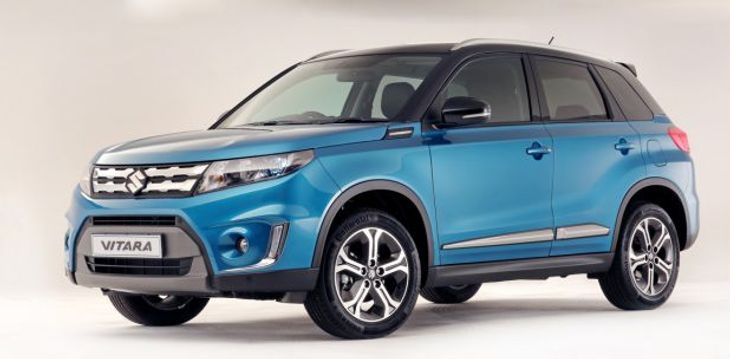
Here’s a quick comparison between a pair of small crossovers that we had in our fleet at the same time: the Suzuki Vitara's 1.6-litre naturally aspirated engine produces 86 kW and 151 Nm – a decent power output, but maximum torque is at 4 000 rpm. A 1.2-litre 3-cylinder turbocharged Citroen C4 Cactus produces 81 kW and 205 Nm of torque, where maximum torque kicks in at 1 500 rpm. That means, as long as you’re travelling in the teens in terms of engine speed (revs), when you put your foot down, you get maximum torque – without needing to shift gears or spin up the motor.


Citroen Cactus uses a 1.2-litre turbo motor

Then there’s the fuel economy factor. The official claimed fuel consumption figures of small-capacity turbocharged engines seem very optimistic and are usually better than those for similarly-powerful, bigger-capacity petrol motors, but I’m not a big believer in the former numbers. I’ve found that turbo-engined compact cars do tend to use more fuel than what their manufacturers claim, but in the case of the Citroen, the higher consumption (relative to the crossover's performance characteristics/general drivability) was quite acceptable. Let me explain: We reset test cars' trip computers when they arrive at our office and monitor the fuel efficiency readouts of their onboard computers (granted, this is another can of beans waiting to be opened) so that we can record readings upon completion of the tests. The Suzuki, after 3 800 km, averaged 6.7 L/100 km and the C4 Cactus, after 5 100 km, averaged 6.5 L/100 km.

It’s a reasonable comparison: both cars were driven by the entire test team on long and short journeys. The funky Citroen is 55 kg lighter than the more practically-packaged Suzuki and its indicated consumption figure is 1.8 L/100 km higher than what its manufacturer claims; the Suzuki proved anything but thirsty (we achieved a figure just 0.9 L/100 km higher than what the Japanese firm says it should be). However, given that the indicated consumption figures of the cars were within a whisker of one another, and the C4 Cactus offers more responsive and flexible performance, I prefer its engine to the Vitara’s.

Suzuki Vitara features a 1.4-litre turbopetrol motor in the UK. I have driven one and its engine performance is much perkier. 

It’s not like turbocharging is new. As far as petrol engines in South Africa are concerned, the technology went on hiatus for a couple of decades. However, whereas the turbopetrol motor was synonymous with performance in the '80s, these days it's the flagbearer for downsized efficiency, especially in compact cars. It started locally with the Ford Ecoboost 1.0-litre engine, then came the Renault 0.9-litre 3-pot and since then it has crept through to just about every manufacturer. Even the premium brands have adopted turbocharged triples: BMW has a 3-cylinder powering a 3 Series and Audi has a 1.0-litre A3.

What is apparent, however, is that the Japanese and Korean manufacturers have been less eager to introduce small turbocharged engines in their line-ups, especially on the local market. There are a number of factors to consider: those firms pride themselves on reliability/low warranty claims and turbocharged engines, which are more complex and mechanically stressed than their tried-and-trusted naturally aspirated counterparts, present a higher risk of failure (and would be expensive to fix if/when they break). The extra complexity adds to the production costs of turbopetrol motors and, therefore, the units in which they're installed. And, needless to say, the profit margins are tight in the as-much-spec-as-possible compact hatchback and small crossover segments.    

But the market never stands still. Hyundai and Kia have selectively rolled out the 1.6-litre turbocharged GDI motor, Honda recently introduced a 1.5-litre turbopetrol in the Civic sedan, Toyota (having introduced a forced-induction 2.0-litre in its Lexus line-up) has a 1.2-litre turbopetrol in the pipeline that might debut in the C-HR small crossover. Meanwhile, Mazda is sticking to its guns with its SkyActiv engine efficiency technology and as for Suzuki, the upcoming Baleno compact hatch may be offered with a 1.0-litre turbopetrol motor – at some point, but that remains to be seen.    


Audi's R8 V10 is possibly the last bastion of the naturally aspirated engine

Yes, not every single petrol engine needs to be turbocharged, but I would argue that most of them do. Just as technological advancements in smartphones (and the data networks through which they operate) have raised users' expectations of their handsets to such an extent that their consumption patterns are based on market activity rather than their actual needs, "the turbo era" is breeding a generation of motorists who want instant torque and good efficiency.

The disadvantage of a naturally aspirated engine is that although conservative buyers will duly expect excellent reliability from it, a test drive in a "free-breathing" car directly after one in a direct "turbo'd" rival will leave them feeling somewhat short-changed. Drivability/driving satisfaction may not be equally important to all consumers, I realise, but once naturally aspirated engines are in the minority, they will seem increasingly undesirable to car buyers who are all too happy to leave worries about reliability to the companies that underwrote the (often lengthy) warranties that come included with brand new cars.

I do believe naturally aspirated engines have their places. One is in bare-bones budget cars and the other is where they can deliver the maximum enjoyment and the fewest drawbacks – high-performance machines. A naturally aspirated motor that can be revved until it bounces off a limiter north of 7 000 rpm is a treat and, for a petrolhead, few sounds can match the V10s or V12s built by supercar producing firms whose wares can bring tears to grown men’s eyes. These "free-breathers" should either bring mobility to the masses or joy to enthusiasts. But in an everyday car or family car? No thanks, I’ll stick with the turbo.

Related Content

2015 Suzuki Vitara Video Review
Extended Test: Suzuki Swift 1.4 GLS [Video]
Car prices 2016 vs 2015: How Much More Are You Paying?
Petrol vs Diesel – Which is more expensive to own?
South Africa's Best-Selling SUVs

Would you do this to your Bentley Bentayga?

The Bentley Bentayga has its critics, but now, there’s an even more ostentatious model to cast your eyes on.

German car tuning company, Mansory, got their hands on a Bentayga and went to town on turning it into a pimp-mobile. The end result seems to be a far stretch from the prim and proper image the British brand is synonymous with.

Nevertheless, Bentley may be moving with the times. Many of its cars feature in rap videos and lyrics by the likes of 50 Cent, T.I and The Game. Mansory has gone above and beyond with this Bentayga and it will be officially revealed at SEMA later in November 2016.

The Mansory Bentayga features a seriously wide body kit with loads of extra bits of carbon fibre around the nose, front splitter, rear bumper and side skirts. Large 23-inch wheels are fitted with an option of 22-inch wheels if the ride is too jarring.

The Bentayga's performance has been beefed up somewhat with the addition of a new exhaust system and fine-tuning of the engine. Mansory has managed to crank out 515 kW and 1 050 Nm of torque from its 6.0-litre W12 biturbo engine.

The interior also has a few unique touches in the form of new leather upholstery, aluminium pedals and bespoke floor mats.

The Mansory Bentayga may not seduce the traditional Bentley enthusiast, but it may appeal to those who want to make a bold statement. Would you like to own this Mansory Bentayga? Share your thoughts with us…
 

Related Content

Bentley Bentayga Gets Diesel Power

Top 5 Cool Facts: Bentley Bentayga

Bentley Bentayga Lands in SA