Volkswagen Polo CitiVivo (2017) Specs & Pricing [with Video]
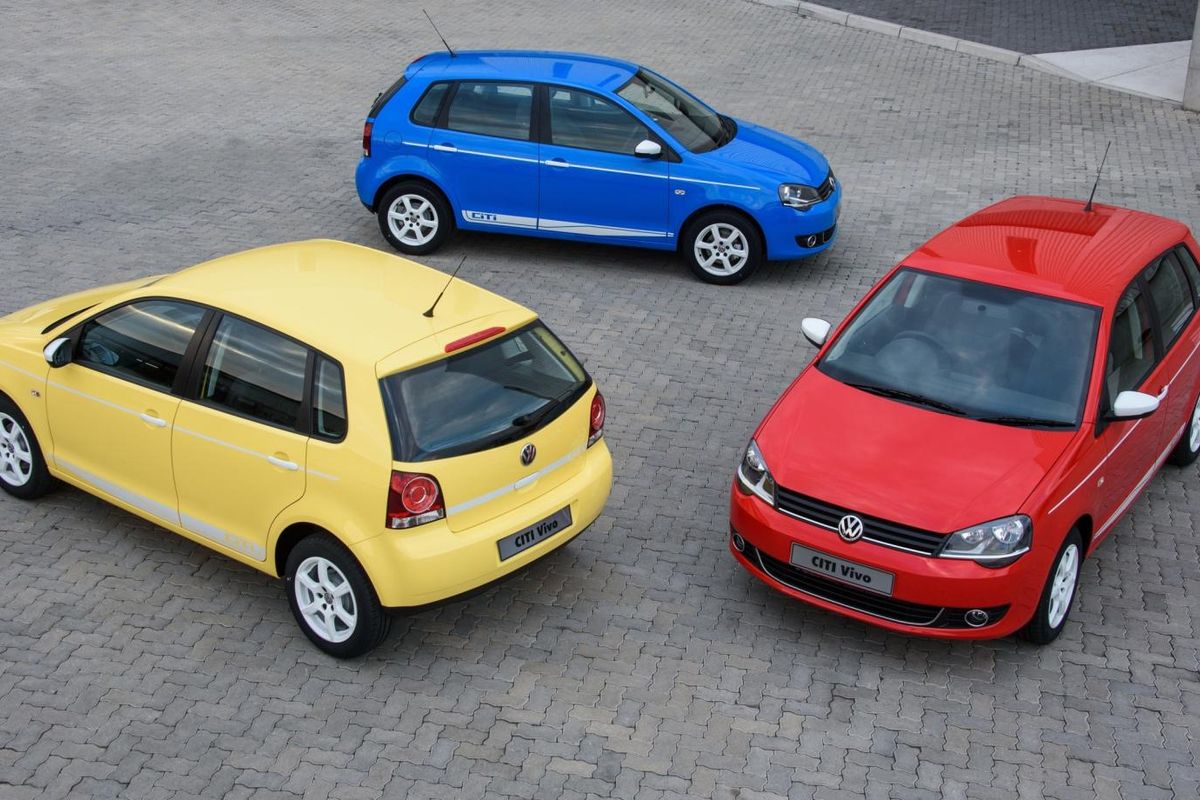
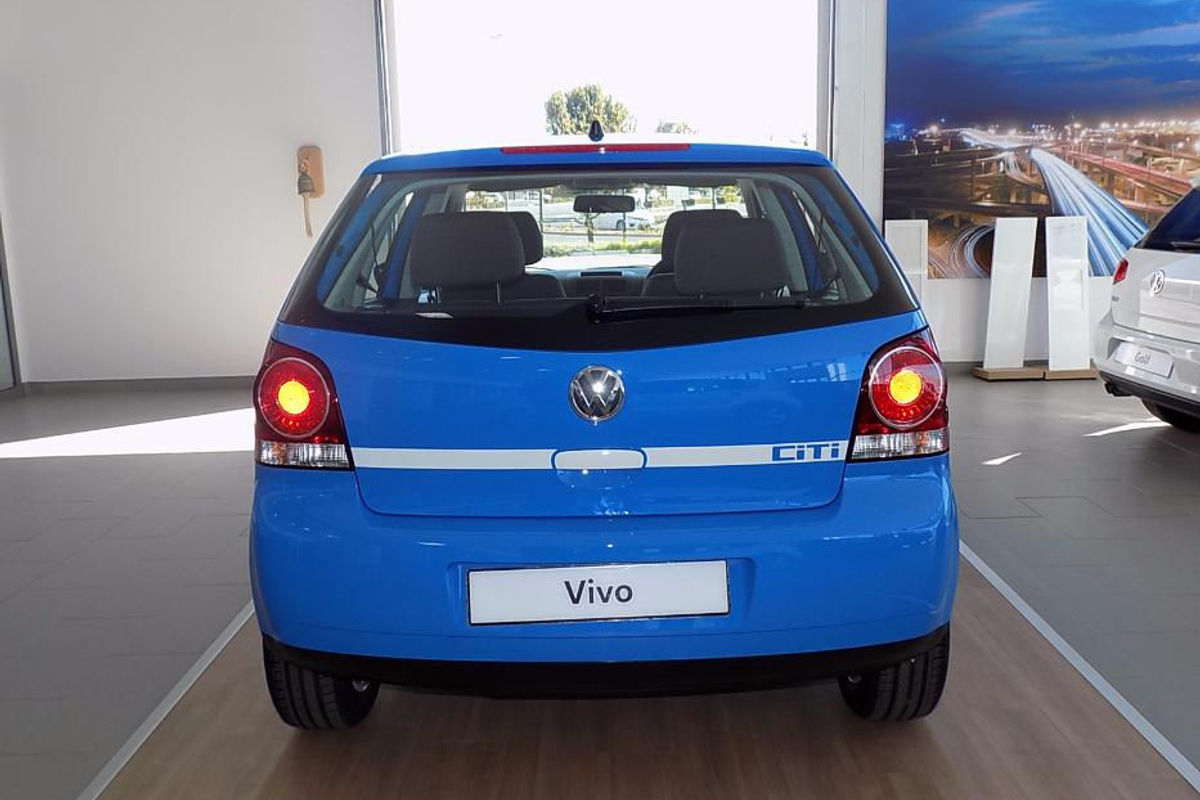
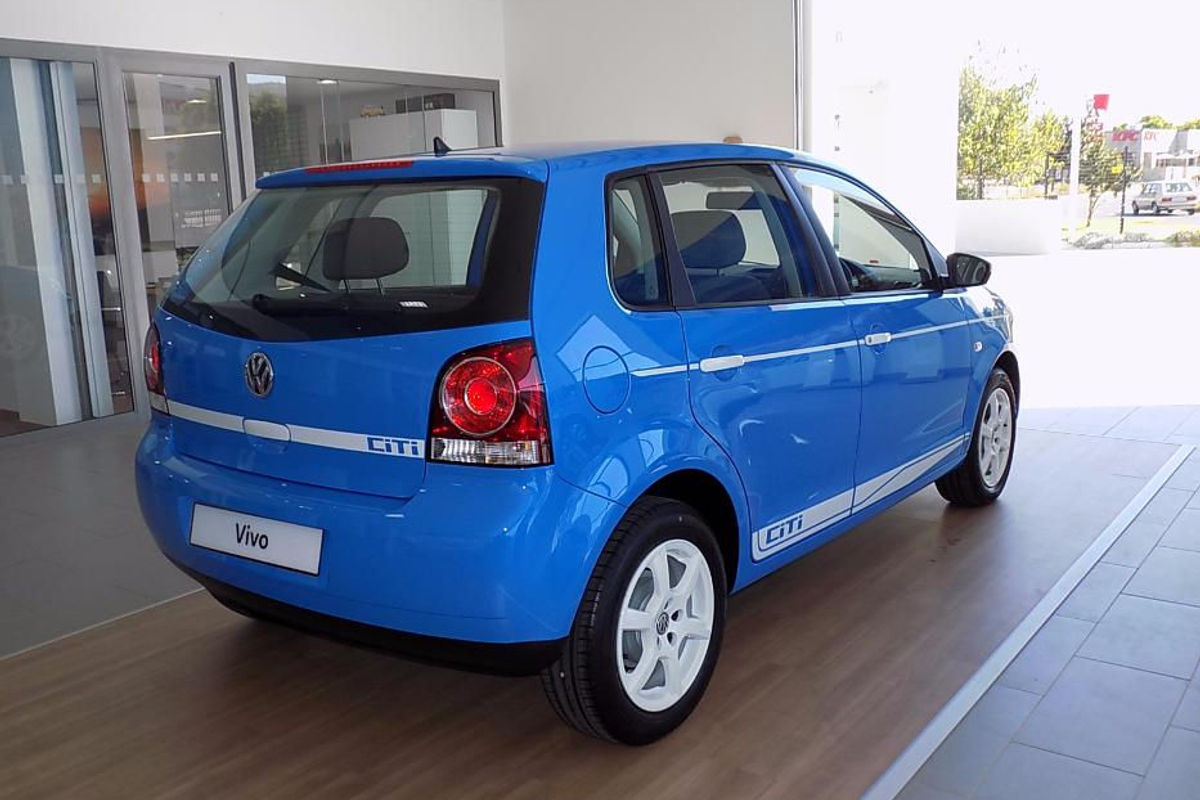
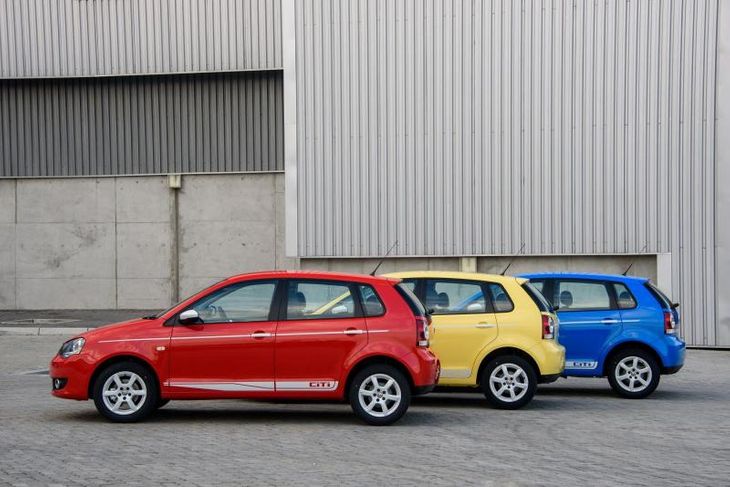
Volkswagen has introduced a limited edition Polo Vivo in South Africa that draws inspiration from the iconic CitiGolf. It's called the Polo CitiVivo and it's available in red, yellow and blue paint finishes. We have specs and pricing…
The now discontinued Volkswagen CitiGolf still tugs at the heartstrings of many South Africans, but despite its lack of airbags and ABS, for example, the model is sought after in the used car market. In 2010, the Polo Vivo became Volkswagen’s modern entry-level offering and much like the CitiGolf it replaced, the Vivo has topped the sales charts locally ever since. 377 000 Citi Golfs found their way to homes in South Africa. In comparison, almost 230 000 Vivos have been sold.
Volkswagen is now offering a special edition Polo Citi Vivo in South Africa, which draws inspiration from the original CitiGolf, which debuted in 1984 replete with a carburettor-fed 1.3-litre engine, white striping (and painted wheels), 4 doors and windows.
"There is no better way to celebrate the success of the Polo Vivo as the best-selling passenger car in South Africa than to pay homage to its iconic predecessor, Citi Golf. The three colours of Red, Yellow and Blue are synonymous with the classic Citi Golf and it was fitting for us to use them as the only colours for CitiVivo. CitiVivo is a special edition with about 2 000 units planned," said Stefan Mecha, Director: Sales and Marketing at Volkswagen Group South Africa.
Key details
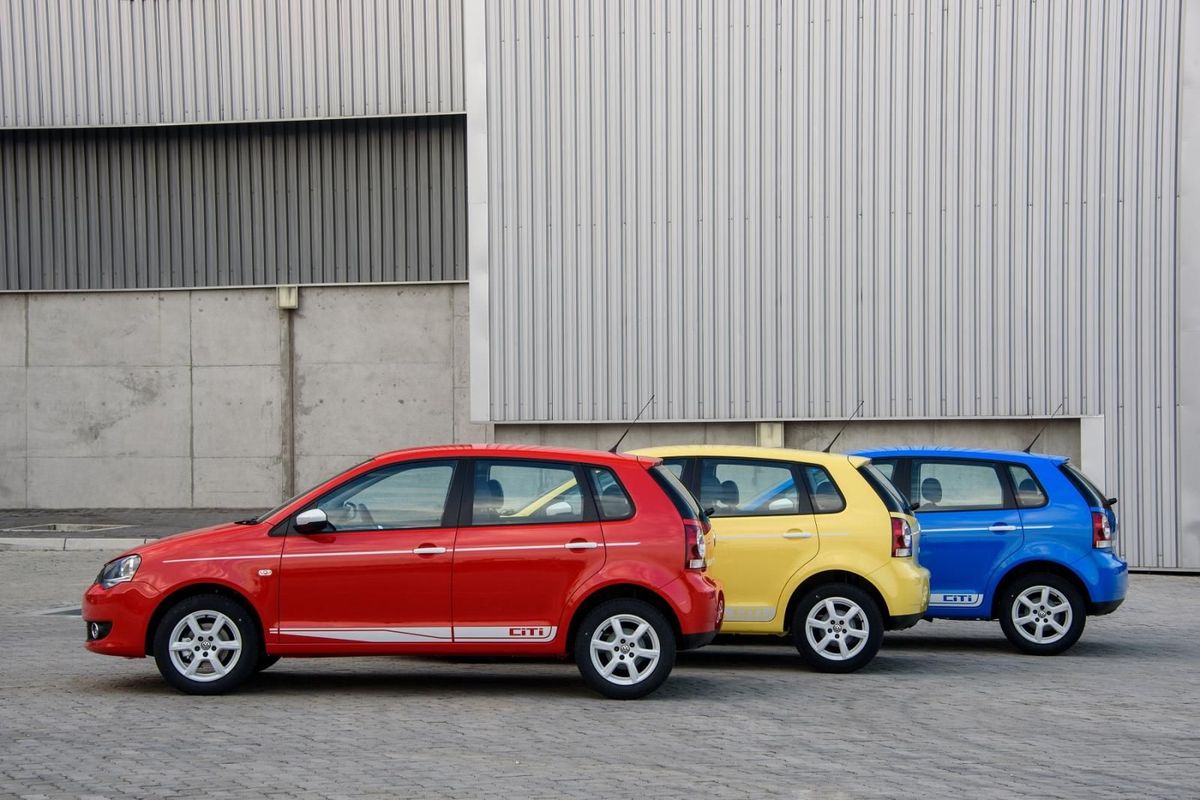
The Polo CitiVivo is available in classic CitiGolf exterior colours, including: Flash Red, Sunflower Yellow and Cornflower Blue. Many may remember the "Red, Yellow, Blue (not Green)" CitiGolf TV ad campaigns (featuring DJ Alex Jay) from the 1980s.
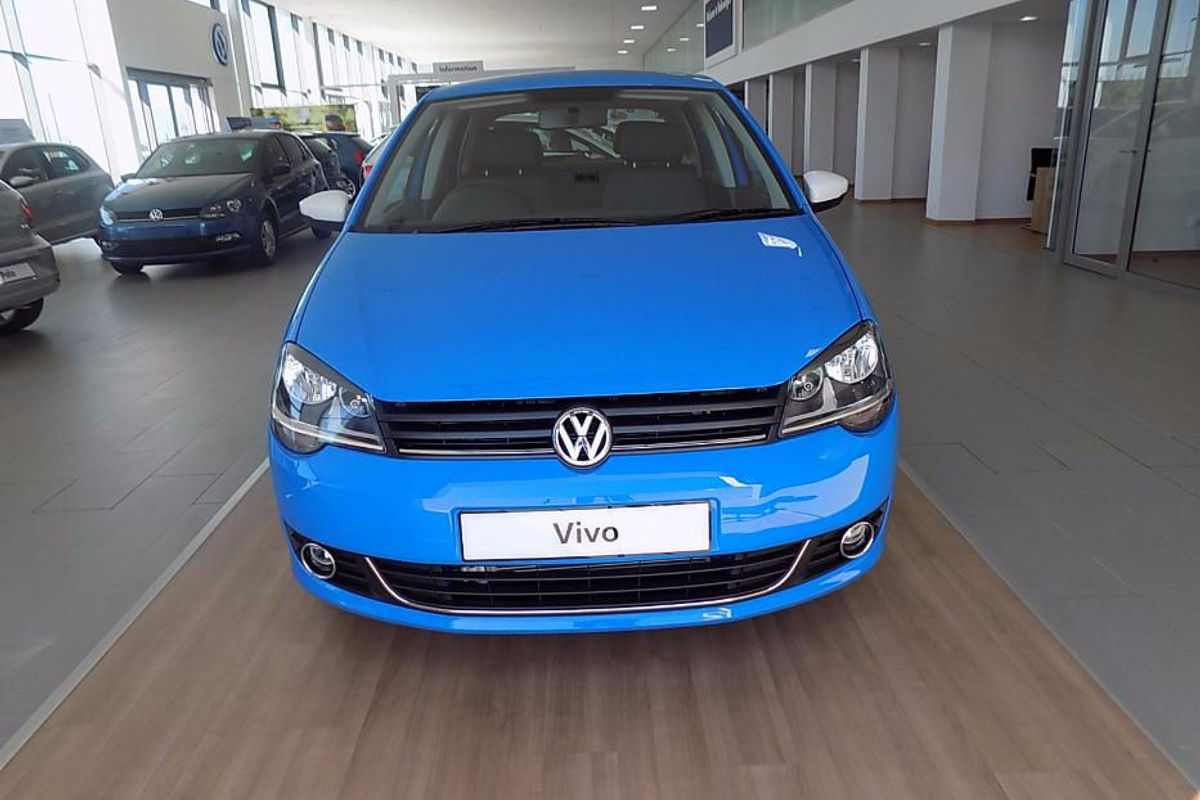
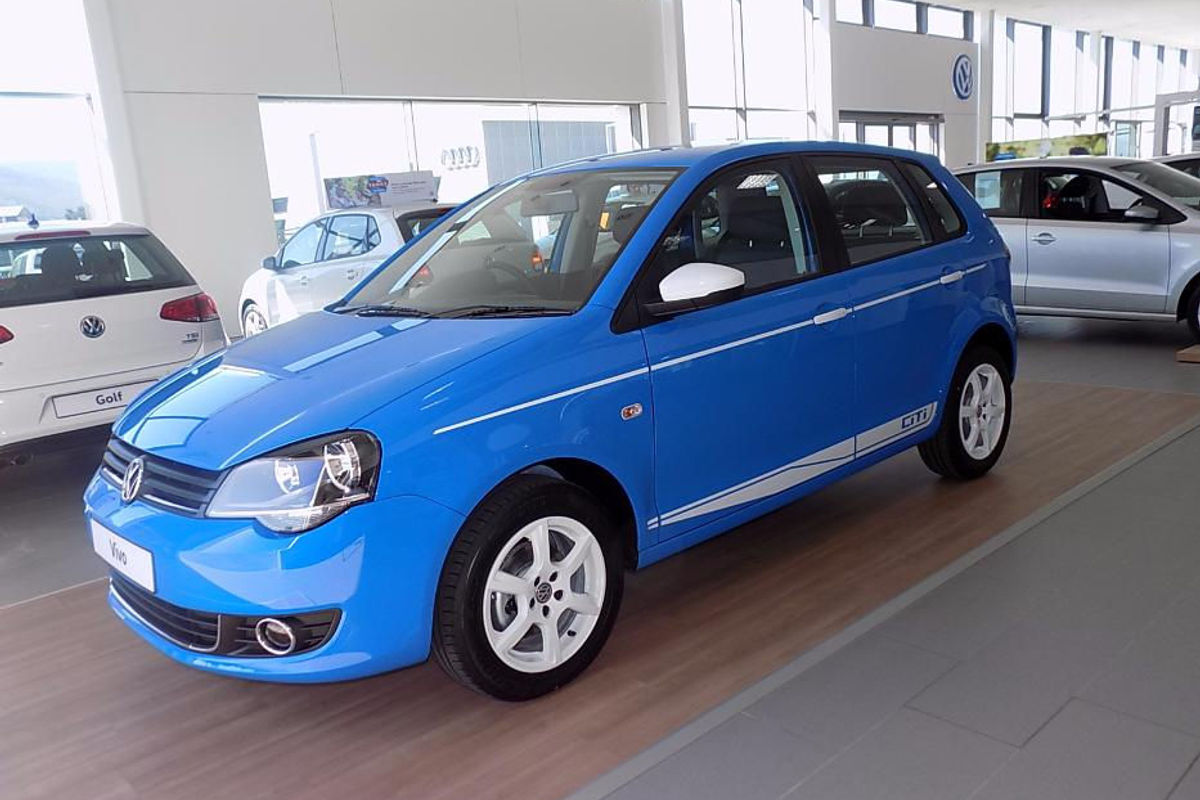
The CitiVivo is loosely based on the 1.4i Conceptline derivative. In addition to this trim level of specification, the CitiVivo gains 15-inch white alloy wheels, white mirrors, door and boot handles in white, as well as Citi decals.
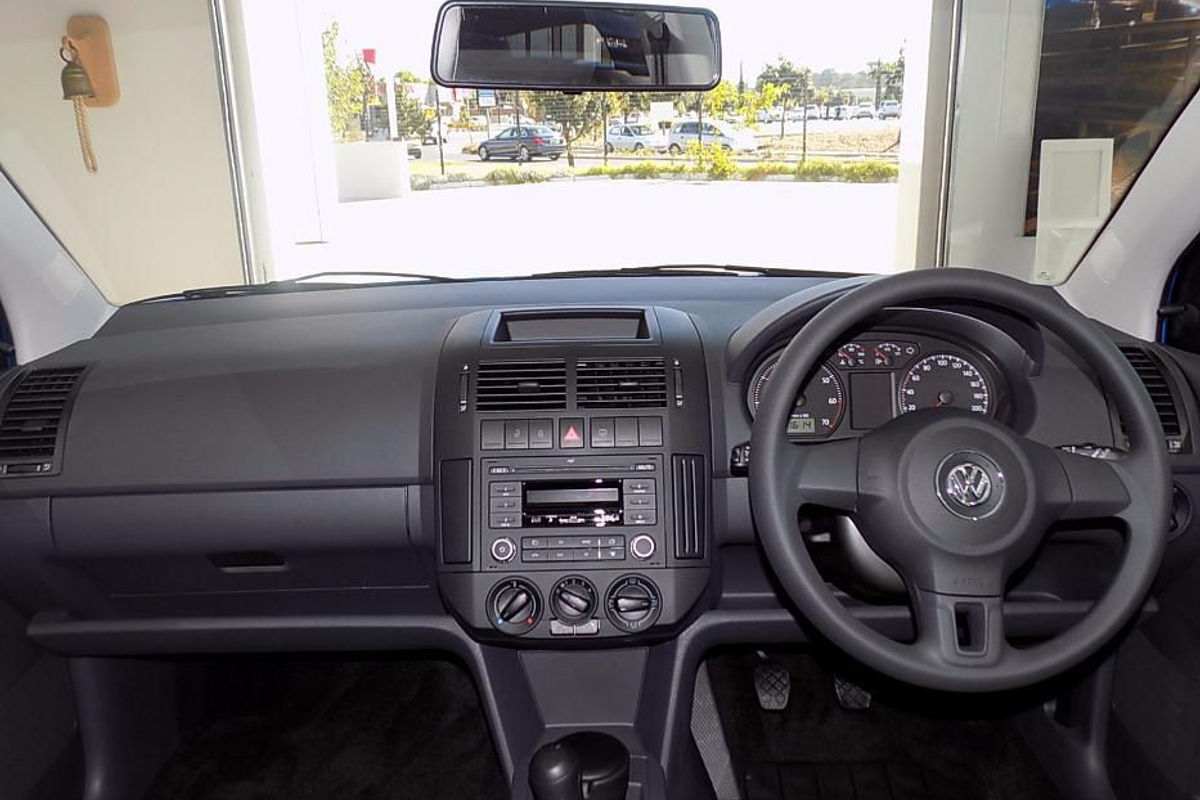
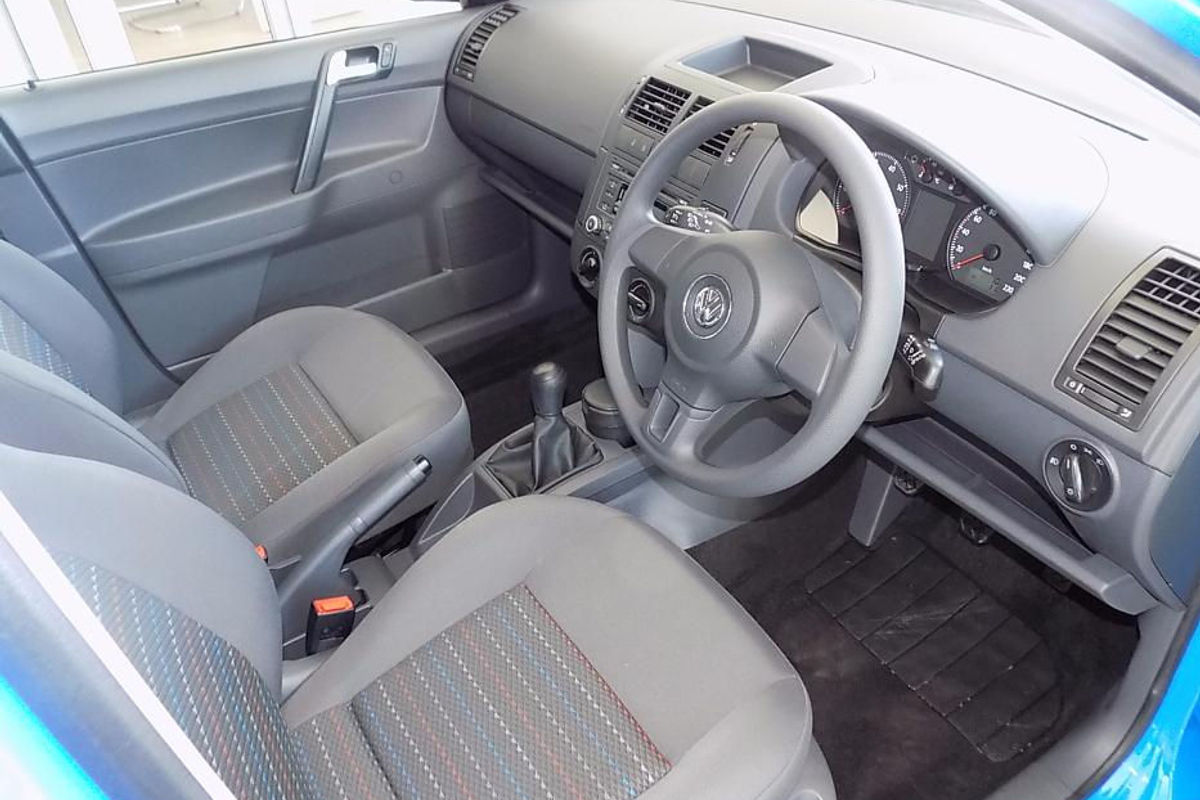
The interior benefits from Silver-Blue-Orange-Gray trim and the CitiVivo comes equipped with air conditioning, radio, USB, SD card slot and Bluetooth functionality. According to a source, the following features are optional: metallic paint (R950), cruise control (R1 350), smokers package (R250), alarm/immobiliser (R 1 100), electric windows – front (R1 250) and front fog lights (R1 400).
The Polo CitiVivo is powered by a 1.4-litre petrol engine that delivers 55 kW and 132 Nm of torque with the front wheels driven using a 5-speed manual gearbox.
Volkswagen Polo CitiVivo – Price in SA
This derivative costs R177 300, which includes a 3-year/120 000 km warranty and service intervals of 15 000 km. As with other Polo Vivos, a service/maintenance plan is optional.
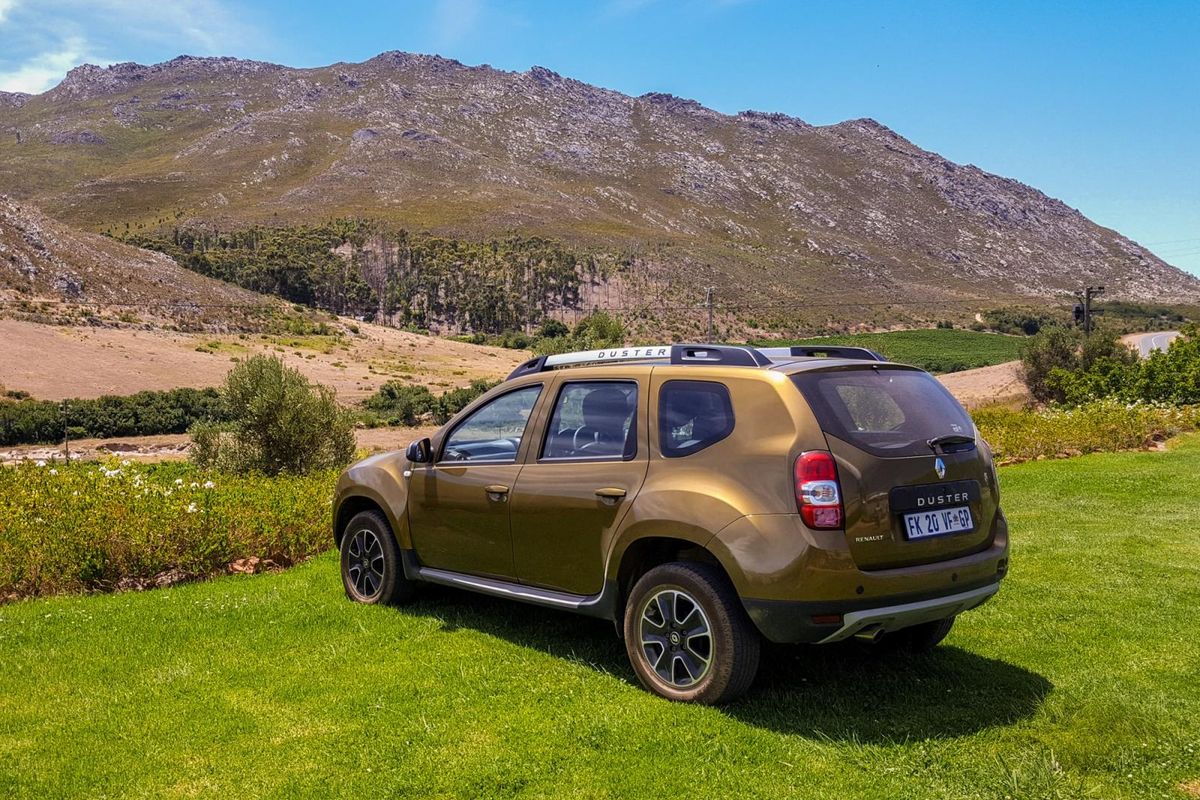
Extended Test: Renault Duster 1.5 dCi Dynamique 4WD [With Video]
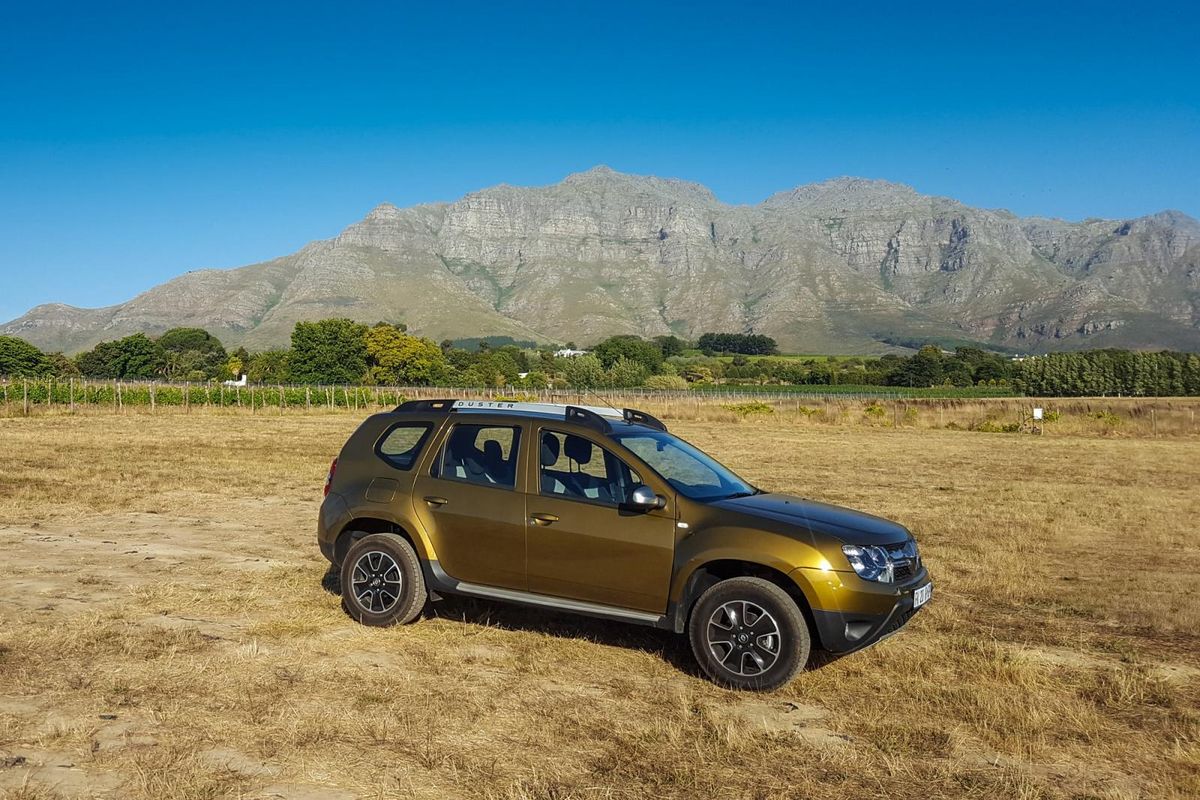
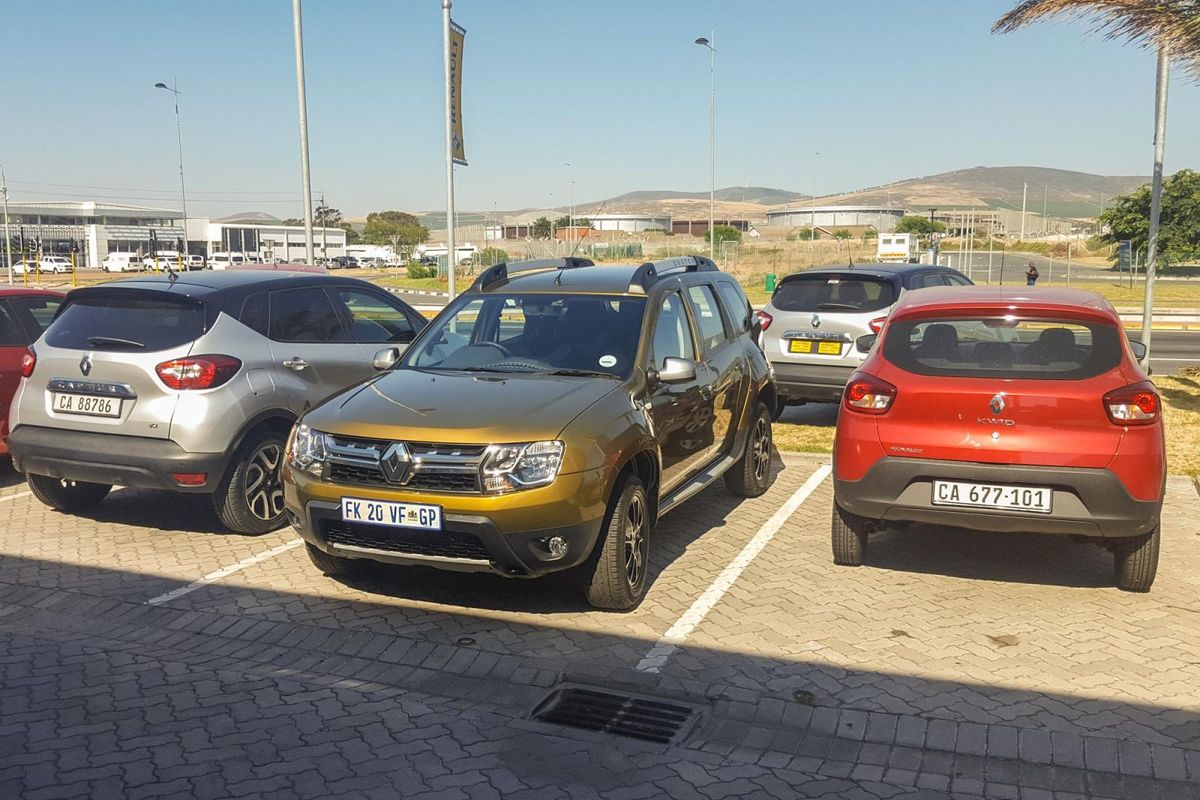
In a market dominated by hatchback-based compact family cars, the top-of-the-range Renault Duster is a feisty little offroader. However, what's it like to live with? We spent a month with not one, but two, top-of-the-range Dusters and here's what we discovered…
Why two Dusters, you ask? Well, let's start with the bad news first. Our first Duster proved to be a commendable, well-specced compact family car, able to transport now fewer than 5 adults on a number of long journeys, some of which were travelled on rough terrain. However, while it was serving as holiday transport, one morning in January, it decided to bite the dust. All was well upon start-up, but then the clutch pedal started sticking. The clutch pedal would go in and would not return to its top (engaged) position. Gradually, after about a kilometre, the clutch pedal remained depressed, which crippled the vehicle. Fortunately, it was stuck in third gear and we managed to limp home.
Renault South Africa was alerted to the problem and provided excellent service in getting the vehicle to a dealership. Despite us not owning this Duster, it was still a sad sight to see it leave on the back of a flatbed recovery vehicle. A quick Google search suggested that a stuck clutch pedal is not an uncommon problem and most times, it's easily remedied by actually reaching down and physically pulling the clutch back out by hand. No mechanical problem was found and the Renault Duster was returned to us the next day, but Renault SA insisted on sending us a second unit as a replacement. This second unit is what you see here in the video and we're happy to report that the second Duster performed without fault.
Renault Duster 1.5 dCi Dynamique 4WD– Quick Specs
Price: R304 900 (March 2017)
Engine: 1.5-litre, 4-cylinder turbodiesel
Transmission: 6-speed manual
Power: 80 kW
Torque: 240 Nm
Fuel Consumption: 5.2 L/100 km (claimed)
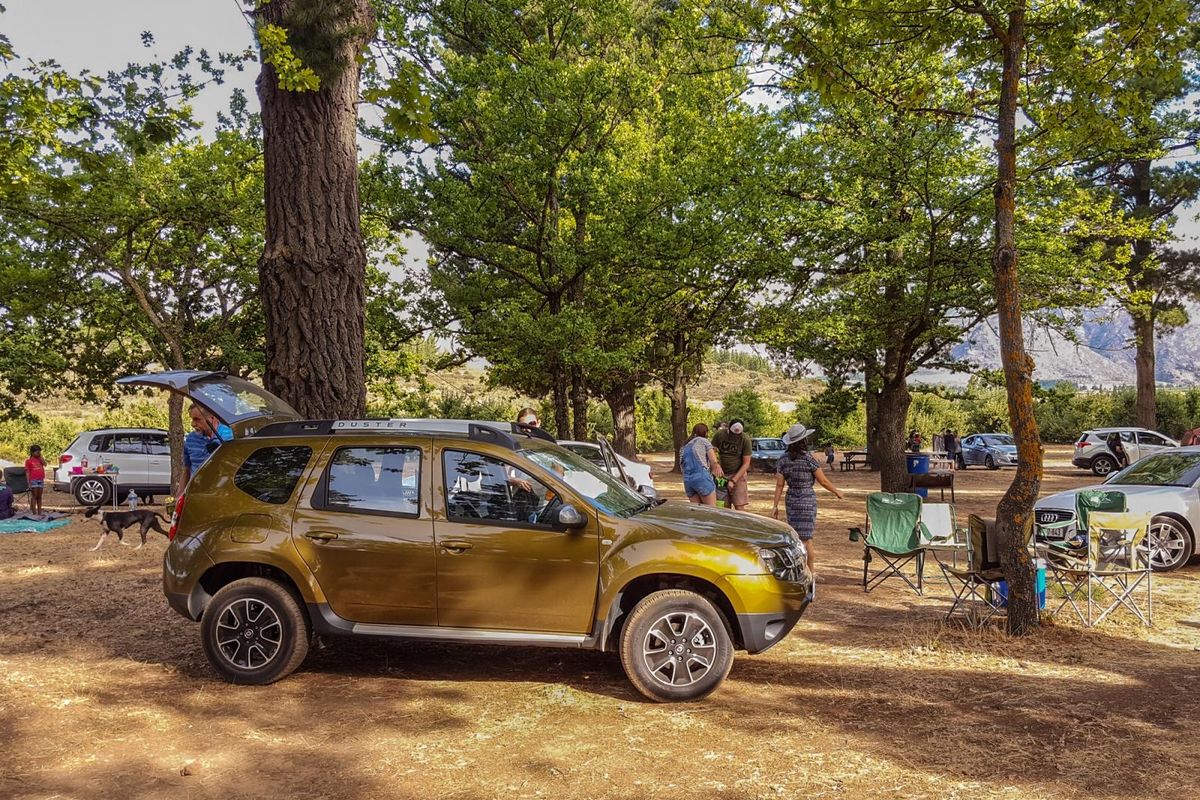
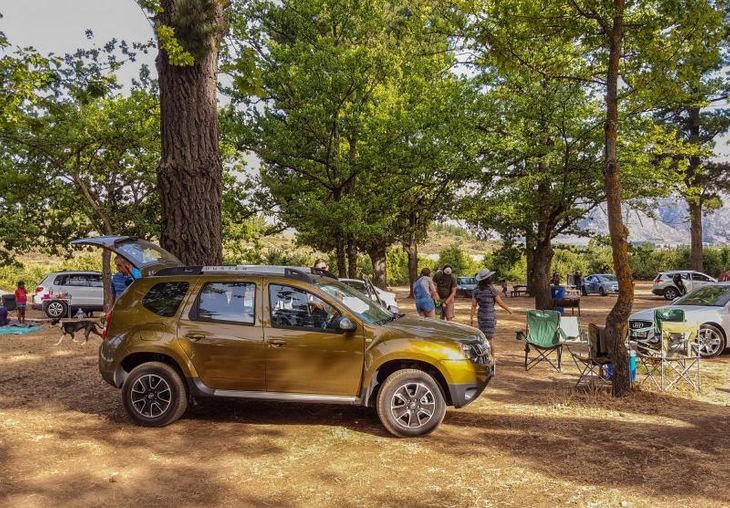
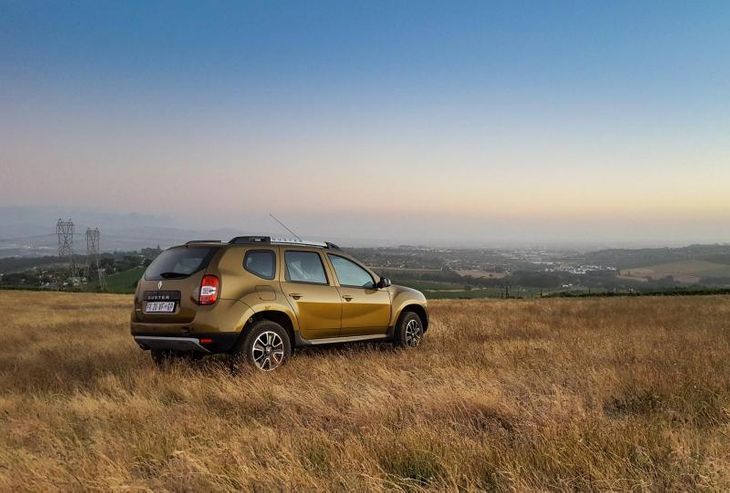
A family picnic in Ceres. The Duster swallowed a fair amount of chairs and cooler boxes with ease. With five people on board, it did not struggle on the open road either.
The Positives
The Duster is an uncomplicated, unpretentious vehicle. Unlike other crossovers, which look like they could venture off-road, the 4WD Duster does "what it says on the tin".
The engine may sound a little agricultural, but it performs willingly. The vehicle is light on fuel and after many open road trips, we were averaging 6.3 L /100 km.
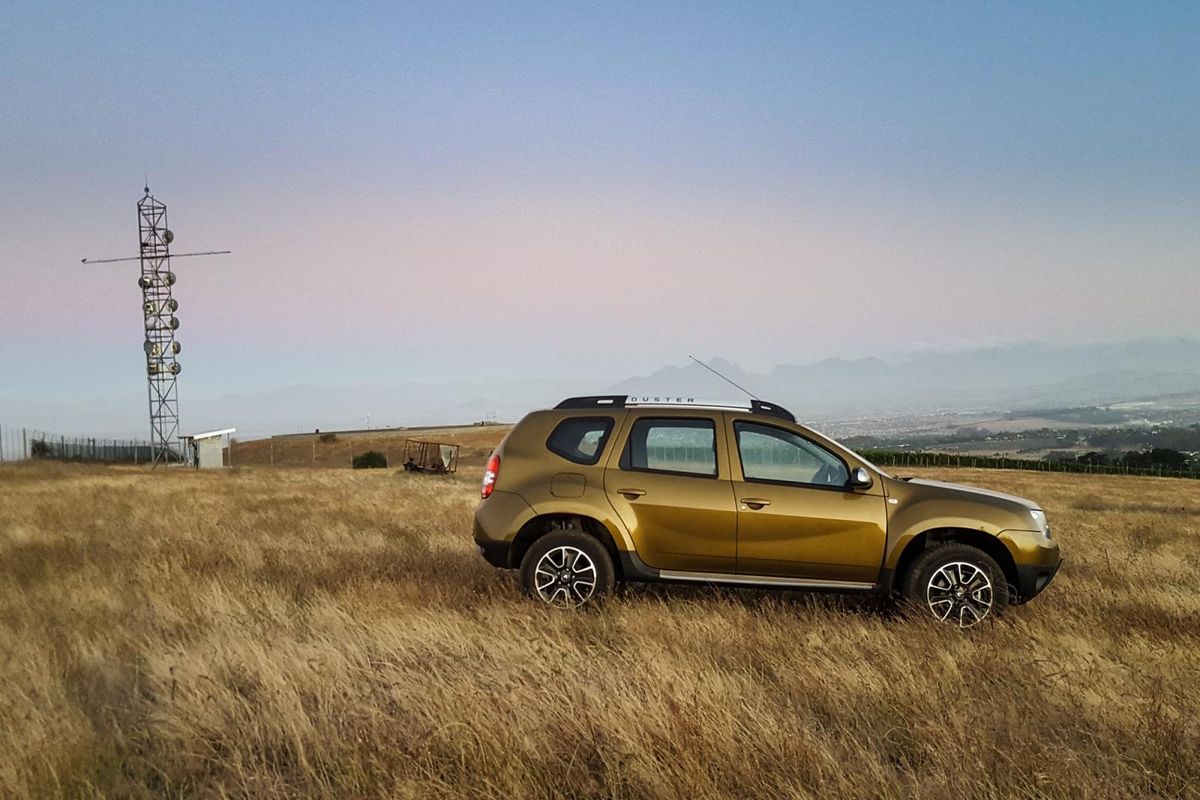
It features a basic all-wheel drivetrain with a centrally locking differential. Sourced from a Nissan X-trail, this system provides traction in off-road conditions. It was capable and we scaled some terrain (dirt roads and loose sand) that only 4×4 vehicles could traverse.
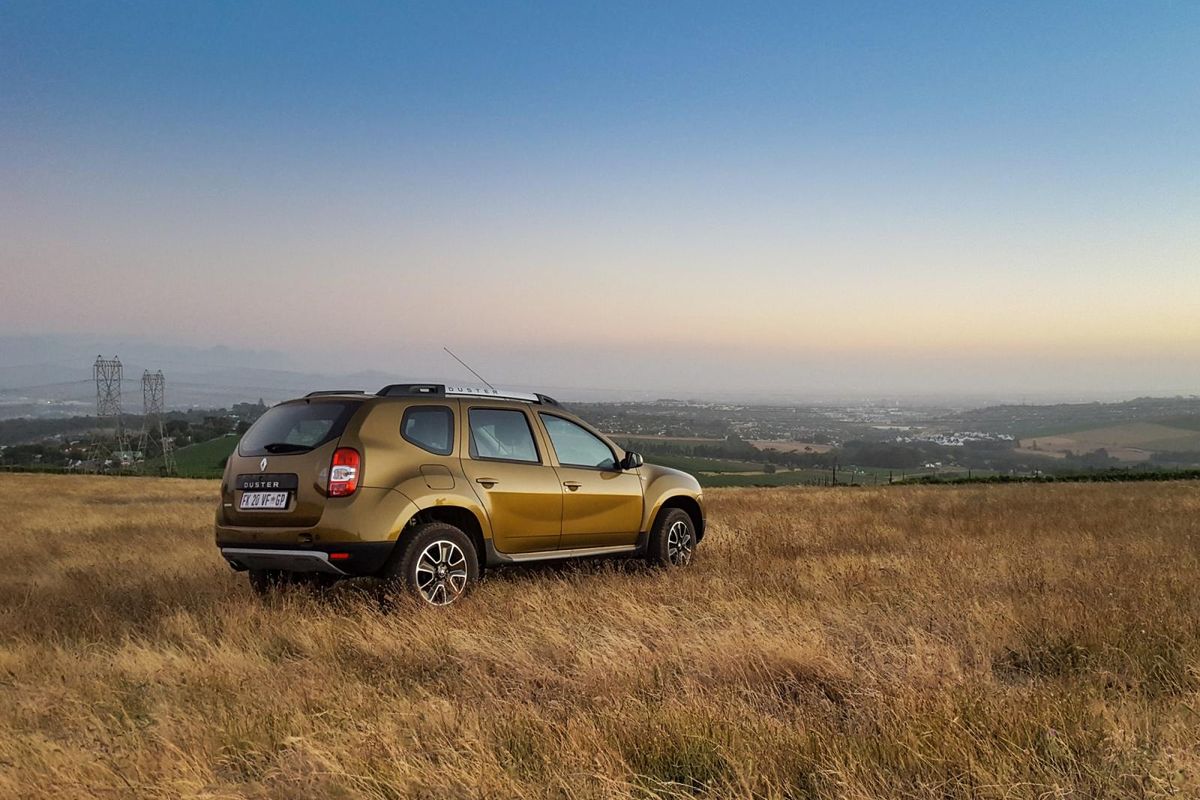
With 4×4 mode engaged, the Renault Duster climbed a hill. Thanks to the centre-locking differential and 210 mm of ground clearance, the Duster proved capable.
It's easy to switch to 4×4 mode as the vehicle offers a drive select rotary dial. You can leave the vehicle in full auto, when it's essentially a front-wheel-drive biased all-wheel- drive vehicle or save some fuel (like we did) and force the vehicle to stay in two-wheel drive mode. Ground clearance of 210 mm is commendable.
The 1.5dCi Dynamique 4WD's specification level is generous; it features nice-to-have features such as cruise control with speed limiter, satellite navigation, Bluetooth connectivity and a USB port. Rear parking sensors are a welcome feature too.
The safety specification includes anti-lock brakes, traction control, stability control and 4 airbags.
The cabin space is generous and we frequently travelled 5-up (driver and 4 passengers) on holiday road trips. On one occasion, we filled the boot with picnic baskets, cooler boxes and chairs. You can fold the seats down for more space, but it's still a tight squeeze to get something like a mountain bike in there.
The Negatives
The stuck-clutch incident. After holiday jaunts that covered a few thousand kilometres of tar, gravel and sand, it was a pity that the clutch pedal "misbehaved". Renault offered us a courtesy car while the Duster was being seen to, which we didn't need due to such a quick turnaround time.
The cabin is very plasticky. Sure it appears to be hard-wearing plastic, but the interior nonetheless reflects the value-for-positioning of the Duster range. Still, we can't complain that much as this derivative is relatively affordable given its specification and the breadth of its abilities.
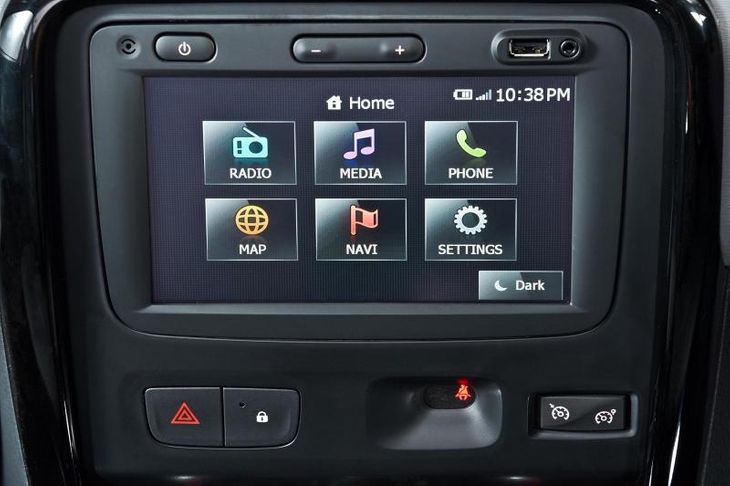
The positioning of the infotainment screen is a little too low. We often asked the front passenger to input commands as we felt uncomfortable taking our eyes off the road.
The simple interface of the Duster's infotainment system. The only downside is the positioning, which is too low.
The lack of an automatic in the range is regrettable. The manual gearboxes are adequate, but an automatic transmission would broaden the Duster's appeal immensely.
First gear is an extremely short ratio. It's best used as an off-road crawl gear and frequently we'd find ourselves pulling off in second gear.
Summary
The Renault Duster acquitted itself well over the test period and we're happy to recommend this model to small families who require something simple, affordable and, for the money, very capable and versatile. The practicality, off-road ability and features in the Duster make it an excellent value-for-money offering and the service experience from Renault Tableview was commendable. The clutch gremlin appears to have been just that: a gremlin – because apart from that there was nothing about the mechanical or build integrity that we could fault.
The 1.5-litre turbodiesel is the one to have; once the engine produces its peak torque at 1 750 r/min, there is plenty of in-gear shove. It proved economical to run and while the indicated consumption was sitting in the 7s (L/100 km) around town, some open-road driving saw the readout drop to 6.3 L/100 km. Its road holding is stable on gravel and felt completely at home on sand. The Renault Duster is plucky, capable and we liked how uncomplicated it was. What's more, there aren't many compact family cars with all-wheel drive capability… and, for the record, this derivative comfortably undercuts the Cars.co.za Consumer Award-winning Suzuki Vitara's AllGrip (petrol) derivatives on price. It is no wonder Renault sells so many!
Toyota Corolla 1.4 D4-D Prestige (2017) Quick Review
This year (2017) marks 50 years of the Toyota Corolla, which is quite a milestone. We got behind the wheel of the turbodiesel derivative of the recently facelifted range to do a quick review. Is it more of what we’ve come to expect, or should you be looking elsewhere?
We like: Torquey engine with respectable performance, thrifty on fuel, spacious cabin.
We don't like: Its specification is good, but not great, some minor interior quality issues
Alternatives:
Something Korean: The Kia Cerato received a mild update last year. In 1.6 EX (petrol) guise, the Cerato offers fog lamps, 2 extra airbags, automatic light activation and cruise control, which the Corolla doesn't have, but the Toyota features leather upholstery, touchscreen infotainment and reverse-view camera/PDC, which the Kia doesn't.
Number one rival: The Chevrolet Cruz 1.4T LS is also petrol-powered, but almost matches the Corolla in terms of its peak torque output. It offers credible performance, space and spec, but it is not quite as refined as its Japanese rival. It only has a 3-year, as opposed to 5-year, service plan, but it's very well priced.
The bargain buy: The top-spec Mazda3 1.6 Sedan may not be able to match the Corolla's thrifty consumption, but its claimed consumption figure (6.0 L/100 km) is admirable for a petrol model. In Dynamic spec it comes well-specified (including auto lights and wipers) and price-wise, it undercuts the Toyota by more R20 000.
Facts & Figures
Price: R307 500 (March 2017)
Engine: 1.4-litre 4-cylinder turbodiesel
Transmission: 6-speed manual
Power: 66 kW
Torque: 205 Nm
Fuel Consumption: 4.5 L/100 km (claimed)
Top speed: 180 kph
0-100 kph: 12.5 sec
Summary: The 11th-generation Toyota Corolla's styling has been brought in line with the rest of its products.There are some mild under-the-skin changes in terms of ride and refinement, and the Corolla feels even more solid and refined than before. The 1.4-litre turbodiesel offers perky performance and frugal economy… engine wise, it is certainly the pick of the range.
The good:
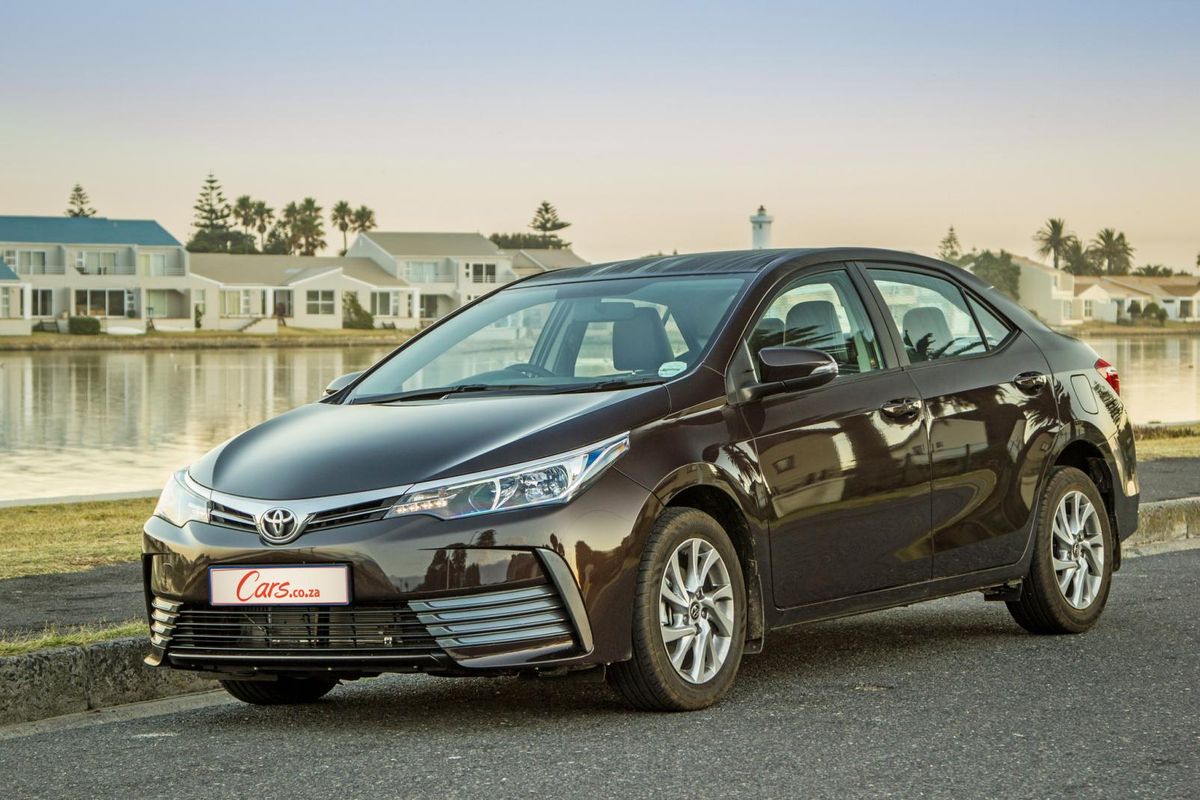
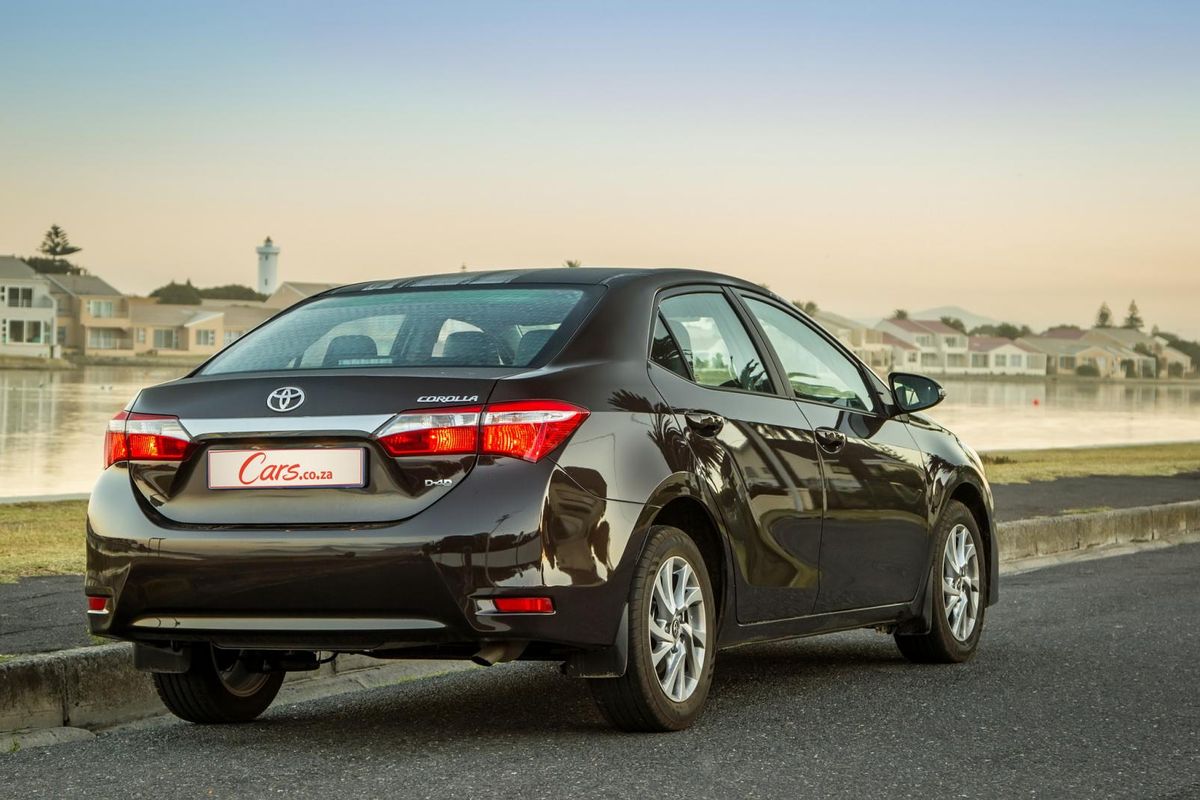
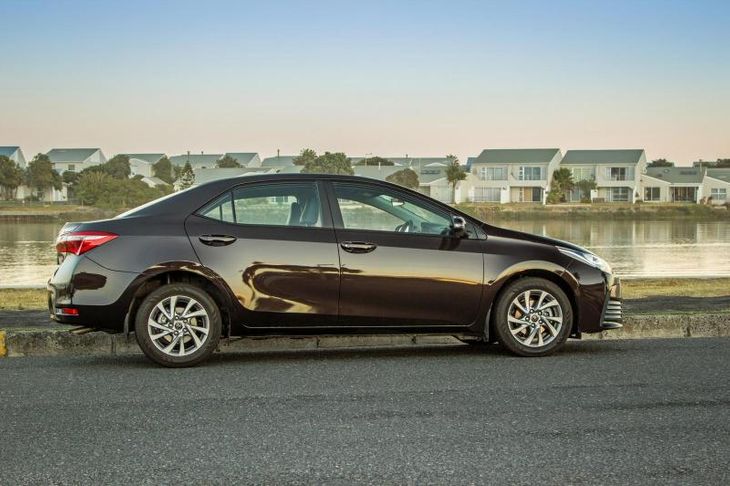
The side profile of the Corolla is unmistakable. Its design has aged rather well and, as a result, the aesthetic facelift is minor.
Practicality. The Toyota Corolla has always been a textbook example of a practically packaged compact sedan and the latest incarnation is no different. Not only does the boot offer cavernous levels of space (at a claimed 452 litres, if offers enough capacity to carry a family's luggage), but rear legroom is generous enough to accommodate three children (or a pair of full-sized adults) in comfort and the back seats fold down in a 60:40 configuration to further increase luggage space.
Engine. The star of the show is this 1.4-litre 4-cylinder turbodiesel. On paper, it looks to be down on power at 66 kW, but when you're driving it, it feels like it has a bit more poke than that. And the reason for that is that there is a generous amount of torque on tap, aided by the well-spaced ratios in the 6-speed transmission. The motor suffers from a smidgeon of low-down lag, but once the turbocharger is on song, the performance is adequate.
Generous amount of torque aided by well-spaced ratios.
In stop-start traffic, some stirring of the 6-speed manual gearbox is required to keep the engine on the boil, but the Corolla's finest skillset becomes apparent on the open road. Few vehicles in this segment are as adept at dispatching kilometres with such comfort and in such a frugal fashion.
Comfort and refinement. For this new-look model, Toyota South Africa claims the noise, vibration and harshness (NVH) has been reduced, offering a quieter and more relaxed ride. The cabin is indeed a quieter place to be (if not dramatically more muted) and the suspension has been improved too, with the addition of new shock absorbers. Mechanically, not much else has changed, but, to be fair, the package was already pretty good to begin with.
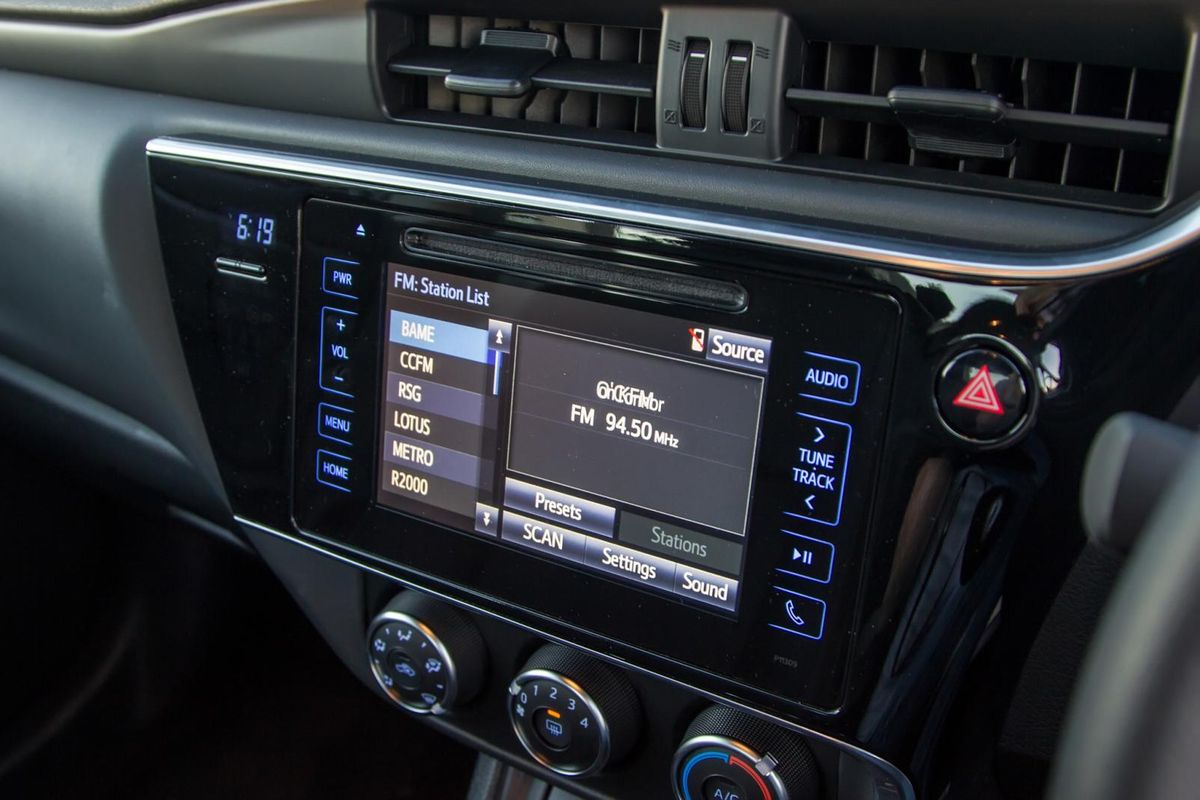
Features. In Prestige spec, the Corolla offers respectable levels of interior features: leather upholstery, touchscreen audio system, reverse-view camera, multifunction steering wheel and 16-inch alloy wheels. The Exclusive spec offers nicer things such as climate control, keyless entry and some more safety features (to name but a few), but you can't get this lovely turbodiesel engine in the top-of-range spec.
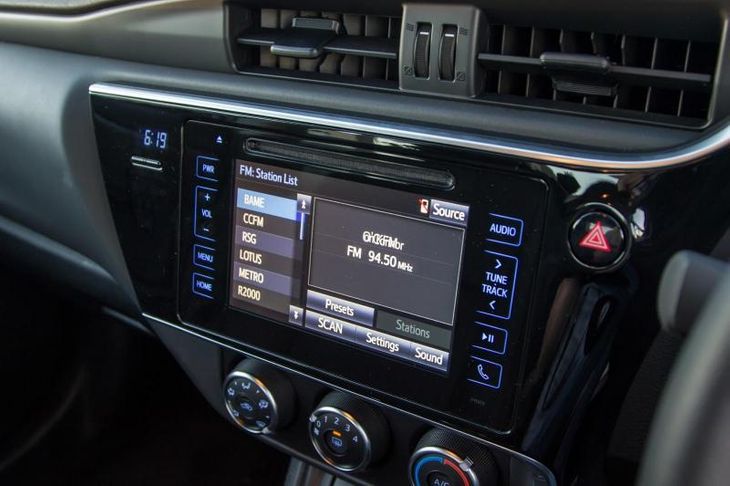
The touchscreen interface of the audio system has a chunky layout, simple menu system and is intuitive to operate.
The bad:
Pricing. The Toyota Corolla has become quite expensive over the years and this derivative is over the R300k barrier (for what many will see as a mid-spec vehicle). Pricing perceptions aside, it's interesting to note the Corolla's key rivals from Kia, Chevrolet and Mazda are more affordable (the Cerato comes in just under the R300k barrier, but the others comfortably so).
Interior quality. While the overall package feels solid and substantial, the cost-cutting measures (which all volume manufacturers implement, to be fair) just seem too obvious in the Corolla's case. The harder-quality plastics on the door sills and centre console feel like they will scuff easily. There's supposed to be good, to excellent, quality at this price point and we've come to expect high standards from Toyota. It's not a fatal flaw by any means, but worth noting if you're expecting your Corolla stand up well to hard use.
Does not land a knockout blow. There are 3 specification grades for the Corolla. This diesel derivative is not available in top-spec, but one or two surprise and delight features would have sweetened the deal. Cruise control, keyless start/stop, front fog lights, auto wipers and headlights… just one of those features, preferably the former, would have been welcome.
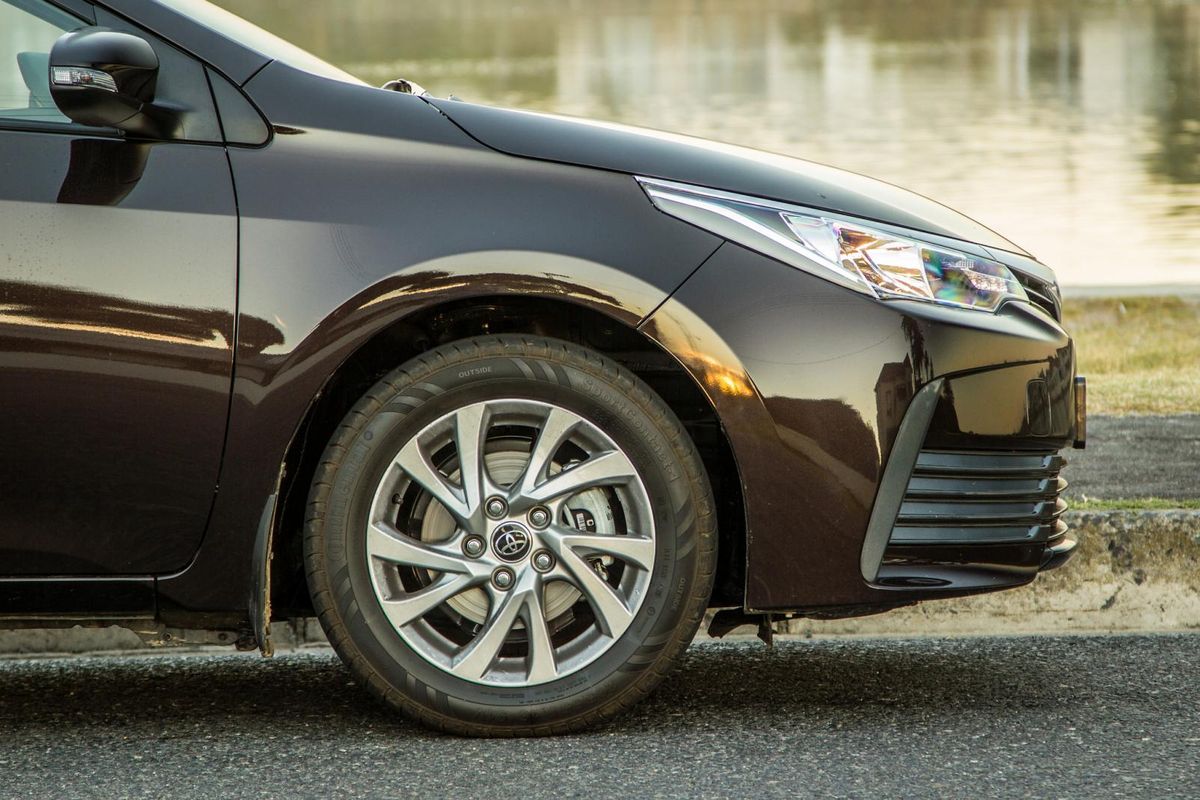
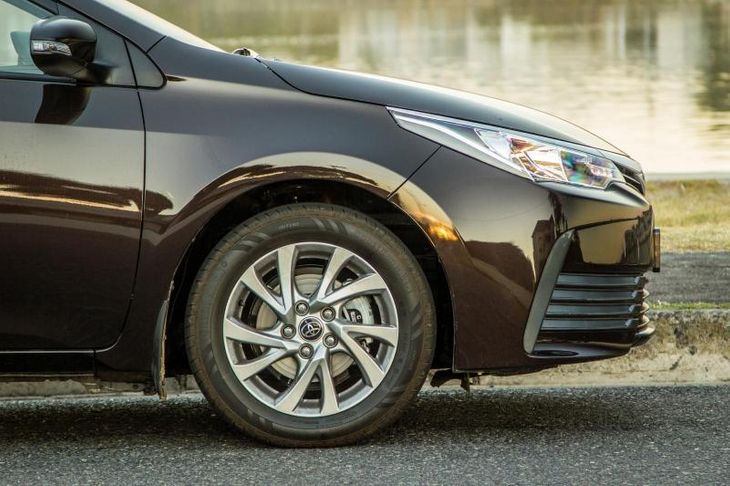
The Corolla's slimline headlamps and (standard) 16-inch alloys accentuate the arrowhead-like shape of the front of the car.
Pricing and after sales
The Toyota Corolla range starts from R261 300, with this 1.4 D4-D Prestige retailing for R307 500. The price includes a 5-year/90 000 km Service Plan and a 3-year/100 000 km manufacturer warranty.
Verdict
Despite some minor interior quality niggles, the Toyota Corolla still proudly waves the flag for comfortable family sedans. Admittedly this segment has come under immense pressure from the SUV/crossover brigade and although the Corolla Quest is down on features and you can't get this lovely turbodiesel engine, but there's no denying its value proposition at the budget end of the segment. So where does that leave a turbodiesel offering positioned slap bang in the heartland of the compact sedan market… and what does the future hold in store? Consider that Toyota itself is banking on petrol and petrol hybrids as the future as a whole host of European cities are on the verge of banning diesel engines on the ground of pollution.
As for this diesel-powered Corolla, we can only give it thumbs up: its pros far outweigh its cons. Not only is it comfortable and practical, but it offers a relaxed and frugal drive. Open road cruising is its strength; it'll happily soak up many kilometres of highway travelling. The six-speed manual gearbox is a pleasure and there are just enough features to keep the techno-savvy generation happy. By virtue of its maker's reputation for reliability, allied with its extended after-sales network, the Corolla represents a good proposition for long-term ownership.
Mike Fourie says:
There might not be many turbodiesel options in the family car segment, but in the absence of a turbopetrol (in the Corolla range), the 1.4 D4-D makes sense.
Jaguar Shows Electric I-PACE SUV Concept [Updated]
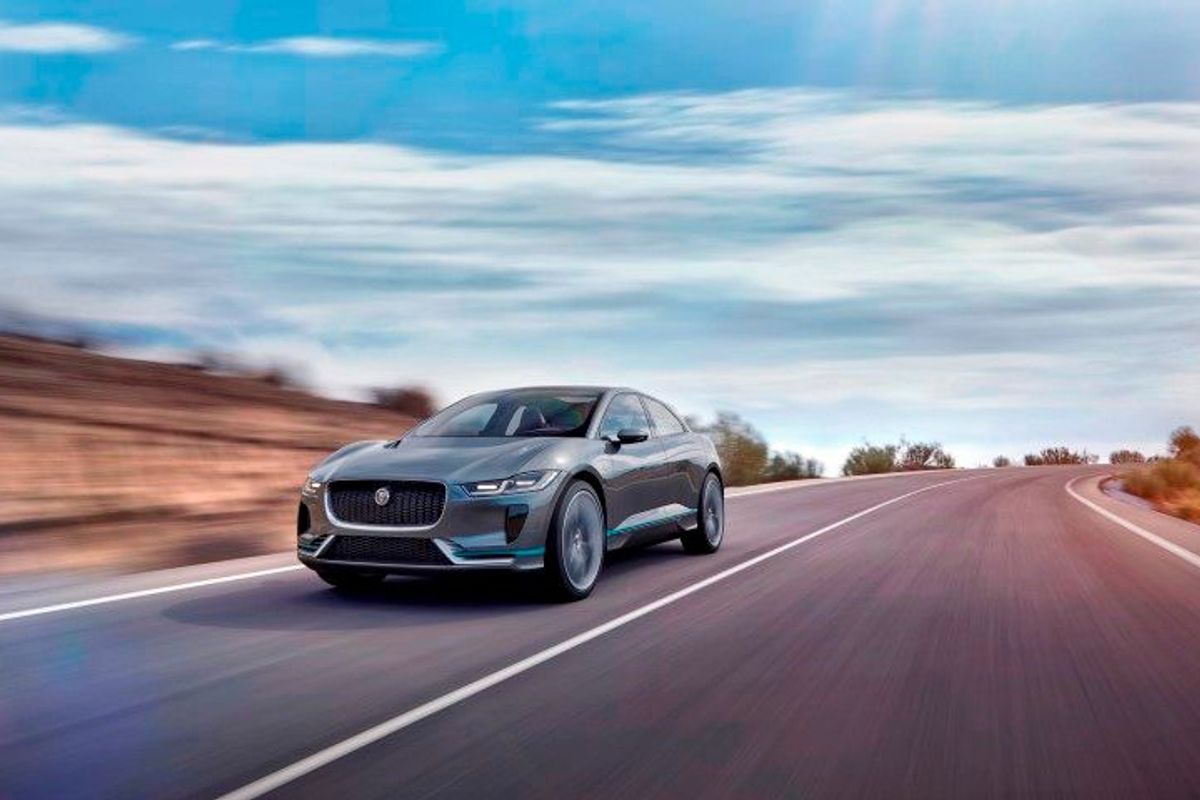
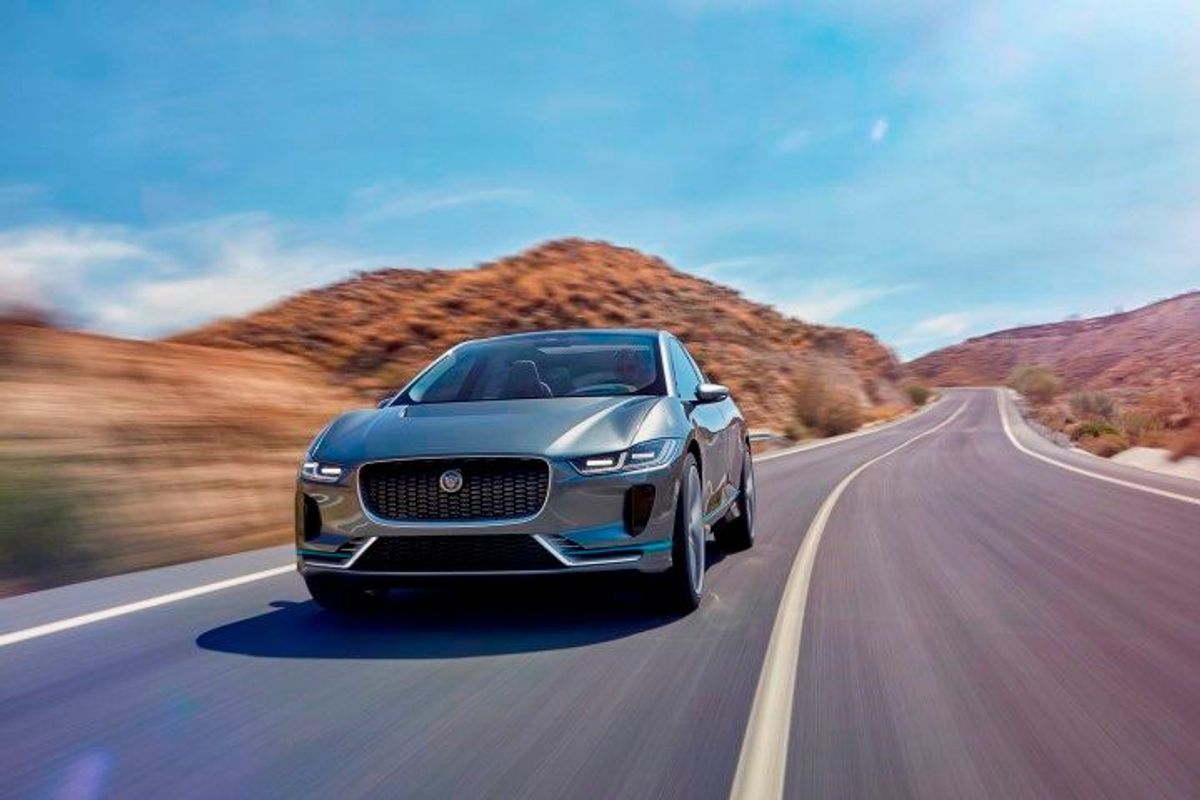
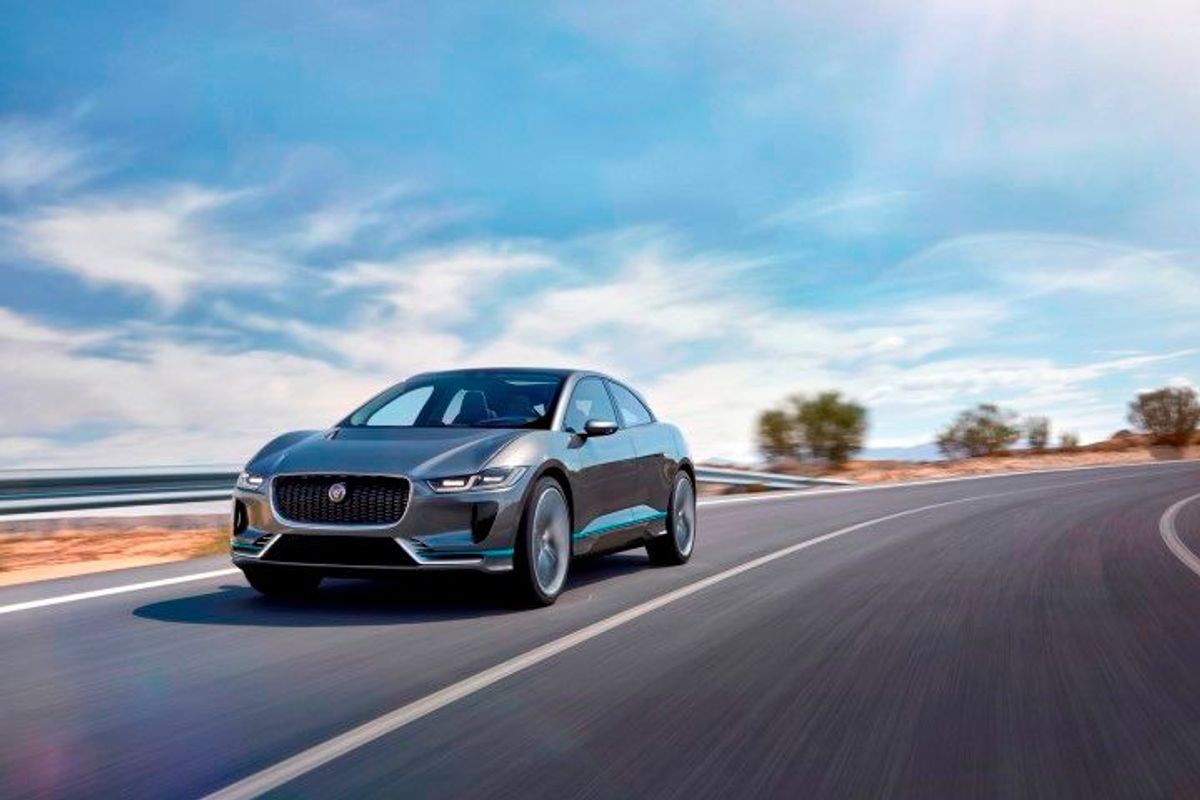
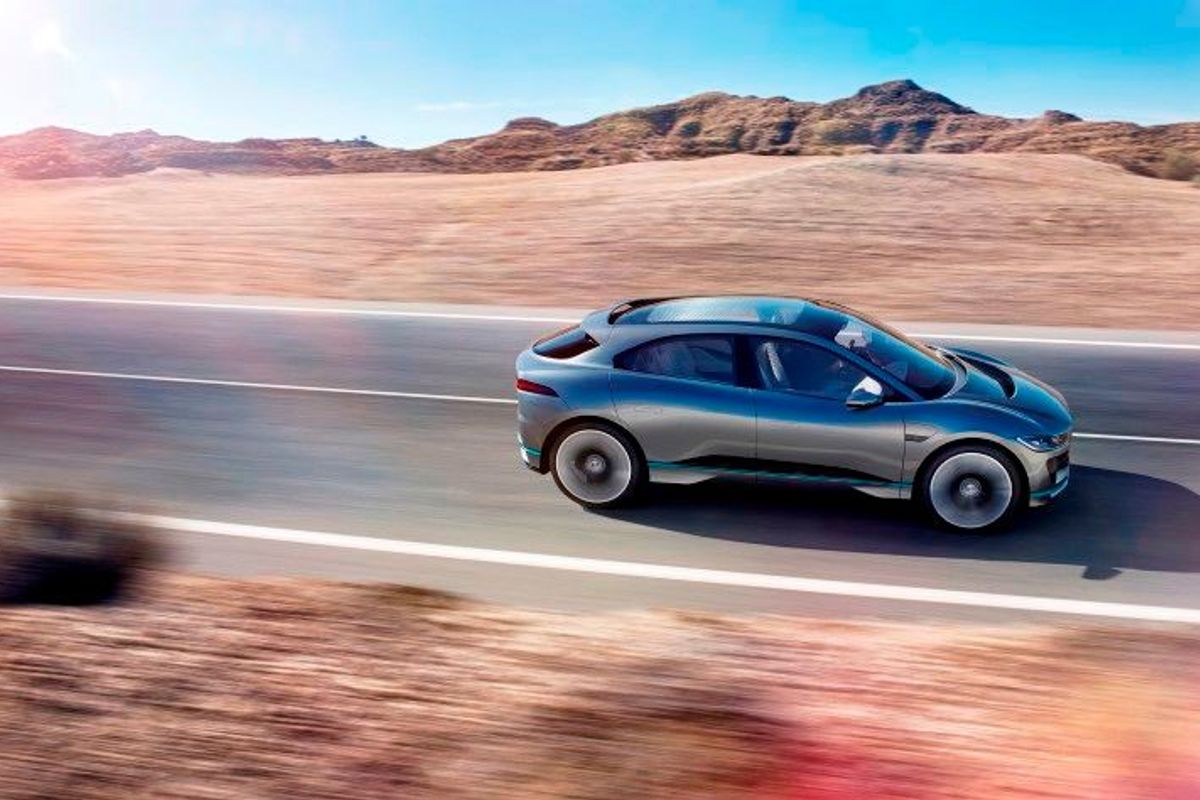
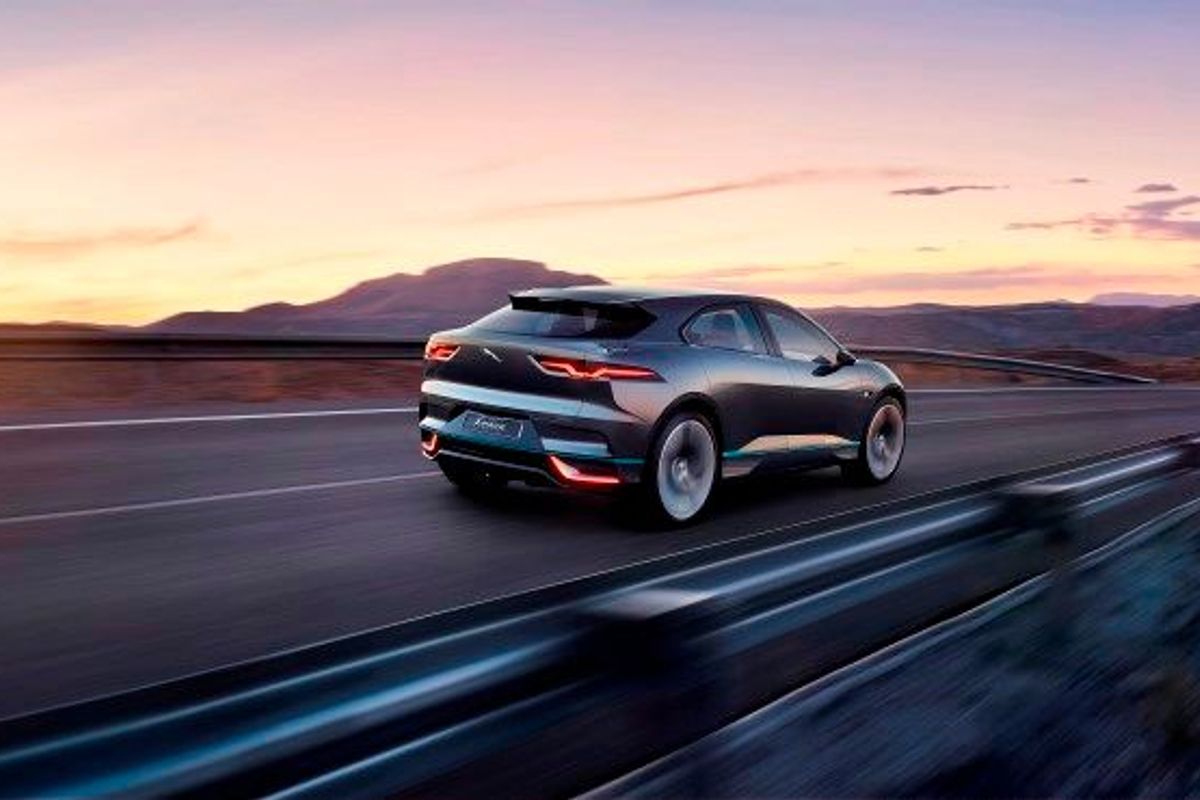
Jaguar is showing its new I-PACE electric performance SUV at the 2017 Geneva Motor Show. The production version of the I-PACE will hit the road in 2018.
Jaguar has taken the wraps off its I-PACE electric performance SUV concept that previews Jaguar’s first-ever electric vehicle. This concept is a big deal for the Coventry-based firm and a production version is scheduled for reveal at the end of 2017 before it goes on sale in 2018. Even better, the new electric Jaguar performance SUV will arrive on South African soil in spring 2018.
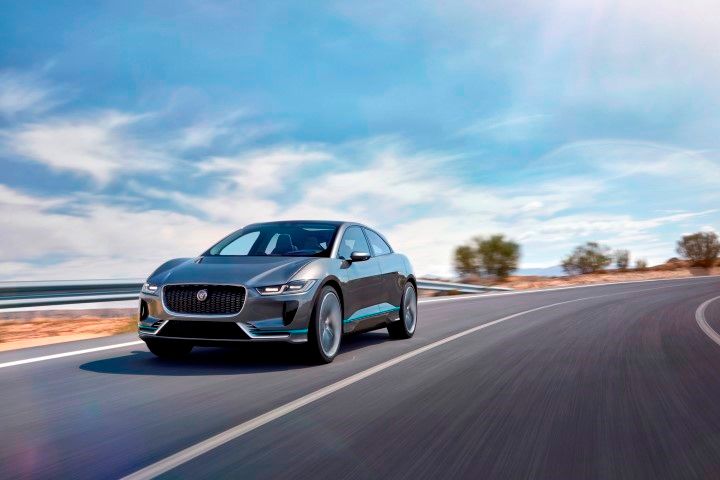
The five-seater I-PACE concept combines a cab-forward design, inspired by the C-X75 supercar, with a coupe-like silhouette and sports car performance. According to Jaguar, the vehicle will be assembled in Austria at the Magna Steyr plan in Graz. Manufacturing will also take place in the United Kingdom later on.
“The I-PACE Concept is a radical departure for electric vehicles. It represents the next generation of battery electric vehicle design. It’s a dramatic, future-facing design – the product of authentic Jaguar DNA matched with beautiful, premium details and British craftsmanship. This isn’t just a concept. It is a preview of a five-seat production car that will be on the road in 2018. This will be Jaguar’s first-ever battery-powered electric vehicle and opens a new chapter in the history of our legendary brand” said Ian Callum, Director of Design, Jaguar.
Design details
The mid-sized I-PACE concept offers space typically seen on much larger SUVs.
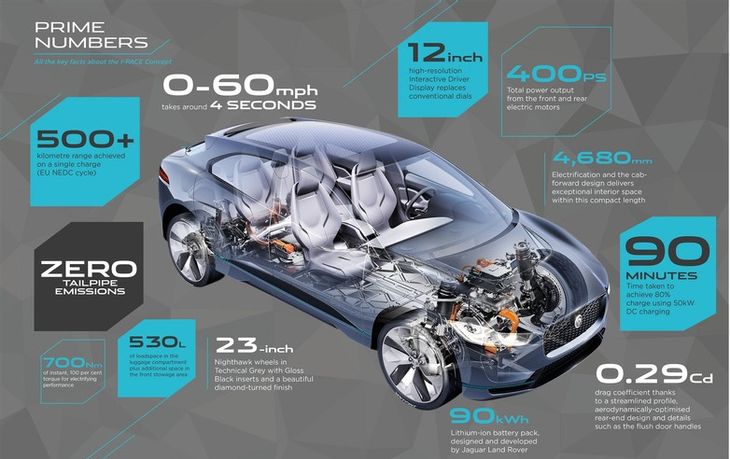
Measuring 4 680 mm in length with a width of 1 890 mm and a wheelbase of 2 990 mm, the I-PACE concept re-imagines what an electric vehicle can look like. With the absence of an engine and transmission tunnel, designers maximised the space by extending the wheelbase, shortening the overhangs and moving the cabin forward. The result is a vehicle that looks sporty and powerful with a spacious cabin.
The I-PACE is similar in size to a mid-size SUV, but offers space only typically seen in large SUVs. Space for second-row passengers is generous and the I-PACE concept offers 530 litres of luggage space, while storage space under bonnet offers an additional 28 litres. The I-PACE concept rides on large 23-inch Nighthawk wheels with a diamond-turned finish.
“The opportunities offered by an electric powertrain are huge. Electric vehicles offer designers much greater freedom, and it is an opportunity we must grasp. This is why the I-PACE Concept is developed on a new architecture which has been designed to optimise electric vehicle performance, aerodynamics and interior space. With the I-PACE Concept, the revolution is in the profile, not the design language. The profile is possible because this car is electric. It’s not just that we wanted to create something that was very different from anything else we do: we wanted the design to celebrate the new battery electric technology” said Callum.
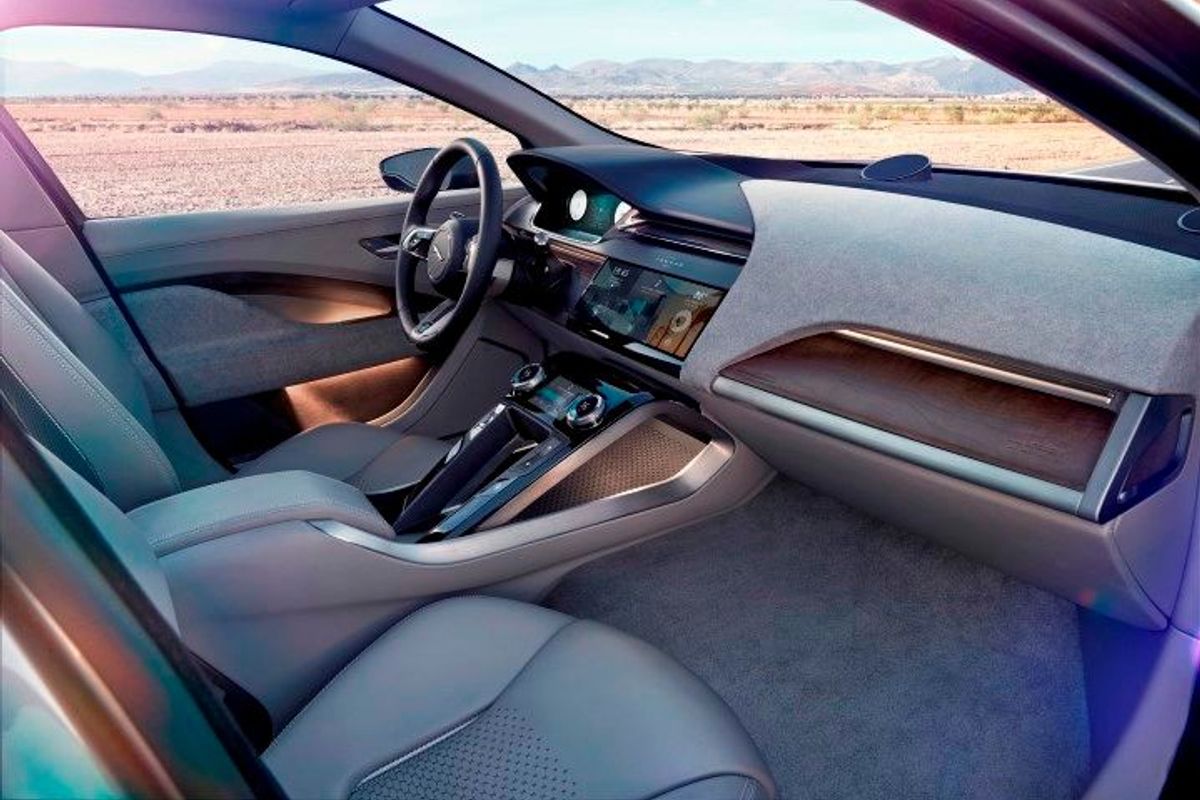
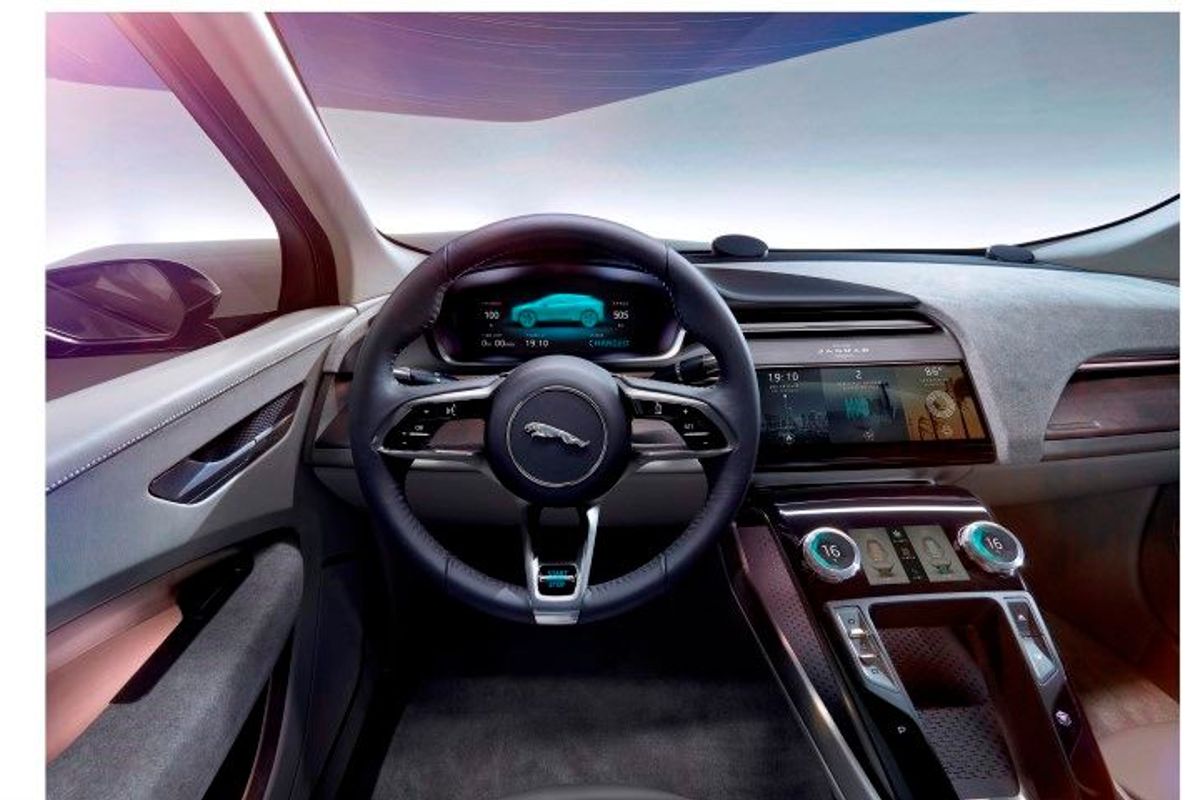
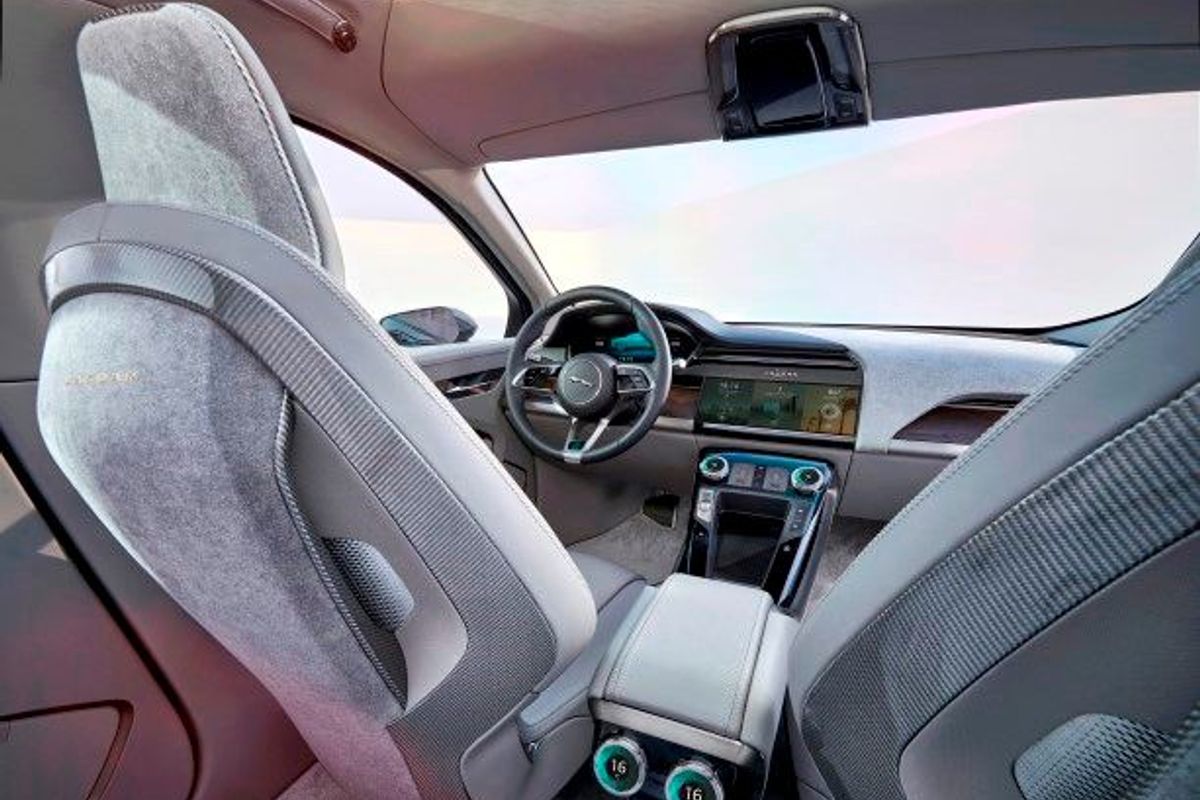
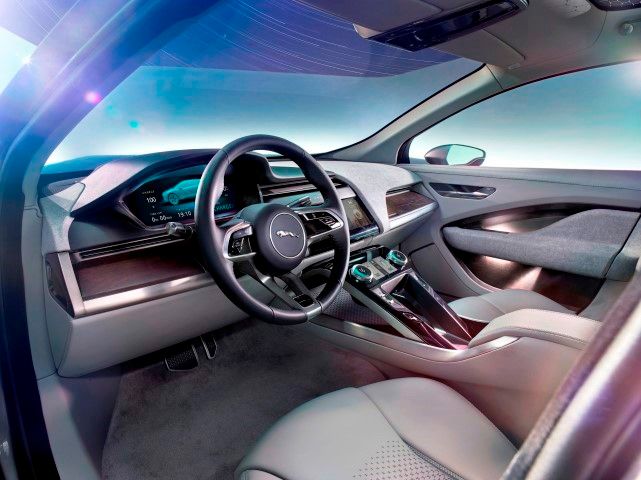
The I-PACE concept features high-quality materials and digital displays for intuitive functionality.
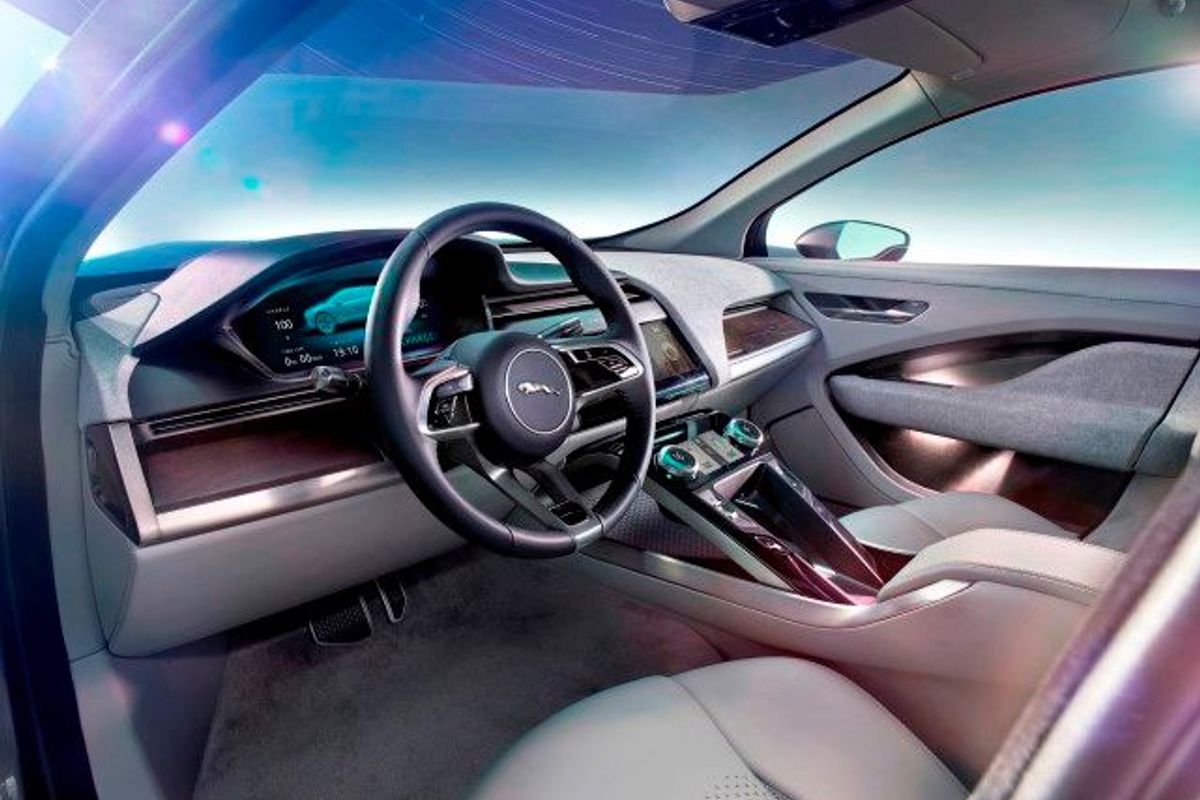
The interior of the I-PACE concept shows a future-focused design with cutting edge technology that’s likely to be seen in the production version. The driver and passengers sit lower than in normal SUVs and the driver’s hips are positioned lower in relation to the heels, which means the driver adopts a ‘Sports Command’ position, which is said to provide a sense of connection to the road, much like a supercar.
The instrument panel features a 12-inch TFT touchscreen while a separate 5.5-inch touchscreen with knurled metal finish rotary controllers with high definition displays allows passengers to configure infotainment and climate control settings. A 12-inch high definition virtual instrument cluster with a full-colour head-up display is also fitted. The 3-spoke steering wheel features nifty multi-function capacitive switches that remain invisible until they are illuminated and they also feature a ‘micro-click’ haptic when pressed. The I-PACE’s infotainment system was developed in-house with a powerful quad-core processor with a high-speed solid-state drive. A WiFi hotspot keeps passengers connected and a range of apps can be accessed for both iOS and Android devices.
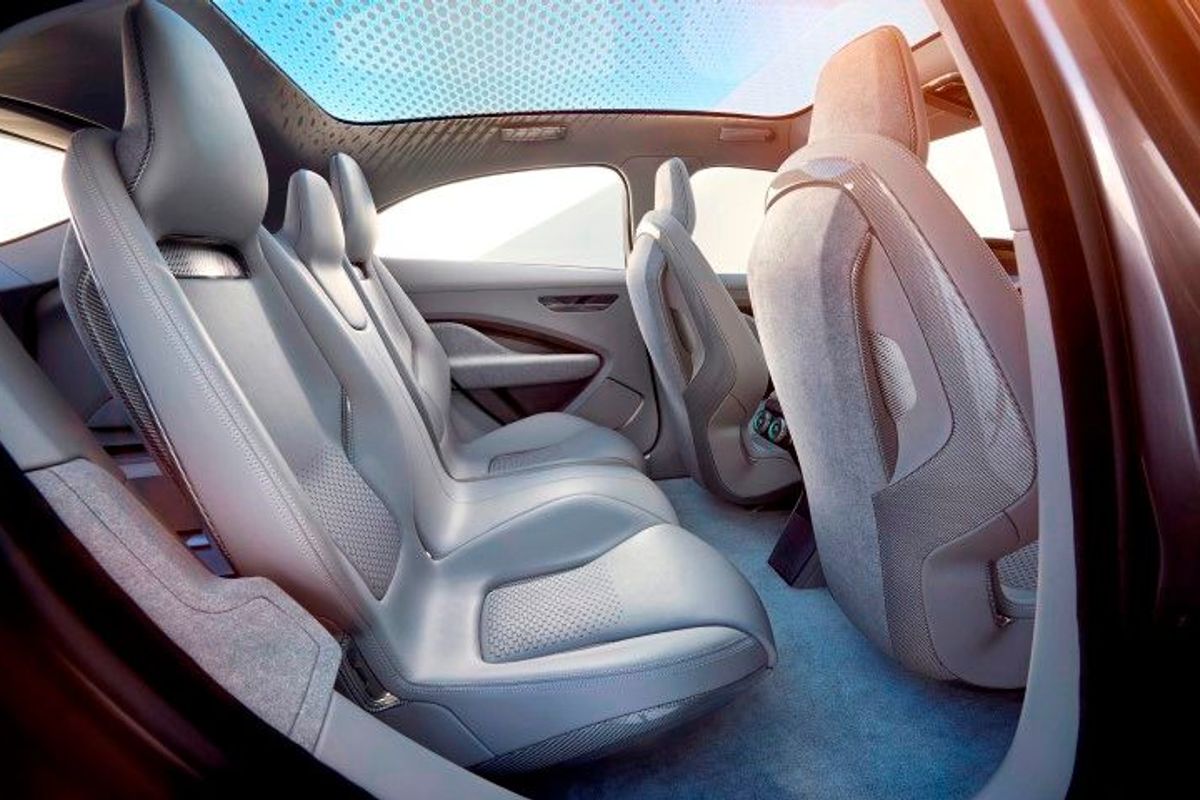
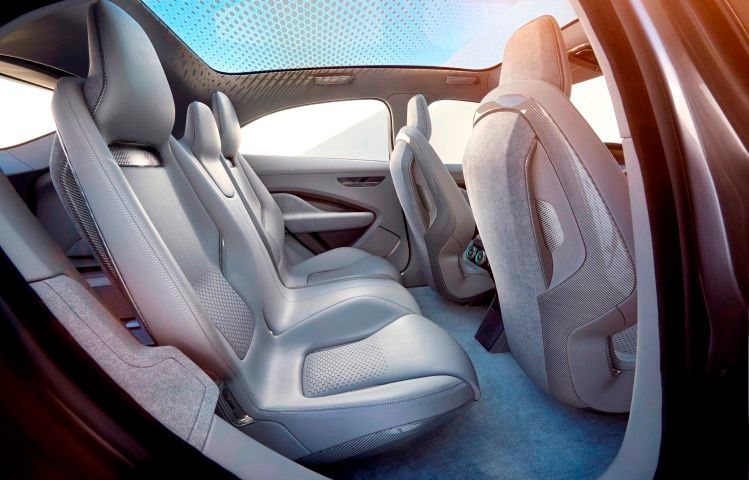
Despite its sporty appearance, the I-PACE concept offers increased legroom for rear passengers.
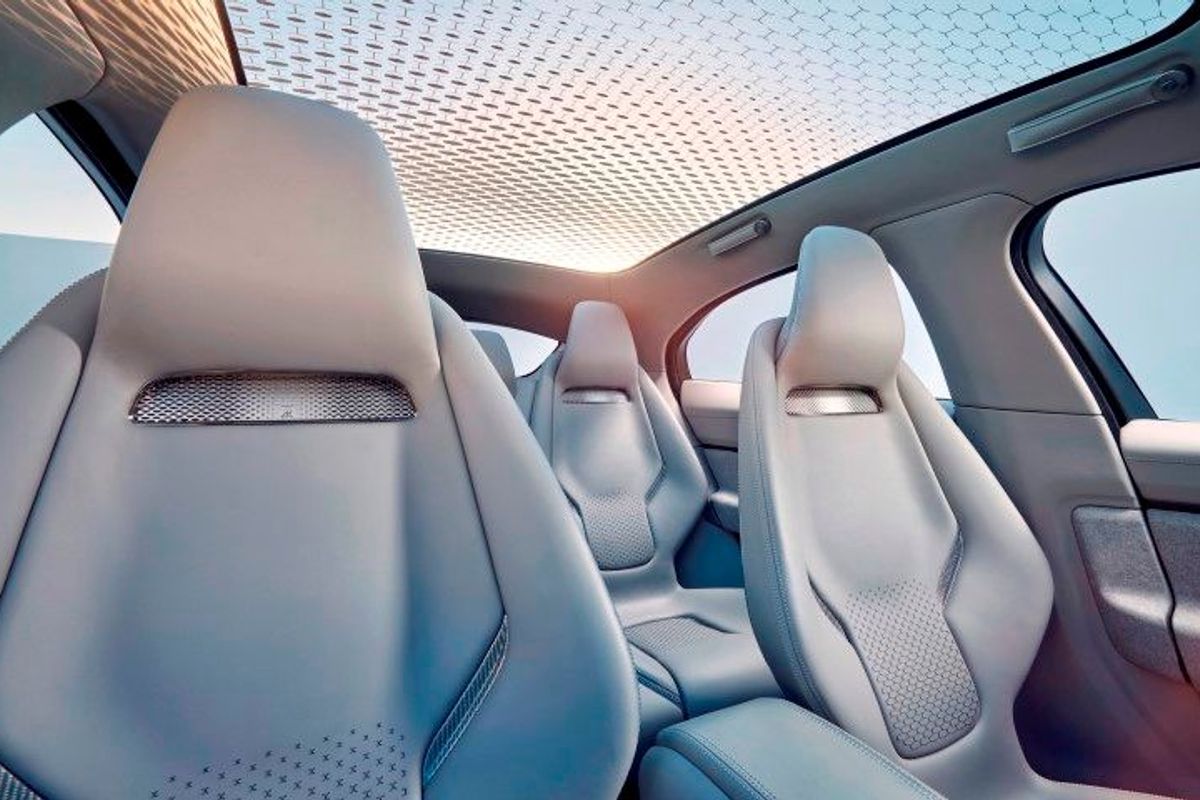
Interior materials are of high quality, combining natural materials. The seats are covered in Windsor leather with contrasting twin-needle stitching and carbon fibre edging while the seat backs are finished in Moonstone Alcantara. The doors feature aluminium, Alcantara and open pore Walnut veneer trim elements. A full-length patterned panoramic sunroof is fitted and it features LED lights that light up at night for dramatic effect.
Electric power
The Jaguar I-PACE is fitted with electric motors, powering both the front and rear axles with a total output of 294 kW and 700 Nm of torque. According to Jaguar, “The electric motors provide immediate response with no lag, no gearshifts and no interruptions. Their superior torque delivery compared to internal combustion engines transforms the driving experience,” said Ian Hoban, Vehicle Line Director, Jaguar Land Rover. The I-PACE concept is said to accelerate from zero to 100 kph in about 4 seconds.
Coupled with electric all-wheel drive, the I-PACE concept is also equipped with All Surface Progress Control (ASPC) and Adaptive Surface Response (AdSR) to tackle more challenging terrain.
The I-PACE has a range of over 500 km on the European NEDC cycle and more than 350 km on the US EPA cycle. The battery can be charged at a public charging station or at a home-installed wall box using conventional power sockets. A full charge takes just over 2 hours to complete while 80% battery charge can be achieved in 90 minutes. With an average daily commute of 40 to 50 km, the I-PACE will only need to be charged once a week. Energy is stored in an in-house designed, liquid-cooled 90kWh lithium-ion battery pack housed in lightweight aluminium.
The I-PACE concept features a double-wishbone suspension setup up-front, the same found in the F-TYPE and F-PACE while the rear suspension features the proven Intergral Link system seen on the Jaguar XE and XF.
“Electric vehicles are inevitable – Jaguar will make them desirable. Zero emission cars are here to stay and the I-PACE Concept is at the cutting edge of the electric vehicle revolution. As the charging infrastructure continues to develop globally – and with enough range to mean most people would only need to charge once a week – cars like the I-PACE Concept will make drivers appreciate that an EV can be rewarding and practical enough to drive every day,” said Ian Hoban, Vehicle Line Director, Jaguar Land Rover.
Forthcoming Lamborghini Huracan Performante Sets Lap Record [Video]
The not-yet-launched Lamborghini Huracan Performante has wowed performance car fans by setting a brand new production car lap record at the Nurburgring Nordschleife in Germany. Watch the lap record!
Lamborghini has done a sterling job of keeping this quiet over the past few months, but back in October 2016, the Huracan Performante set a new production car lap record of the Nurburgring. The new time to beat is 6:52:01 and was accomplished with Lamborghini's test driver Marco Mapelli behind the wheel. Mapelli has considerable experience at going fast and was responsible for the Aventador SV's sub-seven minute lap time back in 2015.
There was a 15-minute window for the attempt and the entire Lamborghini team of R&D engineers, technicians and drivers, together with Stefano Domenicali, Chairman and Chief Executive Officer and Maurizio Reggiani, Board Member for Research & Development, watched anxiously. “This was an incredible and emotional moment,” says Stefano Domenicali. “Together with Maurizio Reggiani we agreed during the car’s development that with the technical and performance prowess of the Huracán Performante, not only was a sub-seven-minute lap at the Nordschleife possible but the lap record too. We wanted to achieve the Nürburgring victory in advance of the Performante’s launch, which was a challenge in terms of weather and availability of the Nordschleife. Not only did we take the lap record, we took it by some seconds!
What is a Performante?
The Lamborghini Huracan Performante is the ultimate performance incarnation of the baby bull. It features revolutionary aerodynamics, lightweight engineering and some more power. The entire package is one extreme race track performance machine. It also features some trick Pirelli Trofeo R tyres, specially developed for this product. The Lamborghini Huracan Performante will be officially revealed on the 7th March 2017 at the Geneva Motor Show.
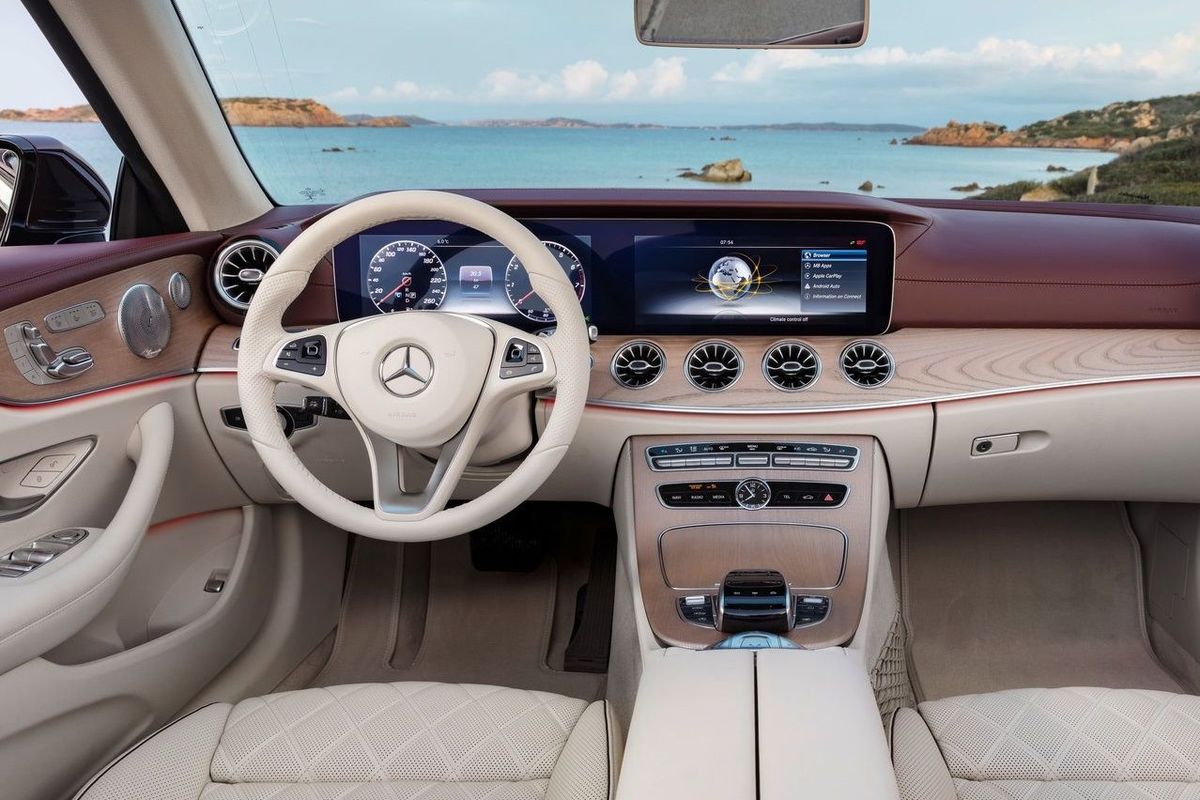
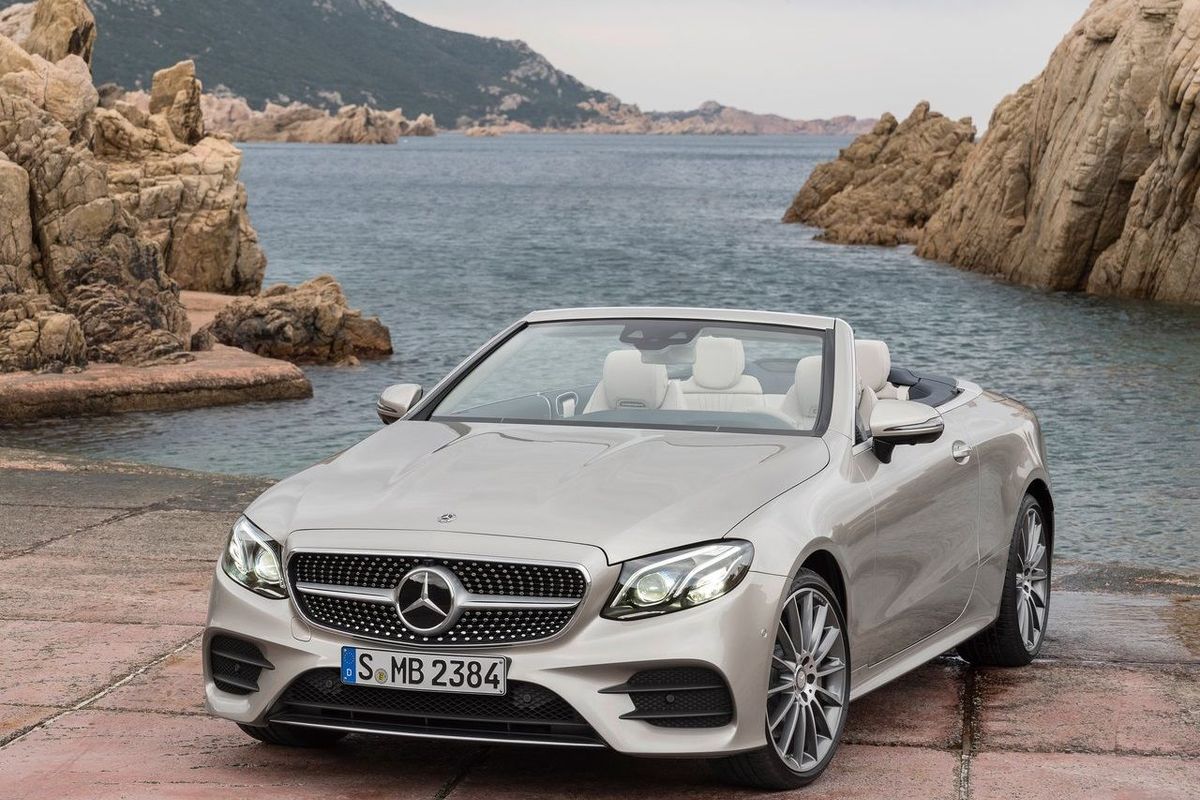
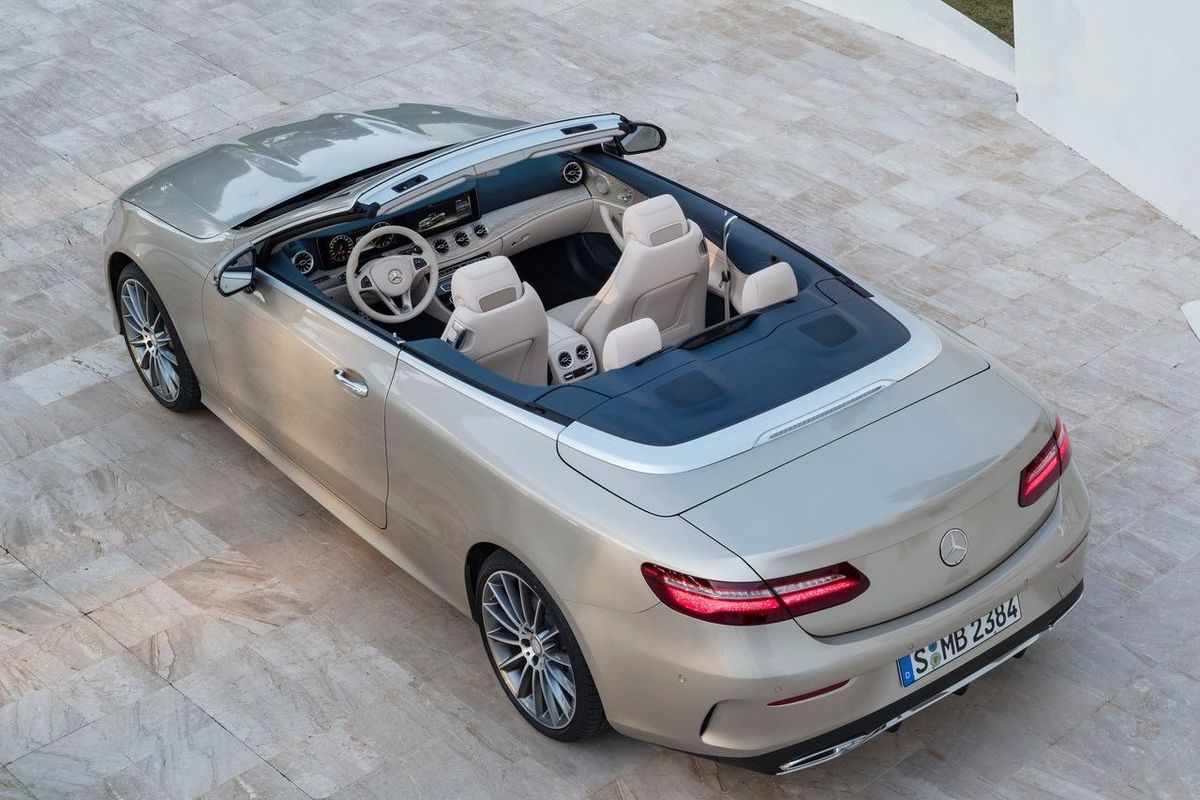
We've just returned from the international launch of the E-Class Coupe and Mercedes-Benz has subsequently announced a cabriolet version.
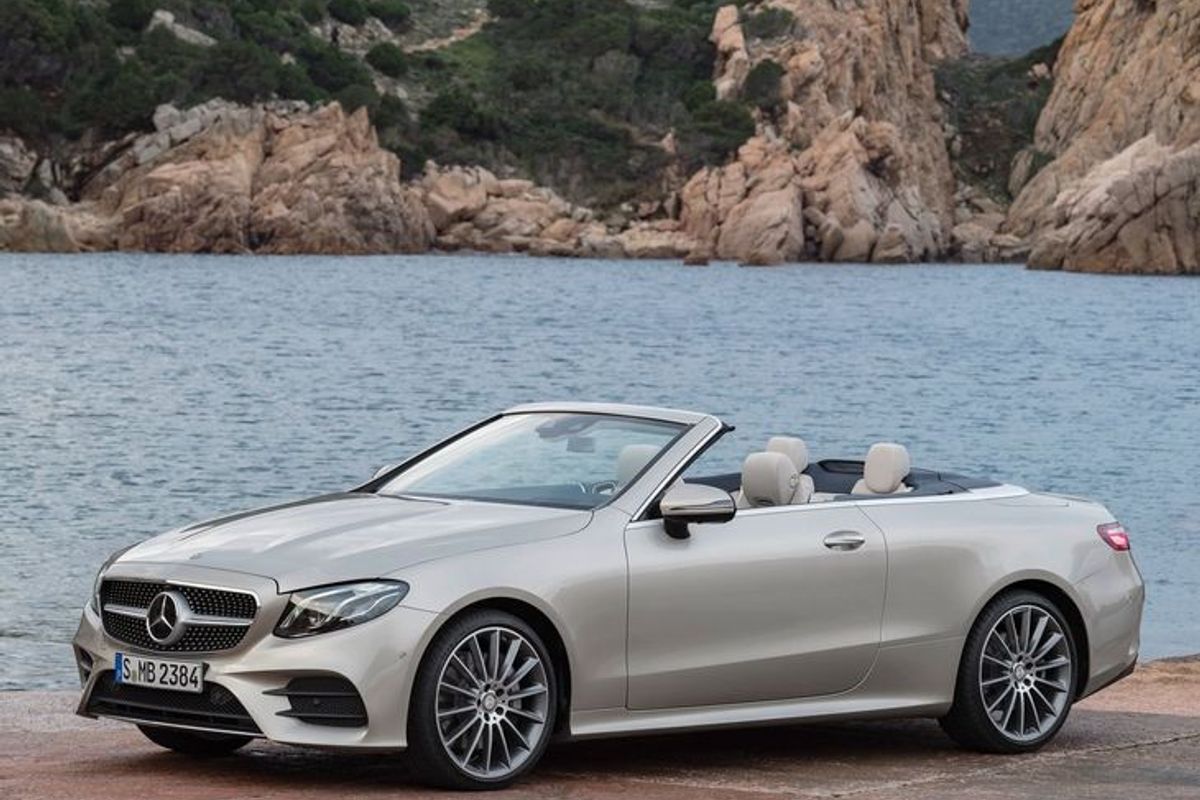
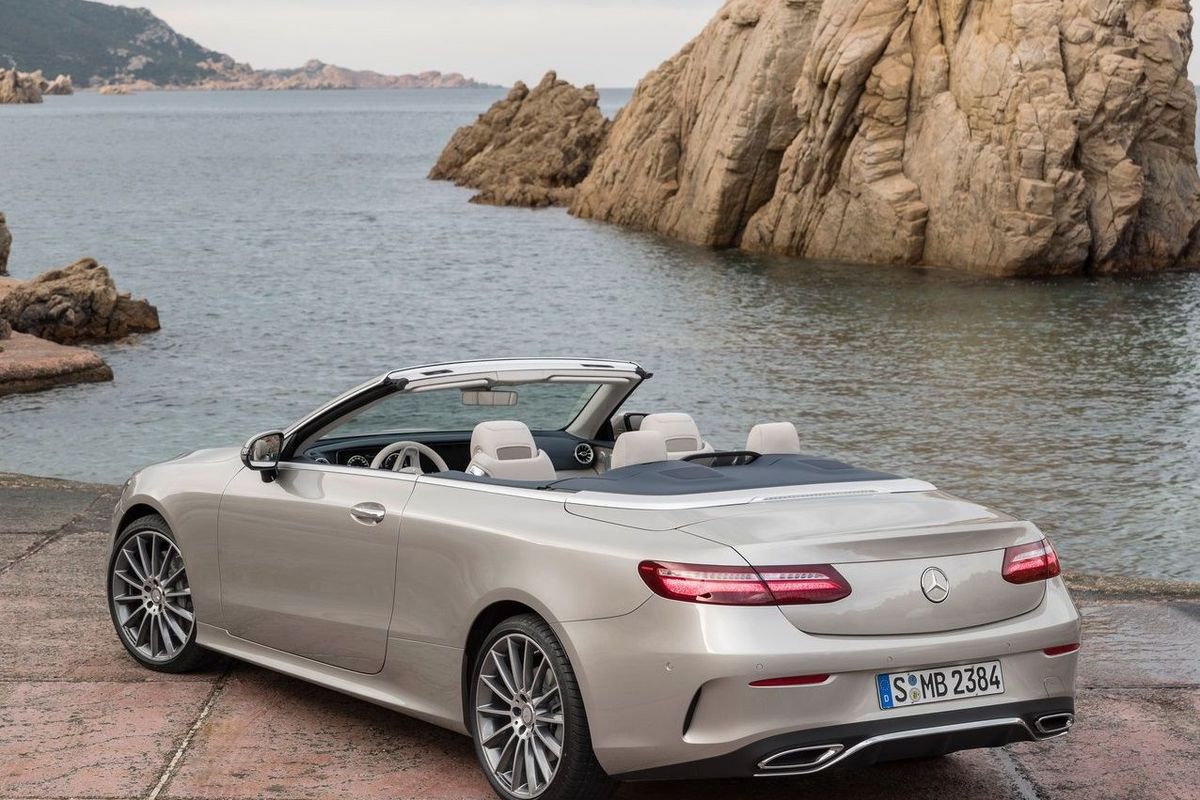
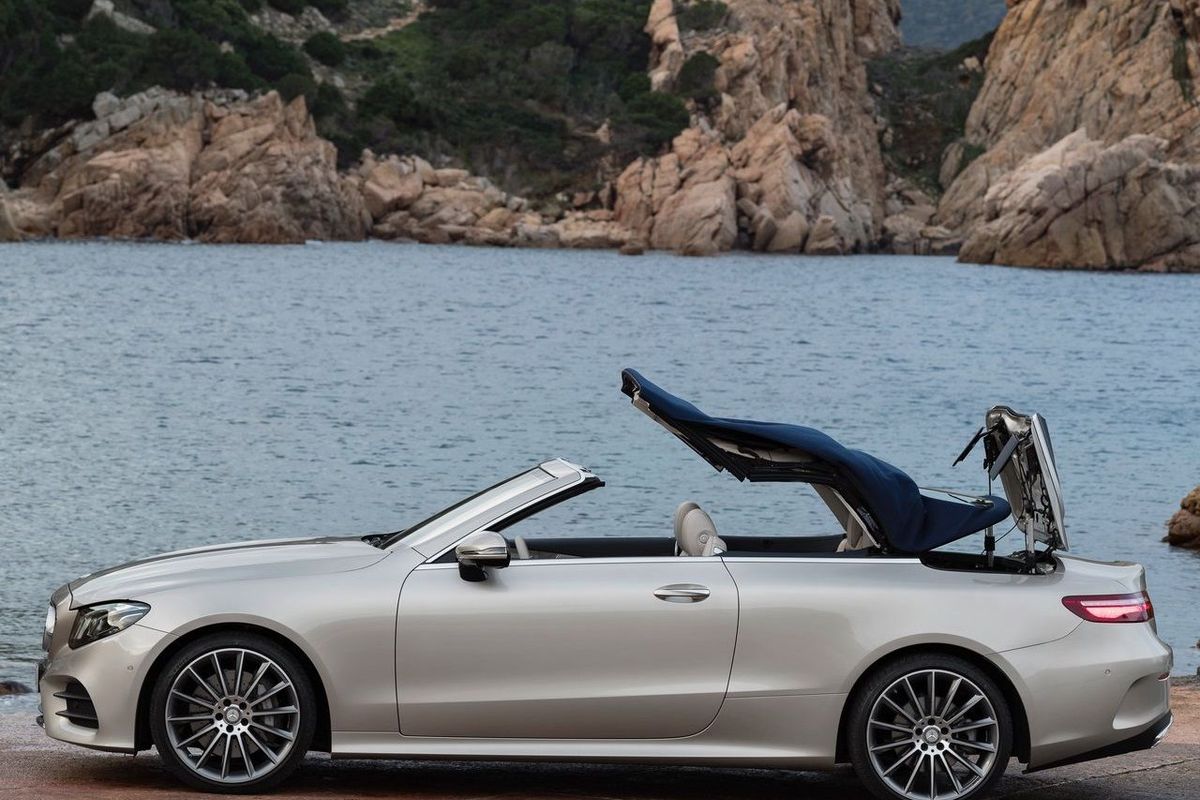
Mercedes-Benz is a brand renowned for its cabriolets… there's hardly a model in its lineup that does not have a droptop derivative. The new E-Class Cabriolet is the fifth and youngest member of Mercedes-Benz's E-Class family. It's a 4-seater 2-door cabriolet and brings to market a number of in-car technologies such as comprehensive smartphone integration wireless charging, a widescreen cockpit and the latest assistance systems. There'll be a wide choice of engines too.
Mechanically, the new Mercedes-Benz E-Class Cabriolet rides lower to the ground (by 15 mm), to give it a sportier stance. The electrically operated fabric roof is available in dark brown, dark blue, dark red or black, plus it can be fully opened or closed in 20 seconds at speeds of up to 50 kph.
At launch, there will be a choice of turbopetrol and turbodiesel engines, including, for the first time, derivatives with 4MATIC all-wheel drive.
As standard, all models come equipped with the marque's 9G-tronic 9-speed automatic transmission. Meanwhile, Mercedes-Benz claims the E-Class cabriolet's suspension is tuned to offer a comfortable ride quality, without detracting from a sporty driving experience. Air suspension is an option.
The newcomer is claimed to be safe too and the Mercedes-Benz E-Class cabriolet features:
Pyrotechnic belt tensioners and belt force limiters on all front and rear seats
Pre-Safe reversible belt tensioner on the front seats
Front airbags for driver and passenger
A kneebag on the driver's side
Thorax/pelvis bags for driver and front passenger
Optional: curtain airbags integrated into the top edge of the front door panels to protect the head in the event of severe side impacts (headbags)
Optional: side airbags in the rear
We'll have more information on the forthcoming Mercedes-Benz E-Class cabriolet and when it's coming to South Africa soon.
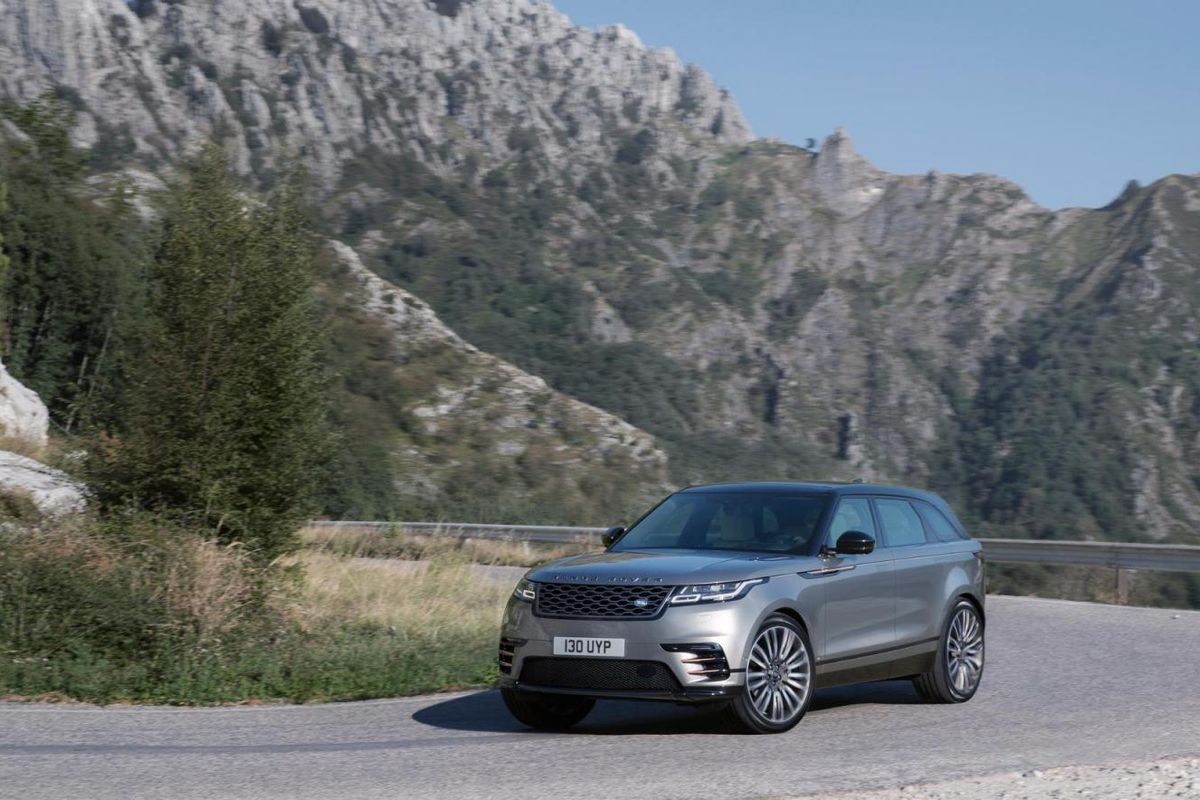
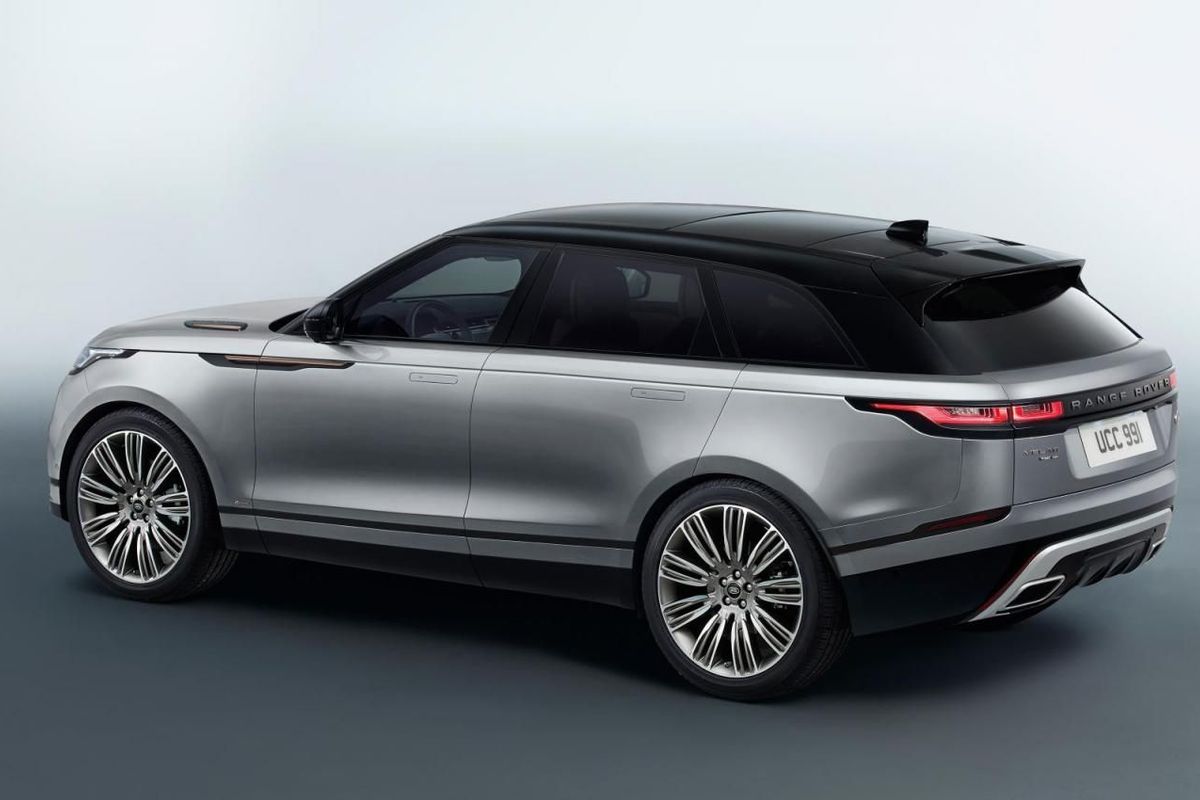
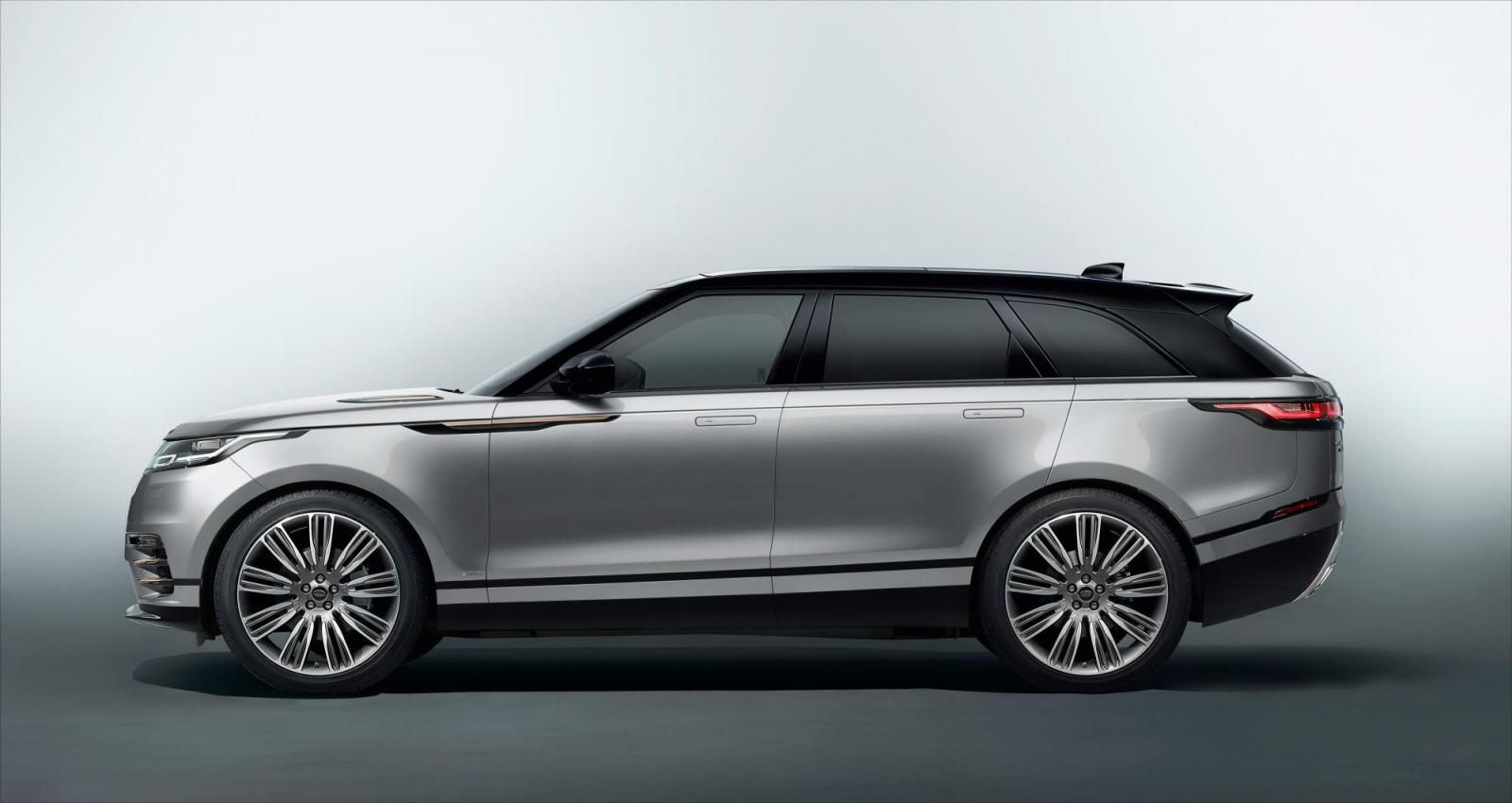
Range Rover has officially revealed the Velar, the vehicle that fills 'the gap' between the Evoque and Range Rover Sport.
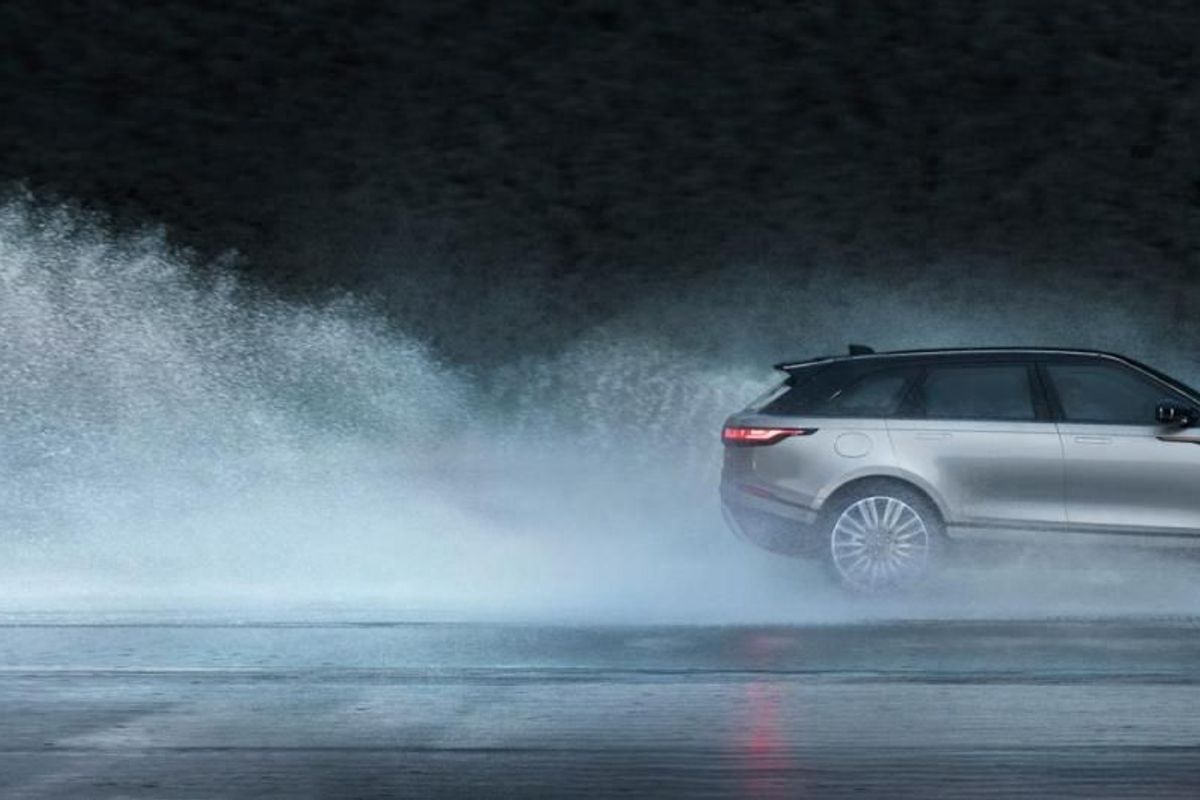
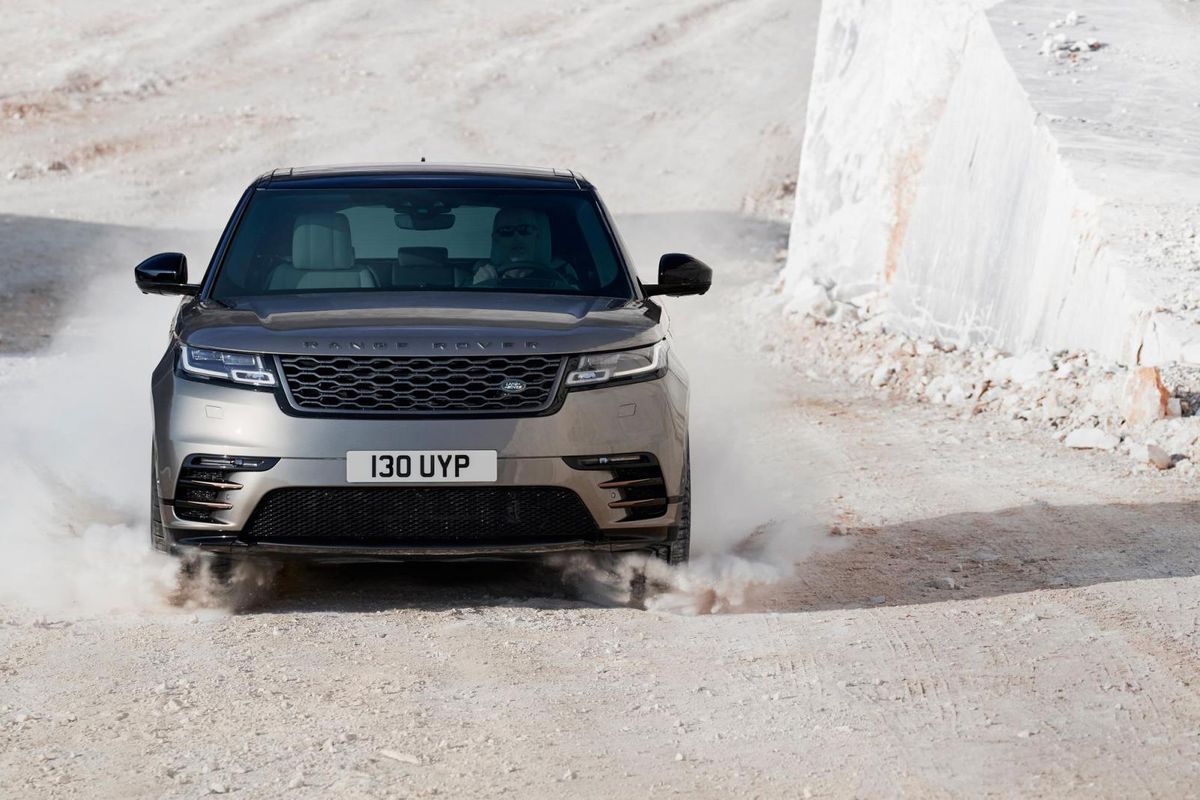
The Velar will officially debut at the Geneva motor show next week, but Range Rover has already taken the covers off for its internet debut. The Velar sits on the same platform as the Jaguar F-Pace, featuring a light and stiff aluminium structure. Intrinsic to Range Rover's philosophy is all-terrain capability, which the Velar is imbued with. All-wheel drive is standard fitment and there's the option to add Range Rover's legendary Terrain Response 2 system. There are further off-road systems available with All Terrain Progress Control, Low Traction Launch, Hill Descent Control and Gradient Release Control. Ground clearance is impressive with the air suspension models sitting 251 mm off the ground and the coil spring versions 213 mm off the ground. Air suspension is standard on the V6 models and available as an optional extra on the other models. All models have adaptable dynamics to adjust the ride comfort.
Engine lineup
There are both turbodiesel and turbopetrol engines available in 4 and 6-cylinder configuration. At the entry end of the Velar engine range there is a 2-litre turbodiesel engine available with 132 kW/430 Nm. The upgrade of this is the twin-turbo Ingenium engine which delivers 176 kW/500 Nm with little effect on the fuel consumption compared to the entry engine. The third diesel option in the range is the 3.0-litre V6, similar to the F-Pace. It delivers 221 kW and 700 Nm of torque. Two petrol engines are also an option with the new 2.0-litre Ingenium engine putting out 184 kW and 365 Nm. The top of the range petrol is the supercharged V6 that cranks out 280 kW and 450 Nm of torque. This engine rockets the large SUV to 100 kph in just 5.3 seconds. all engines are mated to an 8-speed automatic gearbox.
New infotainment system
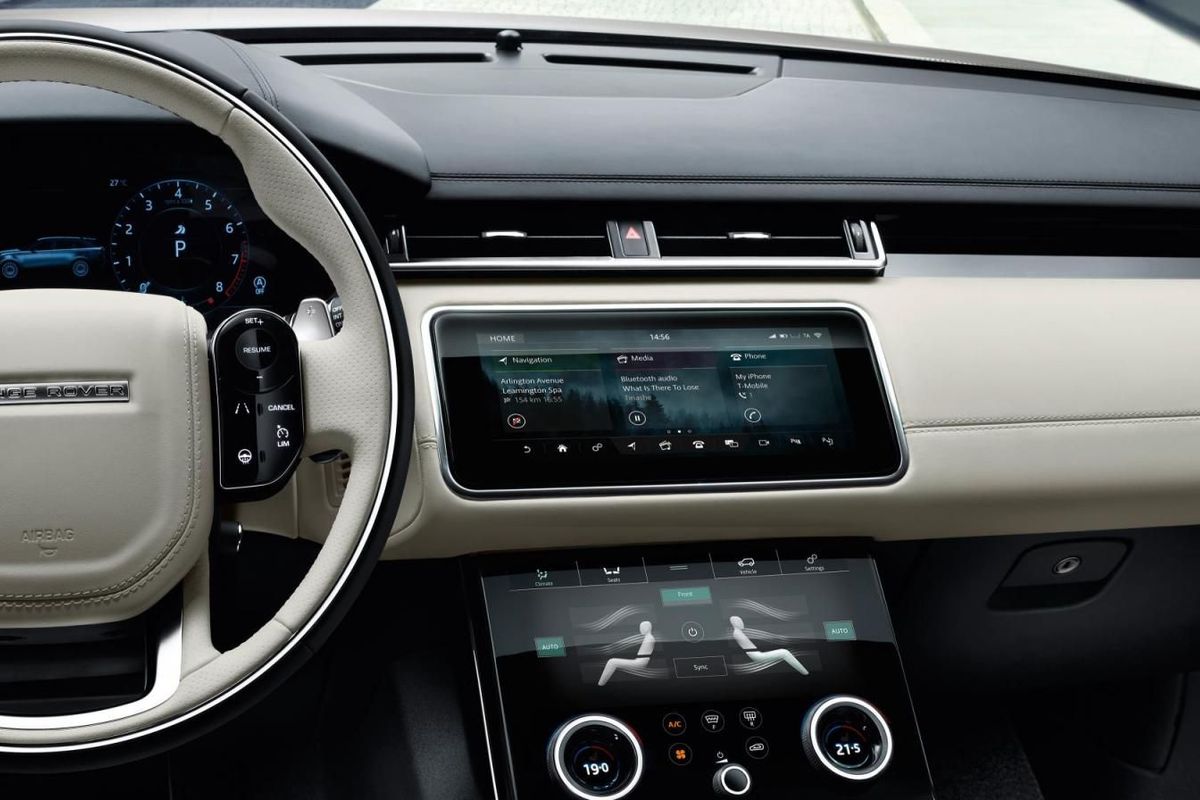
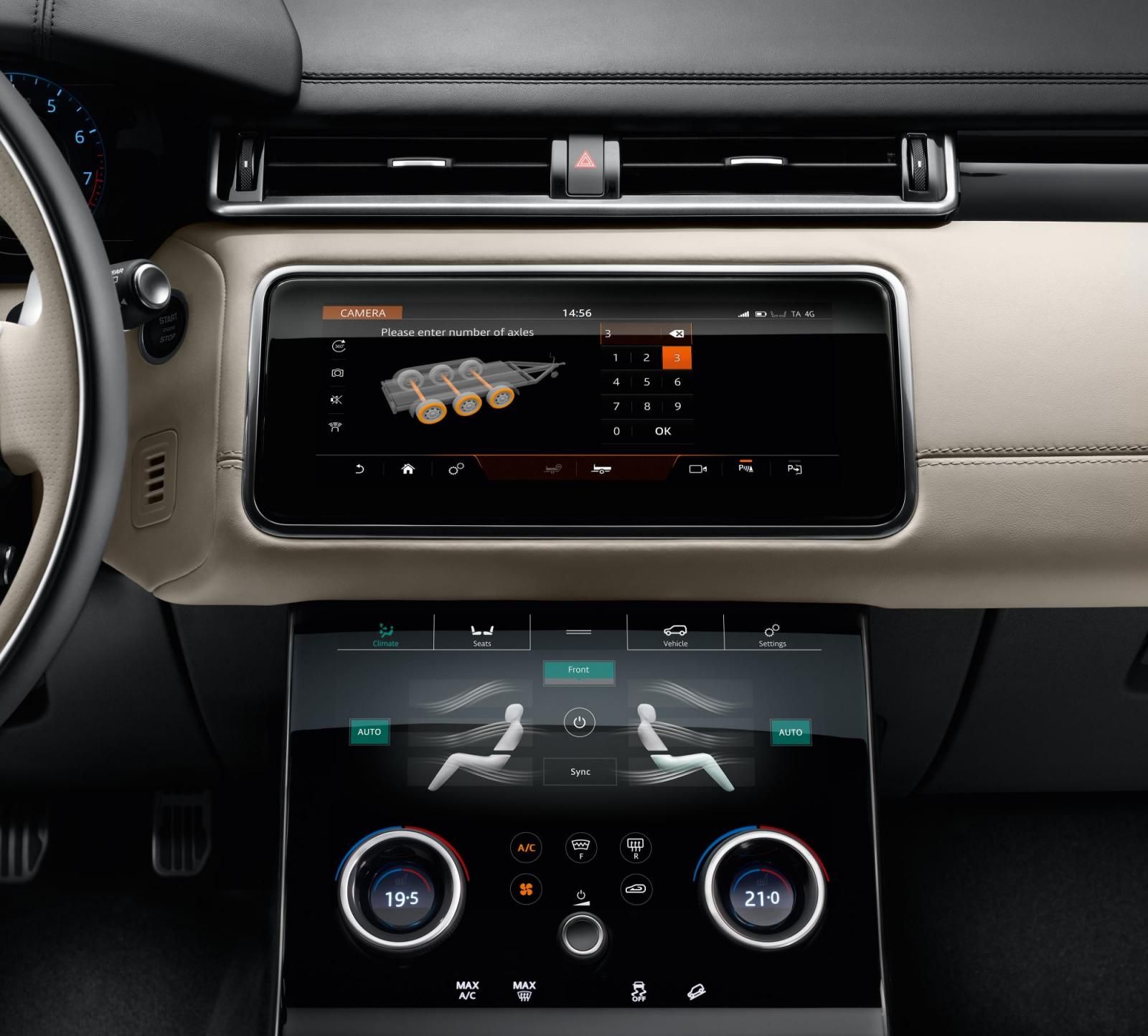
Range Rover is debuting a new technology which it calls Touch Pro Duo. The system features two 10-inch high-definition touchscreens one above the other. The top screen deals with all the infotainment requirements such as media, navigation and phone connections. This screen also tilts by up to 30-degrees so the driver can set it at the right angle if there's sun or glare coming off the screen. The bottom screen now includes what used to be button controlled options on Range Rovers. The touchscreen deals with climate control and terrain response settings. There are 2 USB ports up front and another two for the rear occupants and three 12V socket ports throughout the Velar. A waterproof activity key is available, much like what first debuted on the F-Pace, it allows the key to be left in the car whilst the owner wears a shock and waterproof transponder that when pressed to the badge on the tailgate, will open the boot.
Interior
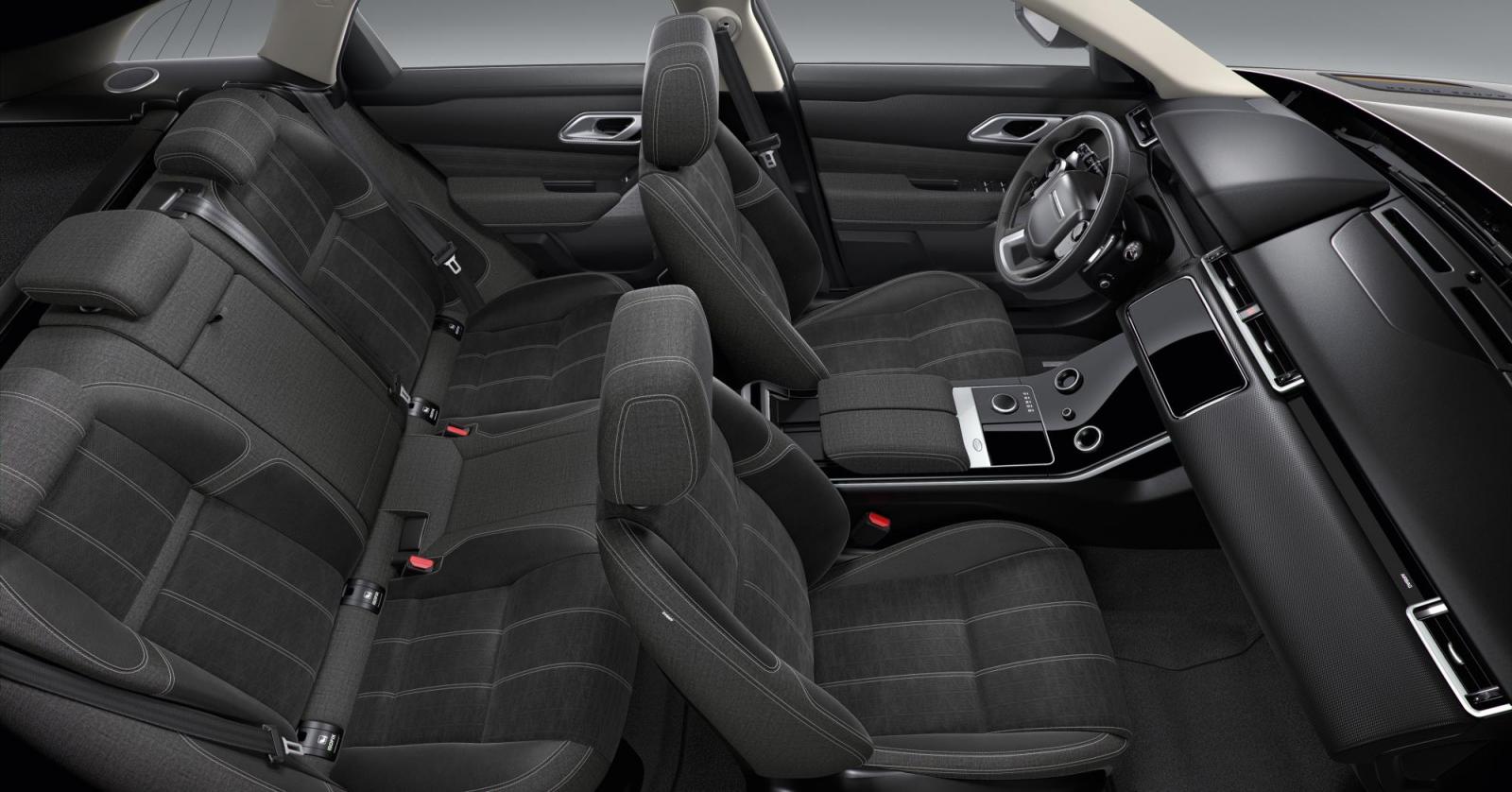
The Velar claims to have ample space for all occupants and features a large, 632-litre boot. Once the seats are folded flat, it opens up 1 731-litres of load space. The rear seats can be lowered from the boot with 2 levers that quickly unlock the seats allowing them to flop down. The boot has a gesture operated tailgate that opens with a kick action below the rear bumper.
The Velar will be headed to our shores in the 4th quarter of 2017 with pricing being announced closer to the time.
Previously
The Range Rover family is expanding with the imminent reveal of the Velar SUV to be shown at the upcoming Geneva Motor Show.
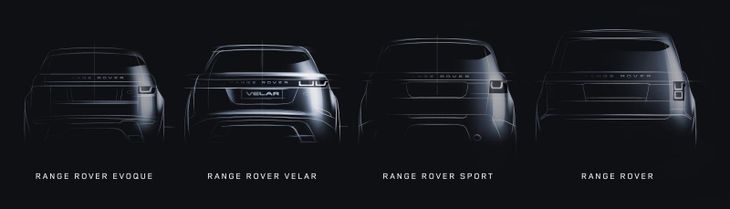
There’s a new SUV on its way from Range Rover and it’s called the Velar. The new Velar SUV will take its place in the Range Rover stable, slotting between the Evoque and Range Rover Sport. The Velar is derived from the Latin name verlare meaning veil or cover, originally used to conceal the identity of Range Rover prototypes of 1969. The new model will make its public appearance at the Geneva Motor Show early in March 2017.
“We call the Velar the avant-garde Range Rover. It brings a new dimension of glamour, modernity and elegance to the brand. The Range Rover Velar changes everything,” said Land Rover Chief Design Officer, Gerry McGovern.
The Velar will sit between the Evoque and Sport in Ranger Rover's vehicle range.
According to Land Rover, the Velar embodies “elegant simplicity, a visually reductive approach and pioneering consumer technology”. Furthermore, the new model is said to adopt sustainable materials and advanced engineering and will be capable for any occasion and terrain.
More details regarding the Range Rover Velar will be revealed on 1 March 2017 and we will surely keep you updated as more information becomes available.
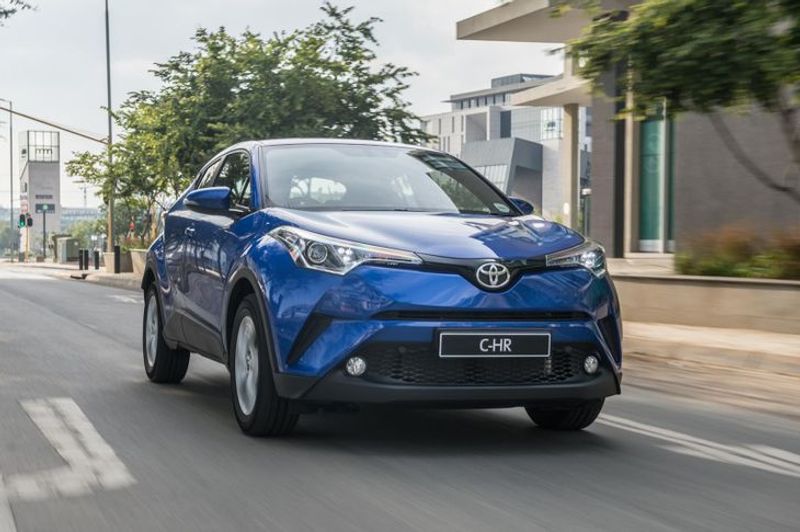
The hugely-anticipated stylish crossover from Toyota has finally landed in South Africa. We were eager to give the newcomer a spin and came away highly impressed.
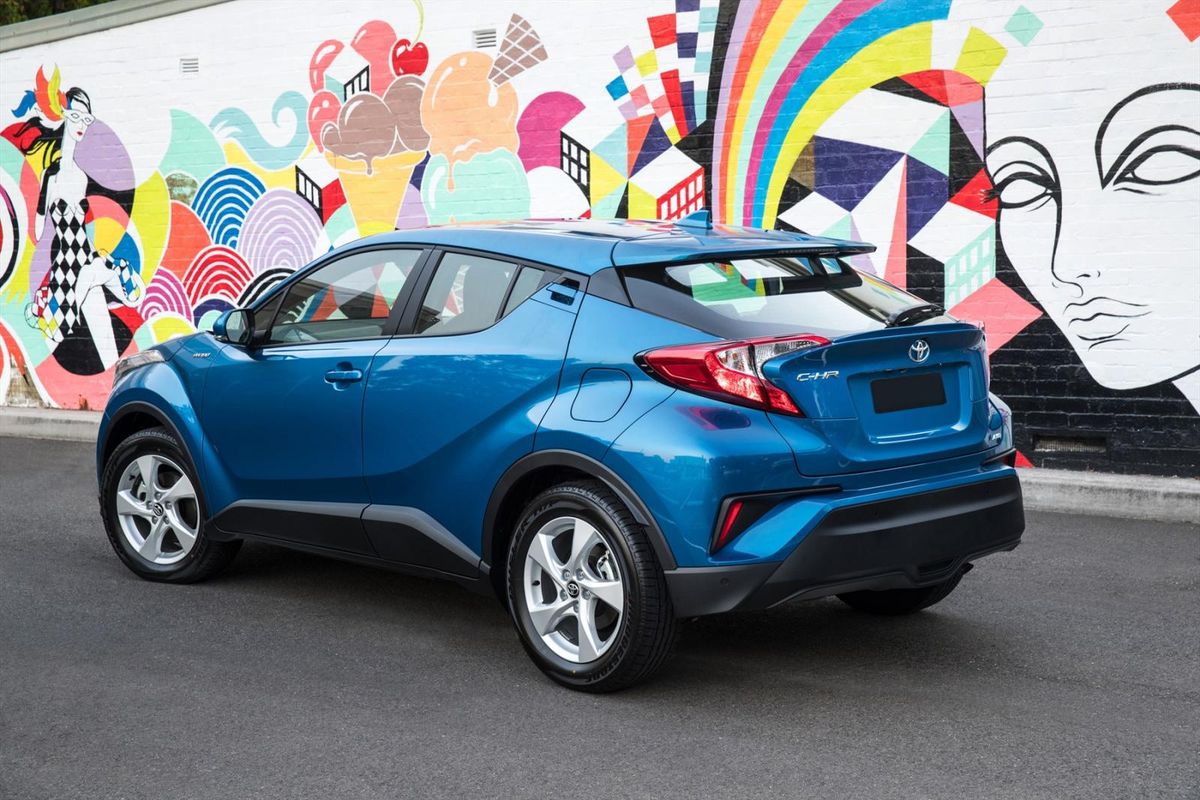
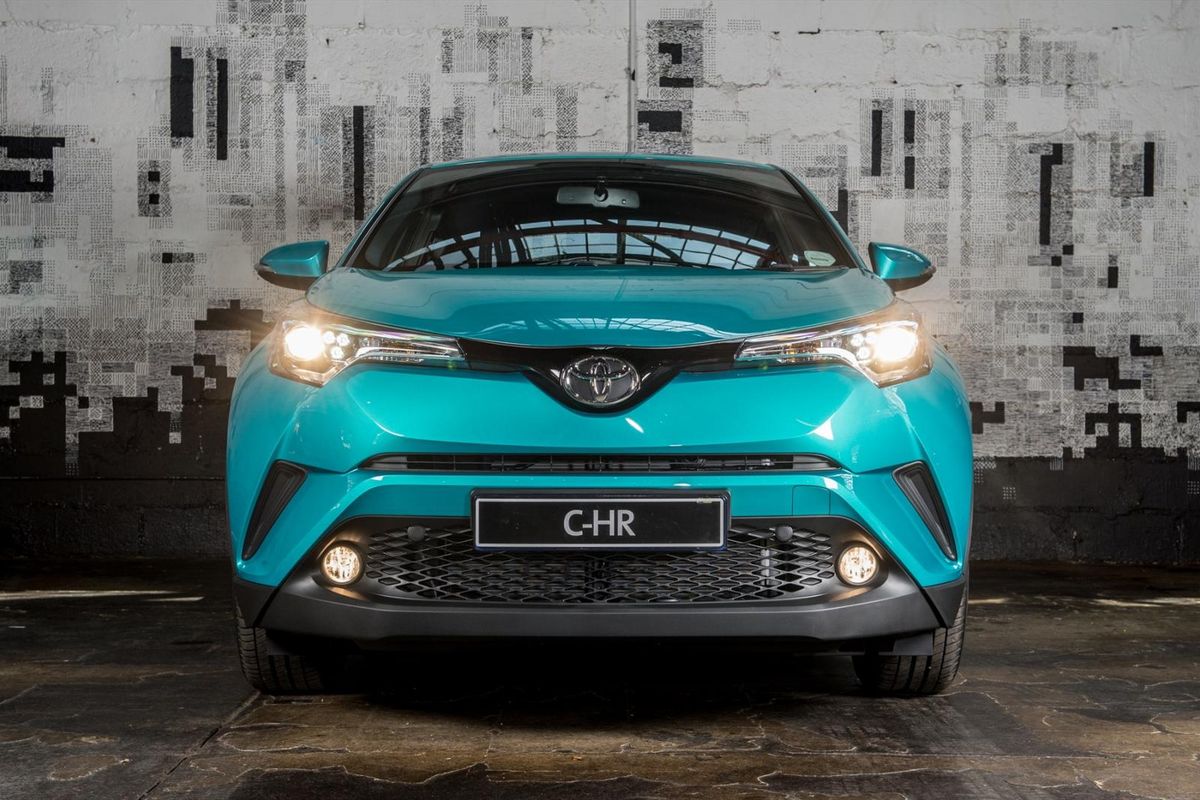
It’s been a while since Toyota introduced a product with standout aesthetic appeal. Sure, the new Fortuner has oodles of kerb presence, but the C-HR appeals on more levels. This looks like a car from the future and at this price point, it's actually attainable. It lands slap-bang in the highly popular compact family car/crossover/baby SUV segment, where, until this week, the lack of a Toyota product was rather obvious.
The Turkish-built Toyota C-HR comes to market with 1 engine, two transmission options and there is a pair of trim levels available. It’s the engine that deserves closer scrutiny as it marks a new chapter for the Japanese brand in South Africa – the introduction of a turbopetrol motor.
This new 1.2-litre turbocharged 4-cylinder unit pushes out 85 kW and 185 Nm. Power goes to the front wheels via a six-speed manual gearbox or a continuously variable transmission. Forget the numbers for a second, the real strength of this engine is its refinement and quietness. It’s also somewhat frugal too, with a claimed consumption figure of just 6.4 L/100 km.
Either of the transmissions is good and choosing which is the better option is a challenge. The 6-speed manual ‘box features the same rev-matching software from the Hilux, which adds some smoothness to the gear shifts and the box’s action has a sporty and positive feel to it. The real surprise is the CVT, which behaves like a conventional automatic. CVTs don’t have a stellar reputation in the petrolhead fraternity thanks to the droning noise experienced at full throttle, but, here’s the thing, unless you’re absolutely mashing your foot flat all the time, none of that CVT drone is apparent. Drive it at cruising speed or with measured throttle inputs and you may be surprised by just how quiet and refined the powertrain is.
Excellent ride refinement and adept handling are hallmarks of the C-HR driving experience.
How does it drive?
Reasonably well, as a matter of fact. Built on a new platform (shared with the Prius), the C-HR rides well and delivers a driving experience more akin to a big hatchback than a baby SUV. Its seating position is high, something that is very trendy at the moment, but the benefits are obvious: you can certainly see a bit more around you from your elevated vantage point.
The C-HR is quite adept at dealing with quick corners with dexterity and the steering is sharp and direct enough to provide some driving enjoyment. You’ll appreciate the high levels of grip and only careless manhandling on the part of the driver could upset the car's handling composure.
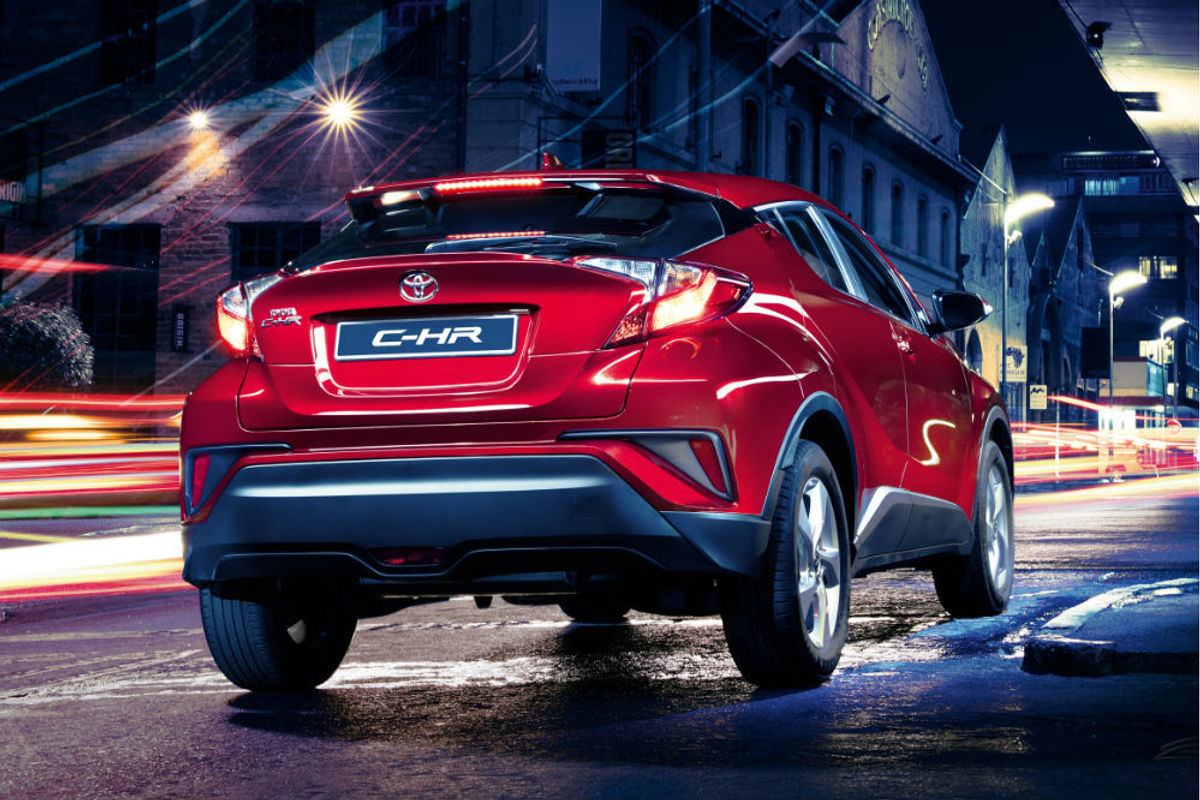
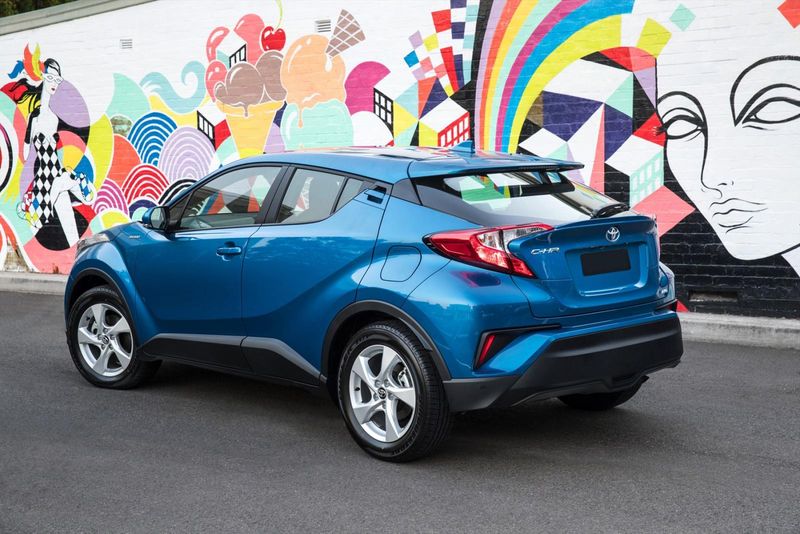
The rear styling of the C-HR is particularly distinctive, but mind the blind spots.
There is a catch, however
The head-turning shape of the C-HR does present a few drawbacks, however. Thanks to a broad C-pillar, the blind spots are quite severe and the lack of rear parking sensors or a reverse-view camera mean that close-quarter manoeuvres need to be carefully judged.
While the Toyota's rear legroom is not particularly generous, taller passengers tend to have to squeeze into the rear benches of most compact family cars. By virtue of the contour of the tailgate – and the provision of a full-sized spare under the boot board – the available luggage space is really tight at a claimed 234 litres, and somewhat awkwardly shaped too.
Demand to outstrip supply?
Toyota has one factory (in Turkey) that assembles the C-HR. This means that the entire world’s C-HRs come from this plant and according to the firm, demand is outstripping supply. We have it a little easier as right-hand drive models are not as in demand as LHD ones and Toyota South Africa did its best to try stockpile as many C-HRs as it could prior to launch.
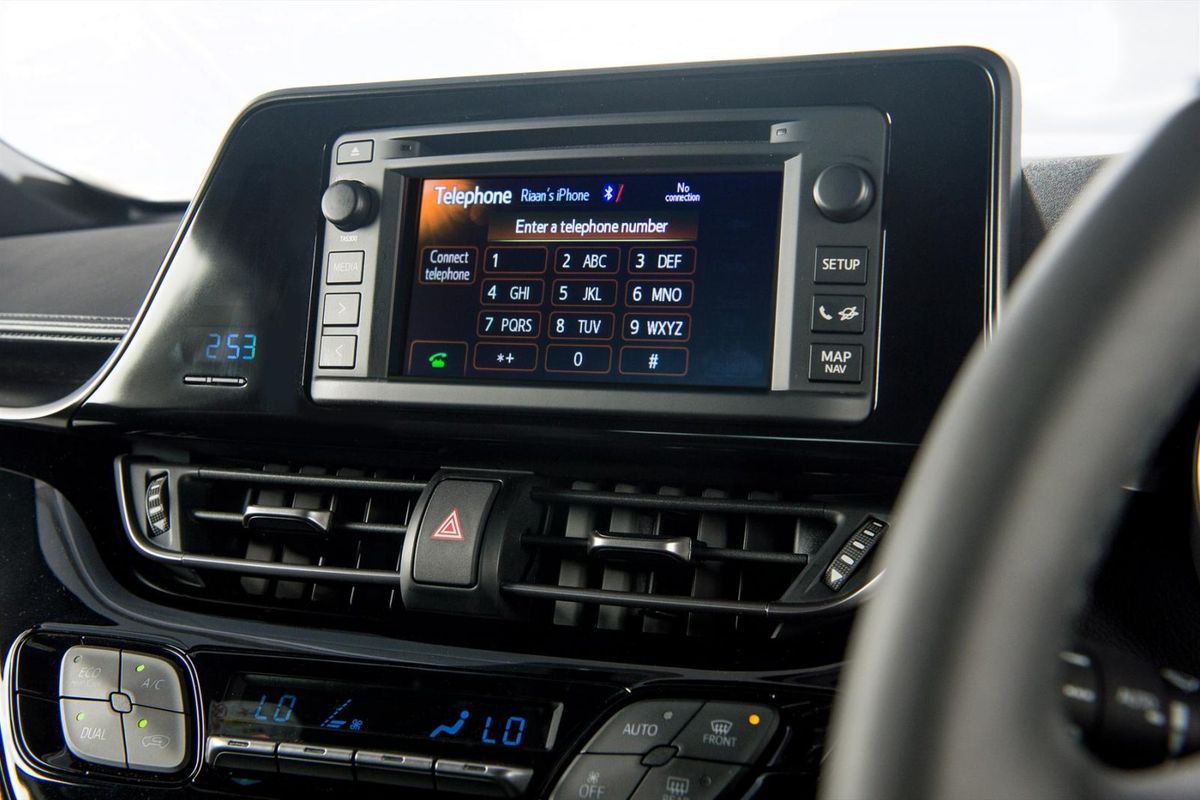
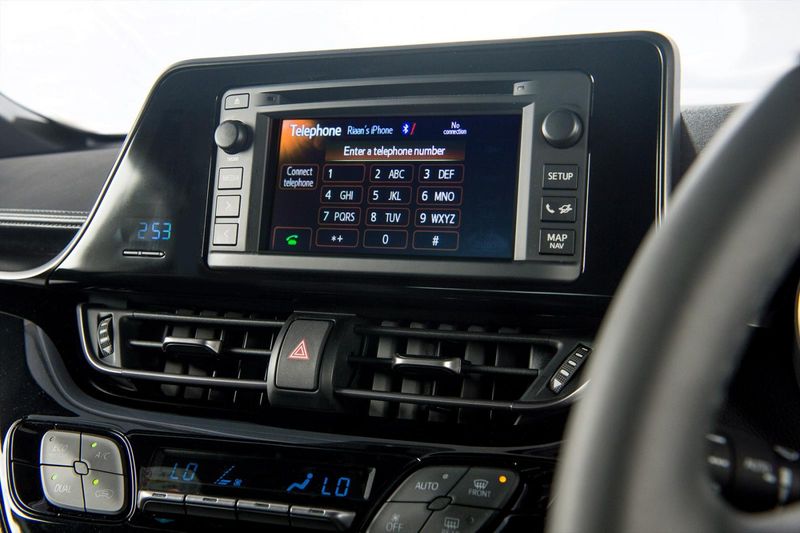
On the Plus spec level, the C-HR's touchscreen infotainment system has a colour display and climate control is standard.
Summary
It’s impressive to see the typically conservative Toyota brand break away from its core principles of "playing it safe" and "being sensible". The C-HR represents a new way of thinking from the brand and is stylish and modern. Sure, the looks won’t appeal to everyone and we’re likely to see the same love/hate attitude towards it, much like the Nissan Juke, but in a crowded segment, where there is an element of sameness about some of the products, the C-HR is a standout. We predict that it will sell strongly.
Toyota C-HR Price in South Africa (2 March 2017)
1.2T R318 500
1.2T Plus R345 000
1.2T Plus CVT R356 000
All C-HR models come standard with a comprehensive 5 year/90 000 km service plan, with service intervals set at 15 000 km. A 3 year/100 000 km warranty is provided.
After a positive start to 2017, things are holding station according to sales data from Naamsa. Take a look at February’s new car sales highlights.
After a marginal year-on-year gain in January 2017, February held station, reporting almost identical sales results to the same period in 2016. February 2017 totalled 48 133 compared with 48 144 in 2016. Exports showed an increase of 65 vehicles (0.2%) compared with last year. Naamsa expects exports to gather momentum in the medium term.
The new passenger car market actually fell by 4.4%, but was propped up by positive growth in the light, medium and heavy vehicle segments… 31 400 vehicles were sold in February 2017 compared with the 32 854 over the same period last year.
The overall outlook remains positive with an expected 3.5% increase in sales volume for 2017. Increased Rand strength, easing of drought conditions and positive global growth are catalysts in pushing new car sales upwards.
Toyota again topped the sales chart followed by the Volkswagen Group and Ford.
Here’s a quick summary of new car sales in South Africa for February 2017.
Aggregate new vehicle sales of 48 113 down by 0.1% (31 units) compared to February 2016.
New passenger car sales of 31 400 down by 4.4% (1 454 units) compared to February 2016.
New light commercial vehicle (LCV) sales of 14 416 up by 9.7% (1 277 units) compared to February 2016.
Export sales of 29 388 up by 0.2% (65 units) compared to February 2016.
Top 5 car brands in SA in February 2017
Brand
Total Sales
Market Share
1. Toyota
10 780
22.4%
2.Volkswagen
8 176
16.9%
3. Ford
6 244
12.9%
4. Nissan
4 350
9.0%
5. GMSA
2 937
6.1%
Top 5 best-selling cars in South Africa in February 2017
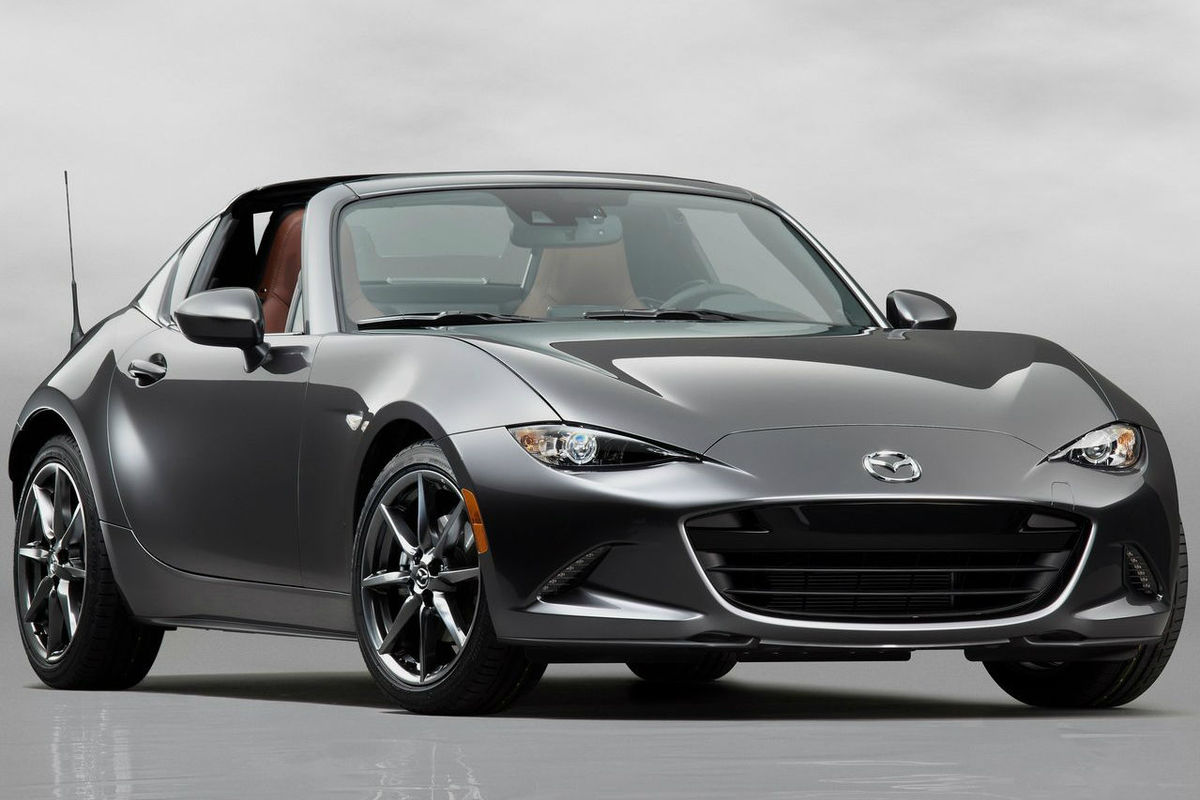
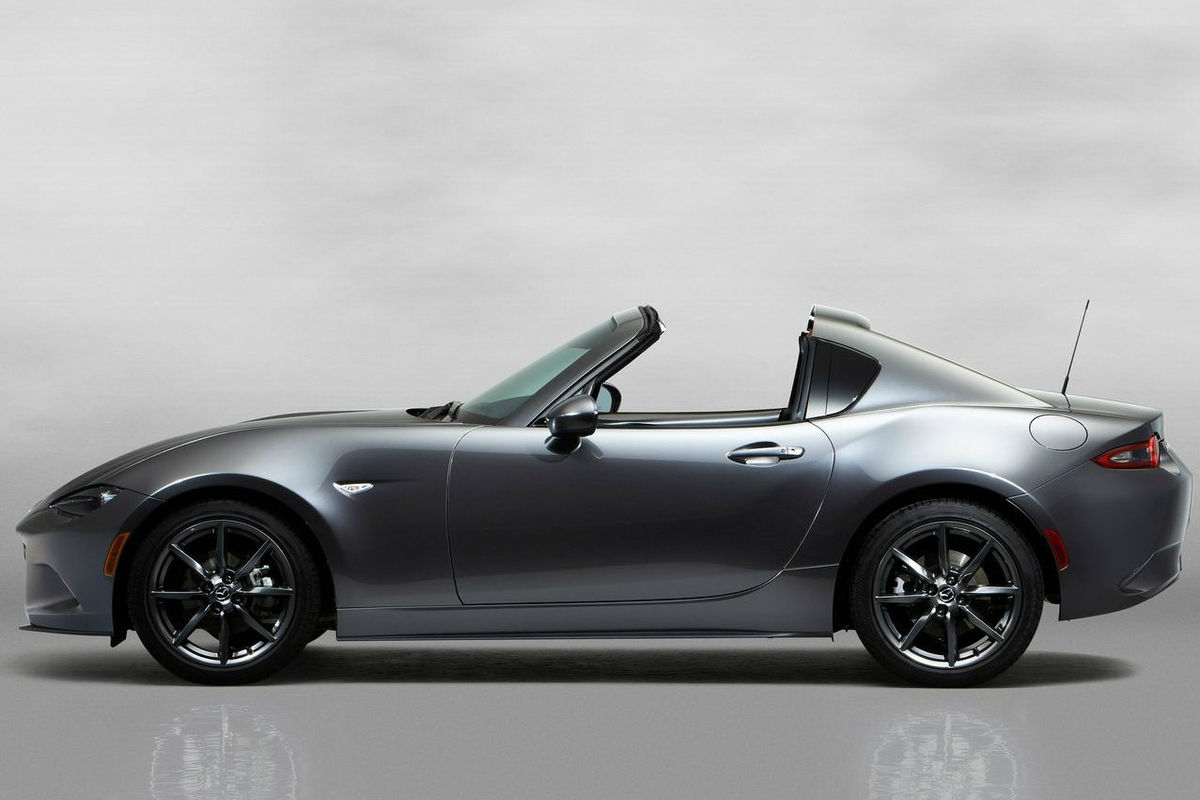
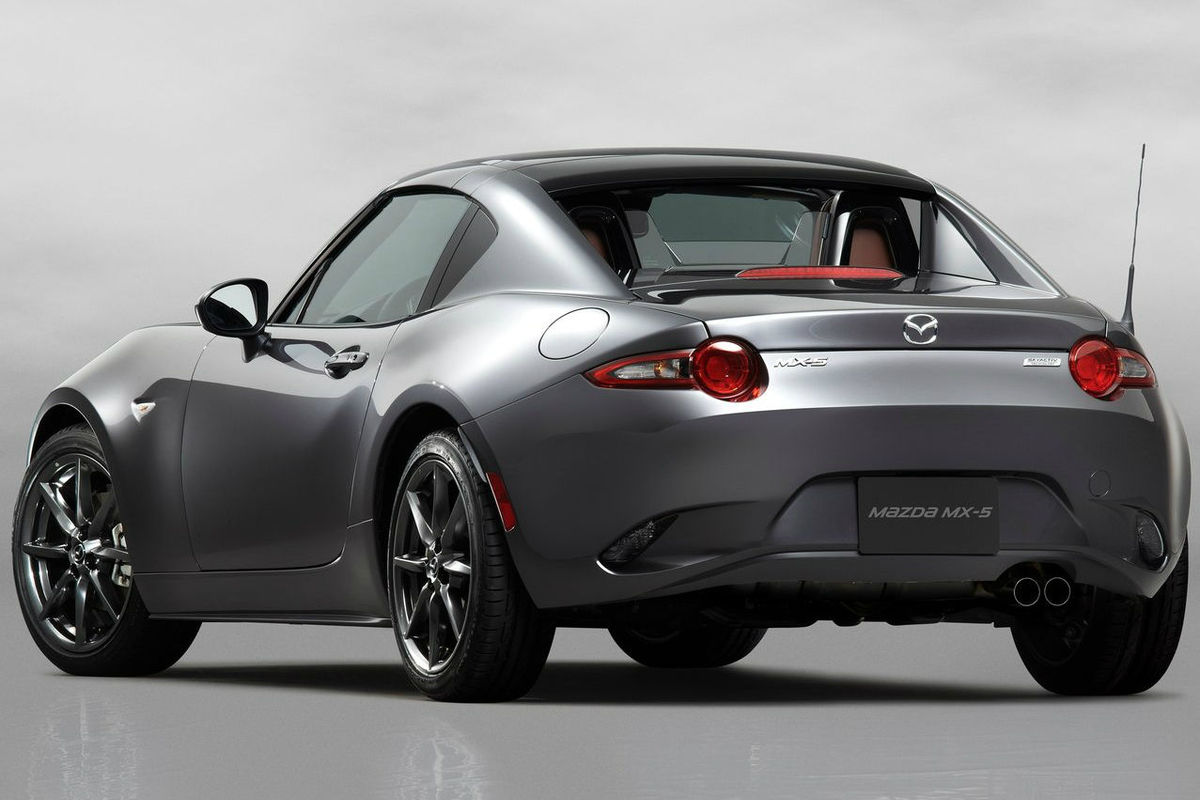
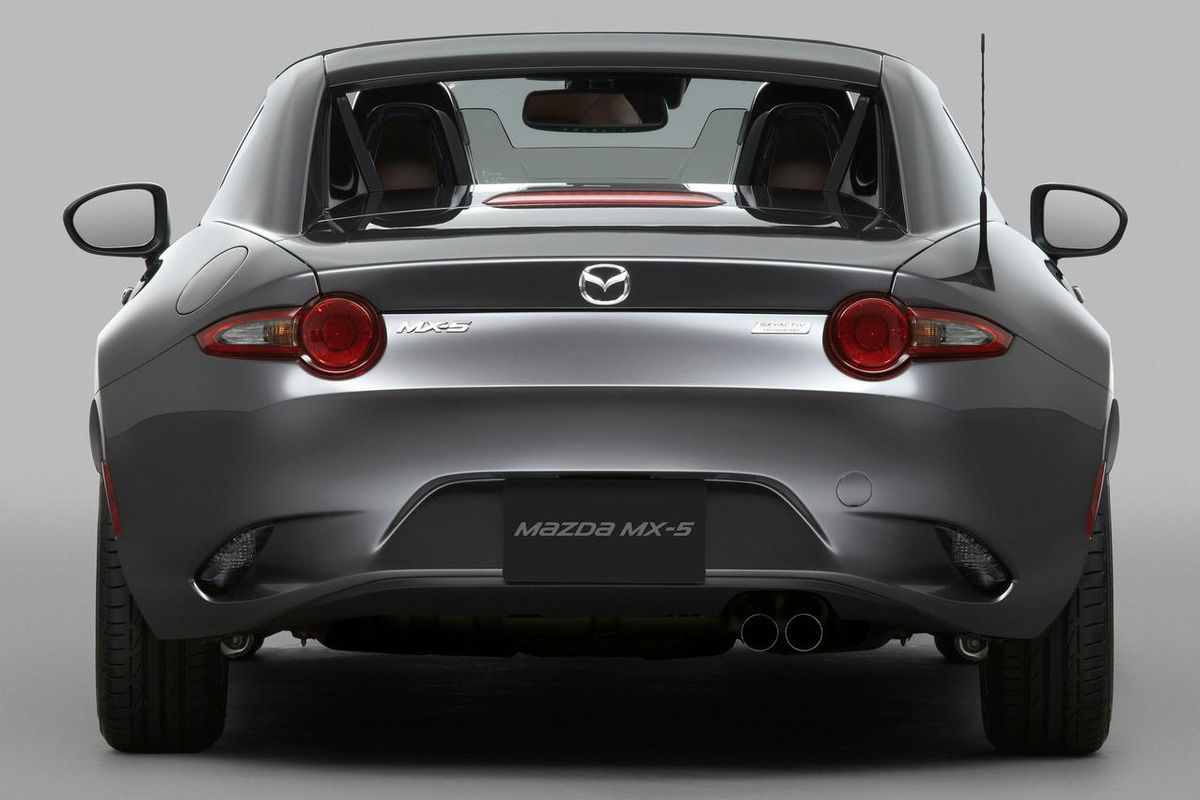
The folding hardtop version of the Mazda MX-5 is now available in South Africa, here are the details.
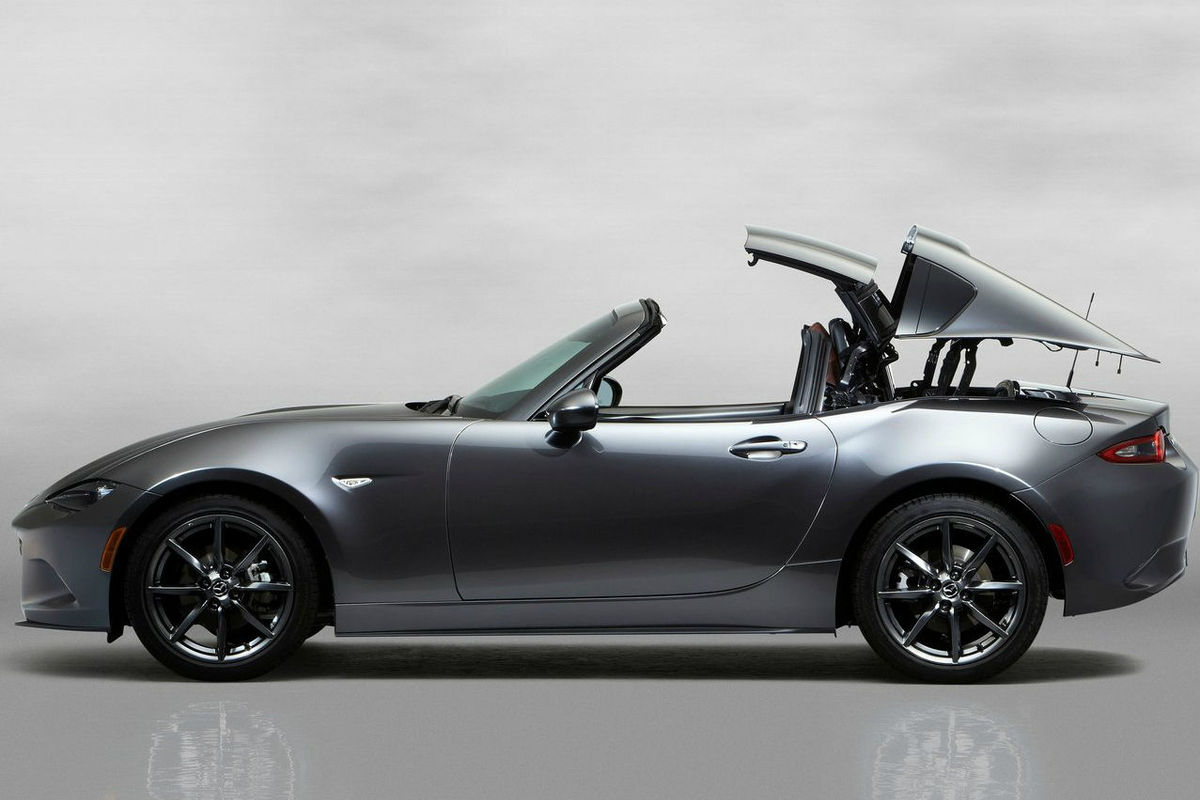
The Mazda MX-5 RF is the second derivative of MX-5 to hit the market after the standard roadster model (with a fabric-trimmed folding roof) arrived in late 2015. The retractable hardtop gives the MX-5 a fastback or coupe style depending on the configuration of the roof. To open the roof takes just 13 seconds and crawling speeds of up to 10 kph.
The same 2.0-litre engine is deployed in the RF with 118 kW and 200 Nm of torque. There is a 6-speed automatic gearbox for the RF that improves the overall fuel economy from 6.9 L/100 km to 6.7 L/100 km, but the downside is slower acceleration. The auto takes a full second longer to reach the 100 kph sprint time (8.6 seconds) and the top speed is just 194 kph.
Despite the extra bits and heft of the hardtop folding roof, the boot size isn’t affected that much. It’s only 3.0 litres smaller than the standard model, which has a tiny boot to begin with. Upgrades to the RF model range include adaptive headlights, lane departure warning, navigation, blind spot monitoring and steering wheel mounted shift paddles.