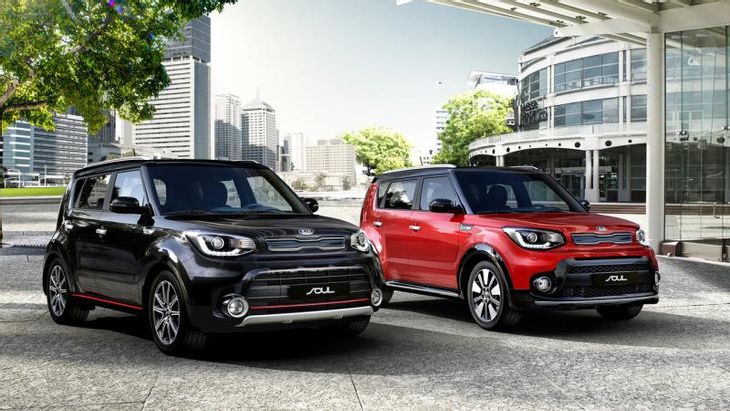
Kia will be showcasing its new turbo-powered Soul at the Paris Motor Show this week!
Kia’s polarising yet practical Soul crossover will be shown at the Paris Motor Show donning a new look and sporting a 1.6-litre T-GDI engine and 7-speed dual clutch transmission. The four-cylinder 1.6-litre turbopetrol unit produces 150 kW and pushes the Soul to 100 kph in under 8 seconds and on to a top speed of 196 kph.
In terms of styling, the turbo Soul is differentiated with a redesigned front bumper, new air intakes, dual exhaust system and rides on 18-inch wheels. The updated Soul also benefits from new LED daytime running lights, a new grille design and a revised rear bumper.
On the inside, the Kia Soul’s infotainment system will feature Apple CarPlay and Android Auto while the turbo Soul will also sport a black and orange interior colour scheme.
We will keep you updated as more information becomes available regarding availability in South Africa, stay tuned!
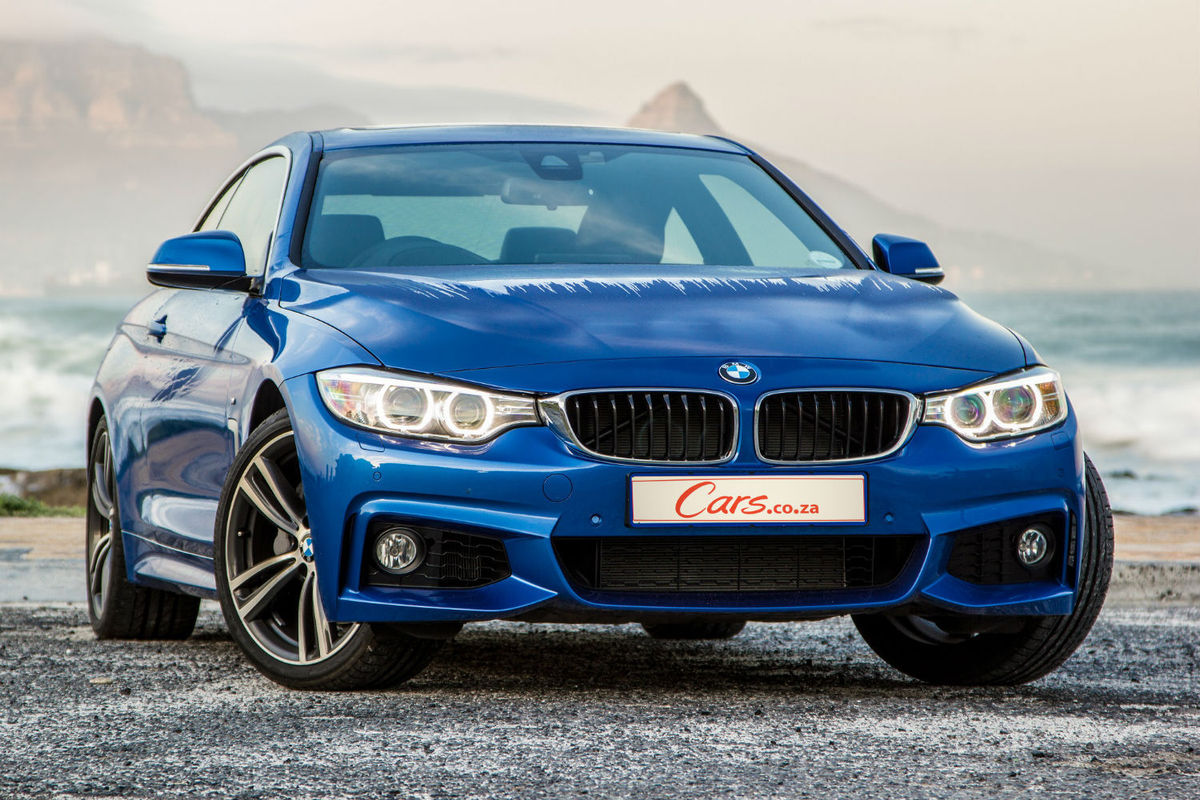
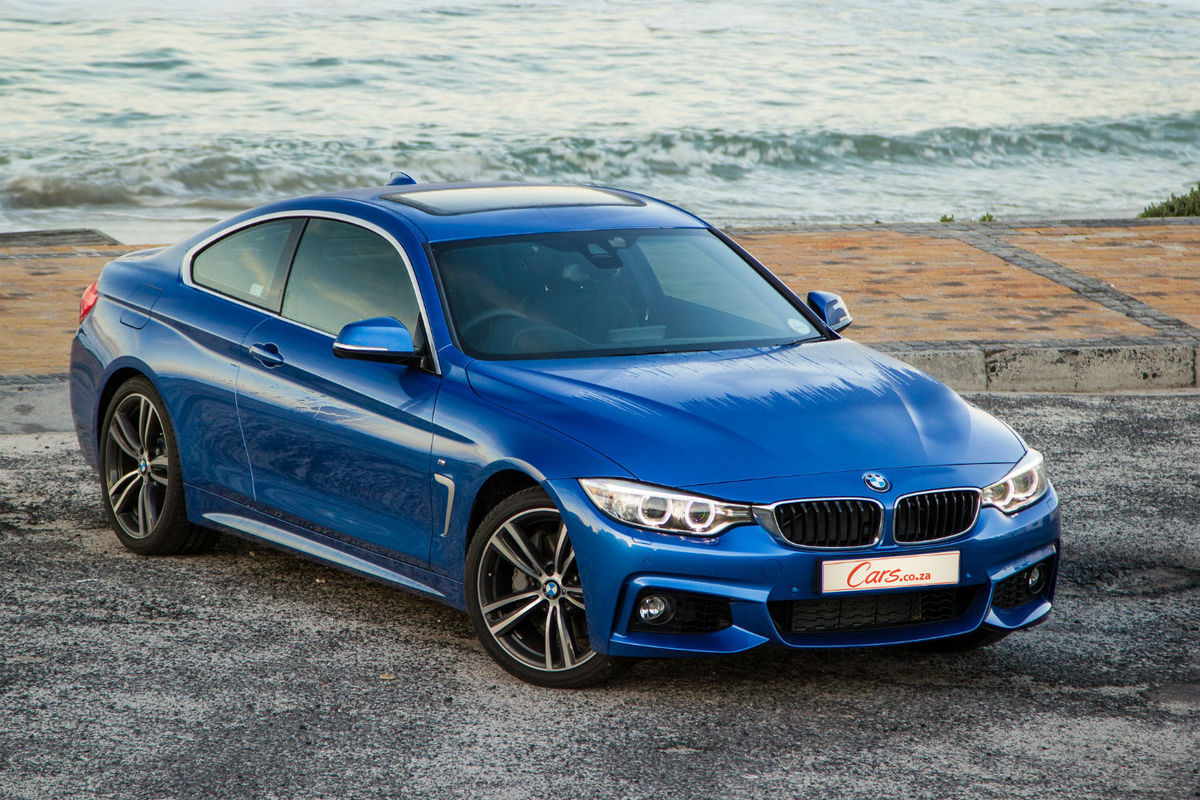
Hidden in the shadows of its illustrious M3/M4 siblings sits the svelte, but rapid and entertaining 440i coupe. Could it be the ultimate modern-day Q-car?
We like: Performance, dynamics, surprisingly spacious, relaxed tourer
We don't like: Could be a little more special inside
Alternatives
A new rival from 'Benz: German rival Mercedes-AMG has just launched the C43 Coupe on the South African market, and while we have yet to test this model, it appears impressive on paper. Powered by a new turbocharged 3.0-litre V6 that delivers superior power and torque (270 kW/520 Nm) the C43 also makes use of 4Matic all-wheel drive to lay its power down. It's a little faster to 100 kph than the BMW, too.
Full-house cruiser: If your preference is more for a sophisticated, luxurious cruiser, then the Lexus RC350 F-Sport deserves a closer look. Its silky smooth naturally aspirated 3.5-litre 6-cylinder engine can't quite compete on power (233 kW and 378 Nm), so it lags in the performance stakes, but what you do get is an impeccably finished car, loaded with all the features as standard and great long-distance comfort.
Can you wait a few months? The all-new Audi S5 Coupe has been revealed in Europe and should reach South African shores within the next few months. The slick newcomer is powered by a turbocharged 6-cylinder engine that delivers a strong 260 kW, coupled with an 8-speed automatic transmission.
BMW made a few tweaks to its pretty 4 Series line-up earlier this year, with most of the engines being slightly upgraded to push out more power. BMW used the opportunity to rename some of the models, with the 440i you see here being the flagship if you discount the M4. The 440i is aimed at buyers who want significant helpings of the performance and dynamism that BMW products are known for, but also a greater emphasis on ride comfort, refinement and "fly-under-the-radar" appeal than the M cars can deliver.
How does it fare in…
Performance and Efficiency
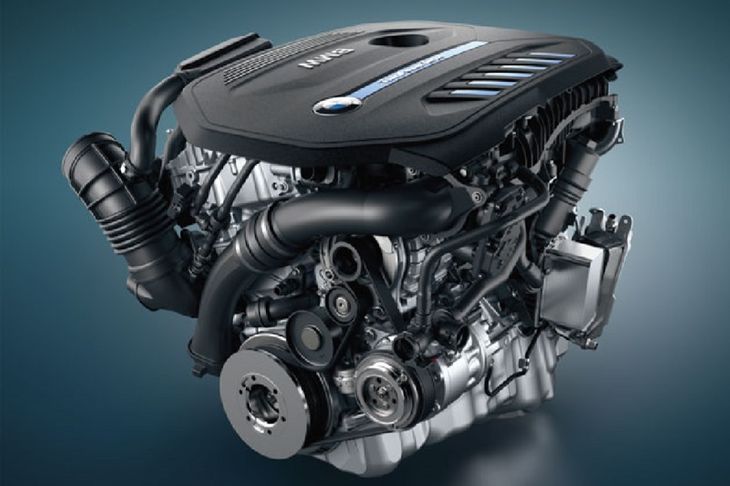
Internally known as the B58, the 440i's turbocharged straight-six is part of BMW's new modular engine line-up.
Underneath the long, heavy bonnet of the 440i is one of BMW's new modular engines. It is code-named the B58 and replaces the respected N55. Like its predecessor, it is a straight-six cylinder powerplant, 3.0-litres in size and boasts single, twin-scroll turbocharging and direct injection. It pumps out a whopping 240 kW and 450 Nm of torque, with the latter figure being available across a wide rev band that stretches from 1 380 to 5 000 rpm. It is red-lined at a heady 7 000 rpm.
Mated with BMW's creamy smooth (but quick and decisive) 8-speed automatic transmission, the 440i can leap to 100 kph in 5 seconds flat. That, by the way, means that this car is faster than an E46 generation M3 equipped with the SMG 'box… So, it doesn't exactly hang about. Nevertheless, the 440i's performance is an ability that is there for you to tap into when needed, while in the M4 the performance ability is always there, in your face, begging to be exploited. By comparison, the 440i is quite willing to trundle around town quietly, smoothly and efficiently. BMW claims a combined cycle fuel consumption figure of 6.6 L/100 km for this model, which is comfortably better than what the competition can do.
Being a 6-cylinder, the engine also endows the 440i with a bit of BMW character that is fast becoming extremely rare. Yes, the turbocharging does rob this engine of a howling top-end, even near that 7 000 rpm redline, but there's enough of its typical warble left to make the 440i a pleasure to listen to. It's completely different to the overly aggressive roaring of the recent M division cars.
So, what you have here then is a car that is deceptively fast (because it is also so refined), and one that offers significant drivetrain engagement and entertainment should you be in the right mood (and driving mode). Yet it is also a car that doesn't scream "go faster" all the time.
Design & Packaging
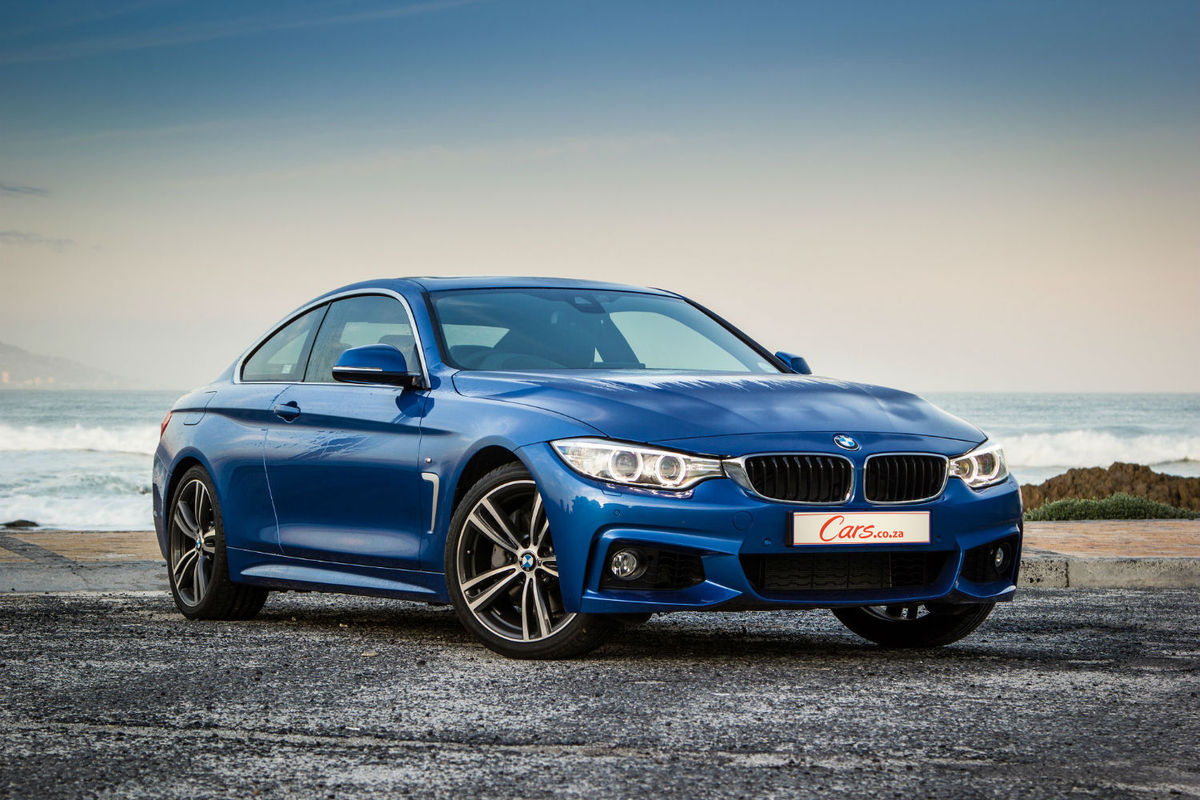
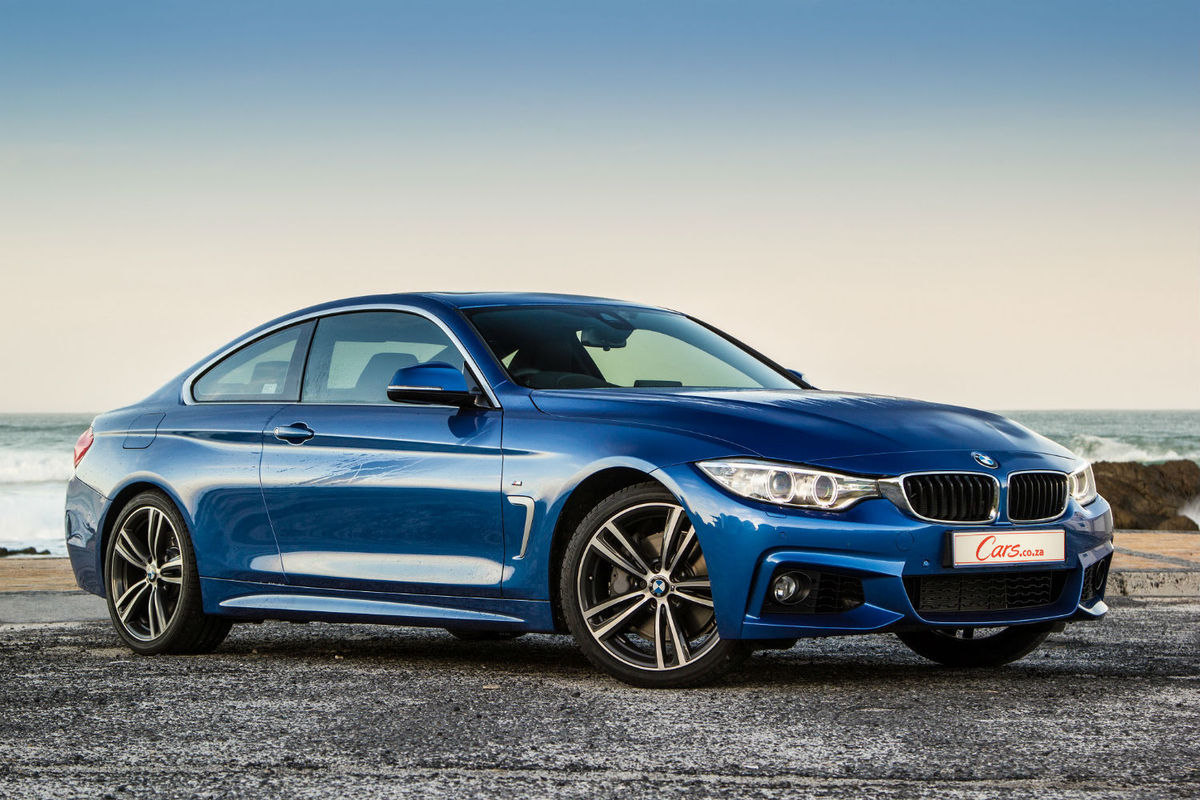
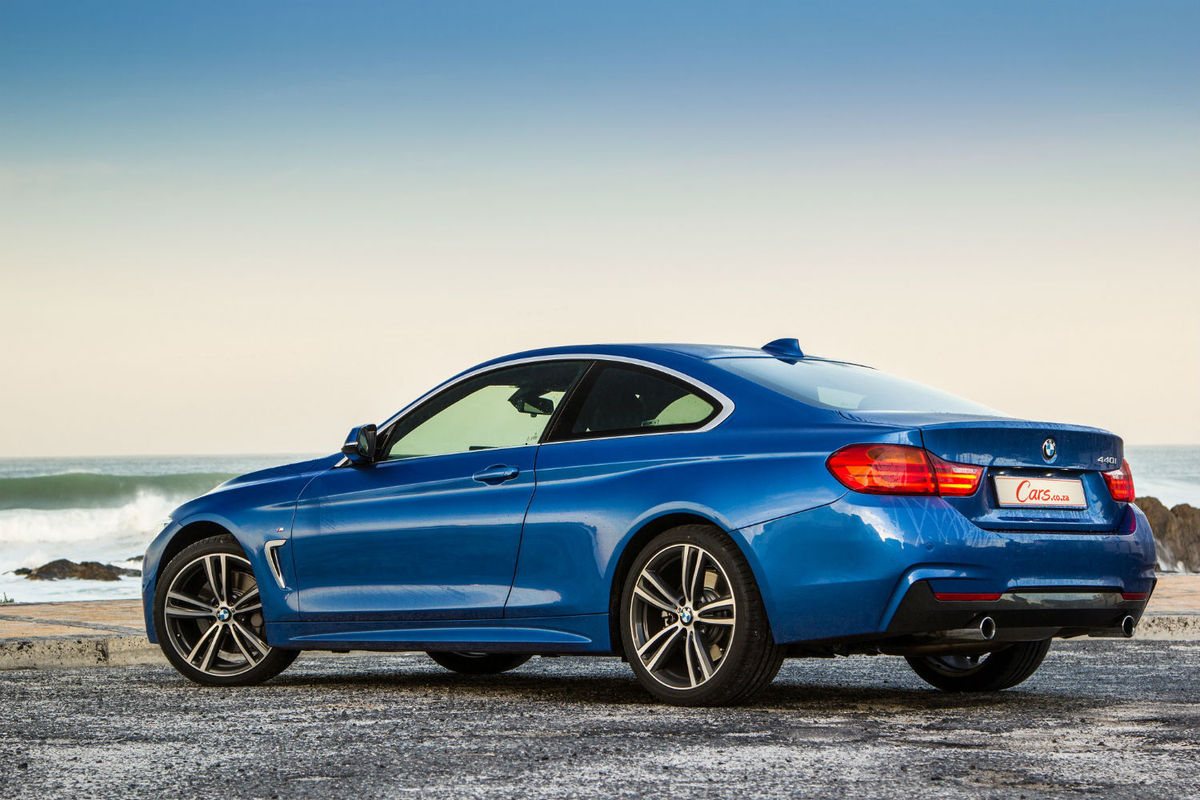
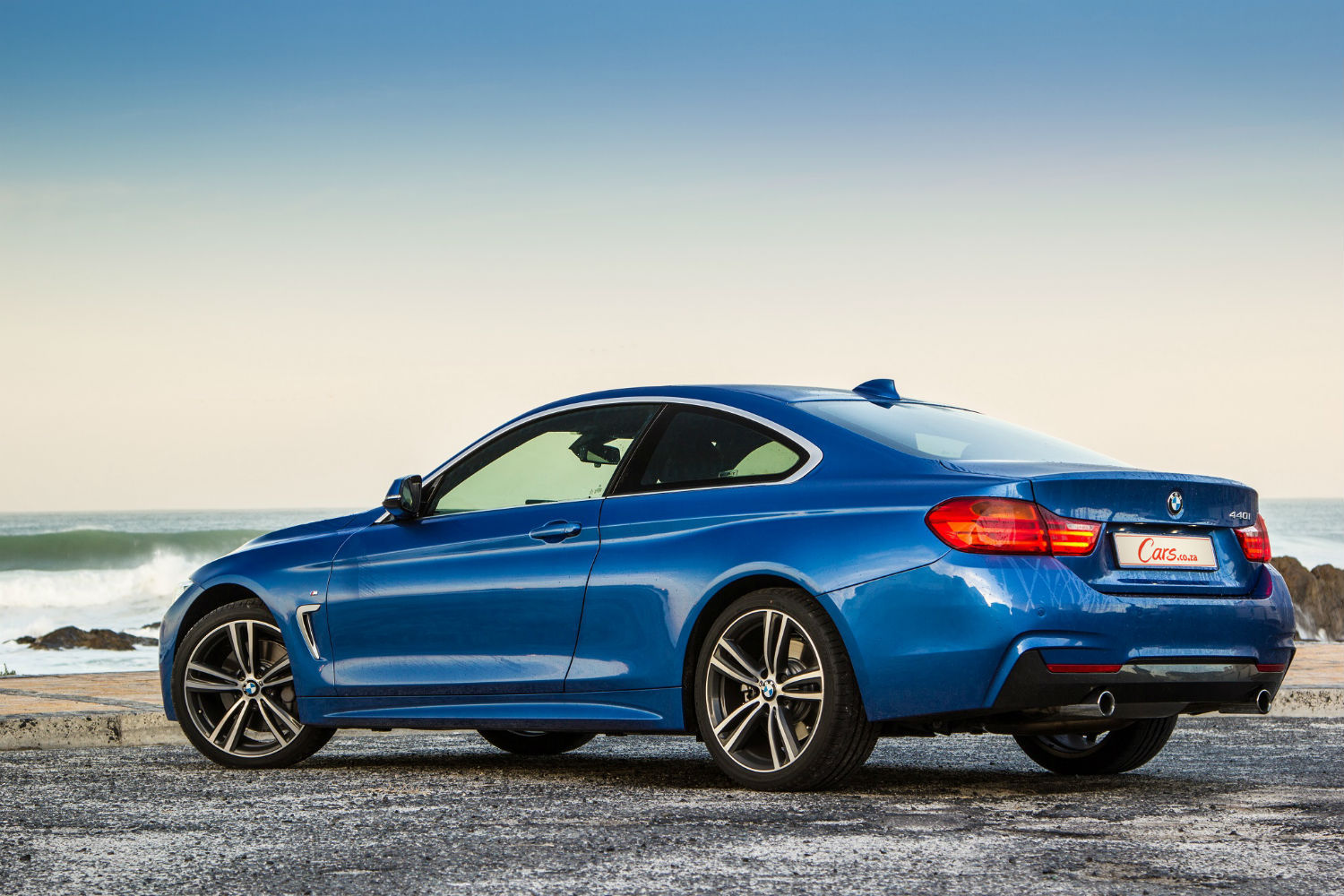
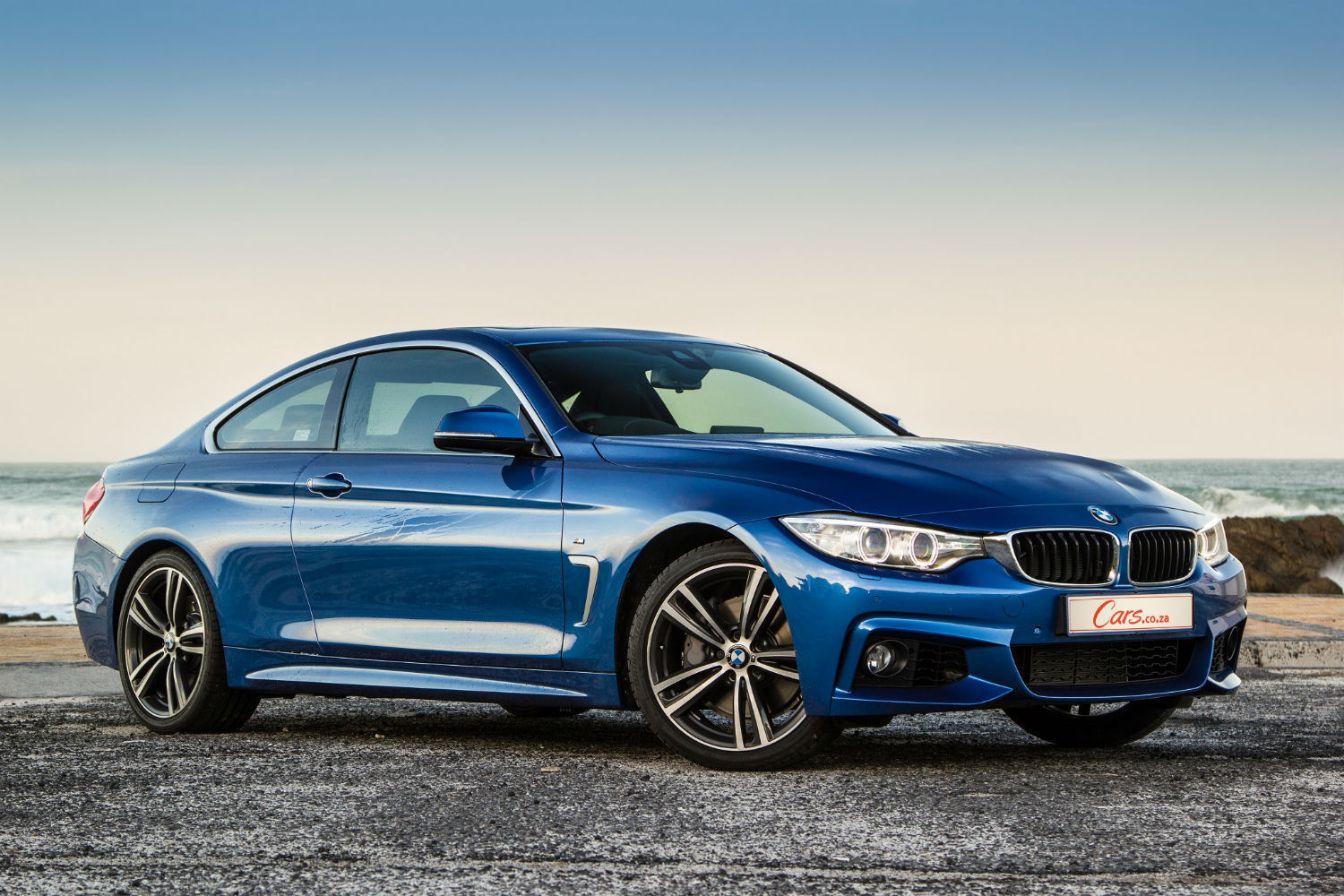
Striking 18-inch wheels and subtle M Sport bodykit add to the 4 Series' inherent appeal.
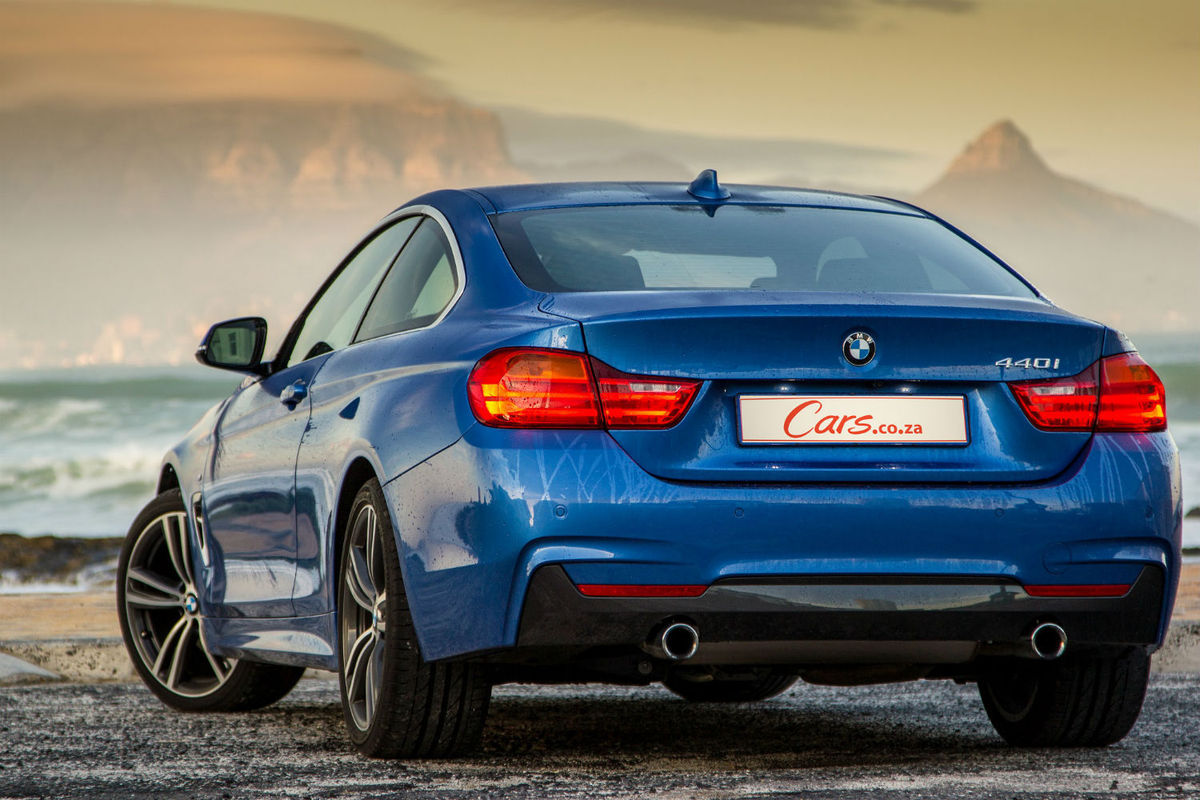
The 4 Series coupe is arguably one of the most attractive and balanced designs in the BMW stable at present, and this 440i's M Sport package adds just enough visual muscle to the otherwise svelte body shape. There is nothing garish or outlandish, just tasteful detailing that emphasises the sporting bent of this particular model. Aerodynamic addenda includes front and rear aprons, a rear diffuser insert and sill covers. Most of the "accessories" are in body colour, but the subtle use of gloss black here and there adds to the visual appeal. Our model was finished in a very attractive metallic Estoril Blue paint finish. This model also rides on striking 18-inch wheels as standard. Our test car turned numerous heads during its time with us.
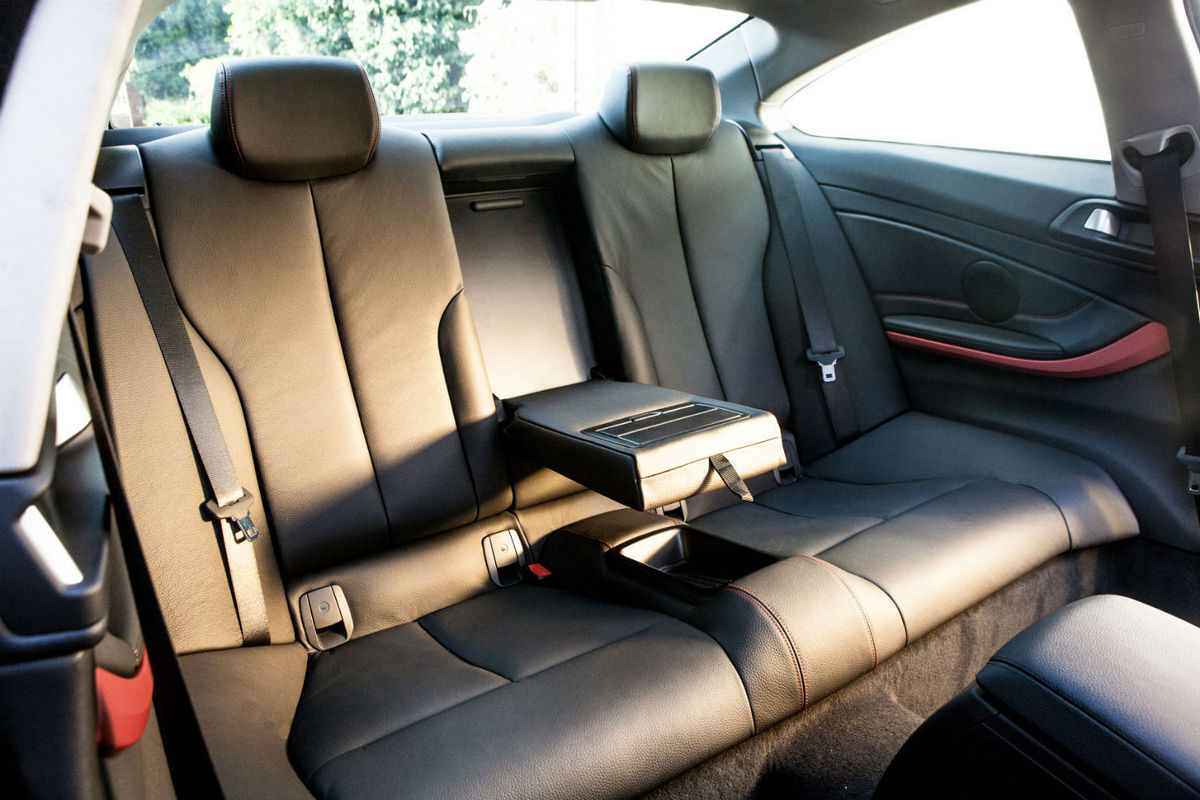
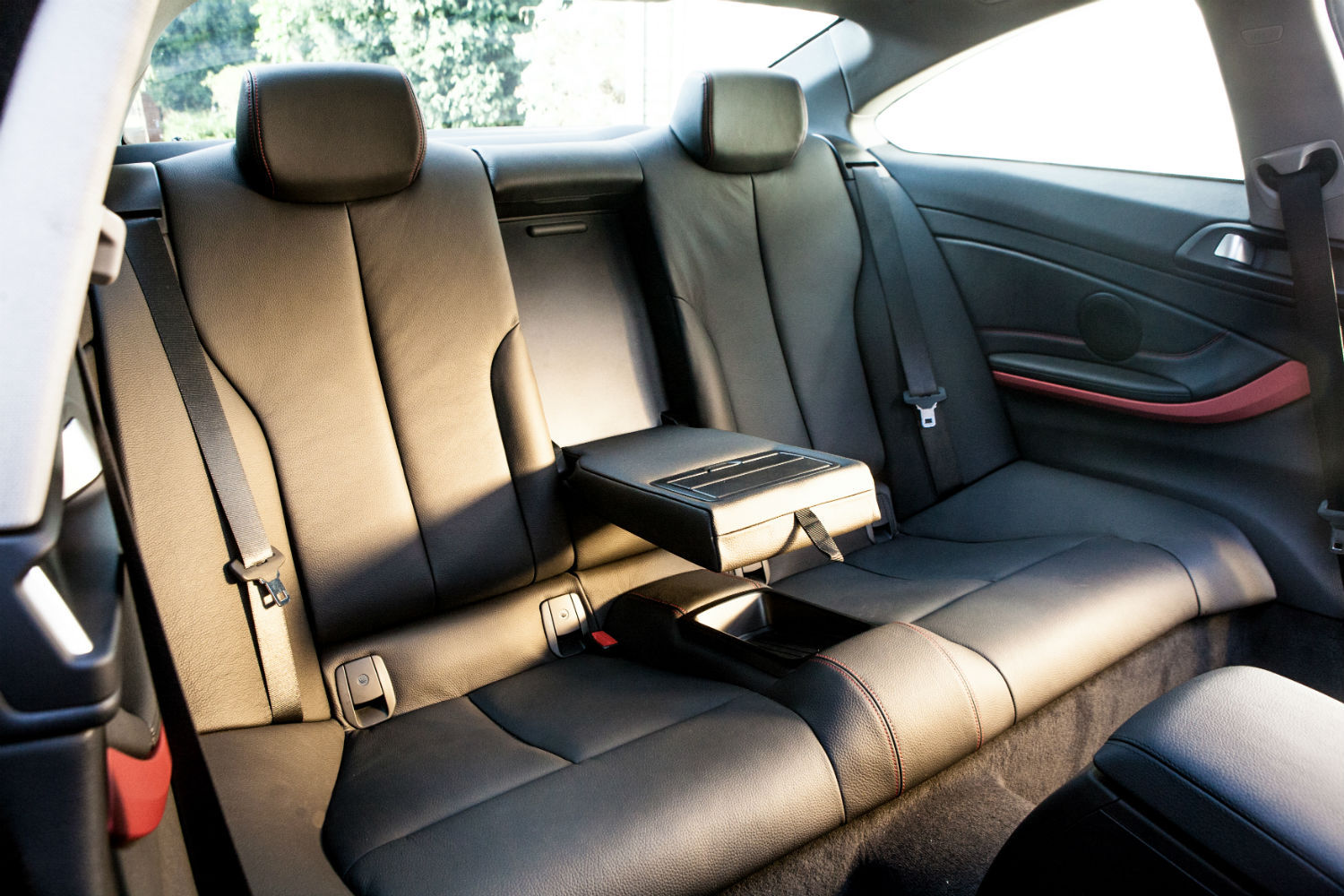
Surprising space in the rear makes the 440i a talented tourer for four occupants.
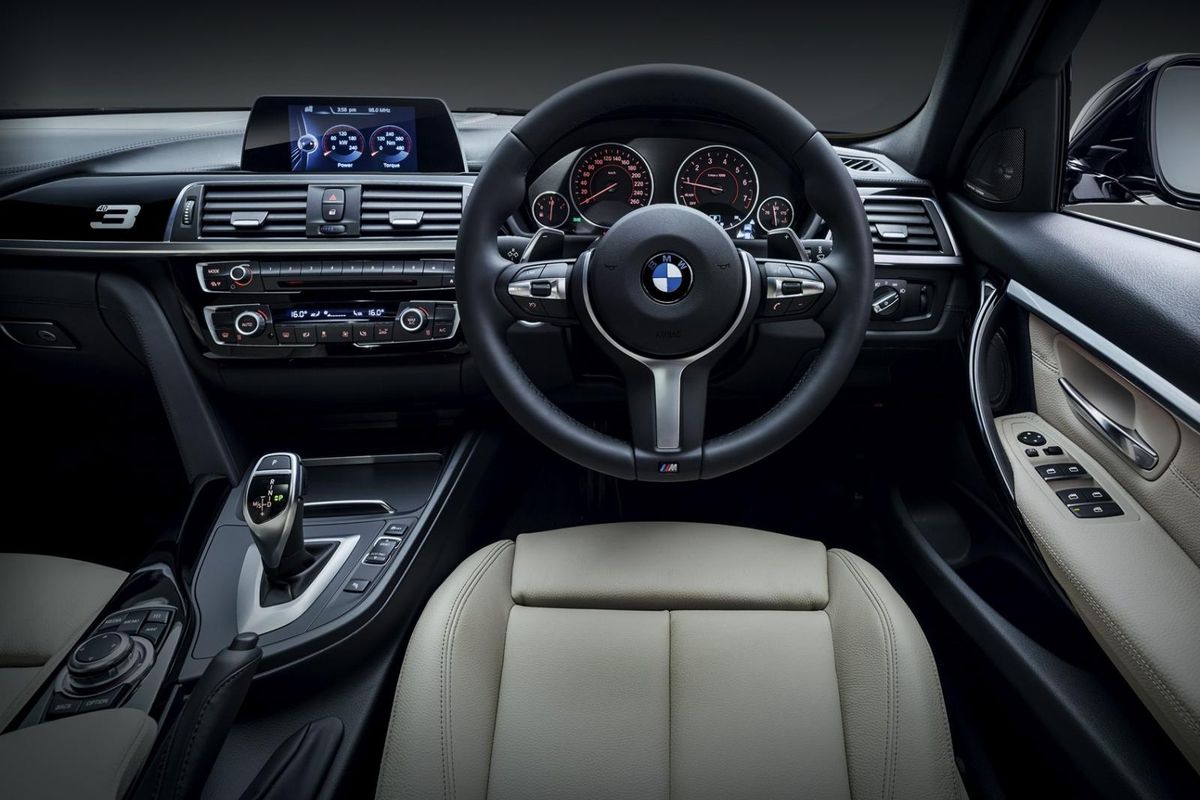
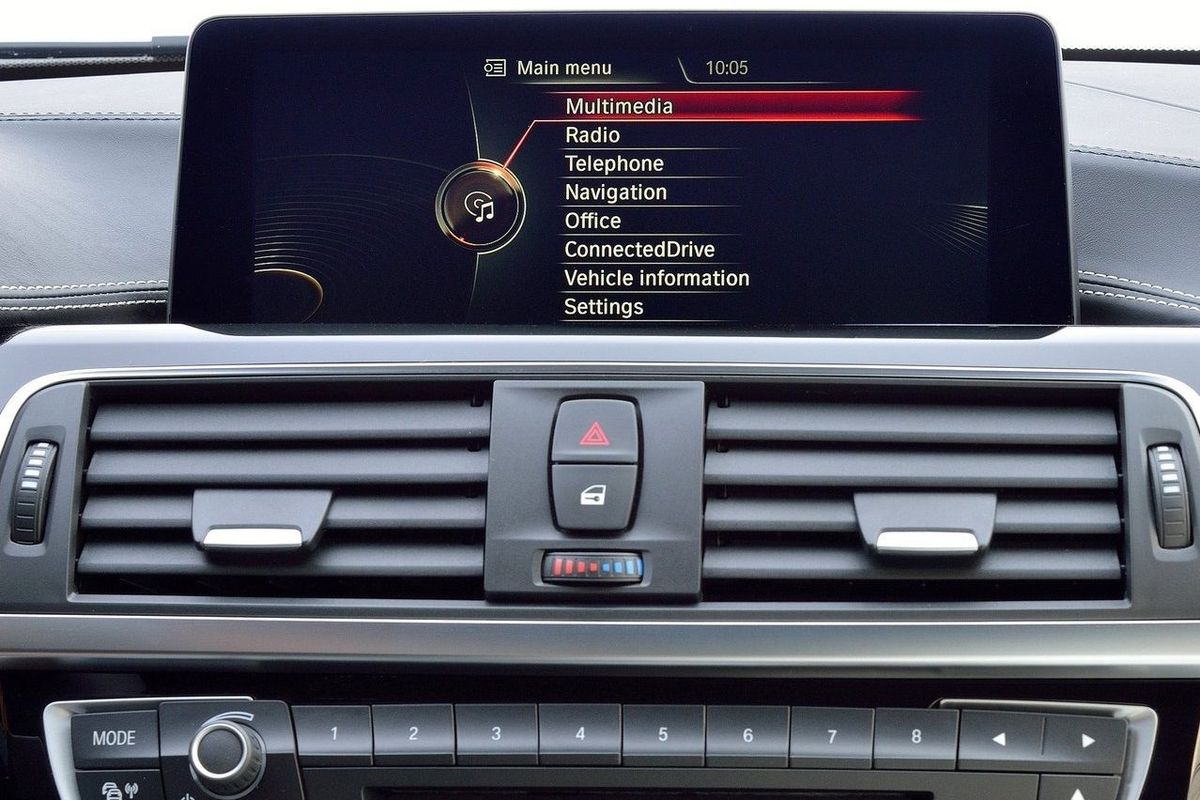
Inside, too, the changes compared with the 4 Series launch models are limited, but we do appreciate the finer attention to detail. The more modern M steering wheel is very attractive, and the leather-upholstered front sport seats are inviting. BMW offers a vast number of further options, including having the entire fascia covered in leather (R13 900 option). And while strictly speaking the infotainment system shouldn't be classified under "design", it has to be said that the presence of the comprehensive 3D Professional system, with its large, crisp, split-screen display does heighten the sense of modernity in a cabin that is otherwise somewhat staid in appearance.
In terms of packaging, the 4 Series is one of the few coupes with genuinely usable rear-seat space. Swing open those long doors, flip the front seatbacks forward and entry will require some bending, but once seated occupants are often amazed at the amount of rear legroom on offer. Of course, taller folk may struggle with headroom, but for what it is, the 440i is as practical as coupes come. The boot measures a claimed 445 litres, which is bigger than what's on offer from the competition, too.
Ride & Handling
It may not be an "M", but the 440i delivers more than enough dynamic thrills.
With its standard M Sport suspension and low-profile rubber the 440i may appear somewhat uncompromising in terms of ride set-up, but the reality is a car that can comfortably be driven daily. The key word during its development appears to have been "balance". Unlike many fast BMWs, the 440i isn't consistently egging on its driver to go faster – it's a vehicle that is comfortable with whatever speed you want to go. You'll have to pay R11 350 extra if you want the adaptive suspension, but we rate the standard set-up highly. The suspension seems to cope with most road conditions well, with only extremely coarse or uneven surfaces catching it out. Out on the open road and at higher speed, it feels unflappable, supple and poised.
The steering set-up – like the engine and suspension – seemingly attempts to camouflage the dynamic and performance talents that are on offer here. It's not particularly sharp in feel around the straight-ahead where you'd be most of the day if you're just pottering about. However, get involved on a series of twisty bends and it will delight with its weighting and speed.
Standard Features
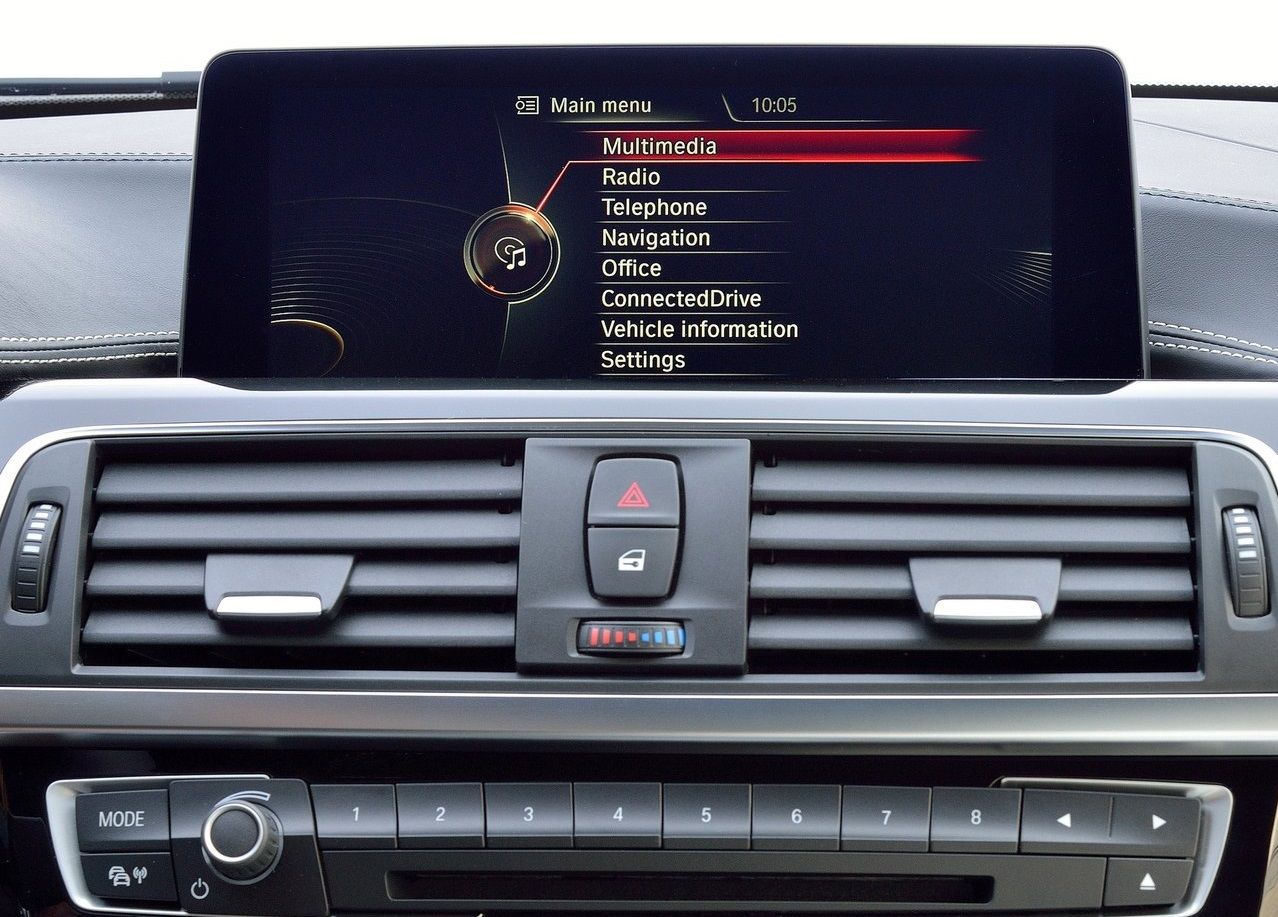
Standard on this 440i model is the full 3D Professional infotainment system.
BMW and its fellow German premium brands are often criticised for their sparse standard equipment lists, but to be fair this 440i M Sport seems to pick most of the must-have boxes. We've already mentioned the leather upholstery and 3D Professional infotainment system (which includes 20Gb of music storage). You also get a 205 W hi-fi loudspeaker system, the ConnectedDrive services, rear park-distance control (with camera view), electric seat adjustment with memory, cruise control with a braking function, rain-sensing wipers, auto lights and automatic air-conditioning, amongst others.
Some of the options aren't even that expensive; a Harmon Kardon sound system is yours for R5 100 and Active Cruise Control costs a reasonable R15 300.
Pricing & Warranty
The BMW 440i Coupe M-Sport sells for R851 376 and comes backed with a 2-years/unlimited km warranty and 5-years/100 000 km maintenance plan.
Verdict
While a coupe as visually arresting (and pricey) as the BMW 440i M Sport can't easily be described as a "sleeper" or Q-car, there is nevertheless an element of surprise about its abilities that will catch out many drivers of flashier cars. There is immense depth to the abilities on offer here, but arguably the 440i's greatest talent is its adaptability. It's a car that can merely be a sophisticated, stylish way of getting to work and back on a daily basis, yet when the mood grabs you, will deliver sportscar-slaying performance and (almost) sports car dynamics. Need a car to take three friends on a long-distance trip in comfort and luxury? The 440i will do that as well; It just somehow manages to always rise to whichever occasion presents itself. A real charmer, this…
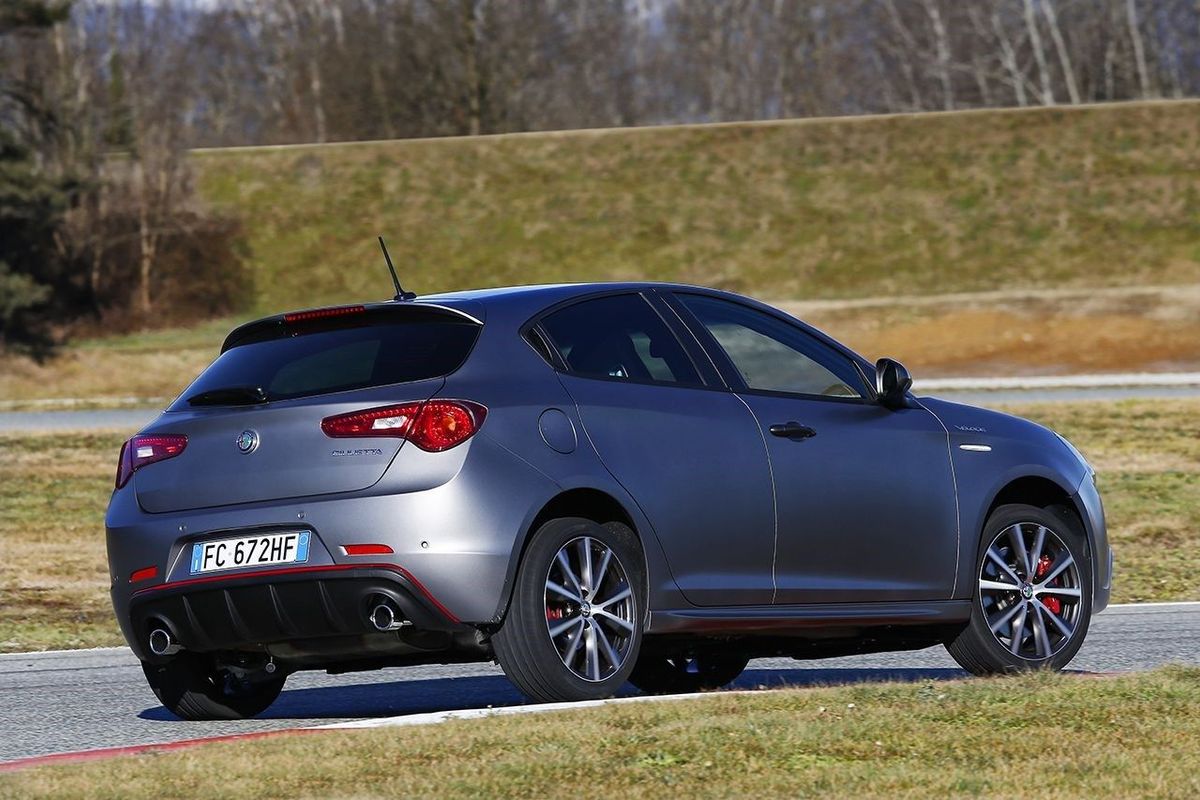
The facelifted Alfa Romeo Giulietta will be launched in South Africa in October 2016. Take a look at specs and pricing for the compact premium hatch below.
The revised Giulietta features a sporty design, emphasised by its honeycomb grille and a new front bumper that resembles the iconic trefoil. The model sports a refreshed logo, polished headlights, new bumper inserts, unique alloy rims and oblique tailpipes.
Giulietta trim levels
The model will be offered in 3 trim levels including Giulietta, Giulietta Super and Giulietta Veloce.
The entry-level Giulietta trim level offers grey and black fabric seats, a matte black dashboard, leather steering wheel and black inserts on the tunnel and door handles.
The mid-spec Giulietta Super trim offers the new Alfa Romeo trademark grey and black fabric "cannelloni-pattern" seats. Leather trim is optional on the Giulietta and Giulietta Super derivatives.
The Giulietta Veloce is the sportiest offering and features new sports bumpers with Alfa Red profiles, carbon-look headlights, glossy anthracite accents on the mirrors, door handles, the grille and fog light surrounds.
The interior is kitted out in leather-and-Alcantara-trimmed sports seats with contrasting red stitching and "Alfa Romeo" embossed on the front head restraints. A contoured leather steering wheel (also with contrasting red stitching) is fitted and the dashboard exhibits a carbon-look finish surround, which is repeated on the door panels while Matt grey inserts round off the interior styling.
Engine choices
The Giulietta will be powered by three turbopetrol engines including an 89 kW 1.4, 112 kW 1.4 MultiAir TCT (auto) and 179 kW 1750 TCT (auto).
We’re looking for the ultimate vehicle to transport a family and all its luggage/lifestyle gear in comfort both on- or off-road. These are the semi-finalists in the Lifestyle SUV category of the Cars.co.za Consumer Awards – powered by WesBank!
The Cars.co.za Ownership Satisfaction Survey, in partnership with leading data specialists, Lightstone Consumer, forms an integral part of the awards programme, with the survey accounting for 50% of the final result in each category. The brand-specific data incorporates feedback from thousands of South African new vehicle owners, based on their experiences of their vehicles (must be less than 5 years old and serviced through franchised outlets).
Vehicles that were considered in this category need to offer a measure of all-wheel drive ability, but, in selecting the 5 finalists the Cars.co.za editorial team placed an emphasis on practicality, comfort and long-distance cruising. For a car to be considered in this category, the vehicle's listed price must be between R500 000 and R750 000 at the time of semi-finalist voting (September 1, 2016), including the cost of all necessary optional extras.
It needs to feature the following: ESP (electronic stability control – if not fitted as standard, the cost of this feature, along with all other required extras, must not push the price over R750 000); a minimum of 6 airbags (if not fitted as standard, the cost of these items, along with all other required extras, must not push the price over R750 000); split/fold rear seats must be fitted and it must have a minimum ground clearance (a minimum manufacturer-supplied ground clearance figure of 180 mm) and all-wheel drive (although extreme off-roading is not a priority, the ability to traverse rougher terrain will be an advantage).
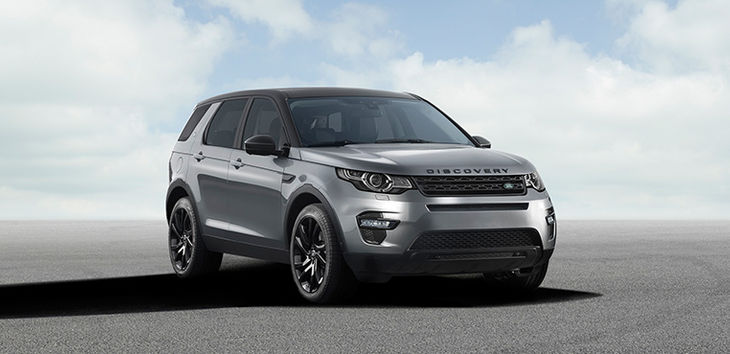
Land Rover’s Discovery Sport’s found immediate favour in the South African market and was our Leisure Vehicle champion last year. Rightly so. It borrows styling cues from the smash-hit Evoque and Range Rover Sport, offers a spacious, luxurious cabin with seven seats. This year it faces tough new challengers… This Discovery Sport TD4 is powered by the brand’s new 2,0-litre four-cylinder turbodiesel engine that delivers 132 kW and 430 Nm of torque, the latter from a low 1 750 to 2 500 rpm. Interestingly, it is mated with a nine-speed automatic transmission and channels power to all four wheels.
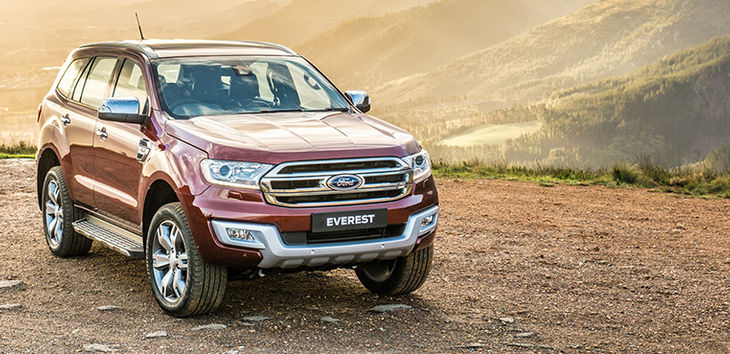
Ford’s Everest was one of those vehicles that simply had to happen. The success of the current-generation Ranger pick-up, as well as South Africans’ love affair with large, rugged SUVs were good indicators, and Ford has served up exactly what they’ve been asking for… a macho and versatile machine that can tackle the rough, but also play it smooth. The 3.2-litre five-cylinder turbodiesel from the Ranger does duty in the Everest, but it has received some efficiency upgrades. Power is rated at 147 kW and torque at 470 Nm, and that grunt reaches all four wheels through a six-speed automatic gearbox. It’s quite a heavy vehicle, however, so the Everest is best for smooth and steady progress, as opposed to being hurried along.
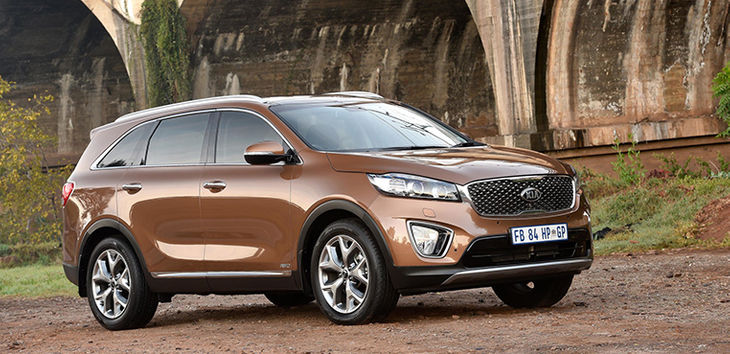
Korean brand Kia takes a rather different approach to the Lifestyle SUV segment by prioritising comfort features, premium finishes and on-road refinement, as opposed to rugged off-road ability. In theory, this makes a lot more sense, seeing as road users tend to spend more than 90% of their time driving on tarmac. The 2.2-litre turbodiesel engine that powers this flagship Sorento delivers 147 kW and a lofty 440 Nm of torque. It is certainly the engine of choice in the Sorento range, delivering strong overtaking acceleration, even when fully loaded and when travelling at altitude. Kia claims a 0-100 kph time of 9.3 seconds, easily among the fastest of the large seven seaters.
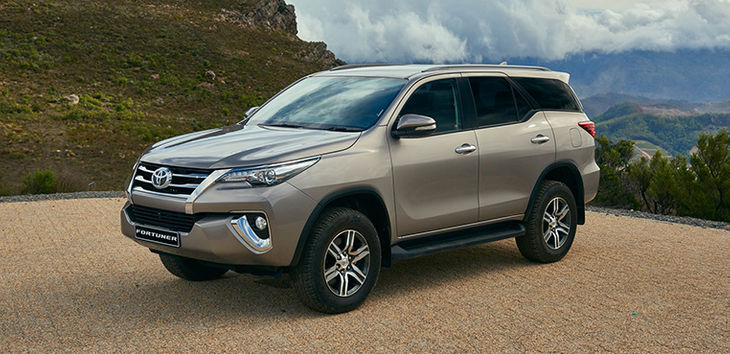
The Toyota Fortuner is one of the country’s favourite vehicles. The new model continues its predecessor’s winning recipe of ruggedness and versatility, but adds a generous helping of sophistication, style, refinement and technology to the mix. owering this flagship Fortuner is the marque’s brand new 2.8-litre turbodiesel engine that develops 130 kW and 450 Nm of torque in this (6-speed automatic) application. It’s a very refined unit that doesn’t mind revving hard, and delivers its strong power in a sustained and fuss-free manner. It endows the Fortuner with a brisk turn of speed. A 0-100 kph time of 10.8 seconds is not to be sniffed at for a vehicle such as this, but most impressive is the refinement.
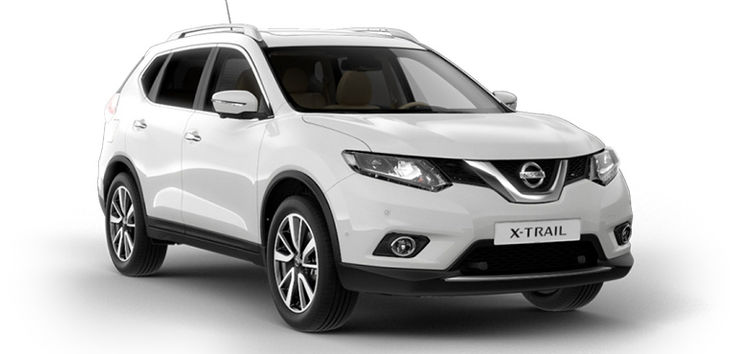
The Nissan X-Trail is a popular choice in South Africa and offers a great mix of value-for-money, spaciousness, quality and all-road ability. In this category the relatively new 1.6 dCi 4×4 LE derivative is up against some pretty stiff competition, but it has some talents of its own. For one, it is by far the most affordable vehicle here, yet it delivers a strong showing across the board. The 1.6-litre turbodiesel engine that powers this model delivers 96 kW and 320 Nm of torque. These figures won’t frighten its rivals in this Awards category, but keep in mind that the X-Trail is smaller and lighter.
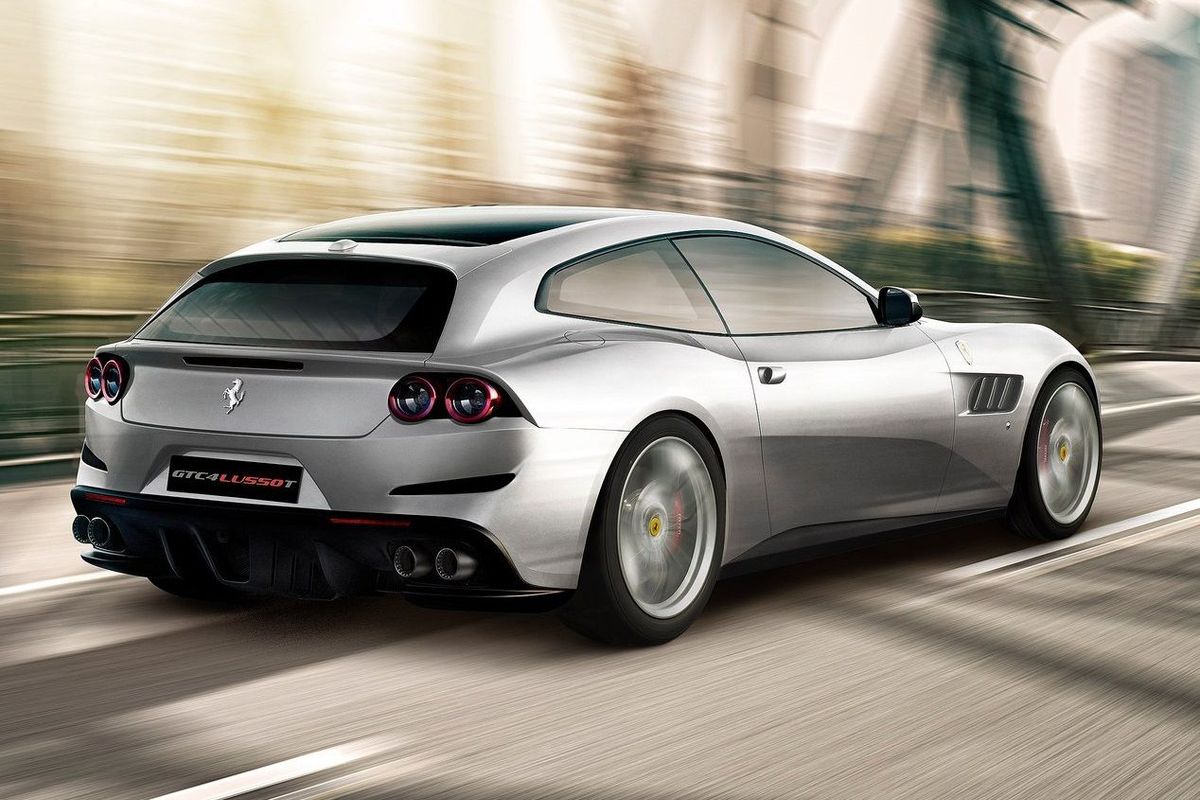
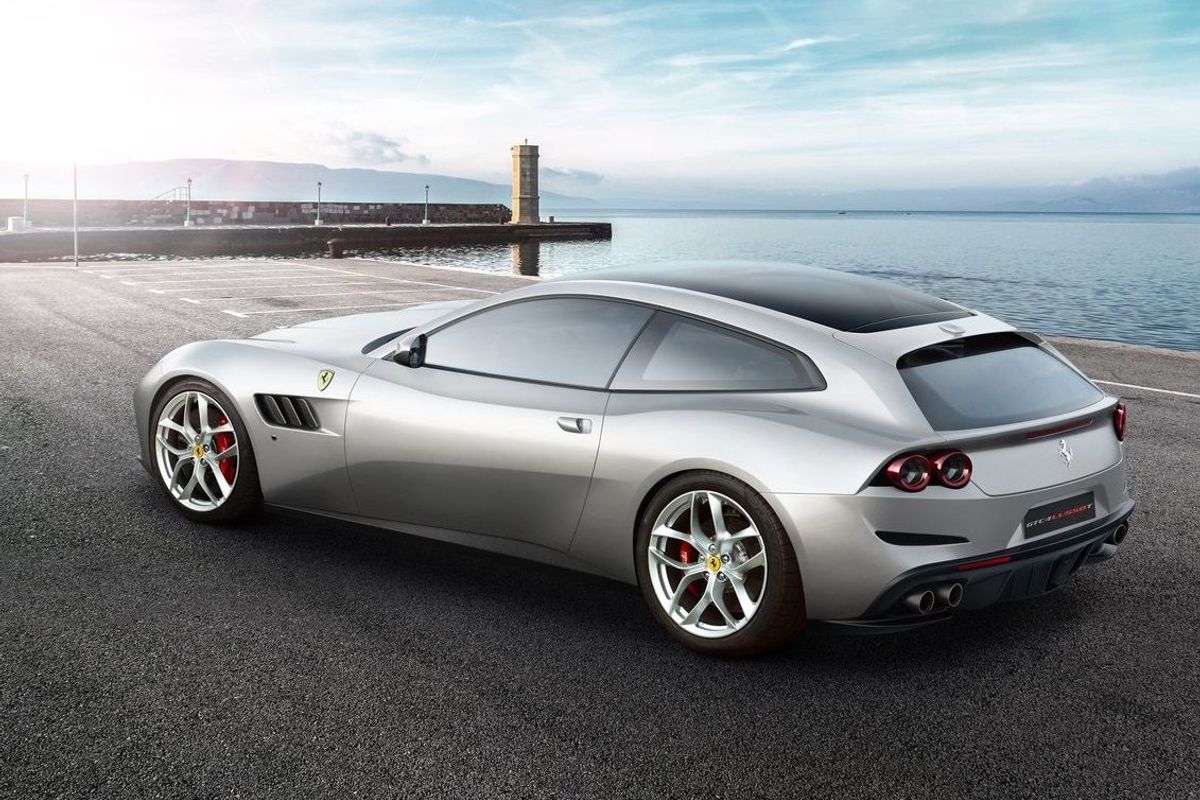
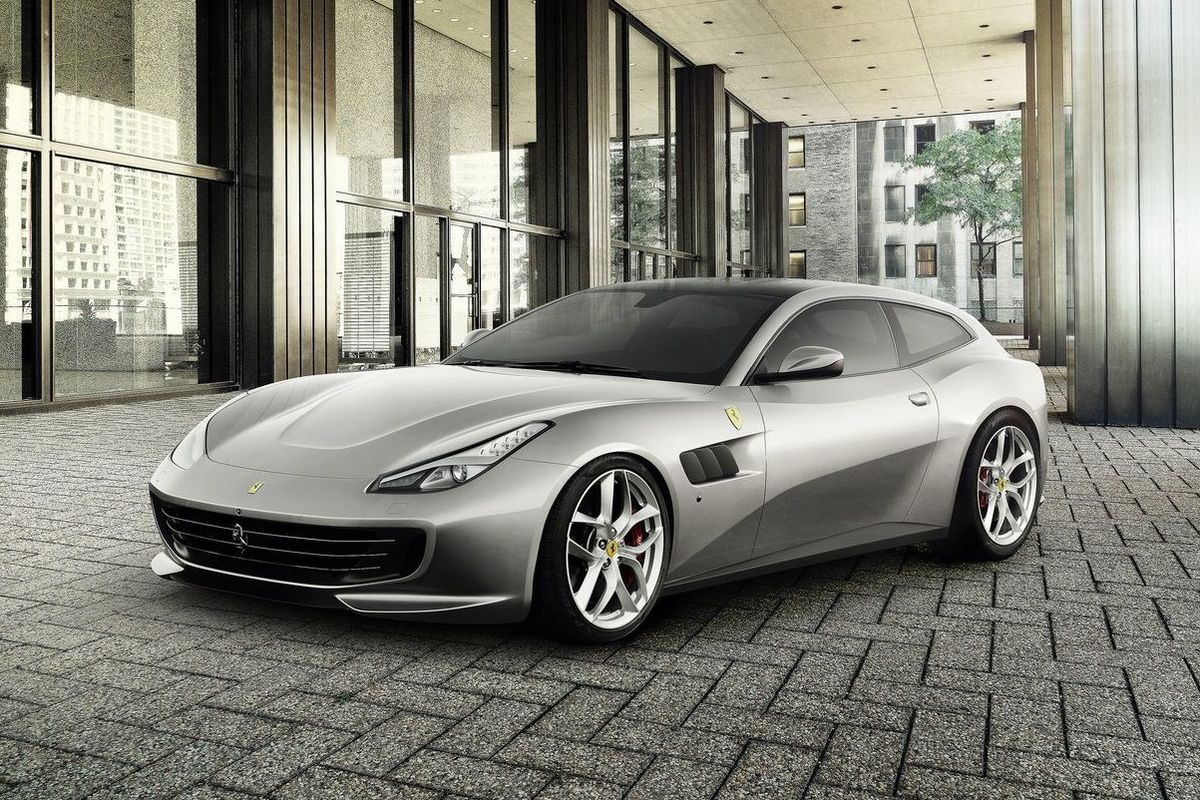
Ferrari has announced its shooting brake GTC4Lusso will now be powered by a twin-turbocharged V8 engine. The V12 will still be available, but this entry-level GTC4Lusso represents the new Ferrari concept for owners wanting a vehicle that's sporty, practical and capable of doing the daily drive.
It's called the Ferrari GTC4Lusso T and the engine comes straight from Ferrari's baby California T. We say "baby" lightly as the new California T is an impressive performer – the twin-turbocharged 3.9-litre V8 engine has peak power and torque outputs of 449 kW and 760 Nm. Compared with the current V12 motor in the GTC4Lusso T, there's 58 kW less, but an additional 63 Nm worth of torque.
Ferrari is claiming that its 4-seater can sprint from zero to 100 kph in 3.5 seconds, which is 0.1 slower than the V12. Given its motor's tremendous outputs, the GTC4Lusso T is said to accelerate from standstill to 200 kph in 3.5 seconds and Ferrari claims a top speed of in excess of 320 kph.
Other changes include a change to the car's drivetrain. Previously, the V12 GTC4Lusso was all-wheel drive, but this new V8-powered version is rear-wheel driven. The new setup results in a weight reduction of around 80 kg, which will aid acceleration and braking. The T's handling ability has also been tweaked and the rear-wheel steering system means tighter cornering ability. We'll hear more about this Ferrari FF-successor at the 2016 Motor Show.
The subtly revised 2016 Mazda 3 was recently introduced in South Africa and we put it to the test on a long-distance road trip from Johannesburg to Cape Town. How good is it?
A long-distance road trip is perhaps the best way to test any car and we set course from Johannesburg to to Cape Town to learn more about the talents of the Mazda 3 2.0 Astina Plus, as well as its shortcomings!
We like: Styling, ride quality, comfort and comprehensive standard features.
We don’t like: Can feel underpowered at the reef, smallish luggage capacity.
Alternatives
For more performance: The all-new Renault Megane has just been launched in South Africa and the Megane GT offers 151 kW and 280 Nm of torque from its 1.6-litre turbopetrol engine. Renault claims 7.1 seconds in the sprint to 100 kph, but that performance comes at a cost. The Megane GT is priced from R449 900.
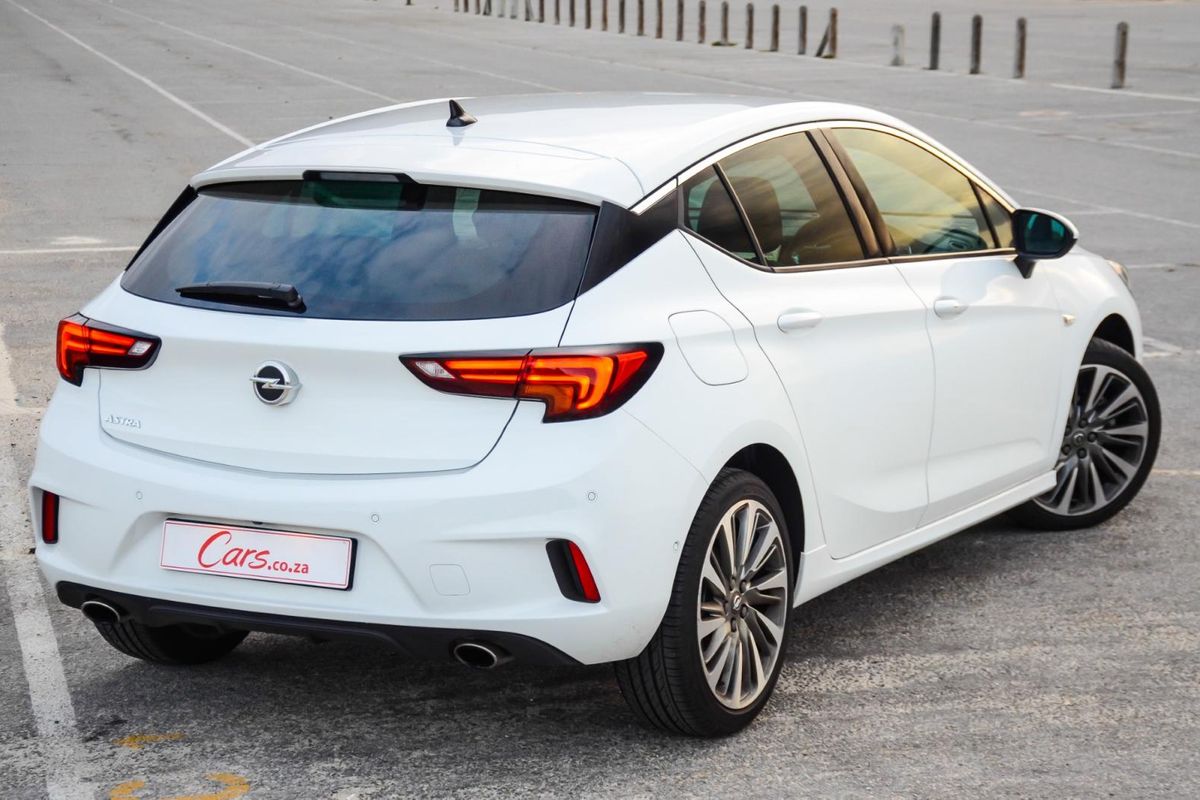
For a similarly sophisticated, but all-new rival: The Opel Astra 1.4T Sport Automatic oozes kerb appeal, is particularly well specified too and its 1.4-litre turbocharged motor seems well calibrated to its 6-speed automatic transmission. The derivative is priced at R338 000.
The more affordable option: Consider the Ford Focus 1.5T Trend automatic. It’s priced from R323 900 and offers 132 kW and 240 Nm of torque. Although the Focus isn’t as well-specced as the Mazda3 Astina Plus, it’s a strong value proposition and offers good performance.
The Mazda 3 2.0 Astina Plus features additional standard safety features as well as G-Vectoring Control for the first time.
What is the Mazda 3?
We had the flagship model of the pre-facelift Mazda3 on extended test earlier this year and we found it to be a solid offering, with high levels of comfort and good everyday drivability. Then, the new-look Mazda 3 arrived. Even though the changes are mostly cosmetic, the new-look Mazda 3 retains its stylish looks and the biggest change is the addition of the new range-topping 2.0 Astina Plus derivative, which is on test here.
We put the Mazda 3 2.0 Astina Plus to the ultimate test with a long distance trip from Johannesburg to Cape Town, covering more than 1 386 km in two days. Let’s take a look at how it performed.
How does it fare in…
Kerb appeal?
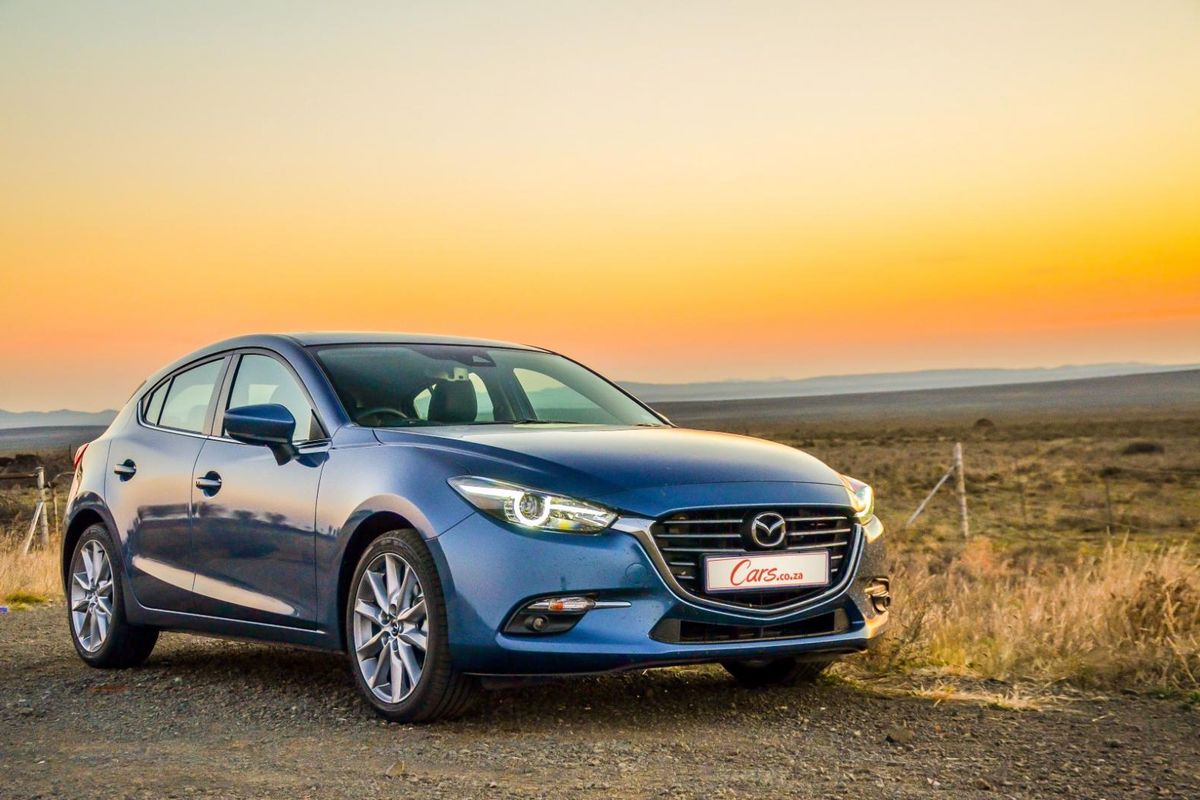
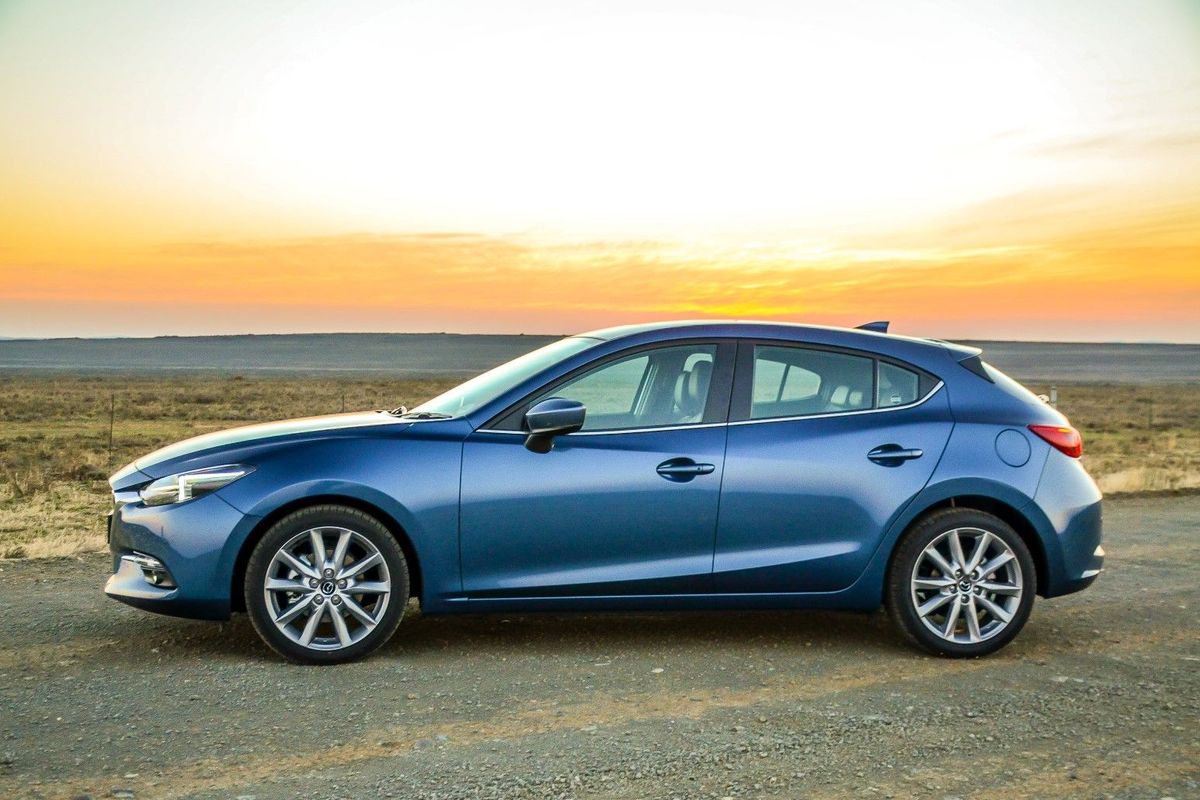
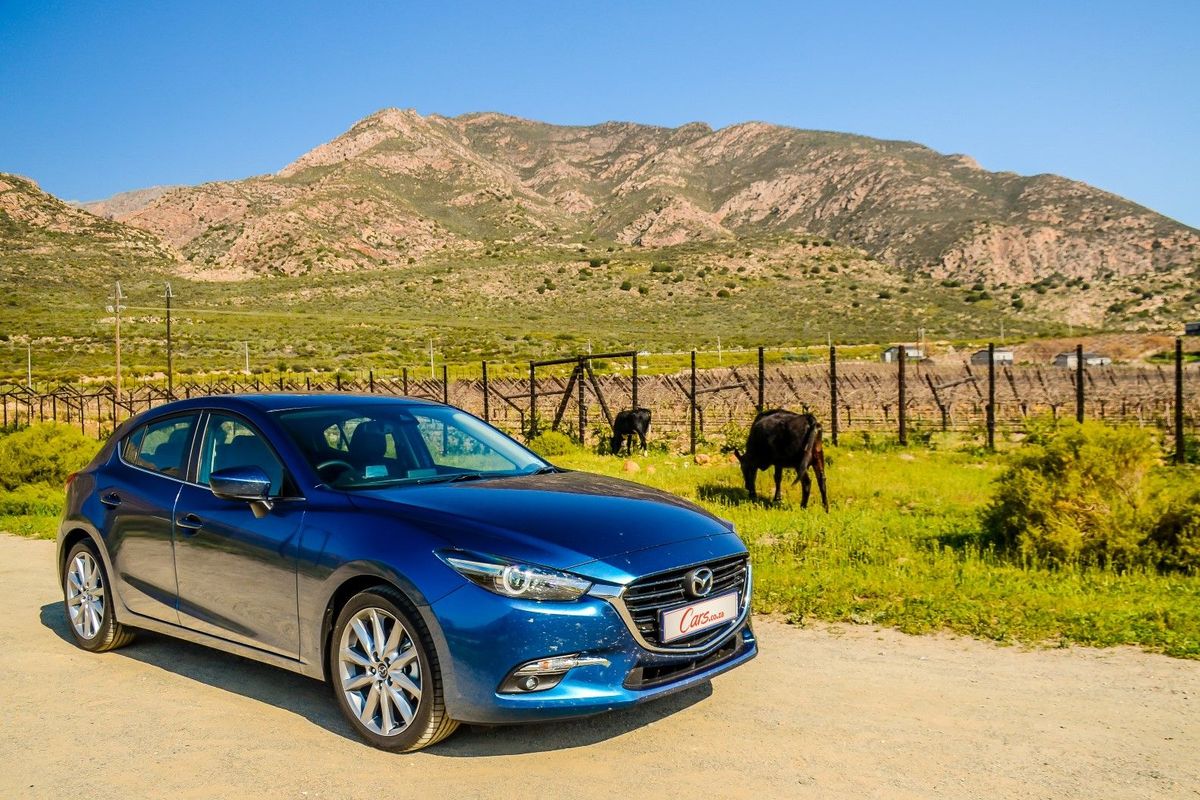
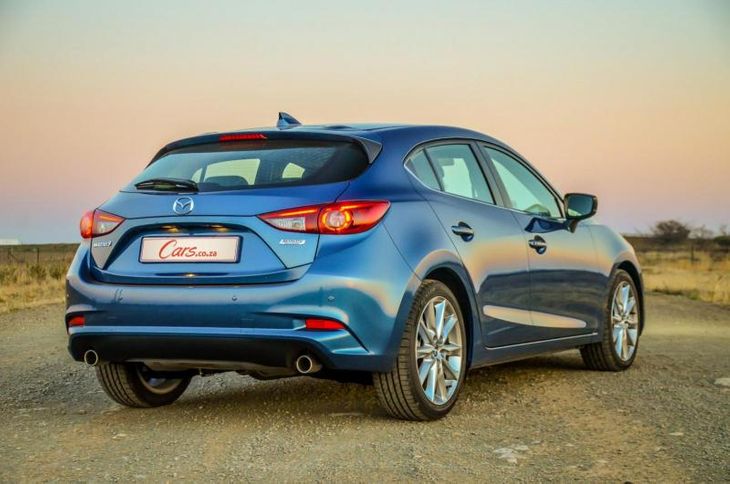
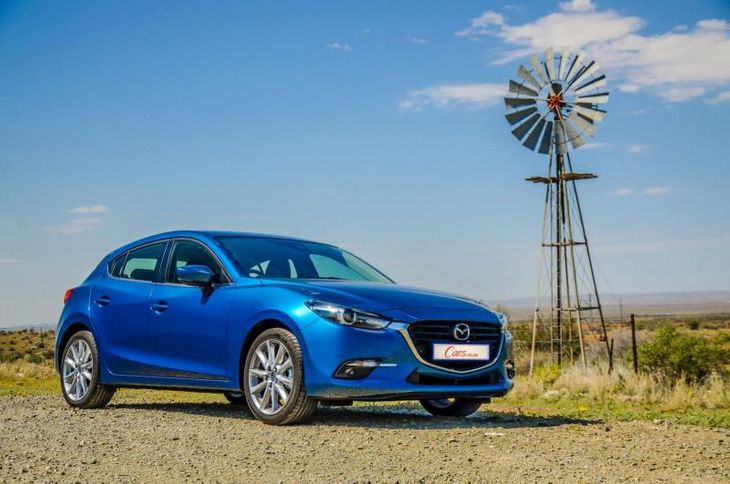
The new-look Mazda3 retains its stylish silhouette but now features minor exterior updates.
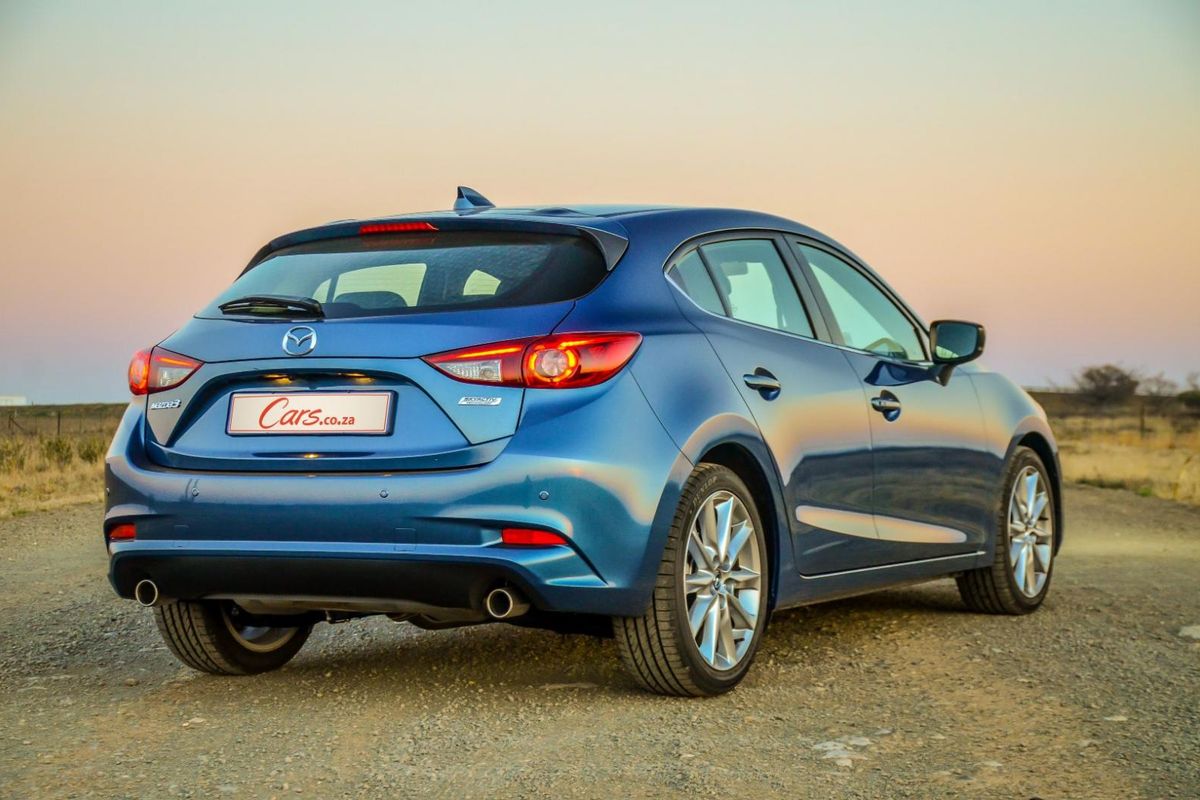
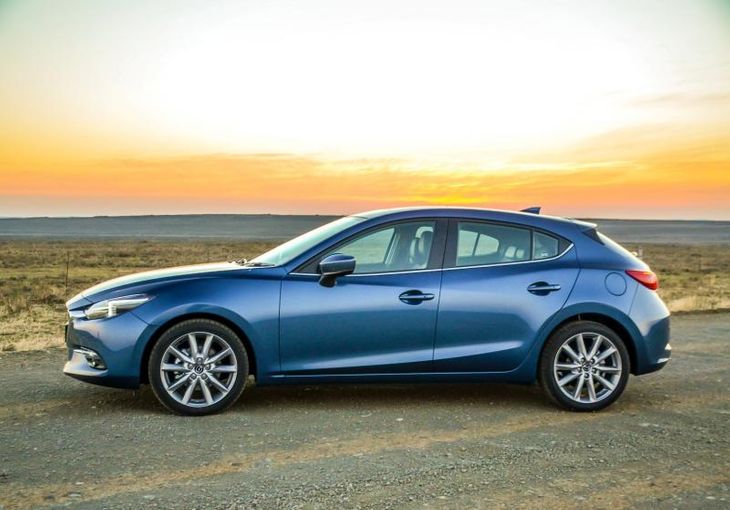
The Mazda3’s design is a departure from the normal, boxy-shaped hatchbacks that are seen on just about every road in South Africa. It’s low-slung, coupe-like stance is particularly appealing when viewed from the side and it’s got a sleek and sporty look to it, giving it an extra dash of class. Almost every petrol pump attendant on our cross-country journey commented that the Mazda 3 looked beautiful.
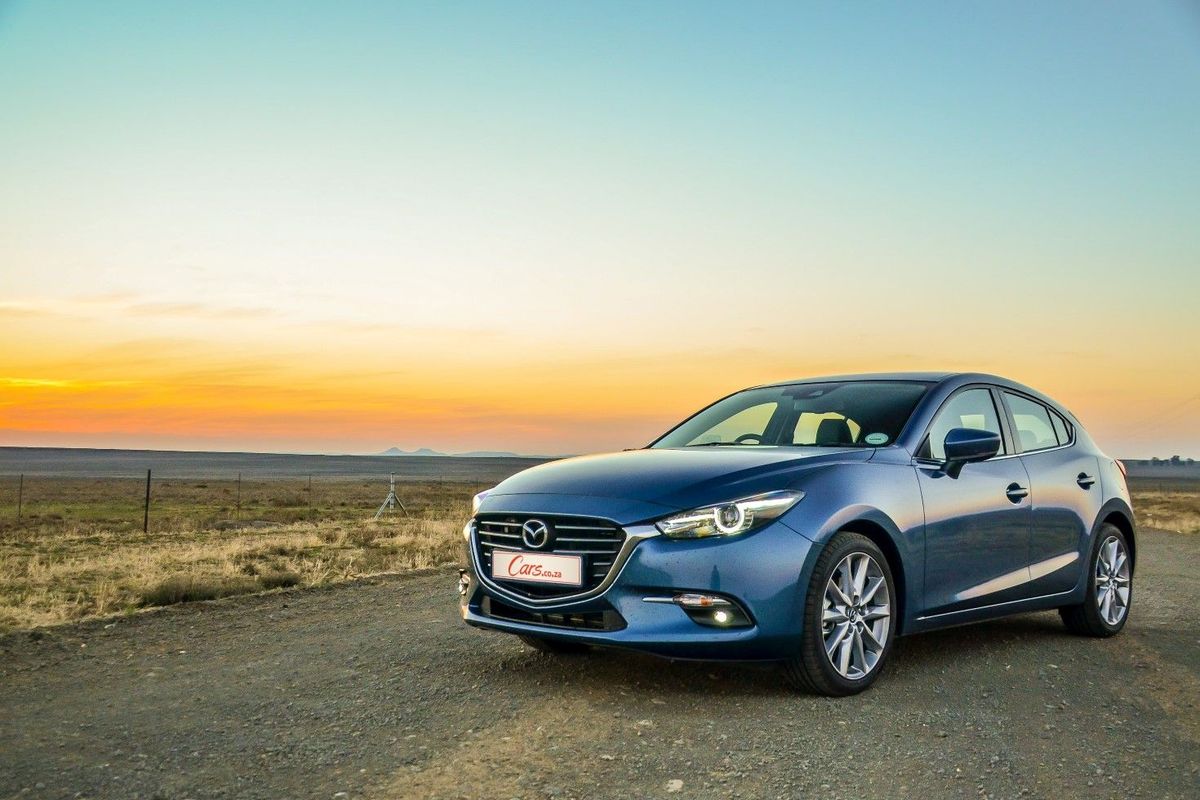
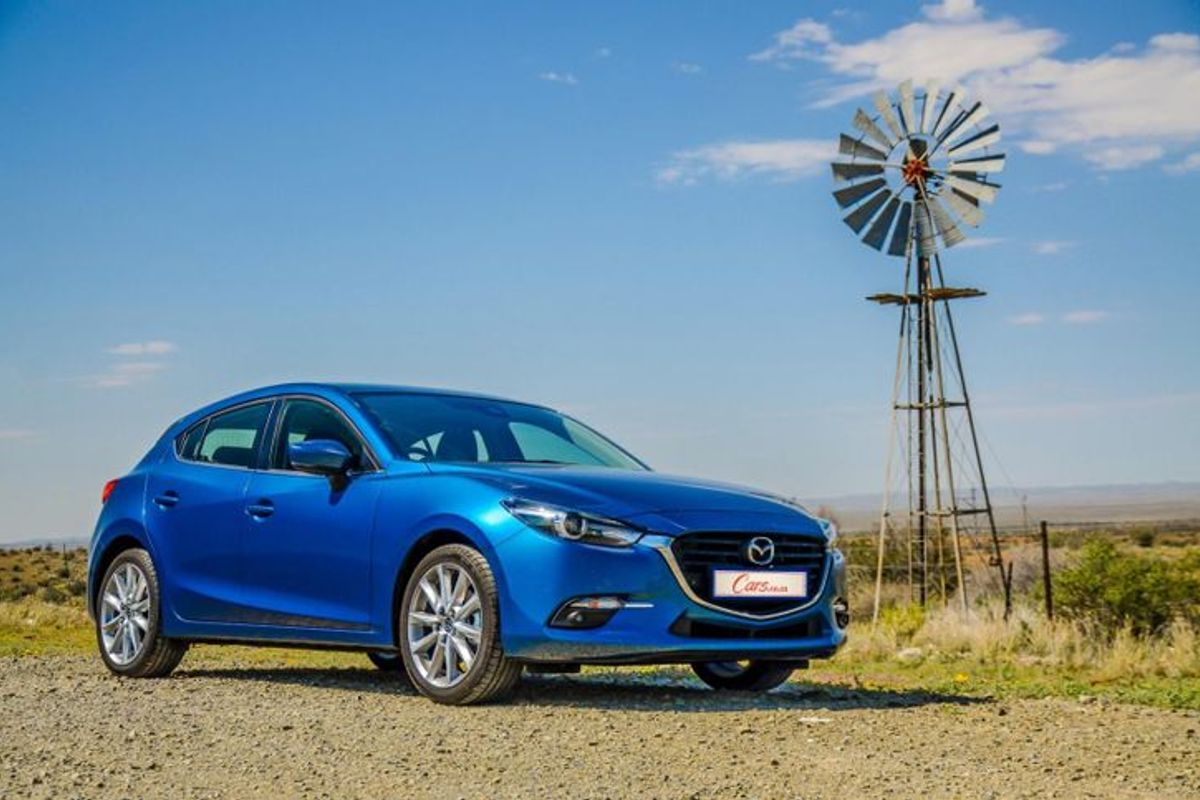
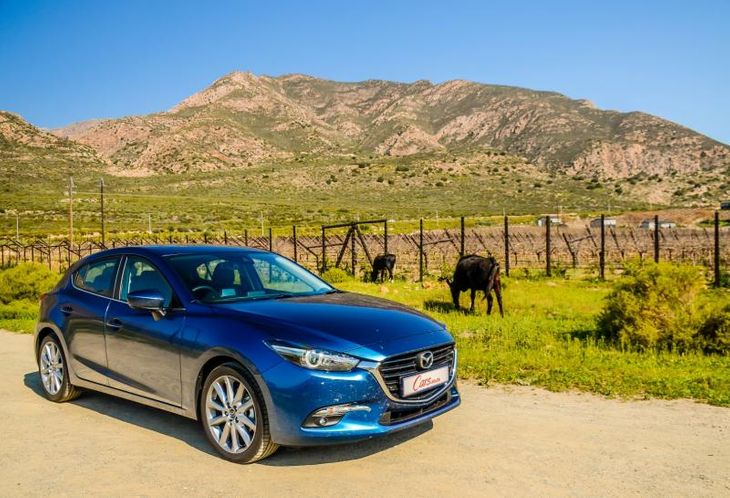
This (now) range-topping Mazda 3 2.0 Astina Plus came dressed in a new exterior colour called Eternal Mica Blue and we think it makes the car look rather dashing. If you look closely, you will notice that the front badge is placed slightly lower than on the previous Mazda 3; the fog lights and side skirts have been revised and the rear bumper has also been reprofiled. Meanshile, adaptive LED headlights are also fitted as standard on this Astina Plus derivative.
The new-look Mazda 3 2.0 Astina Plus rides on newly designed 18-inch alloy wheels to round-off, what we believe to be, an attractive offering in the premium hatchback segment.
Performance?
The Astina Plus is powered by a naturally aspirated 2.0-litre petrol engine that develops 121 kW and 210 Nm of torque. The front wheels are driven through a 6-speed automatic transmission and this Astina Plus has shift paddles behind the steering wheel to allow for manual gear selection.
Cruising is what the Mazda3 Astina Plus does best and it returns decent fuel economy while doing it.
The Mazda 3 Astina Plus is an excellent cruising car, but if you are hoping for outright performance, you may be a trifle disappointed. Without turbo technology and at altitude, the naturally aspirated engine has to work hard to extract power and the engine labours when you plant your foot flat, but improves somewhat at sea level. Acceleration in the Astina Plus is rather delivered over time and its claimed zero to 100 kph time of 9 seconds is indicative of this. That’s not to say that the Mazda 3 Astina Plus is a slow car, it just lacks some punch, but once it’s up to speed, it just keeps going. The Sport switch helps to improve acceleration by holding gears for longer to get the most from the engine when it’s required.
As before, ride quality is good and the Astina Plus handles well too. Mazda has now, for the first time, introduced what it calls G-Vectoring Control (GVC) on all its 2.0-litre Mazda 3 derivatives (GVC will be rolled out on other Mazda models in the future). G-Vectoring is said to vary torque in order to shift weight based on the drivers steering inputs, effectively improving handling and responsiveness while cornering and makes for a smoother drive overall. GVC is imperceptible to the driver, so it’s difficult to judge how effective it is, but it’s nice to know it’s there. The Mazda3’s long distance ability impressed us and we thought it performed solidly overall.
Look out for our Mazda3 G-Vectoring demonstration coming your way soon!
Fuel consumption
Mazda claims a fuel consumption figure of 5.9 L/100 km and during our journey from Johannesburg to Cape Town, we averaged 7.5 L/100 km, which is reasonable if you consider that this was anything but an economy run.
Here’s a basic summary of our trip.
Total distance covered: 1 386 km
Total litres consumed: 104 litres
Total fuel cost @ R12.25/litre: R1 274
Practicality?
In terms of practicality, the Mazda 3 Astina Plus is an average performer. Compared to rivals such as the Volkswagen Golf (380 litres) and Opel Astra (370 litres), the Mazda3 has the smaller boot at 308 litres. Even so, a fair amount of luggage can be loaded and more space can be accessed by folding the 60:40 split rear seats flat.
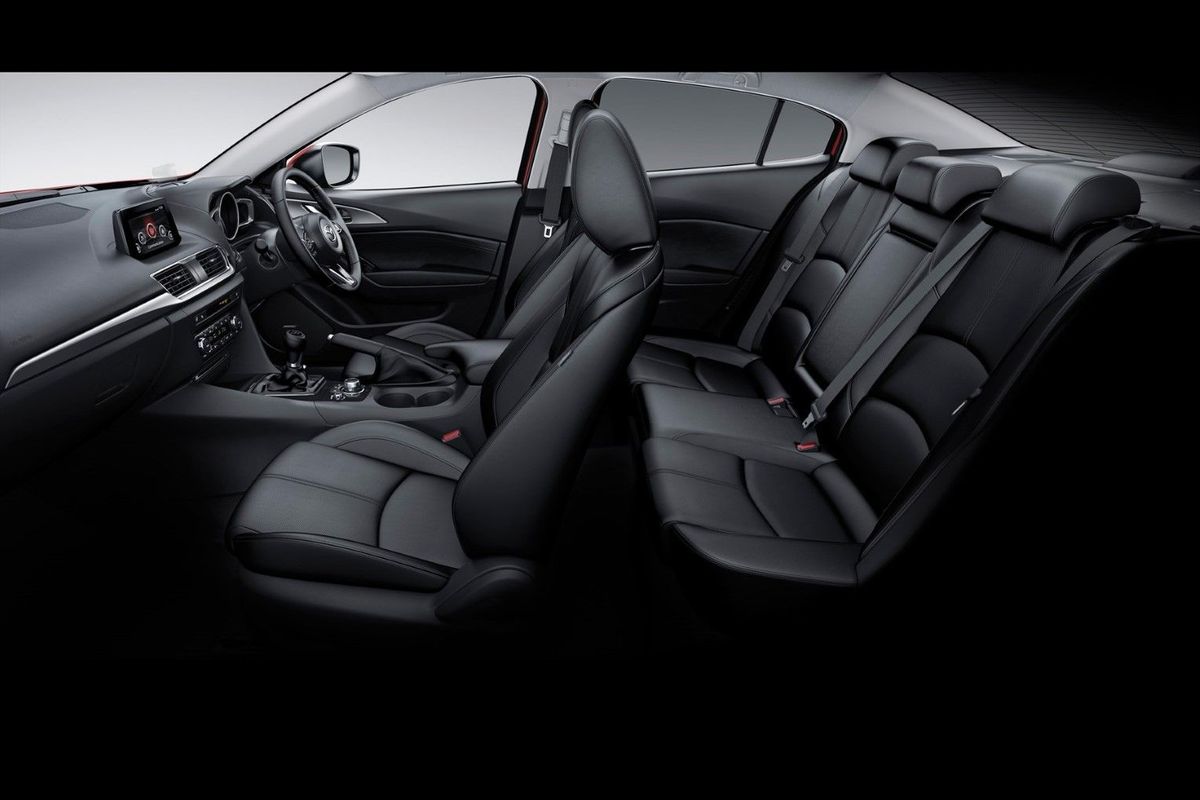
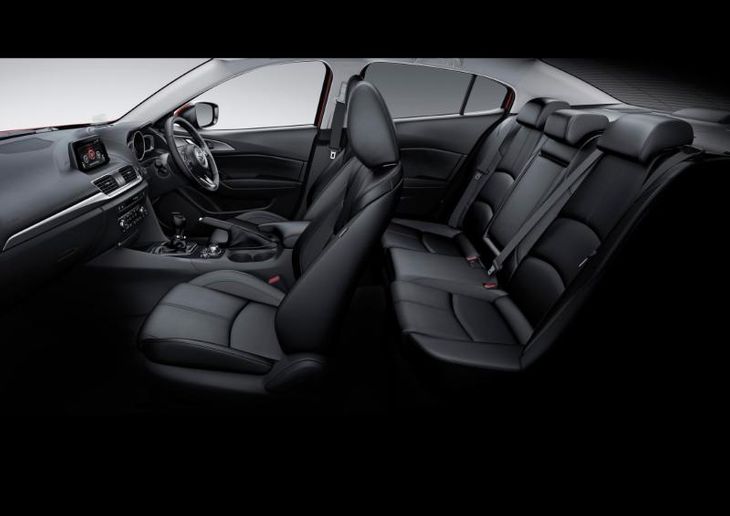
The interior of the Mazda3 Astina Plus is minimalist in design and offers sufficient space for rear passengers.
A longer wheelbase affords rear passengers with sufficient head- and legroom. Only taller passengers will start feeling cramped in the Astina Plus. If you are in need of a recharge, two USB ports are made available to you and the cabin also has sufficient storage space for items such as bottles, keys and other goodies you might want to store.
Comfort and safety features?
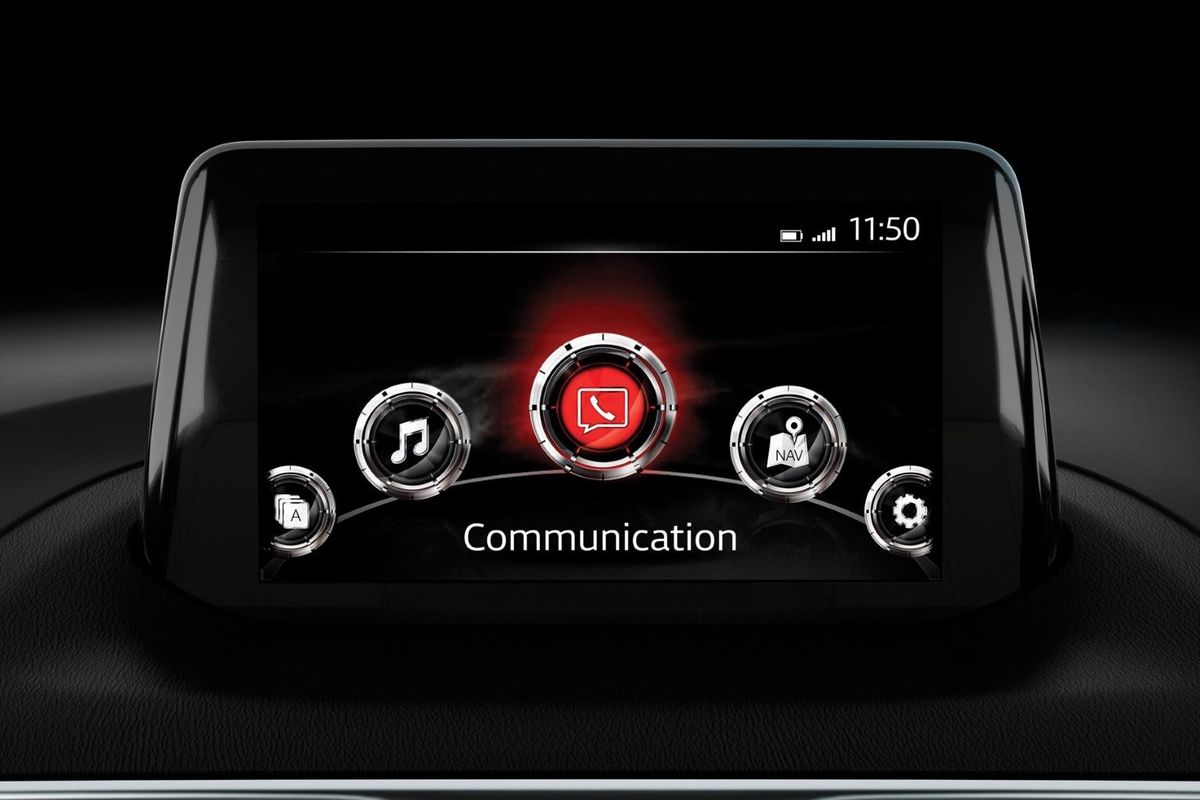
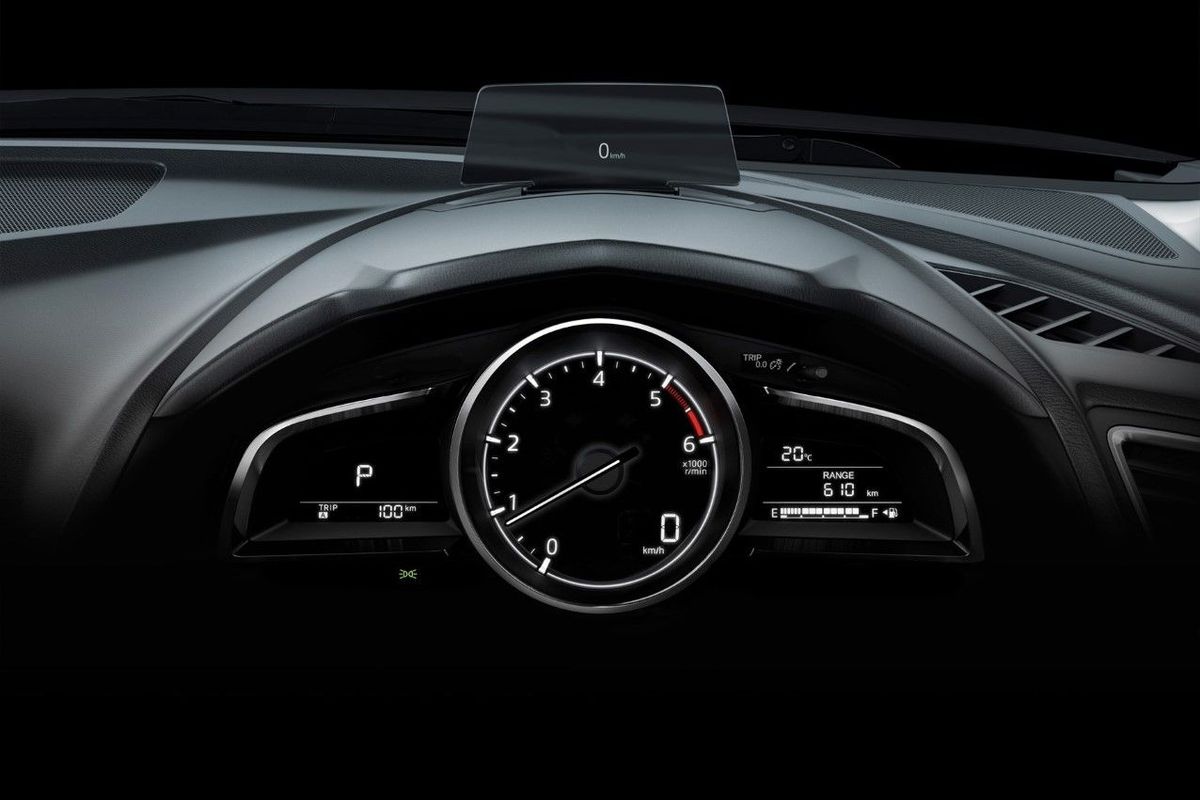
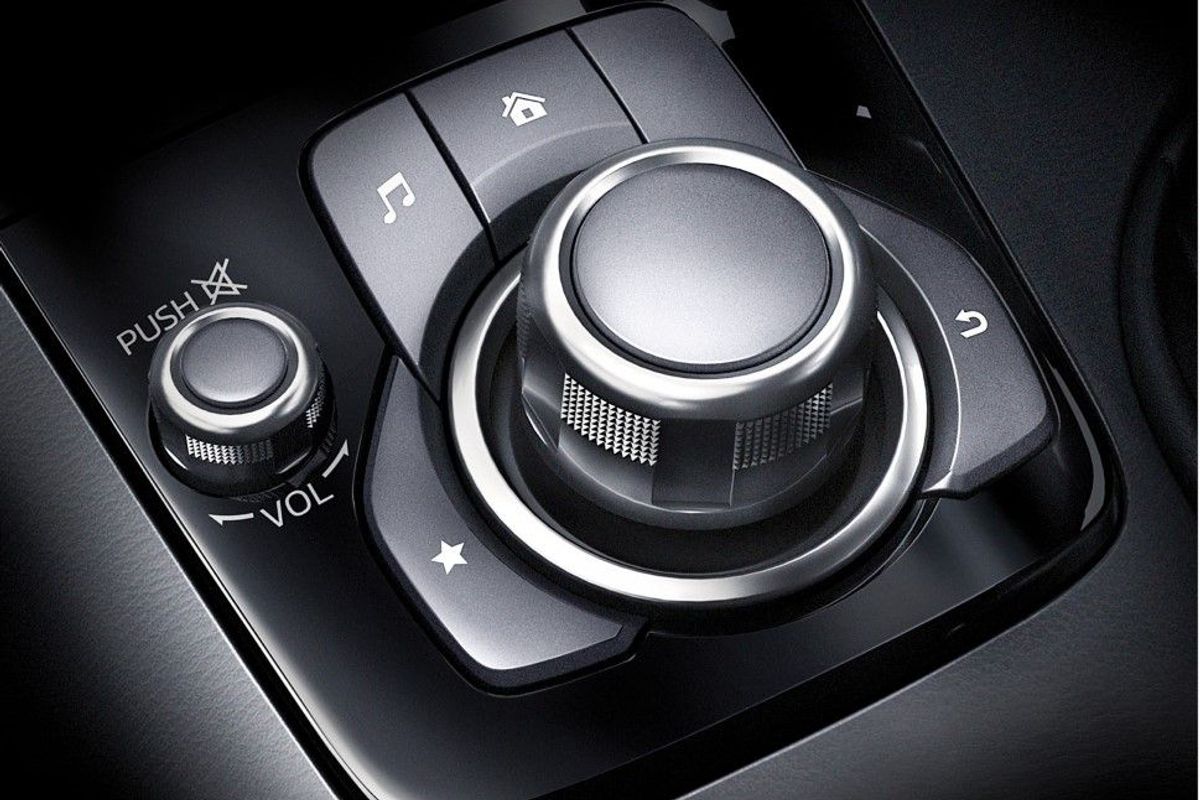
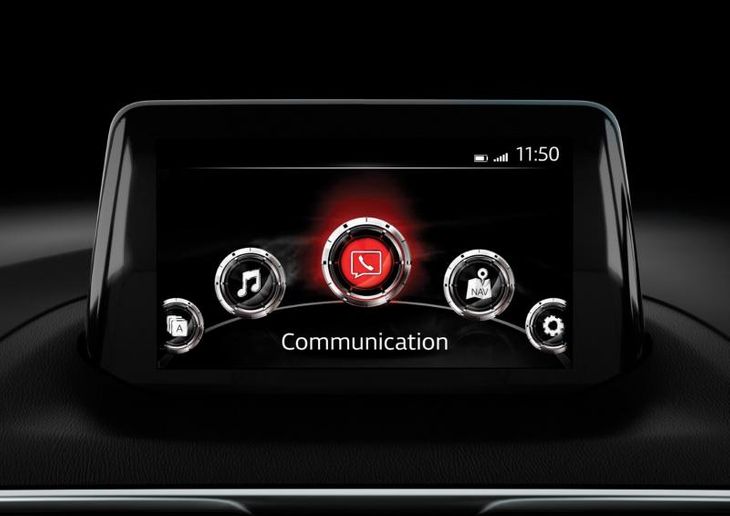
The new-look Mazda3’s cabin is slightly different to its predecessor’s interior, but retains its minimalist design, which remains to be a positive attribute. The design of the instrument cluster is crisper than before and the heads-up display has been updated and now features navigation as part of the display. Like before, the 7-inch touchscreen with a rotary controller gives the driver and passengers access to various functions such as navigation, Bluetooth, media and vehicle settings. The system is easy to use and the menu layouts are simple. The driver is also able to alter settings using the revised mounted controls on the steering wheel as well as make phone calls and engage cruise control.
Buyers who love music will be happy to know that the Mazda 3 Astina Plus is fitted with an exquisite BOSE sound system, which was particularly useful and entertaining on the solo drive to Cape Town. The sound quality is crisp and clear and the sound system doesn’t mind being cranked up to its limit.
A 7-inch touchscreen provides easy access to media, communication and navigation.
What the Mazda3 Astina Plus does do well, is deliver a comfortable ride. The standard leather seats are great to sit in and the driver’s seat is electrically adjustable and has adjustable lumbar support, while the steering wheel is adjustable for rake and reach. Finding the best driving position is easy and being comfortable is hugely beneficial on a long drive. Climate control air conditioning is offered as standard too.
The Astina Plus derivative is packed with a host of safety features as standard and these features include ABS with EBD, stability control, lane departure warning, lane keep assist, brake assist, driver attention alert and blind spot monitoring.
In addition to these safety features, rear park distance control and a rear-view camera is also included and a total of six airbags are fitted.
Pricing and warranty
The Mazda 3 2.0 Astina Plus is priced from R407 900 and is sold with a 3-year/unlimited km warranty and a 3-year/unlimited km service plan.
Verdict
The Mazda3 Astina Plus is a solid offering and should be considered if you are shopping for a premium hatchback.
The Mazda 3 2.0 Astina Plus is a wonderful car to drive, even though it lacks the punch offered by its turbocharged rivals, its handling is sporty and the driving experience eminently engaging. It’s effortless cruising ability and forgiving ride quality ensure that the Japanese hatchback is easy to live with every day. The cabin is comfortable and well-built and the additional standard safety features are to be desired. Some buyers might perceive the Mazda3 2.0 Astina Plus as overpriced, but if you factor in all the added features that its rivals don’t offer as standard, or at all, then the price becomes more bearable.
The Mazda3 Astina Plus is a stylish, well-equipped offering that is worth consideration if safety is your top priority. If it isn’t, you can also consider the Mazda3 2.0 Astina priced from R378 400, which excludes some of the safety technology offered on the Astina Plus. Either way, if you are looking for a tasteful and comfortable hatchback, then the Mazda3 2.0 Astina Plus should be on your shortlist.
Is the Mazda3 available as a sedan and hatchback in South Africa?
Yes, the Mazda3 is available in South Africa in both sedan and hatchback body styles. Both versions offer the same engine and trim level options, with the choice of body style catering to different customer preferences regarding practicality and design.
What engines are available in the Mazda3 in South Africa?
The Mazda3 in South Africa is powered by a 2.0-litre, naturally aspirated Skyactiv-G petrol engine. It produces 121 kW of power and 213 Nm of torque. This engine is paired with a 6-speed automatic transmission across all models.
What are the main safety features of the Mazda3?
The Mazda3 has a 5-star Euro NCAP safety rating. Standard safety features include seven airbags, ABS with EBD, Electronic Stability Control (ESC), and Hill Launch Assist. Higher-spec models come with a comprehensive suite of i-Activsense safety features, such as Blind Spot Monitoring, Lane-keep Assist, and Rear Cross Traffic Alert.
Is the Mazda3 a good alternative to premium brands?
The Mazda3 is often seen as a strong value-for-money alternative to entry-level premium brands like the Audi A3, BMW 1 Series, and Mercedes-Benz A-Class. It is praised for its high-quality interior, refined driving experience, and sleek design, which give it a premium feel without the premium price tag.
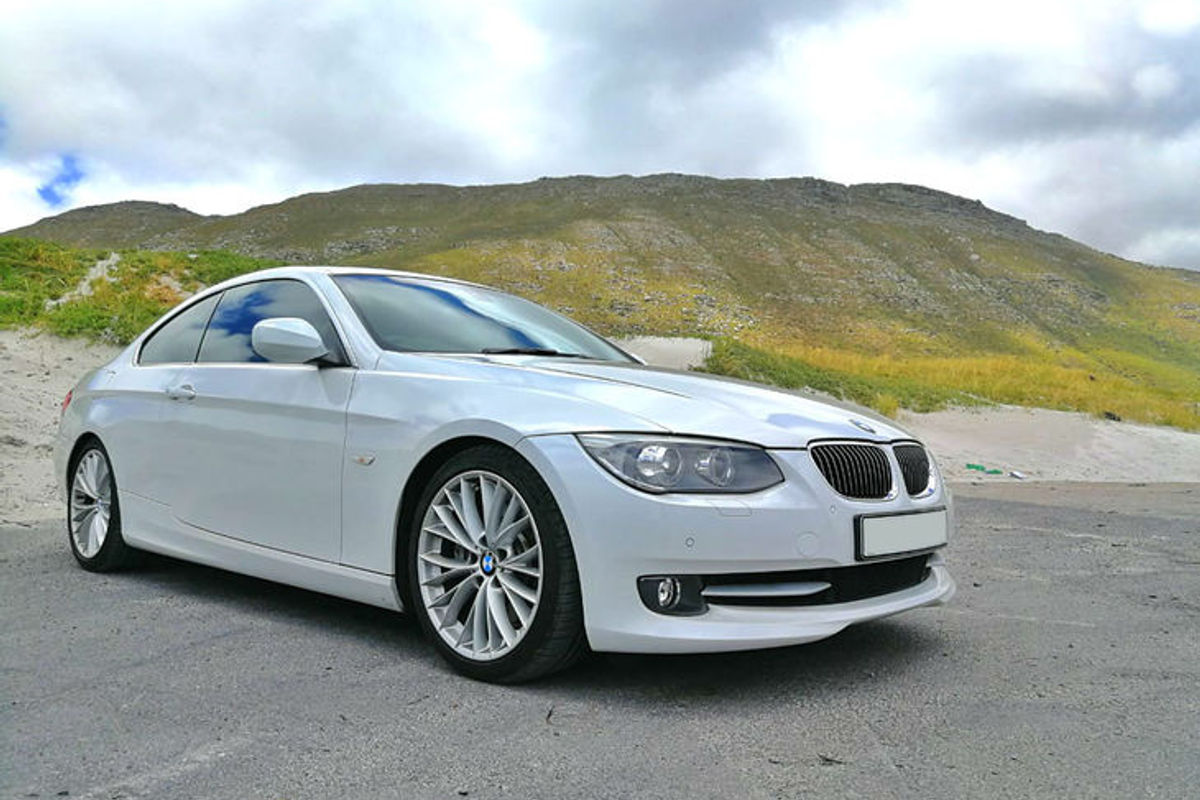
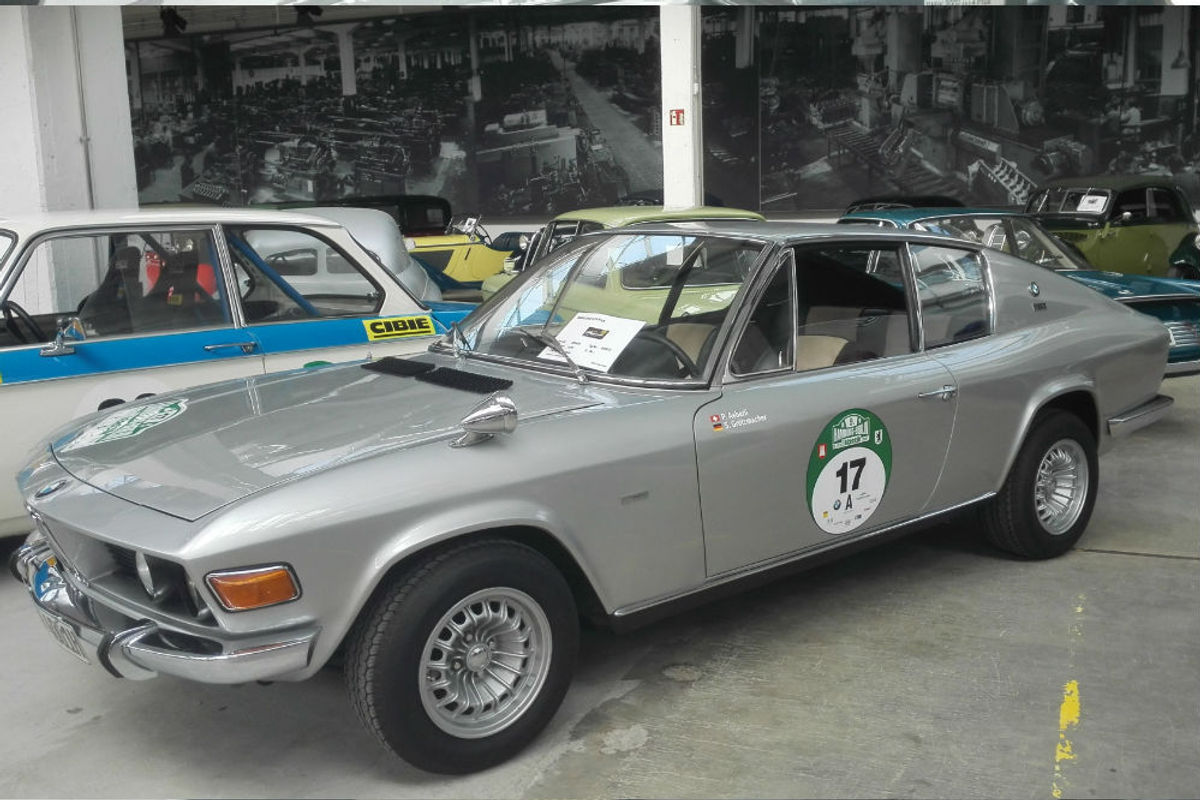
What could be a bigger treat for a BMW aficionado than a visit to the new home of the BMW Group's Classic division in Munich, Germany? The centre exhibits some of the most significant BMW vehicles, racing cars, concept cars and one-off developmental units of the marque's storied history – there are even a few nods to South Africa's influence on the brand. Cars.co.za video manager Ciro de Siena recounts some of the highlights of his experience, replete with impressions of his drive in a mint-condition E30-generation 3 Series, among other classic Bimmers.
A set of unassuming, low-walled white buildings in the heart of Munich, Germany, is where BMW Group Classic is now based. With the iconic BMW headquarters (the “4 cylinder” building) visible in the near distance, this is where the very first BMW aero-engines and cars were made, in 1916 and 1923.
And it is inside these newly restored buildings that the BMW Group houses some of its most prized possessions, sourced from all over the world; a rich and unique collection of cars that have helped build and shape the brand into what is today.
Coffee and cars
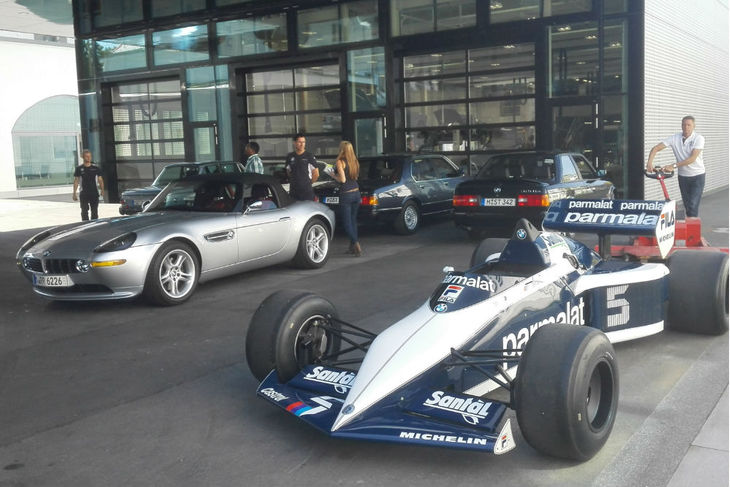
Whereas South Africa never saw the Z8 roadster, Piquet's Brabham BMW finished third at Kyalami in 1983, which clinched him his 2nd F1 title.
The parking lot is dominated by a modern roofed section, which joins two workshops on either side of the lot. Adjacent is a coffee shop, with tables positioned right on the tarmac. The setup is deliberate; BMW wants the visitor to feel that they are part of a living and breathing entity. Sipping a coffee, the South African press delegation watched on as the Classic headquarters buzzed around us.
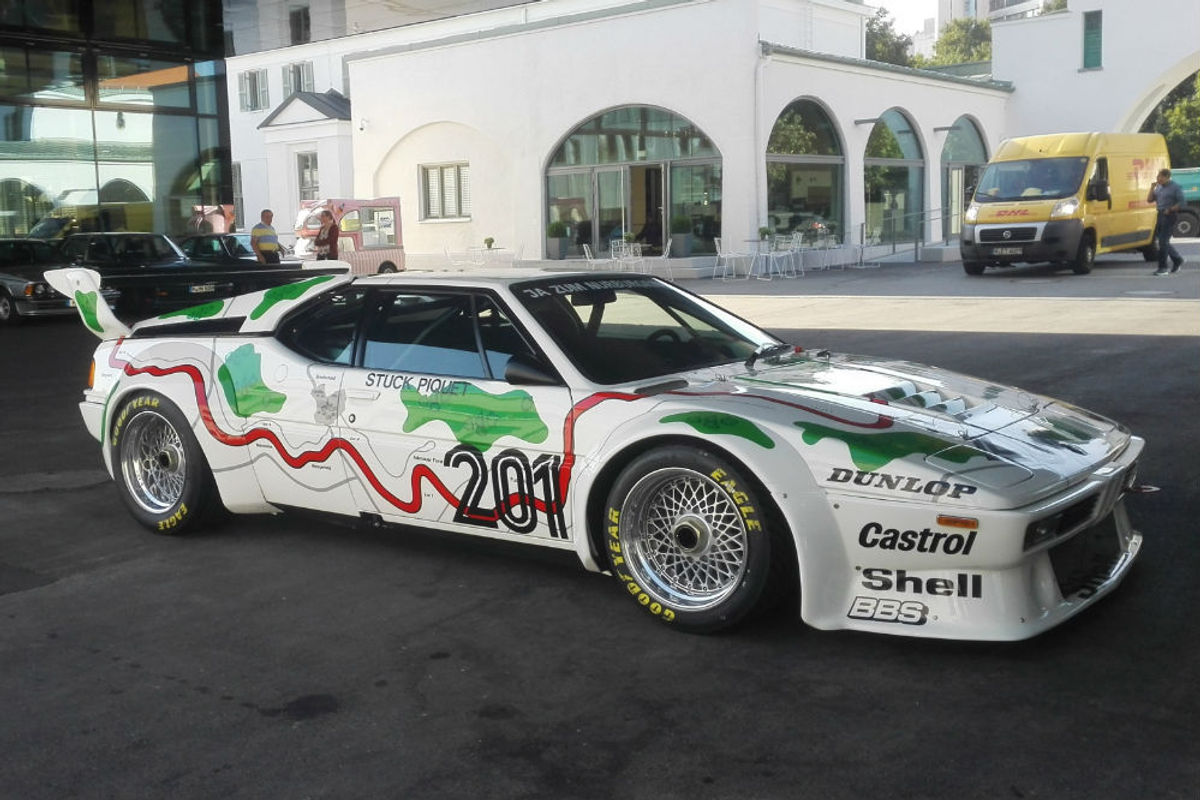
There aren’t many coffee shops in the world in which Nelson Piquet’s M1 race car is sitting waiting for a tune-up, or the iconic Brabham BMW Formula One car arrives in a truck, returning home from a display. Multiple Z8s and M1s popped in and out, and even a pre-war BMW rambled past.
The Warehouse
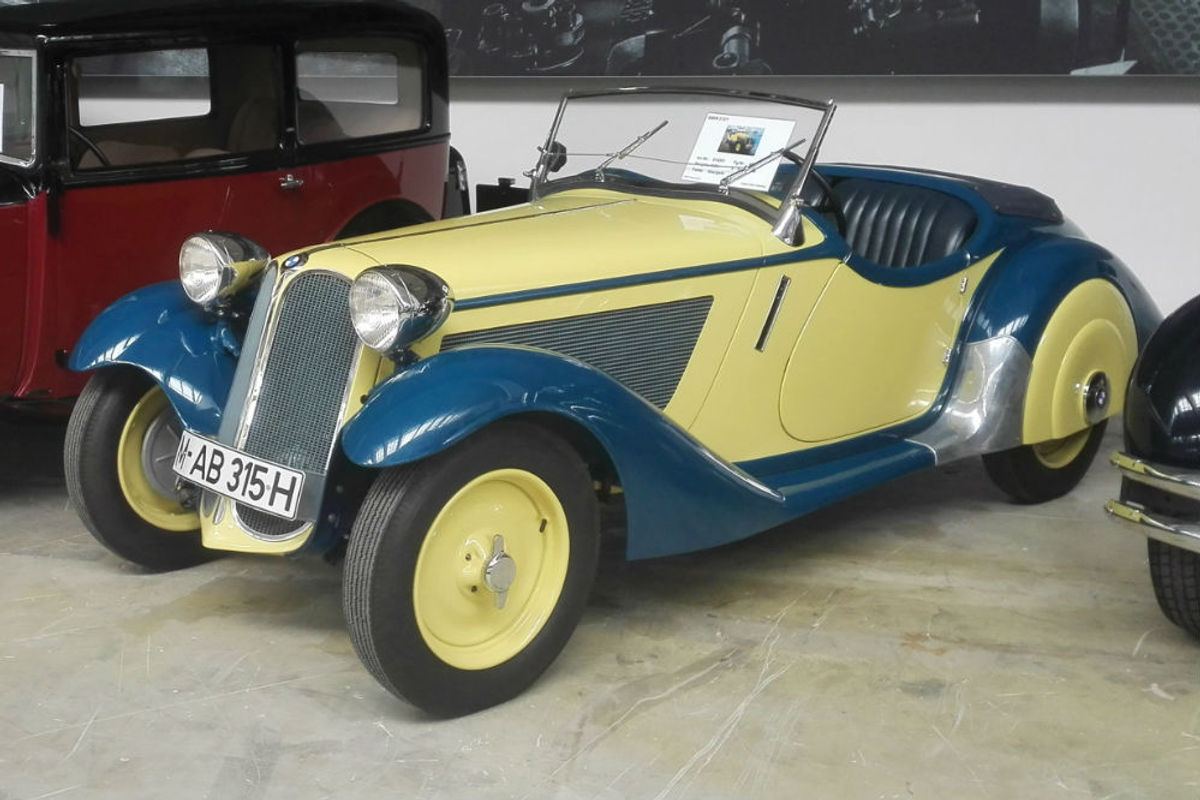
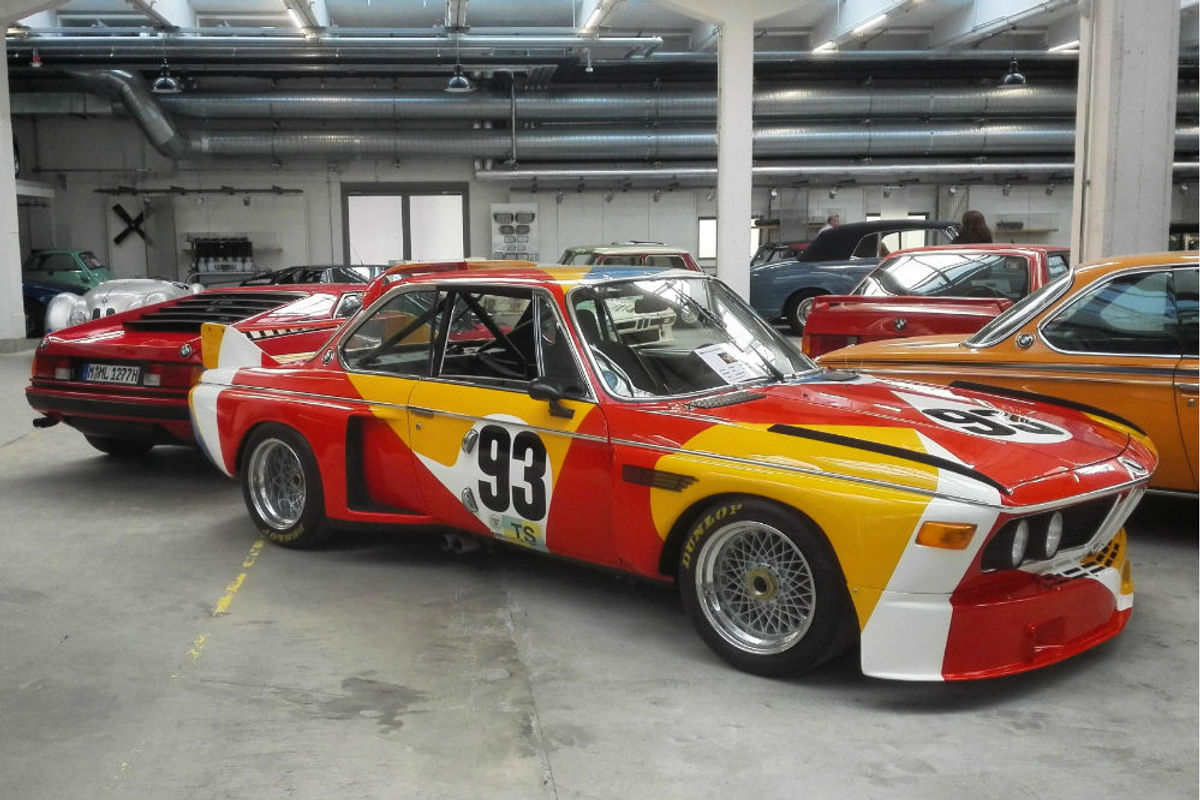
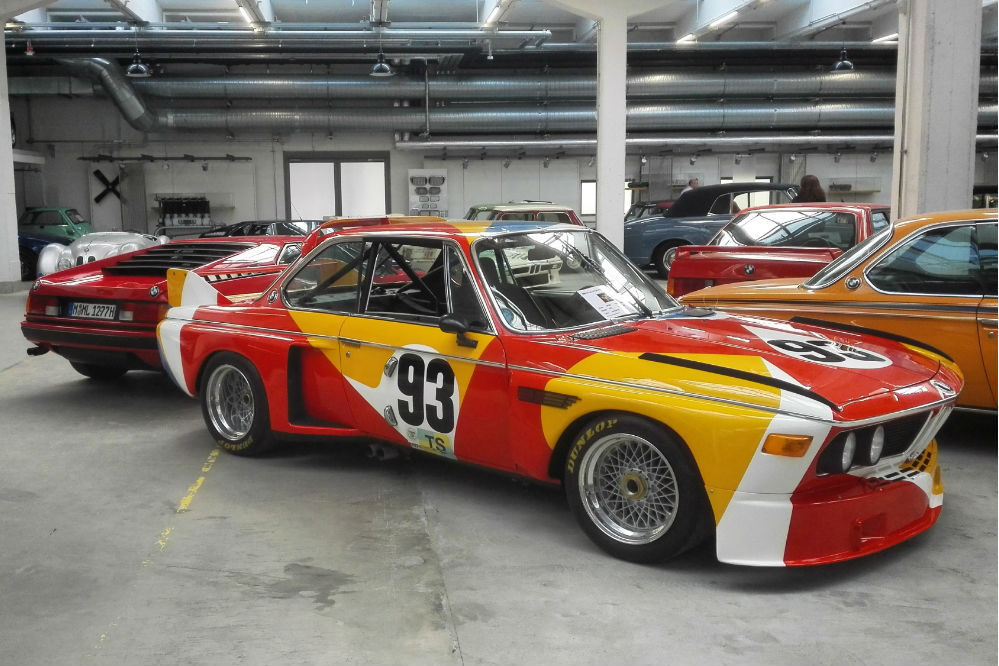
The main storage unit on site only houses about 100 of the 1300-strong classic collection, but even so, it is quite a collection. A standout piece of automotive history was the 3.0 CSL Art Car, as painted by Alexander Calder.
This race car has no ordinary decorative livery… it was Alexander Calder's contribution to the BMW Art Car series.
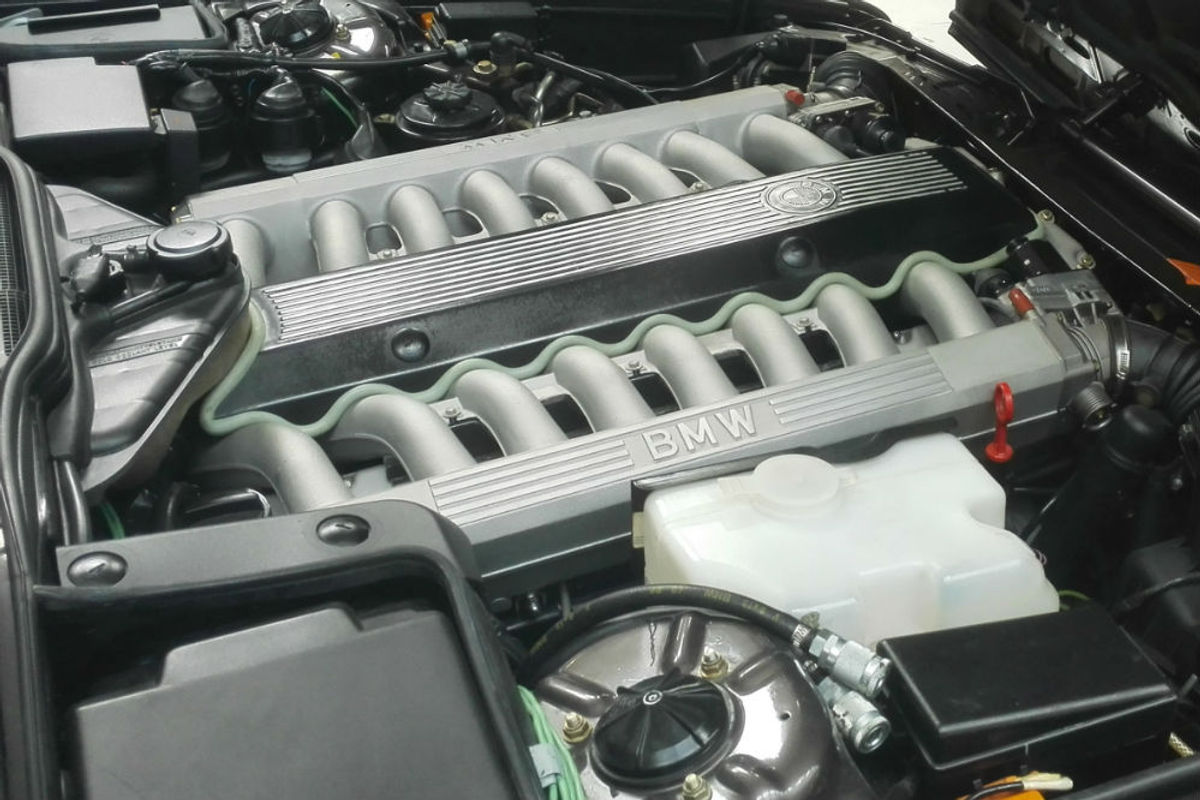
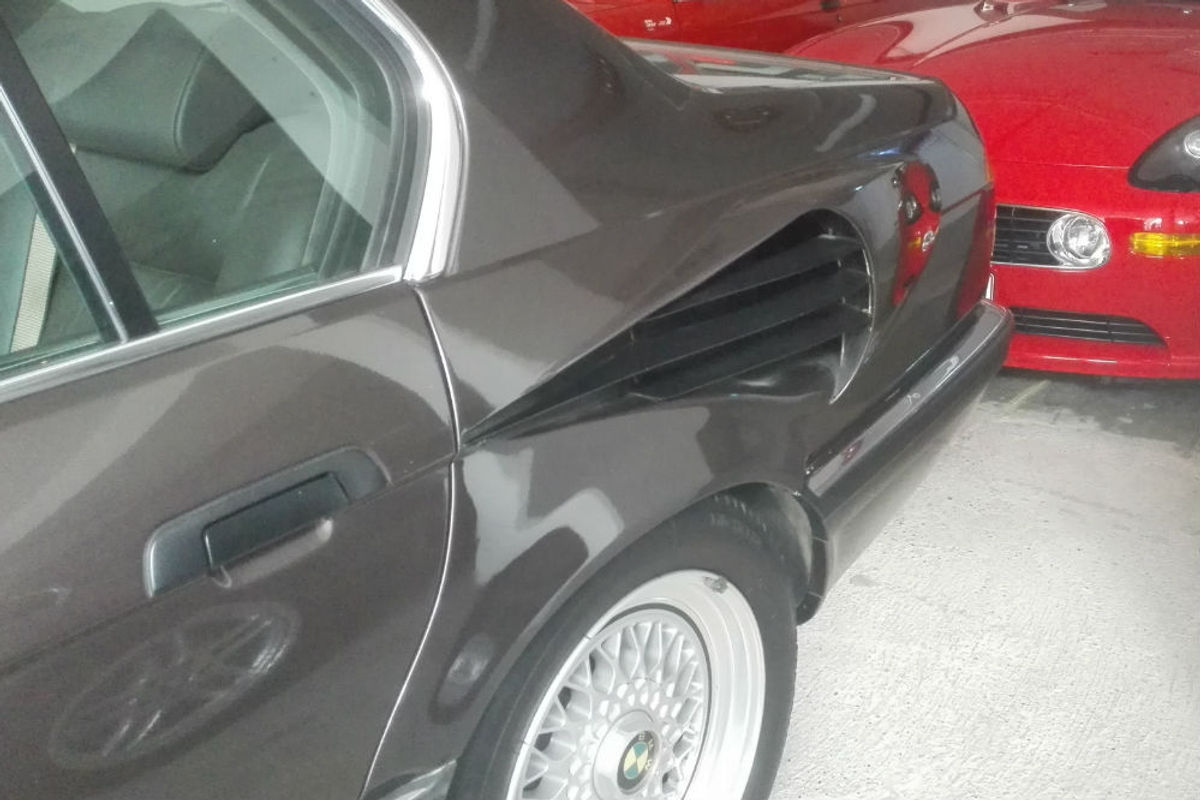
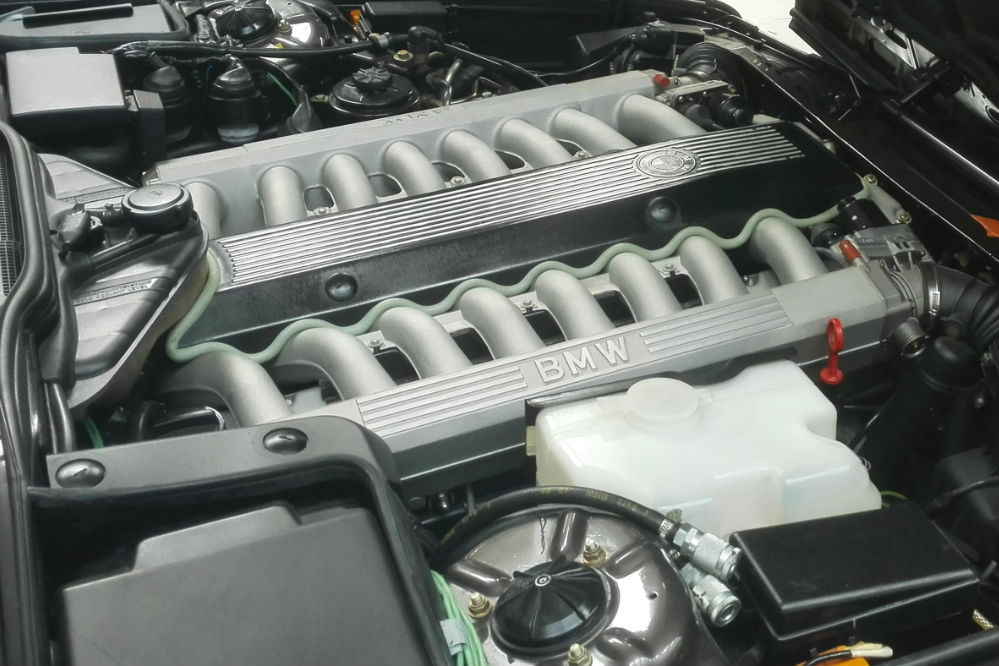
There was also a plain looking E32-generation 7 Series (1986-1994)which held some secrets. Under the bonnet, a massive 6.7-litre V16 engine was squeezed into the engine bay. Known as Project Goldfish, the engine was a skunk works project; only about 10 people in the entire company knew of its existence. When it was completed in 1988, the special 7 Series, now known as the 767i, was given to the chairman of the group to test drive, but seeking honest feedback from the head honcho, the engineers hid the fact that there was anything unusual under the bonnet.
However, due the engine’s size, the radiators would not fit in the engine bay, and so they were fitted in the boot, with odd-looking gills grafted onto the side of the car to feed air to the radiators. To hide these very noticeable gills, the engineers had two bodyguards stand close to the car, hiding them from view while the chairman climbed aboard. Only a handful of V16s were ever built and they were never sold to the public.
That's the engine bay of a V12-engined 750Li isn't it? No, count the number of pipes on the intake manifolds.
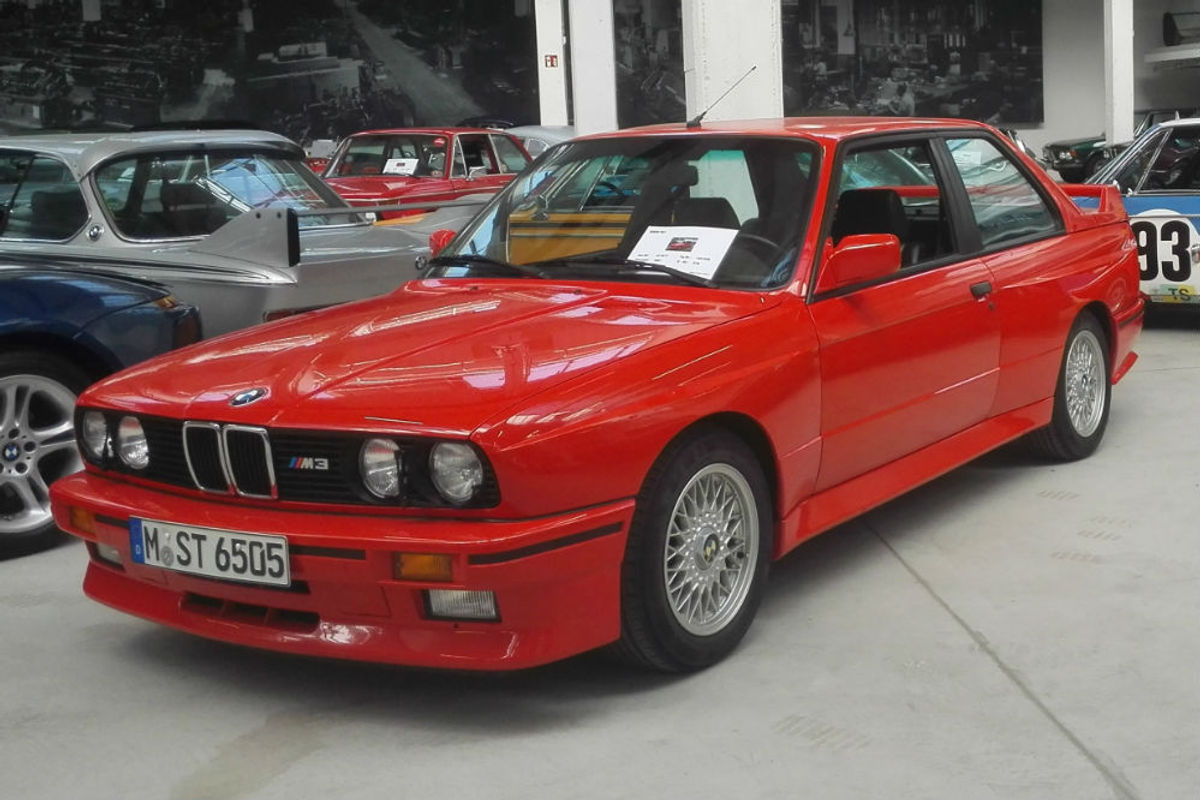
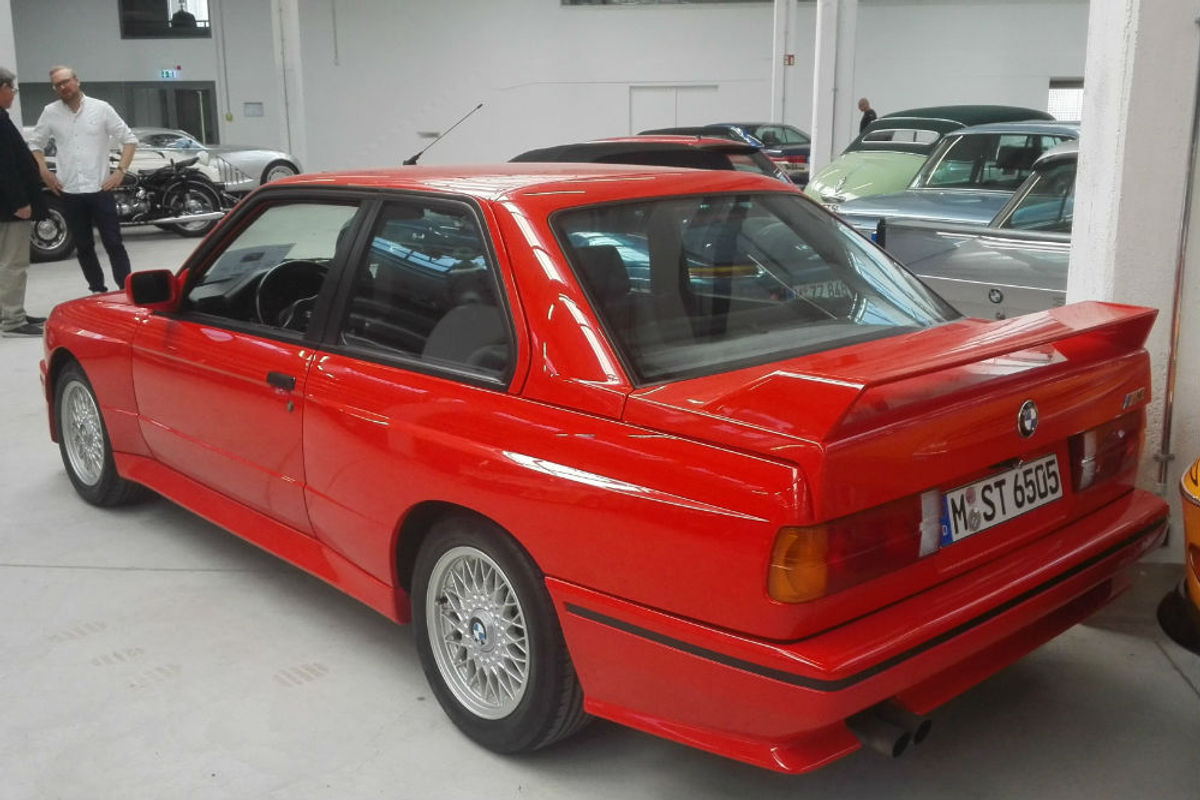
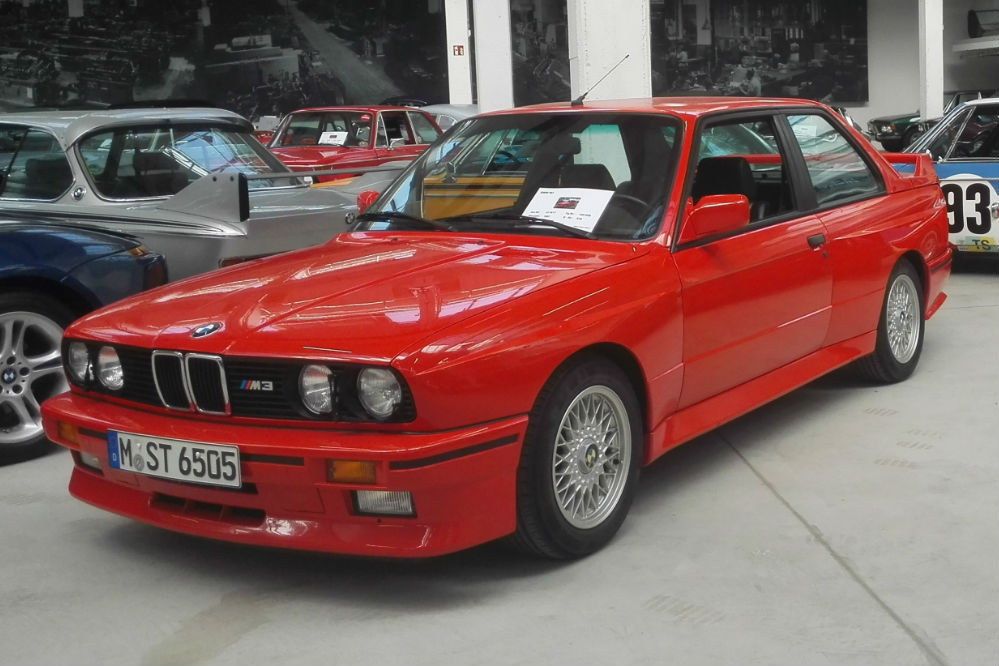
The E30 M3 stood out amongst this crowd of high profile classics, perhaps because it never reached South African shores and remains a sore point for enthusiasts of the brand. Although BMW South Africa developed the sensational 333i in its place (an example of which was of course also present, sourced from South Africa and hiding in the background), the M3 remains an icon of the brand’s performance history and I was delighted to see one in the metal, especially in such excellent condition.
The first-generation M3 is an iconic sportscar and touring car legend, but no matter, we got the 333i and 325iS Evos.
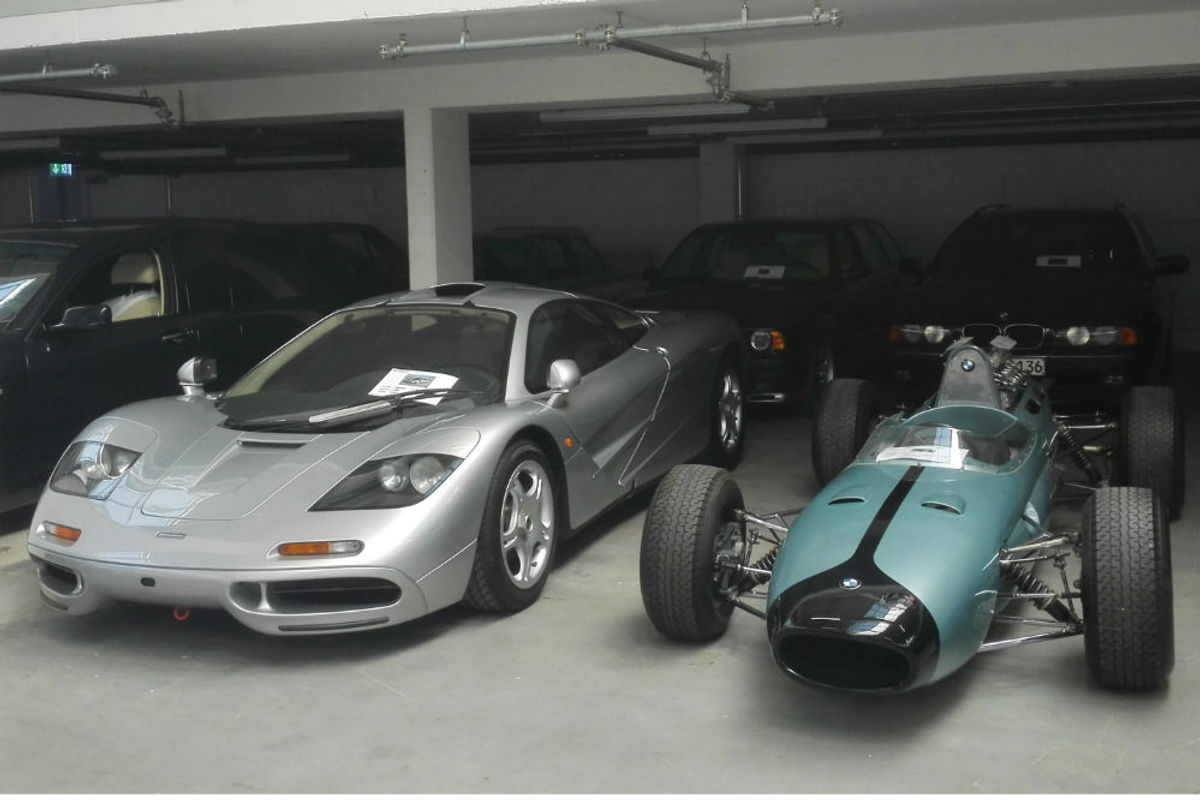
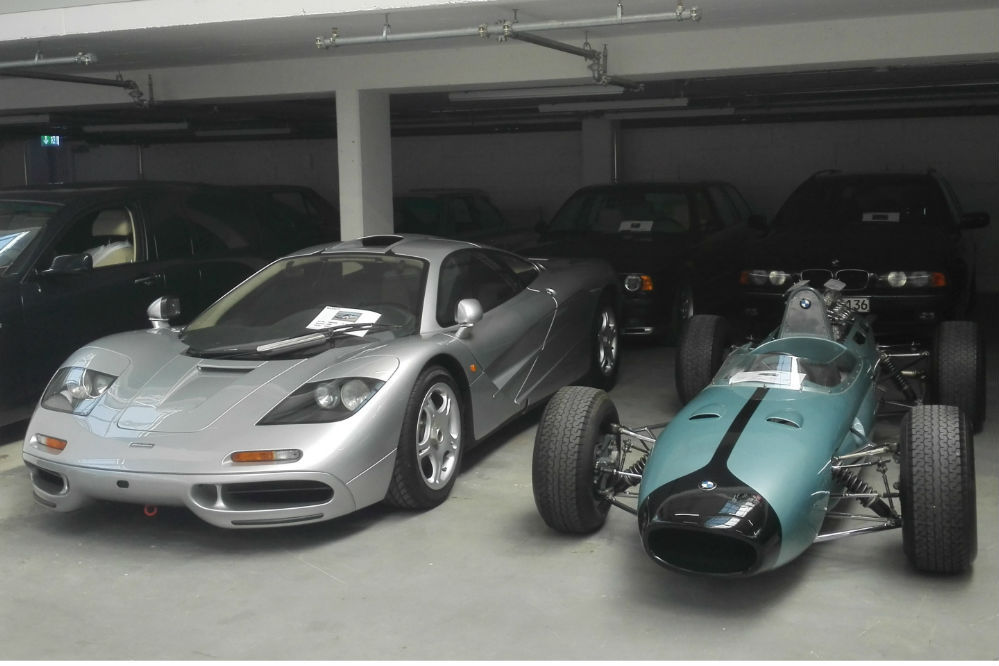
A McLaren F1 seemed a slightly incongruent site in this warehouse but lest we forget Gordon Murray’s masterpiece ran a BMW V12 engine which helped make the McLaren the fastest production car ever built, a record it would stubbornly cling to for years after its debut.
The BMW-powered McLaren F1 (left), designed by South African-born Gordon Murray, is a legendary supercar.
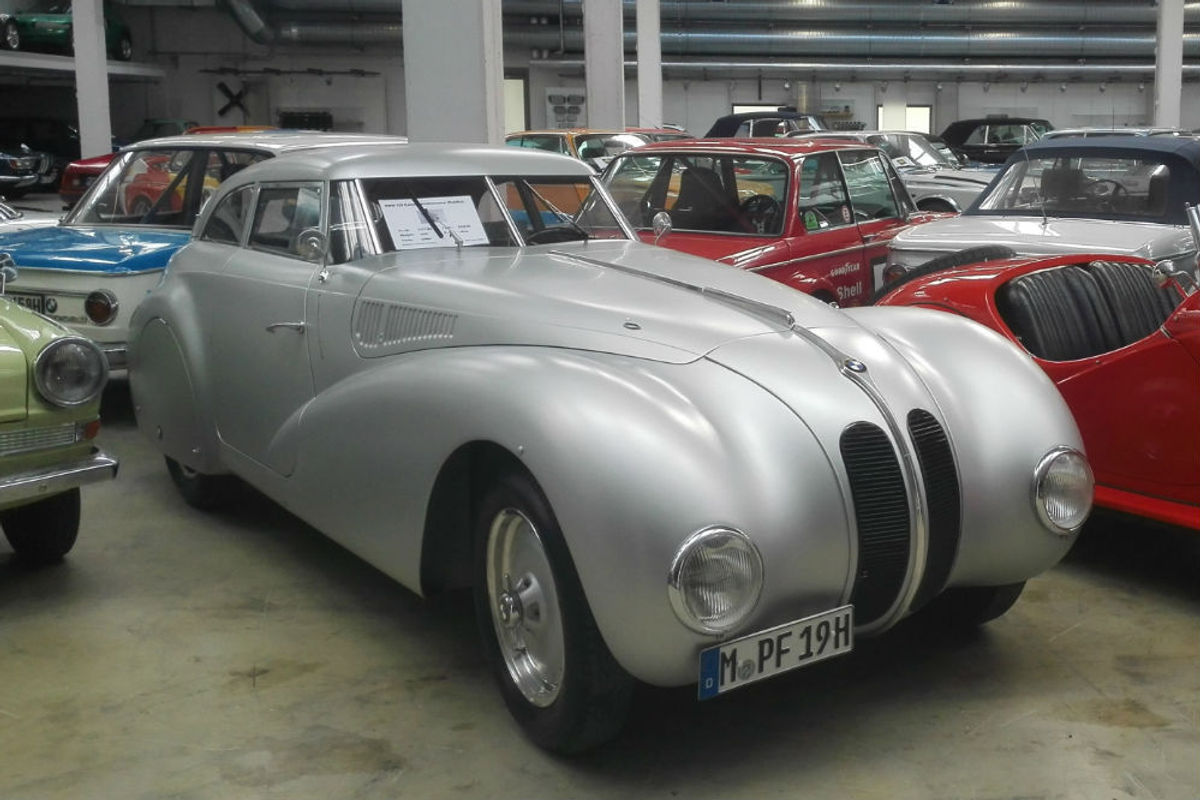
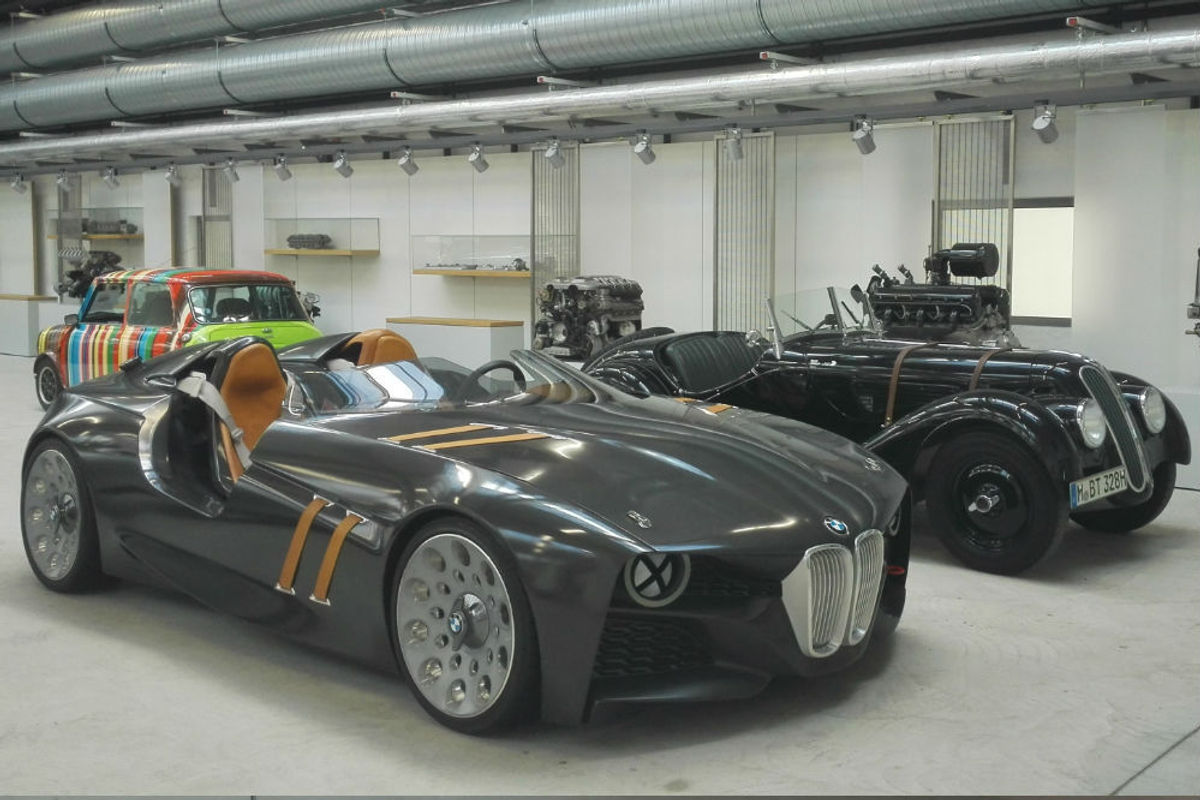
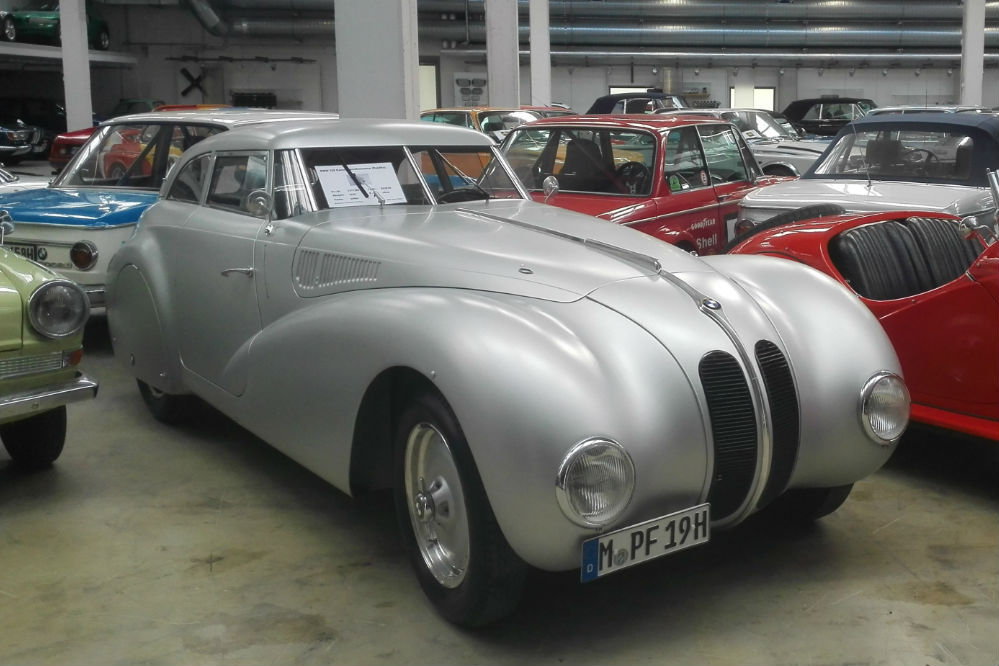
What I really appreciated about this collection is that it doesn’t sit here, collecting dust. BMW actively tries to get these cars out in front of the public. In 2010 Classic announced that it had recreated the BMW's 328 Kamm Coupé (shown below) to celebrate the 70th anniversary of BMW's win at the Mille Miglia.
The original Kamm Coupé was the only one of BMW's five Mille Miglia cars to remain in Germany after the Second World War, but it was destroyed in an accident early in the Fifties. Eventually, all the surviving cars were recovered and BMW Classic built an exact replica of the Kamm to complete the collection.
Better than new… the exact replica of the 328 Kamm Coupe that competed in (but never finished) the 1940 Mille Miglia.
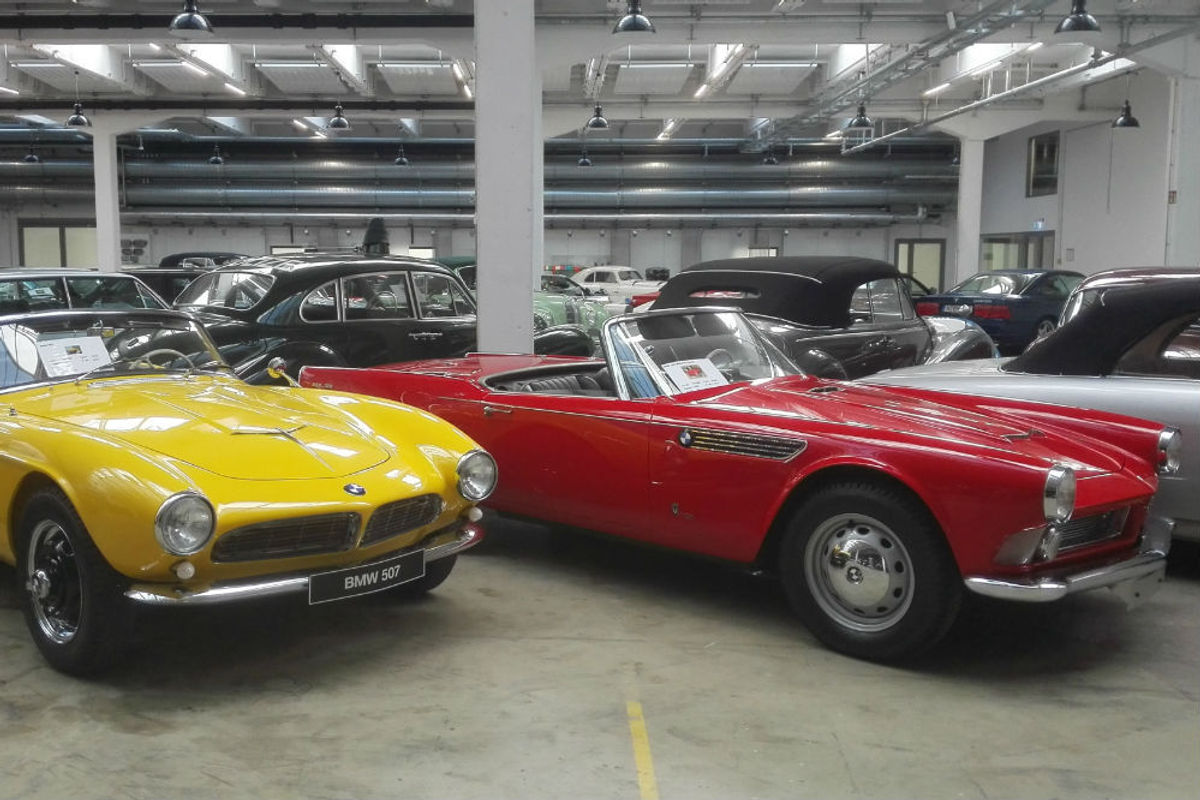
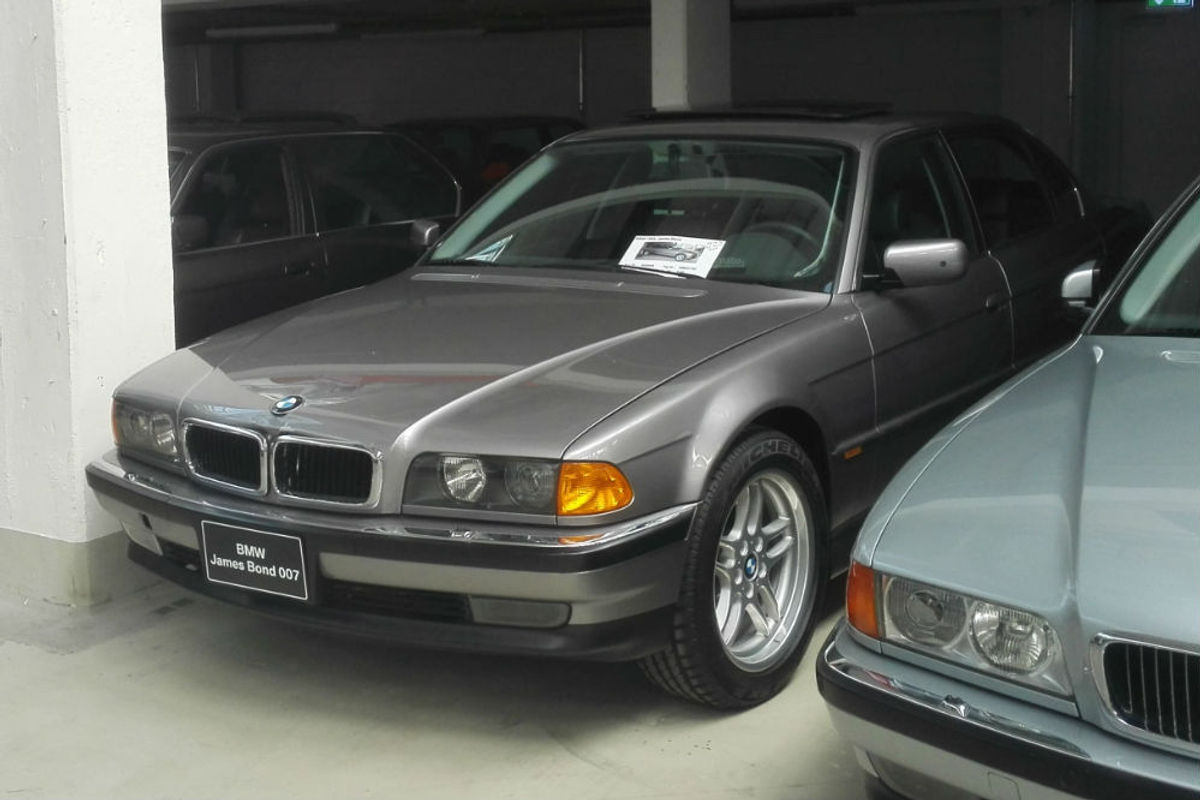
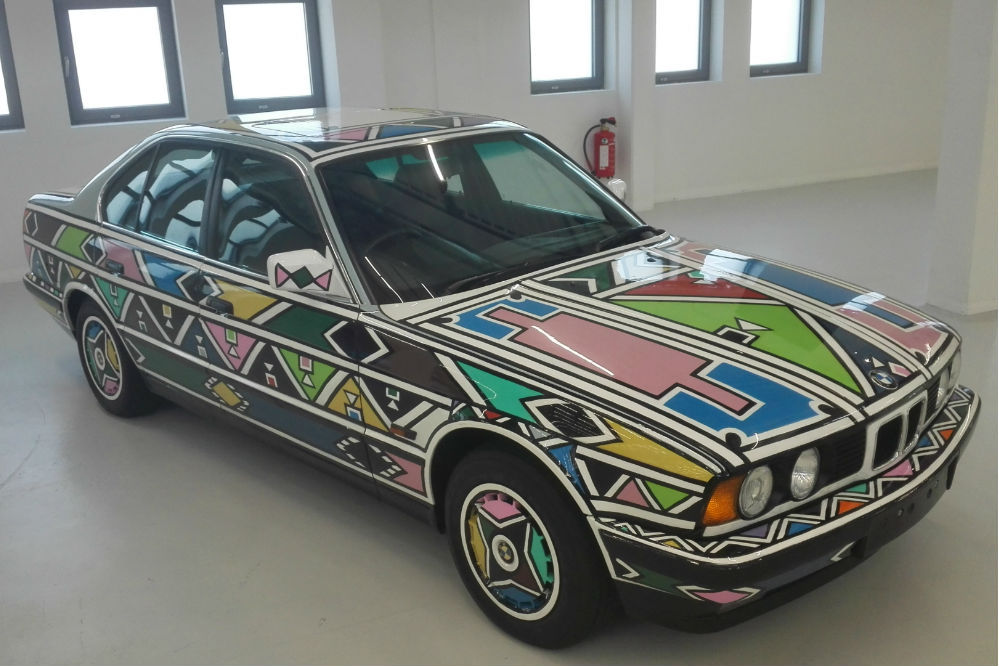
There are almost too many special cars to mention here, I haven’t even got to James Bond’s 7 Series with missiles in the sunroof, or the beautiful 507 sports car (worth a cool 2.5 million Euros in mint condition) or even South African artist Esther Mahlangu’s custom 5 Series Art Car, all of which you can see in the gallery above. But the best part of the day was yet to come, where we took some of these classics out on the road.
Driving the past
International press may request test drives here, but it is subject to vehicle availability. And so our request was a bit of a lucky draw, and the cars we drew were the very epitome of everyday “hero” cars.
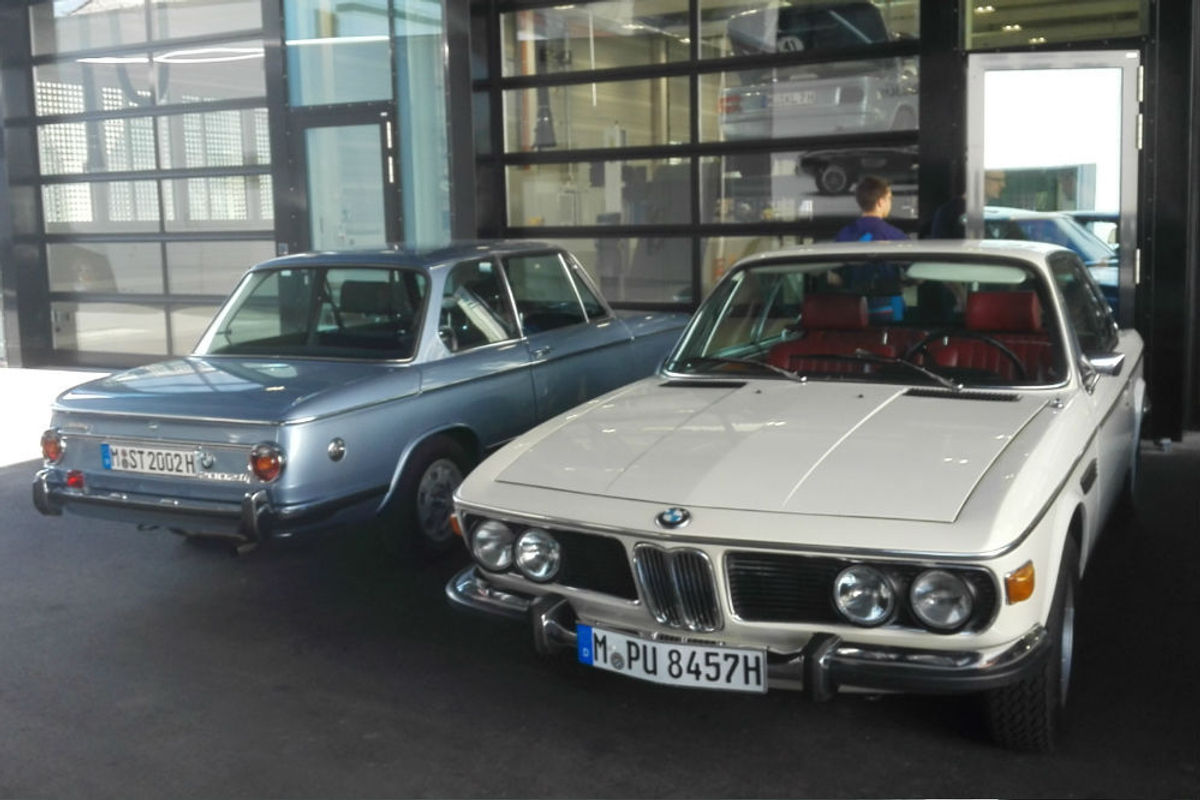
The 2002tii, the (European-spec 745i) and the 320is were to be our test drives of the day, and they were all in exceptional condition. The 2002tii was special enough and the 745i (with 3 500km on the clock!) was unbelievably comfortable – even by contemporary standards, but the highlight was a drive in the E30.
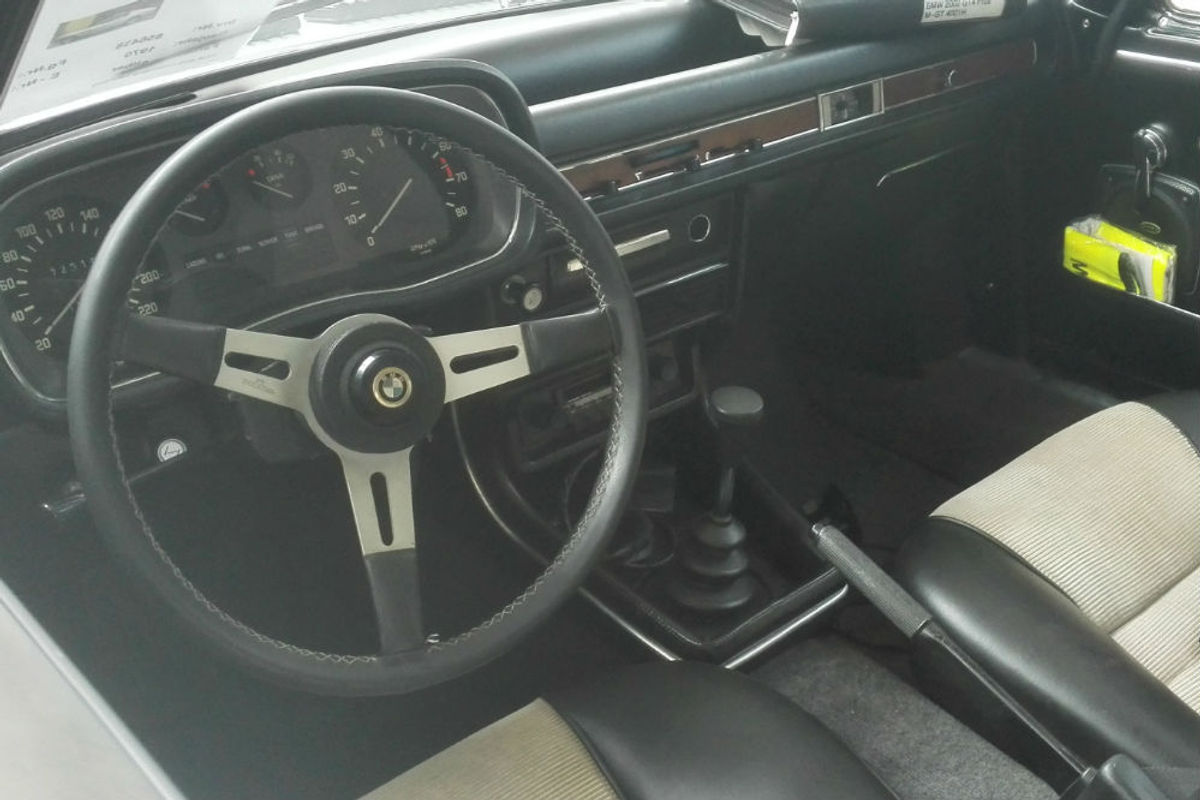
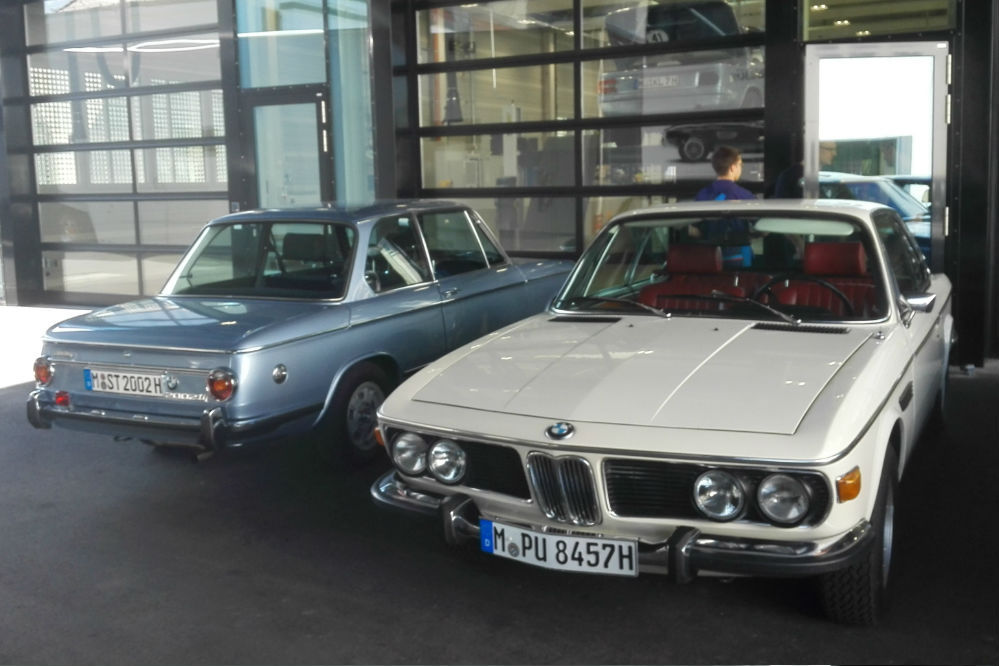
Much of the sporty DNA that defines today's BMW products can be traced back to that of the spirited 2002tii.
I first took the wheel of the 2002tii, and what an eager, exciting little car it was. With a 2.0-litre naturally aspirated motor under the bonnet, this 1971 coupe was arguably the progenitor for the next wave of performance-oriented sedans that would define BMW in the modern era.
In the short time I drove it through Munich’s back roads, I enjoyed it immensely. The thin-rimmed steering wheel, the slightly stubborn gearshift (with no markings on the shifter), the vague brakes – it was a car that was obviously from another era but the brand’s DNA was still very much apparent.
Driving the 320is
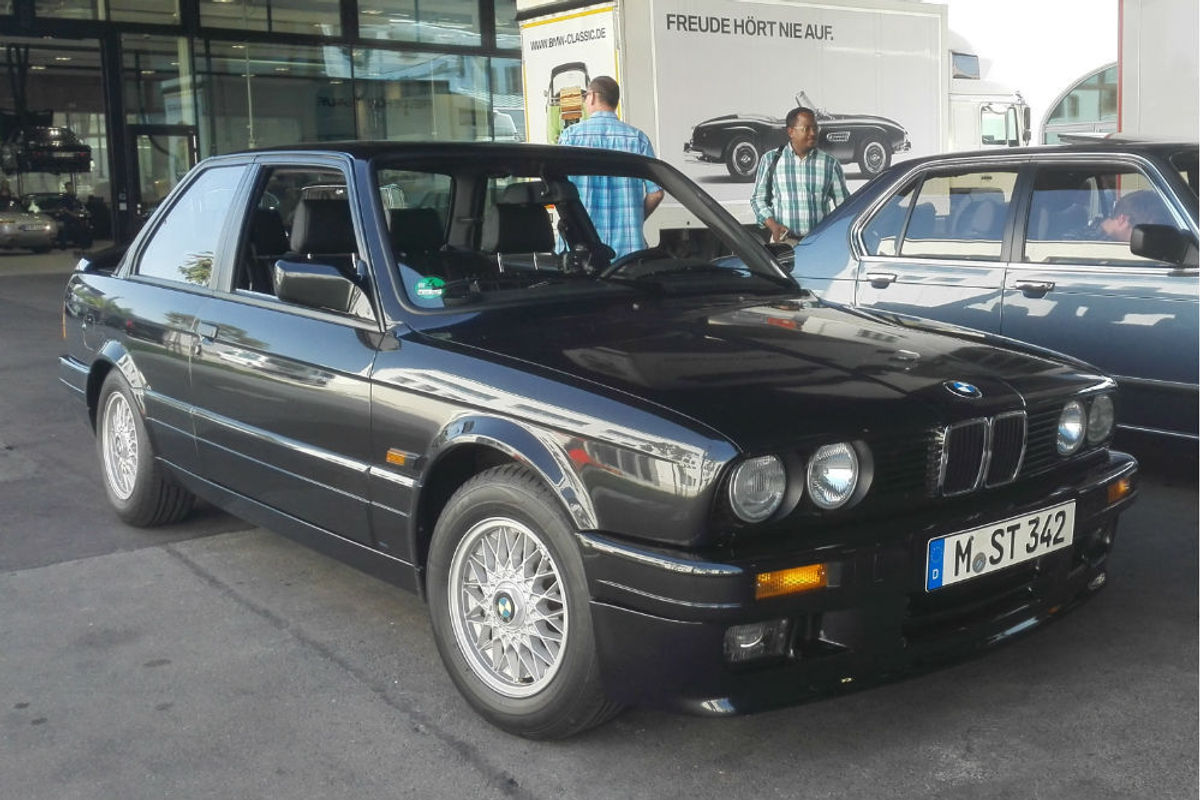
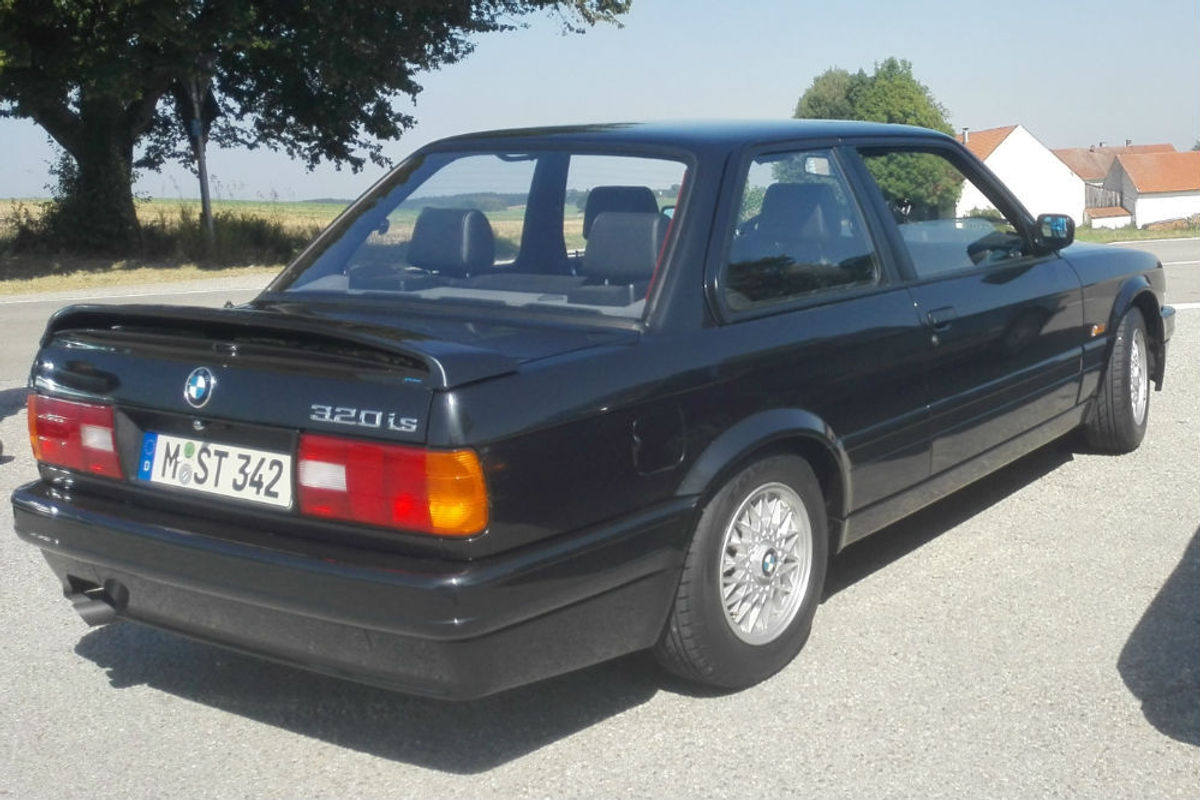
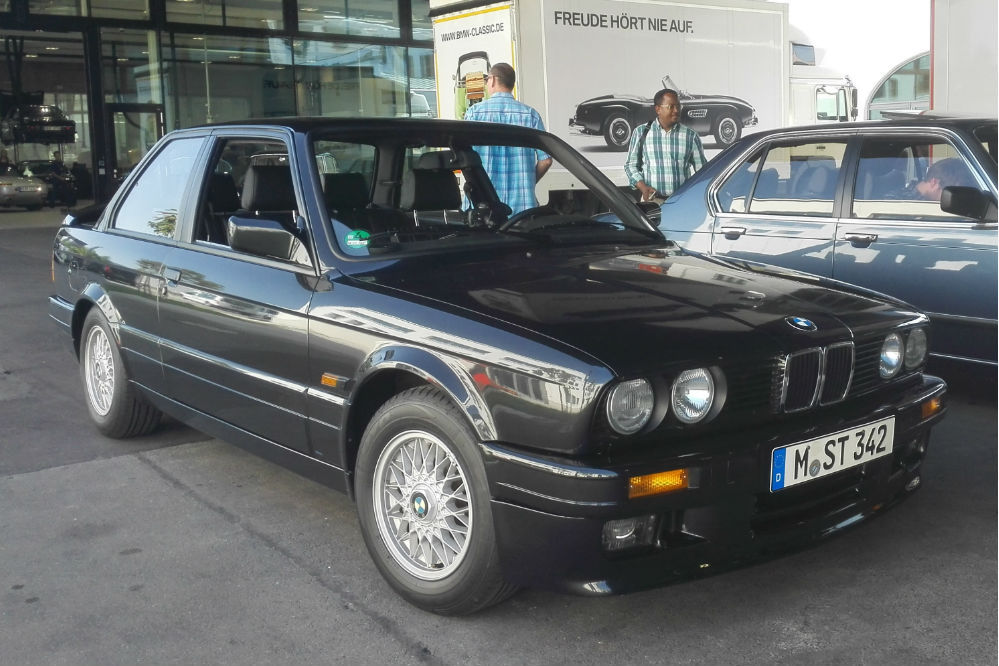
Our guides enthusiastically told us that this was the “Italian M3”. Slightly menacing in black, with the Shadowline kit that we came to know well in South Africa, the 320is looked good, but it lacked the drama of the flared wheel arches of the M3 we’d just seen in the warehouse. But it was in achingly good condition and, having been an E30 owner myself, I was hugely keen to get behind the wheel.
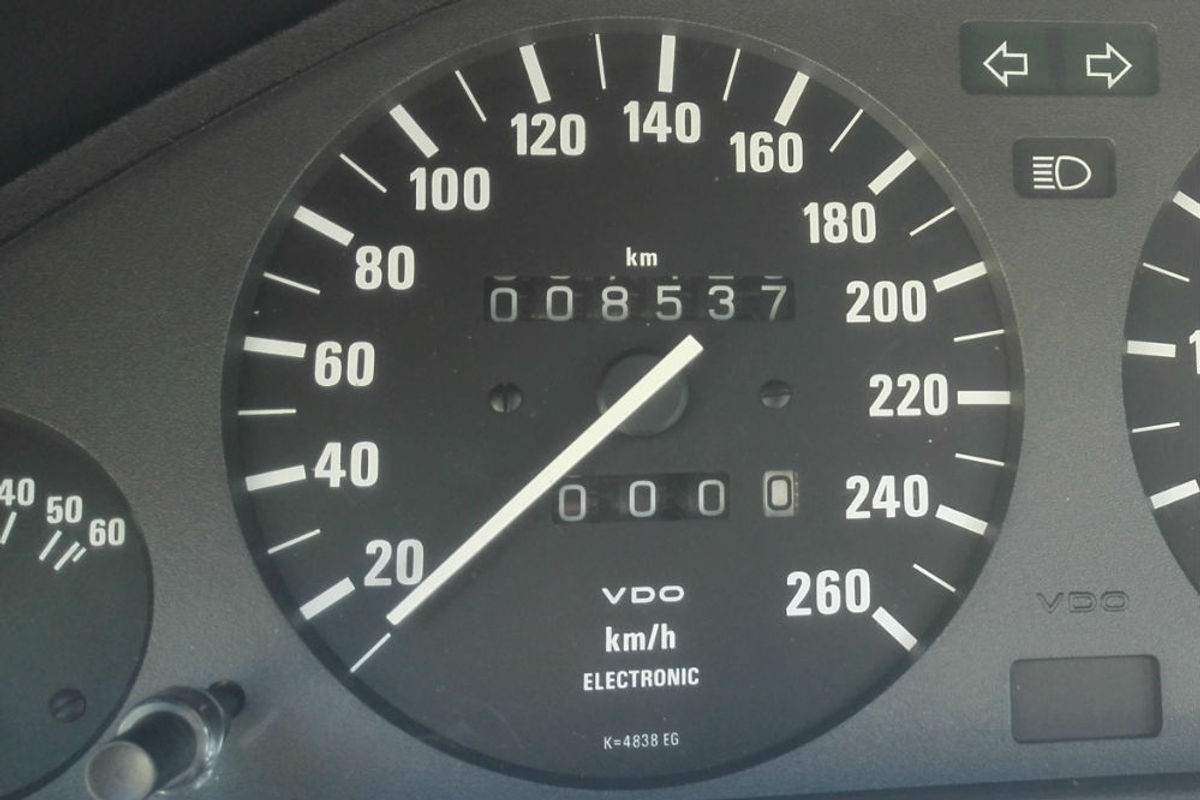
You're unlikely to find an E30-generation 3 Series as pristine as this 320iS in South Africa. Only 8 500 km on the odo.
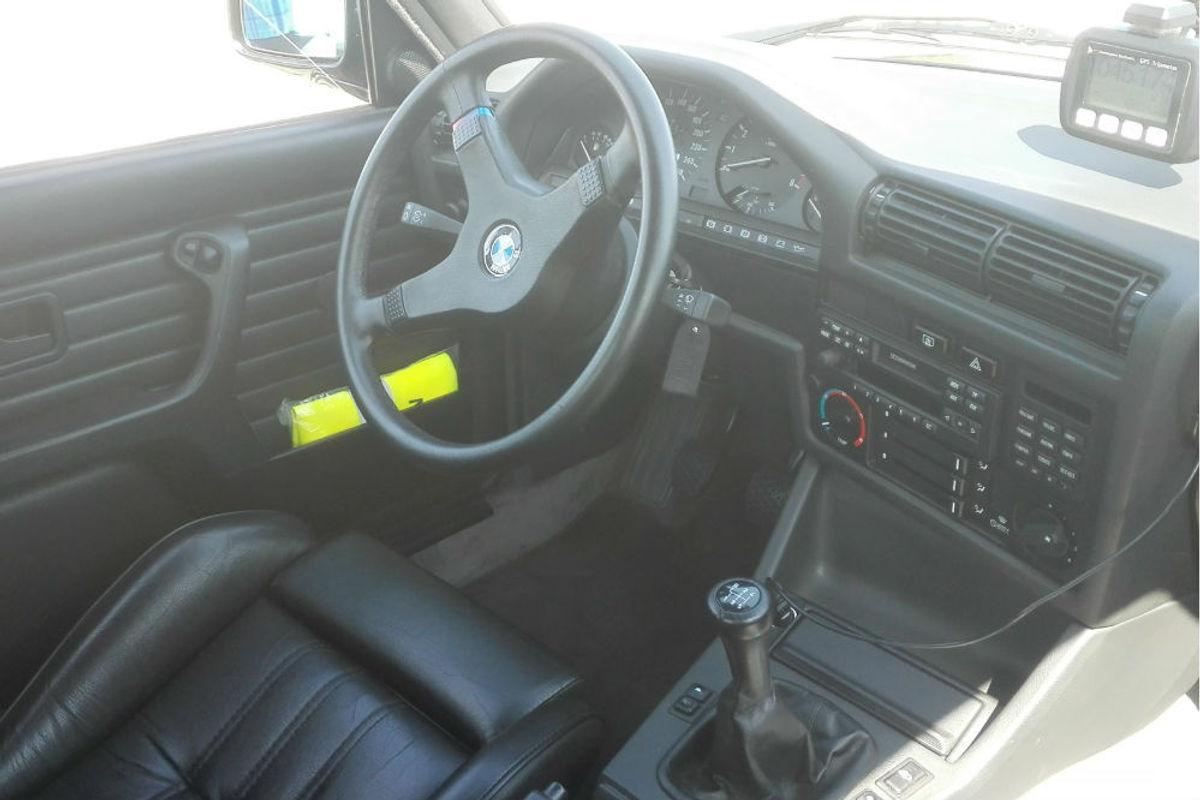
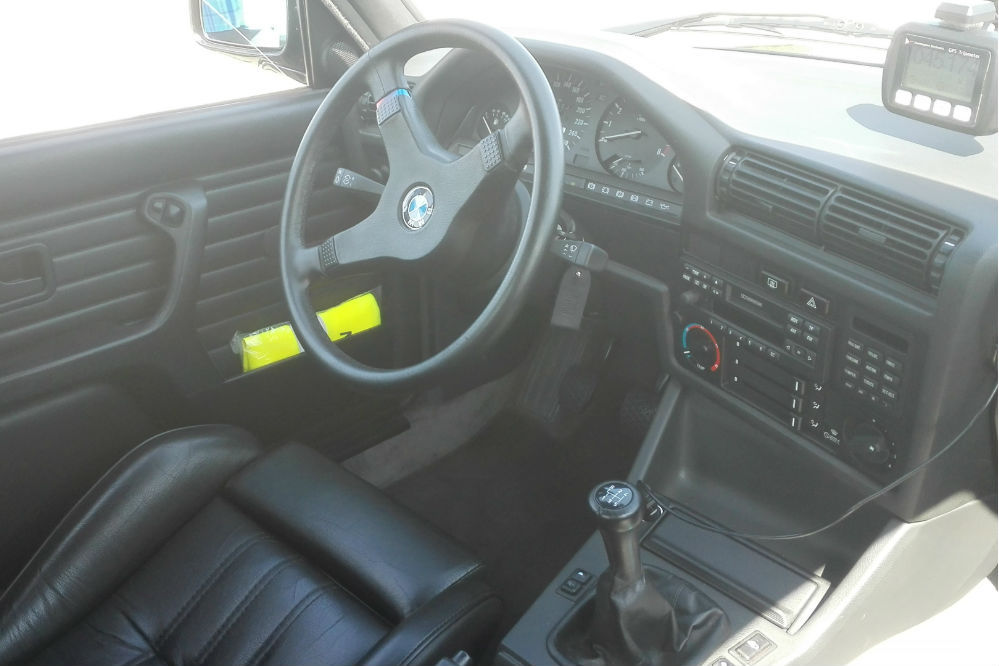
The interior was spotless, virtually brand new. I thought this was a bit curious, but I dismissed it as the mark of excellent restoration work, until our guide pointed out that the car only had 8 500 km on its odometer. It literally was brand new. Stunned, I tried to wrap my head around the fact that I was driving a car from 1988 with such low mileage. Where had this car been all its life? Why had nobody driven it? I felt incredibly lucky, it felt like I was travelling back in time to drive a car as it was built, and not as I’d found it after years of wear and tear.
As an E30 owner, everything was immediately familiar, and this all became a little bit emotional. I lost my E30 320i in an accident last year, and as my first car, I had a very sentimental attachment to it. The 320is was like my car, only better.
The 320iS' interior looks factory fresh… because it is. Check out the period-correct audio unit and minimalist steering wheel.
In Italy and Portugal at the time of production, the governments had placed a steep tax on any new car with a displacement of over 2.0 litres. As the M3 featured a 2.3-litre engine, Italian and Portuguese buyers were having for fork out a massive premium to get their hands on the car. BMW decided to step in, and altered the engine of the M3 so that it scraped in under 2.0 litres.
The result was a lighter car, with roughly the same power output but less torque (141 kW and 210 Nm as opposed to 147 kW and 240 Nm in the M3), and according to many car magazines at the time, due to its low weight, it was actually quicker than the M3 through the gears and under braking.
Under the keen eyes of our guides, I wasn’t really able to drive the 320is as freely as I’d have liked, but handling was crisp, the engine was a peach and the dog-leg first gear setup of the ‘box was tricky to get used to, but so engaging nonetheless.
In fact, the overall experience was direct and very pure; a feeling that is really lacking in today’s performance car world. It was a drive I won’t forget, and it has convinced me that at some point, I will have to buy myself an E30 BMW. I just doubt I’ll find one with 8 500 km on the clock.
Proudly South African. Ndebele artist Esther Mahlangu's first co-operation with BMW culminated in the 525i Art Car
How to visit BMW Classic
If you find yourself in Munich and have even a passing interest in BMW’s the BMW Classic HQ is worth a visit, if even for a coffee. The coffee shop and restaurant is open to the public and just sitting there is probably enough to get your fill of classics, as the workshop and warehouse buzz around you.
And, of course, if you own a classic BMW and would really, really like it restored to perfection, the mechanics at BMW Classic would be happy to help.
Guided tours can be booked via email or telephone and are highly recommended.
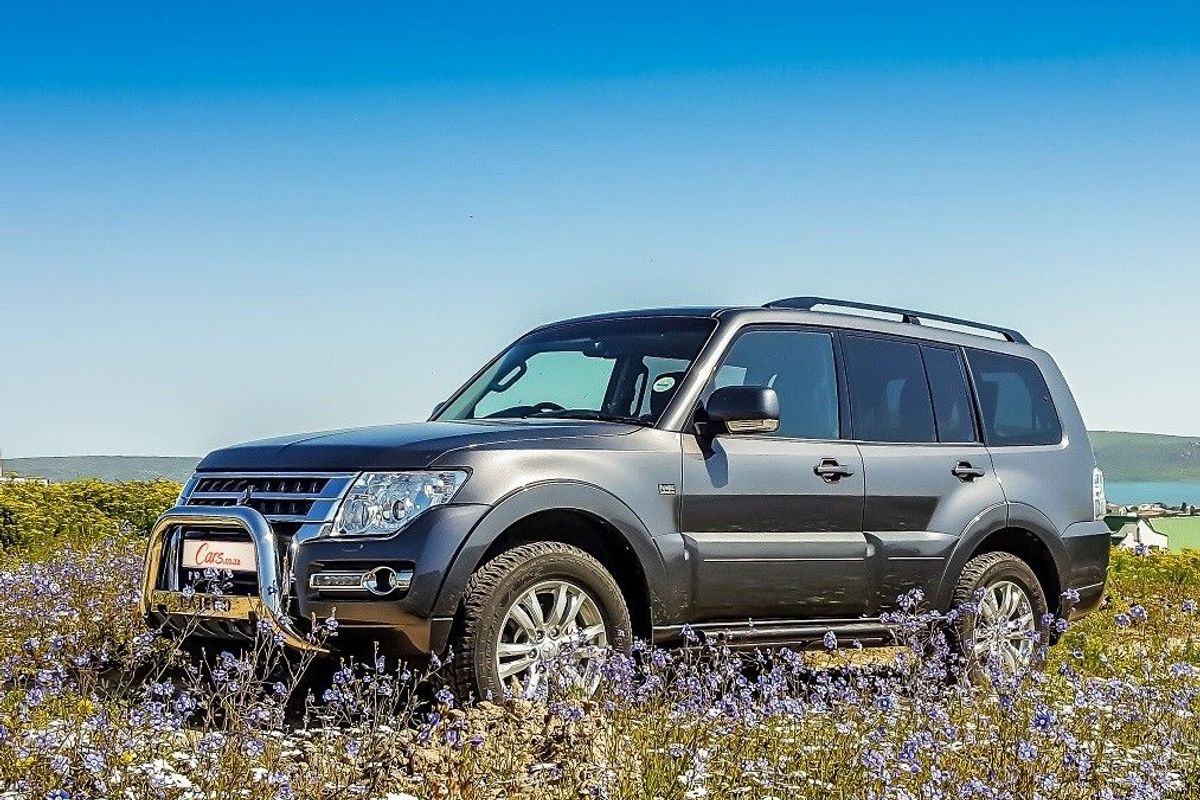
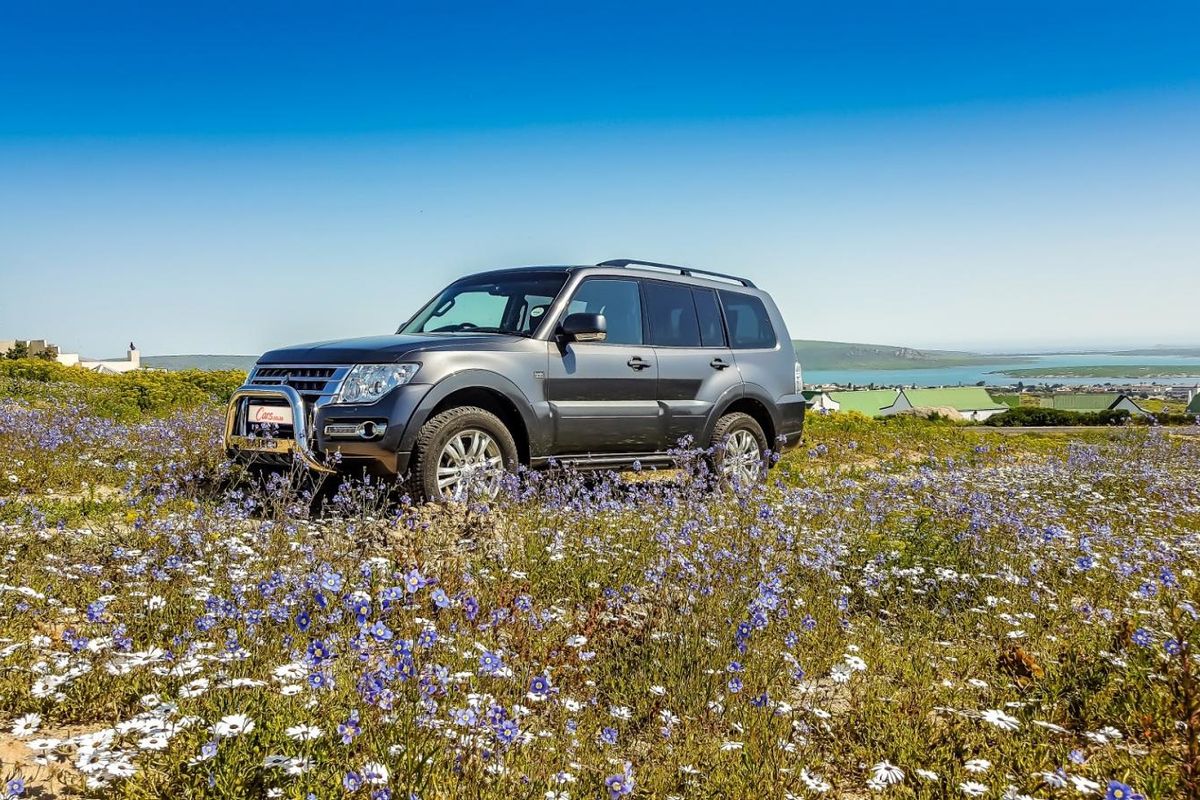
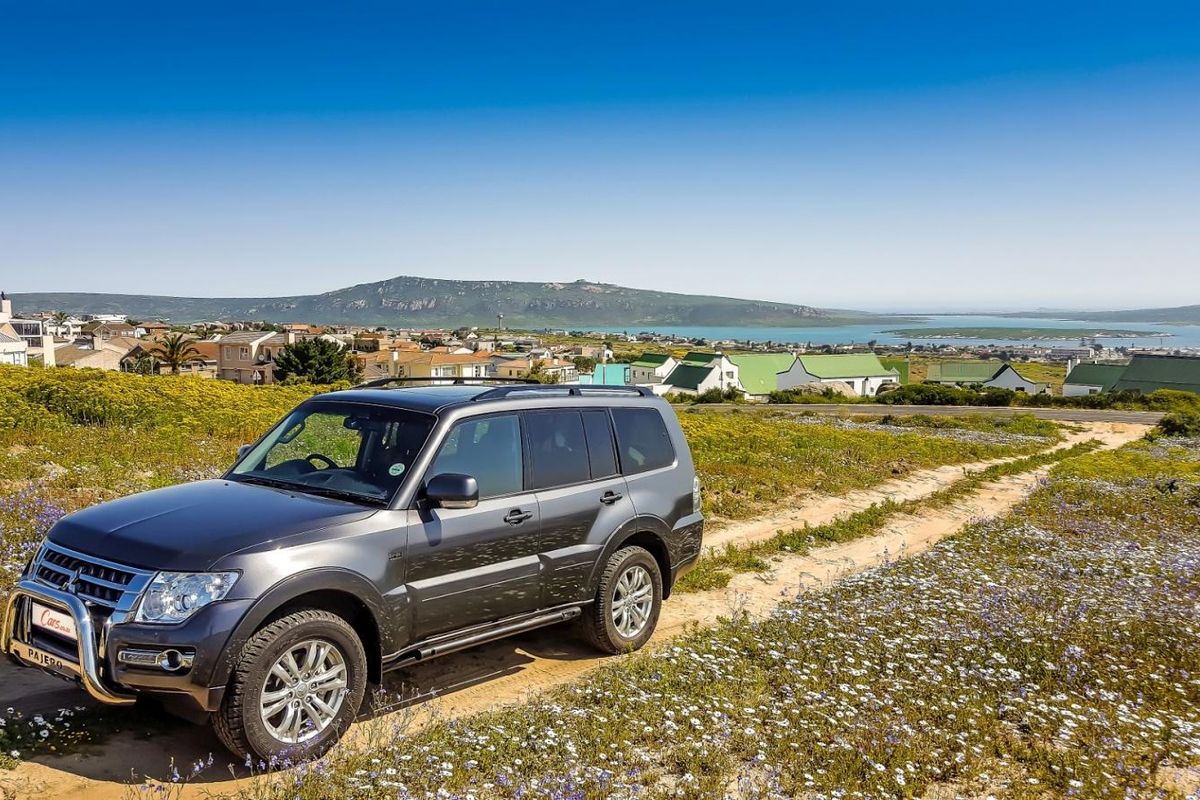
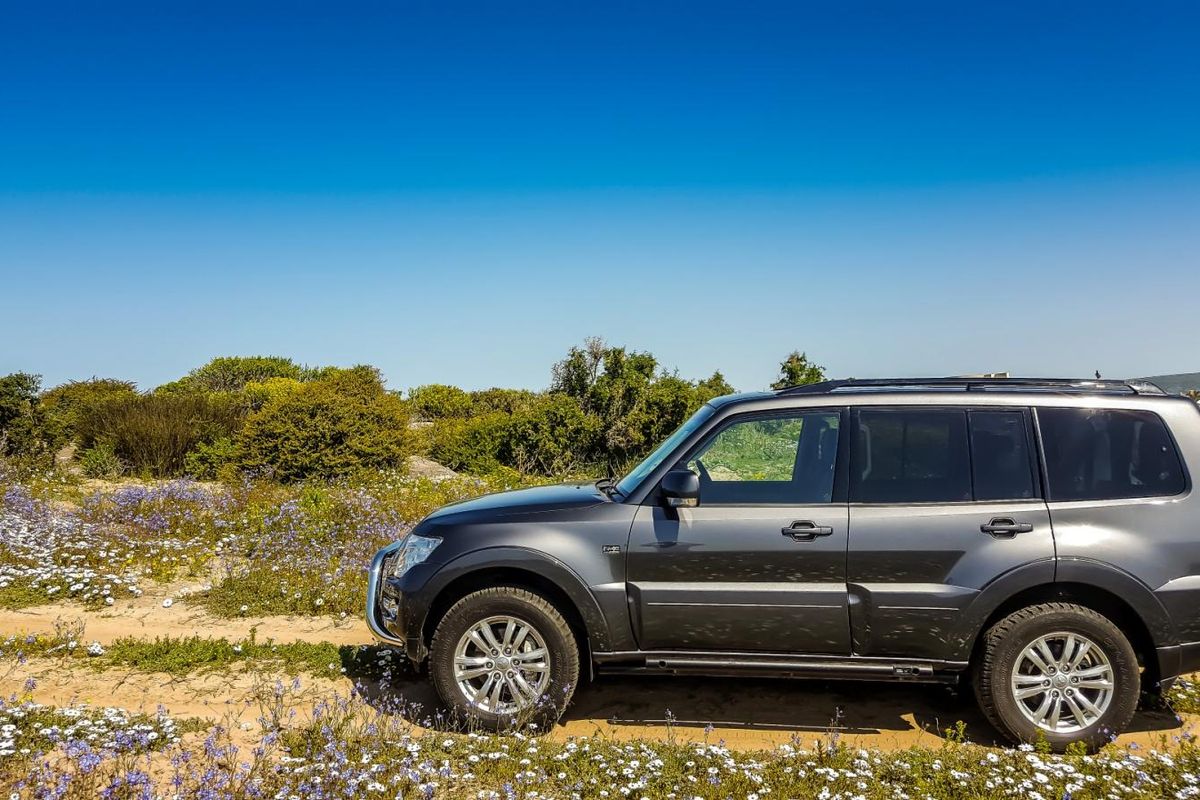
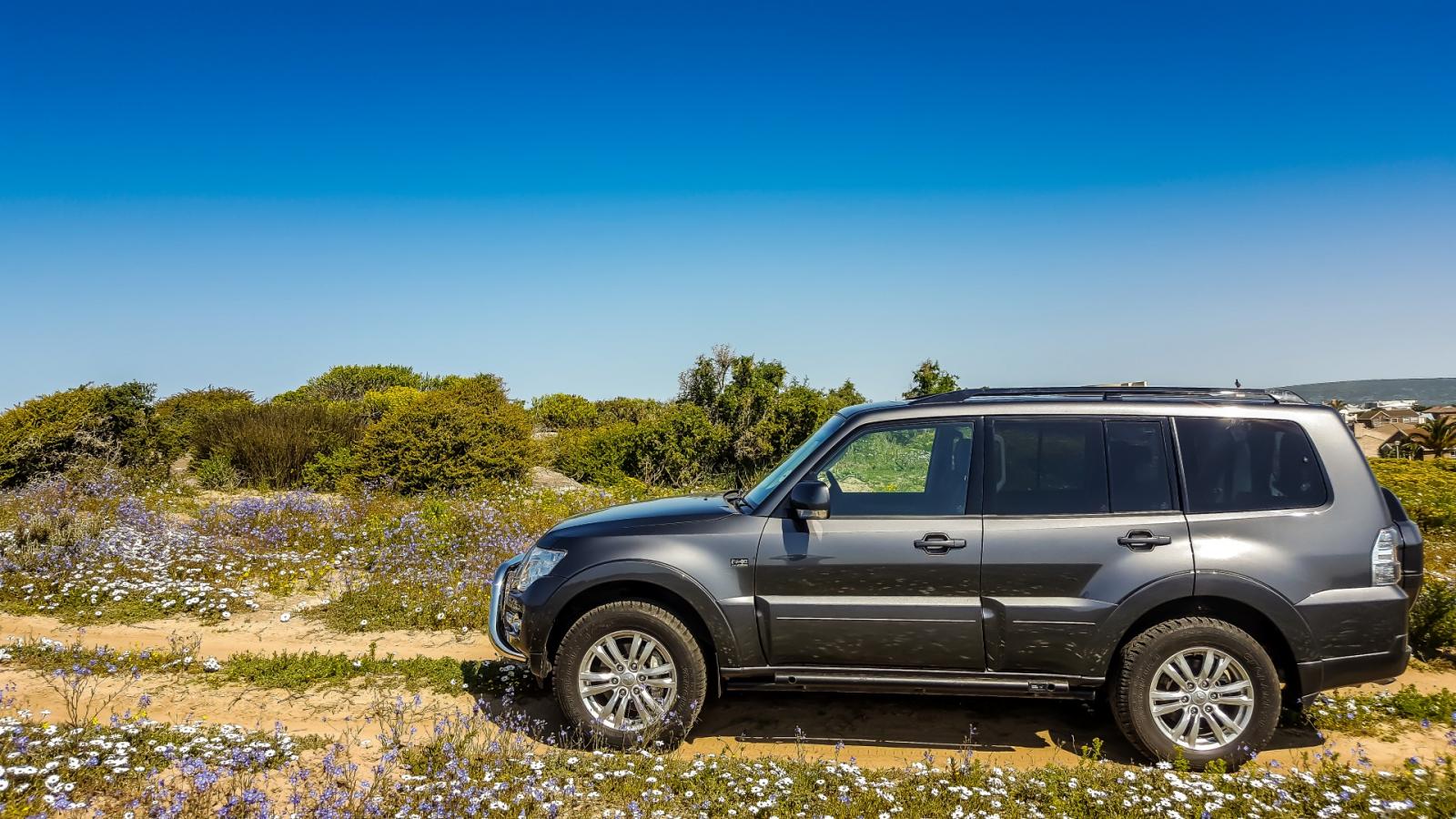
Mitsubishi Pajero 5-Door 3.2 DI-D GLS Legend II (2016) Review
The Mitsubishi Pajero represents a more traditional take on the SUV, one that prioritises actual off-road ability. There are still enough buyers out there who place a premium on these bundu-bashing talents, but does that mean the Pajero is a compromised daily runner? As we found out, the large Mitsubishi could actually teach some of its newer, flashier, road-biased competitors a few tricks…
We like: Off-road ability, spaciousness, cruising comfort, power
We don't like: Dated appearance and old-fashioned ergonomics, somewhat limited tank range
Alternatives
For something more urbane: The Toyota Prado is quite similar in concept to the Pajero, but just represents a more modern take on the recipe. Also very capable in the rough (though perhaps not quite up to Pajero standards), and offering 7 seats in a vast cabin, the Prado delivers slightly more polished performance on the road. It also features a more modern cabin layout. For this money, you can get the 3.0 DT TX model, which is not the full-house offering the VX is.
A more affordable alternative: The Ford Everest is about R100k more affordable in top-spec LTD guise and, although it is slightly smaller than the Pajero, we believe it could do the job just as well for 90% of potential buyers. It offers more advanced features, more power and great on-road refinement. Where it can't match the Pajero is in go-anywhere ability.
Even more space? The ageing Nissan Patrol is still around for buyers who want a spacious, near-unbreakable vehicle that can drive over or through most things on this planet. For similar money to the Pajero, you can get the 4.8 GRX, but that's powered by a very thirsty petrol engine. For about R100 000 less there is the 3.0 TD GL model which has less power and fewer features. However, if luxury is not a priority, it is worth a look.
Targeting "real" off-road enthusiasts
Mitsubishi says that buyers of its long-serving Pajero are generally off-road enthusiasts that actually use their vehicles' abilities regularly. They also tend to spend extra on fitting accessories that further boost these talents. So, to cater to this relatively small, but passionate and loyal group of consumers, Mitsubishi has released a Legend II edition of the Pajero, fitted with around R50 000-worth of options. Importantly, all the accessories are covered by the vehicle warranty, and Mitsubishi has only added R30 000 to the cost of the standard Pajero Exceed model. Sounds like a sweet deal! But we all know that the Pajero is brilliant off-road already. Has its further heightened focus on the rough stuff compromised the big Mitsu as a daily runner for large, adventurous families?
How does it fare in terms of…
Packaging & Space
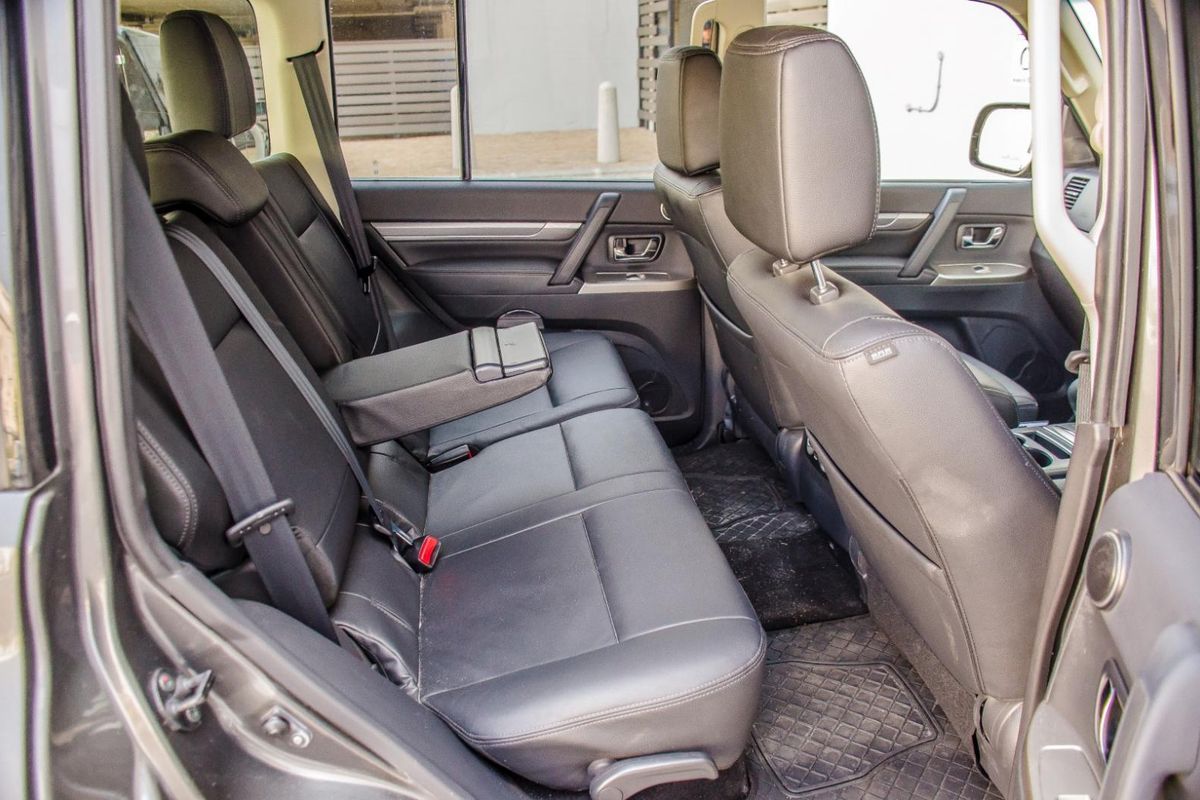
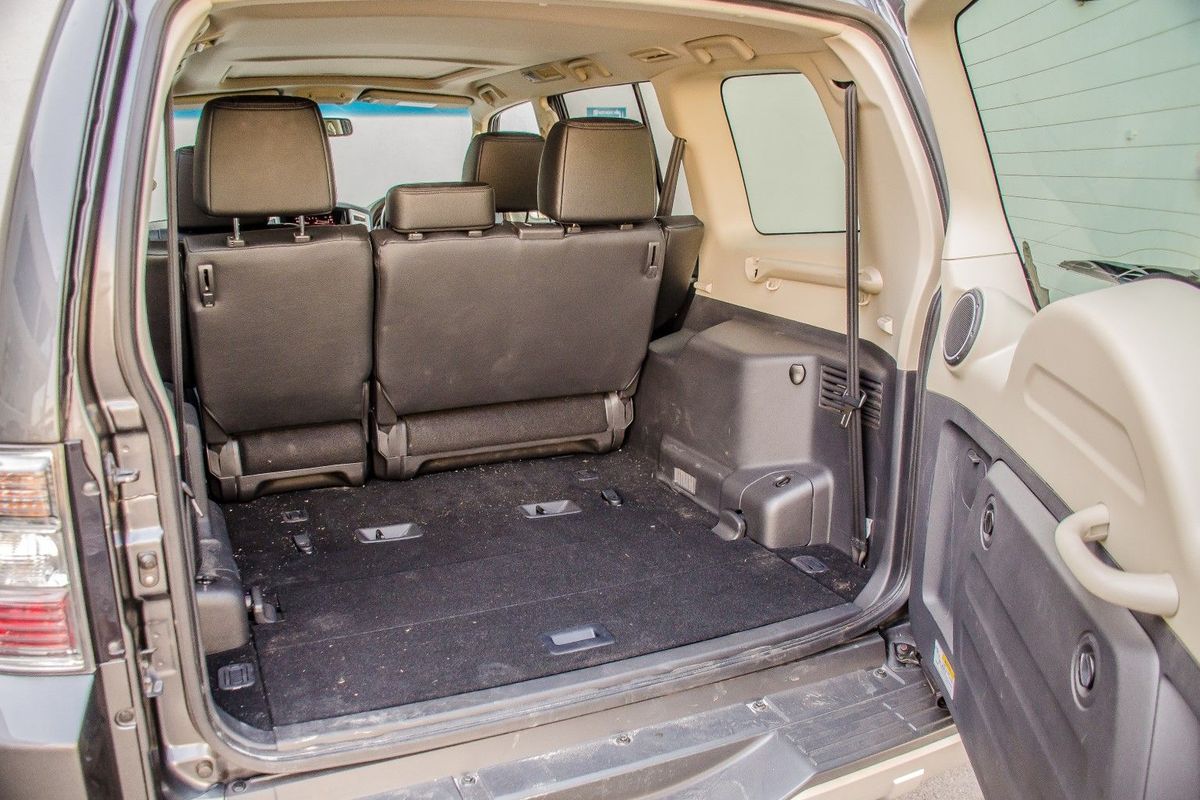
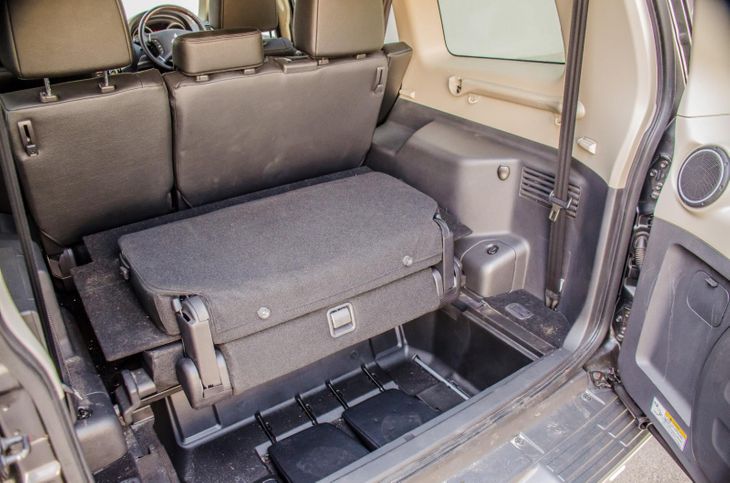
Rearmost bench folds flat underneath the floor and there's a spacious compartment that remains available even with all three rows of seats taken.
It's not often we start our description of a test vehicle's cabin from the rear, but with the Pajero it just makes sense because that's where, in our experience, some of its most attractive qualities reside. The Pajero is a large, bulky vehicle with a traditional wagon shape that maximises interior space. The large spare wheel is mounted on the horizontally-hinged tailgate, which may appear old-fashioned, but there are several practical benefits. Most importantly, it allows for the fitment of a full-size spare wheel without impinging on boot space. Of course, it does make an already large vehicle significantly longer, but the standard fitment of a rear-view camera and park sensors deal with this issue effectively.
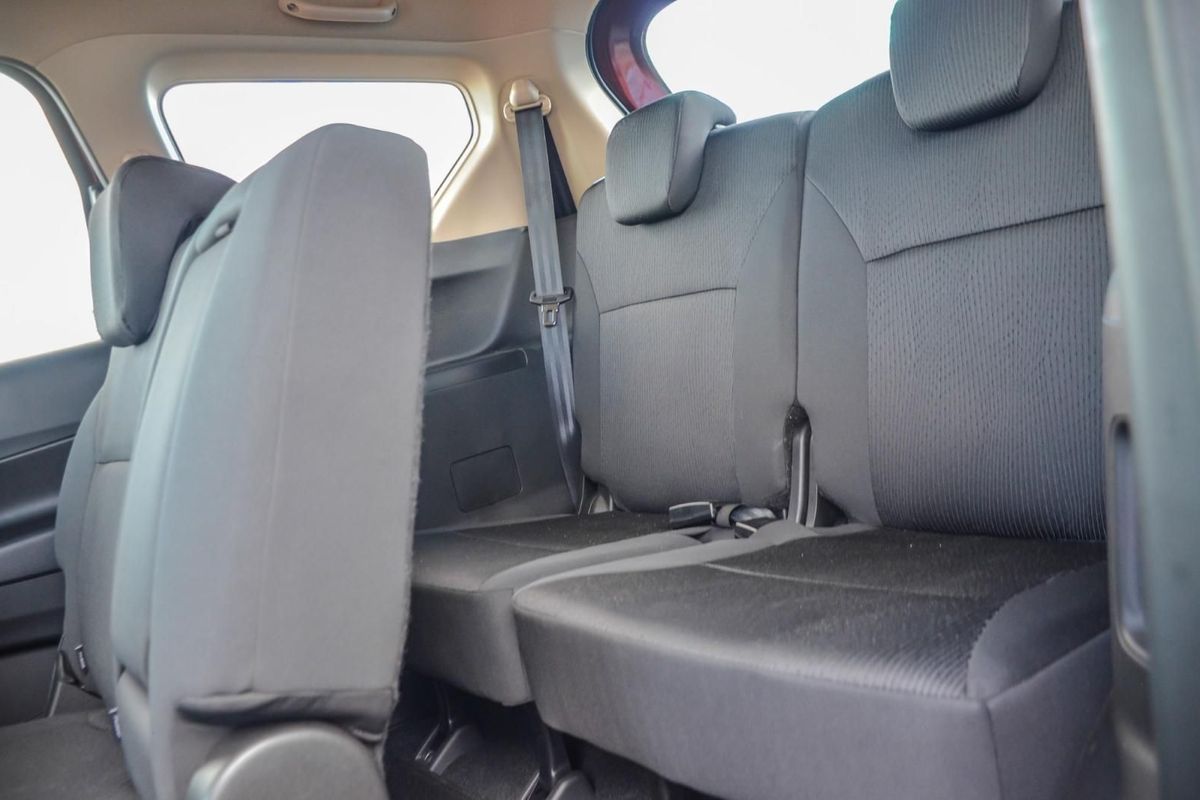
Open that tailgate, and if all three rows of seats are occupied, boot space may look very tight. However, there is a large cavity underneath the boot floor that can accommodate surprisingly large items. The third-row bench can also be folded away flat underneath the floor, which means that in the more likely scenario of travelling with five occupants, the boot area is huge! The middle row of seats can also be tumble forwards. Mitsubishi claims load space of 1 790 L, which is truly capacious.
During its time with us, the Pajero served as a long-distance family cruiser. We frequently used it with all seven seats occupied and the luggage area/underfloor storage was utilised to the maximum. The general consensus was that the slightly old-fashioned cabin design actually contributed to the comfort levels. The seats are soft and large. The spaciousness and good ventilation system (front and rear) further contribute to a relaxing cabin ambience. And because it's not too frilly inside, this is a car that you actually don't mind using for "real" lifestyle activities. In that sense, the Pajero can teach most modern SUVs what the meaning of that "U" in the acronym really means…
Comfort & Features
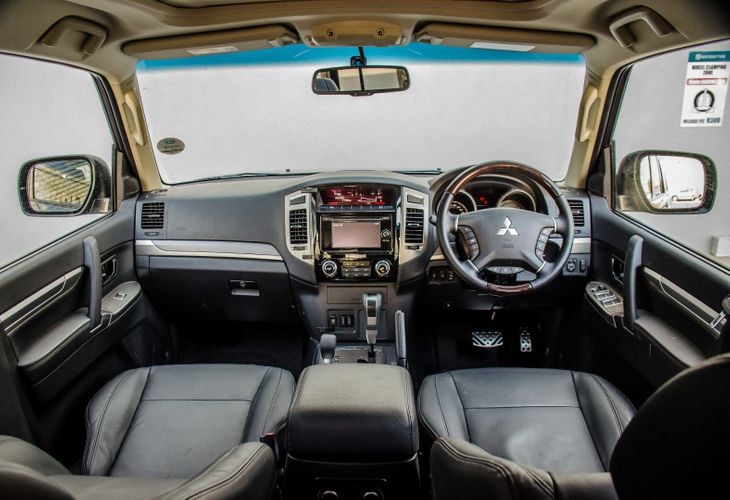
Lots of features but the basic design is quite dated. Good quality and comfort.
Given the price of the Pajero Legend II you'd rightfully expect it to feature all the mod-cons. In that regard the Pajero doesn't disappoint – it is brimful of features. What you don't get, however, is a coherent design or modern feature integration. The age of the Pajero is quite apparent inside, and it's clear that some of the features, such as the touch-screen info-tainment system, have been added along the way. Still, they're there, so if slick design is not your priority, then the Pajero's cabin won't offend from a visual point of view. And while most of the surfaces are hard wearing and easy to wipe clean, which contribute to the overall usefulness of the vehicle, the Pajero still exudes a feeling of solidity and quality. Hop onto that large, comfy driver's chair and you'll feel ready to drive through Africa immediately.
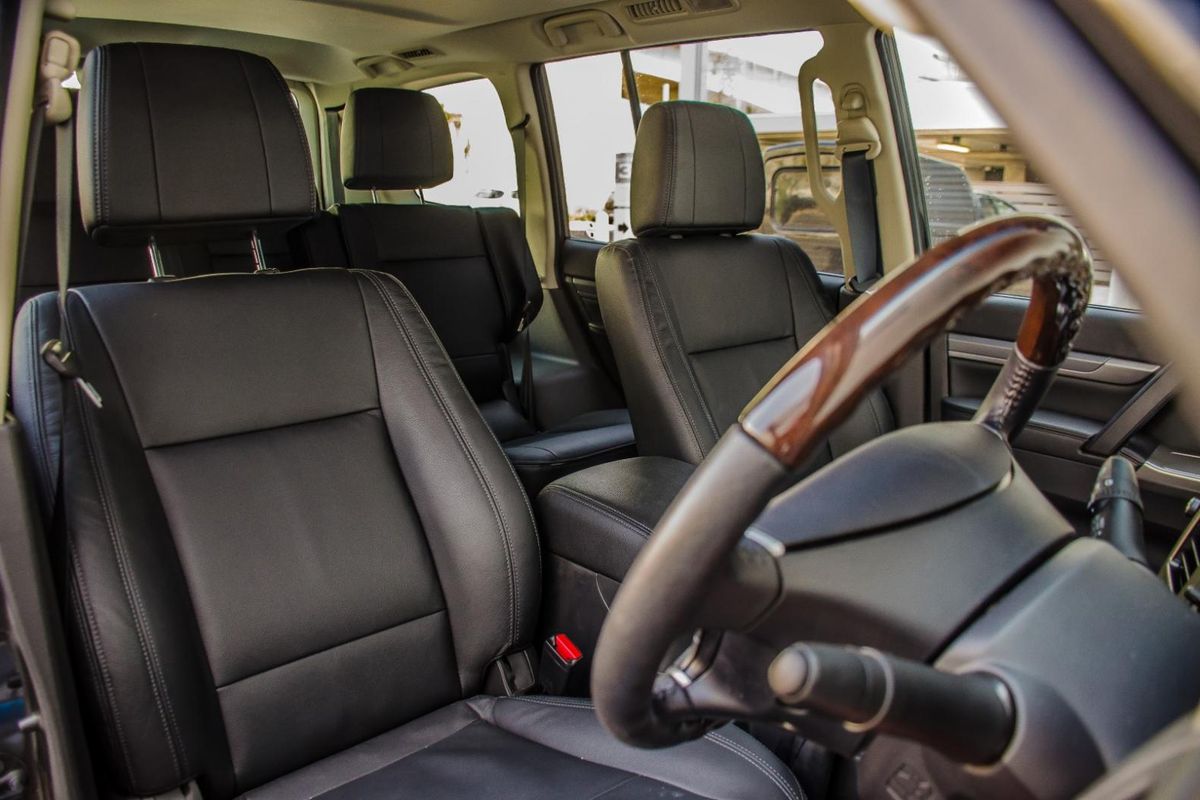
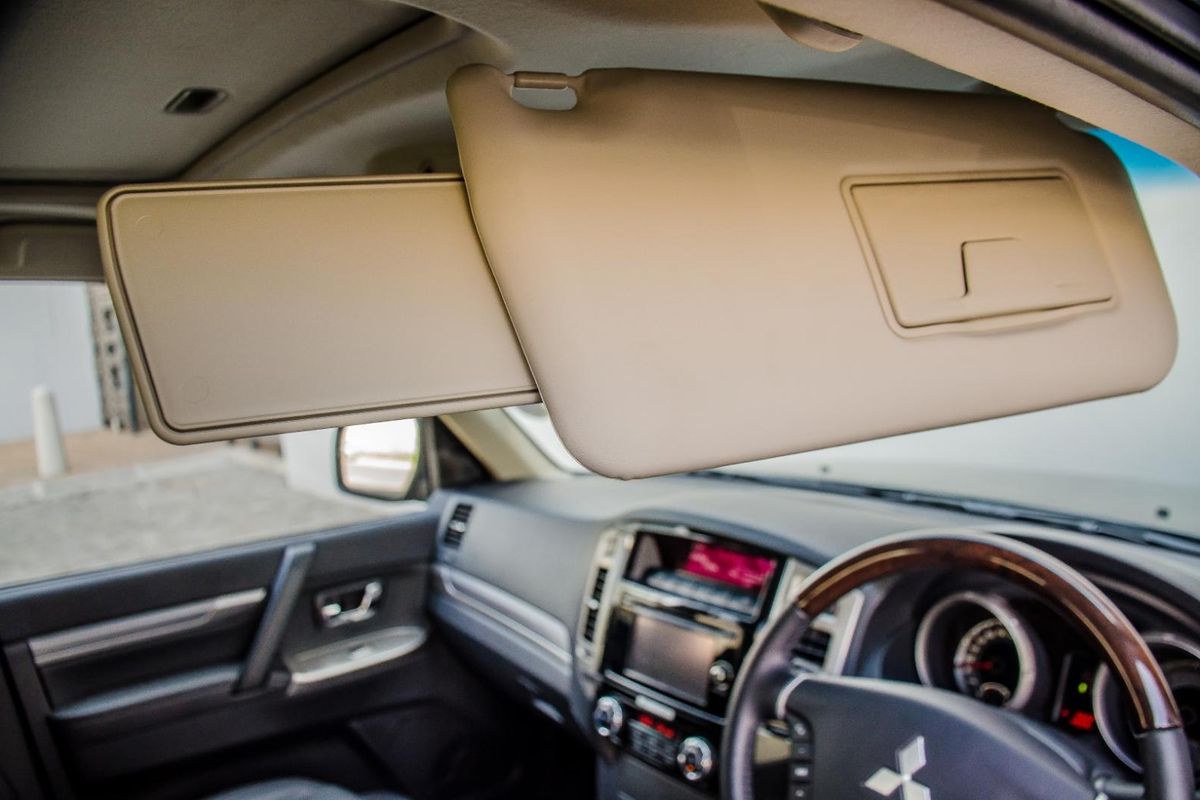
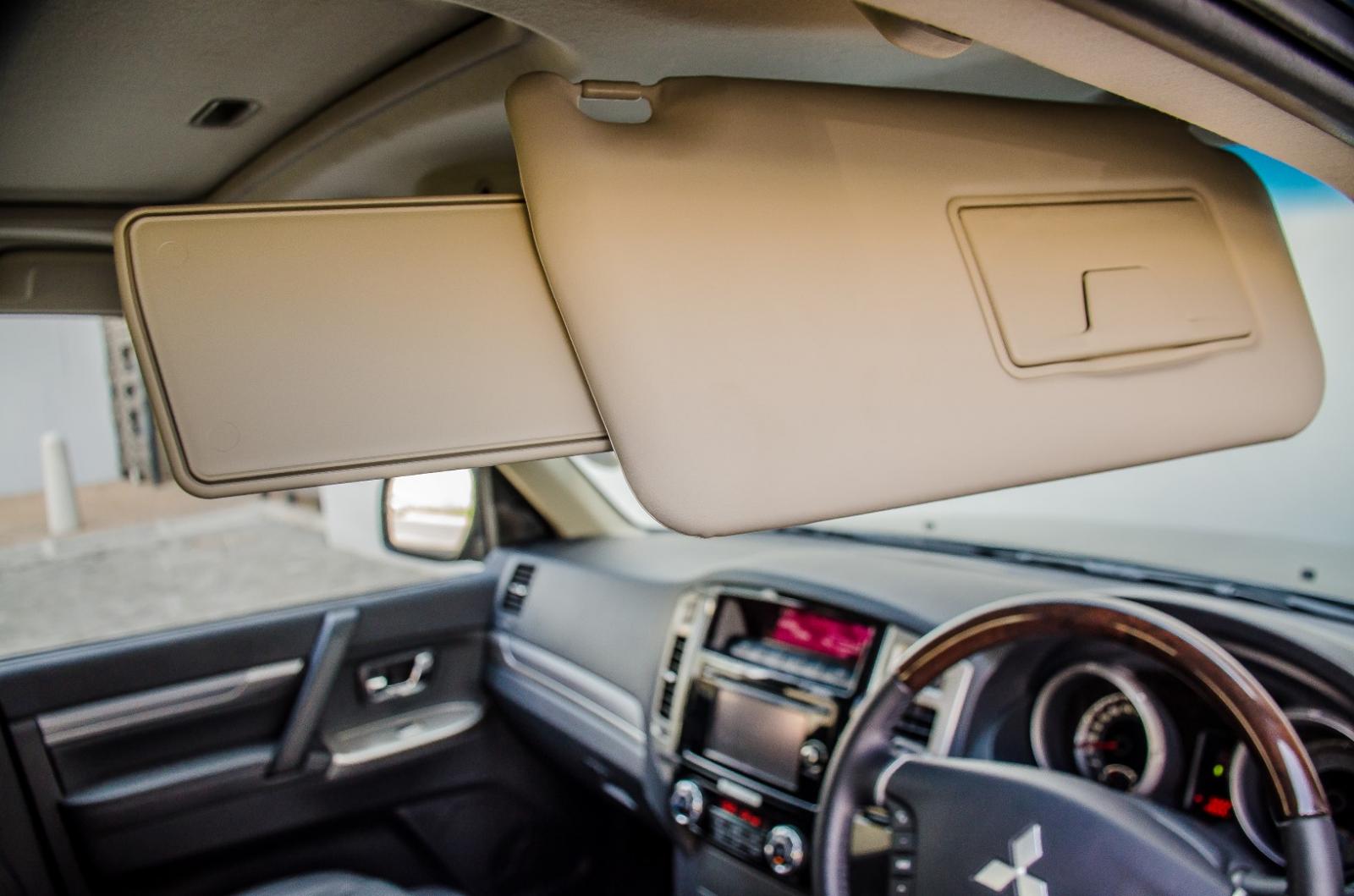
On those long treks, the Pajero's other talents shine even brighter – this is a very comfortable vehicle to cover long distances with. The seats are superb and prioritise comfort over firm support for cornering. Soft leather upholstery is standard, and the front seats also feature heating and electrical adjustment. The multi-function steering wheel is also leather wrapped and features dark wood inserts. Standard cruise control and good gearing combined with oodles of torque mean that you won't need to touch the throttle pedal often on those long cruises. There's a substantial storage box (with leather padding on top) between the front seats that also doubles as a convenient armrest. A very nice touch are the extendable sun visors – they're so convenient that we wonder why more brands don't include them. Rear seat passengers are also shielded from the harsh sun by the standard fitment of rear privacy glass. Oh, and there's a very large glass sunroof, too…
Extending sun visors are a practical touch you will appreciate on the long road.
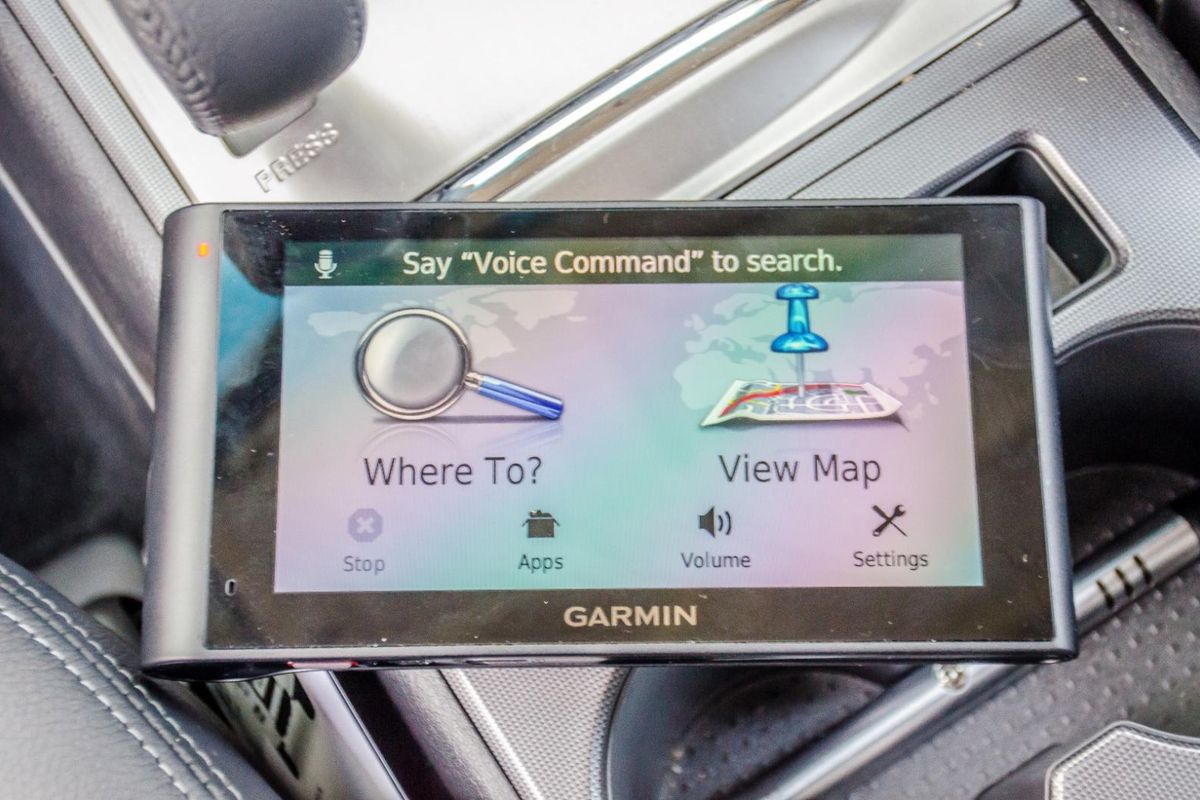
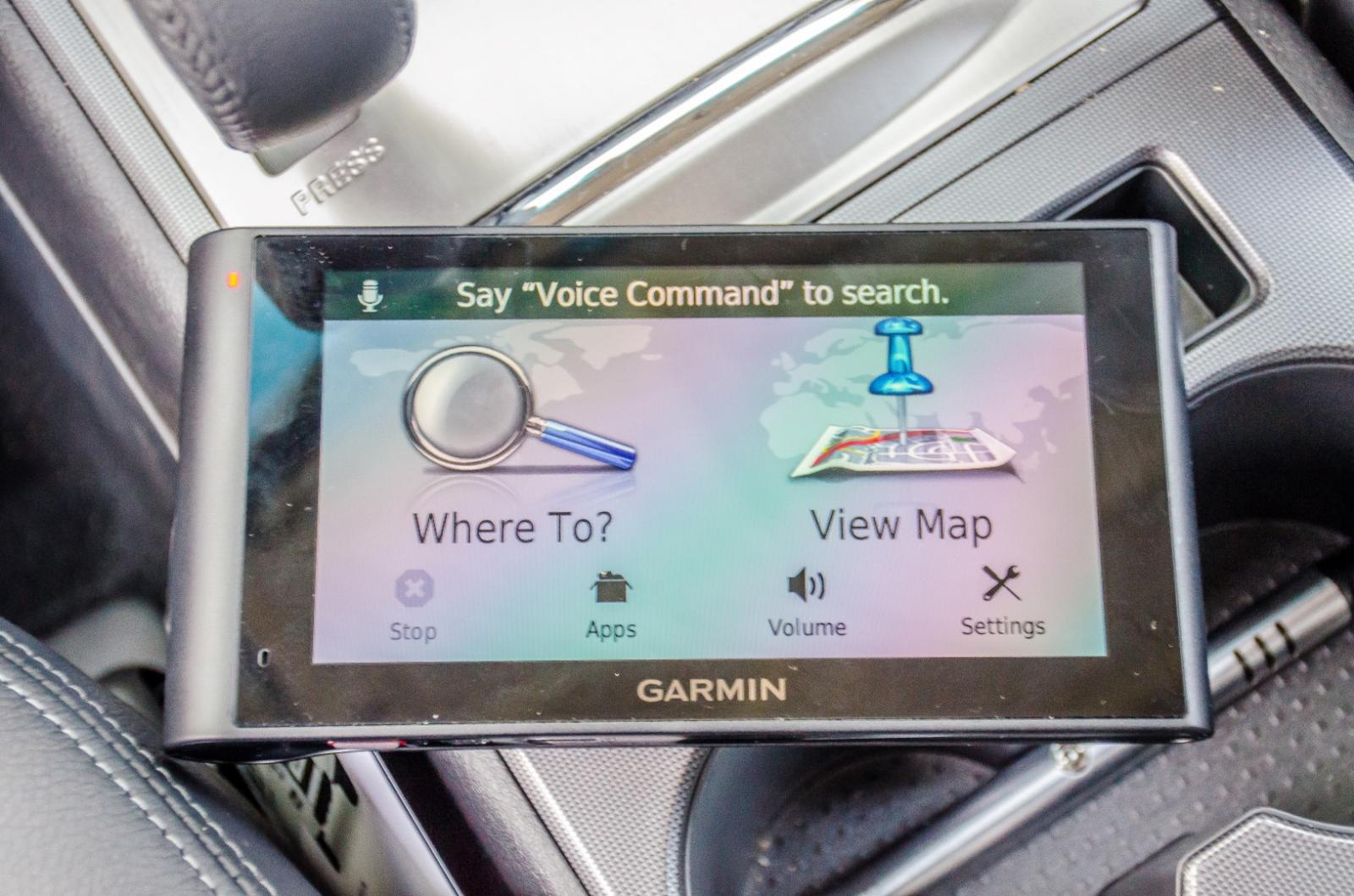
In terms of entertainment on those long drives, the Pajero features a touch-screen infotainment system that also doubles as a display for the standard rear-view camera. It offers Bluetooth and USB support and there's a powerful Rockford Fosgate sound system as well as a high-end Garmin nuviCam with a magnetic mount and built-in dash-cam. A Tracks4Africa off-road map set is included, as are a set of hard-wearing rubber mats – the latter are of particular value given the usage the Pajero seems to actively encourage.
In terms of safety the Pajero Legend II ticks all the boxes, too. It boasts 6 airbags, ABS with EBD/BAS and Active Traction and Stability Control (ATSC). Isofix child seat anchorages are fitted at the rear.
Performance & economy
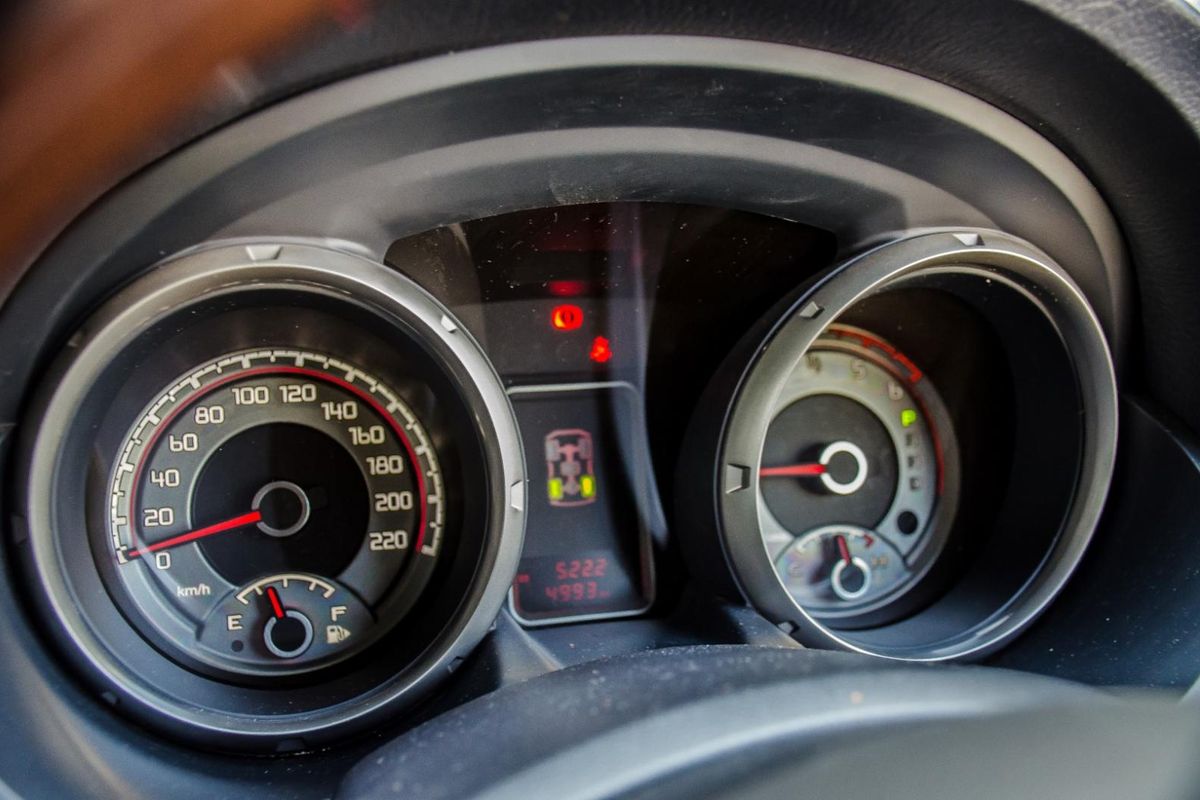
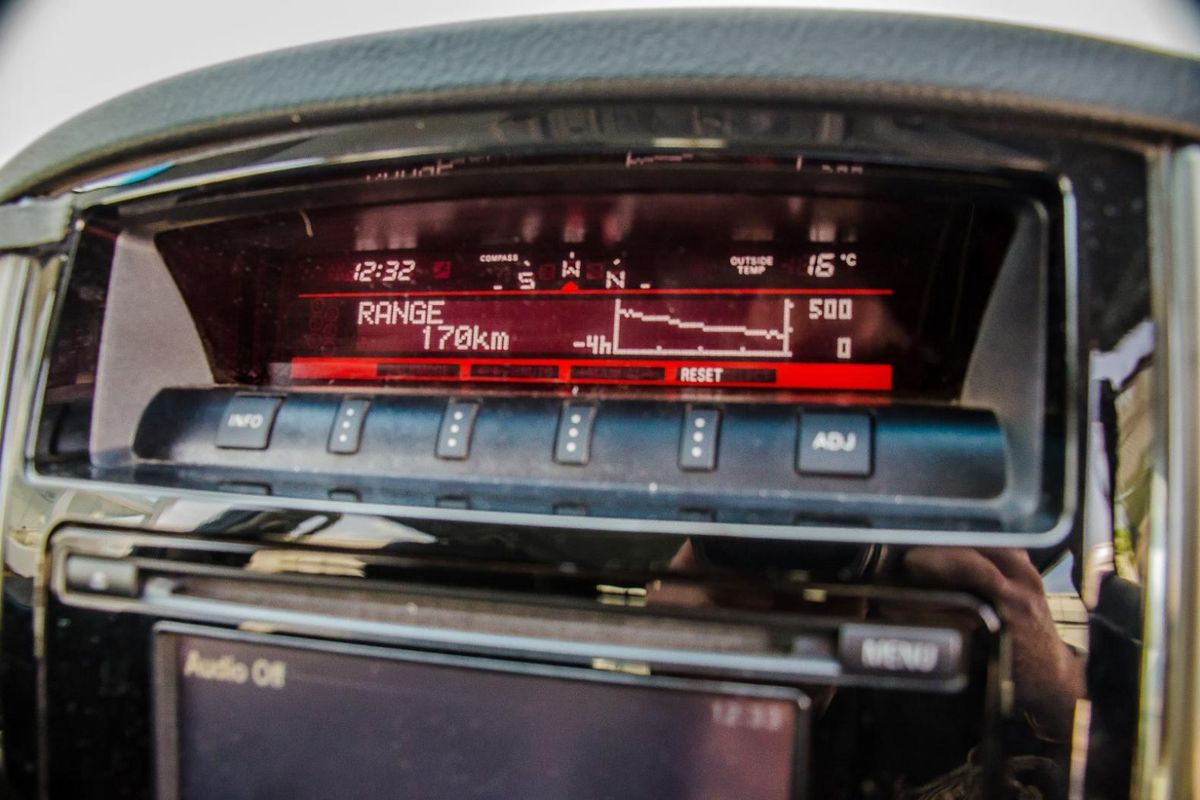
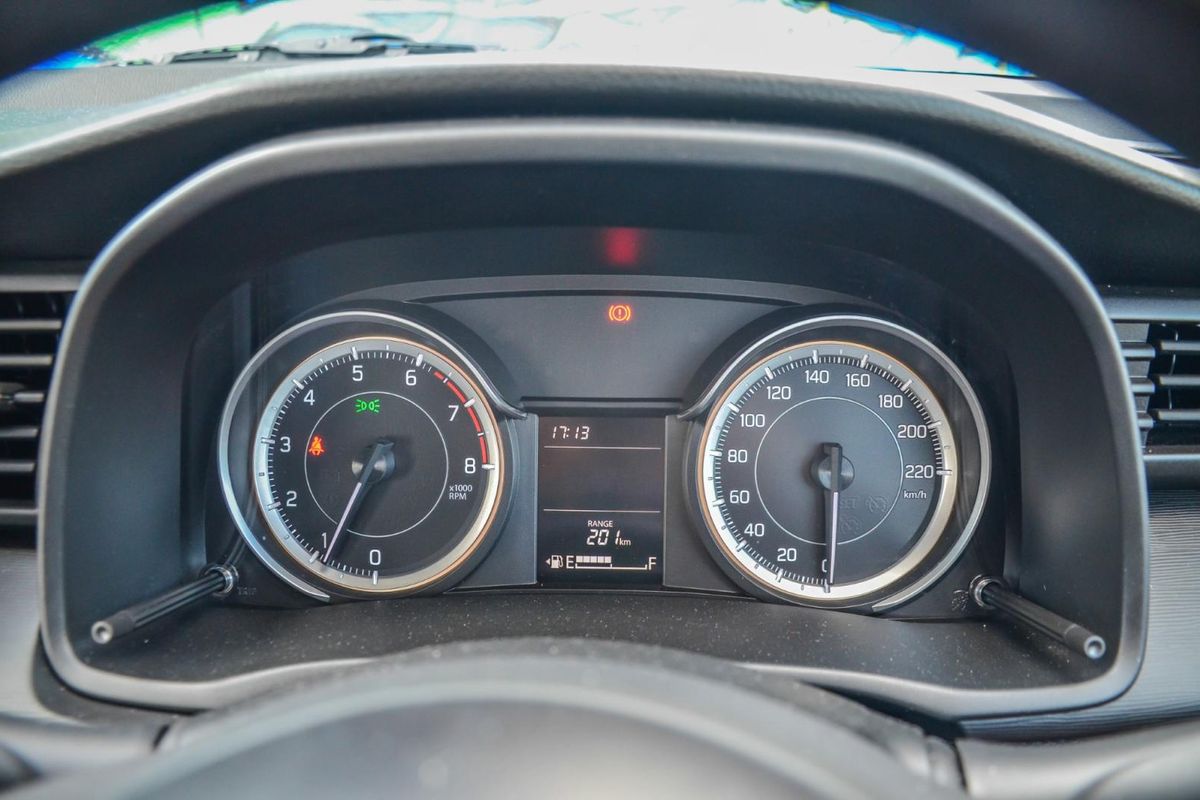
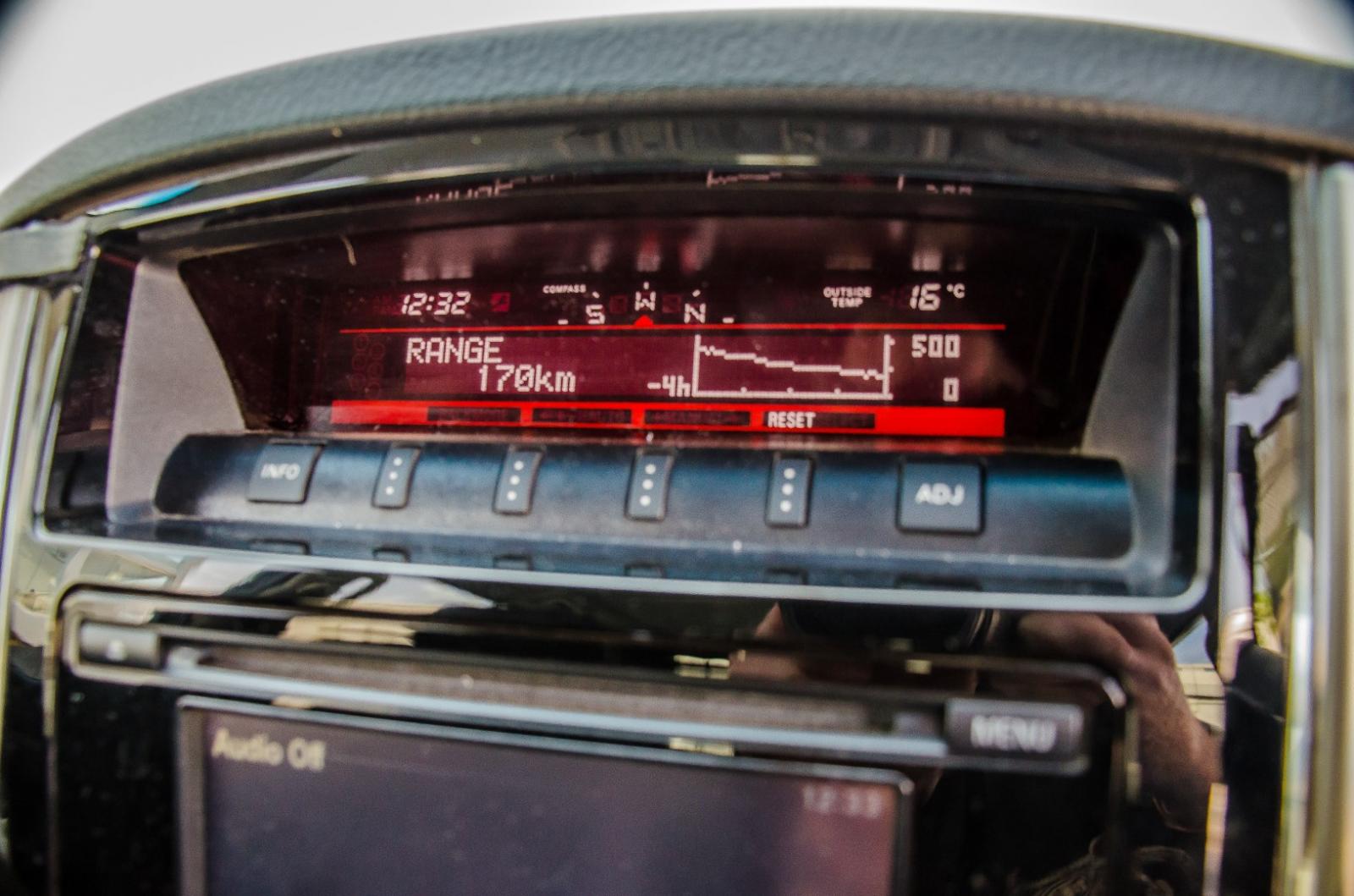
Somewhat old-fashioned facia display shows the most crucial trip information.
Unsurprisingly, Mitsubishi has not fettled with its proven 3.2-litre turbodiesel engine that has done duty so reliably for so long. It remains a powerful unit that delivers a strong 140 kW and 441 Nm of torque, figures that exceed what is offered by the Toyota (Prado) and Nissan (Patrol) and which even compare well with the 5-cylinder powerplant of the Ford Everest. Mitsubishi claims a tow rating (braked trailer) of 3 300 kg for this model. A heavy-duty tow bar from Bosal is fitted as standard on this Legend II model.
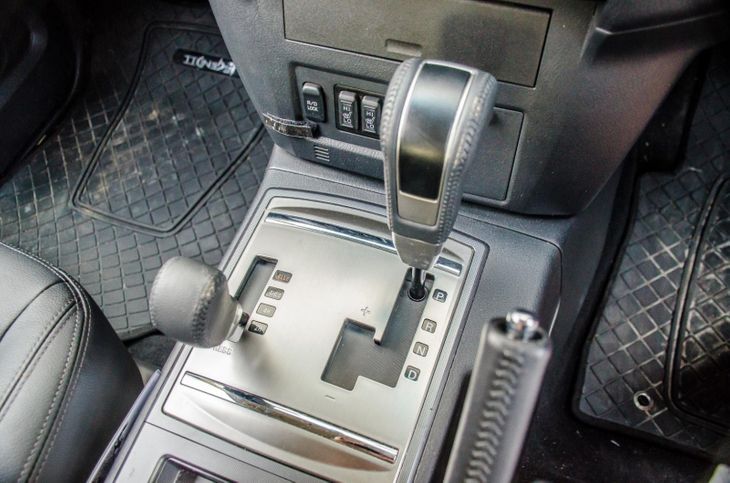
In its current guise, the engine is mated to a 5-speed automatic transmission. As per usual, Mitsubishi's Super Select 4WD-II system is fitted. It offers a variety of modes, but for daily running 2H is the most obvious choice as this sees the Pajero operating in rear-wheel drive only mode for maximum efficiency. Even so, the claimed fuel thirst is 10.1 L/100 km which is somewhat higher than the competition. Coupled with the Pajero's relatively small 88-litre tank (compared with a Prado, for example), the cruising range is likely to be limited to around 850 km between fill-ups. It's worth noting that the Pajero's engine can run on 500 ppm "dirty" diesel.
On the road the Pajero impressed us with its refined, powerful running. Its an engine that delivers good overtaking performance too and there's certainly no apparent shortage of power which may come as a surprise, given the vehicle's bulk and "touring" orientation.
The various off-road transmission settings are selected through the separate "gear lever" on the transmission tunnel.
Off-road, of course, the engine's torque spread and drivetrain also contribute to the impressive showing. When the going gets slippier, but speeds remain relatively high, select 4H which results in a dynamic 33:67 front to rear torque split. In tougher conditions that require lower speeds, you can select 4HLc, which delivers a 50:50 torque split and also locks the centre differential. Finally, if you need real crawling ability over very rough terrain, you need to come to a stop and engage 4LLc, which activates the low-range. Combined with the high ground clearance (235 mm), generous axle articulation and the standard Yokohama Geolander tyres, we struggled to find a tough-enough challenge for the Pajero. It really feels unstoppable off-road.
Value-added features
A Garmin nuviCam is part of the extensive Legend II package and includes a dash cam.
So what does the extra outlay get you when you opt for the Legend II edition of the Pajero? Well, quite a lot as it turns out…
Mitsubishi South Africa has studied the usage patterns (and accessory buying trends) of its local customers and has selected a range of items from well-known Australian specialists, Opposite Lock, as well as Front Runner South Africa. The more cosmetic bits are sourced from Mitsubishi's own parts catalogue.
One of the harder-to-spot additions will be appreciated by those serious off-road enthusiasts that occasionally get themselves in a spot of bother in rough and rocky conditions – a heavy-duty protection plate is fitted below the engine and another is located below the gearbox assembly. There are also heavy-duty rock sliders. The Legend II rides on 265/60 18-inch Yokohama Geolander dual purpose tyres. There is also a Pajero-stamped chrome nudge bar.
If these extras don't toughen up the Pajero enough, then Mitsubishi is offering some additional accessories at extra cost. You can get 41 mm big bore front and rear heavy-duty shock absorbers from Tough Dog, for example. For the real adventurers out there you can also consider an air compressor, snatch recovery kit, bonnet guard and a cooler fridge.
Pricing & Warranty
The Pajero LWB Legend II sells for R819 900 and comes backed with a 3-years/100 000 km warranty and attractive 5-years/100 000 km maintenance plan. Service intervals are set at every 10 000 km.
Verdict
With its enviable blend of rugged off-road ability, cabin comfort and reliability the Pajero encourages exploring off the beaten track.
The Mitsubishi Pajero continues to appeal strongly to buyers that require real off-road ability. In many ways, the Pajero is a more honest take on a segment that has exploded in recent years, and which ironically is a category in which the Pajero played a founding role. Nevertheless, consumer trends are frequently unstoppable and often based on the superficial rather than any real ability or advantage. We can see why vehicles such as the Toyota Fortuner and Ford Everest would eat into the sales of the more expensive, more old-fashioned Mitsubishi Pajero (and others), but the reality is that the iconic Pajero continues to hold a few aces up its sleeve. We found it far less compromised than we expected, and more refined, comfortable and powerful too. In conclusion, then… if you really do intend taking up off-roading as a hobby, but also need your vehicle for normal family usage, you can't really fault the Pajero.
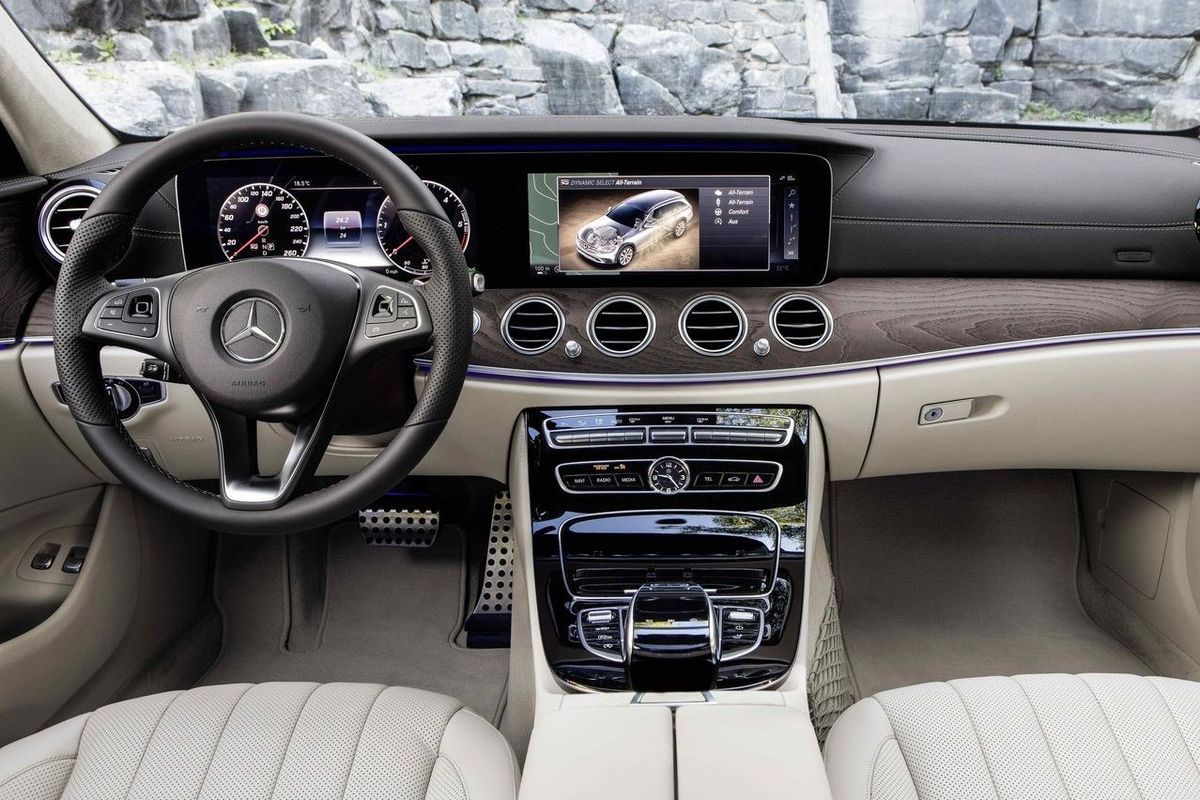
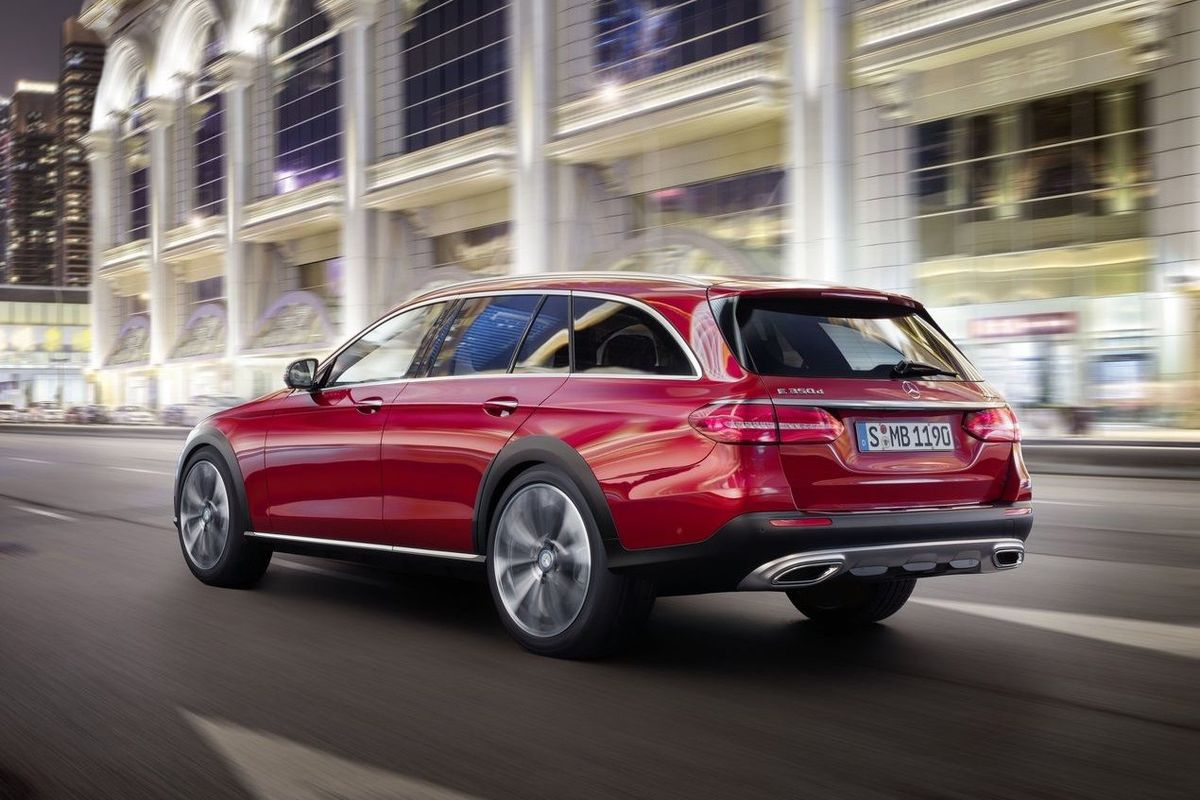
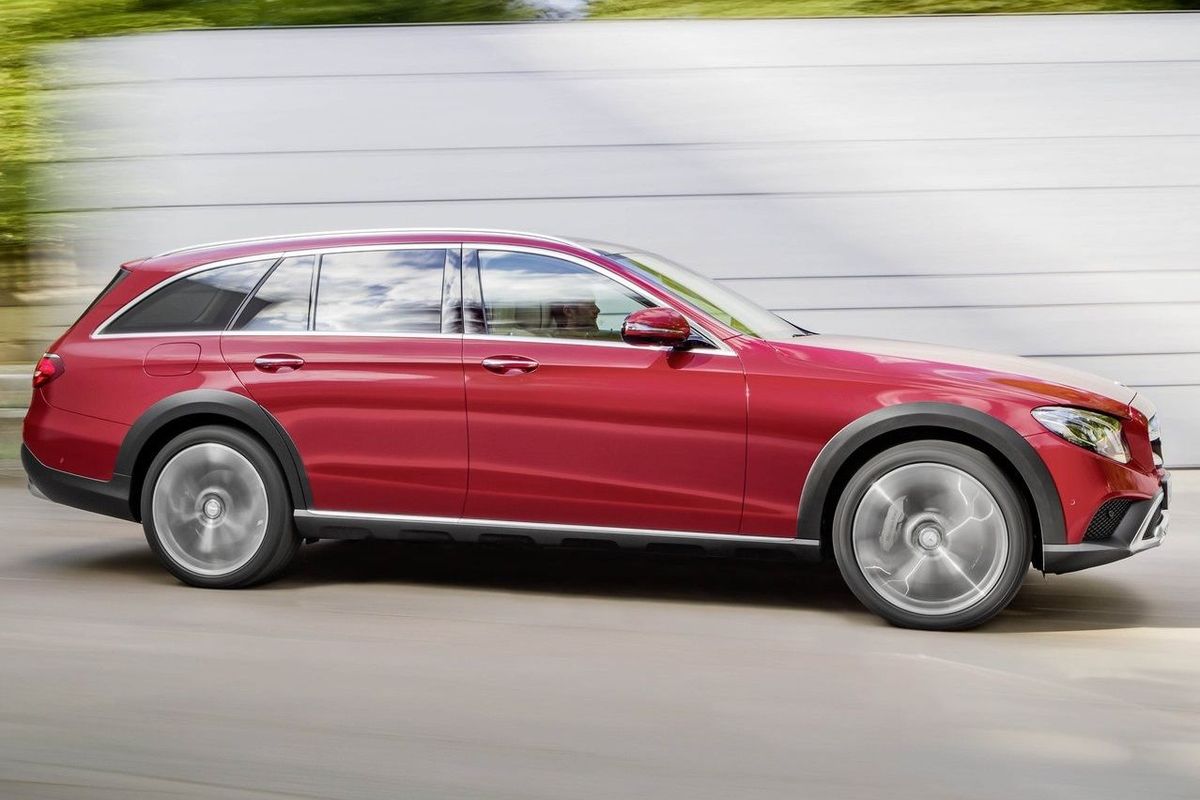
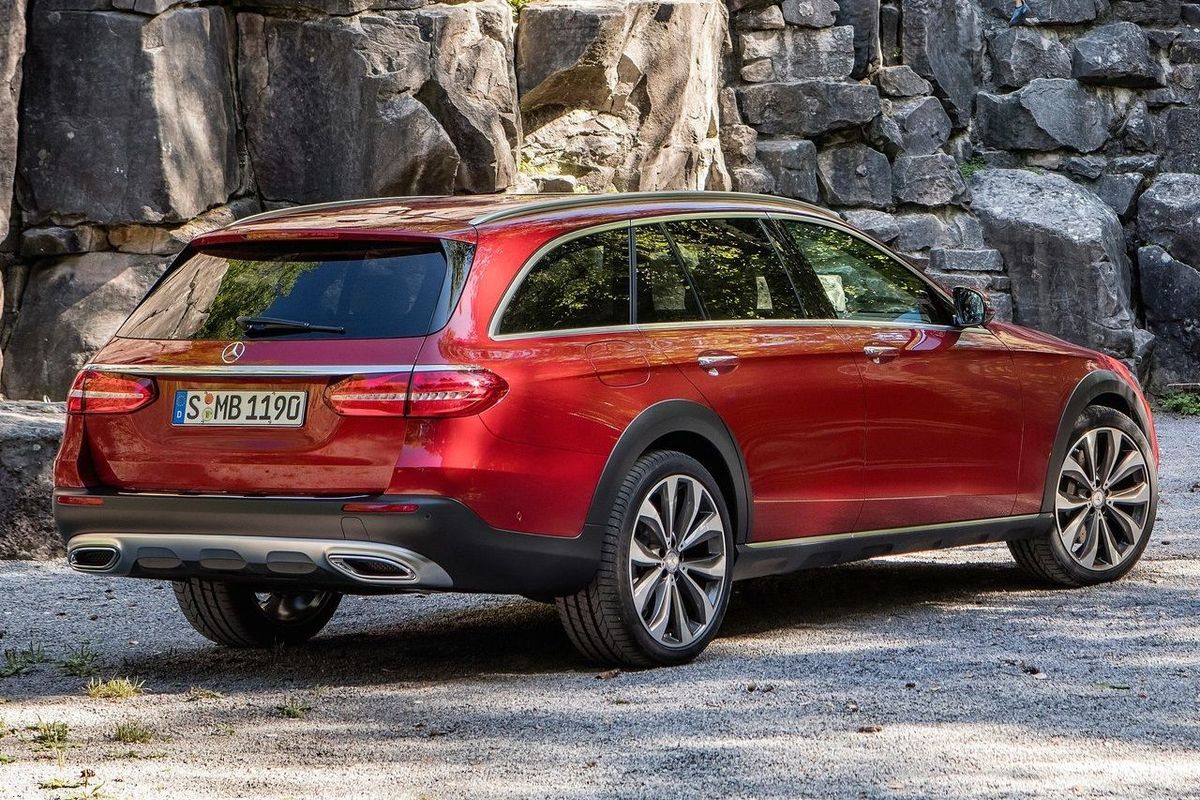
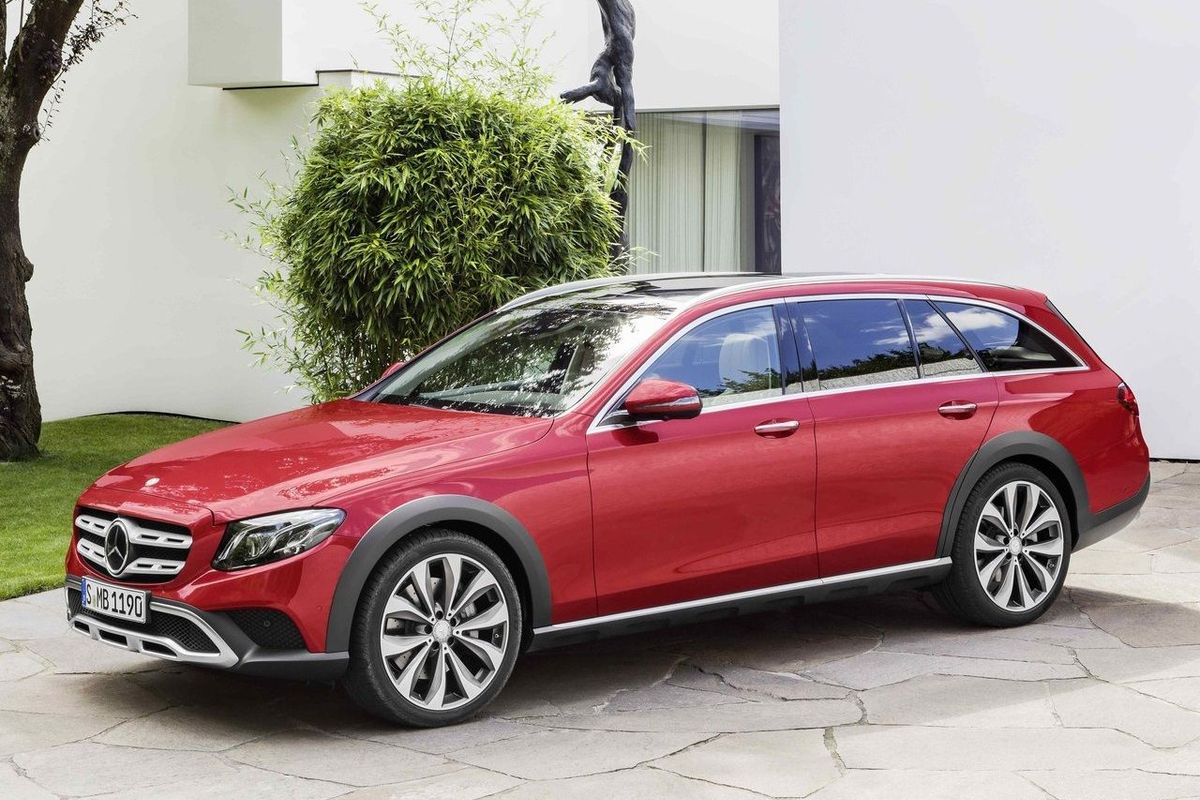
Mercedes-Benz has extended its E-Class, added some offroad goodies – including an all-wheel drivetrain – and named its newcomer the E-Class All-Terrain.
The Mercedes-Benz E-Class has been well received globally and the brand has expanded the range to include this new All-Terrain version. It's essentially an E-Class estate, but Mercedes-Benz has jacked the car up to add credible ground clearance, fitted its well-proven 4Matic all-wheel drive setup and added some offroad exterior paraphernalia. Mercedes-Benz has fitted a plate underneath the vehicle to protect it from rocks and there's also load-sill protection. The wheels may be on the larger side, but these tyres will come with high sidewalls, which is necessary if you want to take it off the beaten track.
Powering the Mercedes-Benz E-Class All-Terrain is the new 2.0-litre four-cylinder diesel motor, which has outputs of 143 kW and 400 Nm. For those craving more power, there'll be a 6-cylinder turbodiesel motor to follow. Power is transmitted to all four wheels through a 9-speed automatic transmission and Benz's Dynamic Select features an offroad mode, which will lift the air suspension up by an extra 20 mm to cope with serious off-road obstacles.
This is a unique segment of the market and rivals are an eclectic bunch. You can get a Subaru Outback for example, and the Mercedes-Benz All-Terrain announcement follows the recent news that Volvo has made a V90 Cross Country. At this stage we're unsure if Mercedes-Benz SA plans to bring this vehicle to our market, but we'll know more once this car has been unveiled at the forthcoming Paris Motor Show.
Watch the Mercedes-Benz E-Class All-Terrain in action
Who doesn't want a vehicle that exudes style and practicality – something that tells the world they've made it in life? These are the semi-finalists in the Premium Hatchback category of the Cars.co.za Consumer Awards – powered by WesBank!
The Cars.co.za Ownership Satisfaction Survey, in partnership with leading data specialists, Lightstone Consumer, forms an integral part of the awards programme, with the survey accounting for 50% of the final result in each category. The brand-specific data incorporates feedback from thousands of South African new vehicle owners, based on their experiences of their vehicles (must be less than 5 years old and serviced through franchised outlets).
Stylish and sophisticated, yet practical enough for most motoring needs, these are the cars for upwardly mobile professionals. The winner in this category must not only offer outstanding quality, refinement, performance and the latest technologies, but also broadcast a message of success and ambition. For a car to be considered for this category, the following criteria apply: its listed price must exceed R350 000, but not R500 000, at the time of semi-finalist voting (September 1, 2016) to ensure a large measure of desirability and prestige. It must be packaged in a hatchback body shape.
Crossover hatch derivatives are also included (such as Mercedes-Benz GLA). Safety is important and the vehicle must have ESP (Electronic Stability Control – if not fitted as standard, this feature must be available as an optional extra and fitted, without exceeding the R500 000 price limit) as well as dual front, side and curtain airbags (if not fitted as standard, these features must be available and fitted as optional extras within the set maximum price).
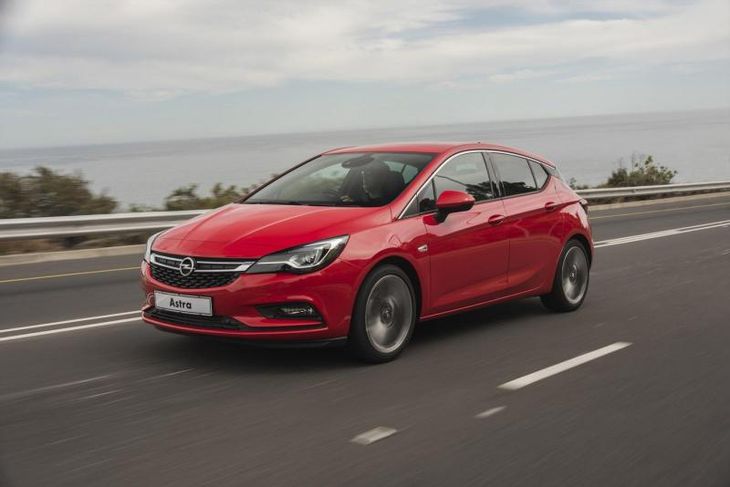
Opel’s new Astra is the current European Car of the Year and this 1.6T Sport Plus derivative is the range’s flagship. It features a lot of technology as standard and also impresses with its agility and refinement. It has certainly succeeded in elevating Opel into contention in this prestigious category. The Astra is powered by a 1.6-litre, 4-cylinder engine that develops an impressive 147 kW and 280 Nm of torque. Power goes to the front wheels via a precise 6-speed manual transmission. Opel claims a brisk 0-100 kph time of 7.0 seconds for this model, which means it certainly has the go to match the show.
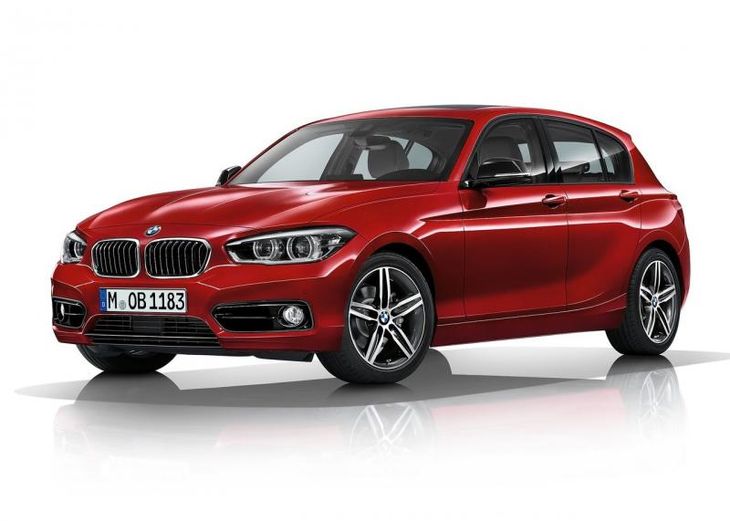
Returning for another shot at Cars.co.za Consumer Awards glory, the BMW 1 Series offers slick styling and a host of advanced technology features (some standard, some optional), which will really please technophiles. This being a BMW, however, driving entertainment is important and the turbocharged 2.0-litre engine certainly doesn’t disappoint – it offers 135 kW and 270 Nm of torque, plus it is mated with BMW’s slick 8-speed automatic transmission.
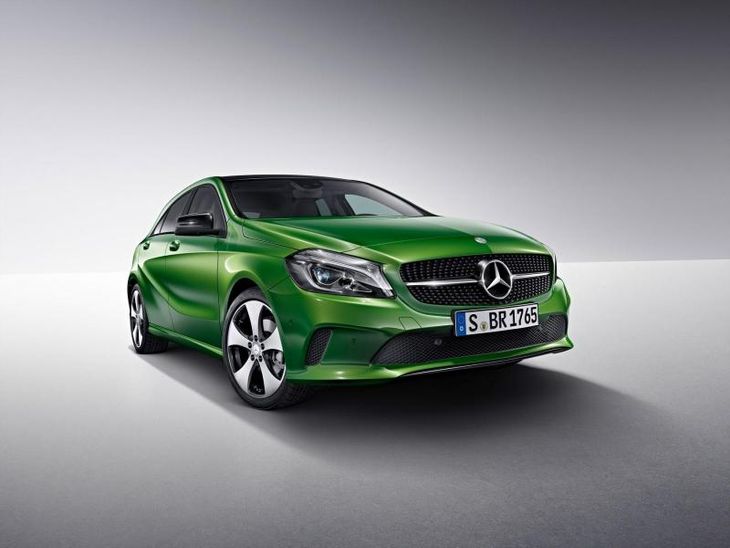
Mercedes-Benz has polished its popular A-Class to offer greater refinement and improved ride characteristics. This A220d model is one of the most popular in the line-up and offers an enviable blend of efficiency, technology and status. It's powered by a 2.1-litre, 4-cylinder turbodiesel engine that develops 130 kW and 350 Nm of torque, the latter being conducive to impressive mid-range urge. The engine is coupled with the marque’s 7-speed automatic transmission and Mercedes’ claimed performance figures (0-100 kph in 7.5 seconds, for example) show that this turbodiesel A-Class can run with its petrol competitors.
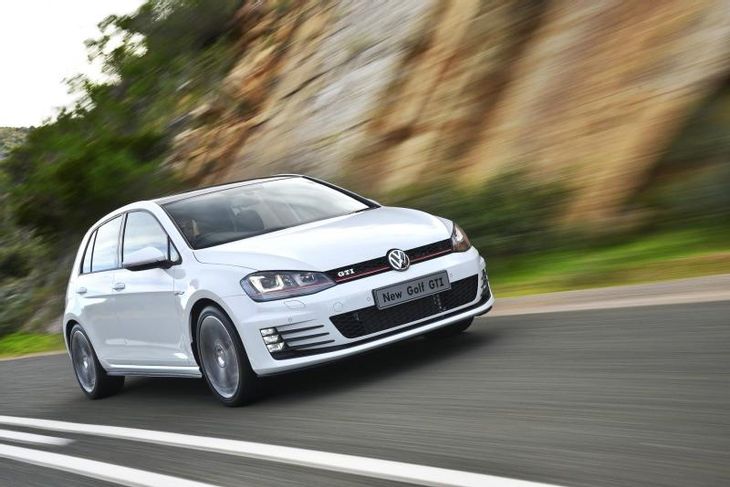
Although the Volkswagen badge may not be perceived to be quite as premium as the likes of BMW, Audi and Mercedes-Benz, the GTI moniker drips with enough desirability to make this Golf derivative a very strong seller in the South African market. Its appeal goes beyond performance credentials, though. The Golf GTI is our current Premium Hatch champion, and is also packed with standard features and finished every bit as well as the best in this class.
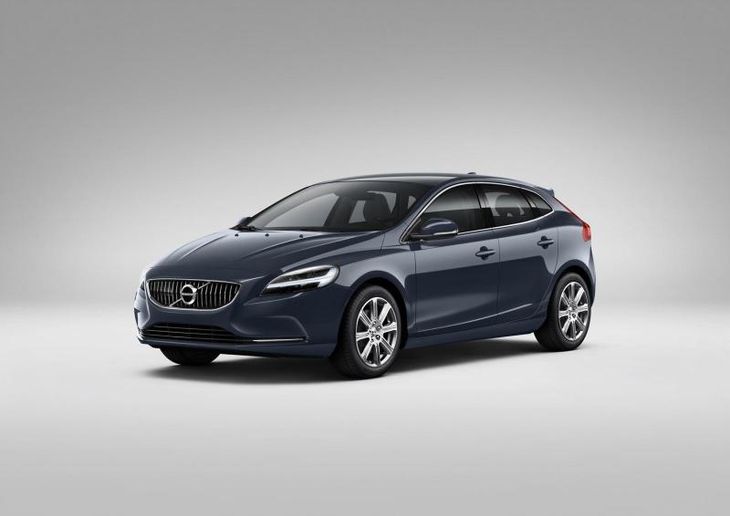
Taking the premium hatchback fight to the established German brands is quite a challenge, but Volvo’s V40 is an attractive alternative. Recently refreshed, and now boasting refined looks, more features and, importantly, more efficient but even more powerful engines, the V40 continues to be the individualist’s choice. The big news here is that the T4 is now powered by a new turbocharged 2.0-litre, 4-cylinder engine that delivers 140 kW and 300 Nm. The engine is mated with a 6-speed automatic transmission and is claimed to power the updated car to 100 kph in 6.9 seconds and onto a top speed of 201 kph.