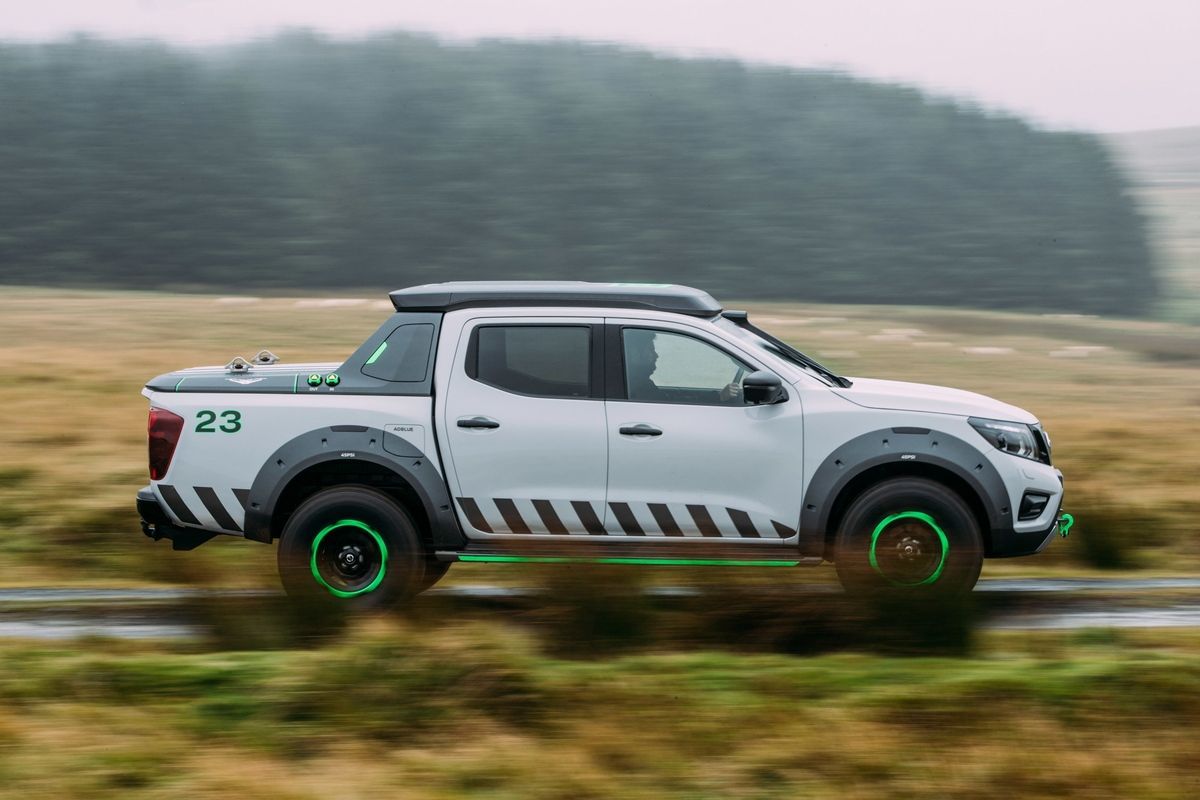
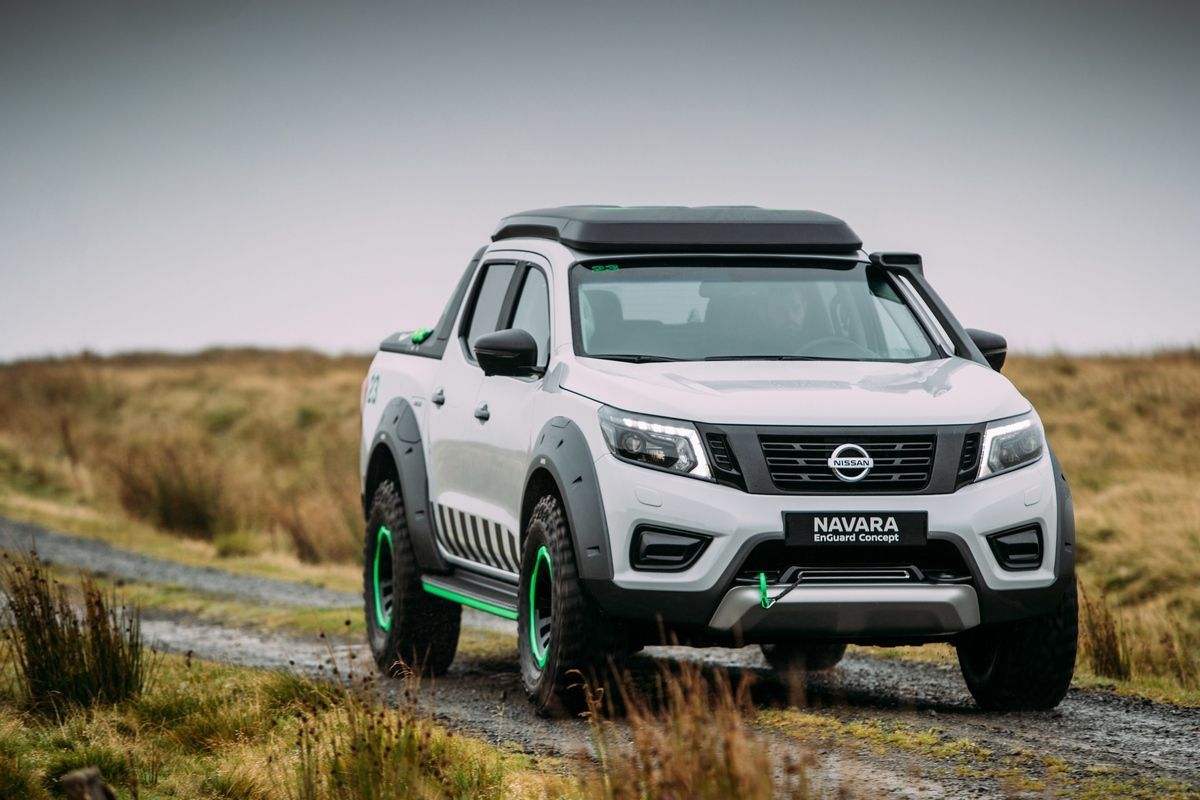
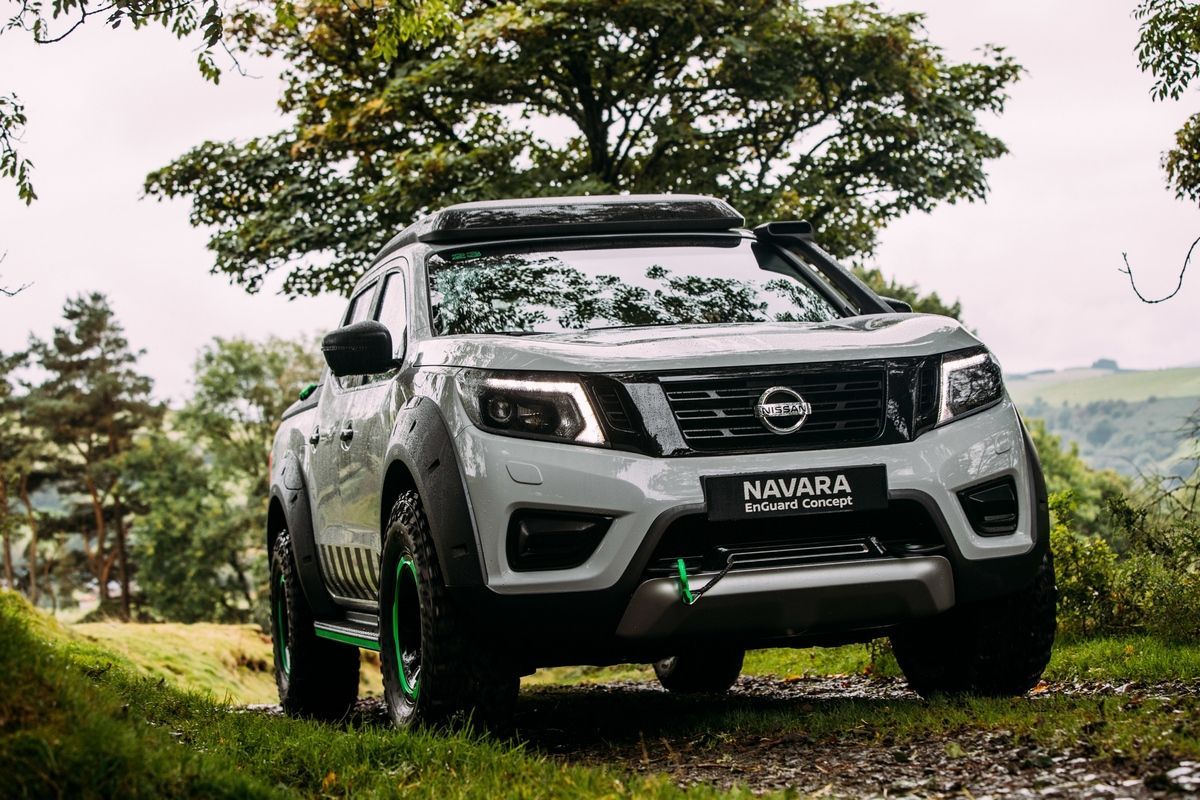
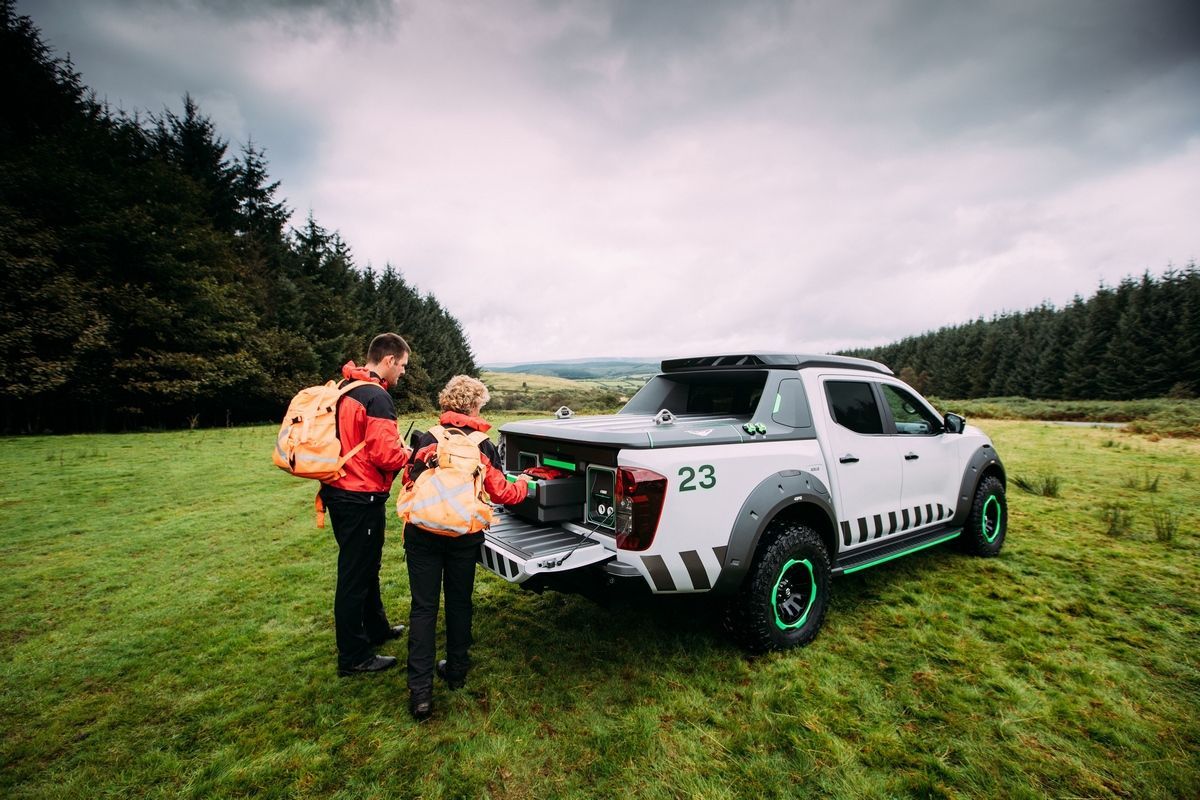
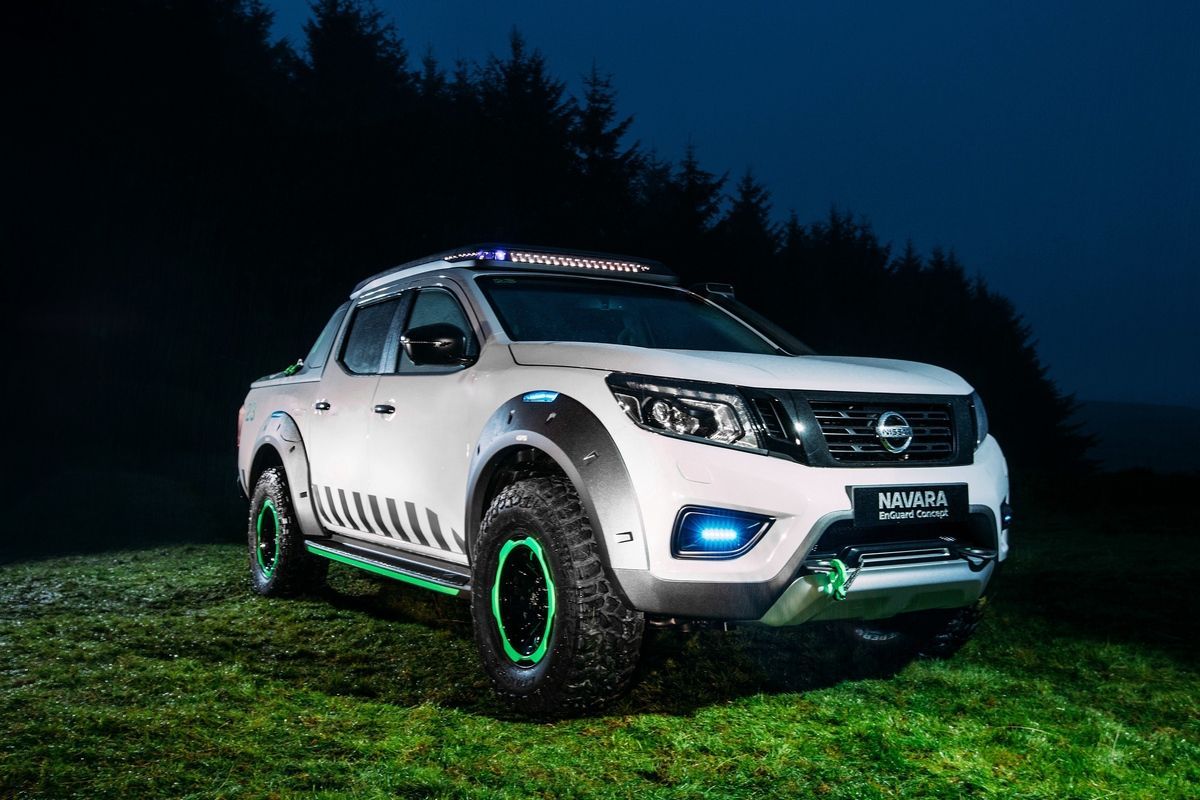
Nissan has revealed a special concept based on its new Navara. The EnGuard is a rescue vehicle with a battery pack twist.
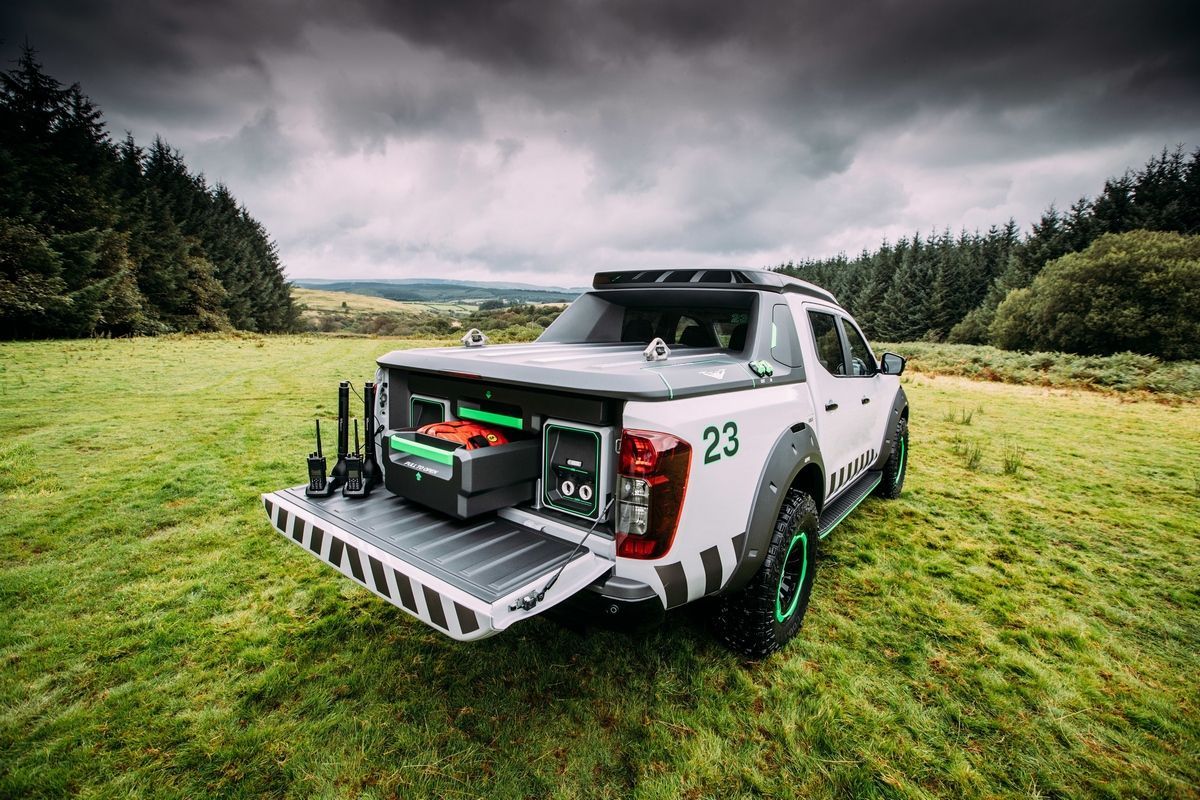
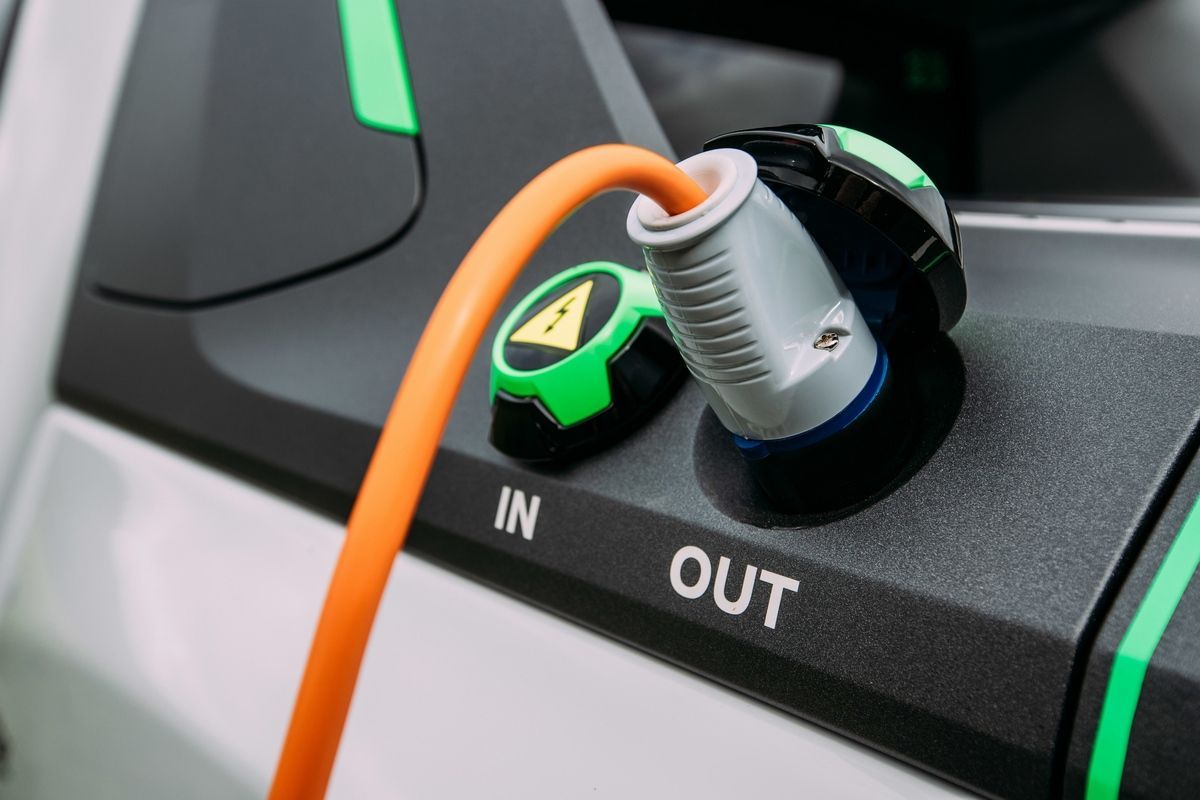
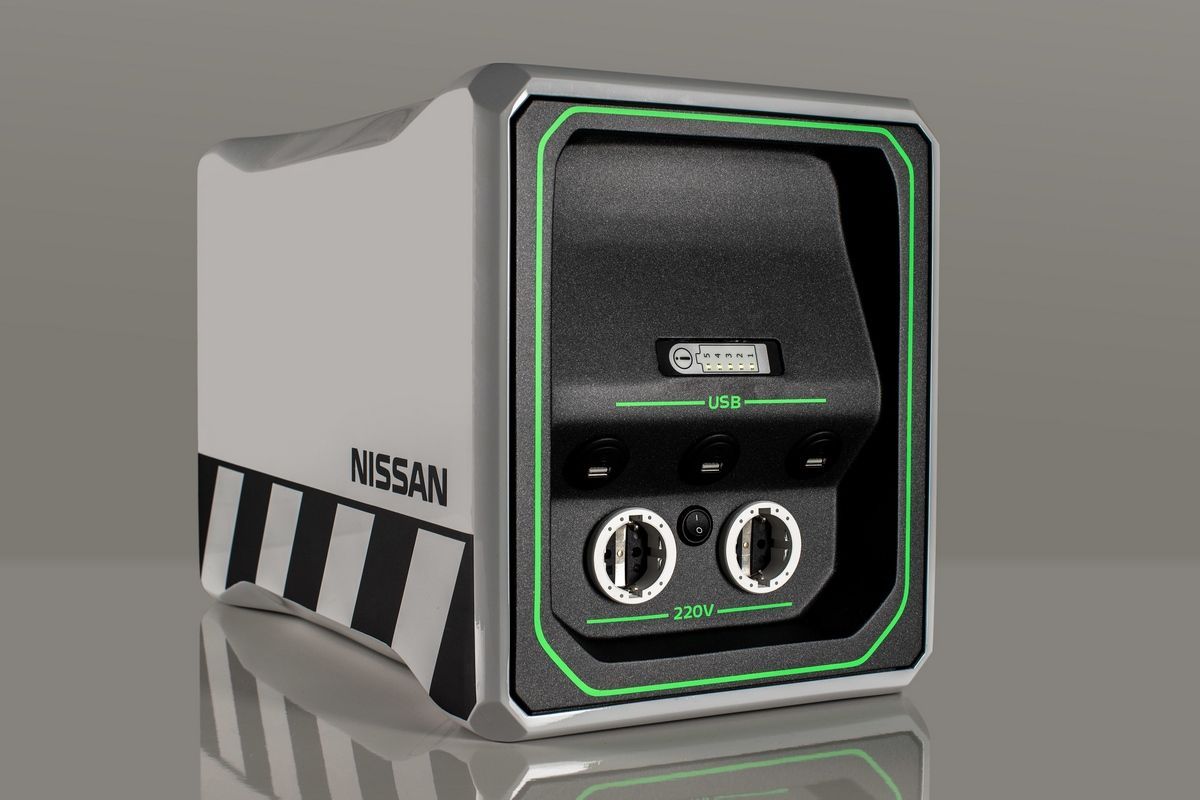
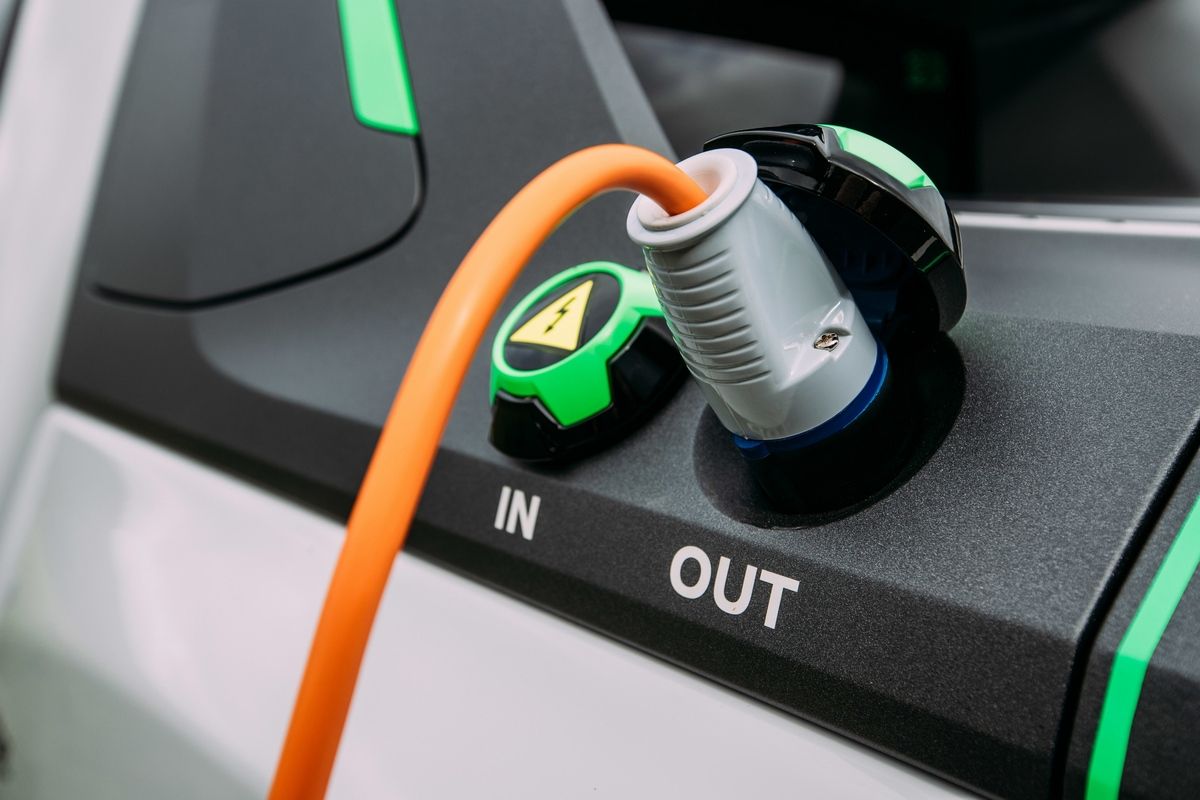
Nissan has added a twist to its new Navara bakkie with this EnGuard concept. The Concept showcases how rescue services or disaster management crews could benefit from electric vehicle technology. Using the company’s battery technology garnered from the Nissan Leaf, the EnGuard concept is fitted with portable battery packs. While the Navara is in operation the battery packs are charged by the 2.3-litre twin-turbodiesel 140 kW engine. Each battery pack is a 2 kW unit with 2 charging plugs and 5 output plugs. The battery packs basically work as a substitute for a generator, being able to power gear such as chainsaws or heavy-lifting equipment. It’s a zero-emission solution to a fuel-powered generator.
The Navara concept is configured to power/charge electric equipment used by rescue service staff.
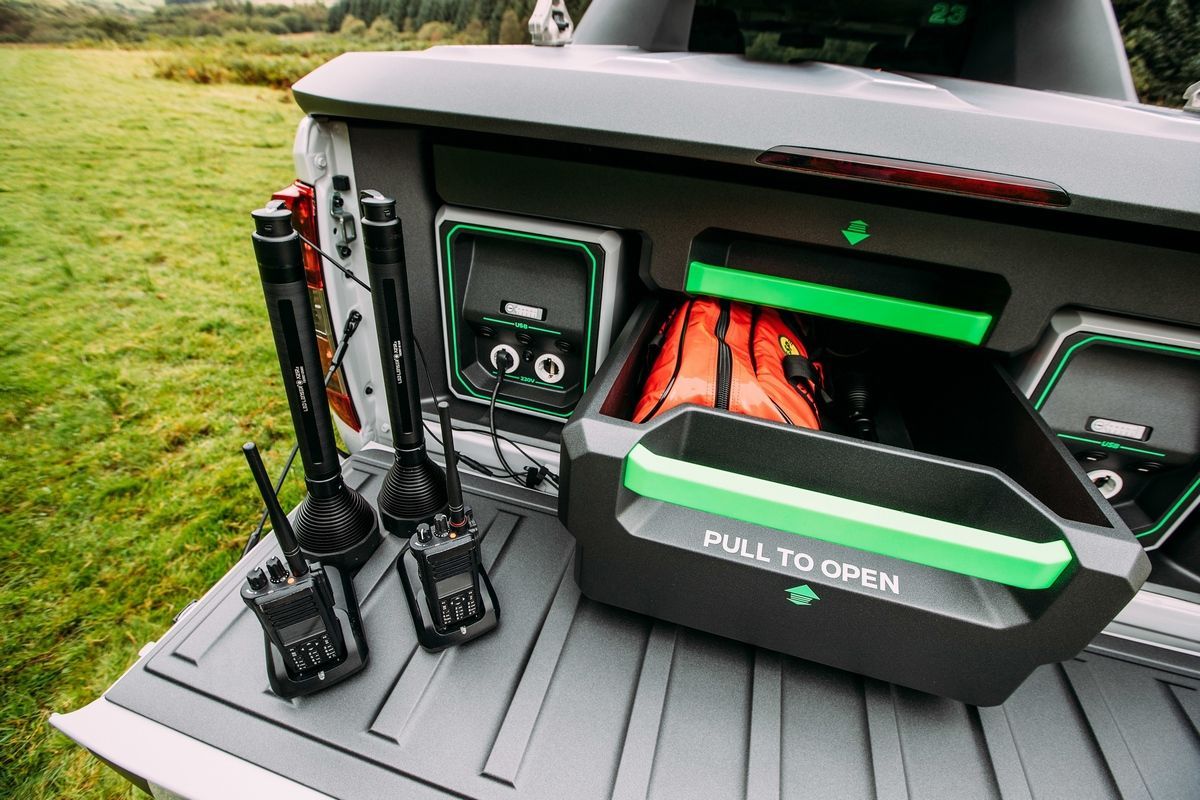
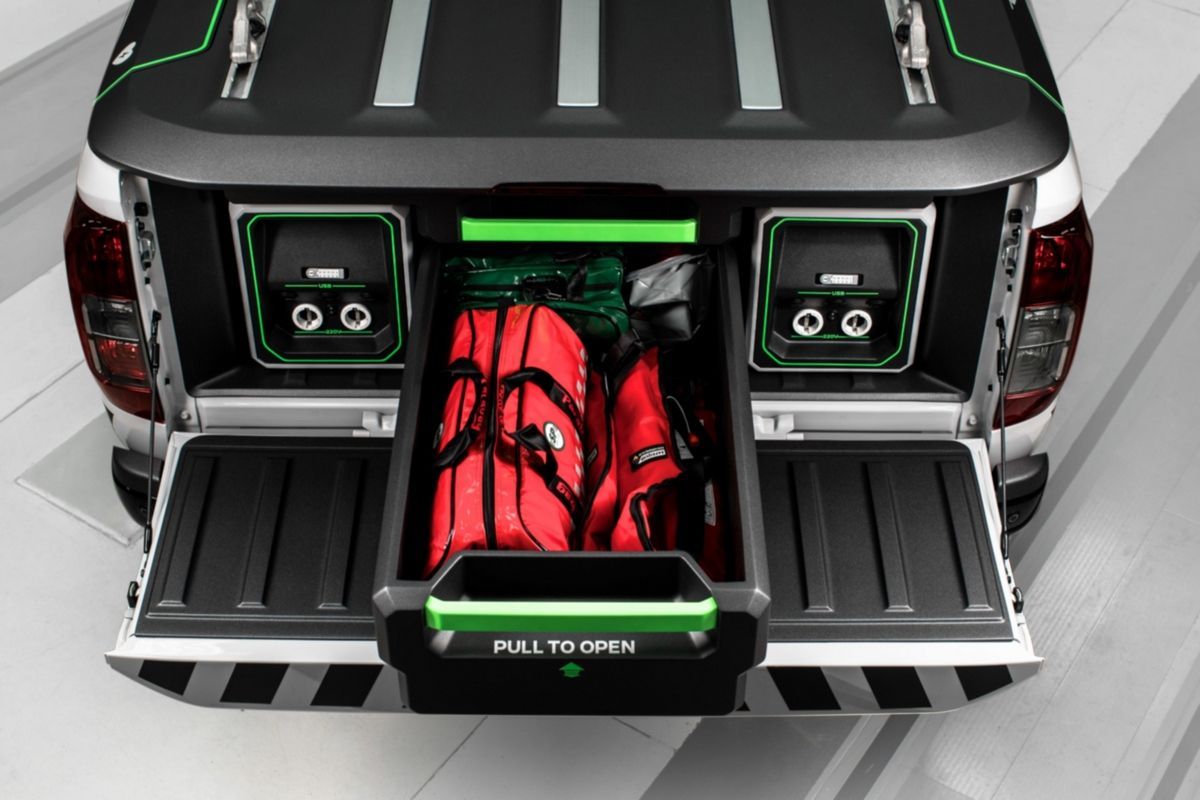
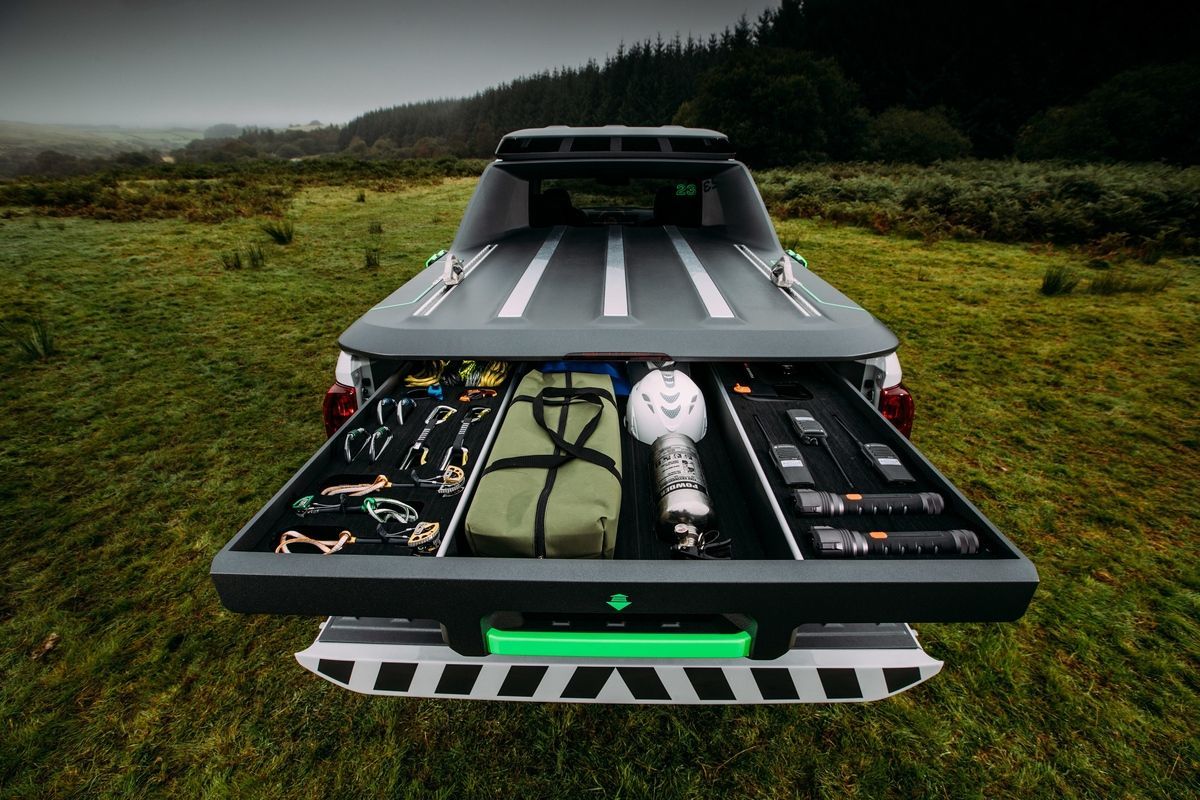
The Navara En Guard caters to specific needs of rescue services. There are 2 pull-out fibreglass trays in the load bed. The shallow upper tray contains lightweight items such as 2-way radios, ropes and an axe. The lower tray is deeper and narrower, storing larger items such as an oxygen tank and resuscitation kit, life jackets and buoyancy aids.
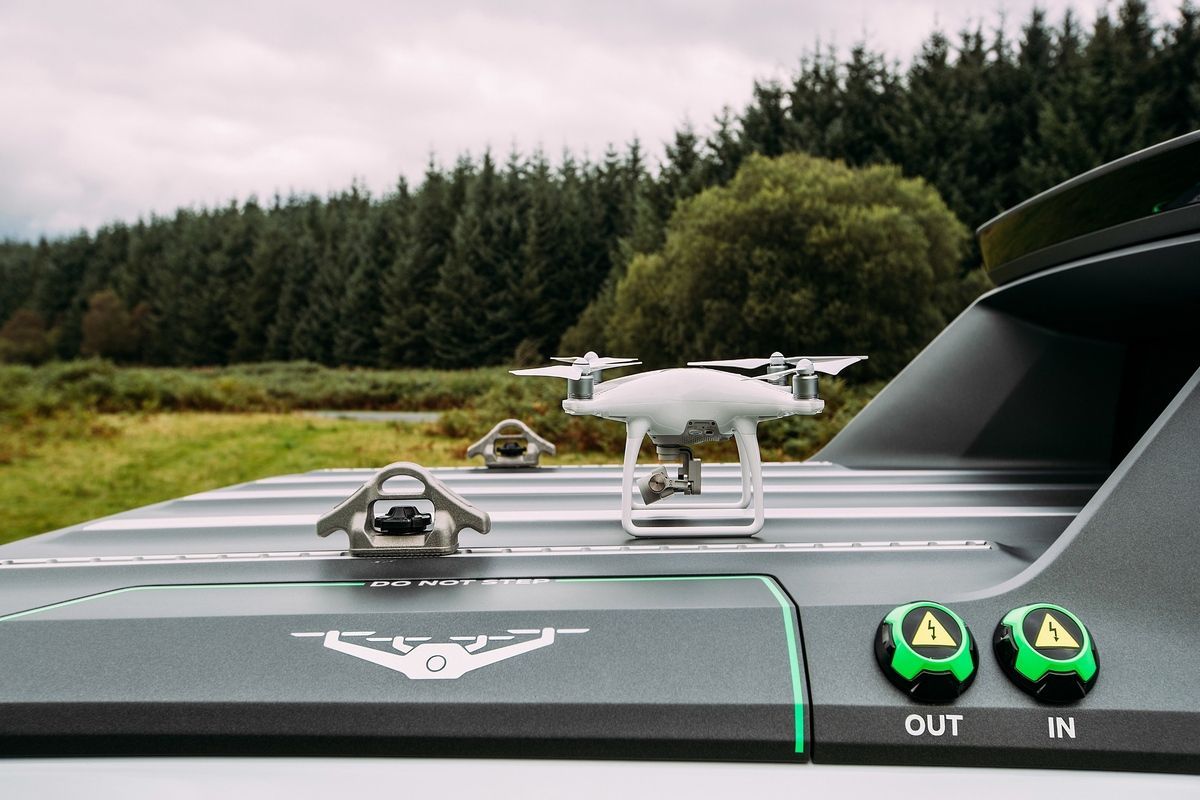
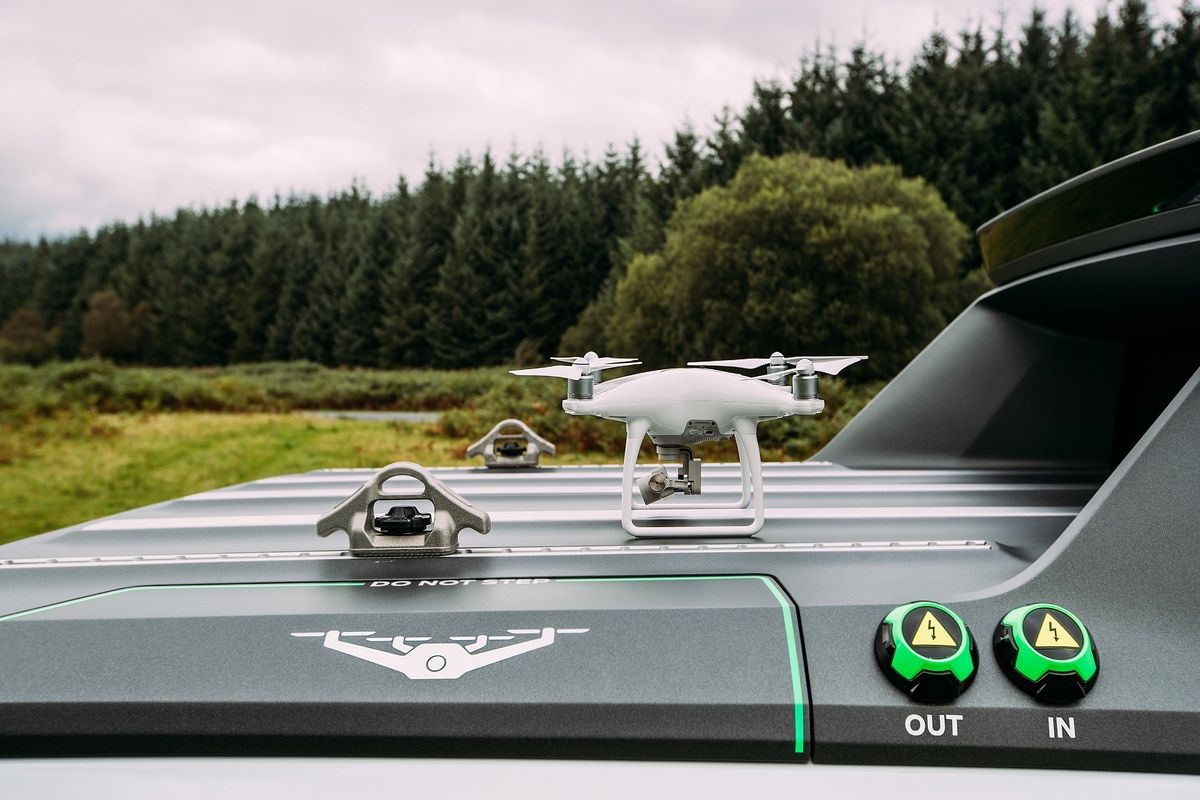
The Navara EnGuard also comes with a DJI Phantom 4 Drone with an operating ceiling of 6 000 metres. Weighing just 1.38 kg, it can fly at speeds of up to 20 metres per second for close to 30 minutes and can relay images back to the concept car. These are viewed on a pop-up HD screen hidden in the load bed wall.
The Navara concept has a bespoke fixed tonneau cover and comes with its own search-and-rescue drone.
If you think this Navara concept looks slightly bigger that’s because it is. The ride height has been raised by 50 mm and the wheel arches feature bespoke fenders with new moulded side steps between them.
The passenger compartment features a completely redesigned roofline, which is 136 mm higher than that of the standard Navara. It incorporates a 360-degree LED lighting rig, with emergency blue strobe lights fitted to the four corners and visible from any angle. Matching strobes are integrated into the top of all 4 over fenders, front fog lamps and rear light clusters.
Watch the Navara enGuard Concept being put to its intended use:
Renault Duster Oroch Double Cab (2017) First Drive
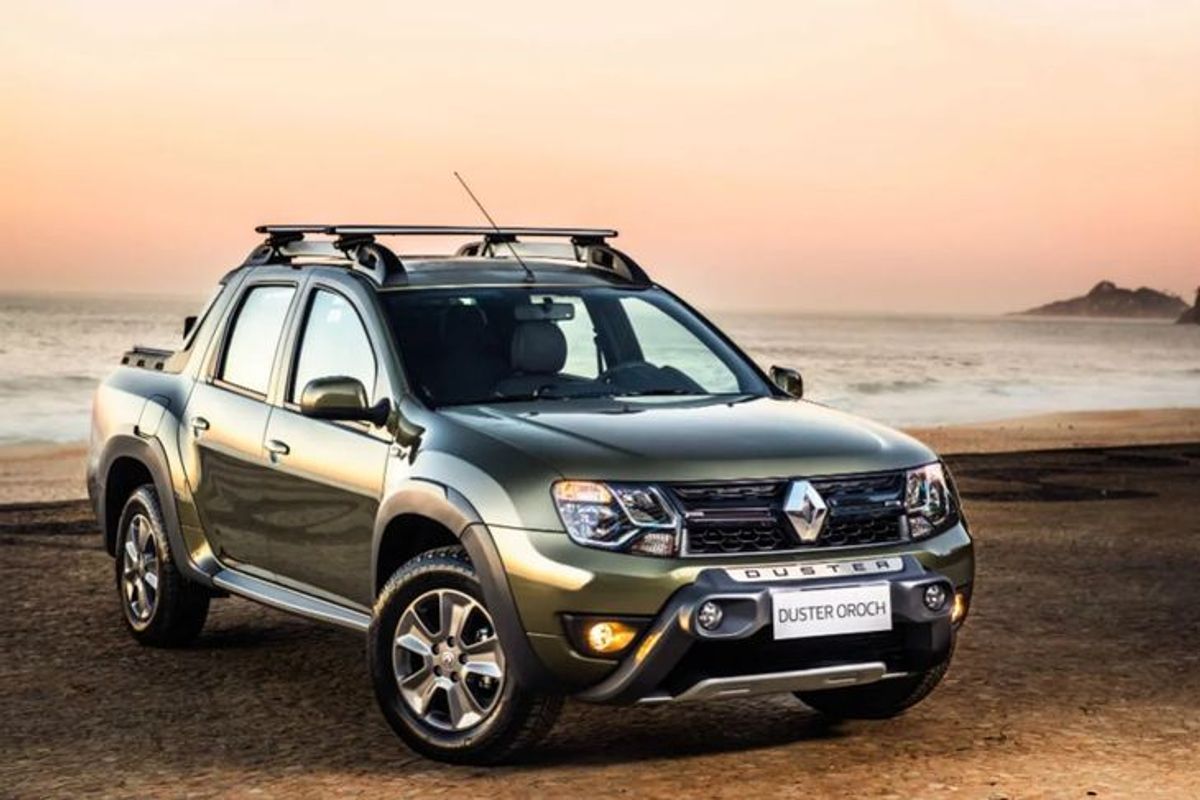
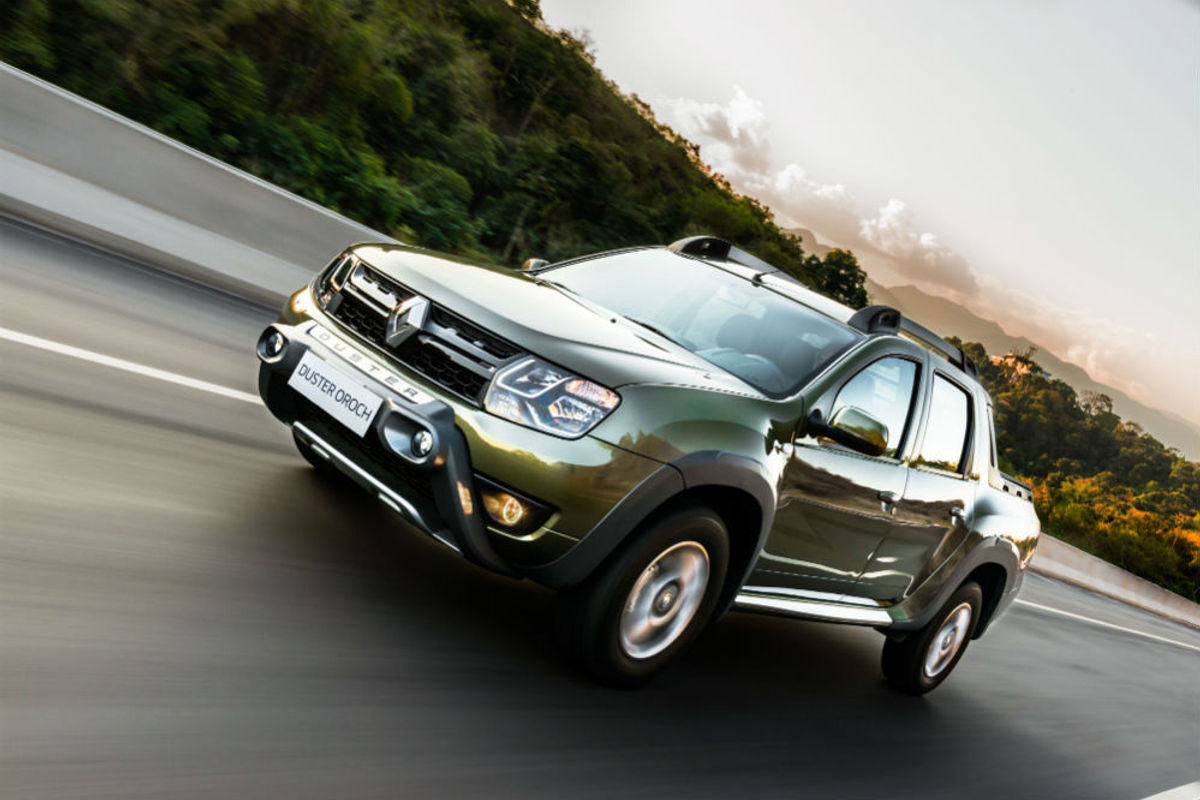
In what might be the biggest development in the small bakkie market for several years, Renault is hoping to introduce the Duster Oroch double-cab bakkie in South Africa in 2017. The vehicle, which offers the practicality of a compact car and the versatility of small bakkie, is very lifestyle-oriented and fills a particular gap in the market with aplomb, our Brazilian correspondent reports.
The Brazilian market had a bit of a headache a while ago, and from what I'm told it's one with which South African consumers are well acquainted. Small bakkies, once the darlings of small business owners and a variety of private-buyer "recreationists" are, well, small… handy as they are, they aren't suited to transporting more than a pair of occupants, at least safely. Meanwhile, most conventional double cabs are much more expensive and no longer fit in tight parking spaces.
What's the solution? Renault suggests it is called the Duster Oroch. Larger than a light bakkie and more affordable and practical than a conventionally-sized double cab, it could be perfect for other emerging markets, such as South Africa.
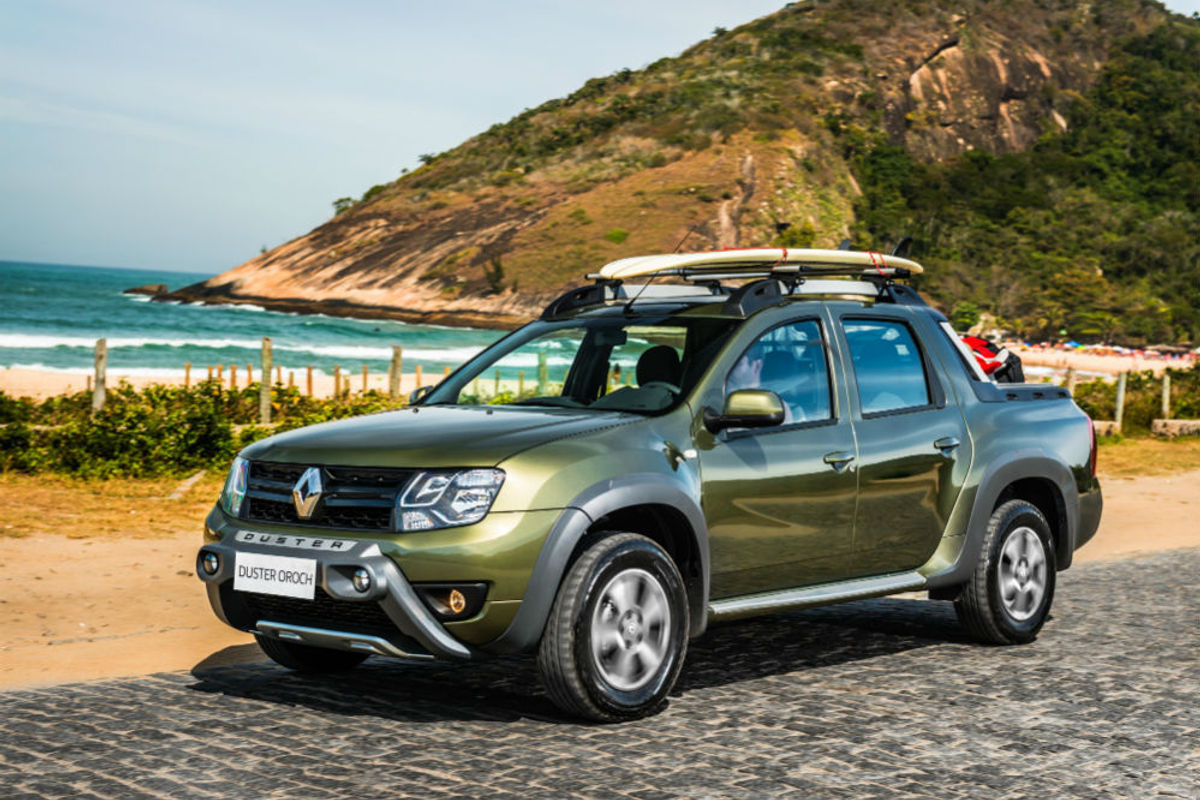
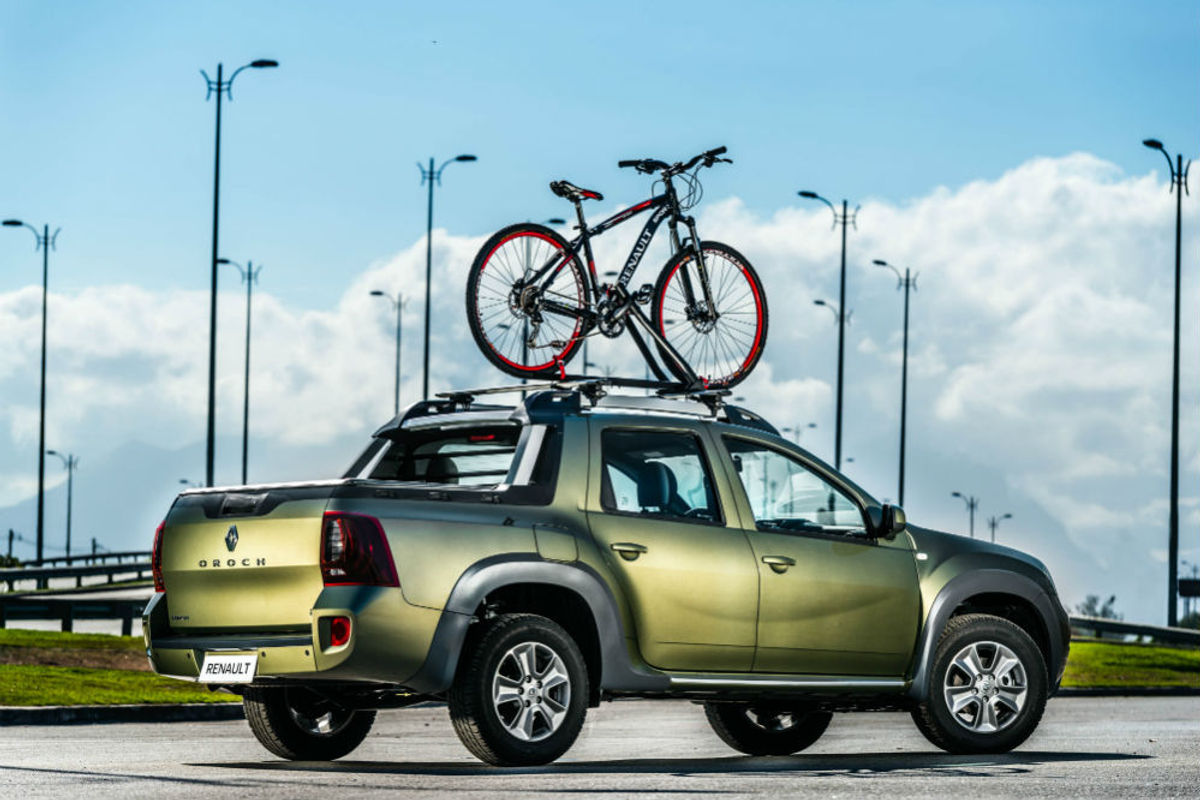
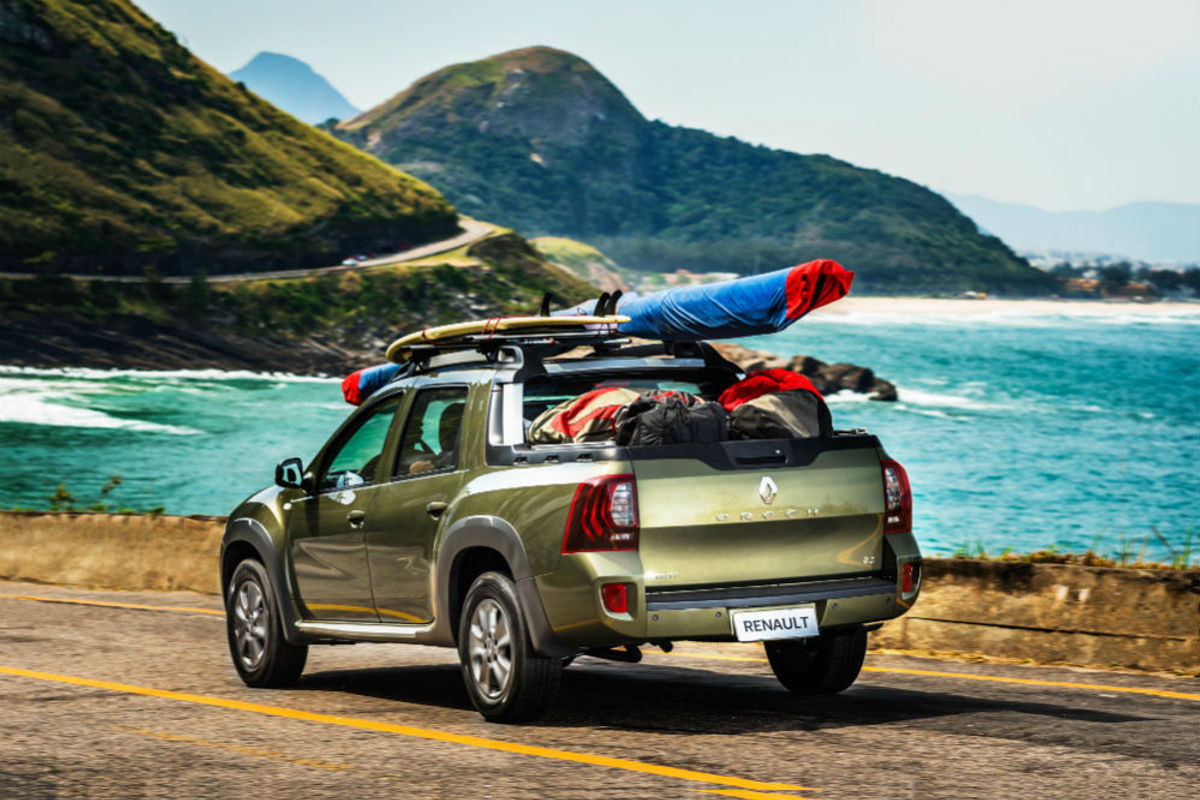
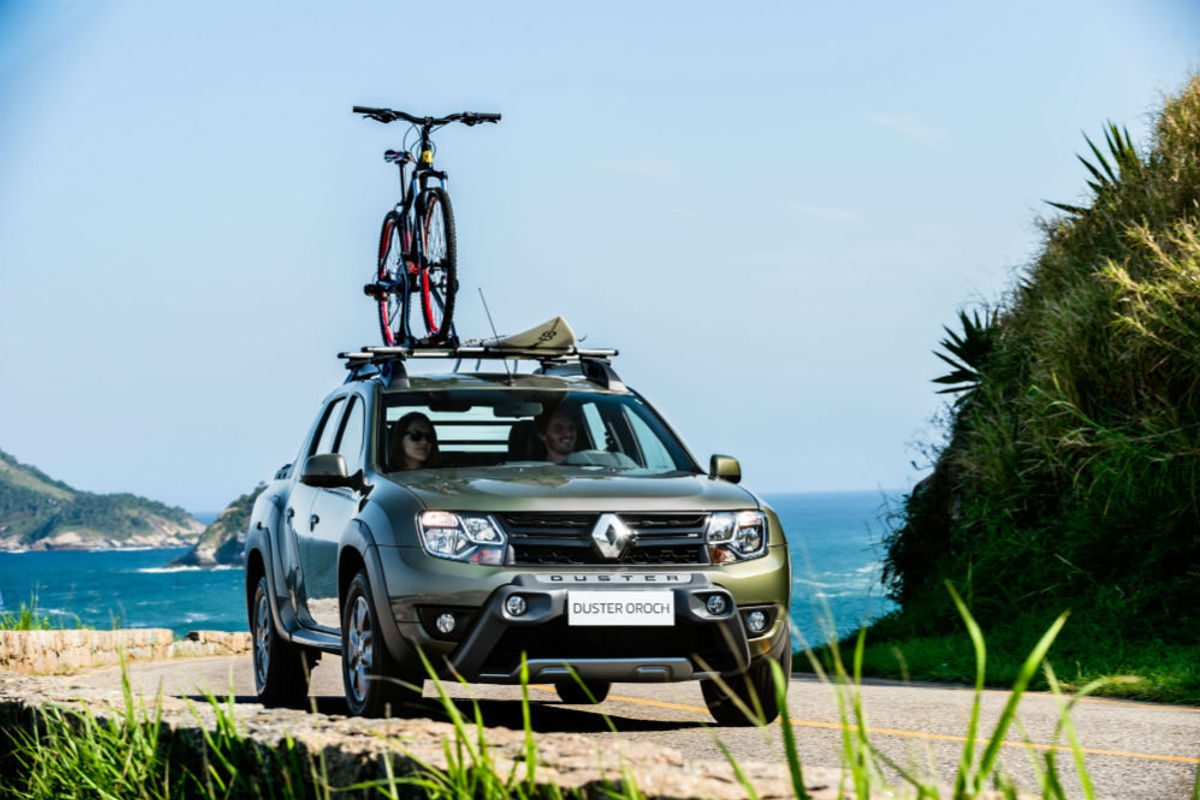
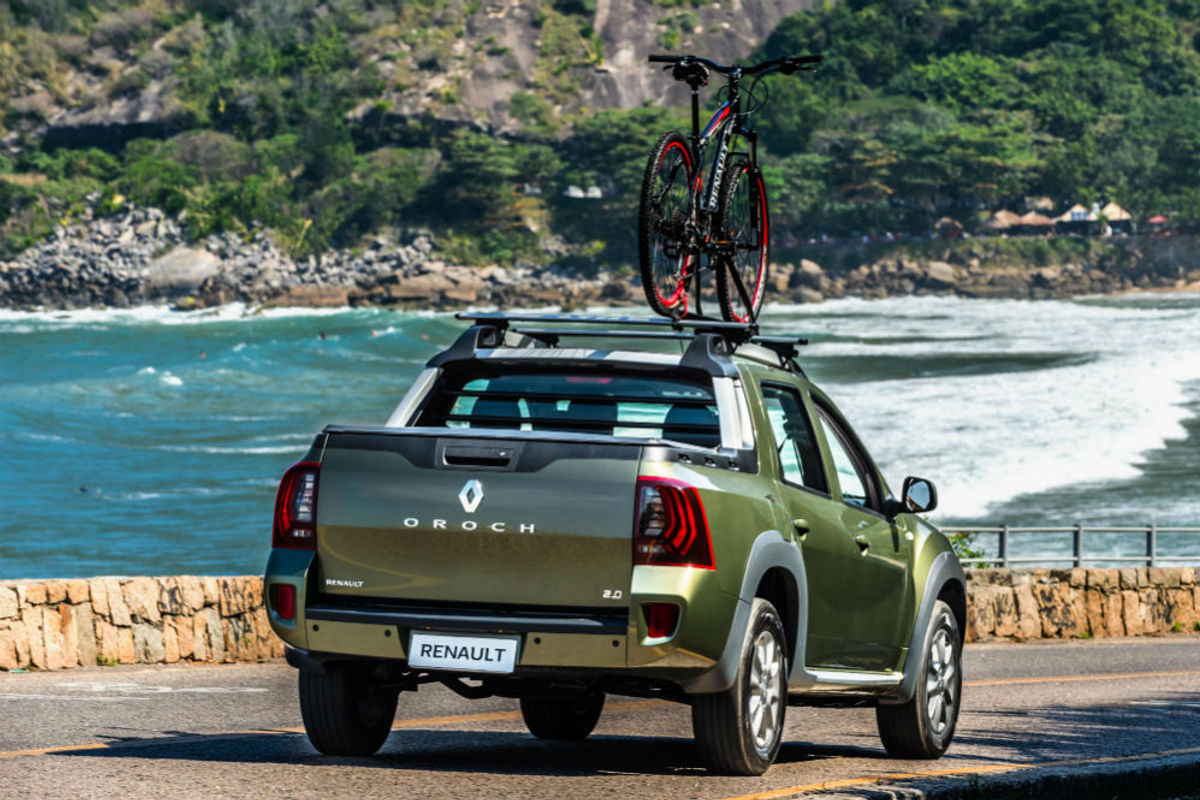
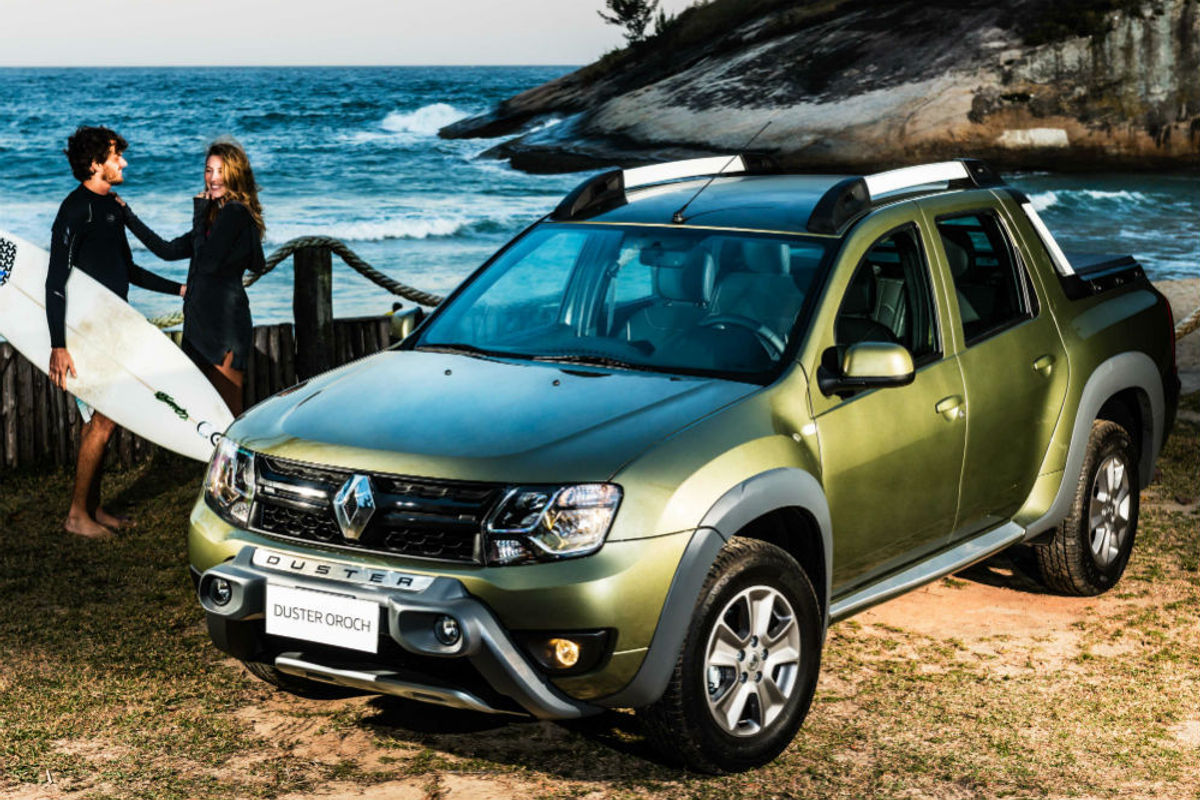
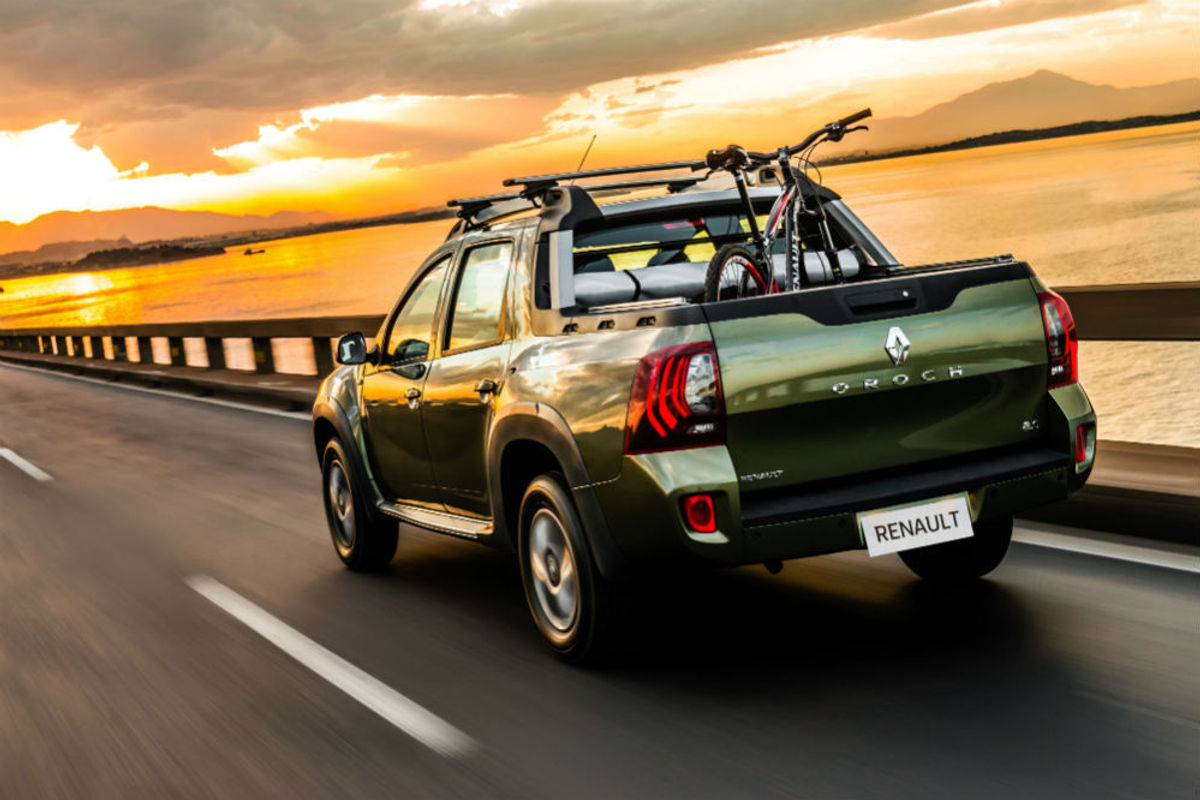
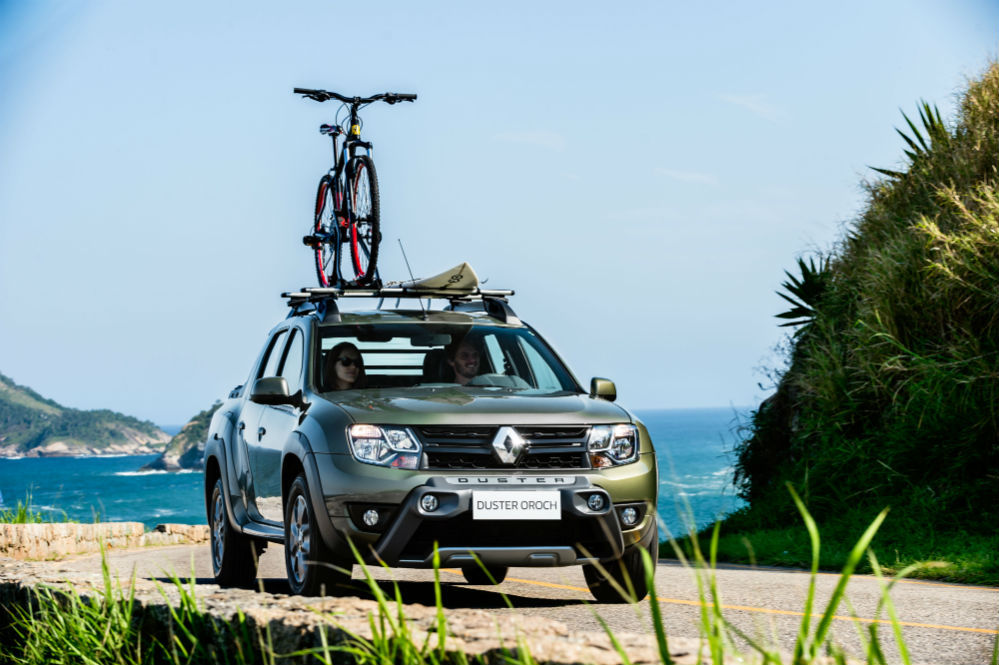
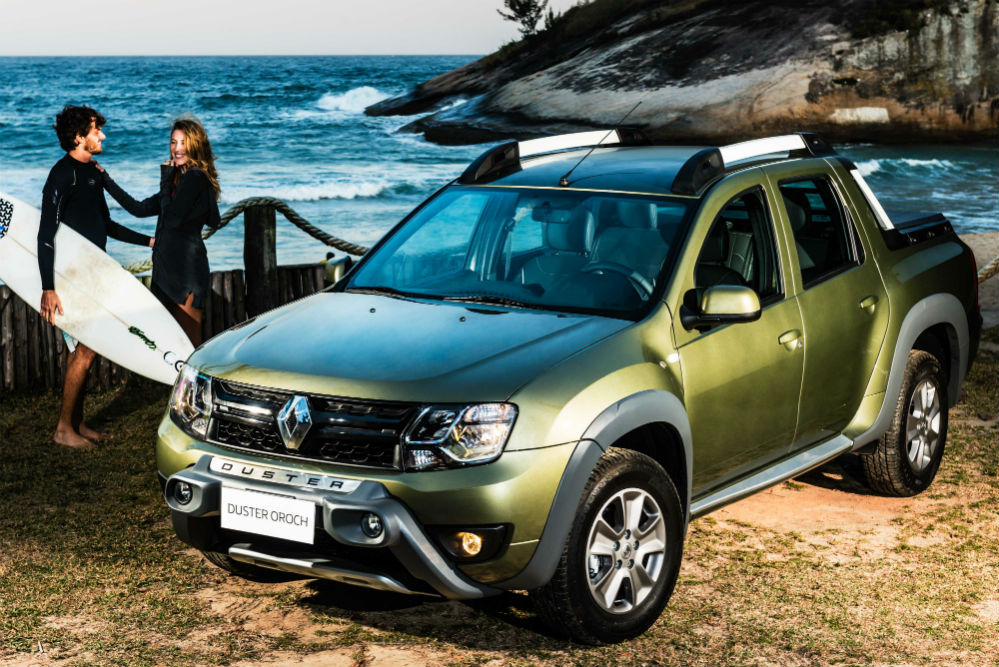
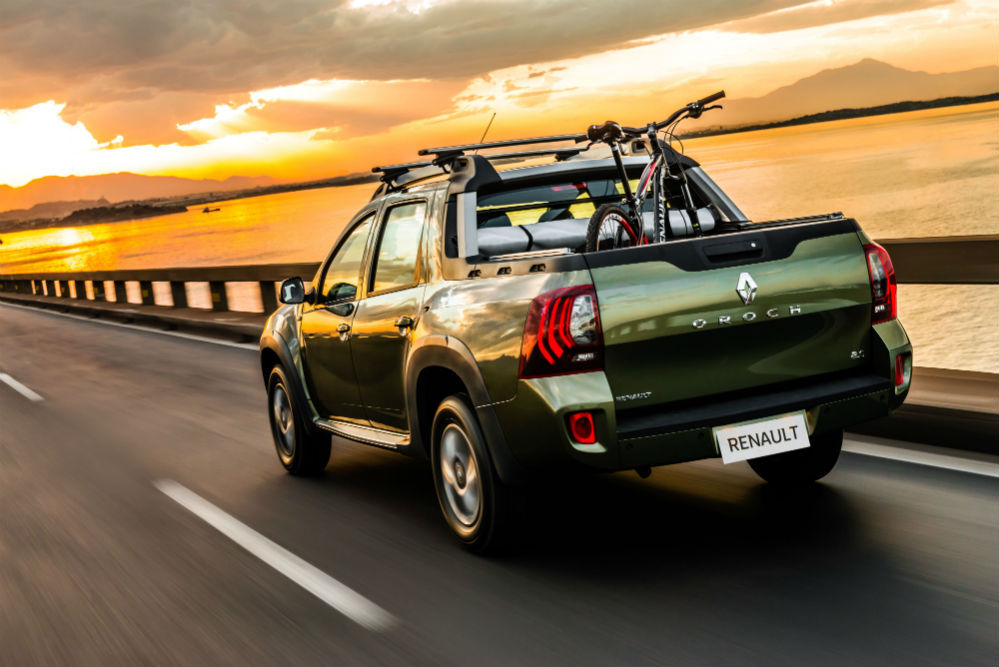
Whether you're a mountain biker or a surfer, the Duster Oroch was designed with "recreationists" foremost in mind.
There are a few countries in which a Dacia Duster is called a Renault; Brazil and South Africa are two of them. Besides sharing this peculiarity, the countries also share their need for affordable bakkies. Recognising a gap between light bakkies and LCV-based double cabs, Renault Brazil launched the Duster Oroch a year ago (the bakkie is currently only produced in Brazil, from where it gets exported to Argentina, in LHD form). Its availability in South Africa would probably depend on when right-hand-drive versions go into production in Chennai, India (where the Duster crossover/SUV is manufactured).
In Brazil, the Duster Oroch is offered with two engine options. Entry-level derivatives utilise a 1.6-litre 4-cylinder motor (81 kW at 5 750 rpm, 156 Nm at 3 750 rpm) mated with a 5-speed manual gearbox. Higher-spec derivatives feature a 2.0-litre 4-cylinder engine (105 kW at 5 750 rpm, 205 Nm at 4 000 rpm), but buyers can choose between a 6-speed manual and a 4-speed automatic transmission. There is no turbodiesel version because Brazilian law outlaws passenger cars with diesel engines (commercial trucks are integral to the Brazilian cargo transportation network and diesel is, therefore, subsidised), but considering the current Duster line-up in South Africa, we expect the local market will get 1.5 dCi derivatives.
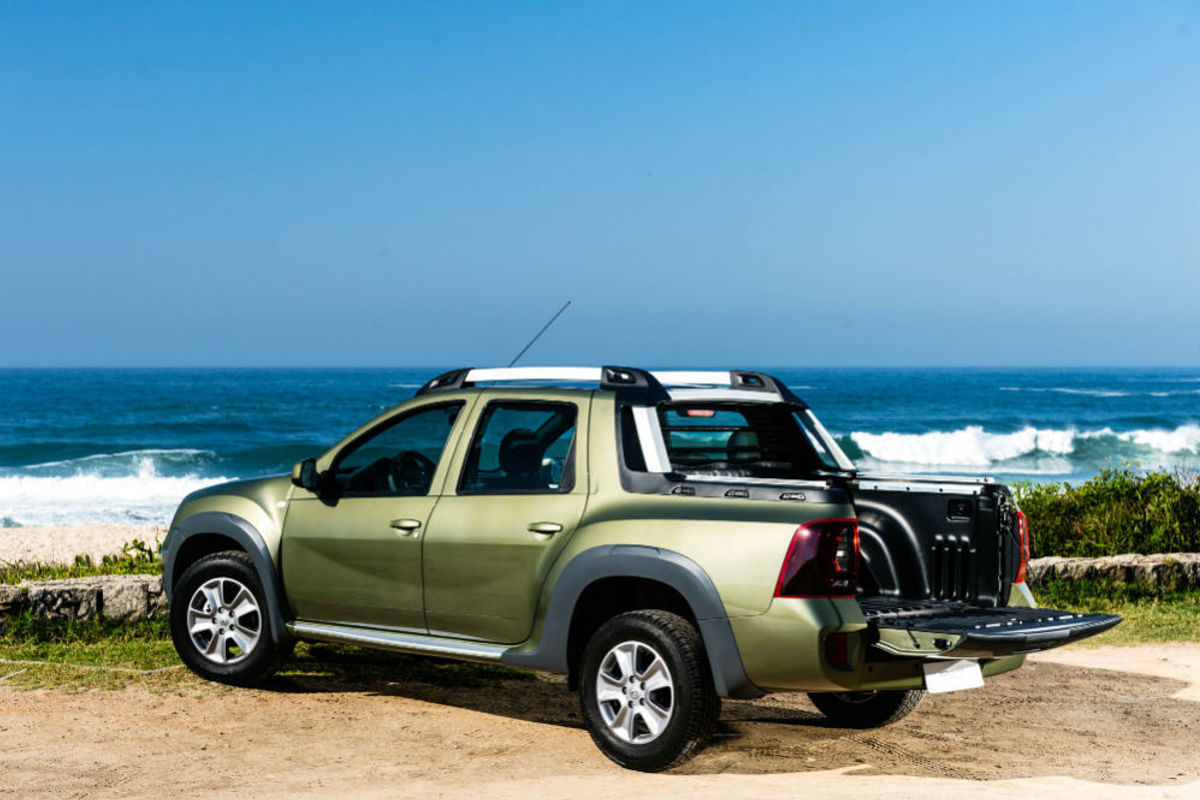
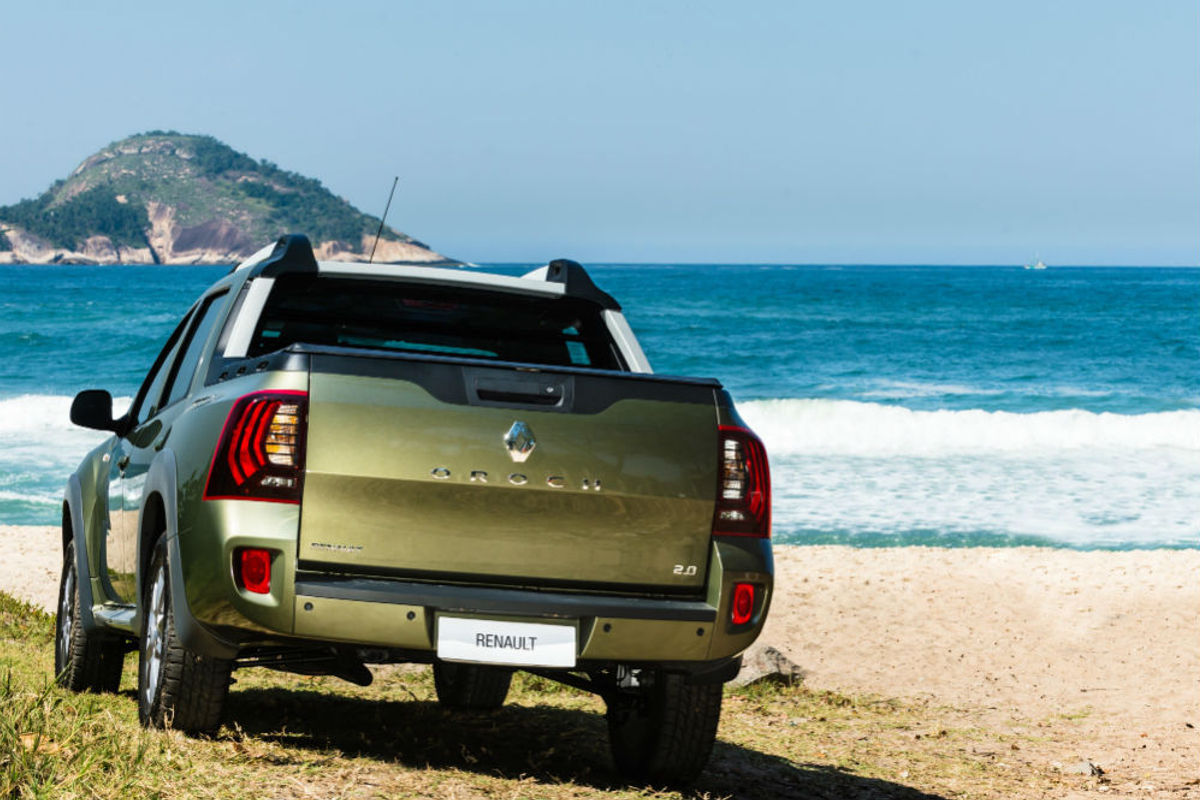
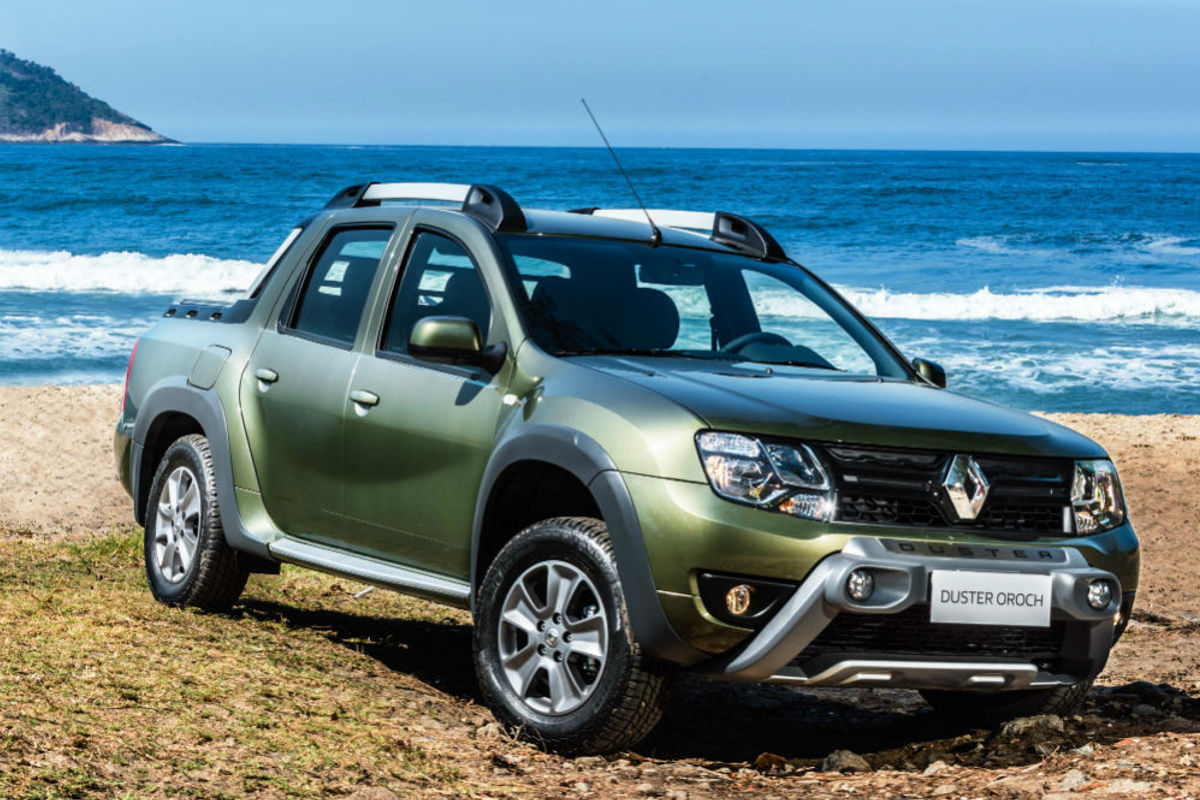
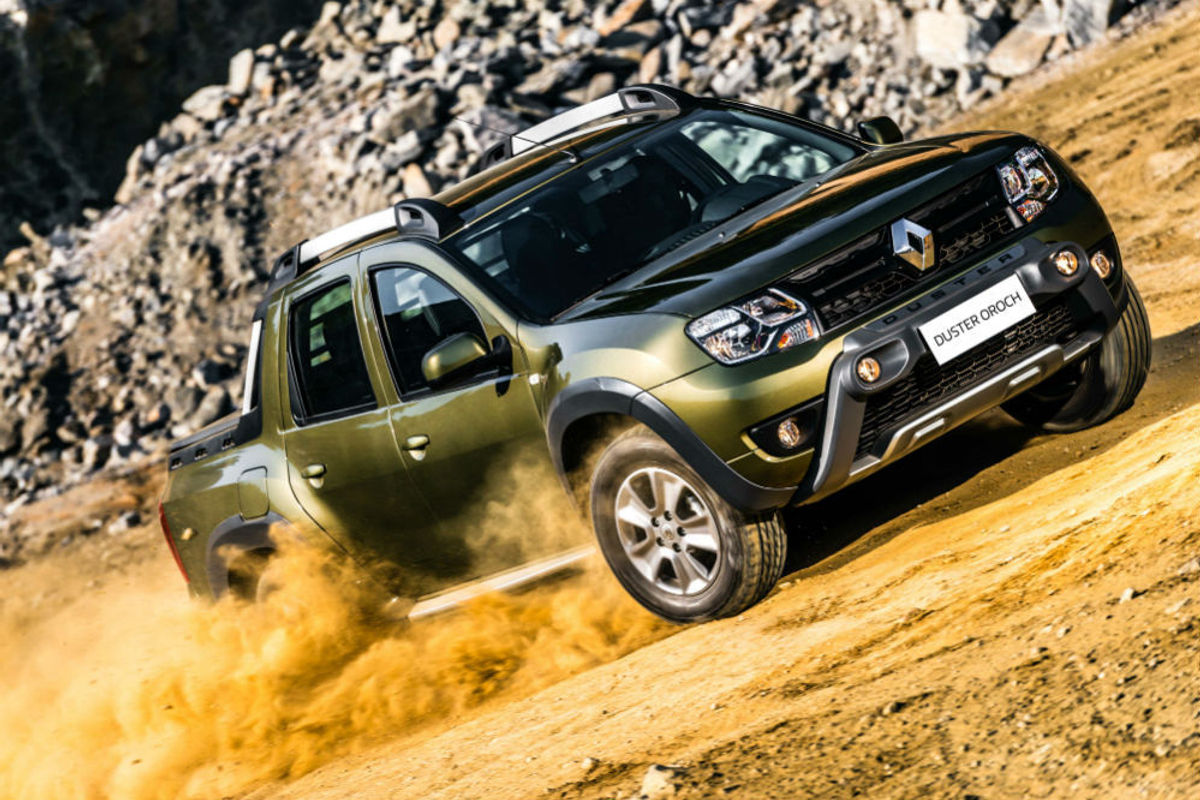
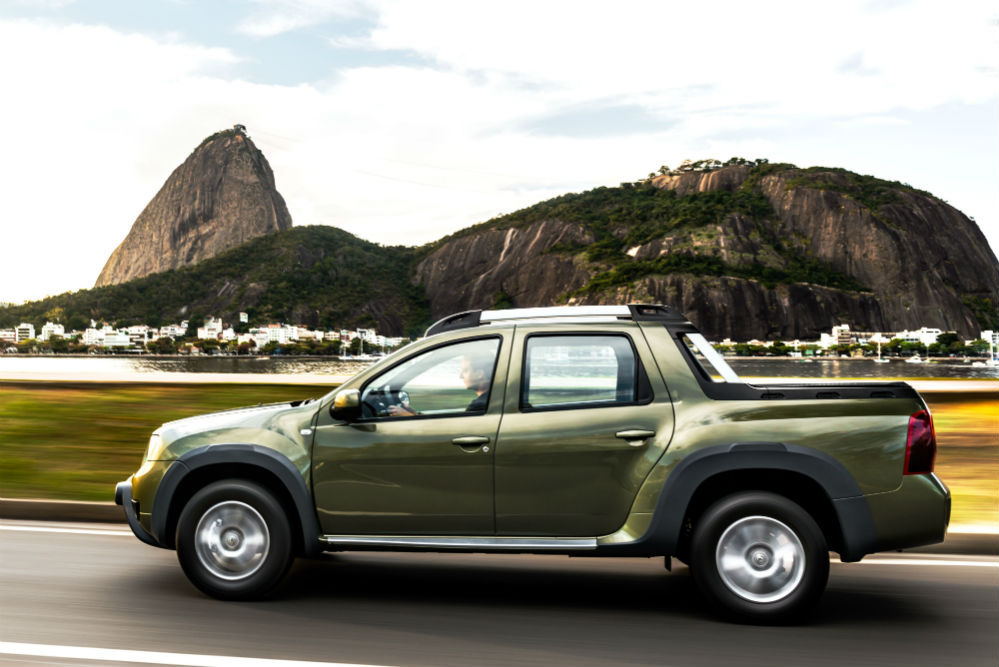
The Duster Oroch is near-identical to its crossover/SUV sibling, until you get to the end of the cabin…
A closely-rated Duster derivative
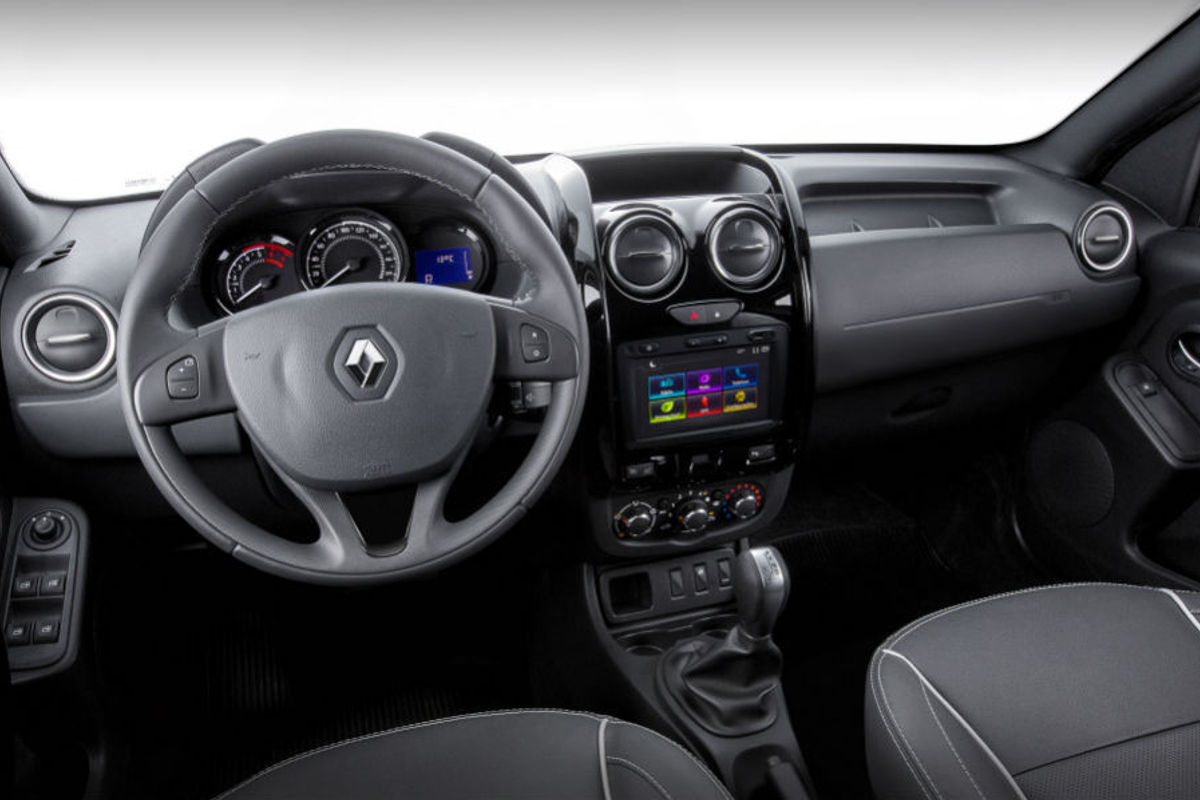
The Duster Oroch, featured here in 2.0 Dynamique trim, does not have a composite name for the sheer heck of it. The double-cab and crossover/SUV share the majority of their components. From a structural point of view, the vehicles are identical from the headlights to the B pillars (including the rear doors). This is, however, the point when things start to change, even with a different floor. Renault has used thicker metal sheets in order for the vehicle to cope with more cargo.
Instead of the 493 kg payload that the (Brazilian) Duster can haul, the Duster Oroch can deal with 650 kg (which includes passengers and driver). Therefore, if you want to travel with 4 people on board, you can't overfill the load bed. Imagine carrying five adults that weigh 80 kg each: you will have 400 kg in people, leaving 250 kg for whatever you want to haul.
The Duster Oroch's front-wheel-drive unibody construction does not lend itself to lugging a full complement of passengers as well as a heavy load, but hauling luggage is not a problem.
That sounds like quite a compromise, but Renault would probably say the Duster Oroch will be required to carry cargo when no one (besides the driver) needs to be transported and will haul luggage (and other detritus) instead of goods when the entire family goes on holiday. Yes, some people may overload the Renault; lest we forget it remains a unibody vehicle.
Longer than the crossover
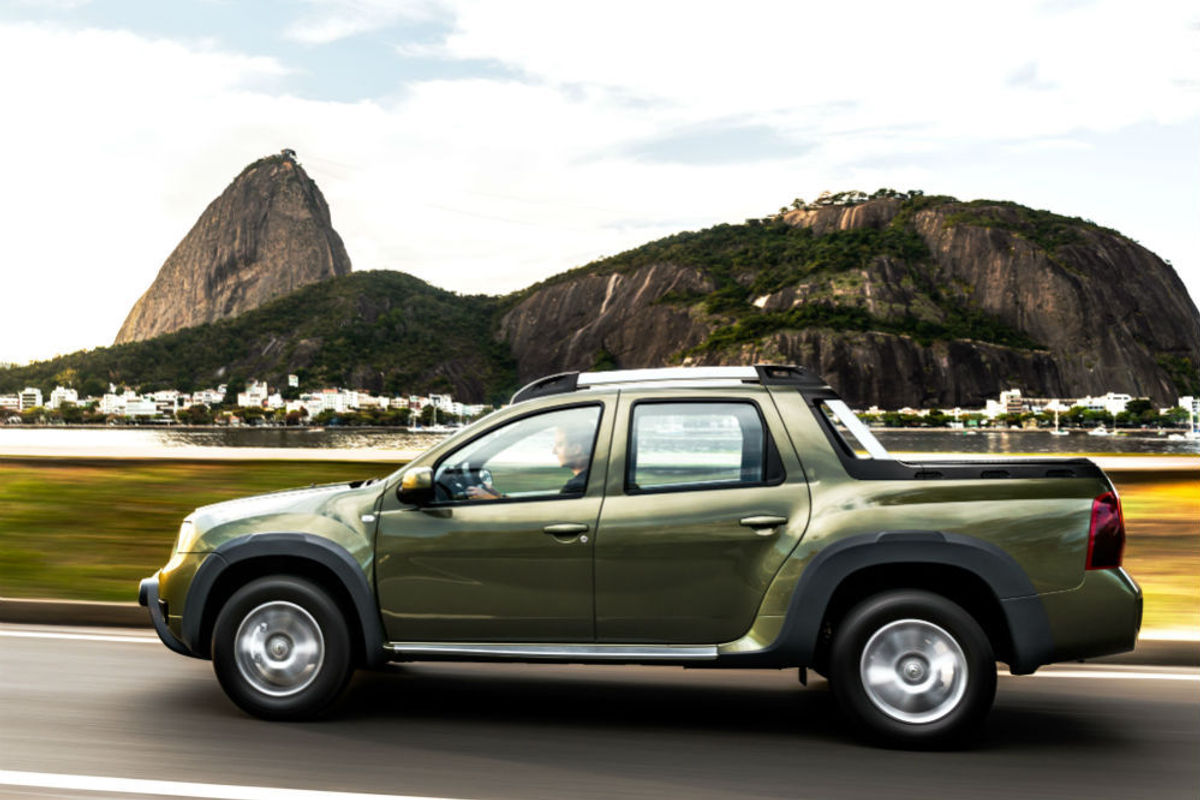
The Duster Oroch does, however, have a longer wheelbase than the crossover/SUV on which it is based (2.83 metres versus 2.67 metres), but their cabins are the same size. Why? The Duster's cabin is decently sized and comfortable enough as it is – and the increased wheelbase is required to better balance whatever is loaded onto the back of Oroch.
There is no shortage of "off-roader cladding" on the Duster Oroch… even if it is just for show. Note the integrated spotlights.
When you consider that the Duster Oroch is a front-wheel-driven bakkie, too much weight behind the rear axle could make the M0 platform lift its front end off the ground, or at the very least cause traction problems for the bakkie on uphill climbs.
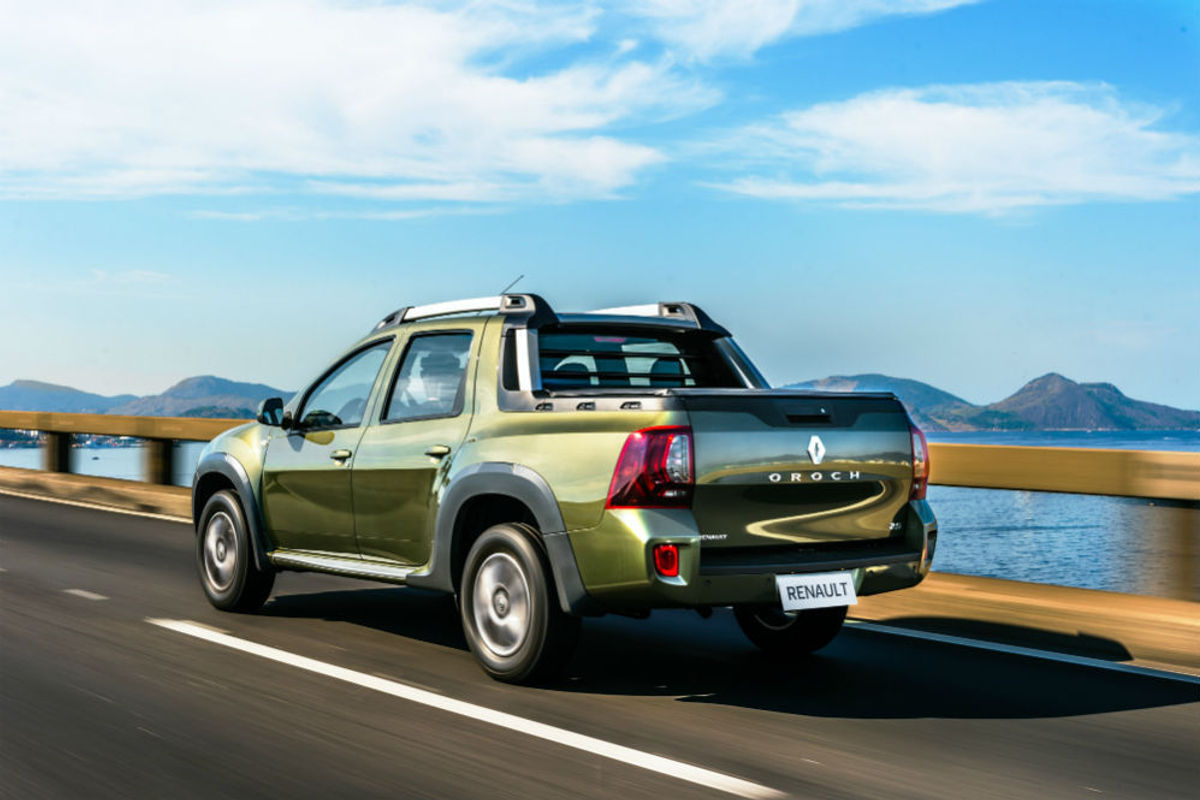
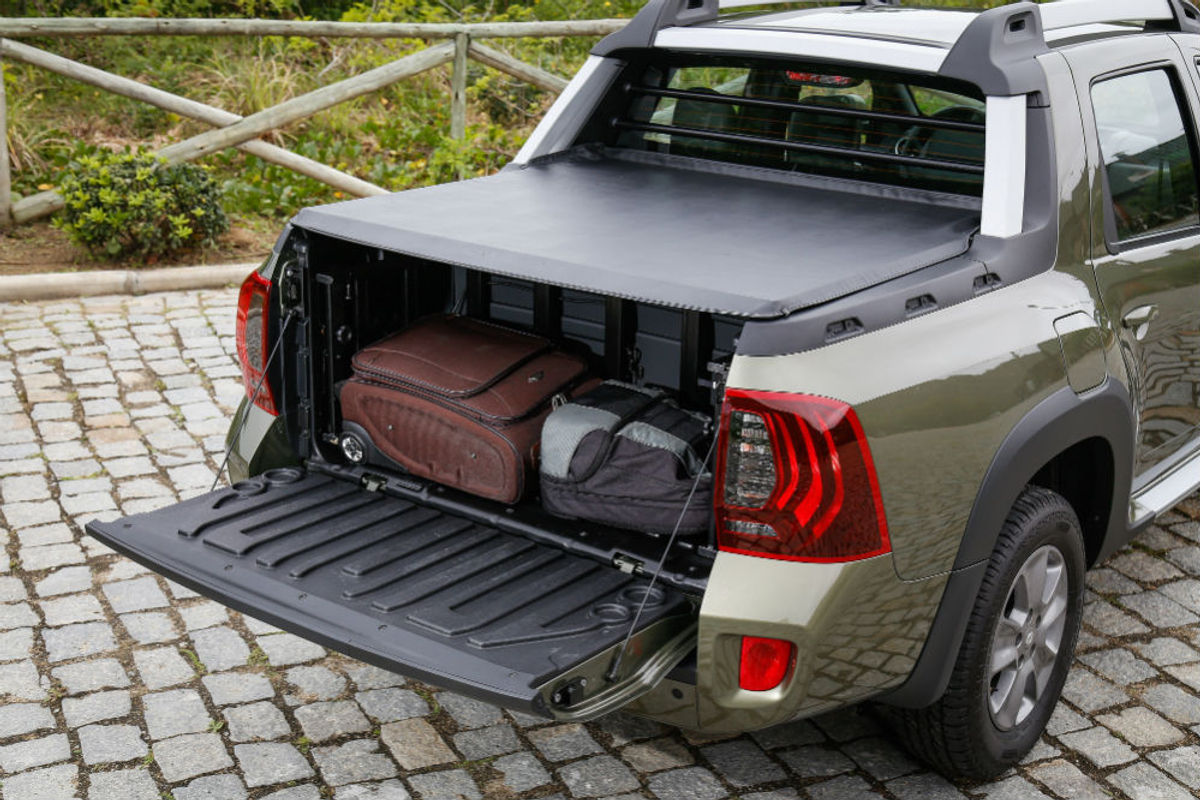
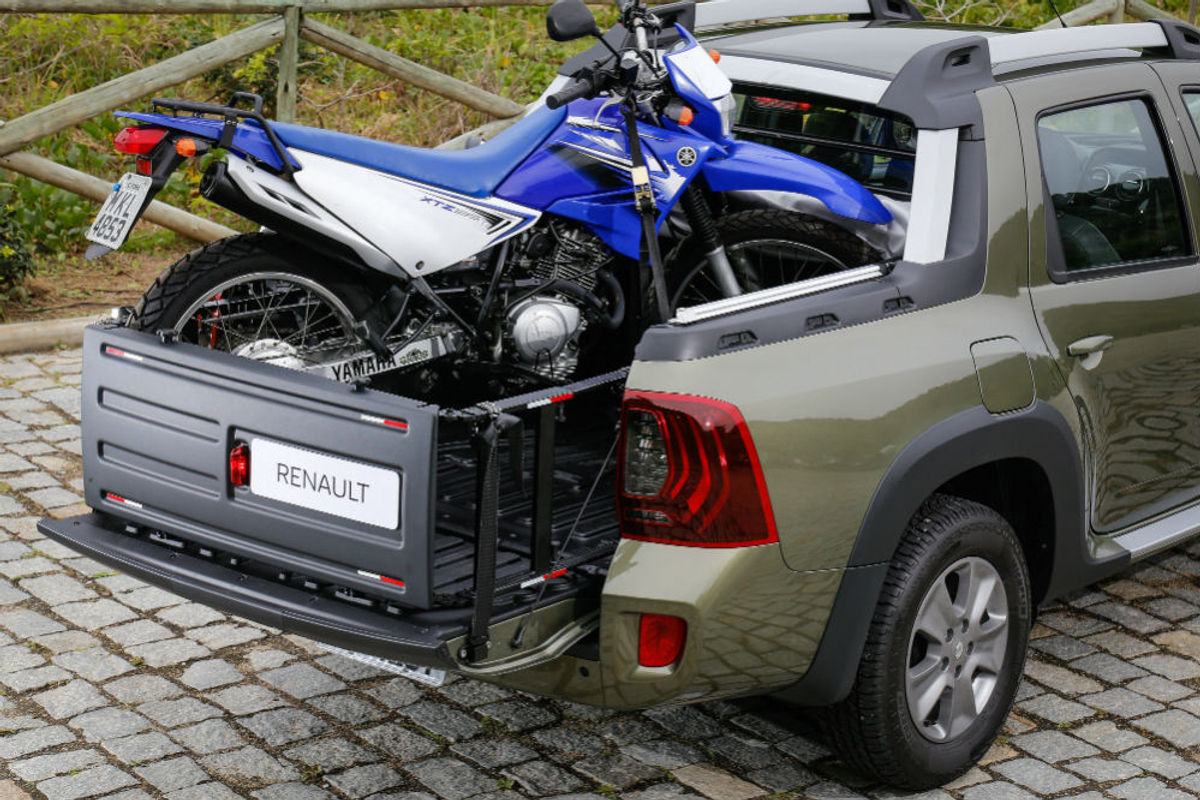
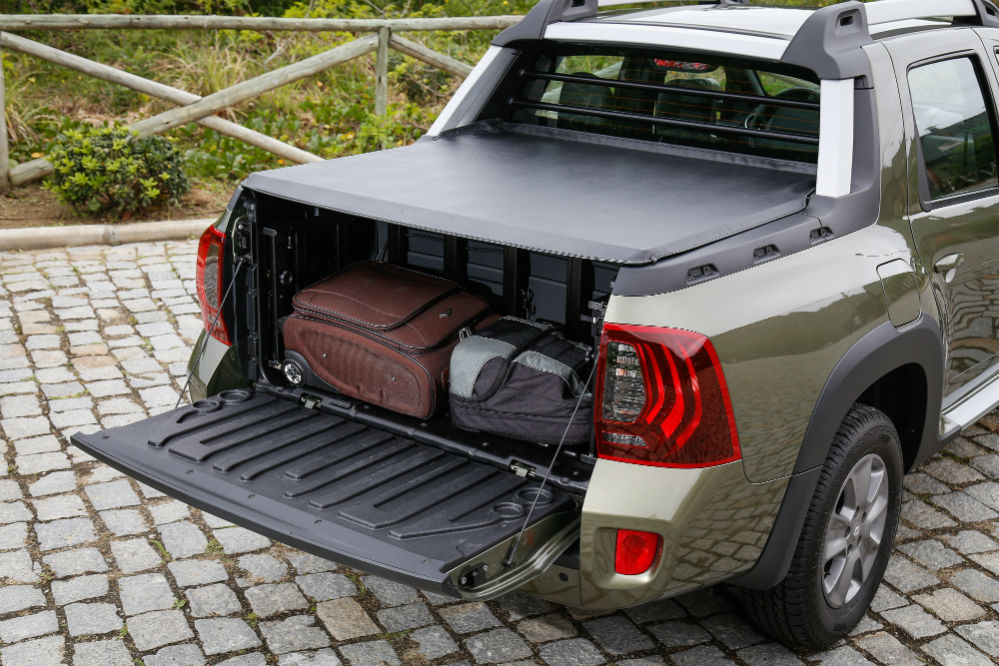
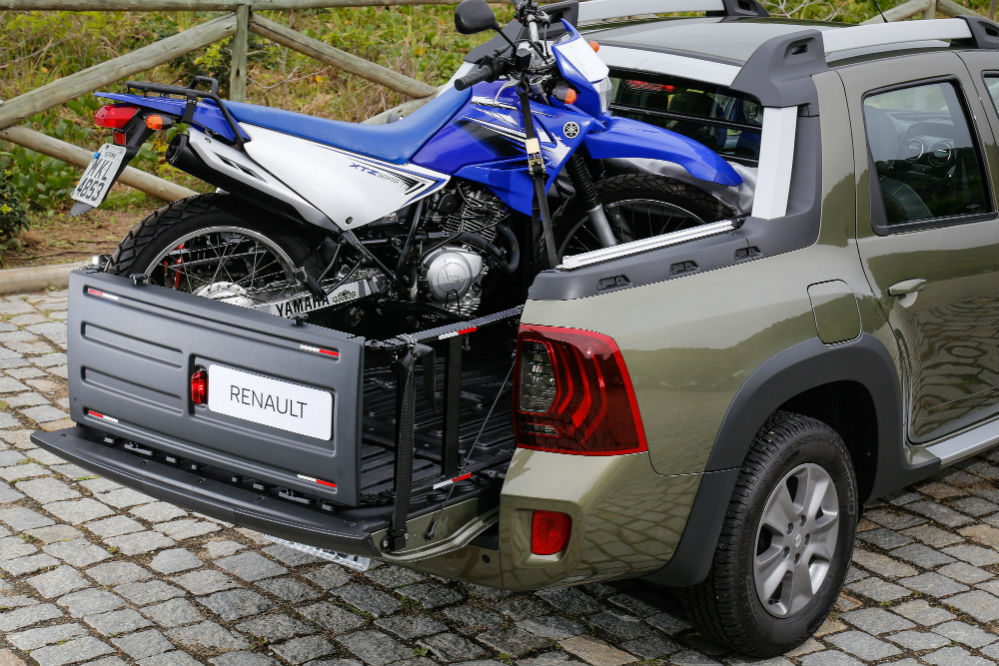
The load bed is 1.17 metres wide, 1.35 metres long and 43 cm tall. In case you need to carry longer objects (2 metres long, placed longitudinally), such as a motorcycle, Renault sells a bed extender as an accessory. With it, the tailgate supports a bed-floor drawer that prevents cargo from falling out and can also be used as a ramp for putting a motorcycle on the bed.
The load bed extender option will suit a dirt bike enthusiast to a tee.
Best of the Duster, worst of the Duster
One of the best things about the Duster Oroch is that it is affordable and roomy, just like the crossover. It is cheaper than a conventional double-cab and, in some cases, can cost even less than a light bakkie. One example is the Fiat Strada, the best-selling small LCV in Brazil. In Adventure trim, it costs R$72 050. The Duster Oroch starts at R$67 400.
As it is only 7 cm longer than a Toyota Corolla (for example), the bakkie is easy to park in most places (for the record, the Duster Oroch is also 1.82 metres wide and 1.70 metres high).
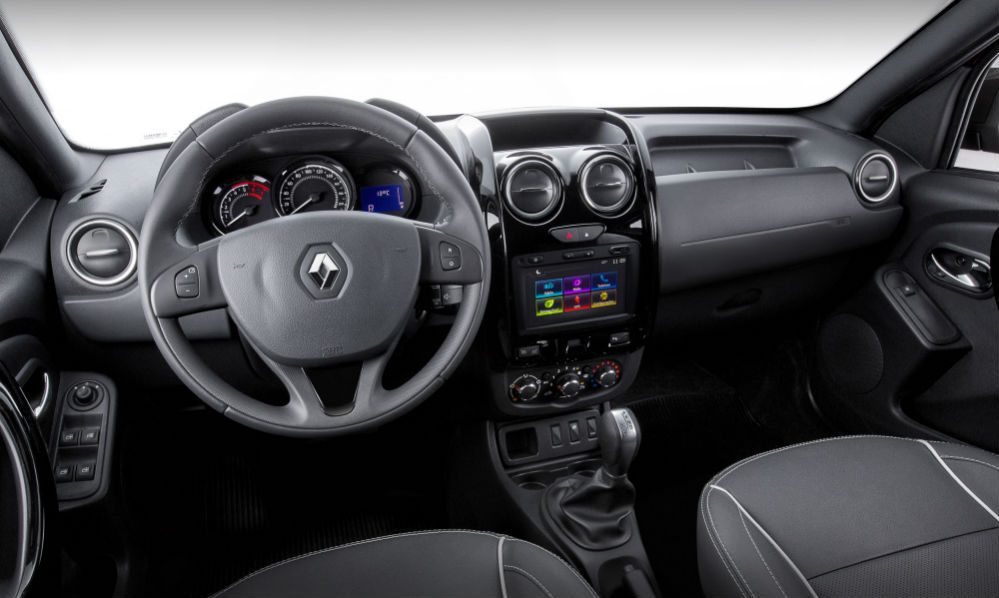
Inside, its cabin is not different to the one you find in a Duster, but that is both a good and bad thing. Let's start with the gripes: ergonomics aren't great… The side mirrors' adjustment console is under the handbrake lever, for example. Another aspect that should have been addressed by Renault is the location of the touchscreen infotainment system; it does not fall readily to hand and reading it requires you to take your eyes off the road, so it can be a worrying distraction for the driver.
Using an aged fascia design helps to bring the Duster Oroch's production costs down, but ergonomic issues remain.
The good news is the Oroch offers the best of its Duster sibling too, such as an independent multilink rear suspension. It adds to the bakkie's production cost, yes, but delivers a pliant ride quality. We did not evaluate the Oroch fully loaded, unfortunately, but in regular use, the bakkie feels the same to drive as the crossover.
Of course when you look in the rear-view mirror and see the tonneau cover and a pair of black bars behind the rear screen you're quickly reminded that you are driving a pick-up! But that familiarity is really a feather in the Duster Oroch's cap, even if the vehicle on which the bakkie is based has never been regarded as one of the most engaging vehicles to drive.
By bakkie standards, the Duster Oroch has a forgiving ride quality, even if the suspension is a bit noisy.
The suspension offers a comfortable ride, but it is a trifle noisy. On rough tarmac, you will only realise that a wheel has struck a pothole due to the knock that emanates from under you. Although the Duster Oroch is not sporty, its handling is surprisingly deft. Had it not been for the high seating position, some drivers would probably tackle corners with more zeal.
Meanwhile, the Duster Oroch's 2.0-litre engine is not the most powerful unit on the market, but it is more than enough for the unloaded bakkie. There is plenty of torque at low revs and the Renault can maintain a steady 120 kph with very little effort. The electro-hydraulic power steering provides good assistance, especially in parking manoeuvres, but it's bereft of feel.
The re-imagining of the Duster has not coincided with improved sound insulation either, unfortunately. As is the case with the crossover, above a certain speed (around 90 kph), wind noise can be intrusive.
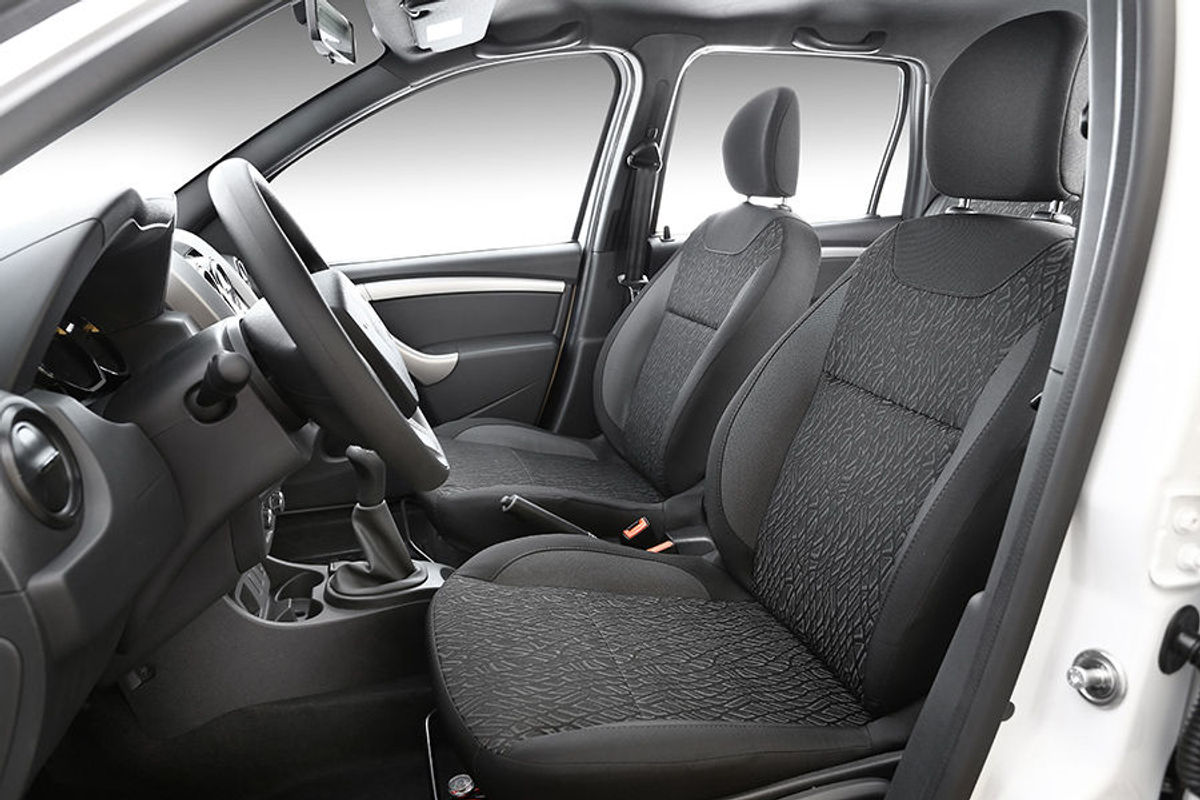
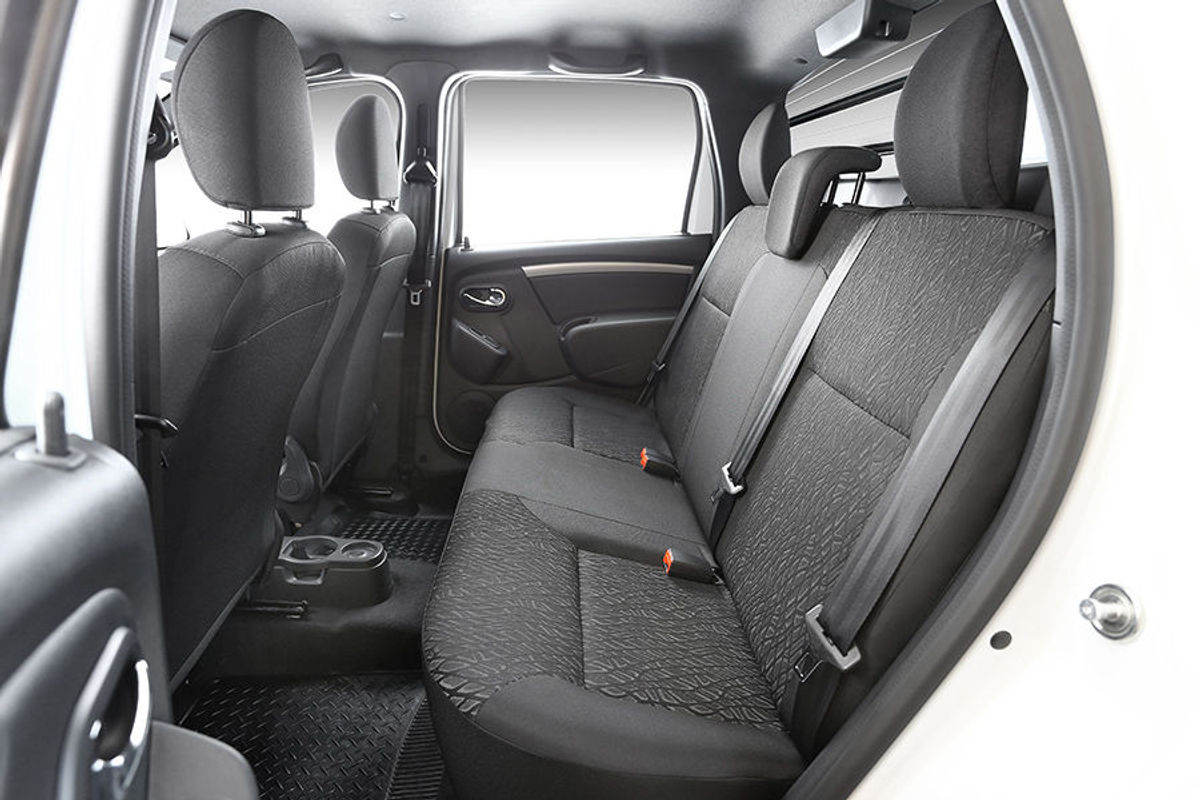
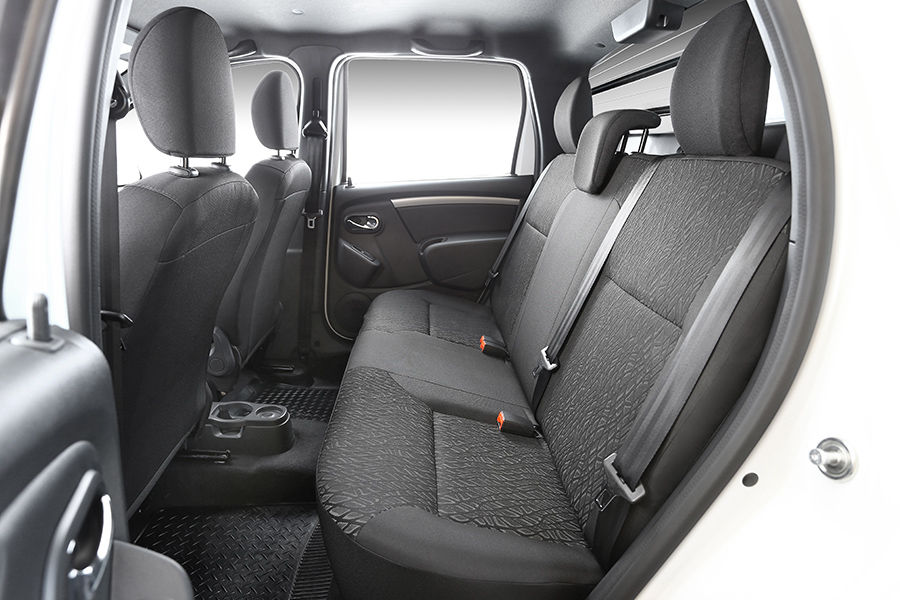
As is the case with the Duster, the bakkie can seat rear passengers in comfort. It is a major advantage!
Summary
Renault has been extremely savvy in creating the Duster Oroch. It's more comfortable and versatile than a small bakkie (such as the Chevrolet Utility and Nissan NP200) and (should be) more affordable and practical than the majority of double cabs on the market. Renault South Africa is understandably keen to introduce the bakkie to the local market and given the prospect of the Alaskan double-cab arriving here (eventually), the French marque may establish itself as a bakkie brand!
There are admittedly shortcomings to the product, most of which pertain to the Duster crossover/SUV too, but fortunately for Renault, South Africans are happily accustomed to the compromises associated with owning and driving a bakkie. In Brazil, the Duster Oroch even has competition in the shape of the Fiat Toro, which has attracted a whole lot of customer attention.
Granted, it may not be a 4-wheel-drive, but as a lifestyle vehicle the Duster Oroch offers a special blend of traits that no other manufacturer offers on the South African market. It is undeniably an attractive and utterly desirable product.
Watch a promotional video of the Duster Oroch in "full lifestyle mode" below:
Can you multitask like a Toyota Fortuner? If you are up for a challenge that will test your endurance and toughness, yet require you to stay cool under pressure and work with a famous celebrity team-mate, then we've got just the competition for you… And if you win, you will drive away in the ultimate multitasker, a brand new Toyota Fortuner 2.4 GD-6 4×2 manual, valued at R454 000!
Calling all fitness fanatics and tough nuts! Cars.co.za is looking for one person to represent us in Toyota's exciting "Next Level Freedom" Fortuner 4×4 Challenge. If you are selected, you will face 3 other contestants in a series of challenges to claim the ultimate prize, a brand new Toyota Fortuner. But you won't be alone in this. Our selection process will hone your skills and we'll be with you all the way. Also by your side will be 1 of 4 celebrities. There's no shying away from the limelight once you've made it to the final round… be prepared to appear on Supersport doing some pretty tough things…
How to enter
We need to know whether you have what it takes to compete in the final round. So, to get the ball rolling, we need you to:
Film yourself for 20 seconds and illustrate your multitasking skills. Here's a hint: we want you to convince us that you'll be good at a variety of physical activites, such as running, cycling or swimming.
Like a Fortuner, you have to look cool, calm and stylish while doing your multitasking, so dress sharp!
And, during those 20 seconds you have tell us (verbally or in writing) why you deserve to be our finalist.
Upload your video to your preferred social media platform (Facebook, Twitter or Instagram) and use the #CarsFortunerChallenge hastag so that we can find your entry.
Also "at" us by adding the correct Cars.co.za account profile name (Twitter: @CarsSouthAfrica, Facebook: @CarsSA, Instagram: @carssouthafrica)
You can upload as many attempts as you wish, and we encourage you to share your post as much as possible.
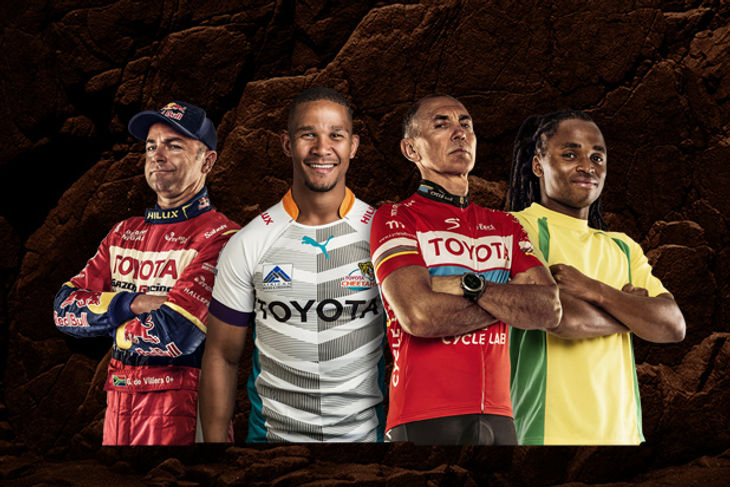
Our finalist will be paired with one of these sport stars for the final round.
What happens next?
Entries close at 12:00 (mid-day) on Friday 23 September 2016. Your video must be loaded by that cut-off time for you to be considered. The Cars.co.za editorial team will then shortlist the most convincing entries and request further information on the applicants' sporting histories and backgrounds. Five semi-finalists will then be selected and will be notified by 27 September 2016.
We'll make you big on Youtube
The 5 semi-finalists will face each other in early October, by competing in a series of challenges in Cape Town. We will require the top 5's presence in Cape Town for the chosen day (date TBC), but don't fret, your flights and accommodation will be covered by Cars.co.za. On the day you will be required to compete in a number of sporting disciplines, but each with a twist. We will also be filming a video for later release on our popular Youtube channel.
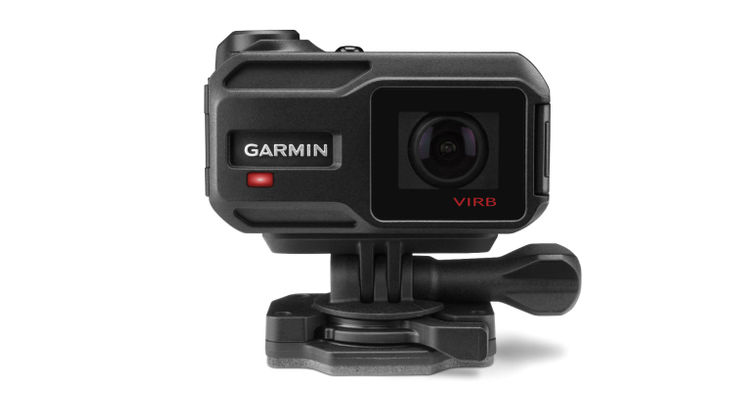
The competitor who collects the most points on the day will be our selected finalist to proceed to the final Toyota Fortuner 4×4 Challenge. But you'll already be rewarded for your endurance. Our finalist will receive a Garmin Virb X action camera worth R7 000, a 2017 Camber Comp FSR bicycle worth R39 999 and cycling gear from Salomon!
The Cars.co.za finalist will also receive a Garmin VIRB X action camera worth R7 000.
The big one
Our challenger will be joined by two Cars.co.za team members and travel to the Toyota Fortuner Challenge venue (TBC) in November. Dates will be confirmed later. Here you will be teamed with one of 4 celebrity sportsmen and face a series of challenges that will be recorded and televised on Supersport. The celebrities are: Dakar Rally driver Giniel de Villiers, Cheetahs rugby player Ryno Benjamin, Bafana Bafana star Siphiwe Tshabalala and cyclist Andrew McLean from Toyota Cyclelab.
This competition is open to all South Africans and permanent residents of South Africa aged 18 years and older.
The Competition is open to all South African residents, but excludes directors, employees or agents of the Promoter (Cars.co.za) and their families, affiliated companies, and public relations and advertising agencies of the Promoter or any other person who directly or indirectly controls or is controlled by the Promoter or a supplier of goods or services in connection with the Competition.
The Promoter, its directors, members, partners, employees, agents, consultants, suppliers, contractors and sponsors assume no liability whatsoever for any direct or indirect loss or damage arising from an entrant's participation in this promotional competition or for any loss or damage, howsoever arising.
Cars.co.za reserves the right to use any details provided in the competition without the expressed written permission of the participants.
To claim the contest prize, the winner must produce their valid South African identity book and/or passport and have a valid driver's licence.
The delivery of the prizes is the responsibility of the respective sponsor (Toyota), and Cars.co.za will not enter into disputes regarding non-delivery.
We must receive your entry by 12:00 (mid-day) on Friday 23 September
The five Cars.co.za candidates will be notified via Twitter/Facebook direct message on Monday 26 September.
The candidates will be requested to send a direct message detailing full names, email address and contact details.
In the event that the winner does not respond within 24 hours of notification, or cannot travel to Cape Town on the selected date in early October, then a new competitor will be drawn.
Cars.co.za reserves the right to verify the validity of all entries.
The prizes (finalist and winner prizes) are not transferable and is not exchangeable for cash.
By entering this online competition, all participants agree to be bound by the rules, regulations and requirements set out in the promotional material. This competition is subject to South African law, and is not offered outside South Africa.
Cars.co.za reserves the right to disqualify online entries that have not been received. No responsibility will be accepted for online entries lost for any reason whatsoever, whether due to inaccessibility of the site via internet, network disruption, network congestion, malicious virus attack, unauthorised data hacking, data corruption and server hardware failure or otherwise. Proof of sending will not be accepted as proof of delivery.
Cars.co.za shall be licensed to evaluate all contest-related submissions for the purposes of the contest, including verification and judging and as specified in these terms and conditions. The software and programming code and media relating to the website or Facebook and Twitter page and contest-related communication are protected by the applicable laws of copyright, trademark, patent, unfair competition and other proprietary laws.
Cars.co.za's decisions shall be final in all matters relating to the draw and no correspondence will be entered into.
Cars.co.za reserves the right to change the terms and conditions without prior notice. An entrant shall be deemed to have notice of any such amendments or interpretations upon publication of the same on the website page and shall be deemed to have accepted such amendments or interpretations by virtue of his/her continued participation in the promotion. Should an entrant not wish to continue to participate in the promotion pursuant to the prevailing terms and conditions as amended or interpreted, he/she may terminate participation in the promotion upon written notice to Cars.co.za.
Cars.co.za reserves the right to modify the competition or disqualify any entrant/contestant if fraud, misconduct or technical failures destroy the integrity of the competition as determined by Cars.co.za, in its sole discretion.
Cars.co.za reserves the right at their sole discretion to cancel, terminate or suspend the competition and select winners from among all eligible entries received prior to the cancellation.
The Winner accepts any prize allocated to him/her at their own risk. Neither the Promoter, nor any of its sponsors, affiliates and agencies, nor their employees, accept any liability for:
Any oversight, ambiguity, error or omission, whether negligent or otherwise, which any of its employees, agents, affiliates or sponsors may commit in the running of the Competition and the awarding of the prize.
Injuries, losses or damage sustained as a result of the use of any prize or participation in the Competition.
You must send all legal notices to Cars on the Internet CC, Hans Merensky Office Park, Block E, First floor, South Side. 32 Van Buuren Road, Bedfordview, 2008.
This competition and its rules will be governed by the law of the Republic of South Africa regardless of where you live or work, or where or how you enter.
If you encounter any problems regarding the entry mechanism to this competition, please send your questions/requests to [email protected]
Bentley Bentayga Gets Diesel Power
The first diesel-powered Bentley has been revealed and while diesel engines don't have sporty aspirations at face value, the outputs and performance of the diesel Bentayga suggest otherwise.
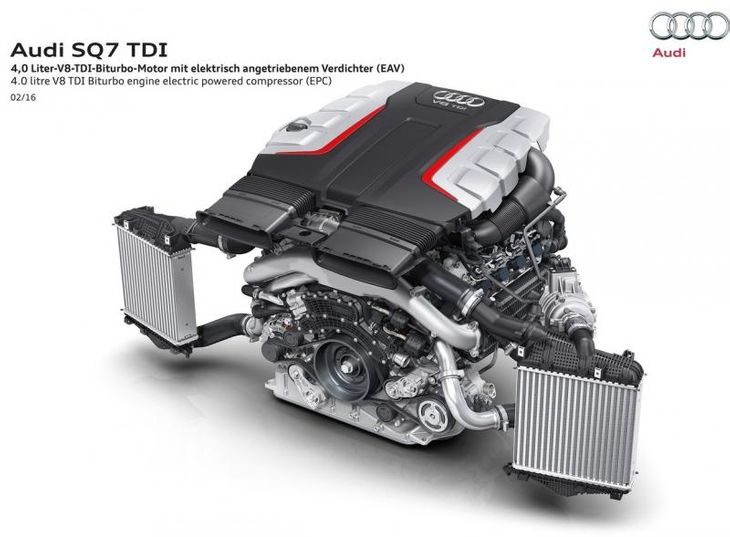
At the heart of the Bentley Bentayga diesel is a 4.0-litre V8 motor. This motor is sourced from the Volkswagen Audi Group and enthusiasts will correctly assume that it's from the forthcoming performance variant of the Audi Q7, the SQ7. It has not one, not two, but three turbochargers. Admittedly two of the turbos are exhaust driven, while the third turbo is powered by an electric motor to minimise lag. The outputs are staggering. How does 320 kW and a mighty 900 Nm grab you? Power reaches all four wheels through a ZF-sourced eight-speed automatic gearbox and despite its portly size, the Bentayga can sprint to 100 kph in 4.8 seconds and roll on to a top speed of 270 kph.
Interestingly, its top speed is 20 kph higher than its Audi sibling, which is predictable, because Bentley outranks Audi in the VAG family and the Bentayga costs significantly more than the Q7. We're expecting the Bentayga diesel to join its petrol brethren in South Africa sometime in 2017.
The Bentayga Diesel uses an identical engine to this unit found in the Audi SQ7.
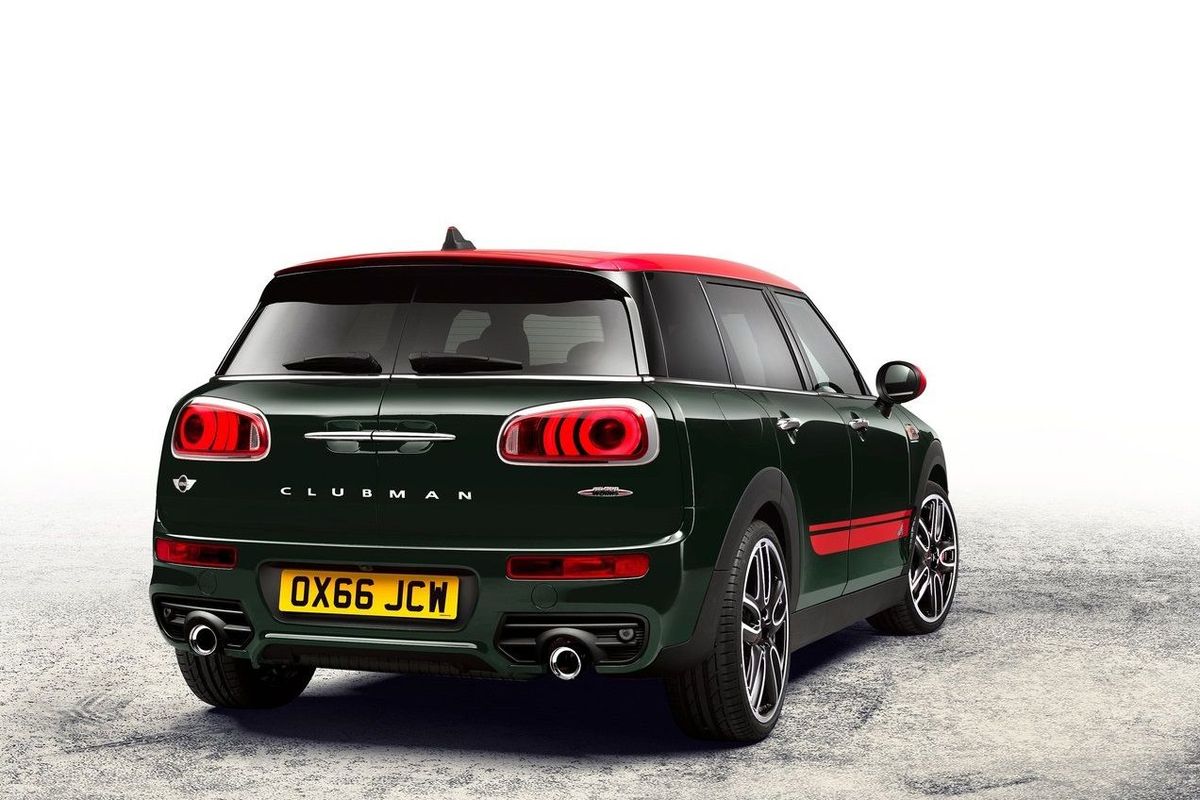
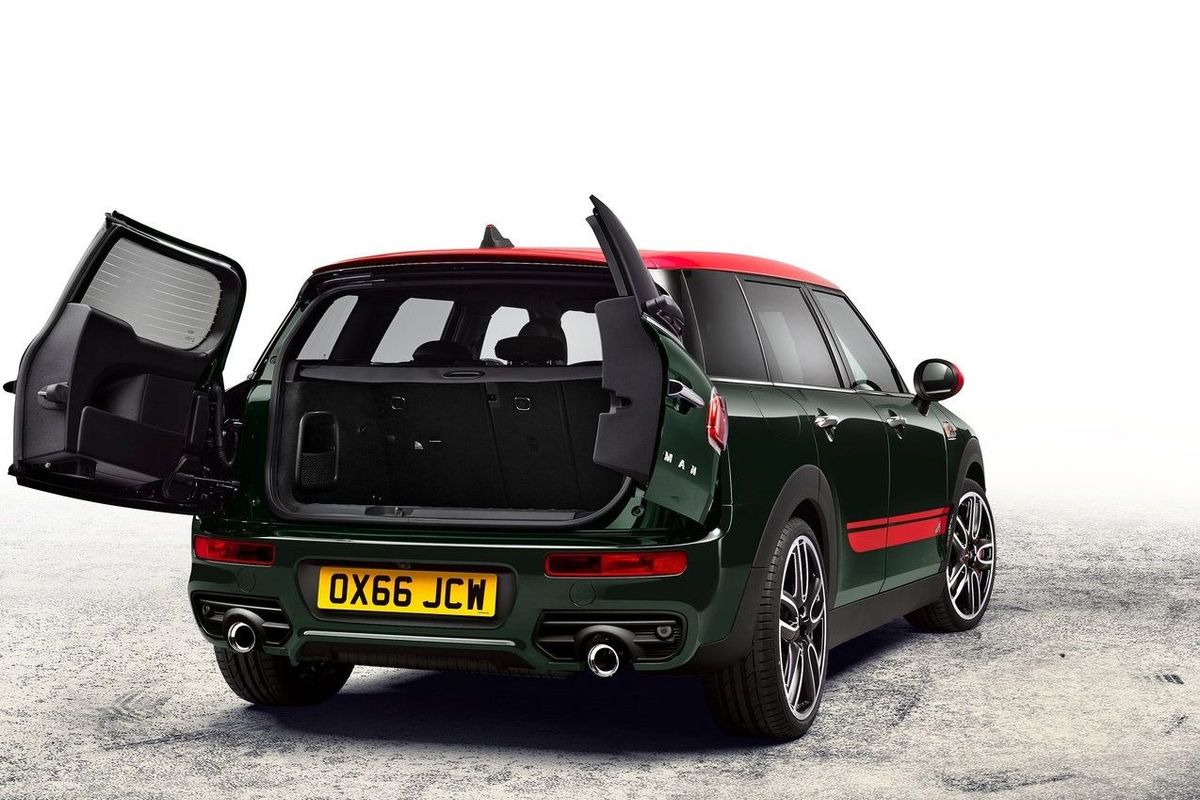
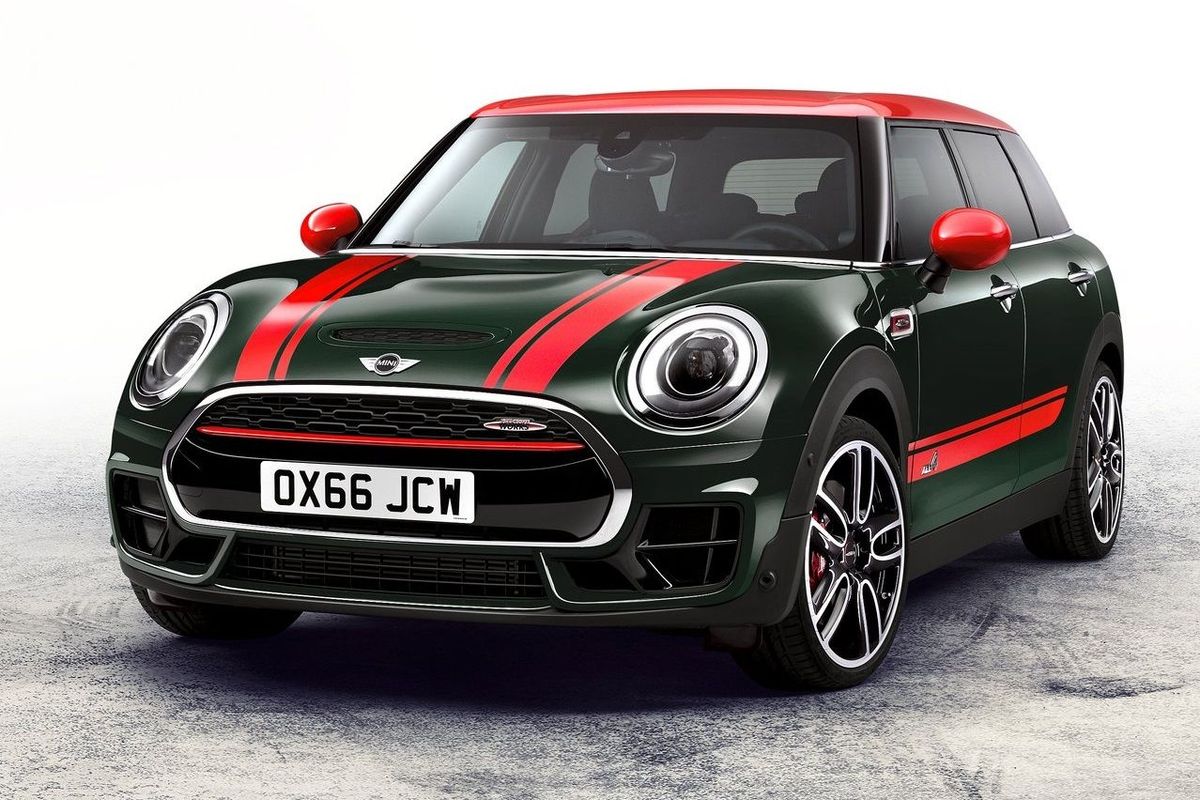
The interesting Mini Clubman wagon/estate/extended hatchback/panel van has been given the performance JCW treatment and its coming to SA
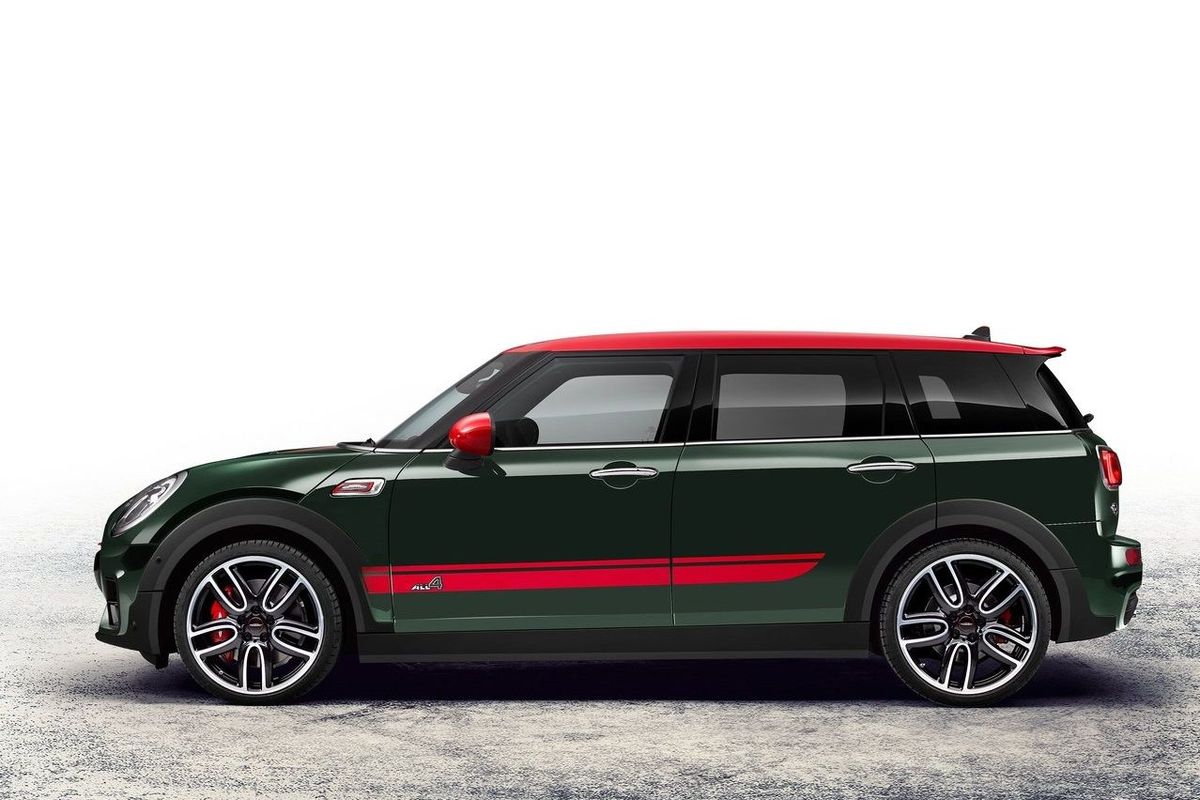
We do like the Mini Clubman here at Cars.co.za and we were happy to hear that Mini has given it the full performance treatment and slapped a JCW badge on it. It really looks the part thanks to big wheels, red Brembo brakes, go-faster stripes and large-bore exhaust tips.
Does it have the go to match the show? Why, yes! Mini has dialled up the power on the already decent 2.0-litre turbocharged four-banger and it now produces a tidy 170 kW, which is almost 30 kW more than the standard Clubman Cooper S. Torque sits at 350 Nm.
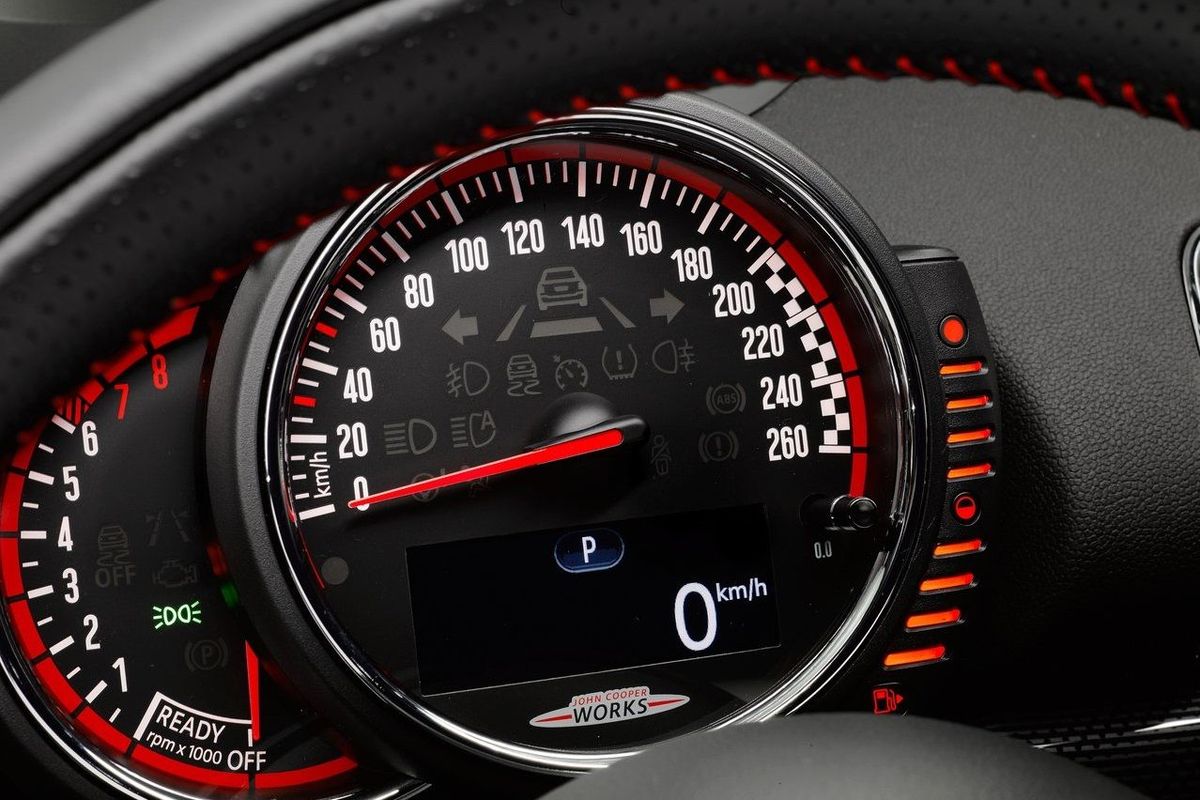
Here's where it gets interesting. Mini has fitted the Clubman JCW with its ALL4 all-wheel drive system, so there'll be none of that annoying torque steer and wheelspin when you execute launch start from standstill. Mini is claiming that it will hit 100 kph in 6.3 seconds and it will run onto a top speed of 238 kph.
It should sound great too, as Mini JCW packages include a rorty sports exhaust. You have two choices of transmission. There's a six-speed manual gearbox or an 8-speed sports auto to choose from. The Mini Clubman JCW will be making its way to South Africa in the second quarter of 2017.
If value for money is all-important to you, then look no further. These are the semi-finalists in the Budget Car category of the Cars.co.za Consumer Awards – powered by WesBank!
The Cars.co.za Ownership Satisfaction Survey, in partnership with leading data specialists, Lightstone Consumer, forms an integral part of the awards programme, with the survey accounting for 50% of the final result in each category. The brand-specific data incorporates feedback from thousands of South African new vehicle owners, based on their experiences of their vehicles (must be less than 5 years old and serviced through franchised outlets).
Budgets are tight. Fuel costs are rising. Yet buying an affordable car doesn’t mean you should have to compromise on safety, technology and quality. The winner of this category represents as much good car as possible for the money. Value is very important, as are running costs and all such “common sense” considerations.
For a car to be considered in this category, its listed price must not exceed R160 000 at the time of semi-finalist voting (September 1 2016). This price must include all accessories/options deemed as requirements for eligibility in this category. It will need ABS braking (if not fitted as standard, the cost of this, together with other required options, must not push the price of the vehicle over R160 000 at the time of voting) and dual front airbags (if not fitted as standard, the cost of this, together with other required options, must not push the price of the vehicle over R160 000 at the time of voting).
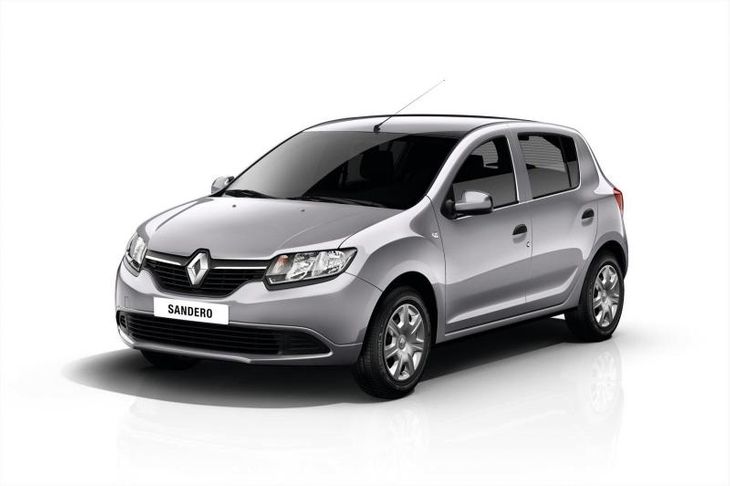
Last year’s winner returns to defend its title, but this time round it does so without air-conditioning – a derivative equipped with air-con is priced above our price cap of R160 000. Nevertheless, the Sandero offers an impressive combination of spaciousness, comprehensive safety and infotainment features as well as a long warranty. It is one of the most affordable semi-finalists, too, and consequently offers exceptional overall value for money.
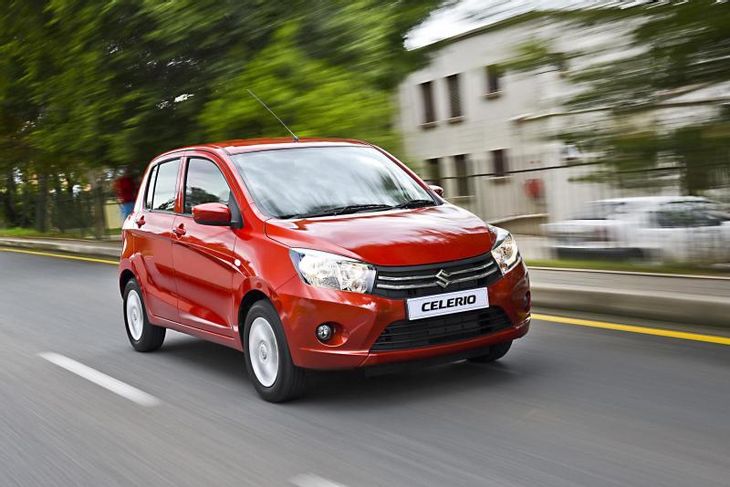
Another contender from the inaugural Awards' semi-finalist round is again in the running. The Suzuki Celerio is a compact car that’s cleverly packaged to offer more space than you expect, as well as big-car features at a very competitive price. It is the most affordable of our semi-finalists, yet it goes beyond the required features and adds a large number of bonus items.
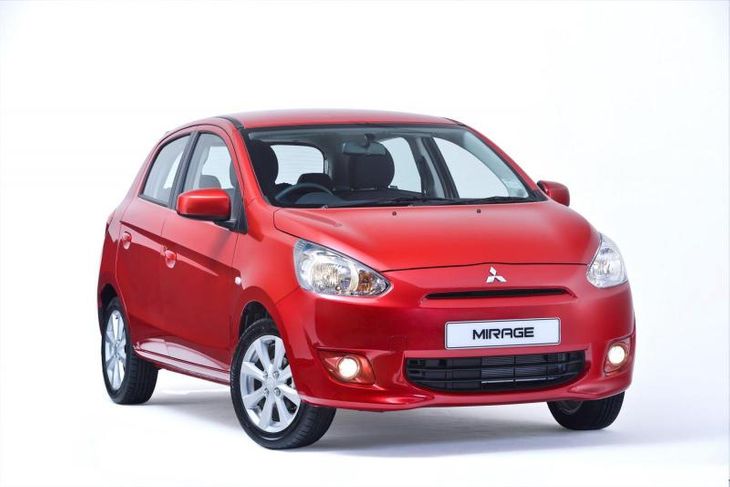
Mitsubishi’s Mirage is an increasingly strong contender in the Budget Car category, particularly if you demand modern comfort and safety features from your entry-level vehicle. At the price, it is hard to beat the GLX on specification.
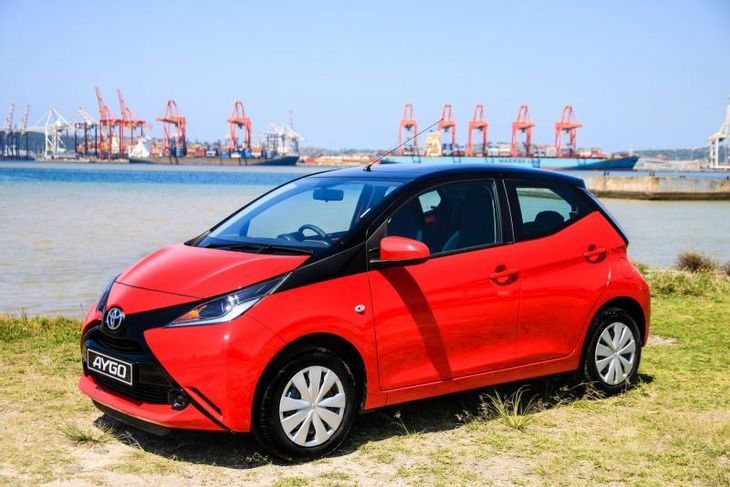
Toyota’s new Aygo boasts quite a radical look and the pint-sized hatchback is packed with features. You certainly can’t label it boring! But underneath the funky sheet metal it remains a Toyota, which means the allure of reliability and good after-sales service is strong. Underneath the Aygo’s stubby bonnet is a 1.0-litre, 3-cylinder engine that doesn’t only deliver perky performance, but excellent economy too. Toyota claims a combined cycle fuel consumption figure of 4.4 L/100 km.
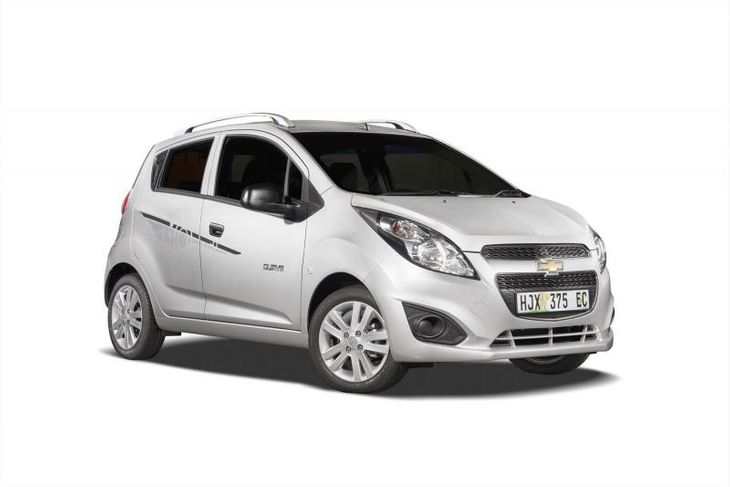
This generation of Chevrolet Spark has been around for a while, but it still sells well and is highly rated by its owners. It’s a diminuitive car that’s surprisingly spacious inside and the locally produced offering includes a raft of standard comfort and safety features. The Spark’s proven 1.2-litre 4-cylinder engine offers more power than most of its rivals, and remains quite economical with claimed consumption figure of 5.4 L/100 km.
Mercedes-Benz has updated its flagship 7-seat off-roader to position it as the "S-Class of SUVs". Can the Benz balance supreme luxury with loads of comfort as well as off-road capability? We review the newcomer in GLS 500 guise
We Like: All-round comfort, practicality, strong and willing engine, off-road ability
We Don’t Like: Prodigious thirst when pressing on, perhaps the GLS 350d is a more prudent choice?
Also Consider:
Similar experience and ability: Range Rover. The English have been masters at this luxury SUV game for years and the popularity of the JLR's flagship SUV range speaks for itself. The Range Rover offers much the same as the GLS, but packaged in a very classy outfit.
Need the seven seats: Volvo XC90 T8 Twin Engine. For substantially less money you can opt for the techno festival that is Volvo’s XC90 hybrid flagship. Don’t let the hybrid part put you off as the tech is extraordinarily good, plus it does offer all-wheel drive for mild offroading.
For more sportiness: Porsche Cayenne. Zuffenhausen's big SUV promises big performance and handling as well as that fabled Porsche build quality. It lacks the outright offroad ability and seven-seat capability, but it's an excellent product.
For more offroad ability: Mercedes-Benz G-Class. From the factory in Graz, Austria comes a Mercedes-Benz that's genetically closer to a tank than a passenger vehicle. Its seriously butch and seriously expensive. It's also as tough as nails and supremely capable offroad. If you don't need seven seats and loads of comfort, but want to cross the Kalahari, then this is your port of call.
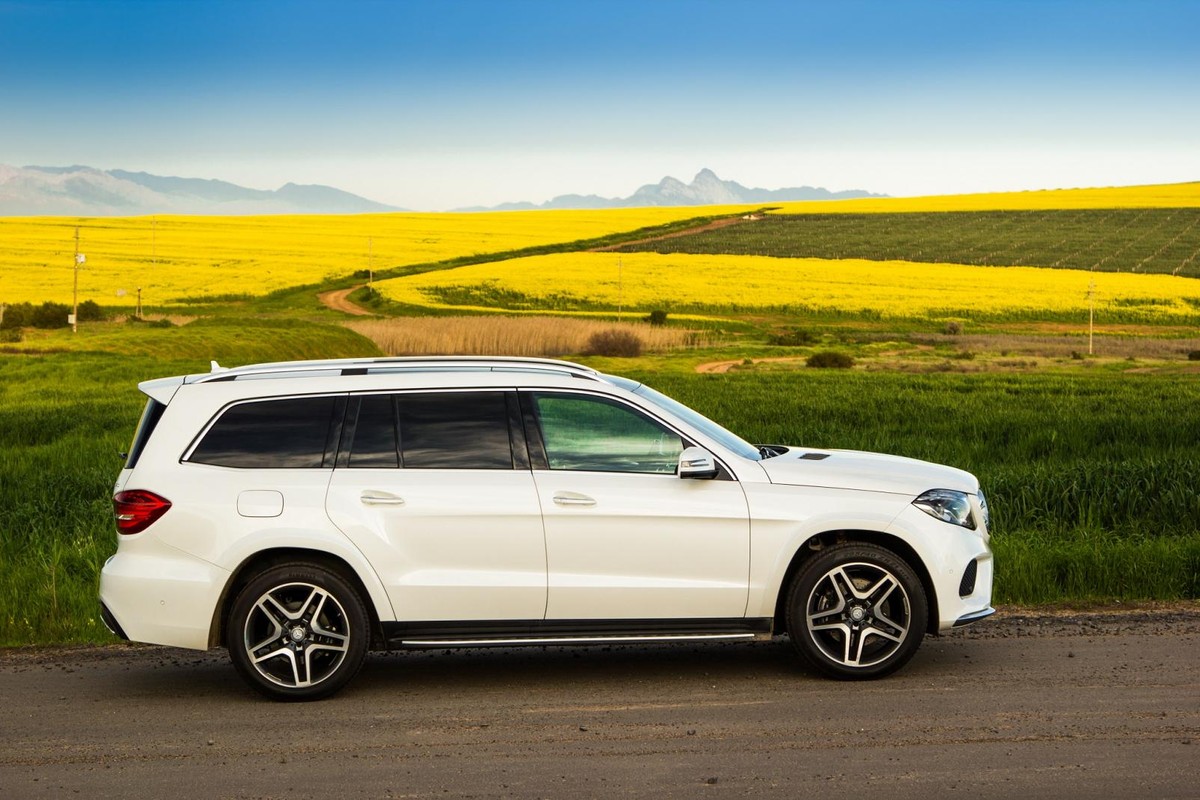
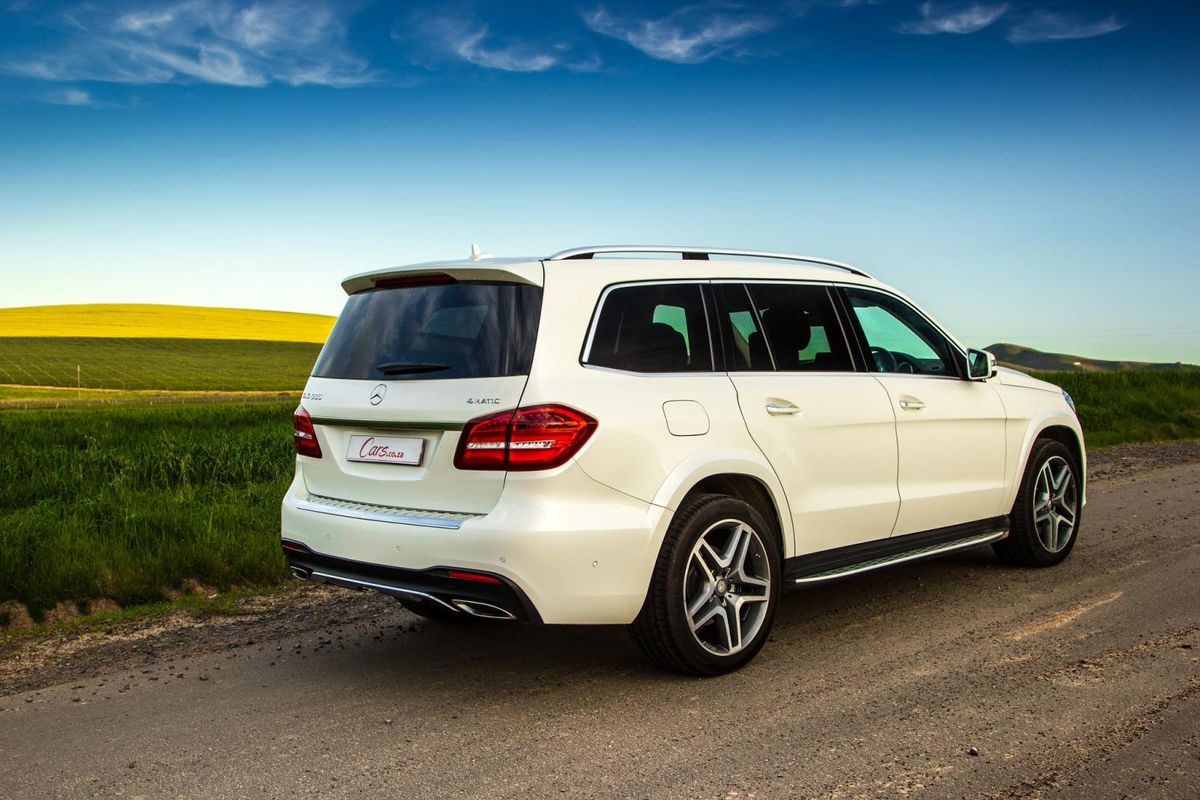
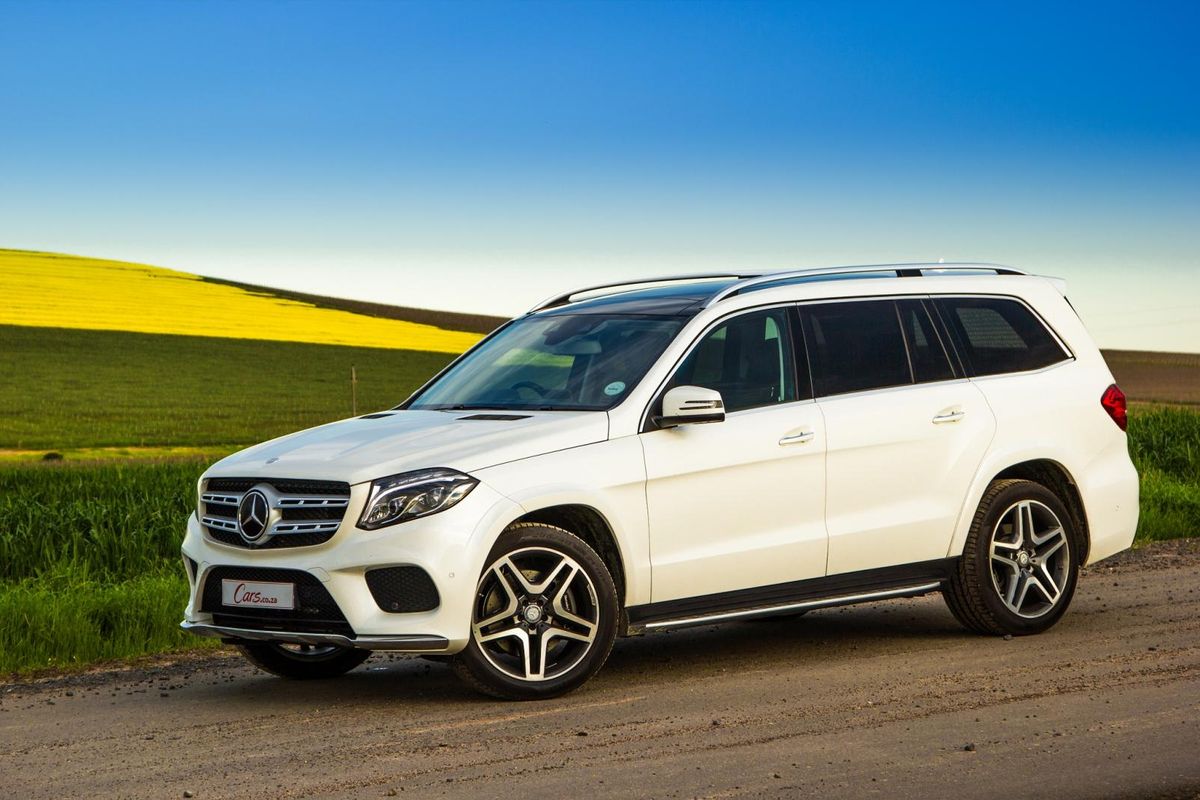
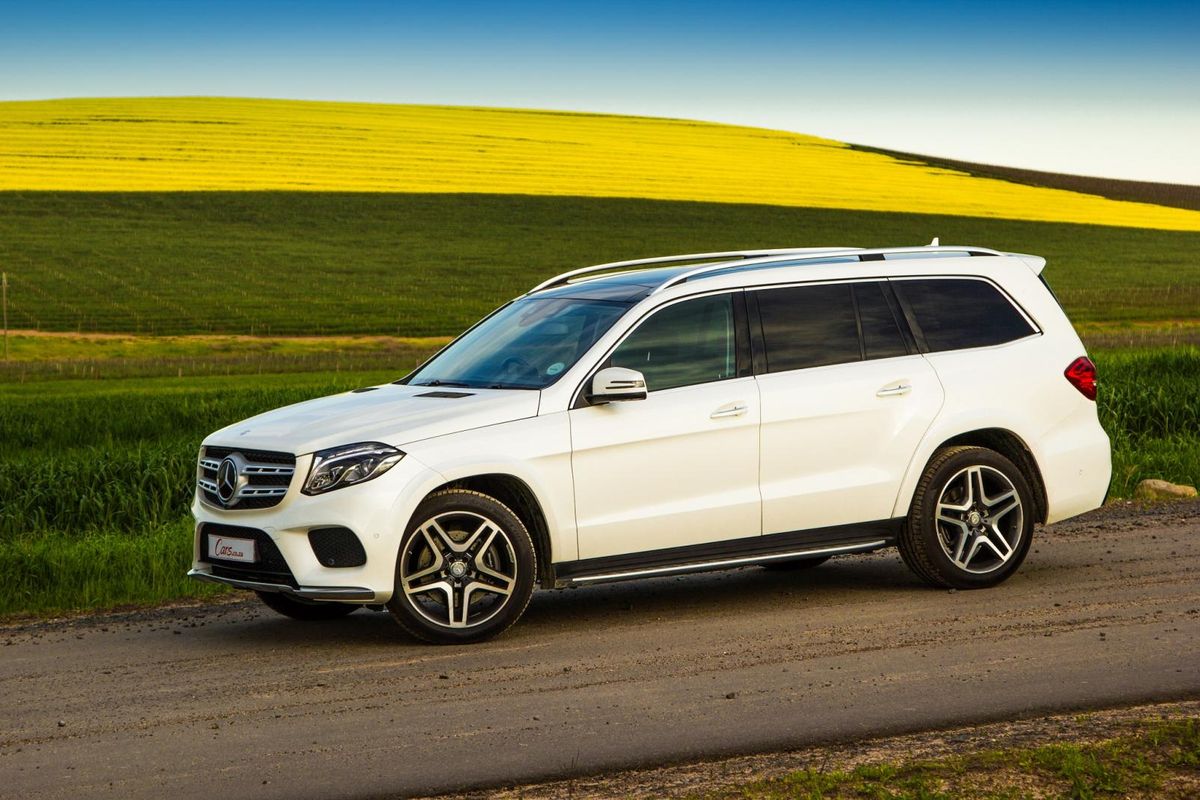
The Mercedes-Benz GLS is aiming to be a one-stop solution for those requiring premium and comfortable transport for 7 passengers, offroad capability, and the latest in-car entertainment. It's essentially a facelifted version of the formerly-known-as GL model and the changes between this new version and the outgoing model are not that substantial. Firstly, the name has changed to make it fit better into the Mercedes-Benz hierarchy of SUVs and to tie it to a sedan equivalent. ML became GLE, which is crudely an E-class SUV. This then is the S-Class in the Mercedes-Benz family. Other changes include some exterior visual tweaks, but the big changes are in the cabin, which now features new tech and infotainment systems. The range currently comprises 3 derivatives: a pair of turbopetrols and a turbodiesel. We've got the GLS 500 petrol on test, which sits between the sensible GLS 350d and the rapid GLS 63 AMG.
How does it fare in terms of…
Comfort and practicality?
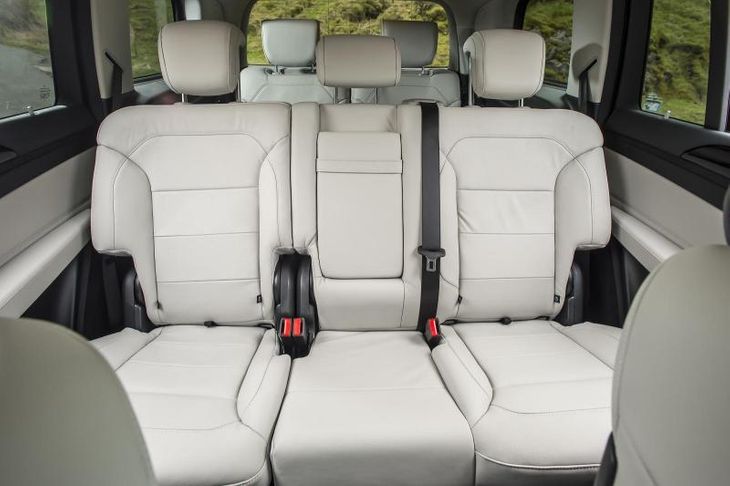
The GLS is a 7-seater SUV, but unlike some vehicles with this many seats, the rearmost ones are large enough and installed in such a way that adults can sit comfortably in them. It's not the easiest to access them, but once you're ensconced in the third row, it's quite comfortable for adults. The second row of seats is where the majority of passengers will find themselves and we found ourselves enjoying being driven more than actually driving the GLS.
The second row is a luxurious place to be and the fit and finish is exactly what you'd expect at this end of the market. Our test unit came with the rear entertainment system that featured a remote and two sets of wireless headphones with screens mounted to the front headrests. It's a R33 500 option, but it'll keep the young ones busy and quiet on longer journeys. We appreciated that the seats offered heating functionality and a separate climate control console.
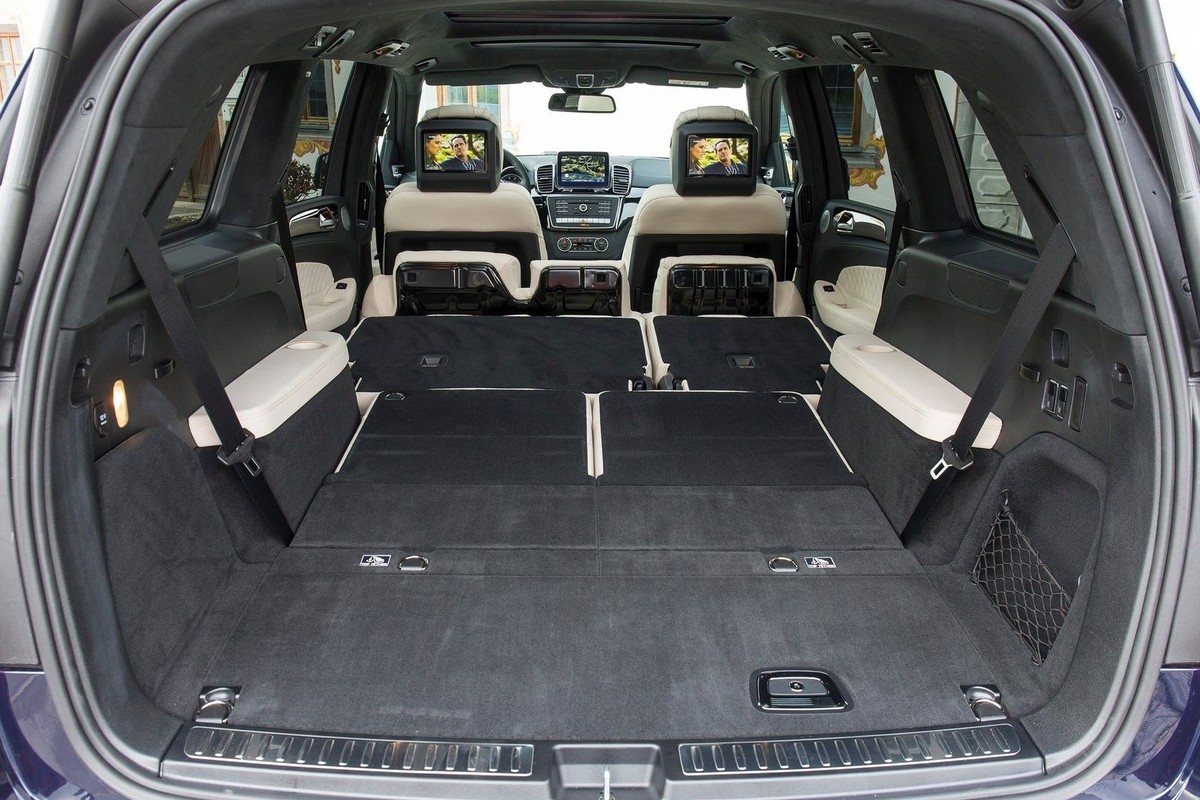
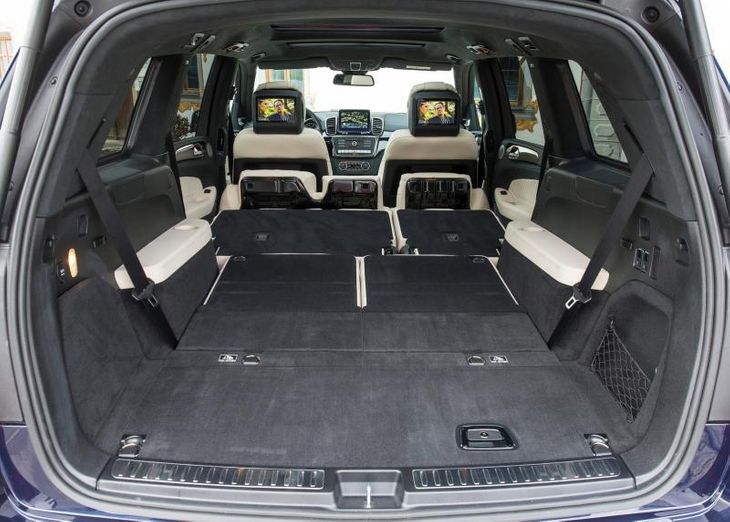
If you need plenty of space to carry cargo, all the seats behind the driver and front passenger can be folded flat resulting in a super luxurious 4×4 panel van. Being a flagship product, there's no need to collapse the seats manually. Perish the thought! Instead, you simply push a button and the seats neatly tuck themselves away. With all the seats stowed you can load and haul longer-than-usual items such as curtain rails and flatpack furniture with ease.
Fold all the seats down and you gain extra cargo-carrying capacity. Furniture, curtain rails and sporting equipment fit in with ease. Potentially an inflatable mattress could go in there too.
Refinement and features?
The GLS 500 really excels on longer trips, especially under low-grip road conditions when the weather is inclement – you'd be hard-pressed to find a more confidence-inspiring and reassuring vehicle to drive, or be transported in, for that matter. Its 4MATIC all-wheel drive system keeps the behemoth stable and it feels sure-footed even during the worst of the Cape winter storms. You can steer it enthusiastically into a series of corners in Sport mode, but the laws of physics still apply and pitching a 2.5-tonne SUV into a tight bend will always end in tyre-squeal. But don't hustle the GLS; rather appreciate its lofty levels of comfort and refinement instead. The steering and steering feel is excellent and at times it feels as if you're piloting a vehicle much smaller than the GLS.
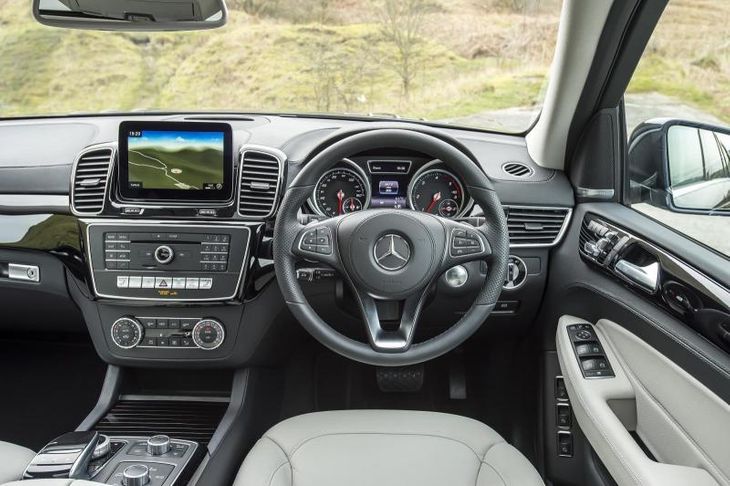
Being a flagship product from a premium brand, we were expecting a generous level of specification and some gadgets to boot. We were not disappointed. In terms of connectivity, the vehicle came with Android Auto and Apple Carplay. There's also quad-zone climate control, adaptive air suspension, satellite navigation, and all-round park distance control. It has excellent safety features as well. There are 9 airbags, collision prevention assist plus, crosswind- and attention assist, pre-safe, brake assist, traction- and cruise control. If you feel that's not adequate, tick the box called Driver Assistance which adds Distronic Plus radar-guided cruise control, automatic pedestrian braking, cross-traffic assist, active blind spot- and lane-keeping assist and speed limiter into the mix.
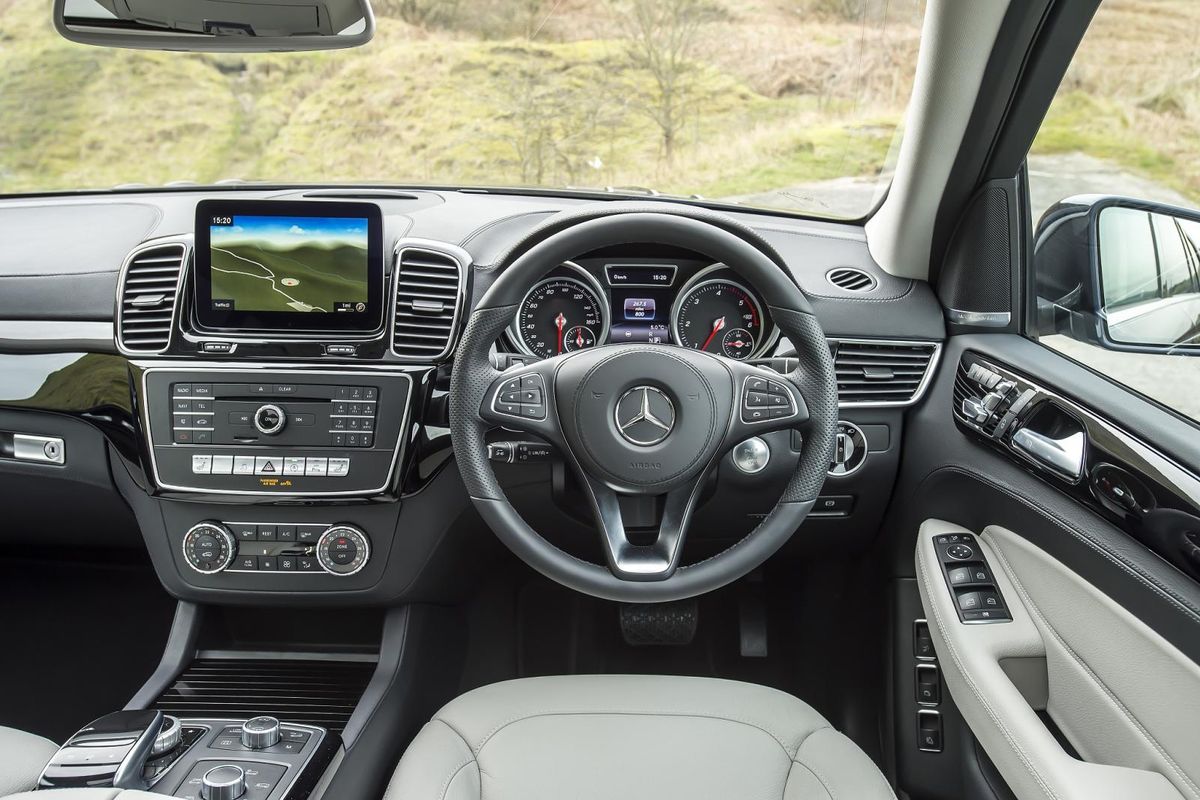
The GLS 500 cabin offers exceptional comfort and technology. The driving position is commanding and you sit high up.
Offroad ability?
Unlike some premium SUVs on sale, this is not a soft-roader that can only do the basics when it comes to venturing off sealed road surfaces. The GLS comes loaded with dedicated 4×4 technology such as low-range mode, hill descent control as well as the option to manually adjust the ride height. The Airmatic air suspension features adaptive damping and different modes to suit different conditions.
The air suspension can be cranked up and down to suit the driver's needs. For example, in Sport mode, the vehicle lowers to improve its centre of gravity, which in turn improves the handling. For offroad applications, the vehicle rises up majestically. It can go from 201 mm right the way up to 306 mm, making it one of the best vehicles in class when it comes to ground clearance. If you're brave enough, you can cross channels of water up to 600 mm deep.
However, given the Benz's substantial price tag and luxuriousness, just because it can go off-road does not mean you'd want to. The GLS is a plush vehicle and we'd feel awful taking it on a serious off-road track. Imagine hitting a rock or having thorns scratch the bodywork? It's too awful to fathom. That said, given this vehicle's capabilities, you will always be reassured to know that you can traverse the rough stuff with confidence if you absolutely have to…
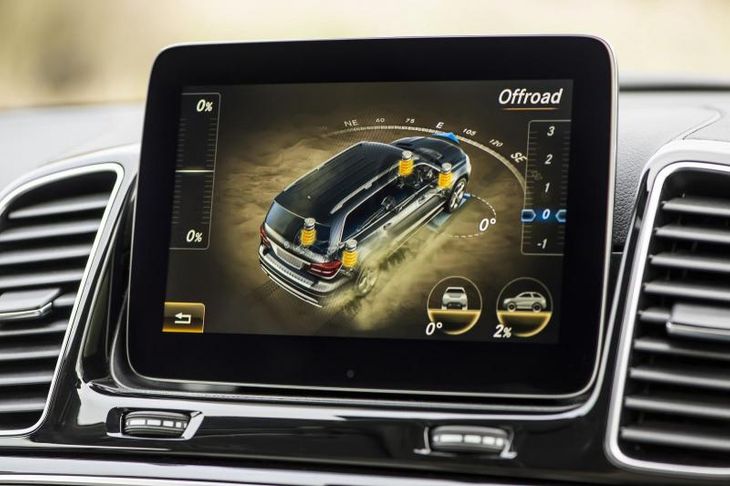
Each driving mode comes with its own fancy graphic. Here, Offroad mode is in action, showing ride height, geographic direction, pitch and lean data.
Performance and economy?
As one would expect, a middle-of-the-range "S-Class of SUVs" needs the sort of engine that commands respect and in this application, a 4.7-litre biturbo V8 is on duty. It's quiet upon start up and goes about its business with a professional air. Those craving more oomph and more premium fittings will be delighted to find that AMG has fiddled with the GLS to create the GLS 63, which is, in a word, indulgent. For those who wish to tow horse boxes (or the like) and have fuel economy at the top of their priority list can opt for the capable GLS 350d (which we reviewed not long after this GLS 500). The GLS 500 really tickled our fancy as it offered tremendous grunt, without coming across as brash or unruly, words which can readily be applied to anything with an AMG badge.
This particular engine's outputs make for impressive reading. There's 335 kW and 700 Nm, all of which is accessible from as low as 1 800 rpm. Essentially this means that you can put your foot down and most of those horses will break into a gallop. A 9-speed automatic is responsible for ensuring power on demand and its smooth in operation. We did notice that it does need some time to warm up and slow-speed cold gear changes are a little jerky.
Once the transmission and engine are up to optimal operating temperatures, you can appreciate what a magnificent powertrain the Benz has. The firm claims the GLS 500 will catapult from zero to 100 kph in 5.3 seconds, which is astonishing when you consider the mass and dimensions of the GLS. You'd expect this performance from a hot hatch, but from a 7-seat SUV tipping the scales around 2 500 kg? That's mightily impressive in anyone's book.
It's not just off-the-line performance that gets the thumbs-up. There's no shortage of in-gear urge and provided you can see far enough ahead, overtaking multiple vehicles is an effortless task. It's a wonderful engine and the V8 soundtrack, which accompanies it, was well appreciated. However, if you're a driver that treats the throttle pedal like an on/off button, you're going to experience "consumption" that will put a matric student on a Rage weekend to shame.
See, once both turbochargers are on song and the V8 is at full chat, the GLS 500 chugs petrol at quite a rate. You'll see consumption sitting around the 15 L/100 km mark in town, but it'll settle nicely on the open road, providing you're gentle with the throttle. During its time with us, the Mercedes-Benz GLS 500 averaged 12.9 L/100 km. On the other side of the coin, if you can afford a R1.5-million luxury SUV, then fuel bills are likely to be the least of your worries.
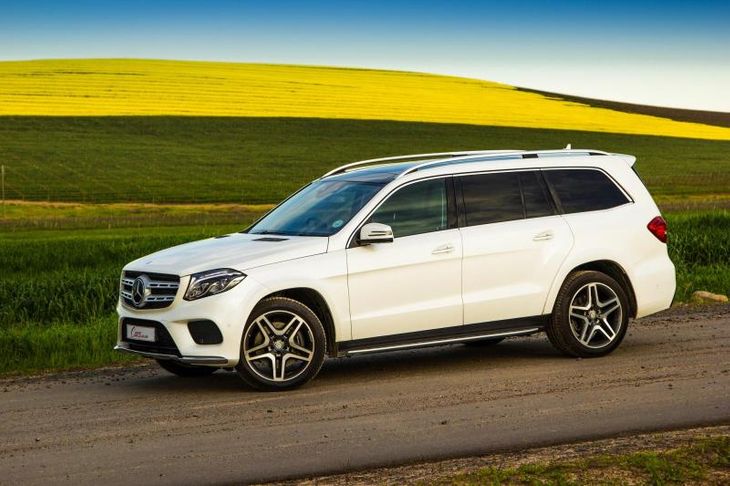
The gleaming white paintwork does anything but hide the GLS' bulk, but the Benz makes an unashamedly bold statement.
Mercedes-Benz GLS Price in South Africa
The Mercedes-Benz GLS range starts with the 350d which retails for R1 290 626, while this GLS 500 cost R1 459 676 before any extras. The GLS is backed by a 2-years/unlimited km warranty and a 6-year/100 000 km maintenance plan.
Conclusion
The Mercedes-Benz GLS 500 is a superb large luxury SUV. Should you need to a) transport 7 adults, b) in absolute luxury and c) tackle off-road courses, there is no other vehicle that can hold a candle to the Benz, and that includes anything that Range Rover or the other German luxury marques currently produce. It's big, imposing, exceptionally capable and it offers seating comfort that would not be out of place on a posh airline's business class cabin.
It offers a plethora of luxury and safety features and there are myriad options available to ramp up the vehicle's capability and exclusivity. We'd suggest opting for the climatised seats and parking package…. The GLS is a big, powerful SUV that's remarkably easy to drive, but although it doesn't feel like a large vehicle on the open road, its bulk is apparent in urban confines. We're thankful for light steering and Merc's determination to ensure comfort all round.
Unlike many vehicles, this is a genuine 7-seat vehicle and even when fully occupied there's still room for a few items in the boot. It rides well, can deliver a turn of speed that will embarrass some hot hatches and has plenty of technology to keep you safe. If you're looking for a vehicle that does it all and still continues to surprise and impress, then the GLS 500 presents a fine proposition. Humour us and don't take it off-roading… Our hearts could not bear it.
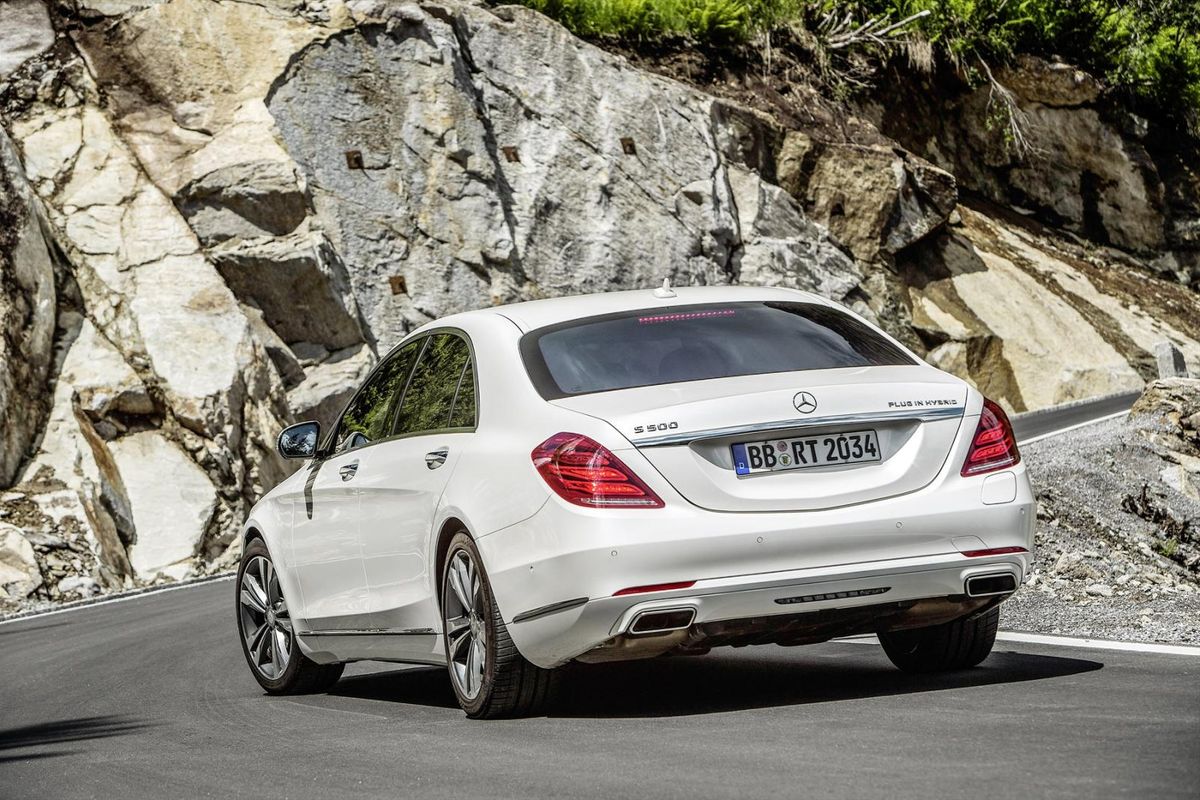
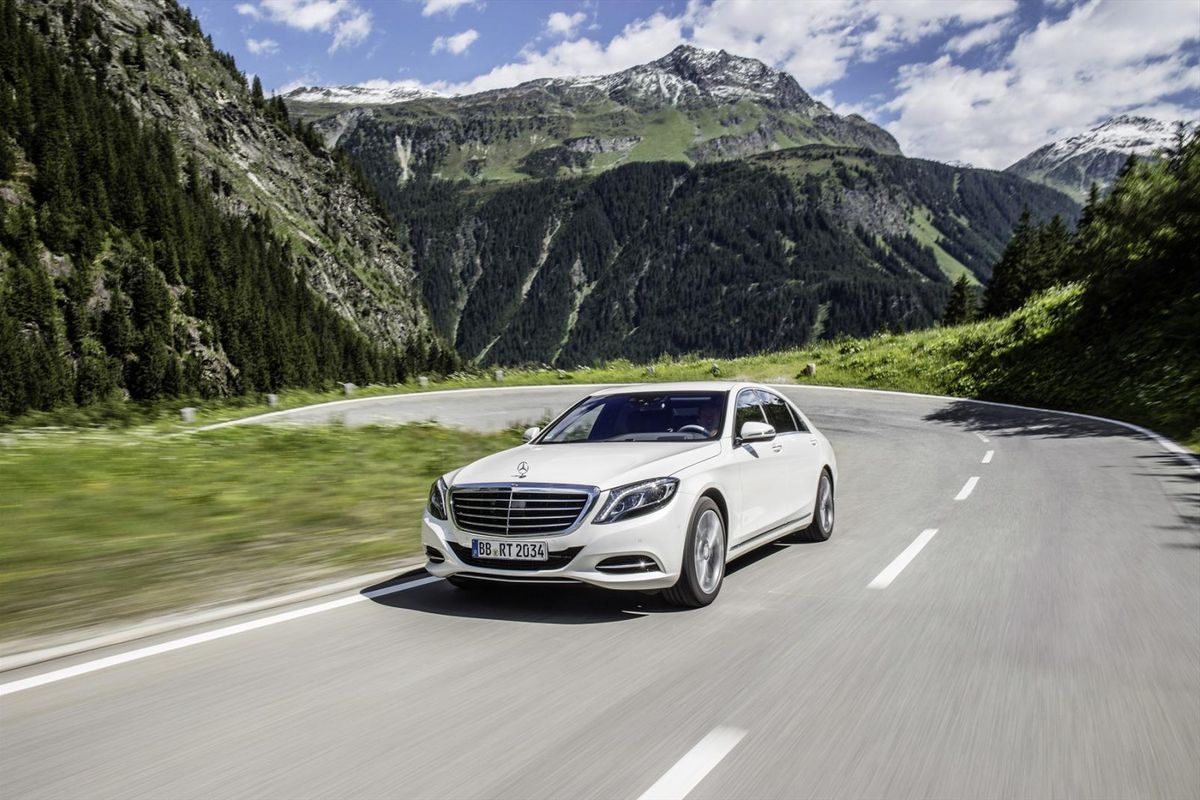
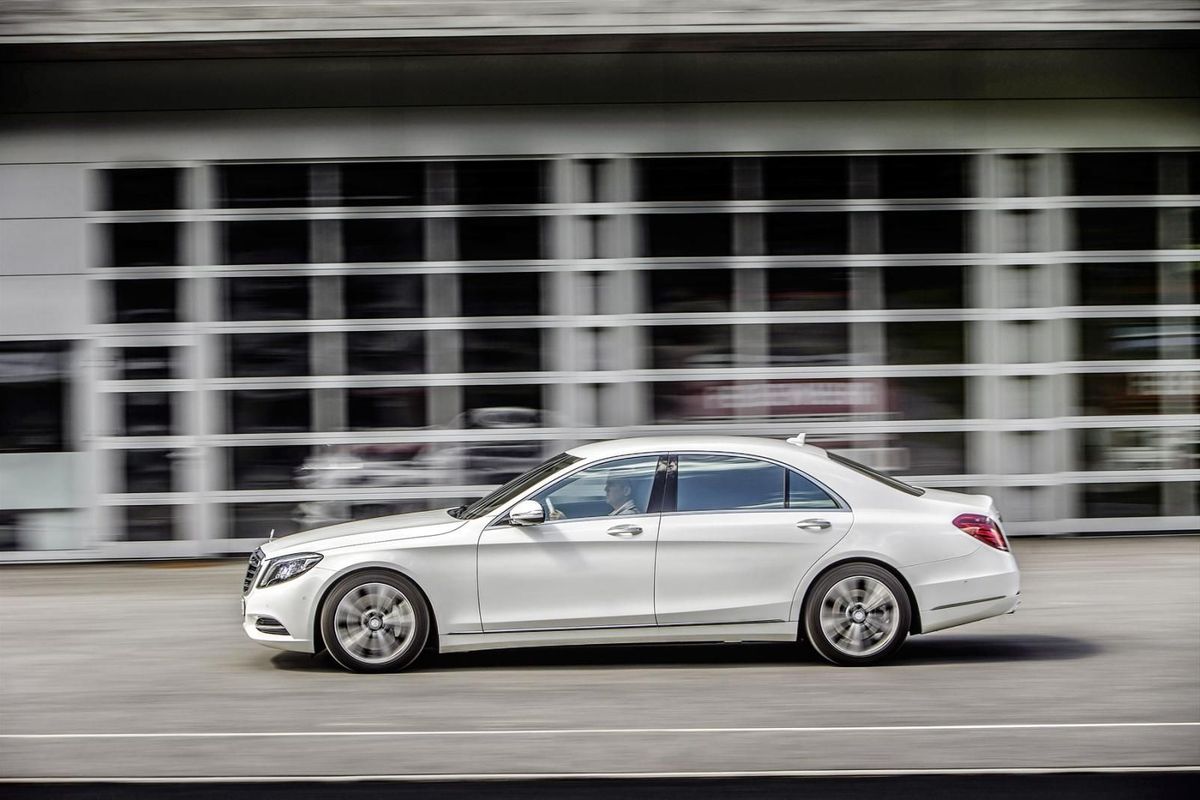
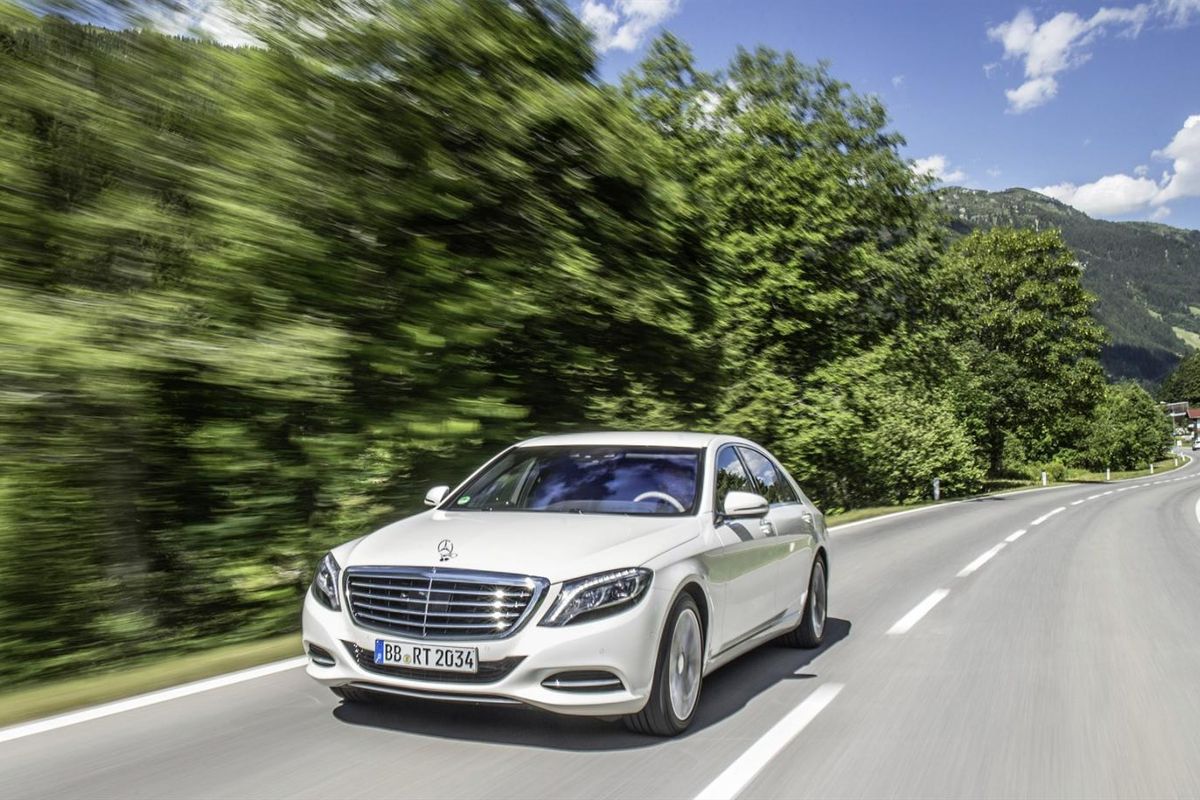
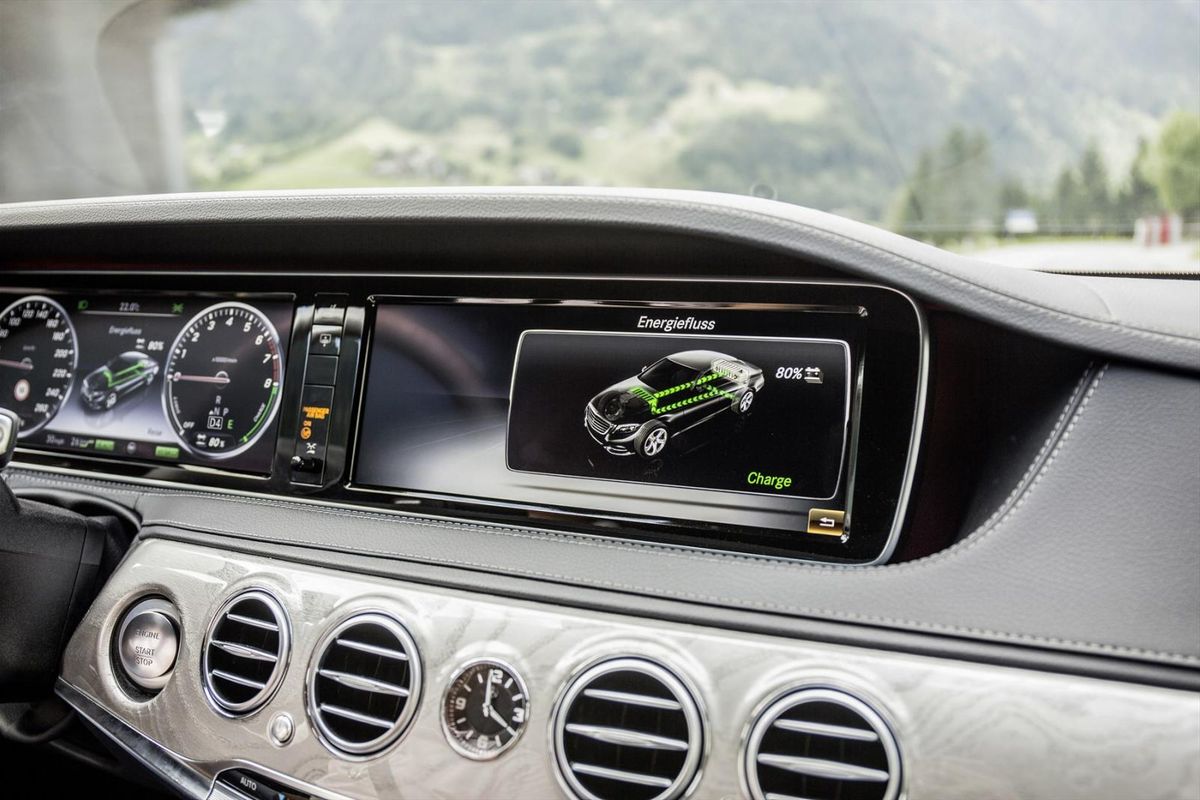
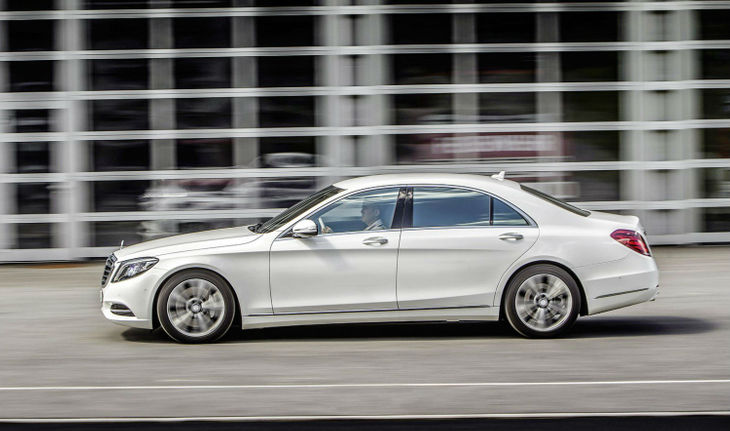
The plug-in hybrid version of Mercedes-Benz’s S-Class has arrived in SA. It’s not just about efficiency, however: there’s a swift turn of speed to this hybrid as well.
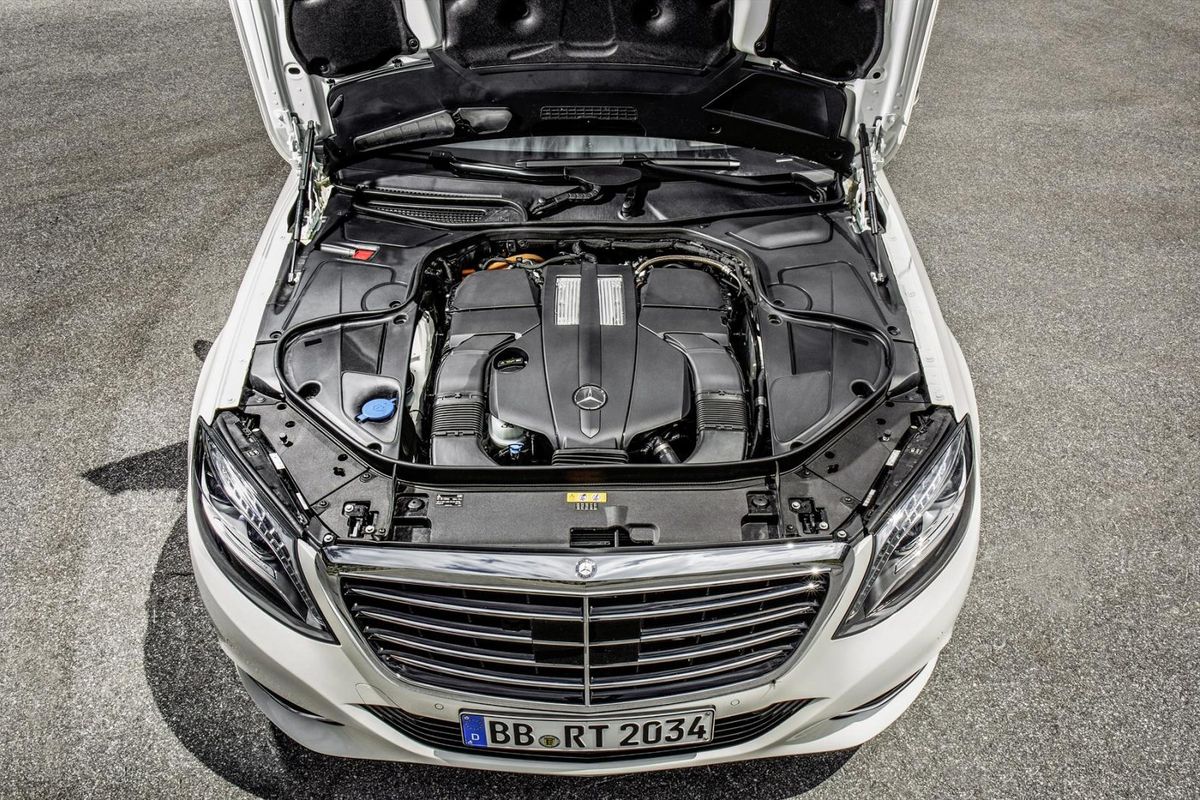
Mercedes-Benz SA has introduced the S500e plug-in hybrid in tandem with the launch of the C300e. The S500e combines a V6 biturbo petrol motor with an 8.7 kWh electric motor for a total power output of 325 kW and 650 Nm of torque. The S500e is capable of operating on its electric motor alone for up to 33 km and in perfect conditions, the S500e is claimed to consume just 2.8 L/100 km.
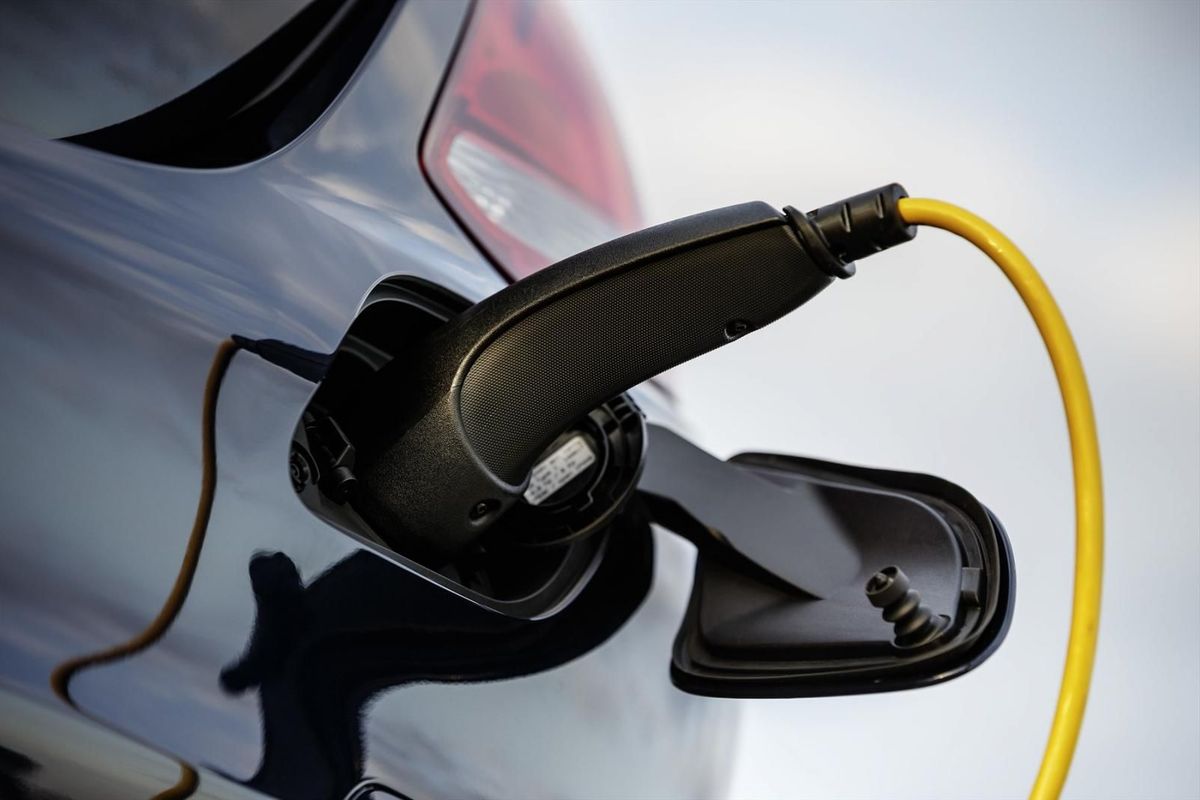
The first-class Sindelfingen hybrid has two modes of charging… from a wall socket via a cable and plug, as well as through braking energy regeneration, where applying the brakes recuperates some of the battery power. The system within the S500e will also top up the battery when free-wheeling or coasting. The total weight of the lithium-ion battery is 114 kg and takes up 96 litres of space. Mercedes-Benz says it is working on a wireless charging solution as well.
The standard spec within the cabin now includes a pre-entry climate control system. The system can be controlled via the Mercedes Connect Me app and allows the driver to set the cabin temperature from outside the car. So long as a departure time is keyed in, the S-Class will adjust the temperature in the cabin so when you enter the vehicle the temperature is exactly as you set.
In order to strengthen customers' trust in the new, plug-in drive technology, for the S 500 e Mercedes-Benz is issuing a ‘warranty’ on performance characteristics of the high-voltage battery and plug-in hybrid components. This ensures that every technical malfunction within a period of six years after initial delivery or registration, or up to a mileage of 100 000 kilometres, is corrected by Mercedes-Benz.
Pricing
As of September 2016, the Mercedes-Benz S500e costs R1 875 000 and comes with a 6-year/100 000 km maintenance plan.
The Cars.co.za Ownership Satisfaction Survey, in partnership with leading data specialists, Lightstone Consumer, forms an integral part of the awards programme, with the survey accounting for 50% of the final result in each category. The brand-specific data incorporates feedback from thousands of South African new vehicle owners, based on their experiences of their vehicles (must be less than 5 years old and serviced through franchised outlets).
When it comes to defining this category, real-world considerations such as price and value for money take a back seat to neck-swivelling status and design, ultimate comfort and advanced technology. The winning vehicle we are looking for presents the ultimate combination of all the building blocks of prestige, and is simply the Ultimate – to be seen in and to drive.
For a car to be considered in this category it must be priced above R1 million to ensure a healthy measure of exclusivity and prestige.
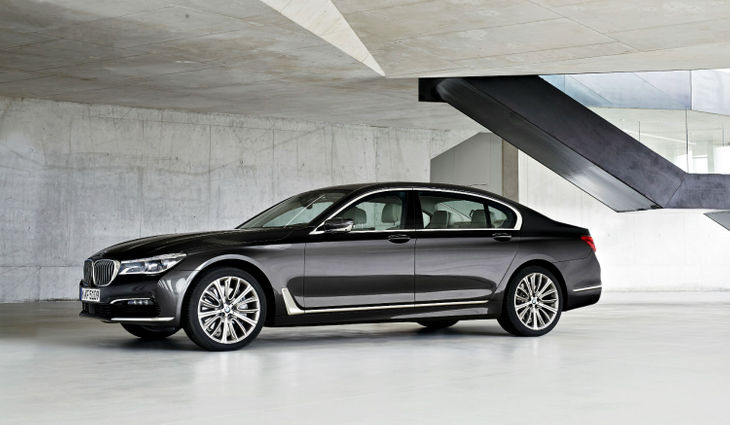
BMW’s new 7 Series was introduced earlier this year to depose its archrival, the Mercedes-Benz S-Class, as the world's premier First Class car. It is loaded with high-tech features which positions the 7 Series as a different type of luxury car… From gesture control to a Display Key, the new 7 Series bristles with advanced technologies. But, at its core, the Seven remains a BMW and therefore a "driver's" limousine, powered by a 330 kW 4.4-litre turbocharged V8.
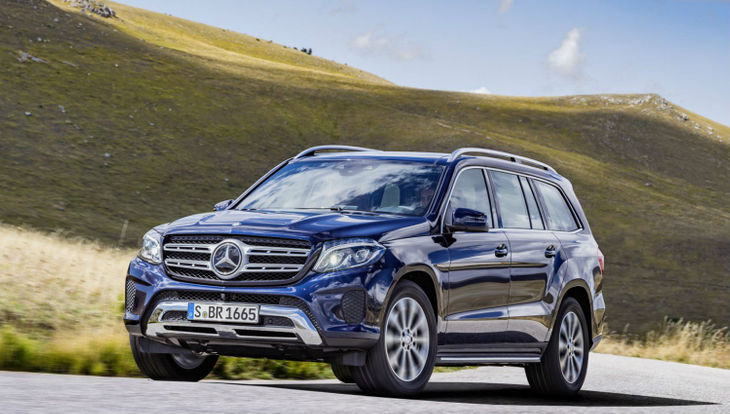
The GLS is claimed to be the "S-Class of SUVs". In other words, it is supposed to offer more comfort and luxury features than the overwhelming majority of SUVs. And, in the case of this 7-seater, Mercedes-Benz appears to be in a class of its own. Powered by a 4.7-litre V8 that produces a colossal 335 kW and 700 Nm, the air suspension-equipped GLS 500 offers the type of refined and soft ride quality that luxury sedans were once famous for. Moreover, the GLS offers impressive off-road ability as well.. its Dynamic Select system allows the SUV to adapt to variable driving conditions with up to 6 transmission settings.
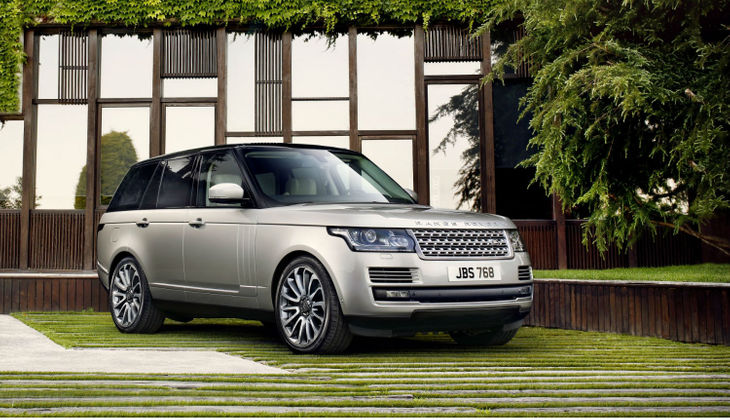
Yes, the Range Rover is an SUV and may appear to be an odd choice among the more traditional luxury sedans and flamboyant coupes. Yet, this is exactly where the Range Rover fits best. It offers the kind of cocooned luxury, brawny performance and silky ride quality that once were the preserves of Rolls-Royce and the like, yet it adds a healthy dollop of adventure to the equation as well. Its legendary off-road ability allows you to safari in real style, too. The Autobiography is powered by a 4.4-litre V8 turbodiesel that develops 250 kW and 740 N.m of torque.
For a very long time the Mercedes-Benz S-Class has been the world’s first choice when it comes to ultra-luxurious sedans. The current generation proudly continues this tradition. While there are more performance-oriented versions on offer, we think it is the S500e’s marriage of traditional sedan comfort and luxury with modern tech that presents the sweet spot in the range. Last year we selected the S500 V8 model as our First Class champion, but the S500e represents a natural evolution of what arguably remains the benchmark luxury sedan.
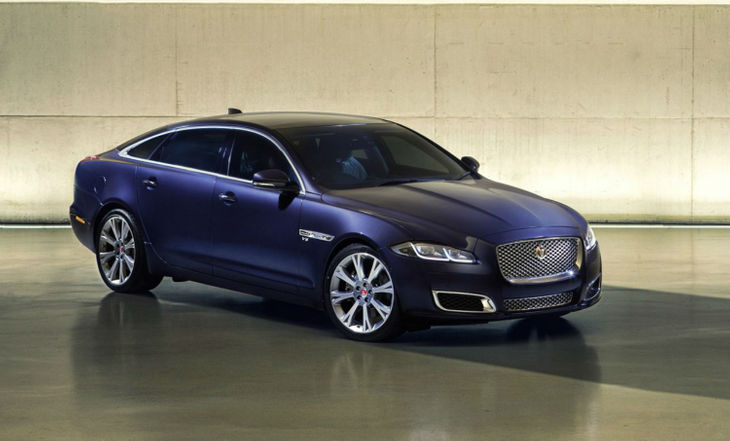
Jaguar’s XJ was refreshed recently and now boasts more up-to-date technology as well as this flagship long-wheel base model, the Autobiography. As ever, the XJ offers a more dynamic option in the First Class category, but it has always managed to do so without sacrificing ride refinement. With the added tech and the exclusivity on offer, it may just spring a surprise… This model is powered by a supercharged V8 petrol engine that develops a whopping 375 kW!
The Datsun Go line-up has been bolstered by the news that a limited-edition version of the Go Lux will be joining the range. This high-spec Go is called the Remix and comes fitted with a host of additional accessories.
Despite its lack of safety features, the Datsun Go is a top-seller; in fact, it's one of the most popular models in the bottom A-segment of the market. This special-edition Go Remix is likely to be snapped up, then, because only 200 units will be available in South Africa.
For "Risers" (a target market that Datsun identifies as trendsetters in the 18 to 30 age group), the Remix is specifically crafted to stand out from the crowd.
"Its price makes it possible for this category of motorists to buy a stylish brand new car,” says Des Fenner, General Manager of Datsun South Africa.
The exterior treatment of the Datsun Go Remix can be distinguished by:
aerodynamic bodykit (front, sides and rear of vehicle)
roof spoiler
15-inch alloy rims with Go centre cap
front foglights
remotely-adjustable side mirrors with integrated indicator lenses
Datsun Remix special version nameplate
The interior of the Datsun Go Remix gains some upgrades in the form of:
Blaupunkt Bluetooth radio/CD/USB system
All-new dark interior trim
A console for side mirror and fog lamp controls
Datsun Go carpet set
Datsun Go Remix price in South Africa
The Datsun Go Remix is a limited edition model and there'll be only 200 units available. It incorporates Lux-specification features such as power steering, front electric windows, a mobile docking station, a driver's airbag and manual central locking. A 3-year/100 000 km warranty is standard.
It will come to market at a recommended price of R159 900.