Mercedes-Benz Goes Topless with C-Class Cabriolet (Pricing Update)
Mercedes-Benz has taken a can opener to its World Car of the Year winner to deliver one of the most stylish cabriolets in the segment. And now we also know what the C-Class Cabrio will cost when it arrives in South Africa, just in time for spring!
The big news with the arrival of the new C-Class Cabriolet is, of course, its folding roof. As is the case with some other brands, the love affair with folding hard-tops appear to be over and Mercedes-Benz has stuck with the traditional fabric option for its newcomer. Mercedes-Benz claims that its fabric soft top offers optimal climate comfort and quiet-running characteristics. A number of colour options are offered, including dark brown, dark blue, dark red or black. The roof of the Mercedes-Benz C-Class Cabriolet can be opened and closed in just under 20 seconds at speeds of up to 50 kph.
The Mercedes-Benz C-Class Cabriolet boasts the company's trademark AIRSCARF system which gently blows warm air at neck level. Another notable feature is AIRCAP, which reduces the interior wind turbulence (also for the rear passengers) at the press of a button. AIRCAP and AIRSCARF are part of the Cabriolet Comfort package and Mercedes-Benz says that these two systems mean you can drop the top even in winter.
The C-Class Cabriolet also appears to offer commendable practicality. The rear seats are individual items, but there is a through-loading feature and they can be split 50:50 as well as be folded completely flat. With a cargo-carrying capacity of 360L (285L with the roof open), the boot is capable of holding a reasonable amount of luggage for a cabriolet.
Airmatic suspension means quality ride
The Cabriolet is optionally available with AIRMATIC air suspension. This is an electronically controlled, continuously adjustable damping system on the front and rear axles that also contributes to lower road noise and tyre vibration. Several driving modes are offered, including Eco, Comfort, Sport, Sport Plus and Individual. Selecting Individual allows the driver to customise the vehicle settings to suit his/her personal preferences. Suspension stiffness, transmission shift speed and engine responsiveness can be individually tweaked.
Engines and transmission options
The extensive engine line-up includes a variety of four- and six-cylinder powerplants and, for the first time, 4MATIC all-wheel drive makes its debut in this model. The petrol engine line-up stretches from the 1.6-litre four-cylinder unit in the C180 rated at 115kW to the 3.0-litre six-cylinder engine in the Mercedes-AMG C43 4MATIC Cabriolet that delivers 270kW. The C200 is optionally available with 4MATIC all-wheel drive. In terms of diesel models, a four-cylinder variant delivering 125 kW in the C220d or 150 kW in the C250d, will arguably prove the most popular. 4MATIC is available for the C220d. All derivatives can be ordered with the new 9G-TRONIC automatic transmission.
Mercedes-Benz C-Class cabriolet price in South Africa
The Mercedes-Benz C-Class convertible will become available in South Africa during September/October 2016. The prices below include VAT and CO2 tax.
The Lexus LC500 coupe is due to arrive in South Africa early next year and it recently featured in a short film with earth-moving effects…
Based on the LF-LC concept, Lexus revealed the striking production LC500 coupe at the Detroit Motor Show earlier this year and we can’t wait for its arrival in South Africa in the first quarter of 2017.
Apart from its striking styling, the rear-wheel drive LC500 coupe is fitted with a naturally-aspirated 5.0-litre V8 that thumps out 348 kW and 527 Nm of torque through a newly developed 10-speed automatic transmission. That should be enough to move you…
The Lexus LC500 was recently showcased in a short film featuring impressive cinematography, unlike any we have seen before. The film was shot in Spain’s Sierra Nevada mountain range and the effects make it look like the LC500 coupe is moving the surrounding mountains, which is rather impressive.
The filming technique used in the film is called projection mapping and a number of ultra-bright projectors display moving images on the side of the mountain. In combination with the Lexus LC500 coupe driving along the mountain at exactly the right time, the resultant effect is quite special.
According to the producers, this type of technique has never quite been used in this way.
Watch the behind-the-scenes video below to see how the Lexus LC Into the Light video was made!
Ford Focus RS500 spotted testing?
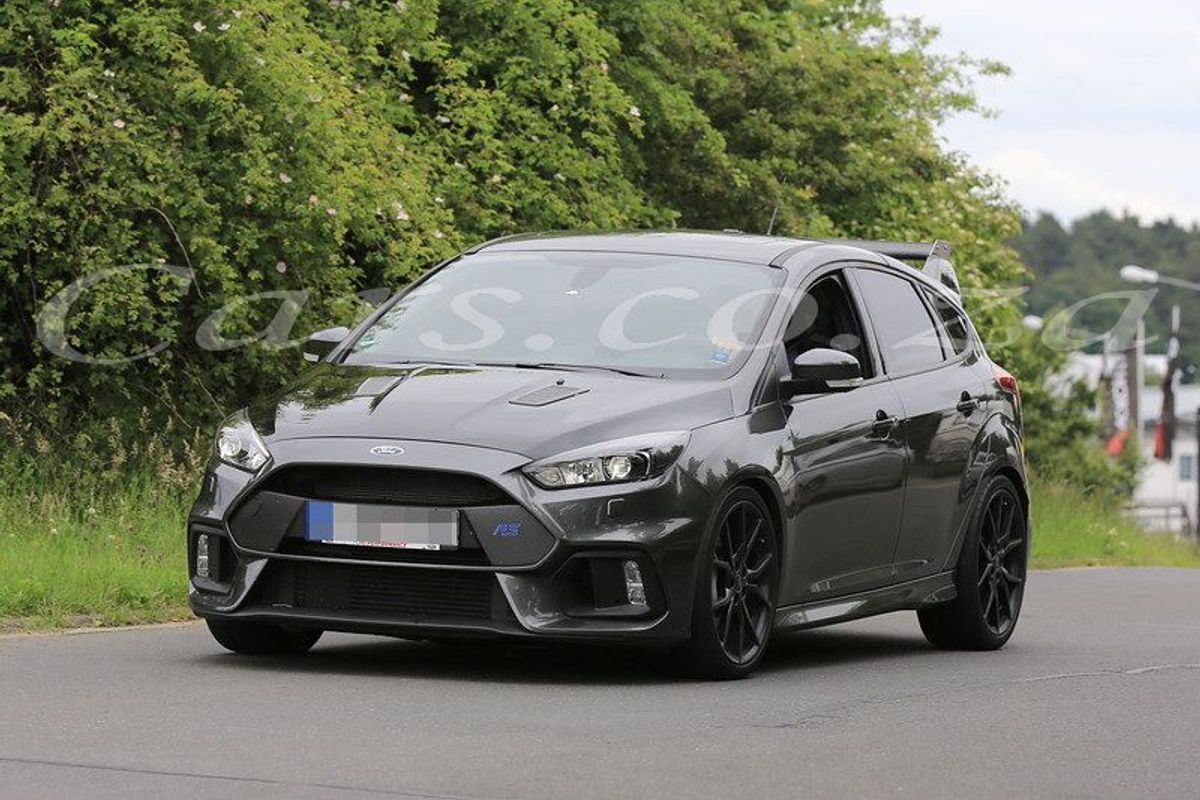
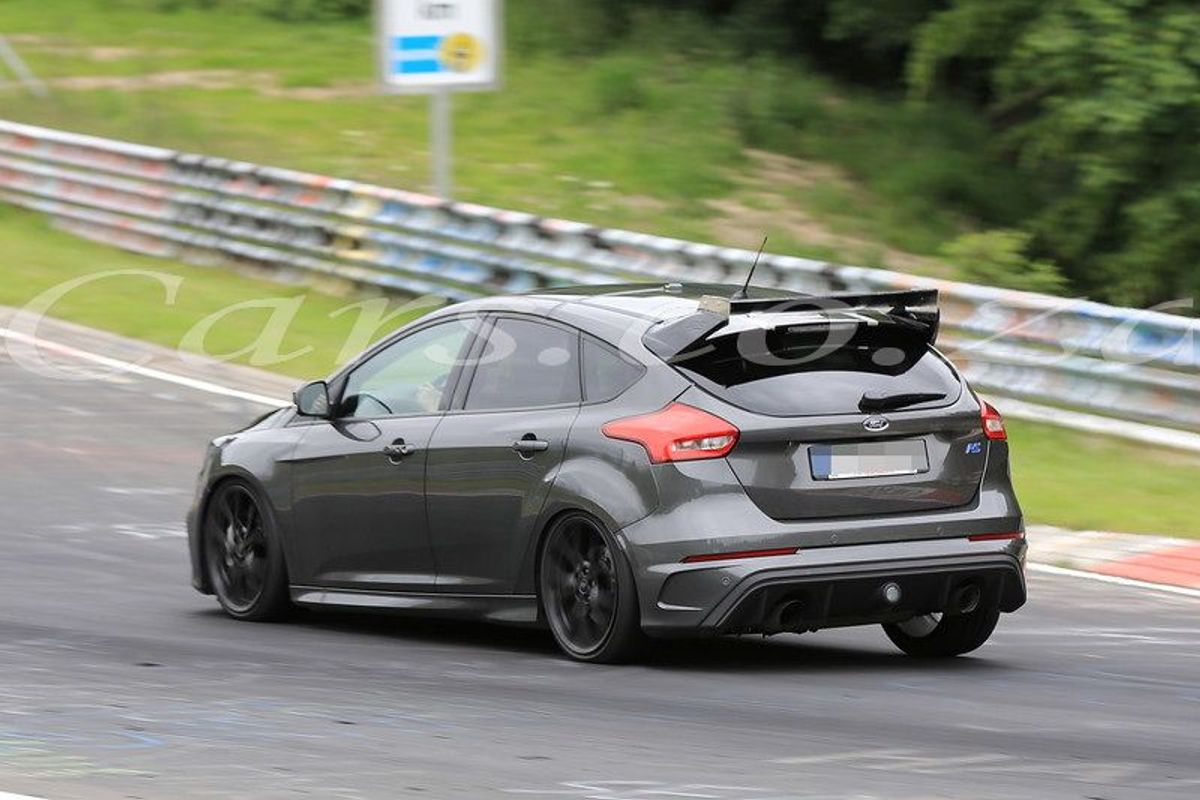
We recently reported on rumours of the development of an even hotter Focus RS, the RS500. Could this be it?
Our German spy photographer has captured this test mule pounding the Nurburgring, and it may just be the much rumoured Focus RS500 hyper hatch. The prototype sports extra air intakes on the bonnet, which the current RS doesn't have, and there's also a bigger rear wing. At this point we can only speculate about what lies underneath, but early bets are on a more powerful version of the current 2.3-litre EcoBoost engine and some stripped out weight. Other rumoured changes include an electronically controlled limited-slip front differential and a dual-clutch transmission.
The Ford Focus RS is an imminent arrival on the South African market – we recently reported on its likely pricing here. The RS500 version, if it does materialise, will hopefully also make the long trip to the southern tip of Africa.
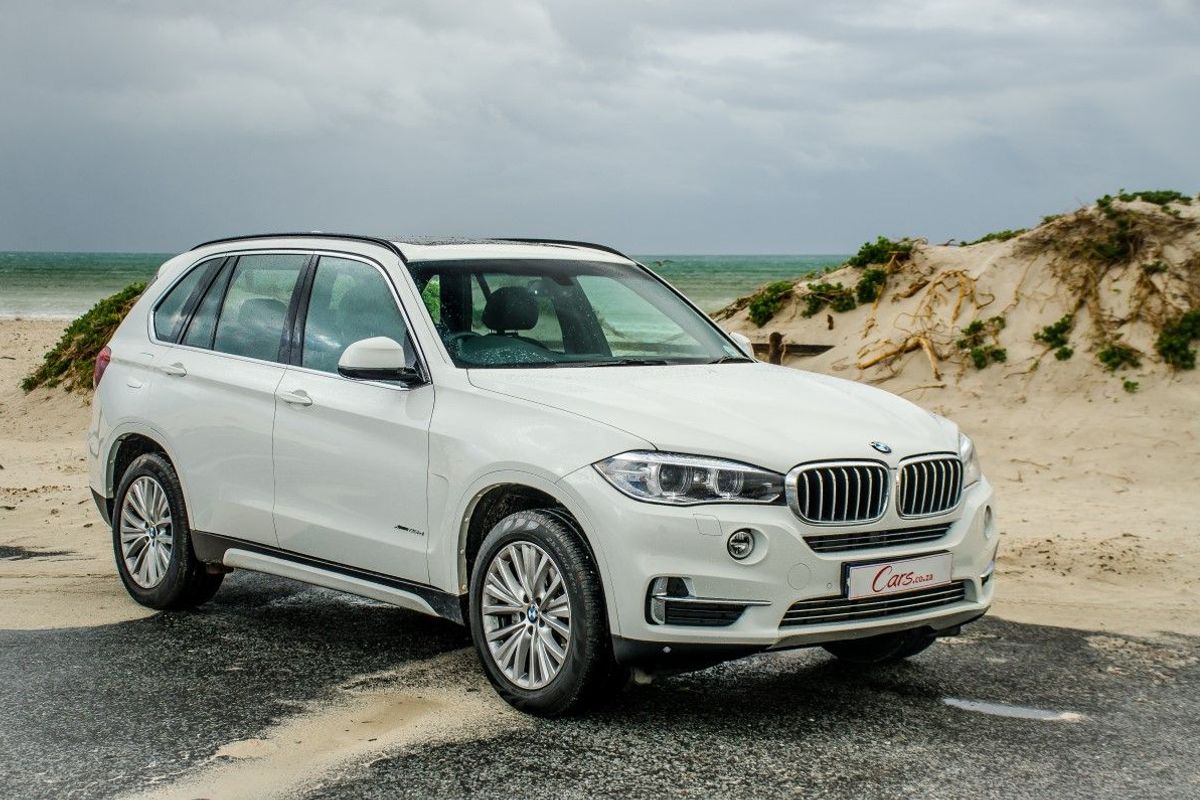
BMW South Africa recently expanded its X5 line-up with the addition of an entry-level xDrive25d derivative. We put it to the test…
We like: Engine performance, ride quality, practicality, fuel economy
We don’t like: Conservative interior design, pricey when specced up
Alternatives
For similar power: The Volvo XC90 D5 AWD Momentum (R894 548) offers 165 kW and 470 Nm of torque from its 2.0-litre turbodiesel engine. Alternatively, you may want to consider the Mercedes-Benz GLE 250d (R927 504), which offers 150 kW and 500 Nm of torque.
For more power: The Jeep Grand Cherokee 3.0 CRD Limited (R963 990) is well endowed with 179 kW and 569 Nm of torque generated from its six-cylinder 3.0-litre turbodiesel motor.
For more style: The Audi Q7 3.0TDI quattro (R967 500) is not only more powerful but it's arguably more stylish with its praised interior refinement. Fitted with a six-cylinder 3.0-litre turbodiesel engine, this derivative offers a heady 183 kW and 600 Nm of torque.
The X5 remains a popular choice for buyers in the luxury SUV segment and in an effort to make the appeal more accessible to a wider audience, BMW recently bolstered its offering to include the X5 xDrive25d. This derivative now represents an entry point to the X5 range. This X5 xDrive25d has its work cut out for it as it goes up against competitive rivals from marques such as Mercedes-Benz, Audi and Volvo. Does the baby X5 offer enough value to keep buyers interested and, more importantly, can it perform?
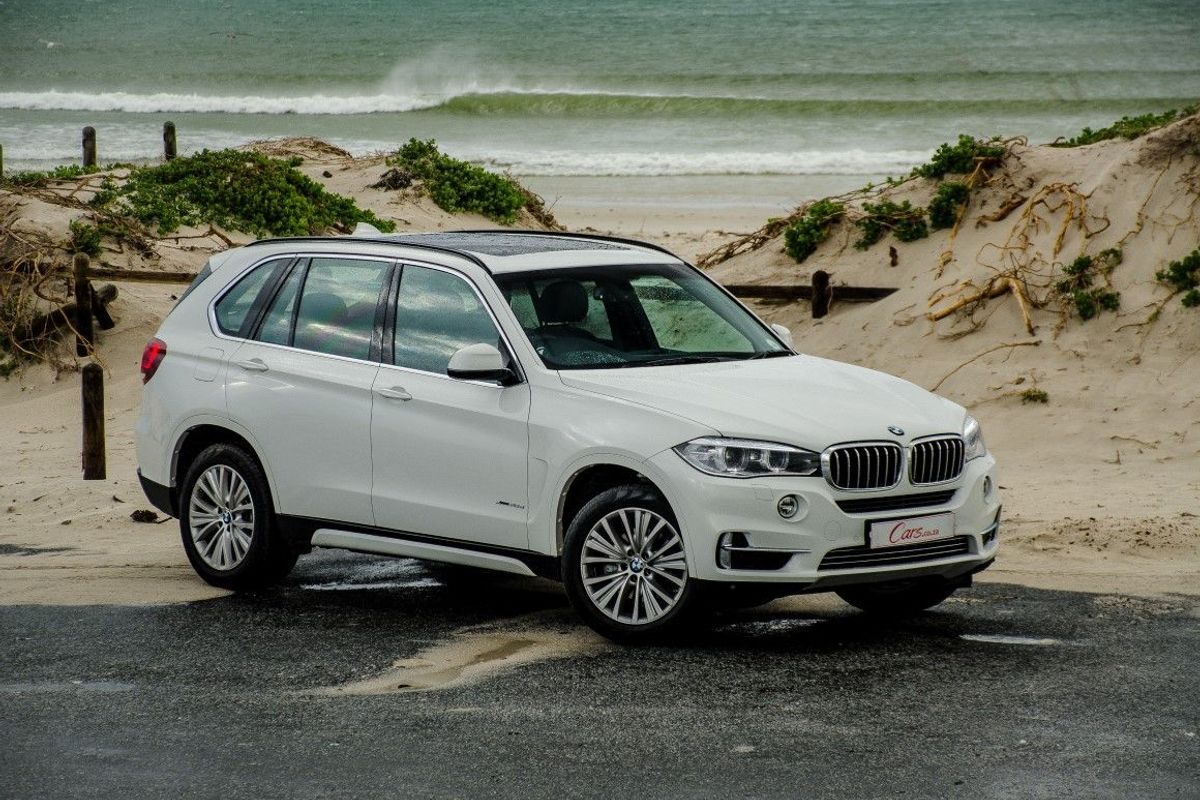
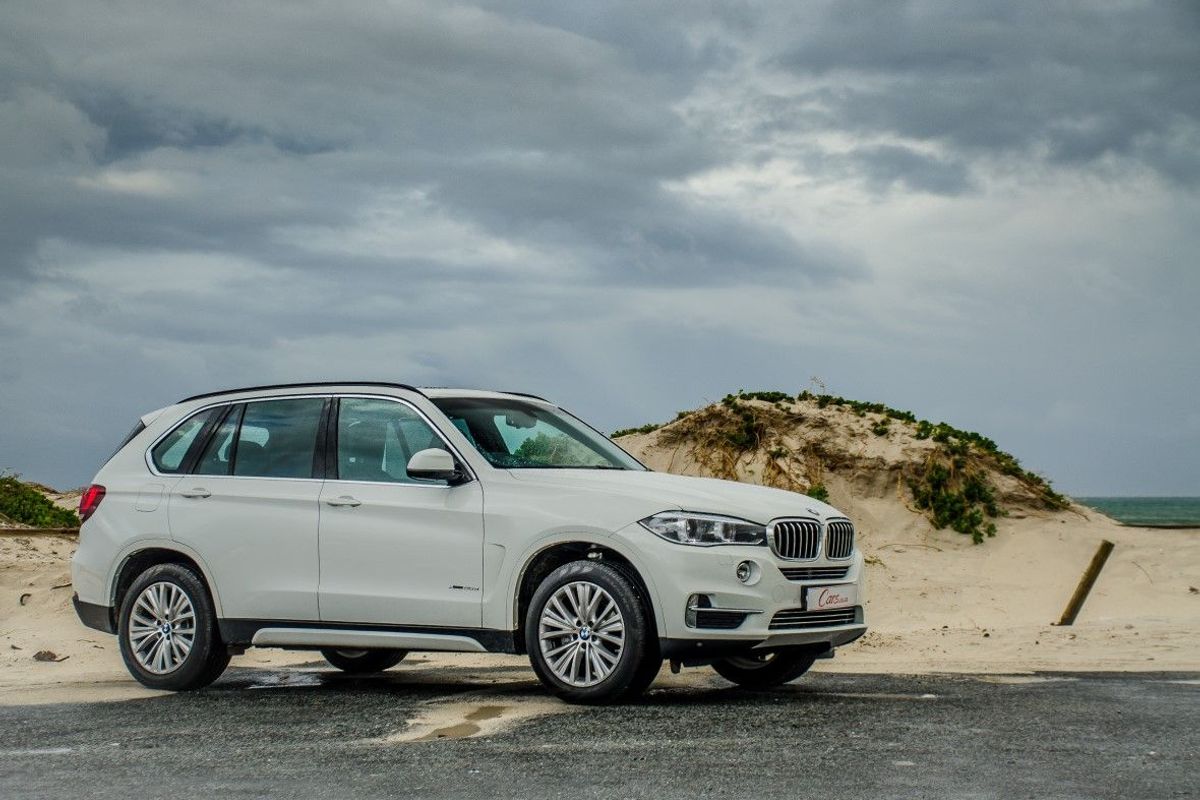
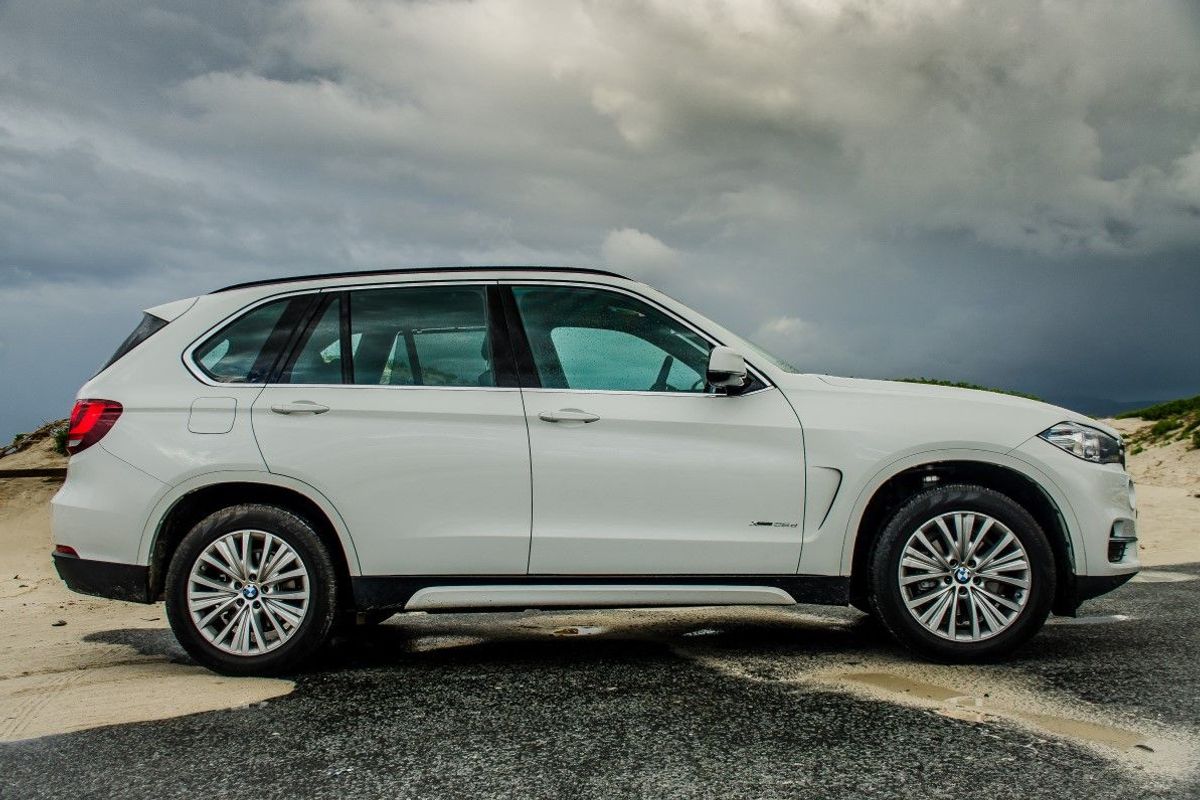
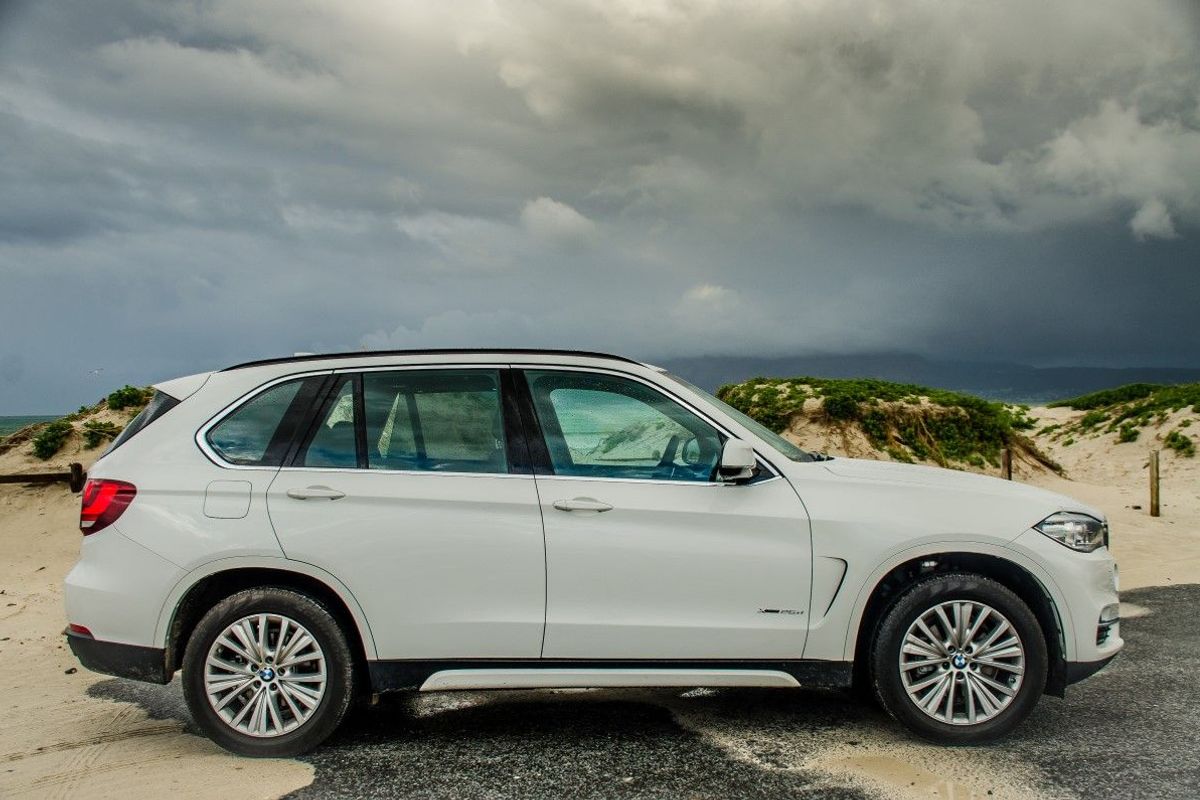
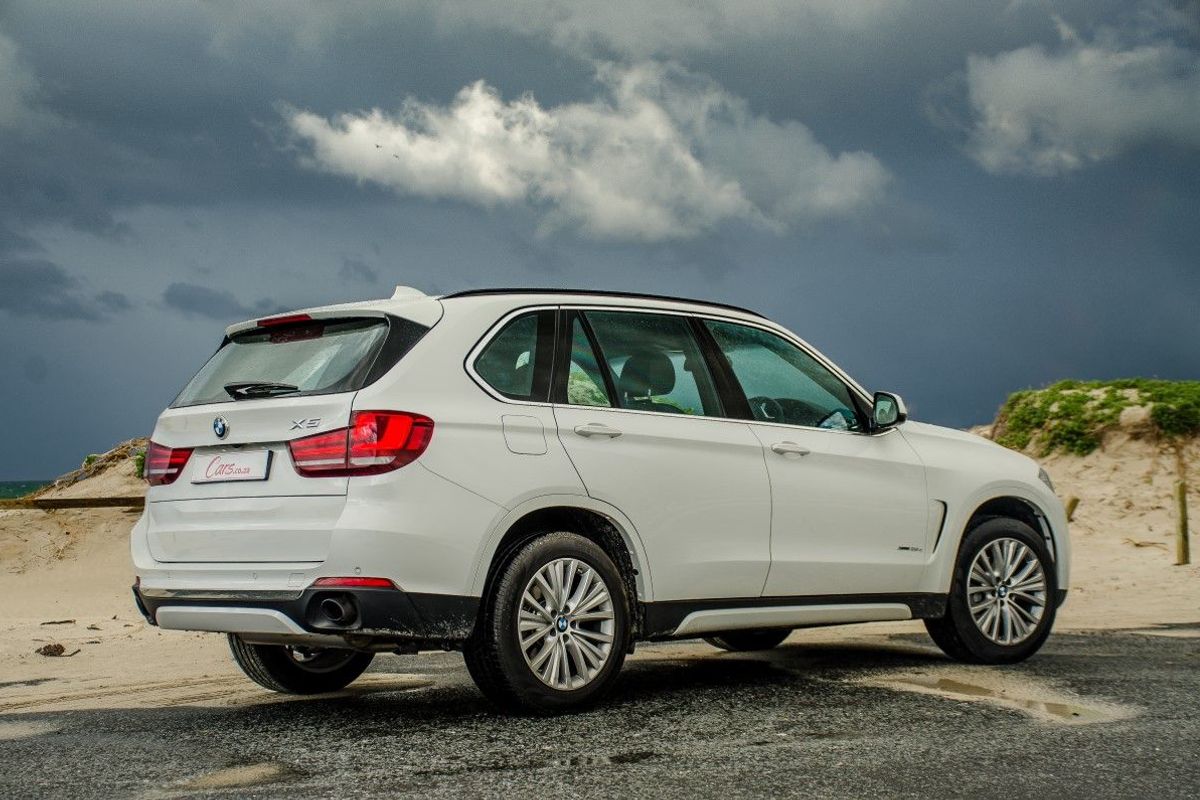
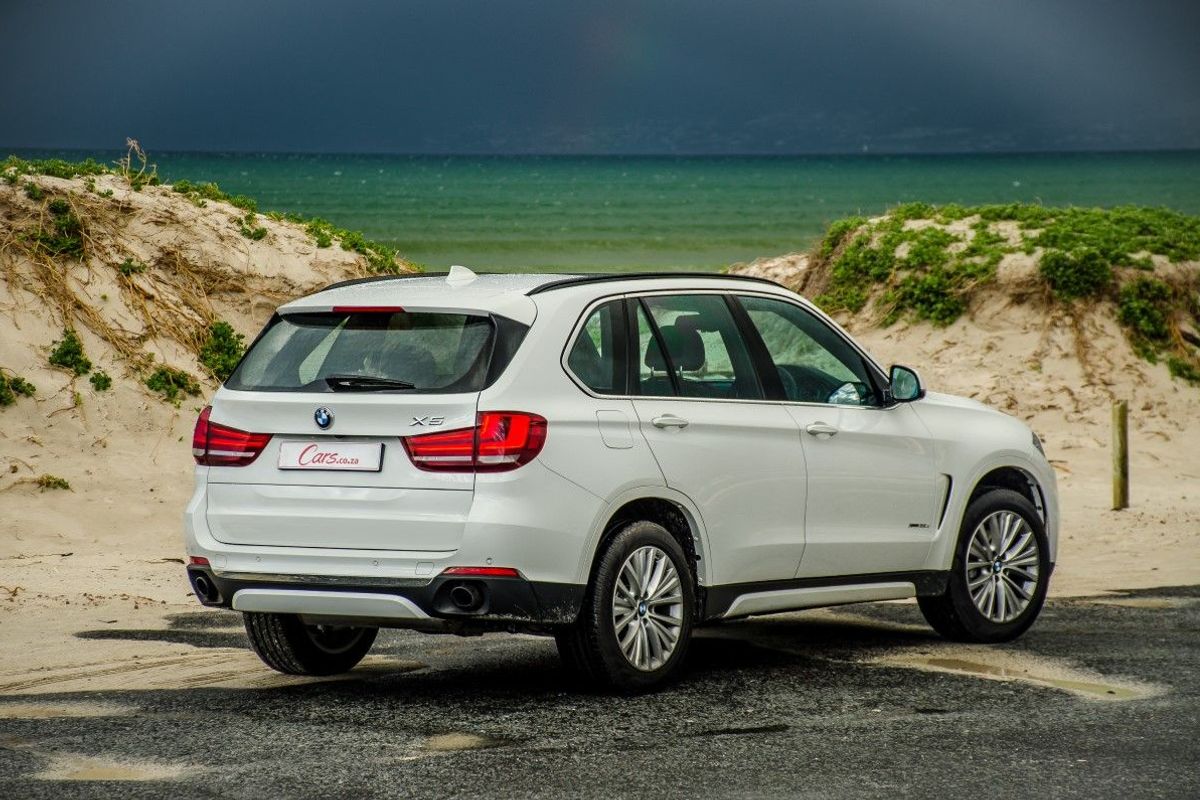
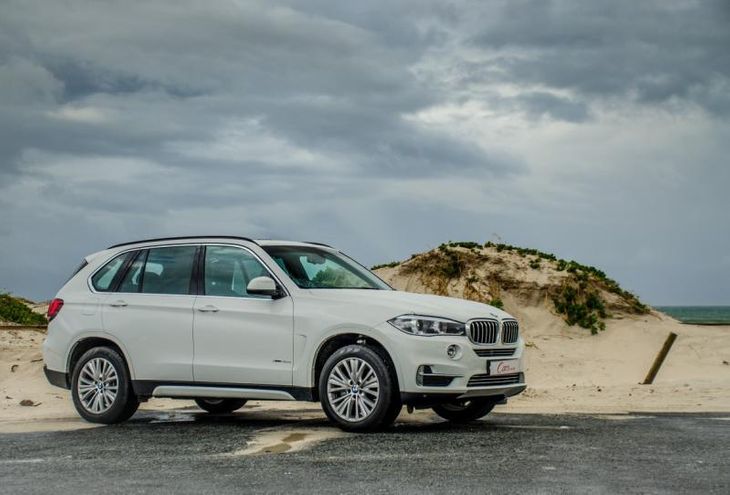
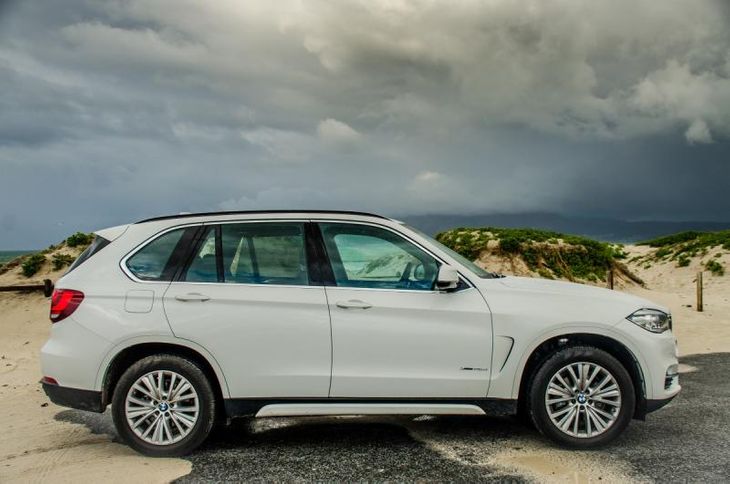
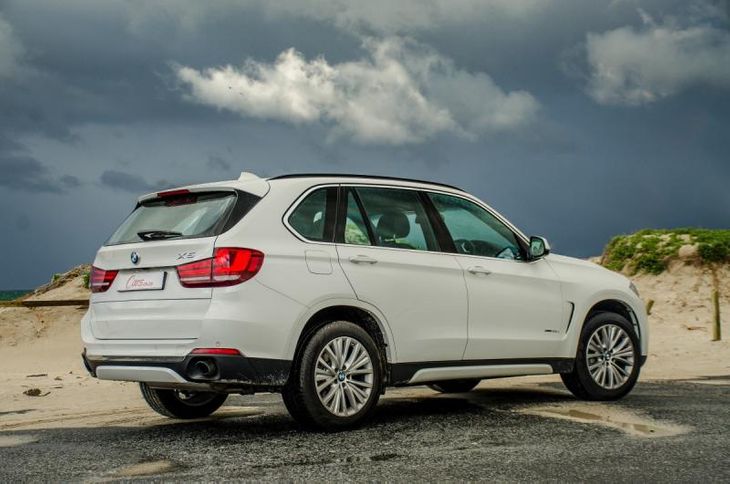
This X5 xDrive25d arrived donning an Alpine White exterior colour, complemented with optional 19-ich multi-spoke style wheels (R15 800). Note that 18-inch alloys are fitted as standard and don't quite fill the wheel arches with much boldness. BMW offers a wide range of optional features for the X5 and this test unit was moderately equipped with additional equipment.
Some notable extra features included an electrically operated tow bar (R11 400), panorama glass sunroof (R22 100), Navigation Professional (R13 900), extended light package (R4 800), anthracite roof lining (R6 700), rear-view camera (R5 500), sport automatic transmission (R3 850) and roller sun blinds for rear passengers (R2 800).
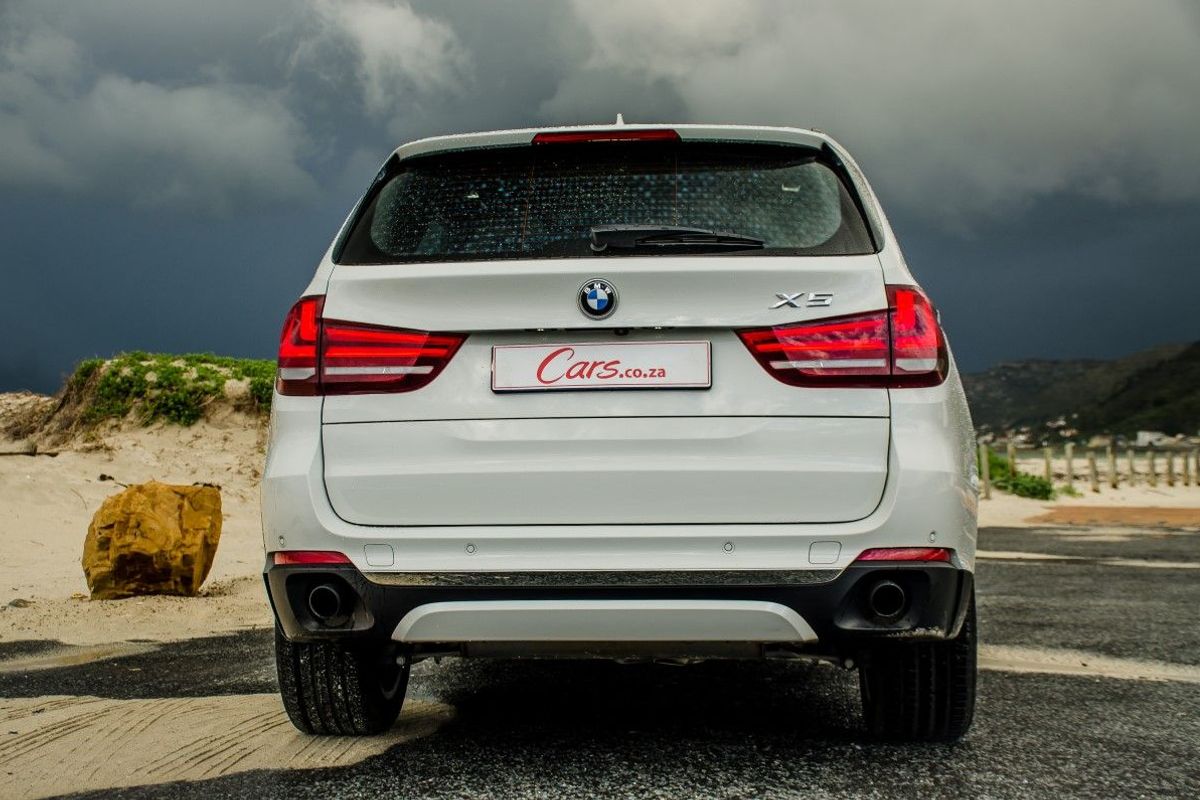
From the outside and apart from the badging, it’s near impossible to differentiate between this entry-level model and it’s more powerful stablemates. That’s a good thing because the buying appeal of the X5 xDrive25d remains intact, albeit a bit scantily dressed.
How does it fare in terms of…
Performance
The X5 xDrive25d delivers solid performancewhile also offering decent fuel economy.
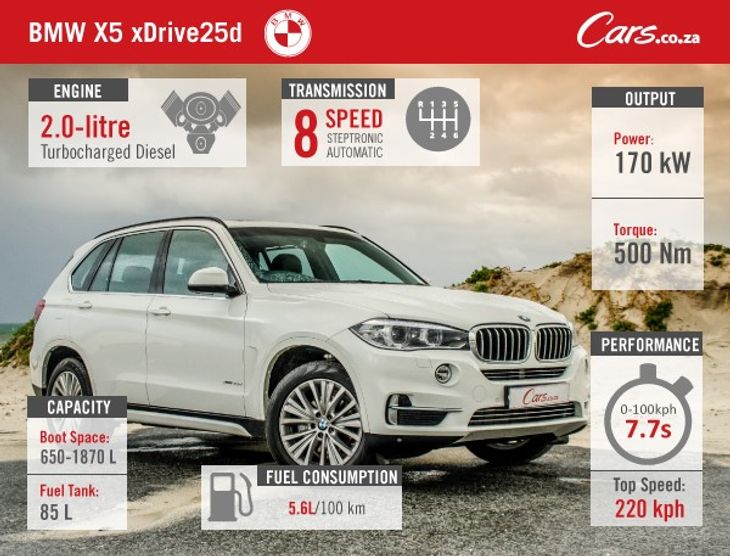
The X5 xDrive25d is powered by a four-cylinder 2.0-litre turbocharged engine that generates 170 kW and 500 Nm of torque. An 8-speed Steptronic transmission permanently drives all four wheels. Many buyers might be sceptical as to whether a small capacity four-cylinder 2.0-litre turbodiesel is adequate to pull such a large and heavy (2 115 kg) vehicle around with much fervour. Well, you can rest assured that the xDrive25d performs admirably out on the road. Not once did the X5 feel lacking in power or strained. It’s certainly not brutish but rather well measured instead.
The xDrive25d delivers its power smoothly and evenly and the Steptronic transmission is well matched to this engine. This derivative performs best when driven conservatively in either ECO Pro mode (optimises efficiency) or Comfort mode (optimises comfort) but you can coax it out of its shell when driven in Sport mode (optimises performance). In Sport mode and using the steering wheel-mounted paddle shifters, the X5 xDrive25d feels livelier and more willing to push on but for your everyday commute in the city, the other modes are more than adequate. This model can scoot along from standstill to 100 kph in 7.7 seconds and reach a top speed of 220 kph, which is fast enough for your average SUV-driving soccer mom or dad.
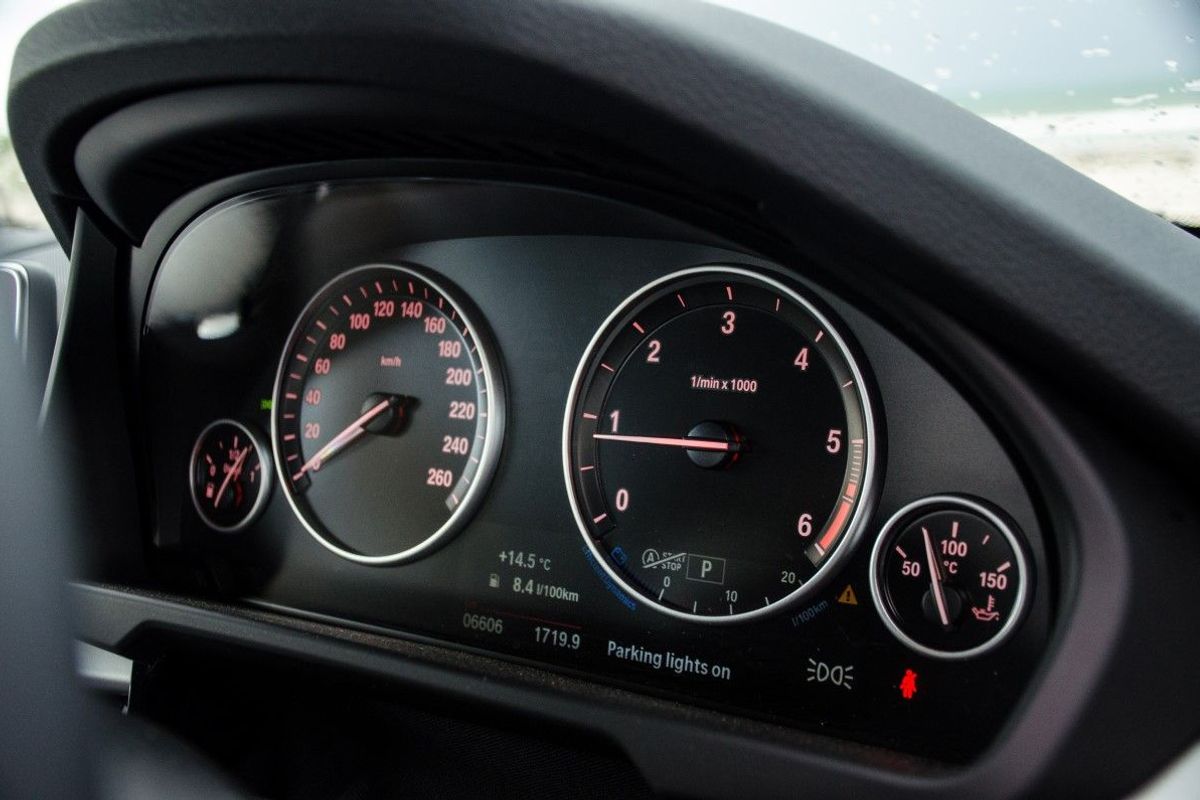
Possibly the biggest reward for choosing this derivative is the benefit of lower fuel consumption. BMW claims 5.6 L/100km and during our test period we averaged 8.4 L/100km with little effort, which isn’t bad at all for a large SUV. A sizable 85 litre fuel tank means that you won’t have to fill up too often either and you should get about 1 000 km from a full tank of fuel.
Ride & Handling
Comfort and a pleasing ride quality is what you can expect from the X5 xDrive25d.
The X5 xDrive25d continues to shine in terms of ride and handling. It’s comfortable and smooth to drive and the suspension copes well on most surfaces with bumps and notches sufficiently ironed out. Its relaxed demeanour will be appreciated on longer journeys too. The engine can be a bit noisy at start up but once it warms up, it runs quite slickly.
The interior of the X5 xDrive25d is well put together and free of rattles while driving. The cabin is well insulated too and shuts out road and wind noise effectively. Given the height of the vehicle, you’d think that it would be susceptible to body roll during cornering, but’s it’s the opposite actually. Very little body roll is noticeable while cornering and the X5 xDrive25d holds its line with surety and precision. More so, a higher seating position also affords the driver a commanding view of the road.
With BMW’s permanent xDrive all-wheel drive system, this X5 is surefooted and confident in most conditions and it will easily cope with the odd foray into the dirt if it has to, but it's best suited to taming the urban jungle and it does it so well.
Practicality
The X5 xDrive25d is a practical vehicle with lots of space for goods and passengers.
Marketed as a Sports Activity Vehicle (SAV), the X5 promises loads of practicality. With a ground clearance of 209 mm, the X5 xDrive25d is capable of kerb hopping or tackling a rough dirt road. The main rear tailgate is electrically operated while the lower tailgate is opened using a lever. Furthermore, the opening angle of the tailgate can be adjusted to your liking via the large display screen using the iDrive system, which is useful if you are parked in a confined space.
The tailgate opens up to a large boot (650 litres) with a space saver spare wheel stored beneath the boot floor. A retractable boot cover is also included to keep items in the boot out of sight. The rear seats are split in a 40:20:40 configuration, which provides added flexibility depending on your requirements. Longer items are easily transported by folding the middle section down, keeping two rear seats unaffected. For bulkier items, you can fold all the seats flat, expanding the load area to 1 870 litres.
The front and rear door mouldings have bottle holders and sufficient storage space, while two cup holders are found ahead of the transmission for the driver and front passenger. A USB and Auxilliary port are to be found in the reasonably-sized centre console.
Rear passengers will be well-pleased with the amount of space available with more than enough leg, shoulder and headroom on offer. This will be particularly welcome on longer journeys.
The front seats are comfortable to sit in and are electrically adjustable for height, as are the seat backs, but strangely, the fore and aft positions are manually adjustable. This particular test unit featured Dakota leather upholstery.
Standard features
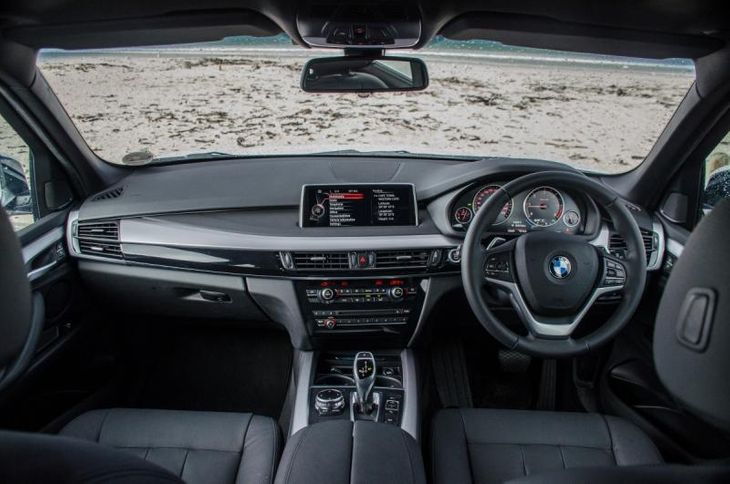
The interior of the X5 xDrive25d is simple yet comfortable.
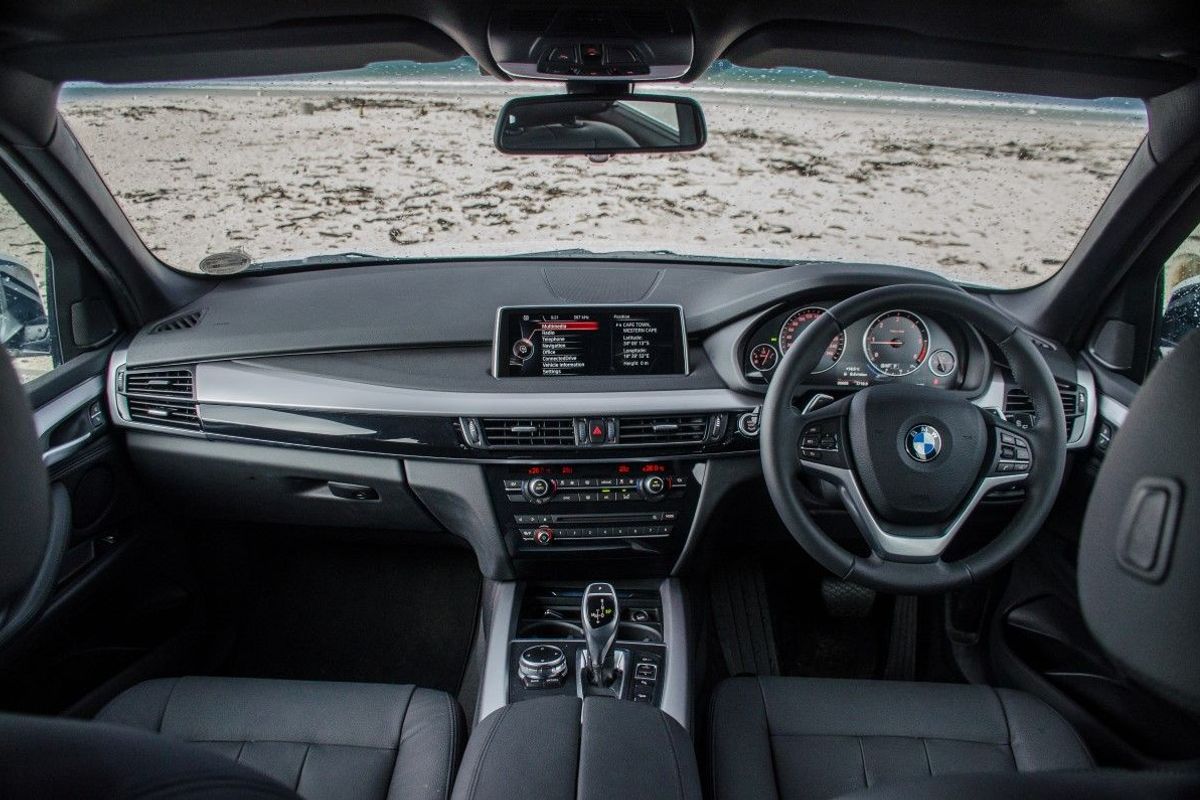
The interior of this X5 xDrive25d isn’t particularly striking in design, but at least it’s neat and functional. The steering wheel is adjustable for rake and reach and features mounted controls for the audio system, Bluetooth, voice activation and cruise control. Climate control air conditioning is standard as are all-round electric windows and side mirrors.
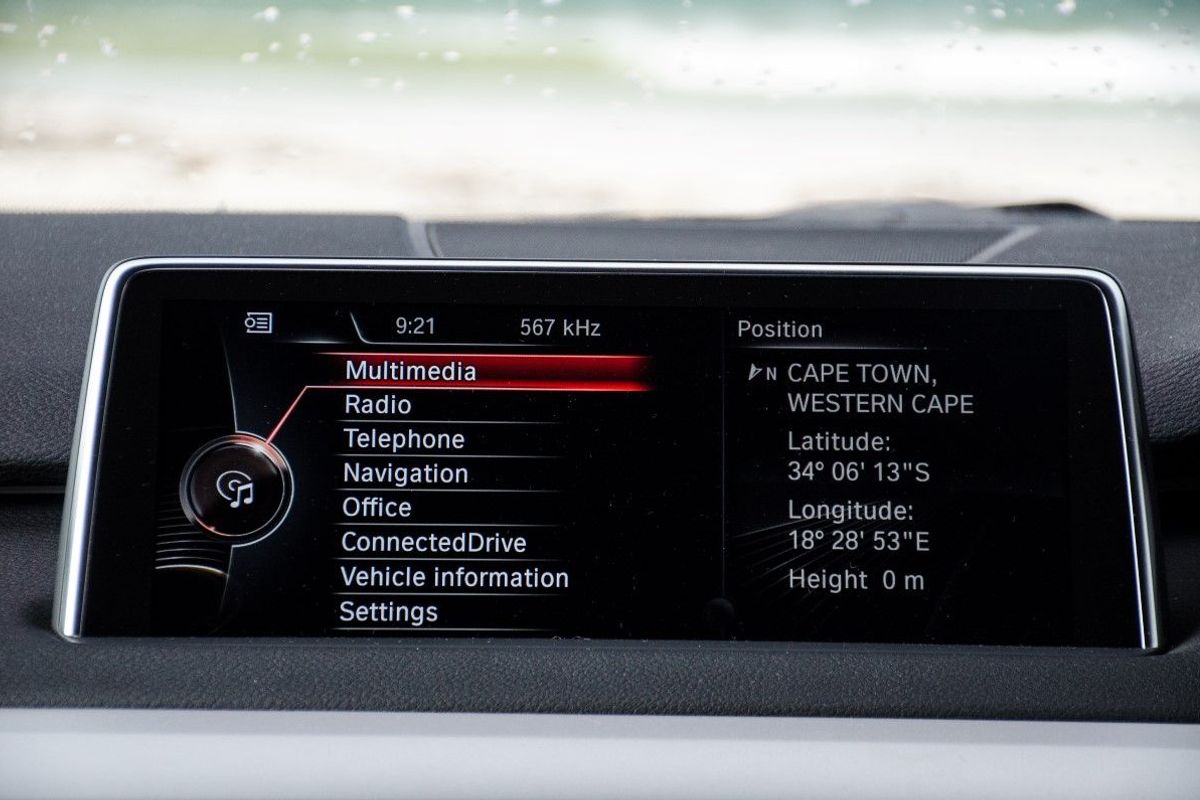
The vehicle's iDrive controller in the centre console provides easy access to features on the display screen such as the radio, telephony, navigation, BMW ConnectedDrive, vehicle information and settings. The layout of the menus are straightforward and the iDrive controller makes browsing simple. The instrument cluster, however, does look dated though…
In terms of safety features, the X5 xDrive25d is fitted with six airbags, ABS with ABD, electronic brake assist, traction control, electronic stability control and hill descent control. Front and rear park distance control is standard but paired with the rear parking camera, getting in and out of parking spaces is that much easier.
When compared with its nearest rivals, the BMW X5 xDrive25d makes a strong case for itself and is adequately equipped with standard features.
Price and Warranty
The BMW X5 xDrive25d is priced from R889 964 and is sold with a 2-year/unlimited km warranty and a 5-year/100 000 km maintenance plan. As previously mentioned, there’s a wide range of optional features on offer for the X5, but be advised to choose them carefully as the overall price escalates quickly.
The BMW X5 xDrive25d is a well-balanced vehicle that offers decent performance while still returning admirable fuel consumption figures. More than this, it’s comfortable to drive every day and entry-level X5 buyers will benefit from the high levels of practicality offered by this model, making it a difficult vehicle to ignore in this segment.
Even though the X5 xDrive25d is adequately equipped with standard features, its price point allows you to spec it up quite generously. If you consider that the nominally more powerful X5 xDrive30d is priced from R968 104 before options, then the X5 xDrive25d makes perfect buying sense for those looking to get behind the wheel of an X5 at a reduced price without compromising too much on power, performance etc.
The X5 xDrive25d is an excellent offering from BMW and it is well worth consideration if you are looking for a capable and efficient premium SUV.
BMW X5 xDrive25d – Quick Specs
Volvo S90 R-Design Coming to SA in 2017
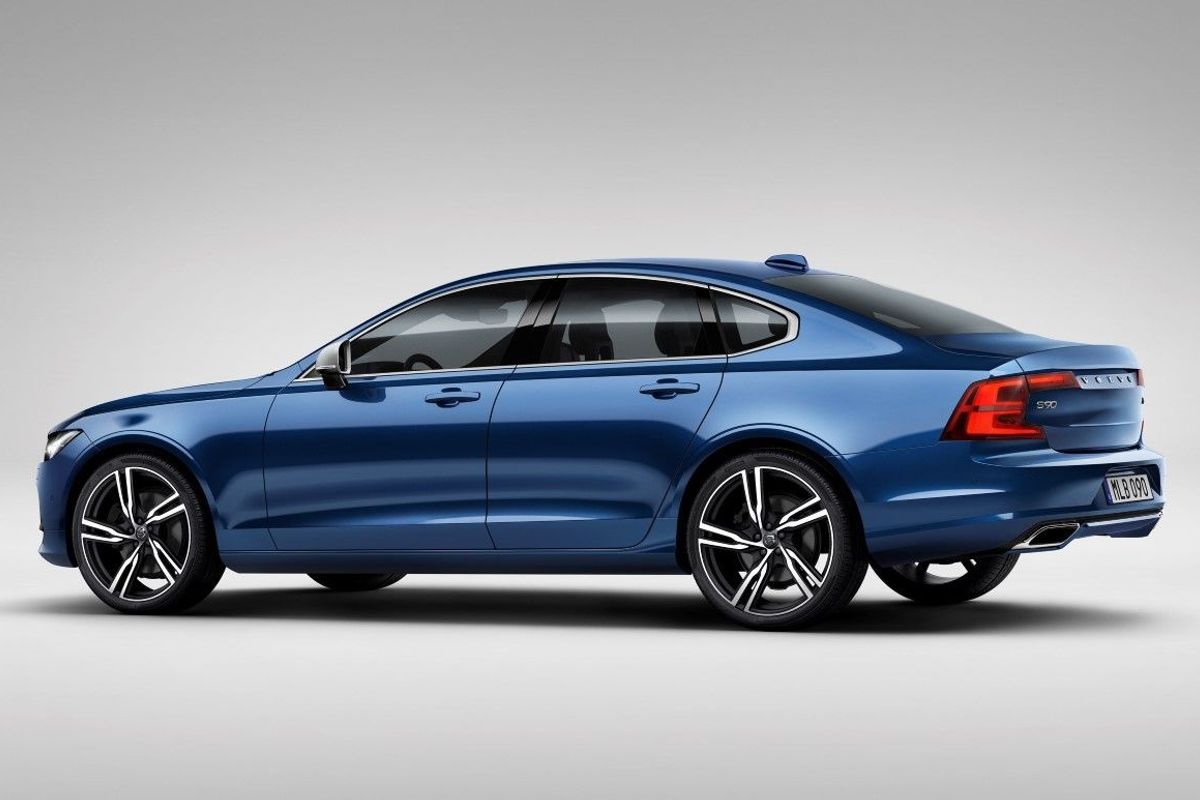
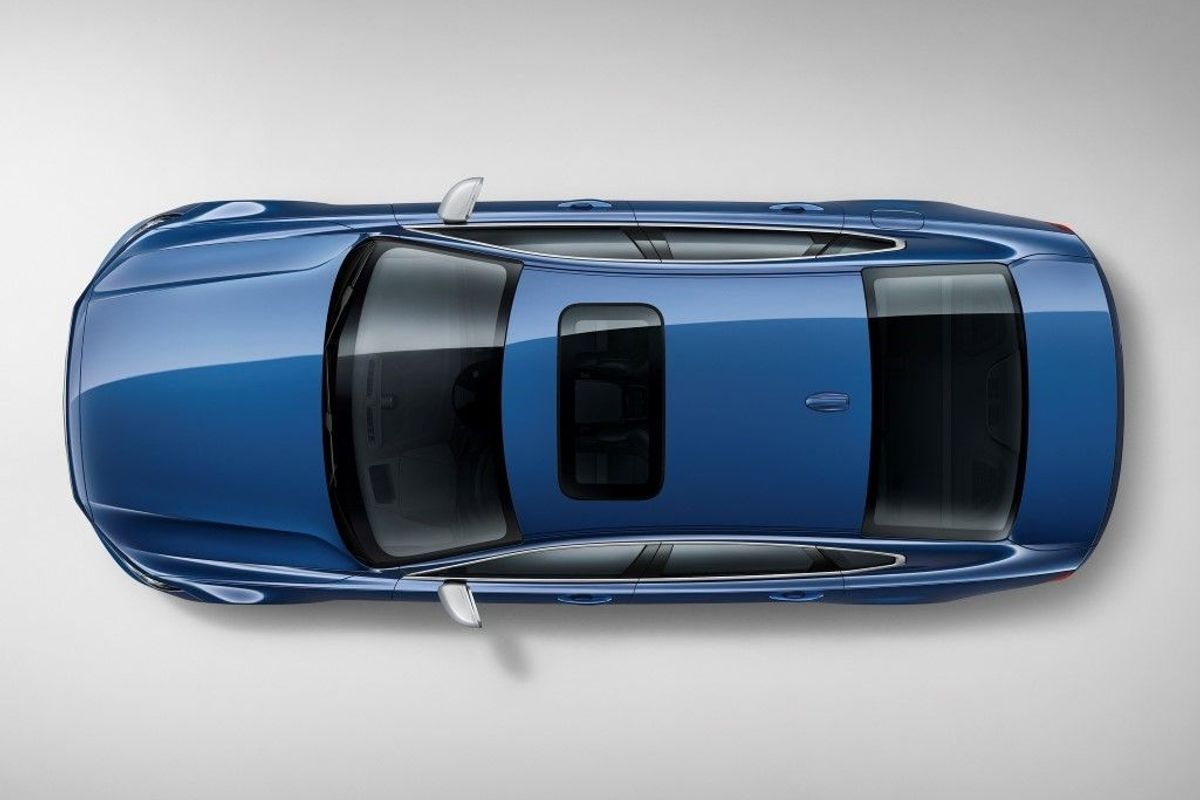
Volvo’s S90 flagship luxury sedan is due for local introduction later this year, with the R-Design version set to arrive in 2017.
Volvo’s new luxury S90 sedan is bound to garner much attention when it arrives in South Africa later this year. The S90 will share design cues with the hugely successful XC90 SUV (current Cars.co.za Consumer Awards Premium SUV title holder) and it’s expected to feature a host of advanced gadgetry and technology to rival offerings from BMW, Mercedes-Benz and Audi.
Volvo has announced that the sportier S90 R-Design version will become available in South Africa in 2017, following the new model’s introduction later this year. We will be travelling to Europe later this week to drive the new S90 so stay tuned for updates and first impressions.
Volvo S90 R-Design details
The Volvo S90 R-Design features additional sporty details.
“R-Design delivers an extra edge to our elegant new 90-series sedan, with a winning combination of a sportier, more responsive drive with clearly visible performance styling,” says Björn Annwall, Senior Vice President, Marketing, Sales and Customer Service at Volvo Cars.
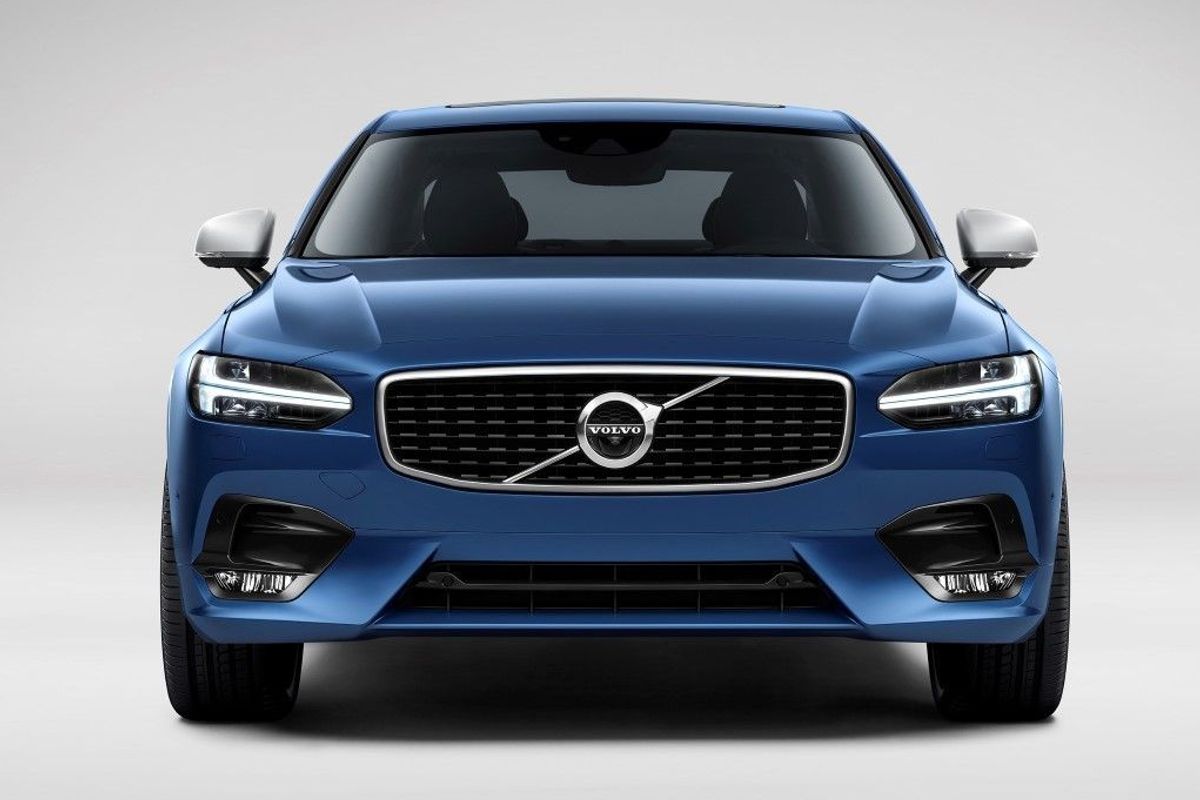
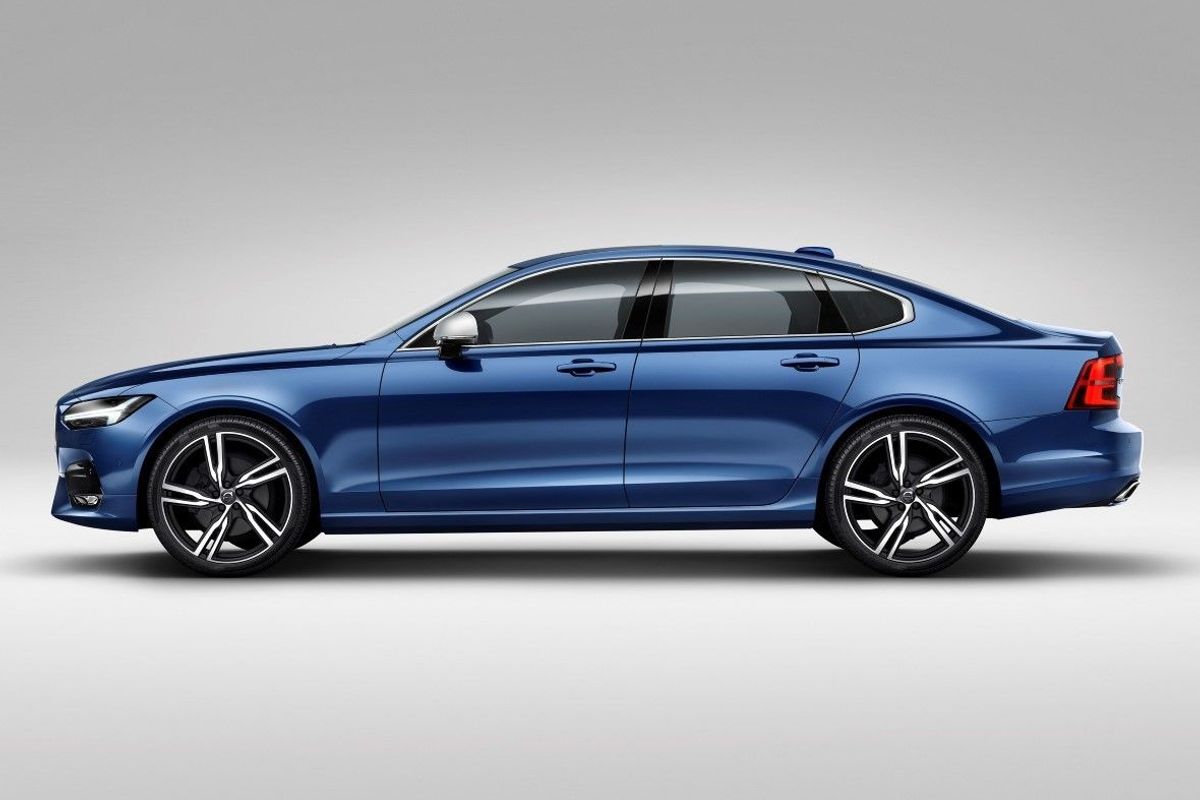
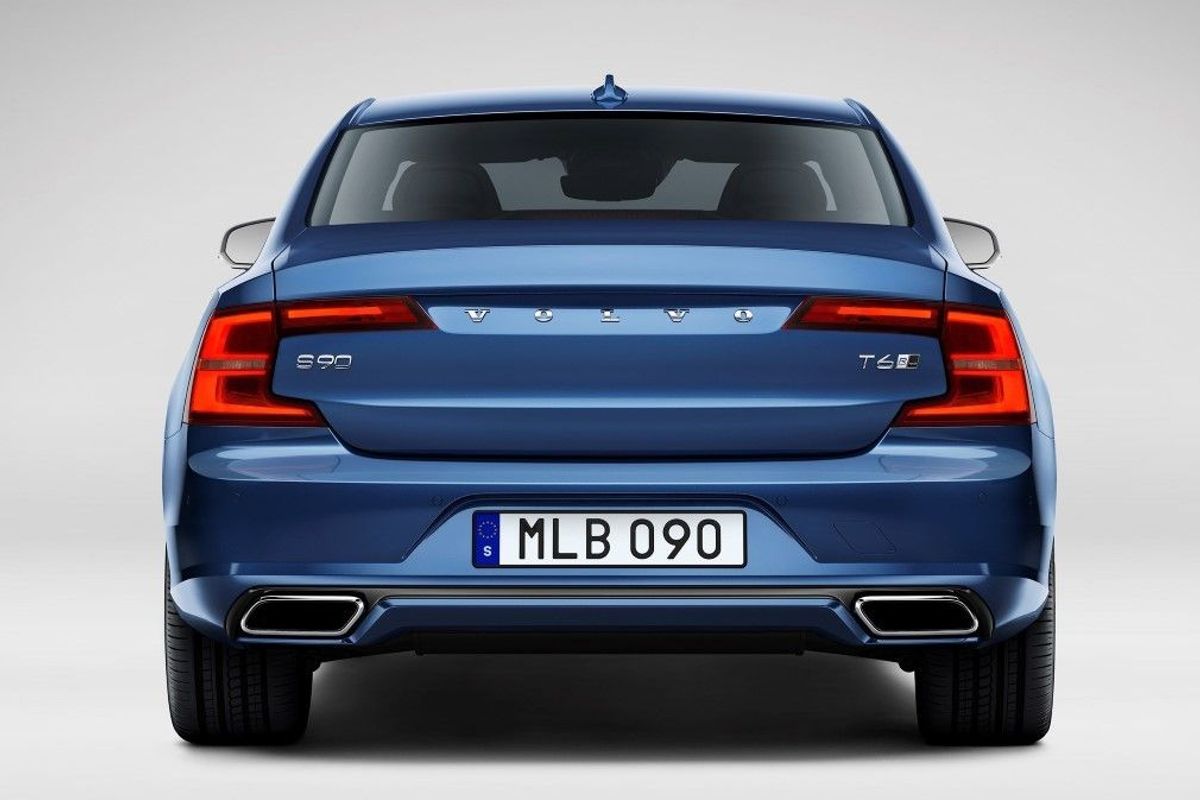
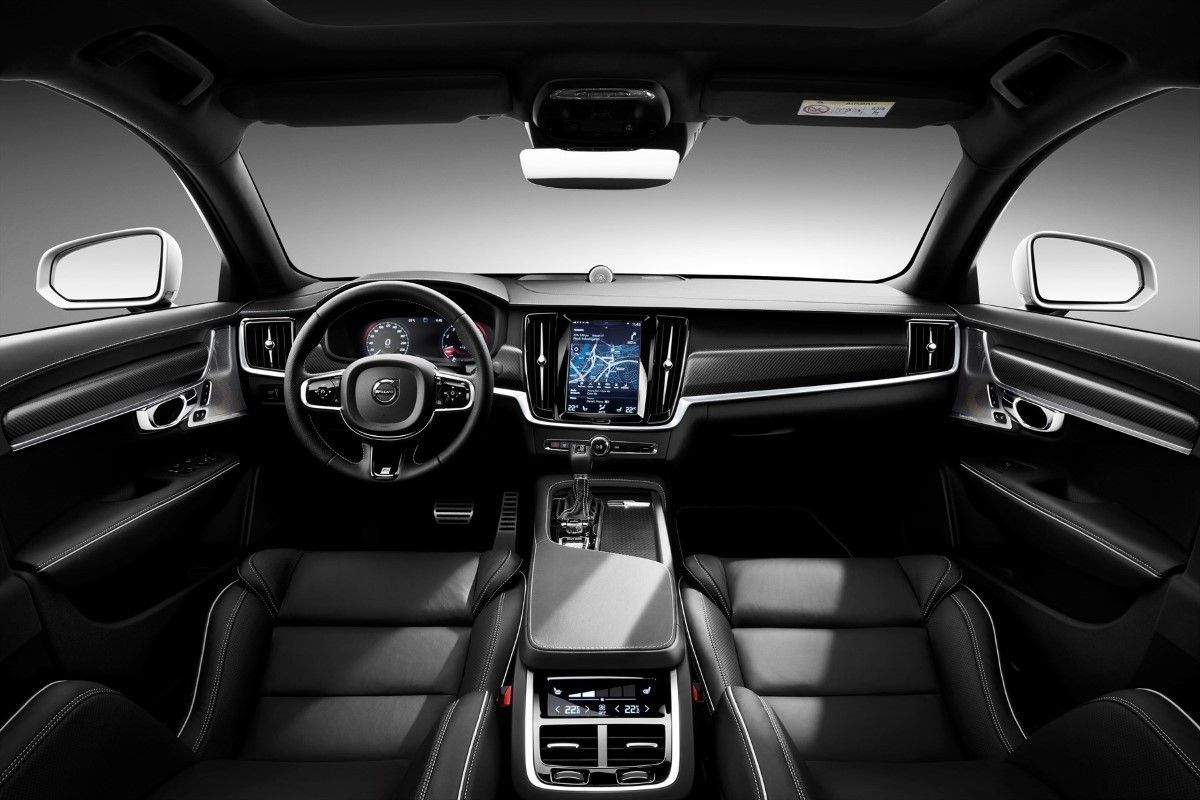
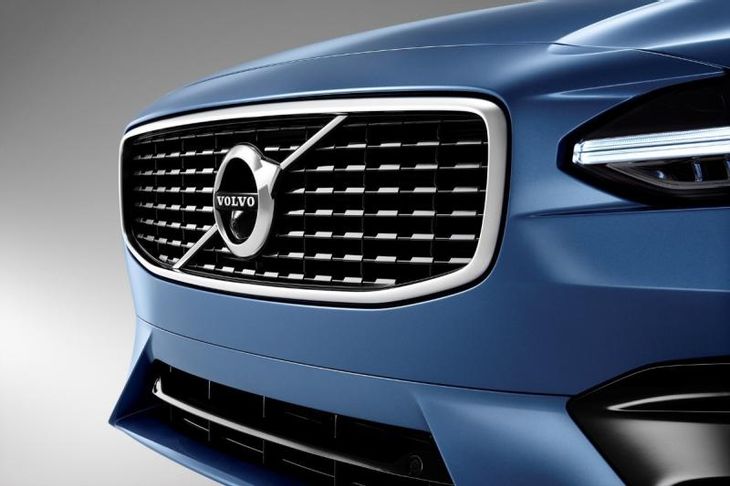
The S90 R-Design features a different grille compared to the standard model with piano black trim found at the front and rear. Fog lights are integrated into the front spoiler and the R-Design rides on newly designed five-spoke matt diamond-cut wheels, giving the car a sportier persona.
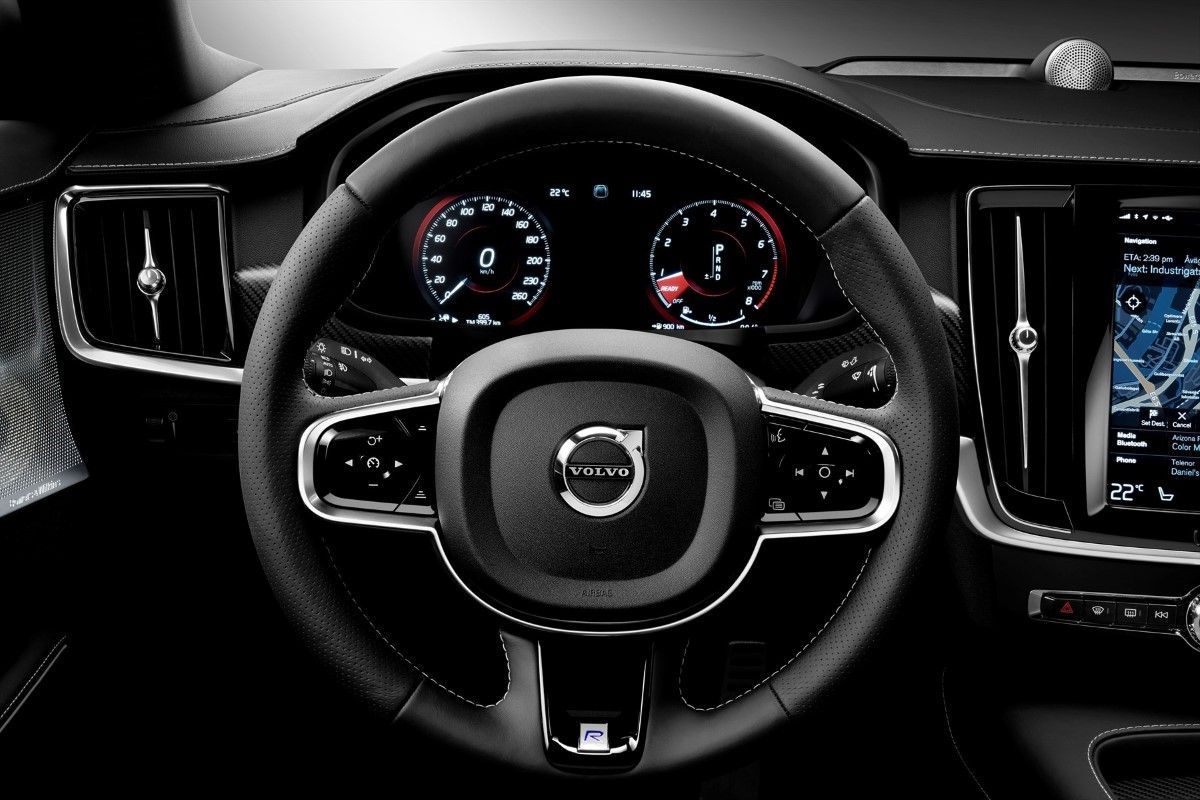
On the inside, R-Design derivatives will feature unique décor trim, pedals and floor mats. Contoured sport seats, a special steering wheel and an interior illumination package will further differentiate th R-Design derivatives from the rest of the S90 lineup.
We will keep you updated as more details become available for the Volvo S90.
Citroën Confirms All-New Crossover To Be Built
Peugeot CitroënGroup (PSA) has announced that production of an all-new 'market-winning' Citroënvehicle will commence at its French plant in Rennes in 2018.
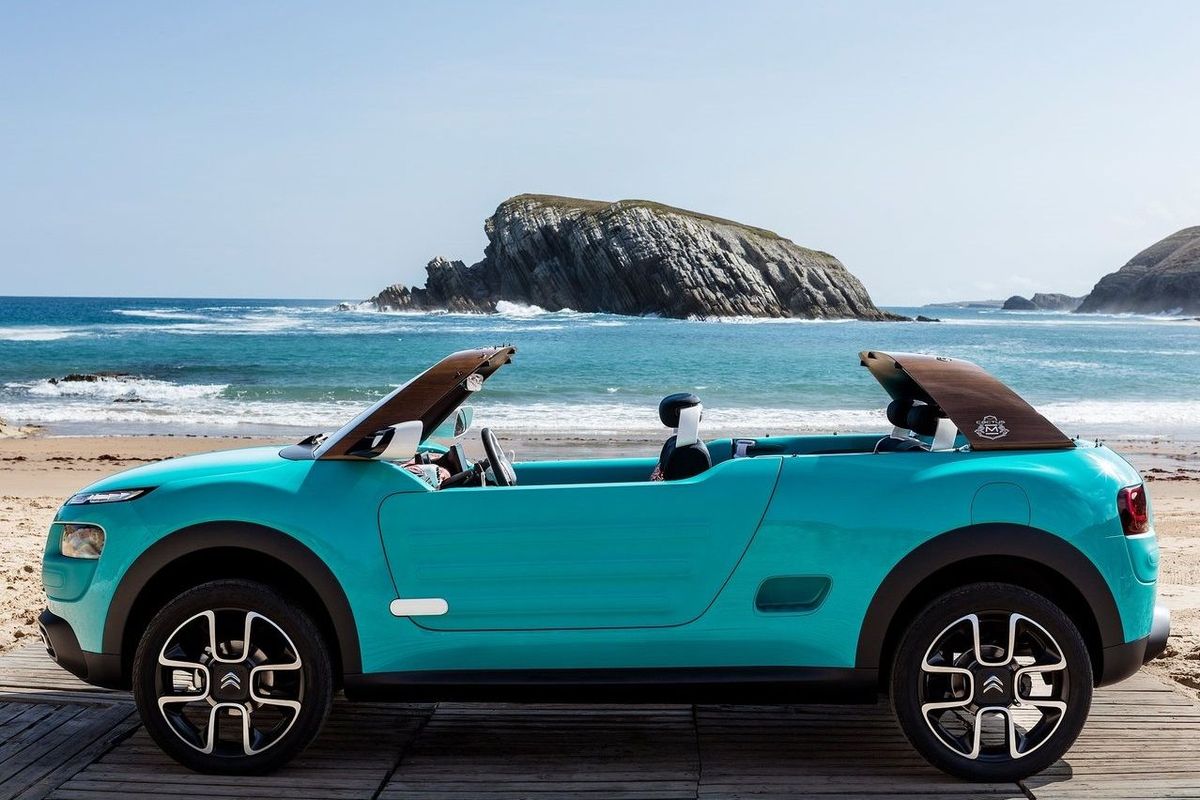
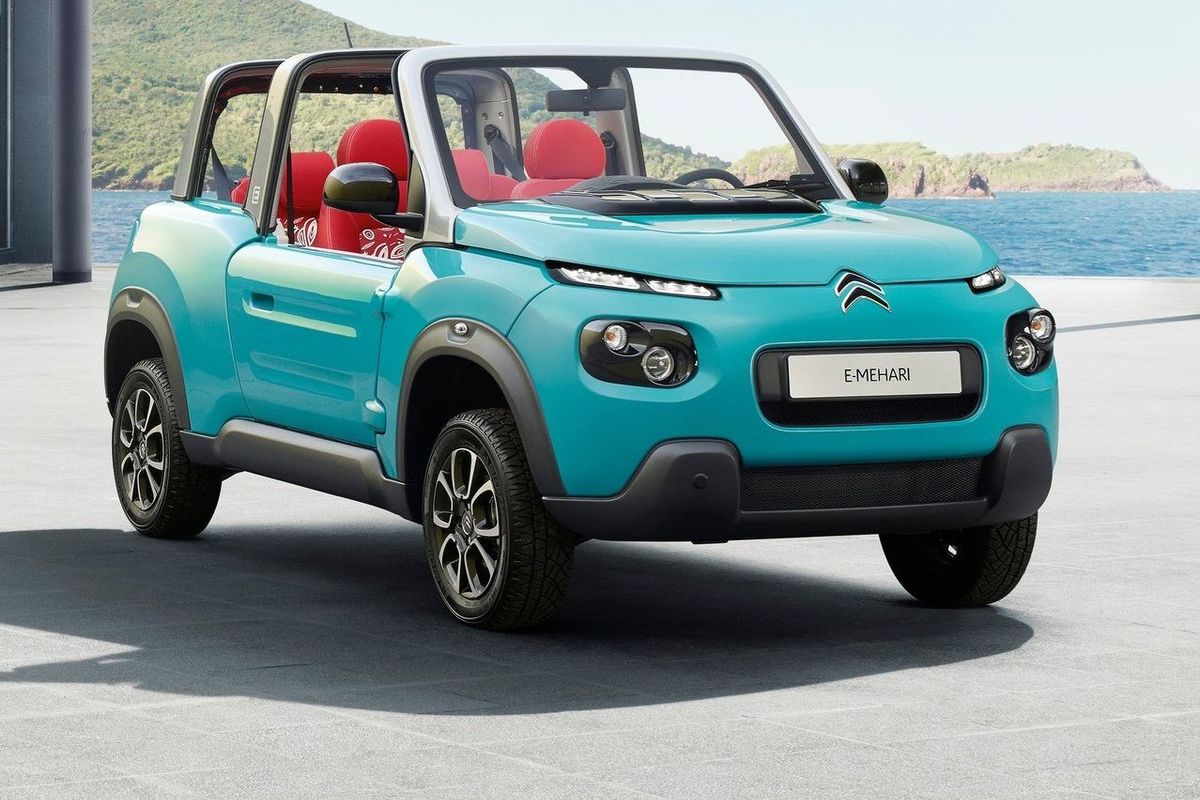
Following a troubled decade or so, the French PSA Group is having a good run globally of late under the guidance of CEO Carlos Tavares. Now Peugeot Citroën have invested €100 million into its factory in Rennes as part of its Push to Pass plan. This strategy will see the unveiling of up to 34 new models from these two brands in the next few years. This aggressive product roll-out will see four new vehicles coming from PSA in under two years. Production output of this factory is expected to increased by 60% by 2018. The next generation Peugeot 5008 and the Citroën E-Mehari are already confirmed for production.
As for the new crossover product, there are more questions than answers right now. PSA claims it will be built on the EMP2 platform, which is currently the foundation for the acclaimed Peugeot 308 (second generation), 2013 Citroën C4 Picasso (second generation), and 2016 DS 4 (second generation) to name but a few. This platform is flexible and offers either long or short wheelbase configurations, high or low ride height and different suspension setups can be used. It's also 70 kg lighter than the previous platform. This modular platform additionally makes provision for front-wheel and four-wheel drive.
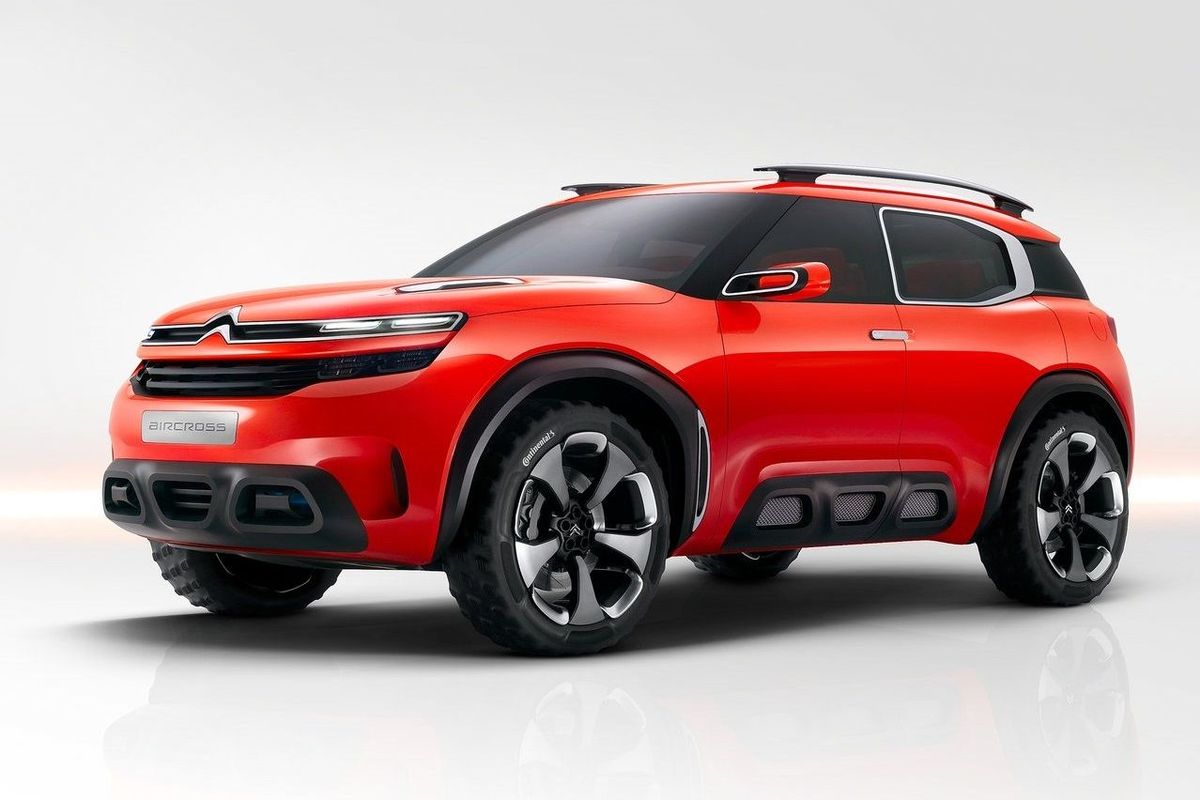
So what can we expect of this crossover? Based on the platform description above, we could potentially see an all-wheel drive, radically-designed Citroën featuring one of the potent, yet frugal e-THP turbo engines. In terms of style, we can look at the past few Citroën concepts to gauge possible design cues. Fingers crossed it resembles the outrageously striking Citroën Aircross concept. We should see this all-new Citroën crossover hit European roads in 2018.
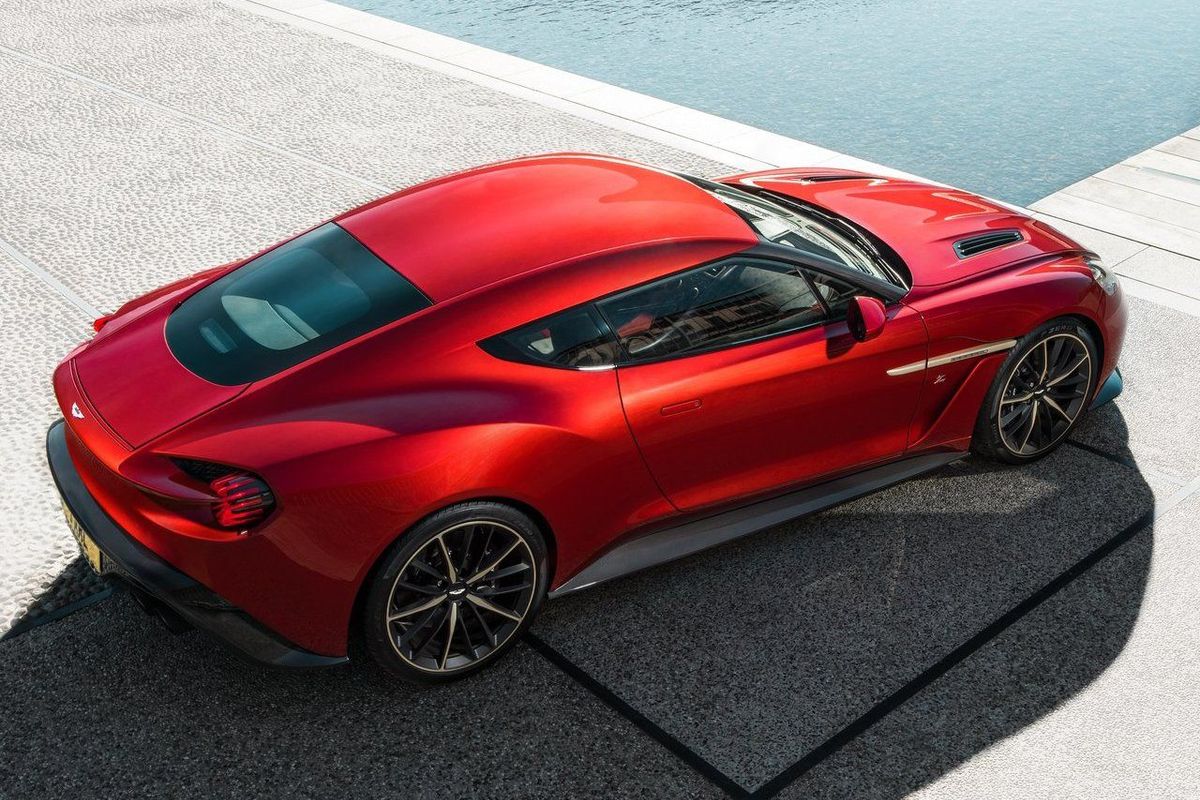
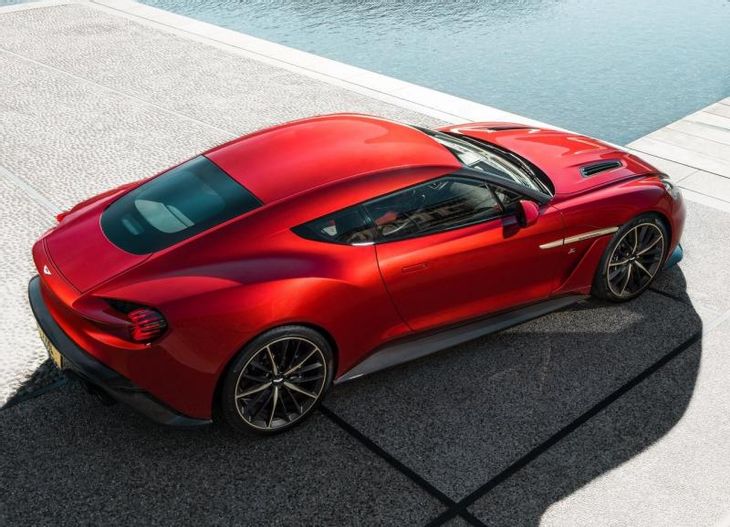
After “unprecedented customer interest” in the Aston Martin Vanquish Zagato, the Gaydon-based firm is putting the car into limited production.
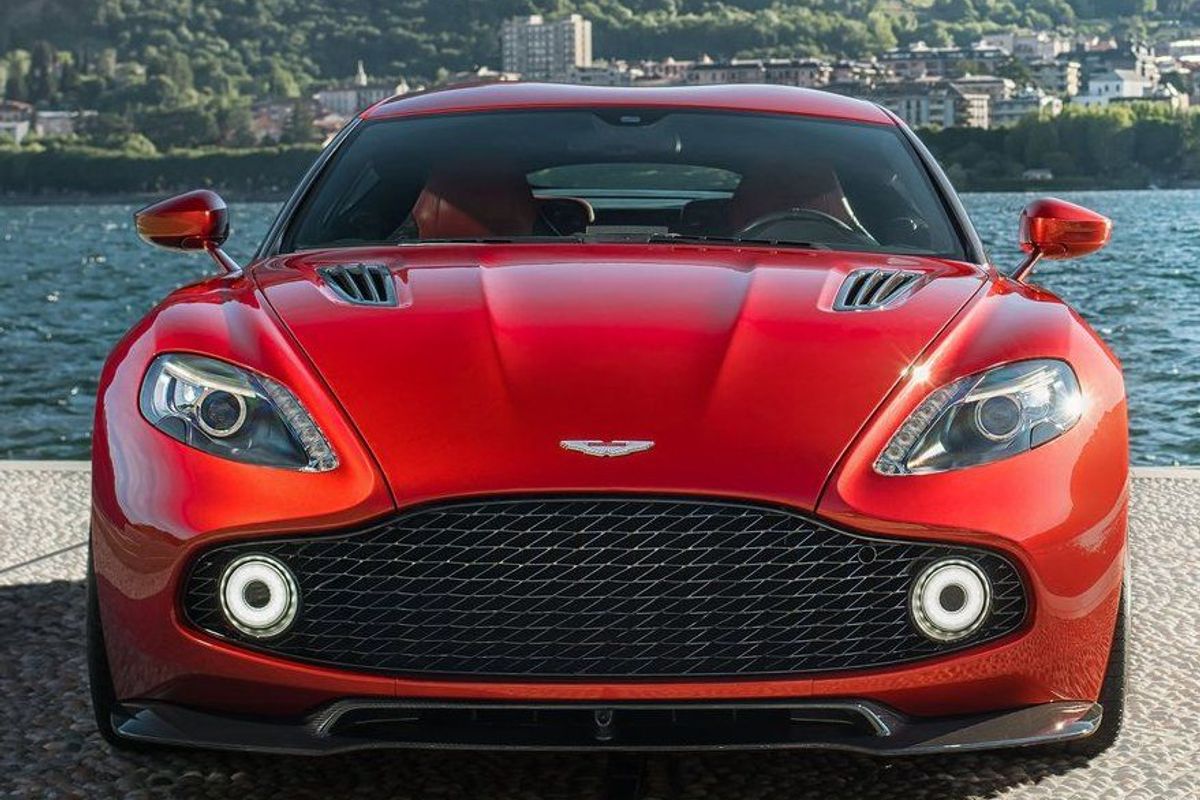
Earlier in May 2016, Aston Martin showcased the Vanquish Zagato concept at the Concorso d'Eleganza Villa d'Este on the banks of Lake Como in Italy. Unsurprisingly, the Vanquish Zagato was so well received that Aston Martin has decided to build only 99 examples of the car at its production facility in Gaydon, UK. If you’re interested, it’s too late, because reports are suggesting that all units are already spoken for. Sorry about that…
The Aston Martin Vanquish Zagato is the fifth vehicle born from the relationship between the British automaker and Italian design house, Zagato.
The Vanquish Zagato is fitted with a 6.0-litre V12 engine developing 441 kW, enabling the GT car to clock 100 kph in just 3.5 seconds from standstill.
Design details
Only 99 examples of the Aston Martin Vanquish Zagato will be built.
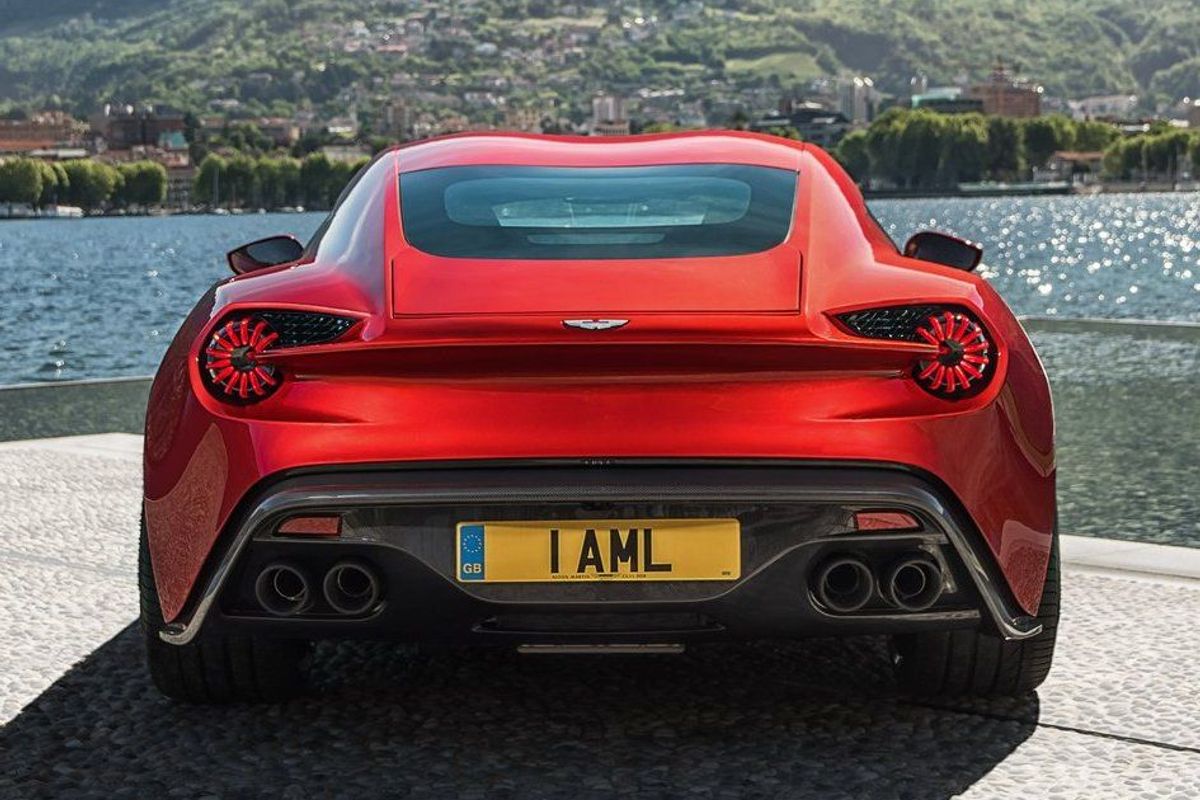
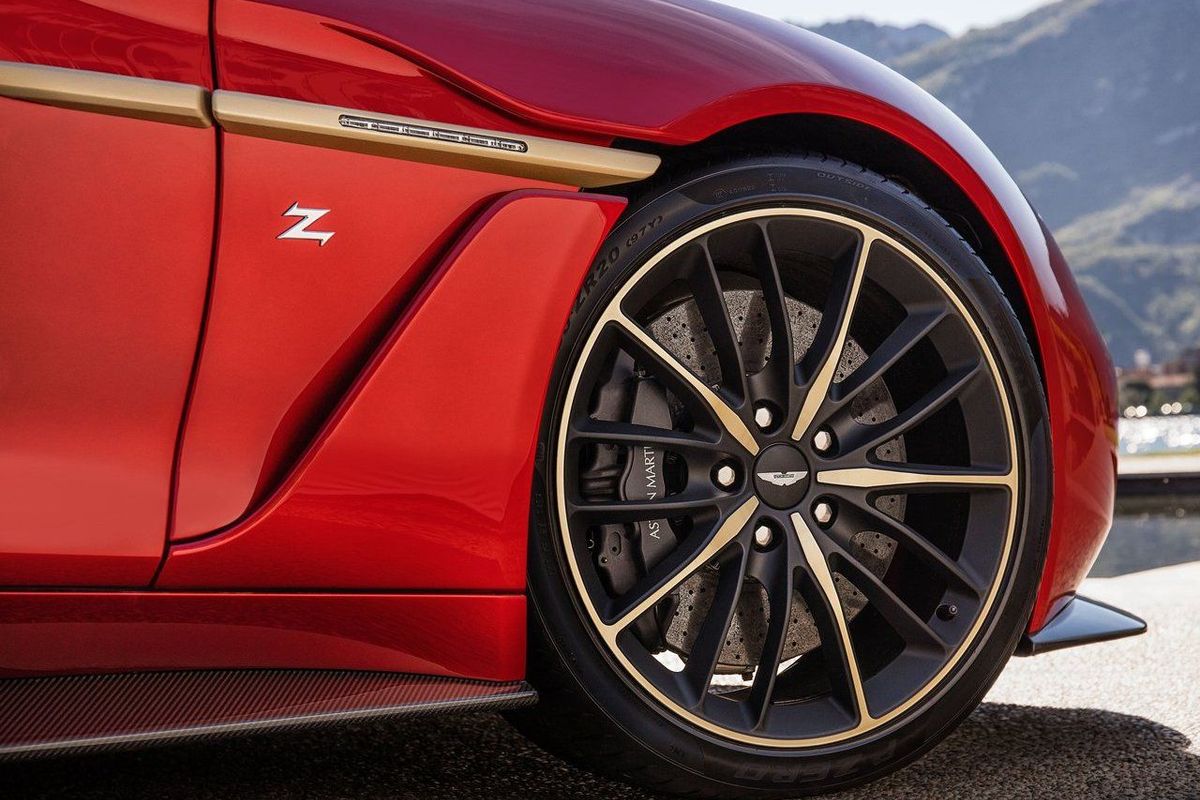
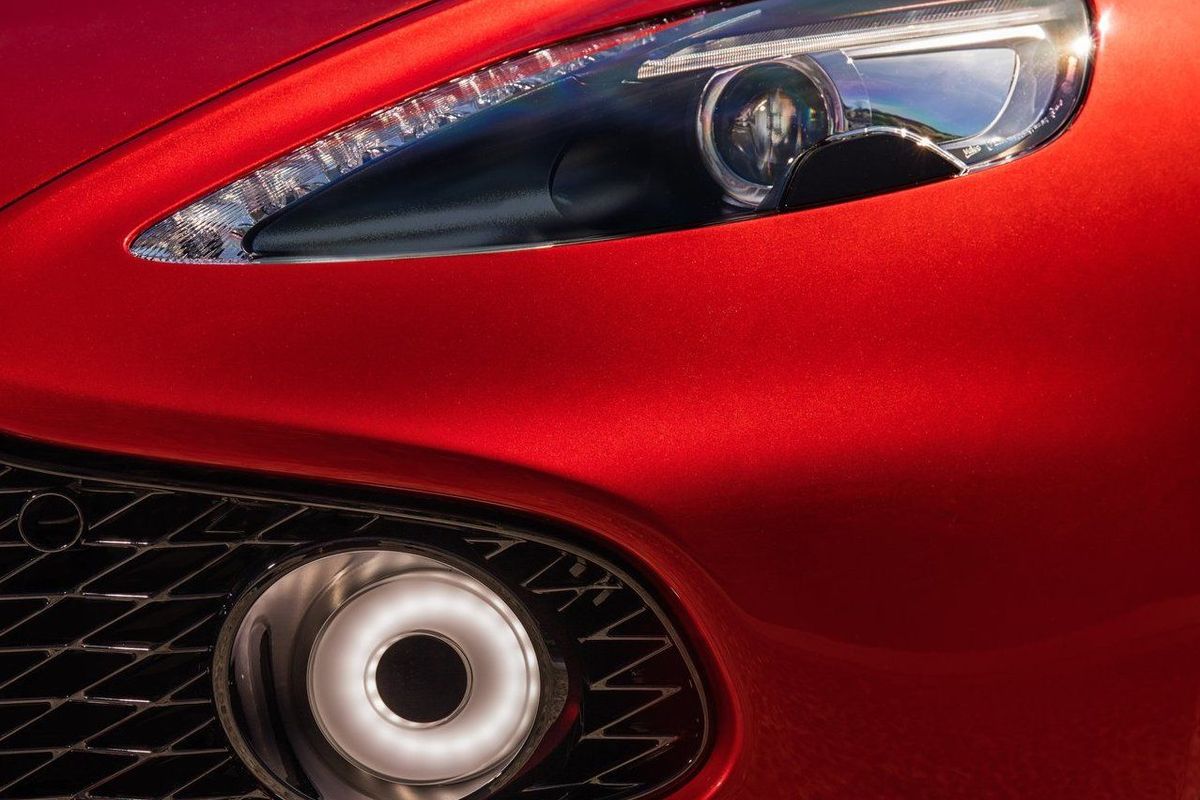
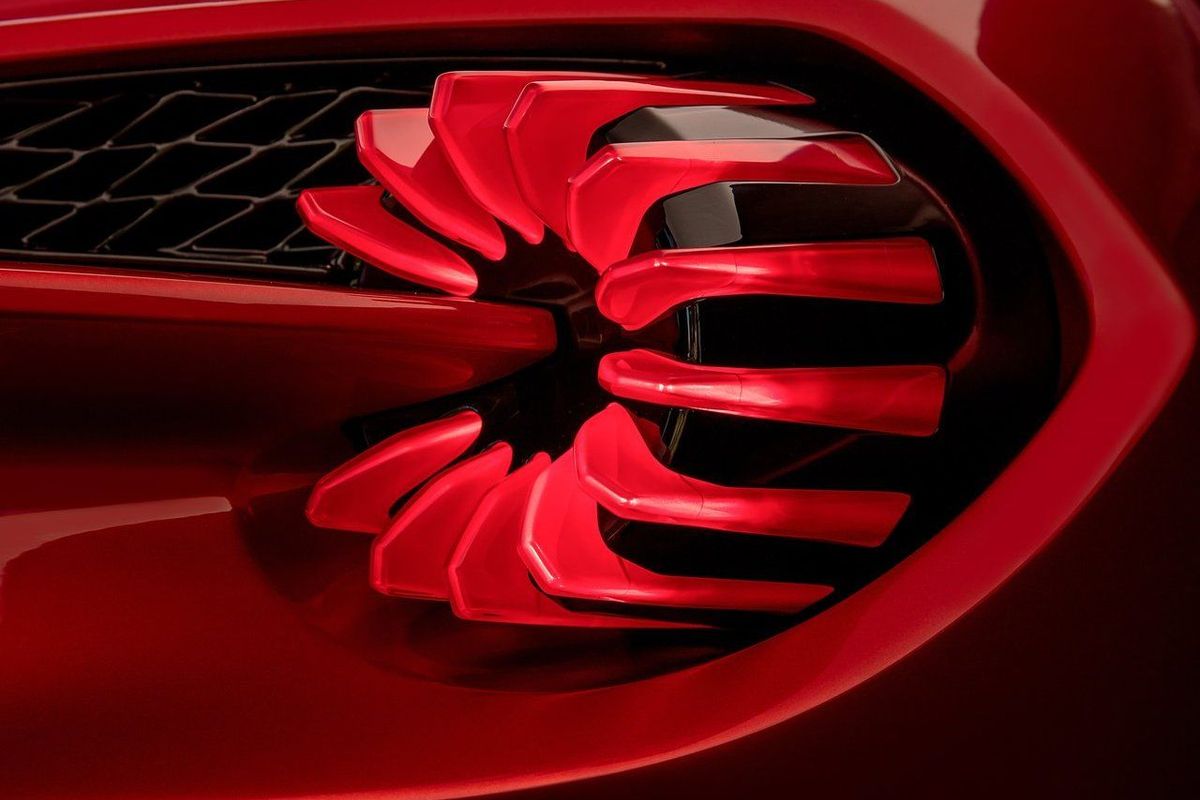
The bodywork is shaped entirely from carbon fibre, with large one-piece panels reducing visible split lines on the car. The Vanquish Zagato borrows design cues from previous Aston Martins, such as the Vulcan, One-77 and DB11. The rear taillights feature the Vulcan’s ‘bladed’ LED technology with round taillight reflectors. The side mirrors are similar to those found on the One-77, while the rear-end design shares similarities with the DB11.
The rear-end also features a retractable spoiler and carbon fibre sills run around the vehicle and also house the quad-exhaust system. Wrap-around glass with Zagato's trademark ‘double-bubble’ roof enhances the Vanquish Zagato’s look even further.
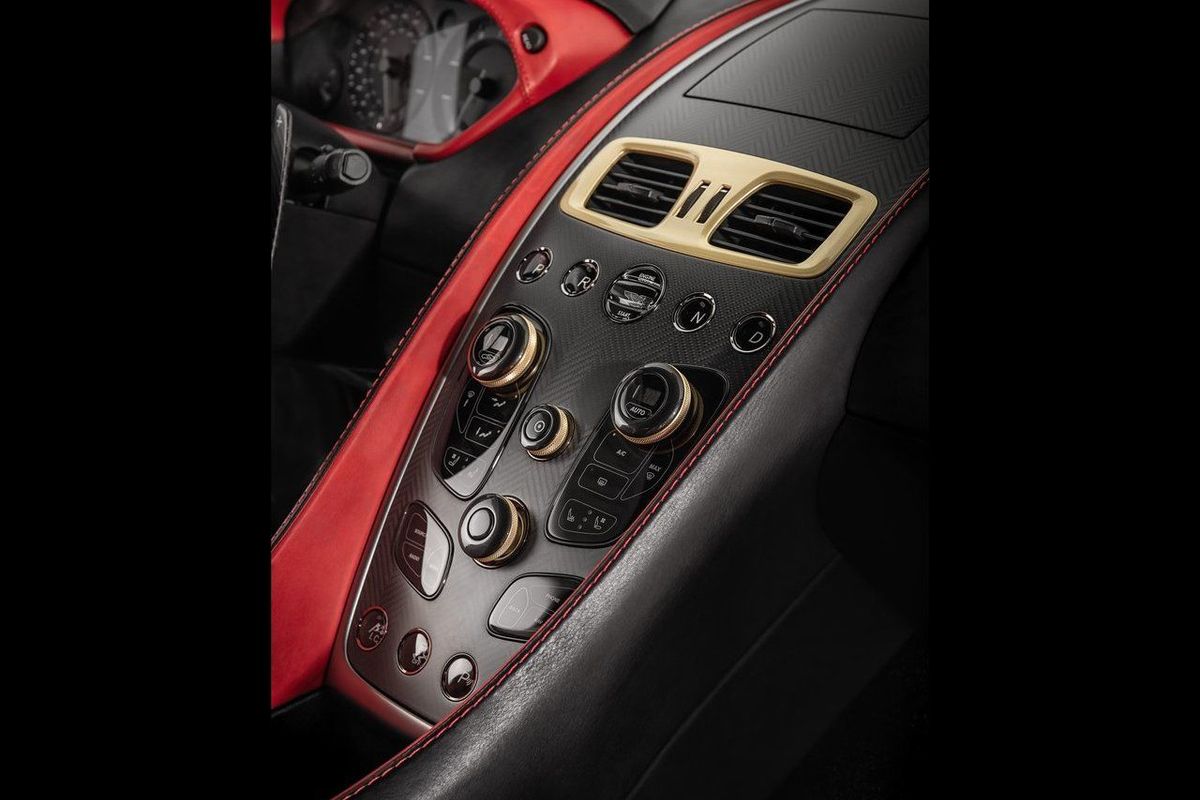
Bespoke design features are found on the inside too. Herringbone carbon fibre, shadow and anodised bronze combine with aniline leather to achieve a high quality finish. The seats and door coverings also feature ‘Z’ quilt stitching as well as a Zagato ‘Z’ embossed on the headrests and centre console.
The Vanquish Zegato is reportedly priced at over R11-million and owners are expected receive their fine machines in the first quarter of 2017.
Watch the video below to see the Aston Martin Vanquish Zagato driving in Italy!
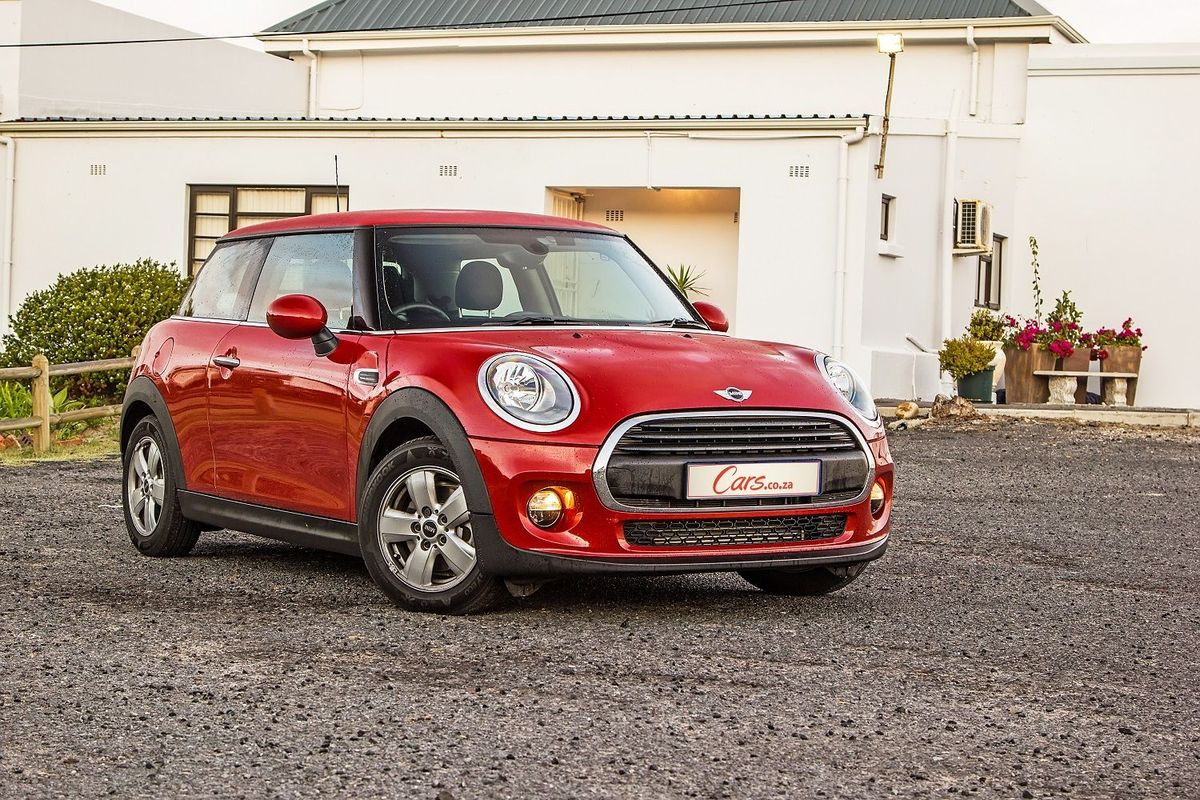
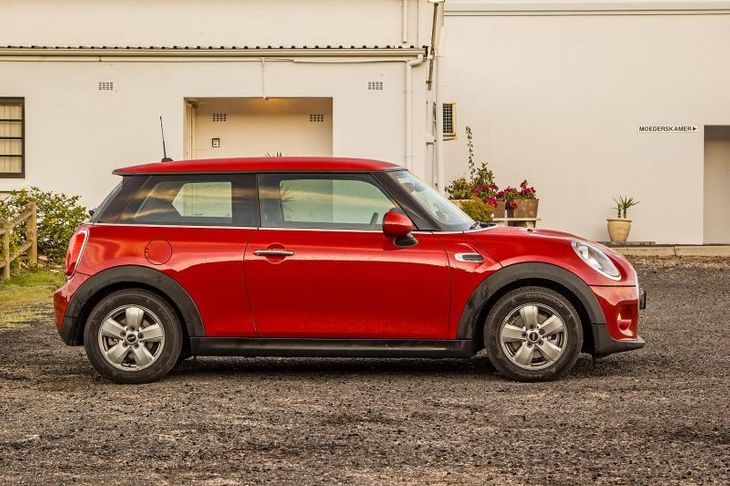
Mini One (2016) Review
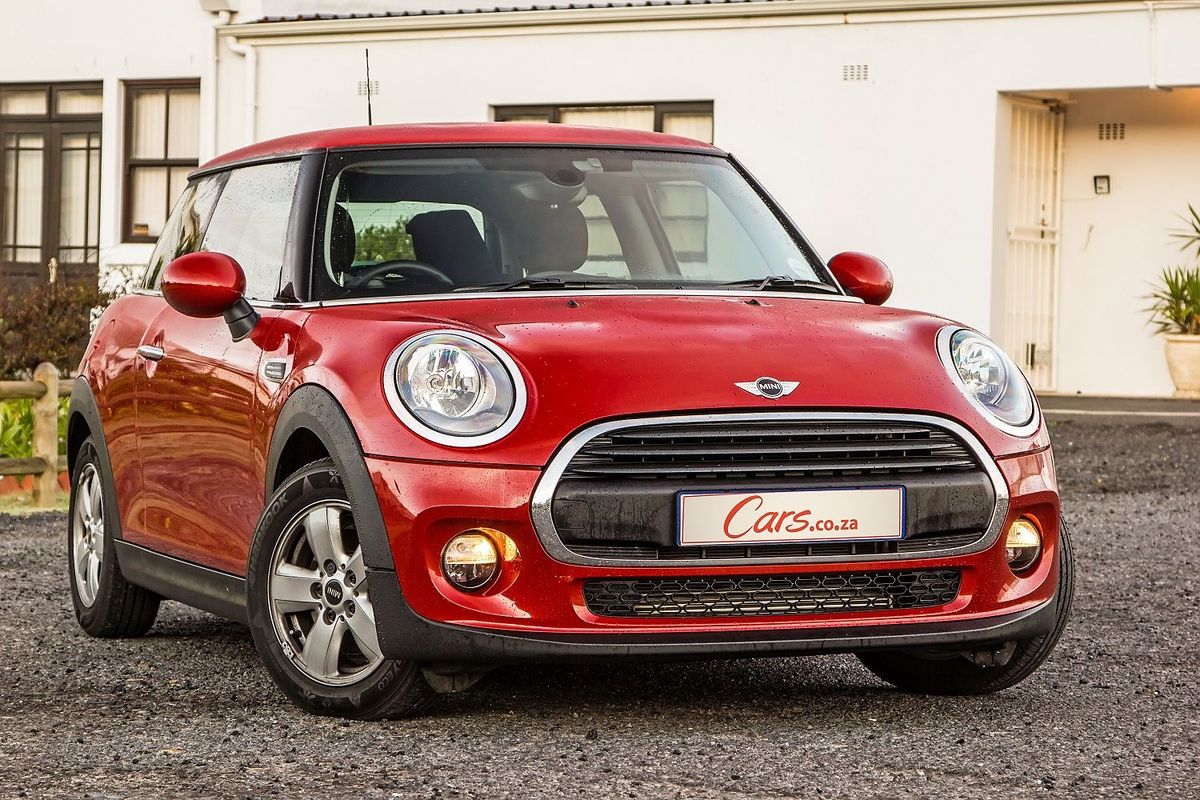
The One is the entry-level offering in Mini's product line-up and while it’s the most affordable way to get into this refreshingly different and edgy brand, does it represent great value?
We Like: Cheapest path to ownership of a new Mini, still retains fun-to-drive characteristics, excellent engine, oozes charm and personality.
We Don’t Like: Still expensive for what you get, lacks standard equipment, extras are costly, too close to a Mini Cooper.
Alternatives:
For similar money: The Audi A1 3-door 1.0T Smay share its underpinnings with a Volkswagen Polo, but offers the prestige of the Audi badge. Combining compact cuteness with a modern, minimalistic interior, the A1 is not as fun to drive as the Mini and it feels a more mature, premium choice. It suffers from the same affliction as the Mini One: you’re buying a shell of a car and you’ll be paying extra for the cool toys.
For something similar:Citroen DS3 e-THP 81kW StyleThe most successful model in the DS line-up has the Mini in its crosshairs, but it is not the newest product in the market. The engine is excellent and the package is well equipped and stylish, but sadly the exchange rate makes this model considerably more expensive than the One and priced dangerously close to the Cooper.
For a cheaper offering and similar experience:Opel Adam 1.0T Glam The Opel isn’t as premium as the Mini, but lacks little in terms of cuteness and charm. The engine is a peach, the specification (in Glam guise) is comprehensive and this model is cheaper than the One.
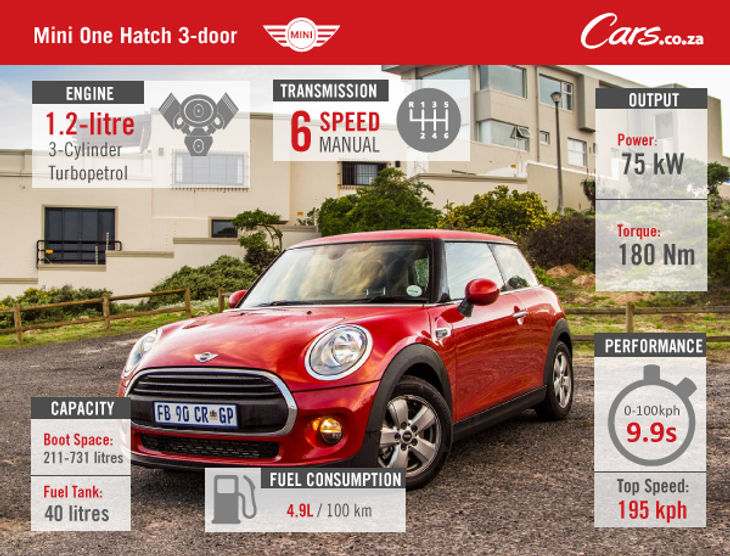
Compared with its 3- and 5-door Mini Cooper brethren, the One purports to offer the engaging, fun-filled driving traits and cheeky image that have endeared it to fans for all these years, but at a more affordable price. Under the bonnet lurks a rather spirited little 1.2-litre 3-cylinder petrol motor mated with a turbocharger. The mill produces a tidy 75 kW and 180 Nm, which gives the lightweight compact city car plenty of go.
How does it fare in terms of…
Fun to drive factor?
The pointy front end of the One certainly makes it fun to steer the Mini around tight corners at low speeds and the gear action encourages you to press on. The sound emitted by the motor is rorty, which is typical of 3-cylinder engines and the accompanying turbo chatter will put a smile on your face. There’s the tiniest amount of turbo lag, but a deftly placed foot on the loud pedal will cure this. The 6-speed transmission comes replete with a light clutch, a positive throw and you can hit 100 kph from zero in about 10 sec. While that doesn't sound fast, there's certainly no shortage of urge; the One feels eager to go.
The steering offers positive feedback and in response to energetic inputs, the One will dart about enthusiastically. It’s pleasing to see that some manufacturers are still engineering "fun cars: while others are numbing the driving experience with, shall we say "excessive refinement".
Gadgetry?
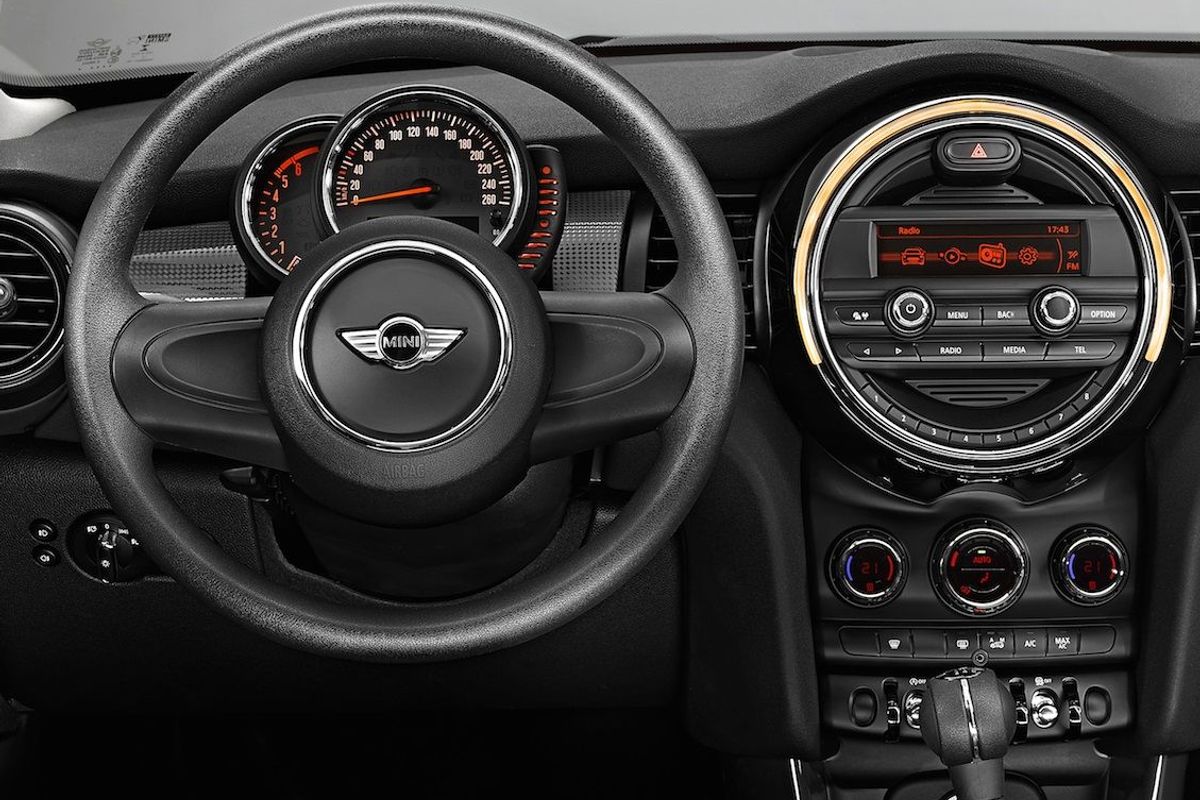
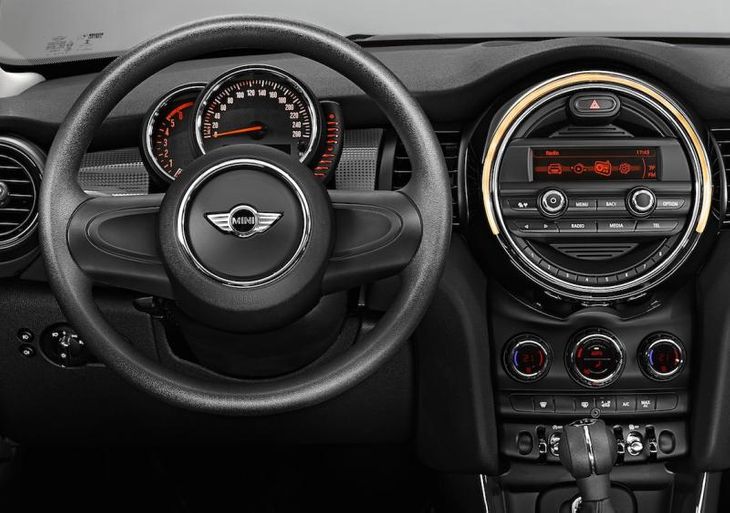
As the One is essentially Mini's equivalent to a Fisher Price "My first…" toy, you can’t expect too much in terms of luxury features, but it has the basic conveniences covered. You get power steering, electric windows, air conditioning, radio with CD player and USB/aux inputs as well as Bluetooth connectivity. Strangely, there's no Bluetooth audio streaming. Our Mini One test unit came optionally equipped with cruise control and the multifunction steering wheel. The infotainment setup is small and relies on an old-school orange LCD screen, which, to be fair, is simple to use.
Despite it being a no-frills vehicle, safety has not been compromised. ABS with EBD and brake assist are standard, as is traction control. Six airbags in the cabin round off the safety package.
Open up the options list and it's possible to spec the One liberally. We'd advise going for one of the two option packs that offer a combination of add-ons at a discount: Wired and Chili. Wired costs R23 000 and consists of Bluetooth streaming, navigation and Mini Connected XL, but if you had to spec those features individually, you'd pay more. Chili costs R34 350 and comes with some exterior features such as LED headlights and body-coloured wing mirrors, as well the driving mode functionality, climate control, sports seats, a height-adjustment function for the front passenger and a few other details.
A Mini without a multifunction steering wheel does seem very plain, even in One specification.
Value for money?
Mini has become a premium brand, but that tag does not grant it immunity from comparisons to well-specced products offered by "less glamorous" brands. Consider the Opel Adam, for example. The Adam follows the same funky and fun-to-drive recipe as the One, but costs substantially less while its standard specification is comparatively comprehensive. The Mini One, by contrast, requires careful inspection of the online configurator as the car without options is very basic. Basic won’t cut it when you’re paying over R250 000 for a compact car – even with a large helping of brand prestige in the mix.
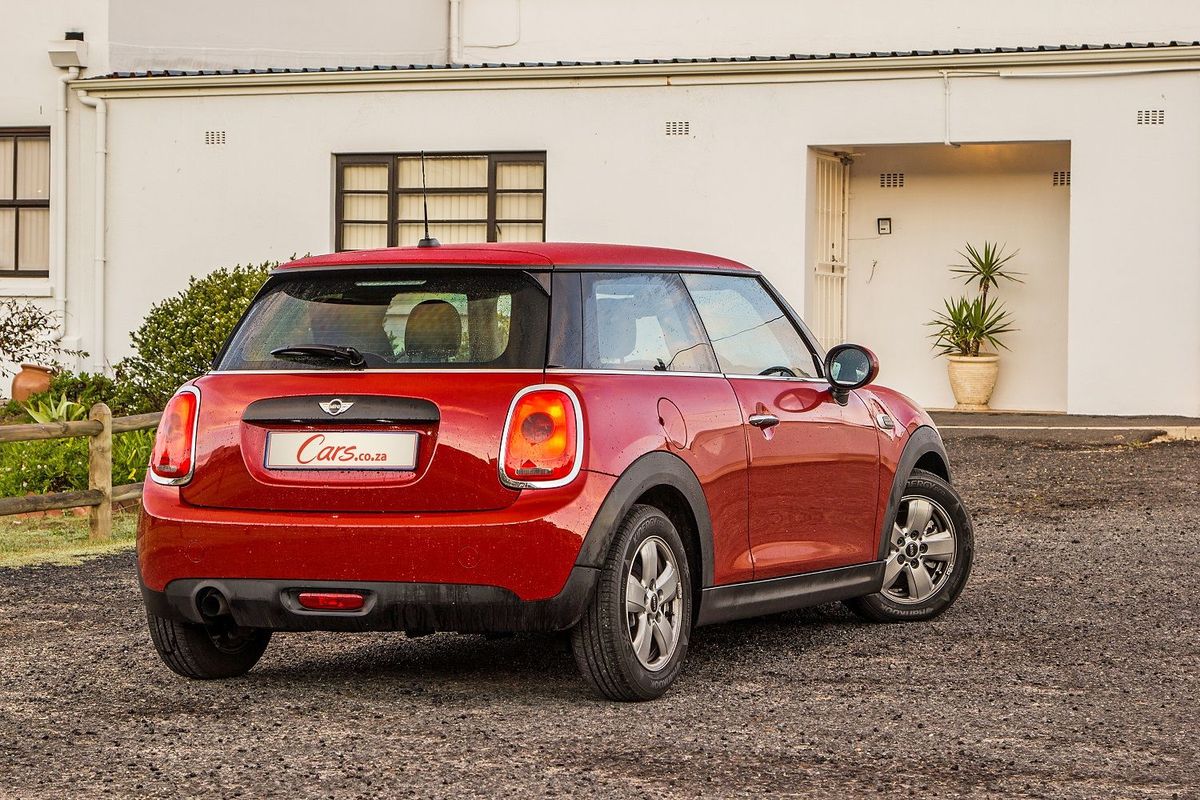
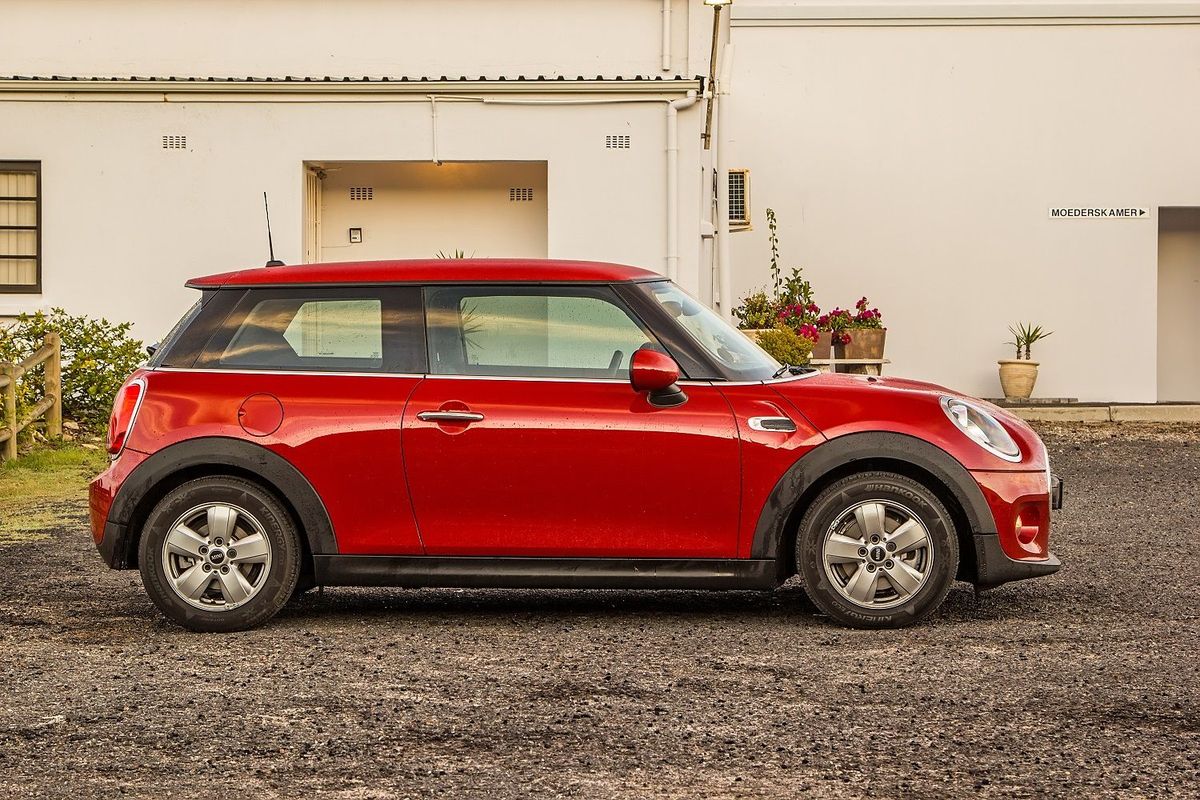
On the other side of the coin, the One's build quality is reflective of its price tag and the old rattling and brittle-feeling Mini cabin is seemingly a thing of the past. Rear space is cramped (as you’d expect of a two-door car), but there’s a 5-door Mini One if you’re desperate for extra room.
Mini One price in South Africa
The Mini One range starts from R275 000 for the 3-door manual, while the automatic version goes for R290 000.
Verdict
While it’s good to see that a starter-pack Mini hasn’t lost any of the brand’s fun-to-drive characteristics and that it’s under the R300 000 barrier, the product feels a bit light on features. You’re buying a very basic car that requires at least one or two ticks of the options list to bring it up to the same level of standard specification as its rivals. We could cut it some slack as Mini has become a premium brand and the One is the cheapest way of getting onto this ladder.
When you remove logic from the equation and judge the Mini One purely on the strength of its emotional appeal, you cannot deny the little car's desirability. What’s not to like? You’re getting a Mini with the cool factor associated with the brand for under R300 000; it’s still a charming vehicle that is fun to drive and oozes so much character that it makes other brands' wares seem tepid and bland. If you want a new Mini, but your budget can’t quite stretch to a new Cooper, then the One is worth a look, but you're unlikely to be satisfied with it at its list price. Be mindful that a One with all the options ticked will come dangerously close to the more powerful and pleasant Cooper. Spec it carefully… we suggest you tick one of the options packages marked Chili or Wired.
Buying a smartphone today is no longer about the hardware; it all comes down to operating system preference. It’s easier to stick to a familiar interface, instead of starting from scratch with something completely different. It has taken a couple of years but we have now adapted to using voice commands, and by extension, using our handsets like a virtual assistant.
Enter Android Auto and Car Play. Similarly, these two systems are not fighting a battle about which one is going to be more popular than the other. They exist for current smartphone owners as a way to interface their devices within a vehicle. If you look at the bigger picture, it is ultimately a battle against car manufacturers infotainment systems.
In an article Forbes published earlier this year: “If automakers don’t like Android Auto, they need to do better”, it said most manufacturer-designed user interfaces are terrible. It went on to state, “They are often cluttered and unattractive and because of the long-lead times in developing vehicles and the need for robust electronics, OEM systems often run on old processors and don’t perform well.”
Infotainment systems are not updated regularly
Smartphones are like computers that we carry in our pockets. They can arguably process commands faster than our desktop PCs and deliver results within seconds. Your car’s infotainment system doesn’t receive software updates nearly as frequently as your phone, thus it cannot compete with speed alone.
What car manufacturers need to focus on is improving their user experience, the way Android Auto and CarPlay have already done; and to stand out from the rest. While Apple and Google offer four core features – calls; messages; navigation and music, neither have addressed integration.
Digitaltrends says these systems work beautifully when it comes to showing off smartphone features, but it completely shuts out what the car’s infotainment system can offer.
“Cutting-edge infotainment systems offer a great deal more… they switch through different categories of features, from audio to navigation to climate control, but many have begun to integrate performance apps.”
Admittedly, it might be early days as Android Auto and CarPlay are not mainstream, but it appears manufacturers are upping their game.
The most notable one being Audi’s partnership with Cubic Telecom in Europe to provide in-car mobile connectivity. The MVNO has a high-speed LTE platform and with its partners, are able to provide access to Audi connected infotainment services across 13 countries in the EU. It will be available at competitive pricing for customers. Audi South Africa tells Cars.co.za that the full Audi Connect service will be making its way here in early 2018, and while the manufacturer does plan on working with local mobile operators, none of the negotiations have taken place yet.
Earlier this year, Ford invested $182m in a cloud-based software company called Pivotal, which, according to Forbes, was to further strengthen its software abilities. This may not seem uncommon for Ford however, as we’ve seen the Blue Oval transform into a mobility company over the last couple of years. It is also the first car manufacturer to have opened a research and innovation centre in Silicon Valley.
Mercedes-Benz, Audi and BMW recently co-purchased a division of Nokia to improve live traffic integration.
The future is HERE
Towards the end of last year, Audi, BMW and Daimler purchased HERE Maps, a division of Nokia that supplied mapping software to a majority of in-car satellite navigation systems for €2.8bn. According to Autocar, Nokia claimed that around 80% of new in-car infotainment systems featured its software, which has maps for almost 200 countries and live traffic for 33 countries. Live traffic integration within these German vehicles looks like a step in the right direction.
Another manufacturer trying to set itself apart from the rest is Jaguar Land Rover, with its “door to door” navigation using the Route Planner smartphone app, in conjunction with its InControl Touch Pro infotainment system, which will launch with the F-Pace in South Africa soon. The feature provides walking directions once you step out of your vehicle and, as an example, will take you straight to the shop you are visiting at a mall.
Unique-to-brand user experiences are key
While initial reviews of Android Auto and CarPlay from markets that support these systems look positive, and suggest that car manufacturers current systems are terrible, it does not appear to be the "end of the road" for onboard infotainment systems, yet.
Car manufacturers are evidently investing and trying to offer a more improved user experience, unique to their brand – and customers, and it could very well be a significant feature that sets it apart from each other.
It’s only a matter of time before we will see the results of these investments, which by then should bring speed, data connectivity, improved software, cloud features, live traffic and better maps.
Any views or opinions expressed in this article are solely those of the author and do not represent those of Cars.co.za or its editorial content team.
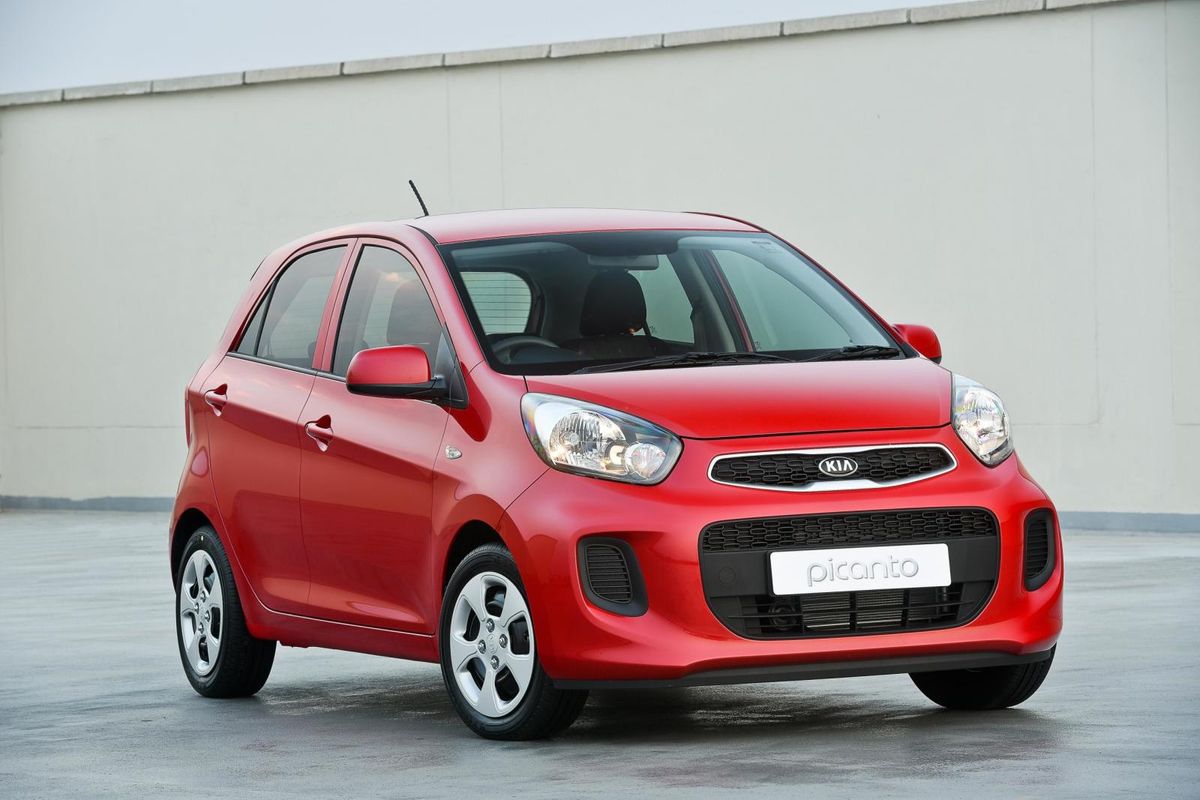
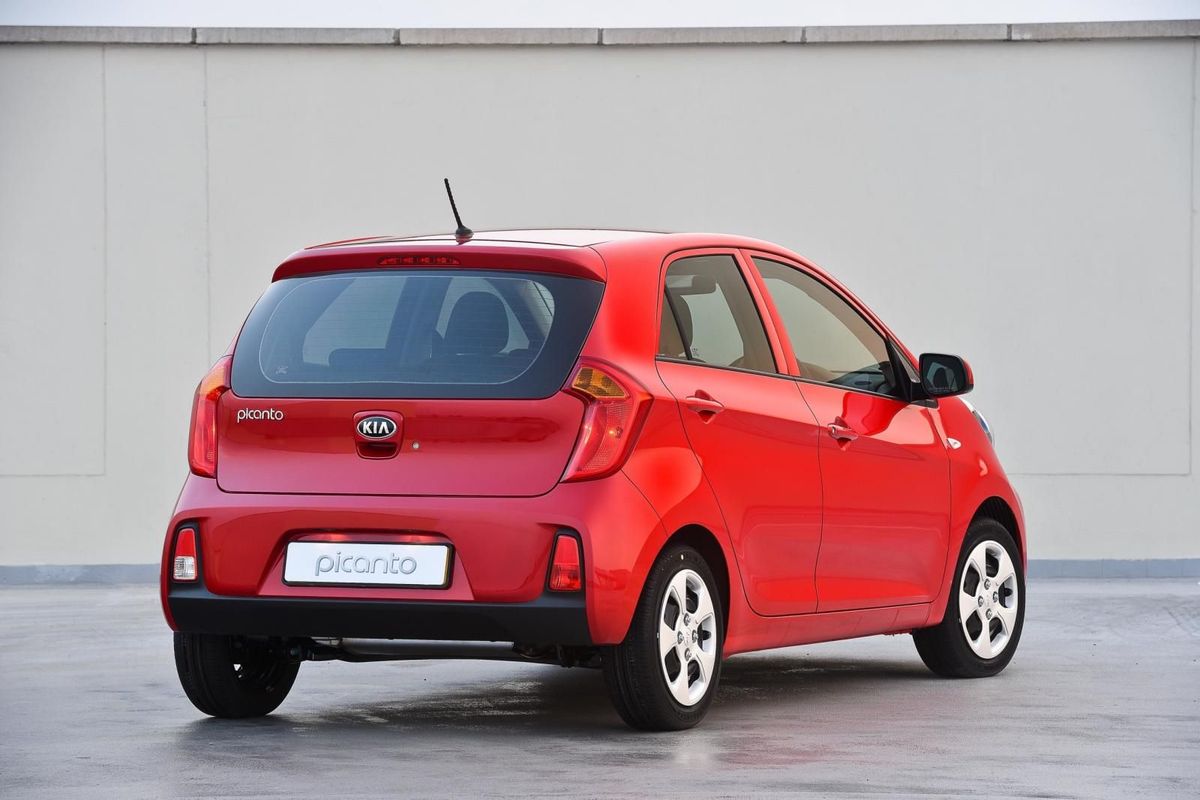
Kia adds new 1.2 entry-level Picanto
The Kia Picanto is now available in a 1.2 LS derivative, which is said to offer extra oomph over and above the LS spec.
The Picanto 1.2 LS will sit above the 1.0 LS in the range, making it the second-most affordable model that Kia offers. The introduction comes after Kia Motors South Africa launched the 1.0 LS, which has become the best-seller in the range, the importer says, late last year.
The 1.2 LS is available in both manual and automatic guises with the latter being R13k more expensive than the former. Specification wise the 1.2 LS is identical to the 1.0 LS (that means you can differentiate it by its colour-coded bumpers and 14-inch steel wheels).
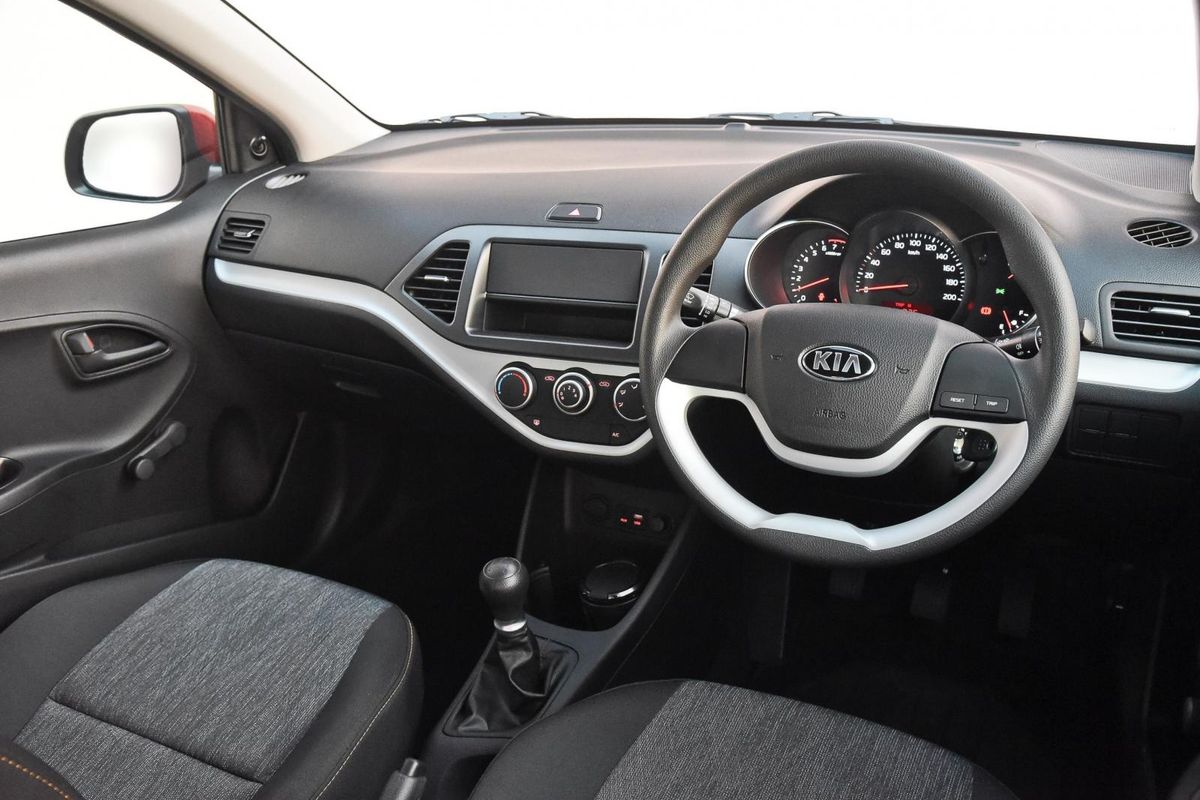
The interior is equipped with air-conditioning, a trip computer, USB and auxiliary audio ports and split-folding rear seats. There isn’t an audio system installed in the car as standard, but Kia says it is wired and ready for the installation of an aftermarket unit.
On the engine front, the 1.2-litre unit is naturally aspirated and delivers 65 kW and 120 Nm – respectable outputs at this price point. Fuel economy is claimed at 5.0 L/100 km with a tank range of about 700 km from the 35-litre tank.
The 1.2 LS comes with Kia Motors South Africa's recently-introduced 5-year/unlimited km warranty. A 2-year/45 000 km service plan is available as a R7 500 option.
Kia Picanto prices in South Africa
1.0 LS Manual R129 995 1.2 LS Manual R139 995
1.2 LS Automatic R152 995
1.0 LX Manual R159 995
1.0 LX Automatic R172 995
1.2 EX Manual R178 995
1.2 EX Automatic R191 995