Kia Motors South Africa has commenced a voluntary safety recall of 180 Cerato vehicles (from the 2011 model year). The company says the purpose of the recall is to replace two automatic transmission cooling hoses on those vehicles.
The hoses are said to pipe hot transmission fluid from the Cerato's transmission to a cooling unit, and cooled transmission fluid back to the transmission. There is a possibility that the transmission cooling hoses may have been improperly cured during the manufacturing process and that, over time, may leak transmission fluid, Kia said in a statement. In such instances, the vehicle's malfunction indicator lamp will illuminate and some vehicles exhibit abnormal shifting behaviour. Depending on how much fluid is lost, the transmission can suffer damage and possibly fail.
The affected vehicles were all assembled in Korea between 27 August 2010 and 11 November 2010, and only 180 units from this production run were shipped to South Africa. Kia said owners of affected vehicles involved would be telephonically notified by the Kia Motors South Africa’s Call Centre from Monday, 23 May 2016. The Call Centre will assist owners in having their nearest or preferred Kia dealer carry out the replacement of both automatic transmission cooling hoses, which will take less than an hour (depending on your vehicle’s position in the work queue on the day of the booking).
Kia Motors and its dealer network will implement this recall at no charge to the vehicle owner.
More information on the recall campaign, as well as an extensive list of frequently asked questions, will also be available to customers at www.kia.co.za, which will feature a menu option allowing Cerato owners to enter their vehicle’s VIN (Vehicle Identification Number) into a search functionality. The VIN number is listed on the vehicle’s license disc, and embedded into the windscreen on the lower left side.
This function is particularly helpful for customers who are not the original owners of 2011 Cerato automatics or who, for whatever reason, are no longer on the Kia Motors South Africa database. Additionally, queries can also be lodged with the Kia Motors South Africa Call Centre on 010 596 2000.
According to the household debt figures from the National Credit Regulator, many consumers are living beyond their means because they are, intera alia, buying non-essential goods on credit and purchasing vehicles that stretch them beyond their budgets. The result is that these debt-burdened consumers have very little disposable income to absorb interest rate increases and combat inflation. So what can you do to protect yourself?
Rudolf Mahoney, head of brand and communications at WesBank, South Africa's leading motor vehicle finance house, is ideally placed to help consumers understand how their credit profiles work – and to understand the impact of being over-indebted. The aim, ultimately, is that this awareness will help you prepare for a future with a healthier credit profile.
Any consumer who has ever applied for credit will know that details such as proof of employment, marital status and properties owned are among those required to complete the process.
"Many people might not realise that they start building their credit profiles when they submit these details when applying for loans, credit cards or store accounts," says Mahoney. "From the moment they lodge an application their details are cross-checked with records at all of South Africa’s credit bureaus," he explains.
Credit profiles also contain important information on how we use credit and how we’ve managed our payments in the past. Consumers with a few accounts and who have always made their monthly instalments will be seen as less risky than people who struggle to stay within their budgets, miss payments and have multiple credit facilities that are maxed out.
"Each one of us who has ever used credit in any way will have a credit record that shows whether we have accounts at clothing stores, cell phone contracts, credit cards, car loans or overdrafts," says Mahoney. "In addition, our credit profiles also have information that helps banks to determine our financial stability. A married person who owns property, has a university degree, and has had their job for five years will be seen as more stable than an individual who regularly moves between rented properties and is employed on a contract basis."
Avoid being seen as a "high risk" credit candidate
To put it very simply, banks seek to minimise risk.
"If you are viewed as stable and financially responsible, you present a low risk to a bank. When applying for large loans, you are more likely to be granted credit because your profile shows that you’re prepared to live up to the commitment and make all payments on time. You could even be seen by the bank as a beneficial customer and offered lower interest rates, which means you could end up saving money on loan repayments," Mahoney advises.
But it can easily swing the other way…
"Conversely, if you have a history of missed payments and rely heavily on credit, you will be seen as a far higher risk by banks and lenders," Mahoney explains. "Current economic data shows that consumers spend up to 75% of their household income repaying debt, and because so many households rely on credit, the current economic conditions could have a disastrous effect on them."
Consider the unknown
With the rand losing value against international currencies the price of food, clothing and fuel are all rising. Price increases are eating into budgets and the little money that’s left – after paying credit instalments – will buy less food and fuel than in the past. This is also seen in the Reserve Bank’s forecast for food price inflation, which it expects to hit a high of 11% later this year. Interest rates are also on the rise. This year alone they’ve been hiked by 75 basis points, and it is expected that they will continue climbing until 2019.
"Without proper budgeting consumers could end up having to choose between spending on monthly groceries or servicing their loan repayments. To avoid this situation they need to structure a budget that allows for enough free cash to cover rising costs from inflation and interest rate hikes. This might mean cutting out non-essential costs to settle debts sooner. For example, if you see that your car loan instalments could become unmanageable in the near future, consider downsizing and trade in your existing car for one that will be more affordable," Mahoney advises.
Know your credit status
Mahoney would also recommend obtaining an annual credit report from one of the credit bureaus.
"These reports will have information about your existing commitments, as well as any payments you may have missed. With this information you can manage your credit profile by ensuring you settle all missed payments. If your monthly budget is already stretched to the limit this exercise will greatly benefit your credit record in the long run. You will give yourself breathing space and benefit hugely when the time comes to buy a house or new car."
Consumers will be pleased to know that a black mark needs not be permanent.
"It is important to remember that low credit scores can be improved," Mahoney says. "For example, by staying longer in a job and not job hopping, ensuring that all your repayments are made on time, limiting your use of credit, and working harder at being a better borrower with proven reliability, will all contribute to improving your credit score."
Useful contacts
Download your free credit report once a year from any credit bureau to keep track of their score. Details of South Africa’s credit bureaus are listed below. It is also a good idea to review ones credit accounts listed on the credit record and close down those that are no longer in use.
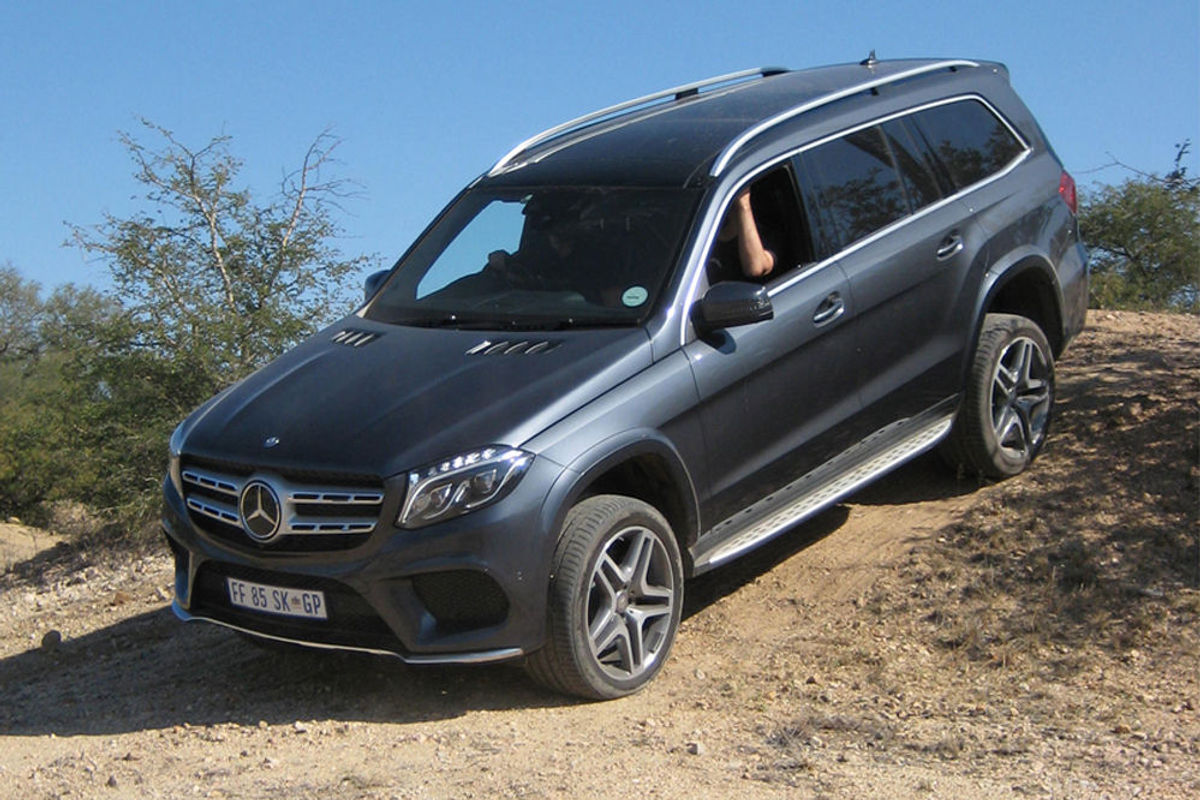
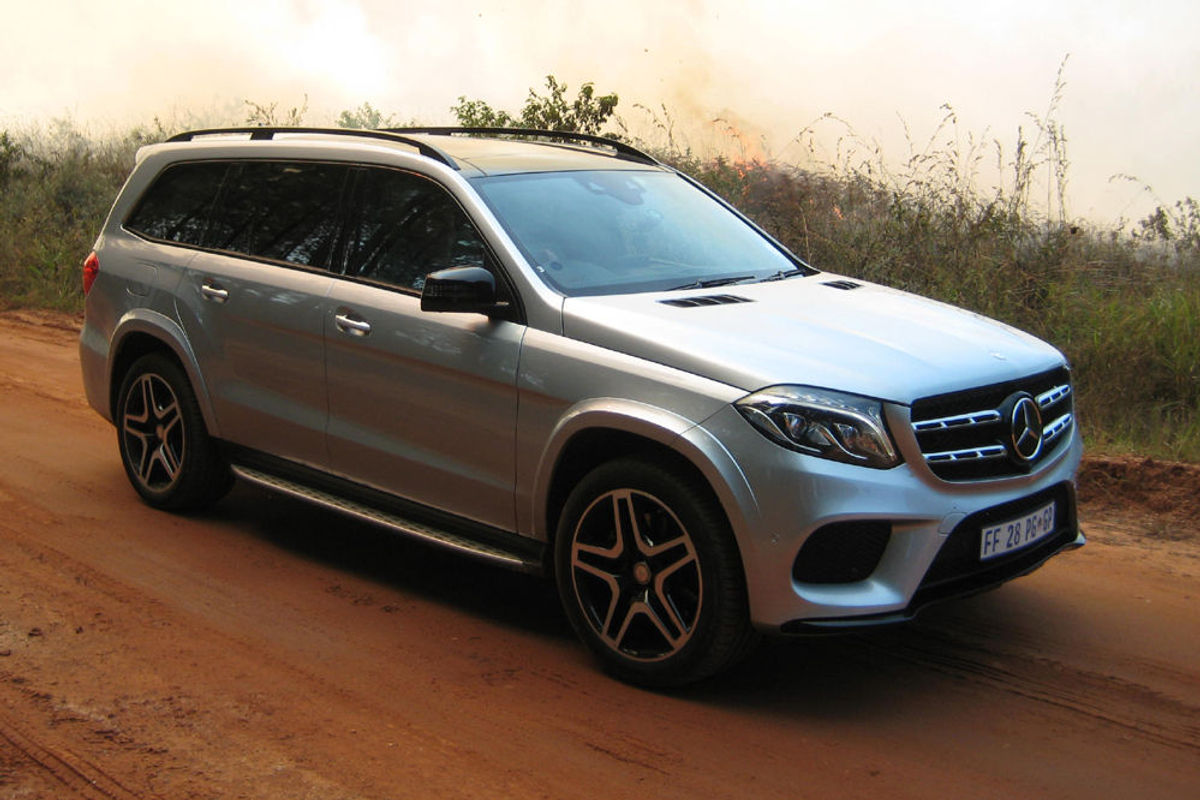
Mercedes-Benz describes its 7-seater GLS as "the S-Class of SUVs" and we attended the launch of the super-luxurious off-roader in the Lowveld to test the validity of the manufacturer's claim.
By John Floyd
The success of the SUV in the global market is astonishing. It’s the family station wagon of a new generation and, for many owners, a dutiful mum’s taxi. The popularity of SUVs has been exploited by multiple manufacturers, who produce a range of SUVs: from compact ones with basic spec, to those with “it’ll never fit in the driveway” dimensions and opulent interiors.
"Manufacturers' existing client bases are shifting from conventional cars to SUVs and this is particularly prevalent in the premium end of the market," said Florian Seidler, co-CEO of Mercedes-Benz SA and executive director of Mercedes-Benz Cars, "(and) the GLS is the S-Class of SUVs". To put that claim into perspective, the S-Class, of which the S500 is our reigning champion in the First Class category of the Cars.co.za Consumer Awards, is widely regarded as the world's best large sedan. Can this newcomer deliver comparable levels of on-road refinement and cosseting luxury?
The build quality and feel of the switchgear in the GLS' cabin are reminiscent of a luxury sedan's.
All three models were available at launch: the GLS350d, GLS500 and the mighty Mercedes-AMG GLS63. We opted for the GLS500 to take us from Liketi Lodge to Hazyview on a combination of tar and gravel roads of very variable surface quality.
Climbing into the hills, the GLS500, whose 4.7-litre V8 biturbo engine delivers 335 kW of power through a 9-speed automatic transmission and 4Matic all-wheel drivetrain (the last two of which are common to the GLS350d), made short work of the winding passes. As the roads narrowed you become aware of the over 5.0-metre length and 1.9-metre width of the GLS, but its supple-yet-agile suspension and excellent steering lock belie the size of this hefty 7-seater.
Luxurious cabin environment
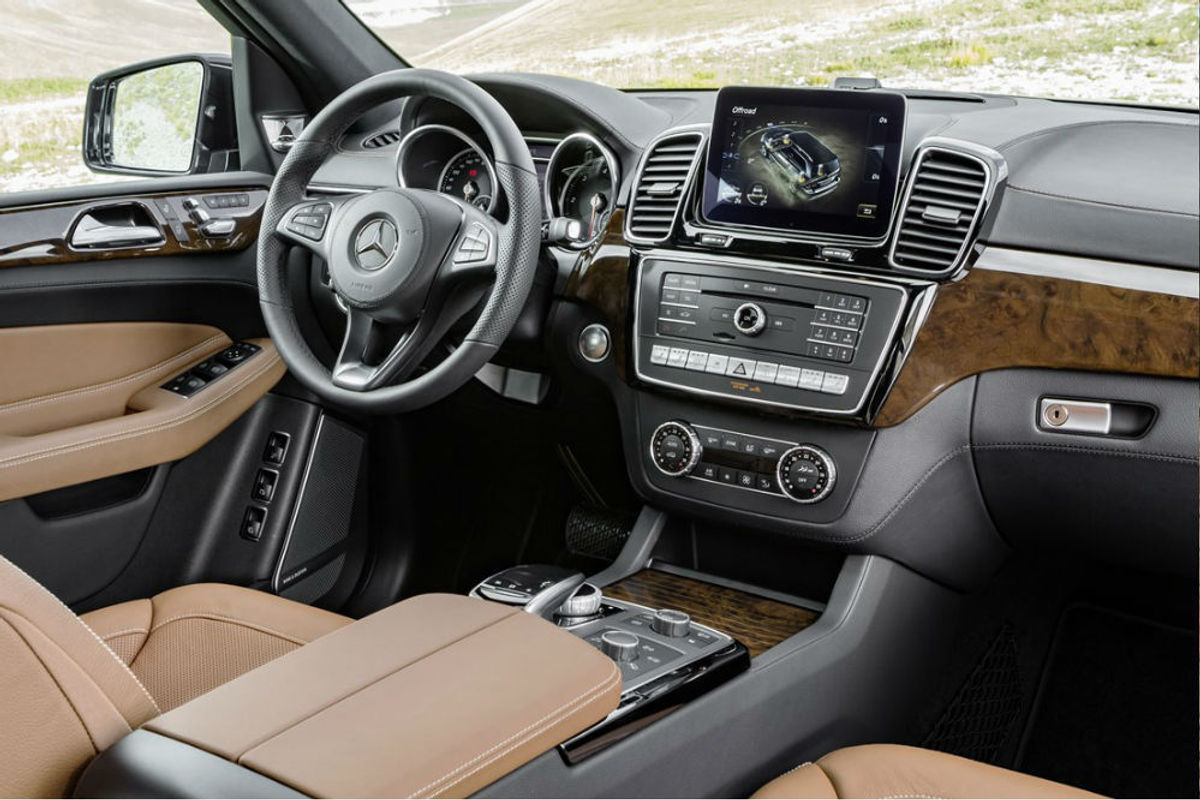
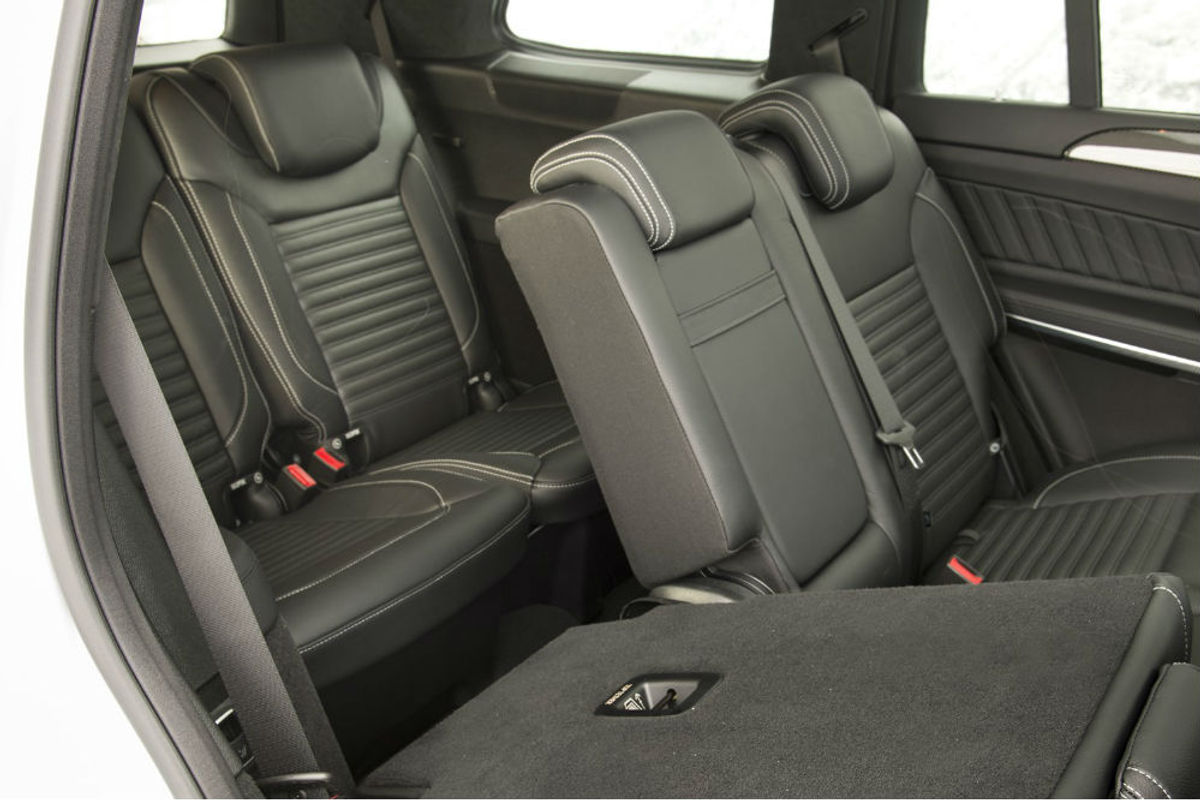
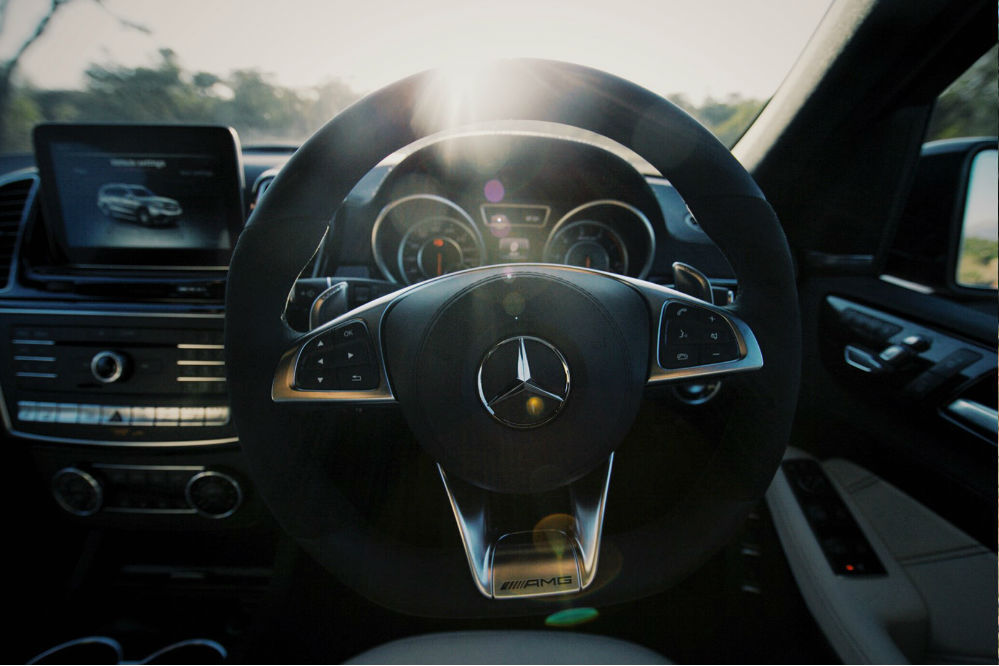
The interior is definitely S-Class-like in appearance and quality; it's undoubtedly a luxurious environment in which to travel. In fact, some of the latest onboard technology employed in both S-Class and E-Class ranges are seamlessly integrated into the GLS. As usual, various styling packages are available to supply the ambience you require in the cabin. A sizeable screen displays information from the Comand system, including infotainment functions and graphics of the vehicle's set up.
Following a vehicle swop we experienced the entry-level the GLS350d derivative and were not disappointed. The 3.0-litre V6 turbodiesel motor is a proven unit and its combination with the 9G-Tronic transmission made the GLS350d the perfect vehicle for the next leg of the journey, which saw us crossing into Limpopo and traversing the Selati game reserve to our final destination at Kapama private reserve, where a challenging off-road course awaited the media contingent.
The GLS' Airmatic air suspension system benefits ride comfort in on- as well as off-road conditions.
A raft of safety systems
Approaching Bushbuck Ridge we found ourselves facing a bakkie approaching us head on and were grateful for the faultless handling that allowed us to avoid a collision. It also makes you more aware of the multitudinous number of safety systems (both active and passive) that are standard across the GLS range, making it one of the safest vehicles available.
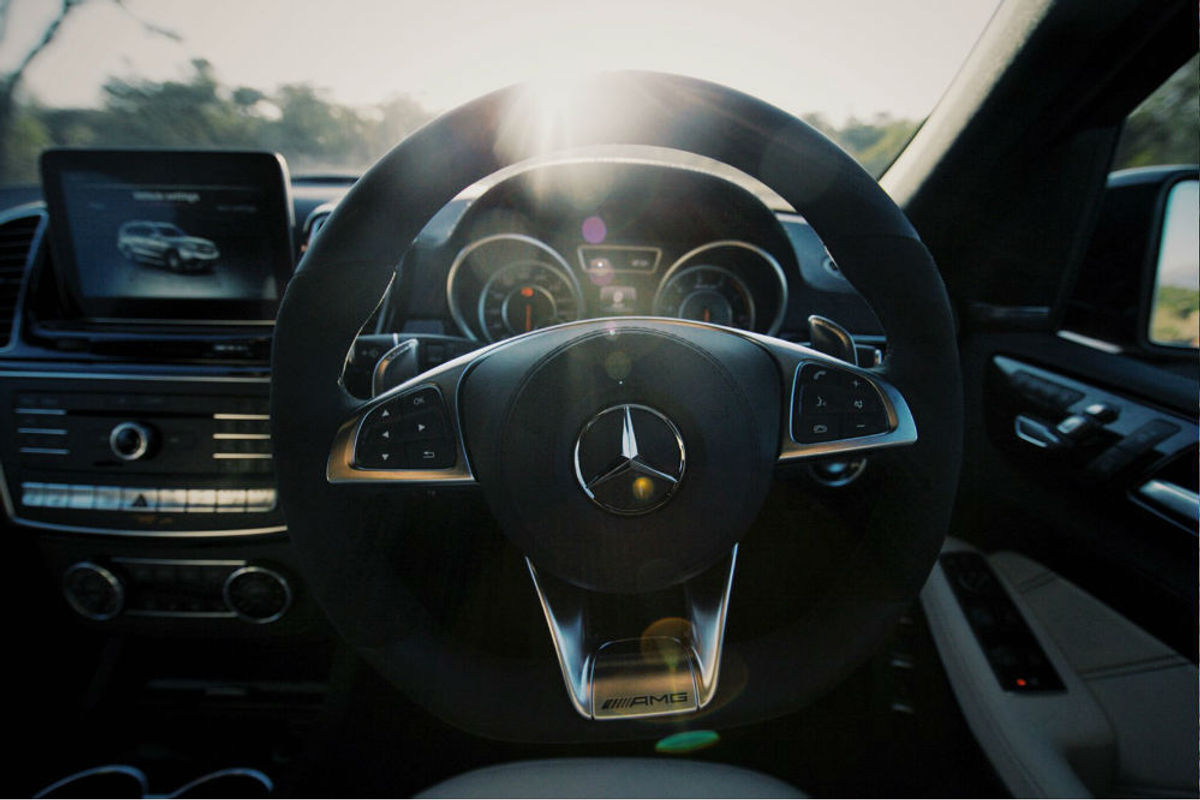
The AMG derivative was next up and this is one that just cannot fail to impress. Punching out 430 kW (an increase of 20 kW over its predecessor) and with maximum torque of 760 Nm available from 1 750 rpm, it is not surprising that the GLS63 is claimed to accelerate from zero to 100 kph in 4.6 seconds. Unlike its siblings, this one’s 4Matic all-wheel drive is fed by an AMG Speedshift Plus 7-speed transmission, but with such power at your disposal, do you really need those two extra gears?
The entire appearance of the AMG-fettled GLS63 is very different to the rest of the range. With its lower ride height and adorned with deep spoilers this one is definitely for the black stuff… You do not buy this one to go into the great outdoors.
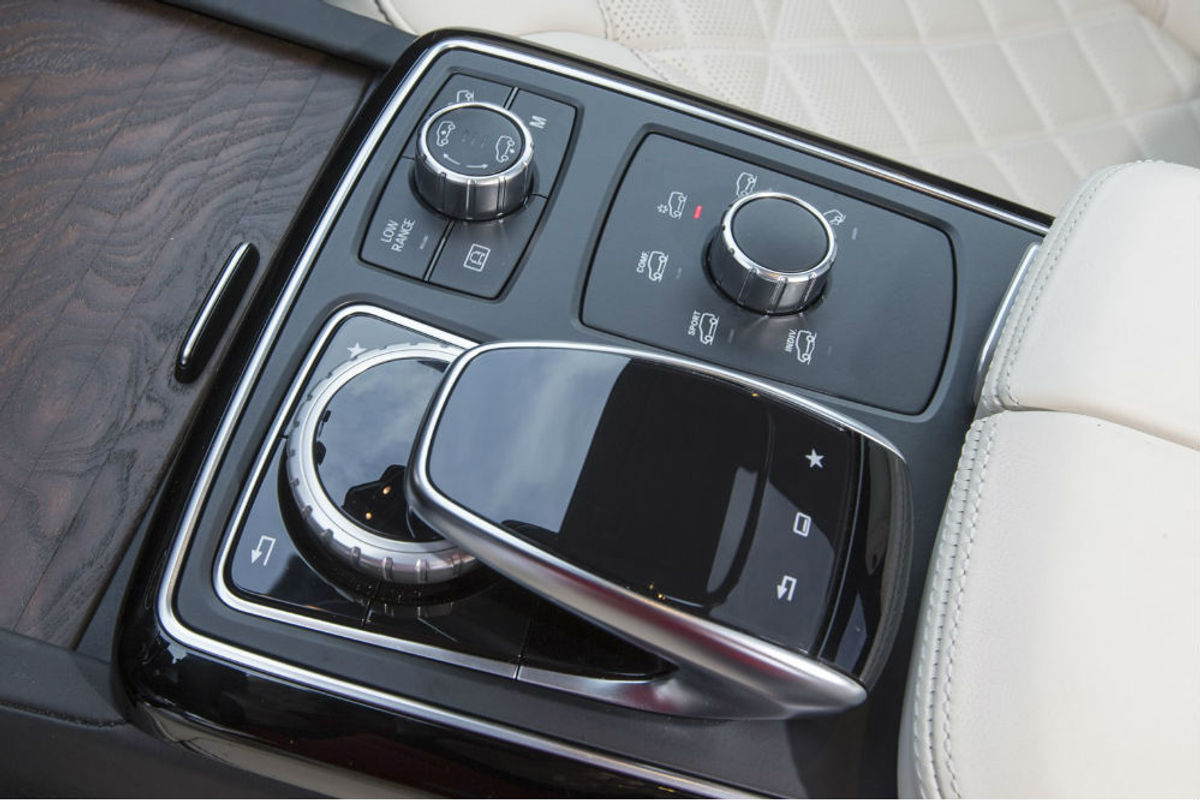
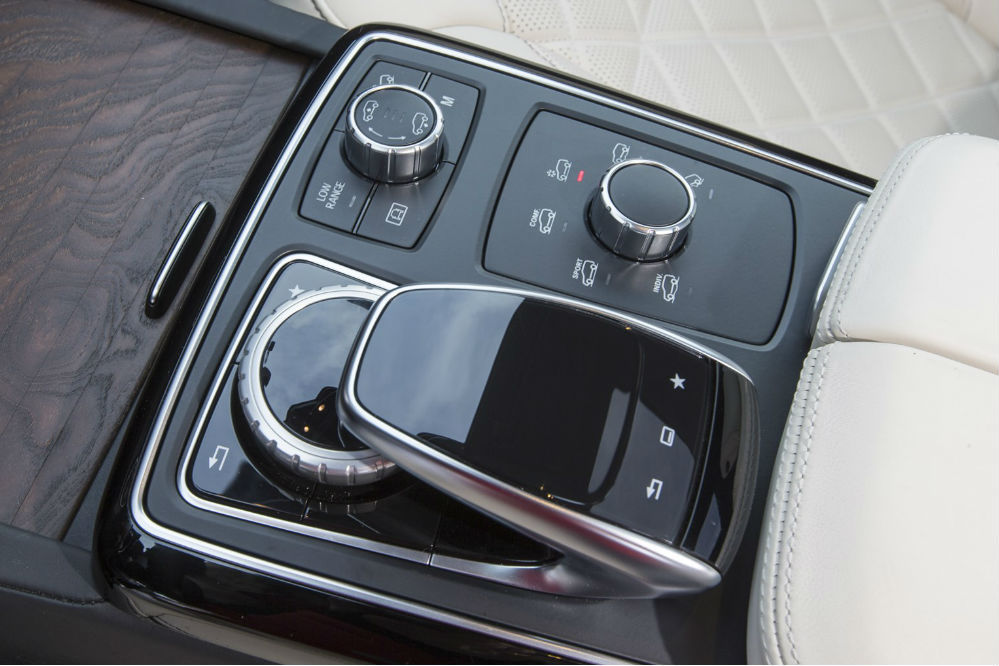
The dials on the right of the console are used to select ride height (top) and off-road driving modes (below).
Up to 6 transmission settings
On Day 2 we were at an abandoned quarry where the Mercedes-Benz team set up a challenging off-road course on which we drove both the GLS350d and GLS500 (the AMG model was sensibly parked at this stage of the proceedings…)
This is where the transmission's Dynamic Select can demonstrate its mettle. It allows the GLS to adapt to the driving conditions with up to 6 transmission settings. They include Comfort, Sport and Slippery as well as Off Road, all of which is simply controlled electronically from the centre console. If you are envisaging a more testing type of off-road driving on a regular basis then it would be worth going for the optional Off-Road Engineering Package offering the Off-Road+ mode.
Standard air suspension
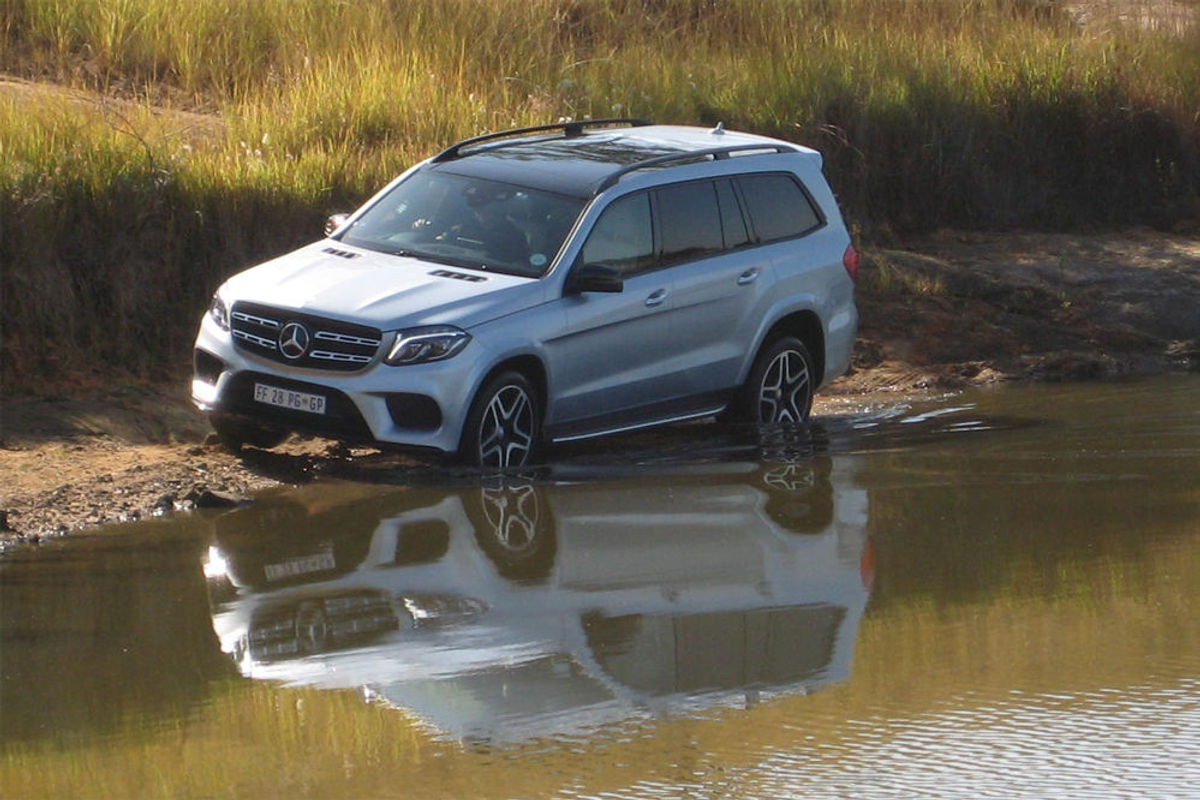
Do you want extra ground clearance? That's easy – the Airmatic air suspension lifts the GLS' ground clearance to 306 mm and water-fording depth to 600 mm (the latter was not tested as the Lowveld's extremely dry at present). To ensure minimal contact damage, there's underbody shielding that protects the GLS from being damaged by heavy ground impacts.
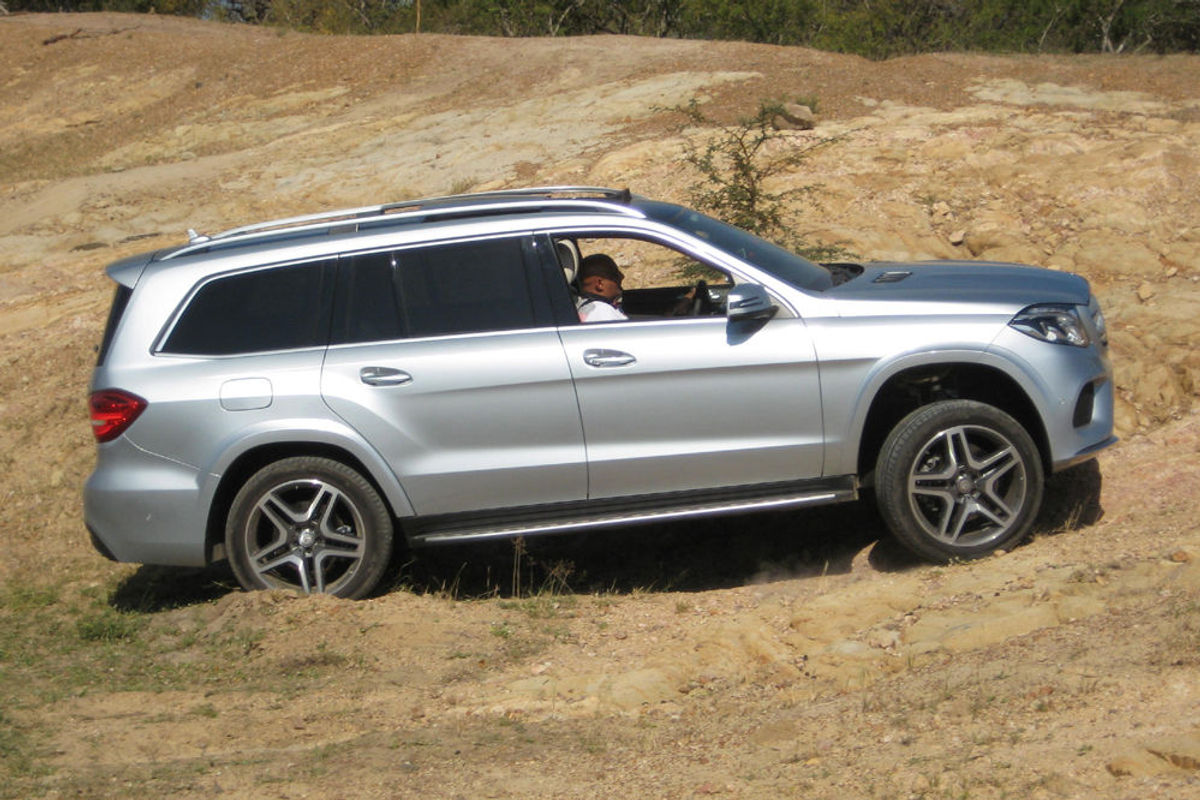
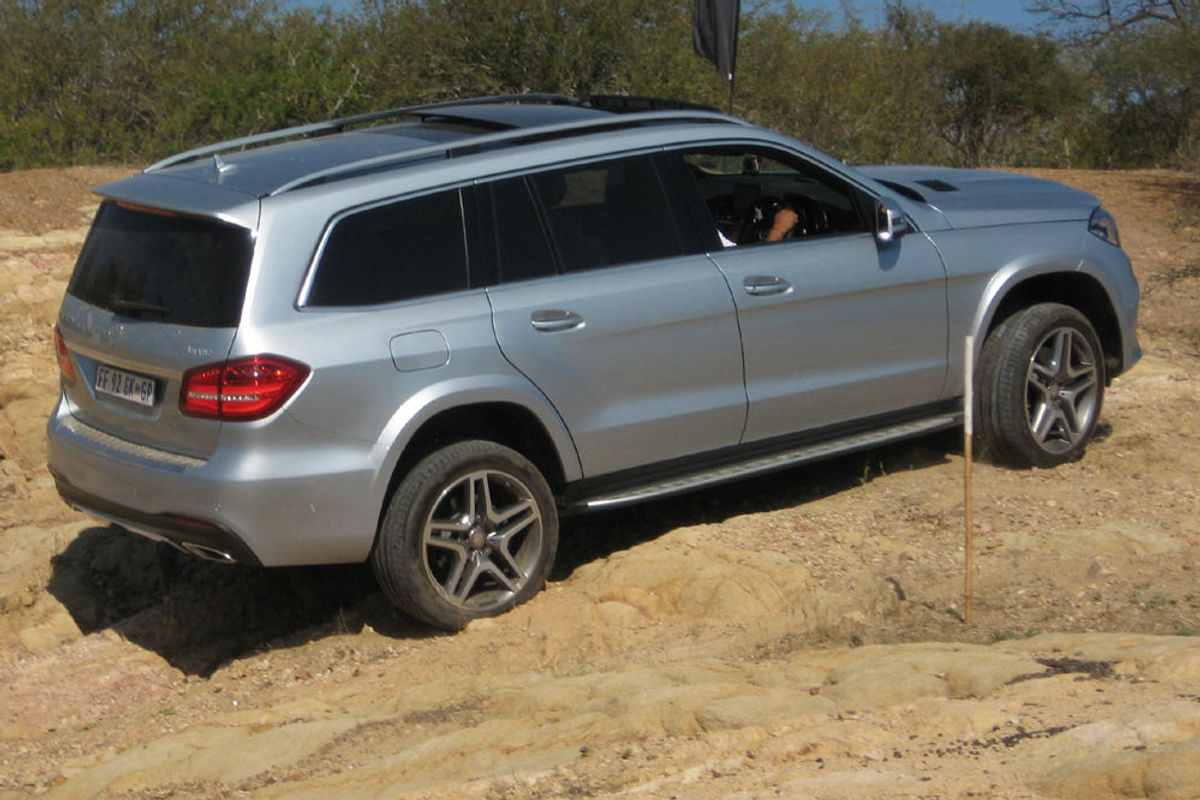
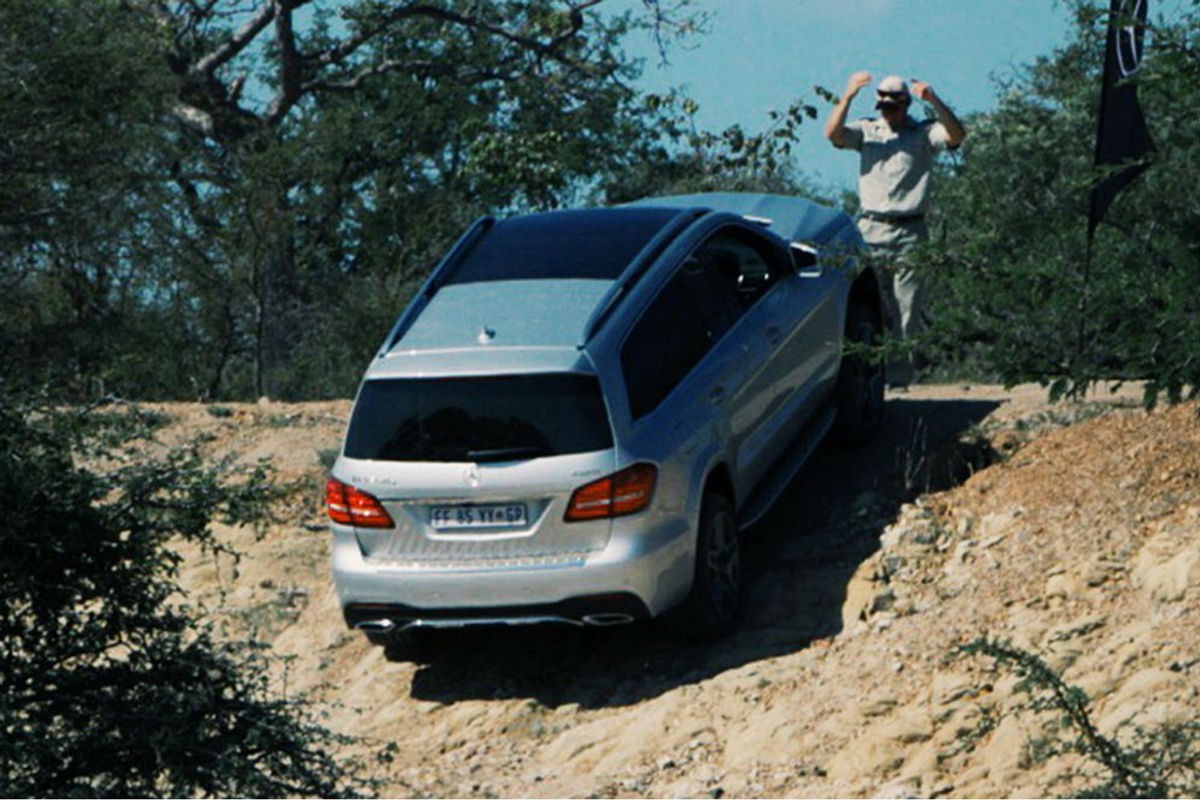
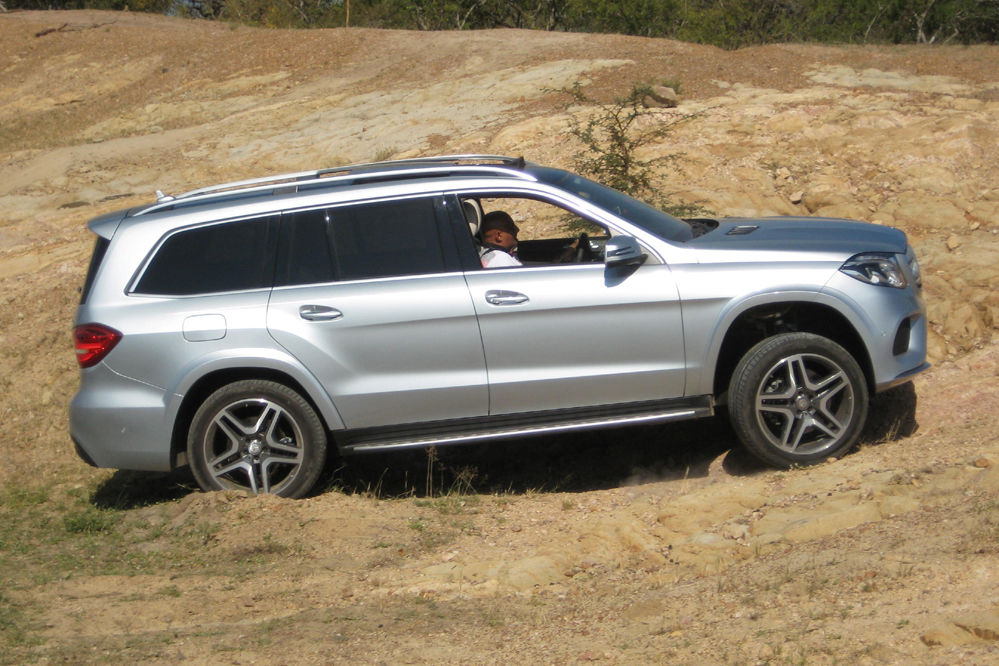
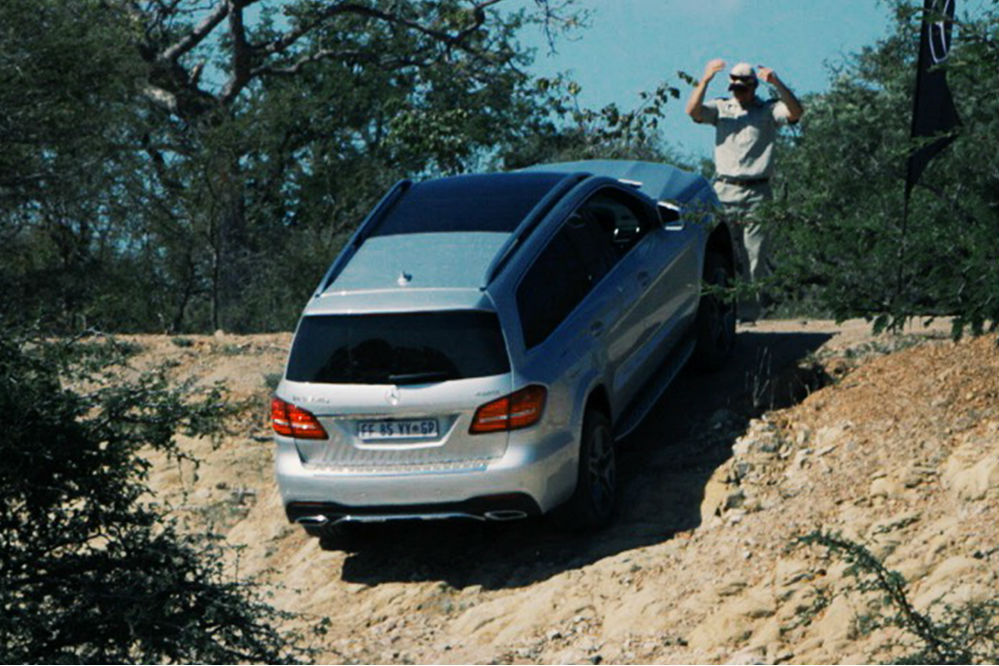
The course consisted of a series of very steep ascents and descents as well as several very tight turning areas and just to make it doubly testing the organisers incorporated some very sharp ridges that challenged the breakover point of this 3.0-metre wheelbase vehicle. The GLS tackled the course with ease, as had been the case with every section of our route.
GLS deals with steep climbs and tough breakover angles with aplomb, but not at the cost of occupant comfort.
We found the most impressive derivative of the newcomer's lineup was the GLS 350d. It offers an excellent and comparatively cost-effective package at the upper end of the premium SUV segment.
So is the GLS indeed the "S-Class of SUVs"? Given its impressive performance, excellent build quality and the fact that it incorporates the very latest Mercedes-Benz technology, there is absolutely no doubt the GLS merits that title.
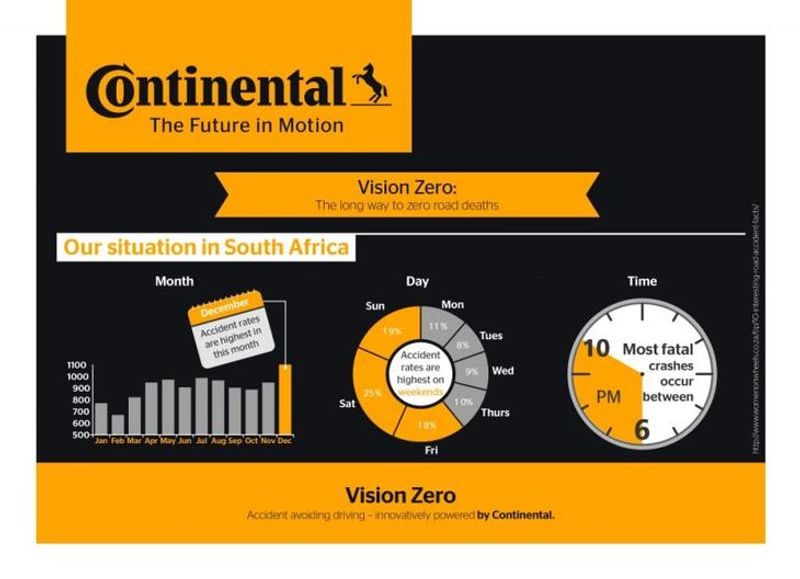
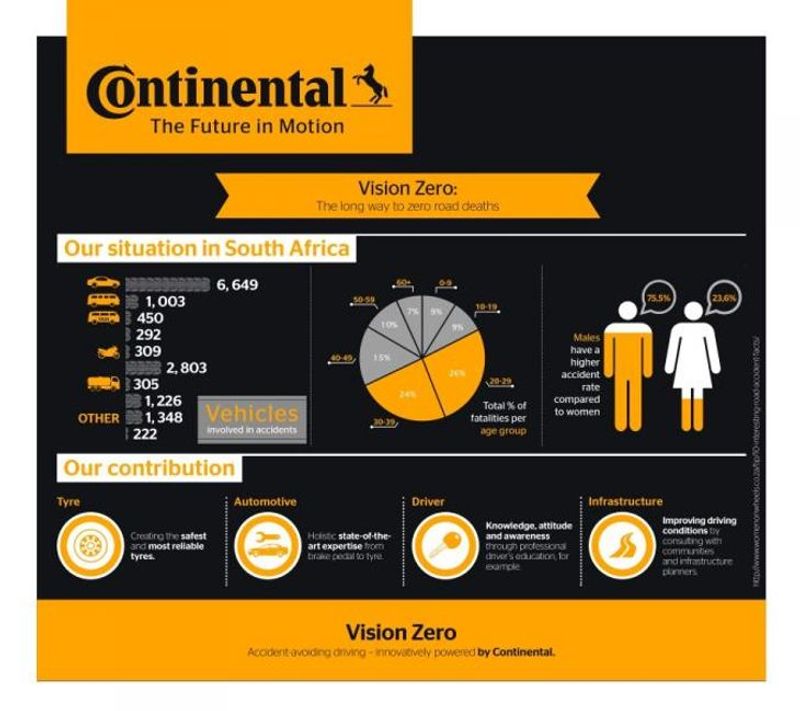
Tyre manufacturer Continental launched its new SportContact 6 tyre at Zwartkops Raceway this week and we attended the launch to learn more about this new tyre offering. Tyre safety is an often overlooked aspect of car maintenance and Continental aims to address the issue through its Vision Zero campaign to educate – and create awareness among – South African motorists.
Continental has introduced its new SportContact 6 tyre to the South African market and it will appeal to owners of high-performance vehicles such as Mercedes-AMG products, BMW's M range as well as performance offerings from Audi, Jaguar and Porsche, amongst others.
The SportContact 6 tyre succeeds the 5P offering with significant improvements in grip in both dry and wet conditions. When compared to the outgoing 5P offering, the SportContact 6 tyre is claimed to offer 14% better steering precision while handling performance has improved by 11%. Moreover, its grip capability has been improved by 4% with a 2% improvement in wet conditions. The SportContact 6 tyre is available in 41 sizes for rims ranging from 19 to 23-inches.
Tyre testing
We put Continental's SportContact tyres to the test at Zwartkops Raceway.
The launch took place at Zwartkops Raceway and we had the chance to test the capability of the SportContact 6 tyres on Mercedes-AMG products in wet and dry conditions.
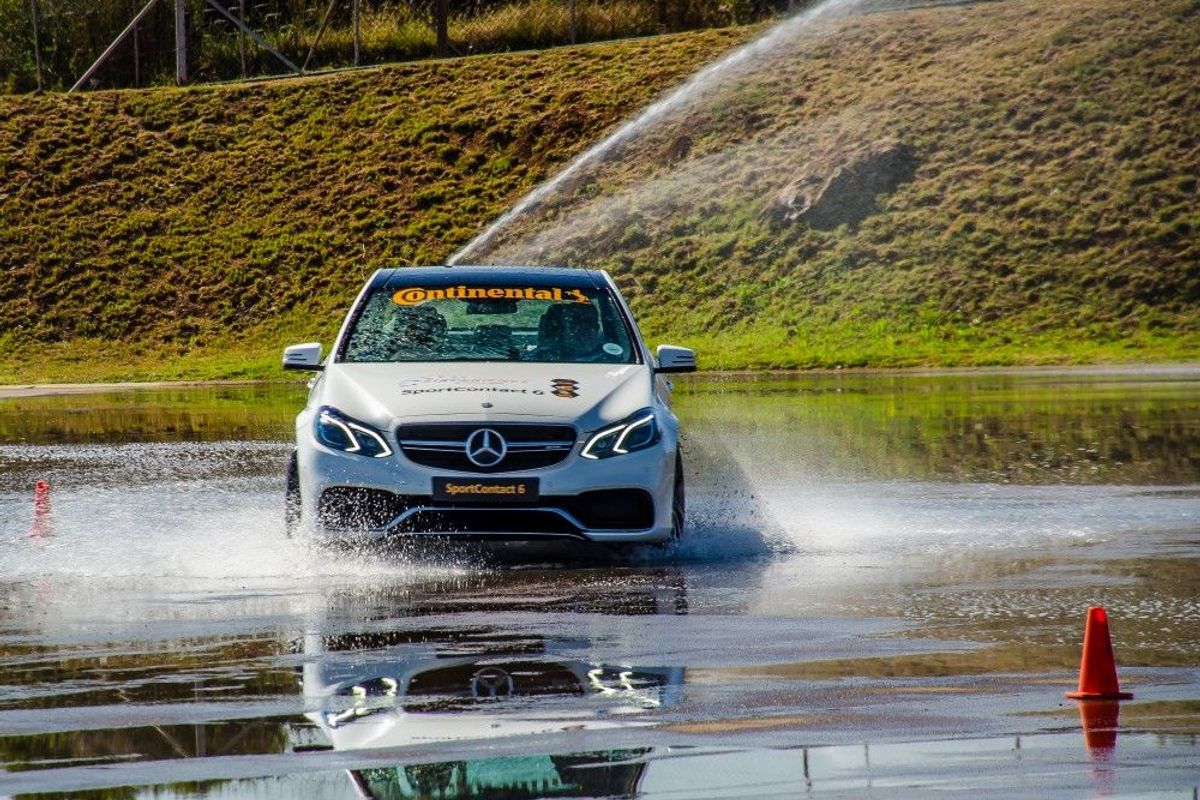
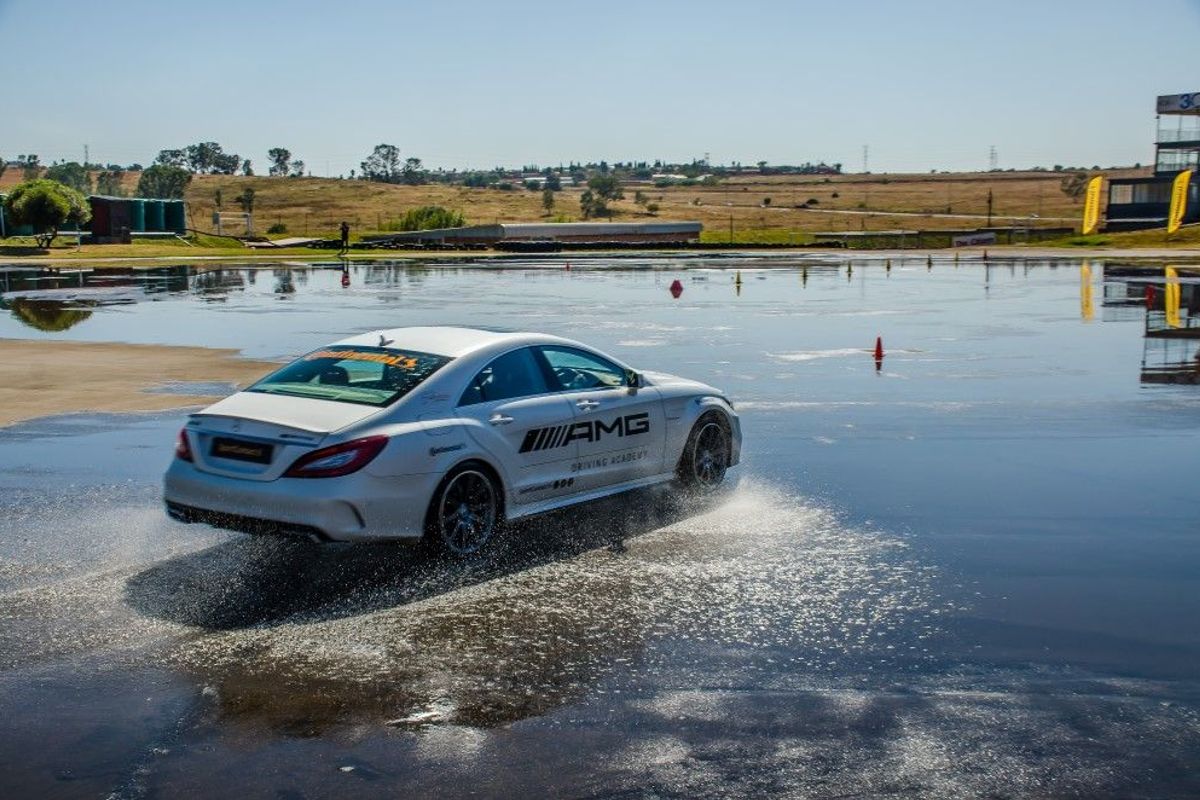
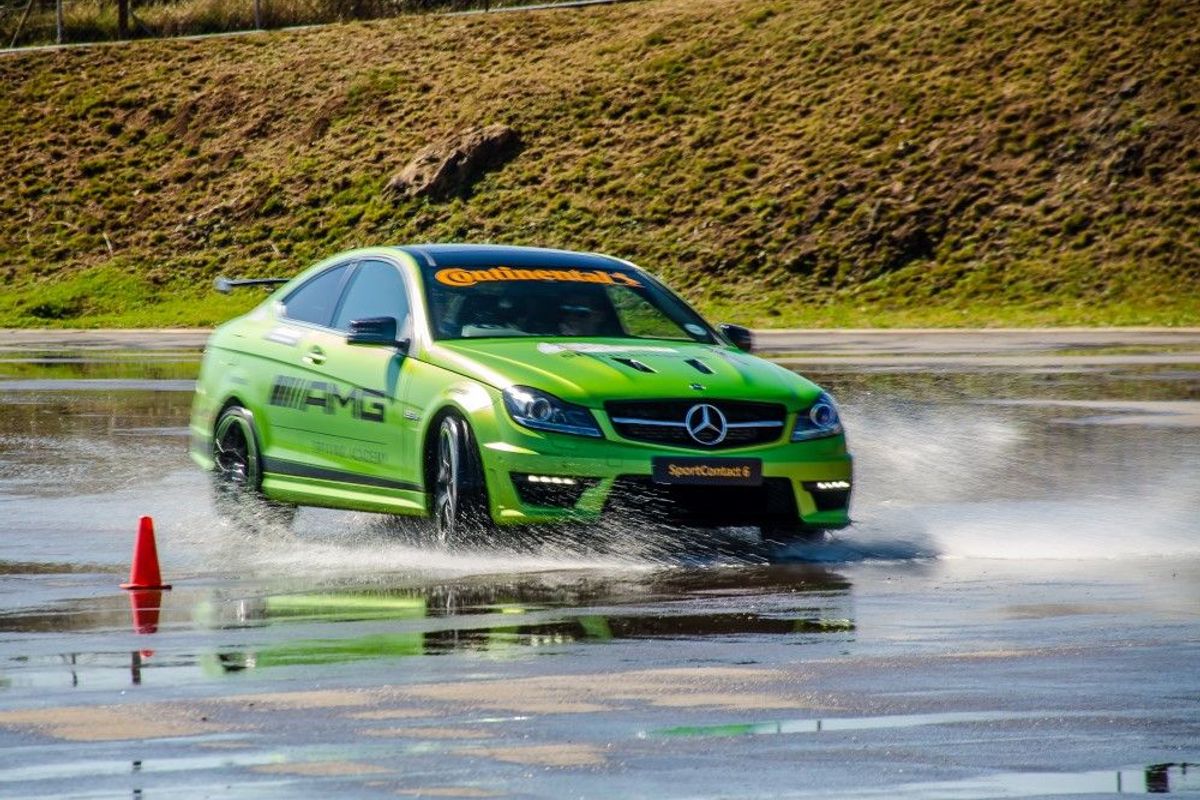
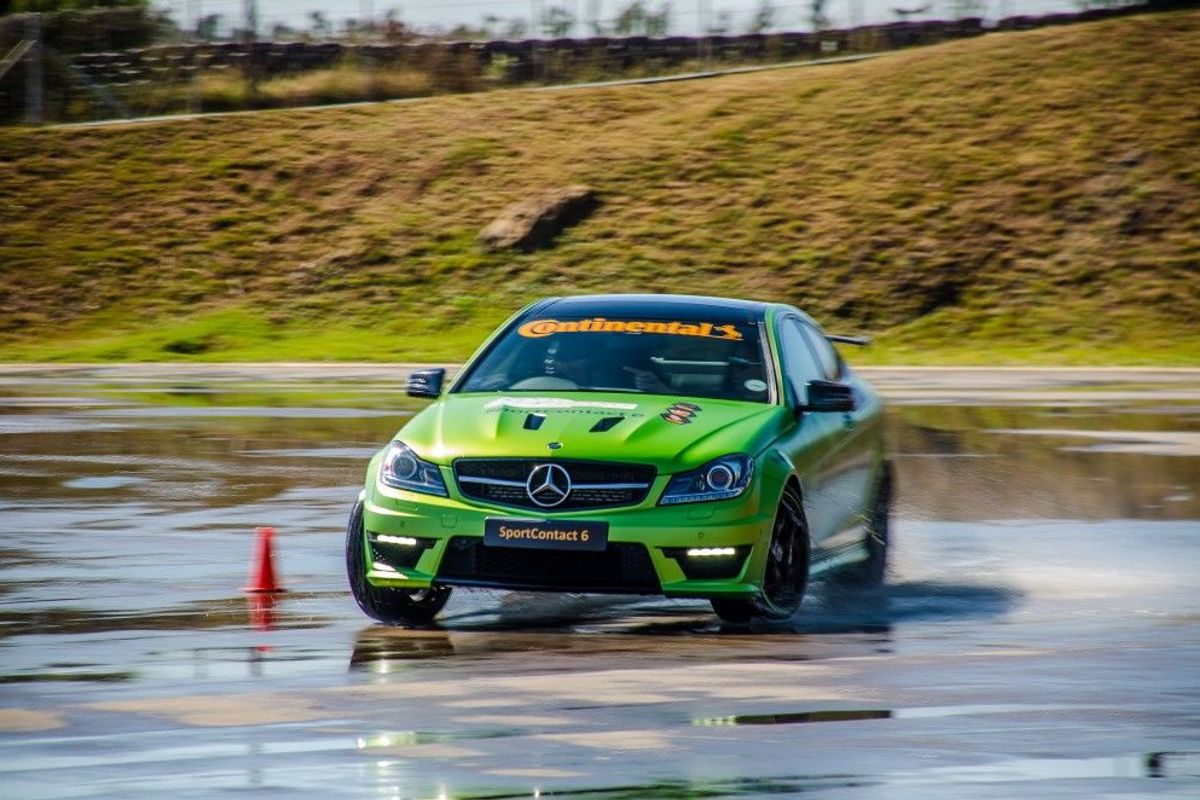
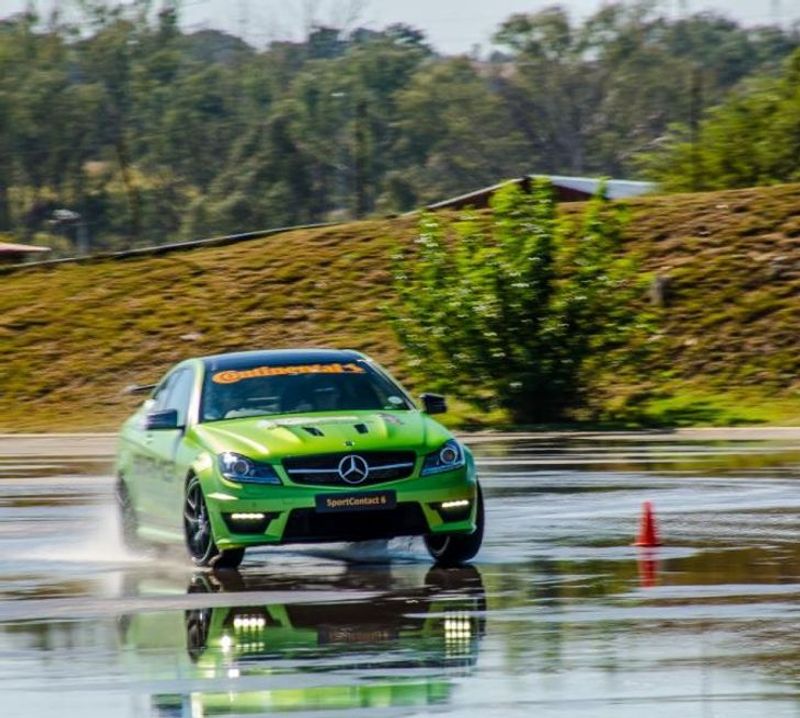
The first test activity took place on a wet skidpan where we got behind the wheel of a Mercedes-AMG CLS63 S and Mercedes-AMG C63 Coupe Edition 507. An obstacle course was laid out and both cars were fitted with new SportContact 6 tyres. Judging by the way the vehicles responded to enthusiastic steering and throttle inputs in those slippery conditions, the new SportContact 6 rubber seemed to grip the wet tarmac with zeal.
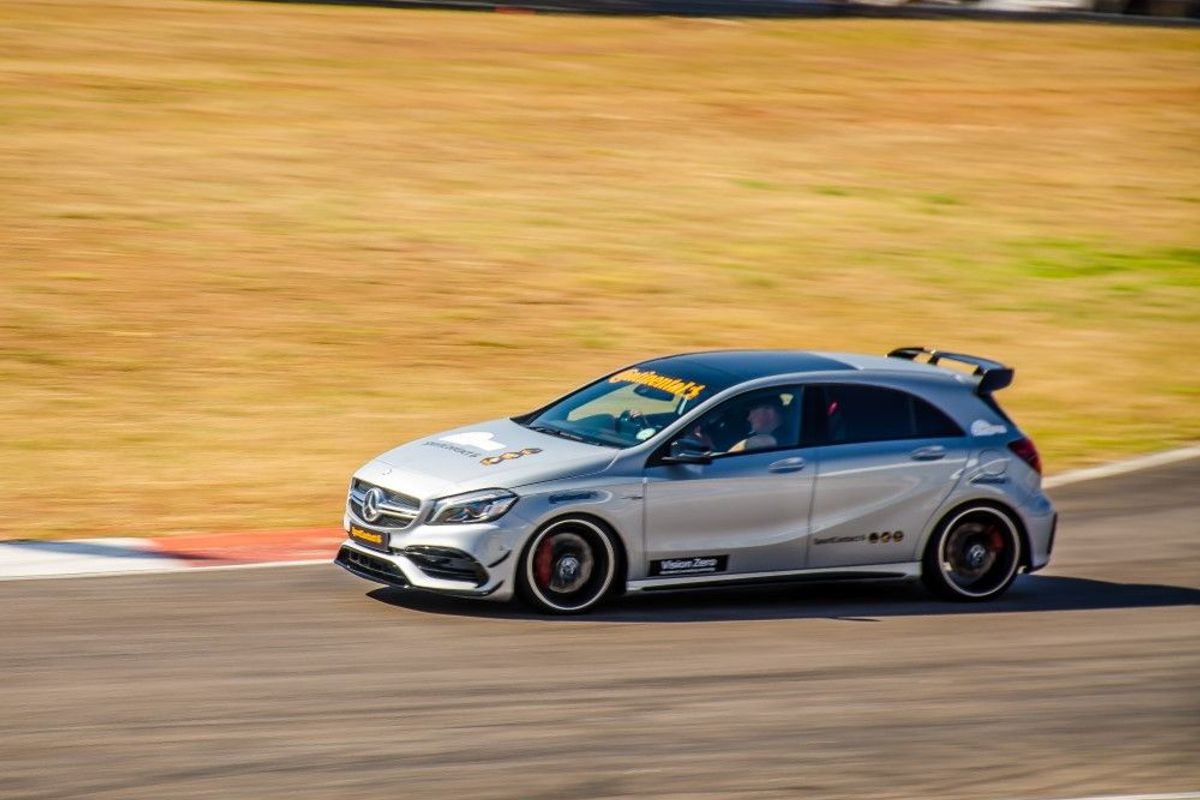
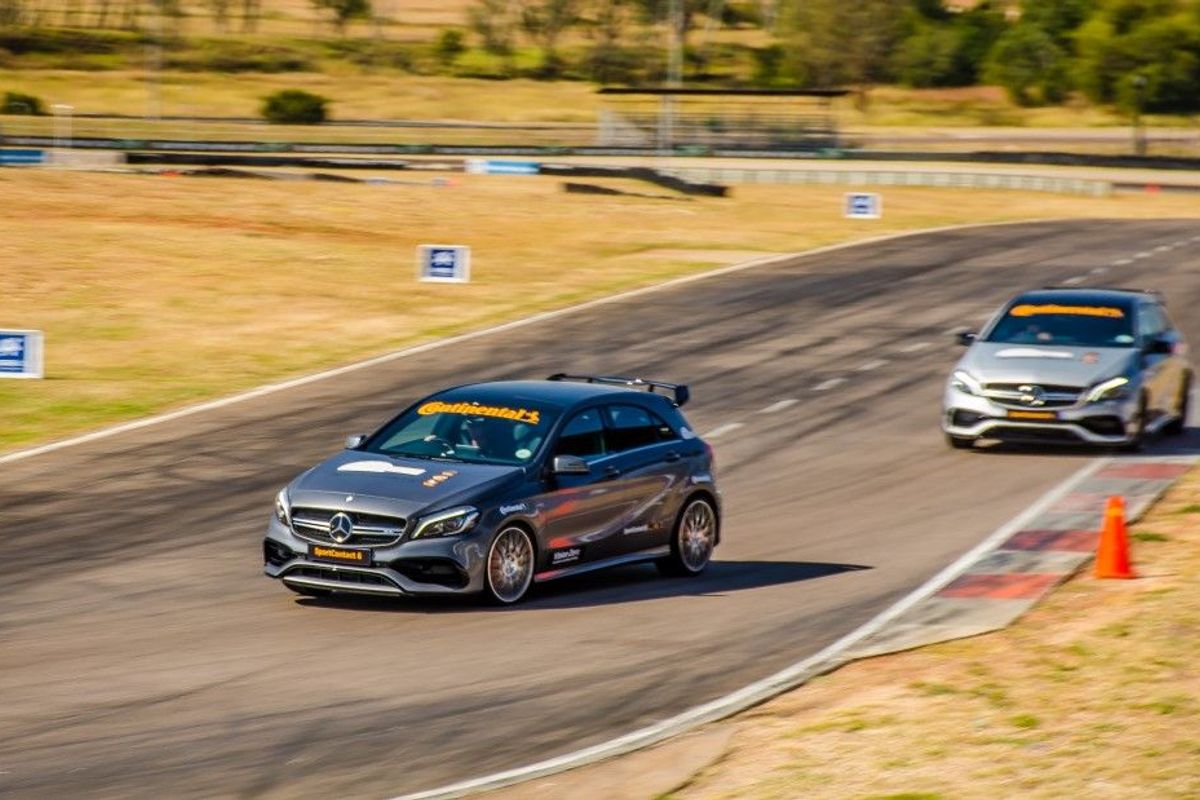
We also had the opportunity to test the tyres in dry conditions with a few laps around Zwartkops Raceway. To do this, we buckled up in a Mercedes-AMG A45 (read our review) and proceeded to push the cars and their tyres to their limits. The SportContact 6 were rated to 350 kph and the levels of adhesion they demonstrated out on track, under hard driving conditions, were remarkable. Those were extreme conditions, but high-grip tyres play an important safety role insofar as they give motorists the confidence to take effective evasive action when they encounter road hazards while driving.
Tyre safety
Road safety in South Africa remains a major challenge.
Continental also took the opportunity to highlight its Vision Zero campaign, which aims to eradicate traffic collisions and related fatalities and injuries.
In South Africa, about 15 000 road deaths occur annually and the marketing manager of Continental Tyre South Africa, Niel Langner, said that a lack of understanding of tyre safety contributes to the problem.
“Tyre education and awareness is at the forefront of our campaign in SA, as there’s a significant lack of understanding regarding the critical role that tyres play in overall driving safety,” says Langner. “This can be attributed to buyers across the full spectrum of the industry, as price is the main consideration when it comes to purchasing decisions, but this often results in a trade-off in performance and safety compared to a quality or premium tyre.”
Between 14 000 and 15 000 people die on South African roads every year.
Meanwhile, motorists should bear in mind that maintaining the correct tyre pressure will ensure that their vehicle's tyres perform optimally. Over or under-inflated tyres have a direct negative impact on grip as well as reducing braking and handling ability. Incorrectly inflated tyres also result in premature wear (higher costs) and increases the risk of tyre failure.
In South Africa, the legal tread depth limit is 1 mm (Europe is 1.6 mm) and it must be noted that a tyre’s ability to disperse water diminishes significantly as tread depth decreases, increasing the chances of aquaplaning in wet conditions. Braking distance also increase as tread depth decreases. Therefore, Continental recommends changing your tyres when your tread depth reaches 3 mm to ensure maximum performance from your tyres.
"Tyres are the sole point of contact between the vehicle and the road. All forces transmitted to the road are put down via a footprint no bigger than the size of a postcard. In a critical situation, it is the tyre that determines whether the vehicle can stop in time, or whether it stays safely on course through a corner,” Langner stated. “This is why we need to inform as many drivers as possible, all over the world, about the safety benefits of using high-tech tyres inflated to the correct pressure and with adequate tread depth. We will continue driving this message and expanding our education and awareness platforms to inform motorists on the crucial role tyres play in road safety,” he concluded.
Although Toyota South Africa Motors will continue sales of its FJ Cruiser for the foreseeable future, several reports that the model's production run will end in August 2016 will be a disappointment to the niche off-roader's small but loyal following.
The development comes in light of the FJ Cruiser being discontinued in the North American market roughly two years ago, and recent reports by Australian motoring publications state that the model, one of Toyota's most distinctive and characterful products, will disappear from the global automotive market around the fourth quarter of 2016.
Toyota South Africa Motors' product planning manager (IMV), Riaan Esterhuysen, confirmed the Japanese manufacturer has not communicated plans to replace the FJ, of which (on average) 16 units are sold in South Africa every month.
"We have no plans to 'discontinue' the FJ and will continue selling the model until further notice," Esterhuysen said. "Even though the FJ is regarded as something of a niche model, it has proven a very capable off-roader in its own right."
There is only one model on the market and it is powered by a 4.0-litre V6 petrol engine that delivers 200 kW of power and 380 Nm of torque, with five-speed automatic transmission, part-time 4×4, an electrically activated rear differential lock and switchable Active Traction Control technology to maximise off-road climbing ability.
The Toyota FJ Cruiser received a number of updates in 2013, include the addition of a second fuel tank that doubles capacity to 159 litres and a crawl control function (a "feet-off" system that helps take the FJ Cruiser over severe or slippery terrain, helping it climb or descend steep hills, and is also helpful in mud, sand and gravel, and when crossing through water).
The crawl control can be engaged in low range and temporarily disengaged at speeds above 25 kph, or above 10 kph when the rear differential is locked. A speed-selector dial on a new overhead console provides the choice of five speeds. Further, the system automatically maintains a low uniform vehicle speed uphill and downhill by controlling both engine output and brake hydraulic pressure, allowing the driver to concentrate fully on steering.
Standard Specification
Standard kit on the FJ Cruiser includes electric windows all round, a leather covered steering wheel with remote audio and Bluetooth controls, integrated audio/CD sound system with 6 speakers and iPod connector, external audio and USB connectors, air conditioning, auxiliary power socket, and cruise control. The FJ also features Toyota’s rear monitor system, which integrates a reverse-view video camera, electro-chromatic rear view mirror and with an integrated video screen.
Toyota FJ Cruiser price in South Africa
R 567 000, which includes a 3-year or 100 000km warranty and a 5-year or 90 000km service plan.
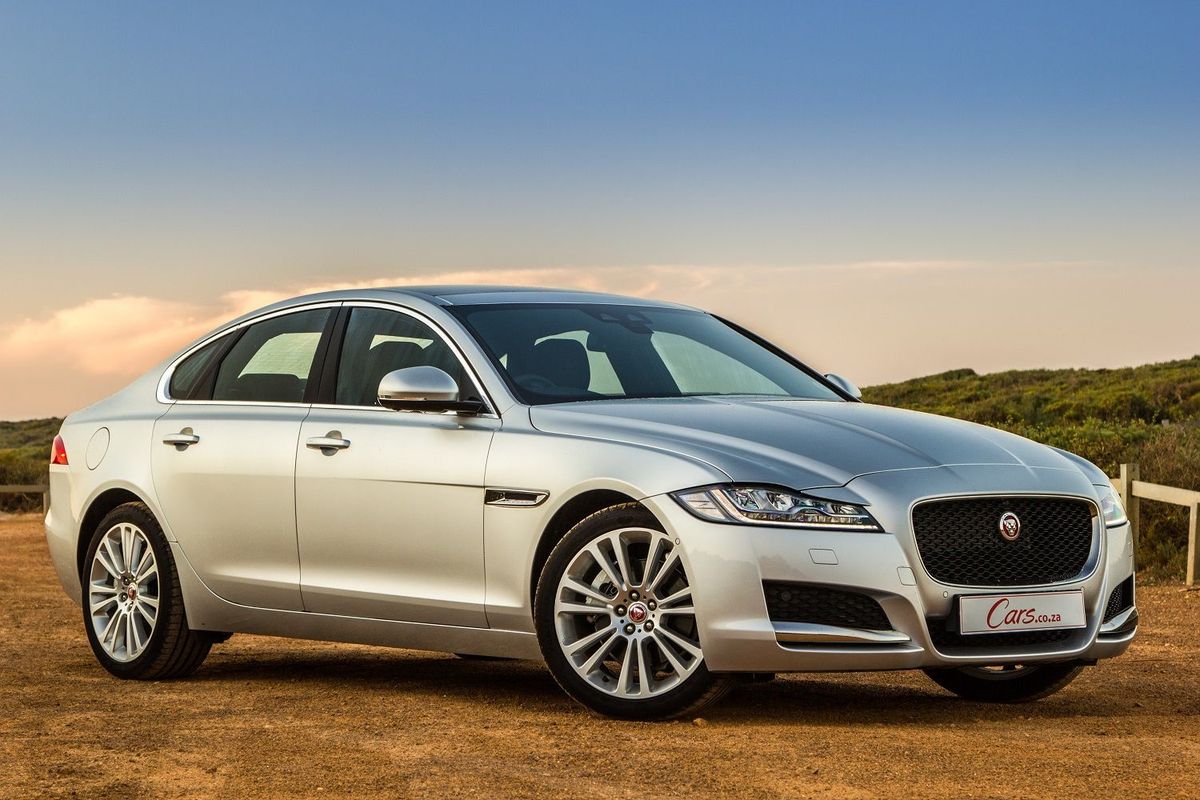
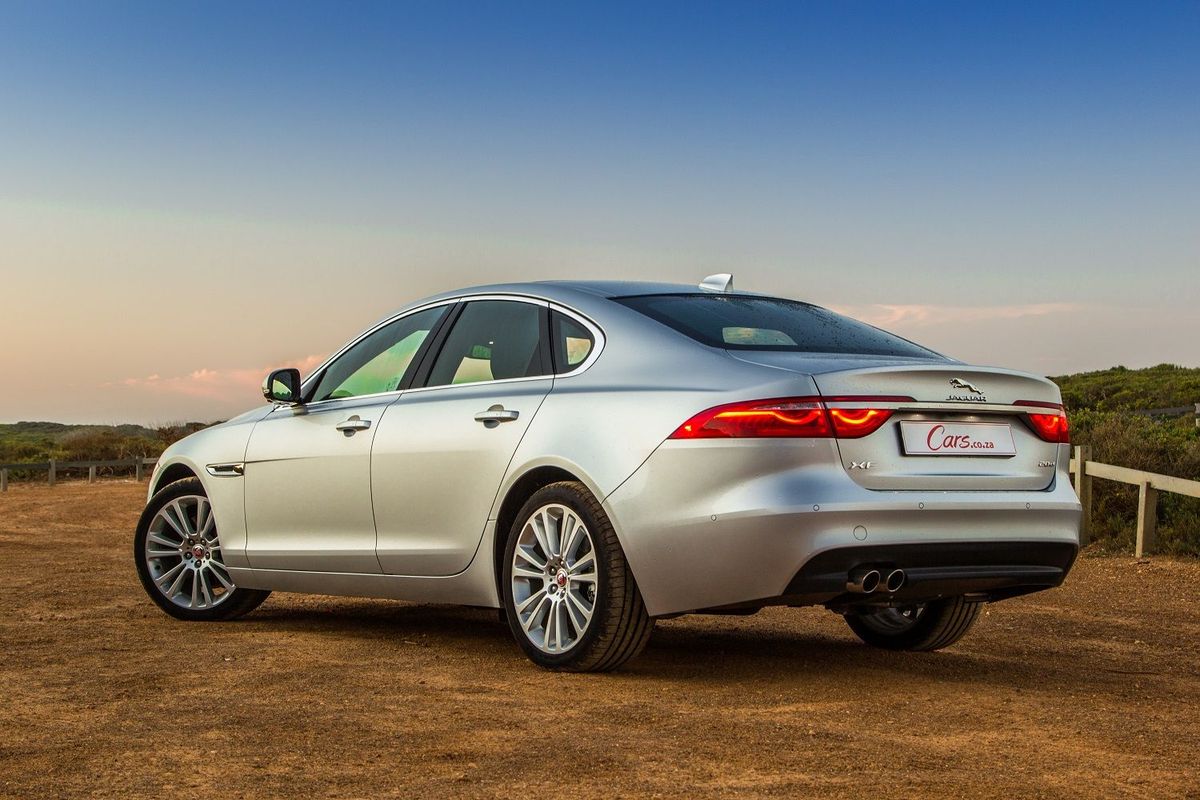
The first-generation XF vaulted Jaguar back into contention for executive car glory. Does the new model build its predecessor's momentum or is it too conservative? We test the 2.0-litre turbodiesel model to find out.
We like: Ride/handling balance, comfort, boot space
We don’t like: Too similar to XE inside, lack of engine refinement, pricey
Alternatives:
For better fuel efficiency: While the Jaguar's claimed consumption figure of 4.3 L/100 km is good, the BMW 520d's is marginally better (4.1 L/100km).
For more flair: Although we feel the new XF's design doesn't stray too far from its predecessor's (to its detriment) it remains a very classy and attractive vehicle. Both the Mercedes E-Class and current BMW 5 Series are aging (and due for replacement), leaving you with the Mercedes-Benz CLS as the most likely alternative if style is a prerequisite. But the CLS is significantly more expensive.
For better value: Do not forget the perennially underestimated Audi A6. Although its far from new, the A6 is a very capable car, which, for similar money, can be had with a more powerful 3.0-litre engine.
Improving a winning recipe
Jaguar was properly in the doldrums back in 2007. Its new XF, a radical replacement for the retro-styled S-Type was a make-or-break product. In short, Jaguar could no longer afford to play the retro card – it had to start looking forward. The XF was an immediate success and set a path for every Jaguar developed since. Recently, however, the XF itself came up for renewal and, perhaps predictably, Jaguar didn't feel the need to stray too far from what was clearly a winning recipe.
That said, the previous XF had its flaws. It was a heavy car because it was based on an established, steel-intensive structure. Compared with its rivals (BMW 5 Series, Mercedes-Benz E-Class and Audi A6), the rear legroom on offers was below average. And… as it neared the end of its model life, the slickness of its infotainment system and the marginal fuel efficiency of its engines came under fire. So these were the aspects that Jaguar set out to fix for the second-generation XF.
How does it fare in terms of…
Design and packaging
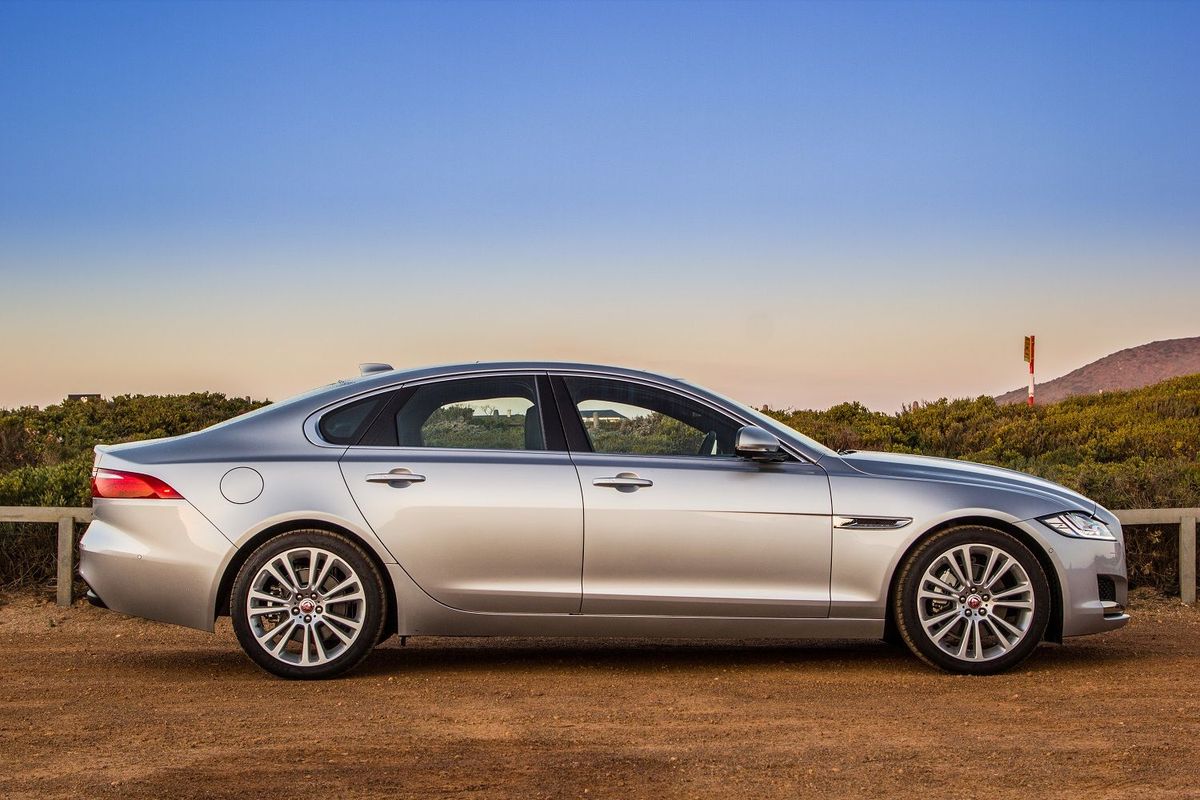
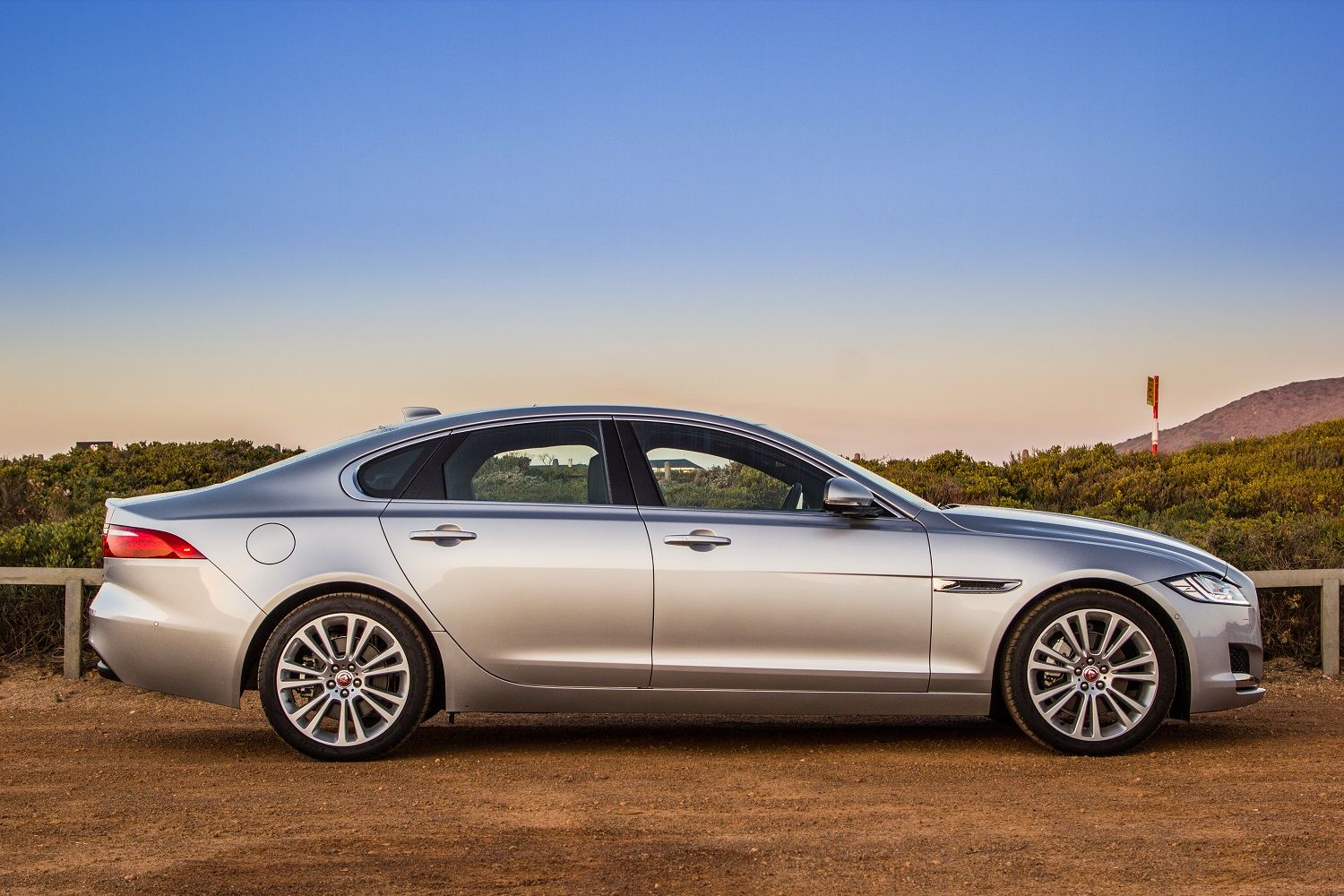
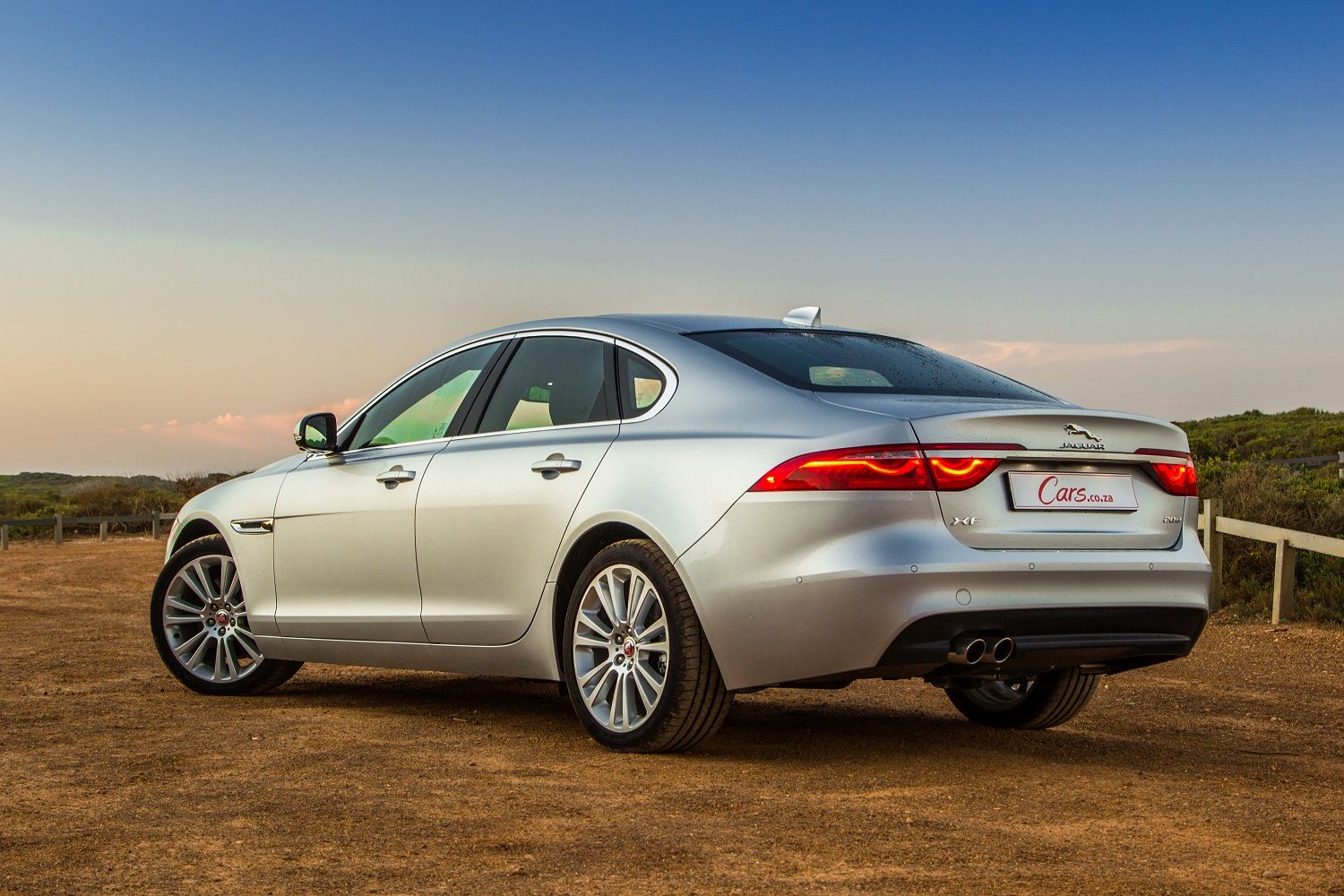
At first glance, the new XF looks very familiar, but the wheelbase is much longer, and the car is actually shorter.
To shed weight, Jaguar opted to ditch the previous model's steel architecture for a predominantly aluminium one. The result is a car that is up to 190 kg lighter than before and yet also nearly 30% more rigid. To address the interior space (rear legroom) dilemma, it added 51 mm to the wheelbase, but shrunk the car's overall length by around 7 mm. In effect, the XF is lighter, yet stronger, more compact but also more spacious than its forebear… Sounds good, doesn't it?
Inside, there's significantly more space all-round, with especially those seated in the rear benefitting the most from the increase in wheelbase. Headroom is also good, even for taller passengers. And the boot is massive: Jaguar claims a 505-litre capacity, which is only slightly less than what is offered by the commodious boots of the BMW 5 Series and Audi A6.
When it comes to packaging, then, Jaguar has fixed all the major areas of complaint of the new XF's predecessor.
But what of its design? Here Jaguar has been very cautious. At a quick glance, the XF can easily be mistaken for its predecessor. The conservatism is to be expected. Jaguar has worked hard to establish a recognisable design language for itself and meddling with the XF's exterior execution would be counter productive to the Coventry-based marque's quest to attain a level of instant brand recognition that its German rivals enjoy. Still… some may have wished for more flair.
Cabin execution and comfort
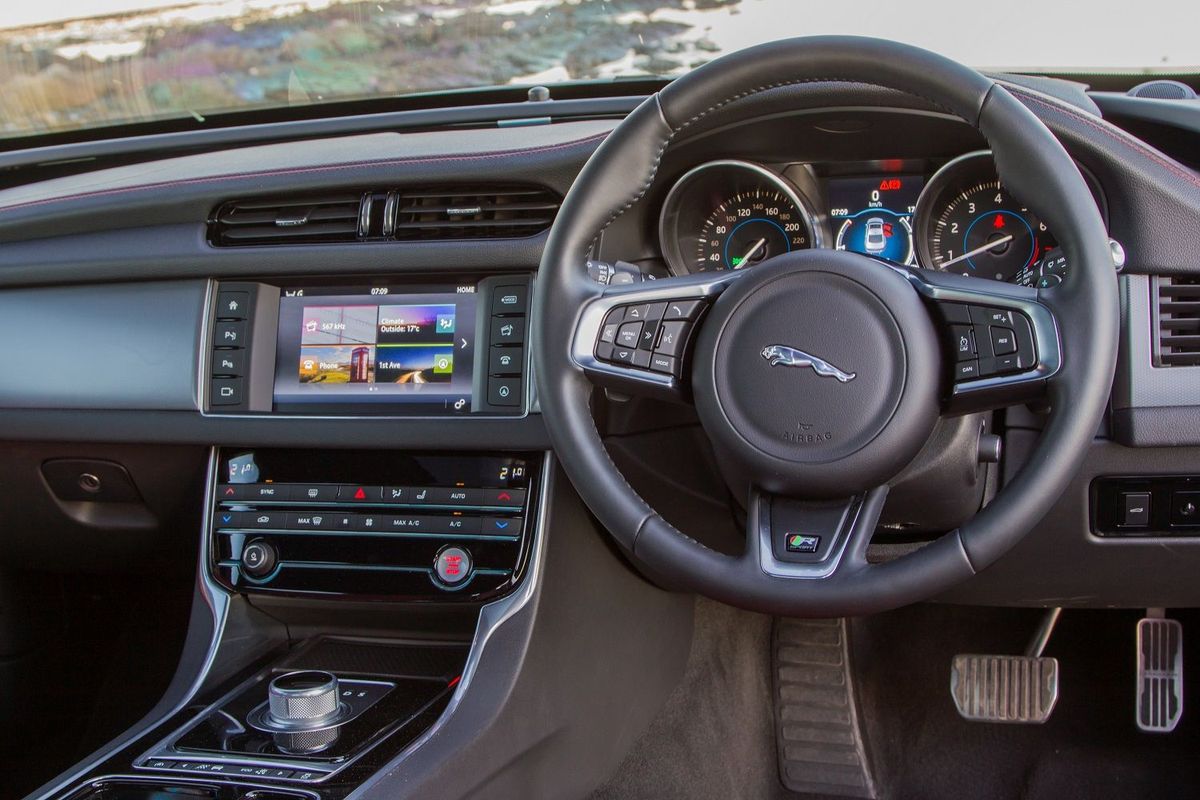
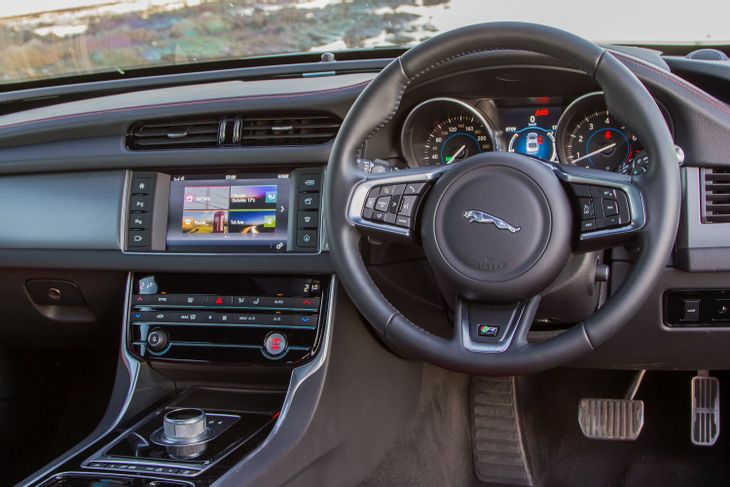
XF facia is very similar to smaller XE's. Note: 25t cabin shown.
Swivelling ventilation outlets, a gear selector that rises out of the transmission tunnel and strategically located mood lighting… these were all hallmarks of the first XF that consigned Jaguar's burr-walnut-and-piped-leather-only tradition to the past. Sitting in the first-generation XF back in 2007 was a revelation, not only for Jaguar brand loyalists, but for executive sedan buyers in general. The bravado of its interior was partly what made the XF such a standout product.
These items are all present in the new XF's cabin, but this time there are no surprise-and-delight design features. In fact, the design is very similar to what you'd find in the smaller XE. While there's nothing wrong with the way the XF's interior looks and feels, it may just lack that knock-out punch the interiors of the upcoming Mercedes-Benz E-Class and BMW 5 Series are likely to pack. And while the build quality is very good, the XF's cabin still lacks the overall polish of, say, an Audi A6.
Those foibles are unlikely to be deal-breakers for prospective owners, however. During our test period we grew fonder of the XF's cabin, particularly because it proved to be so comfortable. There's plenty of adjustment from the driver's seat and steering wheel. The front seats' heating and cooling functions (a R13 400 option) work well and the infotainment system is a significant improvement over the previous setup. Of course, its similar to what is already used in some Land Rover models, as well as the Jaguar XE, but the functionality is pretty good. iPod, Aux and USB support is all present and correct, as is Bluetooth telephony and audio streaming.
As is the case with most premium brands, the optional extras list is long. Our vehicle had several of the extras fitted, including Lane Keep Assist (for R9 000). It worked impressively under most circumstances, but perhaps a more useful feature (from an everyday point of view) would be Park Assist (for R8 900). A reverse-view camera will add another R4 700.
Performance and economy
This may be the "base model" of the XF line-up, but the 20d delivers a great cruising performance.
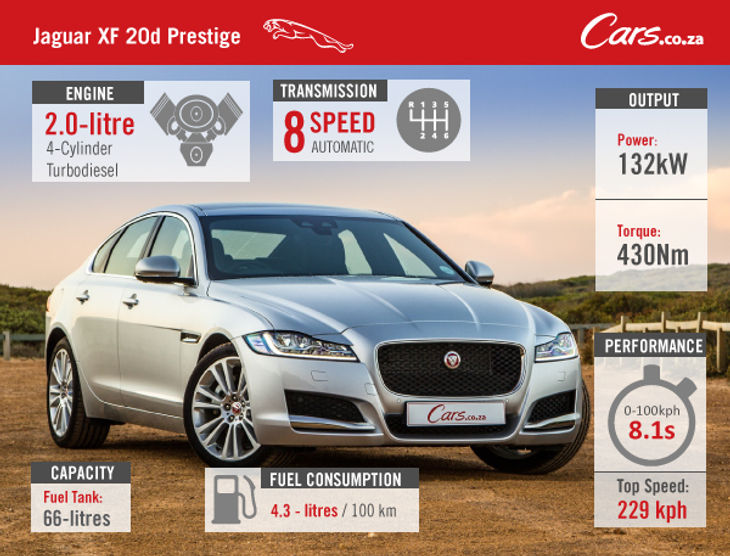
This particular XF derivative is powered by the brand's new 2.0-litre four-cylinder "Ingenium" turbodiesel engine. It delivers a strong 132 kW and 430 Nm of torque, both figures being very competitive with similar-sized turbodiesel engines already on the market. Power is transmitted to the rear wheels using a slick 8-speed automatic transmission (with a Sport mode).
The engine is initially quite rough (in sound and feel), but smoothes out appreciably when up to temperature. That said, it never attains the creamy smoothness of the best of the German turbodiesel engines. And while it offers the required grunt on paper, perhaps it has been tuned with relaxed driving in mind, rather than sprinting, because it can feel a little lethargic to initial throttle inputs. Still, aluminium construction notwithstanding, this is a heavy car for a 2.0-litre engine to pull around. Jaguar claims a 0-100 kph sprint time of 8.1 seconds, which is easily beaten by the Germans.
Once up to cruising speeds, the XF 20d feels far more at home, delivering excellent overtaking thrust as well as good economy. The claimed consumption figure is 4.3 L/100 km, but we achieved around 7.0 L/100 km consistently and easily, so with economy minded motoring you should be able to achieve around 6.5L/100 km.
Ride and handling
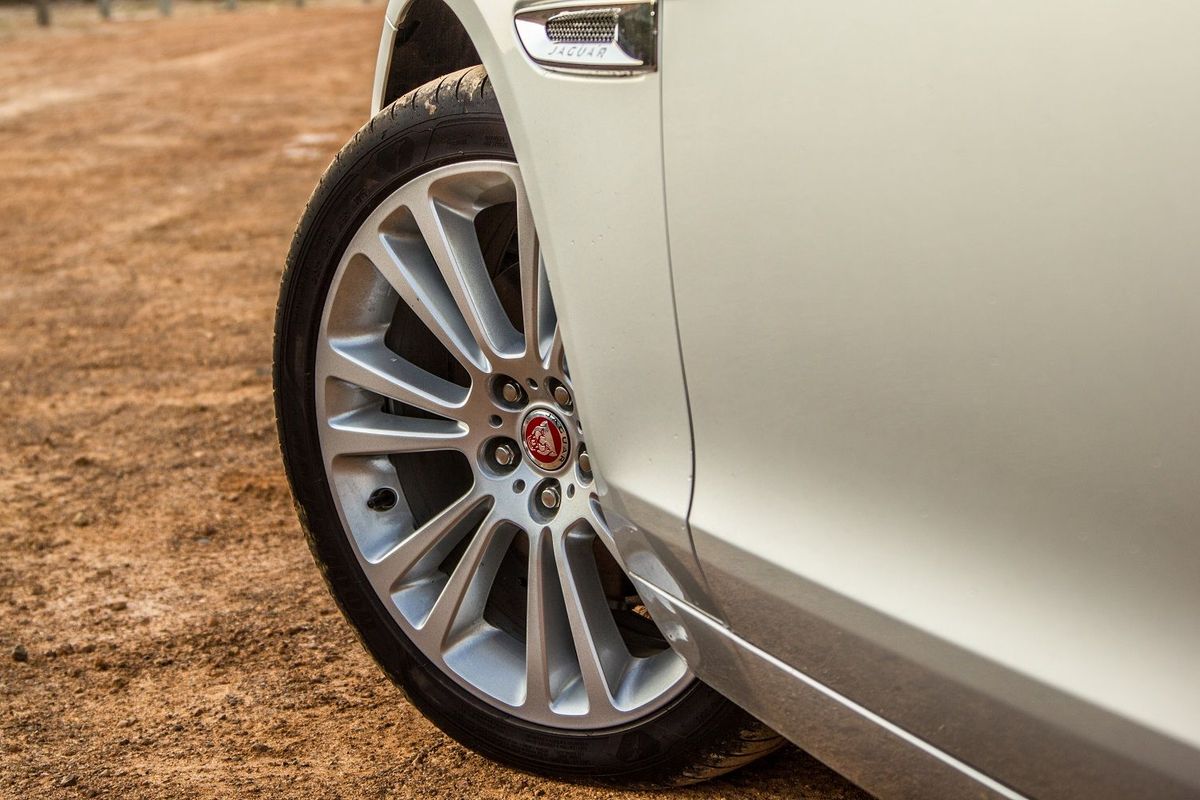
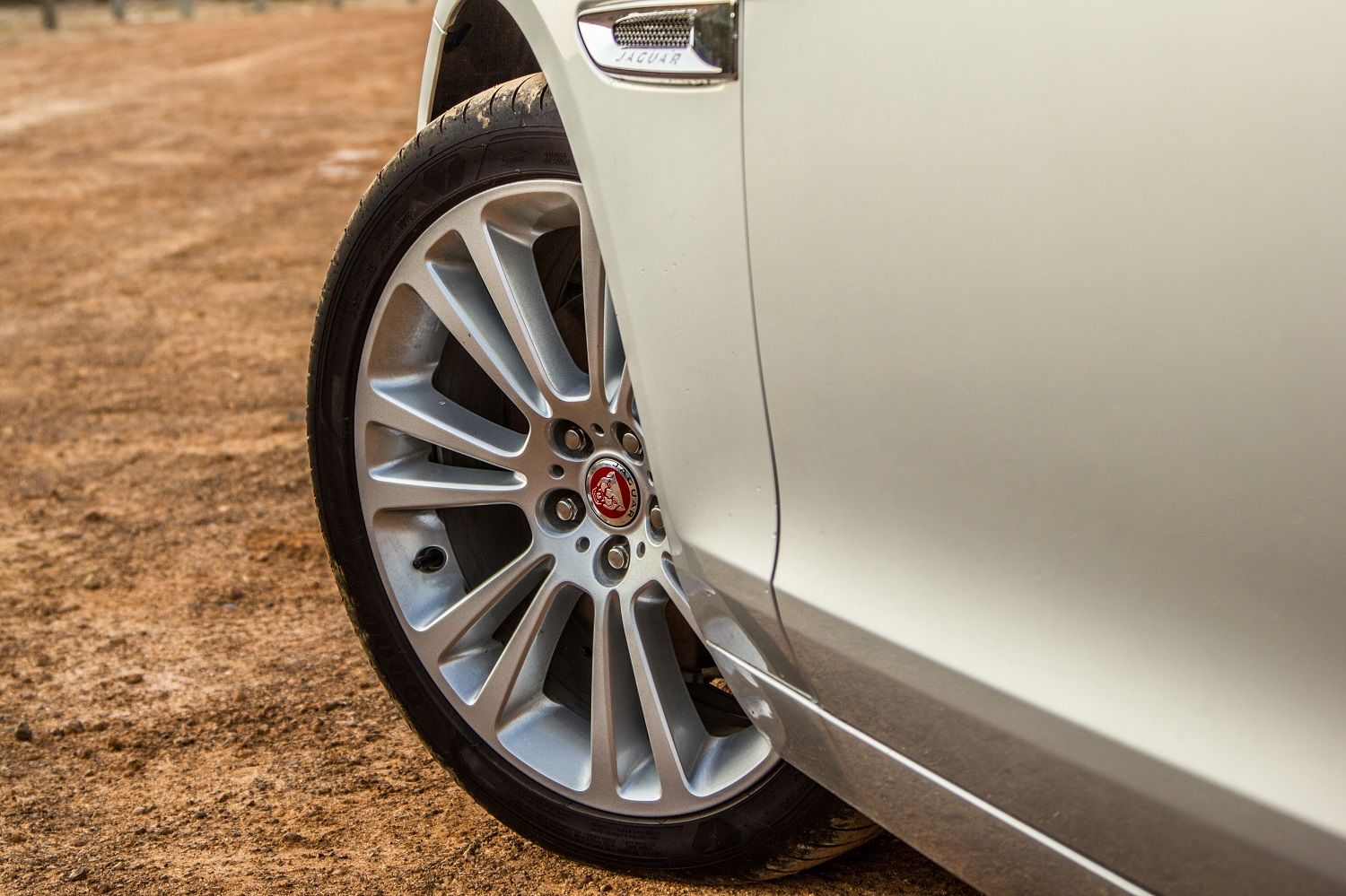
Several wheel options are offered, ranging from 17 to 20 inch.
We've left the best for last… Jaguar hasn't fiddled too much with the basic suspension recipe. The XF still uses Jaguar's own "integral link" rear suspension setup as opposed to the usual multi-link arrangement preferred by the rivals, but through careful tuning and new dampers, the end product is quite sublime.The way that Jaguar's chassis developers have found a balance between suppleness, grip and roll resistance is admirable. Even the steering feels better weighted and more linear in feel than before.
The XF arguably represents a new class benchmark in ride/handling refinement. Our test unit rode on optional 18-inch alloy wheels, but even so (and having driven two subsequent Jaguar XFs equipped with lower profile rubber), the ride quality's positive impact on overall comfort levels can't be ignored. And when the driver starts pushing on (yes, even in this 20d), the XF's suspension delivers great thrills' the car feels agile, beautifully resistant to pitching/rolling and the steering's crisp.
Verdict
It would be unfair to expect the new XF to deliver such momentous gains as its predecessor did. Instead, what the new XF does is significantly improve in areas where it was lacking, and stick to what has worked before. Overall, it is a far more polished product with few obvious flaws. But the context of this segment is about to change significantly. A new Mercedes-Benz E-Class will debut first, followed by a BMW 5 Series and then, later, a new Audi A6. Has Jaguar done enough to pre-empt the vast improvements promised by these imminent rivals? We're not so sure… only time will tell. As tested in 20d Prestige form, the new XF delivers an accomplished performance that even die-hard fans of the German brands should be able to appreciate. It should no longer be considered a compromised fringe player, but a serious challenger.
Pricing and Warranty
The Jaguar XF 20d Prestige sells for R743 600, which includes a 3-years/100 000 km warranty and 5-years/100 000 km maintenance plan.
Subaru is celebrating the 50th anniversary of the birth its trademark Boxer engine, an engine configuration that only one other company (Porsche) also currently produces.
Since 1966 more than 16 million vehicles powered by these engines have been sold, and they remain a major factor in the unique charm of Subaru's products. The engine is so called because the movement of the engine's pistons resembles the movement of a boxer's fists. In a horizontally-opposed design of the Boxer engine, the pistons face each other in a side-to-side symmetrical layout. And why is Subaru sticking to this quirky design? It says that the opposing pistons work to cancel out the inertia force of each other, resulting in less vibration and improved rotational balance which provide engine smoothness, even at higher engine speeds.
To celebrate the Subaru Boxer, let's look at some historic highlights….
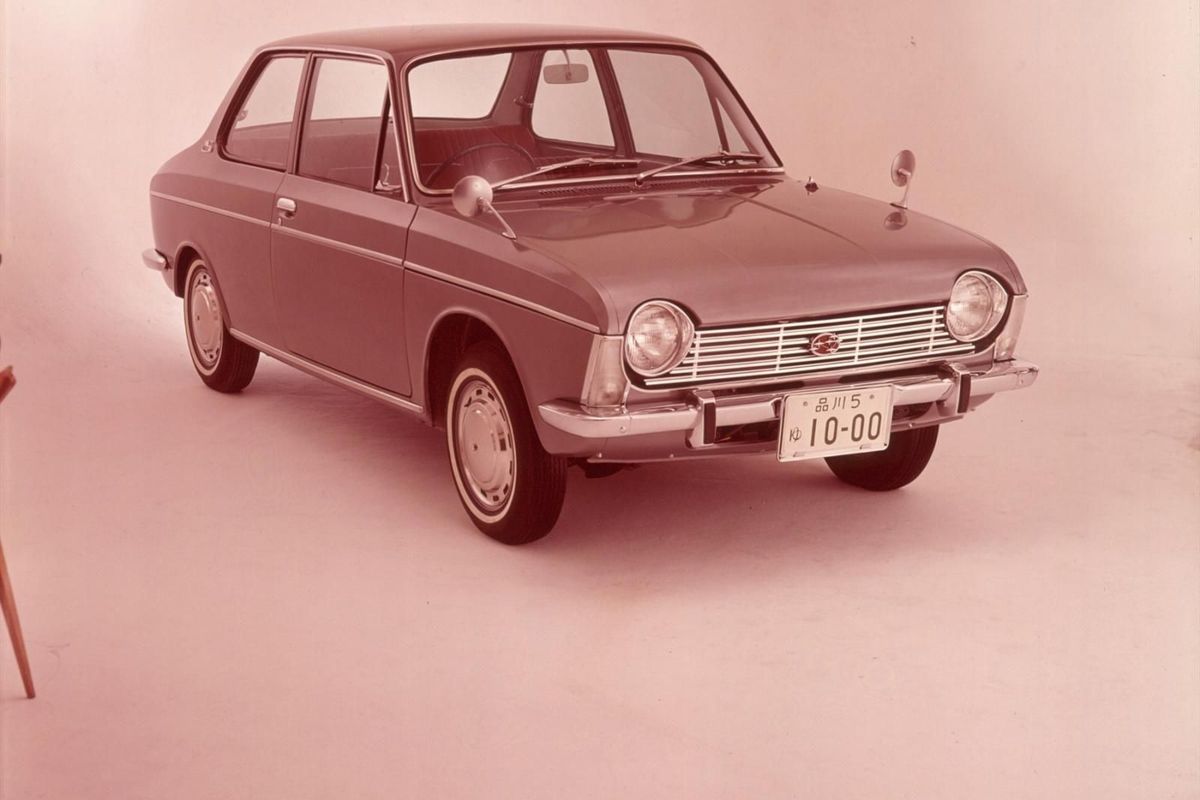
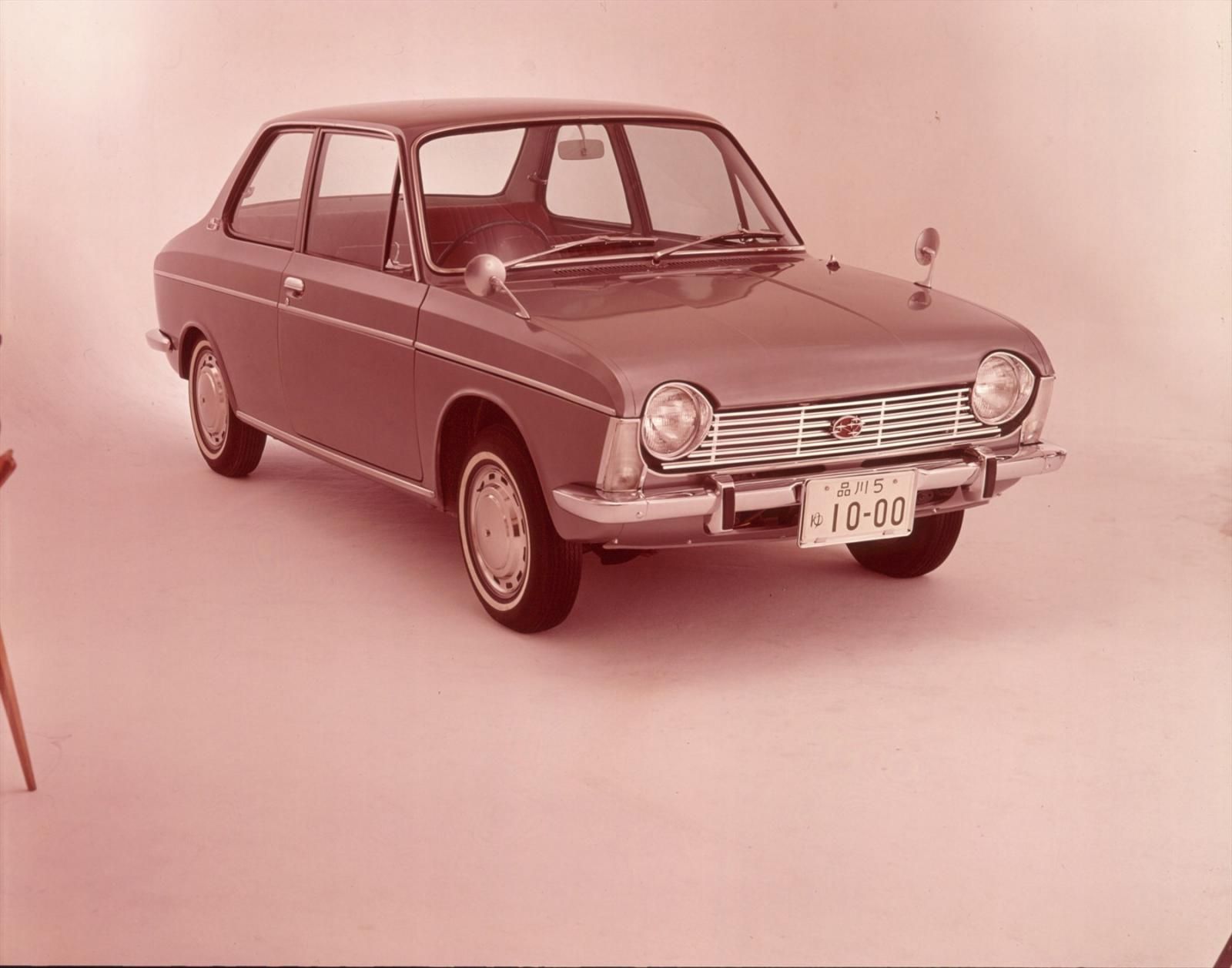
1966 Subaru 1000
The Subaru 1000 – the first production Subaru with a boxer engine.
Think of the Subaru 1000 as the Impreza's ancestor. When it was launched in 1966 it was the company's first front-wheel drive product, and it also sported the company's first production boxer engine. But, with only 41 kW, it wasn't the STI of its day, Even the later SS model sported only 49 kW.
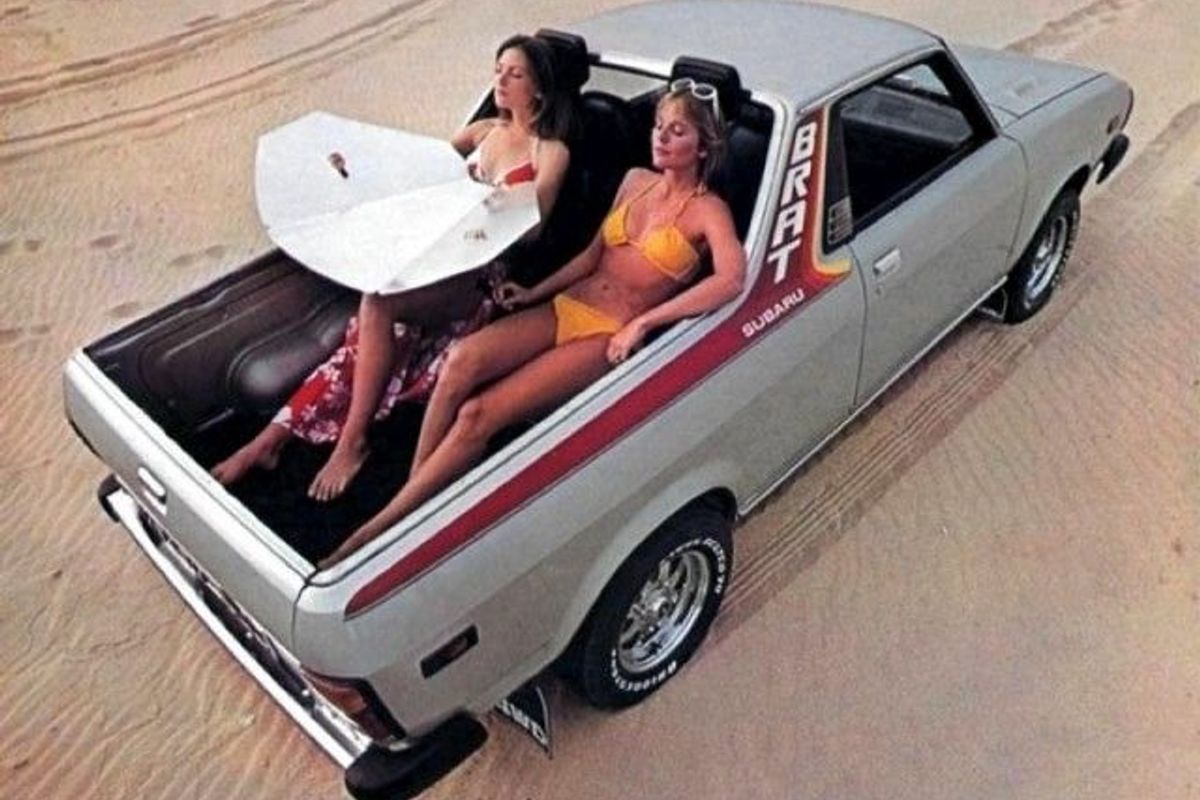
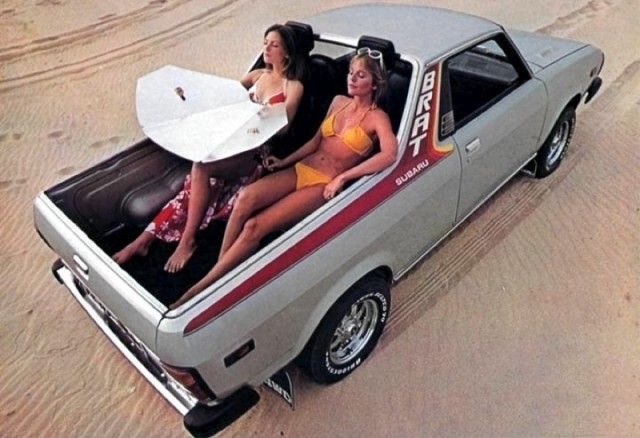
1978 Subaru Brat
Subaru Brat – rear jumper seats are great for suntanning…
Developed following a request by the boss of Subaru of America, the Brat turned into quite a success story. It had a long model life (from 1978 to 1994) and yet was never officially sold in Japan. It was a rather unique product – based on the Leone sedan of the time, it had all-wheel drive, which its rivals couldn't match, and it even sported such fun features as a T-bar roof and… jump seats, allowing for comfortable sun-tanning in the loadbay… It was launched with a 1.6-litre boxer four, but later models had a 1.8 and some even had turbocharging (there's that fascination with boost again!). Interestingly, President Ronald Reagan owned a Brat until 1998.
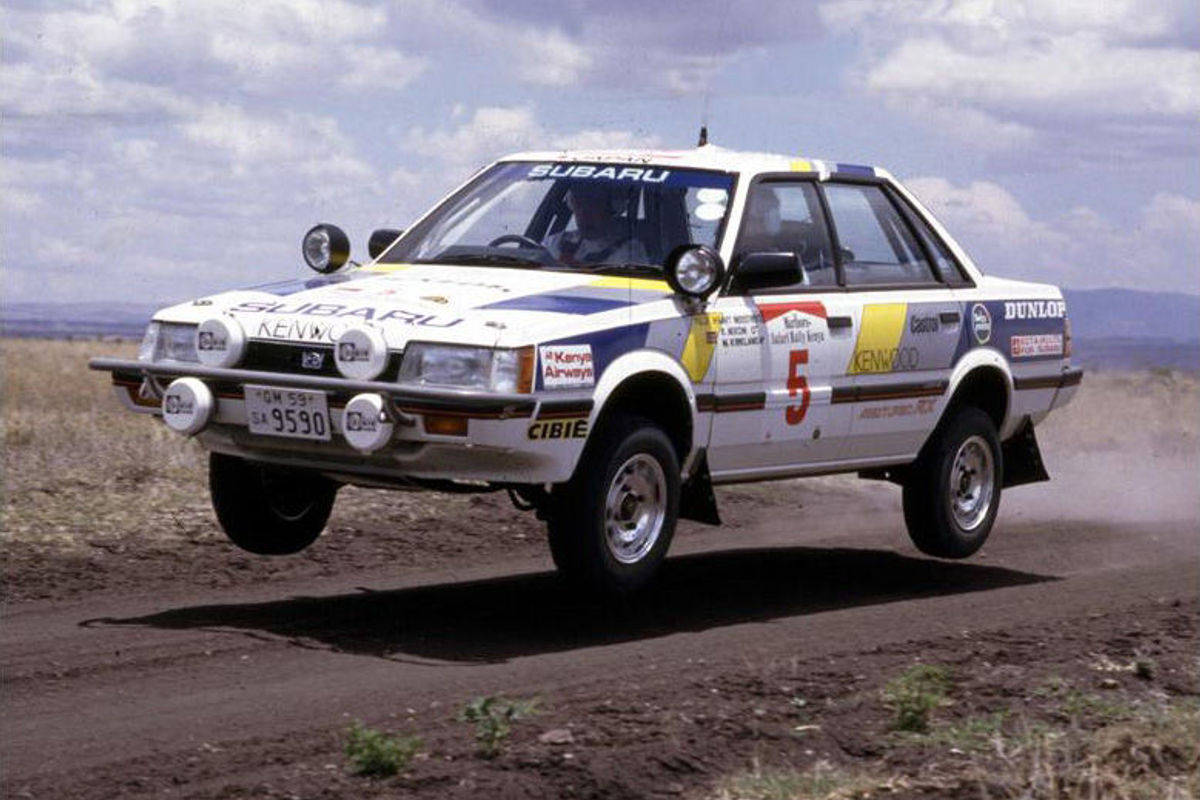
1986 Subaru Leone RX Turbo
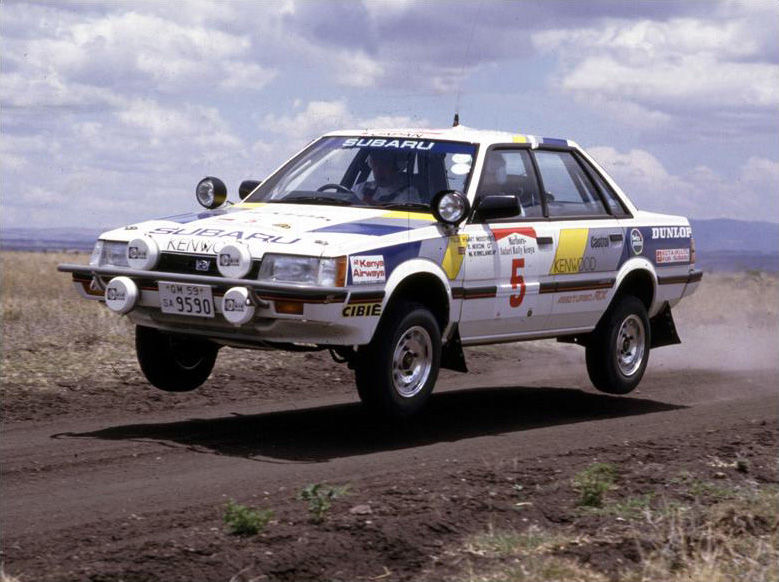
Mike Kirkland on the way to sixth overall in the 1986 Safari Rally.
Subaru took part in several rallies during the '80s with varying success, but a definite highlight came when Mike Kirkland won the Group A class and finished sixth overall in the tortoruous 1986 Safari Rally, driving the Leone RX Turbo. It was an indication of glories to come later – the Leone RX Turbo was one of the early four-wheel drive/turbocharged rally cars of its era and previewed what would come from later Legacy and Impreza models. Its 1.8-litre engine delivered just over 140 kW.
1990 Subaru Coloni F1
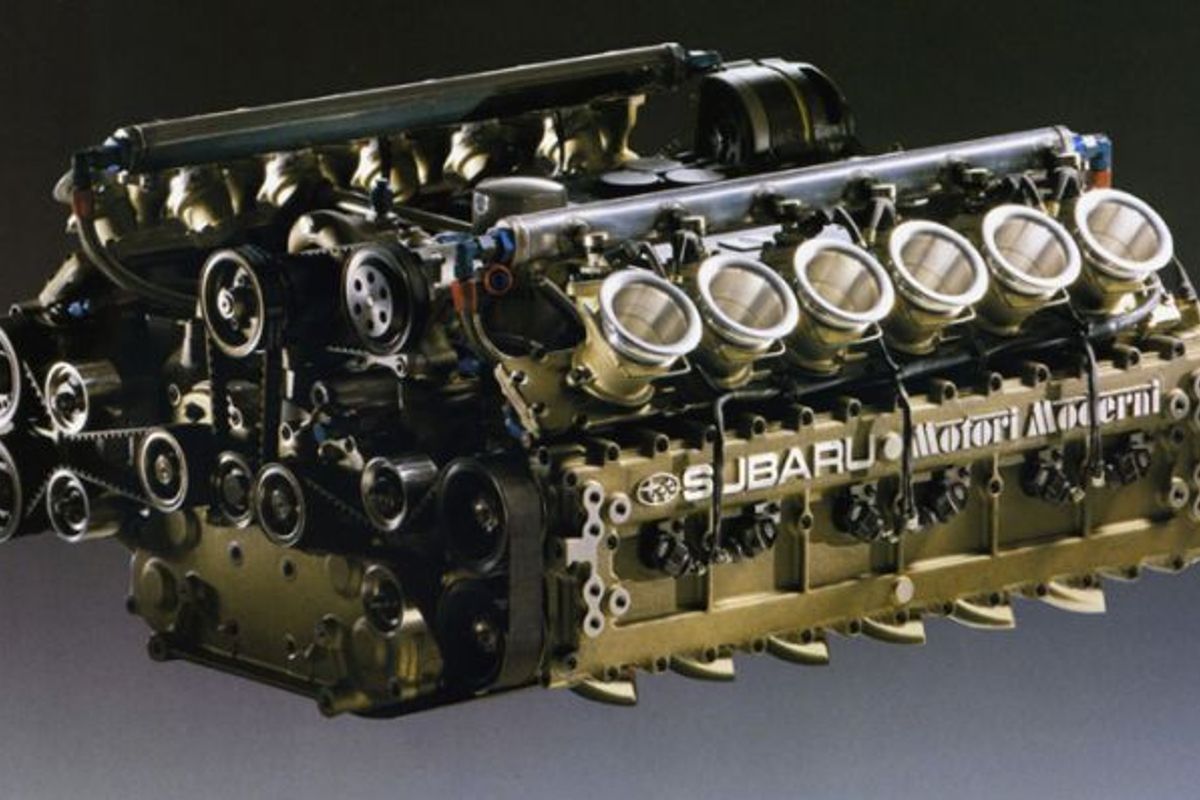
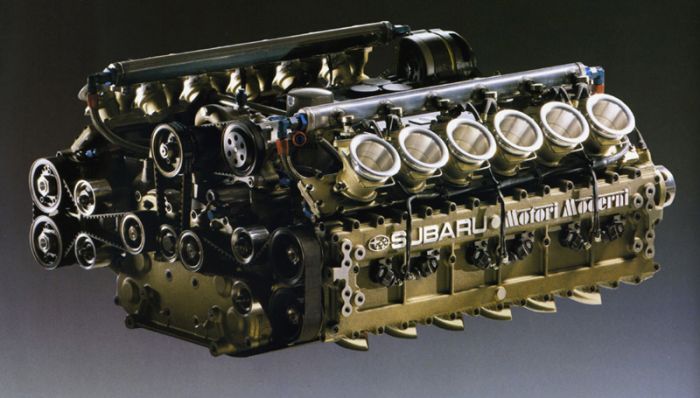
It's not often you'll see a flat-12 cylinder engine.
Yes, you're not reading that wrong. Subaru once had a short (and spectacularly unsuccessful) stint in F1 when it took control of the Coloni F1 team for the 1990 season. Powering their car was a 3.5-litre Flat-12 engine that delivered between 417 and 447 kW… not nearly enough for the Coloni to ever progress past pre-qualifying on a race weekend, driven by Bertrand Gachot. Still… the mere fact that they tried!
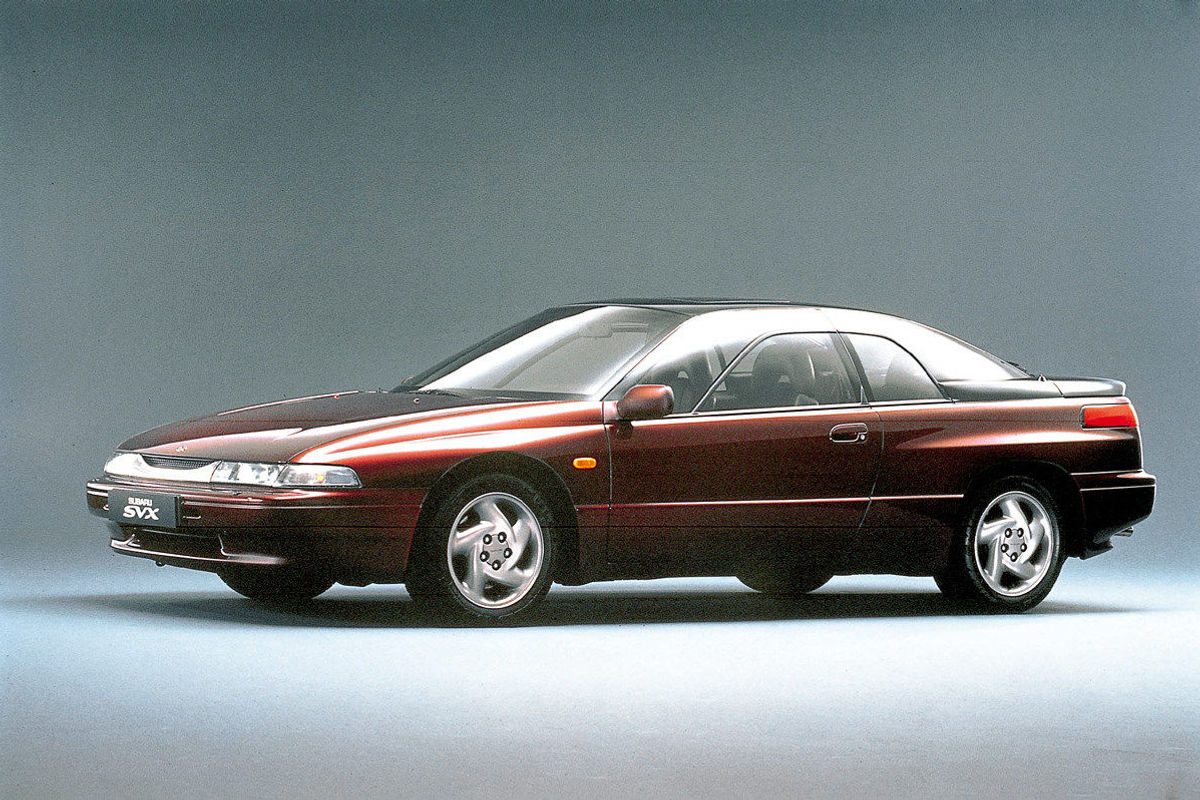
1991 Subaru SVX
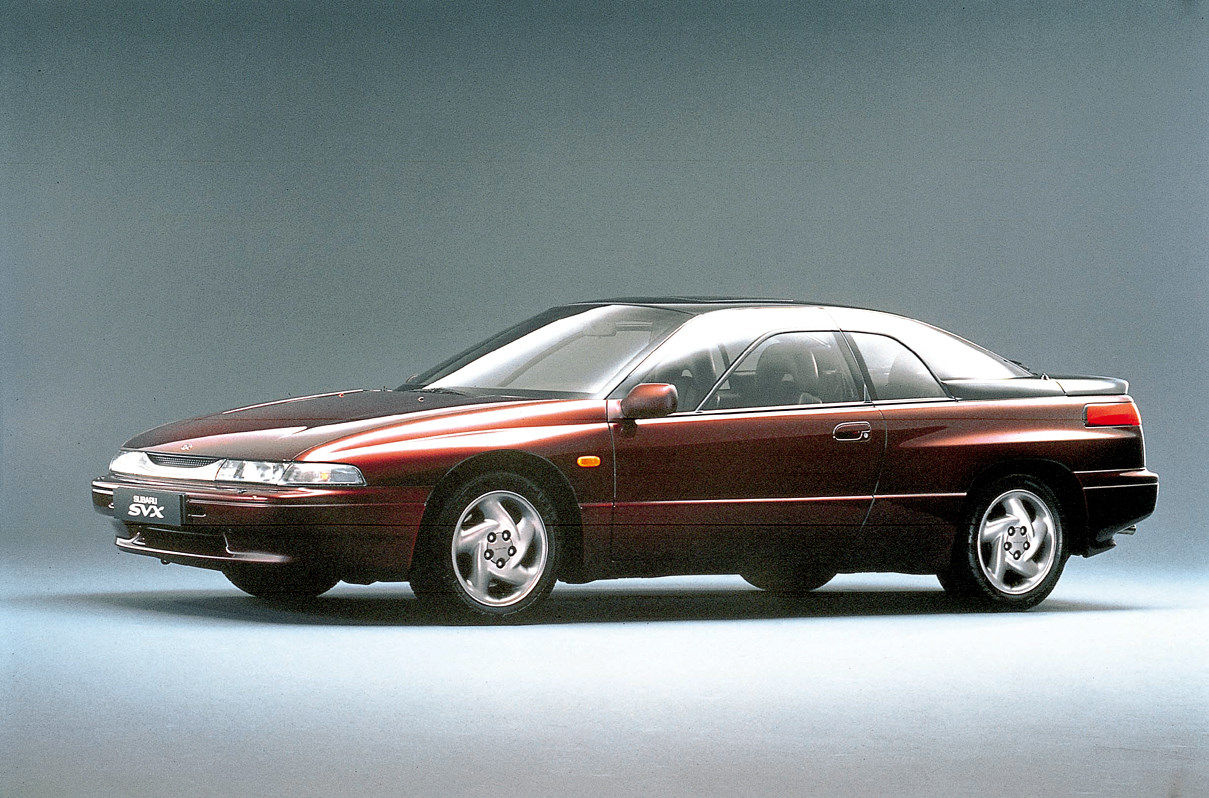
The SVX boasted a very futuristic design but was not a commercial success.
The SVX caused plenty waves when it first was revealed in concept form at the 1989 Tokyo Motor Show. When Subaru then put its space-age Giugiaro/ItalDesign looks straight into production, it was a big surprise coming from a company that is typically very conservative when it comes to design matters. A notable feature of the car's very aerodynamic shape was the "window-within-a-window" design. Under the bonnet was a 3.3-litre Boxer six-cylinder (the biggest Boxer Subaru would produce until the Tribeca came much later). It delivered a strong 172 kW and 309 Nm of torque. It was also an advanced vehicle that offered features such as variable torque distribution and four-wheel steer in some markets. Interestingly, it is claimed that Subaru made a loss of around $3 000 per SVX ever sold…
1995 Subaru Impreza WRC
Subaru achieved the first of its World Rally Championships in 1995 and the 555 Impreza with its trademark blue/yellow colour scheme became an instant worldwide sensation. Subaru continued on the winning path in the following two seasons, clinching the 1996 and 1997 seasons, too. Relive the glory years by viewing the video above at full volume! Listen to that boxer scream…
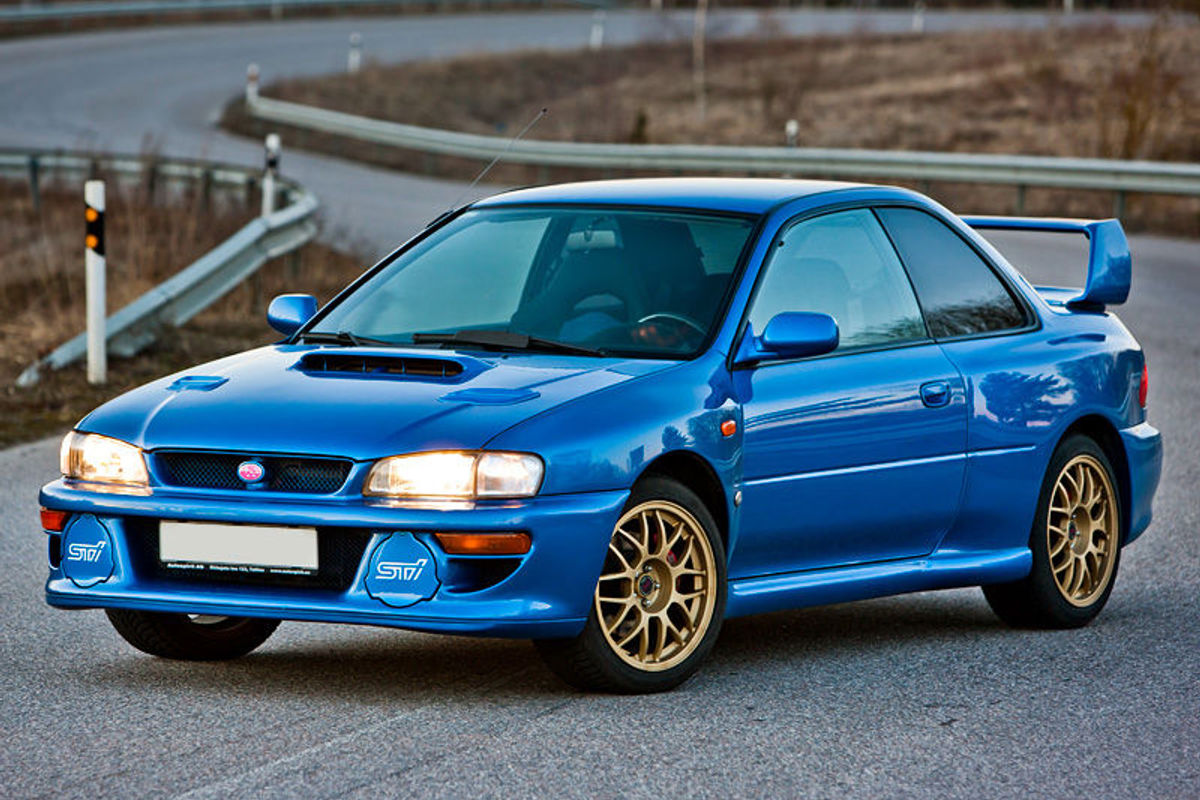
1998 Subaru Impreza 22B
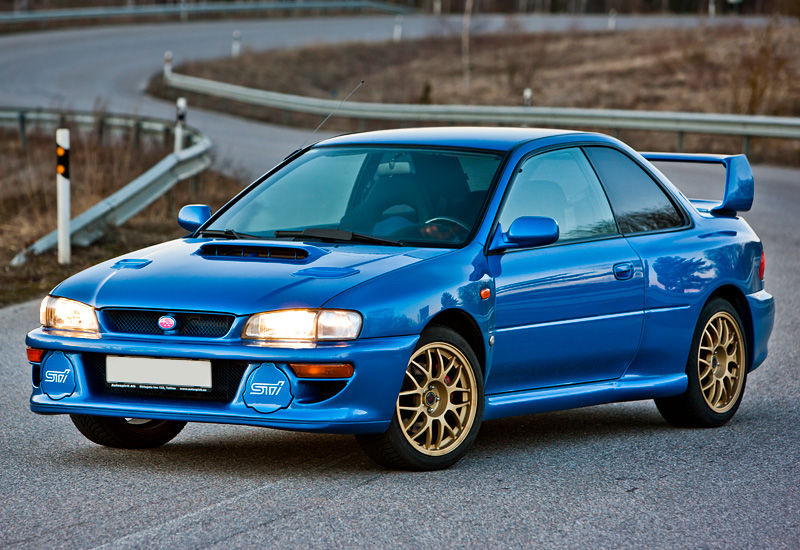
Arguably the most iconic Subaru of all – the 22B.
Mention 22B to any Subaru enthusiasts and their eyes are likely to instantly glaze over as they transcend into a dream-like state. The 22B is arguably the most desired Subaru of all… With its special wider body, the 22B STI was built to celebrate Subaru's 40th anniversary as well as a third consecutive title for Subaru in the FIA World Rally Championship. It was the peak of Subaru's rise to iconic status. It is said that the 400 Japanese units built were sold out in less than two days. It was powered by a 2.2-litre boxer four that officially delivered 206 kW.
2007 Subaru Diesel
Increasingly under pressure to add more fuel-efficient engines to its line-up, Subaru developed the world's first boxer turbodiesel and launched it in 2007. Initially it was fitted to the Outback, but has since also been offered in products such as the Forester world-wide. The 2.0-litre engine developed a good 350 Nm of torque and continues to be highly rated for its smoothness and efficiency.
And now for something very different. The BRZ coupe (co-developed with Toyota's 86) may have recently disappeared from South African pricelists, but it forms a popular base for tuners the world over. However, not many are as extreme as this dragster that belongs to Ali Afshar. Using a 2012 BRZ as a base, he replaced the 2.0-litre boxer with the block from the '90s SVX. And then he added a whole of goodies, including a pair of FP HTA Super 94 turbochargers. The result? More than 1 600HP (around 1 200kW) !
Any views or opinions expressed in this article are solely those of the author and do not represent those of Cars.co.za or its editorial content team.
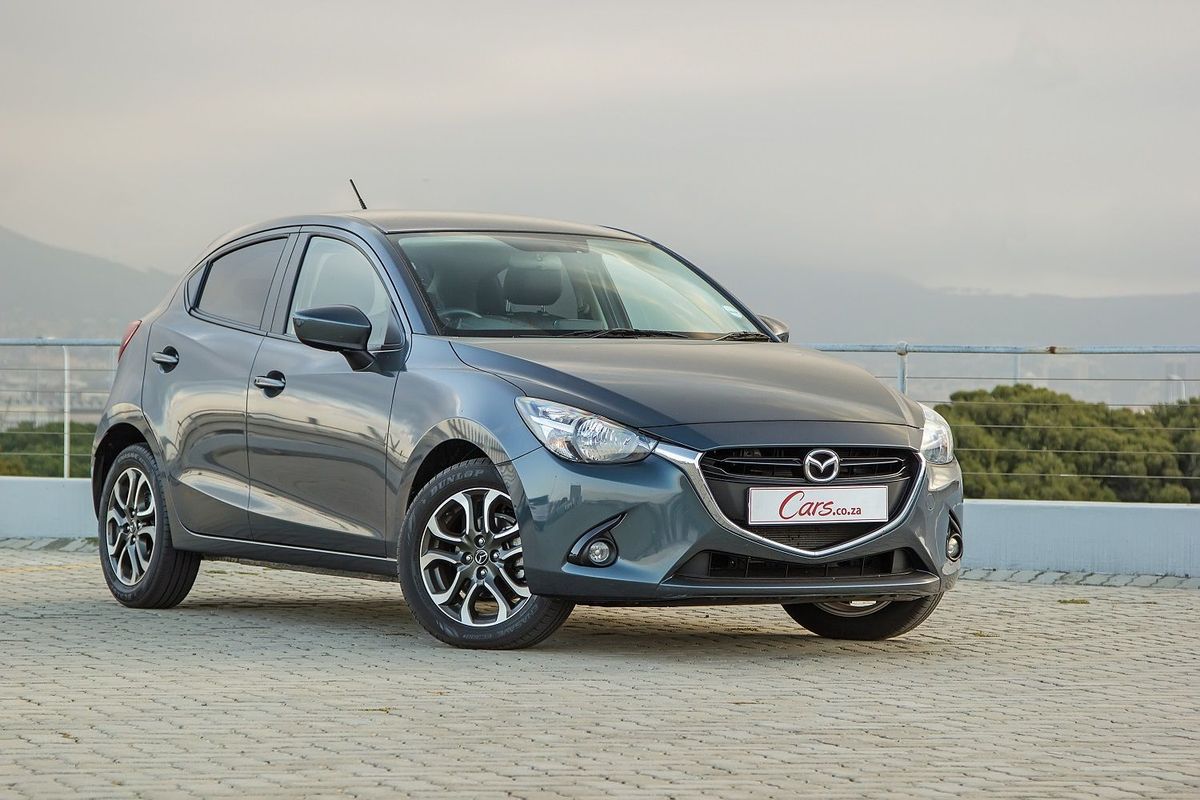
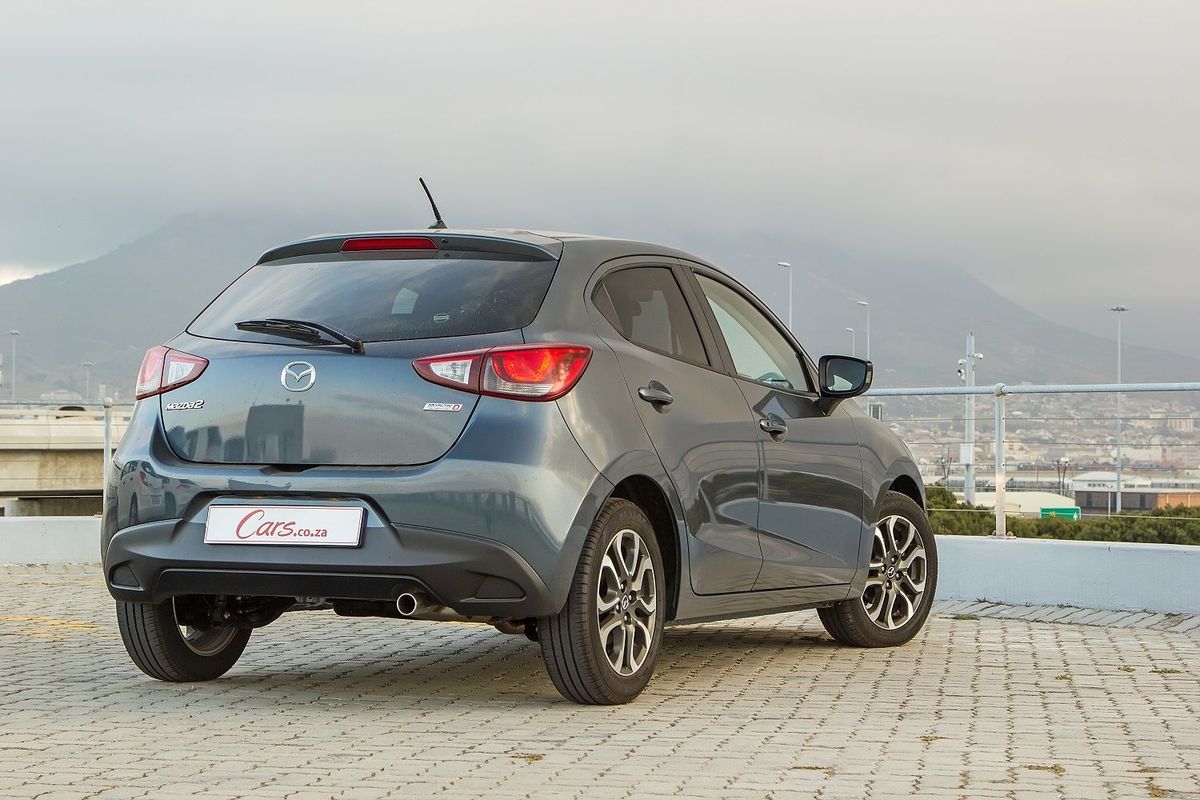
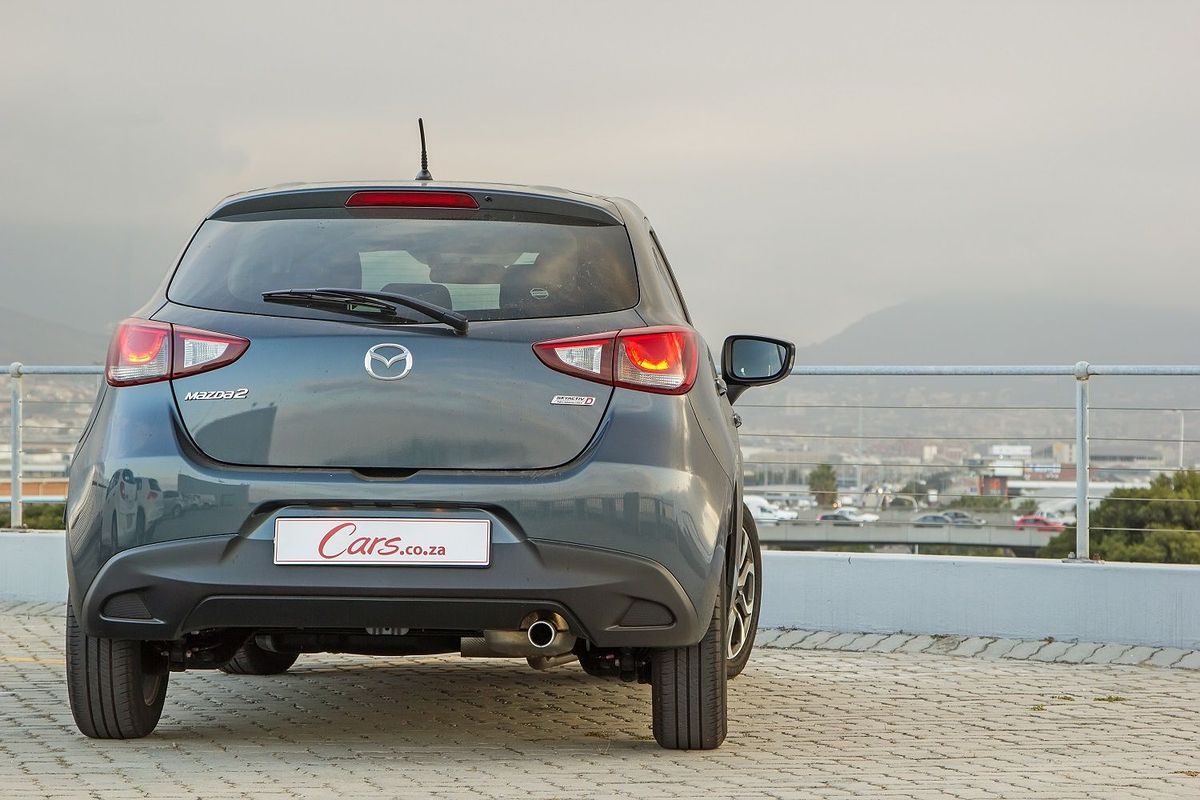
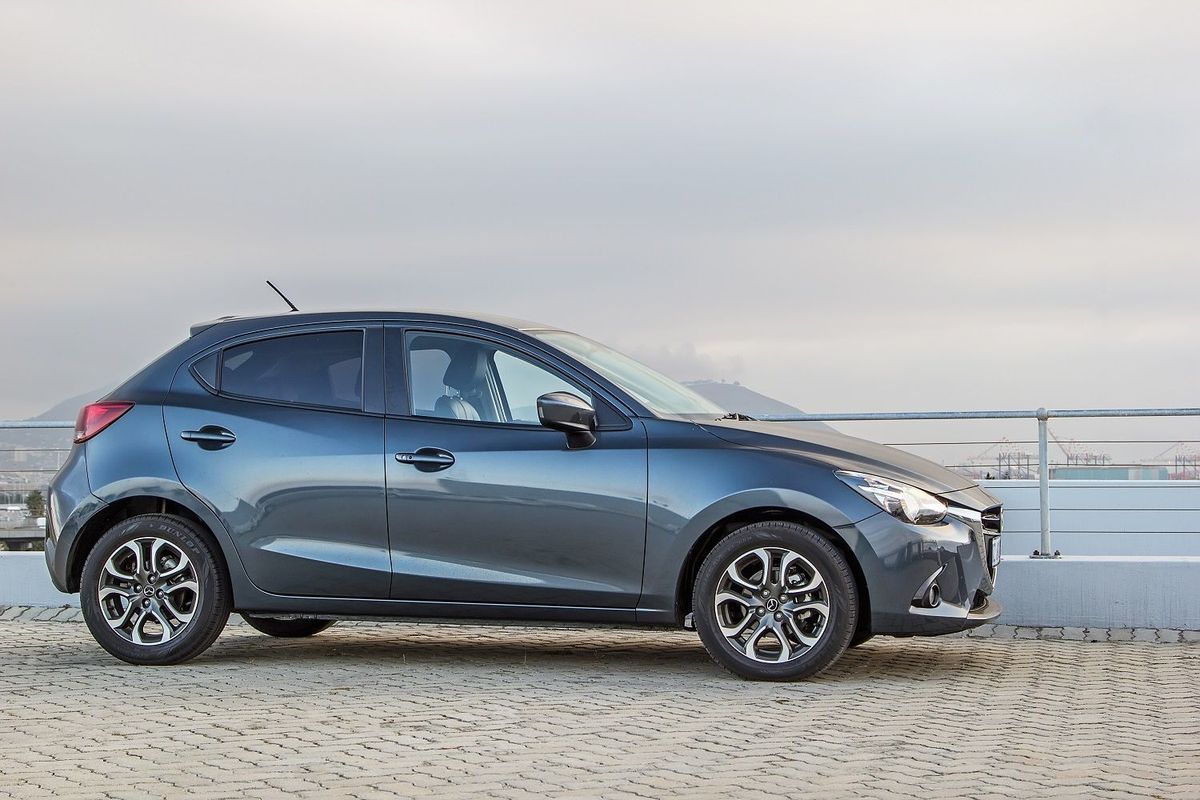
Mazda2 Hazumi (2016) Review
The well-specified Mazda2 Hazumi flagship is the only turbodiesel automatic in the 2016 compact hatchback segment and that status is reflected in its price tag. Should you consider this top-of-the-range model? Read on…
If you are in the market for the range-topping Mazda2 Hazumi, then you should find this review useful!
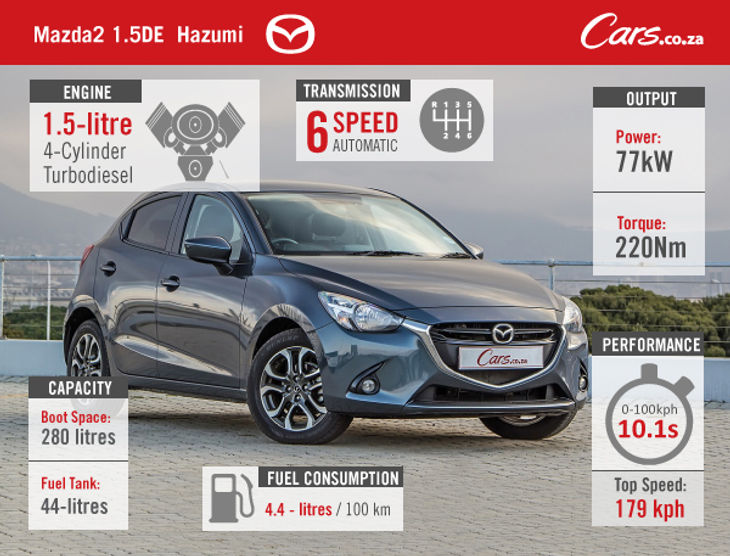
Mazda2 1.5 DE Hazumi Quick Facts
Interested in a Mazda2? Check out our buying advice video:
We like: Specification, build quality, low consumption, slick infotainment system
We don’t like: firmer ride, turbo lag from standstill, only two airbags provided
Alternatives
For better economy: The (manual) Volkswagen Polo 1.4TDI Highline is the closest rival. The Polo has an identical power output but produces fractionally more torque and has a lower claimed consumption figure than the Mazda.
For better value: The (manual) Ford Fiesta 1.5TDCi Trend is considerably cheaper than the Mazda (and Volkswagen), but is down on power, torque and specification.
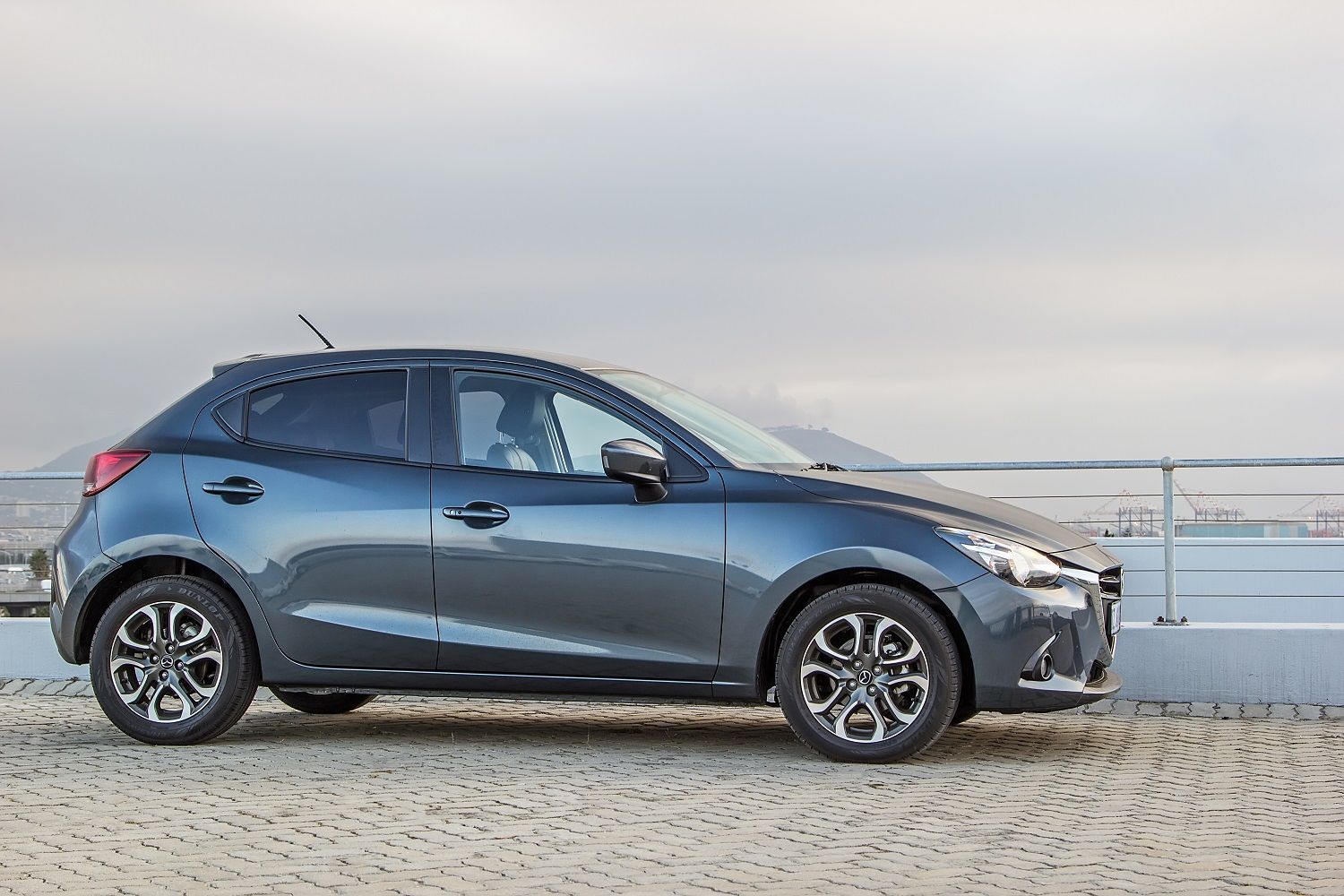
Compact, frugal and fun to drive the Mazda2 Hazumi offers plenty of appeal.
The 1.5-litre four-cylinder turbodiesel engine is impressive. As expected, the engine sounds clattery when you start it up first thing in the morning, but it soon settles down and you don’t hear that typical diesel chatter in the cabin. As far as powerplant refinement is concerned, this one is pretty good.
Let’s talk numbers. The engine, which delivers 77 kW and 220 Nm, drives the front wheels through a six-speed automatic transmission. All the torque is available at 1 500 rpm, so if you’re gentle with the accelerator pedal to avoid the gearbox unnecessarily changing down, the Mazda2 will go about its business without the need for its engine to work hard at all.
What does this mean in the real world? Well, you’re not in for punishment at the pumps. A six-speed automatic ‘box in a vehicle such as this is programmed to change down a gear when the driver accelerates hard. The Mazda2’s power delivery characteristics require a period of driver familiarisation, but when you get that restrained driving style nailed down, the fuel economy on offer is quite startling.
Mazda claims 4.4 L/100 km, which is a difficult, but not impossible, economy figure to achieve. In traffic, we saw an indicated figure of 5.5 L/100 km, but on the open road, we effortlessly got the consumption figure down to 4.5 L/100 km. Drive gently and you’ll see that 44-litre tank emptying after a lengthy 900 km of driving. For the record, because of this derivative’s low (claimed) fuel consumption figure, the 1.5 DE Hazumi is exempt from the government’s CO2 tax.
The front-wheel-driven Mazda2 offers a relaxed and refined drive. Open-road cruising is its strong suit, but the little Mazda is not out of its depth in the ridiculous stop-start highway traffic jams that fill the daily grind. The transmission is happy in both scenarios, but we did notice that the 1.5 DE Hazumi felt a little underpowered at pull aways. Once you’re moving and out of first gear, the power delivery feels decidedly more urgent.
One of this particular Mazda2’s best characteristics is its combination of high torque and a light overall mass. Whether you’re overtaking at 60 kph or 115 kph, the engine has ample grunt on offer. With 220 Nm on tap and a transmission that’s eager to kick down a ratio or two, it can dispatch slower traffic with ease. If you’re in the mood, you can tap the gear selector into manual mode and you’ll be able to change gears by simply knocking the lever up or down.
The ride is on the firm side due to the Mazda’s suspension setup and 16-inch alloy wheels wrapped in relatively low-profile rubber. On smooth tarmac, you’ll be very happy with the smoothness, but the “2” can feel a trifle too stiff over bumpy surfaces compared with a Volkswagen Polo. Still, there is an upside… The firmness translates into excellent agility and body control (should you be the type of driver that appreciates an enthusiastic drive along a twisty road).
Space and Practicality?
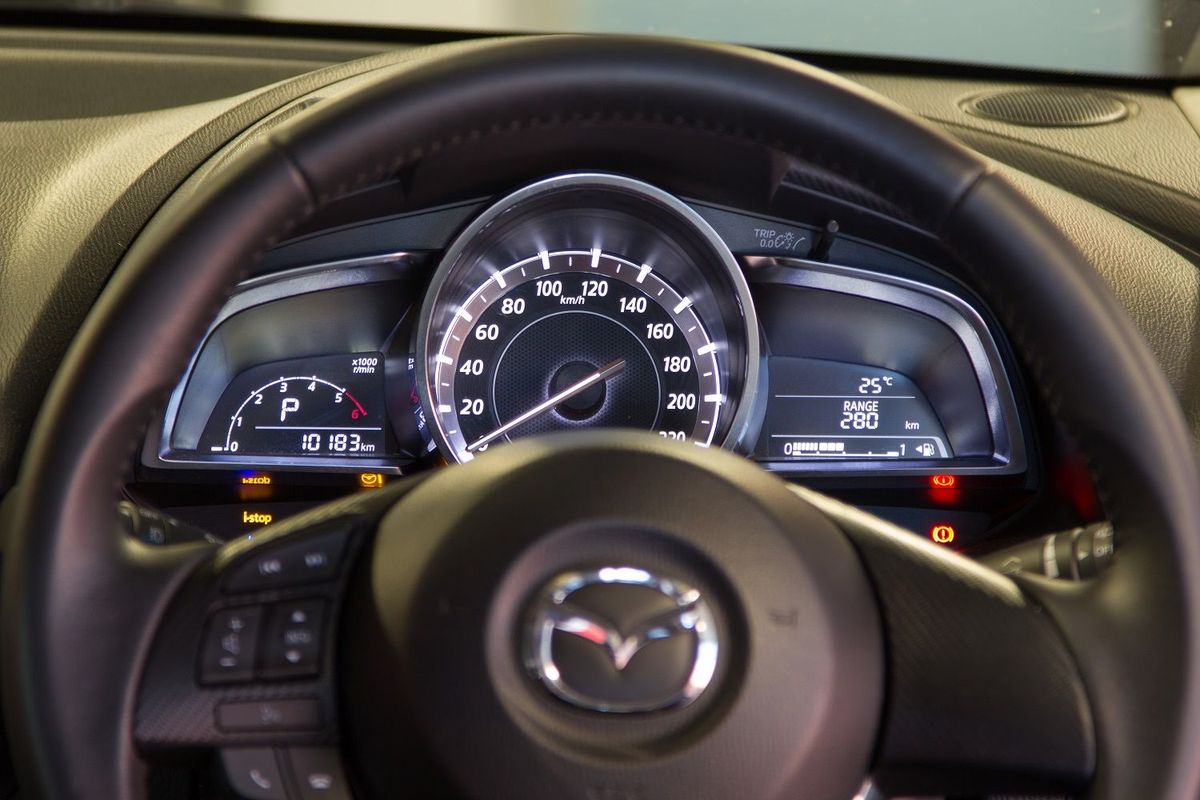
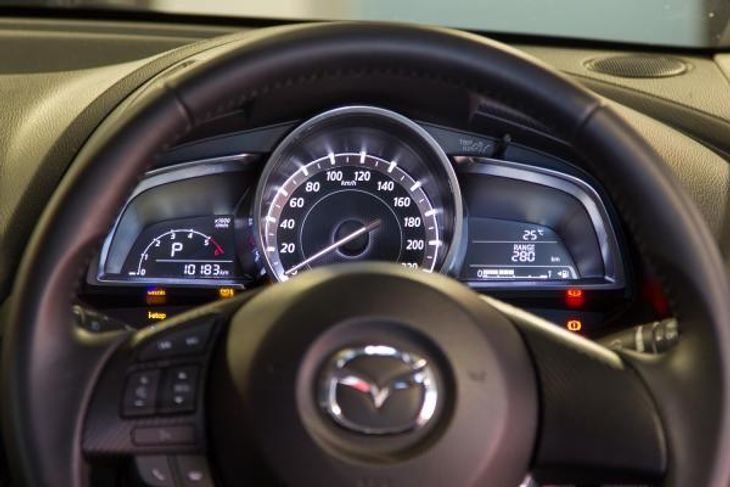
Centre analogue speedometer is flanked by digital rev counter (left) and digital trip computer data (right).
Sit inside the Mazda2 and you’ll likely find the design of the minimalist dashboard quite unconventional – at least at first glance. While most cars have two dials dominating the instrument cluster, the Hazumi has a central speedometer with two digital gauges on either side. The one on the left is the rev counter, while the screen on the right relays trip computer data. These screens are legible during most driving conditions, but less so in bright sunlight.
The entire cabin feels well built and there are premium touches dotted across the facia. The seats in this flagship model are upholstered in cloth and (partial) leather and proved comfortable on long journeys. The driver’s seat is height adjustable, while the steering column is adjustable for rake and reach. The steering wheel features radio controls, trip computer buttons as well as voice command controls.
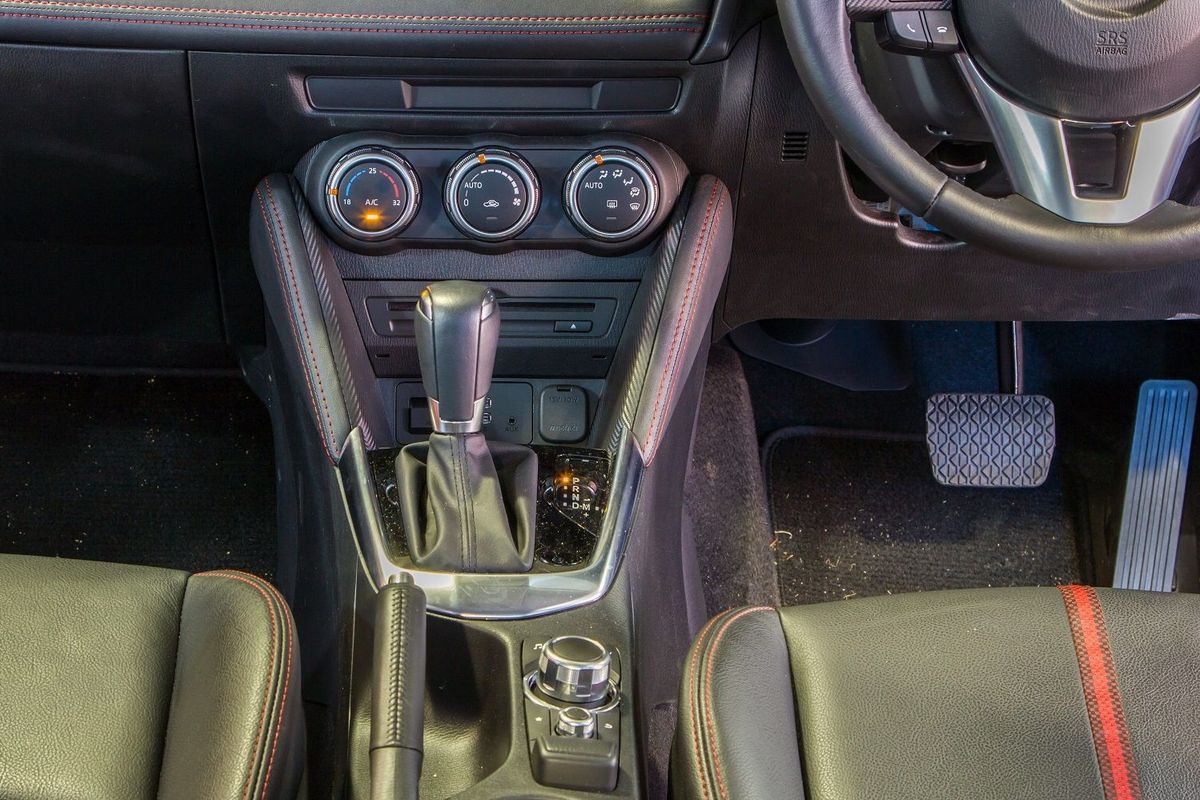
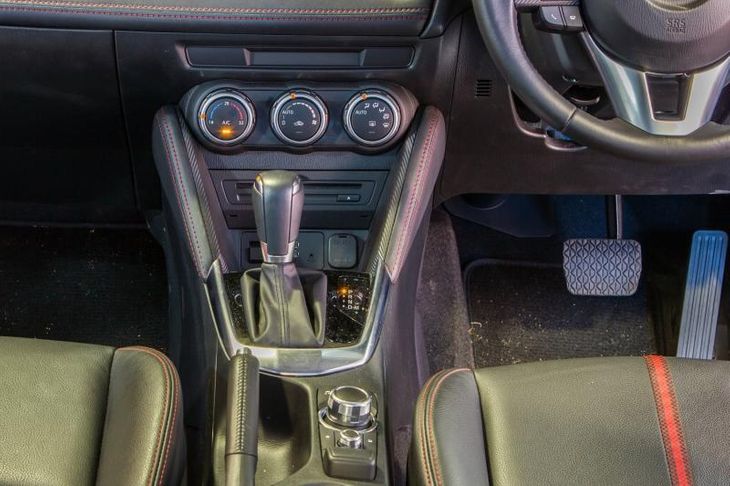
The centrepiece of the cabin is the tablet-like infotainment display. It’s controlled by a rotary selector dial located close to the handbrake. While it’s initially a bit fidgety to use, you soon learn where the buttons are and by the end of the test period, we were able to correctly select the right functions without taking our eyes off the road. It’s a big-car feature that contributes to this little Mazda’s overall premium feel.
The luggage bay offers reasonable space and is on par with its rivals in the segment. Lift up the boot cover and you’ll see there’s a space-saver spare wheel as standard. The rear seats can be folded down to increase luggage space. Speaking of the rear seats, they offer just about enough legroom for small children, but are a tight squeeze for adults.
Standard features?
Given the relatively high asking price, you’d expect the 1.5 DE Hazumi to come with a high level of specification – and it does. Climate control, start/stop technology, dynamic stability control, a pair of SB ports, a CD player, smart infotainment system, keyless access, auto wipers and -headlamps, partial-leather trim as well as satellite navigation are all included. Unfortunately, our unit was missing the satnav’s SD card so we couldn’t use that functionality. Your local Mazda dealer will charge you R5 500 for a new one, so don’t lose it!
While the flagship Hazumi gains stability control as a safety feature, the entire Mazda2 range falls short in the airbag department. Rivals have between four and six airbags, while the Mazda2 can only muster a pair, one each for the driver and passenger.
Given the rather excellent open-road ability, we’re disappointed to see that cruise control isn’t available for the Mazda2, even as an option.
Minimalist interior with smart infotainment system. Controls are initially fiddly, but over time you’ll get used to them.
The Mazda2 range starts at R198 500, with this Hazumi costing R278 900. You get a three-year unlimited kilometre warranty with it, and there’s a three-year unlimited kilometre service plan with 15 000 km service intervals.
Being the only diesel automatic in the segment makes the Mazda2 Hazumi a stand-out offering. The derivative’s build quality, refinement and specification are definite positives, and the drive is generally very good indeed. The cabin feels modern and sturdy; the materials used are upmarket. Despite our test unit having 10 000 km on the clock, there were no rattles or squeaks whatsoever, which is a testament to the excellent build quality. The automatic transmission offers relaxed driving and the fuel economy returns certainly help offset the initial price.
So, in conclusion, if you want this particular combination of talents, nearly R280k is the price you’d have to pay. We hasten to add, however, that you’d be getting a very good little car.
Frequently Asked Questions
Is the Mazda2 still sold new in South Africa?
Yes, the Mazda2 is still sold new in South Africa. The facelifted model was launched locally in 2023 with an updated design and a streamlined model lineup.
What engine is in the South African Mazda2?
All models of the Mazda2 in South Africa are powered by a 1.5-litre, naturally aspirated petrol engine that delivers 85 kW and 148 Nm of torque. This engine is paired with either a 6-speed manual or a 6-speed automatic transmission.
What is the safety rating of the Mazda2?
The Mazda2 has a 4-star Global NCAP safety rating for adult occupant protection and a 3-star rating for child occupant protection. The car comes with standard safety features like driver and passenger airbags, ABS with EBD, and stability control.
What are the main competitors of the Mazda2 in South Africa?
The Mazda2 competes in the B-segment hatchback market against rivals such as the Volkswagen Polo, Toyota Yaris, and Suzuki Swift. It is often praised for its upmarket feel and stylish design.
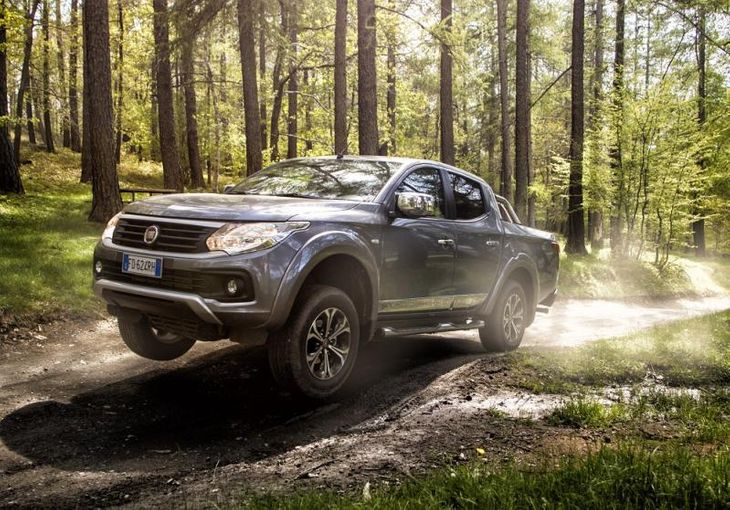
We went to Italy to drive the new Fiat double-cab bakkie. It’s called the Fullback and is due in South Africa imminently. Here are five things you need to know about it.
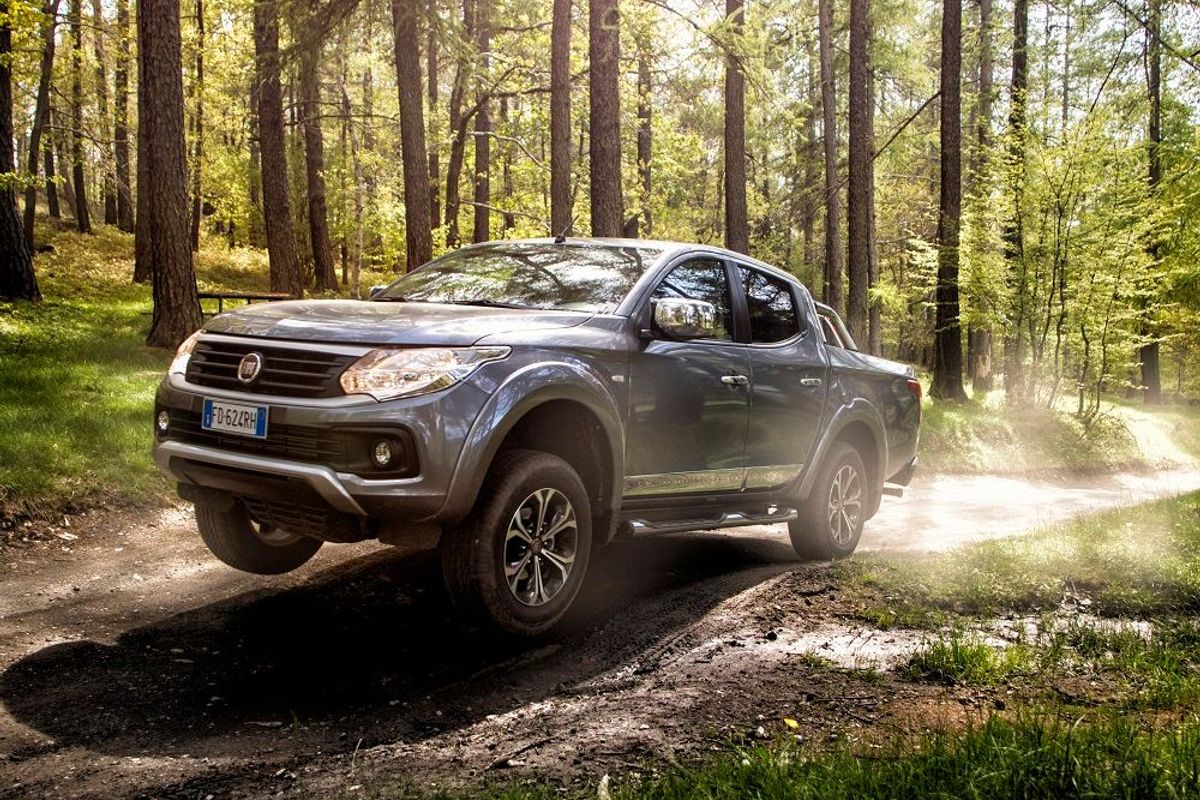
It is made in Thailand, has a bold Fiat badge on the snout and rear, but underneath it’s actually a (next-generation) Mitsubishi Triton. This bodes well for the Fiat Fullback because it's based on proven mechanicals; Mitsubishi's extensive Dakar off-road racing experience and local market success count for a lot…
What will South Africa get?
Fiat SA has an interesting strategy for 2016/2017: bring everything in and see what sells. South Africa will receive single- and double-cab models, 4×2 and 4×4, manual and automatic transmissions as well as a choice of either petrol or diesel powerplants. For the bakkie customisation aficionados there will be a complete range of Mopar accessories which will give your Fullback that hardcore look. Think of Mopar as the Fiat Chrysler group’s rival to Ford’s Wildtrak.
How are the engines?
As mentioned, there are two engines available. The first is a 2.4-litre petrol motor with 97 kW and 202 Nm, while the second is a 2.5-litre turbodiesel with various outputs available. You can choose from 94 kW, 100 kW and 131 kW, while torque varies between 200 Nm and 400 Nm. We drove the petrol motor and despite being three-up with about 500kg of cargo in the load bay, performance was eager and willing. No shortage of urge!
Can it go off road?
While we didn’t sample the off-road prowess of the Fiat Fullback in Italy, the specification document and marketing material suggest it has the basics properly covered. The 4×4 arsenal includes 205 mm of ground clearance, a departure/approach angle of 25 and 30 degrees respectively, and finally a transfer case that has two-wheel drive, 4H and 4L range. Manual Fullbacks get a second gearknob, while automatic versions have a rotary switch. There’s also a rear differential lock.
Is it worth taking a test drive and considering it for purchase?
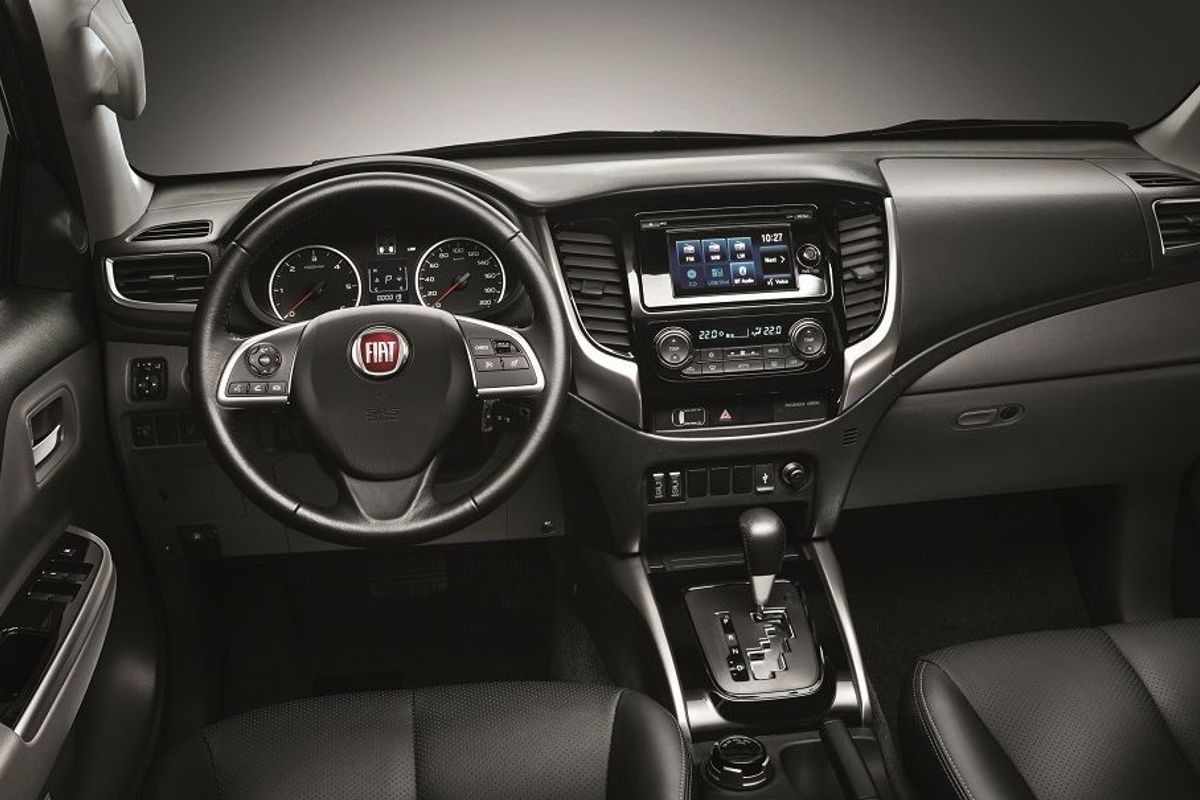
It’s not likely to steal sales from the Toyota Hilux and Ford Ranger; good luck trying to convince fans of those brands to switch anyway. The Fullback feels refreshingly simple and old-school, and there’s a sense that it’s a solid proposition. Coupled with some surprisingly good highway manners and low cabin noise, the newcomer will present an interesting proposition at the more affordable end of the double-cab bakkie market.
Check out a video from the launch courtesy of Fiat
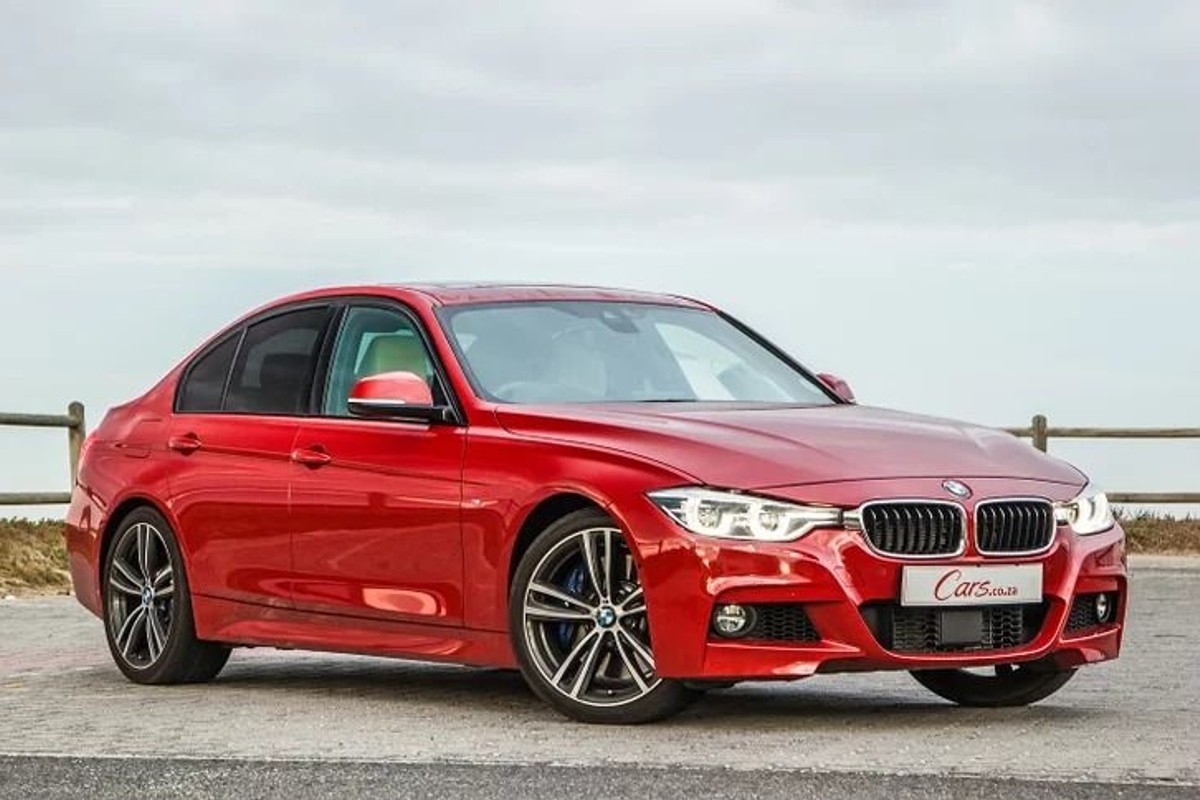
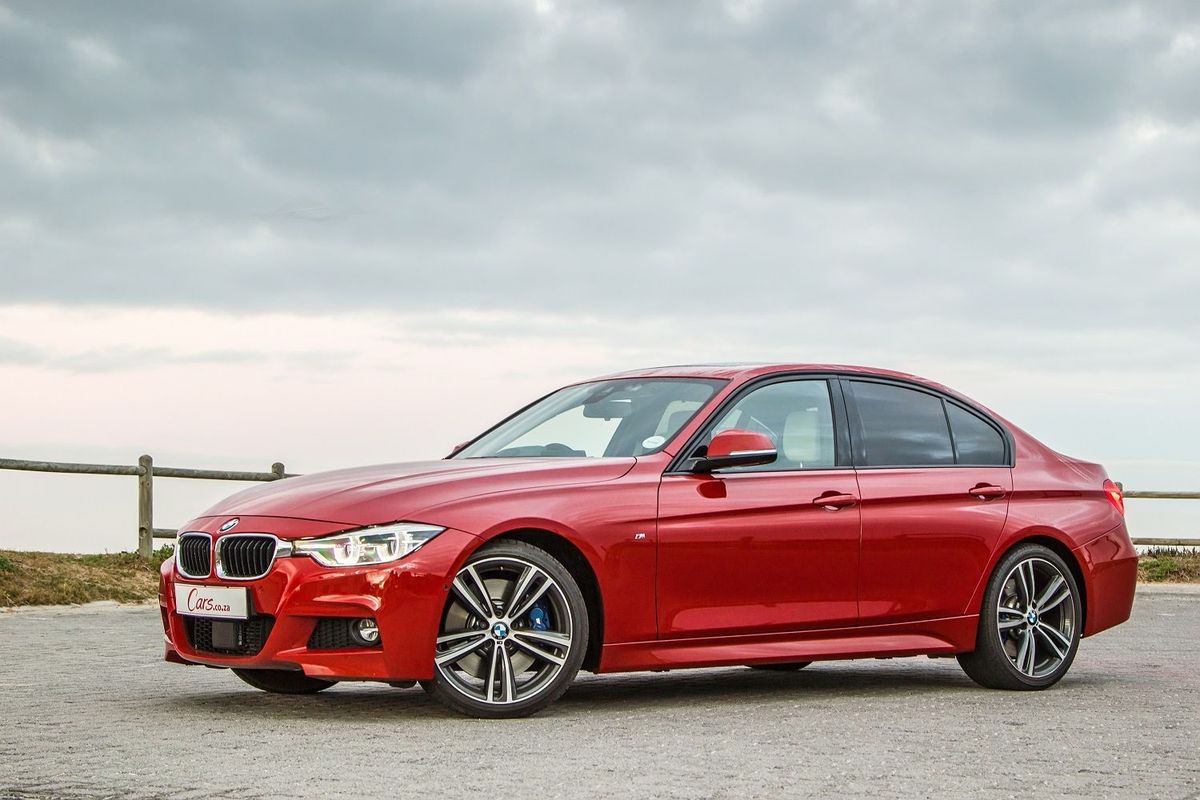
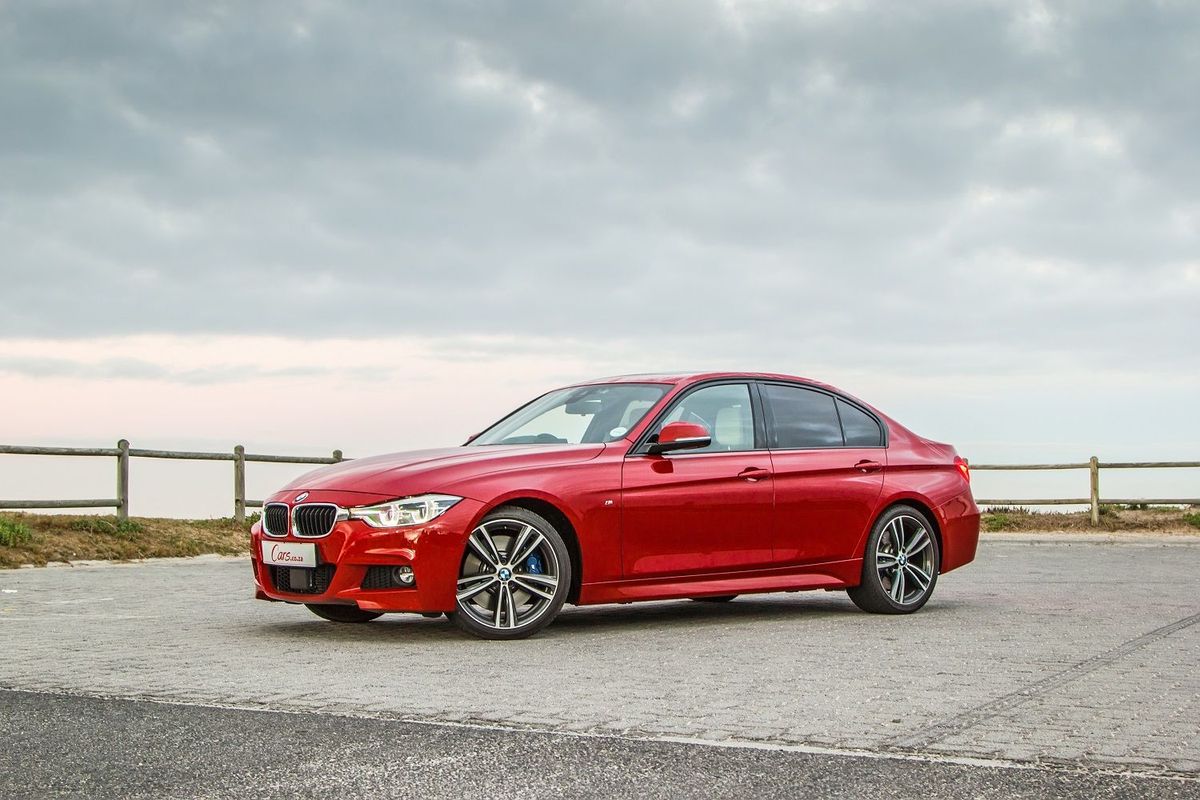
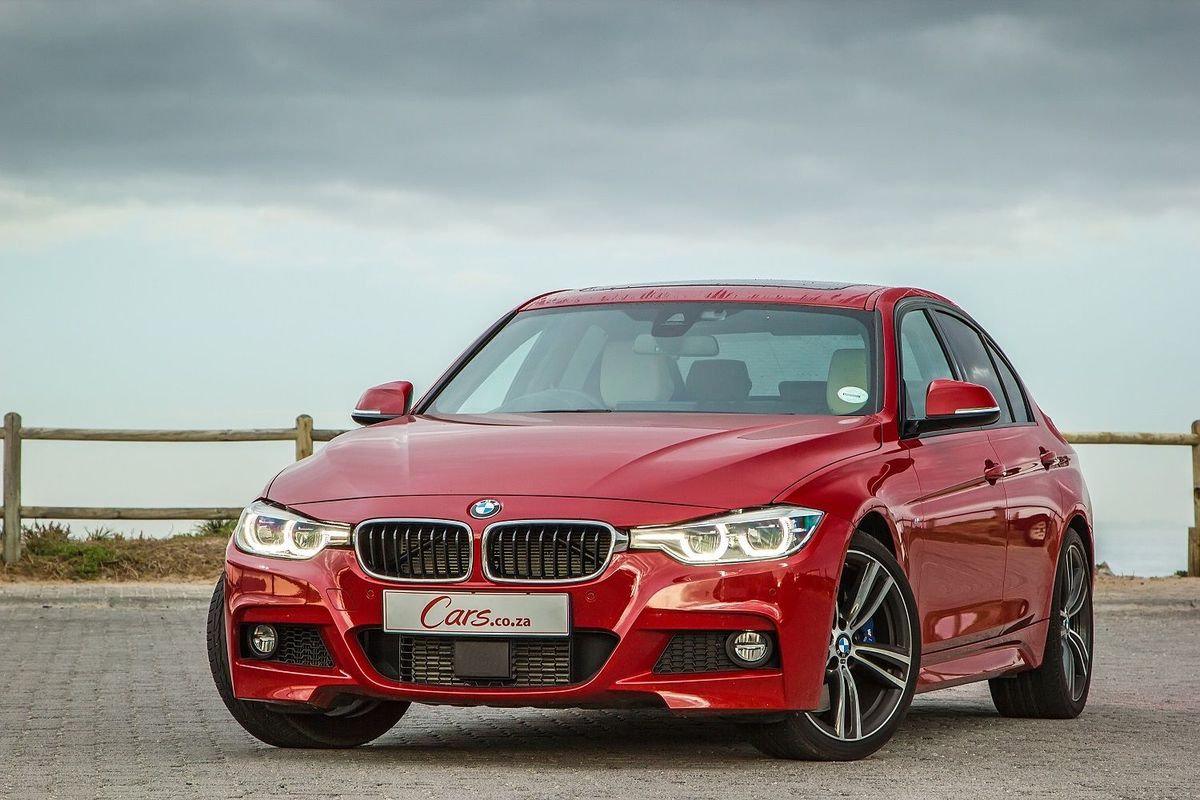
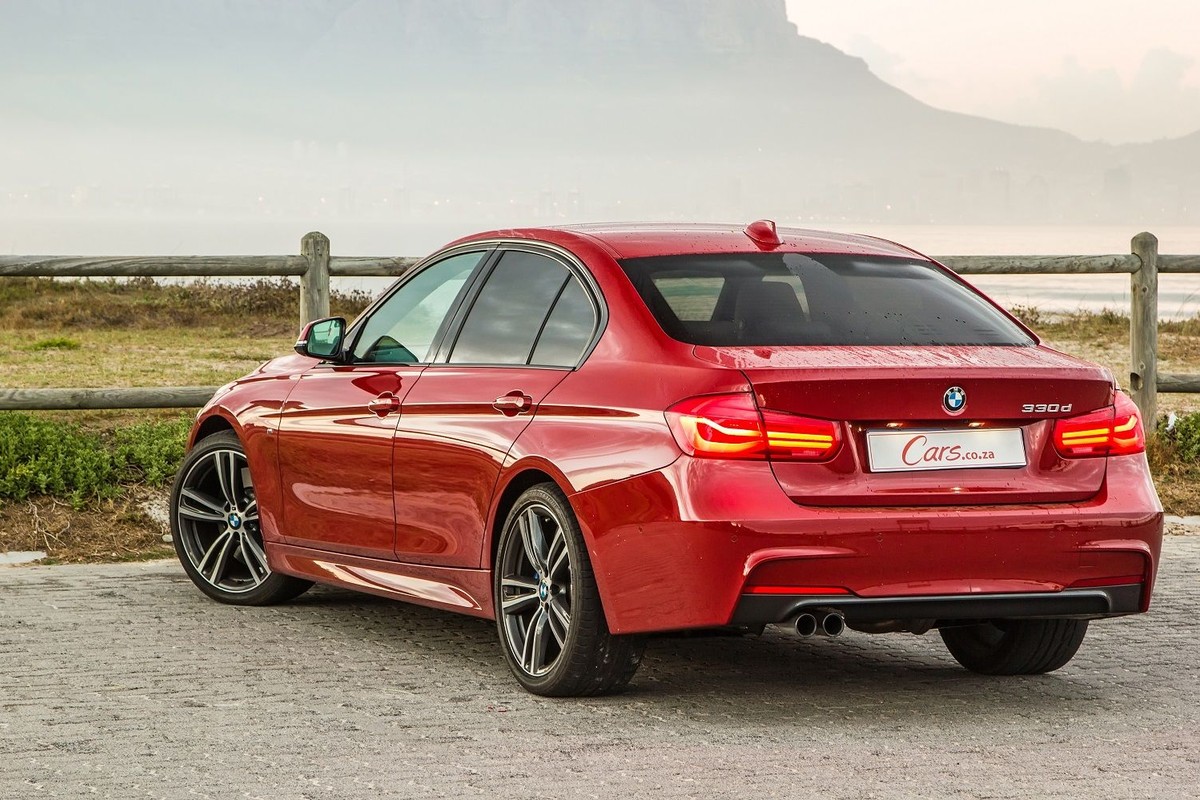
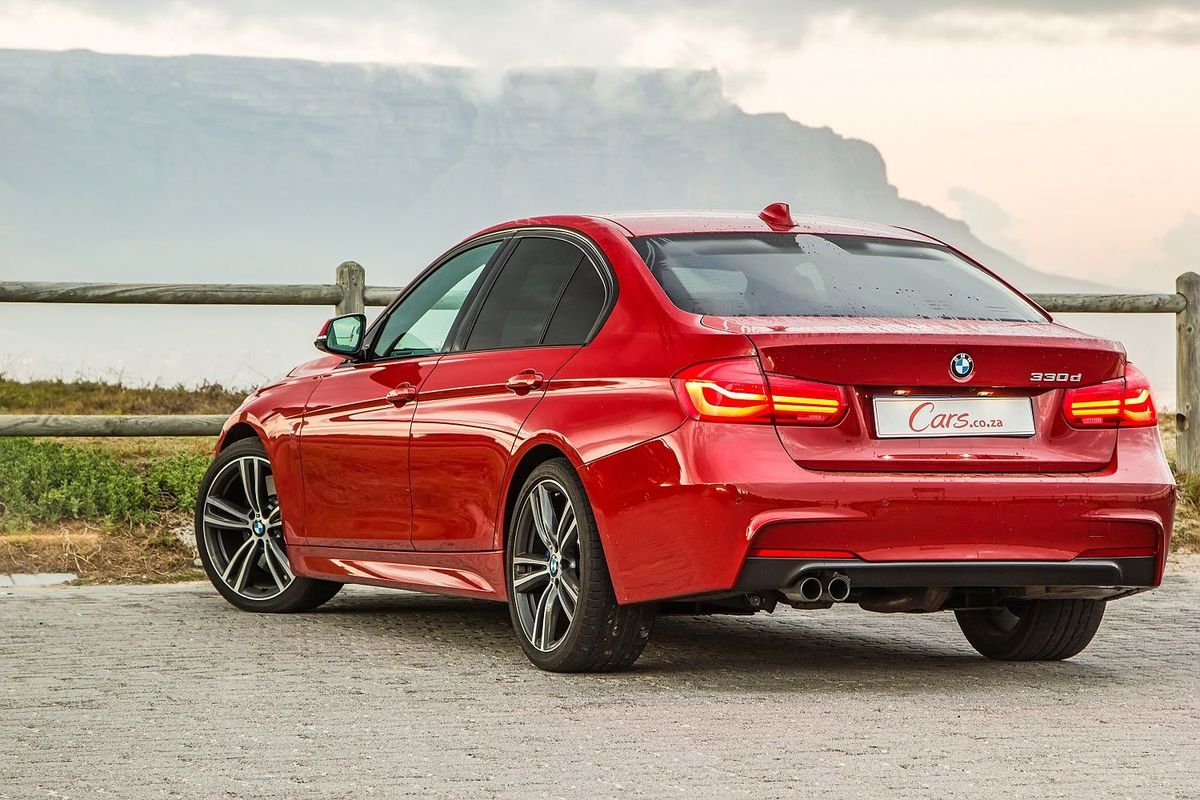
Does the BMW 330d strike the perfect balance between fuel efficiency and a thrilling driving experience? And, if so, could it be the best 3 Series derivative? We (swiftly) dispatched 1 000 km in a 330d to find out for ourselves.
We like: very tractable motor, good fuel efficiency – excellent long-distance sedan
We don’t like: complexity of turbodiesel motor adds to asking price, long options list
Alternatives
For something different: Volvo S60 D5 R-Design – even though the S60 is no longer new, the D5 offers a good blend of luxury, performance and efficiency and looks very purposeful in R-Design attire. Not in the same league as the 330d performance-wise, however.
If you prefer petrol power: Infiniti Q50 S Hybrid – the Q50's sporty credentials are not fully proven, but at least it looks like a head-turning sports sedan and, when its electric motor and 3.5-litre V6 combine their total outputs, the Hybrid performs eagerly. Well-specced too.
Big turbodiesels are rare
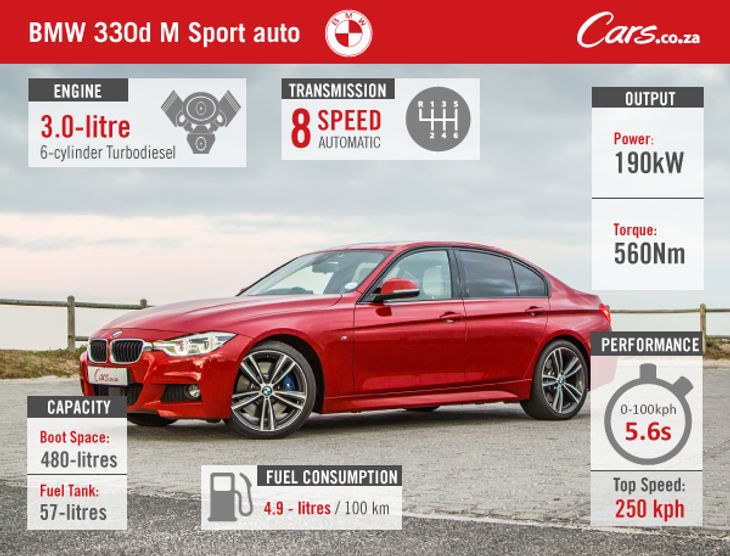
Whereas the upper end of the business class sedan market used to be dominated by 6-cylinder motors, the 330d, with a 3.0-litre straight six turbodiesel motor under its bonnet, is now the odd one out – its direct rivals have 2.0-litre 4-cylinder motors. Nonetheless, at the 330d's price point, a performance-oriented turbodiesel derivative is particularly appealing when you factor in the fuel economy advantage it offers over a similar-capacity turbopetrol engine. Bear in mind that the car is reported to have a 5.6 second 0-100 kph time and an average claimed fuel consumption of just 4.9 L/100 km!
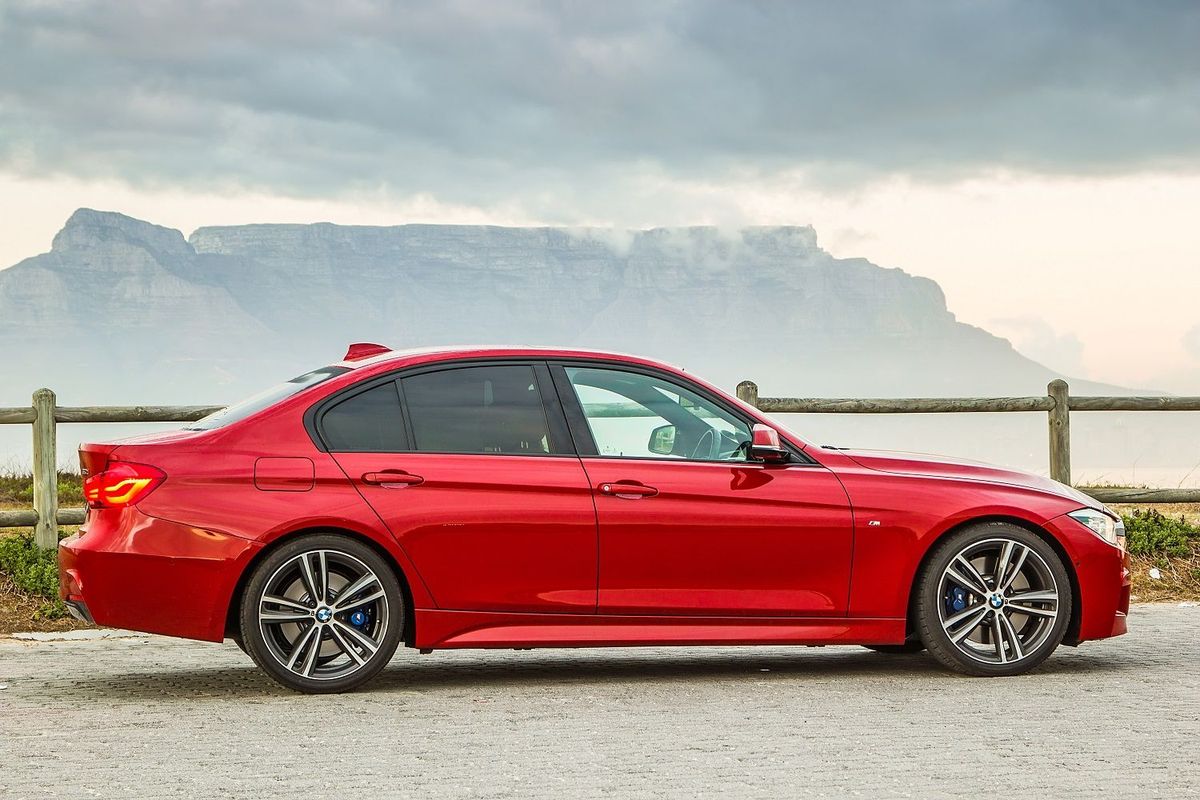
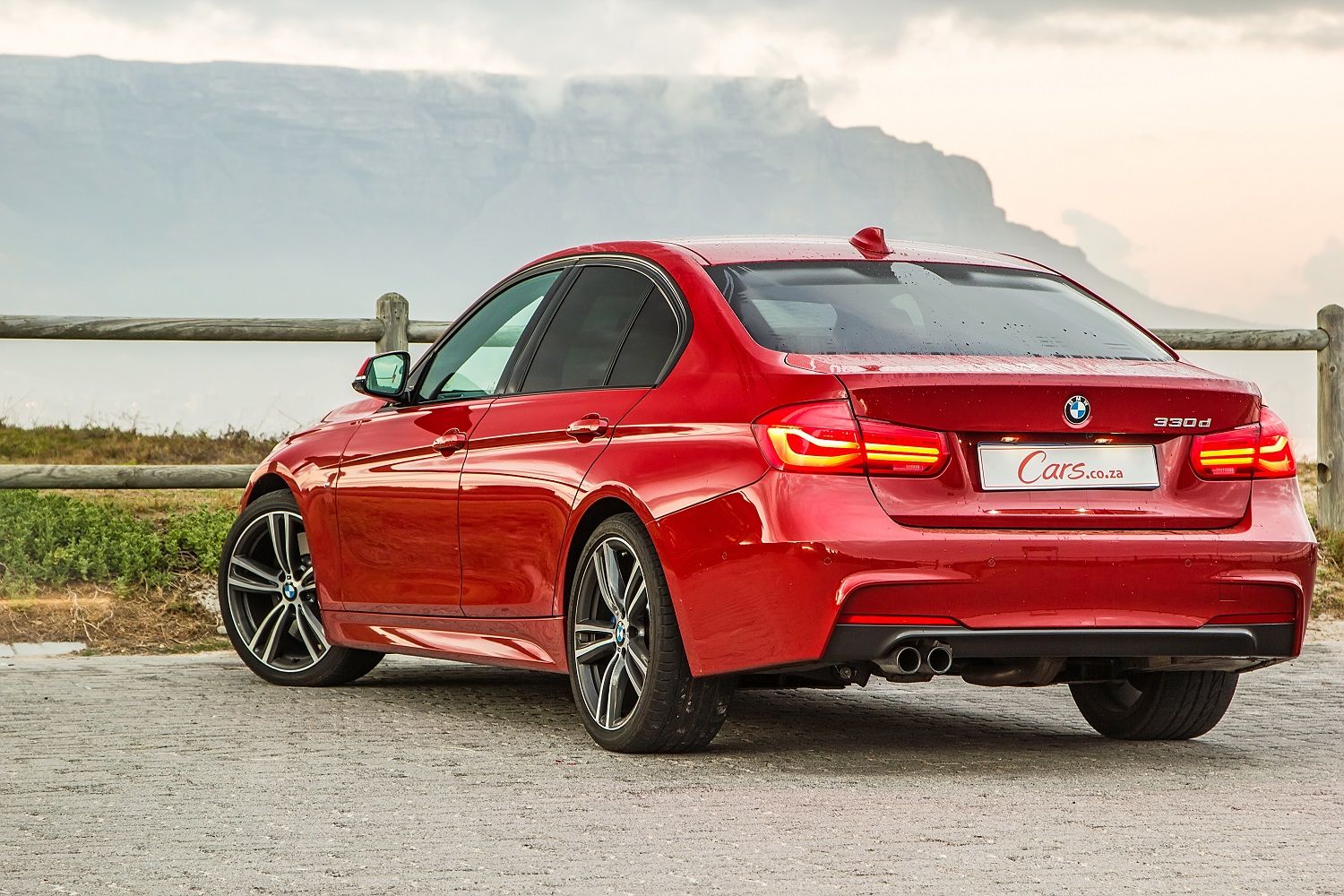
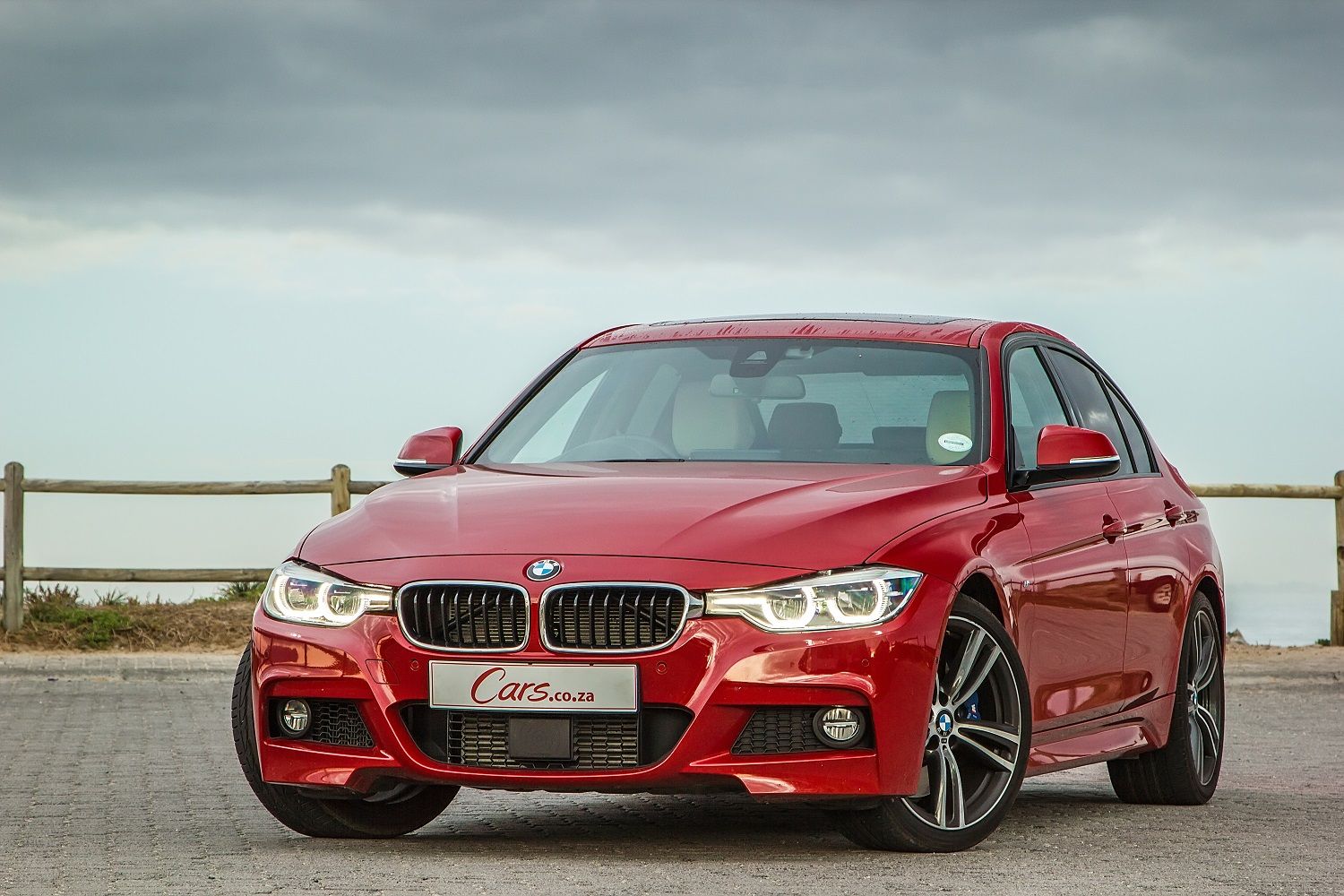
Low-profile alloy rims, plus sportier side skirts and bumpers are clues to the 330d's M Sport body kit.
How does it fare in terms of?
Engine performance
The 330d's straight-6 turbodiesel churns out 190 kW and 560 Nm; the torque delivery is nothing short of relentless. It's a joy to perform overtaking manoeuvres with the Bimmer, as mere twitches of your foot on the throttle pedal result in instantaneous responses from the engine. There’s hardly ever a need to induce kickdowns either, because as maximum torque is delivered from 1 500 to 3 000 rpm (most of the diesel’s available rev range), you never feel frustrated sitting behind slower road users – you can whip past them in no time at all. What's more, there’s almost no distinguishable diesel clatter from the engine. Granted, it's a tad noisy when starting from cold, but once the motor’s up to temperature it feels smooth and has a bit of a throaty growl to it.
It’s unlikely you’ll match the claimed consumption figure (4.9 L/100 km) but, our best return (7.5 L/100 km) should be easy to attain with regularity. If you do a lot of long distance travelling and want reasonable fuel consumption without needing to compromise in terms of performance, then this is the perfect engine.
Rectangular panel under the number plate houses the equipment employed by the active cruise control system.
Handling
The BMW’s class-leading in this department. We had plenty of time to wind the 330d through corners during a trip over the Cape mountains of Stellenbosch and Paarl. In the faster corners, the 3 Series changes direction with precision and confidence. It urges you to push on and test its limits, which, with traction control on, is a cinch. In the tighter, slower corners, the torque surge of the turbodiesel engine will challenge the rear tyres' traction limits but, if you're inclined to induce power slides, the short rev range of the diesel means you can't hold the slide for long. Still, it's fun when the back steps out momentarily.
For those uninterested in outright performance, the 330d is still well-suited to the everyday commute. It’s comfortable in traffic, especially with the eight-speed automatic gearbox doing all the work for you and despite riding on large wheels and thin run-flat rubber, the 330d suffers less in terms of road noise and poor bump absorption than we expected. Some BMWs suffer due to their uncompromising run-flat tyres, but the 330d's ride/handling balance is good.
Interior refinement
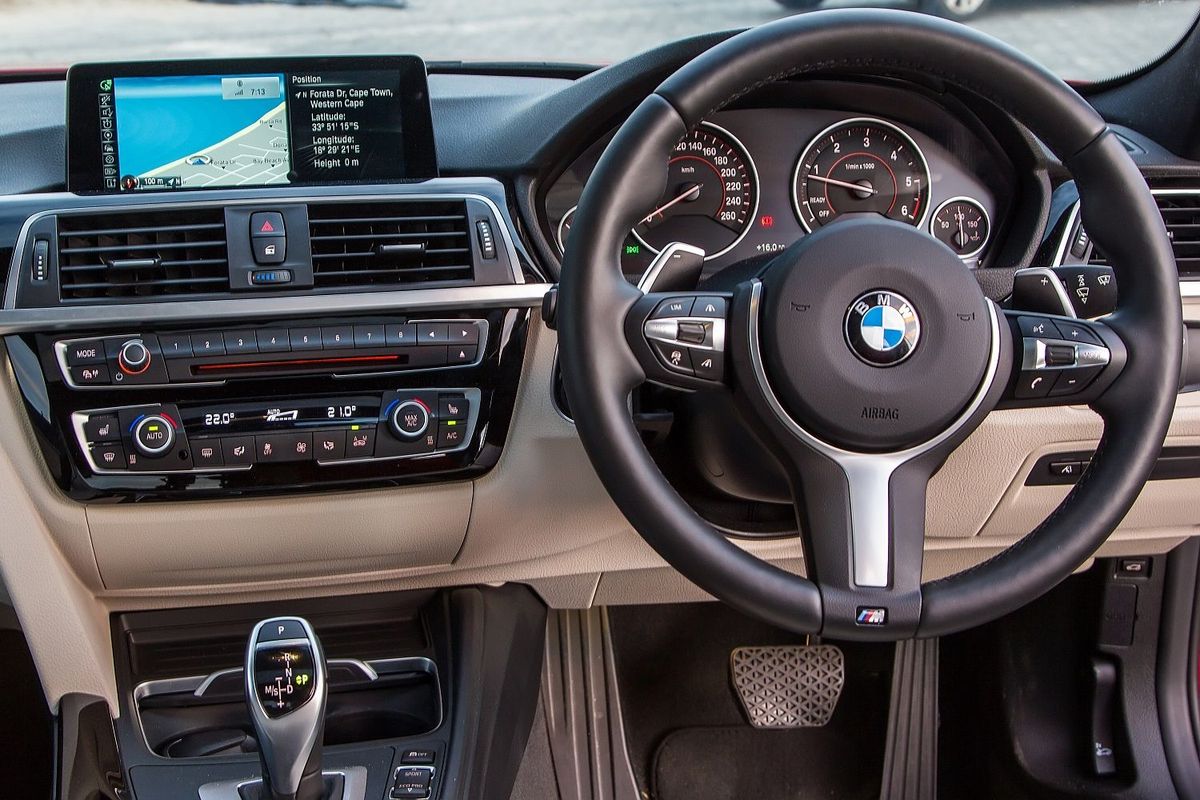
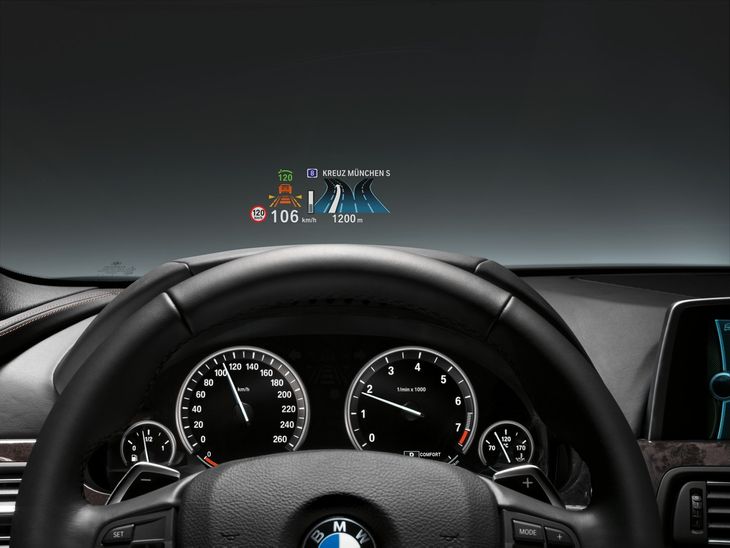
The BMW 330d's cabin is much like that of every other 3 Series derivative – not as exciting to look at as the Mercedes C-Class', but extremely well built and not lacking in features – provided you’re willing to tick a few options. The head-up display on this model was crisp and also relayed upcoming navigation directions. Other worthwhile options fitted to this model were: the reverse-view camera with park distance control, sports seats that are most supportive, active cruise control and the navigation system that incorporates real-time traffic updates. It's difficult not to get carried away with all the options available…
Full-colour head-up display incorporates directions from the navigation system and speed limit information.
Even if you aren’t in the driving seat, you’re still cossetted by supple leather upholstery and the electric seats (for the driver and front passenger) allow their occupants to attain perfectly comfy positions for those long-haul drives to the countryside. Rear passengers are afforded good legroom too and the seats are shapelier than a mere bench in the back row. The boot, measuring 480 litres, is reasonably capacious. Ours came fitted with an elasticated cargo net to stop items from rolling around. Also, it had neat shopping bag hooks at the corners; features that we are seeing more regularly on recent new models.
Pricing
A standard 330d M Sport Auto is priced at R650 926 (May 2016), including CO2 tax and a 5-year/100 000 km maintenance plan.
If its lofty price tag is not a deterrent, the 330d is probably the best non-M 3 Series you can buy – its driving experience certainly suggests so. There’s ample power on tap, overtaking is a breeze and it’s an impressively comfortable kilometre eater. It’s not afraid to show off its dynamic prowess, although a petrol-engined sibling would arguably be more suited to that sort of driving. All of this ability, in a package that will easily return 7.5 L/100 km seems like a well-balanced prospect. It doesn’t have the badge appeal of a 340i or 330i but, as a bit of a covert performance car, it proves a turbodiesel can be frugal and fun.
BMW 330d – quick specs
Watch BMW 3 Series vs New Audi A4 comparative video