Volkswagen South Africa has bolstered its popular Up! range with the addition of new 5-door derivatives.
The Volkswagen Up! has only been available in South Africa in 3-door guise, but that has all changed with the introduction of new 5-door derivatives to bolster the Wolfsburg-based firm's local lineup. The new Up! range still incorporates 3-door variants, but now includes 5-door Take Up!, Move Up!, Cross Up! and Colour Up! versions. The Club Up! is now the only derivative in the range that’s offered exclusively in 3-door configuration.
New models to the Up! range include the Cross Up! crossover that’s fitted with the familiar 1.0-litre 3-cylinder engine that powers the entire range. This engine offers 55 kW and 95 Nm of torque and is mated with a 5-speed manual transmission. Fuel consumption for the Cross Up! is rated at 4.7 L/100 km.
In addition to the specification offered on the Move Up!, the Cross Up! has 16-inch Cross alloy wheels, light silver housings for the heated side mirrors, a leather-covered steering wheel, black protective side mouldings for the wheel arches, sills and doors, silver anodized roof rails and a colour-coded dashboard insert.
Meanwhile, the Colour Up! offers added kerb appeal with two contrasting colour combinations: Sandstorm Yellow and Fortana Red. In addition to colour-coded (19-inch) rims and mirror housings (in either Sandstorm or Fortana), height-adjustable driver and passenger seat, special edition Colour Up! stickers on its sides, as well as fabric seat upholstery with "Dots" pattern are standard.
Apart from these new additions to the local Up! range, the facelifted Up! is due to arrive in South Africa early next year with a host of exterior and interior improvements. The big news for the facelifted Up!, however, is that it will feature a new 1.0-litre 3-cylinder engine that will produce more power (at 66 kW) and more torque (at 160 Nm). Not bad for a small capacity engine! Fuel consumption for the facelifted Up! is said to be a respectable 4.6 L/100 km.
The Greatest BMWs Ever (from a South African point of view)
BMW (Bayerishe Motoren Werke) recently celebrated its 100th anniversary and although it didn’t start out as a car manufacturer – it focused on aircraft engines first – the firm has blossomed into one of the most iconic automotive brands on the planet. Incidentally, BMW only started making cars in 1928, having started motorcycle manufacturing earlier (in 1923).
Since the anniversary, many “Best BMWs Ever” lists have been compiled, but many of the brand’s truly iconic vehicles, such as the 328, 507 and E30 M3 played comparatively small roles in defining the brand in the South African context. Which got me thinking… which BMWs were most significant from a South African perspective? Here follows my entirely subjective list, in no particular order.
Photographs were hard to find, so if I have inadvertently used a copyrighted image, let me know.
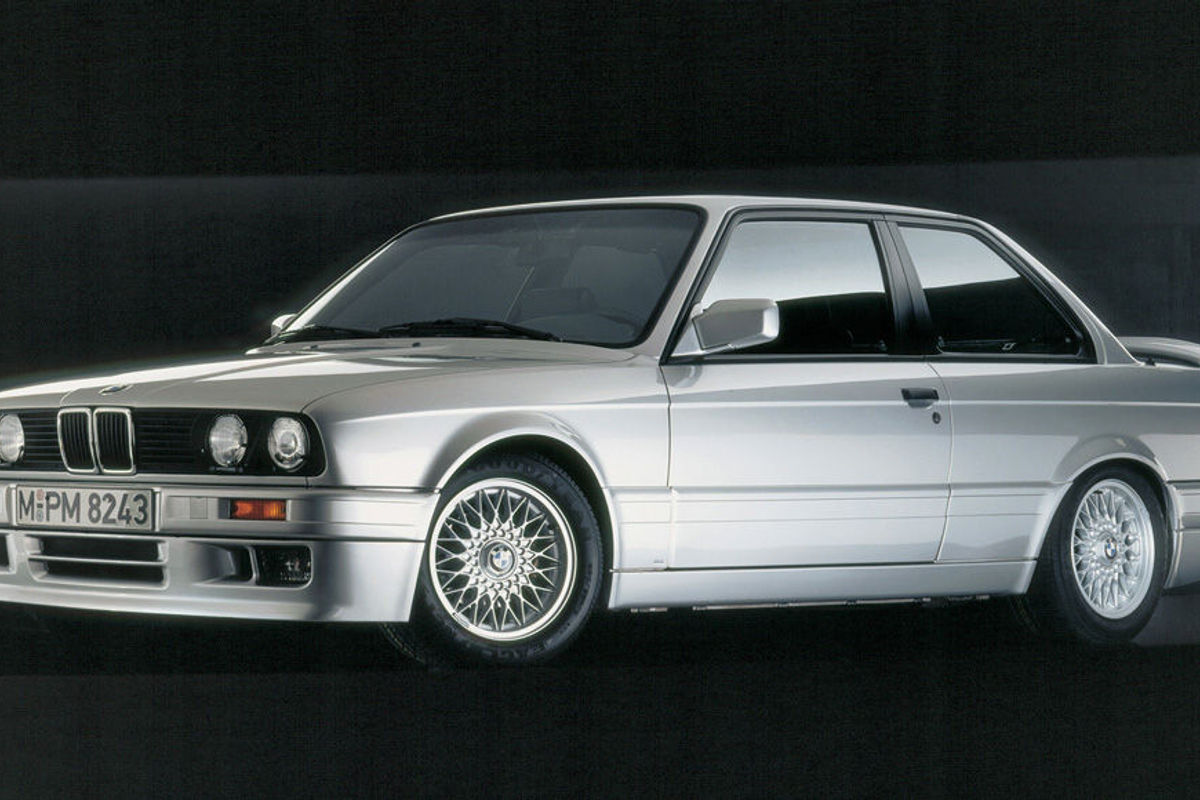
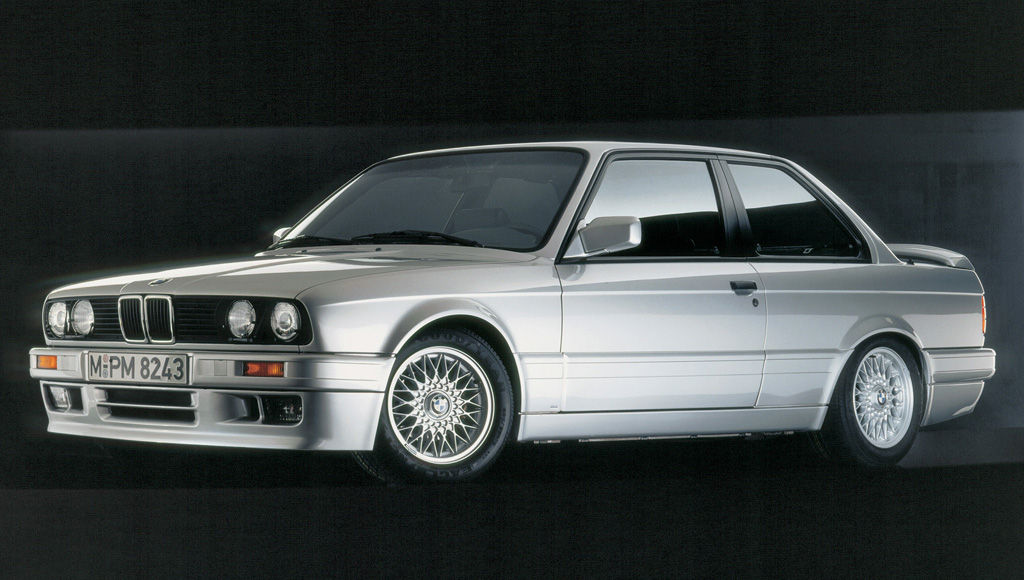
BMW E30 325iS
Cosmetically similar, European specification 325i Sport shown.
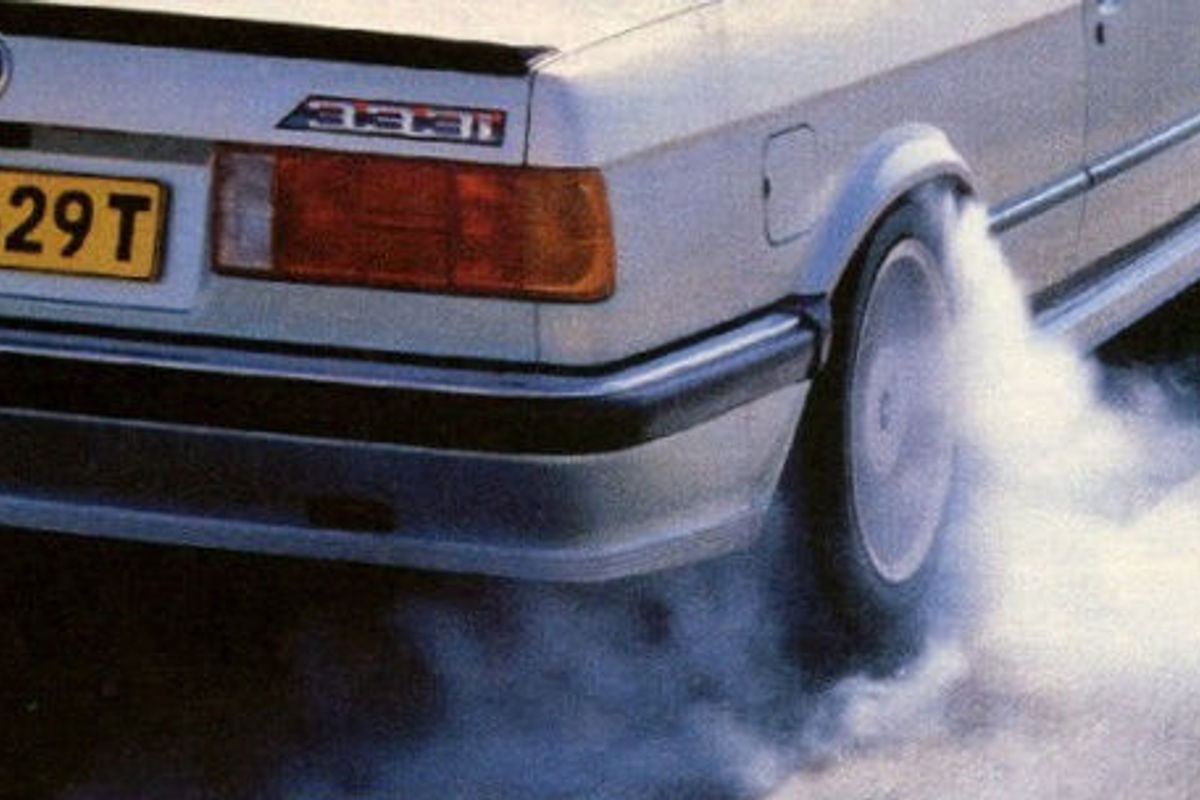
In the absence of a compact BMW (since the relatively low volume 2002), it is easy to understand the impact the E30 finally made when it entered local manufacture in the early ‘80s. The E21 3 Series was never imported. And… the mid-80s was also a particularly vibrant era for motorsport in South Africa. “Win on Saturday, sell on Monday” was a very real thing and the 325iS on-track success at the hands of, most memorably, the late Tony Viana cemented its place as a South African automotive icon. Facing fierce rivalry from Opel (Kadett Superboss), the 325iS was continuously updated to remain competitive, with the final version of the “Shadowline”, as it was affectionately known, sporting an Alpina-sourced 155 kW 2,7-litre straight-six that to this day delights petrolheads with its sound.
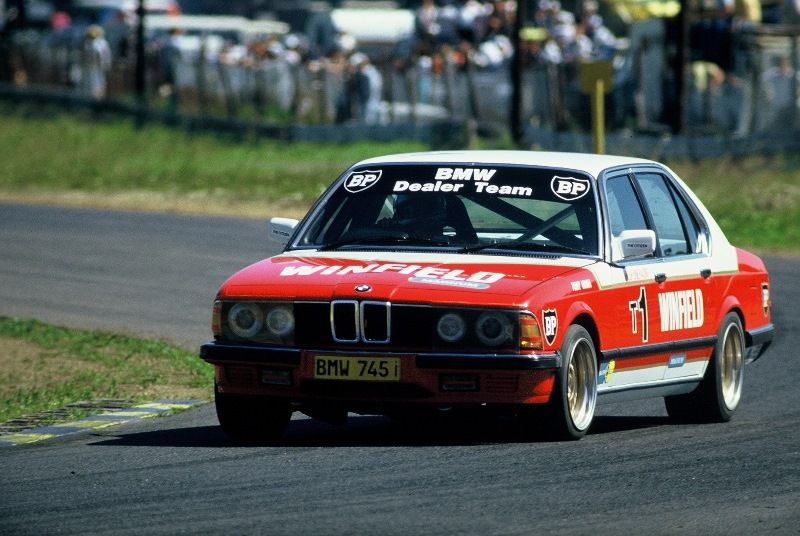
BMW E23 M745i
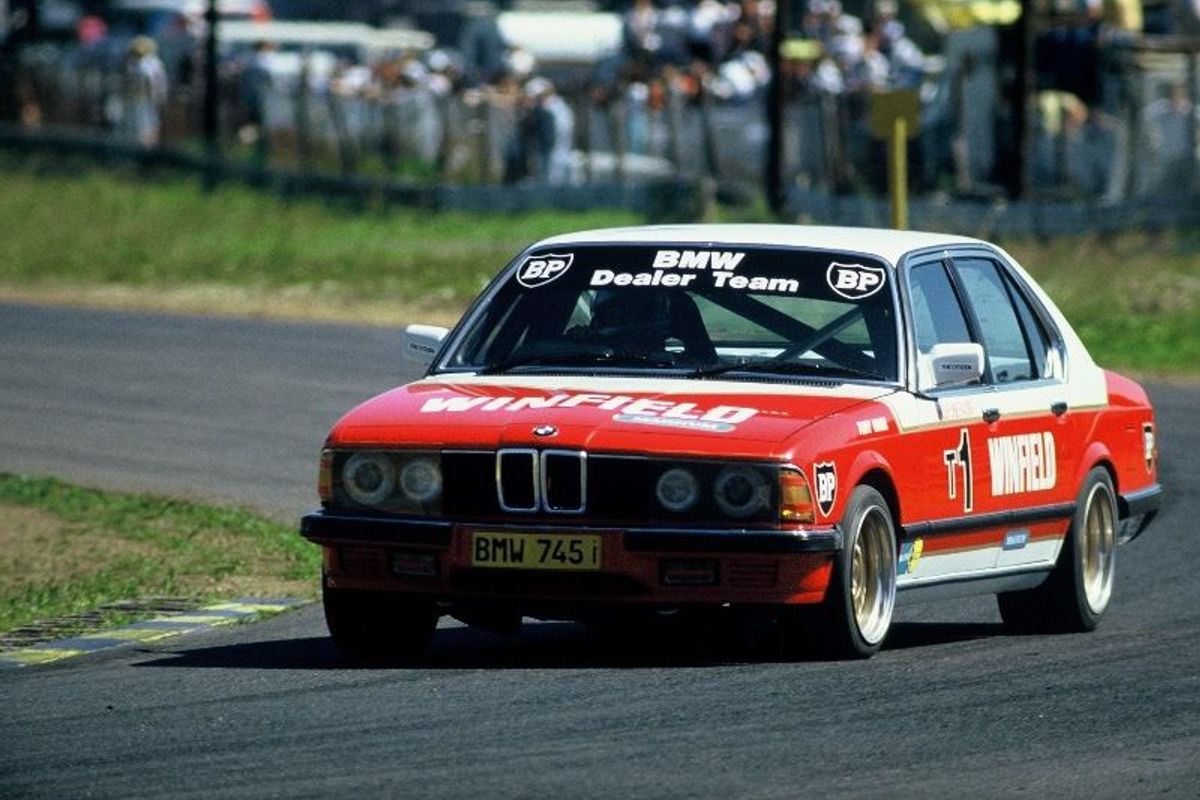
The BMW 745i racing car, finished in iconic Winfield livery.
Another uniquely South African development was this high-power version of the E23-generation 7 Series. It used an upgraded version of the brand’s dual-camshaft M88 engine (as fitted to the iconic BMW M1) that delivered around 220 kW. Very few were built – just over 200 units left the Rosslyn factory. An interesting note is that it was officially raced in the South African Modified Saloon Car Championship, the only time a 7 Series has ever raced anywhere with BMW sanction.
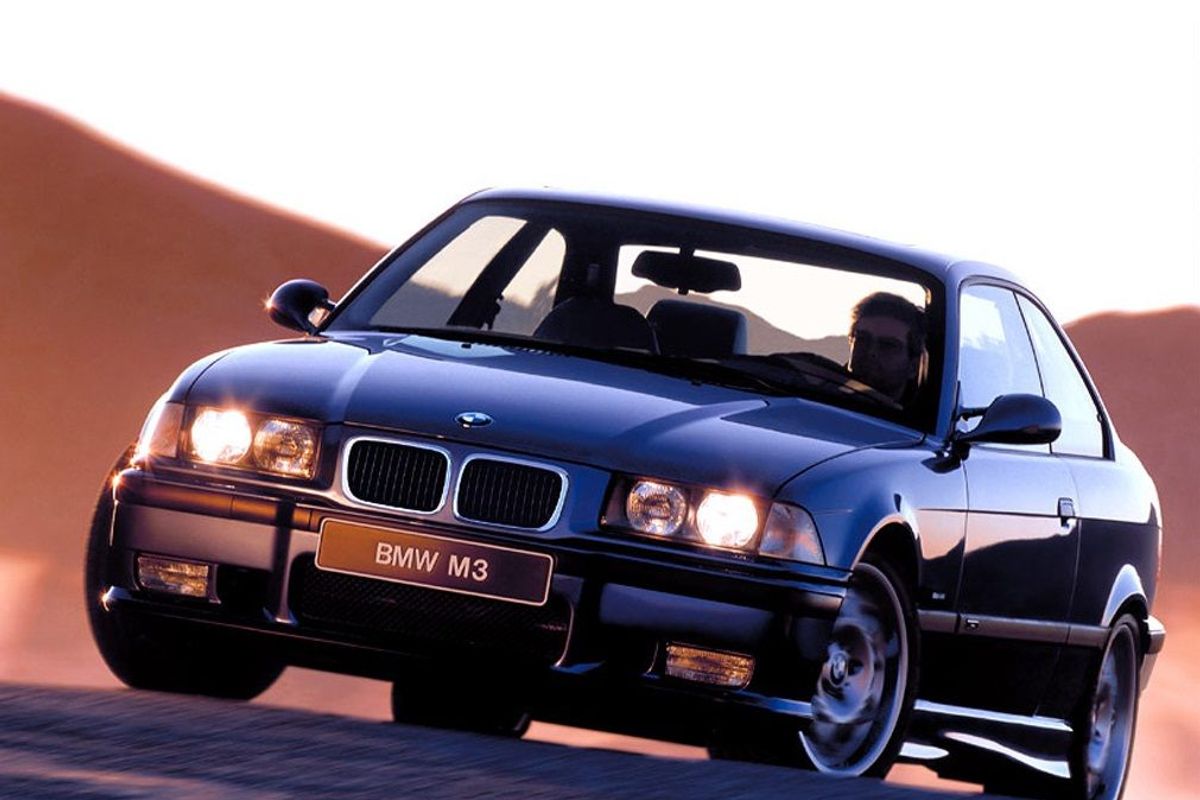
BMW E36 M3
The E36 M3 coupe cemented the M-car cult in South Africa.
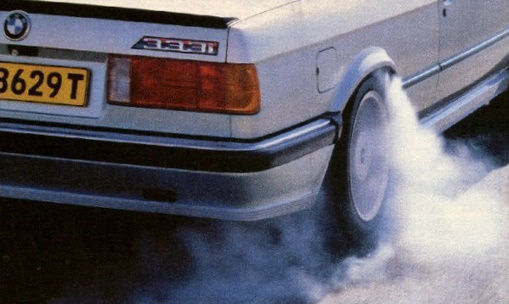
The South African public missed out on the original M3, which is partly the reason why cars such as the E30 333i and 325iS were important substitutes, so we had to wait until the early ‘90s and the introduction of the E36 M3 for our first “official” taste of BMW’s “junior” M-car. Perhaps unsurprisingly, it was an instantaneous hit, bringing scorching performance within reach of an audience who would previously have had to settle (and pay) for something far more exotic. And it was a real handful, too, with its near-200kW three-litre straight six often delivering more grunt than the driver could manage. Many pilots ran out of talent, so the M3 quickly built a name for being a “a real driver’s car”, which boosted its mystique among die-hard petrolheads even further.
The 333i has become a very collectable modern classic.
Another South African special born with racing in mind was the E30 333i, which occupies a very special place in the hearts of the brand's South African fans. The idea was pretty simple – take the compact E30 body and stuff one of the biggest BMW production engines into it. The engine was donated by the E23 7 Series, a lovely 3.2-litre straight six that delivered 145 kW. It was no “track special” though, and was officially co-developed by BMW South Africa, BMW Motorsport and Alpina. Just over 200 units of this increasingly collectable car were sold.
BMW M1
Yes, the beautiful Giorgetto Giugiaro-designed M1 has always been a very rare sight in South Africa, but as a halo vehicle I think it had considerable impact on the formative years of many a current BMW fanatic. Think of it as a South African BMW fan's unicorn… The result of a failed collaboration with Lamborghini, the M1 went on to become BMW’s first mid-engined production vehicle and used a twin-cam 3.5-litre straight six to very good effect. From a South African point of view, however, following the M1 Procar championship as opening events to Formula 1 races was probably more important – F1 was particularly popular in South Africa at that time. And an M1, co-driven by our own Eddie Keizan won the Wynn’s 1000 km at Kyalami in 1979.
Video footage from AutomobilSport magazine
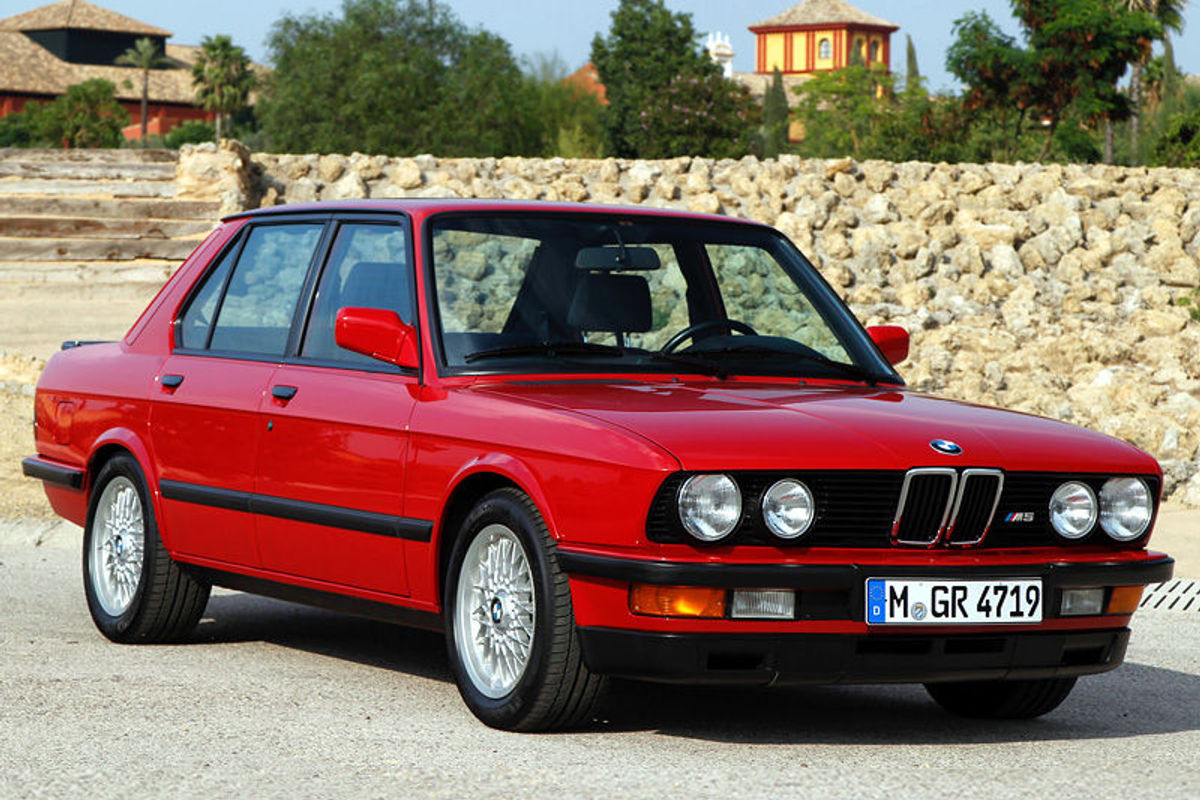
BMW E28 M5
The original M5 was the fastest sedan in the world at the time of its launch.
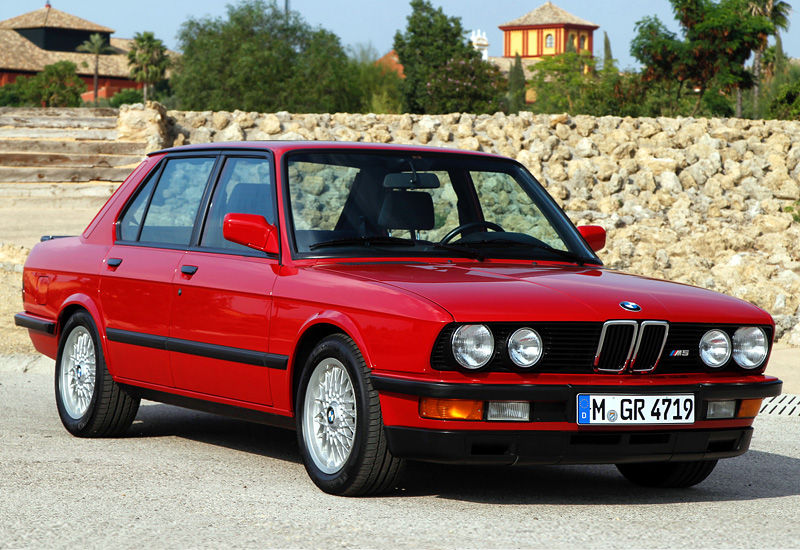
The first M5 caused pandemonium when it was launched in South Africa in 1987. When it was introduced in Europe two years earlier, it was billed as the fastest four-door sedan in the world. It used the M88 3.5-litre straight six that developed a sizzling 210 kW at the time. With the E30 3 Series nearing the end of its model lifecycle and cars such as the 325iS and 333i having established BMW as a performance brand, the M5 arrived at a time when BMW was probably running the risk of lacking a “halo” vehicle. The M5, and in particular the exploits of Tony Viana on South African racing circuits, certainly remedied that!
BMW E36 316i
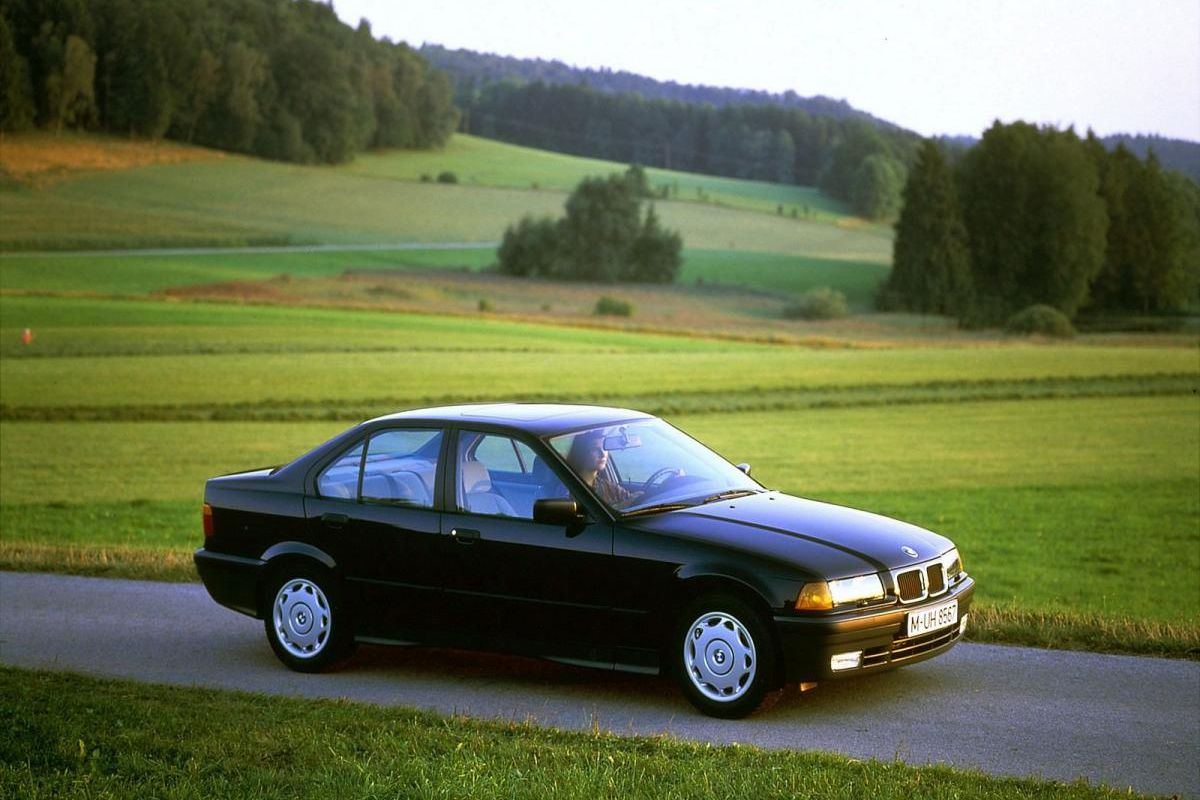
The E36 316i, arguably the origin of the compact executive segment in South Africa.
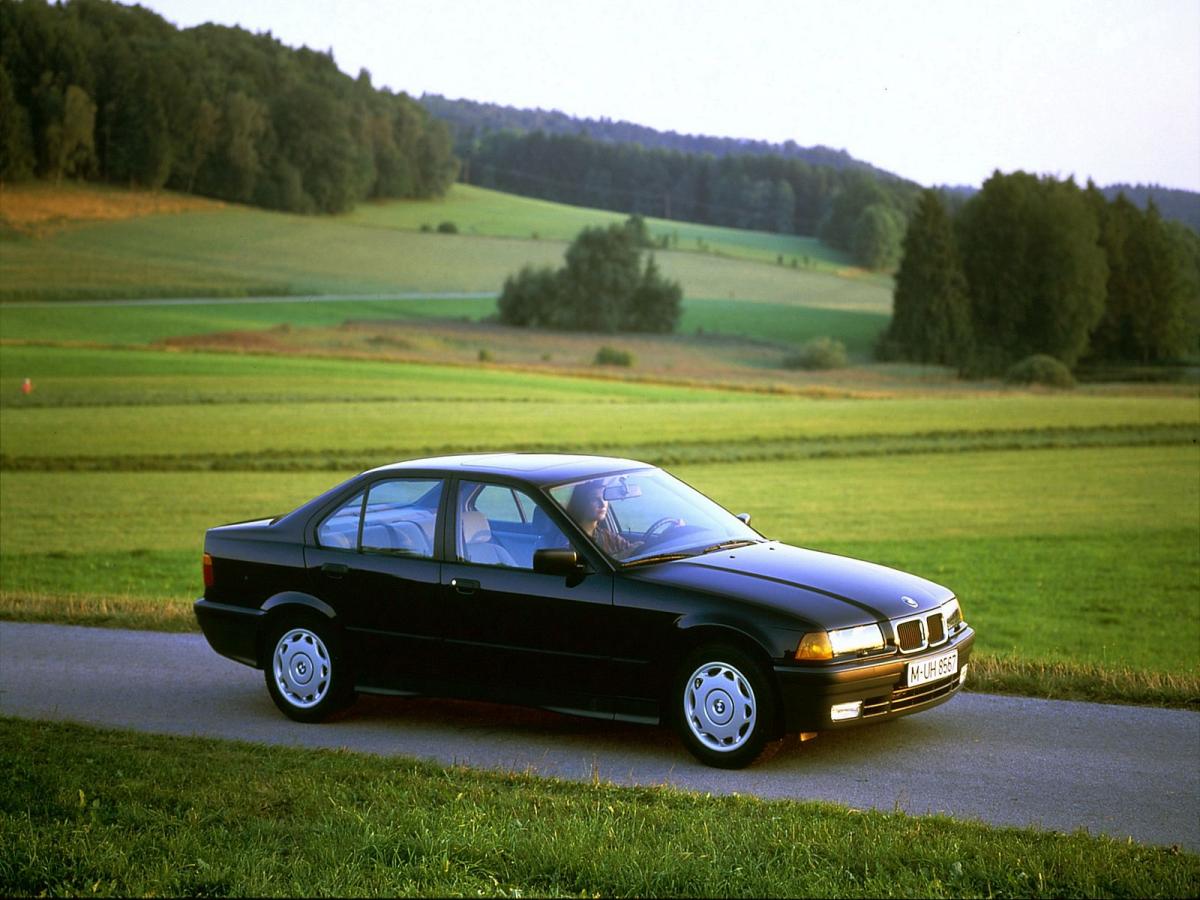
It may seem strange to have such an “entry level” vehicle in a list such as this, but the historical importance of the E36 316i (from a South African view) is perhaps still to be documented properly. In the early ‘90s it arrived with BMW brand cachet at previously unseen levels, and at the price offered technology and style that instantly found favour with upwardly mobile South Africans. It was a smash-hit success and a status symbol nationwide. It also, very possibly, single-handedly created the compact executive car segment in South Africa.
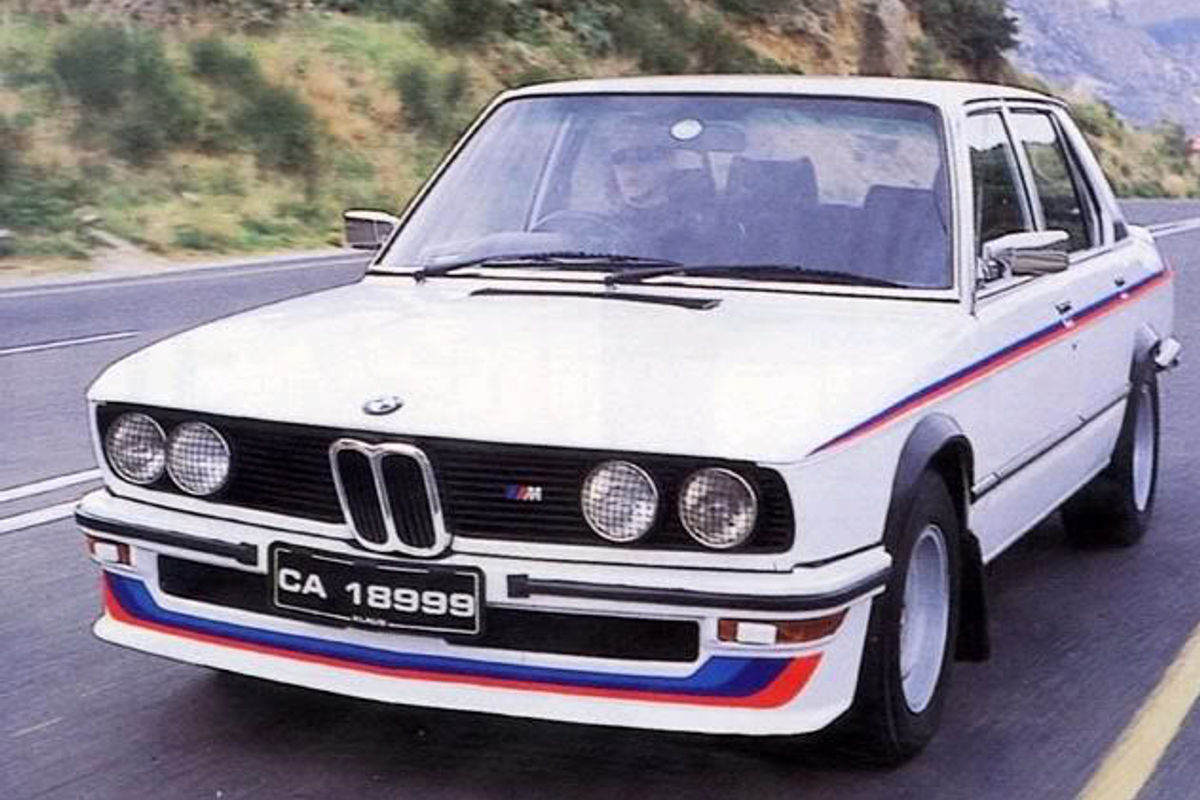
BMW E12 530 Motorsport Limited Edition
Origin of the M-car species, the South African 530 MLE.
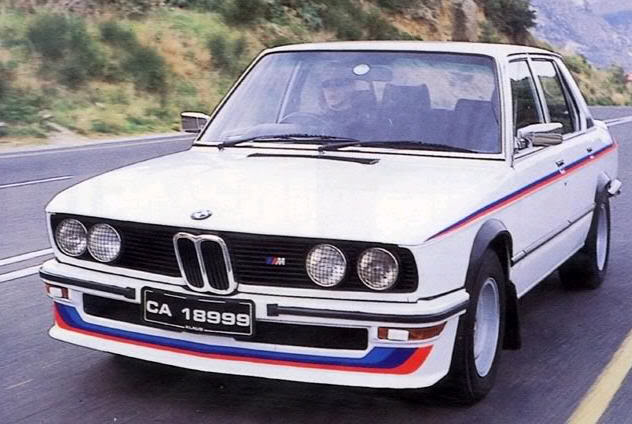
Thus far, you’d have noticed a trend of BMW South Africa developing unique South African specials, mostly for the purpose of racing. Pre-dating the ones listed so far, but far less well-known, is the 1976 E12 530 Motorsport Limited Edition. This car is regarded widely as a predecessor even to the European M535i, which was introduced in 1979. In fact, you could argue that the 530 MLE was the very first M-car overall! The 530 MLE was jointly developed by BMW South Africa and BMW Motorsport in Germany to homologate the E12 5 Series for racing in the South African Modified Production class. It received the 3.0-litre M30 engine from the E3 sedan and E9 coupe and also a close-ratio Getrag manual transmission and Borg-Warner limited slip differential.
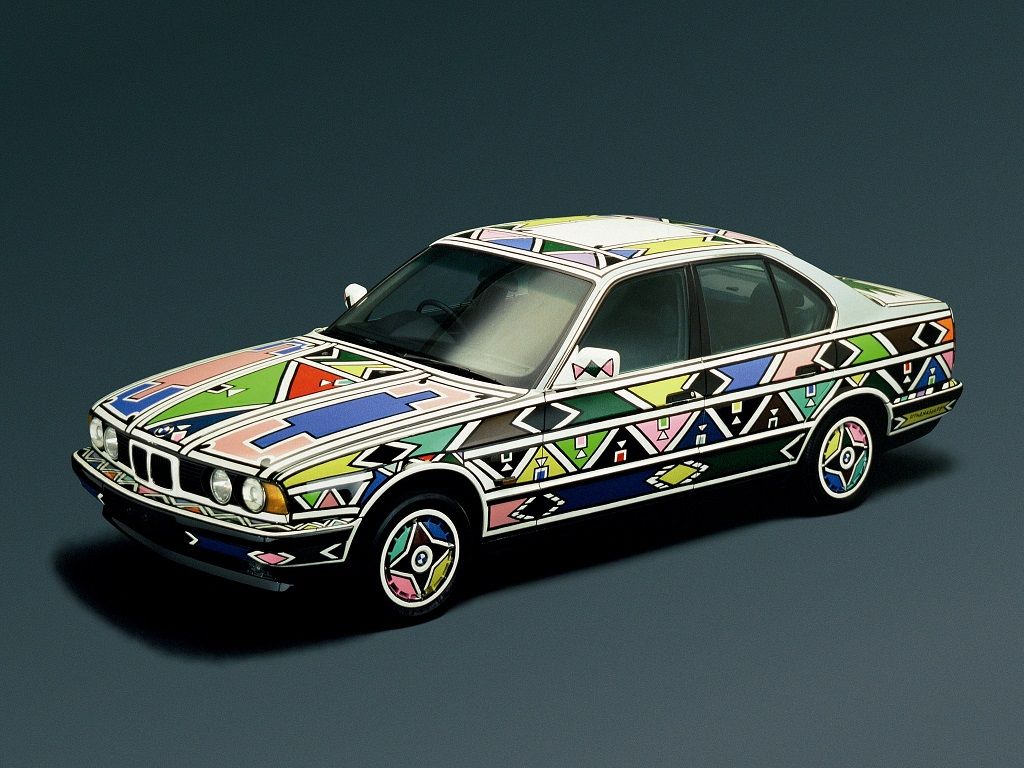
1991 BMW 5 Series Art Car
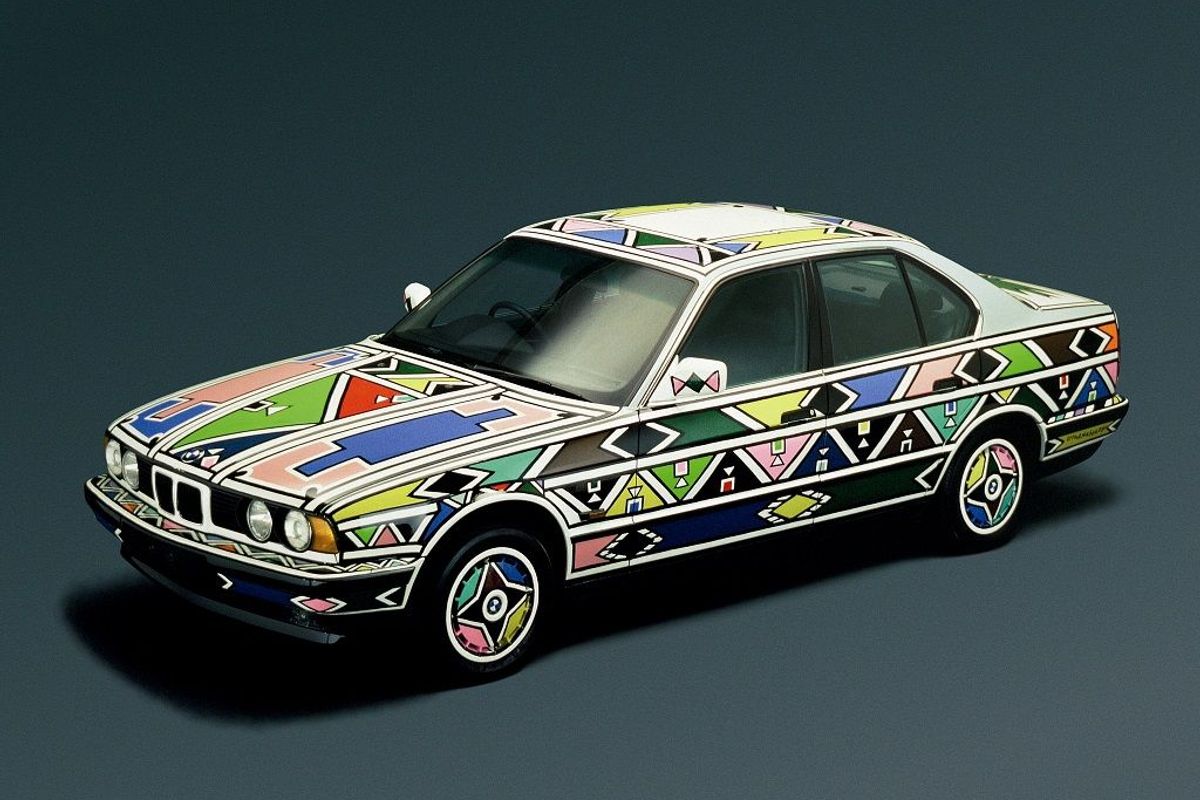
South African artist Ester Mahlangu's Ndebele 5 Series is one of only 15 BMW Art Cars.
The BMW Art Car series is perhaps best known for Andy Warhol’s M1, but South African Ndebele artist, Esther Mahlangu, joined an elite list of 15 artists when she was invited by BMW to paint an E34 5 Series. Esther’s car was the first to be decorated by a female artist and she took only a week to finish the project.
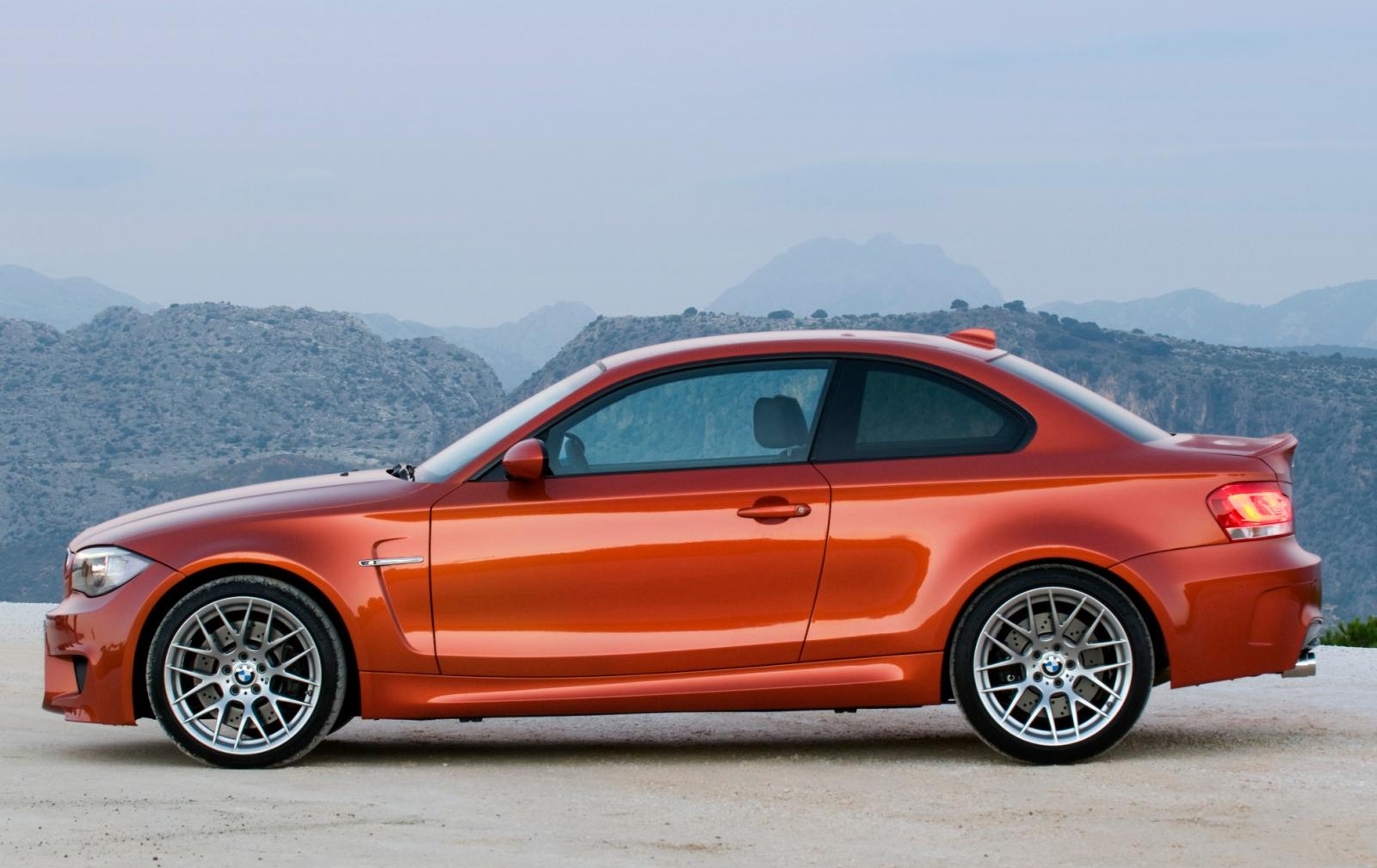
BMW E87 1M
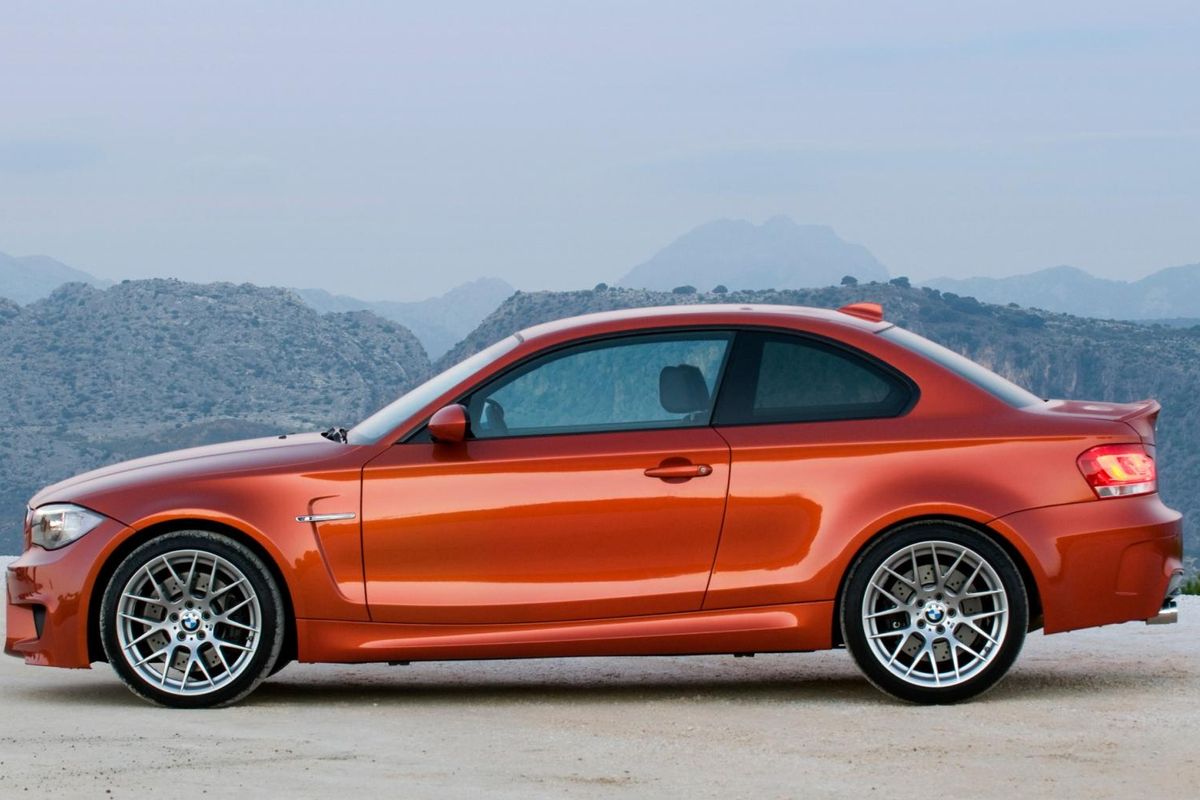
A personal favourite, the fiery 1M.
Last, but not least, is the 1M. Its relevance in the greater scheme of things may be very debatable, but as I said at the start this is a very subjective list and after much rubbing of chin, I’ll put it this way; of all the BMWs I’ve driven through the years, this is the one I’ve loved most. I’m yet to form a final opinion on the new M2 which sits opposite me in the office as I type up this list, but for it to equal the memories that I hold of a few particularly entertaining blasts in the 1M, co-piloted by another name that will resonate strongly with BMW folk (Deon Joubert), the M2 will have to be achingly good.
Here’s to the next 100, BMW, and hopefully a good few more like the 1M!
Any views or opinions expressed in this article are solely those of the author and do not represent those of Cars.co.za or its editorial content team.
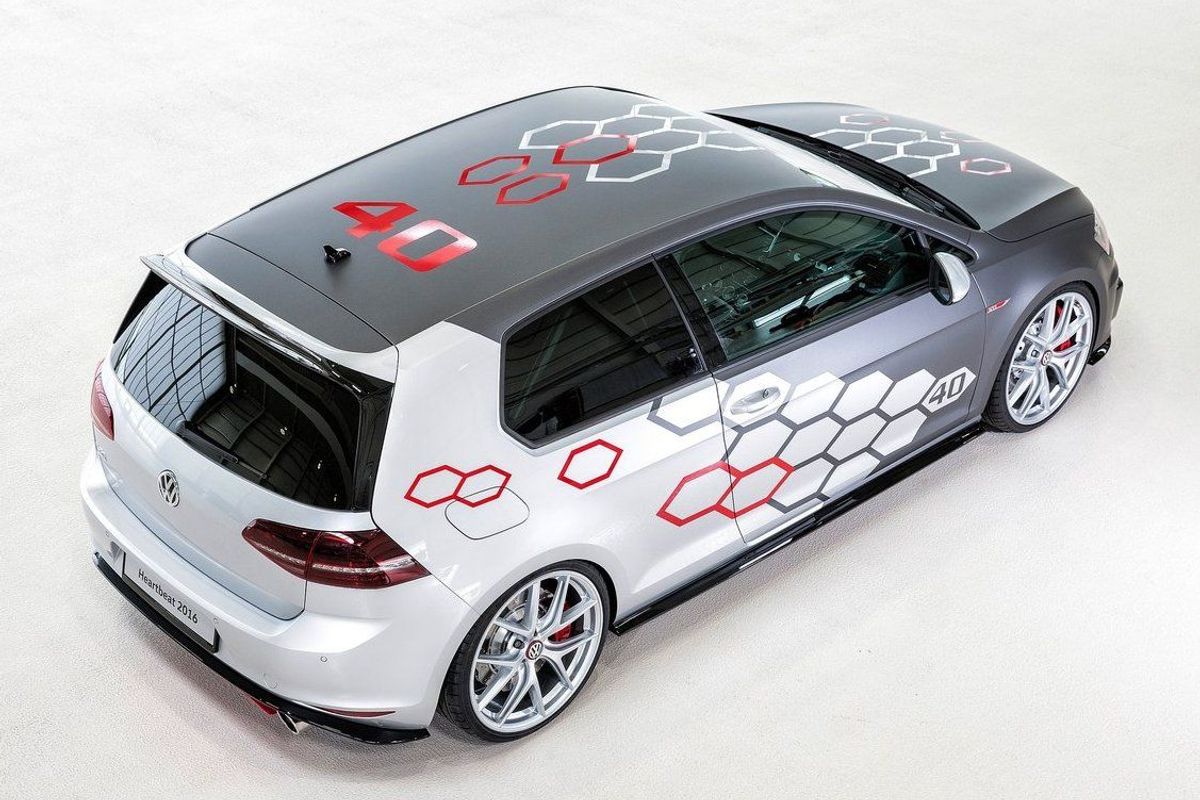
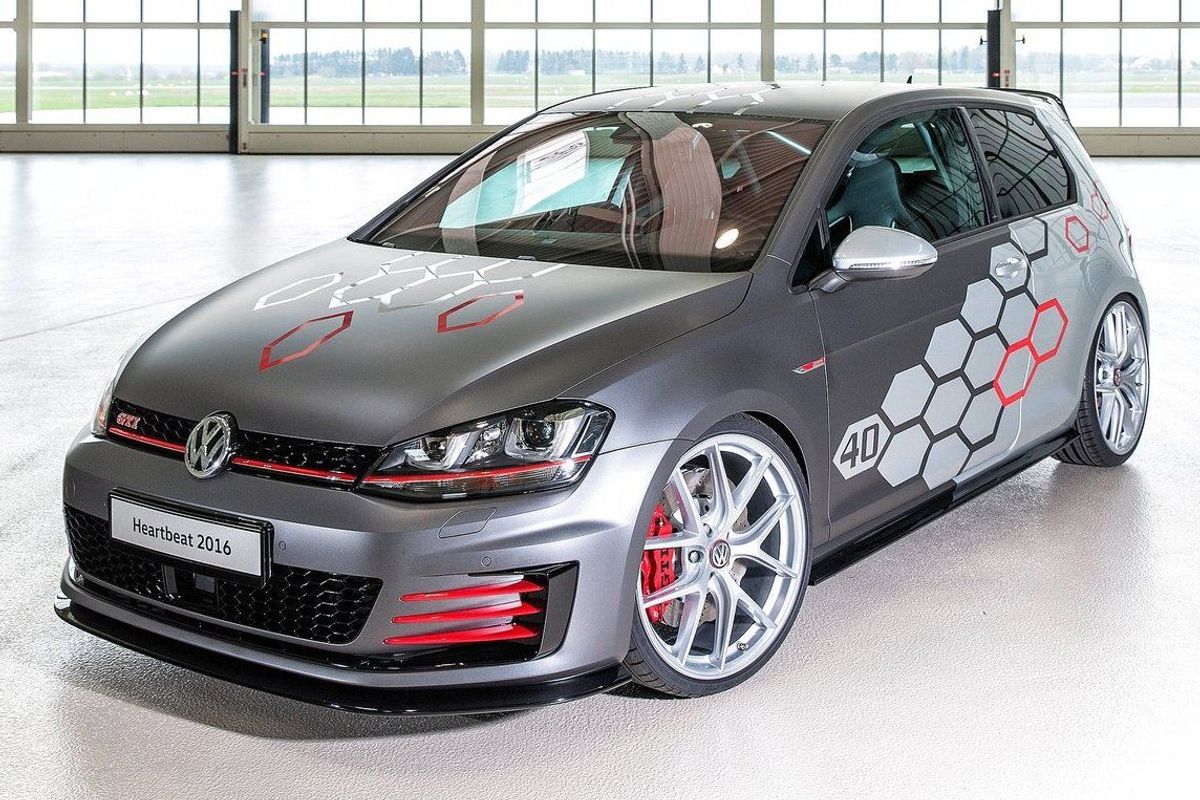
Volkswagen Golf GTI Heartbeat Concept Shown
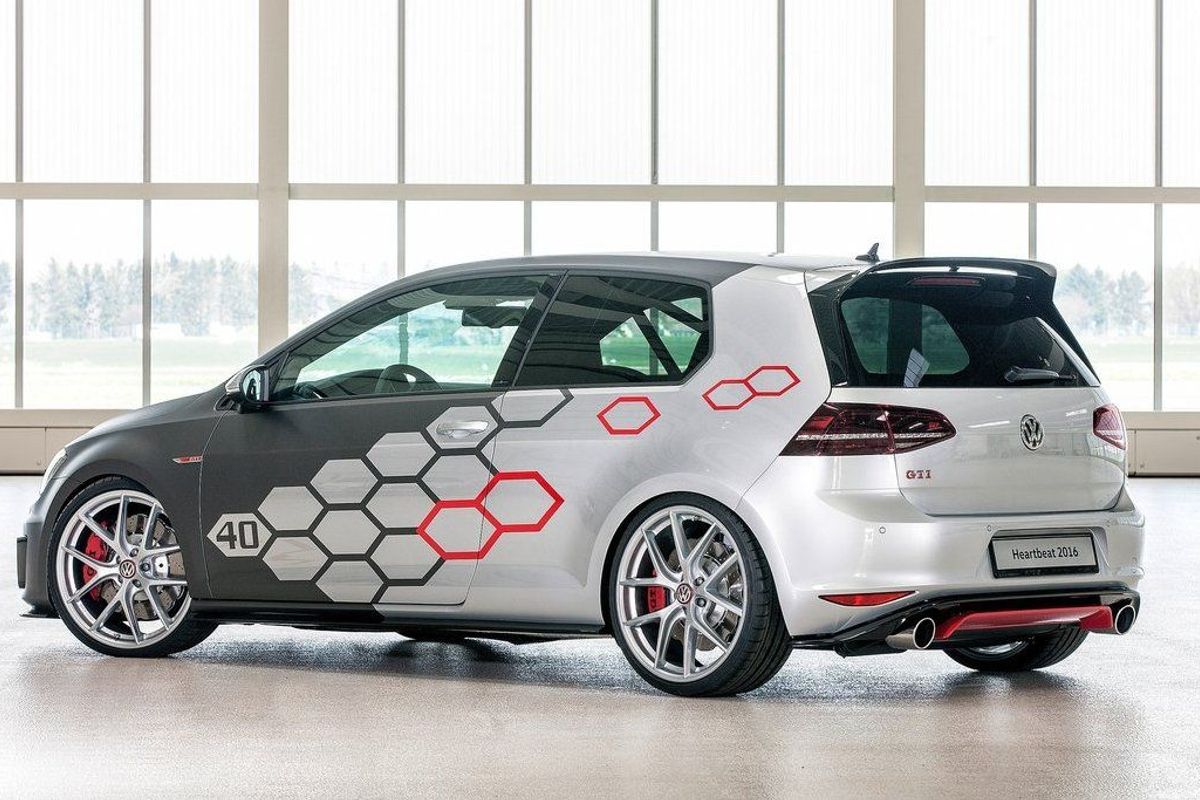
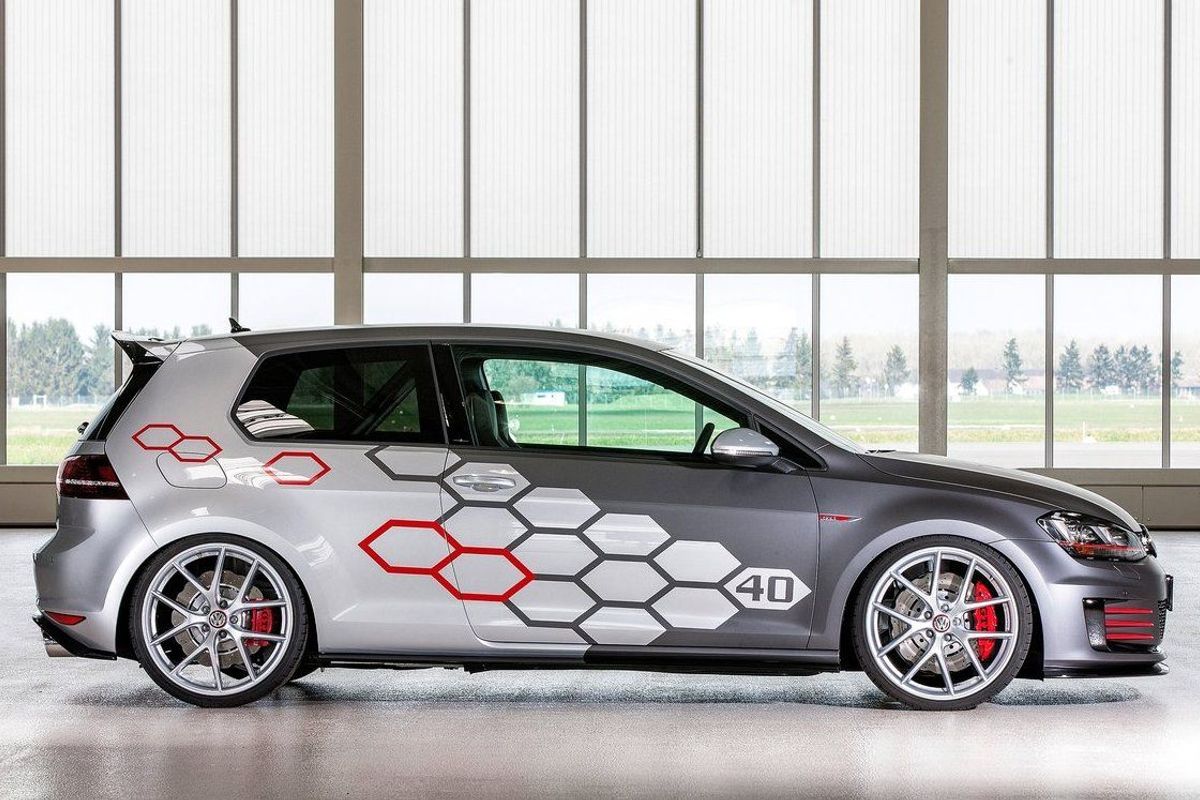
The Volkswagen Golf GTI Heartbeat Concept has been shown in Wörthersee, Austria in celebration of the 40th anniversary of the Golf GTI.
The iconic Golf GTI celebrates its 40th birthday this year and the annual Wörthersee GTI meeting has spawned a rather attractive Golf GTI concept that was created by 12 trainees as part of Volkswagen Vocational Training. The trainees, consisting of five women and seven men, put their heads together to create this one-of-a-kind Golf GTI Heartbeat project vehicle, which is the ninth project vehicle to be presented by apprentices since 2008. The Golf GTI Heartbeat concept is based on a standard Golf GTI Performance and took about nine months to create.
"During the creation of their dream GTI, our apprentices learn about the complexity of automobile production. We select especially talented young people and give them an opportunity at an early stage to learn from experienced colleagues from the entire company – for example from the design departments, the MultiMedia Center, the pilot hall and the paint shop" said Peter Christ, Head of Automotive Technology Training in Wolfsburg.
Banging Sound & Styling
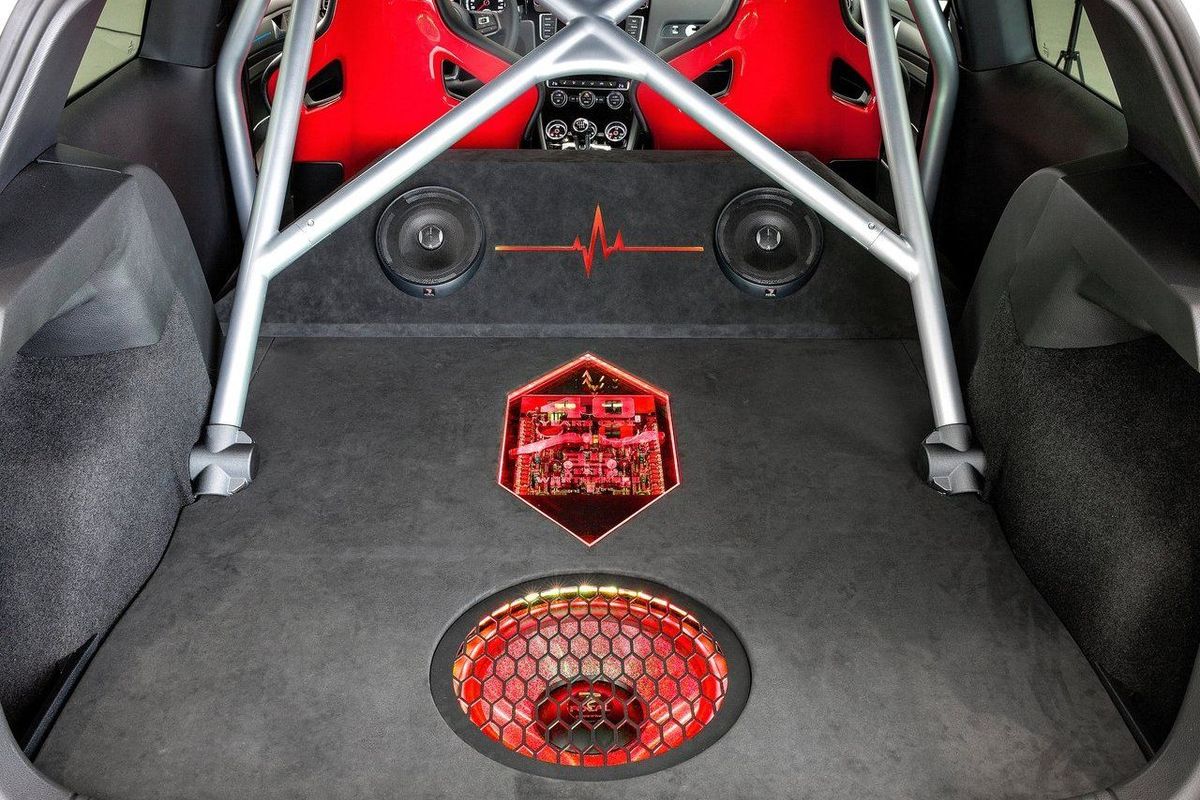
The Volkswagen Golf GTI Heartbeat Concept celebrates 40 years of the Golf GTI with a high-end sound system.
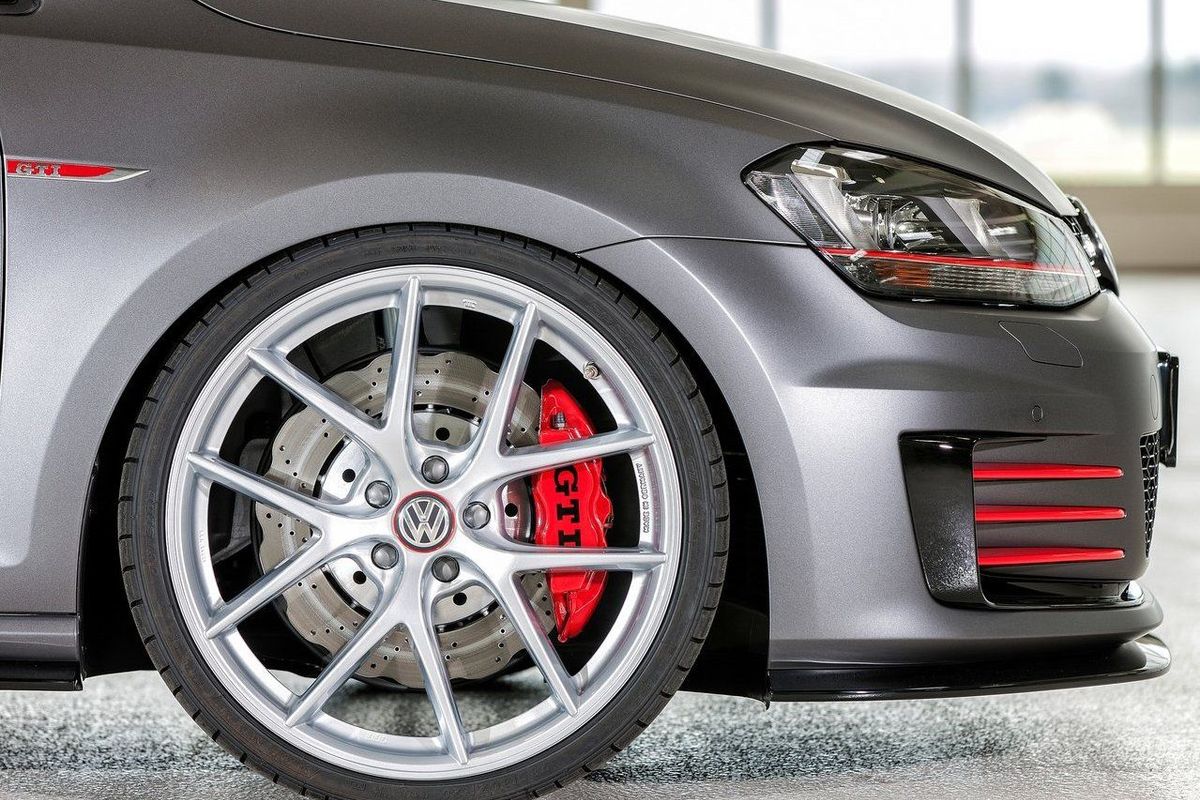
This Golf GTI Heartbeat concept is painted in reflex silver metallic while the roof and front-end is covered in dark grey foil. A honeycomb-and-heartbeat design in tornado red gives the car a sporty look, as do the wide 20-inch BBS aluminium rims.
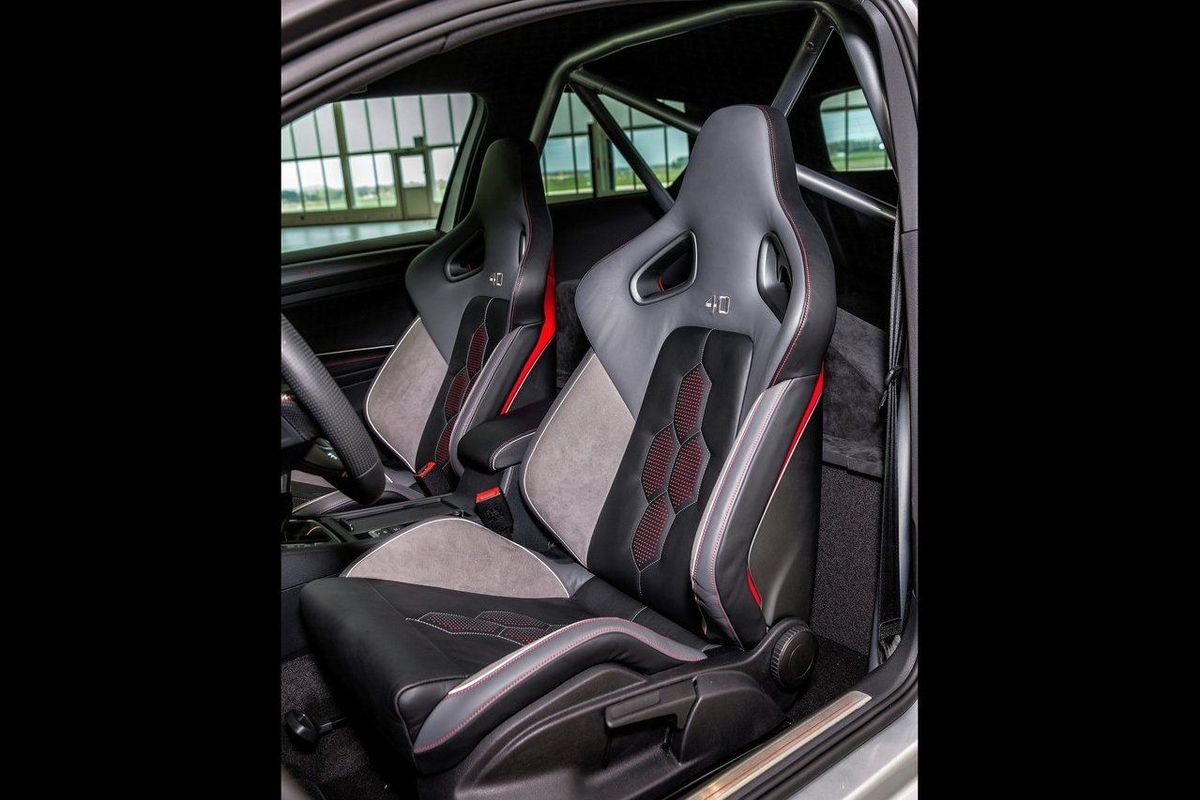
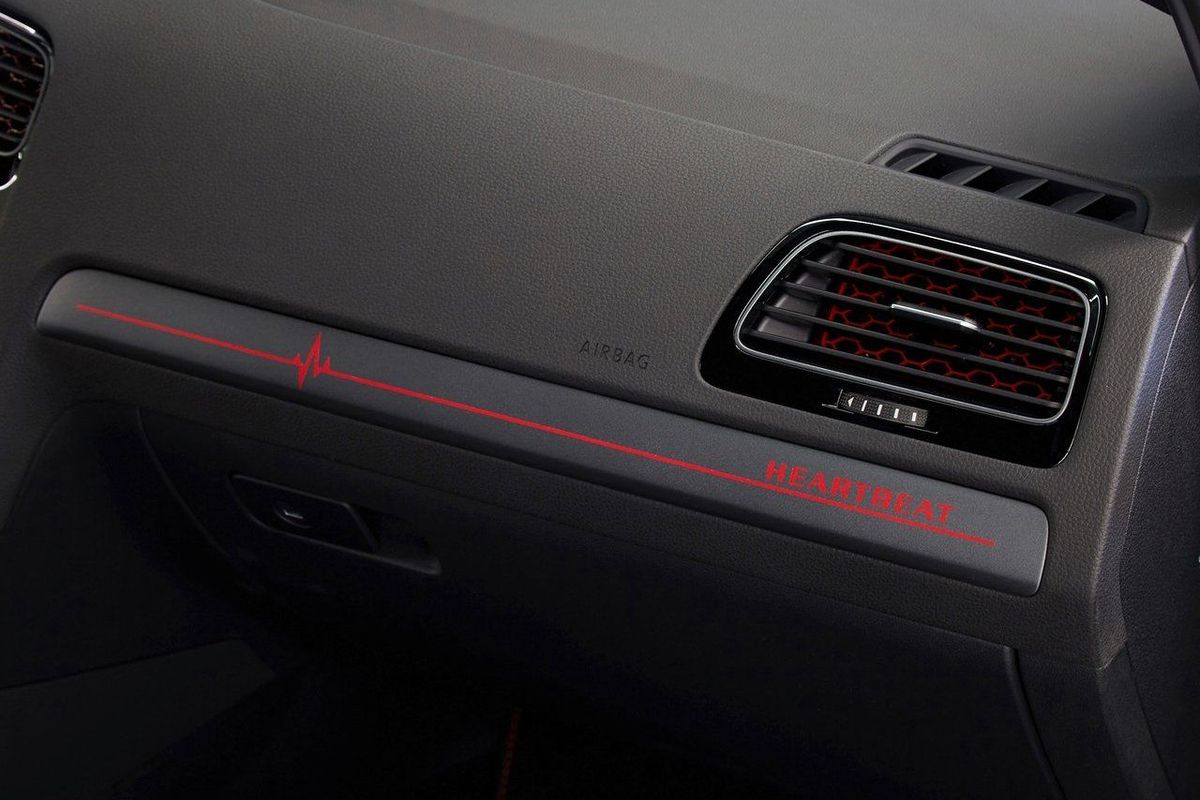
The cabin is fitted with two folding bucket seats taken from the Volkswagen Golf GTI Clubsport S and they feature a "40" emblem embroidered in crystal grey on the headrest. The back rests feature honeycomb perforations on a red background, which is also seen on the door insets and heartbeat symbols are found on the strips above the door trims and on the strip below the glove box.
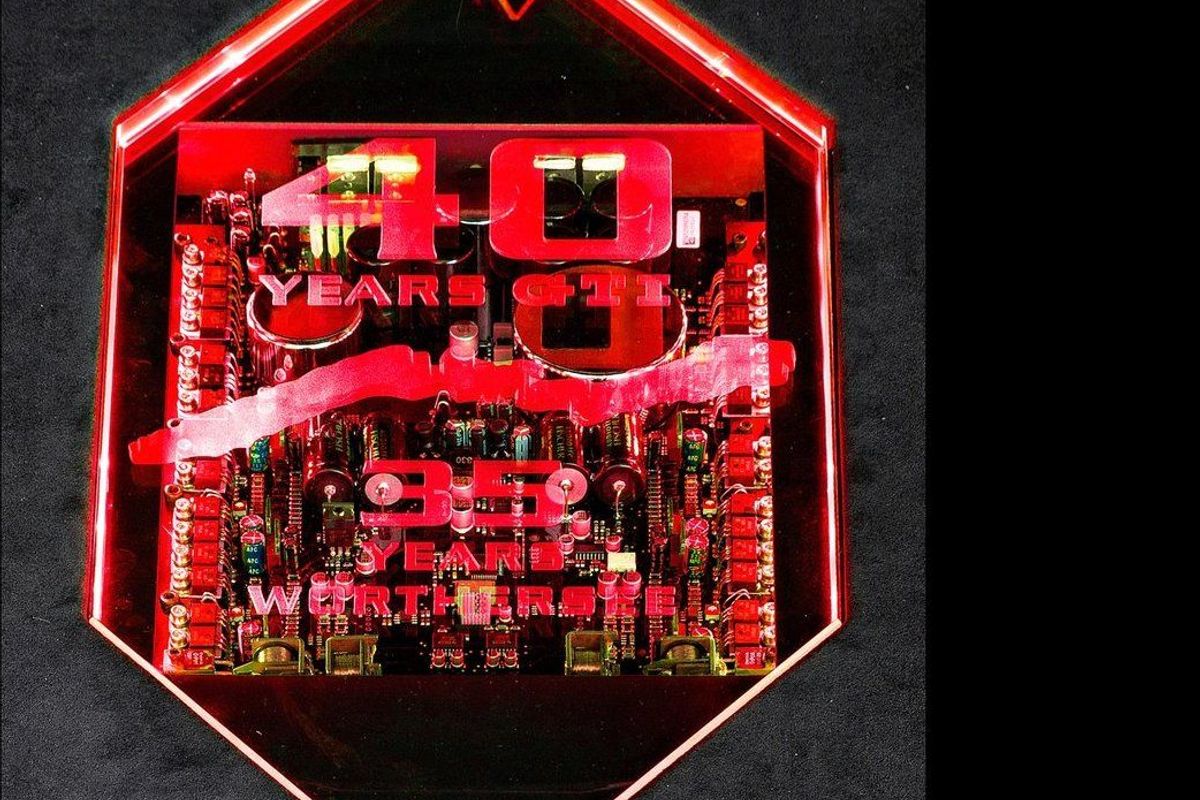
Furthermore, there are no rear seats or boot and the space has rather been used to accommodate the powerful 1 360 watt sound system with seven speakers, which also incorporates a special HIFI system complete with LED lighting and engraved glass covers.
According to the National Association of Automobile Manufacturers of South Africa (Naamsa), April 2016 was yet another tough month for new vehicle sales as price increases prompt more buyers to consider the used car market. However, sales of light commercial vehicles showed only a marginal decline, while exports reflected sharp improvements.
Toyota has once again taken the throne as South Africa’s most popular car brand for the month of April 2016. The new Toyota Hilux had a major role to play in this achievement and it outsold its main competitor, the Ford Ranger, by as much as 808 units to become the best-selling vehicle in the country. Demand for new cars is currently in decline due to inflated list prices, which makes the used car market a more attractive option to vehicle buyers.
The outlook for 2016 remains largely negative due to continued pressure on economic growth and consumer disposable income. Increases in new car prices (between 12-15%) and the possibility of further interest rate hikes will continue to put consumers and business under pressure.
“Consumers can’t control interest rates or inflation, but they can control affordability through the car they buy. In the current economic climate the used vehicle market is their best choice,” Simphiwe Nghona, the chief executive of WesBank Motor Retail, was quoted as saying.
The outlook for export growth remains positive for 2016 with exports sales expected to expand to 360 000 units this year.
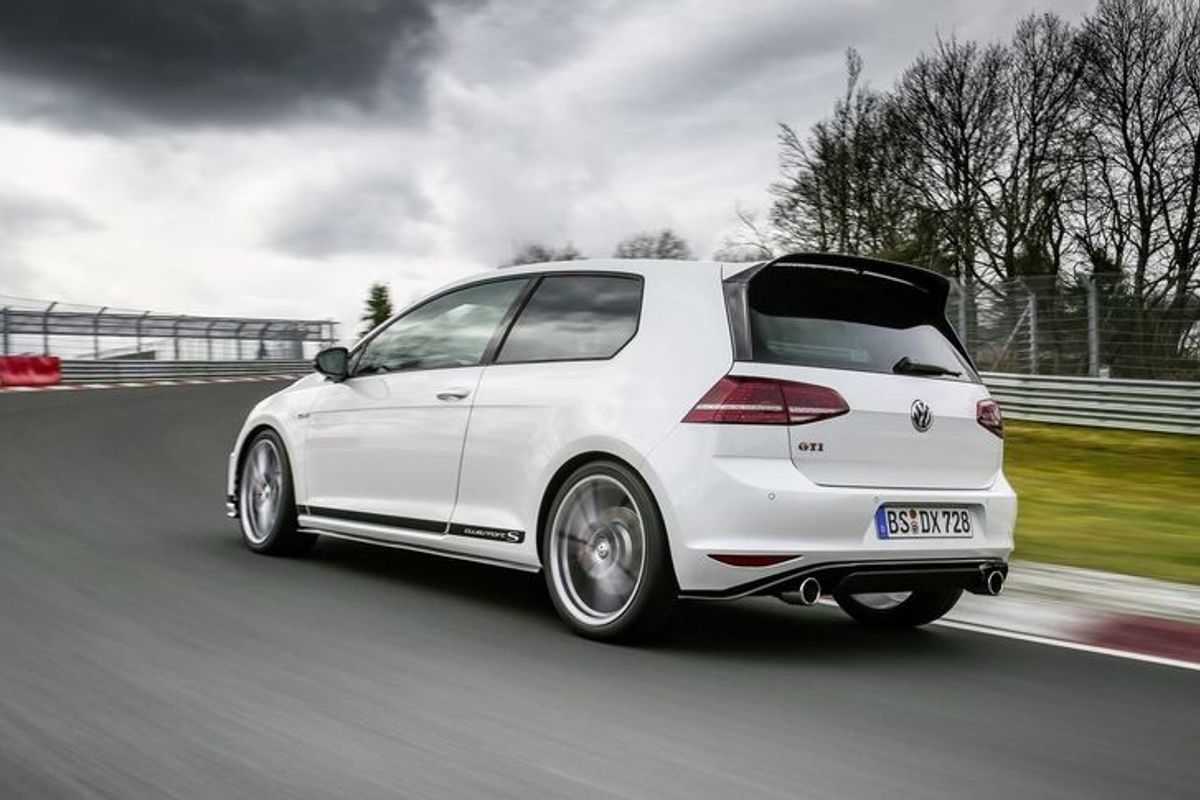
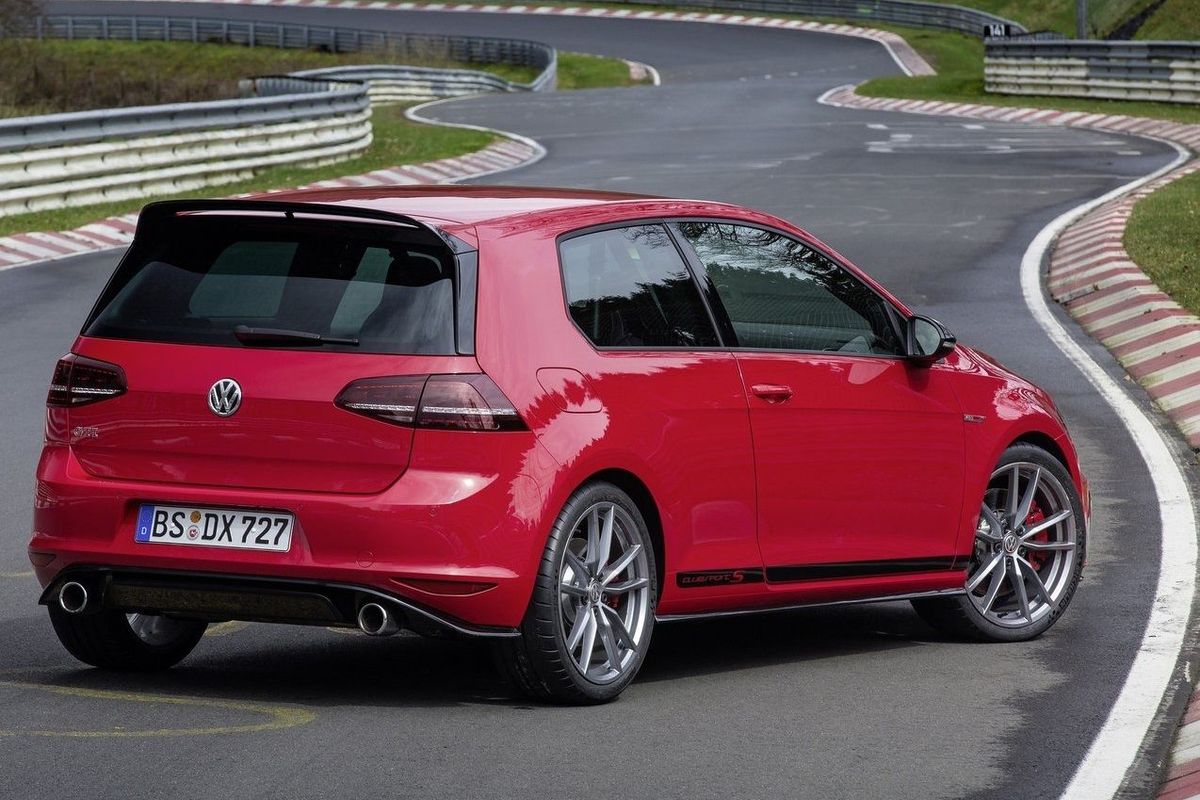
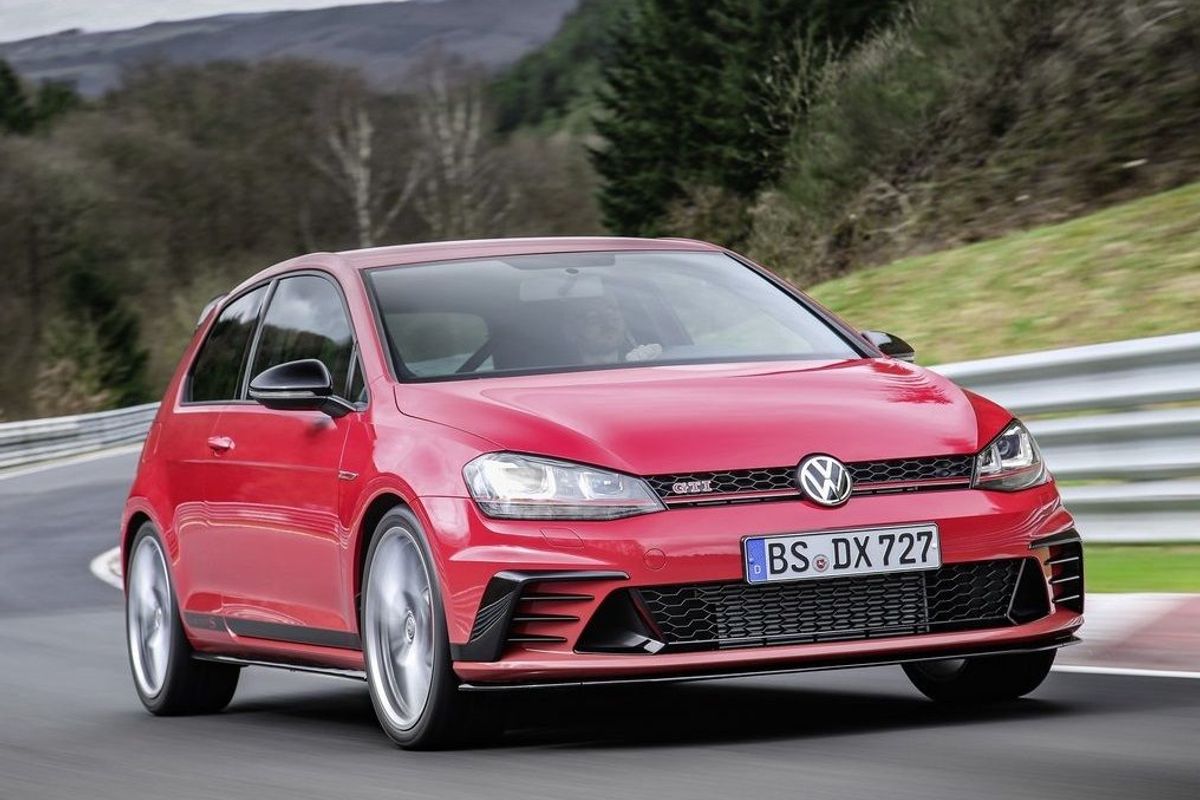
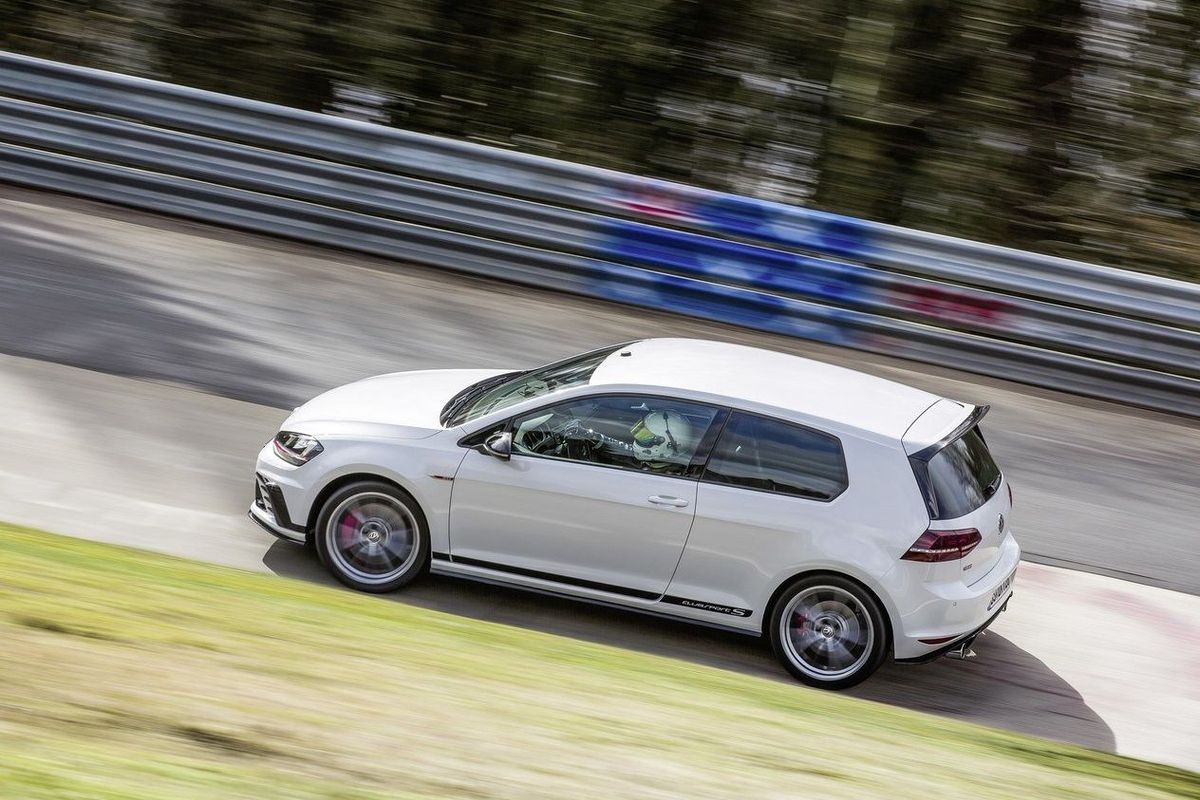
Volkswagen Golf GTI Clubsport S is official
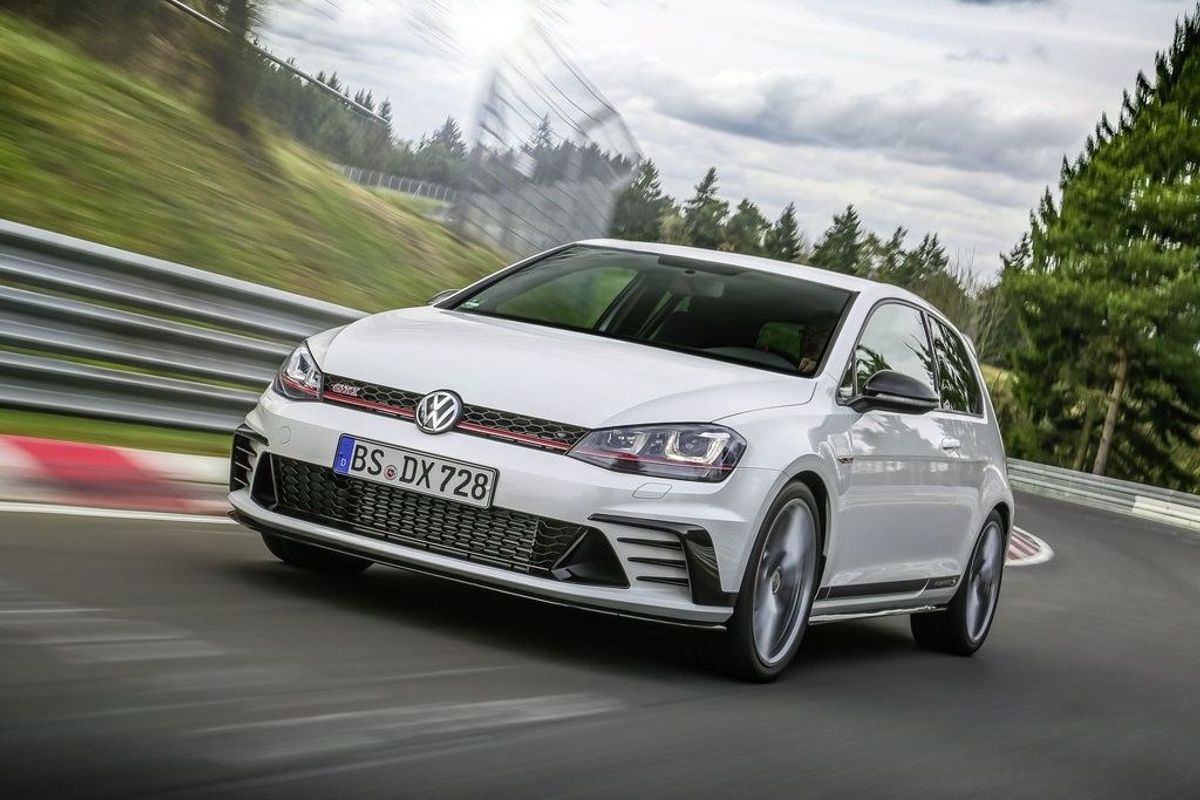
The ultimate Volkswagen Golf GTI is here. Meet the Golf GTI Clubsport S, the most powerful variant of the iconic hot hatch you can buy. It's also the fastest front-wheel drive production car around the Nurburgring.
Meet the perfect way to celebrate 40 years of Volkswagen Golf GTI. VW will make only 400 Clubsport S units, of which 100 are destined for owners in Germany and given how popular the GTI is in South Africa, we're probably going to see a few units make it to our shores. Volkswagen has ensured that only the original GTI colours will be available: Tornado Red, Pure White and Deep Black Pearl Effect.
Mechanically, it's not too dissimilar to the current GTI. The power from the 2.0-litre turbocharged engine has been ramped up to 228 kW and 380 Nm. The power gain can be attributed to a new fuel pump, a modified engine control unit and a new exhaust system.
The Clubsport S's power reaches the front wheels through a six-speed manual gearbox. Expect 100kph to come up in 5.8 seconds and it will go onto a top speed of 260 kph. The car has also been put on a diet and the rear seats have been removed, making the Clubsport a strict two-seat vehicle. The kerb weight comes in at a tidy 1 360kg, which will help handling and acceleration.
The previous hot hatch to dominate the Nurburgring front-wheel drive leaderboard was the Honda Civic Type R, a fearsome track-focused hatch that lapped the Green Hell in 7 min 50.63. The new Volkswagen Golf GTI Clubsport S did it in 7 minutes, 49.21 making it the fastest. While the road-going customer cars will come with a strut brace, the Nurburgring car had a roll cage fitted for additional safety. A set of semi-slick Michelin Pilot Sport Cup 2 tyres were fitted which no doubt aided the Clubsport achieve its impressive time.
Smart ForFour (2016) First Drive
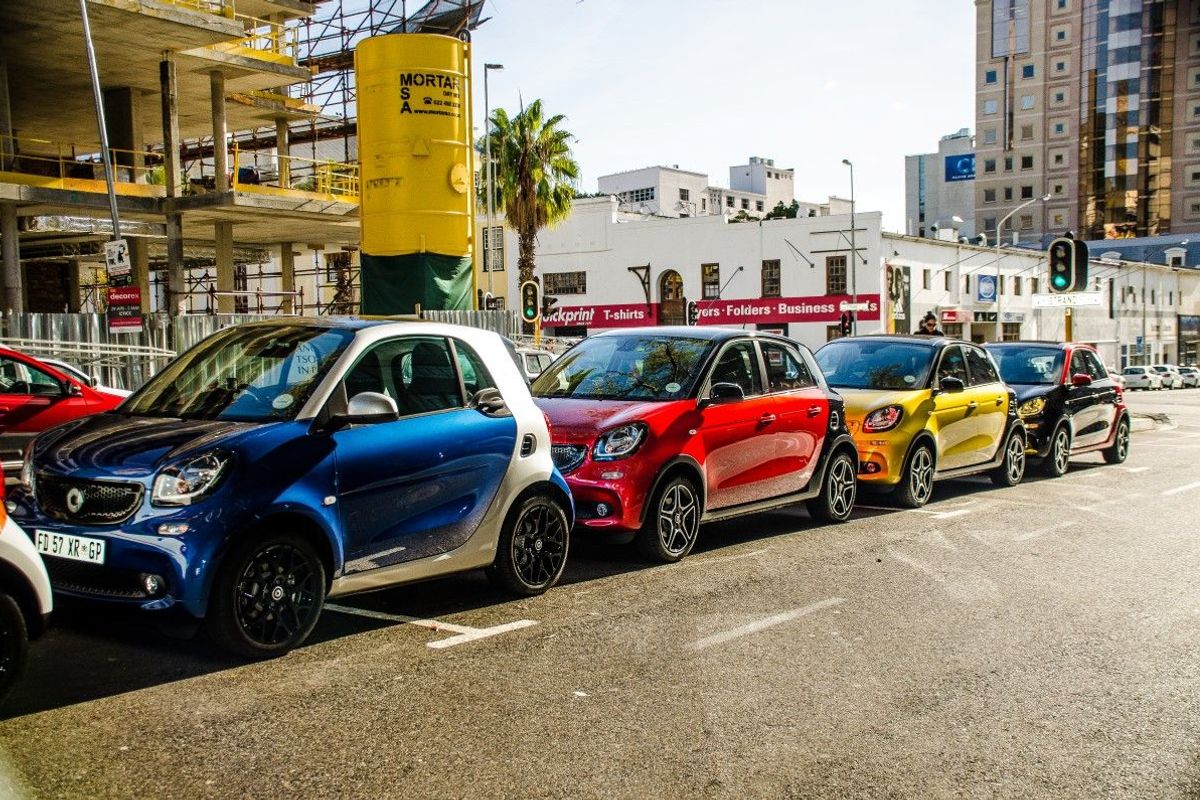
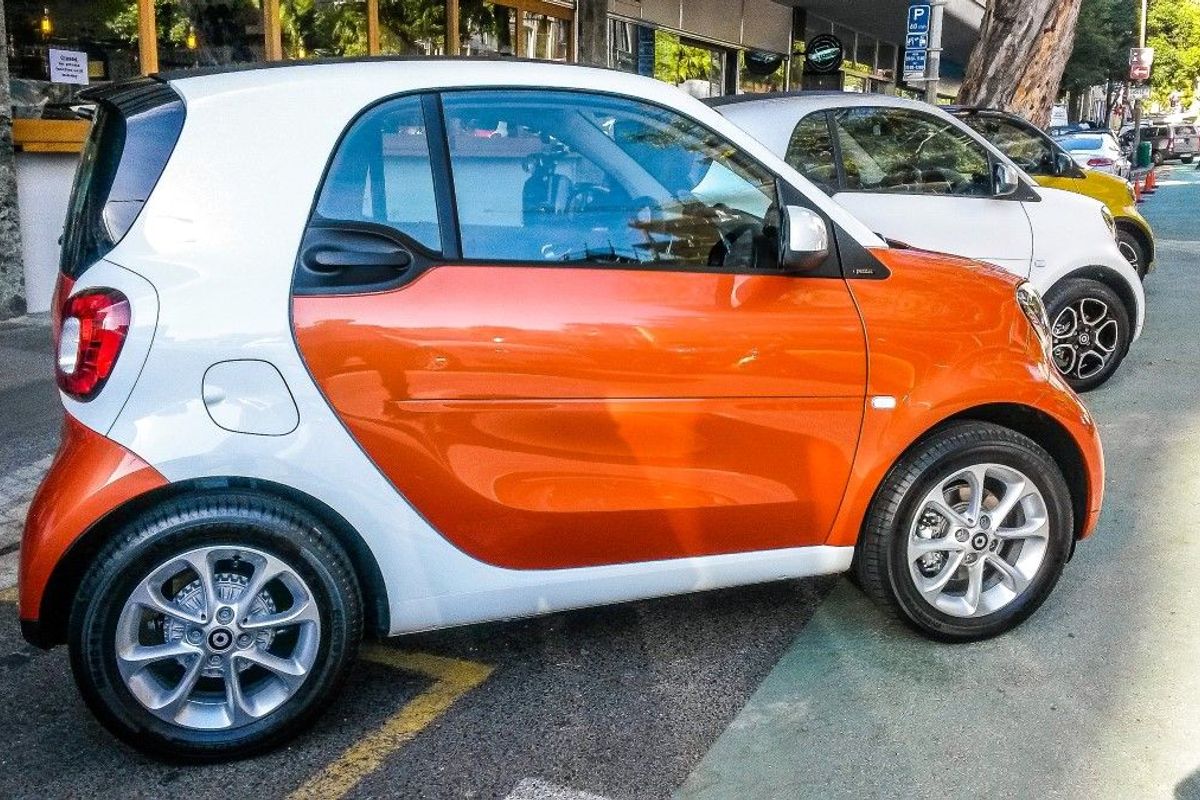
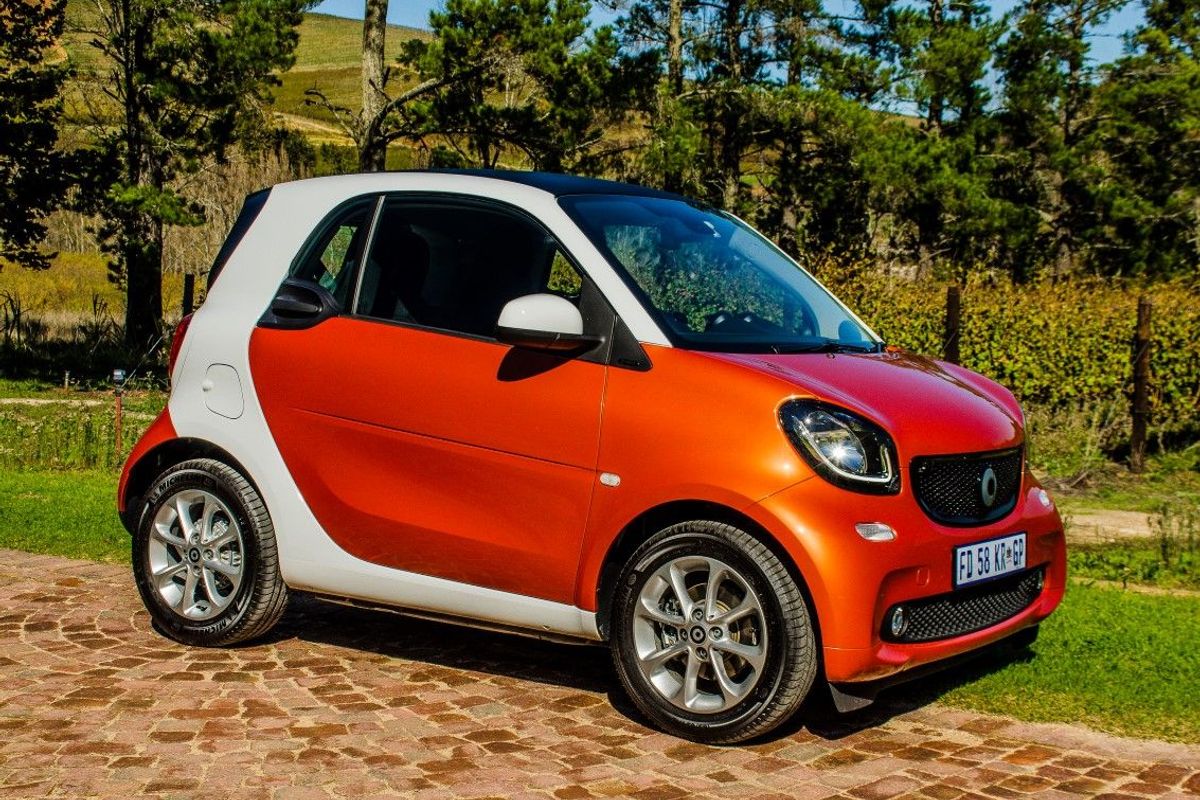
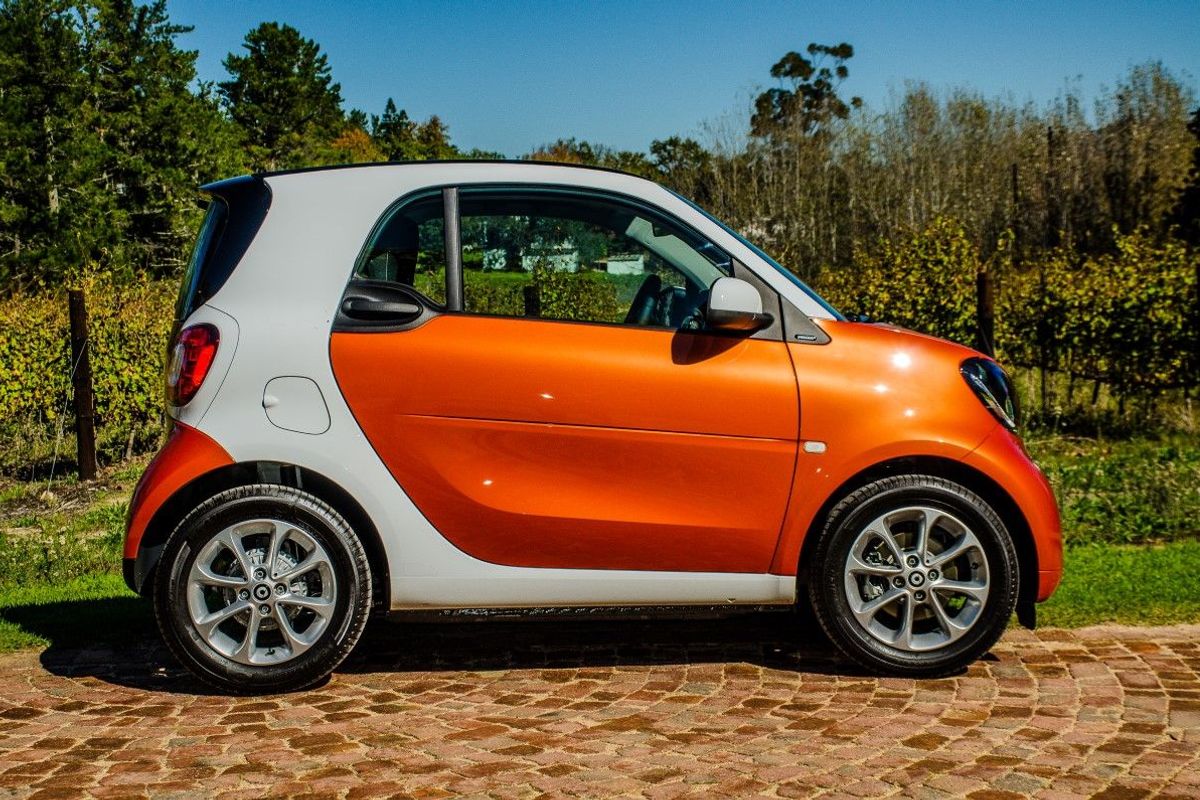
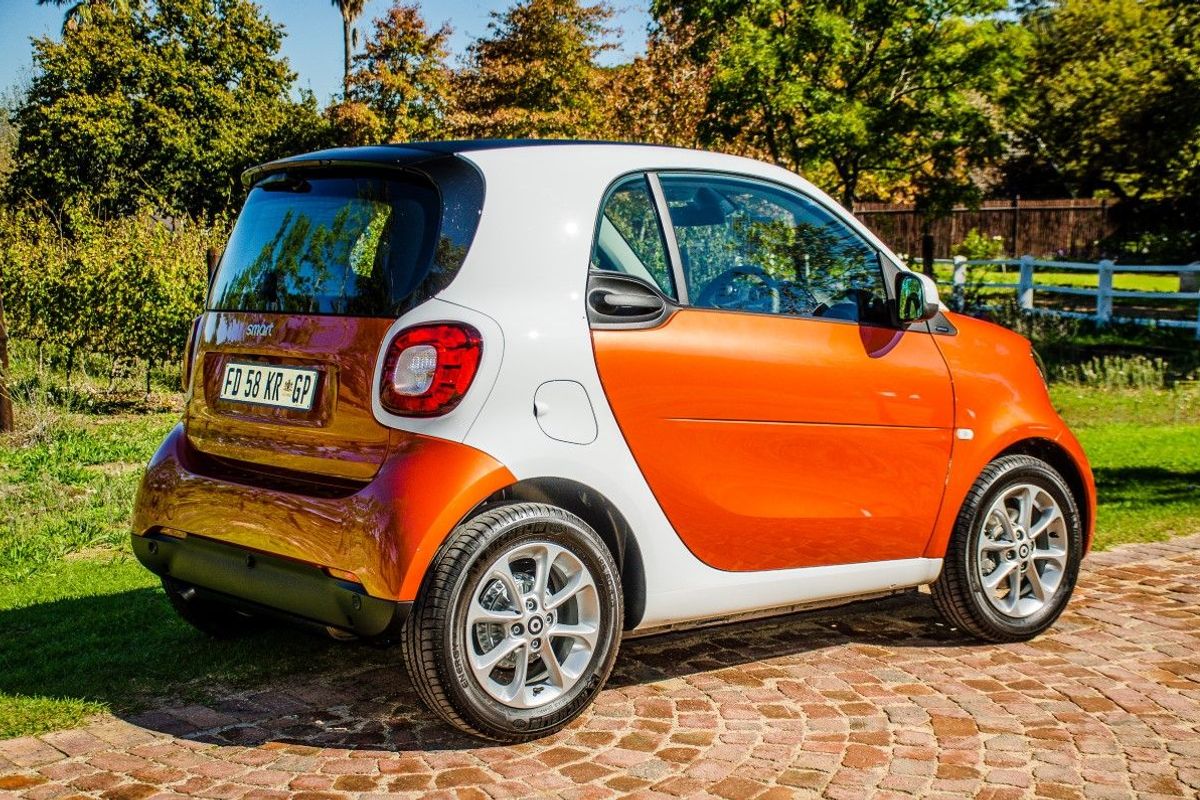
Smart has introduced its third-generation ForTwo and ForFour models in South Africa (with a turbocharged version expected to arrive in July 2016).
A small, stylish and fuel-efficient car makes most sense in built-up cities where space is dwindling and Smart, Mercedes-Benz’ urban mobility brand, is on a mission to transform the urban landscape with the introduction of its newcomers. Smart has been most successful in Europe and although its footprint in South Africa is tiny, bouyed by the Mercedes-Benz network, Smart is determined to infiltrate the local market with its new product aimed at younger buyers.
The launch of the new Smart ForTwo (two-seater) and ForFour (four-seater) took place in Cape Town’s bustling city centre and we were there to give the new Smart cars a whirl. Let’s see what’s on offer…
Smart range
At launch, both the ForTwo and ForFour models are powered by a 1.0-litre 3-cylinder engine that produces 52 kW and 91 Nm of torque through a 5-speed manual transmission.
A 0.9-litre turbocharged ForFour derivative (offering 66 kW and 135 Nm) with a 6-speed dual clutch transmission is expected to arrive in South Africa in July 2016. A total of four trim levels are available, including Base, Prime, Passion and Proxy.
In terms of safety, all models are fitted with ABS with EBD, Brake Assist, traction control, stability control and a total of five airbags. A number of optional safety features such as crosswind assist, forward collision assist and lane keeping assist can be specified.
Styling features
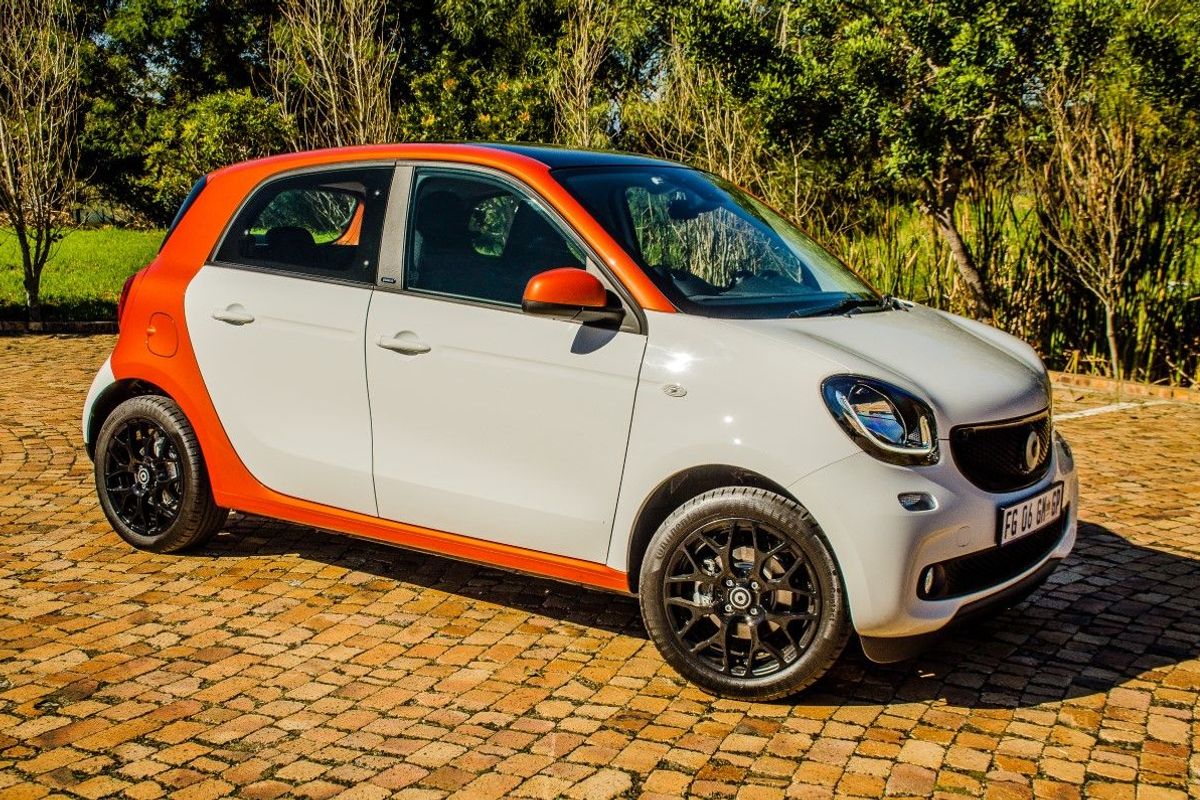
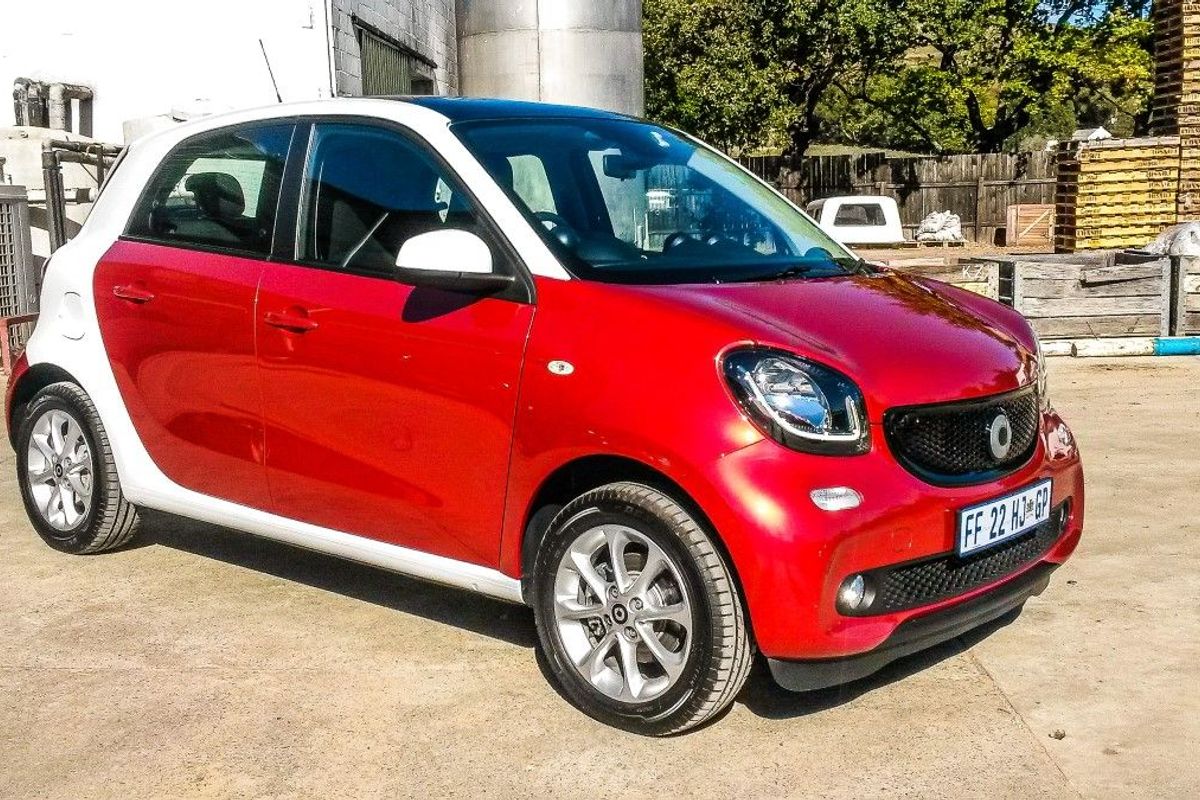
With its compact dimensions, the Smart ForFour is ideal for life in the city.
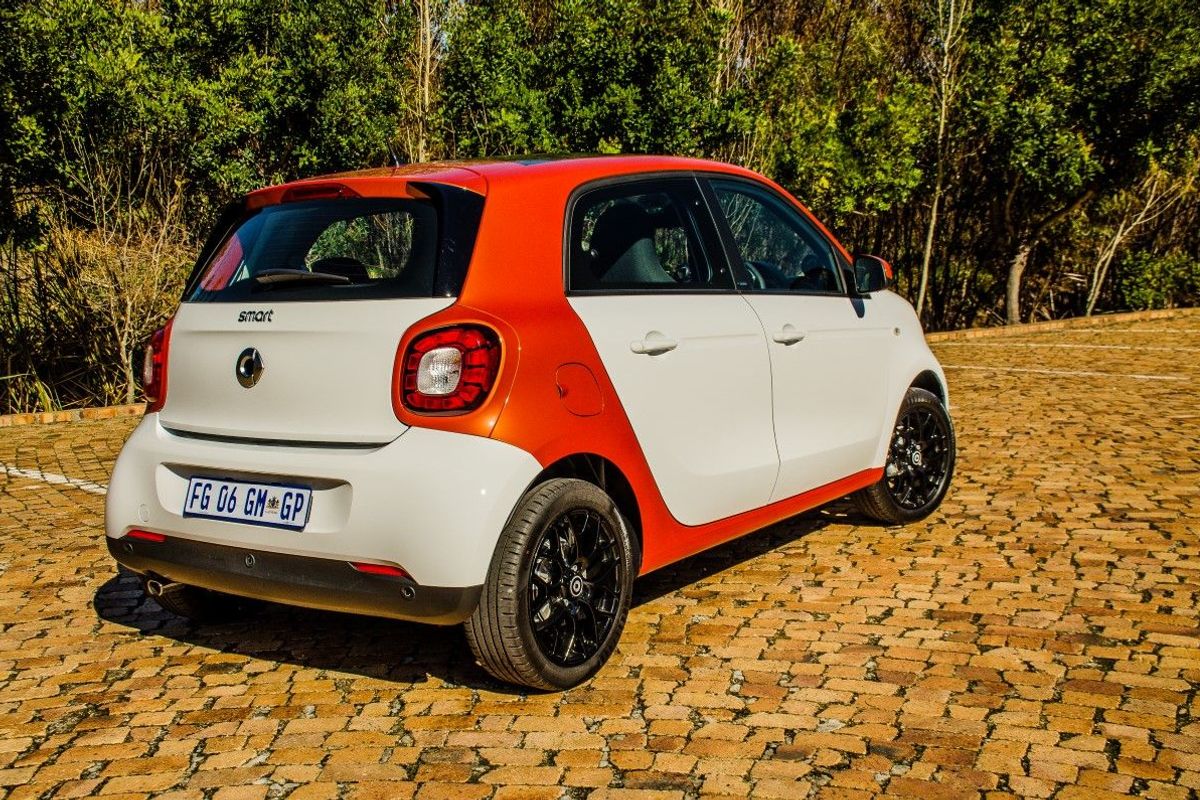
A new rear-engined, rear-wheel drive Smart ForFour now joins the ForTwo and they're hard to tell apart! The new Smart car features a larger honeycomb grille with three colours on offer including black, silver and white to match the rest of the body. The headlights are now sportier with U-shaped daytime running lights and there are more than 40 colour combinations for the body panels to personalise your Smart. The ForFour features a single upward-opening tailgate, while the ForTwo comes with a nifty two-piece tailgate to easily load items into the boot. There is a choice of 15- and 16-inch wheel designs.
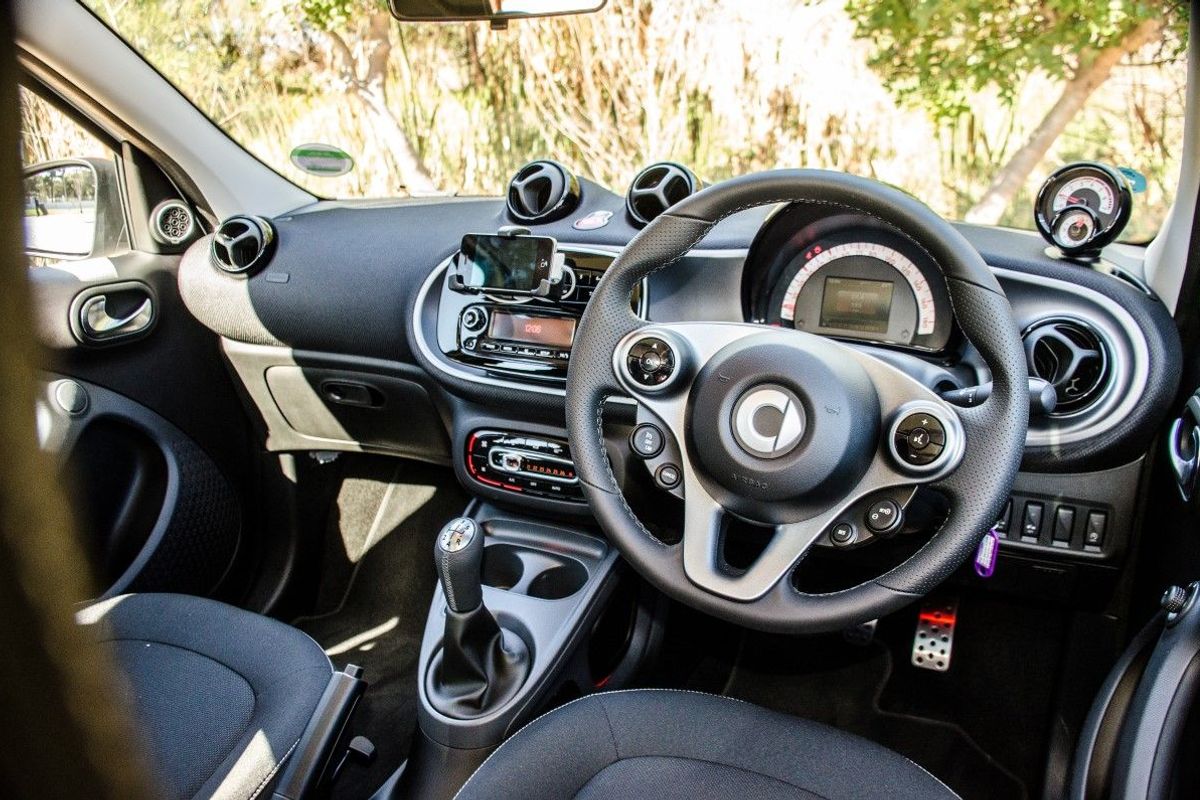
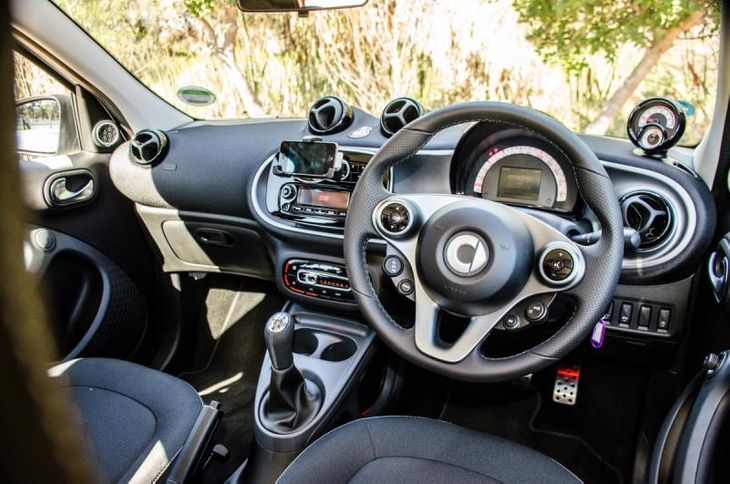
The interior is funky with integrated seats and mesh fabric covering much of the dashboard and door panels (also available in a variety of contrasting colours). Large, circular air vents protrude from the dashboard, which add to the youthful interior design. A three-spoke multifunction steering wheel is optional and controls the audio, trip computer and cruise control. A JBL sound system with 8-speakers is fitted in the ForTwo, while the ForFour comes with a 12-speaker JBL system.
The interior is infused with youthful design elements. Note the rev counter and clock on the dashboard.
A Smart audio system is fitted as standard and is USB, MP3 and Bluetooth compatible. No navigation is available for this system, but with a smartphone cradle you can connect your smartphone to the system and access navigation directly off your phone. You can also specify the optional Smart media system that incorporates a 7-inch touchscreen that "floats" ahead of the centre console and puts all your infotainment at your fingertips.
Smart also offers a number of packages to spice up your car and these include a Sports Package, Urban Style Package, Comfort Package, Stowage Space Package, LED and Sensor Package, Cool & Media Package and Cool & Audio Package. In addition to these packages, a large number of accessories and features can be chosen to further enhance the look of your smart car.
How does the Smart ForFour drive?
The launch route took us from Cape Town's city centre to Warwick Wine Estate near Stellenbosch. We spent most of our time in the ForFour and although the route was short (65 km), it gave us a good idea of what the new Smart was capable of in both urban and highway situations.
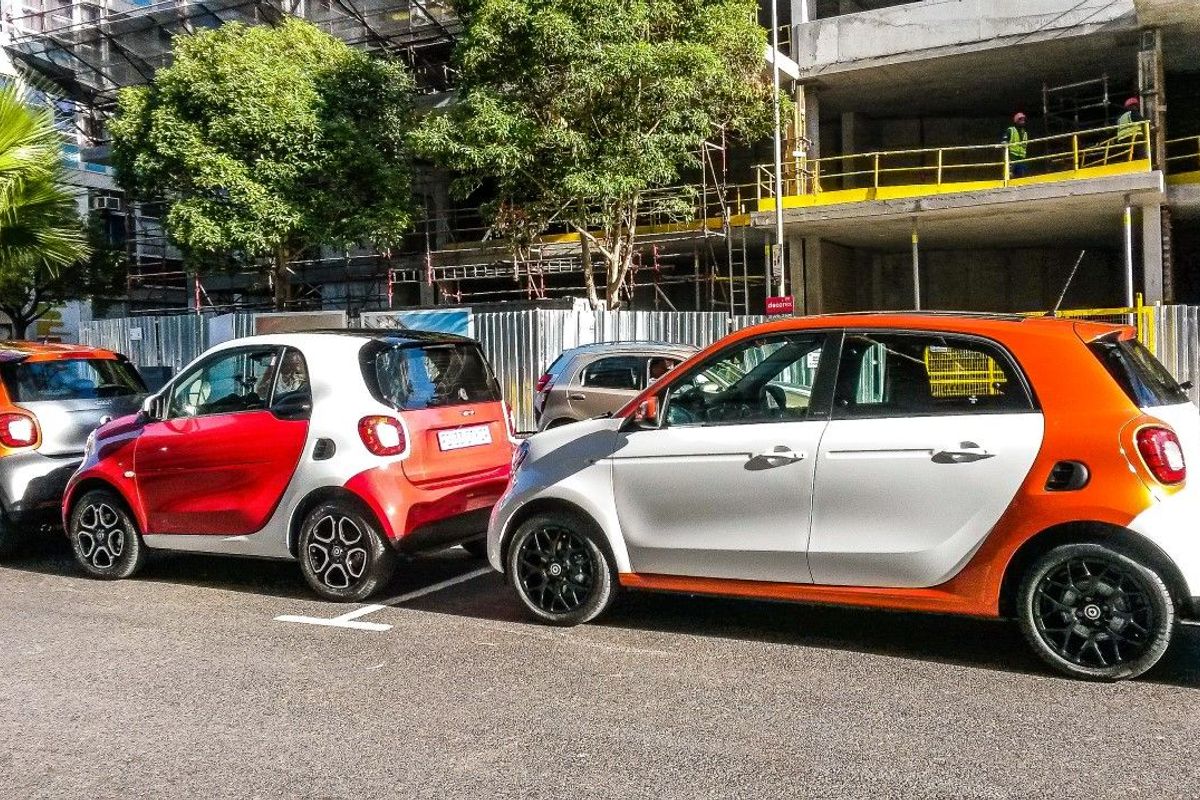
In the city, the smart ForFour is right at home. With its small turning circle of only 8.65 metres, it’s easy to manoeuvre and park, even in the tightest of parking spaces. The ForTwo is even more impressive in this regard with a turning circle of only 6.95 metres. Manoeuvrability is by far Smart cars’ strongest trait.
In close-quarter driving situations, performance is adequate. The transmission is relatively smooth in operation and both the driver and front passenger have enough space to travel in comfort. Rear seat passengers are, however, compromised in the ForFour, there isn't much leg- and headroom at the back.
Out on the highway, however, the Smart ForFour struggled to cope with the expanse of the open road. In-gear acceleration is slow and overtaking requires careful attention. There’s simply not enough power and torque to instil much confidence on the highway. At 120 kph, the engine revs at 4 000 rpm in fifth gear, hampering fuel consumption. Smart claims 4.2 L/100 km for the ForFour (4.1 L/100 km for ForTwo) and on the highway we were averaging around 7.0 L/100 km. We also noticed a fair amount of wind noise entering the cabin.
In terms of practicality, the ForFour offers 185 litres of boot space, which expands to a total of 975 litres with the rear seats folded down. The ForTwo, on the other hand, offers 260 litres of luggage space. Overall, we feel that the Smart ForFour and ForTwo are more suitable for inner city commutes and longer trips out of the city are better left to bigger cars.
We will have both the Smart ForTwo and ForFour on test soon to give them a thorough evaluation. Stay tuned!
Smart prices in South Africa
Smart ForTwo 52 kW manual transmission:
Base R174 900
Passion R194 400
Prime R203 400
Proxy R207 400
Smart ForFour 52 kW manual transmission:
Base R179 900
Passion R199 400
Prime R210 900
Proxy R212 400
Smart ForFour 66 kW automatic transmission: (from July 2016)
Base R210 400
Passion R229 900
Prime R241 400
Proxy R242 900
All Smart models are sold with a 3-year/60 000 km service plan.
Ford Figo 1.5 Automatic Sedan (2016) Review
The successful Ford Figo was replaced in 2015 and this new model offers a lot more in many respects. But does it represent a comparable value proposition to its predecessor, or has it moved too far out of reach for budget buyers?
We like: Standard features, build quality, rear legroom, refinement
We don’t like: High price tag, underwhelming performance, awkward rear visibility
Alternatives:
For better value: Renault Sandero Stepway
The only hatchback in this price bracket and thanks to its low price, generous specification and turbocharged engine, it has become a formidable competitor and a sales success story. There's no automatic option and that engine does need to be worked hard to get the best out of it, which negates any fuel consumption benefits. It boasts a better specification list, but costs R20k less than the Ford.
For better resale: Volkswagen Polo Vivo 1.4 Trendline sedan
The Volkswagen's build quality is more solid and its a better open-road cruiser than the Ford, but the VW is comparatively down on power. The Ford offers a more capacious boot and more specification for a slightly higher price tag.
For less money, but a similar drive: Suzuki Swift Dzire 1.2 GL
The Suzuki Dzire follows the same exciting recipe as its Swift hatchback cousin and is fun to drive. It's down on power, has slightly less specification and, unfortunately, the rear seats cannot fold down to increase boot space. It's cheaper than the Ford, however.
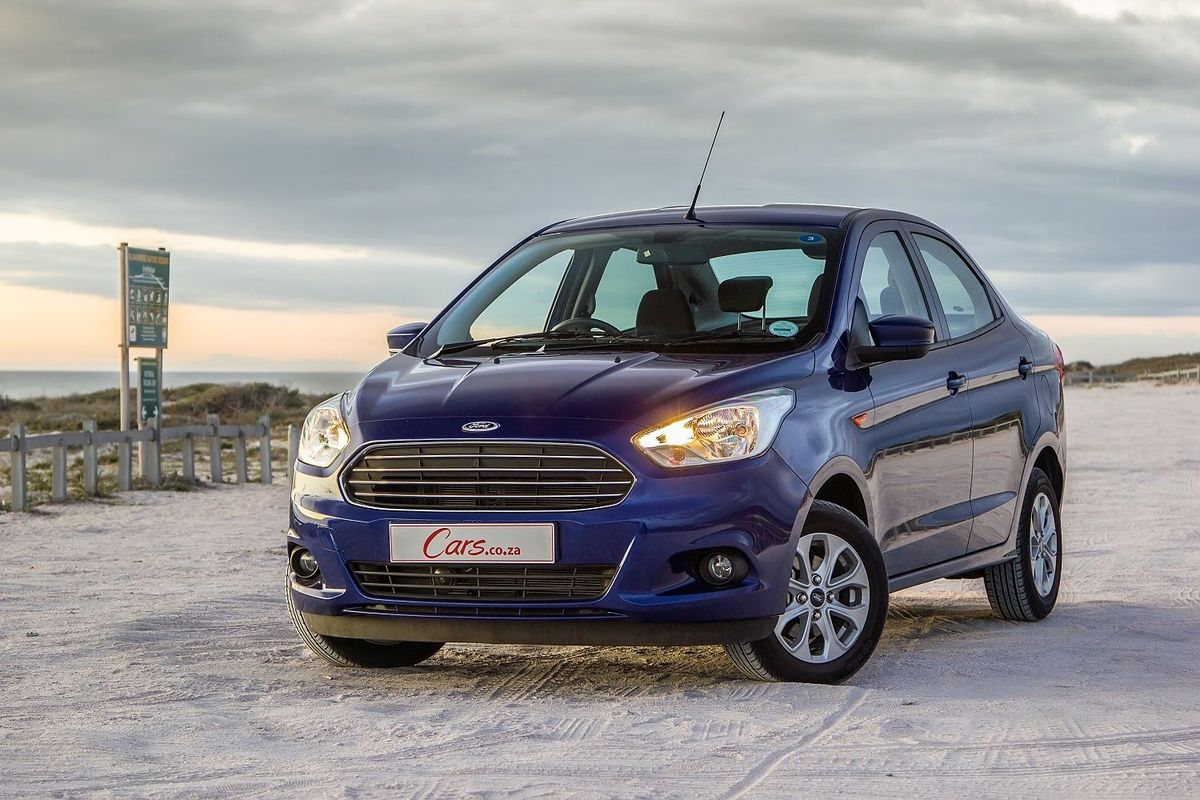
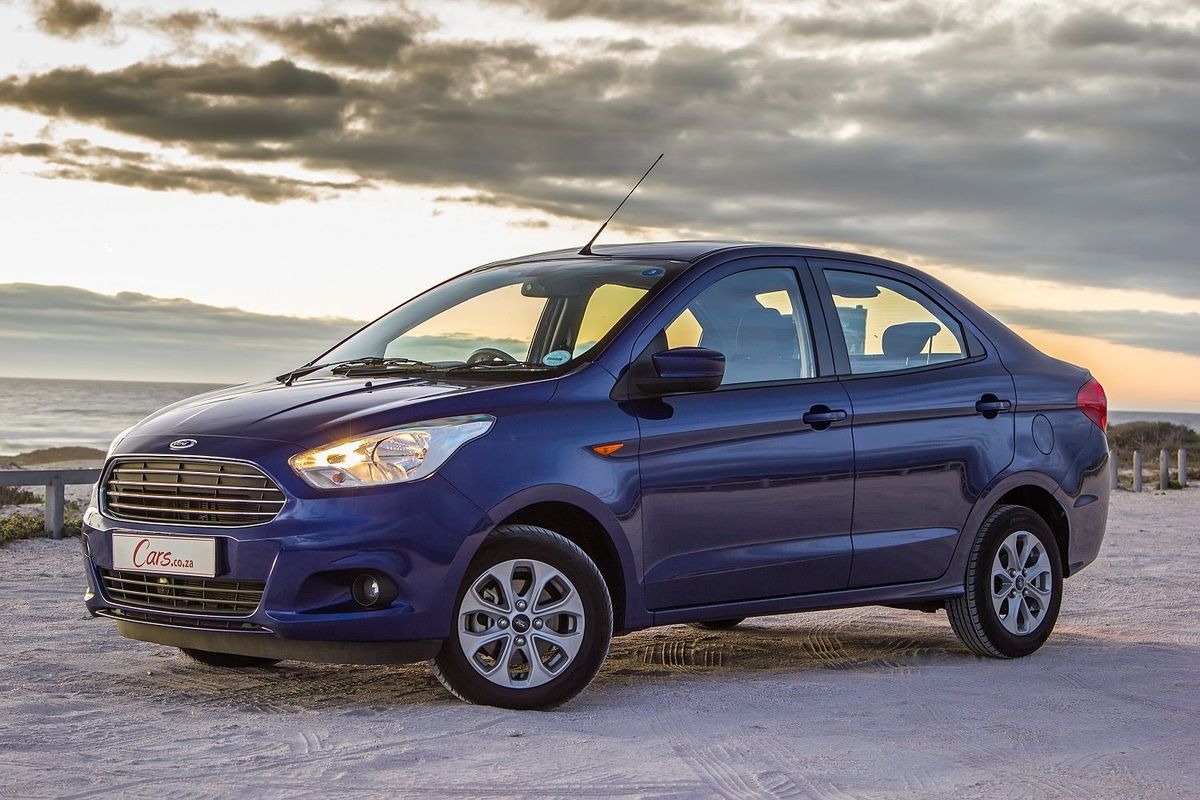
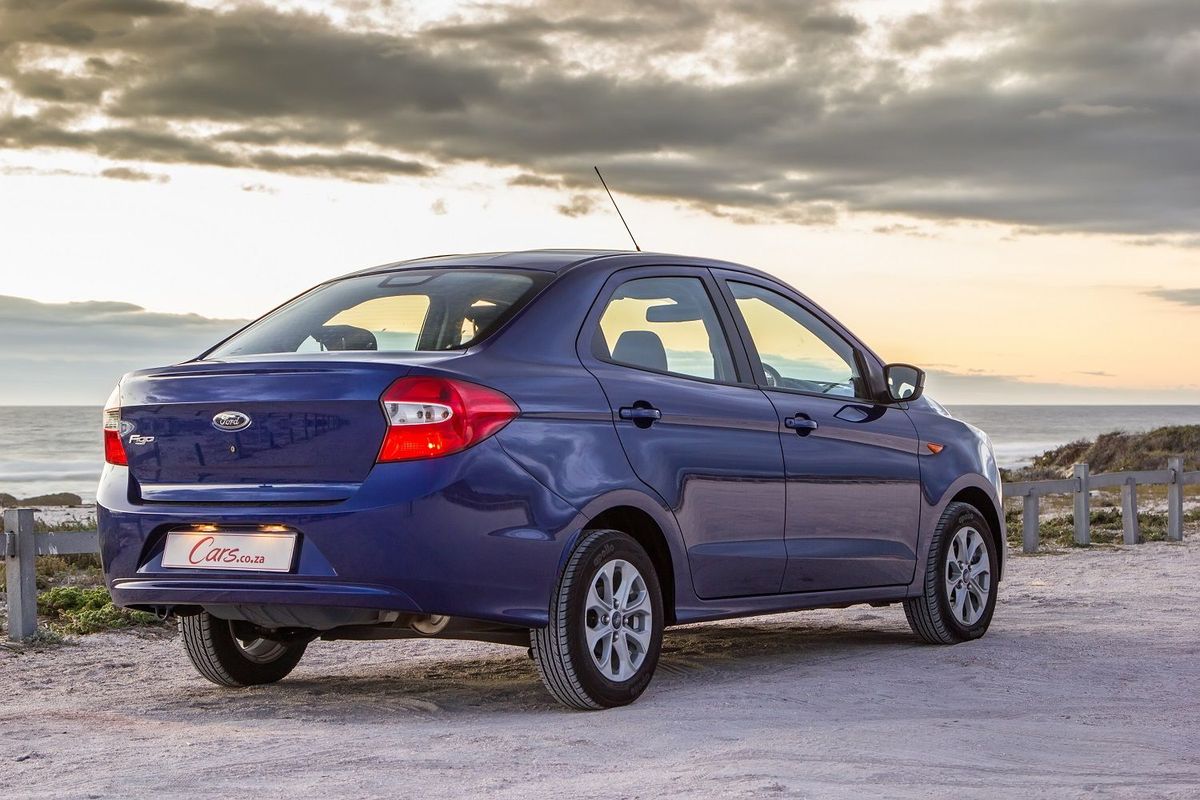
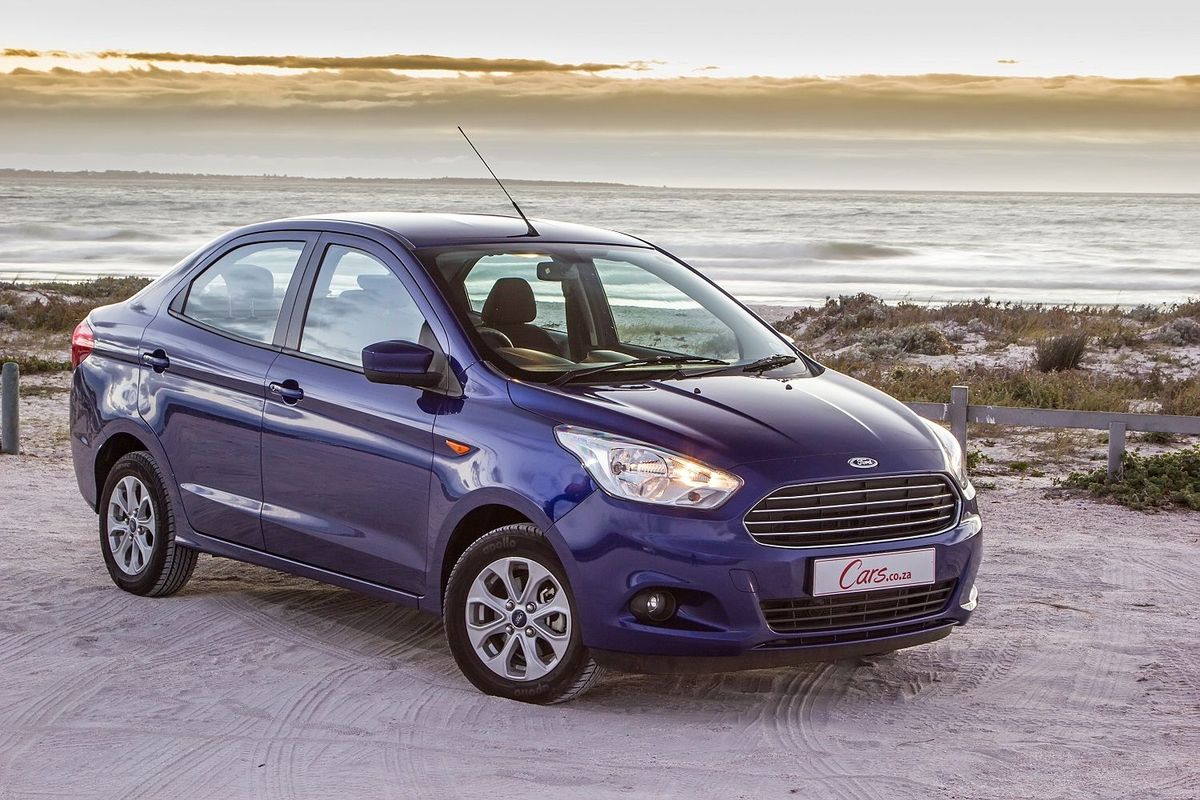
The new Ford Figo line-up has expanded considerably and for the first time, there’s now a sedan model, which you see tested here. Unlike the previous model that was based on a previous generation Fiesta, this is an all-new vehicle.
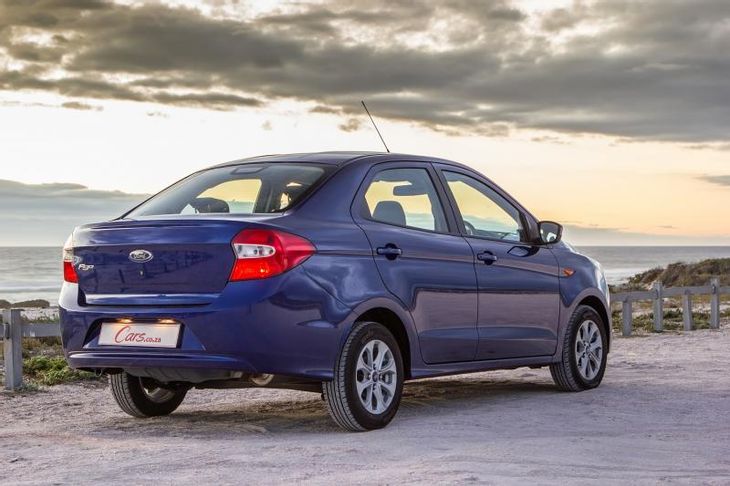
While the styling of the hatchback is pretty positive, the sedan is anonymous and generic. The front thankfully retains that new nose that has traits from other models from Ford’s arsenal. While the immediate looks aren’t completely convincing, ultimately looks count for very little when it comes to a critical assessment of this derivative.
How does it fare in…
Performance and economy
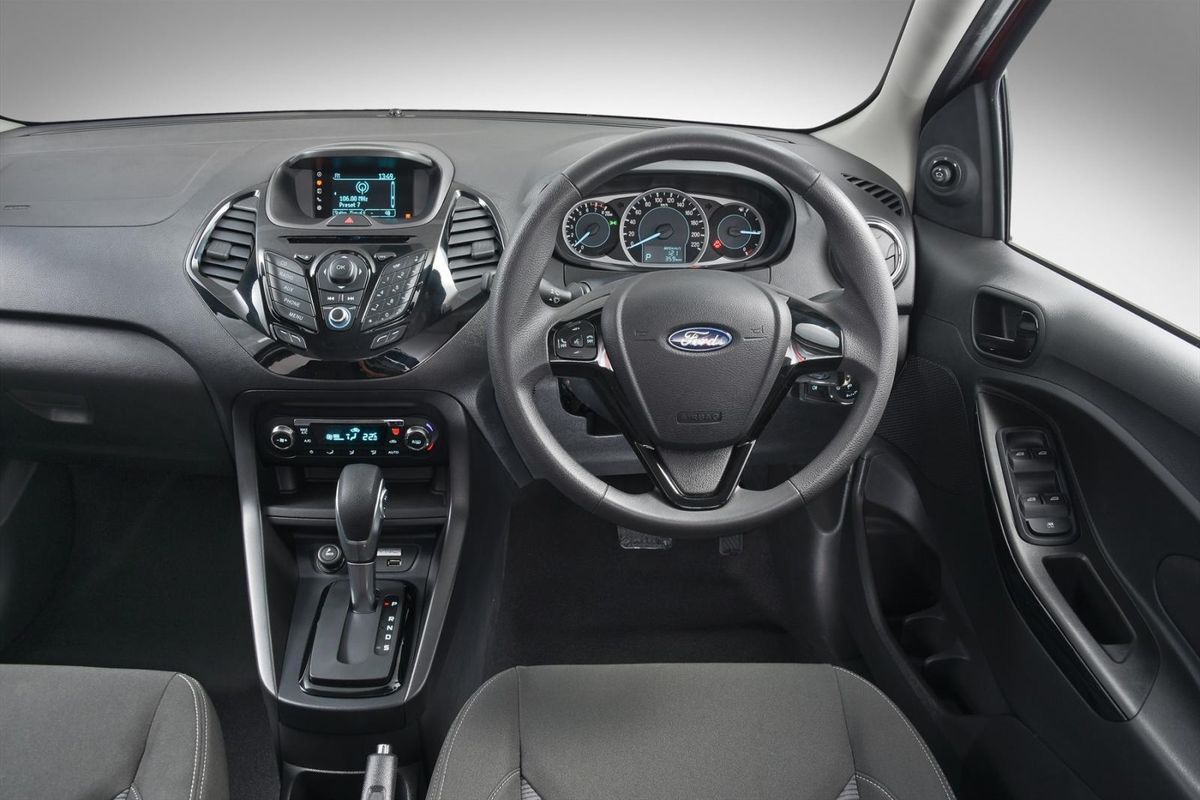
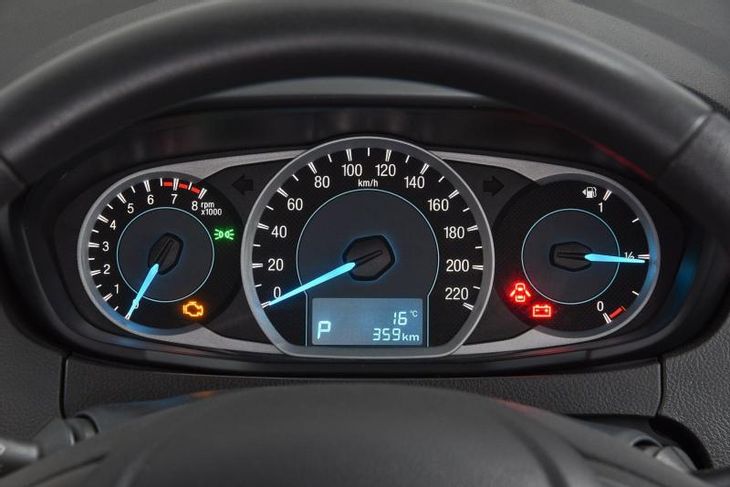
The Figo's dashboard is rudimentary but does include an outside temperature reading.
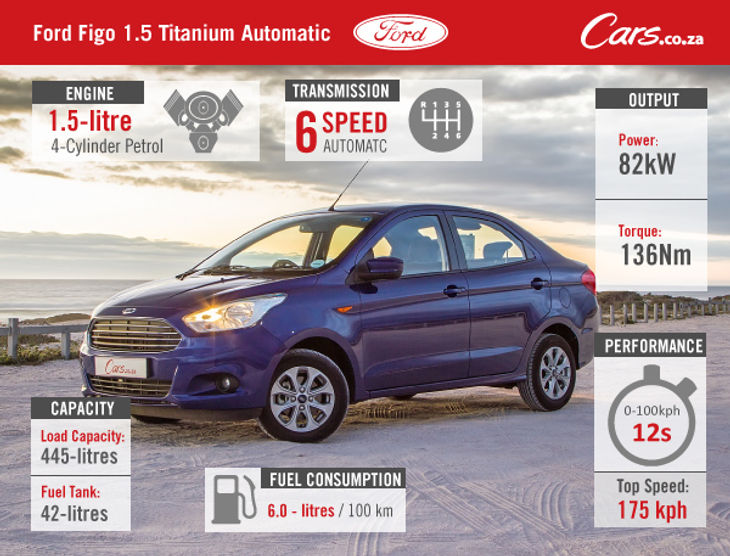
The Figo is powered by an 82 kW 1.5-litre petrol four-cylinder motor that produces 136 Nm of torque and drives the front wheels via a Powershift automatic transmission. The sedan's not going to break any performance records, but the real test is how well it fares when loaded with passengers and goods.
The result is not particularly inspiring. While the vehicle tips the scales at a lightweight 1 068 kg, the addition of passengers and luggage results in a weight increase that the Figo's engine struggles to cope with. Its performance is satisfactory when there’s just a driver on board, but a vehicle like this has generous rear legroom and a cavernous boot, yet feels sluggish when loaded and that does not bode well for the motoring in the thinner air at the Reef.
We’re not saying the engine is incapable of moving a fully-loaded Figo, it’s just that it will sound laboured and lethargic, and the transmission is likely to kick down constantly. Uphill climbs were a particular test that the loaded Figo battled with, but once you’re on a level freeway, the Ford trots along with adequate momentum. As for the shifts themselves, the 'box's responsiveness tended to be on the slower side.
Ford claims a 6.0 L/100 km figure on the combined cycle, but it’s impossible to achieve a return that's remotely close to that in reality. In our week’s worth of testing, the Figo returned a figure of 8.1 L/100km.
Ride and drive
Even if the Figo sedan isn’t the most energetic of performers, it does offer a good ride quality over poorly-made roads. Its 14-inch alloys sit nicely in thick-walled 175/65 rubber, which provides some bump absorption against the ruts of a deteriorating road. Due to its light weight and slabby shape, the sedan does get buffeted about by the strong winds that are prevalent in the Cape at this time of year, but its size gives it a nice balance between compact city car and practical sedan. Meanwhile, the steering is pleasantly light in feel and parallel parking is an effortless task.
Build quality (for what you’re paying) is impressive; the cabin's noise insulation is quite good too. It's a simple and unfussy vehicle to drive and visibility is good from the front and sides. The rear window makes reversing a mild challenge, however, as initially you'll forget you're in a longer car (park distance control would solve this issue, but that would push the Figo's price even higher).
The gearbox is geared for economy and doesn't like to be rushed. You can manually change gears by using a button located on the right of the transmission selector, but it sits in an awkward position and requires familiarisation. Despite trying out the automatic and manual override modes, we felt it was best to leave the 'box to its own devices.
Space and practicality
What the Ford Figo does really well is to provide generous space and practicality. There are plenty of little oddment spaces for your keys, wallet and cellphone, as well as ample recesses in the doors to store a pair of water bottles. The Figo’s glove compartment is also generously sized and its boot can swallow up to 445 litres of cargo, if the marketing material is to be believed (this can be increased if you fold the rear seats down). Its hatchback sibling’s luggage capacity, by comparison, is a paltry 257 litres, at least according to Ford's claim. If optimal space is what you need then best go with the sedan version.
Rear legroom is to be complimented. Our testers' sit-behind-yourself tests revealed there's plenty space for a pair of adults at the back.
Standard features
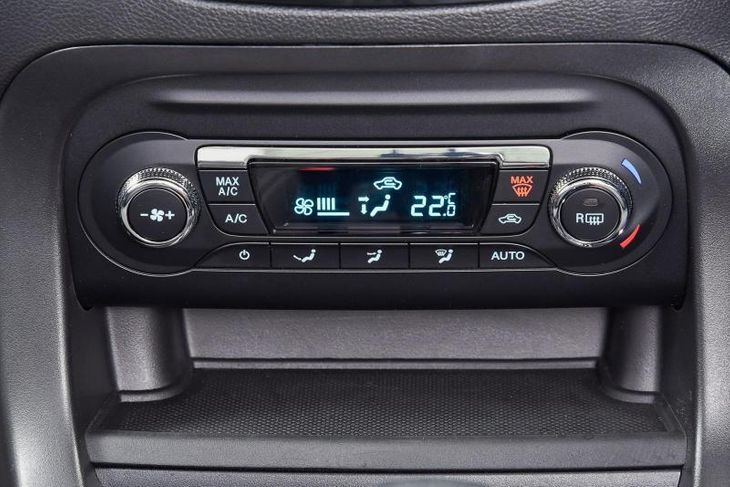
Automatic air-con is a nice-to-have feature on a vehicle in this price bracket.
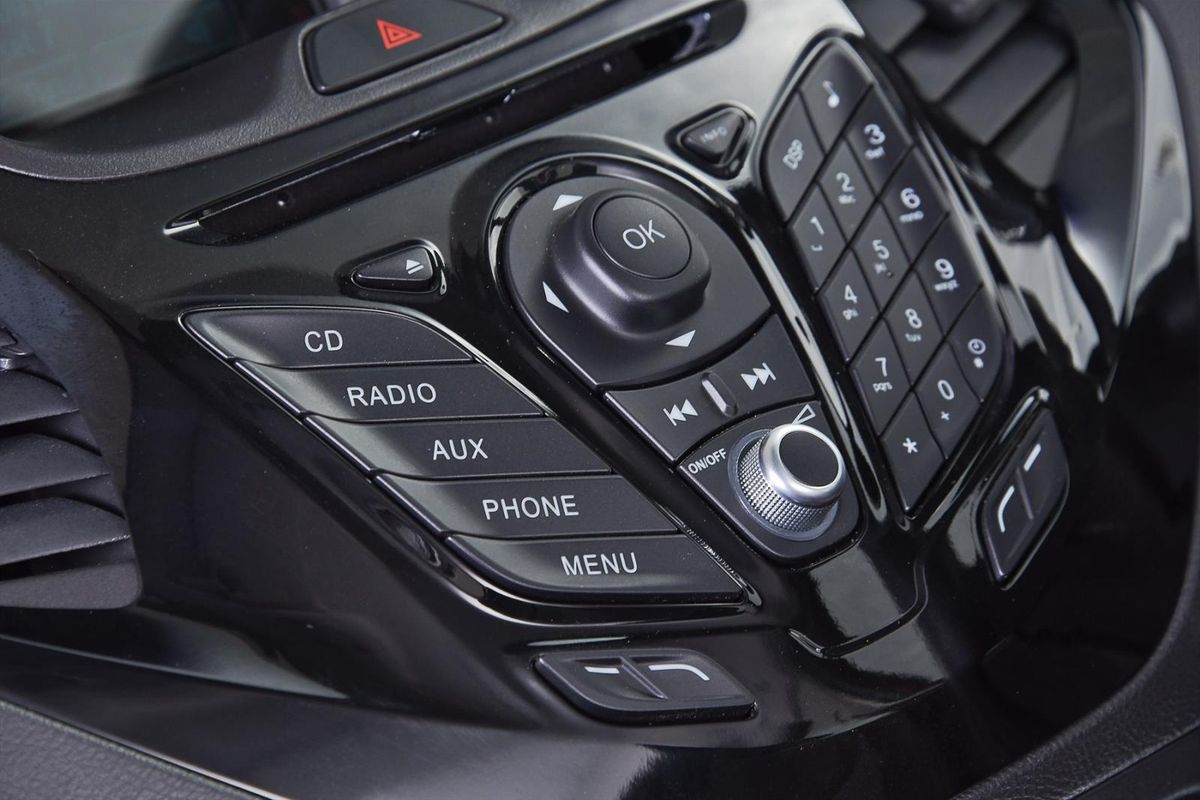
The Titanium specification is the highest in the Figo range and includes a multitude of modern conveniences. For the record, there are three specification levels: Ambiente, Trend and Titanium. Titanium spec gets you (single-zone) climate control, electronic stability control, Ford Sync connectivity, USB and auxiliary inputs, and a multifunction steering wheel (with audio controls). Cruise control is strangely missing; we think it’d make open-road cruises more pleasurable.
The number of safety systems is comprehensive too. There are 6 airbags, hill start assist, electronic stability control and anti-lock brakes (ABS).
Verdict
Even though the Figo looks a bit slab-sided, its notchy rear section hides a capacious boot section.
The new Ford Figo is a more expensive proposition than the outgoing model. Whereas the previous generation model remains on sale (and given its value offering, will probably keep the sales numbers ticking over), the changes to the newcomer's interior and model line-up make a significant difference.
The adoption of the interior from the current Fiesta is an excellent move, but that dashboard design is several years old, so while it feels like an upgrade, even Ford fans will point out that it’s hardly cutting edge. What is worth noting, however, is the addition of Sync Bluetooth connectivity, which works well.
The weakest link in the Ford Figo’s armoury is its engine, and, more to the point, the calibration of the motor with the self-shifting transmission. While the vehicle can get by effortlessly with just the driver to transport, it struggles when fully loaded.
It’s a pity, because the rear legroom and substantial boot space make the Ford Figo a great-sized vehicle for small families. Thankfully there’s a turbodiesel motor in the Figo line-up that offers similar levels of power, but torque is increased dramatically. Strangely, the oil-burner is only available in hatchback configuration.
Ford Figo price in South Africa
The price of the new Ford Figo puts it R20 grand more expensive than the old Figo, with this top-of-the-range sedan costing R209 900. The Figo range starts from R162 900. The price includes a 2-year/40 000km service plan, 4-year/120 000km warranty and 3 years’ worth of roadside assistance.
In the acceleration-obsessed world of drag racing, one aspect of a car’s setup is often crucial to victory: all-wheel drive. Sending power to all four wheels significantly aids traction and helps the car move quickly off the line in those all-important first few seconds of a quarter mile drag race.
Which makes our latest drag race very interesting; although these cars have similar levels of power and torque, the BMW is rear-wheel driven while the plucky Mercedes-AMG A45 4Matic, now with even more power after a facelift, is all-wheel driven.
With the odds stacked in the AMG’s favour, would the latest M car from BMW be able to claw back a victory in tough conditions?
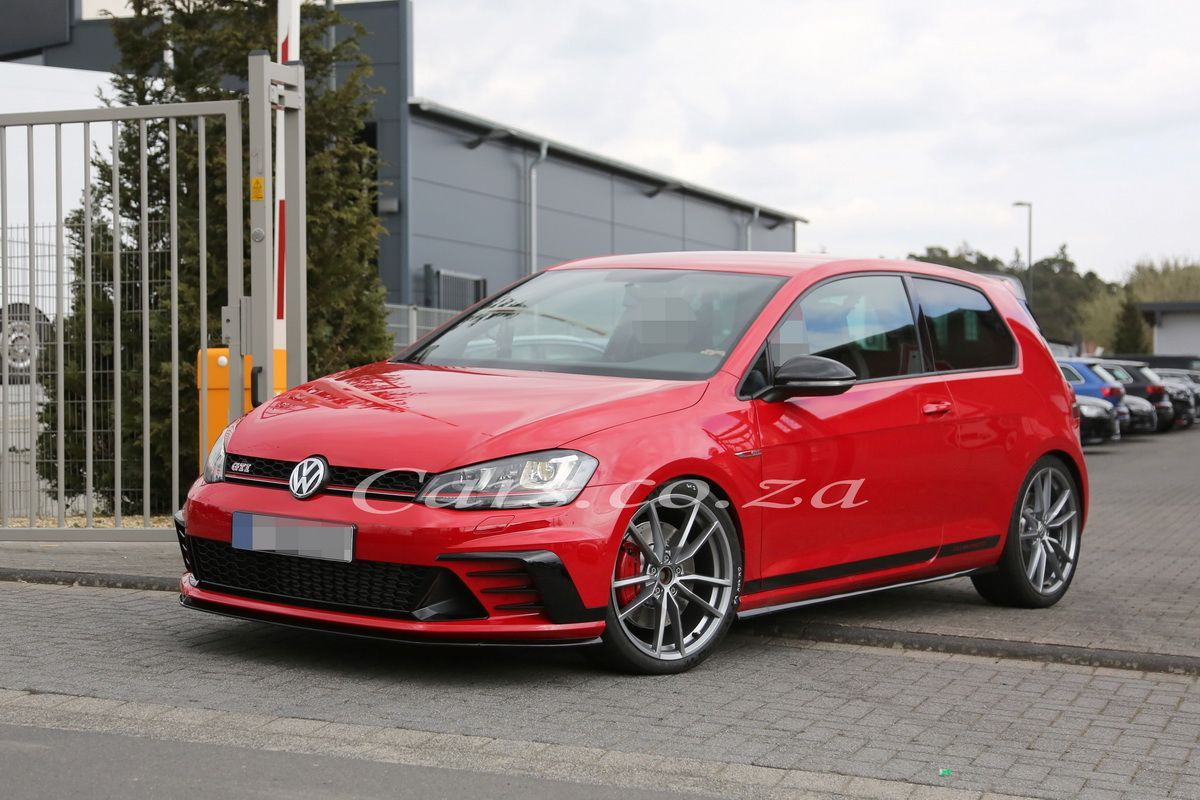
Now that the local introduction of the limited edition Golf GTI Clubsport is imminent, Volkswagen is readying an even hotter 228 kW S version that will debut at the brand’s Wörthersee event.
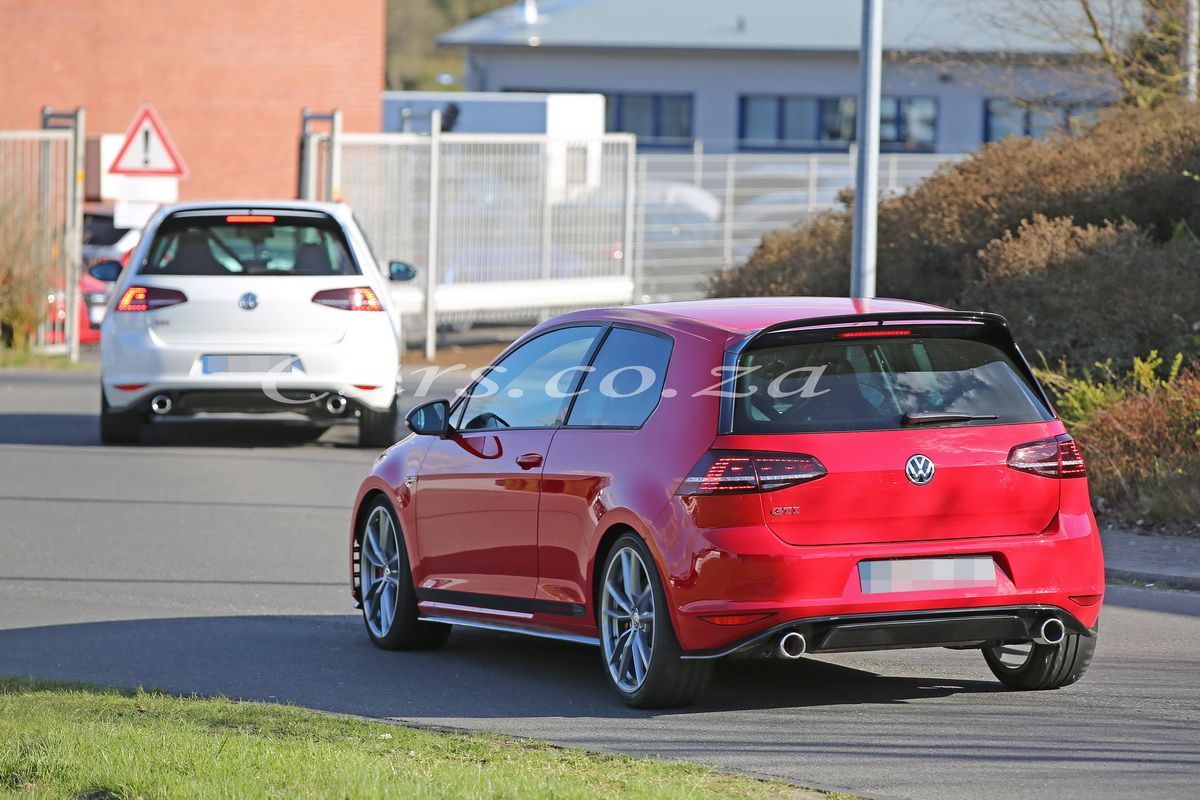
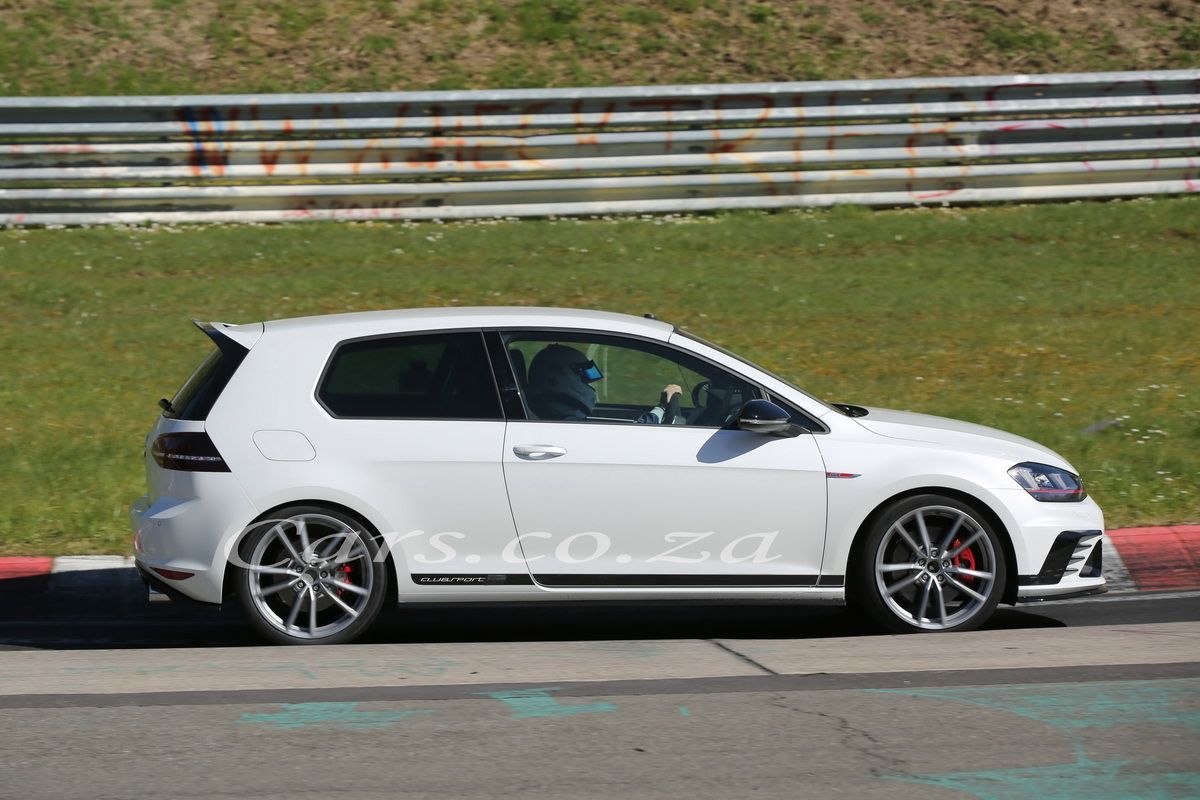
The eagerly-awaited GTI Clubsport is fitted with a 2.0-litre turbocharged engine that churns out 195 kW with an overboost function that pushes that output up to a heady 213 kW for short periods of time. We expect the model, which has a claimed 0-100 kph time of about 6 seconds, to retail for approximately R499 000 and that numbers will be very limited! Recently, were fortunate to spot two pre-launch vehicles being tested in the Southern Cape recently:
However, the Clubsport won’t be the hottest Golf to go into series production for long, however. Our spy photographer has snapped images of a car that will be unveiled at the upcoming 35th Wörthersee event and produce a peak output of no less than 228 kW… Two prototypes of what appeared to be a Clubsport S were seen being tested at the Nurburgring.
'We could see the S'
“They were almost undisguised and just the ‘S’ letter in the Clubsport S livery was covered with black tape. We saw the S letter with our own eyes, but couldn’t get a picture when they briefly took the tape off,” the lensman said.
The fact that Volkswagen has persisted with a front-wheel-drive configuration for the Clubsport S goes beyond the need to develop another “most powerful full-production Golf to date”, however.
In fact, some reports suggest Volkswagen’s determined to eclipse the current Nurburgring lap record for a front-wheel-drive car (set by a prototype of the Honda Civic Type R) and has honed “the model’s driving profile for (the Nordschleife circuit) with help from racing drivers."
Even though Volkswagen refers to this new addition as a “full-production” car, it will not be a permanent member in the Golf GTI's lineup as 5 000 units have been earmarked for production. We cannot help but wonder how many of the Clubsport S models will eventually reach South Africa… If it arrives, aficionados are bound to snap them up quickly…
Picture credit: S. Baldauf/SB-Medien
Watch the Volkswagen Golf GTI ClubSport S teaser video:
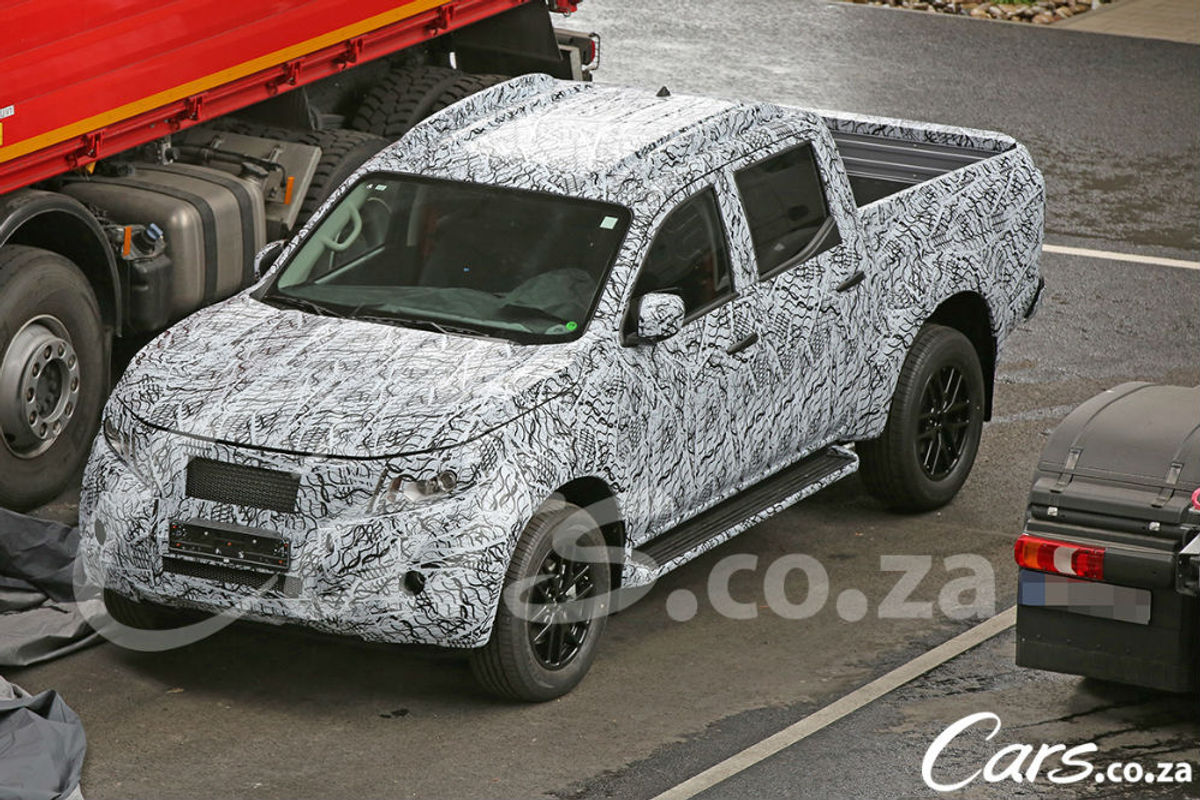
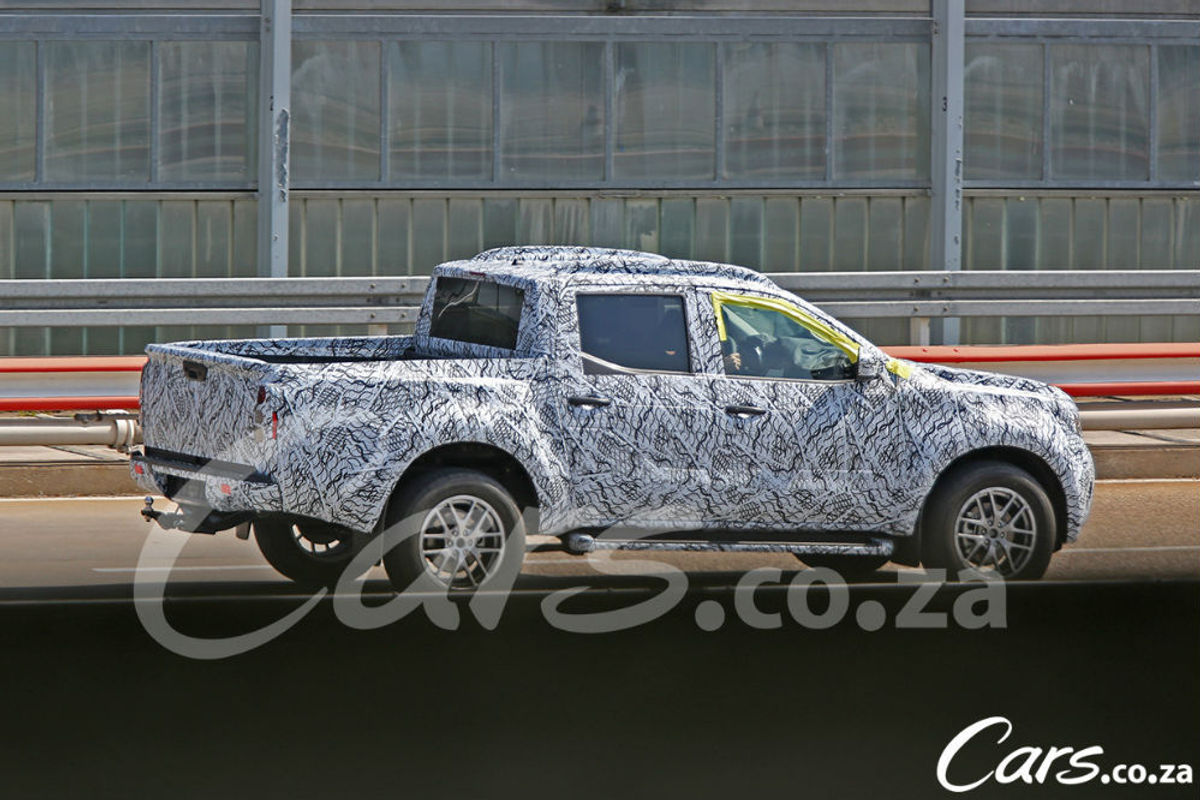
Mercedes-Benz is readying its double-cab offering, which is expected to make its official debut next year. Even though it will be based on a modified (new-generation) Nissan Navara platform, it will be appointed to a level of luxury that will satisfy brand loyalists and will be sold and serviced through conventional Benz dealers.
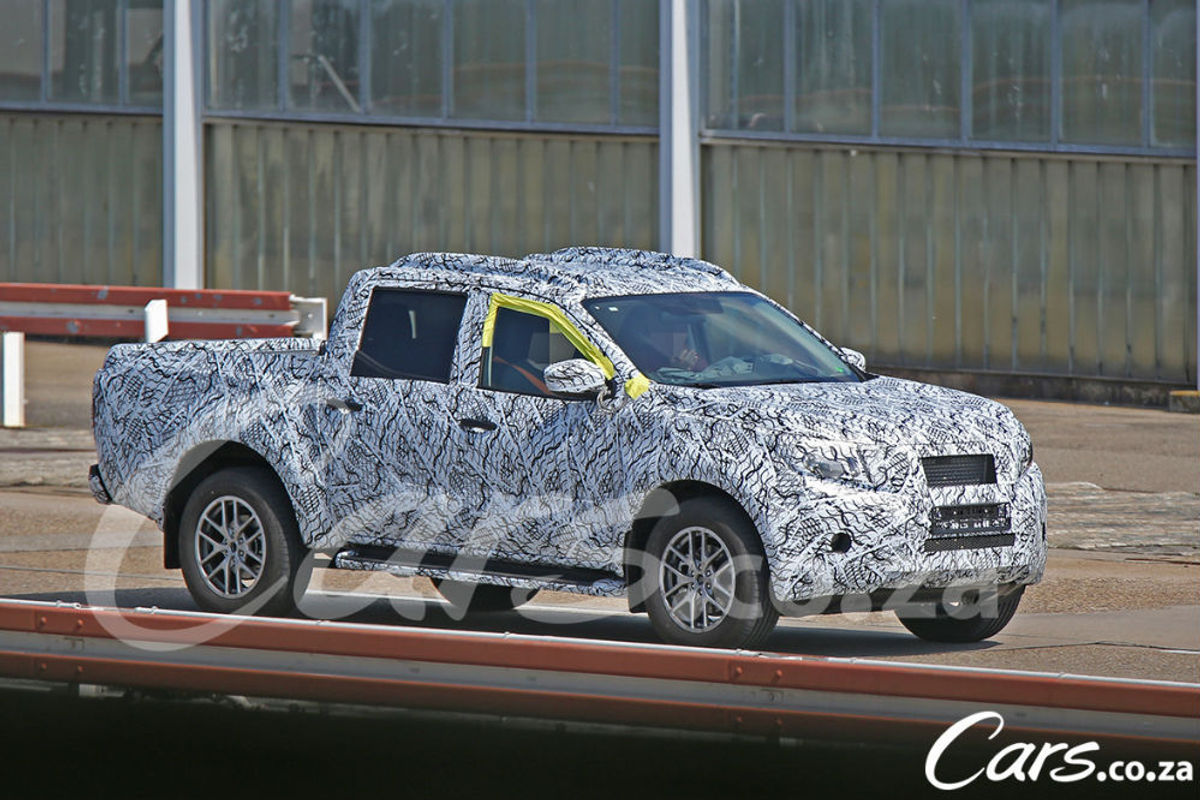
According to our spy photographer the fully disguised prototype appeared wider (ostensibly owing to the Mercedes having a broader track width) than the Navara and “although the exterior design still looks a lot like the Nissan’s, but that should change when this car goes into production in 2017.
“We suspect that Mercedes has an altogether different interior (to the Navara), because the prototype had a completely disguised cabin,” he concluded.
This is our first look at (the albeit heavily disguised) Mercedes-Benz, which is widely expected to be named the "GLT" when it goes into production. It was conceived for markets in which high-spec derivatives of otherwise commercially-oriented pick-ups are popular and South Africa’s a prime example.
Mercedes-Benz commercial vehicle division head Volker Mornhinweg revealed last year that the “GLT” (its official name has yet to be confirmed) will be produced in 3 specification levels and in the double-cab body style only. It is expected that turbopetrol and –diesel powerplants will be offered in 4- and 6-cylinder guises and that there will be a choice between 6-speed manual and 7-speed automatic transmissions.
Speaking to Cars.co.za at the 2015 Frankfurt Show, Mornhinweg said that the double-cab would offer sufficient build- and driving refinement to warrant being retailed by Mercedes-Benz passenger vehicle dealerships (as opposed to its commercial vehicle outlets). The premium focus would extend beyond Benz offering the most luxurious cabin in its segment, he added — the level of integrated technology (convenience- and safety-wise) will be at a level that traditional Mercedes-Benz customers have come to expect. We'll provide more details when they become available…