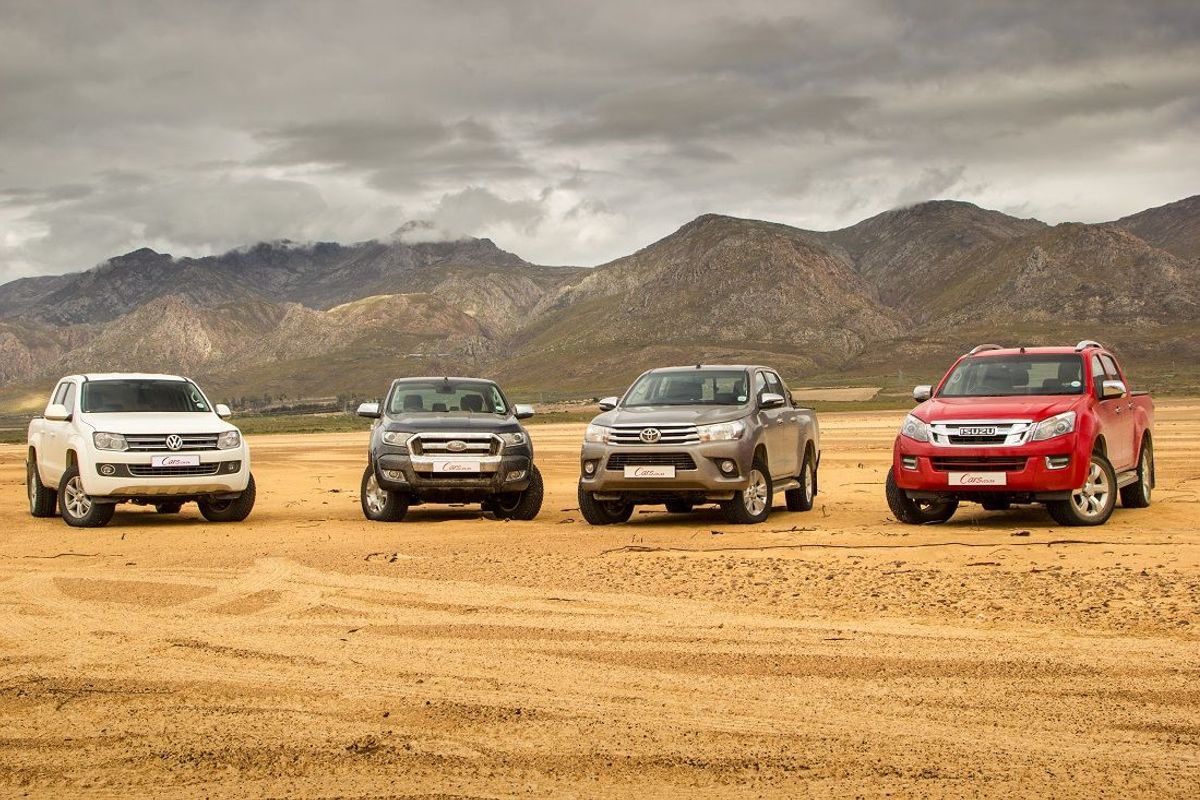
In-Depth Comparison: New Hilux vs Ranger vs KB vs Amarok (video)
South Africa is bakkie country. Our outdoor, active lifestyles are a perfect fit for the leisure-oriented double cab, but following the introduction of the facelifted Ford Ranger and new Toyota Hilux, which rules the roost?
The previous-generation Toyota Hilux had a very long and successful model life, but towards the end of that career was feeling the heat from Ford’s Ranger. Ford then turned up the heat even more with a comprehensive update towards the end of 2015. So, Toyota can ill afford not coming out guns blazing with the new Hilux.
But the Ranger is not its only rival. Isuzu’s KB continues to find favour with South Africans that appreciate its particular blend of sturdiness, dependability and dual-purpose appeal. And then there’s also Volkswagen’s Amarok, a vehicle that is regarded as heavily road-biased but which surprised us during our tests.
In this video we take you to Klipbokkop near Worcester and put the four bakkies through a number of test routines to discover their pros and cons, including an on-road assessment, gravel road driving, sand dunes, steep descents and gullies.
Performance stats and specifications for all the cars are presented at the end of the video.
As car manufacturers step up the development of in-car infotainment systems and technology giants Apple and Google continue to make their presence felt, smartphone integration is set to become far more important in vehicle purchasing decisions
In February this year, I attended Mobile World Congress (MWC) in Barcelona as a guest of Ford South Africa and saw first hand how the company’s new in-car infotainment system SYNC 3 works. MWC is the largest and most important event in the mobile industry that sees all major smartphone manufacturers announce their flagships and innovations for the year. MWC 2016 marked the fifth consecutive year that Ford had an exhibit at the show.
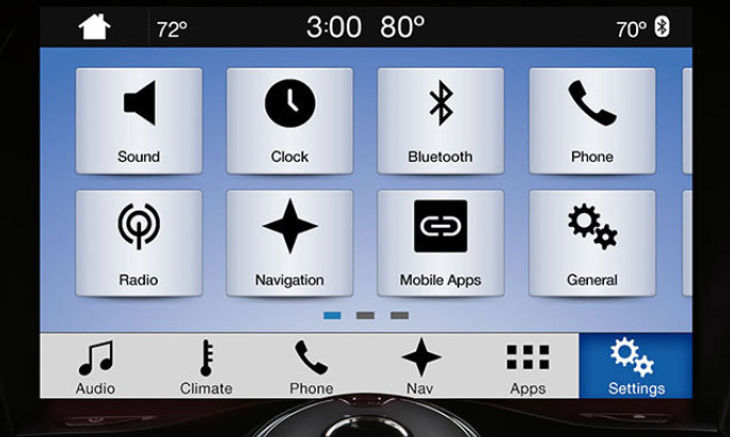
SYNC 3 (pictured below) is quite a significant upgrade compared with the previous two generations of the infotainment system (SYNC and SYNC 2), which relied on Microsoft for its underlying technology. Its next-generation platform now has been built from the ground up and runs on BlackBerry’s QNX platform, an operating system for embedded systems. Most importantly, it has support for Google and Apple’s smartphone projection via vehicles' infotainment systems.
A basic infotainment system allows a driver to make use their smartphones in a safer environment, while still keeping their full attention on the road. It conveniently lets you make or take calls hands-free, handles text messages, offers GPS/mapping support, and plays music from existing playlists or podcasts. But this also means there’s another screen competing for your attention on the dashboard.
Technology giants Google and Apple are, unsurprisingly, playing in this space, and have released Android Auto and CarPlay, respectively. These systems allow you to pair your handset to the supported car or platform and use it in a way that is familiar to you, like an extension of your smartphone. It also supports Google Voice and Siri, making it a seamless transition for drivers to make use of their own device services, rather than that of a car manufacturer.
While SYNC on its own is one of the better infotainment systems I’ve tried (it even recognises my accent), Android Auto and CarPlay are superior thanks to a deeper level of integration. The vehicle's infotainment screen transforms into an expanded view of your smartphone with, for example, full support of Google Cards to provide you with weather reports, directions and what’s nearby. This is great if you don’t want to learn yet another system’s interface. SYNC 2 has only just hit our shores, so expect some time before we see SYNC 3…
Last year, Hyundai became the first car manufacturer in the US to make Android Auto available to consumers with the release of the 2015 Sonata. Once you plug a compatible handset and tap the Android Auto icon, your smartphone becomes your infotainment system. It also supports third-party apps like TuneIn Radio, iHeartRadio, Stitcher, etc.
Meanwhile, General Motors has been rolling out CarPlay to the bulk of its fleet with speed; faster than its rivals in the US market. According to the Wall Street Journal, GM made CarPlay available on 27 of its models before the end of 2015, which was “far more than any other auto company.”
It has also been reported that GM’s CarPlay integration has helped the company sell more vehicles. The reason being that in-car navigation is optional and costs $900-$1 000 to add-on, but with CarPlay built-in, it costs nothing more for vehicles with a built-in display. So what does this mean for consumers back in South Africa?
There are currently only a handful of manufacturers that offer CarPlay and Android Auto support, however only CarPlay works in South Africa. Android Auto (see a demonstration below) is supported on the same vehicles as CarPlay, but due to pending licensing agreements between Google and local authorities, the service is not yet active in South Africa.
Manufacturers that have confirmed support for both these services include Volkswagen (2016 models fitted with the MIB II radio, and an activation fee needs to be paid if Active Info Display isn’t fitted); Chevrolet (2016 Captiva); Audi (2016 Q7 and A4); and Volvo (2016 XC90). CarPlay currently works for these models.
Given the current economy and decline in vehicle sales in March 2016, which according to NAAMSA are sitting on the double digits compared to a year ago, most of us are going to (be forced?) to make smarter buying decisions. I don’t know about you, but if I’m buying a car this year, I’d want some of the features to be relevant till at least 2021.
As someone who already uses my smartphone for navigation and exploring, I’d want to be able to continue doing that, but instead, have my directions read out through my car speakers. The ability to use voice commands to play music, pause, or skip tracks? Yes, I’d like that too, especially if I’m going to spend that much on a car in 2016.
When mobile and car manufacturers collaborate and invest heavily in smart technology, and it’s paying off in other markets, it’s time for South African motorists to sit up and pay attention.
Any views or opinions expressed in this article are solely those of the author and do not represent those of Cars.co.za or its editorial content team.
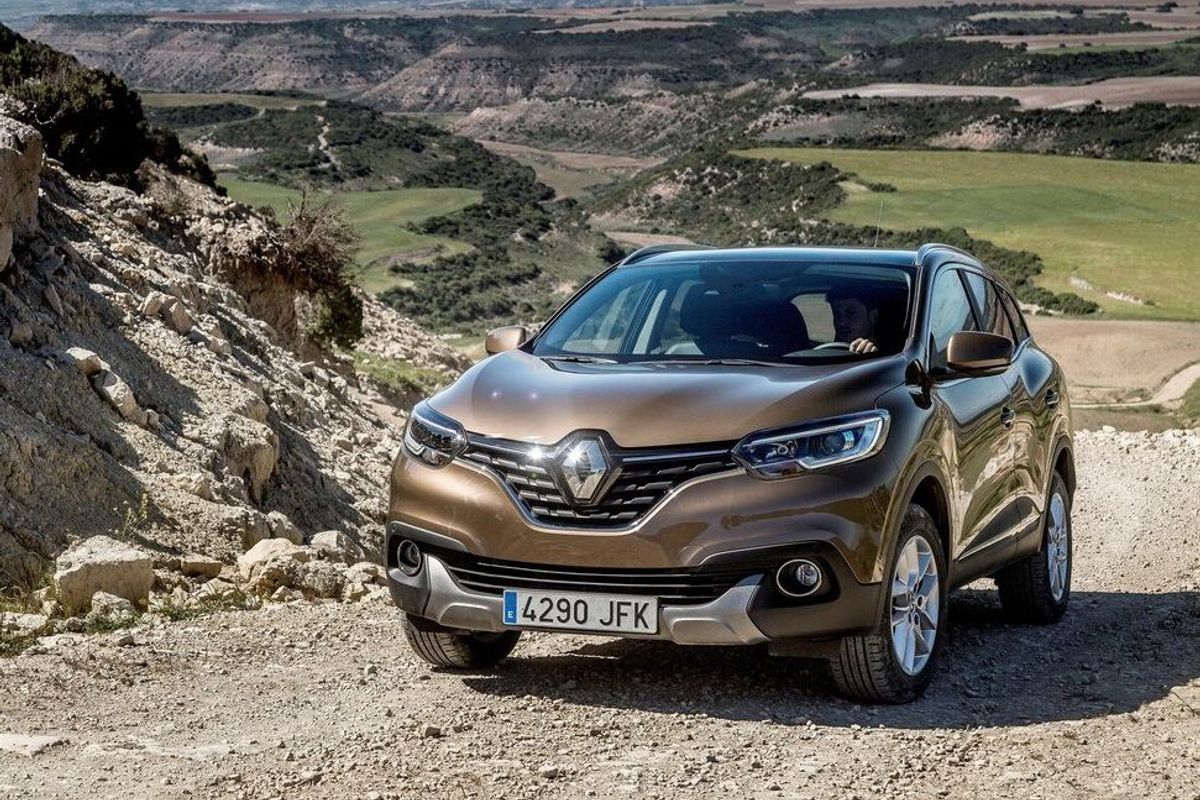
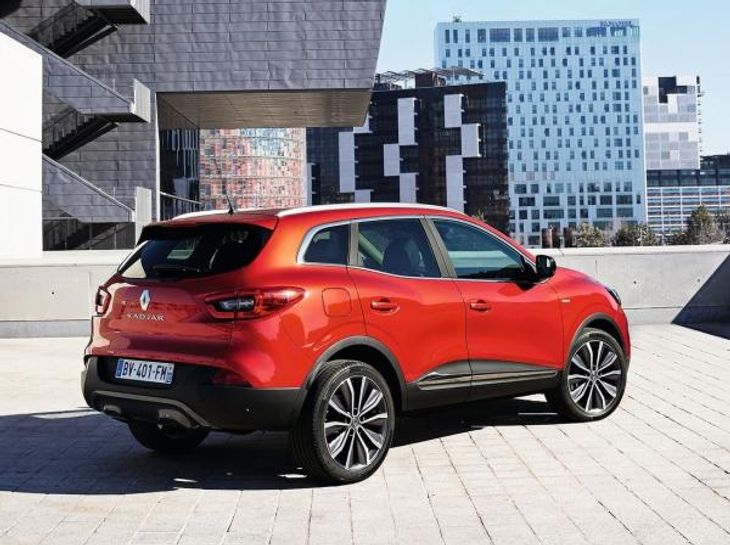
Renault Kadjar (2016) Specs & Price
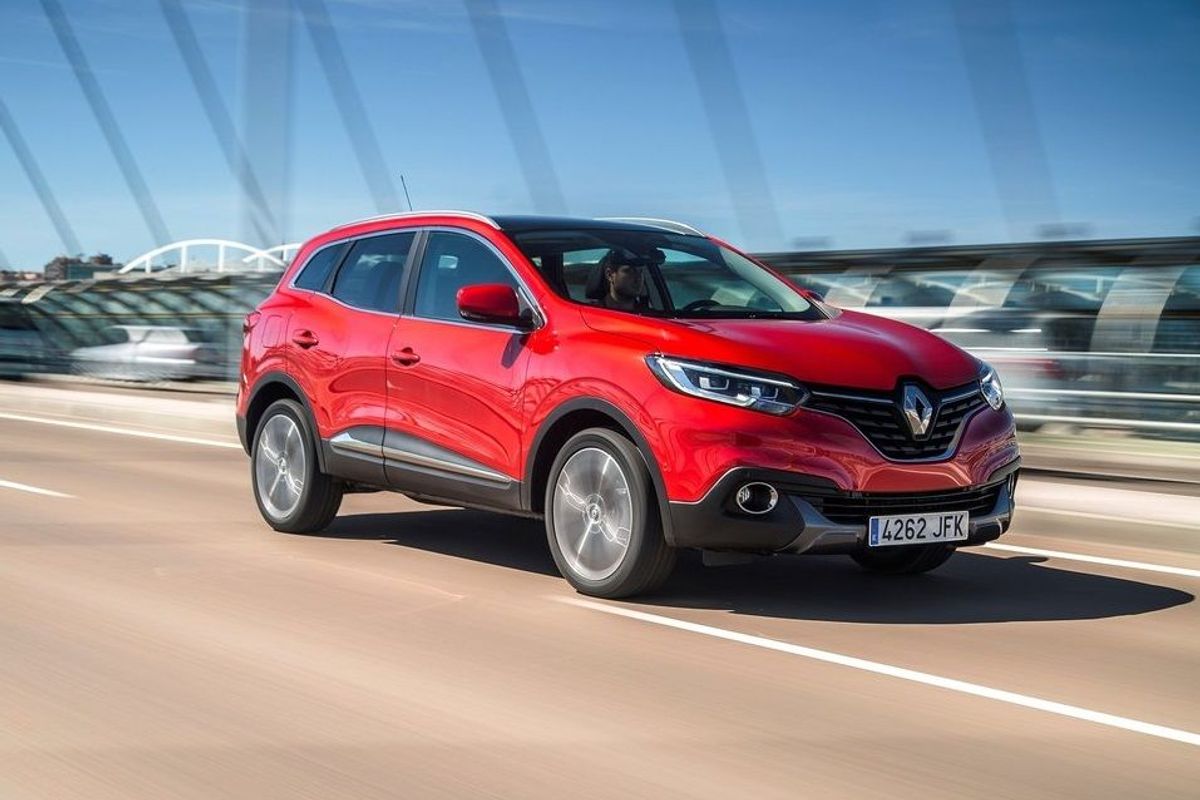
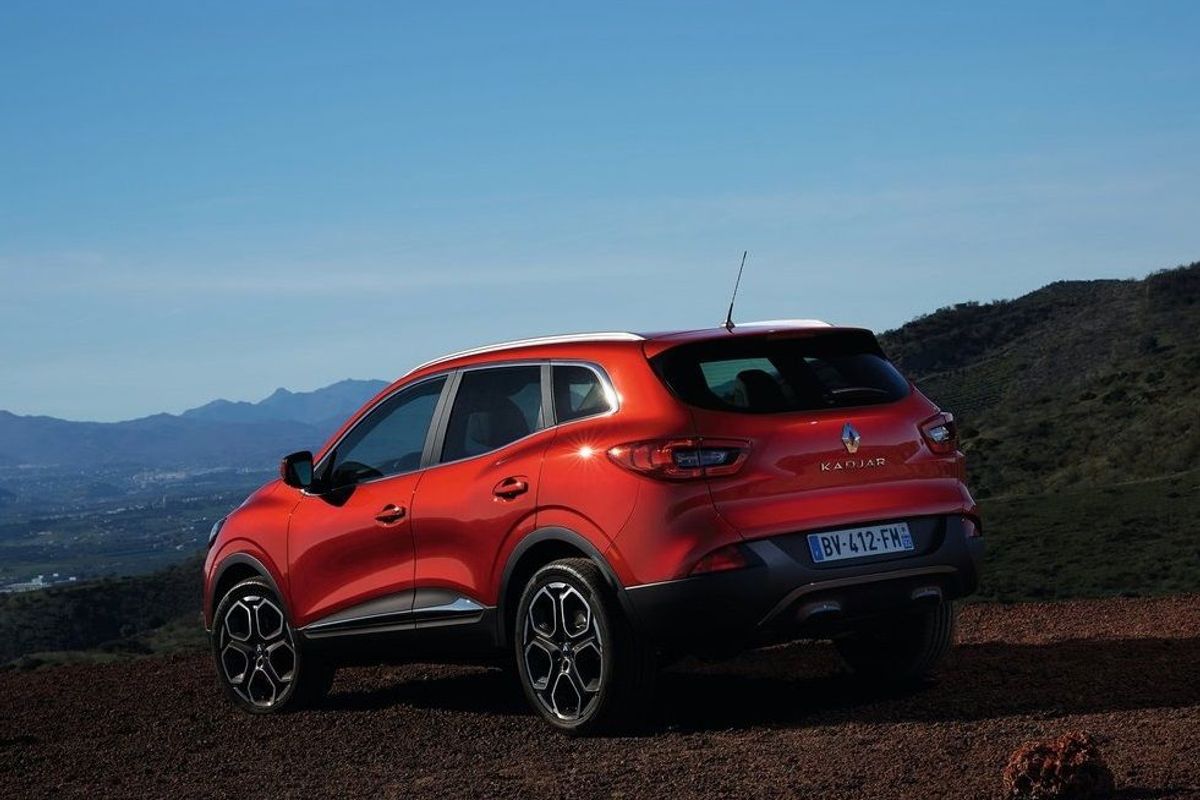
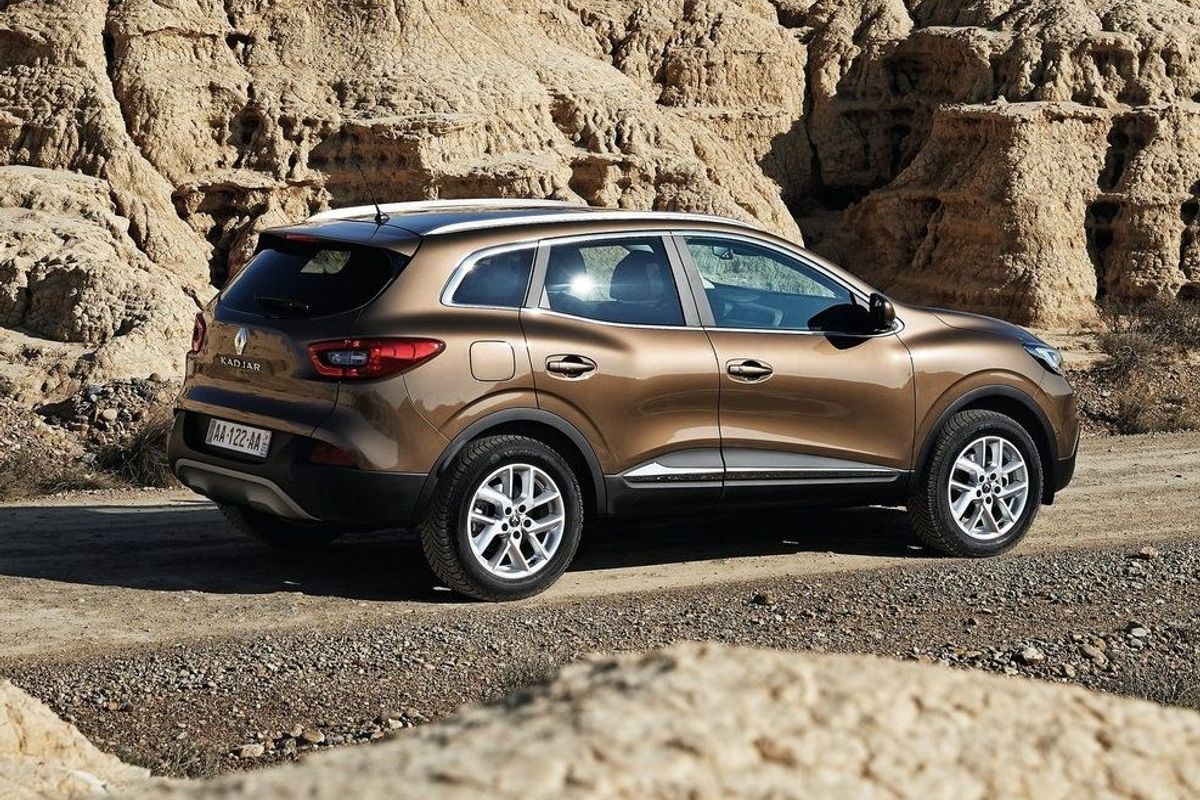
Renault has beefed up its compact crossover/SUV line-up further with the introduction of the Kadjar in South Africa – we have specifications and pricing for it
The French marque already offers the Sandero Stepway, Duster, Captur and the ageing Koleos in the local market, but the Kadjar arguably strikes the balance between small family crossover and SUV best. The range will include three models with two engine choices. The engines range from the 1.2-litre turbocharged four-cylinder motor with 96 kW to the 1.6-litre turbocharged diesel motor that produces an identical power output. The line-up starts with the 96 kW Turbo Expression, then the 96kW Turbo Dynamique and finally the flagship 96 kW 1.6 dCi Dynamique 4×4. Expect this good-looking French SUV to take on the likes of the Nissan Qashqai, Ford Kuga, Toyota RAV4 and Mitsubishi ASX.
Engines and economy
The 1.2-litre turbo engine is a motor we’ve sampled in the Renault Clio 1.2 EDC. It produces 96 kW and 205 Nm of torque, with a claimed average fuel consumption figure of 5.7 L/100 km. The diesel engine is a 1.6-litre four-pot unit with 96 kW and a more-than-respectable 320 Nm. It’ll be the more frugal of the two engines with a claimed consumption figure of just 5.4 L/100km. Both the turbopetrol and the turbodiesel models come with a six-speed manual gearbox.
Features
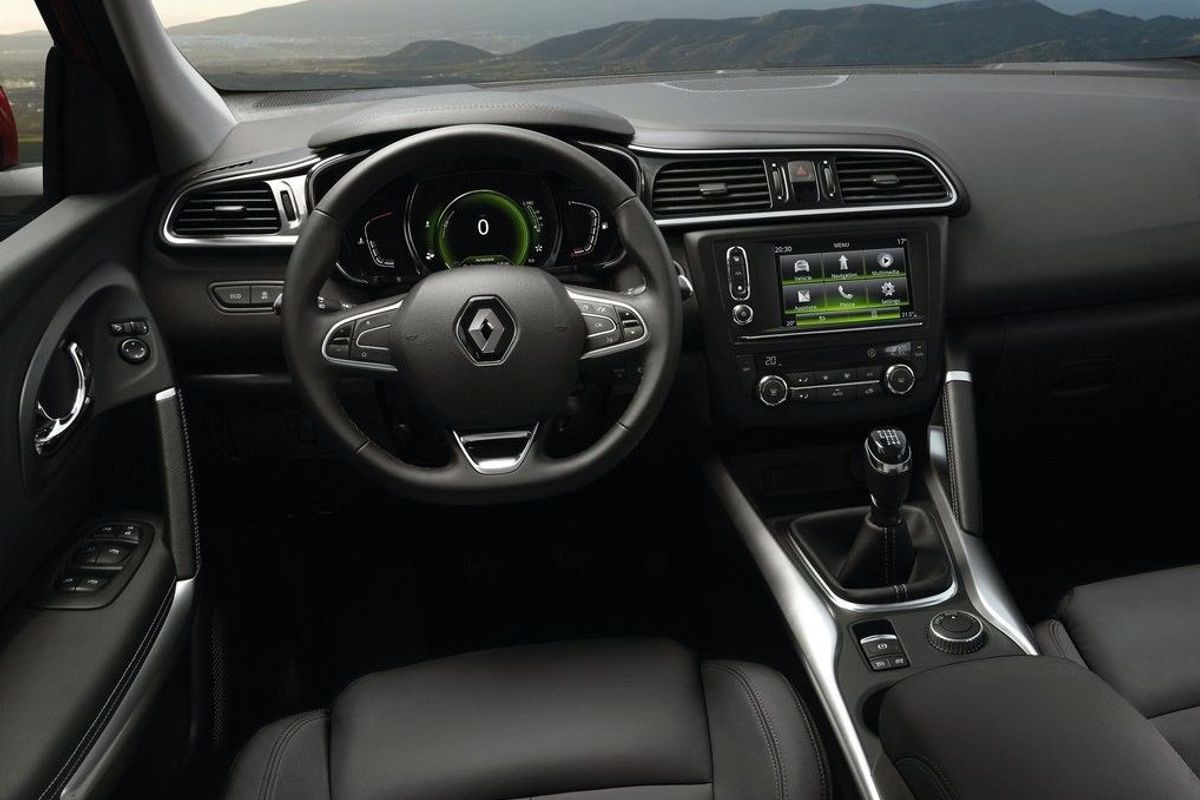
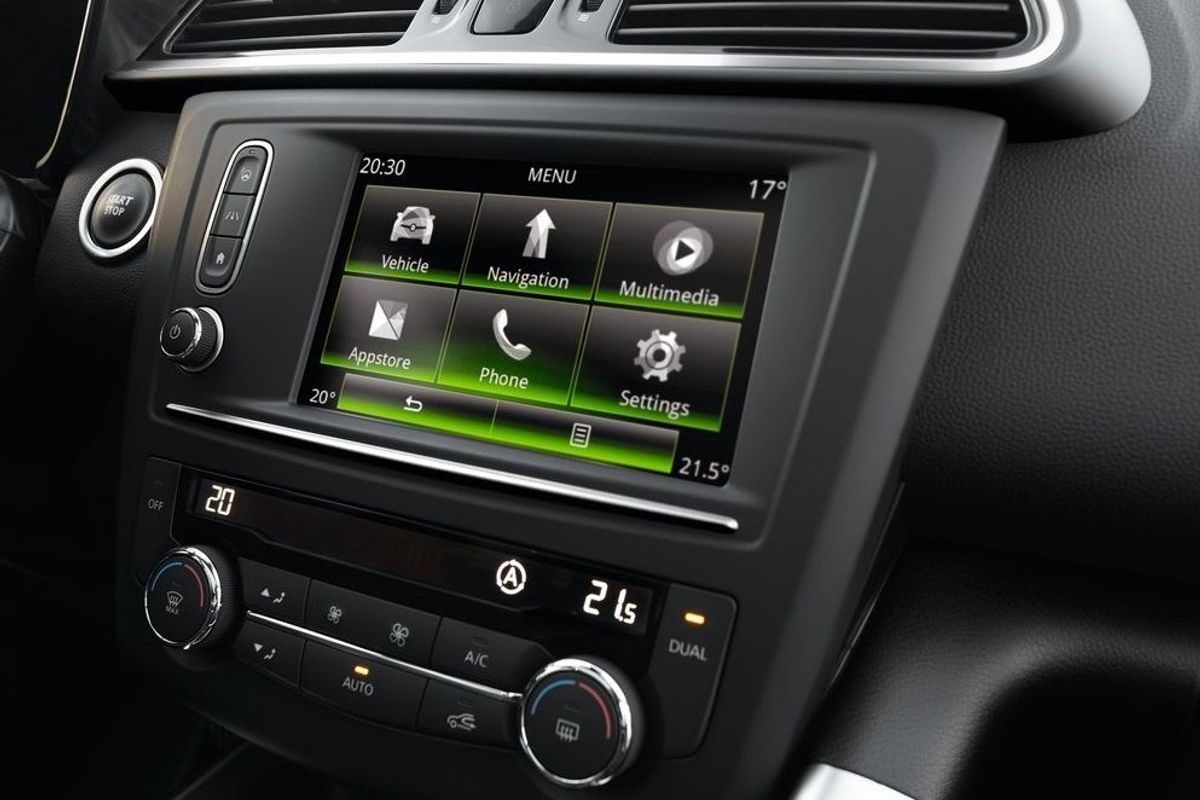
There are two trim levels; Expression and Dynamique. Both models have a 7-inch colour infotainment screen, tyre pressure sensors, electronic parking brake, cruise control, gearshift indicator, eco mode, handsfree Bluetooth, USB and auxiliary inputs, Hill start assist, ISOfix child seat mounts and a full-sized spare wheel. The Kadjar standard safety equipment is extensive, with ABS, EBD, EBA, ESP and ASR, as well as driver, passenger, side and curtain airbags.
The Expression trim comprises an MP3-compatible radio/CD audio system, remote central locking, electric windows, electrically adjustable side mirror, rear parking sensors, colour-coded door handles and mirrors, a rake- and reach-adjustable steering column, folding rear seats, air conditioning, 16-inch wheels and a height-adjustable driver’s seat.
The Dynamique trim adds roof rails with a satin chrome finish, 17-inch alloys, LED headlights, fog lights, chrome accents on the door protectors, electrically-folding side mirrors, satellite navigation, light and rain sensors, dual-zone climate control, leather-trimmed steering wheel and gear lever, hands-free Renault card key, front and rear park distance control, as well as tinted rear windows.
Options for the Renault Kadjar include 19-inch alloys (R8 000), panoramic fixed sunroof (R8 000), leather seats that are heated and electronically adjustable (R12 000) and self-park assist (R10 000).
As always, Renault South Africa has been generous with warranty and servicing. The Renault Kadjar comes with a 5-year/90 000km service plan and a 5-year/150 000km warranty.
Renault Kadjar prices in South Africa
96kW Turbo Expression R359 900
96kW Turbo Dynamique R384 900
96kW dCi Dynamique 4×4 R449 900
Mini Cooper S Clubman (2016) Review
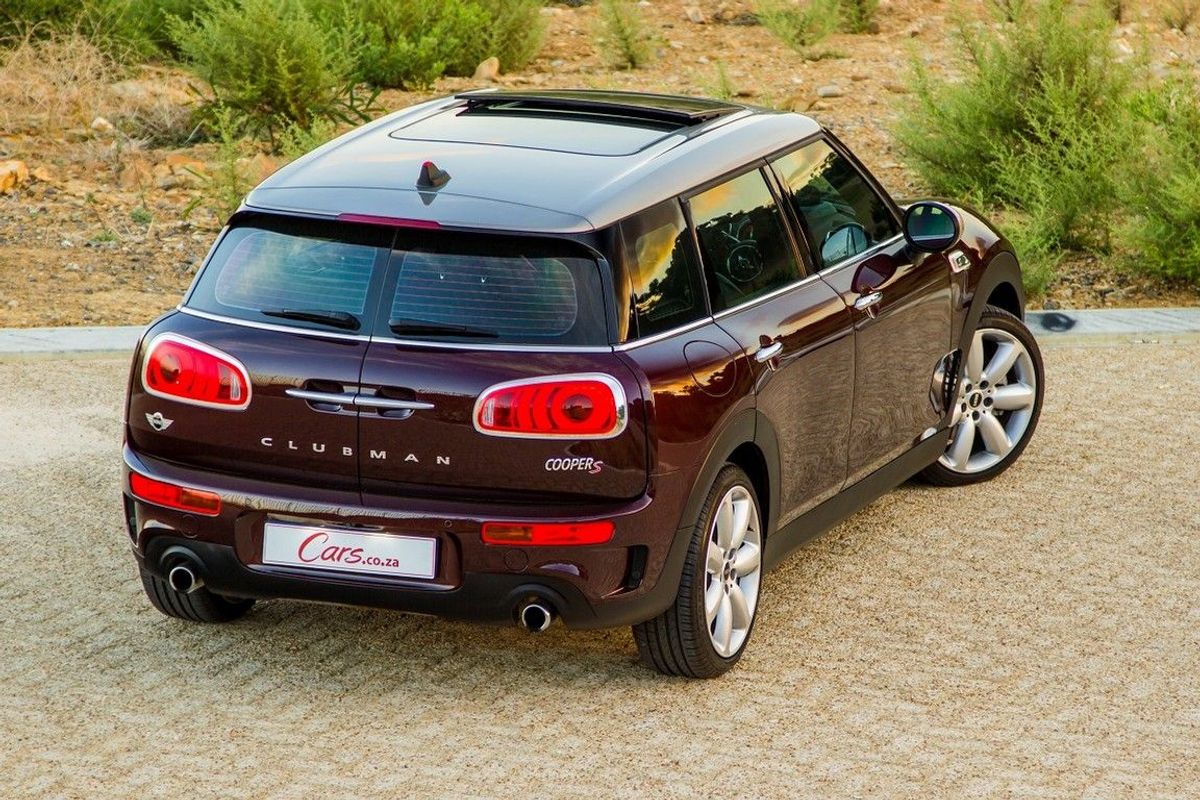
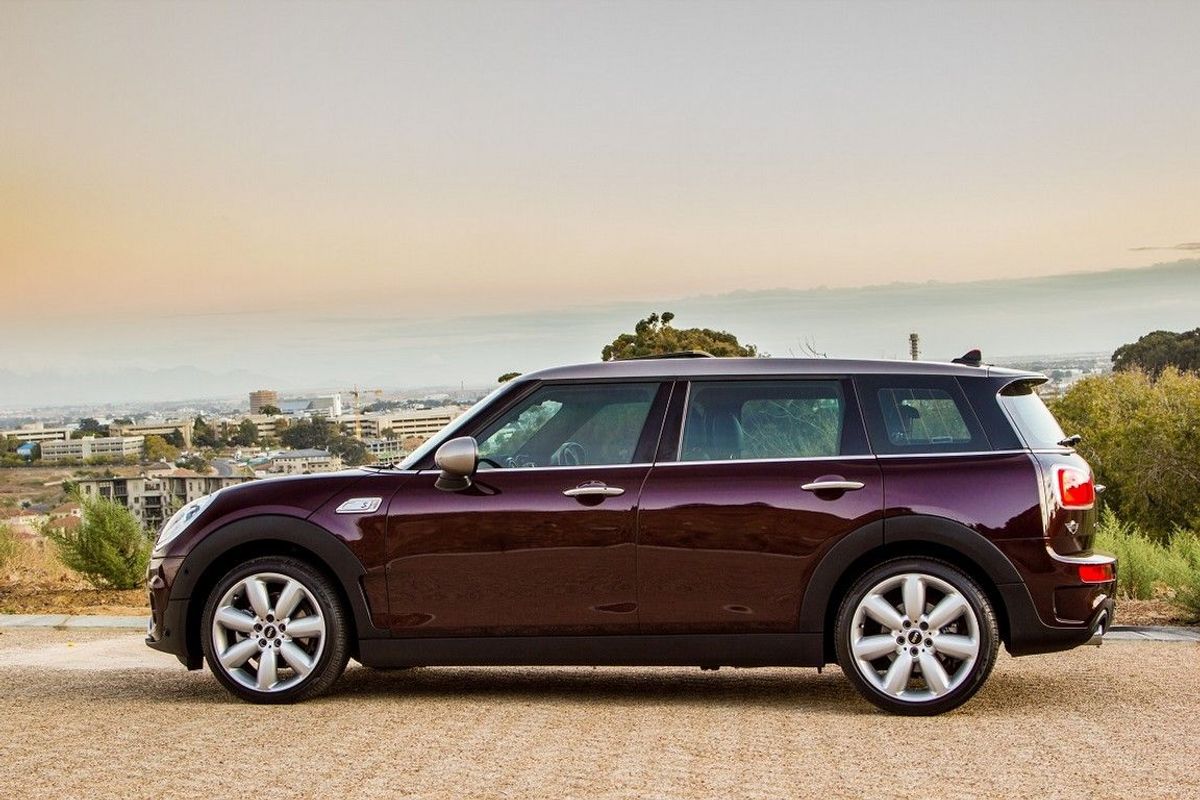
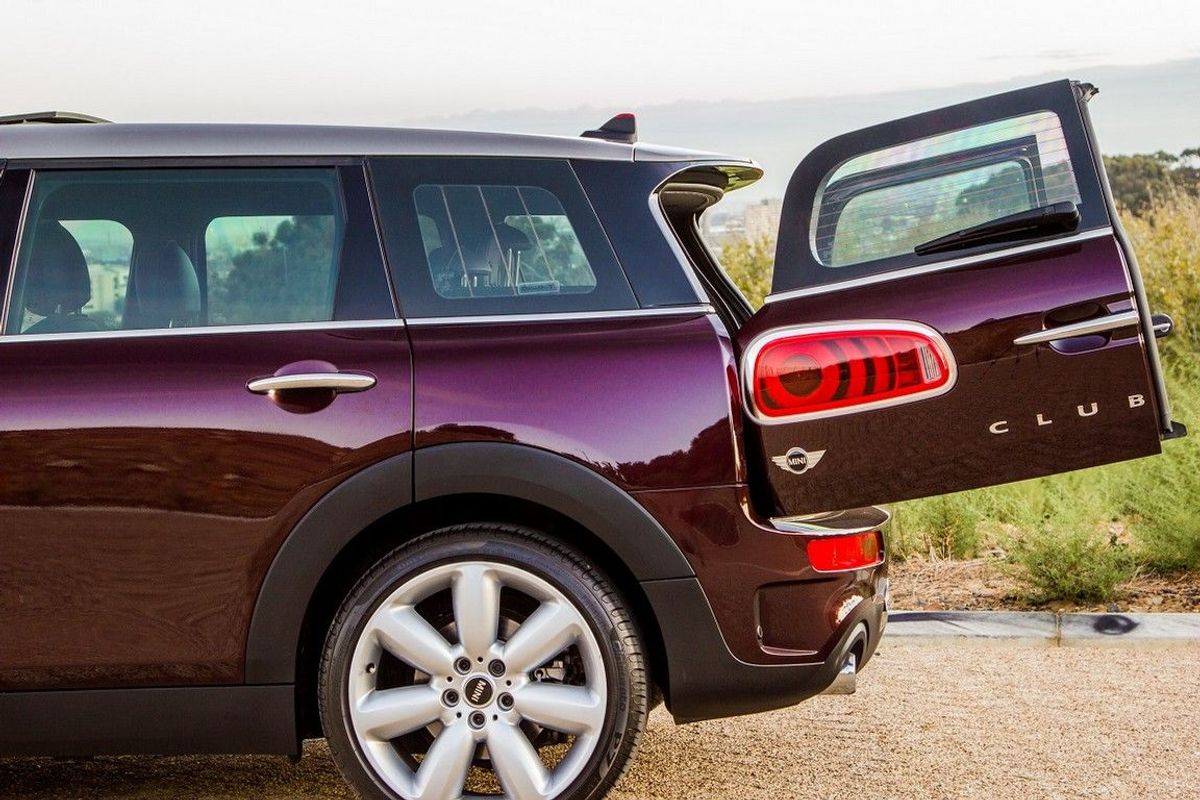
Mini’s offshoots have recommenced with the launch of the Clubman and Convertible. The Clubman has been revised to feature four actual passenger doors (the previous model had three) but still keeps its retro rear split door.
We like: Reasonably spacious, funky interior
We don’t like: Harsh ride, rear visibility
Also consider:
Something less quirky: The Volkswagen Golf GTI sells strongly with reason. It offers great performance and handling in a premium package that retains all the practicality of lesser Golf models. And it has plenty of brand appeal, too.
If it doesn’t need to be big: The Volvo V40 T4 Inscription is an underrated product that is big on performance and features… and style. Note, however, that a facelift is coming later this year.
If you want something Italian: By looking at a Clubman you are clearly craving style and individuality. The Alfa Romeo Giulietta 1750TBi Quadrifoglio delivers on both fronts.
New design
As mentioned above, the new Clubman has two doors on each side now, making entry/exit for passengers a far easier (and safer) exercise. It also has two doors at the back, which open like those on the original Mini Clubman. At first glance, the new Clubman looks slightly awkward, with its big wide-eyed headlamps and then, longer-than-expected body. This can be attributed to the longer wheelbase to some extent, which has grown to make more space for passengers and things. The interior has had a significant upgrade from the previous version and features all of Mini/BMW’s latest in-car technology. The Clubman also now boasts an eight-speed automatic gearbox as an option on the S model, a first for a Mini.
How does it fare in terms of…
…that cool factor?
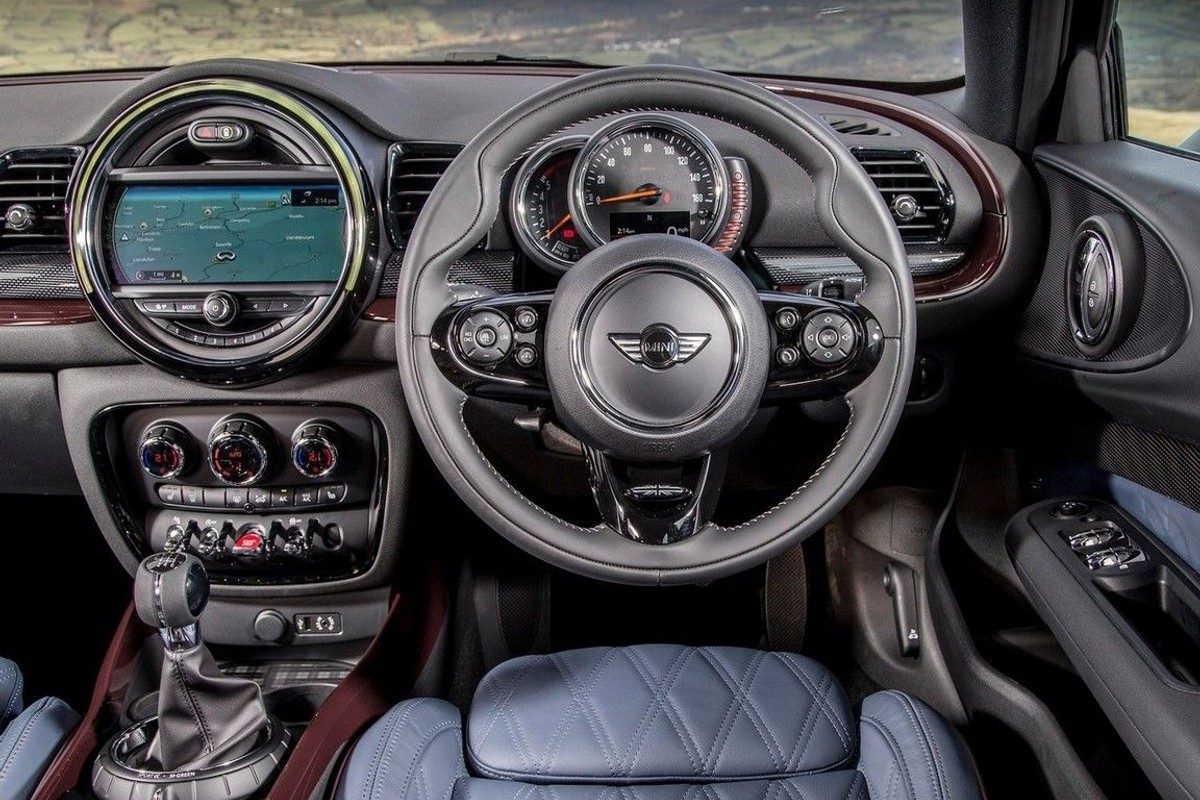
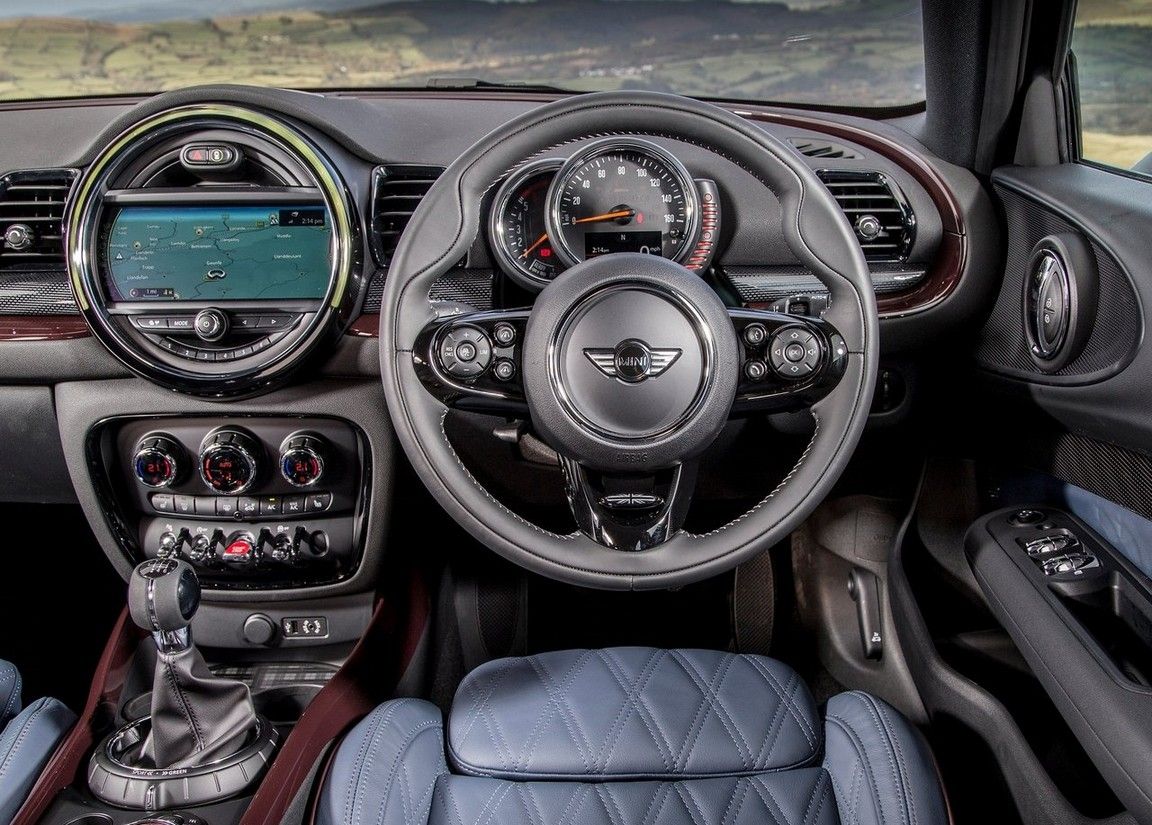
Design and trim colour variation lend the Clubman facia a "jukebox" look and feel.
The Mini, even in Clubman guise, still appears youthful and energetic. The individualisation programme allows owners to customise almost every part of the vehicle, including the body kit, chrome bits, roof rails and the interior. Consequently, very few Minis end up being of exactly the same specification and appearance. It is this individuality that Mini owners love, and which also makes delving into the options list a pointless exercise (on our part) and a potentially expensive one for the buyer.
If anything, the Clubman is the most individualistic of all the Mini models as it has its own unique style. It is, after all, a hatchback and a van squeezed into one. Somehow they’ve pulled it off and even if it’s not to everyone’s taste it’s certainly going to grab attention.
...practicality?
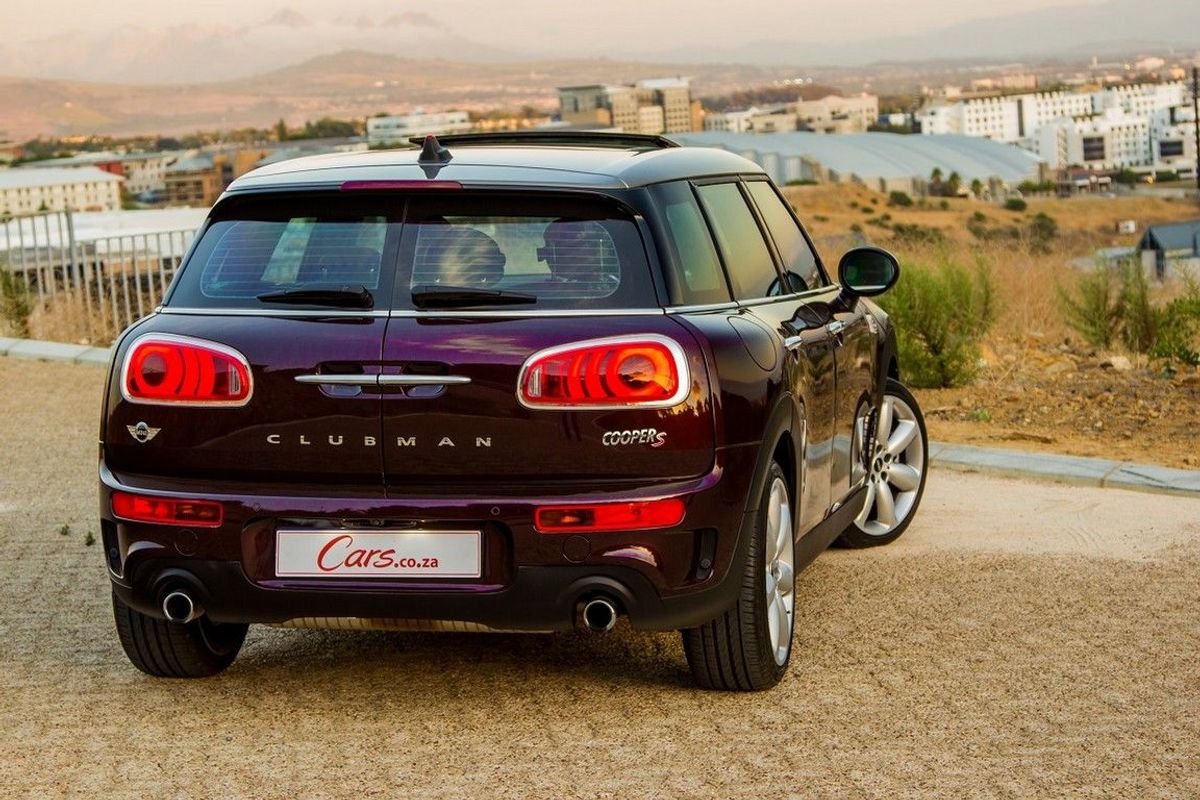
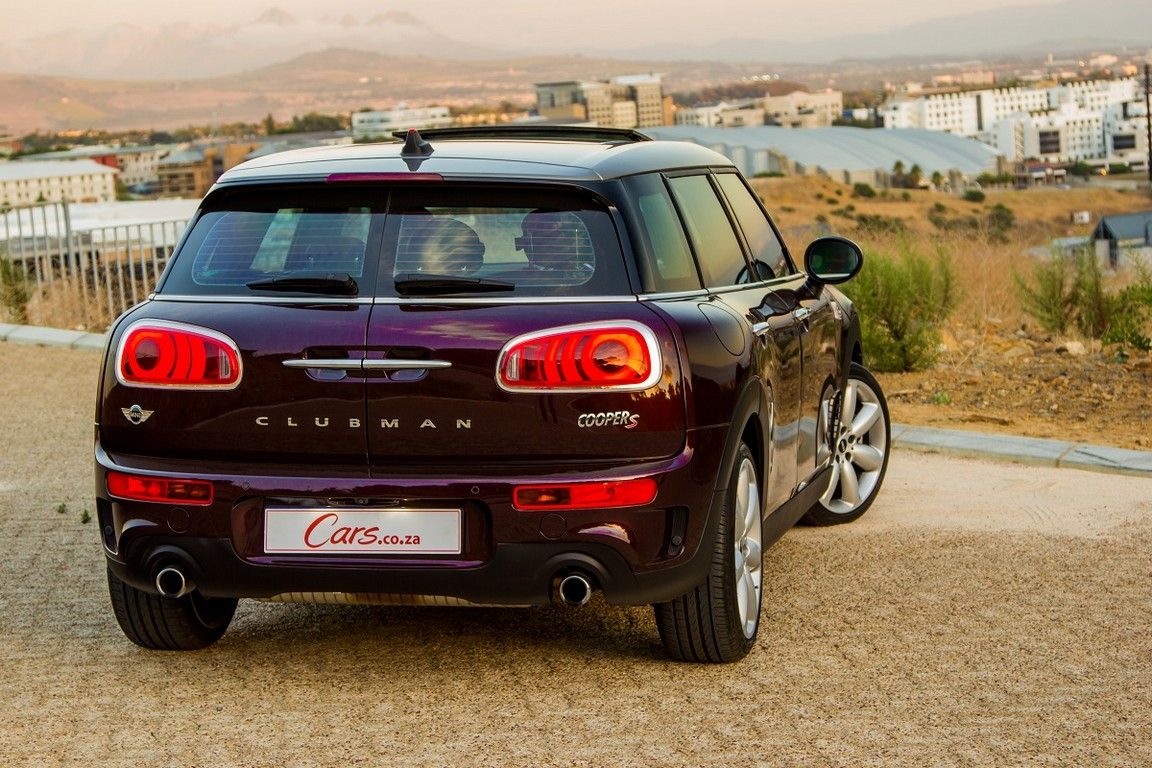
Centrally split rear doors create a pillar that blocks some rear-view visibility.
The Mini name doesn’t exactly drum up visions of loading surfboards and bikes for a holiday, but that’s what we did with the Clubman. This Mini's extended wheelbase (2 670) means it’s about the same length as a Golf. The boot is also quite large at 360-litres and the seats fold down flat with a 40/20/40 split. It easily handled luggage and rear seat passengers over the long Easter weekend. The van-style rear doors to the boot is a novel touch. They have to be closed in a specific order (left first then right) but can be opened individually via the key.
Keep in mind, though, that you do have to leave a bit more room behind the car when reversing or the doors can't be opened. On that note, a rear camera is almost essential as the centre pillar where the rear doors close hinders rear vision.
…performance?
Thick-rimmed steering wheel contribute to a dynamic driving personality.
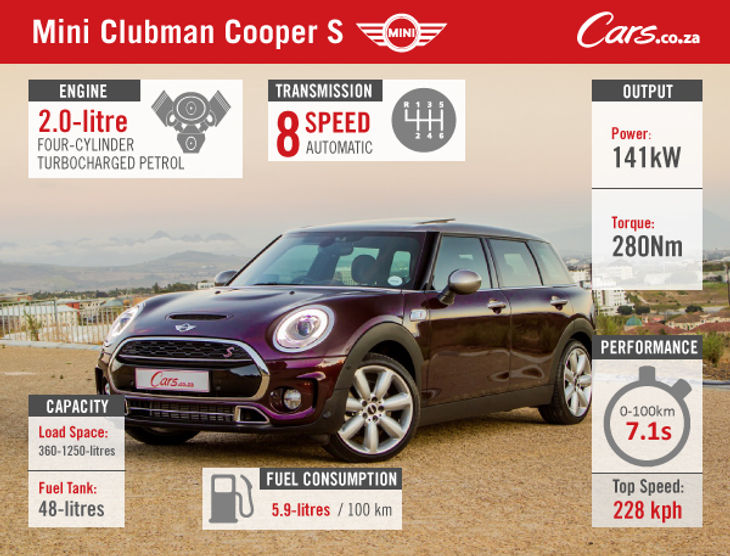
The Cooper S Clubman is equipped with a 2.0-litre turbocharged petrol engine, much like the standard Mini Cooper S. It has 141 kW of power and 280 Nm of torque available. For an S model it doesn’t feel excitingly fast like the standard Mini Cooper S does. It builds speed quickly but runs out of puff at higher engine speeds. Comparatively, we feel it lacks between 20 and 80 Nm and that’s probably detracting from the gripping acceleration and mid-range shove expected that one would expect from a Cooper S. Driving thrills are what Minis (especially those branded Cooper S) is supposed to deliver and this model didn’t quite achieve the lofty expectations we had of it. That said, a hotter JCW model is probably on the cars in the not-too-distant future.
On the other hand, if you're selecting the Clubman in the first place perhaps you'll be willing to cut it some slack on the performance front. You may also be happy to hear that the Clubman did prove to be particularly fuel efficient during its time in our fleet. The claimed consumption is 5.9L/100km and including the sporty driving, we achieved 6.8L/100km by the time it was returned, which is excellent.
…that typically Mini, go-kart handling?
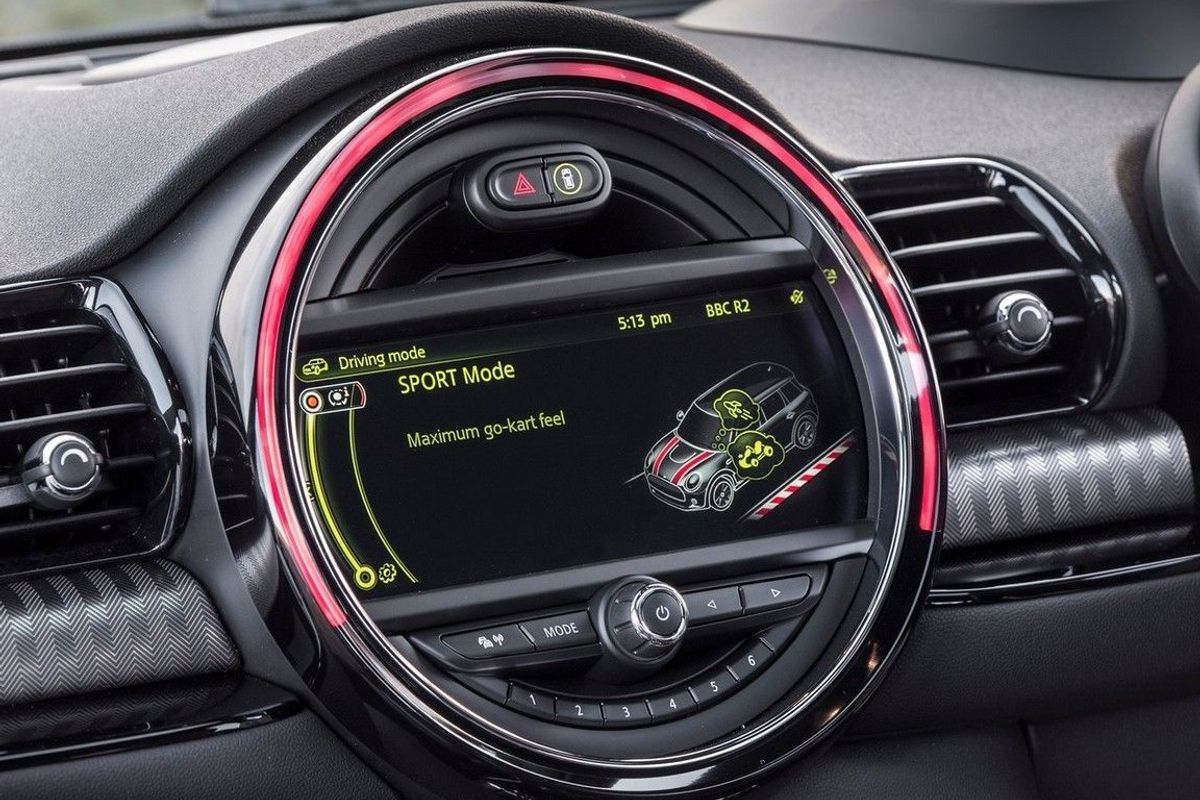
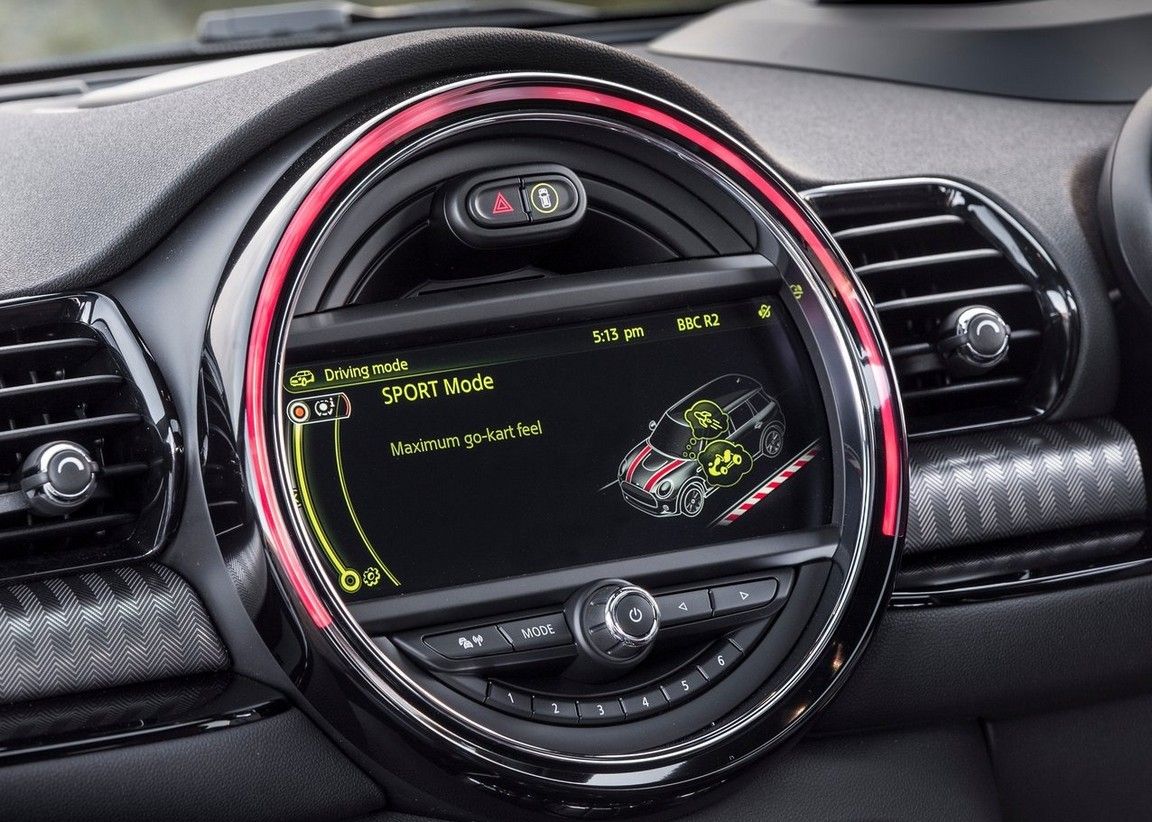
When you shift the Mini’s driving mode switch into Sport, a little readout displays on the central infotainment screen. It amusingly reads ‘Maximum Go Kart Feel’. Whilst it feels nothing like a real Go Kart, the Clubman is certainly fun to scuttle around the city and open roads. The Sport Mode enhances the throttle pedal mapping to be more urgent and the steering becomes "sportier". The Clubman can be whipped from side to side remarkably quickly and at one point, even cocked its inside rear wheel during a rather tight turn. Clearly the Mini genes still shine strongly, even in this supposedly more practical application.
When pottering around town, the sporty bias means that the ride can become too firm over expansion joints on the freeway or on rippled tarmac. The run flat tyres certainly don’t help the ride, nor do they keep things quiet in the cabin at freeway speeds.
… vibe inside?
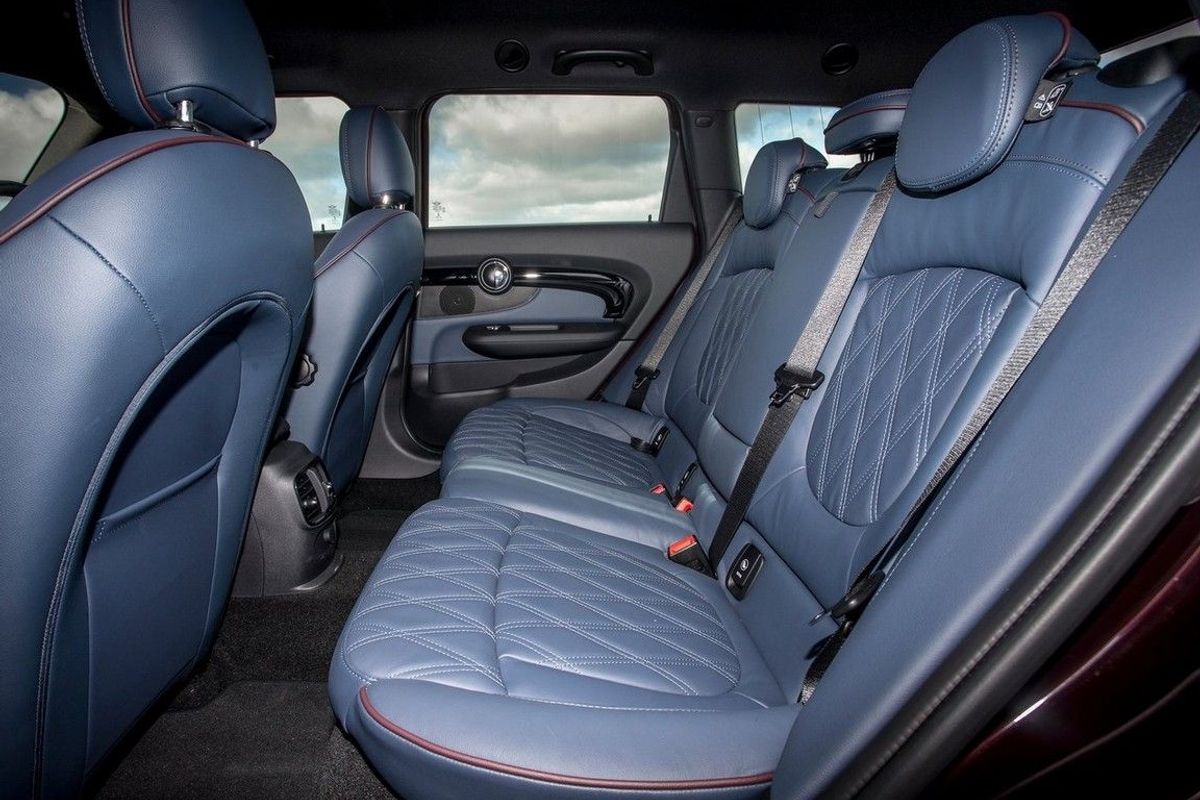
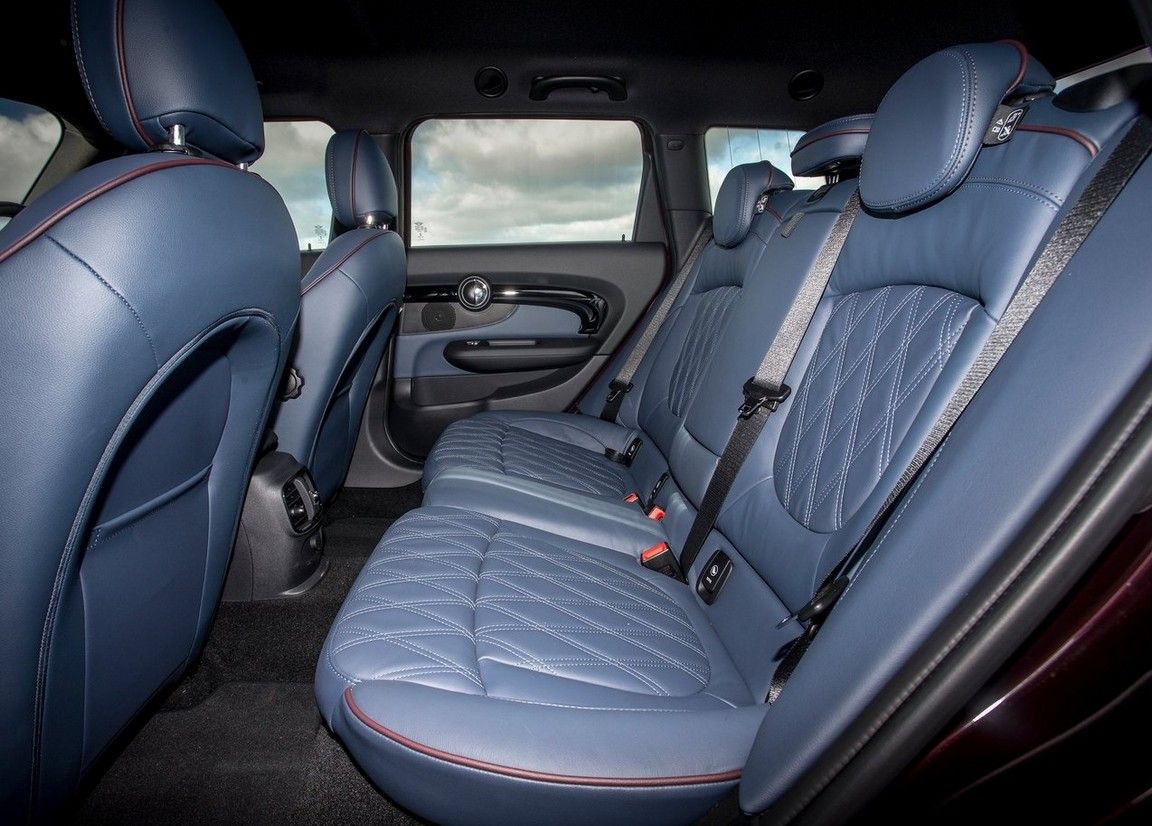
Chester Indigo Blue leather seats are extremely comfortable.
The Mini interior is jam-packed with little details that can be adjusted to add a bit more colour and fun to the driving experience. For instance, the big round infotainment system in the centre can light up and pulse like a ‘80s jukebox. Our model came with a high-end leather trim, finished in Chester Indigo Blue – a R8 600 option. The equipment levels can be specced up to the individual’s choice but essential extras would be items such as the reverse camera (R4 700) and Bluetooth with USB capability for R3 500. You can get navigation for as little as R6 600 but the full professional navigation system hits home as an R28 000 option and comes with real-time traffic information. Be prepared to spend on options if you want a fully "connected" driving experience.
… safety?
It’s interesting to note that the Clubman scored four stars out of a possible five in the EuroNCAP crash tests. It scored highly in adult occupant crash test but not as highly in child protection (especially for rear-facing child seats), pedestrian safety and its safety assist systems. Nevertheless, Isofix child seat mounts are fitted and the Clubman comes with six airbags.
Verdict
The Mini Clubman stands out as something different and characterful from the average hatchback. The splitting rear doors look cool and certainly don't hamper practicaliy in the sense of loading/unloading, but they do require special attention when opening in tight spaces and obstruct rearwards vision. Overall, the Clubman is more spacious and practical than we expected and has similar proportions to a Volkswage Golf GTI. The ride is sporty and is a lot of fun to manhandle on open roads. In traffic, it could do with being more pliant over the bumpy stuff. On the performance front, this Clubman perhaps lacks the mid-range thrust that a Cooper S buyer would desire, but then again there is enough power to have fun. Overall, the test team were quite taken with the Clubman S as a viable alternative to a traditional premium hatchback.
Pricing
In standard trim, the Mini Cooper S Clubman costs R446 347. With all the options fitted to our model like the blue leather seats, professional navigation system and the JCW interior and exterior kit, it will come to considerably more than that. Tick those option boxes carefully.
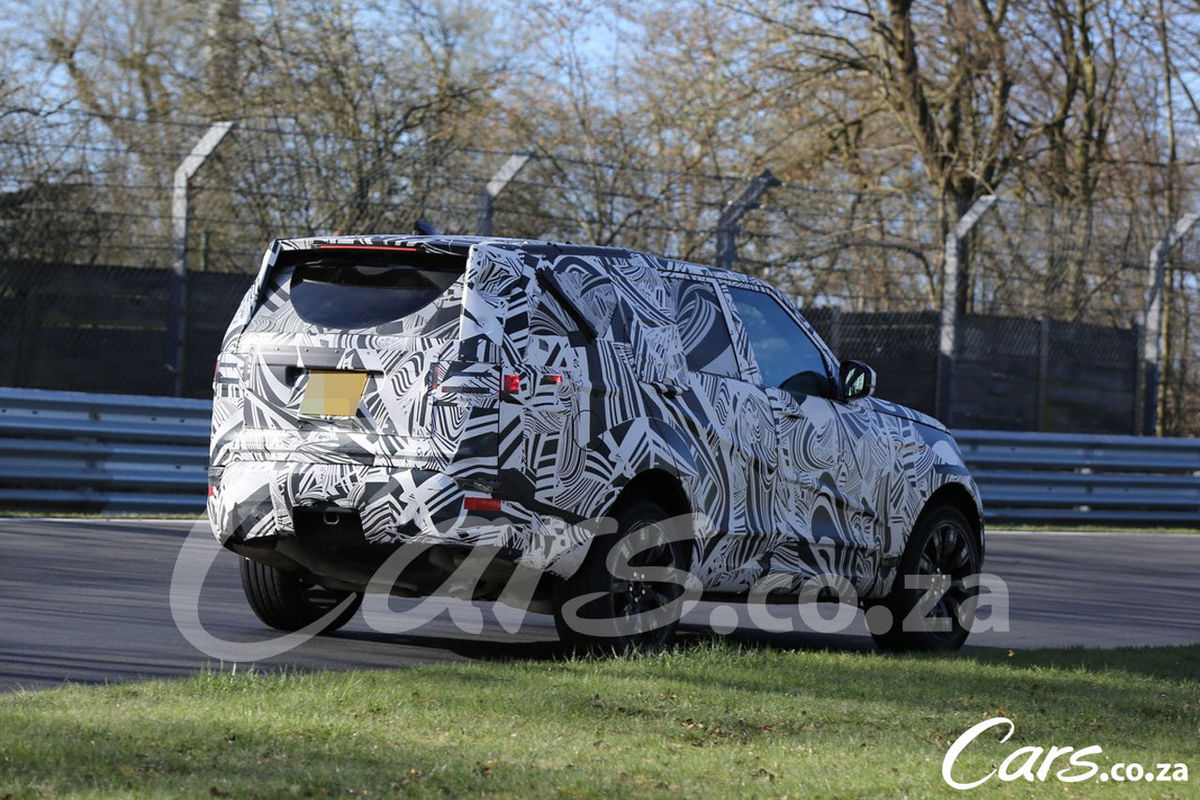
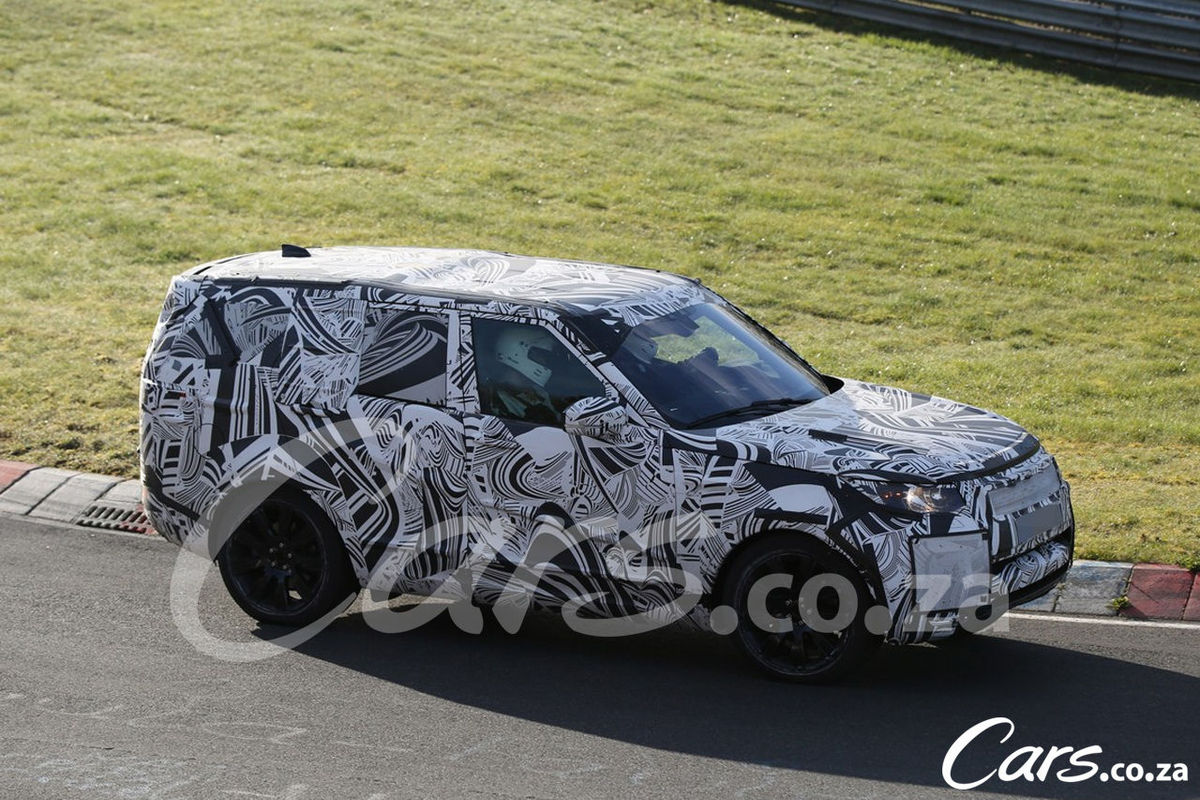
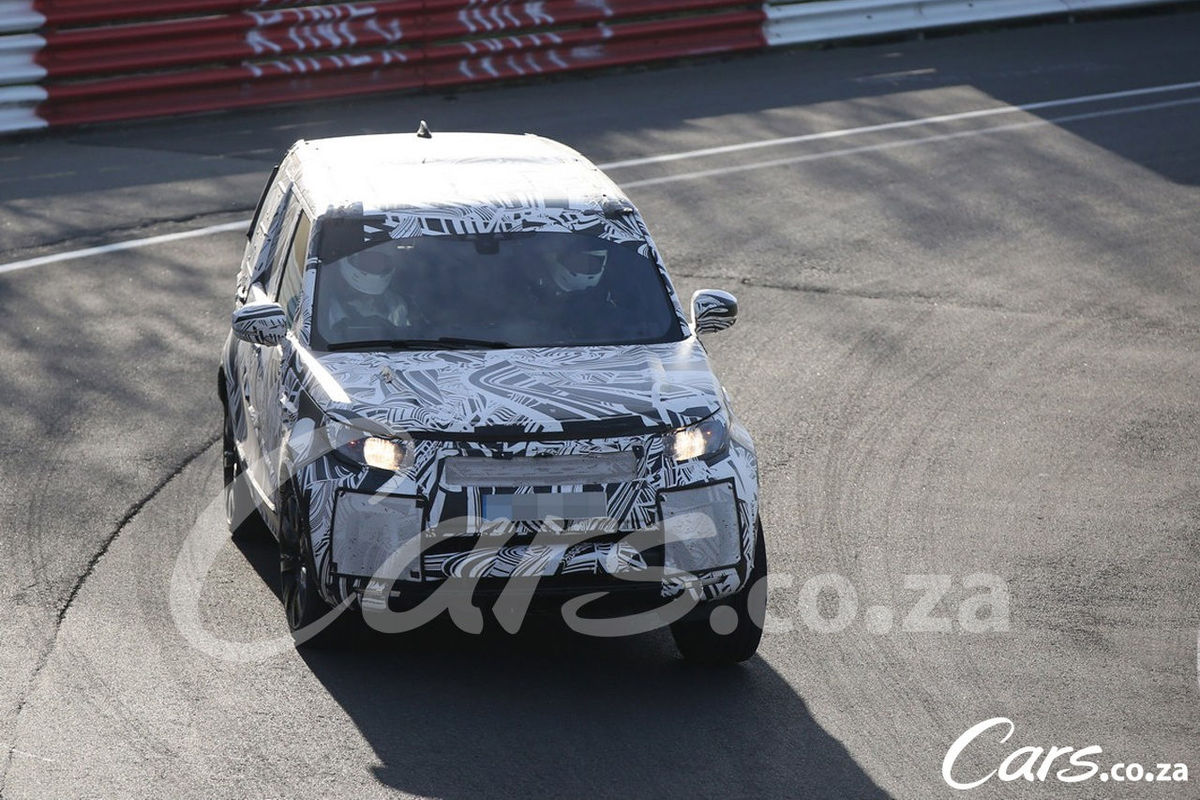
This latest batch of spy photos shows the next Land Rover Discovery being tested at the Nurburgring.
The next generation of Land Rover Discovery is set to be launched in late 2017. It will replace the current Land Rover Discovery 4 and will join the Discovery Sport as the second vehicle in the "new Discovery" family.
The new Discovery will utilise the platform of the current Range Rover, meaning it will have a lightweight aluminium chassis. This will translate into a much lighter Discovery with much better fuel efficiency. An update to the famous Terrain Response system, which uses laser technology to scan the surface ahead and automatically adjust the suspension and stability control systems to best cope with upcoming obstacles, is on the cards, as is Invisible Car Technology that projects the terrain underneath the car onto the vehicle's head-up display.
The new Discovery will go up against its long-standing rivals such as the X5, GLEand Toyota Prado, but is expected to play a more practical hand. It may come standard with seven seats and with notably more durable materials inside.
As far as engines and gearboxes go, not much has been revealed. The current range of turbodiesels and petrols that power the Discovery Sport as well as the Range Rover's 4.4-litre turbodiesel. Most engines will be paired with the nine-speed automatic gearbox currently doing duty in Jaguar, Range Rover and Land Rover’s products.
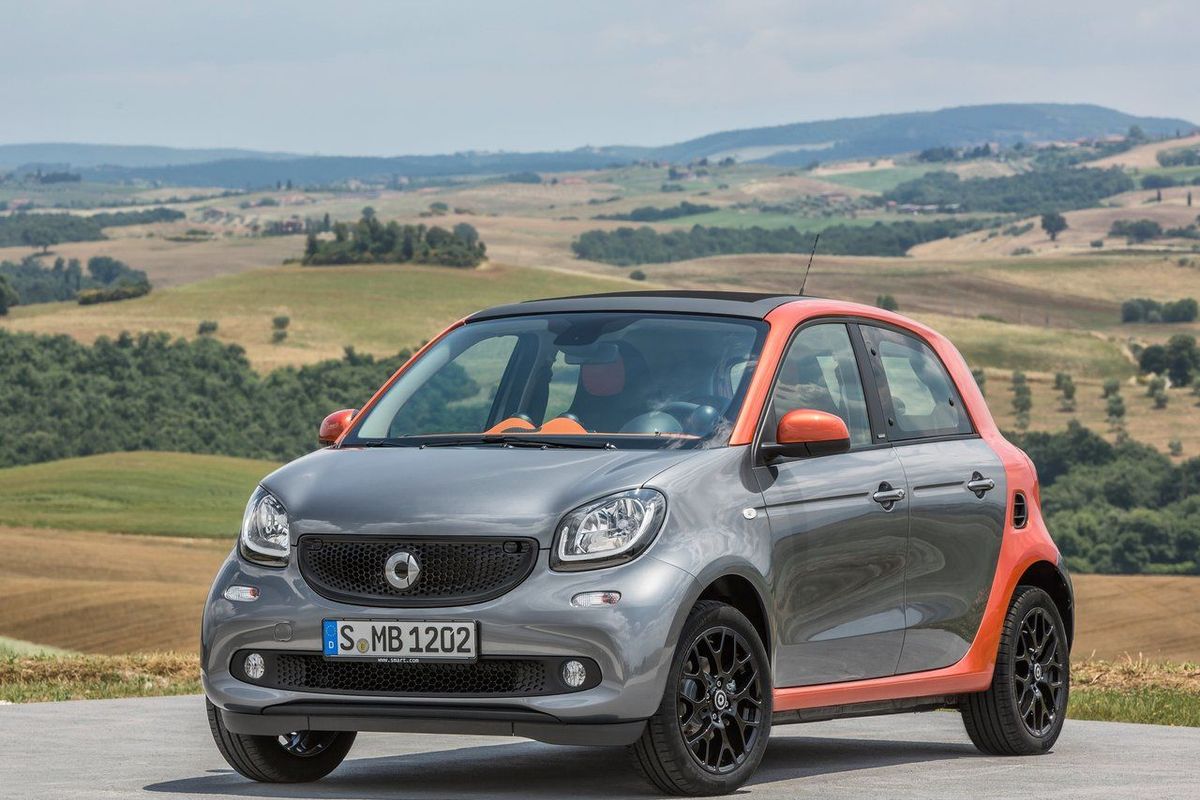
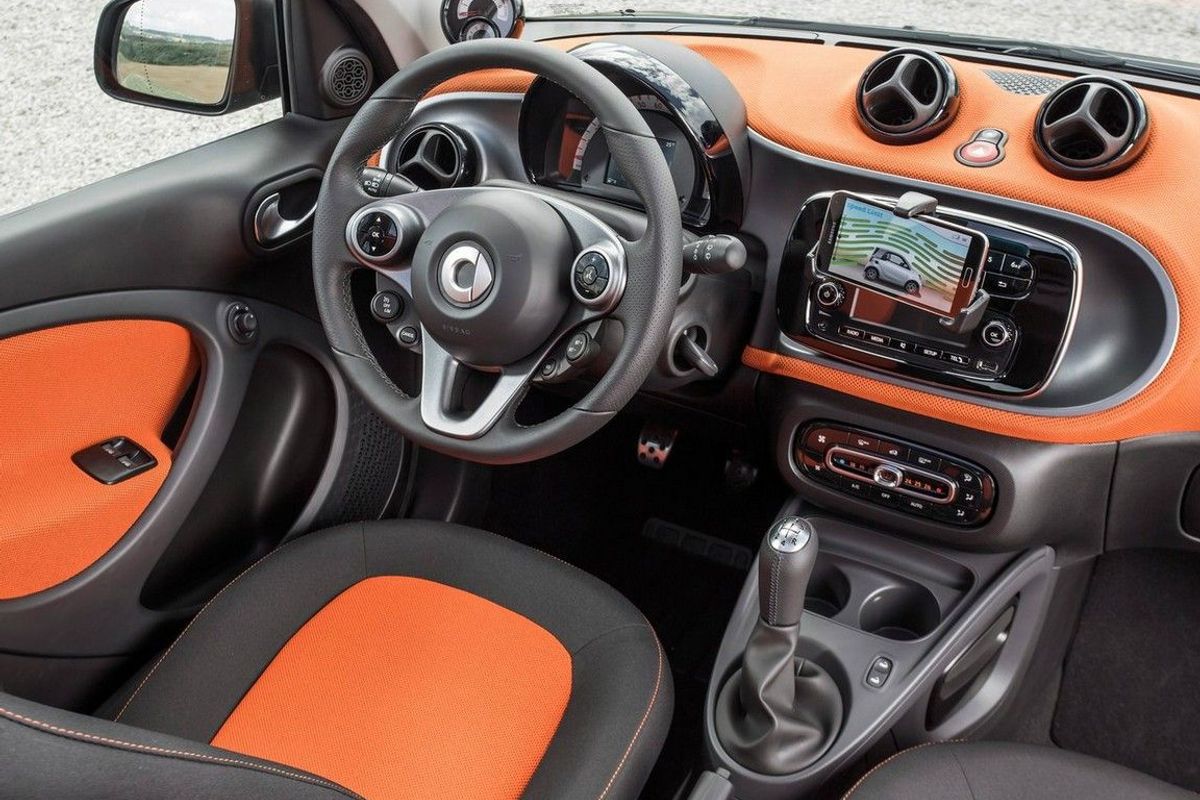
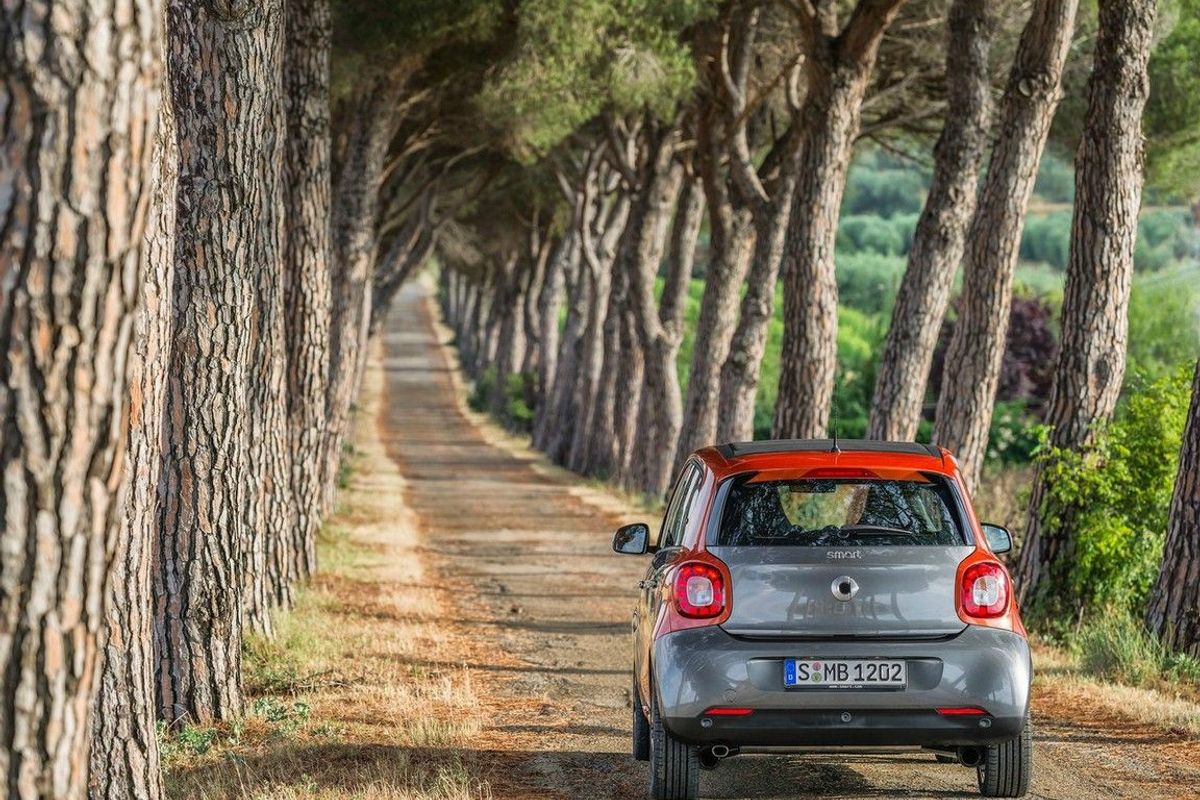
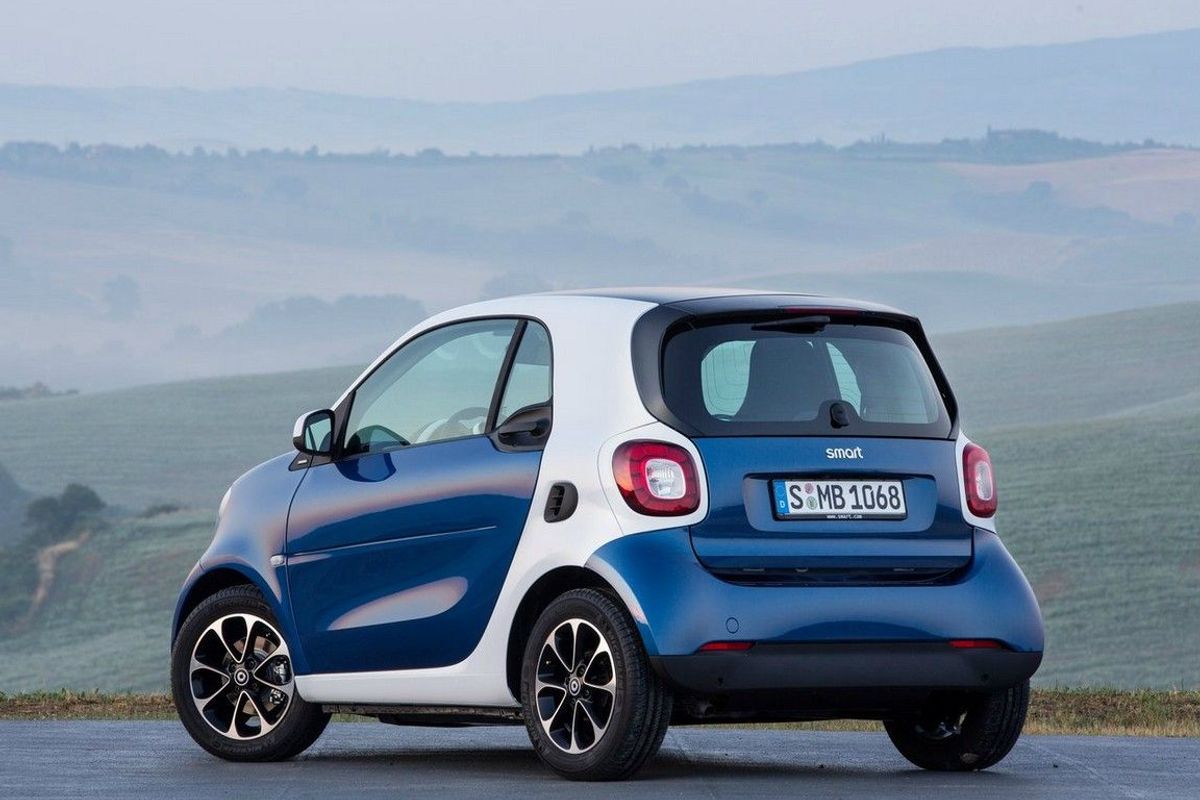
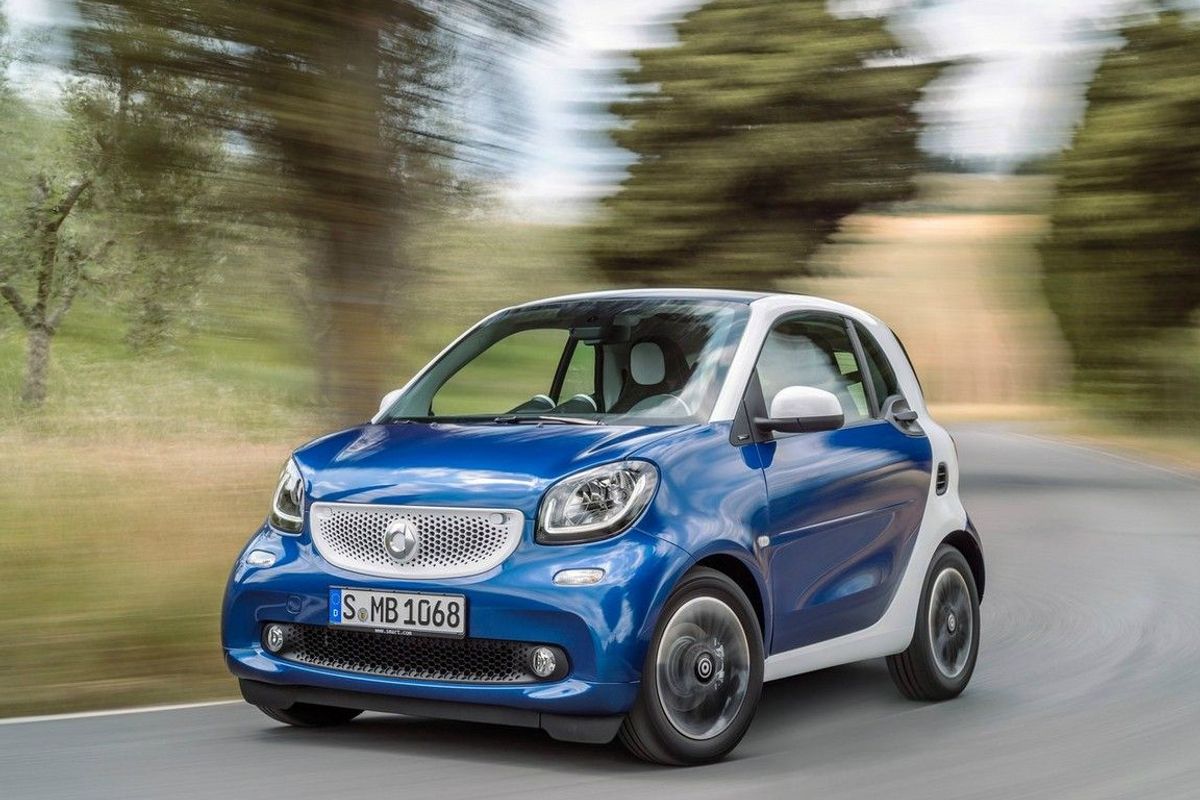
Smart, a division of Mercedes-Benz that produces small city cars, will soon launch a new generation of its ForTwo and ForFour models in South Africa
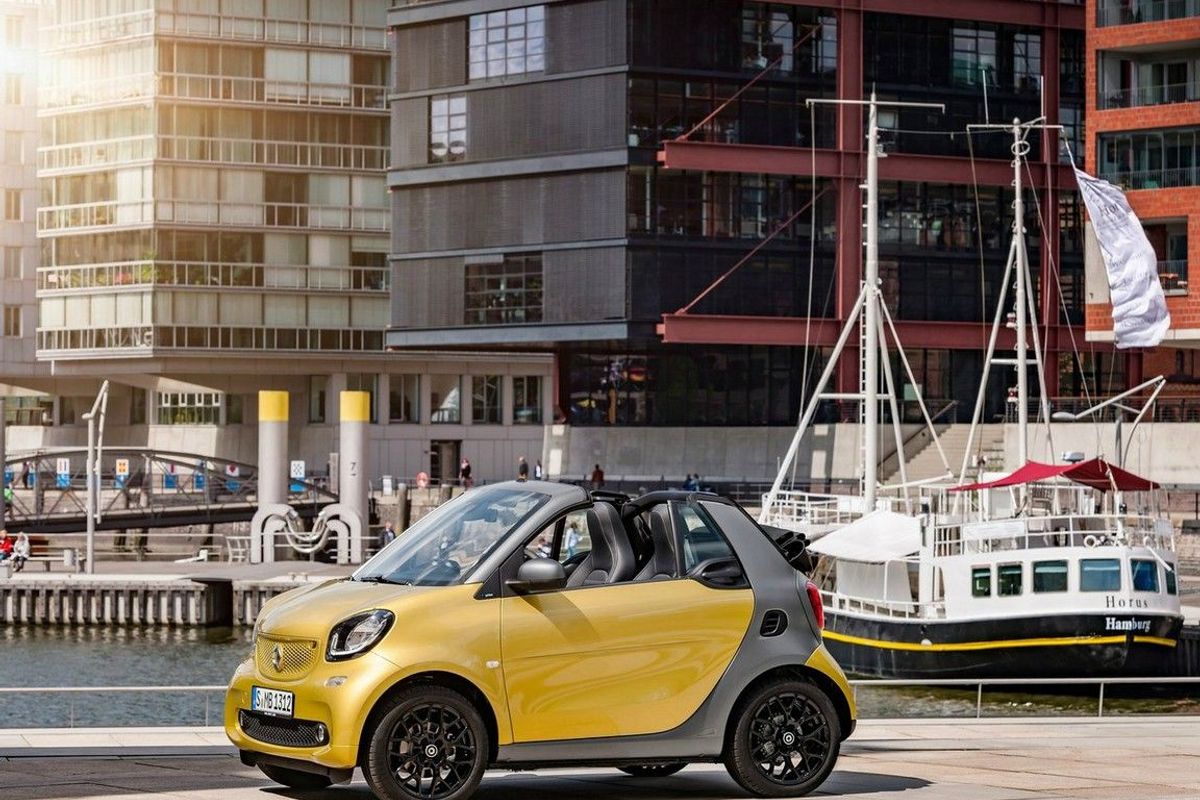
The ForTwo model is available as a two-door and cabriolet, the latter of which has a fabric roof that slides backwards like the DS3 Cabrio or Fiat 500C. Both models share a platform with the Renault Twingoand the interesting thing is the engine sits on the rear axle and powers the rear wheels (much like a vintage Beetle!)
The models are powered by a tiny 1.0-litre naturally aspirated engine that develops 52 kW and is mated with a five-speed manual gearbox. It is claimed to sip just 4.2 L/100 km on the combined cycle.
Both models are available in 4 spec levels ranging from Base to Passion to Prime, with Proxy being the top-of-the-range model. There are loads of options as well as a vibrant colour palette (including two-tone paint jobs) available.
Smart has managed to keep its pricing around the R200 000 mark, making it competitive with the Citroen C1, Fiat 500 and Opel Adam.
Local launch date for the new Smart is set for 4th May 2016.
Hennessey Venom GT Spyder Breaks Convertible Speed Record (Video)
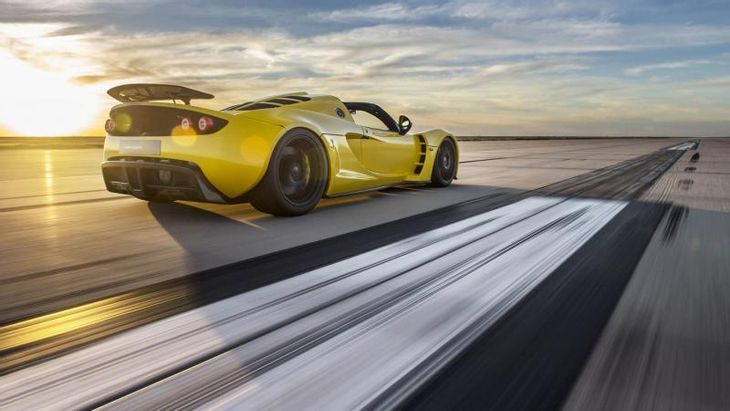
The Hennessy Venom GT Spyder has clocked the highest speed for a convertible, a record previously held by the Bugatti Veyron Super Sport Vitesse.
On its 25th Anniversary, Hennessy Performance, the American-based tuning company, decided to celebrate by putting a Venom GT Spyder on an empty runway. The result was 427.4 kph, making it the fastest convertible sports car in the world. The new record was set on March 25 2016 at Naval Station Lemoore, California, and the car was driven by Brian Smith, director of the Ford Performance Racing School.
Engine Power
The Hennessey Venom GT Spyder is the fastest convertible sports car in the world!
The Venom GT Spyder is powered by a twin-turbo 7.0-litre V8 engine that produces 1 082 kW and 1 744 Nm of torque. Power is sent to the rear wheels via a 6-speed manual transmission and the car is capable of 0-100 kph in about 2.6 seconds and can reach 320 kph in about 13 seconds.
The previous convertible speed record of 408.8 kph was held by the Bugatti Veyron Super Sport Vitesse.
As part of the world record celebration, Hennessey Performance is offering up three Venom GT Spyder World Record Editions at a price of over R19 million.
Watch the video below to see the Venom GT Spyder break the convertible speed record!
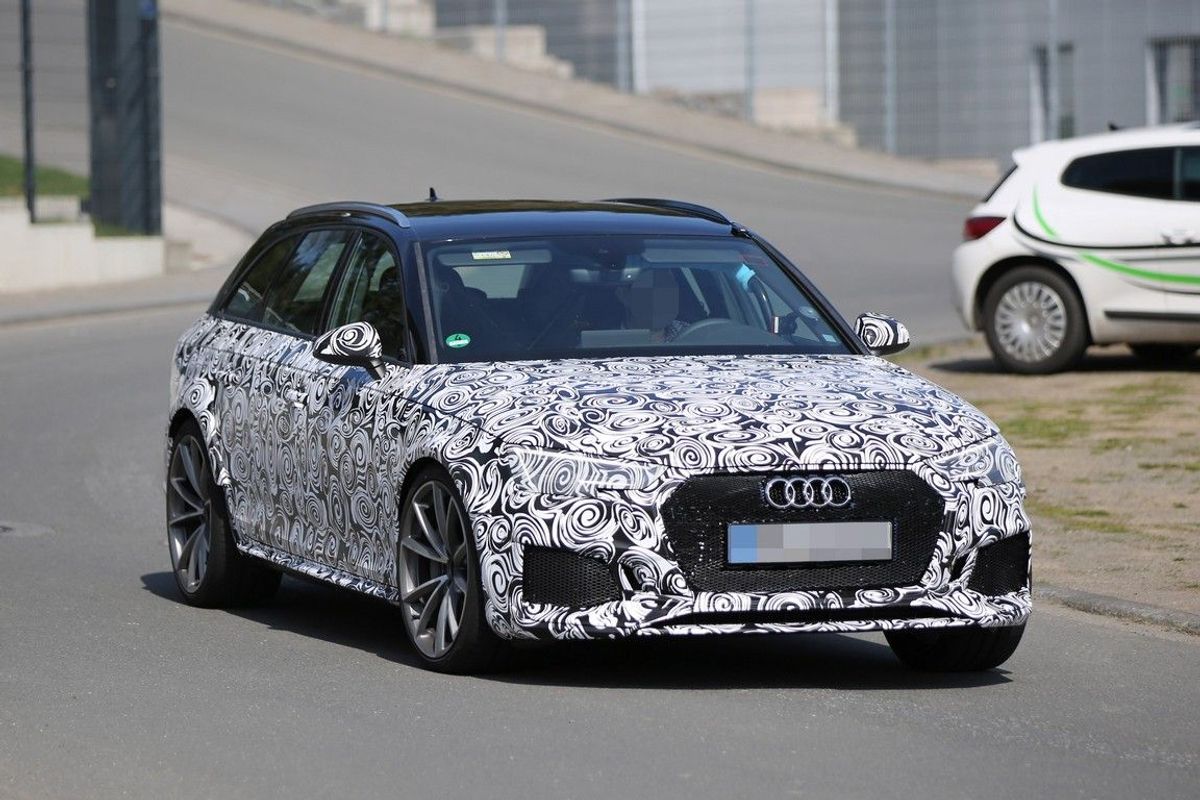
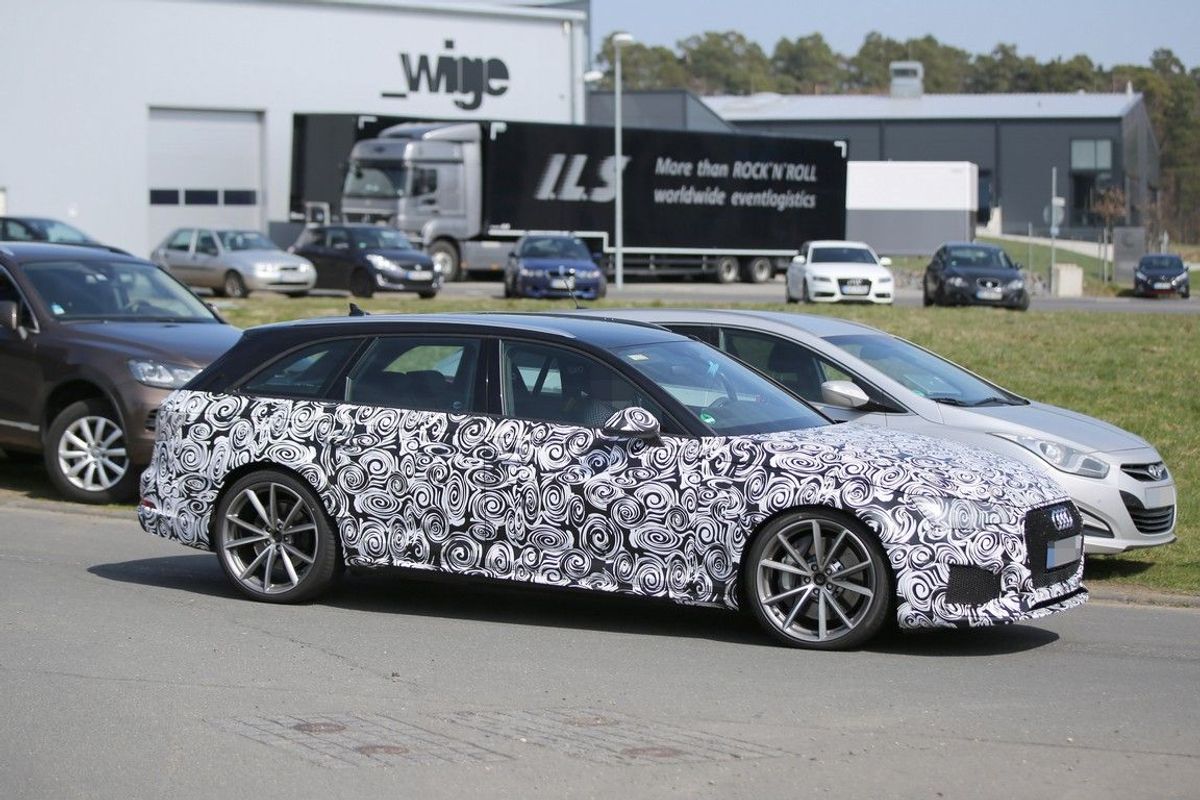
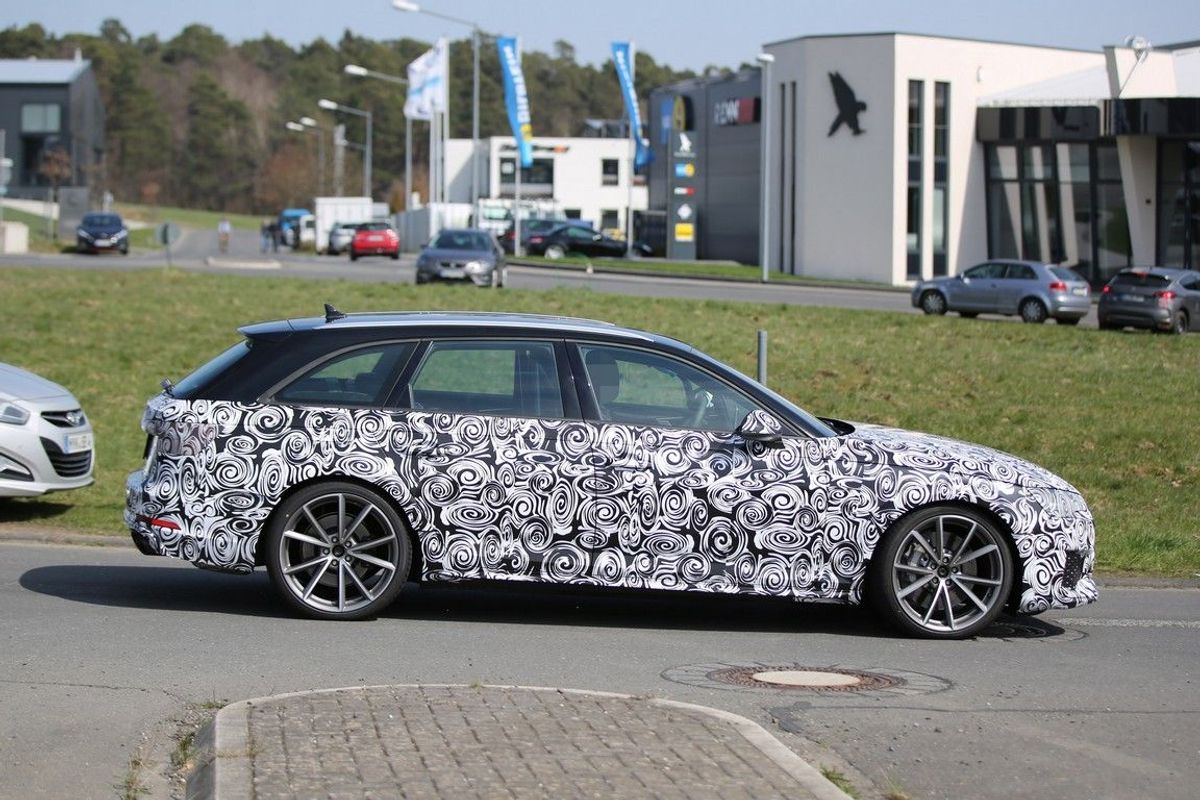
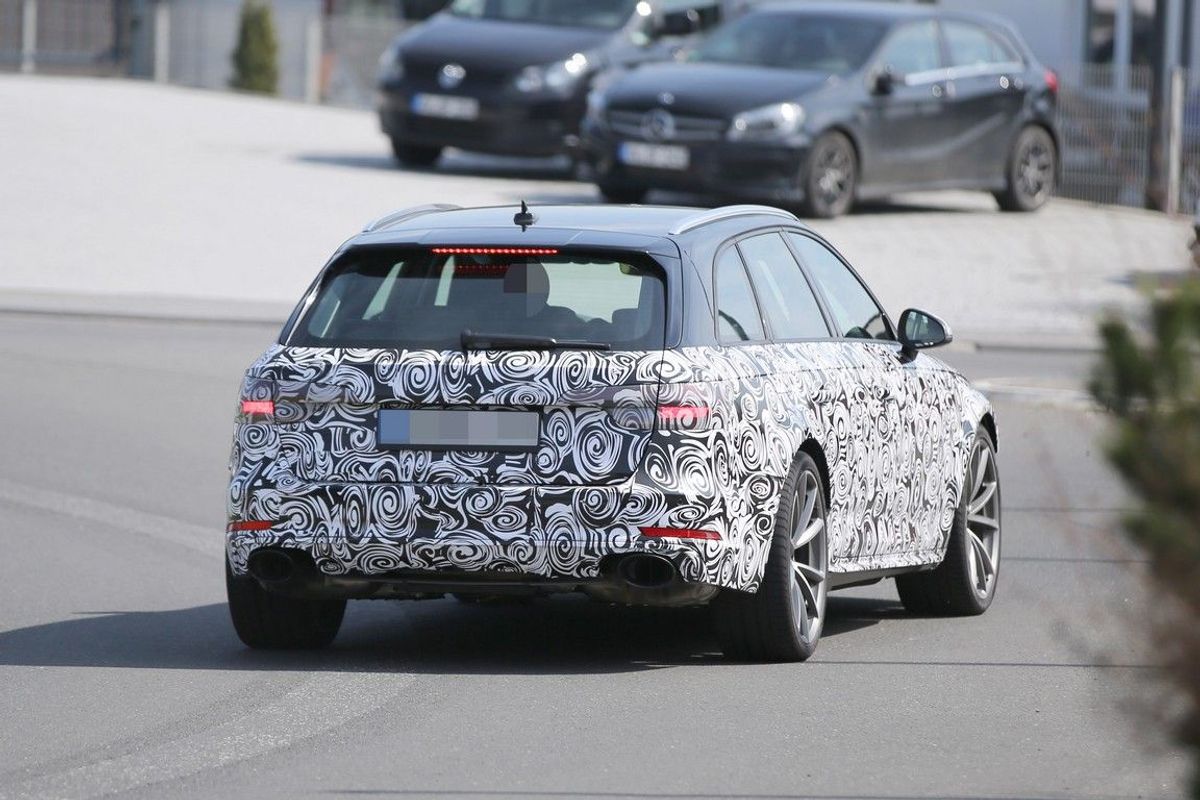
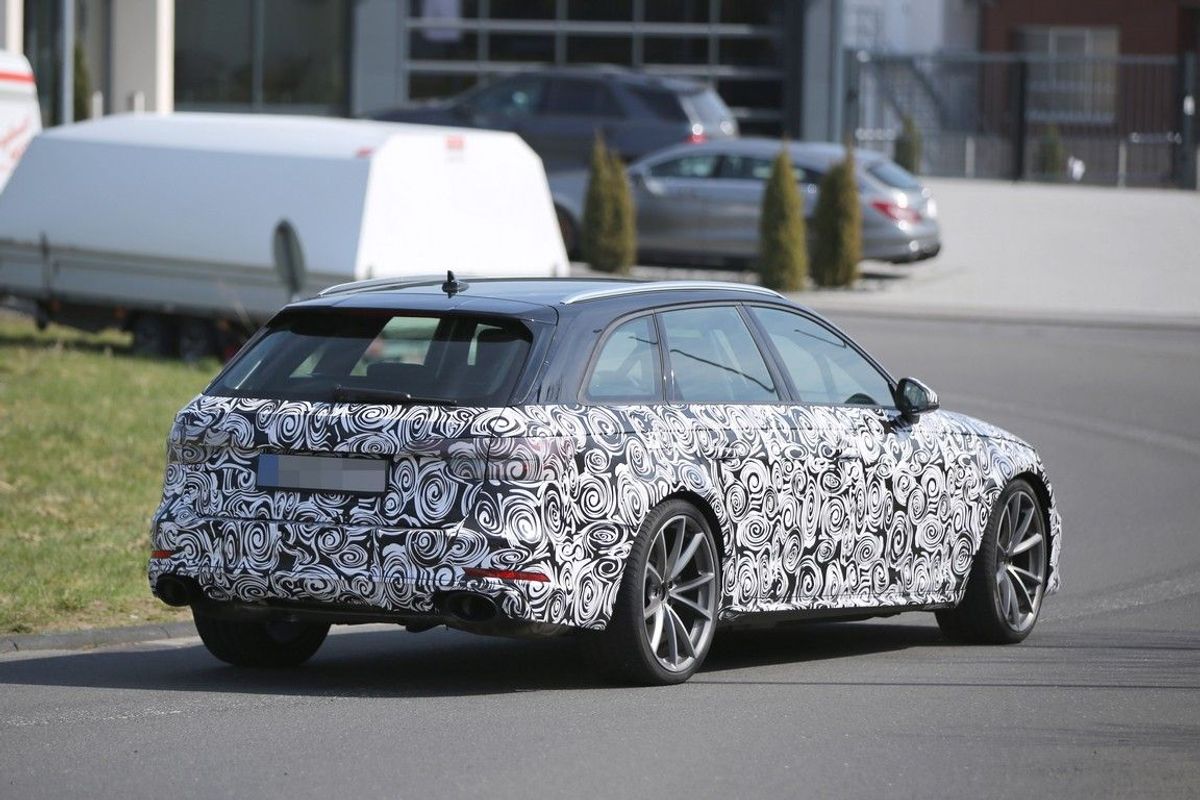
Spy Shots: Audi RS4 Avant
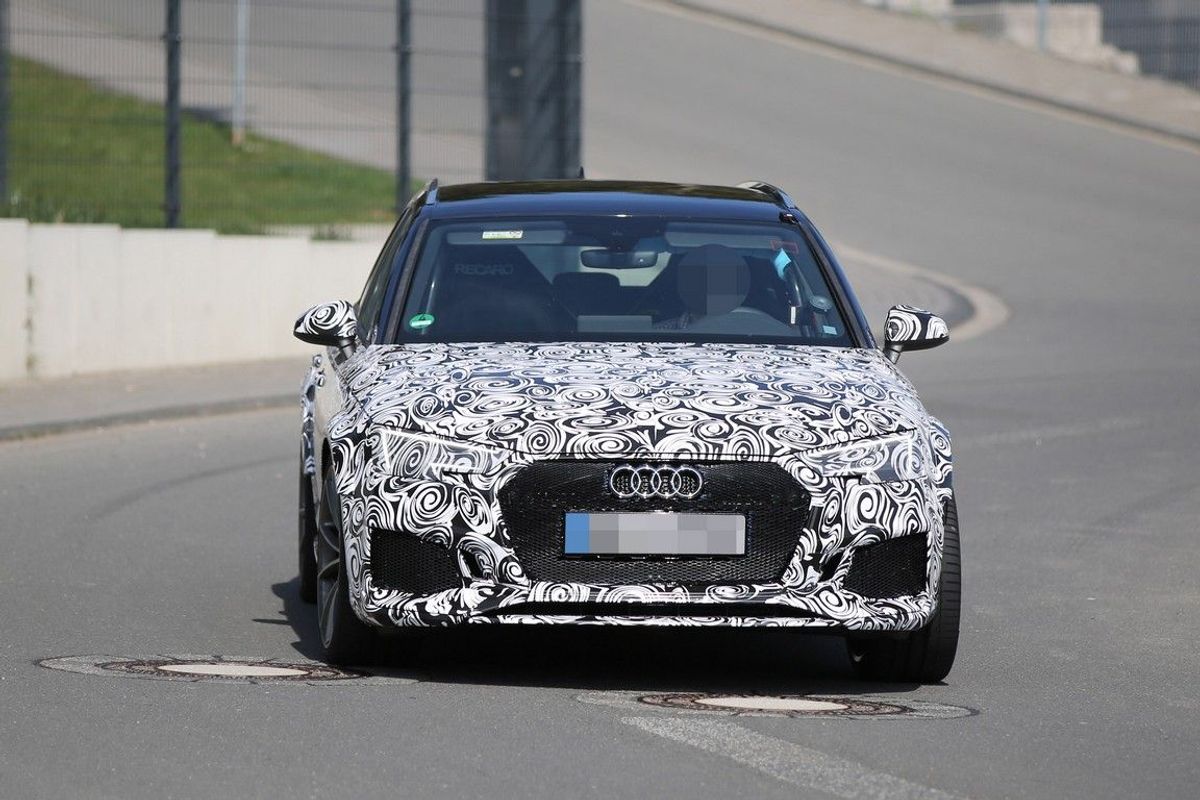
We’ve been waiting for the RS4 Avant to make an appearance, and now it has.
The Audi RS4 Avant is the top-of-the-range Audi A4, but in the previous-generation of the A4/A4 Avant, the Ingolstadt-based manufacturer dropped the sedan version of the RS4 and only produced it in station-wagon guise. With this new model, the firm plans to change that again, building both an Avant and sedan.
The fact that Audi is already testing the RS4 probably leans towards an earlier introduction of the model than expected. The previous model took four years to make it to production from when the A4 was launched. Rumours are that we could see full production cars in Europe by the end of 2016.
The naturally aspirated V8 has been dropped in favour of a turbocharged V6. The engine will remain relatively similar to the S4 engine but with higher power and torque outputs. It should hit the streets with similar outputs to the BMW M3 and Mercedes-AMG C63. That should mean between 310 kW and 320 kW in tandem with over 500 Nm.
The Audi S4 is heading for SA in the third quarter of 2016 so don’t expect the RS4 any time before mid-2017. Avants don’t normally sell very well in SA so we expect the sedan model to be far more popular than the Avant-only 2012 RS4.
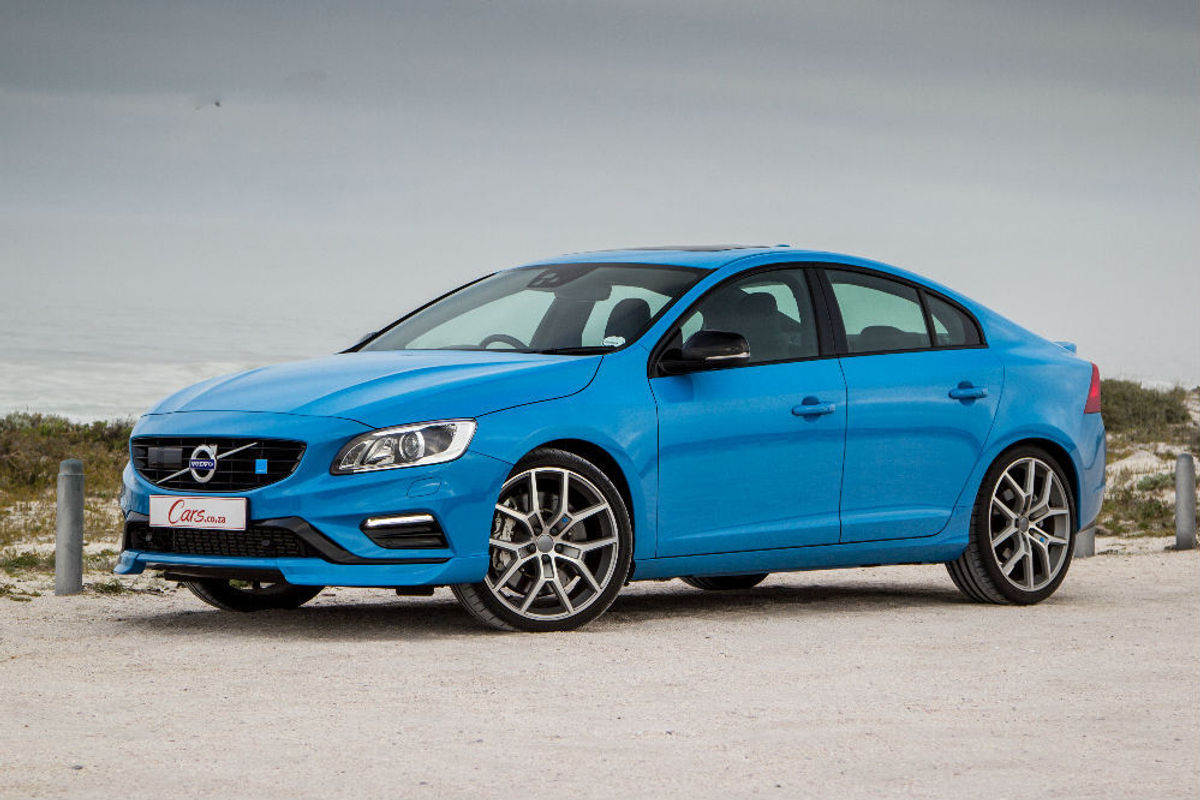
Volvo's announcement of a new-engined S60 Polestar, just a few months since the original was launched in South Africa, puts a question mark over the significance/desirability of the former. But even if the S60 is outgunned, will that matter to buyers loyal to the Swedish marque?
We like: Eye-catching but tasteful looks, sonorous engine, first-of-a-new-breed appeal
We don't like: Less than sports-sedan performance, squirmy under braking, intrusive safety systems
Alternatives
For more performance: If your budget stretches to R1 million or just over it, the Mercedes-AMG C63 and BMW M3 are thoroughbred sports sedans with much more brand cachet and performance capability. If those options are too expensive, hold out until the end of 2016, when Audi will launch its S4 quattro.
For better value: The slightly more affordable BMW 340i offers more-than-sufficient performance, but lacks the Volvo's sheer "wow factor". The Subaru WRX STi can certainly dig its wheels in and has gained a cult status through its generations, but premium buyers may find it too brash.
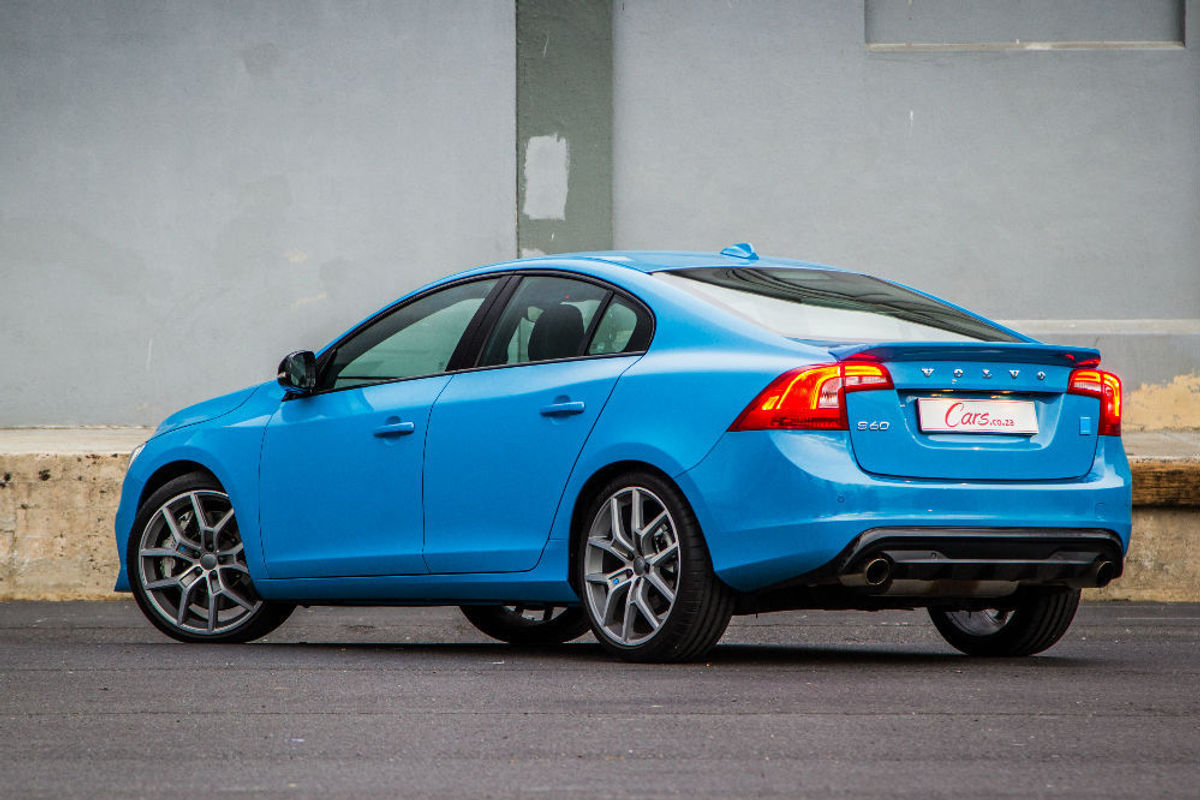
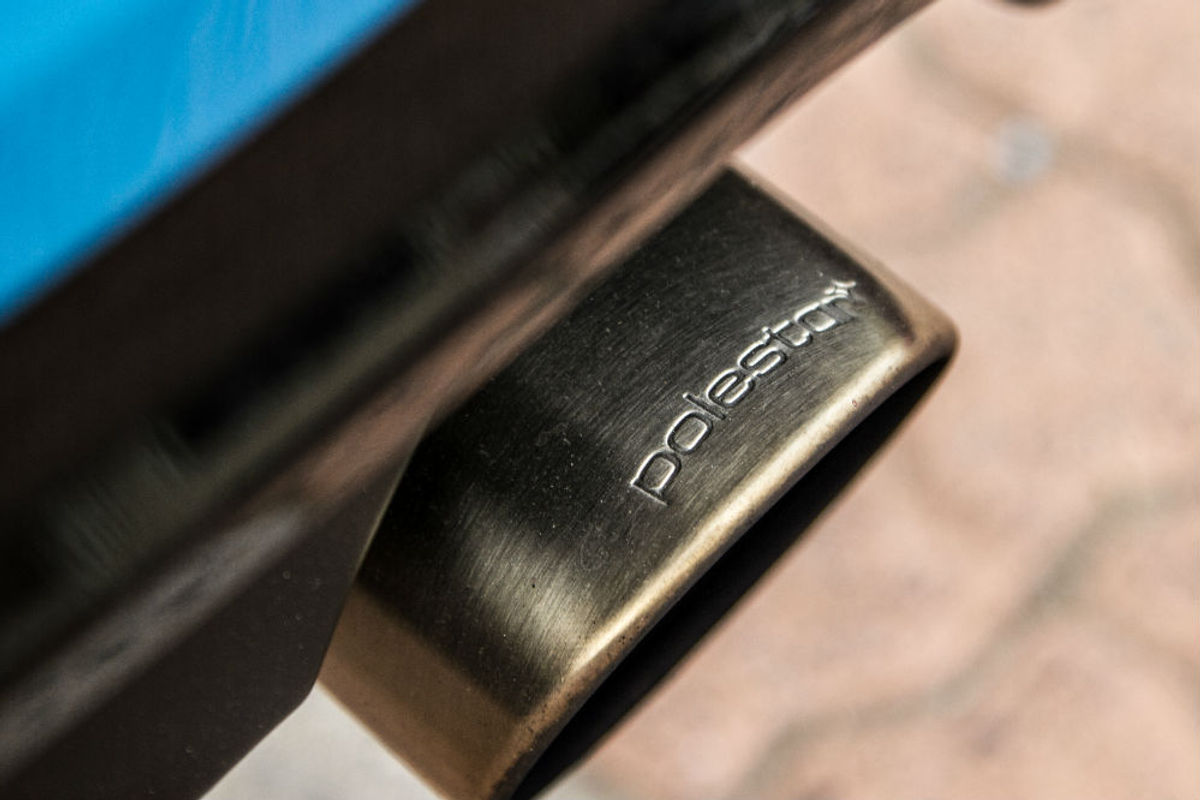
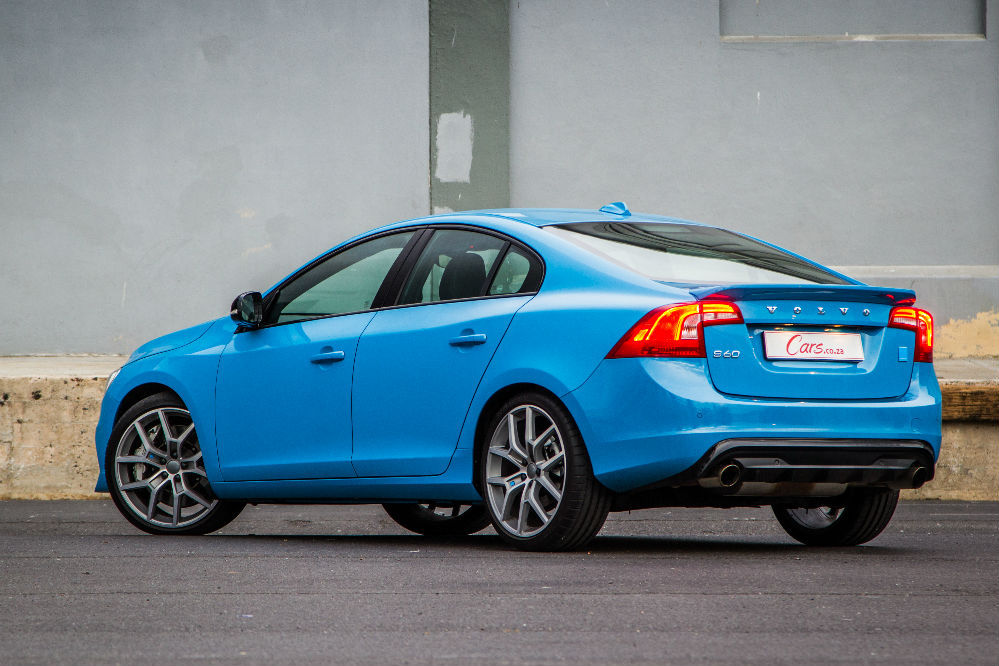
The S60 Polestar's rear bumper features a gloss black diffuser; the exhaust tips make a beautiful noise.
What is it?
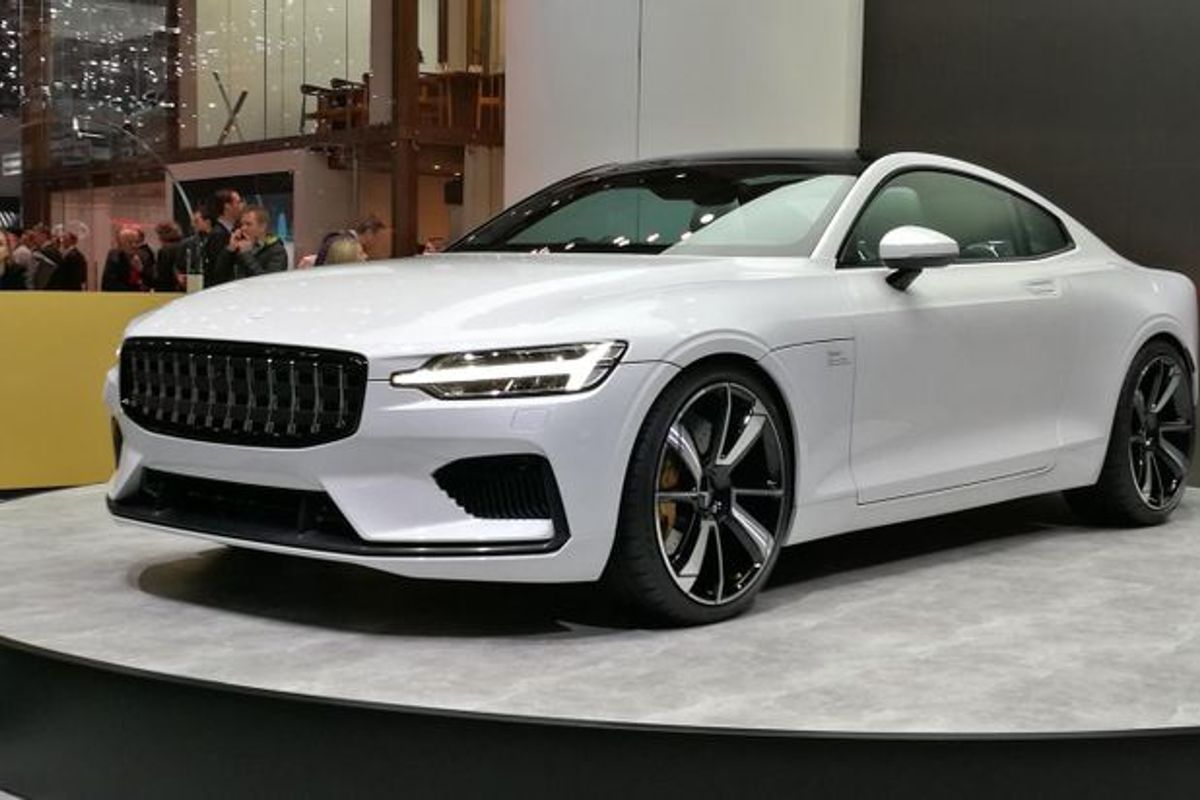
Just when it seemed that Volvo Cars had made peace with being nicknamed the Sensible Swedes, the Scandinavian manufacturer bought out Polestar, the company that produces Volvo racing cars for touring car competition, and decided to build performance-oriented “R model” cars again, only this time round they’ll be known as Polestars.
The move was received with great enthusiasm by Volvo aficionados, but, considering how dominant special models fettled by Audi, BMW, Mercedes and Jaguar’s performance divisions are in the market, the S60 Polestar, a superheated and boisterous version of the top-of-the-range 3.0-litre straight-six T6 AWD Inscription model and of which only 28 units were allocated to the market late last year, is very much a brand-builder for Volvo. In other words, it is a first stab at establishing a designation (Polestar) that consumers will positively associate with the Swedish marque.
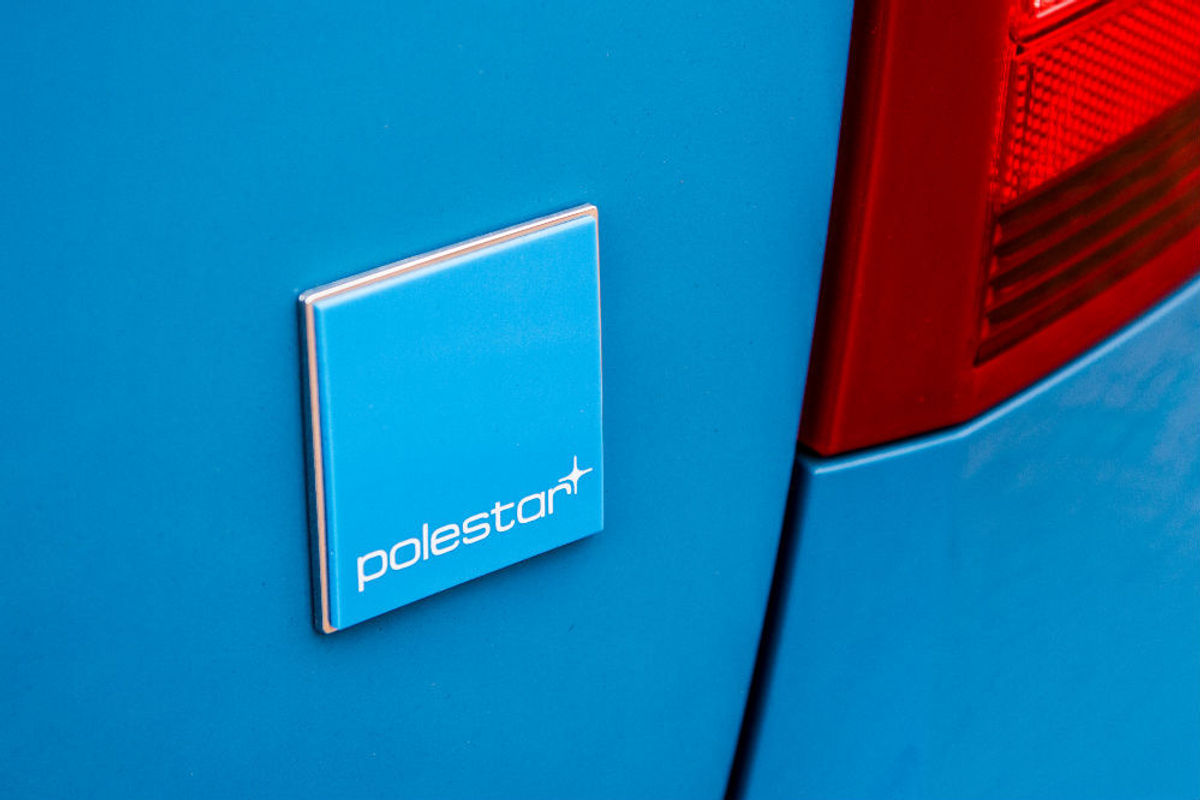
The cyan Polestar decal might not look distinctive with this paint finish, but it will stand out more on other versions.
Target market
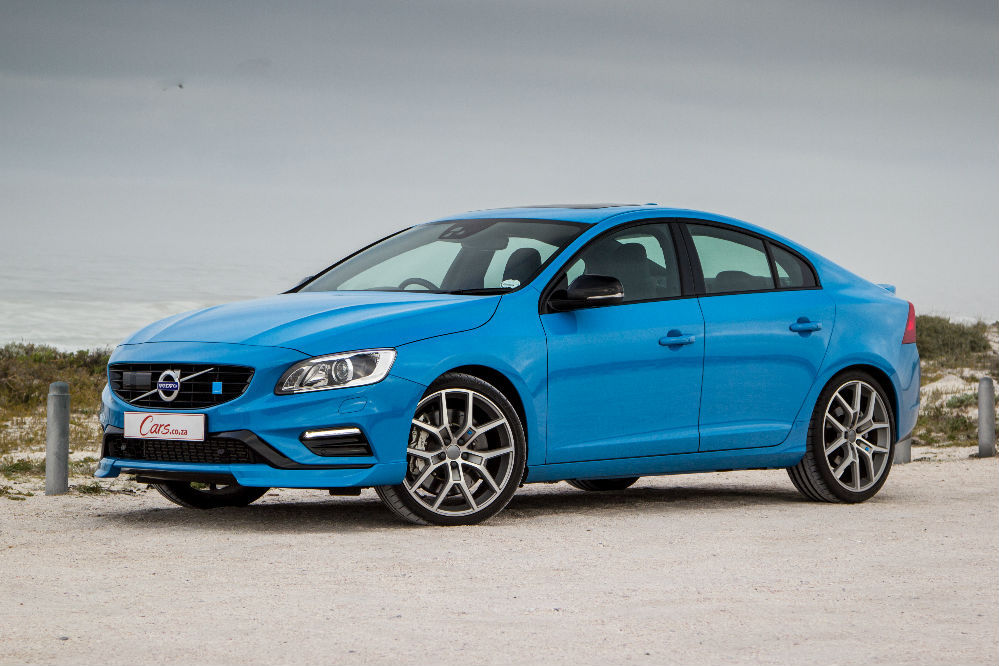
S60 Polestar models were all pre-sold upon arrival in the South African market, but they do pop up on the used market occasionally. The Polestar’s major attraction (apart from the fact that every vehicle in the South African consignment was finished in attention-grabbing Rebel Blue), is that it looks purposeful (yet tasteful) and offers an entertaining (as opposed to awe-inspiring) level of performance without compromising too much in terms of everyday usability.
While it is unlikely to lure buyers away from headlining, appreciably more powerful performance sedans such as the BMW M3 and Mercedes-AMG C63, for example, it’s the most potent all-wheel drive compact executive sedan in the market until the S4 and (perhaps) RS4 versions of the new-generation Audi A4 make landfall in late 2016 and beyond. The Volvo’s most natural rivals are the BMW 340i and, to a lesser extent, the Jaguar XE S.
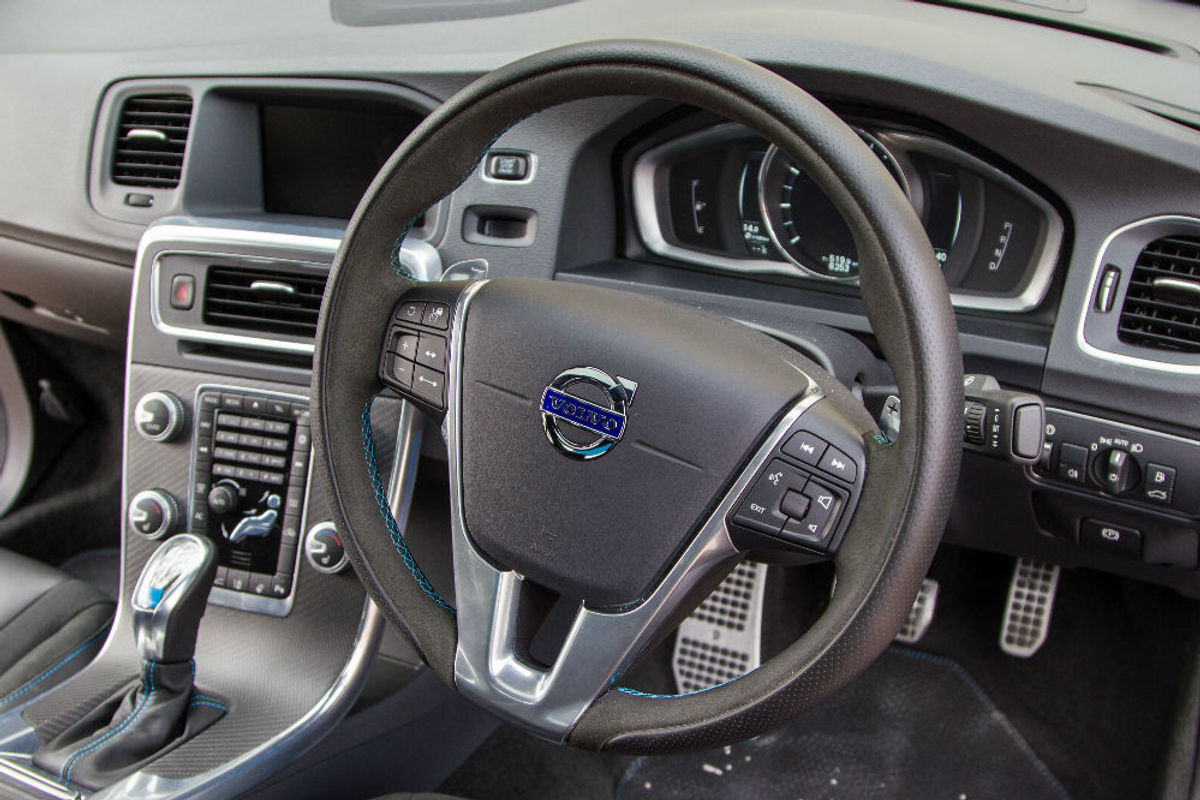
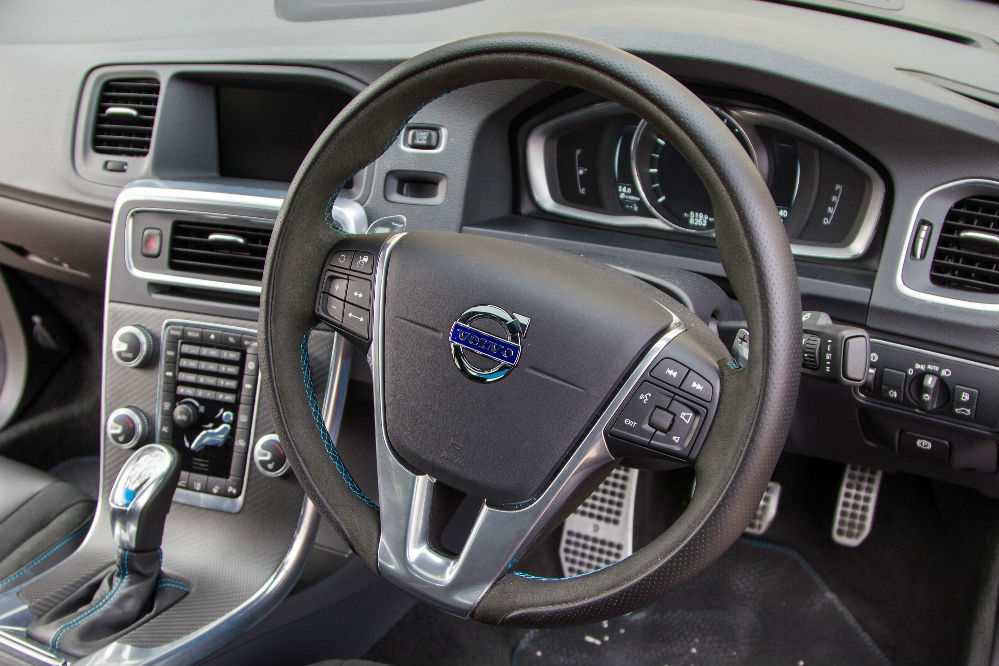
Contrast stitching and strategic application of Alcantara gives the Polestar's interior a racy feel.
How does it fare in?
Packaging and detailing
No fewer than 14 Polestar decals and liveries (yes, we counted them) feature on the S60 Polestar, so there is undoubtedly a sense of occasion about this limited-edition Volvo! Courtesy of its Rebel Blue paint finish, handsome aerodynamic addenda and a purposeful stance augmented by those eye-catching 20-inch alloy rims replete with branded calipers and miniature decals, the Polestar has oodles of kerb presence and head-turning appeal, but in the opinion of the majority of the test team, the Volvo's not too flashy to deter performance-minded premium buyers.
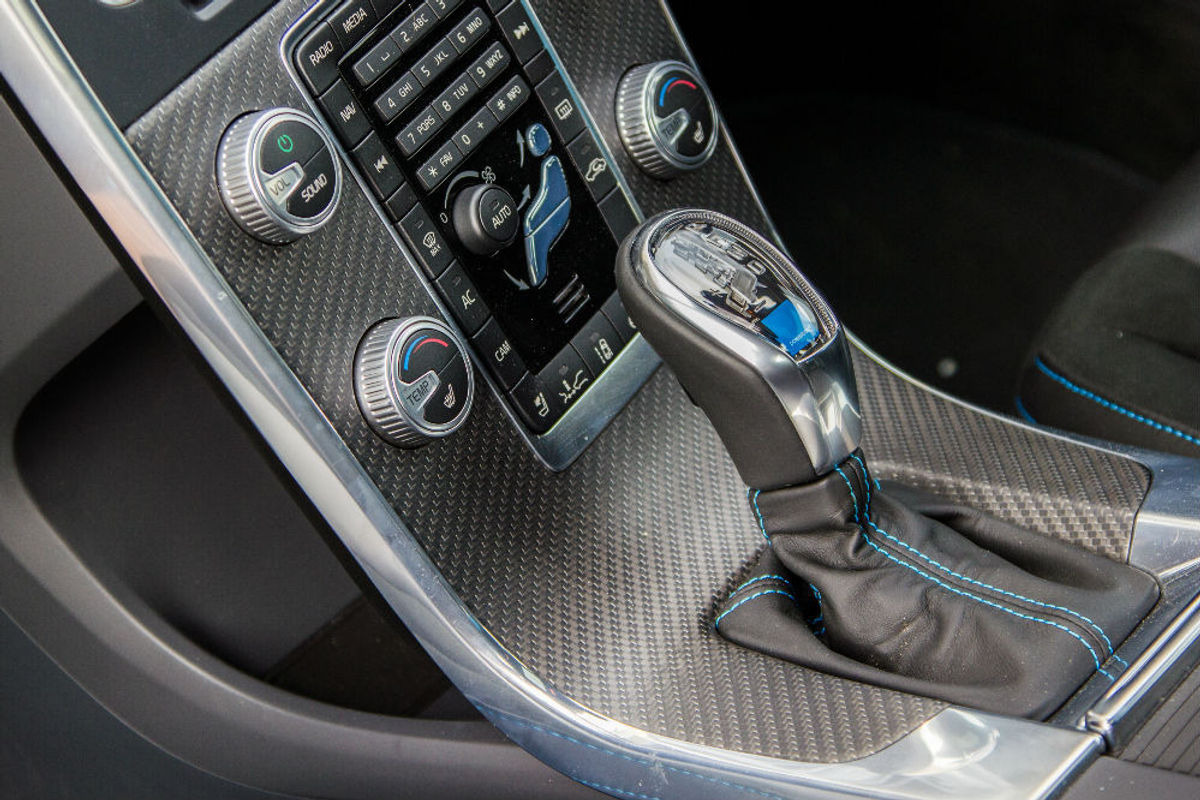
The interior detailing is quite subtle too… The cabin is trimmed in a combination of leather and Alcantara (even the steering wheel) and features light blue contrast stitching. That, in conjunction with bespoke touches such as the Polestar shifter and the rubber-studded metallic pedals, adds to the specialness of the cabin. Whereas its German competitors tend to err on the side of dark, somewhat sombre, interior treatments, the Volvo is comparatively bright inside and although rear seat legroom is not its forte, the front seats are supportive when you're driving enthusiastically, yet comfortable enough for everyday use. Otherwise, the Polestar's just as practical as any other S60 model…
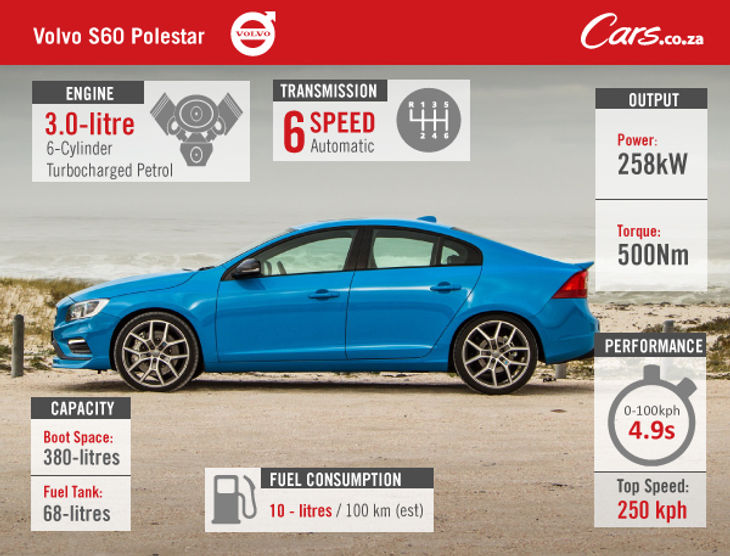
The most notable performance characteristic of the S60 Polestar is the marked difference between the car's character between Normal and Sport modes. By fitting a new turbocharger and intercooler (among other modifications) to the T6's motor, Volvo has coaxed 258 kW and 500 Nm from the 3.0-litre straight six motor and while its exhaust note is burbling, but urgent, under normal conditions, it's resoundingly sonorous under full acceleration in Sport mode. In an era in where turbocharging technology has robbed some powertrains of their raspiness and timbre, the Volvo motor's an aural delight.
Having said that, the 3.0-litre motor is not the most free-revving unit of its kind and the mapping of the throttle and six-speed automatic transmission is comparatively leisurely when the Polestar's not in Sport mode. That's not to say that the Polestar is lethargic by any means, but when its driver feels the inclination to drive their S60 like a sportscar, it's best to knock the shifter to the left (Sport), see the instrumentation illuminate in a red hue and select a lower ratio with the left shift paddle before burying the throttle pedal. In that scenario, the Polestar brings its A-game: the Haldex all-wheel drive and tuned suspension deliver confidence-inspiring grip and body control on a twisty section of road, the front end feels glued to the road until gradual understeer intrudes at the limit and the willing engine remains in full voice throughout.
The S60 Polestar does have a couple of weaknesses, however. Even though the Volvo's braking system is well up to the task of smothering the car's momentum, there is a sense of squirminess to the way the retardation takes place and it's also apparent by a slightly grainy feeling to the middle pedal. What's more, there is a penalty to pay for the stiffer suspension setup and running on those low-profile Michelin Pilot Super Sport tyres: a less-than-compliant ride quality. To be fair, the Volvo's ride quality is not bone-jarringly hard, but stiff enough to jolt occupants over bigger bumps.
Desirability
As this Volvo's no longer available from new, by virtue of the fact that only 25 were made available to the public (the other three units were marketing vehicles), one cannot automatically attach modern classic/instant collector's item status to the car, even though there is bound to be pent-up demand for the model. Yes, it is the first of a new breed of performance Volvos, but that is a blessing (in terms of its originality) as well as a curse (Polestar is not yet a household name). Moreover, Volvo recently announced the production of another S60 Polestar that will look virtually identical to this vehicle but offers a more potent, let alone efficient, powertrain. Nevertheless, those who can find one in the used market will still benefit from the balance of a 5-year/100 000 km warranty, maintenance plan and roadside assistance.
There is no shortage of Polestar liveries on the S60… even the exhaust tips are branded.
Verdict
It's a tricky task to assess a vehicle that was offered in very low numbers and sold out before it even made its public debut, especially in the case where it is a vehicle that does not have a predecessor that it can be compared against. Ultimately, the S60 Polestar does not set new performance benchmarks in the premium compact sedan segment – in fact, it has few direct rivals – and that can be damaging for a vehicle that is packaged in the way the Volvo is.
However, the newcomer is very significant insofar as the Volvo brand, which has a small, but loyal, following, is concerned. For brand aficionados, the S60 Polestar represents a highly desirable proposition and, objectively, an interesting proposition for those who cannot quite afford the aforementioned German rivals, especially from new. Those who are interested in switching to the Swedish marque will be interested to know that according to the Cars.co.za Owner Satisfaction Survey, Volvo's resale values may not be as good as those of its rival luxury marques, but the brand rates favourably in terms of sales experience and well in terms of after-sales experience.
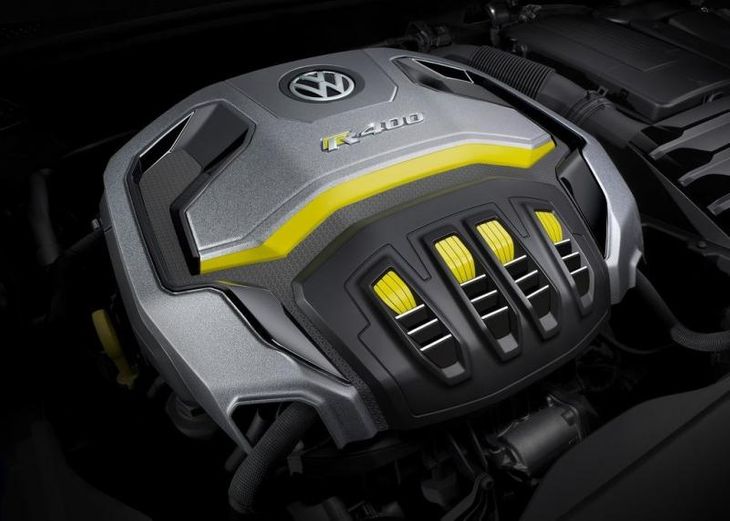
Volkswagen is gearing up to reveal the production version of the Golf R400 concept that was first shown at the 2014 Beijing Motor Show.
Reports suggest that the road-going version of the Volkswagen Golf R400 will be revealed in either May or June 2016 and when that happens, it will be the fastest Golf derivative to be put into series production. Although that’s good news, South Africa will unfortunately not get the Golf R400, but you can look forward to the mid-year arrival of the GTI Clubsport that will offer 195 kW (213 kW with overboost) from its 2.0-litre turbocharged engine.
Concept to reality
When the Golf R400 was first shown in Beijing, it showcased purposeful styling and its 2.0-litre turbocharged engine, which developed 298 kW and 450 Nm of torque, was mated with a 6-speed DSG. Along with 4Motion all-wheel drive, the concept was claimed to dispatch the 0-100 kph sprint in 3.9 sec before reaching a limited top speed of 280 kph. Those are considerable numbers for a hot-hatch, but VW has yet to reveal the production Golf R400's outputs.
There have been several reports that Volkswagen could shelve the 2.0-litre engine and opt for the upgraded 2.5-litre, five-cylinder engine found in the Audi RS3 instead, but that remains to be seen. Furthermore, rumours abound that the Golf R400 will feature a performance boost that will take total power output up to an astounding 313 kW.
Speculation aside, whatever VW decides, the Golf R400 is likely to be a hit. Let’s just hope the Wolfsburg-based firm will change its mind about bringing the car to South Africa. We will keep you informed as more information becomes available.