The 2016 Budget speech killed off hopes that office-bearing politicians may have had of procuring first class sedans and premium SUVs at the government's expense. We suggest five vehicles that will comply with the ministerial handbook and provide respectable transport
According to Finance Minister Pravin Gordhan the new car allowance is subject to “new guidelines to limit the value of vehicle purchases for political office bearers”. The furore over ministerial vehicle purchases refuses to subside; the issue came to a head in 2009 when some ministers were accused of wasteful expenditure on vehicles costing in excess of R1-million.
As it stands now, the ministerial handbook dictates vehicle purchases must not exceed R750 000, which rules out many vehicles commonly associated with the "blue-light brigade". This has got us thinking. Which vehicles would be most appropriate for our government officials, yet tick the affordability boxes both in terms of outright purchases and running costs.
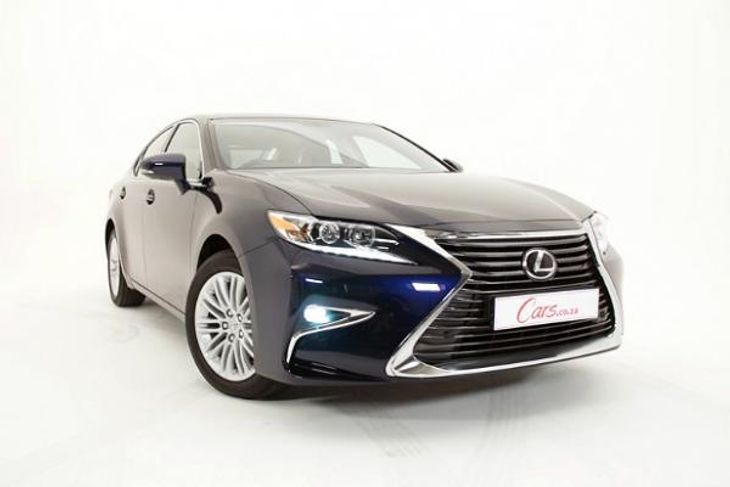
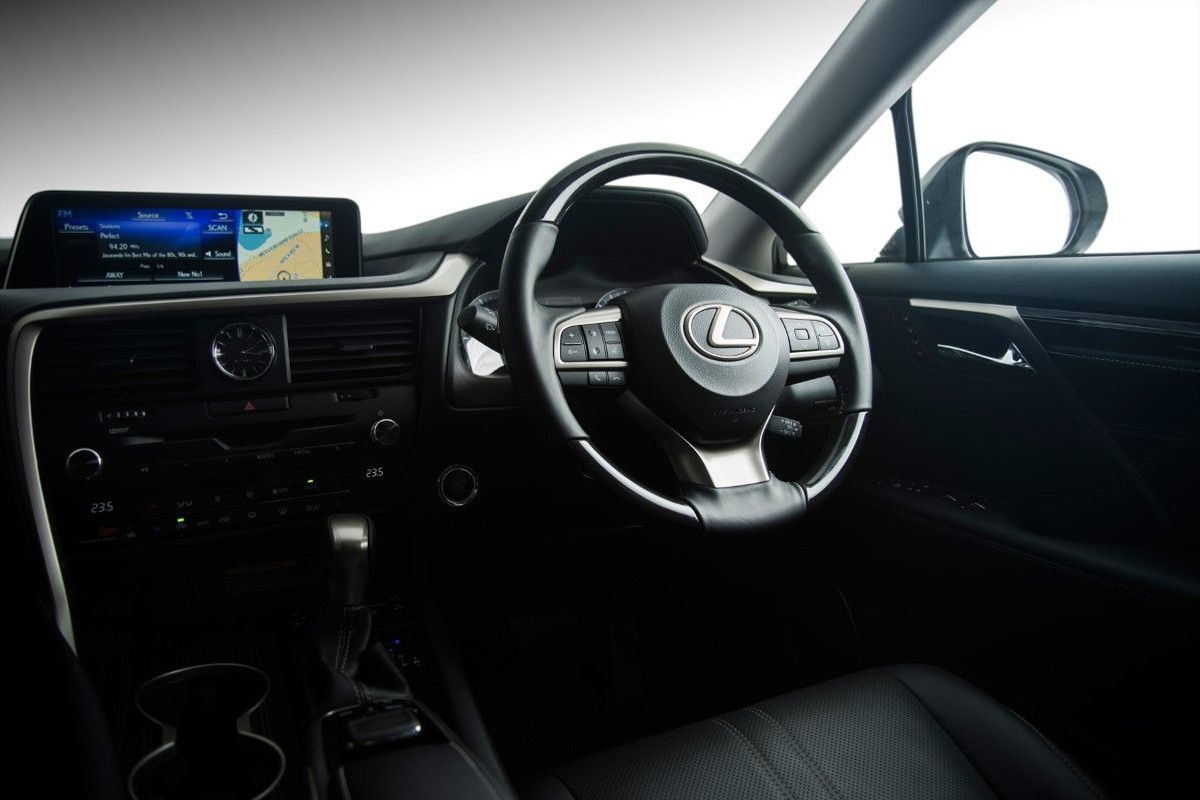
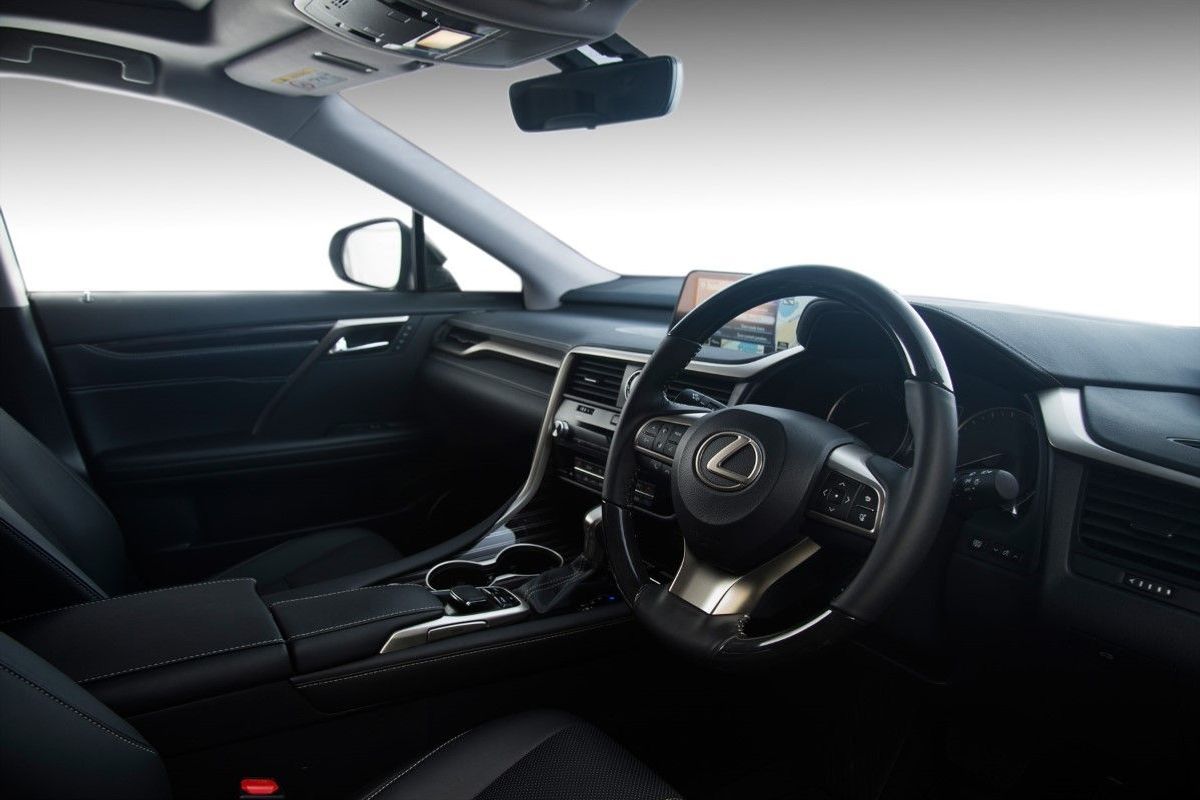
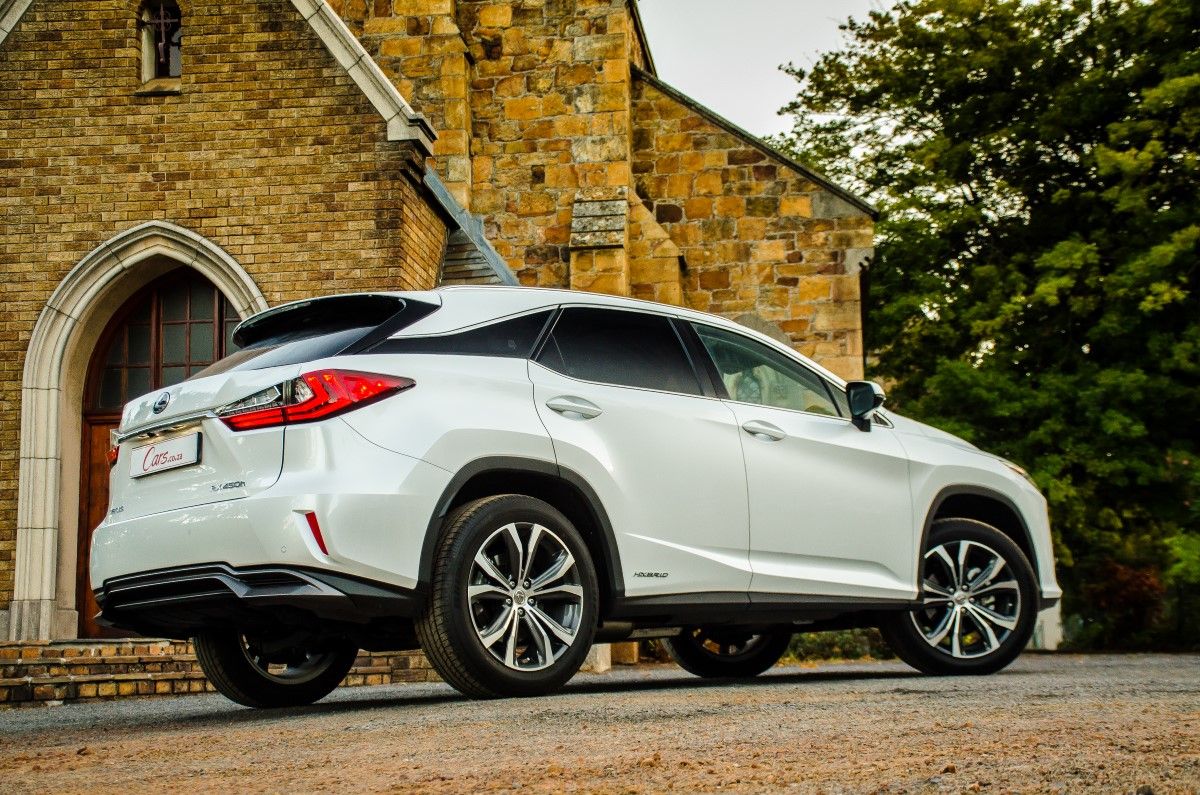
Lexus ES
For those wanting comfort, a multitude of features and generous rear legroom, the Lexus ES is hard to fault. Not only is well built, it’s also reasonably cheap to run. The engines offer reasonable performance and return respectable fuel consumption. The boot’s hugely spacious, plus the ES is generic in the styling department, so you can arrive at events discreetly.
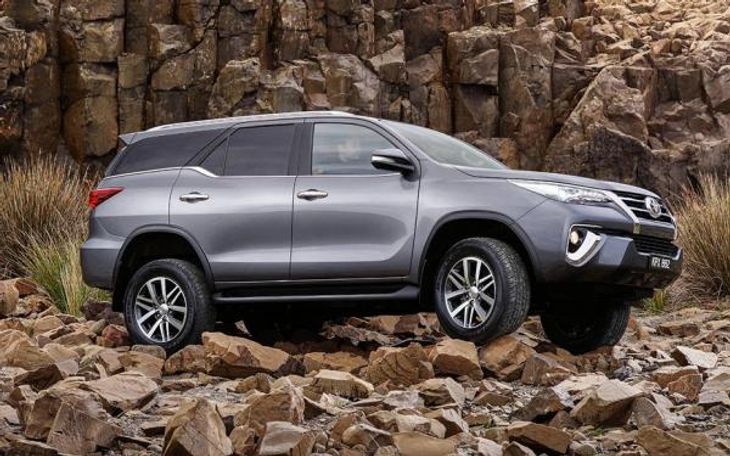
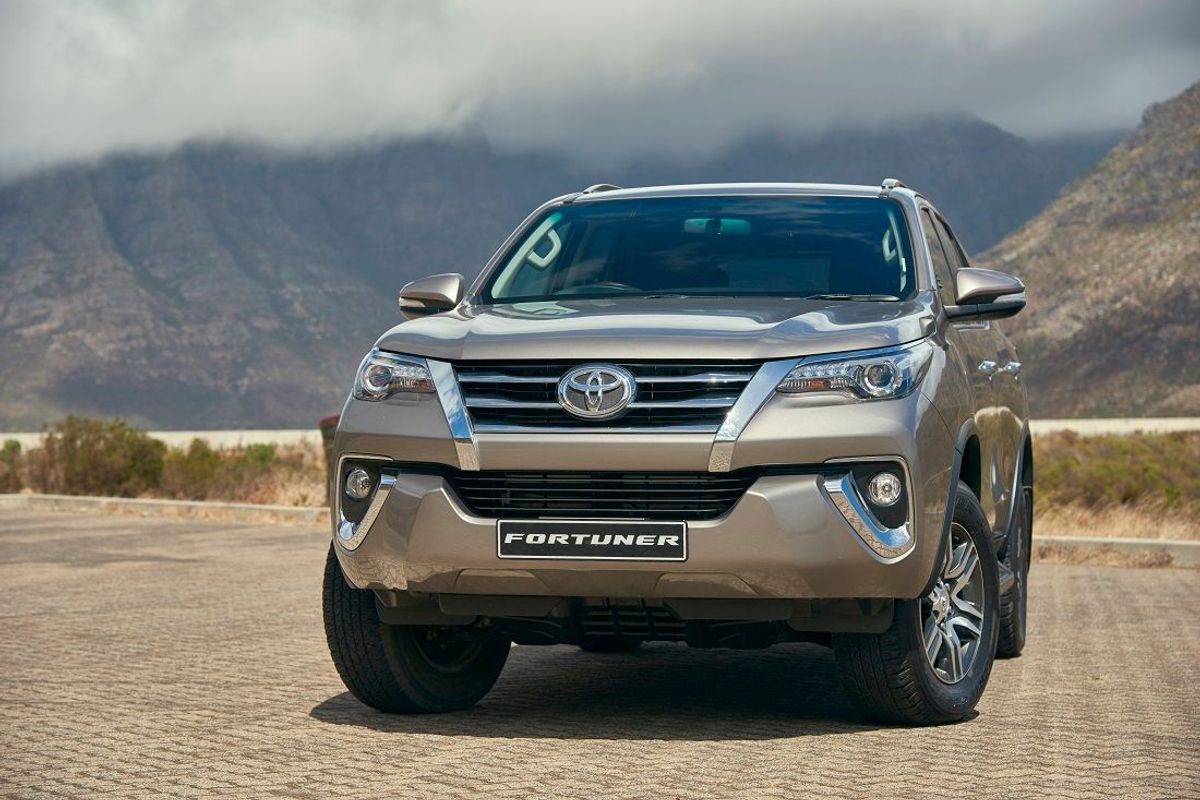
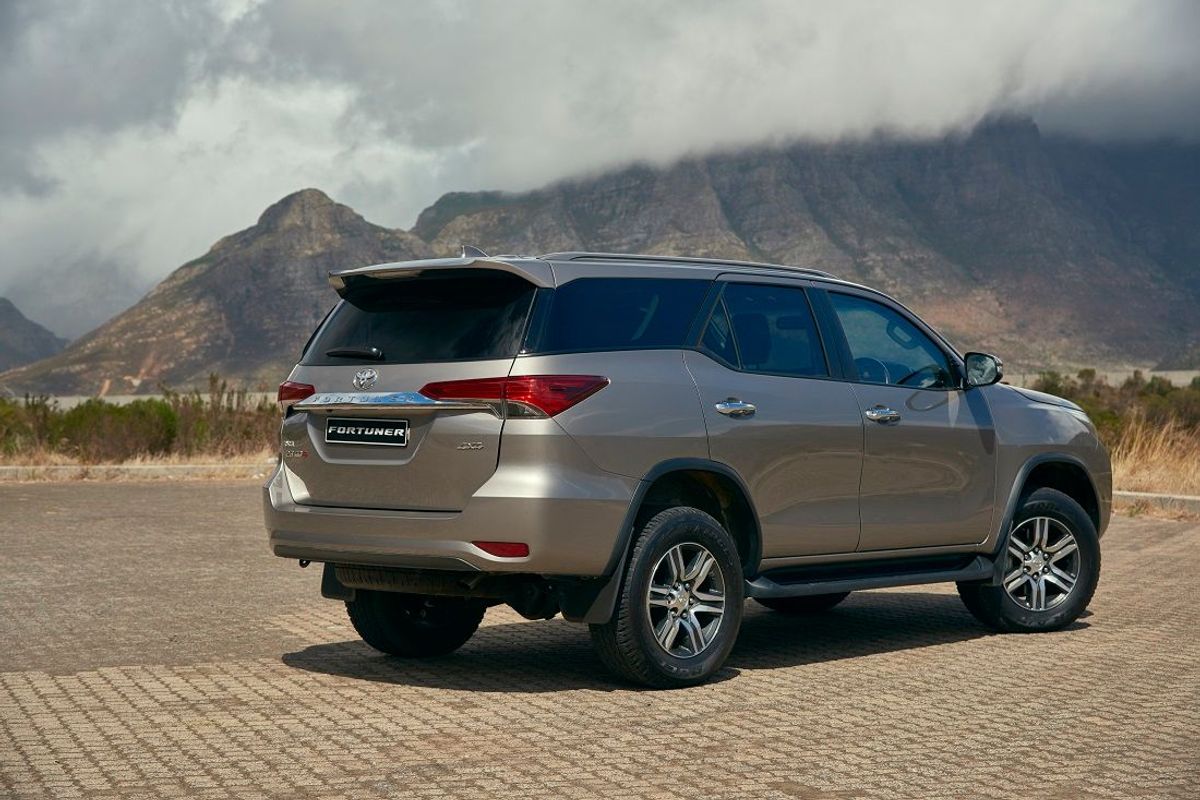
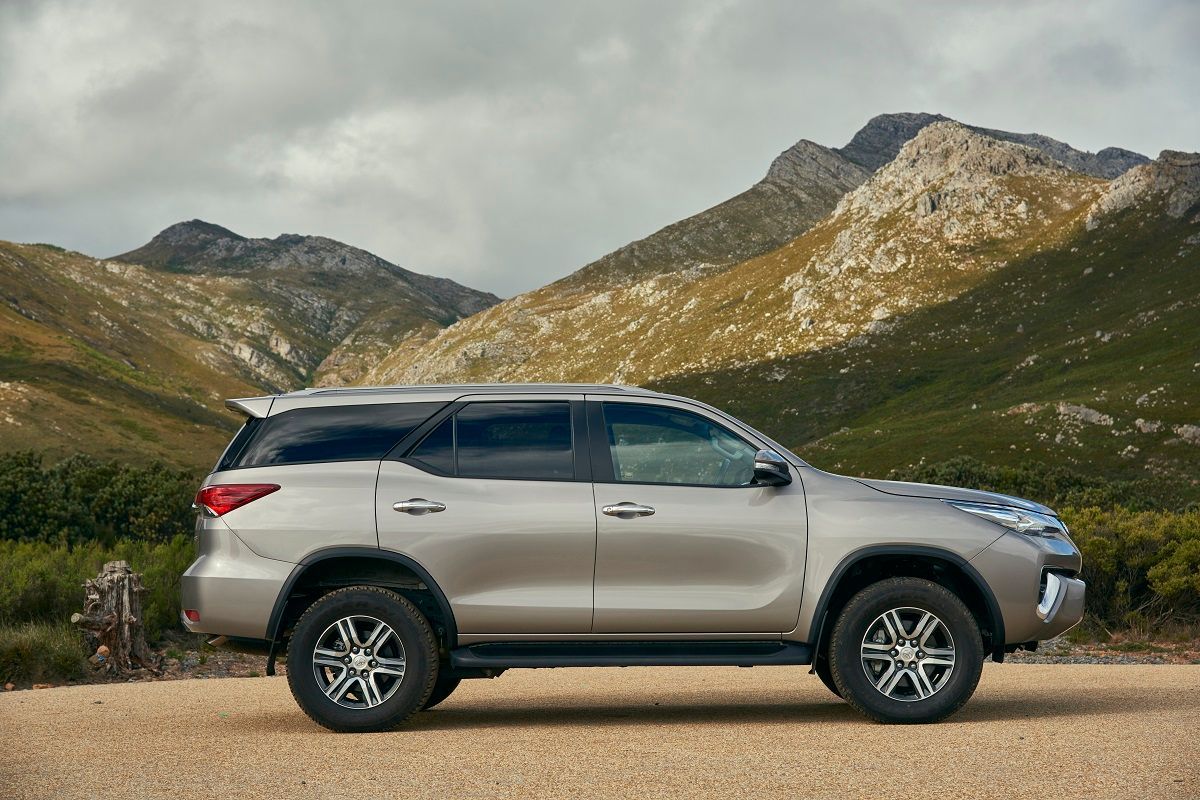
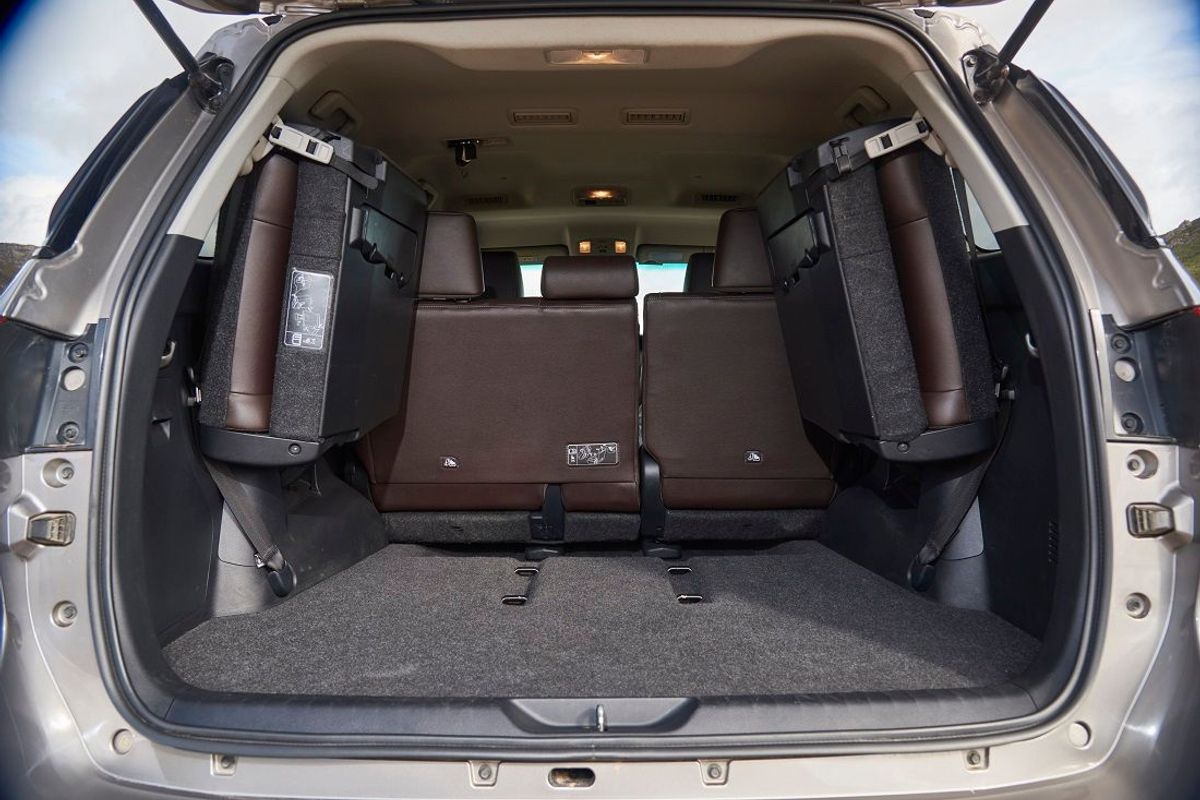
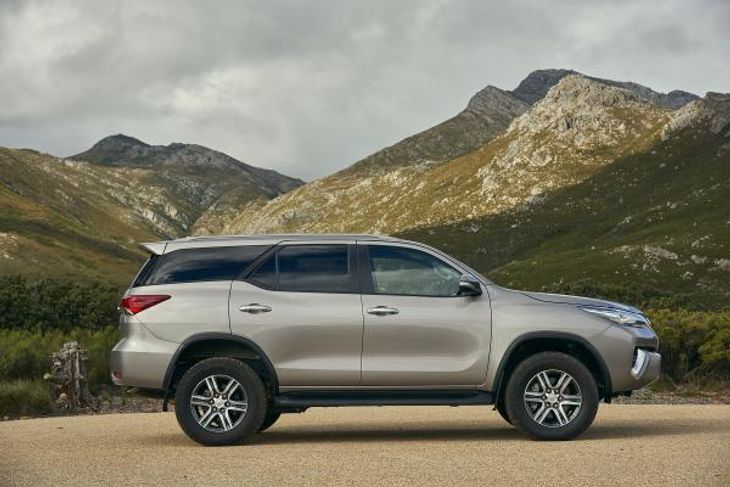
The new Toyota Fortuner has just been launched and it's a rugged, capable vehicle that offers affordable (by large SUV standards) comfort and luxury. Expect some powerful engines and it’ll seat seven passengers in comfort. With its offroad ability, crossing any terrain will be easy and this vehicle is perfect for those who work in the remote regions of South Africa.
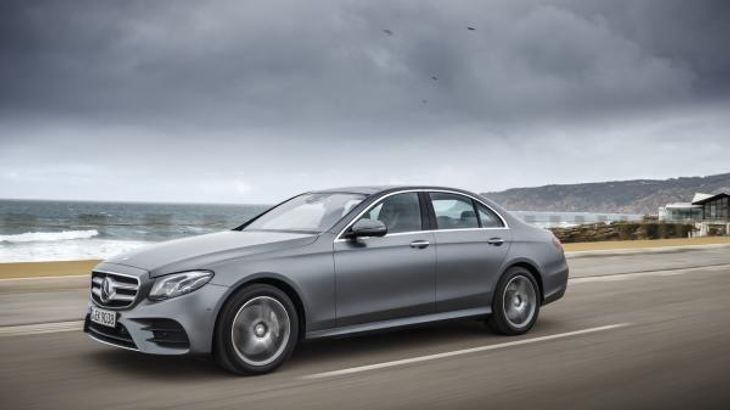
The new Mercedes-Benz E-Class was launched internationally and it’s due in SA soon. While it’s significantly cheaper than the popular flagship Mercedes-Benz S-Class, it incorporates several new technological features and boasts a level of refinement that many would expect from a first class car. The E200 costs R709 357; which even leaves room for extra spec!
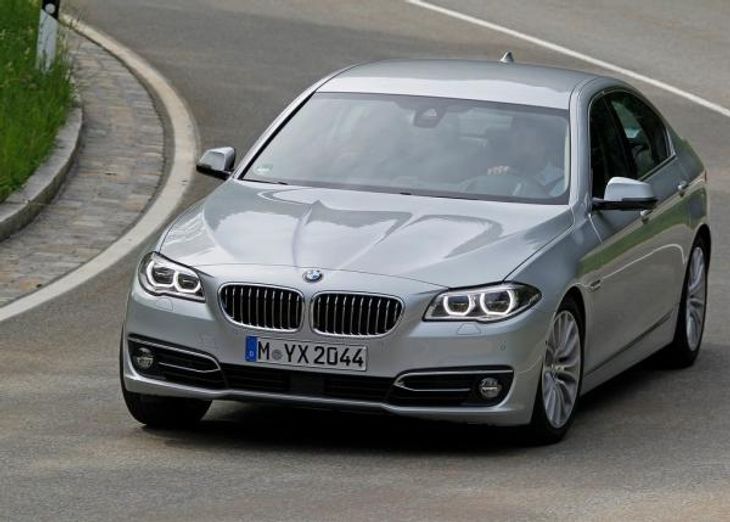
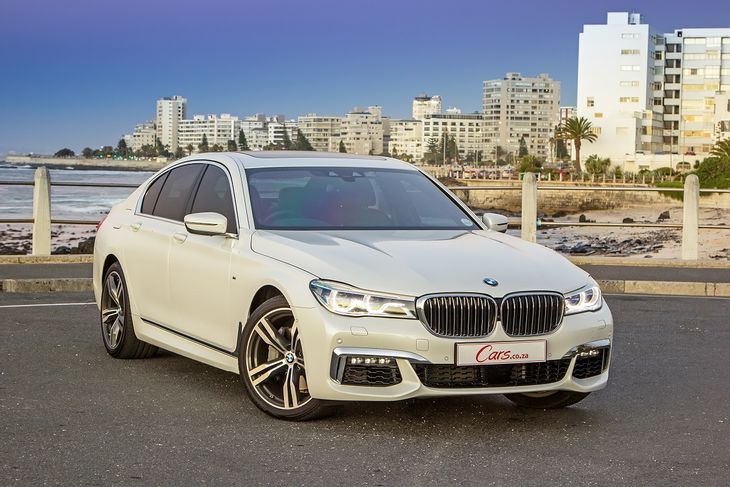
Politicians who were previously partial to the 7 Series will be forced to scale down because as the latest model exceeds the R750 000 limit. The good news is that the BMW 520i and 520d falls within this price limit and the better news is that it’s a really good drive too. For those who drive themselves, they’ll be rewarded with a sporty and luxurious driving experience…
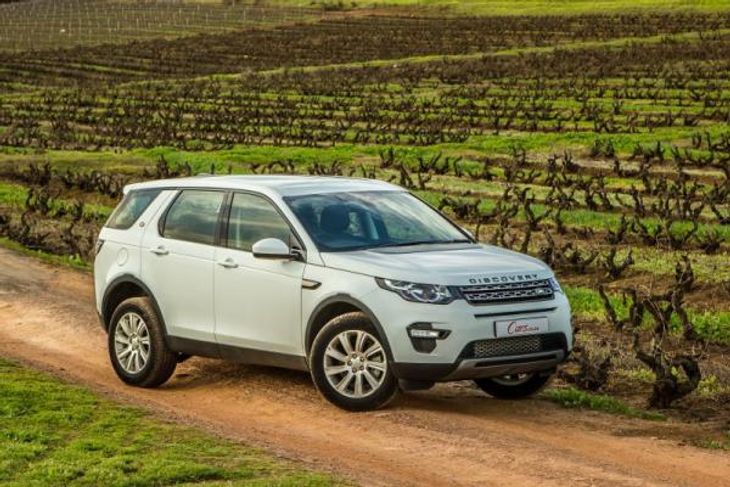
If the Toyota Fortuner is deemed too uncomfortable and not premium enough for our ministers’ needs, then we can recommend the Land Rover Discovery Sport. It won Best Leisure vehicle in the Cars Awards and this Discovery Sport SD4 SE version is R100 000 within budget. It’ll go offroad comfortably and even boasts seven-seat practicality.
Any views or opinions expressed in this article are solely those of the author and do not represent those of Cars.co.za or its editorial content team.
Toyota Fortuner (2016) Specs & Price
The wait is finally over and the Toyota Fortuner is here. We have specifications and pricing for the new-generation version of this popular SUV.
Since 2006 the Toyota Fortuner has been an exceptionally popular vehicle for the offroad and outdoor enthusiasts. Despite its basic underpinnings from a Toyota Hilux, the Fortuner has proved itself time and time again, and it remained a strong seller right to the end of its long product life. The new Toyota Fortuner was announced internationally last year and immediately one could see that it represented a substantial step up from the current model. “The new Fortuner has a long, wider stance versus the outgoing model, and its capabilities to adapt into every environment like a chameleon have been reinforced,” says Calvyn Hamman, sales and marketing Senior Vice president of Toyota South Africa Motors.
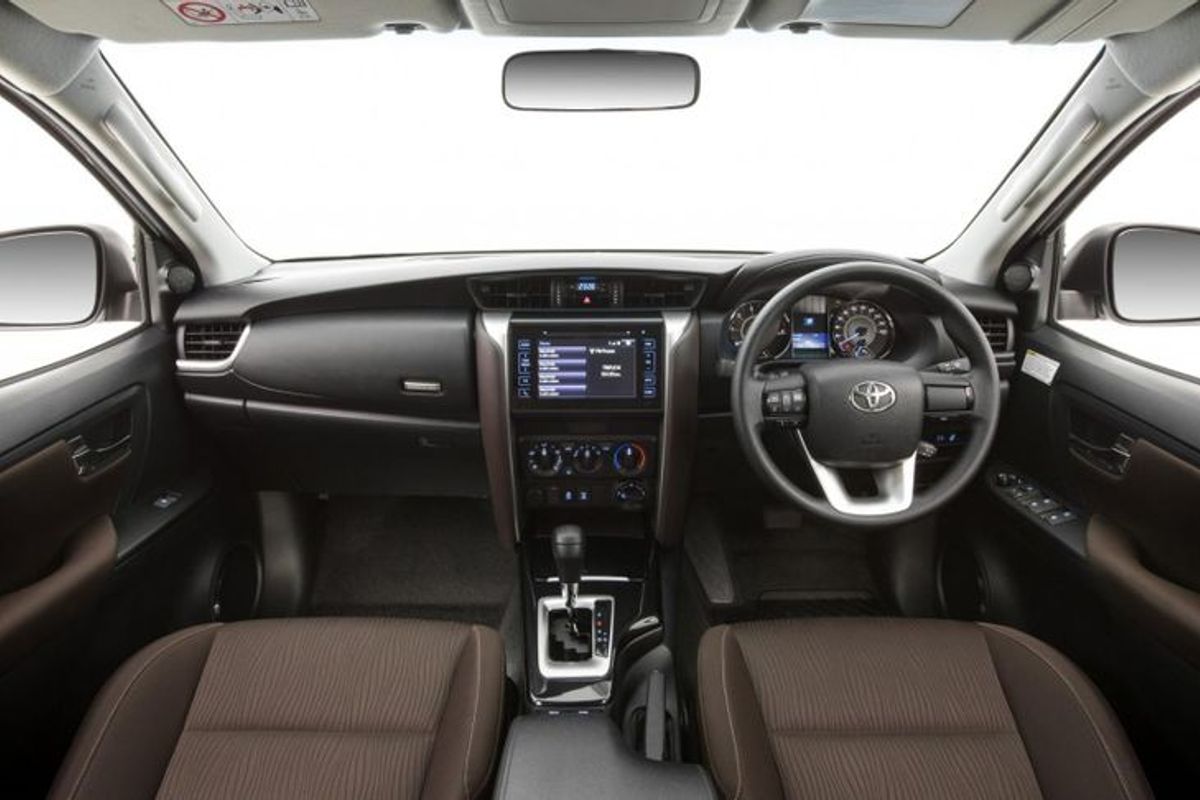
The new Toyota Fortuner shares many components with the recently launched Hilux. These include headline items like new diesel engines, new gearboxes and offroad technology. Much like the Hilux, there's also a big focus on ride comfort, reduced noise/vibration/harshness and an effort to give the vehicle a premium look and feel inside. The Toyota Fortuner is a seven-seat vehicle and there's considerable improvements in terms of space and practicality for all passengers. Premium soft-touch materials are used around the dashboard, windscreen pillars and door trims. The second-row seating features a 60/40 split and features a slide function as well as reclining backrests. Third-row seating is split in half 50/50 and features a recline function. Both of the rows can be stowed with just one touch, which gives the Fortuner more luggage space.
The standard specification in the Toyota Fortuner is substantial. Audio systems with four to six speakers, an auxiliary/USB port, AM/FM radio and a CD player all come standard. The radio on the 2.8 GD and 4.0 V6 come with DAB+ digital radio and a 7” screen with DVD compatibility, as well as a reversing camera display. The flagship 4.0 V6 comes with satellite navigation.There's also Bluetooth connectivity, steering-wheel audio and telephone controls, as well as power door locks, windows and mirrors. Air conditioning is also standard and there are ventilation controls for the second-row passengers. The glovebox is air-cooled, meaning you can store two 500ml bottles. For those who require additional power, all models feature three 12-volt accessory sockets.
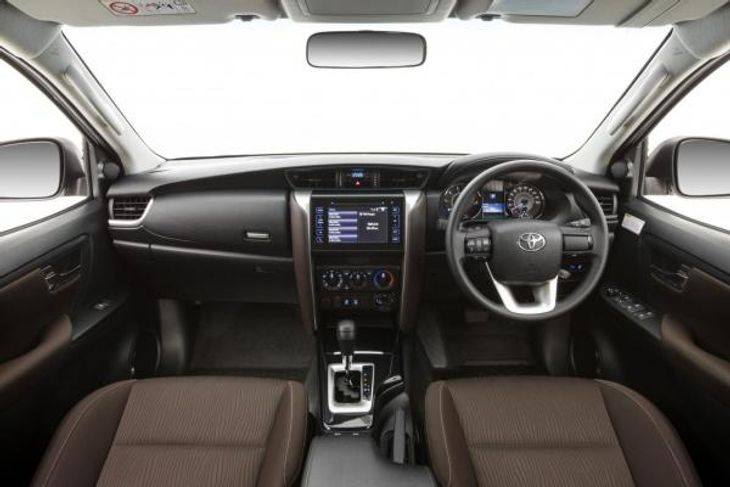
The facia borrows elements from the new Hilux, but the overall design is unique to this model.
Engine and economy
Powering the new Toyota Fortuner are the latest diesel engines as well as the petrol units which we're familiar with. There's the 2.4 and 2.8 GD motors on the diesel side, while the petrol line-up includes the familiar 2.7 VVT-i and a 4.0 V6 motor. The 2.4 has 110kW and 400Nm of torque and the 2.8 GD offers up 130kW and 420Nm when paired with the manual transmission. The automatic derivative has 450Nm of torque. Fuel consumption is rated at 7L/100km for the 2.4 manual, while its automatic sibling is rated at 7.9L/100km. The 2.8 litre GD engine returns between 7.5 to 8.5L/100km. Towing capacity is rated at 2.5 tons for the 2.4 GD and 2.7 VVT-i models and at 3 tons for the 2.8 GD and 4.0 V6. The two petrol engines include a revised version of the familiar 2.7 litre VVT-i with 122kW and 245Nm which debuts in the Fortuner, while the 4.0 V6 pushes out 175kW and 376Nm.
All vehicles are available with the latest six-speed manual and automatic gearboxes from Toyota. The manual gearbox offers intelligent manual transmission for smoother gearchanges as it matches the engine revolutions.
Safety
The Toyota Fortuner should be safe too and includes a number of features such as Vehicle Stability Control (VSC), Active Traction Control (ATC), Trailer Sway Control (TSC), Hill-start Assist Control (HAC) and Drive Mode Select. Downhill Assist Control (DAC) is available on only the 4×4 models. There are big 338mm brakes at the front, with 312mm anchors on stopping duty at the rear. Under heavy braking, the hazard lamps will flash to provide an emergency signal to other road users. There are a large number of airbags too, depending on the model.
Handsome new looks are far removed from its predecessor.
Toyota Fortuner Model Features
Entry grade (2.4 GD-6 and 2.7 VVT-i)
Push start
Tilt and telescopic steering column
Cruise control
Speed sensing auto door lock
Front and knee airbags
Illuminated entry
Chilled glovebox
Front fog lamps
Rear spoiler
Roof rails
Side steps
17” alloys
Full alloy spare wheel
Standard grade (2.8 GD-6)
Leather upholstery
Front, knee, curtain and side airbags
LED headlamps
Follow-me-home auto lights
Auto air conditioner
High grade (4.0 V6)
All features of the standard grade
Power back door
Navigation system
Toyota Fortuner (2016) Price in South Africa
Toyota has not only come to market with a wider model line-up than the new Ford Everest, but has also priced very aggressively. Yes… expect to see many of these Fortuners on our roads, very soon.
2.4 GD-6 Raised Body Manual: R436 400
2.4 GD-6 Raised Body Automatic: R453 400
2.7 VVT-i Raised Body Automatic: R429 400
2.8 GD-6 Raised Body Manual: R513 400
2.8 GD-6 4×4 Manual: R571 400
2.8 GD-6 Raised Body Automatic: R531 400
2.8 GD-6 4×4 Automatic: R589 400
4.0 V6 4×4 Automatic: R633 400
All retail prices include a three-year/100 000km warranty and five-year/90 000km service plan.
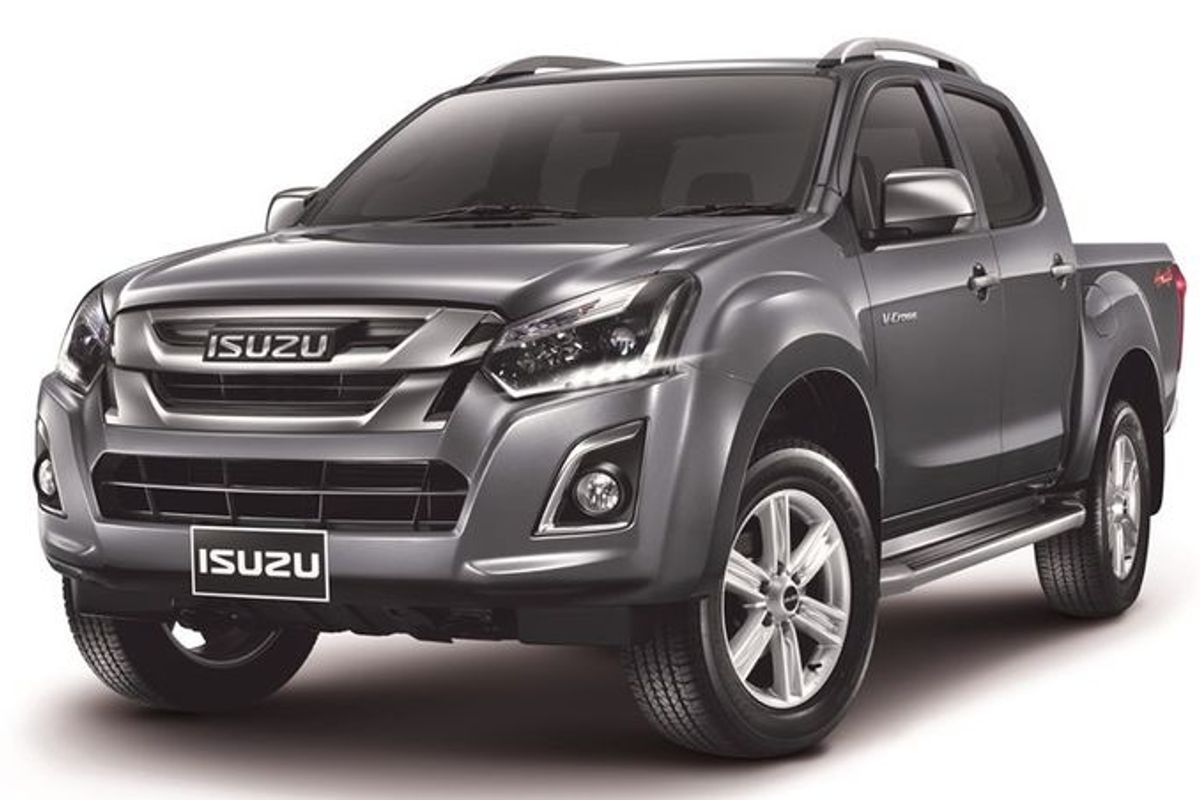
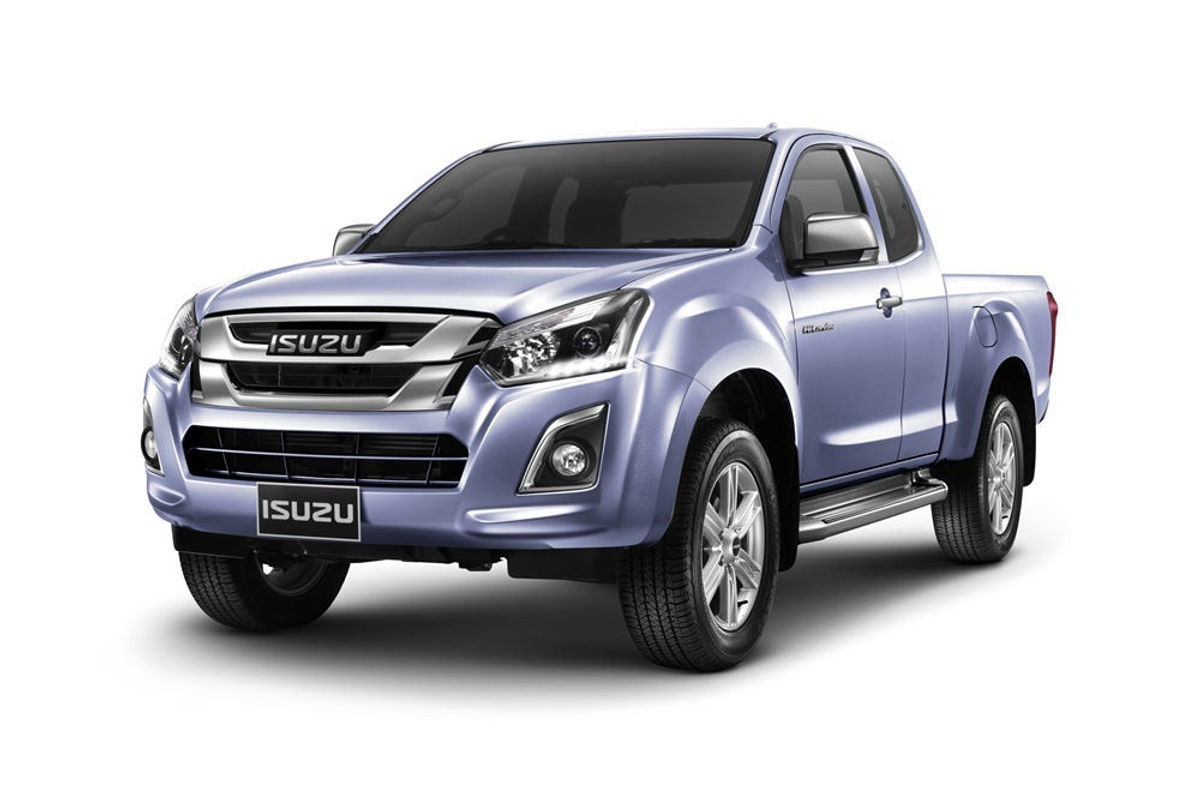
2016 is major year for the South African double-cab market thanks to the arrival of the new Hilux. In order to keep up, other bakkie manufacturers will embolden their offerings. Isuzu, for example, will launch its facelifted KB model in response to the Toyota and refreshed Ford Ranger
The changes to the updated Isuzu will be largely cosmetic and include specifications upgrades. The big news late last year was the announcement of an all-new 1.9 turbodiesel engine, but a source at General Motors South Africa said this is not destined for our market. There is a rumour that an updated, more efficient version of the KDDI Blue Power 4JJ1-TCX 3.0-litre engine and a six-speed automatic transmission might be introduced to the local line-up, but, for now, it is only speculation…
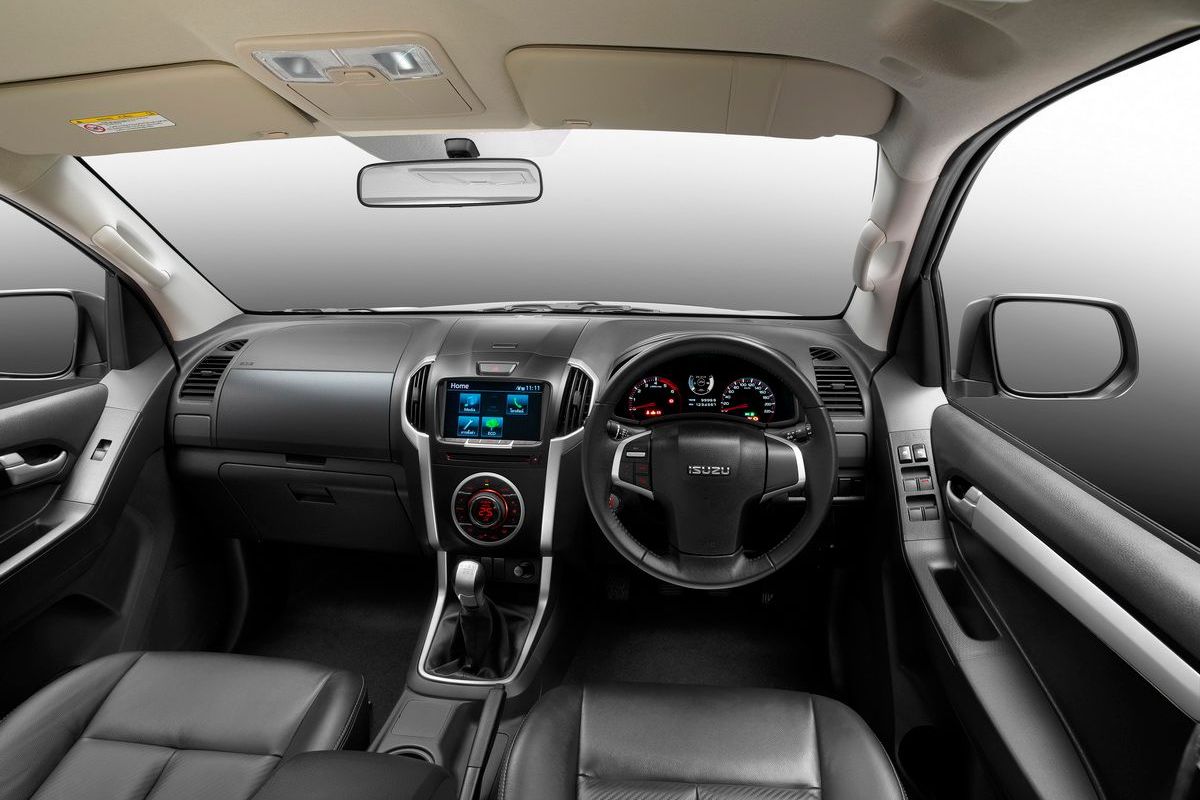
The exterior has not changed dramatically, but the addition of a more distinctive grille treatment and redesigned headlights (with integrated LED elements) will make the KB stand out a bit more. The cabin is where the real changes have occured… We'll see a new version of the Isuzu Connect touchscreen infotainment system as well an all-new TFT display located between the speedometer and rev counter on the instrumentation cluster. Also new are roof-mounted speakers and a fuel economy driving app that links with your smartphone.
Availabilty of Isuzu KB facelift in South Africa
The Isuzu KB update is scheduled for the end of the third quarter or beginning of the fourth quarter of 2016. It's safe to assume that around October 2016, we'll see a new-look Isuzu KB bakkie and this will coincide with the arrival of the updated Chevrolet Trailblazer.
The battle for supremacy in the premium SUV segment is as heated as ever with newcomers from Mercedes-Benz, Volvo and Audi slugging it out against the superb BMW X5 and Porsche Cayenne. Can Lexus’ dramatic fourth-generation RX make a bigger dent in the market than its forebears?
We like: Standard features, build quality, rear legroom
We don’t like: Real-world performance/economy, finicky infotainment controls, high boot floor
Alternatives:
For better economy: Consider the BMW X5 xDrive30d, Audi Q7 3.0 TDI and Mercedes-Benz GLE250d
For more space: The new Volvo XC90 D5 Inscription has seven seats as standard and more loading space, making it the ideal family/luxury SUV. The Audi Q7 3.0TDI is optionally available with seven seats, and is a spacious family car even in its standard five-seat format. Read a comparison between these two here.
For better value: It’s hard to beat the Lexus RX on overall value, but we think the biggest danger actually comes from in-house, from the RX350, which offers outstanding specification and a price that’s R200 000 lighter on the wallet.
Lexus RX goes for bold
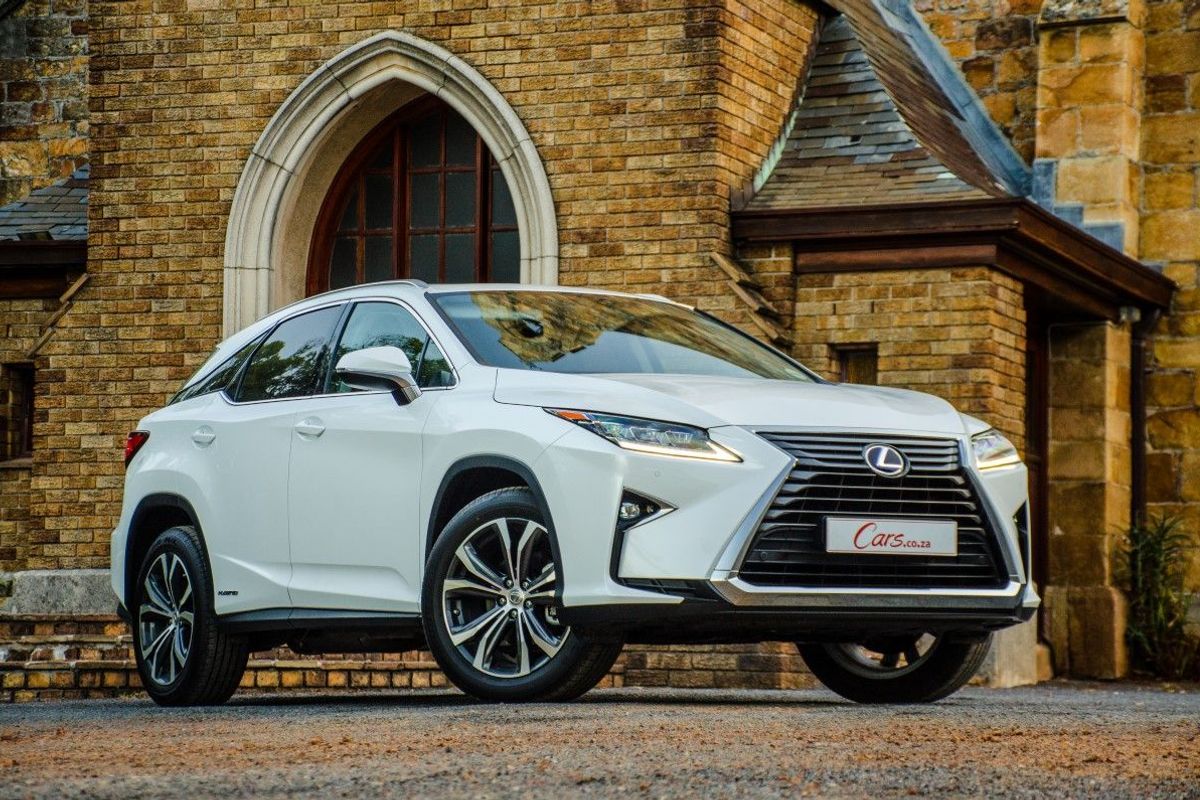
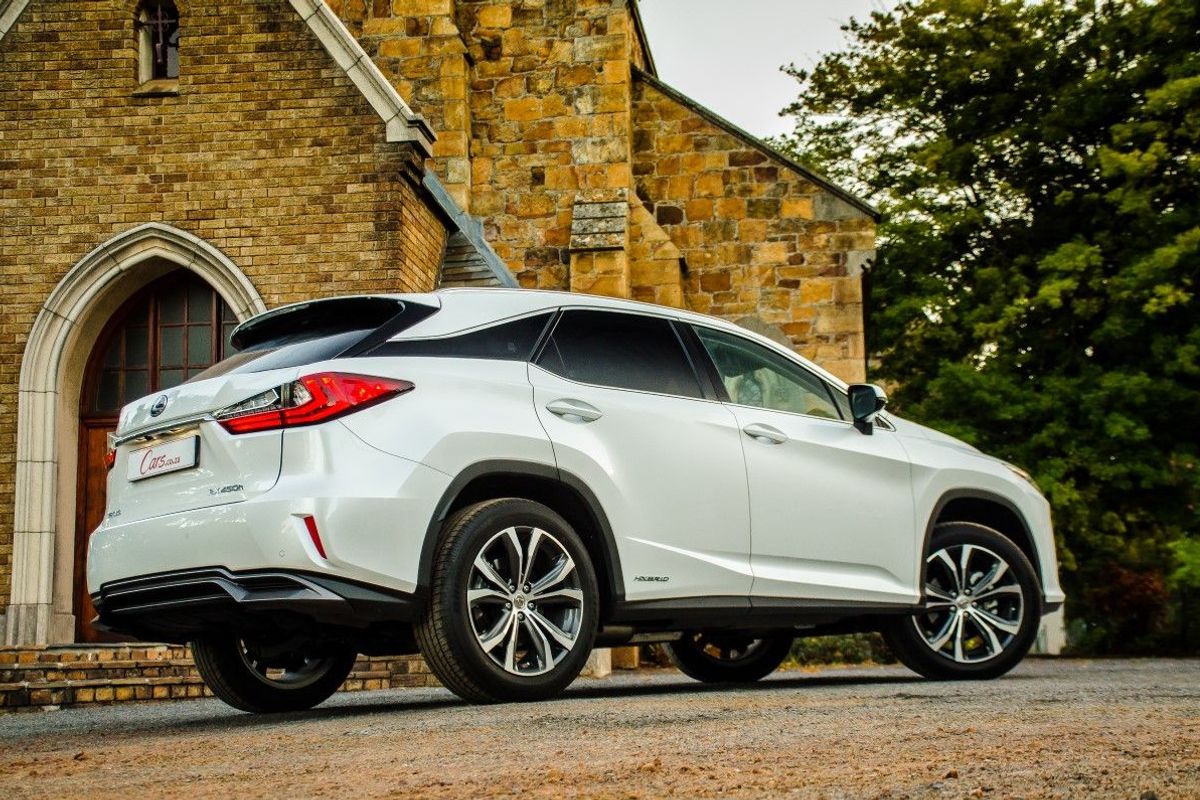
Note striking 20-inch wheels and partly blacked-out C-pillar.
Previous generations of the Lexus RX may have been sales successes in other markets, most notably the USA, but in South Africa and elsewhere the three earlier incarnations haven’t been able to ruffle the German trio’s feathers. It has always appealed to moneyed, intelligent folks less obsessed with the “right badge” and more interested in ultimate quality and value. Consequently, those wanting their luxury SUVs to make a flashy statement have traditionally given the RX a wide berth.
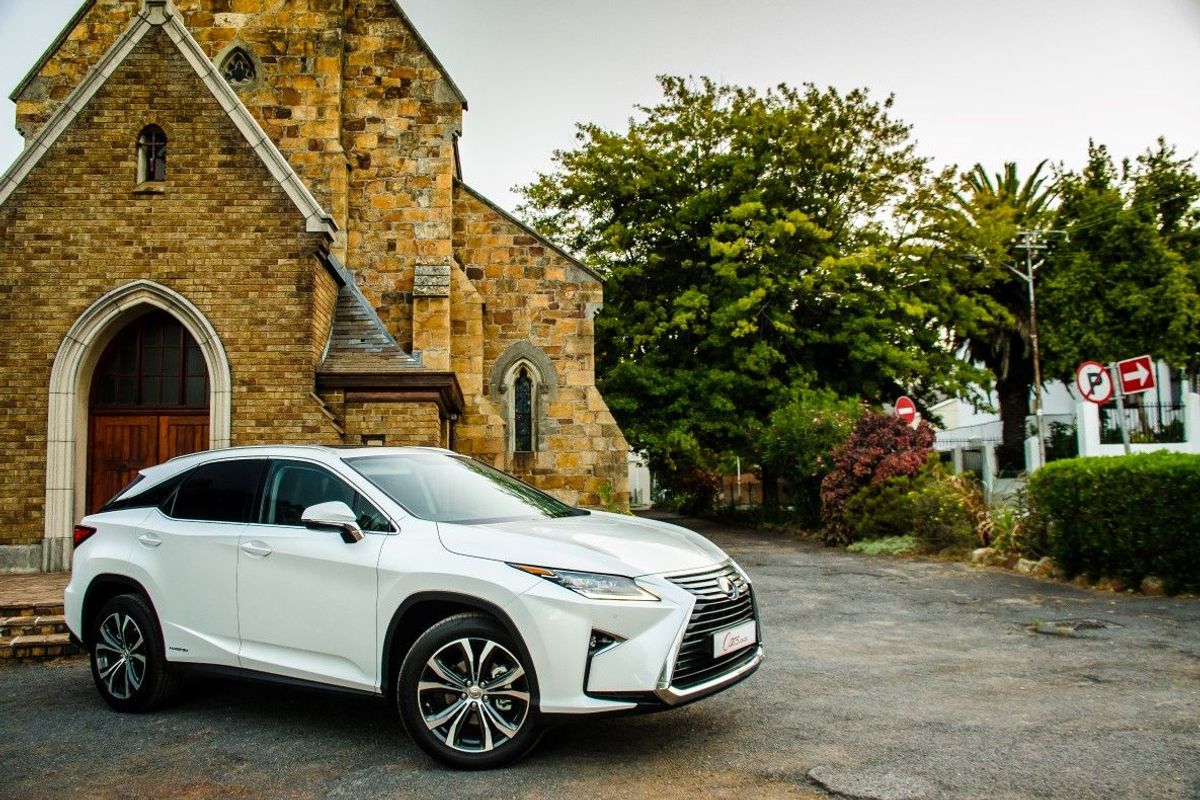
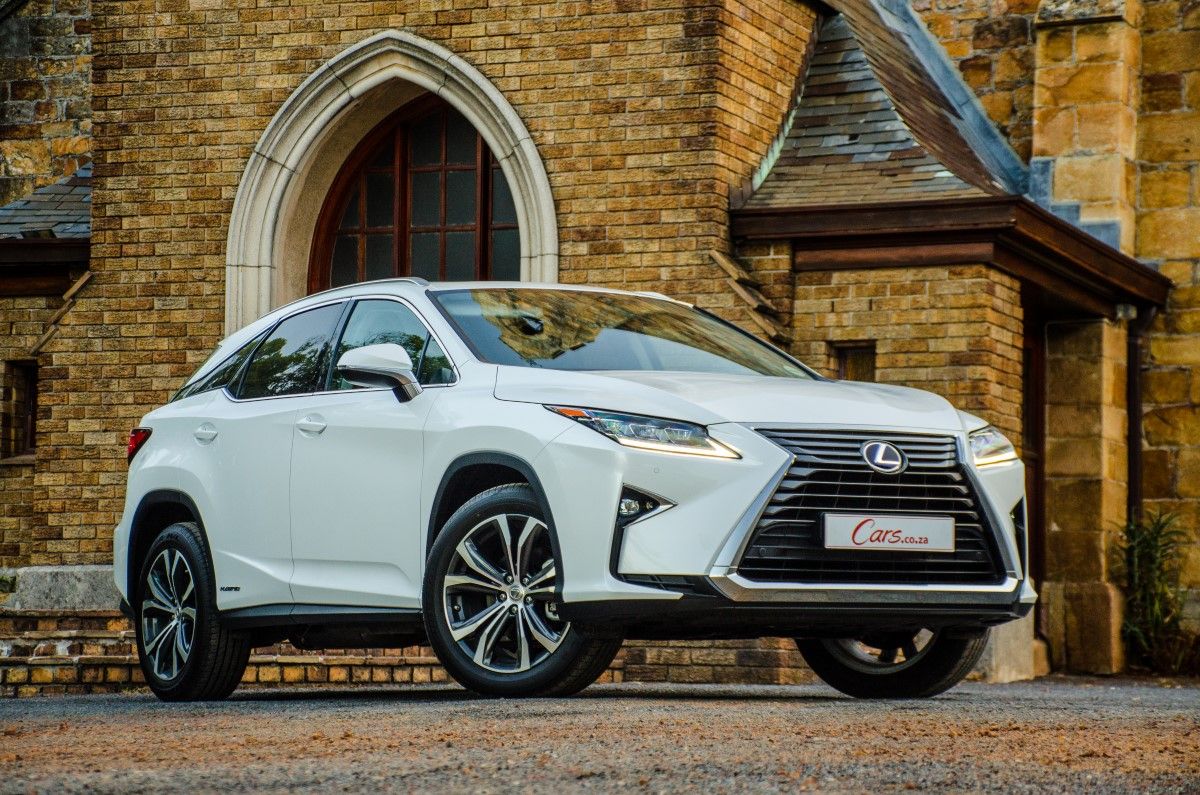
The new, fourth-generation Lexus RX constitutes a markedly different approach. Its angular, bold design is distinctive and the gaping “spindle” grille definitely lends the SUV added overtaking presence. Striking 20-inch wheels and a blacked out C-pillar are other design highlights that illustrate the new RX is no longer willing to hide in the shadows.
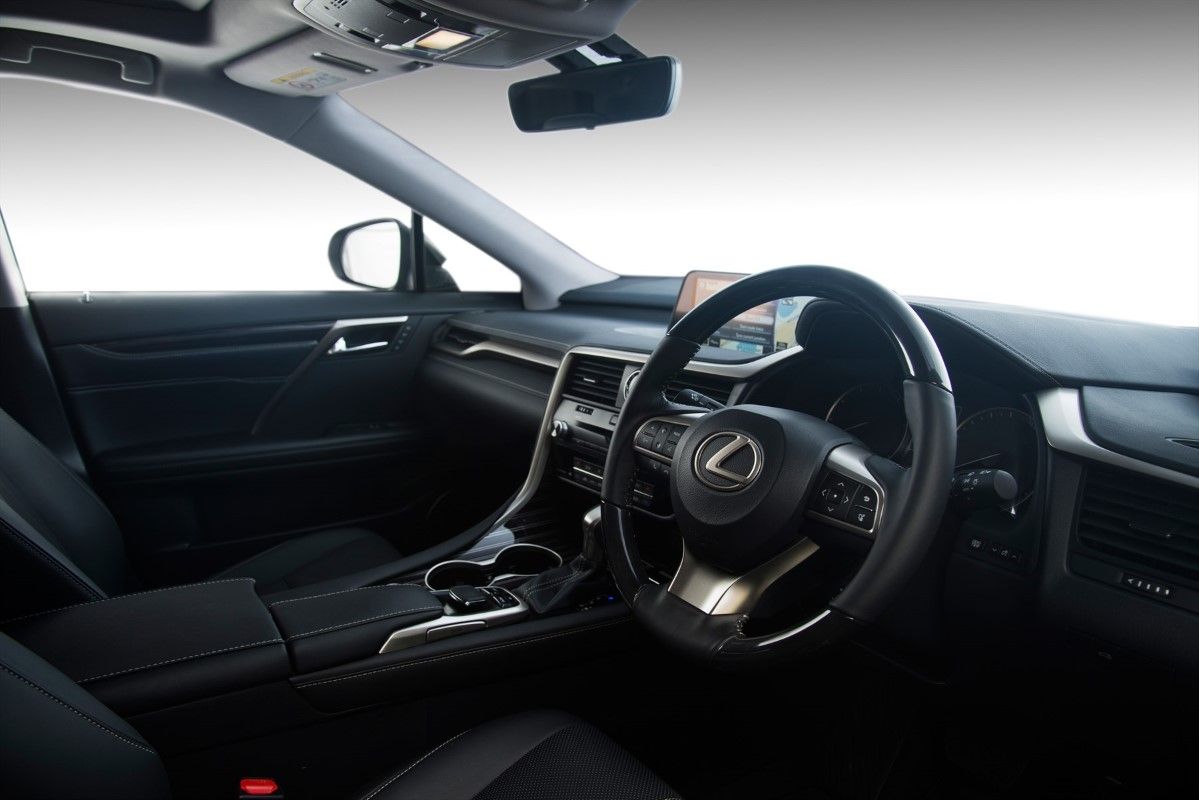
Inside, too, Lexus has thrown the previous company rulebook out the window and come up with a visually arresting, cockpit-like fascia design that is festooned with high-tech features that make people ooh and aah when they open the doors for the first time. So… the big news here is that you still get the virtues that made previous RX versions appealing (quality, features, comfort, refinement), but with huge dollops of “wow”.
Sounds appealing, right?
Who should consider the Lexus RX450h?
The Lexus RX450h SE is the flagship of the two-model line-up and is powered by a petrol-electric hybrid drivetrain. On paper its emissions and claimed fuel economy figures look very impressive, comparable to the turbodiesel engines offered by Volvo and the German luxury brands.
In some overseas countries, there is great value in these figures as they are rewarded by lower taxation, rebates etc. In South Africa, however, the emissions tax is added to the overall price of the vehicle, so there’s comparatively little benefit. Furthermore, the local target buyer for the RX450h needs to be aware that there’s little financial benefit in opting for a hybrid, especially when the real-world fuel economy is somewhat higher than the quoted figure, as is usually the case with these vehicles.
So why, then, consider the RX450h? It comes down to a couple of things. Firstly, it is hard to beat the Lexus for standard equipment. You’ll have to spend hundreds of thousands of Rands more on one of the German vehicles to match the RX’s luxury and features. Secondly, if you’re looking at a hybrid Lexus in the first place, you’ve arguably made the decision that you want to stand out from the herd of German SUVs. And with its sharp new design, the new Lexus RX certainly does that!
Interior build quality is top notch and there's no shortage of features. (RX350 fascia pictured)
The RX450h SE is properly stocked with features, most of which will cost a lot more if specified on rival (German) brands’ products. For example, both front seats are multi-way electrically adjustable, cooled, heated and offer memory functions. In fact, the RX will even remember your seating position and move the (heated) steering wheel and seat out of the way to may ingress/egress easier.
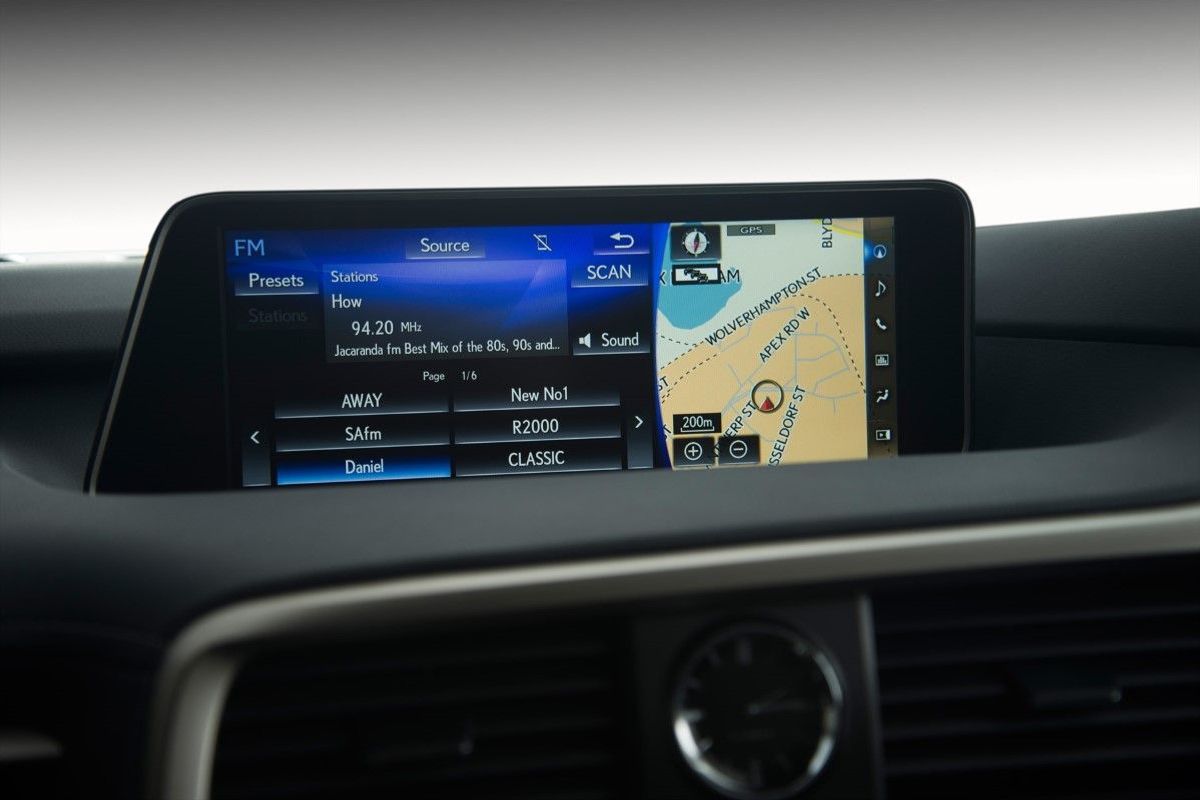
You also get one of the biggest infotainment screens on the market as standard, a head-up display (HUD) and there’s a nifty pad in front of the transmission tunnel to recharge your mobile phone without the need for cables. Needless to say – this is a Lexus after all – the build quality is superb and the fittings are top class. One source of minor irritation was the ventilating fans in the seats that are rather noisy, a flaw highlighted by the otherwise quiet nature of the cabin.
You should have no reason to complain when it comes to entertainment. A thumping 15-speaker Mark Levinson sound system is standard, and you get two USB ports (as well as aux.) in the storage box between the front seats. It’s just a pity that the control interface for the infotainment system is so clumsy. The joystick/mouse input mechanism is overly sensitive and the system requires your eyes to be off the road for too long. Lexus desperately needs to go back to the drawing board on this…
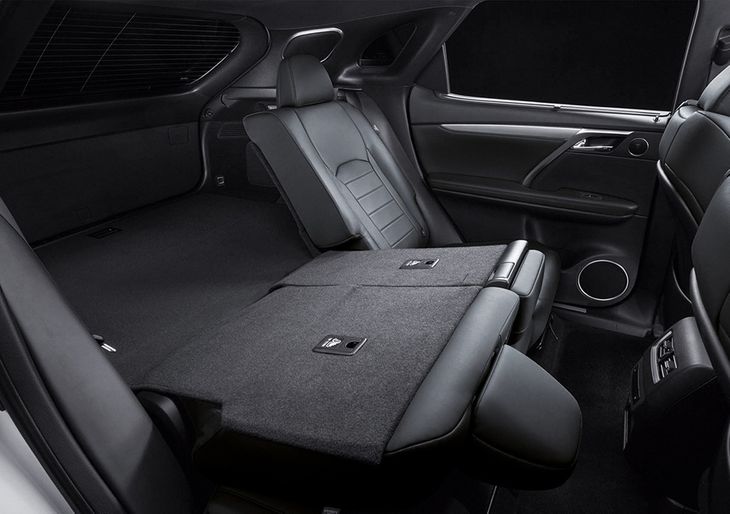
The new RX is slightly longer, wider and lower than its predecessor, and the wheelbase has been lengthened. The result is significantly more rear legroom. In fact, the second row is particularly spacious, with seats with adjustable backrests that can slide fore/aft. There are even retractable sun blinds for rear passengers. Headroom is a trifle limited, however.
… performance and fuel economy?
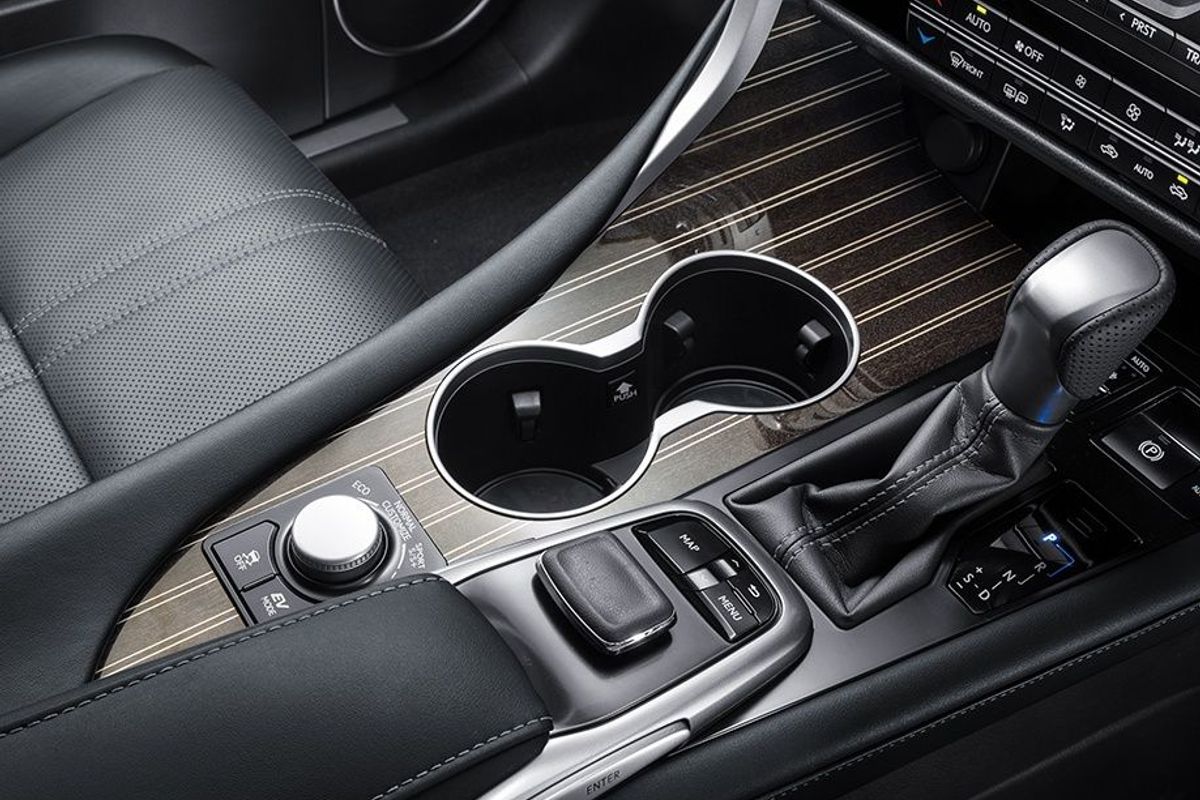
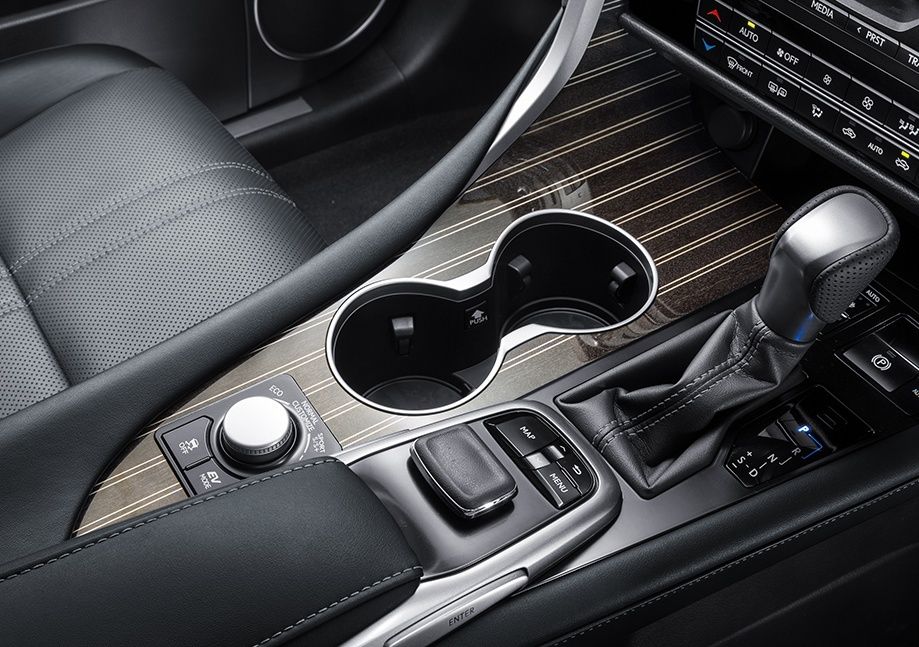
Eco, EV, Normal and Sport modes are on offer. Note beautiful wood inlay.
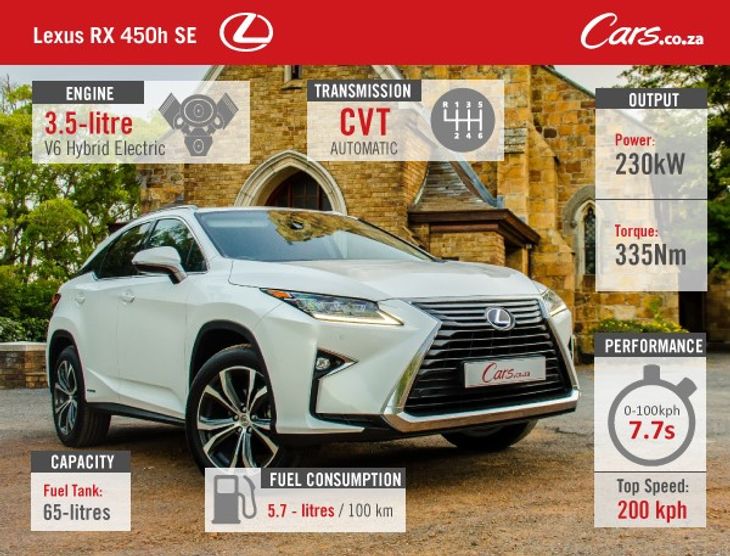
The RX450h SE is powered by a 193 kW/335 Nm 2.5-litre V6 engine mated with a 123 kW front electric motor as well as a 50 kW motor that forms part of the E-Four all-wheel-drive system. The flagship model’s combined power output has improved by 10 kW compared with its predecessor, with the total output now claimed to be 230 kW. The 450h SE utilises a continuously variable transmission (CVT) to deliver drive to all four wheels. Thanks to a number of improvements to the hybrid system, Lexus says that fuel efficiency for the 450h has improved by 9.5% to a claimed combined cycle figure of 5.7 L/100 km.
The reality, however, is that the RX450h struggles to achieve that claimed figure, which is not surprising – many petrol-electric hybrids do. In fact, during day-to-day driving you’ll do well to achieve figures of less than 9.0 L/100 km. The full electric (EV) mode is only available at very small throttle inputs, and at lower speeds, so if you’re thinking a luxury hybrid SUV will save you a lot of money at the pumps, think again. A turbodiesel SUV is likely to be far more economical.
In terms of performance, the RX450h also appears to have an advantage, but the combined output flatters to deceive. In reality, the CVT appears to dull the responsiveness of what should be a far livelier drivetrain. Yes, matters do improve in Sport mode but, again, a turbodiesel BMW (or Porsche… or Audi…) will be the better choice if lively performance is a must-have attribute. It is also odd, given that there’s a Sport mode, that the RX450h SE doesn’t offer steering-mounted gearshift paddles.
… practicality
No shortage of rear legroom. Seats can slide, fold and recline, too. Boot size is limited, though.
The RX450h is about as long as a BMW X5 or Porsche Cayenne, but more compact than the Volvo XC90 or Audi Q7. It was not designed to offer third-row seating, and with its swoopy fastback styling was clearly not conceptualised to be the last word in family-friendly packaging.
Open the (slow) electrically operated tailgate and you’ll find a luggage area that is about average in size for this category of vehicle, and which has a very high load floor courtesy of the standard fitment of a full-size spare wheel. Of course, if more packing space is needed you can fold down the middle row, which can conveniently be done by using levers mounted in the sidewall of the boot. But, keep in mind that the load surface won’t be even due to the stepped nature of the boot floor.
So, in terms of luggage space, the RX450h falls some way short of the best in class. But there are some clever touches. For example, if you lift up that boot floor, you will find a reasonably sized storage compartment to accommodate smaller/fragile items, and if you're really short of space, you can always remove the foam insert that “fills out” the upside-down alloy wheel and put more items in there.
In the cabin, the door pockets are big and can even fold out, and there’s another storage compartment in the front passenger footwell. We also like the flat design of the fascia. Combined with the grippy leather that covers it, you have a perfect place to rest magazines/books on a long road trip.
To summarise, then, the RX450h is probably right-sized for a family of four.
… ride and refinement
The big wheels contribute to a slightly fidgety ride on poor road surfaces.
As we’ve come to expect from Lexus, the NVH (noise, vibration, harshness) control of the RX's passenger compartment is quite superb. The vault-like cabin lets in hardly any noise when cruising and the sturdiness of the materials and general rattle-free nature of the fittings further enhance the perception of refinement. So it’s just those noisy seat fans that irritate.
The engine, too, is smooth and quiet when you’re out of the hustle and bustle of the city and the ride quality is exemplary in these circumstances…
But there are some niggles. Those beautiful 20-inch wheels (standard) are probably to blame for a ride quality that turns a little too fidgety over rippled and inconsistent surfaces. And, as is usually the case with continuously variable transmissions (CVTs), the revs shoot up upon throttle input and stays up there until you’ve reached the desired speed and ease off the throttle. Are we nit-picking? Perhaps, but the context is the competition, and a vehicle such as Audi’s new Q7 feels noticeably more refined in this department… and that’s a diesel.
And what about handling? Well, the RX450h is hardly positioned as a "sporty" SUV so it won't match an X5 or Cayenne in the corners. There's substantial body roll to contend with, but grip levels are high and the RX always feels planted and secure. It features Lexus's VDIM (Vehicle Dynamics Integrated Management) system that controls the ABS, brake assist (BA), electronic braking distribution (EBD), traction control, and VSC (vehicle stability control) in a coordinated fashion for ultimate smoothness and stability. During general driving the steering weighting is pleasantly light and accurate. In-town manoeuvrability is boosted by the standard fitment of front and rear parking sensors as well as a reverse-view camera. Rear cross-traffic alert is also part of the package.
Verdict
In its latest guise, the Lexus RX450h SE is a significantly more appealing prospect than its predecessor due to (in no small measure) its stand-out new design. As ever, the standard features list is unmatched at the price and the quality is top notch. Compared with its (turbodiesel) German rivals that sell for similar money there are, however, a couple of issues.
Firstly, the hybrid drivetrain promises much in theory, but those promises don’t materialise in real-world operating conditions. Want the best combination of performance and economy? Then opt for a turbodiesel. And secondly, we can overlook some of the ergonomic failings (such as that fiddly control interface), but by the standards of most premium SUVs, the luggage bay's packaging is quite severely compromised.
Overall, however, these foibles are remarkably easy to forgive not only because the RX offers so many more features than its similarly-priced German rivals, but also because it is a genuinely likeable machine that now, finally, has some character. Still, we think its cheaper sibling, the RX350, looks like the real star… A full review on that model is coming.
Pricing
The Lexus RX450h SE sells for R999 000 and comes with a 4-year/100 000 km warranty and maintenance plan. The hybrid battery has an 8-year/195 000 km warranty. Servicing is required every 15 000 km.
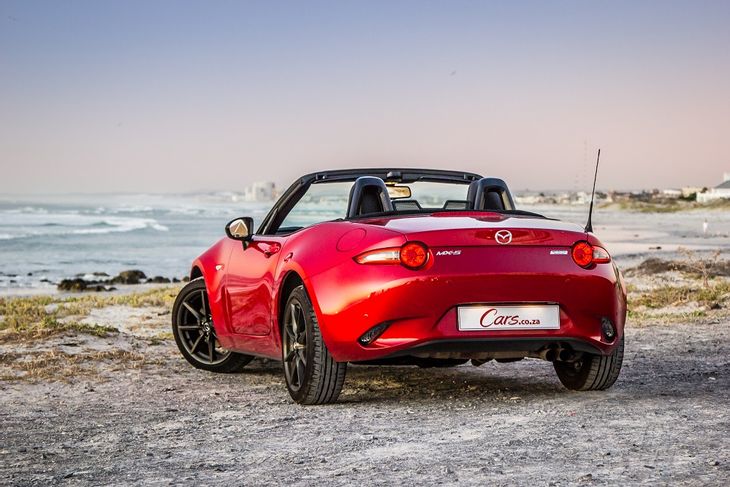
We were a trifle surprised when the Mazda MX-5 was named the 2016 World Car of the Year. The elemental sportscar pipped the Audi A4 and Mercedes-Benz GLC to the title and although we applaud the Mazda’s achievement, the result suggests most jurors voted with their hearts!
The MX-5 was chosen from an initial entry list of 23 cars (eligible vehicles had to be launched and available for sale on at least two continents between 1 January 2015 and 31 May 2016), then a short list of ten, then three finalists, of which the other two were the highly-regarded A4 Sedan/A4 Avant and the stylish GLC premium leisure vehicle.
This year, vehicles were selected and voted on by an international jury panel comprised of 73 top-level automotive journalists from 23 countries around the world, including Cars.co.za Consumer Experience Manager Hannes Oosthuizen and Cars.co.za Content Manager Mike Fourie, who were the two South African representatives.
International accounting firm KPMG audited the jurors’ ballots.
"The Mazda's win is quite a surprise given the history of the competition. My money was on the Audi A4. I personally think the MX-5 should have been in the Performance Car category," said Oosthuizen.
To illustrate his point, previous World Car of the Year winners were the Mercedes-Benz C-Class (2015), Audi A3 (2014), VW Golf (2013), VW Up! (2012), Nissan Leaf (2011), VW Polo (2010), VW Golf (2009), Mazda2 (2008), Lexus LS460 (2007), BMW 3-Series (2006) and Audi A6 (2005).
That list contains one winner that won the title because of its significance, and that’s the Leaf – the first compact hatchback electric vehicle (EV) to be offered for sale worldwide. The rest of the WCOTY winners, with the exception of the Lexus, were accomplished volume-selling models, most of which remain relevant to a significant percentage of the new vehicle market.
The World Car Awards press release stated the following: “With the launch of its all-new MX-5, Mazda has thrown out the blueprint and gone back to basics. Shorter, lower, wider and – most importantly – lighter, the new MX-5 comes with a choice of either 1.5 or 2.0-litre naturally aspirated petrol engines and the promise of unparalleled ‘Jinba ittai’ – a term meaning oneness between car and driver. And yes, it’s still one of the best driver’s cars around.”
World Car of the Year voting results:
VEHICLE
Occupant
(Comfort)
Perform.
Value
Safety
Environment
Market
Significance
Emotional
Appeal
Weighted Score
Audi A4 Sedan / Audi A4 Avant
8.1
7.7
6.9
8.3
7.2
7.4
6.9
750
BMW X1
7.1
6.9
6.5
7.8
7.1
7.0
6.6
692
Hyundai Tucson
6.7
6.1
7.8
7.1
6.4
6.8
6.1
680
Jaguar XE
7.2
7.9
6.7
7.5
6.7
7.0
7.9
721
Land Rover Discovery Sport
7.4
7.0
6.7
7.6
6.2
7.0
7.5
707
Mazda CX-3
6.4
6.5
7.3
7.0
7.3
7.0
7.0
685
Mazda MX-5
6.9
8.3
8.1
6.6
7.3
7.3
9.0
764
Mercedes-Benz GLC
8.1
7.6
7.0
8.5
7.0
7.4
7.8
758
Skoda Superb
7.8
7.1
8.1
7.7
7.1
6.8
6.5
738
Toyota Prius
6.8
6.0
7.2
7.3
9.2
7.9
5.6
701
"The results show that our fellow jurors scored the Mazda the highest in terms of Performance and Environment (economy), but the MX-5's advantages in those categories are not really of significance," said Fourie. "Achieving an average score of 9/10 for emotional appeal and 8.1/10 for value for money ultimately sealed the victory for the Hiroshima-made roadster."
"The win for the MX-5 sends a clear message from the world's motoring media: 'We appreciate vehicles that are fit for purpose, capture the imagination of motoring enthusiasts and deliver driving enjoyment at affordable prices.'
"But, regrettably, the Mazda's win is not of much consequence to the buying public. Although the manufacturer has produced almost a million MX-5s, stock availability of the current model is an issue in some markets (including ours) and the roadster has very a narrow target market. Its compromised packaging rules out a number of buyers, not least the taller ones among us.
"Nevertheless, the MX-5's win is momentous in that a Japanese carmaker has snapped the European marques' 5-year stranglehold on the WCOTY title. Mazda's a small company that's on the up and thriving in South Africa," Fourie concluded.
Other category winners in the 2016 World Car Awards are: BMW 7 Series won the World Luxury Car of the Year award ahead of the Audi Q7 and Volvo XC90, the Audi R8 was named the World Sportscar of the Year (at the cost of the Honda Civic Type R and Mercedes-AMG C63 S) and the World Green Car of the Year is the hydrogen-powered Toyota Mirai.
Mercedes-Benz has locked out the World Luxury Car title since it became a standalone category in the World Car Awards in 2014. However, on the 2016 honours list, the BMW 7 Series takes pride of place.
At a World Cars Awards press conference hosted by the New York Show for the 10th consecutive year, the Mazda MX-5 was declared the 2016 World Car of the Year, but significantly, the BMW 7 Series succeeded last year’s winner in the World Luxury Car of the Year category: the Mercedes-Benz S-Class Coupe and its predecessor, the S-Class (in 2014).
The BMW flagship, which was recently introduced in the South African market, was selected ahead of the Audi Q7 and Volvo XC90 (click here to read a comparative review) in this category by an international jury panel comprised of 73 top-level automotive journalists from 23 countries around the world, including Cars.co.za Consumer Experience Manager Hannes Oosthuizen and Cars.co.za Content Manager Mike Fourie, who were the two South African representatives.
The World Car Awards press release stated the following: “It (the 7 Series) has sporty driving dynamics that its rivals in the segment cannot claim as their USP and as well as 25 new features, of which 13 are segment firsts! Inside the cabin, BMW has taken things up a notch on luxury, pampering the owner with very comfortable seating and loads of entertainment. The 7 Series brings in new features like the ambient ‘sky lounge’ sunroof, ambient air package and the all-new gesture control.”
BMW has a more-than-respectable record in the World Car Awards programme, but it can be argued that the 7 Series’ 2016 accolade is the most prestigious since the 3 Series won the overall World Car of the Year title in 2006. The i8 and i3 were named the World Green Car of the Year in 2015 and 2014 respectively (when the latter also won the World Car Design of the Year title). More recently, the i3 EV/EV with range extender received the Design of the Year and Game changer of the Year awards in the inaugural Cars.co.za Consumer Awards, which were announced in January 2016.
2016 World Luxury Car voting results:
VEHICLE
Occupant
(Comfort)
Perform.
Value
Safety
Environment
(Efficiency)
Market
Significance
Emotional
Appeal
Weighted
Score
Audi Q7
8.5
8.0
7.2
8.3
6.8
7.6
7.0
785
BMW 7 Series
8.8
8.5
7.1
8.8
7.3
7.6
7.6
815
Jaguar XF
7.4
8.0
7.1
7.7
6.8
6.8
7.6
743
Mercedes-Benz GLE Coupe
7.6
7.7
6.5
8.2
6.7
6.6
7.3
735
Volvo XC90
8.6
7.3
7.7
9.1
7.8
7.7
7.9
804
"The segment we refer to as "First Class" cars in the Cars.co.za Consumer Awards is increasingly defined by how many onboard conveniences and always-connected technology features manufacturers can squeeze into their flagships saloons, so much so that it parallels the intense battle for supremacy between smartphone manufacturers," said Fourie. "For now, the 7 Series takes the lead in that regard, but the relentless progress of technology means it won't rule the roost for long."
"What's most impressive about the BMW is that it strikes a near-perfect balance between cosseting luxury and an involving driving experience, more so than any of its predecessors and, arguably, its current rivals," he concluded.
Brace Yourself For Massive Petrol Price Increase in April 2016
It's not looking good for the South African motorist in the next few weeks: an increase in the government's fuel levy and the rising cost of oil will push up the fuel price
We've become accustomed to the monthly announcement of petrol price increases, but April 2016 looks to be one of the worst yet. The Automobile Association (AA) was one source quoted as saying that motorists must prepare themselves for an increase of between 31 and 35 cents per litre for petrol and 60 cents per litre for diesel in April 2016.
The AA said that the increase was due to the international price of oil gaining strength after months of all-time lows. At one stage, a barrel of crude was cheaper than the value of the barrel itself. The plummeting price put many oil-exporting countries on the verge of a financial crisis, but that seems to have abated.
Locally, the Rand's exchange rate, which took a battering since late last year, has thankfully stabilised. Unfortunately, the effect of the consistent currency has now been undone by the rising international oil price.
What's more, Finance Minister Pravin Gordhan announced a 30 cents a litre hike in the fuel levy back in February. This levy comes into effect in April 2016, putting the motorist under serious pressure. The Institute of Race Relations chief economist Ian Cruickshanks predicted "motorists (will pay) between 70c/l and 80c/l more for fuel."
How does this affect you?
We compared three popular vehicles on sale in South Africa in terms of how much it will cost to fill up their tanks before the fuel increase. Remember that the diesel price here is wholesale, and you'd be better off shopping around for the best price when it comes to diesel. Early estimates suggest that you'll be paying well over R500 to fill up the Polo, R800 for the BMW and the R1 000 barrier will be breached when you fill up a Toyota Hilux.
Volkswagen Polo Vivo
BMW 320i
Toyota Hilux
Tank Capacity
40 litres
60 litres
80 litres
Claimed L/100km
6.2 (petrol)
5.3 (petrol)
8.5 (diesel)
Unleaded 93 Current cost to fill
Coastal vs Inland
R473.60
R483.20
R710.40
R724.80
R846.40
Diesel 50ppm
R872.00
Diesel 50ppm
Unleaded 95 Current cost to fill
Coastal vs Inland
There seems to be no better place to introduce crazy, wacky and beautiful automotive designs than at a motor show. This year’s New York Auto Show seems to be no exception…
We take a look at some of the best (and worst) to bow in at the 2016 show.
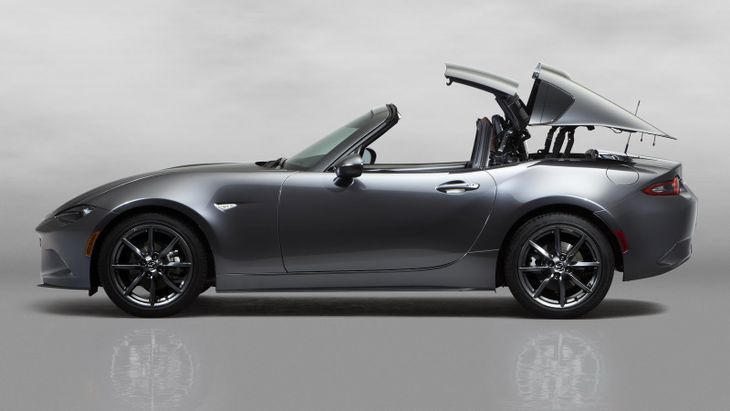
RF stands for retractable fastback. It’s a Mazda MX-5 with a folding hardtop, except the hardtop folds in a similar way to a Ferrari, McLaren or Porsche. That means the roof doesn’t intrude on luggage space and its profile is no different to that of any classic long-bonnet sportscar. Read more
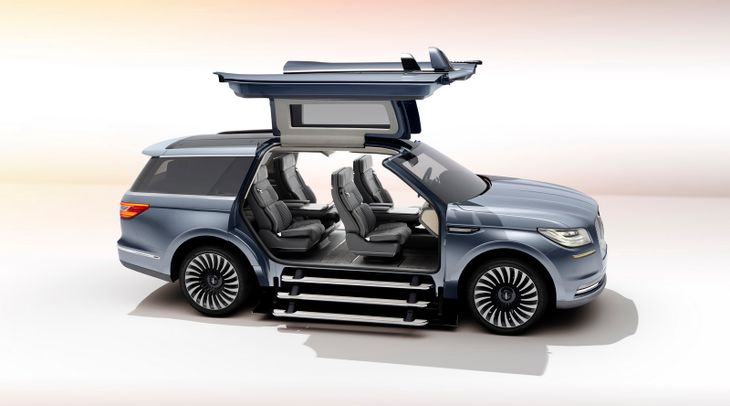
If it’s in-your-face appeal you’re looking for, then this SUV hits the spot. It’s not bound for SA, but with huge gullwing doors, it makes one hell of an entrance.
Mercedes-AMG C63 Cabriolet
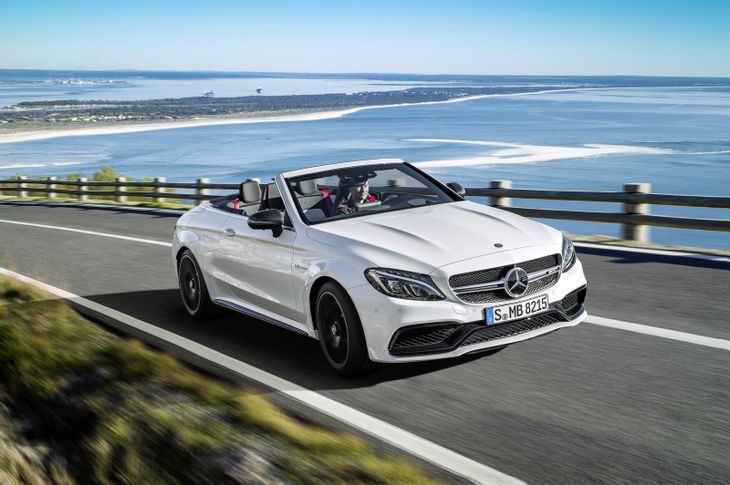
The range expansion of the C-Class continues. The Cabriolet is the latest spinoff of the C-Class sedan and tuning division AMG wasted no time whatsoever to wedge a 4.0-litre V8 inside the newcomer. Now you get to hear its awe-inspiring exhaust note in all its glory.
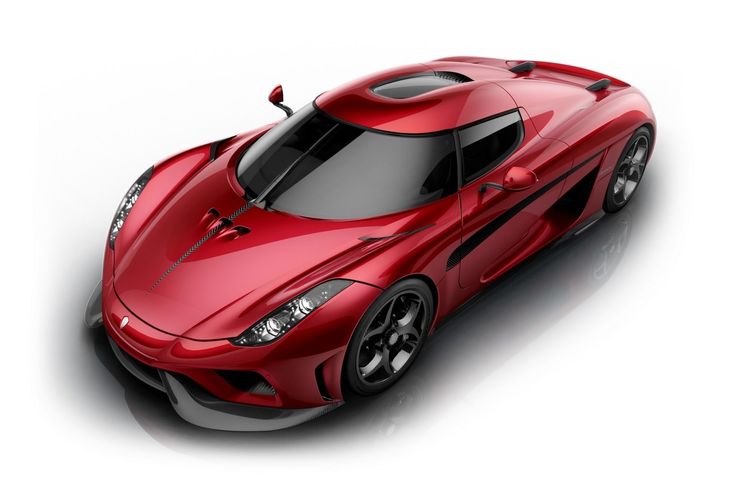
This hybrid Regara produces 1120 kW/2000 Nm and its main objective is to tame Bugattis and set world speed records. There are three powerful batteries that help propel the Regara from zero to 100 kph in 2.8 seconds and 0-300 kph takes just 10.9 seconds. Read more
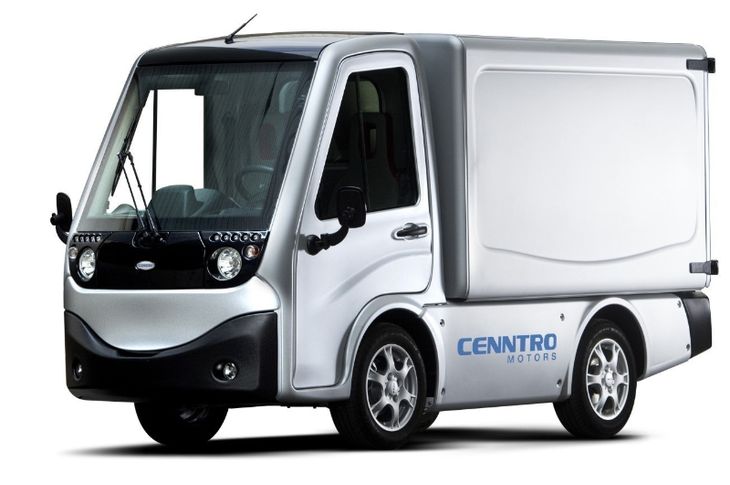
Cenntro Metro EV
Fancy a short, battery-powered delivery van or flatbed? The US-designed (and built) the Metro has a payload similar to a small bakkie (635 kg). It claims a range of 120 km per charge and a less-than-mesmerising top speed of 40 kph.
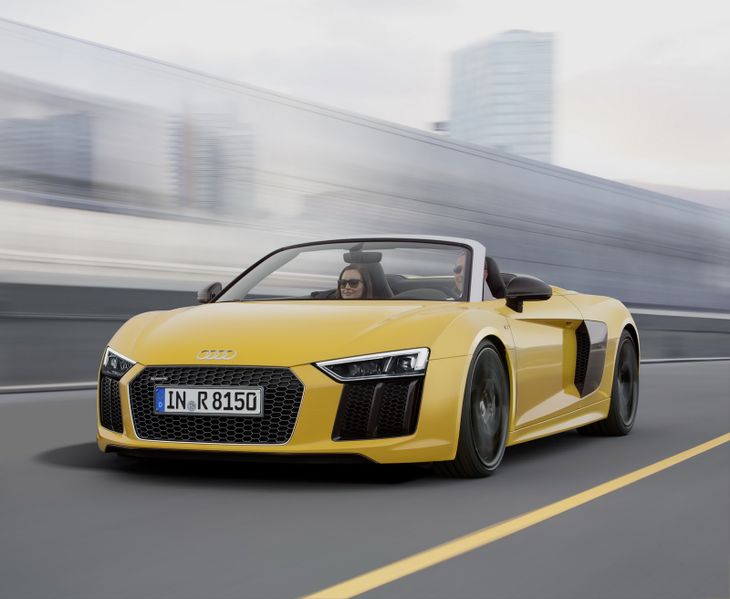
Audi R8 Spyder
The Audi 5.2-litre V10 engine has one of the sweetest exhaust notes you’re ever likely to hear. Now, a lack of a roof will give your ears unadulterated pleasure as you howl along the coastline in this topless supercar.
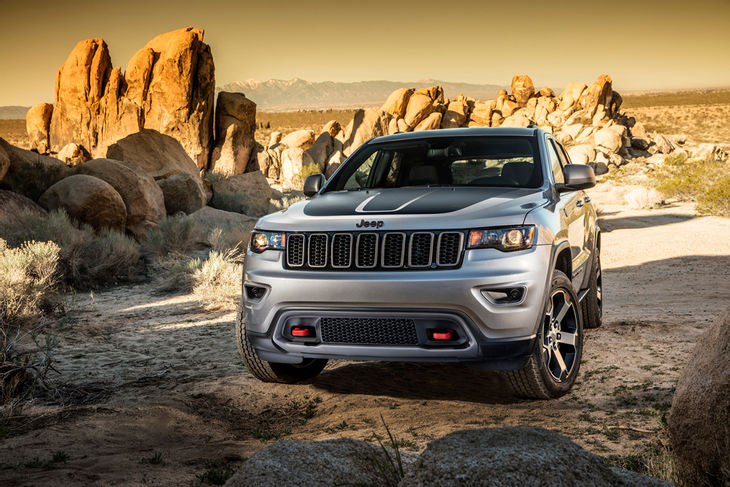
The Trailhawk badge symbolises off-road capability. The Grand Cherokee Trailhawk comes with longer suspension travel, better approach and departure angles and proper off-road tyres.
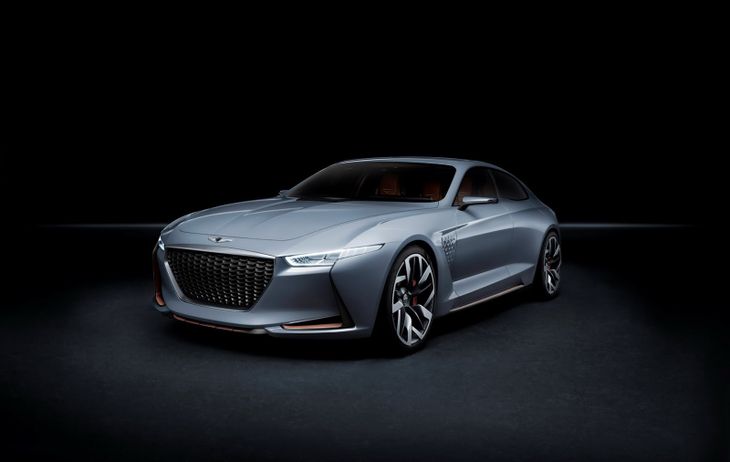
Genesis is the new premium arm of Hyundai and the production version of the petrol-electric Sports Concept will ostensibly take on the likes of Mercedes-Benz’s C-Class, Audi’s A4 and BMW’s 3 Series when it comes to fruition. It looks unique and quite sexy – if you ask us.
2016 Audi A4 vs BMW 3 Series In-Depth Review & Comparison (Video)
It’s exciting to review niche cars like the Ford Mustang, but in-depth reviews of cars that are of major interest to consumers are vitally important. The (new) Audi A4 and BMW 3 Series sell in great numbers and are arch-rivals.
Both of the cars featured here (Audi A4 2.0TFSI Sport line and BMW 3 Series 320i M Sport auto) are hugely popular derivatives of each model. They feature 2.0-litre engines, are fitted with their respective manufacturers' sport line kits fitted and both are white. So, which one should you buy?
It’s always nice to know that if you need to take a gap in the traffic or get somewhere in a hurry, your set of wheels can get a move on with as little as a flex of your right foot. Not many of us have the budget to splurge on a sportscar, but there are still some reasonably nippy hatches out there that will do the job with aplomb.
A compact car (as categorised in our Cars.co.za Consumer Awards) is a hatchback with a price tag that shouldn’t exceed R250k. We’ll stick to that number and see which manufacturers have put a slight bias on performance. Here’s what rose to the top in terms of 0-100 kph times:
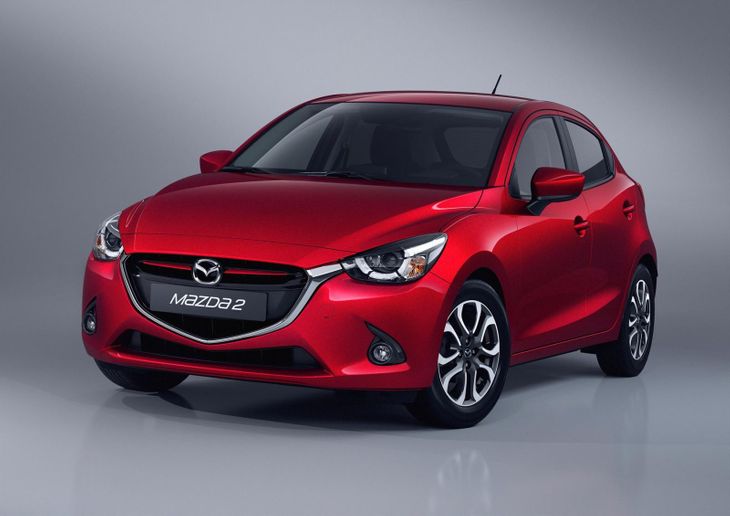
The sporty small hatchback proves that Mazda is trying to make a name for itself as a dynamic, sporty carmaker. The Mazda2 is its entry-level model and apart from some odd local specification choices, makes an excellent driver’s hatchback. Mazda claims the tiny 2 will accelerate from 0-100 kph in 8.7 seconds. Read More
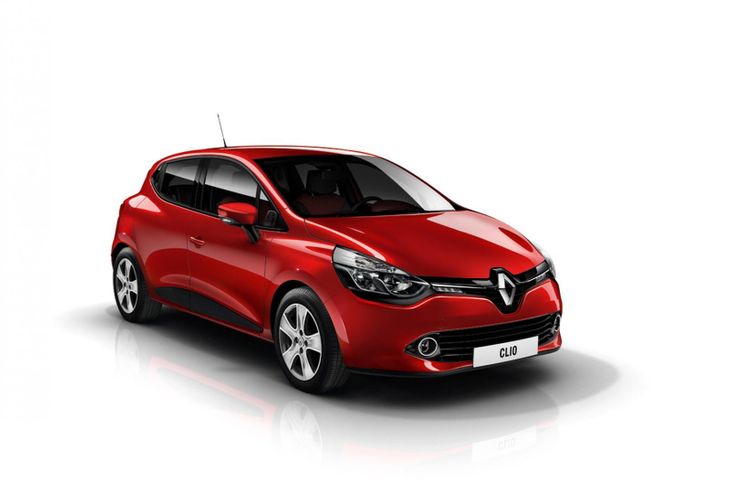
Much to our delight, Renault finally added more power to the Clio. This derivative only comes with a dual-clutch auto box, which is handy when you're stuck in traffic, but won't entertain driving enthusiasts as much as a manual gearbox. Nonetheless, the 88 kW 1.2-litre turbo engine propels the Clio from zero to 100 kph in 9.4 seconds, which is exactly the same as the Fiesta 1.0T. Read More
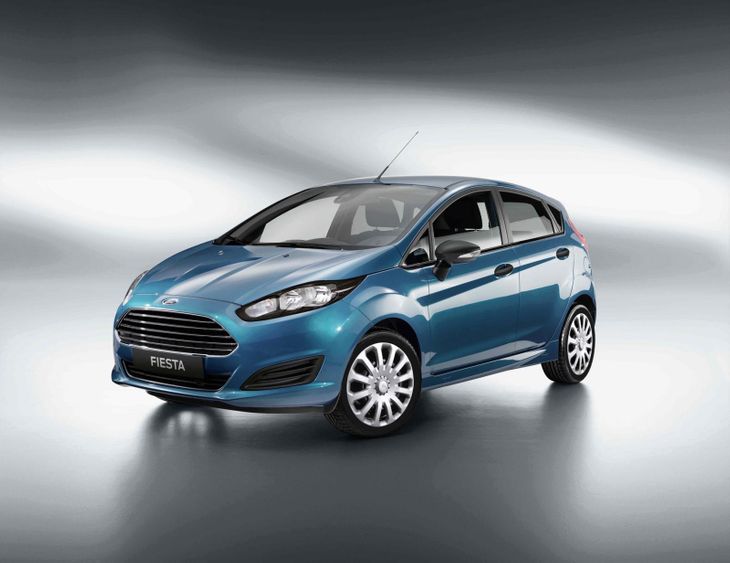
Ford’s Engine of the Year does does duty in many of its models: you'll find it in this Fiesta, the Ecosport SUV and the new Focus. It comes with either a manual or automatic gearbox and, with 92 kW on tap, it is the most powerful car on the list. It also takes 9.4 seconds to reach 100 kph.
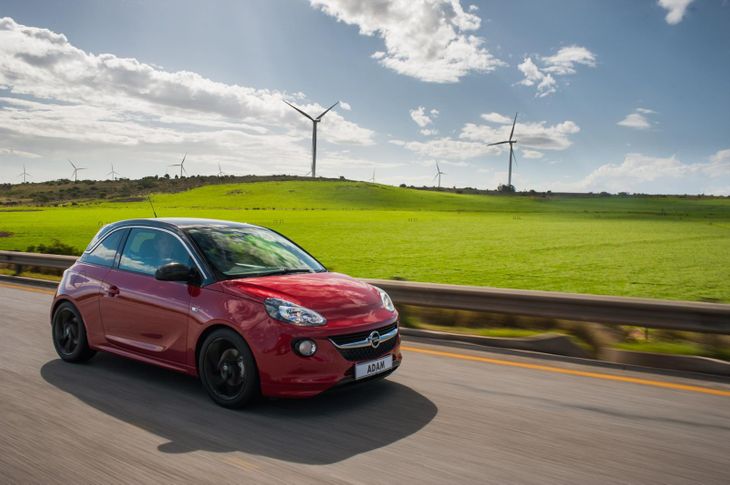
Opel joined the gang of 1.0-litre turbo engines at the end of 2014 with this Adam. We think it’s the most refined of all the engines in that range. It propels the Adam from zero to 100 kph in 9.9 seconds with a manual six-speed gearbox and 85 kW of power.
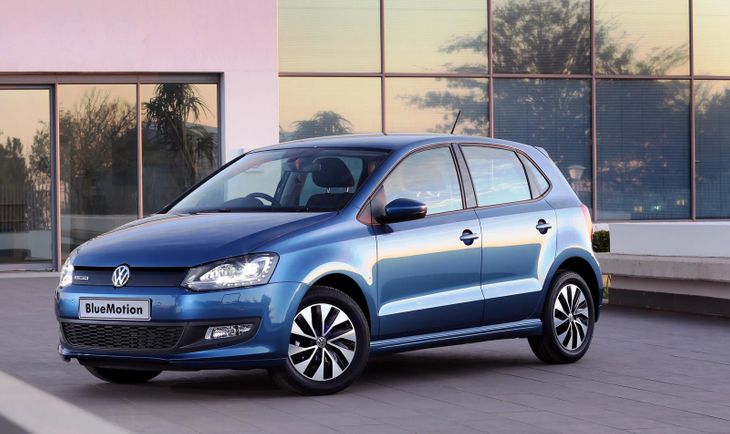
Volkswagen’s newest addition to the Polo range squeaks in under the R250 000 barrier. The 1.0 TSI is a Bluemotion badged car, meaning its primary focus is on fuel economy gains. It’s still reasonably quick though with a 0-100 kph time of 10.5 seconds – it is, strangely, faster than the 1.2 TSI Polo. Read more