Audi Q7 (2015) First Drive

The second-generation of the Audi Q7 has just been launched to the South African market and we were in attendance. 

The new Audi Q7 has had a particularly long gestation period. It’s been nine years since the original behemoth SUV first went on sale. Audi puts this down to wanting to get this new model absolutely right. “Perfect”, if you will. It’s an all-new platform with a new engine range and some innovative new technologies. We had a chance to test its character on the local launch in Gauteng and Limpopo.

New and improved

The big headline is that Audi has managed to hack 325 kg off of this new model. Most of the weight savings have been made at the front and rear axles and the doors – thanks to aluminium. The styling has obviously changed as well with the Q7 looking slimmer now, but not necessarily in the right places.

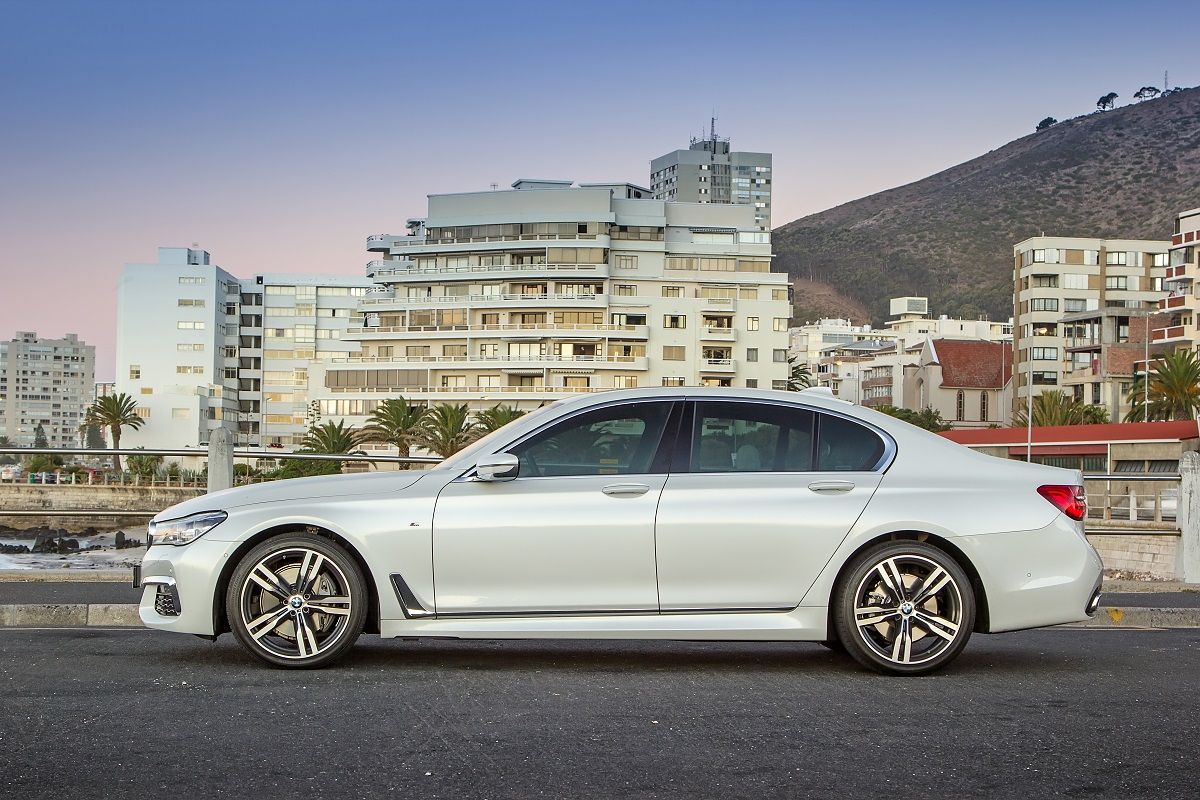
The grille up front is huge and imposing and the Matrix LED lights leave you in no doubt that you should move over if you see them in your rear view mirror. As an overall package we’re not sold on the looks, but throw an S-Line body kit package at it and it looks more the part.

Engines

At launch, there is just the one engine and it’s a diesel. A very good diesel mind you. The 3-Litre TDI is super efficient and smooth. It is able to deliver 183 kW and 600 Nm of torque and it’s the perfect companion for the long road. With an eight-speed automatic transmission, it hums along at 120kph at around 1600 rpm – great for fuel economy. It’s a quiet diesel and even in the higher rev range the notorious diesel clatter can’t be heard. Audi claims it will return 5.9L/100km, but if you’re able to maintain around eight or nine to the 100 you should be happy in a house this size.

Big inside

The Q7 is as spacious as you’d expect from a large SUV, you can specify seven seats if you want to as well. You still get a reasonable load bay of 295-litres with all seven seats in operation. With five seats (and it is just five as the rear is made up of three individual seats rather than a bench) you get a massive 890-litres. With all the seats flat in the back it opens up 2075-litres, which is enough for just about anything.

The cockpit

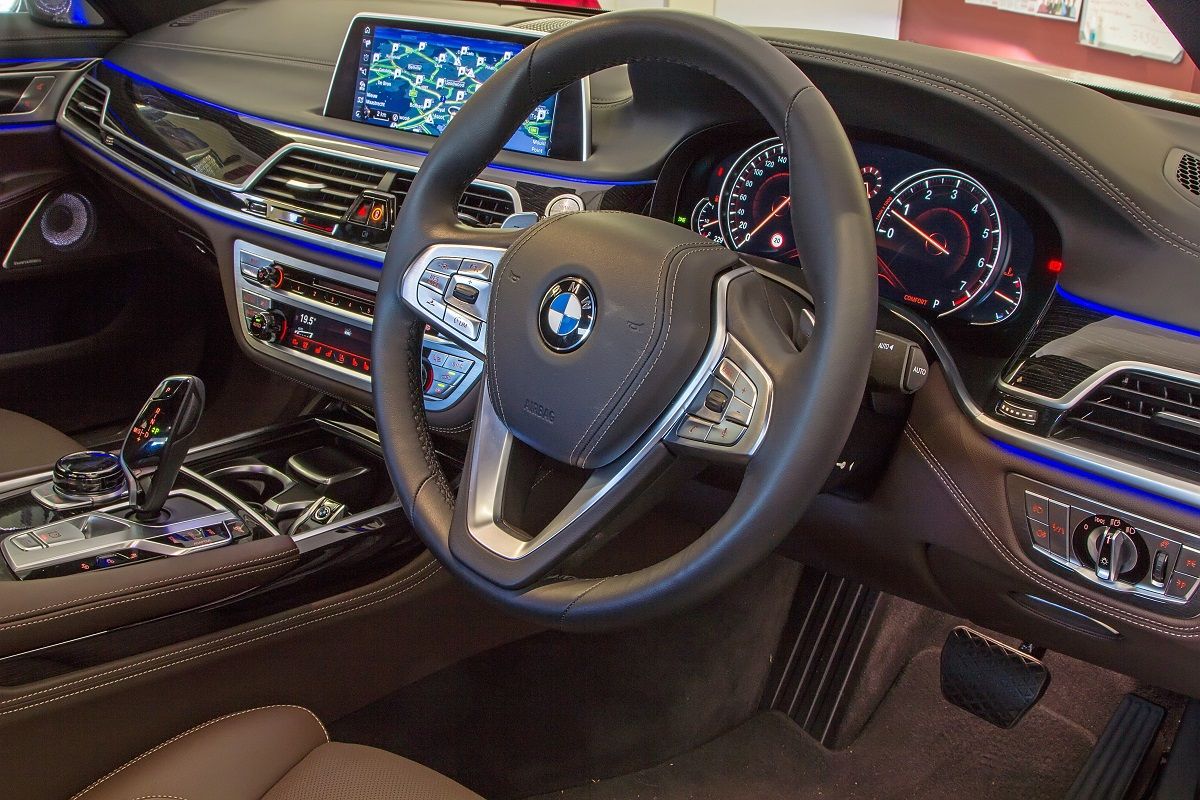
Audi has taken its already class-leading interiors to another level. The Q7 oozes sublime craftsmanship. The Q7 has taken the simplicity of the TT interior and stepped it up to fit the much larger sibling. The virtual cockpit that turns the instrument cluster digital and displays crystal clear navigation and map data is available as an option. The gear shift lever feels like the thruster from a jet and the park button is conveniently placed by your thumb for easy access.

Tech fest

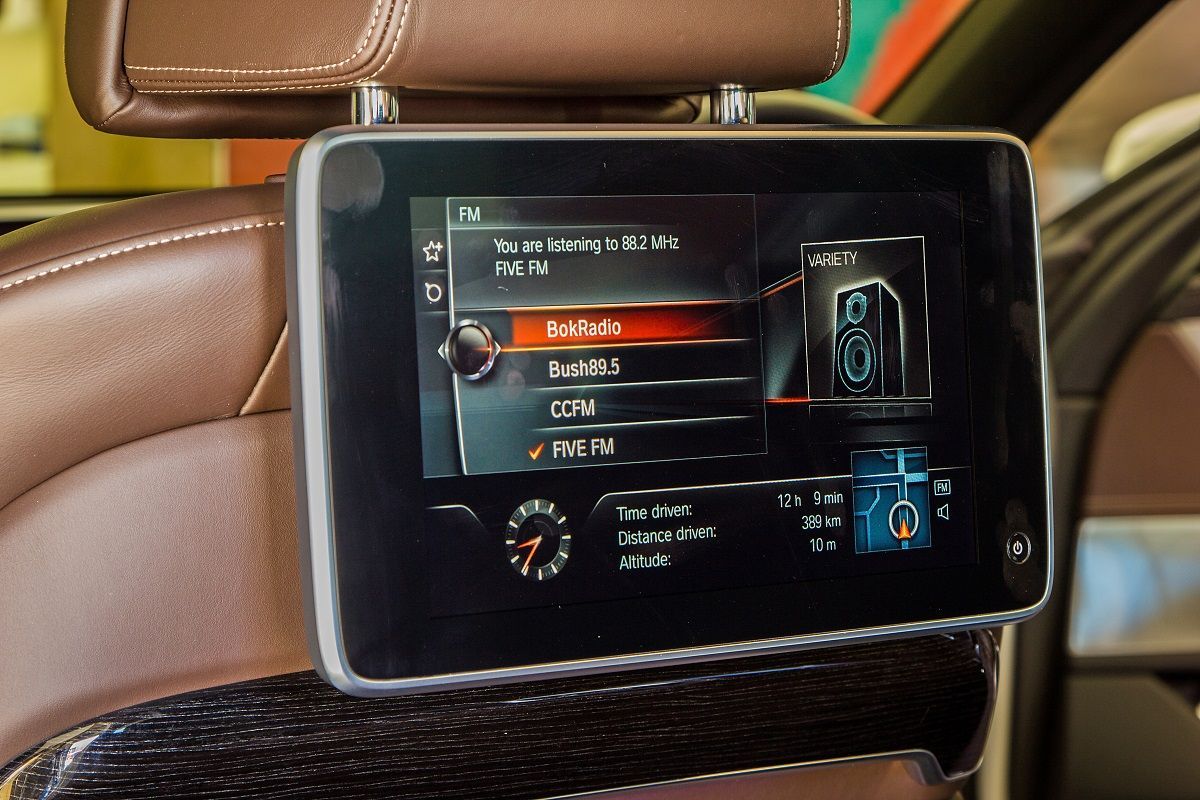
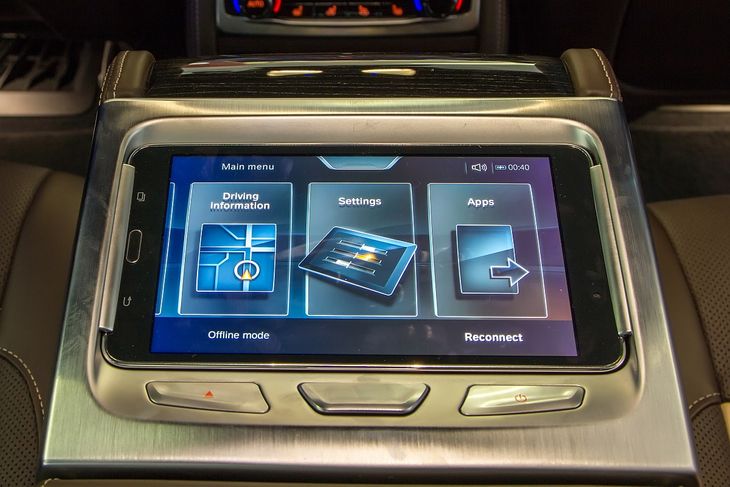
If you want, you can order just about every technology currently available on a Q7. Be ready to do a lot of checking on the option list as there are some seriously cool features available. The basics are all covered from an eight-inch infotainment screen to removable rear Android tablets. They have full internet access if you insert a SIM card, so your rear passengers can Skype as you drive if they wish. The sound systems come in two forms, a standard Bose system or an insanely clear Bang and Olufsen system.

The safety features are endless as well, but probably the most interesting system of all is Traffic Jam Assist. It will take control of the car for you in traffic situations and follow the car in front at anything up to 65kph. Then there’s trailer assist that will automatically reverse your trailer for you, taking all the stress out of getting the boat into the garage or down the jetty.

Watch Audi Trailer Assistant in action:

Smooth ride

The new Q7 has been handed the smoothest of rides. On road it flattens out bumps, keeping it comfortable in the cabin. It doesn’t have much body roll and it’s easy to get used to the size of the vehicle you’re traipsing around in. Off road it does the same thing, ironing out washboard dirt tracks with ease. It may just have the most refined ride and drive in this segment, but we’ll have to test that out more thoroughly when we get the vehicle for a full test soon.

Audi Q7 Pricing

The Q7 hits showroom floors at a base price of R924 000 for the 3-Litre TDI. A 2-Litre turbo petrol will be added to the range in January, but pricing for that model has not been released.

Volkswagen Polo Bluemotion (2015) Review

It’s claimed to be the most fuel efficient and greenest Polo yet, but how does the latest Bluemotion fare?

This is the 2015 Volkswagen Polo Bluemotion and it’s claimed to be super economical, without breaking the bank in terms of initial outlay – an affliction which handicaps most green vehicles of today.

On the outside it resembles a normal Volkswagen Polo, but upon closer inspection you can see the small details which allow the Polo Bluemotion to slip through the air a little easier. There’s a bumper which features a small grille as well as cleverly-designed alloy wheels which offer less resistance. The tyres are specialised low rolling resistance units, which further saves fuel.

All-New Eco Engine and Drive

Powering the Polo Bluemotion is an all-new engine. The previous generation was powered by a diesel engine which offered commendable performance despite the small capacity. The only let down was turbo lag, which required owners to alter their driving style. Once adapted and driving in the correct manner, impressive fuel consumption figures were fairly easy to achieve.

The latest version which you see here is powered by a 1-litre three-cylinder motor. Pushing out just 70kW and 160Nm, this little three-pot offers performance that most would laugh at seeing as it’s a car costing over R200 000. However out and out performance is not this little car’s forte. If you’re never in a hurry, the Polo Bluemotion offers a relaxed driving experience and if you get the driving style right, great returns on the trip computer can be had.

Speaking of economy, the Polo Bluemotion claims 4.2L/100km which isn’t too unrealistic. Given the car’s 45 litre tank, a range of over 1000km is theoretically possible. During its week-long tenure with us and after a combination of both rural and urban driving, we saw figures sitting around the 5L/100km mark – which isn’t too bad.

The vehicle has a five-speed manual gearbox which offers a pleasant action – good thing as you’ll be using the gears often to get the most out of the engine. See, if you’re Joe Average and you drive like an average South African road user, you’ll be constantly gearing down to get a move on. This is not how this car works and as mentioned earlier, it’s at its best if you drive gently and sedately.

Interior and Features

Standard specification in the Polo Bluemotion is reasonable, but in true Volkswagen fashion numerous options are available and our test unit highlighted things such as park distance control (R3 050), light & vision package (R3 700), composition media (R2 550) and bi-xenon headlights (R8 650). This brought the price up to R248 150 for the exact vehicle you see here.

The vehicle comes with a substantial infotainment system which has all the niceties like radio/Bluetooth/USB functionality, but in the Polo Bluemotion you get a set of menus devoted to efficient driving. There’s even a section which offers easy-to-understand tips on how to get the most out of your car. These tips are great and educational, but it’s a rude awakening to see how you should really be driving!

Despite being a specialised eco car, the bottom line is you’re still buying a Volkswagen Polo – a car that has a reputation for build quality and being a popular hatchback. You still get adequate rear legroom and the boot offers a useful 280-952 litres of space.

Conclusion and Summary

At a price premium above the standard Volkswagen Polo 1.2 Comfortline, the case for the Bluemotion is not a strong one. It’s tough to sell a vehicle which is slower, less powerful and costs more – even if the fuel saving benefits are great. Over a long period of time, the Bluemotion will save you some money and thanks to its CO2 emissions of less than 100g/km, its exempt from the emission tax.

However there’s nothing wrong with the standard 1.2-litre turbo Polos which have a little more power and torque, thanks to that larger engine and extra cylinder, it’s a car that has been a very popular seller. Go for the Bluemotion if you’re really eco conscious, otherwise stick to the standard Polo – a car that returns not too dissimilar consumption figures any way.

If you’re wanting to have a Battle of the 1.0 Litre cars, you’ll find the Ford Fiesta 1.0T Titanium is around R10k cheaper while offering more power, while the Renault Clio is R15k cheaper, but down on power and torque. In this company, that Ford Fiesta is tough to beat.

Volkswagen Polo Bluemotion Price in South Africa

There’s only one Bluemotion in the Volkswagen Polo range and it sells for R235 800.

Team Opinion

The new 3 cylinder engine from VW is a top notch unit. It immediately feels as good as the competition from Opel and Ford. Combined with the solidity and build quality we’ve come to know from Volkswagen, this seems like a really good buy. It just seems a bit expensive. – Ashley Oldfield

We Like: Comfortable cruiser, build quality, economical and efficient

We don’t Like: Not the fastest thing around, pricier than normal Polo.

Also consider: Ford Fiesta 1.0T Titanium, Renault Clio 66kW Dynamique

Compare the Volkswagen Polo Bluemotion to the Fiesta and Clio here.

Volkswagen Polo Bluemotion – Quick Specs

Cars-Volkswagen-Polo-Bluemotion-1.0-TSI


Volkswagen Diesel Scandal: Official Comment

Those following the international business news will know by now that Volkswagen is currently making headlines for the wrong reasons.

US authorities accuse the company of using a so-called “cheat device” in some turbodiesel vehicles to deliberately circumvent clean air rules. This engine software automatically triggered when it was detected that the car was undergoing exhaust emissions testing. This, in turn, reportedly hid emissions levels that were up to 40 times higher than what is legally allowed in the US. The emissions in question were reportedly NOx (nitrogen oxide) related. Volkswagen has been ordered to recall 482 000 vehicles in the United States and could face penalties of up to $18 billion in that country alone.

But now things have apparently taken a turn for the worse.

Up to 11 million cars affected worldwide

In a statement issued earlier this morning Volkswagen admits that the software could be present in up to 11 million vehicles worldwide. According to Sky News, investigations have begun in other countries, including South Korea, Germany and… South Africa.

As this is still a developing story and Volkswagen in Germany is driving the action plan, Volkswagen South Africa is not currently in a position to comment, so it remains to be seen how a fairly large recall (if there is indeed a recall) would be handled and impact the local Volkswagen owners. The EA189 family of four-cylinder turbodiesel engines is widely used in a number of products.

Although there has been no official detail on how the software actually works, former technical editor of CAR Magazine, Jake Venter, suggests that it could be as simple as Volkswagen using two “maps” for the engine, one for emissions, and one for driveability, with the car switching between them as required. Usually manufacturers develop one “compromise” map. How will Volkswagen fix this? It may have to develop one such “compromise” map for these engines.

Although no other manufacturers are currently accused of anything similar, French Finance Minister Michel Sapin has called for an investigation into all European carmarkers, including French ones, following the Volkswagen revelations.

Volkswagen Diesel Scandal – The Official Statement

“Volkswagen is working at full speed to clarify irregularities concerning a particular software used in diesel engines. New vehicles from the Volkswagen Group with EU 6 diesel engines currently available in the European Union comply with legal requirements and environmental standards. The software in question does not affect handling, consumption or emissions. This gives clarity to customers and dealers.

“Further internal investigations conducted to date have established that the relevant engine management software is also installed in other Volkswagen Group vehicles with diesel engines. For the majority of these engines the software does not have any effect.

“Discrepancies relate to vehicles with Type EA 189 engines, involving some eleven million vehicles worldwide. A noticeable deviation between bench test results and actual road use was established solely for this type of engine. Volkswagen is working intensely to eliminate these deviations through technical measures. The company is therefore in contact with the relevant authorities and the German Federal Motor Transport Authority (KBA – Kraftfahrtbundesamt).

“To cover the necessary service measures and other efforts to win back the trust of our customers, Volkswagen plans to set aside a provision of some 6.5 billion EUR (close to R100 billion) recognized in the profit and loss statement in the third quarter of the current fiscal year. Due to the ongoing investigations the amounts estimated may be subject to revaluation. Earnings targets for the Group for 2015 will be adjusted accordingly.

“Volkswagen does not tolerate any kind of violation of laws whatsoever. It is and remains the top priority of the Board of Management to win back lost trust and to avert damage to our customers. The Group will inform the public on the further progress of the investigations constantly and transparently.

Battles on all fronts

What will be the outcome for the leadership at Volkswagen? A high-level board meeting is reportedly scheduled for Friday and some German media is reporting that current CEO Martin Winterkorn will be replaced at that time, potentially by Porsche CEO Matthias Muller (This has been denied by Volkswagen). This follows a year of boardroom battles at Volkswagen, with Winterkorn ousting the legendary Ferdinand Piech earlier this year following major differences.

As reported recently in our article on Volkswagen’s next five years, the company is facing serious challenges in China and the United States and has embarked on an ambitious new model strategy that will fix most (if not all) the problems with its current model range (a lack of a sufficient number of SUVs/crossovers, and potentially a budget car family specifically for China).

Following widespread reports on the emissions scandal Volkswagen shares dropped 19% on Monday, and a further 20% on Tuesday.

We will keep you updated on this dramatic and developing story.

Five Cool Things You Should Know About The Mercedes-Benz G-Class

Having recently driven the new Mercedes-Benz G-Class and visited its factory in Graz, Austria, we thought we’d share five cool facts about this iconic off-road machine.

The all-new G-Class makes landfall in South Africa in early 2016 and you can read our first impressions of this very capable machine here.

1) It’s Handmade in Austria

IMG_4880

The Mercedes-Benz G-Class is one of the few vehicles that’s assembled entirely by hand. In fact, the only serious machine in the Magna Steyr plant in Graz, Austria is the very modern leather cutter. This manufacturing facility also assembles Peugeot RCZ and Mini Countryman vehicles.

2) Its An Unstoppable Offroad Machine

IMG_4940

The Mercedes-Benz G-Class features permanent all-wheel drive, 7G-Tronic gearbox, three differential locks plus low range, and a ground clearance of 235mm. Those diff locks can be engaged/disengaged while on the move and the vehicle also features a 30-degree approach angle, a 30-degree departure angle and it can wade in water up to 60cm deep.

One man by the name of Gunther Holtorf managed to drive his G-Class, named Otto through 215 countries and covered almost 900 000 km in harsh off-road scenarios. In real world conditions, that’s about 2.5 million kilometres of proper testing. The vehicle didn’t break once despite being loaded with supplies.

Watch the G-Class in action on the Schoeckl Mountain Trail in Austria:

3) The Military Use It

1280px-Two_Canadian_Forces_G-Wagons

With a reputation for being tough and the ability to go everywhere, it comes as no surprise that military and police services have enlisted the Mercedes-Benz G-Class. Over 40 countries have these vehicles on their books and while most are seen as transport, some have been kitted out with some serious toys. These professional versions have numerous features that aren’t available to the public such as heavy-duty armour, light machine gun turrets and electronic equipment such as jammers and radios.

4) There Are AMG Versions

G65_Wallpaper1

The Mercedes-Benz G-Class does well with its diesel engine, but those craving more power will be delighted to know there are some hardcore performance engines in the range. There’s the AMG G 63 with a biturbo V8 and the AMG G 65 which features the insane V12 engine found in the Mercedes-Benz S65 AMG coupe. The G63 packs a 420kW and 760Nm punch, while the G 65 has 450kW and 1 000Nm!

5) Meet the G63 AMG 6×6

25143

Just when you think the men behind the Mercedes-Benz G-Class were pretty normal, along comes the G63 AMG 6×6 – a six-wheeled beast. It featured a twin-turbo V8, six wheel drive, five differential locks and about half a metre of ground clearance. It could also wade through a metre of water and while it is properly hardcore on the outside, the interior is very luxurious. Mercedes-Benz has made around 200 of these monsters and all of them are sold.

MINI One Now in South Africa

MINI South Africa is expanding its model range with the introduction of the 3-door and 5-door MINI One hatchback which serves as an entry point to the brand.  

“The new MINI remains on course for growth. Since market introduction in May 2014, more than 1,352 units of the new MINI hatch have been delivered to local customers. In terms of our MINI 5-Door, 585 units have been delivered to customers since market introduction in November. We believe that the new MINI One will continue to offer MINI’s unique offering,” says Kabelo Rabotho, General Manager of MINI South Africa.

Engine Power

The MINI One is powered by a 3-cylinder 1.2-litre engine with TwinPower Turbo technology that delivers 75 kW and 180 Nm of torque avaialble from 1 400 rpm. The 3-door hatch accelarates from 0-100kph in 9.9 seconds while the 5-door hatch achieves the same result in 10.1 seconds. Power is delivered to the front wheels via a 6-speed manual transmission. Fuel consumption for the 3-door One is rated at 4.9L/100km while the 5-door version is rated at 4.8L/100km.

Features

The MINI One 3-door features dark upholstery seats and a re-designed dashbaoard. The speedometer and rev counter are placed directly behind the steering wheel and the familiar MINI central speedometer has been replaced with a Center Instrument which displays information and entertainment. In the 5-door version, the Center Instrument features a 4 line TFT display.

If you want to liven up your One, you can opt for two equipment packages which add a host of features to the vehicle. The first packages is ‘Chili’ which offers different cloth/leather combinations for the seats as well as a number of interior and exterior features such as multi-function steering wheel, LED fog lights, 15-inch Heli spoke silver alloy wheels and sport seats for the driver and passenger, to name a few. The second package is called ‘Wired’ which adds a 8.8-inch screen for navigation and infotainment purposes using a Touch Controller. Navigation System Professional and enhanced Bluetooth mobile preparation is also included in this package.

MINI One Price in South Africa

MINI One 3-door – R259 800

MINI One 5-door – R269 800

Mercedes-Benz G-Class (2016) First Drive

We attended the launch of the facelifted Mercedes-Benz G-Class in Frankfurt, Germany and took it off-roading in Austria. The legend continues!

HIGHLIGHTS

 – Engines are tuned to deliver more power while consuming less fuel
–  All-new 4.0-litre V8 biturbo engine from C63 (not for SA, sadly)
 – Revised suspension and adaptive damping to increase comfort
 – G350d and G63 coming to SA in 2016

The Mercedes-Benz G-Class is an icon and the product’s design hasn’t radically changed since the vehicle’s debut back in 1979. With extraordinary off-road ability and go-anywhere attitude, the Mercedes-Benz G-Class has a big reputation among 4×4 enthusiasts.

What’s New?

The new model is claimed to offer up to 16% more power and up to 17% less fuel consumption across the engine range. Currently the engine range starts with the diesel-powered G350d, then there’s a new G500 with a 4.0-litre biturbo V8 engine, the (in)famous G63 AMG and finally for those wanting the ultimate; the V12 monster that is the G65 AMG. Of those Euro-6 compliant engines, South Africa is to receive the G350d and the G63 AMG. There’s also a hardcore AMG Edition 463 which has some visual upgrades such as 21-inch matte black wheels, two-tone interior and carbon fibre trim to name but a few.

Engine Lineup

We drove the G350d on launch seeing as it’s earmarked for South African introduction. Power is rated at 180kW with torque coming in at a properly powerful 600Nm. For those who care about being quick off the mark, the 0-100kph sprint is dispatched in 8.8s and it’s claimed to return 9.9L/100km – not bad for what’s essentially a heavy military vehicle in civilian clothing.

The G63 AMG packs a mighty 420kW and 760Nm, while the utterly bonkers G65 has 463kW and 1000Nm on tap. We’re not getting the G65 though.

Improved ride comfort

Under the skin, there’s an all-new suspension arrangement featuring an enhanced stability program (ESP) which is supposed to aid in on-road comfort. Mercedes-Benz claims the front-axle load capacity can now handle 1 550kg – useful when you’re pushing hard on tough terrain. The car comes standard with 18-inch wheels fitted with chunky rubber. What impressed us most was how comfortable the G-Class was on the Autobahn at 130kph, with road noise being hardly noticeable, even with that upright windscreen. Swop the Autobahn for the infamous Schöeckl mountain trail in Austria with its insane angles and the G-Class feels remarkably calm and refined.

The Mercedes-Benz G-Class is one of the very few vehicles that’s still handmade. It is manufactured in Graz, Austria at the Magna Steyr factory which also manufactures Peugeot RCZ sportscars as well as the MINI Countryman.

Step Inside

The cabin feels luxurious, unlike the G-Class of a decade ago which featured a cabin that could be hosed out without risk to the electronics. This modern cabin has all the toys you’d need such as satnav on an 11.4cm screen, automatic climate control, multi-function steering wheel to name but a few. The cabin also gains a new instrument cluster with redesigned dials. You also have the ability to change gears yourself manually using the M button to activate the mode, then use the steering-wheel mounted paddles.

Can It Go Offroad?

If you weren’t aware of the Mercedes-Benz G-Class vehicle’s offroad tech, how does permanent all-wheel drive, 7G-Tronic gearbox, three differential locks plus low range, and a ground clearance of 235mm grab you? Those diff locks can be engaged/disengaged while on the move by the way… The G-Class also features a 30-degree approach angle, a 30-degree departure angle and it can wade in water up to 60cm deep. In summary, if you wish to scale a mountain, this is vehicle you want.

Schoeckl Mountain Trail Video

Mercedes-Benz G-Class Price in South Africa

The price below includes 14% VAT, but excludes C02 emission tax.

G350d                               R1 418 000

G63 AMG                         R2 156 000

AMG G63 Edition 463    R2 156 000 (+ R152 000)

Enhanced Isuzu KB (2015) First Drive

Isuzu has been a part of the South African bakkie community since 1971 and we were at hand to see what the latest enhanced KB has to offer.

Isuzu has a strong heritage in South Africa and since its introduction in 1971, more than 570 000 Isuzu KB models have found homes across the country. The sixth generation Isuzu KB was launched back in 2013 and Isuzu has now introduced a number of improvements across the KB model range in an effort to not only broaden the vehicle’s appeal, but also to build on sales and attract new customers to the brand. Isuzu introduced the enhanced KB to local and international media at General Motors Headquarters in Johannesburg and we were in attendance to find out more.

What’s Changed?

Firstly, the KB range has now grown from 15 derivatives to 18 with three new models on offer including the new flagship KB300 LX 4×4 Double Cab with a 5-speed automatic transmission as well as the KB250 Fleetside Extended Cab and KB250 Fleetside Double Cab, which are fitted with a new uprated 2.5-litre DTEQ turbodiesel engine that now offers 100 kW and 320 Nm of torque. Also, Isuzu has introduced Electronic Stability Control (ESC) across 90% of the KB range, including LX, LE and the new Fleetside models.

For the range-topping KB300 LX Double Cab and Extended Cab variants, a number of features have been introduced to increase comfort and convenience. These features include a 6.5-inch touchscreen infotainment system which incorporates satellite navigation, internet, WiFi, DVD, smartphone integration and rear park assist camera. KB300 LX derivatives also benefit from passive entry with a Start/Stop ignition button as standard. Buyers can also choose leather upholstery as an option. On the styling front, the KB300 LX has been visually enhanced with LED Daytime Running Lights while the taillight clusters now feature LED technology. 17-inch wheels are fitted as standard on the KB300 LX models but 18-inch wheels can be had as an option.

For the new KB250 Fleetside Double Cab and Extended Cab, features such as a CD Radio with Bluetooth and 16-inch wheels are fitted as standard. With the increase in torque, payload for the single cab Fleetside model has also increased to 1 221 kg. Cruise Control has also been added to LE specification vehicles and the interior look and feel for LX single and Extended Cab models and all LE models have been improved with upgraded fabric upholstery.

What’s It Like to Drive?

Our destination was Haywards Safari Camp situated near Cullinan in the Bobbejaansberg Private Nature Reserve and the total launch route covered over 300 km. Our first stint was behind the wheel of the new KB250 LE 4×4 Double Cab and with gains in power and torque over the previous 85kW/280Nm 2.5-litre turbodiesel engine, the uprated engine certainly had more shove with an additional 15 kW and 40 Nm of torque delivered through a 5-speed manual gearbox. According to Isuzu, this uprated engine shaves 2.6 seconds off in the 0-100kph haul and is as much as 6.3 seconds faster when accelarating between 40 and 120kph when compared to the previous engine.

Despite this, acceleration in the KB250 LE felt flat at times, but it performed admirably overall. We did take the KB250 LE over some treacherous terrain and althouth the vehicle’s ride and handling was decent on smoother road surfaces, the ride became quite bouncy and wafty when road quality deteriorated considerably. Where most vehicles would have fallen apart, the KB250 remained determined to overcome the challenge, and it did. The uprated engine is more efficient too and Isuzu claims between 7.7 and 7.9L/100km depending on the model you choose.

We also had a chance to sample the flagship KB300 LX Automatic Double Cab fitted with a 3.0-litre turbodiesel with 130 kW and 380 Nm of torque on tap. Being a heavier vehicle, this model was more composed over rough terrain and it managed to iron out bumps far more easily. Performance wise, it performed well and the 5-speed automatic transmission felt smooth and responsive to throttle inputs. Power is delivered in a composed manner and as such, the KB300 LX masks its power well by not being overtly bullish. It’s comfortable and relaxing to drive on the road thanks to the automatic transmission and it copes well in the tough stuff too. In terms of fuel consumption, Isuzu claims between 7.7 and 7.8L/100km for the 4×2 KB300 LX and 7.9L/100km for the KB300 LX 4×4 automatic and 5-speed manual derivatives.

On our second day with the Isuzu KB, we set off to do some 4×4 obstacles at the nearby Sandwani 4×4 course. Isuzu KB 4×4 models are fitted with a rotary dial where the driver can easily select drive modes such as 2H, 4H and 4L depending on the terrain being tackled. The Isuzu KB proved its worthiness as a tough and capable 4×4 vehicle as it dominated all the obstacles with ease. After playing on the 4×4 course, Isuzu 4×4 experts demonstrated the capabilities of the newly fitted Electronic Stability Control, which highlighted the importance of the system in improving safety across the KB range.

We will have the enhanced Isuzu KB on test soon to give it a thorough evaluation, but for now, take a look at the pricing structure for the enhanced Isuzu KB below.

Isuzu KB Price in South Africa

Single Cab          

KB 250 Leed 4×2 – R219 400

KB 250 Leed F/S 4×2 – R241 500

KB 250 D-TEQ F/S 4×2 – R270 600

KB 250 D-TEQ LE 4×2 – R307 600

KB 250 D-TEQ LE 4×4 – R357 400

KB 300 D-TEQ LX 4×2 – R355 700

KB 300 D-TEQ LX 4×4 – R410 000                 

Extended Cab   

KB 250 D-TEQ F/S 4×2 – R317 000

KB 300 D-TEQ LX 4×2 – R394 200

KB 300 D-TEQ LX 4×4 – R451 800

KB 300 D-TEQ LX 4×2 Auto – R407 500                      

Double Cab       

KB 250 D-TEQ F/S 4×2 – R325 700

KB 250 D-TEQ LE 4×2 – R406 200

KB 250 D-TEQ LE 4×4 – R429 100

KB 300 D-TEQ LX 4×2 – R463 700

KB 300 D-TEQ LX 4×2 Auto – R474 900

KB 300 D-TEQ LX 4×4 – R523 600

KB 300 D-TEQ LX 4×4 Auto – R529 700

All models come with Isuzu Complete Care which includes a new 5-year/120 000km warranty, a 5-year/ unlimited mileage anti-corrosion warranty, Roadside Assistance for 5-years /120 000km and a 5-year/ 90 000 km service plan. Service intervals are set at 15 000 km or twelve months for all derivatives.

Mercedes-Benz GLE In-Depth Video Review

SCROLL DOWN FOR VIDEO

The story of the Mercedes Benz GLE begins in Munich, at a place called BMW’s Head Office. In 1999, BMW launched the X5, a luxury SUV that was an instant hit and spawned a vast field of rivals, including the Mercedes ML, Porsche Cayenne and Audi Q7, to name a few.

Sometime later, BMW decided to chop off a bit of the X5’s boot, creating the X6. Locally, BMW claims that the split between X5 buyers and X6 buyers is 50/50. This has warranted Mercedes-Benz throwing it’s hat into the mix.

Concurrently, Mercedes have been on a mission to clean up their naming system (or nomenclature, if you insist). And so the ML nameplate is no longer, with GLE bringing the new model in line with the GLA (BMW X1 competitor) and GLC (BMW X3 competitor).

The GLE range will be split into the Coupe and normal GLE, which retains it’s traditional SUV shape. In the GLE Coupe range, South African buyers can choose between three models: the GLE350d 4MATIC feature in our video, the GLE 450 AMG and the GLE 63 AMG S.

For “normal”, every day driving, we think the diesel powered GLE is the one to have. It’s an impressively smooth, quiet and powerful engine, and copes easily with the bulk.

The GLE interior can be specced to be as luxurious as any car in the Mercedes line-up, and as you’ll see in the video, the interior doesn’t disappoint, sharing many features and devices with cars like the S-Class.

And quite importantly, the GLE with its sloping roofline and odd rear end doesn’t suffer too much in the practicality stakes, with a vast if slightly shallow boot and rear seats that fold completely flat. Interestingly, our road test Editor, Ashley Oldfield, found that he could easily fit his mountain bike in the Honda HR-V we testedwhilst the GLE proved quite difficult with it’s sloping roofline, meaning the front wheel had to be removed from the bike.

With prices starting at around R1-million, the GLE Coupe is probably going to find its fair share of buyers in SA. Those who do occasionally want to take the car offroad can feel safe with the GLE’s capabilities. In that sense, it does seem to have one-up on its rival, the X6, with hill descent control and standard adaptive suspension.

Mercedes-Benz GLE vs BMW X6 – Specs and Pricing

Mercedes GLE 350d 4MATIC BMW X6 Xdrive40d
Price R1 006 774 R1 098 912
Engine 3.0 litre V6 turbo diesel 3.0 litre Inline-6 turbo diesel
Power 190 kW 230 kW
Torque 620 Nm 630 Nm
0 – 100km/h 7.0 seconds 5.8 seconds
Fuel economy 7.2L/100km 6.2L/100km
Airbags 9 6
Boot space 650 litres 580 litres
Leather upholstery Std Std
Adaptive suspension Adaptive (Opt adaptive air) Opt
SatNav Opt Opt


Mercedes-AMG GLE 63 S Coupe BMW X6 M
Price R1 876 111 R1 757 659
Engine 5.5 litre twin turbo V8 petrol 4.4 litre twin turbo V8 petrol
Power 430 kW 423 kW
Torque 760 Nm 750 Nm
0 – 100km/h 4.2 seconds 4.2 seconds
Fuel economy 11.9L/100km 11.1L/100km
Airbags 9 6
Boot space 650 litres 580 litres
Leather upholstery Std Std
Adaptive suspension Adaptive Air Adaptive
SatNav Std Std

Toyota C-HR Concept shows new compact SUV

Toyota showed the first C-HR Concept back at the Paris motor show in 2014. This is the second incarnation of that concept and shows Toyota’s commitment to producing an al—new compact SUV.

See what Toyota has planned for the next five years here

The C-HR will come to life at next year’s Geneva motor show as a full production model that will sit below the RAV4. Toyota believes this second concept is closer to what the eventual production vehicle will look like.

Toyota plans to build this C-HR on the new platform it has just introduced. Already on this platform is the new Prius, revealed just before the Frankfurt show.

The C-HR is said to have a highly rigid body with a low centre of gravity to aid comfort, dynamics and stability.

There are still no engine details on the compact SUV but no doubt they will be announced closer to the production model’s announcement.

Check out the previous concept here to compare it.

Toyota – The Next 5 Years

New petrol and diesel engine families, all-new platforms and previously unexplored niches are on the cards for Toyota fans. But first up… the all-important Hilux and Fortuner.

Toyota South Africa will see out 2015 with a couple of imminent new arrivals, but the heavy hitters – in the shape of the new Hilux and Fortuner – arrive during February and April 2016 respectively. But that's not the only new metal to come from this much-loved brand during 2016. A number of important models are also due for refreshening or replacement soon. And there could be a couple of brand new additions, too, including a sporty compact crossover to battle the likes of the Nissan Juke and Renault Captur. Toyota's spokesperson was understandably loathe to comment on all the rumours, but there are interesting possibilities that Toyota has thus far not openly discussed. Whether this means there is truth to the chatter or not, we will have to wait and see. Examples of such potential developments include;

  •  A very small crossover (sub-4m) based on the next-generation Etios could be sourced from India.
  •  The Daihatsu Terios could re-emerge as the Toyota Rush, as it has already done elsewhere in the world. Daihatsu recently pulled out of South Africa but is owned by Toyota. Read more about that here.
  •  Similarly, the Daihatsu Gran Max could become a Toyota and give the brand a valuable new entrant in the LCV market.
  •  Toyota has previously toyed with the idea of relaunching the Camry large sedan, or alternatively the Avensis. We believe neither are currently high priority subjects.
  •  Toyota is in the process of rolling out a new generation of petrol engines, most using the lean-burning Atkinson cycle which was previously reserved for its hybrids. Toyota has already stated that some of these new-generation engines will also be turbocharged. There is talk of a powerful 2-litre, four-cylinder turbo to replace the V6 used in the Camry in some markets. It remains to be seen if some of these engines could be used to develop some exciting "mainstream" performance models, such as a Auris hot hatch.

On another note, Toyota South Africa remains committed to the local manufacture of the Quantum, Hilux, Fortuner, Corolla Quest and Corolla models. HIGHLIGHTS

  TOYOTA AYGO – SA LAUNCH IMMINENT Toyota-Aygo_2015_800x600_wallpaper_01 This quirkily styled new supermini arrives in South Africa during October and will be offered with one engine and in two trim lines. The engine in question is the three-cylinder 1-litre petrol unit that develops 51 kW and 95 Nm of torque. We expect both local derivatives to use a five-speed manual transmission. A fuel consumption figure of 4.4L/100 km applies to this engine. The cheekily styled newcomer is slightly wider and longer than before, but a little lower. Nevertheless front headroom has improved and there is even more boot space. The Toyota Aygo shares its underpinnings with the new Citroen C1, which we tested late last year. Inside, expect to see features such as electric windows and Bluetooth connectivity. Click here to read more about the new Toyota Aygo.

TOYOTA AVANZA FACELIFT – SA LAUNCH IMMINENT

toyota Avanza
Don't be fooled by the Daihatsu badge on the vehicle pictures above – what you are looking at here is the facelifted Avanza, sold in some markets as the Daihatsu Xenia. It goes on sale in South Africa during October to battle the Suzuki Ertiga and Honda Mobilio. For this upgrade we don't expect any major mechanical changes, with the current 1.3- and 1.5-litre petrol engines to continue. Besides the obvious aesthetic changes to the exterior, the majority of the work has happened inside, where a significantly revised instrument cluster and control panel awaits. We expect some models to feature a new touch-screen infotainment system (with Bluetooth). The safety specification may be improved through the addition of rear Isofix child seat mounts.
TOYOTA LAND CRUISER FACELIFT – SA LAUNCH BEFORE YEAR-END

Toyota LAnd Cruiser The flagship Land Cruiser 200 is due for an upgrade during November. The visual changes are obvious and you can have a closer look at them on a video on this page, but it's also made a big step inside. Toyota says it has improved the quality of the materials and neatened up the control layout. The facelifted model also get a number of new features, including Dynamic Radar Cruise Control and a nifty panoramic terrain monitor. A far more capable infotainment system is also likely to be fitted as standard. Toyota has not yet announced the local line-up's pricing and specifications but we expect both the 4.6-litre V8 petrol and the 4.5-litre twin-turbodiesel to feature in South Africa.

TOYOTA RAV4 – FACELIFT/UPGRADE COMES VERY SOON

Toyota RAV4 Making its way to local dealerships during December for a likely early 2016 market release is the updated Toyota RAV4. The exterior design of the current model has been contentious, so Toyota has worked hard to up the desirability of this crucial model. Expect a number of new colours and wheel designs to also reach South Africa. Inside, new infotainment systems are offered and there has been a focus on upping the quality of the materials. It remains to be seen which of the new high-tech safety and convenience features will reach South Africa, but an attractive offering would be the new Bird's Eye View monitor that uses four cameras to deliver a 360-degree overview of the vehicle's immediate surroundings. Also added to the available features list (in other markets) are; Dynamic Radar Cruise Control, Cross Traffic Alert and Automatic High Beam systems, among numerous others. The hybrid model will not be offered in South Africa.

TOYOTA HILUX – SA LAUNCH DURING FEBRUARY 2016

new toyota hilux The big news from Toyota for a good few years (at least from a South African perspective) is the launch of the all-new Hilux in February. With the competition heating up in the bakkie segment (facelifted Ranger is imminent) and Toyota lagging to some extent on the passenger side, the Hilux is a crucial product. Details of the South African line-up will become clearer following the European launch later this year, but from the initial marketing material it is clear that Toyota has worked hard to address most of the criticisms that could be levelled at the current model. Depending on the model, the payload rating is now up to 1.2 tonnes, and the tow rating up to 3.5 tonnes. The cabin structure has been strengthened and there has been a big focus on safety features. Inside, the very car-like layout and design will please those shopping for a leisure vehicle but it remains to be seen what the more workhorse-oriented models will look like. Under the bonnet there is a new 2.4-litre turbodiesel (120 kW/400Nm) and a 2.8-litre turbodiesel (132 kW/450Nm). Six-speed automatic transmissions will be offered on some models. The manual transmission (6-speed) 2.8-litre model will have slightly less torque. We expect the current 2.7- and 4.0-litre petrol models to continue. Read more here.

TOYOTA FORTUNER – SA LAUNCH APRIL 2016

Toyota Fortuner Following hot on the heels of the Hilux is another South African favourite, the Fortuner SUV. Facing some stiff new competition in the shape of the imminent Ford Everest as well as the redesigned Mitsubishi Pajero Sport, the second-generation Fortuner replaces a firm South African favourite. The new model represents a significant step upmarket for Fortuner, with a vastly more sophisticated cabin featuring the latest infotainment and safety technologies. Expect seven airbags in all models as well as touch-screen infotainment systems. Toyota expects the new Fortuner to achieve a five-star safety rating. Features such as trailer-sway control and push-button all-wheel drive selection will be present. Addressing one of the few issues with the current vehicle is a far more car-like ride/handling set-up, courtesy of a five-link, coil-sprung rear suspension set-up. Although the Fortuner will in Australia only be sold with the new 2.8-litre turbodiesel form the Hilux, South Africa will get more engine options. In fact, we expect the new 2.4-litre turbodiesel to also feature, as well as the current 4.0 V6. The Fortuner will again be built in South Africa. Read more here.

TOYOTA PRIUS – SA LAUNCH DURING 2ND QUARTER OF 2016

Toyota Prius Revealed last week, the fourth-generation Prius is currently still under investigation for the South African market. If it arrives, it is most likely to hit showrooms in the second quarter of the year. The Prius is the first model to use Toyota's flexible new TNG platform that will underpin just about every new Toyota due in the next five years. It is about 50kg lighter than before and also significantly stiffer. The lower centre of gravity, combined with the new platform, have apparently given the Prius a far sportier driving feel. A big talking point has been the design. The frankly bizarre looks (especially at the rear) are the result of an obsession with aerodynamics and the overall look is inspired by the Mirai hydrogen fuel-cell car. Toyota has not yet released performance/consumption details but has said that the engine now runs at an almost unheard of 40% thermal efficiency, and that both the nickel-metal hydride battery packs and the hybrid system are more compact. Read more here.

TOYOTA INNOVA – SA LAUNCH DURING MAY 2016

Already pencilled in for its South African launch during May 2016, the all-new Innova (a close relation to the Hilux and Fortuner) has not yet been revealed internationally. We do know, however, that this time round a diesel engine (from the new Hilux/Fortuner) is very likely. The current model is only available with the very thirsty 2.7-litre petrol engine. An automatic transmission could also join the line-up, as it will do elsewhere. As is the case with the new Hilux and Fortuner, safety has been a major focus area for the Innova. The ladder frame chassis has been strengthened for improved frontal crash protection and it will likely feature up to seven airbags and ESP. Inside, the fit, finish and features will make the Innova appear far less utilitarian than is the case with the current model. Expect modern info-tainment systems and even some high-tech safety assistance features. It is not clear at this point whether both seven- and eight-seater versions will again be offered.

TOYOTA COROLLA FACELIFT – LIKELY MID 2016

Toyota Corolla facelift The Corolla comes under the surgeon's knife during 2016 to bring its design in line with other recent Toyota unveilings, most notably the updated Auris and new Aygo. Toyota is usually very conservative with the Corolla, so don't expect anything major. Most of the big changes are likely to happen in the cabin (upgraded materials and new infotainment/safety features) or under the bonnet. Toyota is in the process of rolling out a number of new engines that target efficiency, so expect to see at least the new 1.2-litre turbopetrol to migrate to the Corolla at some point, but maybe not initially. A new naturally aspirated 1.5-litre direct injection petrol engine has also been unveiled for the Corolla in other markets.

TOYOTA COROLLA QUEST – MINOR UPDATES IN 2016

Toyota-Quest The popular Corolla Quest (a reworked previous-generation Corolla) will get a minor update during 2016. Exact details are unknown but we expect this locally produced model to get some stylistic tweaks and a few cabin enhancements. See our video review of the Corolla Quest here.

TOYOTA 86 REFRESH – DURING 2016

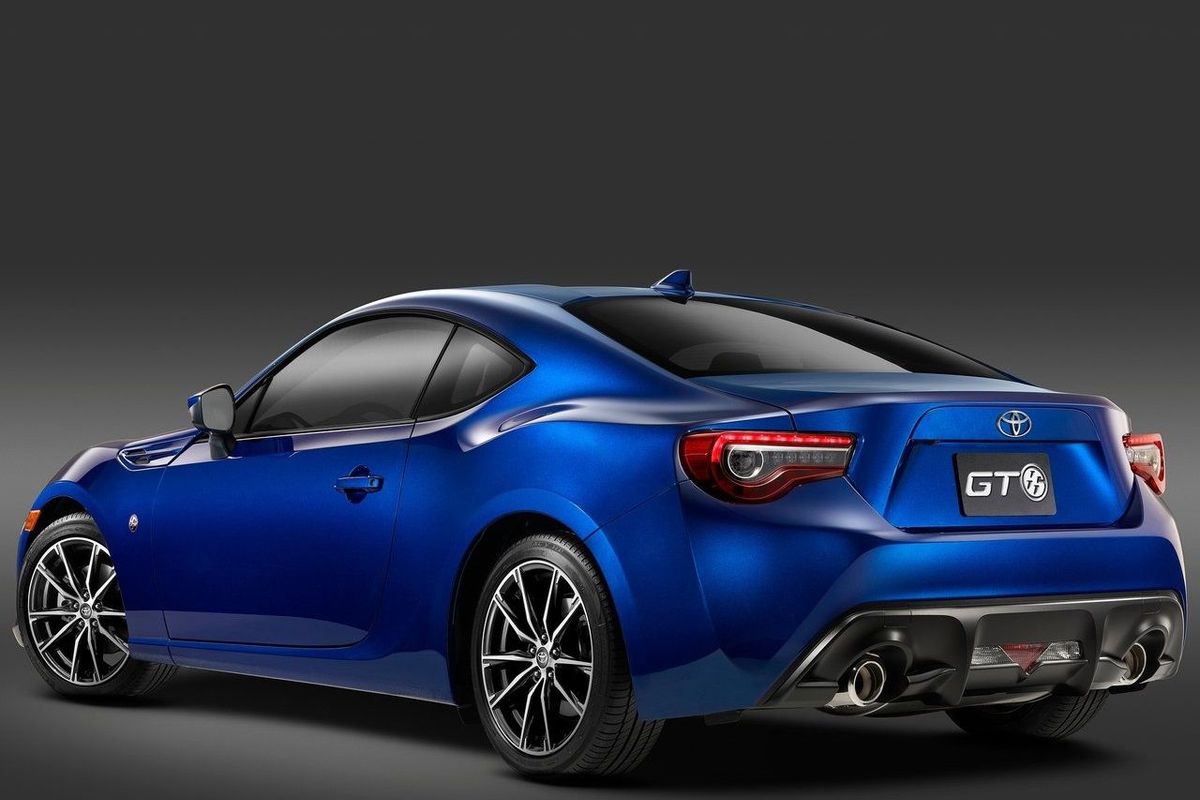
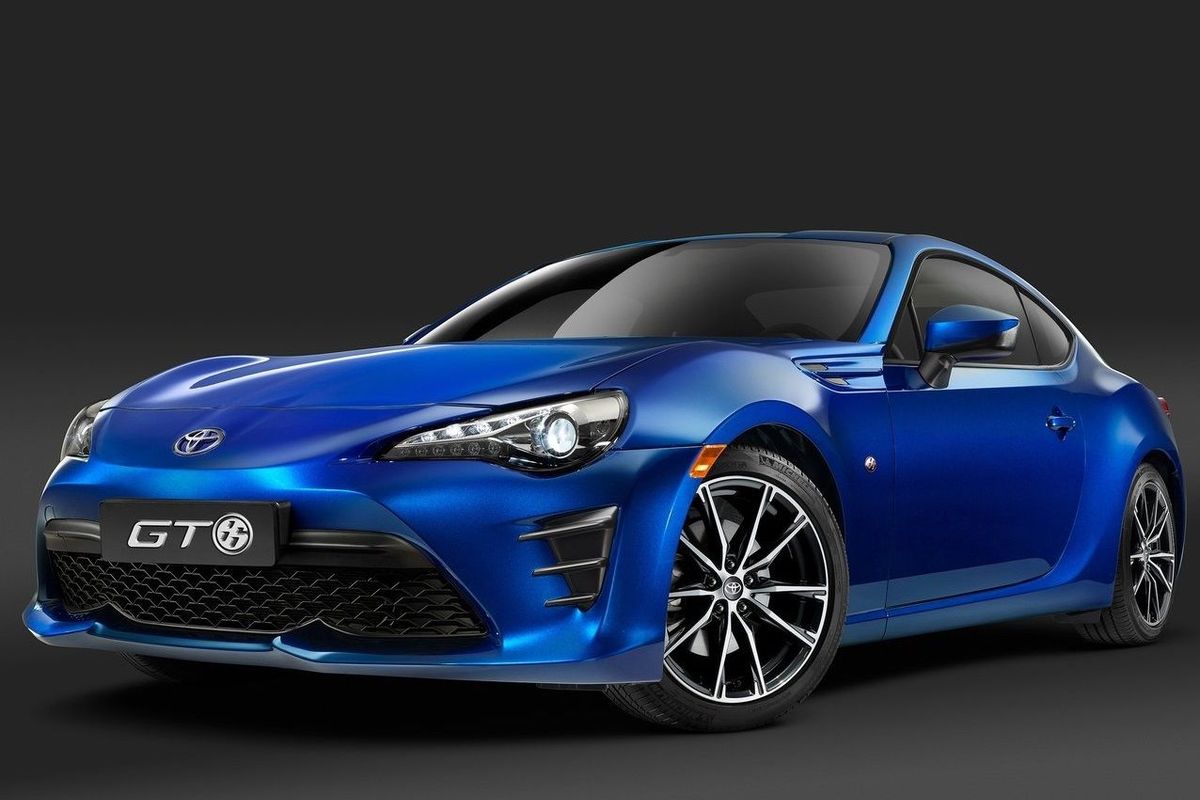
toyota 86 The current Toyota 86 is due for a refresh shortly, and rumours are that this should happen around mid-2016. Details are scarce at present but it is tipped to get (very) slightly more power from the same engine as well as an upgraded rear suspension to improve the handling. It is reported that Gazoo Racing has had input on the dynamics of the revised car. Based on initial spy images, the styling changes do not look significant. There will be revised head- and tail lamps, as well as new bumpers and, by the looks of it, bigger exhaust outlets and a standard rear wing.

TOYOTA PRADO UPDATE – LIKELY DURING 2016

Toyota Prado A very slight update to the popular Prado should happen in 2016. In Australia the big news has been the adoption of the Hilux/Fortuner-sourced 2.8-litre turbodiesel engine instead of the current 3.0-litre turbodiesel. Whether this will also be the case with SA-bound vehicles remains to be seen. At this stage this is unlikely seeing as the engine in the Prado is mapped differently to the one in the Hilux and not compatible with our fuel at this point. There are very few visual changes to the Prado (if any), but we do expect some new features such as cross-traffic alert to become available as well.

TOYOTA “COMPACT CROSSOVER” – WORLD LAUNCH 2016

Toyota C-HR This is one of the most important new models to come from Toyota for some time. It is based on the new modular TNG platform, as debuted recently by the Prius, and boasts styling inspired by the C-HR concept pictured above, unveiled at the Frankfurt Motor Show this week. There have been rumours that it may be called the Auris Cross. Whatever they call it, this vehicle will compete in an immensely popular (and growing) niche populated by the likes of the Nissan Juke, Renault Captur/Duster, Opel Mokka and Ford EcoSport. Very soon just about every manufacturer will have a contender in this segment. This vehicle will most likely mainly be powered by Toyota's new 1.2-litre turbopetrol, but there will also be turbodiesels. Expect front- and all-wheel drive derivatives, as well as manual and CVT (continuously variable transmission) 'boxes. A hybrid version is also likely. We expect to see a production model at the 2016 Geneva Motor Show and South African availability before year-end 2016.

TOYOTA ETIOS – INDIAN DEBUT EXPECTED IN 2016

Daihatsu CUV While the Etios has done well in South Africa and one or two other developing nations, it has not been quite the smash hit in its home country, India. It is reported that Toyota believes the biggest problem to be its bland, uninspiring design. So, for the next model, which could debut in India as soon as next year, it is expected that the current platform will be retained, but that the skin will be entirely new. The goal, apparently, is to give the Etios a "mini-Corolla" look. Also possible is that there will be a proper crossover developed off the same platform, potentially in addition to the popular current Etios Cross. The vehicle pictured above is the Daihatsu CUV2 concept. Failing a compact crossover from India, it is possible that Toyota could in future look to the production version of the CUV2 to fill the gap.

TOYOTA YARIS – NEXT-GEN MODEL ARRIVES WORLDWIDE IN 2017

The current Yaris has failed to set the sales charts alight, even following a fairly intensive facelift that addressed many of its initial shortcomings. Even so, it is perhaps a bit cramped compared with the current market leaders and lacks sparkle in the engine department. So, for the next generation it will move to a smaller version of the TNG platform (NGA-B) and Toyota will likely focus on the 1.2-litre turbopetrol for this model too. This engine made its debut in the European-specification Auris recently and is one of the first of a reported 14 new engines that will come from Toyota in the immediate future…

TOYOTA SUPRA – SPORT/SUPERCAR SCHEDULED FOR 2017

Toyota FT-1 Sports Car We recently reported on what the outcome of the BMW/Toyota sportscar partnership may yield for the German carmaker, but it looks like Toyota will be out of the starting blocks first. It recently trademarked the name "S-FR" and this could be interpreted to mean "Sports-Front engine/Rear-wheel drive) or the "S" could stand for Supra, an iconic Toyota moniker. Whatever it will be called, this machine is likely to hit the international market as soon as 2017. Using BMW know-how to develop a lightweight and very rigid chassis, and further collaboration on a high-tech hybrid drivetrain, this "Supra" would be potent foil to the new Honda NSX and even a car such as the Mercedes-AMG GT. Click here to read more about the FT-1 concept, said to preview the design of the new super Toyota.

TOYOTA RAV4 – ALL-NEW VERSION COMES IN 2018

The next-generation RAV4 is due in 2018 and also moves to the new TNG platform. Given the importance of the SUV/crossover market internationally, we expect some range expansion. Look out for a seven-seat version to join the line-up. The engines will be down-sized for efficiency and a hybrid version will again be part of the range (though possibly not in South Africa). A CVT (continuously variable transmission) remains part of mix.

TOYOTA 86 – SECOND-GENERATION CAR SHOULD DEBUT IN 2018

Toyota insiders have already let slip that the 86 (or GT-86 as it is called in some countries) will remain part of the Toyota product line-up in future. Toyota dropped the sports car ball in the previous decade when it killed off the Supra, Celica and MR-2 in quick succession, so is keen not to repeat the same mistake. There is plenty of speculation about the second-generation 86 at this point, but a strong rumour is that Toyota's recent tech-sharing agreement with Mazda could see the 86 being spun off the new MX-5 platform. That would mean a smaller, lighter car, which is very much the direction that Toyota wants to move. It is also suggested that the next-generation model will have KERS (Kinetic Energy Recovery System) or even be a hybrid.

TOYOTA COROLLA/AURIS – ALL-NEW IN 2019

Near the end of the decade an all-new Corolla will make its debut. The hatchback Auris model, which is primarily targeted at European markets, may actually reach the market slightly earlier. No information is yet available on this crucial car, but it will of course shift to the TNG platform. Were not sure if this will impact South African production, but we already know at least some Corolla production will be shifted to Mexico for this generation of Corolla. Also read our five-year product previews of the following brands: