2016 Toyota Hilux vs Ford Ranger Offroad & Review
In terms of sales, Toyota and Ford have been locked in a battle for the top of the charts with the Hilux and Ranger, a feat which was impressive for the Hilux given that it was essentially 10 years old.
It has finally been replaced and we gathered together the new 2016 Toyota Hilux 4×4 and facelifted 2015 Ford Ranger for a head to head review.
We took the bakkies offroad at Klipbokkop, a legendary 4×4 testing facility in the Western Cape for this comparison.
BMW has redesigned the X1 to look more like an SUV, but can its on-road bias and smaller size justify its upmarket price tag? We tried out the turbodiesel AWD derivative to find out
We like: Improved design, build quality, road holding, spaciousness
We don’t like: Noisy ride, expensive if you want to spec it up
Having shed its predecessor's raised station wagon looks, the BMW X1 now resembles a real compact SUV. It’s compact in appearance but relatively spacious inside with excellent engines and on-road dynamics. The new platform allows for front-wheel drive/all-wheel drive configurations and frees up more interior space, so that X1 adds practicality to its proficiency list. We have already tested the top-of-the-range xDrive25i petrol model but now it’s the diesel’s turn to take the spotlight.
How does it fare in terms of?
The X-factor
It has a BMW badge on its nose – that’s bound to count in its favour. Because the badge offers a premium appeal that most other crossovers cannot match, many customers will buy it just because it’s a BMW. Seeing that SUVs remain in high demand, a reasonably-packaged car with a BMW badge seems tailor-made for the school run or corporate car park.
Practicality
As mentioned, the new platform creates more space for passengers and avails more room in the luggage bay, of which the capacity has swollen to 505 litres. That makes the X1's loading space bigger than those of the competition from Mercedes-Benz and Audi. There are neat additions such as bag hooks and elastic netting to hold stored items firmly in place. The rear seats fold flat to free up a class-leading level of utility space. The optional electric boot lid adds that little bit of ease when loading or unloading with your hands full. Sitting space is very good for rear passengers, even behind taller drivers. Some of the testers complained that the front seats were a bit too narrow and uncomfortable to occupy during longer periods.
Adaptable luggage area with areas to store and hold loose items
Premium interior
The X1’s interior sits at the lower end of BMW’s premium ladder, but that doesn’t mean it’s spartan or unimpressive. It’s well put together and the quality of the leather trim and smooth soft rubber finishes is impressive even if, below the eye line, the surfaces appear a little more of the hard, durable variety. The iDrive screen above the dash (in standard 6.5-inch form), makes everything in the display look cramped, especially when you're trying to view maps and real-time traffic alerts. There is an optional bigger screen available, it must be said.
The stash-away space in front of the gear lever is a clever addition as it can be closed up entirely to avert prying eyes from your keys and personal items. Other notable standard features include rear park distance control and a sporty leather steering wheel, but almost everything else is optional. If you want to splash out, then you can spec up the X1 with a host of extras, including everything from a head-up display to adaptive cruise control and the latest crash prevention systems. Options we believe are most worthwhile are a reverse-view camera, LED headlights and a Harmon/ kardon audio system.
Neat retractable storage bin big enough for phones and keys
Driving refinement
In terms of finding an optimal engine and gearbox calibration, BMW has hit the mark perfectly. The 2.0-litre turbodiesel offers plenty of torque (400 Nm) with almost no turbo lag from very low revs. Power figures suggest 140 kW and despite the short rev range, it can be quite fun to hustle the X1 through its gears at pace. The combination of the 8-speed transmission and turbodiesel motor results in very good fuel efficiency, with claimed consumption of just 4.9 L/100 km. We achieved 6.2L/100km during our test but under normal conditions, returns in the 5L/100km range should be attainable.
Ride and handling on and off-road
The model on test was specified with 18-inch wheels and tyres, which delivered a more pliant ride quality than the 19-inch rims and boots that were specified on the previously-reviewed xDrive25i, but we felt it the former was still too low in profile to provide good ride comfort. The standard 17-inches might be a better choice, but will obviously not be as aesthetically pleasing. The run-flat tyres are also quite noisy on the tarmac; their rumbling noise can be quite irritating on long journeys.
The "sporty" ride does have a pay-off, however – the X1 handles with all the agility of a 3 Series sedan. In fact, its on-road prowess is arguably surplus to what would be required from a practical run-around. On a dirt road, the xDrive all-wheel-drive system works well at preventing wheel slip, but with only 183 mm of ground clearance, it’s probably best to stick to the tarmac, because the BMW's firm ride can become bothersome on longer routes on unsealed surfaces.
That’s also why we recommend your save R50 000 and opt for a standard front-wheel-drive X1 sDrive derivative.
Verdict
The BMW X1 xDrive20d has an excellent engine and gearbox combination. It changes gears smoothly, pulls strongly and uses little fuel while doing so. The turbodiesel is certainly the best engine in the range, but the all-wheel drive models make little sense by virtue of their below-average ground clearances and overtly sporty ride qualities.
The X1's exterior treatment is much more appealing than its predecessor's and, inside, the BMW is sufficiently spacious and quite practical with storage bins and hooks aplenty. In terms of how it compares with its rivals, it’s difficult to place the X1 as it’s not as spacious as an XC60, but costs the same. A Mercedes-Benz GLA will garner more attention and an Audi Q3 is a bit cheaper. It leaves the BMW with the "premium sporty SUV" card to play, which is very appealing, but even then, if you aren’t worried about badge appeal the Mazda CX-5 is right up there in terms of style, but it costs much less.
BMW X1 xDrive20d pricing
The standard auto xDrive20d can be bought for R566 821 but, given the fitment of options such as 18-inch wheels, reverse- view camera, electric seats, LED headlights, cruise control, navigation, the xLine exterior kit and the Harmon/kardon sound system etc. the price as tested leaps up to R678 970.
Tesla – the American electric car manufacturer announced last night that it has added South Africa to its order book for the upcoming Model 3 compact sedan.
The eagerly anticipated Model 3 is widely viewed to be the company's make-or-break model as it has to sell in significant volume. Tesla CEO, South African-born Elon Musk tweeted the message below at the launch event.
The Model 3 was launched in Los Angeles as a prototype model with sales set to begin in late 2017. It’s a family car of similar size to the A4, 3 Series and C-Class. With an electric motor to power it, there’s no need for a front grille to cool an engine, hence the unfamiliar front end design.
Despite being battery powered, Tesla claims the model 3 will manage at least 350 km per charge. It’s quick, too, with a claimed 0-100 kph time of six seconds.
Safety has always been at the forefront of Tesla’s philosophy and Musk has stated that the car will earn five stars in every modern test of safety.
Finding a place to charge the Model 3 will be easier than ever in the US as the number of charging stations will more than double before the car hits the road in 2017. In South Africa, the task is more difficult as our existing electric car charging stations are limited to BMW and Nissan dealerships. Perhaps Tesla will partner with current providers to expand the charging network beyond Johannesburg and Cape Town. The Model 3 is also equipped with Supercharging ability, a fast charging solution that charges the Model 3 within 30 minutes. Many of the Supercharging facilities in the US are solar powered as well, meaning the charge is absolutely free.
Not many details of the Model 3’s interior are available but from initial images, it hosts a massive tablet infotainment system similar to what is used in the acclaimed Model S. The tablet controls all the car’s functions and can be remotely updated by Tesla as software improvements or new systems are introduced.
The end of 2017 is still a long way off but we’ll keep track of this to see how it develops. Tesla recently announced that it will open an office for its energy division in Cape Town, and in America it owns its dealerships. We're yet to see what the distribution model will be in South Africa.
Interested in reserving your Model 3? It will cost you $1 000 and can be done here.
Vehicle Warranties: The Devil’s in the Detail
Aftermarket car warranties are sold as "peace-of-mind" items, but can fall well short of offering the same protection as manufacturers' warranties. Whether you're buying a new vehicle, or adding a warranty to a used car, it's best to read the small print very carefully
The large print giveth and the small print taketh away.
I wish I’d come up with that brilliant line, but Tom Waits beat me to it 40 years ago in the lyrics of his song Step Right Up.
The sentiment is particularly apt when it comes to motor vehicle warranties.
Granted, the manufacturers' warranties, which contractually oblige them to repair your car if it goes wrong within the warranty period, offer pretty good peace of mind, in that they cover repairs to most things, apart from wear and tear items such as brakes, clutches, windscreen wipers and tyres.
That’s if you don’t inadvertently invalidate the warranty by failing to read the policy’s small print.
Manufacturer Warranties
In order to keep manufacturers' warranties valid, vehicles must be serviced at prescribed mileages, or every 12 months, whichever comes first.
But the either/or stipulation “catches” quite a few people, on both ends of the mileage spectrum.
Someone who does less than average mileage, but concentrates only on the mileage part of the service interval – 20 000 km, for example – could well fail to get the car serviced within a year, because they won’t have come close to reaching that mileage within a year.
Likewise, someone who travels excessively would reach the mileage service interval in under a year, and, if they don't keep a close eye on their mileage, could fail to get it serviced at the stipulated mileage.
Most dealerships will allow a small grace period, but beyond that, your warranty is history.
Be careful with modifications
Modifying your car may also invalidate your warranty.
A Durban man unwittingly voided the manufacturer warranty on his new Audi S3 last year by installing a “plug-and-play” device, a unit he described as “completely safe; all it does is help improve fuel economy and performance”.
Within two months the car’s turbocharger was broken and he was presented with an invoice for R71 000 and informed that the modification had voided the car’s Audi SA warranty.
Having “too big” rims put on your car will have the same effect.
Another thing: If you’re buying a new car, check that its warranty didn’t start “ticking” a few months earlier when the dealership bought the car. Day 1 must be the day you purchased the car, or you’ll be short-changed.
The length of the manufacturer’s warranty has become a highly competitive factor, the longer ones potentially sparing the owner many thousands in repair bills, plus increasing the vehicle’s resale value.
And when that runs out, the third party mechanical warranty policies are waiting to step in.
Aftermarket warranties
Many consumers make the mistake of thinking that third-party warranties provide them with the same blanket cover as the manufacturers' warranties, but sadly they don’t; not even close.
So much so that former Ombudsman for Short-Term Insurance (OSTI) Dennis Jooste issued a warning about mechanical warranty policies in late 2014.
“A mechanical warranty policy is a policy that covers certain mechanical failures on a vehicle after the factory warranty has expired. It is not an extension of the factory warranty,” he warned.
Oh, how I wish that it was legally mandatory for that paragraph to be uttered by the second-hand car sales people who sell the policies, and printed in bold, large font on the cover page of all such policies. With the addition of: “Now read the exclusions very carefully.”
Jooste went on to say that in many cases, the way these policies are sold doesn’t comply with the provisions of the Policyholder Protection Rules, which state that a direct marketer must provide the consumer with exact details of the cover, including any special terms and conditions before the inception of the policy, so that the consumer can make an informed choice.
“Often the consumer completes a one-page application form and is then given a booklet with the terms and conditions of the policy and is advised to read it at his or her leisure, or is told that a copy of the policy will be forwarded to them within 30 days,” Jooste said.
The small print
Failing to plough through the small print before signing the agreement means being in the dark about the policy’s trip-up exclusions, waiting periods, penalties, excesses or restrictions.
Or it could be that the warranty that you paid thousands for is, unbeknown to you, dead in the water from the start.
A Durban motorist contacted me last week, having been told that his R34 000 mechanical warranty claim on the 2012 model year SUV he bought just four months ago, had been repudiated, because the vehicle didn’t have a full service history.
It turns out the SUV owner had been misled by the dealership about the vehicle’s patchy service history and he didn’t do his own checks before signing the policy, for which he paid almost R7 000.
The mechanical warranty company paid the claim after my intervention (happily for the SUV owner), but the case highlights one of the many pitfalls of these policies and the way they are sold.
Tread carefully before signing on the dotted line: insist on seeing the policy documents first, and read every word of the exclusions.
As with hiring a car – the subject of a future column – it’s best to proceed knowing how exposed you are, than for it to come as a nasty shock.
Want to suggest a consumer topic for Wendy to write about? Mail us at [email protected]
Any views or opinions expressed in this article are solely those of the author and do not represent those of Cars.co.za or its editorial content team.
Toyota Fortuner (2016) First Drive
We got a chance to get behind the wheel of the new Toyota Fortuner, one of South Africa’s most popular lifestyle vehicles. This new model represents a major leap forward from its predecessor and promises much in terms of refinement and go-anywhere ability
The Toyota Fortuner has been the best-selling vehicle in its class since it was launched back in 2006. Despite the launch of rivals such as the Chevrolet Trailblazer and two generations of the Ford Everest, the Fortuner's continued to dominate the sales sharts. The Toyota market share in its segment has been over 40% and has been as high as 60%. To date, nearly 100 000 Toyota Fortuners have found homes in South African – it's a fantastic achievement by any standards.
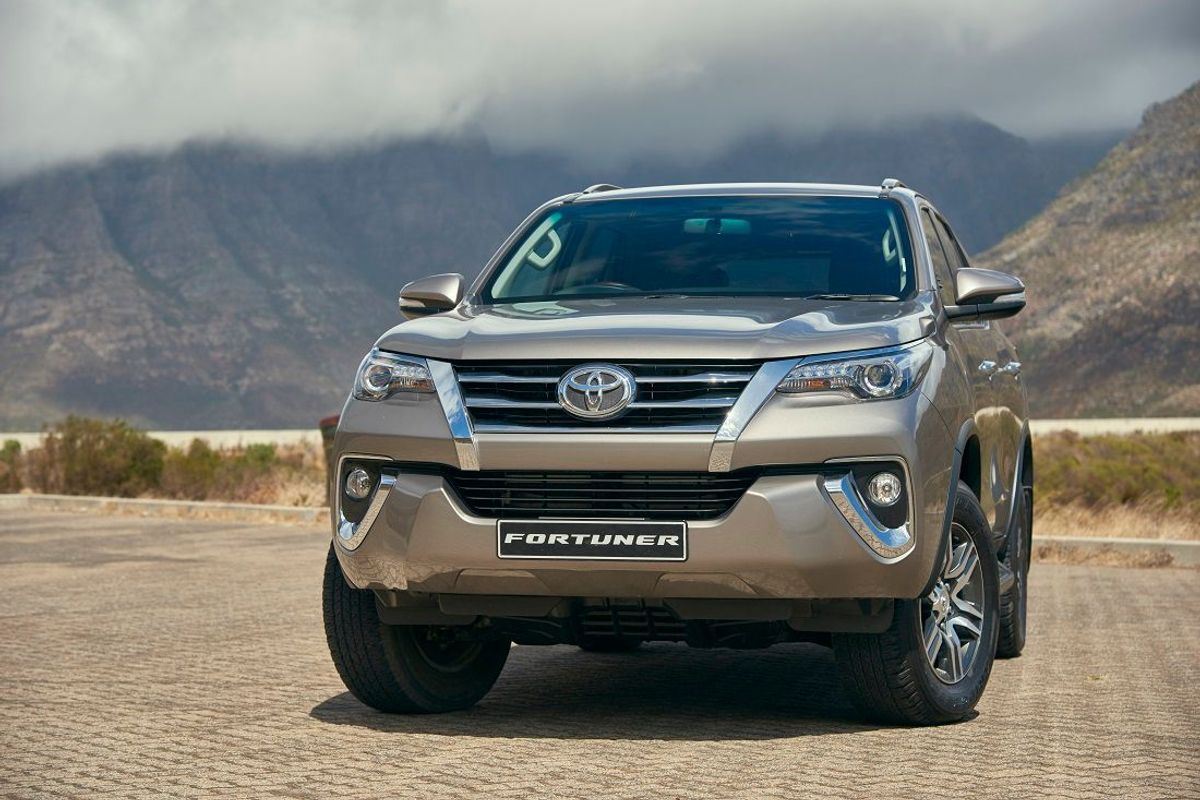
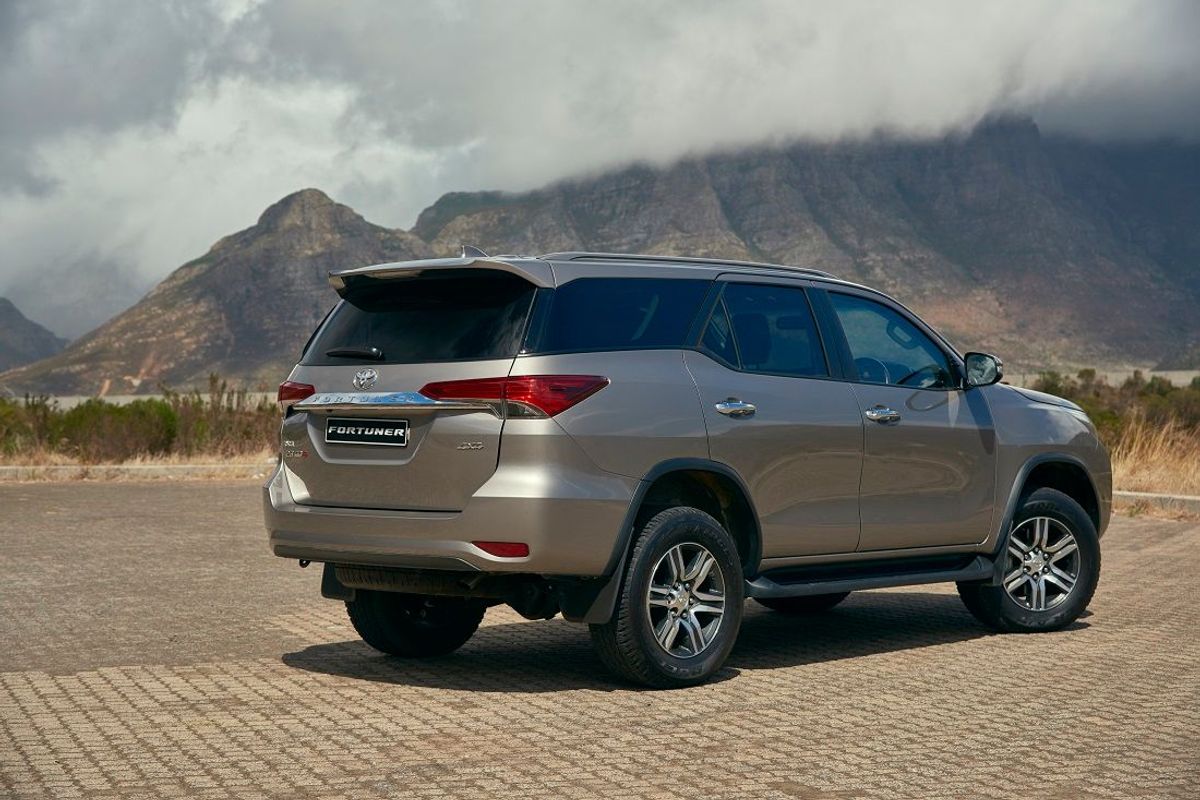
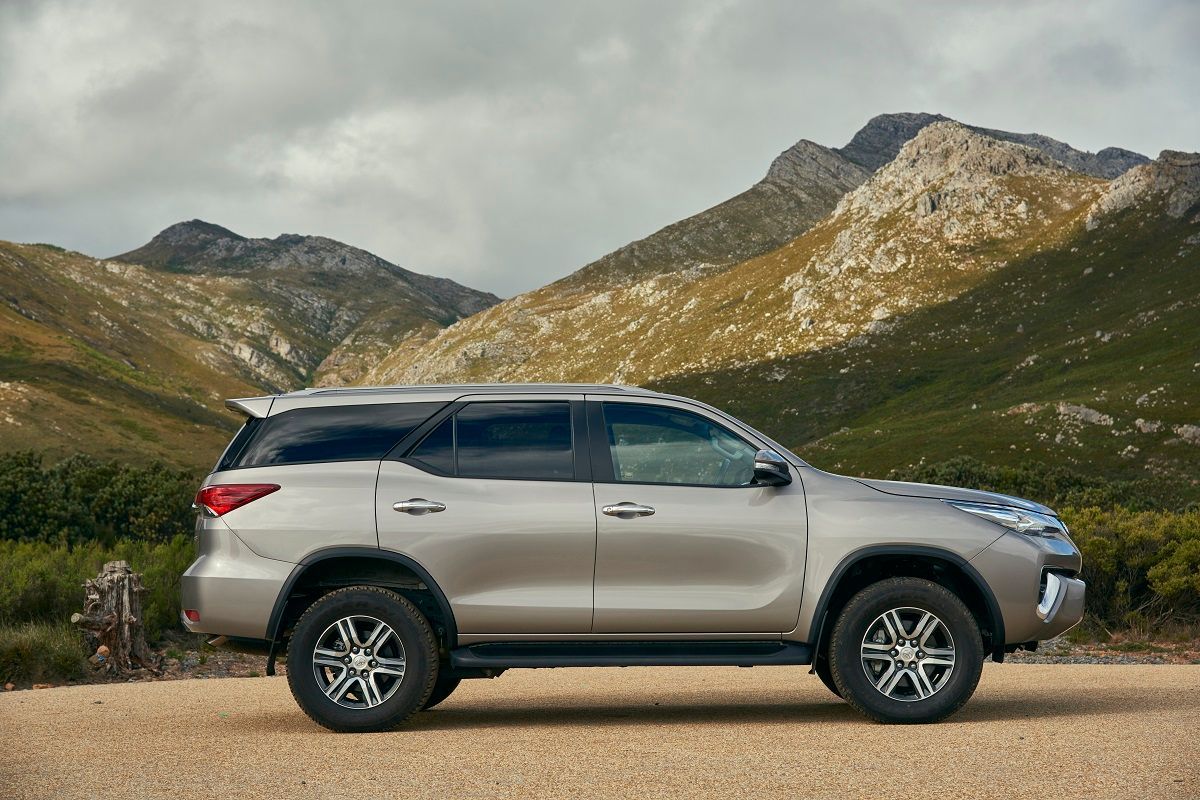
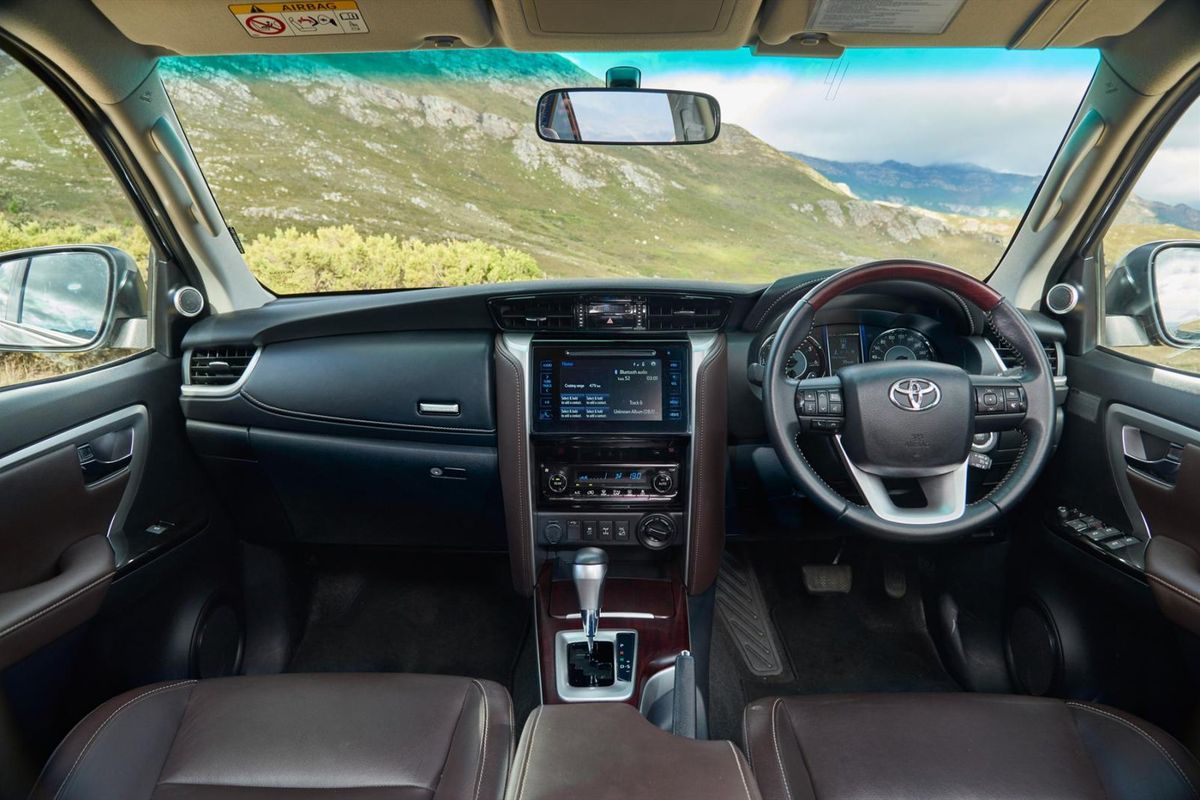
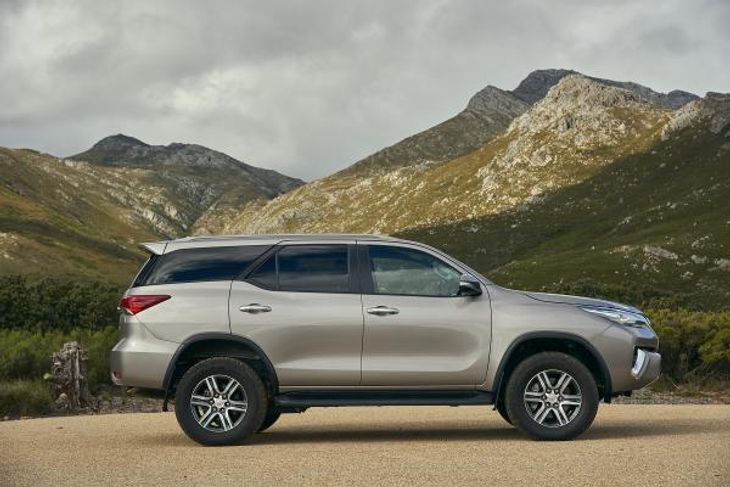
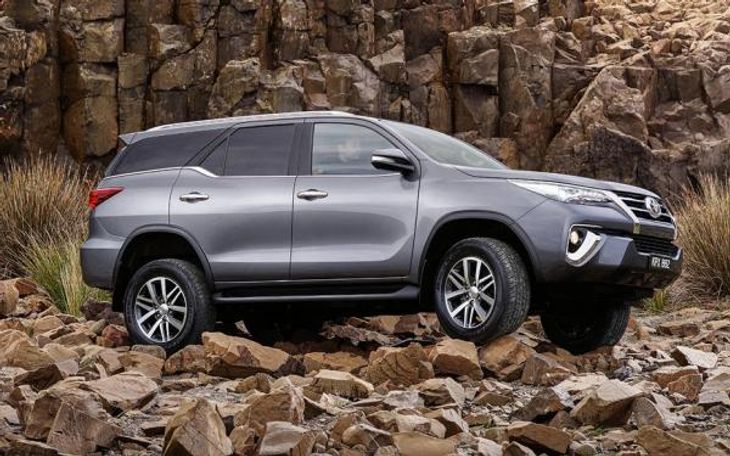
This new version of Toyota Fortuner is vastly improved in the looks department. Stylistically, the outgoing model made little attempt to hide the fact that it was derived from the Hilux, but this new version looks more like a premium SUV that would easily bear a Lexus badge. From front on, there are elements of the Toyota Prado, while the rear is not too dissimilar to that of the new-look RAV4. It really is a remarkable step up in terms of visual appeal. Even the key's been upgraded; it really looks upmarket in your hand.
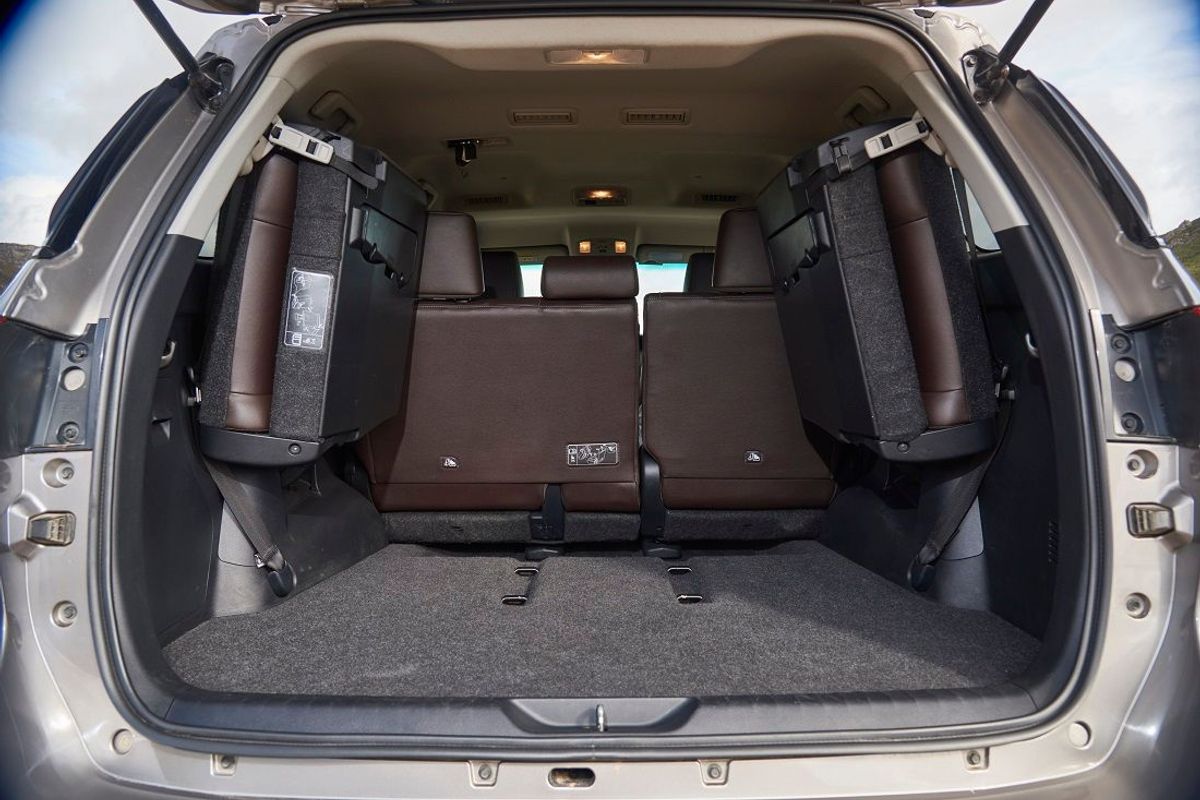
The new imposing looks are not just for show either, because the Fortuner's interior space has been increased significantly. Many seven-seat vehicles suffer from a lack of legroom for the third row of passengers, making the seats only suitable for small children. However, the new Toyota Fortuner benefits from increased legroom for the occupants of the 2nd and 3rd rows, and the rearmost seats are now able to fold away with just one action.
Have a walk around the new Toyota Fortuner by clicking the Play button
The new engines and gearboxes from the Toyota Hilux have been carried over and on the launch, we spent most of our time in the 2.8 GD6 and 2.4 GD6 turbodiesels, with a highway drive in the range-topping petrol 4.0-litre V6. While there has been much fanfare about the 2.8-litre – and, rightfully so, as it’s a great engine – the 2.4-litre motor proved a pleasant surprise. It produces 110kW and 400 Nm, which is more than adequate to lug the Fortuner around. The 2.8 has 130 kW and, depending on whether you want a manual or an automatic, 420 Nm and 450 Nm respectively. If you'd like a more frugal petrol motor than the V6, a 2.7-litre VVTi makes its debut.
How does it drive?
Our launch route took us through the Western Cape Overberg area and we had the chance to drive the Fortuner on tarred surfaces, back roads and at the offroading academy at Klipbokkop near Worcester. The Fortuner is certainly not lacking in grunt whatsoever and there’s no hesitation when overtaking acceleration is required.
Refinement is one of the key things that Toyota has focused on with the new Fortuner. The old Fortuner was not the quietest, nor softly-sprung, vehicle and in certain scenarios it felt agricultural, even primitive. There’s was no doubt about its abilities, but comfort levels were middling. This new model has fixed those aspects and the vehicle feels more mature and premium. Road noise and engine vibration has been ironed out, and we now have a vehicle that delivers that premium ride and feel.
The 2.4-litre in 4×2 application was a particular revelation. While it lacks the outright offroad ability of its all-wheel driven siblings, it does everything else so well and handled gravel/dirt roads with ease. The engine is not short of grunt whatsoever and the manual gearbox is slick in operation. While its specification is entry-level, it's not spartan by any means. We feel that this model is certainly the one to consider first if you’re not planning on doing some serious offroad driving. It would be great to see Toyota offer a 4×4 version of the 2.4, which would prove to be ultra-competitive both in terms of ability and value for money.
The 4×4 models are exceptionally capable thanks to a combination of great ground clearance (279 mm) as well as a plethora of electronic aids. The traditional Toyota 2nd gear lever (to activate low range) has been replaced with a rotary dial. You can shift from two-wheel drive to four-wheel drive mode while you’re driving, but low-range will require you to come to a complete stop. Give it a few seconds, the low-range light comes on the dashboard, then you’re ready to tackle an off-road route.
The offroad route at Klipbokkop Academy took us through thick sand as well as crossing over some dunes. While it would have been an ample test for basic all-wheel drive vehicles, the Fortuner breezed through effortlessly and it’ll take some serious terrain to really challenge it. You also get the feeling that, within reason, the only limitation to the Fortuner’s offroad ability is its driver's off-road prowess. A Fortuner in the right hands will be a superb offroad vehicle, and the 4×4 fanatics will revel in its go-anywhere attitude. The fact that it offers a combination of appreciable off-road ability, space for 7 occupants and a host of creature comforts is a massive boon.
The drive from the offroad area back home was completed in the flagship 4.0-litre V6. This is the top-of-the-range model and is only available in automatic. It’s powerful and the drive experience is commanding. There’s a bit of a roar from the big engine when you’re pressing on, but no shortage of outright grunt. However fuel consumption is a concern and at times, we were averaging 16.0 L/100km. If fuel consumption is a worry (which it should be considering the massive fuel increase on the cards for April 2016), then we’d recommend opting for one of the excellent GD6 diesel. The 2.8 is powerful yet refined, while the 2.4 punches well above its weight.
The Fortuner is not without a drawback, however. Thanks to the re-engineered suspension (front double wishbones and four-link coil springs at the rear), the newcomer's ride quality and cabin refinement have been substantially improved (much like that of the Toyota Hilux upon which it is based). Having said that there’s still a somewhat "wallowing" quality to the Fortuner's on-road behaviour. We expect that the Toyota's ride will even out when it's loaded up with cargo and a few passengers, but when unladen there’s a level of bounciness and noticeable body roll. Those characteristics are, unfortunately, endemic in bakkie-based SUVs, but will undoubtedly aid occupant comfort on rougher terrain.
An in-car video of the new Toyota Fortuner crossing tough offroad terrain
2016 will be a great year for comparisons in this segment. The new Ford Everest was launched towards the end of 2015 and a facelifted Chevrolet Trailblazer should arrive before the end of 2016.
In terms of pricing, if you compare rivalling Everest and Fortuner models, every Toyota derivative is about R45 000 cheaper than the equivalent Ford. When specification plus value for money counts for almost everything and your product can do everything and more than its rival for nearly R50 000 less, it’s devastating. There are rumours that the Everest range will soon expand to include lower-specced and smaller-engined derivatives, but for now, that's mere speculation.
Overall, the new Fortuner is very accomplished: it excels in terms of space, comfort and performance/efficiency. Moreover, the range is keenly-priced (for what you get) and 4×4 models offer excellent offroad ability. Unless you're determined to buy a petrol derivative, opt for one of the fine turbodiesel motors and you’ll enjoy one of the most capable and practical vehicles in its class. Expect the new Toyota Fortuner to be just as popular as the outgoing model, if not more so…
Toyota Fortuner (2016) prices in South Africa
Toyota has not only come to market with a wider model line-up than the new Ford Everest, but has also priced very aggressively. Yes… expect to see many of these Fortuners on our roads, very soon.
2.4 GD-6 Raised Body Manual: R436 400
2.4 GD-6 Raised Body Automatic: R453 400
2.7 VVT-i Raised Body Automatic: R429 400
2.8 GD-6 Raised Body Manual: R513 400
2.8 GD-6 4×4 Manual: R571 400
2.8 GD-6 Raised Body Automatic: R531 400
2.8 GD-6 4×4 Automatic: R589 400
4.0 V6 4×4 Automatic: R633 400
All retail prices include a three-year/100 000km warranty and five-year/90 000km service plan.
Countdown to Audi S4’s arrival in South Africa (Video)
Audi has already launched several A4 derivatives in SA. We've driven them at the launch and compared the 2.0TFSI with the much-loved BMW 320i, but when can we expect the 340i, Jaguar XE S and Mercedes-Benz C450 AMG-rivalling S4 model to arrive?
It is coming
We expected the S4 to make its entrance this year, but Audi says that we will have to wait until November or December 2016. While we await the S4, the BMW 340i and the Jaguar XE S will be most potent (non-M, RS or AMG) mid-range sports sedans. And, by the time the S4 goes on sale Mercedes-Benz will have introduced a real rival to this melee: the C450 AMG. This all sets up a mouthwatering battle with the same rivals as usual, but in a different part of the performance market.
The V6 under the bonnet of the new S4 still measures 3.0-Litres and is boosted with a turbo-, not supercharger. Power output has risen to 260 kW and 500 Nm of torque. The engine is lighter than its predecessor and comes with a new eight-speed tiptronic transmission. The gearbox is highly efficient and when not driven in a sporty manner, switches to freewheeling in order to save fuel. Claimed consumption is 7.4 L/100 km.
Key figures for the S4 are a claimed 0-100 kph sprint time of 4.7 seconds and a limited top speed of 250 kph. As with all Audi S models, the S4 is fitted with quattro all-wheel drive, but a trick differential allows power to be transferred to the rear or front.
In standard driving mode, there is a 60:40 split in torque directed to the rear and front axles. Depending on driving conditions, as much as 70% can be sent to the front or 85% to the rear. Needless to say the ability to split torque dynamically results in a more precise handling balance.
Audi has emphasised the S4's restrained design, noting its subtle grille outline and matte grey tones on the bumpers and other aesthetic paraphernalia. In fact, the aluminium mirrors seem to be the most overt styling feature on the car. If you’re looking for a proper "sleeper" then this could be the perfect car for you.
No Allroad for SA
Audi SA also mentioned that the A4 Allroad will not make its way to SA. Its predecessor didn't sell particularly well and a weak exchange rate makes the model unviable.
The 2016 Budget speech killed off hopes that office-bearing politicians may have had of procuring first class sedans and premium SUVs at the government's expense. We suggest five vehicles that will comply with the ministerial handbook and provide respectable transport
According to Finance Minister Pravin Gordhan the new car allowance is subject to “new guidelines to limit the value of vehicle purchases for political office bearers”. The furore over ministerial vehicle purchases refuses to subside; the issue came to a head in 2009 when some ministers were accused of wasteful expenditure on vehicles costing in excess of R1-million.
As it stands now, the ministerial handbook dictates vehicle purchases must not exceed R750 000, which rules out many vehicles commonly associated with the "blue-light brigade". This has got us thinking. Which vehicles would be most appropriate for our government officials, yet tick the affordability boxes both in terms of outright purchases and running costs.
Lexus ES
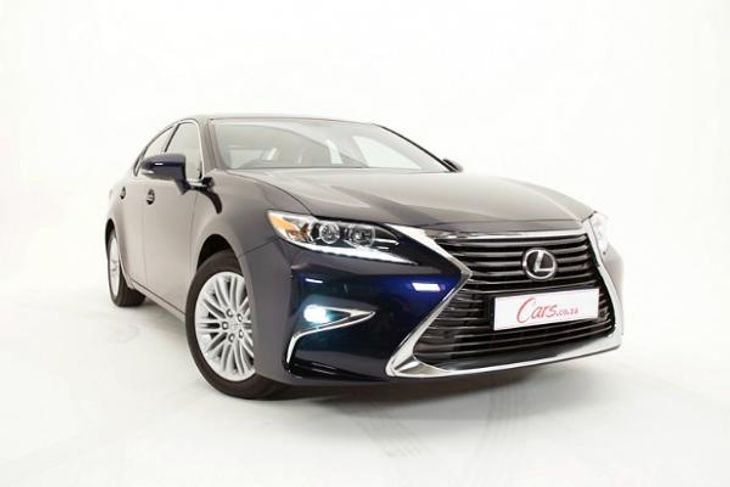
For those wanting comfort, a multitude of features and generous rear legroom, the Lexus ES is hard to fault. Not only is well built, it’s also reasonably cheap to run. The engines offer reasonable performance and return respectable fuel consumption. The boot’s hugely spacious, plus the ES is generic in the styling department, so you can arrive at events discreetly.
The new Toyota Fortuner has just been launched and it's a rugged, capable vehicle that offers affordable (by large SUV standards) comfort and luxury. Expect some powerful engines and it’ll seat seven passengers in comfort. With its offroad ability, crossing any terrain will be easy and this vehicle is perfect for those who work in the remote regions of South Africa.
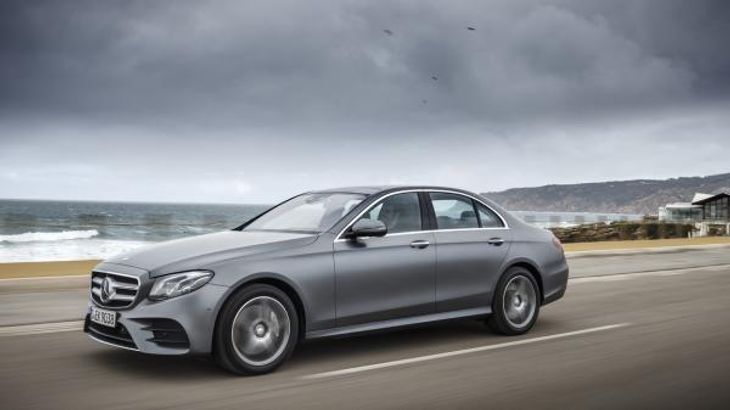
The new Mercedes-Benz E-Class was launched internationally and it’s due in SA soon. While it’s significantly cheaper than the popular flagship Mercedes-Benz S-Class, it incorporates several new technological features and boasts a level of refinement that many would expect from a first class car. The E200 costs R709 357; which even leaves room for extra spec!
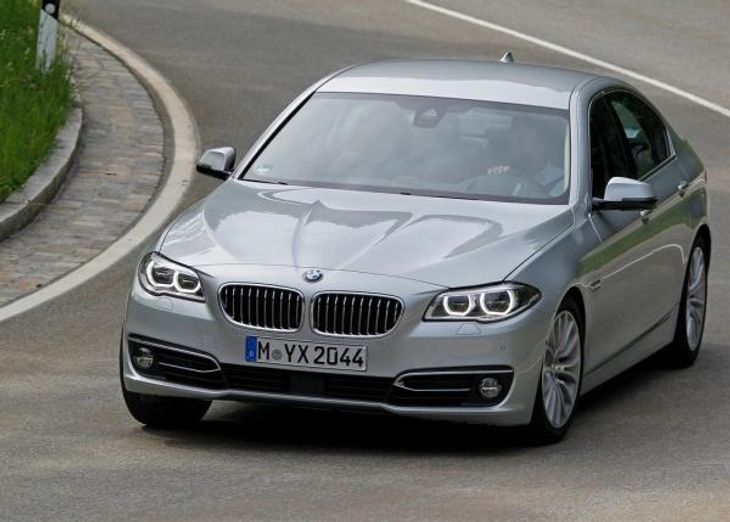
Politicians who were previously partial to the 7 Series will be forced to scale down because as the latest model exceeds the R750 000 limit. The good news is that the BMW 520i and 520d falls within this price limit and the better news is that it’s a really good drive too. For those who drive themselves, they’ll be rewarded with a sporty and luxurious driving experience…
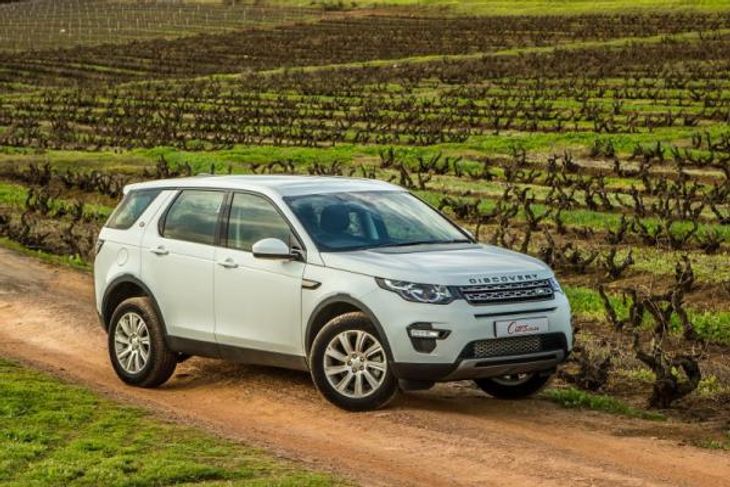
If the Toyota Fortuner is deemed too uncomfortable and not premium enough for our ministers’ needs, then we can recommend the Land Rover Discovery Sport. It won Best Leisure vehicle in the Cars Awards and this Discovery Sport SD4 SE version is R100 000 within budget. It’ll go offroad comfortably and even boasts seven-seat practicality.
Any views or opinions expressed in this article are solely those of the author and do not represent those of Cars.co.za or its editorial content team.
Toyota Fortuner (2016) Specs & Price
The wait is finally over and the Toyota Fortuner is here. We have specifications and pricing for the new-generation version of this popular SUV.
Since 2006 the Toyota Fortuner has been an exceptionally popular vehicle for the offroad and outdoor enthusiasts. Despite its basic underpinnings from a Toyota Hilux, the Fortuner has proved itself time and time again, and it remained a strong seller right to the end of its long product life. The new Toyota Fortuner was announced internationally last year and immediately one could see that it represented a substantial step up from the current model. “The new Fortuner has a long, wider stance versus the outgoing model, and its capabilities to adapt into every environment like a chameleon have been reinforced,” says Calvyn Hamman, sales and marketing Senior Vice president of Toyota South Africa Motors.
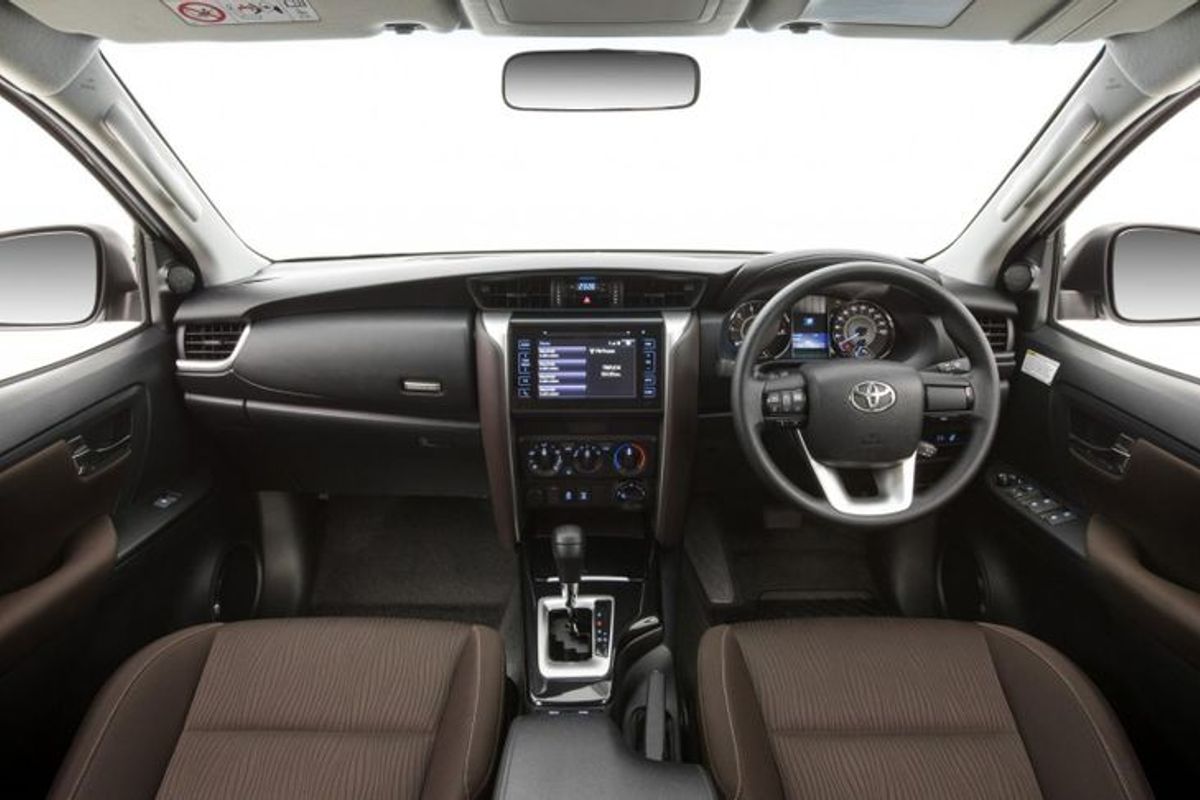
The new Toyota Fortuner shares many components with the recently launched Hilux. These include headline items like new diesel engines, new gearboxes and offroad technology. Much like the Hilux, there's also a big focus on ride comfort, reduced noise/vibration/harshness and an effort to give the vehicle a premium look and feel inside. The Toyota Fortuner is a seven-seat vehicle and there's considerable improvements in terms of space and practicality for all passengers. Premium soft-touch materials are used around the dashboard, windscreen pillars and door trims. The second-row seating features a 60/40 split and features a slide function as well as reclining backrests. Third-row seating is split in half 50/50 and features a recline function. Both of the rows can be stowed with just one touch, which gives the Fortuner more luggage space.
The standard specification in the Toyota Fortuner is substantial. Audio systems with four to six speakers, an auxiliary/USB port, AM/FM radio and a CD player all come standard. The radio on the 2.8 GD and 4.0 V6 come with DAB+ digital radio and a 7” screen with DVD compatibility, as well as a reversing camera display. The flagship 4.0 V6 comes with satellite navigation.There's also Bluetooth connectivity, steering-wheel audio and telephone controls, as well as power door locks, windows and mirrors. Air conditioning is also standard and there are ventilation controls for the second-row passengers. The glovebox is air-cooled, meaning you can store two 500ml bottles. For those who require additional power, all models feature three 12-volt accessory sockets.
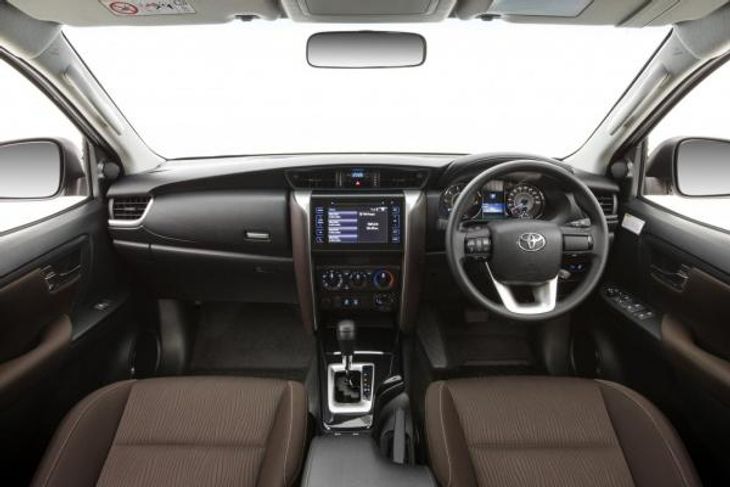
The facia borrows elements from the new Hilux, but the overall design is unique to this model.
Engine and economy
Powering the new Toyota Fortuner are the latest diesel engines as well as the petrol units which we're familiar with. There's the 2.4 and 2.8 GD motors on the diesel side, while the petrol line-up includes the familiar 2.7 VVT-i and a 4.0 V6 motor. The 2.4 has 110kW and 400Nm of torque and the 2.8 GD offers up 130kW and 420Nm when paired with the manual transmission. The automatic derivative has 450Nm of torque. Fuel consumption is rated at 7L/100km for the 2.4 manual, while its automatic sibling is rated at 7.9L/100km. The 2.8 litre GD engine returns between 7.5 to 8.5L/100km. Towing capacity is rated at 2.5 tons for the 2.4 GD and 2.7 VVT-i models and at 3 tons for the 2.8 GD and 4.0 V6. The two petrol engines include a revised version of the familiar 2.7 litre VVT-i with 122kW and 245Nm which debuts in the Fortuner, while the 4.0 V6 pushes out 175kW and 376Nm.
All vehicles are available with the latest six-speed manual and automatic gearboxes from Toyota. The manual gearbox offers intelligent manual transmission for smoother gearchanges as it matches the engine revolutions.
Safety
The Toyota Fortuner should be safe too and includes a number of features such as Vehicle Stability Control (VSC), Active Traction Control (ATC), Trailer Sway Control (TSC), Hill-start Assist Control (HAC) and Drive Mode Select. Downhill Assist Control (DAC) is available on only the 4×4 models. There are big 338mm brakes at the front, with 312mm anchors on stopping duty at the rear. Under heavy braking, the hazard lamps will flash to provide an emergency signal to other road users. There are a large number of airbags too, depending on the model.
Handsome new looks are far removed from its predecessor.
Toyota Fortuner Model Features
Entry grade (2.4 GD-6 and 2.7 VVT-i)
Push start
Tilt and telescopic steering column
Cruise control
Speed sensing auto door lock
Front and knee airbags
Illuminated entry
Chilled glovebox
Front fog lamps
Rear spoiler
Roof rails
Side steps
17” alloys
Full alloy spare wheel
Standard grade (2.8 GD-6)
Leather upholstery
Front, knee, curtain and side airbags
LED headlamps
Follow-me-home auto lights
Auto air conditioner
High grade (4.0 V6)
All features of the standard grade
Power back door
Navigation system
Toyota Fortuner (2016) Price in South Africa
Toyota has not only come to market with a wider model line-up than the new Ford Everest, but has also priced very aggressively. Yes… expect to see many of these Fortuners on our roads, very soon.
2.4 GD-6 Raised Body Manual: R436 400
2.4 GD-6 Raised Body Automatic: R453 400
2.7 VVT-i Raised Body Automatic: R429 400
2.8 GD-6 Raised Body Manual: R513 400
2.8 GD-6 4×4 Manual: R571 400
2.8 GD-6 Raised Body Automatic: R531 400
2.8 GD-6 4×4 Automatic: R589 400
4.0 V6 4×4 Automatic: R633 400
All retail prices include a three-year/100 000km warranty and five-year/90 000km service plan.
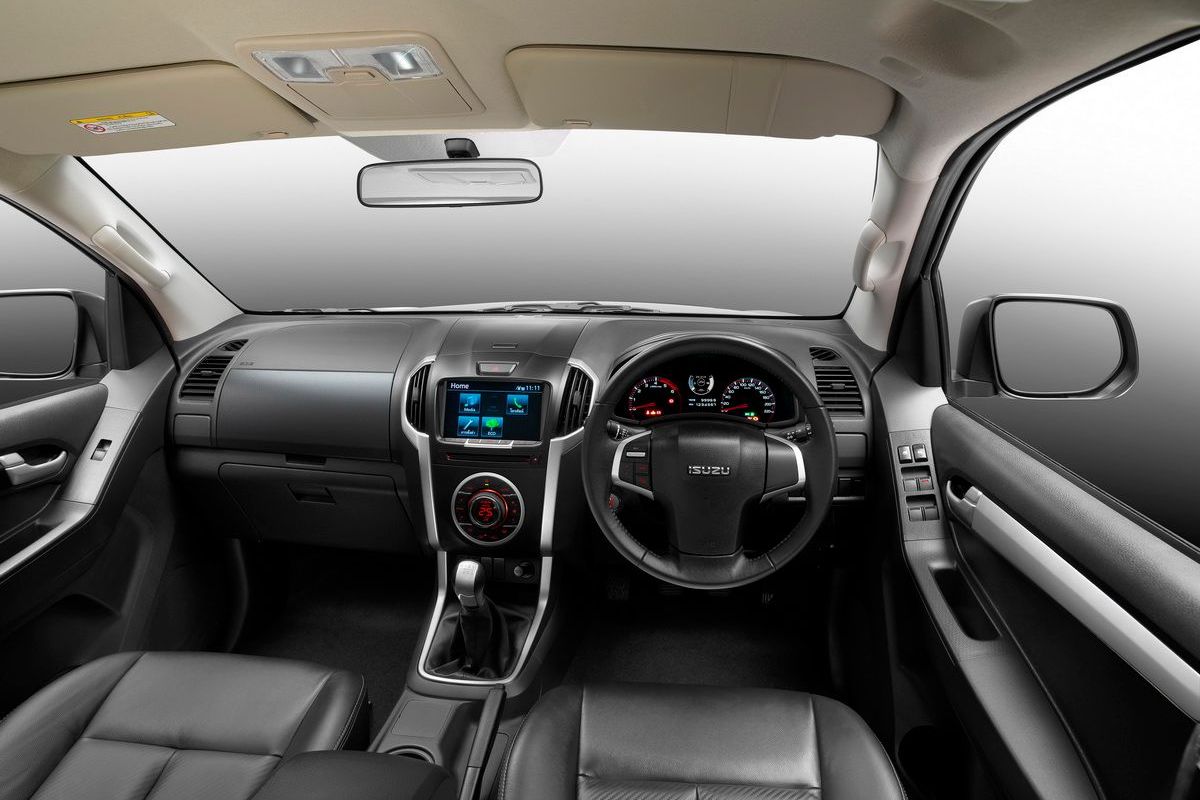
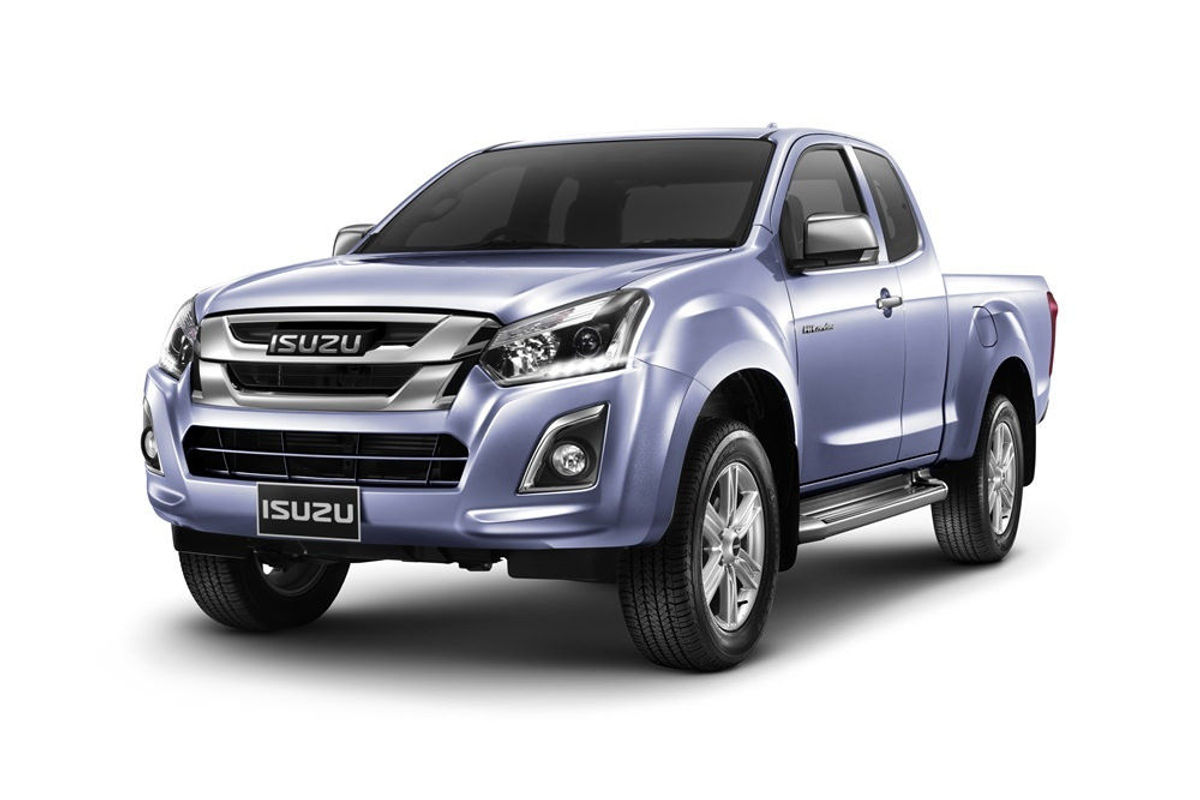
2016 is major year for the South African double-cab market thanks to the arrival of the new Hilux. In order to keep up, other bakkie manufacturers will embolden their offerings. Isuzu, for example, will launch its facelifted KB model in response to the Toyota and refreshed Ford Ranger
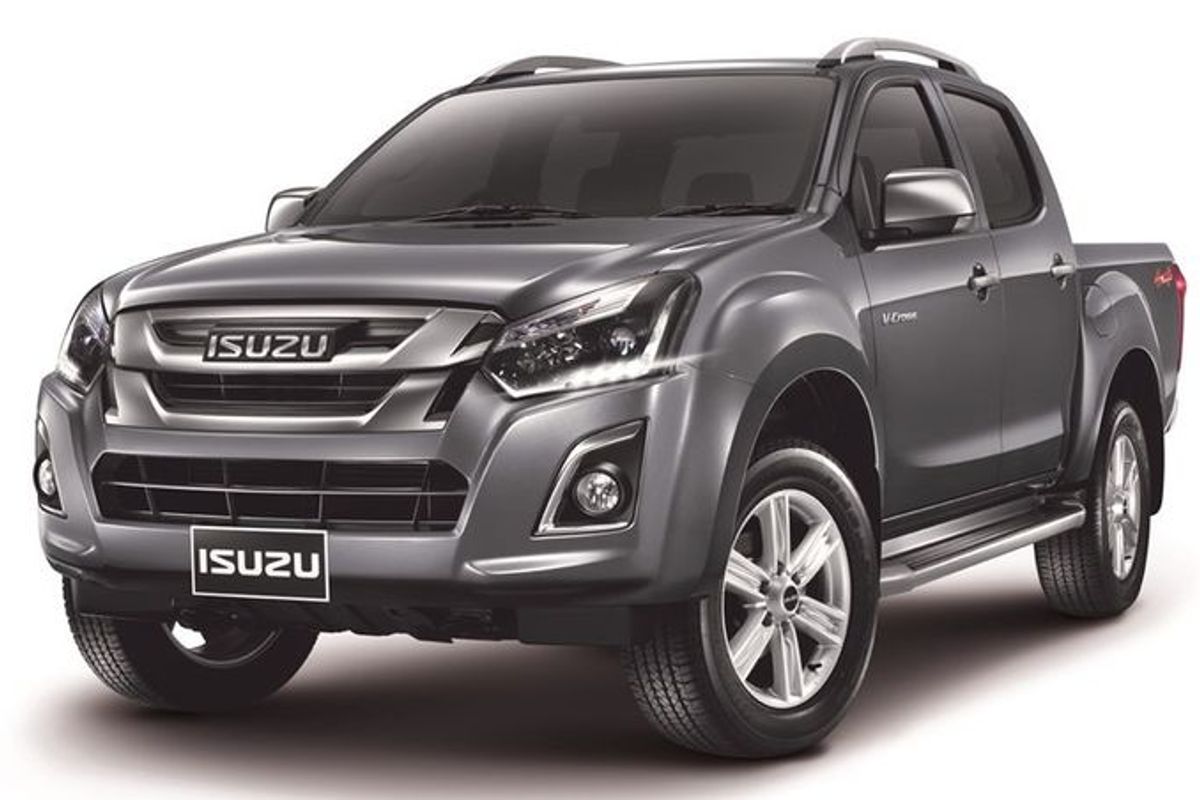
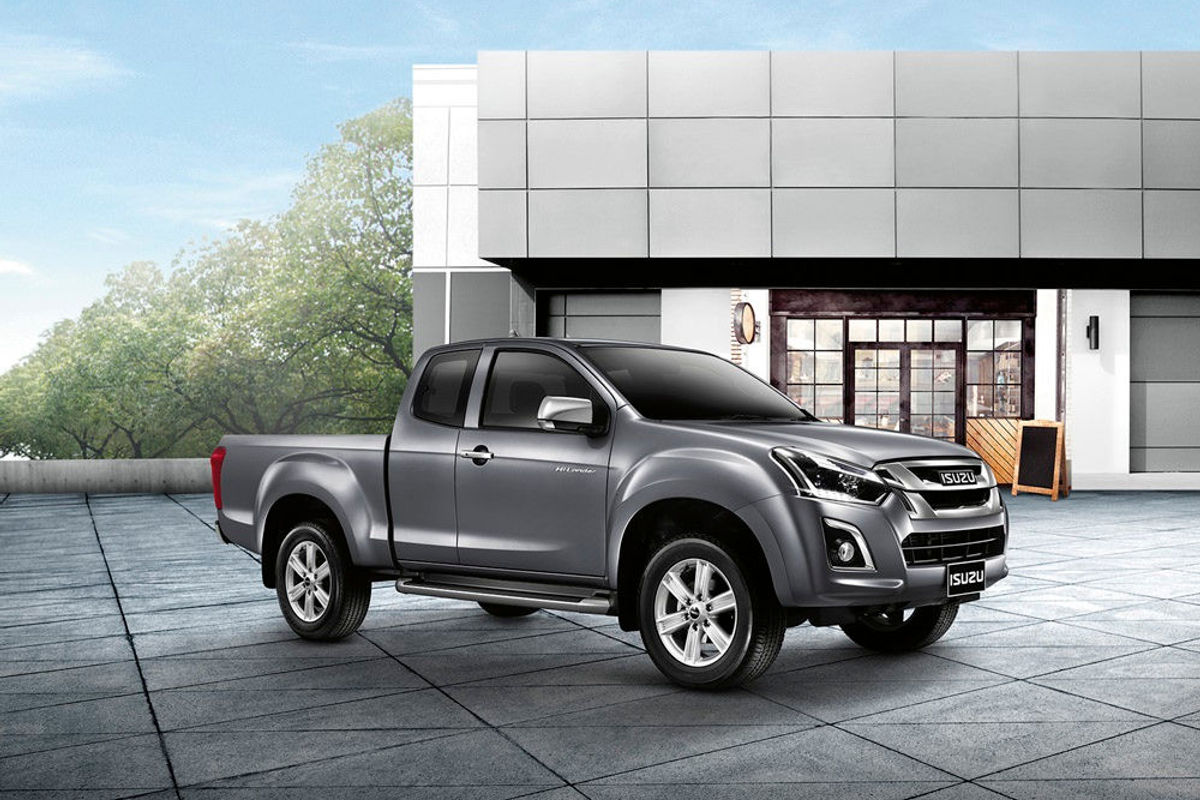
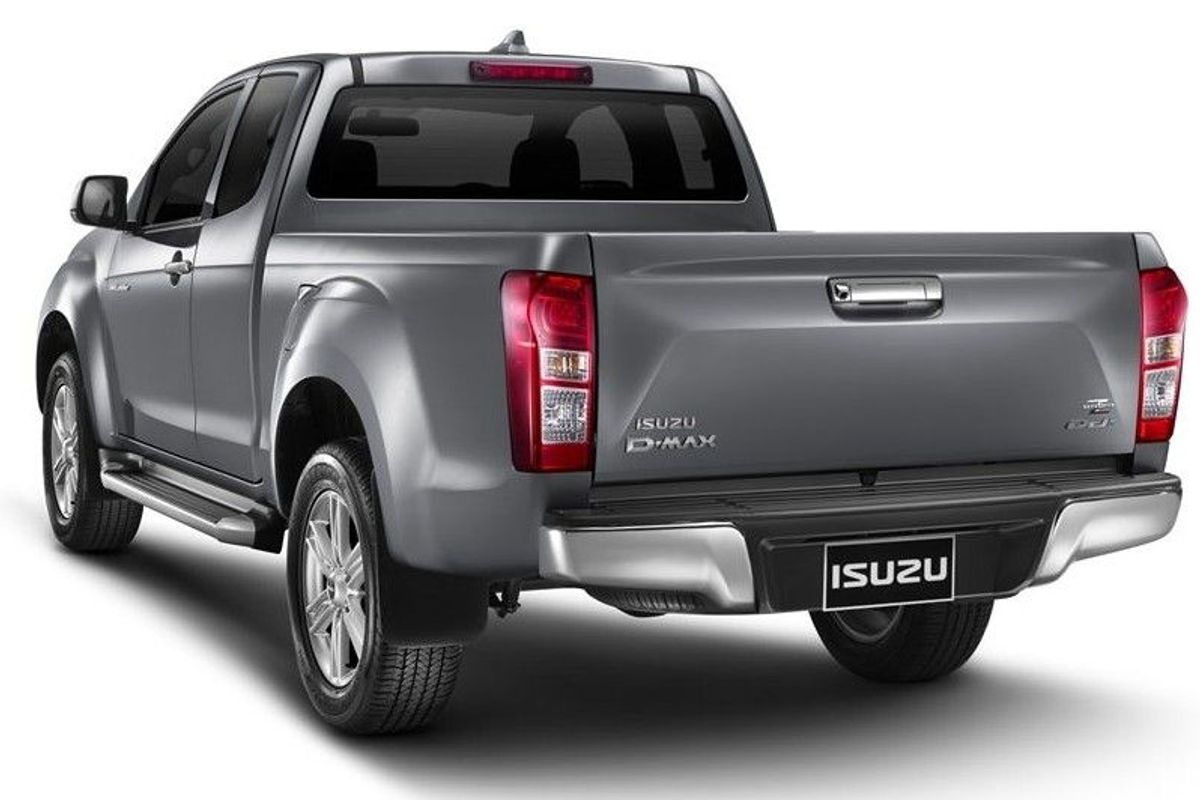
The changes to the updated Isuzu will be largely cosmetic and include specifications upgrades. The big news late last year was the announcement of an all-new 1.9 turbodiesel engine, but a source at General Motors South Africa said this is not destined for our market. There is a rumour that an updated, more efficient version of the KDDI Blue Power 4JJ1-TCX 3.0-litre engine and a six-speed automatic transmission might be introduced to the local line-up, but, for now, it is only speculation…
The exterior has not changed dramatically, but the addition of a more distinctive grille treatment and redesigned headlights (with integrated LED elements) will make the KB stand out a bit more. The cabin is where the real changes have occured… We'll see a new version of the Isuzu Connect touchscreen infotainment system as well an all-new TFT display located between the speedometer and rev counter on the instrumentation cluster. Also new are roof-mounted speakers and a fuel economy driving app that links with your smartphone.
Availabilty of Isuzu KB facelift in South Africa
The Isuzu KB update is scheduled for the end of the third quarter or beginning of the fourth quarter of 2016. It's safe to assume that around October 2016, we'll see a new-look Isuzu KB bakkie and this will coincide with the arrival of the updated Chevrolet Trailblazer.
The battle for supremacy in the premium SUV segment is as heated as ever with newcomers from Mercedes-Benz, Volvo and Audi slugging it out against the superb BMW X5 and Porsche Cayenne. Can Lexus’ dramatic fourth-generation RX make a bigger dent in the market than its forebears?
We like: Standard features, build quality, rear legroom
We don’t like: Real-world performance/economy, finicky infotainment controls, high boot floor
Alternatives:
For better economy: Consider the BMW X5 xDrive30d, Audi Q7 3.0 TDI and Mercedes-Benz GLE250d
For more space: The new Volvo XC90 D5 Inscription has seven seats as standard and more loading space, making it the ideal family/luxury SUV. The Audi Q7 3.0TDI is optionally available with seven seats, and is a spacious family car even in its standard five-seat format. Read a comparison between these two here.
For better value: It’s hard to beat the Lexus RX on overall value, but we think the biggest danger actually comes from in-house, from the RX350, which offers outstanding specification and a price that’s R200 000 lighter on the wallet.
Lexus RX goes for bold
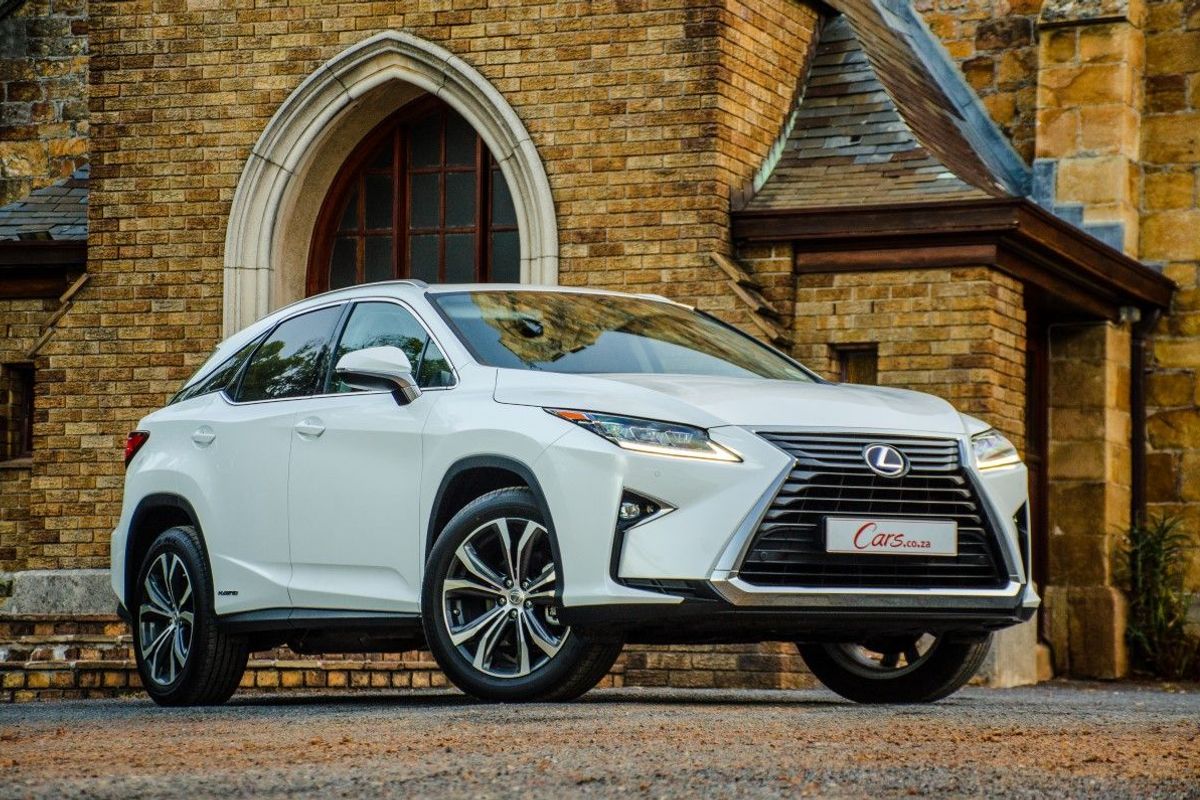
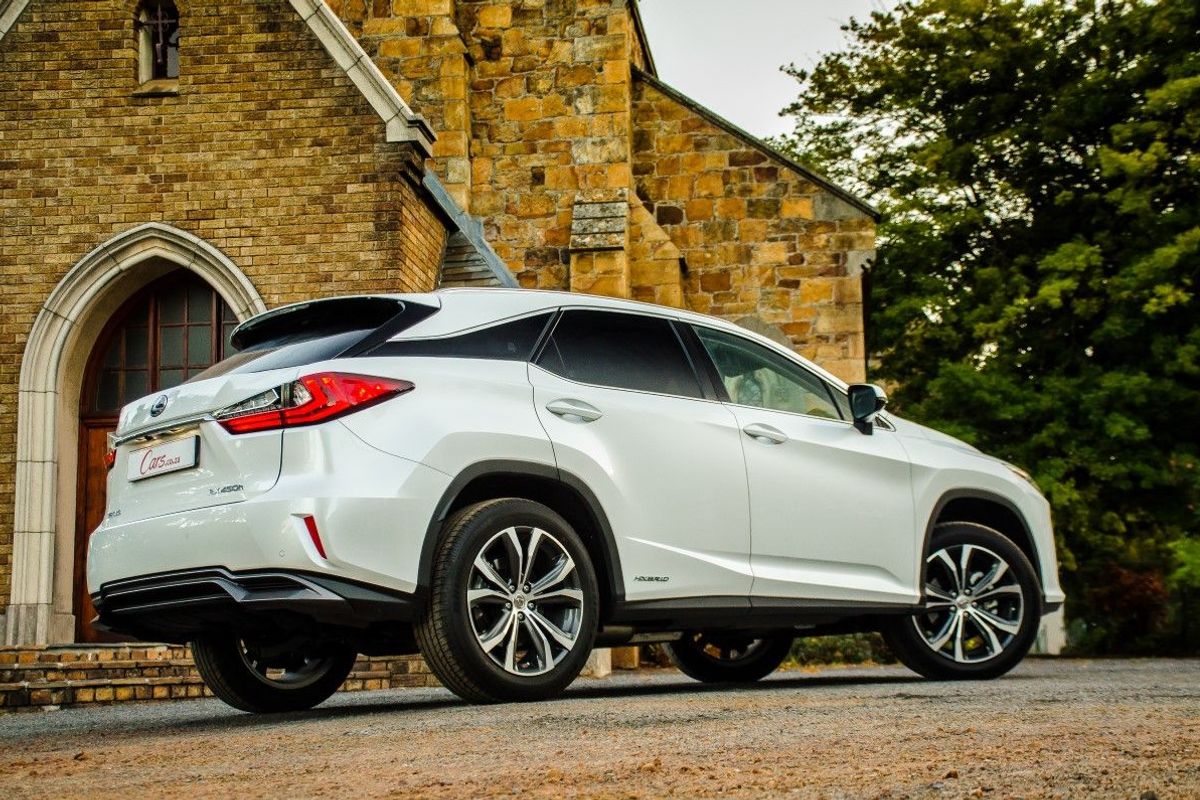
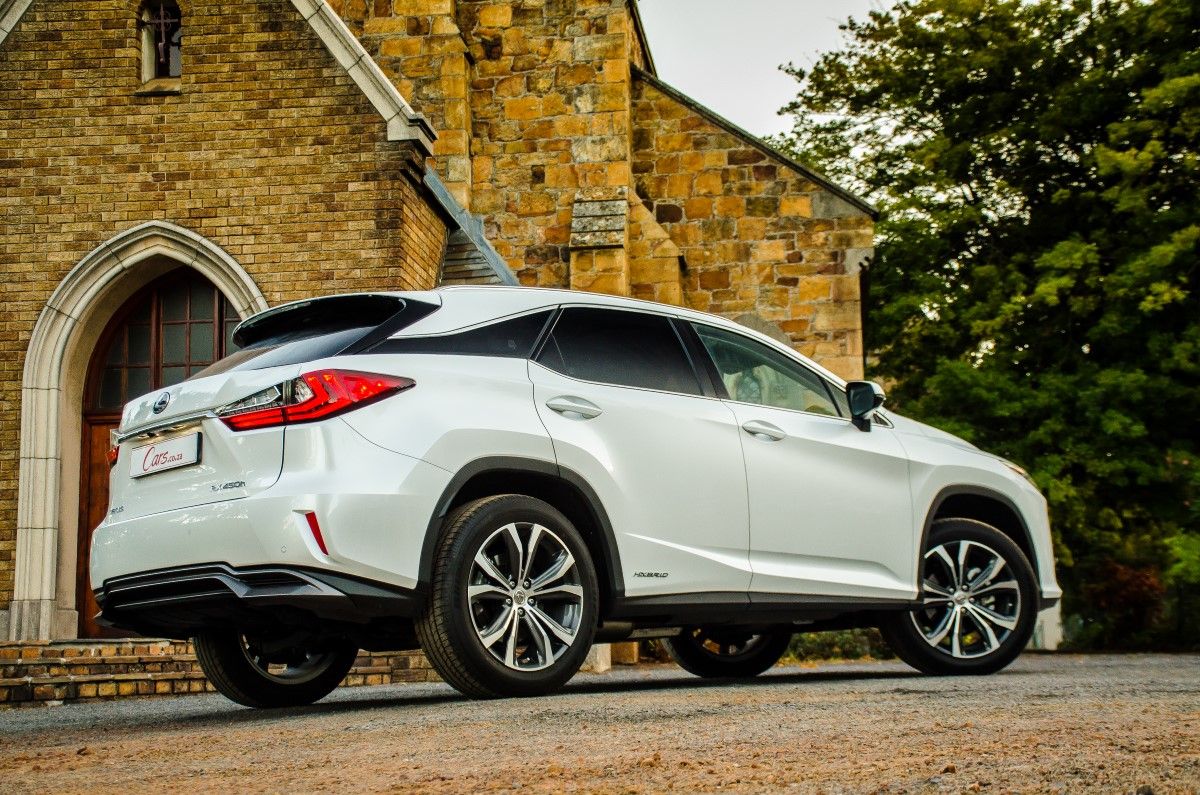
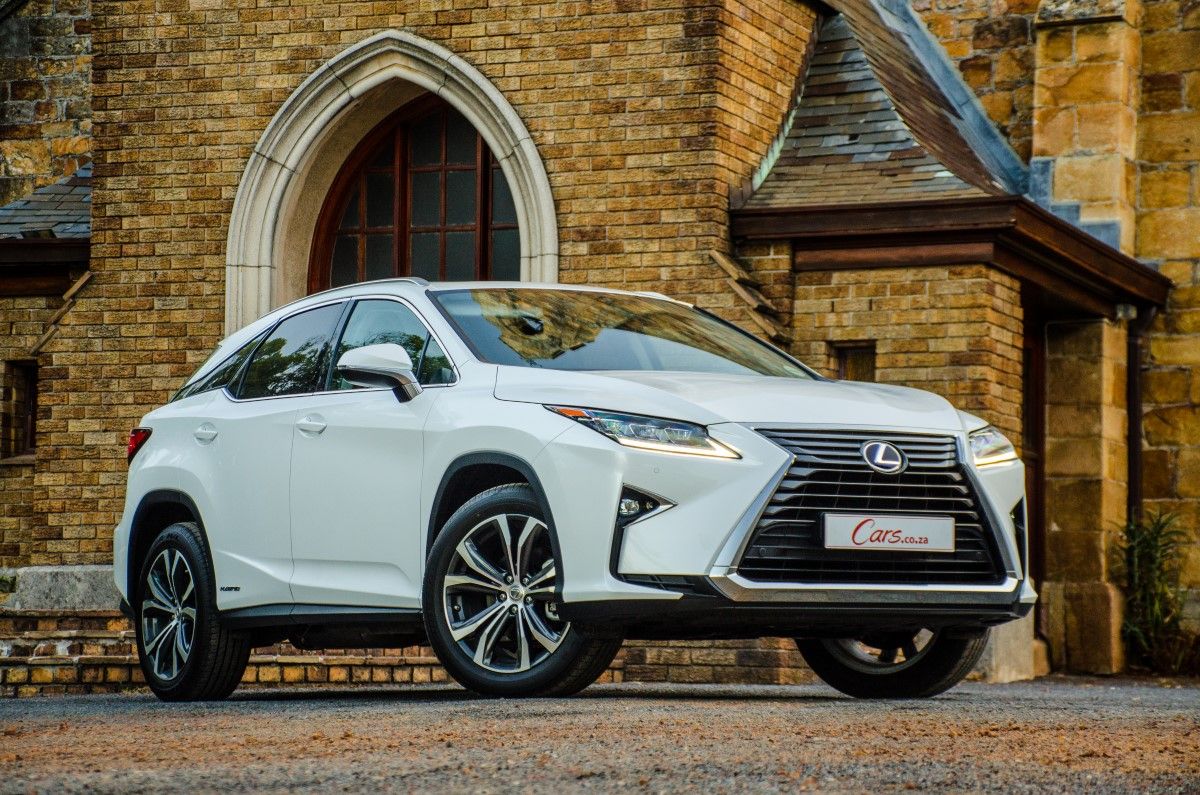
Note striking 20-inch wheels and partly blacked-out C-pillar.
Previous generations of the Lexus RX may have been sales successes in other markets, most notably the USA, but in South Africa and elsewhere the three earlier incarnations haven’t been able to ruffle the German trio’s feathers. It has always appealed to moneyed, intelligent folks less obsessed with the “right badge” and more interested in ultimate quality and value. Consequently, those wanting their luxury SUVs to make a flashy statement have traditionally given the RX a wide berth.
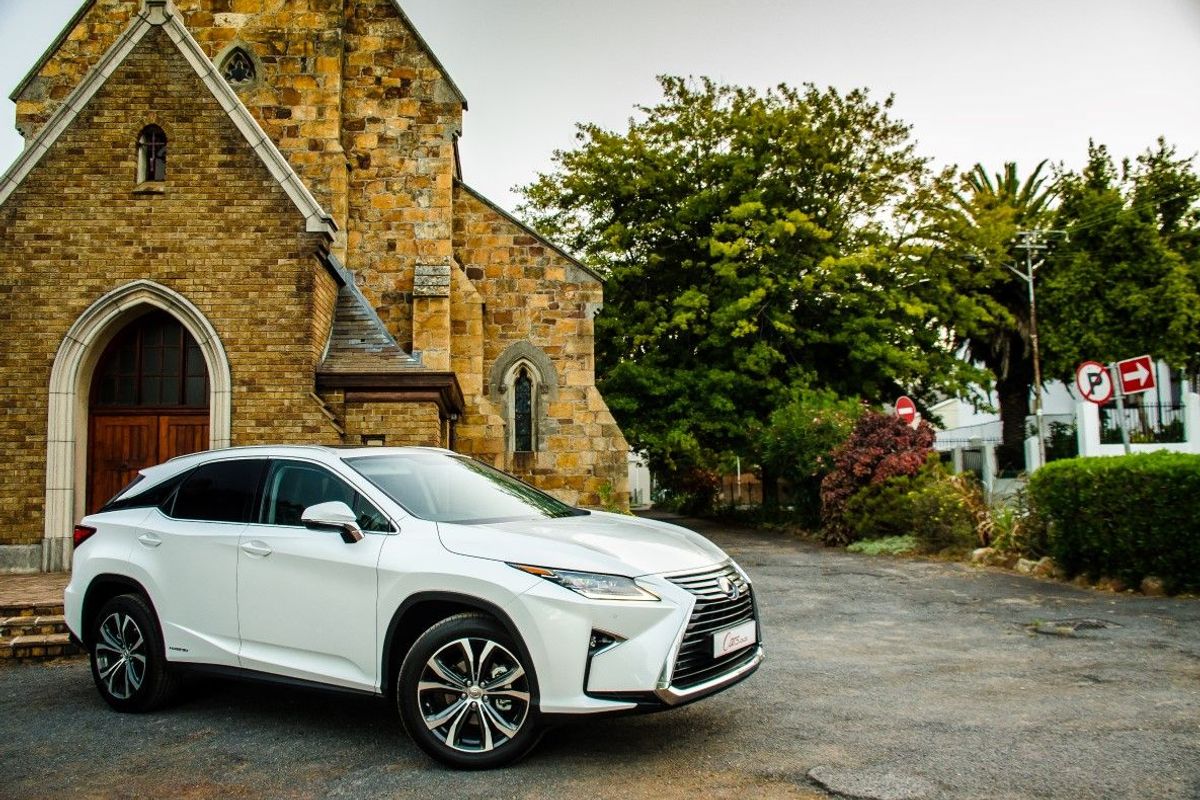
The new, fourth-generation Lexus RX constitutes a markedly different approach. Its angular, bold design is distinctive and the gaping “spindle” grille definitely lends the SUV added overtaking presence. Striking 20-inch wheels and a blacked out C-pillar are other design highlights that illustrate the new RX is no longer willing to hide in the shadows.
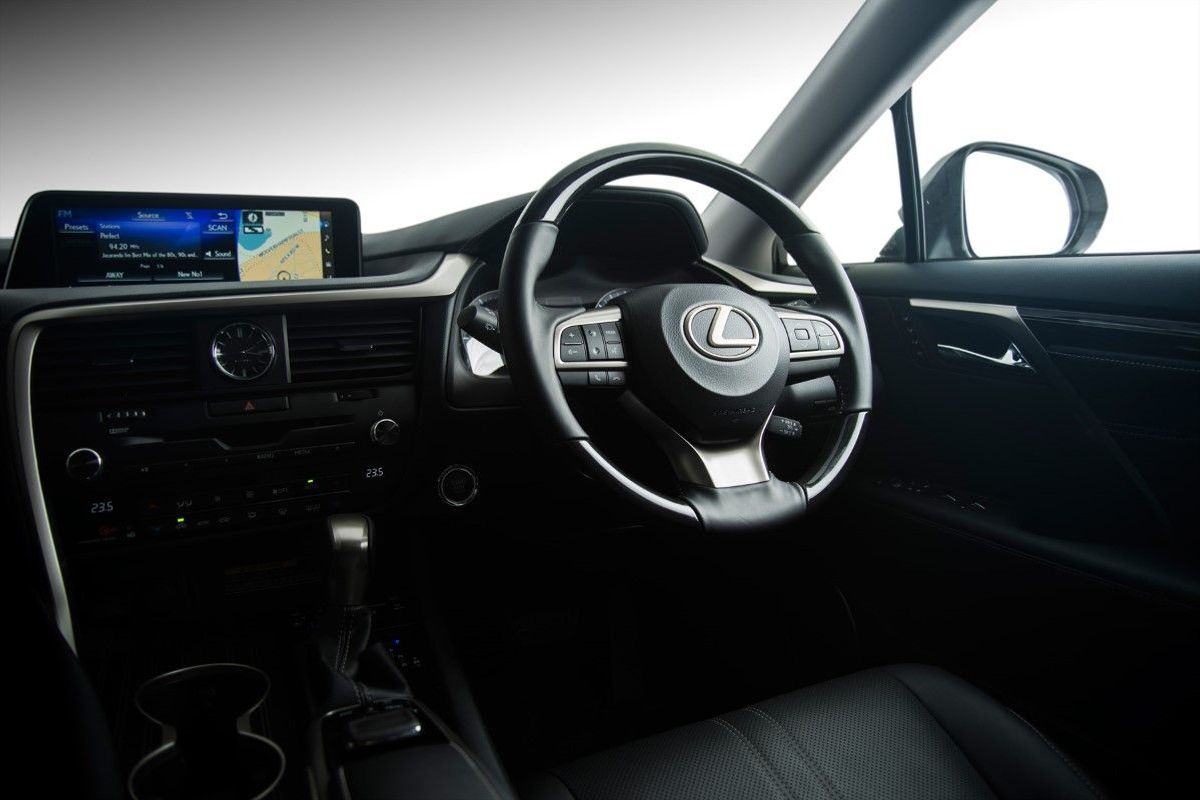
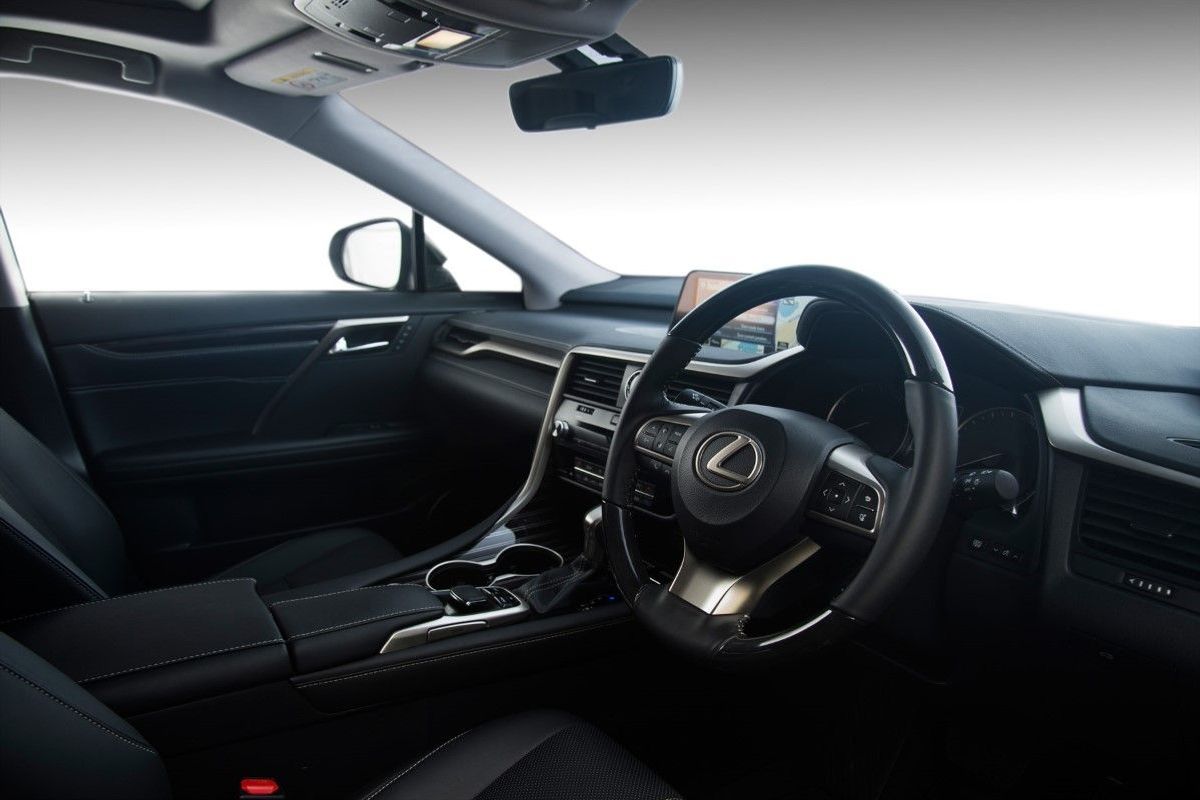
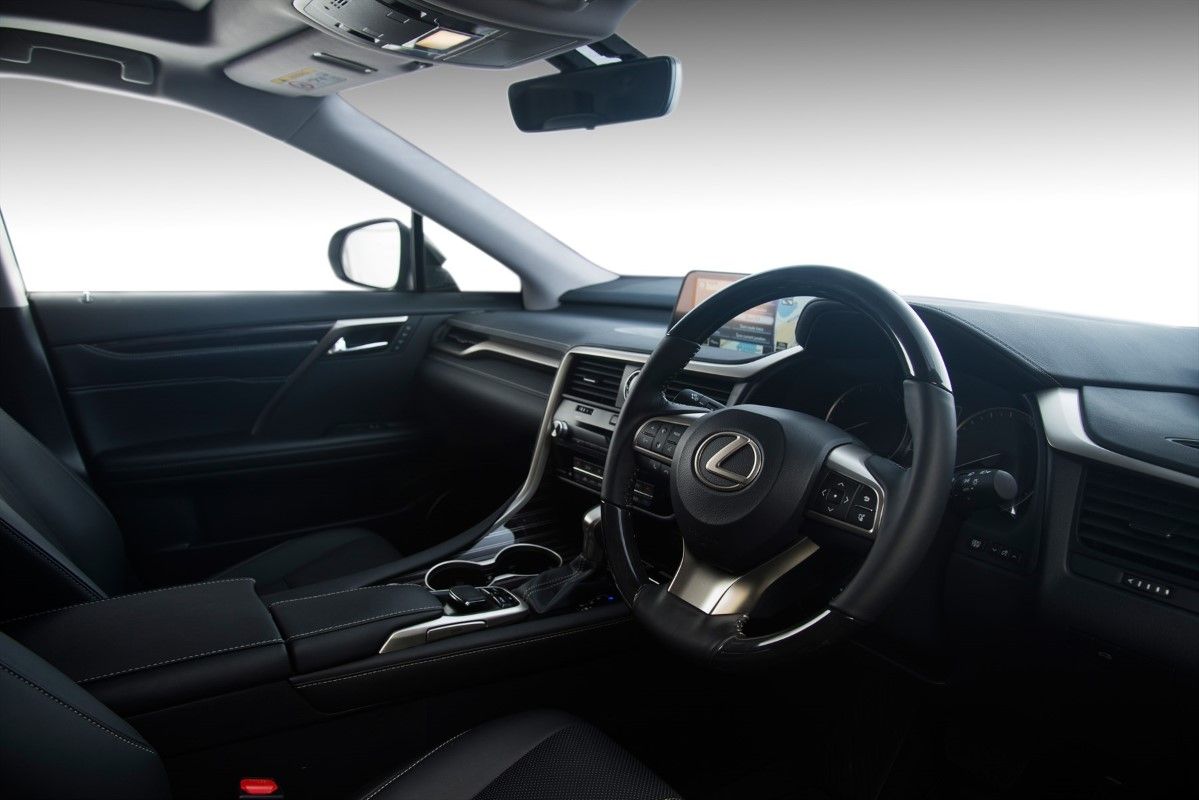
Inside, too, Lexus has thrown the previous company rulebook out the window and come up with a visually arresting, cockpit-like fascia design that is festooned with high-tech features that make people ooh and aah when they open the doors for the first time. So… the big news here is that you still get the virtues that made previous RX versions appealing (quality, features, comfort, refinement), but with huge dollops of “wow”.
Sounds appealing, right?
Who should consider the Lexus RX450h?
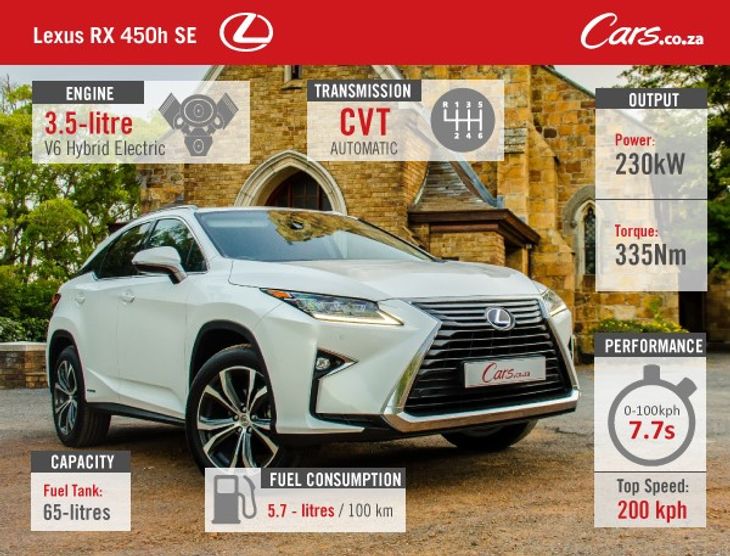
The Lexus RX450h SE is the flagship of the two-model line-up and is powered by a petrol-electric hybrid drivetrain. On paper its emissions and claimed fuel economy figures look very impressive, comparable to the turbodiesel engines offered by Volvo and the German luxury brands.
In some overseas countries, there is great value in these figures as they are rewarded by lower taxation, rebates etc. In South Africa, however, the emissions tax is added to the overall price of the vehicle, so there’s comparatively little benefit. Furthermore, the local target buyer for the RX450h needs to be aware that there’s little financial benefit in opting for a hybrid, especially when the real-world fuel economy is somewhat higher than the quoted figure, as is usually the case with these vehicles.
So why, then, consider the RX450h? It comes down to a couple of things. Firstly, it is hard to beat the Lexus for standard equipment. You’ll have to spend hundreds of thousands of Rands more on one of the German vehicles to match the RX’s luxury and features. Secondly, if you’re looking at a hybrid Lexus in the first place, you’ve arguably made the decision that you want to stand out from the herd of German SUVs. And with its sharp new design, the new Lexus RX certainly does that!
Interior build quality is top notch and there's no shortage of features. (RX350 fascia pictured)
The RX450h SE is properly stocked with features, most of which will cost a lot more if specified on rival (German) brands’ products. For example, both front seats are multi-way electrically adjustable, cooled, heated and offer memory functions. In fact, the RX will even remember your seating position and move the (heated) steering wheel and seat out of the way to may ingress/egress easier.
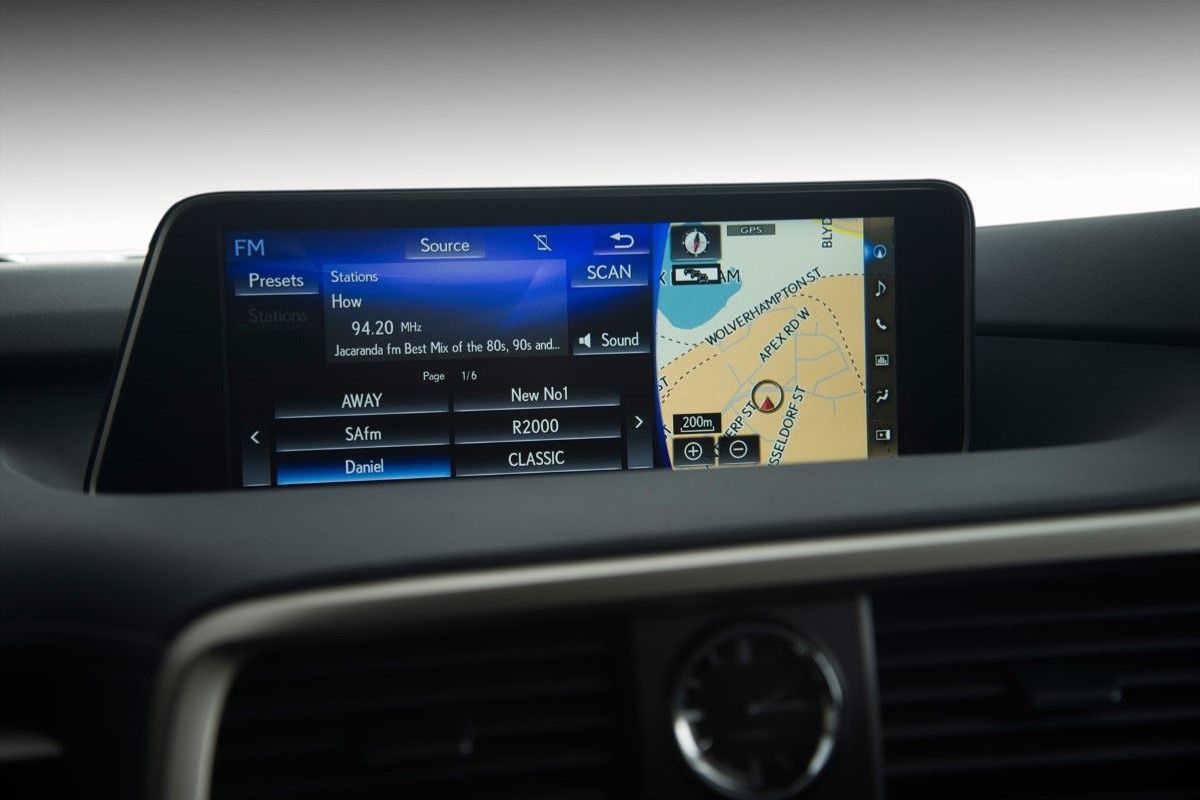
You also get one of the biggest infotainment screens on the market as standard, a head-up display (HUD) and there’s a nifty pad in front of the transmission tunnel to recharge your mobile phone without the need for cables. Needless to say – this is a Lexus after all – the build quality is superb and the fittings are top class. One source of minor irritation was the ventilating fans in the seats that are rather noisy, a flaw highlighted by the otherwise quiet nature of the cabin.
You should have no reason to complain when it comes to entertainment. A thumping 15-speaker Mark Levinson sound system is standard, and you get two USB ports (as well as aux.) in the storage box between the front seats. It’s just a pity that the control interface for the infotainment system is so clumsy. The joystick/mouse input mechanism is overly sensitive and the system requires your eyes to be off the road for too long. Lexus desperately needs to go back to the drawing board on this…
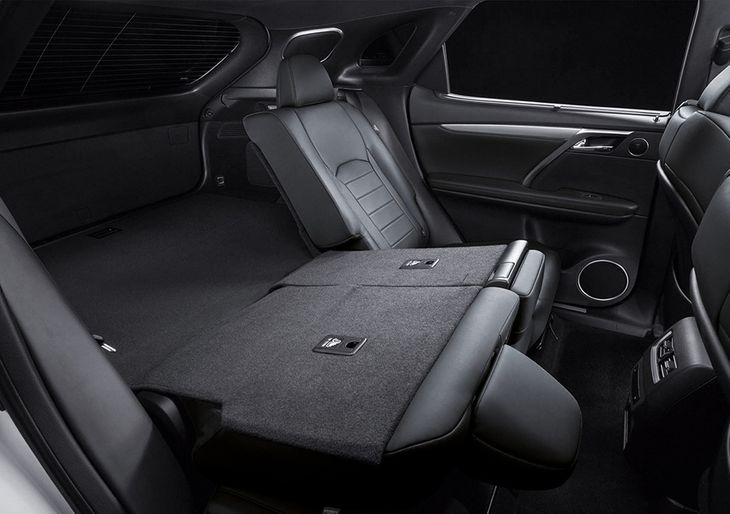
The new RX is slightly longer, wider and lower than its predecessor, and the wheelbase has been lengthened. The result is significantly more rear legroom. In fact, the second row is particularly spacious, with seats with adjustable backrests that can slide fore/aft. There are even retractable sun blinds for rear passengers. Headroom is a trifle limited, however.
… performance and fuel economy?
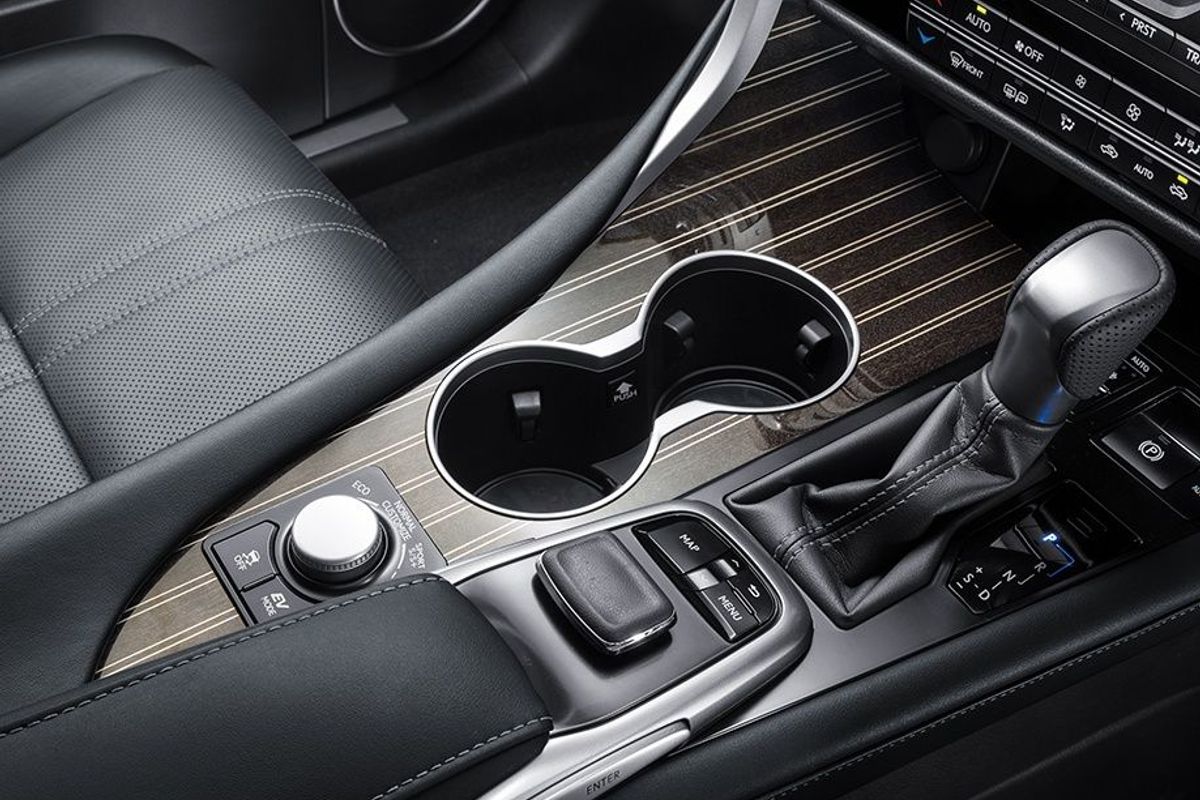
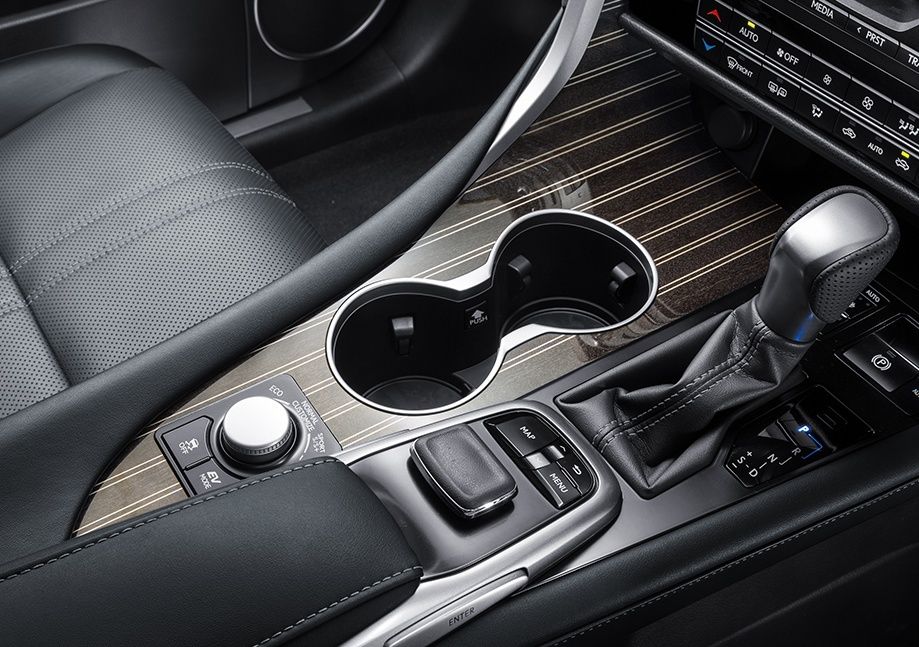
Eco, EV, Normal and Sport modes are on offer. Note beautiful wood inlay.
The RX450h SE is powered by a 193 kW/335 Nm 2.5-litre V6 engine mated with a 123 kW front electric motor as well as a 50 kW motor that forms part of the E-Four all-wheel-drive system. The flagship model’s combined power output has improved by 10 kW compared with its predecessor, with the total output now claimed to be 230 kW. The 450h SE utilises a continuously variable transmission (CVT) to deliver drive to all four wheels. Thanks to a number of improvements to the hybrid system, Lexus says that fuel efficiency for the 450h has improved by 9.5% to a claimed combined cycle figure of 5.7 L/100 km.
The reality, however, is that the RX450h struggles to achieve that claimed figure, which is not surprising – many petrol-electric hybrids do. In fact, during day-to-day driving you’ll do well to achieve figures of less than 9.0 L/100 km. The full electric (EV) mode is only available at very small throttle inputs, and at lower speeds, so if you’re thinking a luxury hybrid SUV will save you a lot of money at the pumps, think again. A turbodiesel SUV is likely to be far more economical.
In terms of performance, the RX450h also appears to have an advantage, but the combined output flatters to deceive. In reality, the CVT appears to dull the responsiveness of what should be a far livelier drivetrain. Yes, matters do improve in Sport mode but, again, a turbodiesel BMW (or Porsche… or Audi…) will be the better choice if lively performance is a must-have attribute. It is also odd, given that there’s a Sport mode, that the RX450h SE doesn’t offer steering-mounted gearshift paddles.
… practicality
No shortage of rear legroom. Seats can slide, fold and recline, too. Boot size is limited, though.
The RX450h is about as long as a BMW X5 or Porsche Cayenne, but more compact than the Volvo XC90 or Audi Q7. It was not designed to offer third-row seating, and with its swoopy fastback styling was clearly not conceptualised to be the last word in family-friendly packaging.
Open the (slow) electrically operated tailgate and you’ll find a luggage area that is about average in size for this category of vehicle, and which has a very high load floor courtesy of the standard fitment of a full-size spare wheel. Of course, if more packing space is needed you can fold down the middle row, which can conveniently be done by using levers mounted in the sidewall of the boot. But, keep in mind that the load surface won’t be even due to the stepped nature of the boot floor.
So, in terms of luggage space, the RX450h falls some way short of the best in class. But there are some clever touches. For example, if you lift up that boot floor, you will find a reasonably sized storage compartment to accommodate smaller/fragile items, and if you're really short of space, you can always remove the foam insert that “fills out” the upside-down alloy wheel and put more items in there.
In the cabin, the door pockets are big and can even fold out, and there’s another storage compartment in the front passenger footwell. We also like the flat design of the fascia. Combined with the grippy leather that covers it, you have a perfect place to rest magazines/books on a long road trip.
To summarise, then, the RX450h is probably right-sized for a family of four.
… ride and refinement
The big wheels contribute to a slightly fidgety ride on poor road surfaces.
As we’ve come to expect from Lexus, the NVH (noise, vibration, harshness) control of the RX's passenger compartment is quite superb. The vault-like cabin lets in hardly any noise when cruising and the sturdiness of the materials and general rattle-free nature of the fittings further enhance the perception of refinement. So it’s just those noisy seat fans that irritate.
The engine, too, is smooth and quiet when you’re out of the hustle and bustle of the city and the ride quality is exemplary in these circumstances…
But there are some niggles. Those beautiful 20-inch wheels (standard) are probably to blame for a ride quality that turns a little too fidgety over rippled and inconsistent surfaces. And, as is usually the case with continuously variable transmissions (CVTs), the revs shoot up upon throttle input and stays up there until you’ve reached the desired speed and ease off the throttle. Are we nit-picking? Perhaps, but the context is the competition, and a vehicle such as Audi’s new Q7 feels noticeably more refined in this department… and that’s a diesel.
And what about handling? Well, the RX450h is hardly positioned as a "sporty" SUV so it won't match an X5 or Cayenne in the corners. There's substantial body roll to contend with, but grip levels are high and the RX always feels planted and secure. It features Lexus's VDIM (Vehicle Dynamics Integrated Management) system that controls the ABS, brake assist (BA), electronic braking distribution (EBD), traction control, and VSC (vehicle stability control) in a coordinated fashion for ultimate smoothness and stability. During general driving the steering weighting is pleasantly light and accurate. In-town manoeuvrability is boosted by the standard fitment of front and rear parking sensors as well as a reverse-view camera. Rear cross-traffic alert is also part of the package.
Verdict
In its latest guise, the Lexus RX450h SE is a significantly more appealing prospect than its predecessor due to (in no small measure) its stand-out new design. As ever, the standard features list is unmatched at the price and the quality is top notch. Compared with its (turbodiesel) German rivals that sell for similar money there are, however, a couple of issues.
Firstly, the hybrid drivetrain promises much in theory, but those promises don’t materialise in real-world operating conditions. Want the best combination of performance and economy? Then opt for a turbodiesel. And secondly, we can overlook some of the ergonomic failings (such as that fiddly control interface), but by the standards of most premium SUVs, the luggage bay's packaging is quite severely compromised.
Overall, however, these foibles are remarkably easy to forgive not only because the RX offers so many more features than its similarly-priced German rivals, but also because it is a genuinely likeable machine that now, finally, has some character. Still, we think its cheaper sibling, the RX350, looks like the real star… A full review on that model is coming.
Pricing
The Lexus RX450h SE sells for R999 000 and comes with a 4-year/100 000 km warranty and maintenance plan. The hybrid battery has an 8-year/195 000 km warranty. Servicing is required every 15 000 km.