Audi has given its popular A3 premium hatchback a makeover. Expect to see it in South Africa in November 2016.
The Audi A3 is currently the brand’s most popular model in South Africa and following the new model introduction in 2013, the car has gone under the knife, ushering in a number of updates. Let's take a look at what you can expect from the refreshed A3…
Exterior changes
The appearance of the A3 has changed somewhat with newly designed headlights and taillights. Xenon plus headlights are fitted as standard while LED headlights and Matrix LED headlights will be offered as an option. The grille has been broadened and features sharpened contours, giving the facelifted A3 a and more refined appearance and the rear diffuser has also been revised. A total of 12 colours will be offered with five new colours joining the range, including Ara blue, Cosmic blue, Nano gray, tango red and Vegas yellow.
The facelifted Audi A3 will ride on 16-inch wheels as standard and the A3 in Design or Sport trim will be fitted with 17-inch examples. New wheel designs will also be available on the optional 17, 18 and 19-inch wheels.
Interior changes
The now familiar Audi Virtual Cockpit will be offered on the facelifted A3 as an option and will come in the form of a 12.3-inch diagonal TFT screen. The 7-inch MMI radio plus will be fitted as standard while MMI navigation and MMI navigation plus with MMI touch will be offered as options.
A number of driver assist systems will be available for the A3 and these include active lane assist, and Audi pre sense front with predictive pedestrian protection. The optional traffic jam assist will also makes its way into the A3 and works in conjunction with the adaptive cruise control and Stop&Go feature to manage the distance between the vehicle and traffic up ahead at speeds up to 65 kph. The A3 will also benefit from Emergency Assist, which will bring the A3 to a stop if no steering activity is detected. Furthermore, rear cross-traffic assist will warn the driver if cars are approaching while reversing out of a parking bay.
New engine lineup
The engine offering for the facelifted A3 has been revised to include three petrol and three diesel engines with power outputs ranging from 81 kW to 140 kW.
Audi will introduce the 1.0 TFSI engine on the A3 for the first time and this unit will offer 85 kW and 200 Nm of torque while the larger 1.4 TFSI engine will offer 110 kW and 250 Nm of torque. A new 2.0 TFSI will replace the current 1.8 TFSI offering with 140 kW and 320 Nm.
The diesel engine offering includes the 2.0 TDI in two states of tune with either 110 kW / 340 Nm or 135 kW and 380 Nm. A 1.6 TDI with 81 kW will also be on offer.
The 2.0-litre TFSI engines will be mated with the newly developed 7-speed S tronic transmission with a wet clutch, replacing the outgoing 6-speed dual clutch transmission. Audi’s quattro all-wheel drive will only be available on the 140 kW 2.0 TFSI while all other models will be front-wheel drive.
The Audi S3 – one of South Africa's most desirable hot hatches – has received a power upgrade to coincide with a facelift to the Ingolstadt-based manufacturer's premium hatchback range. It should arrive in the final quarter of 2016.
The most significant development is an update to the turbocharged 2.0-litre four cylinder motor that produces 228 kW and 400 Nm, up from the current version 221 kW and 380 Nm. Bear in mind, however, that South African-spec Audi S3 engines have been detuned to operate at higher altitude and in hotter-than-average temperatures. While the power output of the current SA-spec cars sits at 210 kW, we expect the updated S3 to produce around 220 kW.
Meanwhile, the six-speed S-tronic dual clutch transmission has been replaced by a newly-developed seven-speed S-tronic 'box, and there have been revisions to the car's electronic stabilisation control (ESC) system. Performance figures have not been announced, but as the current S3 is claimed to hit 100 kph from standstill in 5.0 seconds, with the introduction of a revised gearbox and more power, we predict the time will drop to 4.8 seconds.
While the exterior is not dramatically different compared with the outgoing model, the biggest changes appear in the cabin. The Audi Virtual Cockpit will feature in the Audi A3 for the first time and we'll see technological features such as traffic jam assist, cross traffic alert and inductive charging fitted too.
When it launched the original Soul in 2009, Kia was one of the first to step into a compact crossover niche that has since exploded in popularity. In flagship specification, the quirkily styled Soul appears a pricey proposition, but is there more to it than meets the eye?
We like: Standard features, build quality, deep boot, character
We don’t like: “Hunting” transmission, cabin is quite short, steep price
Alternatives:
For better economy: There are very few diesel automatic compact crossovers around, but the Nissan Qashqai’s 1,6-litre turbodiesel has a better claimed fuel economy.
For more space: There are a number of more spacious crossovers available for similar money, but not many that offer the combination of an economical diesel engine and a self-shifting transmission. The Nissan Qashqai 1.6 dCi Acenta is arguably its deadliest rival, but it may lack the individuality that a potential Kia Soul buyer will be looking for.
For better value: The similarly priced Nissan Qashqai 1.6 dCi Acenta looks like great value – it’s a bigger, more spacious vehicle with similar specification and power, yet it’s also more refined and rides better. Plus, you get a six-year warranty as opposed to a five-year one and a longer service plan, too (in years). If the Qashqai is too mainstream, you could look at the cheaper Mazda CX-3, but you’d have to settle for a thirstier petrol engine.
Practicality and style
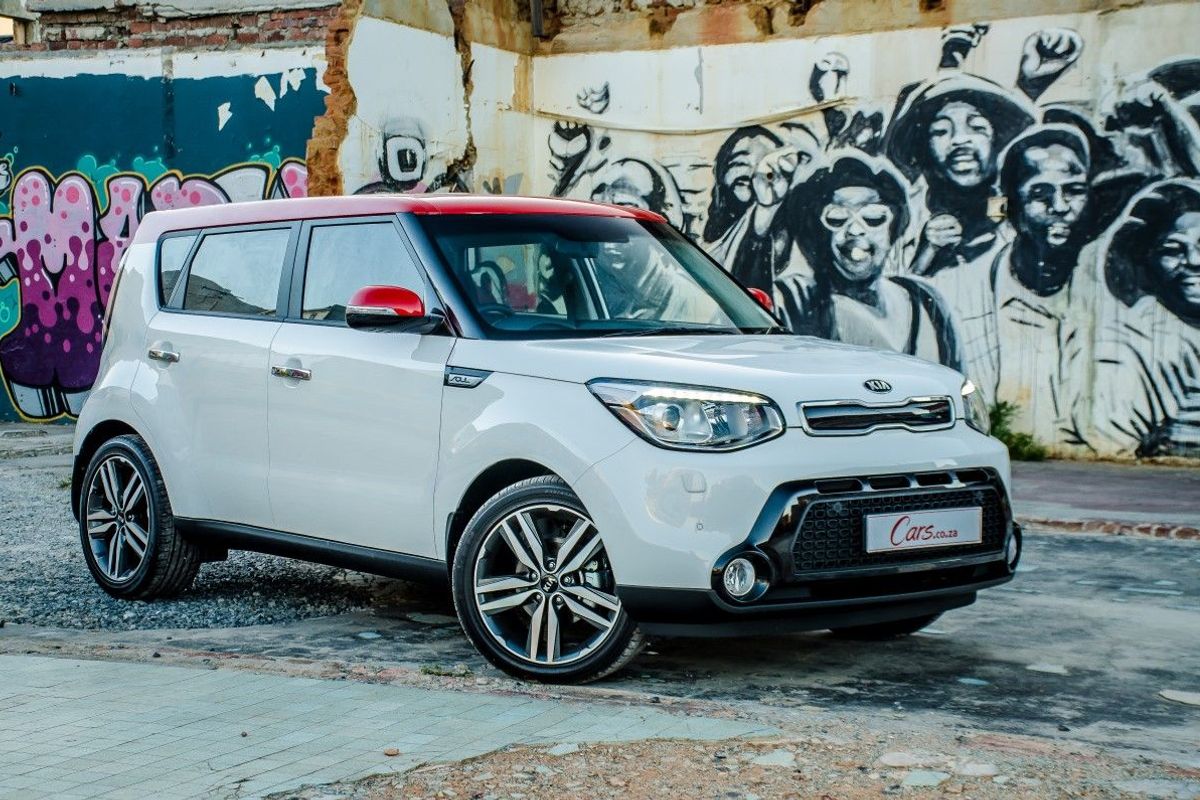
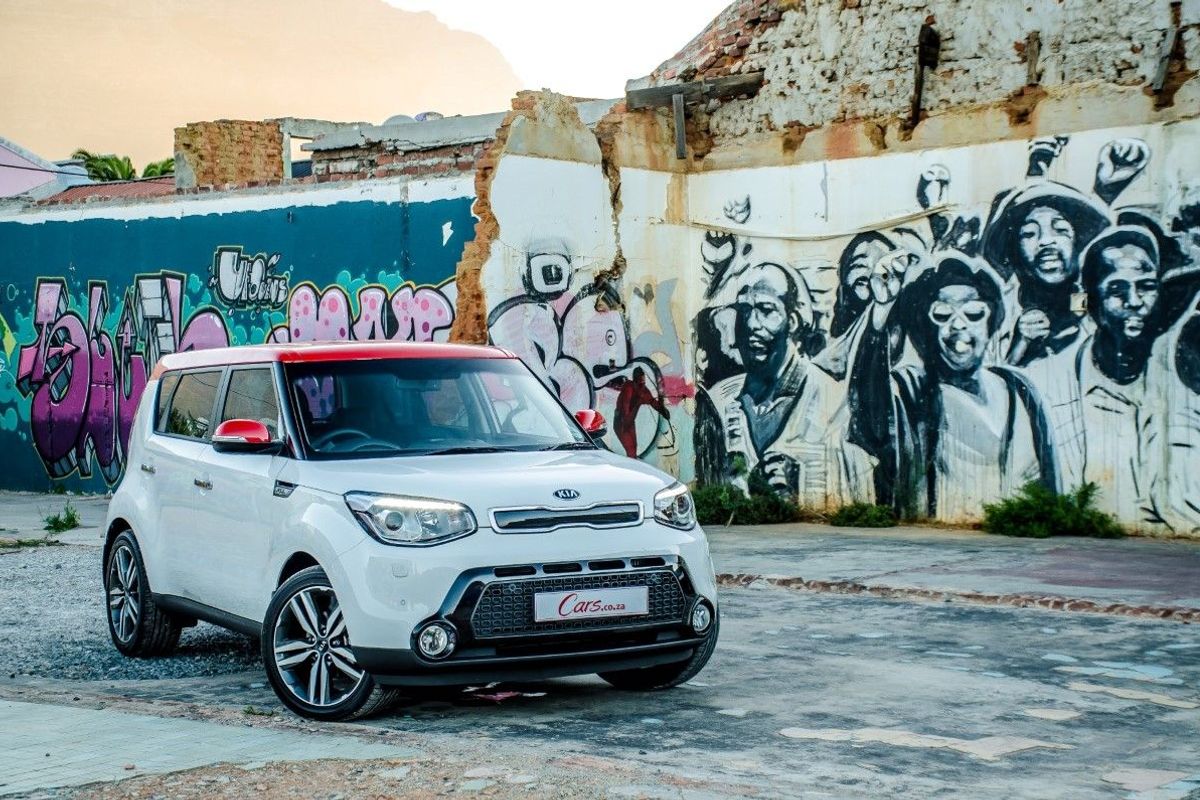
With its large 18-inch wheels and two-tone colour scheme, the Soul stands out in a crowd.
The Kia Soul is positioned as a practical compact crossover that eschews the practical-but-boring looks of most of its rivals and purports to offer near-Mini-like levels of individuality and character. To be frank, if you’re looking for the most car for your money, you won’t find it here (at least not in 1.6 CRDi Smart DCT guise), but there are enough buyers out there for who a car is more than just a source of personal transport.The Kia Soul was evidently designed to satisfy the needs for both practicality and style, a combination that very few vehicles (at this price level) can deliver.
In flagship 1.6 CRDi Smart DCT guise a few other factors come into play, too… Firstly, there’s the standard specification that includes such nice-to-haves as leather upholstery, front and rear park sensors, cruise control and much more. But, most importantly for the purpose of this test, this model uses the brand’s new seven-speed dual-clutch transmission.
Why the dual clutch?
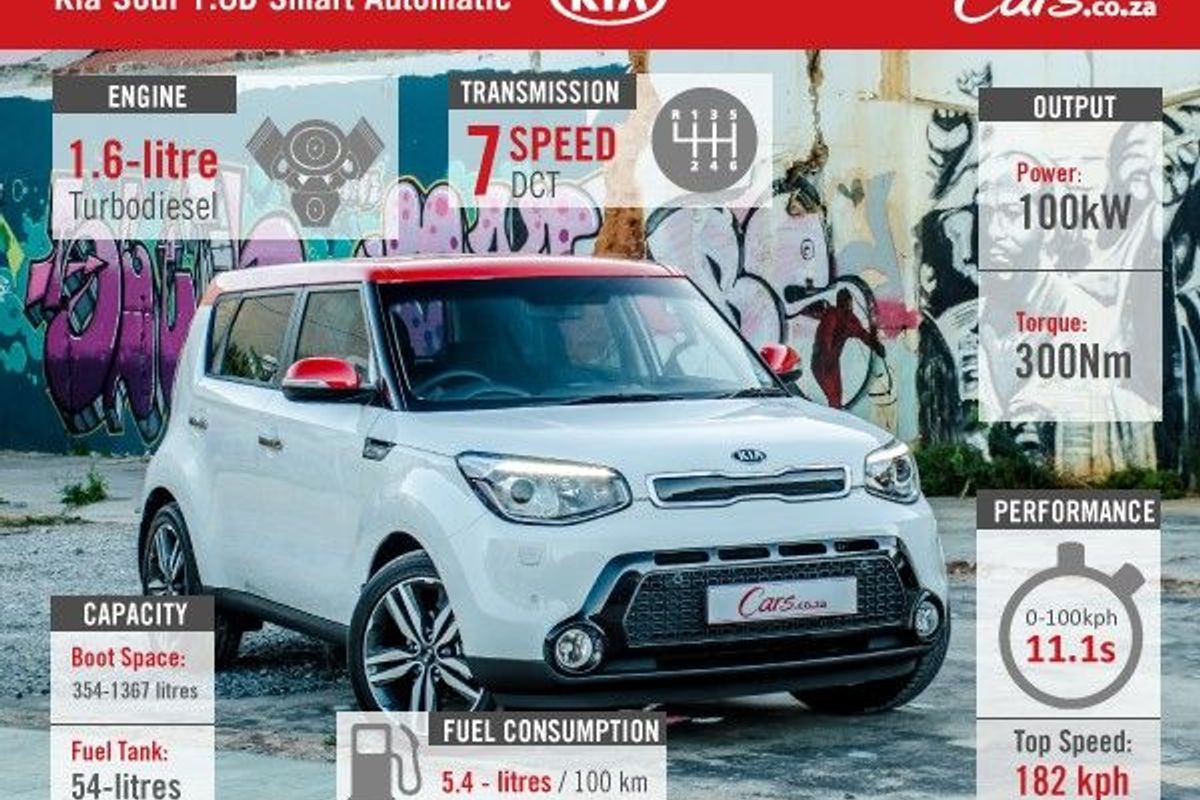
In this segment dual-clutch transmissions are rare – they’re usually reserved for pricier and sportier vehicles. So why has Kia fitted it to the more practically-packaged Soul? It is claimed to return a better fuel consumption figure than a conventional automatic, can handle more torque (up to 300 Nm) and is said to offer a more variable driving experience when the different drive modes are selected. The in-gear acceleration has improved by a significant margin as well – the model is now claimed to complete the 0-100 kph dash in 11.1 seconds, as opposed to the lethargic six-speed automatic model's 12.2 seconds.
How does it fare in…
Practicality?
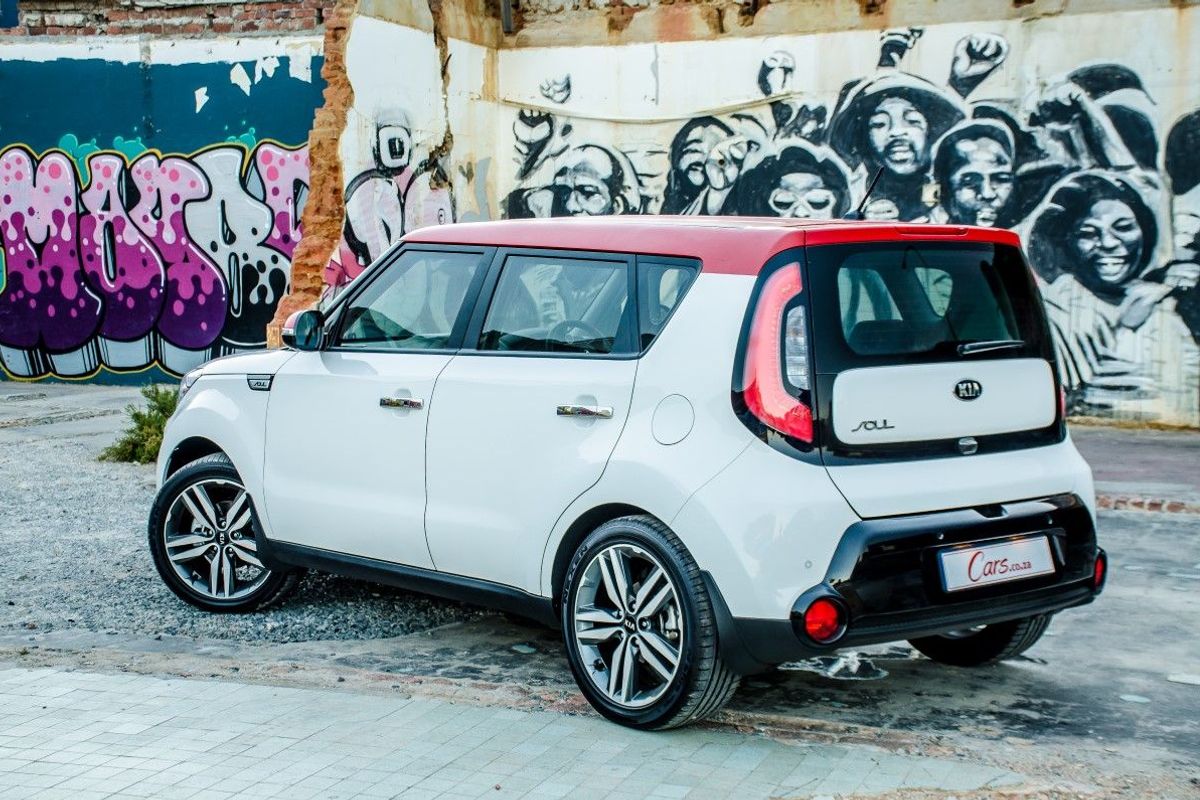
The Soul is a very compact vehicle with squared-off edges, especially at the rear. Its overall length is 4 140 mm, which is significantly shorter than a Nissan Qashqai (its dimensions are more compact than those of the Fiat 500X, for example). Its wheelbase, however, is exactly the same as the Fiat’s but, again, quite a lot shorter than the Qashqai’s. So, the Kia's very compact and (supposed to be) very practical… two characteristics that don't usually go together.
And yet, in our experience, the Soul is remarkably well-suited to cater to the needs of a young family of four. Open up that near-vertical tailgate and you'll find a luggage area that makes up for what it lacks in length with depth. In fact, it proved to be rather good at swallowing up a lot of things, lending credibility to Kia’s claim of a total capacity of 354 litres, which is pretty impressive for a vehicle in this segment of the market. From a passenger point of view the news is also pretty good: There is sufficient rear legroom and certainly no shortage of headroom.
The only area where the Soul really loses out is in terms of overall practicality and utility. If you need to transport fairly long objects quite often, the comparatively short cabin (with the rear seats folded down) will be a drawback. Still, there’s a lot of volume to play with….
Performance and economy?
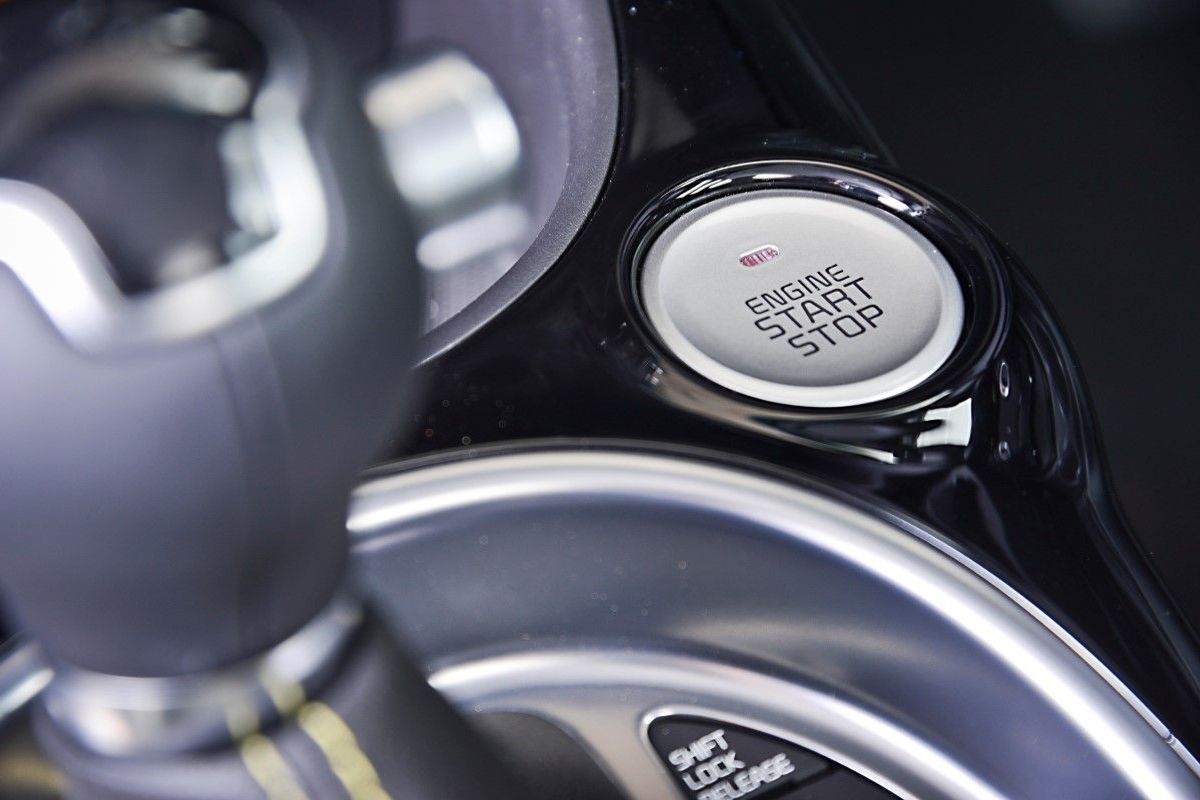
Push-button starting is part of the flagship "Smart" specification.
Due to the fitment of the new transmission, the 1,6-litre turbodiesel engine’s outputs have been boosted to 100 kW and 300 Nm respectively. As we found in our first test of the six-speed automatic model, the engine feels pretty impressive, with a strong surge of power when the throttle is planted. It may not be the most refined unit of its type, but undoubtedly the new seven-speed dual-clutch transmission makes better use of its talents. That said, it could be a little more “relaxed” when left to its own devices – it tends to hunt a bit too much. Also, maximum torque might be available from 1 900 to 2 750 rpm on paper, but in reality "the power band" feels narrower than that. Bizarrely, this makes the Soul feel quite sporty as the transmission fires through the ratios in quick succession, each accompanied by a short, but strong, surge of power.
In terms of fuel economy, there are improvements too. The previous model returned a rather poor 6.2 L/100 km, but Kia claims the new model will achieve a much better 5.4 L/100 km. Our consumption during the test period hovered around the 6.3L/100 km mark, which is good in real-world driving conditions.
Cabin features and quality?
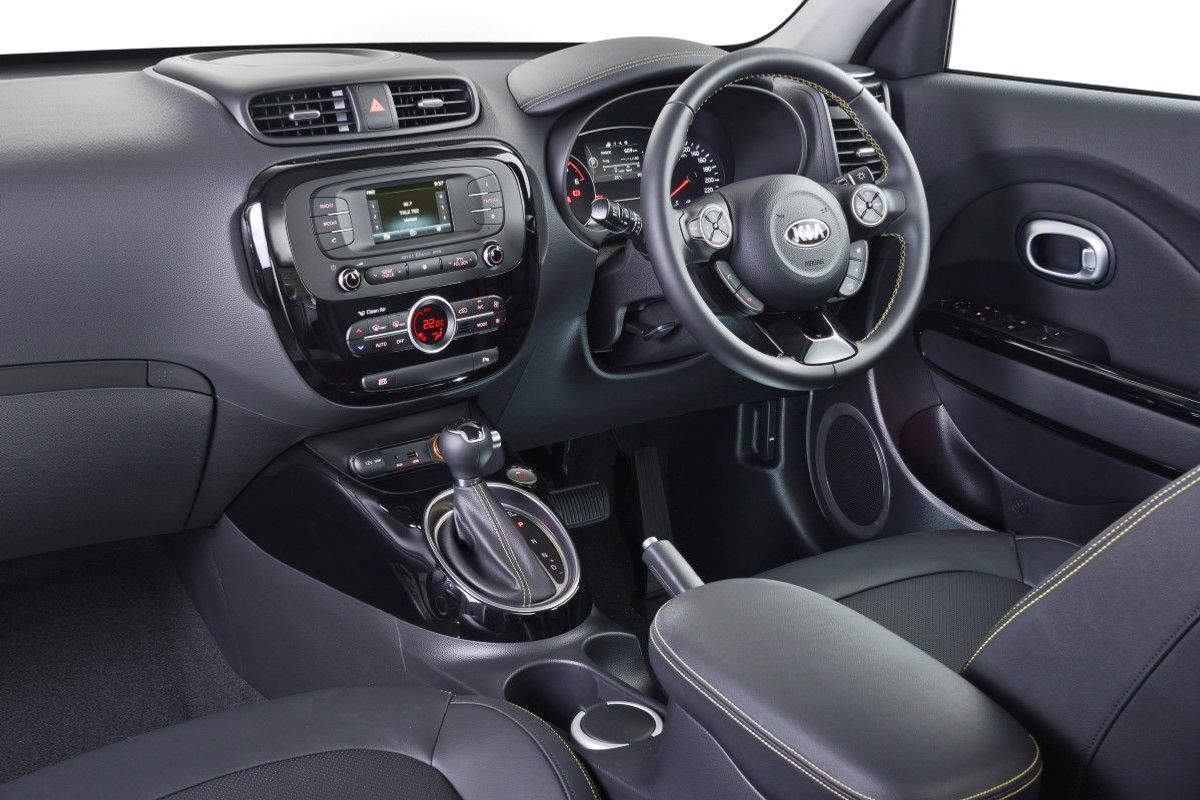
Build quality is very good and the features count generous. Small touchscreen a minor irritation.
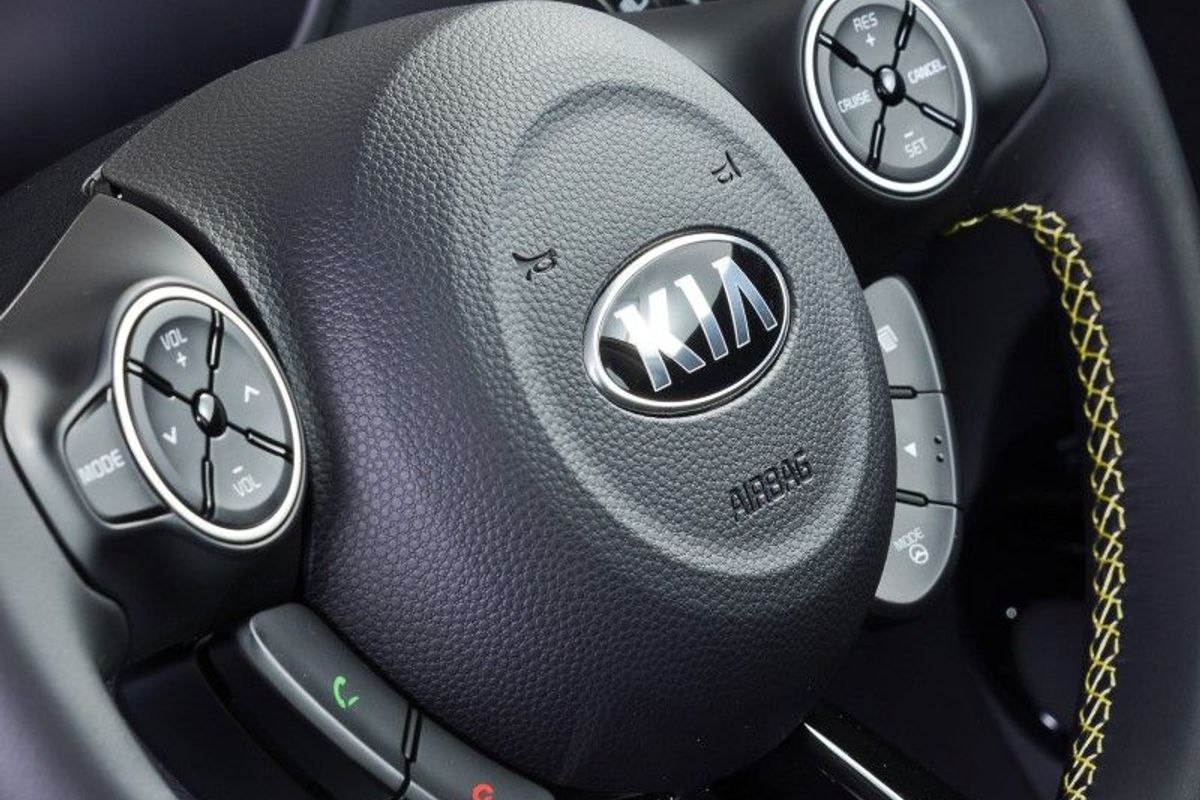
As the flagship model in the range, this Soul comes with a very comprehensive standard specification package. We’ve already mentioned the leather upholstery, cruise control and front and rear parking sensors, but you even get an electrically adjustable driver’s seat, a chilled glove box, reverse-view camera and an audio system with Bluetooth, USB/Aux etc connectivity, among many other items.
In the end, however, all of these features would not help much if the basic underpinnings were unrefined and the cabin design was poor. Thankfully, neither apply to the Soul. We’re impressed with the overall quality on offer here, and there are some nice touches to remind you that you’ve bought something quite quirky – such as light-emitting trim around the speakers that can be set to several different colours and pulse to the beat of what the audio system's playing.
Ride and handling
But it’s not just all about the fancy dress with the Kia… previous Soul derivatives have been criticised for their overly firm suspension, but this model seems to ride with appreciably more pliancy. Even though those striking 18-inch wheels are shod with low-profile rubber, the ride remained impressively comfortable on most surfaces during our test period, only being flummoxed by really badly pockmarked tar.
It boasts a ride height of 150 mm, which is ever-so-slightly more than most compact hatchbacks, so don’t expect to go climbing up steep pavements, but the little bit of extra elevation is nevertheless welcome from a driver visibility and ease-of-parking point of view.
As before – and as is the case with most Kias – the steering feels relatively lifeless and overly assisted. But for the target consumer, this is hardly going to be a major source of concern. If anything, the steering makes the Soul easier to manoeuvre in the city.
Verdict
Soul is compact, but there's surprisingly generous space in the cabin and the luggage compartment, in particular.
Like most vehicles that were ostensibly designed to appeal to buyers for subjective reasons such as styling and “character”, it is difficult to give the Kia Soul a double thumbs-up, because such products (by their very nature) polarise opinions and are compromised in some way or another. The Soul, however, has a number of very desirable traits.
It is lighter than the similarly priced Qashqai 1.6 dCi Acenta and, by virtue of its new transmission, feels perkier to drive than the Nissan. If offers numerous features in a very well-made cabin that's pleasing to look at and touch. And there’s more space in the luggage bay than you’d think. If ultimate load space is not your greatest concern, there’s enough here to merit consideration. Ultimately, pricing may be this particular Soul derivative's biggest problem, though.
Pricing
The Kia Soul 1.6 CRDi Smart DCT retails for R408 995. The price includes a five-years/150 000 km warranty and four-years/90 000 km service plan. It requires servicing every 15 000 km.
Some cars, no matter how good they are, don't garner the sales volumes that they (seem to) deserve. We take a look at 10 hidden gems in the new vehicle market
Why would a well-regarded car not sell well? It’s not an easy question to answer. Sometimes, it can be regarded as expensive compared with its rivals (offer poor value for money), or perhaps the vehicle's brand is poorly perceived in the market (it's not regarded as premium enough to justify its price point), or, worst, the brand has a reputation for less-than-stellar after-sales service and/or reliability.
Whatever the reasons, some vehicles that sell well (and win awards) abroad don't succeed in the local market. Here’s our list of the best cars that don't sell well in South Africa.
The Peugeot 308 won the European Car of the Year title in 2015 and sells well in Europe. It’s a premium product that offers a refined driving experience and an impressive level of interior quality. In South Africa, it isn’t a great success; Peugeot South Africa seems to struggle against a negative public perception of its dealers' after-sales service and its products' resale values, something the firm has been trying to address. Total sales in March 2016 – 42 units. Read our road test on the 308 here.
The Subaru Outback is an impressive seller in Australia, a market that's very similar to ours. The Outback is perceived as a station wagon, which probably doesn’t help its cause. In South Africa, station wagons are unfashionable, which is a shame, because the Outback looks more like an SUV than a real station wagon. Subaru’s limited dealer network around South Africa also hinders overall sales figures. March 2016 sales – 9 units. Read our review of the Subaru Outback here
The Volvo V40 looks fantastic, but it is a small player in the premium hatchback segment, which is dominated by Audi, BMW and Mercedes-Benz – not much else gets a look-in. The V40 has a wide range of engines including some of the most efficient turbodiesels in the market. The V40 will be facelifted relatively soon and judging by the momentum created by the XC90 and S90, it might finally have its day. March 2016 sales – 35 units. New V40 coming soon
The C4 Picasso was named the Best Family Car in the 2016 Cars.co.za Consumer Awards. It’s not only a particularly versatile family vehicle, but one of the most practical cars you can buy for the money. It has loads of space, excellent equipment levels, and quite a few quirky touches. Like Peugeot, Citroen has struggled against a reputation in South Africa for poor after-sales service. March 2016 sales – 3. Watch the video review of the C4 Picasso here
Honda has a reputation in South Africa for making near-indestructible ("bulletproof") cars, but the Civic hasn’t attained the same success as its Jazz and CR-V siblings. Its segment is dominated by the VW Golf and Ford Focus (the Mazda3 is also a reasonably good seller). The Civic’s lack of popularity is hard to explain, apart from the fact it is priced at the upper end of its segment. March 2016 sales – 41. They also make a Tourer version we reviewed here
Alfa Romeo is not a volume-selling manufacturer, of that there is no question. The Milanese brand appeals to buyers who are looking for something different and its cars exude style and passion. Unfortunately, the brand struggles against a lasting perception of poor reliability, marginal after-sales service and poor resale values. It’s still a lovely car to drive, however, with a beautifully designed interior and exterior. March 2016 sales – 9. Read our review of the Squadra Corsa here
The Infiniti Q50 competes with the dominant Mercedes-Benz C-Class, BMW 3 Series and Audi A4. It's a tough challenge because it seems that unless your vehicle sports a German badge on its bonnet, there’s next to no chance that it will sell in respectable numbers in the premium sedan segment. That’s a shame as the Q50 is quite refined, features high-levels of stock equipment and is competitively priced. March 2016 sales – 22. Read a review on the Infiniti Q50 here
The Outlander is a solid SUV offering with good off-road ability. It feels a little old inside and the exterior styling isn’t to everyone's taste. Also, there’s no turbodiesel model available. It is well-specced and rides comfortably on the road. Even the CVT gearbox is okay to live with. March 2016 sales – 12. Read our review of the Outlander here
The Lexus IS seems expensive on paper, but once you factor in its lofty standard specification, it appears a veritable bargain. It probably doesn’t sell well based on the lingering perception that it's a bit of an "old man's car" and, again, "it lacks a German badge on its nose". Now that the model comes equipped with a 2.0-litre turbocharged motor it should be more popular, but alas, in March 2016, Lexus sold just 8. Read a review on the Lexus IS here
The BT-50 is essentially a Ford Ranger with a different exterior treatment, yet the Ranger pumps out around 3 000 units a month while the very similar Mazda achieves sales of nowhere near that figure. The BT-50 is actually similarly priced and boasts almost identical specification to the Ranger, but looks appear to make a substantial difference in the leisure bakkie segment. Mazda's limited dealer network across the country will no doubt also cost the Japanese manufacturer sales compared to the widespread network of the Ford and Toyota. March 2016 sales – 49. Read our review of the BT-50 here
How does the thought of an ultra-premium SUV with supercar-like performance sit with you? The idea should be absurd, but the GLE63 AMG is a very accomplished vehicle that delivers both outrageous acceleration and supreme luxury.
We like: Premium feel, interior space, breathtaking performance, full-house specification
We don’t like: Prodigious thirst, that price doesn't include all the options
The GLE is the updated version of that perennial favourite of the country club set: the Mercedes-Benz ML. Due to the recent overhaul of the Mercedes-Benz and Mercedes-AMG's naming conventions, the ML name has fallen away and has been replaced by GLE. There’s now a lineup of Mercedes-Benz SUVs arranged in order of size: GLA, GLC, GLC Coupe, GLE, GLE Coupe and the seven-seat GLS will arrive in South Africa before the end of 2016.
The GLE is available with a variety of powerplants, ranging from the sensible, frugal 250d turbodiesel to 4,7-litre V8 turbopetrol in the 500, but the derivative tested here is the AMG version, which is the most powerful version bar the 430 kW GLE63 S. The performance and soundtrack of the GLE63 are extreme by the standards of most premium SUVs, which is probably why the ML63 was such a popular model, both in South Africa and abroad.
Who should consider the Mercedes-AMG GLE63?
For many motorists, the Mercedes-AMG GLE63 is the very embodiment of a performance-oriented Mercedes-Benz SUV. It is for someone who wants the occupant comfort and high-mounted driving position afforded by a high-riding SUV, the confidence of driving one of the most powerful road vehicles on sale, as well as the bragging rights that come part and parcel with the three-pointed star badge. This is a vehicle for someone who wants to flaunt their success and cares little for the rising cost of fuel. Despite the fact that this vehicle is equipped with (4Matic) all-wheel drive, it’s lowered ride height and low-profile tyres make the Benz unsuitable for offroad driving. In other words, it's a dedicated on-road performance machine.
How does it fare in…
…performance and economy?
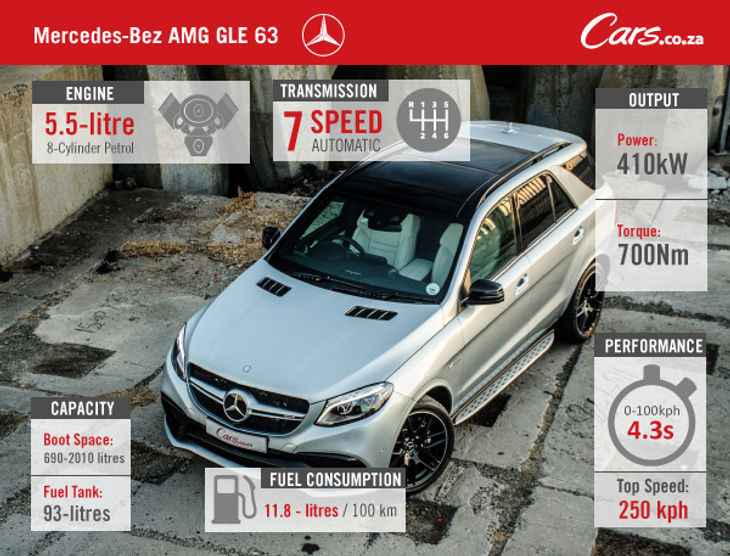
The GLE63 is powered by a biturbo 5.5-litre V8, which was sourced from the older generation of AMG models. Why no 4.0-litre V8 from the C63, you may ask? Well, the 5.5-litre unit produces more torque, which is quite handy when you consider that the Mercedes-AMG weighs more than two tonnes. The numbers are staggering; 410 kW and 700 Nm. All that twist is sent to all four wheels through a 7G-tronic gearbox and when hooligan (Sport Plus) mode is activated, the 'Benz will hit 100 kph from standstill in a claimed 4.3 seconds. Top speed is limited to 250 kph, but you can opt for the AMG Drivers Package that will extend that theoretical maximum velocity to a heady 280 kph.
The performance of the AMG is, in a word, extreme… it feels incredible for something as hefty as a GLE to travel as fast as it can. Whether it’s from standstill or in-gear, the rate of acceleration is savage when you’re in Sport+ mode. The vehicle is dual-natured in character insofar as you can adjust the power delivery and savagery of the motor to suit a variety of driving conditions. Set it into Comfort mode and there’s only the subtlest of hints of the sheer performance that the Mercedes-AMG can unleash. Switch to Sport+ and those quad exhausts open up to deliver a soundtrack that’s reminiscent of a track-honed race car. In that scenario, each gearshift actuated through inputs to the steering wheel paddles coincide with excessively loud backfires that are guaranteed to make you unpopular with the neighbours. The sound of the engine starting up first thing in the morning is cacophonous; subtlety isn't in the GLE63’s vocabulary.
This machine seems to have been bred to execute rapid overtaking manuoevres. The high seating position means the driver can easily see the road ahead of them, which is vital when travelling at higher speeds, and the braking system is especially efficient at bringing the juggernaut to a halt.
Despite the fitment of large (21-inch) alloy wheels. the GLE63 has an enviable ride/handling balance. By virtue of air suspension with adaptive damping, the ride quality is quite comfortable at urban speeds. That said, when you’re pounding the tarmac in one of the two Sport modes, the car's suspension stiffens up appreciably and the AMG demonstrates sure-footed cornering ability. However, the laws of physics still apply – this is a heavy vehicle. At the handling limit, the car predictably has a tendency understeer and, subjectively, it doesn’t feel quite as involving or as wieldy as its competition from BMW, the X5M.
In terms of interior refinement, the GLE feels well-made and luxurious. Apart from rumbling tyres (and a roaring engine!), the cabin feels well insulated.
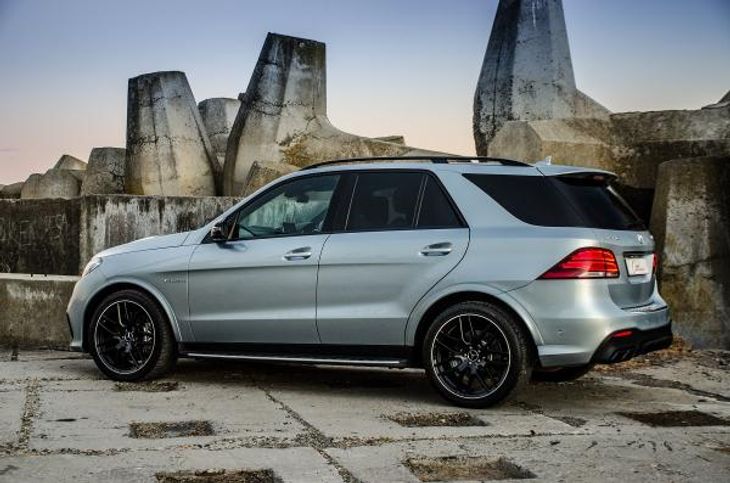
Black 21-inch alloy wheels are standard and add to the menacing looks of the GLE63 AMG.
…practicality?
If you want an SUV that can transport more than five occupants, look elsewhere, but consider Mercedes-Benz’s seven-seater GLS is due to arrive in South Africa during the course of 2016. The GLE63's luggage capacity (690 litres) is the biggest when compared with those of its rivals from Munich (BMW X5M) and Stuttgart (Porsche Cayenne Turbo S), and when you fold the second row of seats flat, again you get segment-leading utility space space (2 010 litres).
Rear legroom is particularly impressive: even with four adults in the vehicle, those seated at the back did not feel cramped or uncomfortable. The boot opens at the touch of a button and the vehicle can be locked by a button on the tailgate. This is a convenient feature… unless you’re vertically challenged, that is.
Fit and finish is superb in the tech-laden cabin.
…premium and luxury features?
When you’re paying this much for a vehicle, one would expect it to offer virtually everything in terms of modern conveniences. In that regard, the AMG does not disappoint. The Stuttgart-based company's COMAND infotainment setup, a Harmon Kardon audio system, USB/Bluetooth connectivity, a tyre pressure monitoring system, reverse- and surround view cameras and automatic parking are just some of the standard features that this vehicle comes fitted with.
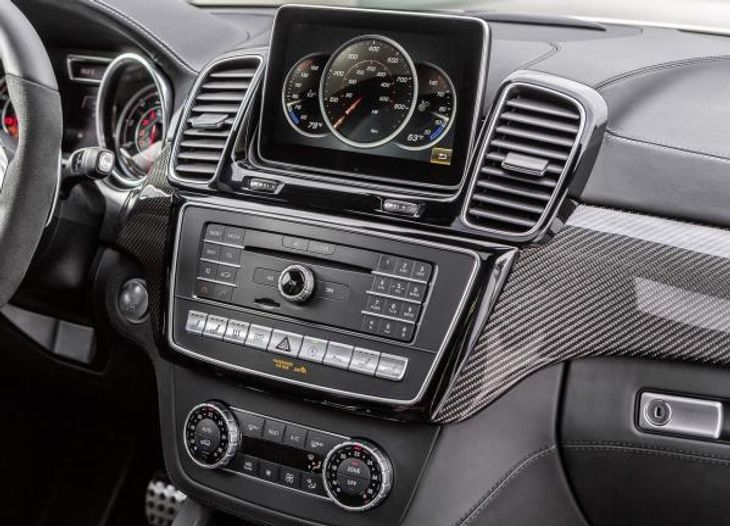
The GLE's cabin is a comfortable place to be. Despite the interior being subject to a redesign during the switch from ML to GLE, it doesn't seem as stylish nor as plush as those of some of its competitors. The Range Rover Sport and Porsche Cayenne Turbo both feel superior in this regard. That said, the interior rework looks good and the gauges appear to be pinched from a top-spec C-Class. This is probably the last time we’ll see a GLE with analogue dials as the current trend suggests all-digital screens are the way forward.
Our test unit came equipped with a rear entertainment setup, which comprises a pair of screens mounted on the rears of the front seats and connectivity for video. It's a R32 000 option (at the time of writing). We’d also suggest ticking the box for the Bang & Olufsen audio system.
One of our gripes about this vehicle comes in terms of the safety specification. While the overall safety package is comprehensive, Distronic Plus (radar-guided adaptive cruise control) should be standard when you’re paying this much money for a vehicle.
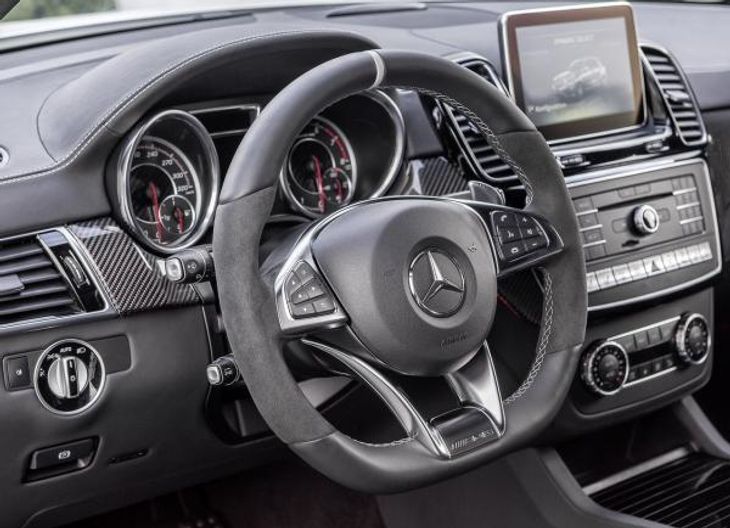
Note suede inserts on the racy, flat-bottomed steering wheel.
Verdict
The Mercedes-AMG GLE63 is the proverbial hitman in a tailored suit. Capable of delivering devastating straight-line performance accompanied by near-illegal loud exhaust note, it also happens to function as a luxurious and refined premium SUV in equal measure. The technology to muzzle that biturbo motor when you’re cruising to the office on a Monday is clever, but it’s most entertaining to unleash all of the available 410 kW when the road is clear.
As a performance SUV, the AMG offers excellent performance while retaining qualities that buyers in this segment crave most: luxury, refinement and prestige. As ever, prospective buyers are looking for that big sign that reads: "I’ve Arrived"; few cars symbolise that as well as the Mercedes-AMG GLE63.
At this price point it sneaks in under the R2-million mark; the same cannot be said for its rival from Porsche, the Cayenne Turbo S. However the Porsche packs a tad more power and 100 Nm more torque, making it the faster option (if that matters). You’re also paying for the Porsche crest on the nose…
The closest rival to the GLE63 AMG is the BMW X5 M, a devastatingly quick and agile performer. It’s priced similarly to the Mercedes, but is fractionally faster and more involving to drive. The cabin space and luxury appointments of the BMW can't match the Benz's, however. If you want to keep pace with the Porsche and BMW, there’s always an S version of the GLE63 that offers peak power of 430 kW and that sits just under the R2-million mark.
Mercedes-AMG GLE63 price in South Africa
The Mercedes-AMG GLE63 retails for R1 829 700 and that includes a 6-year/100 000 km maintenance plan.
Ford Invests R2.5-billion into South Africa and will build more products locally
A massive investment of R2.5-billion from Ford will see production of the Ford Everest in South Africa. We can also expect the Everest line-up to expand considerably during the course of 2016.
By starting Everest manufacture and boosting overall production numbers in South Africa, Ford South Africa is adding 1 200 new jobs at the Silverton Plant in Gauteng as well as in its supply chain countrywide. From a product point of view the big news is that the Everest range will expand to include 2.2 and 3.2 models, with introduction scheduled for late 2016. This Everest will then be exported into Sub-Saharan countries. Currently, the Ford Everest is imported from Thailand. In the process production output will be boosted from around 74 000 (2013) to 93 000 (2017) per year.
Speaking to Cars.co.za's Hannes Oosthuizen following the announcement, Ford Sub Saharan Africa President and CEO Jeff Nemeth, said that the decision to build the Everest locally was made years ago when it first saw the new Everest and completed its local market feasibility studies on the vehicle. It was clear, way back then already, that the Thailand plant would not be able to satisfy South African demand.
“Our customers love the capability and utility offered by the all-new Ford Everest,” said Jim Farley, Ford executive vice president and president of Europe, Middle East and Africa. “By producing the Everest in South Africa, we will be able to make it more readily available, and in a greater variety of models, for customers throughout Sub-Saharan Africa. “The R2.5-billion investment reaffirms the importance of these markets as part of our growth strategy across the Middle East and Africa,” Farley added. “It further reinforces South Africa’s position as a strategic export base for Ford Motor Company.”
The bulk of the R2,5 billion spend took place in the Silverton plant where new carriers for the Everest, as well as an all-new bodyshop were some of the big-ticket items. But importantly from the country's and a more general point of view, major investment continues to be made in the supply chain. In fact, Nemeth says that there are currently more than 120 localisation cases being studied and that the company is constantly looking at ways to localise. For the Everest in particular improved localisation is something that will be an on-going strategy. To get the vehicle into local build as quickly as possible meant that it doesn't currently offer the same very high levels of localisation as the Ranger, which consequently can be imported to Europe.
The engine for the Everest comes from the Struandale Plant in Port Elizabeth, Eastern Cape. This 3.2-litre five-cylinder motor currently offered in the Everest will be joined by the 2.2-litre four-cylinder engine, and it's this smaller unit which will debut in the Ford Everest soon. Expect to see an expanded (8 models) Everest line-up comprising big and small diesels, automatic and manuals soon. Given that rivals Toyota launched a complete and comprehensive Fortuner lineup, this countering move by Ford comes at an excellent time.
Ford has seen Africa's potential and this investment is not the first time the Blue Oval has chosen this region. Back in 2008, Ford announced plans to build the Ranger at its Silverton plant and the Ranger has been a rampant sales success ever since. Currently, the South African-made Ranger is exported to 148 countries around the world, while the engines and components are supplied to Argentina, Thailand, North America, China and India.
Watch the latest Toyota Hilux take on the Ford Ranger
New Hilux vs Old Hilux An Experts Opinion on Whats Changed
For 2016, Toyota has introduced a brand new Hilux to South Africa. To see just how much the new model differs from the one it replaces, we travelled to the Goodyear 4×4 Academy in the Western Cape to meet Gerhard Groenewald, a man who has probably driven over a million kilometres in various Hilux models over the years.
In this interview, we chat to the 4×4 expert about what we can expect from the latest Toyota Hilux.
Any views or opinions expressed in this article are solely those of the commentator and do not represent those of Cars.co.za or its editorial content team.
Powerful Nissan GT-R Smashes 1/4 Mile Record
The Nissan GT-R is a brutally fast car, even in standard form, but what happens when you give it a tune-up? Records fall…
A Texas-based tuning company, T1 Race Development, got their hands on a R35 Nissan GT-R and got to work to make it the fastest car in the quarter mile drag. This GT-R uses the block of the standard 3.8-litre turbocharged V6 engine, but with a number of (very) custom bits and bobs. While the standard GT-R produces a hefty 397 kW and 628 Nm of torque, this version pushes out a ridiculous 1 793 kW. This is Godzilla on steroids!
The result?
T1 Race Development developed the car to break records and it did just that. The quarter mile in this pumped up GT-R took only 7.28 seconds, reaching a top speed of 314 kph. That result is only 0.1 seconds faster than the previous record holder, the Alpha Omega GT-R.
The car also clocked 378 kph in the half mile stretch, which according to T1 Race Development, is a world record. Although this Nissan GT-R is mainly used as a product development test mule, it’s also road legal.
New Nissan GT-R coming to SA
Nissan recently showcased the new 2017 GT-R at the New York Motor Show and it will go on sale in South Africa in the second half of 2016. The new GT-R features revised exterior and interior styling, and power from its 3.8-litre turbocharged V6 engine has been bumped up to 421 kW with 633 Nm of torque on tap. The new GT-R also features a more refined 6-speed dual-clutch transmission and engineers have improved the engine sound too. Nissan South Africa will provide more details regarding timing and local specifications in the near future and as usual, we will keep you informed as soon as more information becomes available.
Watch the video below to see this tuned Nissan GT-R unleash its power!
Volvo Polestar Unleashes Updated Models for Global Availability
The Volvo S60 Polestar was a limited-edition performance vehicle, but demand has outstripped supply so the Swedes have launched a newly-engineered model and expanded its market availability.
A few months ago we attended the launch of the Volvo S60 Polestar in South Africa, and it impressed us immensely – look out for a full test soon. However South Africa only received 25 of these beasts, and all of them were snapped up exceedingly quickly.
Volvo Polestar has clearly realised that it’s on a good wicket with these blue rockets and has doubled the annual production output from 750 to 1 500 units of both the S60 sedan and V60 estate. The big news, however, is that there has been an engine change. The meaty 3.0-litre six-cylinder motor has been replaced by the latest generation four-cylinder turbocharged and supercharged 2.0-liter Drive-E. While the downsizing means a lack of a meaty six-pot roar, power and performance is on the up.
This Drive-E engine features a bigger turbocharger, a supercharger, new camshafts, new conrods, larger intake as well as a high capacity fuel pump. Power is rated at 270kW, which is 20kW more than the outgoing model. Torque has dropped from 500Nm to 470Nm, and the vehicle’s grunt reaches the road through a BorgWarner four-wheel drive setup. The six-speed automatic ‘box has been replaced by an eight-speed Geartronic unit. The revised car will hit 100kph in 4.7 seconds and go on to a top speed of 250kph.
With its new, smaller engine, the S60 Polestar will hit 100kph in 4.7 seconds.
Volvo Polestar also points out that the vehicles have been on a diet and both the V60 and S60 have shed 20kgs. Fuel economy has been improved due to the downsizing and Volvo Polestar claims that both vehicles will return 7.8L/100km. Visually there are new 20-inch alloy wheels, while the brakes are now slotted discs of 371mm.
Distribution
While a new car is always nice, perhaps the most important take away here is that Volvo Polestar is on the sales offensive, with new markets on the cards. Currently Volvo Polestar products are only available in 13 countries, but this will be expanded to 47.
Volvo S60 Polestar South African availability
In total 32 units have been allocated to South Africa and we can expect them to arrive in the third quarter of 2016. Pricing is unconfirmed at this stage, but we estimate that it won’t be far off the current asking price of R735 000. At this stage, the V60 Polestar Estate is not confirmed for South Africa.
New Car Sales in South Africa for March 2016
According to the National Association of Automobile Manufacturers of South Africa (NAAMSA), new car sales, light and medium commercial vehicle sales and exports experienced double-digit declines in March 2016.
Substantial declines across all segments were experienced during March and the Easter holiday period also had a negative impact on the final numbers. New car sales declined by 13.4% while light commercial sales declined by 14.0%. Exports struggled too with a substantial decline of 18.5%, which is largely attributed to the model run out of the Toyota Hilux. Exports are however expected to recover as the new Hilux is exported into Africa (April 2016) and Europe (mid-year).
The new Toyota Hilux was launched at the end of February and after its first full month of sales, it recorded excellent figures to become South Africa’s best-selling vehicle for March, stealing the spotlight from the popular Ford Ranger. Take a look at the sales breakdown below…
New Car Sales Summary – March 2016
47 631 aggregate new vehicle sales; down by 14.0% (7 758 units) compared to March 2015.
30 702 new passenger car sales; down by 13.4% (4 766) compared to March 2015.
14 507 light commercial sales; down by 14.0% (2 359 units) compared to March 2015.
27 714 export sales; down by 18.5% (6 311 units) compared to March 2015
Top Selling Car Brands in South Africa – March 2016
The economic environment in South Africa remains under strain with low GDP growth prospects projected for 2016. Double-digit price increases for new vehicles are to be expected in 2016 thanks to the weak Rand and the possibility of further interest rate hikes. The new car market will remain under pressure this year with an expected decline of 10% in volume terms. Exports are expected to reflect strong upward momentum in the second half of 2016.