Mini Convertible and Clubman (2016) First Drive
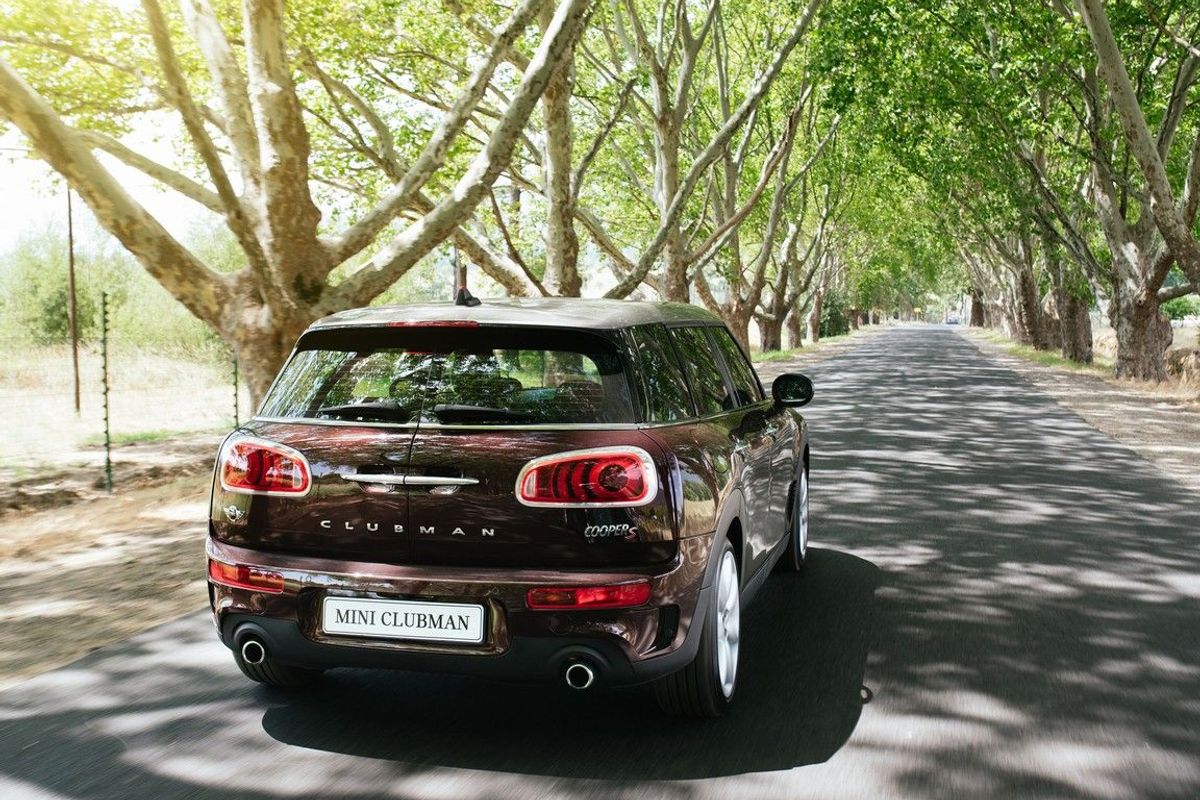
 

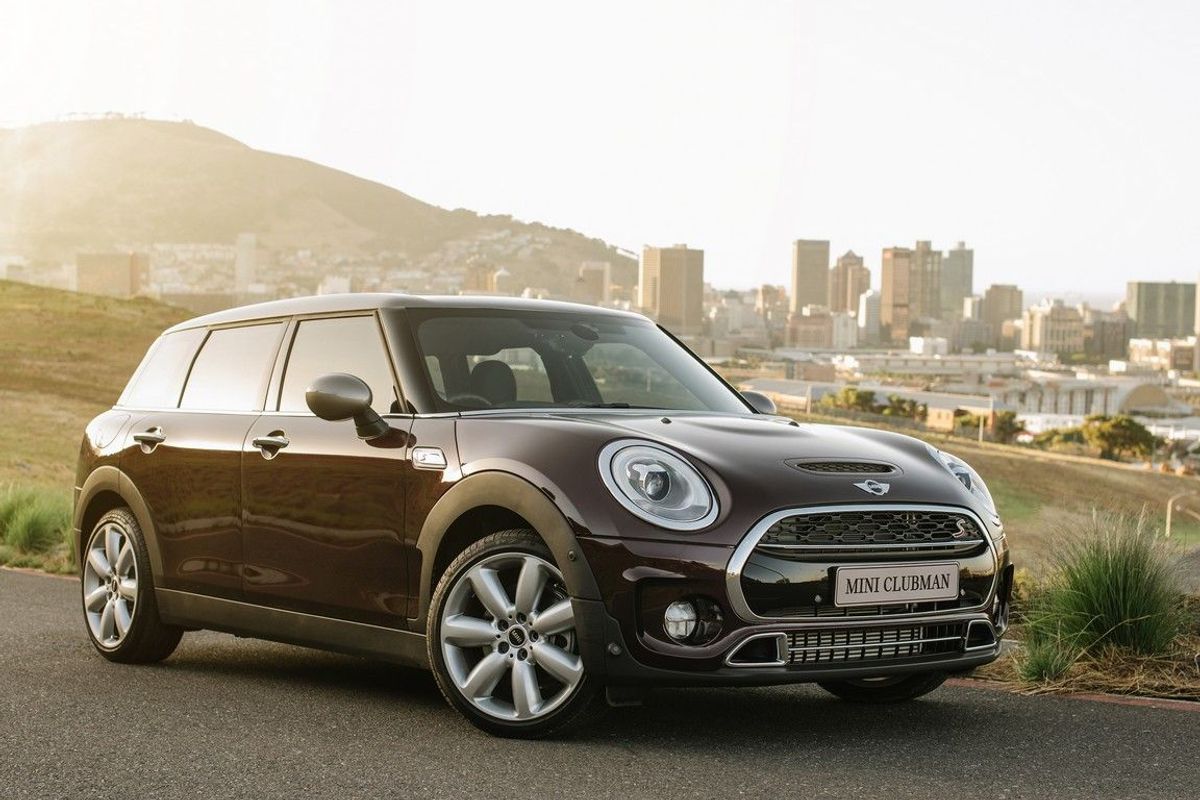
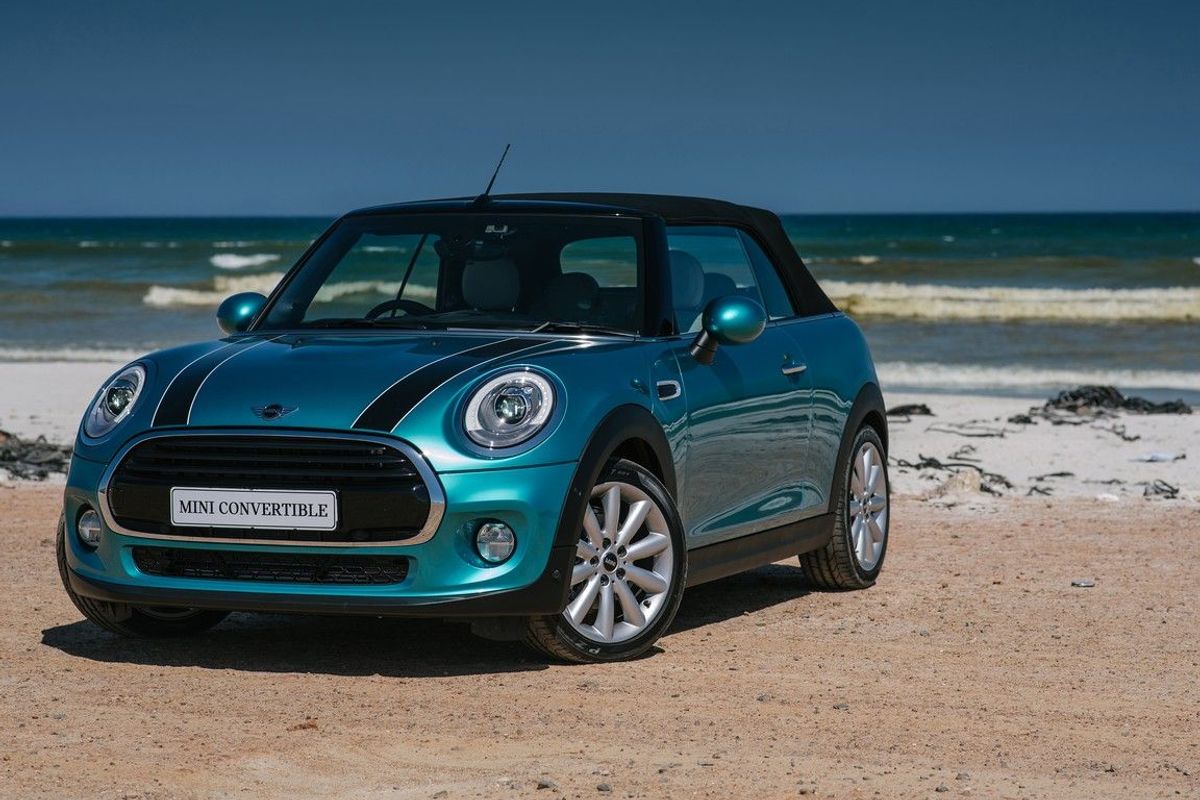
The Mini Cooper's Convertible and Clubman offshoots are niche offerings that exude cool and funky attitudes aided by a playful chassis tuned for optimal driver enjoyment. We had a quick blast at the local launch to get a feel for the newcomers.

Topless driving

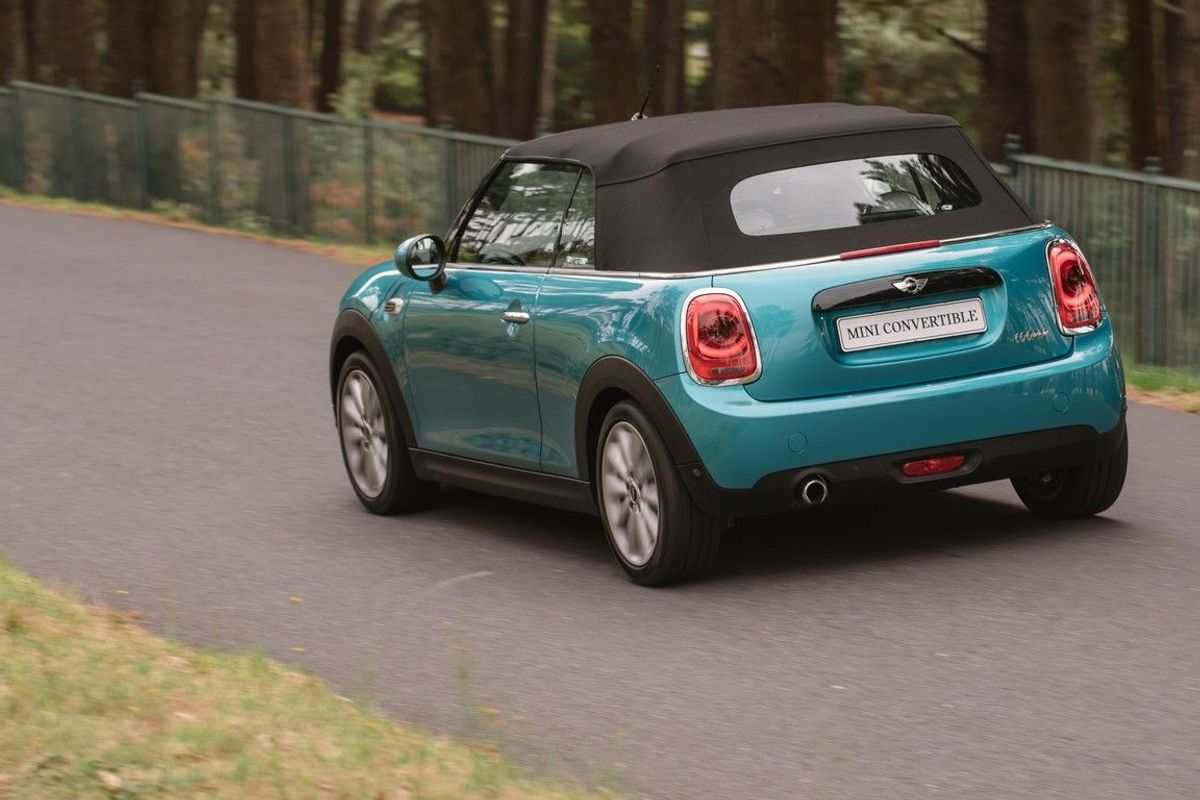
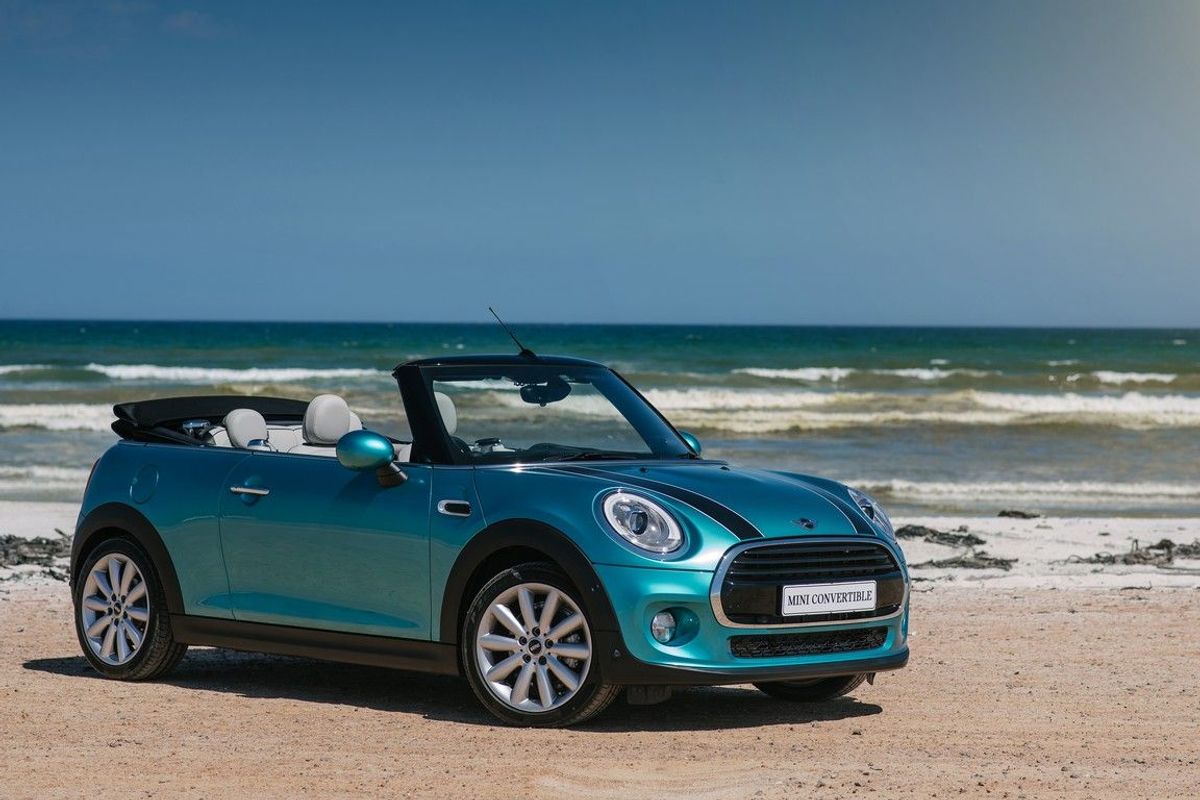
First we stepped into the Mini Cooper S Convertible with the top down on a windless day in the Cape; had it not been at the height of summer, it would have been perfect drop-top weather. The S badge means that it has the 2.0-litre turbo motor that produces 141 kW and 280 Nm. After about 10 minutes of roof-down scalp-frying, we slowed down to 30 kph and pressed the button to close the roof. It takes just 18 seconds to get the roof up or down (according to Mini).

Improved chassis

The previous-generation Mini Convertible suffered from a lack of body stiffness (because there’s no solid roof to add rigidity) and, as a result, it wobbled and shook a bit when driven enthusiastically, especially on less than perfect roads. The new one has certainly improved in this department and the Cooper S model I drove felt more tightly packaged and less prone to emit creaks and vibrations through the cabin and windscreen. The Convertible is actually bigger than its predecessor in every direction: it is 98 mm longer, 44 mm wider and 1 mm taller. The wheelbase has been lengthened by 28 mm as well and there’s more luggage room in the Mini's boot. You can load 215 litres in the boot when the roof is up and 185 litres when the roof is down.

Engine and gearbox

Mini offers the Convertible with six-speed gearboxes. You can opt for either a six-speed manual or automatic and, in the Cooper S Convertible, a six-speed sports automatic. The standard Cooper is powered by a 100 kW, 220 Nm three cylinder turbopetrol motor, but we didn’t get a chance to sample it. Driving enthusiasts will be pleased to know that the Cooper S has quite a bassy backing track. Back off the throttle and let it coast and the exhaust tips will pop and splutter until the car comes to a standstill. The Convertible still feels nimble and, quite rapid, when you drive it quickly, but the ride quality is rather stiff by compact car standards; the question of whether it will become annoying or tiresome in the long run would require a longer evaluation to answer.  

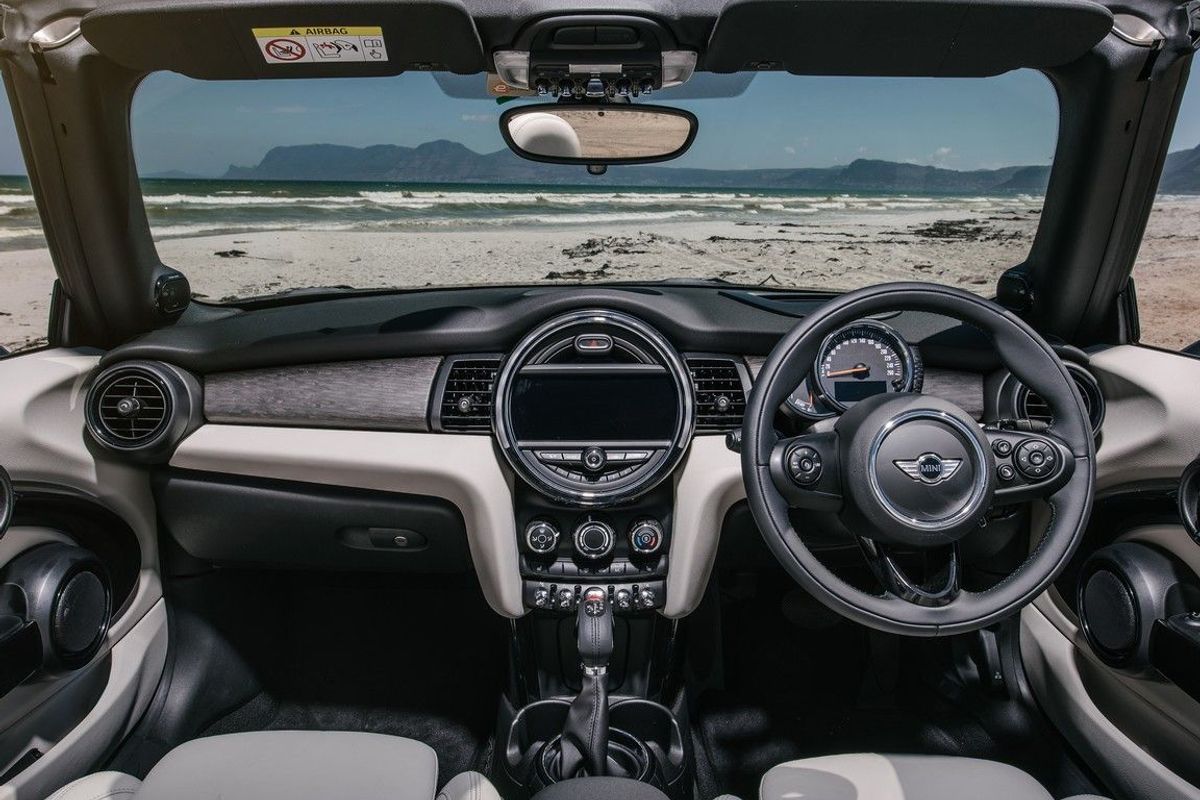
Interior comparison

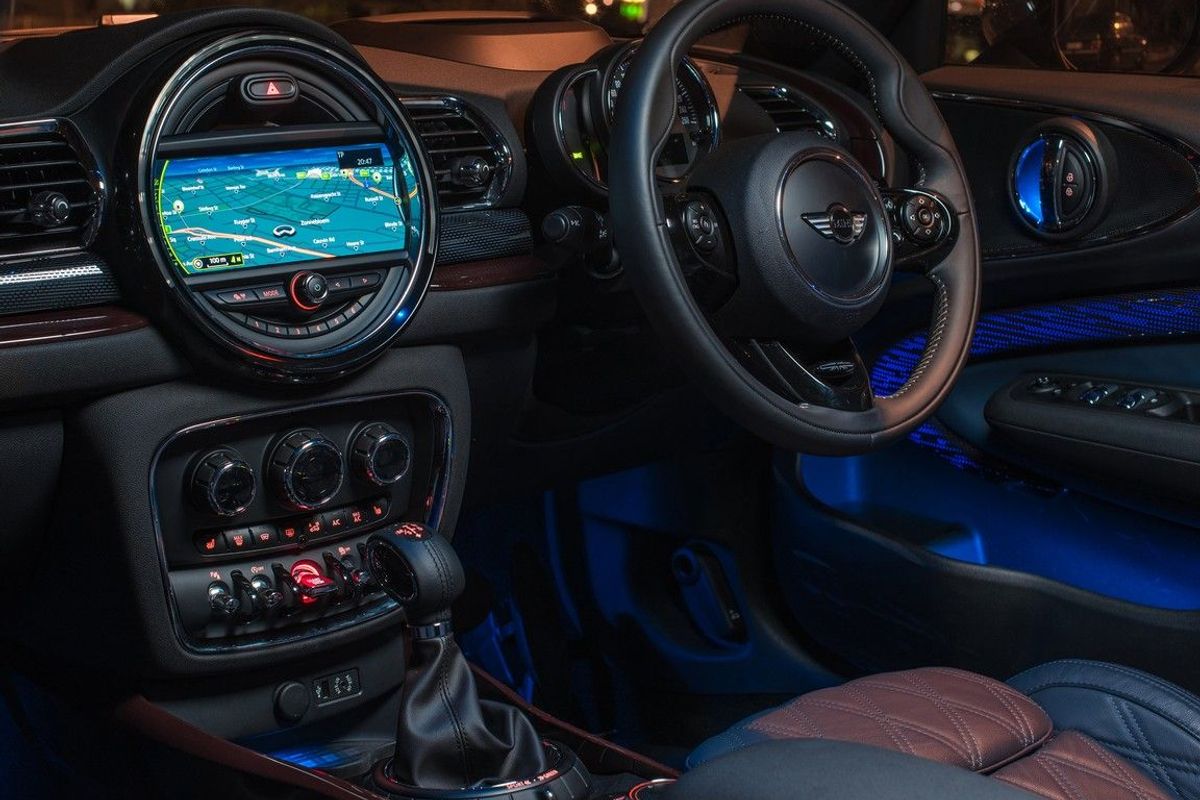
The Convertible and the Clubman feature a full range of Mini’s connectivity options, including Bluetooth, USB and auxiliary input and navigation can be ordered as well. There are plenty of options to choose from as well: you can spec up your Mini with a reverse camera, park assist and a head-up display. In terms of personalising the exterior, the Convertible and Clubman are available in 15 and 12 exterior colours respectively. Wheel options are abundant and range from 16-inch to 19-inch. The Cooper S models are also available with a John Cooper Works aero kit to give them more street cred.

Clubman drive

The Mini Clubman is a strange model in the Mini lineup. It has historical significance as the first Clubman model appeared in the 1960s. In its current guise, it’s difficult to categorise, because it’s not quite a hatchback and definitely not a panel van. You must really want a Mini to choose a Clubman as a family car.


A photo posted by Cars.co.za (@carssouthafrica) on

Cool factor

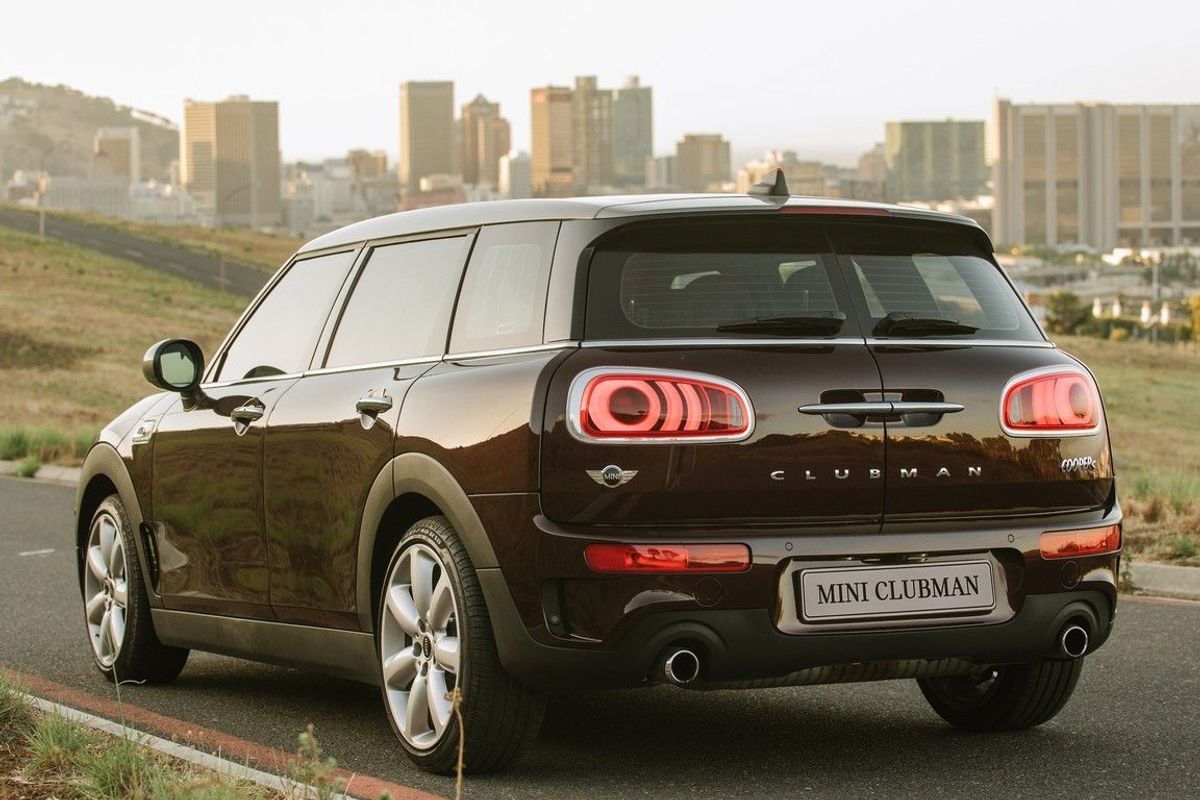
The Clubman still manages to be cool, however. There’s something about the rear doors that open like those of a delivery van that’s different and stylish and the car's overall shape is actually quite pleasing to the eye. The rear lights on the panel doors don’t actually function as brake lights but only illuminate when the headlights are switched on. The brake lights are in actual fact those red reflectors on the rear bumper and the high-level light below the roof spoiler.

The Clubman has also grown in size compare with its predecessor. Compared with the Mini 5-door it is 270 mm longer, 90 mm wider and has a 100 mm longer wheelbase. The rear has three individual seats, while the luggage bay can accommodate 360-litres (a little bit smaller than a VW Golf) and when all the seats are folded down offers 1 250 litres of utility capacity. The rear seats spilt and fold in a 40:20:40 configuration for an added bit of extra functionality.


A photo posted by Ashley Oldfield (@ashleyoldfield) on

Different gearbox available

The Clubman utilises identical engines and outputs to the rest of the Mini lineup, but because of its bigger platform, it can accommodate an eight-speed transmission. It is available as an option on the Cooper S Clubman and its main advantage is a fuel economy improvement. The claimed fuel consumption for the six-speed manual is 6.4L/100km and eight-speed 5.9L/100km. The 0-100 kph time is also one-tenth faster at 7.1 seconds for the eight-speed auto.

Driving time

The Mini Clubman’s extra size isn’t noticeable out on the road and the handling remains fun when you push on. The tyres reach their adhesion limits long before the chassis feels like it’s at its performance limits. I’m personally still not a fan of the electronic steering setup in the Mini range as the steering can feel a bit vague and disconnected from what the front wheels are doing when the going gets faster. The soundtrack isn’t as good as in the Convertible either, there’s no excited popping and burbling of the exhaust in the Clubman which, could certainly have added to the Cooper S’ fun factor.

Mini Convertible and Clubman Pricing

Convertible

Cooper Convertible 6-speed manual                       R368 000

Cooper Convertible 6-speed auto                            R385 310

Cooper S Convertible 6-speed manual                   R435 360

Cooper S Convertible 6-speed auto                         R452 539

Clubman

Cooper Clubman 6-speed manual                           R343 513

Cooper Clubman 6-speed auto                               R361 513

Cooper S Clubman 6-speed manual                        R417 872

Cooper S Clubman 8-speed auto                            R436 346

Budget 2016: Motorists slapped with levies, higher emissions tax

Although Finance Minister Pravin Gordhan’s 2016 Budget included personal income tax relief of R5.5 billion for lower- and middle-income earners, motorists will feel the brunt of a 30c/L fuel levy hike, a new tyre tax as well as an increase in CO2 emissions tax.

Consumers would have been relieved that personal income tax brackets have only been partially adjusted to compensate for inflation, that monthly medical tax credit allowances were upped and that there was no hike in VAT, at least not for the immediate future.

However, although ongoing oil price weakness and marginal improvements in the Rand/Dollar exchange rate will see reductions in fuel prices in March 2016, there will be an increase of 30c/L in the general fuel levy to R2.85/L for petrol and R2.70/L for diesel on April 6 2016. The Road Accident Fund levy will stay the same on R1.54/L.

What’s more, a new tyre levy of R2.30/kg per tyre will take effect on October 1 2016 for the purposes of financing recycling programmes, which, although it will benefit the environment, which is laudable, will further drive up the cost of vehicle ownership.

Not only will it be more expensive to fit your vehicle with a new set of tyres, but in terms of replacing a vehicle, new vehicle prices, which are already expected to increase by up to 20% in a little over a year due to the Rand’s weak exchange rate, will be further affected by a hike in the government’s carbon dioxide emissions tax.

The rate will increase from R90 to R100 for every gram above 120g/km for passenger vehicles, and from R125 to R140 for double cabs.

Given the recent interest rate hike and the impact of Budget 2016’s fuel and tyre levies and higher taxation on vehicles’ carbon emissions, the only way to reduce the running costs of a vehicle is by saving fuel.

Want to save on fuel? Consider this…

Most Fuel Efficient Cars in South Africa

Fuel Efficient Driving Techniques

For more detail on Minister Gordhan’s 2016 Budget Speech, click here.

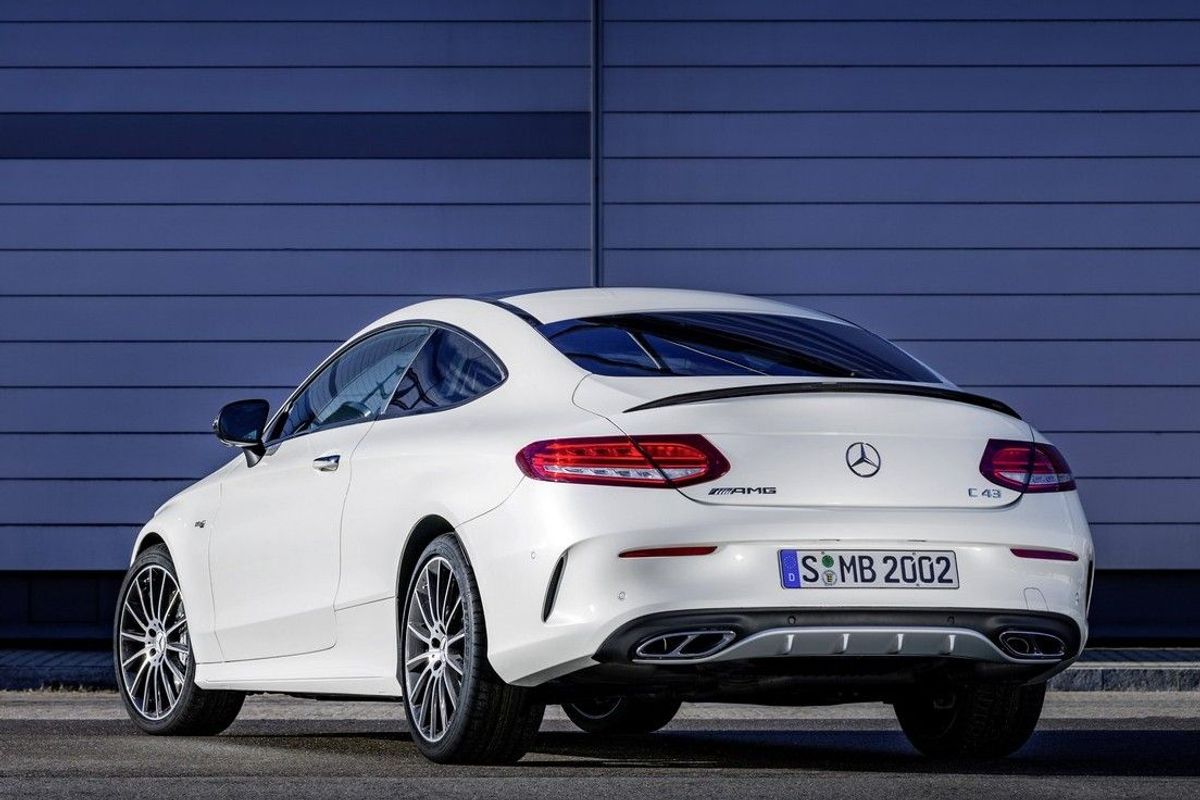
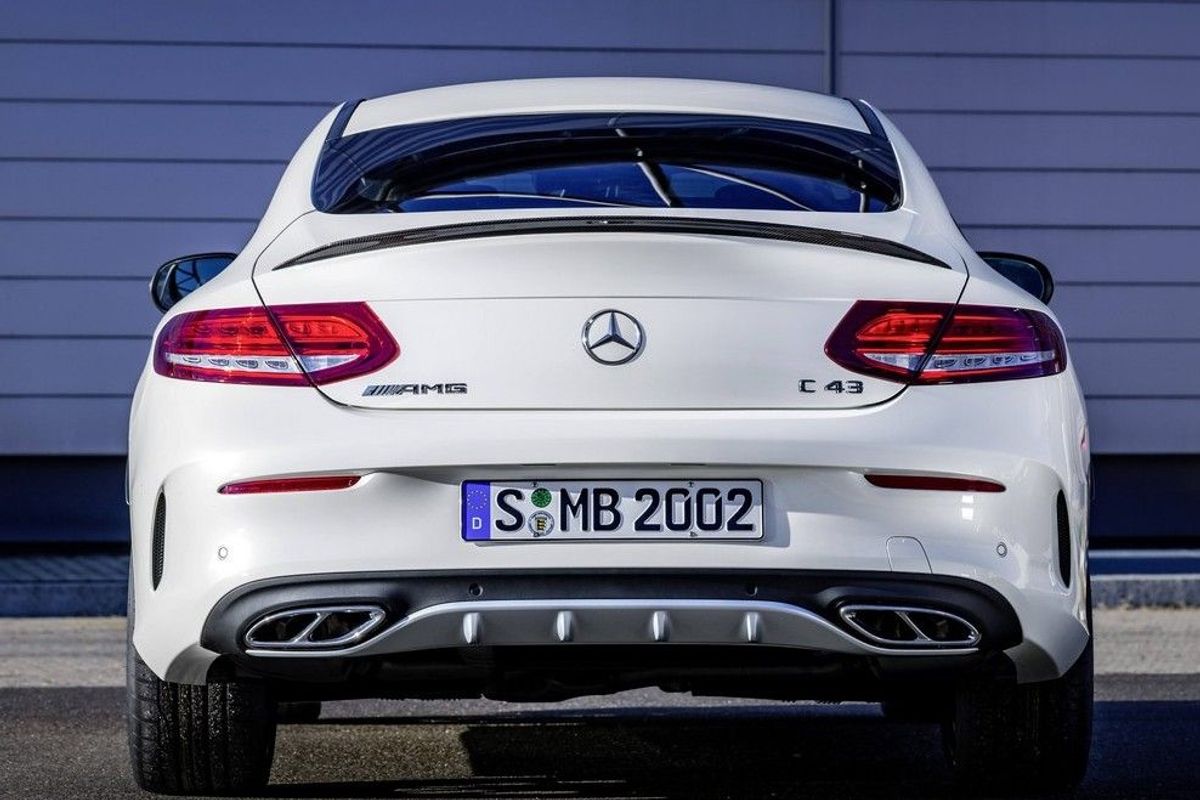
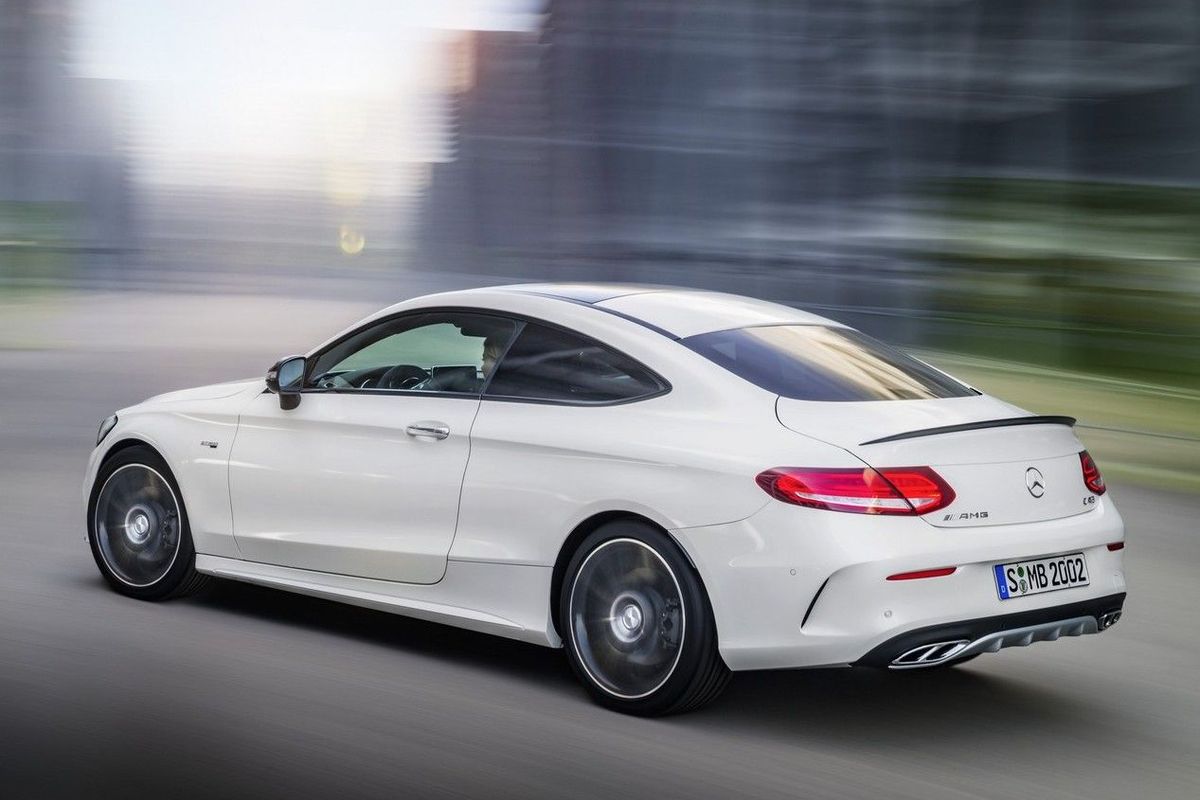
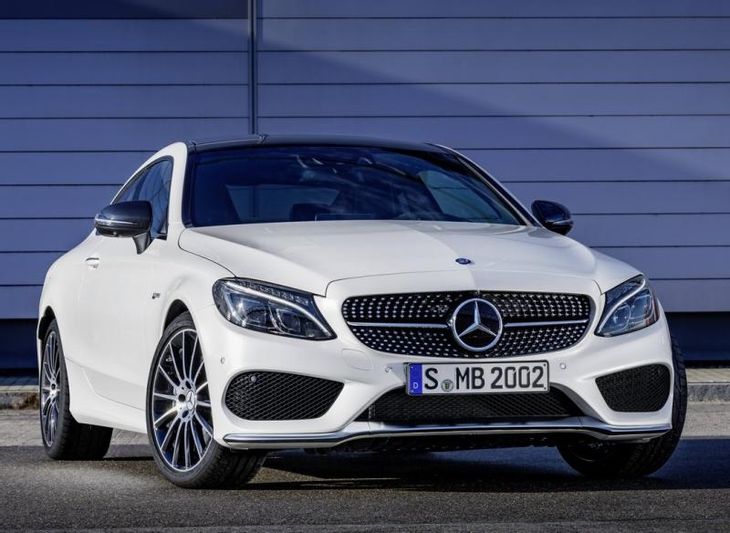
Mercedes-AMG C 43 Coupe Revealed


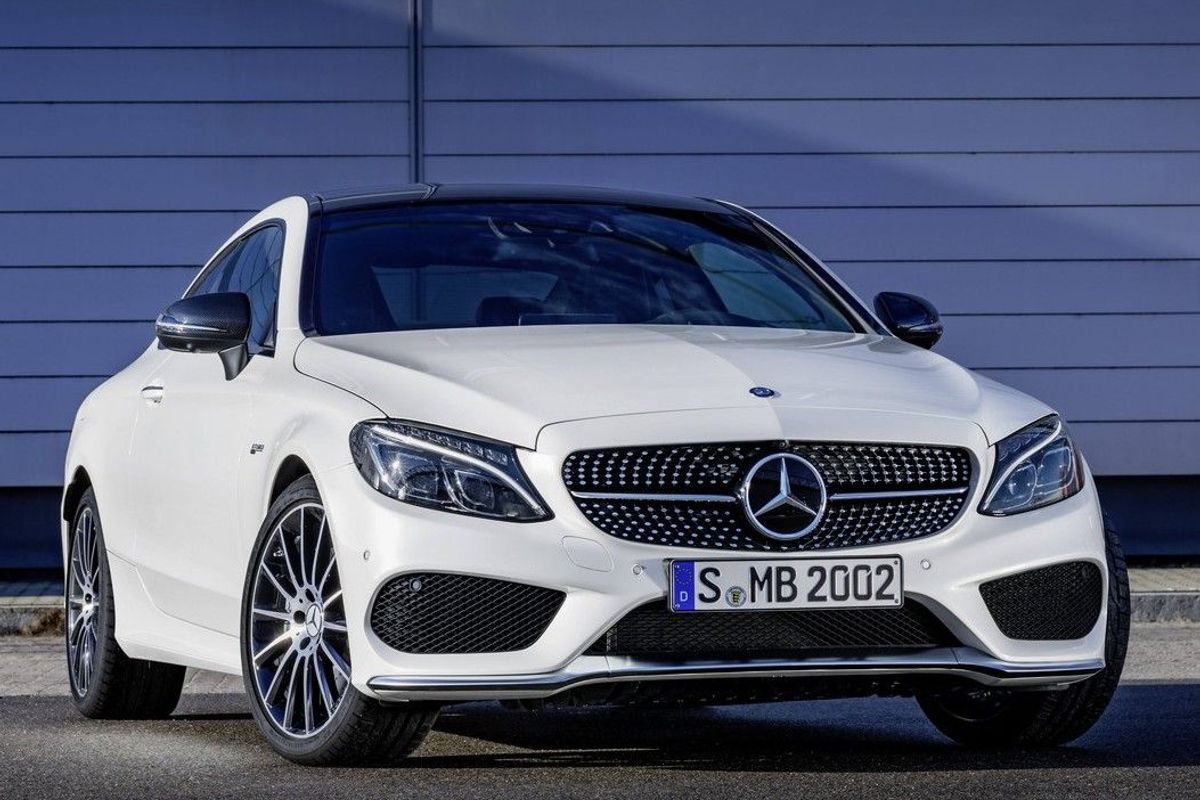
Mercedes-AMG welcomes a new member to the C-Class family, the C 43 4MATIC Coupe.

As part of the growth strategy of Mercedes-AMG, a new and exciting product will make its debut at the 2016 Geneva Motor show next week. Mercedes-AMG will showcase the C 43 Coupe that marks the introduction of a new series of ‘43’ models.

Mercedes-Benz South Africa has confirmed that the C 43 4MATIC Coupe will be available in the third quarter of 2016.

What makes it special?   


Well, performance is a good place to start. The C 43 Coupe is powered by a high-revving 3.0-litre V6 twin-turbo engine that develops 270kW and 520Nm. Power is sent to all four wheels via the AMG Performance 4MATIC all-wheel drive system with a front to rear torque bias of 31 and 69 percent. Power is transferred using a 9G-TRONIC automatic transmission with a double-declutching function and short response times.  

As is to be expected, performance is swift with 0-100 kph achieved in 4.7 seconds before reaching an electronically limited top speed of 250kph.

The C 43 Coupe features AMG Ride Control sports suspension, adopted from the Mercedes-AMG C 63, with three-stage adaptive variable damping. Five driving modes are available to the driver depending on your preference and three-stage Electronic Stability Program (ESP) is also fitted.

Stopping power is provided by large internally ventilated compound brake discs with perforations. The discs are 360 mm in diameter up front while the rear discs are 320 mm in diameter.

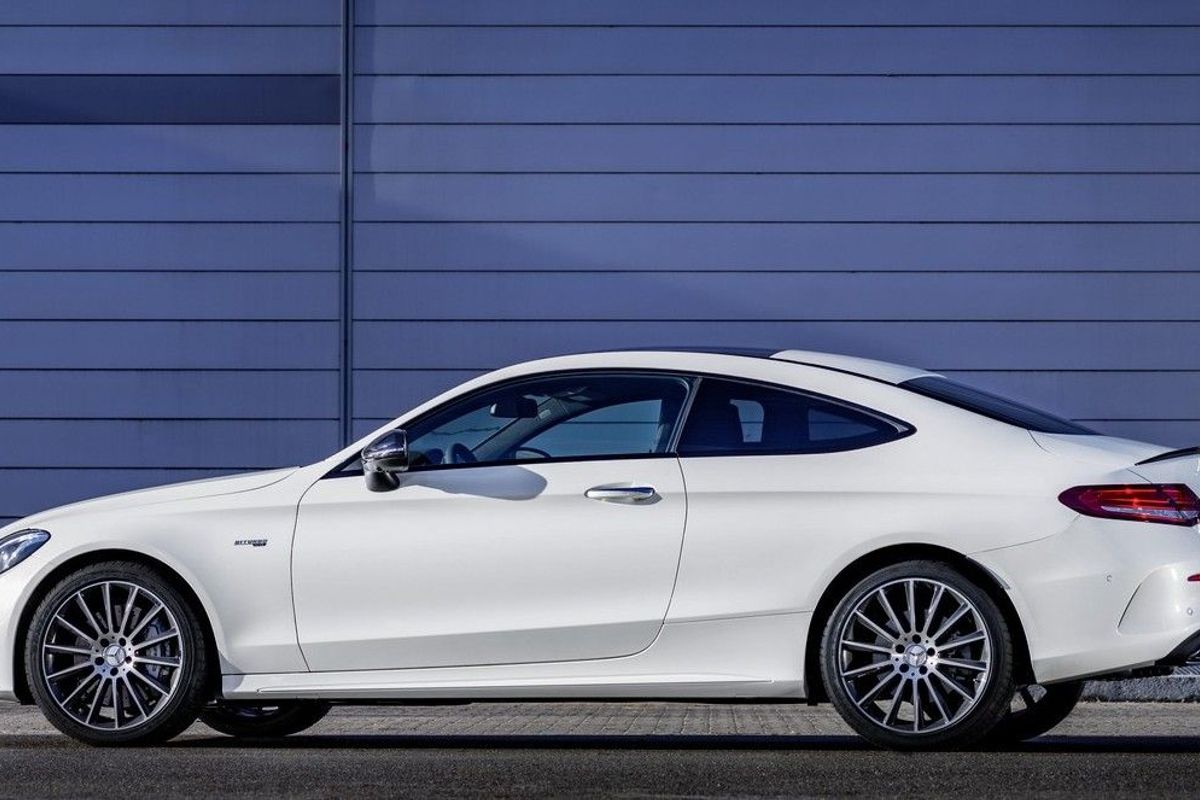
In terms of styling, the C 43 Coupe rides on 18-inch AMG light alloy wheels with 5-spoke design and they are painted in high-gloss black with a high-sheen finish. The model features a diamond radiator grille with chrome-plated pins and a louvre in high-gloss black with AMG lettering. A silver chrome front splitter is also fitted. The rear apron features a matt iridium silver diffuser insert and two chrome-plated tailpipes.

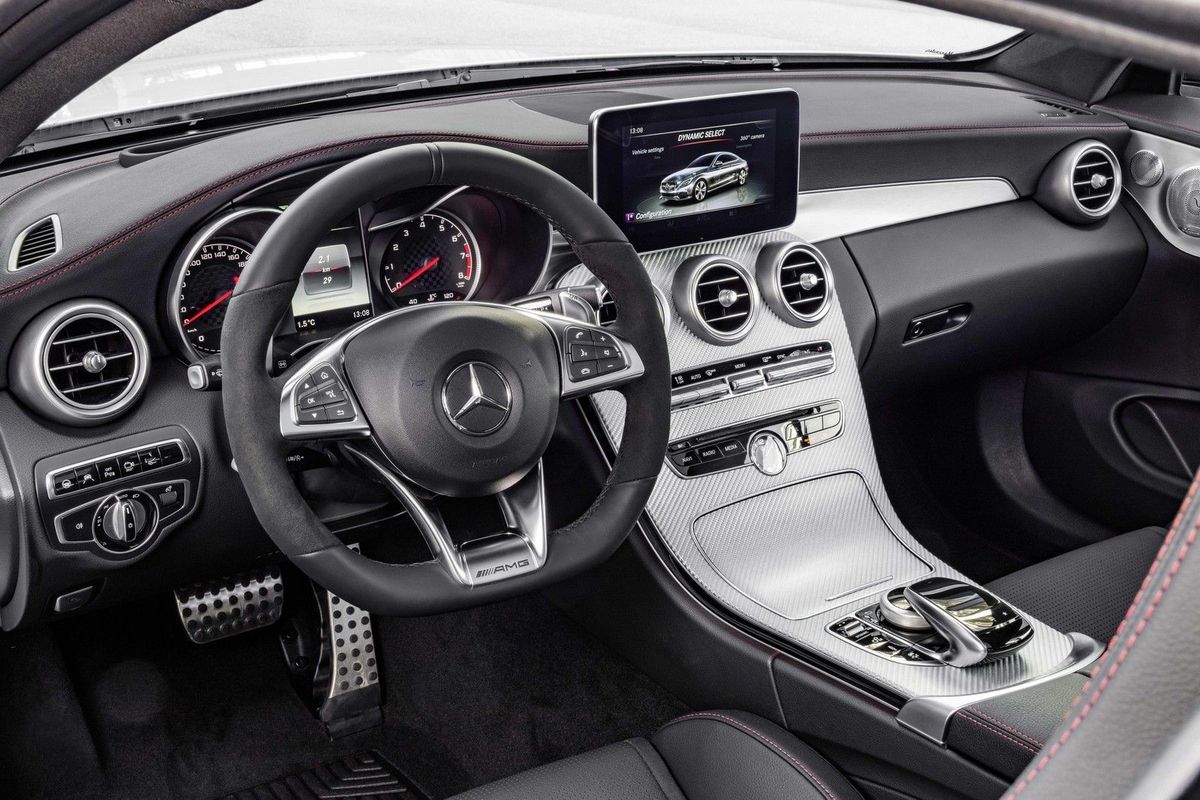
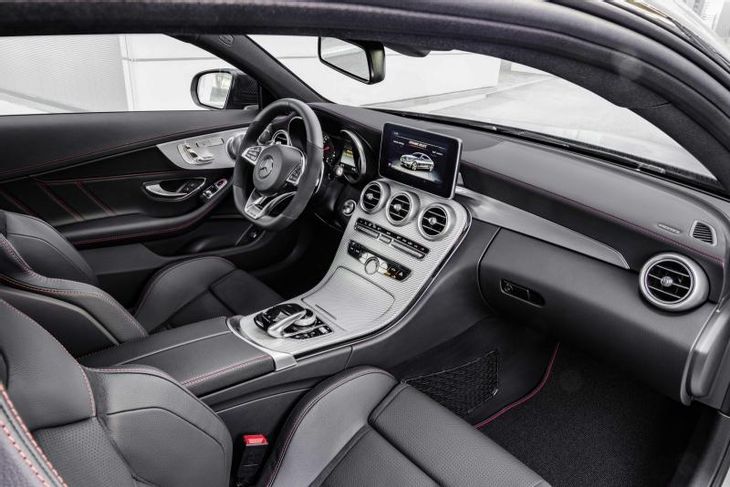
On the inside the C 43 Coupe features a flat-bottomed, multifunction sports steering wheel wrapped in black leather and finished off with contrasting topstitching. The sports seats feature improved lateral support and are upholstered in ARTICO leather and DINAMICA microfibre. The instrument panel is also trimmed in ARTICO, as are the armrests, door panels and centre console. Aluminium trim pieces in the instrument panel and doors provide contrast in the cabin. The instrument cluster features two round tube-shaped dials as well as a 4.5-inch multifunction colour display with a Racetimer and a 280 kph scale with a chequered-flag design.

The Mercedes-Benz C 43 coupe will be a great addition to the coupe range as it bridges the gap between the normal models and the fire-breathing AMG derivatives. If your budget can't stretch to the V8-powered C 63, then this is likely to offer the best bang-for-buck value in the range. 

More Content

Mercedes-AMG GT S – We drive the athletic V8-powered monster

Mercedes-Benz C-Class Coupe – What to expect

Volvo V40 Gets Facelifted


The Volvo V40 is receiving some love with cosmetic and trim changes for the 2017 model year.

Volvo’s popular V40 and V40 Cross Country derivatives are being updated and the changes will include cosmetic and trim enhancements. The V40 range will still offer three diesel and three petrol engines across four trim levels. The facelifted Volvo V40 and V40 Cross Country can be expected in South Africa in the third quarter of 2016.

What’s changed?

The most noticeable change on the updated V40 and V40 Cross Country is the inclusion of Thor’s Hammer. The impressive light signature was first introduced on the Volvo XC90 and is now also a feature on the S90 sedan and V90 station wagon. The front of the vehicle will also feature new grille designs and an all-new Volvo Iron Mark.

Five new colours will also be available to customers and these include Amazon Blue, Denim Blue and three existing colours used on other Volvo products including Bursting Blue, Mussel Blue and Luminous Sand.

New trim level nomenclature (Momentum and Inscription) will be used on the updated V40, first seen on the XC90. A total of eight new wheels designs will be offered with the updated V40 and V40 Cross Country derivatives.

Taking inspiration from the Volvo Concept Estate, a new upholstery called City Weave will be offered as well as a new Charcoal or Blond steering wheel option. A number of new interior panel trims will also be available to customers and these include Milled Aluminium, Black Grid Aluminium and Stealth Aluminium. The doors panels will feature accent trim colours with contrasted stitching and a black headliner will be offered as an option for the first time for all models in the range. In addition, R-Design and Inscription derivatives will get new tread plates and a new key fob with the new Volvo logo will be available too.

The Volvo On Call smartphone app has been updated but is still in the development and planning phase for release in South Africa. The app allows for remote access and controls a wide range of in-car features. New functionality for the app includes calendar and navigation integration as well as PC-based use.

In an effort to improve the in-car experience, Volvo’s CleanZone technology will work to keep air in the cabin fresh and clean by filtering air before it enters the cabin.

More Content

Volvo V40 T5 R-Design Review

Volvo V40 Cross Country D4 Review

Mercedes-Benz A-Class Facelift: New vs Old – Side by Side Comparison


The Mercedes-Benz A-Class has received a facelift for 2016. Changes include tweaks to the exterior and interior, as well as Adaptive Suspension being made available as an optional extra.

We thought the best way to detail these changes was to play a giant game of Spot the Difference, so we lined up an outgoing model against the new generation for this video review.

Subscribe to your Youtube channel here

Interested in a new Mercedes Benz A-Class? Find one here

Interested in a used Mercedes Benz A-Class? Find one here

For a detailed spec sheet of the 2015 Mercedes Benz A220d, click here

Read our first drive of the new A-Class here

Read our article – Five Improvements: Facelifted Mercedes-Benz A-Class

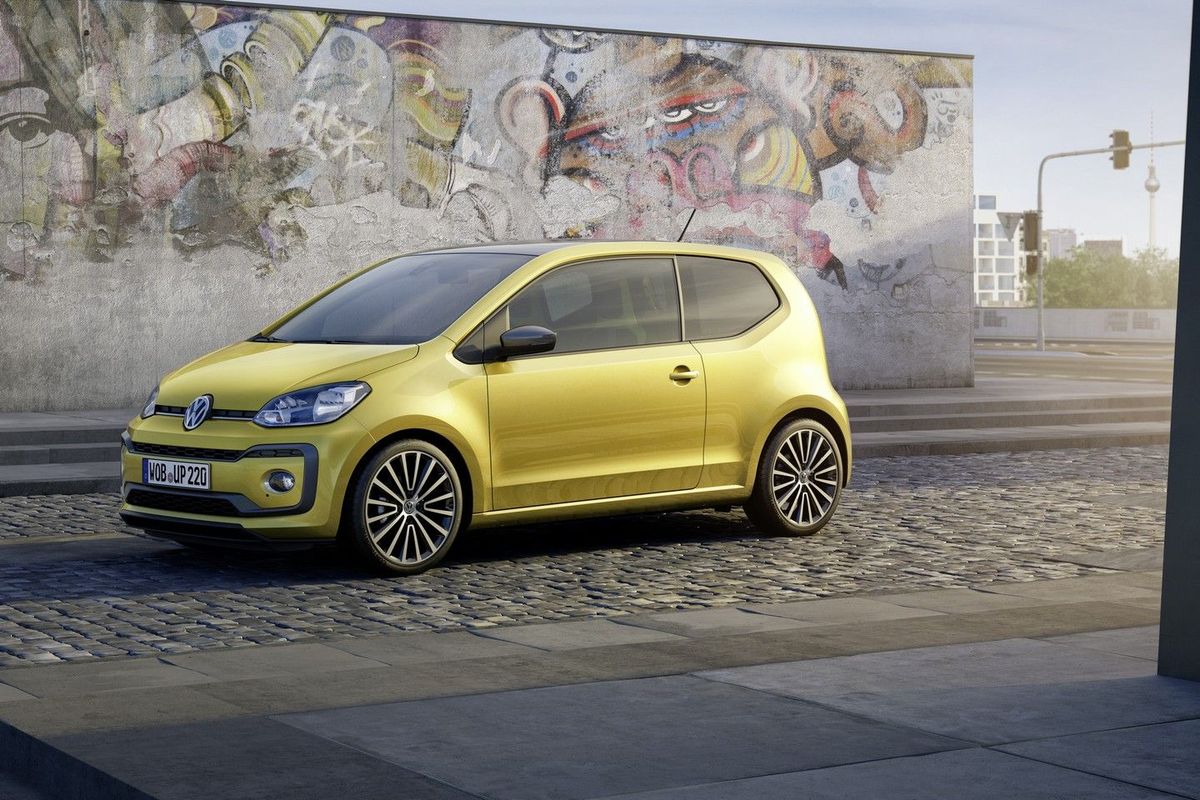
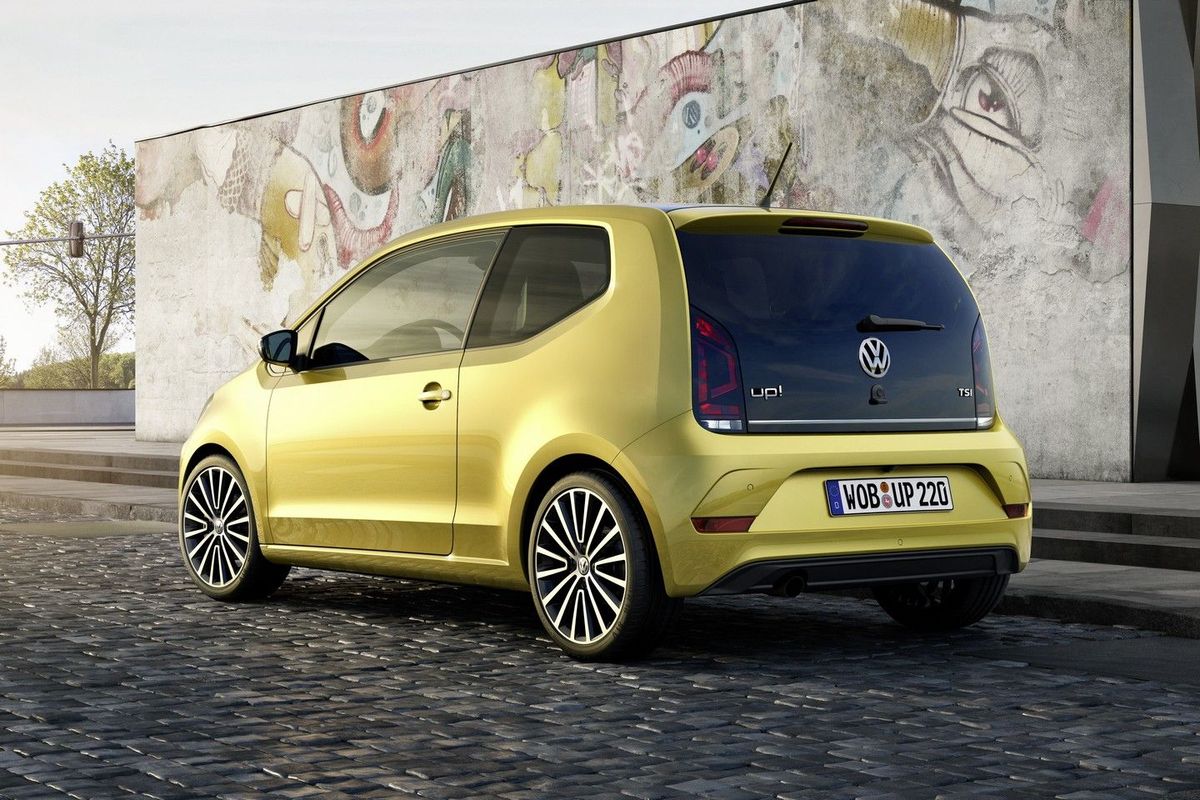
More Volkswagen up! Models Heading for SA, Facelift here in 2017


Volkswagen will introduce a facelifted version of the up! in South Africa early in 2017, but before that 5-door, crossover and individualised models will join the model lineup. 

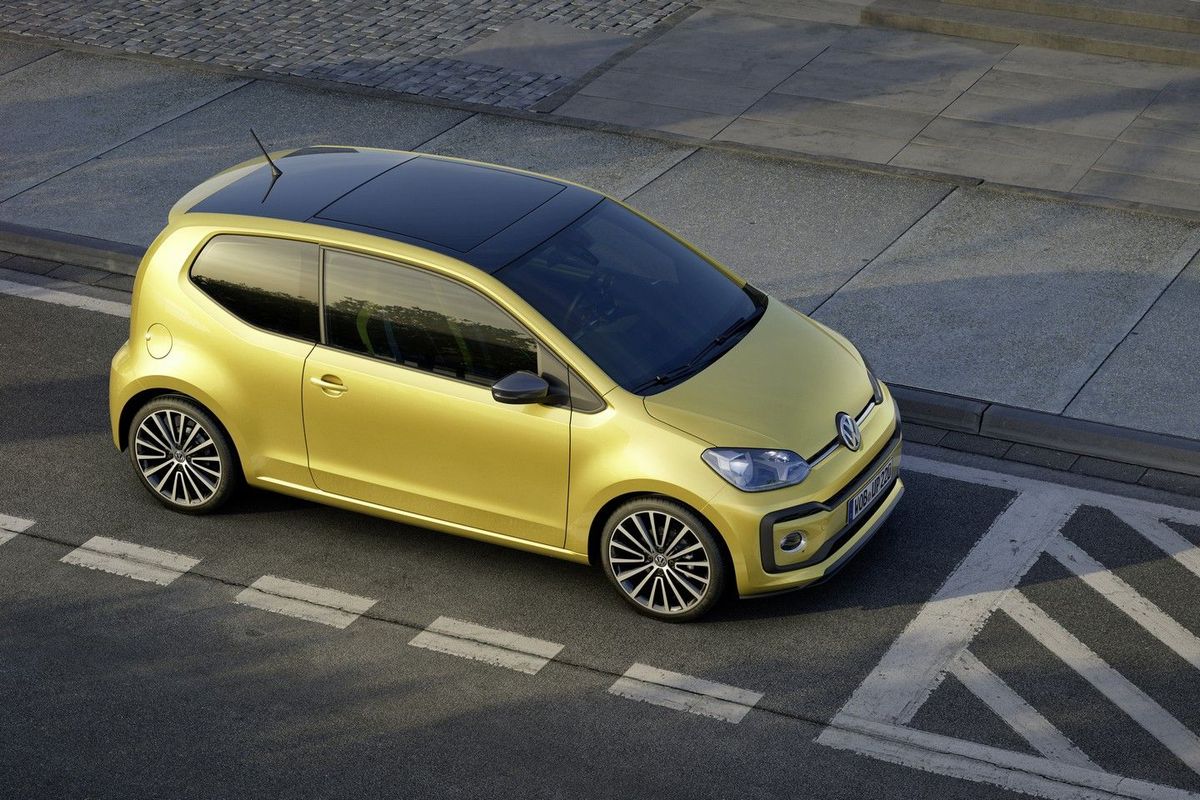
Volkswagen will use the Geneva Motor Show (3 to 13 March 2016) to showcase a facelifted up! with a host of updates including visual, mechanical and technological changes. Since being launched in South Africa, the up! has sold well and it was a finalist in the annual Cars.co.za Consumer Awards as one of the best budget cars in Mzansi. This facelifted model builds on an already excellent product and the improvements will certainly be welcomed by buyers.

Volkswagen South Africa has confirmed that the facelifted up! can be expected to arrive in the local market by the first quarter of 2017. Prior to the arrival of the facelifted up!, Volkswagen will introduce new 5-door versions of the up! in May 2016 in the form of the Cross up! crossover and the eye-catching, highly-personalisable Colour up!, which will diversify and bolster the up! range significantly. 

Exterior changes

Styling changes include revised front and rear bumpers as well as redesigned headlights with LED daytime running lights. The side mirrors integrate the turn signals and the rear features a new diffuser and modified taillights. Buyers can choose between 13 body colours, nine different decals, three roof colours, coloured wheels, ambient lighting and design and colour packs.

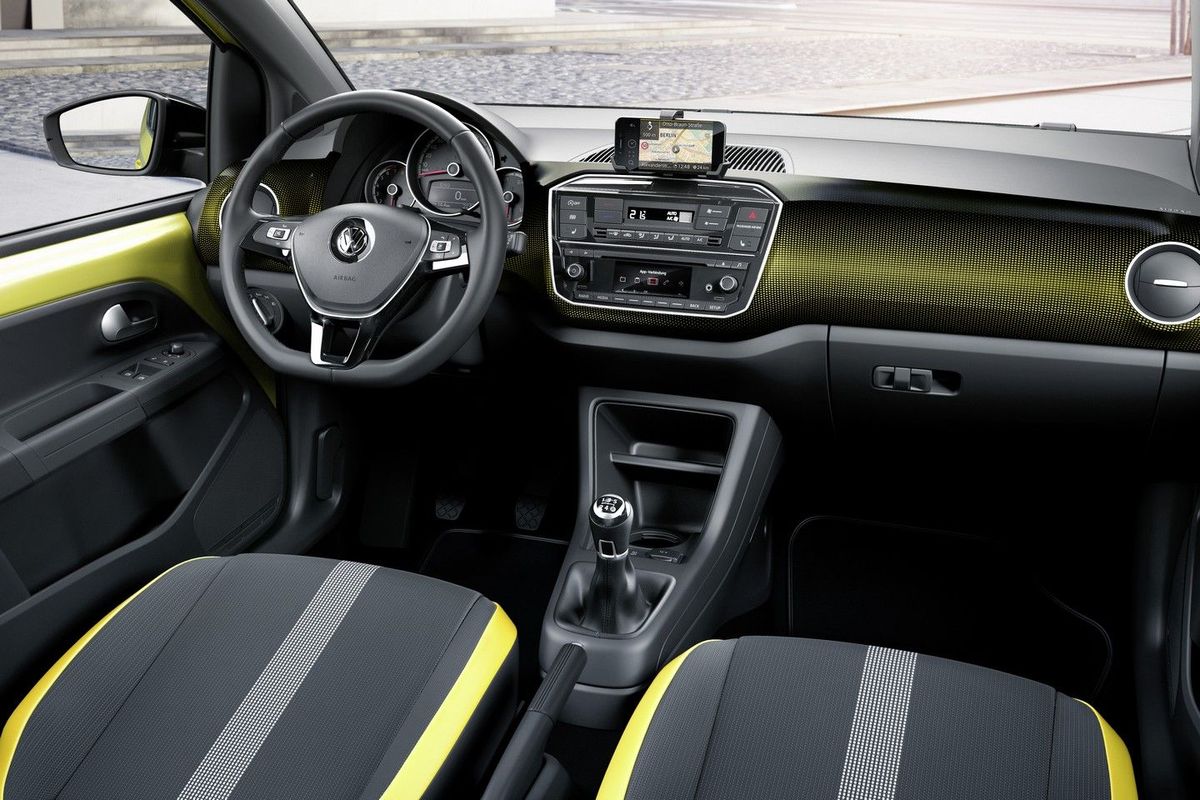
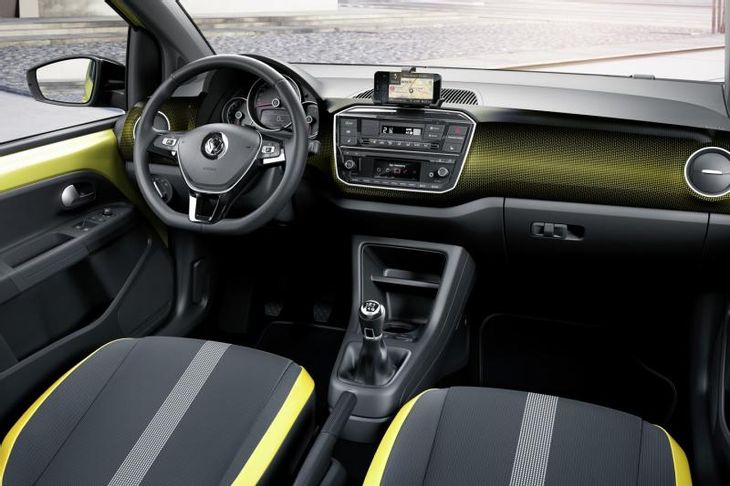
On the inside, the facelifted up! gains two new infotainment systems including a 3.1-inch monochrome display as well as a 5-inch colour display that integrates with your smartphone. The system also caters for a rear camera and comes with DAB+ digital radio functionality. Furthermore, a 300 W Beats Audio system is also fitted with seven speakers. This is also the first up! to feature Pure Air Climatronic automatic air conditioning.

New engine

One of the main reasons people consider the up! is because it returns excellent fuel economy and this facelifted model is fitted with a new 3-cylinder 1.0-litre turbo engine that is claimed to achieve a decent 4.4 L/100km with a range of 800 km. The new engine produces 66 kW and 160 Nm of torque, representing a major improvement over the current 55 kW / 95 Nm three-cylinder unit with a claimed fuel consumption figure of 4.6 L/100km. The facelifted up! is said to be capable of completing the 0–100 kph sprint in 10 seconds and go on to a top speed of 185 kph. 

More Content: 

Volkswagen up! (2015) Review

Budget Car Comparison: Volkswagen up! vs Toyota Aygo

Volkswagen up! Video Review: What's it like? 

Volkswagen up! vs Polo Vivo: Which is better? (Video)

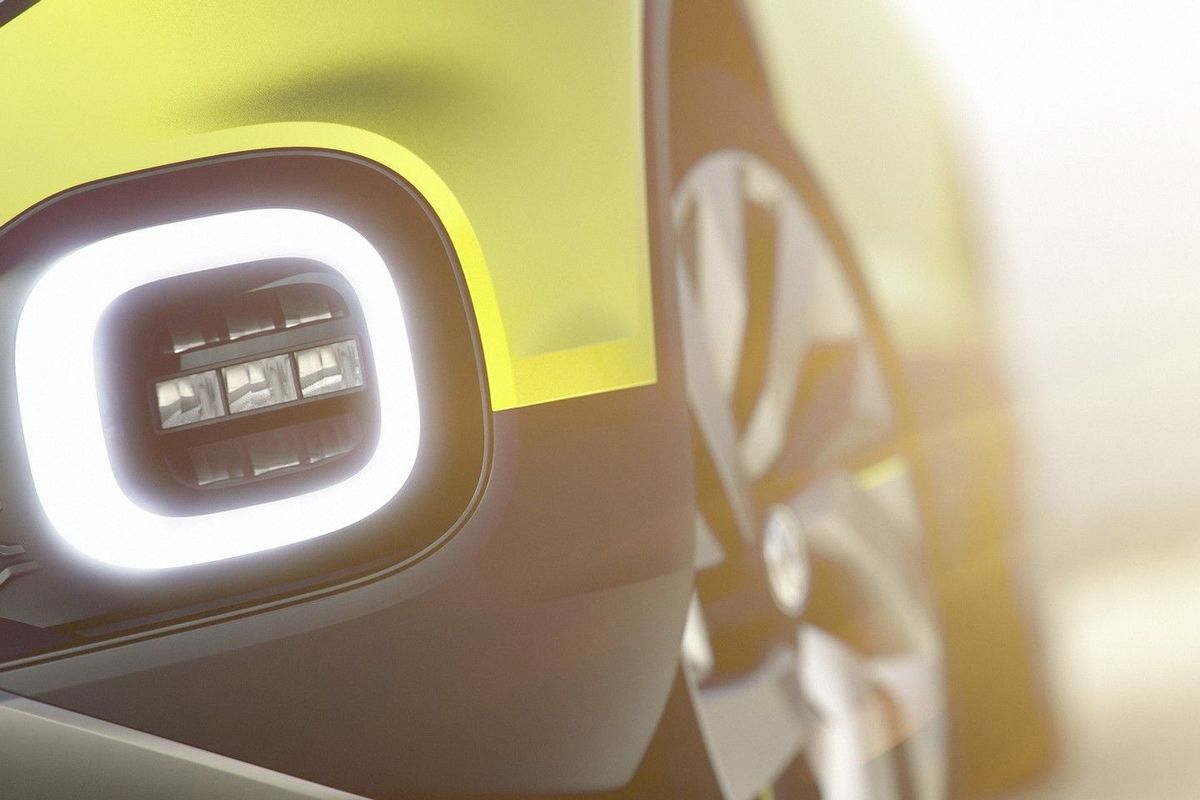
Volkswagen SUV Concept Teased


Volkswagen has released teaser images of a new small SUV Concept that will be shown at the upcoming Geneva Motor Show.

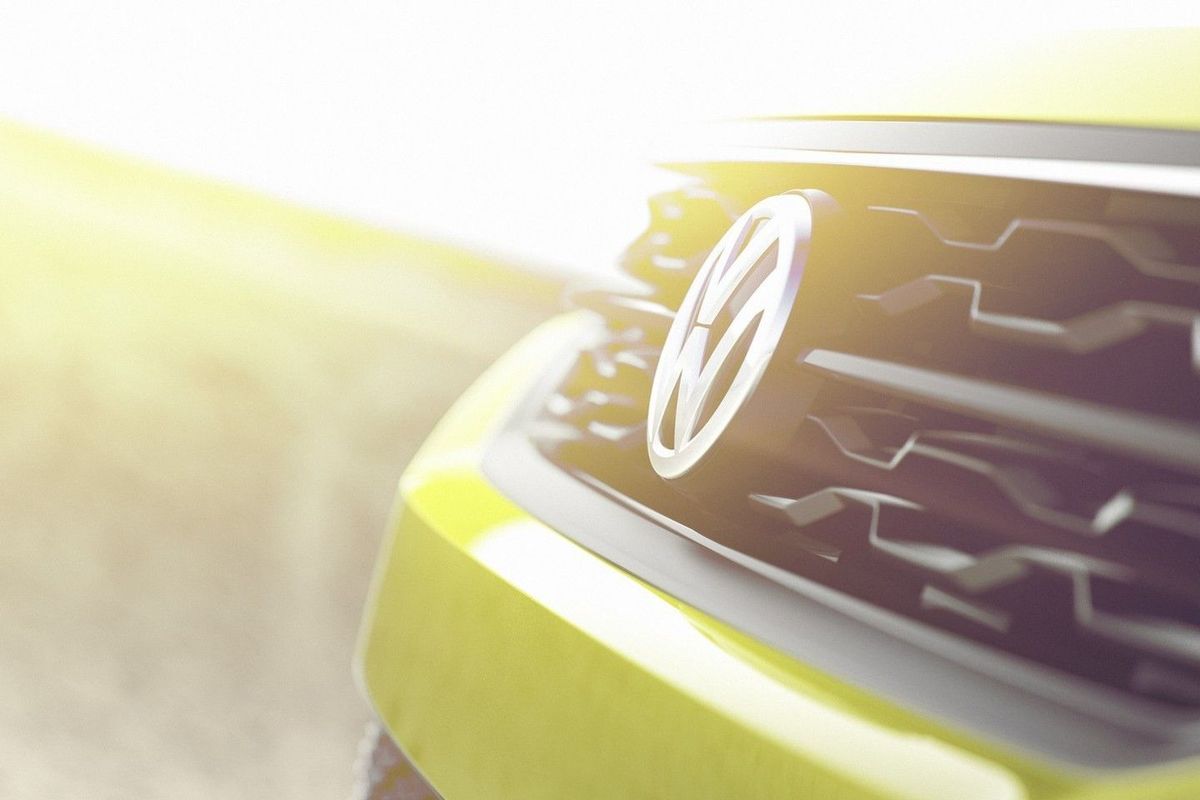
The concept appears to be quite close to production-ready. At this stage Volkswagen has not disclosed the name of the concept, yet, but rumours suggest that the concept will be called the "T-Cross".

Reports also indicate the concept is based on an adaptation of the MQB platform and Volkswagen intends to have a production model ready by 2018 that will slot under the Tiguan as a “trendy affordable SUV”.

Styling features

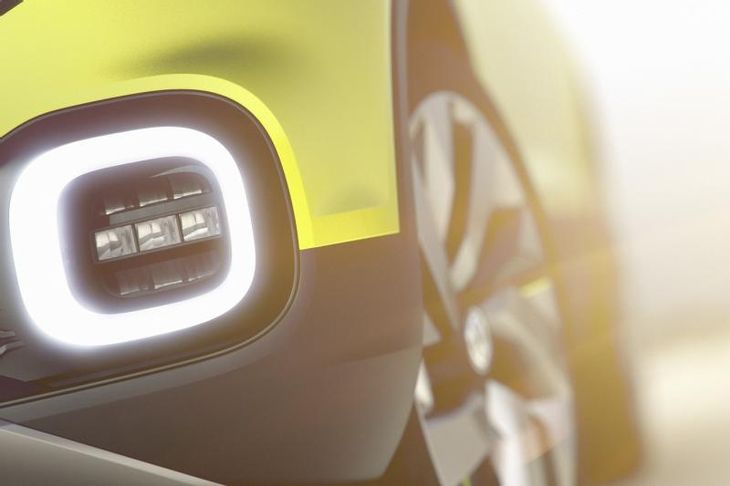
The images show sleek LED headlights complemented by square LED daytime running lights. The concept also features bright yellow paintwork with plastic cladding on the lower section of the bumper and wheel arches. Aluminium underbody protection adds a degree of ruggedness to the concept and the wheels are two-tone alloy examples.

Although Volkswagen has not released any images of the interior, the company says that it has much in common with the recently revealed BUDD-e Concept. That means that the interior layout will be rather simple with fewer buttons and dials, with most of the functions accessed via touchscreens.

We will keep you updated as more information becomes available. 

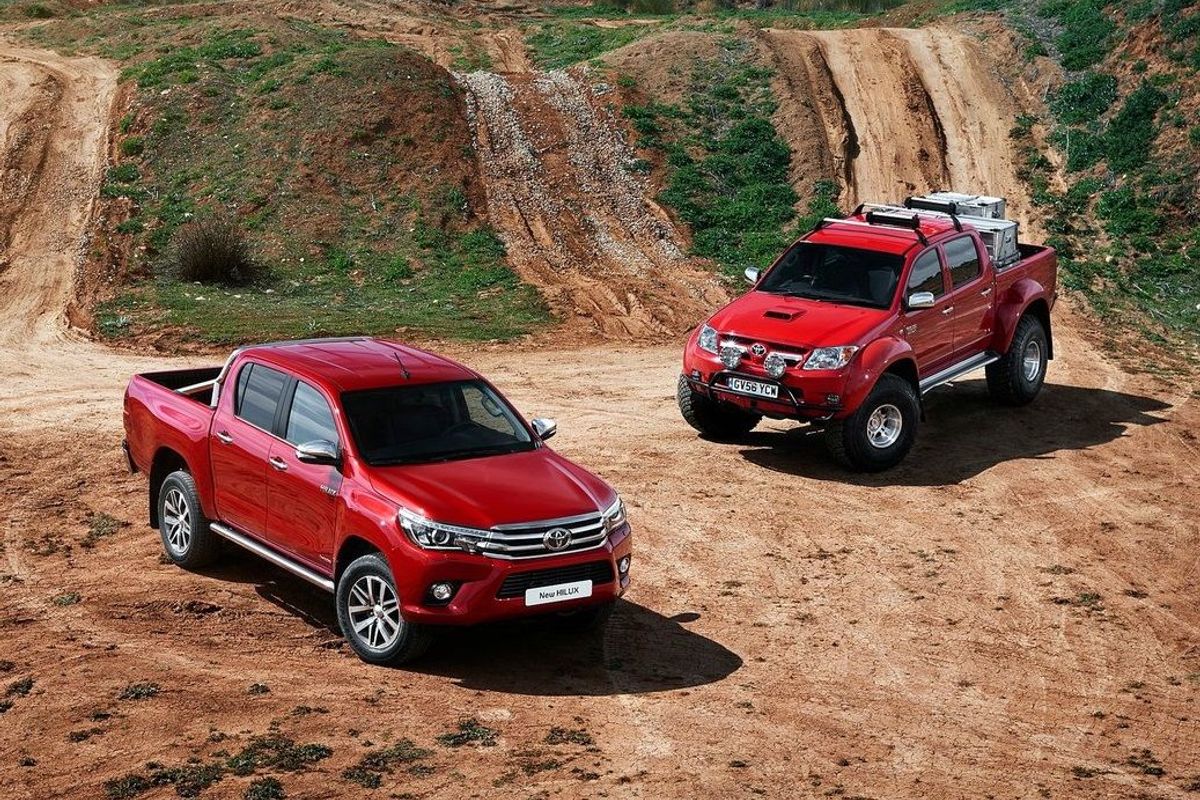
Five Things Toyota Changed With 8th-Generation Hilux

The Hilux has been around for 7 generations and, on the eve of the 8th-gen bakkie's introduction to the local market, we review the changes that the newcomer brings

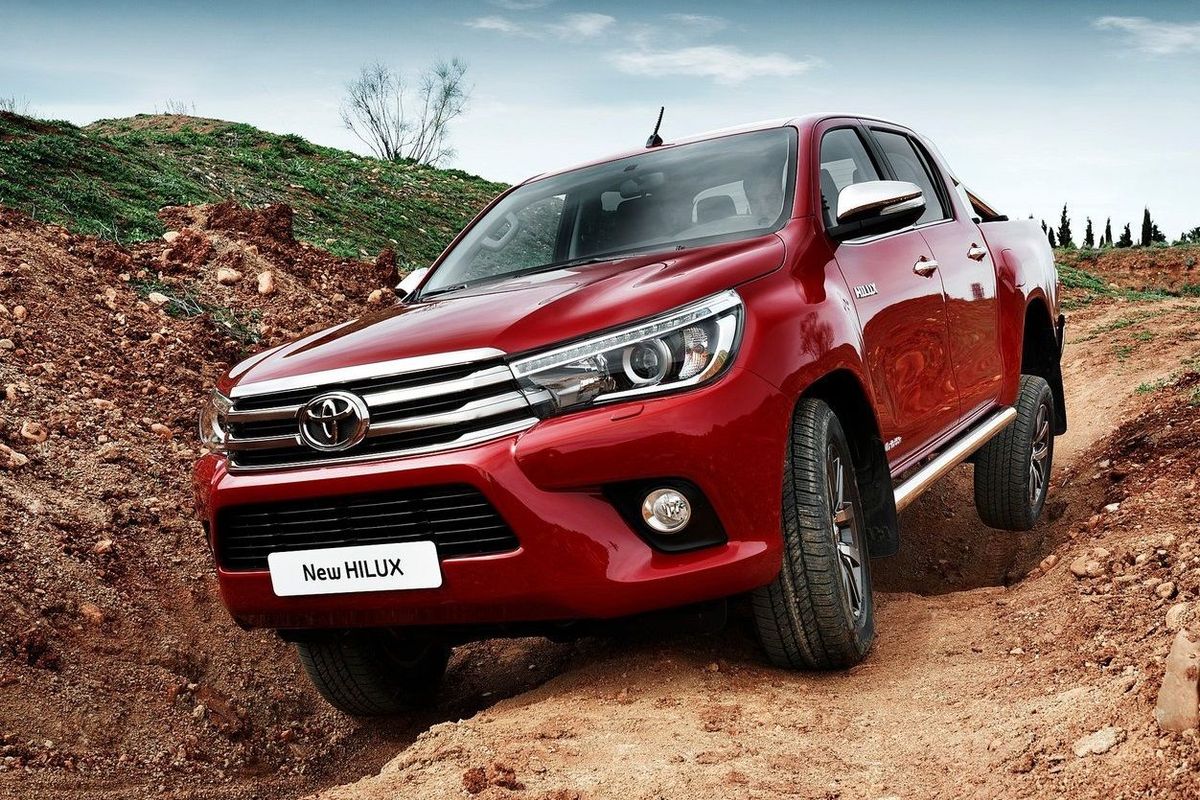
The Toyota Hilux has achieved unrivalled sales success in South Africa. From its humble beginnings back in 1969, the Hilux has always been the go-to choice for offroad enthusiasts and light commercial applications. Despite the growing popularity of the Ford Ranger and other rival bakkies, the Hilux continues to be a dominant force in the market for Toyota.

New engines

Let’s start with powerplants. While there was nothing wrong with the venerable 3.0-litre D4-D turbodiesel, the quest for better fuel economy and refinement has driven the development of new engines. The 2.7-litre four cylinder and 4.0 V6 petrol engines continue, but Toyota SA claims with revised mapping and management, their fuel economy has improved by 10%.

There’s a 2.4-litre GD diesel engine that produces 110 kW and 343 Nm, with a second option having the same power, but more torque at 400 Nm. The new 2.8-litre GD-6 motor has peak outputs of 130 kW and 420 Nm, with the second torque option coming in at 450 Nm. For those who want a petrol Toyota Hilux, the new 2.0-litre makes 102 kW and 183 Nm… However, you can get this engine in workhorse models only.

In terms of transmission, there’s a new six-speed automatic as well as a new six-speed manual.

4×4 and offroad ability

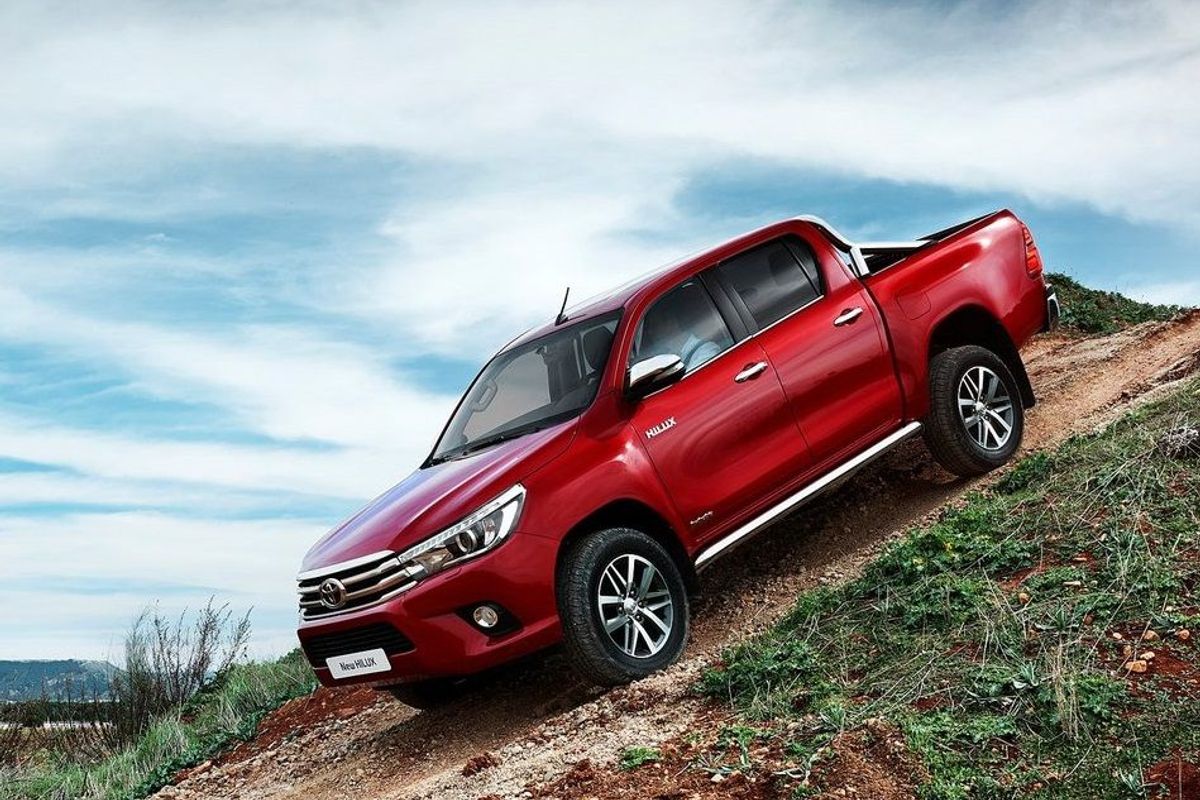
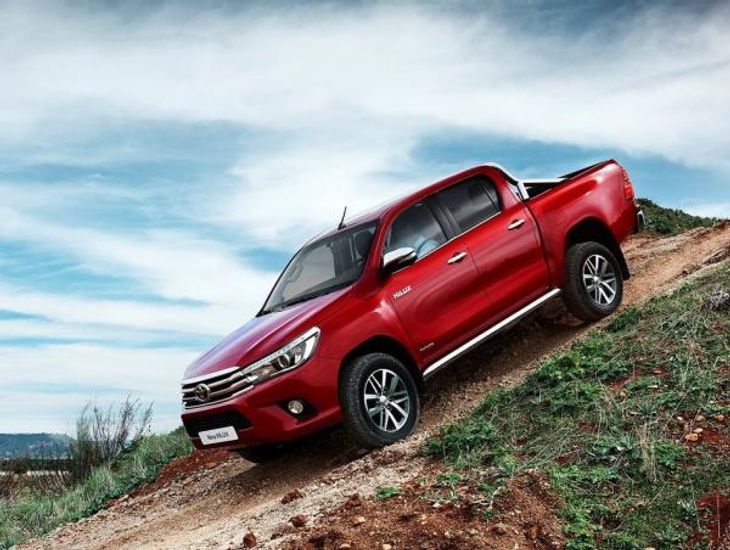
The Toyota Hilux is a tough and formidable vehicle in the hands of an experienced 4×4 driver, and the 8th-generation is set to continue this heritage with some new systems. The Hilux 4×4 systems are now activated with a circular knob as opposed to the old-school second gear lever. In 4×4 models, drivers can easily switch between 4WD high, 4WD low range and 2WD just by turning a dial.

The downhill assist is a new feature. It manages braking pressure and prevents rear wheel lockup on steep descents.

Finally, the revised suspension has meant that the new Hilux is able to traverse seriously rocky terrain thanks to offering better wheel articulation than its predecessor.

Cabin improvements

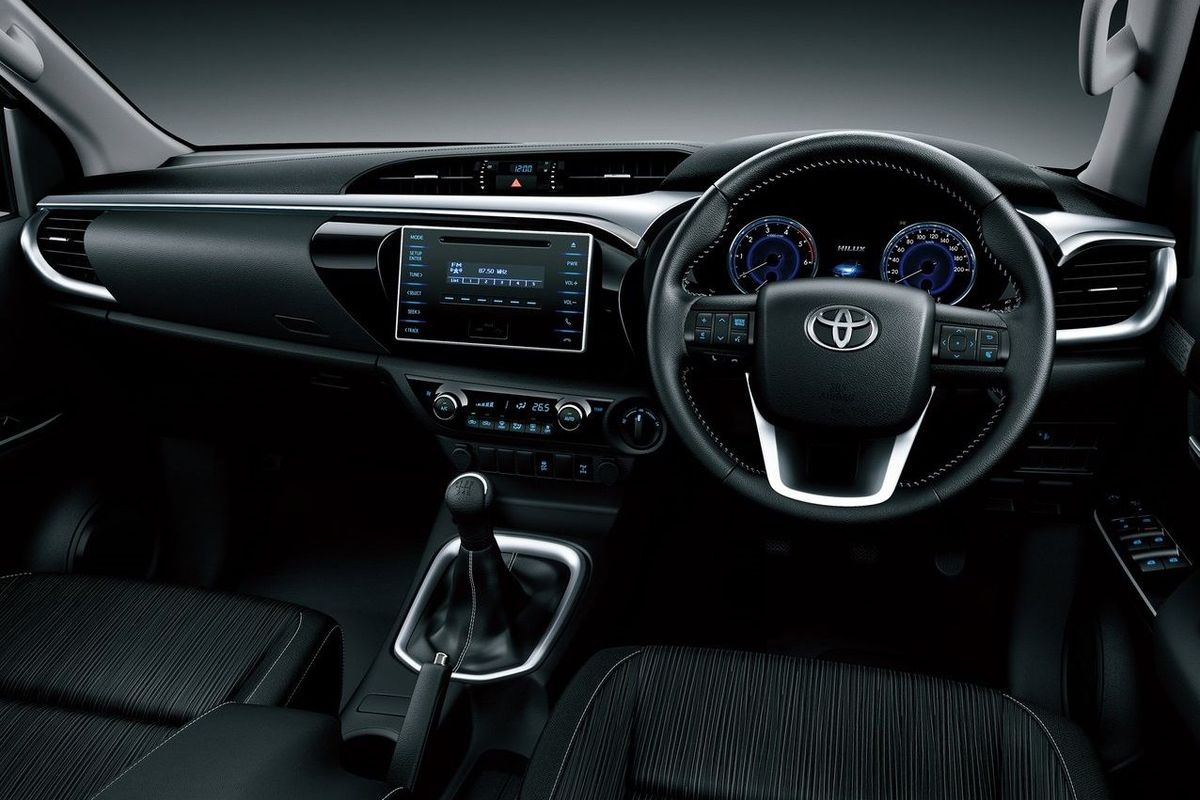
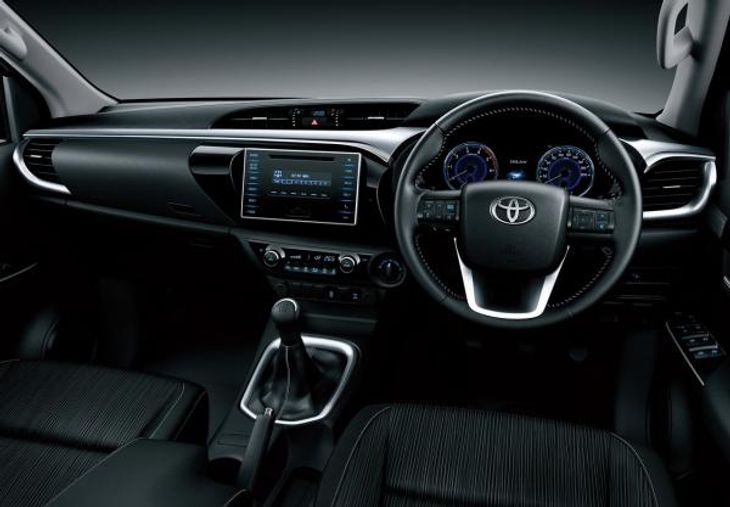
Given the Hilux double cab's popularity with leisure- and family vehicle buyers alike, it makes perfect sense that Toyota would upgrade the bakkie's cabin substantially. Refinement and the ergonomics/driving position are said to have been improved in favour of driver comfort. There’s also more rear legroom in the double cab version compared with before.

In terms of gadgetry, there’s a new-look infotainment system that resembles a 7-inch tablet. The trim has been improved and the entire fascia looks more modern and arguably better than those of some of Toyota's passenger vehicle offerings.

Safety

The Toyota Hilux may be as tough as nails, but safety is a priority in every new car regardless of make or model. Toyota has introduced driver-side knee airbags in the SRX, SR and Raider models. These do duty alongside the well-known features such as anti-lock brakes, electronic brakeforce distribution, brake assist and driver/passenger airbags.

Isofix mounts are fitted to the double cab models as well as a three-point safety belt in the centre seat. SR, Xtra Cab and Double-cab Raider models will receive trailer-sway control, which’ll keep your "Venter" stable when travelling at speed.

Under the skin

While the Toyota Hilux doesn’t look radically different to the outgoing model, the real changes have happened underneath the sheet metal. Bakkies aren’t the most refined and comfortable of vehicles because they’re mostly workhorses, but Toyota claims improved noise, vibration and harshness (NVH) in the 8th-gen Hilux levels thanks to enhanced soundproofing between the cabin and the engine bay. New window seals and deflectors also help to keep noise levels down.

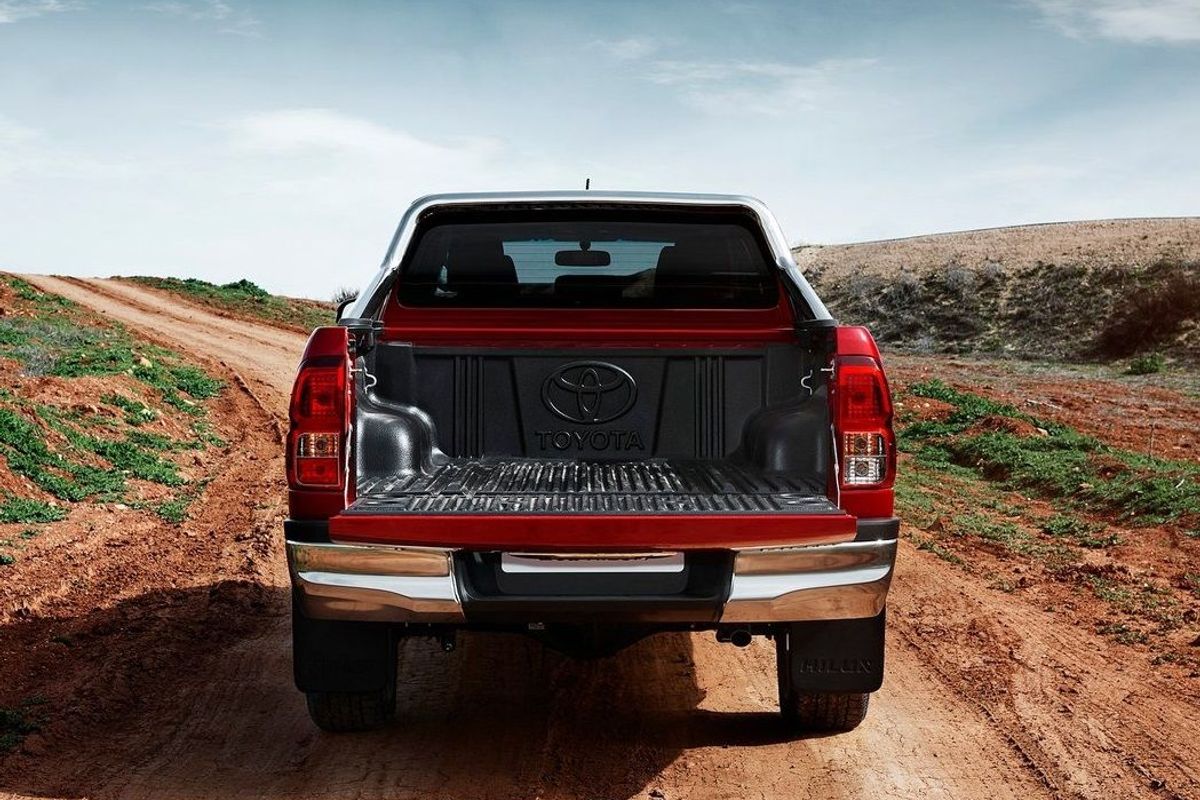
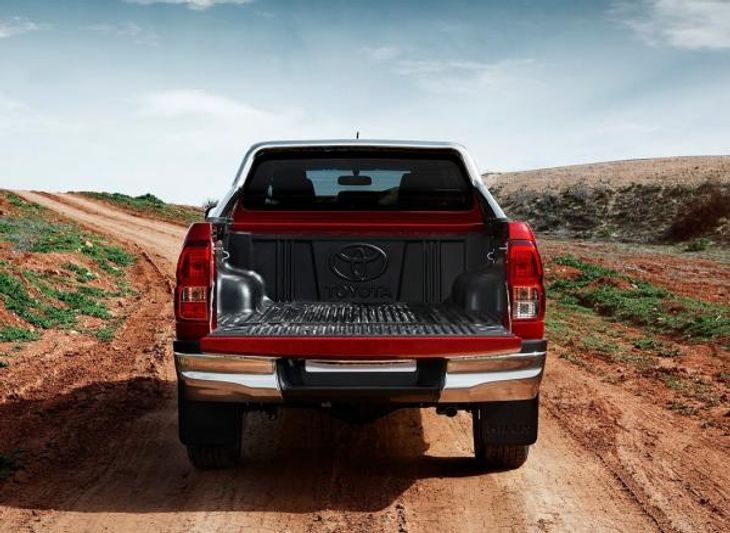
Toyota developed a stronger ladder-frame chassis for the new model. It’s meant to be more durable and more rigid, which will aid handling. For those who intend to make full use of the load bay, there’s a new floor and tailgate with stronger hinges.

More content:

8th Generation Toyota Hilux pricing – we have it here!

See information about the forthcoming Toyota Fortuner here.

Meet the ultimate Toyota Hilux – watch the video
 

Guaranteed Future Value – Get a New Car Every 3 Years

Buying a car on guaranteed future value/guaranteed buy back has been possible for a few years now. There are, however, a few things that can catch you out if you don’t read the fine print.

Guaranteed future value (GFV), also known as guaranteed buy back, is one of the most cost-effective ways to make sure you "acquire" a new car every three of four years, depending on the contract. Many manufacturers offer this sort of deal in South Africa and each brand has a unique name for it. Mercedes-Benz calls it Agility Finance, Toyota’s is GFV and BMW’s is BMW Select. Almost every manufacturer offers guaranteed buy back in some form, you may simply need to enquire from your local dealer if you can’t find options listed on its franchisor's website.

Conceived to suit prevailing buying patterns

Statistics in the new car sales market suggest that new car buyers purchase a new car every three to four years which, sets this sort of finance deal up well. Guaranteed future value means that your car’s resale value is set at the point when your deal ends in 36 months (usually the length of time on these deals). For example, if you buy a BMW 3 Series at a price of R501 210, BMW will set the value of your car at R300 500 in 36 months' time.

Bear in mind that there are limitations on the deal, however. Look out for a mileage limit per year. Manufacturers will likely set you 10 000 km, 20 000 km or 30 000 km limits – each of which will change your guaranteed buy back figure. Every kilometre you travel over the mileage limit is at your cost and we’ve seen figures of around R4 charged for every kilometre that's clocked up over the mileage limit.

Financed vehicles will need to be maintained well

There will also be a fair wear and tear agreement you need to sign, which means you can’t give back a car at the end of the agreement period with dents, scratched paintwork or a stained interior. These will have to be repaired at your own cost or, in the case of accident damage, claimed from your insurer. Think of it as an incentive to keep your car absolutely spotless.

Consider it a "long-term rental agreement"

This deal works best if you think of it as a rental agreement, where at the end of the 36 months you have the option to 1. Give the car back to the dealer and walk away. 2. Trade it in for a new model. 3. Pay the balloon payment owed and take ownership of the car. Option 3 will be particularly expensive as the bulk of the car's value will still need to be paid off.

There is good news, however. The instalments on these deals are significantly cheaper, your car is also always under warranty and a service plan so if something breaks it can be fixed by the manufacturer. In order to make a full purchase vehicle purchase more effective than these deals, you will, generally, have to keep your car for 7 years before changing it.

Here are two examples:

E 200 Elegance worth R550 000


Monthly payment

Contract period

Deposit

Mercedes Agility Finance

R7 500.02

36 Months

10%

Instalment to buy vehicle

R10 404.43

60 Months

10%

Instalment with a 20% Balloon

R8 055.70

72 Months

10%


Example 2:

Volkswagen Polo 1.2 TSI Highline


Monthly payment

Contract period

Deposit

Volkswagen Guaranteed Value

R3 025

36 Months

10%

Instalment with a 30% Balloon

R3 506

72 Months

10%


Buying a car compared to leasing a car

Get the best trade-in value for your used car

Buying a new car vs a used car

Safety Trumps Convenience

Cars.co.za's David Taylor thinks the automotive industry has become obsessed with adding convenience features and personalisable user settings to cars. Thankfully, however, the same attentiveness has been applied to the safety systems, and we're all the better off for it.

I was driving in the newish Volvo XC90 the other day and had my girlfriend in the car with me. She was asking me about the features, and I relished rattling off all the specifications and demonstrating how smart this Swedish SUV is. It really was a worthy category winner in the Cars.co.za Consumer Awards. 

Then she asked, "how many people use these features?" and that got me thinking. Have we reached a saturation point where people just couldn't care whether their cars can do all the amazing things their manufacturers list in brochures.  How many of those functions do people use regularly, let alone daily?

The current level of tech in cars is daunting and, at times, overwhelming. I have subsequently discovered that BMW has a job in its European dealerships called BMW Genius and they spend their time educating owners about what their cars can do. According to BMW, "your main responsibility will be to use your engaging personality to inspire and excite customers in the BMW Centre about the features and benefits of the latest BMW products and technologies." 

Some of the features do make motoring life simpler, but does that make them necessary?Let's take self-parking for example. I've noticed many smaller cars such as the Opel Adam and Mini Cooper are capable of parallel-parking themselves, but if you're unable to park one of these smaller vehicles, let's face it, you probably need to retake your driving test. I get this feature on a larger and more expensive car, or on a vehicle that has limited visibility (a low-slung sportscar, for example). I wouldn't feel too comfortable trying to parallel park a Range Rover Autobiography in the confines of Sea Point and as this video shows, this is a worthwhile feature. 


Can we talk about the overwhelming plethora of driving modes on performance cars? Surely when you're driving something sporty, you'd want two modes? Comfort and Sport. So why do we have Comfort, Normal, Sport, Race and Eco? It gets even more complicated with that word "Individual" where you can cross pollinate settings from each mode. I like the engine noise from Race mode, but I want a soft ride so I'll have the suspension set to Comfort, Steering set to Sport, and the gearbox set to Normal so it doesn't snap my neck with each shift. I like this level of customisation, but I do wonder how many performance vehicle owners spend time setting their cars up for driving conditions… or do they just get in and drive? 

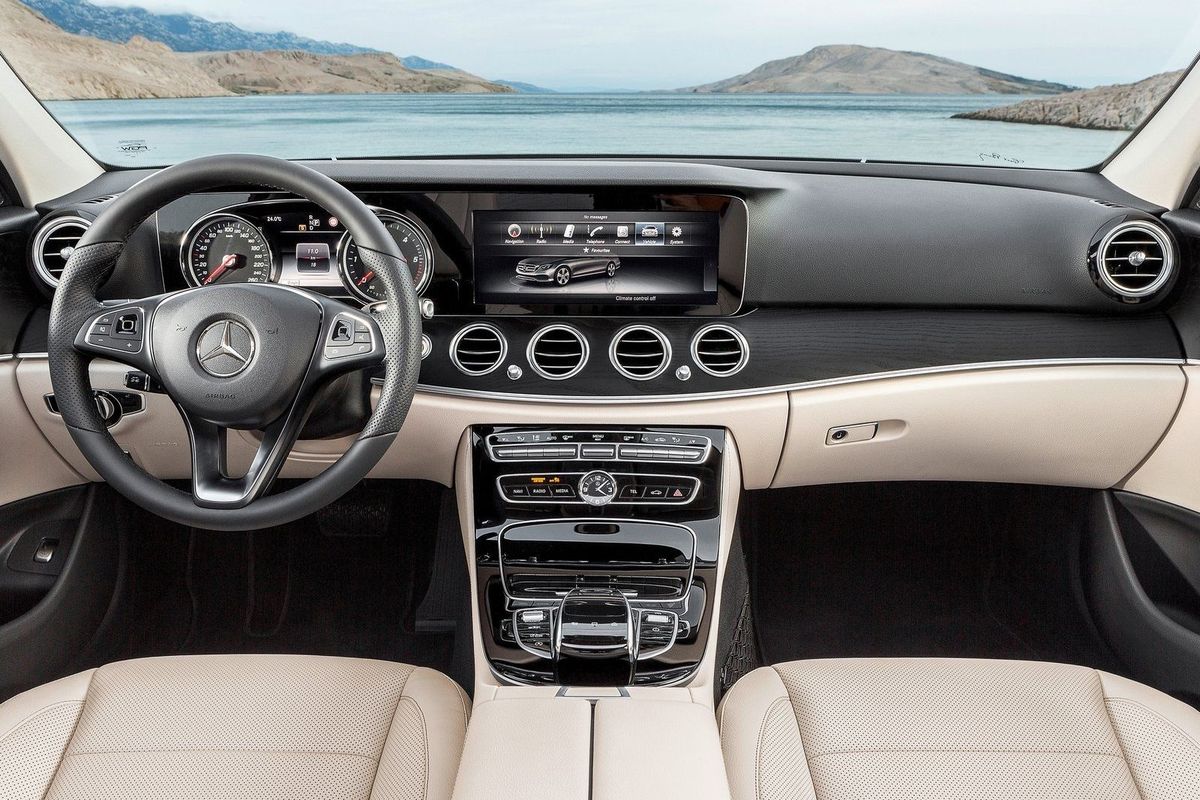
While on the subject of personalisation, have you ever gone into the depths of the menu on a high-end Mercedes-Benz? You can change the colour of the interior lighting, how long you want the headlights to stay on once you've locked the car and on some of the grander models, even choose the type of massage you want. Too much?

Does anyone use voice control? Sure, some of the systems I've tried work well (such as Ford's SYNC), but even then I find it quicker to push the few buttons to find my desired song as opposed to having to repeat myself and getting frustrated. Good luck getting your car to play your songs if you're a fan of Lynyrd Skynyrd… I also find climate control temperature settings a little too precise. What's wrong with 22'C? Why does it have to be 21.5C? Can you feel the difference in temperature? I doubt it.

Five ways cars can save your life (and your insurance premiums)

While this piece may sound like I'm grumbling, let it be known that I'm a massive fan of the comprehensive range of safety features. So in order to give this article a positive takeaway, here are five safety features that will blow your mind:

Electronic Stability Control

There are many names for this system, but they all essentially do the same thing. If you're in the unfortunate scenario where you've had to swerve to avoid an accident and are now at risk of becoming an accident yourself, ESP will detect the loss in traction and body control, and do its best to regain control of the car. It does this by individually braking each wheel and reducing engine power. These may sound small, but its usually enough to bring the vehicle under control. The best part? ESP is completely automatic and you don't need to do anything except brake. Here's how it works:


Active Brake Assist

 A car that automatically brakes when it detects an impending collision sounds too good be true, but it's fast becoming a reality on many automotive products. Mercedes-Benz has this technology nailed down. The system uses cameras to continually scan the road ahead and it'll pick up errant pedestrians and stationary vehicles in your path. It will sound an alert that a collision is likely and that you need to take action. If you don't react, the car will intervene and bring the car to a complete halt. Watch it in action:


Cross Traffic Alert

How many times have you reversed out of a shopping mall parking bay and been unable to see if there are any other cars heading in your vehicle's path? Car guards are not always present either, so what's available? Land Rover's Reverse Traffic Detection uses radar (mounted on the vehicle's rear) to warn you about approaching vehicles. If the system thinks a collision is likely, it will alarm you via audio, your mirrors as well as alerts on the reverse camera screen. Given how big some SUVs are these days, reversing them has become a bit of an issue. See how the system works here: 


Adaptive Cruise Control

Radar-guided cruise control is very clever as well. It's a system that uses radar to measure the distance between your car and the vehicle in front of you. Using this data, your car is able to stay at a preset distance from a vehicle it is following in low-visibility conditions such as at night and when it's raining. I do wonder how useful it is as the car generally leaves a considerable following distance between it and the car in front. That gap then gets taken up by another road user, the car slows down to make another gap and the process repeats itself. Here it is in action:


Head-up display

Many vehicle manufacturers have resorted to projecting vital data onto the windscreen of a vehicle, much in a military fighter jet. The principle is that you'll never need to take our eye off the road as the most important info you need is simply in front of you. Many brands are making use of this tech, but the best I've sampled so far has to be the new BMW 7-Series. 

Any views or opinions expressed in this article are solely those of the author and do not represent those of Cars.co.za or its editorial content team.

More content:

BMW 7-Series First Drive – a quick look at BMW's technological flagship

Volvo XC90 review – an assessment after a month-long driving experience.