Kia Picanto Receives Facelift For SA

You have to put the Kia Picanto into its proper context. This was the little A-segment shop-about that changed the way we think and feel about small utilitarian cars, much the way the (original) Mini did back in 1959.

It was launched at Geneva back in 2011 and arrived here in South Africa in time to be included as a finalist in the SA Guild of Motoring Journalists’ Car of the Year competition. That it didn’t win is still seen as a travesty by many long-term motoring journos, because if ever a car embodied the competition’s stated reward-system for  “excellence”, the Picanto was The One.

What put some journos off at the time was an extremely lifeless steering feel, thanks to Kia miscalculating the amount of steering lightness customers would want using its revised electric power assistance. But those jurors who marked it down should have known better, as the Picanto’s strengths far out-weighed this factor, and after all, for city driving – the car’s natural habitat, it was fine.

Kia revised that steering system soon after its South African debut, and despite losing out on a COTY award (it came second) and  it is seen as the little car that put the Kia brand well and truly on the map, selling upwards of 500 units a month here.

Facelift Details

Now it has had a slight facelift. In fact, the changes are so slight that you have to be a Kia aficionado to spot them, but more of that later.

At its essence the Picanto took the standard two box shape of city cars produced up until that time and miraculously made the car funky. Bear in mind that until this point these A-Segment cars looked like cartoon-character cars without the character – tiny wheels and a top-heaviness that made them appear as if they would topple over in an instant.

Inside the materials are classy for this level of car, and the overall design of panels, pockets, console and even the steering-wheel spokes echoes the exterior to give the car a wonderfully integrated design theme. The man credited with this work is former Audi designer Peter Schreyer, who has had a long, distinguished  career in car design and is pretty much credited with turning Kias from ugly ducklings into suave, sharp fashion statements – the Sportage SUV and Optima coupe are just two of his eye-catching achievements in modern times.

So, with such a good shape, what was Kia to do when it came to facelift time? The answer, my friends, is just about sweet nothing. The grill surround has been slightly revised, there are daytime running lights added, and the intake on the bumper is now a single, even gruffer shape.

At the back there are some black edges on the corners, while inside there is a slightly different audio housing. And that is it. Were we disappointed to be hauled out by Kia to attend a launch of such minor significance? Not at all! It was a chance to re-acquaint ourselves with a car that is still one of the benchmarks in its market segment, although pricing on these Korean cars of late has not made life for the dealers any easier.

Kia Picanto Price in SA

Still, the basic 1.0 LX model (which retails) for R136 995 in manual form uses a three-cylinder motor to eek out 51 kW, while the car we drove last week (including some laps around the Vereeniging go kart track!) was the 1.2 EX, at R 149 995  a four-cylinder model distinguished by classy-looking  alloy wheels, a chrome grille surround, chrome door handles and body-colour side mouldings. The price includes a five-year/150 000 km warranty.

Safety & Features

The pricing is nowhere near the ultra el-cheapo levels of some entry cars now, but its quality feel makes it still seem like a very good option. Buyers should note that while both models have driver-side airbags,  ABS braking is only available on the 1.2-litre car. So yes, the Datsun Go is not the only entry-level car on our market to be ABS-less!

The array of standard equipment on both models is impressive and includes air-conditioning and audio, trip computer and USB ports. The EX has remote steering controls, a leather-wrapped steering wheel and gear-knob and electric rear window winders amongst other goodies.

An obvious strong competitor for this car in the style stakes would be VW’s Up!, but of course that car is still only available in three-door form. For all these reasons, it was good to re-acquaint ourselves with an excellent little city car.

Chevrolet Cruze 1.4T LS Automatic (2015) Review

The sedan market in South Africa is in a bit of a pickle due to the increasing popularity of crossovers and SUVs. Buyers seem to be flocking away from “bland” C-segment sedans and are opting for the greater practicality and versatility offered by compact crossovers or SUVs, which in many cases are similarly priced and are generally more hip and attractive compared to a conventional sedan offering.

Manufacturers playing in this segment therefore face a tough task convincing buyers to purchase a sedan and product packaging is more important than ever before to secure sales. The updated Chevrolet Cruze was recently launched in South Africa and I spent some time with the 1.4T LS automatic sedan to find out if it can survive in this tough market.

What’s New?

This updated Cruze comes with a reworked front fascia and grille with integrated fog lamps and LED daytime running lights. At the rear, the Cruze has a new boot lid along with redesigned tail lights and buyers now also have the choice between new 16 and 17-inch wheel designs, with this test unit fitted with 16-inch examples.

Inside, the inclusion of the Chevrolet MyLink infotainment system with CCR (Colour Connected Radio) is a nice upmarket touch and does a fair job of bringing all your media to your fingertips via a 7-inch colour touchscreen.

Comfortable Interior

The Chevrolet Cruze scores big points in the comfort department and the interior is well put together. The cloth seats are comfortable with suitable side bolstering for added comfort. Rear seat passengers have more than enough leg and head room and there’s a large boot too, with a capacity of 469-litres with a full size steel spare wheel stored beneath the boot floor. The rear seatbacks can be tumbled forward when bigger items need to be transported. The steering wheel comes with mounted audio and Bluetooth controls, and is height and reach adjustable.

The Cruze Master

This test unit is powered by a 1.4-litre turbocharged ECOTEC petrol engine offering 103 kW and 200 Nm of torque and is mated to a 6-speed automatic transmission. The first thing I noticed when driving the Cruze was that it didn’t like to be driven with excessive vigour. With maximum power available high in the rev range, the Cruze whines and labours with difficulty when you plant your foot flat. Admittedly, such driving is not what the Cruze was made for…

Cruising is where the Cruze excels and it demands to be driven with a more conservative approach. When driven with a lighter foot, the Cruze responds in a smooth, refined manner and the auto transmission transitions between gears smoothly. Performance isn’t earth shattering or particularly exciting, but the Cruze performs well within its limits. The ride quality in the Cruze is excellent and it manages to iron out bumps with little effort. This fact, together with a comfortable interior, means that the Cruze is perfectly suited for those long distance trips with the family.

I was however disappointed to see a combined fuel consumption figure of as high as 10.6L/100 km during my time with the Cruze, especially when Chevrolet claims a figure of 6.8L/100 km. Some colleagues managed a figure of around 8,5L/100 km, which is acceptable.

Buyers will appreciate that the Cruze comes packed with features and the list includes ABS with EBD, Brake Assist, six airbags, traction control, ESC (electronic stability control), Isofix child seat anchors, air conditioning, electric windows and mirrors, cruise control and USB and Aux inputs for the audio system.

Chevrolet Cruze Price in South Africa

The Cruze sedan range starts off with R230 400 for the 1.6 L model and R247 200 for the 1.6 LS. The manual 1.4T LS is priced at R262 500 while the 1.4T LS Automatic on test here is priced at R272 400. The price includes a 5-year / 120 000 km warranty with roadside assistance, a 5-year / unlimited km corrosion warranty and a 3-year / 60 000 km service plan with services staggered at 15 000 km.

Verdict

The Cruze has lots to offer in the comfort department and delivers a smooth and refined drive. There’s lots of space too which makes it a good car to haul the family around town or on holiday. Buyers looking for value would be wise to consider the Cruze as it’s packed with features that its rivals struggle to match. It remains a fairly conservative offering, but it has nevertheless sold well in the South African market thus far and offers a solid alternative to the likes of the Corolla, Focus etc.

Second Opinion

Although under pressure from compact crossovers such as the Ford EcoSport and Renault Duster/Captur, the Chevrolet Cruze has kept the sedan flag flying in South Africa with good sales. Its combination of refinement, comfort and spaciousness has garnered it many customers. This new model will continue in much the same fashion, but adds the right amount of tech features to perhaps attract those consumers who do not need (or want) a crossover. – Hannes Oosthuizen

Compare the Cruze with its competitors here!

We Like: Refined drive, lots of features, space

We Don’t Like: Average performance

Also consider: Toyota Corolla, Ford Focus, Hyundai Elantra

Chevrolet Cruze 1.4T LS Automatic – Quick Specs

chevrolet cruze

BMW and Nissan Team up to build Electric Charging Grid

The two most prominent electric vehicle manufacturers in SA (BMW and Nissan) have teamed up to increase the availability of charging stations. The team up will see them jointly build an electric vehicle and plug-in hybrid vehicle charging grid across the country.

Tim Abbott, managing director of BMW SA said “A key imperative of our strategy is to ensure that the necessary infrastructure is rolled out to help increase consumer confidence in the viability of electric vehicles. We therefore believe that in order for the introduction and expansion of electric vehicles as well as plug-in hybrid electric vehicles to be successful in this market, we need to work together. Our partnership with Nissan is the first step towards that.”

The agreement will see BMW SA and Nissan SA roll out direct current (DC) fast-charging stations that are equipped with both the Combined Charging System 2 (CCS2) used by BMW’s electric and plug-in hybrid models and the Charge de Move system (CHAdeMO) plug standards used by Nissan’s 100% electric LEAF.

The national grid of charging stations will also make use of smaller alternating current (AC) type vehicle chargers in certain regions. In terms of the newly signed agreement these chargers will be equipped with Type 2 sockets that allow the connection of all EVs and PHEVs.

“By sharing expertise, ideas and challenges BMW and Nissan will accelerate the growth and consumer acceptance of the EV and PHEV market to the benefit of the entire automotive industry. These organisations have shown the same insight in establishing a vehicle charging grid as they did in creating their futuristic electric vehicles,” says Mike Schüssler, chief economist of Economist.co.za and an automotive market specialist.

Hyundai Veloster Turbo SA Pricing


The Hyundai Veloster Turbo arrives in South Africa this week and we’ve got the pricing and some details.

The Veloster is a sporty coupe from the Korean brand that offers good looks as well as innovative doors. There’s a single door on the driver’s side, with two doors on the passenger side. It’s a strange combination, but it works.

One downside to the Hyundai Veloster was its performance. It’s 1.6-litre engine was never going to be a firecracker in outright thrills and instead offered adequate cruising ability. Hyundai has fitted a 1.6-litre turbocharged engine to the Veloster Turbo and this sounds a lot more promising. With 150 kW and 265 Nm on tap, performance is vastly improved and you’re now looking at something with a bit more street cred. I suspect this engine is identical to the 1.6-turbo used in the Kia Cerato Coupe, and if that’s anything to go by the results should be good.

The car will come in a six-speed manual transmission and you’ll see 100kph come up in a sporty 7.4 seconds. While it’s not a semi race car, it’s good to see some performance-orientated vehicles come from the Korean brand.

The Hyundai Veloster Turbo also comes with numerous go-faster visual upgrades. There’s a bigger front grille and bumper combination as well as big exhaust tips at the rear.

Pricing for the new Hyundai Veloster Turbo is R379 900 for the manual transmission, while the automatic retails for R399 900.

Range Rover Sport SVR Local Pricing

Range Rover’s fastest and most powerful model yet, the Range Rover Sport SVR, is now available in South African showrooms. The first model to wear the SVR badge – destined for all future high-performance Jaguar and Land Rover models – made its local debut at the Jaguar Simola Hillclimb, in May 2015.

Performance

The Range Rover Sport SVR accelerates from 0-100kph in just 4.5 seconds, and on to an electronically-limited top speed of 260kph. Last year it also lapped the world-famous Nordschleife, in Germany, where it set a lap time of 8 minutes 14 seconds on the 20.8-kilometre-long circuit.

The SVR’s range-topping 5.0-litre supercharged V8 engine has been developed to produce 405 kW and 680 Nm – a substantial 29 kW and 56 Nm increases over the current range-topping V8 model – without compromising fuel economy. And its advanced 8-speed automatic transmission and four-wheel-drive chassis have been optimised to deal with the added performance.

The Range Rover Sport SVR is equipped with a two-stage active exhaust featuring electronically controlled valves. The system optimises sound quality, performance and aesthetics and provides a racecar-inspired soundtrack at higher engine revs.

As standard, new 21-inch alloy wheels with 275/45 all-season tyres offer all-terrain capability. A bespoke interior featuring unique sports seats provides further visual differentiation and ensures occupants are held securely in place.

John Edwards, Managing Director of Land Rover’s Special Operations, said: “The Range Rover Sport SVR is a natural progression beyond the core vehicle’s outstanding on- and off-road capabilities and leading-edge design. Its exhilarating performance will satisfy a particularly demanding customer set.

“A thorough range of revisions specially developed by Land Rover’s Special Vehicle Operations combine to make this premium derivative even more distinctive both inside and out, as well as taking its dynamic capabilities to the next level without impacting on comfort, refinement or all-terrain versatility. The Range Rover Sport SVR is truly the world’s most capable performance SUV.”

SVR is fitted with permanent four-wheel drive and a two-speed transfer case, with a low-range option for demanding terrain, and a 50/50 per cent torque split, front-to-rear. The upgraded air suspension system automatically varies between two ride heights, and the next generation of the Terrain Response 2 system automatically selects the most suitable terrain programme.

The Range Rover Sport SVR has been created by Jaguar Land Rover’s Special Vehicle Operations team and all SVR models need to meet key performance criteria to wear the SVR badge. Range Rover Sport SVRs will be built alongside their mainstream sibling models in existing production facilities.

Range Rover Sport SVR Video

Range Rover Sport SVR Pricing

R1 865 200 (incl. VAT; excl. CO2 taxes of R20 725).

Opel Mokka 1.4T Cosmo Automatic (2015) Review


With new offerings arriving on the market on an almost monthly basis, the compact crossover segment is quickly becoming a crowded place. Opel’s offering, the Mokka, was recently added to the mix and adds to the confusion – size-wise it not only straddles the B (Renault Captur, Nissan Juke etc.) and C (Hyundai ix35, Toyota RAV4) segments, but also attempts to offer technologies and features typically packaged into pricier and bigger vehicles, into a slightly more affordable, and more compact body. Is it trying to sit on too many chairs?

Compact and muscular

The Opel Mokka was first launched in Europe in 2012, so in reality is half-way through its lifecycle already. Nevertheless, it is an attractive vehicle with compact, muscular styling that is enhanced by the generous specification of this Cosmo variant – striking 18-inch wheels are standard, for example. Interestingly, it’s not based on the Corsa, as most people would assume, but uses the General Motors Gamma II platform that also underpins the Chevrolet Sonic. Chevrolet itself offers a very similar vehicle called the Trax, which is unlikely to come to South Africa for obvious reasons.

Perhaps as a result of its platform age, the Mokka’s dimensions seem slightly out of step with the latest market arrivals. Although not much shorter than most rivals, it has a higher and narrower body. Most concerning, however, is the wheelbase, which at 2 555 mm appears to be very stubby and could impact on rear legroom.

Happily, the relatively compact dimensions have not resulted in what can be labelled a cramped cabin, even though cabin width is noticeably less than some rivals. Opel’s interior designers have fitted the seats quite high for that towering SUV feel, and this has consequently created quite a lot of foot space for rear passengers. The boot is claimed to swallow a handy 356 L-worth of luggage, and can be expanded to 785 L by folding the rear seats down. Interestingly, my usual test equipment (a three-wheeled urban stroller pram) couldn’t fit in lengthwise as the boot was too short. The Mokka’s boot is, however, quite deep.

Besides the low-profile tyres, other hints at the Mokka’s tar-road bias include a space-saver spare wheel and relatively limited ground clearance (for a crossover/SUV).

Sophisticated, upmarket features

Within the snug cabin, Opel has crammed a very long list of standard equipment. More of that later… The first thing that will catch you eye is the quality. Opel has made much of its premium ambitions in the past few years, and the results are very obvious in the Mokka. There’s a real quality look and feel to the trim materials, including the shiny bits, and the plastics and leather surfaces are soft to the touch where needed. We drove the Mokka on some very poor surfaces, too, and there was not a rattle or squeak to be heard.

A slight negative, however, are the ergonomics. As the Mokka is of a slightly older design, the facia is littered with buttons and some of those are very small too. It therefore takes a while to familiarise oneself with all the features (there are so many). On the other hand, the fitment of a properly up-to-date IntelliLink infotainment system, which allows the Mokka to connect to Apple iOS and Android smartphones, is a major boon.

Other highlights include heated front seats, park assist, cruise control and even a heated steering wheel. The seats, by the way, are superb, offering manual height adjustment as well as electric lumbar and cushion length adjustment.

As befits a near-premium SUV of this price, the Mokka Cosmo offers a comprehensive suite of safety features, including six airbags, ABS/EBD, ESP (electronic stability programme), automated high-beam lighting control, Isofix child seat anchorages and hill-start assist. No surprise then, that the Opel Mokka achieved a full five stars in EuroNCAP crash testing.

Relaxed performer

Powering the Mokka is Opel’s trusty 1,4-litre turbocharged petrol engine that delivers 103 kW and 200 Nm of torque. The engine is mated with a six-speed automatic transmission that drives the front wheels. The engine offers good theoretical flexibility, as the torque is available from 1 850 to 4 000 rpm. On the road the Mokka is indeed an enthusiastic sprinter, and should be nippier in most circumstances than its rivals from Mitsubishi and Nissan, which both offer less torque and CVTs (continuously variable transmissions).

In normal driving, there is precious little to complain about. It is only when a more hurried approach is adopted that some irritations become noticeable. When the throttle is pushed to the floor, the transmission can be a little slow at times to react, and when it does it generally sends the revs soaring by selecting too low a gear. You can shift manually, if you want to of course, but the shift button is awkwardly placed on the side of the gearknob…

Then again, this car isn’t aimed at boy-racers and most owners will find its blend of performance and tractability sufficient. In terms of fuel economy it also puts in a solid effort, with the claimed combined cycle consumption figure of 6.6 L/100 km only slightly bested by the rival Nissan Qashqai. During our testing, however, we achieved a real consumption average of around 8 L/100 km – still good.

Sporty drive

Partly due to its compact dimensions, but also impacted by a relatively firm suspension set-up and the low-profile tyres, the Mokka feels stable and planted on the road, even when said road becomes twisty. We wonder, however, whether most owners wouldn’t appreciate a slightly more forgiving ride, especially at low speeds and on poorer surfaces. The Nissan Qashqai, for example, offers a superior quality of ride.

On a longer trip with four passengers and a packed boot, the Mokka performed better than expected. The cabin is a quiet and comfortable place, with especially wind and road noise being blocked out well. And with the extra weight on board the ride also seemed more forgiving.

Conclusion and Summary

The Mokka is not a cheap vehicle and its price puts it among bigger rivals that on paper may appear to offer better value for money. But the Mokka is not a top seller in Europe without reason… The cabin is cleverly packaged to offer a blend of comfort, features, technology and quality that most rivals will struggle to match. It also offers a very appealing warranty/service plan combination and handsome looks. Although some families may find it a bit too compact, we think it will do well as an offering that appeals in equal measure to the head and the heart.

Opel Mokka 1.4T Cosmo Automatic Price in South Africa

The Opel Mokka 1,4T Cosmo Automatic costs R335 500 and comes with a five-year/120 000 km warranty, five-year/90 000 km service plan and five year/unlimited km roadside assistance.

Second Opinion

Opel’s Mokka is a great vehicle which slots in nicely between the likes of Ford’s EcoSport and the bigger and pricier Hyundai IX35. I did like the build quality, as well as the intuitive infotainment system. Mated to one of General Motors’ trusty small capacity turbo motors the Opel Mokka has sufficient grunt to get around town while not consuming unreasonable amounts of gas – David Taylor

We Like: Quality, standard features, Info-tainment system

We don’t Like: Ergonomics

Also consider: Mitsubishi ASX, Nissan Qashqai

Compare the Opel Mokka with the Mitsubishi ASX and Nissan Qashqai here.

Opel Mokka 1.4T Cosmo Quick Specs

Opel Mokka

Nissan NV200 1.5 dCi Visia (2015) Review

Buying a relatively affordable new vehicle with seating for seven people is in itself not a major challenge. After all, a minivan such as the ever-popular Toyota Avanza sells for as little as R180 000. But what to do if those two rear seats are too awkward to get too, or too cramped? And what if you needed the flexibility that greater cargo space provides? That is where a traditional utility van-based passenger “bus”, such as Nissan’s NV200, comes into play. But at a cost…

A spacious box on wheels

Although the Nissan NV200 has humble utility van underpinnings, it does manage to look rather interesting. The headlamps are steeply angled and narrow, which combined with the pointy nose but otherwise “blunt” design, endow the NV200 with quite a futuristic appearance. This Visia specification model boasts all-round colour coding, 14-inch alloy wheels and fog lamps to make it look even less workhorse-like.

But let’s be honest, few people are likely to buy the NV200 for its aesthetic qualities. Far more important is what lies underneath… and how much of it. We’re talking about space, of course. Interestingly, despite its visual bulk, the NV200 has the shortest wheelbase in its class. Happily this has not negatively affected cargo and passenger space, primarily because of the more pronounced box-shape of its body (compared with a rival such as the VW Caddy).

Even with all seven seats occupied there is considerably more boot space than in a vehicle such as the aforementioned Avanza, for example. Fold those two rear seats up against the sides of the boot (a la Fortuner style), and some pretty hefty pieces of furniture can already be accommodated. Helping in the loading process is a very low floor and bumper, as well as a completely flat cargo area. Note that, while the rearmost seats can’t just be unclipped and removed, some light spanner work is all that is needed to take them out.

The middle row is split 60/40 and can be individually folded/tumbled to create even more space. With the rear and middle rows of seats out of the way, the loading area is truly cavernous, with items such as mountain bicycles swallowed whole with ease. As a load carrier, then, the NV200 is most definitely a winner. The maximum payload rating for this vehicle is a good 652 kg.

How does it fare as a people carrier? Well…

Is it family friendly?

Hop onto the elevated driver’s seat of the NV200, and you are likely to be surprised by the modern, car-like facia. Sure, the gearlever sprouts from the facia in typical van fashion, but the general design and layout wouldn’t look of place in a more conventional passenger vehicle. As is to be expected, the plastics are of the hard-wearing type.

The driving position is excellent, with the steering wheel offering rake adjustment. Because the seat is mounted high and the windows big, visibility out of the vehicle is very good. The steering wheel itself is quite an upmarket item, as it boasts not only remote audio controls, but also buttons for the standard Bluetooth connectivity. Another nice touch is the audio system that includes aux and USB support. We also liked the placement of the drinks holders in front of the ventilation outlets (for cooling) as well as the nifty digital display in the instrument cluster that can provide a wide variety of trip information or even a digital rev counter.

The NV200 also offers a commendable array of safety features, including front and side airbags and the expected ABS/EBD. Perhaps somewhat surprising in this segment are the inclusion of Isofix child seat mountings and ESP (electronic stability programme).

Where the NV200 loses points, however, is in the area of oddments storage, especially towards the rear of the cabin. In front there is an open storage area where you’d normally find a lidded cubby. Between the front seats there is a neat plastic tray with different sized compartments, but it is rather shallow and not really easily accessible to those seated in the middle row. Folks sitting in the middle row actually have nowhere to put their drinks or other items… Another comfort-related problem is that there is no rear window wiper – there is, however, a demister.

Strong performance, good economy

The Nissan NV200 is offered in South Africa with either a 1.6-litre petrol engine or, as is the case of our test vehicle, a 1.5-litre turbodiesel. Interestingly, the petrol outsold the diesel in 2014 even though the price difference is not massive and the service intervals are the same. The rental market, however, seems to prefer the diesel, with the low claimed fuel consumption of 5.3 L/100 km undoubtedly being a key factor. In the real world the figure remained well under 7 L/100 km, which is impressive. Given its size, the 1.5-litre engine does an impressive job. It delivers 66 kW and 200 Nm of torque, the latter figure already available at 1 750 r/min and endowing the NV200 with good responsiveness. Helping in this regard is the low weight of the vehicle (below 1.4 tonnes).

We tested the NV200 on the long road with a family of five and it proved to be up to the job, maintaining a steady 120 km/h with ease, and offering sufficient overtaking power where needed. The only slight concern is the gearing. Cruising along at 120 kph in top gear (fifth), the engine is already spinning at 3 000 r/min, so the resultant drone can become a bit tiresome. Perhaps a sixth gear wouldn’t be a bad idea.

Easy to drive

With its utilitarian underpinnings, including rear leaf springs, the Nissan NV200 can’t match the ride suppleness and control of more sophisticated car-based MPVs. This should not come as a surprise. For what it is, however, the NV200 does a good job. The steering is light and the turning circle small, making it a cinch to manoeuvre around town. The ride only really deteriorates on poor surfaces. And, impressively, it never feels as top heavy as it looks. Of course, given its underpinnings and skinny tyres, the presence of ESP brings some peace of mind.

Said peace of mind did however take somewhat of a knock when we pressed the ESP button and it disappeared into the dashboard…

Conclusion and Summary

At more than R300 000, the Nissan NV200 does not come cheaply. If you’re looking for primarily a family vehicle, then a traditional MPV such as Mazda’s excellent “5” can be had for similar money and offers better refinement, luxury, performance and safety. However, if you need a working vehicle as much as a people transporter, then the Nissan comes strongly to the fore. Its two main rivals are more expensive, and either less comprehensively specced (Volkswagen) or can’t match the Nissan’s back-up (Fiat).

Nissan NV200 1.5 dCi Visia Price in South Africa

The Nissan NV200 1.5 dCi Visia costs R308 400 and comes with a three-year/100 000 km warranty and roadside assistance. The price does not include a standard service plan.

Second Opinion

While it looks more suited to commercial operations the Nissan NV200 offers plenty of practicality for the private user, especially for a big family. It drives like a car and has a really decent diesel engine that combines adequate performance with good economy. An interesting alternative to the SUV brigade and worth a look.  – David Taylor

We Like: Spaciousness, standard Bluetooth, economy

We don’t Like: Lack of second-row storage solutions

Also consider: Volkswagen Caddy Maxi 2.0 TDI Trendline,  Fiat Doblo Panorama 1.6 MultiJet Dynamic

Compare the Nissan NV200 to the Volkswagen Caddy Maxi and Fiat Doblo here.

Nissan NV200 1.5dci – Quick Specs

Nissan NV200

Bakkie Drag Race: Toyota Hilux vs Ford Ranger vs GWM Steed 6 (Video)

In the first of our bakkie shootout videos, we borrowed a large gravel parking lot outside Cape Town and lined up South Africa’s two most popular bakkies against a wildcard from China.

The GWM Steed 6 is a bold new entry from the brand. With a remarkably modern look and upgraded interior, it offers much of the space and comfort of its rivals, but at an almost unbelievably lower price. At R299 900, its tough not to consider the Steed 6 SX when looking to buy a 4×2 double cab.

The Toyota Hilux is now a bit long in the tooth and due to be replaced in 2016. But with that legendary nameplate, it still gives the Ranger a run for its money in the sales figures. In reality the Toyota still feels bulletproof, but many of the changes made feel a bit like a veneer.

The new leather seats look good and the touchscreen system isn’t bad at all, but the driving experience feels very ‘90s indeed. The long-travel gear lever feels very similar to rowing a kayak and the venerable 3.0 D-4D turbo diesel has a noticeably narrow power band compared to the Ford, and is quite a bit noisier.

The Ford Ranger should be applauded for moving the game on substantially in this important segment. It truly does offer car-like levels of comfort and interior space. The large 3.2-litre turbodiesel outperforms the Hilux by 27 kW and 127 Nm, but with an extra 200kg of bulk, the biggest difference is in the way it cruises.

With the autobox fitted, this is a bakkie I could actually live with, and it looks damn good too. The Wildtrak auto is also listed at about R20 000 cheaper than the Legend 45 manual, and its hard to work out why.

The Ford Ranger is my pick of the bunch, but at half a million rand, I’d be very tempted to pick up a nice second hand German SUV…

Clik here for a full comparison!

Bakkie Shootout: Ford Ranger vs Toyota Hilux vs GWM Steed 6

Toyota Hilux 3.0 D-4D Double Cab 4×4 Raider Legend 45 Ford Ranger Double Cab Hi-Rider Wildtrack Auto
Price R513 000 R494 900
Engine 3.0 litre 4-cyl turbo diesel 3.2 litre 5-cyl turbo diesel
Power 120 kW 147 kW
Torque 343 Nm 470 Nm
Fuel economy 8.6L/100km 9.1L/100km
0 – 100km/h N/A N/A
Top speed 170kph Not available


Toyota Hilux 3.0 D-4D Double Cab 4×4 Raider Legend 45 GWM Steed6 2.0VGT Double Cab SX
Price R513 000 R299 900
Engine 3.0 litre turbo diesel 2.0 litre 4-cyl turbo diesel
Power 120 kW 105 kW
Torque 343 Nm 305 Nm
Fuel economy 8.6L/100km 8.8L/100km
0 – 100km/h N/A N/A
Top speed 170kph 150kph


Range Rover Sport SDV8 (2014) Review


The words Range Rover Sport conjures up images of fire breathing V8 and V6 petrol beasts, however there’s something to be said for a strong and torquey diesel. How does the diesel-powered V8 Range Rover Sport match up?

Over the years, we’ve made some good memories with the Range Rover Sport lineup. We smoked a BMW X5 M50d in a quarter mile sprint with a V8 and found the supercharged V6 petrol to offer a terrific blend of performance, value for money and fuel economy on a road trip up the West Coast.

Diesel power makes a lot of sense in the premium SUV market as it provides good pulling power and overtaking performance, while returning not unpleasant economy figures.

Lumbering Diesel Range Rover Sport

Enter the Range Rover Sport SDV8, which is powered by a 4.4-litre turbodiesel V8 engine, the Range Rover SDV8 offers lumbering performance. Its 0-100kph time of 6.9 seconds is not far off when compared to its petrol brothers, and while it may offer 250 kW, it has a very handy torque figure of 740 Nm. Coupled with an 8-speed automatic gearbox with shift paddles located behind the steering wheel, the SDV8 looks like a luxurious and tough recreation vehicle. Think about well-off people who go caravanning or tow horseboxes. This vehicle would be more than up for those tasks.

In terms of fuel economy, it is claimed to consume just 8.9L/100km, but in reality you’re looking at a bit more than that. Given the car’s weight of around two tons, the engine works hard to get the bulky Range Rover Sport around and you’re more likely to see 10L/100km on the fuel consumption read out.

Credible Offroad Ability

The Sport badging on the latest generation of Range Rovers offers a supposed road biased and urban luxury SUV, but don’t be fooled by this. While its on-road manners are generally flawless, it’s still a Range Rover and still able to traverse roads deemed impassable for the current generation of soft offroaders. It really doesn’t muck about with its adjustable air suspension, low-range gearbox and various 4×4 modes.

It also offers a rather impressive wading depth of 850mm. The reality is that most Range Rover Sports will be city slickers and there’s merit in that as the raised driving position is superb. Still, there’s something extremely comforting about having the confidence to go anywhere you want if the need arises.

Luxury Trim and Fittings

Finishes are of the highest order in the cabin and in certain departments, it’s the passengers that receive the best comfort features! The rear in this particular vehicle for example, has two LCD screens and two sets of wireless headphones as well as jacks for AV cables.

Features of the Range Rover Sport SDV8 are plentiful. You get a fair amount of kit as standard, but in the Range Rover way you can always pay more for outright unnecessary things. This particular unit came with adaptive cruise control, chilled centre console storage area, Bluetooth, satnav, USB/Aux connectivity, heated and ventilated seats as well numerous parking cameras. The LCD main infotainment screen is getting on a bit and lacking resolution when compared to its rivals. I believe an all-new system is on its way and has been shown off in the new Land Rover Discovery Sport.

Summary and Conclusion

If the bling lifestyle and frequent trips to the petrol station aren’t your thing, then perhaps the Range Rover SDV8 diesel is what you should be looking at. It’s certainly well-appointed and the diesel engine gives it some credibility for practical applications such as towing.

The diesel engine also rounds off the range nicely, and while its petrol siblings may be first to mind when you think of a Range Rover Sport, having a reliable and strong diesel workhorse in the lineup is a gentle reminder that these vehicles can actually be used for serious offroad applications. If you’re financially conscious then perhaps the mighty BMW X5 M50d would make for a better buy though but won’t offer the same offroad talent.

Second Opinion

The Range Rover Sport SDV8 is an incredible piece of machinery, it’s very hard to pick faults at and has ‘want’ factor like no other SUV for sale. It does everything you could ever need a vehicle to do and still looks fast. You do however pay a seriously eye-watering premium for all of its capabilities, but for most in this price bracket it’s a pill worth swallowing. -Ashley Oldfield

Range Rover Sport SDV8 Price in South Africa

The Range Rover Sport SDV8 retails for R1 366 031 and comes with a 3 year/100 000km warranty as well as a 5 year/100 000km service plan. Service intervals are every 26 000km.
We Like: Stylish, offroad ability, luxury and premium feel

We don’t Like: Price in comparison to rivals, dated infotainment screen

Also consider: Porsche Cayenne, BMW X5, Lexus LX570

Compare the Range Rover SDV8 to the Porsche Cayenne and BMW X5 here.

Range Rover HSE SDV8 Quick Specs

Cars-Range-Rover-Sport-HSE-SDV8---facebook

Audi TT 2.0T Quattro (2015) Review

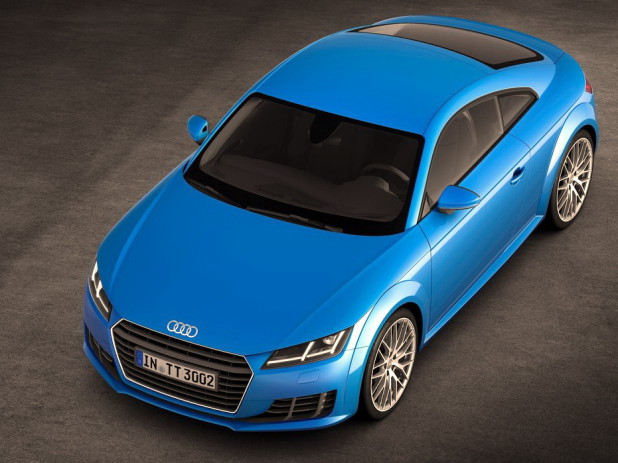
The Audi TT is now in its third generation and we spent a week with it to see if it can continue to offer a great blend of sportiness and technology, without becoming a compromised daily driver.

The original TT rocked the world in the late 90’s. Here was a coupe that combined athleticism with futuristic good looks that was fairly affordable at the time. The main concern with the first generation TT was, however, that it wasn’t quite sharp enough to impress the real driving enthusiast, and more a boulevard cruiser, something which was addressed with the second generation which made landfall around 2010. That, however, was a little too clinical in operation, but it followed the same recipe of sporty dynamics without losing in the comfort and refinement stakes.

The third-generation Audi TT is the best yet. I had the pleasure of putting this new version through its paces at the local launch in Mpumalanga as well as a test through the finest mountain passes the Western Cape can offer.

One engine and one gearbox for now

There’s only one engine and gearbox combination on offer currently, with the only option being front-wheel drive or all-wheel drive Quattro. Power comes from a Volkswagen Group-sourced four-cylinder engine. This 2.0-litre turbo engine does duty in many products such as the Volkswagen Golf GTI. It’s a terrific powerplant, offering zesty performance without wallet-sapping consumption. Power is rated at 169kW, while there’s a rather potent 370Nm of torque and this reaches all four wheels through the superbly engineered S-tronic twin-clutch gearbox.

This gearbox is beautifully refined whether you leave it to its own devices in full automatic mode, or take the reins yourself via steering-wheel mounted shift paddles. Gear changes are wonderfully smooth, with barely any disruption to momentum as the car hooks up the next ratio. Thanks to some clever clutches, downshifts are even smoother and the car will be able to shift from 6th to 3rd without any lurching or hesitation. When you’re in the mood for some enthusiastic driving, simply engage manual mode and each pull of the right (shift up) paddle results in an exhaust pop that few will grow tired of. Despite the enthusiastic nature of the sporty Audi TT, fuel consumption is not bad at all, with a claimed figure of 6.4L/100km. In reality you’re going to get around 8L/100km.

Interior is a minimalist’s dream

The much talked about virtual cockpit in the Audi TT is simply superb. Analogue dials have been phased out in favour of an all-digital instrument cluster which integrates the satnav and infotainment screens. While it initially looks daunting, the system is straightforward to use and within a few minutes I had settled on my screen preferences. After flicking through the various modes, it appears that a small rev counter and speedometer, with the satnav map making up the background is the best combination (for me).

The specification in the Audi TT is comprehensive and after going through the list, I feel the price of the vehice is completely justified. There are two USB ports, climate control, cruise control, satellite navigation, Bluetooth and a reasonable audio system. I’d go for broke and get the uprated Bang Olufsen setup as well as the incredible Matrix headlights which cleverly follows corners and adapt their beam intensity and direction in relation to other road users. Watch the system in action below:

There are so few cars that offer the accessible performance that the Audi TT offers. Audi has blended agility and a sorted chassis with a compliant ride so well, and you’ll really struggle to find a product that better answers the need for a sportscar that doubles as a daily driver. There’s very little body roll and the Audi TT is very forgiving when you’re pressing on. It’s only when you’re really getting a move on that the TT will start displaying the understeering characteristics that are to be expected of an all-wheel drive car, but up to that heady limit it is actually a remarkably neutral handler and ultimately designed to be safe.

Summary and Conclusion

While the Audi TT Quattro has a lot to offer and the bottom line is that it’s an exceptional product, one has to wonder about the R70k discrepancy between the front-wheel drive model and the Quattro model. You’re not getting that much more car and the Quattro system does add a bit of weight. The difference may be ever so slight, but the front-wheel drive Audi TT feels the more nimble of the two. Performance aside, it would make a lot more sense to use that saving and splash out on some extras instead, like the sound system and fancy headlights I mentioned earlier.

In conclusion, a combination of accessible performance, minimalist interior design which is simply breathtaking and a forgiving, yet sporty drive make the latest incarnation of Audi TT an excellent offering. I do feel for Audi engineers as they’ll have a serious headache trying to improve on this…

Second Opinion

The new Audi TT is a hard car to fault. The exterior has been carefully sculpted to enhance its sportscar tendencies while the interior has a wonderful new take on fresh tech. The drive is responsive and light and it’s a fun car to push without testing your driving skills to the limit. The S Tronic gearbox is incredibly fast and responsive and arguably now sets the benchmark for a dual-clutch ‘box (at this price). Best to stick with the front-wheel drive version though as quattro feels unnecessary. -Ashley Oldfield

Audi TT Coupe Quattro Price in South Africa

The Audi TT coupe Quattro retails for R642 000, but this particular unit was specced with around R80k worth of extras. The front-wheel drive version sells for R558 000. If you’re after more performance, the Audi TTS will arrive later in 2015.

We Like: Drive, engine/gearbox combination, incredible interior, handling

We don’t Like: Price gap between quattro and front-wheel drive

Also consider: Mercedes-Benz SLK, BMW Z4

Compare the Audi TT with the Mercedes-Benz SLK and the BMW Z4 here.

Interested in purchasing an Audi TT?

Audi TT Coupe Quattro Quick Specs

Cars-Audi-TT-2.0T-Facebook