As a finalist in the Cars.co.za Consumer Awards, it is clear that we rate the Range Rover Sport very highly. But the current exchange rate is doing it no favours
Highlights
Strikes a superb on/off-road compromise
Well-made and refined inside
Compared with same-price rivals, down on power
When it comes to making a statement, few SUVs can hold a candle to Range Rovers popular Sport. Even in a market segment populated with numerous products from the established German premium brands, the Range Rover Sport appears to be of a different, more pedigreed breed. Of course, this has much to do with the legendary capabilities of the Land Rover stable, but these days its exclusivity and heightened desirability also stem from a heady price thank you Rand/Pound! But the big question is at which point does that price become too big a pill to swallow?
The Catwalk Off-Roader
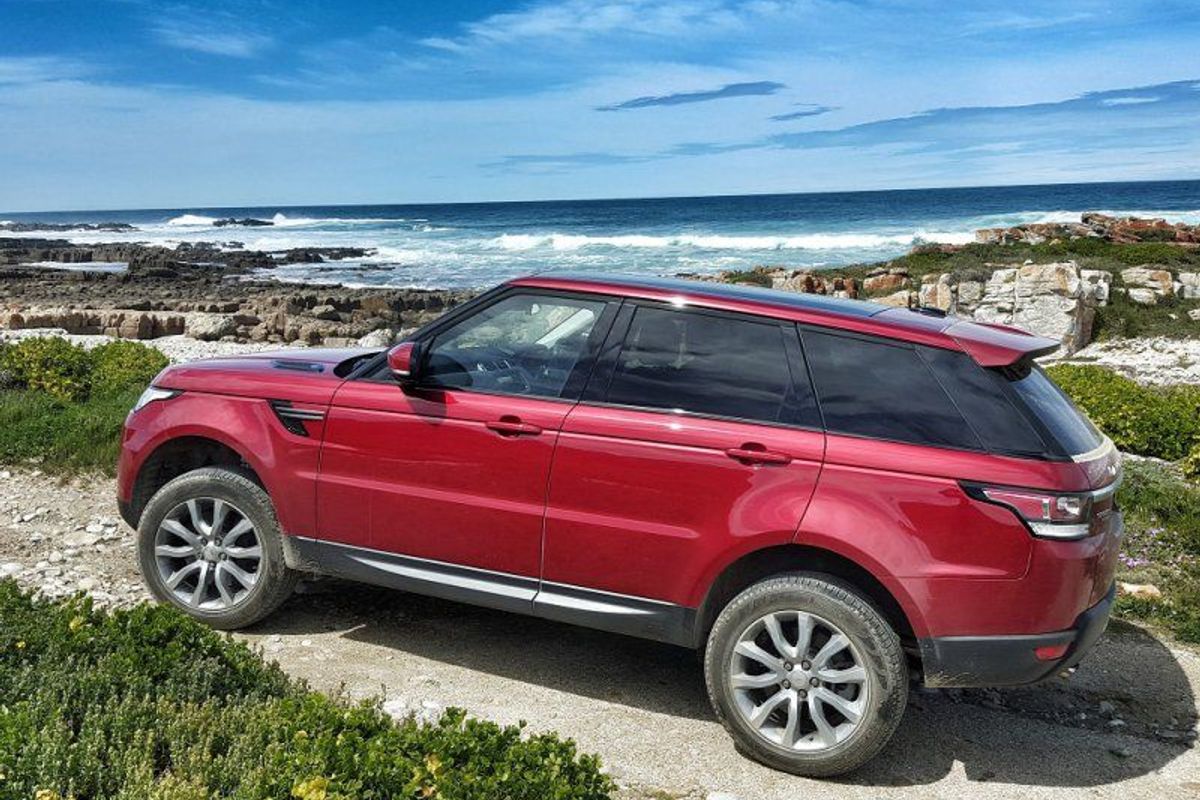
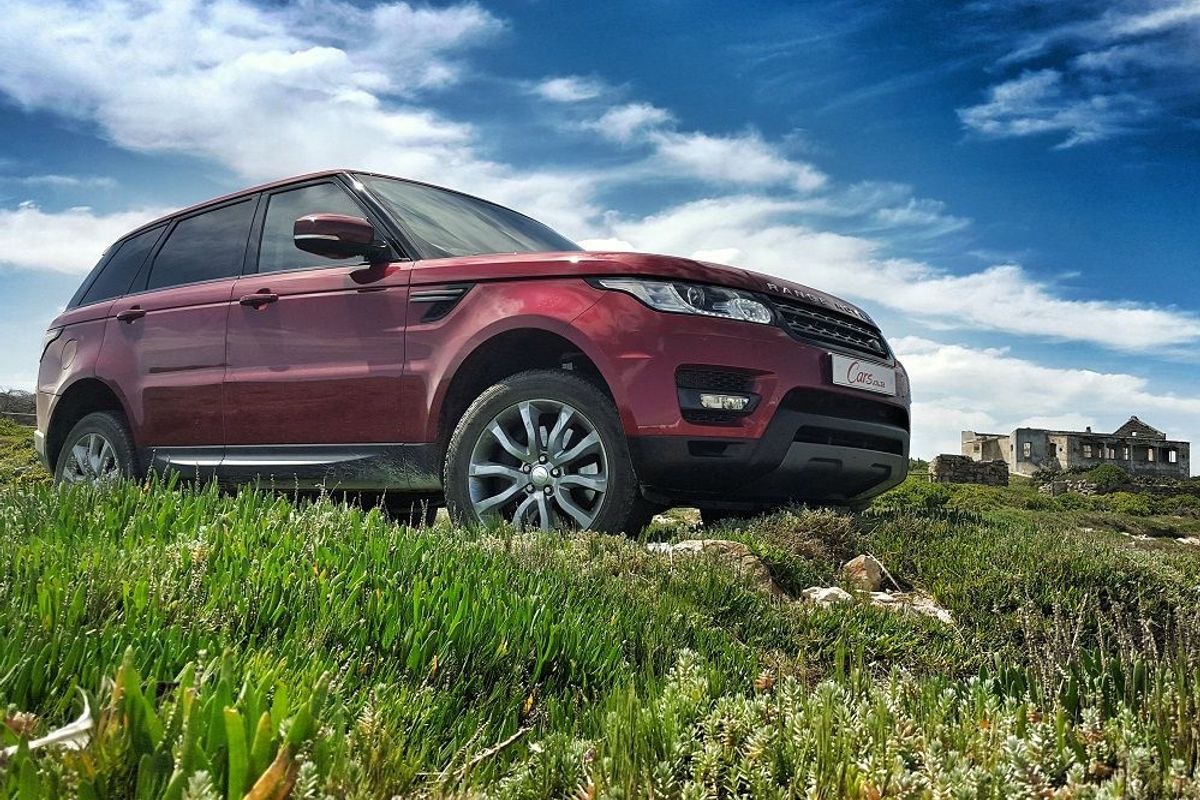
While the Range Rover Sport is no longer brand new, it still turns plenty of heads. Finished in a beautiful metallic red (one of 17 colours) and riding on the standard 20-inch wheels, the Sport is an imposing, yet rather elegant machine. It undoubtedly possesses significantly more kerb appeal than its direct rivals and broadcasts a message of success. As an aside, Range Rover also offers 21- and 22-inch wheels as options, at R13 800 or R23 100 respectively. You also have a choice between three different roof styles standard metal, fixed panoramic (R21 200) and sliding panoramic (R24 700).
The cabin is similarly successful in creating a feel-good mood for the owner/driver. You step up into a Range Rover, even this Sport model, and the seating position itself is quite high. This gives the driver both a commanding view over traffic as well as a sense of superiority. We took the Range Rover Sport for an extended 800km trip and can vouch for the comfort of those seats, too. Note, however, that although the seats are 14-way power adjustable, you pay extra for heating and memory settings.
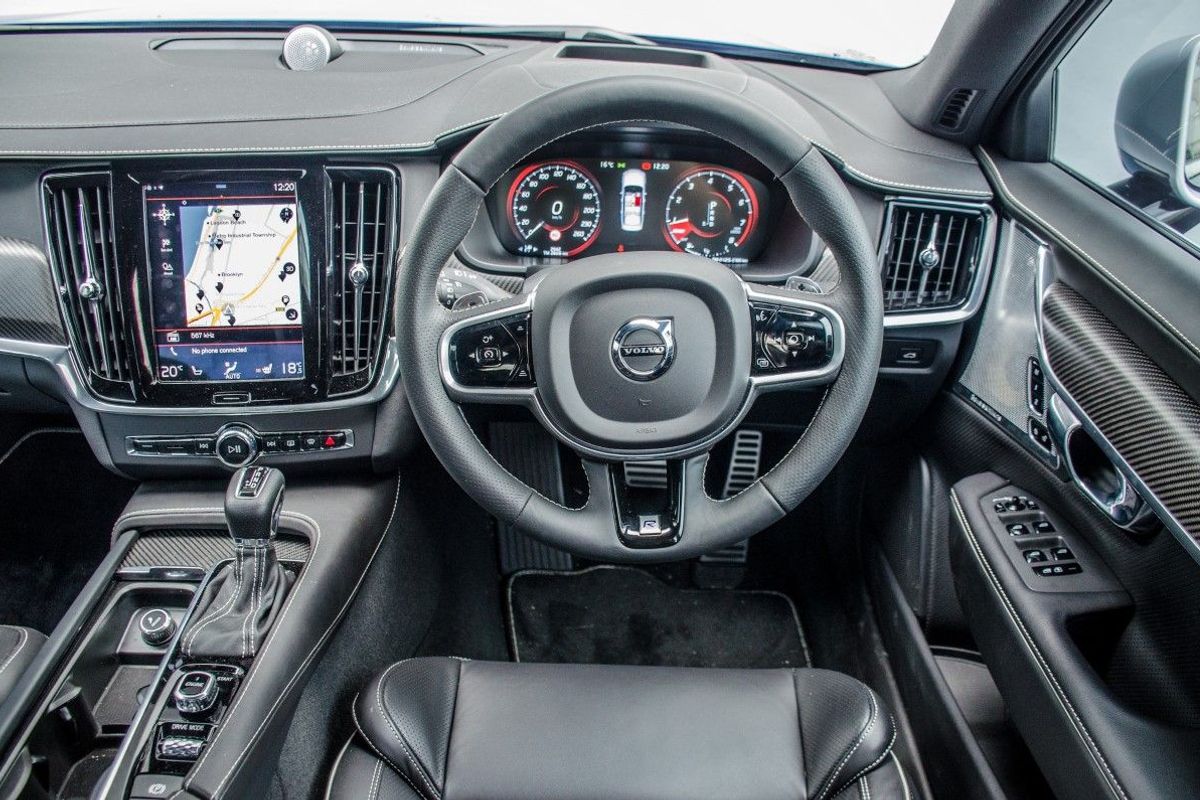
The facia design is similar to most recent Range Rovers, with an angled dash flowing into a high transmission tunnel. Pride of place certainly goes the touch-screen info-tainment system, but this almost highlights the fact that the game has moved on in this regard. Jaguar/Land Rovers latest products all get a faster-acting/neater system and the Sport should get this as soon as possible. Nevertheless, there are plenty of toys to play with, including navigation and Bluetooth audio streaming.
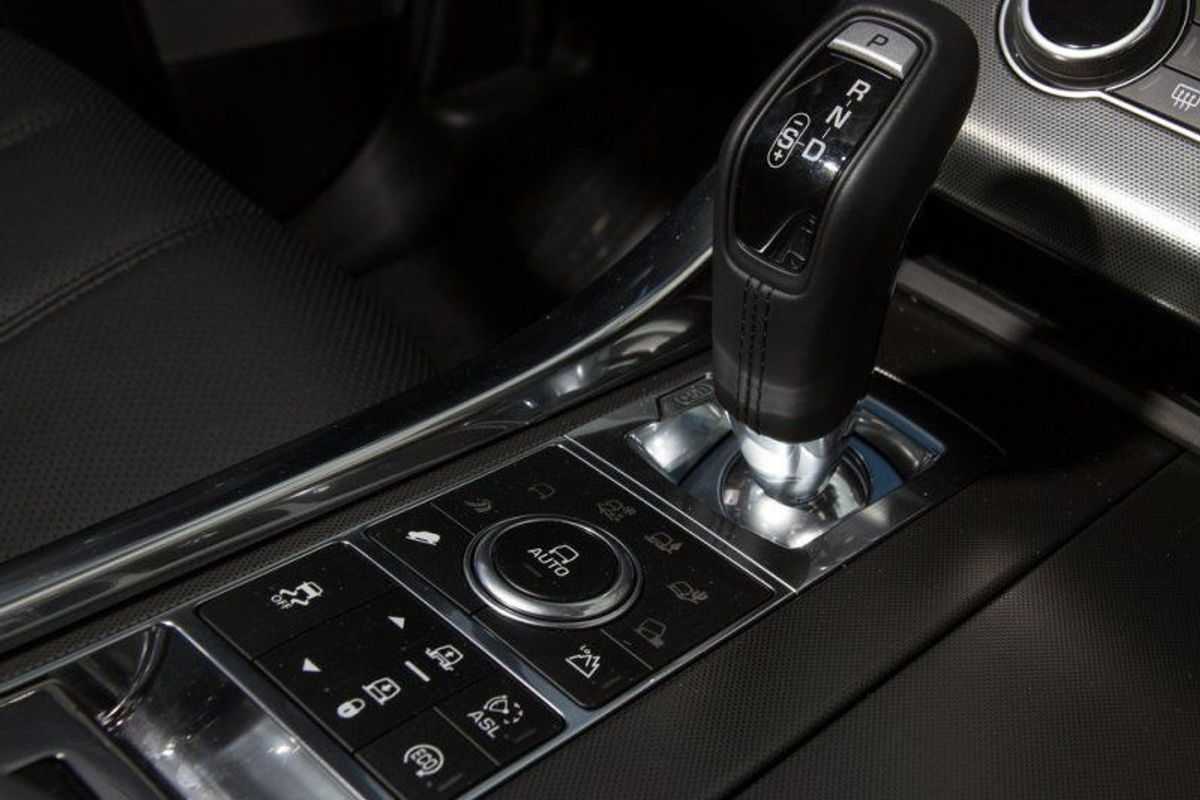
The rest of the control interfaces are simple enough to operate, and the layout is minimalistic and neat. The rotary knob to access the off-road settings rises out of the facia in similar fashion to modern Jaguar gear selectors. Build quality all-round is impressive, and the fit and finish, as well as the material selection is top notch. In this regard alone, the Range Rover Sport appears to easily justify its premium positioning.
Superb refinement and comfort
Hit the long road as we did and the positives keep coming. The cabin is very well insulated against wind and road noise, and rear legroom should be sufficient for most occupants. In fact, the Sport is quite a practical family car. The boot is large, with Range Rover claiming a scarcely believable 784L of boot space (most likely measured to the roof, not the luggage cover). Our test unit also had an electrically deployed tow hitch (a R13 900 option) and the rear seat entertainment system (R30 000 option) kept the kiddies under control. A full-size spare wheel is standard.
As you may have noticed, the Range Rover Sport can be tailored to you exact needs by delving into the options list, making an already expensive vehicle even more so. Still, at least you have the choice. A top-notch Meridian 19-speaker sound system, by the way, adds another R15 500.
Show but what about the go?
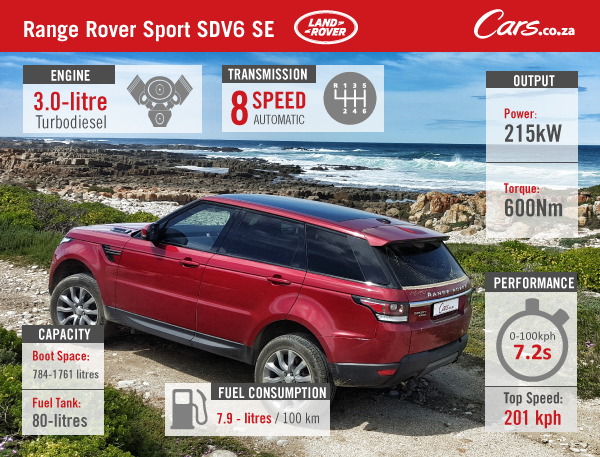
This Range Rover Sport is powered by the companys 3,0-litre V6 turbodiesel that punches out 215 kW and a hefty 600Nm of torque, the latter figure from as low as 2000rpm. Mated with a slick eight-speed automatic transmission, the SDV6 is claimed to sprint to 100km/h in 7,2 seconds and top out at 210km/h. Drive with restraint, and Range Rover says you should be able to achieve 7,9L/100km.
Seen in isolation, those figures appear impressive certainly when you factor in that this is a big, heavy SUV, notwithstanding aluminium construction. The reality is, however, that the competition at the same price offer considerably more. The BMW X5, available in xDrive40d guise, offers 230kW and 630Nm for less money. Those figures may not appear vastly different, but they come with significantly better claimed performance and fuel economy (5,9 sec 0-100 km/h and 6,0L/100km). And then theres the Porsche Cayenne S Diesel which sells for similar money, too, and offers a colossal 283kW.
So has the Range Rover Sport SDV6 brought a pistol to a bazooka contest? Well no.
On the road the creamy 3,0-litre punches harder than its number suggest, so youd hardly ever feel the need for more power. Key to this surprising turn of events is JLR (Jaguar Land Rover) once again nailing the throttle-response software nail on the head. The Rangey Sport responds to inputs with immediacy and urgency, even if youre already travelling quite fast. An impressive performance to say the least and one that highlights the fact that one should not stare oneself blind at printed figures.
As an aside, we achieved around 9,5L/100km during our test, which given the nature of the drive (fully loaded, with bicycle rack etc.) was impressive.
Two-dimensional character
Where the Range Rover Sport arguably lands the knock-out punch from which its rivals cant quite recover, is in its ability to appear as unflappable in the rough, as it is on the smooth. On tar the Sport impresses with its overall ride composure, suppresses bumps well and generally wafts along undeterred by what life can throw at it. Sure, push it hard into the bends and it cant quite compete with the likes of the X5/X6 and Porsche Cayenne but its certainly not roly poly either.
Hit the dirt, however, and it simply streaks ahead. There are some options on offer from your Land Rover dealer in this regard, too, but at its core the Range Rover remains true to the brands legendary off-road capability. Raise the suspension, choose the appropriate setting and the Sport will take you places where its difficult to walk. Of course, in such off-road conditions the raised seating position again proves very useful.
Conclusion and Summary
The Range Rover Sport SDV6 SE is certainly not cheap and, on paper at least, appeared to be overpriced given especially its seemingly underpowered engine. The reality, however, proved rather different. This vehicle offers such a breadth of abilities that what it lacks in the ultimate power stakes is quickly forgotten. If you hanker after a premium SUV that strokes the ego, yet which can back that confidence with real ability, no matter what the conditions, then the Range Rover Sport remains a class leader.
Range Rover Sport SDV6 SE Price in South Africa
The Range Rover Sport SDV6 SE costs R1 167 031 and comes with a three-year/100 000 km warranty and five-year/100 000 km Maintenance plan.
Test Team Opinion
The V6 turbodiesel powering the Range Rover Sport is more than enough. It responds quickly to throttle inputs and shunts along like a diesel has no right to. Being a Range Rover, its also practical and hugely spacious inside. It is getting a bit expensive now with the exchange rate issues, however. -Ashley Oldfield
We Like: Desirability, Design, Off-road ability, On-road comfort, Luxury
We dont Like: Getting pricey and rivals pack more power
Also consider: BMW X5 xDrive40d, Porsche Cayenne S Diesel
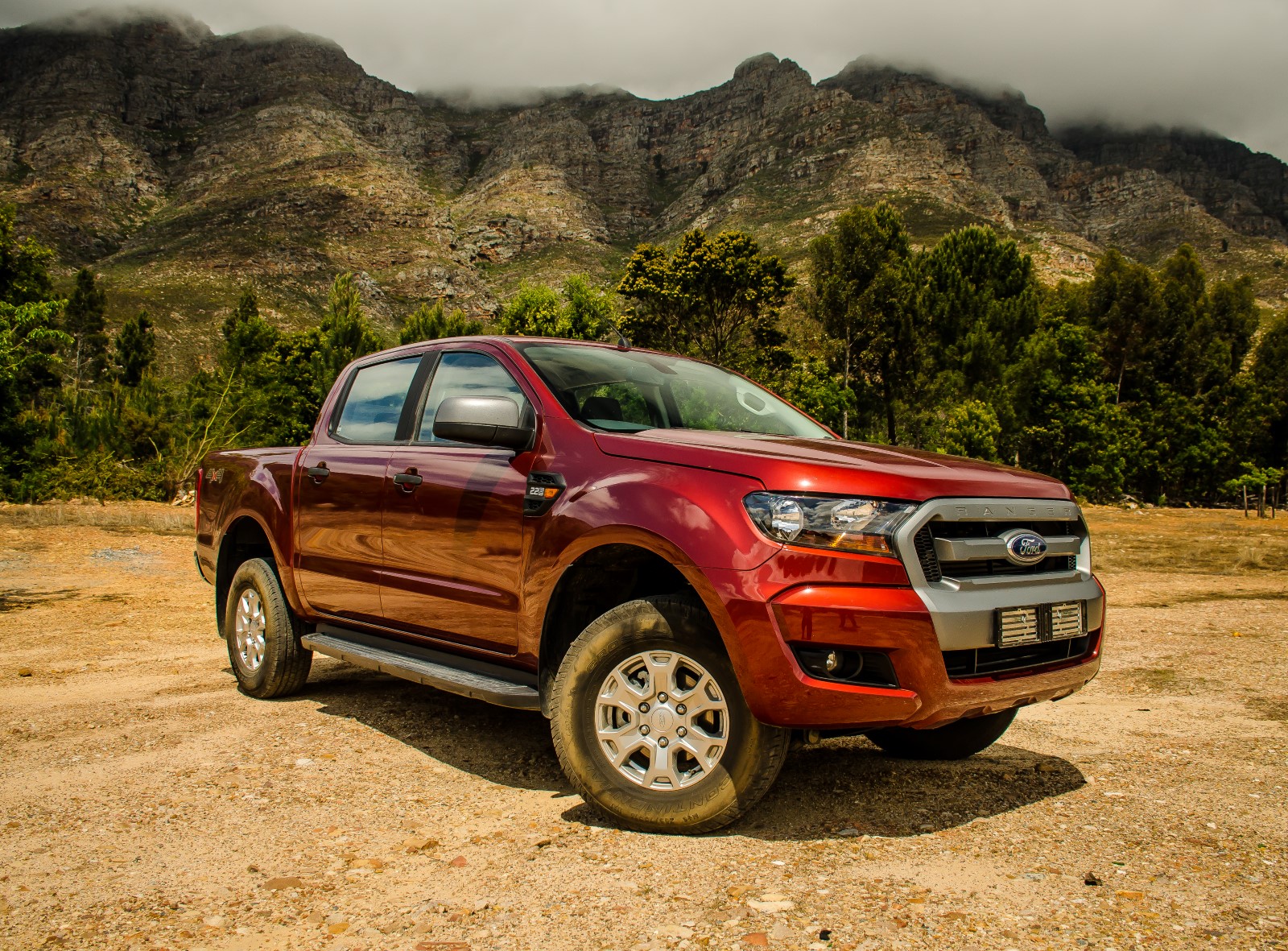
The new and improved Ford Ranger has arrived in South Africa, boasting fresh styling updates, new features, improved engine efficiency and higher levels of refinement. The new Ranger goes on sale at dealers nationwide from November 2015.
The much anticipated new Ford Ranger has launched in South Africa with the model range now consisting of 33 models with Single Cab, Super Cab, Double Cab and Wildtrak derivatives on offer. The new Ford Ranger was launched to the media in Cape Town this week and we were there to experience the changes and to give the new Ranger a first drive.
What Makes The New Ford Ranger Special?
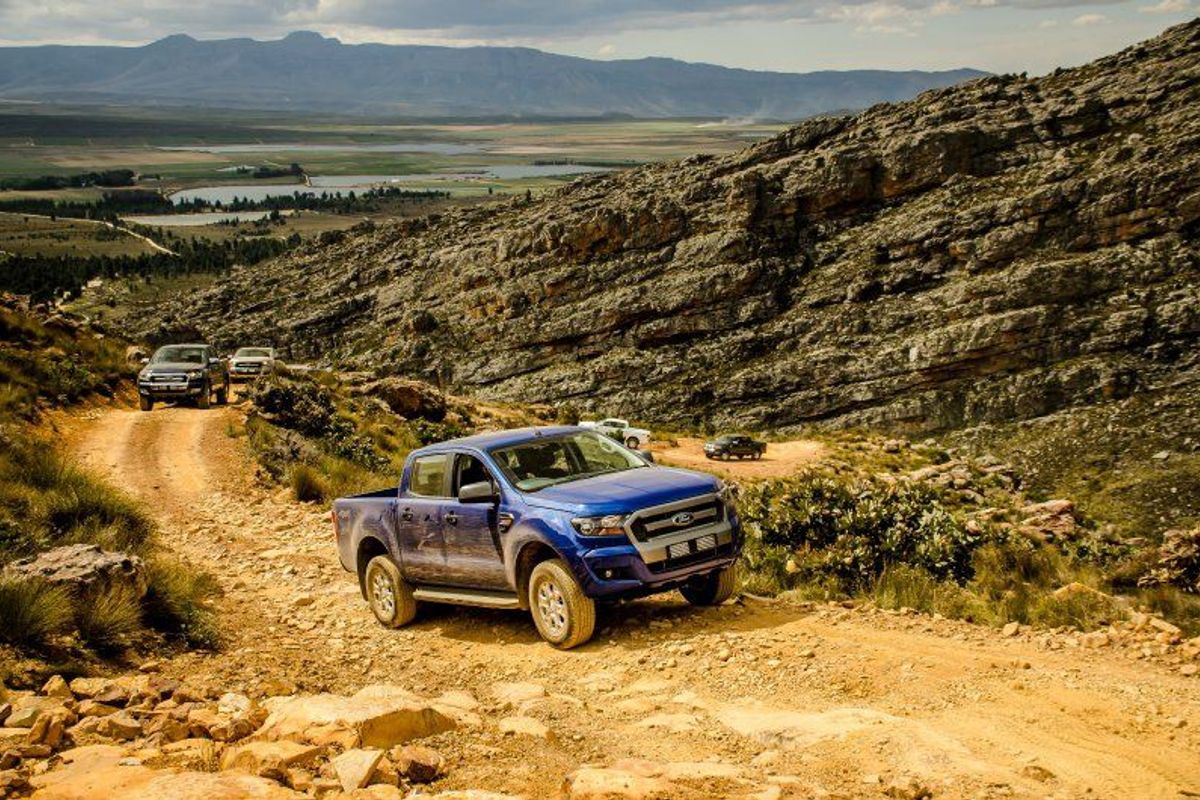
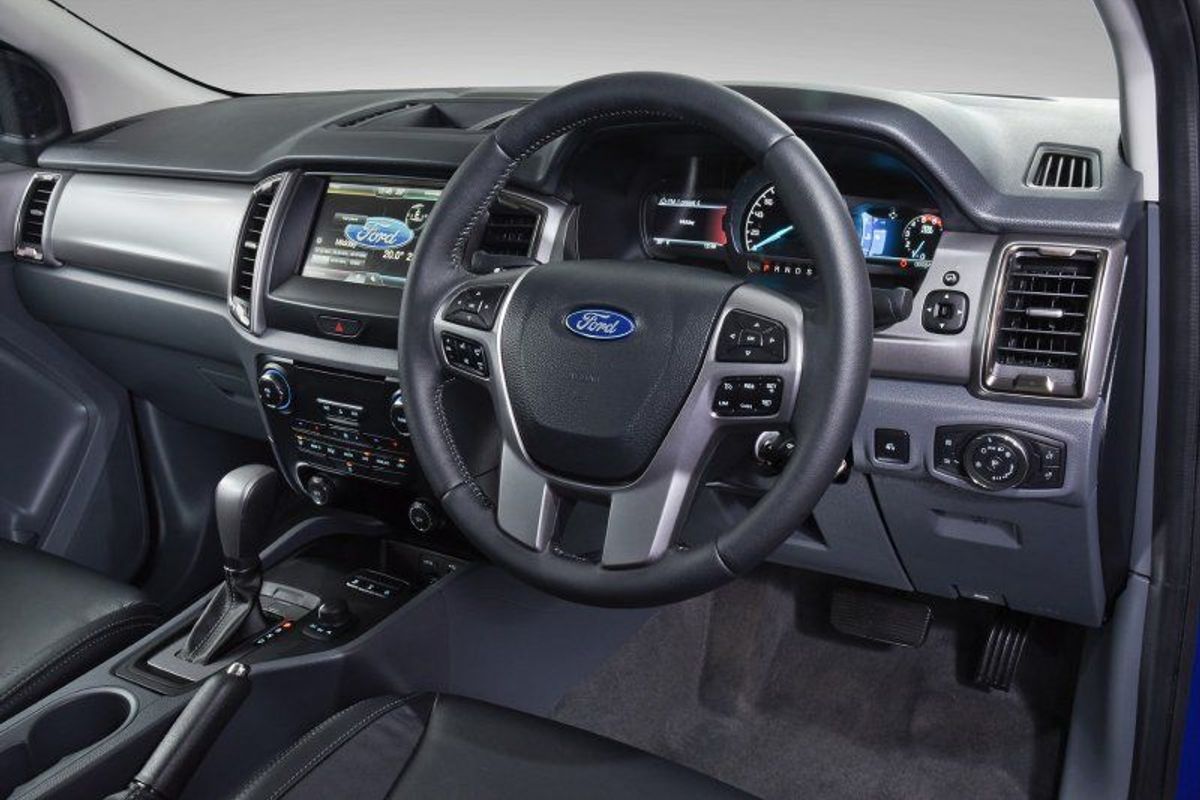
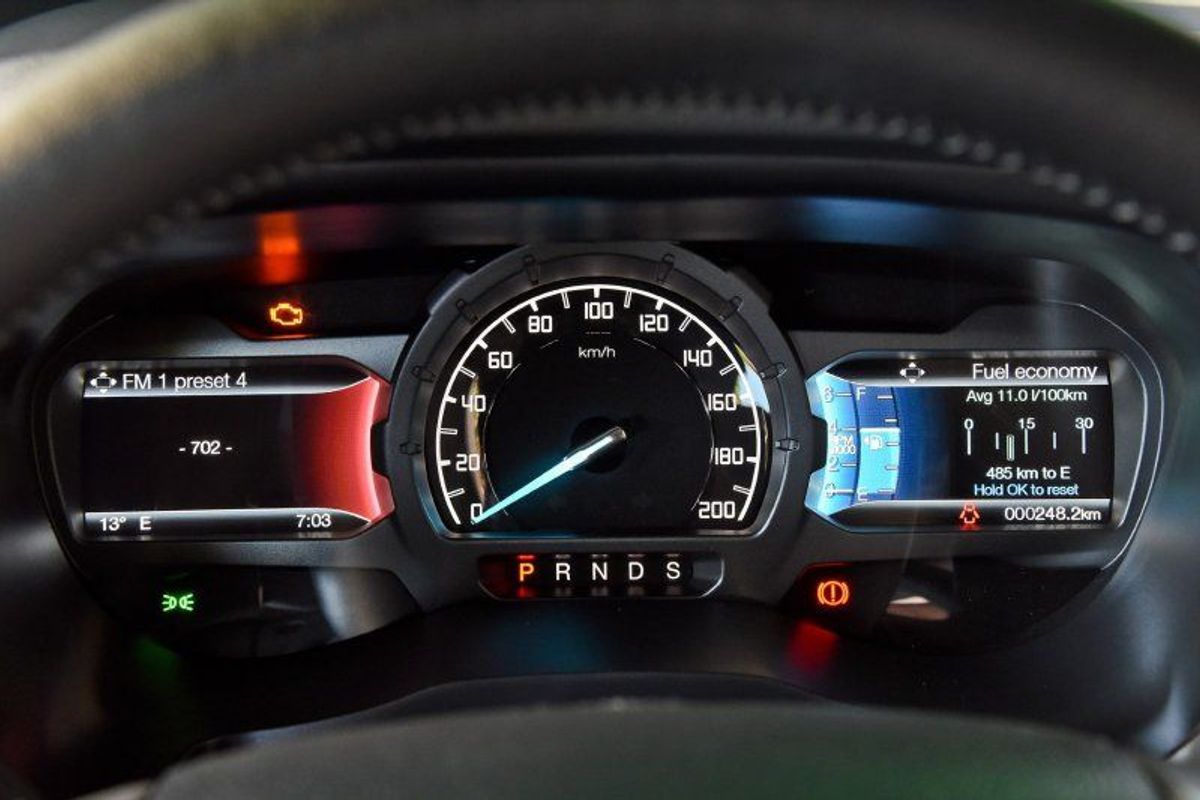
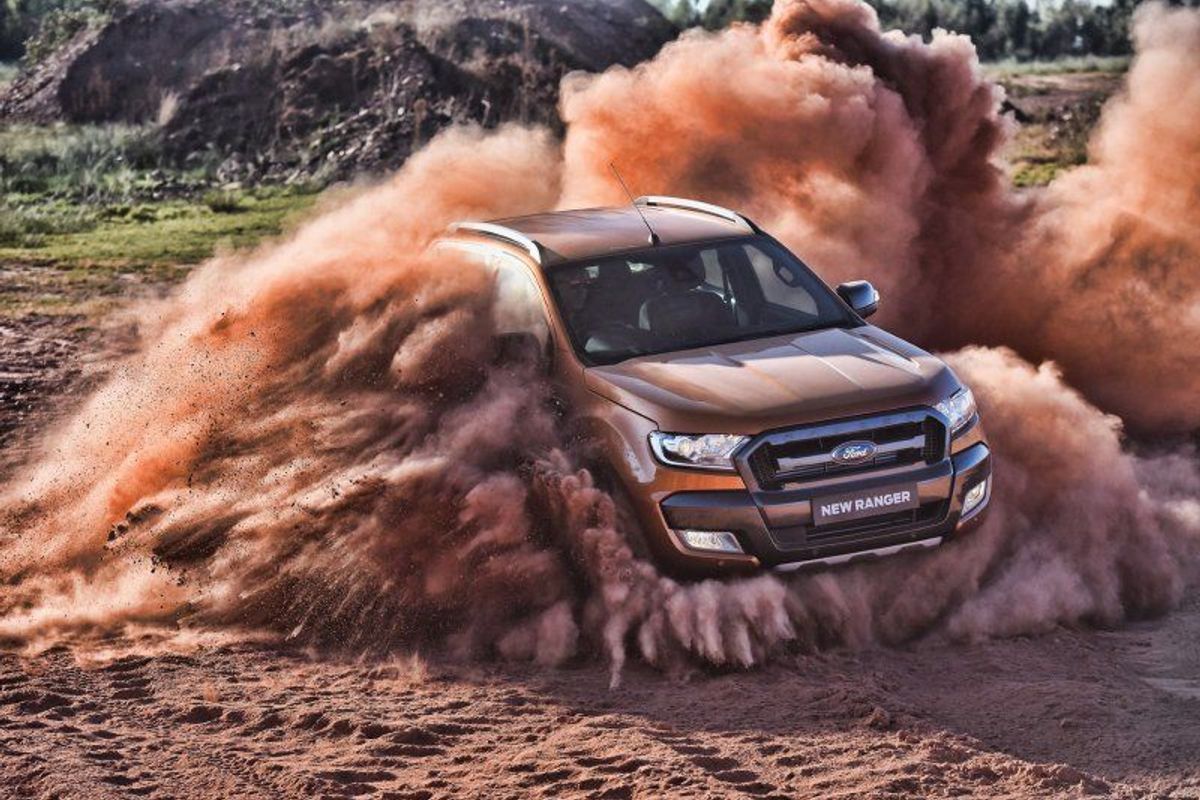
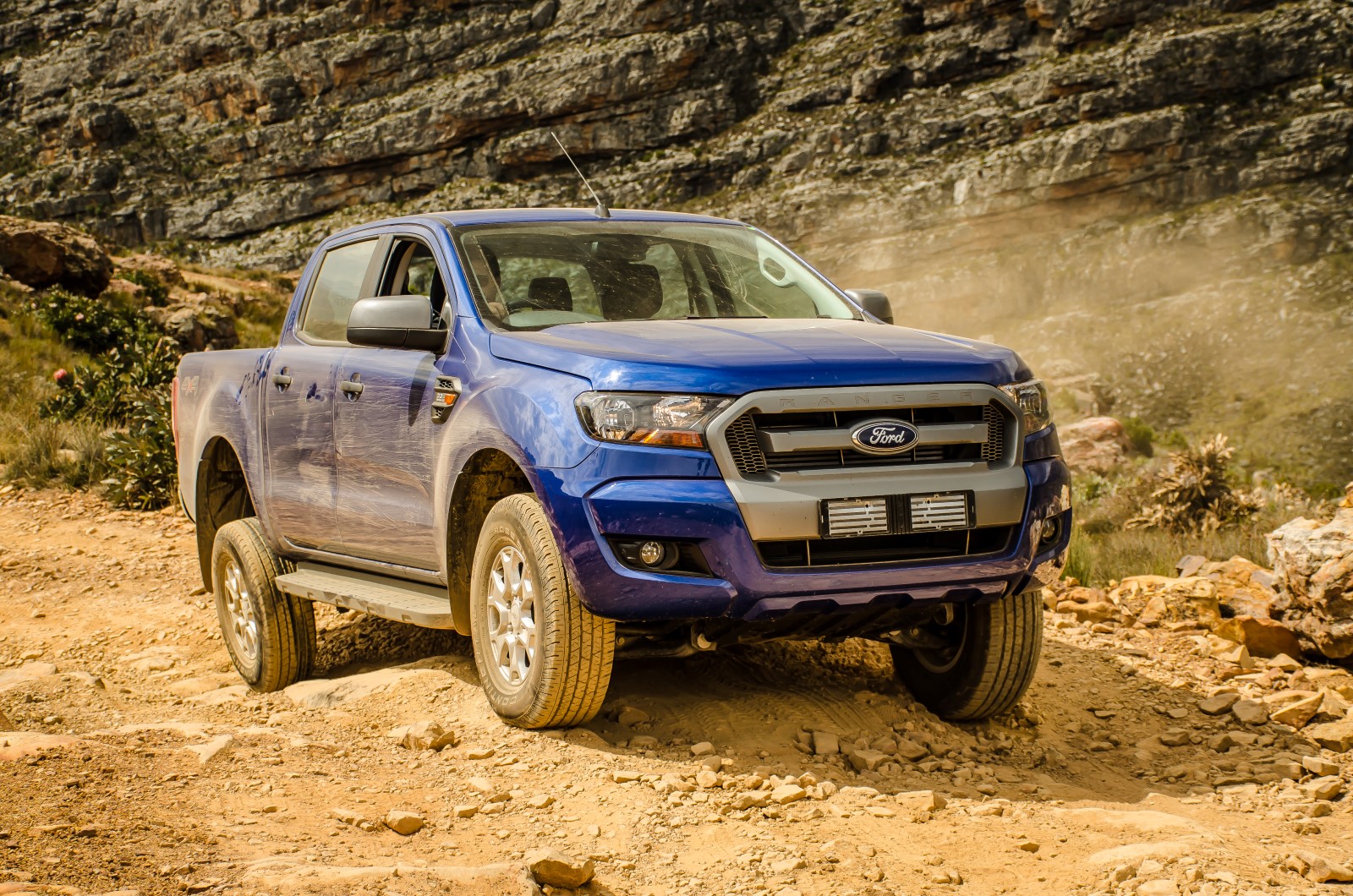
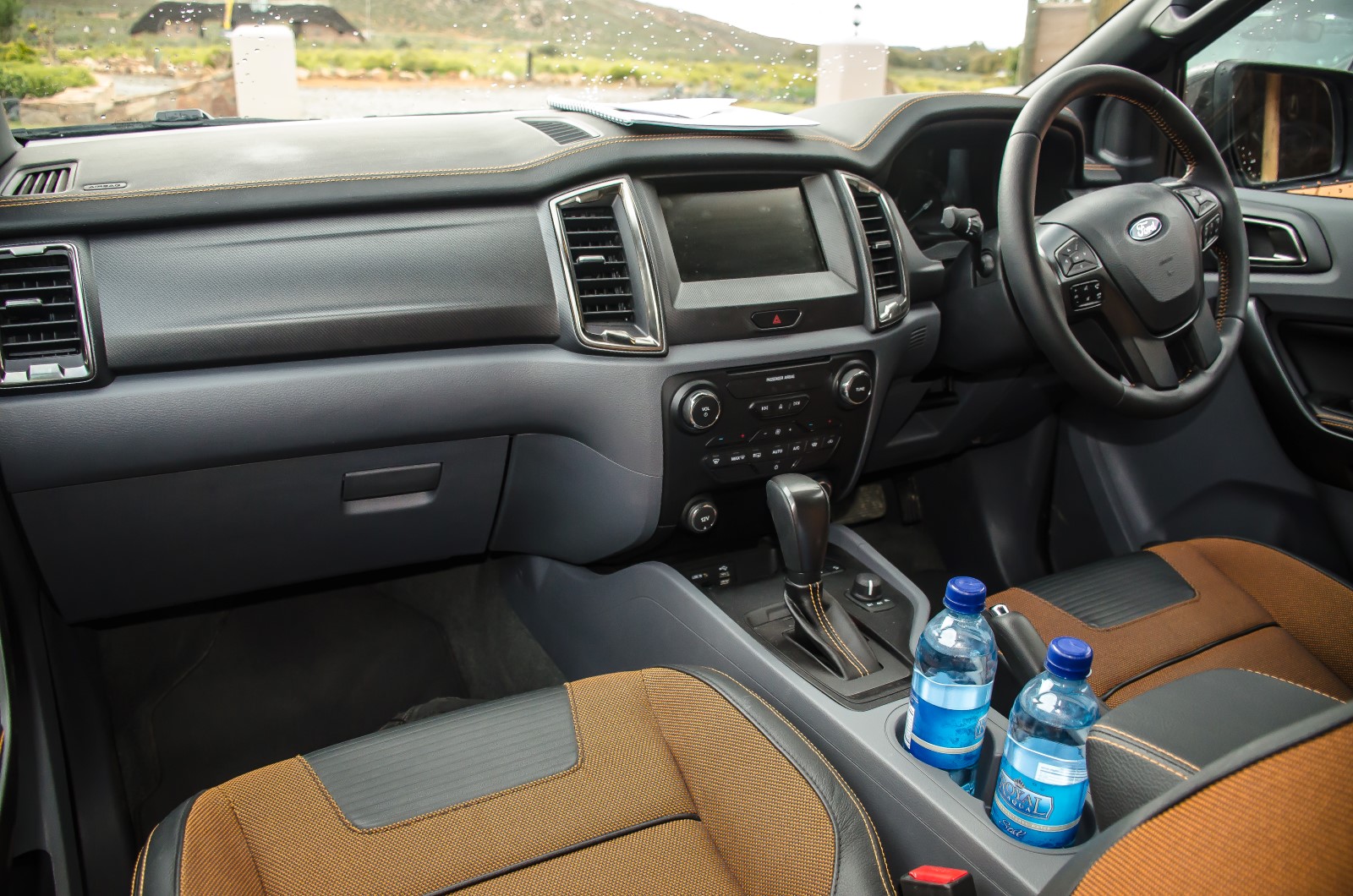
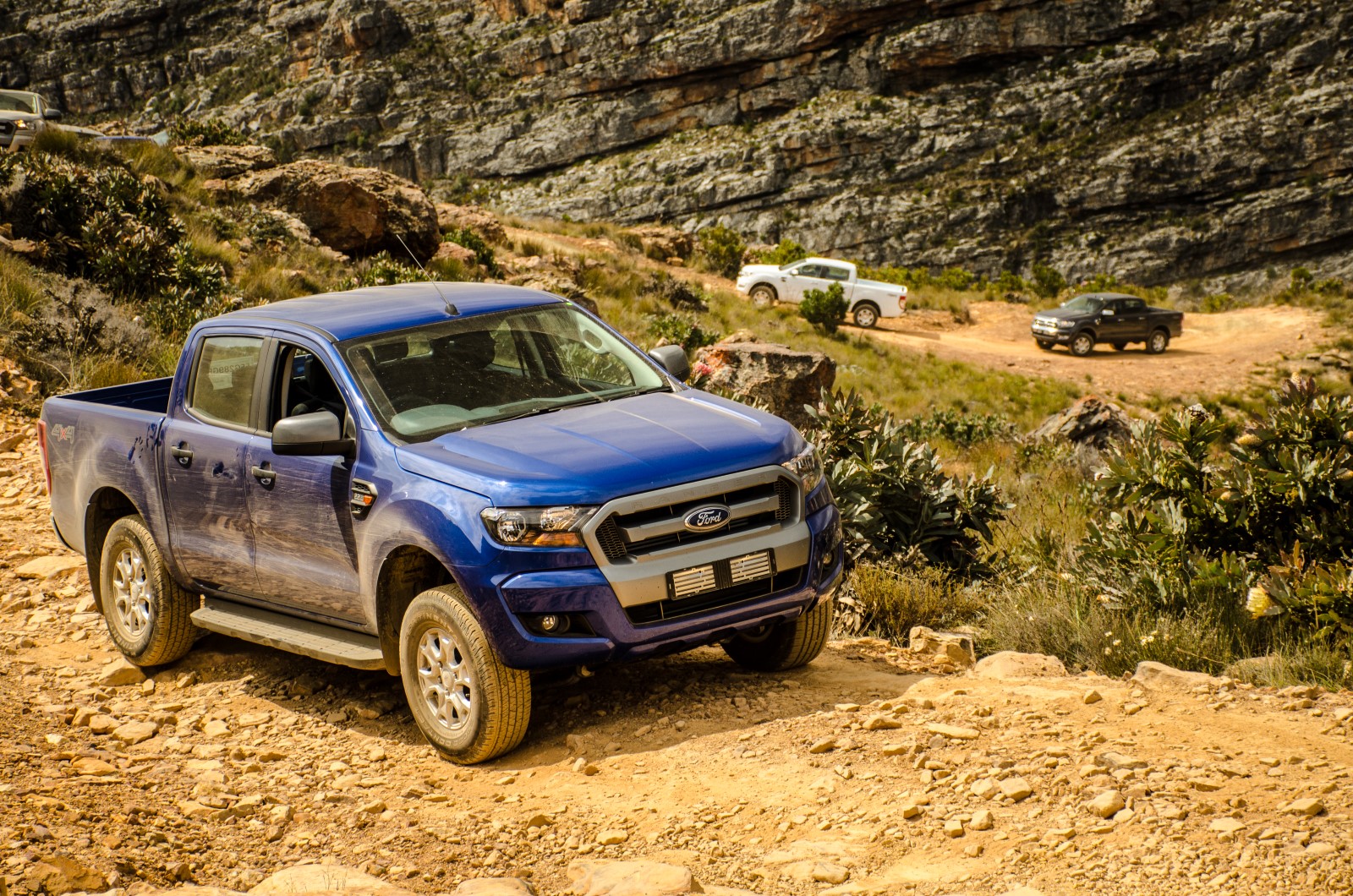
Hardcore off-road and adventure enthusiasts will be pleased to know that the new Ford Ranger doesn’t just look pretty, it’s superbly equipped to tackle challenging terrain too. The new Ranger features an 800mm wading depth with a ground clearance of 230 mm and with an electronically controlled transfer case, 4×4 drivers are able to easily switch from 4×2 to 4×4 mode via a knob on the centre console. Drivers can also engage low-range when the going gets tough and the Ranger is fitted with an electronic locking rear differential which provides additional traction when needed. The suspension has also been reworked and fined-tuned to improve ride quality and handling. Maximum towing capacity is rated at 3 500 kg. Ford has done an excellent job to enhance the styling of the Ranger, and this new model is certainly right up there in the looks department. Key styling changes include a bold hood that leads into a new trapezoidal grille flanked by modern projector headlights, giving the Ranger a wide, imposing stance. The new look is further emphasised with a brush guard in the lower bumper that incorporates the recessed driving lamps, which makes a clear distinction from the outgoing model. Exterior colours remain much the same and the Wildtrak version gets a new ‘Pride Orange’ while each Ranger model line has its own distinguishing features with varying grilles, bumpers and side mirror combinations. The interior has been refined to look more sleek and modern as seen in the new ‘Beam’ style dashboard which is evident on all models except the Base and XL-Plus derivatives, which use the same dash as the outgoing model. The new Ranger also benefits from equipment upgrades including a new dual 4-inch TFT instrument cluster, giving the driver access to vehicle information, 4×4 data, entertainment, phone and climate control details via the multi-function steering wheel. This new interior layout is also found in the recently launched Ford Everest. The Wildtrak derivative also benefits from a handy 230V power socket which allows occupants to power a laptop or charge devices while out in the wild. Ford’s SYNC 2 in-car connectivity system also makes its debut in the new Ranger and is available on all XLT and Wildtrak derivatives. Using an 8-inch touchscreen, the system provides access to functions such as phone, multimedia and climate control functions. An SD card slot and two USB ports are included too. The new Ford Ranger is also packed with driver assist systems which include Adaptive Cruise Control (ACC) with Forward Alert, Lane Keeping Alert and Lane Keeping Aid, front and rear Park Assist, Tyre Pressure Monitoring and a Driver Impairment Monitor. Electronic Stability Program (ESP) is standard on all models except the Base derivatives and includes Roll Stability Control, Traction Control, Hill Launch Assist, and Hill Descent Control. In terms of passive safety, the new Ranger is fitted with ABS with EBD and Brake Assist. A maximum of 7 airbags are fitted.
Engine Lineup
Topping the engine lineup is the 3.2-litre turbodiesel offering 147 kW and 470 Nm of torque. Ford claims that the efficiency of this engine has bee improved by up to 18%. There's also revised 2.2-litre turbodiesel which now offers 118 kW (110 kW previously) with 385 Nm of torque (375 Nm previously) as well as a mid-power 2.2-litre turbodiesel which provides 88 kW and 285 Nm of torque. For petrol lovers, there’s a 2.5-litre petrol engine carried over from the previous range which offers 122 kW and 226 Nm of torque. Depending on the derivative you choose, these engines are mated to either a 6-speed manual or 6-speed automatic transmission, while a 5-speed manual is used for the mid-power diesel engine and the petrol engine. Buyers have a total of six trim levels to choose from including Base, XL, XL-Plus, XLS, XLT and the range-topping Wildtrak.
How does the new Ranger drive?
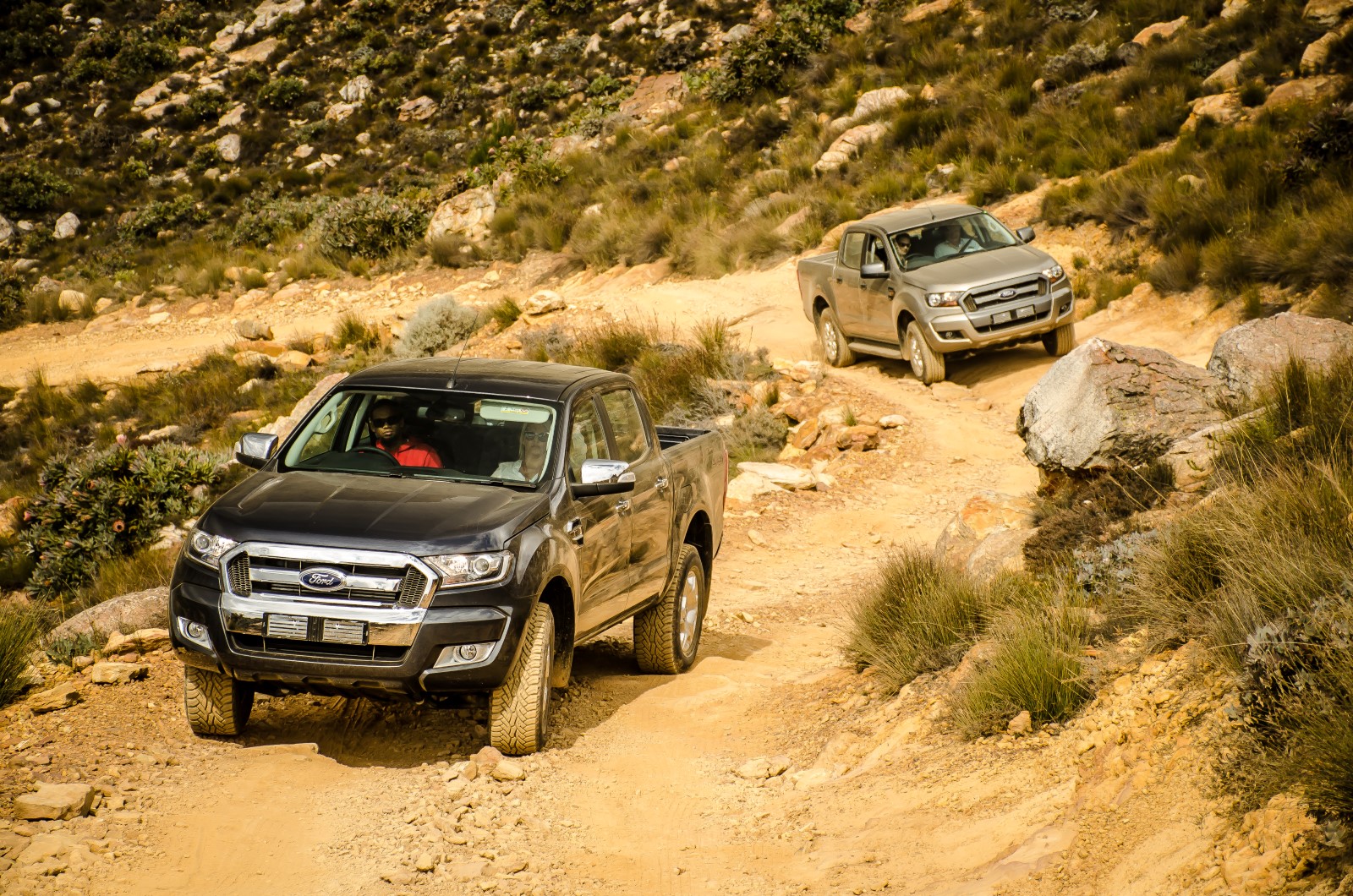
The launch of the new Ford Ranger took us some two hours out of Cape Town to the beautiful Matroosberg region where we had the chance to sample the mid-spec 2.2-litre turbodiesel 4×4 XLS model. Not only is this model comfortable to sit in and drive, but it’s superbly refined too. You really have to listen hard to hear the engine working under bonnet and the ride quality is as good as it gets in this category. Driving the new Ranger makes you question if you are driving a bakkie at all, because it feels so composed and well-mannered that it could easily be an upmarket SUV. It really is good. This model came fitted with a smooth-shifting 6-speed manual transmission and in-gear acceleration is excellent making highway driving a pleasure. After lunch, it was time to get down and dirty with the new Ranger and tackle some 4×4 obstacles. With low-range 'box engaged, the Ranger dominated the obstacles with ease. The small 4×4 course posed no threat to the new Ranger and so the launch party proceeded to try conquer a 4×4 trail up a nearby mountain. This 4×4 trail was steep with challenging terrain that would put the Ranger through its paces. Low-range did the job just fine and some tricky sections demanded intervention from the rear diff lock which worked well to restore shot nerves. The new Ranger scaled the tough 4×4 trail with relative ease and coming back down the mountain gave us the opportunity to test the Hill Descent Control, which made light work of the challenge. The new Ranger gives experienced and amateur 4×4 drivers the confidence they need to get the job done and the vehicle certainly impressed us with its composure in challenging situations. Back on level ground, we finally had the chance to test the range-topping Wildtrak derivative. The interior is impressive in design and detail and the new instrument cluster and 8-inch touchscreen is a pleasant addition to the Wildtrak. Performance in the Wildtrak is commendable too and like the models below it, the ride quality is exceptionally smooth and refined. This new Wildtrak makes driving on gravel feel like a smooth tar road and that 6-speed automatic transmission works seamlessly to get the most out of the engine. We also had the opportunity to test the Wildtrak’s Adaptive Cruise Control out on the road and it makes driving so effortless. The system is activated via the steering wheel controls and sensors detect traffic up ahead, and applies the brakes if necessary and accelerates again to the set speed once the road ahead is clear. The driver is only required to steer. With Adaptive Cruise Control activated, we managed to achieve an excellent fuel consumption figure of 8.6L/100km in the Wildtrak which was hugely impressive for a bakkie with a large 3.2-diesel engine. Overall, the new Ranger gets so much right in terms of styling, performance, capability and efficiency. The changes have certainly put the Ranger in a stronger position to face its most serious challenge – the arrival of the new Toyota Hilux early next year. In terms of pricing, Ford South Africa has been tight-lipped and with the new Ranger expected to reach dealerships in the next few weeks leading up to November 2015, definite pricing can be expected to be released soon. That said, we wouldn’t be surprised if pricing increases by between 3% and 4% across the range. We will keep you updated as soon as more pricing information is released and we will hopefully have the new Ranger on test soon too, so stay tuned!
Base Safety Pack including Dual Front Airbags, ABS with EBD, Beltminder (driver) – R6 210
Manual Air Conditioner – R8 000
16" Alloy Wheels – R6 540
XLS Pack including Chrome Steel Bumper, Rear-view Camera, Rear Parking Sensors, Auto Headlamps, Rain Sensing Wipers – R8 300
Spare Wheel Lock – R840
Electronic Locking Rear Differential – R4 130
Vinyl Floor – R810
Steel Bullbar – R18 000
Fiat 500X 1.4T Cross Plus (2015) Review
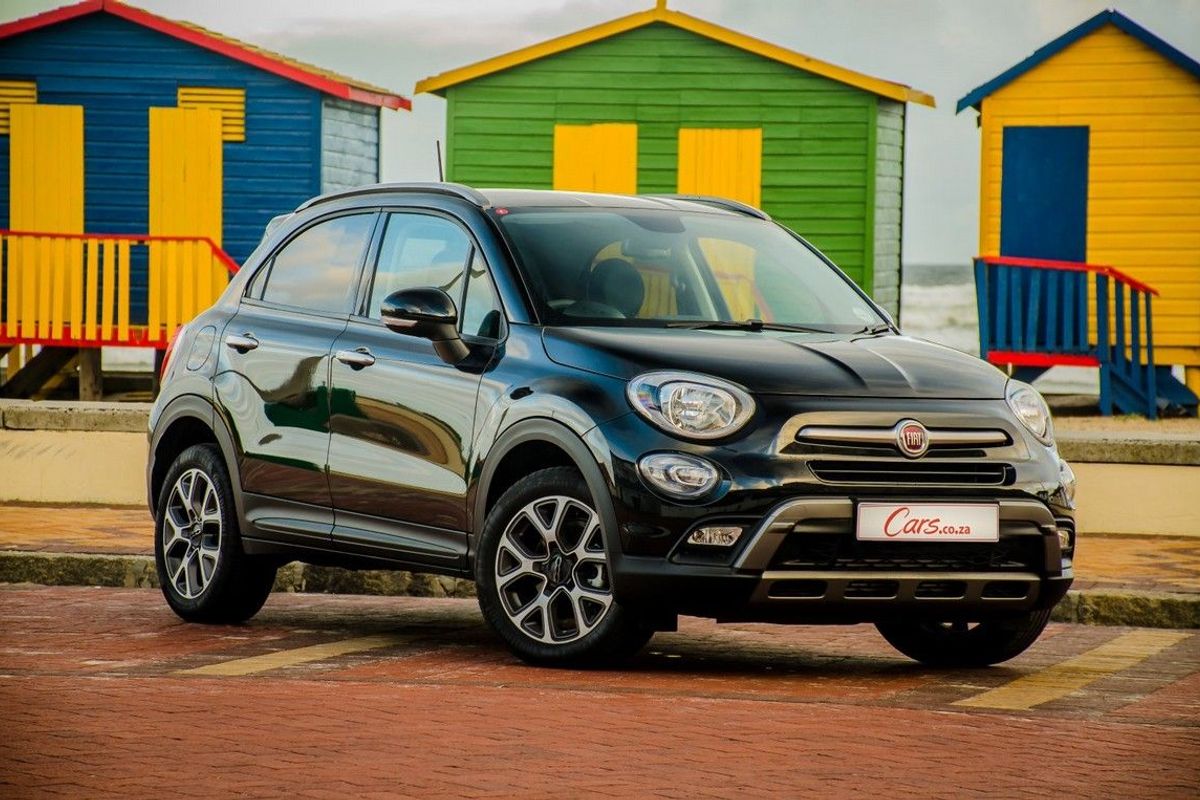
The Fiat 500X is the Italian version of the Jeep Renegade and represents Fiat’s entry into the enormous crossover market. We spent a week with it.
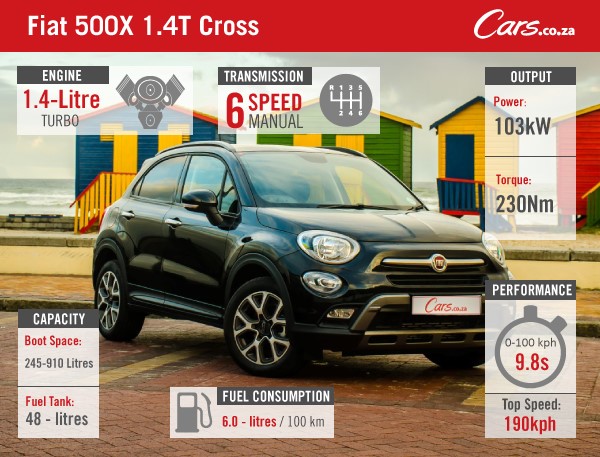
The Fiat 500X is Fiats entrant in the ever-expanding compact crossover/SUV segment. It is positioned as a Nissan Juke or Opel Mokka rival, using a force-fed petrol engine and a raised ride height to attract buyers. It shares a platform and engine with the plucky Jeep Renegade, but tones down the machismo for a more rounded and fashion-conscious offering. We got behind the wheel of the Cross Plus, top spec model for a week to see what this pumped-up 500 is all about.
The Look
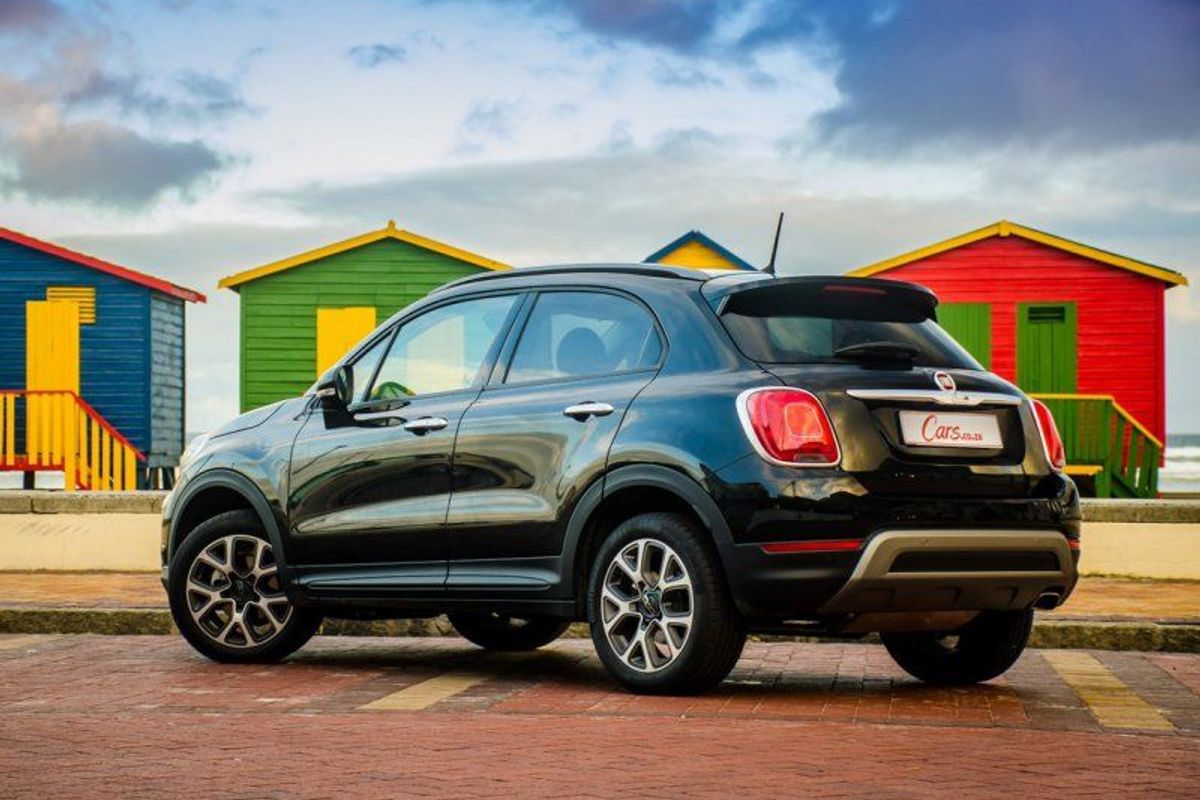
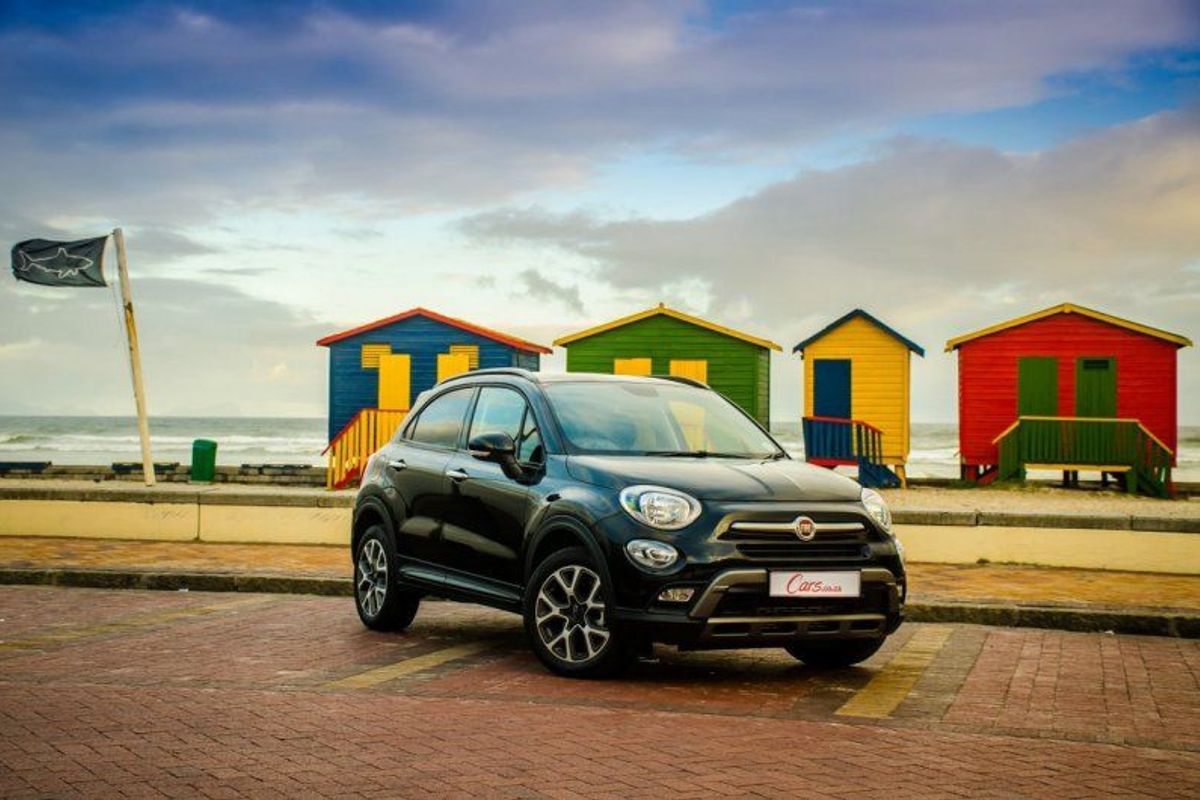
Much of this segments attraction is based on just that – attraction. The Renault Captur in particular is seeing great success with its appealing looks. The Fiat 500X is essentially a blown-out Fiat 500 – pretty much the same that a Mini Countryman is to a normal Mini. The 500X is cute, but probably not to everyones tastes, especially in a conservative market like ours. The Cross variants add the black plastic bits around the perimeter. These give the 500X a bit more of a rugged look and subtly improve approach and departure angles. It does not mean that the 500X is an off-road machine. In our test unit’s black paint and with 18-inch wheels the 500X makes a statement and attracts second looks and raised eyebrows.
Skin deep
Look a bit deeper and the Fiat 500X uses a 1.4-Litre turbocharged petrol engine. Theres a naturally aspirated 1.6-Litre in the range but the added go of the turbo makes for a more entertaining drive. The engine delivers 103 kW and 230 Nm of torque. Its smooth power delivery is refined and theres an audible growl when you put your foot down. The six-speed manual gearbox is a pleasure to shift with its light and direct action. Around town the 500X is responsive and theres not really any noticeable low-down turbo lag. Fuel efficiency is claimed at 6.0L/100km and thats spot on compared to the competition.
The glamourous bits
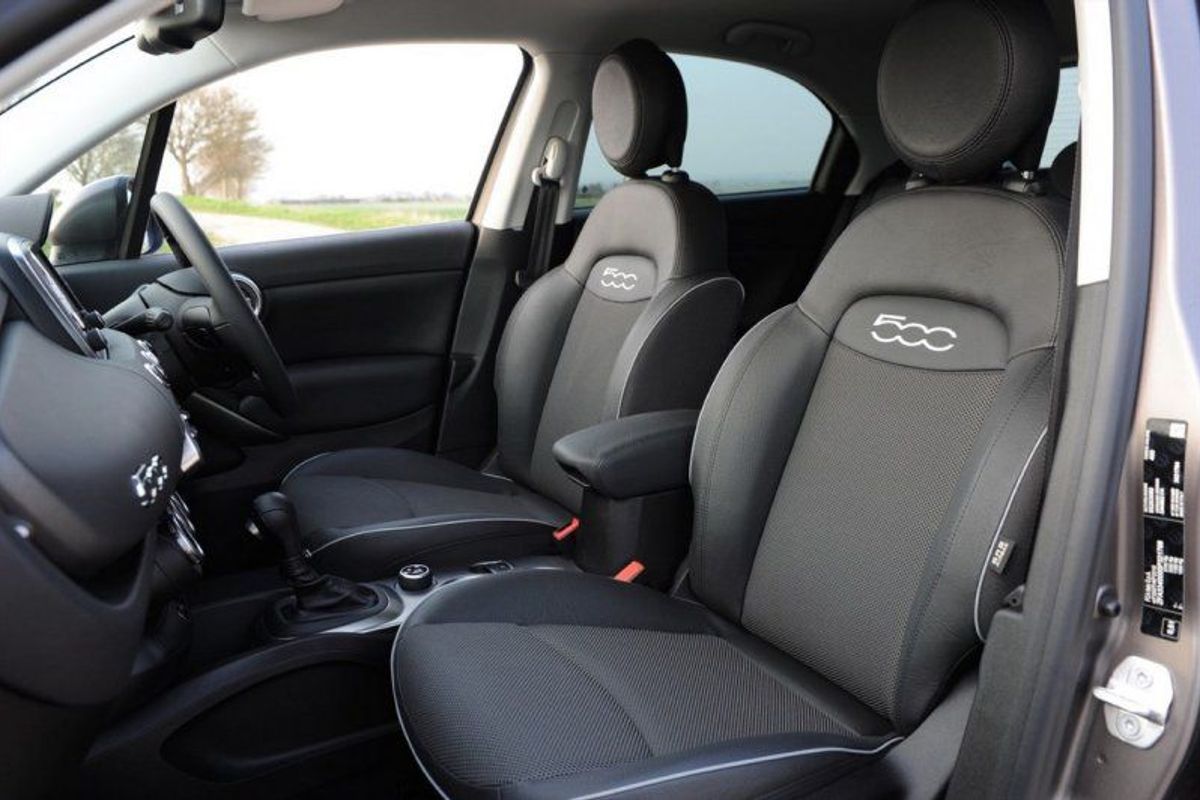
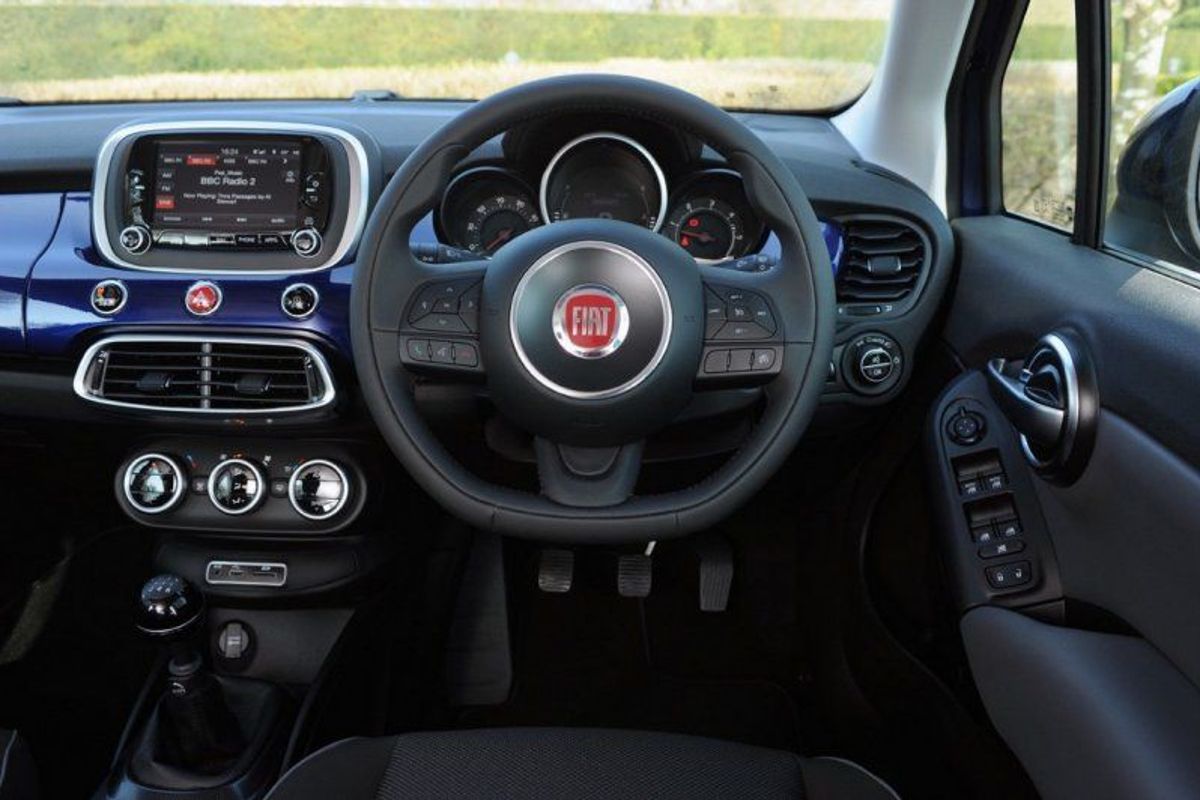
Climb aboard the Fiat 500X and the interior really shows the hard work Fiat has done in order to improve its reputation. It has a unique and premium feel to it, something the competition cant quite match. Spec wise its quite similar to the competition but has some nice touches that include a 6.5-inch touchscreen with built-in navigation. The seats are impressively comfortable and supportive and the rear seats are equally comfortable, but rear legroom is a bit restricted. Theres all the connectivity add-ons like Bluetooth, Aux and USB as well as voice command control and steering mounted controls. The Cross Plus model comes with a strange textured surface across the dashboard that feels scratchy. The standard gloss piano black is a better choice and doesnt feel like sandpaper when you run your hand across it.
As a practical crossover, the 500X is a touch on the weak side. The rear seats fold down, but not entirely flat and the load space with the seats up isnt great. Fiat has made sure the 500X is a safe buy. It is equipped with traction control, ABS with EBD and six airbags. Theres also hill-hold functionality and rear parking sensors on all models. You can also spec the 500X up with really high-tech stuff like lane departure warning, blind spot assistance and a rear camera.
Behind the wheel
The Fiat 500X seems to be geared towards the driver looking for an entertaining drive. Its not quite as comforting as some of the competition over bumps and pavements but it trades some of that for drive capability. The 500X is a fun car to hustle around town and remains a treat through the bendy bits out of town, too.
Theres a mood selector button thats much like the DNA switch on Alfa Romeos. The rotary switch gives you a choice between Auto, Sport or Traction. Each selection changes the characteristics of the engine, brakes and steering. Slot it into Sport and you can have decent fun for a crossover. Theres not much body roll and the steering is heavily weighted, but reacts quickly to inputs.
Verdict
As a stylish, funky and stand-out crossover the Fiat 500X does a great job, its even really fun to drive. Its not quite as practical as you think but it does have a good engine under the bonnet that offers an impressive combination of thrills and efficiency. Its well kitted in the safety department and connectivity area and there are options available if you want more fancy bits inside. The snag comes in when the price is revealed. This Cross Plus unit is R379 900 in standard form and thats significantly more than the top-spec Nissan Juke and the more practical Opel Mokka.
Fiat 500X pricing in SA
The basic 1.6 500X Pop Star starts off the range at R310 900 before the 1.4T Cross begins the turbocharged variants at R344 900. The Cross auto is R359 900 with our test model the Cross Plus at R379 900. The DDCT variant (dual clutch auto) tops the range at R394 900.
Test Team Opinion
It costs too much of course, but except for that the 500X impressed me. Lovely ride quality and quite sprightly too. -Hannes Oosthuizen
We Like: Premium interior, ride and drive, stylish choice
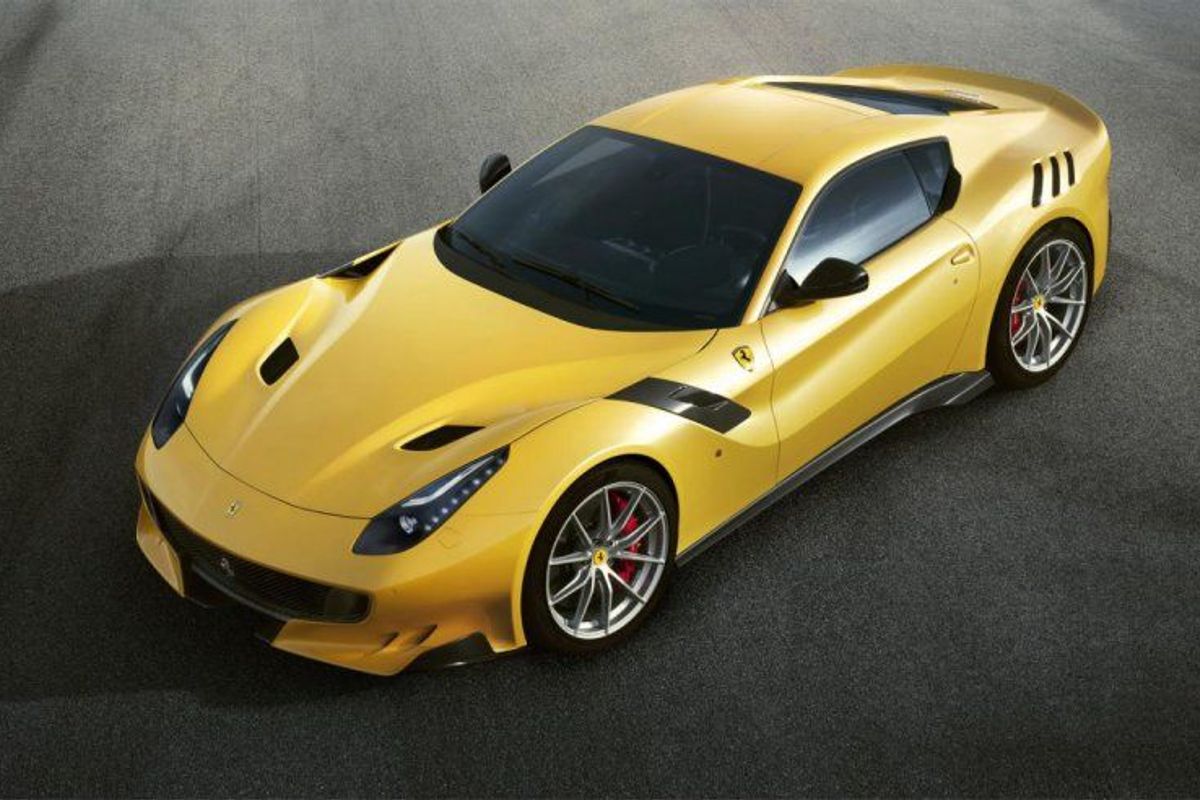
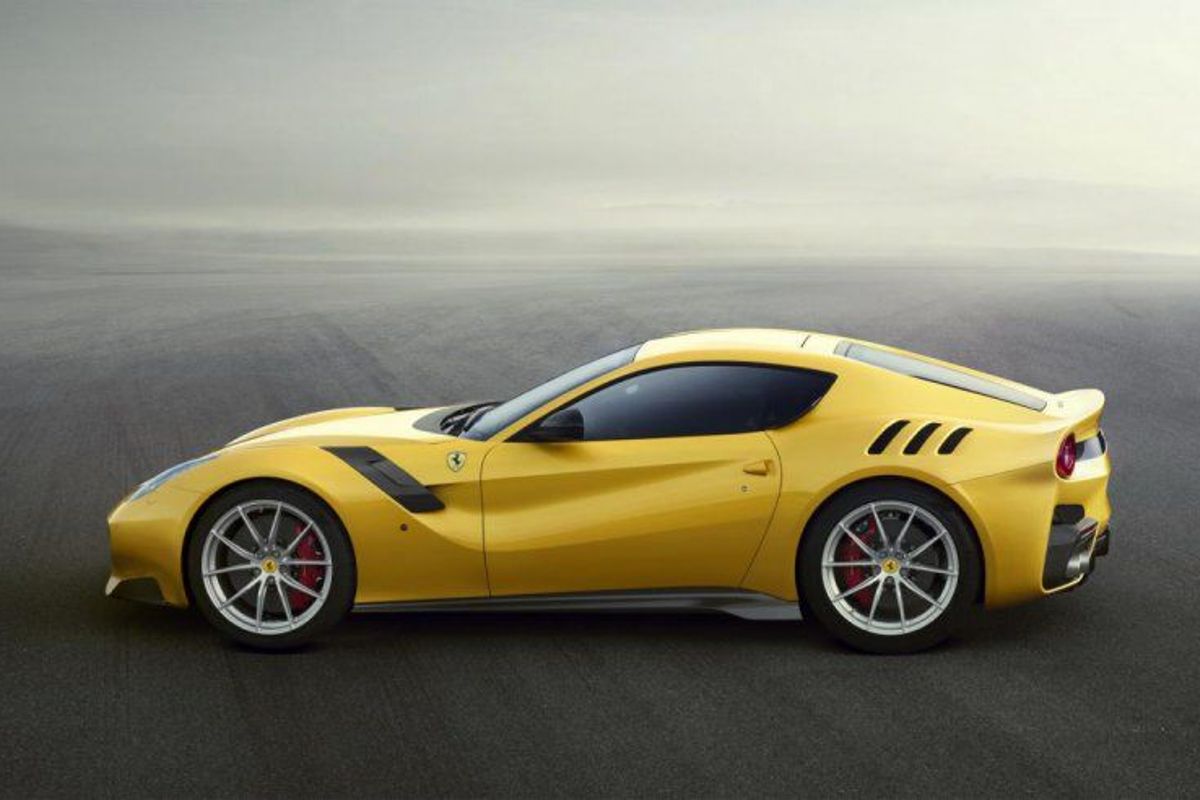
Meet the ultimate F12 featuring more power, less weight and loads of go-faster aerodynamics
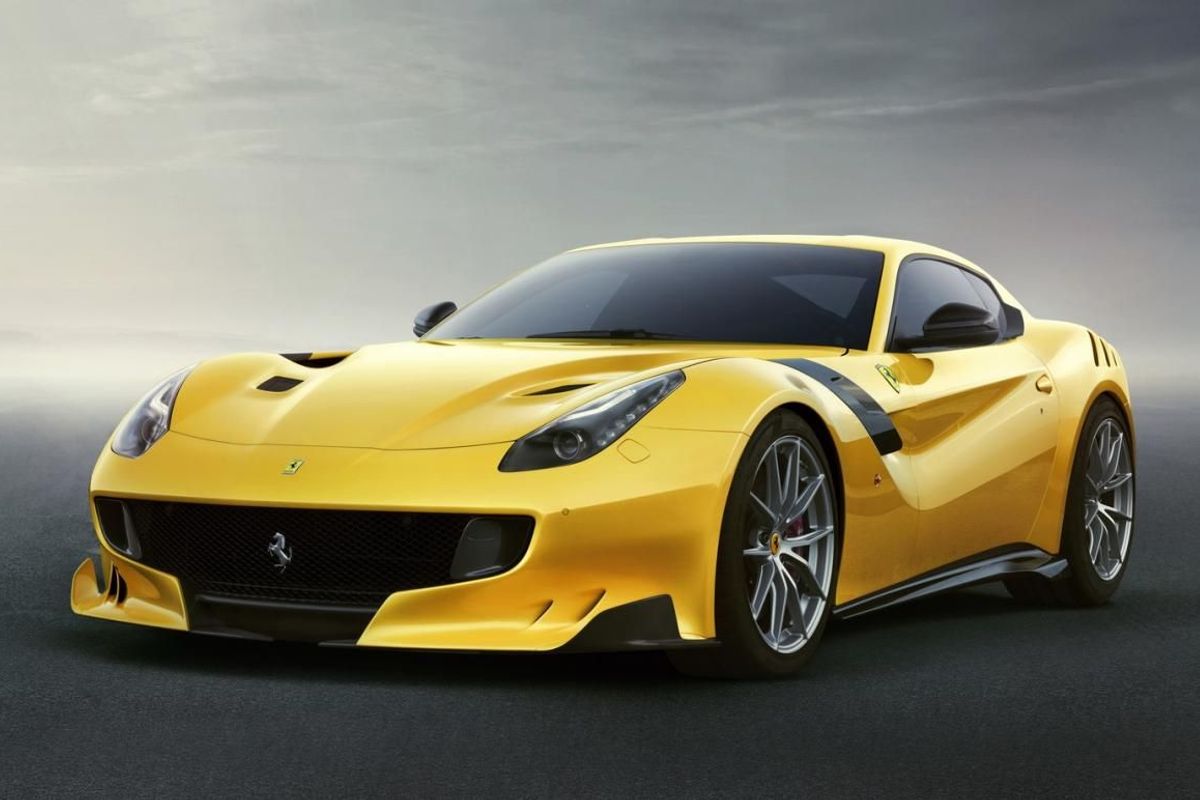
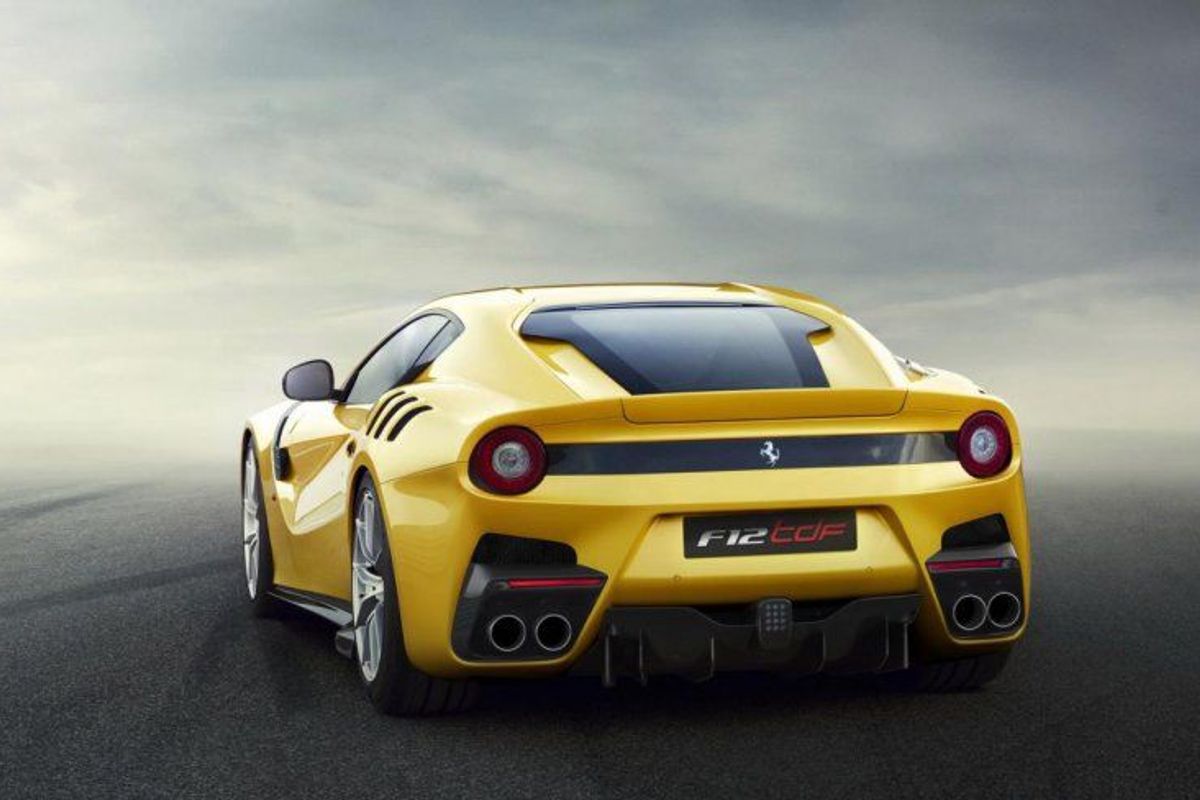
Ferrari has revealed its halo F12tdf of which, just 799 units will be built. TDF does indeed stand for Tour de France, but relates back to a legendary endurance road race that took place on both roads and tracks around France. The Ferrari F12tdf takes the already lightning performance of a standard F12 Berlinetta and turns it into a bonkers mad lightweight performance variant.
More power for F12tdf
As if 545 kW wasnt enough, Ferrari has turned the wick up another 29 kW, totaling 574 kW and 705 Nm of torque. The dual-clutch gearbox has been improved, generating 30% faster upshifts and 40% faster downshifts. Performance figures are mind-blowing 0-100kph in 2.9 and 0-200kph in 7.9 seconds. Top speed is 340kph and thanks to a serious diet of carbon fibre, the F12tdf is 110kg lighter than a normal F12.
Easy to drive
Ferrari claims to have made the F12tdf easier to drive for the less experienced gentleman driver. The front tyres have been made wider and debuting on the F12tdf, the rear axle is active, allowing the rear wheels to pivot around a vertical axis.
Using model-based control logic, the rear axle steering automatically adjusts the rear wheels, working out the optimal steering angle as a function of the steering wheel angle, speed of steering inputs and vehicle speed. The Virtual Short Wheelbase improves the car’s responsiveness to make it feel more agile, with instantaneous turn-in that can be best appreciated on twisty roads and on more technically challenging tracks while, at the same time, improving stability at high speeds. Add in an extra 87% percent downforce and you have an extremely stable and sticky performance machine.
Not much inside
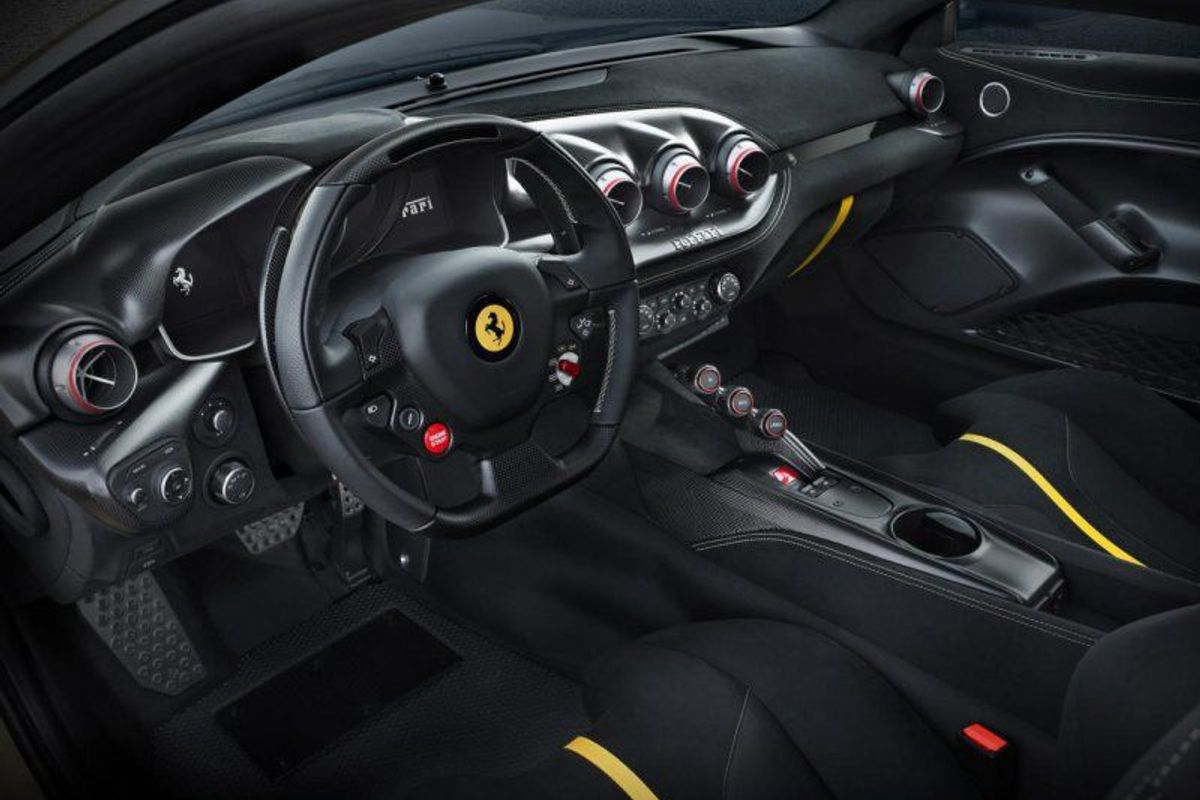
The car’s uncompromising sportiness is expressed with a deliberately Spartan cockpit. The door panels have been pared back to a single carbon-fibre shell, while the glove compartment has disappeared to be replaced by simple knee padding. Alcantara rather the traditional leather was chosen for the cabin trim. Technical fabric has been used for the seats and patterned aluminium instead of mats for the floor, once again with the aim of saving every last ounce of weight.
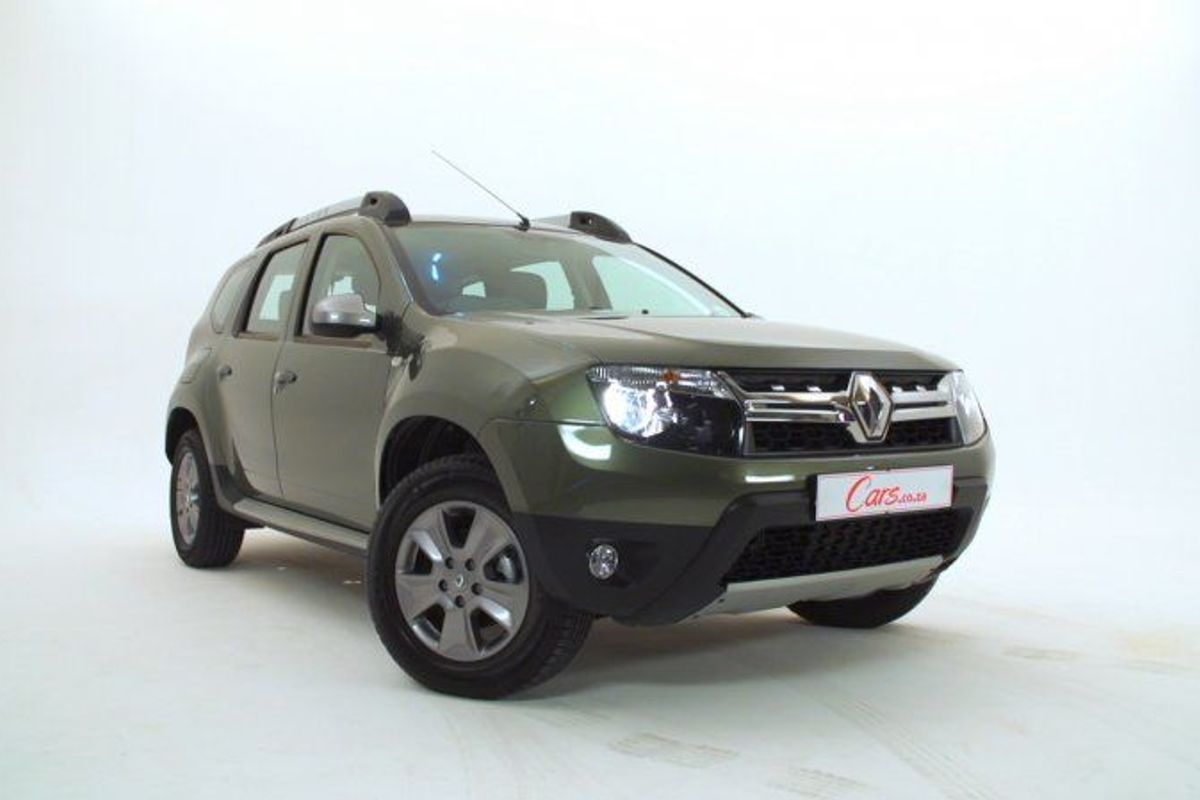
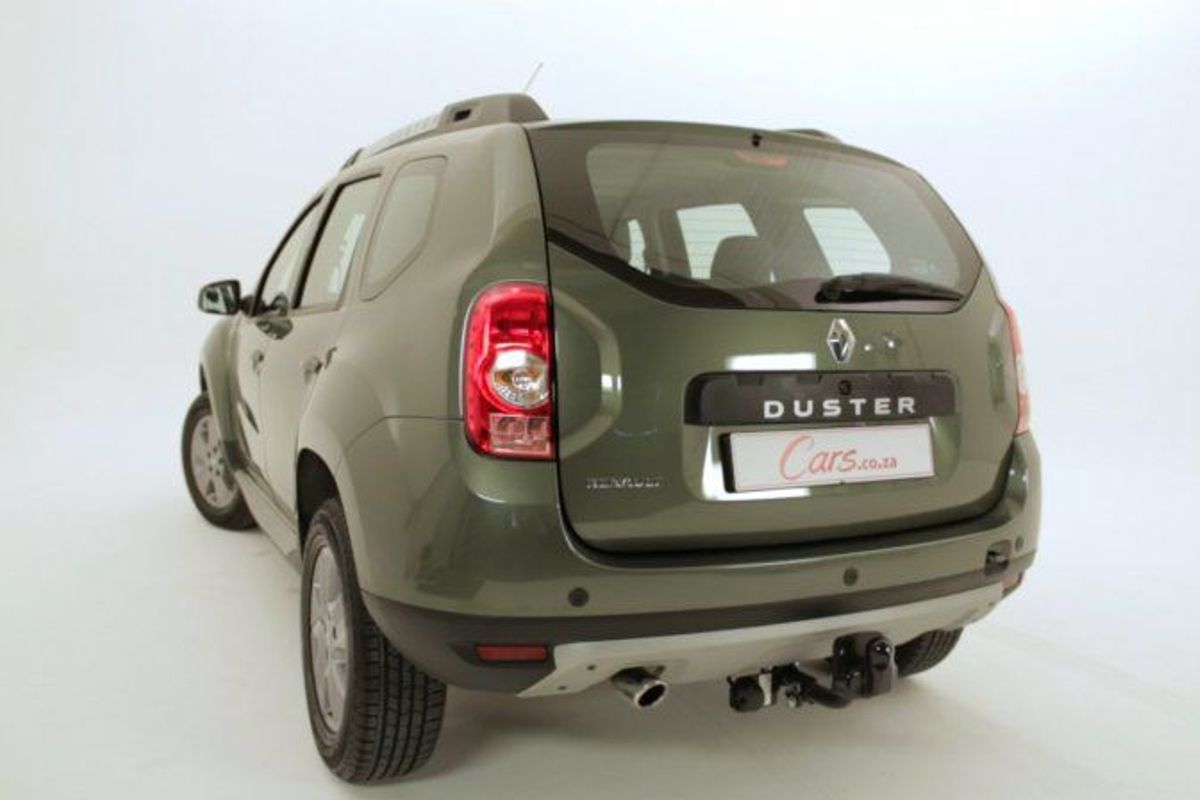
2015 Renault Duster Facelift In-Depth Review: Pricing, Interior, Rivals (Video)
We spend some time in the studio with the refreshed Renault Duster, here in 1.5Dci 4WD guise. Scroll down for video.
The Renault Duster has been a bit of a surprise on the SA market. In Europe, it is a cut-price car, designed to be basic, yet rugged, and most importantly: cheap. However given our wonderful exchange rate, the car lands here at about the same price as very refined rivals like the Nissan Juke and Renault Captur. And yet, South African motorists have really taken to the plucky Renault.
In my time with it, I did come to like its character. Its a no-nonsense, honest compact SUV with a hearty diesel engine and generous interior space. It also feels like it could actually go offroad, instead of just tackling the occasional pavement and gravel driveway and in reality it can with the option of two-wheel drive and four-wheel drive with lock at the touch of a dial.
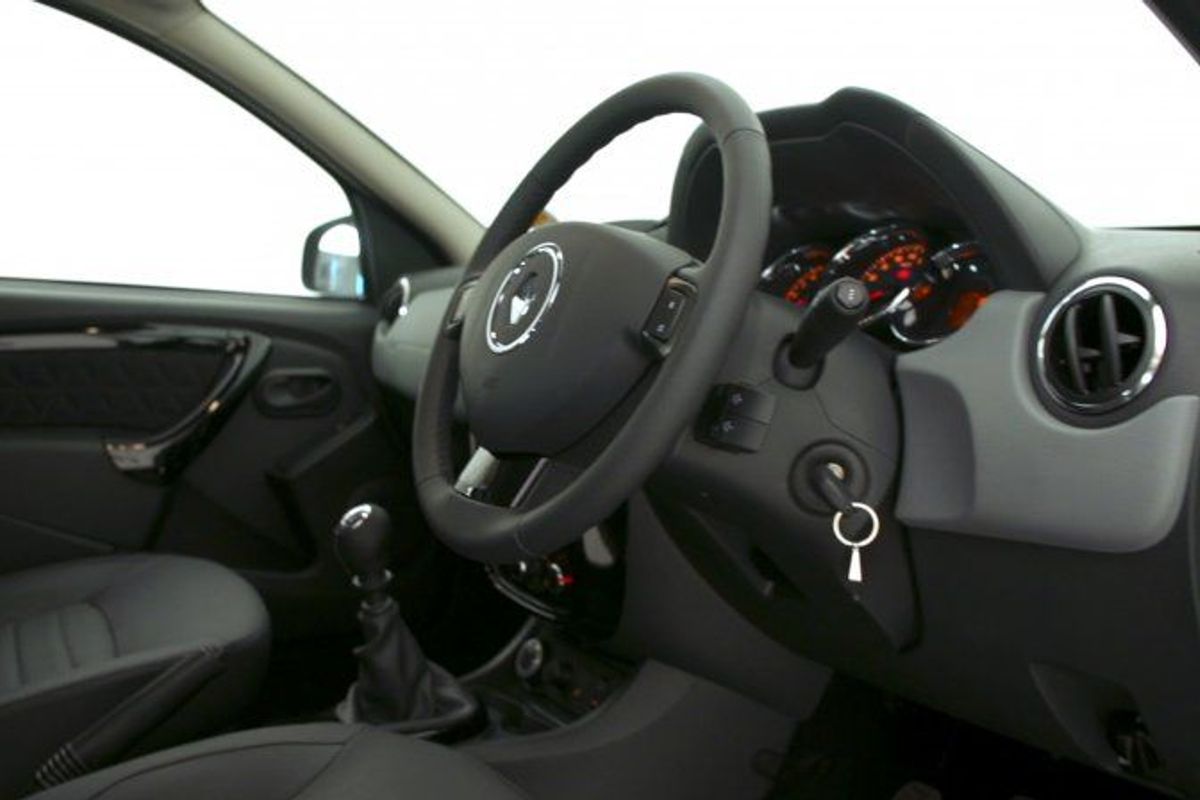
And Renault have ensured it offers a decent level of creature comforts to keep up with the Joness. A full touchscreen infotainment system borrowed from the Clio dominates the dash and while its mounted too low in the dash, it is properly useful.
Load Space Advantage
Notably, the Duster offers a significant load space over rivals. With 408 litres of boot space with all the seats in place, folding the rear seats flat increases that to 1570 litres, which is double that of both the Ford Ecosport (362l-705l) and Nissan Juke (354l-830l).
A few new interior and exterior tweaks have kept the look fresh, and again, its just an honest, straight-forward SUV.
In this video, we take a look at the top of the range Duster Dynamique diesel 4×4, in a rather fitting military green. We also compare it to rivals such as the EcoSport and Juke, comparing pricing and covering the pros and cons of each.
Wed love to hear your thoughts on the Duster in the comments below.
Renault Duster 1.5dCi Dynamique 4WD
Ford Ecosport 1.5TDCi Titanium
Price
R269 900
R274 900
Engine
1.5l 4-cyl turbodiesel
1.5l 4-cyl turbodiesel
Power
80kW
66kW
Torque
240Nm
205Nm
0 100km/h
12.8 seconds
14.5 seconds
Fuel economy
5.2 l/100km
4.5 l/100km
Airbags
4
6
Boot space
408-1570l
362-705l
Leather upholstery
Opt
Std
Bluetooth
Std
Std
SatNav
Std
Opt
Renault Duster 1.5dCi Dynamique 4WD
Nissan Juke 1.5dCi Acenta+
Price
R269 900
R304 400
Engine
1.5l 4-cyl turbodiesel
1.5l 4-cyl turbodiesel
Power
80kW
81kW
Torque
240Nm
260Nm
0 100km/h
12.8 seconds
11.2 seconds
Fuel economy
5.2 l/100km
4.2 l/100km
Airbags
4
6
Boot space
408-1570l
354-830l
Leather upholstery
Opt
Partial Suede Cloth
Bluetooth
Std
Opt
SatNav
Std
N/A
Renault Duster Video
Audi – The Next 5 Years
With more than 20 new models arriving within the next five years, Audi is shaking up its model line-up by culling some slow-selling derivatives and adding surprising new products
Much of Audis traditional core line-up (A3, A4, A6, A8) will be replaced by all-new models within the next two years. But given current market trends, the bigger news is most likely its further expansion into the crossover segments. Just like German compatriots Mercedes-Benz and BMW, Audi wants to have crossover-themed products of every shape and size.
Beyond the new models, there are also other high-interest developments. Audi is of course affected by the current Volkswagen diesel cheat scandal, but whether it will have some of its future projects delayed or postponed as a result, remains to be seen. If anything, extremely niche products such as the mooted TT crossover and large premium Q9 SUV would likely get the bullet first.
On the powertrain side, Audi is expanding its plug-in hybrid (e-tron) product offering, but none of these are yet confirmed for South Africa. High-end RS models are likely to continue using the marques V8 engines, but high-performance diesels are not ruled out either. However, since the VW diesel scandal and likely American resistance to this fuel, such models could now be placed on the back burner.
A smaller engine is also rumoured for the R8 currently offered only with a V10. The hot tip at the moment is for a twin-turbo V6 delivering around 335 kW to make its appearance.
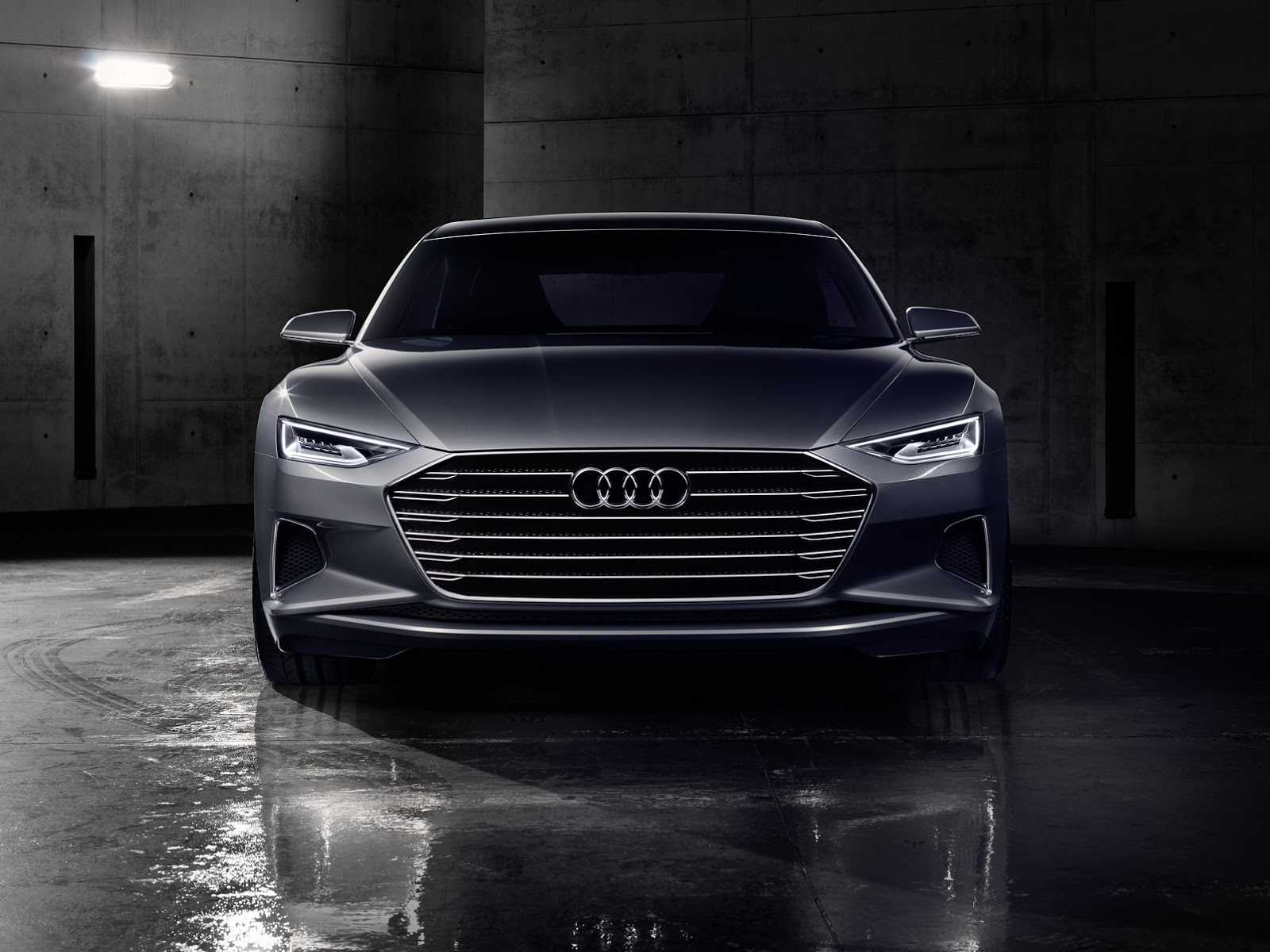
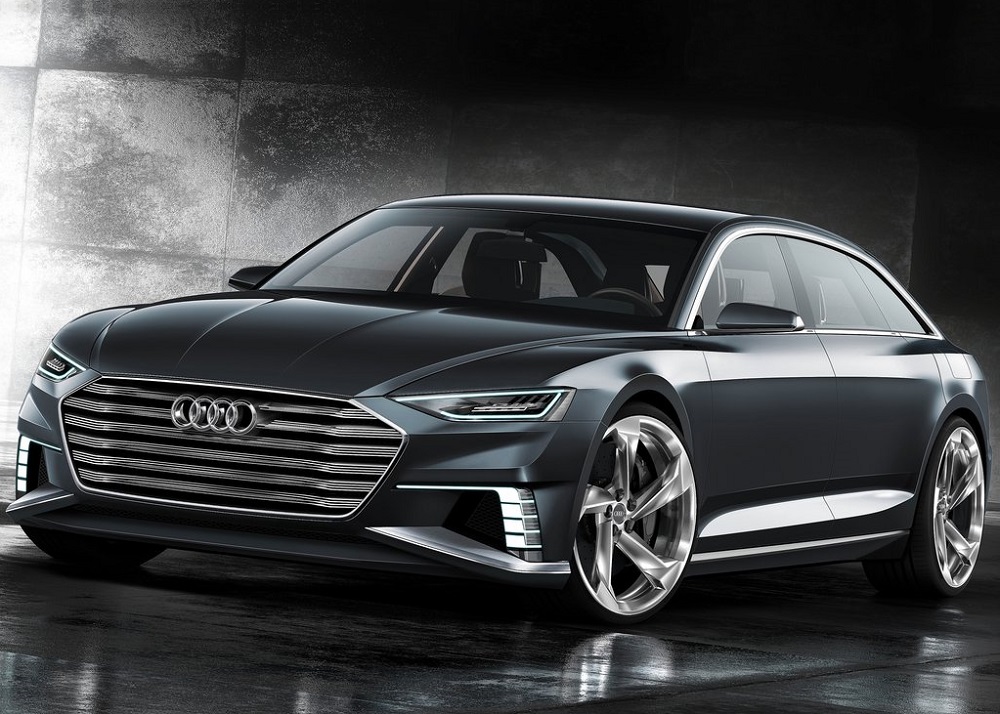
With regards to design, new style chief Marc Lichte points to the recent Prologue conceptsas previews
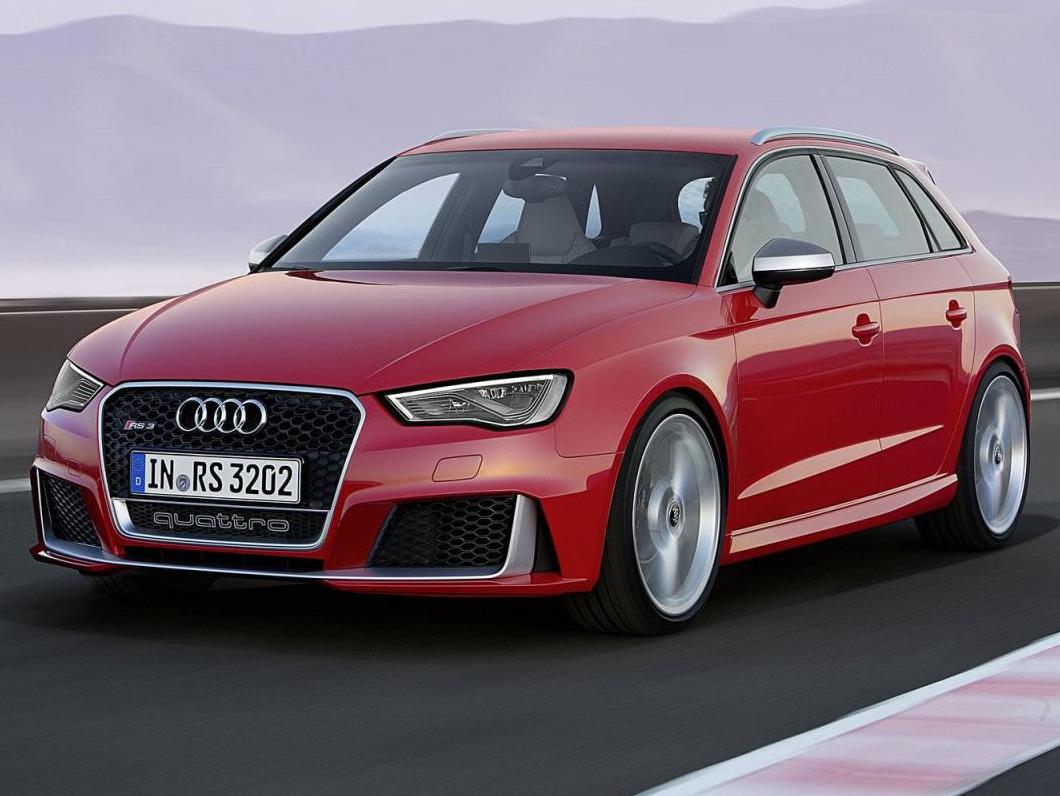
Audis foil to the Mercedes-Benz A45 AMG 4Maticarrives shortly in the form of the RS3 Sportback. Powered by a turbocharged 2.5-litre five-cylinder engine that packs 270kW and 465Nm of torque, it will undoubtedly be a serious rival. Audi claims a 0-100 km/h time of 4,3 seconds, and you can have the car derestricted as an option, taking the top speed to 280 km/h! Power goes to all four wheels via a seven-speed dual-clutch transmission and Audis Quattro all-wheel drive system.
The RS3 Sportback is priced from R710 000 in South Africa and deliveries start in November. Some more detail on the newcomer here.
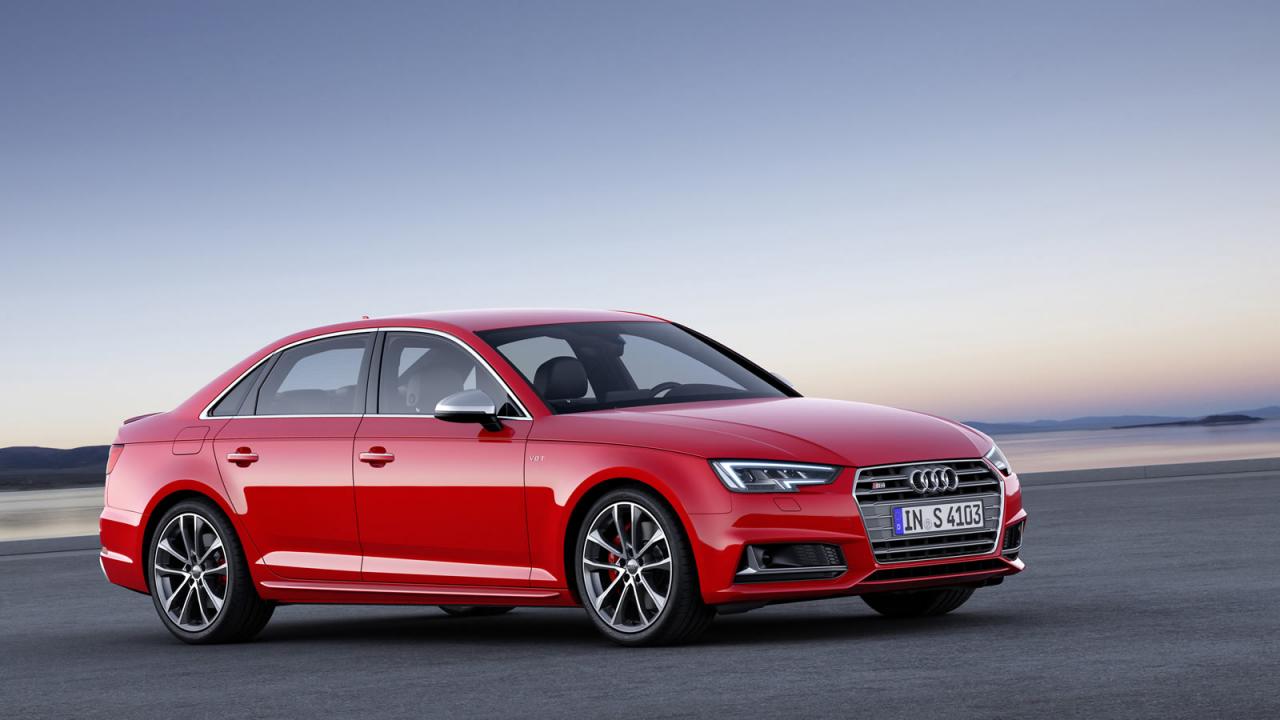
AUDI A4 SA launch first-quarter 2016
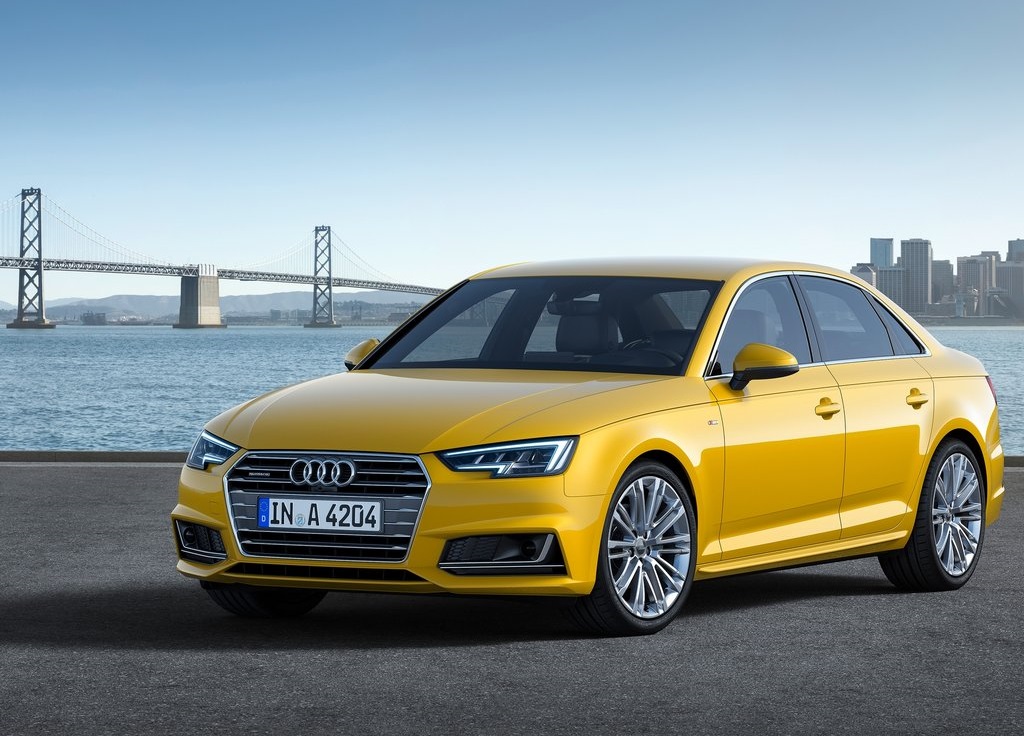
The next-generation A4 arrives in South Africa during the first quarter of 2016, mostly likely late January or early February. Wider and longer than before, the new A4 is also considerably lighter than its predecessor up to 120kg lighter, in fact. Though the styling appears evolutionary on photos, in reality it is quite a striking machine, mostly due to the different proportions and the crisp detailing of the grille and head- and taillamps.
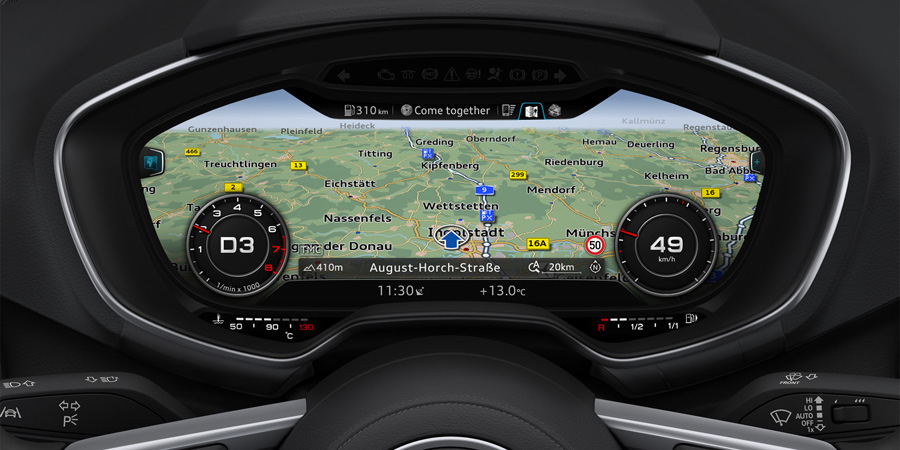
Inside, it gets the TTs Virtual Cockpit digital instrumentation if you specify the MMI Navigation Plus system. Even rear-seat passengers can swap the real world for a digital alternative via available tablet computers that swivel from the front seatbacks. Audi also claims up to 24 mm more rear legroom and a significantly quieter cabin environment.
In Europe the A4 will initially be offered with a choice of three petrol and four turbodiesel motors. The local line-up is not yet confirmed. In Europe the range kicks off with a 110kW 1,4-litre turbopetrol, followed by two 2,0-litre turbopetrols with 140kW and 185kW respectively. On the turbodiesel side Europeans can choose from 2,0-litre (110kW or 140kW) or 3,0-litre units (160kW or 200kW). Six-speed manual or seven-speed S tronic dual-clutch transmissions do duty in most models, with an eight-speed automatic reserved for the top-end diesel derivative.
The Avant and Allroad models are not yet confirmed for South Africa.
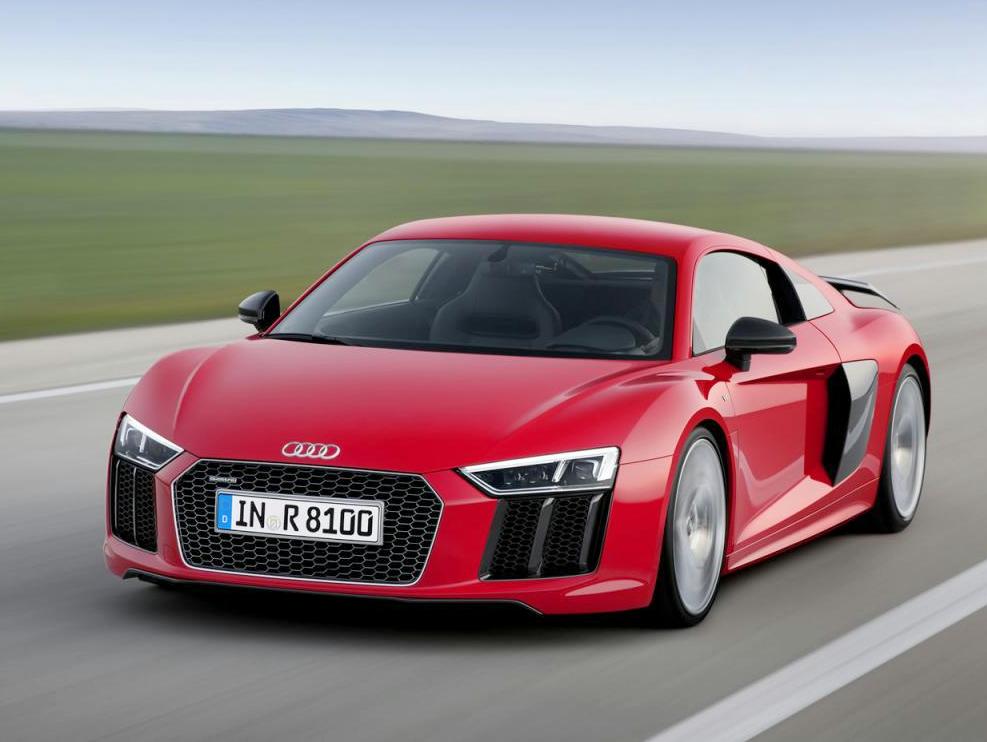
We have to wait until the second quarter of 2016 to welcome Audis new R8 supercar, but looking at first European reports, the wait should be worth it.
Again sharing its underpinnings with Lamborghini (the Huracan), there are a number of key differences to ensure that the Audi is the more easygoing of the two. The R8 has a longer wheelbase, less aggressive seating position and a more forgiving ride/handling set-up. Thats not to say it will be tame Powered by a 5,2-litre V10, the all-wheel drive R8 is a sizzling performer. We will get both versions, the standard (397kW/540Nm) and the so-called Plus (449kW/560Nm). The latter boasts a 0-100km/h time of 3,2 seconds and a 330km/h top speed.
Design-wise the new R8 looks like a subtle evolution of its still-fresh predecessor, but inside the changes are more pronounced, with a lot more carbon-fibre and the Virtual Cockpit technology first shown on the TT.
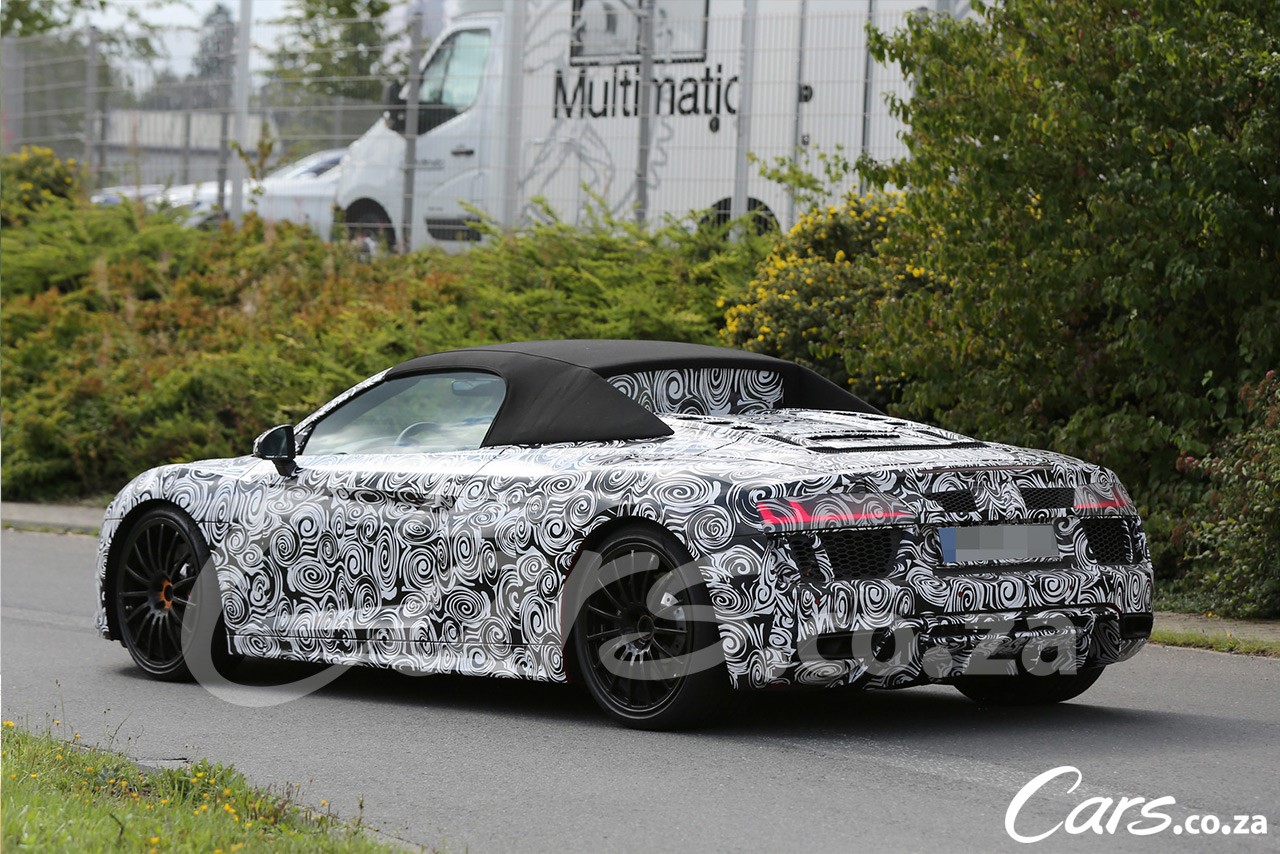
The drop-top version of the R8 supercar arrives in South Africa during the second quarter of 2017 following its international debut, which will most likely take place at the Geneva Motor Show in March 2016. The R8 Spyder will use the same V10 engine as the coupe, in two states of tune, and is reportedly about 50kg lighter than before. It uses a folding fabric top, as our spy images show.
AUDI Q2 World launch first-quarter 2016
Audis new compact crossover, initially thought to be called the Q1, may now apparently become the Q2, and will debut at the Geneva Motor Show in March next year. Previously thought to be based on the same underpinnings as the A1/Polo, it is now suggested that the Q2 will be based on a more compact version of the MQB platform which underpins the current Golf 7.
The Q2 targets the Mini Countryman and Nissan Juke as a sporty, youthful city slicker with attitude. Most of its engines will be carried over from the A1 but there will also be a hot little SQ1, powered by a 170kW 2,0-litre twin-turbodiesel. We should see the Q2 in South Africa during the first half of 2017.
AUDI TT RS World launch first-quarter 2016
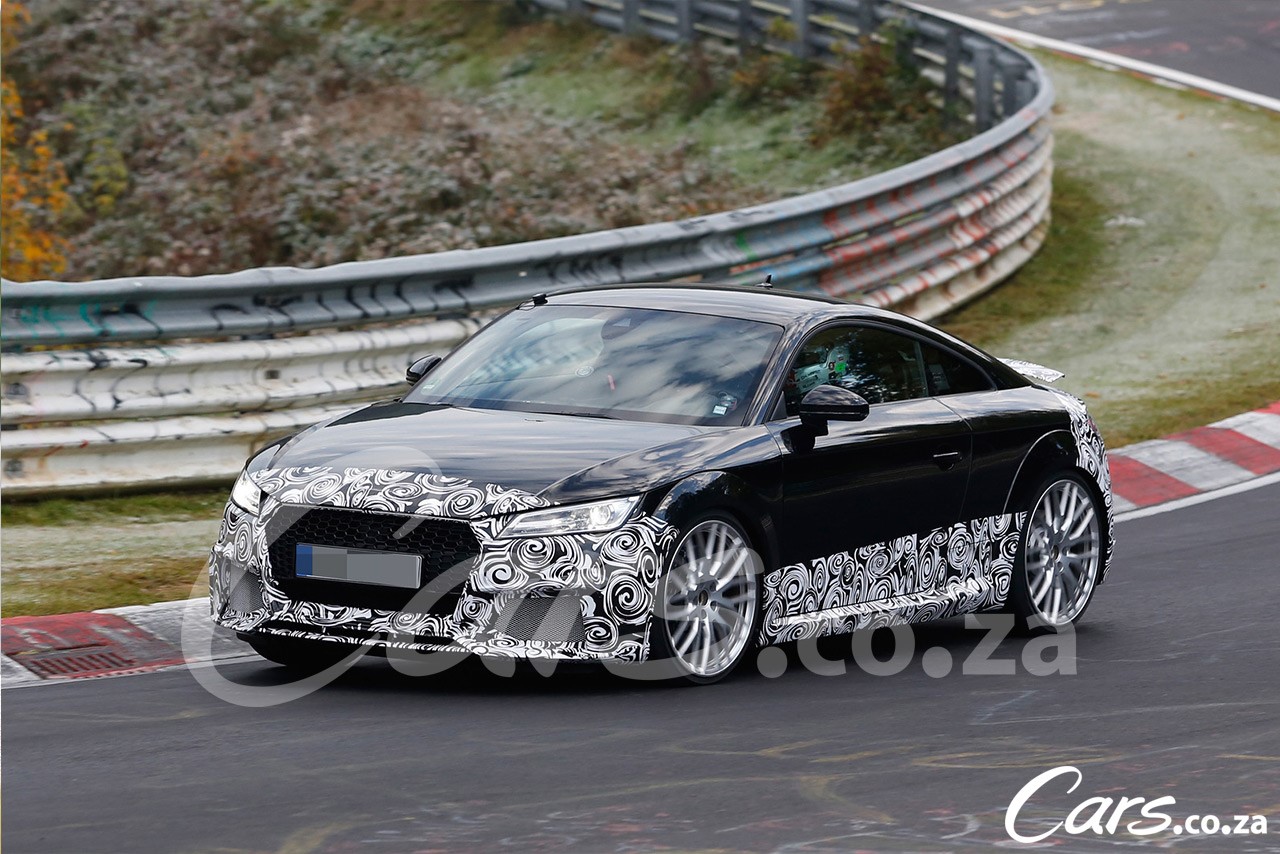
The new uber TT arrives at the Geneva Motorshow in March 2016 and is said to be significantly more hardcore than its predecessor as it targets offering Porsche 911 thrills for a lot less money. Even so, there hasnt been confirmation yet on whats underneath the bonnet. Logic dictates the 2,5-litre five-cylinder that also does duty in RS3. However, Audi is apparently targeting 400 horsepower (just short of 300kW), so the RS3s engine, in its current state of tune, may not be good enough. Consequently, there is also a rumour that it could instead get the very hot 2,0-litre four-cylinder turbo that is destined for the Golf R400. Either way, talk is of a much more driver-focused all-wheel drive TT with a 0-100 km/h time of below four seconds.
The TT RS is scheduled for South African release in 2017.
AUDI A5/S5 World launch 2016
Although Audi initially did consider a radical approach with the replacement for the still-sexy A5/S5, it has settled for an evolutionary design instead. That’s why we decided to show you the more radically different interior instead… Still, it could hardly be ugly. The new A5/S6 should also make its debut on the world stage in the early part of 2016 before going on sale in South Africa, possibility early in 2017. Initially, it is likely to debut in Coupe and Convertible form, with the Sportback following slightly later.
It is based on a new version of the MLB platform, called MLB Evo, which also underpins the new A4, and will share most its engines with its sedan sibling. The RS5, due as much as a year later, will likely drop the current 4,2-litre V8 for the marques twin-turbocharged 4,0-litre V8.
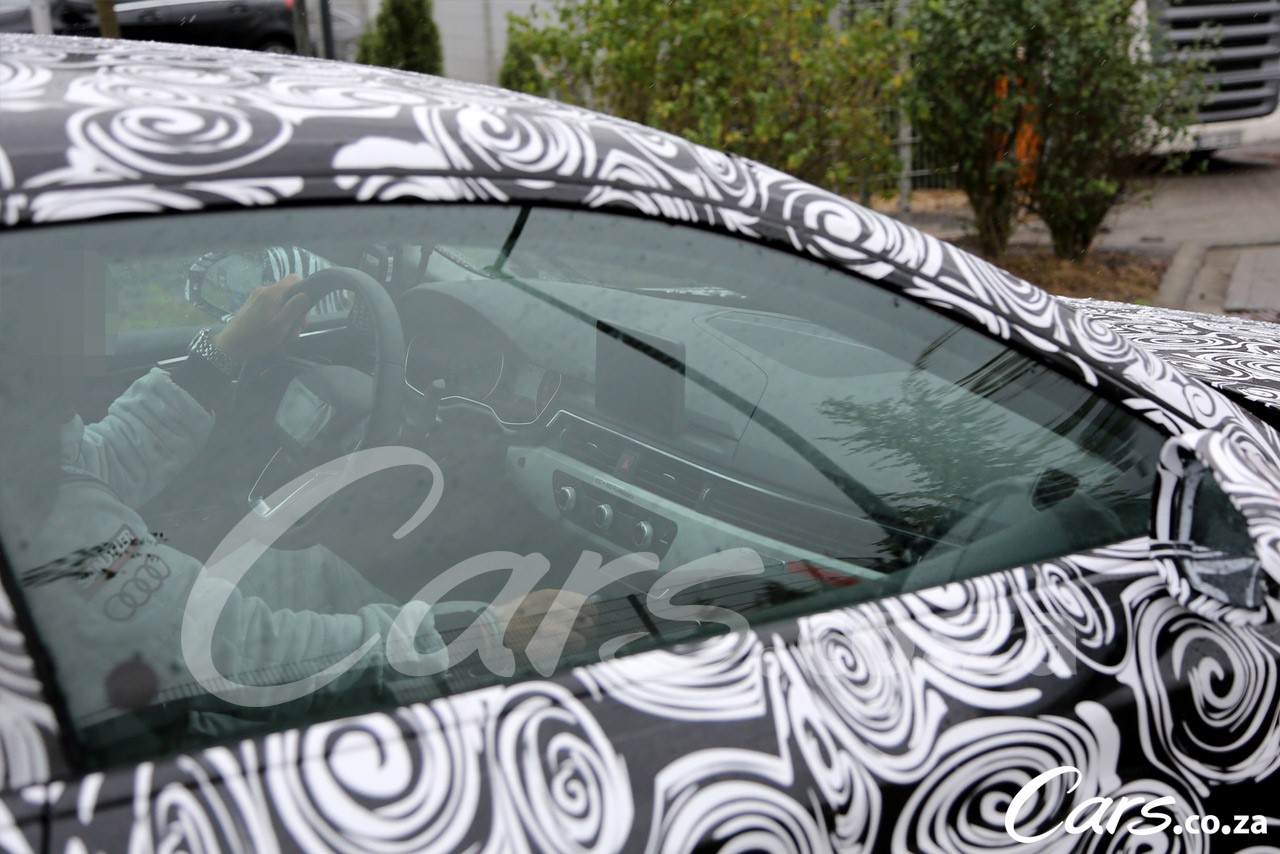
Like the new A4, the second-generation A5 will be a lot lighter than before, benefitting efficiency and performance. Inside, expect to see the Virtual Cockpit technology as well as the latest connectivity systems and even partial autonomous driving technology. As our spy photo shows, the facia design is rather different to what is currently the case.
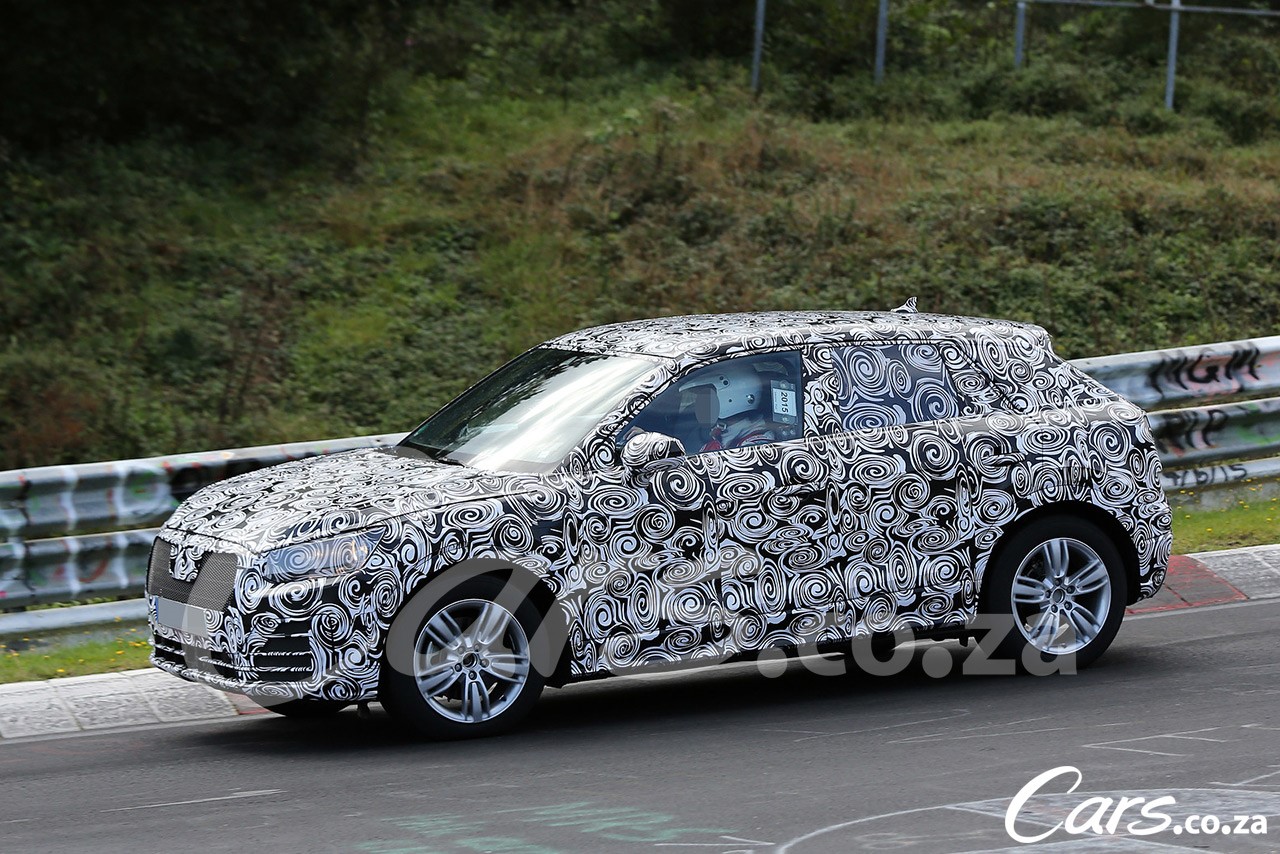
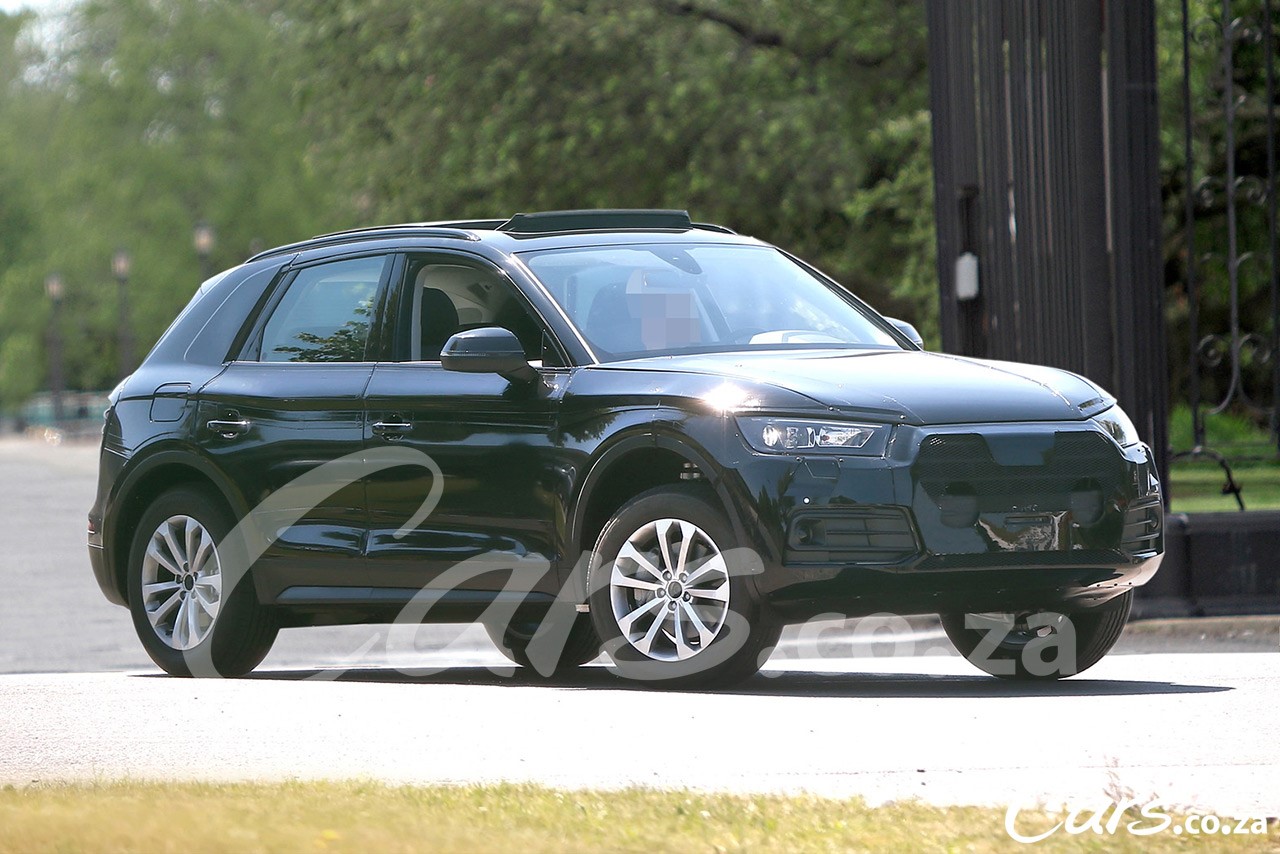
AUDI Q5 World launch 2016
The second-generation version of the long-serving but very popular Q5 is nearing production. This is a very important model for Audi, as it competes in a fiercely contested segment against the likes of the Range Rover Evoque, BMW X3and new Mercedes-Benz GLC.
First things first the new Q5 will not be built in Germany, but rather in Audis new factory in Mexico. It rides on the MLB Evo platform that also underpins the new A4 and next A5. Front and all-wheel drive versions will again be offered, and the new Q5 is likely to be significantly lighter than its predecessor as a result.
As our spy photos show, the new model doesnt look too massively different from its predecessor, with Audi relying once more on the detailing of the edgier grille and lights to set it apart. Inside, the Q5 follows in the footsteps of other new or upcoming Audis in that it will use the TTs Virtual Cockpit and adapt a smart info-tainment system developed in conjunction with Google.
The engine line-up is likely to remain largely similar to what is on offer at the moment (2,0-litre turbopetrol, 2,0-litre turbodiesel and 3,0-litre turbodiesel), but there could be a flagship model with a third turbocharger. It is reported, however, that this third turbocharger will be an electric one, to boost torque from zero rpm.
A hot SQ5 will again be offered (with around 255kW), but a RS Q5 will also likely be added to the line-up at a later stage and could pack as much as 335kW!
The new Q5 will debut in South Africa during 2017.
AUDI S4 SA launch late 2016 (unconfirmed)
The A4 model range should expand later in 2016 with the addition of the S4 sports sedan which targets the BMW 340i. The fiery S4 model is powered by a turbocharged 3,0-litre V6 engine, and consequently the S4 has 260kW and 500Nm of torque at its disposal. It covers the 100km/h sprint in 4,7 seconds.
See a video and read more about the S4 here. The S4 has however not yet been confirmed for South African introduction.
AUDI A3 FACELIFT SA launch late 2016
A mid-life refresh is looming for the A3, but dont get too excited just yet it will only likely reach South Africa towards the end of 2016. We do not anticipate any major exterior design changes, with the edgier new grille and some of the advanced lighting technology from the more expensive models likely to filter down to Audis meat-and-potatoes offering. These changes will also be carried over to the A3/S3 Sportback and Sedan models.
The more exciting changes happen inside, where the A3 will get its own version of the TTs Virtual Cockpit digital instrumentation, albeit only as an option. Expect some of the connectivity systems that Audi has debuted on the A4 to also become available on the A3.
There could be some changes on the powertrain front, with the three-cylinder turbopetrol from the A1 a potential candidate for inclusion.
AUDI A8/S8 World launch 2017
New Audi design chief, Marc Lichte, has hinted strongly at a bigger design step from the next A8 luxury sedan. He has also pointed to the sexy Prologue Coupe concept for clues. Beyond striking design, Audi will throw every bit of technology at the A8 to make sure it matches or bests the likes of the new BMW 7 Seriesand Mercedes-Benz S-Class, itself due for a facelift in 2017.
So, expect autonomous driving technology to feature strongly in the A8 as well as a near button-free cabin with gesture control technology. A weight saving of around 200kg compared with the current model is rumoured at present, as well as an engine line-up that will feature electric turbocharging to ensure great torque from zero rpm. Plug-in hybrid models will also be offered.
The new A8 will only reach South Africa in 2018.
AUDI A3/S3 World launch 2018
The fourth-generation Audi A3 most likely arrives in 2018. This time round, expect a major shake-up as Audis redefines the A3 portfolio to better compete in key new segments. Firstly, apparently the three-door model is destined to be culled due to slow sales. Focus will therefore fall on expanding the Sportback line-up. A very likely addition is a Sportback Allroad derivative, with a slightly higher ground clearance and body cladding for that rugged crossover look – see the Allroad Concept above for clues. Beyond that, the rumours become quite wild. To replace the A3 three-door, Audi may add a four-door coupe version of the TT instead, tentatively dubbed the TTC. And to battle the new Golf SV, BMW 2 Series Active Tourer and Mercedes-Benz B-Class, Audi may also introduce a compact minivan in the A3 line-up.
Whatever happens to the product line-up, expect a greater focus on in-car technology, such as gesture control, digital displays (potentially including organic LED) and some partial-autonomous driving systems.
AUDI A6/S6 World launch 2018
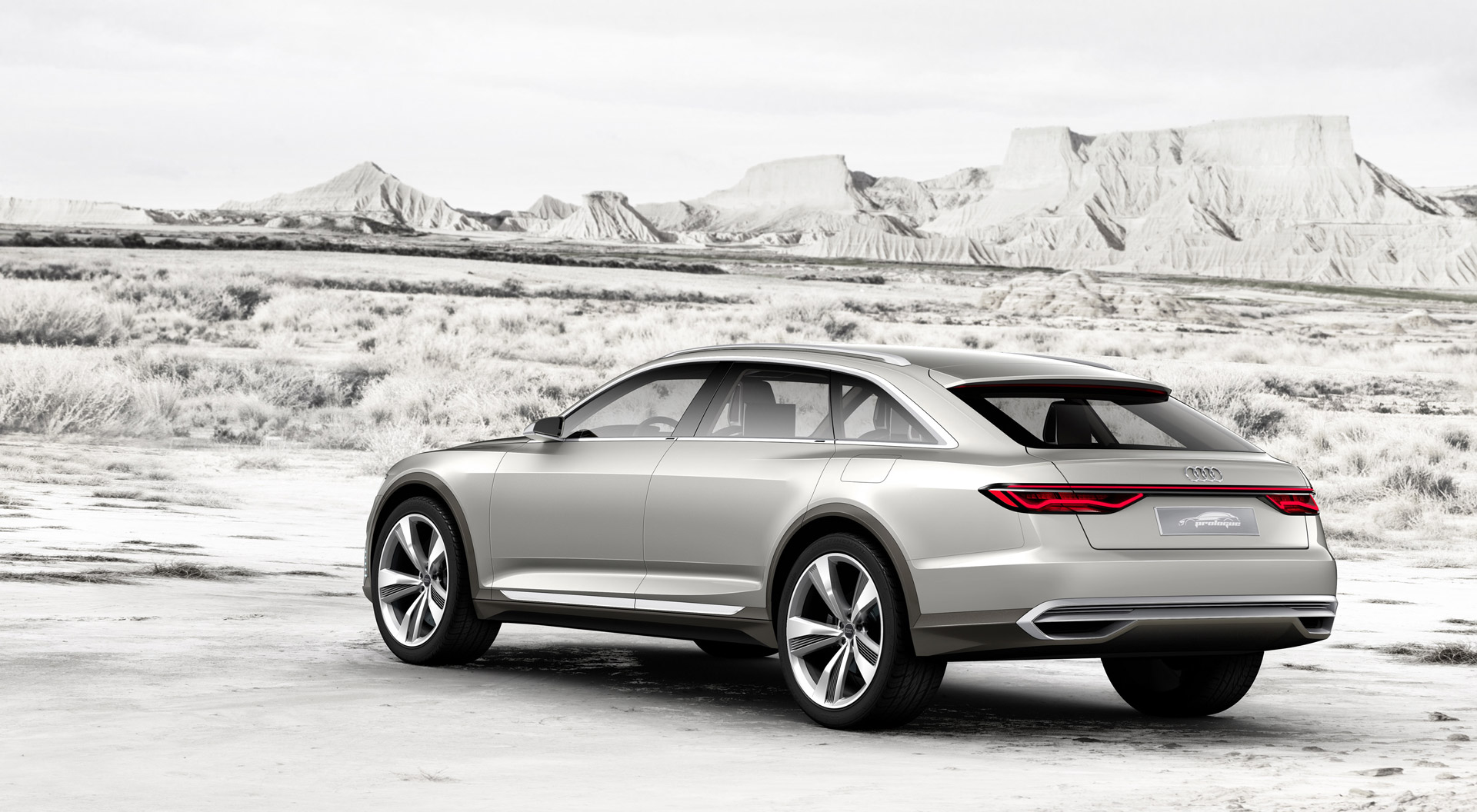
The large sedan is still popular in some markets, so the A6 remains an important car for Audi. The next model boasts styling inspired by the recent Prologue Avant concept (shown above) and rides on the MLB Evo platform. It is likely to offer a longer wheelbase, but shorter overhangs and could be as much as 100kg lighter than the current model.
As is the case with all new-generation Audi models, a big focus area has been in-car connectivity, info-tainment and ergonomics. The facia will be dramatically decluttered, with gesture control incorporated into the design. All the displays will be digital and, of course, the A6 will benefit from some of Audis latest advanced tech, including autonomous driving up to a speculated 120 km/h under certain conditions.
The engine line-up will largely continue as is, but more eco-friendly models will be added, so there will be more plug-in hybrids and the S6 could make use of electric turbocharging for sizzling performance from rest.
Looking at Audi’s model timelines, the A6 should arrive in South Africa late in 2018 or early in 2019.
AUDI A7/S7 World launch 2018
Audi says the next A7/S7/RS7 will be even more emotionally styled, but also more practical. It is likely to be based on the platform of the A6L (the stretched, long-wheelbase A6 developed for China). This should address the rear legroom concerns.
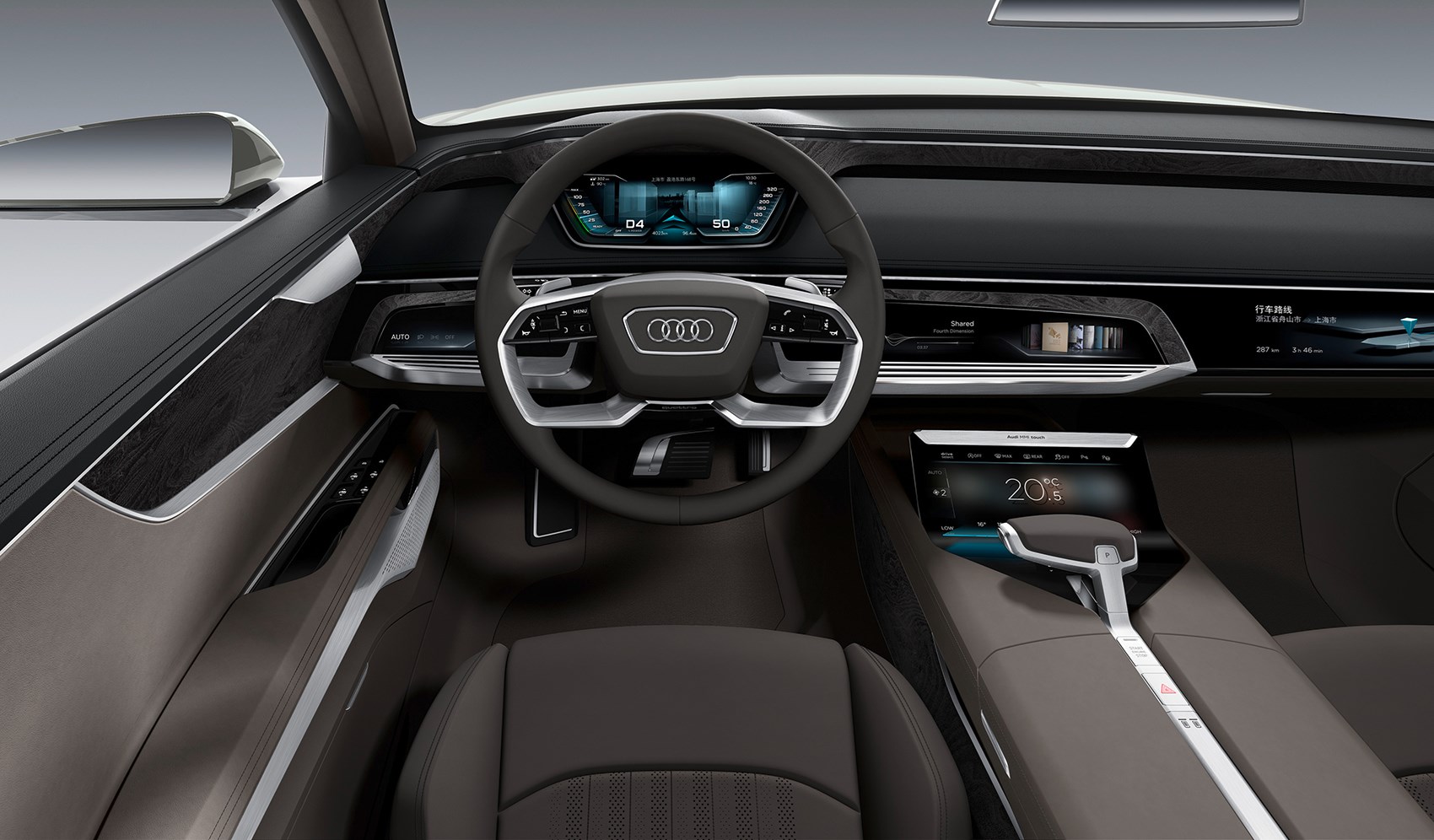
Otherwise, the technological upgrade will mirror what happens with the A6/S6 so expect autonomous driving technologies and a very minimalistic facia with gesture control systems – see the facia of the Prologue concept above for clues. With regards to powertrains, electric turbocharging will be the big talking point.
AUDI Q6 E-TRON World launch 2018
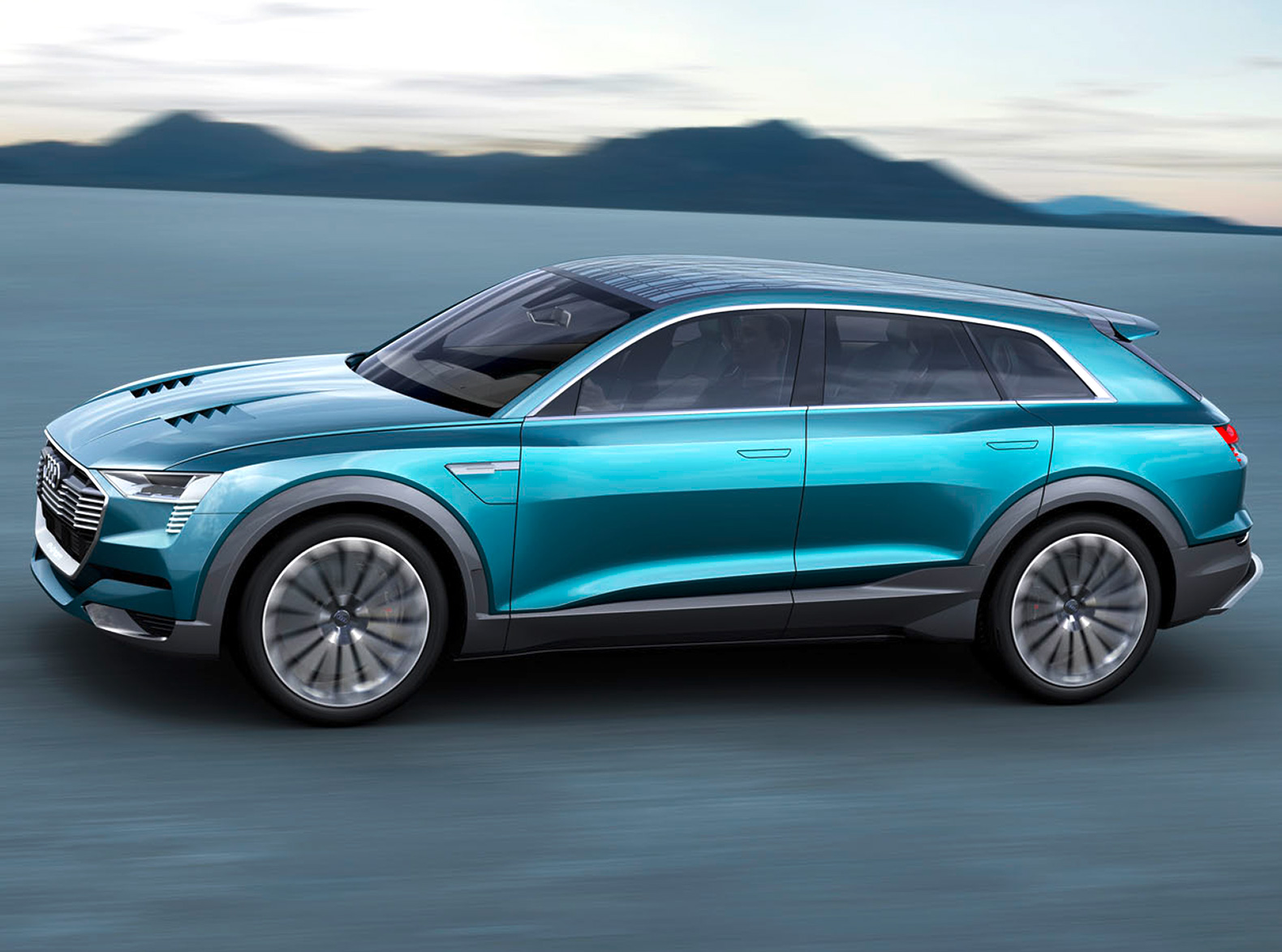
Targeting the recently launched Tesla Model X, Audis all-electric Q6 e-tron will come to market in 2018. It was designed from scratch as an electric vehicle, and features active aerodynamic parts to lower wind resistance at speed. Size-wise it will slot in between the Q6 and Q7 and there is talk of a 500 km range on a single charge.
AUDI A1 World launch 2018
Again sharing its basic underpinnings with the next-generation VW Polo, the A1 replacement will grow very slightly in size and again be offered in three- and five-door bodystyles. Audi promises quite a dramatic design, less weight and a more spacious cabin. The engines will largely be borrowed from the next-generation A3 and there will again be a hot S1 all-wheel drive model. Insiders say, however, that the all-wheel drive system wont only be reserved for the S1 only this time.
AUDI Q3 World launch in 2018
The second-generation Q3 arrives in 2018 and will grow in size to create distance between it and the upcoming Q2. It clearly targets the BMW X1and will offer a very wide line-up of engines, including plug-in hybrids. Given market trends, the Q3 will become one of the most important models in the Audi line-up.
AUDI SPORT QUATTRO World launch likely in 2018
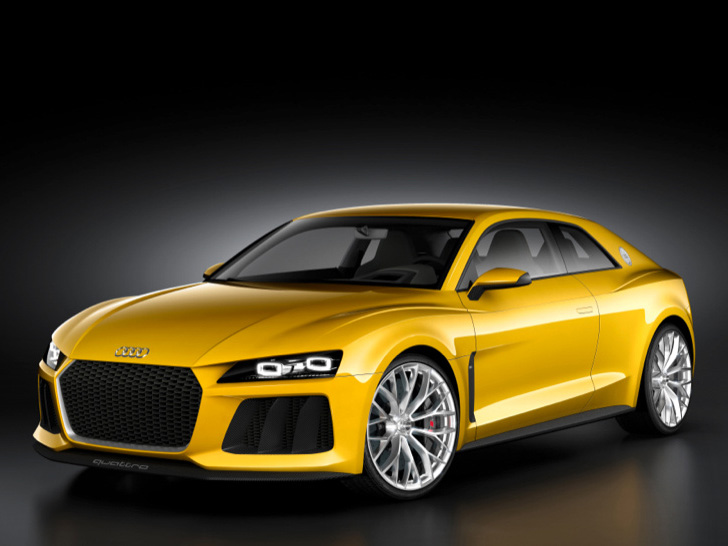
After many false starts, it seems as if Audi will finally build a successor to the legendary Quattro. Latest rumours suggest a coupe and roadster based on the underpinnings of the next-generation A6. This means that the new Sport Quattro will likely be a spacious full four seater. Pitched as a very performance and driver focused model, it will essentially target the next-generation BMW 6 Series, a vehicle that will also become lighter and more driver focused next time round.
AUDI Q8 World launch 2019
Audi wants a slice of the BMW X6/Mercedes-Benz GLE Coupe pie and its rival will most likely be called the Q8, penned in for launch during 2019. Based on the underpinnings of the new Q7, the Q8 will adopt a similar coupe-like profile to the BMW and Mercedes, but Audi design boss Marc Lichte has promised that it wont be a copycat design. Plug-in hybrid as well as fast S and RS versions are very likely to join the line-up.
Audi A9 – World launch possible in 2019/2020
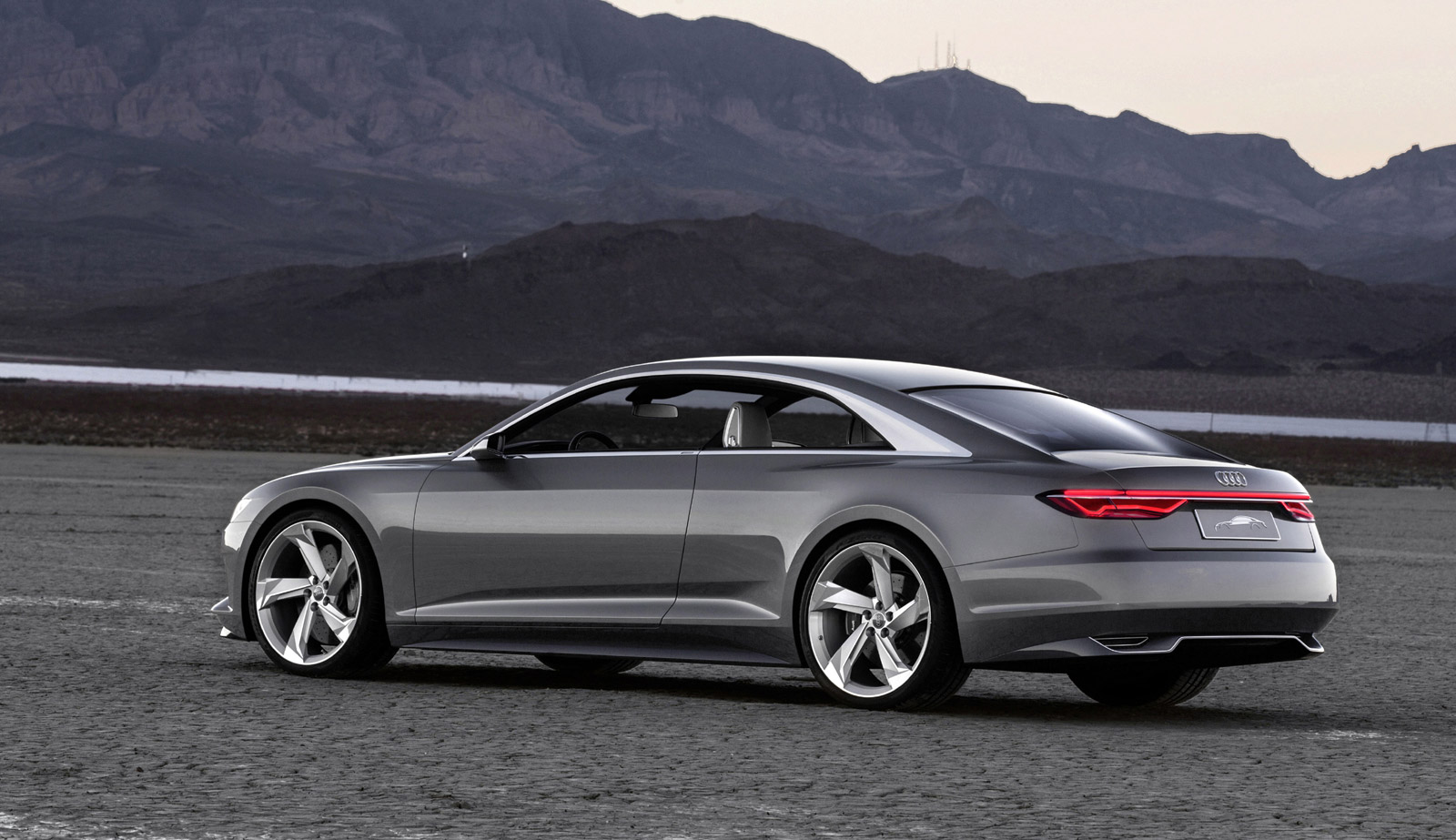
Rumoured to be under development is a luxury coupe spin-off of the A8, to be called the A9. Previewed by the first Prologue concept, this A9 will rival the Mercedes-Benz S-Class Coupe. A convertible version has not been ruled out either. Mechanically the A9 will obviously borrow heavily from the A8, which means autonomous driving technology will be a strong focus area, as well as next-generation Matrix lighting, OLED interior screens and gesture control.
Audi Q1 World launch possible in 2019
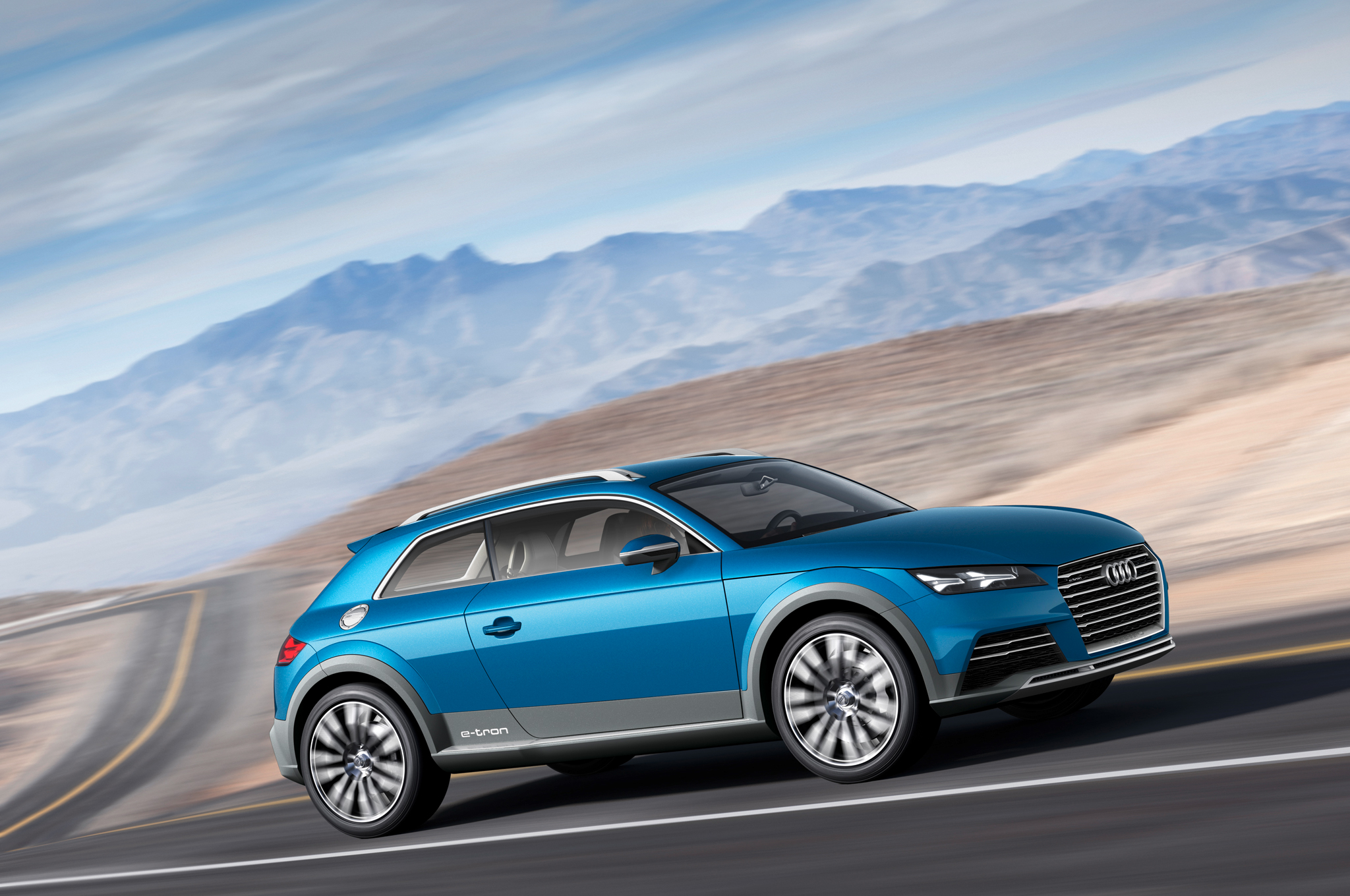
Now that it appears likely that next year’s new compact crossover will be called the Q2 and not the Q1 suggests that Audi wants to leave space for an even smaller model. According to reports such a model is currently planned for a 2019 launch and will be based on the next-generation Polo. Audi is targeting a vehicle that measures in at less four metres in length and very youthful looks it could even be a two-seater only! See the Crosslane Concept pictured above for the possible design.
AUDI Q9 World launch 2019 (possible)
Mercedes-Benz currently has a next-generation GL (soon to be called GLS) under development and BMW has already committed itself to the X7 luxury SUV. Meanwhile Range Rover continues to do brisk business and Bentley and Rolls-Royce are both joining the ultra-luxurious SUV party. Audi will not be left out of this, either.
The rumoured Q9 seven-seater will be based on a stretched version of the latest MLB platform and could arrive by 2019.
AUDI Q4/TTQ World launch 2020 (possible)
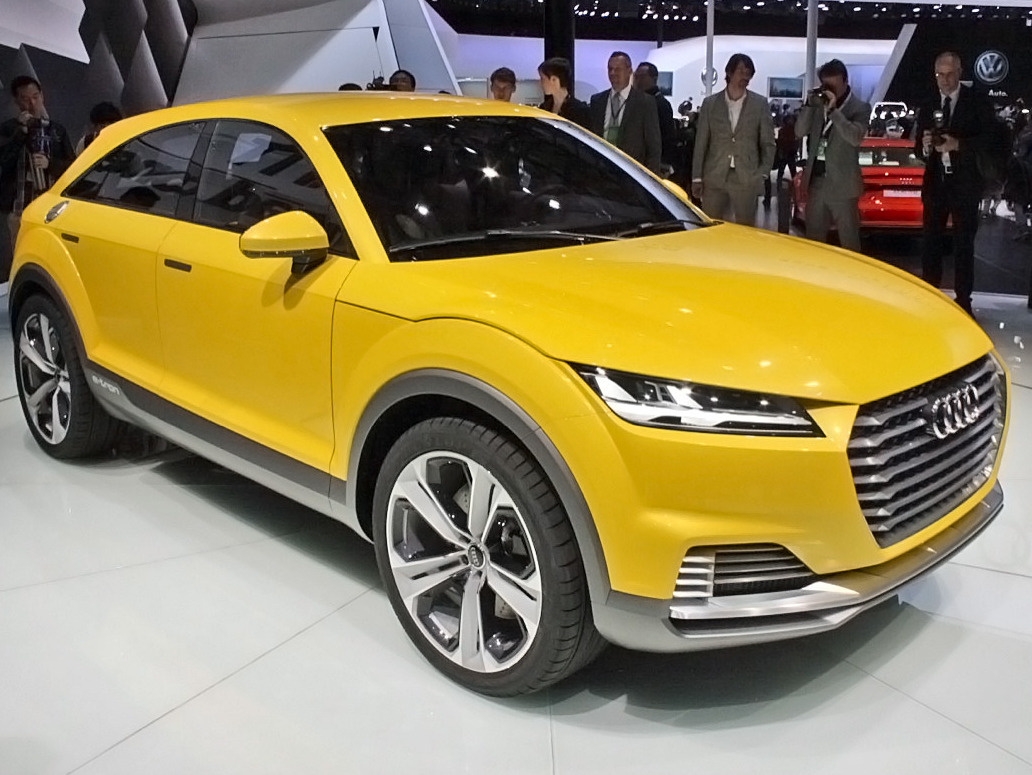
With the expansion in the compact coupe crossover segment following the addition of the BMW X4 and the announcement of the upcoming Mercedes-Benz GLC Coupeto battle the Range Rover Evoque, Audi is strongly considering a similar offering. At this stage it could be called either the Q4, or the TTQ. Given the marques many other high priority vehicles in the coming years, and the effects of the Volkswagen scandal, very niche models such as this could be cancelled or pushed out.
AUDI CITY CAR World launch 2020 (possible)
This rumoured model has not yet been signed off, but is a possible rival to the BMW i3and some Mini models. It could be developed in conjunction with Ducati (which is a VW Group company), so the petrol-powered versions could use an engine developed by that Italian motorcycle company.
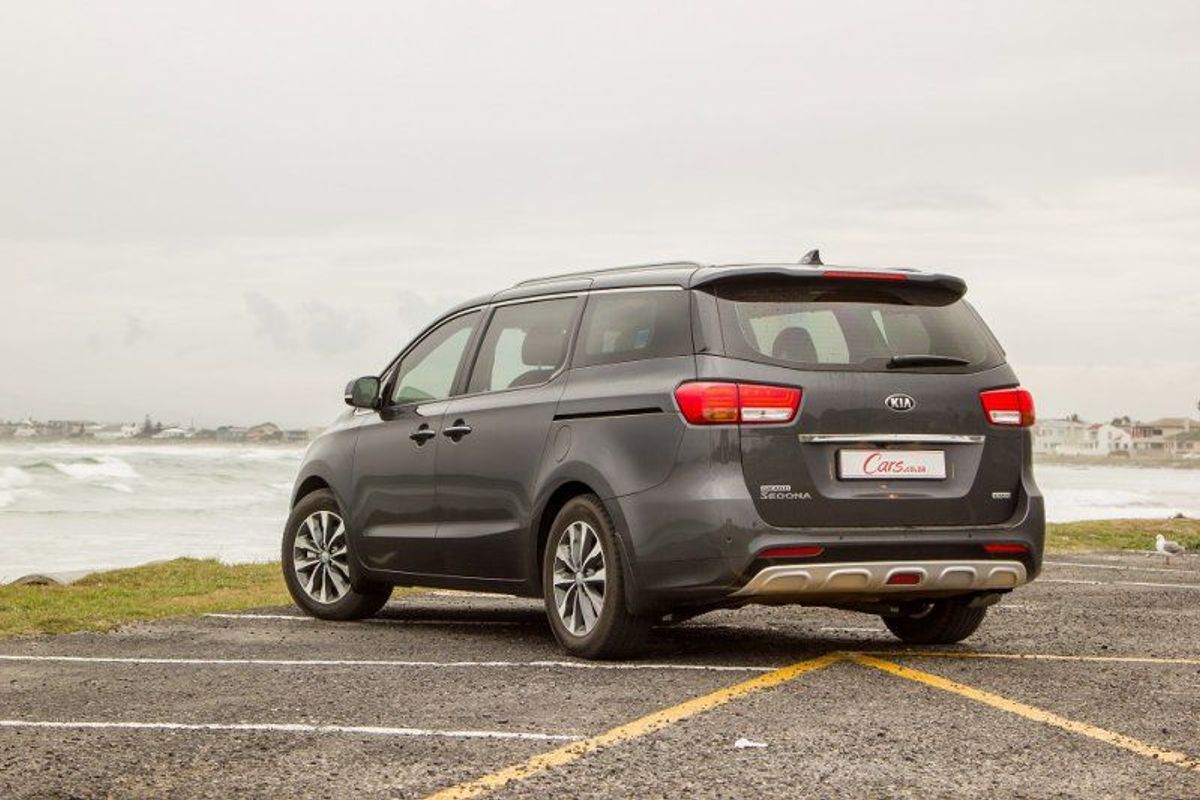
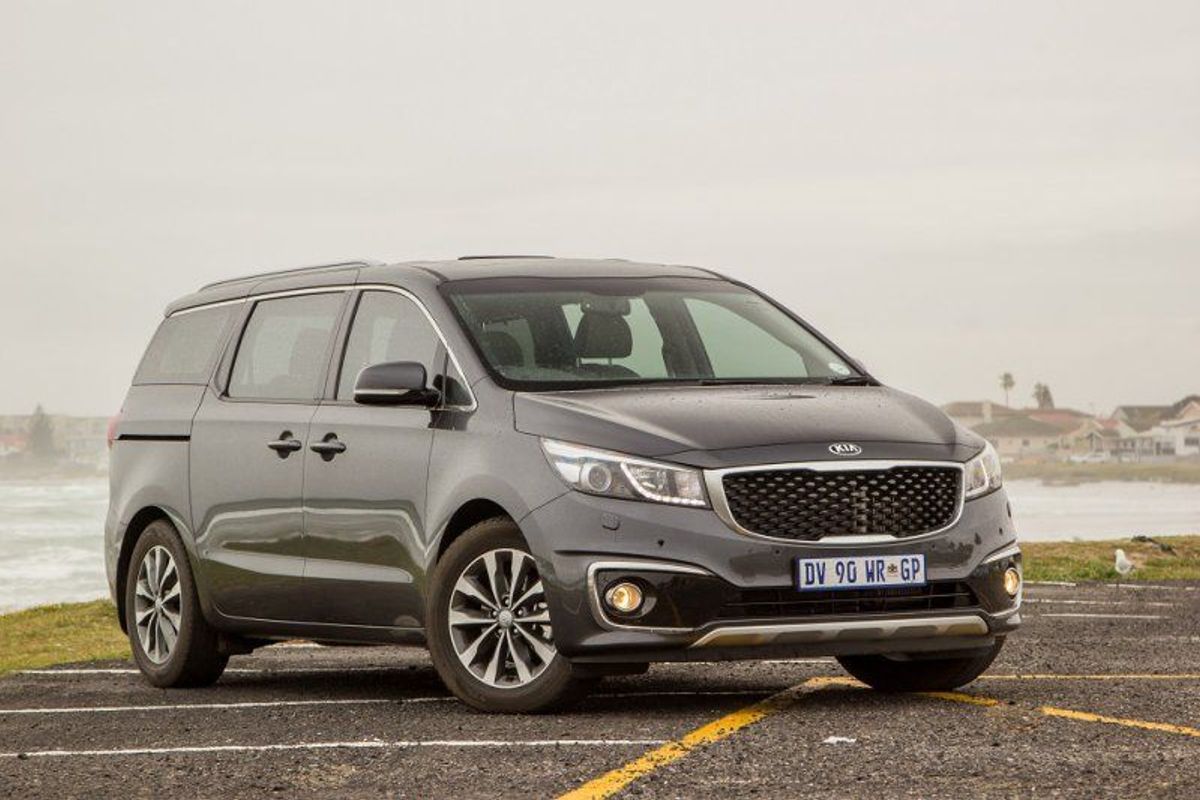
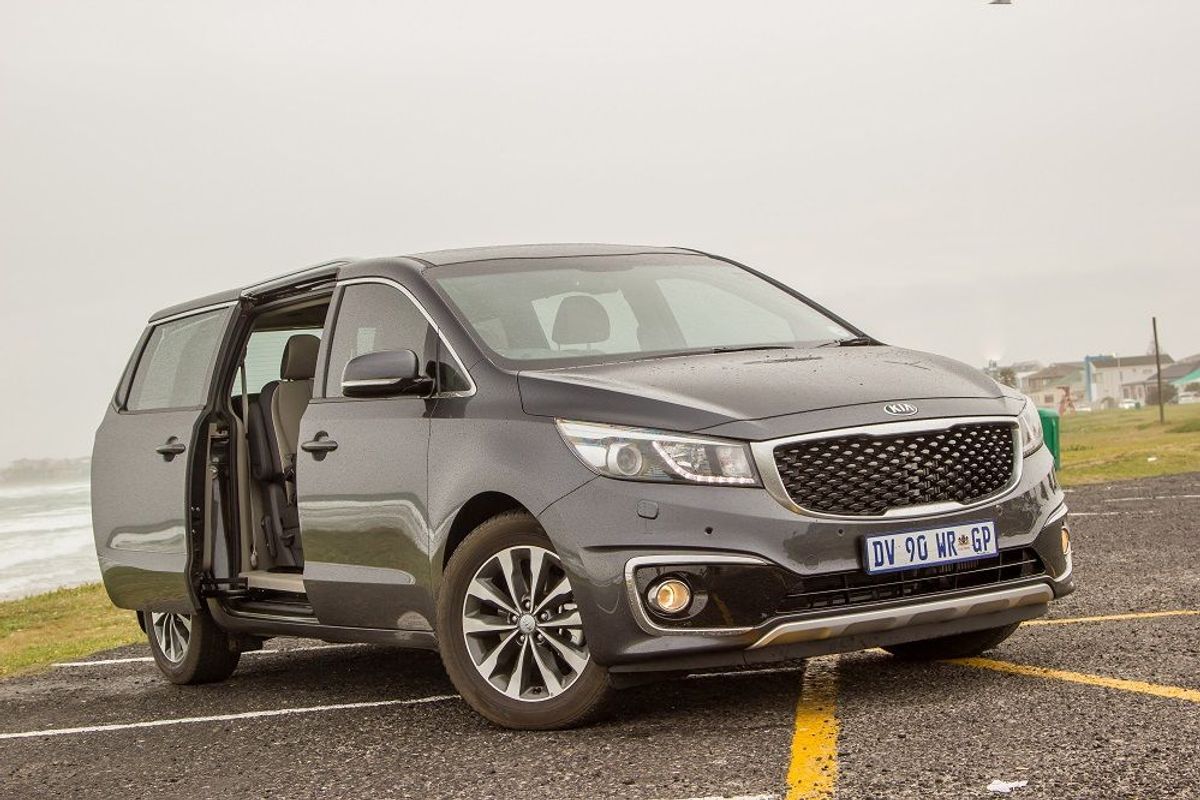
Kia Grand Sedona 2.2 CRD SXL (2015) Review
Highlights – Fantastic practicality and levels of comfort for all seven passengers – 2.2 CRD engine offers ample performance while returning respectable economy – Generous specification
The Kia Grand Sedona is a seven-seat multi-purpose vehicle (MPV) which was recently launched in South Africa. First impressions were pretty good, but would a week-long test expose any flaws?
Kia and its sister company Hyundai have done well in recent years. However a combination of a poor performing Rand as well as stiffer competition has made life difficult for Kia. A wealth of new products in key segments will help the brand try regain some ground. One of these new products is the Kia Grand Sedona – tested here in 7-seat 2.2CRDi SXL guise.
Engine and Ride
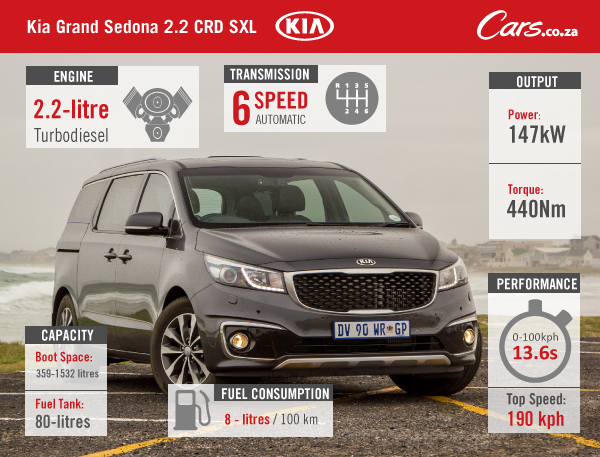
Underneath that smart-looking bonnet is a 2.2-litre four-cylinder diesel engine. Pushing out 147kW and 440Nm, this engine is also does duty in a variety of other Kia/Hyundai products. It sounds quite unrefined, particularly upon cold start up, but it soon settles into a typical diesel beat. Thankfully any excessive diesel sound is reduced by the well-insulated cabin. Around town the Kia Grand Sedona feels a little sluggish, with the engine not providing instantaneous response. However this improves as speed increases. Once you’re over 80kph the vehicle delivers a decent driving experience, but it’s at its best when cruising on the open road and highways. This is a car that is utterly brilliant for carrying passengers over long distances and the fuel consumption figures highlight that. During the week-long test we saw under 9L/100km coming up on the trip computer, going down to as little as 8.5L/100km.
Practicality Champion
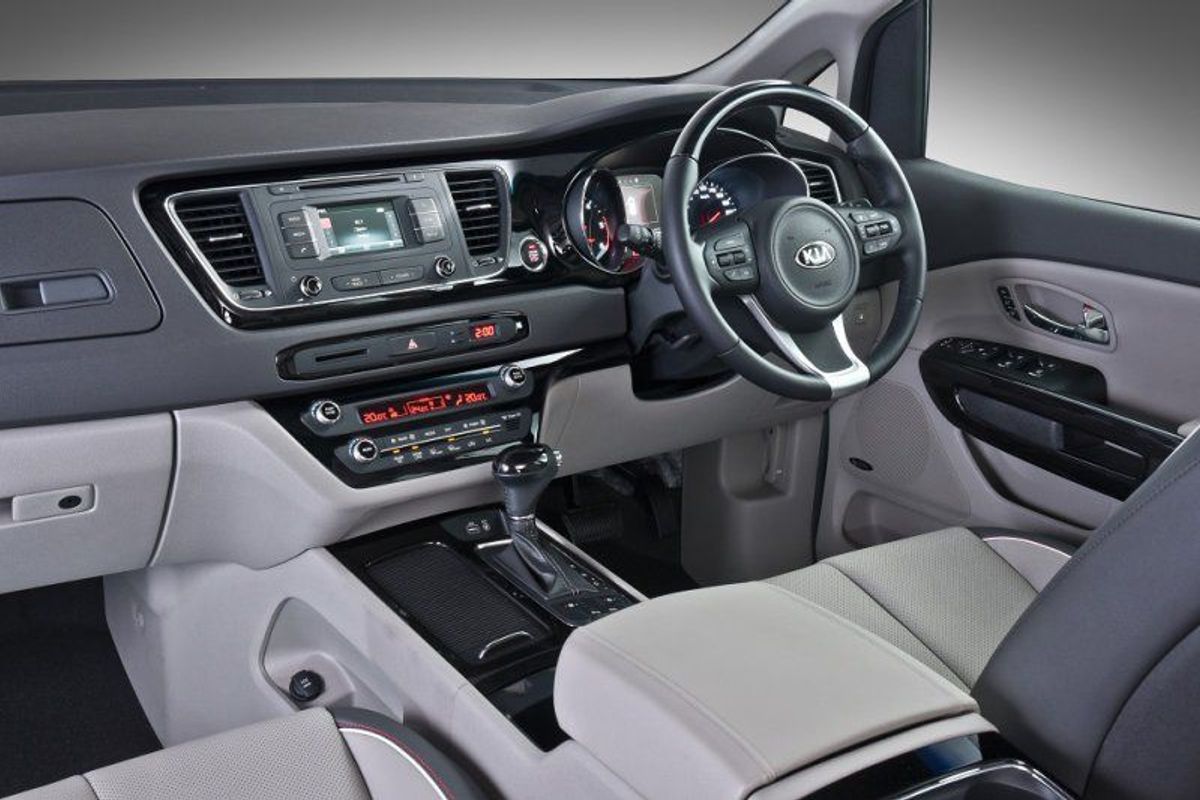
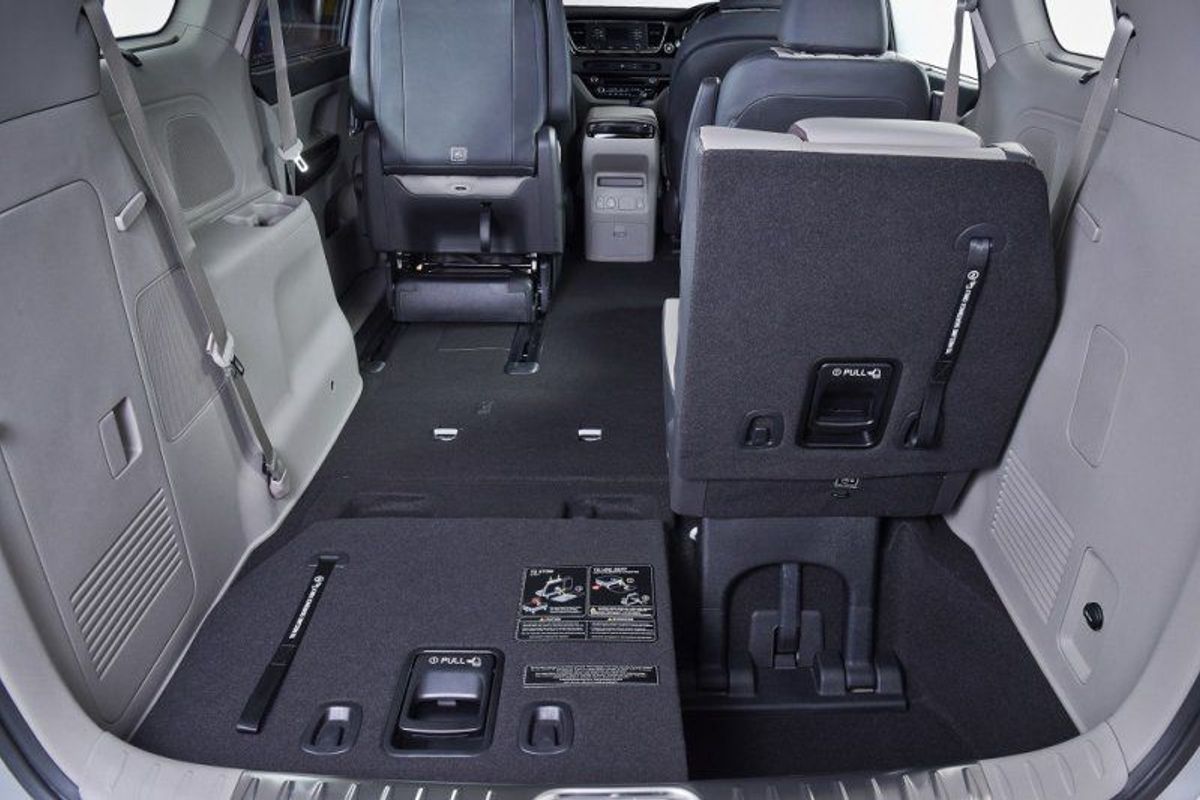
The practicality afforded by the Kia Grand Sedona is immense. We had the 7-seater version on test, but there is an 11-seater on its way. The seating is peculiar as it’s a 2+2+3 combination whereas most of the competition opt for a 2+3+2 setup. The result of this arrangement means that no seats need to be lifted as passengers simply step between the second row of seats to get to the back. The boot is quite deep with all the seats in operation, but you can fold down the third row into the boot well, which reduces the boot depth, but increases its length. At Cars.co.za, we try our best to evaluate vehicles to the best of their abilities in the most appropriate manner, so to best test the Kia Sedona we needed to load it up with people. Fortunately there was a wine festival in the Western Cape and this writer volunteered to be Designated Driver on the day. We can quite happily report that all six passengers were most impressed with the features and spaciousness of the Kia Grand Sedona. They were especially thankful for the heated seats in the second row as it was a chilly day, separate ventilation controls as well as the numerous USB ports which all had charging capability. The second sunroof gets massive points as a novelty factor too. The features list is extensive. From the dual sunroofs to the electrically-operated sliding doors, Kia hasn't really missed anything here. Both the driver and front passenger seats are ventilated and heated, and there's a heated steering wheel too. Kia claims there are 8-12 cup holders and four bottle holders in the cabin. For the driver, the vehicle comes with small LCD touchscreen with reversing camera, MP3/CD player, USB and AUX connectivity, an Infinity audio system, a cooled glove box, cruise control, and park assist to name just a few features.
Summary and Conclusion
The reality here is that this segment of the market is dominated by the likes of the Volkswagen Transporter/Kombi and Mercedes-Benz V-Class. Both of those vehicles offer excellent build quality and are a pleasure to drive. We applaud Kia for taking on this market and the Grand Sedona is a great product if you have many people to transport. Snobs can look at Kia as a premium brand if the Grand Sedona is anything to go by and as a large family vehicle it's really tough to beat.
Kia Grand Sedona Price in South Africa
The Kia Grand Sedona range starts from R499 995 with this 2.2CRDi SXL model retailing for R669 995. All models come with a five-year/150 000km warranty, a five-year/100 000km maintenance plan, and three-years of unlimited roadside assistance.
Team Opinion
The Kia Grand Sedona might be my biggest surprise of the year; ironic given the company's slogan. The reality is that Kia have pulled of an ultra-luxurious family wagon that is easy to drive, spacious, very well appointed and most importantly, very frugal. The 2.2 turbodiesel is at home here, powerful enough and returning excellent economy of under 9 litres/100km. I would have loved to have driven a lesser model, but at R699 900, this top of the range SXL still feels like a lot of car for your money. Oh, and the sound system is bloody tremendous. It will easily drown the kids out. -Ciro De SienaWe Like: Specification, practicality, economy and build quality. We don’t Like: Tiny LCD screen, engine sounds a little unrefined Also consider: Volkswagen Caravelle/Kombi, Hyundai H1, Mercedes-Benz Vito/V-Class Compare the Kia Grand Sedona to its rivals here.
Kia Grand Sedona 2.2 CRD SXL Specs
Mahindra Scorpio Pik Up 4×2 Adventure (2015) Review
Mahindra has a reputation for building farm-style workhorses and the Scorpio is no exception. But with the Adventure edition, it now boasts some bling…
The bakkie market is alive and well in Mzansi and vehicles like the Ford Ranger and Toyota Hilux often out-sell even the most popular passenger cars on a monthly basis. A good workhorse is in high demand in South Africa and these vehicles have to be tough, durable and capable to load and carry anything you throw at it.
Buyers in the lower end of the bakkie market have lots of choice too, from brands such as GWM, Mahindra and Foton. We recently had the Mahindra Scorpio Pik Up 4×2 Adventure bleached in Rocky Beige on test. Lets see how it stacks up.
Dirty Talk
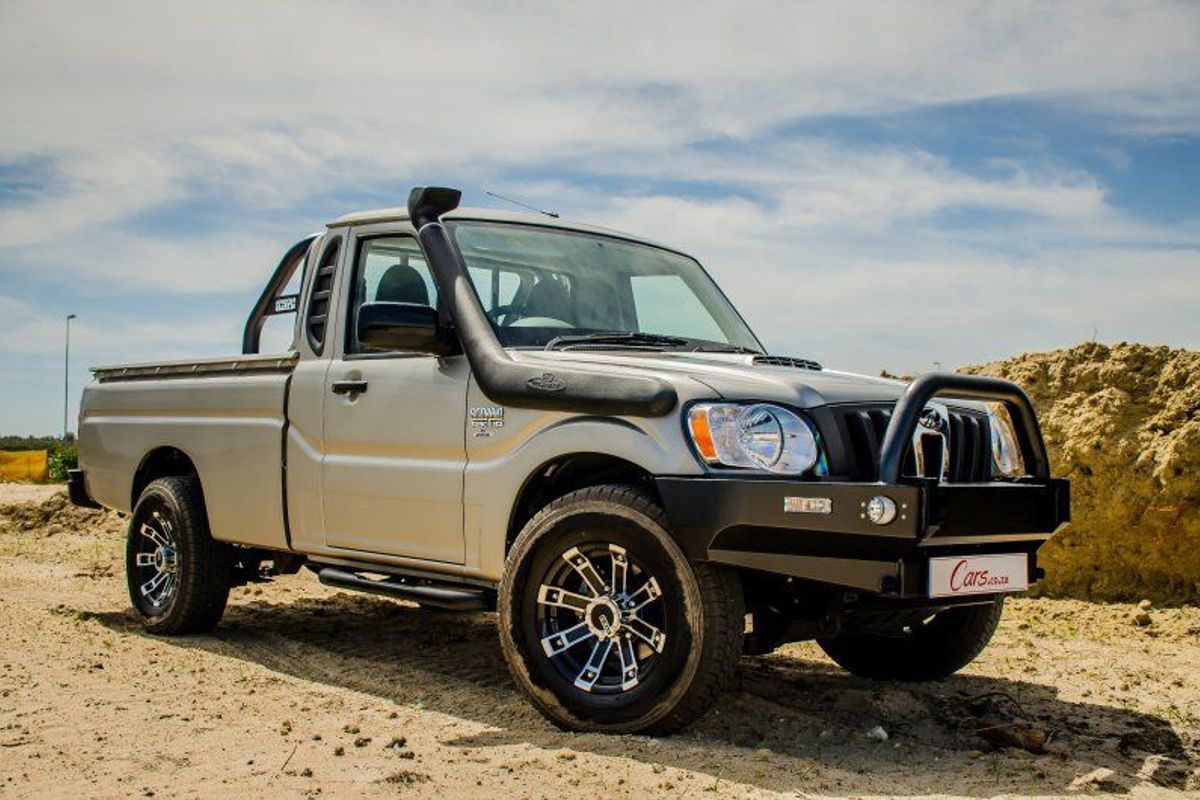
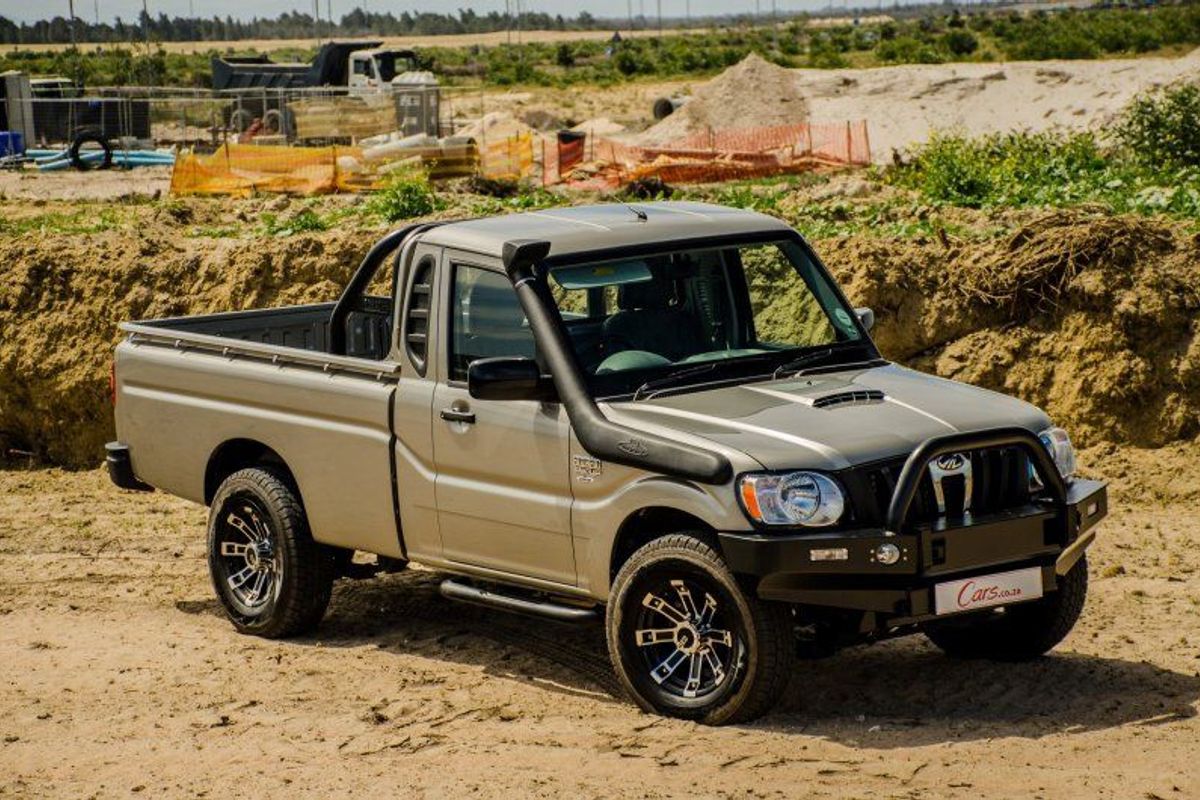
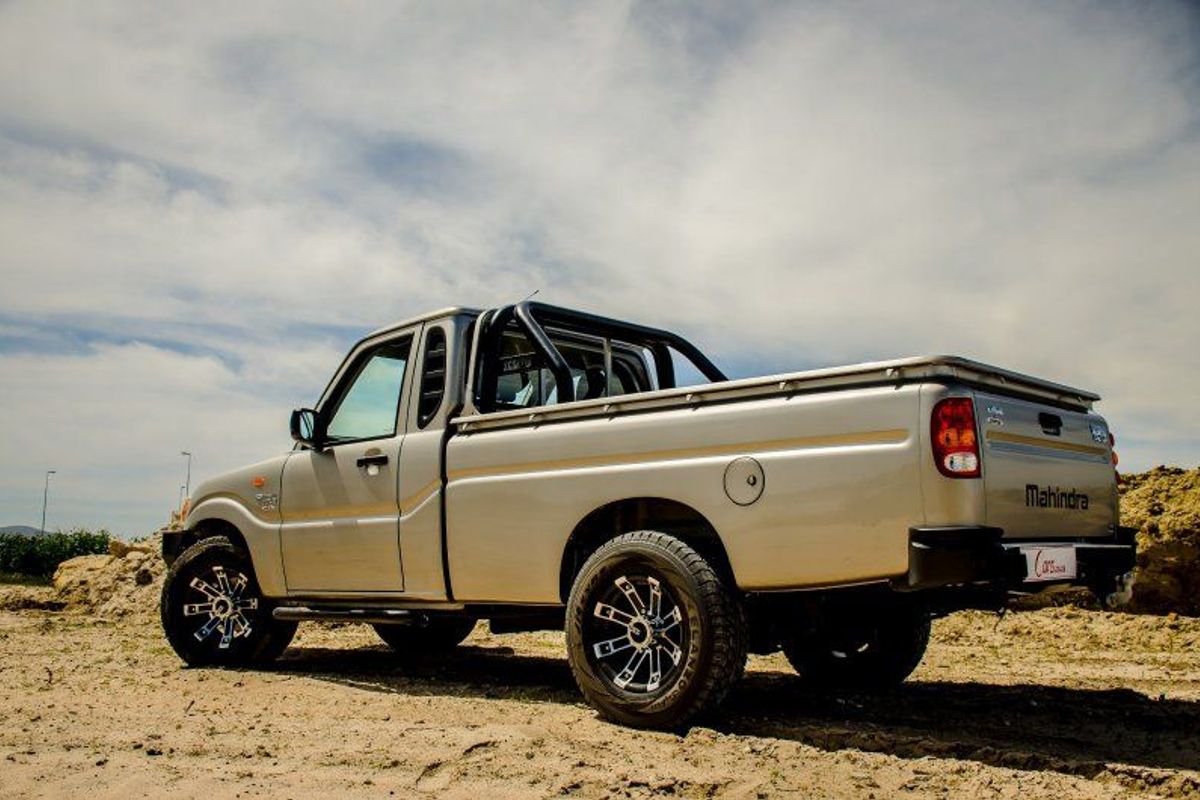
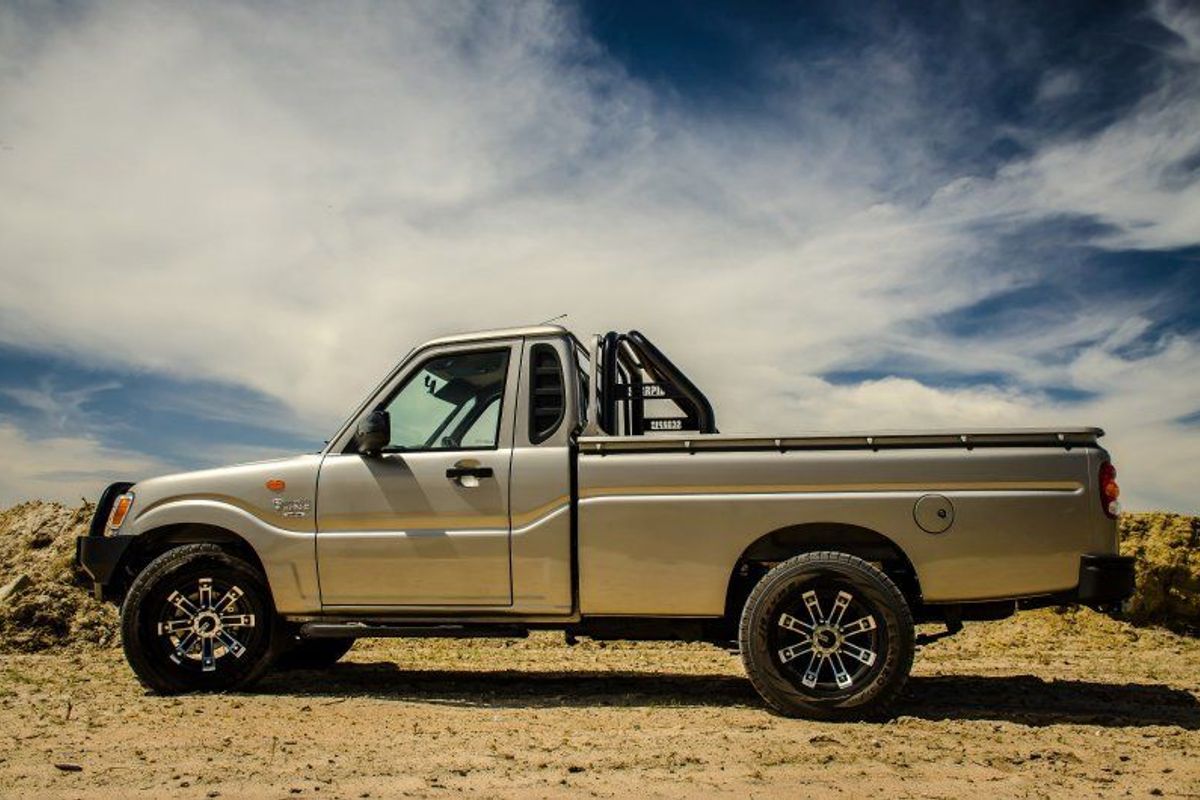
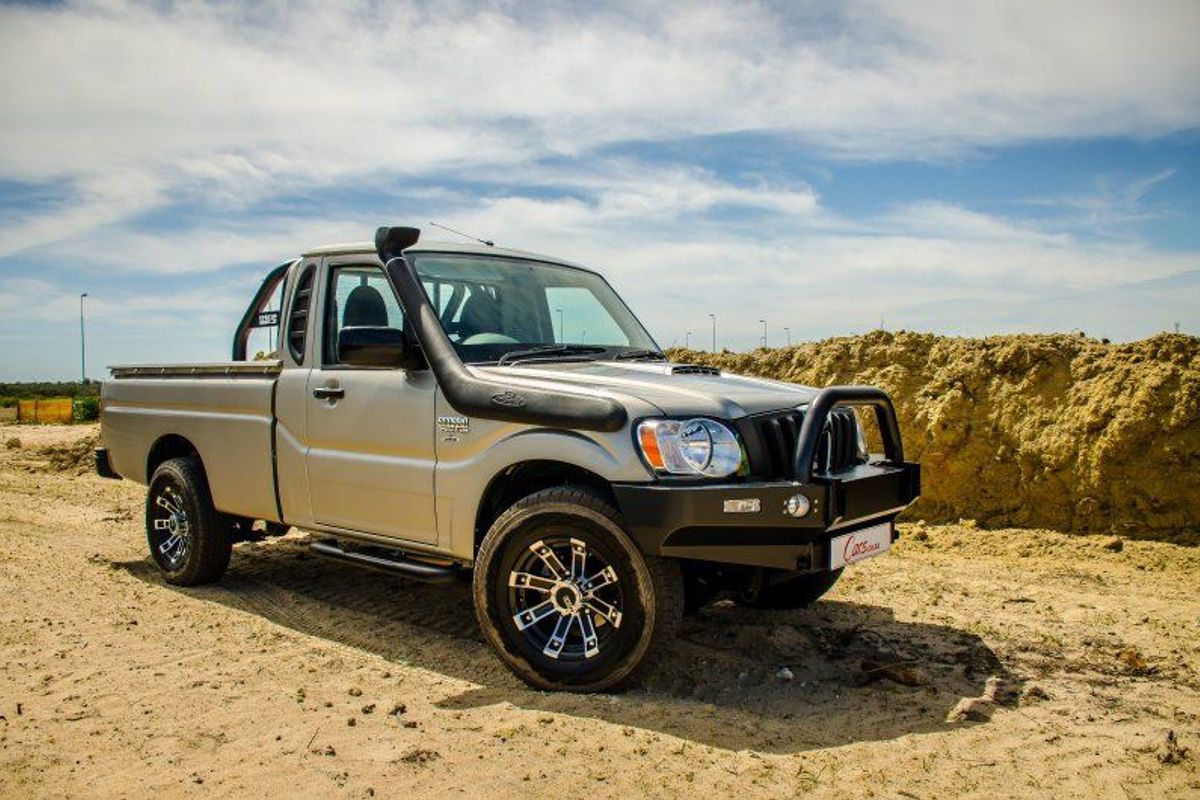
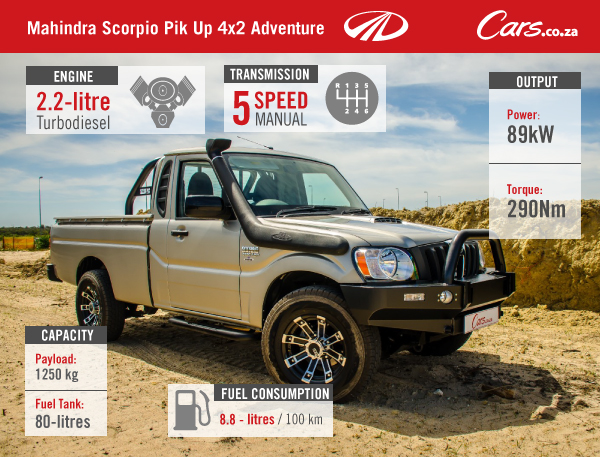
Lets be honest here, the Mahindra Scorpio Pik Up might not be the prettiest bakkie on the block, but you can be sure that its built with intention. With a total length of over 5.1 metres, the Scorpio Pik Up is large, with a ground clearance of 210mm. A definite highlight of this vehicle is the load bay, which is both long and deep, which makes it perfect for large loads and to be exact, the Scorpio Pik Up comes with a 1 250kg payload. Although we didnt get a chance to load the vehicle to its capacity, we did use it to transport kayaks and surfboards, which fitted with ease.
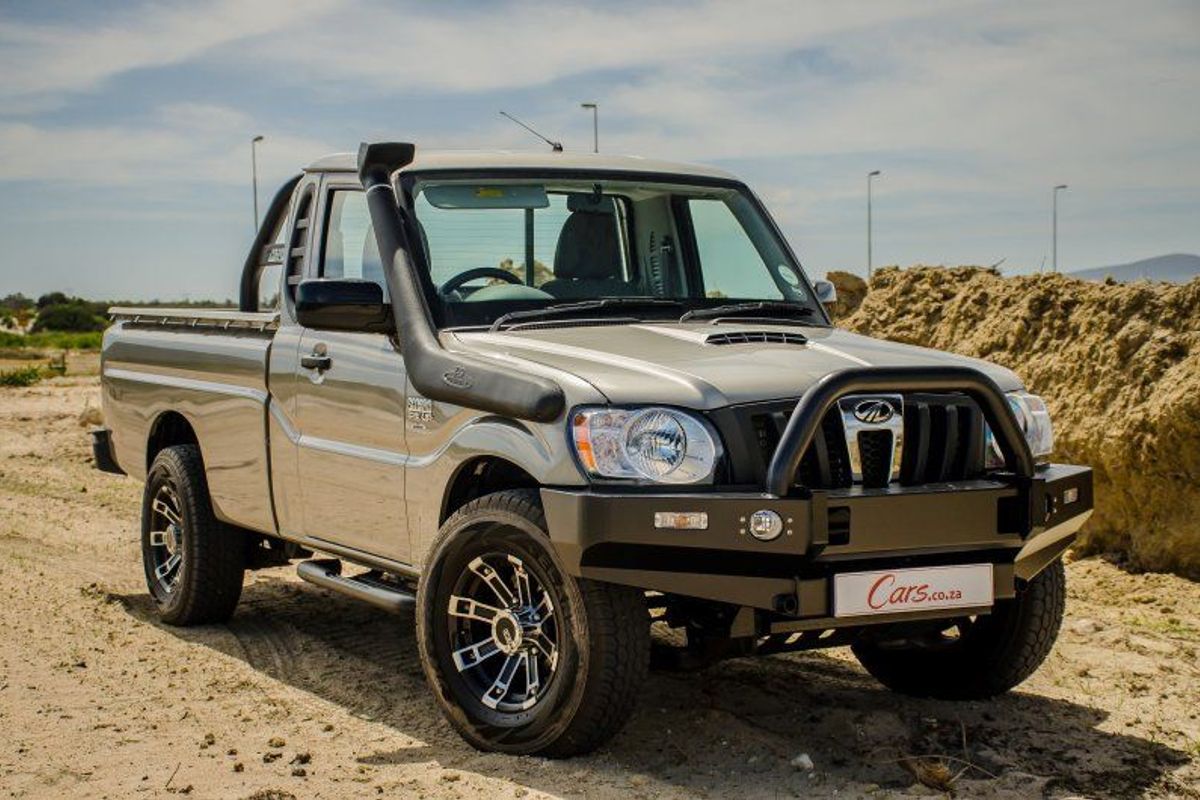
This test unit had a particularly menacing look to it and came fitted with a large bull bar with integrated fog lights, a snorkel and bling-bling 16-inch G-Max alloy wheels, just to add that extra cool factor for when you are working the earth… or hitting the beach.
On the inside, you are met with a predominantly grey interior that doesnt offer much in way of excitement, but the centre stack is finished in carbon-fibre-look trim which provides a bit of much needed contrast. Hard-wearing plastic dominates the interior and for a vehicle of this nature, its well suited, but dont expect anything of premium quality. Fit and finish is average overall.
In terms of features, the Mahindra Scorpio Pik Up Adventure comes fitted with the basics and thats pretty much where the feature train ends. The steering wheel is rake adjustable and has mounted controls for audio and cruise control while the windows are electrically adjustable for added convenience. There is a basic CD radio fitted thats MP3 compatible and theres a USB port for charging devices. Theres also ample space for storing smaller items around the cabin and you can squeeze items in behind the seats too.
Drive Time
Now for the part that matters most. How does the Scorpio Pik Up drive you may ask? Well, as you might expect, the Scorpio Pik Up is rough around the edges but to be fair it performed better than we initially thought it would. Start her up and that 2.2-litre mHawk turbodiesel rumbles to life and its time to get to work.
With 89 kW and 290 Nm of torque powering the rear wheels, the Scorpio Pik Up has a fair amount of pulling power and with an empty load bay behind you it gets a move on in everyday traffic. Acceleration is acceptable and it was out on the highway where the Scorpio actually impressed us most, as it felt solid and cruised along comfortably at highway speed without feeling overly bouncy. The Scorpio Pik Up delivered a composed and relatively comfortable drive at speed. The Scorpio Pik Up is fitted a Stop-Start system, but it takes too long to fire the engine up again so you have to get your timing just right. Thankfully there’s a button to switch the system off entirely.
Naturally, being a large vehicle, you have to take care when navigating the Scorpio Pik Up in those confined parking spaces as its size is easily forgotten but thankfully it has oversize side mirrors to help you along. The Scorpio Pik Up is fitted with a Mechanical Locking Differential (MLD) in case you need it, but if you require more off-road ability then rather opt for the 4×4 version.
The 5-speed transmission can be rather stubborn and notchy while changing gears which contributes to the overall roughness of the Scorpio Pik Up. We also noticed a fair amount wind and engine noise entering the cabin which forces you to turn the radio up more than usual to block out the rumble of the engine.
In terms of fuel consumption, Mahindra claims 8.8L/100km, but you can expect anything from 9.5L/100km or more, depending on how hard you push the Scorpio. On the safety front, The Scorpio Pik Up is fitted with dual airbags as well as ABS.
Mahinda Scorpio Pik Up Price in South Africa
This Mahinda Scorpio Pik Up 4×2 Adventure is priced from R232 995. The 4×4 version is priced from R286 995.
The Mahindra Scorpio Pik Up is sold with a 3-year/100 000km warranty and 3-year/60 000km service plan.
The Scorpio Pik Up is an honest offering from Mahindra. Yes, its large and looks a bit awkward, but when you consider what the vehicle is built for then looks are simply superficial. The Scorpio Pik Up stays true to its function as a workhorse and that large load bay will come in handy when you need it. The engine has good pulling power and it’s is well mannered out on the road with decent ride quality. The interior could be better in terms of quality and fit and finish, but at least the Scorpio Pik Up 4×2 Adventure has a decent dose of convenience features.
Test Team Opinion
The Scorpio is a solid offering and the drive isn’t bad at all. Specification is good and I’m pleasantly surprised that there’s an automatic difflock. However that Start/Stop functionality causes heart-stopping moments as it takes too long for the engine to restart. -David Taylor
We Like: Price, good ride quality, well specced
We Dont Like: Interior quality, NVH isn’t the best.
Also Consider: GWM Steed 5, Foton Tunland
Mahindra Scorpio Pik Up 4×2 Adventure Quick Specs
Hyundai Santa Fe (2015) First Drive
Hyundai South Africa has launched the facelifted Santa Fe SUV in South Africa and we attended the launch in Cape Town to take it for a drive.
The Hyundai Santa Fe does battle in a tough segment where cars like the BMW X3, Audi Q5, Land Rover Discovery Sport and Kia Sorento are all vying for a piece of the SUV pie. Hyundai has now introduced the updated Santa Fe to market with an array of new features and fresh styling that not only makes it more appealing, but will also hopefully bring new buyers to the fold.
We had a chance to drive the updated Santa Fe on launch last week. Lets take a closer look at whats changed and what you can expect from the updated Santa Fe.
Whats New?
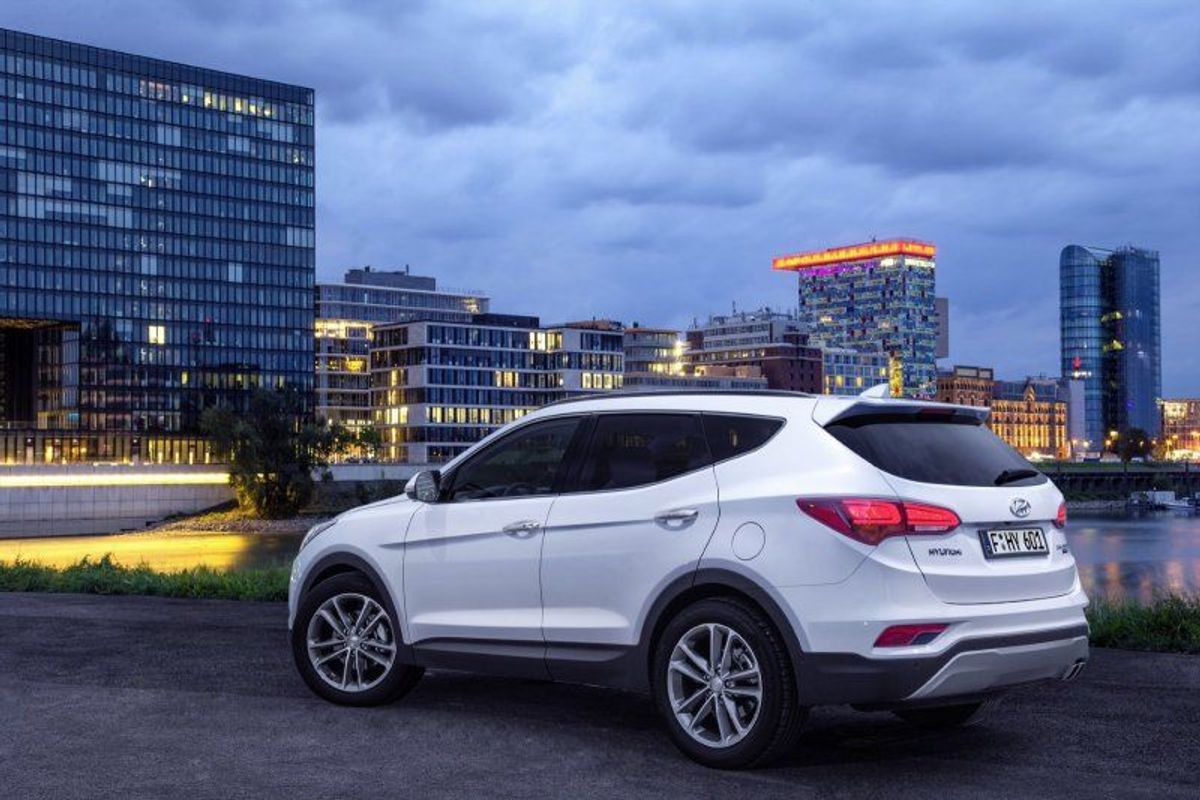
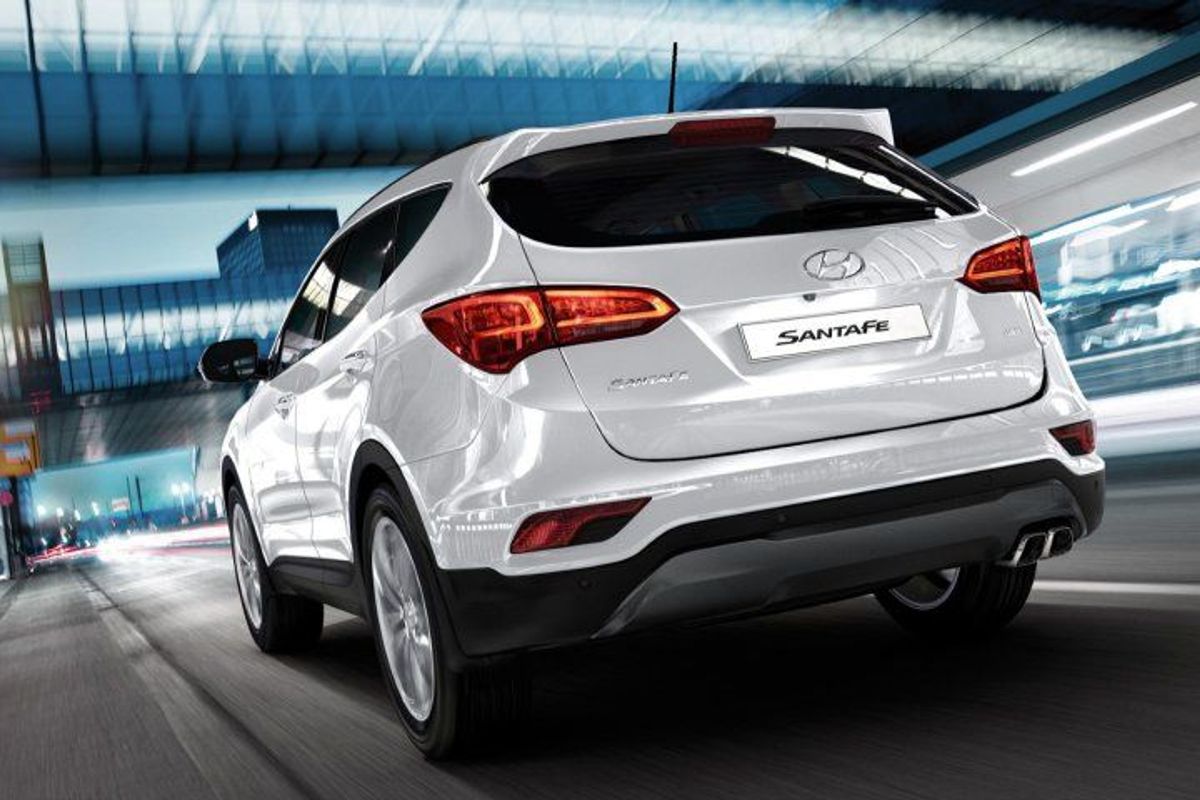
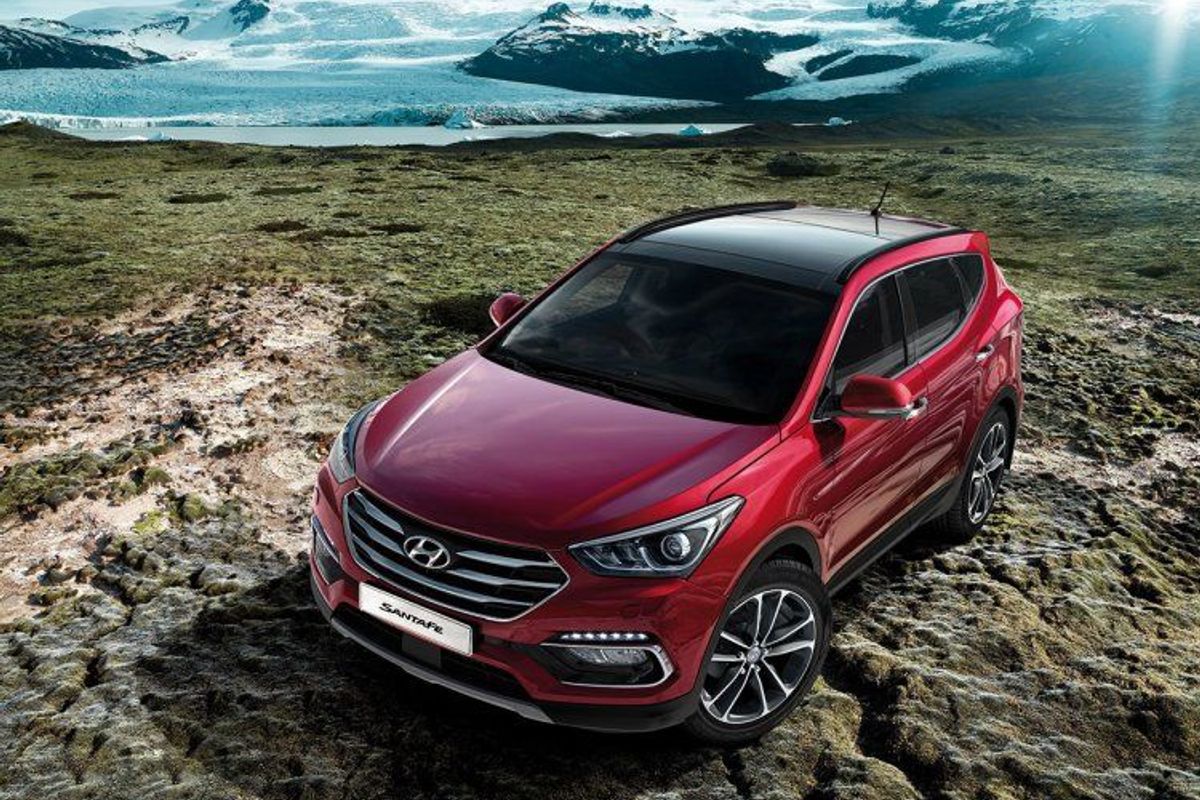
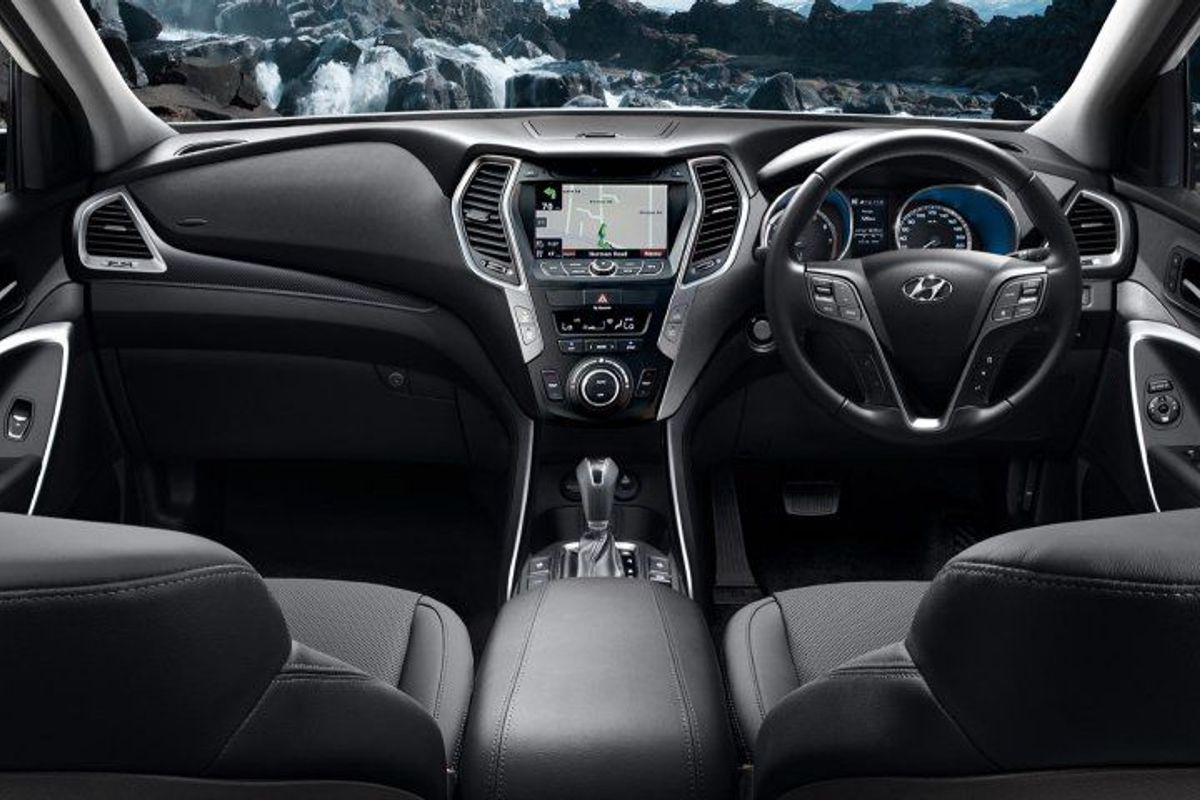
A number of styling tweaks have taken place and from the outside, the Hyundai Santa Fe looks quite attractive. The hexagonal chrome grille has been reworked and there are new front and rear bumpers which house redesigned fog lights and LED Daytime Running Lights. The headlights feature a new design too and the rear taillights now feature a new LED graphic. The tailpipes are also more square in shape compared to the round pipes found on the outgoing version. The updated Santa Fe also benefits from newly designed 19-inch alloy wheels which round off a good looking offering.
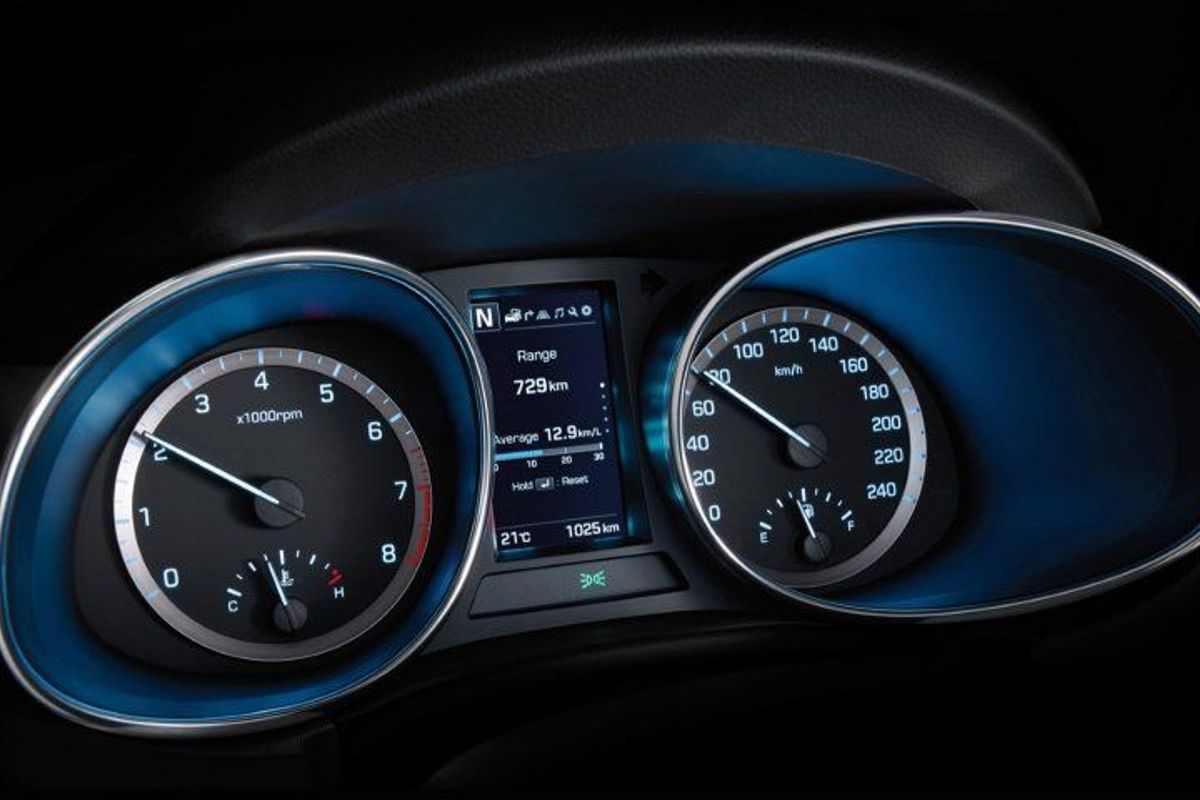
On the inside, Hyundai has updated the instrument cluster and navigation system and incorporated new materials in the cabin. Passengers seated in the second row also have more space thanks to a sliding adjustment of 270mm and the reclining seats add an extra dose of comfort. Loading items into the boot has been made easier too with a Smart Power Tailgate that opens with the push of a button on either the fob or the door.
Hyundai has improved the package even further with the inclusion of a number active safety features such as Blind Spot Detection, Rear-Cross Traffic Alert and Smart Cruise Control.
The Drive
There are two Santa Fe derivatives on offer, and these include the R2.2 5-seater Elite which is front-wheel driven, and the R2.2 7-seater Elite which is fitted with an All-Wheel Drive system. Both derivatives are powered by the previously proven 2.2-litre CRDi diesel engine which offers 145 kW and 436 Nm of torque mated to a 6-speed automatic gearbox. Fuel consumption for the 5-seater is rated at 8.0L/100km while the 7-seater AWD model claims 8.3L/100km.
On our leisurely drive through the Cape Winelands, we sampled the R2.2 5-seater Elite. As passenger on the first leg, I found the leather seats to be particularly comfortable and they had good figure-hugging bolstering too. The front seats are electrically adjustable while the driver seat features a memory function.
Our route was a mix of tar and dirt and it must be said that the Santa Fe performs well on both surfaces. The suspension is well sorted and cushions bumps with ease, resulting in a surprisingly smooth and even ride. The cabin is well insulated so wind and engine noise is kept to a minimum.
The Santa Fe impressed us most on a long section of dirt road, where it delivered a smooth and composed ride, despite all the undulations in the road. It was as if we were driving on tar and the Santa Fe wasnt bothered in the least.
Performance is good too and the Santa Fe has enough grunt to get a move on if needed and theres more than enough power in the bank for overtaking too. The Santa Fe never felt sluggish and the automatic transmission does a decent job of balancing performance and economy. Manual mode can be selected too if you feel the need to get more out of the engine. The driver also has the choice to switch between three driving modes which include Normal, Sport and Eco. We were surprised to see a fuel consumption figure of 7.1L/100km displayed on the trip computer, which is excellent for a vehicle of this size.
Overall, our first impressions of the facelifted Hyundai Santa Fe are positive. The styling has improved the package and the Santa Fe is composed and comfortable to drive with sufficient power and torque on tap. We will have the Santa Fe on test soon to give it a thorough evaluation, but for now, take a look at what you can expect to pay for the Santa Fe.
Hyundai Santa Fe Price in South Africa
Santa Fe R2.2 2WD 5-seater Elite – R659 900
Santa Fe R2.2 4WD 7-seater Elite – R699 900
Pricing includes a 5-year/90 000km service plan, 5-year/150 000km warranty and Roadside Assistance.
Tata Bolt (2015) First Drive
Tata has launched its new Bolt hatchback featuring a turbocharged engine. Is this the car to help Tata break new ground? We took it for a drive at its local launch.
What does the word bolt conjure up for you? An athlete kicking out of the starting blocks in the 100 metre sprint? I think thats the thinking behind Tatas name for its all-new car. We were going to say entry-level car, but bear in mind that for now, youll still be able to buy the Tata Indica at a smidgeon under R100 000.
Turnaround Plan
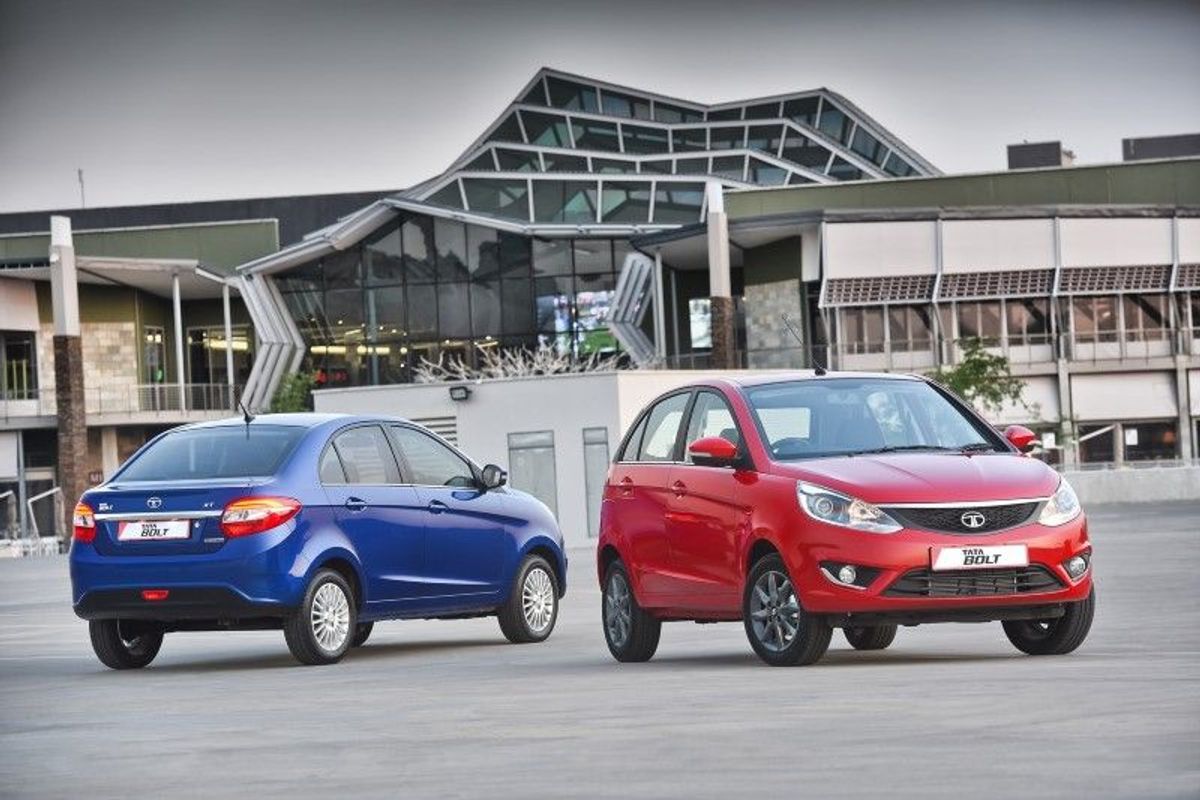
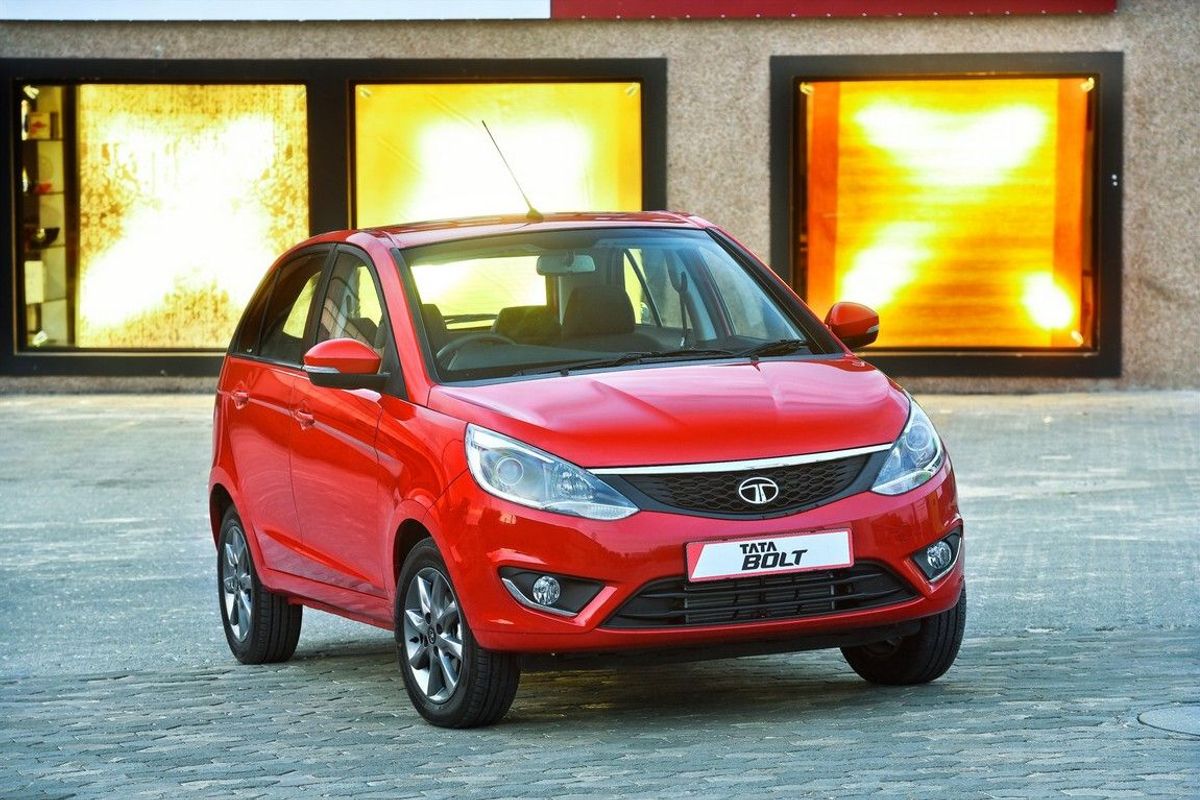
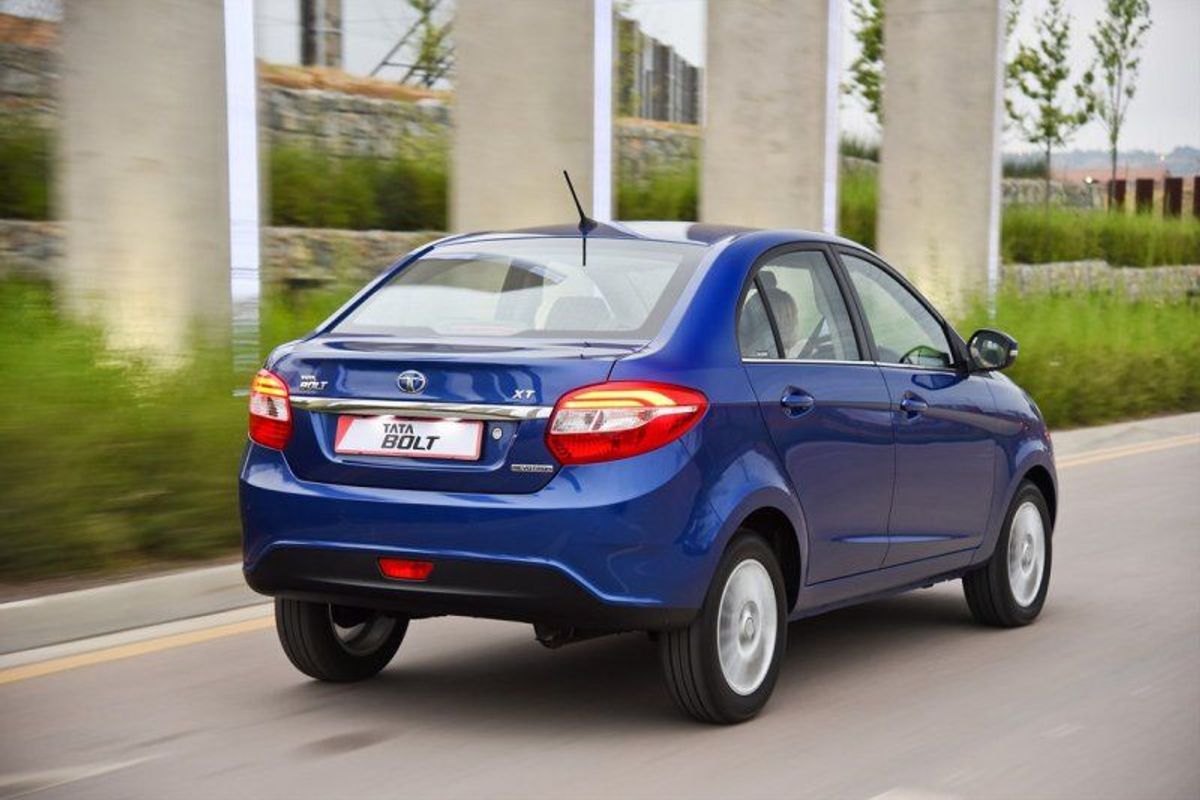
Remember the Tata Indica? Shoddy plastics, bumpers that look ill-fitting? A dashboard to forget about? The Bolt with a capital B moves Tatas game into another league. While the styling may not be to everyones taste, at least it is fresh, and the levels of trim fittings and yes, build quality, are way ahead of where Tata was 10 years ago when it launched the Indica to mixed reviews.
Price was the factor that led people to buying a little Indian hatch then, and price is still the name of the game with the Bolt. But this new hatch and its sedan sibling are now operating in the R130 000 to R150 000 category, where the competition is a little tougher.
Improved safety features
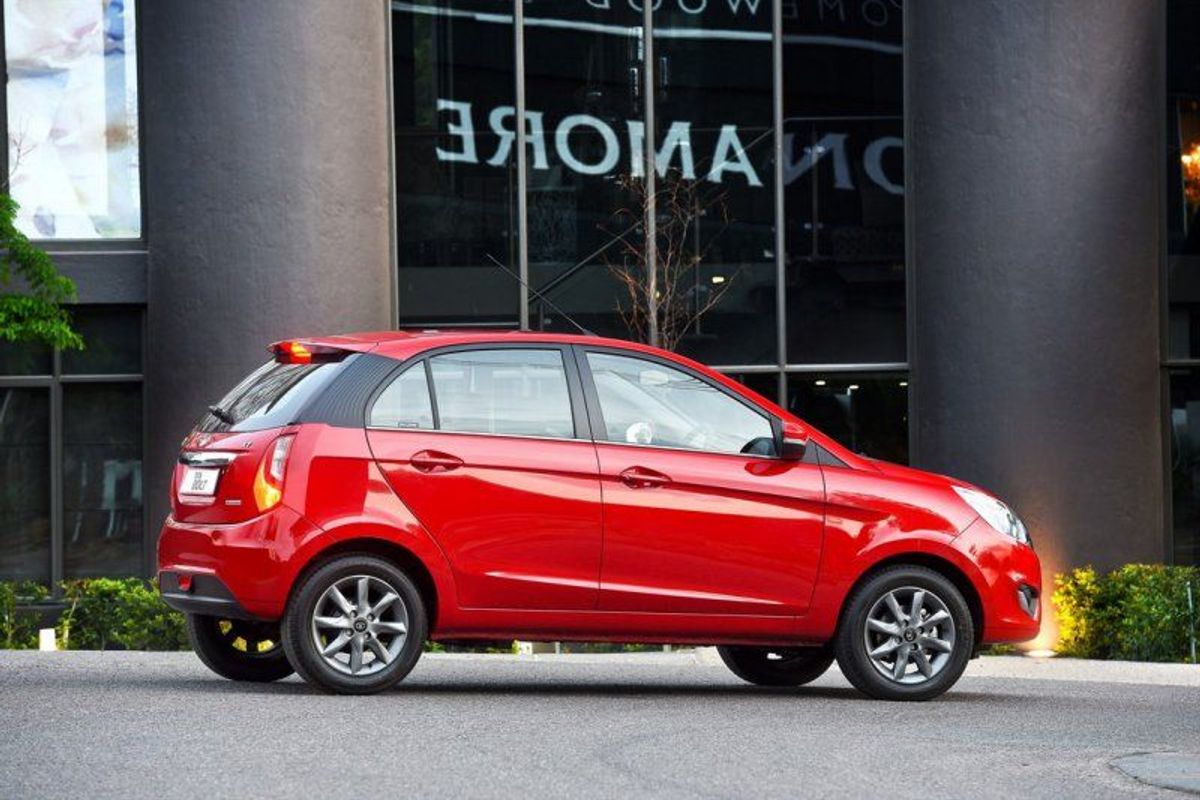
First off, the car is not a bad looker, although it does have a rather tall ride height, much in the way that Datsuns Go does, and, hey, that car is carving up some solid sales figures despite not being launched with proper safety equipment, such as airbags and ABS.
The Bolt makes no mistake in the safety stakes. It has Bosch Generation 9 ABS with Electronic Brake Distribution, and, a first for this segment, Corner Braking Stability, a system which has been around in up-market cars for over 15 years. The system individually brakes wheels at various corners of the car to sort out skids.
Dual airbags for driver and front passenger are present, and there is a rear park assist system warning buzzers to enable easier parking.
Right there, in that safety equipment package, you have about R20 000 worth of hardware that would probably cost more if you were to retro-fit the gizmos. Suddenly the pricing looks more attractive.
Interior
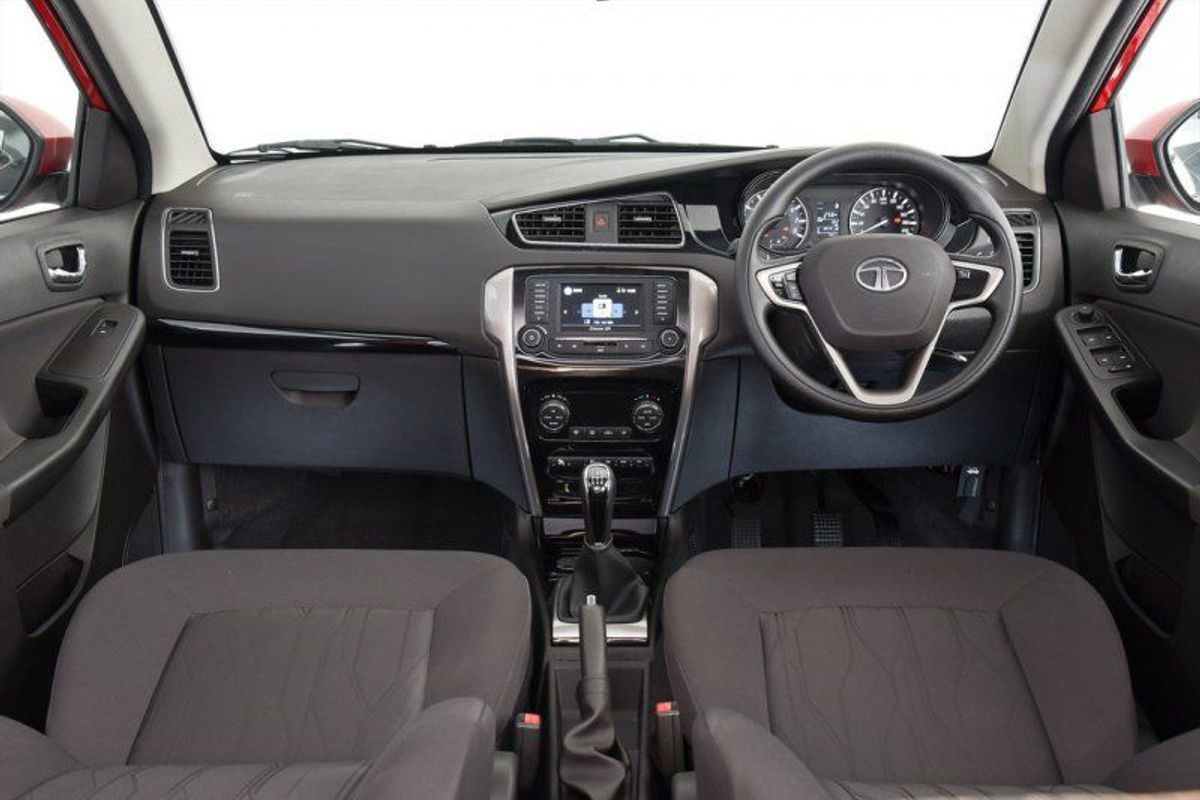
Now you take a look at the interior and note the vastly-improved level of plastics and fabric upholstery used to clad this little cabin. You also note the interior design-work, which is very acceptable to a South African eye that is used to offerings from the Japanese, the French and the Germans in this segment.
Then you start checking out the features. All the models have air-conditioning the car does come from India, for goodness sake, where temperatures in the 40s are not something to remark upon and electric windows front and rear on all models. All models also have remote central locking and electric mirror adjustment.
In the line of luxury, all models come with a Harman-developed four-speaker infotainment system, with radio, IPOD connectivity and auxiliary inputs standard, while the upper-level XT models get a touch-screen system by Harman which includes voice command and SMS management on the touch screen, as well as an SD card reader which can provide video playback.
And for exterior image, all but the base XMS hatch have 15-inch alloy wheels.
Engine
The engine fitted to all Bolt models is a 1.2-litre turbocharged four-cylinder, petrol-fuelled of course, and rated at 66 kW with 140 Nm of torque. No performance figures were noted by us in any of the information provided at launch, but we can tell you something about the performance. It is easily possible to see 160kph and above on the speedo, and as far as fuel consumption is concerned, well, myself and my co-driver achieved an average consumption of 4.8L/100 km for the run from OR Tambo Airport to the Zwartkops Raceway near Pretoria.
Our economy run included lots of freeway driving and special techniques to achieve this, and we would imagine a realistic consumption figure would be in the 6 to 6.5L/100 km range. By the way there is an Eco button for extra conservative driving, but we would recommend staying in the normal button as you can feel a noticeable power drop-off as you hit the button.
Tata Bolt Pricing
For the record, there are four new models launched as from this week in early October 2015, and they are positioned as follows: