Update: New MINI Clubman Shown

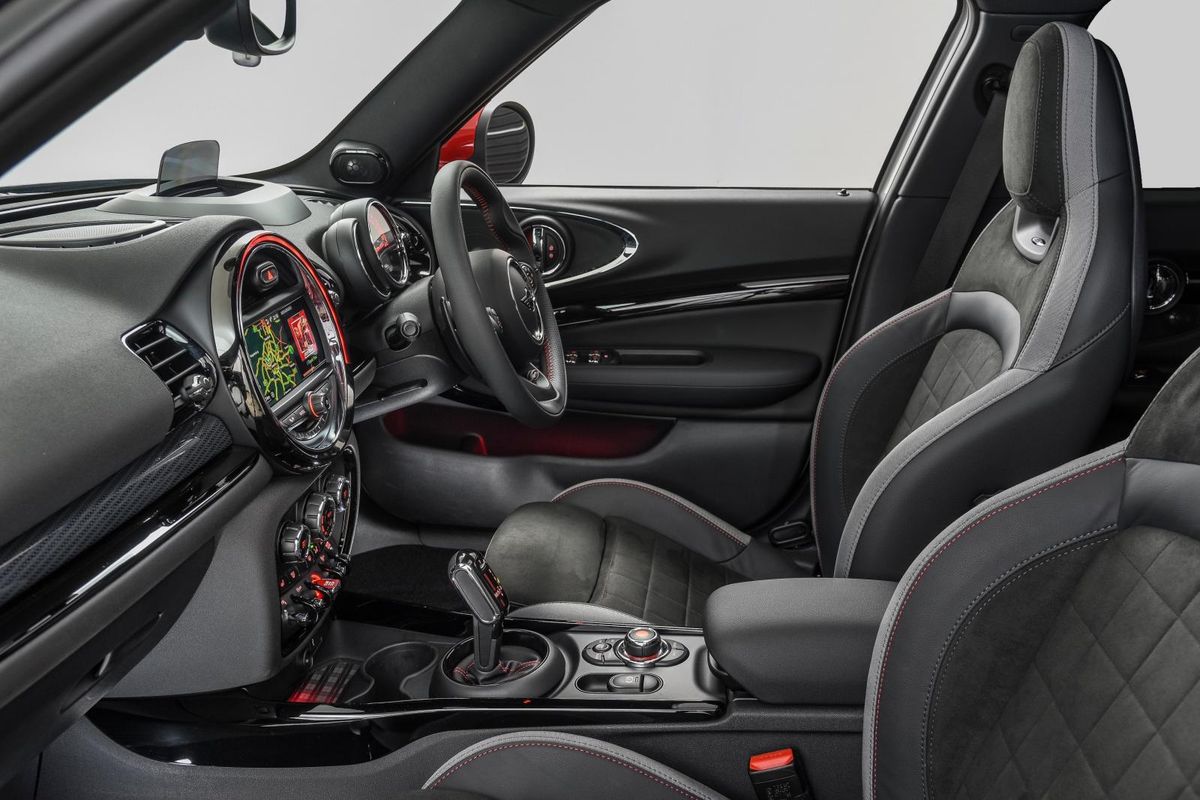
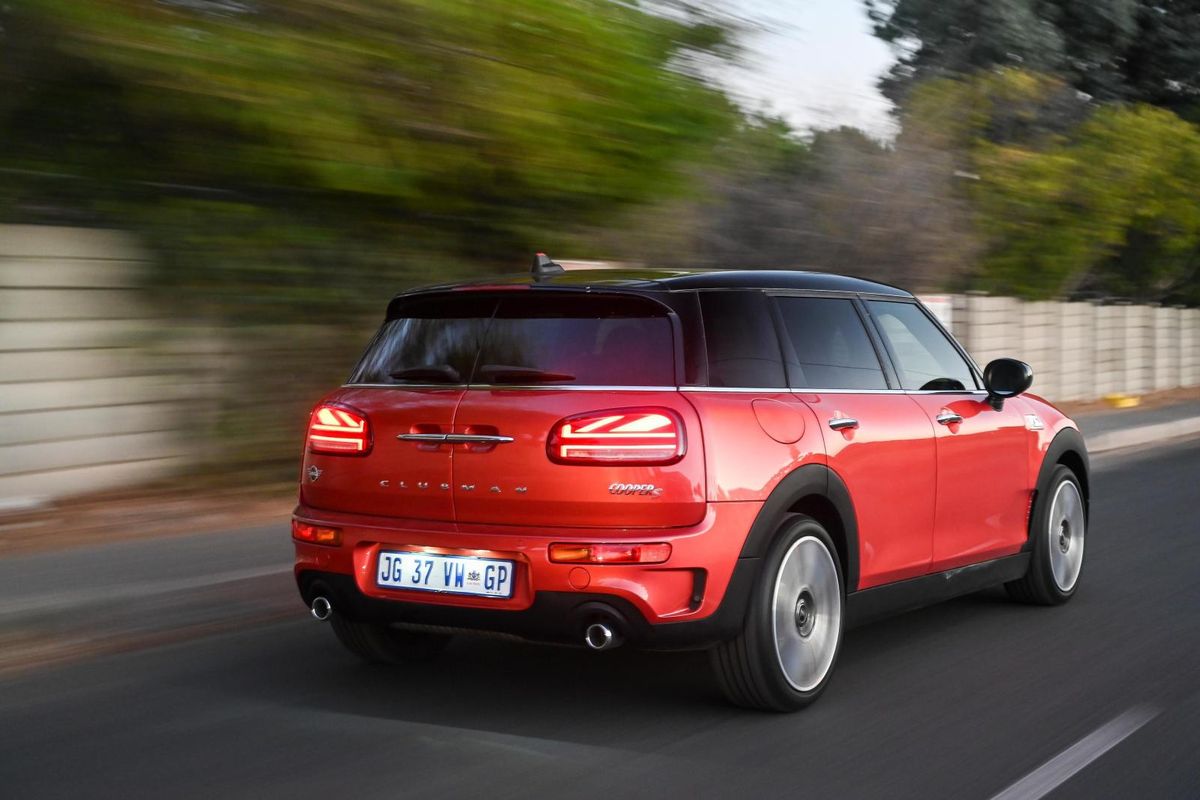
Official images of the second-generation MINI Clubman surfaced on the internet yesterday and MINI has now revealed further details. The four-door sub-compact station wagon features some interesting styling and shares the same platform with the latest MINI hatchback and the BMW 2-Series Active Tourer.

New MINI Clubman Details

The new MINI Clubman has grown in length by 27 cm and is 9 cm wider. The wheelbase has also been extended by 10cm. This means that cabin space has increased and the new Clubman can accommodate 300L in the boot which expands up to 1 250L with the rear split seats folded down. From the images above, it’s also clear that the new Clubman features two rear opening doors.

Three engines power the new Clubman. The first is a 1.5-litre TwinPower Turbo three-cylinder engine offering 100 kW and 220 Nm torque with 10Nm overboost. 0-100 kph is achieved in 9.1 seconds with a top speed of 205 kph.

The MINI Cooper S Clubman is powered by a four-cylinder 2.0-litre TwinPower Turbo engine with 141 kW and 280 Nm of torque with an additional 20 Nm overboost. 0-100 kph is achieved in 7.1 seconds with a top speed of 228 kph.

Diesel heads can opt for the MINI Cooper D Clubman which is fitted with a four-cylinder a 2.0-litre TwinPower Turbo engine offering 110 kW and 330 Nm of torque. 0-100 kph is achieved in 8.5 seconds with a top speed of 212 kph.

A 6-speed manual transmission is standard. An 8-speed Steptronic transmission will be optionally available for the first time in a MINI and will be available for the Cooper S Clubman and  Cooper D Clubman. The Cooper S Clubman can also be had with an optional  8-speed Steptronic sport transmission while a 6-speed Steptronic transmission can also be fitted to the Cooper Clubman.

The new MINI Clubman can be expected in South Africa in the first quarter of 2016.

We also spotted some MINI pre-production prototypes last year, check them out!

Hot Hatchback Popularity in South Africa

There’s a never-ending debate raging on in the motoring world and the hot hatchback is smack-bang in the middle of it all. If I had to ask you what the best hot hatchback is, what would you say? Think carefully now, it’s not that simple to answer.

We took to social media with our weekly #ChooseDay to dig a little deeper and find out what you, our readers, considered to be the hottest hatchback and the results were very interesting. Not only did we receive hundreds of responses, we also received a diversity of opinions which is to be expected when debating hot hatch supremacy.

Before we reveal the results, some clarification is in order. We could only select four hot hatchbacks to lead the question, so many potential favorite hot hatches took the back seat. One key prerequisite however was that power output had to exceed 200 kW. With this in mind, we chose the following hot hatchbacks to start the debate: Renault Megane RS 275 Trophy, Ford Focus RS, Mercedes-Benz A45 AMG and the ever popular Volkswagen Golf R.

Admittedly, the Focus RS is a curve ball as it’s not even available in South Africa yet, but it will in all likelihood shatter dreams when it arrives on our shores in 2016. Likewise, the Renault Megane RS 275 Trophy was literally launched in South Africa this month, so it’s new to our market and has a lot of convincing to do to oust its competitors, but it’s very pretty nonetheless. Also be sure to take a look at best value for money hot hatchbacks here!

Hot Hatchback Popularity in South Africa

At the time publishing this article, our sample was taken from 400 votes to determine which of these hot hatches was held in highest regard. And the winner is…

1. Mercedes-Benz A45 AMG – 49% of total votes

mercedes-benz a45 amg

With a landslide victory, 49% of respondents  were convinced that the Mercedes-Benz A45 AMG is the hottest hatch on the road. It’s difficult to argue with that, especially when you consider that the world’s most powerful production 2.0-litre turbo engine is lurking under the bonnet. With its 265 kW and 450 Nm of torque delivering blistering performance through a seven-speed DCT gearbox, the A45 AMG with 4Matic all-wheel drive is a freak force that’s tough to beat. The 0-100kph sprint is achieved in 4.6 seconds before reaching a limited top speed of 250kph. The Mercedes-Benz A45 AMG is all yours for R659 717.

MUST WATCH:


2. Volkswagen Golf R – 25% of total votes

volkswagen golf r

There’s no doubt about it, the Volkswagen Golf R is very much loved in South Africa and its monthly sales figures, which are in excess of 100, are testament to this fact. What’s not to love? The Volkswagen Golf R offers 206 kW and 380 Nm of torque from its turbocharged 2.0-litre engine. The Golf R is available with either a 6-speed manual or DSG transmission and acceleration to 100kph takes only 5 seconds before reaching a top speed of 250kph. Pricing starts at R510 400 for the manual while the DSG derivative is priced at R525 900. Judging by our drag race video (see above) between the A45 AMG and the Golf R, second place is just about right for this hot hatch.


3. Ford Focus RS – 23% of total votes

ford focus RS

Snapping at the heels of the Golf R with 23% of the votes is the Ford Focus RS. It was surprising to see such huge interest in a car that will only be available in South Africa in 2016, but you can bet your top dollar that the RS is going to rustle some feathers in the hot hatch roost when it arrives. We know that the RS is equipped with a 2.3-litre turbocharged engine and all-wheel drive which makes it a strong contender. Official figures have just been released and Ford claims 257 kW and 450 Nm with 470 Nm available on overboost for 15 seconds. Gear changing will happen via a 6-speed manual transmission and for the speed freaks among us, you can expect sub 5 seconds in the 0-100kph sprint and a top speed of 250kph, easy. South African pricing and availability is yet to be confirmed.

4. Renault Megane RS 275 Trophy – 4% of total votes

Renault Megane RS 275 Trophy

The Renault Megane RS 275 Trophy, despite its sexy looks, came in limping across the finish line with only 4% of the total votes. But don’t laugh, the Trophy is underrated and its 201 kW and 360 Nm of torque is no joke. This hot hatch comes fitted with a 2.0-litre turbocharged engine mated to a 6-speed manual transmission. The 0-100kph sprint is achieved in 6 seconds before reaching a top speed of 255kph. The Renault Megane RS 275 Trophy is priced at R449 900. We currently have the Trophy on test, so you can expect a full review soon.

Feel free to name your favorite hot hatchback in the comment section below…The debate rages on.

Alfa Romeo Giulia (2016) Officially Revealed

The long-awaited successor to the Alfa Romeo 159 has been unveiled and we attended its international preview at the Alfa Romeo Museum in Milan, Italy. The Alfa Romeo Giulia has been one of the best kept secrets in the car world, with very little information being made available and almost no prototypes were spotted on the road. You can read our speculations about the car here and then compare it to the factual information in this article. The Alfa Romeo Giulia is finally here and its arrival today coincided with the brand's 105th year of car manufacture (previously it made aircraft engines) and the event was held at the revitalised Museum, which reopened its doors to the public after being closed for some time. Before we dive into the Alfa Romeo Giulia itself, the other big announcement is that there's been a logo change. While the differences aren't immediately noticeable, there's a renewed emblem with a modern touch.

Alfa Romeo Giulia Details

A lot is expected of the Alfa Romeo Giulia and we think the brand has delivered a product that is able to take on the German rivals and be a logical choice, as opposed to being an emotional purchase. How can you not be emotional when you see the new Giulia for the first time? The rear diffuser with quad exhausts as well as carbon fibre boot lid gives it a menacing appearance, while the big wheels with carbon ceramic brakes mean business. The cars you see here are the flagship Quadrifoglio Verde performance version which use a Maserati/Ferrari-sourced motor. It's a six-cylinder biturbo engine with an estimated output of 375kW. The Alfa Romeo Giulia is claimed to hit 100kph in just 3.9 seconds. Despite it being a performance car, there's a strong focus on emissions and economy, and the Giulia features cylinder deactivation. More importantly, Alfa Romeo has done substantial work on the weight of the car as well as the handling. There's extensive use of carbon fibre and light materials such as aluminium. Carbon fibre is used for the prop shaft, bonnet and roof, while aluminium is used in the doors, engine and suspension. The seats' structural frame is also made of carbon fibre. One of the big talking points is Alfa Romeo returning to rear-wheel drive. While all-wheel drive is on the cards, its the choice of rear-wheel drive that has really raised eyebrows. Combined with ultra-sensitive steering, torque vectoring and 50/50 weight distribution, the new Alfa Giulia looks like its going to be quite a driver's car. While we don't have any official images of the Alfa Romeo Giulia's interior, we can tell you that after peering through the window, there's a distinct Italian look and its all driver focused. One of the big things we noticed was the revised Alfa DNA system, which is now a dial. There's Dynamic and Natural, which we've seen before in the MiTo and Giulietta, but the Giulia now features Advanced Efficient as well as a full-on Racing mode. The interior will feature materials such as wood and carbon fibre, to name but a few. With the Giulia, Alfa Romeo is hoping to jumpstart its brand. It's been drifting on a road of mediocrity for some time now and was in dire need of fresh product. The Alfa Giulia is the first of many cars and we're looking at about 8 or even 9 in the next few years. Internationally we'll see a few variants of the Giulia such as diesels, station wagons and so on.

Coming to SA?

We quizzed the local Alfa Romeo representative and while he couldn't confirm an exact date, estimates of as early as December 2015 were given. To be realistic, we could see it in the fourth quarter of 2016. The key things here are the exchange rate and the demand for the bread-and-butter models. As exciting as the Giulia QV is, we reckon it's not going to be under R1-million, which is fair considering its targeting the BMW M3 and Mercedes-Benz C63. If the lower-specced entry levels are priced competitively and if the build quality is as improved as Alfa Romeo says it is, we're on course for a Germany vs Italy war again.

Mahindra Genio Plus Now in SA

In addition to the Genio single and double cab bakkie currently on offer in South Africa, Mahindra has now introduced the Genio Plus to market with a load capacity of more than 1 000 kg. The new Mahindra Genio also adds a number of standard features over and above its counterparts.

What does the Mahindra Genio Plus offer?

The Genio Plus comes fitted with a front bull bar, rear bumper, side steps, front cab-mounted roll bar and a rear tailgate-side roll bar. The large corrugated cargo box is rubberised for added durability and the Genio Plus rides on alloy wheels.

In the cabin you will find two independent seats covered in durable cloth upholstery. The centre console features two cup holders and there’s a digital clock mounted above large air vents. For entertainment, the Genio Plus comes fitted with a MP3 radio/Cd player and there is a SD card slot as well as a USB port.

Standard features include electric windows and exterior mirrors, fog lamps, air conditioning, central locking and power steering. ABS is is also fitted as standard.

Under the hood lies a 2.2-litre turbodiesel engine offering 88 kW and 290 Nm of torque. Power is sent to the rear wheels via a 5-speed manual transmission. Mahindra claims a combined fuel consumption figure of 7.9L /100km with an approximate range of 900km from its 74-litre fuel tank.

Mahindra Genio Plus Price in South Africa

Mahindra Genio Plus – R209 995

Alfa Romeo Giulia – What We Know So Far

Italian car maker Alfa Romeo is a brand that is built on passion and emotion, and it has held petrolheads enthralled for generations. Products such as the modern 8C supercar and 4C sportscar, along with decades of heritage based on racing and Italian charm have won Alfa Romeo global iconic status, but questions about reliability, build quality and dealership service have dented the brand’s reputation. Resale values are generally poor too, which adds insult to injury.

Ask any person about Alfa Romeo and most will smile and talk about how pretty the cars are, but when you ask about potential ownership, you’re met with a firm ‘Not for me!’ How can a brand be so desirable, yet the mention of ownership is enough to have them flee for the mountains?

Locally, the Alfa Romeo offering is limited to the compact MiTo, a stylish and very Italian alternative to the Mini, and the Giulietta – a Volkswagen Golf rival that’s oh so close to being an outstanding product. Then there’s the 4C which is a breathtakingly pretty and exclusive sportscar offering an enthralling drive, but it comes with one very high pricetag.

There is a dire need for a premium sedan from Alfa Romeo that can take on the likes of the BMW 3-Series and Mercedes-Benz C-class – a serious money maker that can turn the brand’s misfortunes around. Alfa Romeo did well in the early 2000s with the 156, a sedan that offered a lot, while not costing too much money. It was excellent and was awarded South African (and European) Car of the Year titles. Unfortunately the 156’s subsequent replacement, the 159 and its Brera coupe sibling were certainly eye catching, but were not good enough to sway potential buyers from German rivals. It’s a shame, as the 1.750 TBi-powered 159 was actually quite enjoyable to drive.

Alfa Romeo 159 Successor: What We Know

As you read this right now, we’re on our way to Milan, Italy to see the new Alfa Romeo Giulia. Unlike other cars which generally get spotted on the roads as pre-production mules and teased in the run-up to the launch, Alfa Romeo has done a sterling job of keeping the 159 replacement under wraps. Here’s what we know so far:

At this stage, globally it’s being called the Giulia, but we don’t know if this is confirmed. Internally it’s called Project 952 and will be going head to head with Germany’s finest, the BMW 3-Series, Mercedes-Benz C-Class and Audi A4. Jaguar’s XE is expected to be benchmarked too. The Fiat Group has a lot of expertise in its arsenal and from our understanding, we’re looking at Maserati underpinnings for this important new Alfa Romeo. We’d assume this would come from the Ghibli – the brand’s compact sedan. Maserati products are all rear-wheel drive, which means we could have a real driver’s car on our hands, too.

Potential Engines

In terms of engines, the Fiat Group has some great powerplants to draw from. From the Multi Air small capacity turbocharged motors to some quality JTD diesels, there’s a lot to choose from. The 1.7-turbo used in the Giulietta QV could also make an appearance. However, with such an illustrious motorsport heritage behind its name, four-cylinder motors just aren’t going to cut it. A flagship model in the 159 replacement could even feature something as sensational as a biturbo V6 developed by Maserati/Ferrari, which would really get tongues wagging. While we don’t quite think there’s going to be a BMW M3 rival, it’d be good to see a 335i and Audi S4 competitor. We would happily love to be wrong though…

Start of an Alfa Romeo Rebirth?

This week’s reveal is not just about one car though. The 159 replacement forms part of Alfa Romeo’s plan to launch up to nine vehicles by 2020. This nine-car plan is the brainchild of Alfa Romeo boss Harald Wester who is under the cosh to deliver new products, demonstrate innovation and ultimately turn the brand’s misfortunes around. Right now, there are just two models in the Alfa Romeo lineup that target popular segments, but the reality is people are looking elsewhere. Both MiTo and Giulietta are a few years old already and the lack of new vehicles aside from halo models is painful. As far as other potential new Alfa Romeo cars go, we’re possibly looking at a larger executive vehicle to rival the BMW 5-Series and Mercedes-Benz E-Class (remember the Alfa 166?) as well as a crossover.

This is Alfa Romeo’s time to shine and time to show us what we’ve been waiting for. We, and most petrolheads out there, sincerely hope that the 159 successor, or Giulia as it’s been unofficially named, is the product to restore Alfa Romeo to its former glory.

Bakkie Gravel Braking Test: Toyota Hilux vs Ford Ranger vs GWM Steed6

SCROLL DOWN FOR VIDEO

In the third installment of our three-way bakkie shootout, we headed back to our massive, secret gravel pit to test arguably the most important aspect of any bakkie’s dynamics: the ability to stop quickly when not on tarmac.

The bakkie is a class of car that arguably spends more time on gravel roads than any other, and with the double cab bakkie only growing heavier and heavier, we wanted to see which of our three bakkies had the best stopping power.

The test was simple, we’d accelerate each bakkie up to 80kph and jump on the brakes. We’d laid cones out in 5 metre gaps, which would help us measure the stopping distance quickly and easily.

I would be driving the Toyota Hilux 3.0 D-4D Legend 45, Dave was in the hefty Ford Ranger Wildtrak and Ash would be piloting the wildcard in the group, the GWM Steed6.

All the results can be found at the end of the video. See what we did there.

Interested in a Toyota Hilux? 

Interested in a Ford Ranger?

Interested in a GWM Steed6?

Compare the Toyota Hilux, Ford Ranger and GWM Steed6 here!

Toyota Hilux 3.0 D-4D Double Cab 4×4 Raider Legend 45 Ford Ranger Double Cab Hi-Rider Wildtrack Auto
Price R513 000 R494 900
Engine 3.0 litre 4-cyl turbo diesel 3.2 litre 5-cyl turbo diesel
Power 120 kW 147 kW
Torque 343 Nm 470 Nm
Fuel economy 8.6L/100km 9.1L/100km
0 – 100km/h N/A N/A
Top speed 170kph Not available


Toyota Hilux 3.0 D-4D Double Cab 4×4 Raider Legend 45 GWM Steed6 2.0VGT Double Cab Xscape
Price R513 000 R329 900
Engine 3.0 litre turbo diesel 2.0 litre 4-cyl turbo diesel
Power 120 kW 105 kW
Torque 343 Nm 305 Nm
Fuel economy 8.6L/100km 8.8L/100km
0 – 100km/h N/A N/A
Top speed 170kph 150kph

Bakkie Gravel Braking Test: Toyota Hilux vs Ford Ranger vs GWM Steed6

BMW i8 Wins 2015 International Engine of the Year Award

The groundbreaking BMW i8 supercar with its 1.5-litre hybrid powertrain has won the 2015 International Engine of the Year Award. The BMW i8 was launched in South Africa earlier in the year along with the BMW i3 and so far the interest in these vehicles has been phenomenal.

The victory marks the end of Ford’s reign, winning three years with its 1.0-litre EcoBoost engine, which placed second this time round with only 7 points separating the two leaders. Even so, the 1.0-litre EcoBoost is not to be scoffed at, it’s a good engine that does service in a number of local products in South Africa including the Fiesta, Focus, EcoSport, and Tourneo Connect. Third place was scooped by PSA Peugeot Citroen’s three cylinder 1.2-litre turbo engine which does service locally in the Peugeot 308, Citroen DS3 and Citroen C4 Cactus.

The International Engine of the Year Award is judged by respected motoring journalists consisting of 65 jury members from all around the world. This year’s winning engines combine high-end performance with advanced technologies that reduce emissions and improve emissions. Let’s take a look at the top 3 results in each category.

BMW i8 wins International Engine of the Year Award

1. BMW 1.5-litre three-cylinder electric-gasoline hybrid (BMW i8) – 274 points

2. Ford 1.0-litre EcoBoost (Ford Fiesta, B-Max, Focus, C-Max, Grand C-Max, Fiesta Red/Black, Mondeo, EcoSport, Tourneo Connect / Courier)  – 267 points

3. SA Peugeot Citroen 1.2-litre three-cylinder turbo (Peugeot 208, 308, Citroen C3, DS3, C3 Picasso, C4 Cactus, C4, DS4) – 222 points

Sub 1-litre

1. Ford 1.0-litre EcoBoost (Ford Fiesta, B-Max, Focus, C-Max, Grand C-Max, Fiesta Red/Black, Mondeo, EcoSport, Tourneo Connect / Courier) – 444 points

2. General Motors 1.0-litre three-cylinder turbo (Opel Adam, Opel Corsa) – 176 points

3. BMW 650cc two-cylinder electric petrol range-extender (BMW i3) – 163 points

1-Litre to 1.4-Litre

1. PSA Peugeot Citroen 1.2-litre three-cylinder turbo (Peugeot 208, 308, Citroen C3, DS3, C3 Picasso, C4 Cactus, C4, DS4) – 243 points

2. Volkswagen 1.4-litre TSI Twincharger (Volkswagen Eos, CC, Tiguan, Seat Ibiza, Alhambra, Ibiza Cupra) – 174 points

3. Volkswagen 1.4-litre TSI electric-petrol hybrid (Volkswagen Golf GTE, Audi A3 e-tron) – 165 points

1.4-Litre to 1.8-Litre

1. BMW 1.5-litre three-cylinder electric-petrol hybrid (BMW i8) – 262 points

2. Audi 1.8-litre TFSI (Audi A1, A3, A4, A5, A6, Seat Leon FR, Skoda Octavia, Superb, Yeti, Volkswagen Jetta, Passat) – 177 points

3. BMW/PSA Peugeot Citroen 1.6-litre turbo petrol (Mini Clubman Cooper S, Coupe / Roadster Cooper S, Countryman Cooper S, Paceman Cooper S, Clubman Cooper Works, Coupe / Roadster Cooper Works, Countryman Cooper Works, Paceman Cooper Works, Peugeot 208, 308, 3008, 508, 5008, 208 GTI, 308 GT, RCZ, RCZ R, Citroen DS3, DS3 Racing, C4 / DS4, DS4 Racing, C4 Picasso / Grand Picasso, C5, DS5) – 158 points

2-Litre to 2.5-Litre

1. Audi 2.5-litre five-cylinder turbo (Audi RS3 , RS Q3) – 347 points

2. Mazda 2.2-litre turbo  (Mazda 3 / Axela, 6 / Atenza, CX-5) – 184 points

3. Ford 2.3-litre turbo (Ford Mustang, Ford Focus RS, Explorer, Lincoln MKC) – 154 points

2.5-Litre – 3-Litre

1. BMW M 3-litre twin-turbo six-cylinder (BMW M3, M4) – 246 points

2. BMW 3-litre twin-turbo six cylinder (BMW M135i, 235i, 640i, 335i, 435i, Z4 35i, 535i, X3 35i, X4 35i, X5 35i, X6 35i, Z4 35is) – 178 points

3. Porsche 2.7-litre Boxer (Porsche Boxster, Cayman) – 158 points

3-Litre to 4-Litre

1. McLaren 3.8-litre twin-turbo V8 (McLaren 675LT, 650S, 625C, 12C) – 258 points

2. Mercedes-AMG 4-litre biturbo V8 (Mercedes-AMG GT, GT S, C63 AMG, C63 S AMG) – 239 points

3. Porsche 3.8-litre Boxer (Porsche 911 Carrera S, 911 GTS, 911 GT3, Cayman GT4) – 214 points

Above 4-Litre

1. Ferrari 4.5-litre V8 (Ferrari 458 Italia, 458 Speciale) – 295 points

2. Ferrari 6.3-litre V12 (Ferrari F12 Berlinetta) – 222 points

3. Mercedes-AMG 5.5-litre V8 turbo (Mercedes-AMG E63 AMG, CLS63 AMG, ML63 AMG, GLE 63 AMG, E63 AMG S, CLS65 AMG, S63 AMG, SL63 AMG, G63 AMG, GL63 AMG) – 140 points

Green Engine

1. Tesla full-electric powertrain (Tesla Model S) – 239 points

2. BMW 1.5-litre three-cylinder electric-petrol hybrid (BMW i8) – 191 points

3. BMW full-electric powertrain (BMW i3) – 103 points

New Engine

1. BMW 1.5-litre three-cylinder electric-petrol hybrid (BMW i8) – 339 points

2. Mercedes-AMG 4-litre biturbo V8 (Mercedes-AMG GT, GT S, C63 AMG, C63 S AMG) – 209 points

3. Ferrari 3.9-litre biturbo V8 (Ferrari California) – 159 points

Performance Engine

1. Ferrari 4.5-litre V8 (Ferrari 458 Italia, 458 Speciale) – 236 points

2. Mercedes-AMG 4-litre biturbo V8 (Mercedes-AMG GT, GT S, C63 AMG, C63 S AMG) – 148 points

3. Porsche 3.8-litre Boxer (Porsche 911 Carrera S, 911 GTS, 911 GT3, Cayman GT4) – 129 points

Volvo XC60 T6 Excel (2015) Review


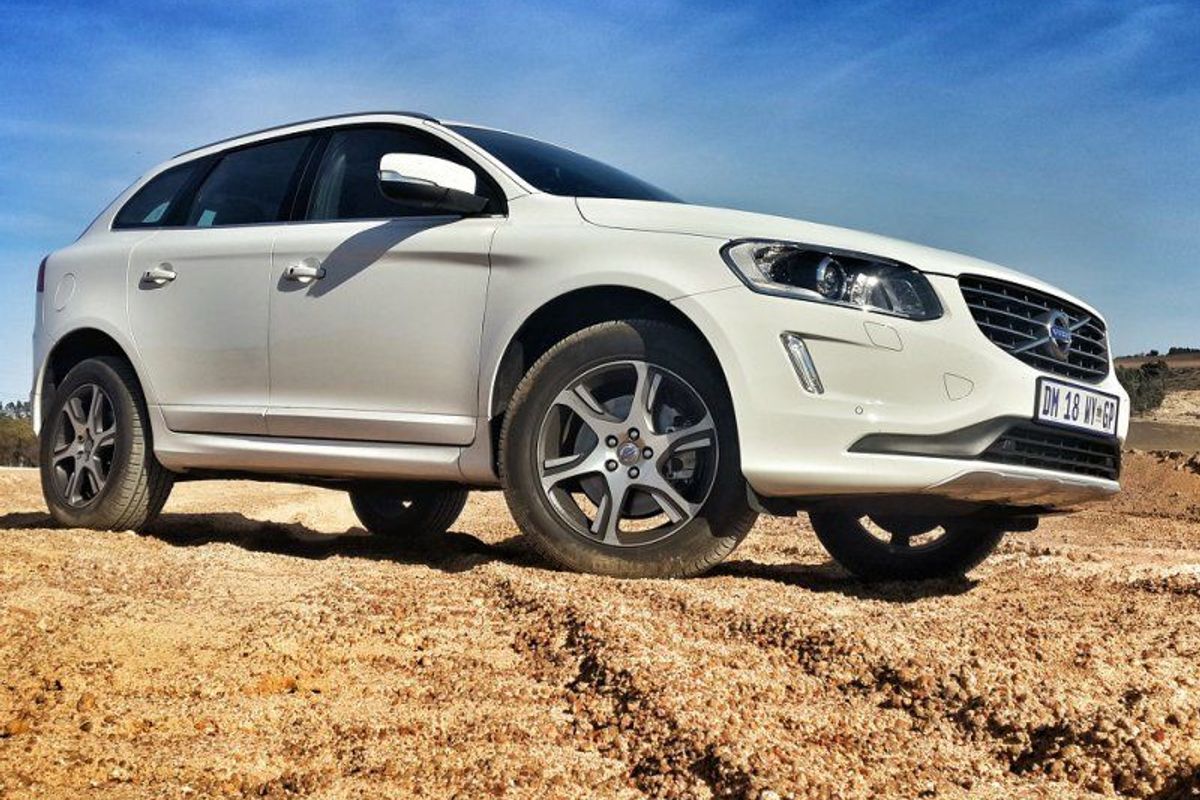
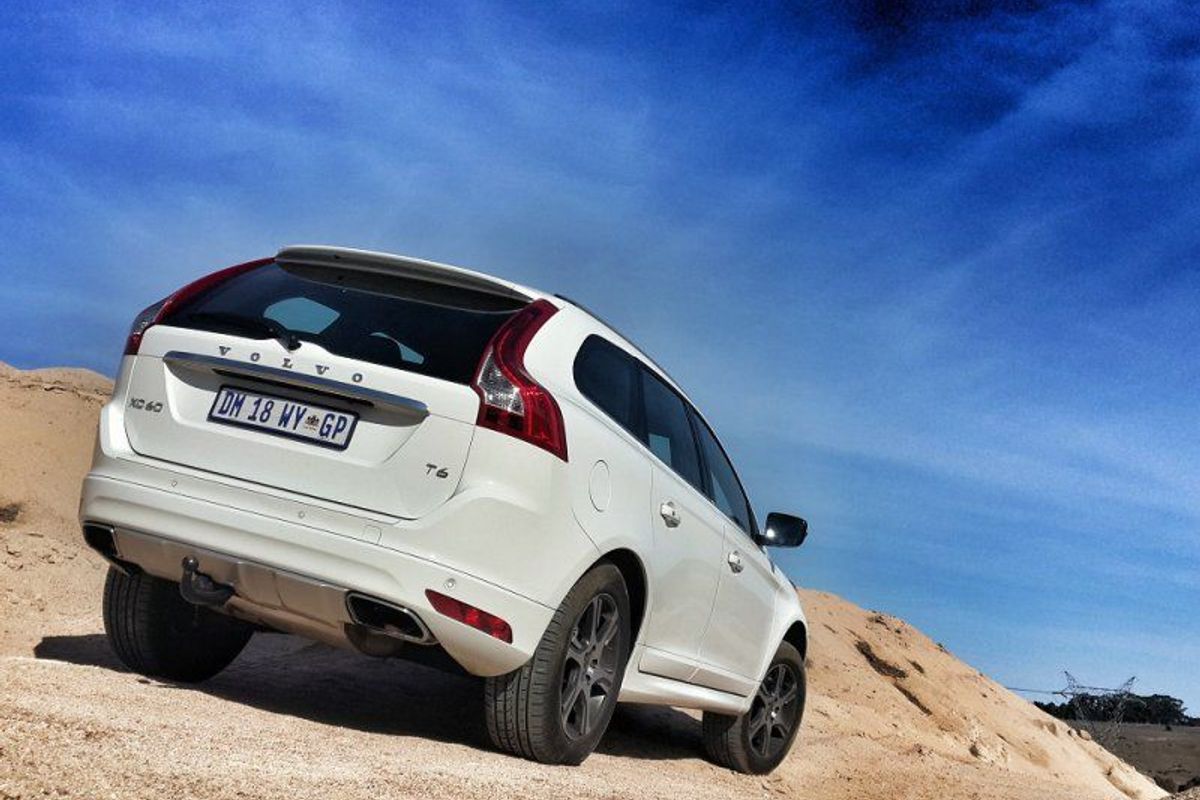
Originally launched way back in 2010, Volvo’s XC60 has matured gracefully enough to still put up a good fight in the ultra-competitive luxury crossover segment. It received a substantial update in 2013, and recently another round of refinements and upgrades were implemented. Most importantly, perhaps, Volvo has brought to market its eagerly anticipated Drive-E 2.0-litre petrol engine, which powers the topic of this evaluation, the T6 Excel.

Class-leading power

Seeing as the XC60’s design is familiar by now and there’s little change on that front, let’s deal with the new engine first. Volvo is on a major efficiency drive and is moving away from large-capacity engines. At the same time, it does not want the quest for efficiency to impact negatively on performance. With this particular engine, that has certainly not been the case.

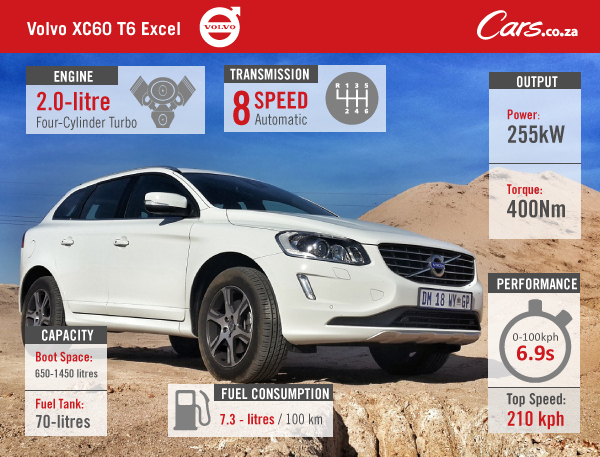
The 2.0-litre engine is super- and turbocharged, and develops a meaty 225kW and 400Nm of torque. The maximum torque figure is already available at 2 100 rpm and remains on tap to 4 500 rpm. The purpose of the supercharger is not just to boost overall power, but to rather make sure there’s no lag at the bottom end of the power band. The engine is mated with a slick eight-speed automatic transmission that sends power to the front wheels only. Interestingly, the brand’s six-cylinder engine remains on duty in the AWD (all-wheel drive) version of the XC60.

So, how does it perform? Exceptionally well, for short. Consider that the same-price BMW X3 xDrive28i offers a paltry 180 kW and the Audi Q5 even less, and you can appreciate the fiery nature of this Swede. Mash the throttle and the steering wheel will even squirm as a result of the torque steer effect. Drive properly and you should get to 100 kph in less than seven seconds, which is really rather fast for this type of vehicle.

More important, of course, is the flexibility. Generally speaking the transmission is quick to react to throttle input, and once the chosen ratio has been hooked, the result is excellent overtaking acceleration. It is a very swift long-distance family car indeed.

And yet it is also quite efficient. Volvo claims a combined cycle fuel consumption figure of 7.3L/100 km and though that is not terribly easy to achieve, a real-world figure of well below 10L/100 km is both achievable and deeply impressive considering the inherent performance capability of the engine. Many vehicles offer so-called “Eco” modes without much noticeable impact during real-world driving, but Volvo’s Eco+ function seems to be quite effective.

Loaded with technology

Volvo is certainly not pulling any punches when it comes to new technologies. You could argue that it simply has to play the tech game aggressively, seeing as its price puts it up against some pretty desirable badges.

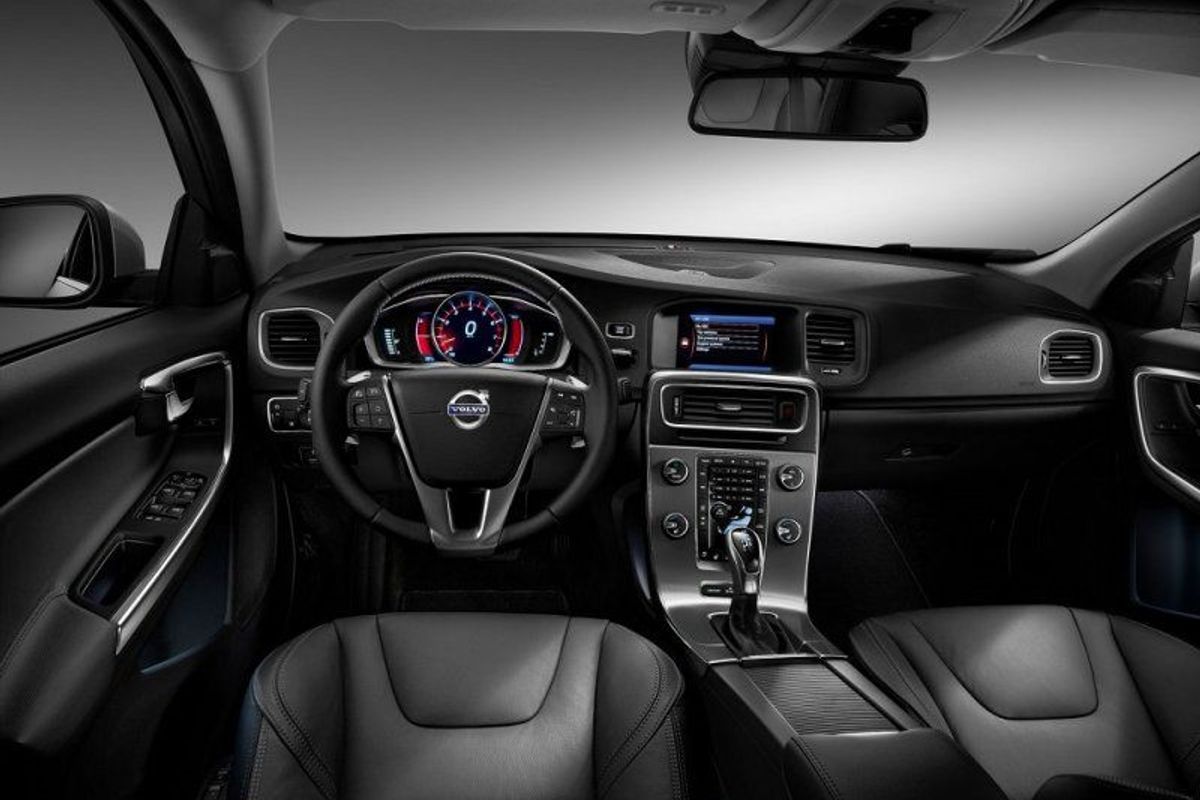
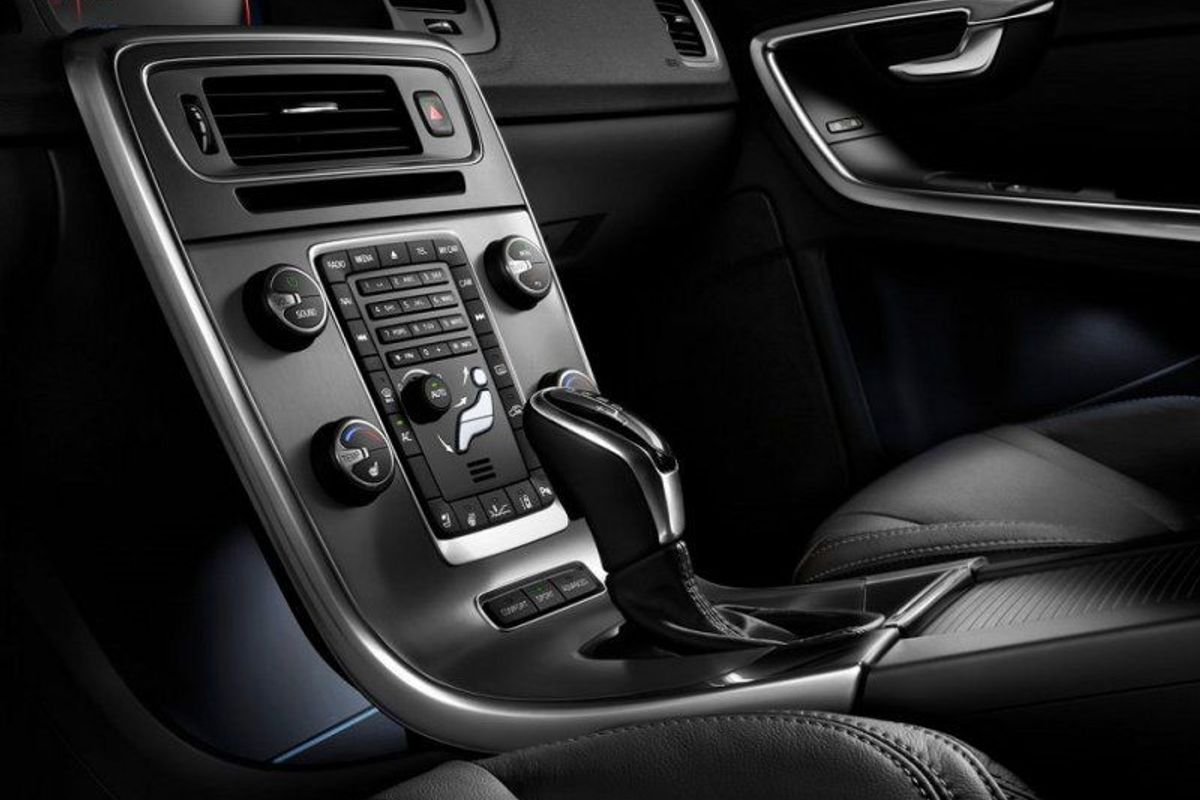
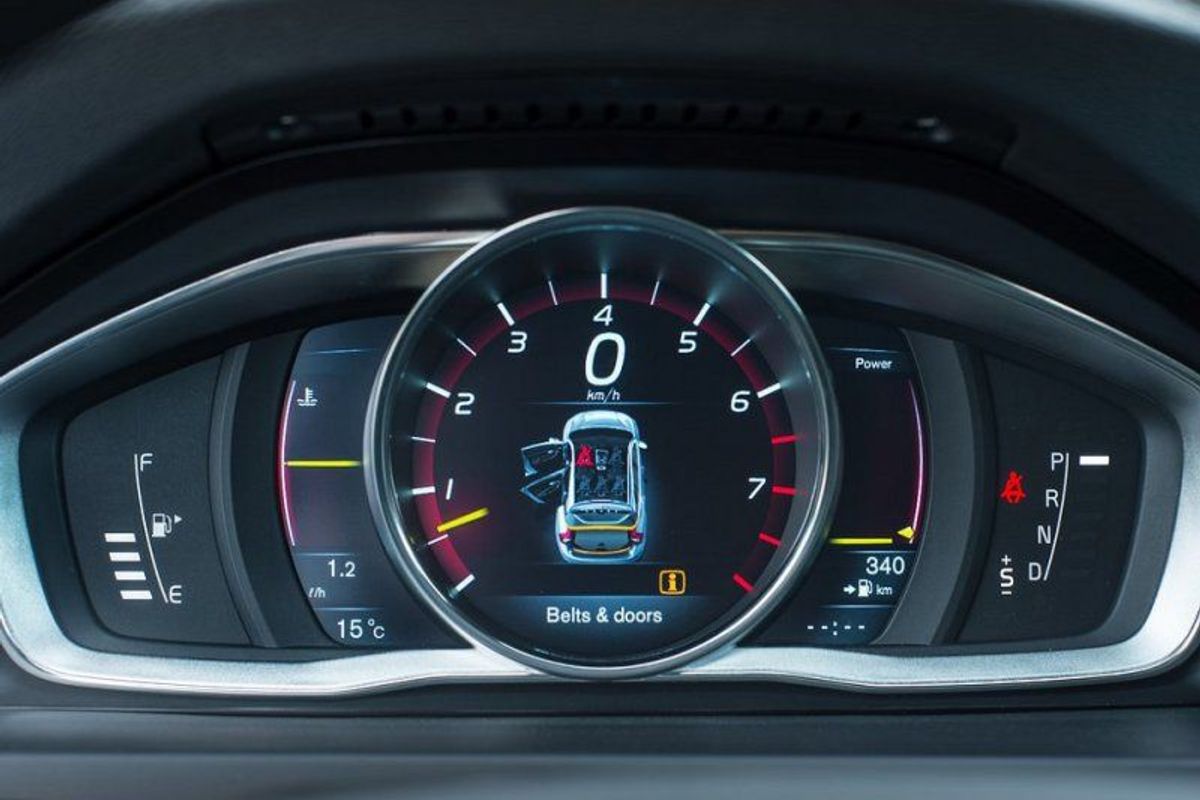
Nevertheless, the new Sensus info-tainment system is very impressive, though Volvo needs to – and is, on its latest products – move beyond the cluttered centre stack control interface. The all-digital instrumentation panel is very attractive, and can be tailored by selecting one of the three modes; Elegance (traditional black/white), Eco (green) and Performance (red). A large variety of features are housed within the Sensus system – it can even read your text messages out to you. Another nice touch is free updates to the navigation maps… for the lifetime of the vehicle.

This being a Volvo, safety remains a high priority. As such, the brand’s City Safety feature is standard – when driving at speeds below 50 kph this feature will apply the brakes automatically when a stationary vehicle or obstacle approaches and the driver isn’t responding in time. A large number of optional extras and option packs are offered. Our T6 Excel was fitted with the Premium pack which adds R31 000 to the price and adds features such as; heated front seats, automated tailgate, front/rear park distance sensors, rear view camera, navigation with advanced voice control and a lovely Harman Kardon premium sound system, among a few other goodies.

Comfortable and practical

The rest of the XC60 T6 Excel is more familiar, yet still impressive. At 2 774 mm in length its wheelbase is still class competitive, even against a newcomer such as the (seven seat) Land Rover Discovery Sport. Rear legroom is good for this class. The boot, too, is very big, measuring 650 L. Drop the rear seats and you’ve got 1 450 L of space to work with. It’s not only the sheer numbers that are impressive – the actual shape of the loading compartment makes it a practical mover of bulky/awkwardly shaped items such as mountain bikes (without removing the wheels).

The XC60 is a comfortable daily driver, but ultimately it is most happy on the long road, where it soaks up the miles effortlessly and, in this model derivative’s case, very quickly. The ride is very supple, even on those large 18-inch wheels. There really are only two minor irritations – road noise on coarse surfaces can be a bit high, and the suspension doesn’t like transverse ridges.

Conclusion and Summary

At the price the Volvo XC60 faces a very difficult challenge, no matter how good it is. The allure of BMW, Audi, Lexus and Land Rover badges may simply be too much for most buyers. Yet, if you compare spec-for-spec and especially powertrains, this Volvo looks like a bit of a bargain. You’ll have to pay more than R100 000 extra to get the same power in a BMW X3, and there’s no such option in the new Land Rover Discovery Sport. If resale is of little concern to you, and you’re looking for a family friendly, safe and practical crossover with a bit of a performance streak, we advise you to go take a test drive of this Volvo.

Volvo XC60 T6 Excel Price in South Africa

The Volvo XC60 T6 Excel costs R629 300 and comes with a five-year/100 000 km warranty, five-year/100 000 km maintenance plan and requires servicing every 12 months/20 000 km.

Test Team’s Comments

Volvo’s offering is tough to beat and it’s more than a match for most of its German and British rivals. The engines are all 2.0-litres in displacement and its astonishing to see the power outputs coming from such a small unit. Factor in a solid 8-speed autobox and a classy cabin, and you’ve got a seriously strong contender in the SUV segment- David Taylor

We Like: Build quality, Ride, Practicality, Standard features, Performance

We don’t Like: Cluttered control interface, Resale worries

Also consider: BMW X3, Audi Q5, Lexus NX

Compare the Volvo XC60 with the BMW X3 and Land Rover Discovery Sport here

Volvo XC90 Specs

XC60-T6-Excel

Volkswagen Golf GTI Performance Pack (2015) Review

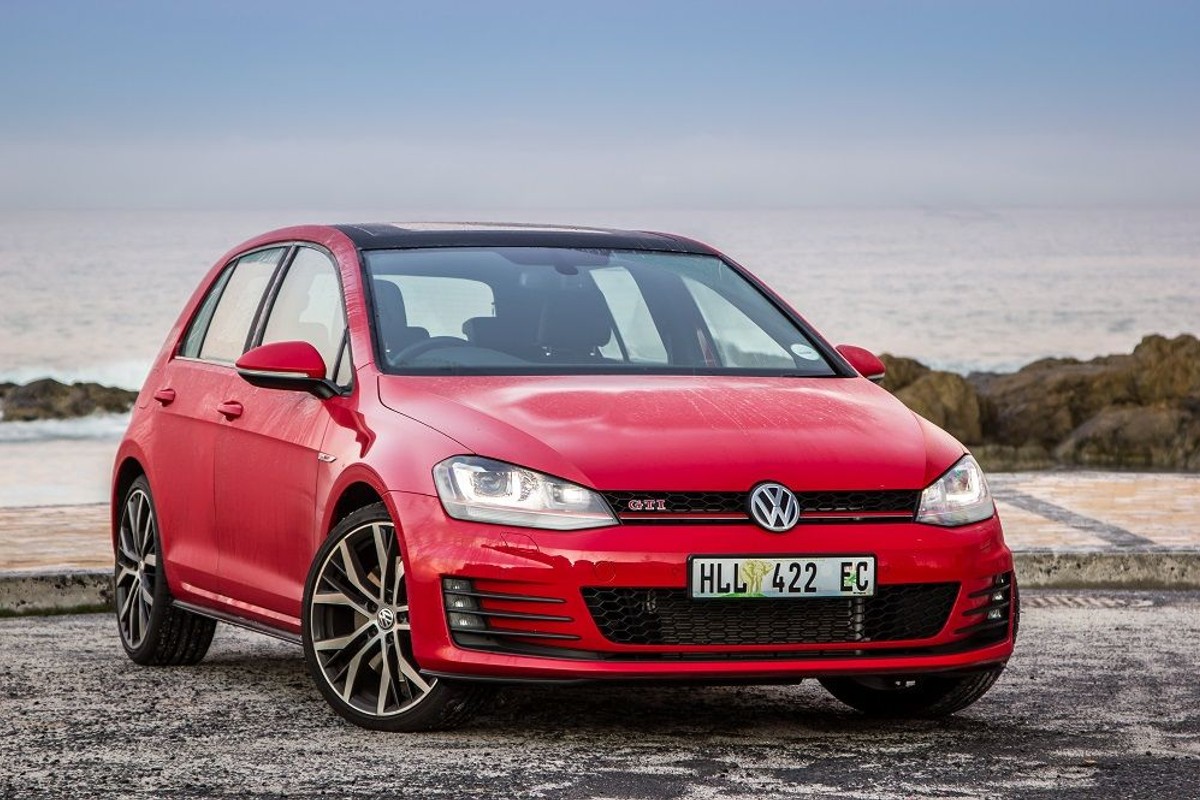
The addition of the Performance Pack to the Volkswagen Golf GTI range should offer a better driving experience on paper at least, but is there enough of a difference to make it more enticing than the already excellent standard GTI? We spent a week with a Tornado Red Golf GTI Performance Pack and got under its skin.

It’s easy to understand why the Volkswagen Golf GTI sells in the numbers it does. It combines performance in a practical five-door body, with splashes of luxury and excellent build quality. If there was a car that could tick most boxes for Joe Average, this is it. What makes the Golf business case interesting is that the GTI accounts for more than half of the sales and out of all the Golf models sold, the majority being twin-clutch DSG units. As good as the manual is, the DSG-equipped is faster and better for day-to-day driving.

With a price difference of almost R100 000, VW has spotted a gap  between the GTI and its Golf R brother that needed filling. GTI Performance Pack slots perfectly between the two cars, but is closer to the GTI than the R on the performance scale.

What’s The Difference?

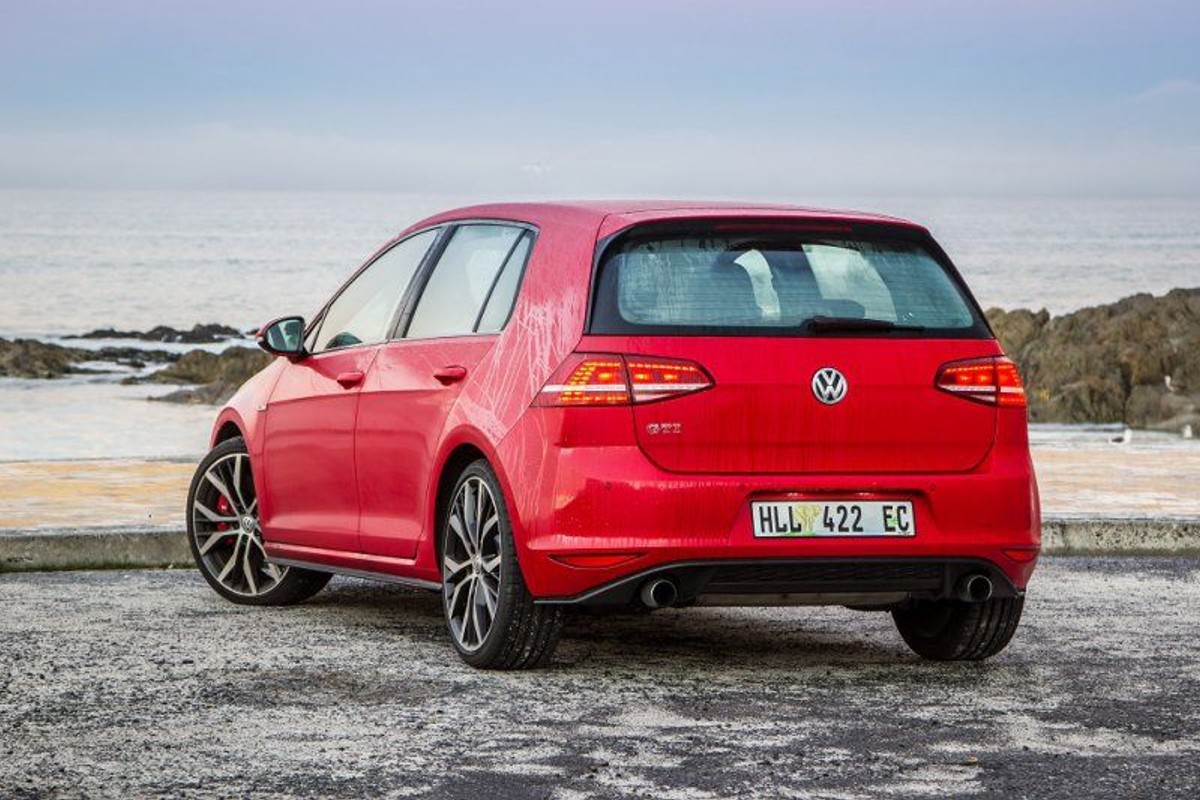
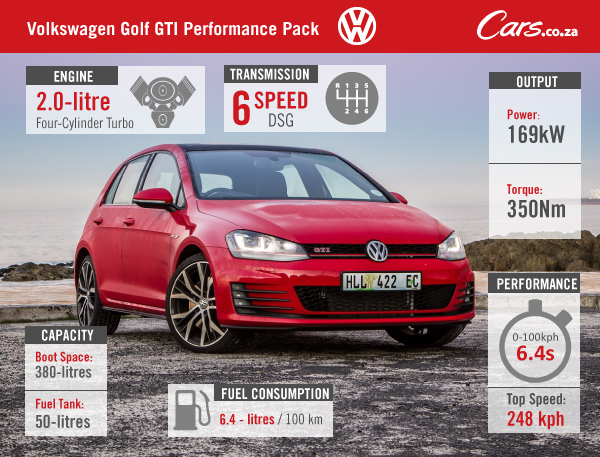
The differences between the GTI Performance Pack and its sibling is a bit more power on tap as well as Dynamic Chassis Control (DCC) being fitted as standard. There’s a fancy new electronic front differential which makes for sharper handling. Enthusiasts will spot the subtle red GTI badging on both the front grille and rear bumper as well as red brake calipers. The wheels pictured here are optional, but they look terrific.

The engine in the Volkswagen Golf GTI Performance Pack is a solid piece of engineering and the output is upped to 169 kW, with the torque figure of 350 Nm remaining the same as the normal GTI. Volkswagen is claiming a 0.1 second improvement on the 0-100kph time, which doesn’t sound like much. We didn’t feel any noticeable difference in performance either.

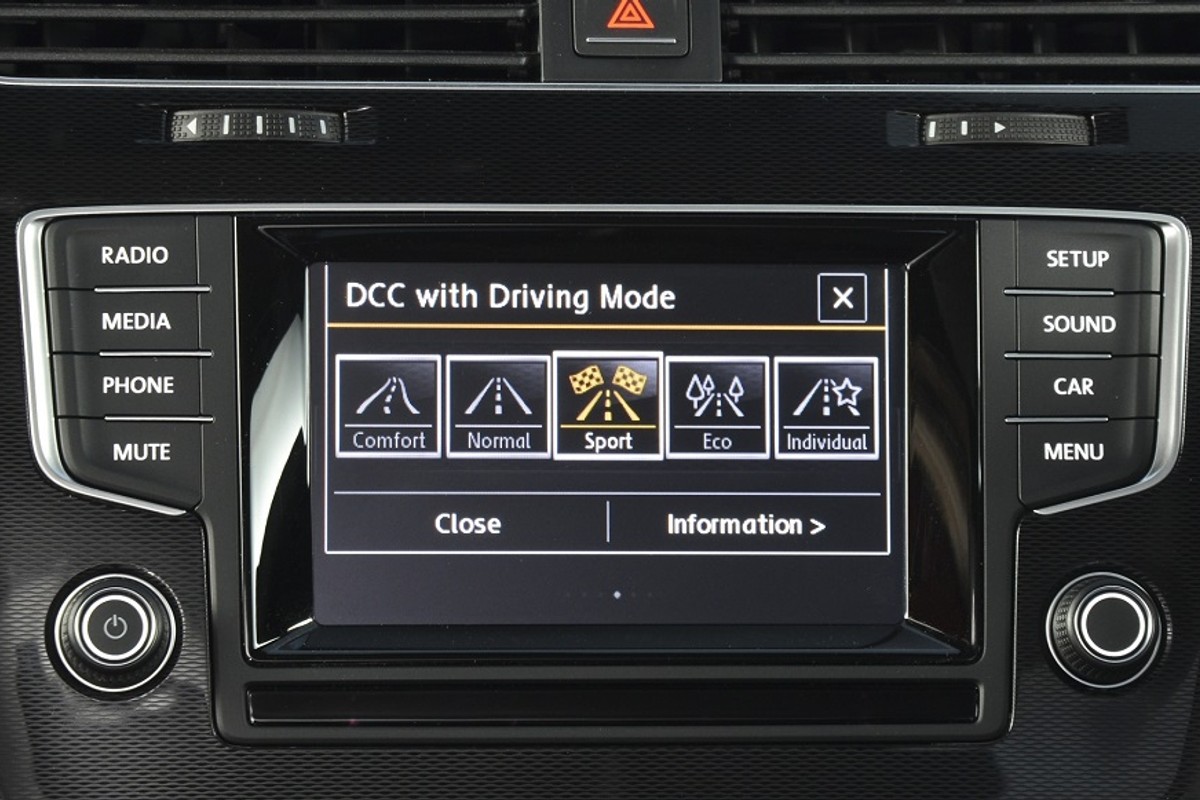
The handling does feel a little sharper, and when used in its Sport setting, the DCC works well. Essentially DCC tweaks the dampers in the suspension to be soft or firm, making for a more comfortable or sportier ride respectively.

How Does It Drive?

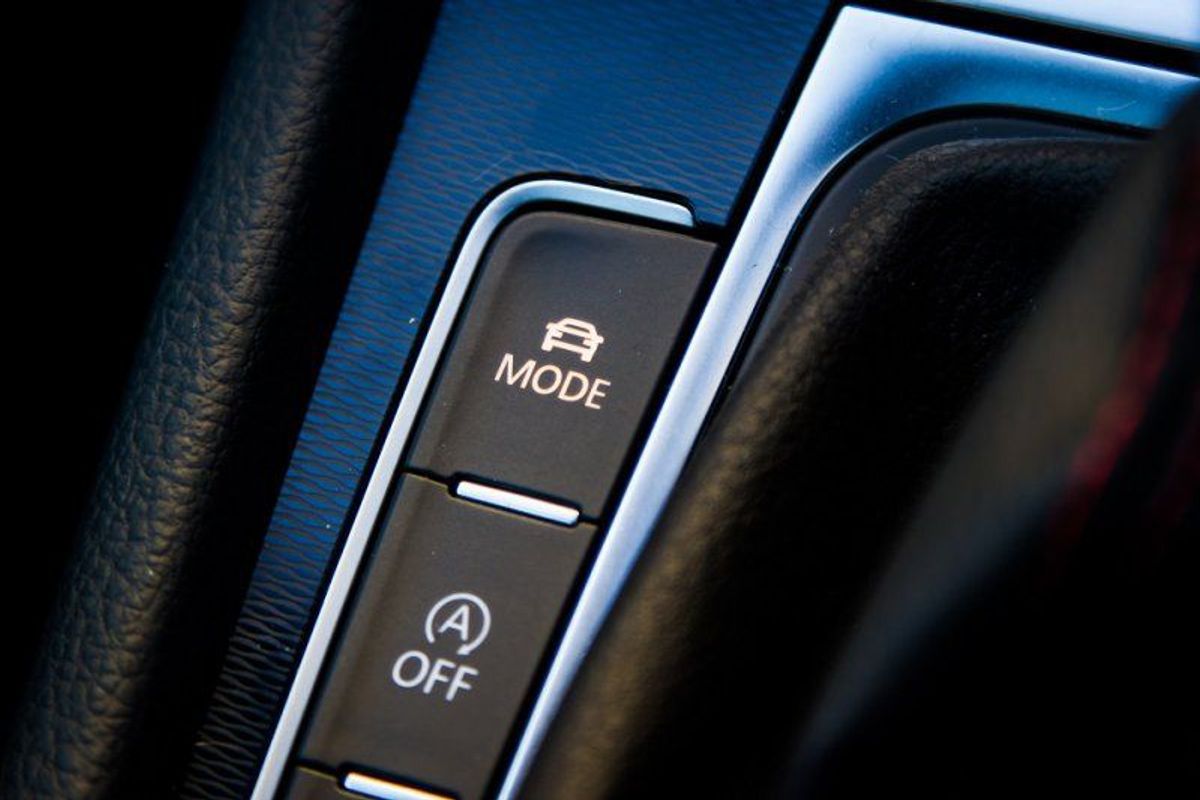
What does this mean on the road? Driving the GTI in Comfort or Eco mode, you’d be fooled into thinking you’re driving a normal, semi-luxurious Golf, but when you engage Sport, everything changes. There’s a sharp induction bark, the responsiveness of the engine and DSG ‘box are sharpened and the car feels taut. It’s in the corners where you notice a difference. We’re not saying the Golf GTI was a poor performer in the cornering stakes at all, but the GTI Performance Pack is the more precise driving tool of the two.

When you’re not pressing on, the GTI Performance Pack still retains those qualities which make the Golf GTI so successful. It’s smooth, comfortable and the ride is supple and forgiving when in Comfort mode. At times it’s easy to forget you’re actually in a performance model, that’s how relaxed the GTI can get. Naturally you can go from Comfort to Sport at the touch of a button and this dual persona makes living with this car so effortless.

Drive it responsibly and in Eco mode, and you’ll get pretty close to the claimed fuel consumption of 6.4L/100km. During its week-long tenure with us, the GTI Performance Pack returned a figure of 8.9L/100km – a fair result considering it was a mix of spirited driving and peak hour commuting.

Still Sensible In Many Ways

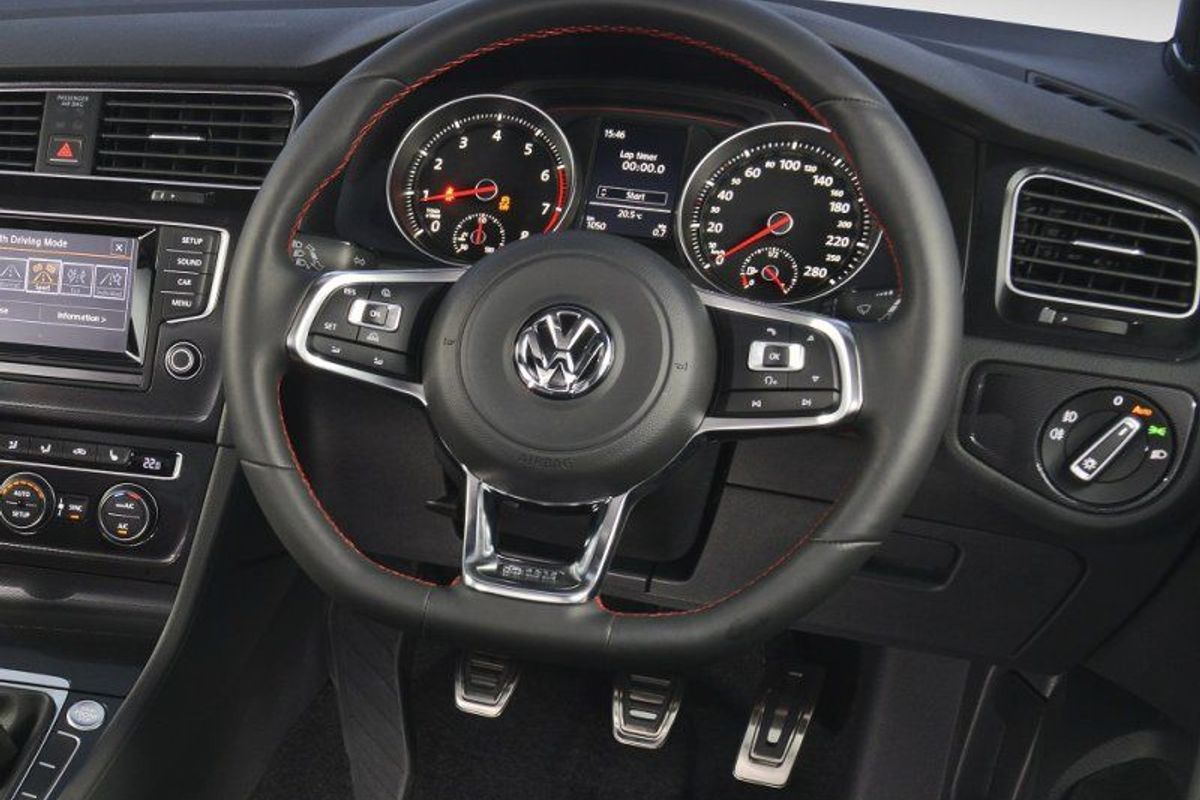
A hot hatch being sensible? Yes, the Golf GTI can be very sensible and practical while offering some driving joys. There’s five-door practicality, a handy 380L boot and plenty of kit fitted. Things like daytime running lights, cruise control, climatronic air conditioner, rain sensing wipers, auto headlamps as well as a 5.8-inch touchscreen infotainment system are just some of the things available as standard. Safety features include 7 airbags, ISOFIX child seat mounts, ABS and ESP with brake assist.

Conclusion and Summary

There’s a lot to like about the Volkswagen Golf GTI Performance Pack. In reality, as good as it is, we feel there’s not enough difference to separate it from a standard VW Golf GTI DSG. If you get too happy with options, the list price of the Golf GTI Performance Pack becomes dangerously close to Golf R territory, and we know what we’d rather have. If you’re after more driving thrills then you can look to the RenaultSport Megane range, otherwise stick to the excellent day-to-day hot hatch champion which is the Golf GTI.

Volkswagen Golf GTI Performance Pack Price in South Africa

The Volkswagen Golf GTI Performance Pack DSG retails for R447 800. Our particular test car came with numerous add-ons such as panoramic sunroof (R9 200), Park Distance Control (R4 500), Bi-Xenon headights (R10 000), Light Assist (R1 100), 19-inch Santiago alloy wheels (R7 650), media in with iPod adapter (R2 050) and keyless entry (R4 700). This pushed the price up to R487 000. Included in the price is a 3 year/120 000km warranty and a 5 year/90 000km service plan.

Team Opinions

The Golf GTI performance pack doesn’t really do enough to make it stand out. It’s not as comfortable and pure as the standard GTI and not hard enough to be considered as a track toy. The performance pack seems like a half-hearted attempt to fill the gap between GTI and Golf R. -Ashley Oldfield

We Like: Performance, premium feel, build quality, spaciousness … but are these qualities of a hot hatch?

We don’t Like: Not special enough, a normal GTI DSG is fine thank you.

Also consider: Renault Megane RS, Opel Astra OPC, Ford Focus ST

Compare the Volkswagen Golf GTI Performance Pack to the Renault Megane RS Trophy and the Ford Focus ST here.

Quick Specs

GTI-Performance-Pack

Land Rover Defender 2.000.000 for Auction

To commemorate 67 years of the Land Rover Defender and 2-million units built in the UK since 1947, Land Rover has built a special model that will go up for auction in support of charity.  The Land Rover Defender 2.000.000 will be publicly unveiled at the Goodwood Festival of Speed at the end of the month before going on auction in December 2015. All proceeds will be donated to Land Rover’s humanitarian and conservation partners – the International Federation of Red Cross, Red Crescent Societies (IFRC) and the Born Free Foundation.

Unique Land Rover Defender

TV star and adventurer, Bear Grylls, was invited to partake in the production of the Land Rover Defender 2.000.000 in Solihull, UK. Grylls had this to say: “The Land Rover Defender has been there for me more times than I care to remember. They are so often the unsung heroes of our TV shows, working hard in the toughest conditions to get crew in and out of exceptionally challenging terrains. Known and respected by me and many other adventurers for their rugged reliability – it was an honour to be asked to take part in the build of this very special car.”

The vehicle itself features a number of unique details including a map of Red Wharf Bay, where the design of the first Defender was depicted in the sand. This map is engraved in the aluminum fender as well as on the leather seats. A ‘no 2,000,000’ badge is found on the rear of the vehicle as well as on the interior console and headrests. The vehicle features Indus Silver satin paint finish with Santorini Black wheels, wheel arches, roof, door hinges, grille and mirror caps. An aluminium plaque found on the driver’s seat plinth, features all the names of people who helped build this one-off vehicle.

The vehicle is also fitted with ‘S90 HUE’ number plates which alludes to the first ever pre-production Land Rover with registration ‘HUE 166’.

Dr Ralf Speth, Chief Executive of Jaguar Land Rover said: “Over 67 years, the Series Land Rover and in turn Defender has been the transport of choice for explorers, charity organisations, farmers and even royalty. Throughout history it has helped pioneers to reach the unreachable. What started life as an agricultural workhorse has transcended the automotive world to become a worldwide design icon. I was honoured to join the production line team in Solihull to help build this unique vehicle. It was a special experience which will no doubt become a fond memory.”

Interested in a Land Rover Defender? Click here to see new examples for sale.

Land Rover Defender 2.000.000 Video