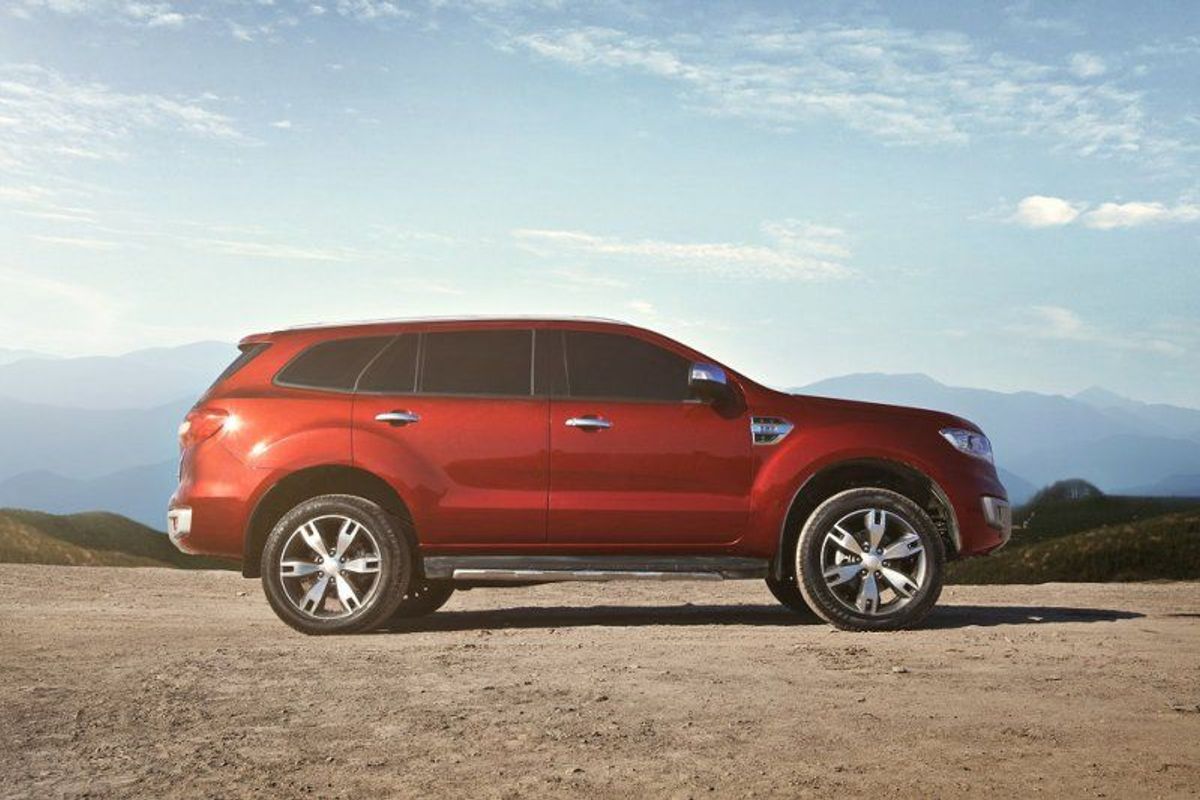
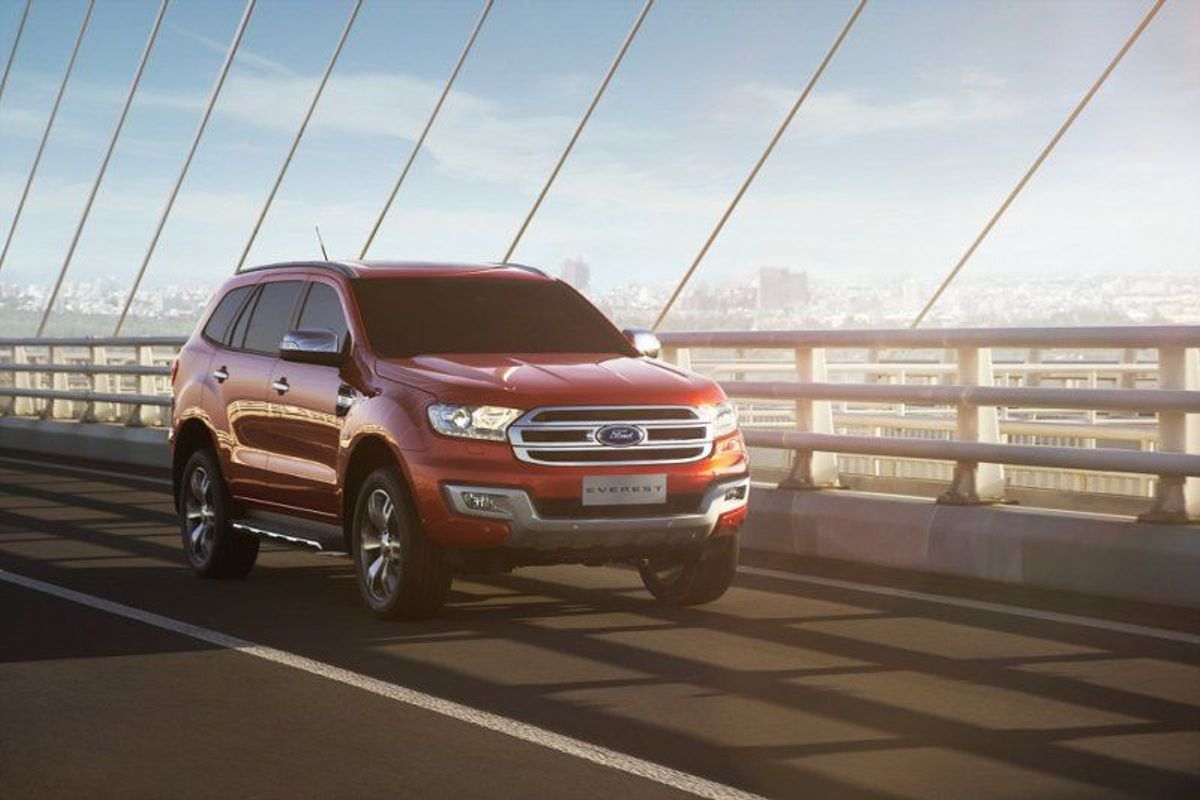
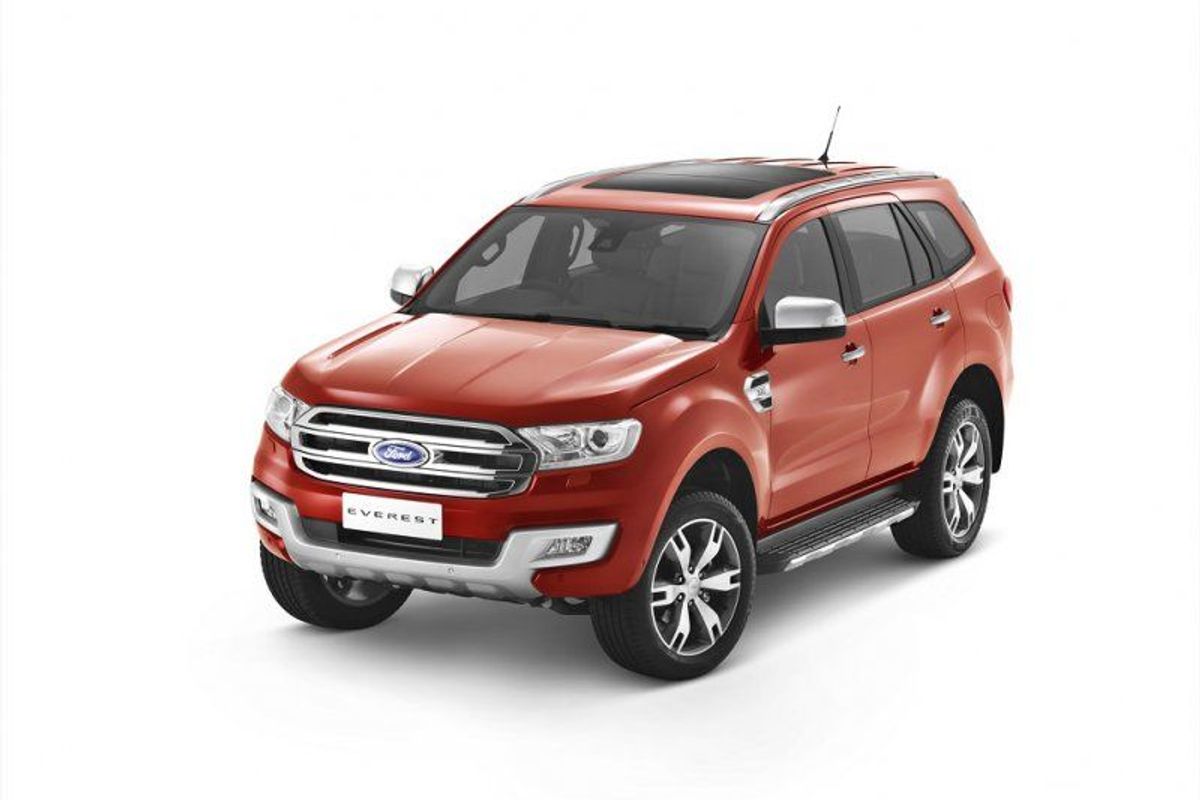
The new FordEverest SUV which is set for launch in South Africa in the fourth quarter of 2015 has made its debut at the Bangkok Motor Show.
Ford Everest Built for the Rough Stuff
With it’s body-on-frame design, the new Everest is designed to tackle tough terrain with the help of a new four-wheel drive system, active transfer case with Torque on Demand, a Terrain Management System and an impressive ground clearance of 225 mm. Wading in water 800 mm deep is no problem for the new Everest.
The Terrain Management System features four settings, including Normal, Snow/Gravel/Grass, Sand and Rock which makes adjustments to throttle response, transmission, traction control and the all-wheel drive system. The transfer case can be manually locked in low-range for more control.
Engine Power
The new Ford Everest will be offered with two Duratorq diesel engines mated to either a 6-speed manual or automatic transmission. A 3.2-litre Duratorq TDCi engine offers 147 kW and 470 Nm of torque while the smaller displacement 2.2-litre Duratorq offers 118 kW and 385 Nm.
Features
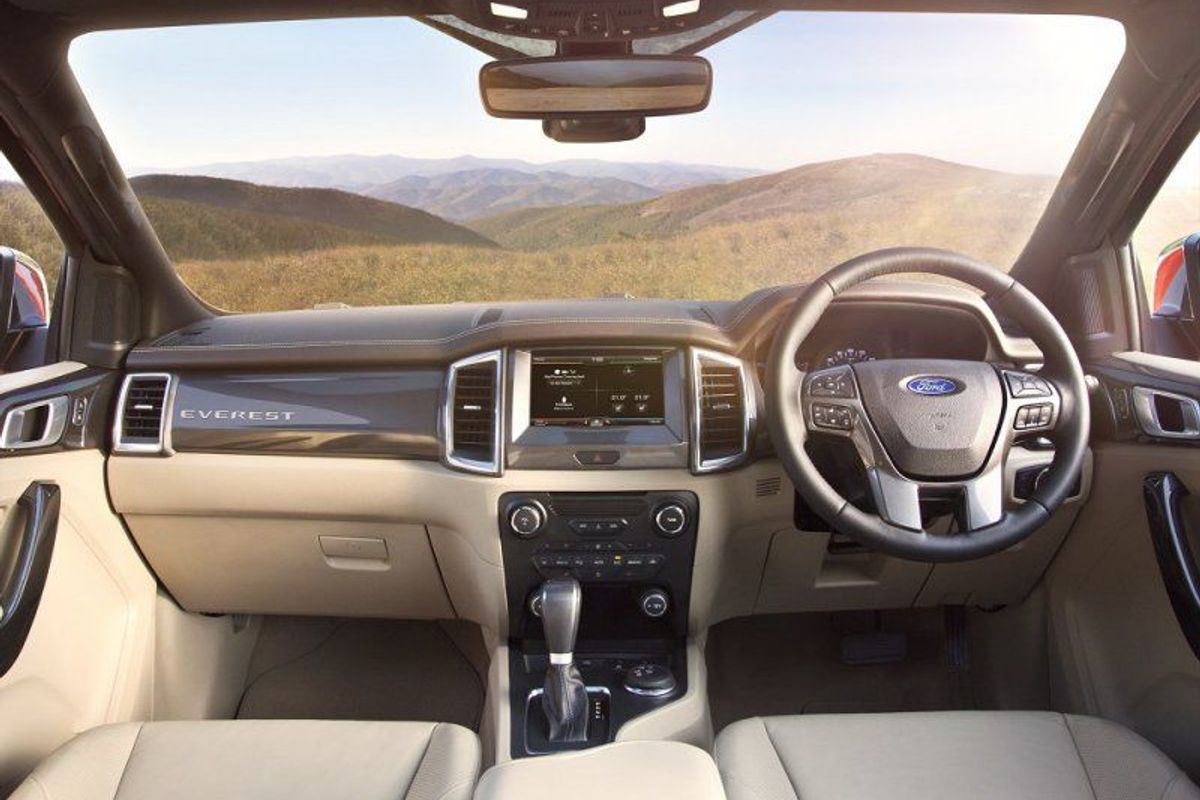
Ford’s latest generation SYNC 2 in-car connectivity system allows drivers to use voice commands to control entertainment, climate control settings and mobile devices via an 8-inch touchscreen. A 10-speaker sound system with integrated subwoofer is also included. The Everest is also fitted with a dual-panel moon roof, a powered liftgate, more than 30 stowage spaces and flexible seating that can be folded in various positions. Active Noise Cancellation technology helps lessen unwanted noise in the cabin via three microphones and a smart control module which generates opposing sound waves through the audio system.
Advanced safety features include Curve Control, Blind Spot Information System with Traffic Alert, Roll Stability Control, ESP, Traction Control and Active Park Assist. Seven airbags are also part of the package.
Further details regarding South African specs and pricing for the new Ford Everest will be announced closer to local launch.
Ford Focus (2015) Price Announced
Pricing for the 2015 Ford Focus has been announced for South Africa.
The Ford Focus launches this week in Port Elizabeth and we’ll be in attendance. In the meantime, pricing for the popular hatchback has been announced and there are two engines to choose from at launch. The range starts with the 1.0-litre EcoBoost Ambiente, followed by an up-specced 1.0-litre EcoBoost Trend. Both cars will have 92kW and 170Nm at their disposal, which are good figures for such a small engine. The only transmission available for this engine is a manual gearbox.
The second engine is the 1.5-litre EcoBoost, seen in the Ford Fusion which I reviewed recently. Power is rated at 132kW and 240Nm. The entry level model is the 1.5-litre EcoBoost Trend (manual), while the higher specification 1.5-litre EcoBoost Trend is fitted with an automatic gearbox. It’s the only model to feature an automatic gearbox in the entire range.
I assume the performance Focus ST will follow a little later this year and I would be surprised if a diesel engine didn’t make an appearance. Finally, the fire-breathing Focus RS flagship will arrive on South African shores in 2016.
Ashley Oldfield will be on the launch of the new Ford Focus in Port Elizabeth this week. Look out for his first impressions soon as he’ll have confirmation of specification levels and trim.
This is an interesting story coming from Europe. Most parents in South Africa would never allow their 14-year old teenage children get behind the wheel of a car, let alone driving on the road. In Europe though, things are a bit different. The European Union has introduced a new directive for the harmonisation of driving licenses and France has subsequently adapted its light quadricycle regulations which allows 14-year-olds with BSR road safety certificates to drive light motorised quadricycles, like the RenaultTwizy 45 Electric Vehicle (EV).
Renault Twizy 45 puts teens behind the wheel
The new regulation gives teens independent mobility as well as the opportunity to understand the act of driving from an earlier age, which was previously reserved for those 16 years and older. The Renault Twizy 45 is a safer alternative compared to your typical two-wheeled scooter and thankfully the Twizy is well kitted in terms of safety too. The Twizy 45 comes standard with an airbag, double seatbelts, disc brakes and a protective passenger cell. More that 15 000 Twizy vehicles are currently in operation in Europe.
In South Africa, a learners driving license for a light motor vehicle not exceeding 3 500 kg can be obtained if the person is 17-years or older and 16 years for a motorcycle learners license. A driving license can only be obtained if you are 18-years or older.
Considering the current road safety crisis in South Africa, it’s unlikely that similar regulations would ever work, but it begs the question. Do you think allowing teenagers to drive is the wisest thing to do?
Ford Fusion 1.5 EcoBoost (2015) Review
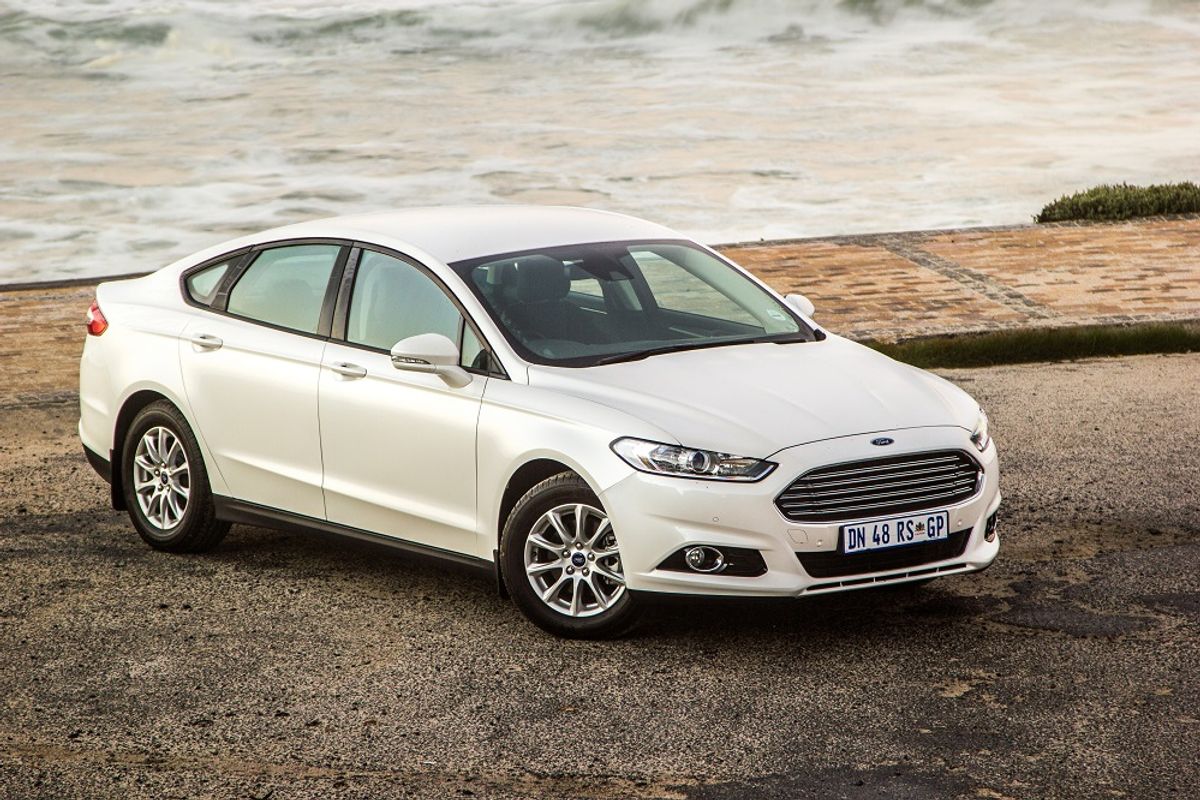
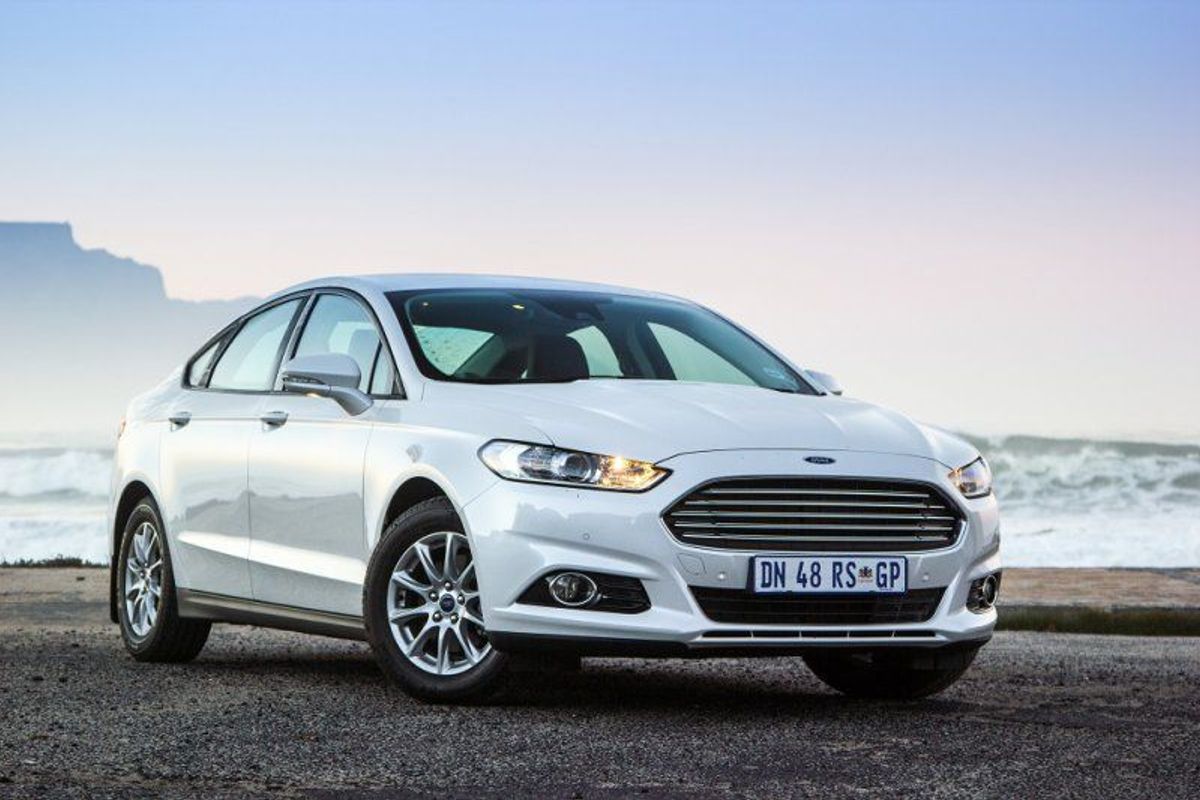
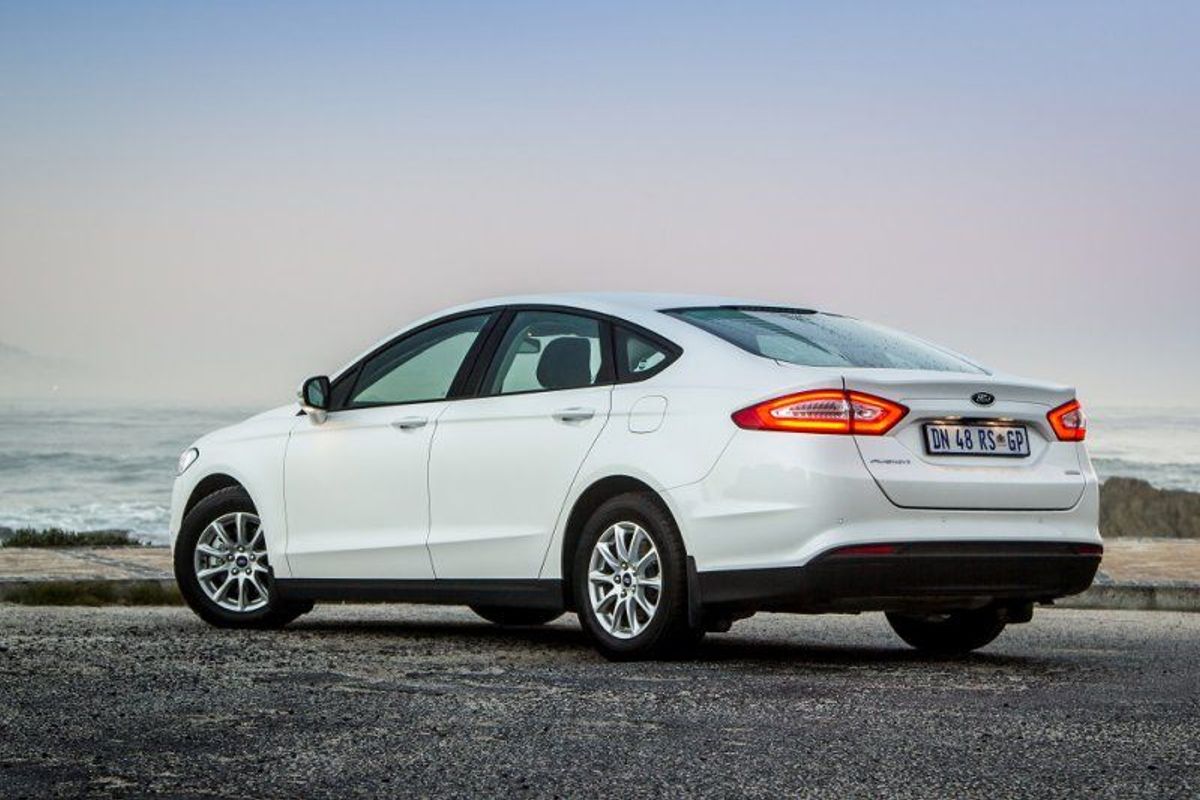
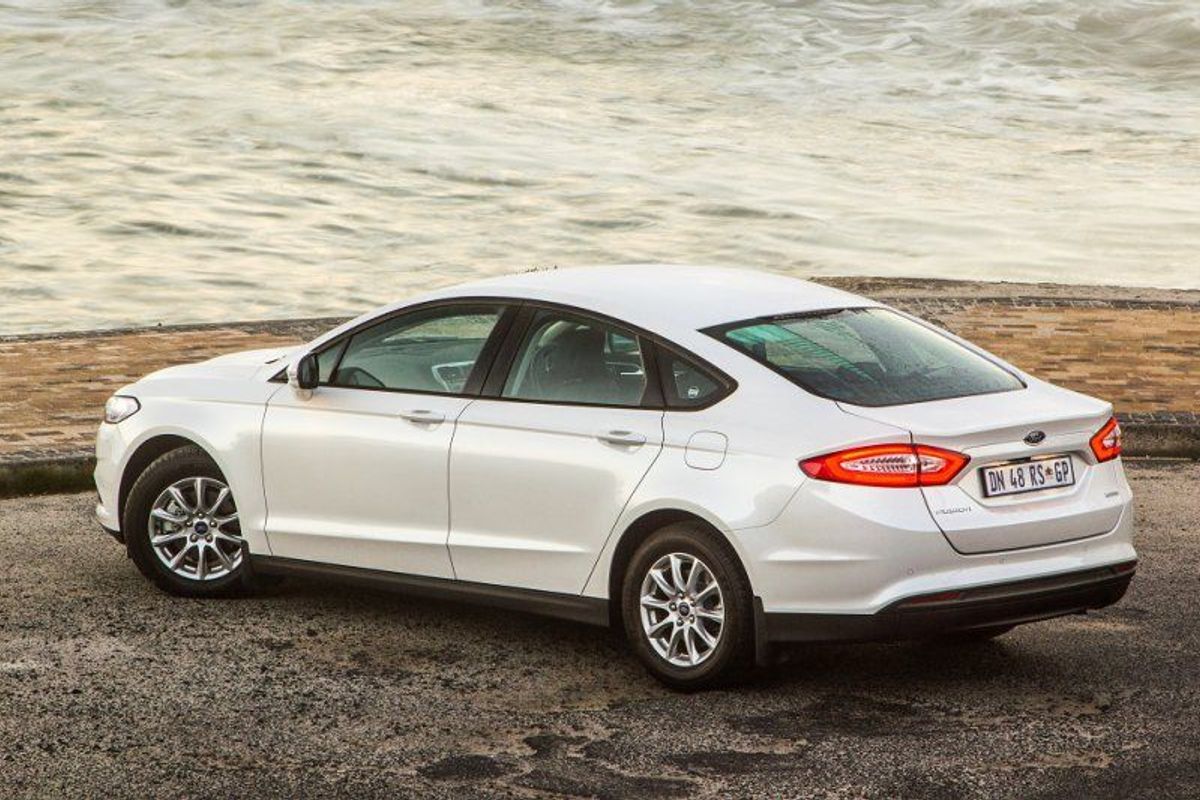
The Ford Fusion is a large and luxury sedan that recently arrived in South Africa. Promising latest technology, clever engines and a reasonable price tag, the Fusion sounds like the real deal. Here’s how we got on with the entry-level 1.5 EcoBoost.
Firstly, there’s that name. Ford Fusion. This is an all-new title and a lightbulb will probably come on if I rather said Mondeo. This is essentially a new Mondeo, a car that didn’t fare too well in terms of outright sales in SA back in the day. It’s a shame really, as the ST220 was a marvelous machine. Fast forward to 2015 and I’m sitting with this very smart-looking executive sedan. It’s a modern and suave sedan. The Ford Fusion won many admiring glances during its time with us and a disbelieving few had to be told this was in fact a Ford.
Powerplant
The entry-level Ford Fusion comes with a 1.5-litre Ecoboost engine. Now, before you laugh and mock the engine size, consider the international downsizing trend. Small turbo engines are all the rage and Ford has joined the bandwagon. No longer do you need a brawny V6 to power a big sedan.
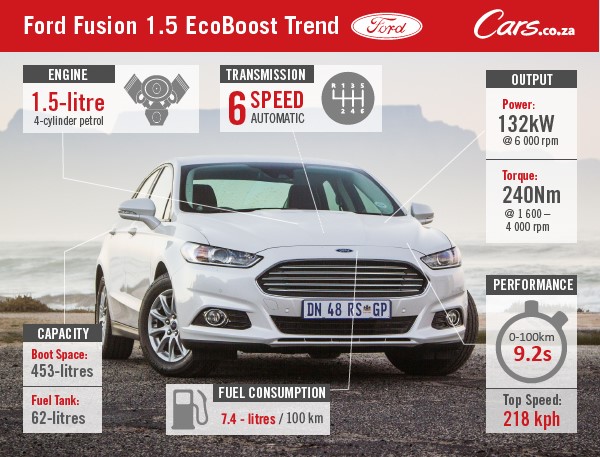
If the Volkswagen Jetta can make do with a 1.4 TSI motor, then Ford will be just fine with an EcoBoost 1.5. With 132 kW and 240 Nm, the Ford Fusion has sufficient oomph to get around. Power drives through the front wheels and through a six-speed automatic gearbox. Fuel economy for this EcoBoost engine is claimed at 7.4L/100km, but I could only get around 9L/100km…
Incredible Interior & Tech
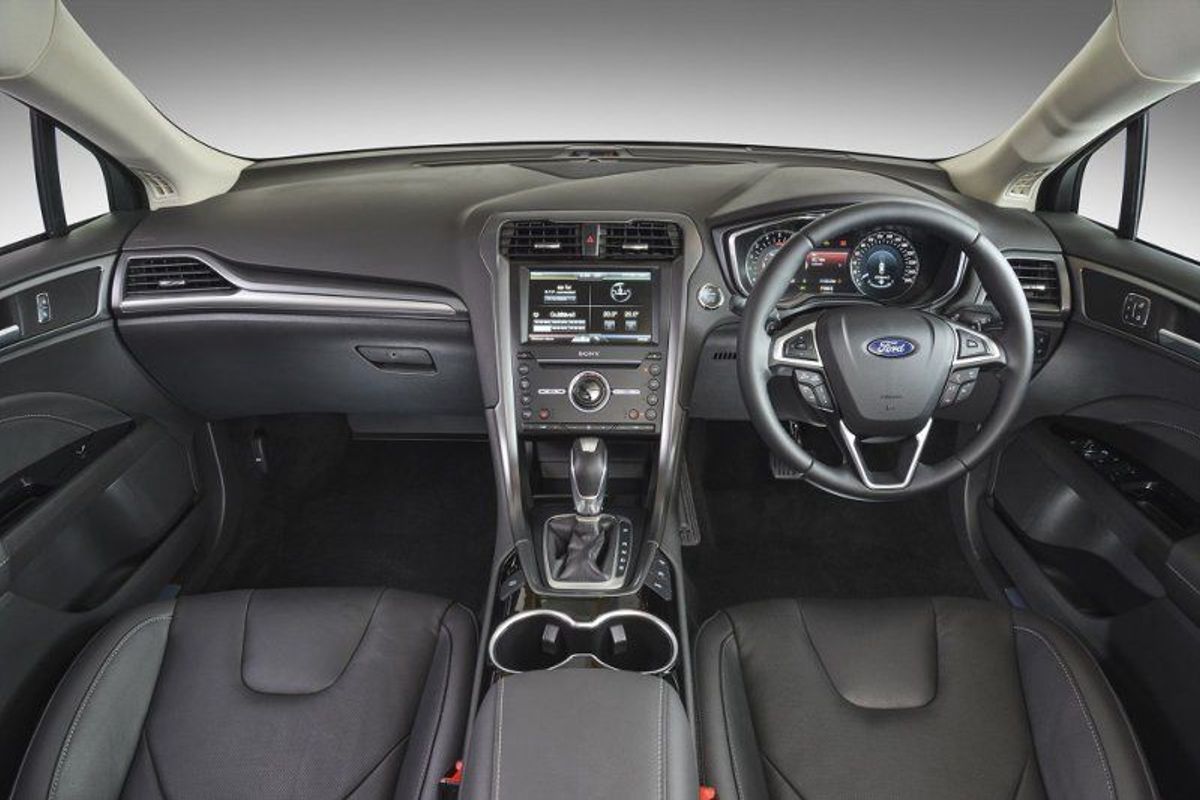
Economy aside, the Ford Fusion is a really impressive product, thanks mainly to its interior, build quality and standard features. The boot is enormous and just for a laugh I climbed in. There was enough room for a second full-size adult to join me! Talk about carrying everything and the kitchen sink. Want to carry more? Then simply fold the back seats down in a 60:40 split.
The rest of the cabin and interior is a class act. The front and passenger seats for instance, are heated and are quite easily one of the most comfortable I’ve ever sat in. Think comfortable as in sitting in your favourite armchair after a day at work…
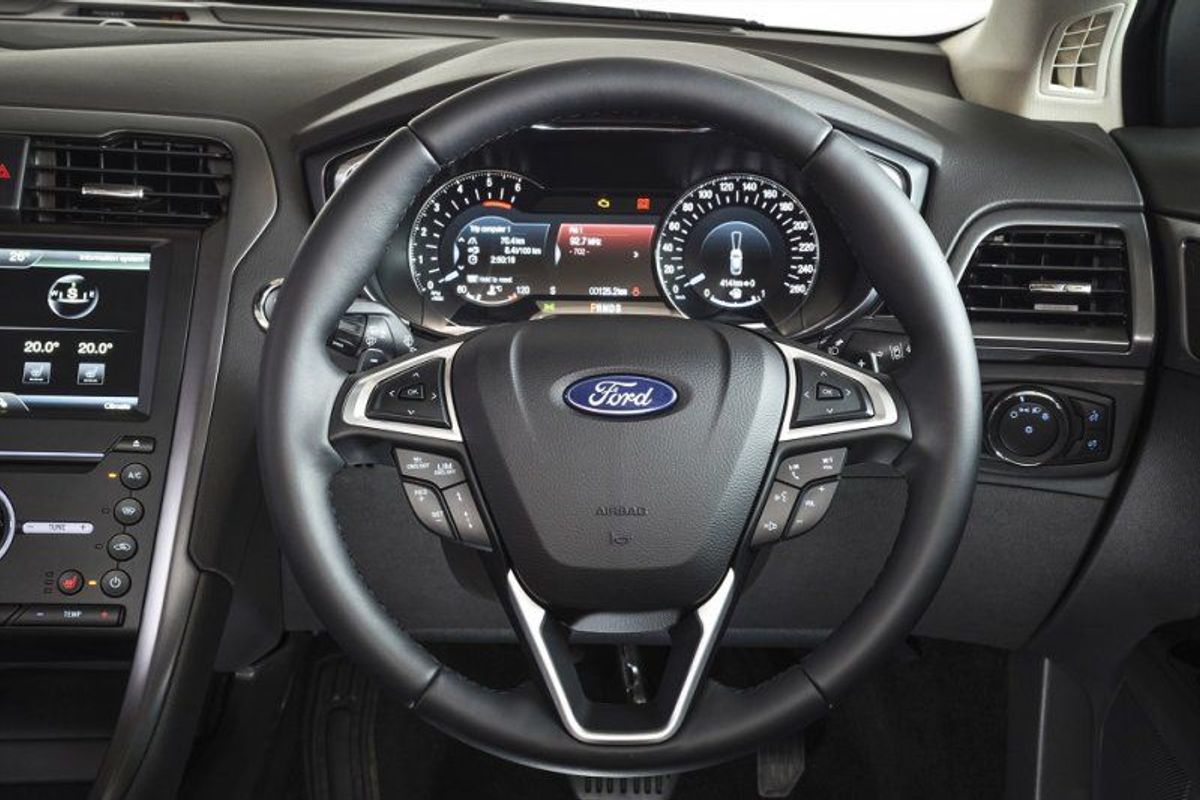
The Ford Fusion comes with a whole host of cool tech. I have to point out that this particular press unit came with the optional Trend pack (R26 820) which adds in a superb Sony radio with nine speakers, two USB ports, Aux input, SD card slot, Bluetooth as well as the intuitive Sync 2 infotainment setup. Also thrown into the mix is a reverse camera and rear parking sensors. I’d insist on speccing the Trend pack as it just adds a lot more value and technology as well as visual goodies.
The Drive
Driving the Ford Fusion is an experience to be relished. If you’re a fan of technology and the basic need to be comfortable and insulated from the outside hustle, then the Fusion is a wonderful place to be. The road and wind noise have been considerably muted, and the Fusion glides along magnificently.
There’s no fireworks in the performance department but the Fusion can show a turn of speed if you’re in a hurry. The key word here is refinement. Handling wise, this is no barge which wallows around. Despite its small engine, the Fusion can be entertaining to drive with almost no noticeable body roll. You can put a fair amount of its handling prowess down to an all-new multi-link rear suspension. With the extra power the range-topping 177kW/340Nm Fusion has on offer the it must be an awesome drive.
Conclusion and Summary
Ford is playing the Fusion against the popular German models and despite trends that show preference to crossovers and SUVs, the boys from the Blue Oval have belief that Fusion will do well. Given what a solid offering the Ford Fusion is, and how much cheaper it is in comparison to an entry-level BMW 320i for example, there’s very little to fault this car.
Ford Fusion Price in South Africa
I tested the Ford Fusion 1.5 EcoBoost which retails for R349 900. The Trend option pack comes in at R26 800. The Ford Fusion comes with a four-year/120 000km warranty, four-year/80 000km service plan, three-year roadside assistance with unlimited mileage as well as a five-year corrosion warranty.
Second Opinion
The Ford Fusion plays in a difficult market where buyers progress out of hatchbacks and either decide to go the German sedan route or the compact SUV direction. That doesn’t mean the Fusion is not worth your time or money, it’s a good car with a great interior and stylish exterior. The engine range is good too, but let’s see if Ford has done enough to revive the D-Segment sedan market. -Ashley Oldfield
We Like: Fresh looks, huge space, technology, value for money
We Don’t Like: Not as fuel efficient as claimed. Other than that, this is a hard to fault vehicle.
Also Consider: Volkswagen Jetta, BMW 3-Series, Mazda6, Honda Accord
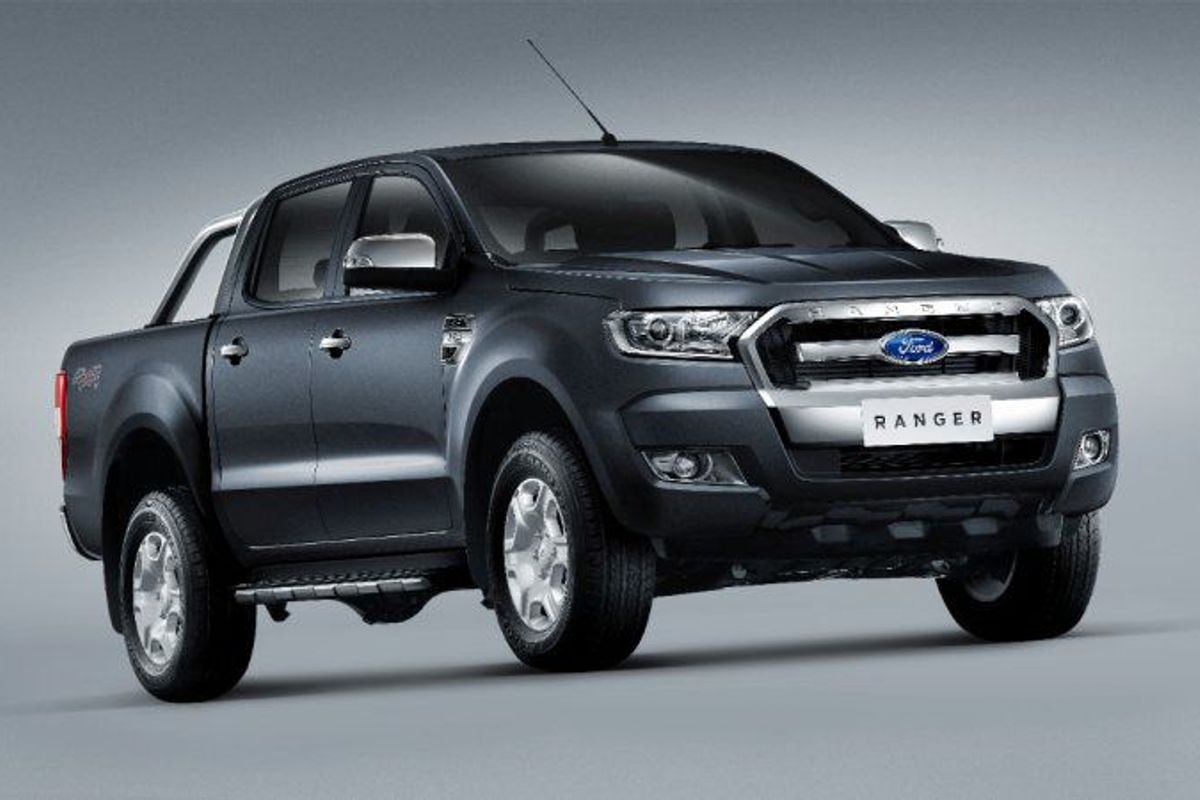
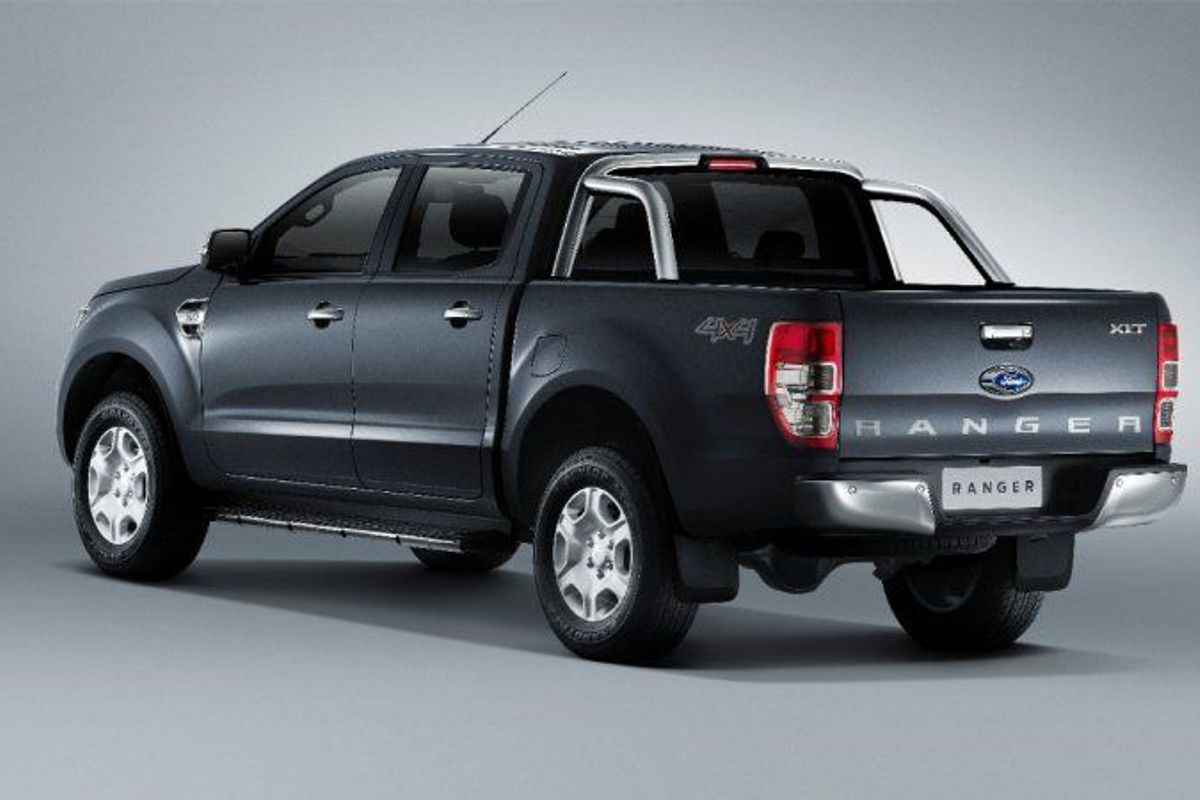
The 2015 Ford Ranger has been officially revealed at the Bangkok Motor Show. The new Ranger combines new interior and exterior styling with a host of technology features and upgraded diesel powertrains, making it better than ever before.
The new Ford Ranger brings a new level of comfort and refinement to its segment without compromising on the rugged capability that our customers demand. It represents a smarter kind of tough, and will help our customers to achieve more, whether at work or with their families said Brett Wheatley, vice president, Marketing, Sales & Service, Ford Asia Pacific.
New Styling for 2015 Ford Ranger
The exterior design of the new Ranger has taken on a bolder, more modern character. The new look incorporates a muscular hood emphasized by a new trapezoidal grille flanked by prominent projector headlamps.
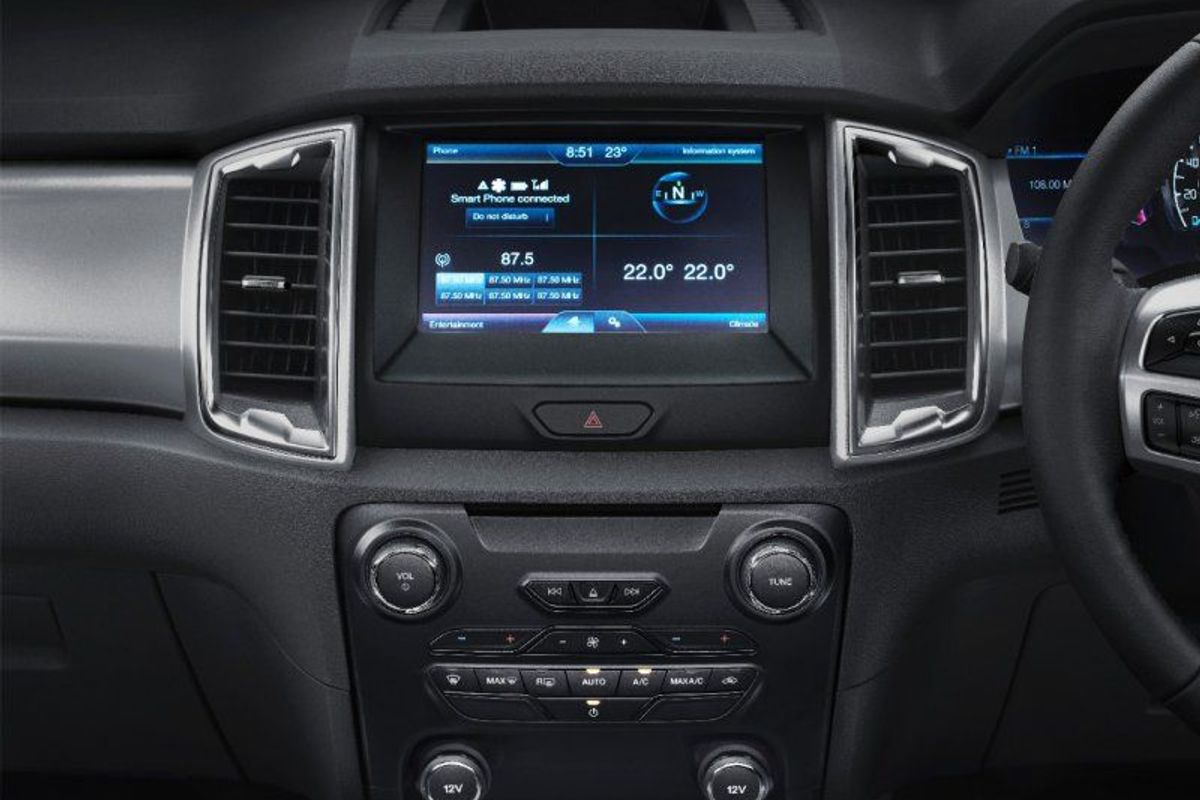
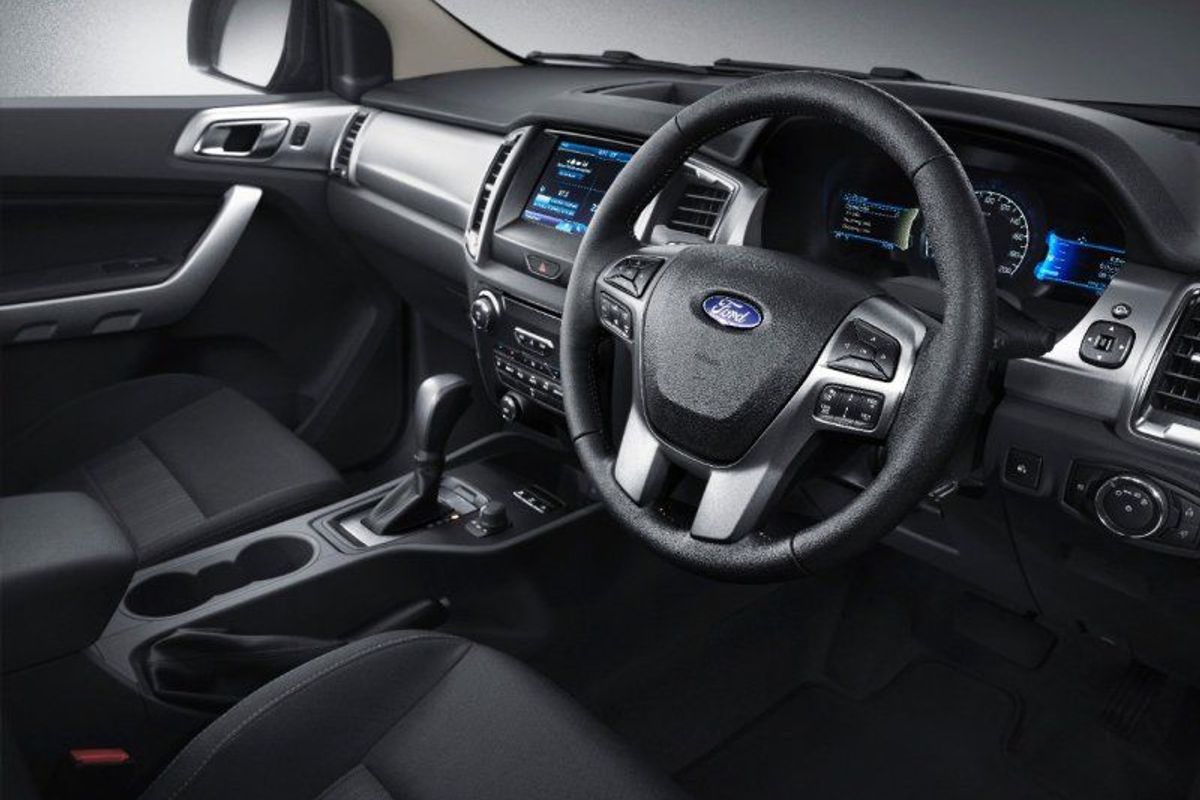
The interior has emphasis placed on comfort, offering a car-like environment for the driver and passengers. The new Ranger comes fitted with a central 8-inch touchscreen and dual-TFT instrument cluster which displays vehicle information, navigation entertainment and climate control.
Technical Capability
The2015 Ford Ranger is geared to tackle tough terrain and can wade through water 800mm deep with a ground clearance of 230 mm. An electronic transfer case allows the driver to shift from 4×2 to 4×4 via a knob on the centre console and an electronic rear differential lock further improves traction. Towing capacity is rated at 3 500kg.
Suspension has been tuned to further improve ride and handling. The Ranger also comes kitted with an electrically power-assisted steering which contributes fuel efficiency by about three percent. NVH has also been improved with advanced sound-deadening materials and insulation.
Engine Power
Four engines are available for the 2015 Ford Ranger. The first is the powerful 147 kW / 470 Nm 3.2-liter Duratorq TDCi engine with 18% improvement on efficiency. A 2.2-litre Duratorq four-cylinder TDCi diesel engine is also on offer with either 118 KW or 96 kW and 385 Nm of torque depending on the market, with 22% improvement in efficiency. There will also be a 2.5-litre Duratec petrol engine which will pump out 122 kW and 225 Nm of torque. Automatic Start/Stop Technology helps maximise efficiency even further by switching off the engine while idling.
The 2015 Ranger will feature Fords SYNC 2 in-car connectivity system as well as a number of driver assist features which include:
Lane Keeping Alert and Lane Keeping Aid Adaptive Cruise Control Forward Alert Front and Rear Park Assist Tyre Pressure Monitoring System Emergency Assistance Electronic Stability Program Driver Impairment Monitor Hill Launch Assist Hill Descent Control Adaptive Load Control Emergency Brake Assistance
The new Ranger will be built at Fords Silverton Assembly Plant in Pretoria along with other plants in Thailand and Argentina.
2015 Ford Ranger Video
Most Fuel Efficient SUV in South Africa
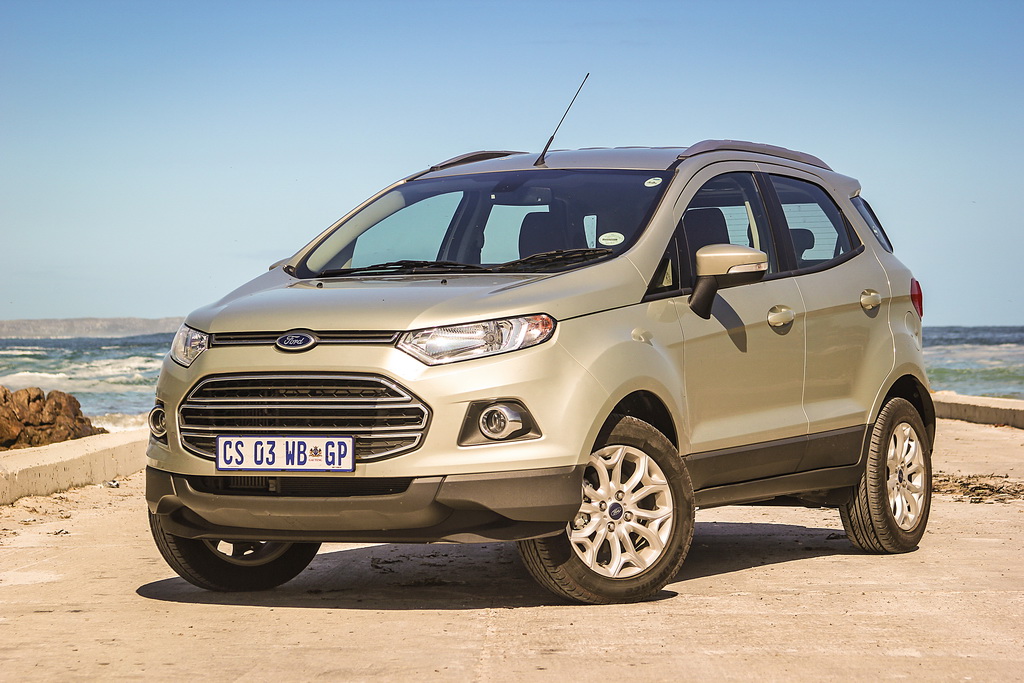
South Africans love SUVs, theres something about the raised body, sense of off road ability from the ground clearance and the heightened driving position seem to appeal locally. Glance through the car sales list in SA and theres a distinct number of SUVs that make the list, top of which at the moment is the compact Ford Ecosport SUV. Also high up on the list are the Toyota Fortuner, Rav4 and the Nissan Qashqai.
The problem however is that SUVs tend to be thirstier than their sedan counterparts, due to being heavier and less aerodynamic. Both are key factors in reducing fuel consumption. We may have had nice fuel price decrease over the last couple of months, but it seems the period of respite has ceased. Predictions are for a R2/Litre increase in April 2015 and thatll start to make people think about ways to reduce fuel use.
A recent study by Google also noted that 38% of people are triggered to buy a new vehicle by improved fuel efficiency claims. As a result weve trawled through the figures to combine your top five most fuel efficient SUVs.
The results lean towards small SUVs that use turbocharged diesel motors. Our petrol vs diesel comparison story also notes that if you’re buying an SUV in SA it’s best to go diesel, but always look at the initial cost difference.
It has taken more than three years for the Volkswagen up! to reach the South African market since its debut at the 2011 Frankfurt Motor Show. Talk about being fashionably late. As they say, all good things come to those who wait, but how good is the up! in reality? We spent a week with the new up! to find out how it squares up against some pretty stiff competition in the crowded A segment.
Don’t miss our video review at the end of this article.
Whats Up!
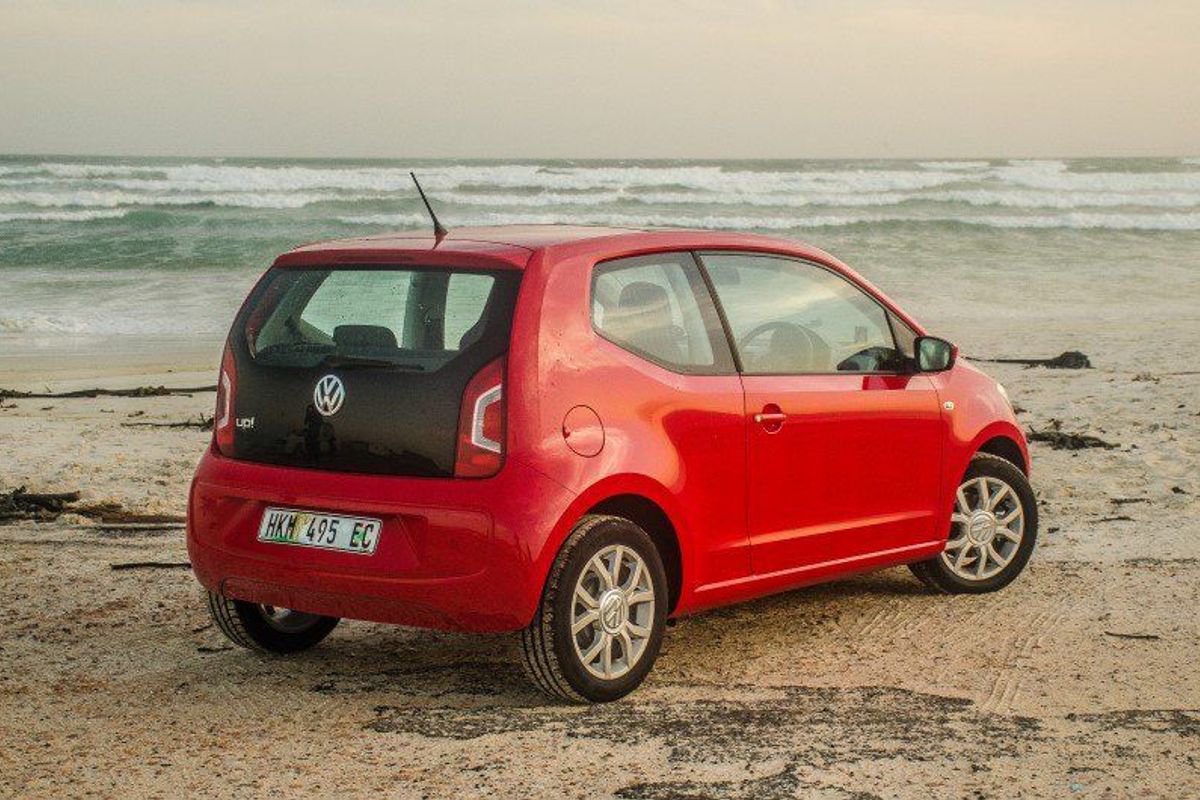
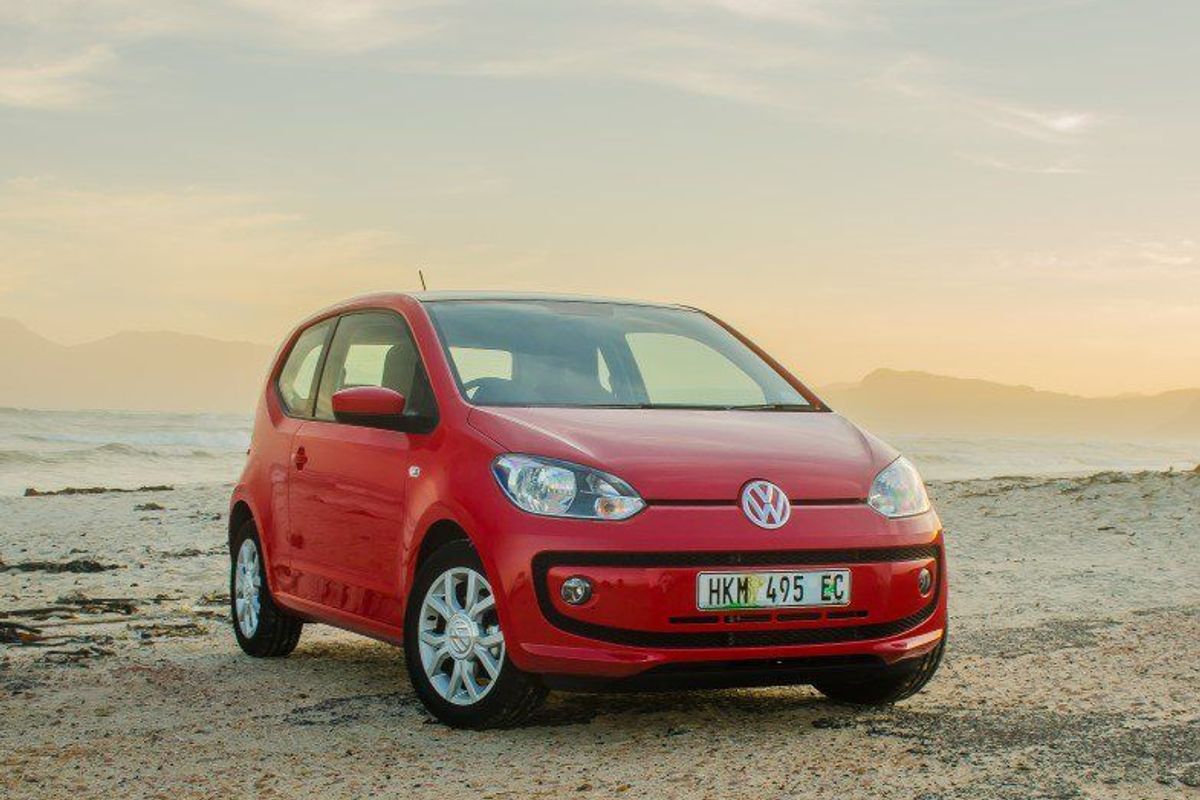
The three-door Volkswagen up! is the brands new entry-level offering that slots in snuggly below the Polo Vivo and is available with a choice of two models, namely the base model Take up! and the top-spec Move up!, the latter being tested here in Tornado Red.
The up! is a small, compact four-seater city car that brings fresh Euro-styling to the South African market and targets the lifestyle generation as opposed to the Polo Vivo which is aimed at the more practically minded first-time buyer.
Simple Yet Modern Interior
With its compact dimensions and a wheelbase of 2420 mm, the up! is well packaged for the city commute. Space for the driver and front passenger is generous and the front seats can be easily adjusted to provide extra rear legroom when your buddies hop in the back. Hats off to the designers for maximising interior space!
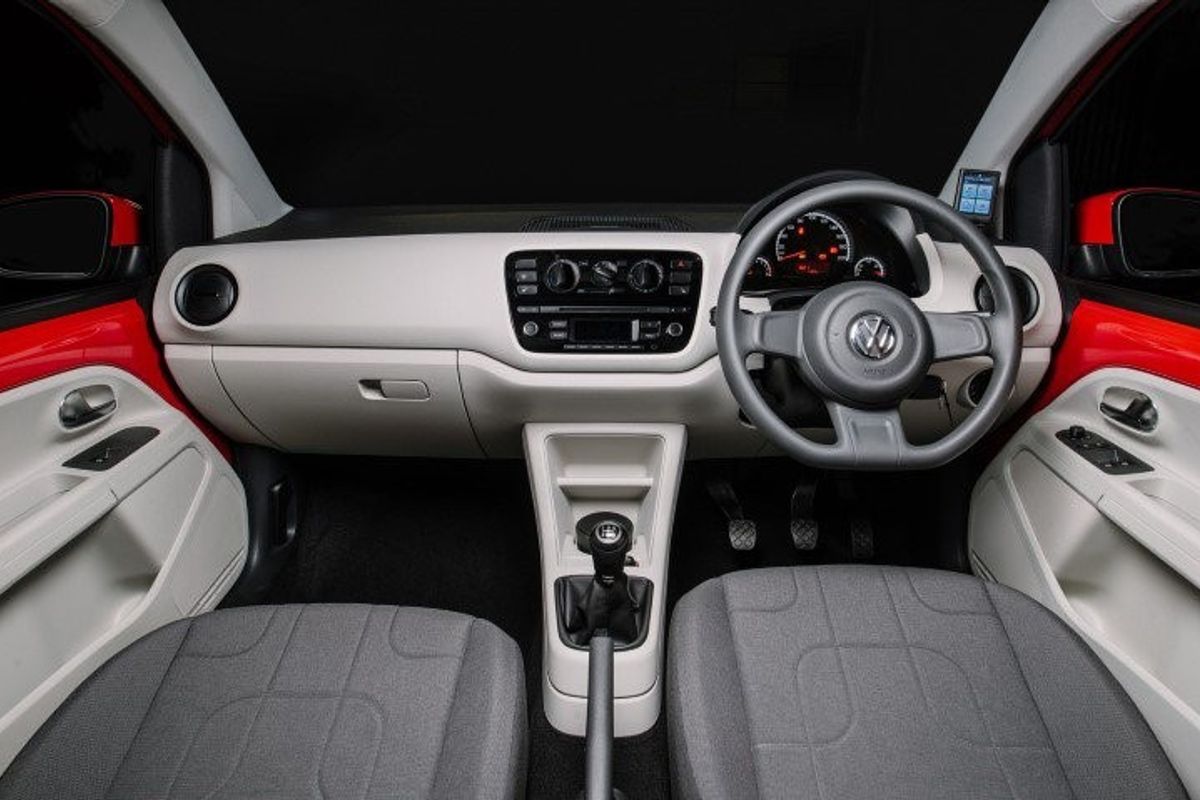
The interior is vibrant and well put together. Although the facia is finished in hard plastic, the off-white coloured dashboard and door panels make the up! feel airy and spacious. The dash layout is simple and functional, featuring a central module that houses the air conditioning controls as well as a minimalistic CD/Radio connected to four front speakers and two speakers in the rear as part of the optional Sound Plus Package. Unfortunately the front speakers had a crackle to them, even at low volume, which was rather annoying.
Sadly, no USB or Aux ports are included and the flat-bottomed steering wheel has no mounted controls, but is height adjustable. The up! did have an aftermarket Bluetooth unit fitted, but it looks awkwardly stuck to the right side of the dashboard. Electric windows are standard on this model and optional for the Take up! model.
Other optional features fitted to this vehicle included a Panoramic Sunroof, the Driver Package, which includes cruise control, park distance control and a multi-function display as well as a Winter Package, which adds heated front seats, front fog lights and electrically adjustable side mirrors.
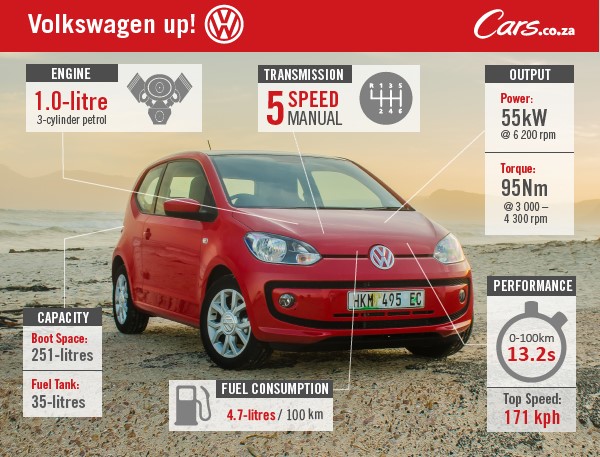
In terms of storage space, the Volkswagen up! offers a tight 251-litres of boot space, which increases to a commendable 951-litres with the rear seats folded flat. Theres also ample storage in the doors and dashboard for smaller items as well as front and rear cup holders. Not too shabby for such a small car!
Rev up!
Hiding somewhere beneath that small bonnet is a 1.0-litre, 3-cylinder petrol engine that kicks out 55 kW and 95 Nm of torque transferred to the front wheels via a smooth-shifting 5-speed manual gearbox. Small numbers yes, but when you consider that 90% of that torque is available from 2 000rpm, the up! feels more sprightly than the numbers suggest. Apart from the Opel Adam 1.0T Jam we reviewed recently, the engine in the up! is one of the most refined 1.0-litre, 3-cylinder engines I have driven so far.
The up! handles itself well out on the road and ride and handling was surprisingly good. The optional 15-inch Waffle alloy wheels also helped in this regard, but 14-inch steel wheels are standard. On the highway, the up! felt well-planted and inspires more confidence compared to its rivals. Cruising at 120 kph is effortless and the up! was eager to press on even further without any hassles.
The up! offers enough grunt to get you around the city, but dont expect too much in terms of performance. Accelerating to 100 kph will take 13.2 seconds while the up! tops out at 171 kph. Claimed fuel consumption is 4.7L/100km and I easily achieved 6.2L/100km during my week with the up!, so its quite economical too.
In terms of safety, the up! is fitted with four airbags including driver and passenger airbags as well as head and thorax airbags. ABS is included as standard, but EBD and traction control are skipped over.
Volkswagen up! Price in South Africa
The Move up! model on test here is priced at R159 000 while a standard Move up! is priced at R140 500. The base model Take up! is priced at R133 500. The price includes a 3-year/120 000 km warranty. Service plans are optional with 15 000 km service intervals.
The Volkswagen up! is an attractive and unique 3-door offering that somewhat defies the perception of cheapness in the A segment. The up! gives you the impression that you are driving something a little more sophisticated and upmarket. That alone will crack a few hundred sales as will the badge on the bonnet.
The up! is certainly worth consideration, but it isn’t the best bang-for-buck proposition on the market. My concern is that at this price point, the up! lacks features that are offered as standard on its rivals and Volkswagen could offer buyers more value in this segment. Buyers should be wise to consider all the options before signing on the dotted line.
Second Opinion
I was blown away by the European charm and appeal of this fun-sized city slicker. It’s cute to look at and effortlessly simple to drive. For the money though, it’s a little down on standard specification like USB which the cellphone generation will be annoyed by. Still, what a lovely little car! -David Taylor
We Like: Upmarket Euro-styling, good drive and handling,refined engine
We Don’t Like: Lack of standard features, a bit pricey
Also Consider: Renault Sandero, Hyundai i10, Honda Brio, Citroen C1
Ahead of its official world premiere on 15 April 2015, Volkswagen Commercial Vehicles has revealed a sketch of the sixth-generation Transporter.
Same Transporter with new insides
When it made its debut in 1950, few could have predicted the enormous impact the Transporter would have on the commercial vehicle market, creating a timeless van that could be used for just about every automotive task considered.
The ethos behind the Transporter hasnt really changed since the 50s, keeping people moving and carrying things about. The chassis is likely to stay the same as well as VW has hinted at this earlier. Obviously the interior will come in for an update including a new multimedia system and cabin.
No further details are available on the new Transporter but traditionally not much changes so there will almost certainly be a derivative of the groups 2-Litre turbodiesel. A seven-speed DSG or manual will probably be available as well.
The sixth-generation Transporter will go on sale in Europe later this year.
Mahindra Quanto (2015) Review
It’s our first Mahindra to test and we get to grips with the Indian-built Quanto SUV.
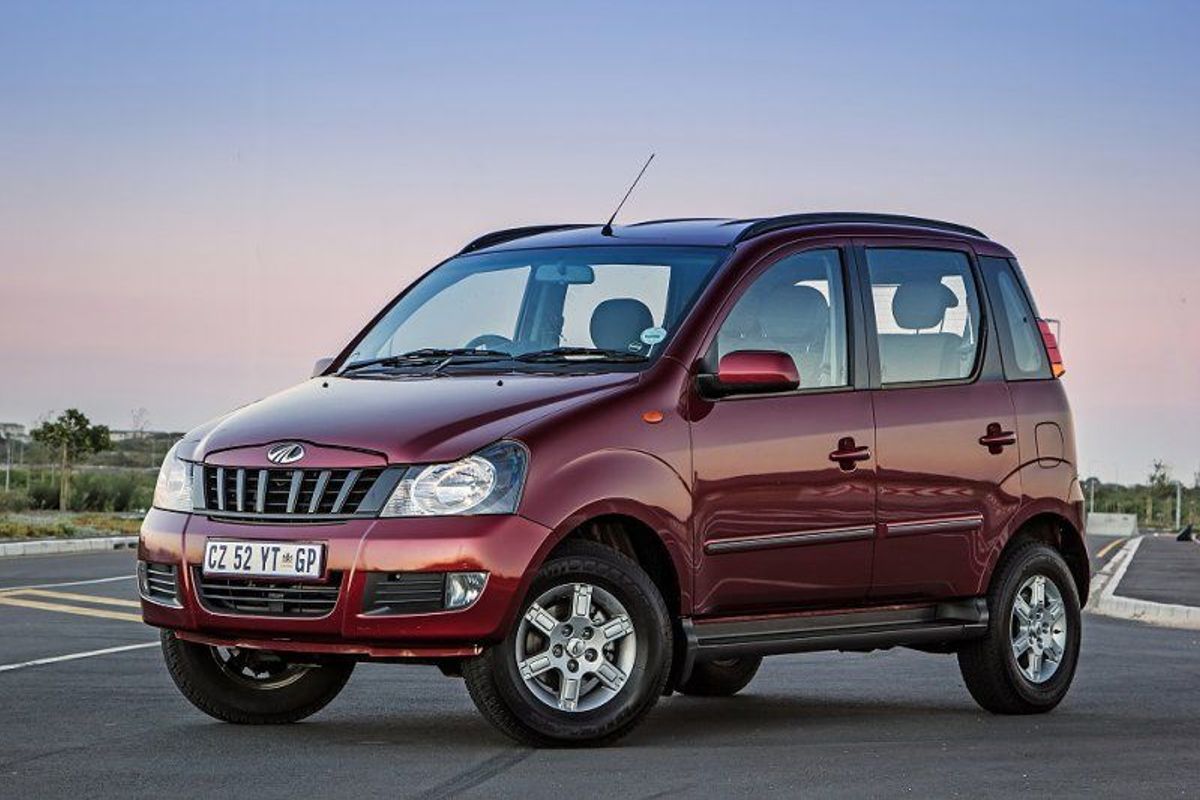
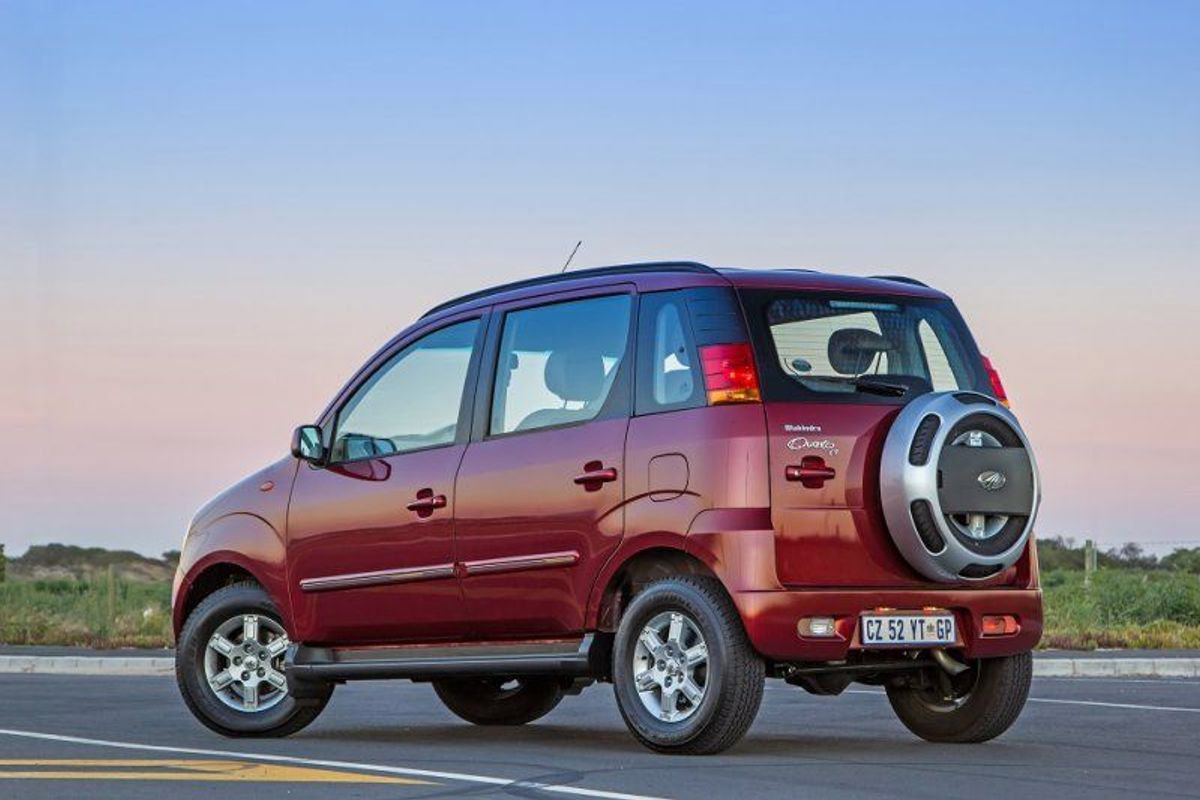
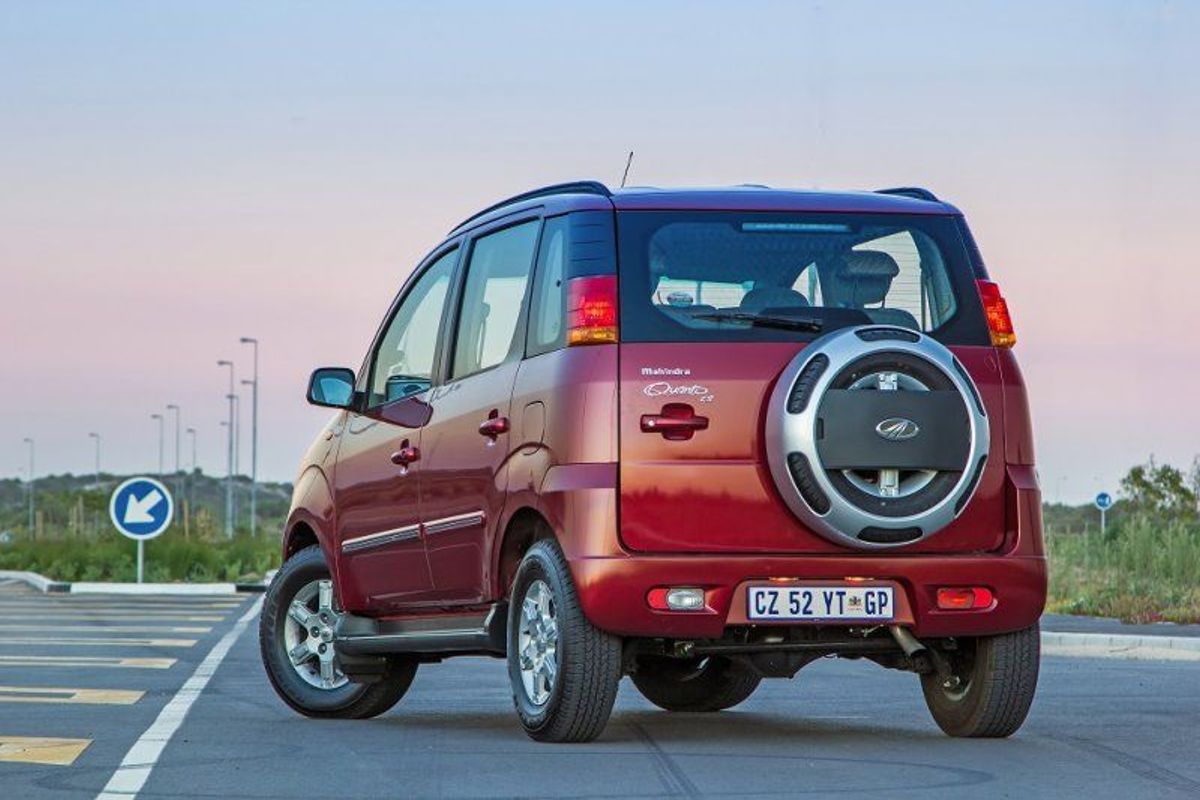
The Indian car-maker announced the Quanto almost three years ago, but only recently has it been made available to the South African market. The Mahindra Quanto is based on the Xylo MPV, but visually its a bit of an oddball. The proportions are strange and it looks like a top-heavy rollerskate. Despite its compact SUV size, it tips the scale at around 1600kg – heavy for a vehicle in this class.
Diesel Powerplant
Powering the Mahindra Quanto is a 2.2-litre four-cylinder common-rail diesel engine. It has 88 kW and 290 Nm, which is just about adequate. Power is transmitted to the front wheels via a five-speed manual gearbox. There’s no 4×4 option, which is a shame because the Mahindra Quanto boasts a reasonable ground clearance of 186mm.
Mahindra claims a fuel consumption figure of 7.6L/100km and the tank capacity beats that of most hatchbacks at 55 litres. This engine is Euro II compliant, meaning readily available 500 ppm diesel can be chucked in the tank and you’re not restricted by the limited availability of the greener 50ppm diesel.
Beige Interior
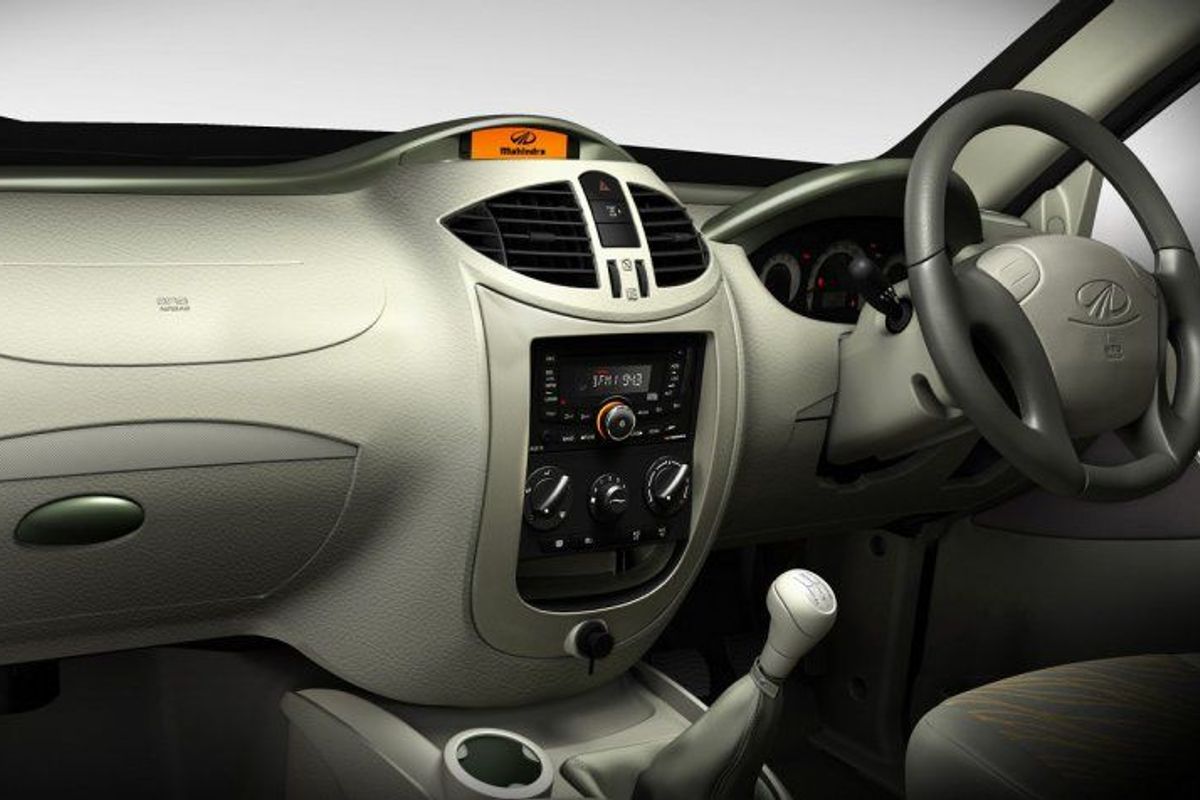
Step inside the cabin and you’ll encounter a sea of beige. I’ll never understand the obsession with boring beige… Anyway, there’s seating for five and plenty of headroom and legroom. Spec wise, you’re getting the basics like air conditioner, CD/MP3/Radio audio system, electric windows all round as well as some handy power sockets to charge devices. There’s also a trip computer located in the centre dash which, also has things like an outside temperature gauge.
Ride and Handling
The advantage of such a high driving position is that forward visibility is excellent, however there’s a feeling the Quanto will roll if you try take a corner at speed. It almost certainly wont roll but the top heavy build does cause it to lean substantially in the bends. It is being marketed as a budget SUV and the Mahindra Quanto comes with ABS and driver/passenger airbags, which ticks the basic safety box.
Driving the Mahindra Quanto is not the most pleasant of experiences. As mentioned earlier, it feels top heavy and that engine offers just enough power to get around. Overtaking requires planning as you need to change down a gear and get the engine into its sweet spot. I suspect the rubber on the 15-inch alloy wheels does not offer enough tarmac contact to ensure proper grip and the leaning, particular in windy conditions makes for a nervous driving experience. That said, the ride quality isn’t the worst and when road conditions are good, you get a smooth driving experience.
Summary and Conclusion
The only areas where the Mahindra Quanto truly excels is value for money, price tag and some clever practical touches in the cabin like the airline-style trays. For R214 995, you’re getting a big and spacious SUV. However, questionable build quality and poor finishes will ensure that the vast majority of the car-buying public will look towards the pre-owned market for a vehicle in this class.
Second Opinion
The Mahindra Quanto is big on space and small on price tag. The diesel engine is pretty decent but the long throw gearbox will keep you grafting as you wing through the gears. The ride is soft and there’s a fair amount of lean in the suspension that keeps you entertained in an unconventional manner. I can’t say I’d recommend the Quanto but the Xylo with even more space seems like a better option if you want a new, inexpensive SUV. – Ashley Oldfield
Mahindra Quanto Price in South Africa
The Mahindra Quanto costs R214 995 and the car comes with 3 year/100 000 km warranty and a 3 year/60 000 km service plan.
We Like: Cheap, interior space
We Don’t Like: Quality issues, top-heavy handling, beige interior.
Opel has just launched the latest iteration of the Opel Corsa and the brand has just announced it will add a 1.4-litre turbo to the range. Currently in the range is the 1.0-ltre 3-cylinder turbo and a naturally aspirated 1.4-litre that makes up the automatic version. There’s also the top of the range OPC in Europe that we will hopefully see in South Africa later this year.
Sporty Yet Frugal Engine for Opel Corsa
The 1.4-litre turbo motor is said to combine sportiness with impressive fuel consumption. Opel rates the engine at 110 kW with 210 Nm of torque available at 3000rpm. Theres a manual six-speed gearbox connected.
In terms of acceleration the new engine does 0-100kph in 8.9 seconds and will top out at 207kph. As a comparison the 3-cylinder turbo manages the 100kph sprint in 10.3 seconds and will get to 195kph. Fuel consumption is still pretty good at 5.9L/100km.
For fans of the OPC look, Opel offers the Turbo Plus Package for the 1.4-turbo. It features OPC Line front spoiler and rear spoiler lip as well as body-coloured side sills, and the three-door model also has an additional OPC Line roof spoiler. The exterior mirror and grille in carbon design complete the Corsas sporty look. The interior adds an OPC Line sports steering wheel, leather gearshift knob and handbrake also wrapped in black leather. Optional Recaro sport seats add to the race car ambiance.
For the moment though Opel SA has no plans to bring this engine to SA.