The cars and bakkies SA’s government bought in August 2023
Which vehicles were most popular with South Africa’s government buyers in August 2023? Let’s take a look at the cars and bakkies the state bought last month…
In August 2023, around 1.2% of South Africa’s new-vehicle sales total of 45 679 units represented purchases by government, according to industry representative body Naamsa. So, which vehicles were most popular with the state last month?
Well, we’ve combed through the sales figures to identify the new cars and bakkies bought by government in August (though we’ve excluded the handful of purchases in the medium- and heavy commercial vehicle segments). Note, too, that the BMW Group and Mercedes-Benz didn’t report detailed sales statistics, so these marques unfortunately can’t be included in this exercise.
The imported VW Polo Sedan placed 2nd on the list of best-sellers to government in August.
Fascinatingly, the vehicle most popular with government buyers last month was a bakkie. Yes, the state procured as many as 181 units of the Isuzu D-Max, representing around 11% of the Struandale-manufactured bakkie’s total of 1 632 sales.
Next came the Indian-built Volkswagen Polo Sedan (67 units), followed by the Kariega-produced Volkswagen Polo Vivo (39 units). The government also acquired 35 units of the Prospecton-built Toyota Hilux – which was Mzansi’s best-selling vehicle in August with 3 309 registrations – along with 33 examples of the Toyota Quantum.
The Rosslyn-manufactured Nissan Navara (19 units) was the final vehicle to crack double figures, with the Audi A4 (8 units), Nissan NP200 (8 units), Audi Q5 (5 units), Mahindra Pik-Up (5 units), Audi Q3 (4 units), Audi A3 Sedan (3 units), Ford Ranger (3 units), Volkswagen Golf 8 (3 units), Audi A1 Sportback (2 units), Volkswagen Polo hatch (2 units), Volkswagen T-Cross (2 units), Volkswagen Tiguan (2 units) and Volkswagen Transporter Crew Bus (2 units) making up the numbers.
The state purchased 19 units of the SA-built Nissan Navara last month.
In addition, the state bought a single unit of each of the following vehicles last month: the Audi A3 Sportback, Audi Q7, Suzuki DZire, Suzuki Ertiga, Volkswagen Caddy, Volkswagen Kombi and Volkswagen T-Roc.
Out of the 542 sales (including trucks) to government in August 2023, Isuzu was the dominant brand with 204 units. The Volkswagen Group (also incorporating Audi sales) was next on 182 units, followed by Toyota (68 units), truck-maker Iveco (51 units), Nissan (27 units), Mahindra (5 units), Ford (3 units) and Suzuki (2 units).
In SA soon: An affordable electric ‘car’ from Spain!
The Silence S04 quadricycle promises to be one of the most affordable road-legal battery-electric vehicles in South Africa. But it is smaller than a Smart ForTwo, so is it even a car? Justus Visagie interviewed Robbie Schmidt, who drove the model in Spain.
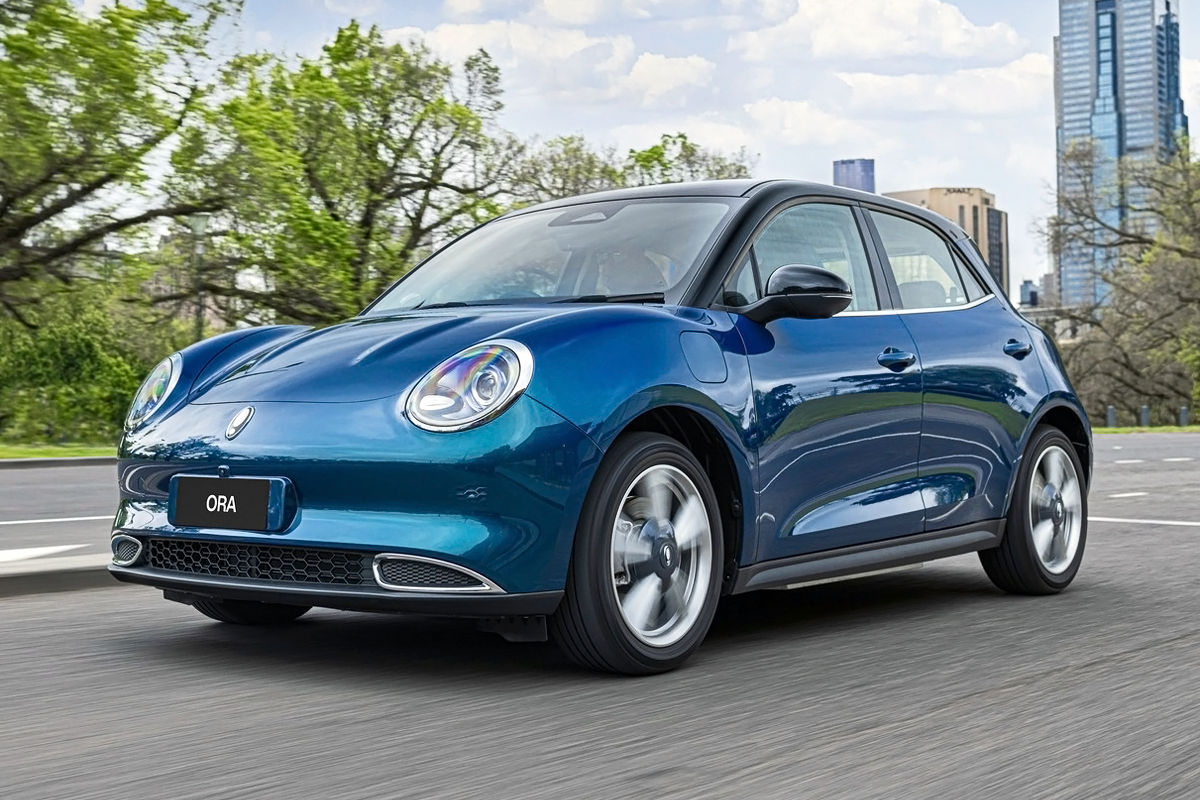
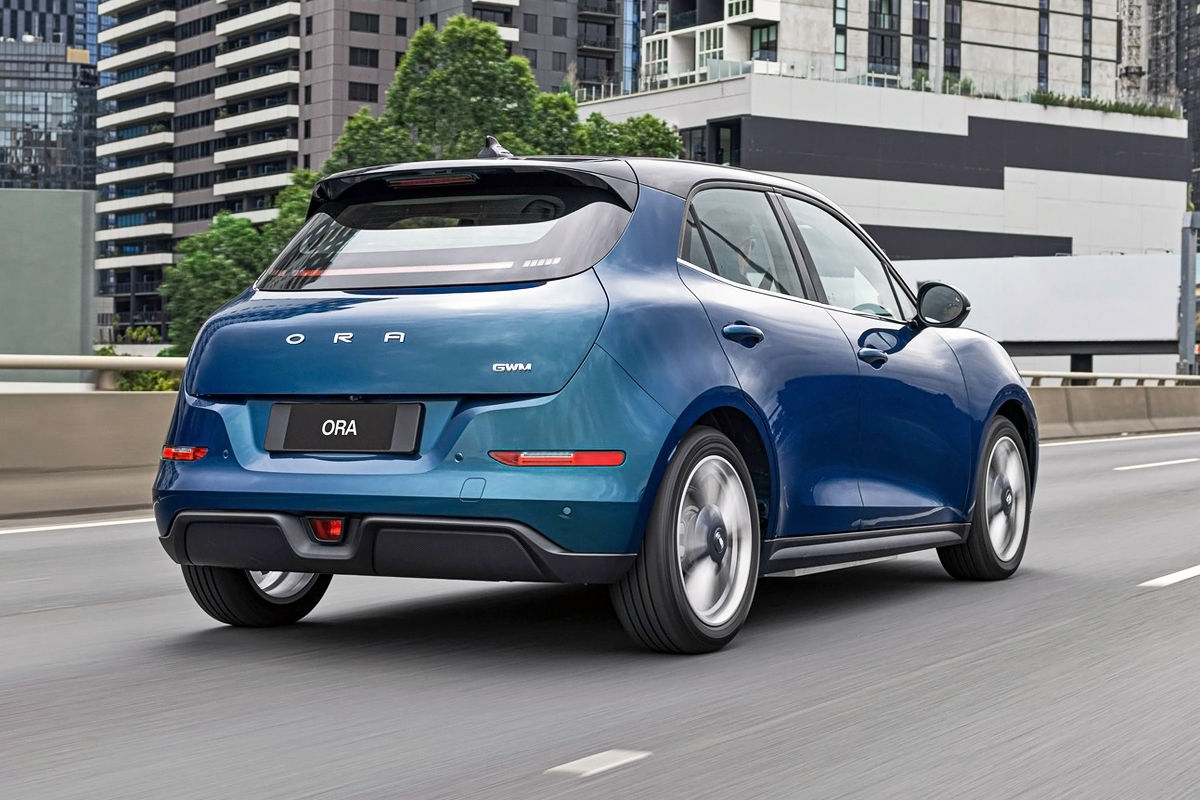
There was much hope that GWM’s Ora Cat would bring affordable electric motoring to South Africa. These hopes were dashed when the Chinese brand announced that prices of the Golf-sized hatchback would range from R716 900 to R915 900. But don’t crucify GWM for those price tags; blame our fragile currency and a South African government that burdens electric vehicles (EVs) with additional tax.
Before getting to the Silence S04 itself, you might want to know more about the manufacturer. Silence is a Spanish automotive company based in Barcelona, where it builds its S01 and S02 scooters for various markets, including Britain and South Africa.
A notable feature of the S01 (which is about the same size as a 125 cm3 Japanese scooter) is its removable battery, which weighs a hefty 41 kg, but it has 2 wheels and a telescopic handle. This means you can wheel it around like a small (heavy) suitcase to charge it separately – if you need to.
Why should you care? Because two of these 5.6 kWh batteries power the S04’s motor and they can be swapped out in about 2 minutes. And, if all goes to plan, the Spanish quadricycle should reach South Africa at the end of November 2023.
What is a Silence S04?
Because of its small size, the S04 is classed in the same category as the Bajaj Qute, Eleksa CityBug, and Citroën Ami. It is tiny – just 2.28m long, 1.29m wide and 1.59m high. It is tiny, even when compared to the Smart ForTwo (2.7m x 1.66m x 1.56m) and is positively dwarfed by a Fiat 500 (3.57m x 1.63m x 1.49m).
With both removable batteries slotted in, the S04 weighs 517 kg, compared to the 875 kg mass of a Suzuki Swift 1.2 GL manual, for example.
A 14 kW (22 kW peak) electric motor drives the rear wheels, compared to 4 kW and 9 kWh for the Eleksa CityBug. Silence quotes an optimal range of 149 km, based on the World Motorcycle Test Cycle (WMTC).
It has three drive modes: City, Economy, and Sport. In Sport mode, the claimed range is 90 km.
There are two versions of the S04: the L7e, with its speed limited to 90 kph, and the L6e, limited to 45 km/h. The L7e is classified as a heavy quadricycle and the latter as a light quadricycle.
These 2 versions have different road usage limitations and license requirements in Europe. No doubt the L7e, with its higher top speed, will be more appealing to South Africans than the L6e.
The local agents say it may be possible for licensed 16-year-olds to drive the S04, which could be good news for wealthy parents who are sick of the school run.
Safety, interior, and build quality
Since it is a quadricycle with the main purpose of low-speed city driving, it does not have to meet the safety requirements of regular cars. It does have disc brakes all round and ABS is an optional extra.
“For the needs it aims to fulfil, the pre-production S04 I drove was well-designed and built,” says Robbie.
The passenger seat is set back to the maximum and cannot move forward. This is to maximise space due to the narrow width of the vehicle. The passenger sits diagonally from the driver, instead of next to them (the Citroen Ami uses the same configuration). The dashboard and doors had quite luxurious suede-like material with stitching and the 274-litre load bay should accommodate about 2 “carry-on” suitcases.
“There was no audio equipment or Bluetooth (Silence will include the features in the production version) and, although the S04 does not have an infotainment screen for Google Maps and other apps, it does include a well-integrated holder for a smartphone or tablet. The car also had built-in charging cables with various connectors, USB ports, electric windows and -side mirrors (there is no centre mirror) and aircon.”
The easy-to-use Silence smartphone app allows drivers to see the state of charge and control certain functions, such as locking and unlocking, pre-heating, and opening and closing the windows. Using the app, the registered driver can even allow someone else to drive the S04 – without the key.
Driving the Silence S04
“Bear in mind that the S04 I drove was not a production model, but a prototype,” adds Robbie. “I drove it as far as 10 kilometres along the streets of Barcelona, which is its intended type of habitat.
“Silence claims the S04 can sprint from 0 to 50 kph in less than 7 sec… and it felt that fast. Performance is more than sufficient, especially in Sport mode. It is lots of fun to drive and quite a head-turner.
“The car’s small size makes it super easy to find suitable on-street parking. Unlike the prototype, the production car will have power steering (tyre size is a modest 155/65 R14).
“Outward visibility is good, but drivers must familiarise themselves with the S04’s compact dimensions when manoeuvring. You can almost touch all four corners of the car by extending your arms. The seats are comfortable, and since you will not be doing 6-hour road trips, they are more than acceptable.
“Don’t expect car-like sound insulation, though. Road noise is noticeable and so is the sound of the electric motor. But again, given the S04’s intended purpose, that’s okay.
“I was told the production version will have better brakes and an improved suspension. That would be a welcome development, because the suspension felt quite stiff,” he concludes.
About those batteries…
The Silence S04 certainly won’t be the first electric quadricycle to come to Mzansi, but its batteries make a compelling proposition, especially for commercial applications. Since the batteries are sold separately, or will be available on lease from Silence South Africa, a commercial enterprise can set up its own battery swap station. This is ideal where range requirements exceed the distance the car can drive on a charge.
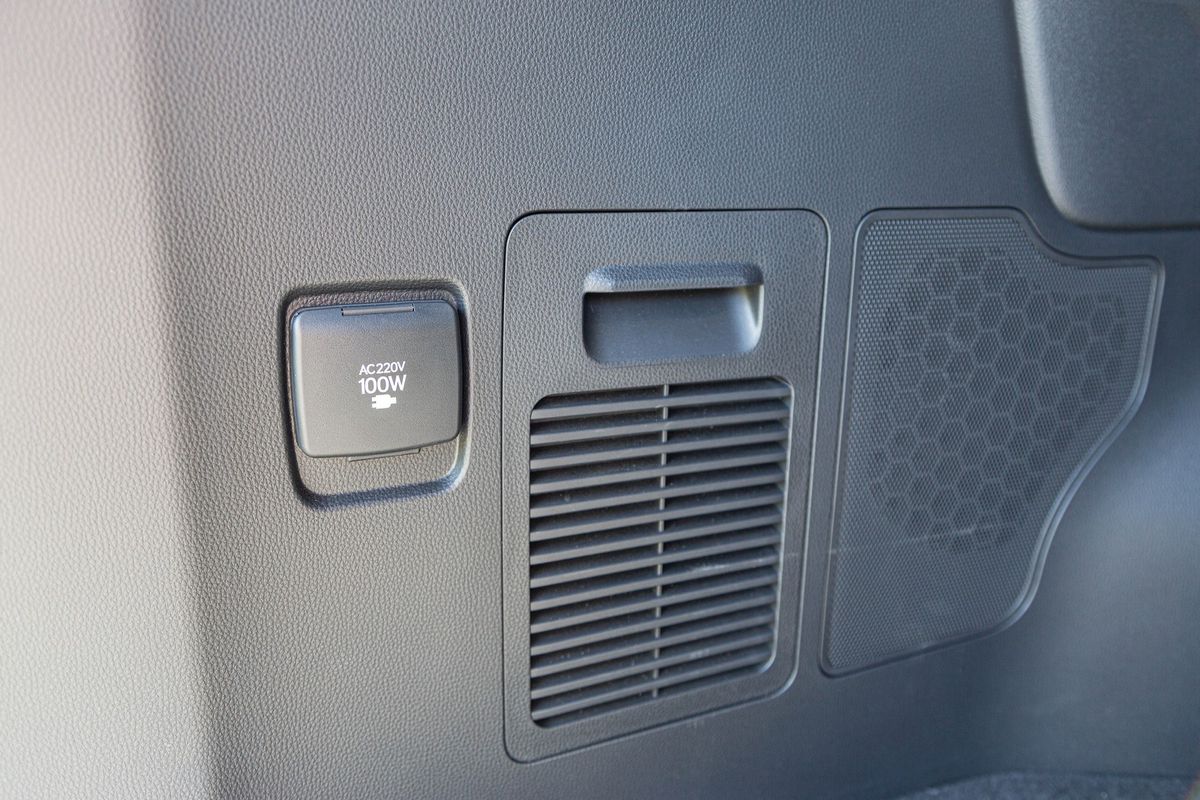
To charge a battery – whether it’s slotted into the S04 or not – simply plug the supplied cable into a standard 220V domestic plug point.
The 600W charger built into each battery can charge it from empty (“flat”) to 100% charged in about 4.5 hours. Faster charging is not currently possible, however.
Swapping batteries should be easy. As you remove the battery from the S04, 2 small wheels pivot out from under its casing. Note that the battery is not as easy to drag or push as cabin baggage… It weighs about 40 kg and you have to be mindful of the way the battery block is balanced when moving it around.
Perhaps the best feature of a Silence battery is that it is a large-capacity power bank too. Owners can use it to power or charge electronic devices during load-shedding or when camping, for example.
In other words, you could charge your smartphone and laptop, keep the WiFi router and a few lights going, and still have enough power to get to work the next day. If you use it to run a hairdryer, microwave or any other power-intensive appliance or device, well, you’ll have to hail a ride to your next destination…
Using the battery as a power source does, however, require the use of an inverter that Silence sells separately (the local price of which has yet to be confirmed).
How much will it cost?
Silence South Africa has indicated a target price of R448 000 for the Silence S04. Barend Engelbrecht, a director at the company, says numerous factors will influence the purchase price. “We have not yet received any firm dates from Spain for the availability of these units nor any final costs, he adds.
For that price, the two required batteries will be included. Additional batteries cost R79 350 each. Silence is planning battery leasing for 2024 onward. A customer who opts to buy the S04 without the batteries (in other words, chooses to lease them instead) will pay 30% less for the car itself.
Service intervals and the servicing cost are still unknown – but the latter is likely to be very affordable.
Summary
With its easy battery swapping and attractive design, the all-electric S04 is an intriguing proposition. It is a vehicle that SA businesses and individuals should consider for deliveries, security patrols, running errands, or the daily commute. But, considering its 90-kph top speed, that precludes highway driving.
To be competitive, Silence will have to keep the price of the S04 low, to compete with possible entrants like the Wuling mini EV (under USD 5 000 in China), and BYD Seagull (USD 11 400). Bear in mind that those are domestic Chinese prices; the landed prices in South Africa would be considerably higher.
We will test the S04 in South Africa in due course. In the meantime, you can visit Silence SA’s website.
The Volvo XC40 premium compact crossover range incorporates a pair of all-electric derivatives; we review the Recharge Single Motor Plus version (the more affordable of the two) to find out if it represents a strong buying proposition for EV buyers.
We like: Exterior and interior design, refinement, performance
We don’t like: Ride quality is on the firm side, not much to dislike here
The XC40 Recharge offers significant design appeal. Do you agree?
Although the Volvo XC40 range now offers 2 battery-electric Recharge derivatives, their combustion-engined siblings have been on sale in South Africa for about 5 years, during which time the Swedish brand’s model has been well-received by local buyers looking for a stylish and safe premium compact crossover. In fact, the XC40 is just about twice as popular as its larger XC60 sibling in South Africa.
Volvo is rapidly transitioning into a battery-electric vehicle (BEV) brand; by 2030, it will only sell electric cars. To that end, Volvo Car South Africa has begun rolling out its latest electric wares, starting with the XC40 Recharge in 2022 and, more recently, with the arrival of the C40 Recharge, which received high praise during our recent test. Volvo will soon follow that up with the introductions of the compact EX30 Recharge in 2024 (which will slot in beneath the XC40 Recharge) and the EX90 – the firm’s flagship BEV.
In 2022, when the 300-kW XC40 Recharge Twin Motor Ultimate went on sale, the first consignment sold out in less than 24 hours! Watch Ciro De Siena’s video review of the flagship all-electric XC40. Now, Volvo is offering BEV buyers some more choice and has bolstered its local offering with the 170-kW XC40 Recharge Single Motor Plus derivative (on test here), which has a claimed range of 423 km.
How the Volvo XC40 Recharge Single Motor Plus fares in terms of…
Design and Packaging
The compact XC40 Recharge blends practicality and style into a hard-to-ignore package.
Just look at it! Who wouldn’t want to drive and own a vehicle with that design every day? The boxy and edgy contours of the XC40 Recharge translate into significant kerb presence, especially in this Fjord Blue body colour. Plus, not only does the Volvo look elegant – it exudes some sportiness thanks to its bulging bonnet, upright body-coloured grille and stylish 19-inch, 5-spoke black diamond cut alloy wheels.
The style statement continues with a smart and minimalistic interior design. Our test unit came fitted with the optional Microtech and textile fabric combination upholstery (R30 300) and we found the seats to be sufficiently bolstered; they provided excellent overall comfort. The topographical-themed inserts seen on the dashboard and doors are a nice aesthetic touch; they lend the interior a soothing natural ambience.
The interior adopts a minimalist design and the perceived build quality is excellent.
The central dashboard is dominated by a portrait-style 9-inch touchscreen infotainment system, which has a simple and easy-to-navigate menu layout. The menu’s text is rather small though, which negatively impacts usability, but we’d consider that a minor gripe. The navigation system integrates battery-energy projections to help you plan your route and locate public charging stations. The Range Assistant menu tab is also useful to keep an eye on current energy consumption and range while you are driving.
A 12-inch digital instrument cluster is standard, while the minimalistic steering wheel is nicely complemented by a sculpted transmission lever. A wireless charging pad is also fitted as as you’d expect from a Volvo, safety features abound. There are 6 airbags and driver assistance features such as adaptive cruise control, blind spot monitoring, cross-traffic alert, lane-keeping aid, oncoming lane mitigation, front and rear park assist and a rear park-assist camera.
Space for rear passengers is fair for a vehicle of this size.
As far as practicality is concerned, the XC40 Recharge Single Motor Plus offers sufficient space for adult occupants at the rear and the electrically powered tailgate provides access to a 460-litre (claimed) load bay with extra storage beneath the foldable floor. The 60:40-split rear seat configuration adds flexibility; when the seatback is folded down, up to 1 328 litres of utility space is available, Volvo says. Plus, there’s an additional 31 litres of storage space under the bonnet, which is useful for housing charging cables.
The load capacity is good and additional storage is offered beneath the boot floor.
The author of this review did quite a bit of driving during this test; he thoroughly put the XC40 Recharge through its paces in terms of range, efficiency and charging. But his nerves were put to the test too…
Let’s get some numbers out of the way first. This derivative features a single front-mounted electric motor that generates 170 kW and 330 Nm of torque and is paired with a low-mounted 69 kWh lithium-ion battery, combined with an 11-kW onboard charger. Volvo claims a 423 km range on a single charge.
The single-motor Volvo XC40 Recharge offers good overall performance.
Volvo also claims a 0-to-100 kph sprint time of 7.3 sec, but thanks to its seamless (single-speed), shift-by-wire transmission, the XC40 Recharge Single Motor Plus feels much more sprightly than its official outputs suggest. It sprints eagerly from a standstill and, combined with its firmer ride quality, feels decidedly sporty to drive.
With our testing gear hooked up, we recorded a 0-100 kph of 7.68 seconds, which is enough urge to put a smile on your face. We’d go so far as to say that this version’s performance is so good that most buyers are unlikely to need the additional punch of the 300-kW XC40 Recharge Twin Motor Ultimate.
Acceleration is smooth and refined and, like in most BEVs, surges in acceleration occur in near-silence; when you pin the Volvo’s accelerator pedal, only a vague electric whoosh makes its way into the cabin.
Efficiency and charging
The Volvo XC40 Recharge features a body-coloured grille to give it more of an EV look.
At this point of the review, the author (seasoned motoring journalist, CarsAwards judge, photographer and adventurer Gero Lilleike) recounts his personal experience of driving the XC40 Recharge…
“At the start of my driving stint in Cape Town, the test unit’s instrument cluster indicated a range of 390 km. The XC40 seemed to revel in urban traffic conditions, where slower speeds and more scope for brake regeneration (to replenish the battery’s charge) helped to keep energy consumption in check.
“On the highway, however, the situation changed rather rapidly. I would soon be reminded that longer trips in a BEV require forethought/planning…
“If you buy an XC40 Recharge, Volvo will install an 11-kW charger at your home, which will allow you to charge your car conveniently (and more affordably). Because I was a visitor in Cape Town, I didn’t have that luxury; I was at the mercy of public charging infrastructure and Eskom’s load-shedding schedule.
“My first attempt to charge the XC40 Recharge at Audi’s 75-kW fast charger at Canal Walk was foiled. As I plugged in, the area suffered load shedding and the charger shut down abruptly. It was very frustrating.
“On the following morning, I had to travel 56 km to Gordon’s Bay. When the trip began, the Volvo displayed a battery charge of 64% and a range of 260 km. But while I was travelling to my destination on the highway (with an average speed of about 100 kph), the test unit’s charge/range dropped notably.
“When I arrived, the Volvo had 48% charge left (and an indicated range of 180 km), but there still was a whole day of driving to be done. It was then that I realised that the car needed to be recharged – fast!
Finding a public fast charger that’s operational can be a challenge – as can load shedding.
“I used www.chargestations.co.za to find the nearest fast charger, which was a 60kW DC charger in Stellenbosch. I made the trip and arrived to find that a Mini Cooper SE was being recharged in the bay.
“My heart sank, again… The charge level was down to 40% and the day was running away from me. I pulled into the nearby BMW dealership and plugged into an 11-kW charger while I made another plan. I was shocked to see (on the site) how many public charging stations were inoperative at the time…
“I decided to make the trip back to Cape Town and charge the XC40 Recharge Single Motor Plus at the 60 kW DC fast charger in Gardens. The navigation system estimated that, by the time I’d arrive at my third destination, the Volvo’s charge level would be down to 28%.
“Then, while I was travelling along the N1, I got a notification that the Gardens charging station was no longer in service. My anxiety spiked to new heights and my nerves were well and truly shot.
“I redirected the test vehicle to the Audi Claremont dealership, where a pair of 75 kW DC fast chargers were available and working fully. I arrived with 27% charge left and I felt hugely relieved that the Volvo was finally plugged in – and charging. I had spent 3.5 hours trying to charge the XC40, but thankfully it would only take about 40 minutes to recharge fully, which was enough time for me to have lunch.
“It’s worth mentioning that the XC40 P6 Recharge Single Motor Plus returned consistent efficiency of around 20-21 kWh/100 km, which was, to be perfectly fair, in line with Volvo’s claimed consumption.
Fjord Blue is an optional body colour (R5 000) and we think it looks fantastic!
“I had experienced the gnawing anxiety that first-time BEV buyers may face if they don’t have a home charger. The friendly salesperson at the BMW dealership in Stellenbosch gave me excellent advice to avoid a similar experience in future: ABC (Always Be Charging). If you’re not driving your BEV, recharge it!
“The above experience highlighted a few important points. Firstly, it underlined how important it is to have a home charger installed because it will allow you to charge your BEV overnight and reduce your reliance on public charging infrastructure. A home charger will cut your charging cost significantly; most public fast charging stations command over R7 per kWh which equates to roughly R500 for a full charge.
“Secondly, public charging stations can be inoperative at any given time and, with so few public fast chargers available, it’s clear that charging infrastructure still needs to be developed across South Africa to ensure that a fast and reliable charging service is readily available to ensure a pleasant EV experience.
“Thirdly, driving a BEV can – and will – shake up your daily routine and take you to places where you never planned to go. In that sense, a BEV can either enrich or have a negative impact on your lifestyle.
“I was happy, however, to have gone through that experience in such a well-rounded BEV.”
How much does the Volvo XC40 Recharge cost in South Africa?
The Volvo XC40 Recharge Single Motor Plus is priced from R1 108 000 (September 2023), which includes a pair of warranties – 5-year/100 000 km for the vehicle and 8-year/160 000 km for the battery – as well as a 5-year/100 000 km maintenance plan. Services are scheduled every 30 000 km.
The XC40 Recharge is definitely worth consideration if you are looking for a stylish and capable electric luxury compact crossover.
The Volvo XC40 Recharge Single Motor Plus offers excellent performance that’s unlikely to disappoint. It’s fast enough and certainly offers the necessary refinement and style to justify its price tag. Also, as a compact luxury crossover that will mostly be used in an urban environment, the Volvo’s claimed range of 423 km is reasonable (provided that you habitually recharge your vehicle at home overnight, we guess).
Considering that this svelte Swedish BEV goes up against the BMW iX1 and Mercedes-Benz EQA and is more affordable than its German rivals, we can’t think of any good reason not to put the Volvo XC40 Single Motor Recharge on your shortlist if you’re shopping for a premium-badged small family car.
If you just want to buy a BEV with which to commute, however, the new-vehicle market will soon see the arrival of the GWM Ora all-electric compact hatchback and, in April 2024, the new J01-generation Mini Cooper will make its local debut in BEV guise, when it will replace the current-gen Cooper SE.
The range-topping 126 kW/250 Nm Ora 400 GT Ultra Luxury is said to offer approximately 400 km of range from its 63 kWh battery, plus a host of impressive tech and is expected to cost about R915 900.
Having said that, the Ora has a smaller footprint than the Volvo and, while we have yet to drive the BMW iX1, my colleague has sampled the Mercedes-Benz EQA‘s sibling, the EQB, and, based on our limited experience, the XC40 Recharge is the leading all-electric premium compact crossover at the moment.
New Kia Carens brought into SA for ‘study’ but won’t be sold here
Kia South Africa has confirmed it imported a couple of 4th-gen Carens units for “study” but adds this latest crossover-styled 3-row MPV will “not be introduced” to the local market…
While sifting through South Africa’s detailed new-vehicle sales figures for August 2023, we noticed Kia South Africa had registered 2 units of the 4th-generation Carens, a crossover-styled 3-row MPV not currently marketed locally. So, we asked the South Korean firm’s local division whether plans were afoot to introduce this sub-Carnival vehicle to SA.
Though the Indian-built Carens – which is offered in the South Asian country in both 6- and 7-seater guise – was indeed under consideration for a local re-introduction (remember, this nameplate exited SA’s new-vehicle market back in 2009), Kia SA has confirmed it will not be sold here.
“These 2 units were brought into the country a while ago for homologation, study and consideration. This model will not be introduced to the South African market,” Kia SA told Cars.co.za.
So, what are we missing out on? Well, the 4th-generation Carens was revealed at the end of 2021, built on a stretched version of the Seltos platform. Measuring 4 540 mm from snout to rump (so, slightly longer than the current Sportage), the 3-row family vehicle boasts a generous 2 780 mm wheelbase. Unlike its decidedly MPV-shaped predecessors, the KY-series Carens features a distinctly crossover-inspired exterior design.
In India, the Carens is available with a choice of 1.5-litre engines, each driving the front axle: a naturally aspirated petrol unit (with a 6-speed manual gearbox), a turbopetrol motor (with either a 6-speed manual or a 7-speed dual-clutch transmission) and a turbodiesel mill (using either a 6-speed manual or a 6-speed torque-converter automatic cog-swapper).
Standard safety equipment offered across the Indian-market range includes 6 airbags, electronic stability control, vehicle stability management, hill-assist control, downhill brake control, brake assist, tyre-pressure monitoring, front parking sensors and rain-sensing wipers.
Incidentally, Kia SA also registered 2 units of the Niro last month, in addition to the 2 examples imported in May 2023 alongside a single unit of the EV6.
This Toyota Corolla Quest bakkie was once ‘under study’ for SA
Toyota SA Motors has confirmed that a Corolla Quest-based bakkie – recently spotted in KZN in prototype guise – was once “under study” but that it ultimately didn’t crack the nod…
Toyota South Africa Motors has confirmed to Cars.co.za that it once developed a prototype Corolla Quest bakkie, though for whatever reason the locally conceived model didn’t ever receive the green light for production.
We recently came across a dashcam video showing what appeared to be a Quest-based single-cab bakkie being transported on the back of a flatbed truck (the latter featuring “Toyota SA Motors” branding). Ostensibly captured just outside the Japanese firm’s Prospecton factory in KwaZulu-Natal as recently as 4 September 2023, the clip was uploaded to YouTube by Ryan Hawker Motor.
So, we asked Toyota SA Motors to comment on whether such a vehicle was indeed in development or, if that wasn’t the case, to provide some background on the reason for this intriguing unit’s existence.
“The vehicle you see in that (video) is a prototype – and the model was under study at the time,” the company’s local division told Cars.co.za, before adding that the unibody bakkie “was modelled on the previous-generation Corolla Quest” and is “therefore not in development”.
We’ve imagined a Toyota Corolla Quest bakkie before…
As a reminder, the original Quest was based on the 10th-generation Corolla Sedan and built in South Africa from 2014 to 2020, though there’s a chance the prototype predates the Quest (and is instead based on the aforementioned E140-gen Corolla). From what we can tell from the video, the bakkie prototype is unchanged from its nose to its B-pillar, after which it gains bespoke bodywork, obviously in the form of a load bay and a tailgate. It would surely also have gained a revised rear suspension set-up.
It’s unlikely that the video dates back to the days of the original Quest (or earlier) since we see a Corolla Cross – which launched locally only at the end of 2021 – in the footage. While it’s not clear why the prototype was out and about years after being shelved, its sighting certainly made us sit up and take notice, particularly since production of the Nissan NP200 is scheduled to wrap up in March 2024.
Production of the Nissan NP200 (SA’s last half-tonne bakkie standing) is set to end in March 2024.
Unless something changes soon, the NP200’s departure will see the local half-tonne bakkie segment – which has lost the likes of the Ford Bantam, Fiat Strada and Chevrolet Utility over the past 12 years or so – without a single entrant. Volkswagen, however, says is it “looking into” the prospect of building a unibody bakkie at its Kariega plant, while the Duster-based Renault Oroch has long been in the planning for a South African introduction.
In addition, a recent report out of the United States suggests Toyota is mulling a modern Corolla-based bakkie, though such a model is not expected to hit the market until at least 2027. Toyota SA Motors executives have furthermore hinted at an upcoming model that could slot in below the popular Hilux and likely be built at Prospecton. As we’ve touched on before, however, this may well end up being a prolonged-lifecycle version of the current Hilux (a “Hilux Quest”, if you will) rather than an all-new model (or indeed a unibody half-tonner).
Regardless of what’s possibly in the pipeline, we can’t help but wonder if any other fascinating prototypes are lurking in dark corners within the walls of the Prospecton plant…
BMW XM review – What’s it like to drive a R3.4-million, 2.8-tonne hybrid M car?
In our latest video, Jacob Moshokoa gives us a tour of this new flagship performance SUV and what it’s like to live with. Watch now!
BMW certainly raised some eyebrows with the design of the new XM, especially since it is also the first bespoke M car in decades. But beneath that interesting exterior is an absolute tech fest, and a drivetrain unique to BMW.
However, many fans of the brand were left asking, how can a 2.8-tonne SUV be a true M car? Well maybe the answer is, does it need to be?
The XM offers a thoroughly modern and diverse driving experience, as it can run in full electric, hybrid or bonkers M, max power mode, producing 480 kW from the 4.4-litre twin turbo V8, combined with an electric assist.
In this video, our Joburg correspondent Jacob Moshokoa takes us on a tour of this new behemoth, and tells us what it’s like to live with this large, rapid and luxurious SUV.
Hydrogen-Powered Toyota Hilux Boasts 600+ km Range
Meet the hydrogen-powered Toyota Hilux, an alternative-fuel prototype of the strong-selling bakkie offering a range of more than 600 km…
At the end of 2022, Toyota announced it had commenced the development of a hydrogen-powered Hilux. Now the Japanese automaker has revealed a prototype version of this hydrogen fuel-cell bakkie, which boasts a range of more than 600 km.
As Toyota gears up to introduce a mild-hybrid version of the Hilux in various markets (including South Africa, likely in 2024), the firm showed off its hydrogen-powered prototype at the Derby manufacturing plant in England, where it was developed in a joint project with a number of consortium partners and “supported” by UK government funding.
The automaker described the prototype as a “further demonstration of the broad scope of Toyota’s multi-path strategy for achieving carbon-free mobility”, in which it plans to apply different powertrain solutions – hybrid, plug-in hybrid, fully electric and indeed hydrogen fuel-cell electric – to “suit different user needs and operating environments worldwide”.
Employing “core elements” from the Mirai hydrogen fuel-cell electric sedan, Toyota says the prototype bakkie produces “no tailpipe emissions other than pure water”. Hydrogen is stored in a trio of high-pressure fuel tanks, giving the Hilux an “expected driving range of more than 600 km”, which Toyota says is “significantly further than might be achieved with a battery electric system”.
A hybrid battery stores electricity produced on-board by the hydrogen fuel cell and is positioned in the rear load deck. Though the company has seemingly not detailed peak power and torque figures, a report from Australia suggests maximum numbers of 134 kW and 300 Nm.
Prototype construction began on in June 2023, with the 1st vehicle completed 3 weeks later and 10 expected to be built by the end of the year. These prototypes will undergo what Toyota calls “rigorous testing” to ensure safety, dynamic performance, functionality and durability “meet the high standards required of a production model”.
On Sunday, I got to meet the new electrified GTI. On Monday, I got to drive its very progenitor, the original Golf GTI.Calvin Fisher writes from Munich, Germany.
The Volkswagen Golf 1 GTI (or Mk1 GTI, if you prefer to call it that) is 47 years old, an icon and indeed ground zero for not just the badge itself, but also for the hot hatchback as a genre. The nomenclature has been affixed to the rumps of some of the quickest and most desirable cars in the last half-century and even now, in 2023, after a short stint around Munich, it’s hard to ignore its secret sauce. But, it helps – being of a certain vintage myself – having an appreciation for a more analogue period of motoring.
Back to the Future
The new ID.GTI is based on the smaller ID.2 platform and is likely to make a break for it in 2027.
The ID.GTI concept is more than a flight of fancy; it’s coming in hot and will probably be available globally in 2027. Naturally, it is all-electric (all ID models are) and based on the Volkswagen Group’s proven MEB+ platform. It is based upon the ID.2 which in practical terms is about the size of a Polo.
You now know about as much as I do, and as much as I can confirm with confidence, but there are some things worth speculating about. Such as ‘engine’ placement, where a petrol car would typically have that weight upfront, EVs are less constrained in their location which means mid- or rear-mounting is at least possible, likely or not.
I only mention this in reference to the fact that electric vehicles are arguably lacking in character compared to their ICE siblings, and if it’s dynamics you require, then this isn’t a bad place to start. Then there’s the matter of where the power gets sent, or perhaps ‘made’ is more accurate. Up until now, the ID range has been rear-wheel or all-wheel drive, but it’s easy to imagine a classic front-wheel drive setup in a rapid compact EV hatch such as the GTI, with an AWD drivetrain reserved for the obligatory R iteration. Or have I got this completely wrong? Feel free to share your thoughts below.
VW is working particularly hard to give this all-electric GTI the right DNA in order to make it fun.
Volkswagen is adamant that this GTI will be an emotional car, chock full of references to its forebears such as the massive front splitter and wheels inspired by the Mk1’s steel hoops. Also present, is a raft of fun easter eggs such as the fast-forward graphic on the throttle, alongside a pause icon on the brake pedal. Who says the Germans don’t have a sense of humour?
Return to past form
I clambered aboard that 1976 rolling museum, styled by the hand of Giorgetto Giugiaro, himself an icon. Like lowering yourself into a time capsule, the experience was humbling yet familiar, as you became part of the patina. Flat tartan seats do their best to grip you, while the little car’s immaculate plastic dash and trim surfaces seem to have defied the onset of time. VW deploy over 200 classics for events such as this, but only three are original GTIs. (Gulp). Even so, I greedily snatched the key, carefully slotted it into the ignition and with my right foot exploring the first inch or two of throttle travel, twisted it into life.
Eighty-one angry kilowatts and 140 Nm were determined to make their presence felt and before you giggle, yes, I realise that in 2023, those numbers are not impressive – but if you possess the cognitive talent to imagine what this must have felt like almost 50 years ago, then you’ll understand that the Mk1 GTI was revolutionary – it kickstarted a motoring craze that would seal the fate of small British sportscars. Indeed, hot hatches (spearheaded by this Golf) caused a generation of 2-doors to die out.
Anecdotes aside, I was ready to proceed on my sojourn from the centre of Munich, through the suburbs and onto the Autobahn. Despite sitting on the wrong (left) side of the car, and driving on the wrong (right) side of the road, shifting its 4-speed manual ‘box with my wrong (right) hand, it immediately felt familiar. By today’s standards, the Mk1 GTI is incredibly lightweight, so everything happens quickly… and feels delightfully unencumbered.
We exited the superfast highway and began meandering along rural farmland roads as they scythed through fields, punctuated by picturesque villages. All the while, the GTI felt perfectly at home, charming and taut, ready and willing. Gear shifts felt succinct, the ride was soft, the chassis playful and a resonant deep 4-pot soundtrack entertained me. There’s a lot to love here still, an essence and stirring of viscera so rare in a modern car and completely absent in EVs. But Volkswagen is aware of this and has promised to make amends with the new car. Will they succeed? Only time will tell. But it’s lovely to watch them try.
Watch our SentiMETAL video feature on the ‘original pocket rocket’
The new Lexus RX has arrived in South Africa, complete with new engine options. Here’s a look at the local range, including pricing…
On the hunt for a left-field luxury SUV alternative to the likes of the BMW X5, Audi Q7 and Mercedes-Benz GLE? Well, the new Lexus RX has made landfall in South Africa, with the local line-up comprising 4 derivatives at launch.
Revealed in mid-2022 in Japan, the 5th-generation RX rides on the Toyota-backed luxury brand’s latest GA-K platform, bringing both weight savings and added rigidity. While it’s the same length (4 890 mm) as its predecessor, the new version is 25 mm wider than before at 1 920 mm. It furthermore gains an extra 60 mm between its axles, taking the wheelbase to 2 850 mm.
So, to the local range. The fresh-faced line-up kicks off with the RX 350, which starts at R1 424 000. The old naturally aspirated 3.5-litre V6 petrol engine has been ditched in favour of a new turbocharged 2.4-litre, 4-cylinder unit, which delivers 205 kW and 430 Nm to all 4 wheels via an 8-speed automatic transmission.
Next up is the Lexus RX 350h, starting from R1 458 300. This powertrain combines an atmospheric 2.5-litre 4-pot with hybrid components to generate a peak system power figure of 184 kW (Lexus doesn’t quote a torque figure for the hybrid element, though the petrol mill makes 239 Nm). Drive is sent to all 4 corners through a continuously variable transmission (CVT), while the claimed consumption comes in at 5.4 litres per 100 km.
The RX 500h F Sport tops the new 4-strong range.
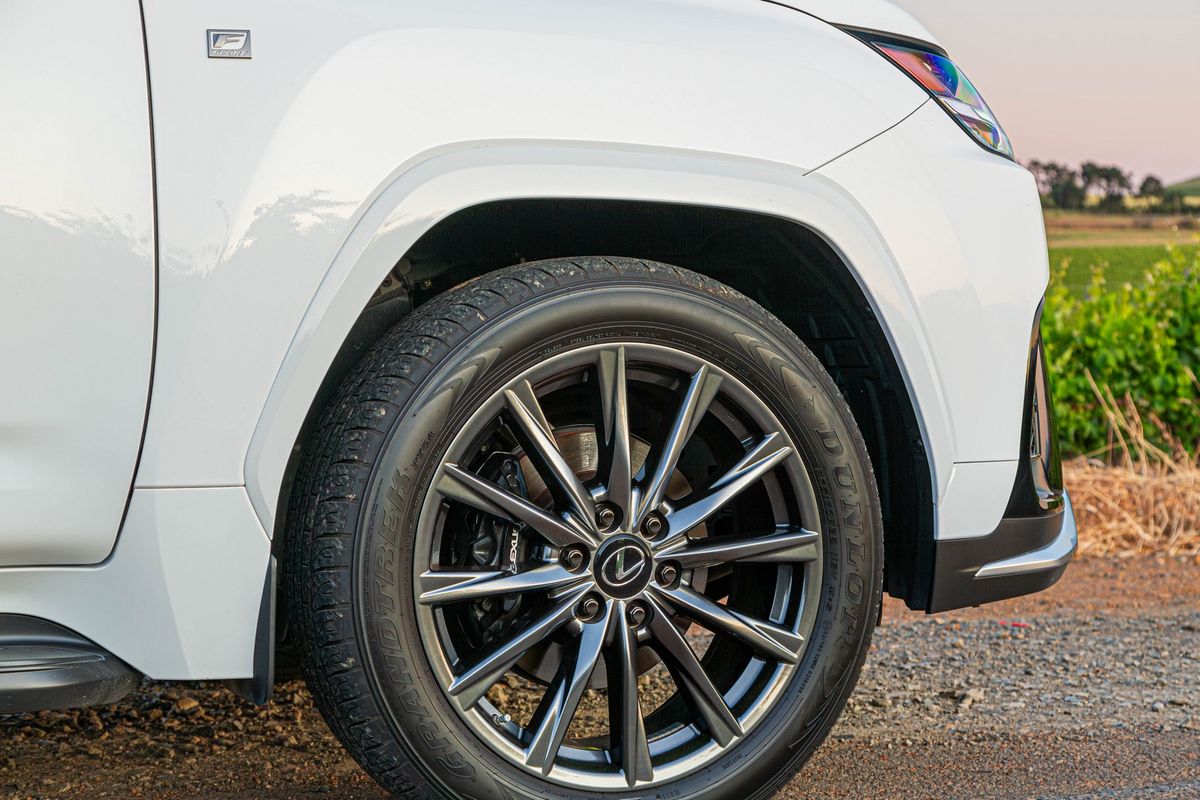
There’s also the RX 350 F Sport (R1 543 200), employing the same turbocharged 2.4-litre unit as the standard RX 350 but adding F Sport goodies inside and out. These include a striking body kit (and grille), black 21-inch alloy wheels and model-specific bolstered sports seats.
Finally, we have the new RX 500h F Sport. Retailing from R1 684 300, the flagship derivative combines the new 2.4-litre engine with the automaker’s hybrid system, resulting in a total peak power output of 273 kW (again, no maximum twisting force figure for the hybrid arrangement is listed, while the petrol engine delivers 460 Nm). Interestingly, this likewise all-paw variant uses a 6-speed automatic transmission.
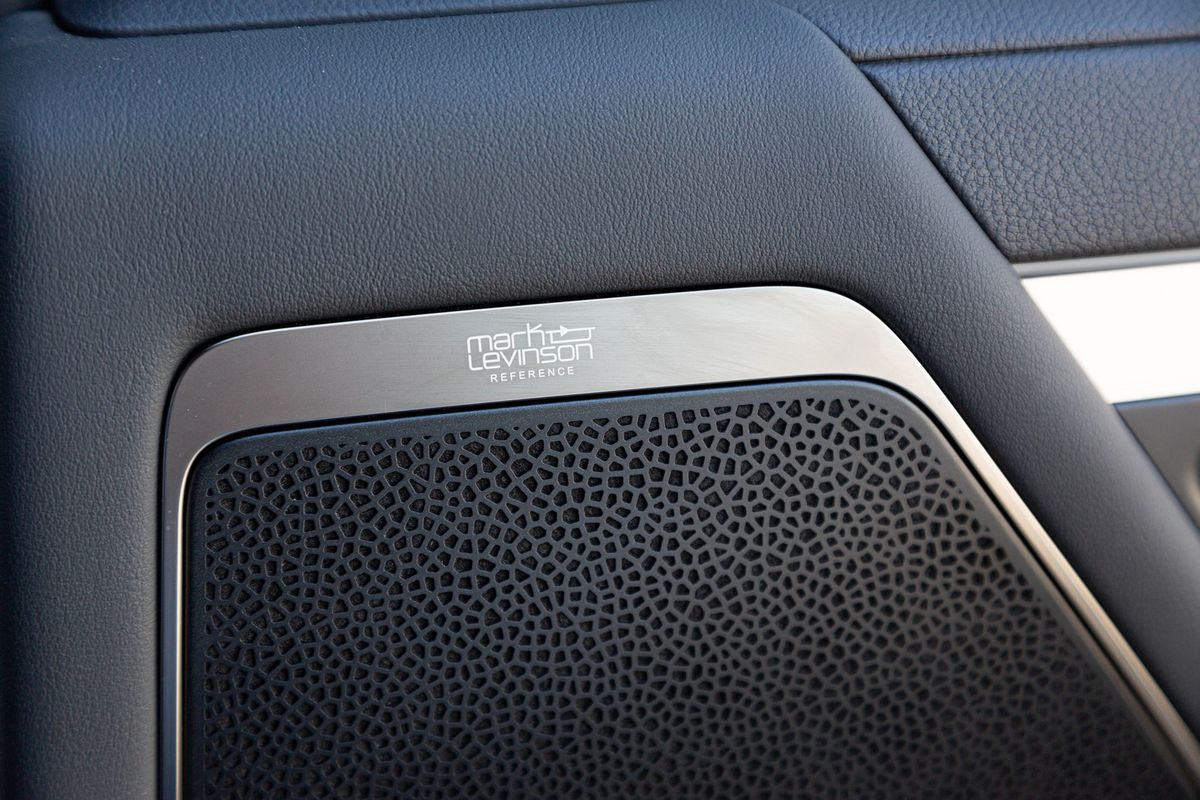
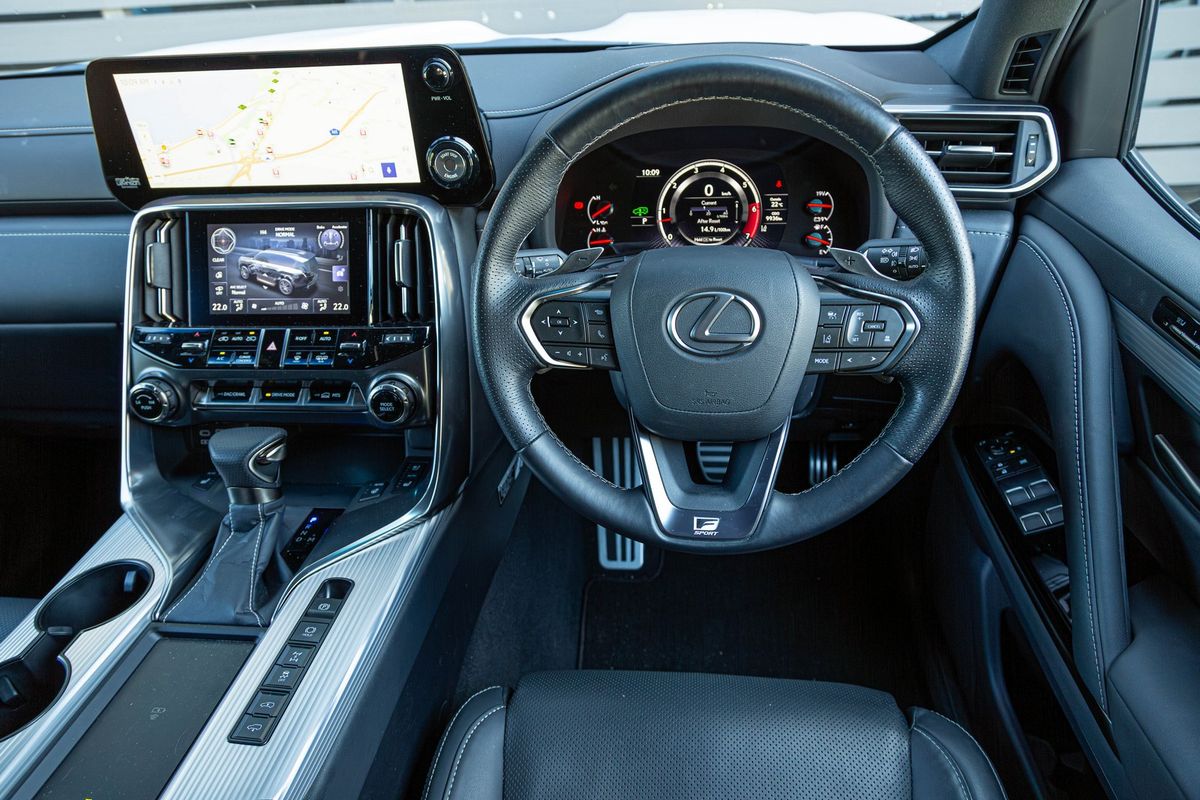
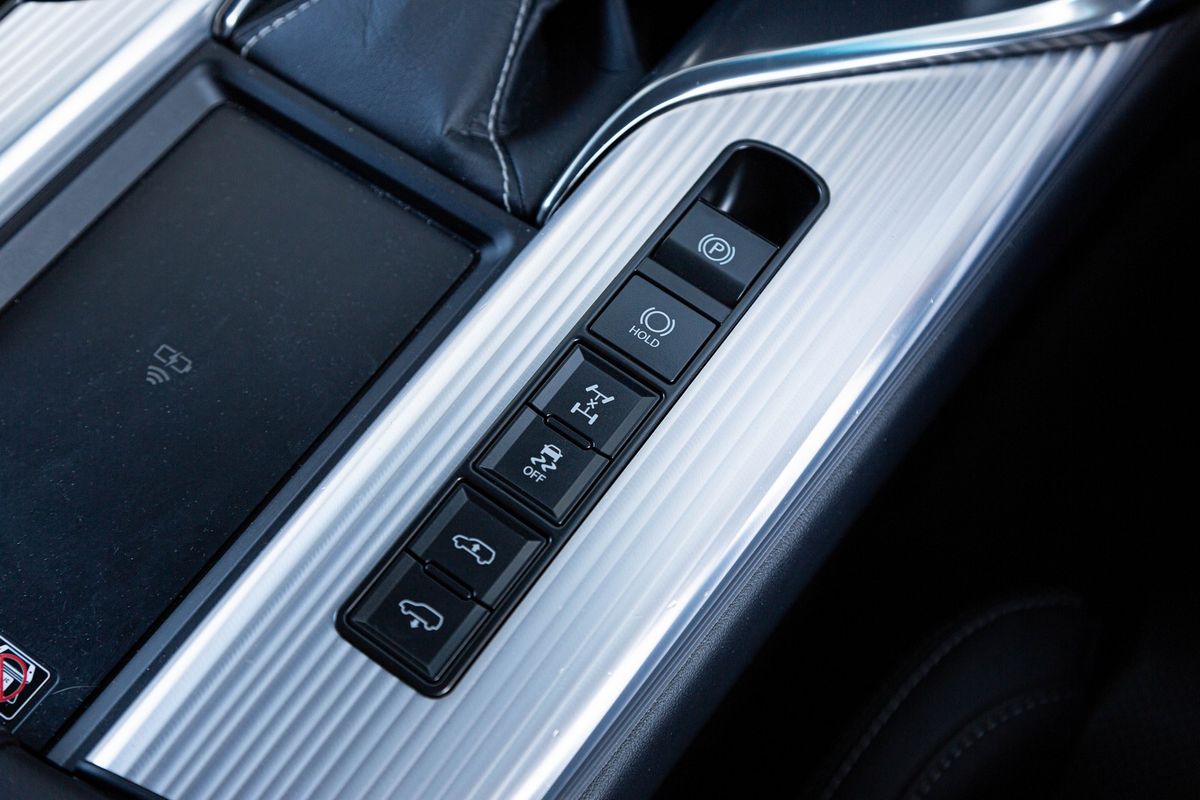
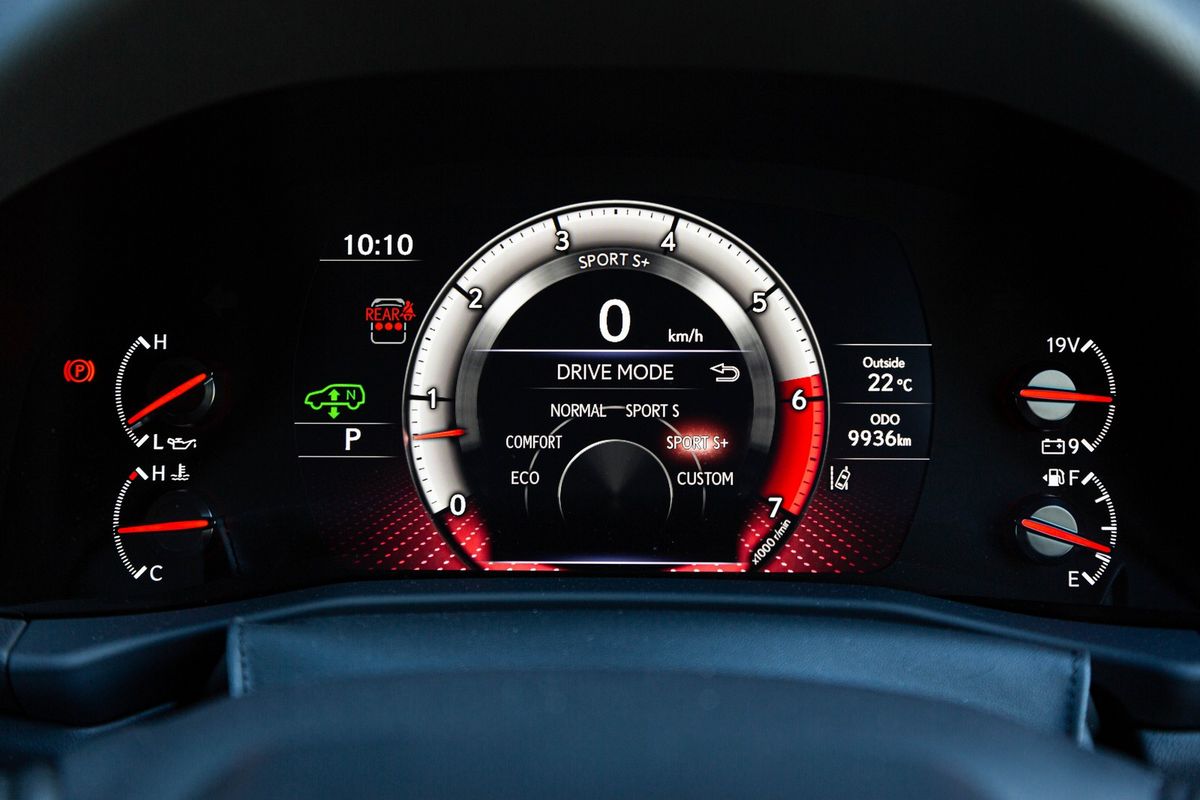
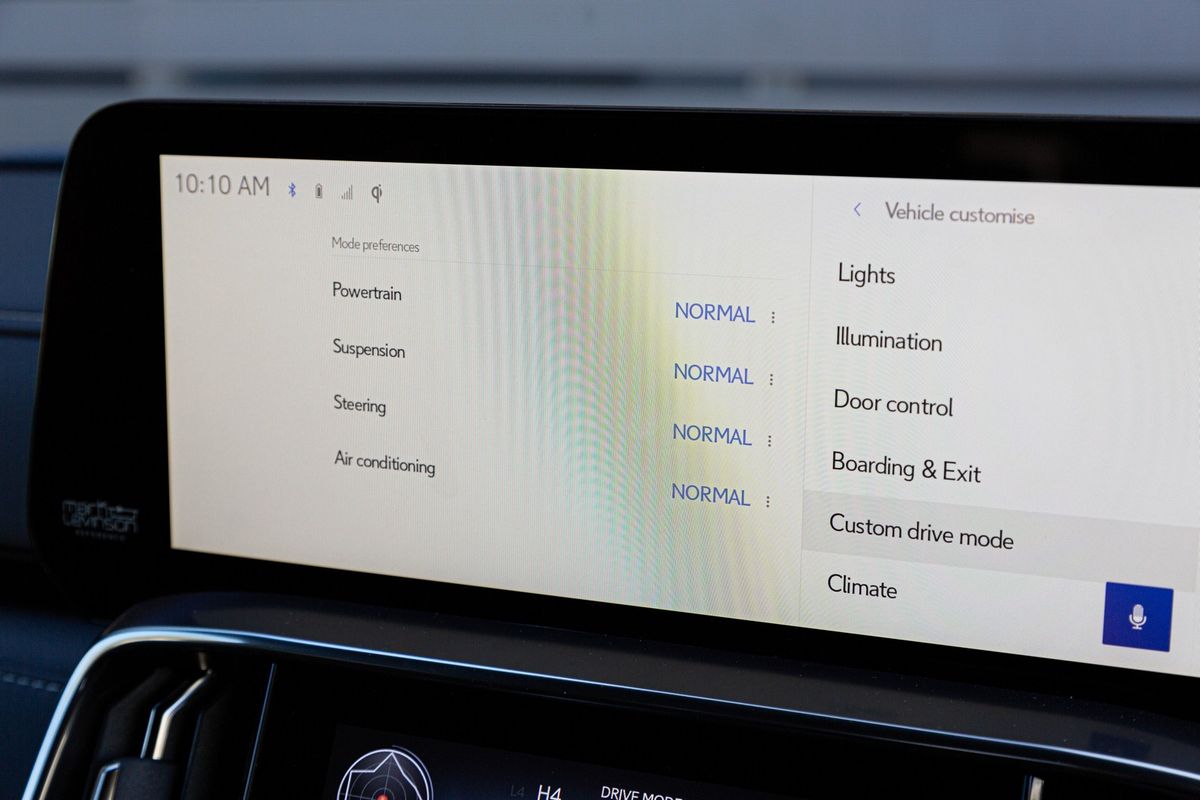
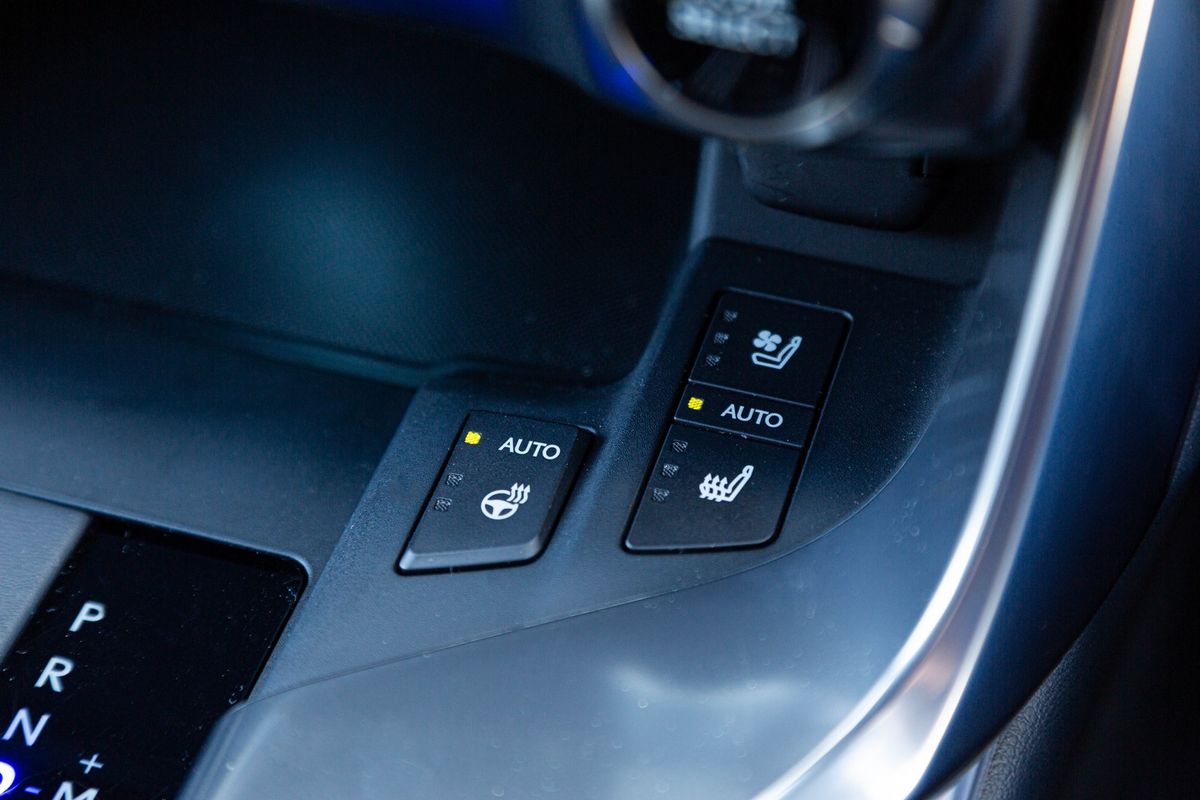
The RX comes very well equipped, with items such as a powered tailgate, LED headlamps (with adaptive high beams), heated/ventilated seats (fore and aft), a heated steering wheel, 10 airbags, a panoramic sunroof, a digital rear-view mirror, adaptive cruise control, a 21-speaker Mark Levinson audio system, wireless smartphone charging and adaptive variable suspension all shipping standard.
How much does the Lexus RX cost in South Africa?
Lexus RX 350 – R1 424 000
Lexus RX 350h – R1 458 300
Lexus RX 350 F Sport – R1 543 200
Lexus RX 500h F Sport – R1 684 300
A 7-year/105 000 km warranty and maintenance plan (with intervals of 12 months or 15 000 km) of the same length are included in the purchase price of all Lexus RX derivatives.
Here’s a first look at the updated Audi Q8 and Audi SQ8 as the Ingolstadt-based brand has announced revisions to the luxury sports SUV.
This is the updated Audi Q8, which brings a number of cosmetic, lighting technology and trim upgrades to market. The Q8 is a coupe SUV and is a rival to the BMW X6 and Mercedes-Benz GLE Coupe. Riding on the MLB Evo platform and built in Bratislava, Slovakia, the 5-seater Audi Q8 has impressed us.
The update you see now comprises some visual enhancements along with trim upgrades and the introduction of a petrol-powered SQ8, which replaces the diesel derivative. Visually, make no mistake, this is an Audi Q8 through-and-through, but you’ll quickly spot the all-new HD Matrix LED headlight setup.
These new headlights feature a laser as an additional high beam, digital daytime running lights and light signatures. At the rear, there are digital OLED lights with four selectable rear light designs. There are also revisions to the air intakes and bumpers. Customers can opt for the S Line, Black and Black Plus optic package to personalise their updated Audi Q8. There are sportier-looking exhaust tips too.
Customers have three new paint colours to choose from, such as the Sakhir Gold you see here, Ascari Blue and Chili Red. There are five new wheel designs with sizes ranging from 21- to 23-inches.
The Audi Q8 has received a digital enhancement too, with access to third-party apps like Spotify now being available through a market-specific app store. Over-the-air updates are also available for the updated Audi Q8. The driver assistance system display has received an upgrade too, with the virtual cockpit now offering road info in full HD.
Audi Q8 and SQ8 Powertrain
The Audi Q8 engine lineup is mostly unchanged, with the headline story being the performance-biased Audi SQ8 ditching diesel power for a rumbling petrol V8. The updated Audi Q8 features adaptive air suspension, with the SQ8 featuring a sportily-tuned air suspension setup. All-wheel steering is standard on the SQ8 and optional for the Q8.
Kicking off the range is the 45 TDI, a 3.0-litre turbocharged V6 with 170 kW and 500 Nm. Audi claims a 0-100 kph time of just 7.1 seconds while consuming around 8.9 L/100 km.
The Audi Q8 50 TDI offers the same V6 diesel engine, but with higher outputs of 210 kW and 600 Nm, giving it a claimed sprint to 100 kph time of just 6.1 seconds. A consumption figure of 8.9 L /100 km is claimed. For the petrol fans, there’s a 3.0-litre V6 with 250 kW and 500 Nm, and that’s good for a 0-100 kph time of just 5.6 seconds while consuming around 12.8 L/100 km on the combined cycle.
Every updated Audi Q8 features an 8-speed automatic transmission which drives all four wheels and a 48V mild-hybrid system which is said to reduce consumption by 0.5 L/100 km.
The big news is the updated Audi SQ8 has switched from diesel power to a 4.0-litre turbocharged V8 petrol with 372 kW and 770 Nm. Thanks to a quick-shifting 8-speed Tiptronic transmission and quattro permanent all-wheel drive, the updated Audi SQ8 is capable of 0-100 kph in just 4.1 seconds.
The Audi SQ8 TFSI ships standard with 21-inch wheels and large 285/45 tyres, with options in 22- and 23-inches.
Static photo,
Colour: Sakhir gold metallic
When will the updated Audi Q8 arrive in South Africa?
Audi global said the updated Audi Q8 launch will take place in September 2023, while Audi South Africa said units will be arriving in SA in the second quarter of 2024. We’ll be test driving the new model at its international driving event in Cape Town in early November.