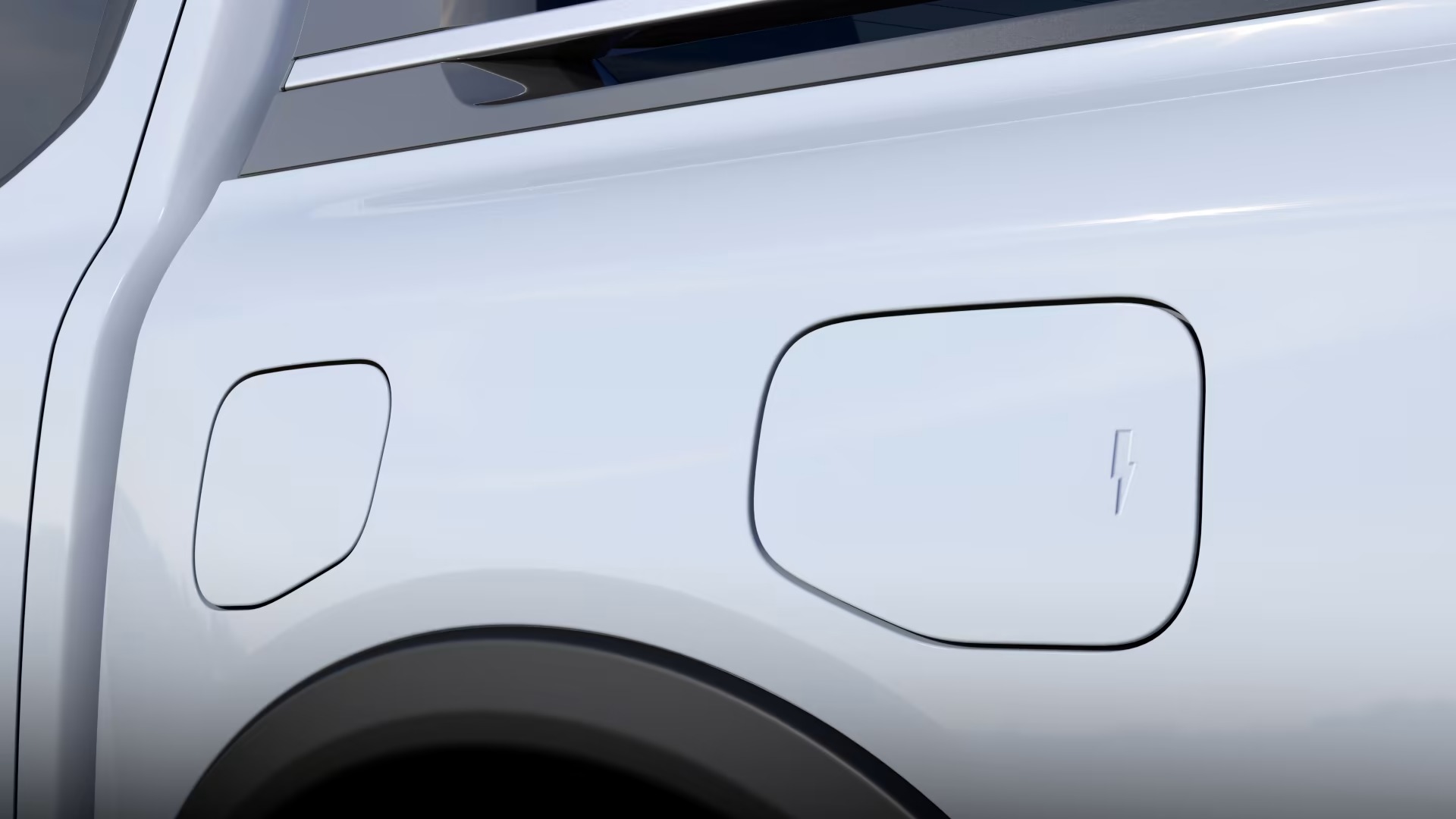
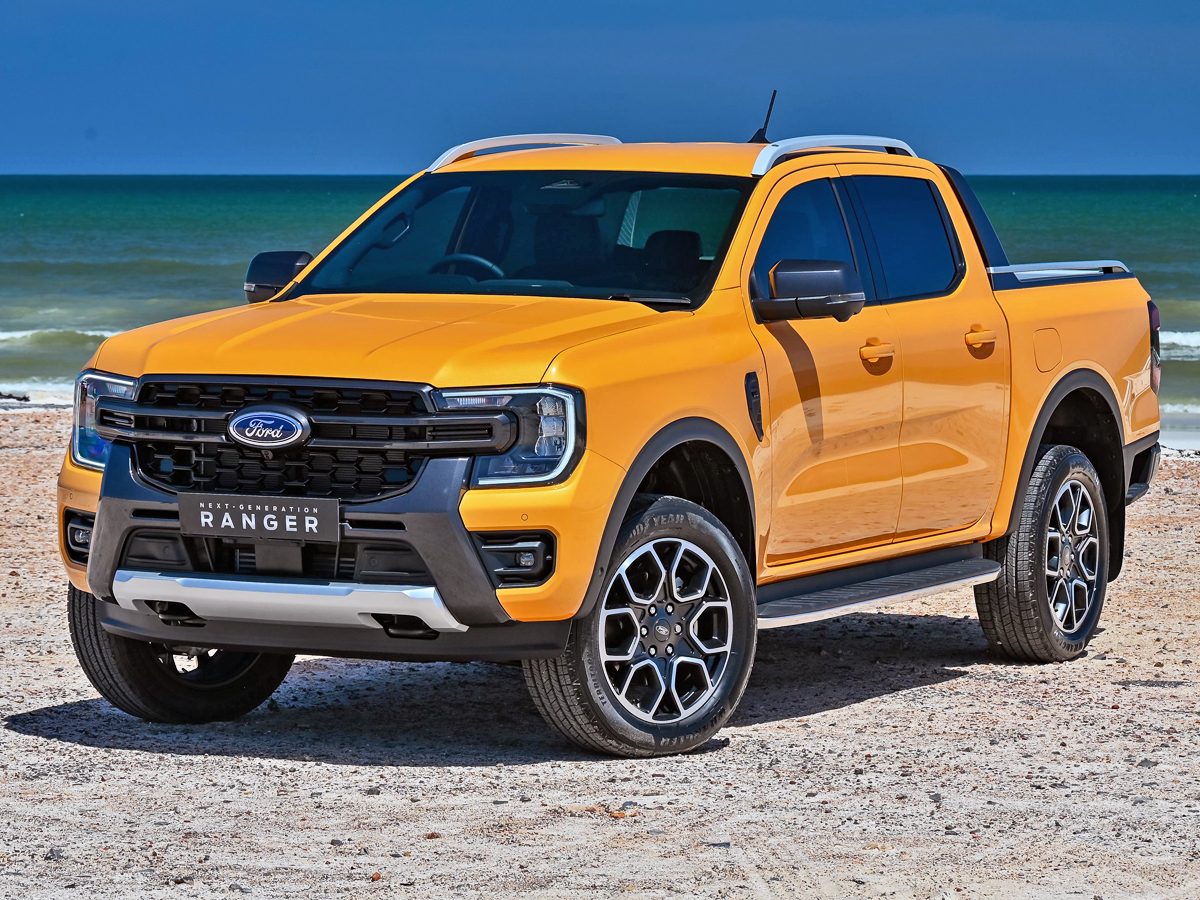
This is the Ford Ranger PHEV and will feature a pure electric range of 45 km along with a 3.5 ton tow rating. Here are the early details!
The Ford Ranger PHEV (Plug-in Hybrid Electric Vehicle) has just been revealed, but not every technical detail is available. Right now, we know that it will be going on sale globally in early 2025, is powered by petrol, offer a tow rating of 3.5 tons and have a pure electric driving range of around 45 km.
The Ranger PHEV is powered by a 2.3-litre turbocharged 4-cylinder petrol engine, paired to an electric motor and battery. Ford says its latest creation features more torque than any Ranger before, but didn’t mention power and torque amounts. If we look at the current Ranger lineup, that means the PHEV will have more than the 600 Newtons offered by the 3.0-litre V6 turbodiesel.
Ford has said that it has worked on the chassis and suspension to cope with the additional weight of the battery and electric motor. For what its worth, the standard 2.3-litre offers 210 kW and 415 Nm, and it will be interesting to see how big the battery and motor combination are.
The PHEV componentry is not just for reduced consumption as Ford says it can power and recharge your tools, meaning you won’t need to bring along extension cables and generators. Dubbed “Pro Power Onboard”, this optional feature is also perfect for camping.
Ranger PHEV Technology
Right now, the Ford factory in Silverton, Pretoria assembles the new Ranger (and Volkswagen Amarok) for both local consumption and for export. Europe is the primary customer of Ford SA’s wares and it’s only a matter of time before we hear from Ford SA about the local debut of the Ranger PHEV.
We’ve already looked at year-to-date double-cab sales in South Africa, but what about 1-tonne single-cab bakkie figures? Let’s see which workhorses are Mzansi’s favourites…
Recently, we revealed which bakkie was the most-popular double cab in South Africa in 2023 thus far. So, what about the single-cab bakkie sales race? Well, let’s take a closer look at year-to-date registrations for 2-door 1-tonne bakkies.
Since Naamsa’s monthly sales figures unfortunately don’t include a breakdown of the available bakkie body styles (single-, extended- and double-cab shapes), we’ve again turned to the statistics experts over at Lightstone Auto for some help identifying Mzansi’s best-selling 1-tonne single-cab bakkies over the opening 8 months of 2023.
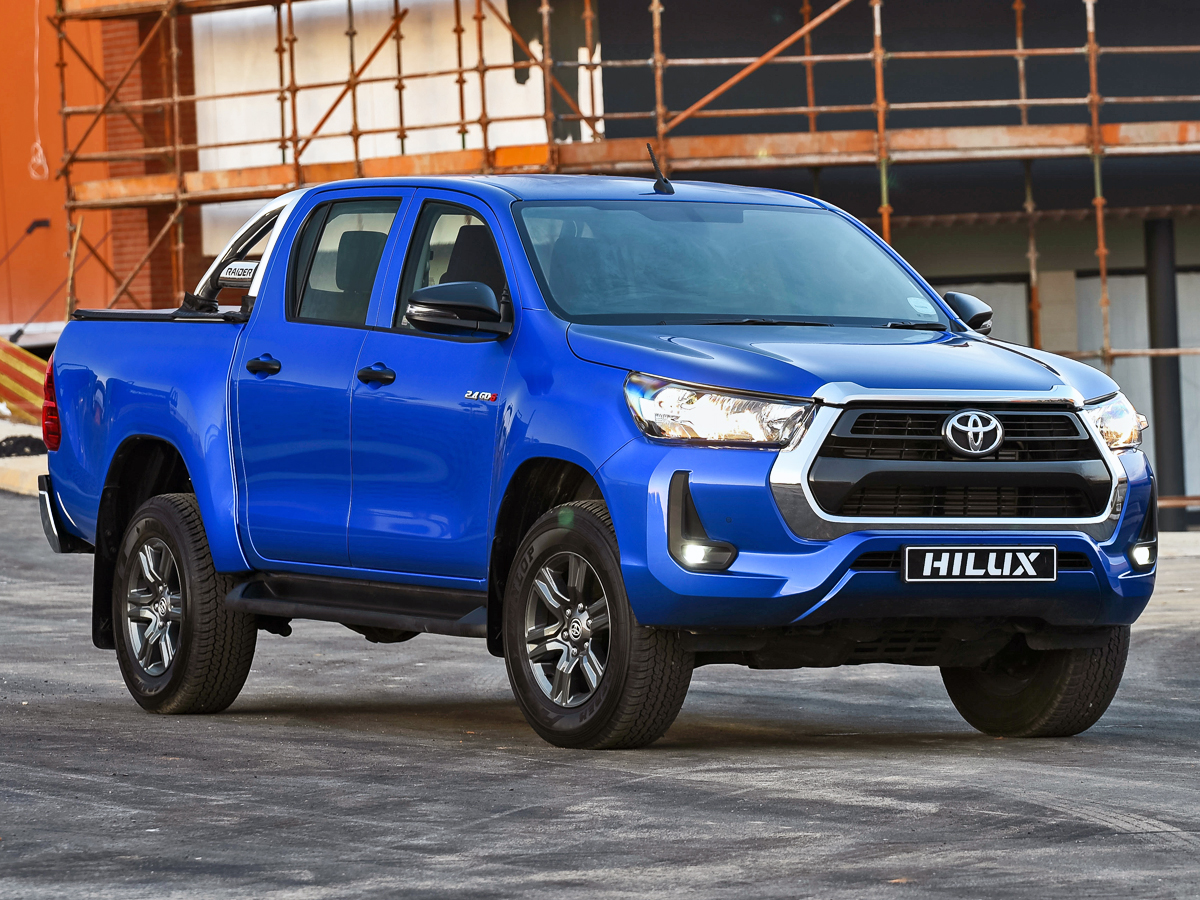
Year to date, the Toyota Hilux is SA’s best-selling single-cab bakkie.
Before we examine the figures, we should take a step back and consider what the overall picture – including all body styles – looks like, year to date. In 2023 thus far, the Prospecton-built Toyota Hilux is leading the pack on 25 092 units, followed by the Silverton-made Ford Ranger (16 182 units) and the Struandale-produced Isuzu D-Max (13 174 units).
Lightstone Auto’s figures, however, show the Toyota Hilux is currently South Africa’s favourite 1-tonne single-cab bakkie, with 9 017 units – or around 36% of the Japanese vehicle’s total – registered over the opening 8 months of 2023. That’s more than even the Nissan NP200 – which is the market’s only half-tonne (as opposed to than 1-tonne) contender, but will be put out to pasture in Q1 2024 – managed, with the latter reaching 8 862 units.
About 44% of total Isuzu D-Max sales in 2023 thus have been single-cab units.
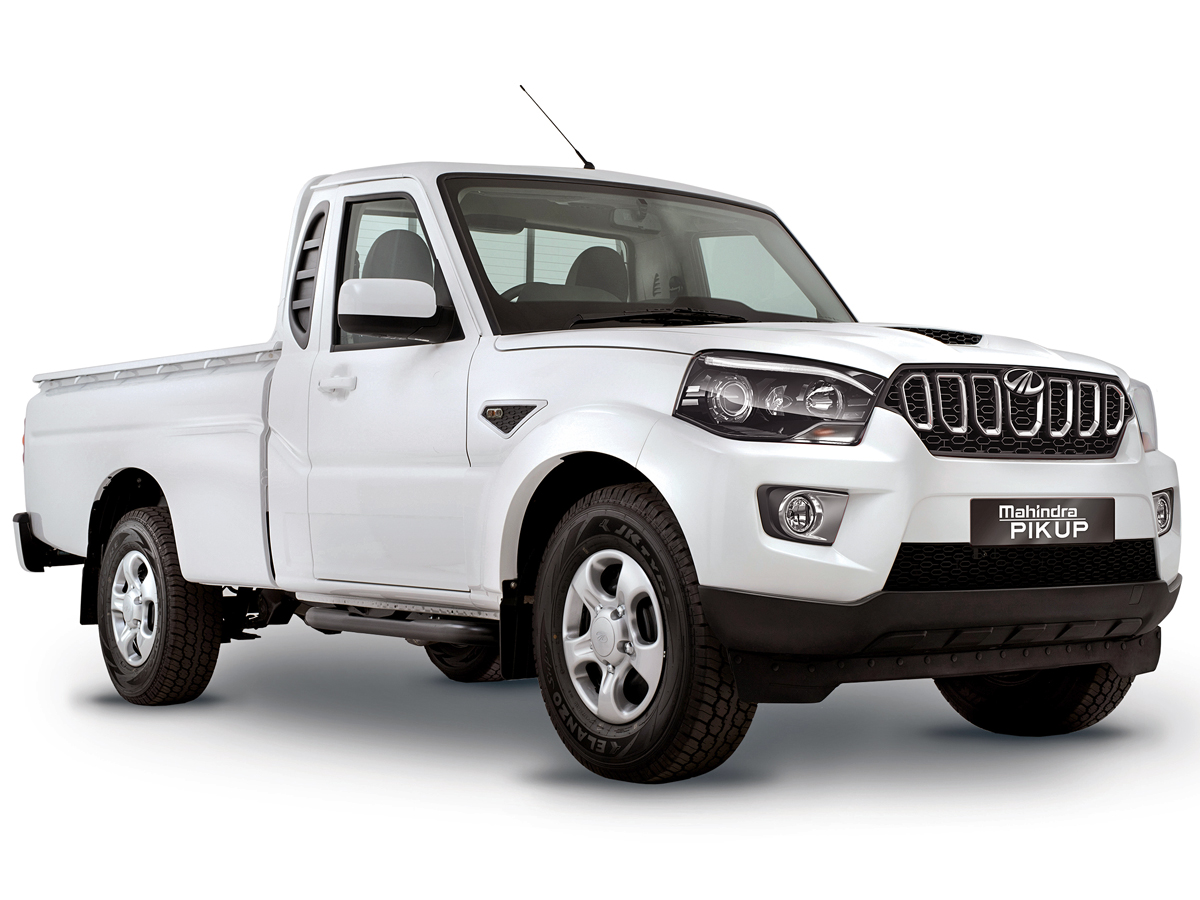
The Isuzu D-Max claims 2nd position on the list of SA’s best-selling 1-tonne single cabs, with 5 781 units (about 44% of a total that includes both the current-generation D-Max as well as the prolonged-lifecycle Gen 6 line-up) registered so far this year. Fascinatingly, the final spot on the podium goes to the Mahindra Pik Up, which managed 4 322 units – or nearly 75% of the KwaZulu-Natal-assembled bakkie’s total – in the 2-door body style.
The Mahindra Pik Up completes the single-cab sales podium, year to date.
What about the Ford Ranger? Well, the single-cab version of the Blue Oval brand’s bakkie is well off the pace, with just 932 units (or not even 6% of the Ranger’s grand total) sold in the reporting period. According to Lightstone Auto, single-cab derivatives of all other 1-tonne bakkies available in this body style come to 6 722 units, year to date.
And extended cabs? Well, the Hilux Xtra Cab leads the charge here with 3 762 units (approximately 15% of Hilux sales), followed by the Ranger SuperCab (1 358 units or about 9% or Ranger registrations) and D-Max Extended Cab (1 265 units or around 10% of D-Max sales).
You Can Recover Your Insurance Excess if an Accident Wasn’t Your Fault
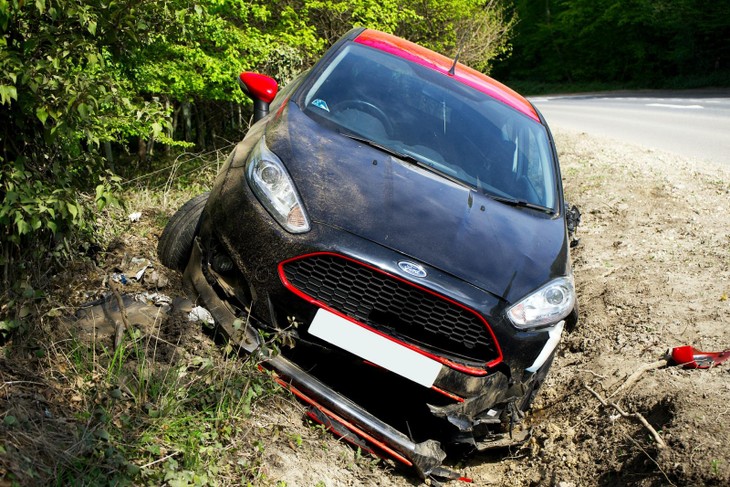
If you’re the owner of an insured vehicle, you will know that when a claim you submit to your car insurance company is approved, you’re obligated to pay an excess – even if the accident wasn’t your fault. However, it might be possible for your car insurance company to recover your excess and make you – and your budget – smile again.
PARTNERED CONTENT
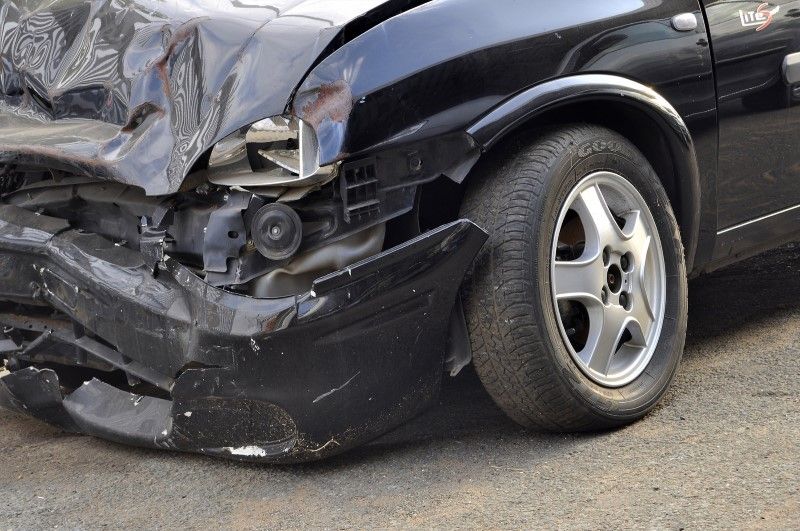
If a claim you submit after an accident is successful, your insurance company will cover the costs of the repairs (once you’ve made a small co-payment – the excess), but that doesn’t necessarily mean you’ll never see that money again.
How to recover an insurance excess
If you were involved in an accident and it wasn’t your fault, there’s a chance you may be able to get your excess back (or at least a portion of it). Your insurance company can help you recover this money. The reverse applies – if you were at fault, the other party’s insurer may attempt to recover their costs from you and your insurer.
The first rule for the best chance to recover your excess money is: “Gather as much information as possible.”
At the time of the accident, fish out that notebook and pen gathering dust in the cubby hole and write down:
Date and time
Weather conditions
Road conditions
All the relevant personal details of the parties involved in the accident, as well as any witnesses.
Full name
ID number
Contact number
Address
Vehicle description
Vehicle registration number
Vehicle licence details
Take photographs of the accident from as many different angles as possible and the licence discs of the vehicles involved.
Report the accident at the nearest police station to open a case as soon as possible.
When you are unlikely to recover your insurance excess
Obviously, if the accident was your fault there is no point trying to recover an excess – but, unfortunately, there are situations where recovery isn’t possible even if it wasn’t your fault, for example:
If you’re the only person involved in an accident. (That pillar might have jumped out at you, but we can’t claim from it.)
If you did not get the complete details of the person at fault.
You didn’t report it to the police station.
The guilty person doesn’t have income or assets with which to pay.
The legal costs of recovering the money outweigh the excess amount.
The guilty party cannot be traced
The merits of the claim are too tricky to be worth the recovery of the excess.
Conclusion
Being involved in a road accident is, at the very least, inconvenient and just not worth the time, money, and headaches. Remember that if you were speeding when the accident happened, you are a guilty party, no matter what the other circumstances might be.
Do you want to learn more about car insurance or review your car insurance requirements with the help of experts? Budget Insurance’s team is always ready to assist; contact them on 086 1600 120 or utilise their online car insurance calculator, which gives you an accurate and budget-friendly quote in minutes.
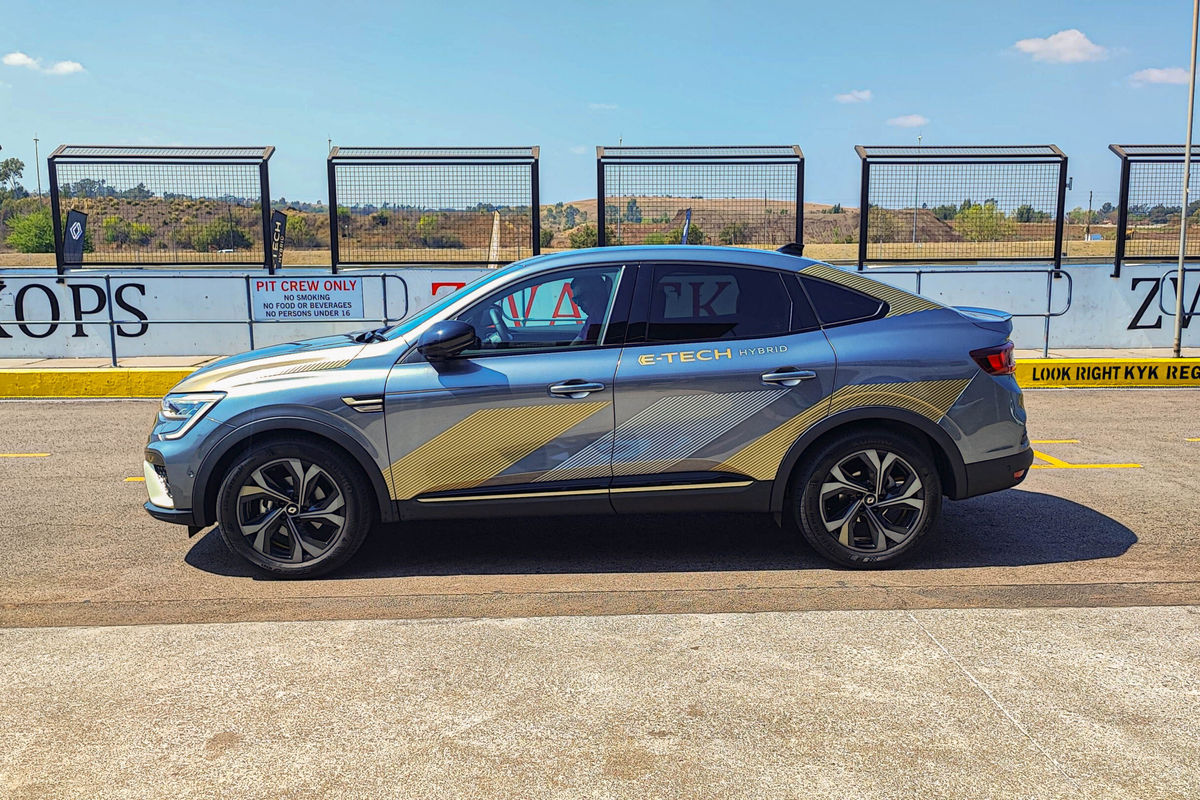
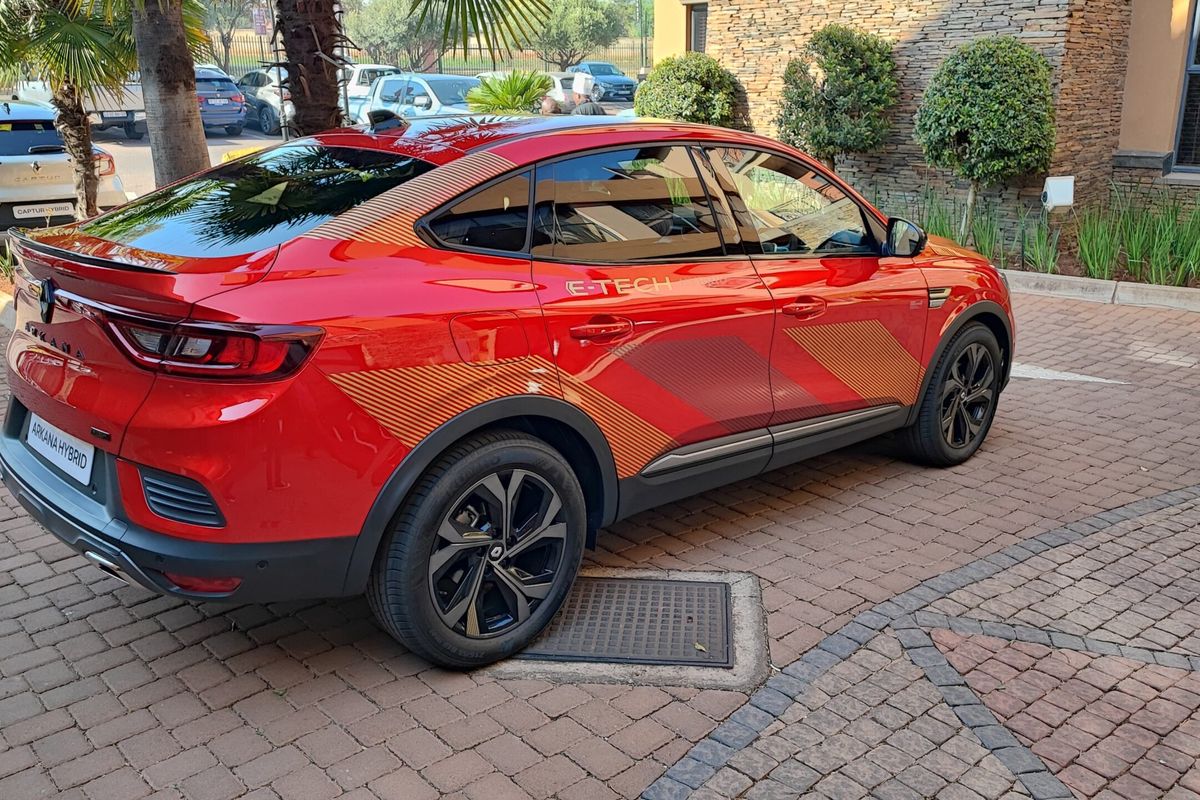
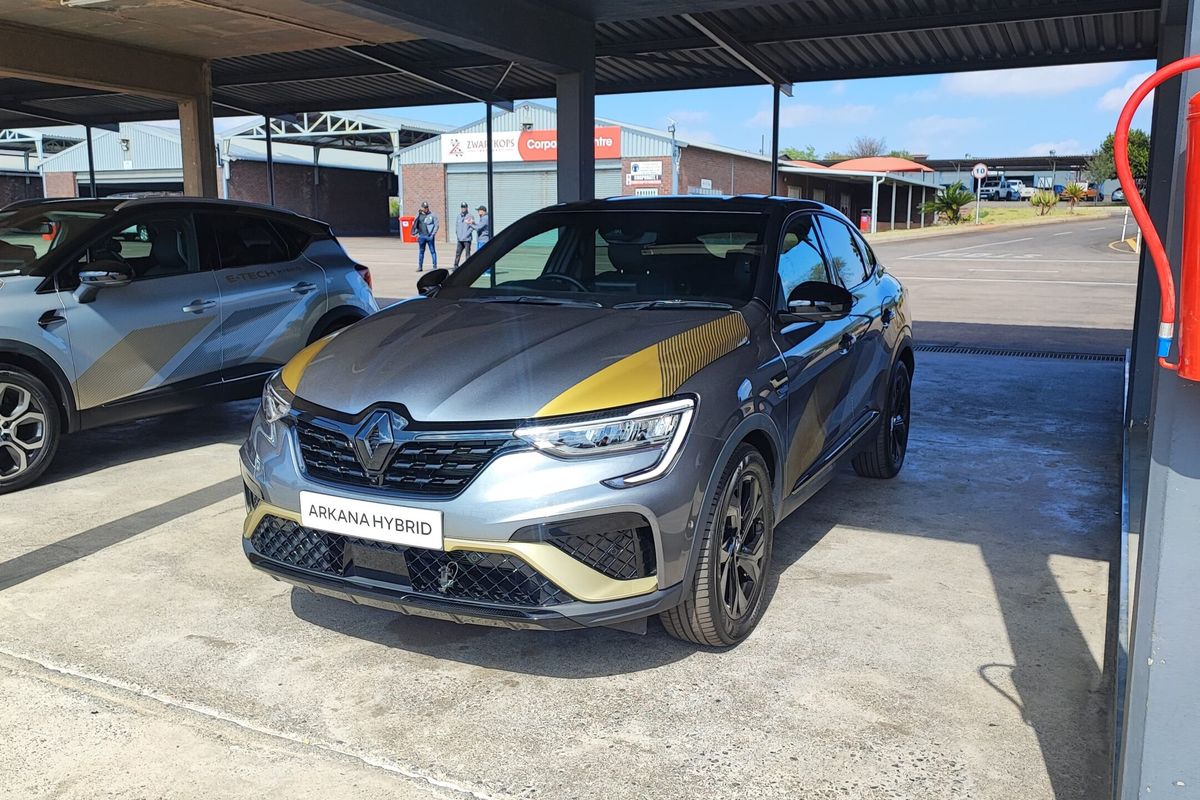
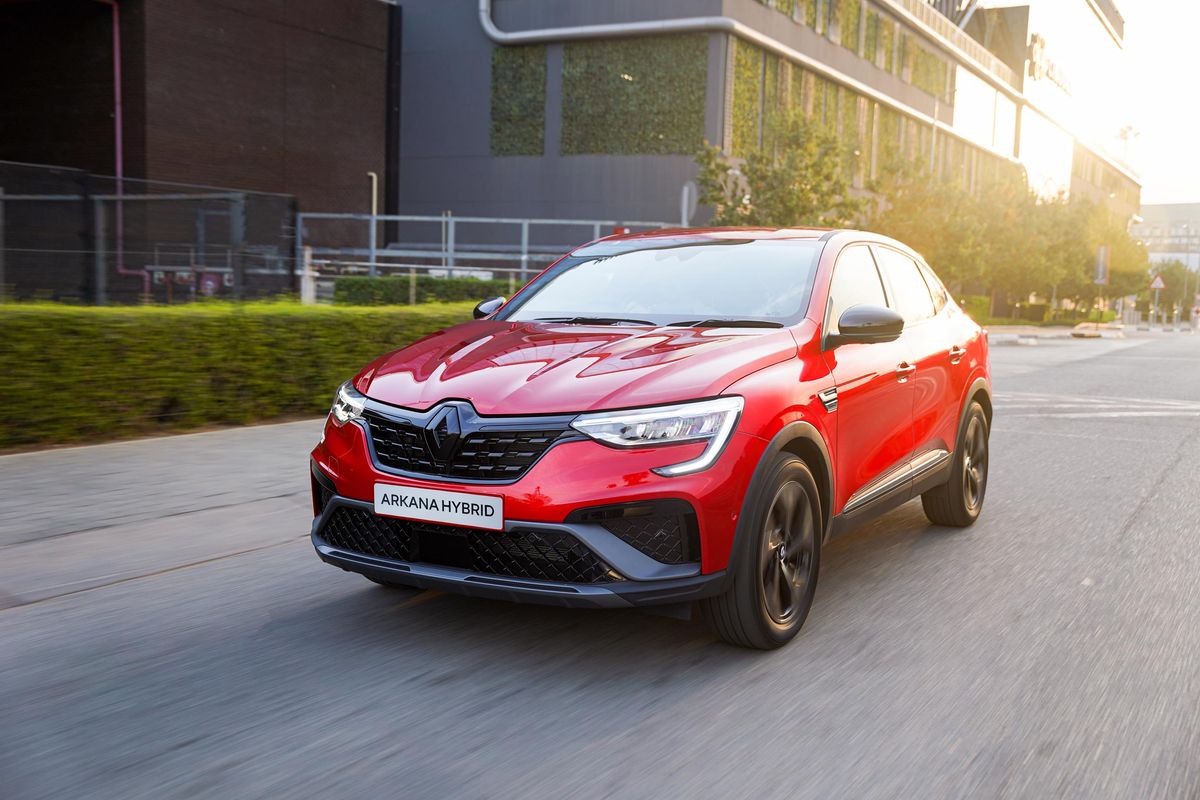
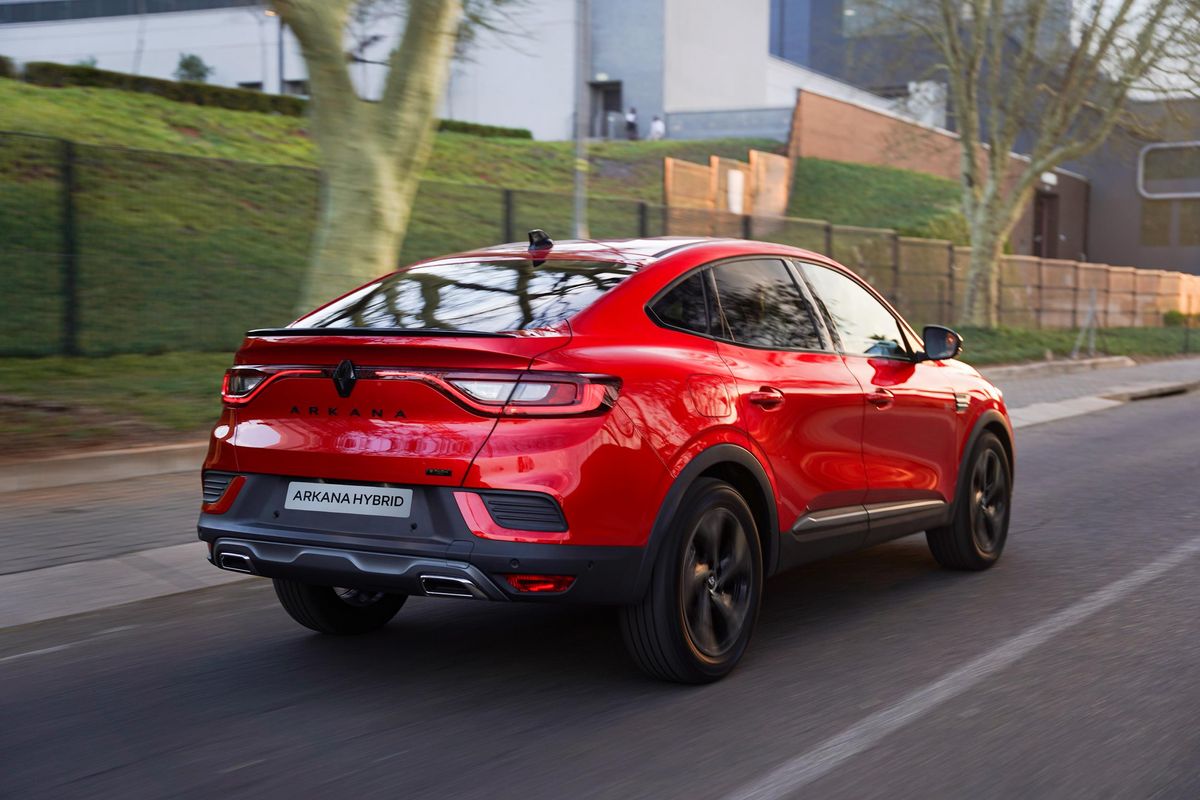
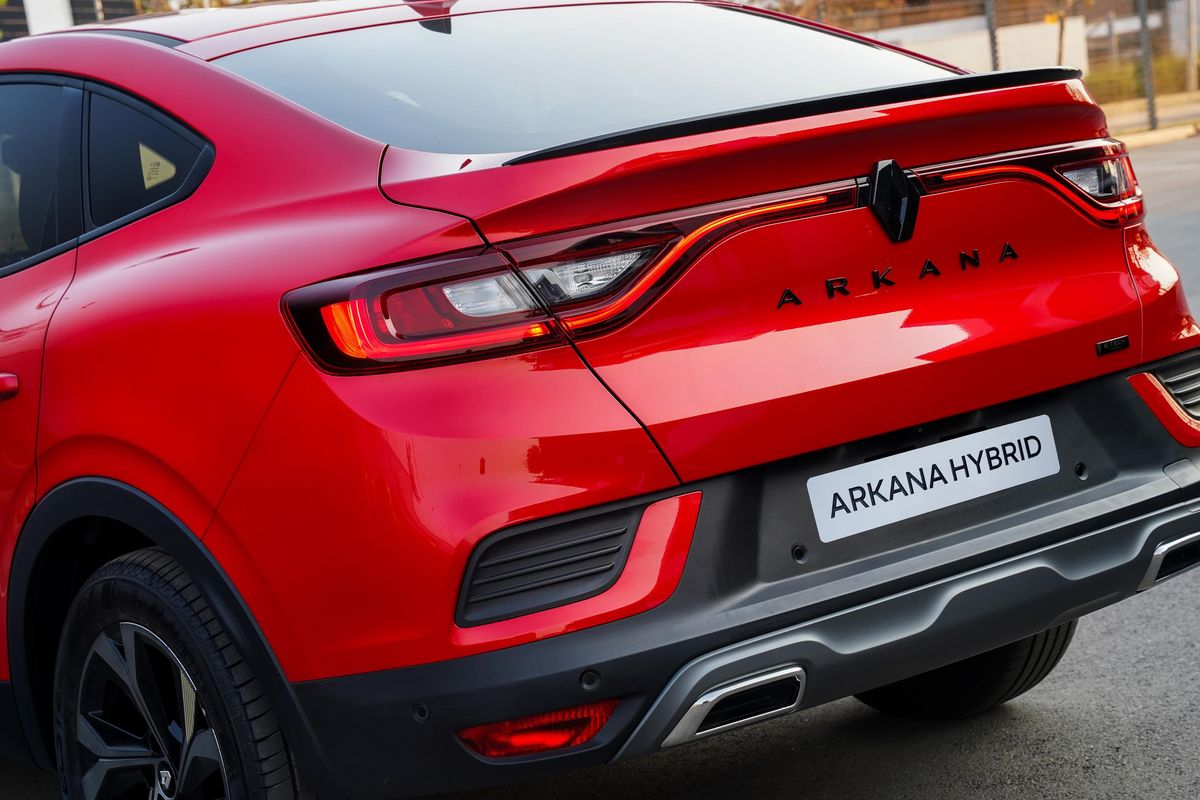
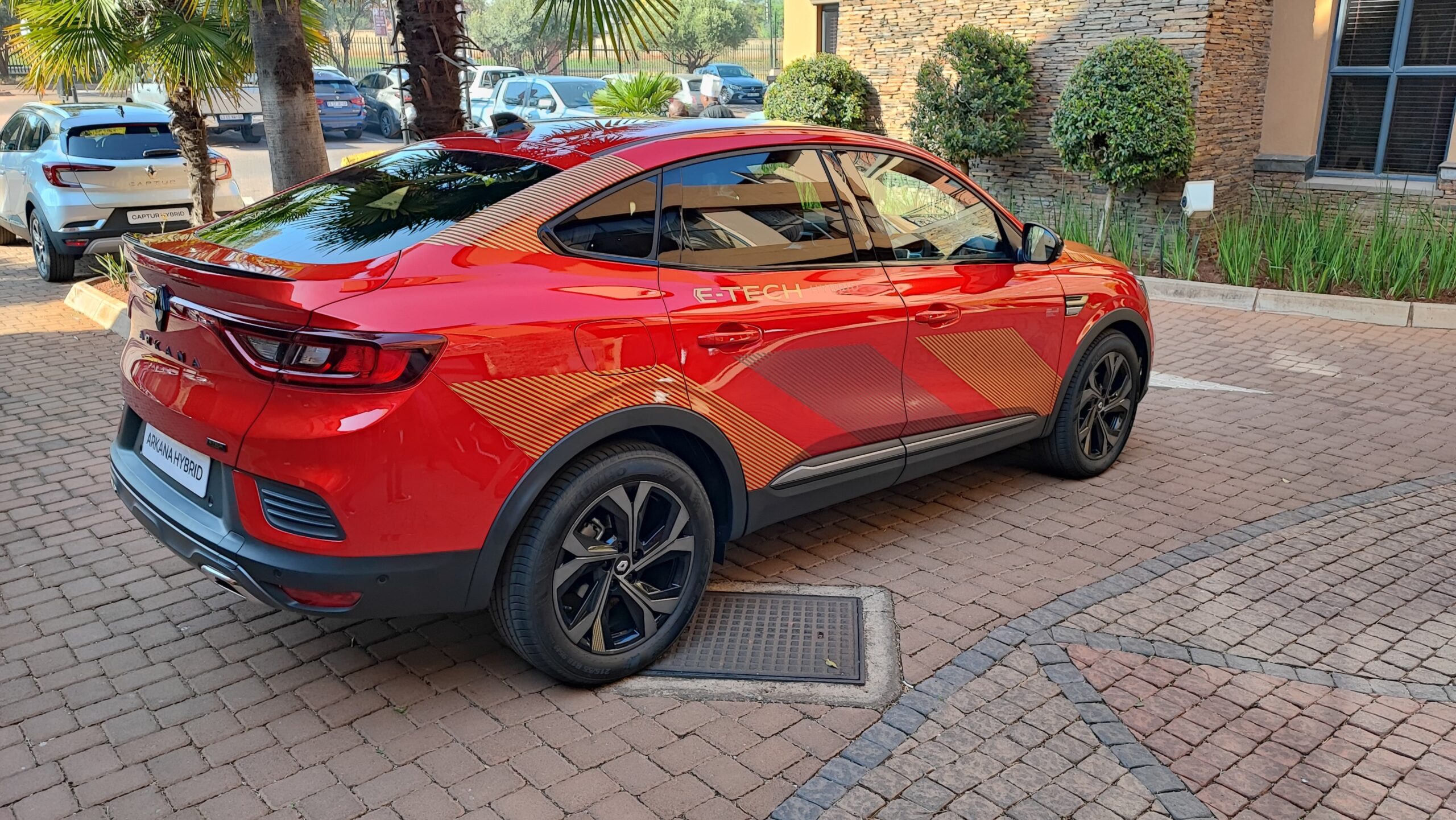
The Renault Arkana is due to hit South African showrooms in 2024 and we’ve had a preview of this new hybrid compact coupe SUV.
What is it?
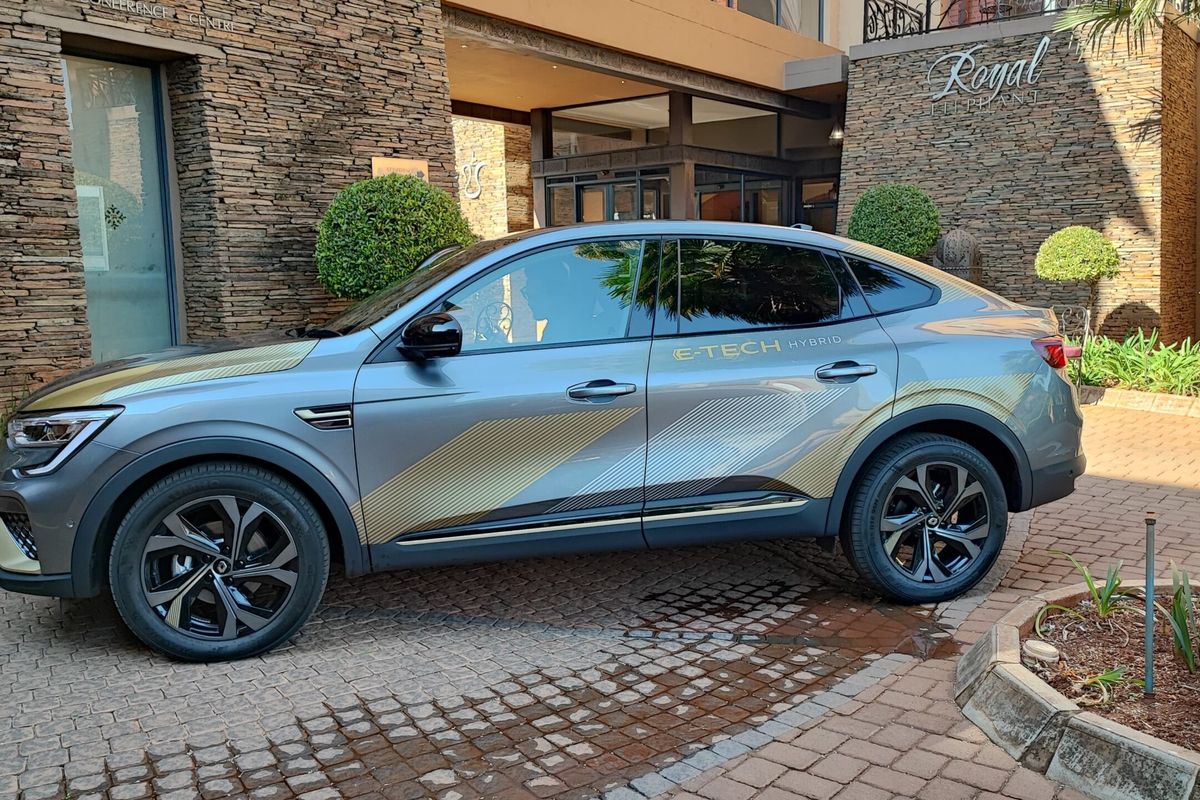
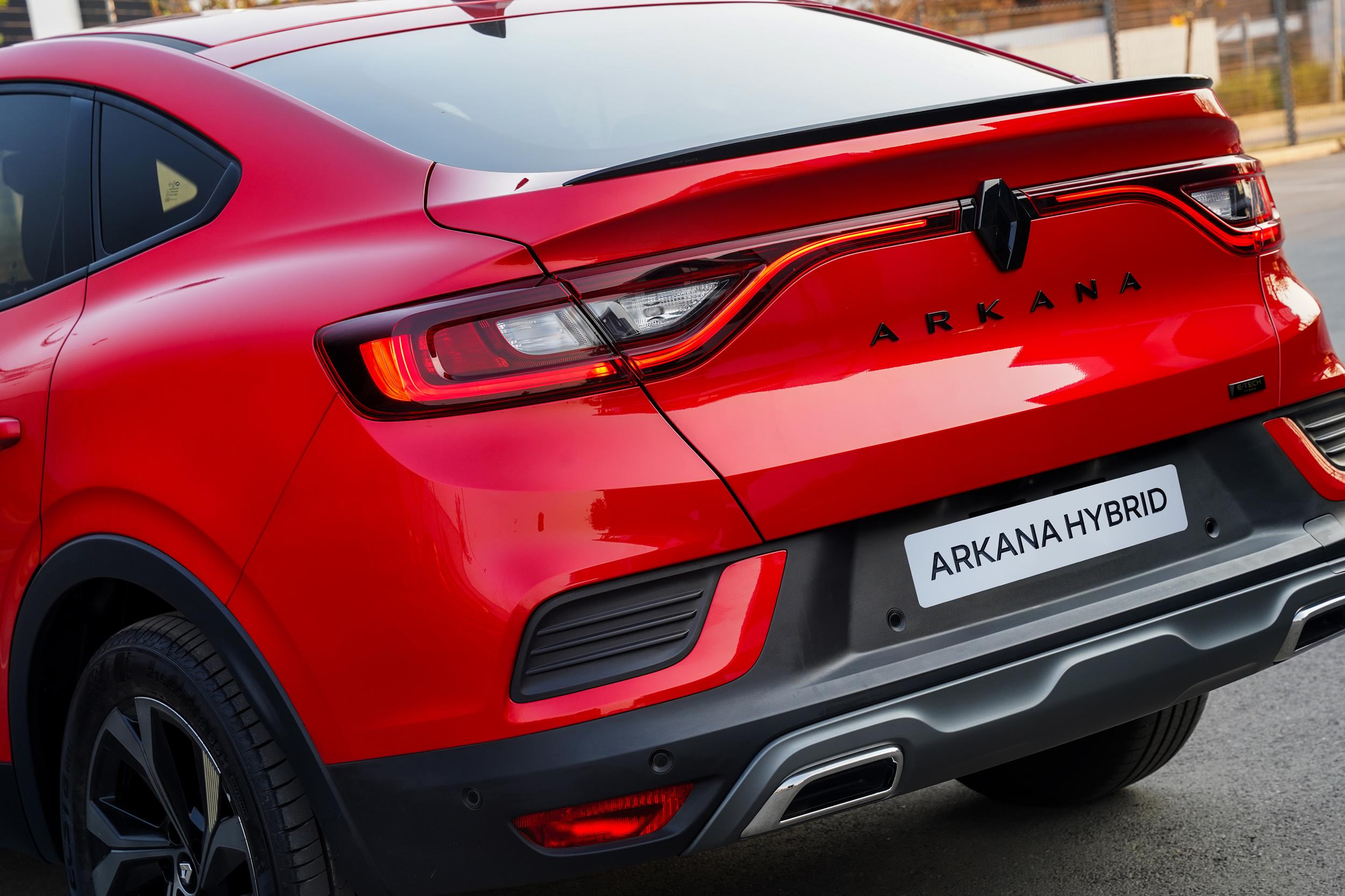
It’s quite the looker! Renault is the latest brand to jump on the coupe-SUV bandwagon; that is why the Arkana’s sweeping exterior design is quite distinct from those of the French marque’s other models.
The Arkana sports Captur-like front-end styling and black cladding all round, but the similarities don’t stop there – the model rides on a tweaked version of the small crossover’s CMF-B HS platform.
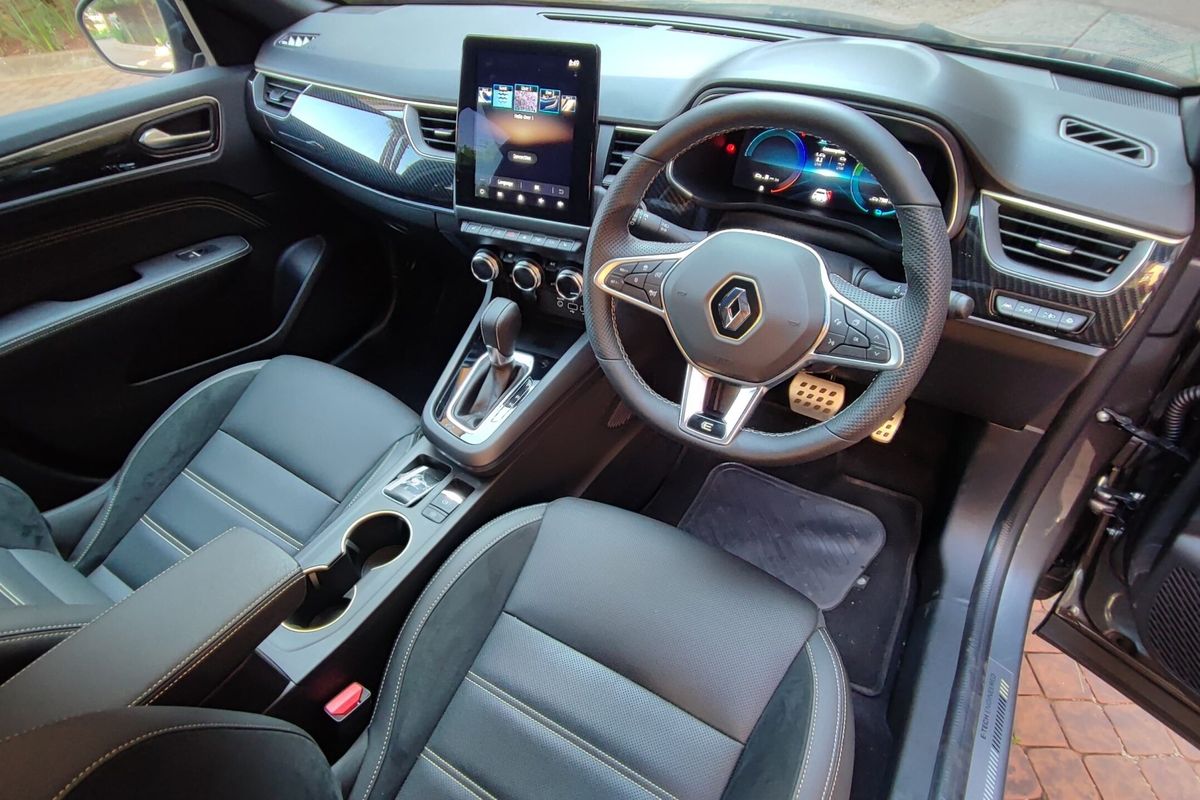
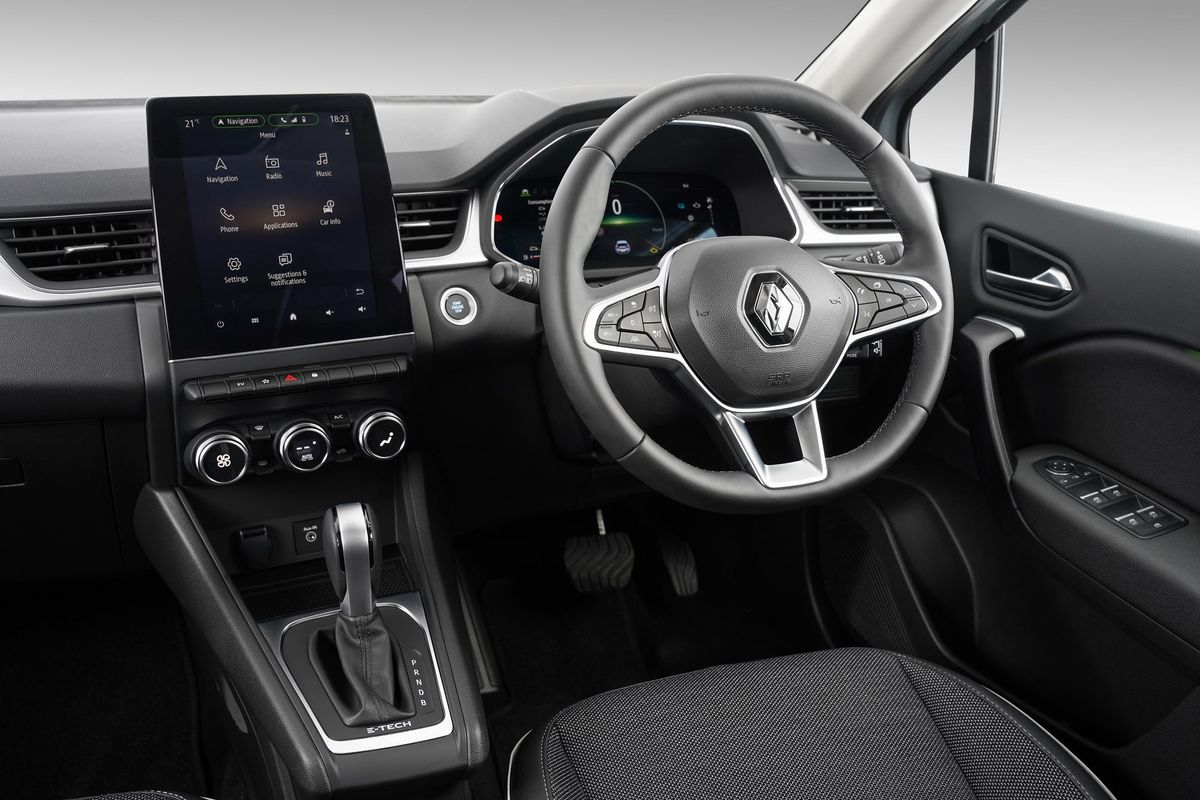
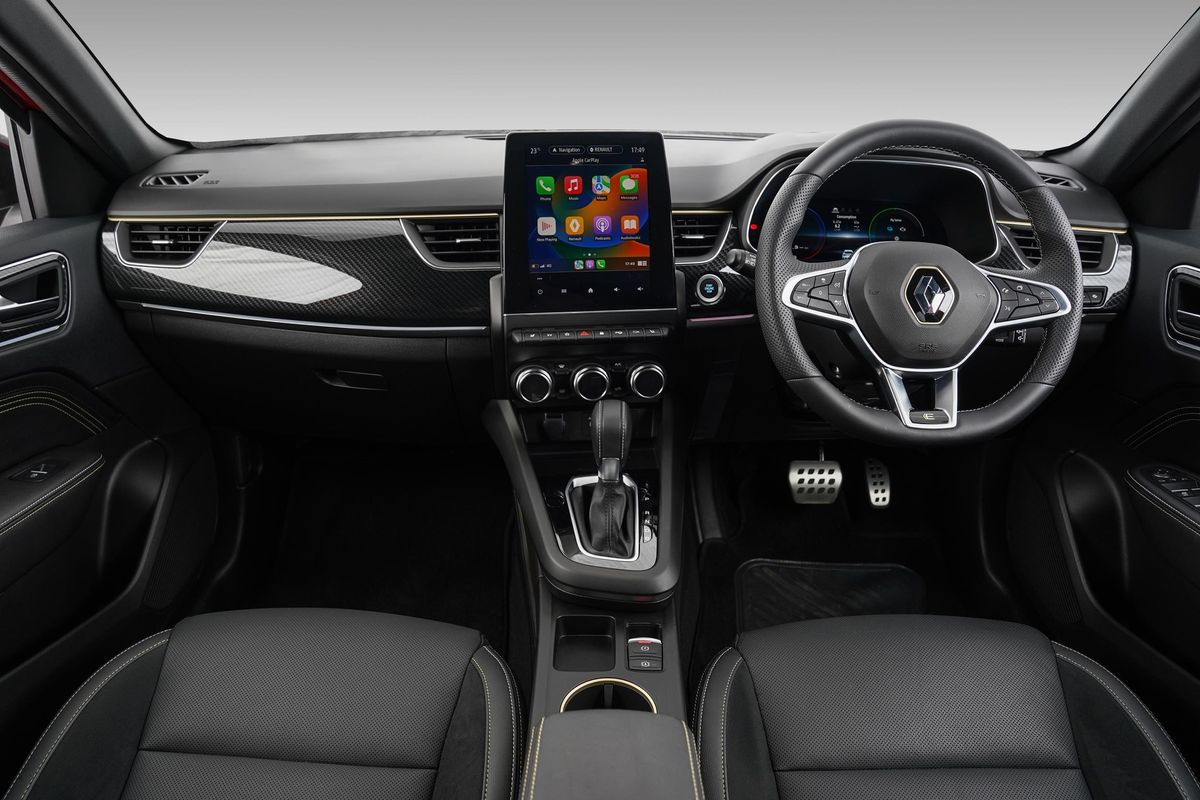
Assembled in South Korea (in the same factory that produced the Koleos), the Arkana looks set to offer a long list of standard features, including a digital instrument cluster, portrait-style infotainment screen and advanced safety equipment. Based on our first impression, the cabin looks and feels quite upmarket.
Globally, the Arkana is offered with a choice of two engines: a 1.3-litre 4-cylinder turbopetrol motor with 113 kW and 270 Nm, and a 1.6-litre 4-cylinder petrol-electric hybrid, which is the derivative shown here.
How does this powertrain work?
We could explain how E-Tech works in detail, but for the sake of brevity, the Arkana Hybrid is propelled by a 70 kW petrol engine in combination with an electric motor, while a 2nd electric motor works as the starter, manages the regeneration and balances the transition between the engine and the other motor.
Combined outputs of 108 kW and 148 Nm are on offer and an automatic transmission drives the front wheels. The electric setup comprises a 36 kW motor and a 15 kW starter generator, and there’s a 1.2 kWh hybrid battery. There’s good news: the electric system is internal and doesn’t need an external charging source. The vehicle’s self-charging and will use braking and coasting to recoup energy.
There’s also a dedicated brake regeneration mode, which can be activated via the transmission lever. Renault claims the Arkana Hybrid can zip from 0 to 100 kph in 10.8 sec and reach a top speed of 172 kph.
Is it that efficient?
With Renault SA claiming a combined fuel consumption of just 5L/100 km and emissions of 108g of CO2/km (for the sake of comparison, the Toyota Corolla Cross Hybrid is said to consume 4.3 L/100 km and emit 98g/km), the Arkana Hybrid has all the makings of a stylish and efficient urban-based compact family car. Considering it has a 50-litre fuel tank, the E-Tech model has a theoretical range of 1000 km.
That sounds almost too good to be true for a petrol vehicle! We know that the Renault Duster (which also has a 50-litre tank) could travel about 1 000 km without needing to be refuelled, but that’s a turbodiesel.
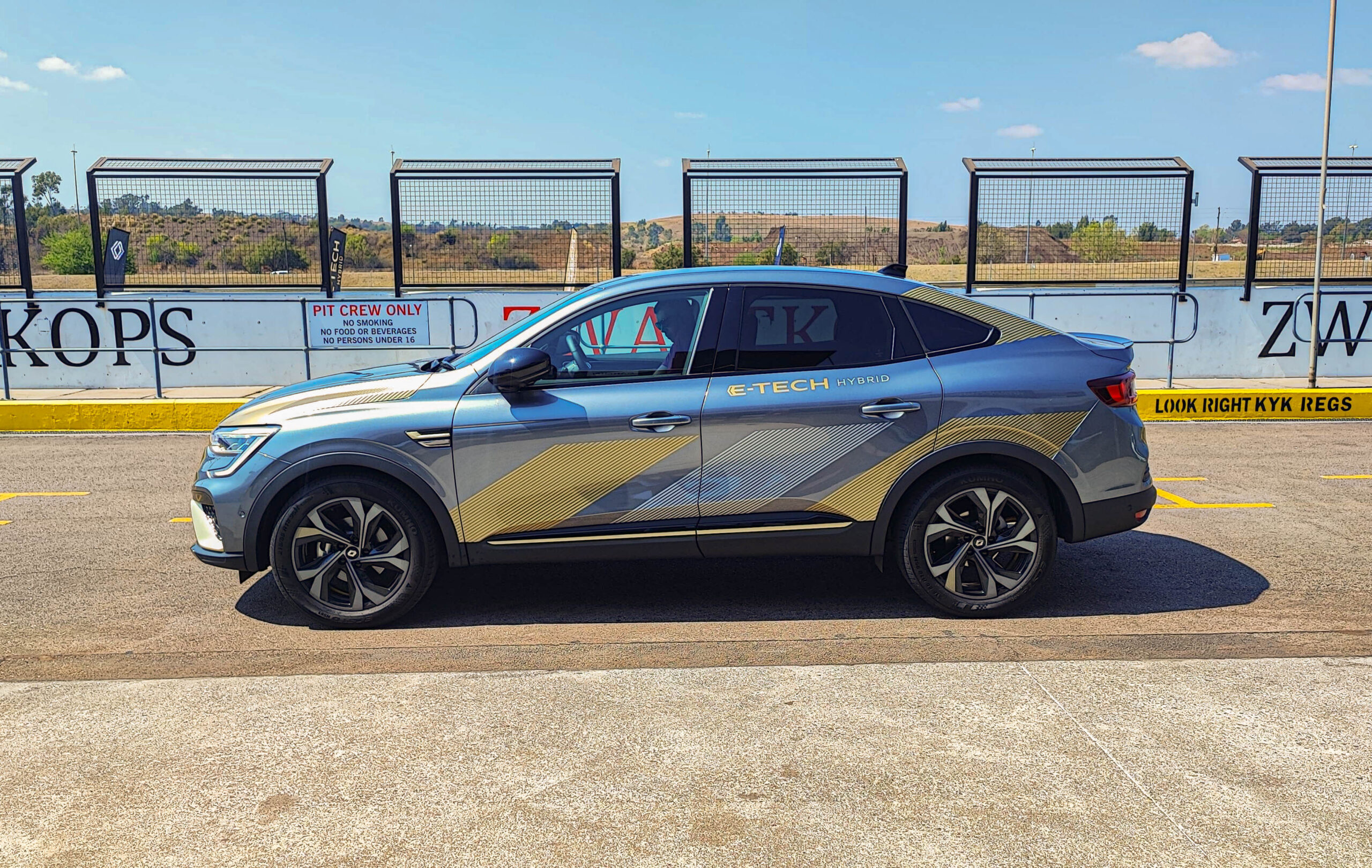
To demonstrate the Arkana E-Tech Hybrid’s efficiency, Renault set up an endurance event at Zwartkops Raceway. The reason for choosing a circuit to host this challenge was twofold: firstly, the pair of Arkana units weren’t road-registered and secondly, the track was a controlled and consistent environment. To compare the hybrid and ICE-only technologies, a standard Renault Captur 1.3 EDC also took part.
The objective of the endurance event was simple… You have 8 hours to complete as many laps of Zwartkops as you can while consuming as little fuel as possible. The author was paired with Naresh Maharaj (Bizcommunity), Brendon Staniforth (Maroela Media) and Reuben van Niekerk (freelance).
The author was first on track and tried to make the indicated fuel consumption dip as low as possible. Unfortunately, his return of 4.6 L/100 km came with a drawback – his team fell behind on laps, so the other drivers increased the pace to make up the deficit, which came at the expense of consumption.
With over 250 laps run, the author’s team finished 2nd overall with an average of just over 7 L/100 km; they were disappointed, but relieved to have finished ahead of the conventionally-engined Captur!
In the real world, however, we expect the hybrid-powered Arkana to be even lighter on fuel, especially if you’re likely to spend the majority of your time commuting (or running errands) in the urban environment.
When will the Renault Arkana arrive in South Africa?
Has the Arkana E-Tech Hybrid piqued your interest? Do you want more local details about this sharp-looking, efficient coupe SUV? Sadly, we don’t have more info to share; the Arkana won’t go on sale in SA any time soon, mainly because of the unfavourable weak Rand/Euro exchange rate, Renault SA says.
To compound matters, because the French brand doesn’t have manufacturing operations in South Africa, it does not earn export credits that it could use to offset the duties levied on the vehicles it imports. And, don’t forget that electrified vehicles are subject to additional government taxation.
Right now, the Renault Arkana retails for £31 000 (United Kingdom) and €32,600 (France) to give you some idea of where it’s positioned elsewhere in the world. Remember these prices do not factor in the previously-mentioned additional taxes.
Renault South Africa is hoping to bring the Arkana to market in 2024. There’s also the option of a Captur with the same powertrain and that too is poised to arrive in Mzansi, market viability permitting, of course.
It’s a question we’re often asked: which bakkie leads the double-cab sales race in South Africa? Well, we finally have the answer. Check out year-to-date sales for Mzansi’s most popular double cabs…
Month in and month out, we collate a list of South Africa’s most-popular bakkies, based on sales figures that incorporate all 3 body styles. But there’s a question that’s often left unanswered: which is the best-selling double-cab bakkie in the land? Yes, you asked and we listened.
Since Naamsa’s monthly sales figures unfortunately don’t include a breakdown of the available bakkie body styles (single-, extended- and double-cab shapes), we’ve turned to our studious friends over at Lightstone Auto for a little help to identify Mzansi’s best-selling double-cab bakkies over the opening 8 months of 2023.
Year to date, the Ford Ranger is SA’s best-selling double-cab bakkie.
Before we dive into those figures, let’s take a step back and consider what the overall table – including all body styles – looks like year to date. So far in 2023, according to Naamsa figures, the Prospecton-built Toyota Hilux is leading the bakkie pack with 25 092 units, followed by the Silverton-made Ford Ranger (16 182 units) and the Struandale-produced Isuzu D-Max (13 174 units).
Lightstone Auto’s figures, however, show the Ford Ranger is ruling the double-cab bakkie sales roost in South Africa so far this year, with 13 892 units (1 884 of which came in August 2023) registered – or fascinatingly about 85% of its total. Note this figure includes the flagship Raptor derivative, which is imported from Thailand rather than built at Silverton alongside all other variants of the Ranger.
After the 1st 8 months of 2023, the Hilux is 1 601 units behind the Ranger in the double-cab sales race.
The Toyota Hilux thus currently finds itself in 2nd place on the list of SA’s best-selling double-cab bakkies, with 12 291 units – or around 49% of its total – sold around the country over the opening 8 months of the year (including 1 684 units in August 2023). For the record, that puts the Japanese stalwart 1 601 units off the pace when only 4-door derivatives are considered.
The final spot on the double-cab bakkie podium goes to the Isuzu D-Max, with 6 125 units sold, year to date (so, 6 166 units behind the 2nd-placed Hilux). From what we understand, this figure – which represents approximately 46% of total D-Max sales this year – includes 4-door versions of both the current-generation D-Max as well as the prolonged-lifecycle Gen 6 line-up.
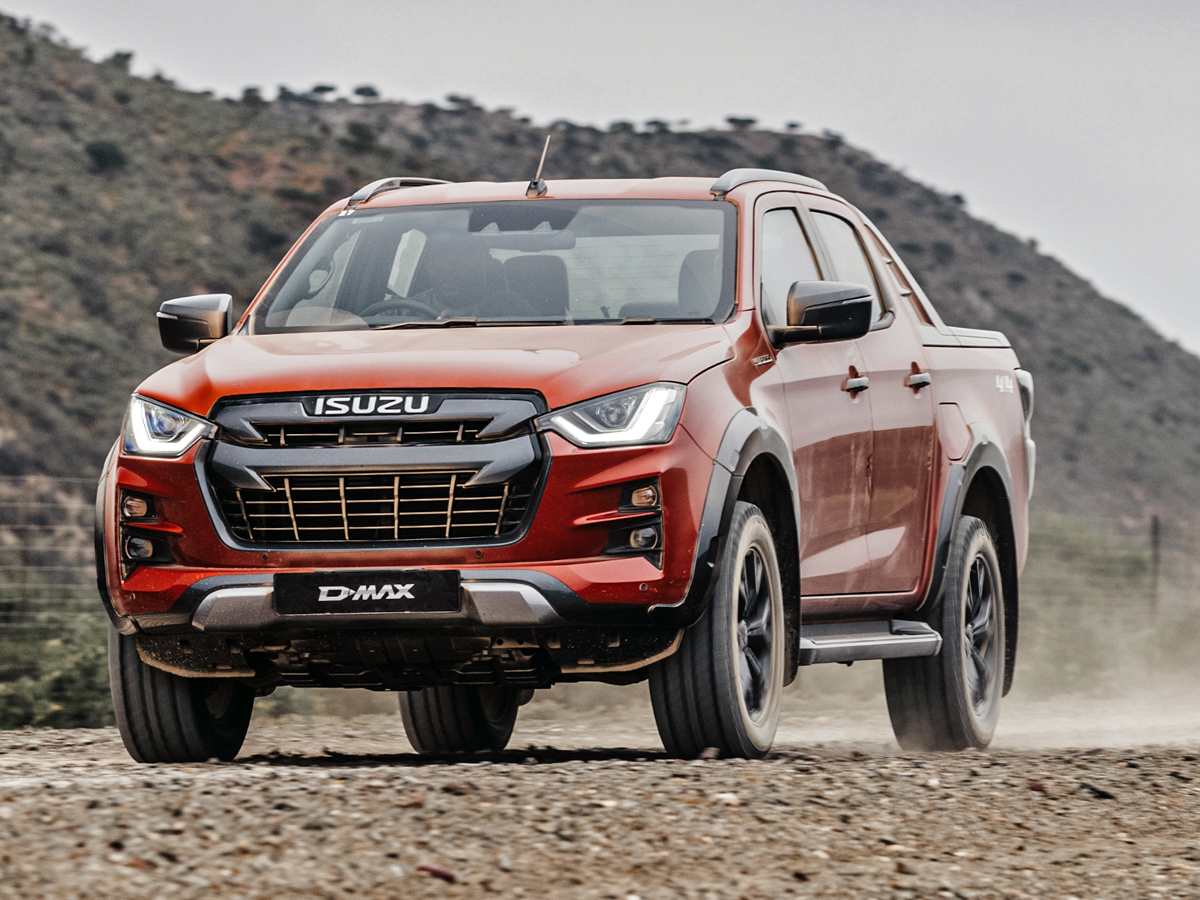
Isuzu’s D-Max completes the double-cab bakkie sales podium, year to date.
According to Lightstone Auto, double-cab derivatives of all other bakkies available in this body style total 11 609 units, year to date.
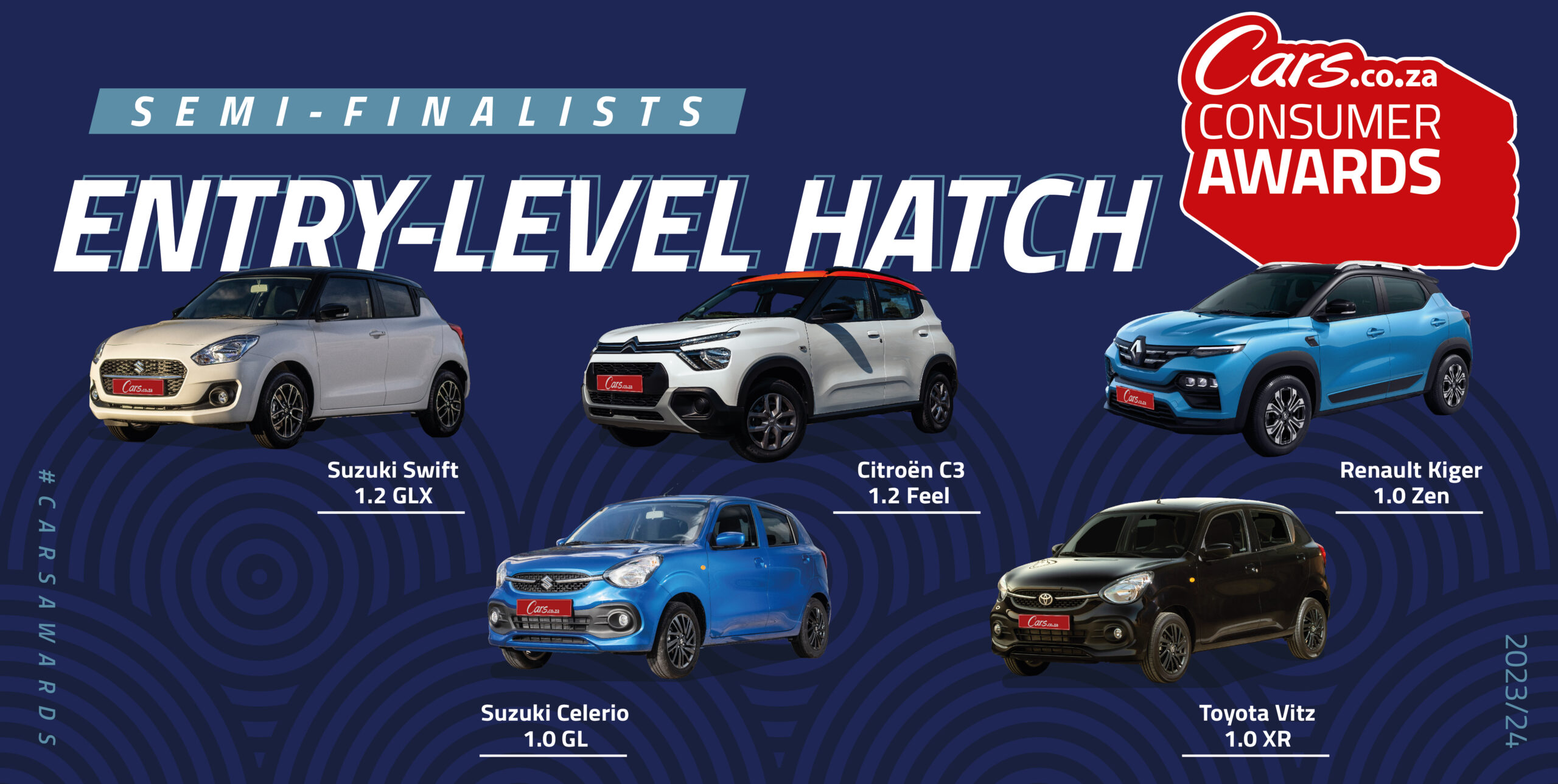
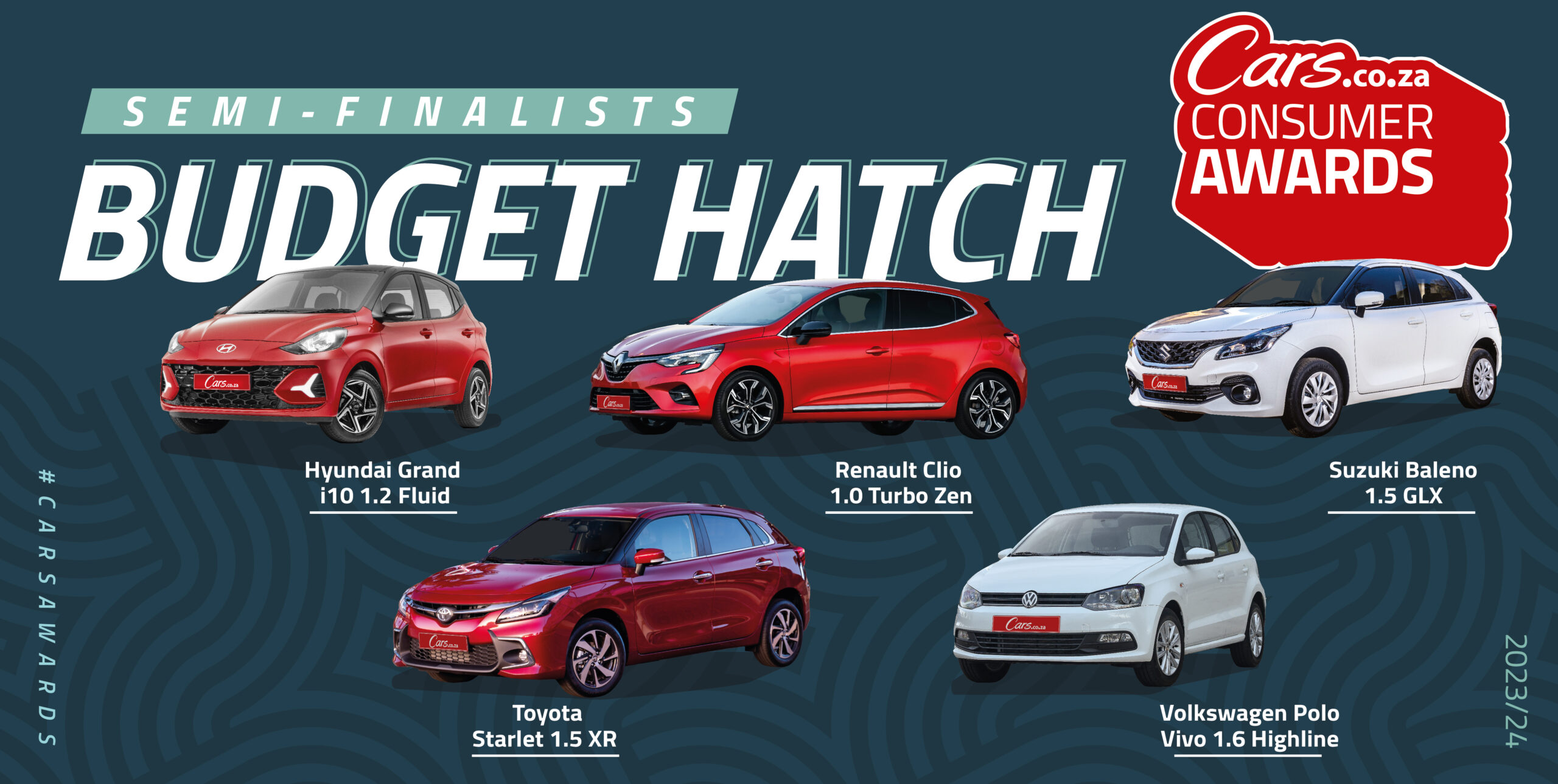
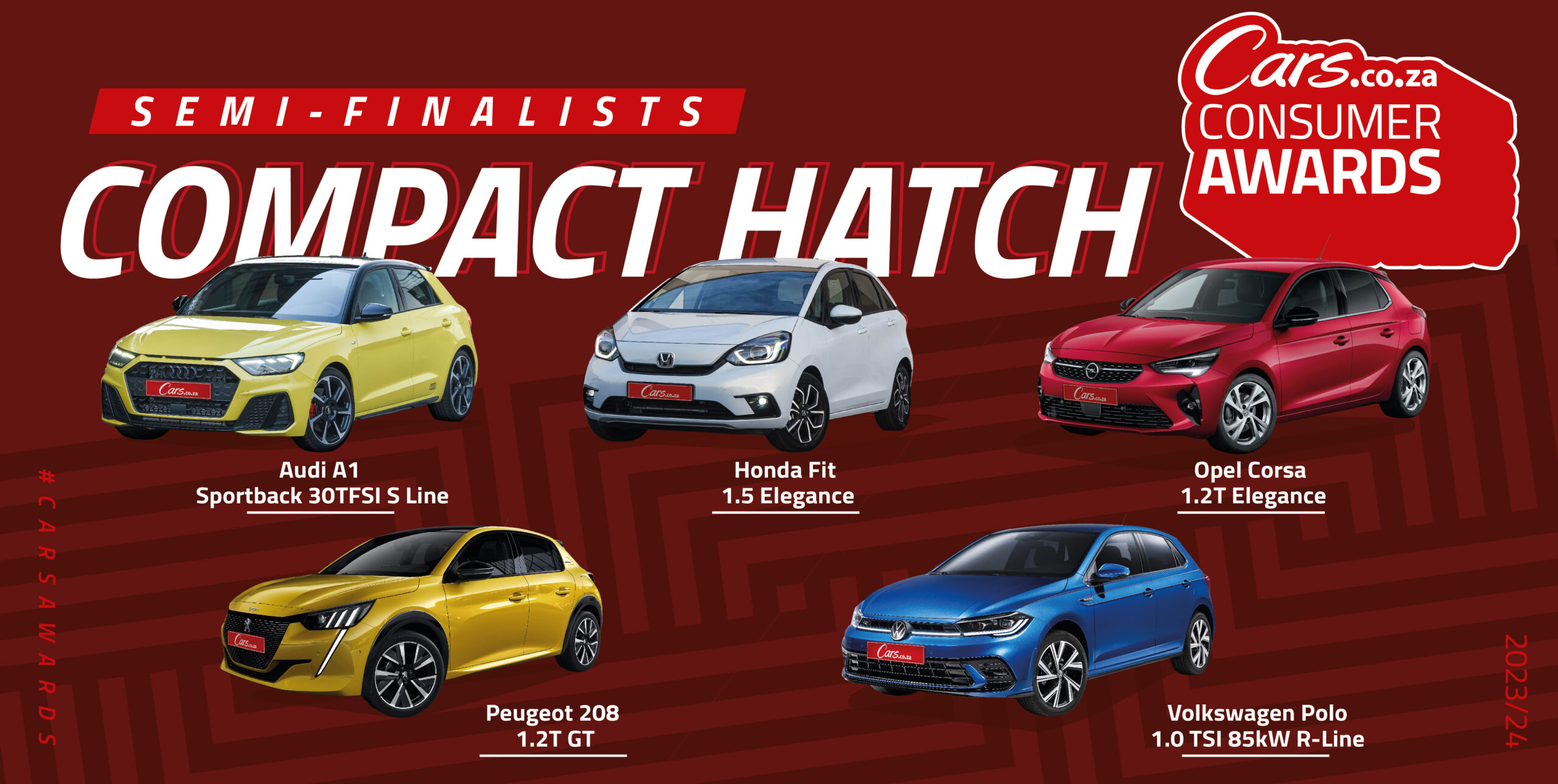
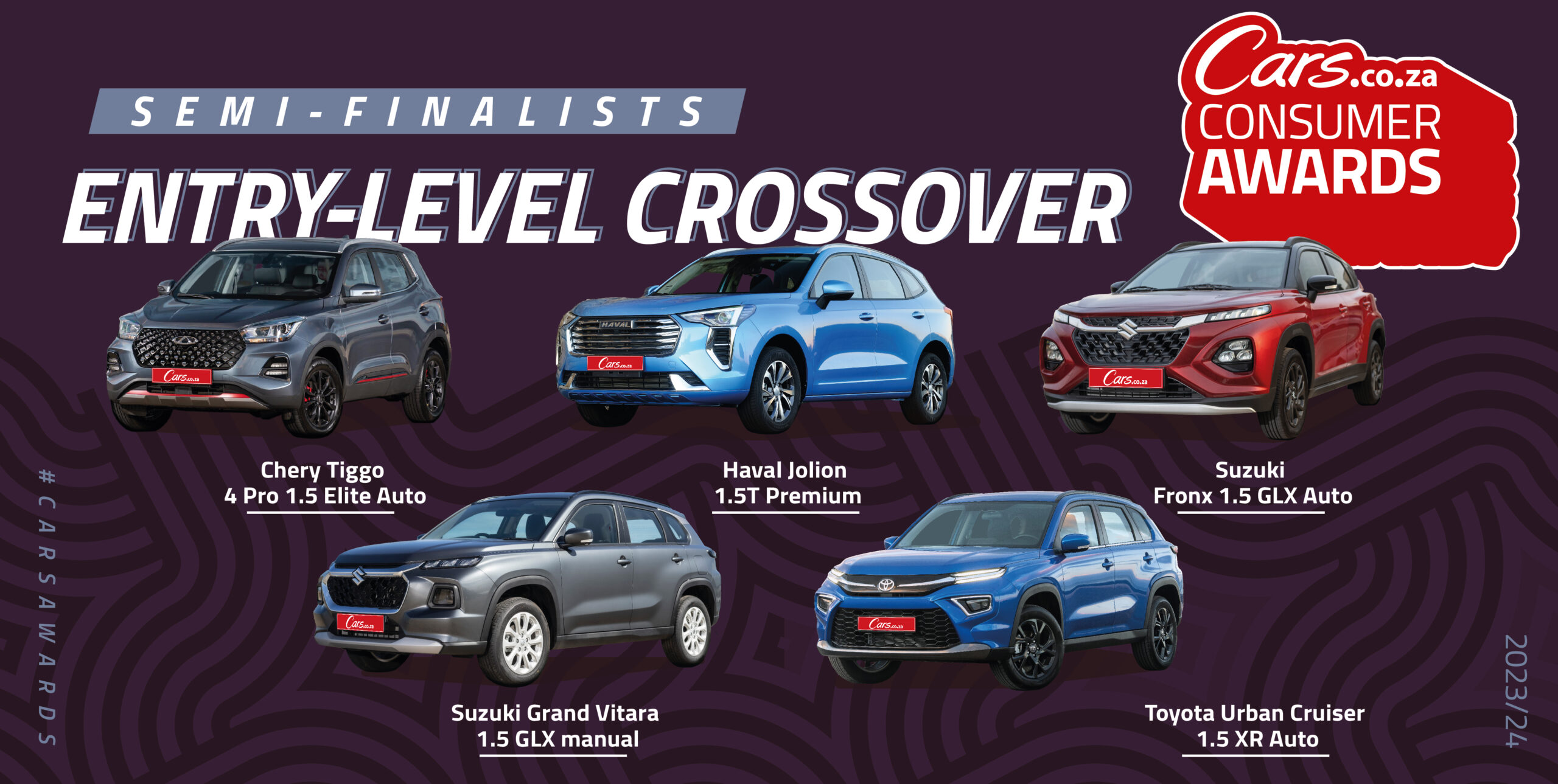
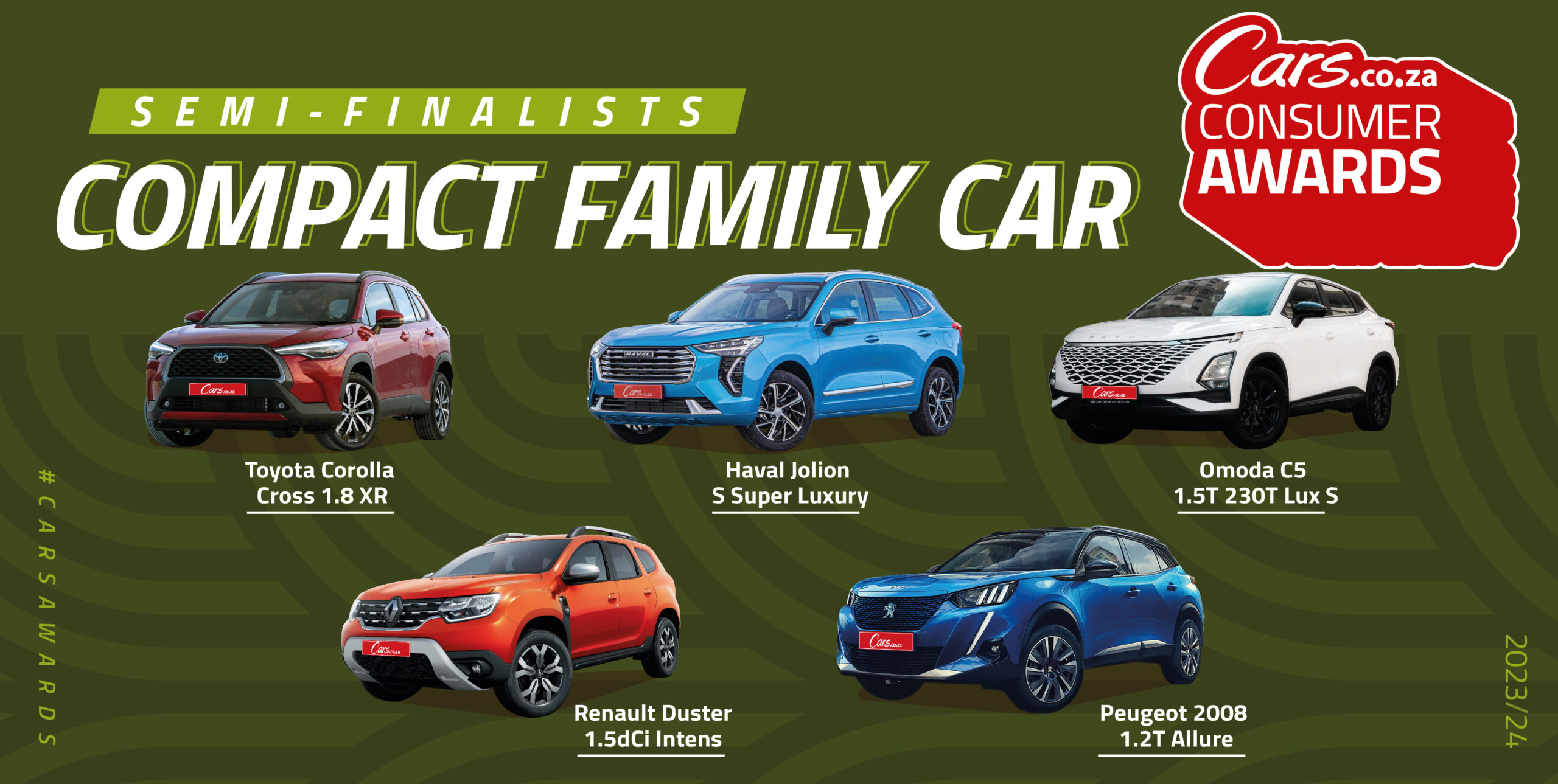
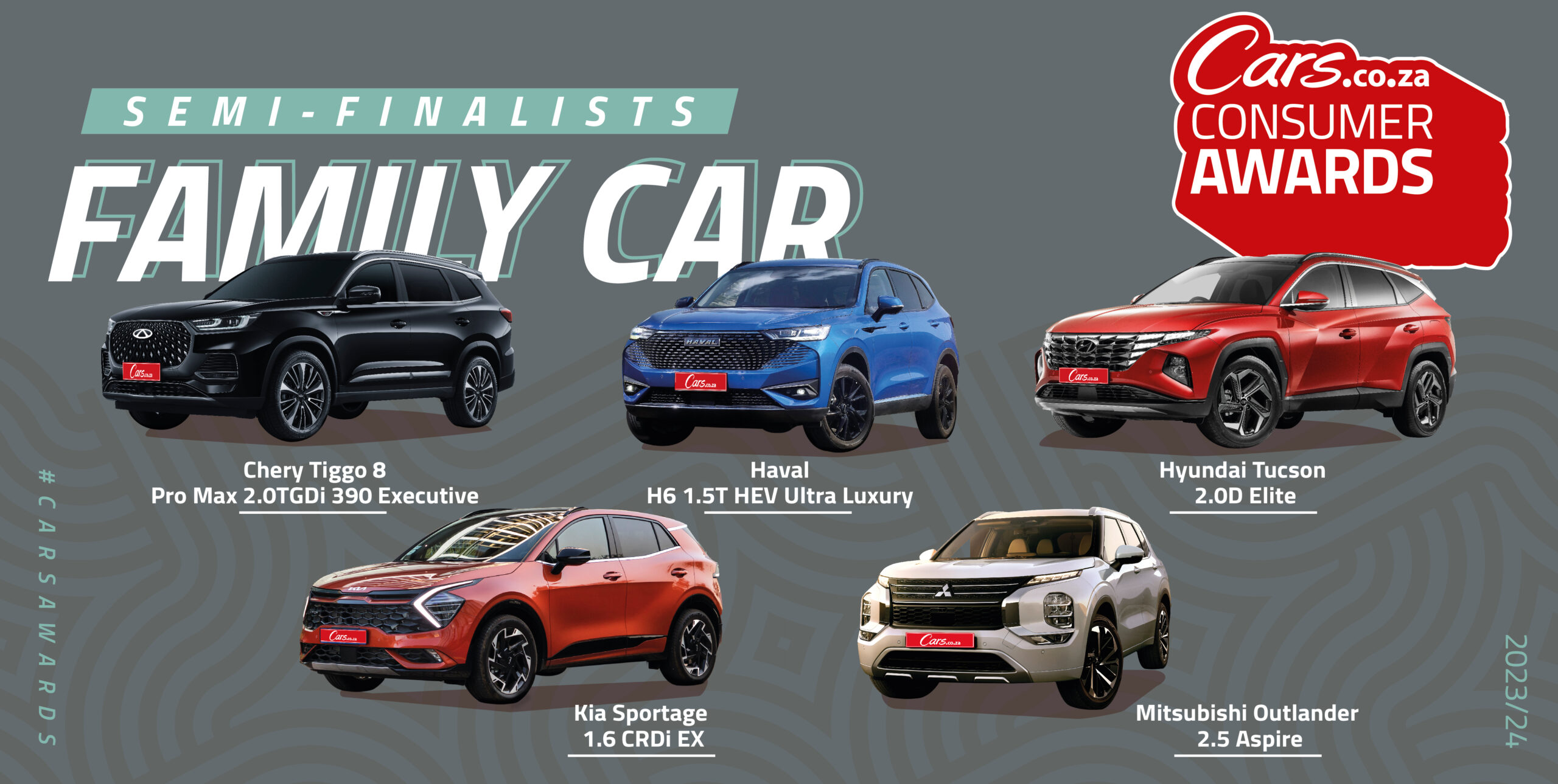
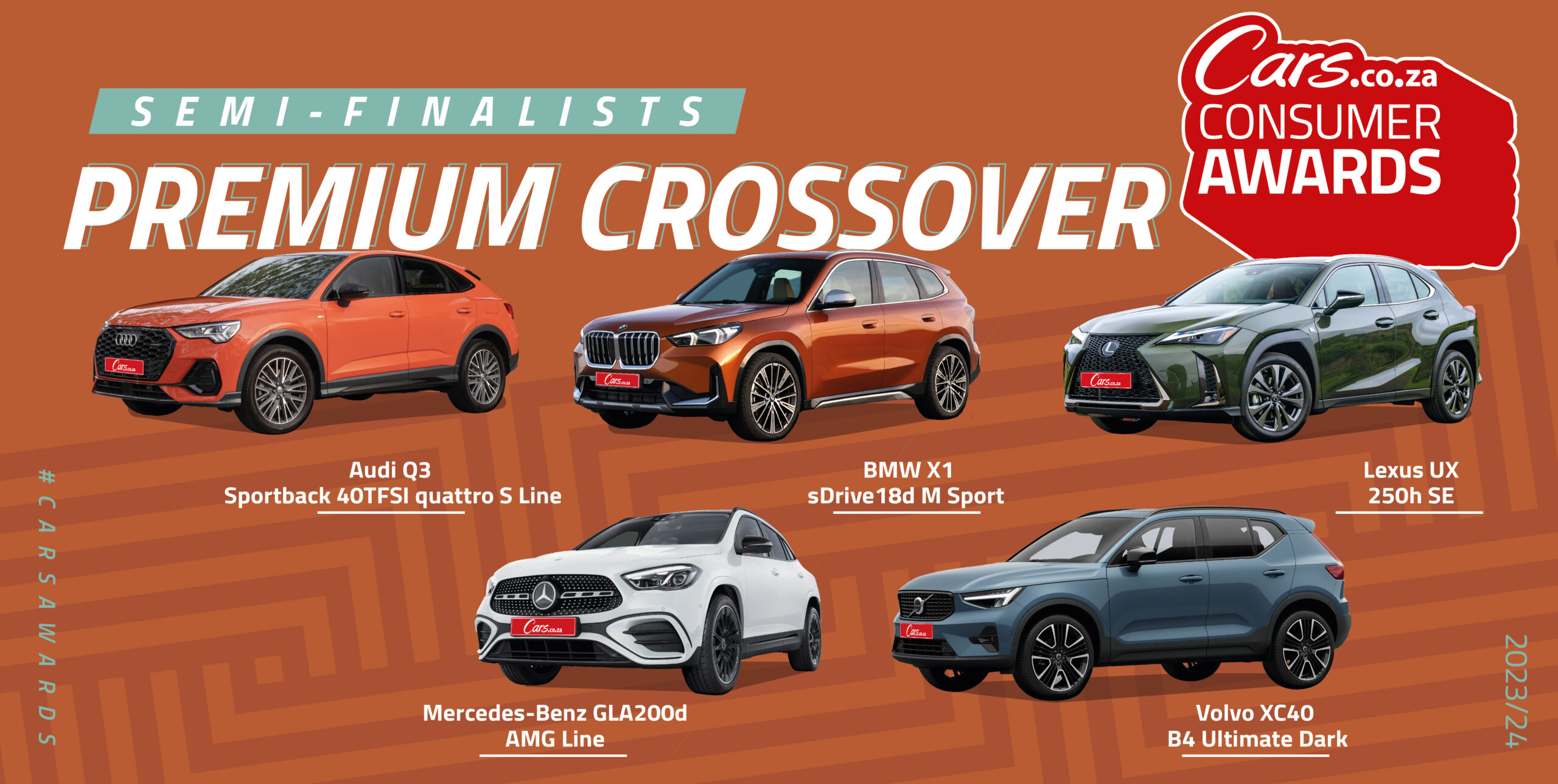
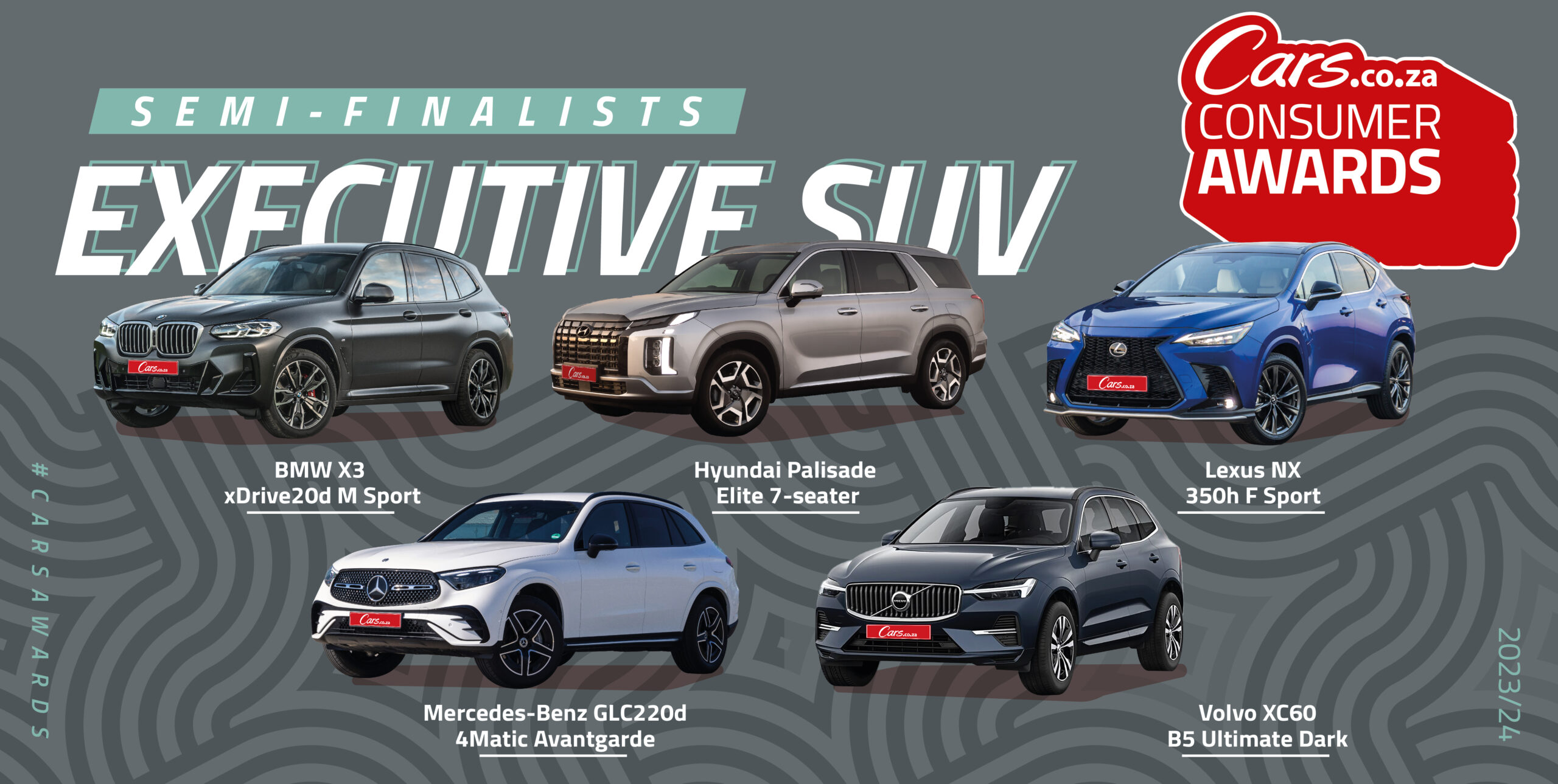
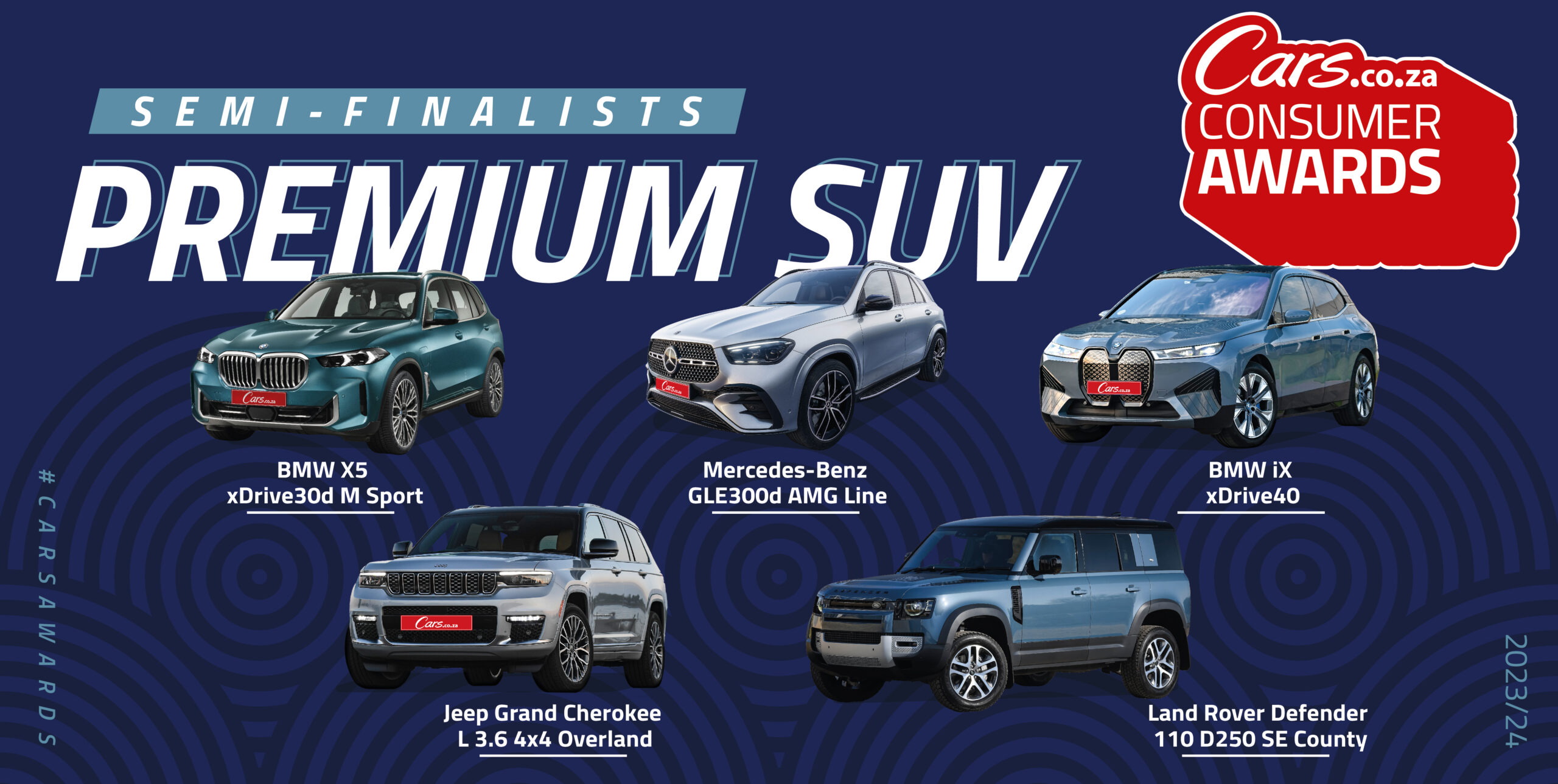
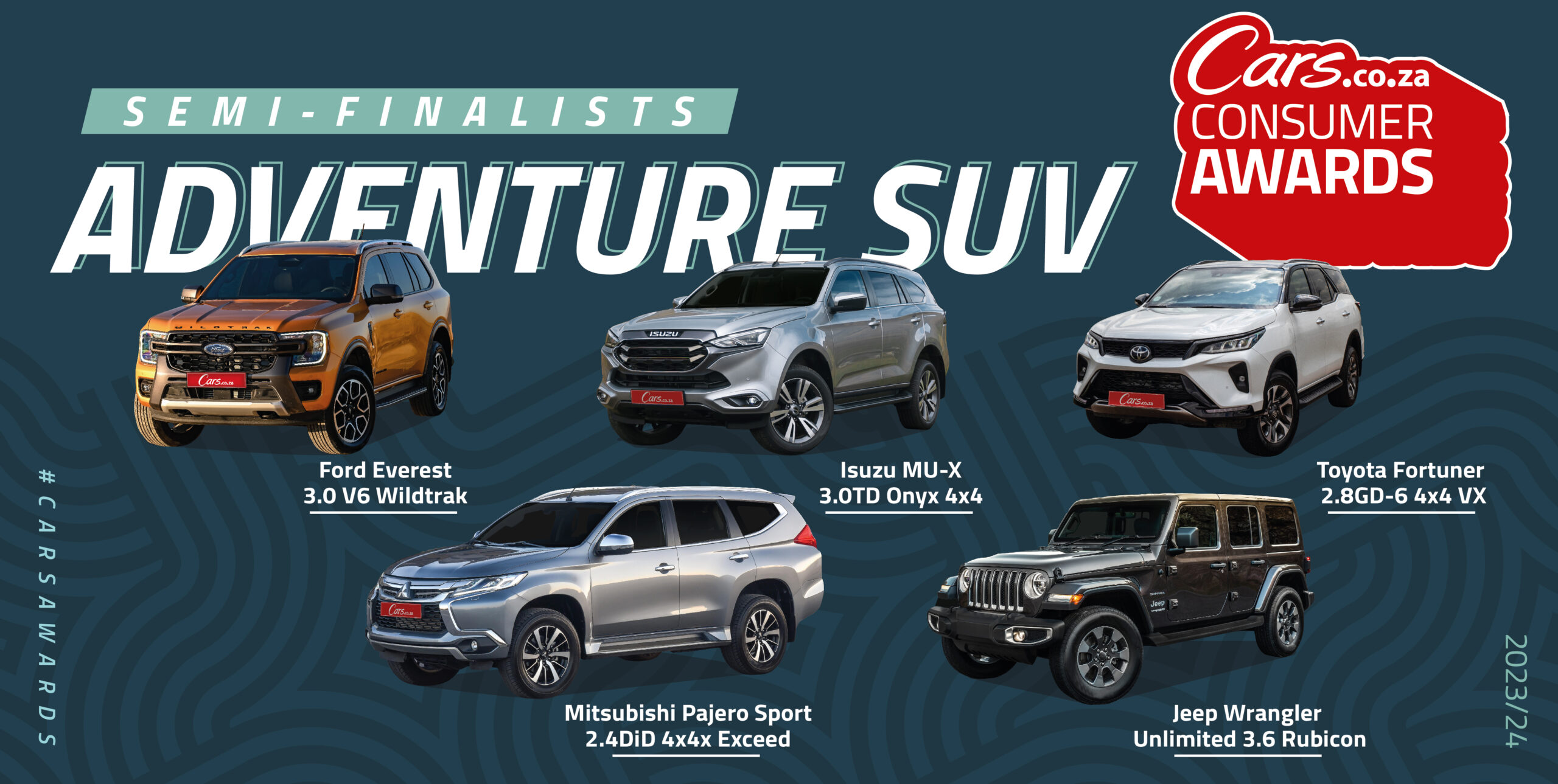
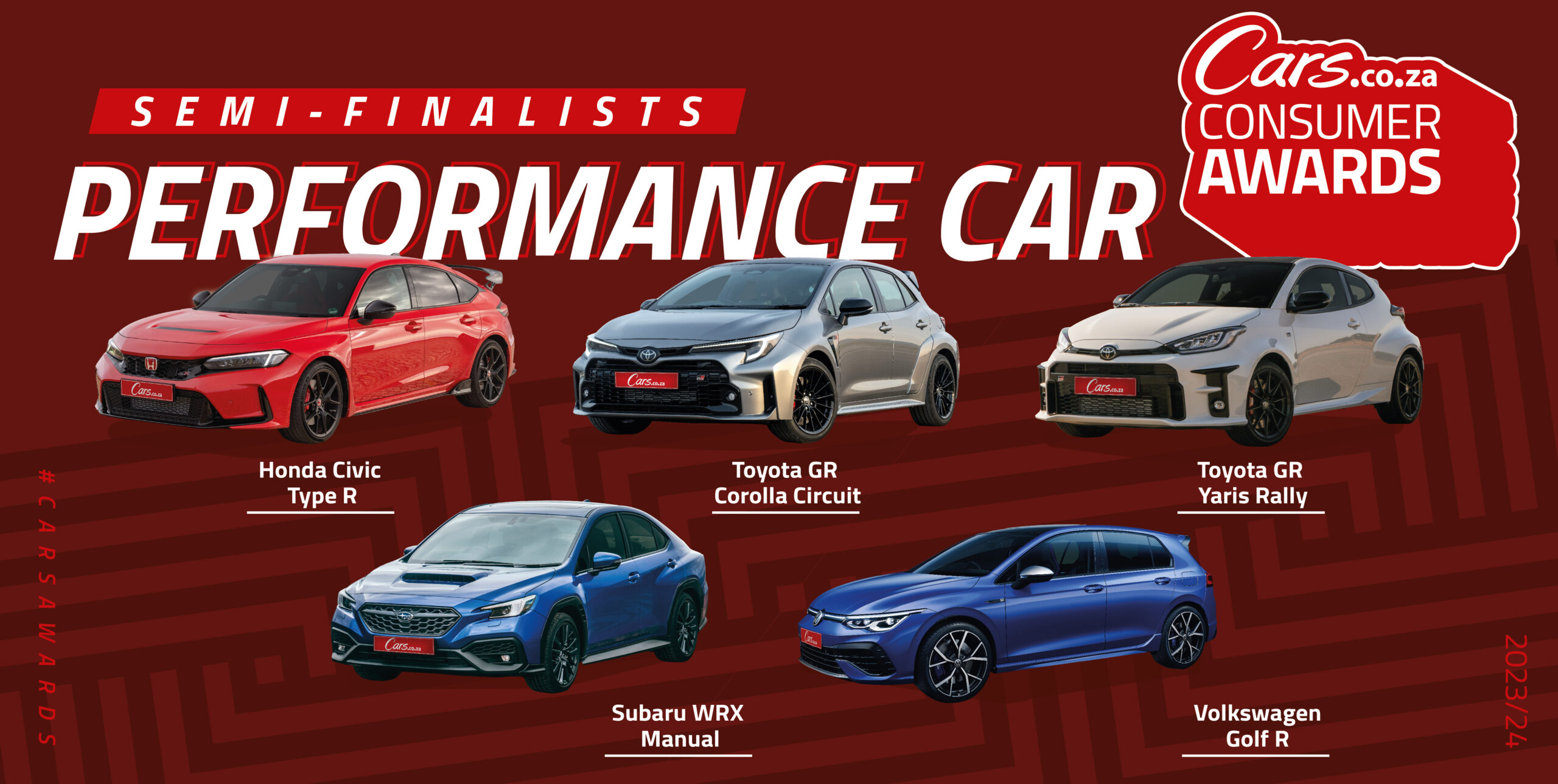
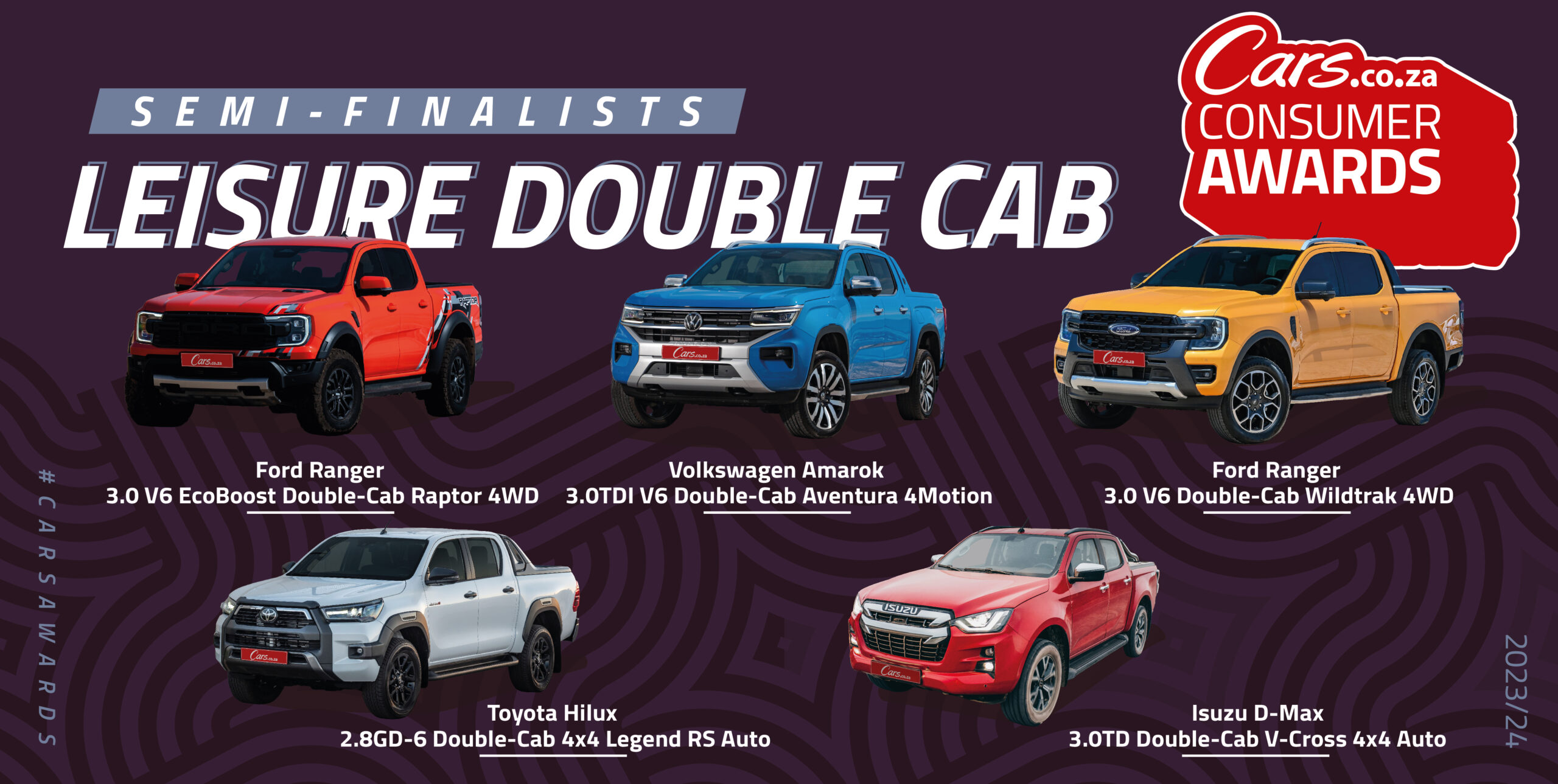
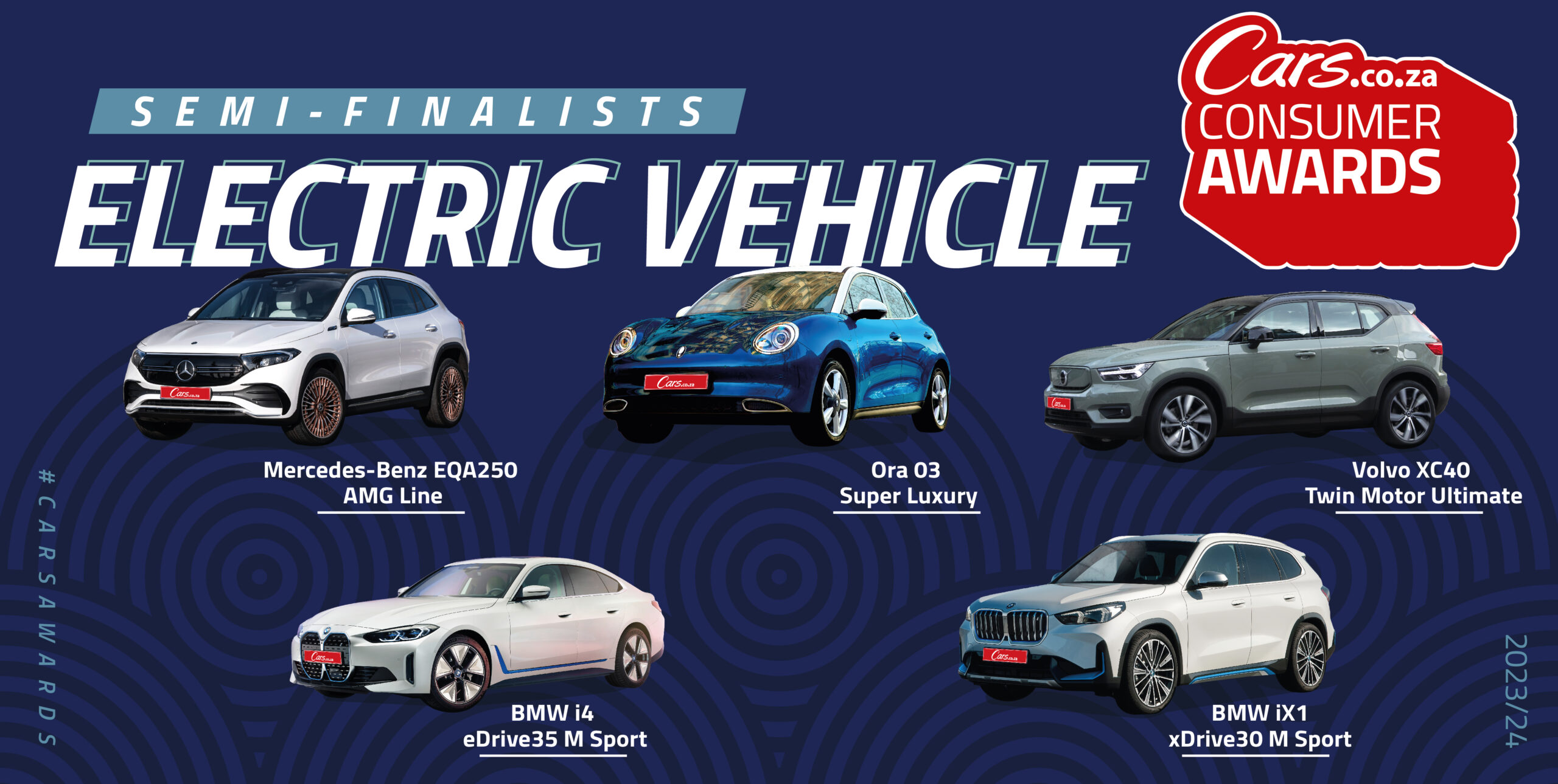
These are the 65 semi-finalists – 5 in each of 13 vehicle categories – of the 2023/24 Cars.co.za Consumer Awards. The 39 finalists of the 7th iteration of South Africa’s definitive automotive awards programme will be chosen from this list.
The Cars.co.za Consumer Awards (CarsAwards – or #CarsAwards in social media posts) recognises the best purchasing propositions in 13 categories of the South African new-vehicle market.
The list of 65 vehicles includes model derivatives from no fewer than 25 brands represented in the South African market. 9 brands have at least 3 semi-finalists in the running for category honours. The brands with the most nominations are: Toyota (8), BMW (6) and Suzuki (5). Chery, Omoda (a Chery sub-brand) and Ora (GWM’s new EV brand) appear on the list for the first time.
All vehicles available on the South African market on September 1, 2023, were eligible, not only new products launched during the past 12 months.
Some models that had not been launched by that date were considered, provided that they had already been priced, could be ordered by consumers and Cars.co.za extended editorial team had sufficient experience with the vehicles.
The first phase of CarsAwards saw the extended Cars.co.za editorial team select the five best vehicles in each of the 13 categories devised for this year’s programme. Careful attention was paid to the respective categories’ “Filters of Eligibility” and the “Pillars of Success” in order to come to a consensus on the list of semi-finalists.
“Another unique aspect of the CarsAwards is that the categories are re-evaluated every year,” says Cars.co.za’s Hannes Oosthuizen. “With so much activity in the lower-priced crossover segments, we decided to sacrifice some of the higher-priced categories in favour of those segments where consumers are actually currently buying.”
“But the 2023/24 CarsAwards must also educate and, as such, we’ve introduced an EV category focused on the most affordable electric vehicles in the market,” he adds.
In the next round (due to take place in early October 2023), the extended Cars.co.za editorial team will score the semi-finalists individually, taking into account various criteria set out for each of the respective categories. Following that, the 3 finalists per category will be announced and subjected to back-to-back testing at the Gerotek proving ground in Gauteng by the judging panel on 2 and 3 November 2023.
Combined judging panel for the 2023/24 CarsAwards:
In building the judging panel, the goal was to achieve a balance of motoring expertise (particularly in the first two phases of the programme, which determine the finalists) and respected non-motoring, highly analytical media professionals.
“It is absolutely crucial that motoring journalists’ opinions are supplemented by those of non-motoring media professionals, who, in many ways, represent the consumer at the test days,” explains Oosthuizen.
“As these Awards are designed to be of maximum benefit to the consumer, it is critical that as many South Africans as possible know about the results,” says Oosthuizen. “Our panel of judges has been selected with that in mind, and therefore comprises a mix of new and traditional media, print, broadcast and social media specialists,” he explains.
The 20 judges’ scores for each of the 39 finalists of the 2023/24 CarsAwards will only count for 50% of the final standings, however. The other 50% will be based on rankings that the respective vehicle brands represented by the finalists achieved in the Cars.co.za Ownership Satisfaction Survey. The data incorporates feedback from thousands of vehicle owners, based on their experiences of their vehicles (less than four years old and serviced through franchised outlets).
“The Cars.co.za Consumer Awards programme is designed to be a guide for all new passenger vehicle buyers, not only those who follow motoring publications,” Oosthuizen concludes. “With 50% of the final scores determined by brands’ rating in the survey, a vehicle only really stands a very good chance of winning if it is a good product in the eyes of the judges and if its brand delivers solid after-sales service.
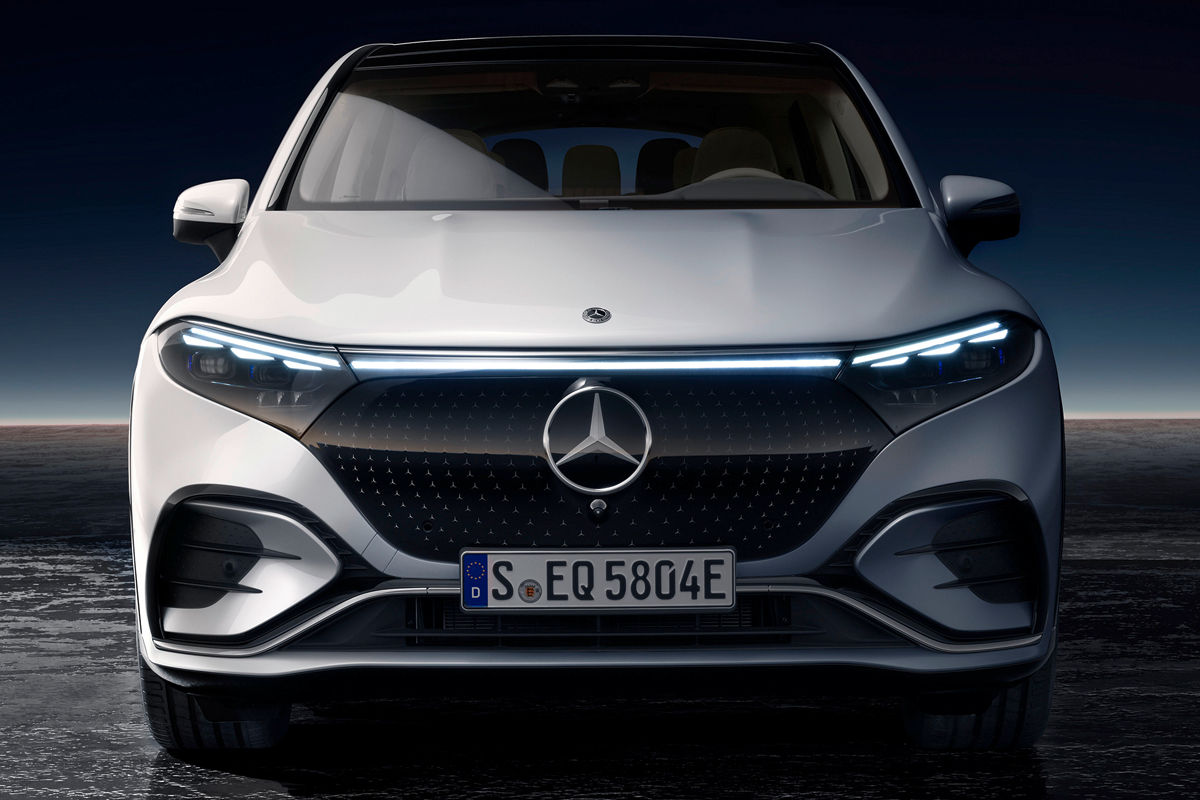
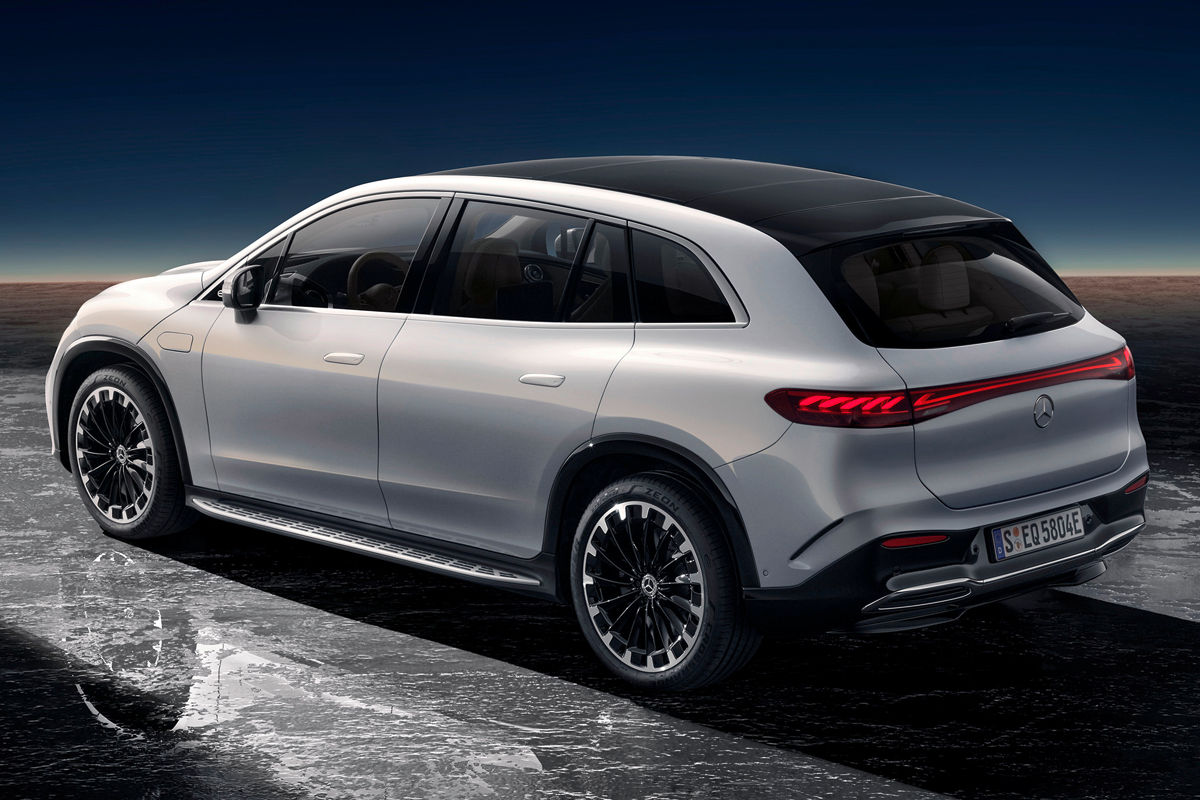
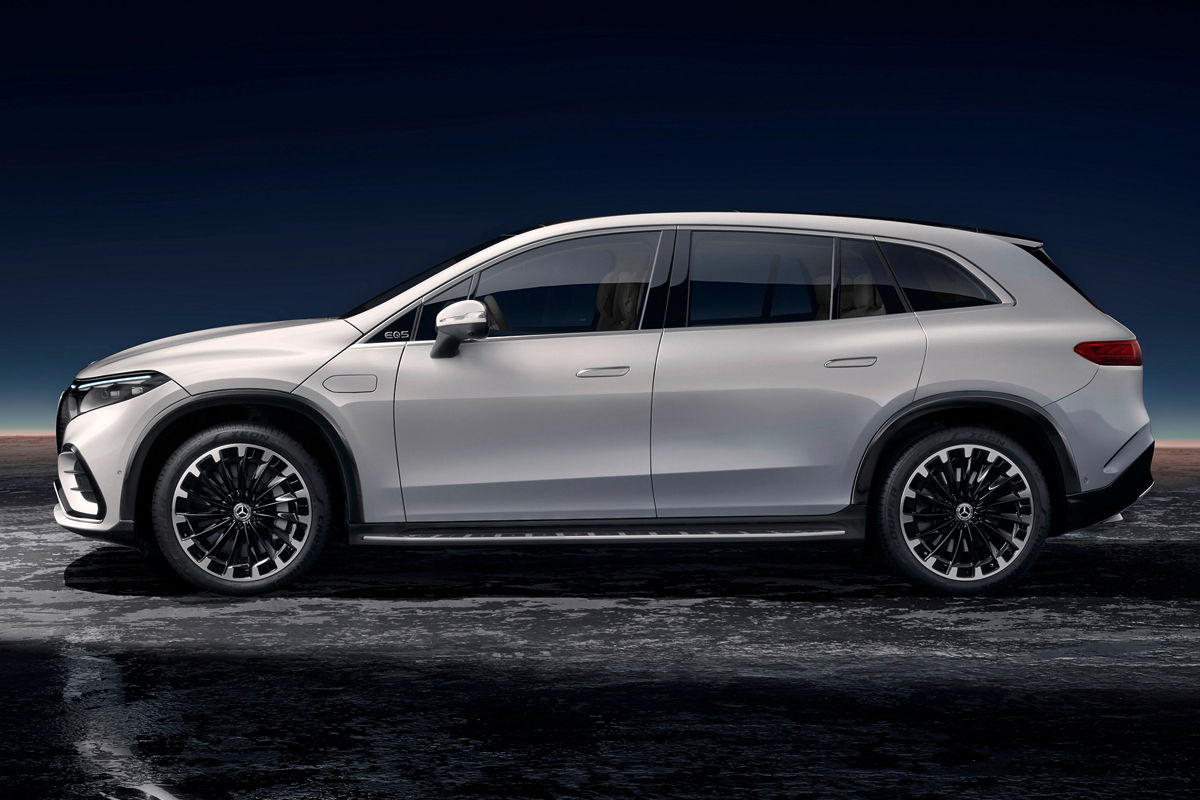
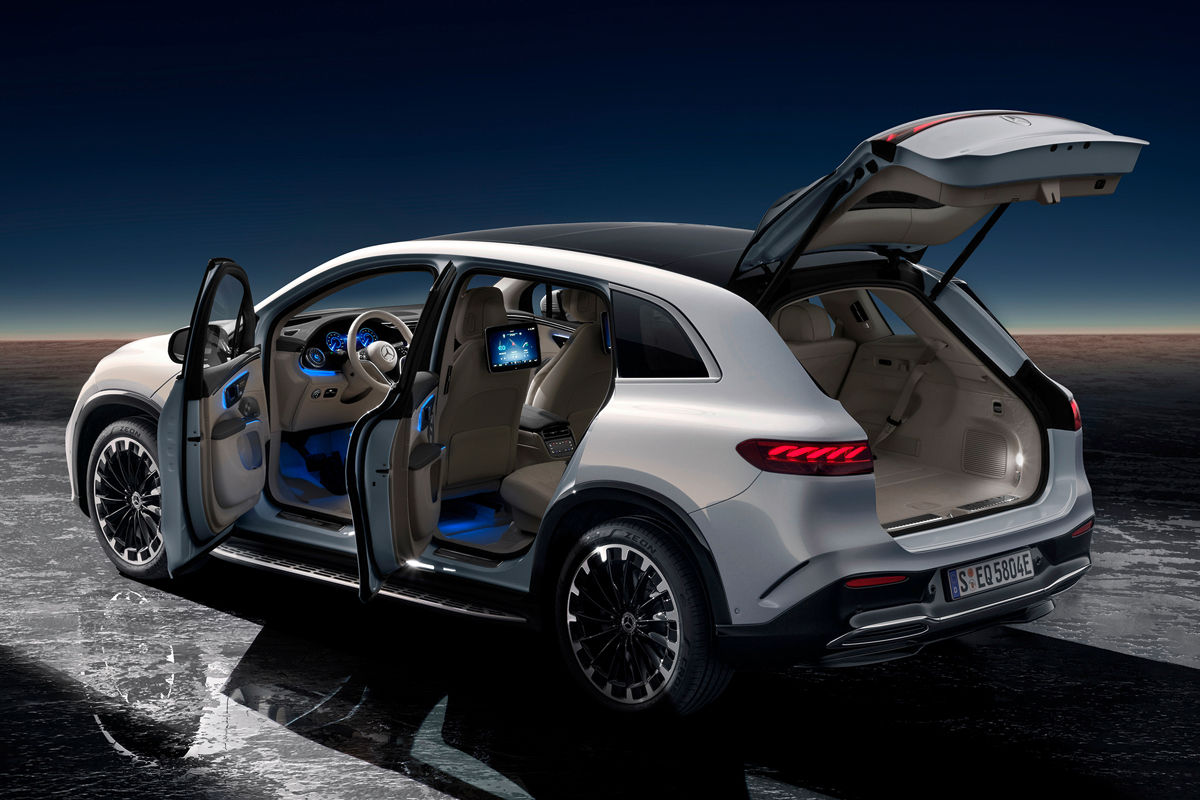
Wondering how much the new Mercedes-Benz EQS SUV will cost you in South Africa? Well, pricing for the German firm’s latest fully electric luxury SUV has been released…
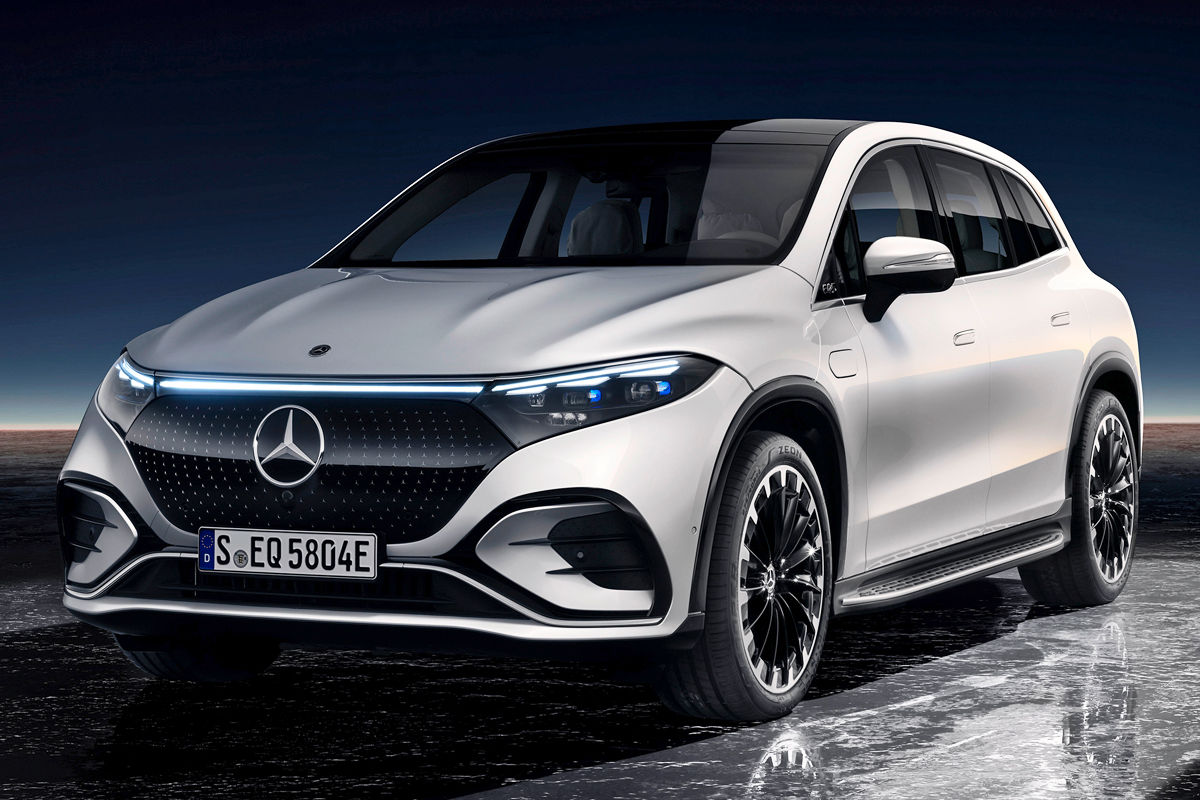
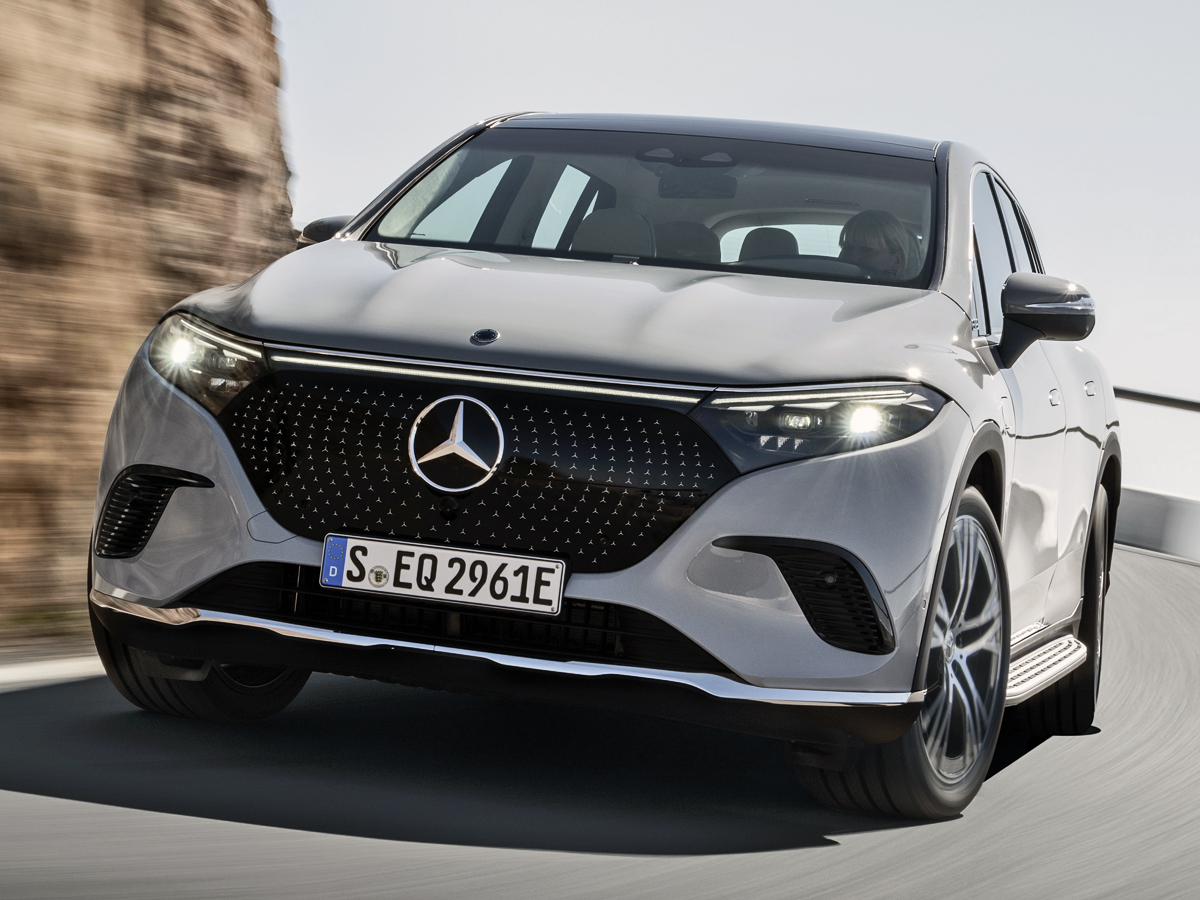
The fully electric Mercedes-Benz EQS SUV has arrived in South Africa and we now know how much this luxury SUV will cost.
The Tuscaloosa-built EQS SUV – not to be confused with the likewise battery-powered sedan that wears the same EQS badge – will be offered with either 5 seats or 7.
The EQS SUV fitted with the optional AMG Line exterior package.
At launch in Mzansi, the electric SUV will be available in EQS 450 4Matic guise. The 5-seater version will be priced from R2 726 100, while the 3-row iteration will start at R2 759 300, according to a Mercedes-Benz release. These figures include a 5-year/100 000 km maintenance plan, which the buyer is entitled to opt out of at the point of purchase.
Regardless of the number of pews selected, the EQS 450 4Matic will offer peak outputs of 265 kW and 800 Nm courtesy of an electric motor on each axle. These motors draw their urge from a 108.4 kWh (useable capacity) battery pack, which facilitates a claimed WLTP-cycle range of “up to 616 km”. The 0-100 kph sprint is seen off in a claimed 6.0 seconds, with the EQS 450 4Matic SUV’s top speed listed as 210 kph.
The EQS SUV is also offered in 7-seater form.
As a reminder, the EQS SUV measures 5 125 mm long, 1 959 mm wide and stands 1 718 mm tall, while it shares its 3 210 mm wheelbase with the EQS Sedan. The 5-seater version has a claimed luggage capacity of 645 litres, a figure that drops to 565 litres in the case of the 7-seater model. The maximum DC charging capacity comes in at 200 kW.
Of course, various options will be available for the EQS SUV, including the AMG Line exterior package (R82 800), the Night Package (R13 973), the Exclusive Nappa leather package (R144 900) and the choice of 4 equipment packages: Advanced (included), Advanced Plus (R109 710), Premium (R194 100) and Premium Plus (R227 200).
Here’s the EQS SUV in the standard Electric Art Line.
In addition, various alloy-wheel designs (up to 22 inches) and interior trims will be on offer, along with a digital lighting package (R39 900), aluminium-effect running boards (R12 938), multi-contour front seats (R30 300), the rear-seat comfort package (R19 872), microfibre roofliner (R33 120), the MBUX augmented reality head-up display (R41 400) and the MBUX high-end rear-seat entertainment system (R61 893).
How much does the Mercedes-Benz EQS SUV cost in South Africa?
Mercedes-Benz EQS 450 4Matic SUV – R2 726 100
Mercedes-Benz EQS 450 4Matic 7-Seater SUV – R2 759 300
The figures above include a 5-year/100 000 km maintenance plan, which the buyer is entitled to opt out of at the point of purchase.
Fuel prices in South Africa could rise further in October 2023 based on unaudited mid-month fuel price data released by the Central Energy Fund (CEF).
Motorists in South Africa (and the economy) are taking a beating after significant fuel price increases came into effect in early September but unfortunately, the fuel price forecast for October 2023 isn’t looking good and motorists must prepare for another round of increases.
Rising oil prices (now trading above $90 per barrel) and weak Rand (currently at R19 to the US Dollar) are the major contributing factors for the potential fuel price increases looming in October.
According to unaudited mid-month data released by the Central Energy Fund (CEF), the fuel price outlook is as follows:
Petrol 93 increase of R1.15 per litre
Petrol 95 increase of R1.22 per litre
Diesel 0.05% increase of R2.03 per litre
Diesel 0.005% increase of R1.93 per litre
With 2 weeks of September remaining, the forecast is likely to change. Official fuel price adjustments will be announced in early October 2023. If the above forecast becomes a reality, the price of inland petrol and diesel will breach the R25 per litre mark.
Predicted Fuel Price for October 2023
Fuel Type
Sept ’23 Inland
Sept ’23 Coast
Oct ’23 Inland*
Oct ’23 Coast*
Petrol Unleaded 93
R24.14
R23.42
R25.29
R24.57
Petrol Unleaded 95
R24.54
R23.82
R25.76
R25.04
Diesel 0.05%
R23.82
R22.33
R25.85
R24.36
Diesel 0.005%
R23.29
R22.58
R25.22
R24.51
*October figures are forecast figures and not official.
Lexus SA recently expanded the line-up of its RX, which gave us a chance to drive the new premium SUV. What is the Lexus RX like, are the hybrid versions worth a look and has the tech become more user-friendly? We drive the model in the Cape to find out.
What’s new on the Lexus RX?
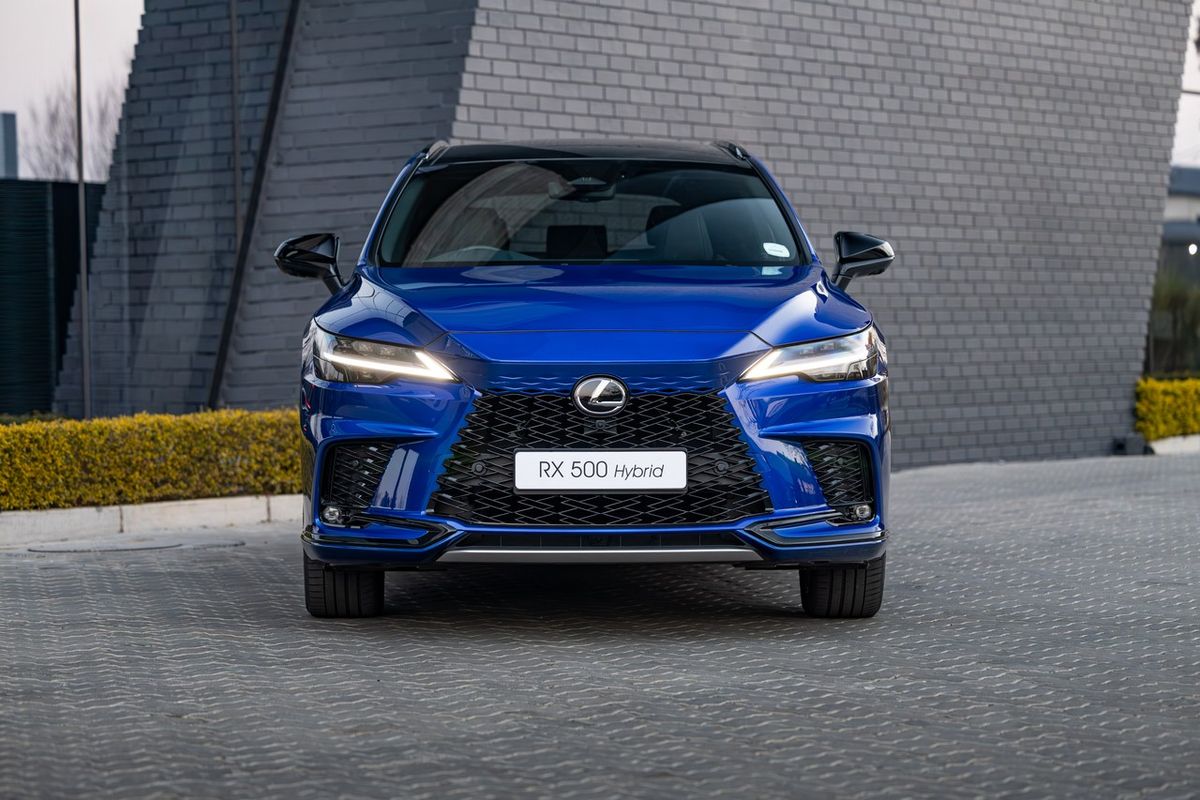
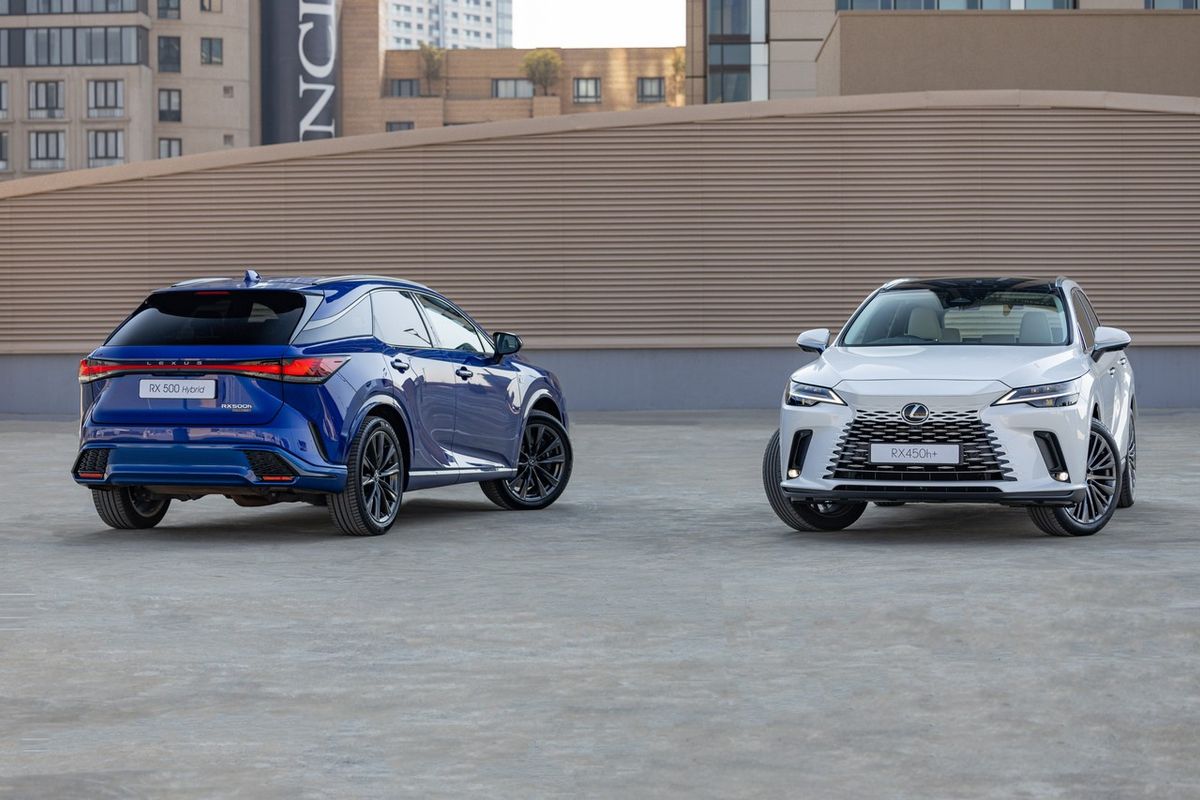
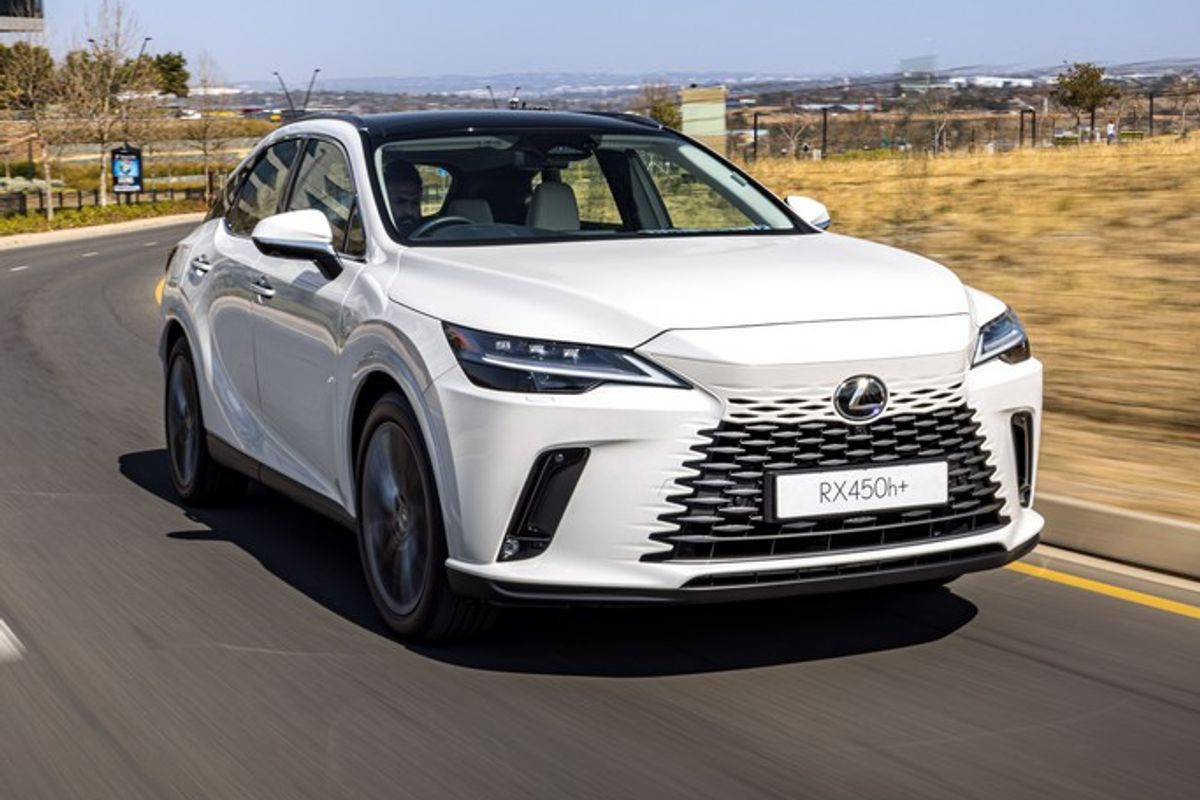
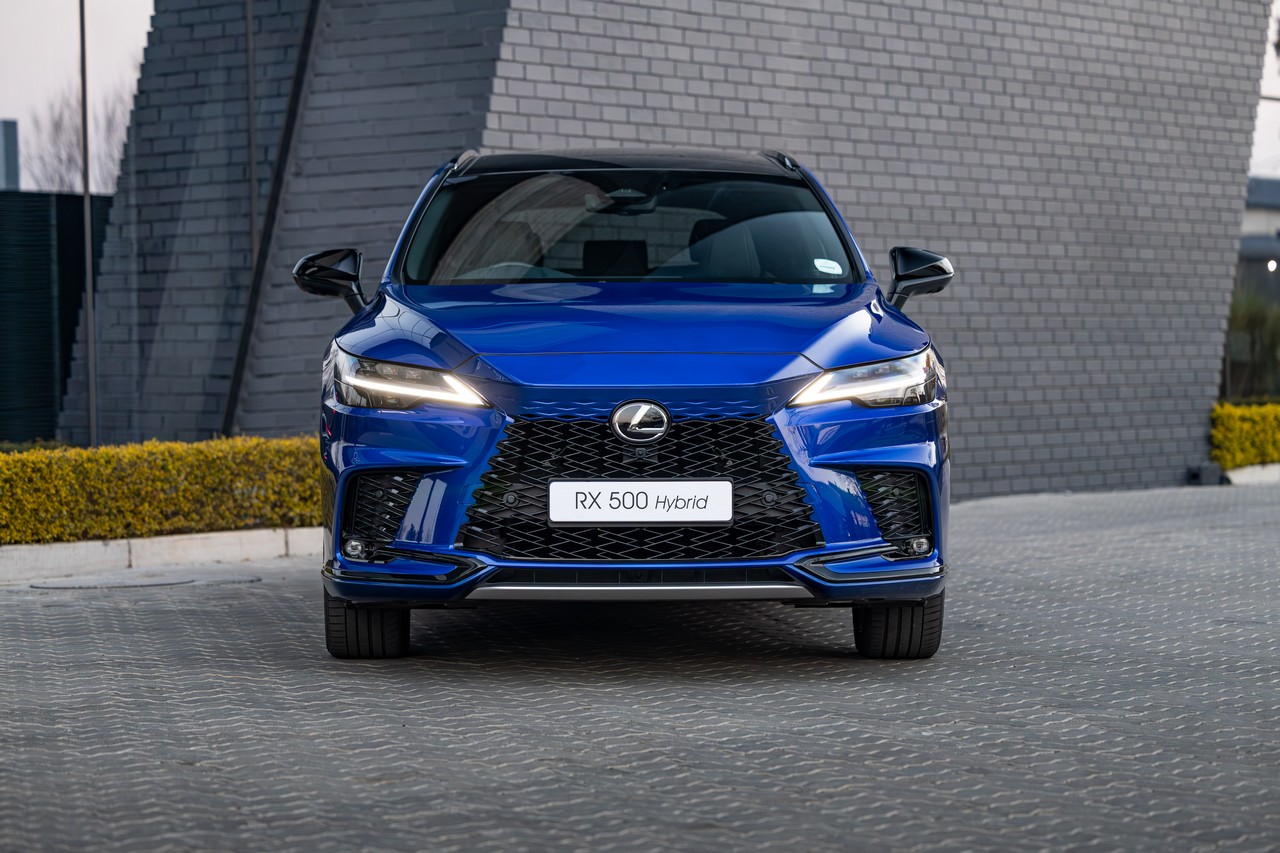
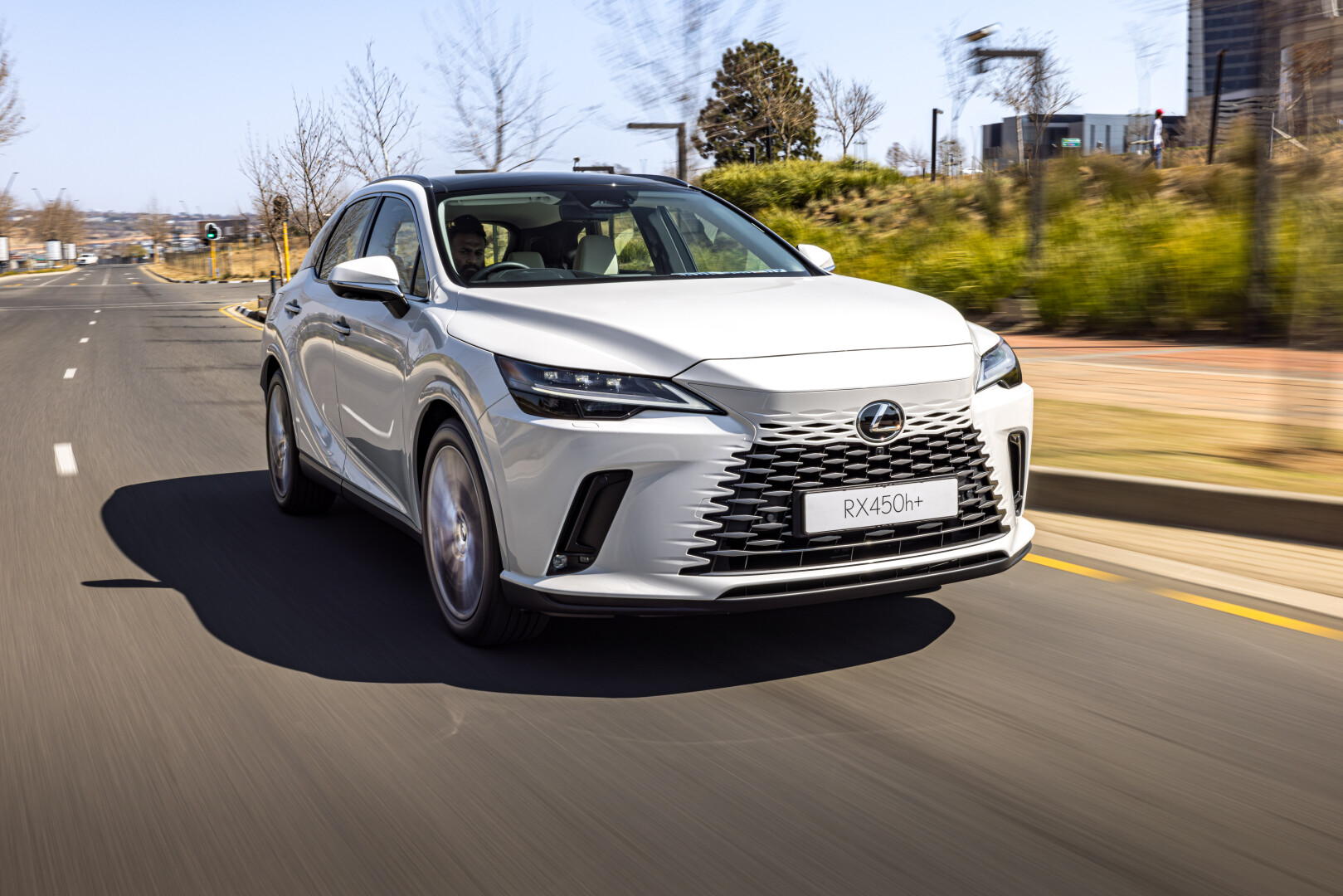
The new RX has a subjectively more likeable face than the previous generation.
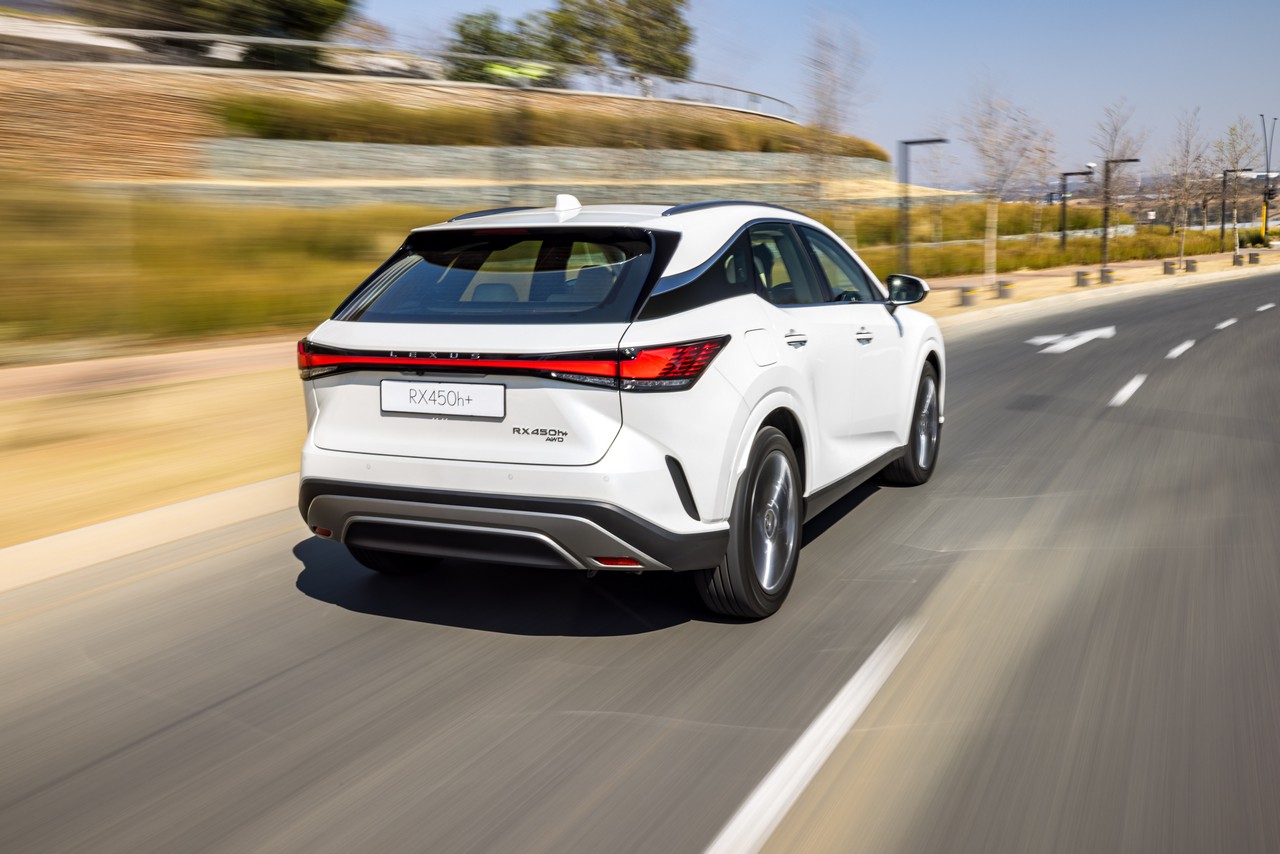
This is the 5th-generation Lexus RX and the 3rd iteration of the model to be sold in South Africa. It has been entirely redesigned with modern premium SUV buyers in mind. The design stands out, features LED light signatures and runs surprisingly low to the ground for a family car with dual-purpose capabilities.
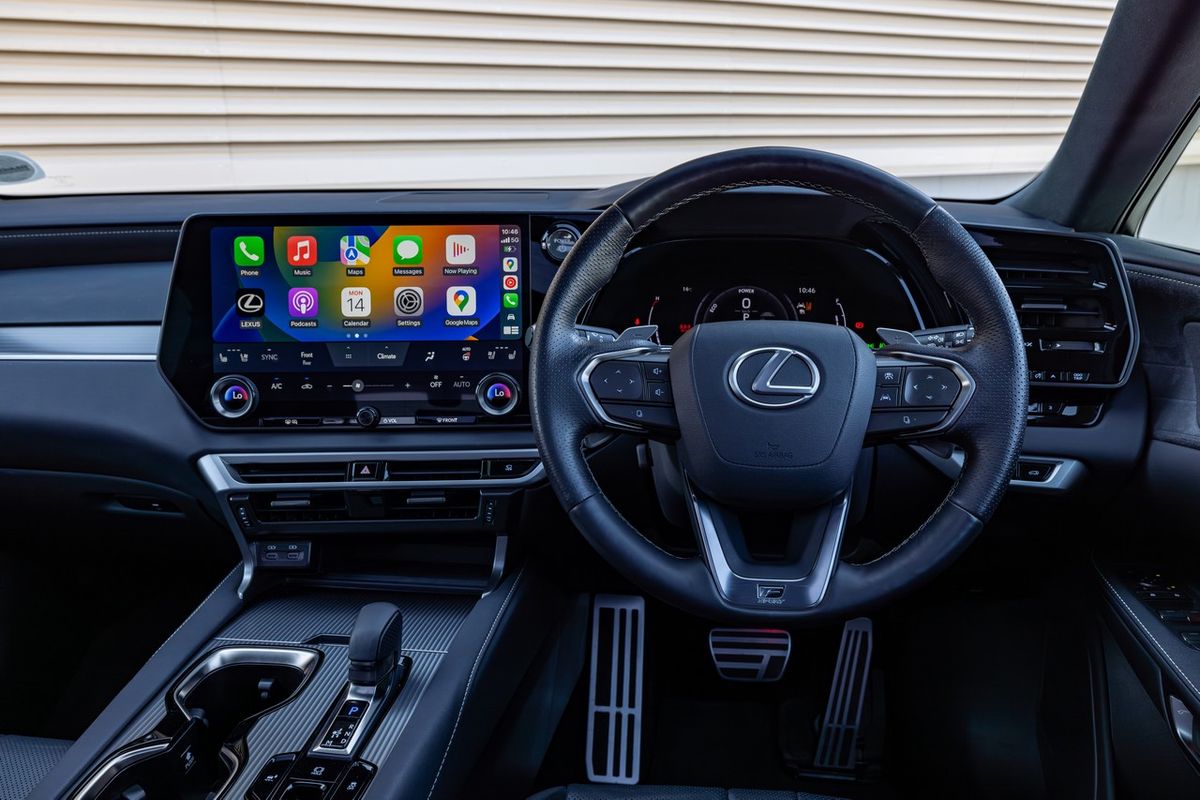
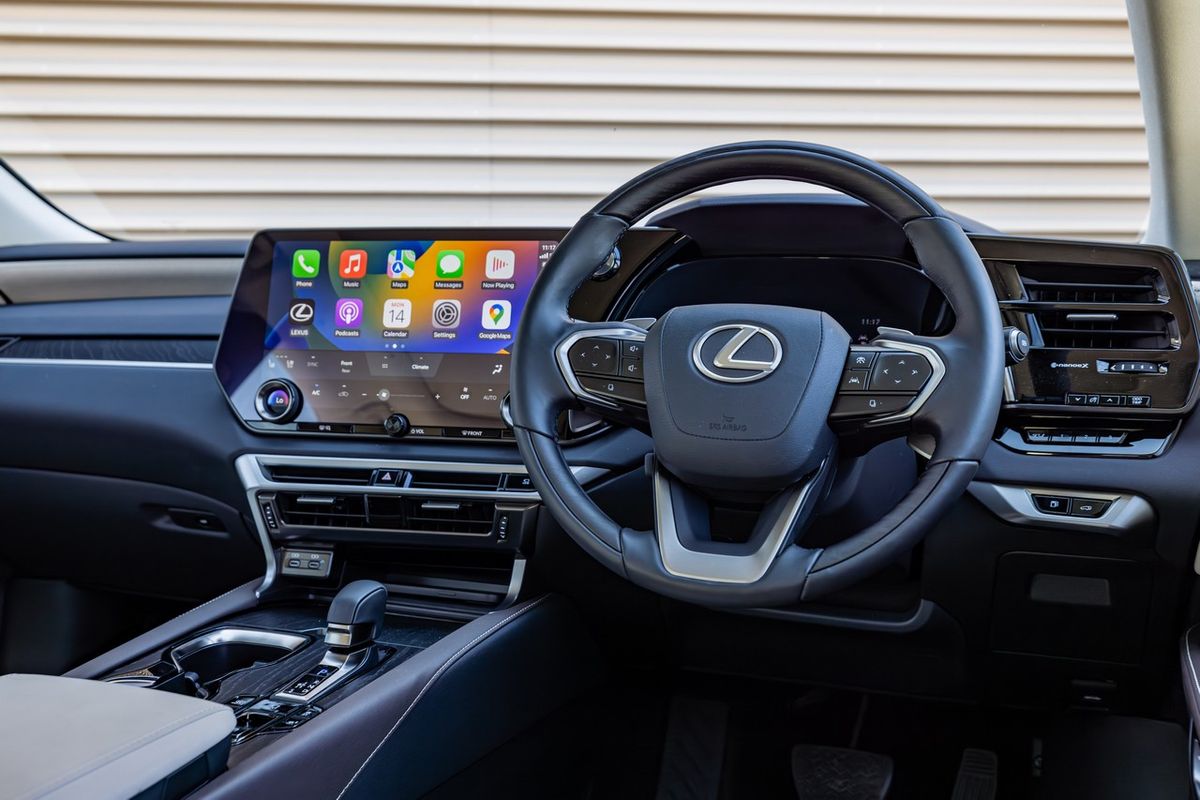
The interior has fewer Lexus quirks (no more silly touch/trackpad with which to navigate the infotainment system menu!) and appears to align with the modern age of connectivity, safety and screen technology.
Until now, the RX has tended to be an “also ran” in Mzansi’s premium SUV segment. Indeed, European and British brands dominate this space by virtue of buyers’ lingering brand perceptions, but this version of the RX has a much stronger chance of finding homes in Mzansi than those that have come before it.
Lexus RX uses hybrid and plug-in power units
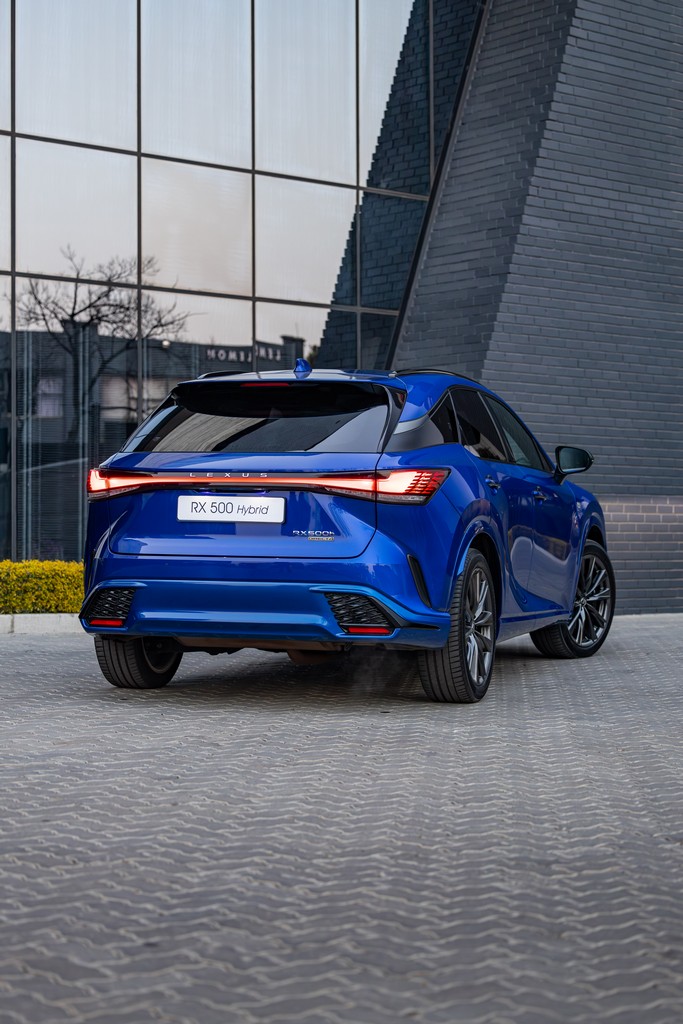
F-Sport models get bigger wheels and different front- and rear bumper designs.
The array of engines in the RX range is quite vast for a model that isn’t pushing big volumes. In the past, we may have said that some of the petrol engines in the RX are “unlikely to excite”, but that seems to have changed thanks to the Toyota Motor Corporation championing new energy petrol-electric engines.
The RX has an all-petrol lineup (with or without electric assistance). It begins with the RX 350, which has a 2.4-litre 4-cylinder turbopetrol engine. We drove this unit for a short stint in Camps Bay and the inner City bowl out to the airport, taking in a mix of freeway and city driving. In this range’s line-up, the numbers in the derivatives’ nomenclature go up in line with the asking prices (not the power outputs).
For its part, the RX 350 offers the most “conventional” driving experience; no hybrid trickery and battery tech here: just 205 kW and 430 Nm of turbocharged petrol power. It’s also the thirstiest derivative in the line-up… Lexus claims an average fuel consumption of 8.9 L/100 km, but although the test unit indicated closer to 11 L/100 km, in average (day-to-day) driving conditions, that figure will probably be lower.
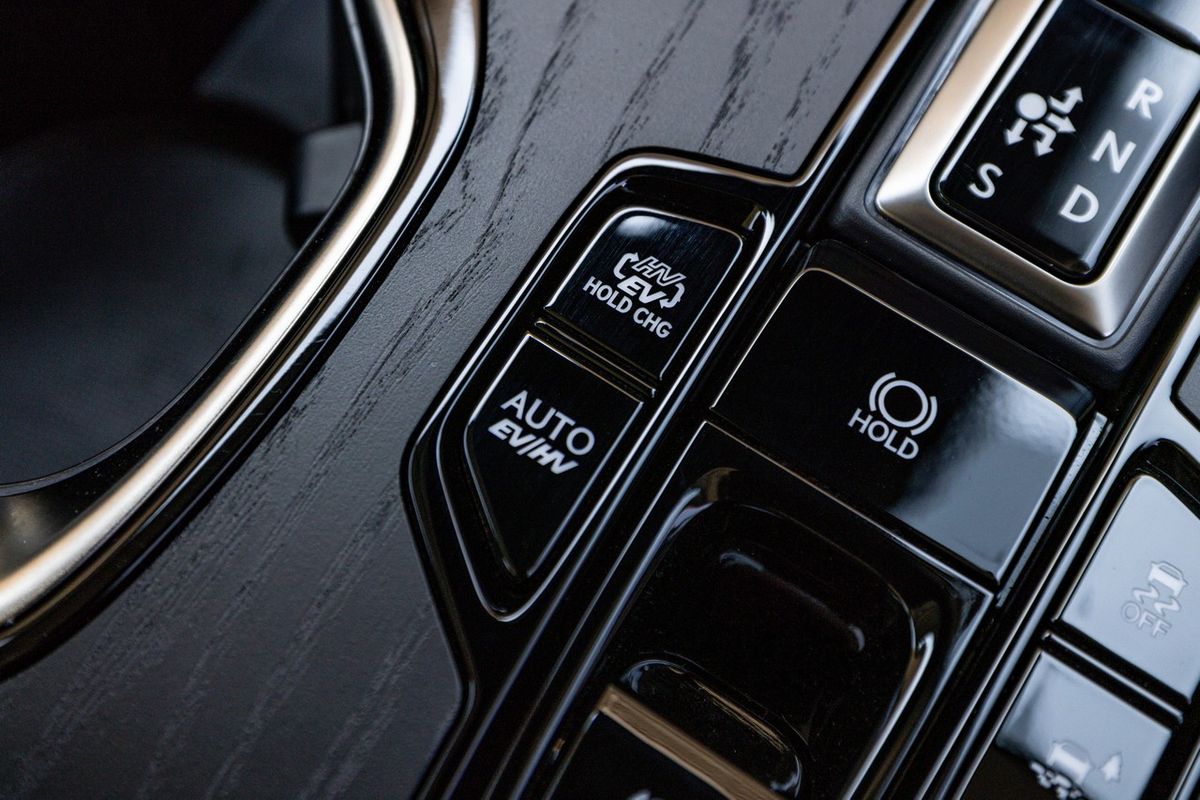
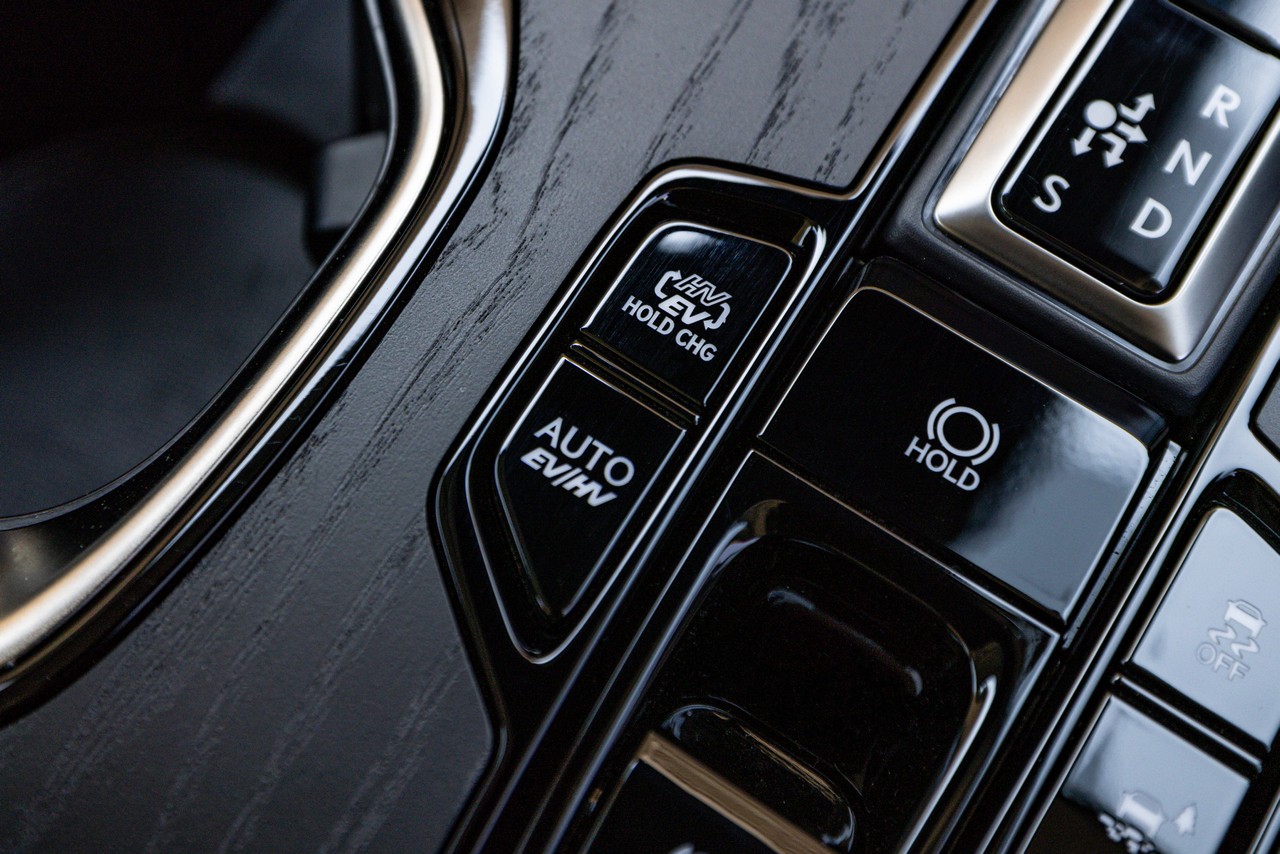
The plug-in hybrid RX 450h+ comes with a few extra buttons in the centre console.
The RX 350h, in turn, has a 2.5-litre naturally aspirated petrol engine that works in conjunction with a hybrid system to reduce emissions and produce the most economical driving experience. The power unit has stated outputs of 184 kW and 239 Nm; if you want a spirited driving experience, the RX 350h is not the derivative to buy, but we averaged 7 L/100 km in this unit, quite close to the claim of 5.4 L/100 km.
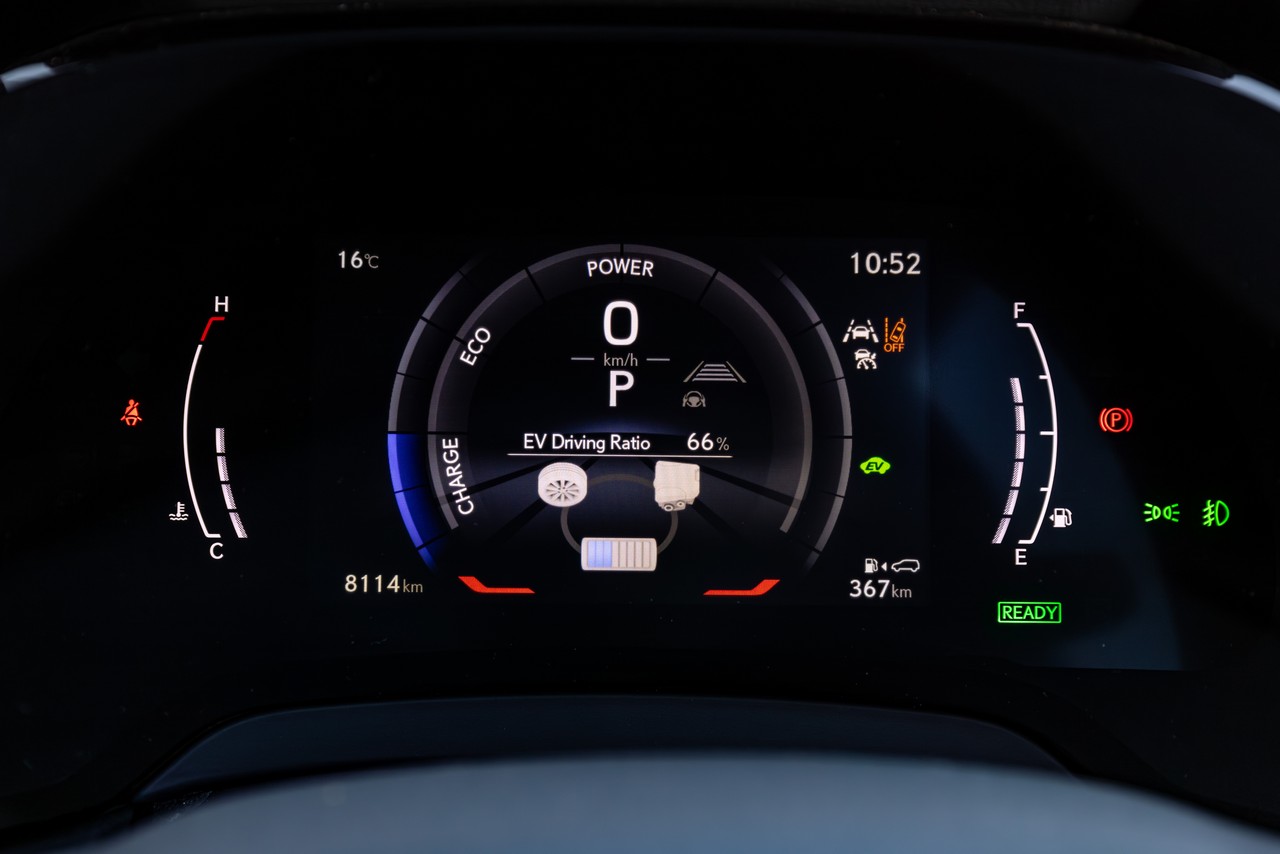
We hopped into the RX 450h+ for a short stint. The derivative will only be available from November 2023 and features a plug-in hybrid setup that combines a 2.5-litre petrol motor with an 18.1-kWh hybrid battery to produce 227 kW with a pure electric range of 65 km. It can be charged from a standard wall socket at up to 6.6 kW, which means you can charge the battery from empty to full in just under 3 hours.
This version of the RX made quite a positive first impression; the RX 450h+ uses an EV-first system whereby it will always use full-electric mode when there is sufficient capacity in the battery – no matter how firmly you step on the accelerator pedal. It can run in EV mode up to a speed of 130 kph.
Finally, the RX 500h combines a 2.4-litre turbopetrol engine with a hybrid system to develop 273 kW and 460 Nm. It certainly has all the grunt you would want from an SUV that isn’t performance-oriented. The RX 500h is fun to drive but also returns decent consumption when you get the most out of the hybrid.
Lexus claims the derivative will use 6.5 L/100 km, which compares well with the average consumption figures of 6-cylinder turbodiesels it might compete with. It is also equipped with slightly bigger brakes and rear-wheel steering for added manoeuvrability at low speeds and more stability at high speeds.
Updated Lexus RX interior
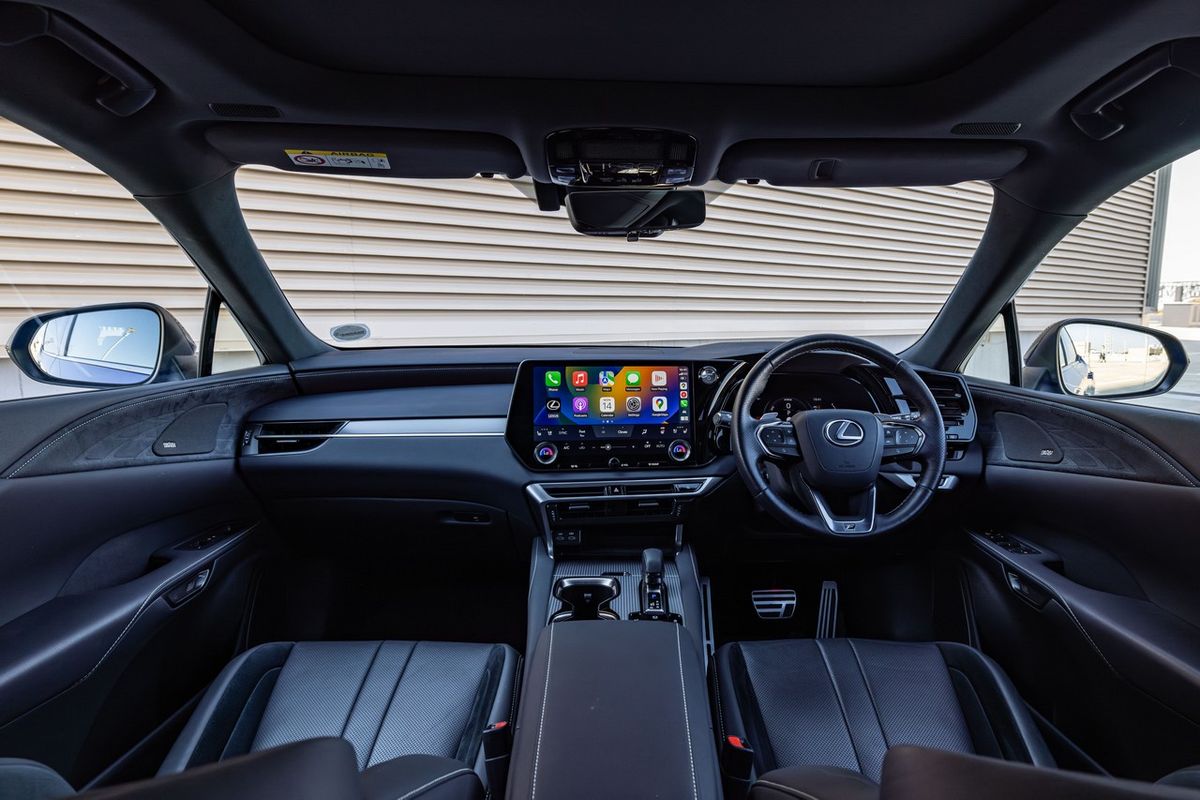
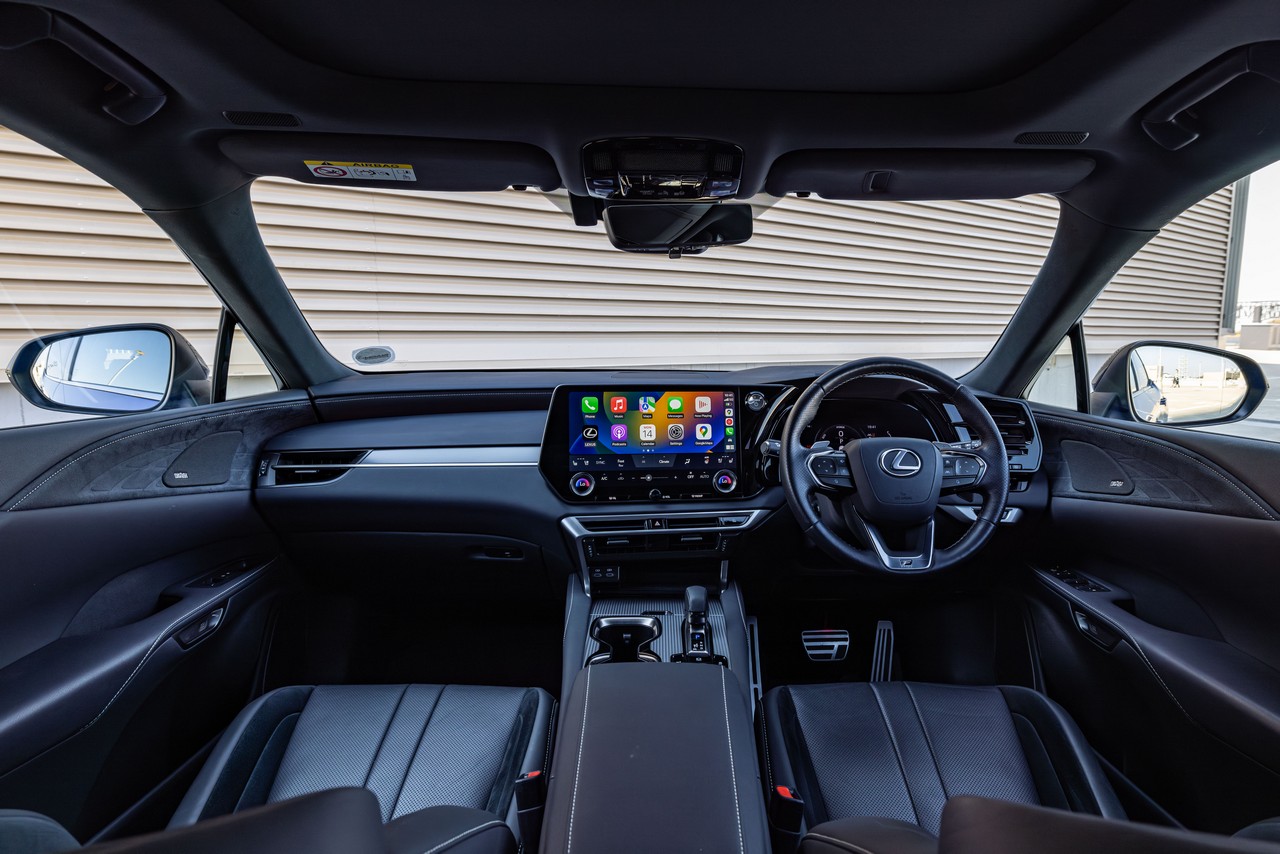
The car’s dashboard features a sizable 14-inch touchscreen that showcases high-quality graphics.
There is a lot to like about the new Lexus RX’s cabin. Gone are the days when Lexus models’ interior layouts and user interfaces seemed dated. The 14-inch touchscreen has a clear and beautifully high-res display and, while it can be a bit of a stretch to reach its farmost corners from the driver’s seat, because the screen is so big, the icons are also chunky, which makes them easy to press while you’re driving.
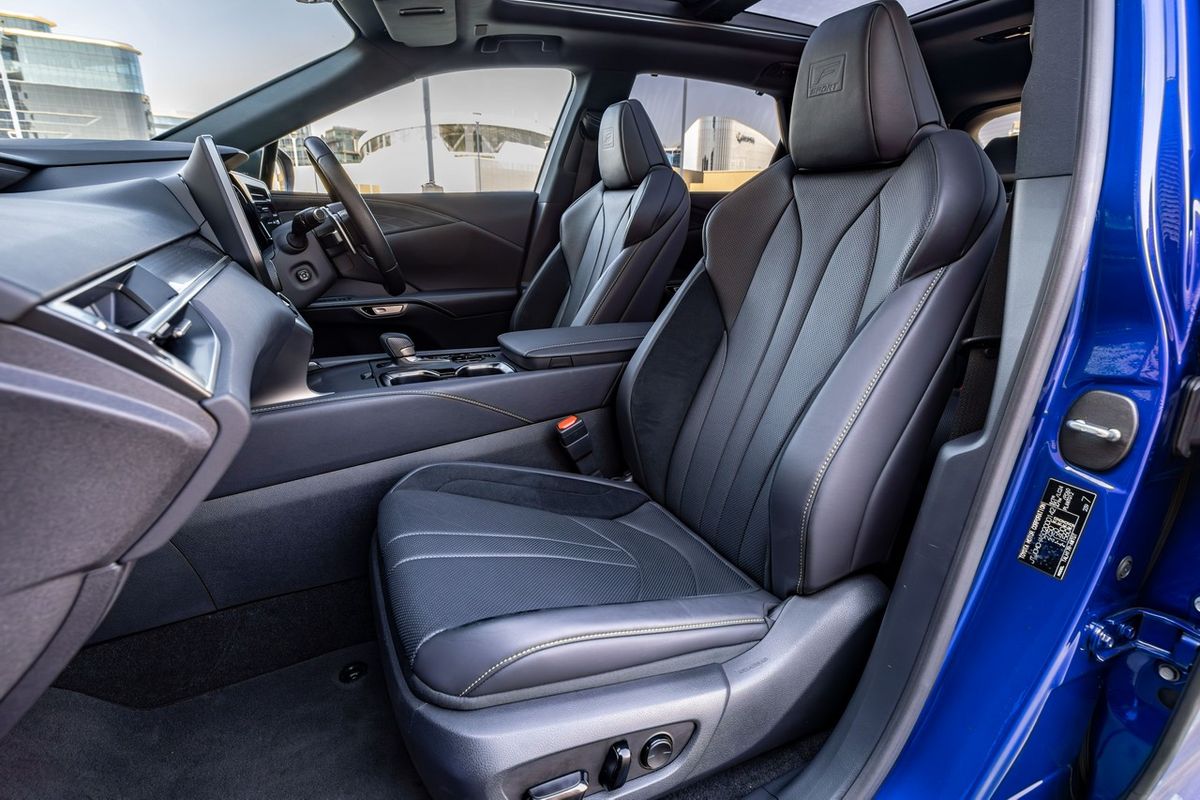
The heated and ventilated seats are perfect for all the seasons of the Western Cape (especially when they occur on the same day) and if you’re really cold, you can fire up the heated steering wheel too.
The luxurious seats are all electrically adjustable (including the rear seats, which can recline) and they’re quite cossetting (suitably softly padded) – there are no body-hugging bucket seats to be found here. It’s the quintessential lap of luxury when you step inside the RX. Nothing is over the top, like you’d see in a crystal-levered BMW, plus the material selection makes Mercedes-Benz look like a Tupperware maker.
It’s beautifully crafted and refined inside and the wrap-around dashboard with an “edge” reminds me a lot of the Jaguar F-Pace design.
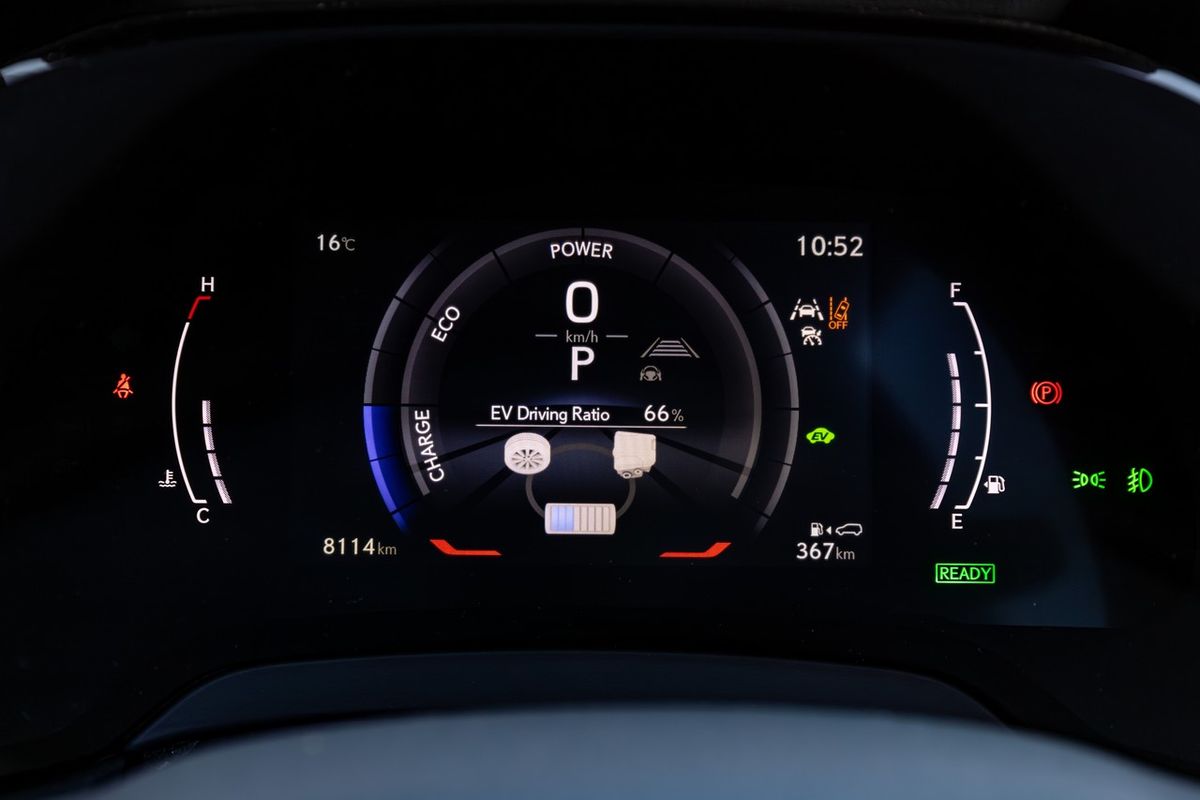
Simple graphics for the hybrid control make it easier to get the best out of the tech.
There are 4 USB ports up front (3 USB-C and 1 USB-A), as well as a wireless charging pad. There’s wireless Apple CarPlay, if you need it, but strangely, Android Auto requires a cable connection.
As with all Lexus derivatives in the South African market, there are no options to consider – every car is fully specced with adaptive cruise control, 360-degree cameras, pre-crash safety (warning if the driver is not paying attention and an accident is imminent), lane departure alert and blind-spot monitoring.
For those who like sunroofs, all versions of the RX are specced with a full-length panoramic sunroof.
What’s the RX like to drive?
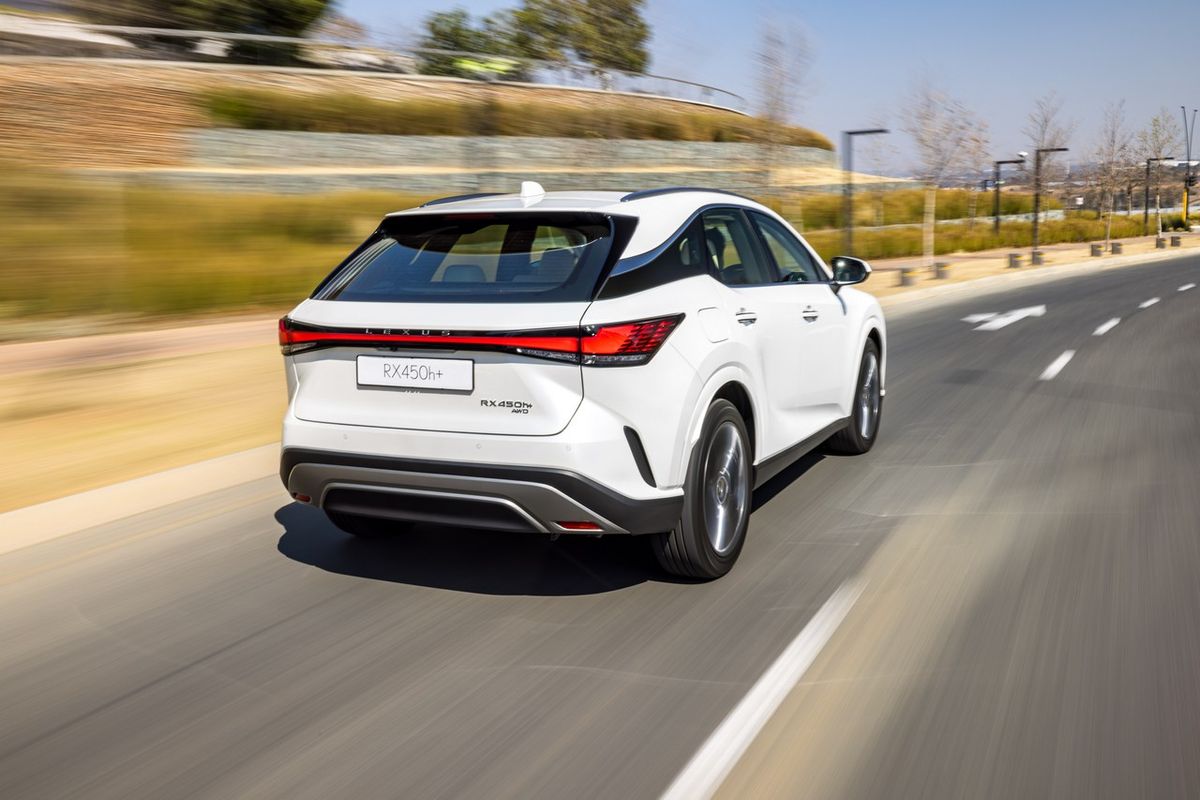
The RX 450h+ plug-in hybrid will be available from November 2023.
For the RX’s driving experience, Lexus has clearly favoured comfort over any hint of sportiness or firmness. The ride quality is smooth and plush, a stark contrast from what every other brand appears to be doing in the premium SUV segment. The 20-inch wheels (21-inch on F-Sport derivatives) do have their limits when it comes to absorbing harsh road “features” such as potholes or deep manhole covers. The occasional knock or clunk intrudes into the cabin, but for the most part, all jitters are kept at bay.
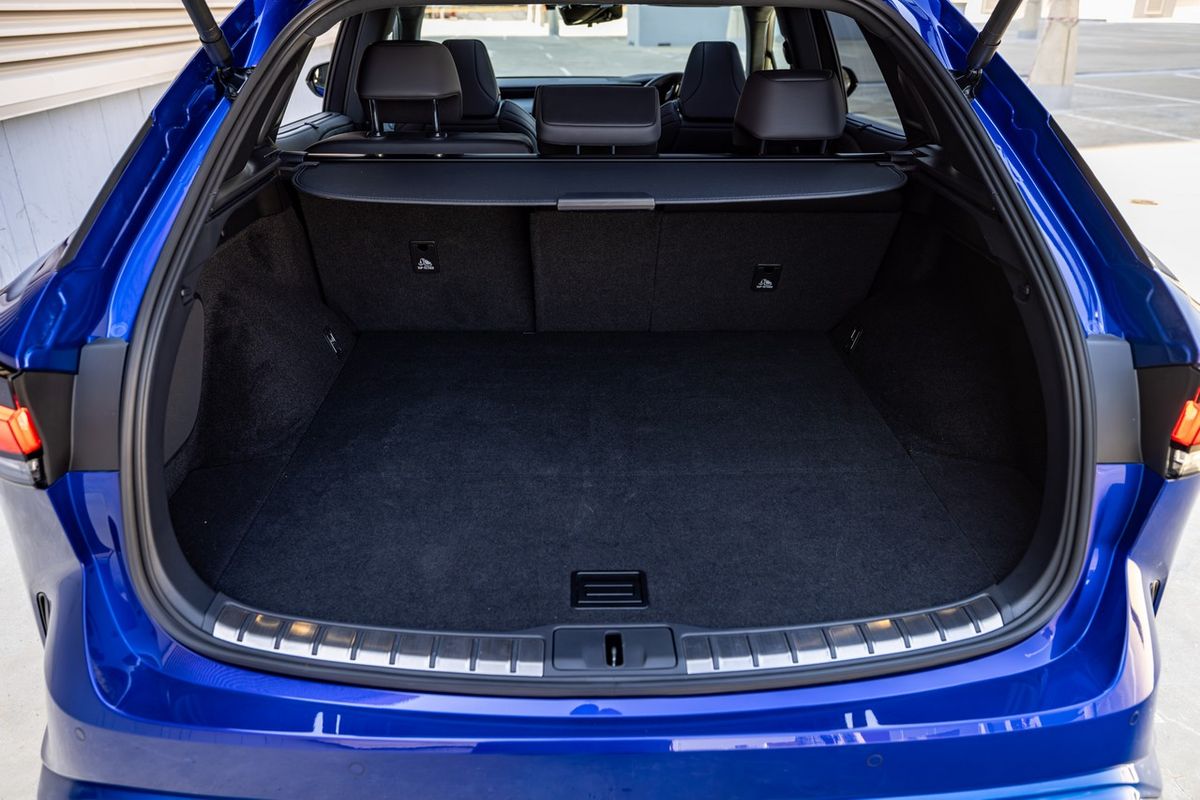
The sizeable Japanese premium SUV, which has a 612-litre load bay, never feels cumbersome to pilot, even in the confines of the city. Yes, it’s a little smaller than something like a BMW X5, but space inside is plentiful and I doubt a few extra millimetres is likely to make that much of a difference at this price point.
What to pay for a new Lexus RX?
Lexus models are fully equipped, so there’s no need to select additional options.
Lexus has a big local warranty and service plan attached to its cars, thanks to its large dealership footprint supported by market leader (and multiple CarsAwards Brand of the Year winner) Toyota.
For the standard petrol models, an RX comes with a 7-year/105 000 km warranty and on hybrid derivatives that is upped to 8 years/195 000 km. The standard service plan is 7-services/105 000 km.
The new Lexus RX removes some of the elements that dissuaded buyers before, such as a quirky and behind-the-times infotainment system and lethargic petrol engines. The new hybrid and turbopetrol powerplants deliver levels of performance that compare better with those of competitor offerings, with the bonus of fuel efficiency gains in the hybrid derivatives, of which the RX 450h+ is a real highlight.
The newcomer’s interior is much more up-to-date thanks to the massive touchscreen that has a significantly simpler (and slicker) user interface. Excellent safety tech, -ride quality and -standard specification are all part and parcel of making the RX a very comfortable – and modern – premium SUV.
Jeep Grand Cherokee (2023) Review
The Jeep Grand Cherokee – now in its 5th generation – recently became available as a 5-seater. With a mere R20k price difference between this variant and its “L” 7-seat counterpart, does the “smaller” Grand Cherokee make sense as a full-sized family car?
We like: Design, ride/handling balance, well-built, comfortable cabin and loads of features
We don’t like: Quite thirsty, for an extra R20k you can have 7 seats…
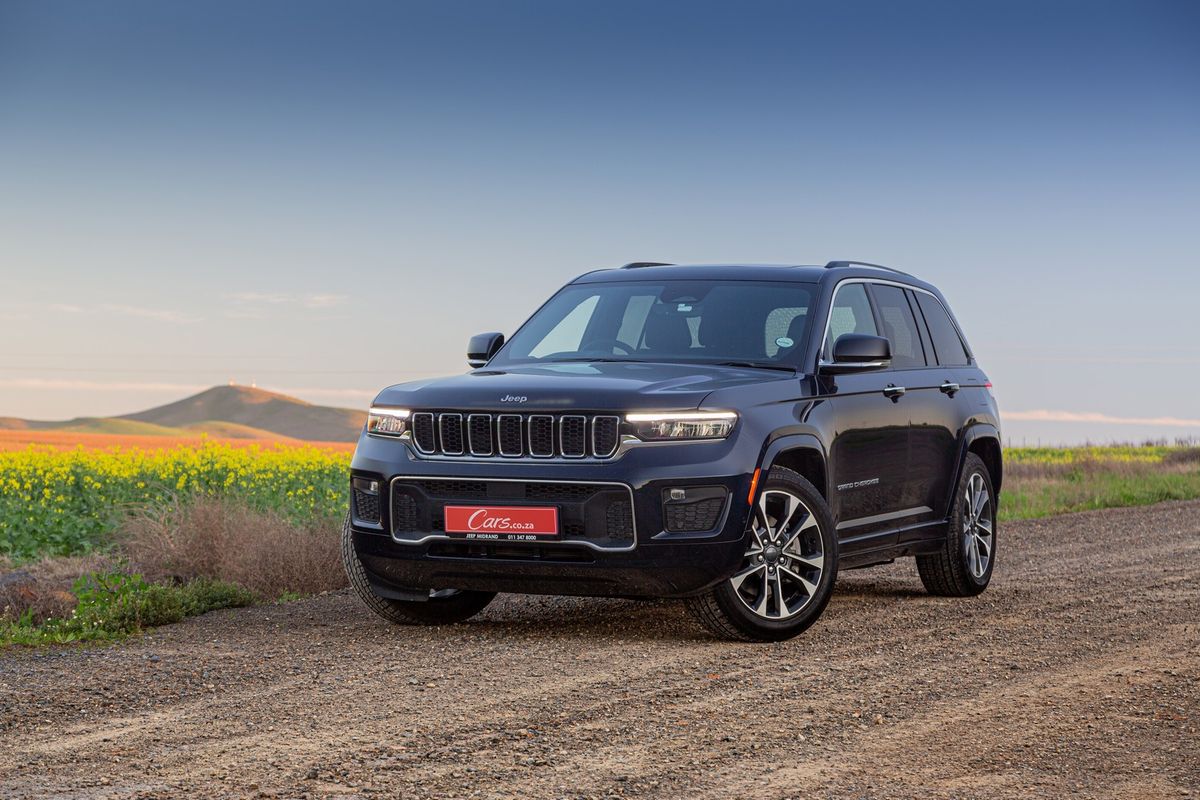
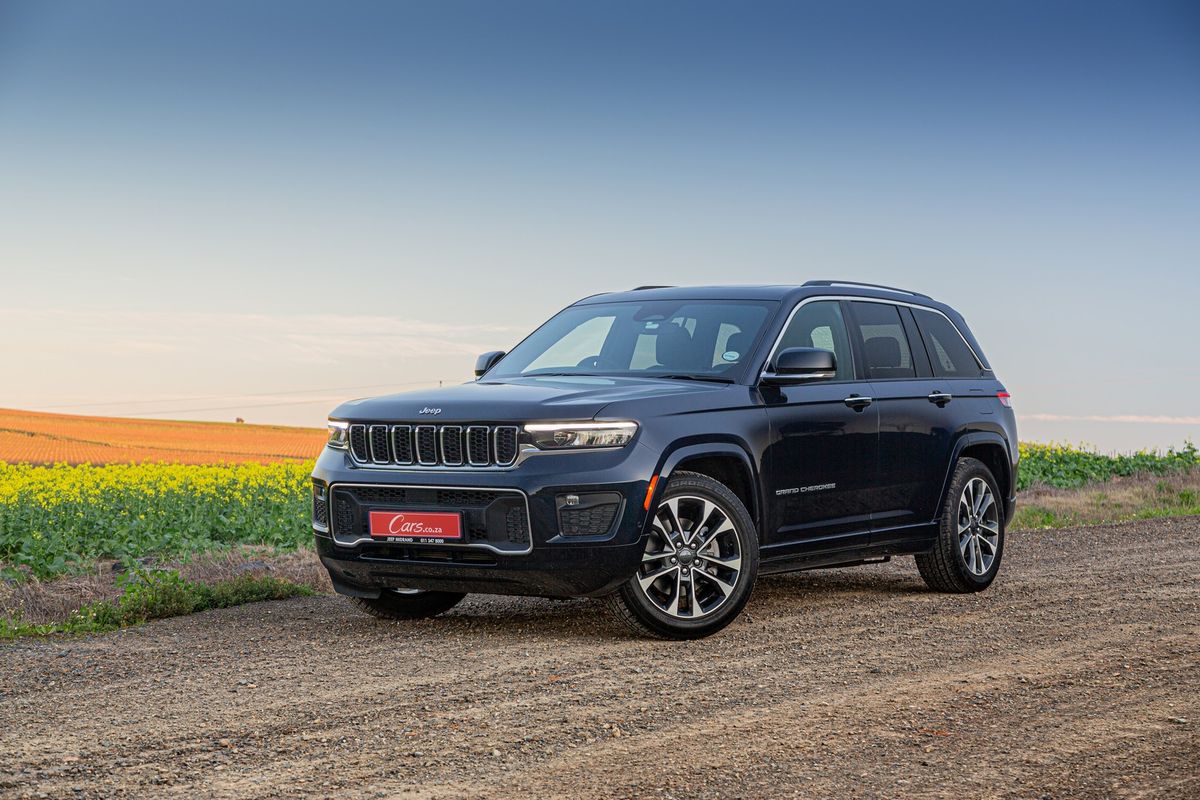
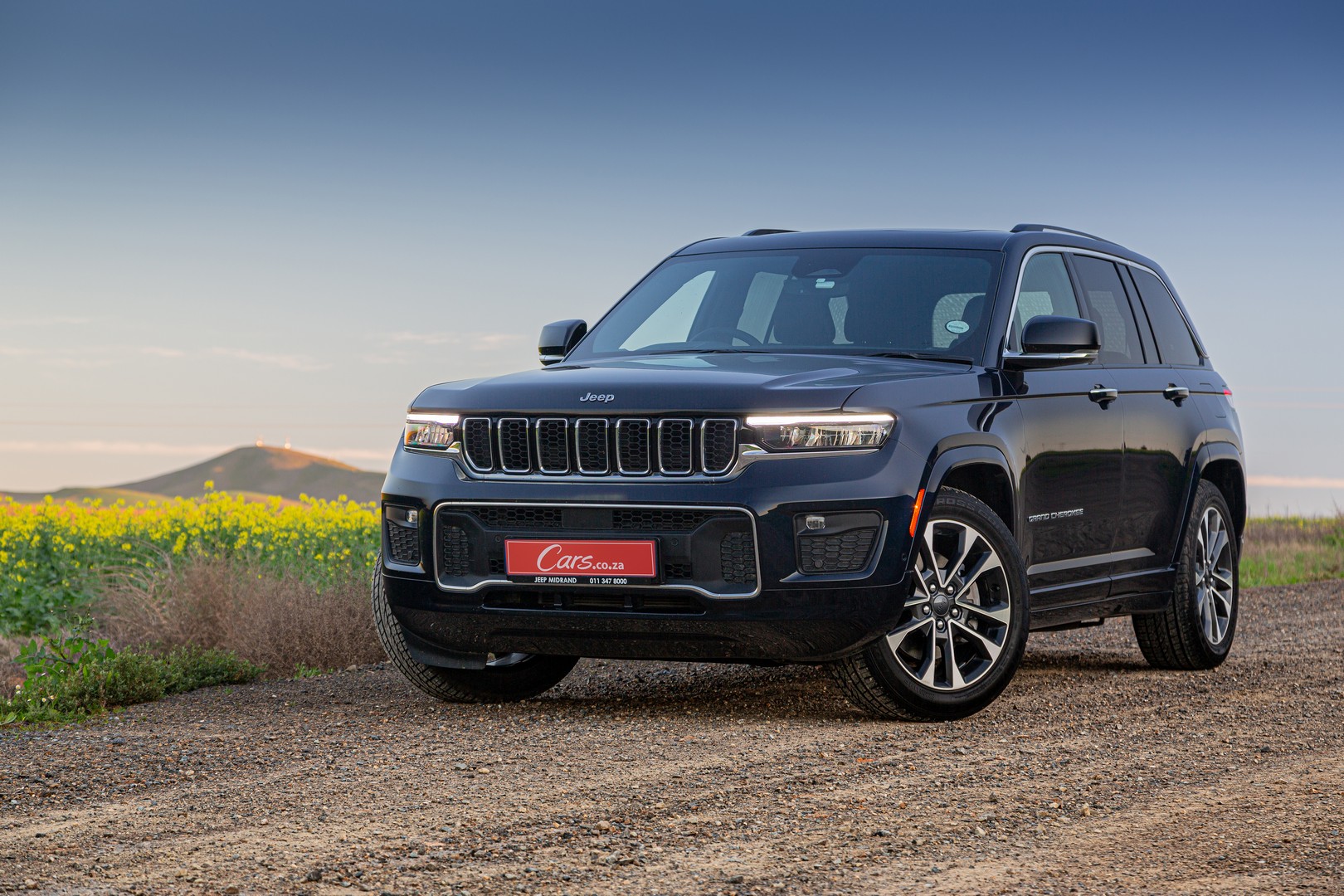
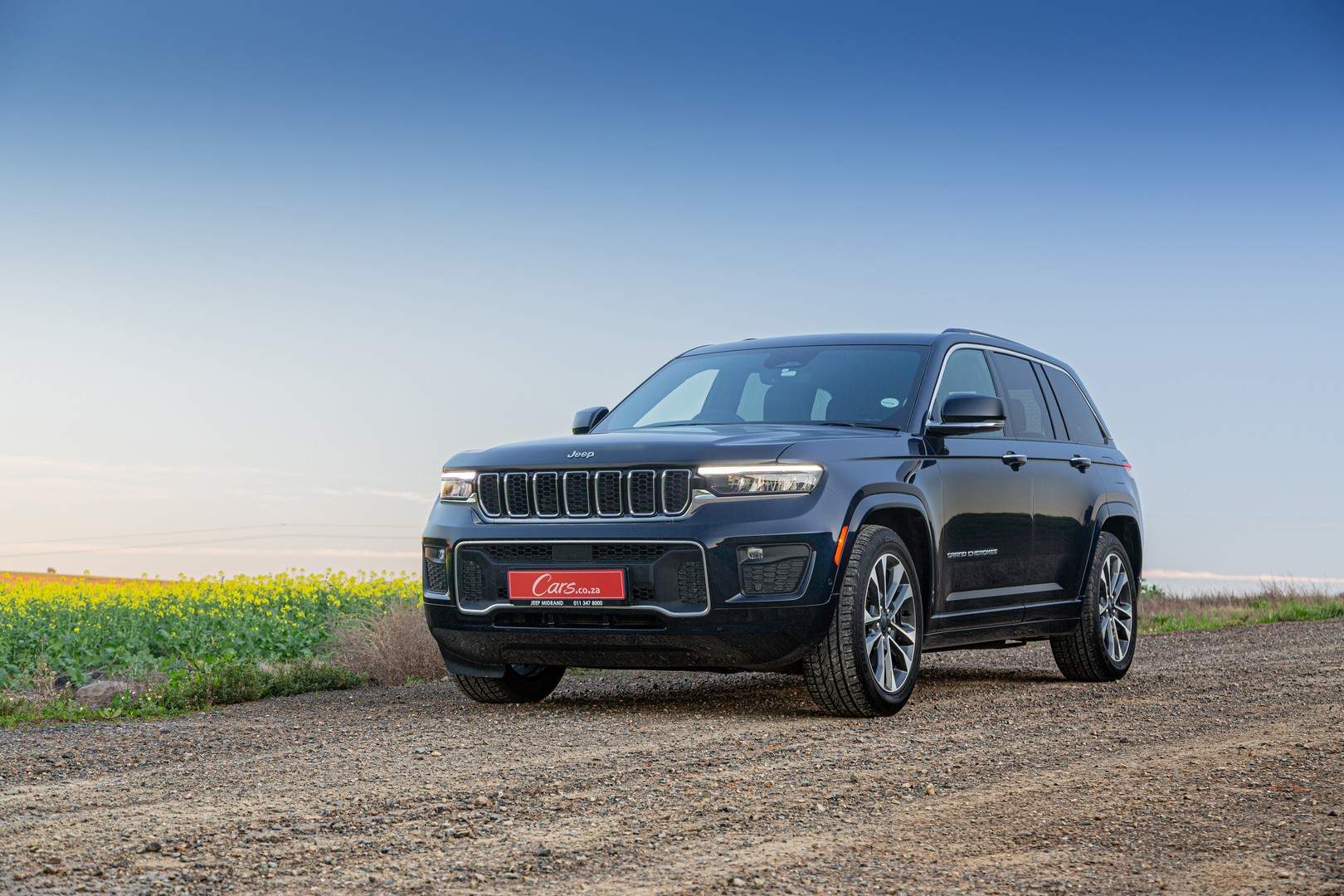
The “smaller” Grand Cherokee somehow looks more muscular and broad-shouldered than the “L”.
Where does the 2023 Jeep Grand Cherokee fit in?
When the 5th iteration of Jeep’s successful Grand Cherokee premium SUV arrived in Mzansi last year, it did so exclusively in 7-seat “L” form – the first time that a Grand Cherokee was offered with a 3rd row.
More recently, in May, Stellantis expanded the line-up by introducing 5-seater derivatives, powered by the same 3.6-litre V6 engine, and offered in the same trim lines: Limited, Overland and Summit Reserve.
With only R20 000 separating a 5-seat Grand Cherokee Overland from the 7-seat “L” of the same specification, one has to wonder who would specifically opt for the “smaller” vehicle…
How the 2023 Jeep Grand Cherokee fares in terms of…
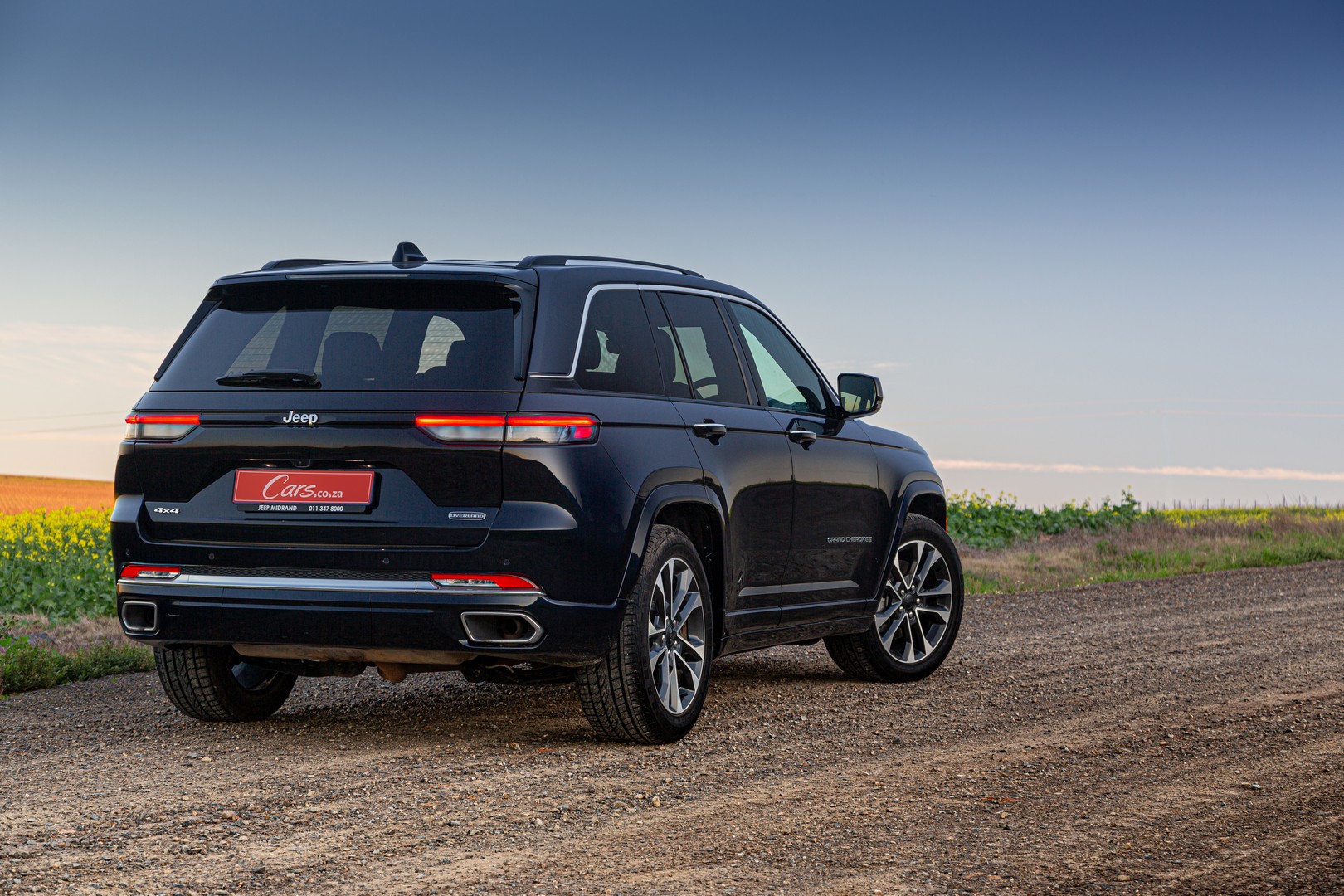
The 5-seat version of the Grand Cherokee is 292 mm shorter than its 7-seat counterpart.
Design and Packaging
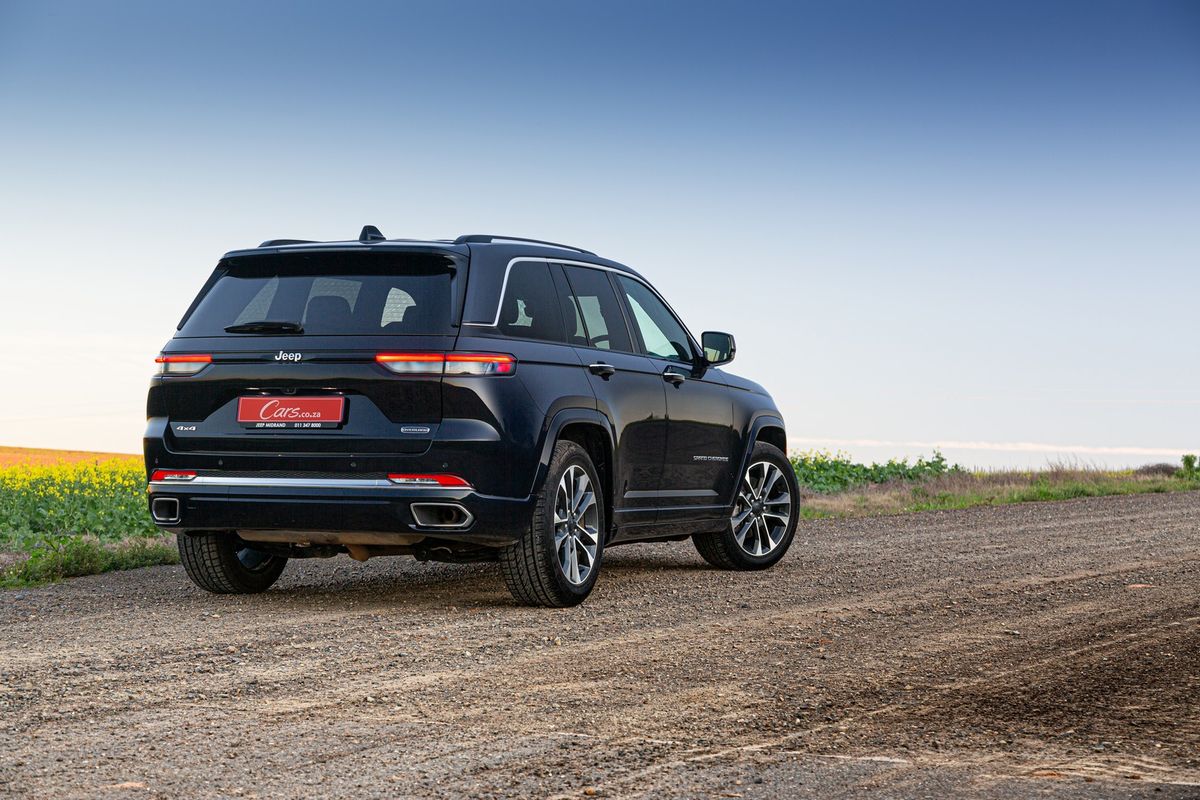
The difference between the Jeep Grand Cherokee 5-seater and the 7-seat “L” is immediately obvious when you view the former in profile or from a rear three-quarter angle. This variant rides on a wheelbase that is 127 mm shorter than the 7-seater and, bumper-to-bumper, it’s a substantial 292 mm shorter. This alone might be significant for some customers, who may find that the “L” doesn’t fit into their garage!
Furthermore, the new 5-seat variant retains the same width as the “L”, but is slightly lower (by 15 mm) even though it has an identical ground clearance of 276 mm. The overall result is that the “smaller” Grand Cherokee actually looks more muscular and broad-shouldered than its “L” counterpart, the latter of which can appear somewhat ungainly from some angles.
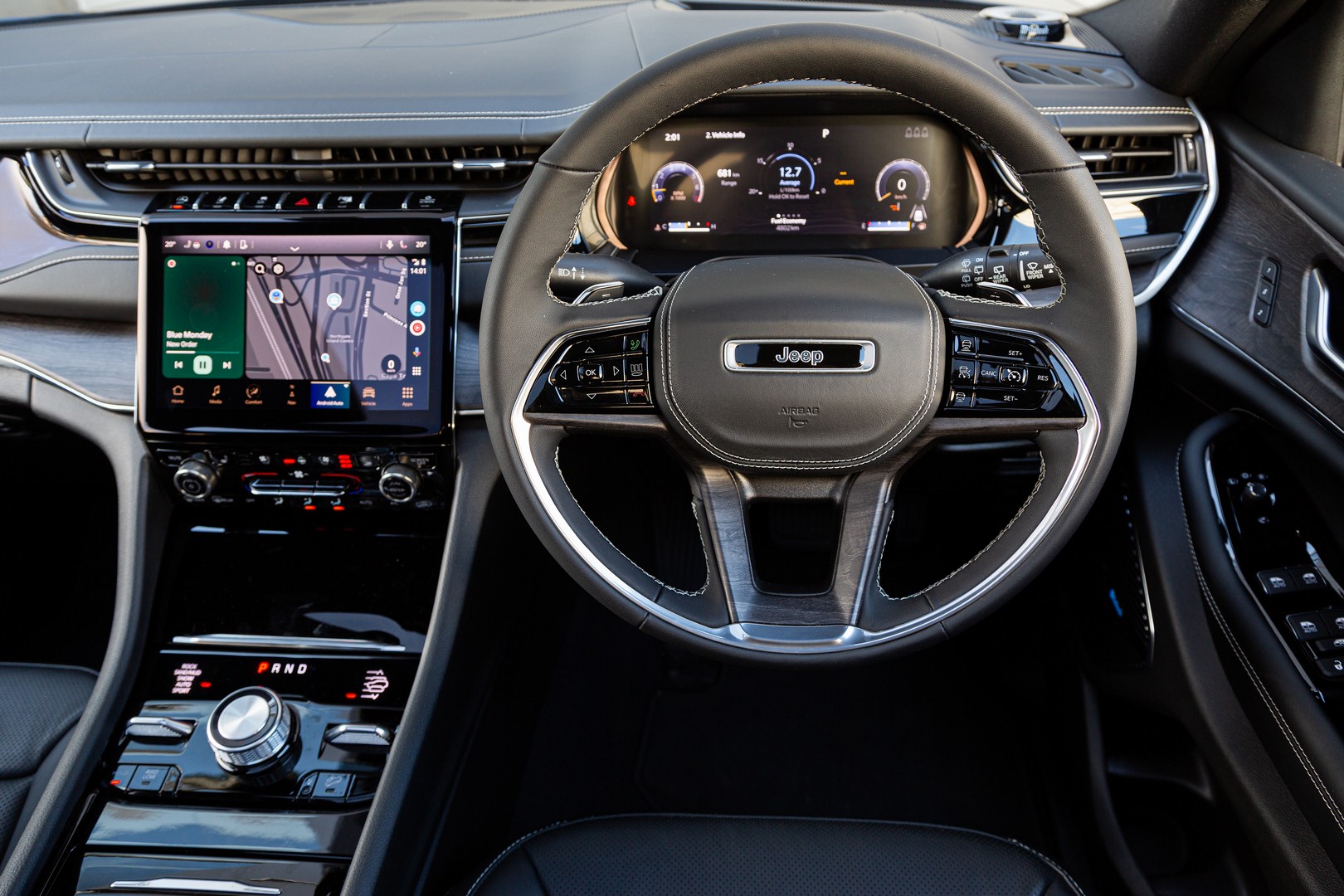
The Jeep Grand Cherokee’s interior is smartly finished and well-made; it emits no rattles or squeaks.
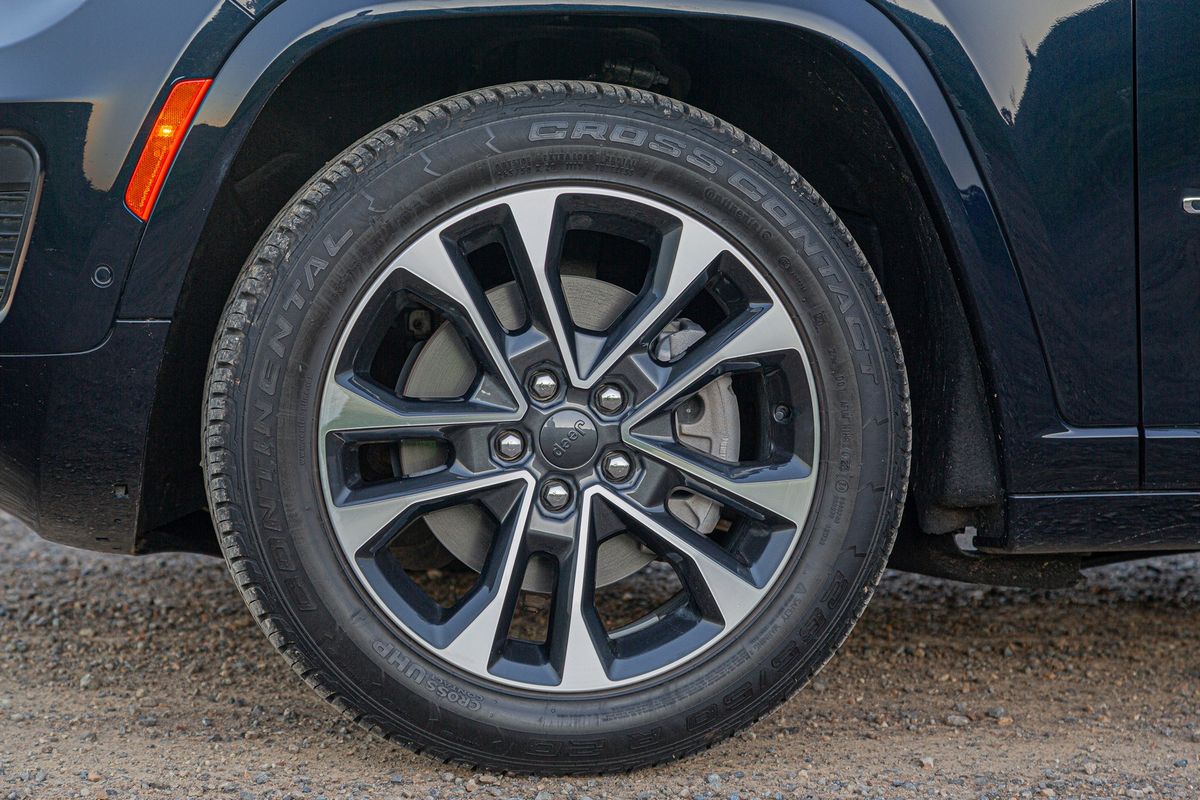
Like the L variant we tested last year, the test unit sported Overland trim, which endows it with just enough bling to make it worthy of its premium SUV designation; to its credit, the look isn’t over the top. The wheels are big, glossy 20-inch items, and there are striking LED lighting signatures fore and aft.
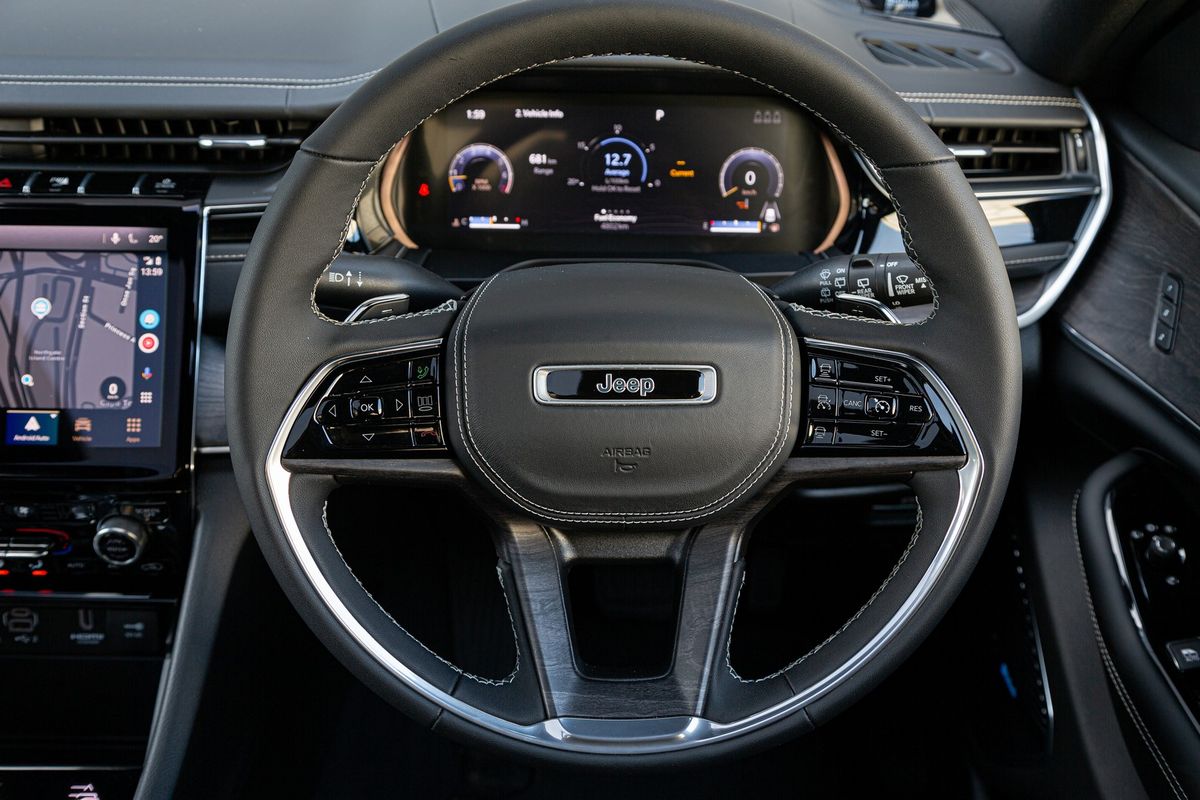
Inside, you’ll find what is arguably the best Jeep cabin ever. The finishes have a premium look, and even when the Grand Cherokee traversed uneven surfaces, its interior panels emitted no rattles or squeaks. This Jeep seems well-screwed together – which isn’t something that could be said of all its forebears.
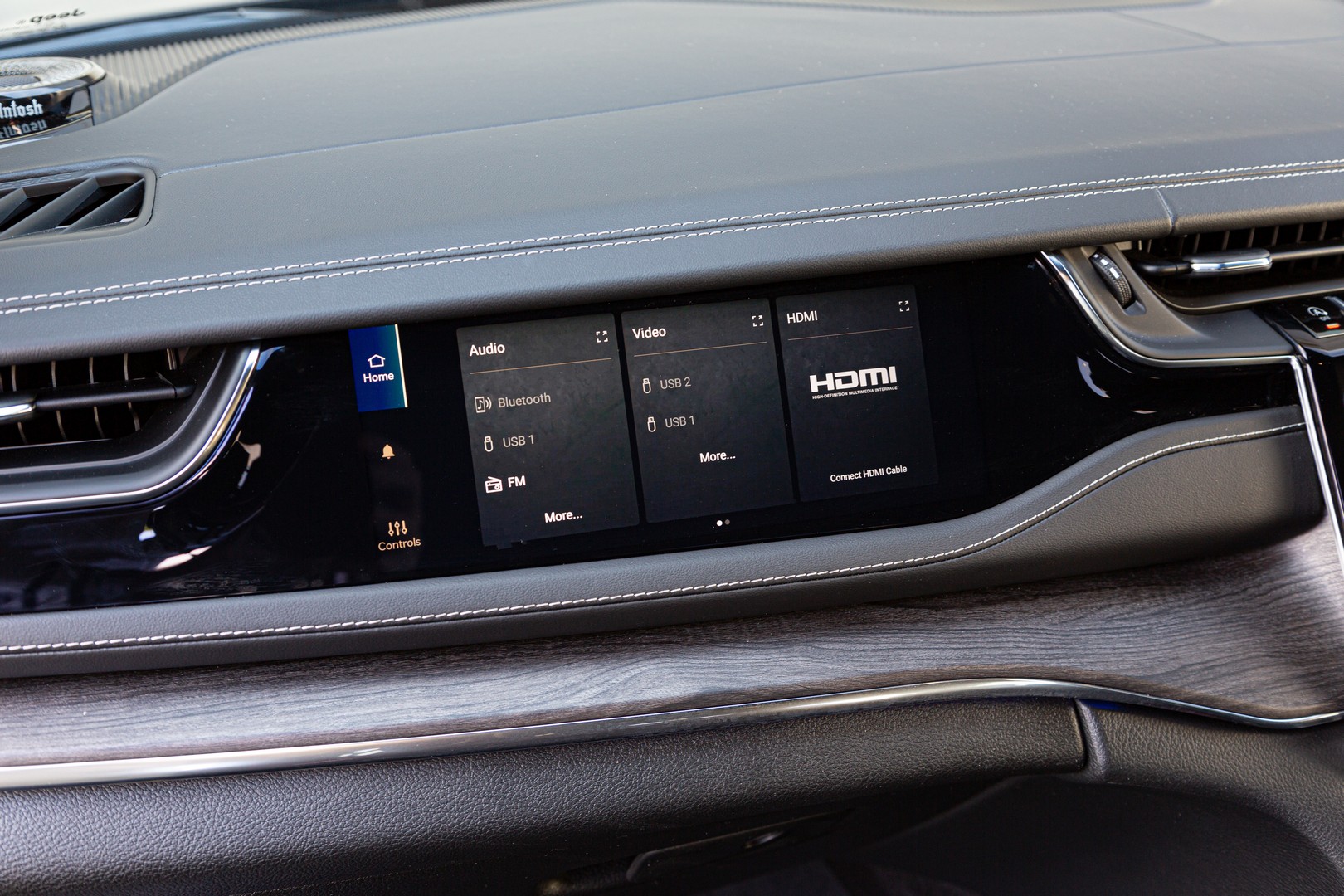
The secondary touchscreen, positioned ahead of the front passenger, is novel; it certainly keeps teens entertained.
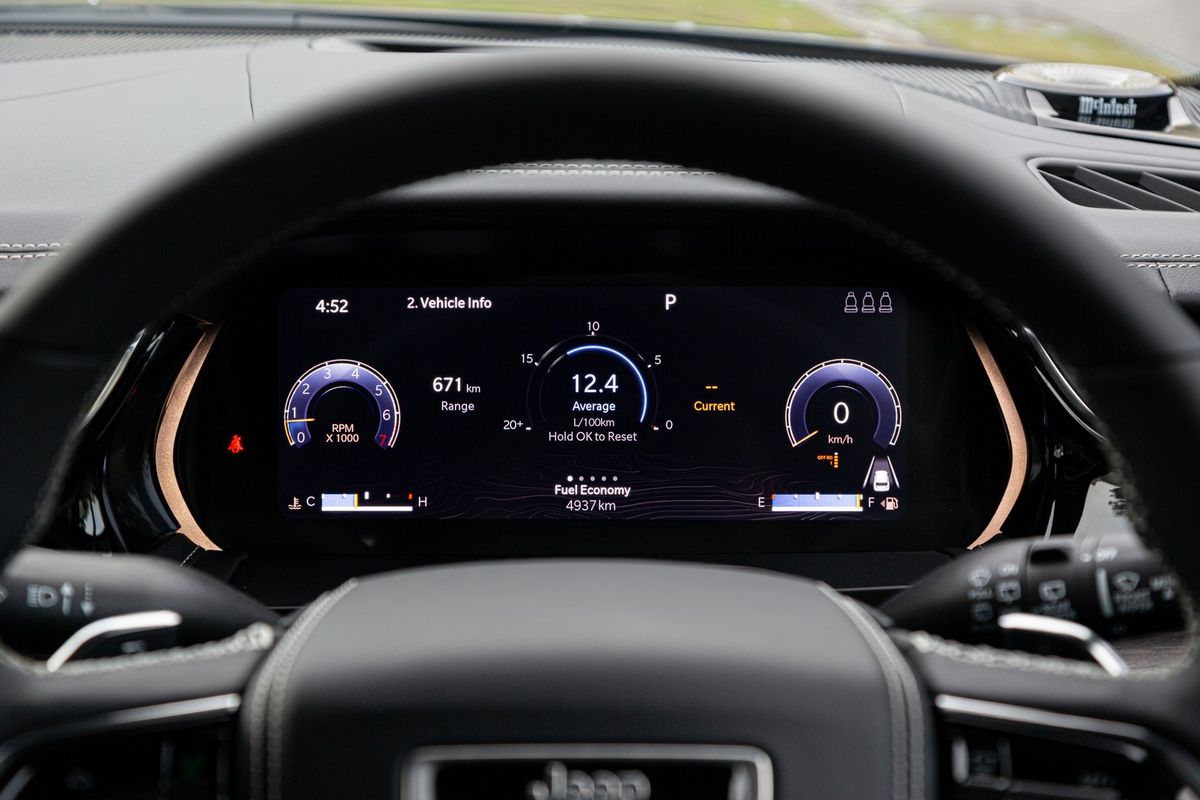
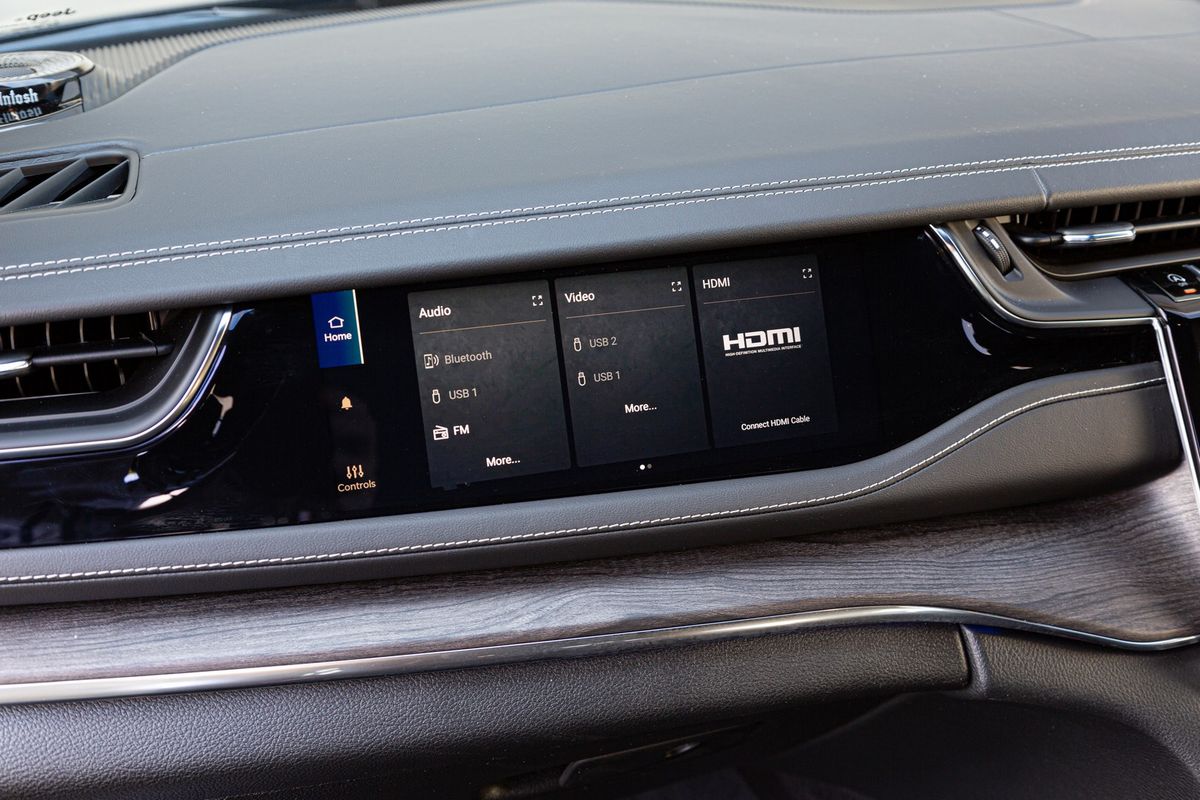
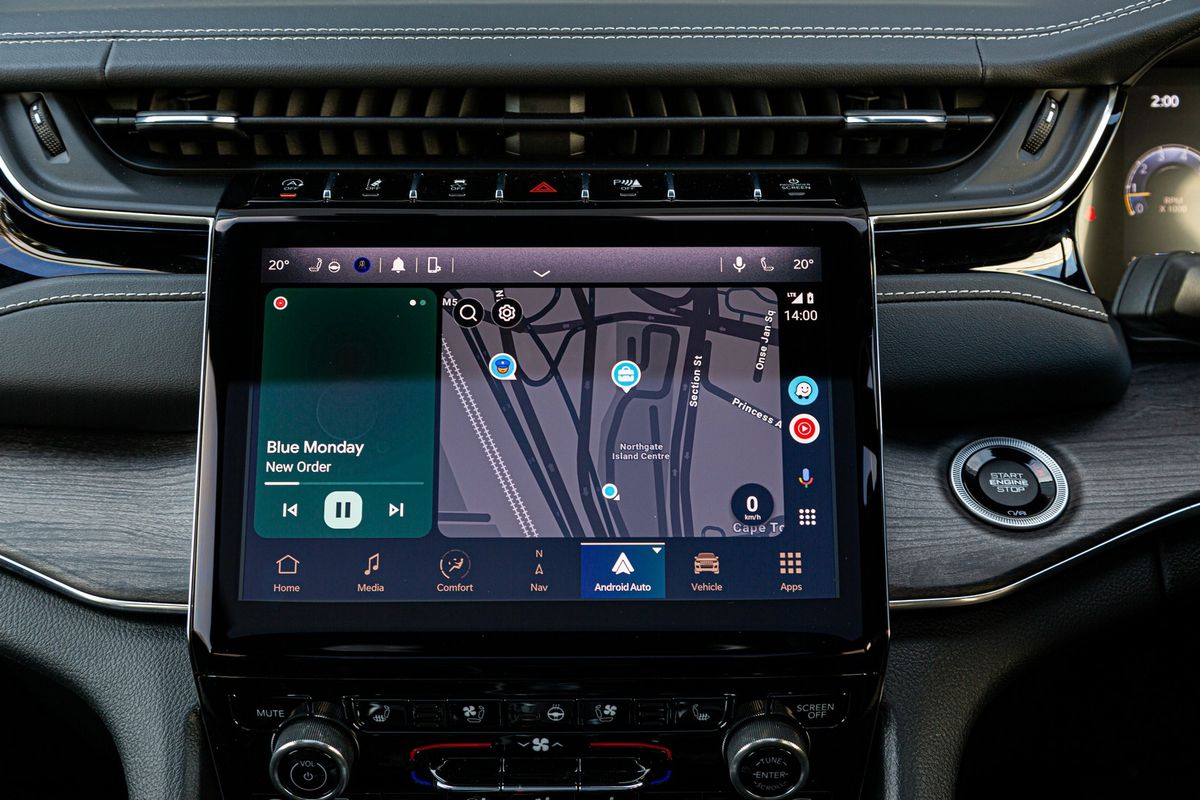
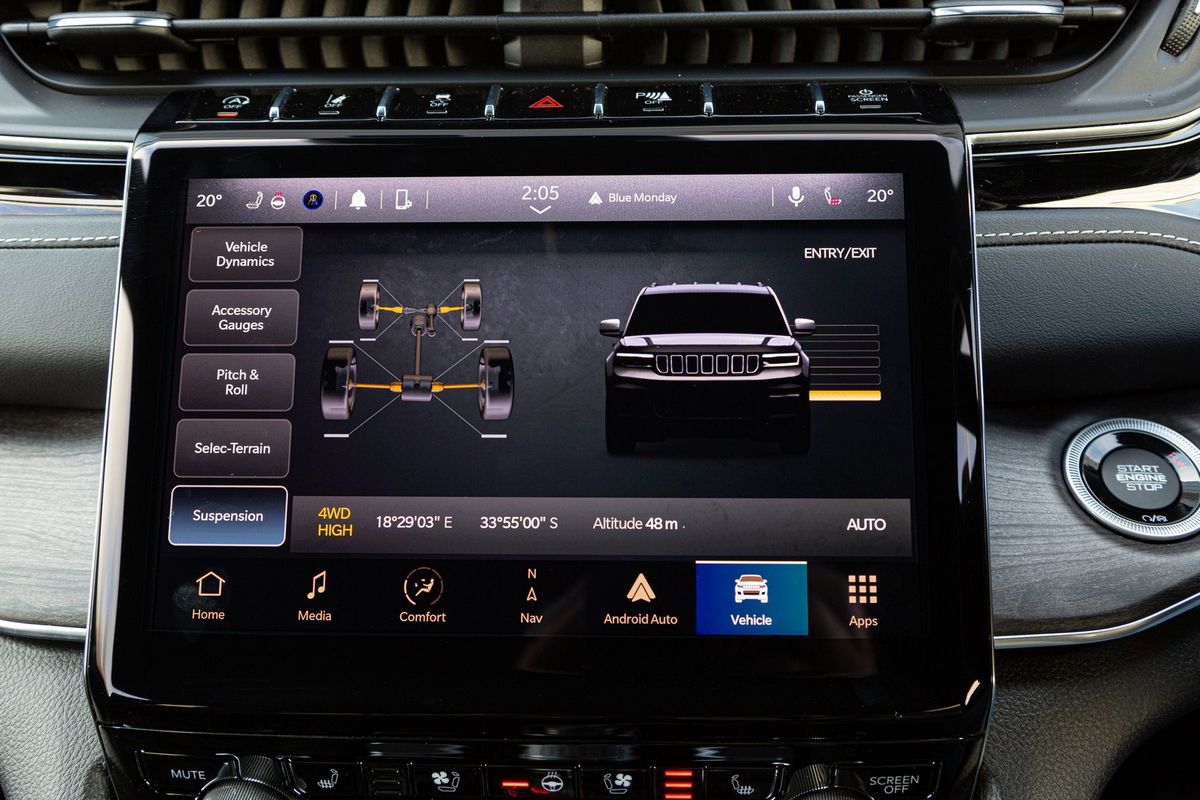
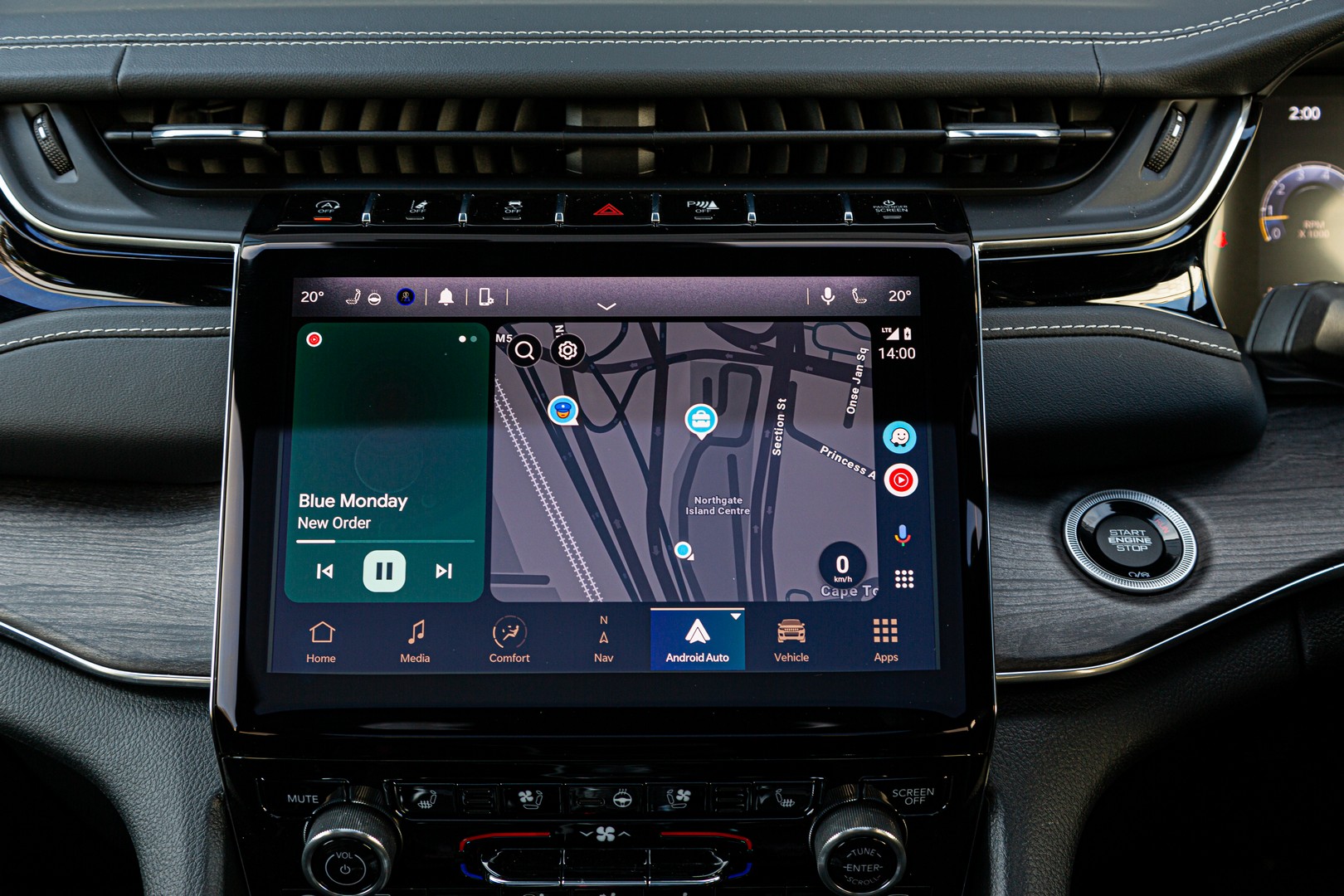
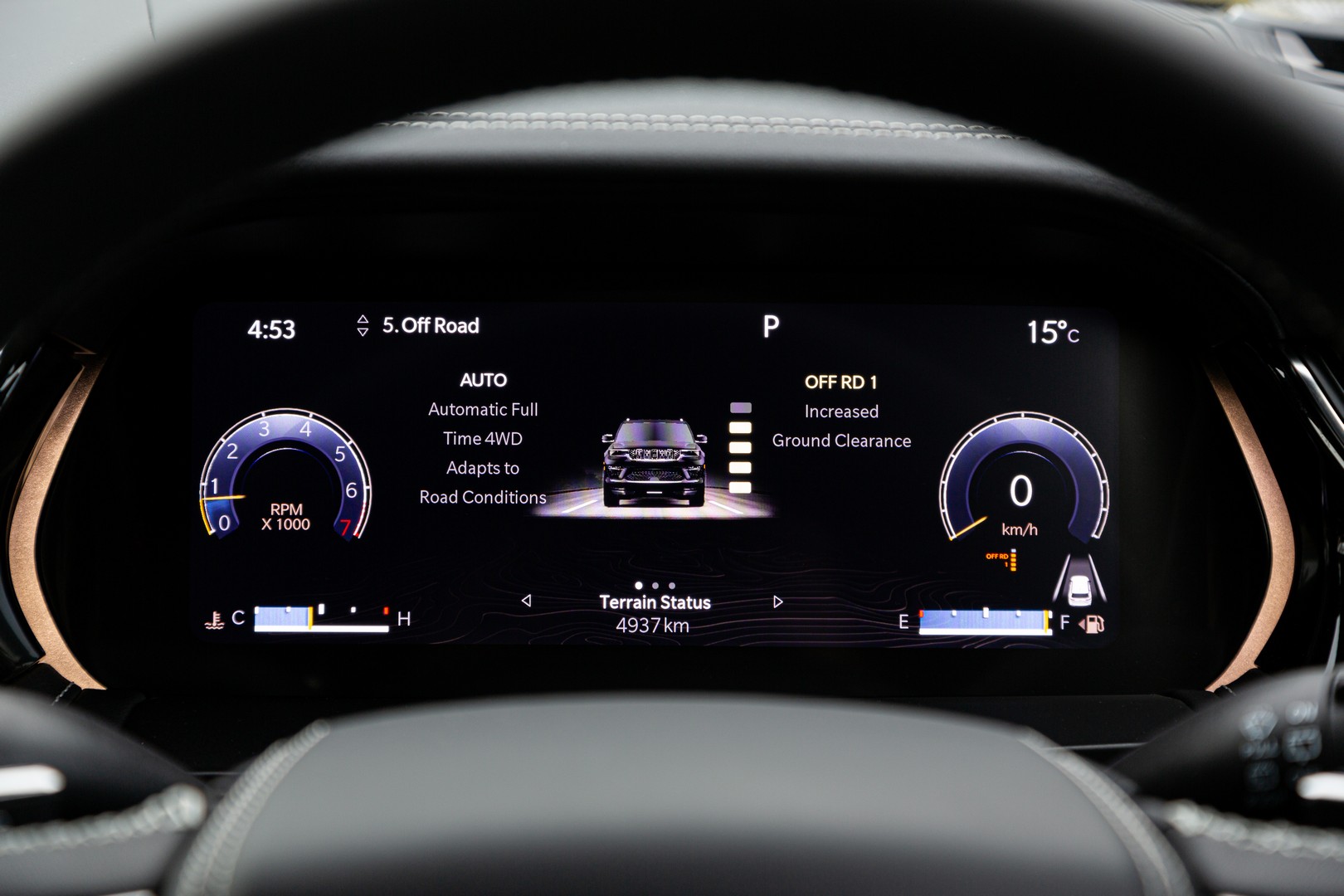
Overland specification means that the 3.6 4×4 derivative comes equipped with a number of rather nifty features. Fronting the driver is a digital instrument cluster that can be adjusted to display information in a variety of layouts. The grand fascia is dominated by an impressive-looking and high-resolution 10.1-inch touchscreen that is integral to the Uconnect 5 system. Of course, wireless Apple CarPlay/Android Auto compatibility is included and, overall, the built-in Uconnect system is intuitive and performs slickly.
A quirky feature – and it’s one that will inevitably become a talking point whenever someone enters the Jeep’s cabin for the first time – is the touchscreen positioned ahead of the front passenger. Designed in such a way so as to be invisible (and therefore not distracting) to the driver, it gives the front passenger access to navigation info, camera views and visual entertainment; it certainly keeps teenagers engaged.
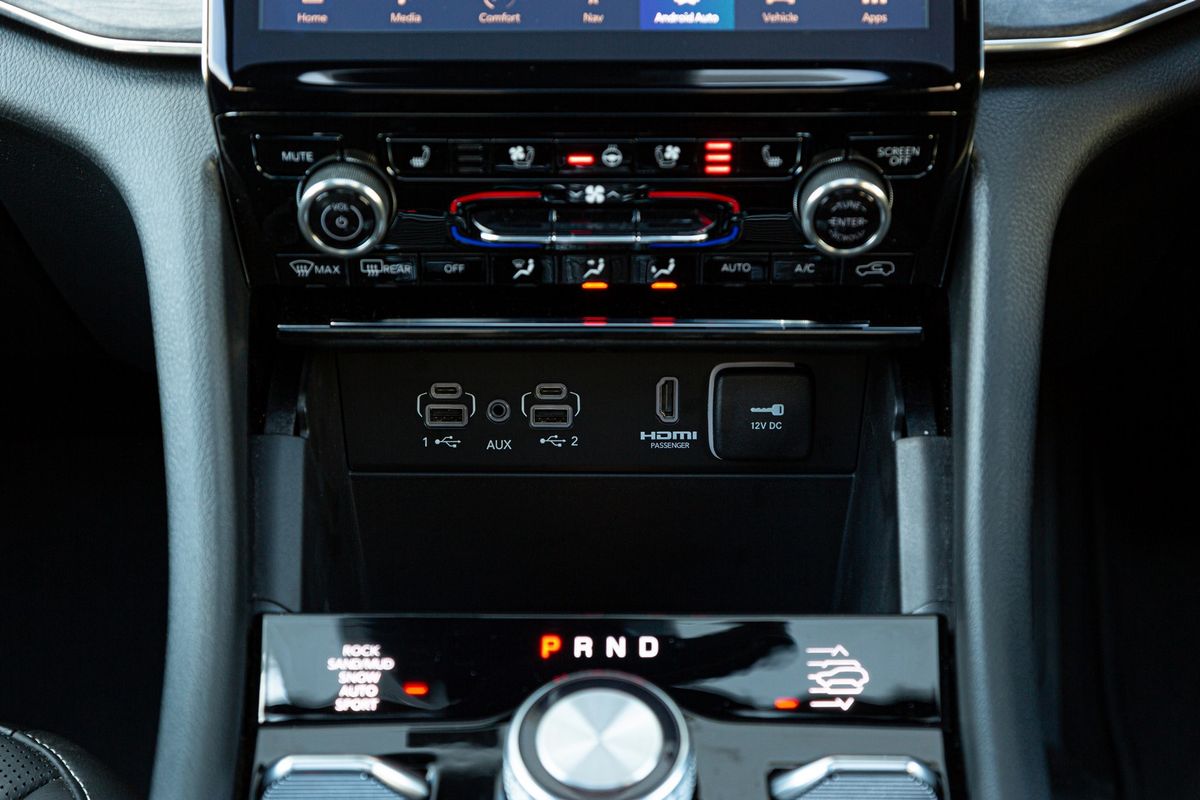
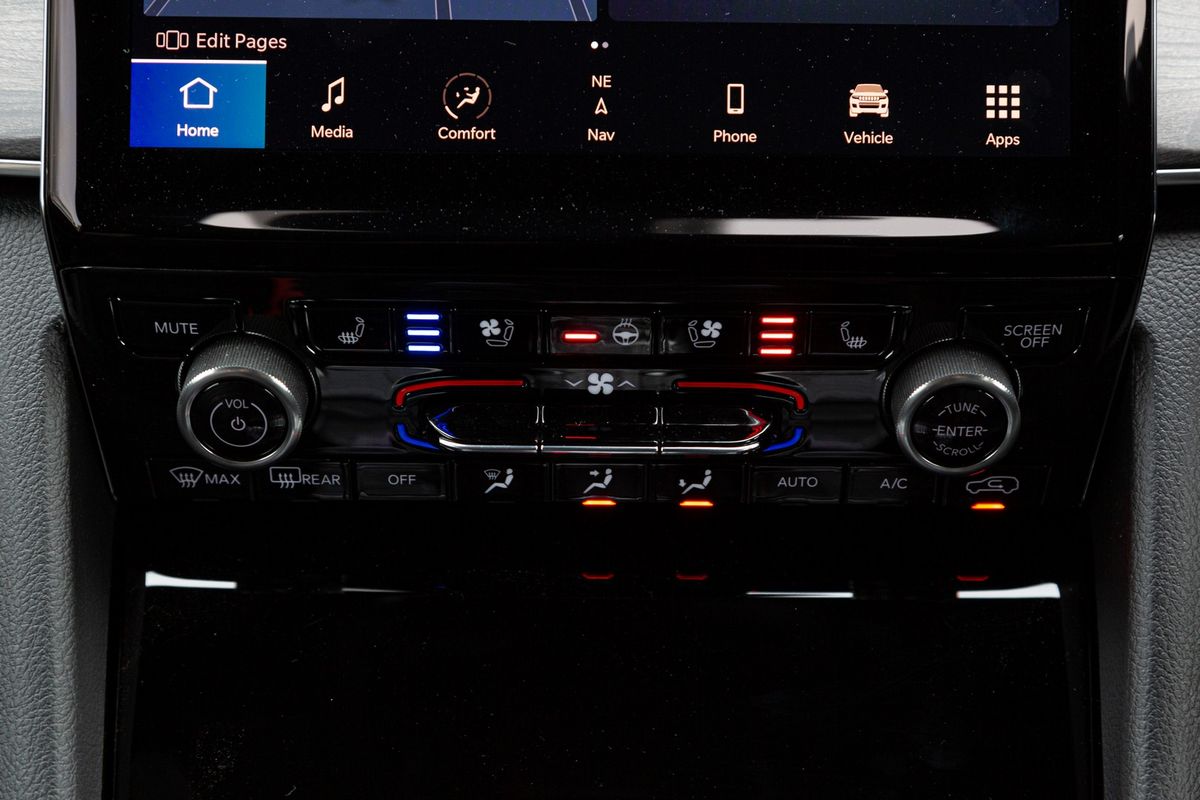
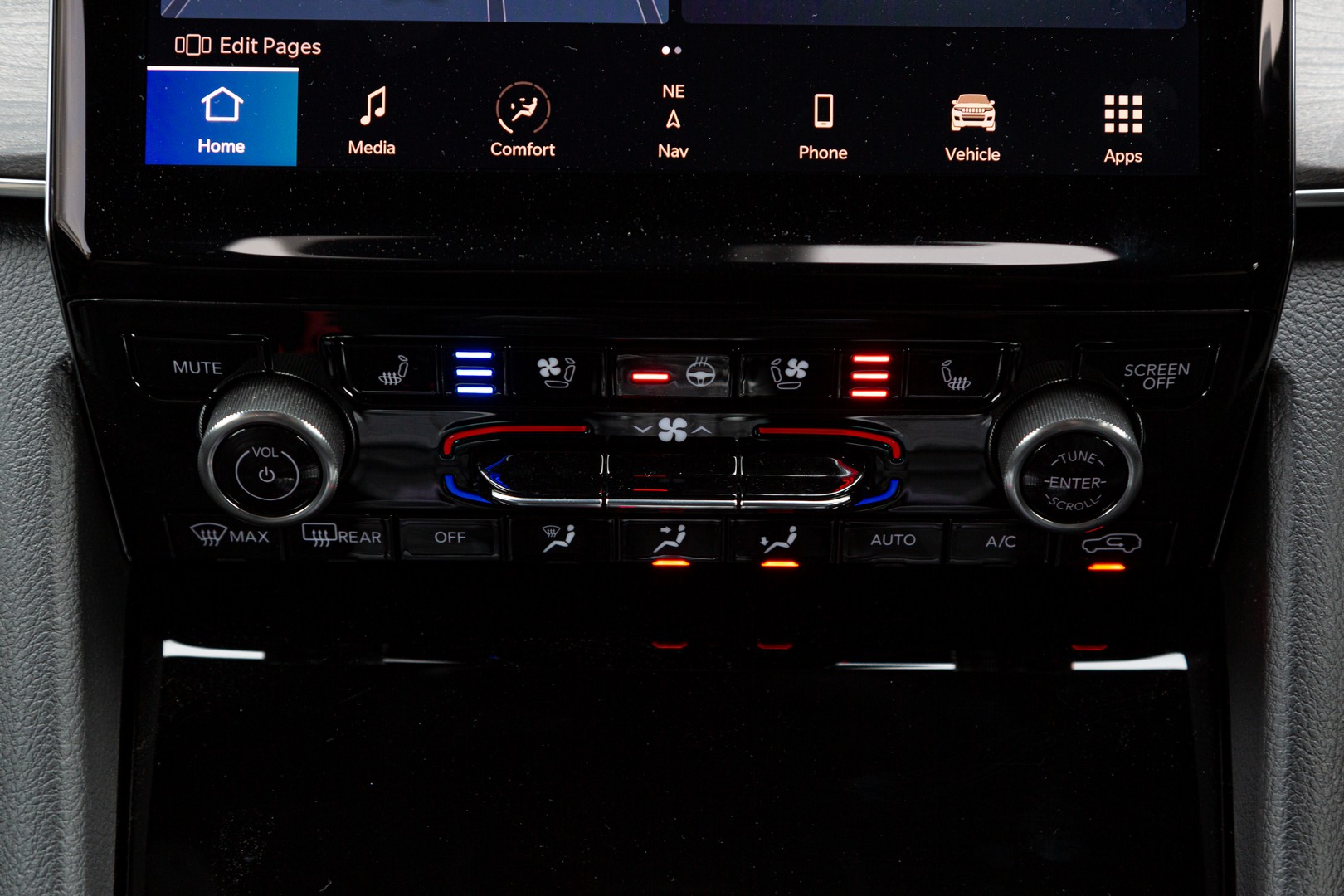
The console under the touchscreen looks a trifle busy, but it provides quick access to the audio and HVAC controls.
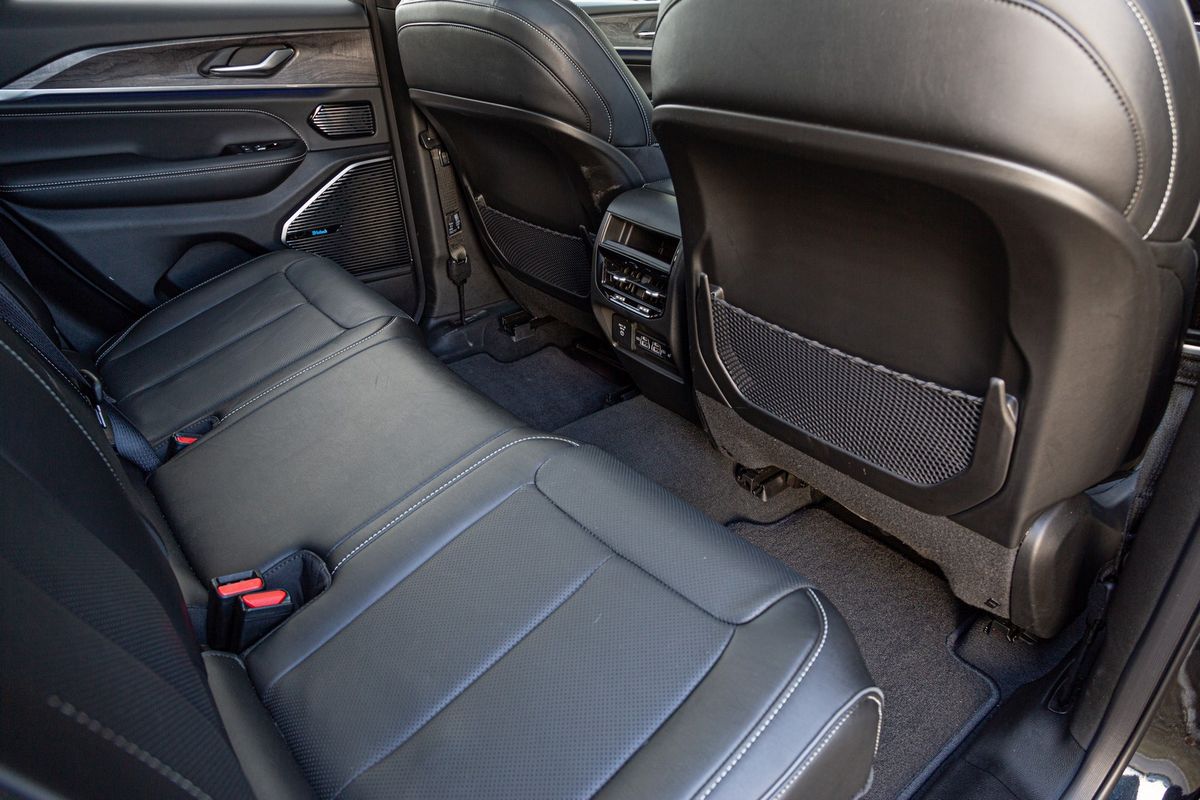
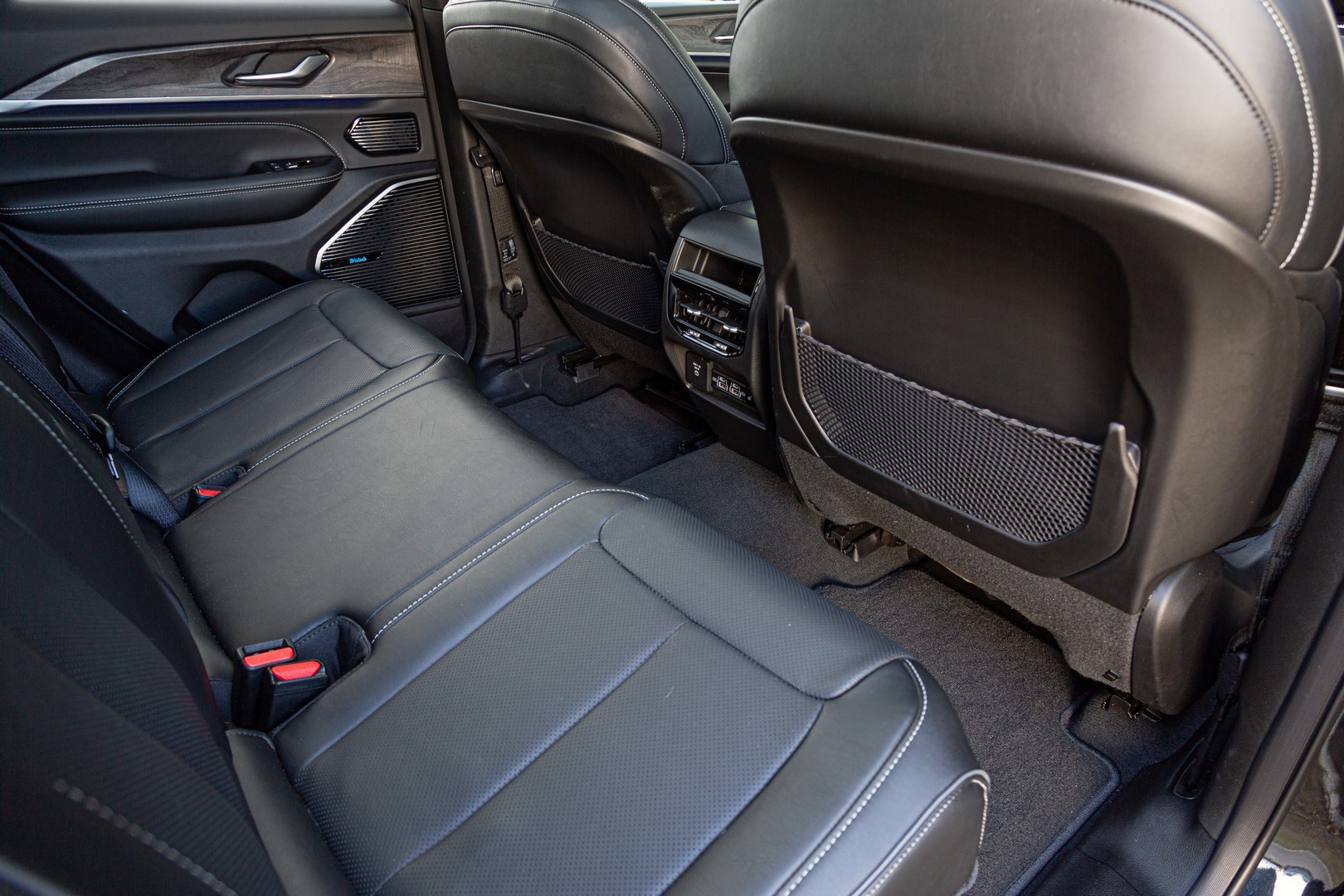
For the most part, the Grand Cherokee 5-seater’s cabin is identical to that of the “L” variant, particularly at the front. Towards the rear, however, the slightly shorter wheelbase and reduced overall body length are hard not to notice. The “L” is a genuine 7-seater that even offers some luggage space when the 3rd row is occupied, so for families who might need that, the choice is simple – pay R20k more and get the “L”, but if you don’t, then there’s still plenty of rear occupant space and a sizeable luggage compartment.
Jeep claims a load capacity of 1 068 litres, but we’re unsure whether that figure was achieved by packing the bay to the roof – or the parcel shelf. Still, this model’s load bay is one of the bigger ones in its class.
Also worth noting is that the 5-seat Grand Cherokee has the same tow rating as its “L” sibling (2 813 kg).
Performance and Efficiency
Under the bonnet of the test unit was exactly the same naturally aspirated (non-turbocharged) 3.6-litre V6 petrol engine that does duty in the entire Grand Cherokee line-up; it is said that Jeep’s oil-burning engines can’t handle our 50ppm diesel, unfortunately. The V6 delivers 210 kW and 344 Nm, but both its power and torque outputs are bested by those of the Land Rover and BMW (they’re both turbopetrols). It’s also worth noting that the peak torque is developed quite high in the rev range (at 4 000 rpm).
The 8-speed automatic shifts smoothly and makes most of the engine’s old-school power & torque delivery.
The engine is coupled with a smooth-shifting 8-speed automatic transmission that does well to hide the V6’s relative lack of grunt at low revs, but it often needs to click down 2-, 3- or even 4 gears to achieve the necessary oomph to execute brisk overtaking manoeuvres. It does emit a lovely snarl when doing so, however. This Jeep is definitely fleet of foot, though: we recorded a 0-100 kph time of 7.9 seconds.
Of course, smaller also usually means lighter. Indeed, the 5-seat Grand Cherokee is a notable 100 kg (or so) lighter than its “L” 7-seater sibling. Still, that 3.6-litre powerplant has never been known for delivering exceptional fuel efficiency and, while Jeep claims an average consumption figure of 9.9 L/100 km for this derivative, our real-world average worked out to a less-than-impressive 12.5 L/100 km. Gulp!
Comfort and Features
Priced at R1 570 900, the 3.6 V6 4×4 Overland comes comprehensively equipped and still undercuts models such as the Land Rover Defender 110 (by more than R200k) and the most affordable BMW X5, which would need some option boxes ticked to come close to matching the American offering.
The uConnect 5 infotainment system is intuitive to use and impressively responsive.
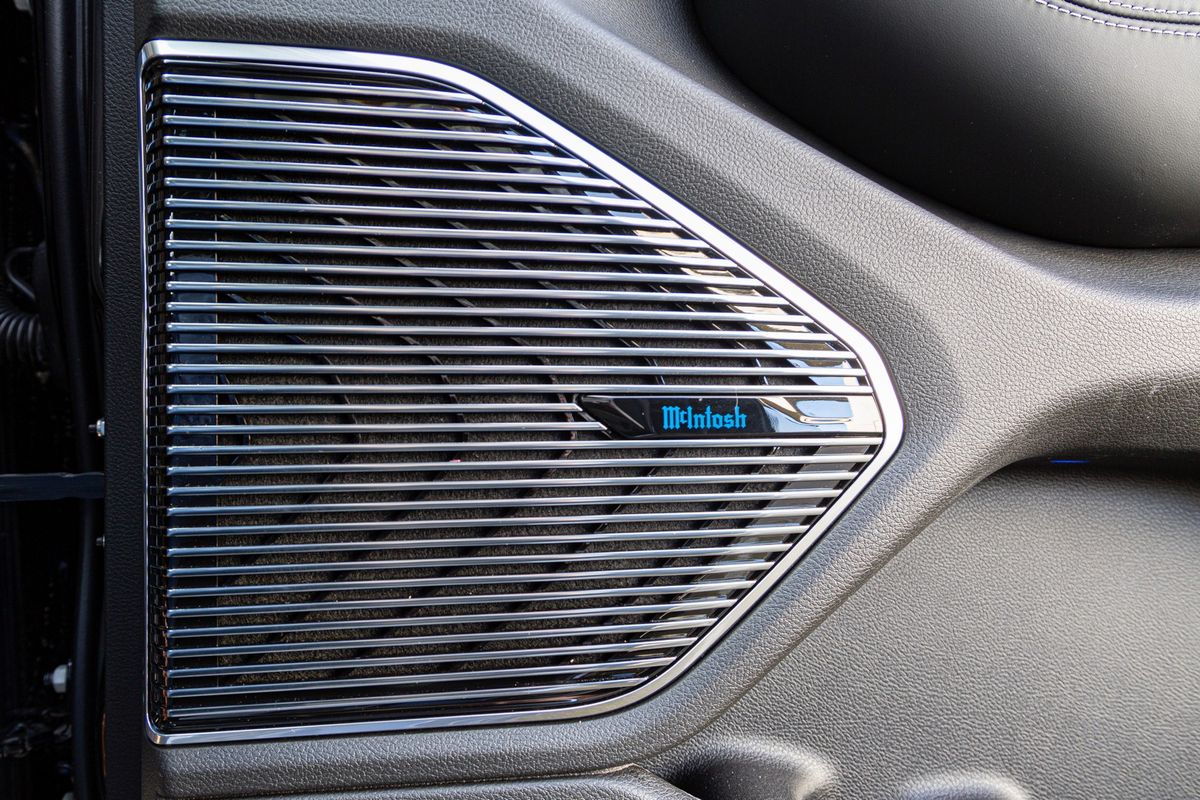
We’ve already mentioned the advanced and impressive uConnect 5 infotainment system. Also fitted to the Overland is a McIntosh high-performance audio system that features a 17-channel amplifier with a maximum output of 950W and 19 speakers. The system produces excellent sound quality.
Meanwhile, the Jeep’s front seats offer a wide range of electric adjustments, as well as heating and cooling functions, while the outer pews of the 2nd-row also feature heating. The multifunction steering wheel also features heating, which was a welcome feature in the heart of a particularly cold Cape winter.
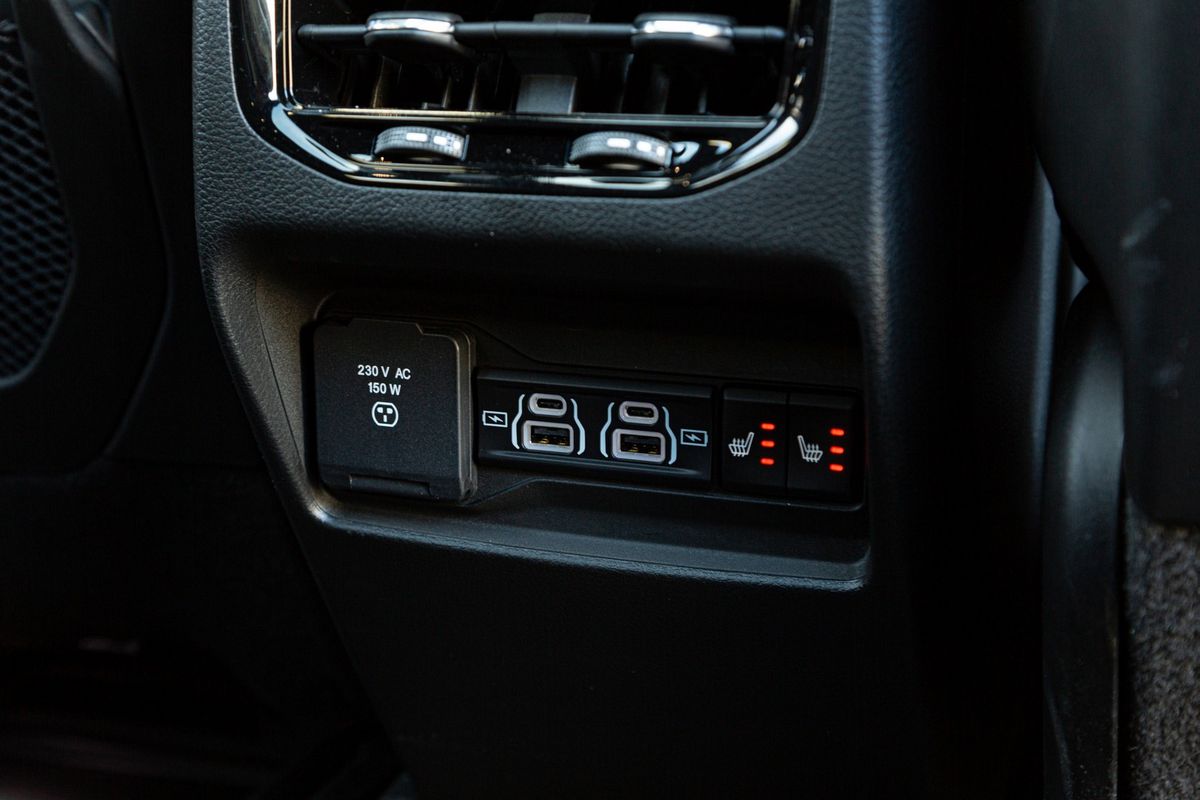
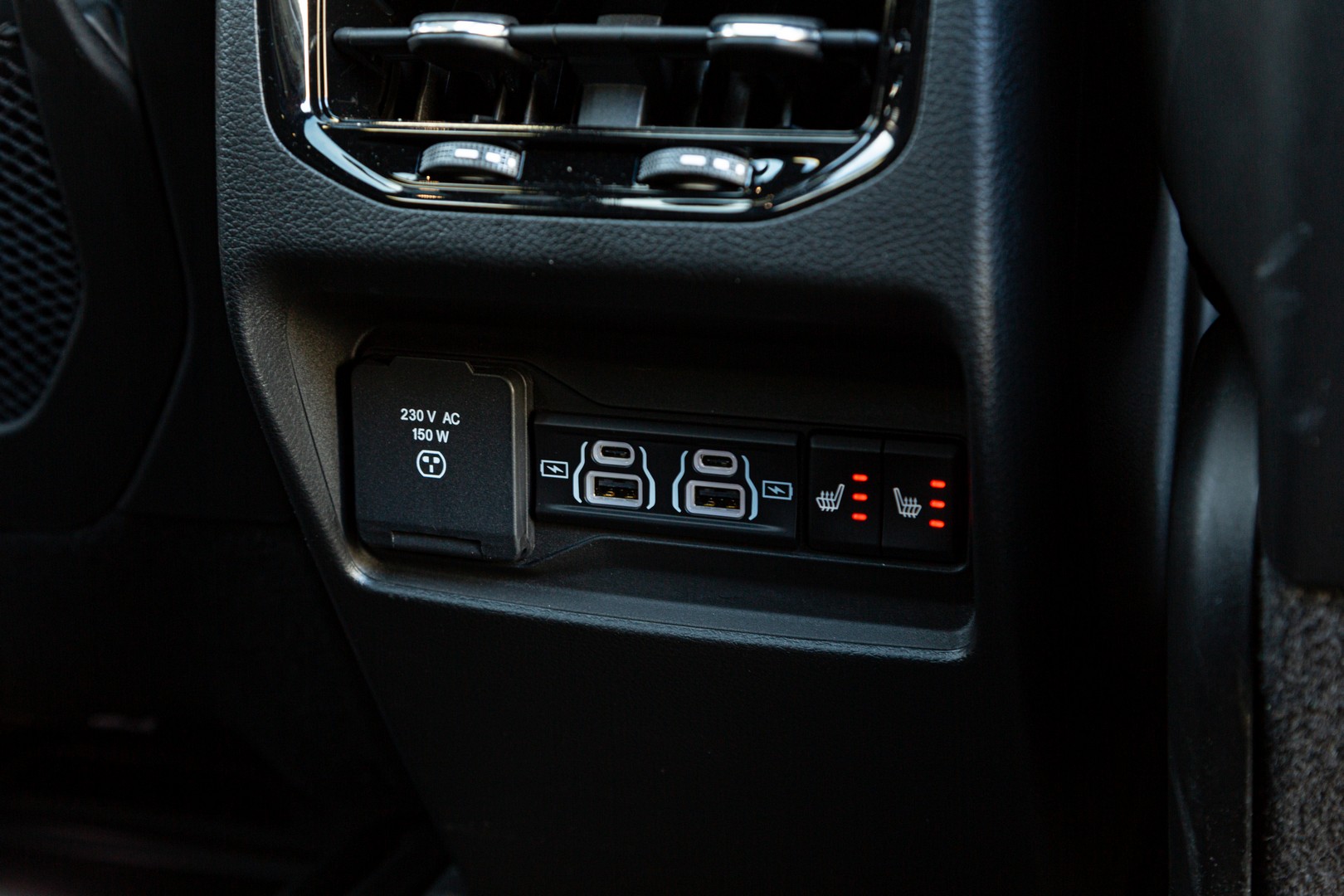
Second-row occupants are availed of a variety of recharging options, as well as seat heating.
Other noteworthy features include a digital rear-view mirror (pioneered by Land Rover) and simultaneous Bluetooth connectivity for 2 smartphones. There is also no shortage of charging solutions: at the front, a wireless charging pad is complemented by two USB-A and two USB-C charging ports. As for the rear passengers, they can utilise two USB-A and two USB-C ports, as well as a 3-pin 230V power outlet.
In addition to the usual active safety features, the Overland also features collision warning with active braking and pedestrian/cyclist detection, parallel and perpendicular park assist, rear cross-traffic alert, active lane management, adaptive cruise control, a drowsy-driver detection system and much more.
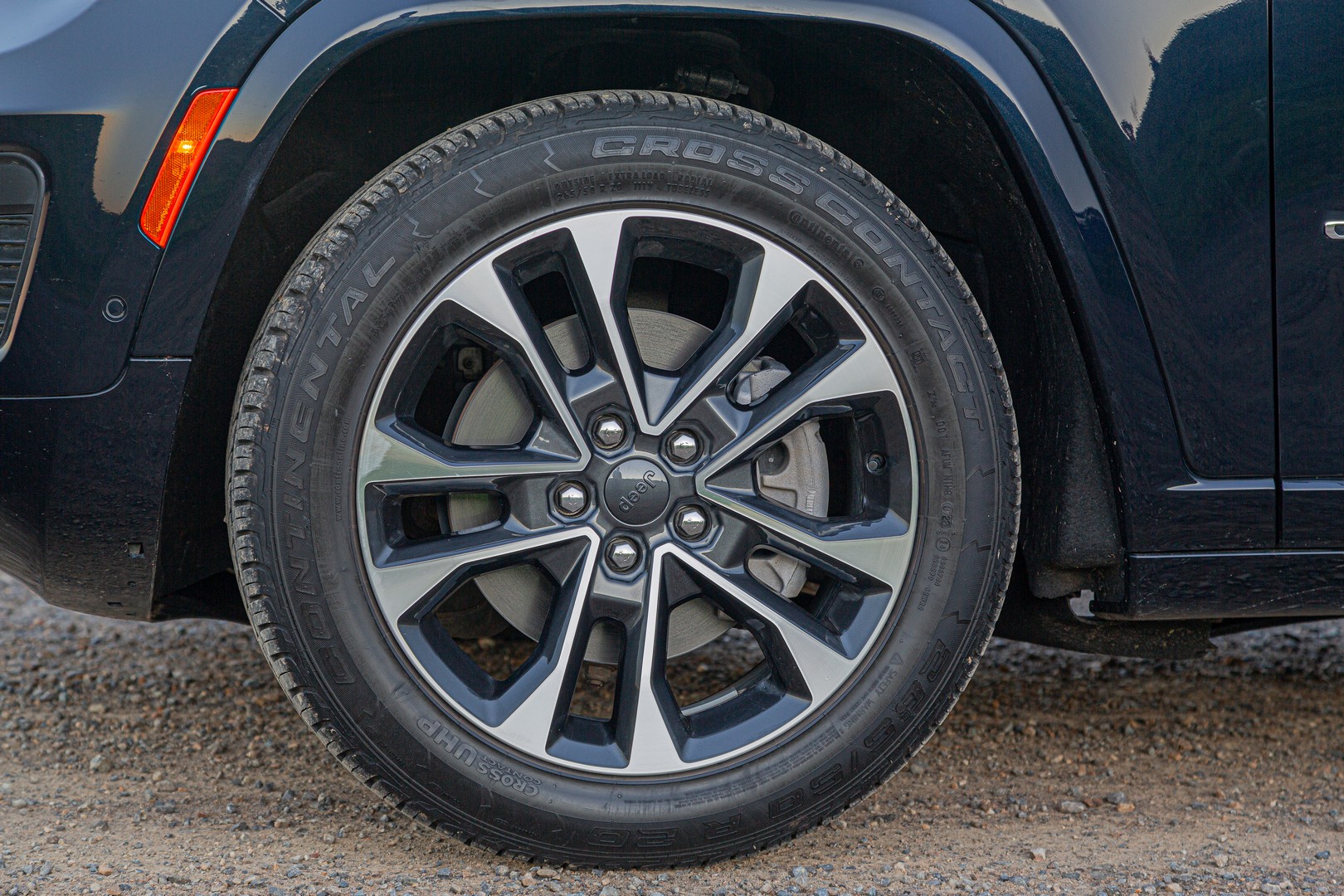
The Grand Cherokee 3.6 4×4 Overland comes fitted with 20-inch alloys, but its ride quality is quite pliant.
Ride and Handling
In Overland specification, the Jeep Grand Cherokee is fitted with attractive dual-tone 20-inch alloy wheels (shod with 265/50 tyres) and rides on adaptive air suspension as standard. Much of the Grand Cherokee’s architecture is related to the rear-wheel-drive Grigio platform that also underpins the Alfa Romeo Stelvio and Maserati Grecale – two of the more fun-to-drive premium SUVs on the market.
The Grand Cherokee’s suspension set-up is obviously softer, and it does an admirable job around town and out on the open road to deliver a supple ride quality which, in combination with good noise, vibration and harshness control, results in a very relaxed cabin ambience. At higher speeds, the suspension will automatically adjust to a lower position to aid the vehicle’s aerodynamic- and, therefore, fuel efficiency.
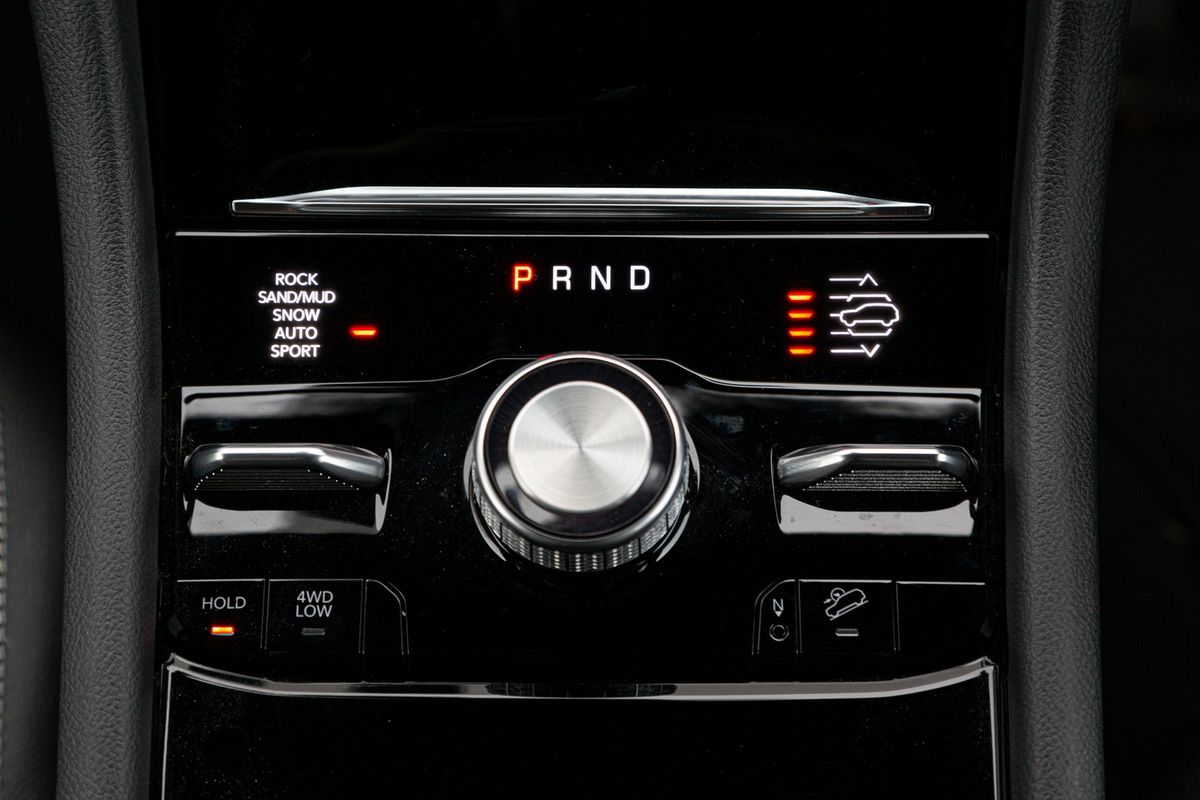
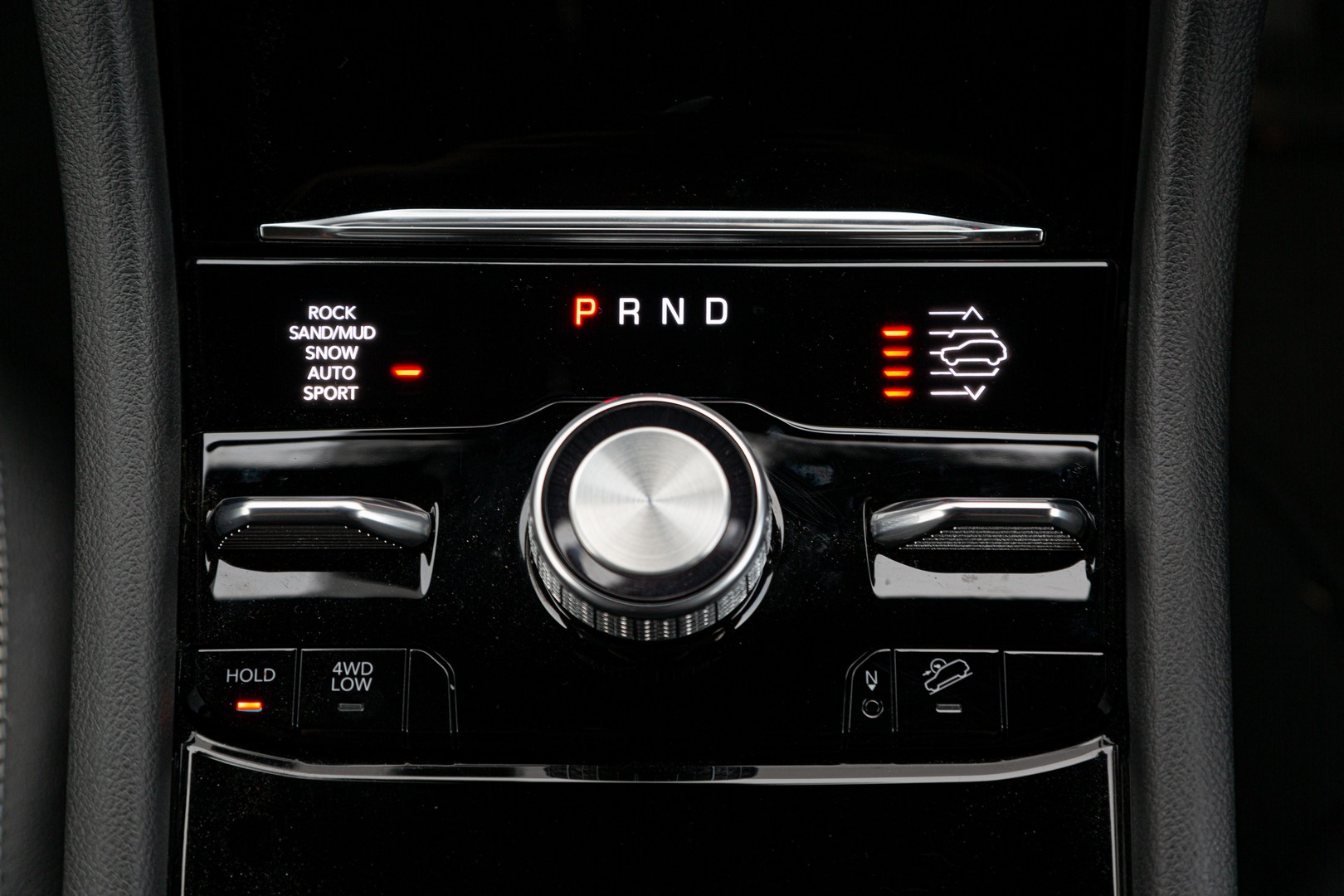
Ultimate off-road ability is not the Grand Cherokee’s focus, but a variety of off-road modes are available.
The Jeep badge still has plenty of off-road “cred”, but, as we found with its bigger “L” sibling, some of the Grand Cherokee’s off-road ability has been sacrificed for on-road comfort – and wisely so. Still, the shorter 5-seat version has superior approach and departure angles to its “L” counterpart, so based on simple geometry alone, the shorter Grand Cherokee should be able to venture a little further off-road.
It still features Jeep’s Quadra-Trac II off-road system, lockable low range and selectable off-road modes. If you really want to tackle the rough often, then the Summit Reserve derivative is the one to go for.
The 5-seat variant does not seem a bargain compared with the “L”, but it’s quite affordable compared with its rivals.
Price and After-Sales Support
The 2023 Jeep Grand Cherokee 3.6 V6 Overland costs R1 570 900 (before options, September 2023). The price includes a 5-year/100 000 km vehicle warranty and a 5-year/100 000 km comprehensive maintenance plan. Note that service intervals are relatively short (12 000 km).
Verdict
Although the most obvious purchasing decision here appears to be “spend another R20 000 and get the extra flexibility that the Grand Cherokee L 7-seater offers”, the 5-seat model nonetheless has its merits.
Slightly lighter on fuel, easier to manoeuvre and park and less compromised in terms of its aesthetics, it offers quite a lot of value for money, considering the price tags attached to its British and German rivals.