Honda Elevate Video Review: Is Honda back in the game with this new SUV?
Keen on the new Honda Elevate? Jacob Moshokoa breaks down all the details in this video review, give it a watch!
The Honda Elevate SUV has just arrived in South Africa. This 5-seater SUV effectively replaces the old Honda WR-V that wasn’t a particularly big hit on the local market. Is the Honda Elevate worth buying? Jacob Moshokoa digs into the details of the new car looking at the price, value for money, practicality and if the 1.5-litre engine is any good.
There are numerous competitors to the new Honda Elevate, including the new Chinese SUVs such as the Chery Tiggo 4 Pro and the Haval Jolion. But how does it stack up against the likes of the Hyundai Creta, Suzuki Grand Vitara, Toyota Urban Cruiser or the Kia Seltos, just to name a few? Let us know what you think in the comments below.
Audi SA launches more Urban & Black Edition variants
Following the successful launch of Black Edition derivatives of the A4 and S4 sedan last year, Audi South Africa has extended its “special variant” line-up by rolling out Urban and Black Edition versions of several of its core models.
After some intensive research into the optional extras that South African consumers select most often, Audi South Africa has extended its “Black Edition” portfolio to incorporate several of its core models.
The move sees the introduction of Q2, A3 and Q3 Black Edition variants, as well as Q2 and A3 Urban Edition derivatives. Later, towards the middle of this year, Black Edition versions of the A5/S5 and Q5/SQ5 ranges will also become available.
As the naming suggests, Black Edition cars offer black trim detailing, among other popular local options, such as sunroofs and S line specification. This strategy has allowed Audi to streamline its ordering process from Germany, and also to negotiate better pricing.
The Urban Edition derivative of the Audi A3 Sedan.
Furthermore, a key aspect of the special edition roll-out has been the finetuning of the financial offers it can present to customers. “That’s where the specially crafted Audi Assured offers for these models are really compelling,” said an Audi South Africa spokesperson.
Specification Details
Audi Q2 35 TFSI 110kW S tronic Urban Edition
Connectivity package
Panoramic glass sunroof
Parking aid Plus
Leather/leatherette seats
Matrix LED headlights
Lane departure warning
Audi virtual cockpit
18-inch alloy wheels
Comfort package
4-way lumbar support
Seat heaters
Electric tailgate
Storage package with 2 rear USB ports
Audi Q2 35 TFSI 110kW S tronic Black Edition
In addition to the standard features on the Q2 Urban Edition, the Q2 Black Edition offers:
Flat-bottom steering wheel
Black styling package
Black mirrors and black sideblades
19-inch alloy wheels
Sports suspension
Black rings
Audi A3 Sportback and Sedan 35 TFSI 110kW S tronic Urban Edition
Audi sound system
Sunroof
17-inch alloy wheels
Upgrade package
Full LED headlights
Auto-dimming mirrors
Rear park distance control
2-zone climate control
Audi A3 Sportback and Sedan 35 TFSI 110kW S tronic Black Edition
Over and above the standard features on the A3 Urban Edition, the A3 Black Edition variants offer:
S line exterior and interior
Black styling package with black rings
Contour ambient lights
Leather/leatherette
Sports steering wheel
Sports package
18-inch alloy wheels
Black styling package
Black mirrors
Audi S3 Sportback and Sedan quattro S tronic Black Edition
Adaptive chassis control
19-inch alloy wheels
Sunroof
Black styling package with black rings
Matrix LED headlights
Bang & Olufsen sound system
Fine Nappa leather
Contour ambient lights
Comfort key
Electrically adjustable front seats
Park assist with Parking aid Plus
Technology package
Audi connect
Virtual cockpit plus
MMI navigation
USB ports in the rear
Audi Q3 SUV and Sportback 35 TFSI 110kW S tronic Black Edition
Black styling Plus and black mirrors
Panoramic glass sunroof
Parking aid Plus
Door armrests in leatherette
Comfort key
Comfort package
Electric tailgate
Electrically adjustable front seats
Front seat heaters
4-way lumbar support
Sports package
Sports seats
Black headlining
Flat-bottom steering wheel
19-inch alloy wheels
How much do the new Urban & Black editions cost in SA?
All prices include a 5-year/100 000 km Audi Freeway Plan service and maintenance plan.
Meanwhile, these newcomers to Audi South Africa’s line-up are offered in conjunction with Audi Assured guaranteed future value (GFV) vehicle-finance agreements. The GFV of each of these special-edition derivatives is established at the beginning of the contract term, giving buyers peace of mind in knowing the value they can receive for the vehicle of choice at the end of the contract term. Audi Financial Services also offers insurance options tailored to customers’ specific requirements.
Hyundai plotting Creta-based small bakkie – report
Hyundai is reportedly developing a new small bakkie that is expected to be based on the Creta. Here’s what we know about this rumoured unibody pickup so far…
It’s an idea the South Korean automaker has flirted with before and now it appears to be firmly back on the table. Yes, Hyundai is reportedly developing a new small bakkie based on the Creta.
According to Brazilian website Mobiauto, sources within the company have confirmed that development of a new Creta-based contender is well underway, with the newcomer set to be positioned below the Tucson-based (and likewise unibody) Santa Cruz.
The concept from 2016 was based on the original Creta.
As the publication points out, this is by no means a new idea considering Hyundai revealed a small bakkie concept (called the Creta STC – or “Sport Truck Concept”) at the São Paulo Motor Show way back in 2016. That show vehicle – which obviously didn’t ever make it to production – was based on the 1st-generation Creta, while the upcoming version looks set to borrow its underpinnings from the 2nd-gen model.
Mobiauto speculates that the new Creta-based small bakkie will be released in initial markets “in 2026 or 2027”, adding that the pickup version will likely borrow several components – such as the engine, front doors and much of the dashboard – from the SUV. What it will end up being called, however, remains to be seen.
Interestingly, Hyundai isn’t the only company seemingly eyeing a small unibody bakkie. Toyota, for instance, is said to be hard at work developing a new Corolla-based pickup, while Fiat has already confirmed its upcoming new Panda family of vehicles will include a small bakkie.
The rumoured Creta-based bakkie looks set to have plenty of competition.
Volkswagen, too, is thought to be putting the finishing touches on a fresh-faced unibody bakkie that could end up wearing the Udara badge. This model may well be related to the bakkie spin-off the German firm’s local division hopes to build at its Kariega facility right here in South Africa.
But back to the rumoured Creta-based bakkie. The big question for Mzansi, of course, is whether or not such a model will also be built in right-hand-drive form, considering it appears to be pitched at left-hand-drive markets in South America. On that front, only time will tell. We’ll keep our eyes peeled…
The iconic Mazda MX-5 offers an affordable entry point into the exciting world of sportscar ownership and has been putting smiles on enthusiasts’ faces for decades. We gather all 4 generations of the Japanese roadster for a group drive.
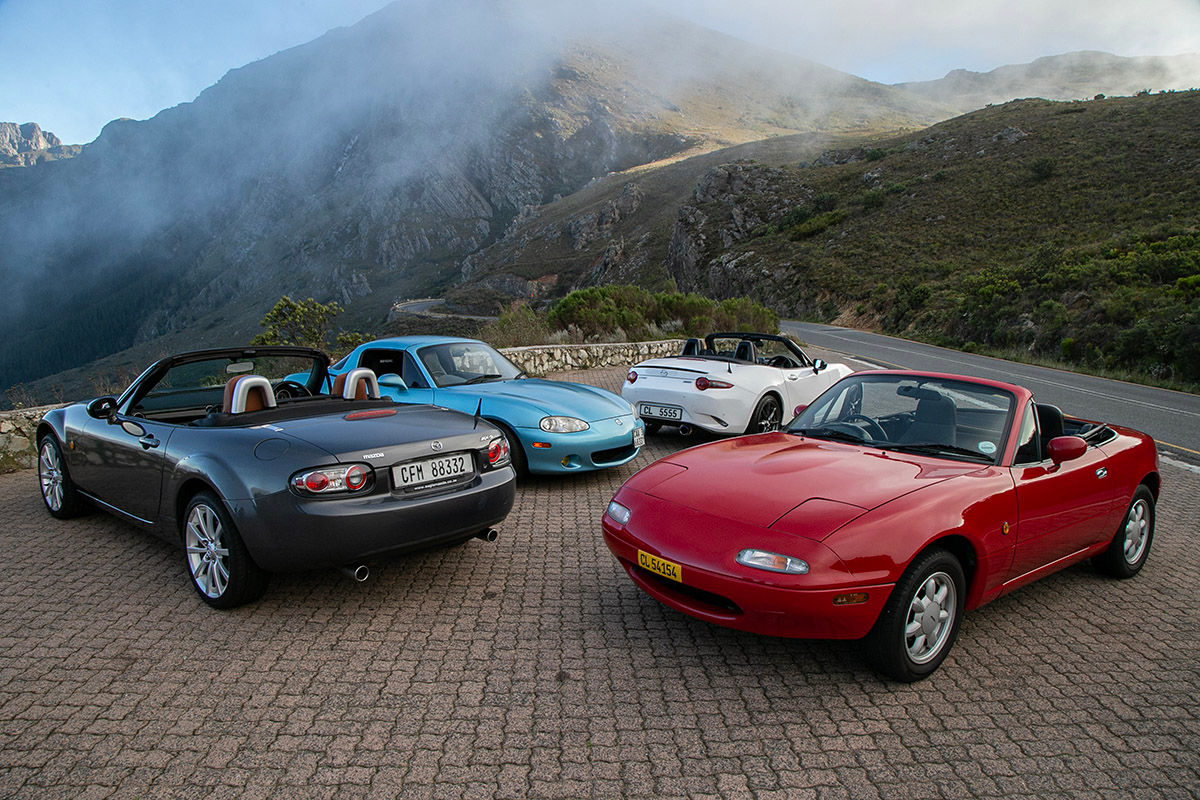
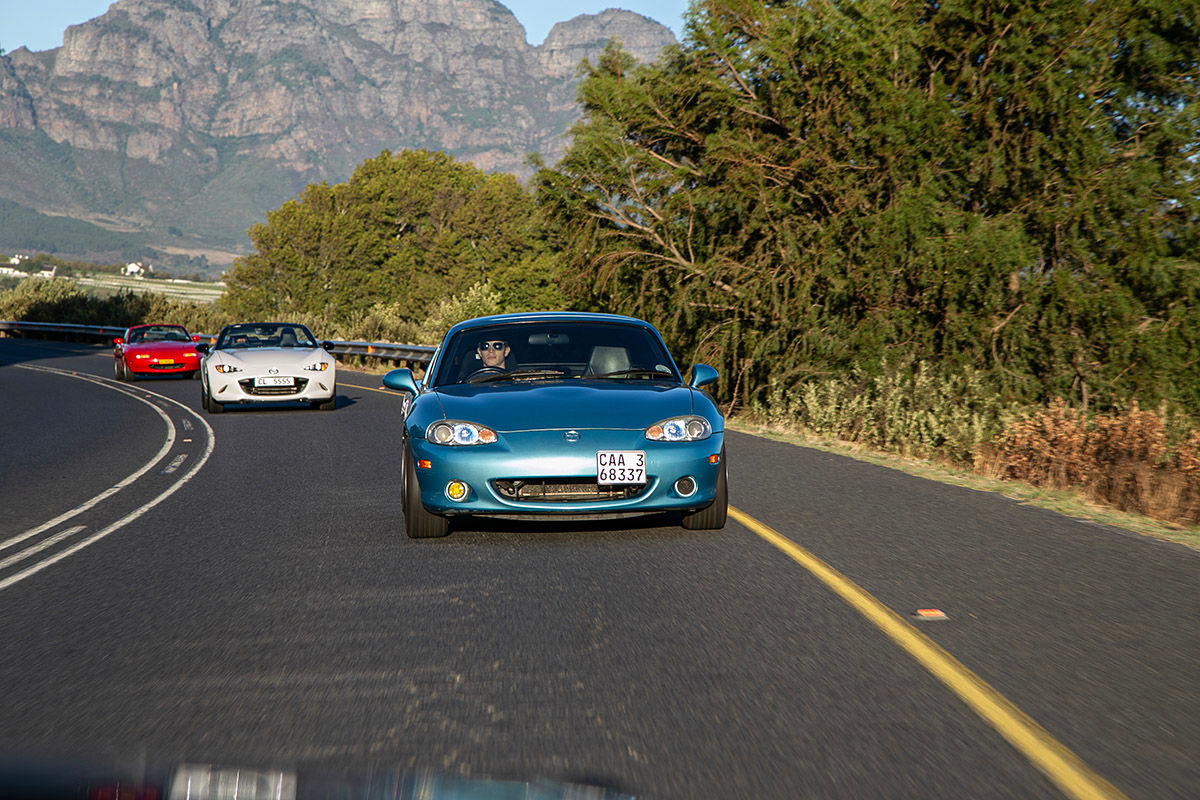
We drive all 4 generations of the Mazda MX-5!
IMAGES: Wilhelm Lutjeharms
In series three of the iconic BBC Top Gear show presenter Jeremy Clarkson said that, in his view, in order to be a petrosexual, you must at some point in your life have owned an Alfa Romeo.
That is obviously open for debate, but I would like to turn that statement on its head and say that one should at least once in your life own a sportscar and, to be more specific a 2-seater drop top and, to discard any further ambiguity, an example of Mazda’s MX-5.
Most of us know that this has been the best-selling two-seater, drop-top sports car in history. What the Volkswagen Beetle did for general transport over several decades, the MX-5 has done for enthusiasts in nearly every country where they have been sold. Young or old, male or female, single or married, the MX-5 has always had an enduring appeal. Not to forget the enthusiasts who have tweaked these cars into proper track, race or gymkhana cars.
The MX-5 might have only been released in 1989, but since then it has evolved over four generations. As we found out, these four generations are different in a number of ways, but at the same time there is an evident and strong thread of similarity that runs through all four cars.
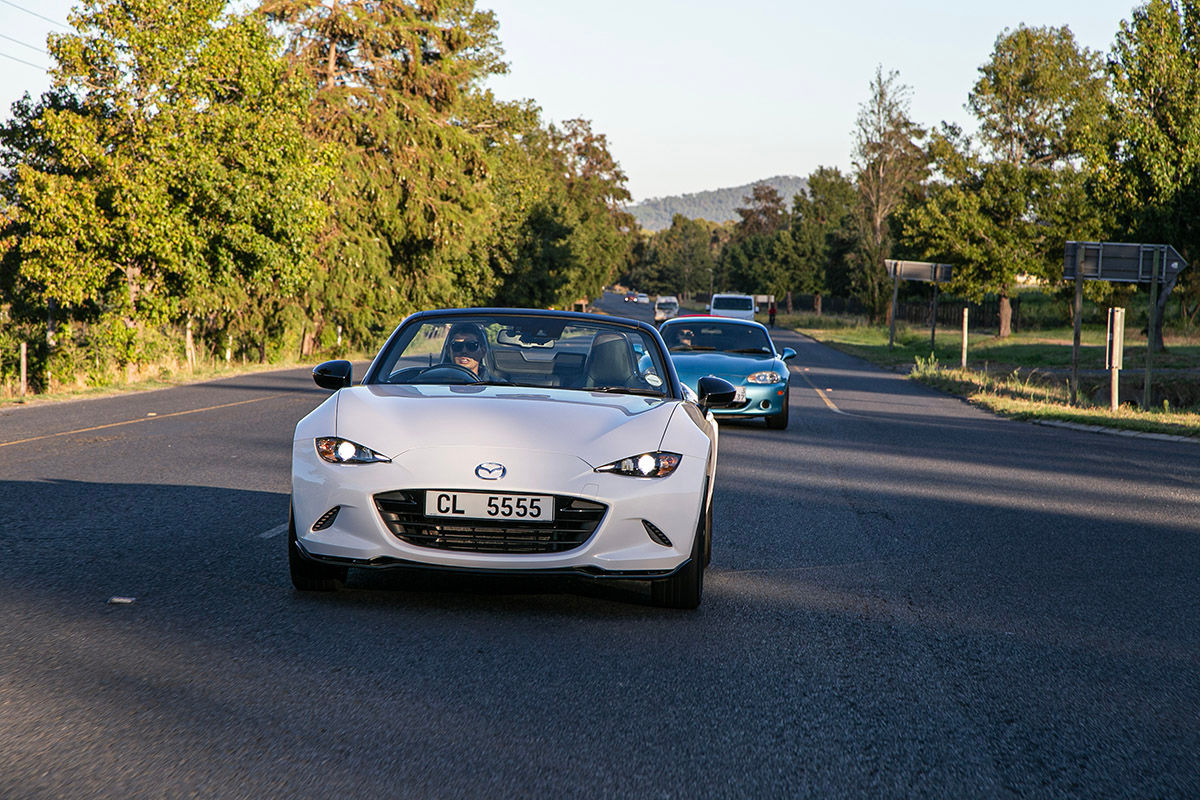
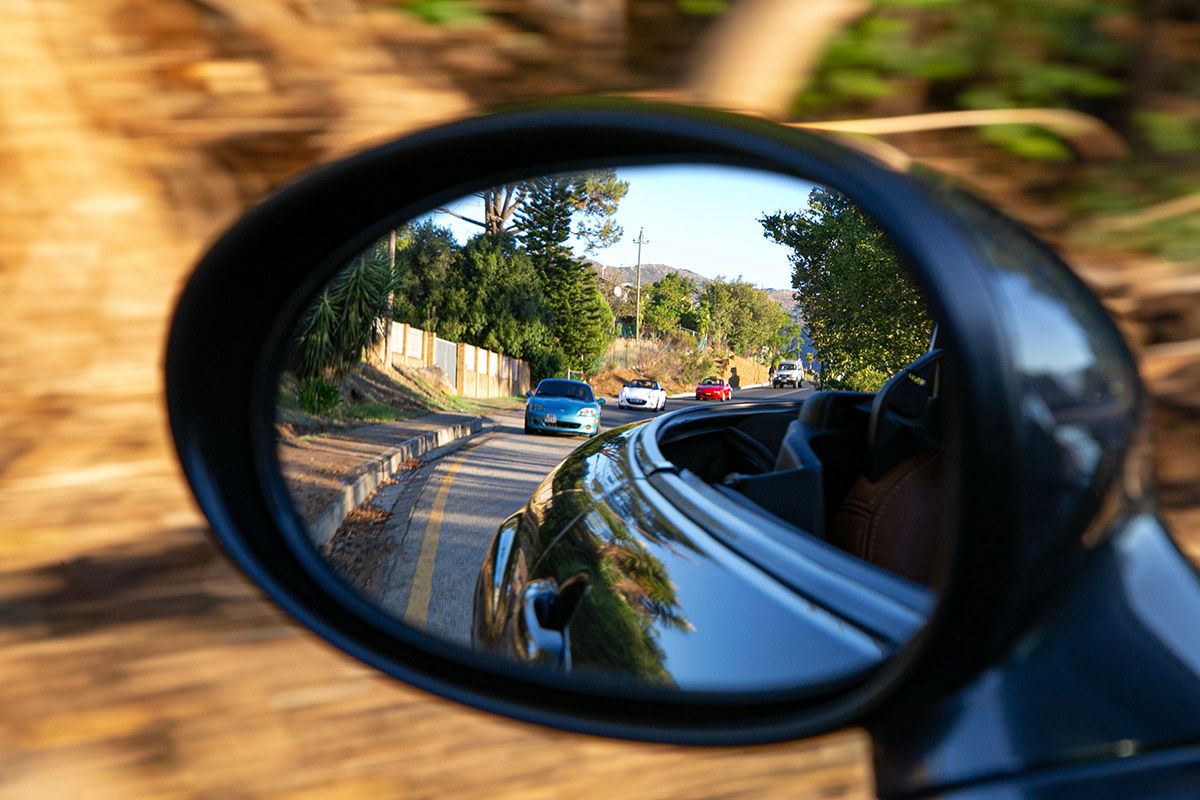
Four kind owners set their alarm clocks for a very early morning start as we headed from Stellenbosch to the Winelands town of Franschhoek to enjoy the mountain pass heading along Mont Rochelle Nature Reserve to drive and discuss this compact, but important, sports car.
Mazda MX-5 – it’s a family affair
It is always very illuminating to see two or more generations of the same model parked next to one another. You can climb behind the wheel of each, compare the seating positions, the trim, the size of the cabin, not to mention the exterior size of each car.
Expectedly the NA (the first generation) looks dainty, but to say it looks small compared to all the other generations will be incorrect. That might be the case with the first-generation Porsche 911 and the latest 992 generation – not in the Mazda’s case though. The beauty of what Mazda has achieved (or aimed for) with each generation is to keep true to the original concept. Although the NC (third generation) is the largest of the four, it is only marginally larger while the other three do look similar in size.
Time to drive each generation back-to-back and experience what each has to offer.
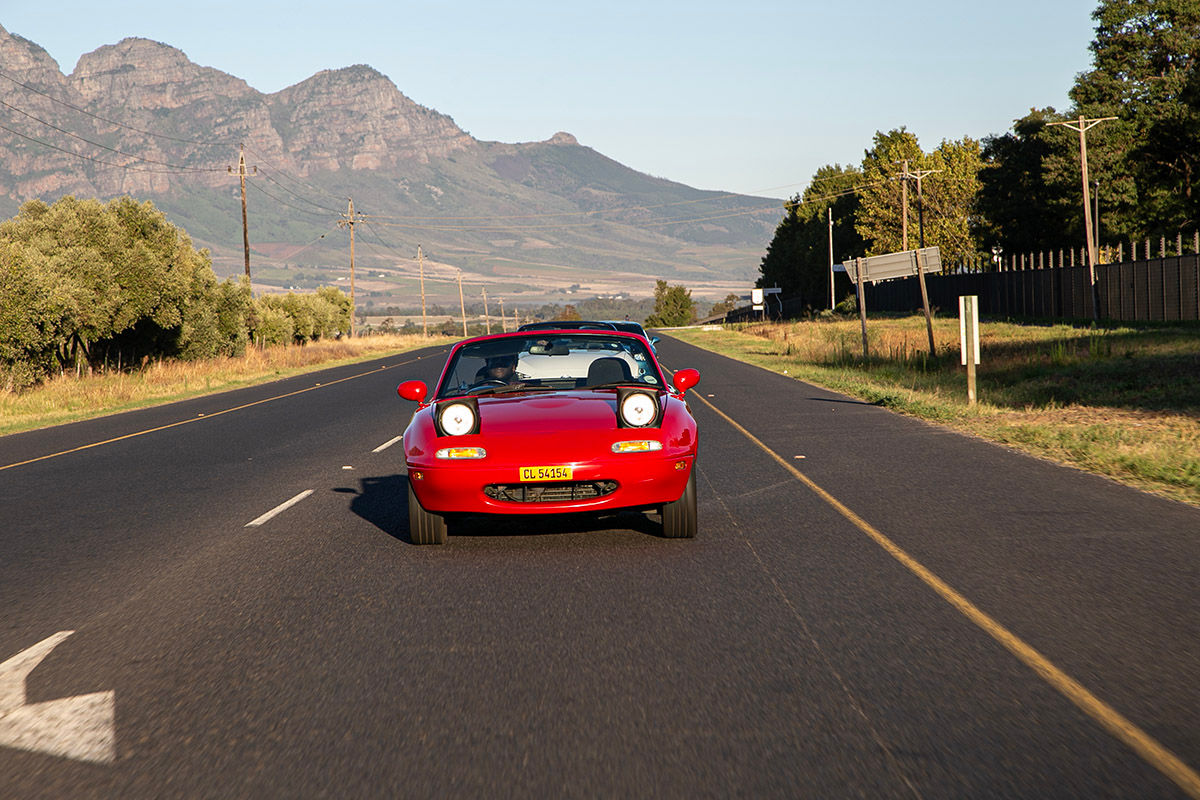
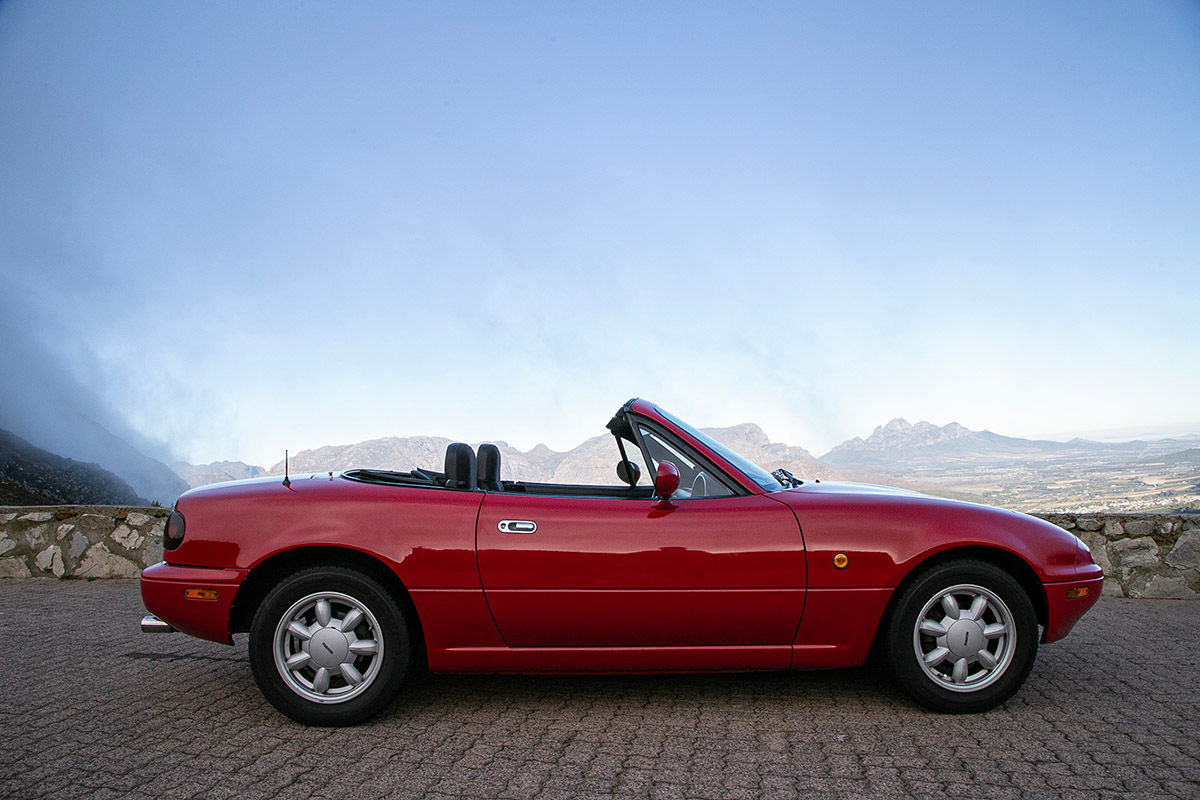
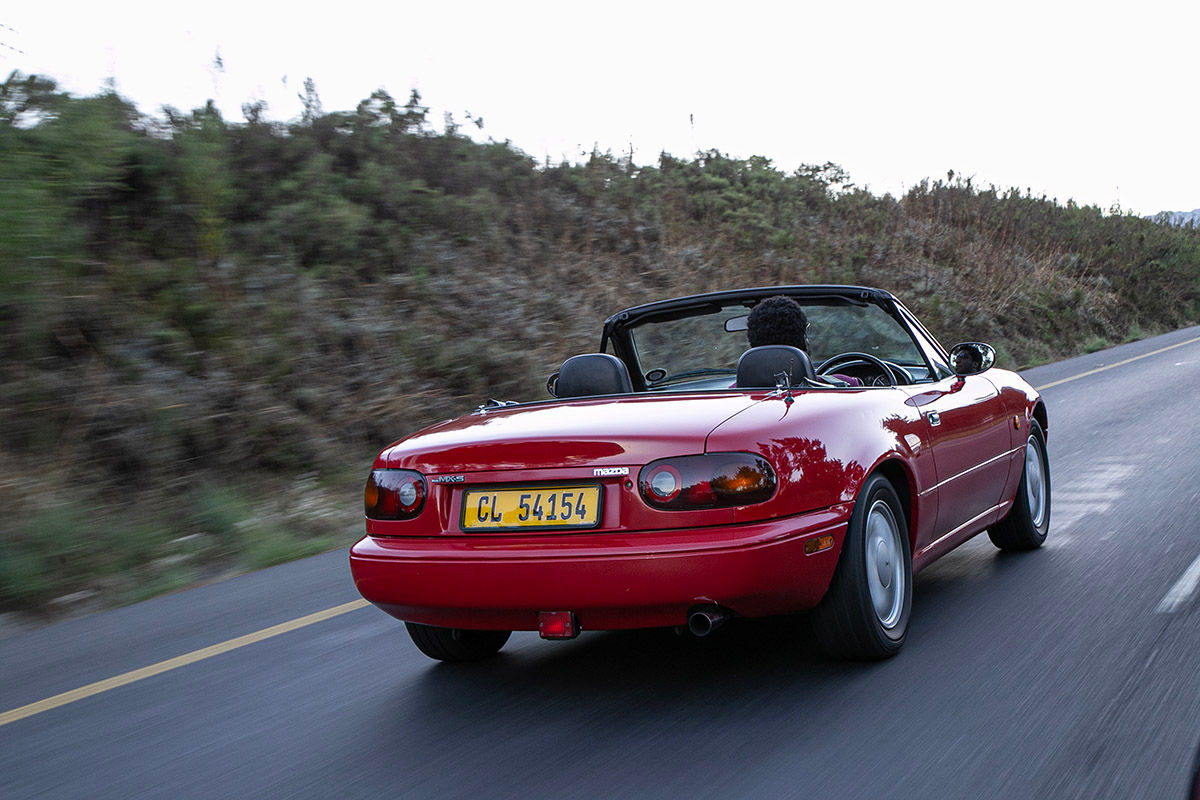
1st-gen Mazda MX-5 – an NA from 1991
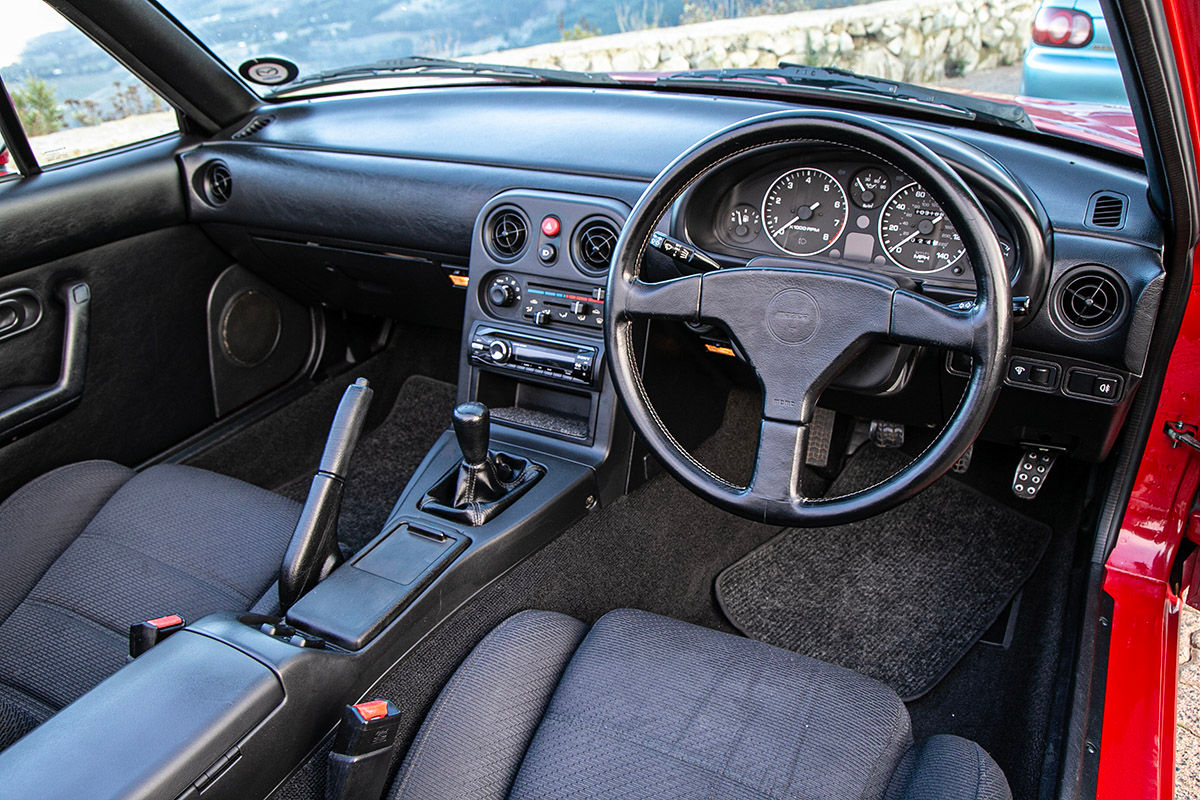
Open the door with the tiny, chromed door handle and the cloth-upholstered seat is a welcoming touch compared to the usual leather seats we are mostly used to these days. There is an immediate compact nature to the car as it feels like you are wearing it, instead of just being seated in it. You are close to your passenger, there is only a very short bonnet in front of you and you are very close to the door. Turn around and the rear body area feels almost non-existent.
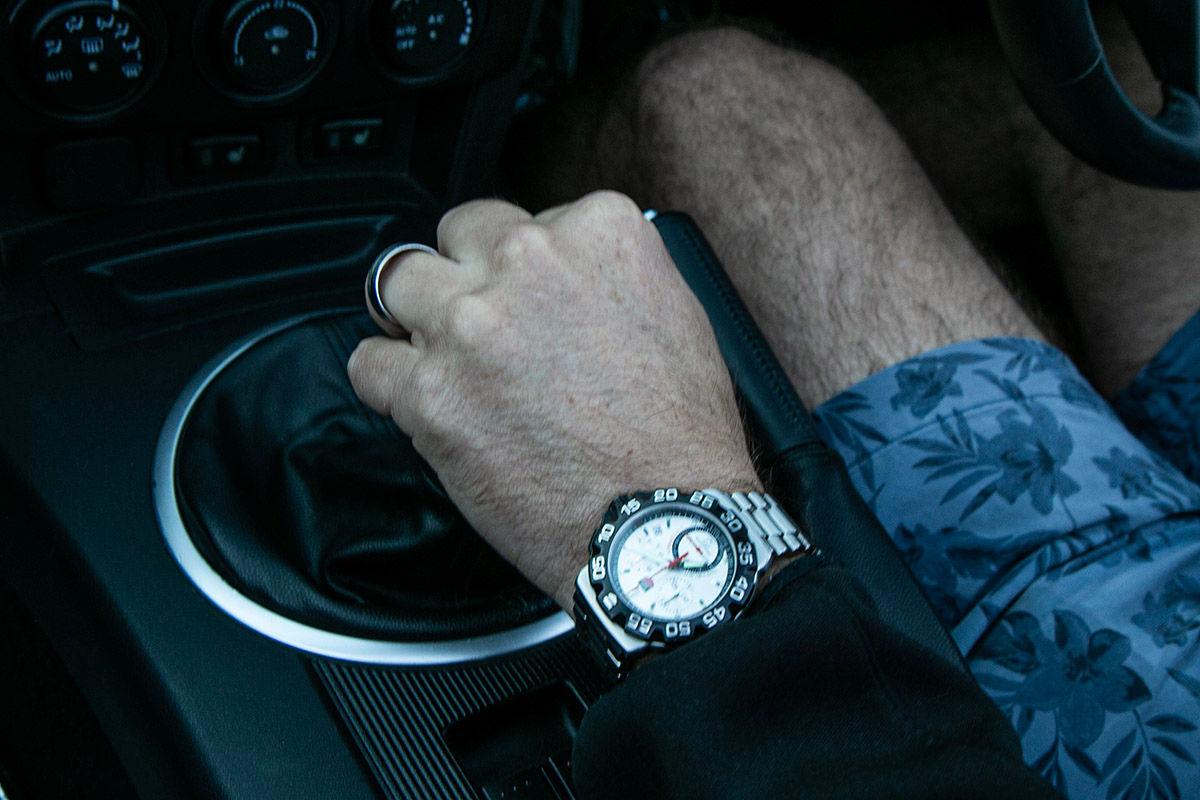
The cabin is beautifully plain. There are basic controls for the ventilation (non-air conditioning) system and a neat Momo three-spoke steering wheel. Importantly, to my left, a very short and wonderfully direct, stubby gear lever is perfectly positioned.
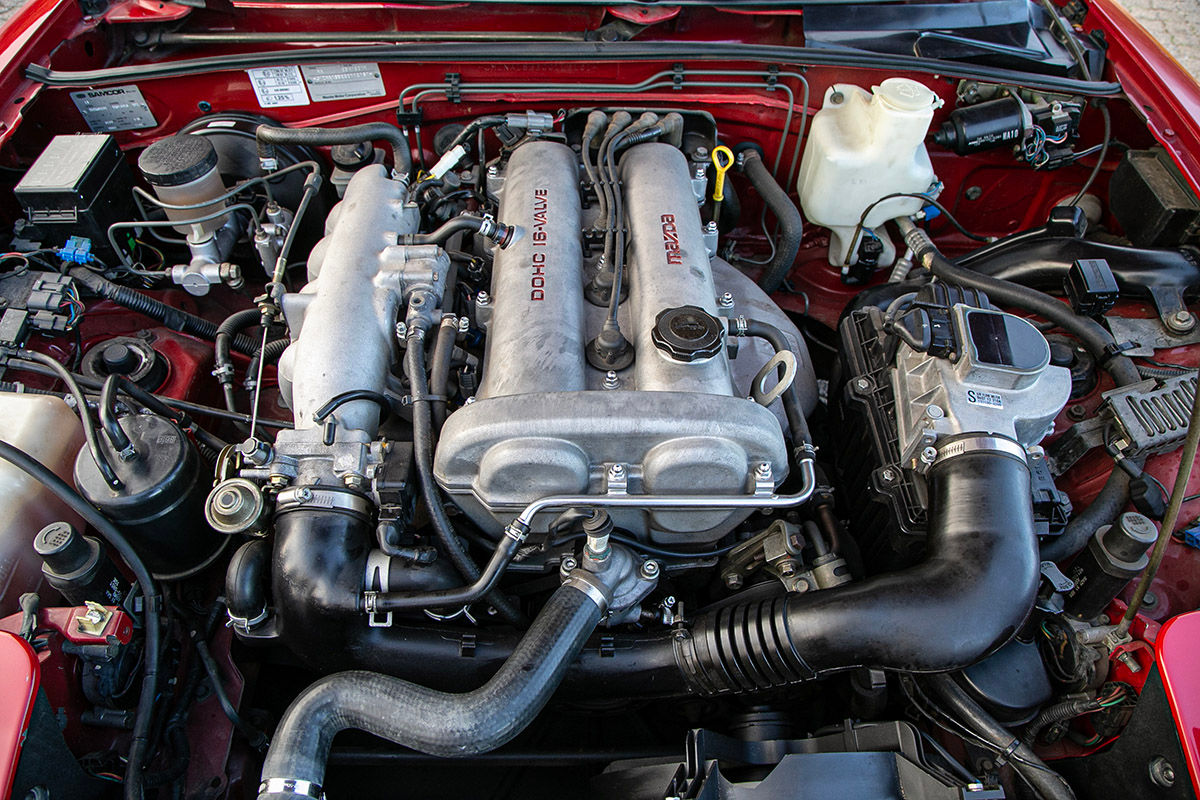
Turn the key and the modest 1.6-litre engine developing 85 kW and 135 Nm catches immediately. The sense the lightness is apparent the moment the wheels start turning.
Though over three decades old, there is an honest eagerness from the car. It might not offer the focus and raw experience of other brands, but the engine revs relatively easily, it changes direction as expected while the suspension offers a comfortable and plaint ride quality.
It is quite exciting to be able to see clearly right around you, especially with the roof lowered. Needless to say, it is joy to use the direct, and short throw five-speed gearbox.
It is the overall simplicity of the car itself as well as the driving experience that stands out – and in this case especially, the fact that it is still completely original. Talking of family affairs, Wamuwi, the owner of the MX-5, bought it from his father-in-law, keeping the car in the family.
2nd-gen Mazda MX-5 – an NB from 2002
Unveiled in 1997, the second-generation MX-5’s design moved away from the pure lines of the NA. At the rear is a small integrated spoiler and gone are the iconic pop-up lights.
Although the NB weighed around 100 kg more than the NA, it still stayed true to the original concept, particularly when compared with other compact sports cars from the era, of which there were not that many. The updated cabin now had a modern sound system with a CD player (remember those!), and was marginally more luxurious, but still simple in its general execution.
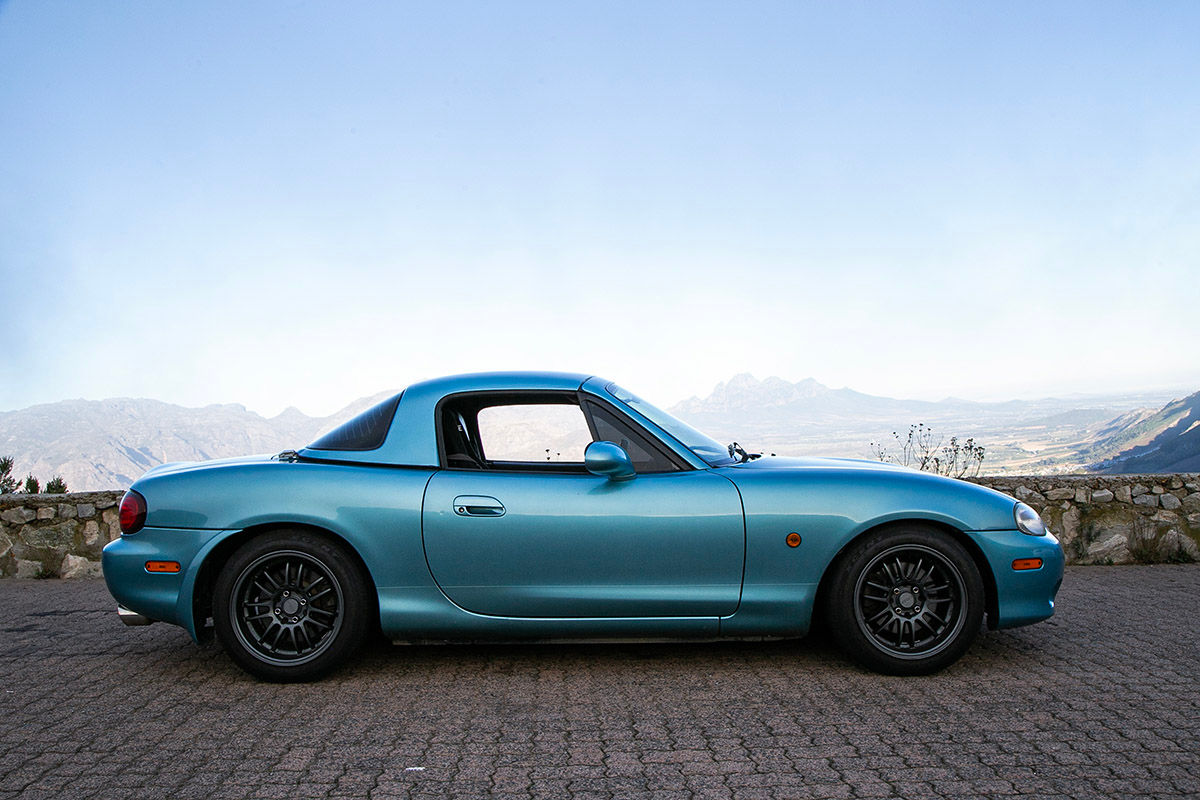
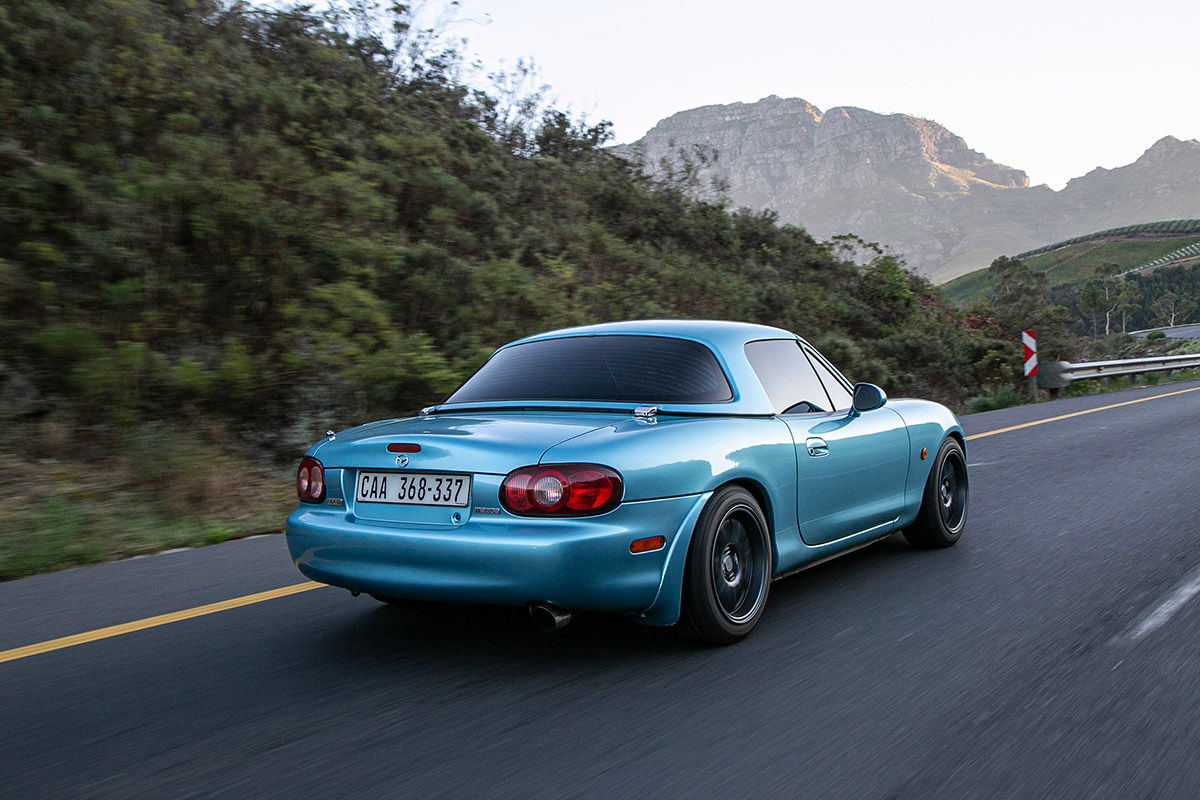
Andrew, the owner of this car, has done what hundreds of fellow enthusiasts have done: he has customised his car to suit his personal preferences. As can be seen in the pictures, this includes, to name a few, different wheels and coil-over suspension that has been fitted on all four corners. This has also lowered the car by around 50 mm.
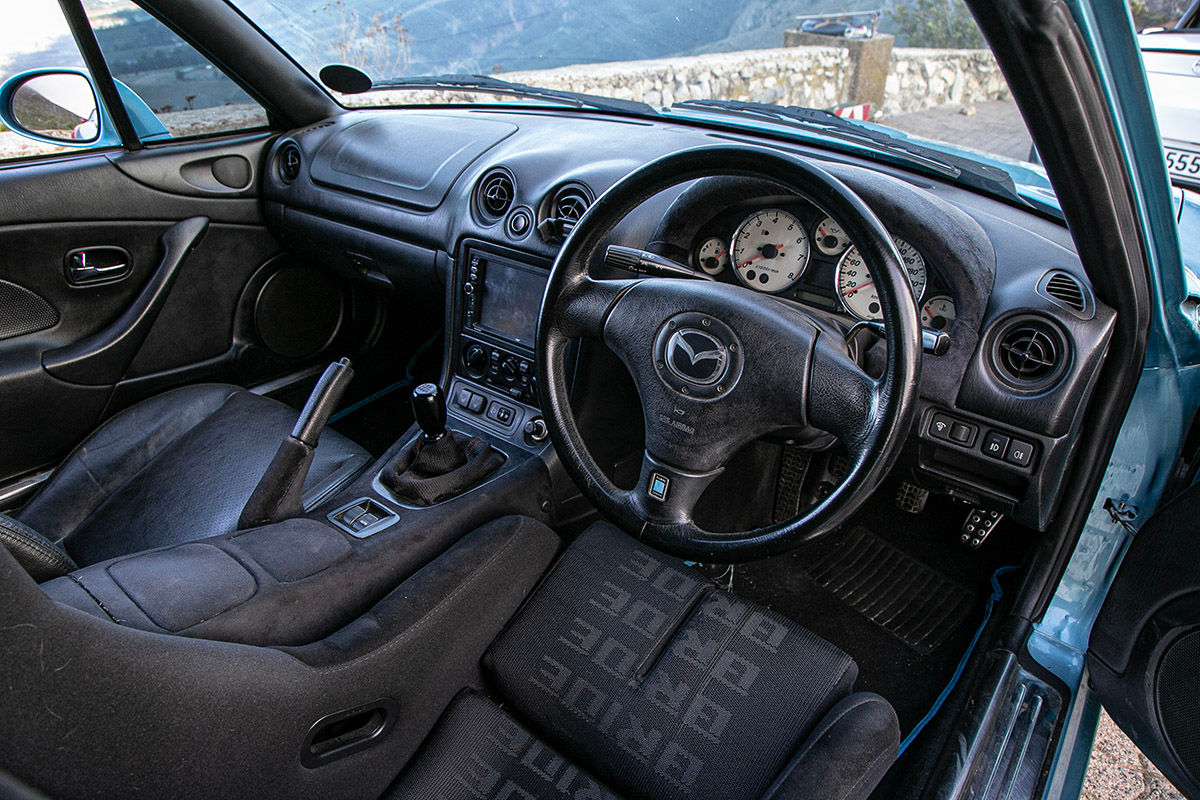
With a fixed and colour-coded hard top, this particular NB looks the sportiest of the four cars on our test day. His plans for this NB become even clearer when you open the driver’s door. Behind the steering wheel is a Bride bucket seat. I’m not the widest person around my hips, but it was a tight fit even for me. However, I’ve always been a fan of these seats – they truly connect you directly with the car.
Through the first few corners, I can immediately sense that the NB, especially with the upgraded hardware, feels more planted and quicker to turn into corners. There is notably less body roll than in the NA, but at the same time, it still rides well. The engine is punchier (107 kW/168 Nm in standard specification) and it is past 5 000 rpm where the power and fun can be had.
The steering feel is also good and you sense that you will quickly be able to learn the limits of the car and be able to drive it to its limit – it simply encourages you to do that!
3rd-gen MX-5 – an NC from 2009
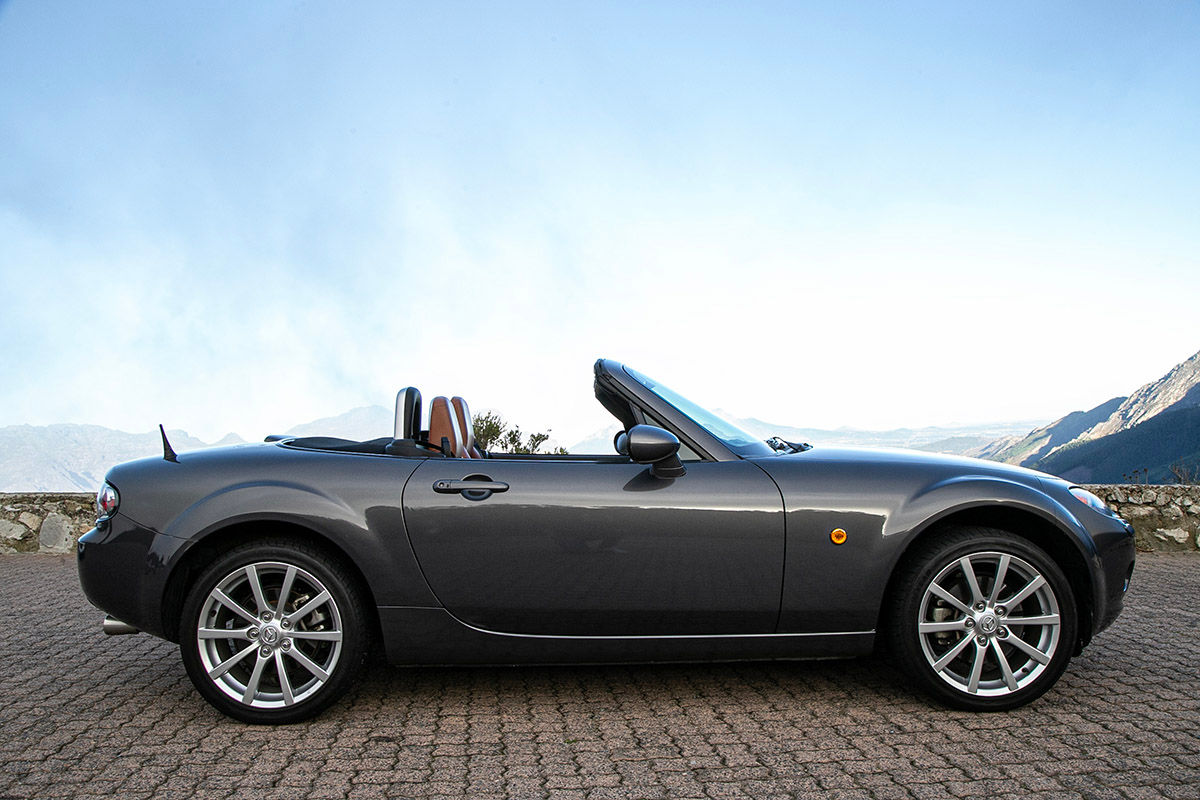
Johan, the owner of this low-mileage NC (just over 80 000 km) quickly points to the fact that fellow MX-5 enthusiasts often make fun of the NC as it is the largest and heaviest (around 1 100 kg) of the 4 generations of Mazda MX-5.
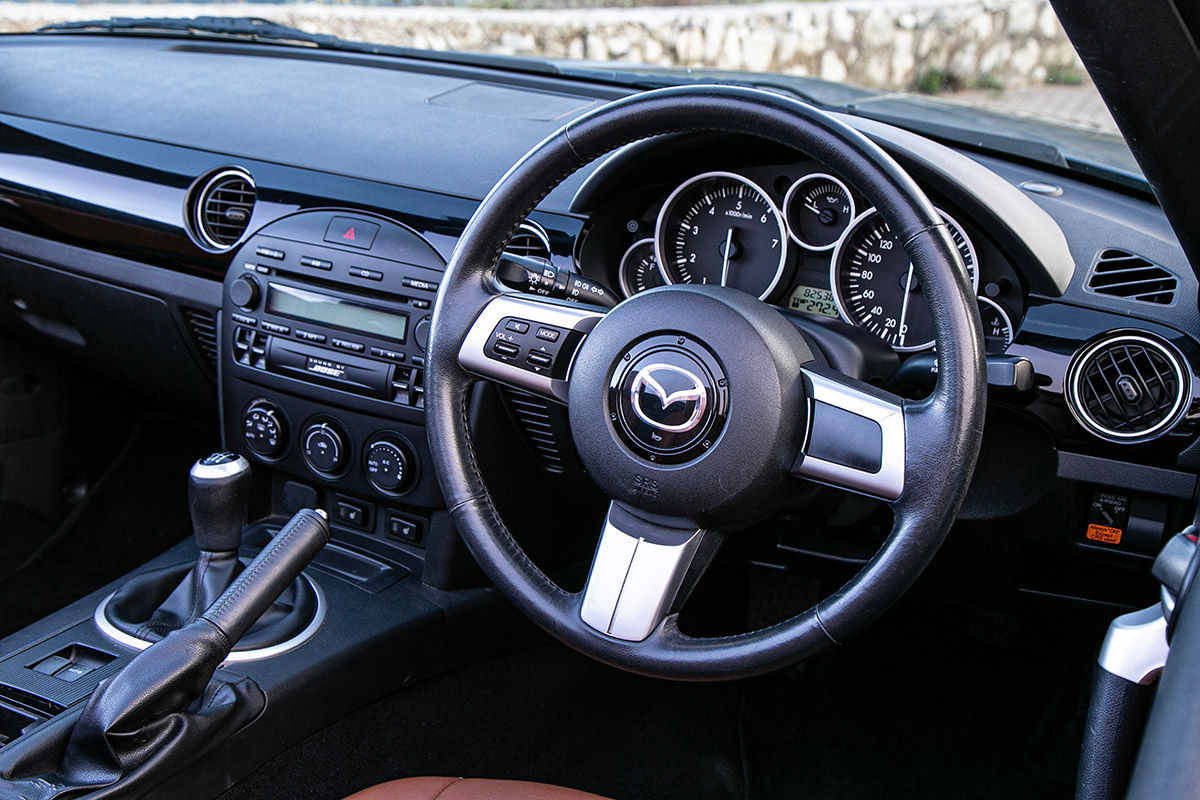
Somehow it matters little, because there are a number of other benefits. The cabin is marginally roomier and again there is a step up in terms of technology and features, but at the same time it is relatively “minimalistic”. Thankfully, the short, stubby gear lever remains while the tanned seats give a contrasting element to the black hue of the remainder of the cabin.
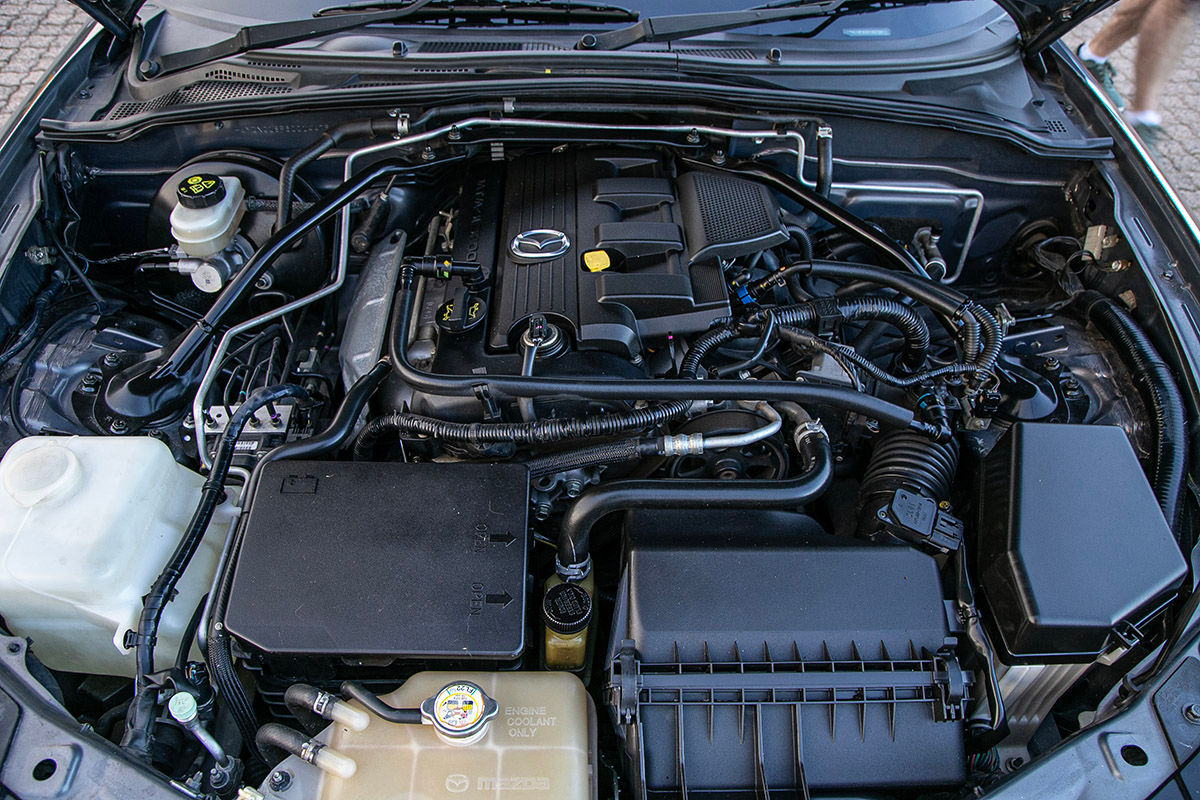
More important is the seat-lowering kit which the owner installed, allowing you to sit closer to the floor. At 1.87-metres tall that makes a notable difference to me and the result is that you also feel more in control of the car. A slight increase in engine performance (now up to 2.0-litres) to 118 kW and 188 Nm, helps to hide the increase in weight versus the NB.
It is only after a few corners that you can sense that the NC is marginally heavier. However, you would really need to drive the car close to the edge of its capability for the weight difference to play a part. The other side of the coin presents a level of polish to the car that is lacking in the first two generations. I feel as if I will be able to cover longer distances and stay behind the wheel longer than in the other two cars, which is a pretty feather in this MX-5’s cap.
There is still sufficient feedback through the steering wheel though and the engine revs happily past its redline just before 7 000 rpm. Whether you want the roof in place or lower it, it can be done in seconds, by the driver, all while staying behind the steering wheel.
4th-gen Mazda MX-5 – an ND from 2016
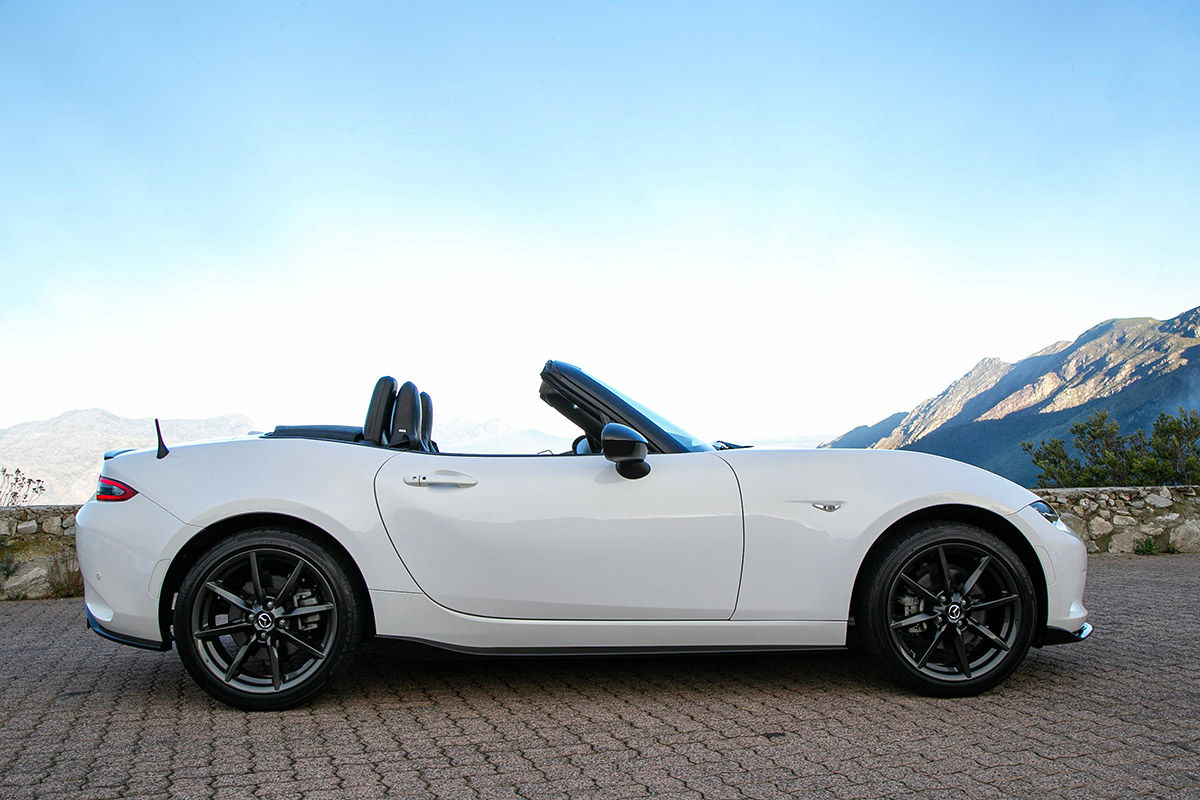
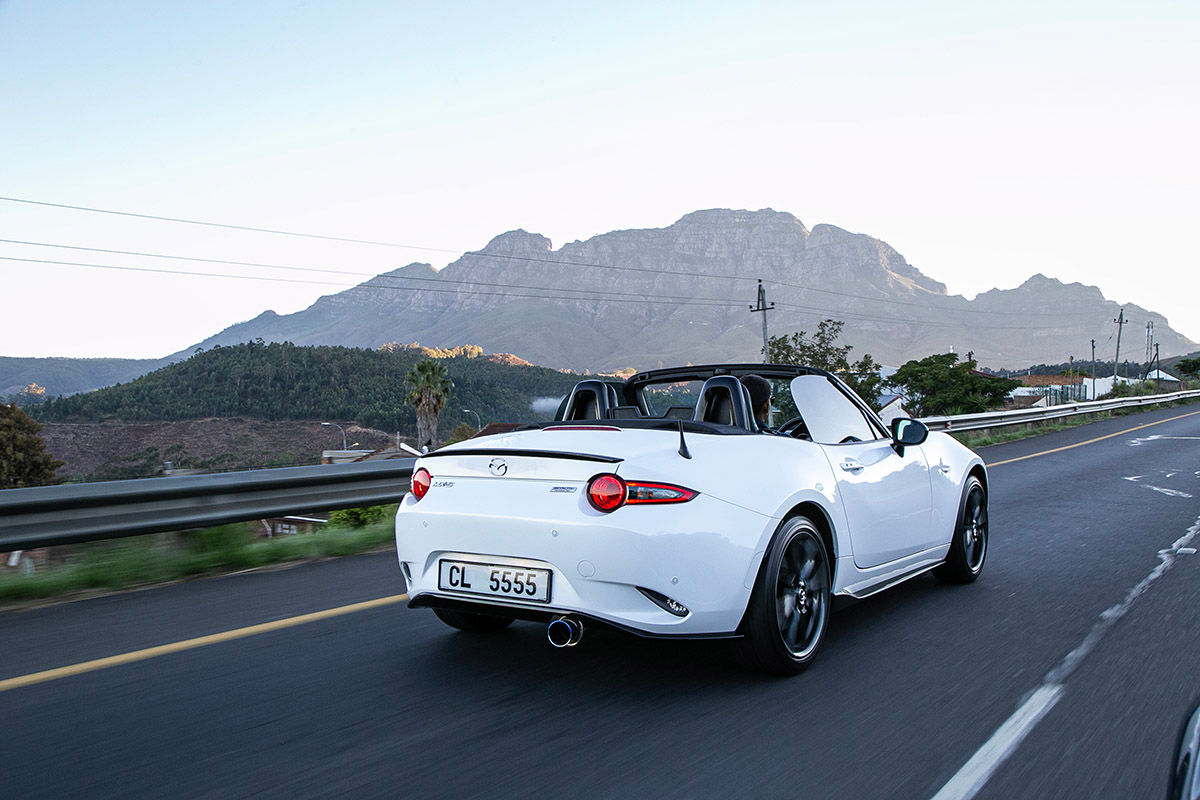
Parking the NC and climbing into this pure white ND (unveiled in 2014) the first thing that I’m reminded of is that Mazda should really be congratulated for developing a car that is notably lighter, and slightly shorter, than its predecessor – a rare thing in modern times. The ND is around 100 kg lighter than the NC, which will definitely benefit the dynamic performance of the car, especially in such a small package.
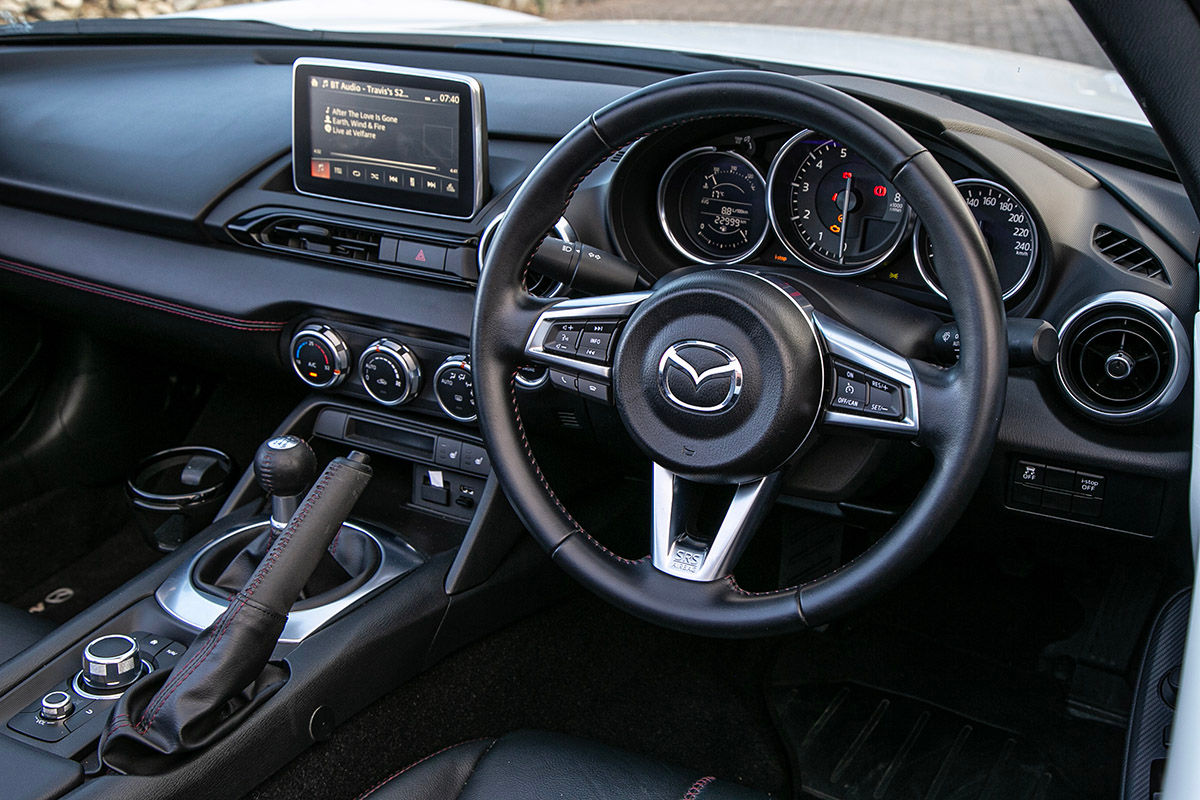
Once behind the wheel, there is again the sense of a car that wraps around you. The MX-5 has now been completely brought into the second decade of the 21st century and the materials feel relatively luxurious while at the same time offering a solid and sturdy feel throughout the cabin, especially with the white panels on the side window sills.
The short gear lever indicates that since day one with the NA, Mazda is still staying true to the concept three decades later. There was a (less exciting) automatic transmission RF version available, but the model here is for the enthusiast who wants to be involved in the driving process. Having only covered 22 000 km, this car feels like new. The owner, Travis, has recently fitted a Kakimoto exhaust, but only for the last part of the system.
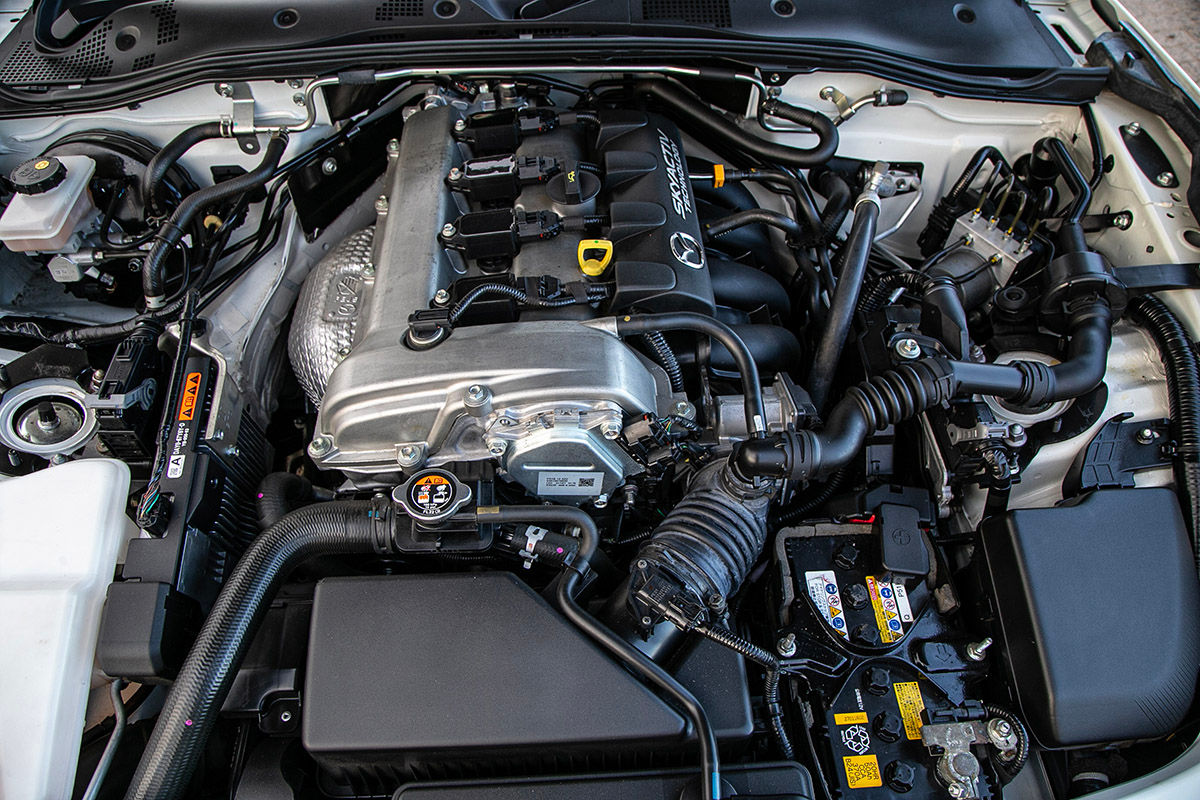
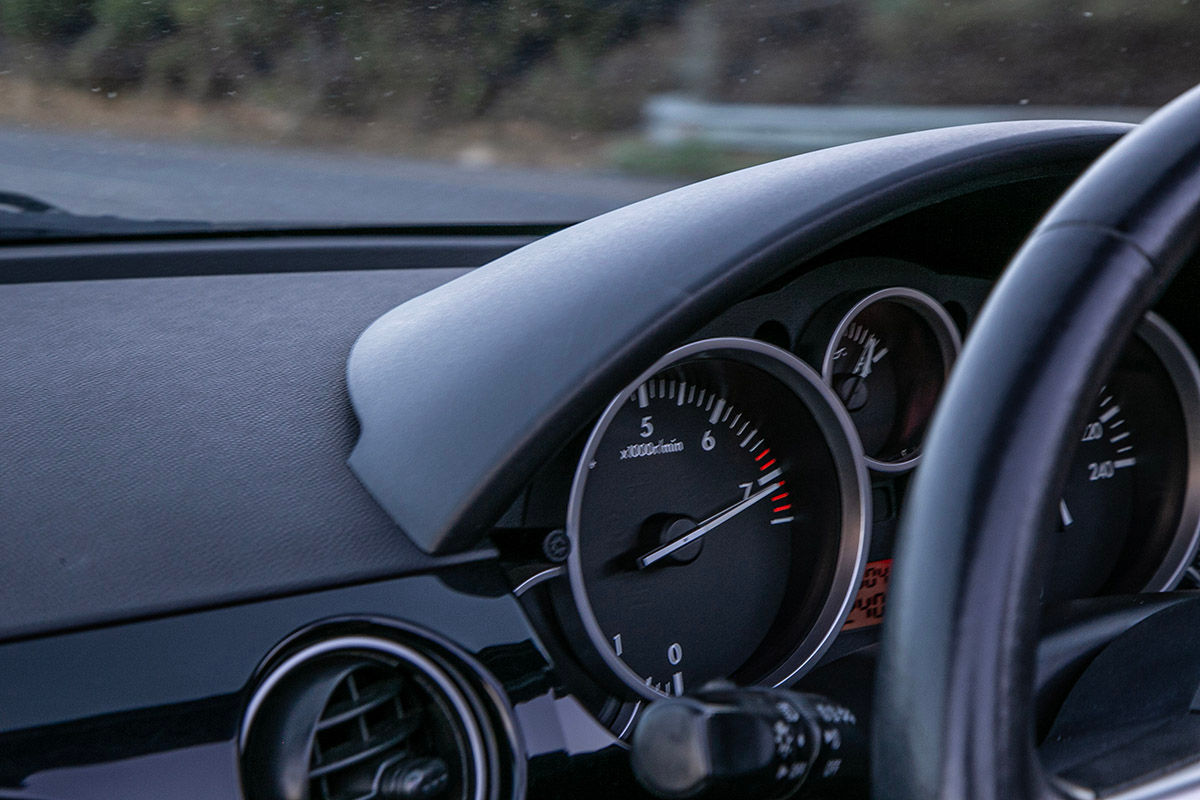
Pulling away the Skyactiv 2.0-litre engine has a welcoming amount of punch – still with 118 kW, but now offering 200 Nm. Combine this with the weight saving and you suddenly have a car that is keener to accelerate than all of its predecessors. Having driven the ND when it was launched and brand new, I don’t remember the engine being this happy to rev, but maybe the mileage has done the engine good as it revs with vigour to the redline.
To an extent the ND reminds me most of the NA, being very compact and wrapped around you in every way, while in the case of the ND, giving you enough performance to keep things interesting.
What the owners say
Sitting down with each owner in their respective cars, Wamuwi shares his thoughts on the NA. “I’ve had the car for almost four years now. What I enjoy about it most, and it might sound like a cliché, is the driving feel and that you are connected to everything. You put the top down and you can hear and feel everything around you.
“Also, the fact the everyone responds so positively to it. In terms of buying advice, I would say try to get one that is as original as possible. Also try to get the hard top, as those are usually unobtanium. Make sure it has been looked after.”
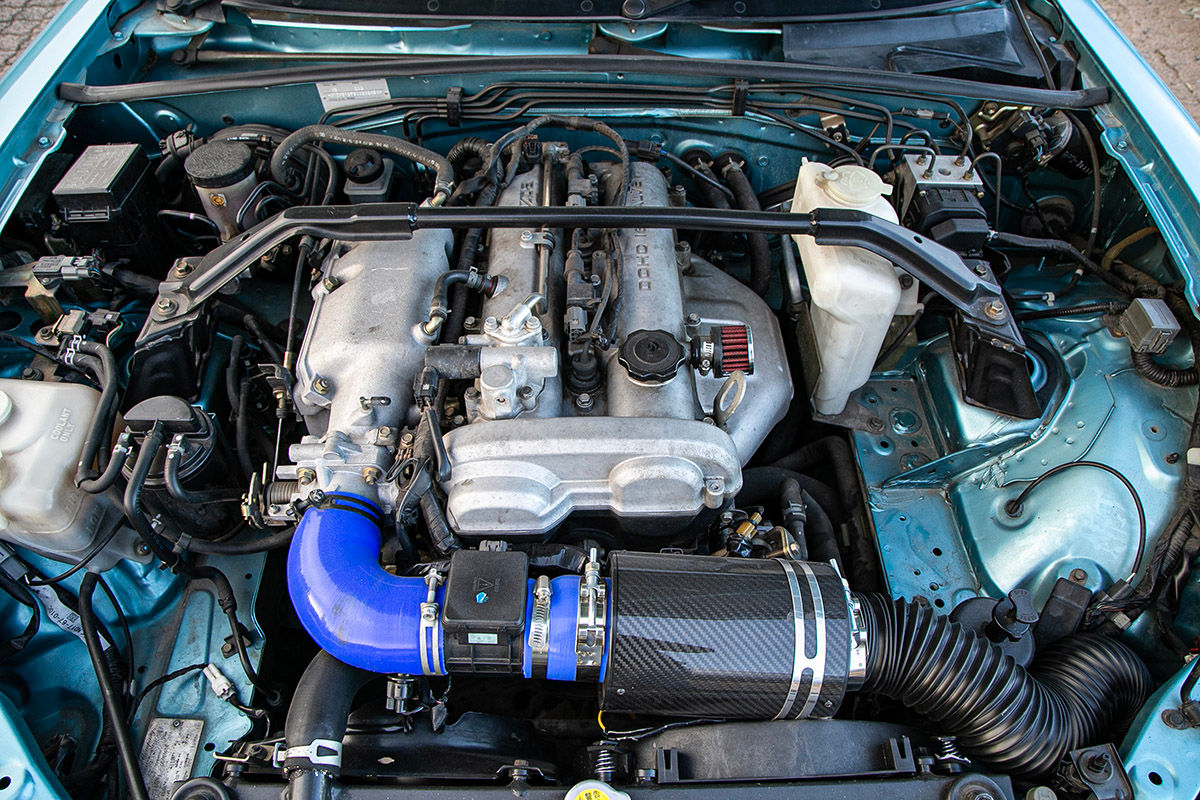
Andrew shares what else he has done with his MX-5. “I’ve had the car for about three years. Apart from the changes I’ve mentioned earlier, I’ve upgraded the exhaust with a Powerflow unit and the intake system has also been upgraded. A few of the upgrades, like the suspension, were done as it needed fixing anyway. The shifter has also been rebuilt so that it is nice and tight.”
Keeping the MX-5 for mostly special occasions, Johan has had his car for three years. He bought it in Johannesburg and drove it back to Somerset West. “The most enjoyable aspect for me is how Mazda was able to combine the comfort of a standard, every-day car, with that of a sports car. In terms of the driving experience, the car is much more direct than its (supple) suspension will make you believe. Finally, I do like the fact that it is that little bit bigger and slightly more versatile.”
In the three months since Travis bought his ND, he has done no less than 10 000 km! He is clearly in love with his car. “I like the high-revving engine, the fact that it is easy to handle and because of the light weight it gives me confidence when driving it. Also, the lack of maintenance on these cars. I also bought this car in Johannesburg and drove it back to the Cape.”
Apart from an MX-5 club, there is also an active WhatsApp group for owners. It goes without saying that potential owners will have access to an impressive amount of knowledge, should they decide to purchase one of history’s most significant little roadsters.
What engine is available in the Mazda MX-5 in South Africa?
The Mazda MX-5 is powered by a 2.0-litre, naturally aspirated petrol engine that produces 118 kW and 200 Nm of torque. It is typically paired with a 6-speed automatic transmission in the South African market, although some models have been sold with a manual gearbox.
Is the Mazda MX-5 a good sports car?
The Mazda MX-5 is considered one of the best affordable sports cars on the market. It is praised for its lightweight design, rear-wheel-drive configuration, and balanced handling, which prioritize the driving experience over outright speed. It is a popular choice for driving enthusiasts and is often a top seller in its class.
Does the Mazda MX-5 come with a service plan and warranty in South Africa?
Yes, all new Mazda models, including the MX-5, come with a 5-year/unlimited-kilometre warranty and a 5-year/unlimited-kilometre service plan in South Africa. This provides comprehensive coverage and peace of mind for owners.
What are the main competitors of the Mazda MX-5?
The Mazda MX-5 competes with other compact sports cars, but due to its unique combination of price, rear-wheel drive, and convertible top, it has few direct rivals. Its closest competitors include the Toyota GR86, Subaru BRZ, and potentially entry-level premium sports cars like the BMW Z4 or Porsche 718 Boxster.
Is the new Half-Hilux Land Cruiser 76 worth R1 million? Video Review
The current Toyota Land Cruiser is officially the oldest ‘new’ vehicle currently on sale in SA. Ciro De Siena spent time with the Land Cruiser 76 2.8 LX derivative to find out if it’s a good buying proposition.
This generation of Toyota Land Cruiser went on sale locally more than 20 years ago but continues to be one of the best sellers in the market.
What makes the latest Land Cruiser so special? And, most importantly, what is the new powertrain like now that the 2.8-litre turbodiesel has been lifted from the Hilux into the new Land Cruiser? This inclusion also marks the first time an automatic gearbox has been used in the Land Cruiser 76!
For people who really use 4x4s for work, emergency field service support and adventure travel, the Land Cruiser 76 Series is legendary. These vehicles have incredibly outdated technology, with some design and engineering features that date back to the 1980s. But Toyota still has huge demand for these old-school-but-new 4x4s.
Drivers who need to go where no other SUV can, value these 76s’ robustness and ability to survive the roughest conditions, without check-engine lights or electronics failing. But the comfort is not a thing. And for urban driving, these Toyota 4x4s can be terrible, with migraine-inducing road, mechanical and wind noise.
And then there’s the manual gearbox issue. The clutch pressure action on these 76 Series five-speed manual gearboxes is more like that on a commercial truck than on a passenger vehicle. But that’s why we wanted to spend time with the latest 76 Series, which now offers a Hilux power- and drivetrain.
Does the trusty Hilux 2.8-litre turbodiesel engine, and its six-speed automatic transmission make the 76 Series better? Ciro’s done all the city driving you’d never ordinarily do with a 76 Series, to learn if an automatic transmission makes it that much better in town.
Watch the video to learn more about the latest Land Cruiser!
5 Reasons to Buy a Tank 300 instead of a Toyota Land Cruiser 76
We were a little underwhelmed by the 2024-spec Land Cruiser 70 Series, which we reviewed recently… So, instead of buying a “bare-bones” LC 76 for R1 million, wouldn’t your money be better spent on a GWM Tank 300? Gero Lilleike offers his opinion…
Now before the Toyota acolytes take up torches and pitchforks and come for me, let me state upfront that this is not a “comparing apples-with-apples exercise” and NOT a plug for the Tank 300; Cars.co.za has yet to thoroughly test the newcomer. We have, however, driven the Tank 300 at its recent launch.
This article is merely a common-sense “discussion” about 2 cars, in which I will provide 5 reasons why I think you should consider buying a Tank 300 instead of a Land Cruiser 76. If you’re a Toyota fan, you probably won’t listen to me anyway but if you’re looking for car-buying advice, you might find this useful.
But first, some context…
The Land Cruiser nameplate is legendary, we know this, and we respect Toyota for it. It’s a formidable off-roader and it’s the kind of vehicle that will easily outlive its owner/s.
While the latest Land Cruiser still offers its familiar 4.5-litre turbodiesel V8 (due to be discontinued) and a 4.2-litre straight-6 diesel engine, the big news is the addition of Toyota’s 2.8-litre GD-6 engine with 150 kW and 500 Nm paired with a 6-speed automatic transmission – a first for the Land Cruiser 70 Series.
The inspiration for this article, however, is derived from our latest test of the entry-level Land Cruiser 76 2.8GD-6 LX priced just shy of R1 million. If you haven’t watched our video review yet, please do so!
In a nutshell, the review highlights that despite its cosmetic and mechanical upgrades, this Land Cruiser LX derivative is devoid of creature comforts, rides and handles gingerly and it costs a packet. If that’s the case, why would you buy it? Is the Land Cruiser nameplate powerful enough to justify such a purchase?
As an alternative, are you not better off purchasing the new range-topping GWM Tank 300? Note that the GWM Tank 300 is slightly smaller and it isn’t a direct Land Cruiser rival but rather takes on the likes of the Toyota Fortuner, Ford Ranger and Isuzu MU-X. It’s also worth mentioning that a larger Tank 500 is due to arrive in Mzansi in 2024 and that will perhaps be a more suitable foe to the LC 76 and Prado.
Nonetheless, here are 5 reasons why I think you should consider buying a Tank 300 instead of a Land Cruiser 76.
5 Reasons To Consider the Tank 300 instead of a Land Cruiser
1. The Tank 300 is much more affordable
The Tank 300 range starts from as little as R725 950 and goes up to R851 950 for the range-topping Tank 300 HEV Super Luxury 4×4, the latter of which is a whole R147 950 cheaper than the Land Cruiser LX. That’s a tidy saving that can be used for your next family holiday or to buy another car!
While the base Tank 300 employs a 2.0-litre turbopetrol engine with peak outputs of 162 kW and 380 Nm, the range-topping Tank 300 HEV Super Luxury 4×4 employs a hybrid powertrain (paired with a 9-speed automatic transmission) that produces a comparatively whopping 255 kW and 648 Nm of torque, all of which will be very useful when off-roading. The claimed fuel consumption figure is 8.4 L/100km.
For the price and power on offer, the Tank 300 wipes the floor with the Land Cruiser.
When you order a juicy drumstick but get little more than the bone; that’s the interior of the Land Cruiser LX. GWM’s Tank 300 on the other hand, is packed with all the bells and whistles, a modern interior layout replete with myriad comfort features, plush finishes, a well-sorted infotainment system, driver aids and comprehensive safety features. The standard features list is extensive, which ramps up value for money!
4. The Tank 300 is more comfortable to drive
As highlighted in our video review, the Land Cruiser’s ride and handling ability are nothing to write home about – by contemporary SUV standards, anyway. It will be cumbersome to drive on the daily commute.
Unsurprisingly, the newer Tank 300’s driving experience is far more satisfying and its suspension delivers a pliant ride quality. So, the GWM rides like a modern SUV should and it’s more than capable off-road.
5. Better Warranty and Service Plan
Last but not least, the Tank 300 offers a 7-year/200 000 km vehicle warranty, as well as an 8-year/150 000 km hybrid battery warranty. A 5-year/75 000 km service plan is also included in the price.
The new-spec Land Cruiser 70 Series leans on its heritage and brand strength and its success, perhaps more now than ever, depends on it. Thanks to adopting the Hilux’s well-proven 2.8 GD-6 motor, the Land Cruiser 76 is now available in automatic guise for the first time, which is praiseworthy, but is that enough?
The new-vehicle market is highly competitive and, in a tough economic climate, buyers want models with the “right badge” on their grilles, but above all else, good value. It’s for that reason that Chinese brands are challenging more established brands such as Toyota and Volkswagen across numerous segments.
Sure, the Land Cruiser is capable but it’s a niche product that will almost only appeal to hardened 4×4 enthusiasts with sentimental hearts and too much money to spend or for industrial fleets working in difficult conditions such as mines or quarries where simple is better. Its age and rudimentary execution have cast it to the periphery of the modern motoring world and perhaps that’s where it belongs.
The Tank 300, albeit with a smaller footprint, is a far more refined offering. Not only is it a reasonably capable off-roader, but it can also be a comfortable and dependable urban runabout. Combined with high specification and hard-to-ignore pricing, the Tank 300 is likely to garner a significant share of buyers looking for a modern and capable off-road SUV for well under R1 million.
The battery technology that underpins electric vehicles is advancing at such a rapid rate that, as exciting as the latest EV models may appear to be (to buy and own), their owners are likely to take a big financial hit when the time comes to trade them in.
We’ve all been there. Come Black Friday, you’ve camped outside the computer shop to ensure you’re first in the queue to snap up that monster PC with enough scenario-summing processing punch to calculate Verstappen’s race-winning strategy for the 2027 Monaco Grand Prix (hint: even with mixed track conditions and running on 30-lap old tyres, he can start from the pitlane and still win the race).
You’ve shelled out to juice up your gaming PC, but just how useful will all the computing power be in a few years?
Then you shell out your hard-earned cash for the privilege of packing enough CPU speed to render AI self-learning as elementary as the Rosetta Stone; you’re surfing the bleeding edge while high-fiving Silicon Valley’s atom-splitters (Elon Musk has just sent you a friend request – for the sixtieth time).
The only reason why you aren’t lightyears ahead of the tech curve is because You Are The Curve. Except you’re not and, if you ever were, the moment would have lasted a few days, if not hours.
The 1st-gen Nissan Leaf was the first BEV sold on Mzansi’s new-vehicle market. It had a realistic range of about 120 km!
Because Moore’s law says so
Why not? Because (Gordon) Moore’s law says so. It’s a now-standard IT industry phrase that defines the relentless and unending advancement of technology; specifically, it pertains to the numbers in integrated circuits doubling every 2 years, based on quantum improvements in R&D and production processes.
To us: consumers of electronic goods, that relates to everything, including memory capacity, processing power and smartphone advancements: today’s iPhone 15 is tomorrow’s Nokia 3310 (remember that?)
The VW Group’s MEB EV platform underpins everything from the Cupra Born to the VW ID Buzz.
It’s no different with electric vehicles (EVs). Ceaseless advancements in electric car- and EV powertrain development – particularly battery- and weighting-saving tech – ensure that with each successive model, the range and performance of these vehicles improve hand over fist over their predecessors.
Most recently, Porsche’s pre-production next-gen Taycan lapped the 20.832 km-long Nürburgring Nordschleife 26 seconds quicker than its 1st-gen forebear. That’s more than a second per kilometre.
The next-gen Taycan is going to make the current model seem rather outmatched.
Benchmarked against internal combustion engine (ICE) technology, which has admittedly been shifted to the automotive industry’s back-burner, such inter-generational strides are simply staggering.
To demonstrate the diminished returns of progression on the ICE side at Weissach, the current 992.1-gen GT3 RS laps the same track at 6:44.848 compared with the now-replaced 991.2 car’s 6:56.4.
The latest iteration of the GT3 RS is notably slippier than its predecessor.
Almost all of that improvement can be attributed to aerodynamic gains (see above). And, make no mistake, 12 seconds is a veritable lifetime when you’re holding a stopwatch – but ultimately, it still only equates to one-third of the Taycan’s intergalactic hyperspace breakthrough at the same track.
Throughout 3 generations of Formula E – every true petrolhead’s favourite punch bag – the electric open-wheeled race cars have become increasingly faster and more efficient. In 2014, the inaugural versions debuted with 190 kW and battery capacity so limited that they required mid-race car swops.
The current-gen Formula E race cars are MUCH more powerful and energy-dense than previous generations.
Lessons from Formula E (ugh!)
Four years later, their successors have gained an additional 90 kW and can last an entire race. Today, the 3rd-gen cars race to 320 kph, have 350 kW and a 600 kW rapid-charging ability to top up the battery during pit stops. “The evolution is as undeniable as it is unstoppable,” booms the voice from above.
I’m sorry if I bored you there with the Formula E prattle (can you say “Attack Mode” and “Fan Boost” with a straight face?) and, admittedly, nit-picking over Nürburgring lap times is of little value to most people, what cannot be denied is that back in the real world – even if you bought an EV 2 or 3 years ago, thanks to the Moore’s law of engineering improvements in battery density, your car today is all but obsolete.
Chery’s Shenxing ultra-fast-charging battery is said to facilitate a BEV range of over 700 km.
And were you to sell it, the giant strides being made in Chinese battery laboratories alone will see to it that you feel the pinch. After all, who wants a 3-year-old EV with a 250-km range and a degraded battery (the latter of which is nearly impossible to easily and affordably replace) when current EVs are pushing almost triple that, and are set to continue redefining what’s possible every 2 years from now?
Simply put: lithium-ion batteries are yesterday’s news. Sodium-ion batteries may still be a fledgling technology – but they’re made from abundant materials/more environmentally friendly (sodium can be harvested from seawater as a by-product of desalination), lighter, 30% cheaper and last twice as long.
Toyota took its sweet time to launch its first BEV – the Bz4X – but upcoming all-electric models will disrupt the market.
Meanwhile, Toyota, which has resisted immense pressure to pivot its business on all-electric models (when many other legacy carmakers are far, perhaps too far, along that path), plans to make solid-state batteries central to its future EV line-up; expect TMC to launch the tech before the end of this decade.
The writing is on the wall: for now or the foreseeable future, at the risk of instant obsolescence, you do not want to buy an EV.
The recently unveiled Q6 e-tron has a 100-kWh lithium-ion battery and a claimed range of 625 km.
Driving an EV makes sense if you can lease it
Certainly, leasing one makes a lot more sense. Hire purchase makes sense because if you know that you will give the EV back after a pre-agreed period (of years and kilometres driven), you’ll be spared the shock of depreciation. EVs depreciate steeply for a variety of reasons, including their high cost of entry (usually, the pricier a car is, the faster it loses value), combined with very low demand for used examples.
As things stand, EVs are bought by a select few and most of those who want one, desire a vehicle that offers the best possible performance, efficiency (range), recharging versatility and a battery pack that has suffered zero degradation due to age and operating conditions. So, the EV game is a new-car game!
VW Group Africa is expected to offer its ID.4 electric crossover exclusively as a lease vehicle.
If you lease a new EV, however (I understand that Volkswagen Group Africa intends to offer the upcoming ID.4 electric crossover exclusively via a lease deal), when you return and exchange it after, say, 3 years – its newer version will probably travel 250 km more per charge while costing very little extra per month.
Financing an EV (with a balloon payment) is unwise
Amidst an avalanche of perpetual augmentation and vertical development curves, conventional finance agreements and extended ownership are incongruent with EV custodianship, which is at best temporary.
South Africa’s not ready for all-electric bakkies yet, it needs to offer incentives to make wider EV ownership more viable.
The former makes a lot more sense for ICE cars, which in the past were more engaging to drive, had more personality (only suffering from worse infotainment systems than today), but sported far more linear inter-model improvements when it came to performance or economy, making it harder to justify their regular replacement.
And that is probably one of the biggest reasons why you still have one of those (an ICE vehicle) in your garage today. And should continue to do so for a considerable period to come.
Ahead of a public debut at the Bangkok International Motor Show, an all-electric Isuzu D-Max bakkie has been revealed. Here’s all you need to know about it.
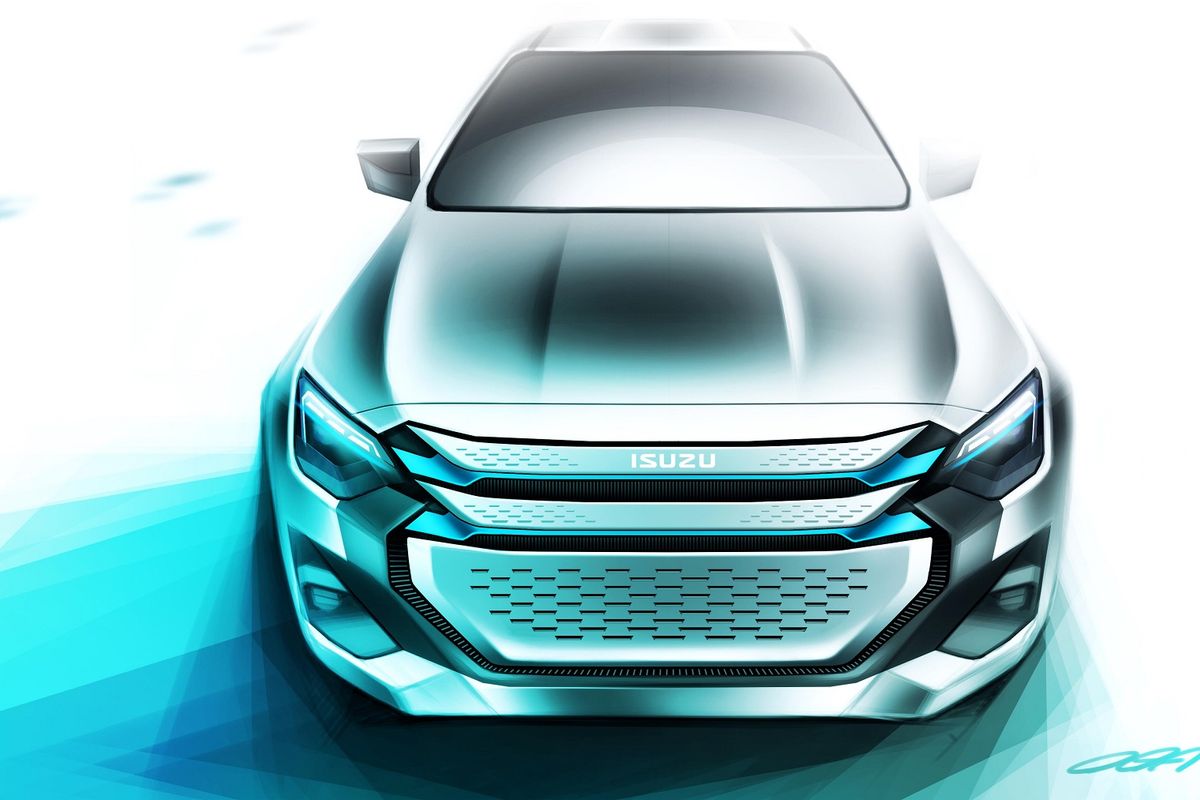
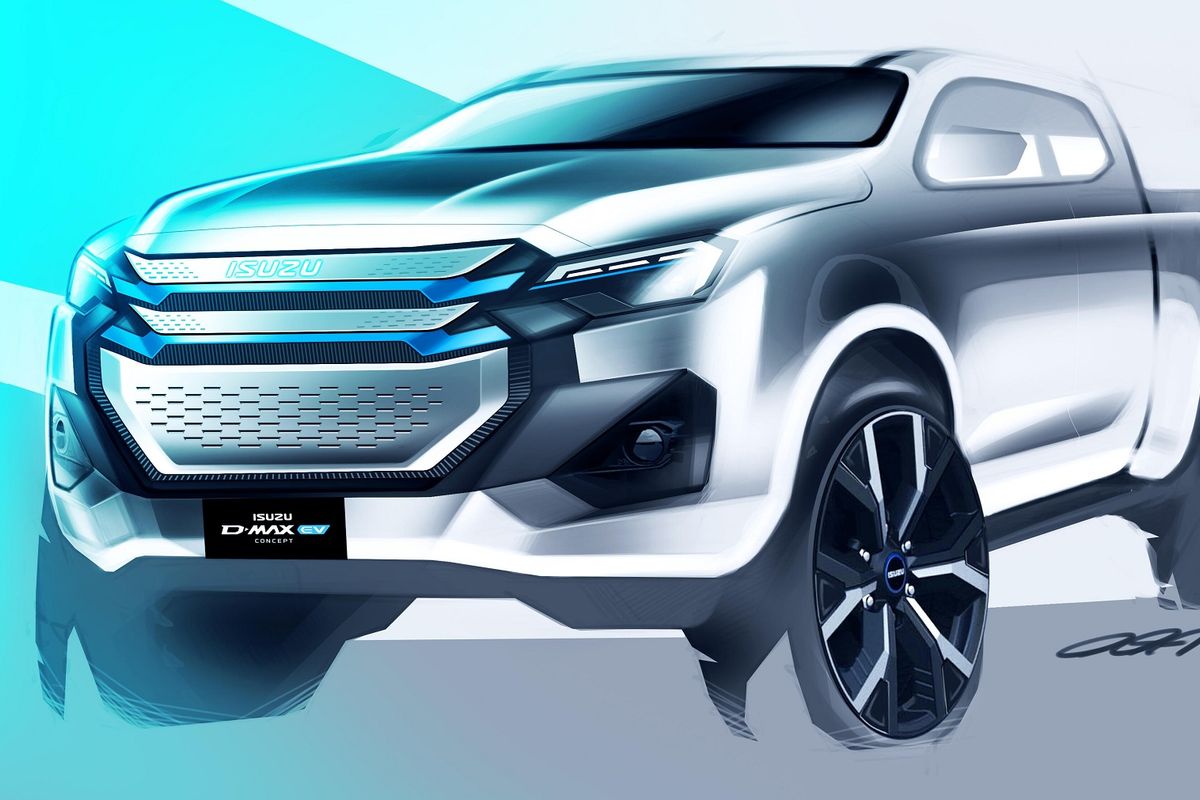
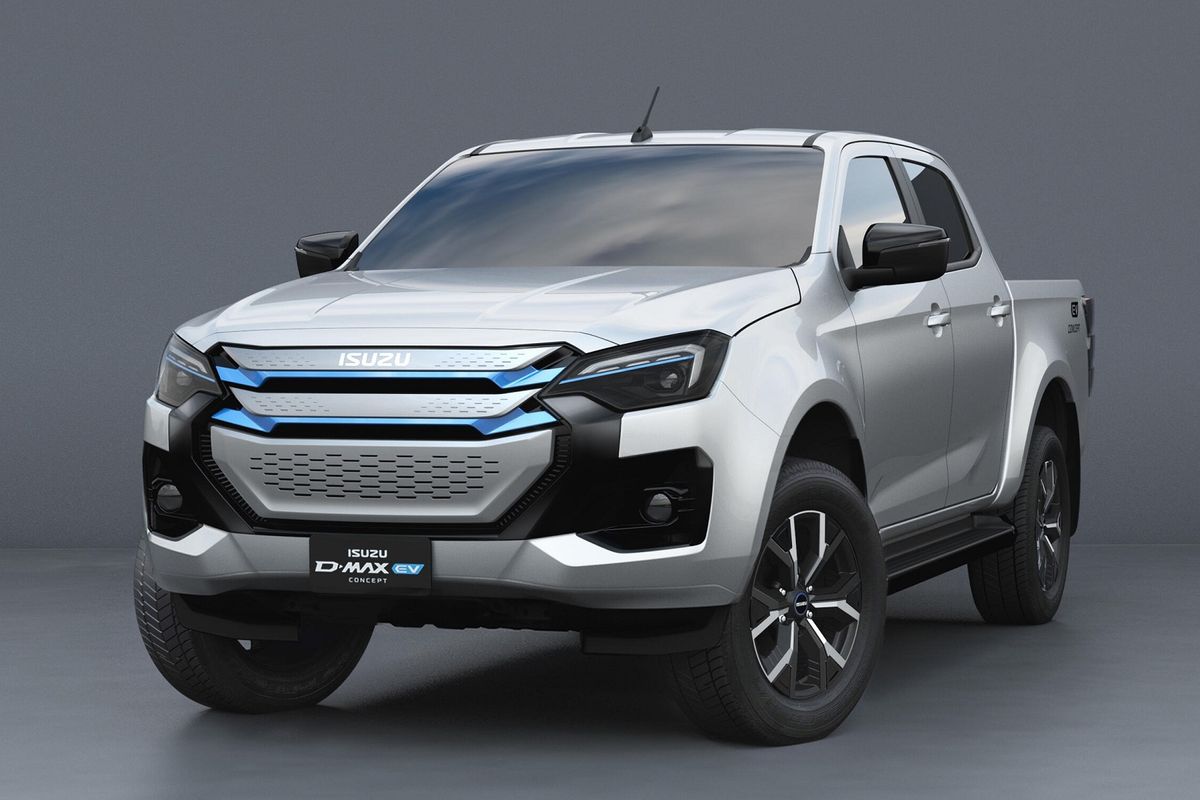
When we think of electric cars, our minds usually associate the term with cute European city cars and SUVs. An electric bakkie seems a bit too radical, and yet, an all-electric Isuzu D-Max has just been revealed. Admittedly what you see here is not a production-ready vehicle but rather a prototype concept.
Still, while the design is a bit on the concept side, we reckon that electric powertrain is all but ready to go. Simply, two electric motors on each axle make a combined 130 kW and 325 Nm. Powering both axles means the all-electric Isuzu D-Max has 4×4 capability.
If you’re the towing type, the all-electric Isuzu D-Max has a 3.5 ton rating and a 1 ton payload capacity. Under the floor is a 66.9 kWh lithium-ion battery giving it a range of around 300 km. Isuzu says the new model will be assembled in Thailand and will go on sale in Europe in 2025, before expanding to the rest of the world. As a reminder South Africa and Australia are both bakkie-obsessed nations and it will be interesting to see if Isuzu SA puts its hand up for the all-electric Isuzu D-Max.
Isuzu also announced its working on hybrid versions of the internal-combustion-powered D-Max too, and there’ll be more info on that next week at the Bangkok Motor Show. We reckon we’re entering a mini arms race between the bakkie brands.
In an ever-expanding Ford Ranger line-up, is the new Wildtrak X another “sticker-pack derivative” or is there substance behind its style and the Blue Oval’s marketing speak?
We like: Good looks, interior comfort and features, improved off-road ability, towing and load-carrying ability advantage over Raptor
We don’t like: Slightly compromised on-road comfort, occasionally “confused” transmission
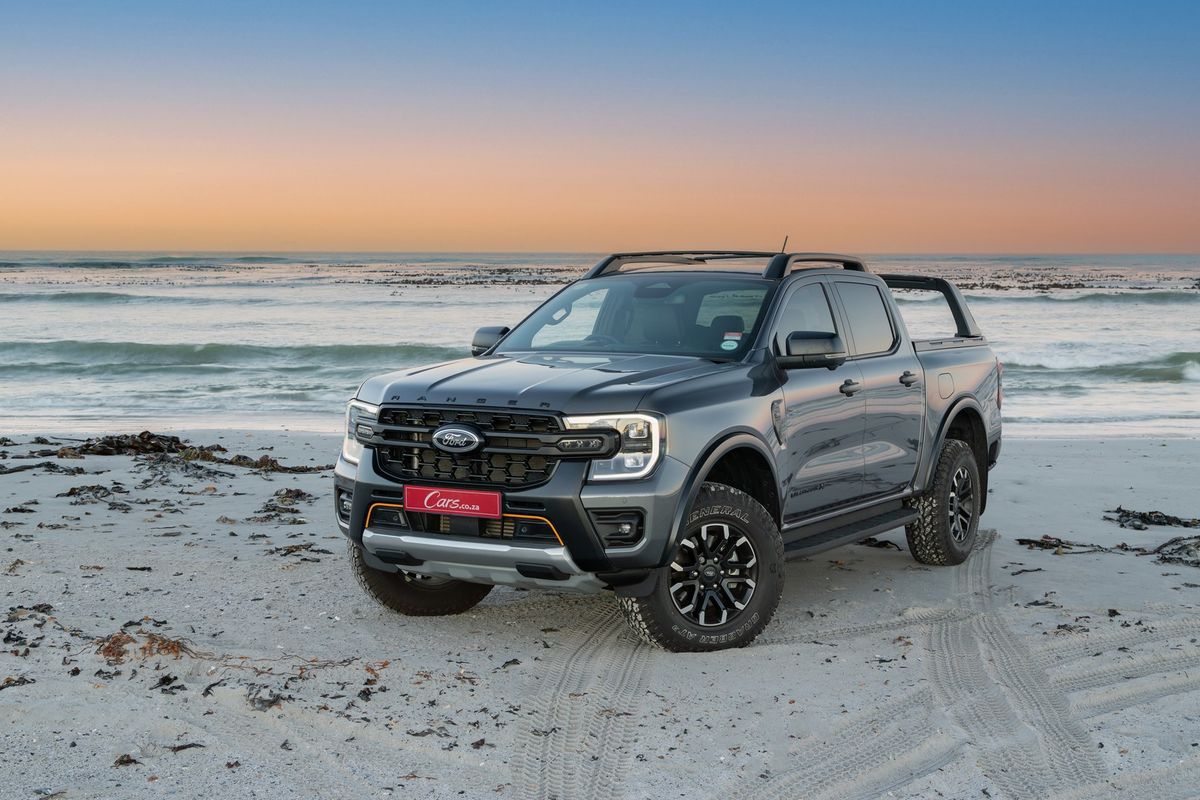
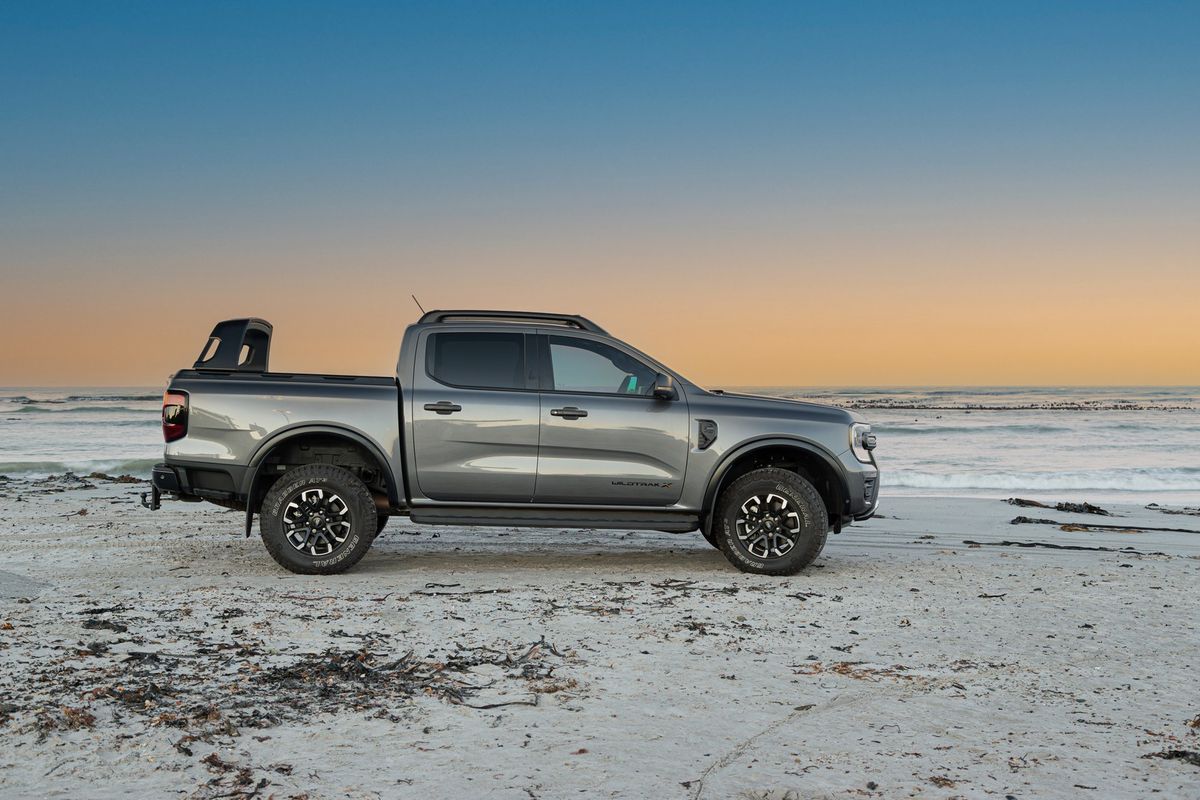
The Wildtrak X is instantly recognisable by its blacked-out grille and a flash of orange on its bumper.
Where does the Ranger Wildtrak X fit in?
Sometimes it seems that not a week goes by without Ford Motor Company of Southern Africa (FMCSA) rolling out another variant of its Ranger bakkie. The Wildtrak X isn’t even the newest of the bunch; the Blue Oval’s Silverton-based subsidiary most recently added the Tremor derivative (2.0 BiTurbo double cab Tremor 4WD) to what is starting to look like a very complex model line-up.
Positioned as a more off-road-oriented offering at a price point between the ever-popular Wildtrak and the Raptor, the Wildtrak X is ostensibly aimed at 4×4 enthusiasts who truly spend more time driving on rough roads than most motorists, but who cannot (or won’t) stretch their budgets to procure the Raptor, which is the 2023/24 #CarsAwards Leisure Double Cab champion (and exceedingly capable off-road).
So, priced at a smidge over R1 million, is the Wildtrak X simply too “niche” as an offering, or could it be the sweet spot at the top of the Ranger line-up?
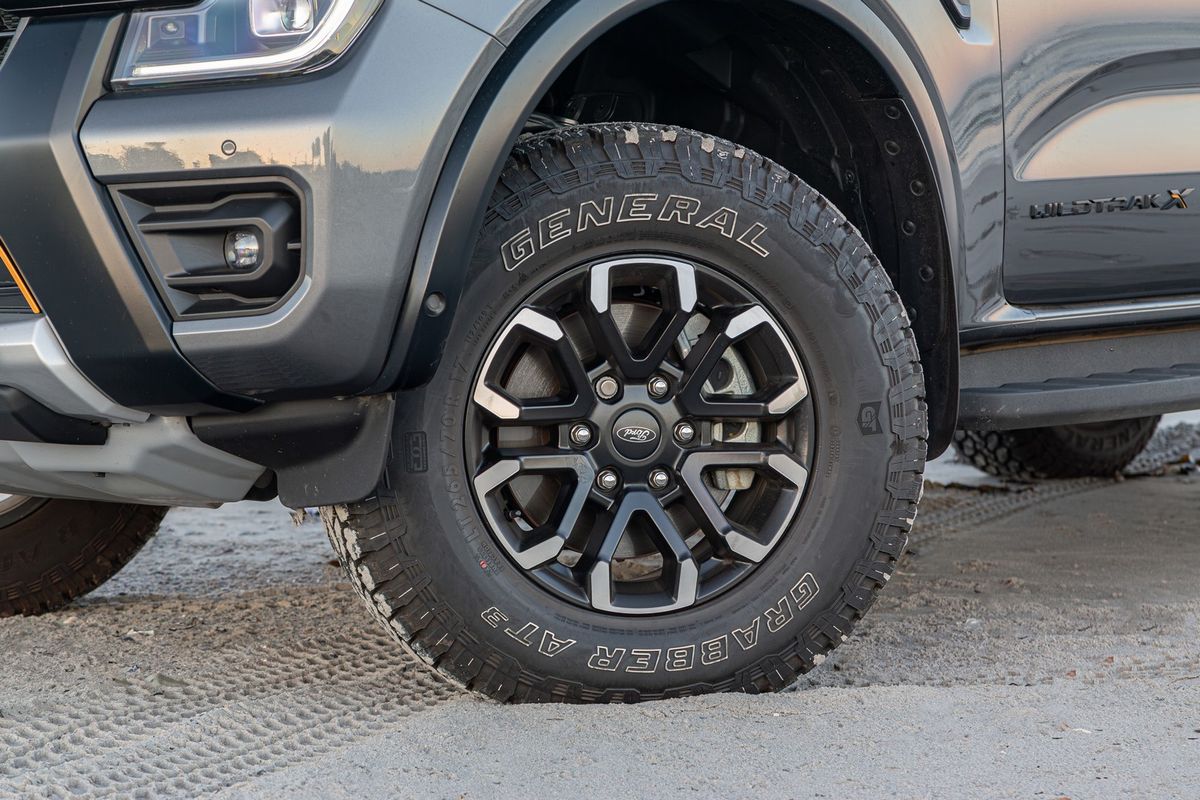
Compared with a standard Wildtrak, the “X” has wider tracks, a higher ground clearance and comes fitted with off-road-biased tyres.
How the Ranger Wildtrak X fares in terms of…
Design and Features
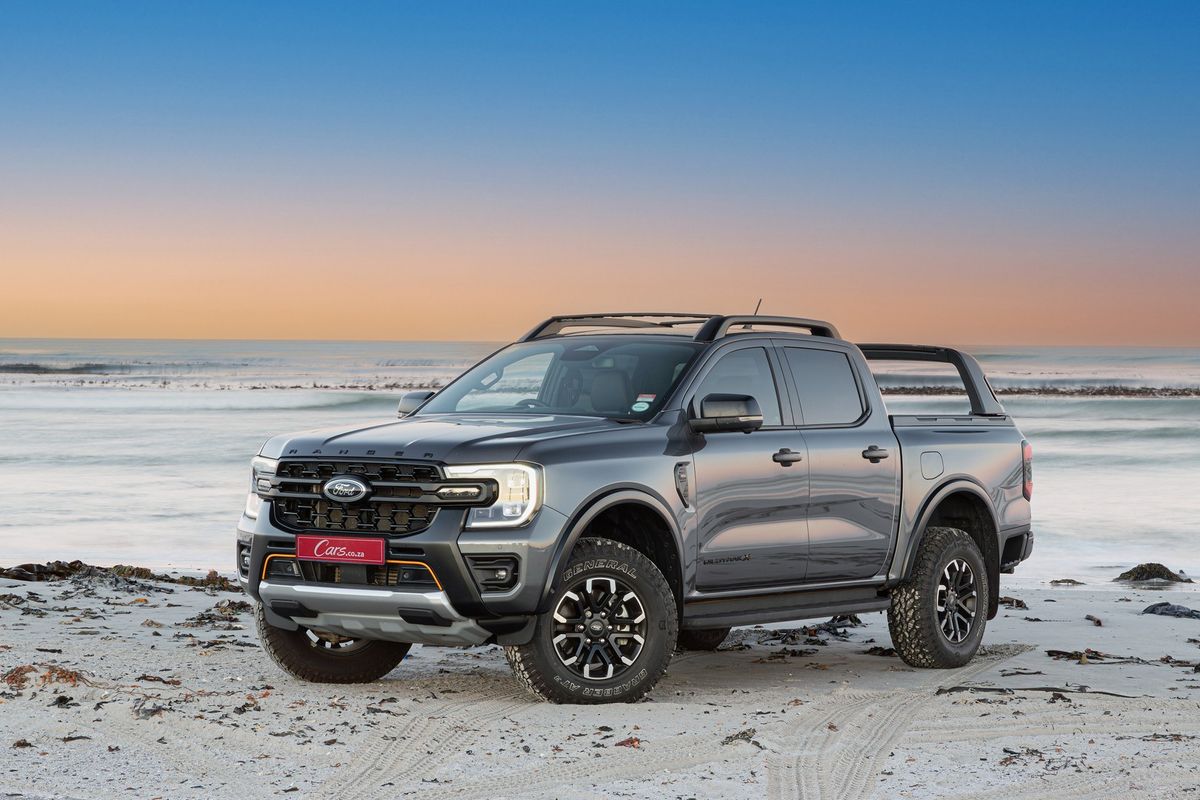
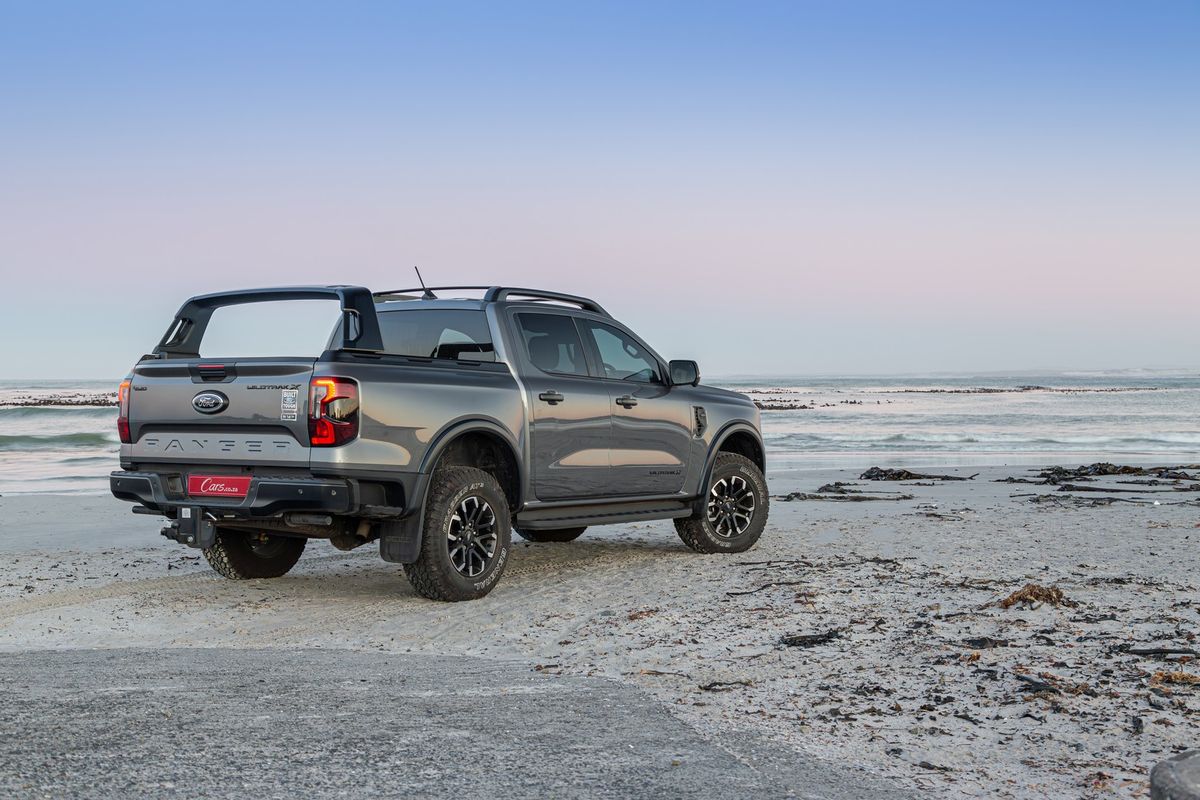
The new-generation Ranger is already a familiar sight on South African roads, but this has done nothing to lessen its design appeal. In Wildtrak X trim, it looks ever-so-slightly more macho and adventure-ready.
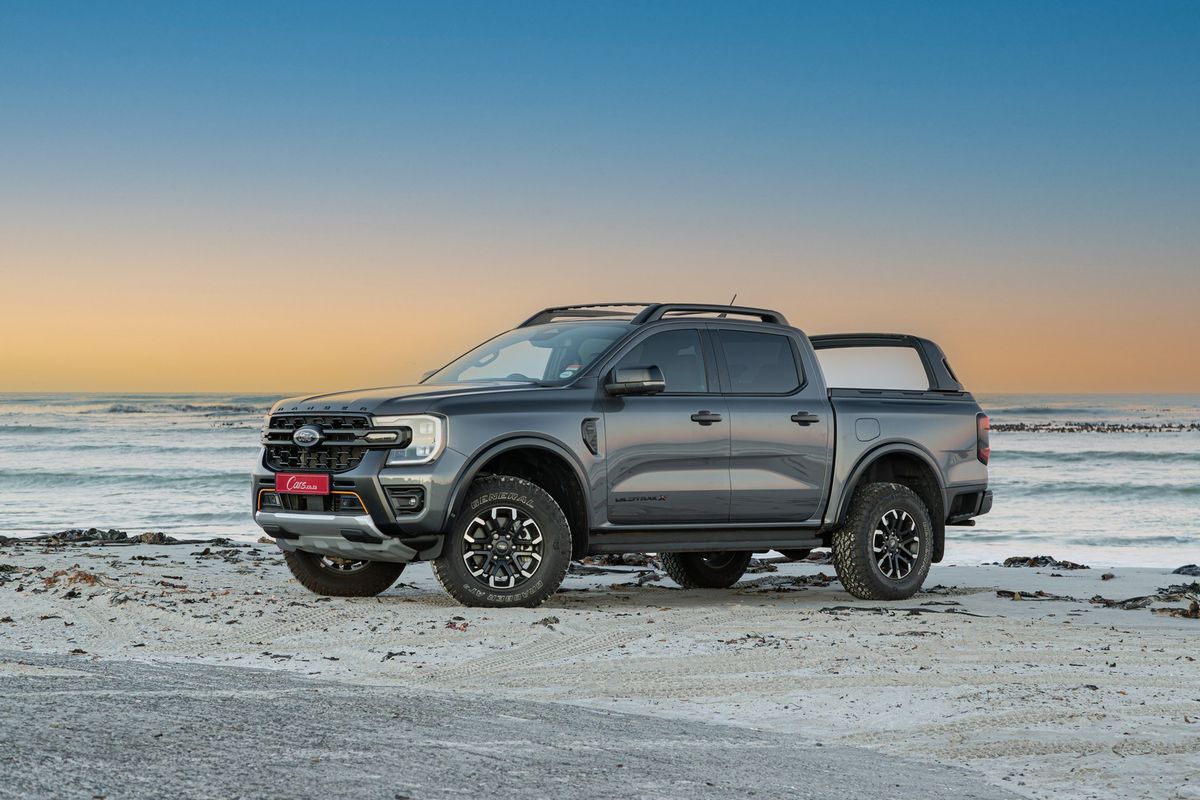
It all starts with the bakkie’s slightly more purposeful “stance”. Compared with the standard Wildtrak, the Wildtrak X’s track widths are 30 mm wider and its ground clearance has been increased by 26 mm.
To achieve these marginal changes, FMCSA fitted this derivative with attractive dual-tone 17-inch alloy wheels (wrapped in gravel-ready General Grabber AT3 265/70 tyres), as well as specially-tuned Bilstein Position-Sensitive dampers that are better suited to regular use on harsh terrain.
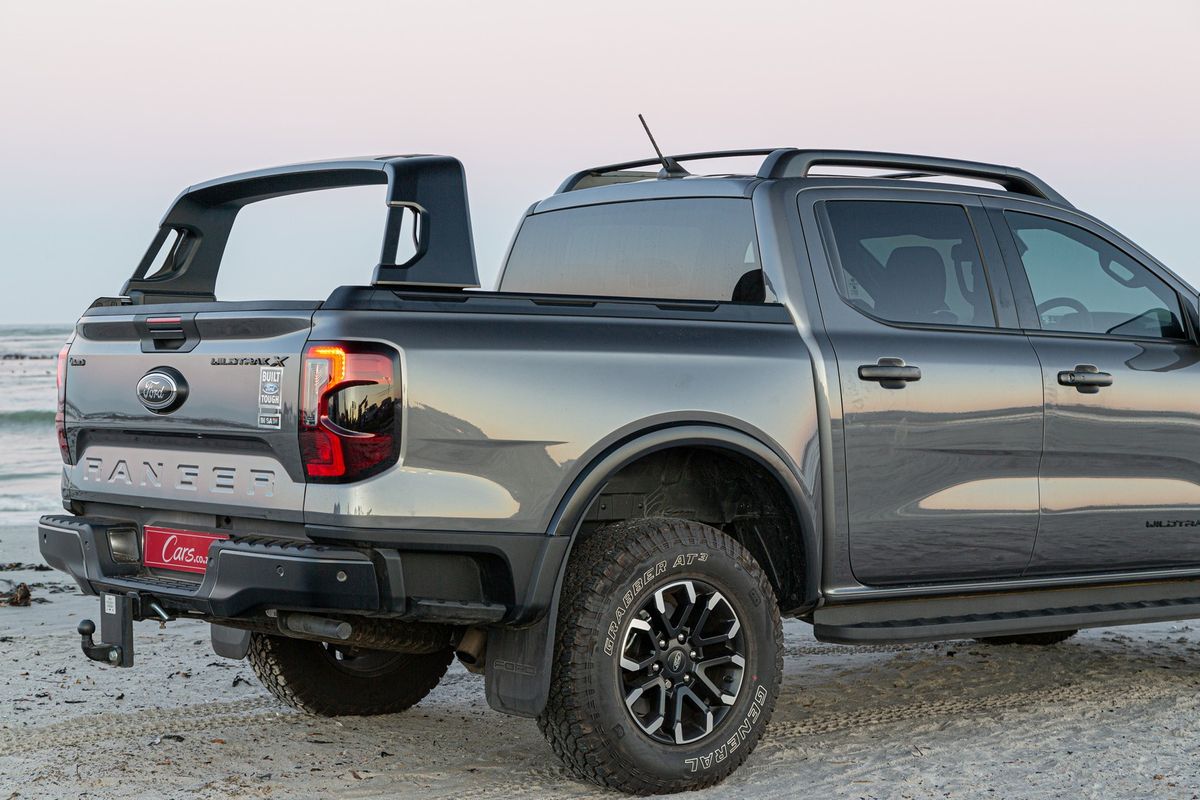
The Wildtrak X’s wider tracks facilitate a more purposeful stance; test unit came fitted with the optional Flexible Rack System.
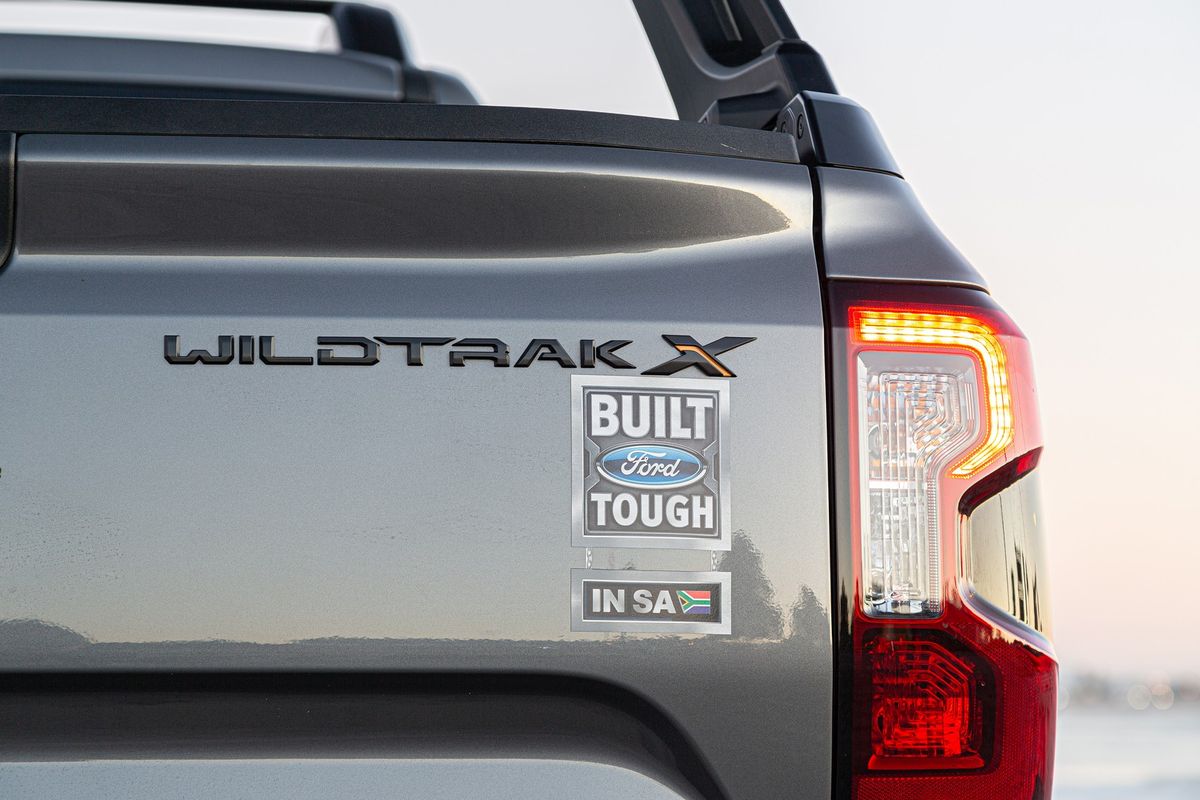
Other clues to the Wildtrak X’s identity include a new off-road-specific grille with integrated auxiliary driving lights and a “Cyber Orange” accent. A steel bash plate, cast aluminium side steps, black Ford oval badges front and rear and a smattering of Wildtrak X badges also set this newcomer apart. In fact, the “blacked-out” grille surround, bumper H-bar, wheel arch mouldings, fender vents, mirror caps, door handles and rear bumper contrasted rather well with the Carbonized Gray paint finish of our test unit.
Also drawing some attention was Ford’s new Flexible Rack System, which is an optional extra. It consists of a sliding load rack (camouflaged as an extension of the sports bar) that can be locked into 5 different positions along the length of the load tray, as well as folding/pop-up roof racks that can be stored in the rack when not in use. It’s an easy-to-use system and ideal for transporting longer cargo items without impinging on load-tray space. It can transport loads of up to 80 kg and, when the bakkie’s stationary (when camping, for example), you can put a 250 kg weight on it (such as a roof tent and its contents).
The Flexible Rack System, seen here positioned near the back end of the load tray, is nifty and easy to use.
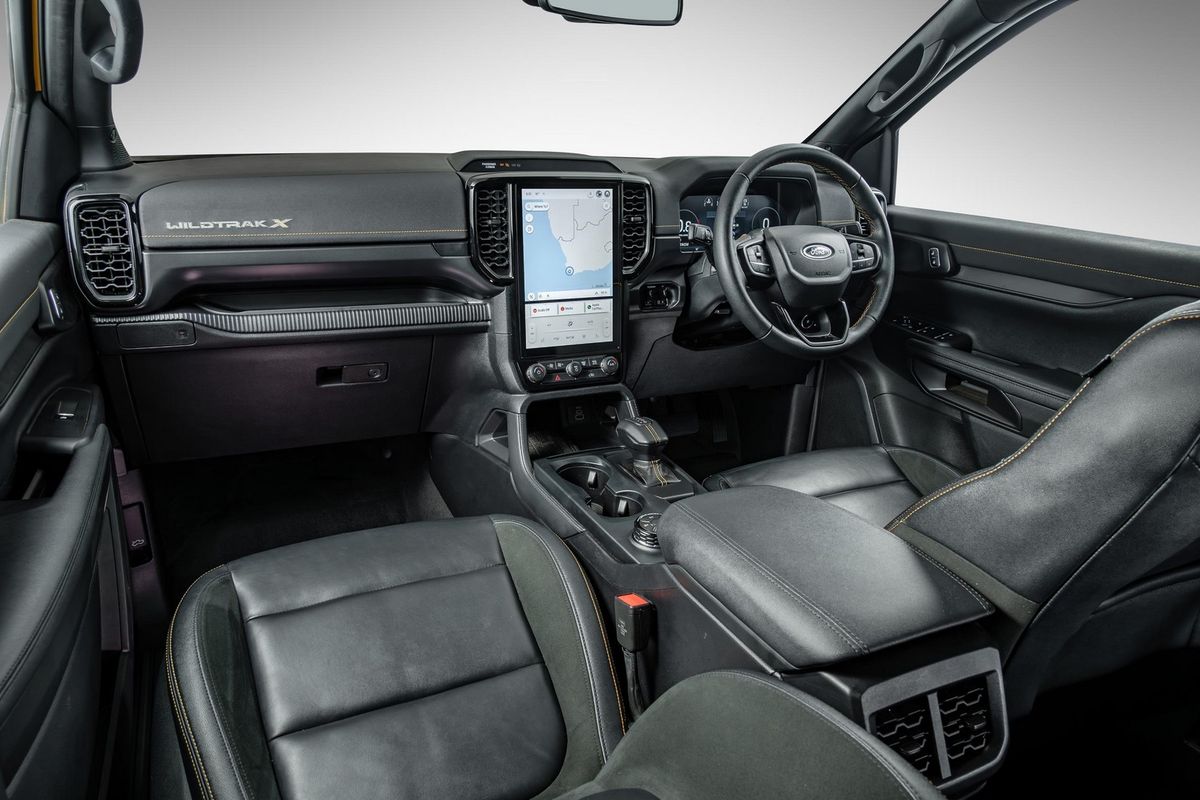
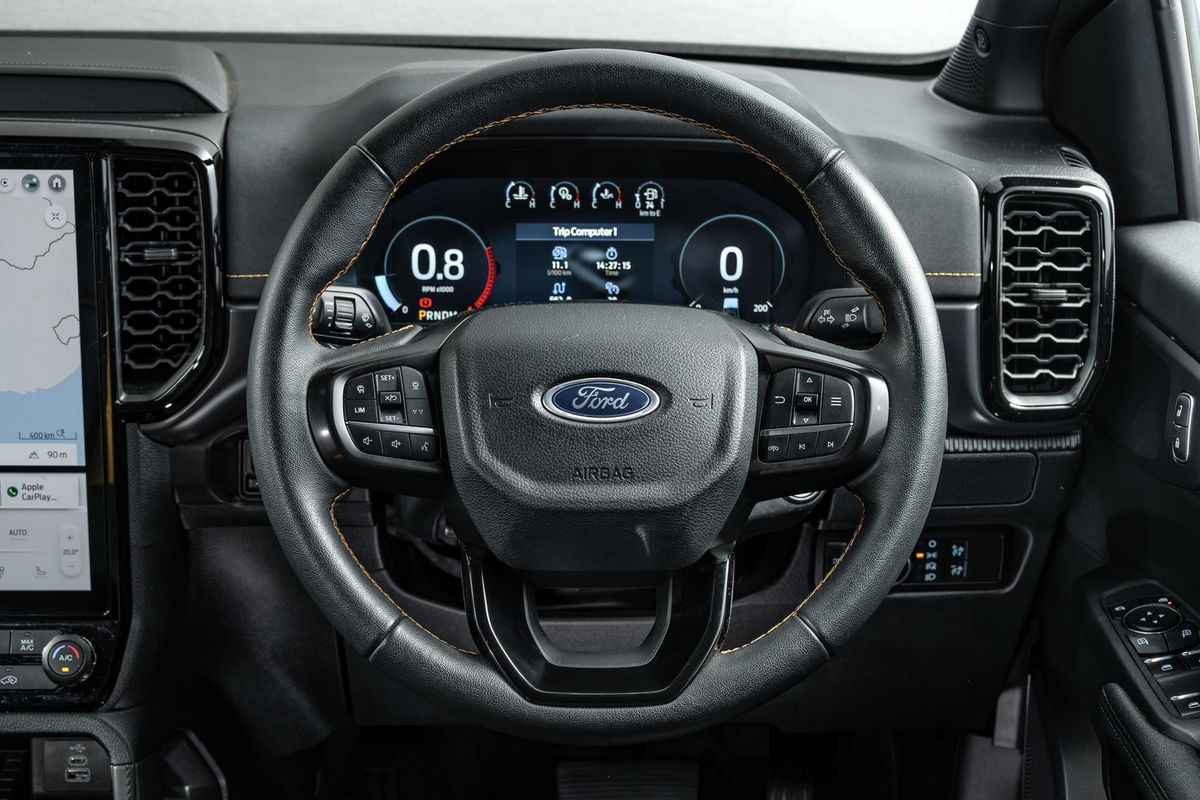
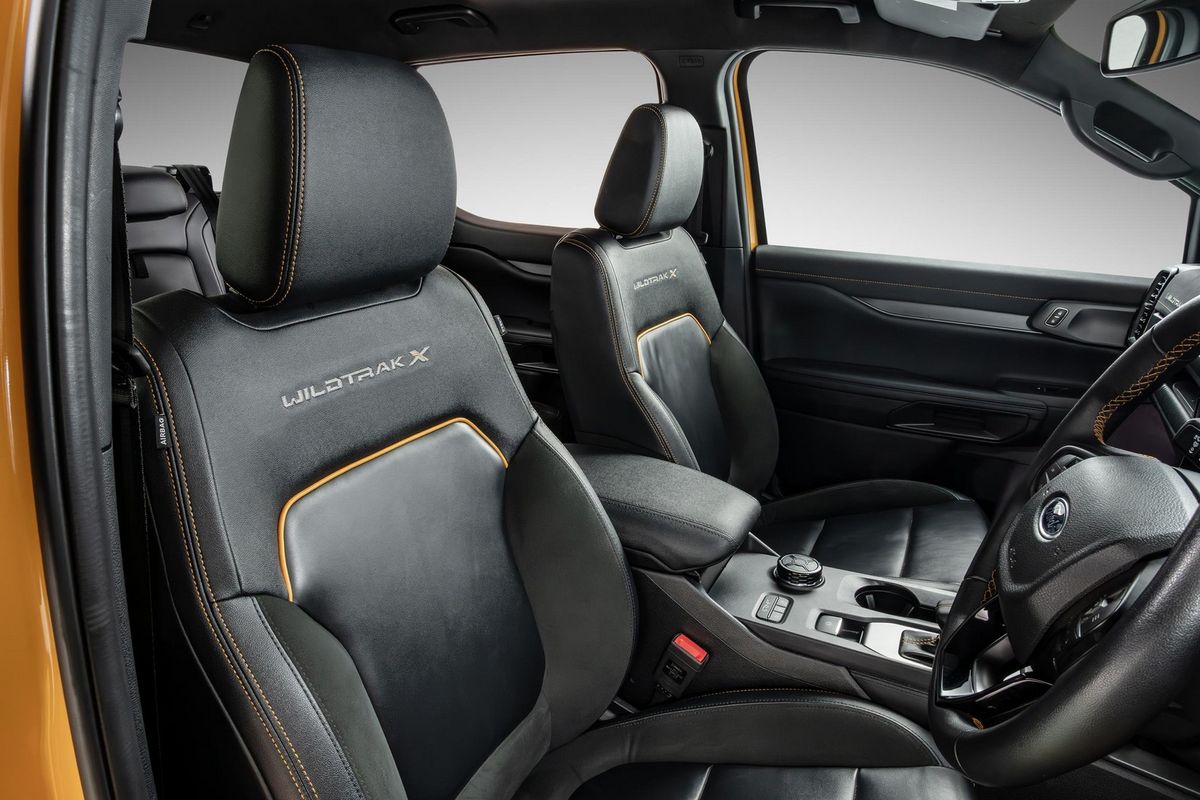
Inside, the Wildtrak X is every bit as luxurious, comfortable and tech-laden as its Wildtrak sibling, but it also sports tasteful X-specific details. The leather-trimmed seats (with Miko suede inserts) are embroidered with Wildtrak X logos; more (Terra) suede features on the glovebox, instrument cluster hood and door trim, while the derivative’s Cyber Orange exterior detailing is echoed in the cabin in the form of contrast stitching on the seats, steering wheel, transmission lever, doors and upper glovebox.
A smattering of orange highlights and Wildtrak X logos set this derivative’s cabin apart from other high-end Ranger interiors.
As in other upper-end variants of the new-generation Ranger and Everest, the Wildtrak X’s high-tech cabin is dominated by the portrait-oriented 12-inch touchscreen, through which users can operate Ford’s SYNC4 infotainment system. Of course, wireless Apple CarPlay and Android Auto are supported.
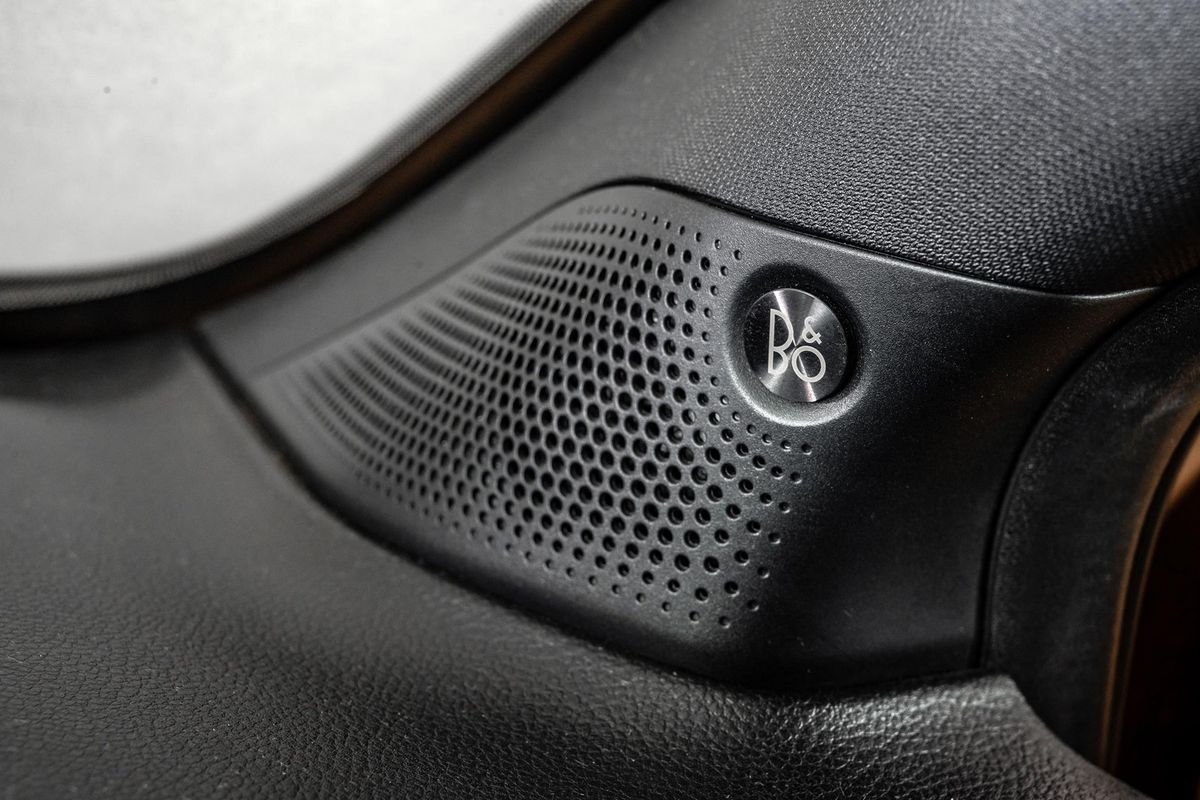
Also fitted is a sonorous 10-speaker B&O premium audio system and multiple connectivity- and device charging ports, fore and aft. What’s more, rear passengers can access a built-in 400W/240V inverter.
The Wildtrak X may be off-road-oriented, but it comes liberally equipped. Features include a wireless charging pad.
The cabin is an area where the Ranger is significantly ahead of its rivals from Isuzu (D-Max) and Toyota (Hilux), largely because it’s a newer bakkie (with a more contemporary design). Toyota’s new wide-body Hilux GR-Sport III remains untested, but seeing as it’s based on the current-gen Hilux, its drawbacks (compared with the Ranger) remain. This extends to rear passenger space and general comfort levels.
Performance and Efficiency
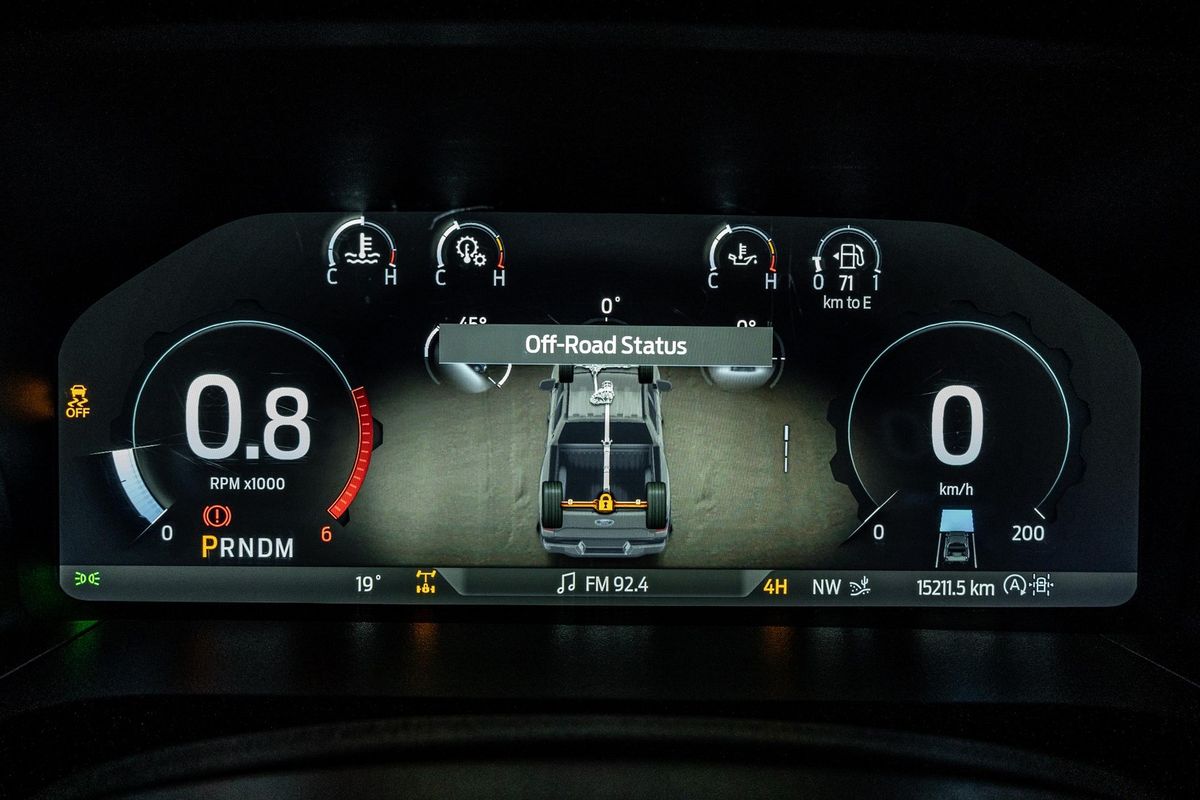
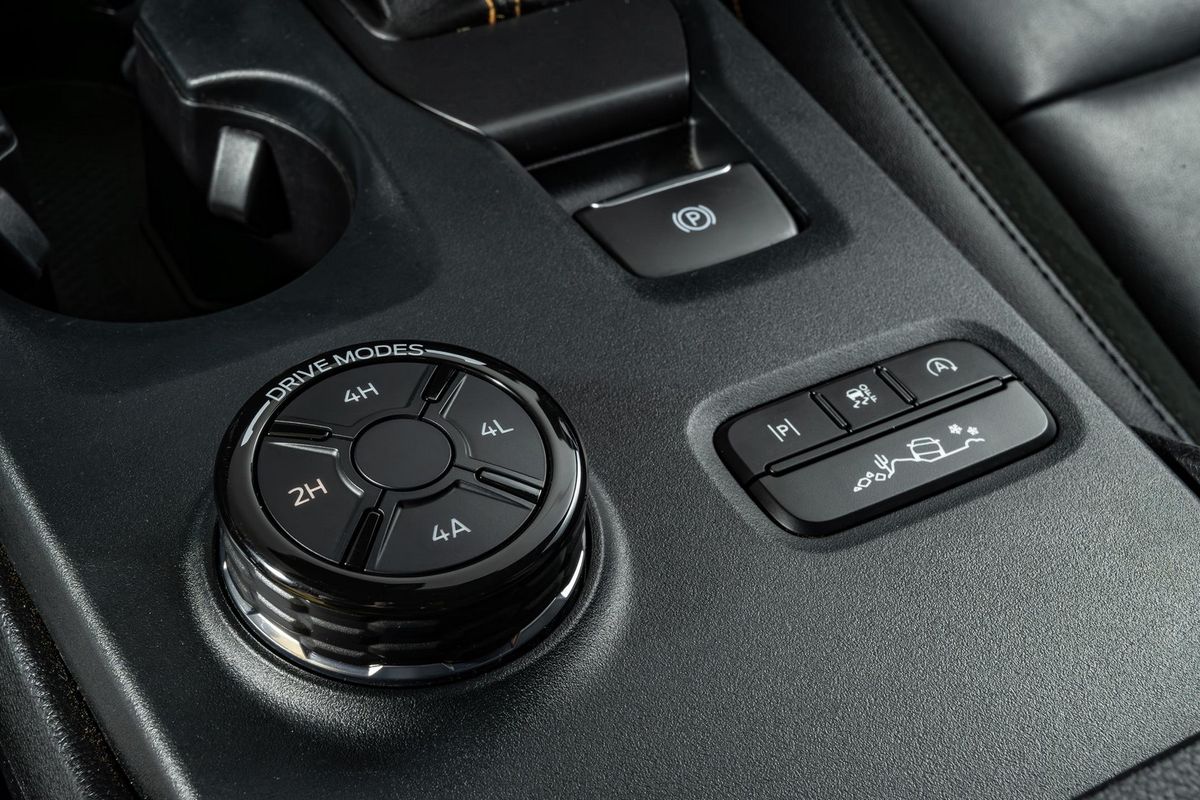
Under the Wildtrak X’s bonnet is the marque’s acclaimed 2.0-litre 4-cylinder bi-turbodiesel engine that develops 154 kW and 500 Nm of torque (from 1 750 to 2 000 rpm). It is mated with Ford’s 10-speed automatic transmission and an on-demand 4-wheel-drive system with 4 drive modes. In 4A (automatic) mode, the system continuously varies power between the front and rear axles for optimum traction. The driver can also select 2H for on-road driving, as well as 4H and 4L (low-range) on challenging terrain.
Although the Wildtrak X’s transmission sometimes shifted erratically, its all-wheel drivetrain impressed nonetheless.
If you’ve driven a modern Ranger equipped with this drivetrain before, there won’t be any surprises. The engine delivers its shove smoothly and, while peak torque is available across a relatively narrow band, it doesn’t ramp up – or taper off – aggressively before or after the maximum figure is attained.
Out on the open road, when cruising in 10th gear, the Ford delivers refined – and relatively fuel-efficient performance… it’s much more frugal than the Raptor, with its twin-turbo petrol V6! In that sense, the Wildtrak X has an advantage over its more illustrious sibling… FMCSA claims an average consumption of 7.5 L/100 km for the Wildtrak X (and 11.5 L/100 km for the Raptor). In reality, you’re more likely to achieve figures of closer to 9.2 L/100 km, but that is still a lot better than the best-case scenario in a Raptor!
The Wildtrak X’s fuel consumption isn’t nearly as low as Ford claims, but it’s much more frugal than the Raptor.
If there is a fly in the ointment, it’s how the Ranger’s 10-speed automatic transmission behaves. We’ve tested several Ford models equipped with this ‘box and its relatively inconsistent shift pattern continues to confound us. In some variants of the Ranger and Everest it seems to work better than others. In the Wildtrak X, we were quite often frustrated by its “gear hunting” and particularly clunky downshifts.
Other areas in which the Wildtrak X outguns the Raptor are load-carrying capacity and towing ability. The Wildtrak X maintains the towing- and load capacities of most other double-cab 4×4 Ranger derivatives; its tow rating is 3 500 kg (braked) and its payload is 966 kg. The Raptor’s tow rating, by comparison, is limited to 2 500 kg, while it cannot haul cargo above 667 kg.
Off-road tyres are great off the beaten track, but noisy on-road, right? Yes, but the compromise is quite reasonable.
Ride and Handling
So far so good then, but how have the suspension changes and tyre choice for the Wildtrak X improved the bakkie’s off-road ability, even if at the cost of some on-road comfort? Well, as it turns out, the off-roading benefits of the modifications easily outweigh the compromises in terms of everyday usability.
There is more tyre noise (but not to the point that it becomes irritating). What’s more, the Wildtrak X isn’t quite as grippy and doesn’t ride as pliantly on the tarmac as a normal Wildtrak, but bear in mind the latter is notably better in that respect than its rivals anyway, so there is some margin for the “X” to play with!
The Wildtrak X is very capable off-road; engage the rear diff-lock when conditions get particularly tricky.
But when you head off the beaten track, the Wildtrak X’s tyres and suspension combine to deliver great grip on loose surfaces, and the “feel” that you sacrifice on asphalt is replaced with better control off it.
To reiterate, the Wildtrak X has a higher ground clearance than the standard bakkie, which has a positive effect on its approach- (improved by 2 degrees to 32 degrees), breakover- (1 degree better to 24 degrees) and departure (up by 1.4 degrees to 27 degrees) angles. Granted, those are marginal gains, but all the minor improvements add up to produce a very convincing showing off the beaten track.
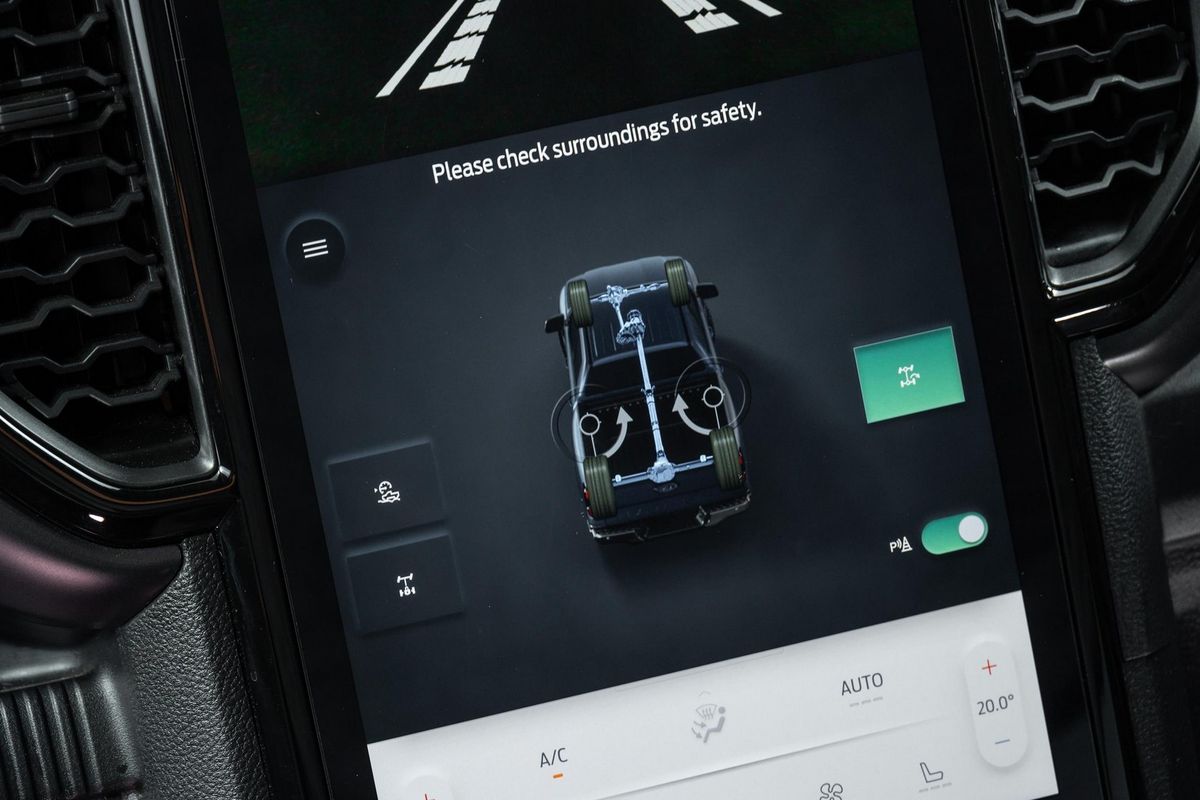
The Wildtrak X is equipped with a Trail Turn Assist system, which allows the Ford to make tighter turns off-road by applying braking to the inside rear wheel and “rotating the bakkie” around that wheel.
The Trail Turn Assist can be activated via the Wildtrak X’s touchscreen; it makes the bakkie much more manoeuvrable off-road.
The Blue Oval claims that the system tightens the turning circle by 25% when it is active – now that’s impressive! Note, however, that Trail Turn Assist can only be used on loose surfaces at speeds of under 19 kph; you can engage it when the vehicle is either 4H or 4L and the rear differential lock is not in use.
Furthermore, a Trail Control system (also featured on the Raptor) can help a driver maintain a constant speed while driving off-road. If a driver selects a set speed (below 32 kph), the system will automatically manage the vehicle’s acceleration and braking, allowing the driver to focus on their steering inputs.
Overall, and provided you are buying the Wildtrak X with off-roading in mind, we think it strikes a good balance between on-road/off-road balance.
The locally-built Ranger Wildtrak X is no sticker-pack special, it’s ideal for 4x4ing fundis who don’t want a stripped-out bakkie.
Ford Ranger Wildtrak X price and After-sales support
The Ranger 2.0 Bi-Turbo Double Cab Wildtrak X 4WD retails for R1 039 500 (March 2024) before options. It comes with 4-year/120 000 km general- and 5-year/unlimited km corrosion warranties and 4 years’ roadside assistance (unlimited km).
Service intervals are every 15 000 km or 12 months, whichever comes first.
Note that a service or maintenance plan is not included as standard; buyers can purchase service- or maintenance plans valid for up to 8 years or 135 000 km at extra cost. The warranty can be extended to up to 7 years/200 000 km, while the roadside assistance can be extended for an additional 1 or 2 years.
Verdict
Priced at slightly under R200 000 less than the range-topping Ranger Raptor and just shy of R100 000 more than a standard 2.0 Bi-Turbo Wildtrak 4×4, the 2.0 BiTurbo double cab Wildtrak X is positioned to exploit a potentially lucrative opportunity in the Leisure Double Cab segment…
Yes, there is a new widebody Hilux GR Sport III that is more affordable (and as yet untested), but at its core, the Toyota is never going to be as balanced as the Ranger, simply due to its advanced age.
Meanwhile, the Isuzu D-Max AT35 may be able to drive up volcanoes, but seeing as you’re unlikely to ever have to do that, its price and (heavily) compromised on-road comfort make it notably less appealing than this “black” oval-badged bakkie. It’s certainly worth a closer look if you travel off-road often!
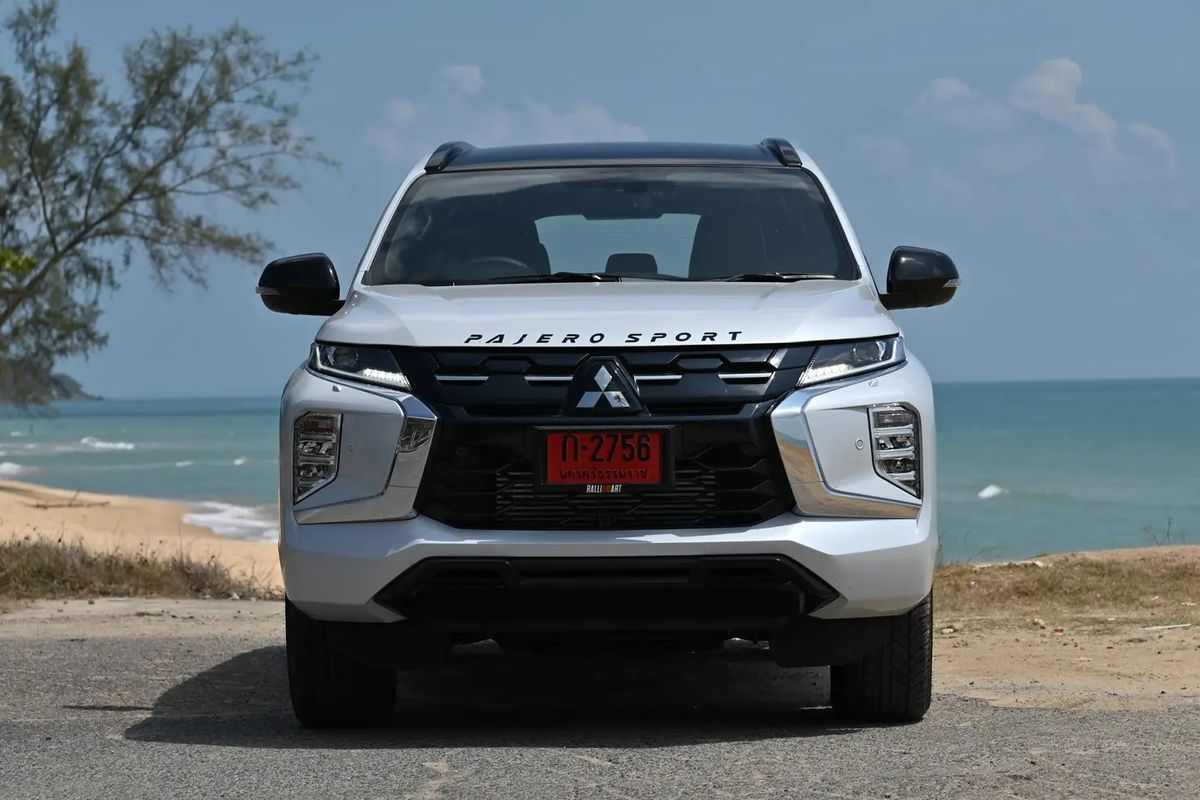
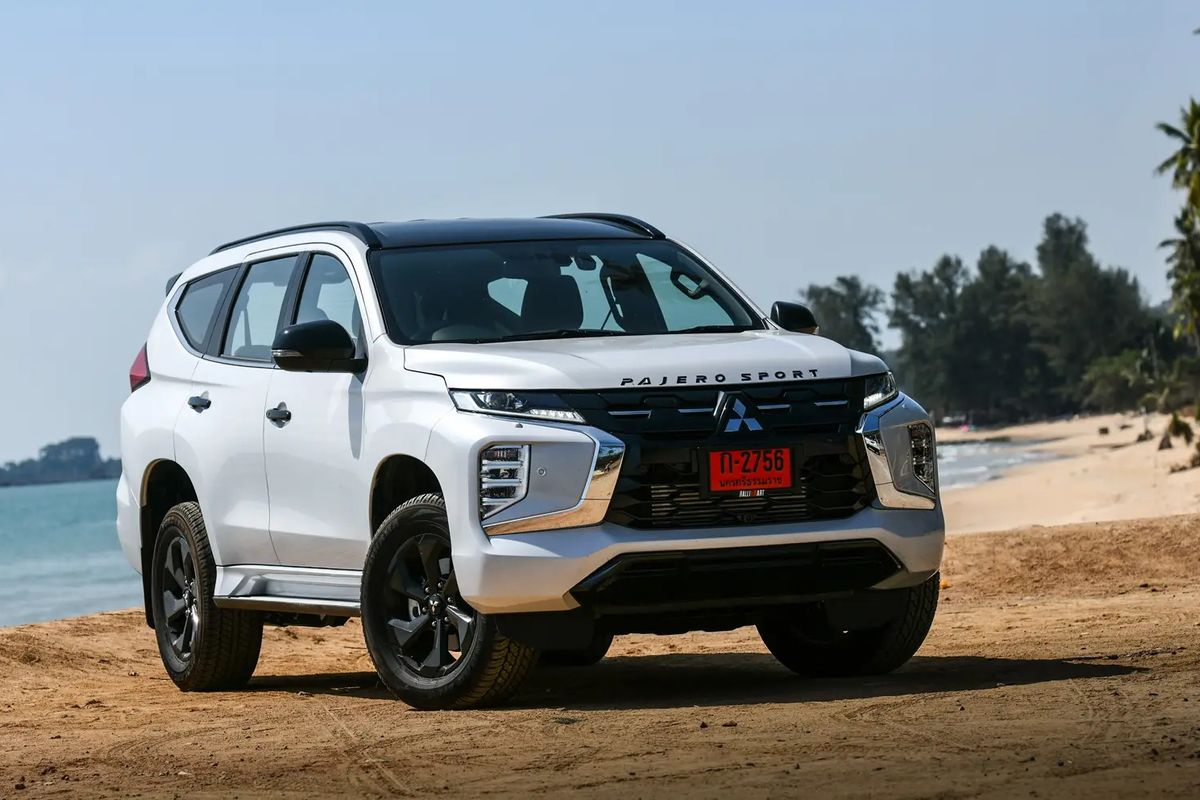
The Japanese brand has revealed a facelift to its long-serving bakkie-based SUV. Here’s all you need to know about the 2024 Mitsubishi Pajero Sport facelift.
Mitsubishi Thailand showed off its latest offering, which brings updates to the long-serving 7-seater bakkie-based SUV. The 2024 Mitsubishi Pajero Sport is due to be replaced by an all-new model at some point in 2025, but these revisions keep it relevant in a competitive market that’s populated by the Ford Everest, Toyota Fortuner and Isuzu MU-X.
While local market availability is yet to be confirmed, the newcomer will be available in both 2WD and 4WD versions. The biggest change is a more powerful 2.4-litre 4-cylinder turbocharged and intercooled diesel engine. It makes 135 kW and 430 Nm, which is more than the current-shape’s 133 kW and 430 Nm. It may not sound like a huge change, but the new engine is lighter on fuel and produces less emissions.
Of course, what’s a Mitsubishi without offroad ability? The new 2024 Mitsubishi Pajero Sport features 4 offroad modes; gravel, mud/snow, sand and rock. There’s a new transmission with a full-time 4H system that has shift-on-the-fly tech, allowing users to shift from 2H to 4H while driving at speed.
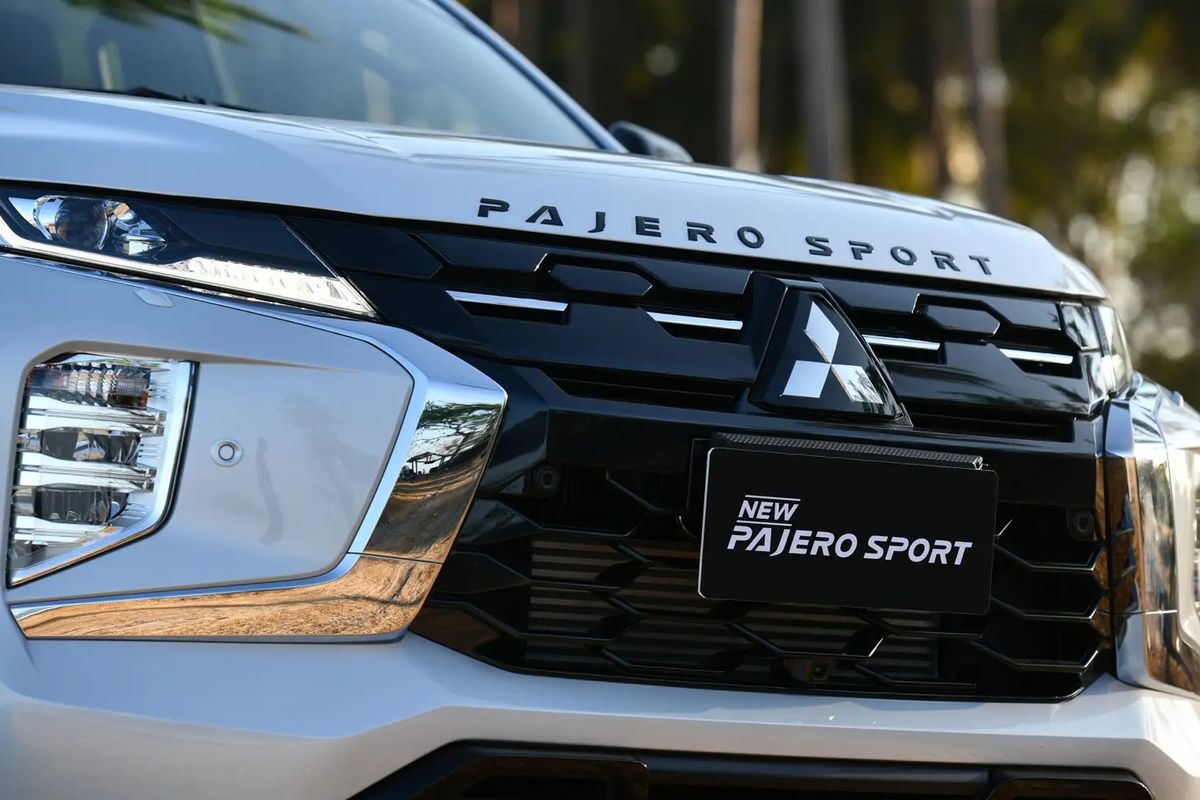
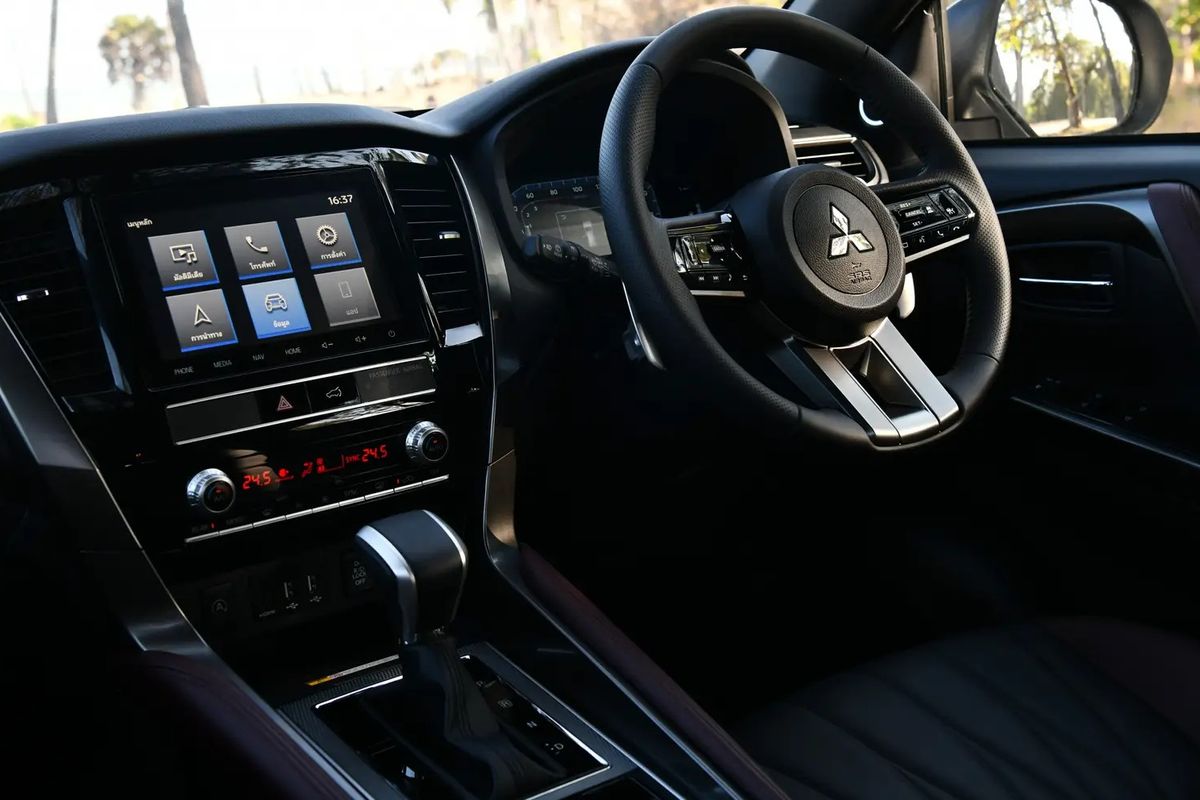
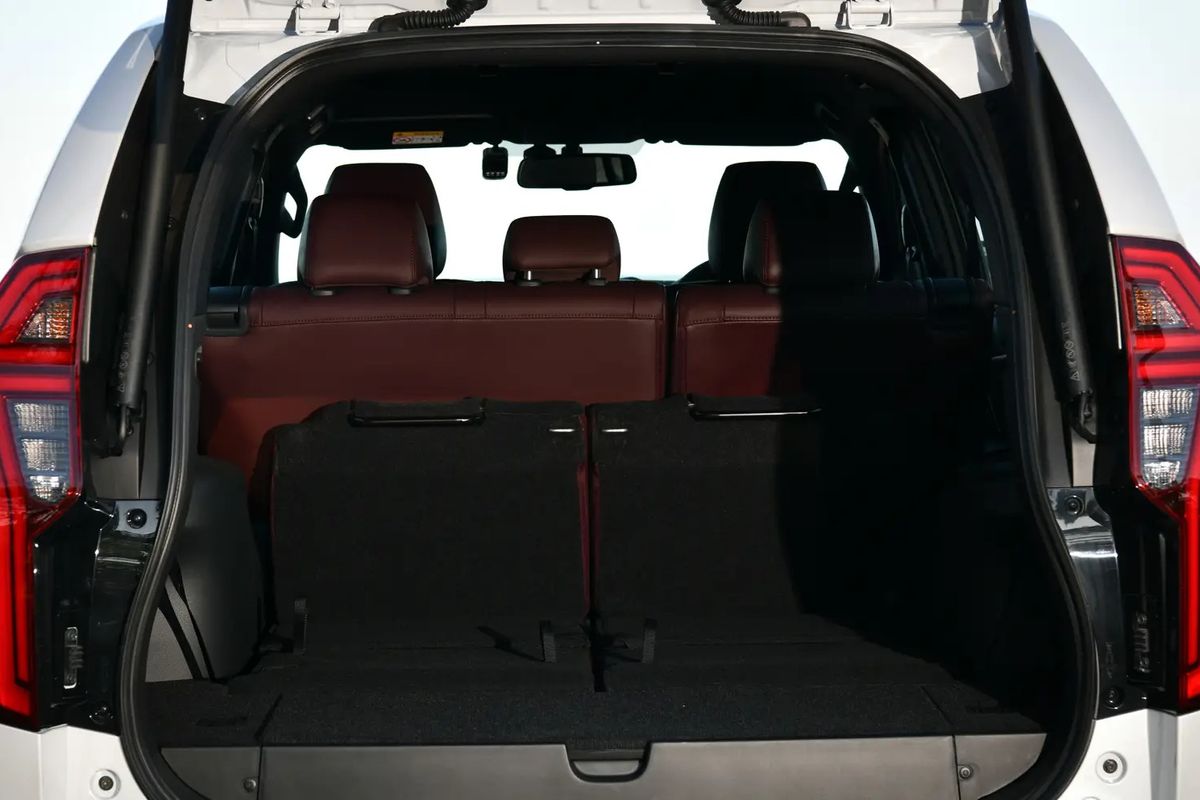
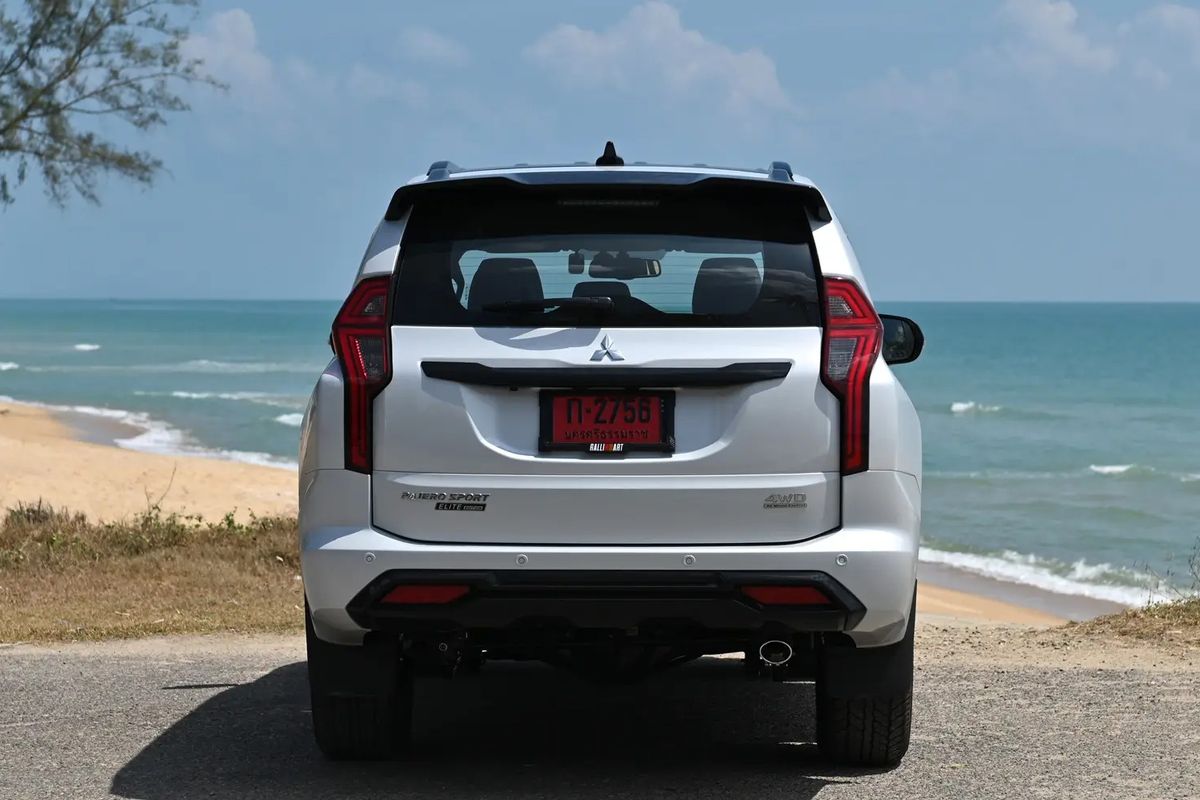
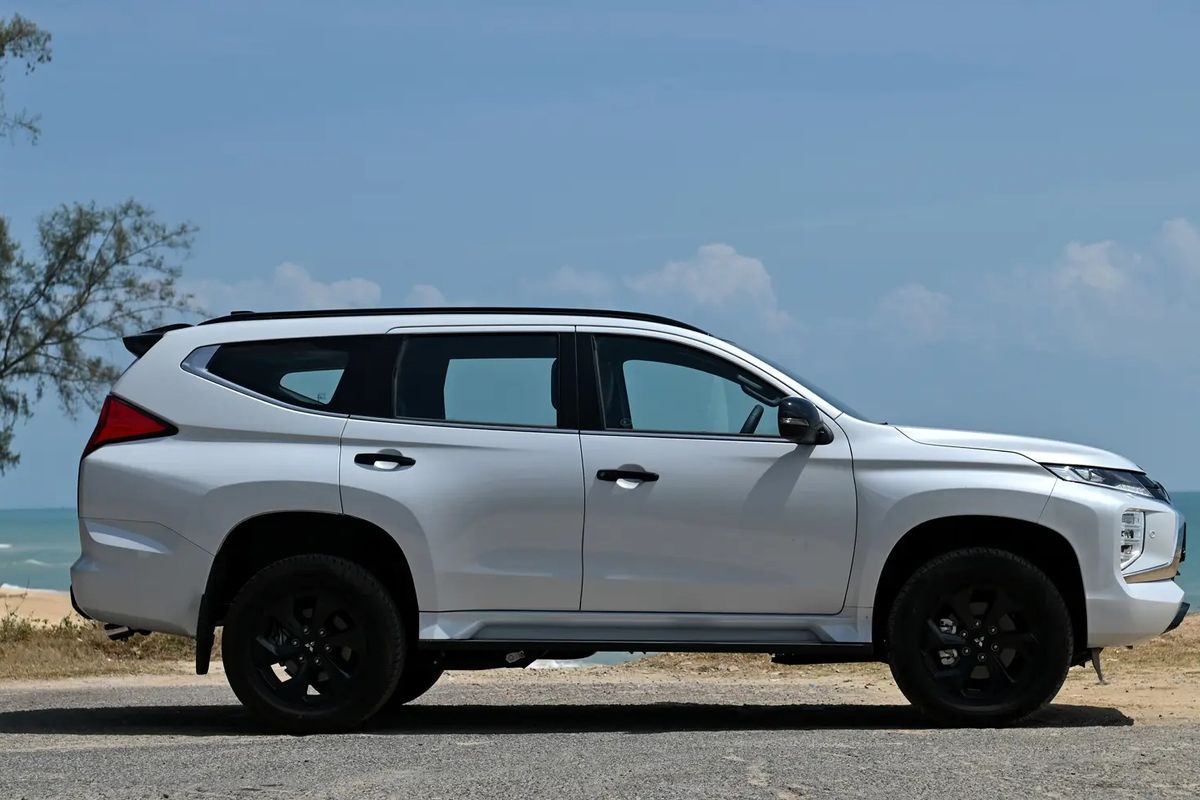
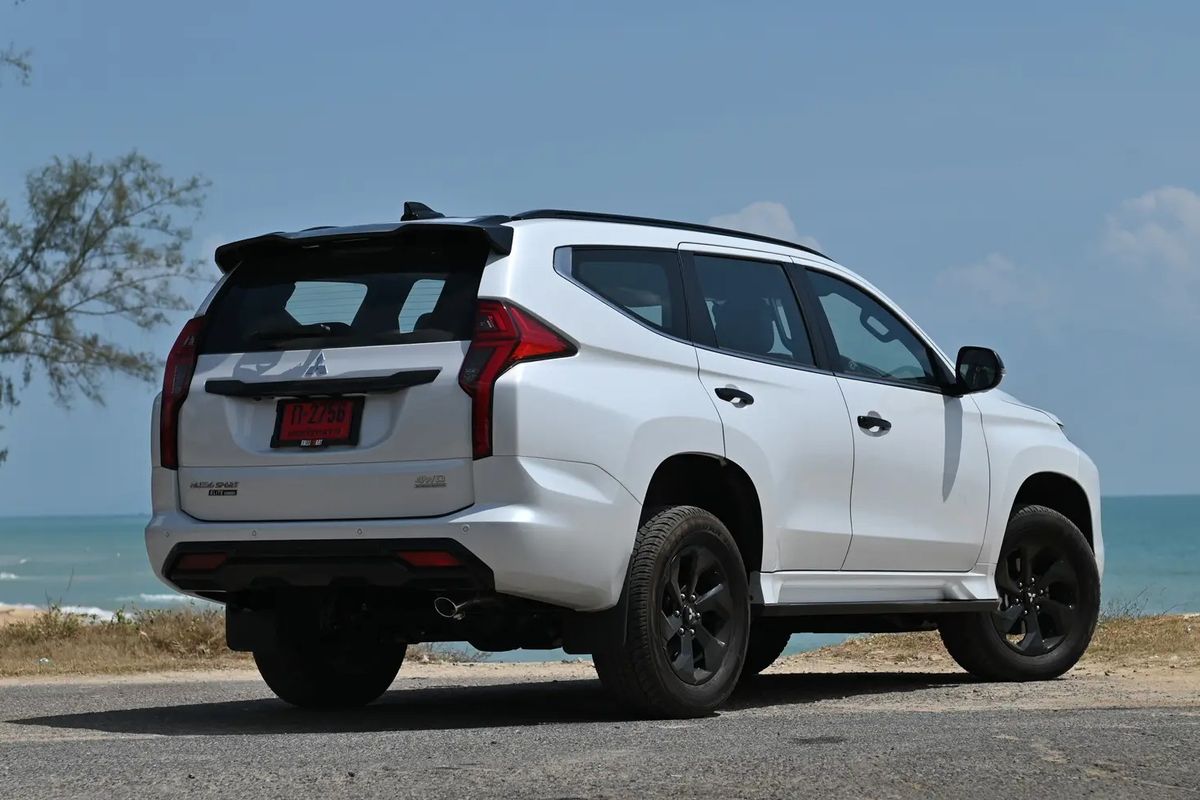
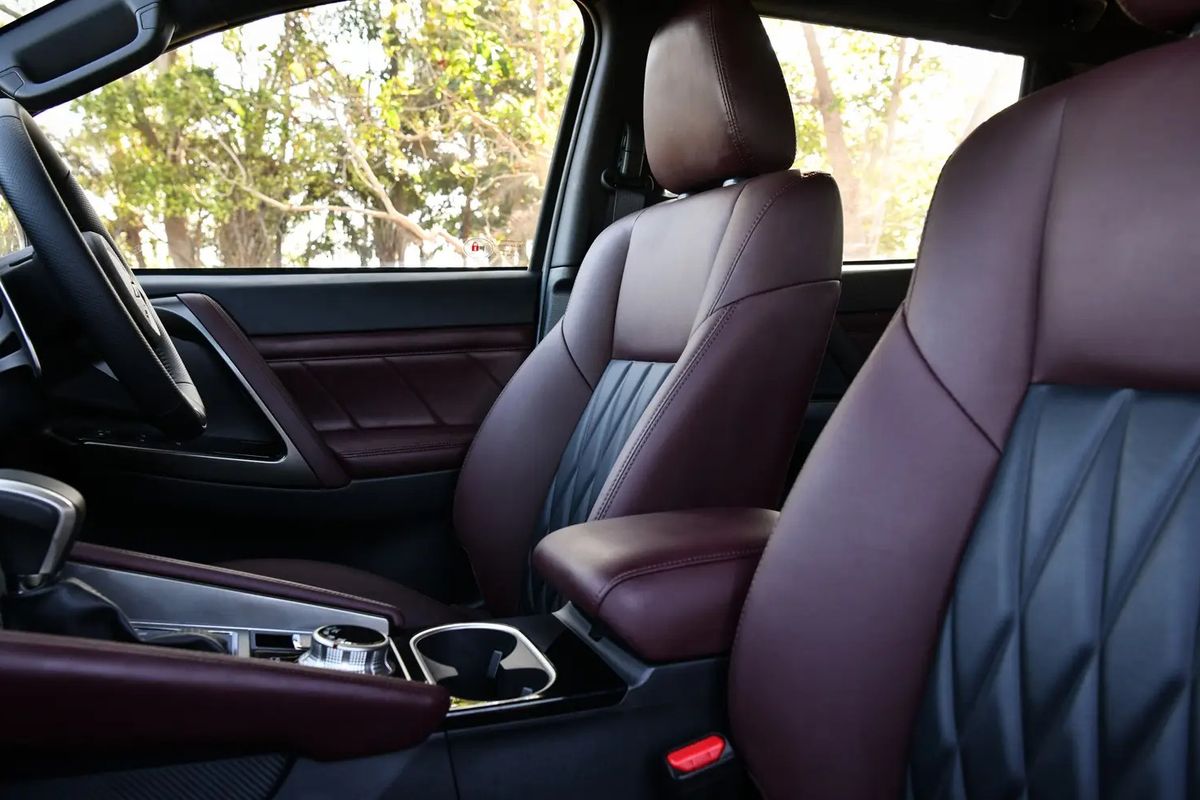
You can spot the new model with a new-look front grille, redesigned rear bumpers, new 18-inch black alloy wheels, black side mirrors and door handles. Climb inside, and customers are greeted by a two-tone black and burgundy trim colour. Both front seats feature 8-way adjustability.
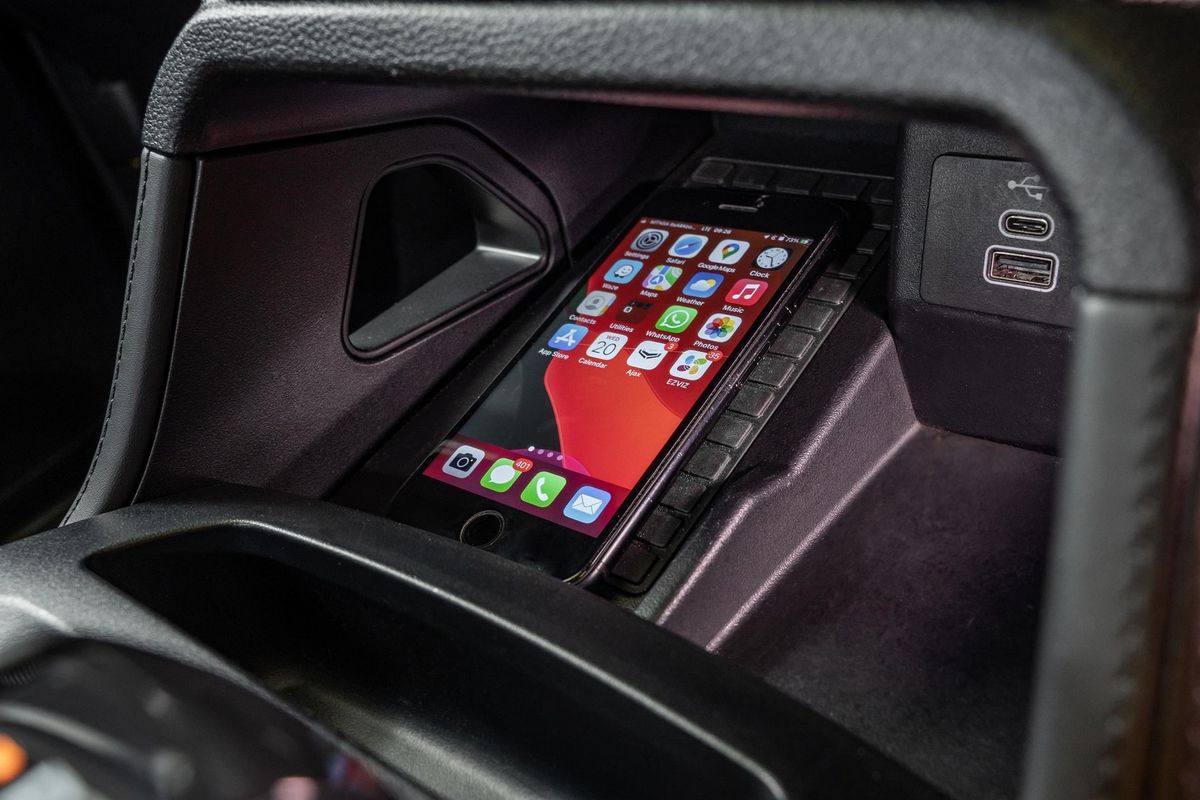
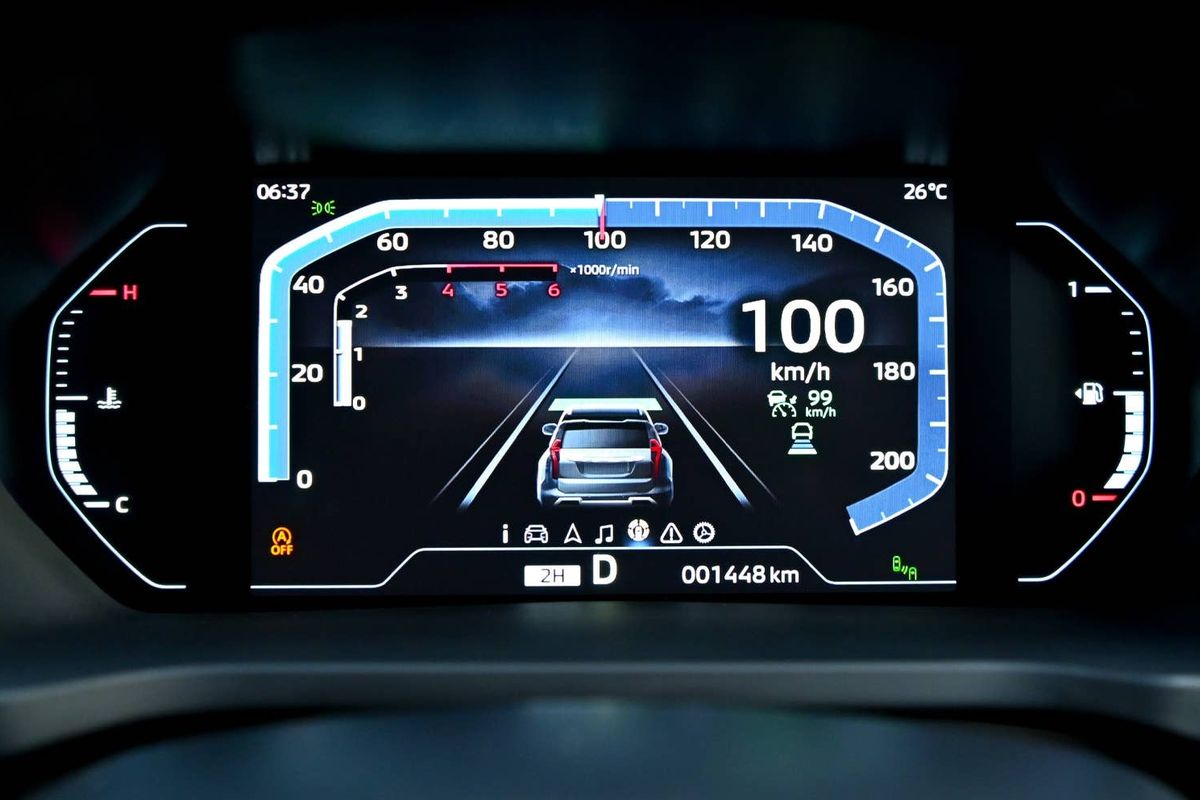
The analogue dials have been replaced by an all-new 8-inch digital driver display and customers are treated to a new premium Mitsubishi Power Sound system with 8 speakers, plus there’s a 12.1-inch roof-mounted screen. Apple CarPlay and Android Auto are now included as is an electronic parking brake and hands-free powered tailgate.
The new 2024 Mitsubishi Pajero Sport gains a number of semi-autonomous safety technologies, like adaptive cruise control, forward collision mitigation, multi-around monitor, rear-cross traffic alert, blind-spot monitoring with lane change assist, tyre pressure sensors as well as automatic headlight levelling. The vehicle also features Mitsubishi Remote Control that links to your phone and allows for tailgate operation, vehicle finder and set reminders.
We expect the updated Pajero Sport to touch down in South Africa during the course of 2024. We’ll update this article if we hear more information.