The new Honda Elevate has arrived in South Africa! Here’s how much you’ll pay for what will effectively replace the WR-V…
The new Honda Elevate was recently confirmed for South Africa and has now officially hit the market. See pricing details below…
The Elevate effectively replaces the WR-V in Honda Southern Africa’s range. For the record, just a single unit of the WR-V (which launched here in November 2020) was registered in SA in January 2024, suggesting local stock has already virtually run dry.
So, how much will this new crossover cost you in Mzansi? Well, the local Honda Elevate range comprises just 2 derivatives at launch. The line-up kicks off with the Elevate 1.5 Comfort, priced at R369 900 – that’s R27 400 above the entry-level Toyota Urban Cruiser (R342 500) – and fitted with a 6-speed manual gearbox as standard.
For those not keen on rowing their own gears, the Japanese firm’s local division also offers the Elevate 1.5 Elegance CVT, which is priced from R429 900. This variant, of course, employs a continuously variable transmission (CVT) rather than a manual cog-swapper.
For further pricing context, note the similarly sized Hyundai Creta currently runs from R469 500 to R522 500, while the Kia Seltos costs from R465 995 to R561 995 (though the latter does also offer turbodiesel and turbopetrol engine options).
As a reminder, the outgoing WR-V range likewise comprises a pair of derivatives: the WR-V 1.2 Comfort (R320 800) and the WR-V 1.2 Elegance (R363 800), each standard with a 5-speed manual gearbox. While the new Elevate is clearly more expensive than the WR-V, it’s also quite a bit larger.
Measuring 4 312 mm from nose to tail (and with a wheelbase of 2 650 mm), the newcomer is a considerable 313 mm longer than the WR-V. In addition, the Elevate offers higher peak outputs than the WR-V’s 66 kW/110 Nm 1.2-litre motor, with its naturally aspirated 1.5-litre, 4-cylinder DOHC i-VTEC generating 89 kW at 6 600 r/min and 145 Nm at 4 300 rpm.
Revealed in June 2023, the Elevate is based on the Ballade platform and built alongside that sedan (which is also known as the City) in India. Interestingly, it’s the first Indian-built Honda product to be exported to Japan, where it – rather confusingly, we might add – wears the WR-V badge.
The Elevate’s interior features an 8-inch infotainment system with Apple CarPlay and Android Auto capability, while the range-topping Elegance derivative gains a wireless charging pad, a 7-inch digital instrument cluster and a sunroof. A multi-view camera is also fitted. The Elevate’s luggage compartment can swallow a claimed 458 litres, while ground clearance comes in at 199 mm. The Elevate is further equipped with 6 airbags as standard.
The Elevate is a welcome addition to Honda Southern Africa’s passenger-vehicle stable considering the brand’s top seller locally in 2023 was the Amaze, which managed just 1 034 units (or only 87 units a month). The BR-V was next on 687 units, followed by the outgoing WR-V (675 units), Fit (434 units), HR-V (183 units), CR-V (161 units), Ballade (120 units) and Civic (90 units).
How much does the Honda Elevate cost in South Africa?
Honda Elevate 1.5 Comfort – R369 900
Honda Elevate 1.5 Elegance CVT – R429 900
The new Elevate ships with a 5-year/200 000 km warranty and a 4-year/60 000 km service plan (with intervals of 15 000 km).
We finally have local pricing for the long-awaited GWM Tank 300 range, which will comprise 3 derivatives in South Africa. Here’s how much you’ll pay…
The GWM Tank 300 was originally scheduled to launch in South Africa in 2023 but ended up being delayed. With a market launch now surely just around the corner, Cars.co.za has finally confirmed local pricing for this fresh-faced ladder-frame SUV.
As we reported in January 2024, the line-up will comprise a trio of derivatives in Mzansi. The range will kick off with the Tank 300 2.0T 8AT 4×4 Super Luxury, which will be priced at R725 950. That’s up slightly on the indicative starting price Haval Motors SA – which distributes the Haval, GWM and Ora brands locally – released back in May 2023.
Ground clearance is listed as 200 mm.
As a reminder, this variant employs the Chinese firm’s turbocharged 2.0-litre, 4-cylinder petrol engine, which sends 162 kW and 380 Nm to all 4 corners via an 8-speed automatic transmission. Combined fuel consumption is listed as 9.5 L/100 km.
Next up is the Tank 300 2.0T 8AT 4×4 Ultra Luxury, which will come in at R775 950, using the same 167 kW/387 Nm powertrain but adding more standard equipment. Though this variant is positioned in the middle of the 3-strong range, it technically bears the loftiest trim level.
The spare wheel is mounted on the tailgate.
Extra items for the Ultra Luxury derivative will include an electro-chromatic rear-view mirror, a heated steering wheel, 64-colour ambient cabin lighting (as opposed to 7 hues in the Super Luxury derivatives), Nappa leather seats (rather than the standard leather used in other variants), heated/ventilated front seats, a driver’s seat massage function and a front differential lock, in addition to the otherwise standard rear item).
Finally, there’s the Tank 300 2.0T HEV 9HAT 4×4 Super Luxury, which employs a hybrid powertrain based on a similarly sized 4-pot but churning out total system outputs of 255 kW and 648 Nm. Interestingly, the hybrid model switches to a 9-speed automatic transmission, while its claimed fuel economy is listed as 8.4 L/100 km.
Note the pair of 12.3-inch screens.
Regardless of the selected powertrain, braked towing capacity comes in at 2 500 kg, while ground clearance is listed as 200 mm. The Super Luxury model rides on 17-inch alloy wheels wrapped in 265/60 R17 tyres, while the Ultra Luxury and HEV upgrade to 18 inchers shod in 265/60 R18 rubber. All come with a full-size spare (alloy) wheel affixed to the tailgate.
The Tank 300’s luggage compartment can swallow a claimed 400 litres. Haval Motors SA says this figure is expandable to 1 635 litres with the standard 60:40-split rear bench dropped down.
Haval Motors SA says the GWM Tank 300 boasts “serious off-road credentials”.
Features standard for all 3 derivatives include keyless entry, a sunroof, dual-zone air-conditioning, a towbar, privacy glass, leather trim for the steering wheel, gear-shift paddles, a 12.3-inch infotainment screen (with Apple CarPlay and Android Auto), a 12.3-inch instrument cluster, a 360-degree camera system, automatic headlights (with an auto high-beam function) and adaptive cruise control.
Meanwhile, safety is covered by 7 airbags, stability control, automatic emergency braking, front collision warning, lane-departure warning, lane-keeping assistant, lane central keeping, hill-assist control, hill-descent control and tyre-pressure monitoring, among others. In Mzansi, the Tank 300 will be available in a choice of 5 exterior paint colours: White, Black, Mars Red, Orange and Grey.
How much does the GWM Tank 300 cost in South Africa?
GWM Tank 300 2.0T 8AT 4×4 Super Luxury – R725 950
GWM Tank 300 2.0T 8AT 4×4 Ultra Luxury – R775 950
GWM Tank 300 2.0T HEV 9HAT 4×4 Super Luxury – R851 950
We expect all derivative to ship with a 7-year/200 000 km warranty (and 7-year/unlimited kilometre roadside assistance), with the hybrid variant’s battery pack further covered by an 8-year/150 000 km warranty. A 5-year/75 000 km service plan (with intervals of 15 000 km) is also included.
Fans of just about every sub-genre of the car enthusiast space came out in full support of the first SentiMETAL Gathering of 2024, which was held in the Western Cape in February. The result was a gloriously eclectic mix of machines.
IMAGES: Corne van Zyl
There aren’t many more ideal settings for a SentiMETAL Gathering than the beautifully kept lawns at Lourensford Estate, with the stunning Helderberg Mountains in the background. The conditions were perfect too this past Sunday – sunny, and with barely a whisper of a breeze. Soon after the event opened to the public at 9 am, the display lawn was completely packed with stunning machinery.
For those who don’t know, a SentiMETAL Gathering is a casual car meet, but on steroids! The aim is to bring car enthusiasts from all camps together, united in their passion for the automobile. And so you can expect anything ranging from a proper vintage car, to a modern-day supercar, via some American muscle, and German and Italian exotica – some completely original, some subtly tweaked.
This past weekend’s event was hosted in partnership with J1 Auto, Abru Motor Studio and SABeemer. Visitors could also ogle a large number of very special Alfa Romeos on display in the recently opened Museo Della Passione.
“To me a big part of the fun of days like this remains the thrill of keeping an eye on the entrance, and seeing what arrives next,” explains organiser Hannes Oosthuizen. “Though we do ask people to register beforehand, there are always surprises, and it certainly was the case again this weekend!”
The oldest car on the day was a 1930 Peugeot 201. It suffered a breakdown on the way to the event, but managed to leave on its own steam. Joining it was a rare 1945 Peugeot 202 pick-up, confused by many visitors with a Citroen 2CV. Completely on the other end of the scale in terms of age was a 407 Coupe.
Classic British sportsters arrived in the glorious shapes of two Jaguar E-Types, the one belonging to Josh Spencer, the man who featured in the pilot episode of the SentiMETAL video series. It is possibly the highest-mileage Jaguar E-Type in the world. You can view that video here.
Another Brit to turn several heads was a rare early-model Lotus Elite.
Germany was very well represented, as always, with a variety of Porsches to delight fans of the air-cooled icon – the best on display was undoubtedly a pristine black 356.
And what would a SentiMETAL Gathering be without a number of iconic Bimmers. Not one, but 2 examples of the uniquely South African BMW 745i were present, with the super-rare manual example being the exact same car used in the original CAR Magazine road test. It is in stunning condition and won Best BMW of the Show, hosted by SABeemer. If you’re a fan of the Three-pointed Star, then arguably the prettiest car on the lawn was an immaculate Mercedes-Benz 280CE (C123).
Have you heard about the locally-built Mercedes-Benz ‘560CE’?Read about it here.
For fans of American horsepower, there were some very quirky and beautiful attractions. Dieter Losskarn’s much-loved Checker A11 New York Taxi took station next to a brace of stunning Cobra replicas.
A beautiful 1932 Chrysler added some serious classic elegance to the event, and there were also numerous examples of the American “fins and chrome” era, including a very, very long ’50s Caddy, a Chrysler Windsor and several Chevys. Oh, and the cute-as-a-button Nash Metropolitan was certainly a hit with the crowd!
Of course, several classic Ford Mustangs made the trip to Somerset West, too, joined by a seriously hardcore-sounding Ford Ranchero pick-up. A black Pontiac Firebird Trans Am was a big hit with the crowd, but the overall star of the show (as voted for by visitors) was Jess Goedhals’ Dodge Viper GTS. The iconic blue American was the star of Episode 11 in our SentiMETAL video series.
The Italian marques were represented by anything from a pretty little Fiat 500F, to a Fiat Uno Turbo (a very rare sight these days), through the cream 1973 Alfa Romeo 2000 GTV to a trio of Ferraris (458 Italia, F430 Spyder, 308 GTS).
What else? How about the rarely seen (these days) Volkswagen Fox – a mint example no less, fitted with a 2.0-litre 16V engine! Several examples of Opel’s Kadett GSi, as well as a Monza CD, were present, too. And from Sweden, there was an achingly pretty P1800ES (2nd prize on the day) and the P1800 Coupe.
For lovers of Japanese cars, an absolutely mint ’80s Honda CR-X was a highlight, as were a brace of Datsun ZXs and a tastefully modified Lexus IS Convertible. A rare Subaru Impreza WRX Prodrive undoubtedly pleased the Scooby fans…
Closer to home, the locally-designed, developed and built GSM Dart and Flamingo were well represented on the day, too (pictured first and second from left, below).
The next SentiMETAL Gathering is scheduled to take place in Johannesburg. Stay tuned for more info!
Few brands can match Range Rover’s sheer desirability. The Range Rover Evoque PHEV incorporates various updates and a new plug-in hybrid powertrain, but is it good enough to steal sales from the German trio? We review the P300e Dynamic HSE
We like: Sophisticated and frugal powertrain, classy interior, best-in-class infotainment
We don’t like: Price, stiff ride quality, some minor ergonomic issues
Executive SUVs must come loaded with luxuries and be proclamations of success that other road users envy; if you opt for one of the German trio (Audi Q5, BMW X3/X4 and Mercedes-Benz GLC/GLC coupe) you’re unlikely to be disappointed. However, if you want something different – a model that combines the most revered SUV nameplate with urbane sophistication, the Range Rover Evoque is well worth a look.
The 2nd-gen Evoque was unveiled in 2018 and has received some model enhancements since its launch. Of course, it’s hard to ignore the German trio (compare the BMW X3, Mercedes-Benz GLC and Audi Q5) in this segment, but none of those brands offer a plug-in hybrid derivative in their executive SUV ranges.
How the Range Rover Evoque PHEV fares in terms of…
Design and Packaging
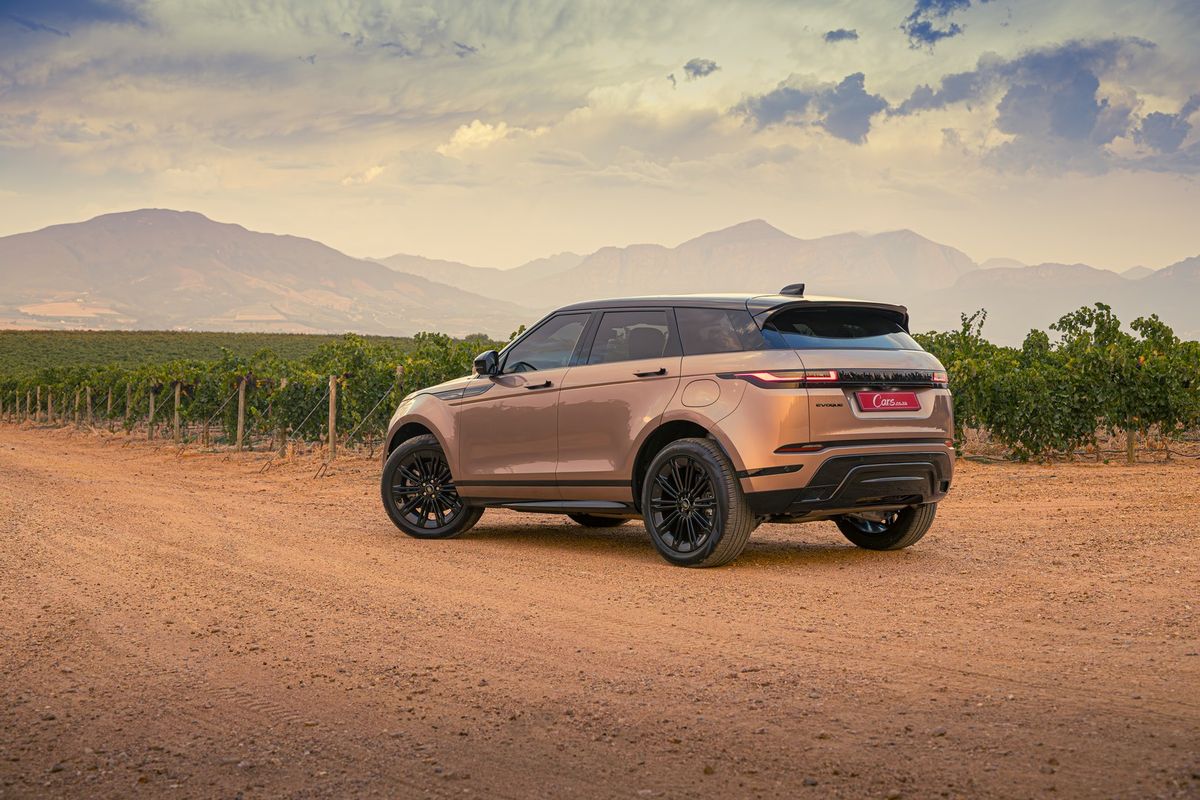
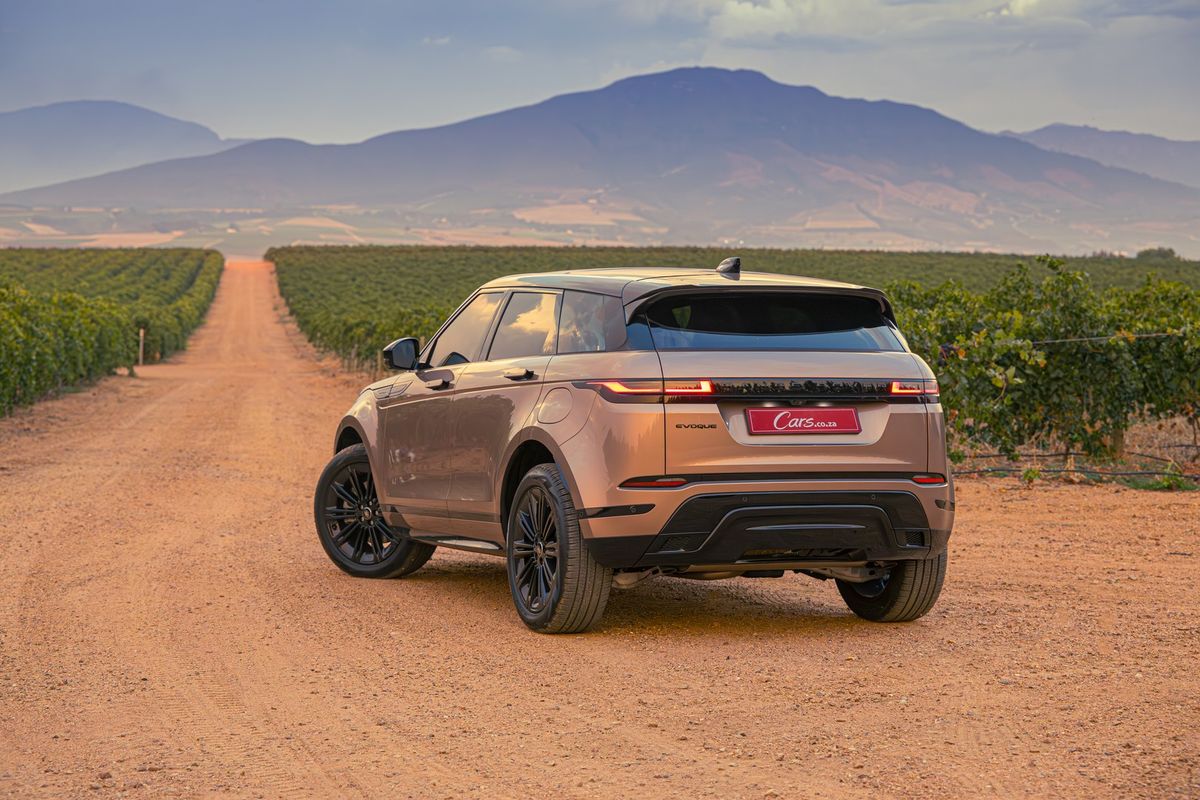
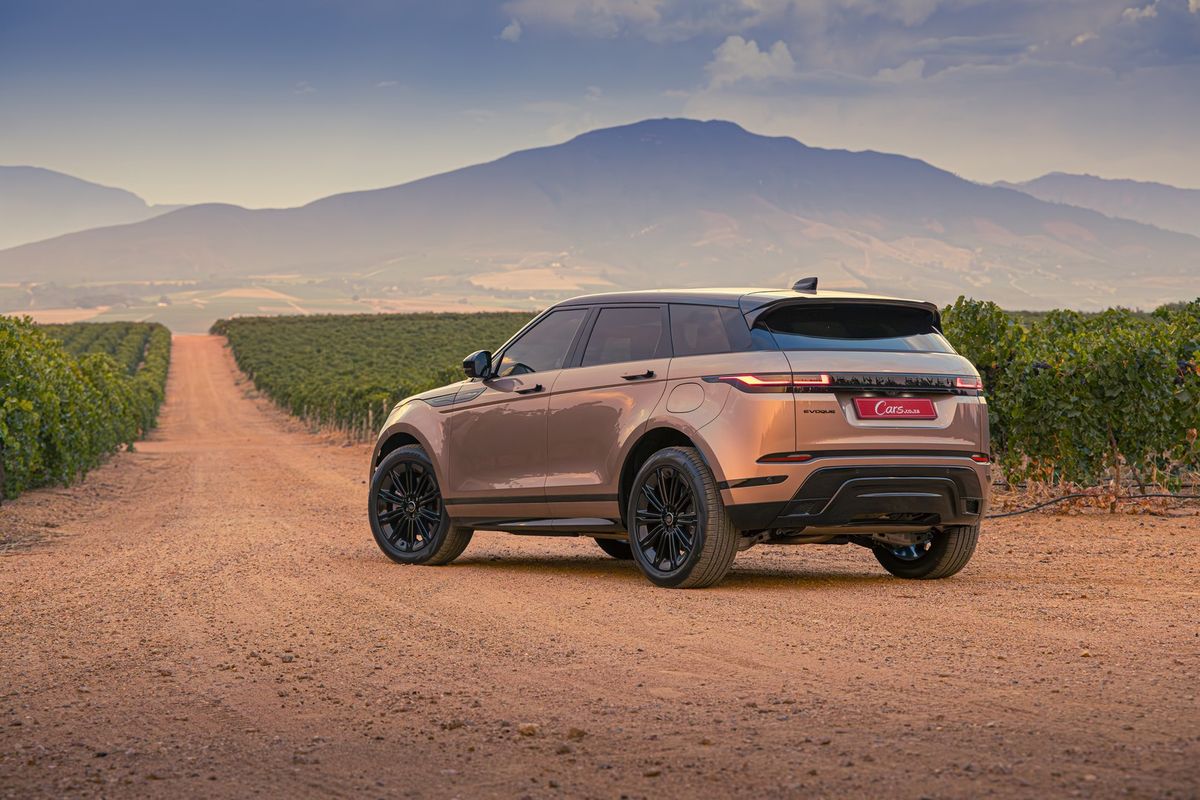
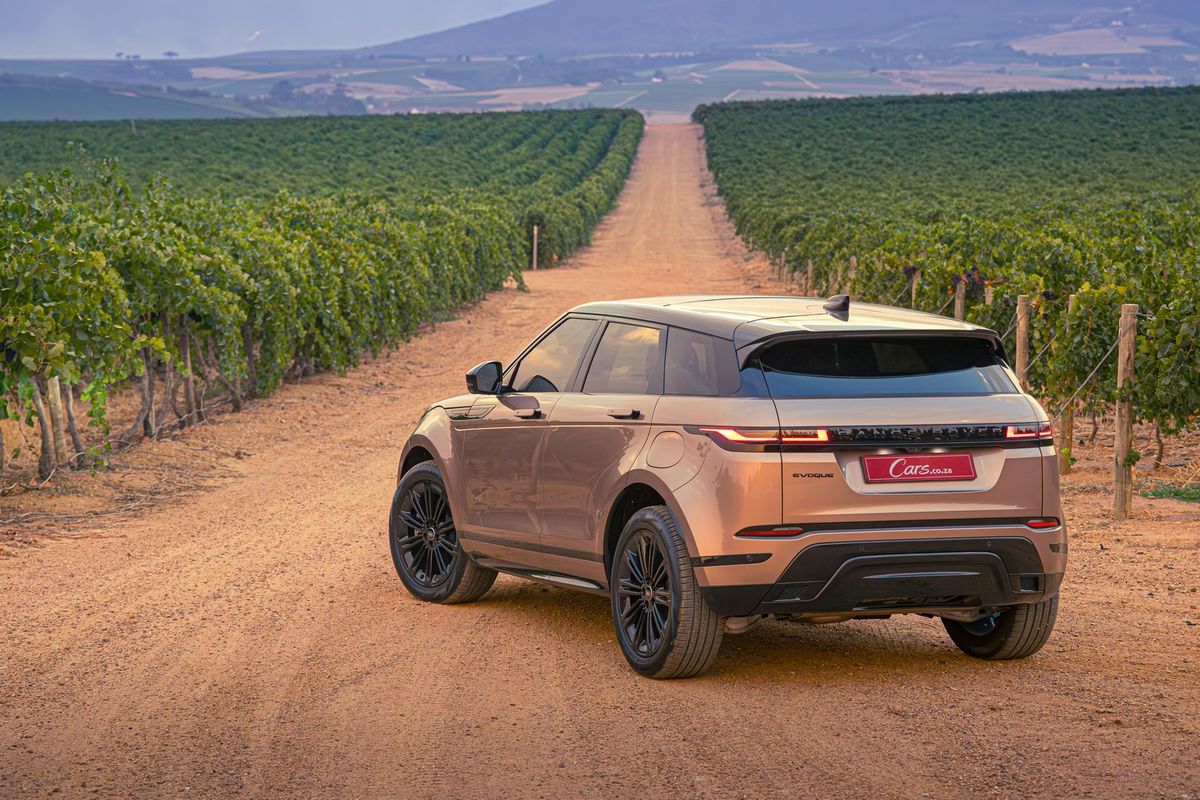
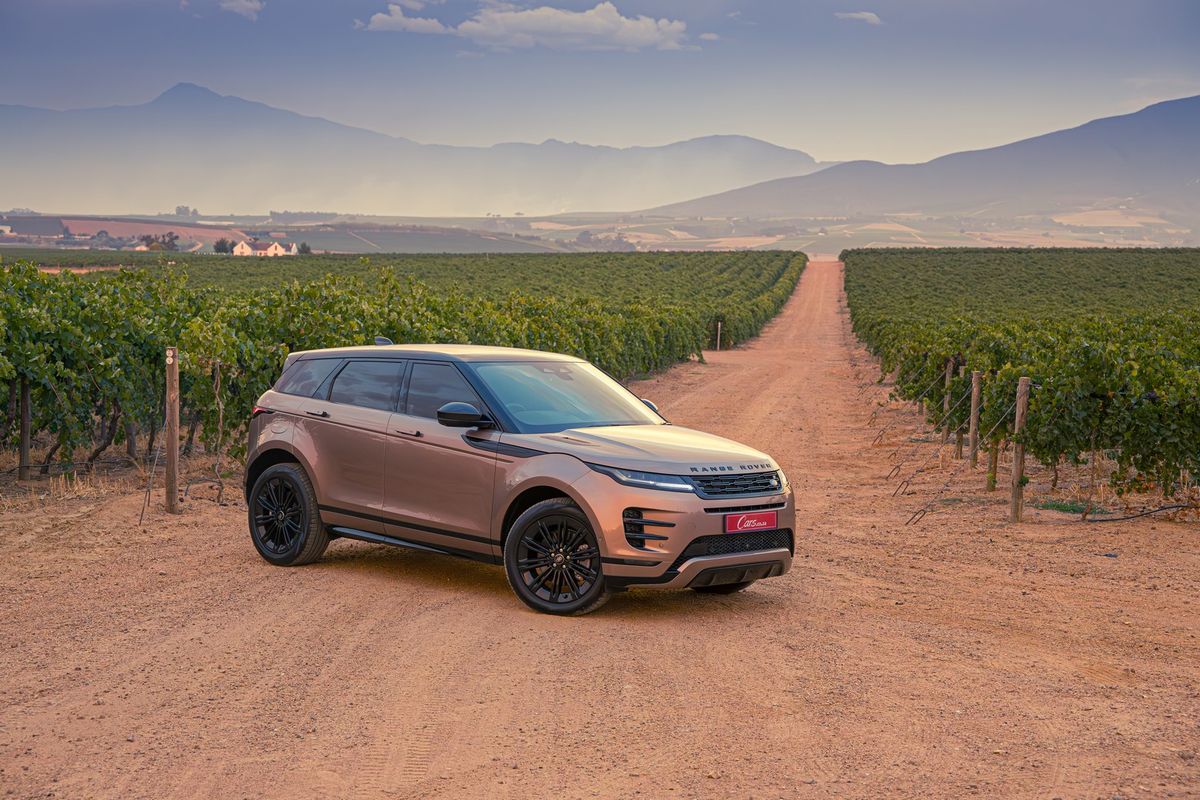
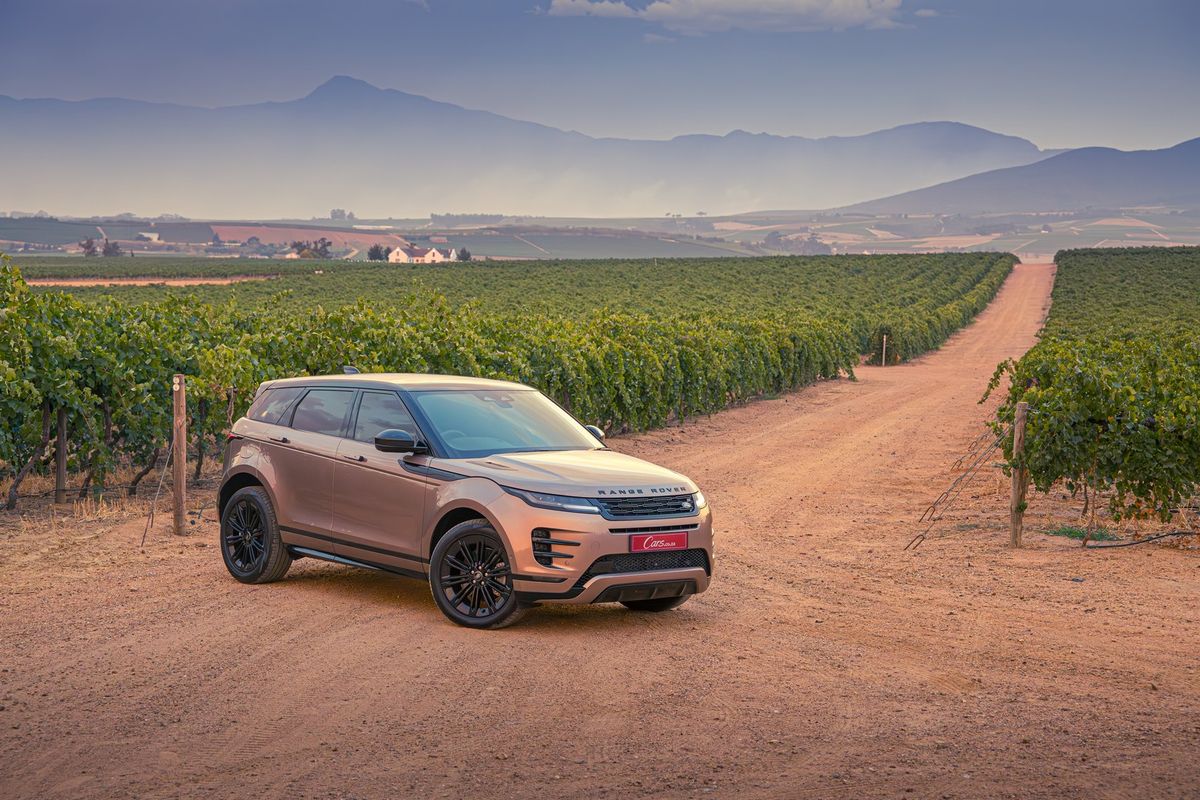
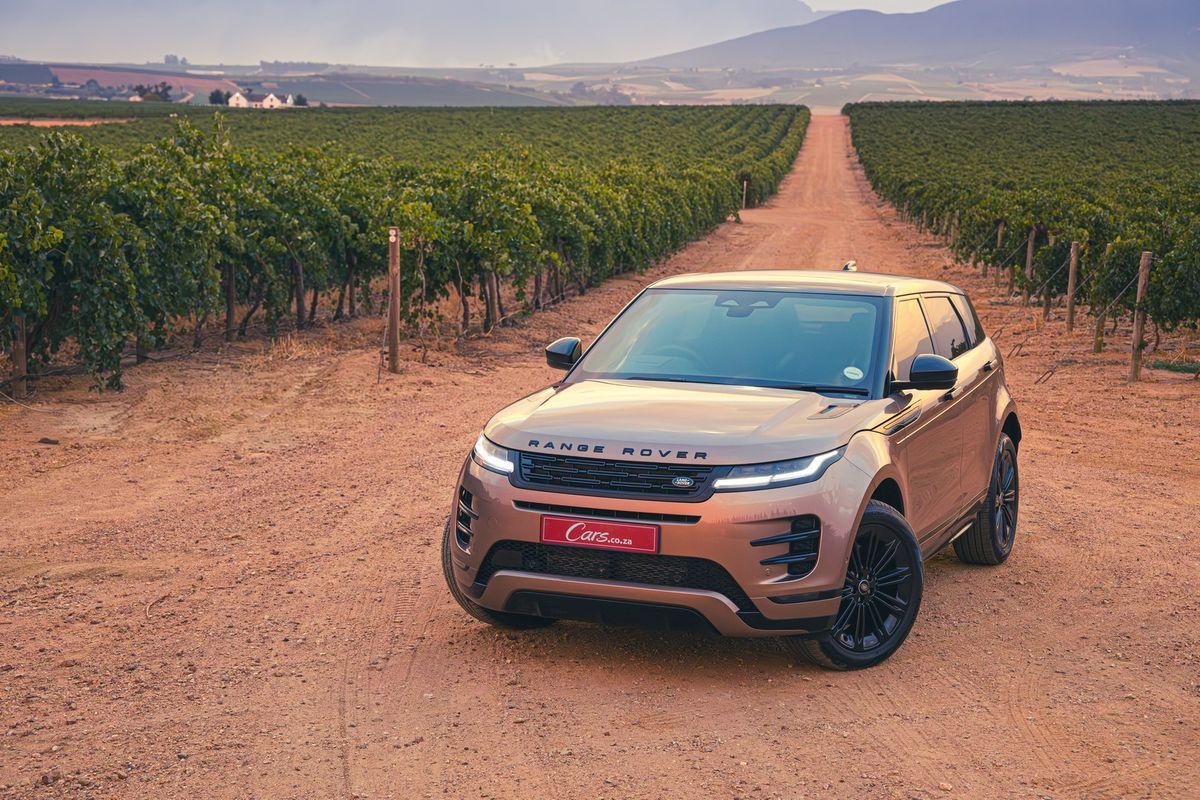
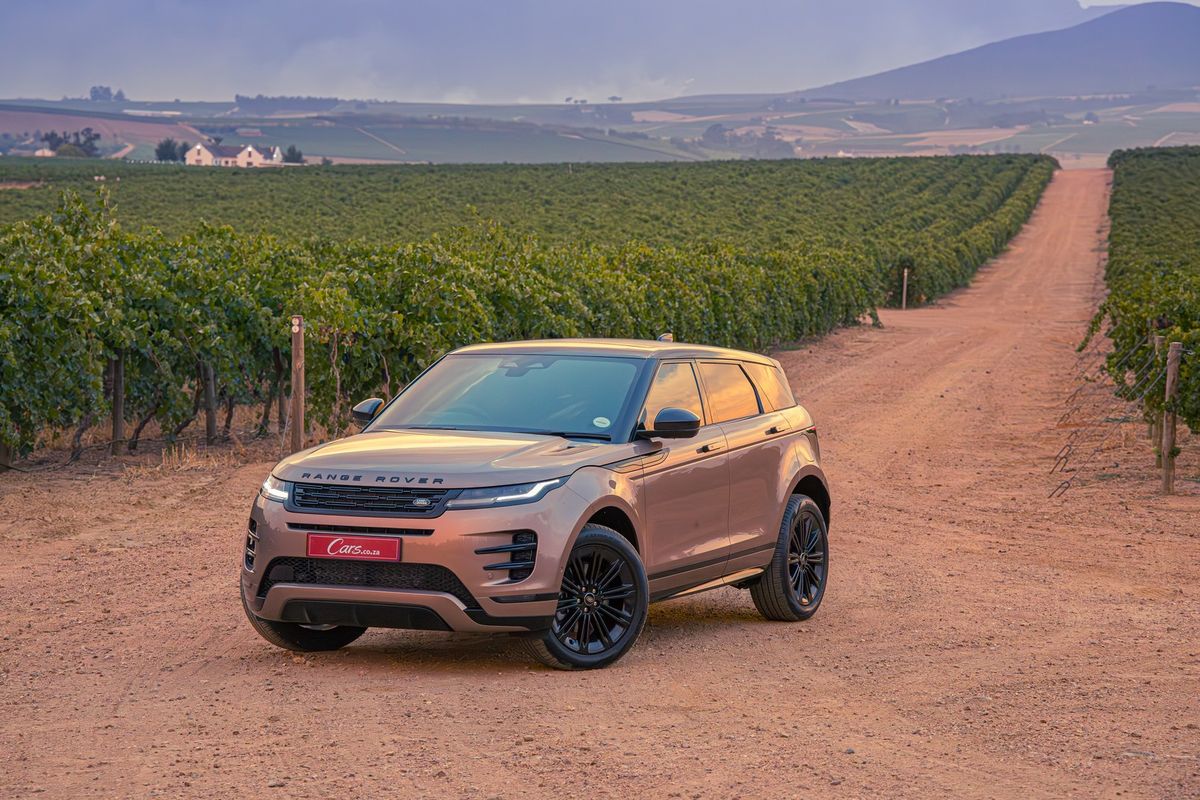
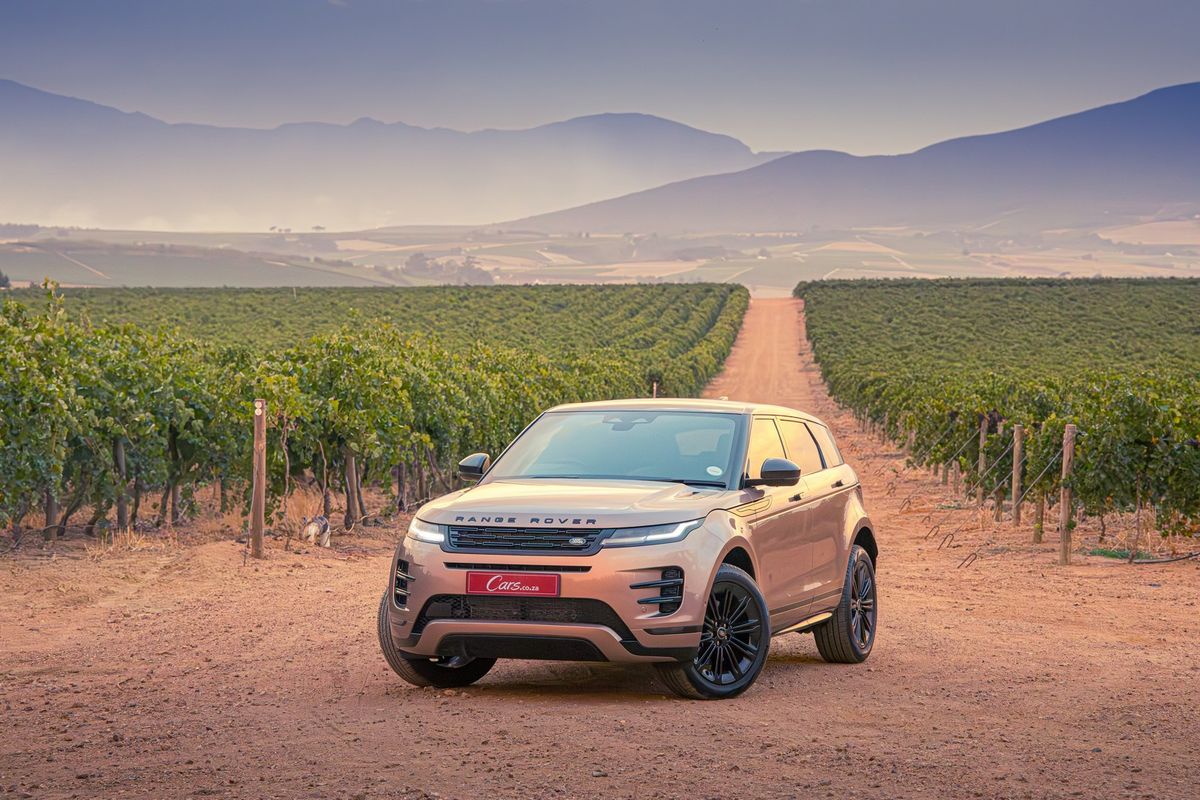
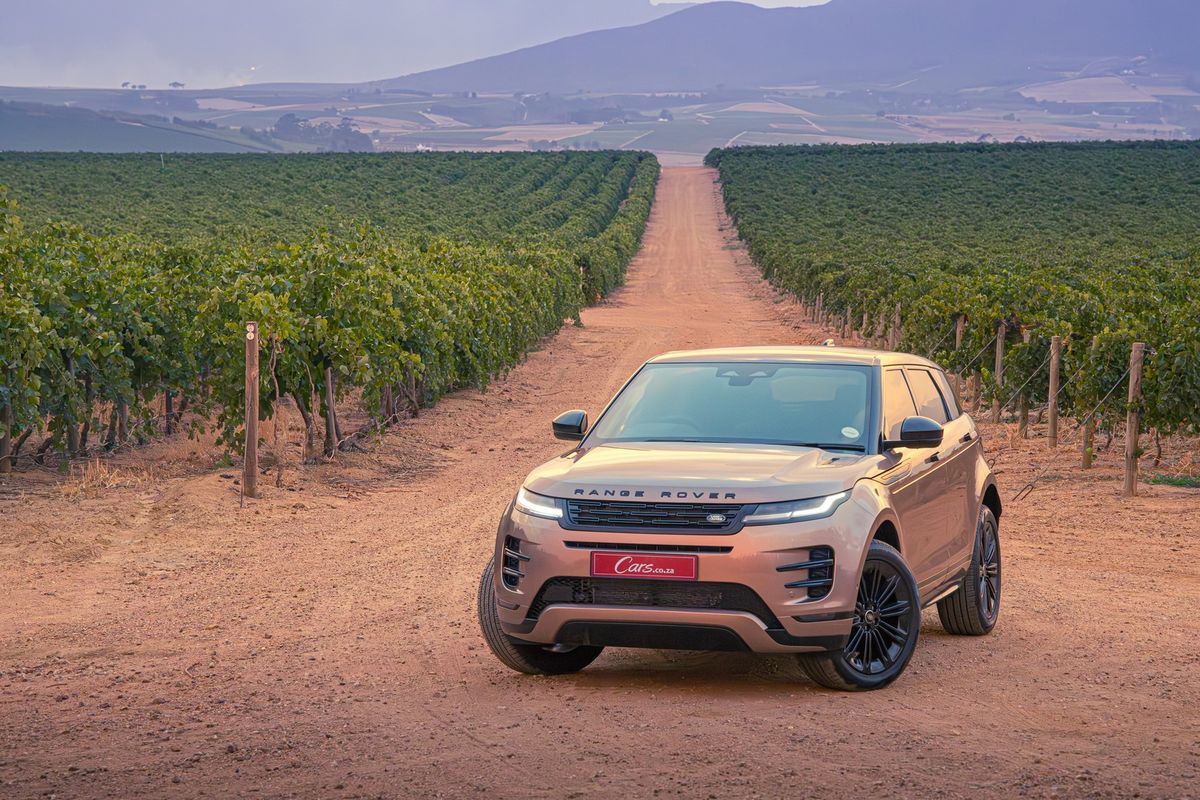
Clad in the exotic Corinthian Bronze paint finish and fitted with 20-inch alloys, the Evoque looks utterly exclusive.
An updated, but still minimalist, cabin (with an upgraded infotainment system) and new-look headlights are some of the highlights of the 2024 Range Rover Evoque. Its line-up comprises a turbodiesel and a plug-in hybrid powertrain, the latter of which is tested here in flagship HSE guise. The test unit’s striking Corinthian Bronze paint finish drew quite a few compliments during the Evoque’s tenure in our fleet…
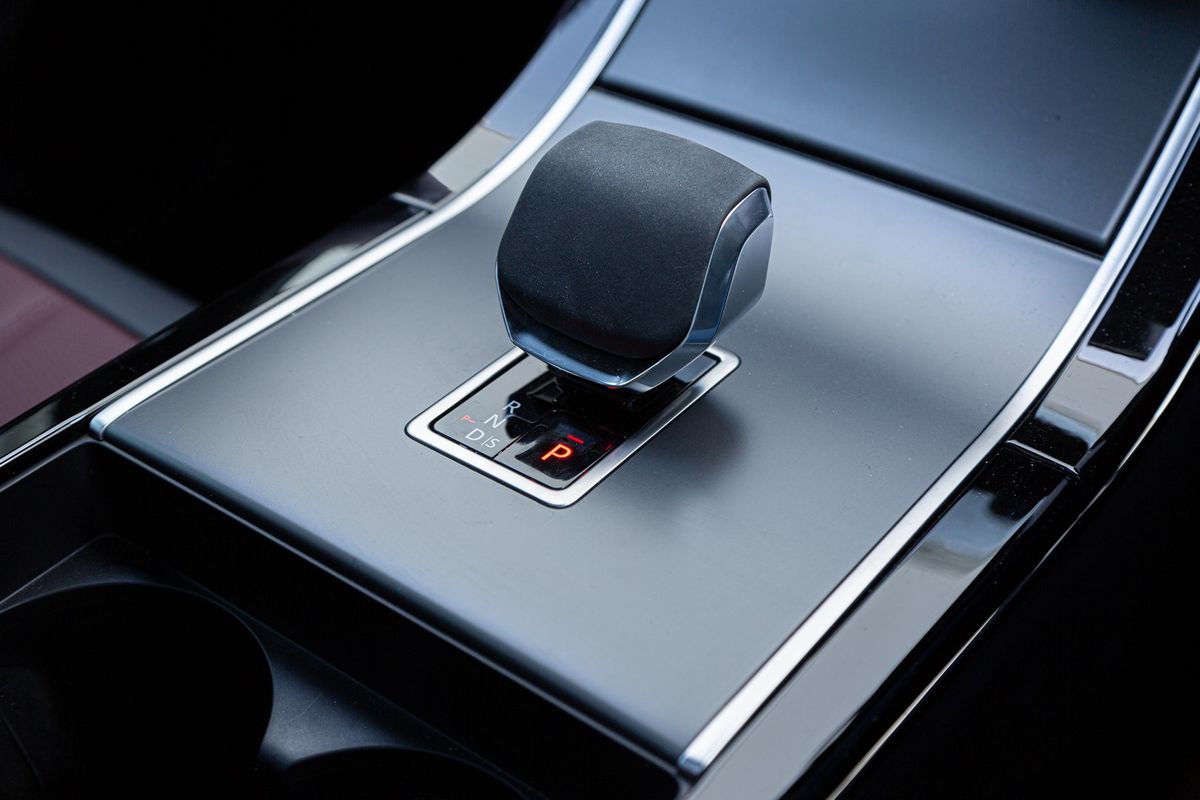
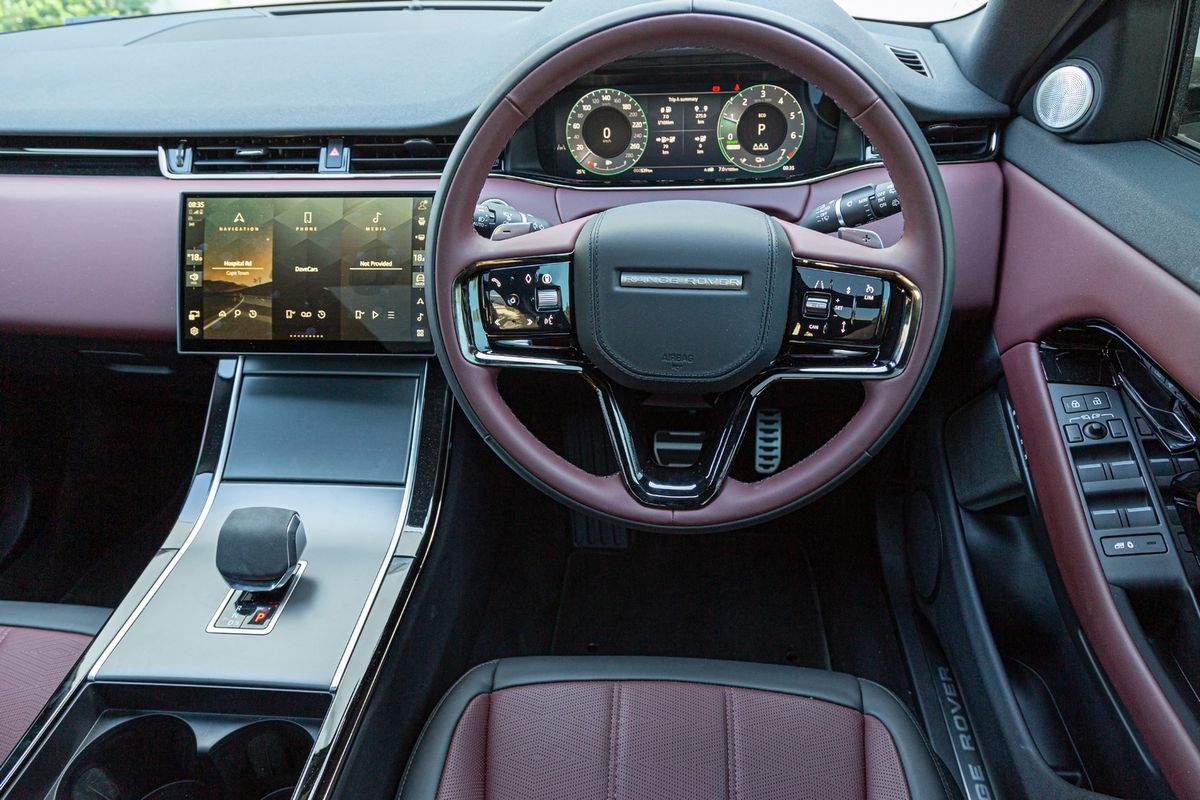
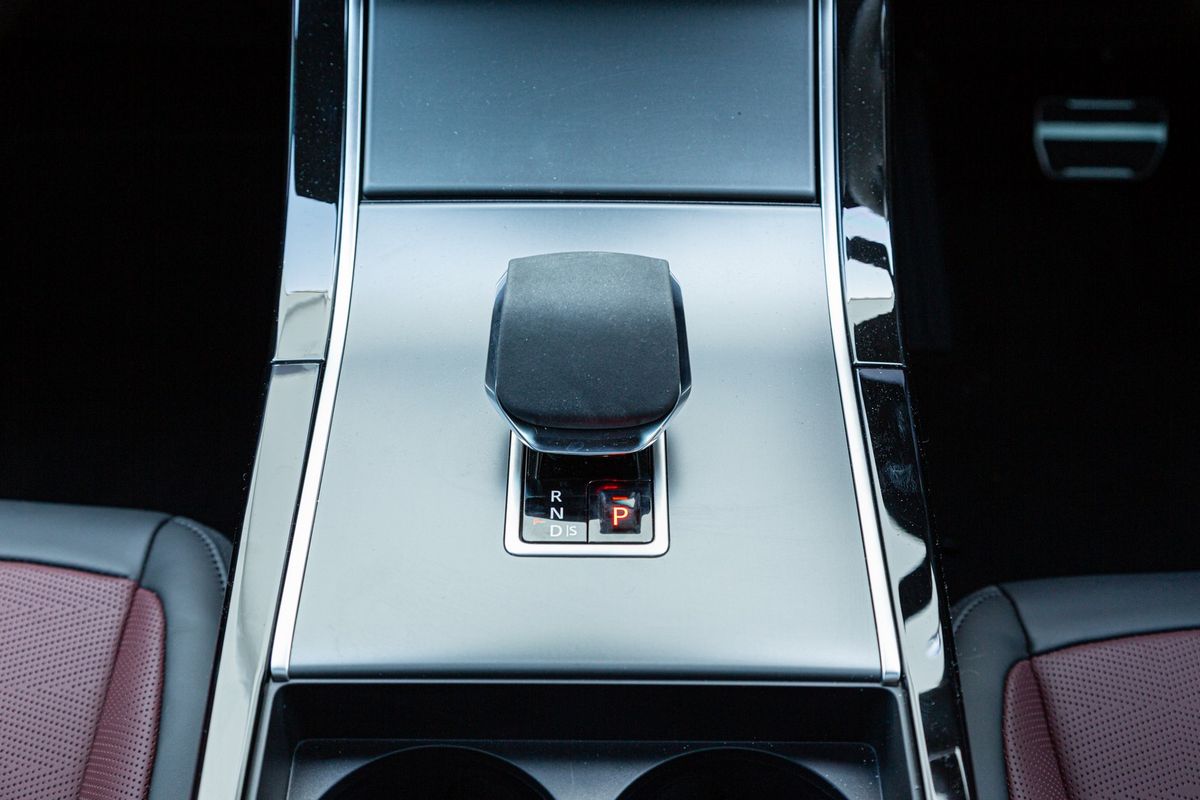
When you climb inside the P300e Dynamic HSE, you’ll find a luxuriously equipped and -finished cabin, replete with a tablet-style infotainment touchscreen in the centre of the fascia, plus a digital instrument cluster. The de-cluttered centre console now features only a transmission lever, but because many of the onboard controls have migrated to the main screen, that’s a blessing and a curse (more about that later).
The black and plum (or maroon) colour combination suits the Evoque’s extroverted image, but it’s an acquired taste.
The black and plum (or maroon) combination of the leather-trimmed cabin is, in a word, polarising – it won’t be to everyone’s taste – but at least some of our testers approved of the bold and vibrant hues. The driver’s seat position is one of the best; you get a commanding panoramic view out of the cabin.
The load-bay capacity, meanwhile, is rated at 472 litres and can be upped to 1 156 litres of utility space if you fold the rear seats down. Compared with those of its German rivals, the Evoque’s load bay is snug.
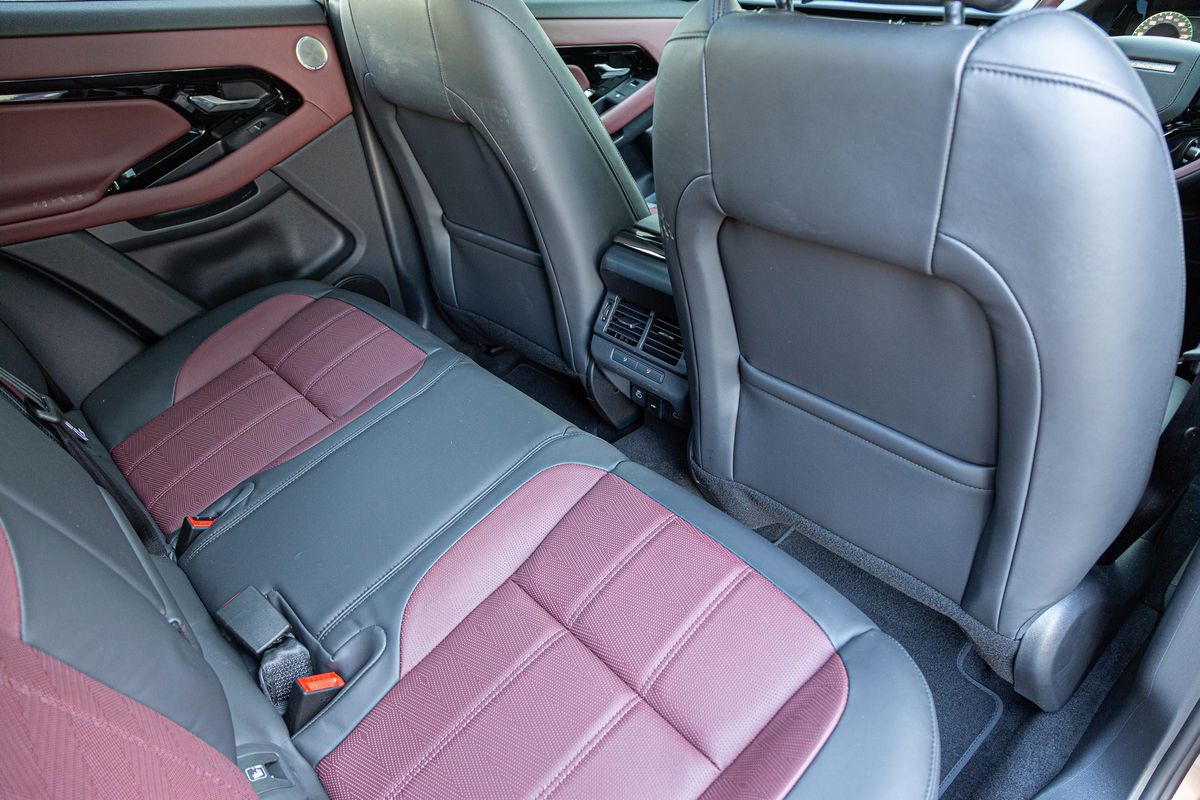
Even adult occupants can sit comfortably in the back, provided that they are not particularly tall.
There’s ample headroom for average-sized adults at the back, but taller occupants will find legroom a bit tight. Still, the panoramic sunroof helps to create a sense of “big-car” spaciousness and aft occupants are availed of charging ports as well as individual climate controls for added convenience and comfort.
Performance and Efficiency
A plug-in hybrid is purported to offer the best combination of an internal combustion engine (outright range) and a battery-electric vehicle setup (more pure electric range than a traditional hybrid). The idea is that you plug the car in overnight to charge its relatively small battery (compared to those of EVs) and, when you drive around town/within the city confines (where the Evoque will spend most of its life), the petrol engine and electric motor work together to deliver strong performance and low fuel consumption.
In some ways, the Evoque’s 8-speed transmission steals the show – it harnesses the engine and electric motor’s strengths.
How well does this setup work in practice? Generally, quite well; we’re satisfied with the performance of the Range Rover Evoque PHEV’s powertrain. The 14.9-kWh battery capacity gives it a pure electric range of around 60 km, so it is possible to make quick trips to the shops (at urban speeds) without the need to utilise the petrol engine. Of course, if you need full acceleration, the “triple” will kick in automatically.
The 1.5-litre 3-cylinder turbopetrol and electric power unit have combined outputs of 227 kW/540 Nm and torque is distributed to all 4 wheels via an 8-speed automatic transmission. The P300e Dynamic HSE is claimed to accelerate from 0 to 100 kph in 6.4 sec, but on our test strip, it performed the dash in 7.06 sec. Bear in mind, however, that the test unit was brand new; it had only 64 km on its odometer.
While the 2 L/100 km claimed fuel-consumption figure is fanciful, we still achieved an encouraging 5.1 L/100 km.
When you’re driving around town, where your average speed is bound to be around 60 kph and traffic is usually of the stop-start variety, the Range Rover Evoque’s PHEV powertrain will utilise the EV battery’s charge to operate the electric motor, which drives the rear axle, as much and often as possible.
Once you’re on the open road/travelling at freeway speeds, the P300e Dynamic HSE’s petrol motor will kick in. It delivers plenty of punch (the electric motor “fills in” the torque gaps) but, if you accelerate hard, the engine can get a bit vocal. Be prepared for when that distinct 3-cylinder thrum fills the cabin!
The 8-speed automatic transmission, meanwhile, seems well-calibrated; it provides smooth and efficient gear changes. The ‘wheel is equipped with ‘shift paddles, but we never felt the need to utilise them…
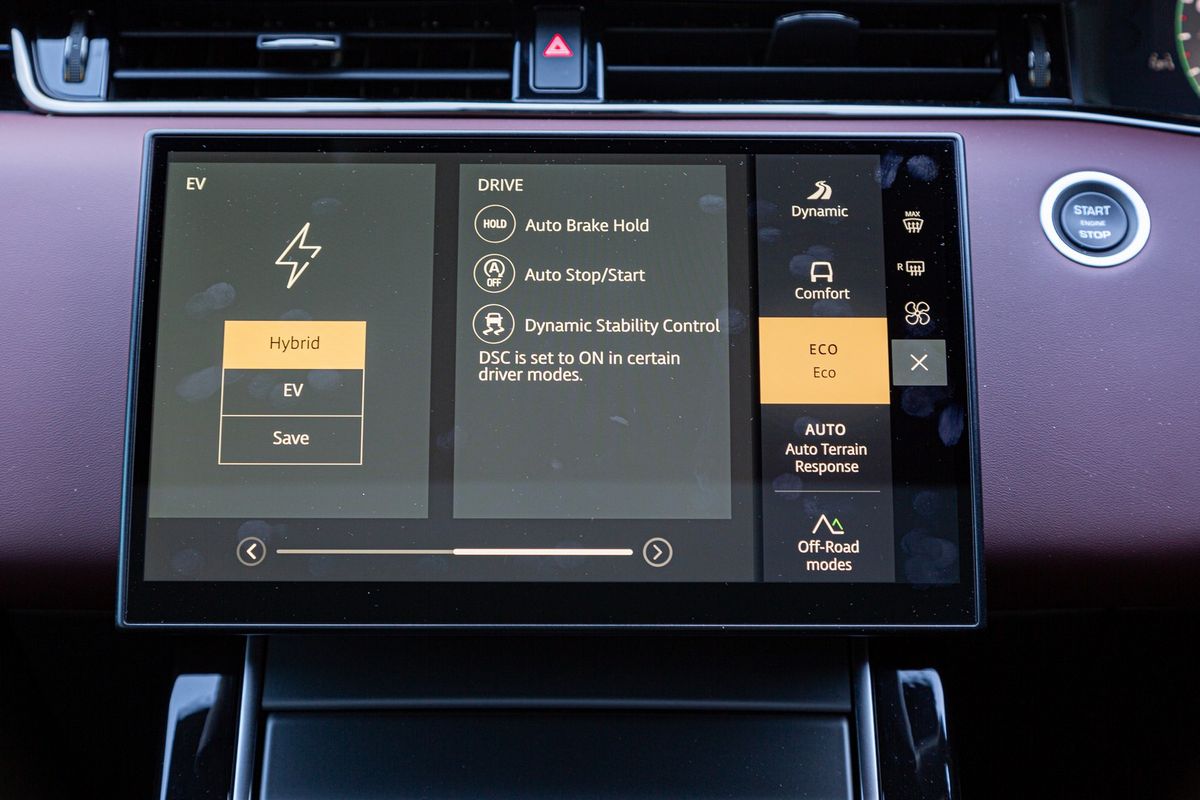
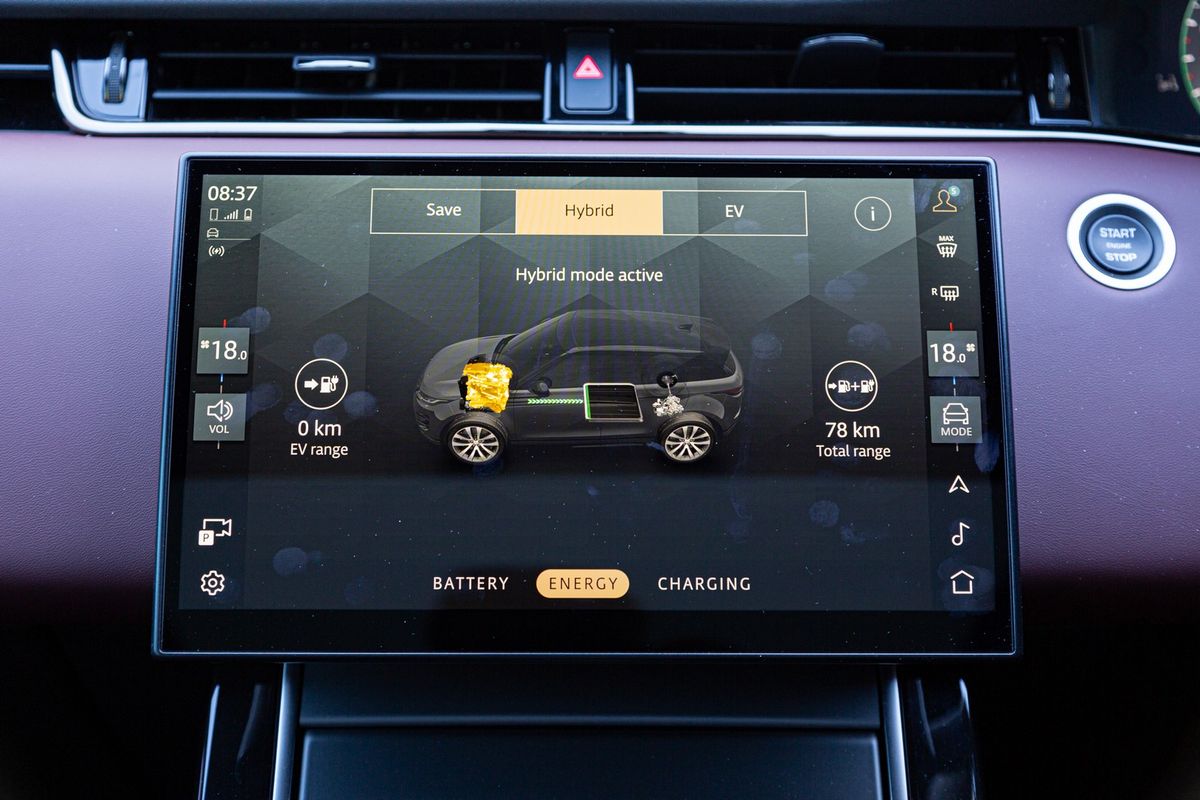
Beyond the selectable drive modes, the P300e Dynamic HSE has a choice of 3 overarching powertrain modes (left).
Take Range Rover’s claimed average fuel consumption for this derivative (2 L/100 km) with a handful of salt – the figure does not reflect real-world conditions. See, to get even close to that return, you’ll need to recharge the battery constantly to minimise the use of the petrol engine. Hybrid is the default mode, but you can also use only electric power or -petrol propulsion (to safeguard the battery’s charge level).
If you favour the ICE component of the powertrain (to regenerate the EV battery to an extent, but mostly to conserve charge), the 1.5-litre 3-pot has to work hard to propel the 2.1-tonne Evoque. We see little point in doing that because, at one stage, the indicated consumption was an outrageous 19 L/100 km. It’s wiser to select hybrid mode and be gentle with the accelerator; you’ll get about 5 L/100 km, which is fair.
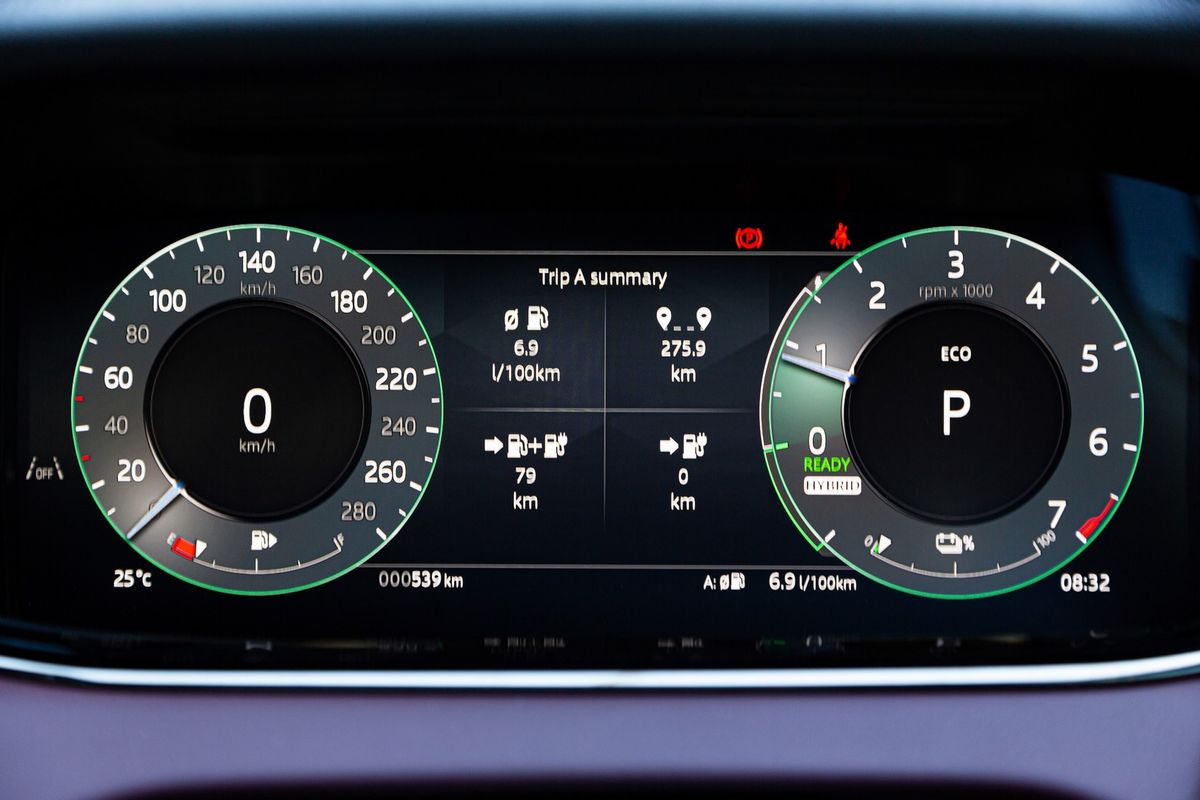
After a week, our trip computer read 6.9 L/100 km, but note that we didn’t plug in the test unit every day.
To the Range Rover Evoque PHEV’s credit, it does support DC fast charging – not all PHEVs do.
Even when its EV battery was near 0% capacity, the Evoque still behaved like a hybrid – it disengaged the petrol engine when coasting, and used electric power for the first few seconds when pulling away.
Recharging is simple: you can either plug the vehicle into your garage’s wall socket for AC charging or use one of the many DC fast chargers (dotted around the metropolitan areas) for a fee. Unlike some of its rivals, the Evoque can support fast charging, which is a bonus. The Volvo can only take slower AC inputs.
Ride and Handling
The Range Rover is a luxury vehicle through and through, but its ride quality on uneven roads is far too unsettled.
Range Rovers are celebrated for their excellent ride qualities – they seem to glide over every variety of tarmac with minimal fuss. This iteration of Evoque is different… and not in a good way. Yes, the vehicle is luxuriously comfortable, but given the sophistication of its rivals, it needs to be near-perfect – it isn’t.
Simply put, the P300e Dynamic HSE’s suspension feels stiff and unyielding. When traversing uneven tarmac (such as a road rumpled by tree roots under it), the Evoque may shudder. Granted, it rides on 20-inch alloy wheels wrapped in 235/50 tyres; that configuration probably contributes to the firmer ride.
Jaguar Land Rover products tend to be quite wieldy (even the heftier models) and the Evoque is no exception. The steering feel is good – the test unit felt well planted – and the body roll is acceptable, given the vehicle’s weight (there’s a lot of it, thanks to the battery and electric motor). Noise, vibration and harshness levels are low and the Evoque cabin is a refined and calm place in which to commute.
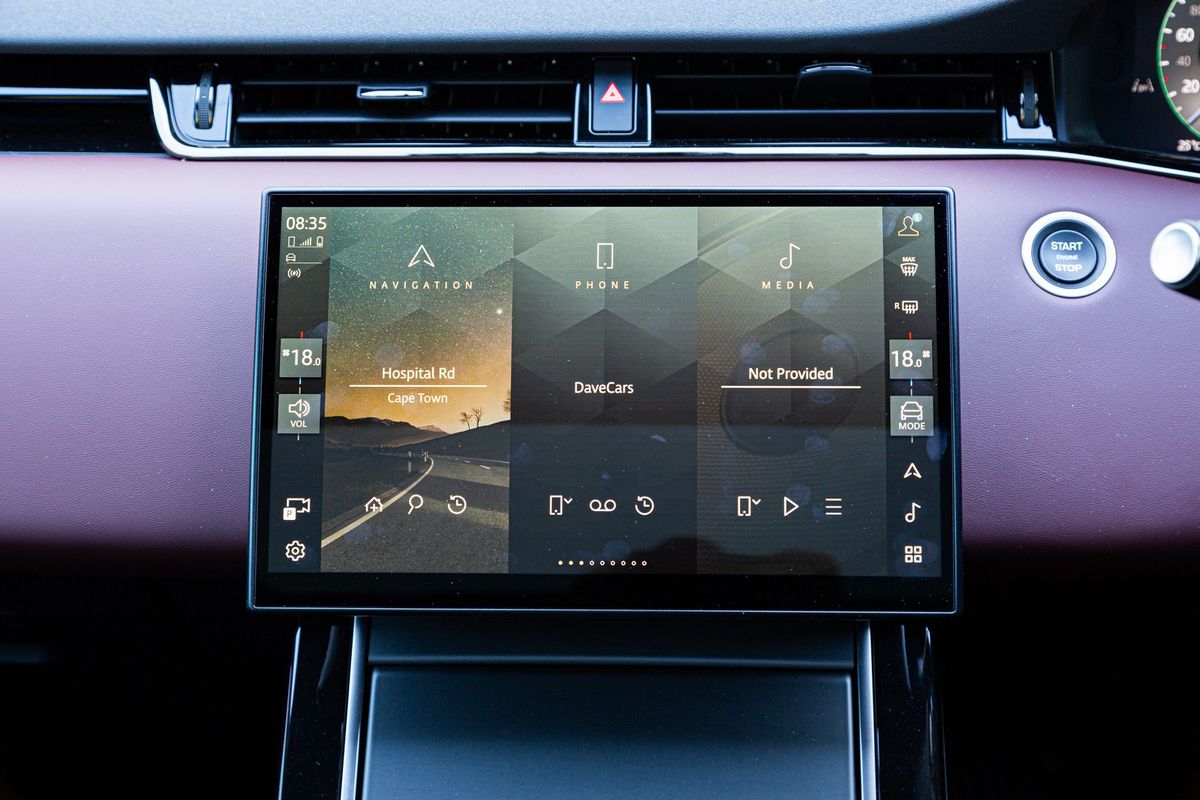
The latest iteration of the Pivi Pro infotainment system remains class-leading.
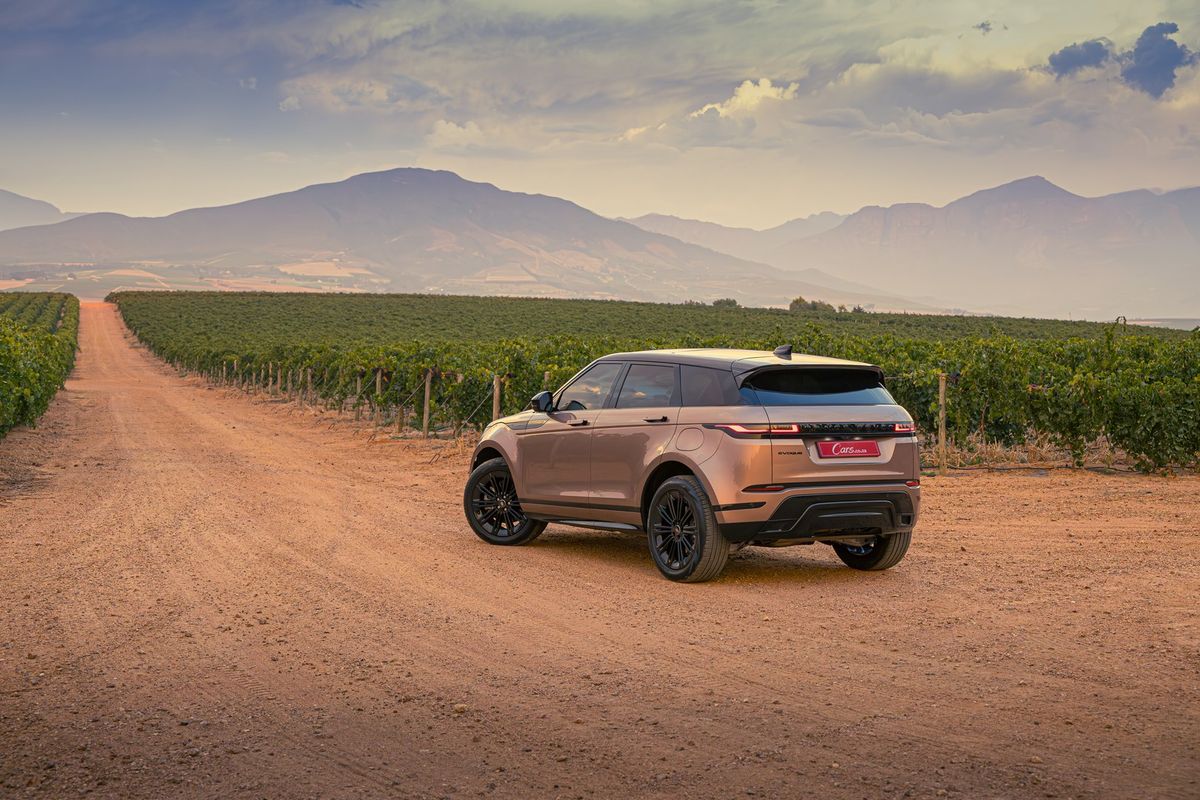
While most, if not all, Range Rover Evoque buyers are unlikely to head into rougher off-road conditions than the gravel entrance road of their local wine farm, it’s reassuring to know the PHEV derivative retains a modicum of Land Rover’s core values – the SUV’s a bit more all-road-capable than you might expect.
The P300e Dynamic HSE offers 212 mm of ground clearance and 600 mm of wading depth, which is impressive – most of its rivals offer way less than that. Apart from the all-wheel drivetrain, Land Rover’s Terrain Response system offers various drive modes to suit a variety of on- and off-road conditions. We just left it in Auto so the hardware could decide how to negotiate the dusty location for the photoshoot.
The Evoque is more capable off-road than it looks, thanks to generous ground clearance and Terrain Response all-wheel drive.
Comfort and Features
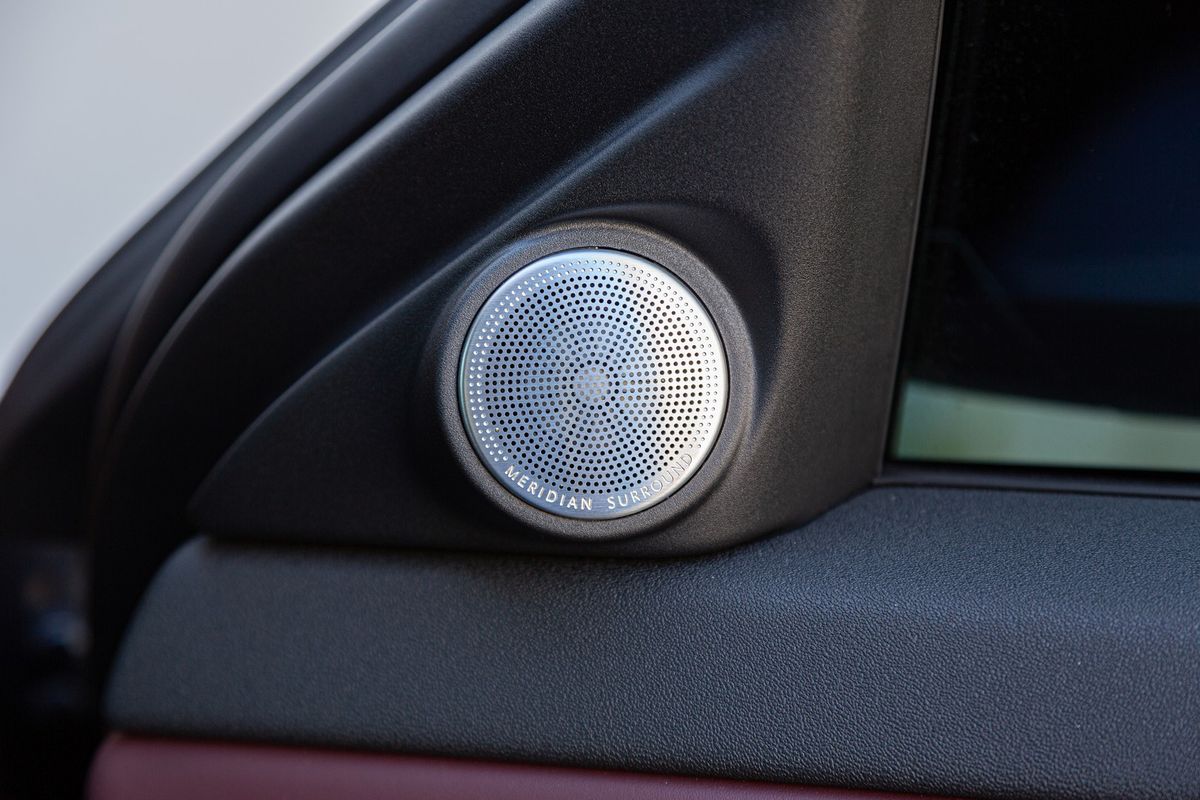
At this price point – and seeing as this is the flagship derivative – one would expect that the Dynamic HSE would be equipped with, well, everything and, to a degree, it is. Our test unit did come specified with some optional extras (cosmetic and functional ones), including features such as privacy glass (R4 800), black contrast roof (R8 200), black exterior pack (R12 050), comfort pack (R47 330), technology pack (R28 630), tow bar (R14 800), uprated Meridian audio (R18 000) and a public charging cable (R4 200).
The ornate tweeter of the Meridian surround audio system.
We’d say the technology pack is a must-have, because it includes the ClearSight rearview mirror, which replaces the traditional mirror with a high-def camera, a head-up display and a 3D parking camera.
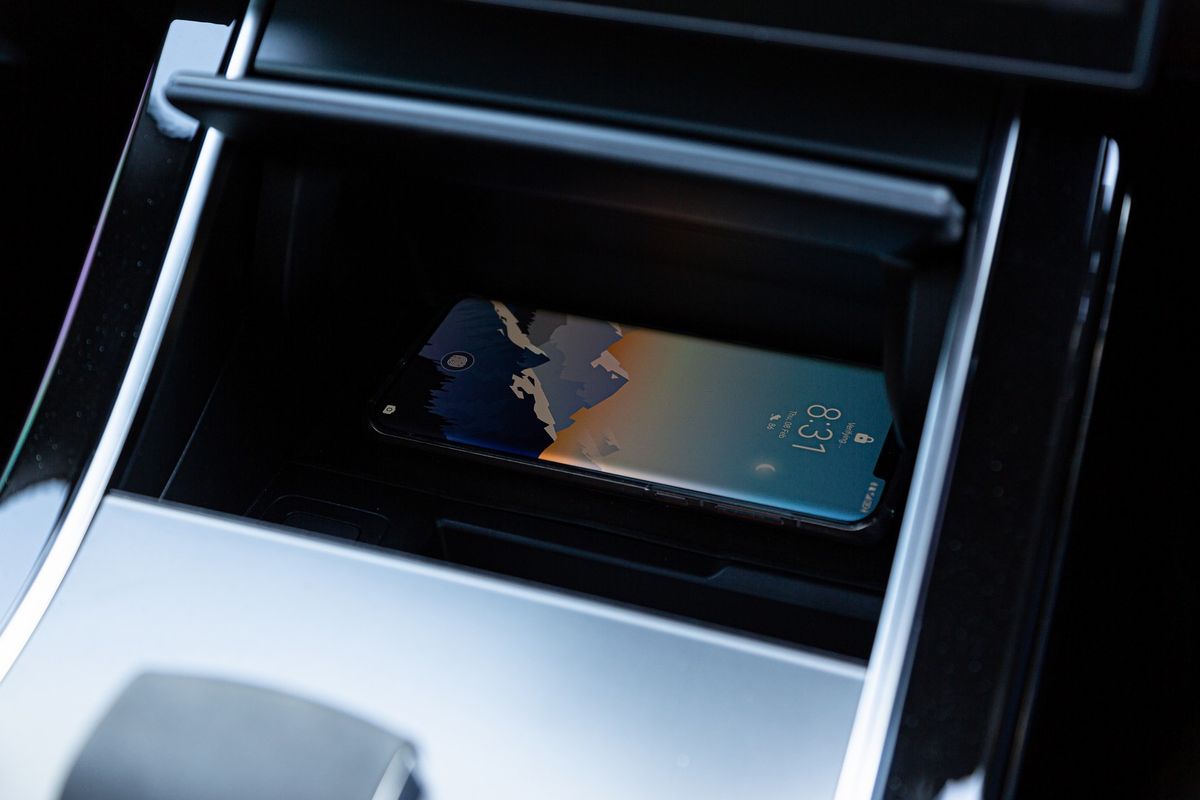
At this point, you’d be forgiven for wondering: “What exactly is standard, then?” Well, the Evoque comes with brand-new Pixel LED headlights (they’re automatically activated), rain-sensing wipers, adaptive cruise control, semi-autonomous tech, such as automatic emergency braking, 14-way power-adjustable driver’s seat, Windsor leather trim, a wireless device charger and powered tailgate, to name but a few.
This display in the infotainment system shows the user how much EV range is available and the flow of energy in the power unit.
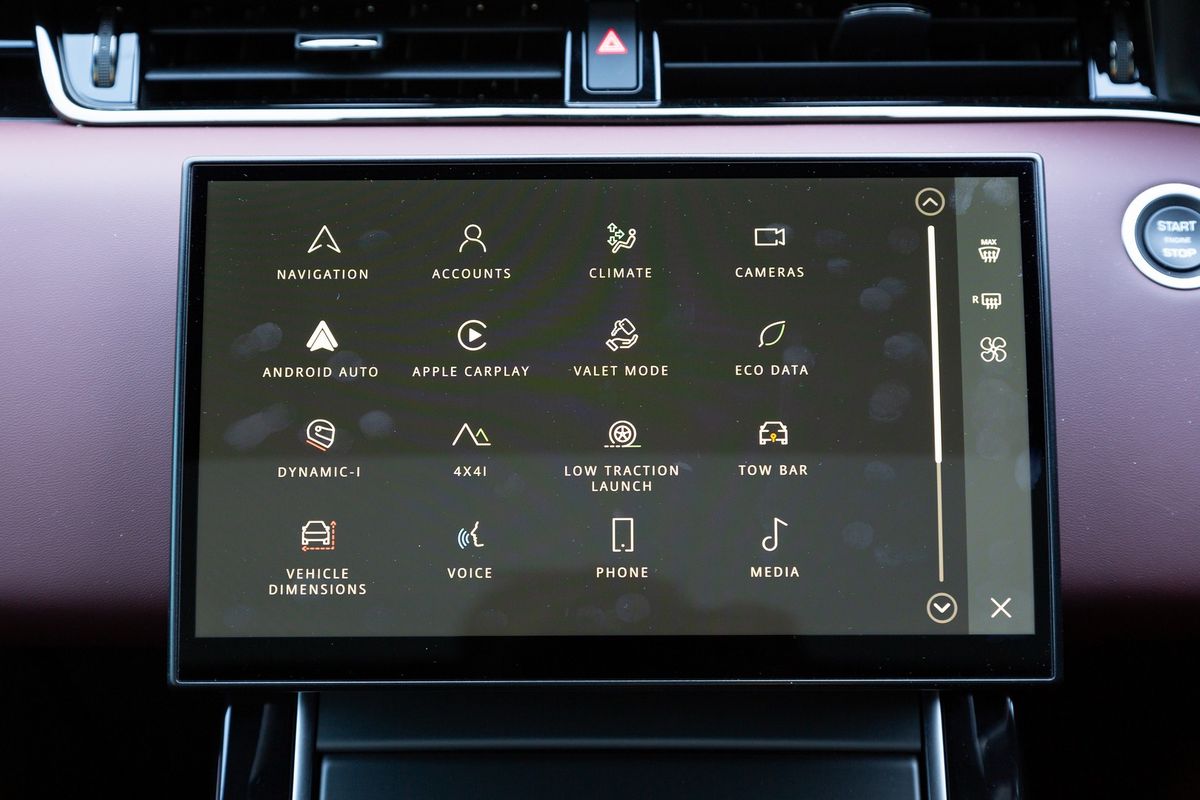
We’ve reviewed numerous contemporary Jaguar Land Rover models and our testers agree that the Pivi Pro infotainment system is one of the best in the business. Cleverly, it has its own power supply (it’s not at the mercy of the car’s battery, which is primarily used to switch on the engine). In some other brands, the infotainment system can take a few seconds to power up, whereas here it “boots” instantaneously.
The system’s layout is clean, clear and intuitive. There are no complex “menus within menus”, plus Apple CarPlay and Android Auto enhance the user experience further. In this iteration of Evoque, there are no fascia- or central console buttons; their functions have been moved to the infotainment touchscreen.
In terms of design, layout and functionality, the Pivi Pro user interface is arguably the best in the business.
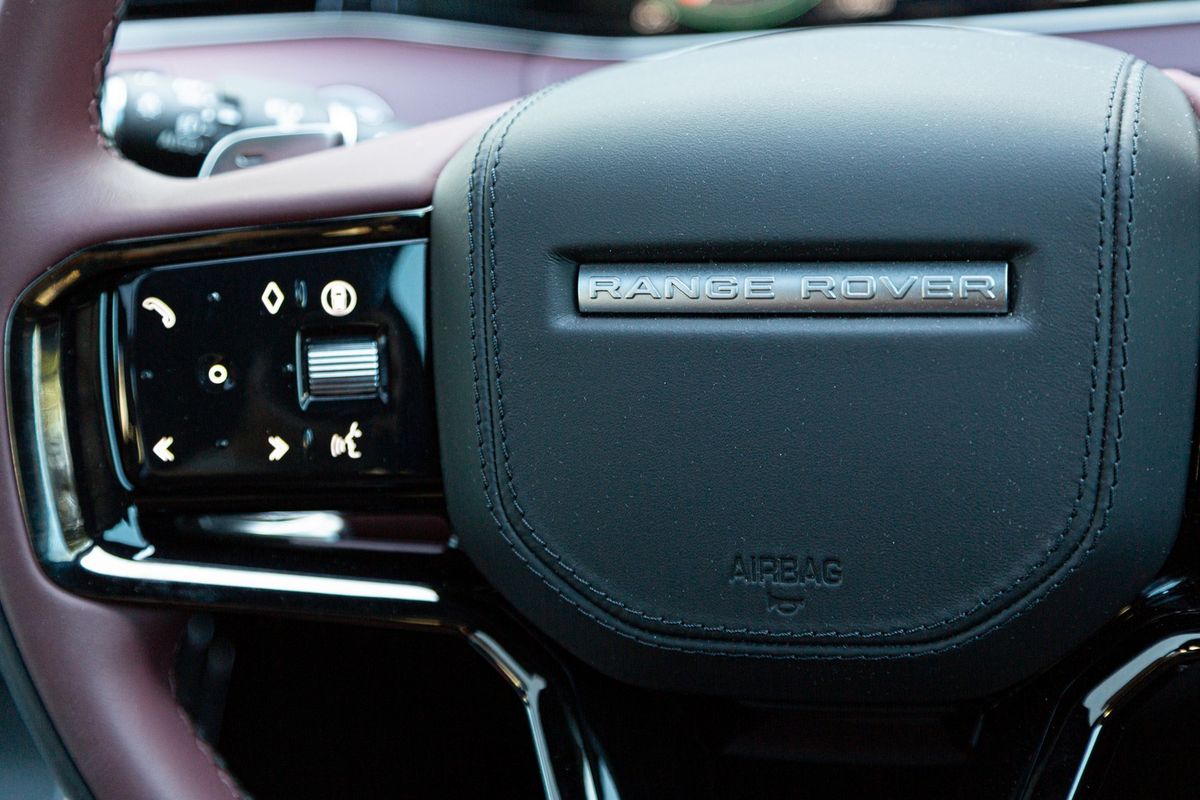
So, while you have the aesthetic benefit of a minimalist cabin, actions such as adjusting the audio volume or climate control settings by making touchscreen inputs are a bit fiddly/less than ideal. A driver can, of course, use the buttons on the steering wheel to control audio functions and adjust the cruise control.
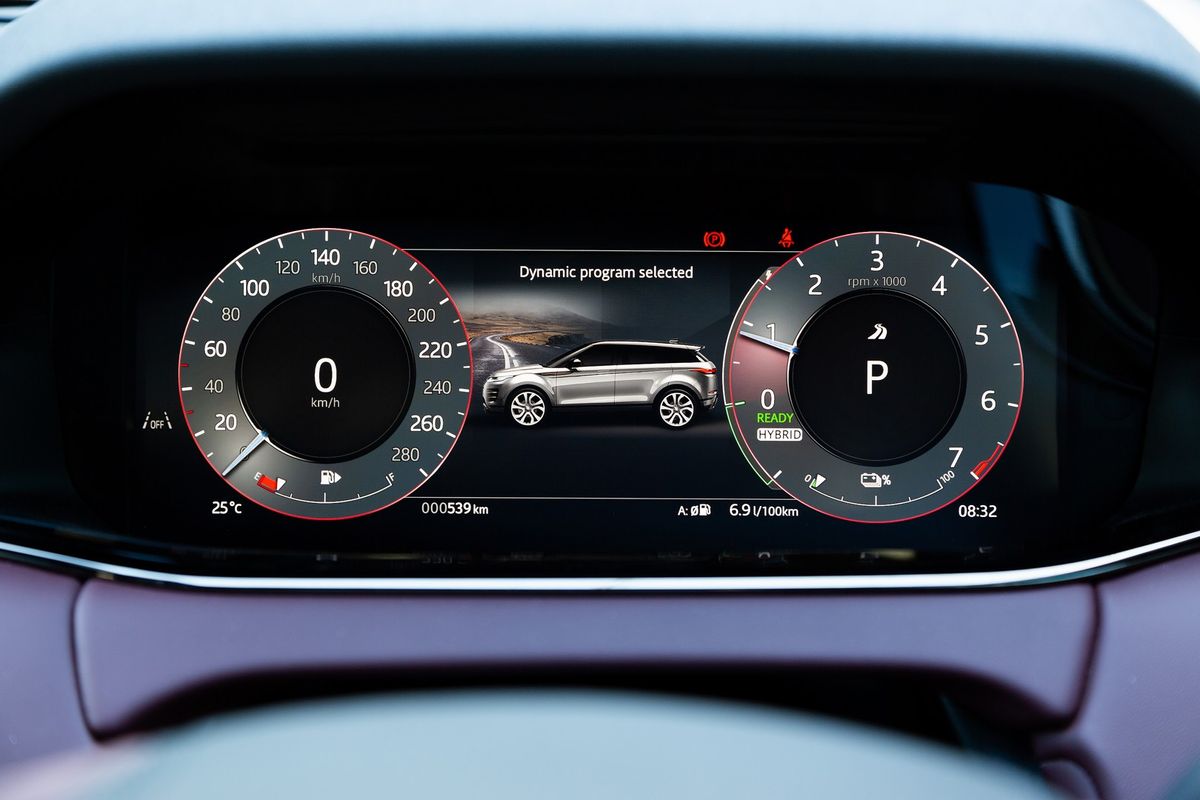
The all-digital user interface continues with the instrument cluster, which can be configured to display distinct themes. If you toggle between the drive modes, the colours will change to accurately represent the car’s current setting. So if you engage, say, Dynamic mode, the dials will gain subtle red highlights.
When you engage the Dynamic drive mode, the Evoque’s instrument cluster acquires red highlights.
Range Rover Evoque price and After-sales support
The Range Rover Evoque P300e Dynamic HSE is sold with a 5-year vehicle, 8-year hybrid battery/100 000 km warranty and 5-year/100 000 km maintenance plan.
Range Rover Evoque D200 Dynamic SE
R1 258 100
Range Rover Evoque D200 Dynamic HSE
R1 310 900
Range Rover Evoque D200 Autobiography
R1 422 200
Range Rover Evoque P300e Dynamic SE
R1 647 900
Range Rover Evoque P300e Dynamic HSE
R1 702 000
Verdict
The biggest hurdle standing in the way of Evoque’s success is its price. We suspect that because Jaguar Land Rover South Africa doesn’t receive rebates on import duties (because it doesn’t produce vehicles locally) it is utterly at the mercy of the Rand/Pound Sterling exchange rate, which has been unfavourable to Mzansi – to say the least. Then there’s the issue of additional tax that Government levies on imported electrified vehicles, including plug-in hybrids. All of this contributes to the Ranger Rover’s lofty price tag.
Should you buy one? If you are determined to own a plug-in hybrid vehicle, then we advise looking at one of the excellent Volvo XC60 T8 Twin Engine derivatives, which should be almost R500k cheaper than the P300e Dynamic HSE. Otherwise, if you still like the idea of not following the crowd and seek an executive SUV with “boutique appeal”, there’s very little to fault the turbodiesel-powered Evoque derivatives.
A fresh report out of Brazil suggests Toyota plans to put a unibody pick-up into production by 2027, reviving speculation that a Corolla-based bakkie is indeed on the horizon…
Back in August 2023, news emerged that Toyota was mulling the development of a Corolla-based bakkie. Though there’s been little fresh information on that front for a while, a new report out of Brazil now suggests the seemingly global project is indeed going ahead.
According to AutoData, the Metalworkers’ Union of Sorocaba in Brazil has confirmed that negotiations to build a new Toyota bakkie at the Sorocaba factory in São Paulo are underway. Interestingly, this facility already produces the Corolla Cross and is expected to add the Yaris Cross to its assembly line by the end of 2024.
Toyota is likely to leverage the Corolla badge.
Pointing out that it usually takes a couple of years to prepare a production line for an all-new model, the union told AutoData that it expects manufacturing of the fresh-faced unibody bakkie to start only in 2027 (lining up neatly with the timing mentioned in the earlier report, which tipped Mississippi in North America as another potential production site).
Furthermore, the Brazilian publication claims the as-yet-unnamed small bakkie will be available in hybrid form and pitched against the likes of the Fiat Toro, Chevrolet Montana and Renault Oroch (though the latter will almost certainly have been replaced by 2027).
The EPU Concept could provide styling hints.
Despite the fact this latest report doesn’t specifically mention the Corolla nameplate, it’s thought Toyota will leverage the famous badge on this upcoming bakkie, while also likely basing it on the TNGA-C platform used by the hatch, sedan and Corolla Cross. Perhaps the newcomer will draw some styling inspiration from the fully electric EPU Concept pictured above and unwrapped in October 2023.
Of course, this rumoured unibody bakkie project is entirely separate from the since-revealed Hilux Champ, which is a ladder-frame contender that shares its underpinnings and engines with the current Hilux. And it’s the latter model that seems most likely to eventually go into production at Toyota South Africa Motors’ Prospecton plant in KwaZulu-Natal.
Here are the 7 cheapest hybrid cars in South Africa! If you are considering buying a hybrid vehicle, you now have some options to consider!
In recent years, hybrid cars have typically been a pricy proposition for new car buyers and as such the technology hasn’t really taken off in South Africa and Internal Combustion Engine (ICE) cars remain dominant. However, hybrid cars are now becoming more popular as buyers seek to bridge the gap between ICE cars and EVs.
Global demand for hybrid cars, including micro-hybrid, mild-hybrid, full-hybrid and Plug-in hybrids, is on the increase. China and the Asia Pacific region is leading in terms of hybrid adoption and hybrid uptake is currently surging in Europe too alongside Electric Vehicles (EVs).
Globally, the top hybrid car brands include Toyota, Nissan, Honda and Kia.
Earlier in 2020, Toyota announced that its Prospecton assembly facility in KZN would produce the Corolla Cross, including the Corolla Cross Hybrid, which is currently South Africa’s cheapest hybrid car. More so, with fuel prices surging, demand for more efficient vehicles (including hybrids) has risen sharply and Toyota will look to capitalise on that demand with additional hybrid products such as the Corolla Hybrid and the RAV4 Hybrid. Toyota is also testing the feasibility of introducing the RAV4 PHEV in South Africa.
Sadly though, Toyota experienced a major setback in 2022 with the floods in KZN causing massive destruction at its Prospecton facility, temporarily halting production and disrupting the supply of vehicles for both local and international markets. Earlier in 2023, Toyota announced a New Energy Vehicle (NEV) strategy that will seek to increase local hybrid uptake from 3% to 20% by 2030.
Prior to the above developments, the now discontinued Toyota Prius was once one of the cheapest hybrid cars you could buy in South Africa, but with the recent hybrid introductions from Toyota as well as the arrival of the Haval Jolion Hybrid, H6 Hybrid and the new Honda Fit, buyers have more choice now than ever before.
With fuel prices remaining high and with most electric vehicles positioned out of financial reach for most consumers, many are turning to hybrids as a way to reduce fuel consumption.
Note that pricing is accurate as of February 2024.
6 Cheapest Hybrid Cars in South Africa
1. Toyota Corolla Cross 1.8 Hybrid XS – From R486 100
The Corolla Cross 1.8 Hybrid XS is priced from R486 100, making it the cheapest hybrid car in South Africa. A range-topping XR hybrid derivative can also be had for R527 200.
The Corolla Cross Hybrid makes use of a 72 kW/142 Nm 1.8-litre Atkinson-cycle engine in combination with an electric motor and battery. The electric motor provides a supplementary 53 kW and 163 Nm of torque (at full capacity) to boost the overall system output to 90 kW (the combined figure is not an aggregate of the two power sources, due to transmission reduction losses). A Continuously Variable Transmission (CVT) is fitted as standard across the range.
Toyota claims a fuel consumption figure of 4.3 L/100km for its Corolla Cross Hybrid.
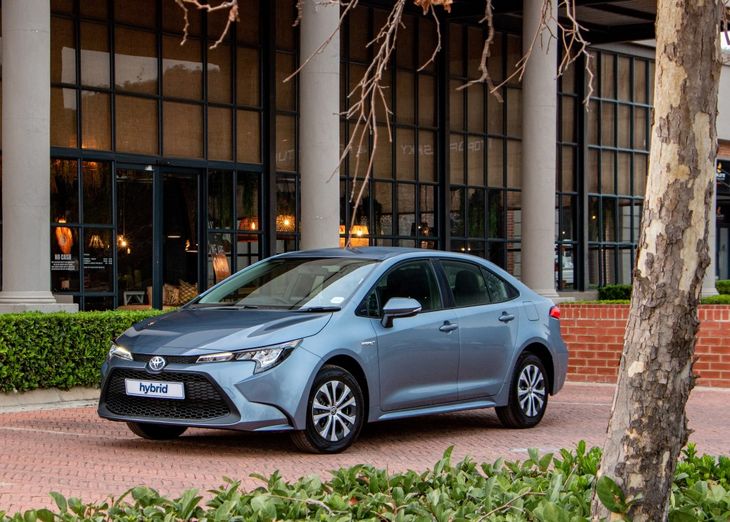
The Corolla Hybrid comes equipped with an Atkinson-Cycle 1.8-litre petrol engine combines with an electric motor to offer 103 kW and 142 Nm of torque and is paired with a CVT. The hybrid system is also supported by a lighter, newly developed 18.1 kW lithium-ion battery. Fuel consumption is claimed at 4.0 L/100km.
The Toyota Corolla Hybrid Hatchback can be had in base XS guise priced from R536 500 or you can opt for the XR trim priced from R577 600.
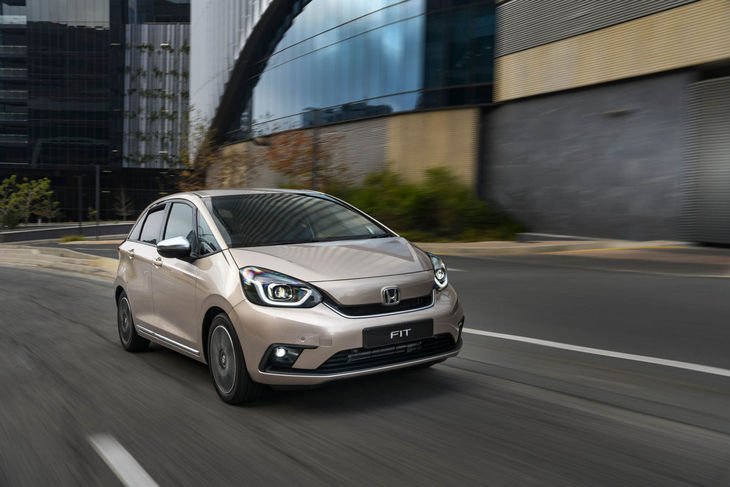
The new Honda Fit (also known as the Jazz) is perched at the top of the local range and is priced from R544 900.
The Fit Hybrid combines a 1.5-litre petrol motor with a battery and electric motor to produce combined outputs of 80kW and 253Nm of torque. The hybrid’s claimed fuel consumption figure is just 3.7L/100km. With the hybrid system, most of the fuel consumption benefits are reaped in town when the electric motor can do most of the propulsion work. A fixed-gear continuously variable transmission (CVT) with ‘simulated shifts’ is fitted.
That means it employs the same 72 kW/142 Nm Atkinson-cycle 1.8-litre petrol 4-cylinder petrol engine and an electric motor (that produce 53 kW and 163 Nm) in combination with a nickel-metal hydride (Ni-MH) battery and a continuously variable automatic transmission (CVT) that drives the sedan’s front wheels. The derivative’s overall system output is 90 kW (note: the combined figure is not an aggregate of the 2 power sources, due to transmission reduction losses).
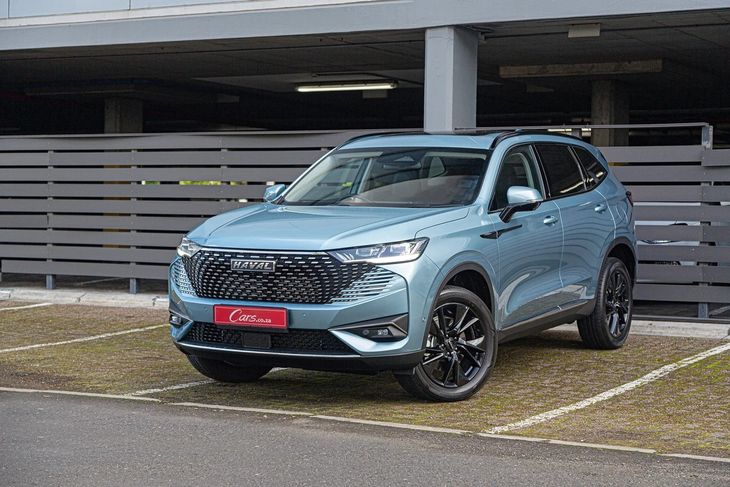
The Haval H6 is hugely popular in South Africa and the Chinese firm recently welcomed the H6 Hybrid to the local market. Equipped with a 1.5-litre turbopetrol engine which pairs up with an electric motor and self-charging hybrid battery, the H6 Hybrid produces 179 kW and 530 Nm of torque. Haval claims an average fuel consumption figure of 5.2 L/100km. Watch the video below to see how the new Haval H6 Hybrid performs out on the road.
Launched in conjunction with the above-mentioned Corolla Hybrid, the RAV4 Hybrid features a larger 131 kW/221 Nm 2.5-litre Atkinson-cycle petrol engine which combines with a pair of electric motor-generators (that can produce up to 88 kW/202 Nm) in combination with a nickel-metal hydride (Ni-MH) battery. Total power output is pegged at 160 kW. The RAV4 Hybrid is also equipped with a CVT and Toyota claims a fuel consumption figure of 4.8 L/100km.
In this video, a Volkswagen Amarok gets a straight-6 BMW engine transplant. Watch the video to see the final result!
The Volkswagen Amarok is normally used as a commercial vehicle for business or for leisure to get to faraway locations.
But this Amarok is a little different as the owner wanted more speed from his diesel bakkie.
Werner decided that the best way to do that was to swap out the original engine with the 3.0-litre straight-6 engine from a BMW 330d packing a mighty 295 kW and 900 Nm of torque!
Check out the video of everything Werner has done to make this incredible build.
South African motorists can expect significant fuel price increases in March 2024 according to unaudited mid-month fuel price data released by the Central Energy Fund (CEF). See the fuel price forecast below!
The latest fuel price data is spelling doom for March 2024 as significant fuel price increases loom.
The current data points to a R1.35 per litre increase for 95 octane petrol while the price of 93 octane petrol could see increases of R1.31 per litre. The diesel forecast is worse with increases between R1.43 and R1.58 on the cards.
The increases are predominantly driven by higher international product prices during the period while the Rand-Dollar exchange rate has played a more marginal role.
The Automobile Association (AA) has provided comment, “We remain concerned about these expected increases which will undoubtedly put more pressure on already stretched consumers. These hefty increases also reaffirm our belief that a review of the fuel price is necessary to establish if any components within the current pricing model can be revised by the Department of Mineral Resources and Energy (DMRE) to mitigate against rising costs, especially for diesel as higher input costs will be recovered through higher prices at the till.
“In addition, we again call on the Minister of Finance to strongly consider not increasing the General Fuel and Road Accident Fund levies in his Budget Speech on 21 February. Any relief – even in the form of non-increases – would be welcome to a consumer base already reeling from economic hardship,” the AA concludes.
Fuel Price Forecast in South Africa for March 2024
Mercedes-AMG A45 S Limited Edition scores ‘Green Hell’ paint
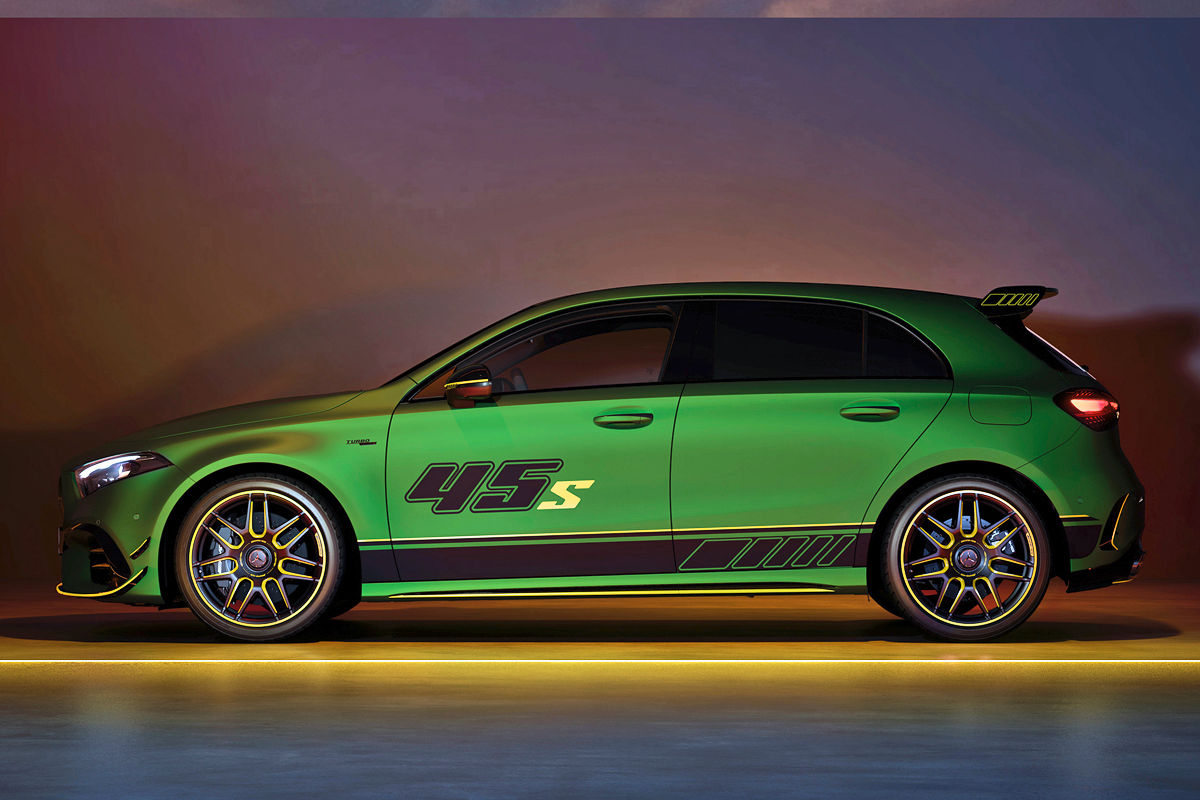
Meet the new Mercedes-AMG A45 S Limited Edition, a special version of Affalterbach’s hyper hatch finished in the distinctive AMG Green Hell Magno hue and crammed full of extra kit…
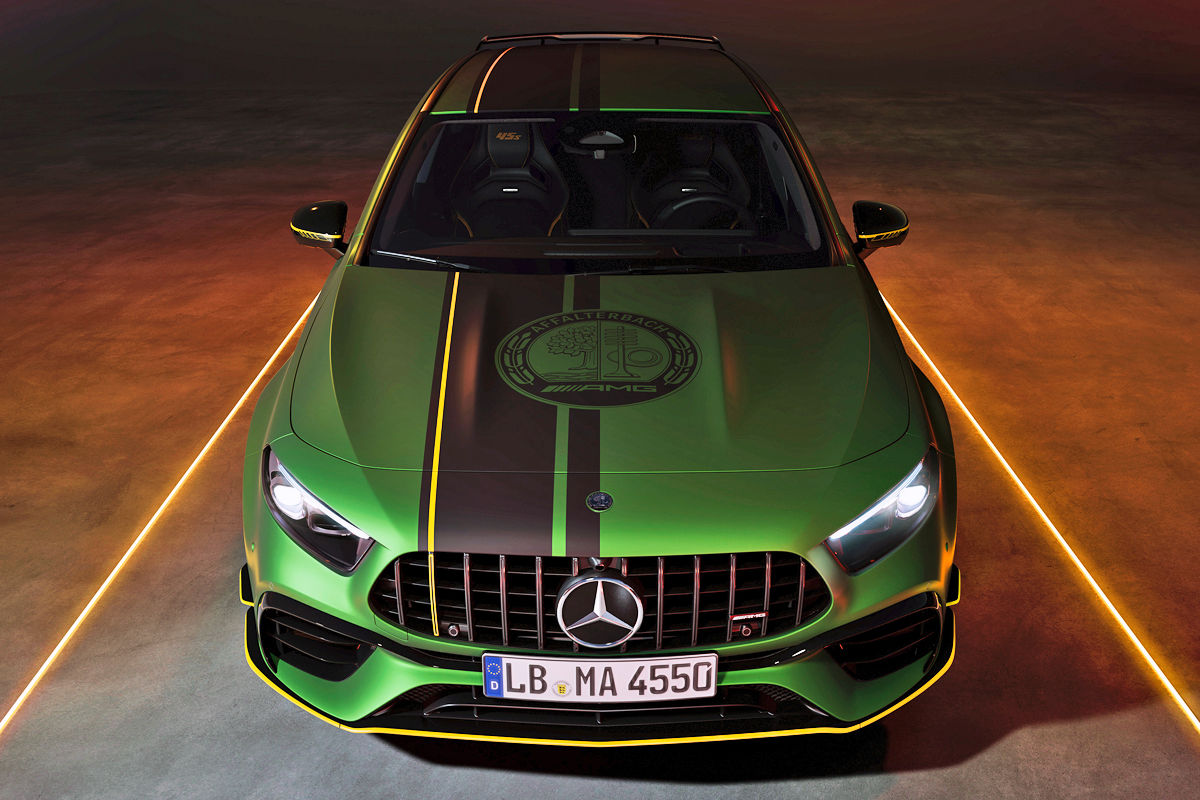
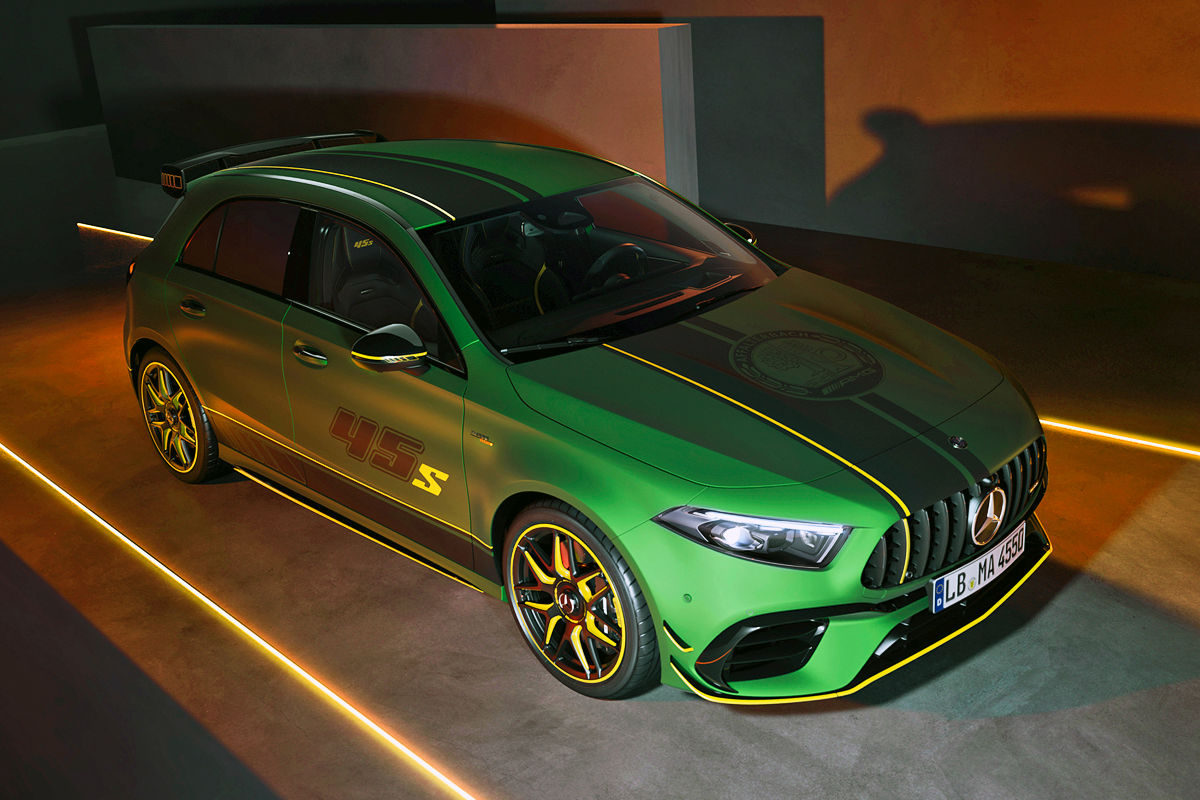
It may not be particularly imaginatively named, but the freshly revealed Mercedes-AMG A45 S Limited Edition is anything but subtle. Yes, the limited-run version of Affalterbach’s hyper hatch comes finished in the distinctive AMG Green Hell Magno paint, a hue previously not available for Mercedes-Benz’s compact models.
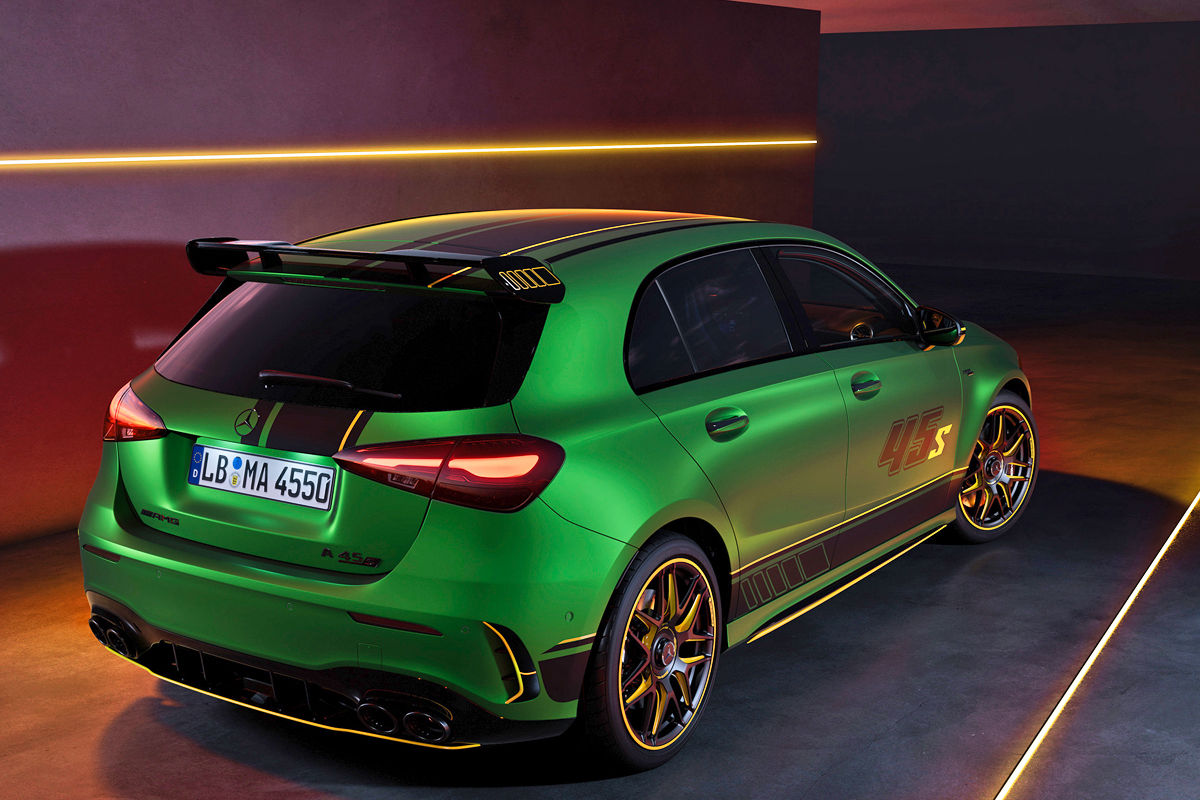
In addition, the A45 S Limited Edition ships with black stripes along its flanks (bearing the AMG logo), black stripes along the bonnet and roof, oversized “A45 S” lettering on the front doors and a large AMG crest on the bonnet. As you’ve no doubt noticed, there are also all manner of contrasting yellow accents, including for the matte-black 19-inch AMG forged wheels in a 7-twin-spoke design.
To match the colour of the rims, the AMG high-performance brake system’s callipers are finished in gloss black, complete with white AMG logos. Other details include an “exclusive” fuel cap bearing the AMG insignia and light projectors that shine Affalterbach’s coat of arms onto the tarmac when a door is opened.
As standard, the A45 S Limited Edition is fitted with a trio of familiar equipment packages: the AMG Night Package, the AMG Night Package II and the AMG Aerodynamics Package (the latter including that fixed rear wing).
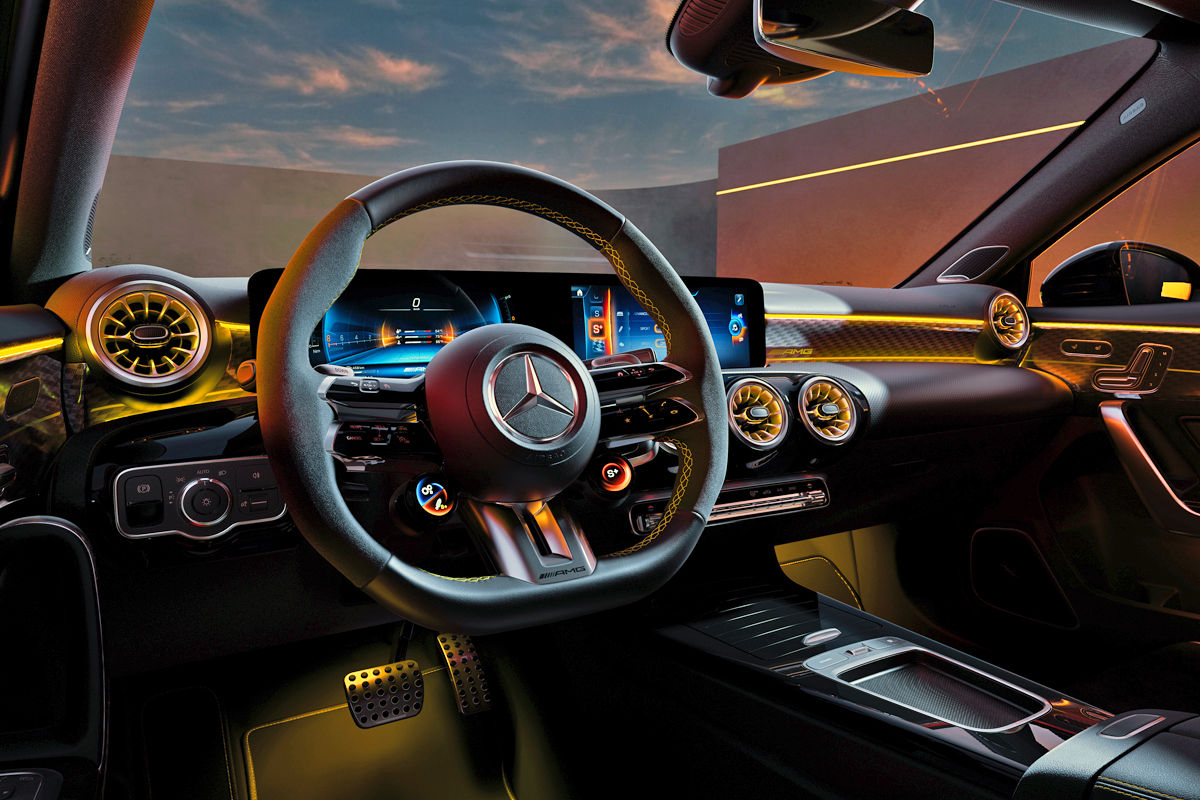
Inside, the AMG performance seats are trimmed in a combination of Artico man-made leather and Microcut microfibre, while yellow stitching has been applied to the seats (the front headrests furthermore each gaining a “45 S” badge, a treatment also handed to the floor mats), door panels and instrument panel.
The AMG steering wheel likewise scores yellow stitching, with this bright hue repeated on the AMG lettering applied to aluminium-trim facia. Meanwhile, the AMG logo on the door sills illuminates in yellow.
As a reminder, the A45 S is powered by a turbocharged 2.0-litre, 4-cylinder petrol engine sending a whopping 310 kW and 500 Nm to all 4 wheels via an 8-speed dual-clutch transmission. The obligatory sprint from zero to 100 kph takes a claimed 3.9 seconds, while top speed is limited to 270 kph.
The Mercedes-AMG A45 S Limited Edition has yet to be confirmed for South Africa, though Mercedes-Benz in Europe says the market launch on that continent will take place in April 2024 and run through to the end of the year. For the record, the standard A45 S is currently priced from R1 440 693 here in Mzansi…
Toyota’s diesel drama, forklifts and Japan’s engine testing history
Toyota is worth R5.5 billion. Mercedes-Benz? Only R1.4 billion. So, what led to the world’s biggest car company committing a… diesel-engine testing error?
Anything you do is deeply newsworthy when you are the leading global and local car brand. This is why Toyota’s recent engine certification issue has been hotly debated throughout the motoring world.
Toyota and Tesla are 2 very different, but arguably the most influential, car companies. One is the world’s most successful car company by sales, and the other is the world’s most valuable car company by equity valuation. Both are wildly successful, but very dissimilar in their approach to technology and R&D.
Toyota prides itself on producing ultra-reliable vehicles in staggeringly high numbers.
Engineers at Tesla are challenged to innovate with secondary considerations to R&D budget ceilings and potential regulatory issues. At Toyota, the development principle is conservative – to create and produce vehicles that are not the fastest, most powerful, or feature-laden, but certainly among the most reliable.
But perhaps the most remarkable difference between the world’s 2 most important car companies is their position on powertrains. Tesla is, quite obviously, the preeminent electric vehicle (EV) innovator. Toyota? It is widely criticised for a hawkish view on EVs, a bias toward petrol-electric hybrids and the reality of its enormous production of diesel engines.
The irony is that although they are the most opposing car companies imaginable, Toyota and Tesla both do things very well – and have terrifically loyal customers. The Model Y is the world’s best-selling passenger car, despite only being available in a limited distribution of markets. Toyota? You can’t argue with its ranking of 2nd and 3rd in passenger cars.
Tesla swung for the fences with the Model X’s “falcon wing” rear doors, but the concept did not carry over to the Model Y.
But what happens when Toyota gets it wrong? The story of this year, thus far, is Toyota’s diesel-engine certification failure. And it is an incident that is of significance to South Africans, because the Toyota 2.8-litre turbodiesel (GD-6) engine is locally produced and sold in many Hilux bakkies and Fortuner SUVs.
Even the venerable Land Cruiser 70-Series, more symbolic of durability than virtually any other Toyota model, now features a 2.8-litre engine option; in conjunction with an automatic transmission, no less…
What went wrong for Toyota?
Like the VW emissions issue of 2015 (commonly referred to as Dieselgate), it’s all about software and engine control parameters. And importantly, the problem is not at Toyota Motor, but rather at Toyota Industries. What’s the difference? Toyota Industries is an industrial vehicle specialist (mostly forklifts) and, since the early 2000s, it has also developed diesel engines for Toyota passenger vehicles.
Toyota Industries produces more forklifts than anyone else. And Toyota’s diesel engines.
You know those Toyota forklifts you see in warehouses? That’s Toyota Industries’ main business, not passenger cars. However, given the sustained growth of the Aichi-based manufacturer’s bakkie and SUV business, the pressure on Toyota Industries has only escalated due to the need for more diesel engines.
Its experience with heavy-duty diesel engines and commercial customers makes Toyota Industries an obvious choice to develop diesel engines for Toyota bakkies and SUVs. But the volumes that Toyota passenger vehicle customers now demand have become problematic for an entity accustomed to producing smaller batches of forklift engines.
The issue is that Toyota Industries engineers and product managers used software to reduce the variance in sampled power across test unit engines, including the popular 2.8-litre turbodiesel. That list of Toyota engines also includes 2 other powerplants of particular importance to Toyota bakkie and SUV customers: the 2.4-litre “2GD” turbodiesel 4-cylinder and 3.3-litre “F33A” twin-turbodiesel V6.
The 2.8GD-6 has not only given the Land Cruiser 70 Series better fuel efficiency – it’s facilitated the launch of automatic variants.
Toyota’s official position speaks of diesel-injection adjustments. “It was discovered that upon conducting the tests, there was such conduct as adjusting the fuel injection amount to make the data better-looking with respect to output values and torque curve,” the company said in a statement.
Power variance and certification issues are not something new for the Japanese car industry. There are several examples of claimed power outputs differing from the engines that are bolted into customer cars. Markets have different certification testing methods, depending on many variables, including fuel quality.
But how much should a process error in software methodology during testing matter to consumers?
The Japanese history of power-rating ‘interpretation’
The R33 Skyline made 206-kW on certification, but in reality, it was a LOT more powerful than that…
During the late 1980s, when the Japanese car industry was building towards global dominance, powertrain engineers realised that small gains for high-performance engines would become very expensive. To preserve the Japanese car industry’s R&D resources, instead of diluting them with an intra-brand power war, car companies in Japan agreed to an “engine power truce”.
For a long time, the Japanese car industry adhered to a peak power ceiling of 206 kW. The Japanese automotive agreement on an engine power limit started in 1989 and ended in 2005. But although it prevented Japanese supercars from being produced officially, the product history was very different – and telling of how vague the idea of “certification” became for Japanese engine-power testing.
Porsche’s 6-cylinder boxer engines are the stuff of legend, but Subaru put “flat-4” engines on the map.
The fact is that despite a 206-kW handicap during the 1990s, Japanese car manufacturers still managed to produce models with real-world performance the measure of, and at times superior to, the best European rivals with vastly more “certified” power. Clearly, the power ratings of Japanese performance cars were being significantly underreported.
The R33-generation Nissan Skyline GT-R’s real-world performance never correlated to a 206-kW peak power output. The same was true for Mitsubishi’s Lancer Evos and Subaru’s Impreza WRX STis of the late 1990s. For a decade and a half, when the German car industry was weak, Japanese brands allegedly limited themselves in terms of agreed power output – but it was theoretical.
And as with any agreement between rivals, its integrity depends on self-policing, which, if you compare any of the 1990s Japanese performance cars with their American or European rivals, was quite “casual”.
Power ratings don’t equal durability – or do they?
Software was the issue in testing, will a software update be the fix for customers?
A Toyota engine is very rarely the most powerful in its class. For many years, Ford’s Ranger and VW’s Amarok have offered more powerful engines in their bakkies than those from Toyota in the Hilux.
For all the braaiside arguments about a few kilowatts or newton-meters of torque, the reality is that people don’t buy bakkies based on perceived power ratings and claimed performance. Pre-owned Hilux prices prove that, as Toyota’s diesel-powered bakkies still command an unrivalled premium in the market.
What is the implication for Toyota engines?
Bakkies are chosen on the merit of their engine durability. Toyota engines, especially the 2.8-litre 4-cylinder turbodiesel (such as the GD-6), are well-proven. Millions of kilometres devoid of mechanical maladies by South African farmers, field technicians, and weekend adventurers are evidence of that.
Sceptics will say that if Toyota made a certification error with power output, does that imply other certification tests are also in doubt? The irony of it all is that in a world where Toyota is criticised for its lack of EVs, the enormous demand for diesel vehicles has created pressures that triggered a breakdown of discipline in the powertrain division.